An Evanescent Signal Tower – Glandore Head

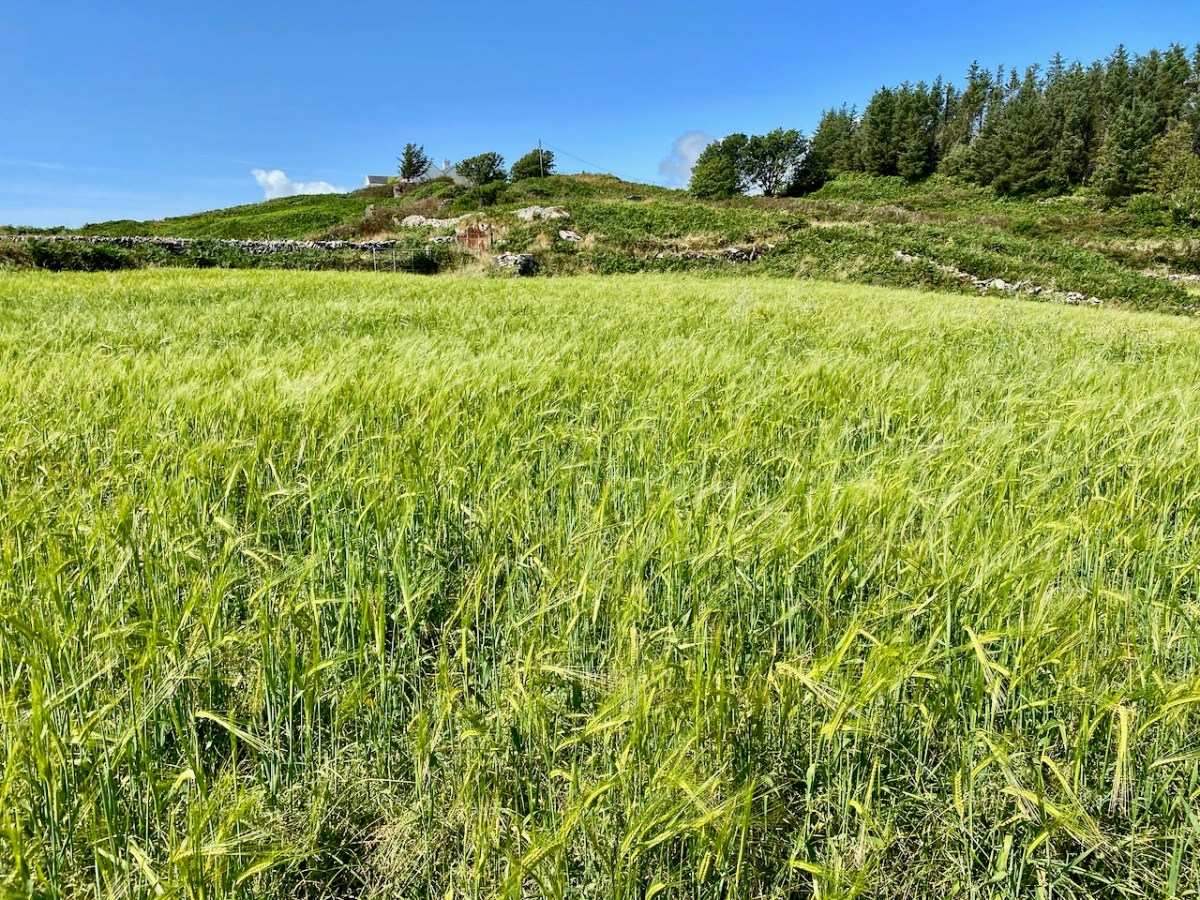
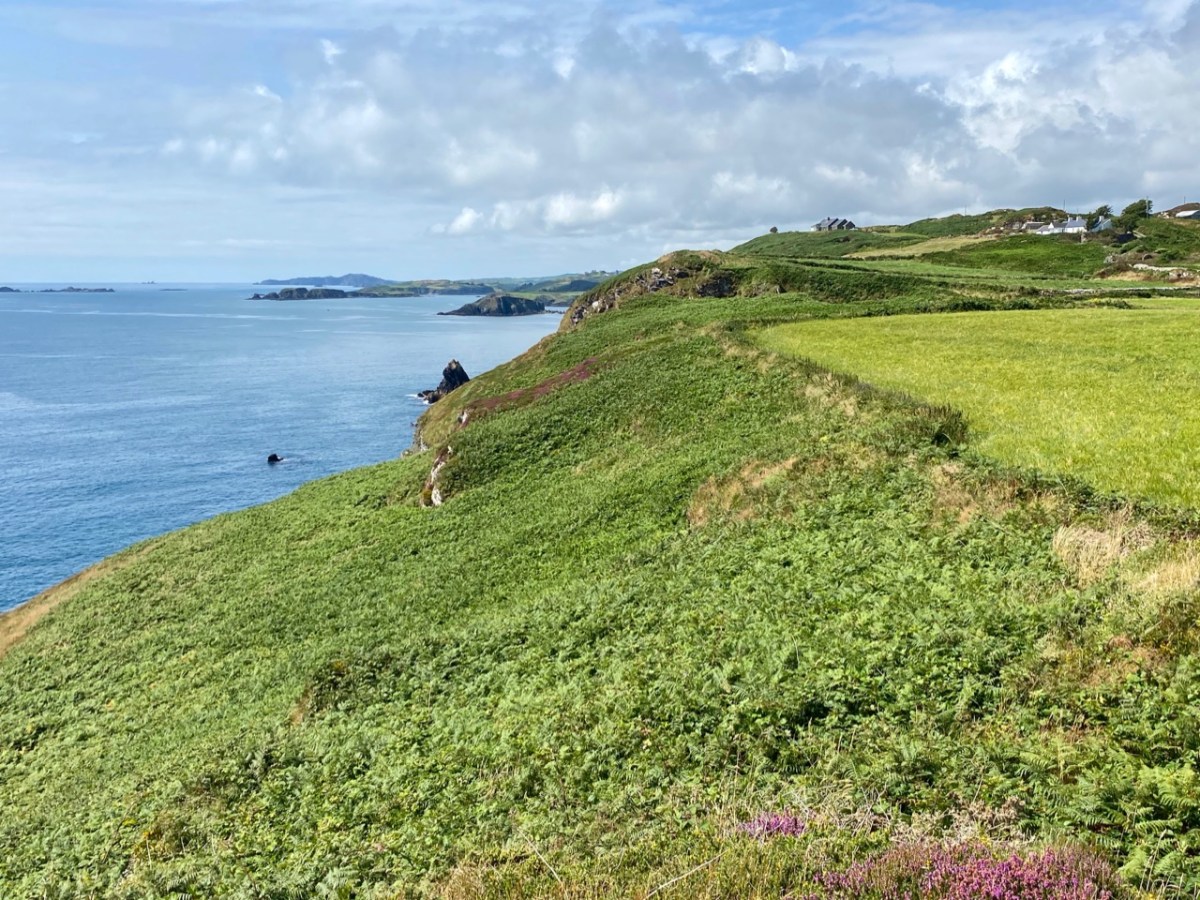
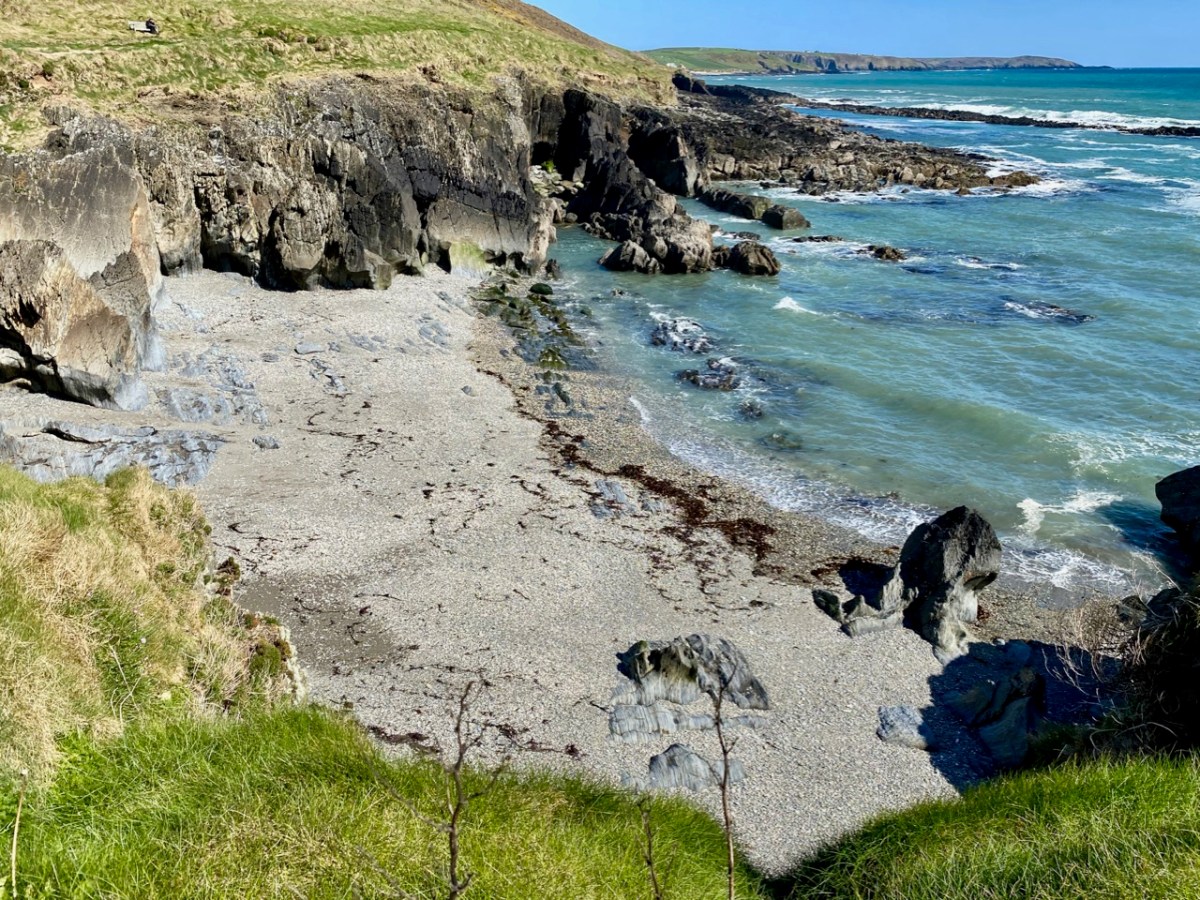
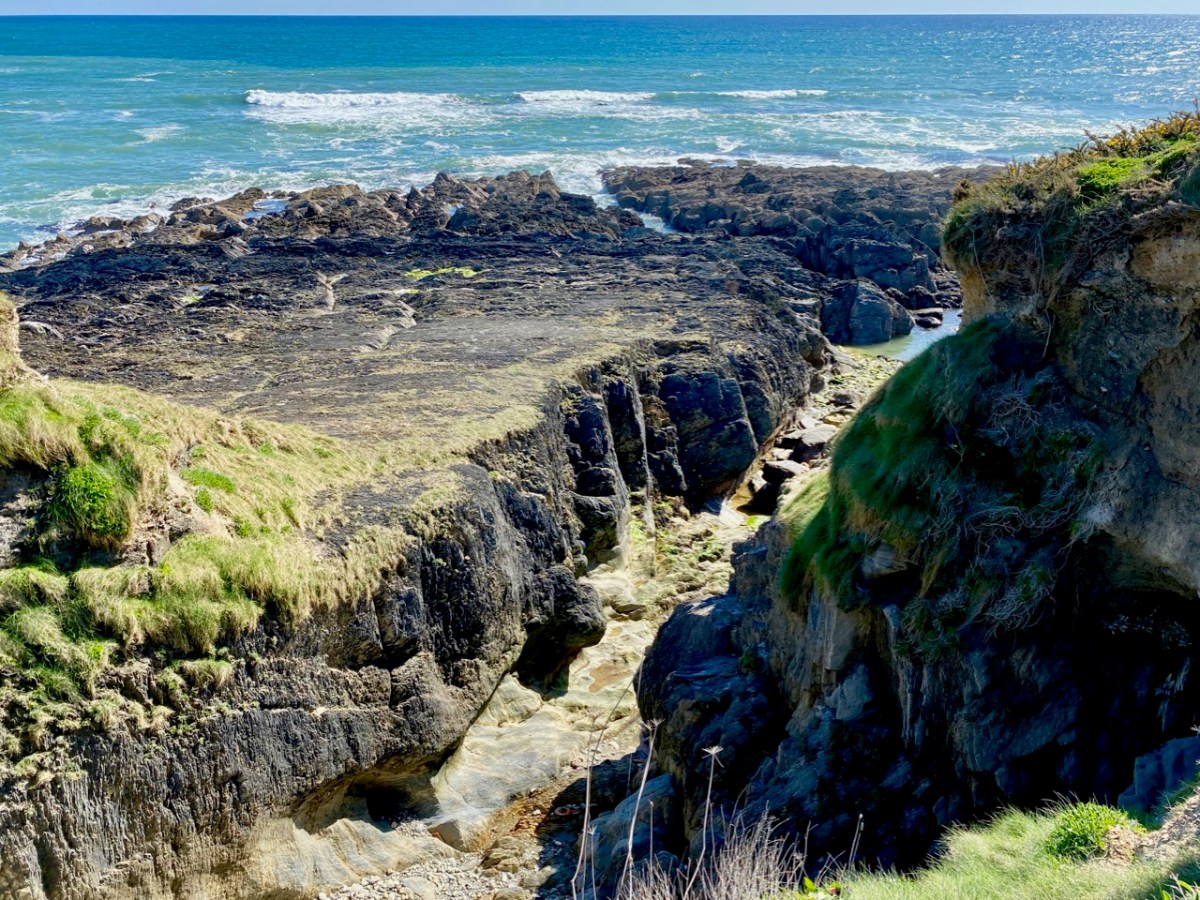
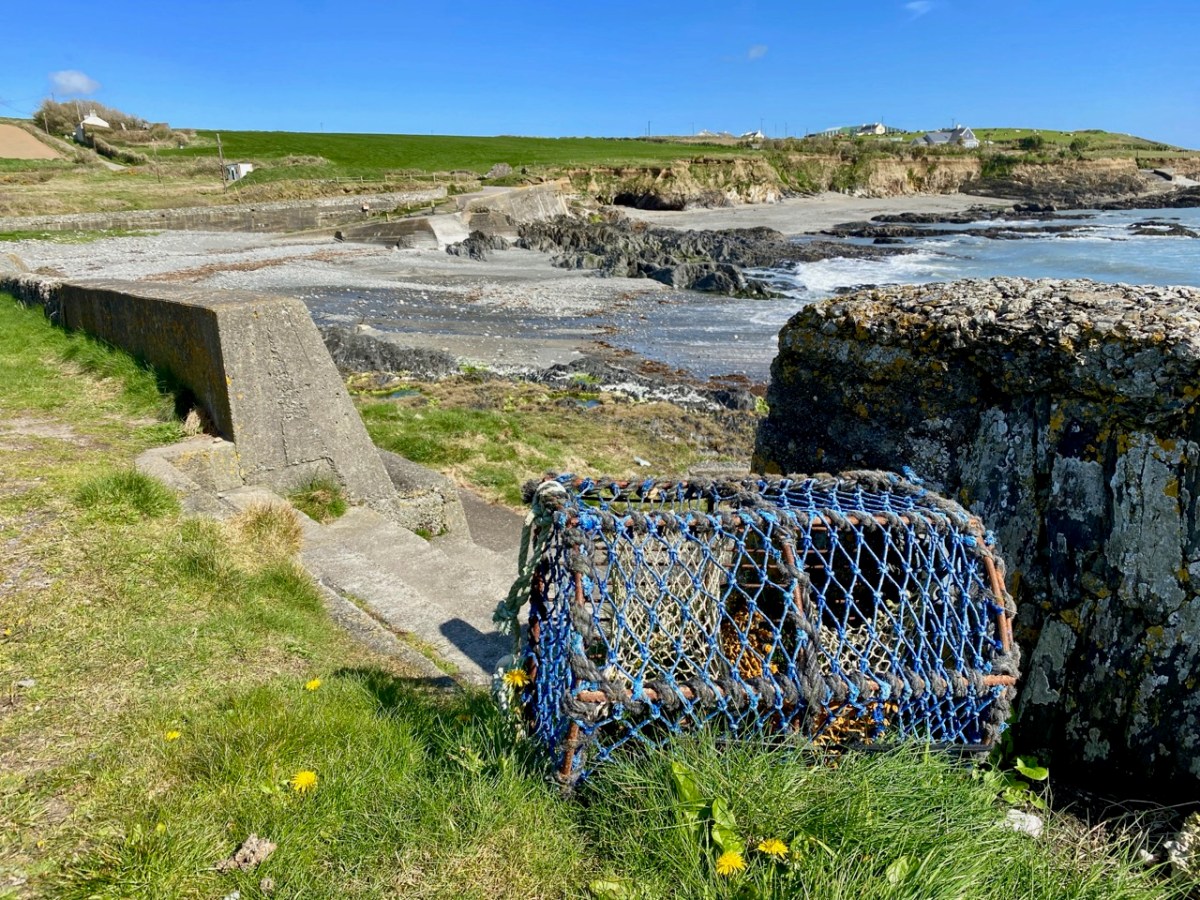
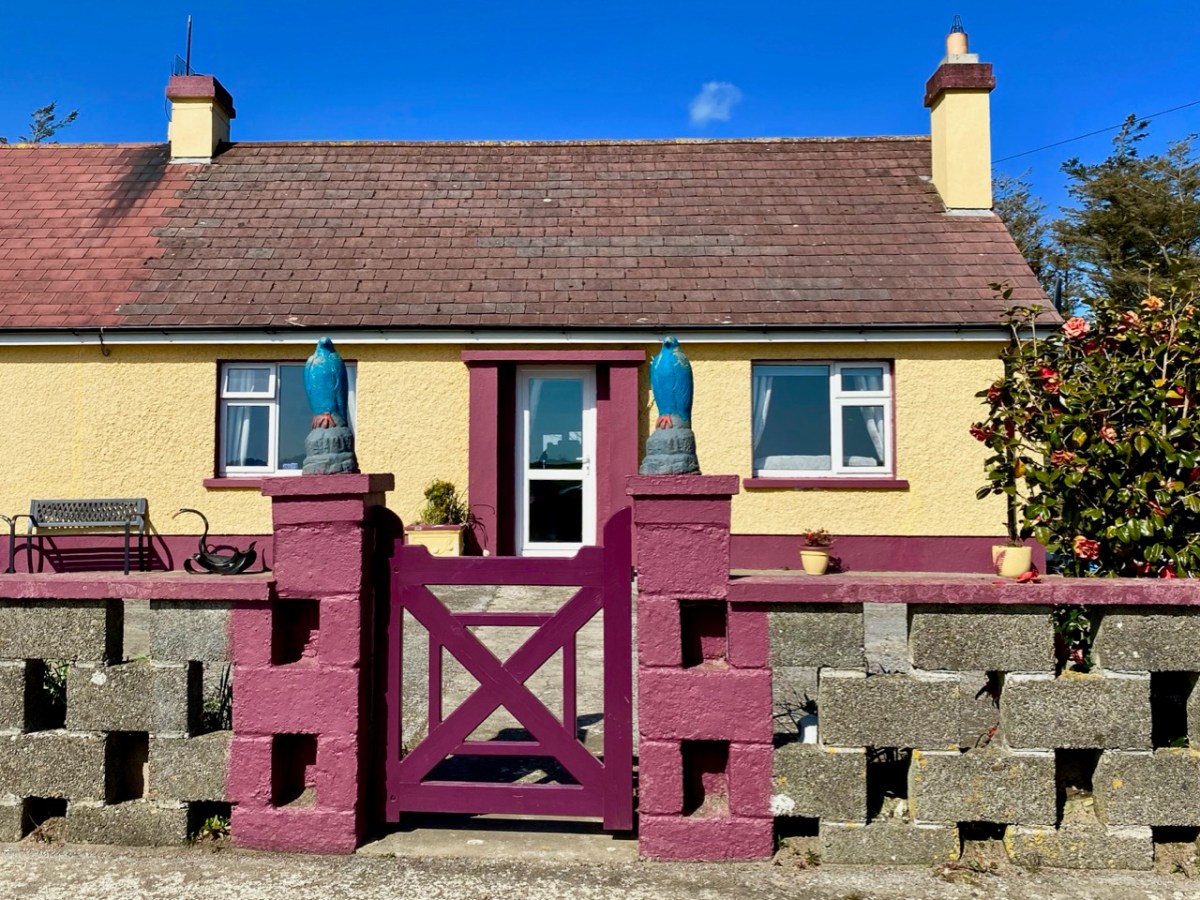
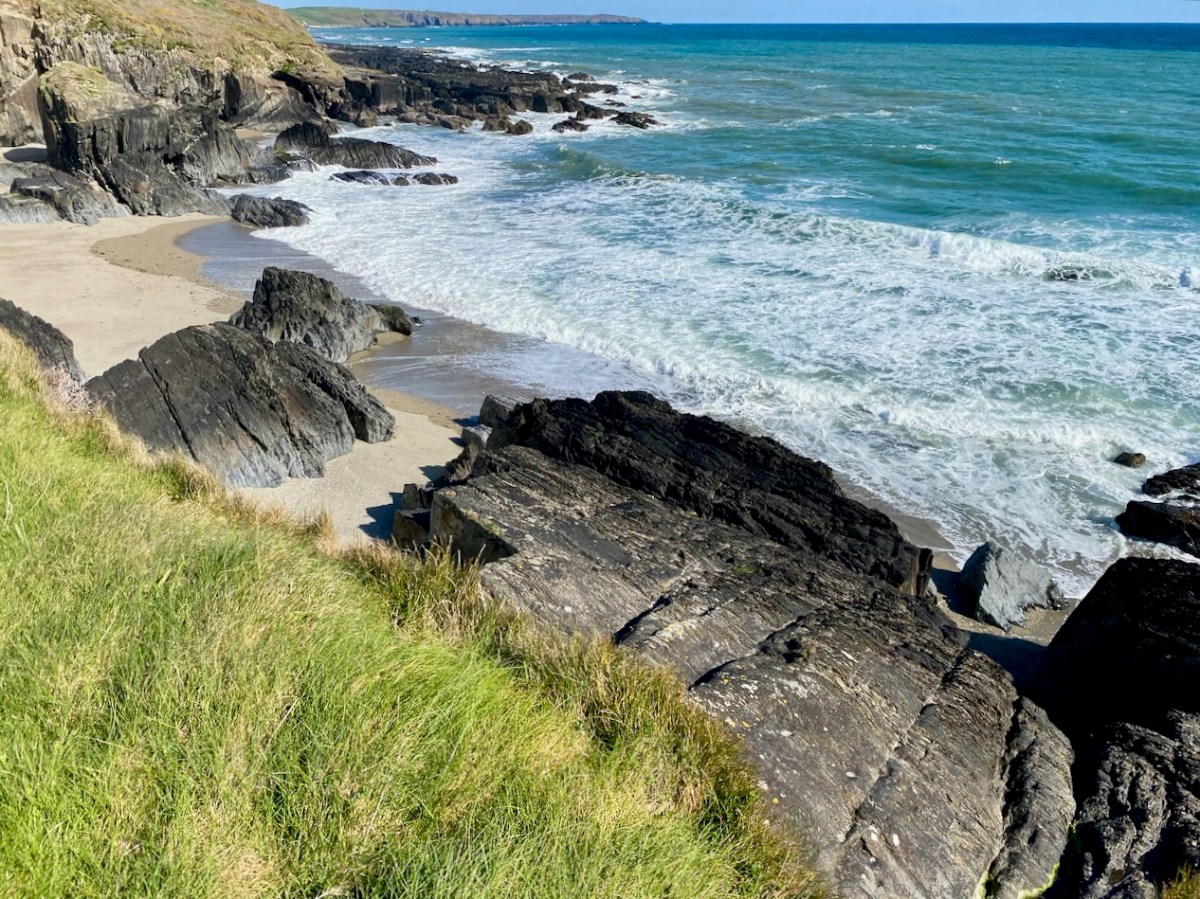
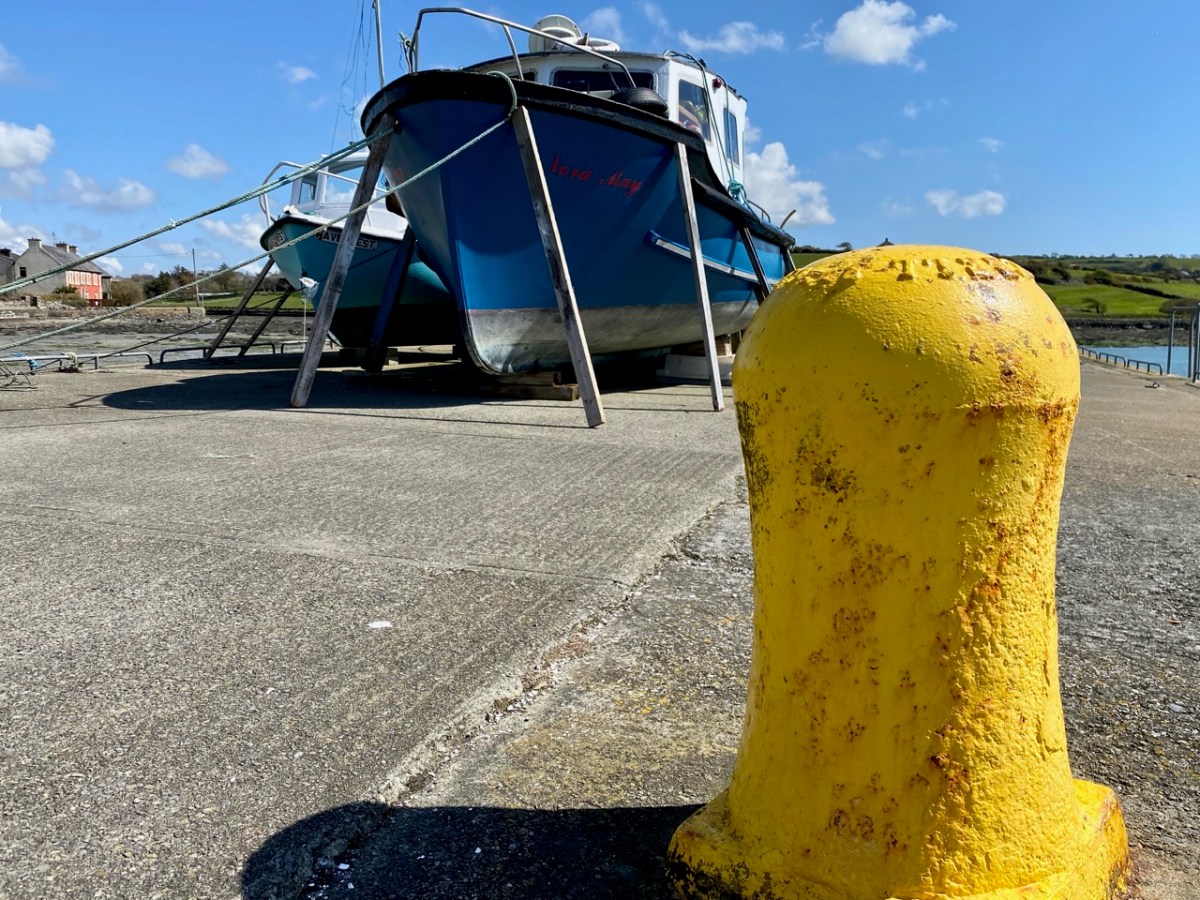
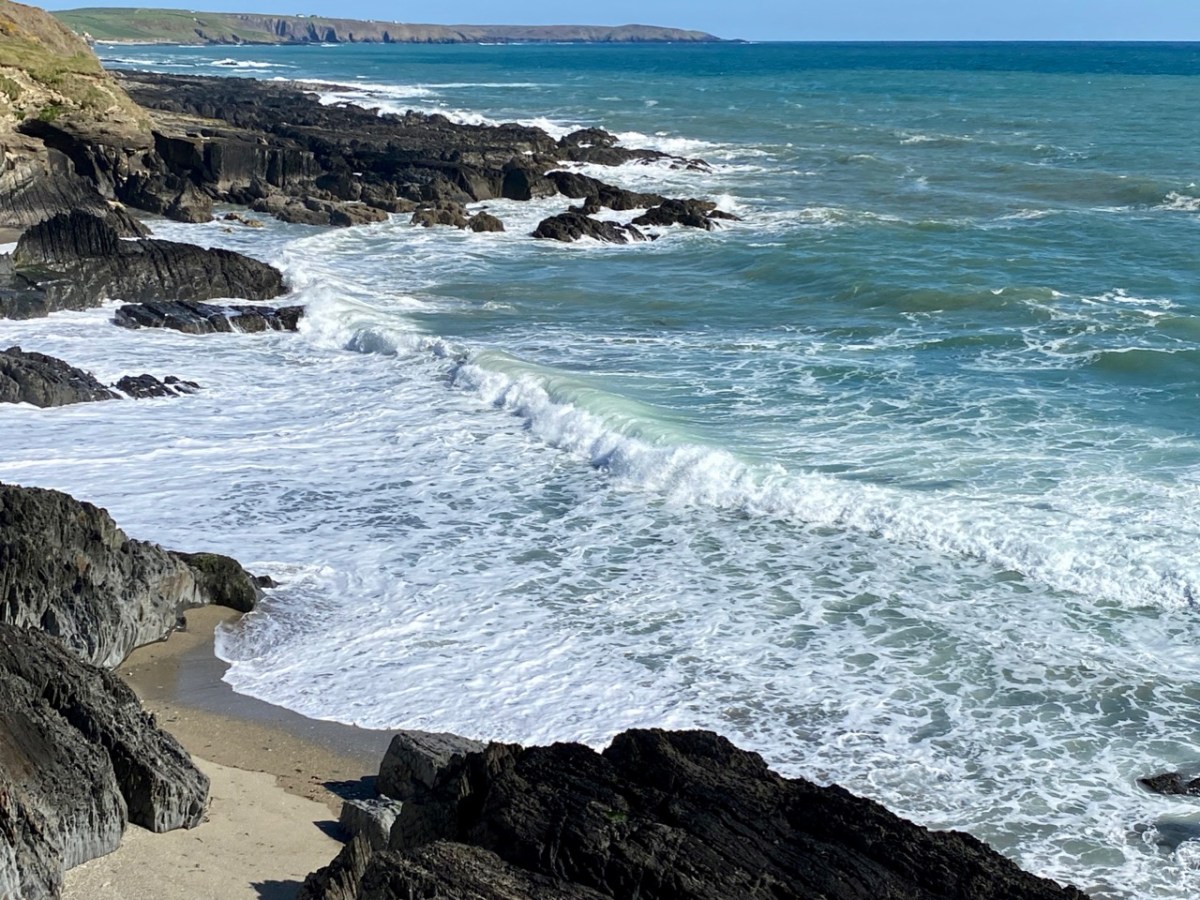
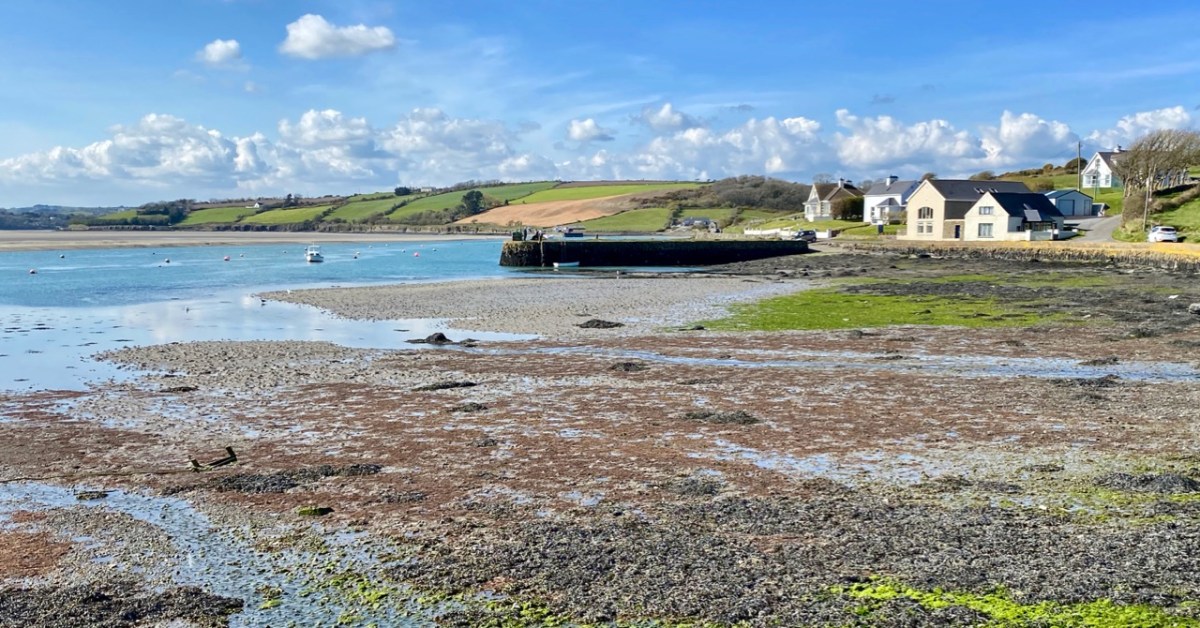
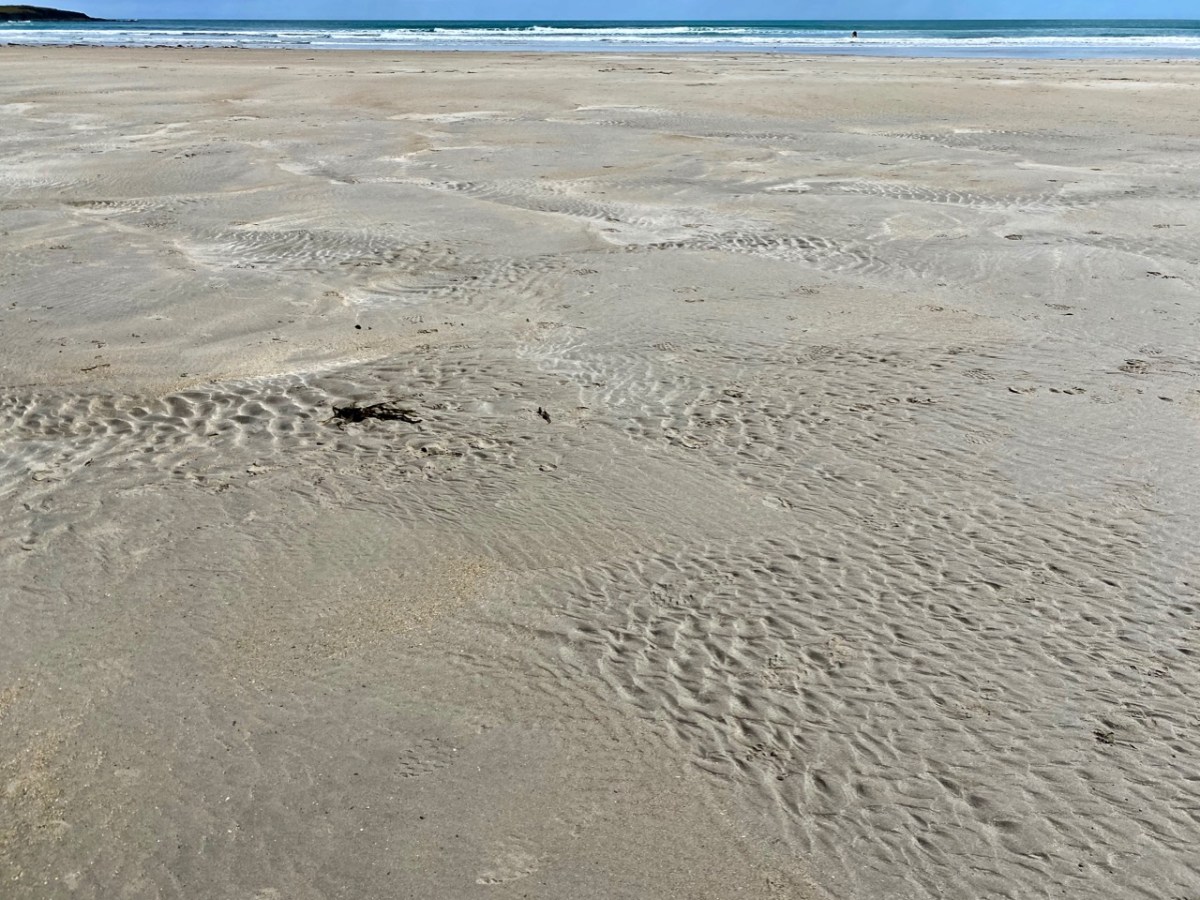
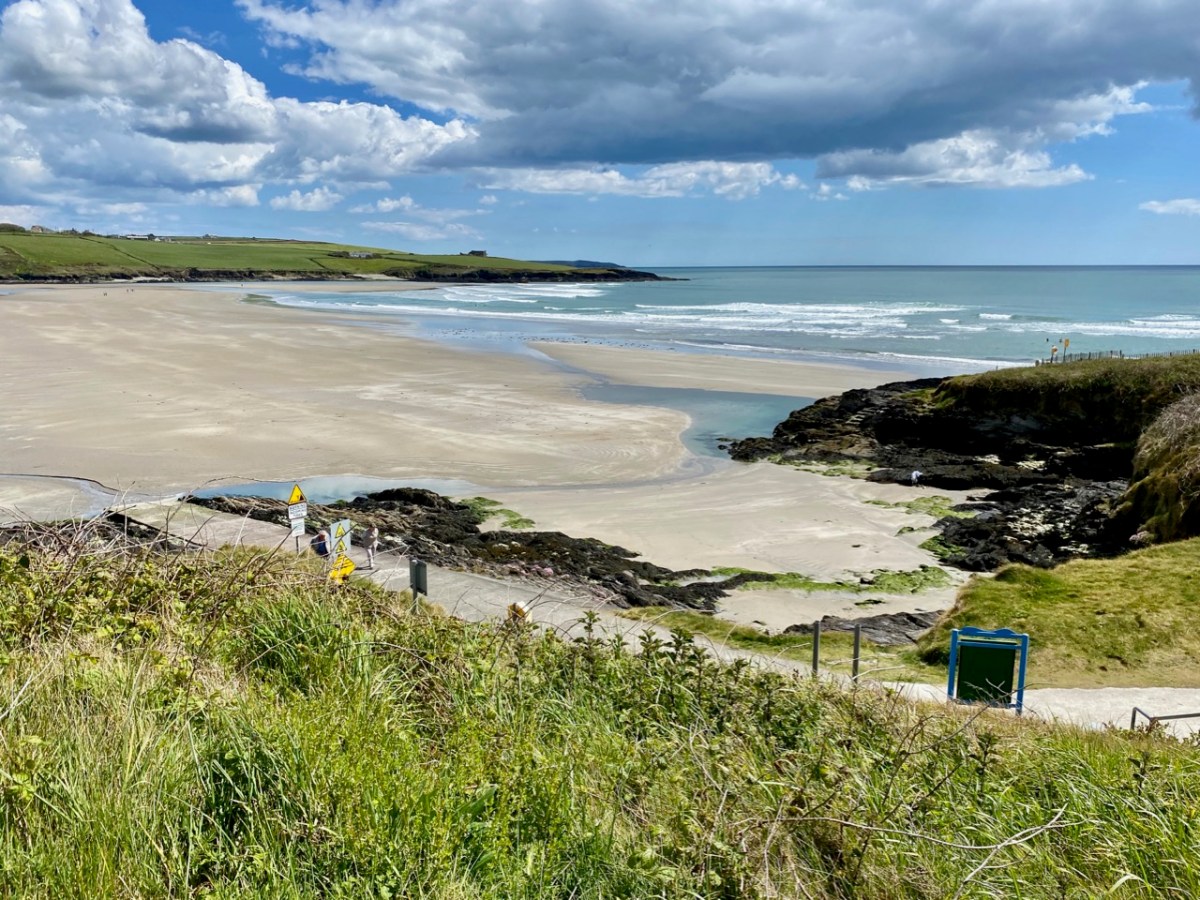
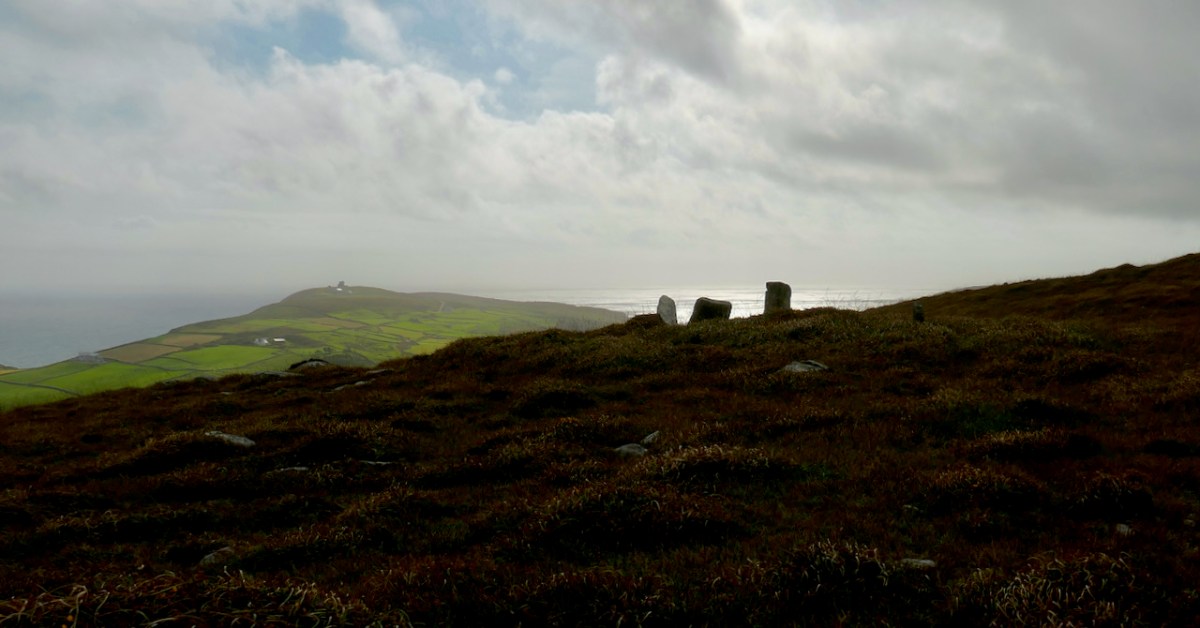
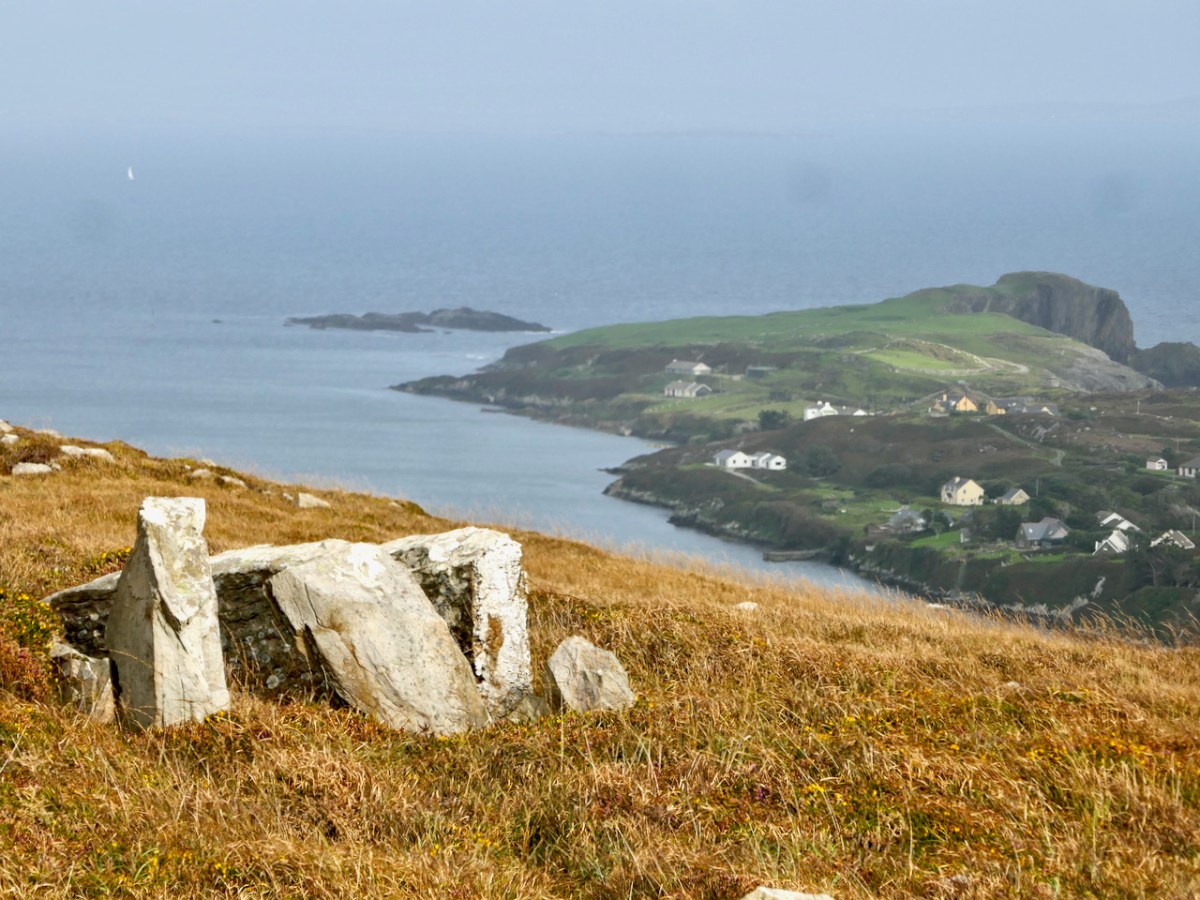
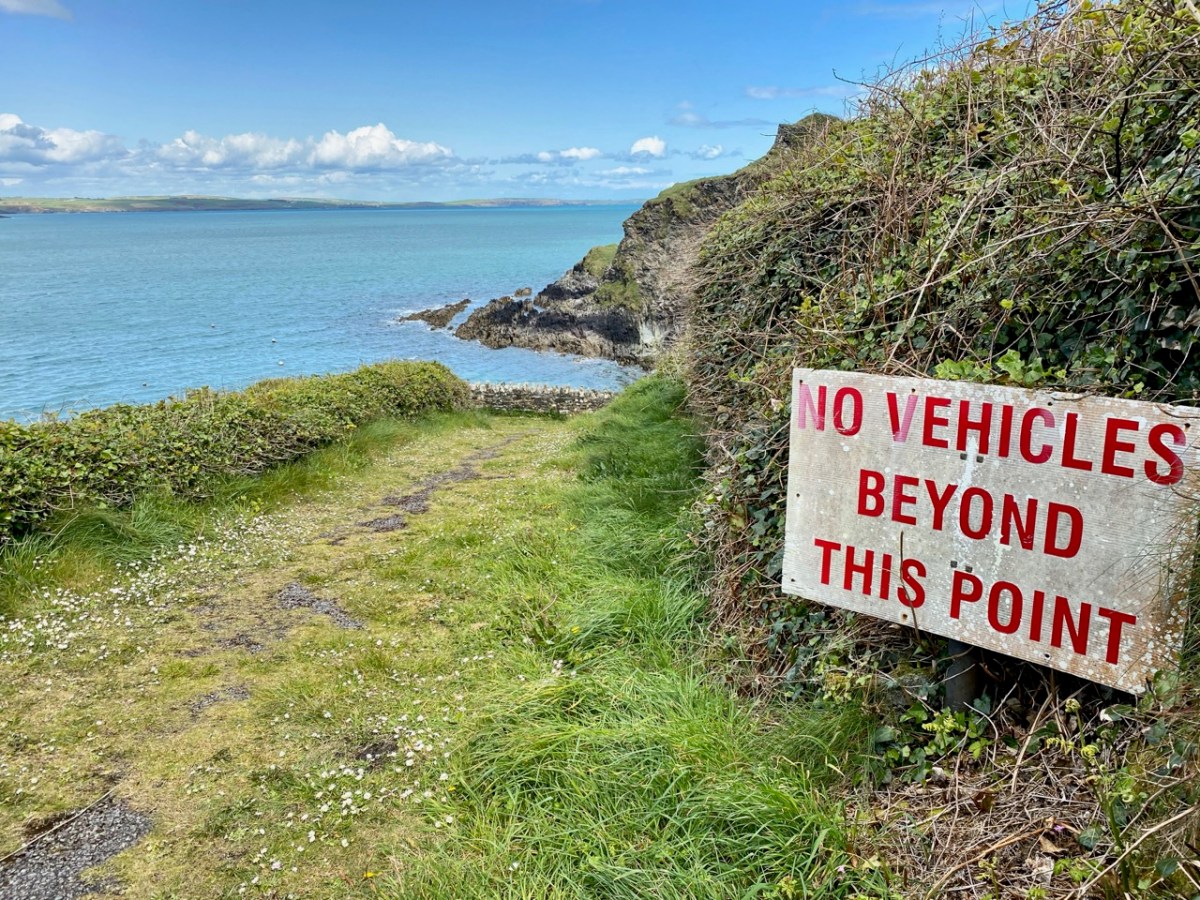
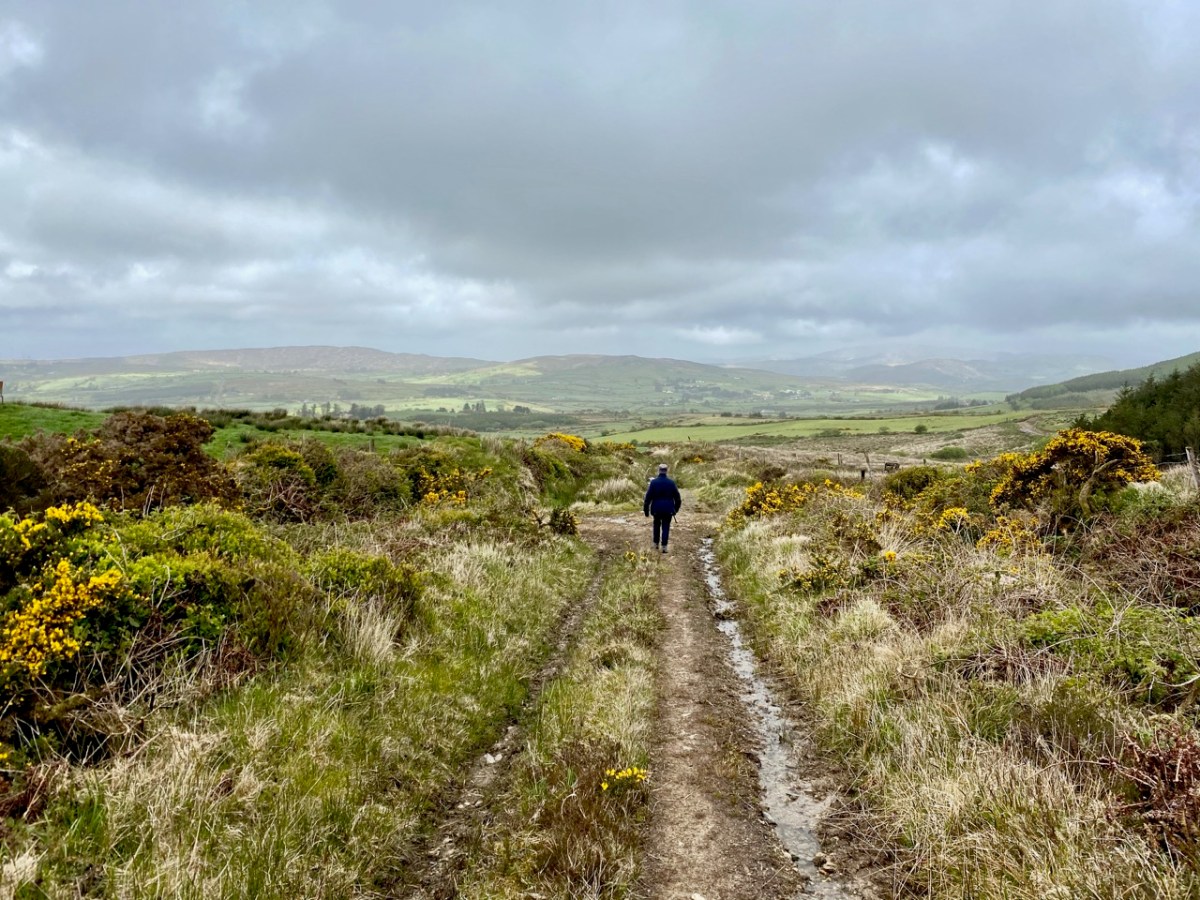
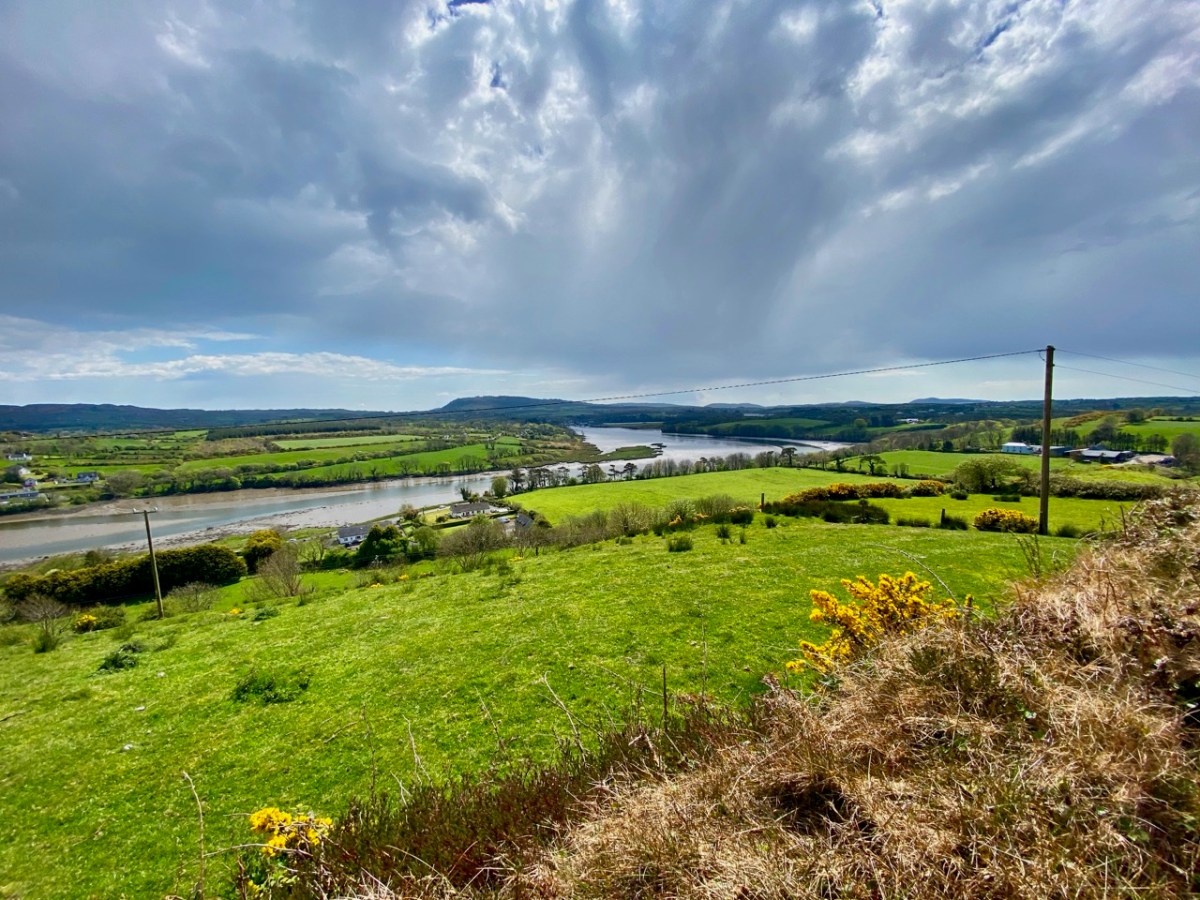
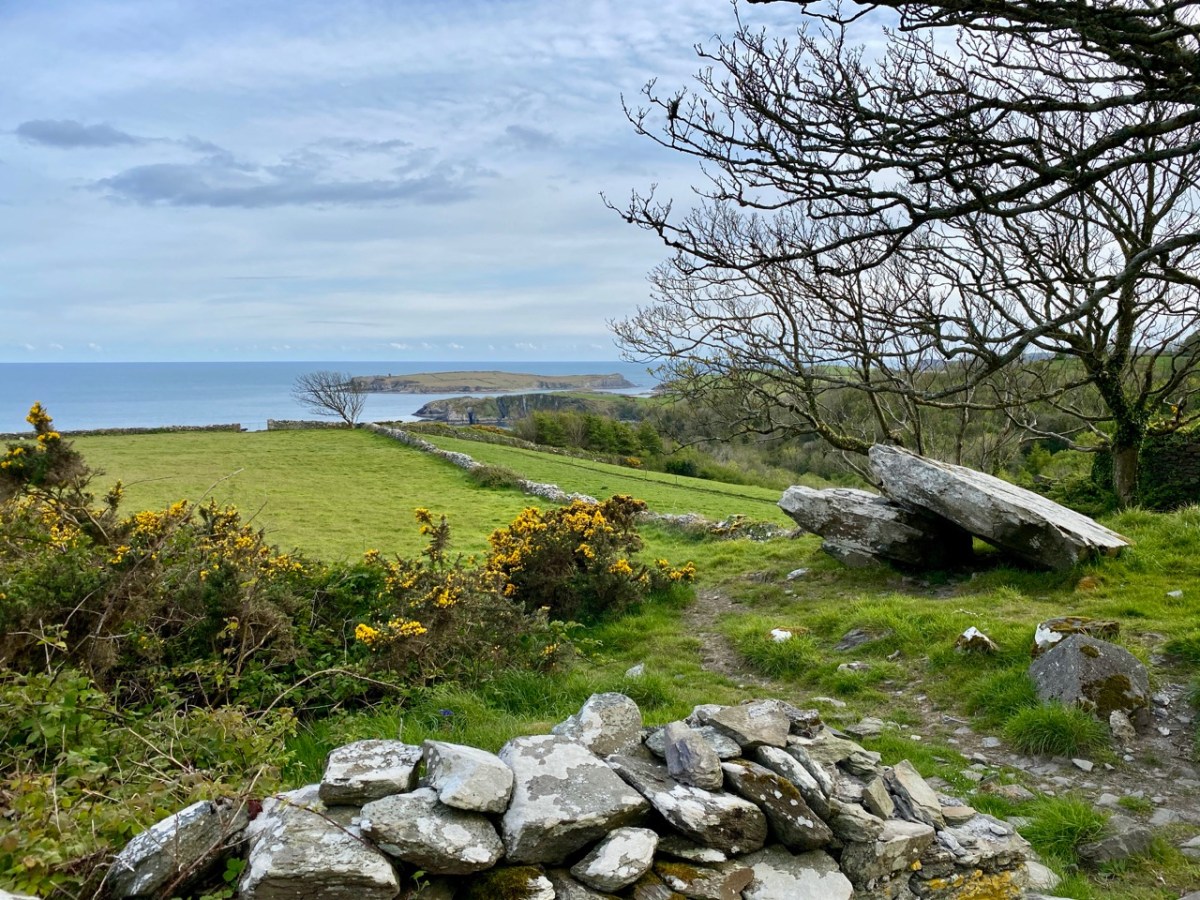
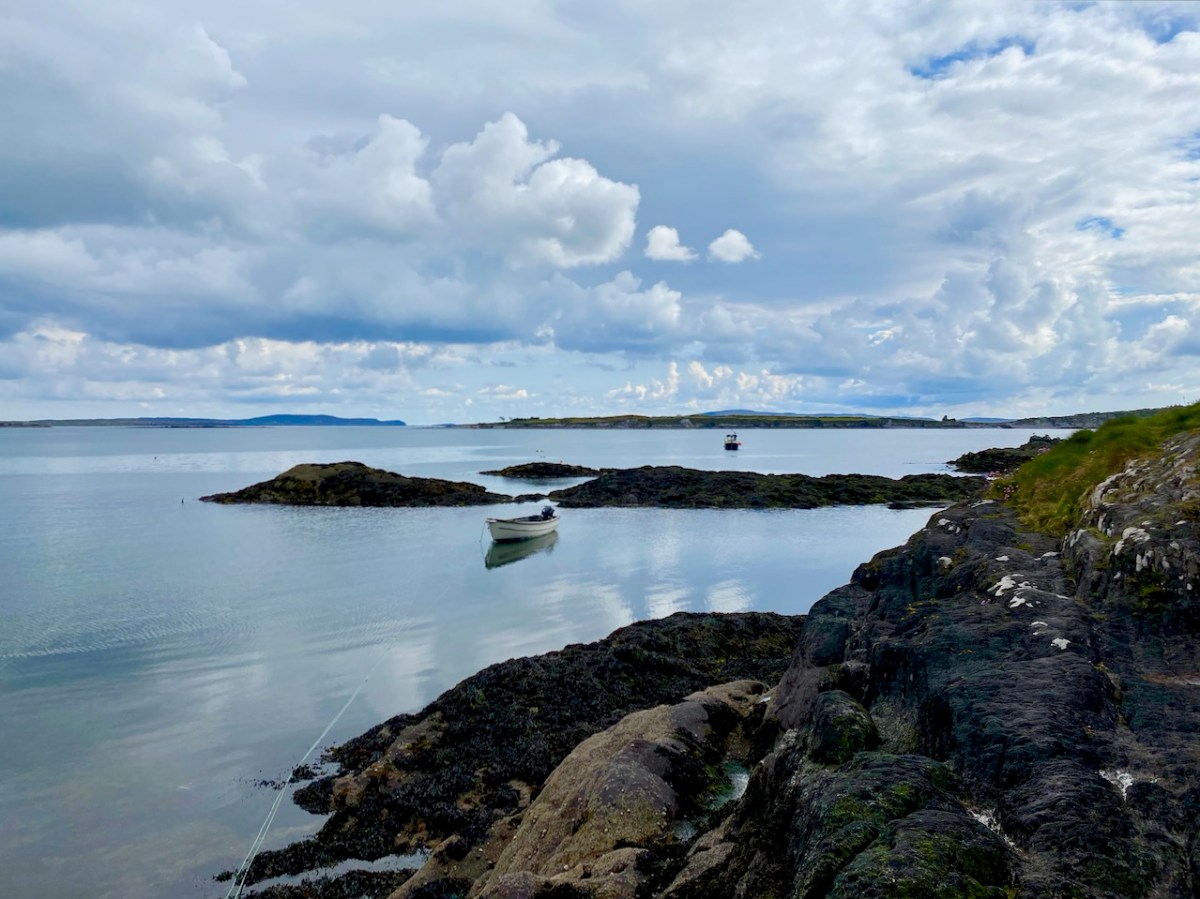
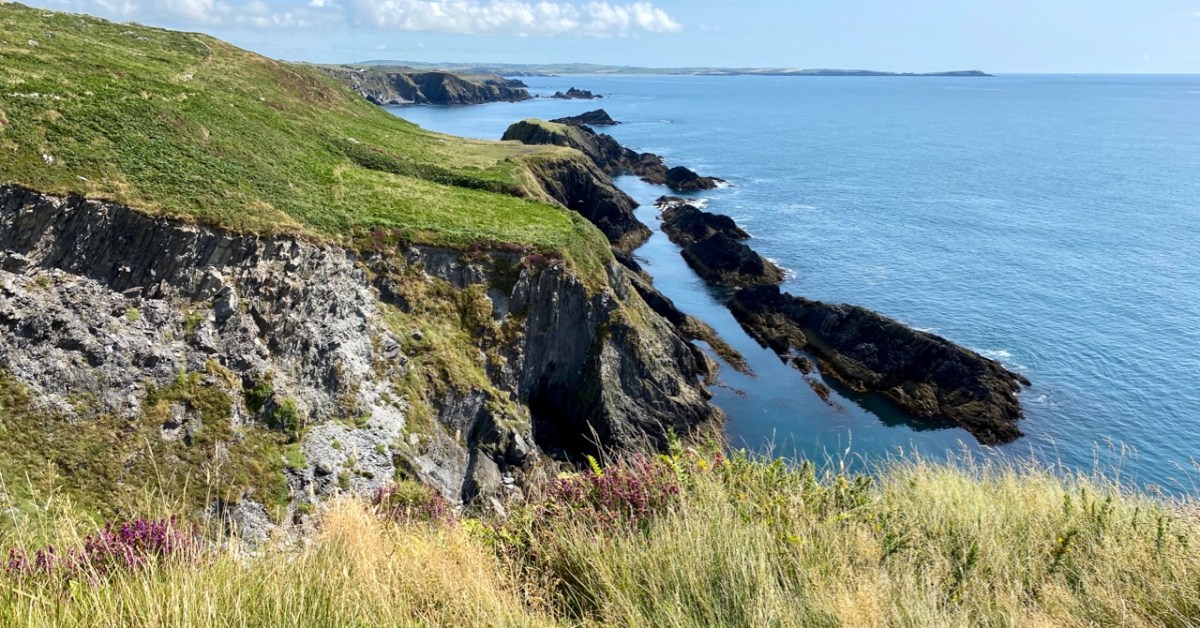
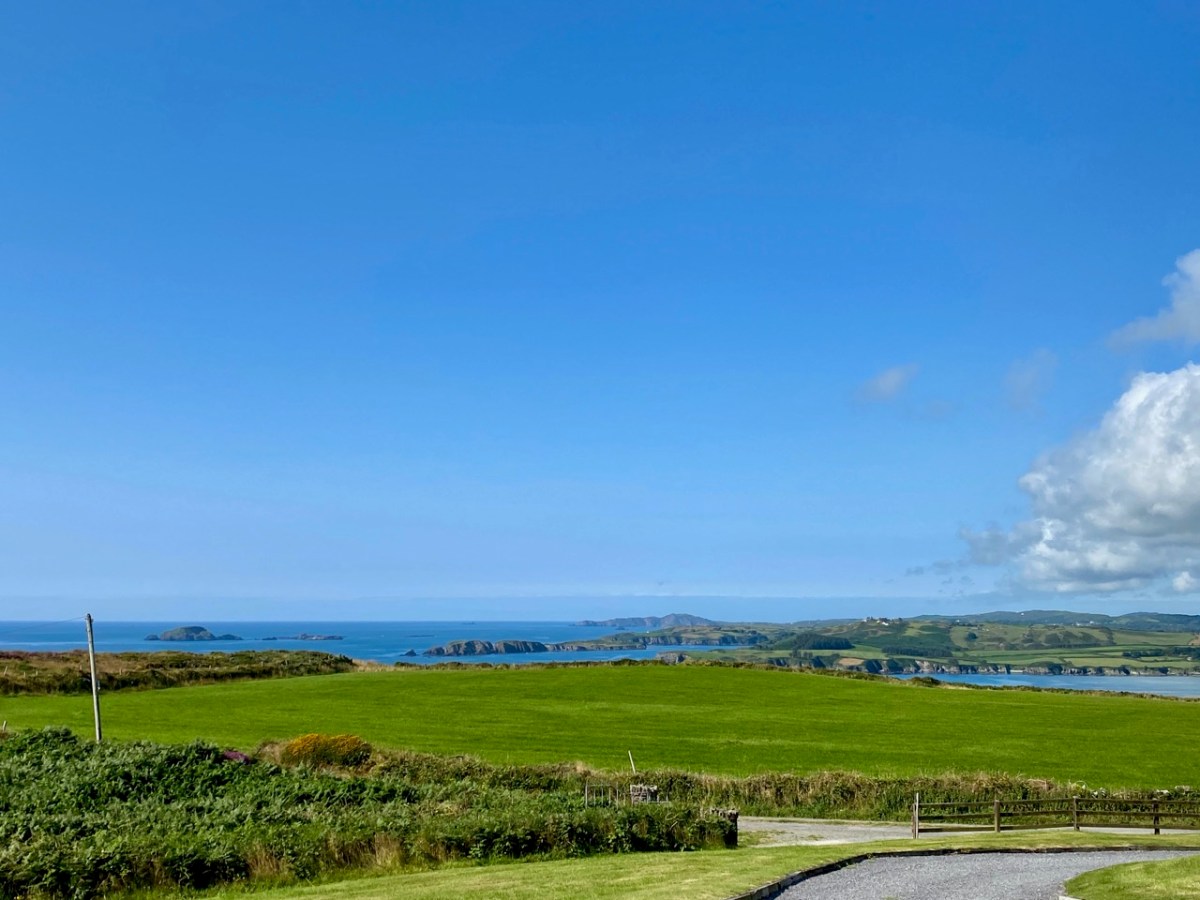
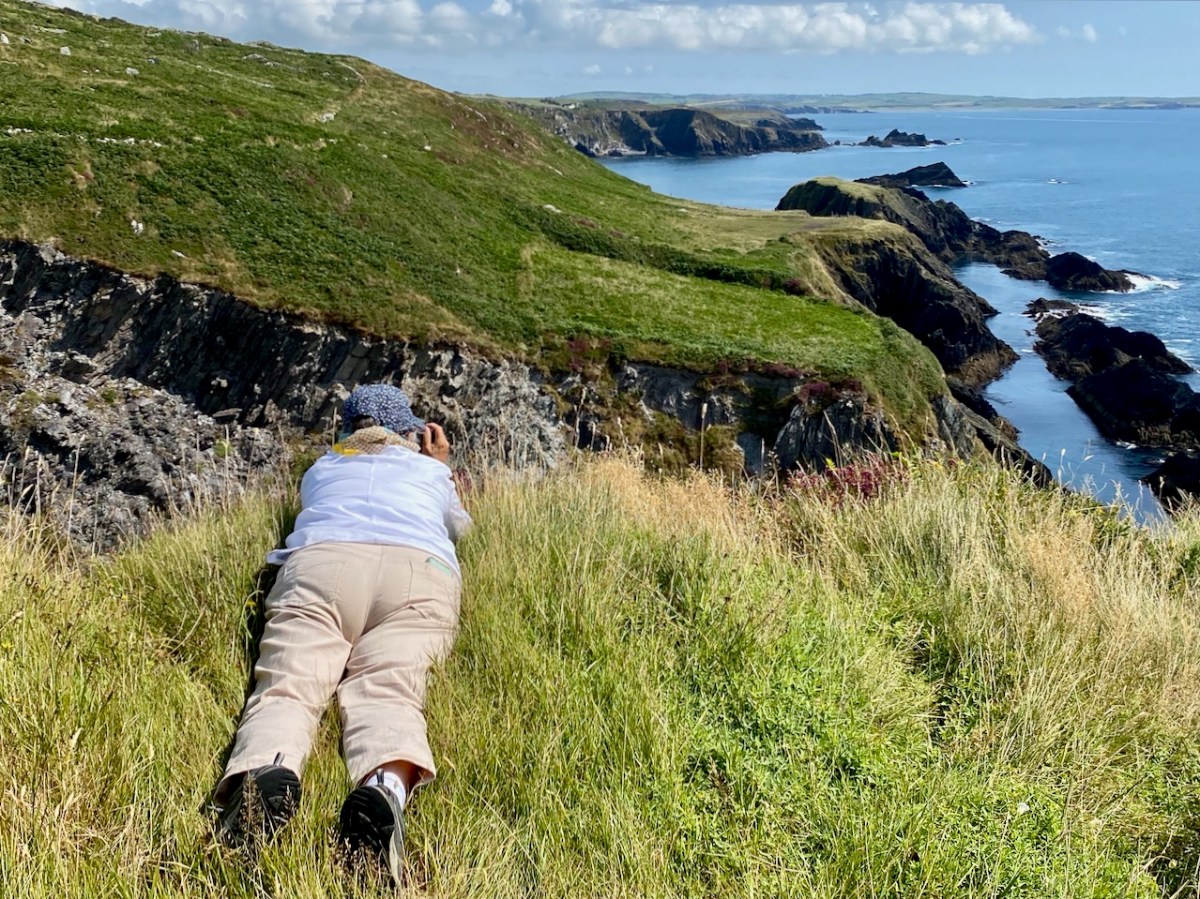
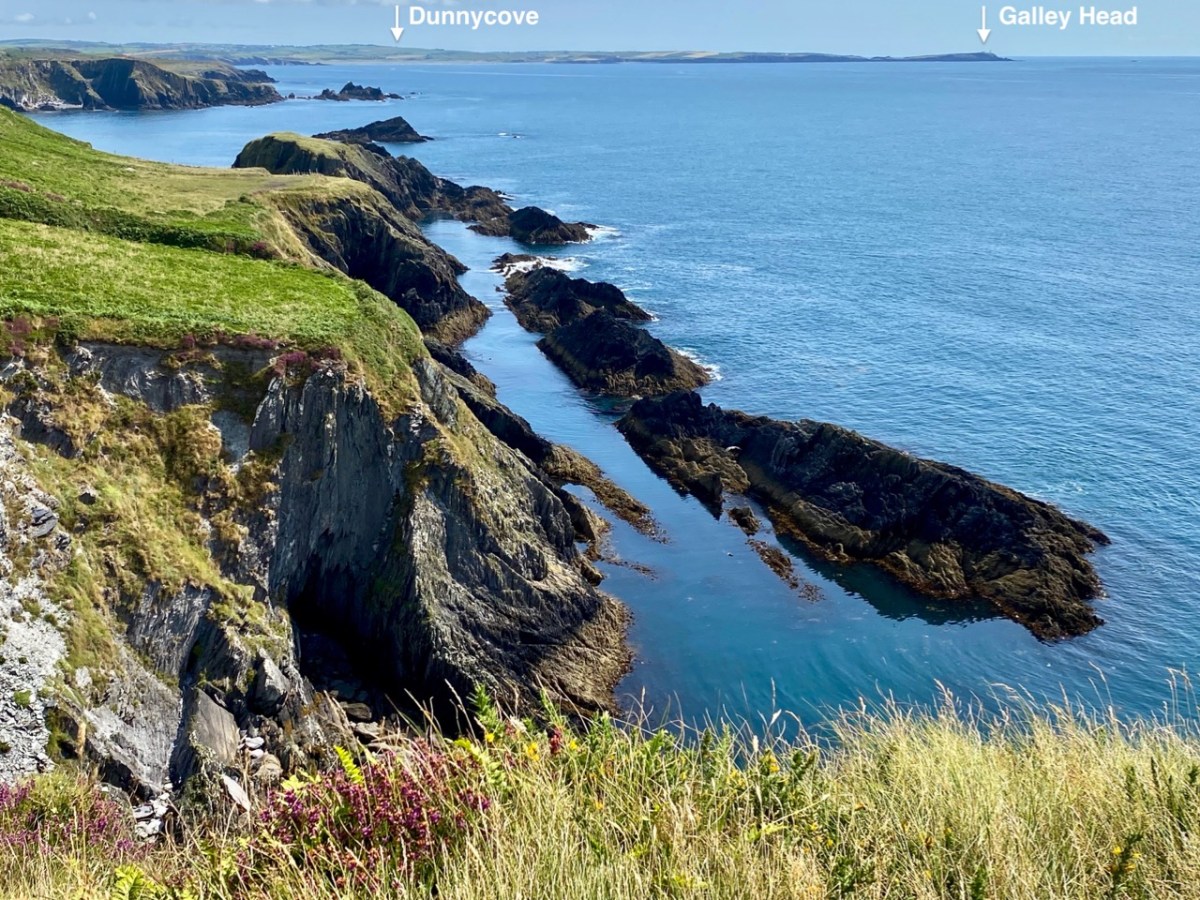
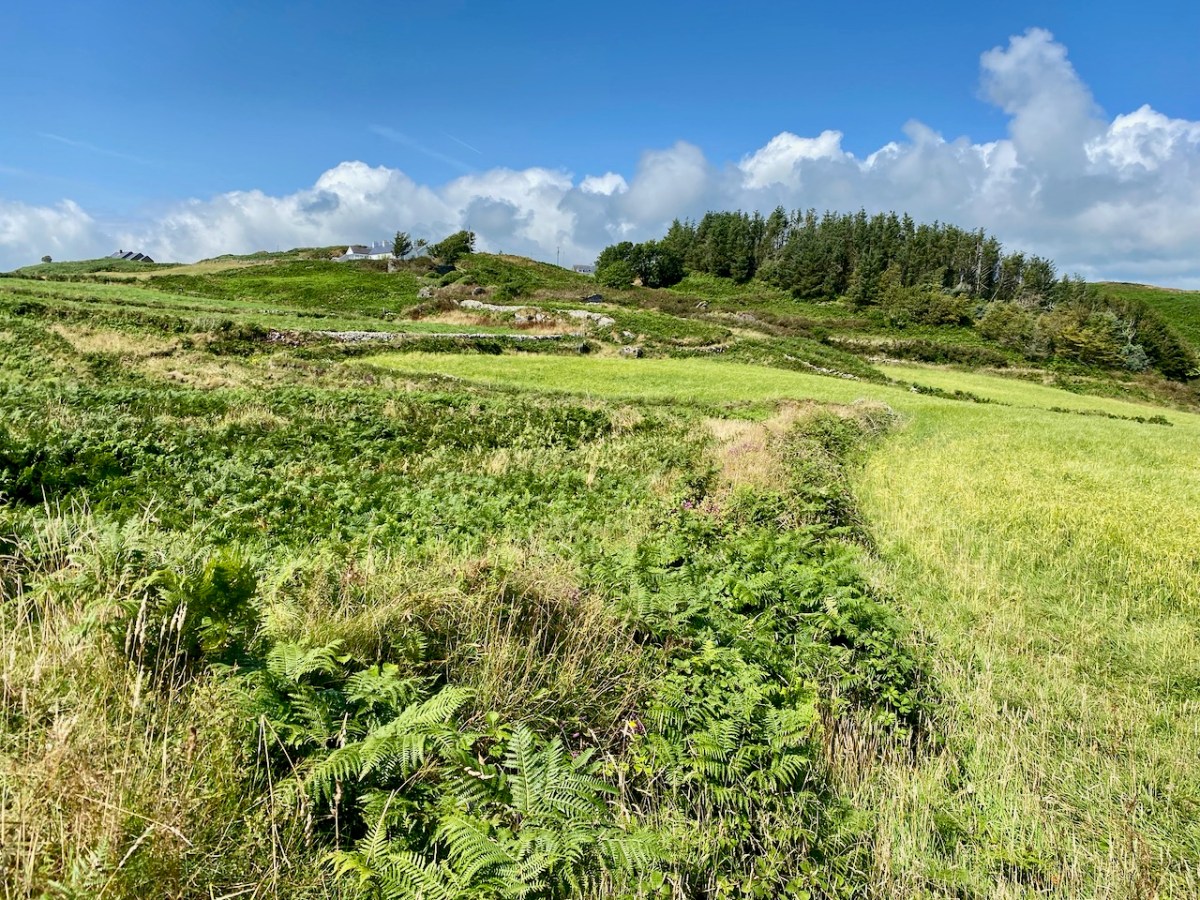
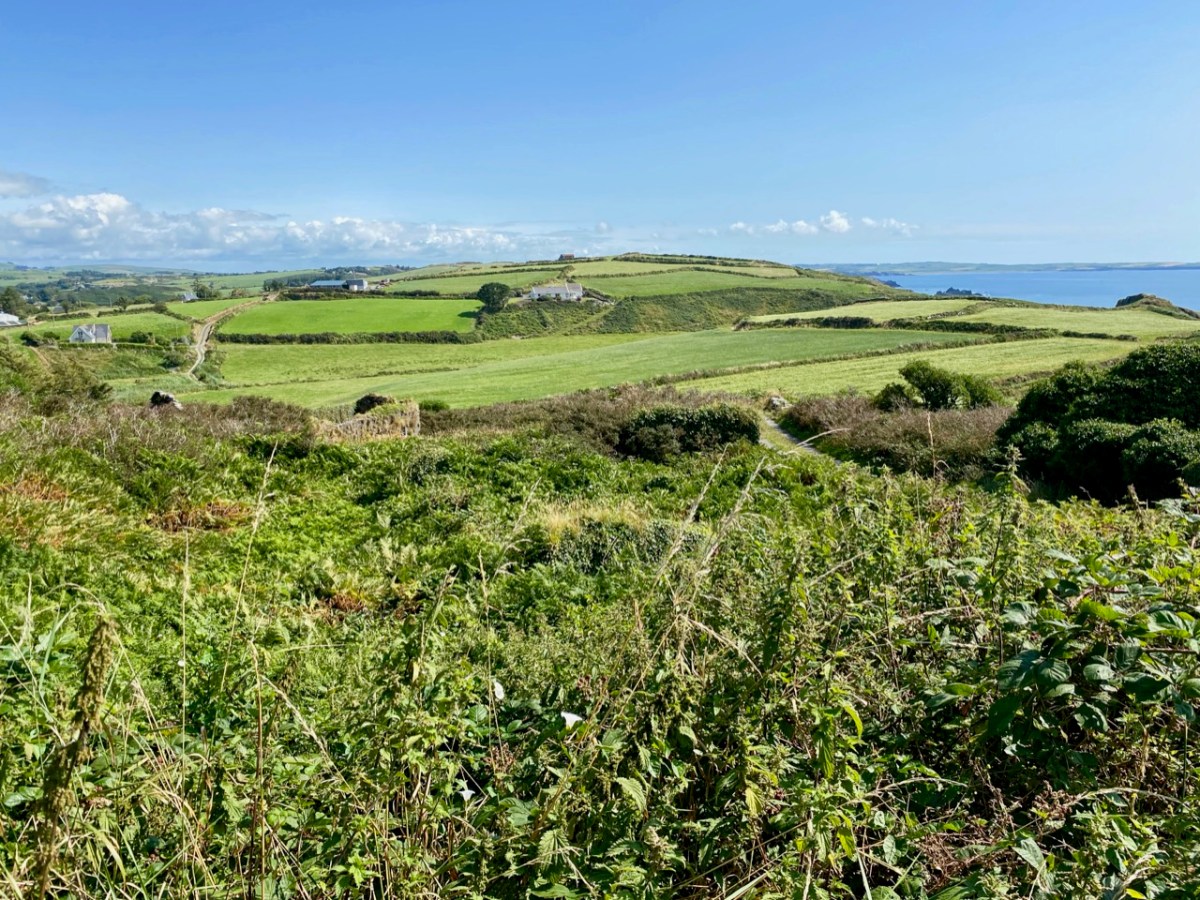
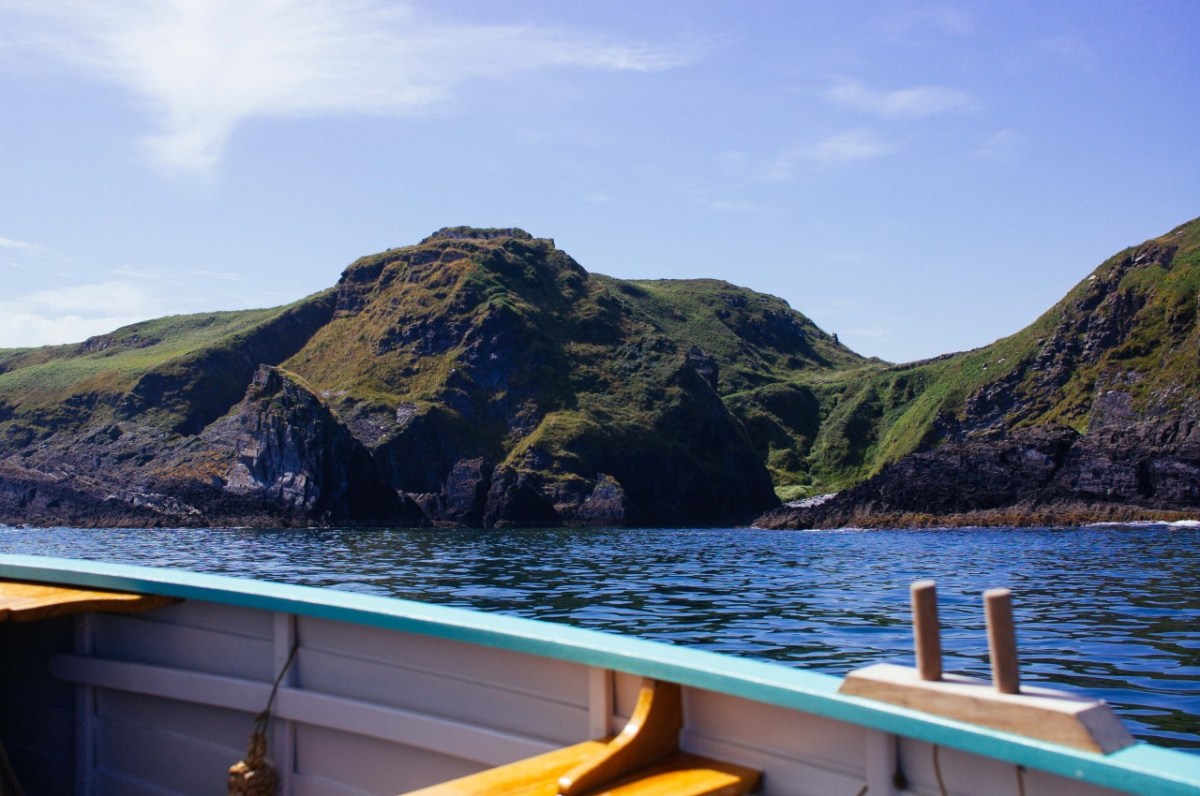
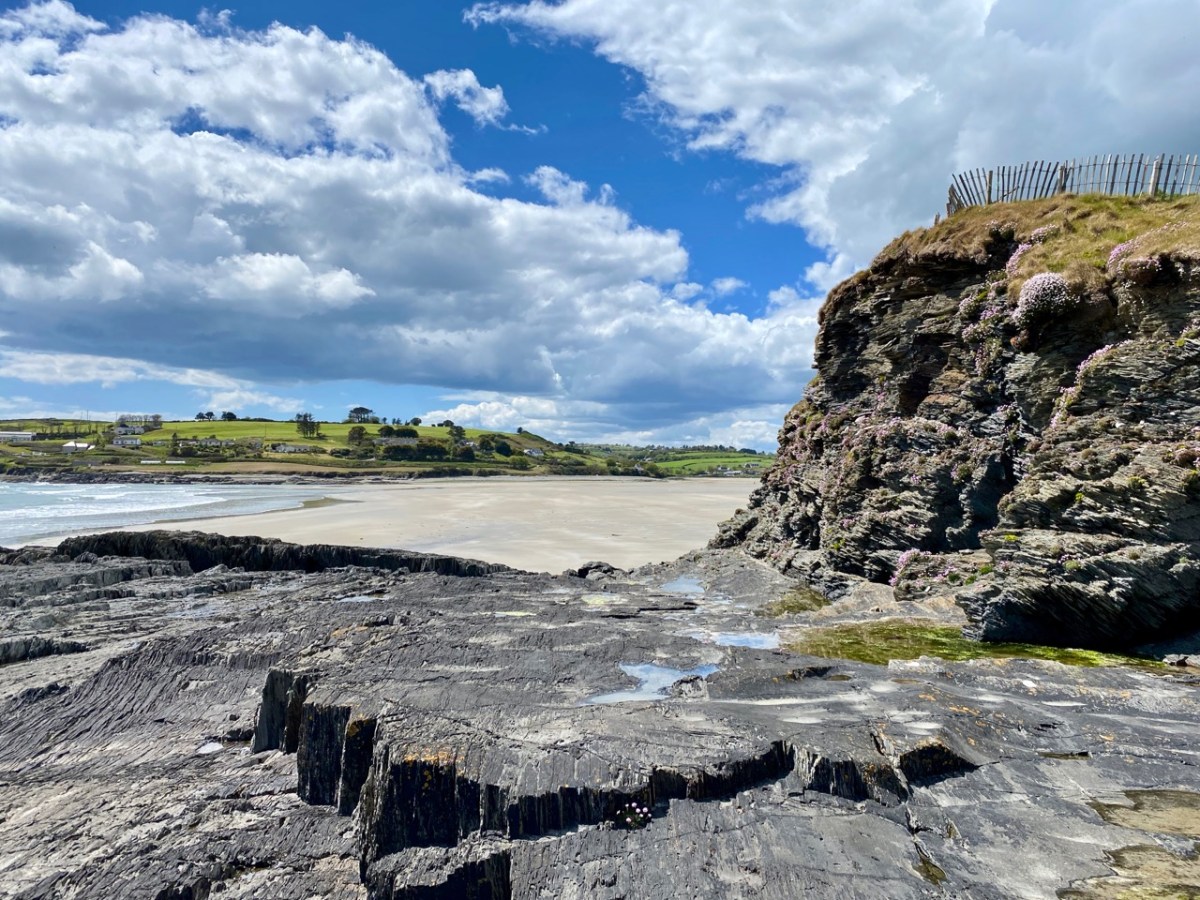
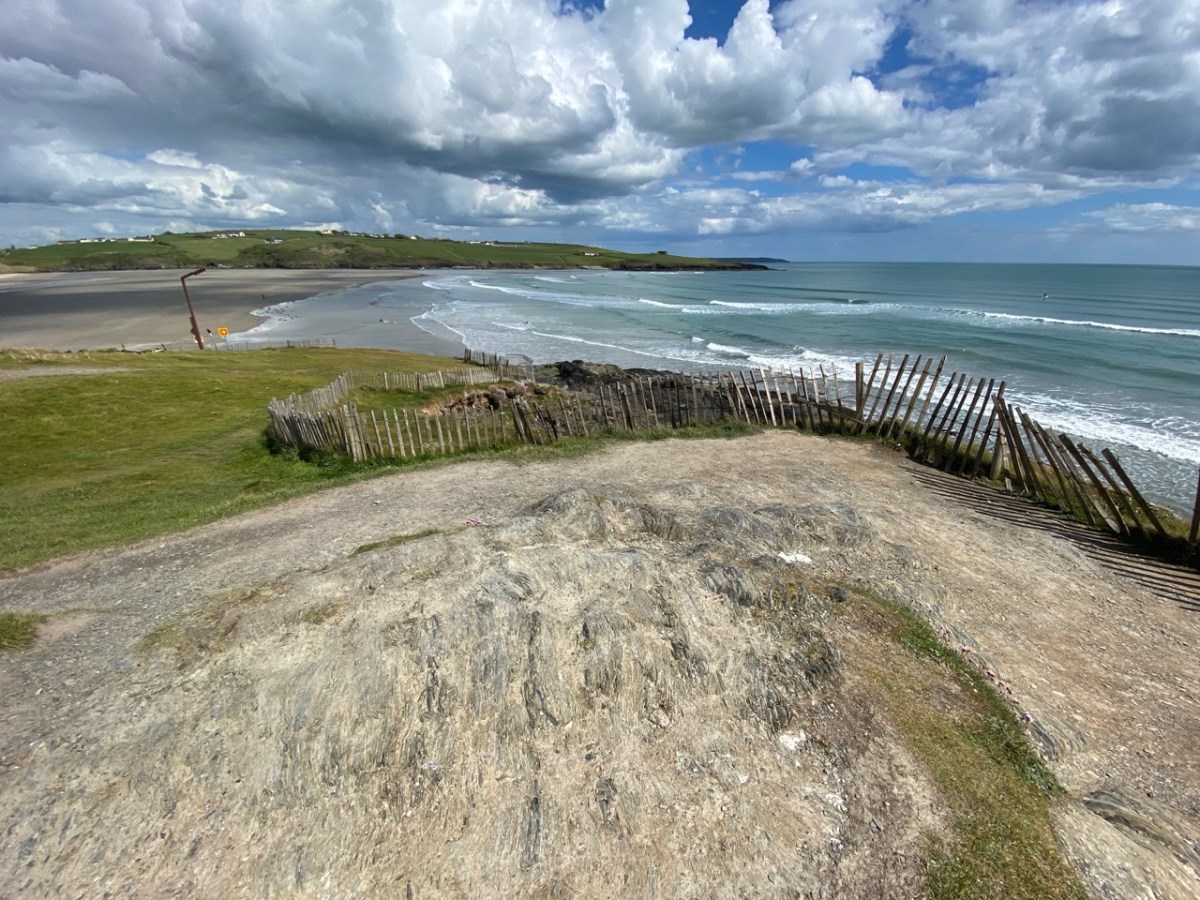
This is a bit of an epilogue to my Signal Success in Irish Engineering series (although that is not yet complete!). Here is the site of a Napoleonic-era Signal Tower in West Cork – but the tower itself has completely vanished! It’s no 28 on the map which accompanies Bill Clements’ book – Billy Pitt Had Them Built – Napoleonic Towers in Ireland (The Holliwell Press 2013) and it is given the name Glandore Head. We recently visited friends who have a house in the townland of Reenogrena, which is south-east of the village of Glandore and its extensive natural harbour. The topography of the area is soul-stirring – that’s probably an understatement: look at the view of the coastline there, above, and the distant views both west and east, below.
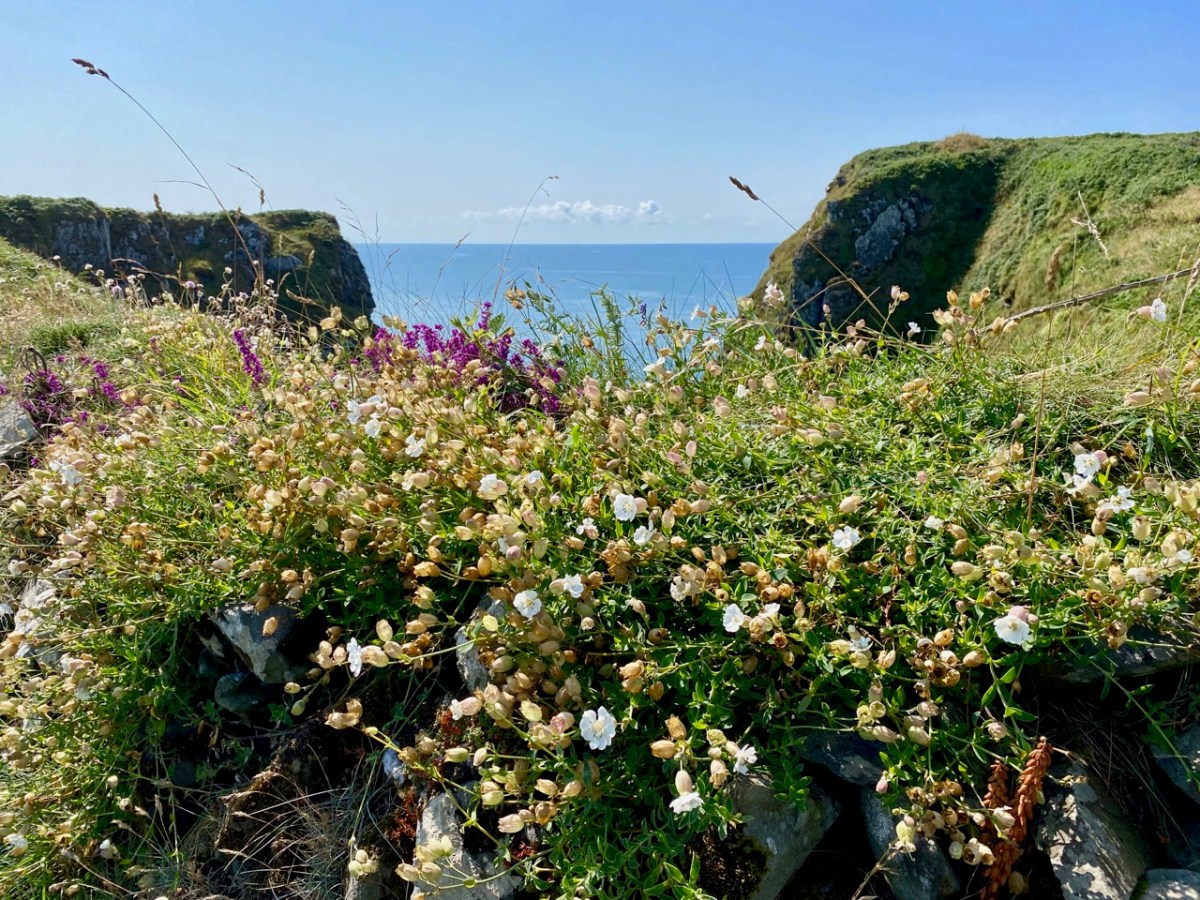
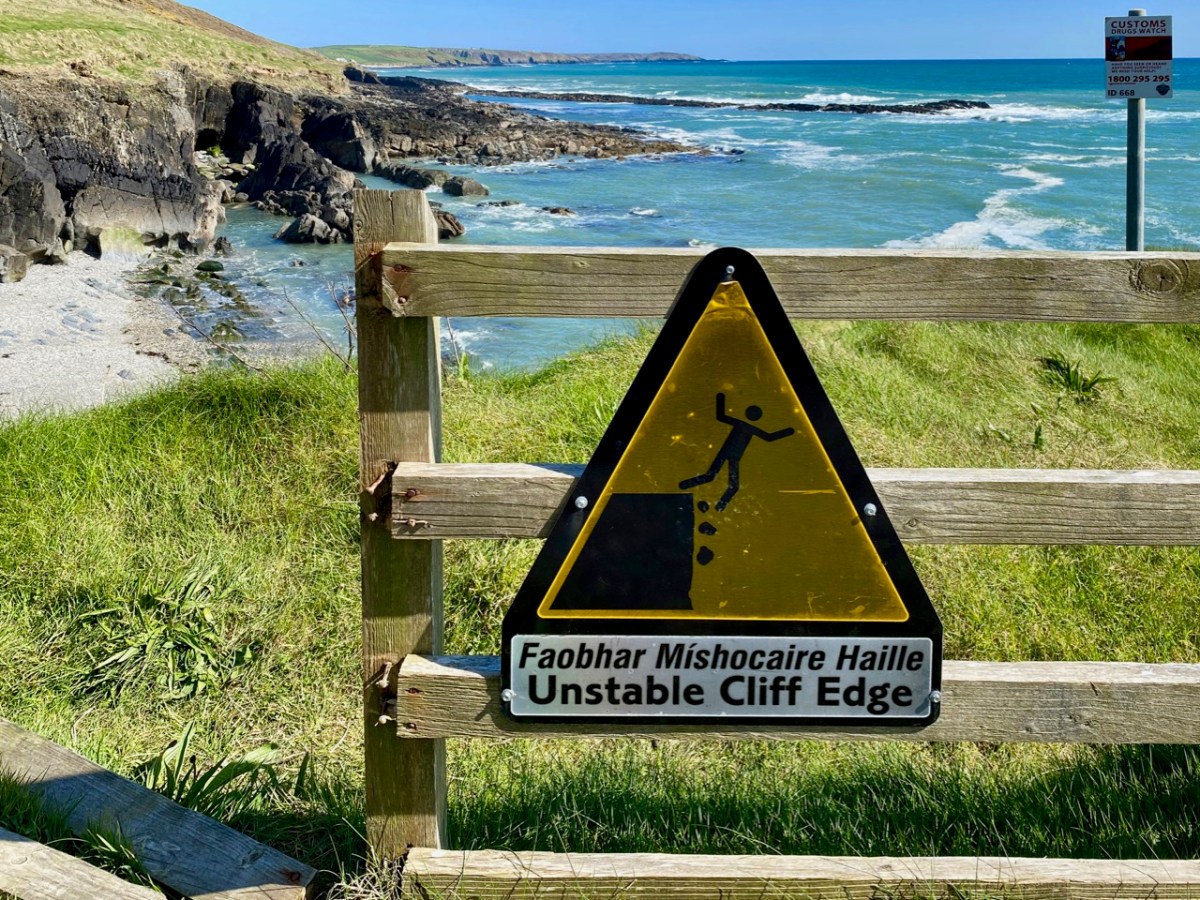
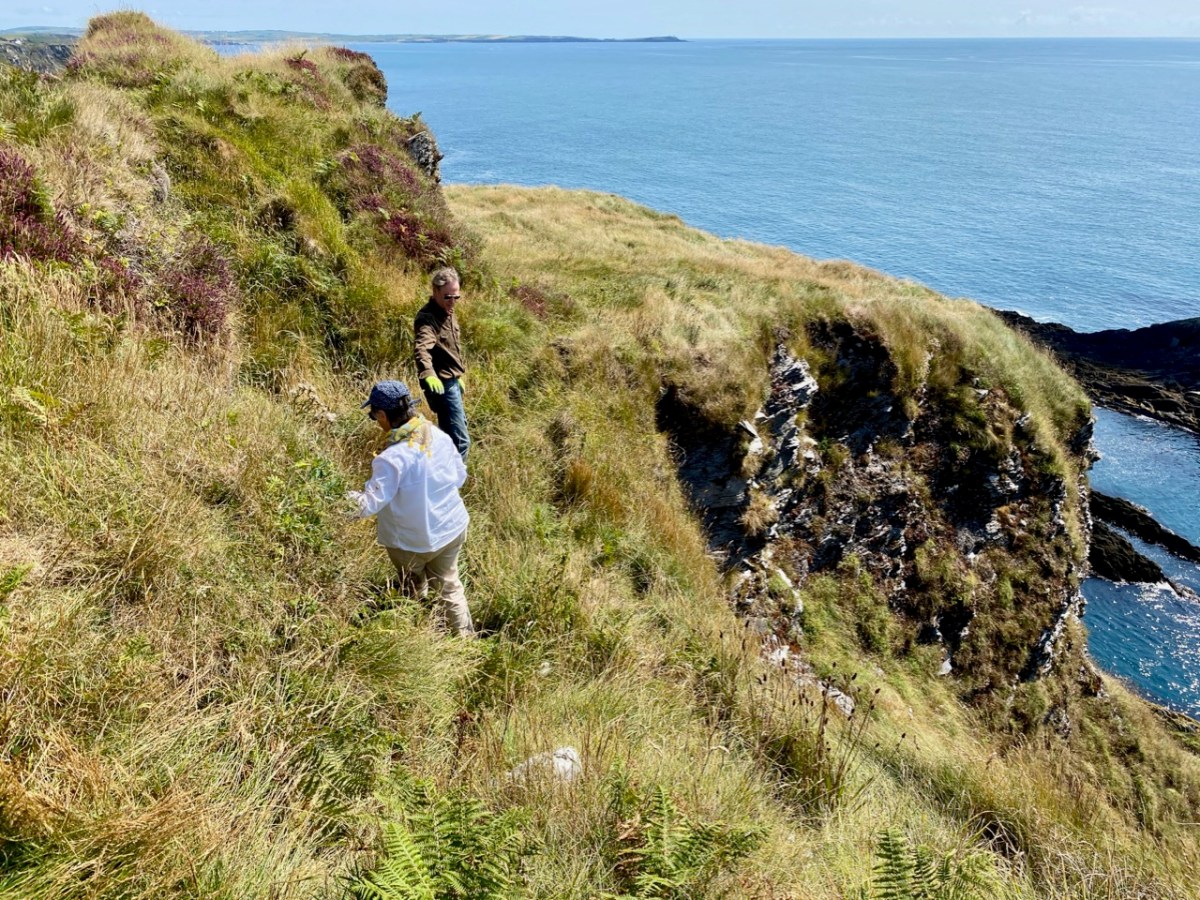
We were fortunate with the day we had. The benign weather gave us a possibly false sense of security as we explored a wild, riven coastline. We could well imagine how exposed we might feel there in one of West Cork’s severe storms: our climate-changing extremes are becoming ever more prevalent. But on this occasion we were confident enough to venture to the very edges of the land, always conscious that humans had settled in these remote places many generations before us.
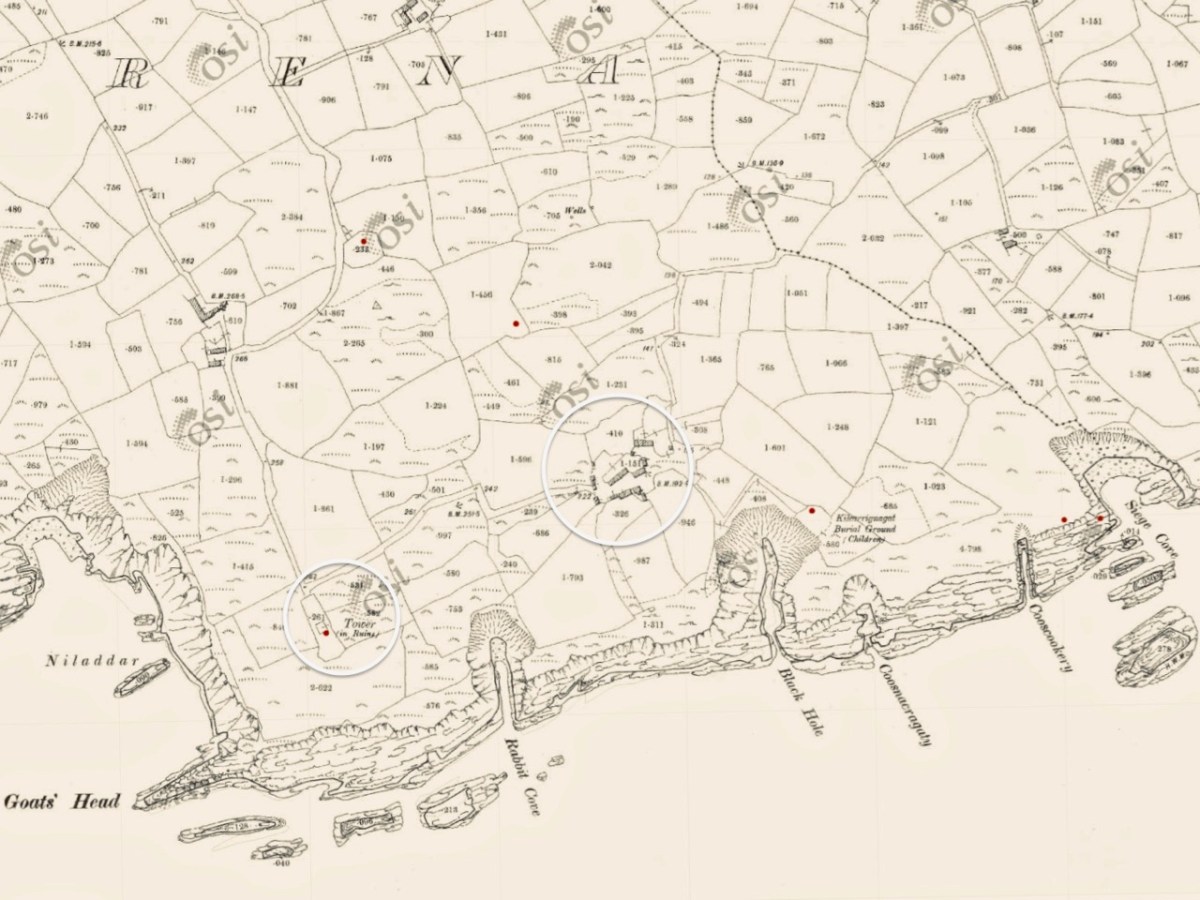
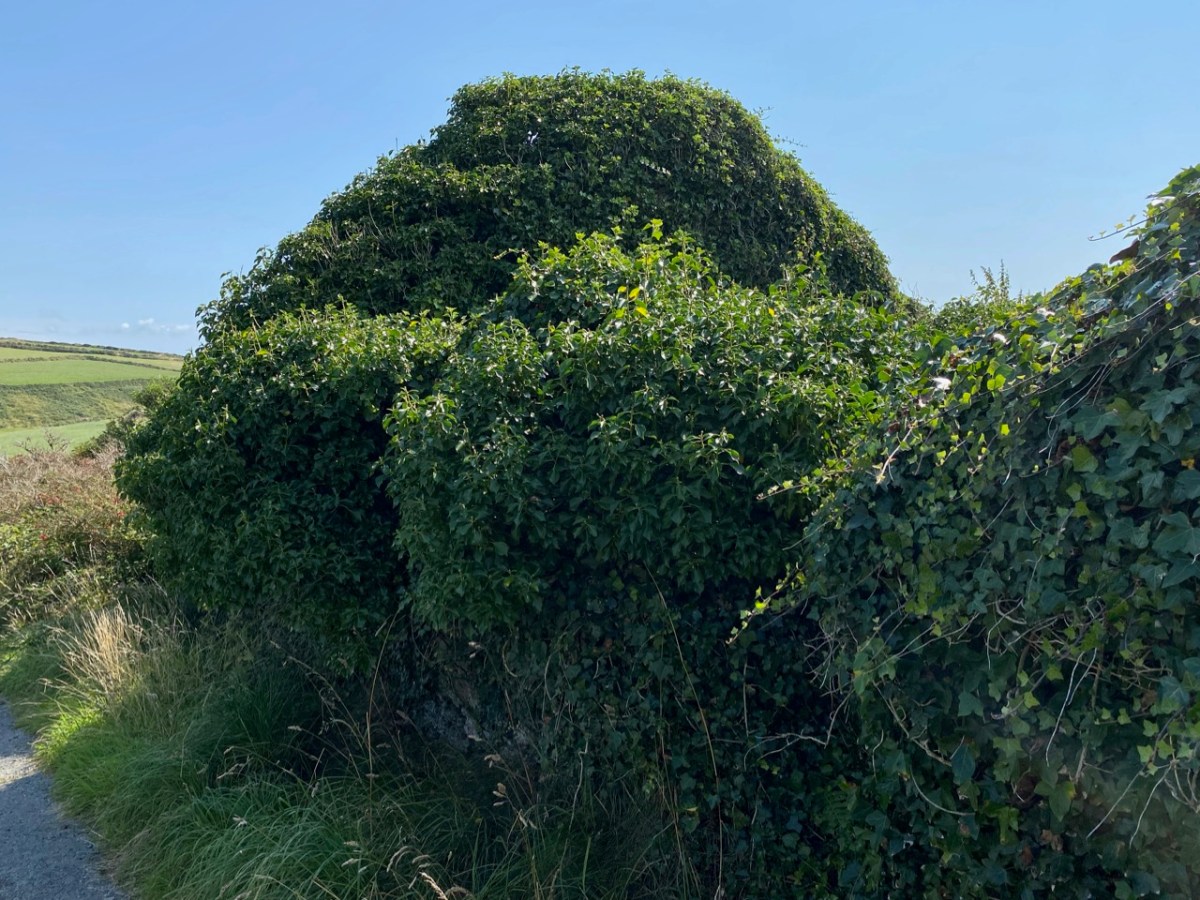
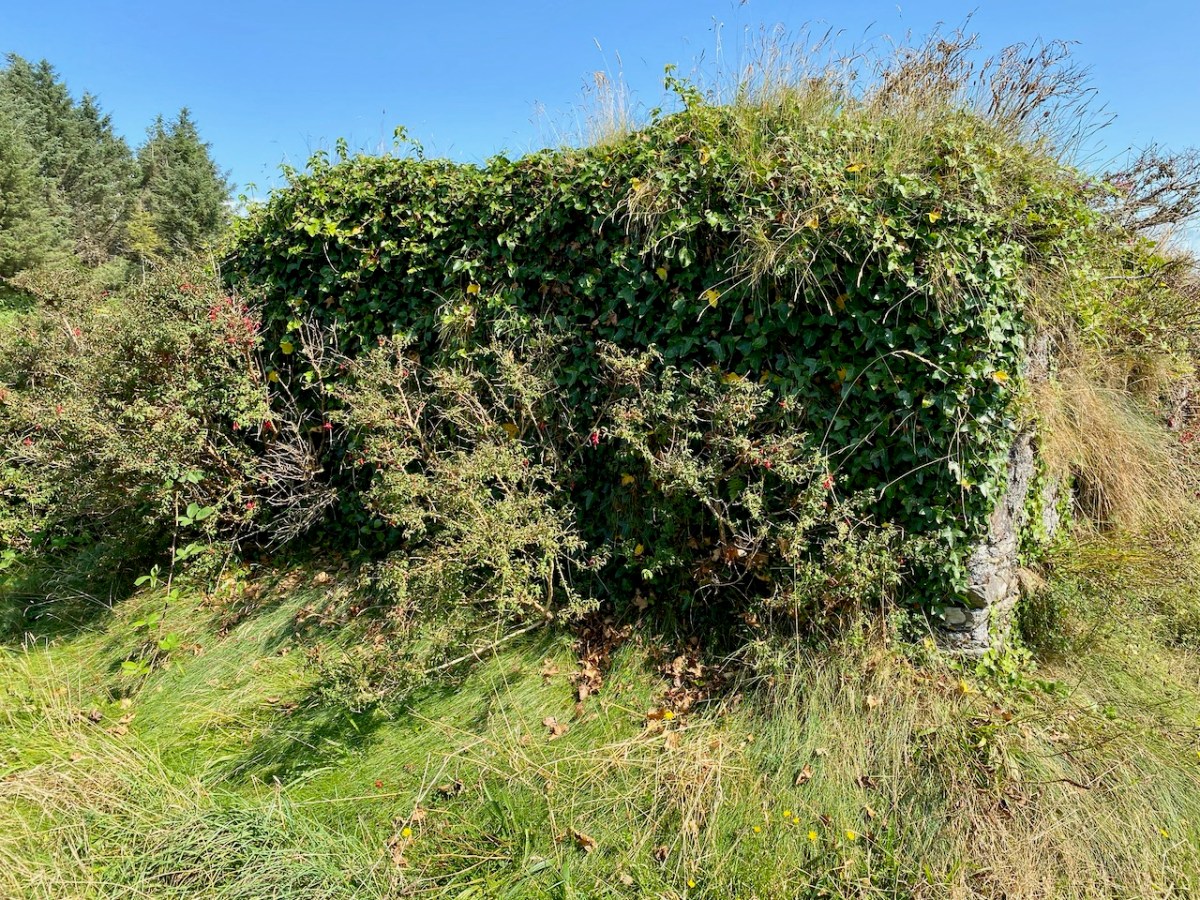
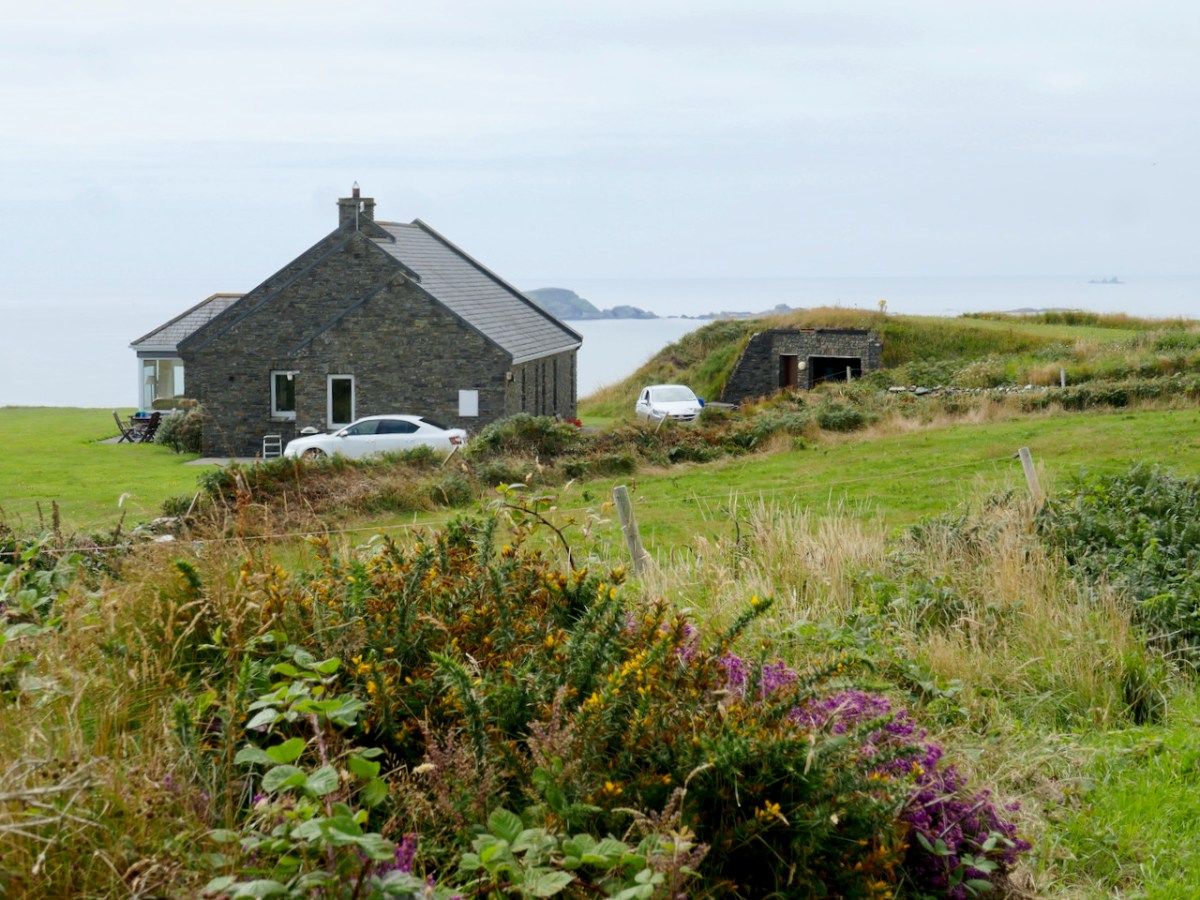
There is nothing left of the signal tower at Glandore Head, which would have been constructed between 1801 and 1804. The site has now been taken over by a recently built house which enjoys the excellent views in all directions. In the picture below it seems that the tower was located in the area of the earth-sheltered garage. We know more or less where it was because it appears on the earliest Ordnance Survey maps from around 1840. Even by then the structure itself had lost its original function, as the threat of Napoleonic invasion had passed, but it is labelled as a ‘Telegraph’. On the later 25″ map – dating from the late 1800s – the site is marked as ‘Tower in ruins’.
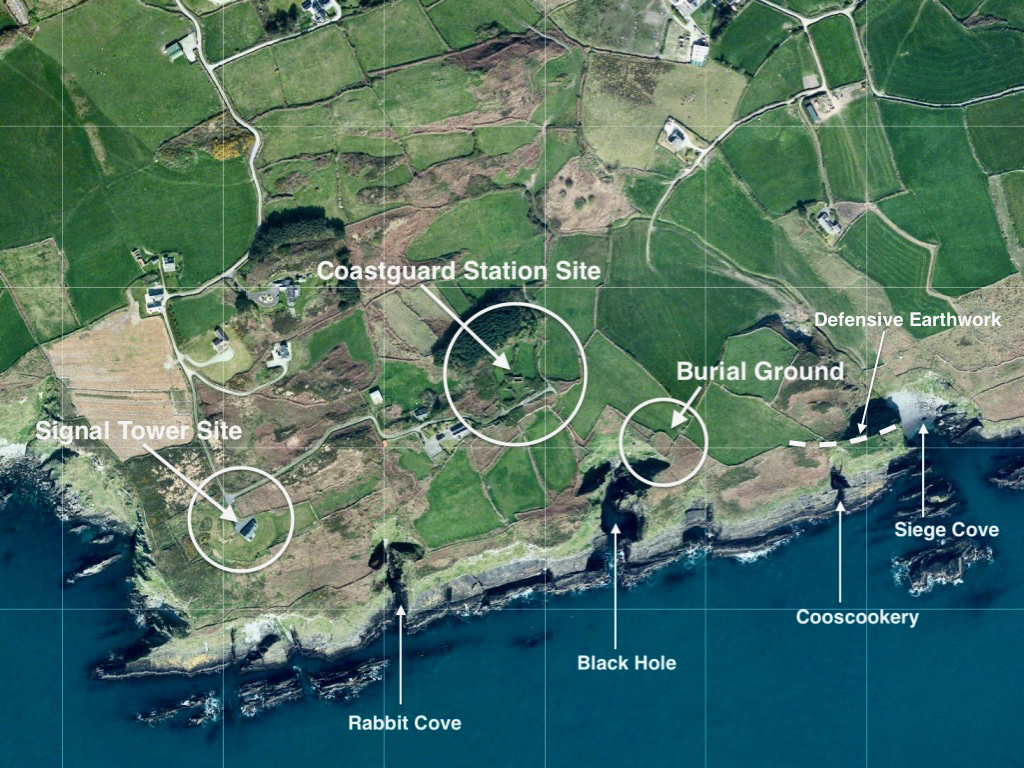
Centre – the earliest 6″ OS map; lower – the later – and far more detailed – 25″ OS map. It’s interesting to compare the two versions. The accuracy of the later map in terms of topographical detail and humanly constructed features – buildings, trackways etc is very noticeable. Below is the contemporary aerial view. 50 years separate the two OS maps, while the satellite image is 100 years later again.
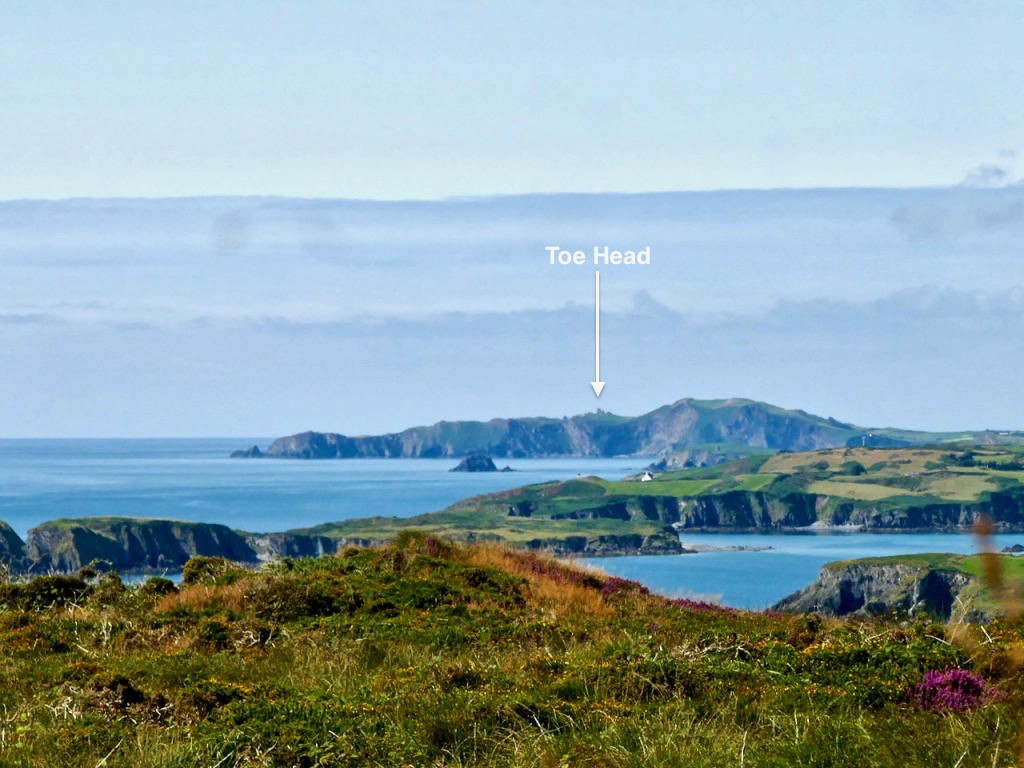
The reason why I like to examine and compare the mapped information is my interest in reading the history of a place through its landscape, and this particular vignette of West Cork is a prime example of the process. Firstly, the signal tower location was chosen because of visibility to other significant places on the coastline which are in view: the towers at Toe Head to the west and Galley Head (Dunnycove) to the east (below).
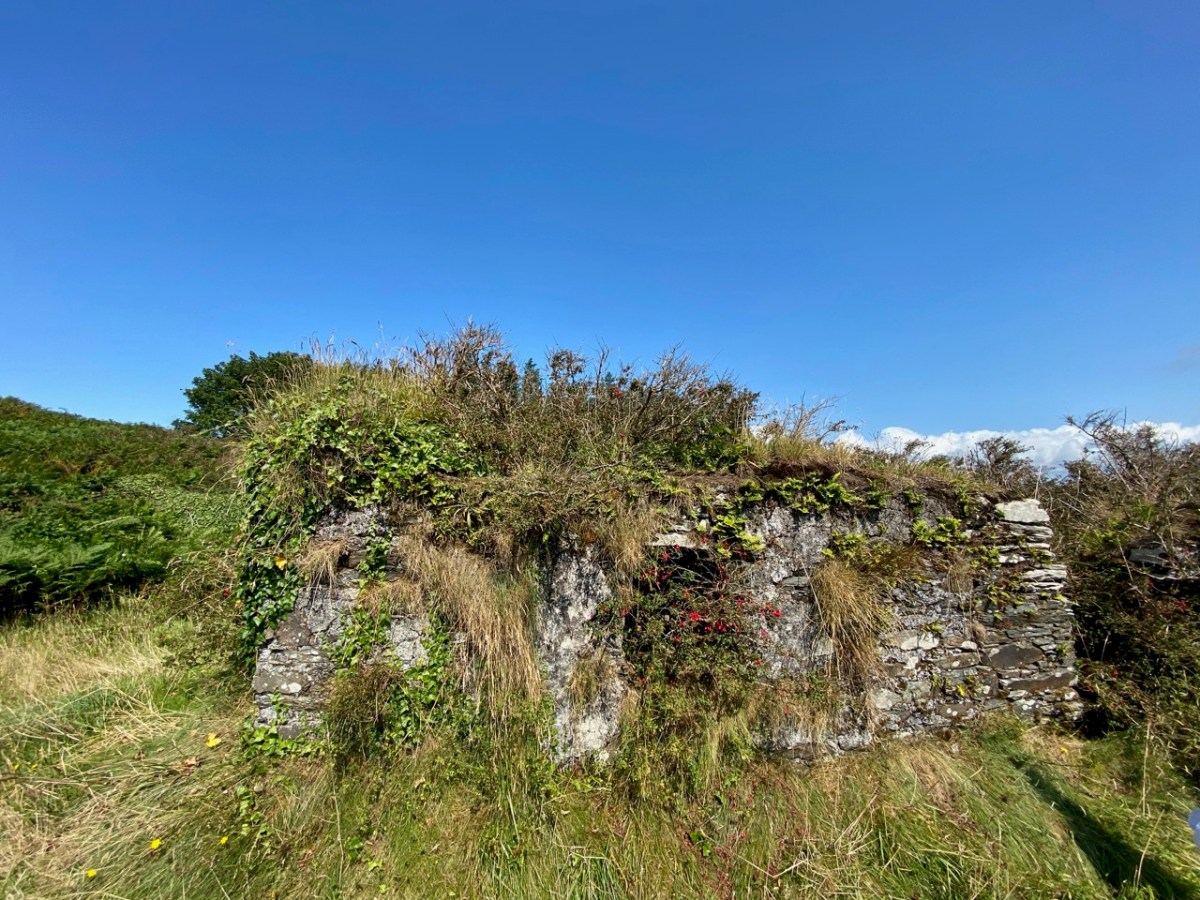
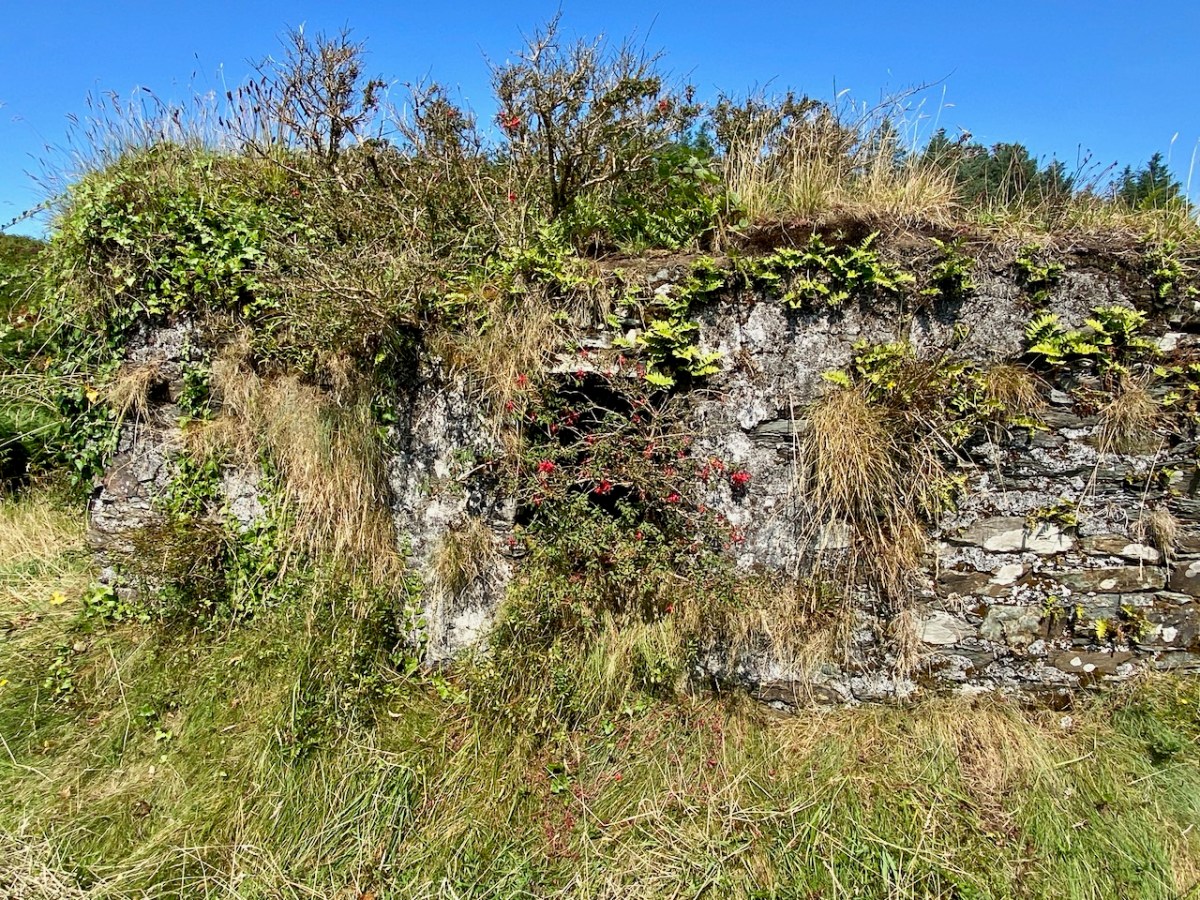
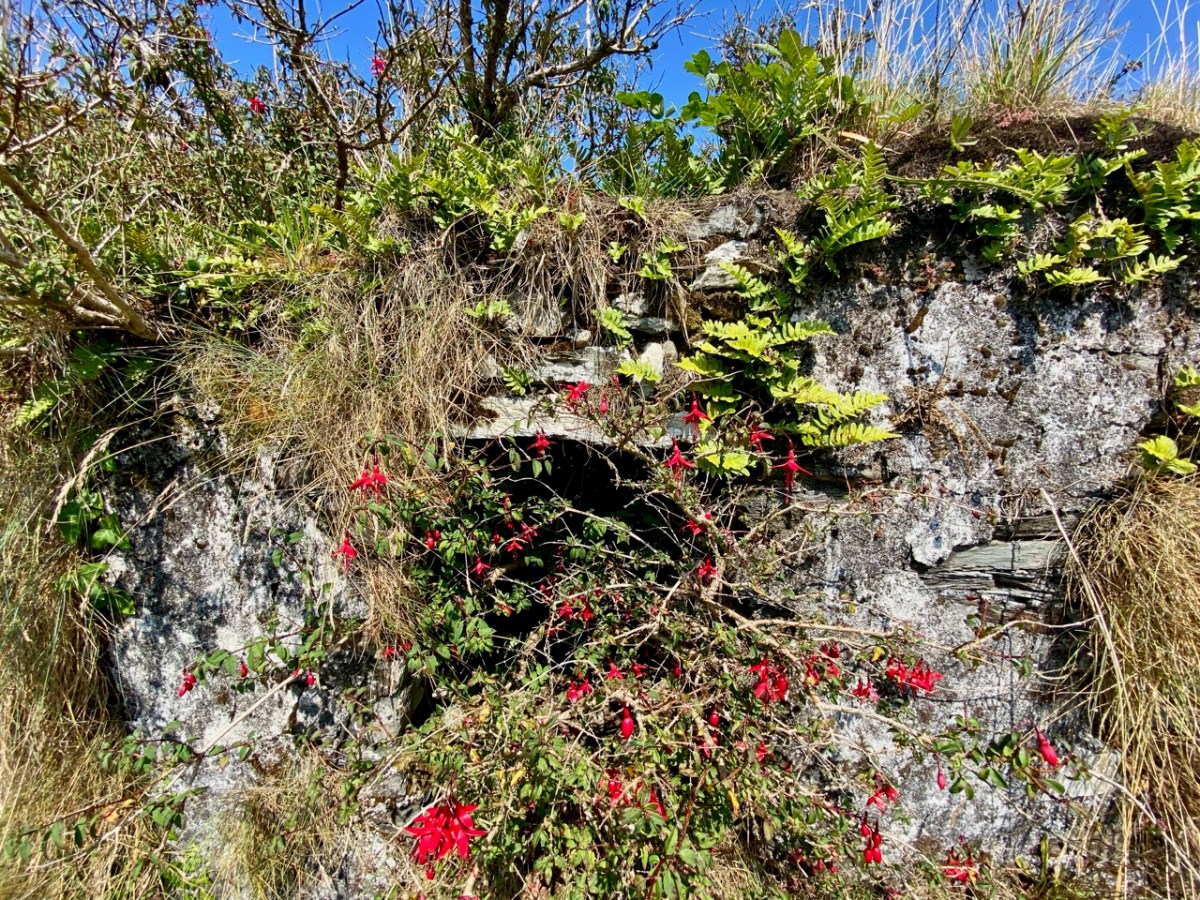
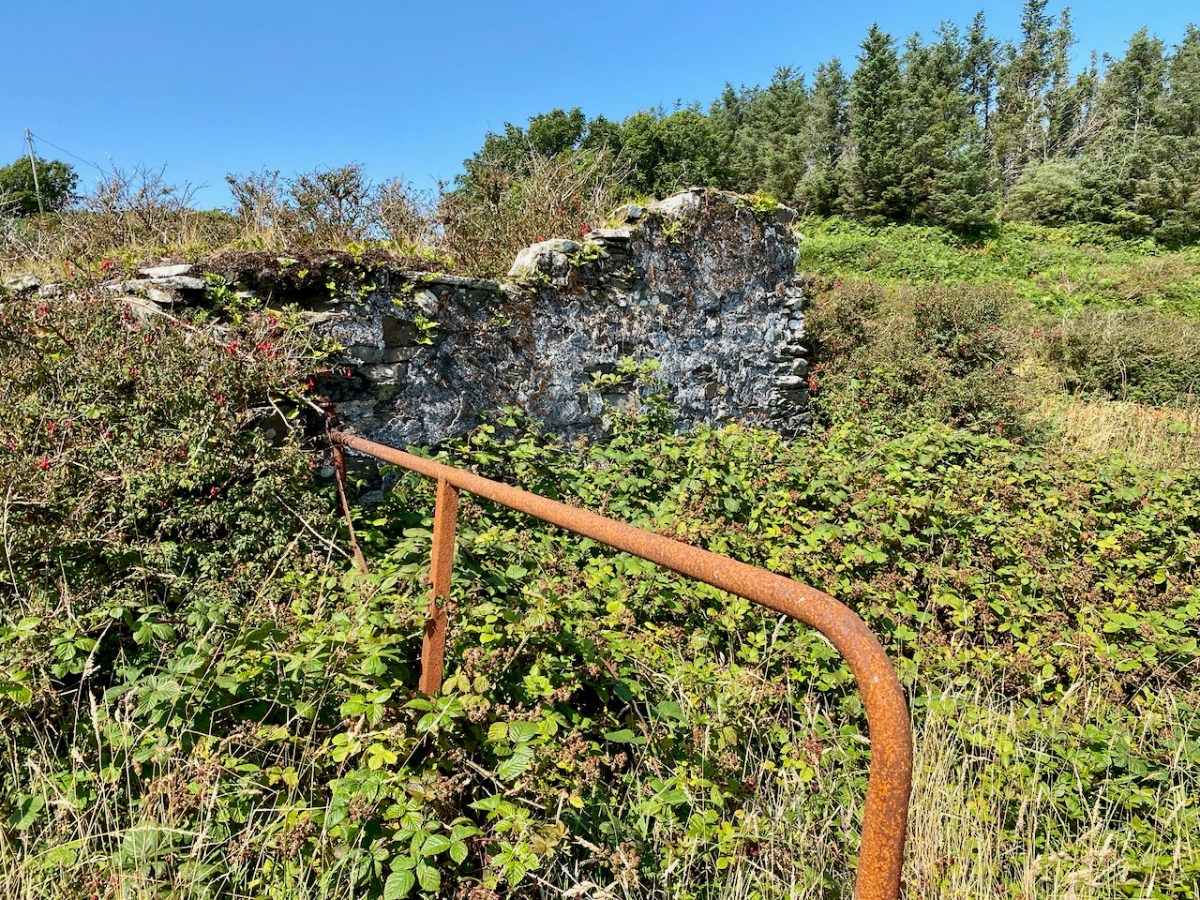
Next, look at the ‘Coastguard Station’ site. This is marked on the c1840 OS map, but not on the later 25″ map. But that later map does show a number of buildings on that site. As you can see from the aerial view, there are only the remnants of buildings now. Also the older map shows no roadway or track accessing the ‘Coastguard Station’ – it could only be reached by crossing fields. Here’s a closer look at this group of ruined buildings today, followed by some of our photos.
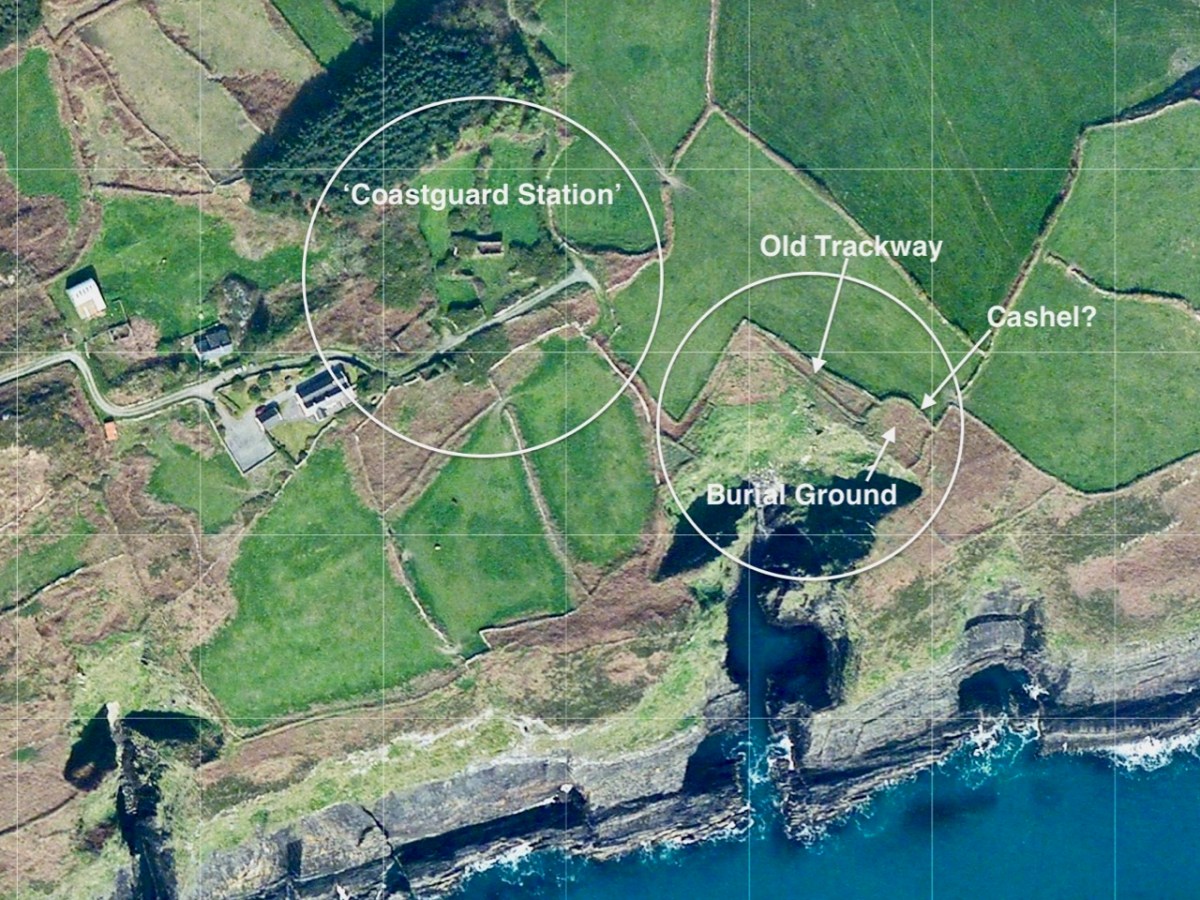
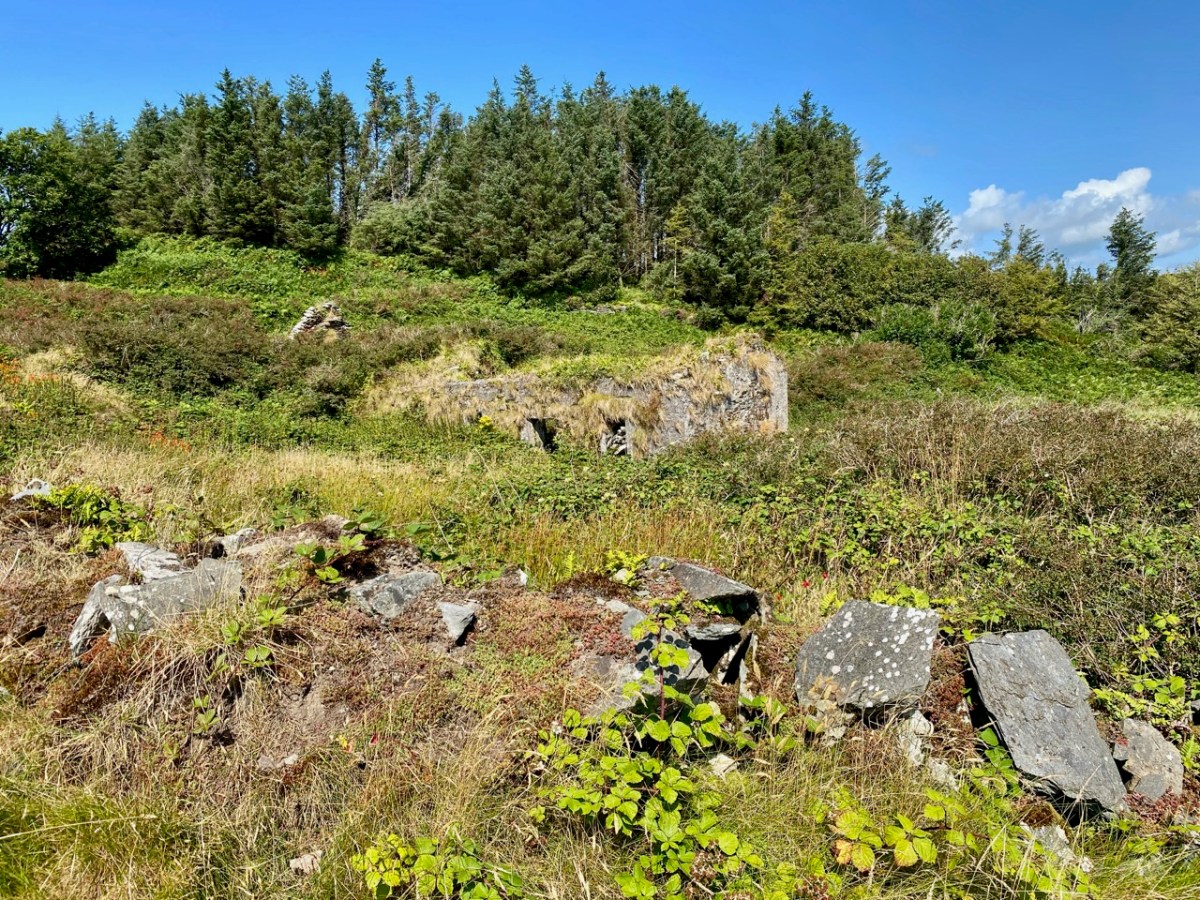
While it is likely that there are old coastguard buildings amongst these ruins, it seemed to us equally possible that we were also looking at the earlier remains of a settlement – cottages and cabins. Records of the area are scant. There’s nothing we found – apart from the OS maps – to give any further light on what we were scrutinising. Surprisingly, very little information is available on the early years of the Irish Coast Guard service, other than its establishment as the Water Guard, or ‘Preventative Boat Service’ in 1809, initially under Navy control but from 1822 part of the Board of Customs. From this we might assume that its purpose was to intercept smuggling operations, rather than to give any assistance to seafarers. Incidentally, it is important to note that in Ireland the name has always been two words: Coast Guard.

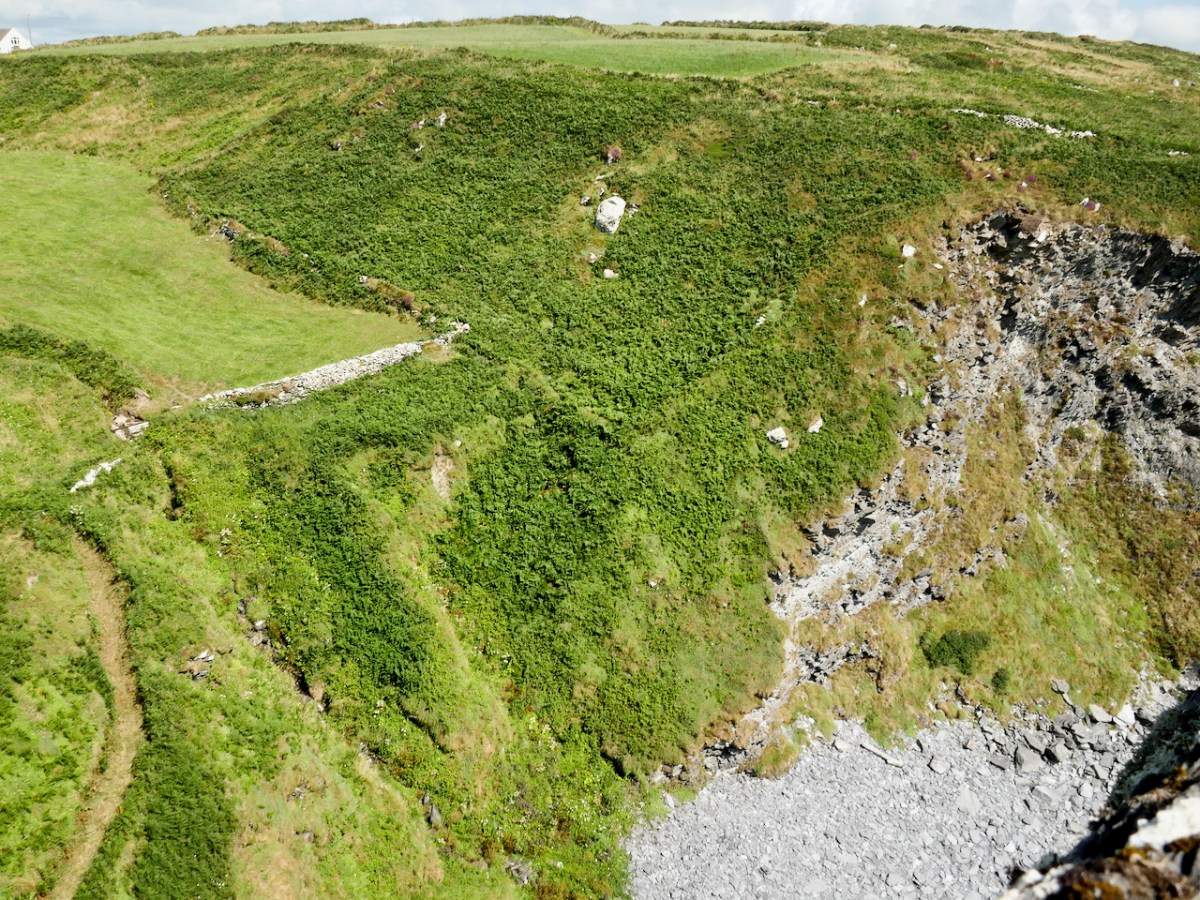
It’s easy to see that this hostile coastline – which would not be benign to small fishing boats – would nevertheless attract subversive landings. The only nearby access to the water is Siege Cove, to the east of the Coast Guard site. The upper photo depicts the curiously named Cooscookery inlet – not a good landing point, while the lower is Siege Cove – itself a difficult climb to the fields from sea level. The names of the topographical features would be a good study in themselves – and might reveal some hidden history: Coosnacragaty, Black Hole, Rabbit Cove, and Niladdar. The small burial ground is known as Kilcarrignagat (it means the ‘church at the rock of the cat’). That’s the overgrown trackway leading to it, below. It is of particular interest – partly because you wonder what communities it served, but also because it seems to have been established in a previously existing ring-fort or cashel.
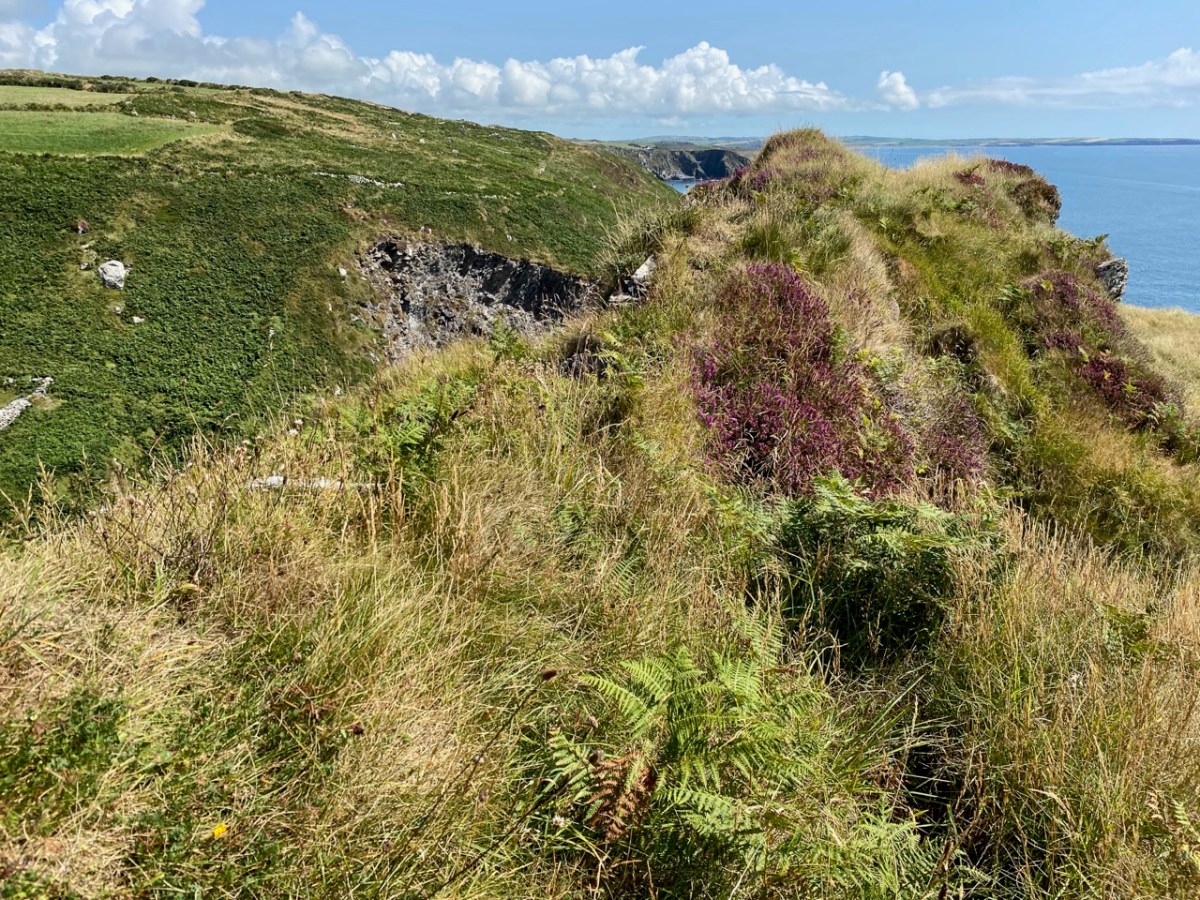
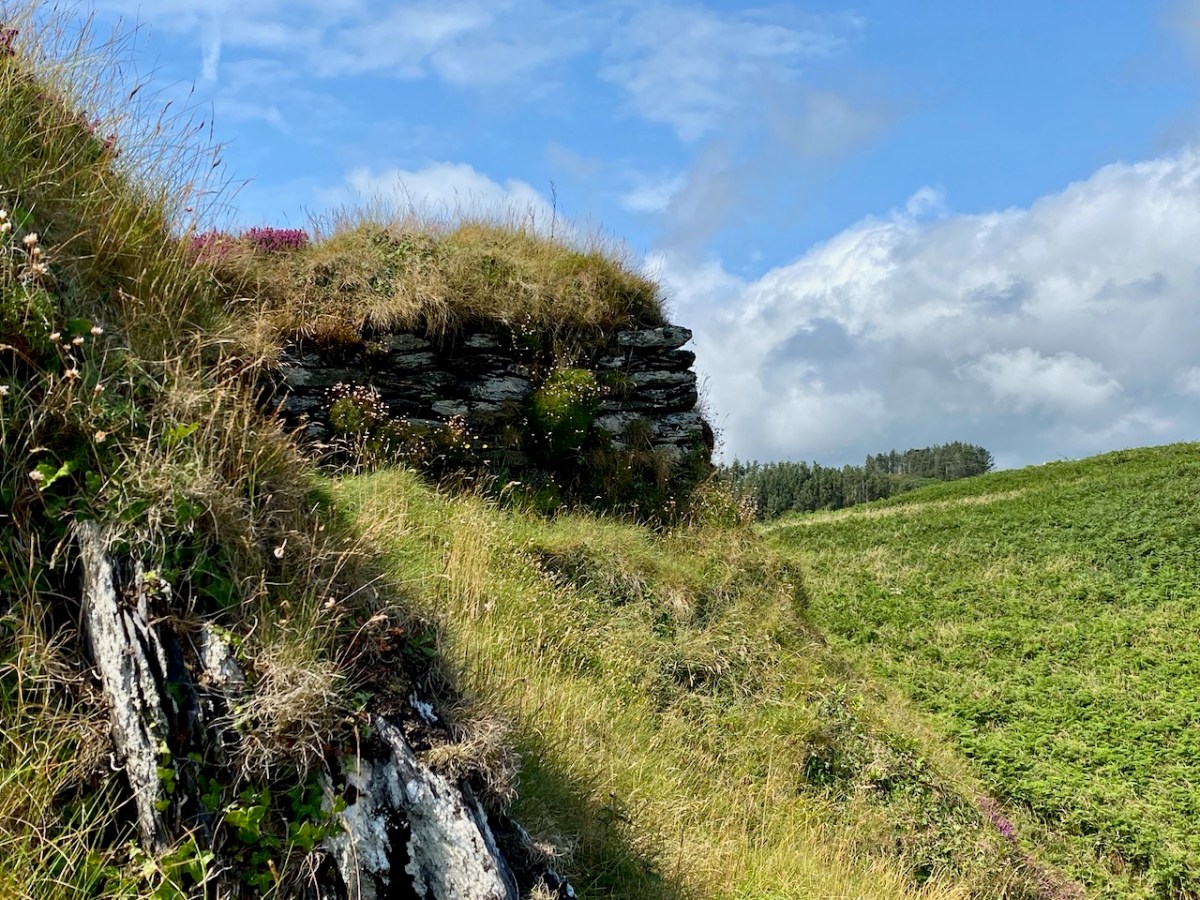
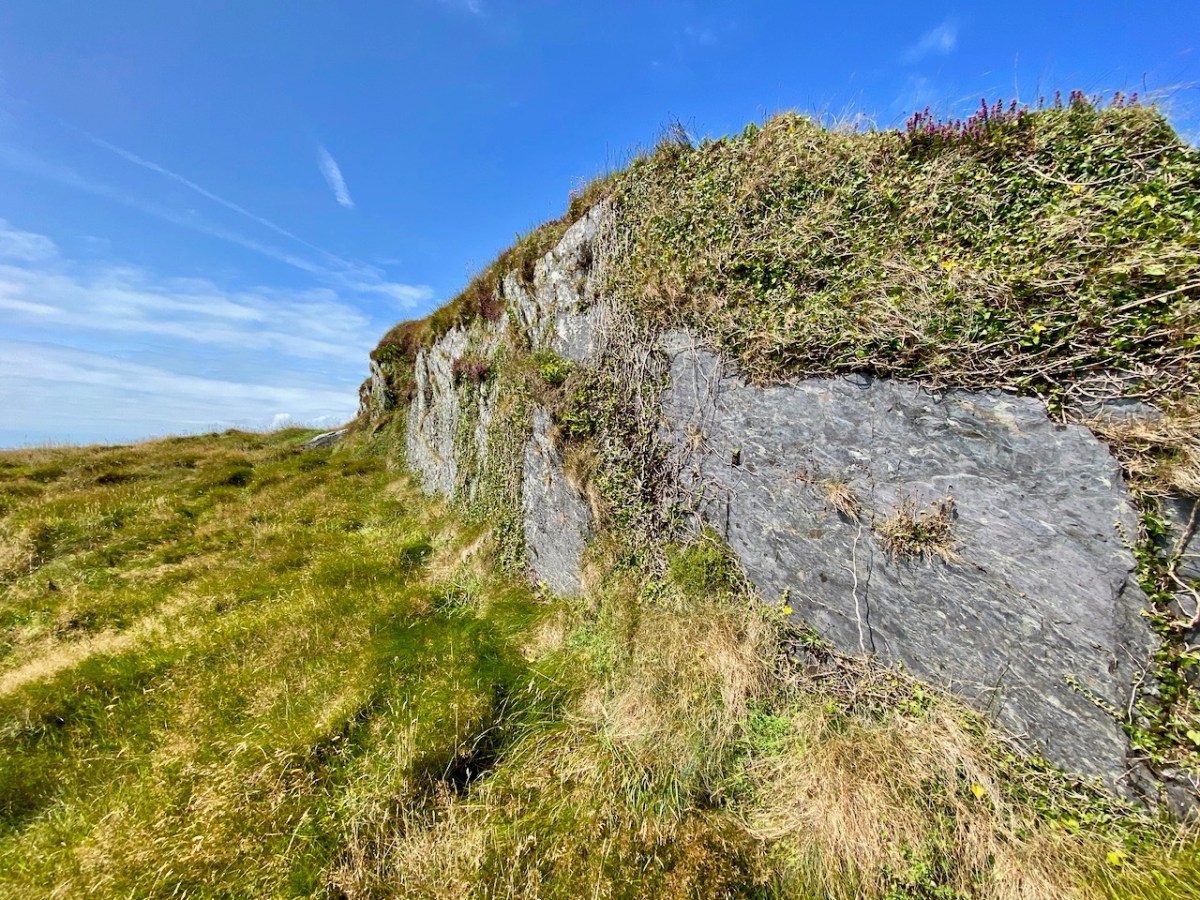
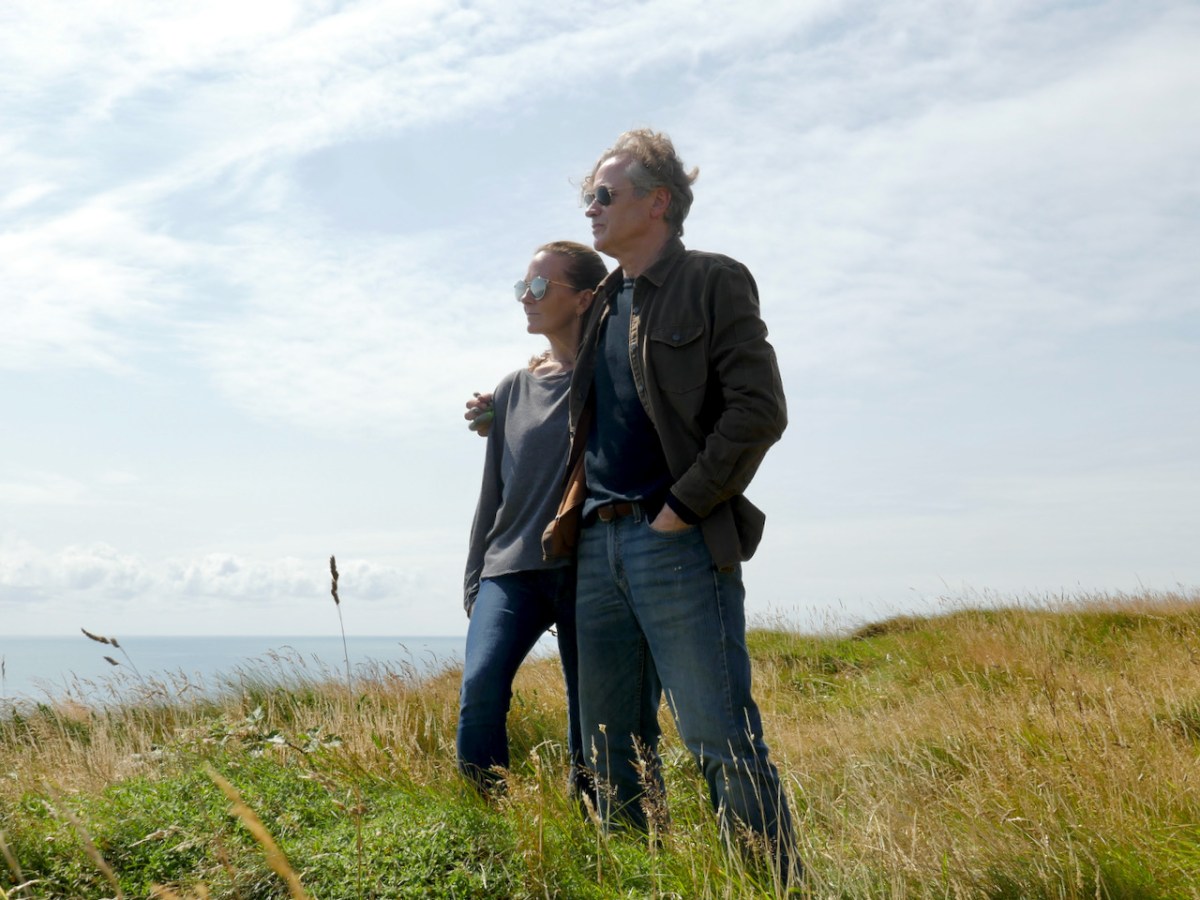
Further yet to the east, and directly above Siege Cove, are the distinct remains of a defensive structure, partly taking in natural outcrops but also built up with stone. This is likely to be indications of the first habitation in this area – perhaps a thousand years ago. There seems to be at least one promontory fort here, and Finola will take up that subject in this locality in future posts (she has already tackled examples elsewhere). It seems to me that this whole coastal region would be worthy of a detailed archaeological study – UCC take note! Meanwhile, we can only express our gratitude to friends Michael and Jane for introducing us to the many wonders of their own territory.
Addendum: After I had published this post I discovered an excellent photograph of Siege Cove and the coastline in this area taken from the sea. I cannot find a contact for the photographer. I do know his name is Tim, and that he publishes an occasional diary of his journeys in a boat (an Ilur based, I believe, In Glandore). I hope he won’t mind me publishing this and including a link to his website.
West Cork Villages and Towns – Schull

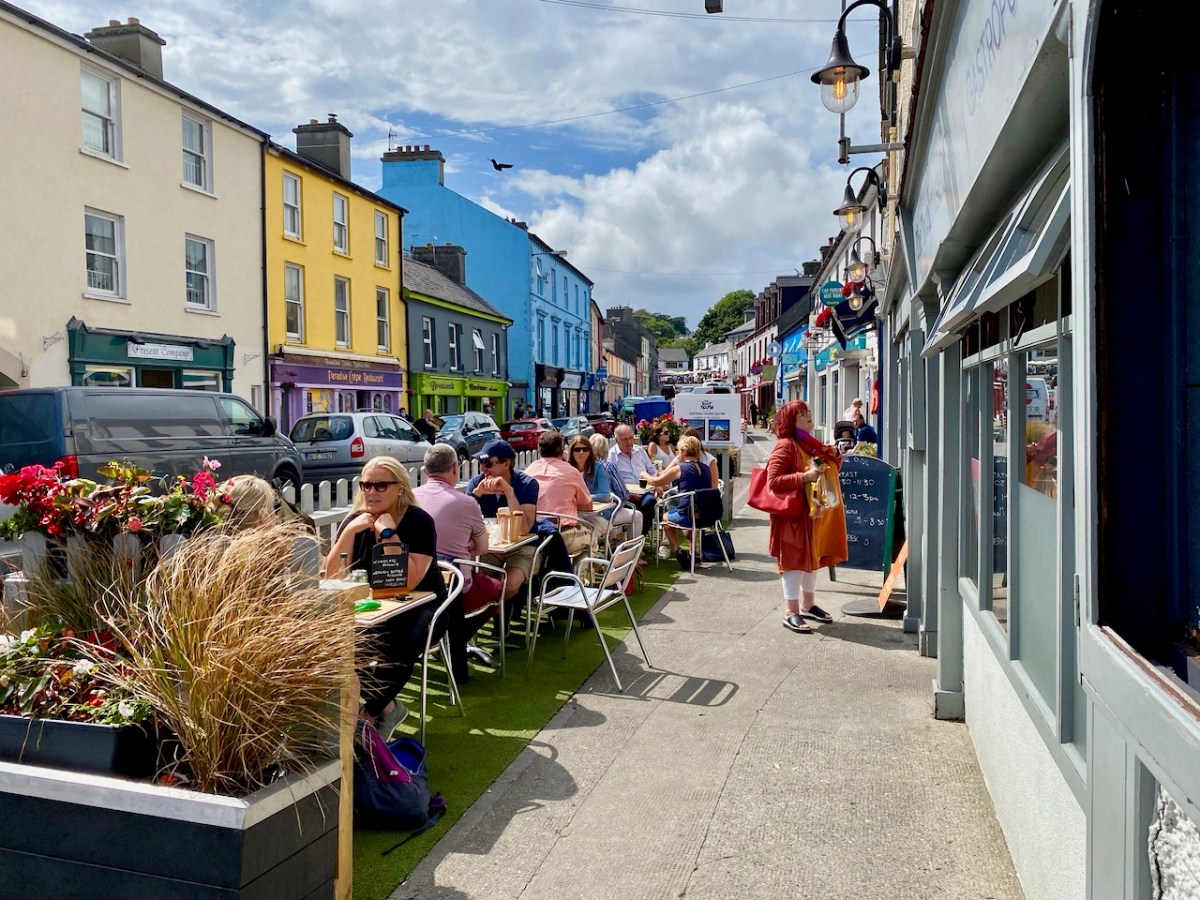
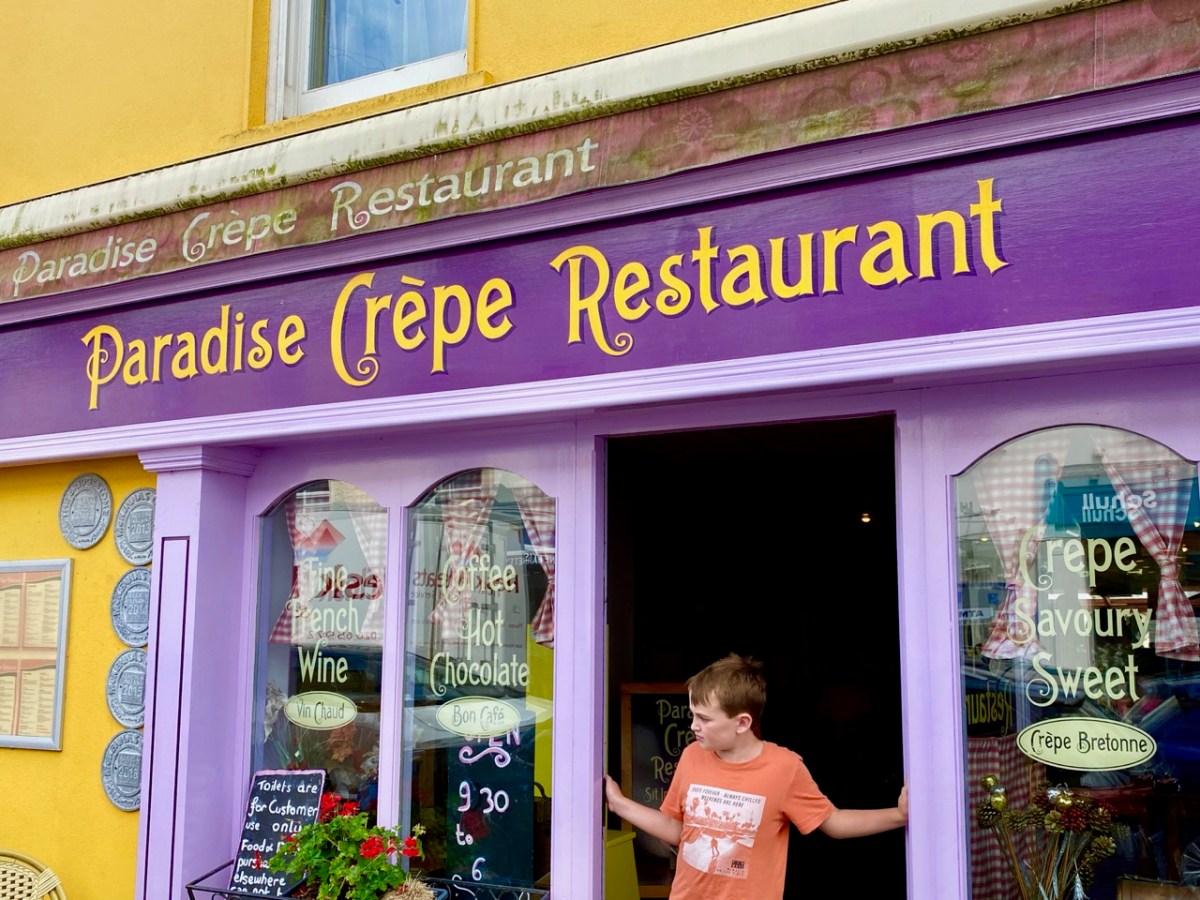
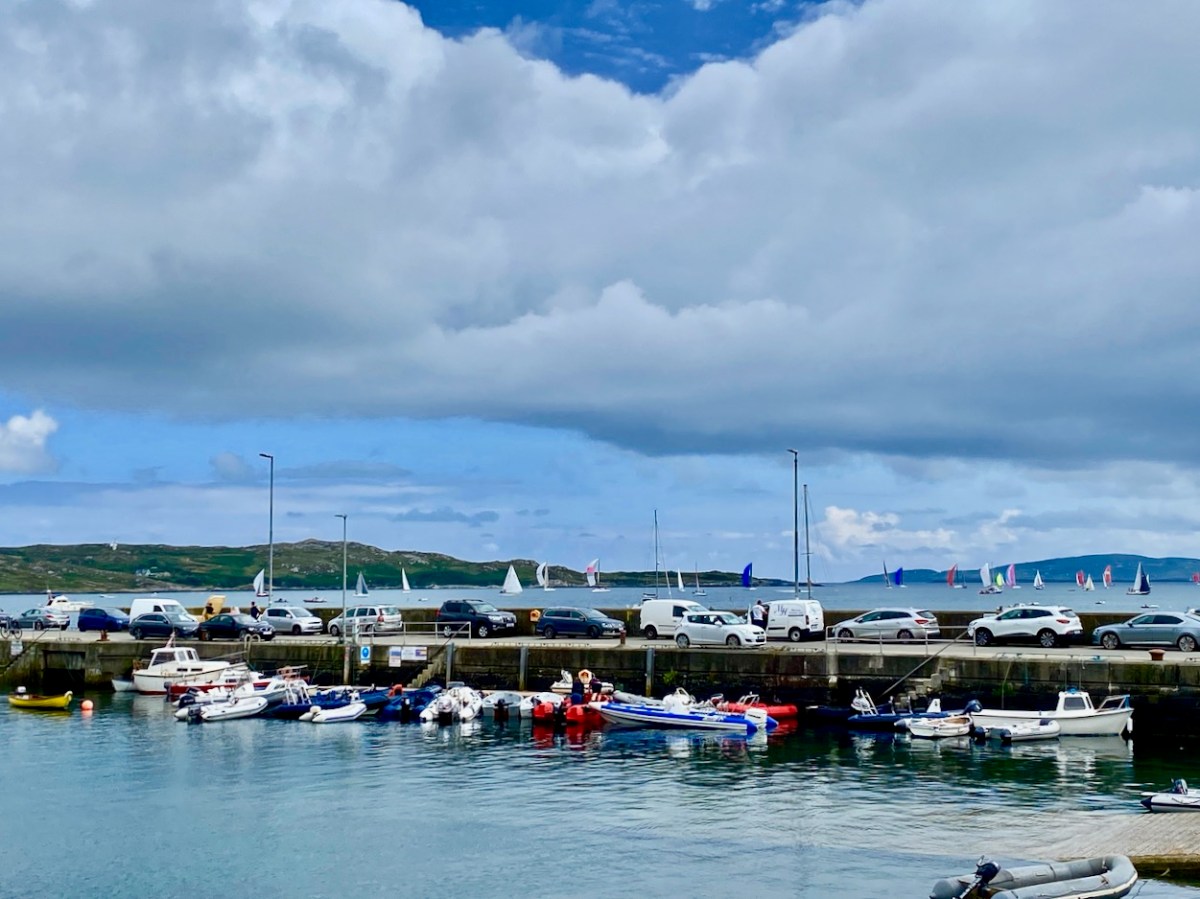
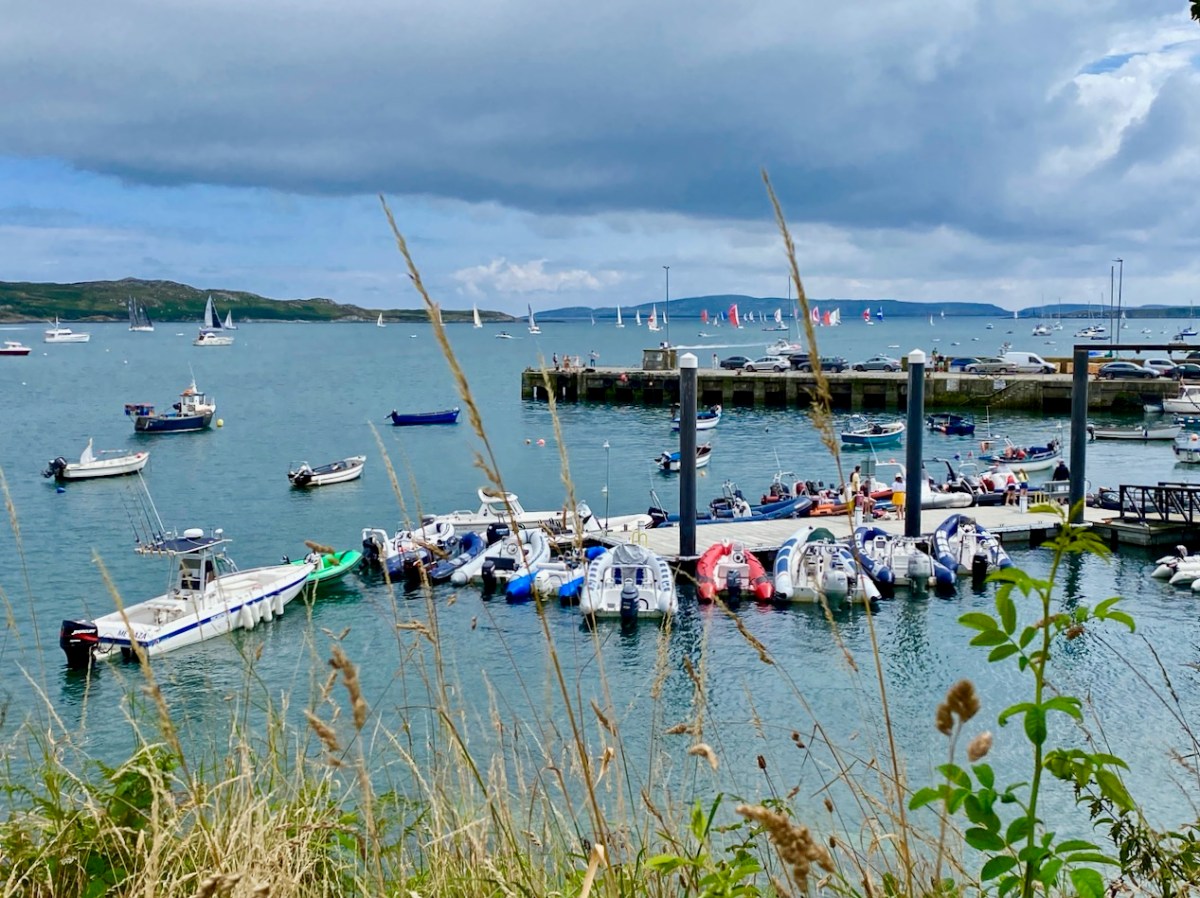
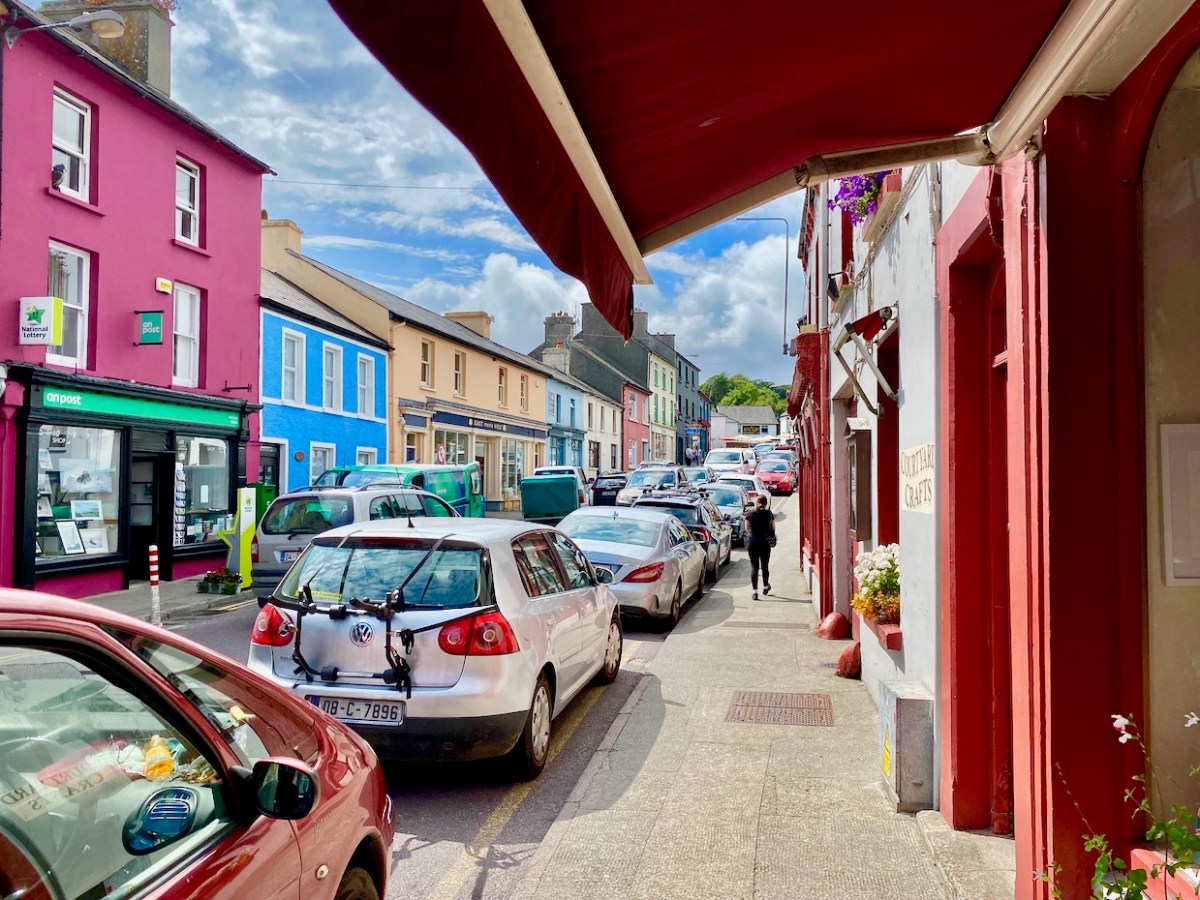
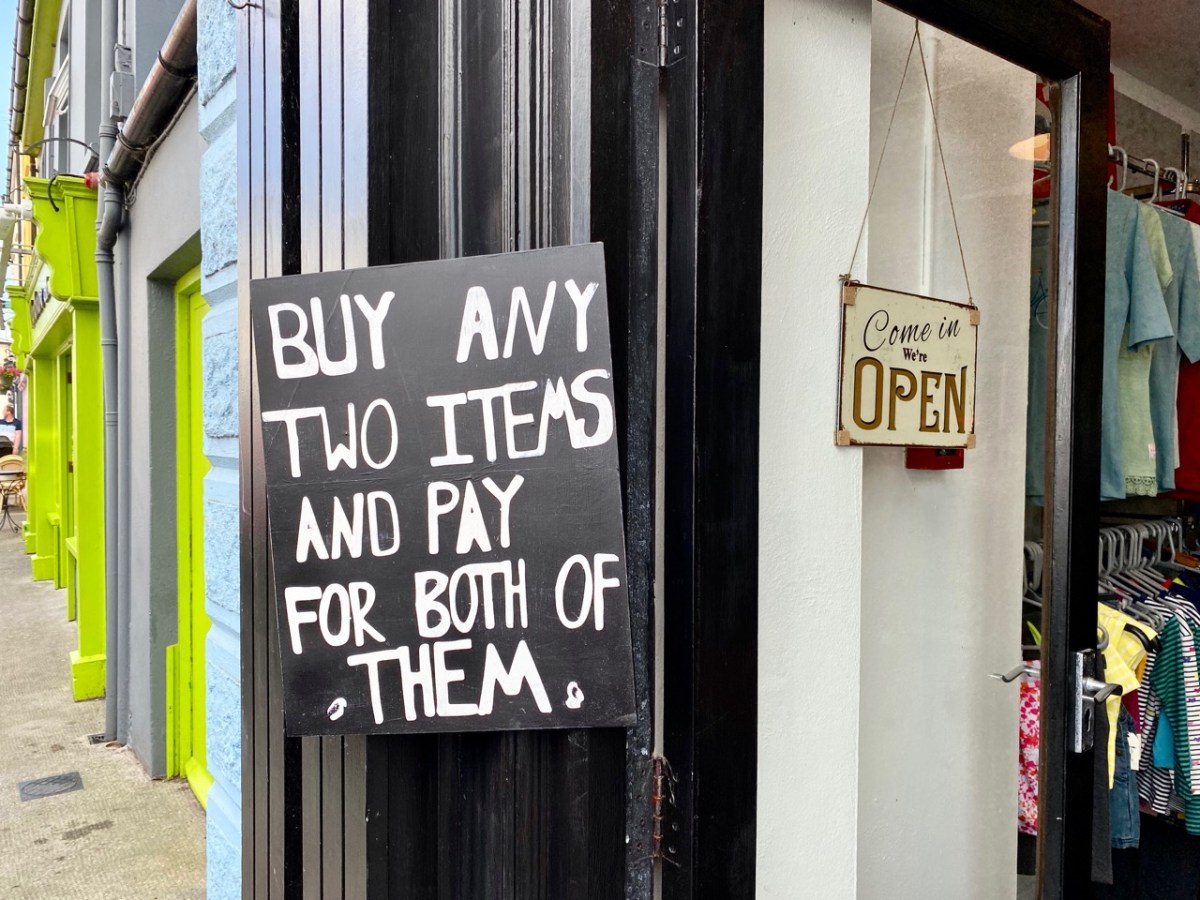
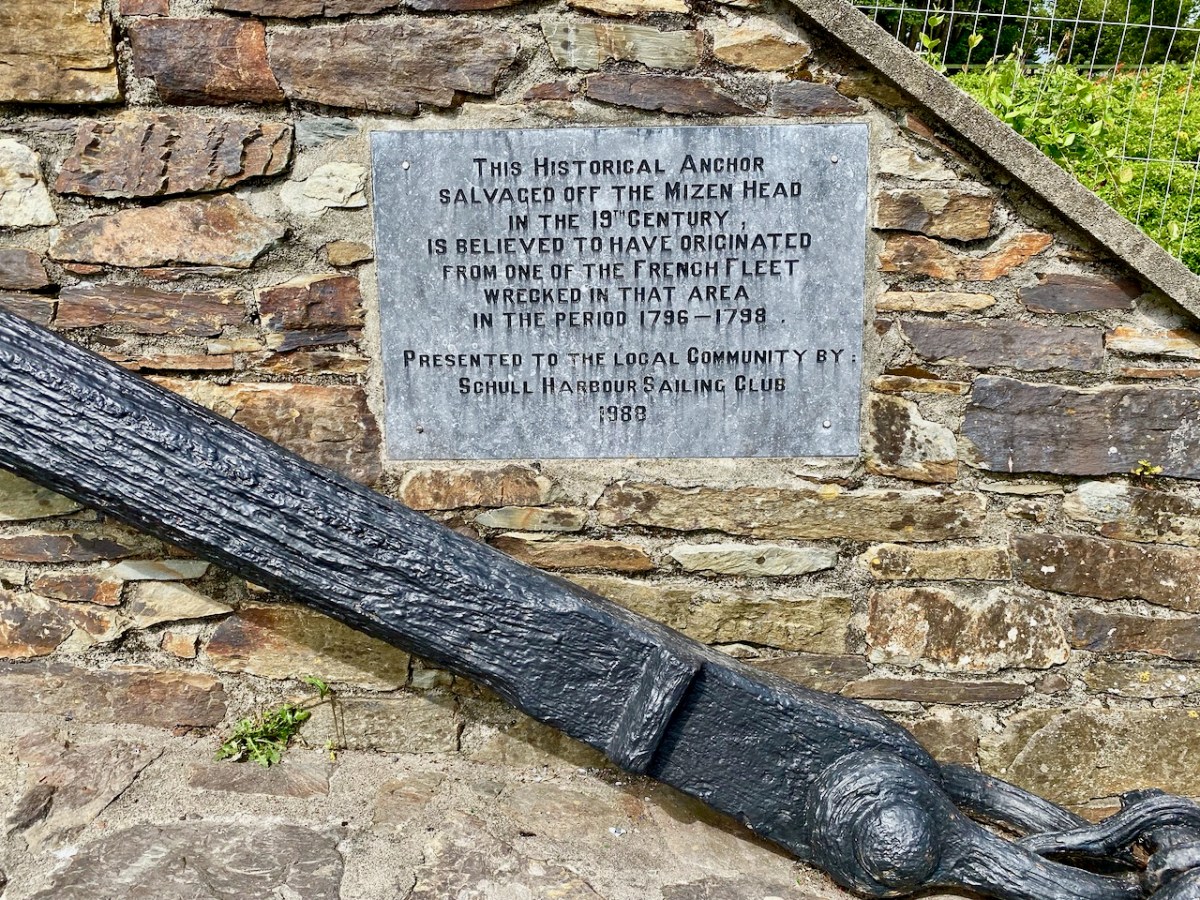
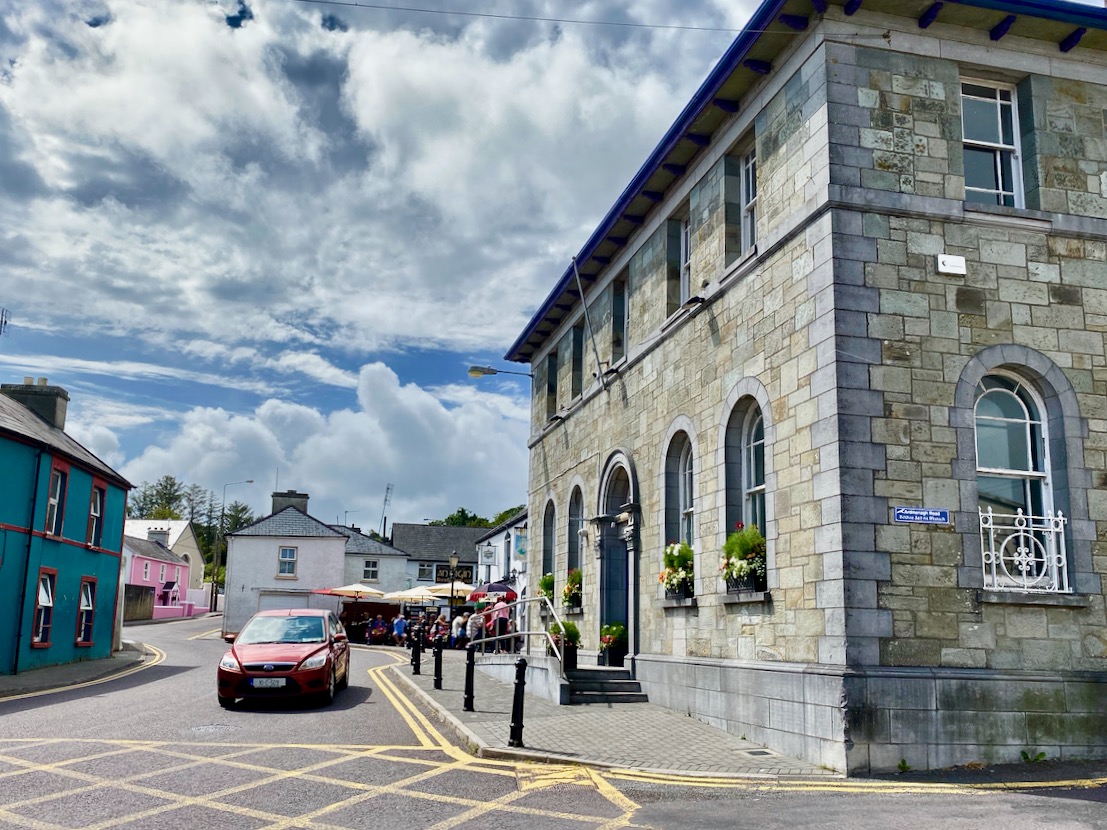
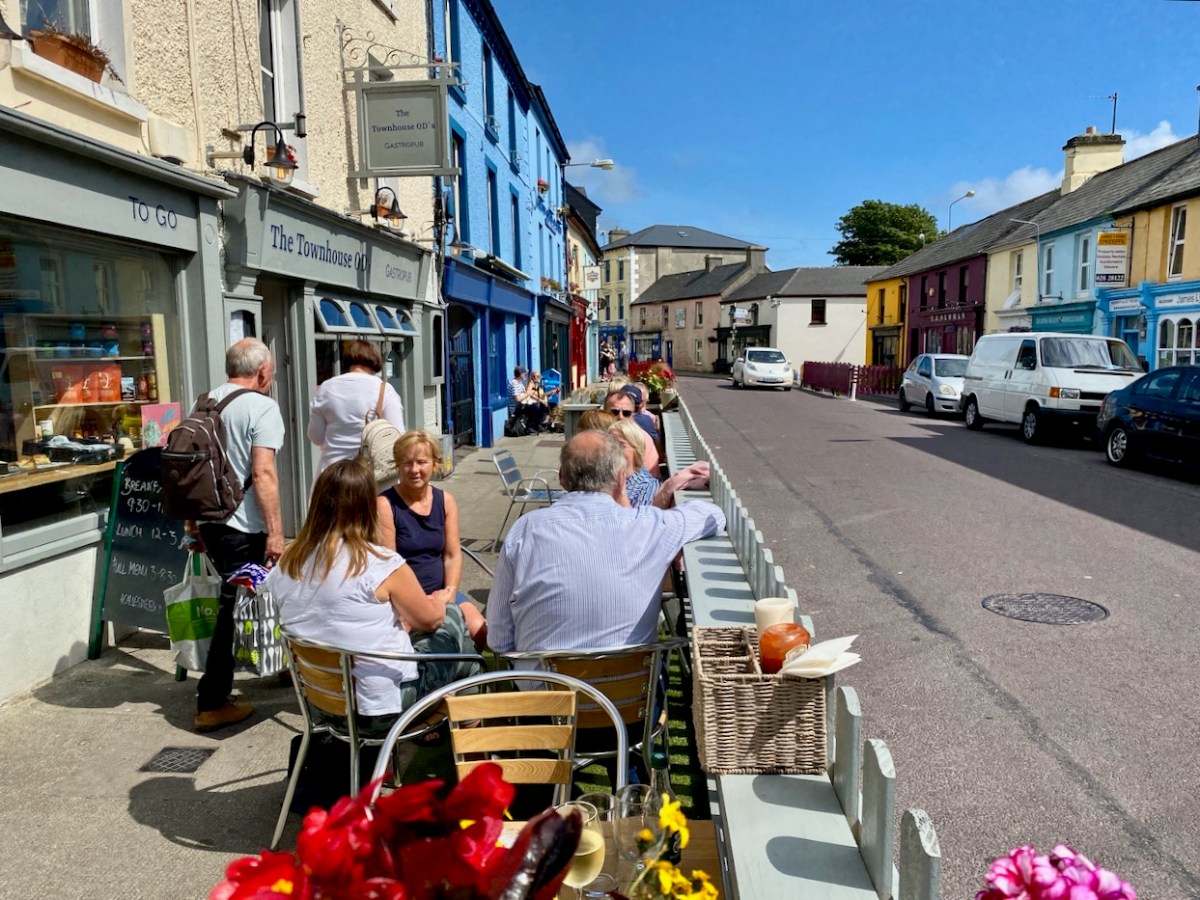
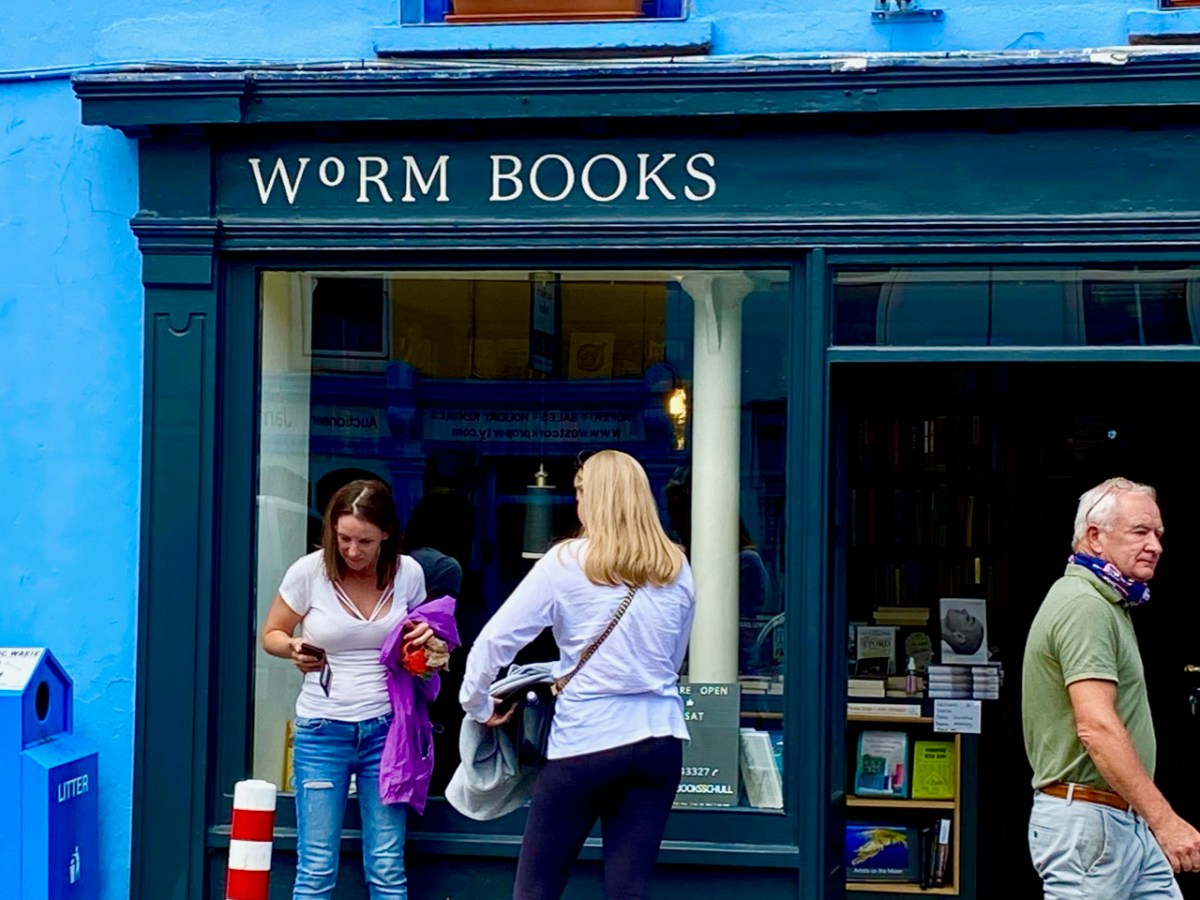
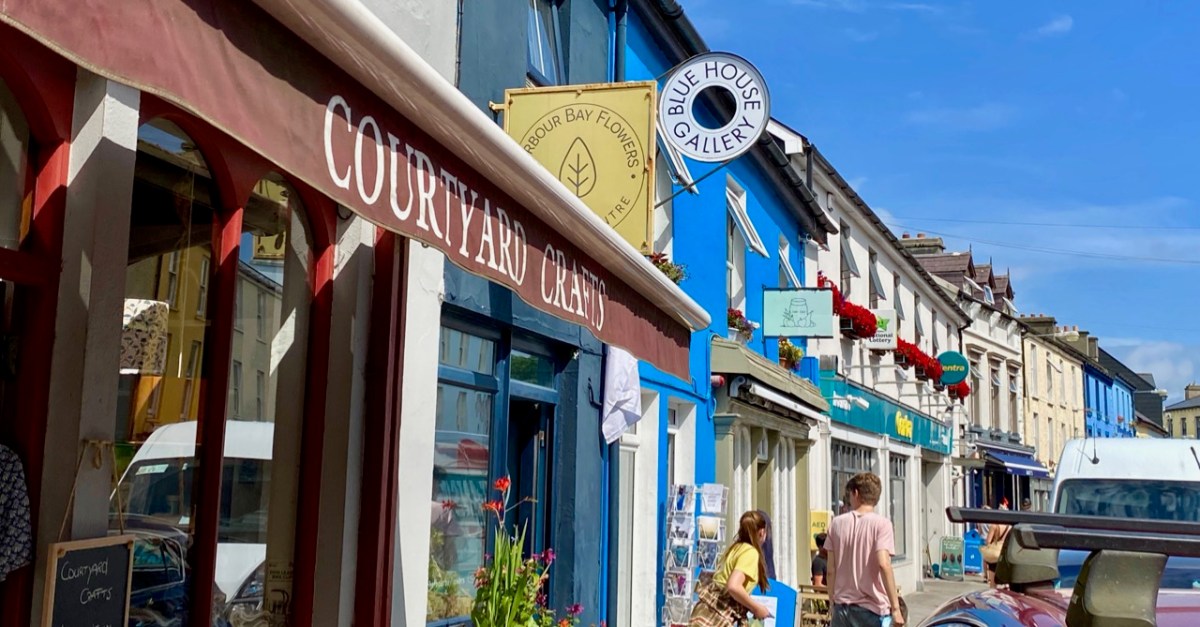
What better time to visit Schull than during Calves Week? That’s a big sailing festival at the beginning of August every year, and you have to be a sailor to understand the nuances of its title. It’s held at the same time as the UK’s premier sailing event – Cowes Week, ‘…the world’s longest running sailing regatta…’ and is focussed around the three Calf Islands in Roaringwater Bay. So there you have it – Cowes and Calves! What it means, of course, is that the village of Schull is at its busiest and, since Covid has given a boost to outdoor socialising, the streets are crowded with visitors enjoying the shops, pavement cafés and galleries.

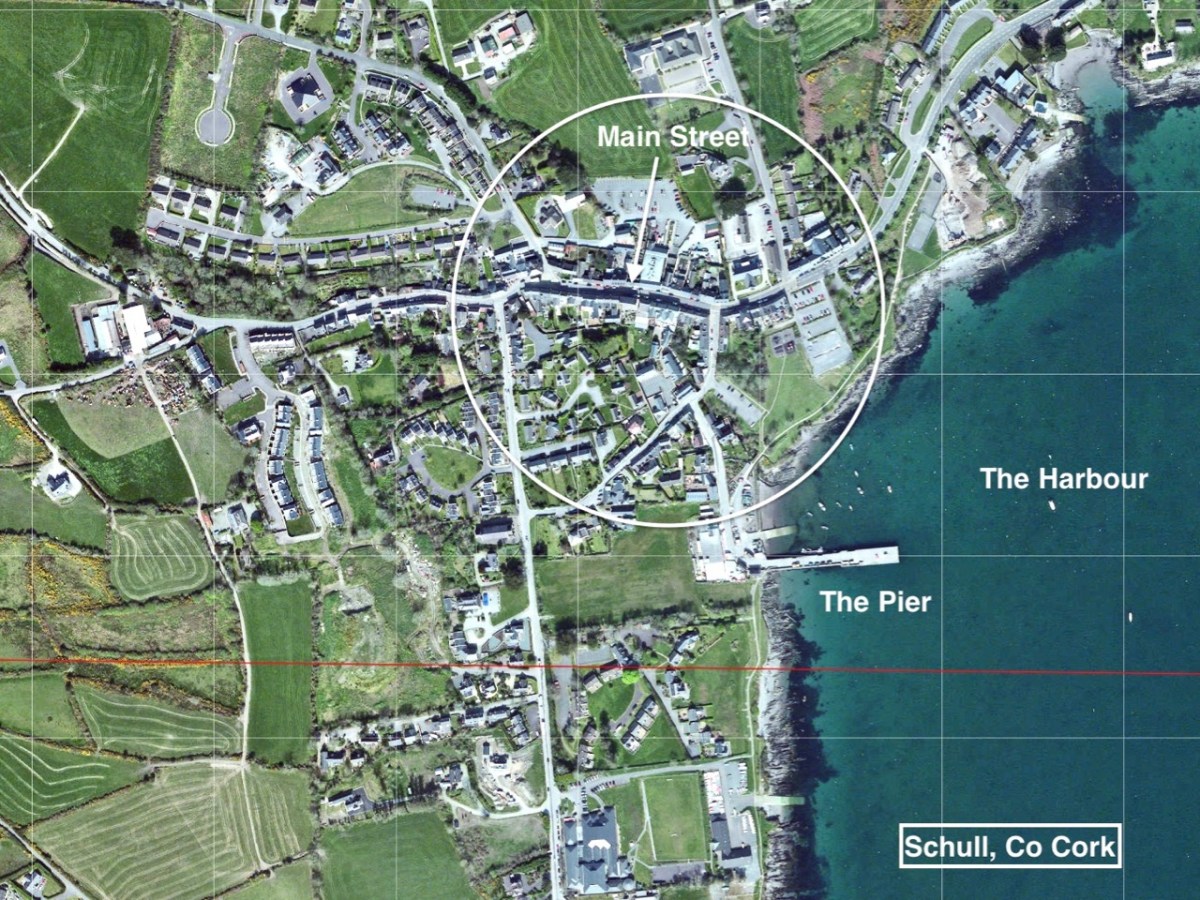
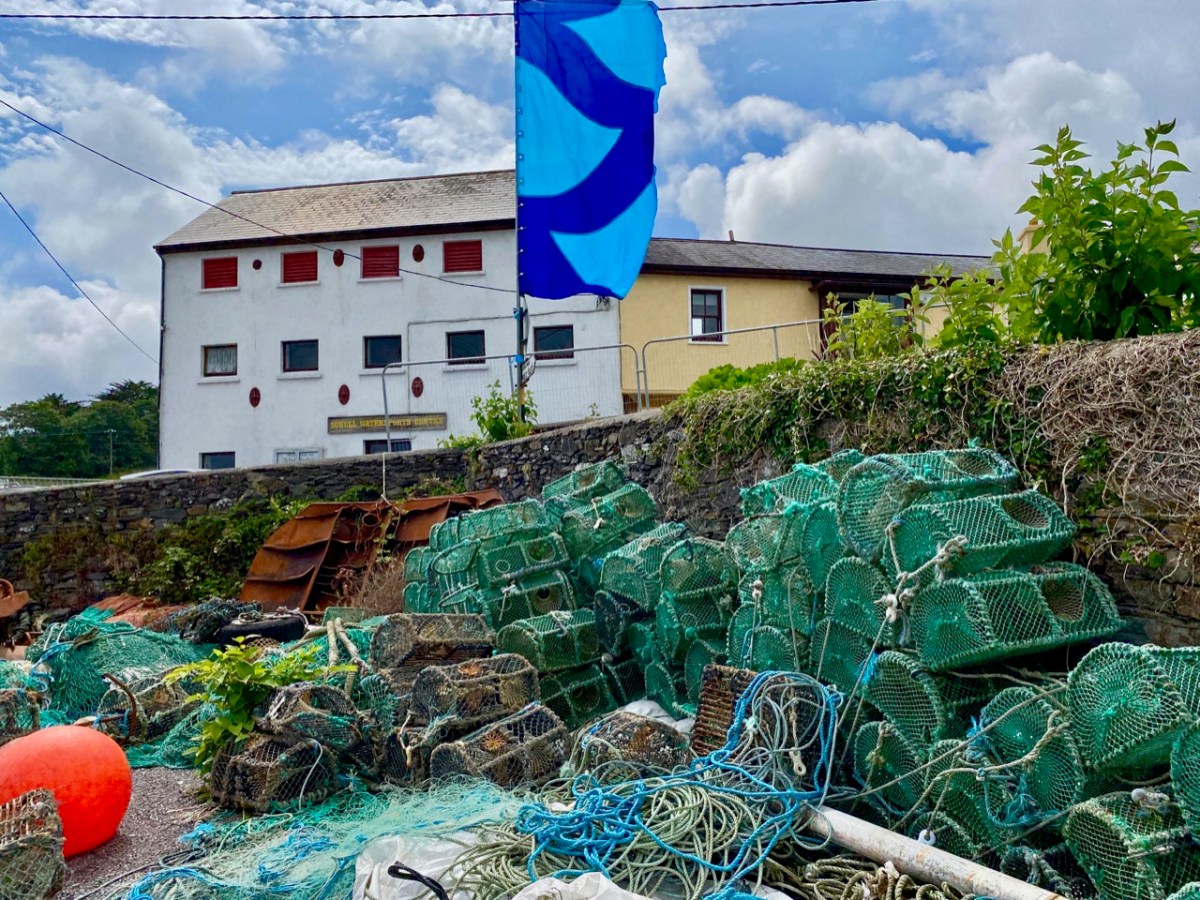
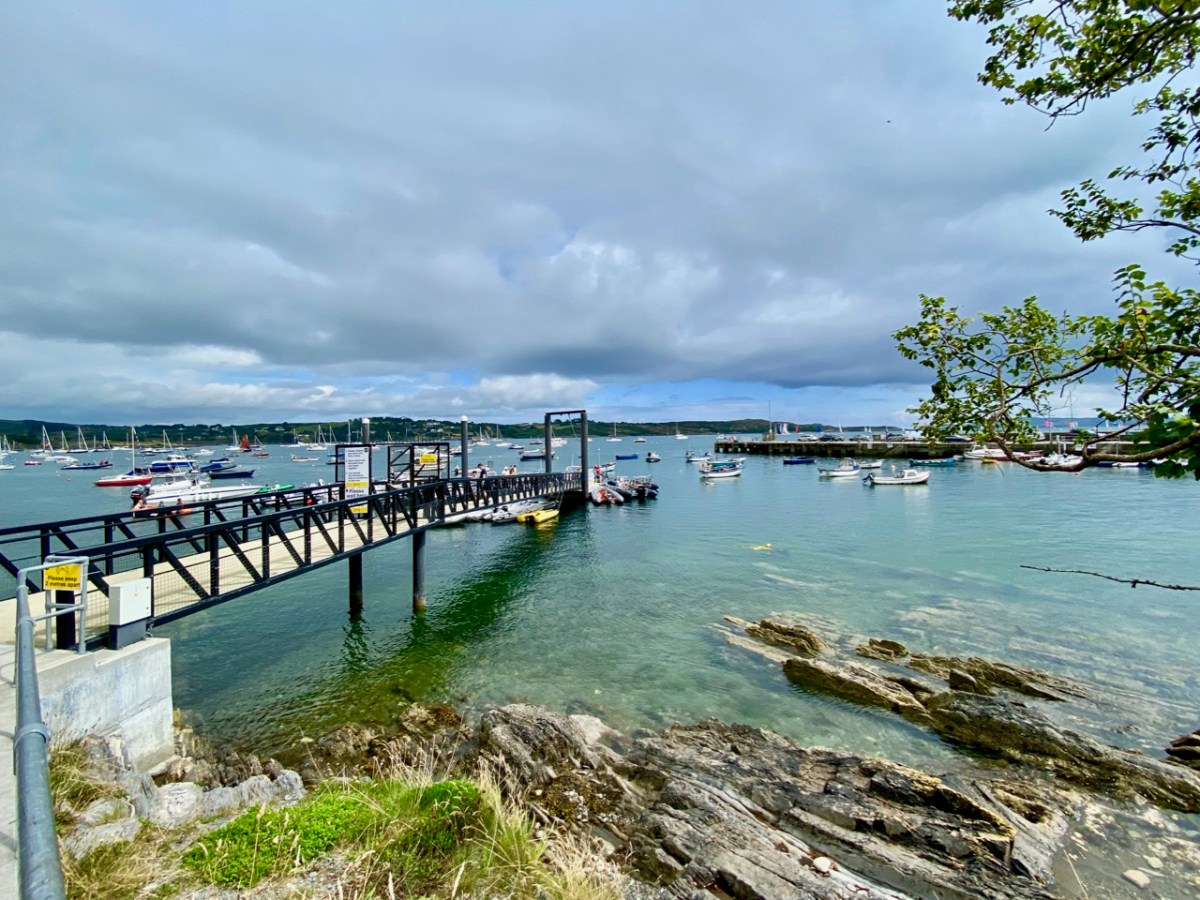
In this occasional series on the Towns and villages of West Cork we will take one community and try to discover why and how it has developed through history, and how it fares in the present day. A snapshot of the place will be presented – hopefully – in the best possible light (although this won’t always be on a sunny summer’s day!) From the aerial view above, you can see how Schull has been built up around its connection with the water. Schull Harbour is at the head of a long sheltered inlet, and the pier today is always busy with fishing and pleasure boats, ferries and yachts.

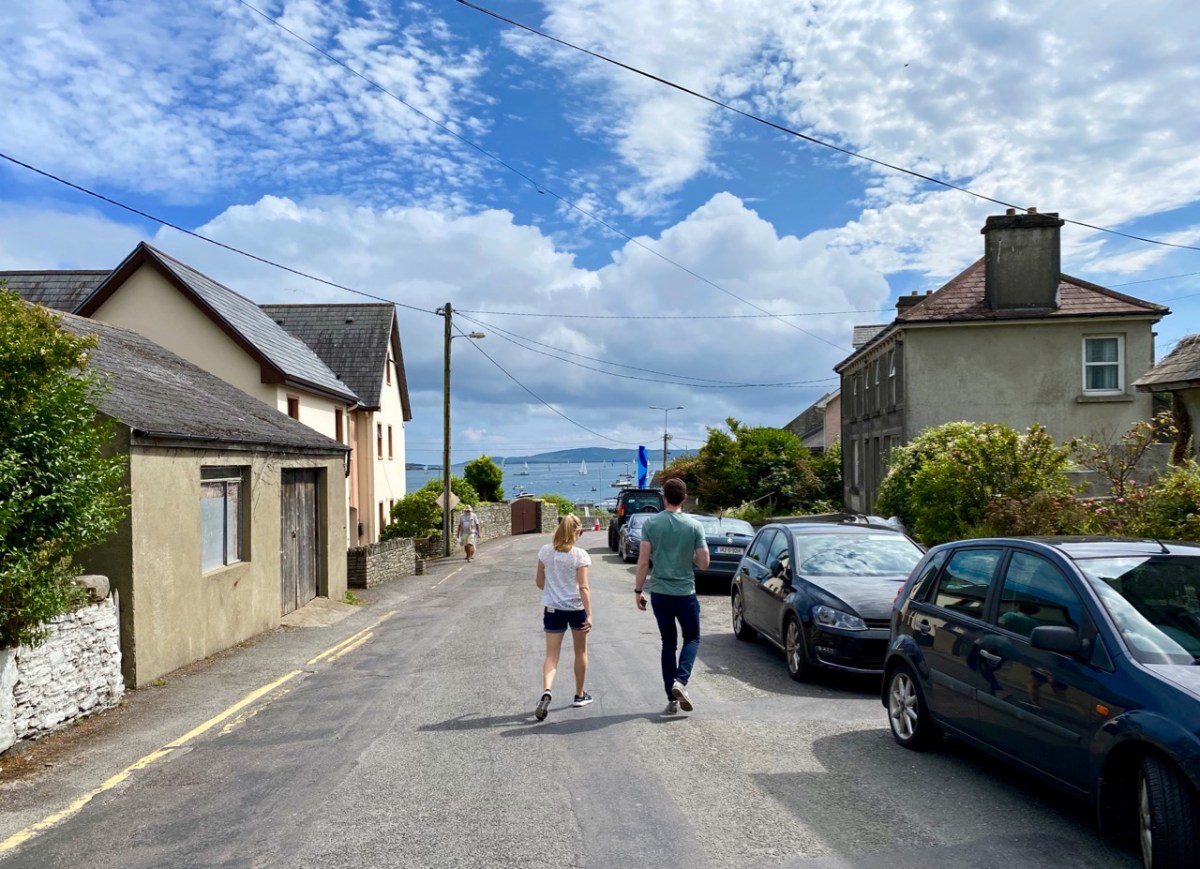
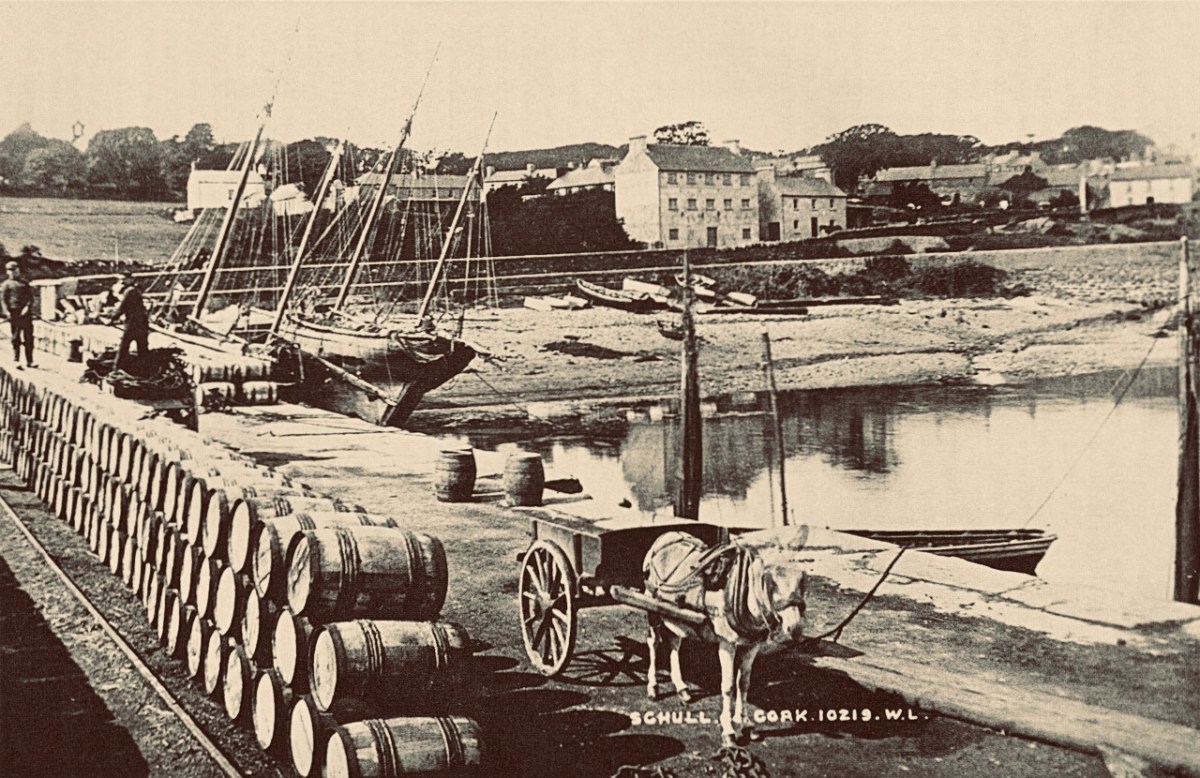
That’s the road to the pier, above, and it’s just a few steps from the village centre. If you are a visitor, you may have no idea that Ireland’s most south-westerly railway line once ran right on to this pier! The narrow gauge Schull, Ballydehob & Skibbereen Tramway and Light Railway was in service between 1886 and 1947, connecting these remoter parts of the county to Skibbereen and then, via the main line, Cork city. Although never considered a commercial success, it was a valuable element of infrastructure enabling local passengers to get to shops and markets, and fishermen to send their catches to distant merchants as hastily as possible (bearing in mind there was a speed limit of 15 miles per hour on most of this rural line). This photograph from the NLI Lawrence Collection (below) dates from the 1890s, and shows barrels of fish stacked up next to the railway track on Schull pier, awaiting despatch. They are likely to contain salted pilchards and herrings.

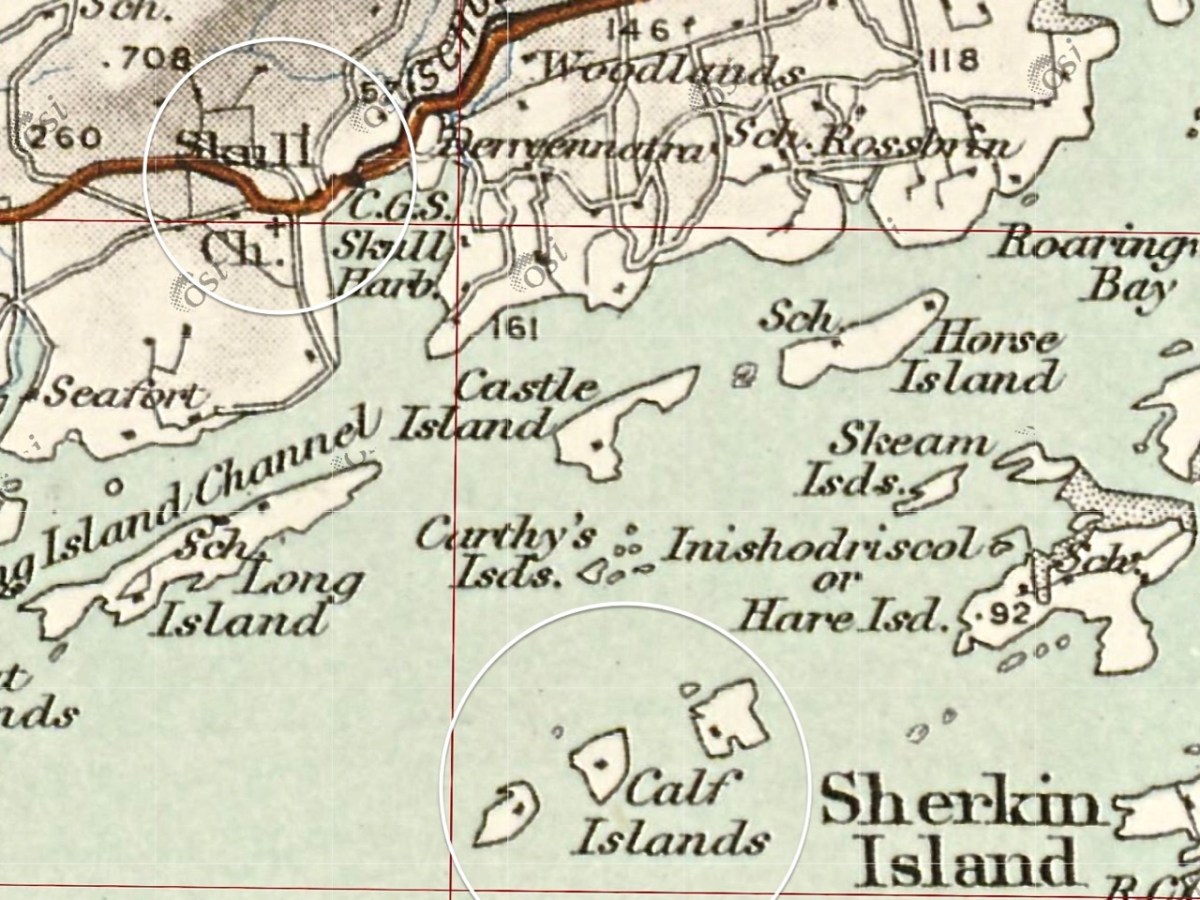
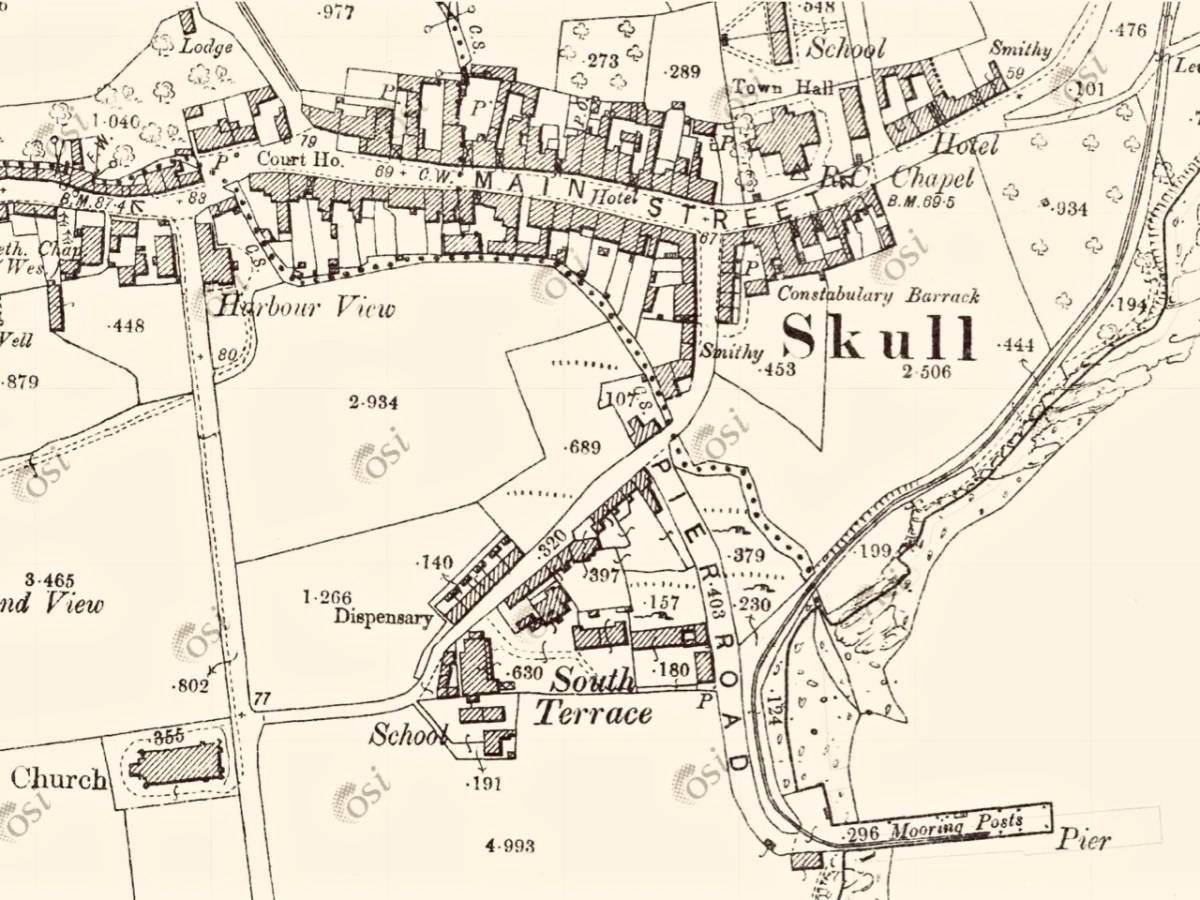
In all these pictures of the pier and pontoon areas above you can see the lively sailing activity in the background. Below are two extracts from early OS maps, one showing Schull and its location to some of the offshore islands, and the other showing the town centre, probably around 1890. It’s thought-provoking to see on the latter the various facilities which the town offered at that time, as well as the railway: Court House, Constabulary Barrack, Smiths, Schools, Hotel and Dispensary.

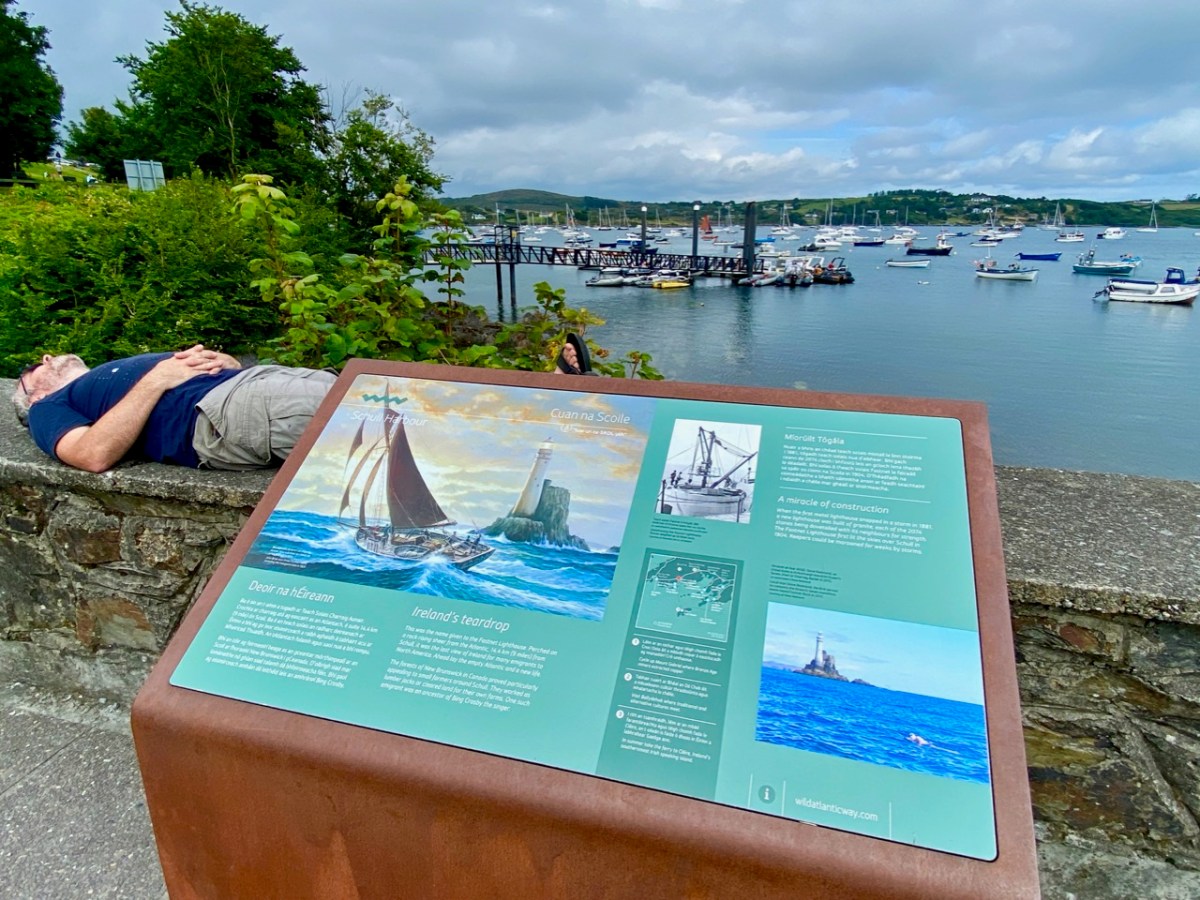
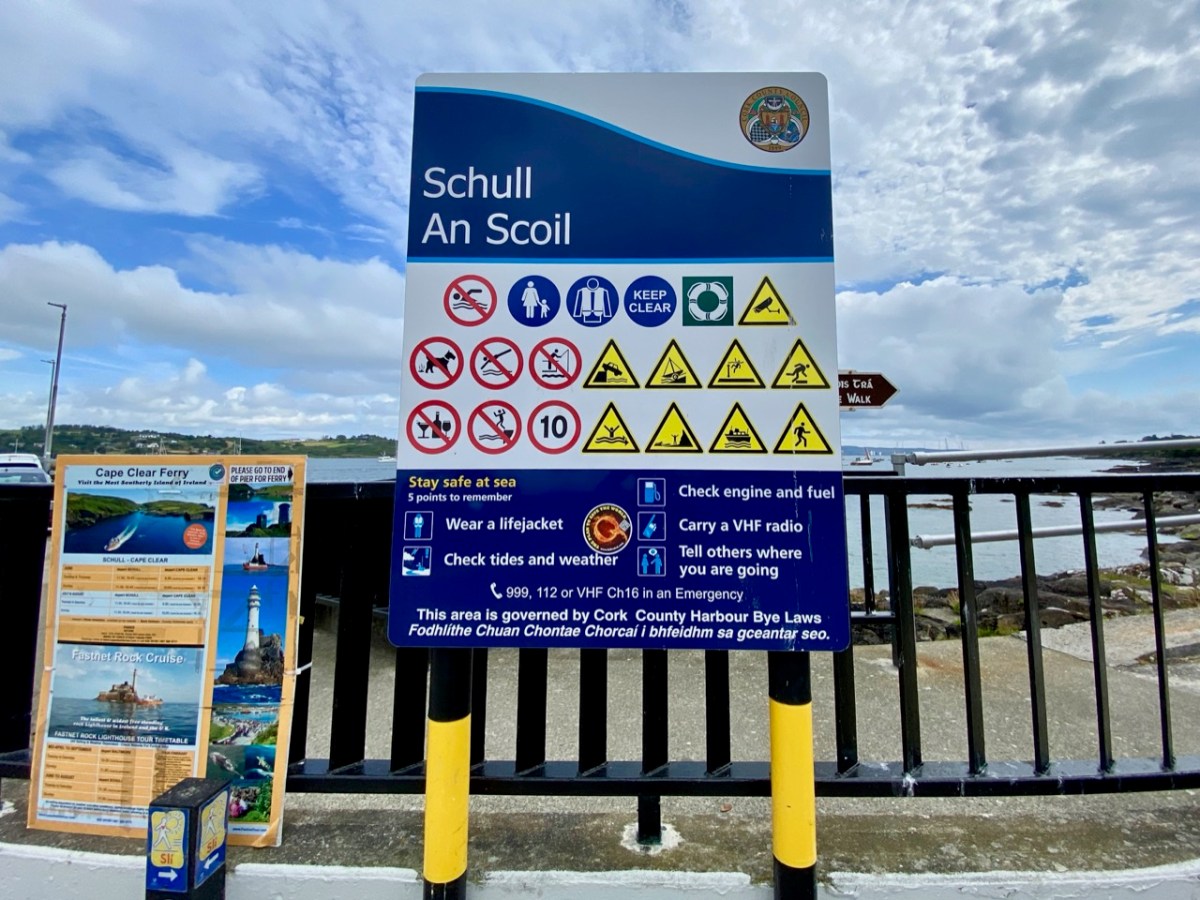
Note that on both the maps above, which date from more than a century ago, the settlement’s name is given as Skull: it still is on all OS Ireland maps up to the present time. Mostly today it’s known as Schull, or in Irish An Scoil, which translates as The School. Some of you may remember my posts earlier this year when I looked in to the possible origins of this village name – and the earliest ‘School’: a site described on Archaeology Ireland as a ‘possible early Christian settlement’:  . . . the ancient school of Sancta Maria de Scholia, ‘a place known in early times as a centre of learning’ . . . There’s a fair bit of local lore surrounding the subject, and you need to read Schull resident John D’Alton’s article on this to find an alternative view to the perhaps romanticised ideas of an ancient monastic site: I’m sitting on the fence!

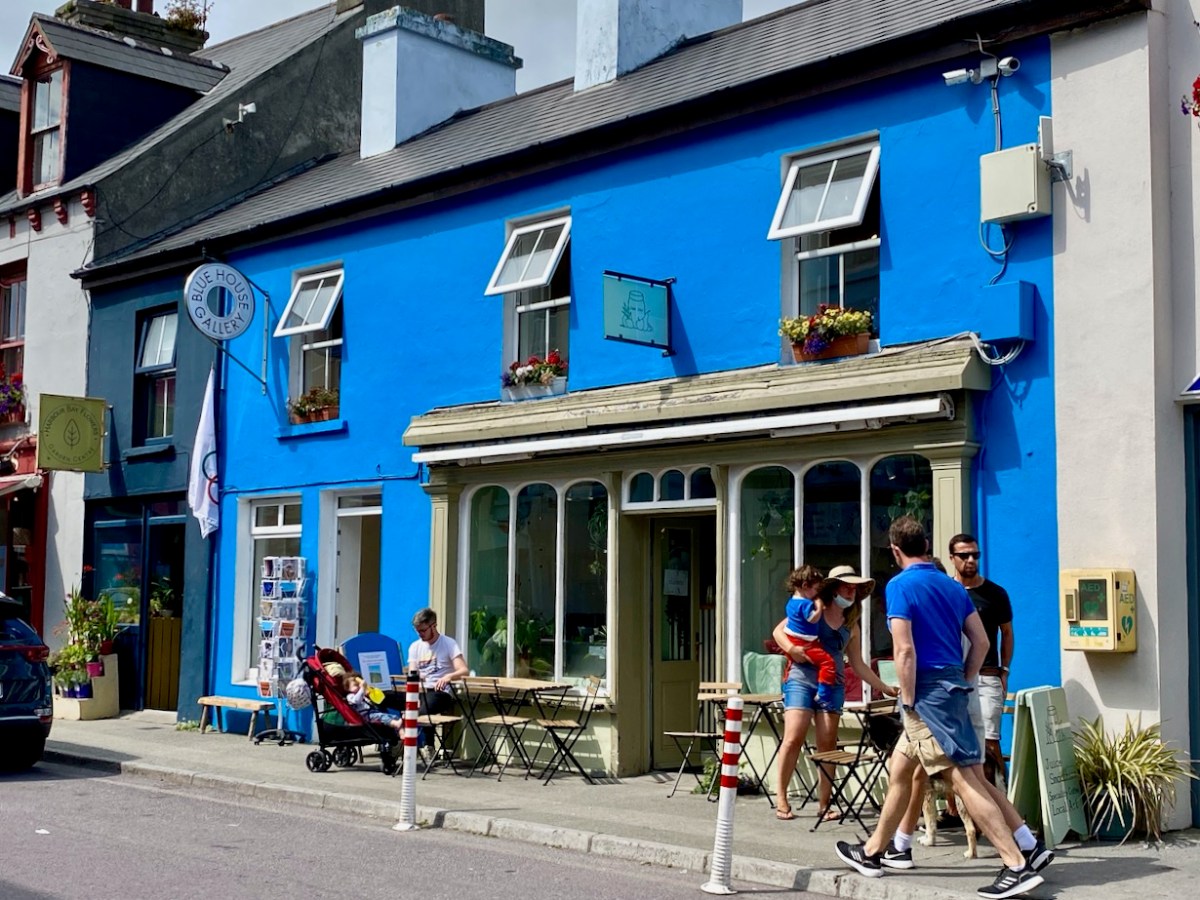
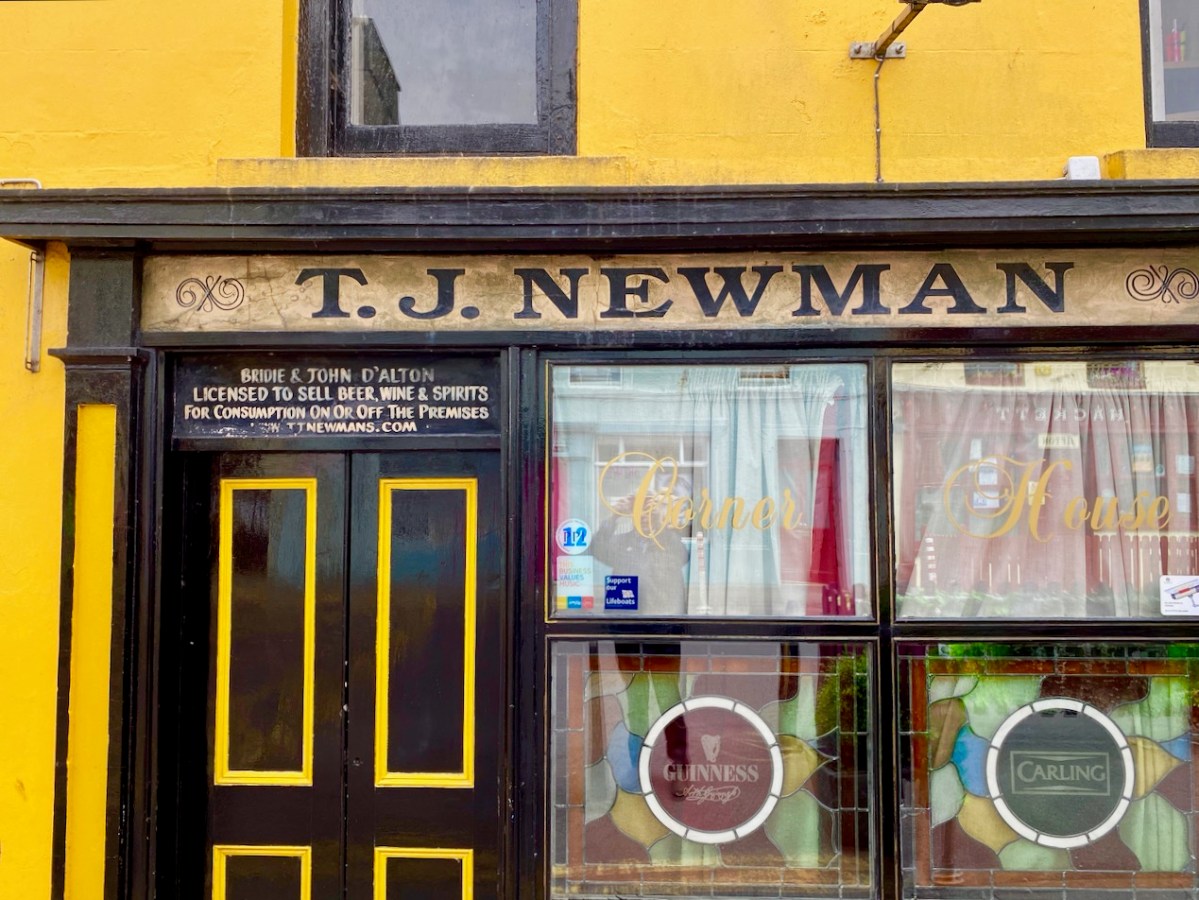
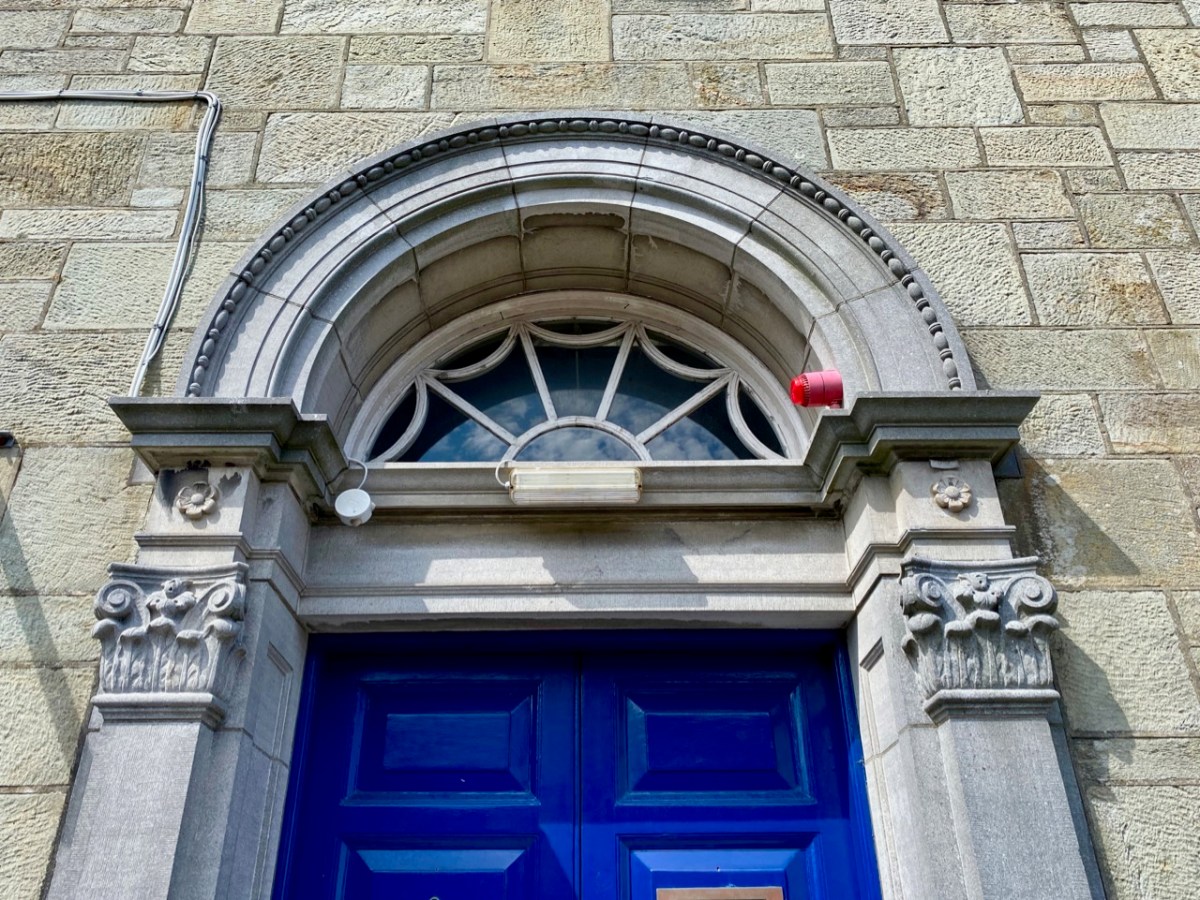
Historic village – perhaps with medieval origins – to vibrant sailing centre and colourful streets in the 21st century. Schull has come a long way, and has far to go. Today the resident population numbers around 1,050: this is boosted substantially with the influx of summer visitors. It’s good to see long established names and new businesses on the streets, contributing to the colourful palette of the architecture. Great things are happening in the future: the old bank building (below) is to become a cinema and film centre: a focal point for the acclaimed annual Fastnet Film Festival.

Year round, Schull is worth exploring. Mount Gabriel, the area’s highest point, is above the village and offers superb vistas over the bay and islands. Finola has looked at the many legends associated with this peak and there is ancient history there, too: the remains of Bronze Age copper mines on its slopes. Good walks can be had on the high ground and on the coastal footpaths – see the Explore West Cork website.
Brunch at Liss Ard!

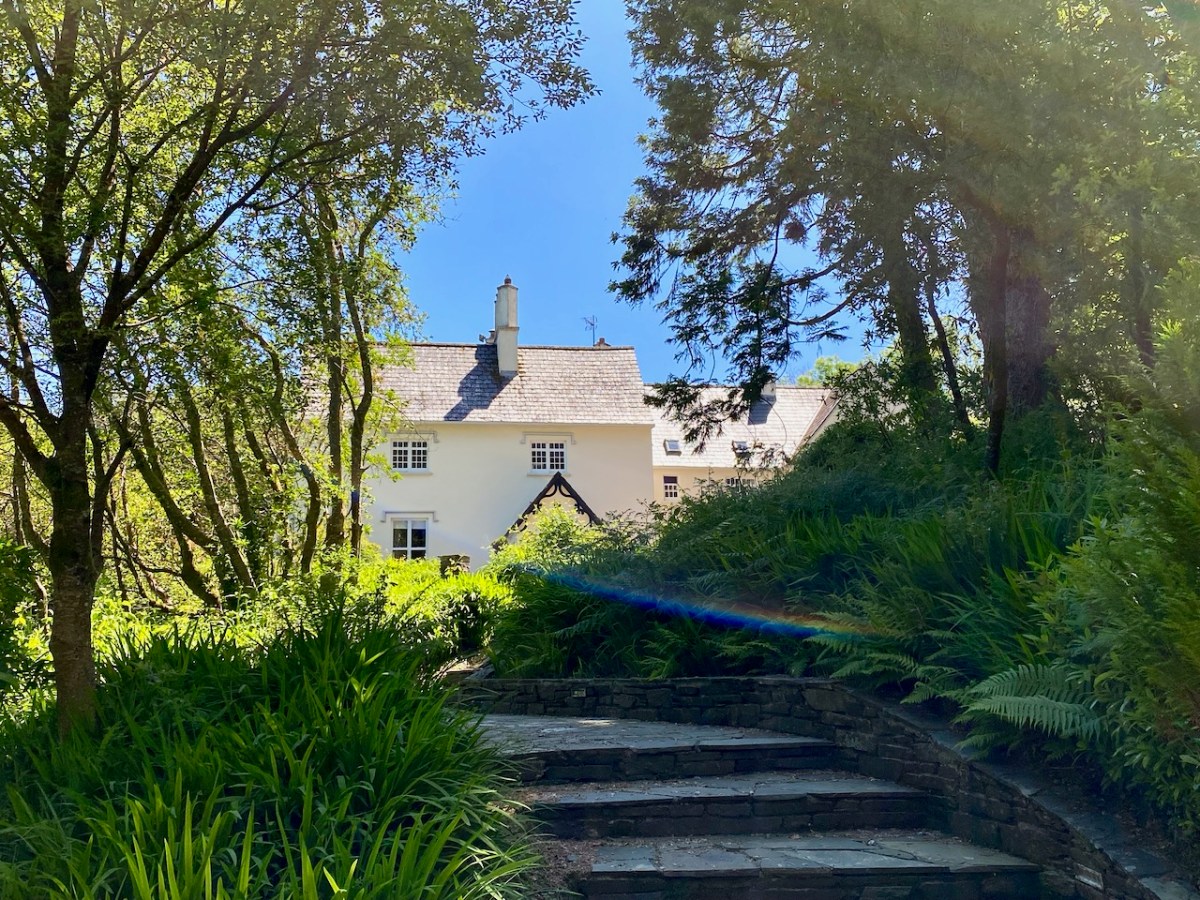
Just along the road from us in West Cork lies Liss Ard Estate. One of Ireland’s ‘big houses’, it was built in 1853 and was for generations the home of The O’Donovan, leader of that Gaelic clan. During the ‘cold war’ era of the 20th century it was owned by the Swiss government, who saw in West Cork a potential safe haven if the world descended into a nuclear holocaust. Just recently it has been taken over by an American company who will continue to run it as a hospitality venue. Finola’s eagle eye picked out the other day that Liss Ard were opening up for outdoor Sunday brunch! How could we resist?
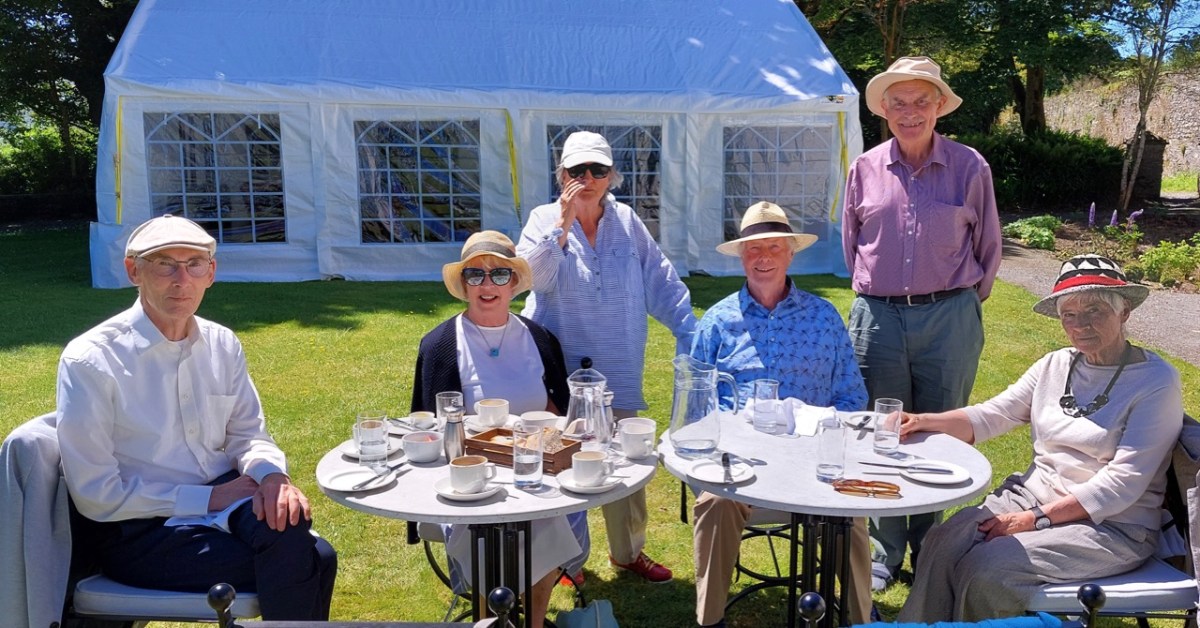
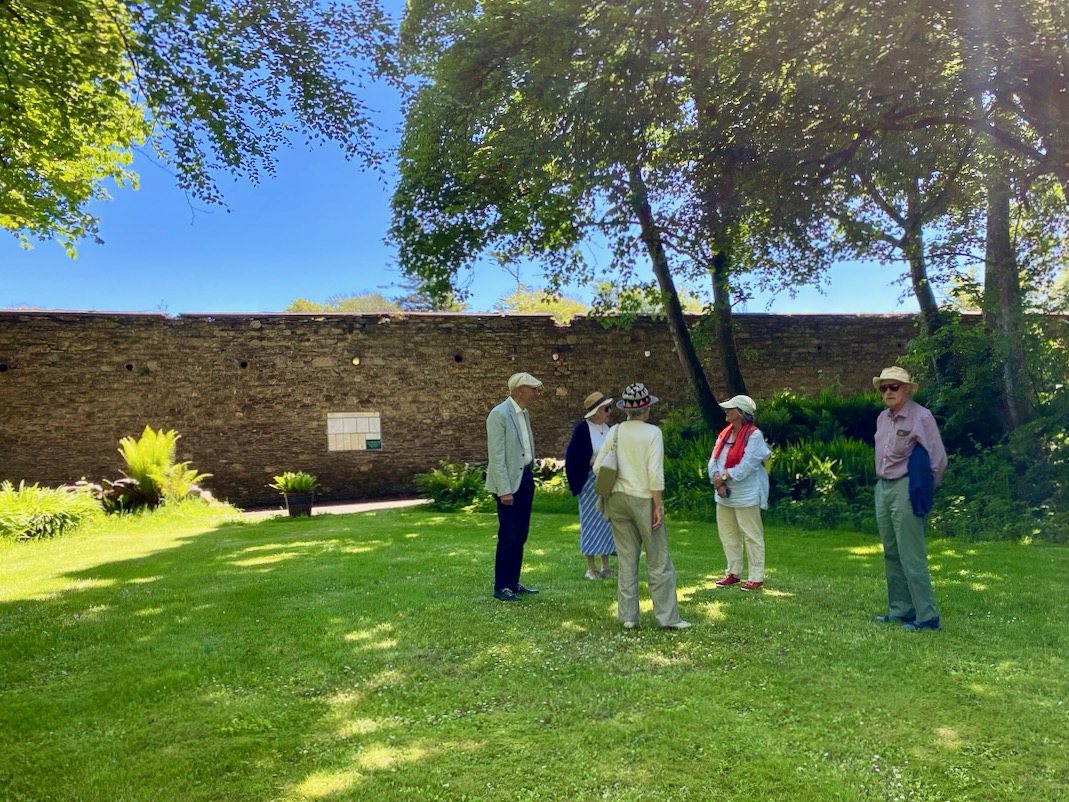
Here’s the brunch group: George, Una, Finola, myself, Con and Clair. We thoroughly enjoyed the occasion – partly because it was like being let out of jail (although I doubt – but can’t say for certain – that any of us has experienced that particular phenomenon), but also because, as customers, we were able to follow the excellent breakfast and coffee with a walk around the 163-acre estate.
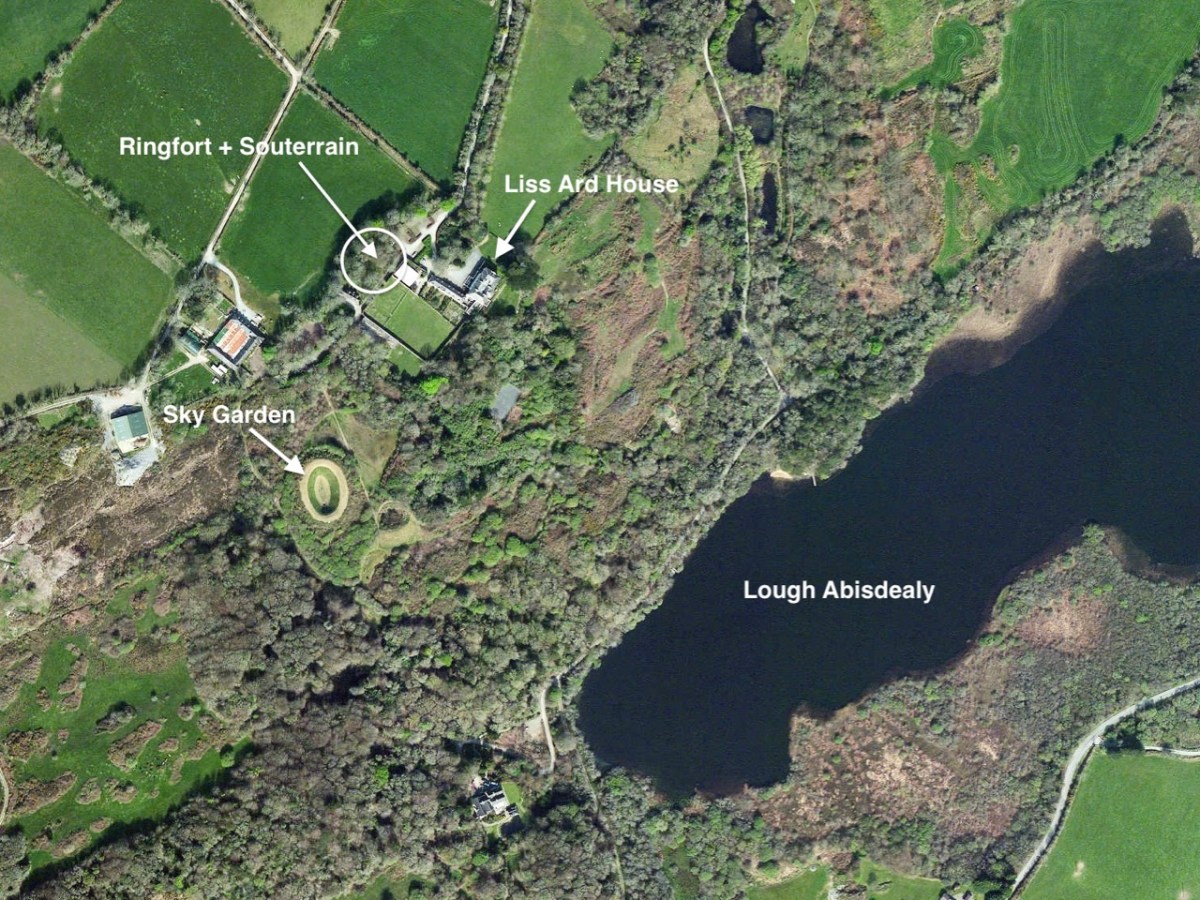
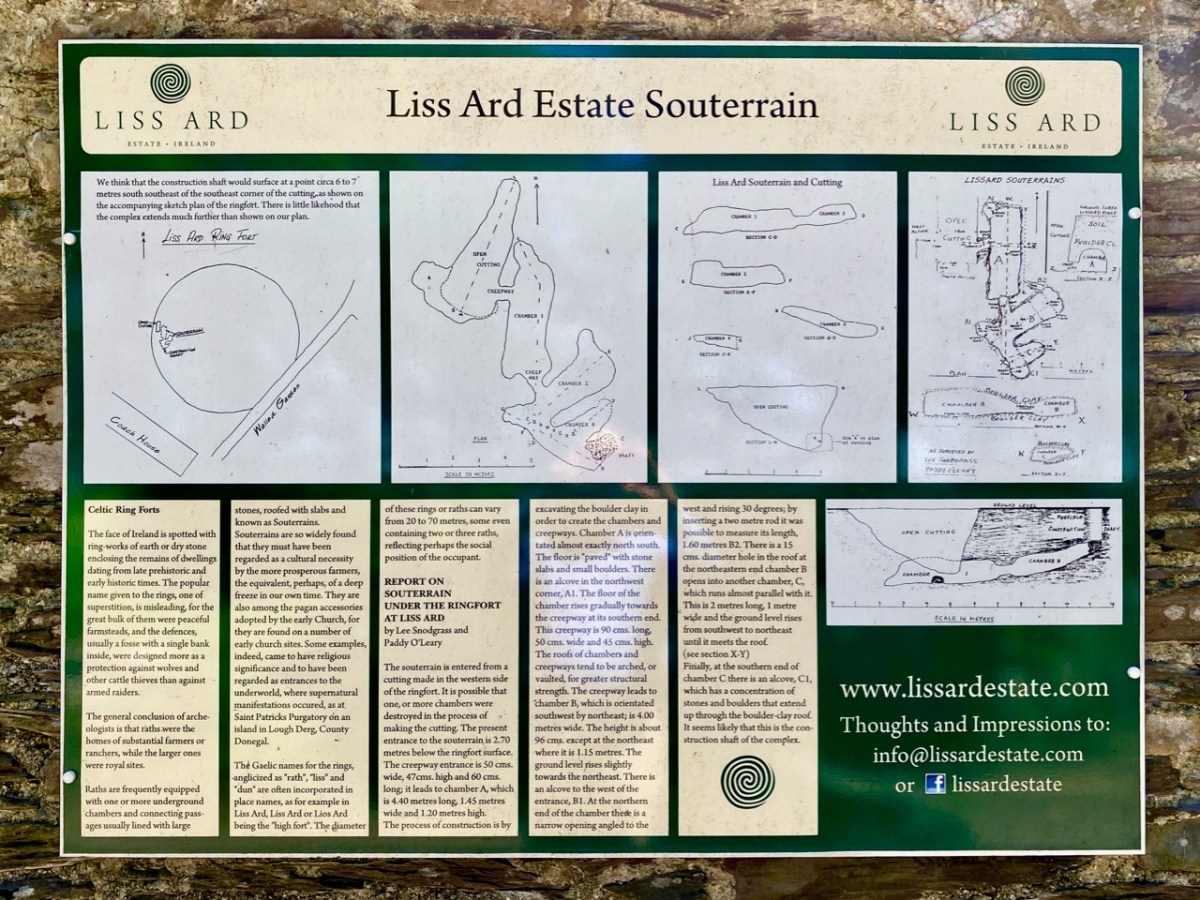
Finola and I have special feelings for Liss Ard, as we were married there in 2014 in an ancient ringfort! So, easing ourselves out of our chairs in the summer sunshine our first port of call was the feature after which the house is named: Lios Ard = High Fort. At our wedding the souterrain which was an integral part of the fort was not visible: today it can be seen, from above (at least, the entrance to it can be seen). The souterrain is a series of underground chambers, and this one – cut from rock and clay – has survived for well over a millennium. It was fully explored by a good friend of ours, Lee Snodgrass and her partner Paddy O’Leary – both archaeologists – back in the 1980s, and an information board just beside the fort tells the story in their words.

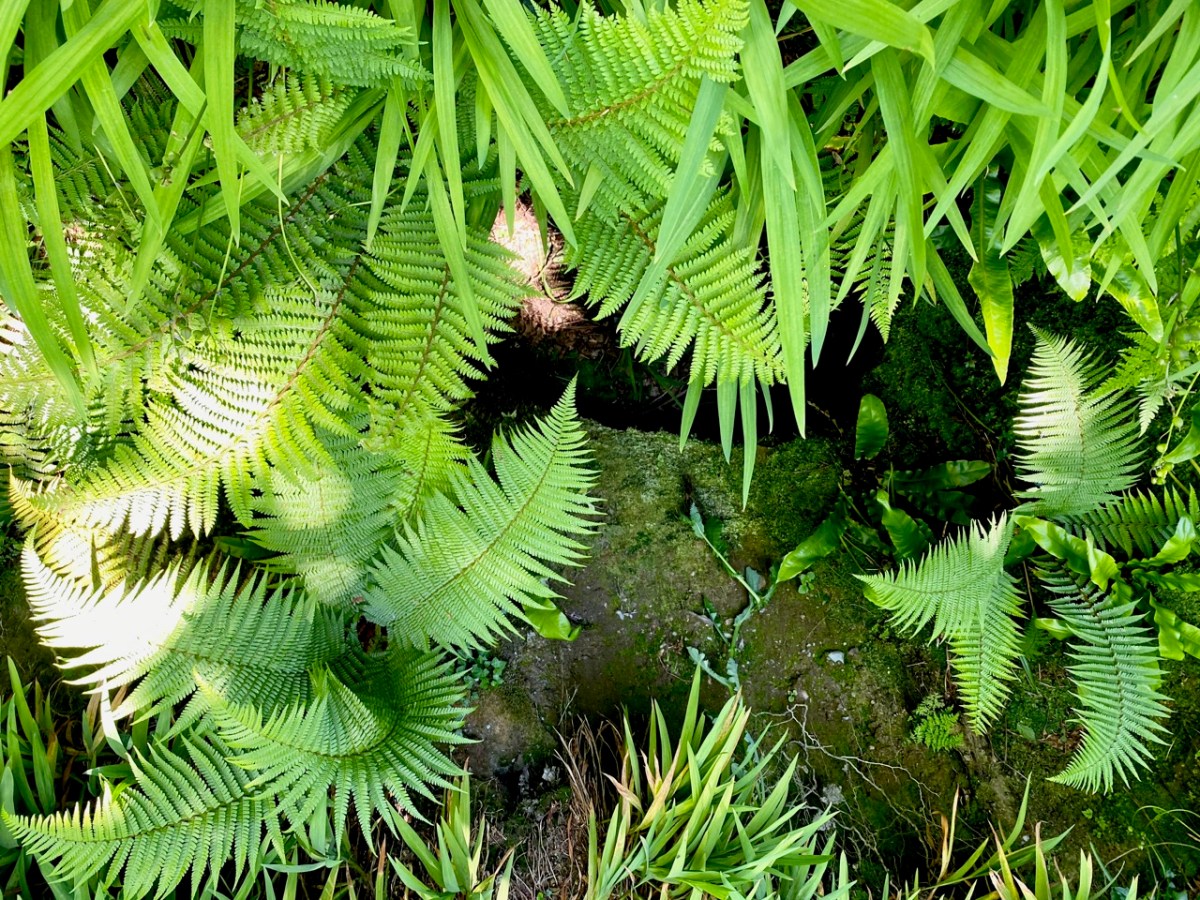
Above: Lee and Paddy’s survey drawings of the fort and souterrain, with a view of the entrance at the west side of the enclosure, and the cave-like structure which can be seen today, surrounded by ferns. Below is our group standing in the circle of the fort: such structures were probably high status homes defended by banks and timber palisades. They would also have provided protection for domestic animals who would have been predated by wolves.

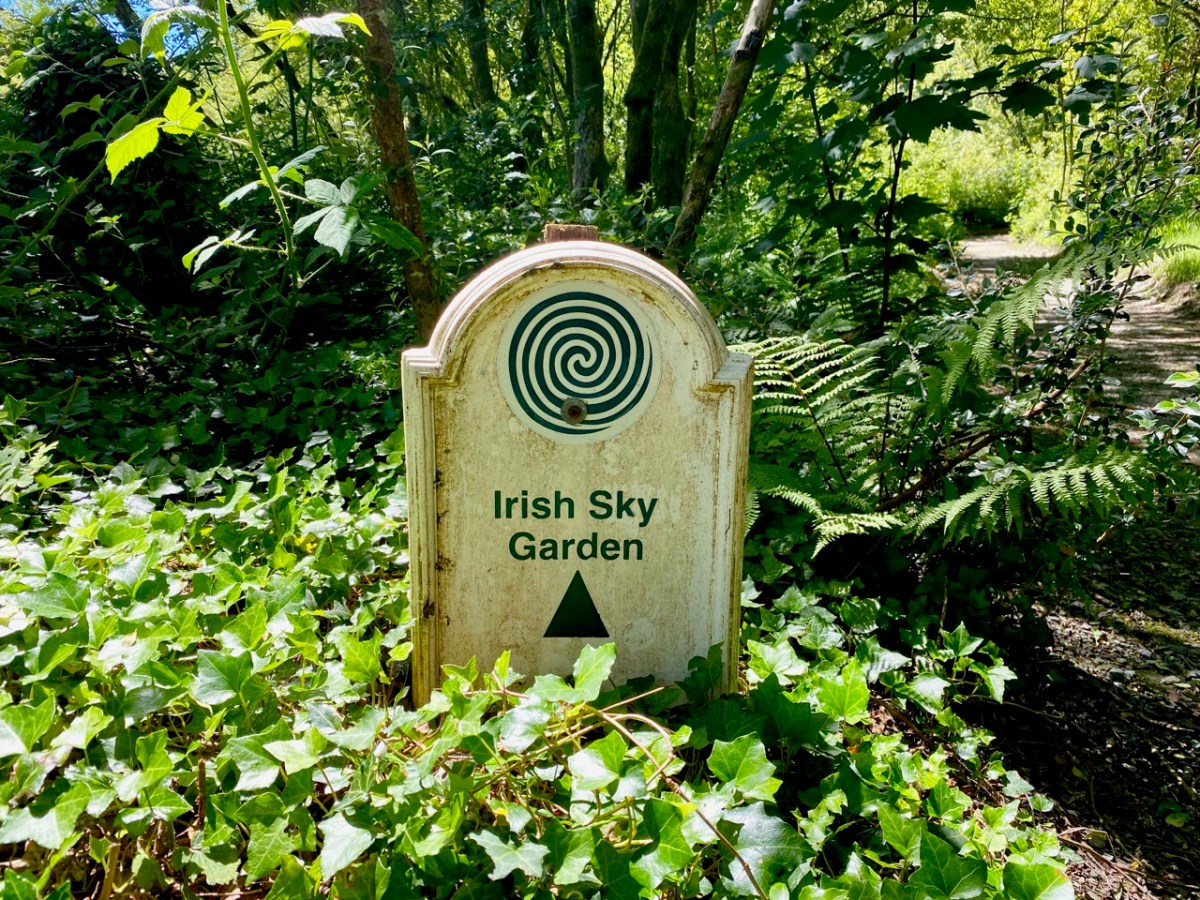
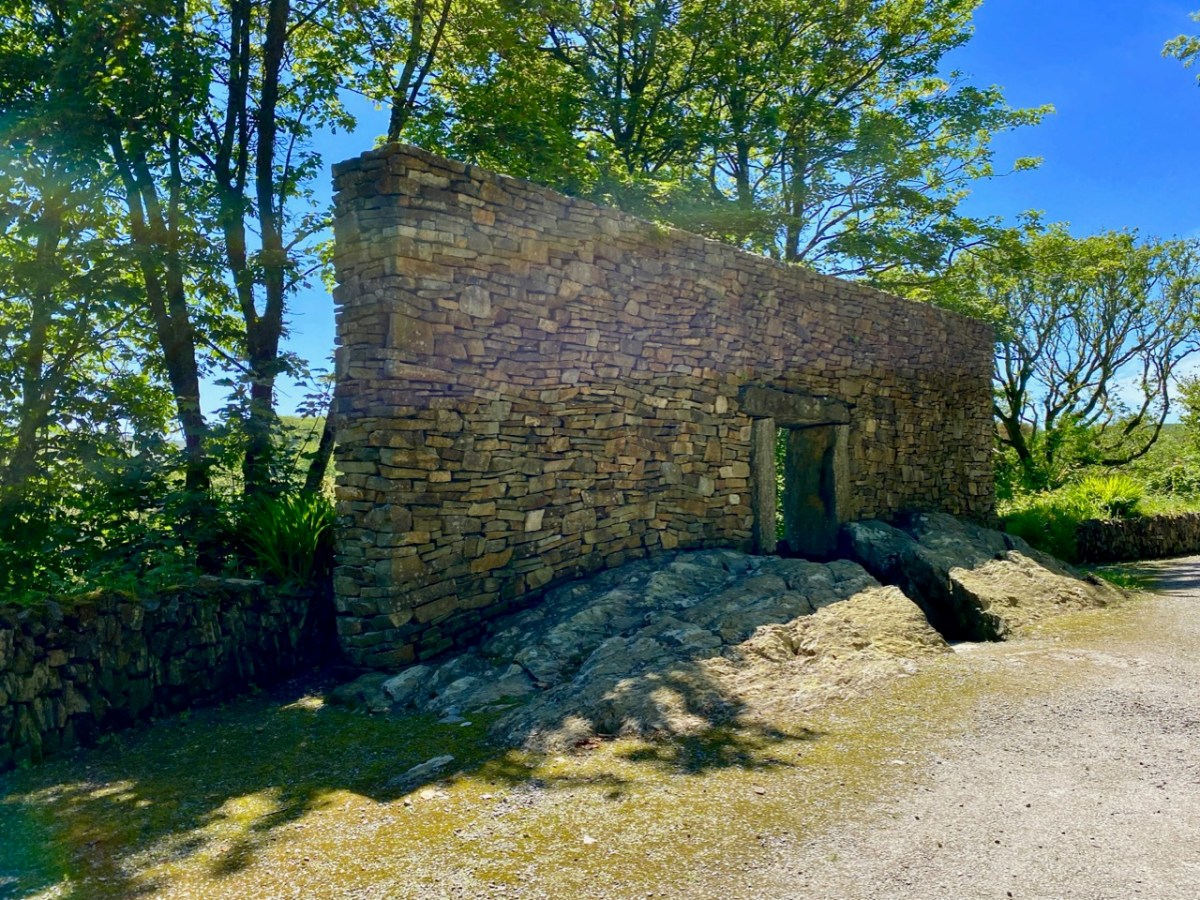
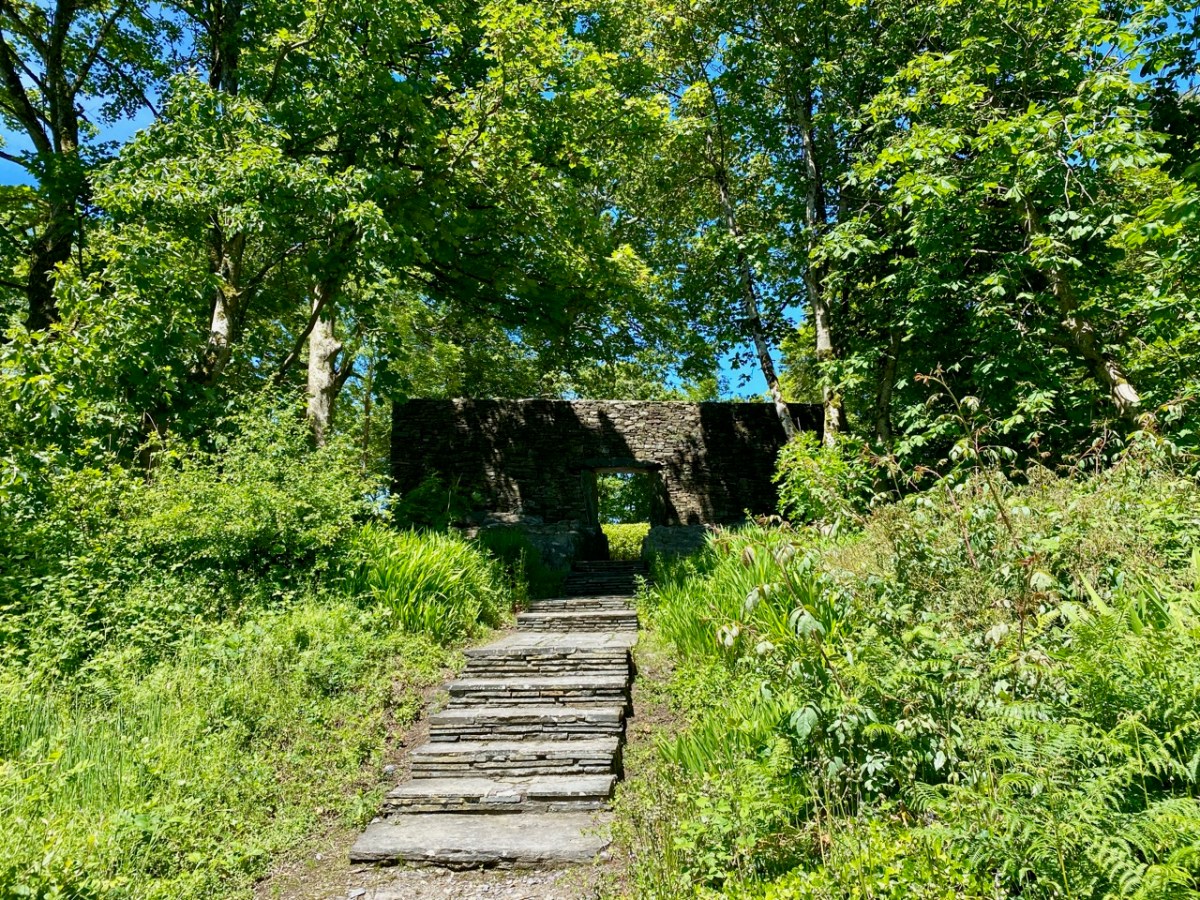
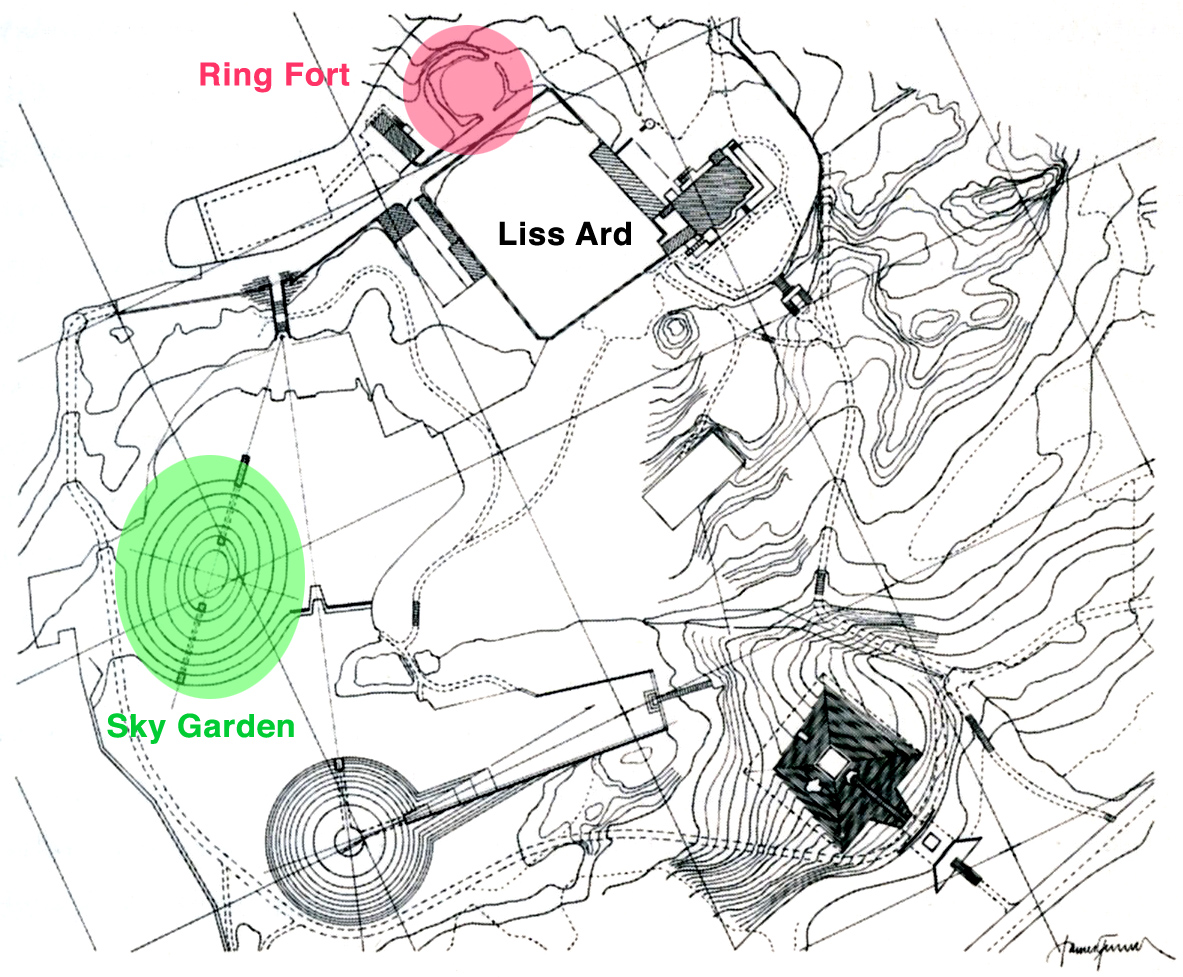
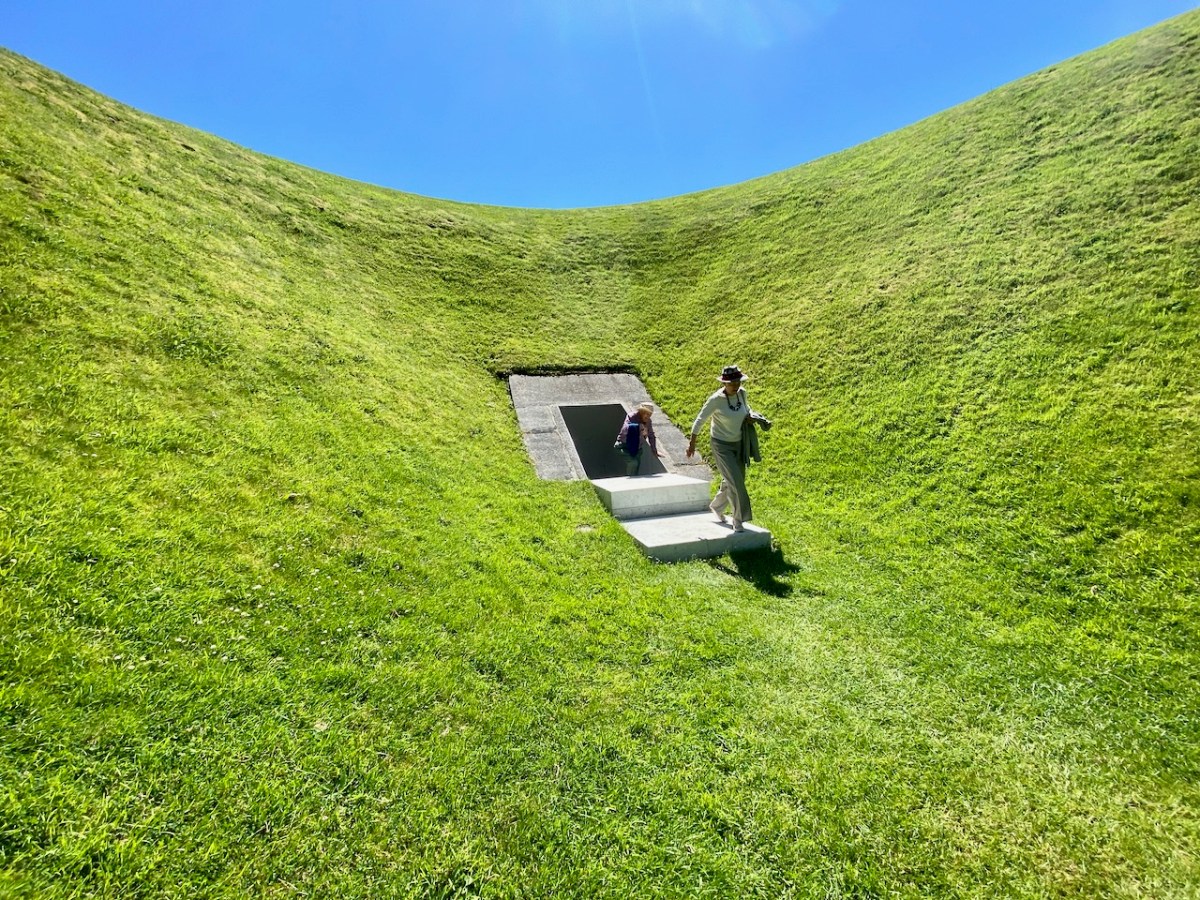
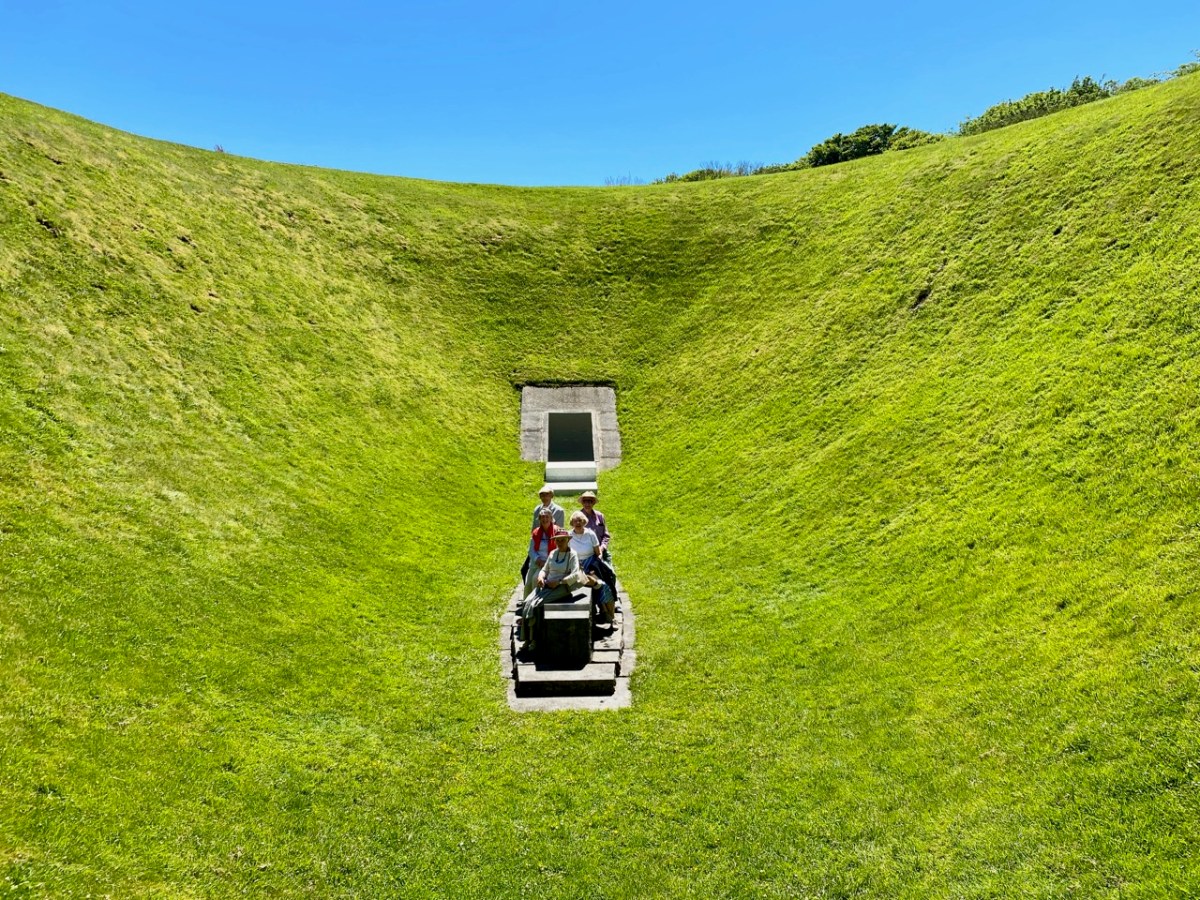
Another feature in the grounds of Liss Ard may also seem like something ancient, but actually only dates from 1992:

. . . The Liss Ard Project brings together the conservation of nature and contemporary art: it will combine animal wildlife preservation, controlled ‘wild’ gardens and a contemporary art project – the Sky Garden . . .

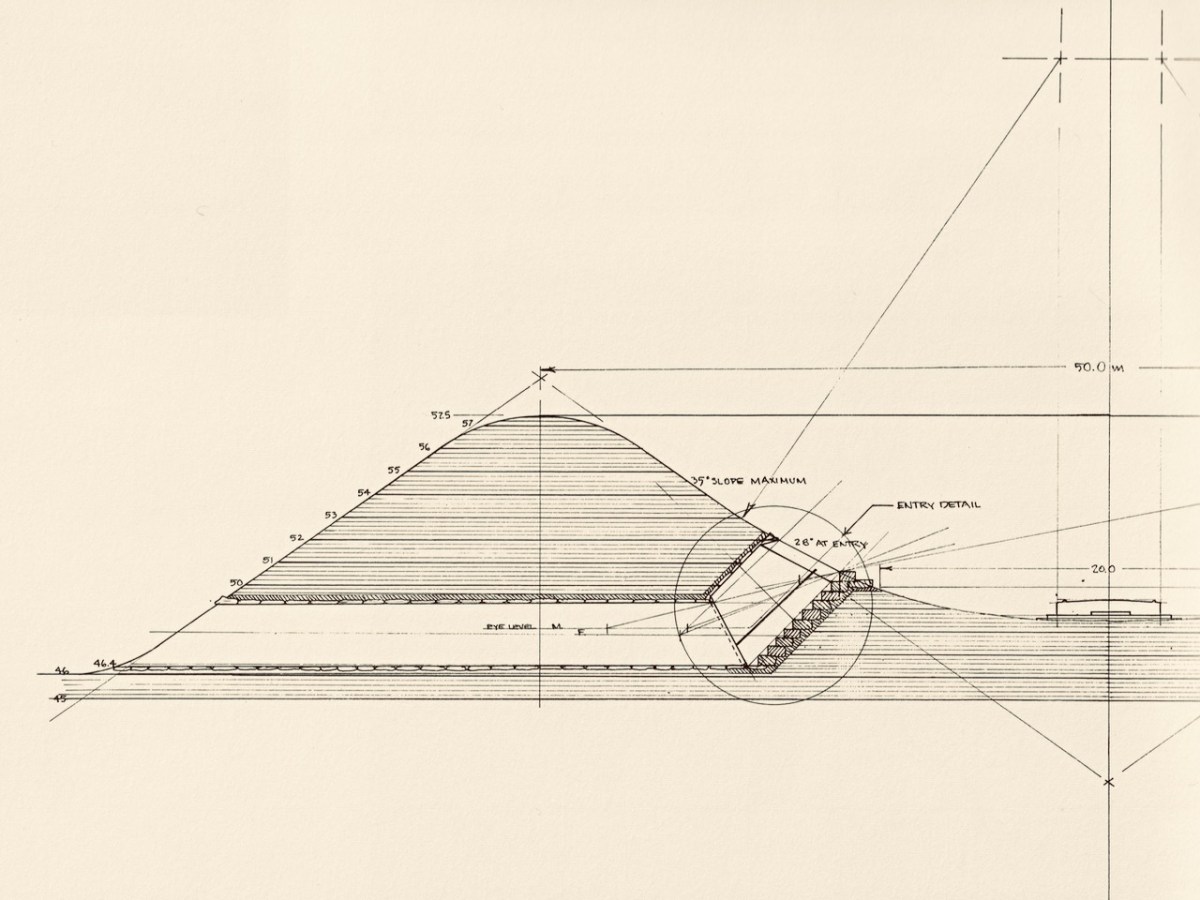
The Irish Sky Garden is an incomplete work of art by Californian James Turrell (born in 1943): I wrote about him and his work a few years ago, here. Turrell had West Cork connections:
. . . Turrell traced his wife (Julia)’s ancestors to Castletown Bearhaven. He had his two youngest children, Sophie and Arlen, baptised in the church there . . . This (West Cork) is the countryside that inspired his Sky garden. It could not be realised anywhere else. Jim is responding to what he has found in Liss Ard, and his sensitive response will enhance the attraction of the site even more. Jim and Veith (the Zurich art dealer who bought the estate in 1989) study the site like two conspiring brothers. Both radiate assurance. Something unique and shared is being created there. The joy of it shows in their faces . . .

James Turrell
from the exhibition – Long Green, Turske & Turske, Zurich 1990

The Irish Sky Garden is an as yet incomplete work of art. The whole project was set to incorporate other ‘land works’ including a pyramid and a vault. Turrell’s most famous work, perhaps, is the Roden Crater in the Arizona desert. It is also work still in progress: construction began in 1977.

Quite apart from the ancient history and modern art, the gardens at Liss Ard have so much to offer. There is a maze of paths and steps, lush – almost tropical – growth and views across the substantial lake which forms part of the demesne: Lough Abisdealy.

As we walked beside the lake I was entranced by the sound of the wind in the reeds, and have tried to capture it with this little recording: you can imagine the combination of the swaying reeds, the crescendo of the light wind, the distant birdsong and the lapping water.

I can only give you a brief impression of our sensory experiences from the day: much is left unsaid and unseen but – all you need to do is book your Sunday brunch, and you stand a good chance of following our footsteps. I only hope that the day is as brilliant for you as it has been for us!

A Bit Further Round Ring

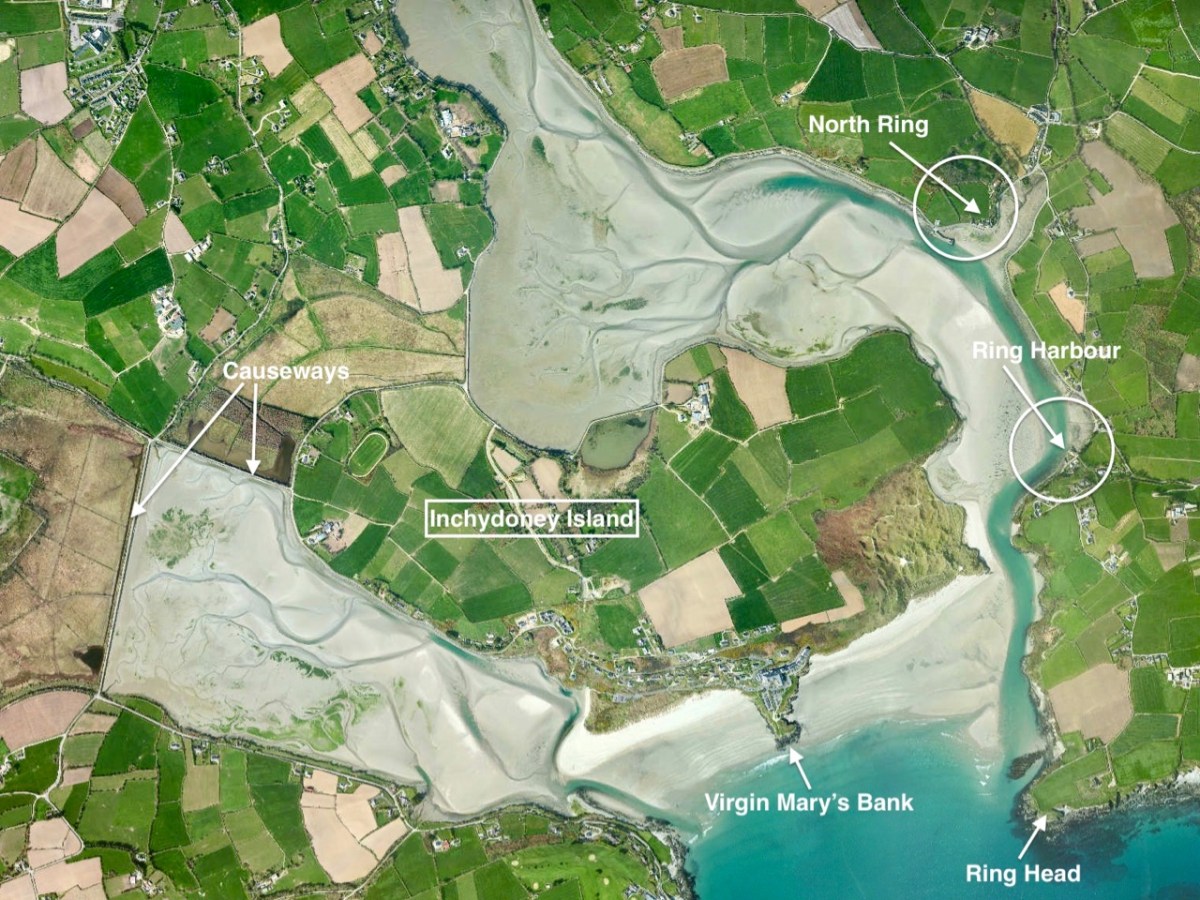
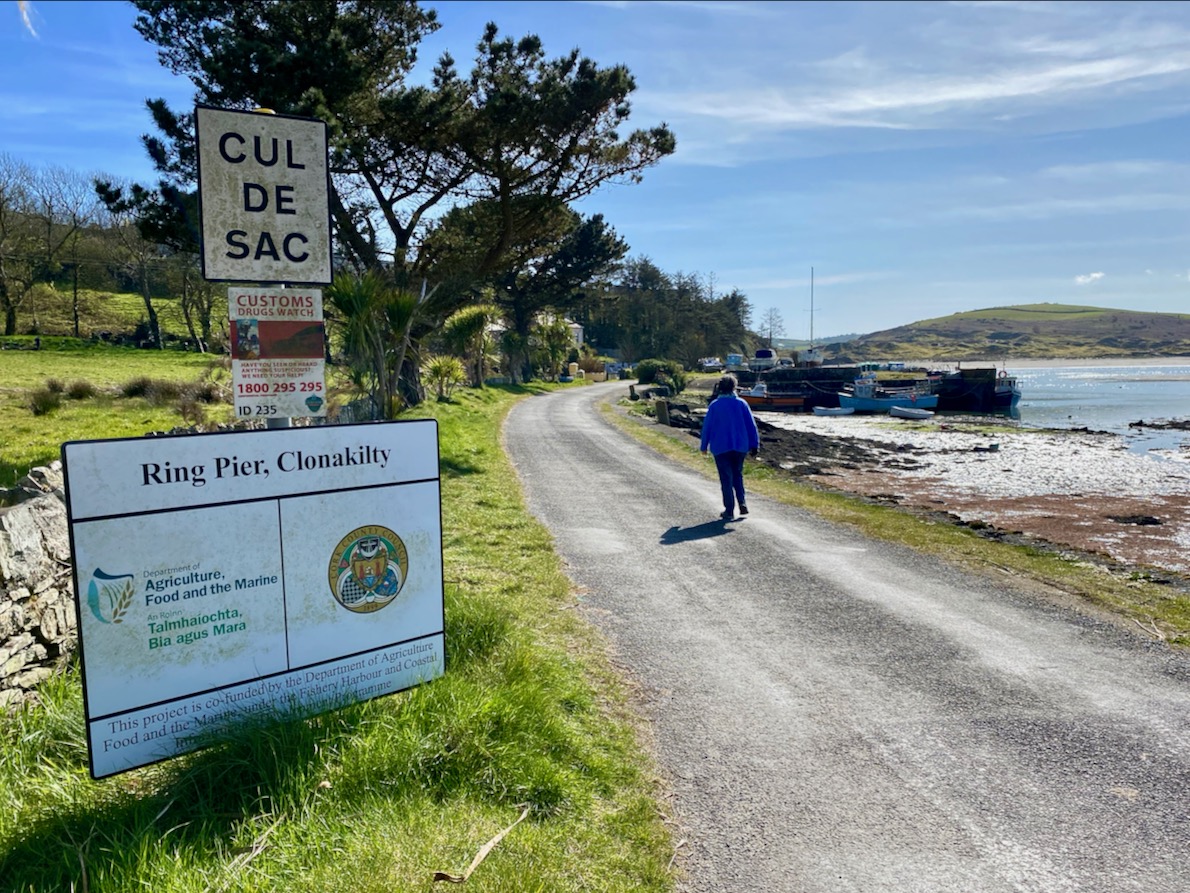
A few weeks ago we took ourselves round Ring, a perhaps less-well-trodden part of West Cork’s many delights, just to the south east of Clonakilty. I ran out of time and space in that post and left the rest for another day. This is the day! Last week we were just across the water from Ring – on Inchydoney Island – and that exploration enthused me again. I’ll remind you of the geography:

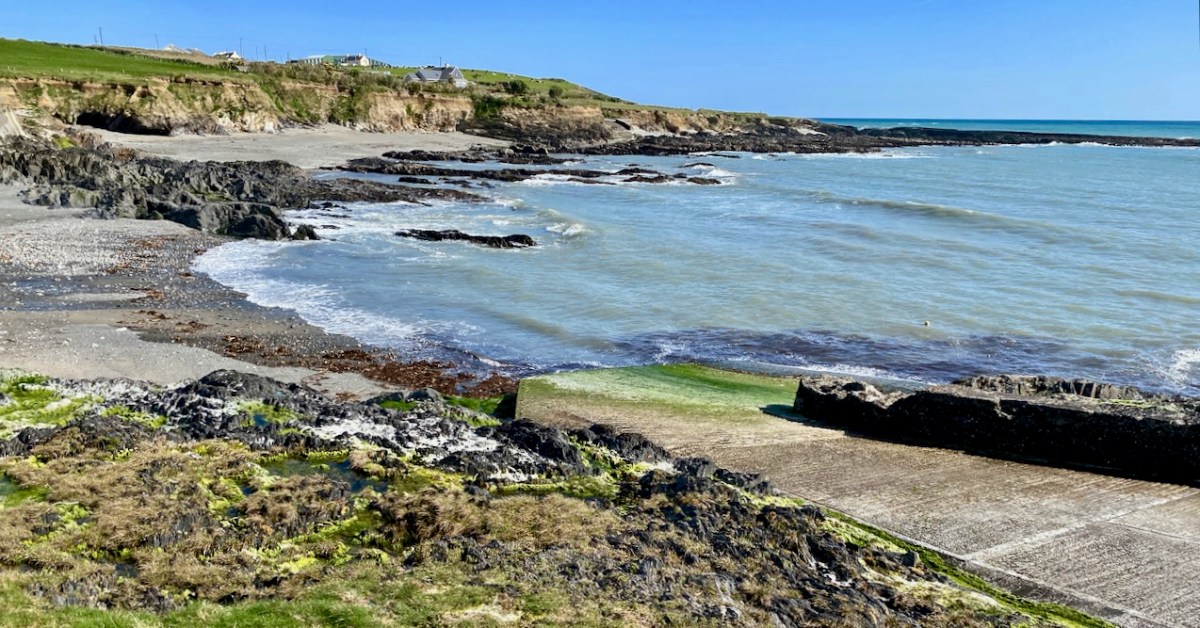
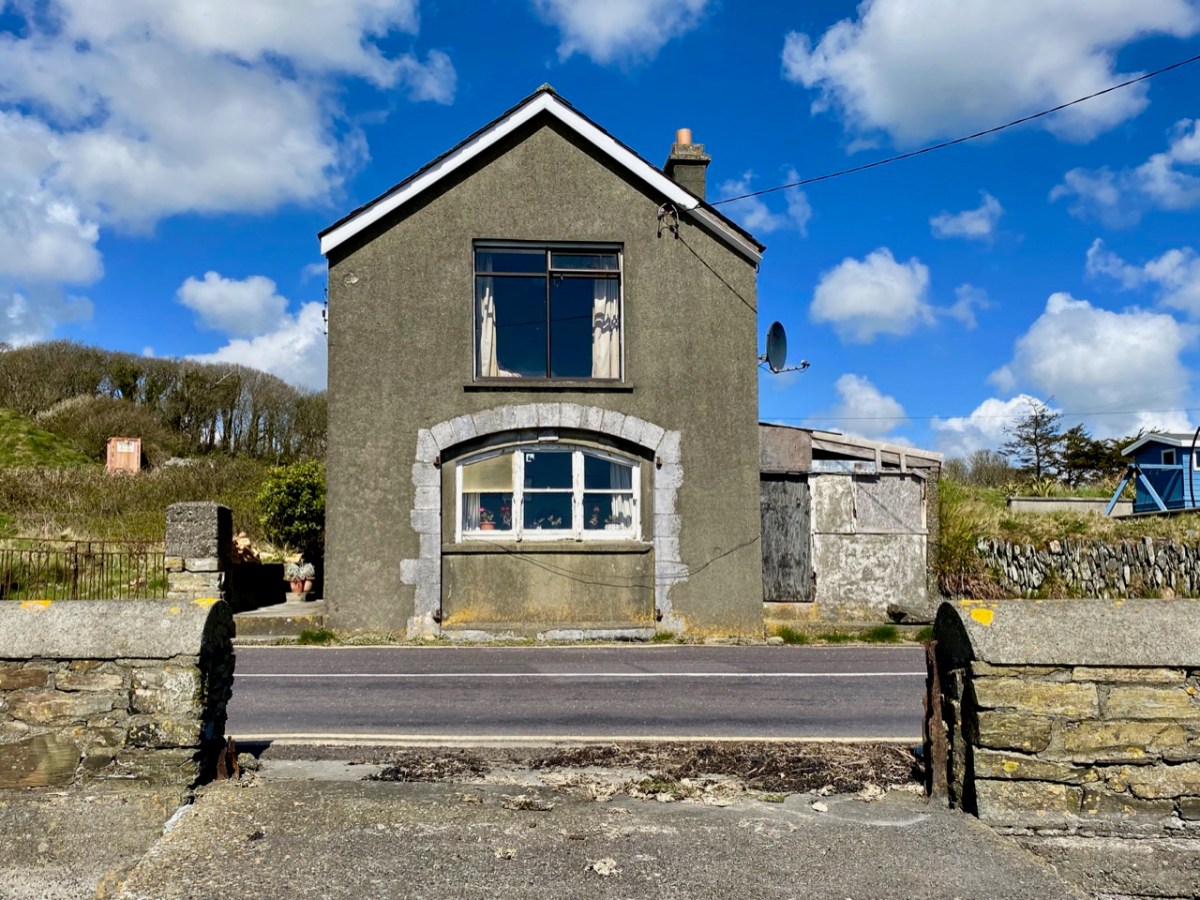
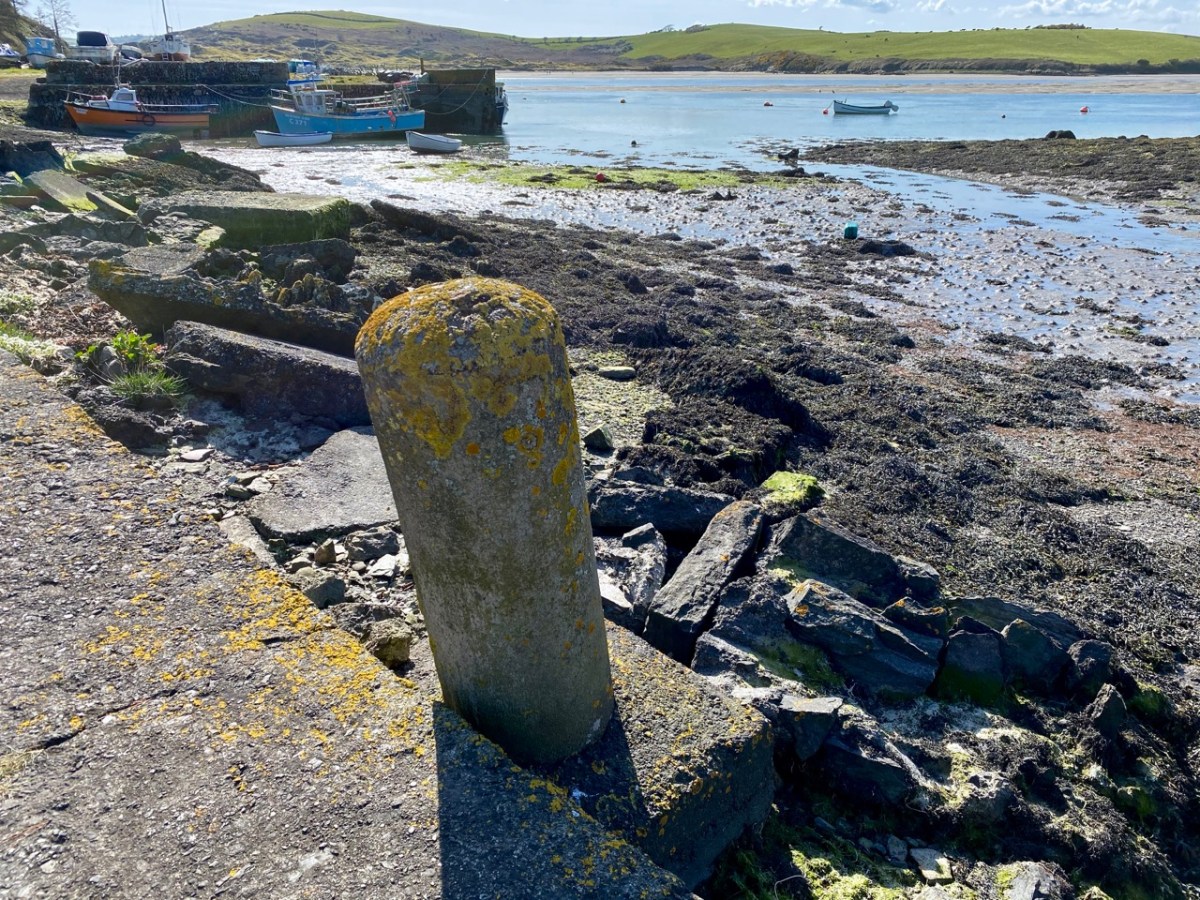
Between North Ring and Ring Harbour the road skirts the coast, and it’s obvious from the buildings along the way that boats and boating were the most significant assets to the area in past times, and are important also today.

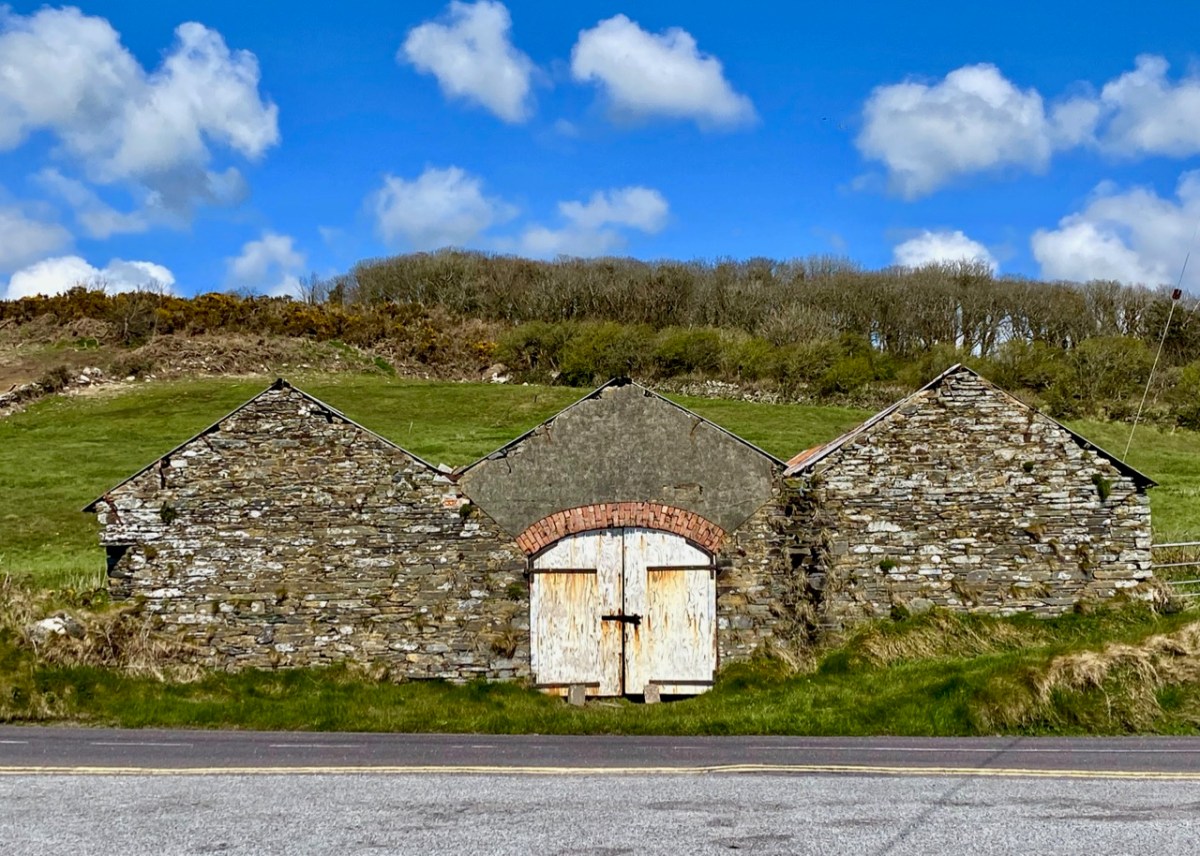
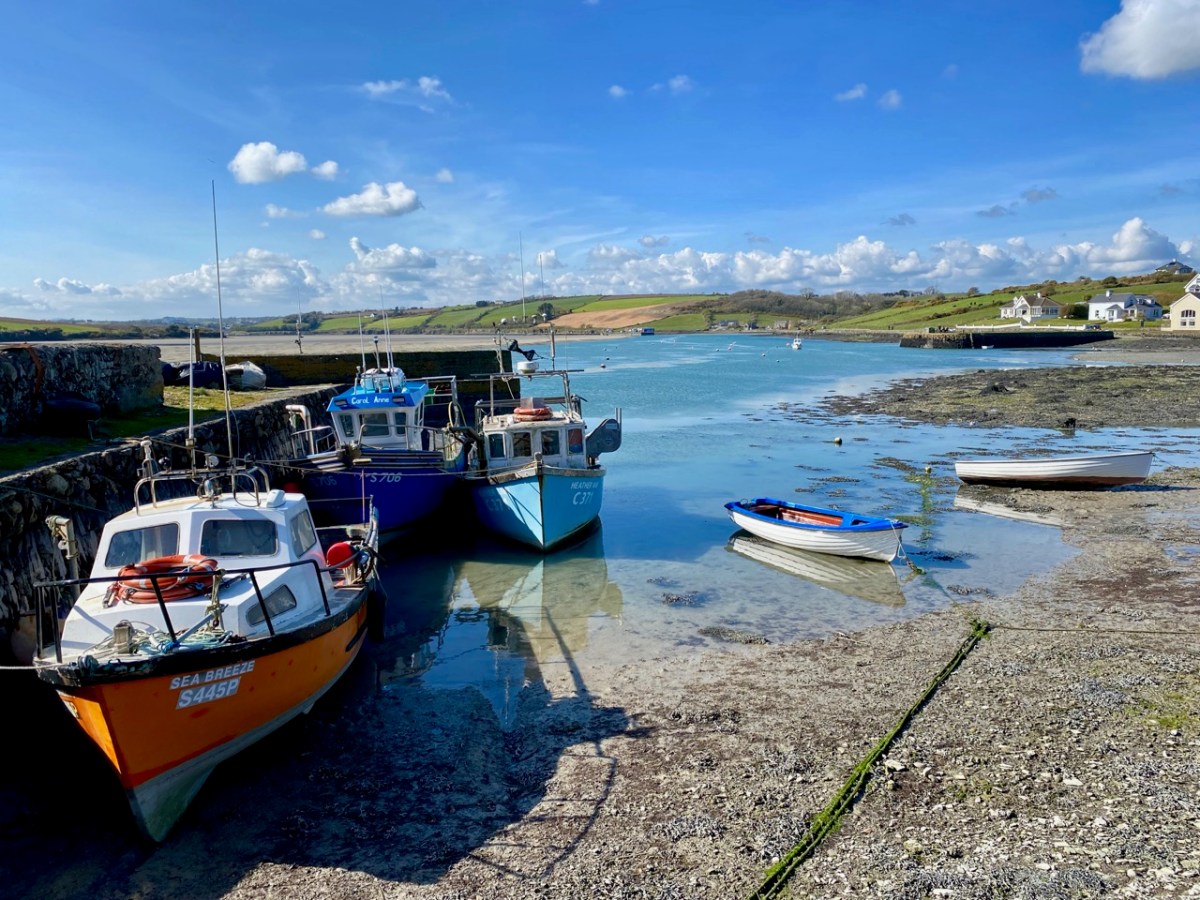
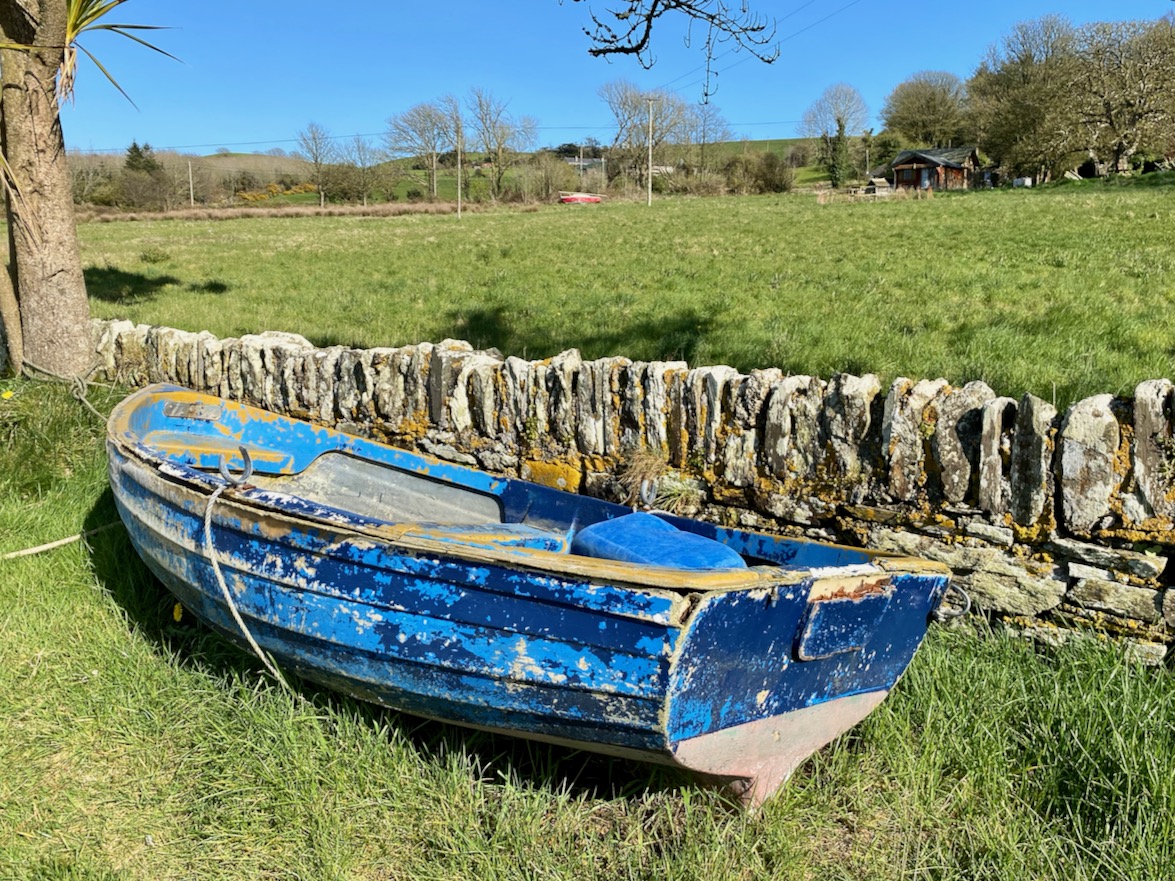
The two buildings with arched openings, above, were boathouses and stores. They are on the road which runs right beside the water going south out of Curraghgrane More. The colourful craft are at Ring Pier, which is still an active centre for fishing and – well – just messing about in boats.

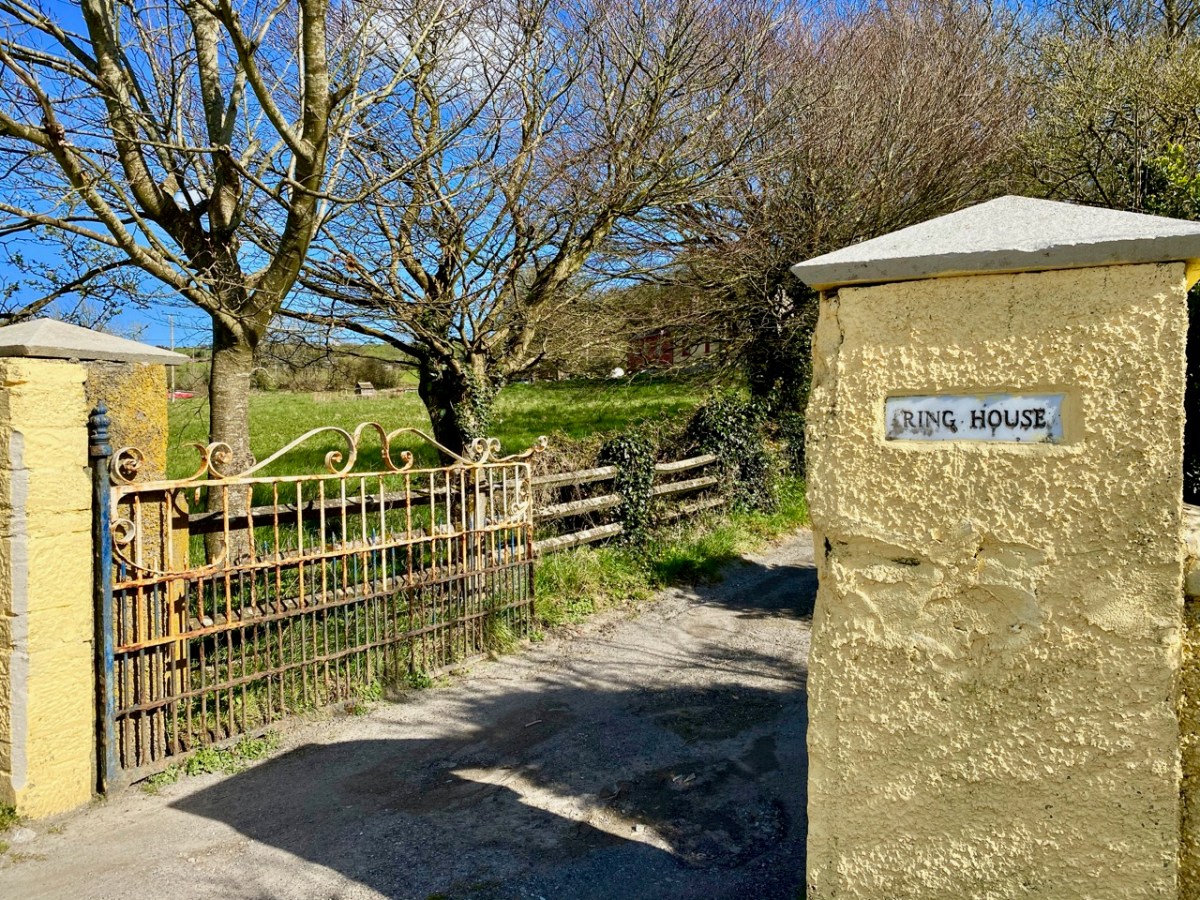
Just beside the harbour at Ring is the entrance to Ring House, which is on the National Inventory of Architectural Heritage, described thus:

. . . Pair of semi-detached three-bay two-storey houses, built c.1820, having single- and two-storey with dormer attic extensions to sides (north, south) elevations . . . An interesting pair of houses, which are unusual as they are semi-detached and large scale, yet in a rural area. Though some traditional features have been replaced, nonetheless the pair retains its historic character and is a notable contributor to Ring Harbour . . .

National inventory of architectural heritage, Reg no 20913532

The gateway is promising, but there is very little to see of Ring House from the road. I also could not find any other accounts or any history of the place. I wondered if it had always been two semi-detached houses – as described in the National Inventory – or whether it was originally a single dwelling of some stature.

Our journey took us along the south facing coastline and we dropped down to the little inlets at Sheep Cove and Simon’s Cove. Both are worth visiting, involving negotiating tiny culs-de-sac, but there’s always room to turn at the end. Look out for the small paths leading to flagstone and sandy beaches. As always, there is evidence of the resourceful use of the maritime environment.

At Simon’s cove we turned and retraced our steps: we were barely 15 minutes away from the town of Clonakilty. Next time we will travel further east, and hopefully uncover more West Cork treasures.

Inchydoney – and Virgin Mary’s Bank

Virgin Mary’s Bank: it’s the intriguing name of a smallish rock outcrop that juts out into the sands at Inchydoney, West Cork. Stories abound, of course. Let’s do a bit of exploring…

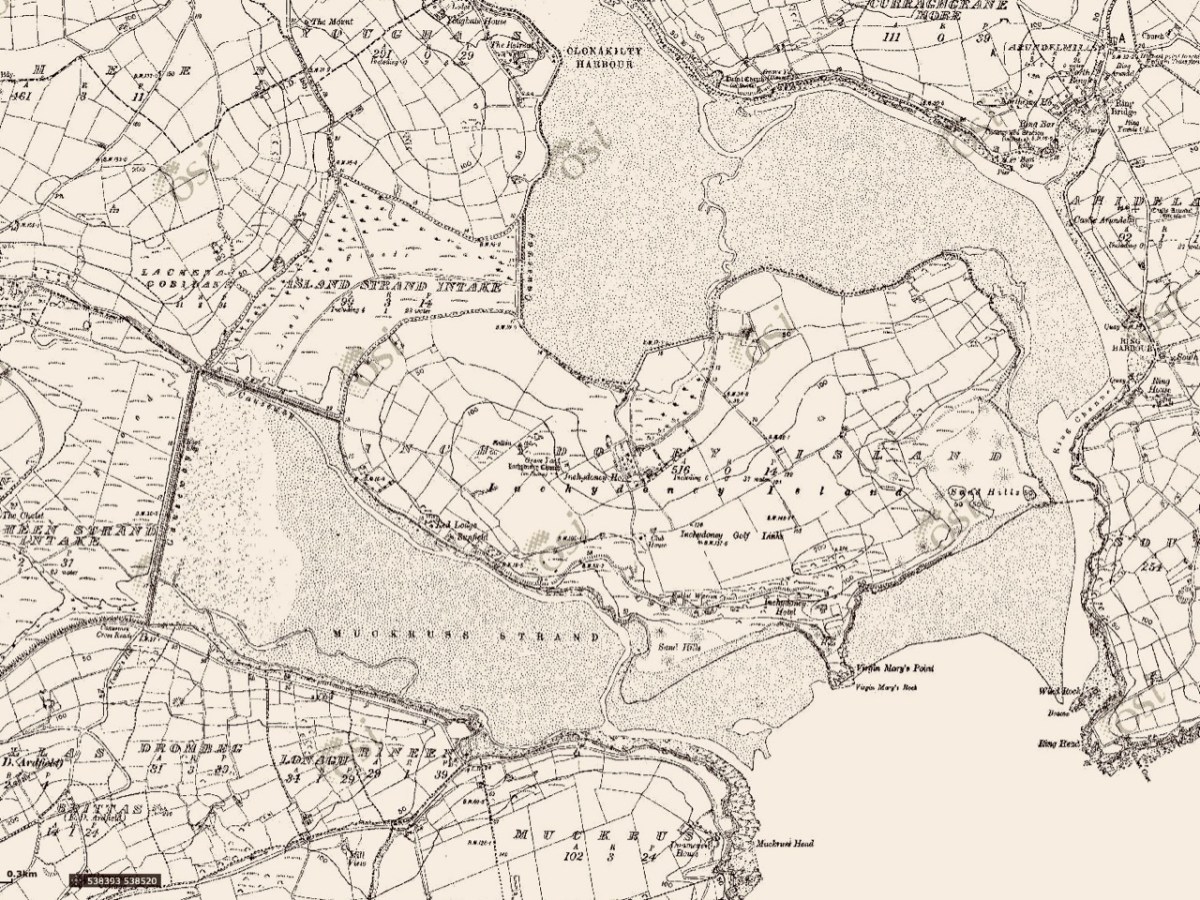
We first saw the name – Virgin Mary’s Bank (sometimes Virgin Mary’s Point or Virgin Mary’s Rock) – on the map when we were orientating our views across the sands from Ring on our excursion last month (above). There’s such a huge, sandy estuarial strand over on that side, stretching all the way from Ring and beyond Inchydoney island: it must be one of West Cork’s most covetable assets!

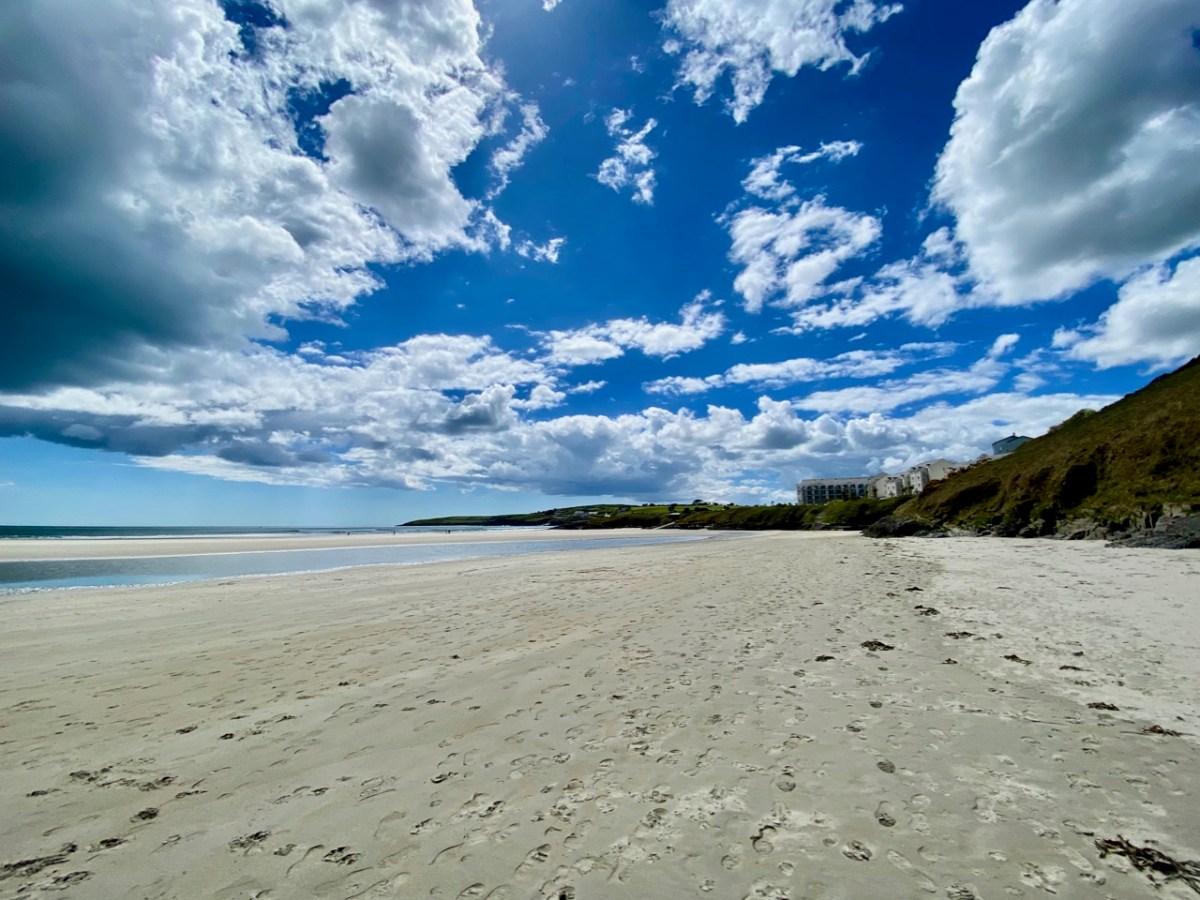
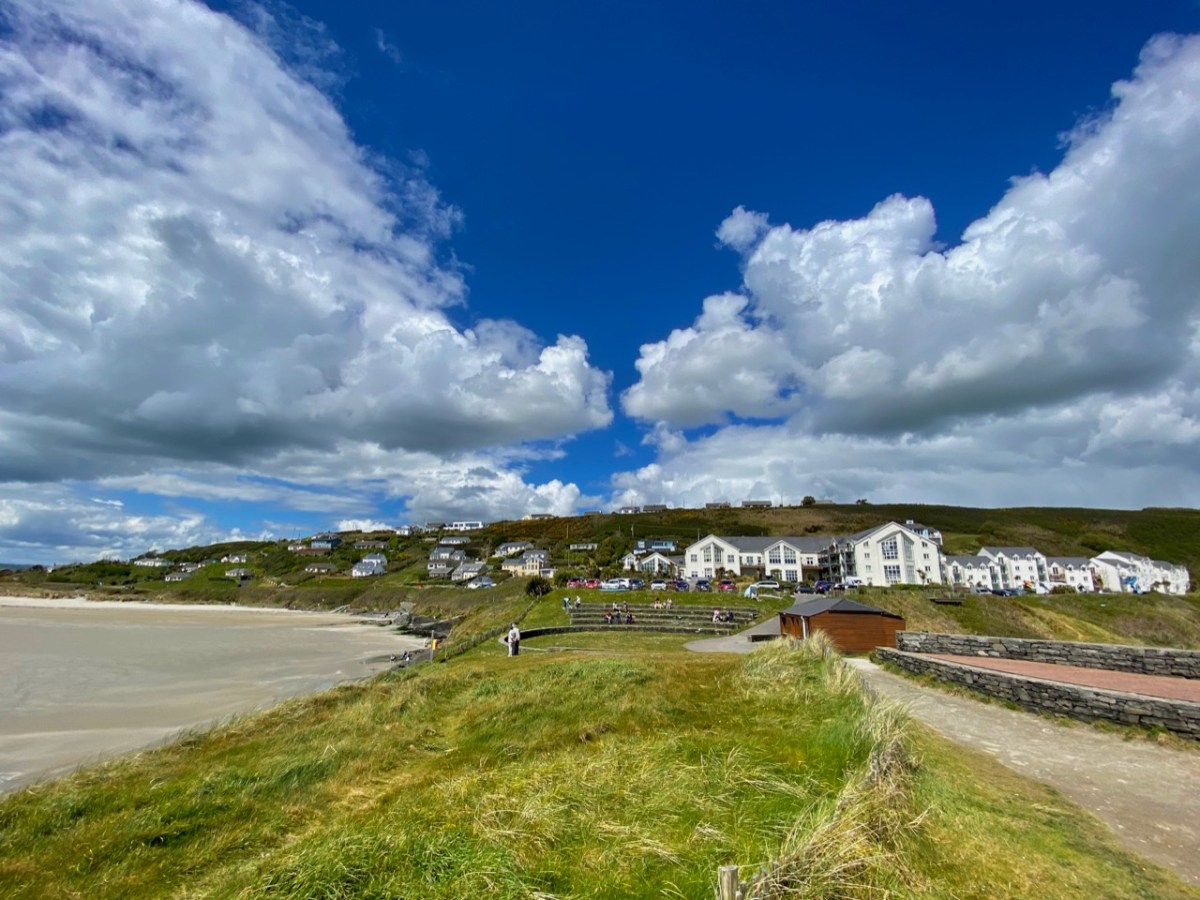
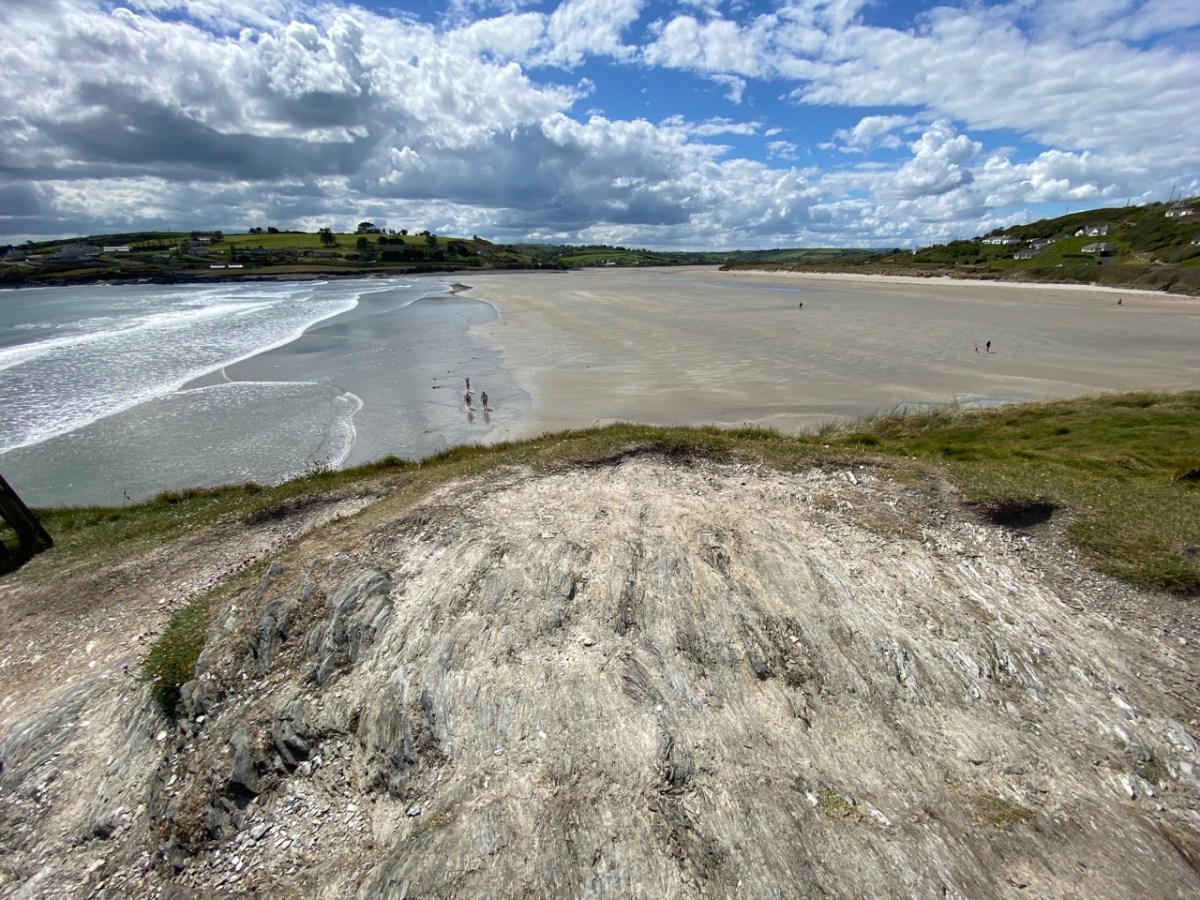
The view above – looking east from Inchydoney Island towards Ring Head – shows barely half the extent of the sands – and beautiful, golden sands they are. In the summertime, of course, the area is buzzing with visitors and sun-seekers, but there is plenty of room, and the beaches are never overrun, although car parking can be at a premium – get there early, if you can, in peak season. But why is Inchydoney an island, you might ask, when you look at the aerial view which seems to show it linked to the pastured landscapes to the north west? Here’s the answer:

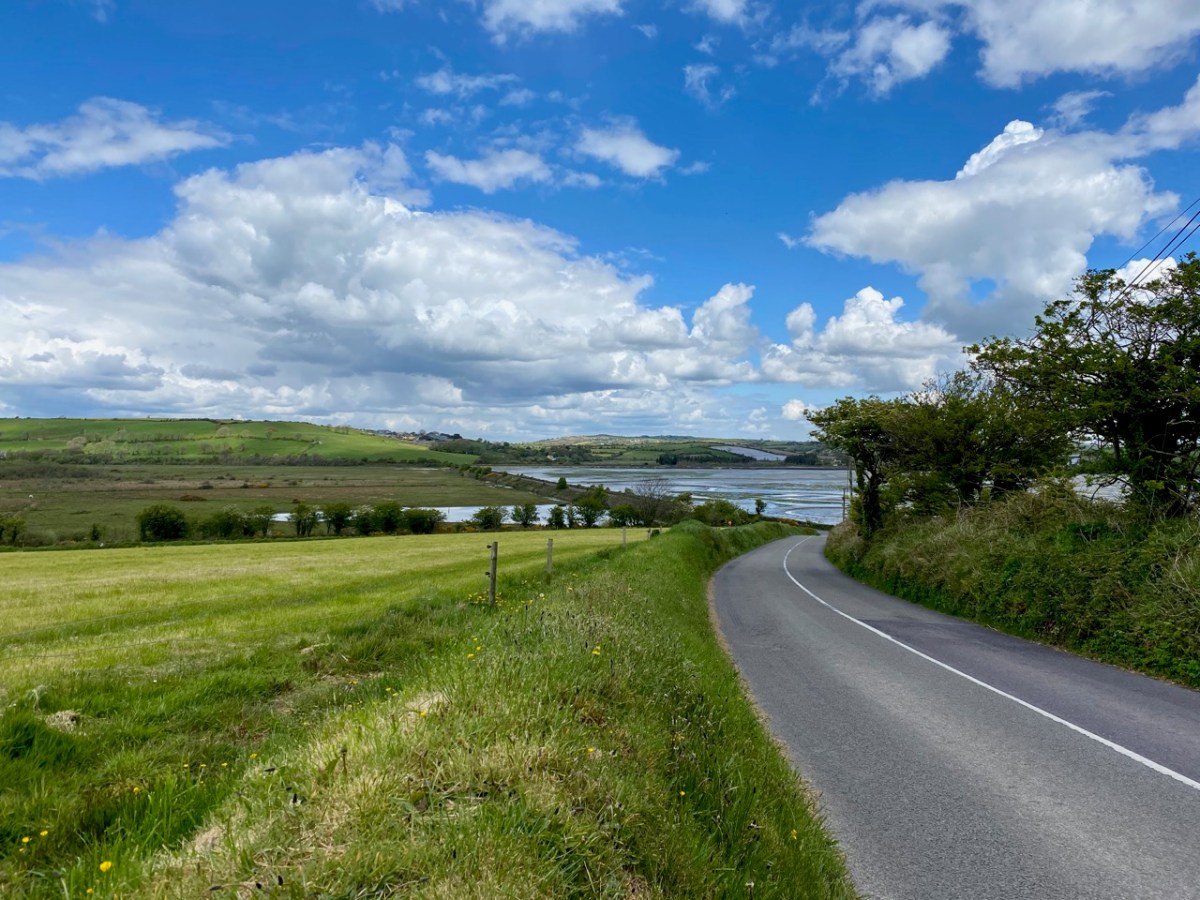
The top map is an extract from the earliest 6″ Ordnance Survey map, mostly surveyed in the 1840s. There you can see the island, clearly surrounded by water, with a causeway on the northwest side linking it to the nearby mainland. The principle features on the island at that time are Inchidoney House, a ruined church and burial ground. The later Cassini 6″ map (above) shows how causeway dams have been built to enclose areas of reclaimed land, here called ‘intakes’, effectively joining the former island to the adjacent mainland. The causeways are very clear if you approach the island from the west side (below).

The Cassini map was surveyed in the late 19th century, and we know from historical records that the causeway system was constructed by the Congested Districts Board in the 1840s, probably as a famine relief scheme. The roads and retaining boundaries were constructed from limestone quarried on the island. It is recorded that workers were paid a penny a day, and that on the first day of the works nine people died – presumably of malnutrition.

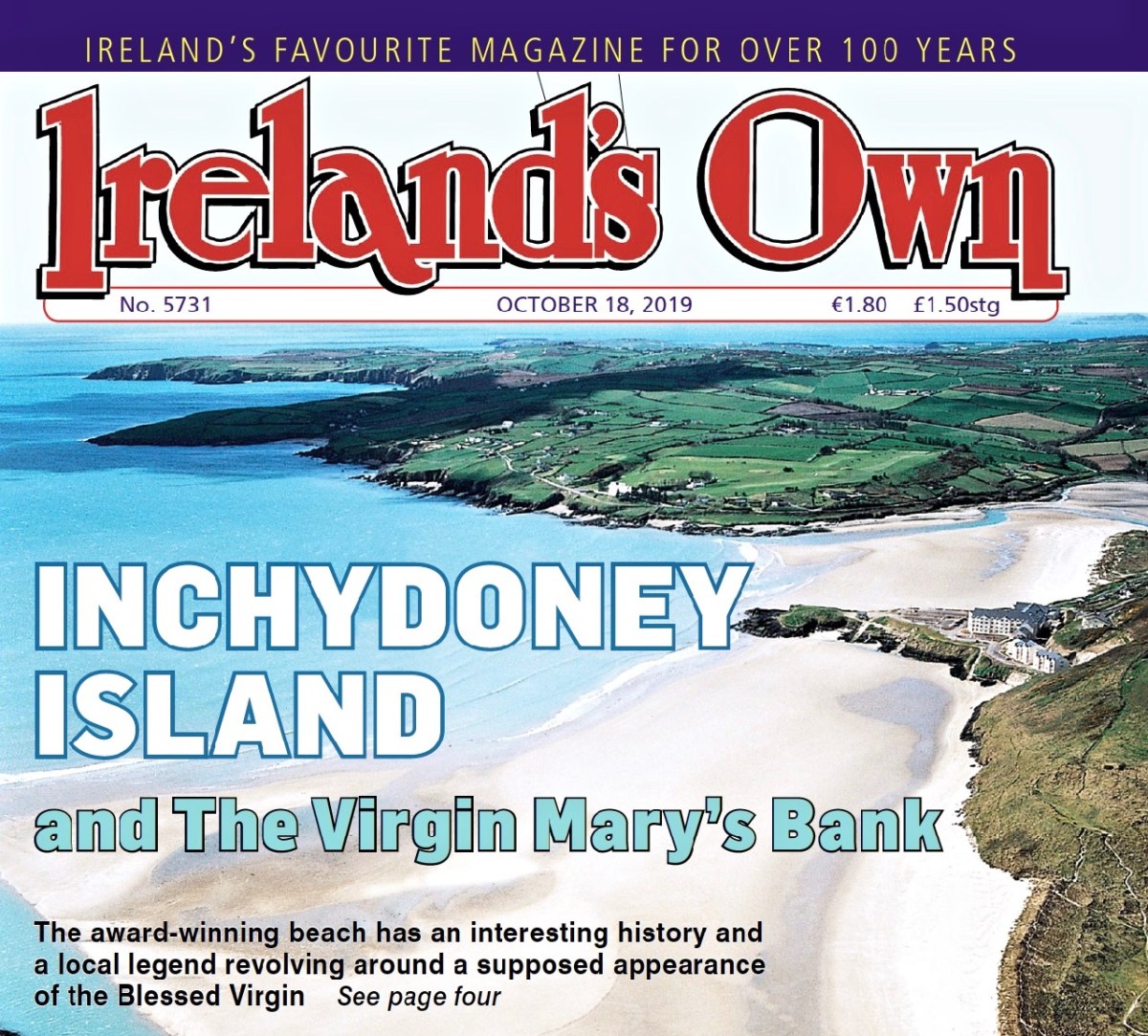
I found an excellent article on Inchidoney Island in a recent edition of Ireland’s Own (October 2019), available to download online, written by Mary Rose McCarthy. She relates how Richard Hungerford, from a Somerset family background, owned a substantial part of the island in 1690 and his descendants were there until the early 1900s. They rebuilt Inchydoney House in the early 1800s: it still stands. The writer ‘Mrs Hungerford’ – Margaret Hamilton of Rosscarbery – married into the Hungerford family and was notorious for an incident in 1905. Here is an extract from a letter sent by her to the Clonakilty Urban District Council on August 16th:

On 10th inst I received a letter from the Town Clerk of Clonakilty who ‘had been directed by the Urban District Council to ask me to receive a deputation with reference to asking me to open my grounds to the public on Sundays’ . . .

The Urban District Council, in proposing this resolution, ‘regretted that I had not followed the example of Mr Bence Jones’ (who had kindly thrown his most lovely garden open to the public every second Sunday) and one member, whom I shall not name but with whom I have had a little business transaction in the past, was of opinion that ‘I should have done so without waiting to be asked’. Now, during the past summer I have permitted every person, and at every hour, who asked leave at the hall door to go through to the strands. The result has been as usual in Ireland, disappointing, Gates were left open and of course my animals strayed away and people had to leave their work to hunt for them and the portion of ‘the public’ who considered asking for leave too much trouble, or perhaps, too derogatory, wandered over the land wherever they choose and papers, bottles etc, etc, littered the place . . .

Miss Hungerford, The Island, Clonakilty 1905

Mary Rose McCarthy, in her Ireland’s Own article, recounts:

. . . Locals felt they had a right to travel to the beach by an old roadway past Inchydoney House. Clonakilty UDC mediated but Miss Hungerford refused all approaches. A group of locals marched from town, tore down the gates, and asserted their right to travel to the beach. This gave rise to a local song – Who broke the island gates?, although the words were never recorded . . .

Mary Rose McCarthy, Ireland’s Own, October 2019

The author also notes that Margaret Hamilton (Miss Hungerford) wrote novels, the most famous of which – Molly Bawn – is mentioned by James Joyce in Ulysses; and also credits her with having coined the phrase ‘beauty is in the eye of the beholder’.

The most notable building on the Island today is the Inchodoney Island Lodge & Spa which – with associated apartments – commands a stunning view over the whole south strand. It replaces the earlier Inchydoney Ocean Hotel, built in the 1930s and famous for its ballroom – and the dances and fancy-dress parties held there, which always went on into the early hours of the morning. The postcard below, published by H Rosehill, Cork, shows the hotel in 1940.

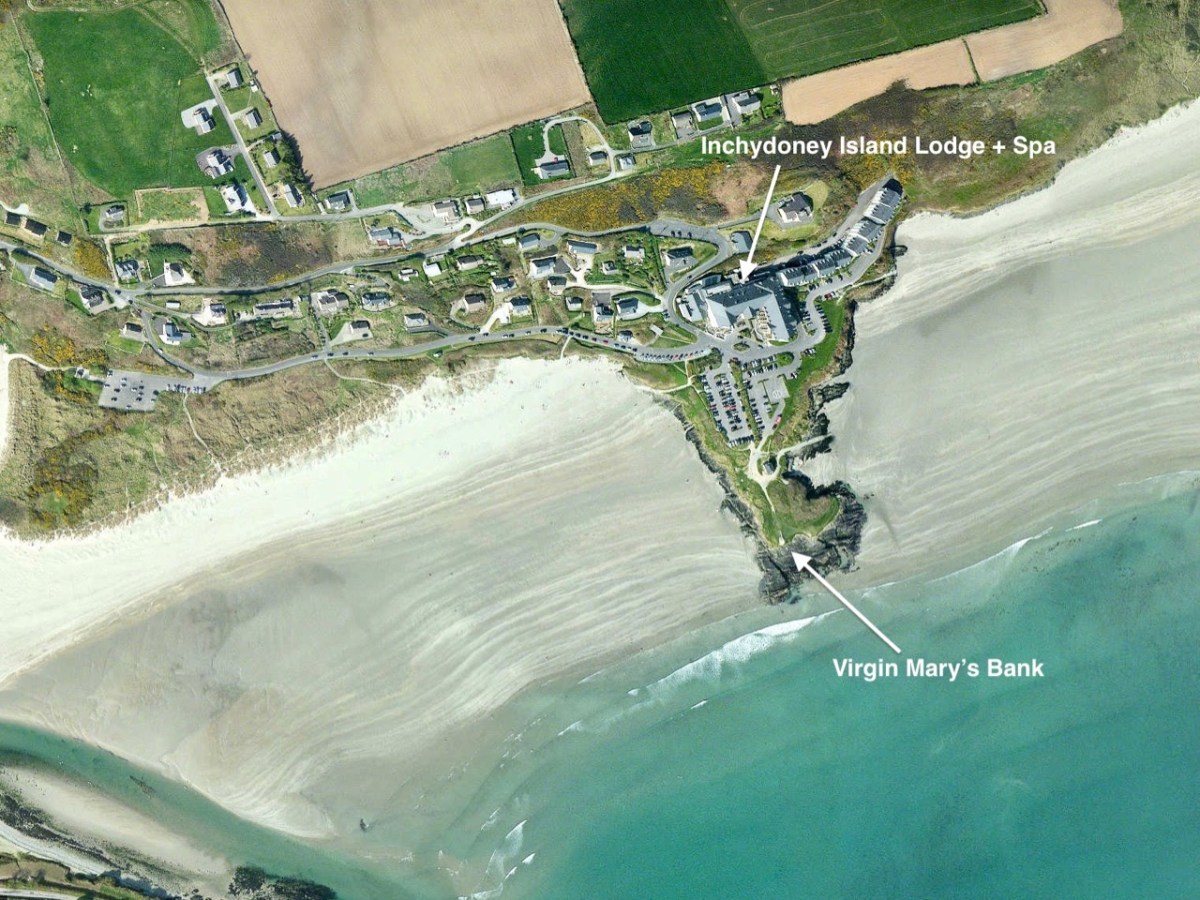
The aerial view gives an idea of the extent of the present day building, and also shows how it relates to the principal subject of today’s post: Virgin Mary’s Bank. The legend of this promontory is best told through the pages of the Duchas Schools Folklore Collection:

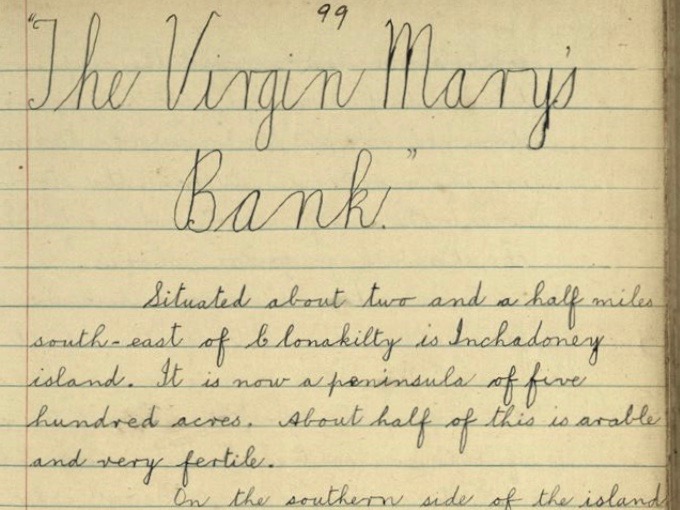
. . . Situated about two and a half miles south-east of Clonakilty is Inchadoney island. It is now a peninsula of five hundred acres. About half of this is arable and very fertile.

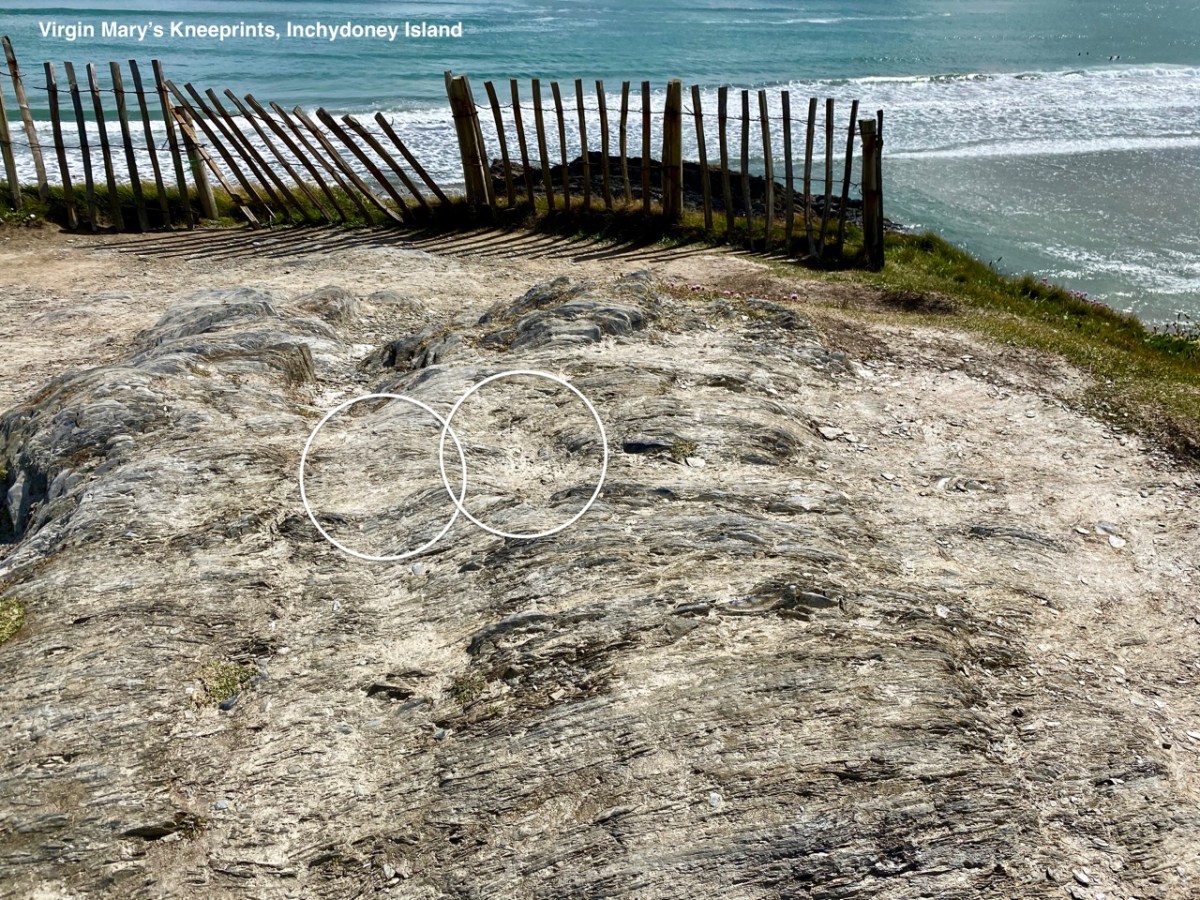
In the southern side of the island there is a bank jutting out into the sea called the Virgin Mary’s bank. It is said that there was a ship coming in there once and the sailors saw a beautiful woman praying on the bank. She was as white as snow and she was kneeling on a knoll which bears the impression of her knees to-day . . .

All the sailors but one began to mock and blaspheme her. Suddenly a great storm arose and the ship was blown to pieces and all her sailors were drowned except the one who took no part in the mockery. When the storm ceased the lady went out and brought the drowning sailor ashore . . .

In olden times there was a flourishing convent on the island and the remains of which are to be seen to-day. Some people say it was one of the nuns of this convent but it is more likely that it was the “Virgin Mary” who saved the man from drowning . . .

Tim Cowhig, Duchas Schools Collection, Clonakilty 1936

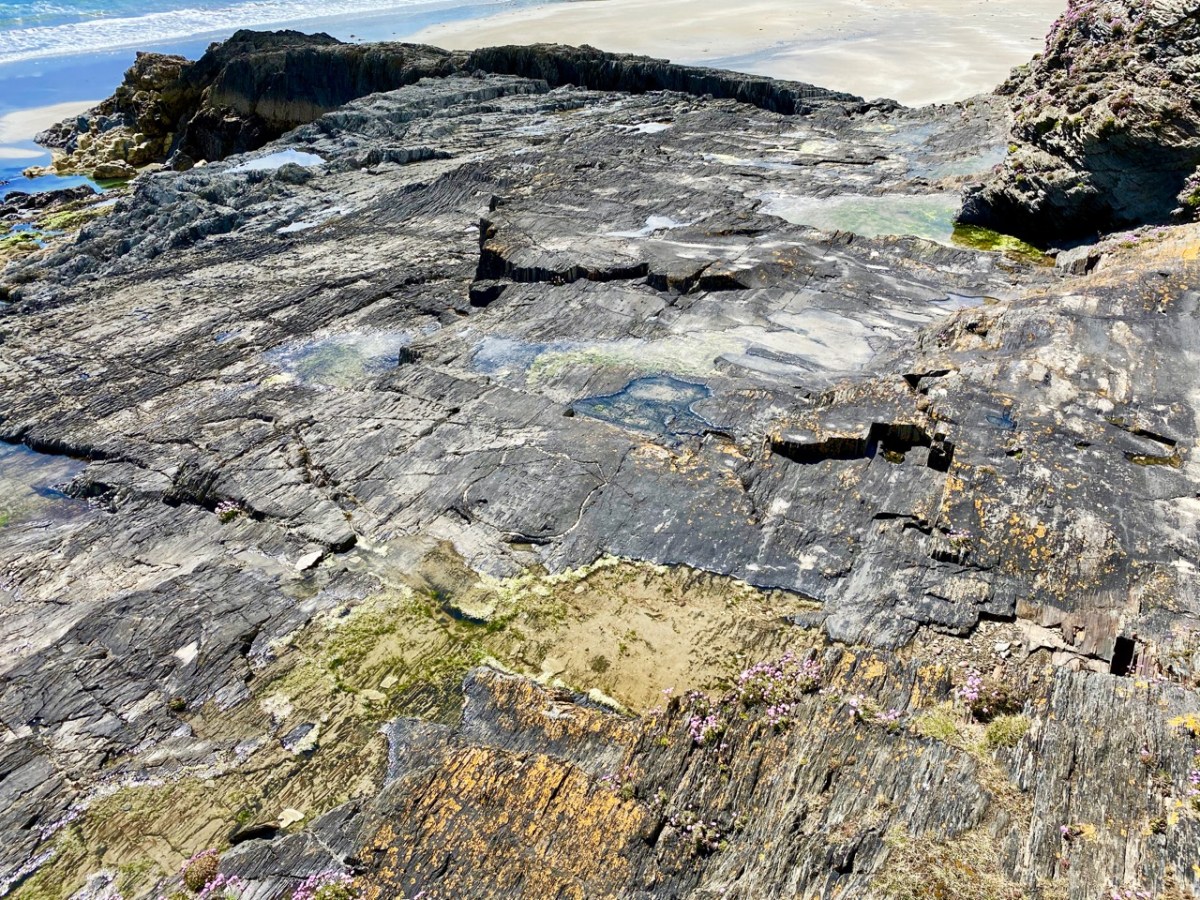
If ever doubt was to be cast as to the veracity of this story, there – as clear as day – are the knee-prints on the rock! A tragedy on the strand in 1932 is commemorated by a carving on the flaggy formation, just below Virgin Mary’s Bank. In August 22-year-old Timothy O’Sullivan from Casement Street in Clonakilty and 19-year-old Joseph Santry, a plasterer from Clarke Street Clonakilty, drowned. Charles P Millar from Summerhill, Cork, managed to rescue a third man who was also in difficulty but due to rough sea conditions he was unable to save the others despite his heroic attempts.

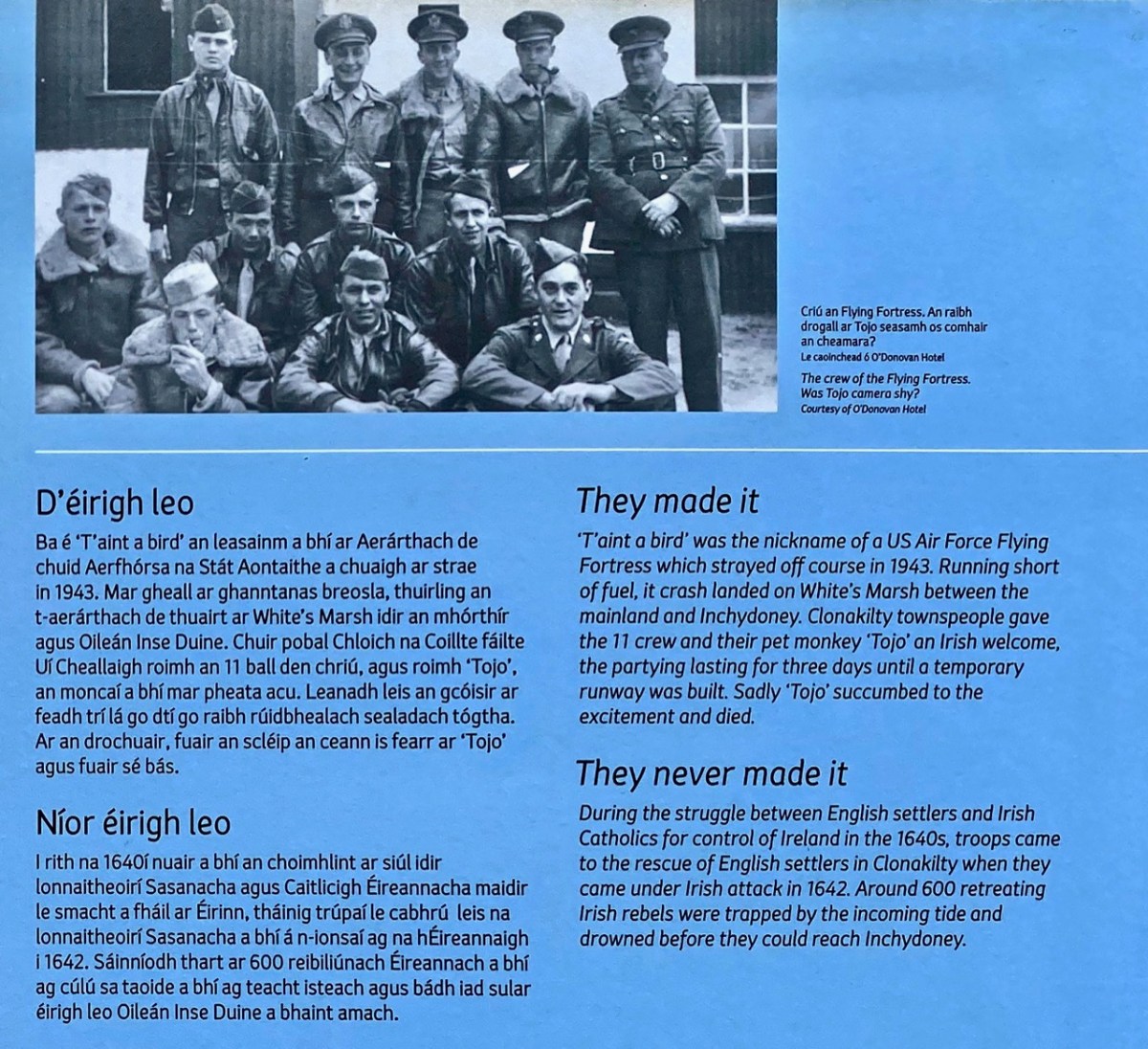
A Wild Atlantic Way information board close to Virgin Mary’s Bank tells of another incident, in more recent times.

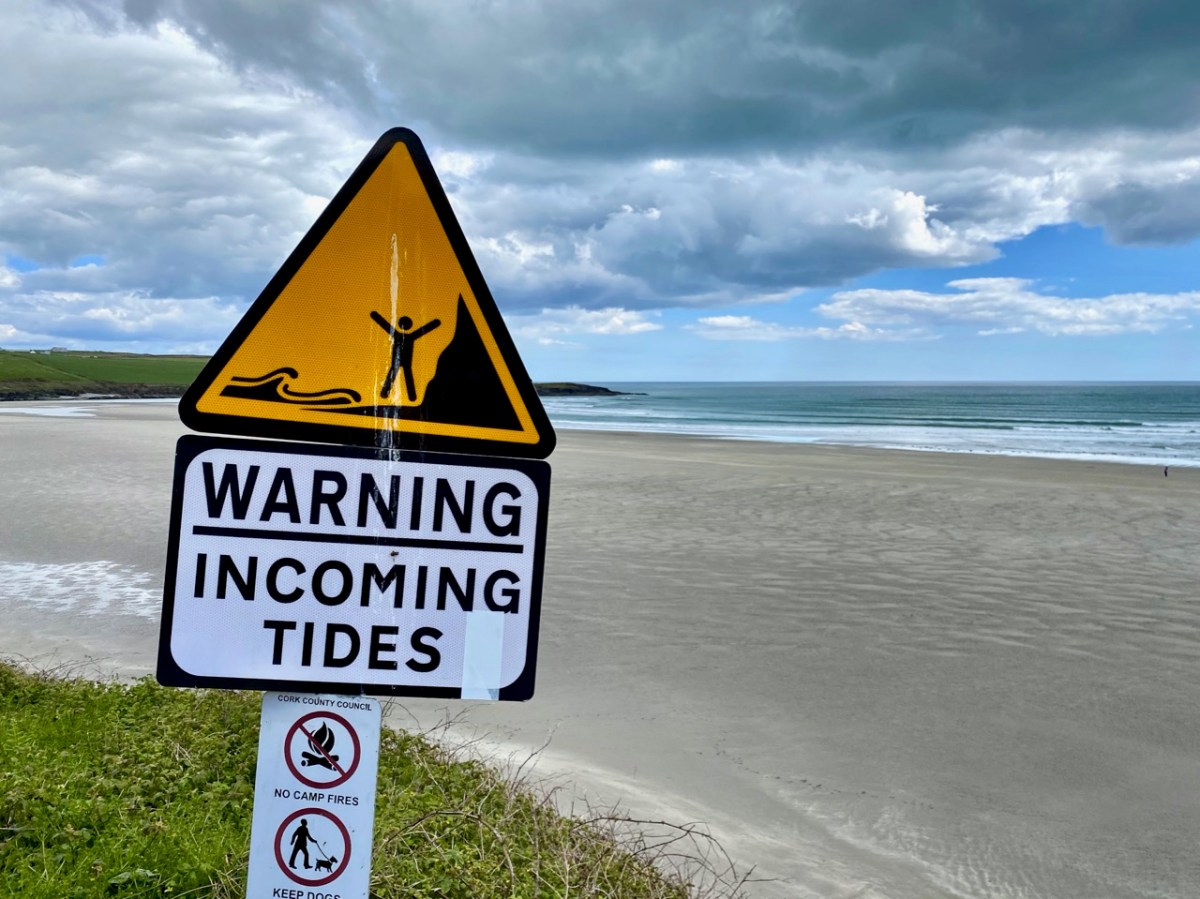
But note the paragraph They never made it, above. In 1642 around 600 Irish rebels were trapped by the incoming tide and drowned on the sands: a salutary warning, perhaps, for those who come to the beaches here and don’t keep a wary eye on the tide. Because of the wide, flat expanses of open strand it comes in at a great pace.

An all but forgotten Cork poet, Jeremiah Joseph Callanan (1795 – 1829), heard the story of the appearance of the Virgin Mary at Inchydoney and penned some verses which – according to local legend – all Clonakilty primary school children had to learn by rote. I have transcribed it from the Duchas Schools Collection record above, as the dramatic rendition is well worth quoting in full.

The Evening Star rose beauteous above the fading day,
As to the lone and silent beach the Virgin came to pray,
And hill and dale shone brightly in moonlight’s mellow fall;
But the bank of green where Mary knelt was brightest of them all.

Slow moving o’er the waters, a gallant barque appeared,
And her joyous crew looked from the deck as to the land she neared;
To the calm and sheltered haven she floated like a swan,
And her wings of snow o’er the waves below in, pride and beauty shone.

The Master saw Our Lady as he stood upon the prow,
And marked the whiteness of her robe – the radiance of her brow;
Her arms were folded gracefully upon her stainless breast,
And her eyes looked up among the stars, to Him her soul loved best.

He showed her to his sailors, and he hailed her with a cheer,
And on the kneeling Virgin they gazed with laugh and jeer;
And madly swore, a form so fair they never saw before;
And they cursed the faint and lagging breeze that kept them from the shore.

The ocean from its bosom shook off its moonlight sheen,
And up its wrathful billows rose to vindicate their Queen,
And a cloud came o’er the heavens, and a darkness o’er the land,
And the scoffing crew beheld no more the Lady on the strand.

Out burst the pealing thunder, and the lightning leapt about,
And rushing with his watery war, the tempest gave a shout;
And that vessel from a mountain wave came down with thundering shock,
And her timbers flew like mattered spray on Inchadony’s rock.

Then loud from all the guilty crew one shriek rose wild and high;
But the angry surge swept over them, and hushed their gurgling cry;
And with a hoarse, exulting tone the tempest passed away,
And down, still chafing from their strife, the indignant waters lay.

When the calm and, purple morning shone out on high Dunmore,
Full many a mangled corpse was seen on Inchadony’s shore;
And to this day the fisherman shows where the scoffers sank,
And still they call that hillock green “The Virgin Mary’s Bank”.

Lost in West Cork

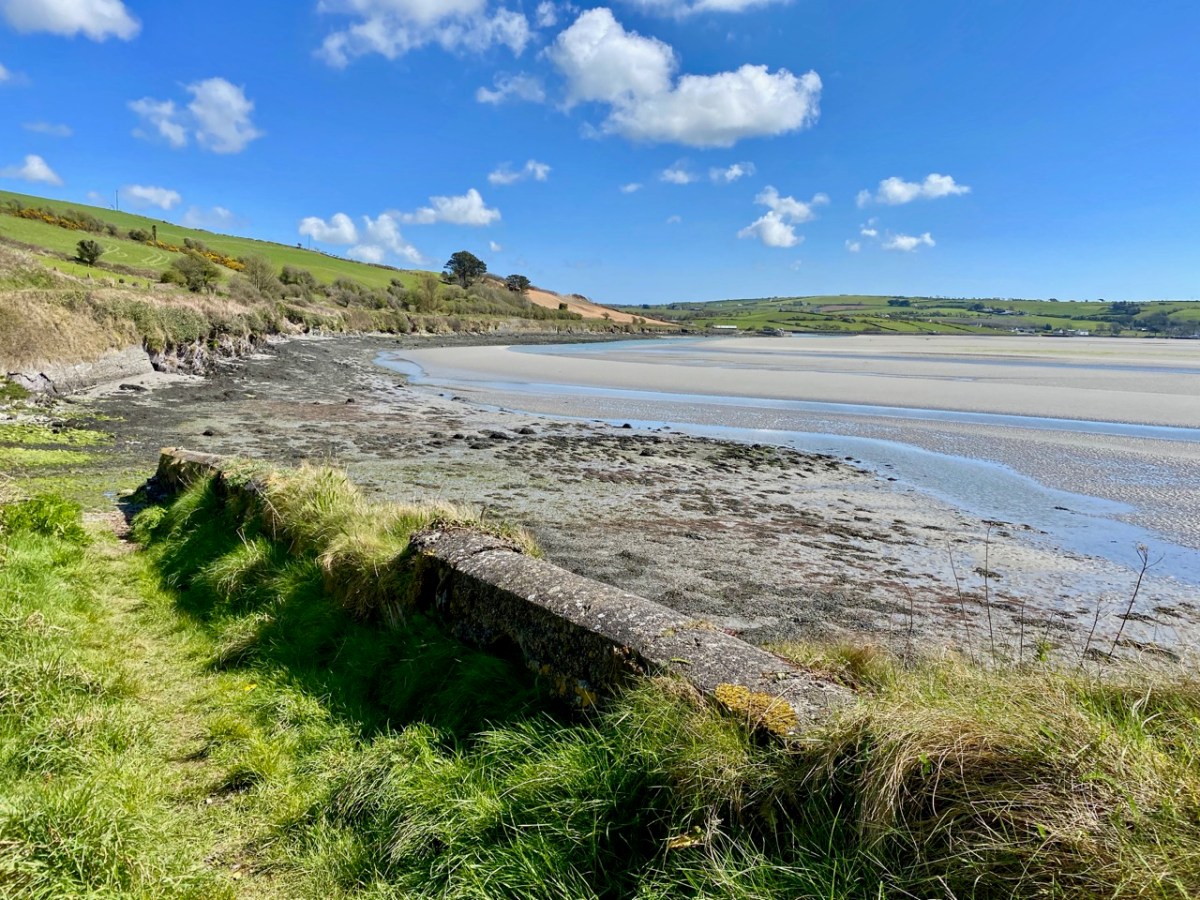
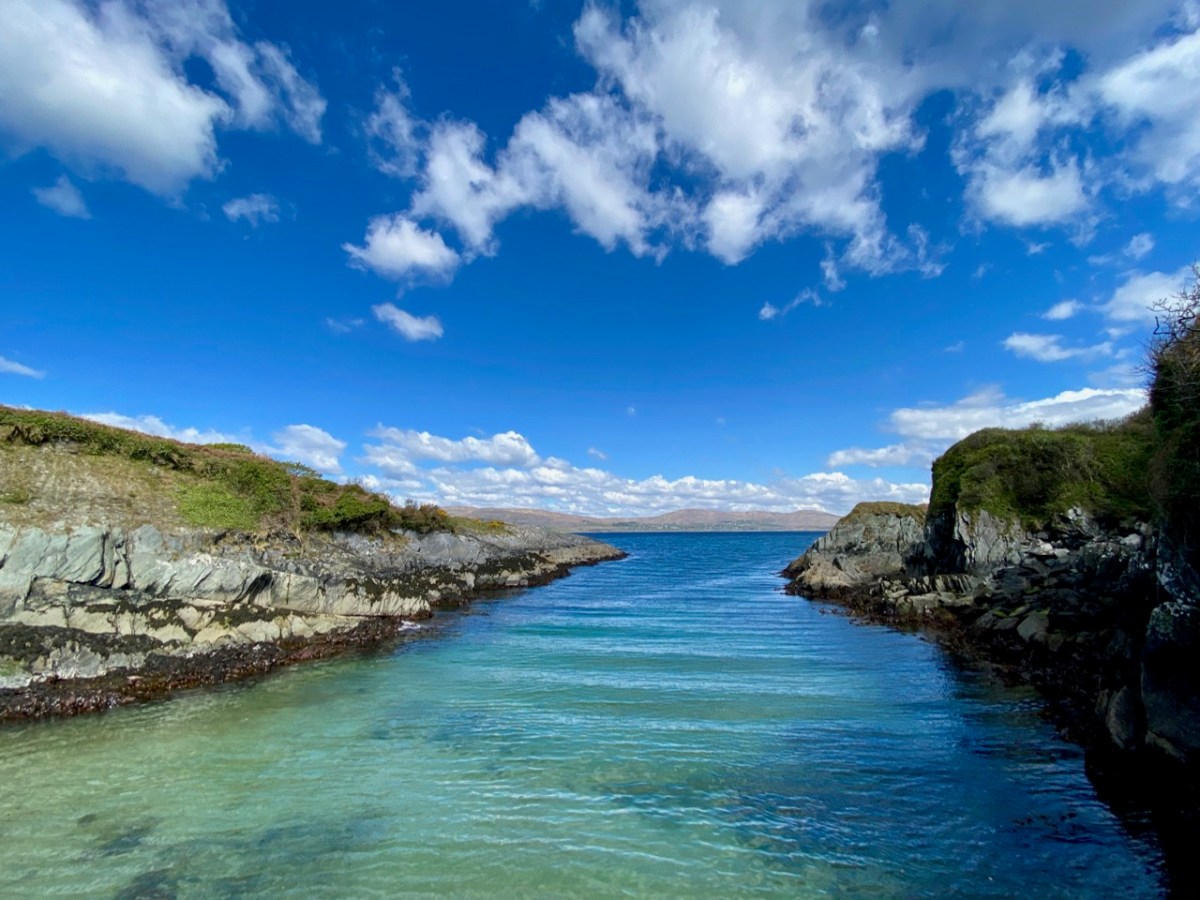
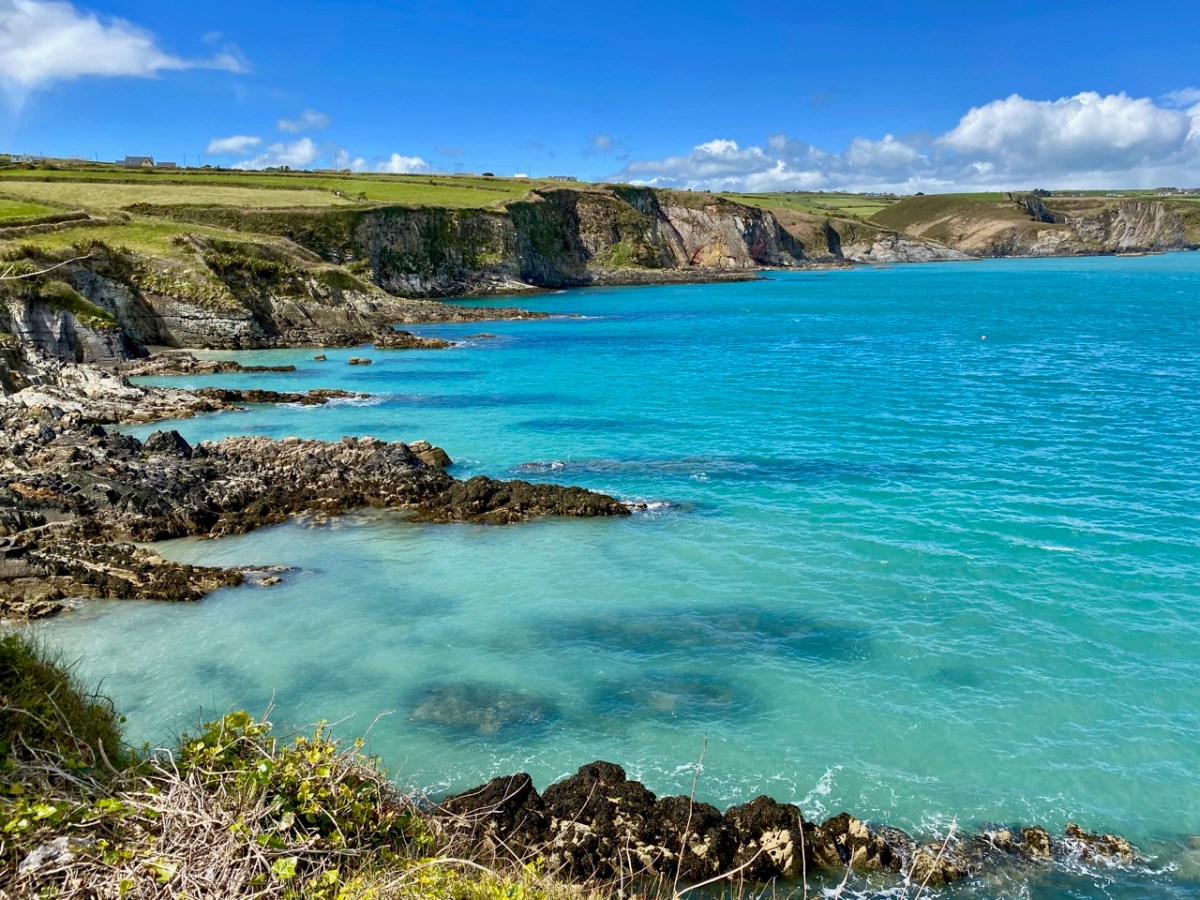
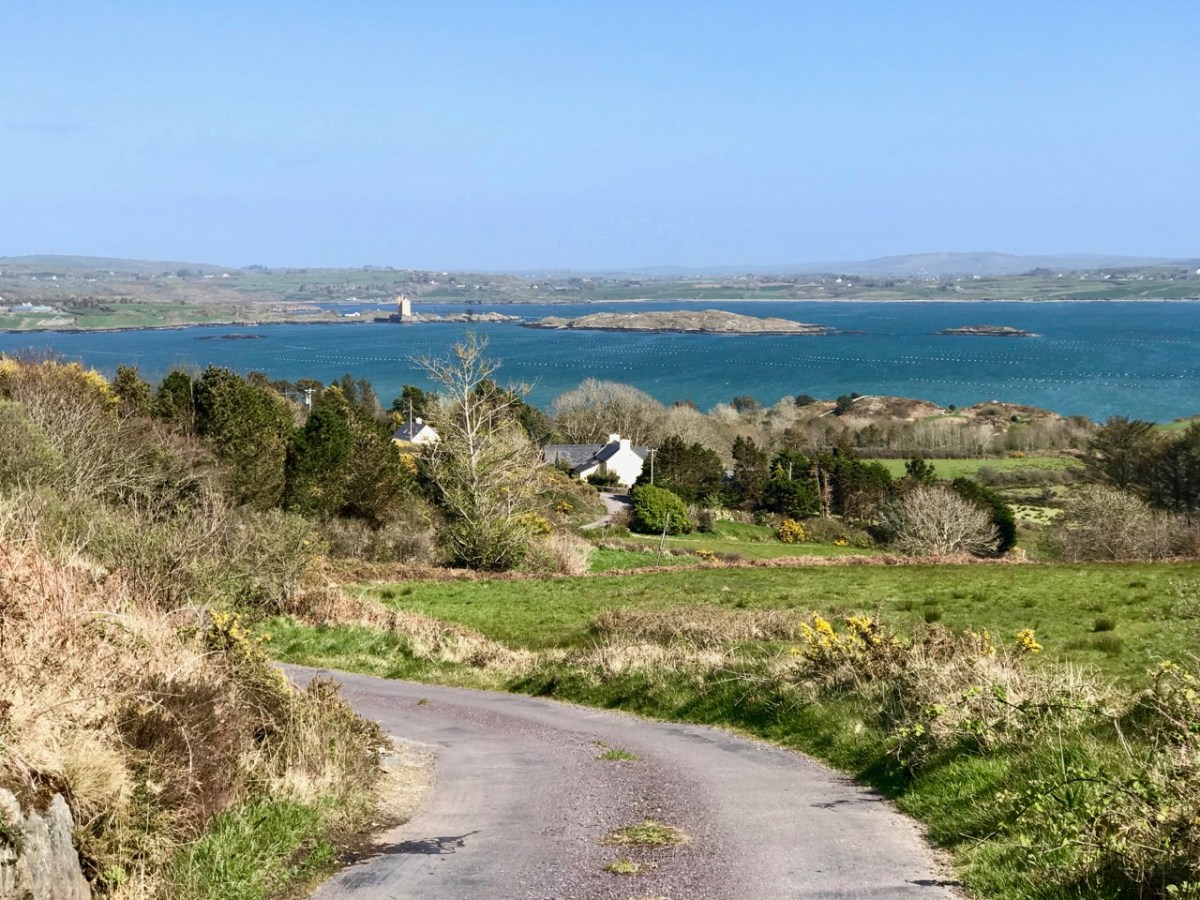
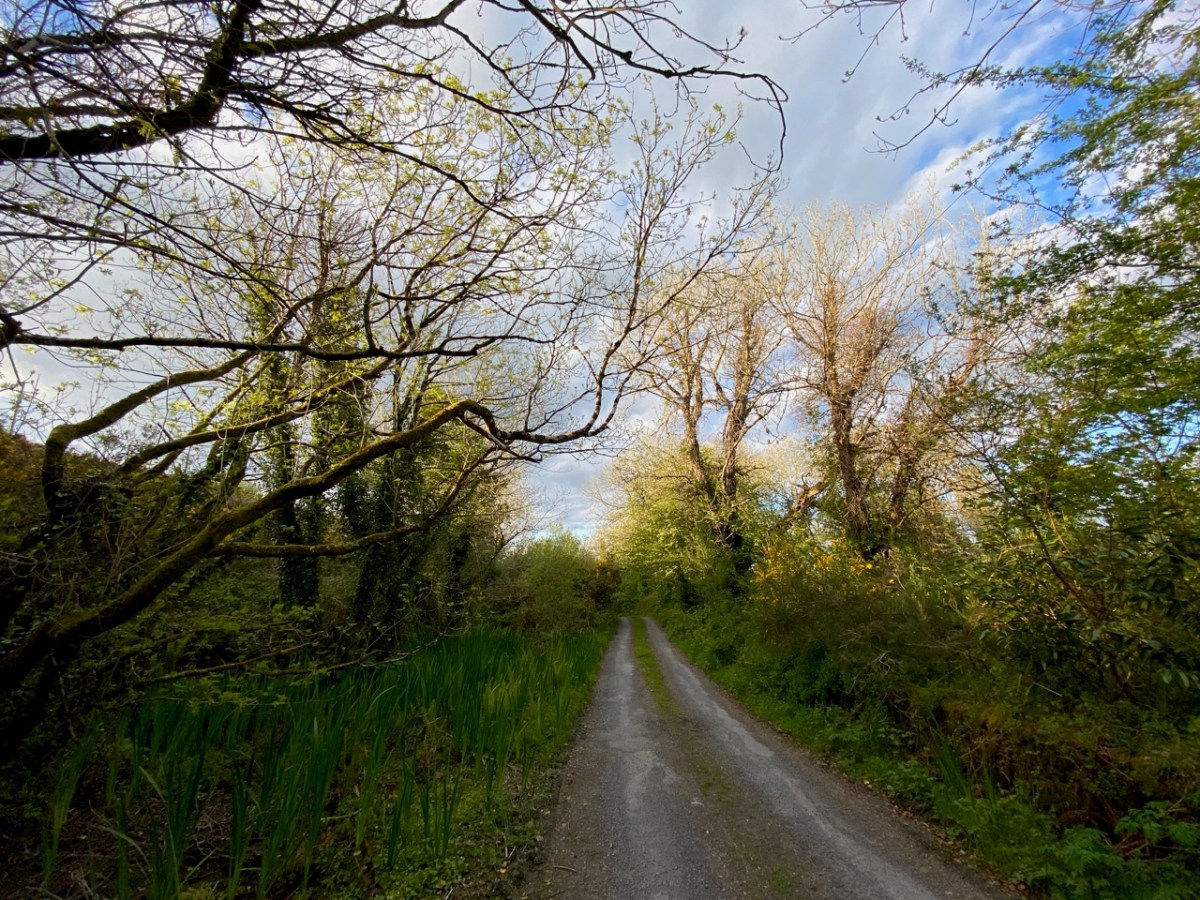
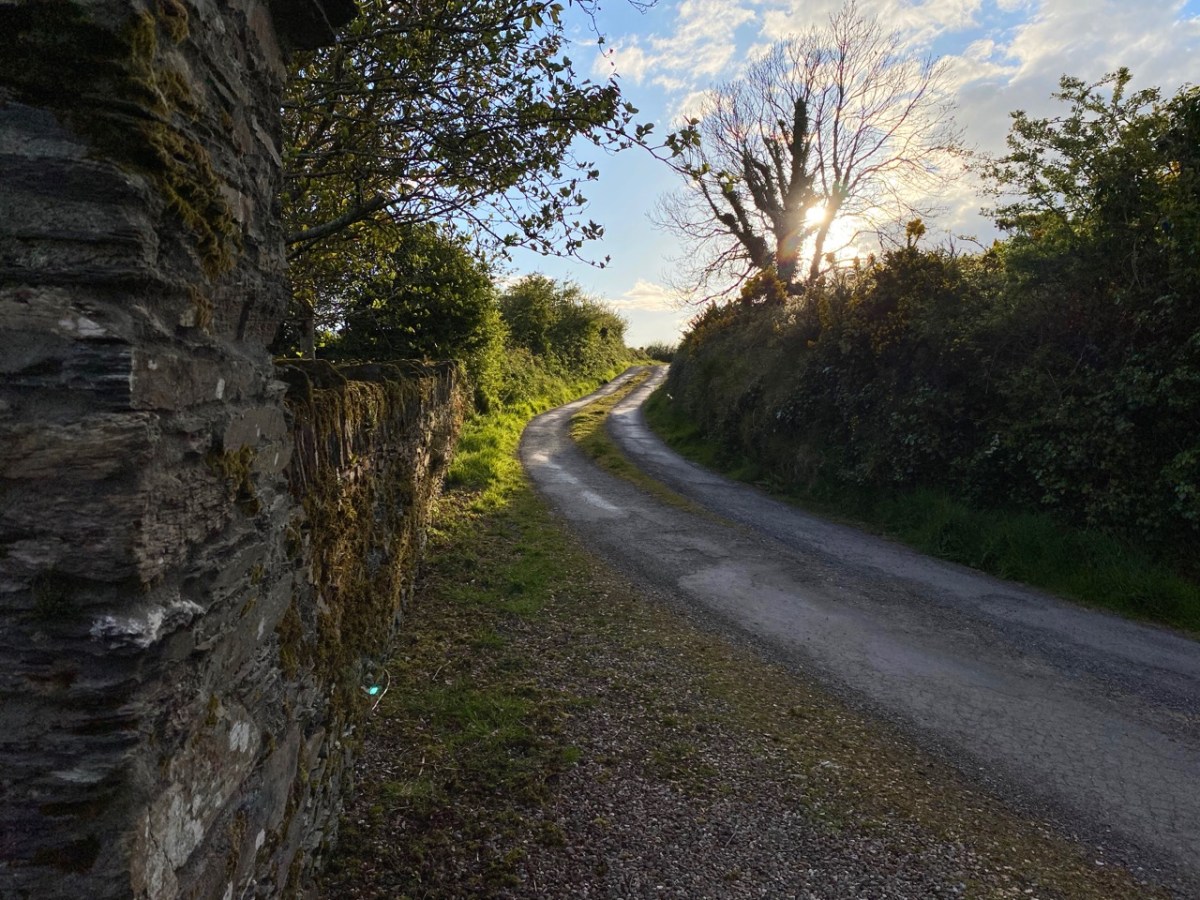
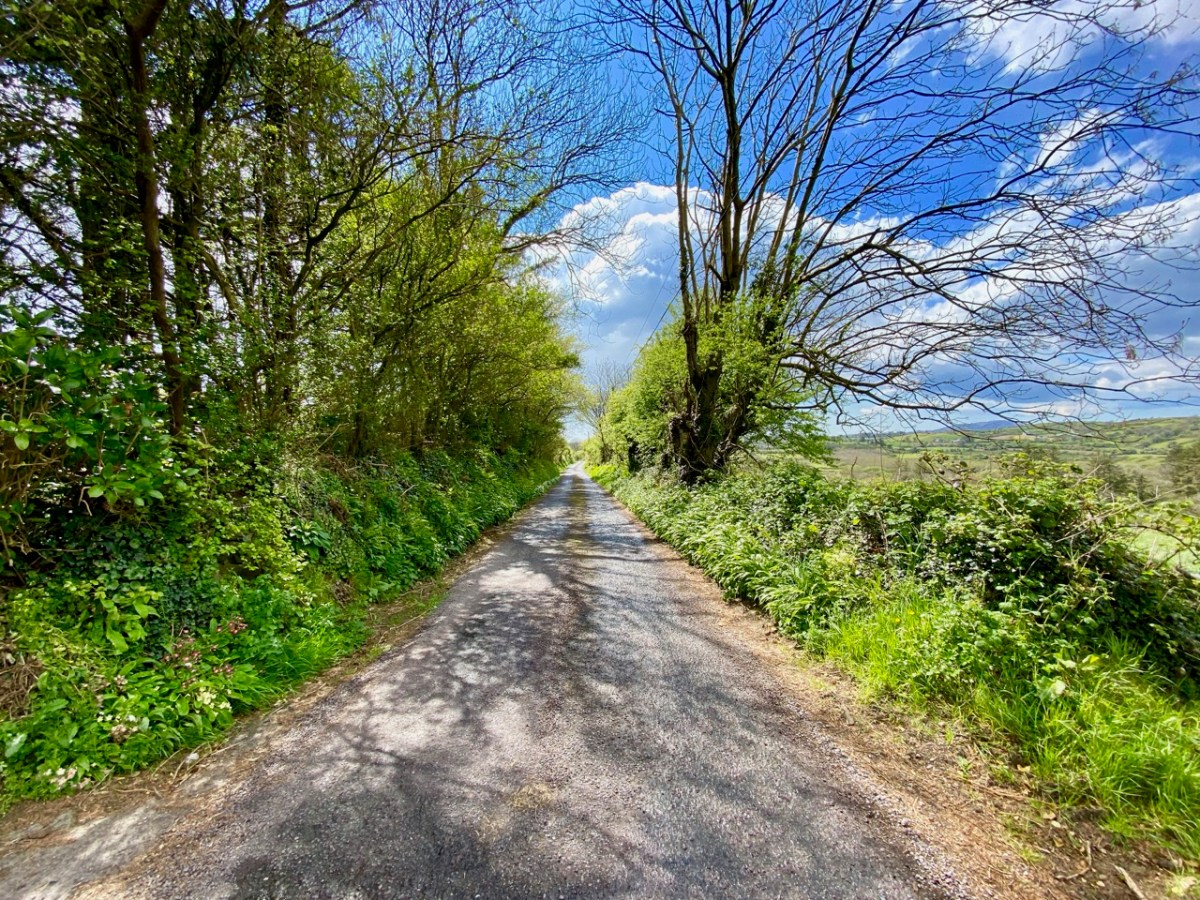
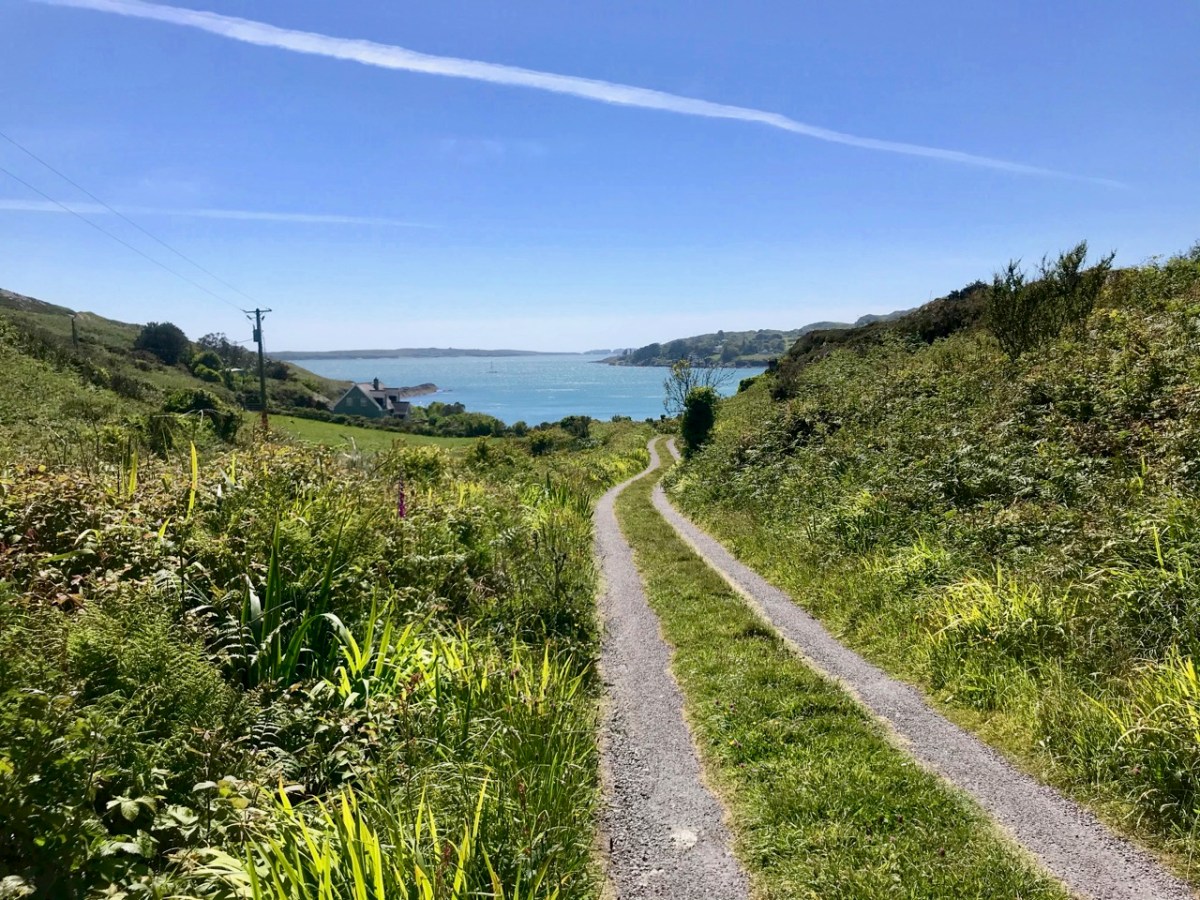
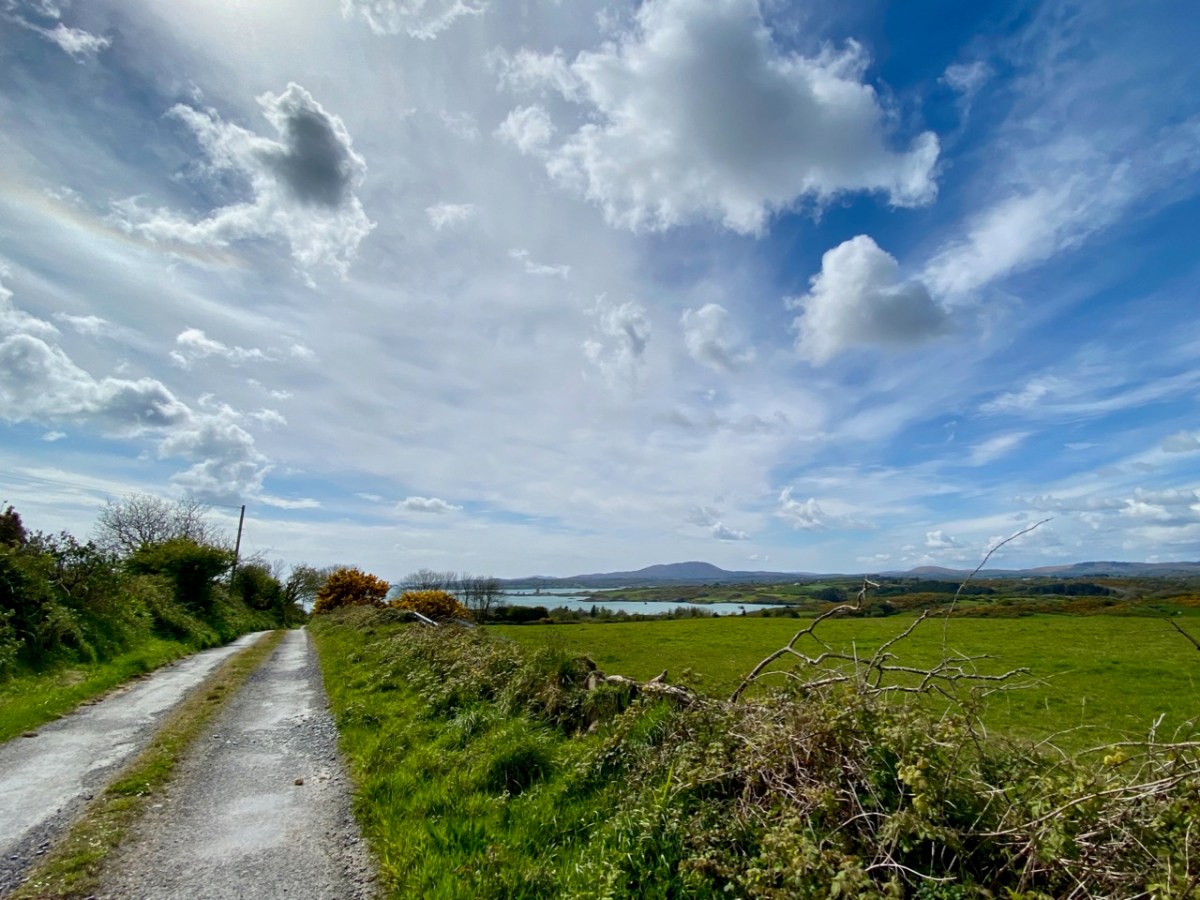
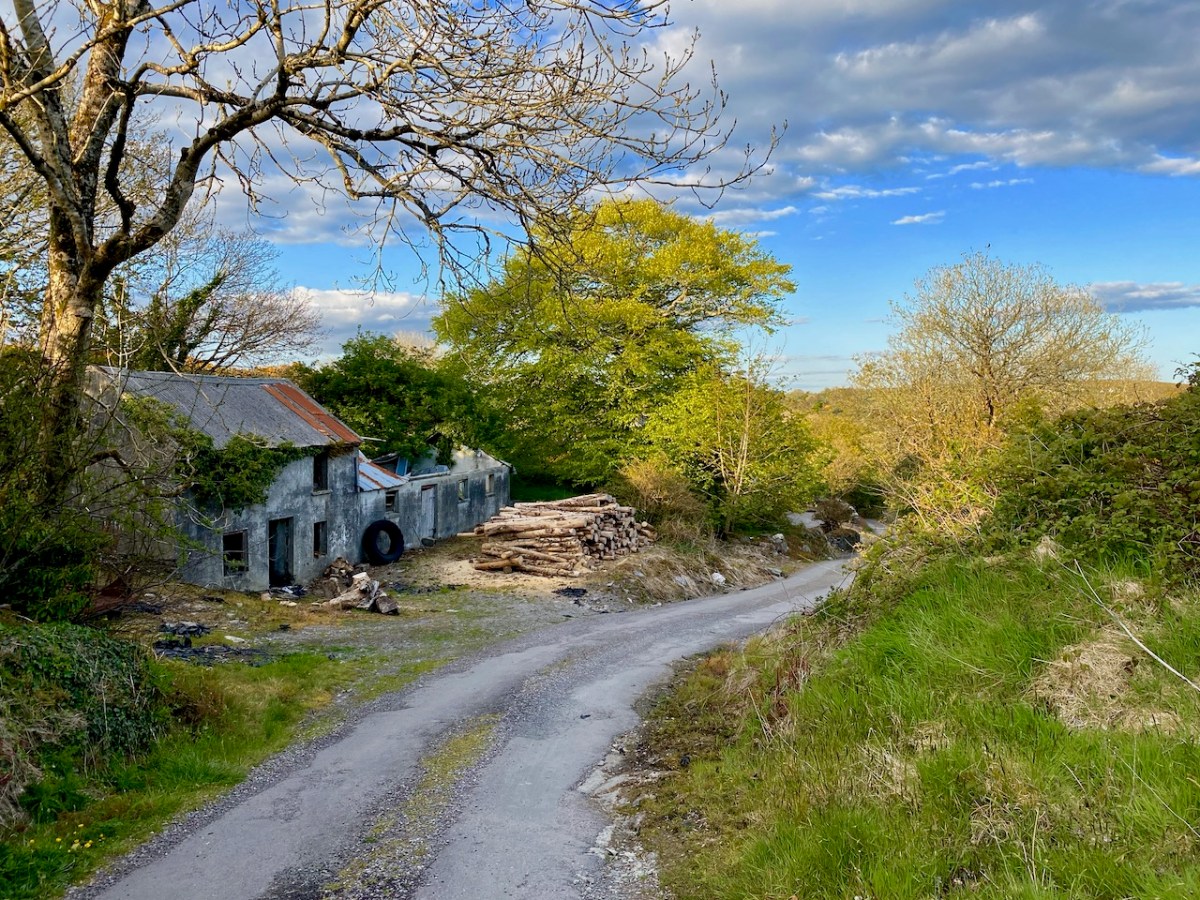
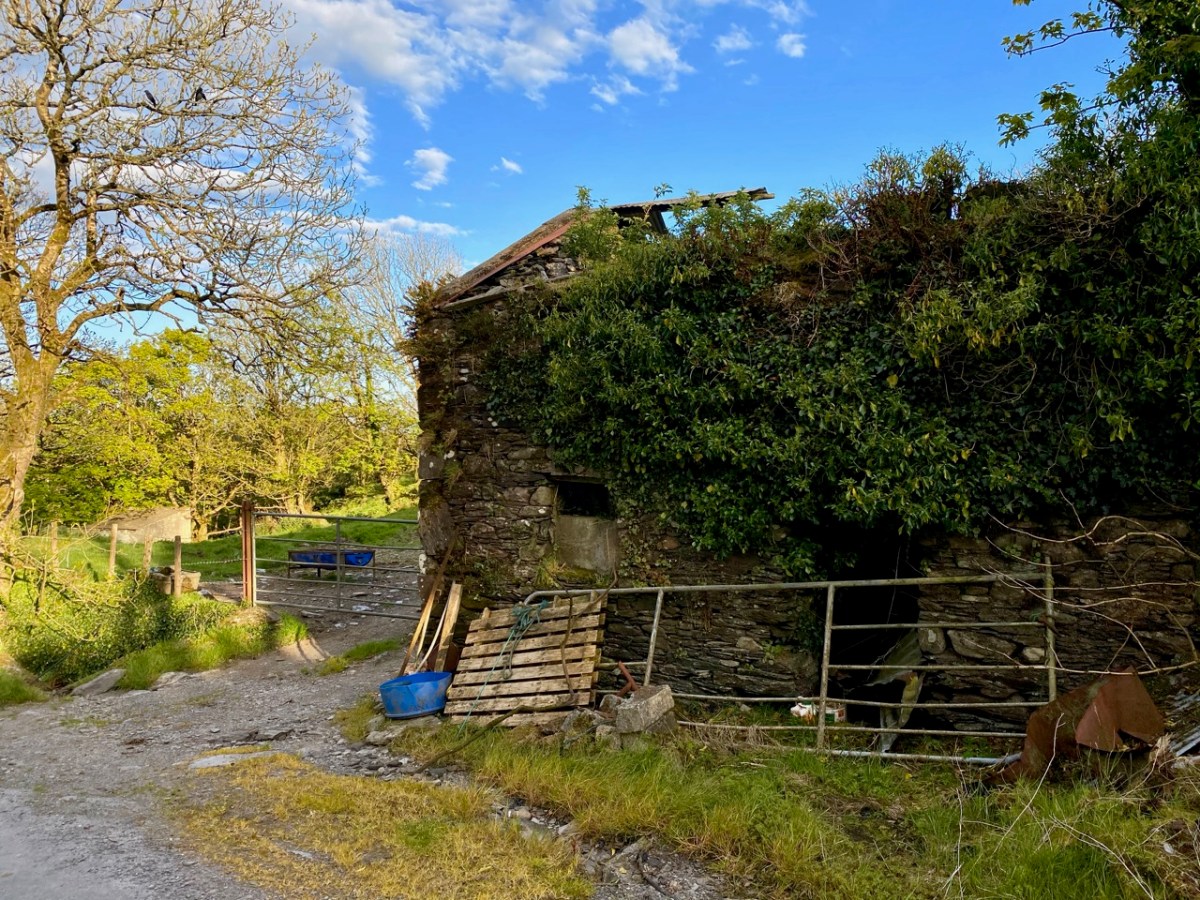
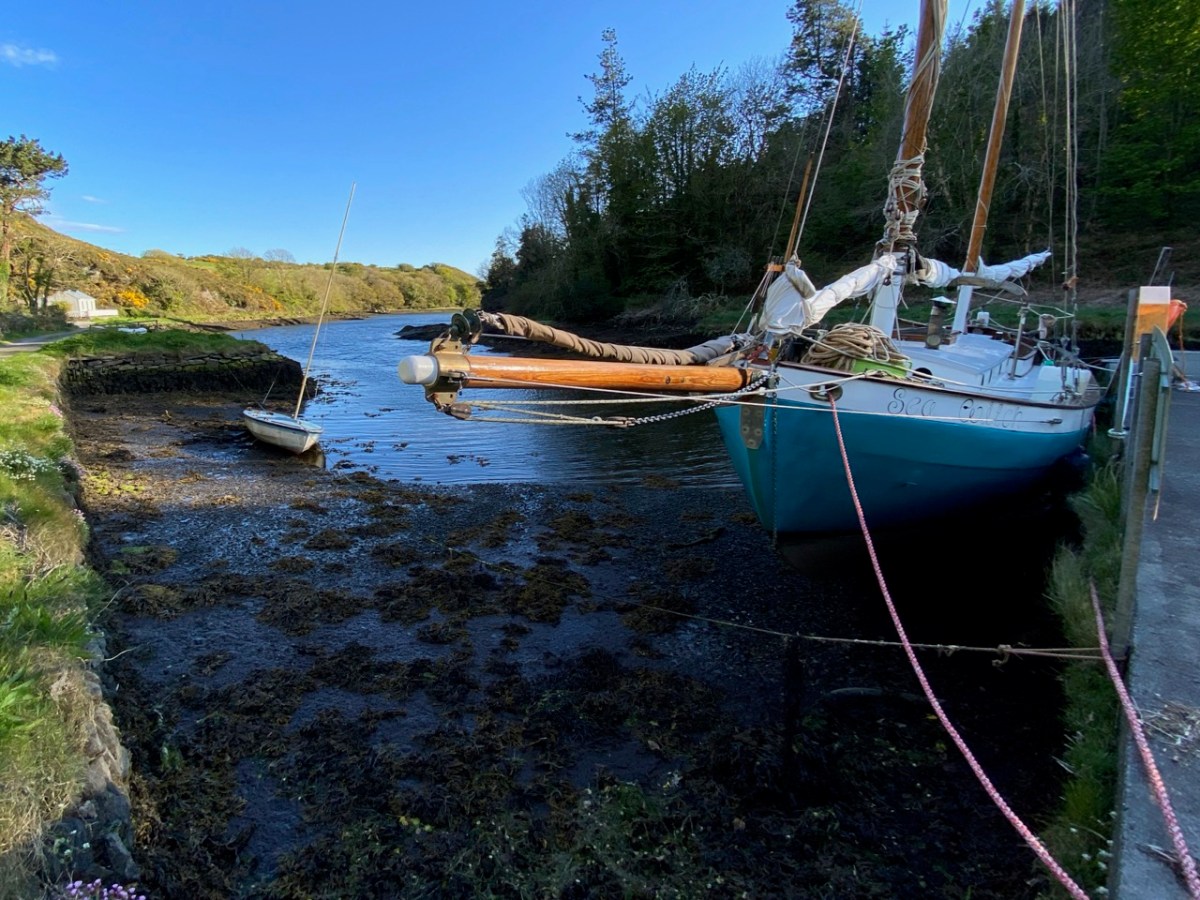
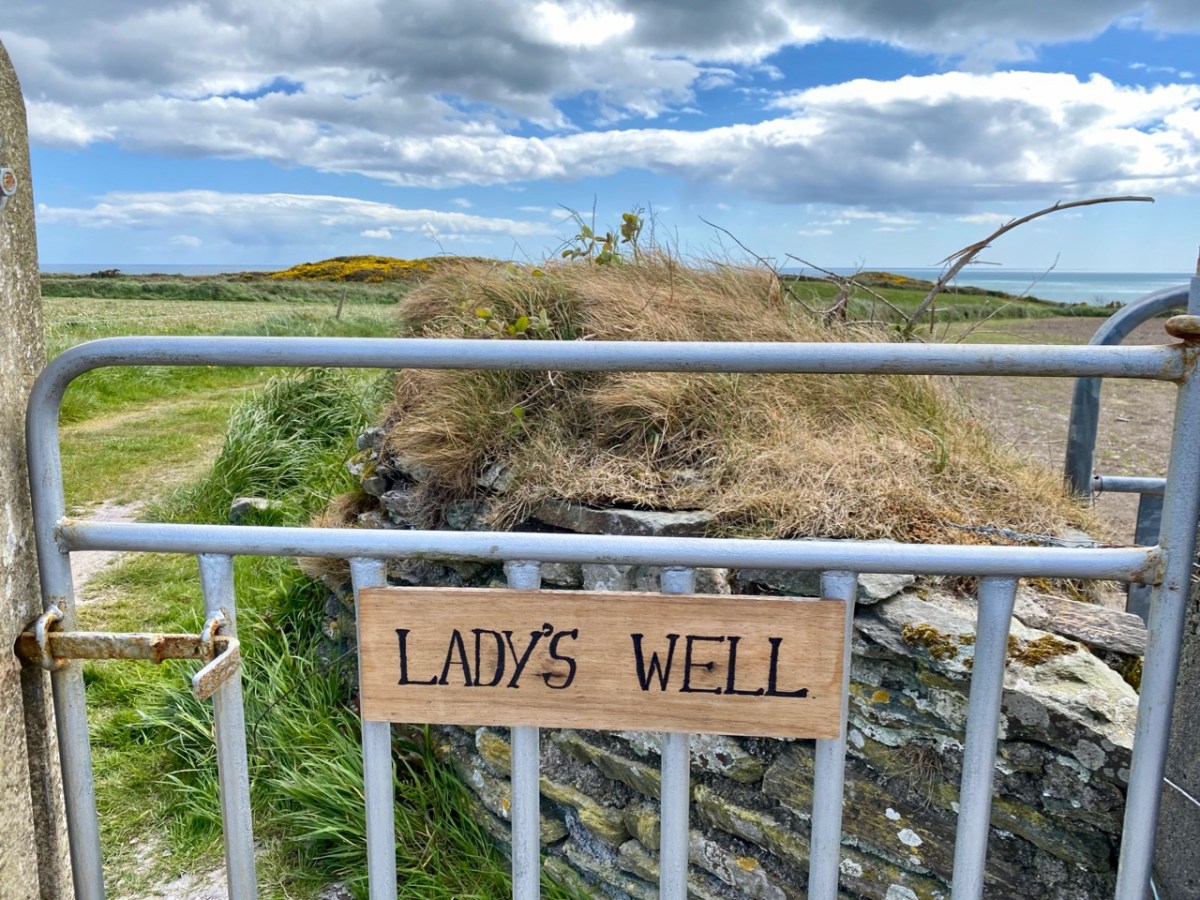
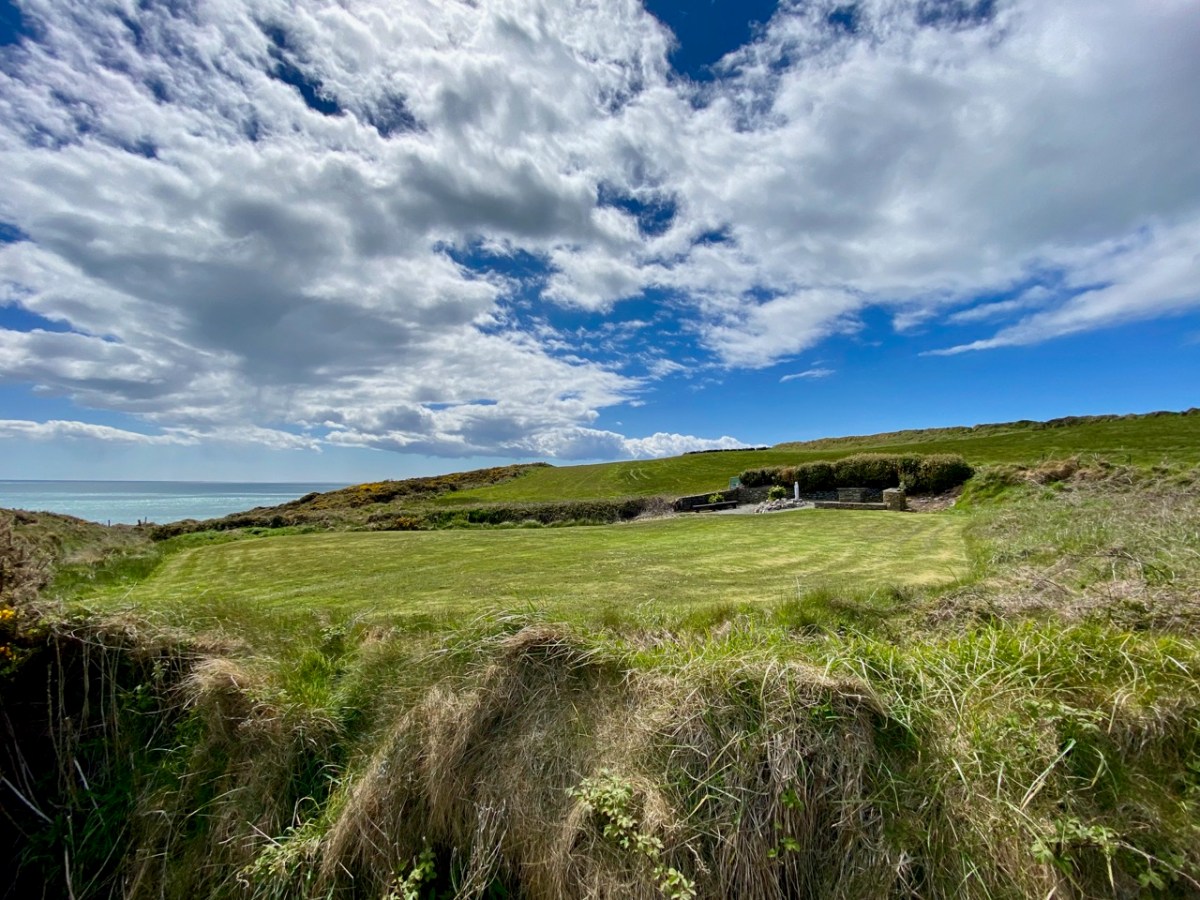
You’d think we would know every centimetre of West Cork by now… Of course we don’t! But we do like a challenge so, on occasion, we will follow a whim and deliberately go off main roads and randomly follow the smallest lanes. We invariably find ourselves emerging at places we know, but the journey along unfamiliar ways is always worthwhile. I thought that this week I will treat you to just such an exploration – in fact it’s a few explorations: I’m not going to tell you where any of the pictures is taken. You will travel with us and open up many new vistas (hopefully), just to give you a taste of the boreens, which you can also find for yourself when you come and visit – unless you are fortunate, as are we, to live here already.

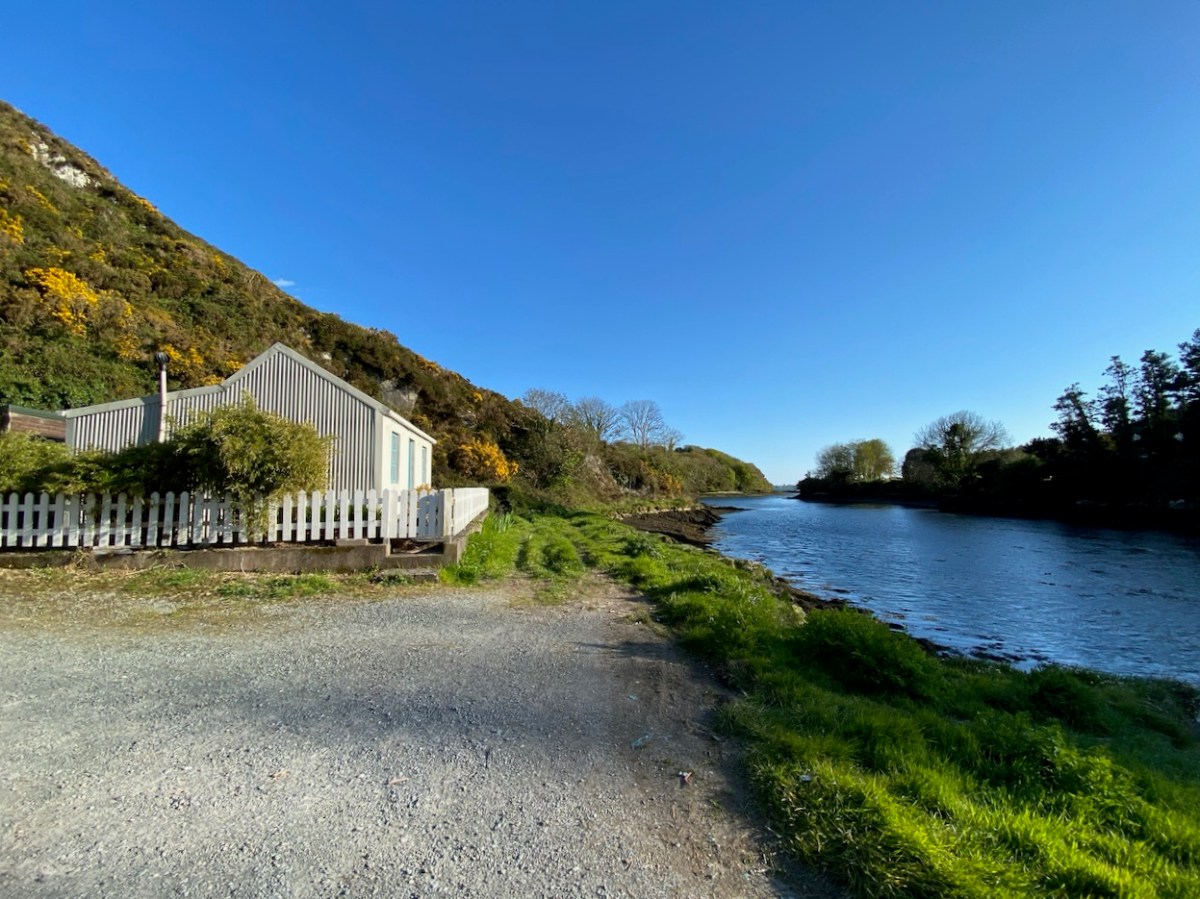
Wherever you are in West Cork, you will not be far from the sea – and there’s seldom a view which doesn’t have at least a silver horizon or a glimpse of water which is so brilliantly hued at the moment under our clear spring skies. We have taken to following the smallest of lanes which lead down to a dead-end at some little inlet, bay or remote pier along our coasts.

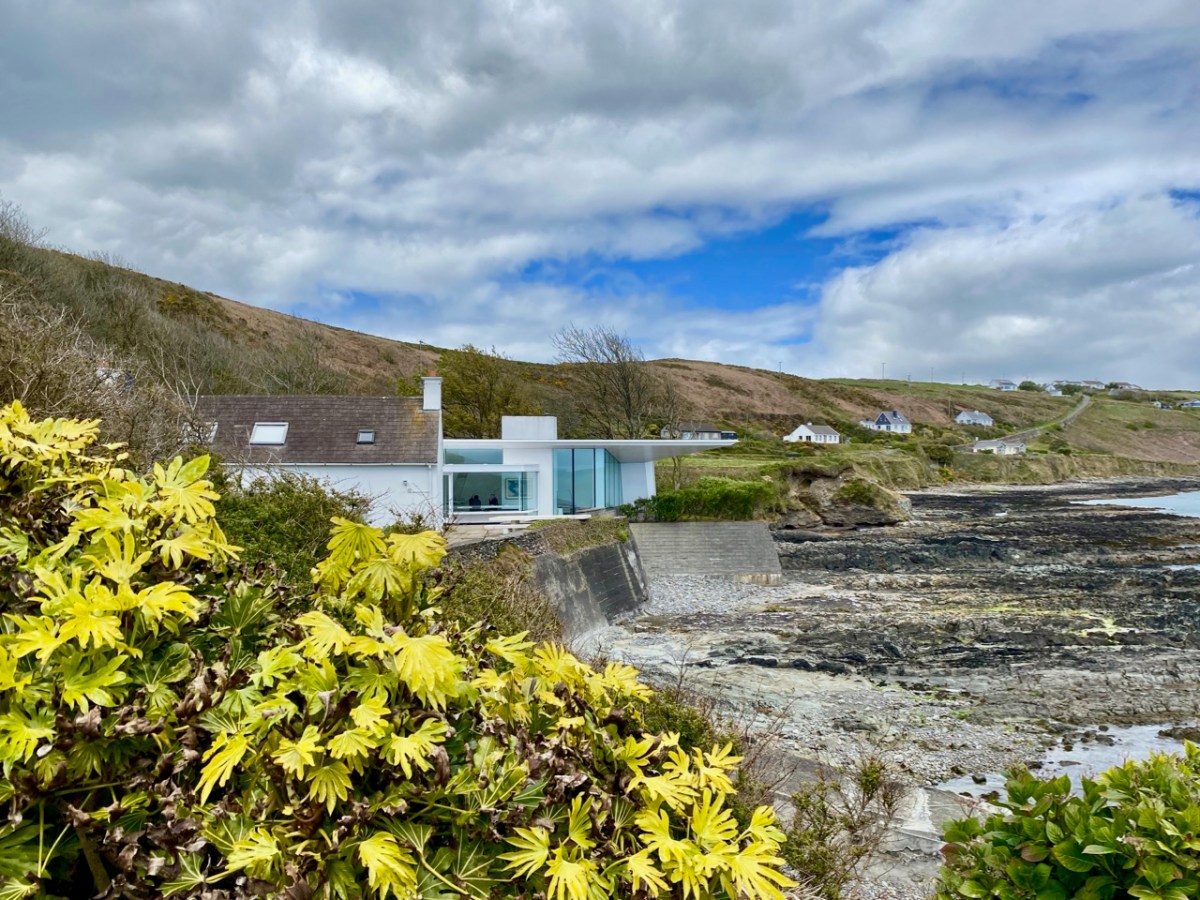
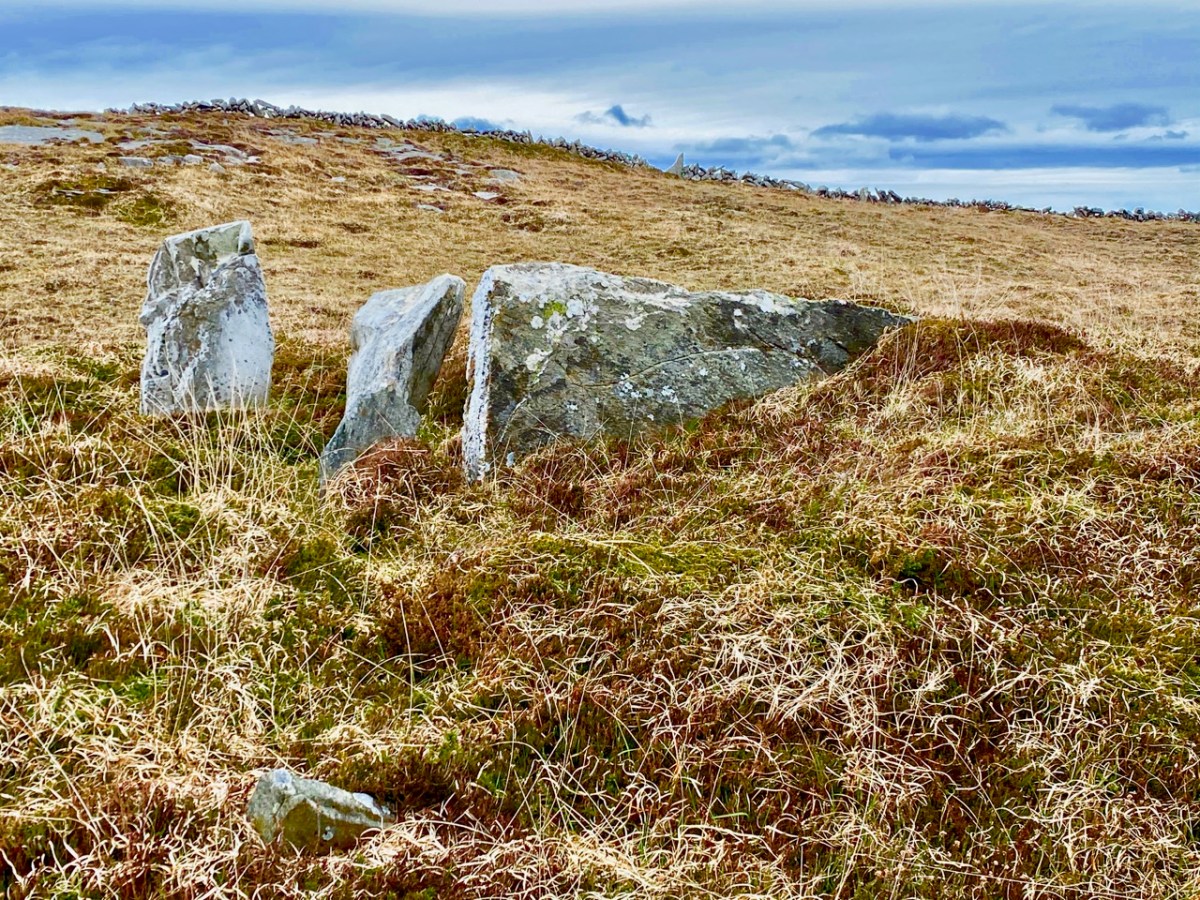
As a retired architect, I was delighted to find this modern gem at the very end of a cul-de-sac, a long way off the beaten track. An extension to a traditional house, it is right on the water’s edge: a spectacular location. I researched the building, and found that it was designed by Níall McLaughlin Architects – London based, but with obviously Irish roots. Below is a piece of architecture a few thousand years older, a possible passage grave, on the far end of the Mizen – equally spectacular and with a dramatic view.

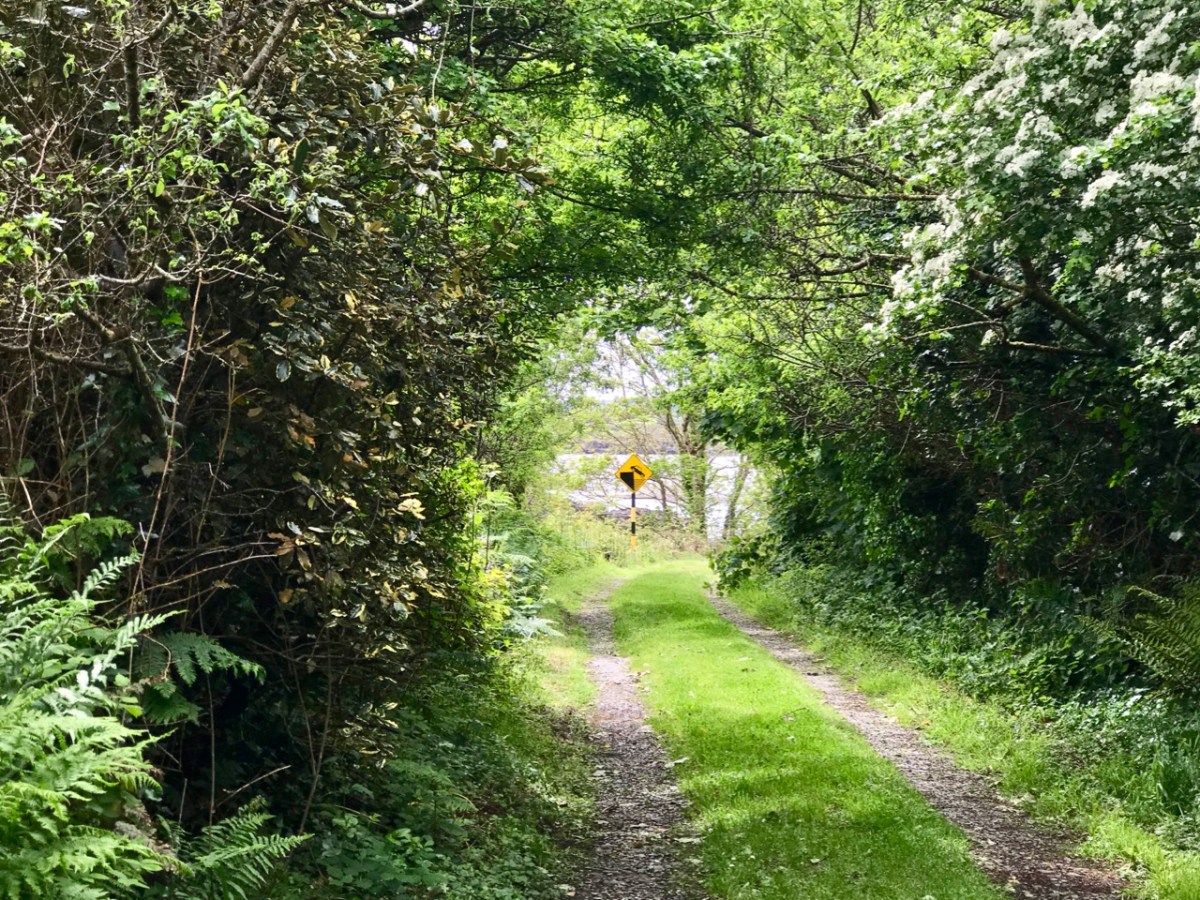
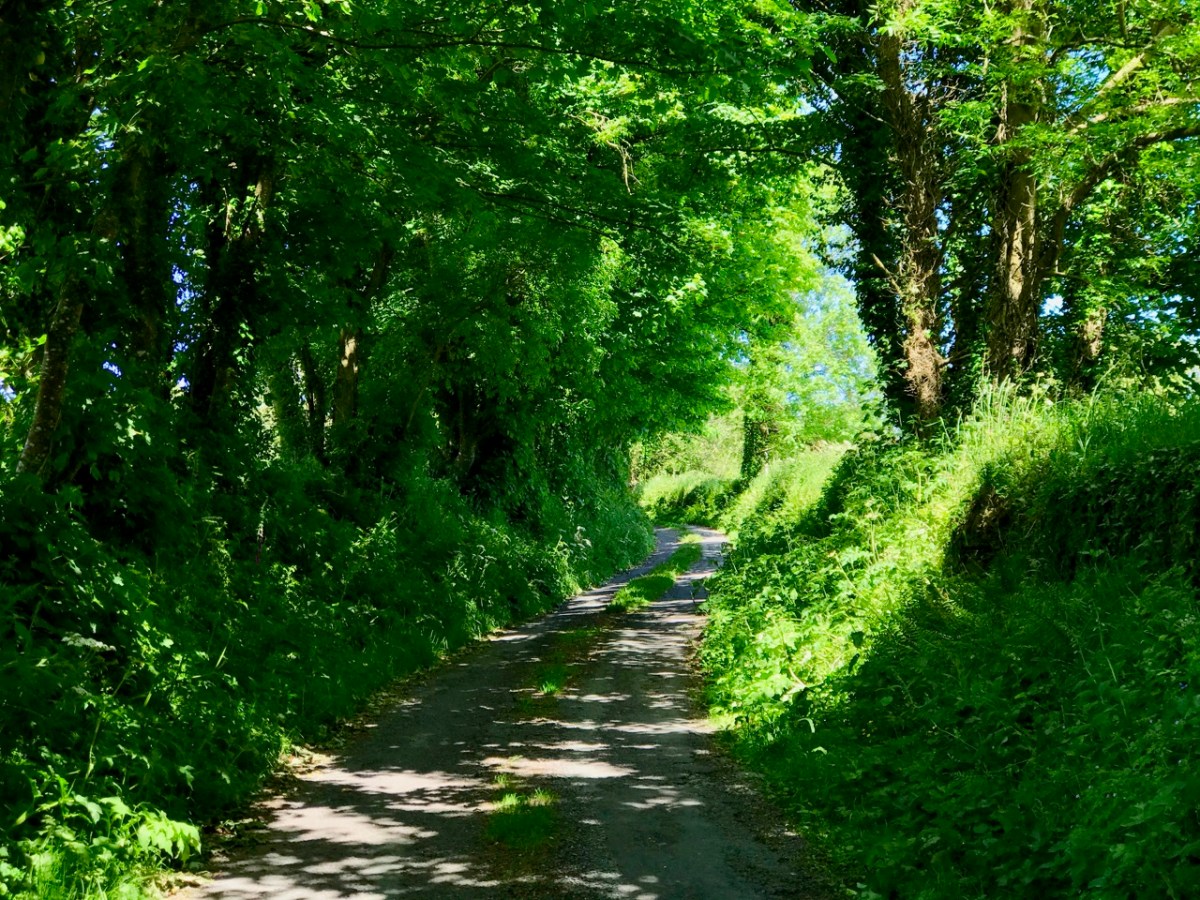
Not every byway discovery is as memorable as some of these examples: just a lane lined on each side with natural hedges can be inviting in its simplicity – and could be hard to find again!

Often it is important, of course, to know where you are going – and to find your way back. The latter is seldom a problem, especially with boreens which have an obvious end.

Sometimes you have to leave the car behind and explore the tiniest of trackways: we know them as ‘grey roads’ on the map. Finola uses the term ‘Tis a grand road’ quite frequently, as the mud sticks to our boots and progress becomes slow.

I am pleased when we come to the top of a small rise and suddenly find we have a wide view set out below us. On this occasion (above) we were presented with an unexpected prospect of the Ilen River in its broad tidal reaches before it becomes a true estuary. Of course, there are many moments when the view revealed to us is no surprise, as we have trodden so many paths so many times.

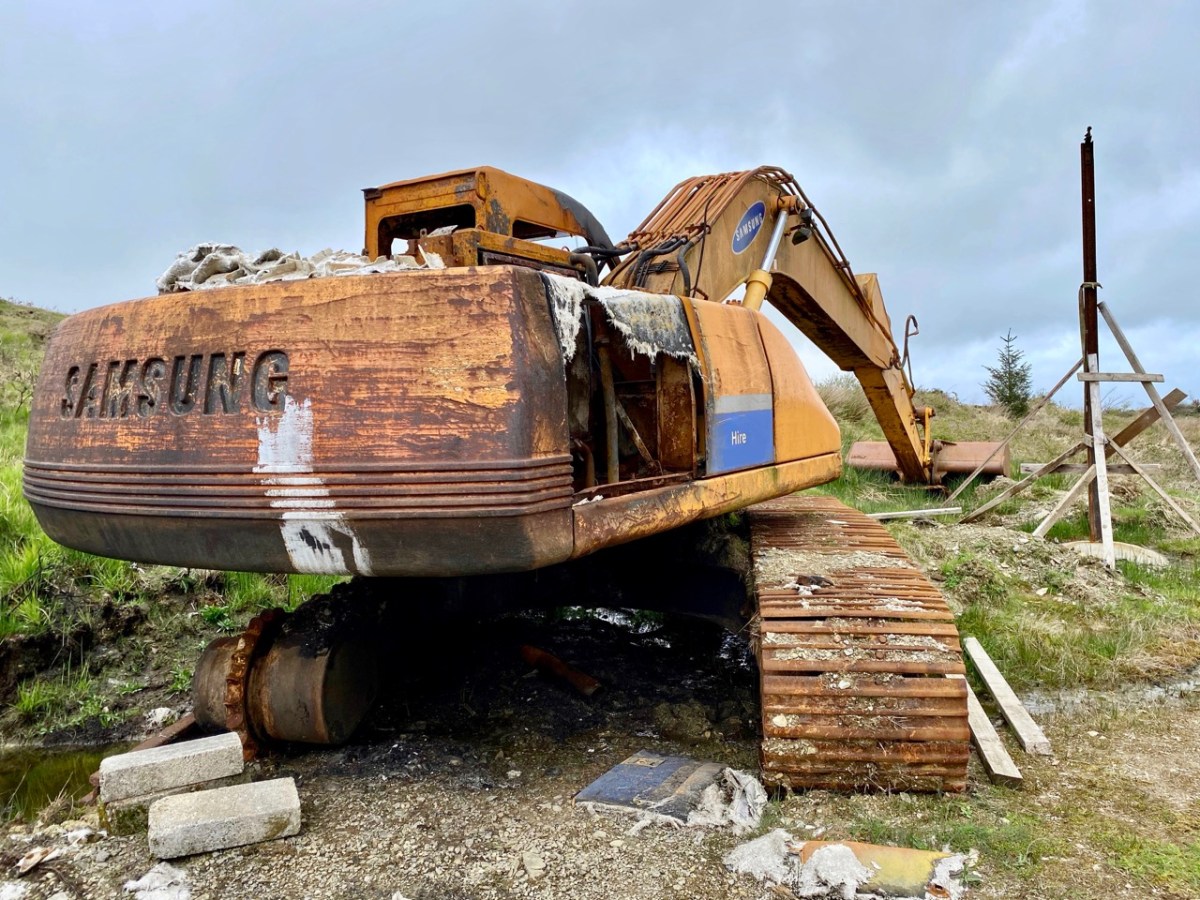
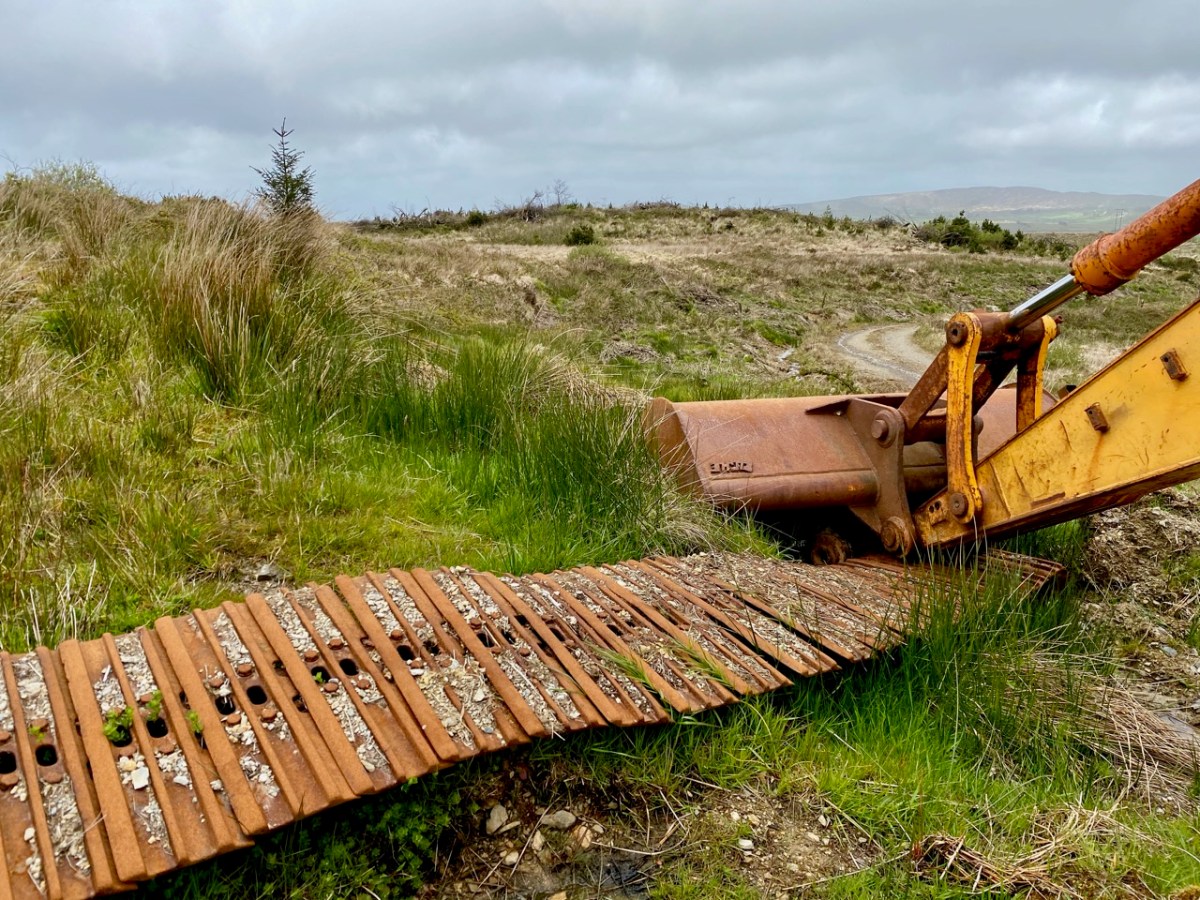
There have to be some contrasts in our travels – and some curiosities. Here, not too far from home, we were presented (below) with the answer to ‘where do all the old rock-breakers go’? We have lived here long enough now, to be familiar with the constant sound, day and night, as landscapes are broken down and smoothed off in order to ‘improve’ pasture for the farming industry: it’s a conundrum for the archaeologists among us who can see the danger of ancient history written on the land being swallowed up in the name of progress.

There is still so much history which remains visible, of course. This (below) was a thriving established village not too far from here dating from pre-famine times. It once had a church, a shop, two schools, mining, and maritime related industries. Now all are gone – or in ruins – and there is barely a family living in the area.

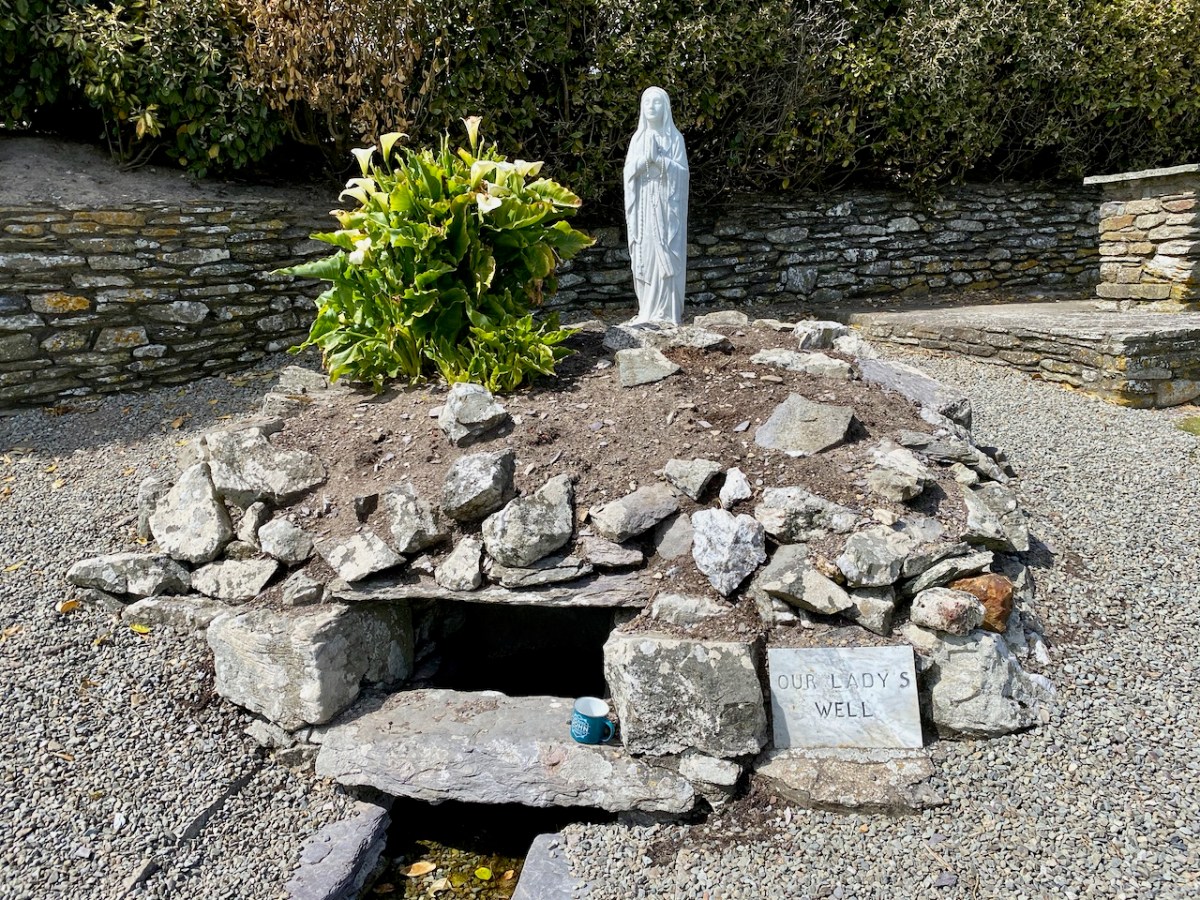
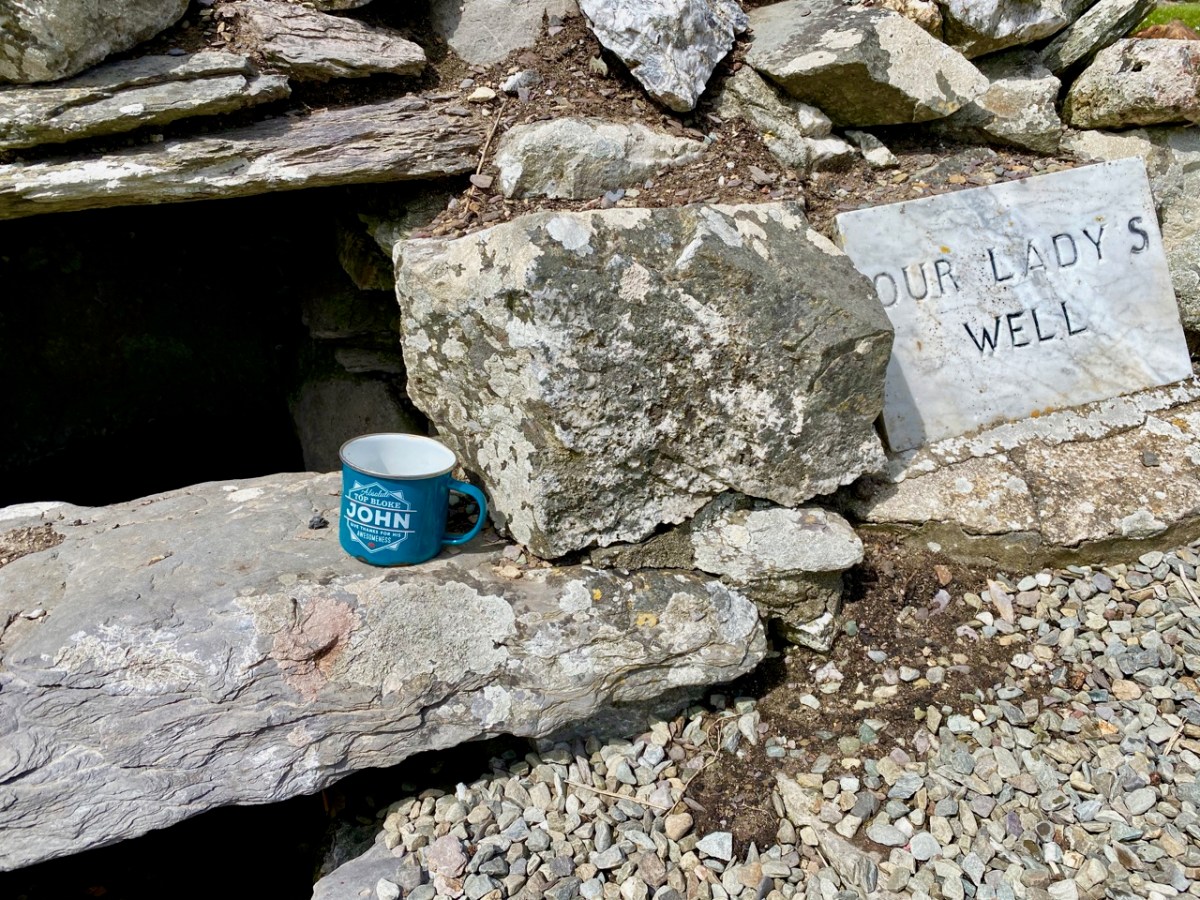
We are always delighted to discover spots such as this (below): again, a long way from any main road and right out in the middle of nowhere – yet a site which is immaculately maintained and celebrated. Note the ‘Top Bloke’ cup…

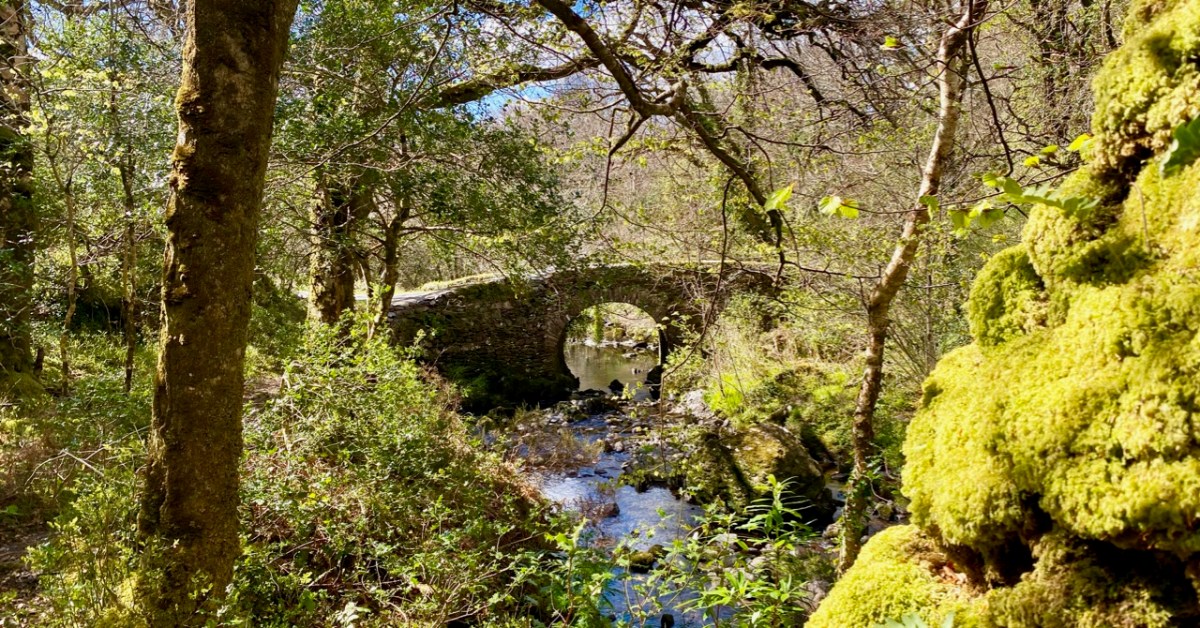
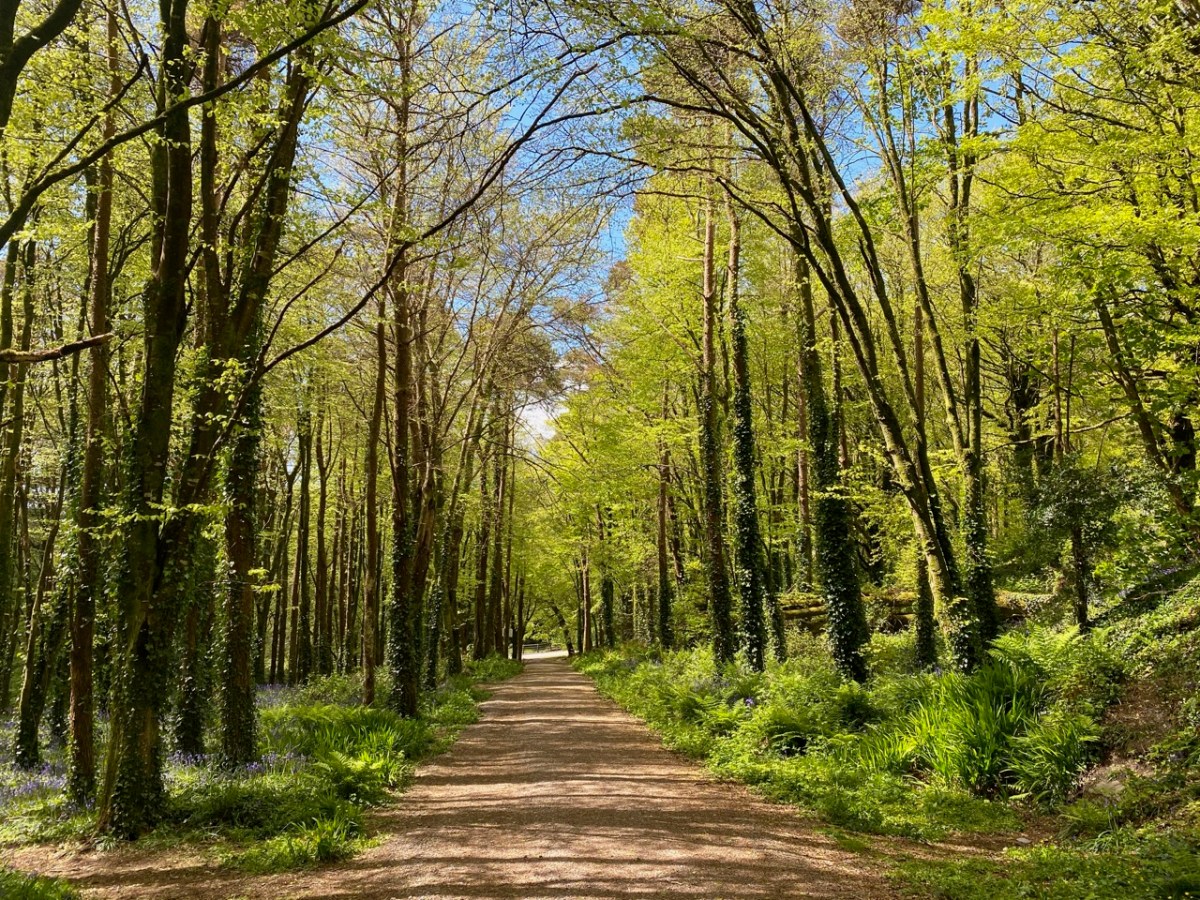
This post could go on forever. I have so many photographs of boundless boreens, captivating seascapes and intriguing sites – enough to revisit the subject in future posts. Let’s close with a woodland walk which is on a West Cork demesne, and open to all: at this time of the year it is magnificently decorated with all the spring wildflowers and vivid young shoots creating a green cloud in the tree canopies.