Atlantic Winter

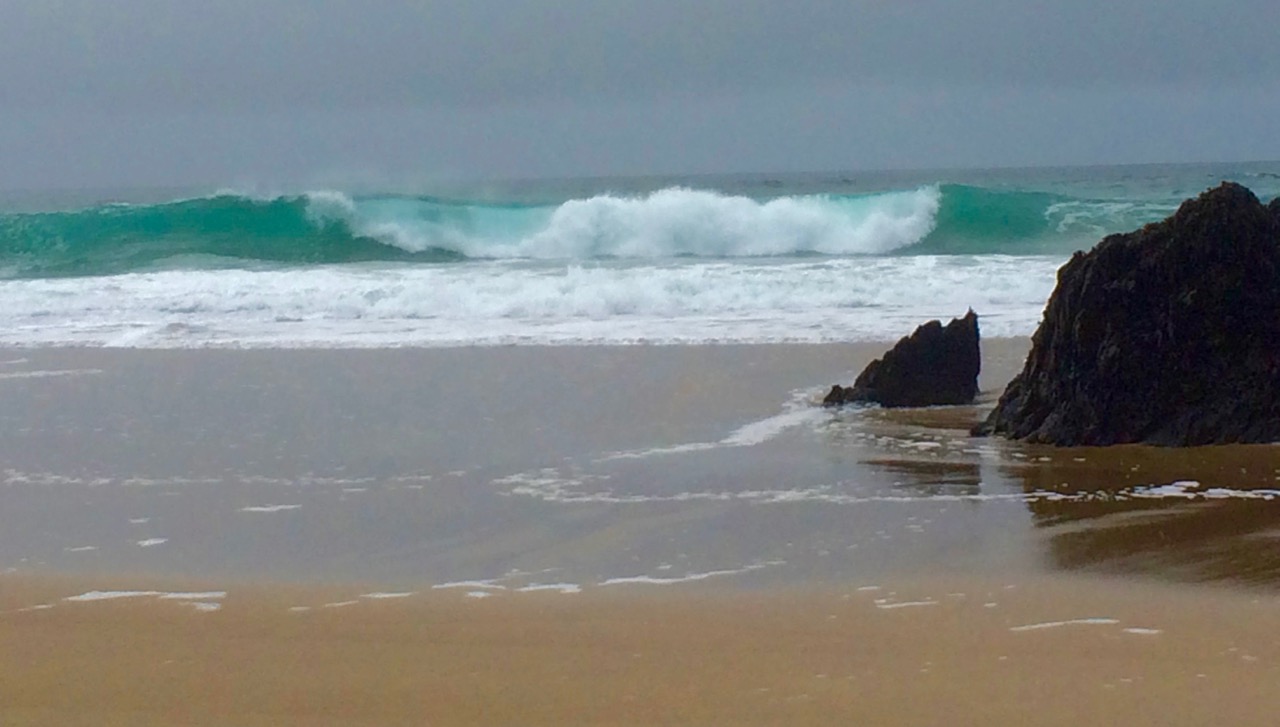
Dingle Beach

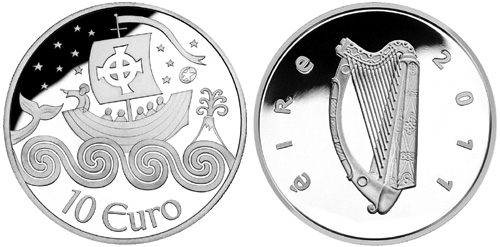
When St Brendan of Clonfert set out to discover America in 512 he and his fellow monks had to face the enormity of the Atlantic Ocean in tiny boats built out of wood and oxhides, sealed with animal fat. Up here in Nead an Iolair our view out to the islands of Roaringwater Bay and beyond is dominated by that same ocean and – sometimes – we feel just as small. This year the winter gales have started early, and spates of fierce westerlies have been throwing the Atlantic straight at our windows. The tiles rattle alarmingly while we are tucked up in bed at night. At these times I think of the Saint and what he had to face. But, like Brendan, we always survive the storms, and often wake up in the morning to a calm, clear day – except that you can hear the constant ‘roaring’ of the open sea out over the bay.
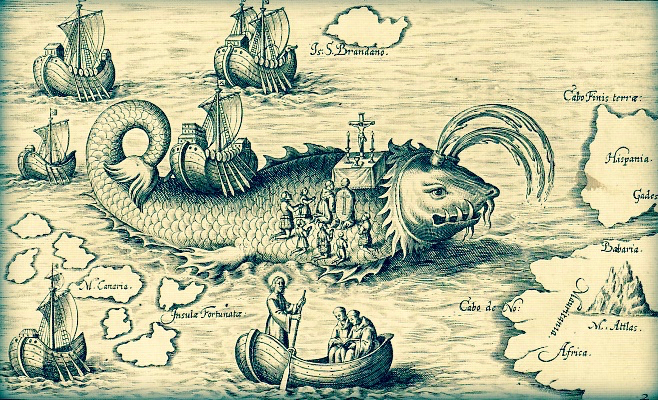
celebrating massOn their way to the New World – Saint Brendan and his companions take advantage of a passing Atlantic denizen to celebrate Mass…

The Atlantic has shaped Ireland. The sea is omnipresent: poets have written about it, storytellers have woven tales around it, and composers have tried to capture its spirit in music. Here’s a small section from the impressive ‘Brendan Voyage’ written by Shaun Davey for orchestra and Uillinn pipes – it’s the haunting second movement, played by Liam O’Flynn with the Irish National Youth Orchestra, at a performance in Cork City Hall. It makes me think of the wonderful sunrise on that calm day after the storm…

Brendan Voyage
Long Island Beacon

Brow Head

Mizen Head

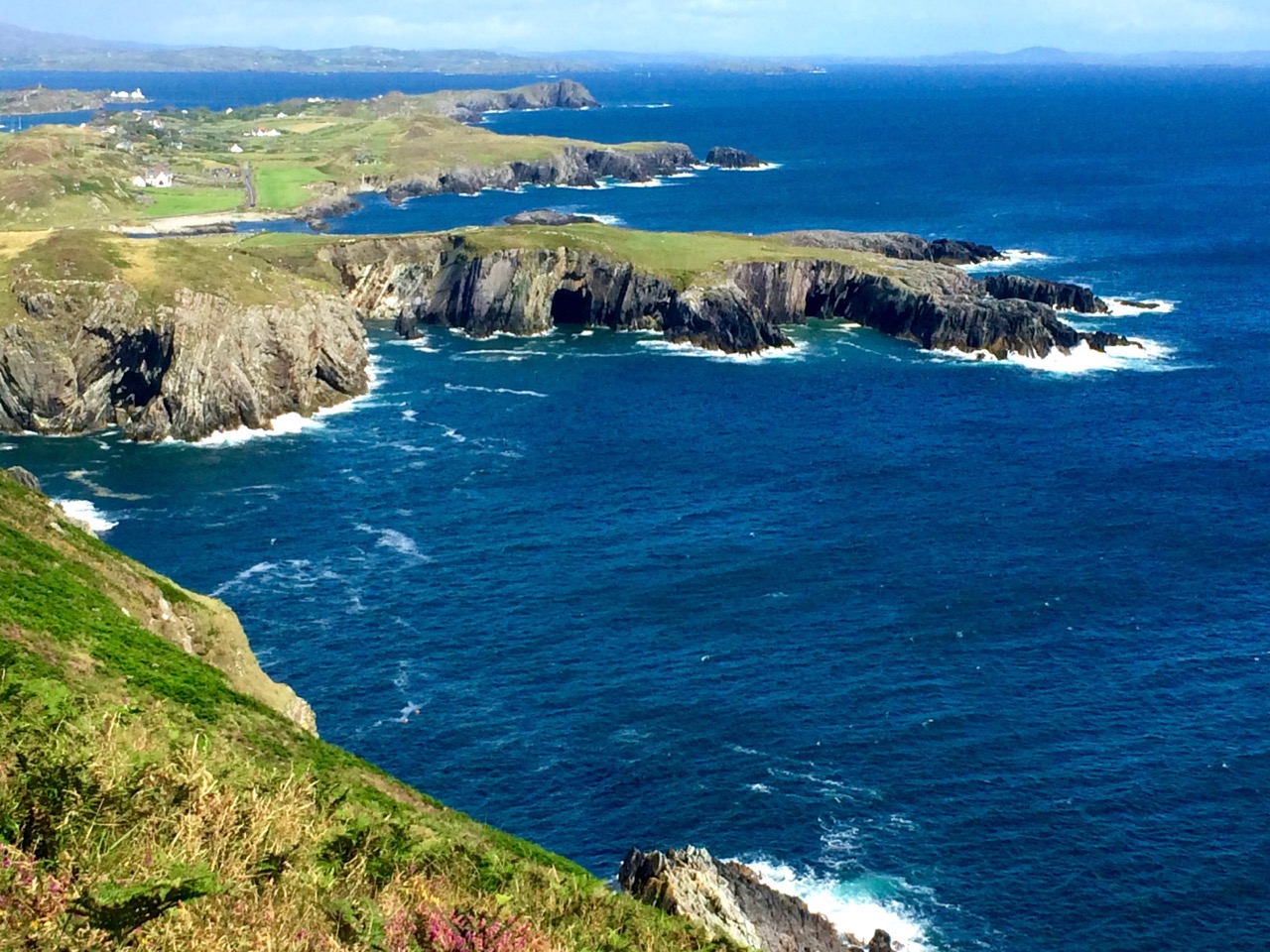
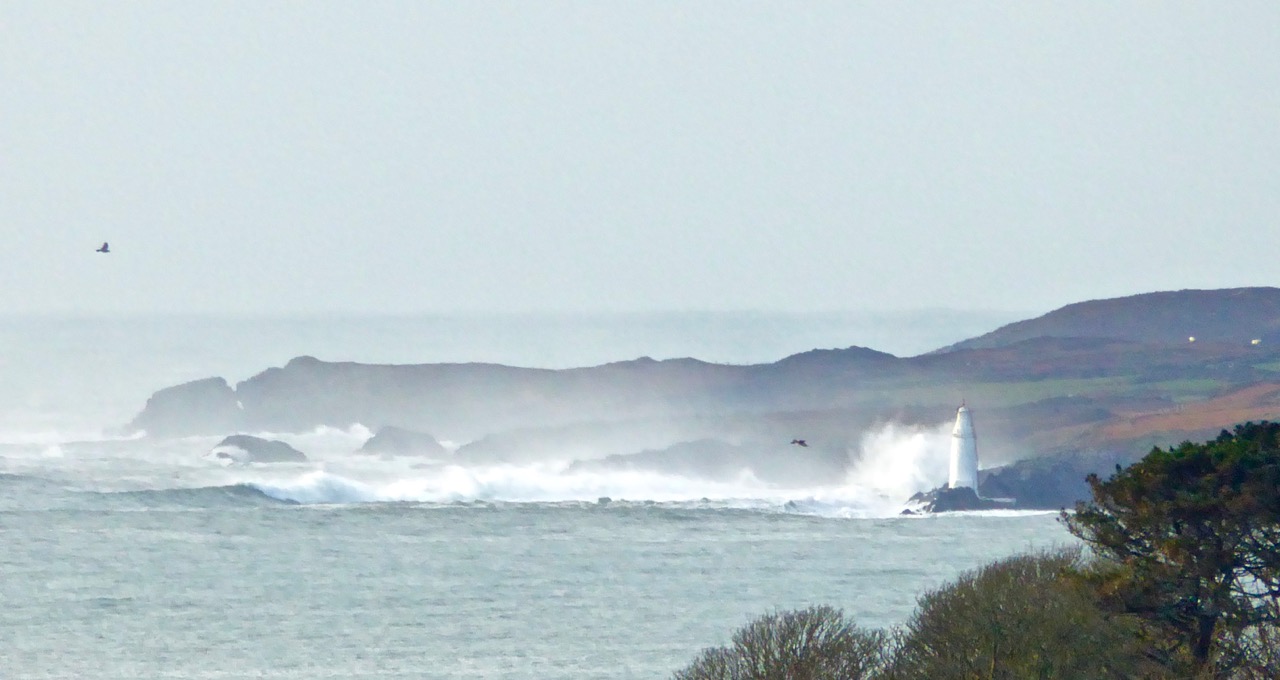
Our own Atlantic: telescopic view of a storm battering Long Island, taken from our garden at Nead an Iolair (top), Brow Head, near Crookhaven (centre), and the impressive land and seascape at Mizen Head – Ireland’s most south-westerly point (lower picture). At the head of this page you can see the huge rollers that come into Dingle Bay, Co Kerry

Dogger, Rockall, Malin, Irish Sea:
Green, swift upsurges, North Atlantic flux
Conjured by that strong gale-warning voice,
Collapse into a sibilant penumbra.
Midnight and closedown. Sirens of the tundra,
Of eel-road, seal-road, keel-road, whale-road, raise
Their wind-compounded keen behind the baize
And drive the trawlers to the lee of Wicklow.
L’Etoile, Le Guillemot, La Belle Hélène
Nursed their bright names this morning in the bay
That toiled like mortar. It was marvellous
And actual, I said out loud, “A haven,”
The word deepening, clearing, like the sky
Elsewhere on Minches, Cromarty, The Faroes.

Glanmore Sonnets VII, taken from Field Work by Seamus Heaney, published by Faber and Faber Ltd

Seamus Heaney was deeply affected by the seascape of his native Ireland. Anyone who works on or beside the sea is aware of the resonant names from the Shipping Forecasts, and the poet has used those names here to introduce his word-picture of the elemental Atlantic.

Near Malin Head 2

On the Beara

Donegal Beach

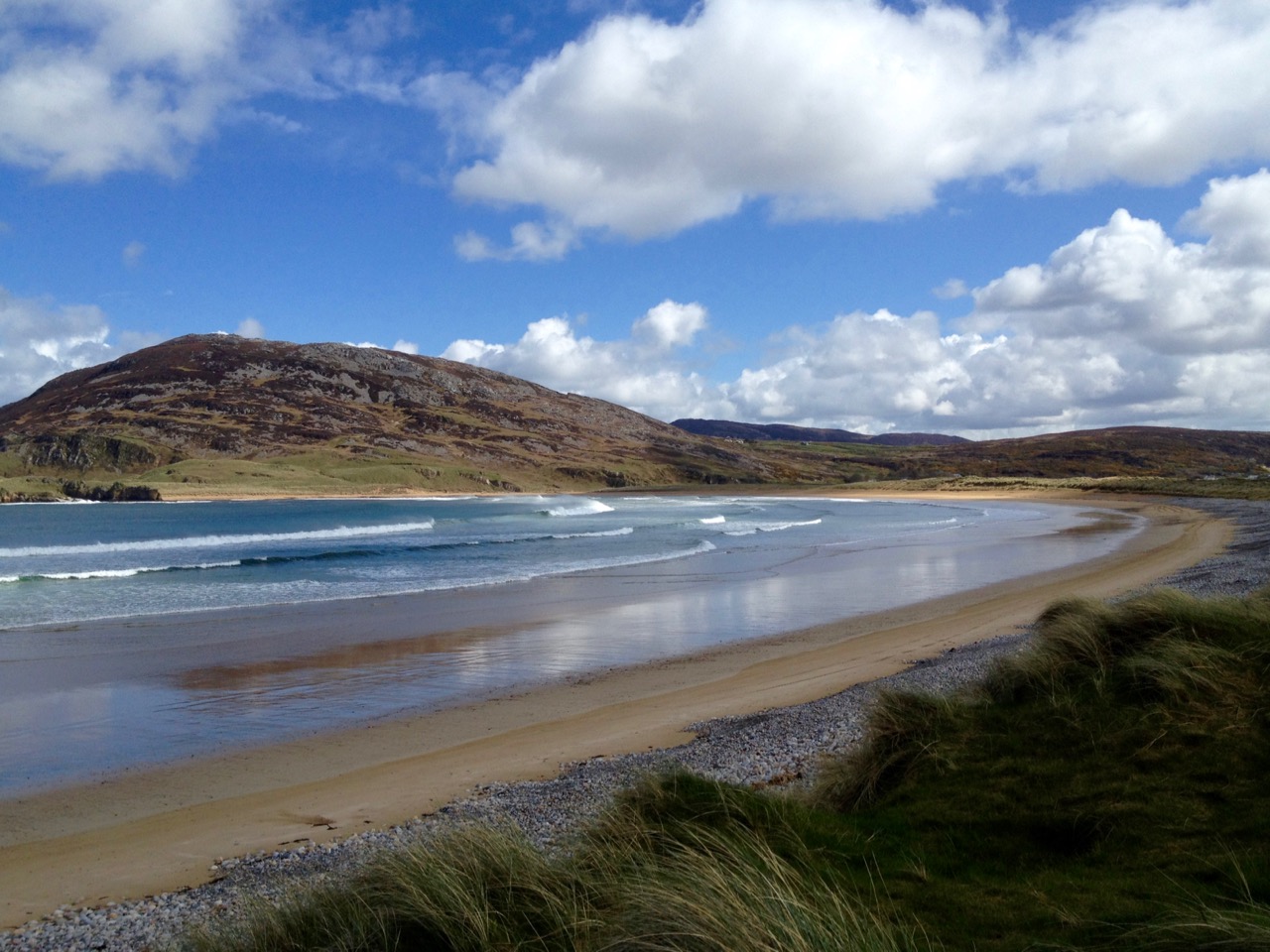
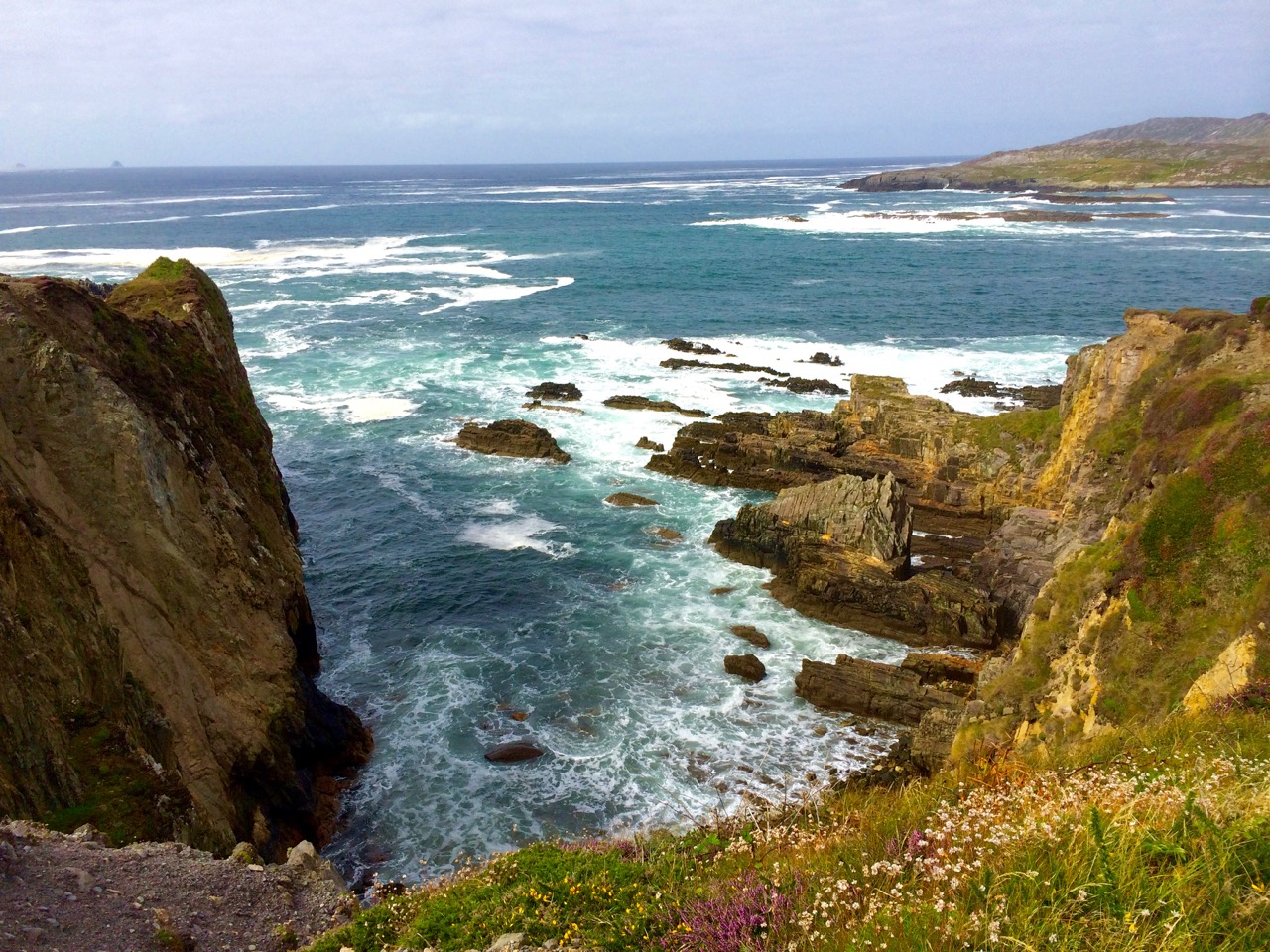
Atlantic contrasts from Mizen to Malin: near Malin Head – Ireland’s most northerly point (top), off the Beara (centre) and a beach in Donegal (lower)

A later traveller over the Atlantic waters was Chistopher Columbus in the 15th century. On the way he looked out for St Brendan’s Isle, a spectral island situated in the North Atlantic somewhere off the coast of Africa. It appeared on numerous maps in Columbus’ time, often referred to as La isla de SamborombónThe first mention of the island was in the ninth-century Latin text Navigatio Sancti Brendani Abatis (Voyage of Saint Brendan the Abbot), from whence it became firmly implanted into Irish mythology. St Brendan took a little party of monks to the island to say Mass: when they returned after a few days to the rest of the flotilla, they were told that they had been away for a year! The phantom island was seen on and off by mariners for years until in 1723 a priest performed the rite of exorcism towards it during one of its apparitions behind low cloud… You can see St Brendan’s Isle for yourselves, above the wonderful giant fish in the second picture down.
Dingle Peninsula

Coast Road

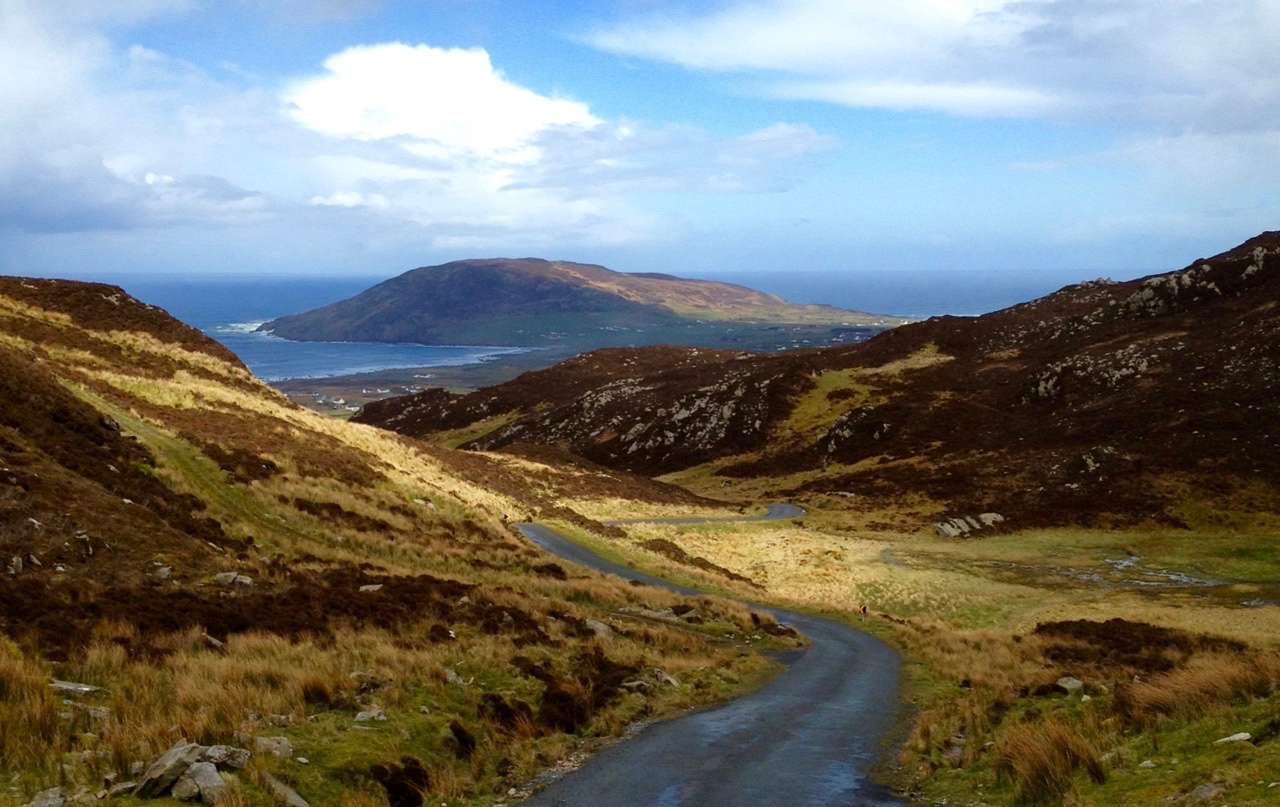
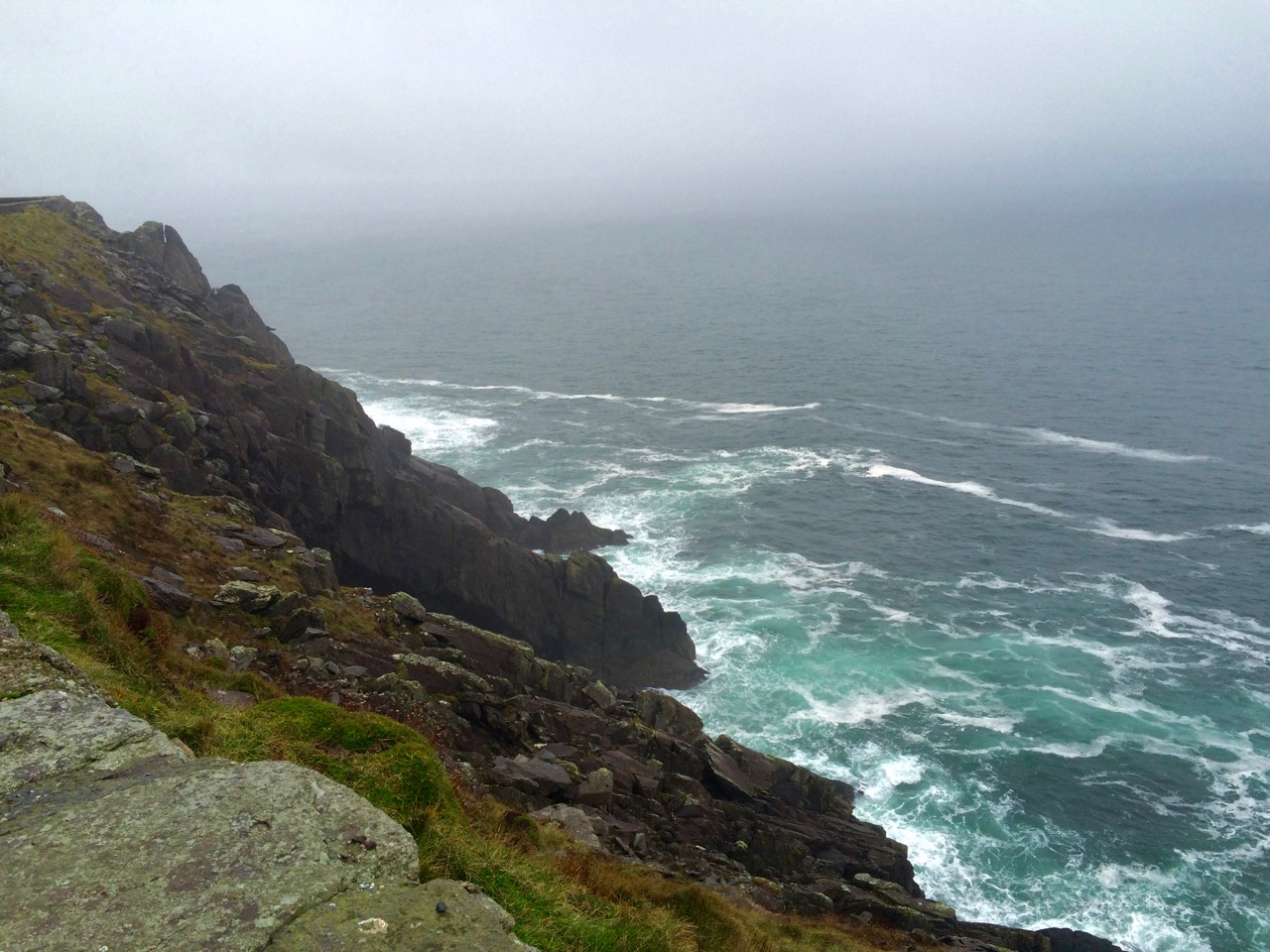
Dingle peninsula (top), and Coast Road in Donegal (lower)

I was pleased to find this Irish Times video made by Peter Cox when he was fundraising for his book Atlantic Light: spectacular photographs of the coastline on Ireland’s Wild Atlantic Way. The excellent aerial views in this film are all taken by a drone… Look out for places you will have seen in our blogs!

atlantic video

We are privileged that the Atlantic Ocean is the abiding but ever-changing feature in our daily lives. It must affect us in unknown ways: I do know that, wherever I go in this world, I will – like Saint Brendan – always be drawn back here to our wonderful safe haven…
St-Brendan-Coin1


Murphy wins by a neck!

High Stakes

Romping home! Dirty Dick Murphy winning the Salthill Fiesta, Galway, in June 1977 (photograph Connacht Tribune)

In the All-Ireland Name Stakes we’ve always known that Murphy is the front runner. In fact it’s the most popular surname, significantly outnumbering the next in line: Kelly. This was the case in 1890 – when the Registrar General of Births, Marriages and Deaths, Robert Matheson, compiled the first comprehensive analysis of names for the whole of Ireland. Then, there were 62,600 Murphys and 55,900 Kellys in a population of 4.7 million. More recently the phone network company Eircom published A Survey of Irish Surnames 1992-97 compiled by Sean J Murphy from telephone directory records in the Republic and Northern Ireland (making it comparable to the 1890 study): this showed 70,900 Murphys and 59,800 Kellys in a total population of 5.3 million.

The race

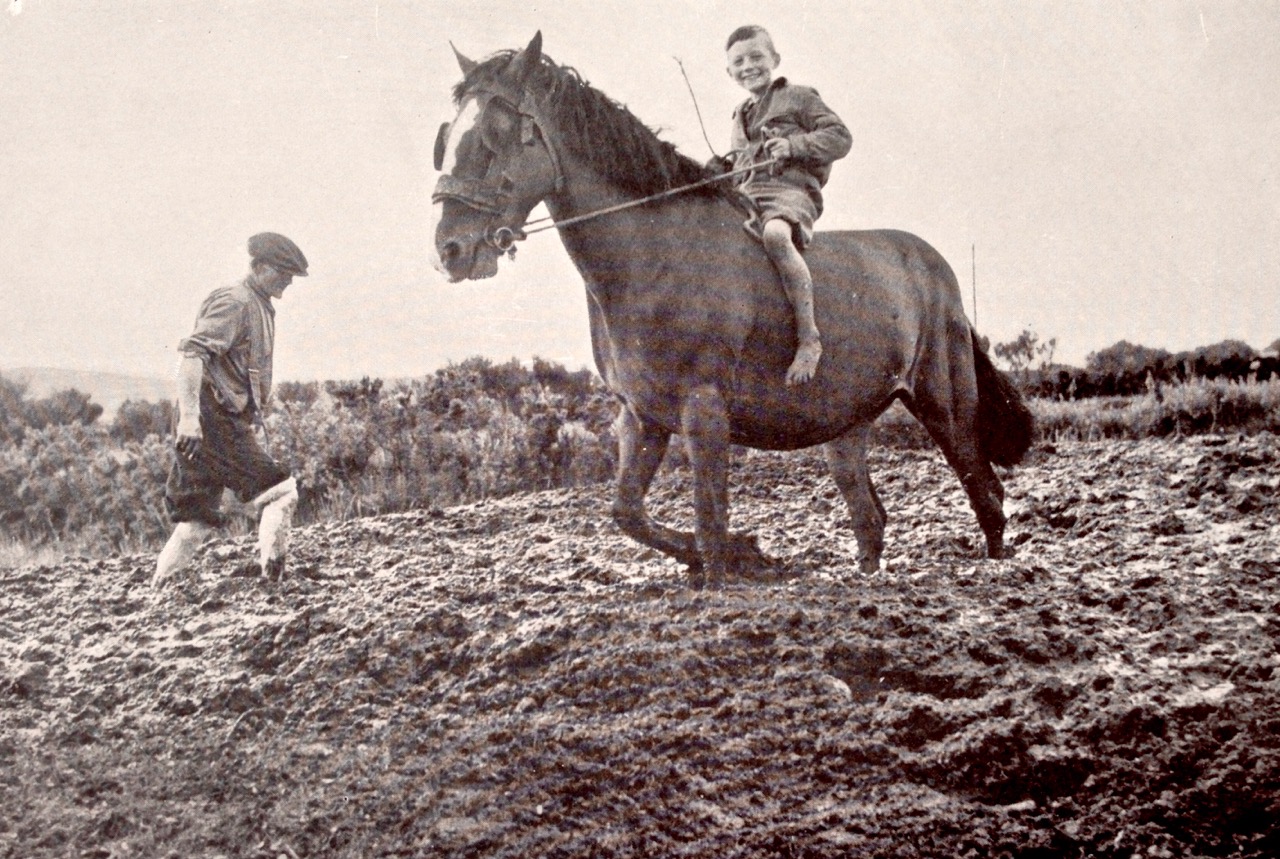
Runner-up! A Kelly, perhaps… from the collection of photographer Tomás Ó Muircheartaigh, who documented life in rural Ireland between the 1930s and the 1950s

So Murphy wins – by a margin. Let’s have look at the name: Ó Murchadha (or in modern Irish Ó Murchú) means ‘sea warrior’ (Irish Medieval History gives Murchú as ‘hound of the sea’). Most of the Murphys are evidently here in County Cork, with Counties Wexford and Kilkenny next up. There are O’Murphys – mainly confined to Ulster, where the family were part of the tribe claiming descent from Eoghan, son of Niall of the Nine Hostages, who was responsible for kidnapping St Patrick and bringing him to Ireland. Otherwise the Murphys usually trace their ancestry back to Diarmait Mac Murchadha – King of Uí Cheinnsealaig and King of Laigin (Leinster) who lived in the twelfth century and was himself descended from the High King Brian Boru through his father’s grandmother.

Key players in Murphy geneaology and Irish history: Brian Boru, Diarmait Mac Murchadha and Henry II

Diarmait Mac Murchadha was deprived of his titles by the then High King of Ireland, Ruaidrí Ua Conchobair, and asked the English King, Henry II, to help him retrieve them. In return, Mac Murchada pledged an oath of allegiance to Henry, who sent troops in support. As a further thanks for his reinstatement, Mac Murchada’s daughter Aoife was married to Richard de Clare, the second Earl of Pembroke, popularly known as ‘Strongbow‘. The result of all this was that the Normans came to Ireland – and stayed – and it’s all thanks to the Murphys!

murphy's irish stout

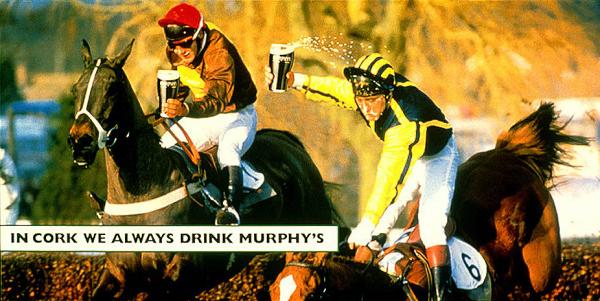
We mustn’t forget Murphy’s Irish Stout! (advertisement by BBH London)

Now let’s look at some famous Murphys. Father John Murphy – an Irish freedom fighter – is immortalised in the ballad Boolavogue. Fr John was born in 1753 and studied for the priesthood in Seville as this was the time of the Penal Laws when Catholics were persecuted in Ireland. He returned to his homeland in 1785 and there he was only known as ‘Mister Murphy’: Irish priests were not styled as ‘Father’ until the 1860s. John Murphy led a group of rebels against English forces in the 1798 uprising. He was captured, tortured and brutally executed at Tullow, Co Carlow. Here is a rendering of the beautiful elegy Boolavogue composed by Patrick Joseph McCall in 1898, the centenary of the Rebellion, played on the pipes by Davy Spillane, with Aly Bain on fiddle:

Boolavogue is a town in Co Wexford where the rebels secured their first victory before they were captured. Here are the words to the ballad:

At Boolavogue, as the sun was setting
O’er the bright May meadows of Shelmalier,
A rebel hand set the heather blazing
And brought the neighbours from far and near.
Then Father Murphy, from old Kilcormack,
Spurred up the rocks with a warning cry;
“Arm! Arm!” he cried, “For I’ve come to lead you,
For Ireland’s freedom we fight or die.”

He led us on against the coming soldiers,
And the cowardly Yeomen we put to flight;
‘Twas at the Harrow the boys of Wexford
Showed Booky’s Regiment how men could fight.
Look out for hirelings, King George of England,
Search ev’ry kingdom where breathes a slave,
For Father Murphy of the County Wexford
Sweeps o’er the land like a mighty wave.

We took Camolin and Enniscorthy,
And Wexford storming drove out our foes;
‘Twas at Sliabh Coillte our pikes were reeking
With the crimson stream of the beaten Yeos.
At Tubberneering and Ballyellis
Full many a Hessian lay in his gore;
Ah, Father Murphy, had aid come over
The green flag floated from shore to shore!

At Vinegar Hill, o’er the pleasant Slaney,
Our heroes vainly stood back to back,
And the Yeos at Tullow took Father Murphy
And burned his body upon the rack.
God grant you glory, brave Father Murphy
And open heaven to all your men;
The cause that called you may call tomorrow
In another fight for the Green again.

Two of my Murphy heroes are musicians: Denis Murphy (1912 – 1974) was a great fiddle player from the Sliabh Luachra area of Cork and Kerry. There were so many Murphy families in that area that Denis’s father Bill was always known as ‘Bill the Waiver’ because his people had been weavers of flax in olden times. I have Denis in my collection of Irish music cd’s but was never able to hear him playing live. I did meet my other hero, however, on my first visit to Ireland back in 1975. That’s Paddy Murphy (1913 – 1992), the renowned concertina player from Co Clare. I was privileged to be taken out to a private session in a remote townland somewhere north of Kilmihil. There, in a bar which seemed like someone’s front parlour, I heard Paddy play and talk of his family history and his very individual virtuoso style of playing an instrument which I have been trying to master for the last 50 years!

Noted traditional musicians: Denis Murphy (left) from the Sliabh Luachra and Paddy Murphy (right) from County Clare

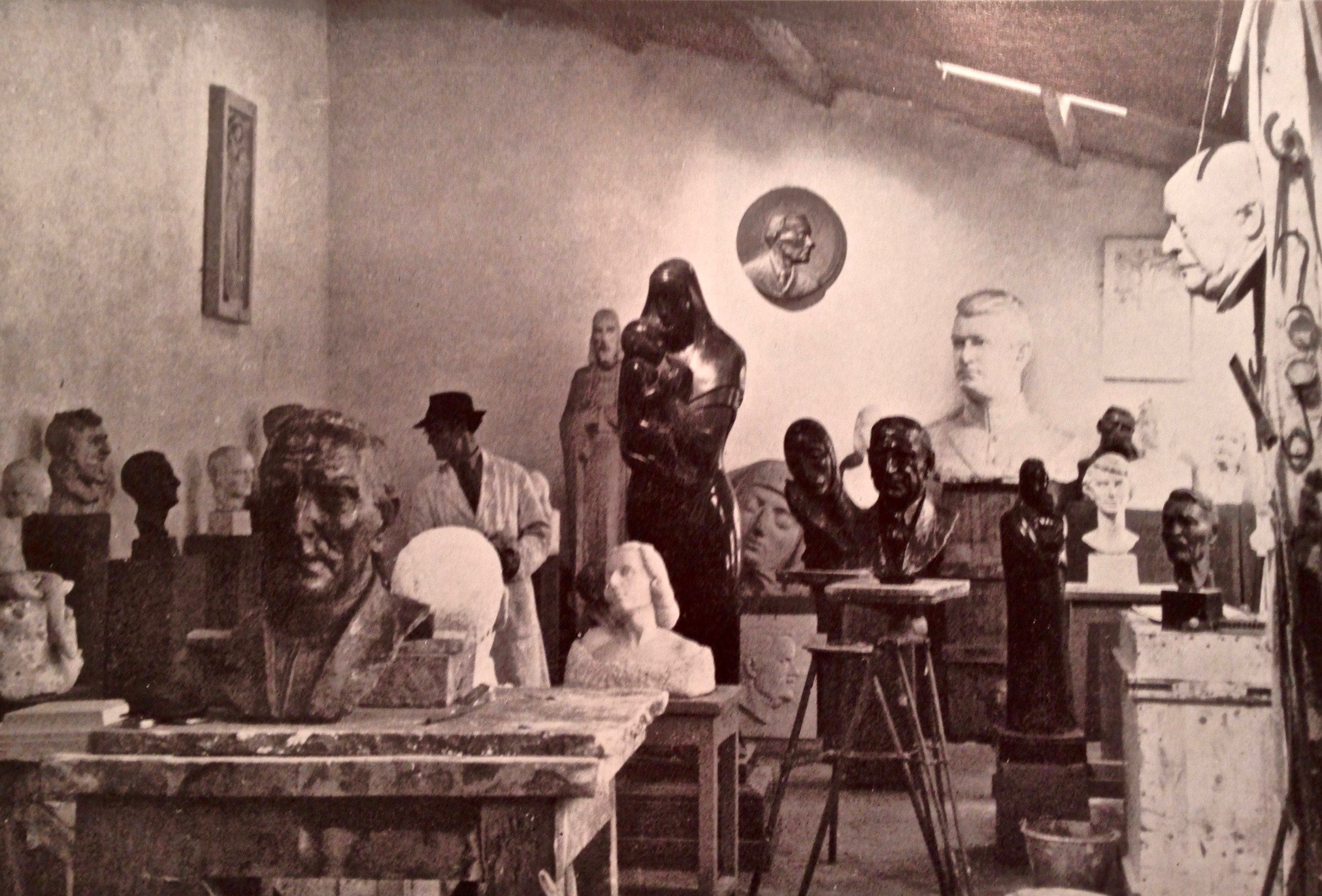
Next is someone we have met before, in our posts on Saint Gobnait and The Tailor and Ansty: that’s the sculptor Seamus Murphy (1907 – 1975). This Murphy, from Burnfort near Mallow, Co Cork, became Professor of Sculpture at the Royal Hibernian Academy. He is also known for his book, Stone Mad, which was published in 1950.

Murphy in studio

Seamus Murphy in his studio: pictures top and lower left are from the collection of photographer Tomás Ó Muircheartaigh, who documented life in rural Ireland between the 1930s and the 1950s

The last Murphy that I want to mention (and there could be so many) is, perhaps, an unexpected one – she is Marie-Louise O’Murphy, who lived from 1737 to 1814. Although she was born and died in France she was of Irish extraction: her grandfather Daniel, a former army officer, had left his home in Cork for Rouen, where he worked as a master shoe-maker. When just in her teens, the physical features of young Mlle O’Murphy were spotted by Giacomo Casanova, who recommended her to King Louis XV. As a result she became the King’s Petite maîtresse – little mistress (or, rather, one of them) and bore him a daughter. However, the King’s favourite, Madame de Pompadour, decided that Marie-Louise’s presence in the royal household was too challenging and she was sent off to the country to marry a nobleman – and also received a handsome dowry for life. Marie-Louise O’Murphy (who was given the name of Marie-Louise Morphy de Boisfailly – possibly to raise her status in Versailles) is familiar to us as the artist’s model for François Boucher’s Resting Girl, painted in 1751. The canvas is now in the Wallraf Richartz Museum, Cologne.

A colourful note on which to end our survey on the Murphys of Ireland (and beyond), perhaps. We apologise to all the thousands of Murphys who we have not mentioned, but we’d like to hear from any of them…

Racing stamps


Up the Airy Mountain…
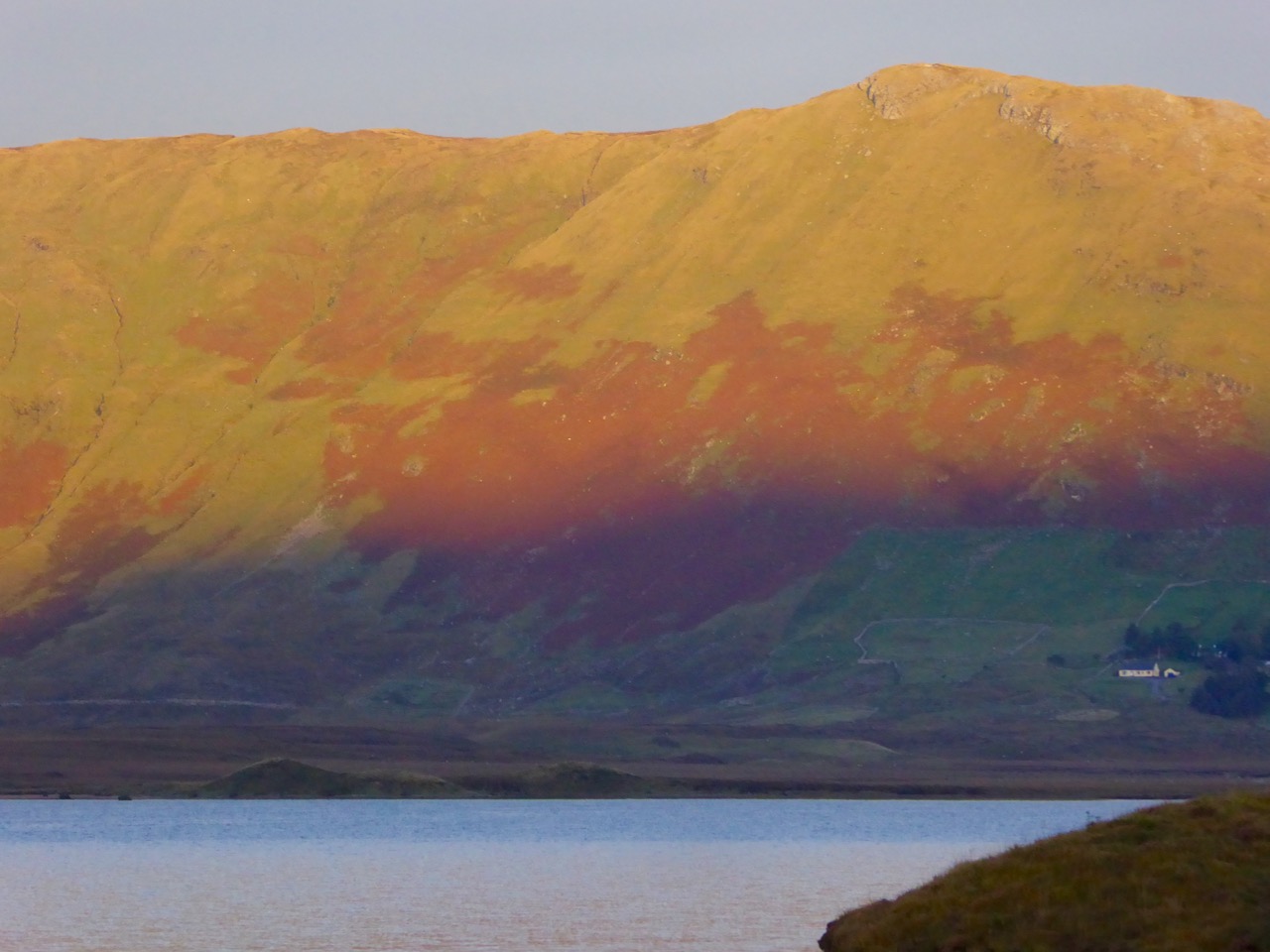
Shadow and light

…down the rushy glen – we daren’t go a-hunting for fear of little men! We were hunting mountains last week when we travelled up the west coast of Ireland with a visiting friend – finding some of the best scenery this country has to offer.

Connemara 2

If you look down on the island from above (as in this view from NASA, below) the lie of the land is very clear: the high points are all around the perimeters, yellow and brown in colour, with lower green plains in the centre.

nasa imageIf you lived in a country like Canada, then Ireland’s mountains should seem like mere gentle slopes. Our highest peak is not too far from us, up in Kerry, Carrauntoohil (Irish: Corrán Tuathail – this could mean Tuathal’s sickle or fang, Tuathal having been a common Irish name in medieval times) and this is only 1038 metres to the summit. However, the overriding characteristic of Irish mountains is that they often sweep steeply down to the sea or to a lough and are therefore visually spectacular in their settings.

We live in the far south-west: our mountains form the backbone of each of the peninsulas: The Mizen, Sheep’s Head, Beara, Iveragh and Dingle, largely Old Red Sandstone with some Carboniferous Limestone north of Killarney. Our travels took us up to Clare – very distinctive exposed limestone ‘pavements’ and mountain tops – and then to the complexities of granite, schists and gneisses found in the district of Connemara.

Connemara 3

Connemara fence

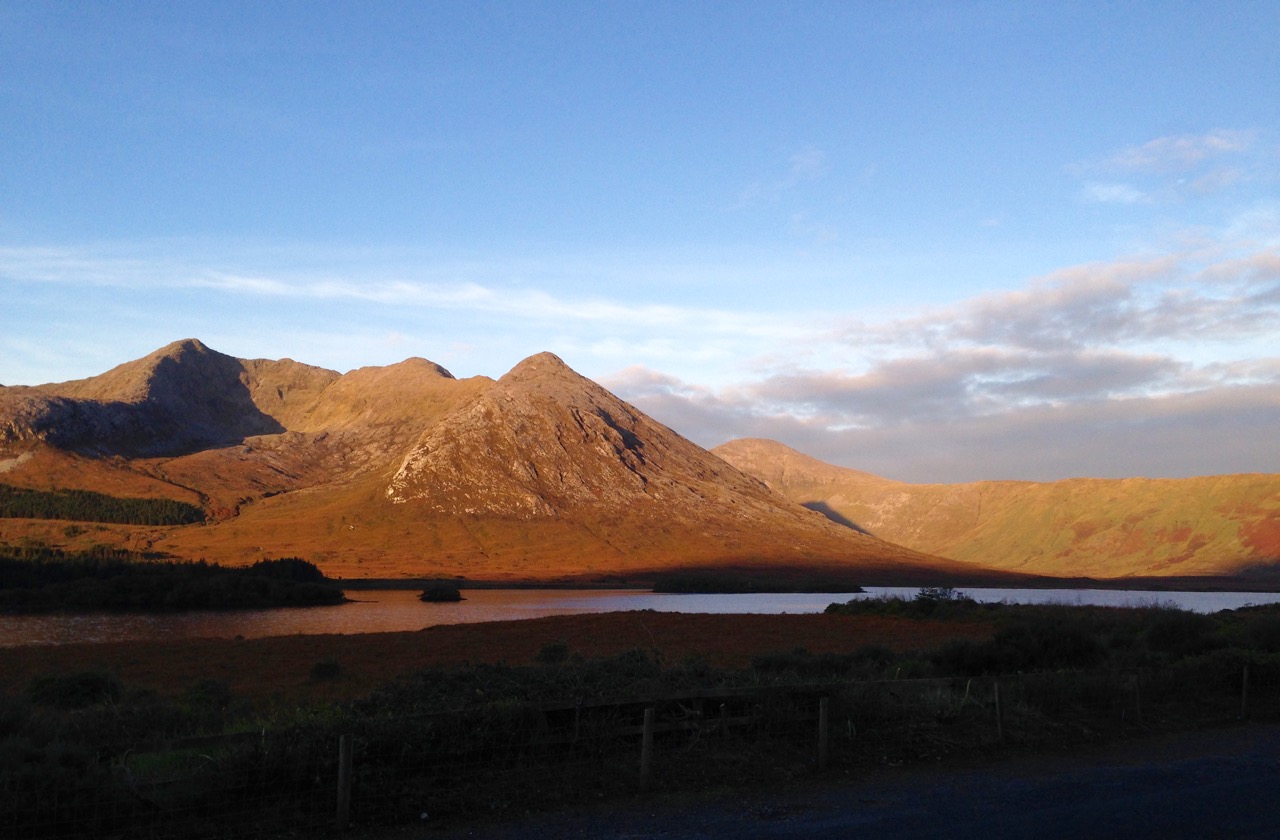
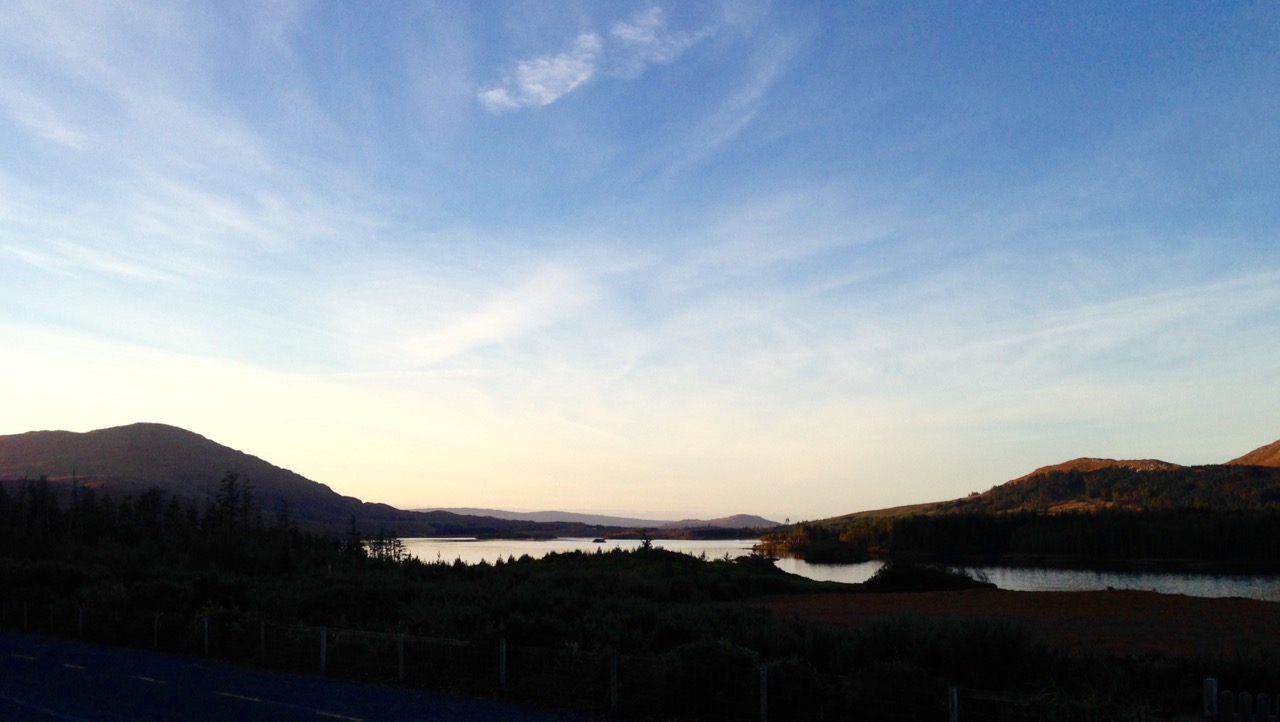
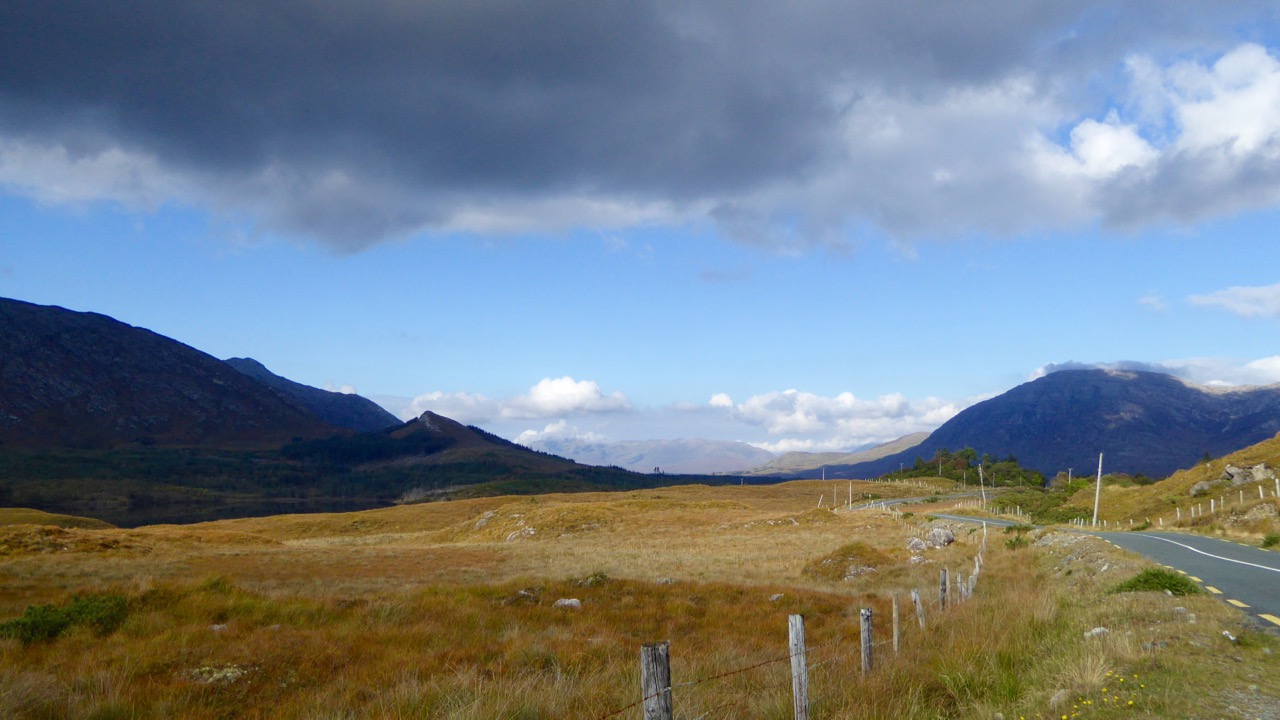
The four pictures above show the elements of the landscape in Connemara, Co Galway: quiet boreens, reflective water and dramatic mountains

The Irish landscape -and, particularly, her mountains – has long been the inspiration for artists and poets. The work of Paul Henry (1877 – 1958) is sparse and flat, yet expertly captures the character of the high lands of the west. It has been used over and over again in tourist advertising campaigns.

Paul Henry’s work was part of popular culture during his lifetime (above): now his art is very collectible and can be found in international galleries (below)

Killary Harbour

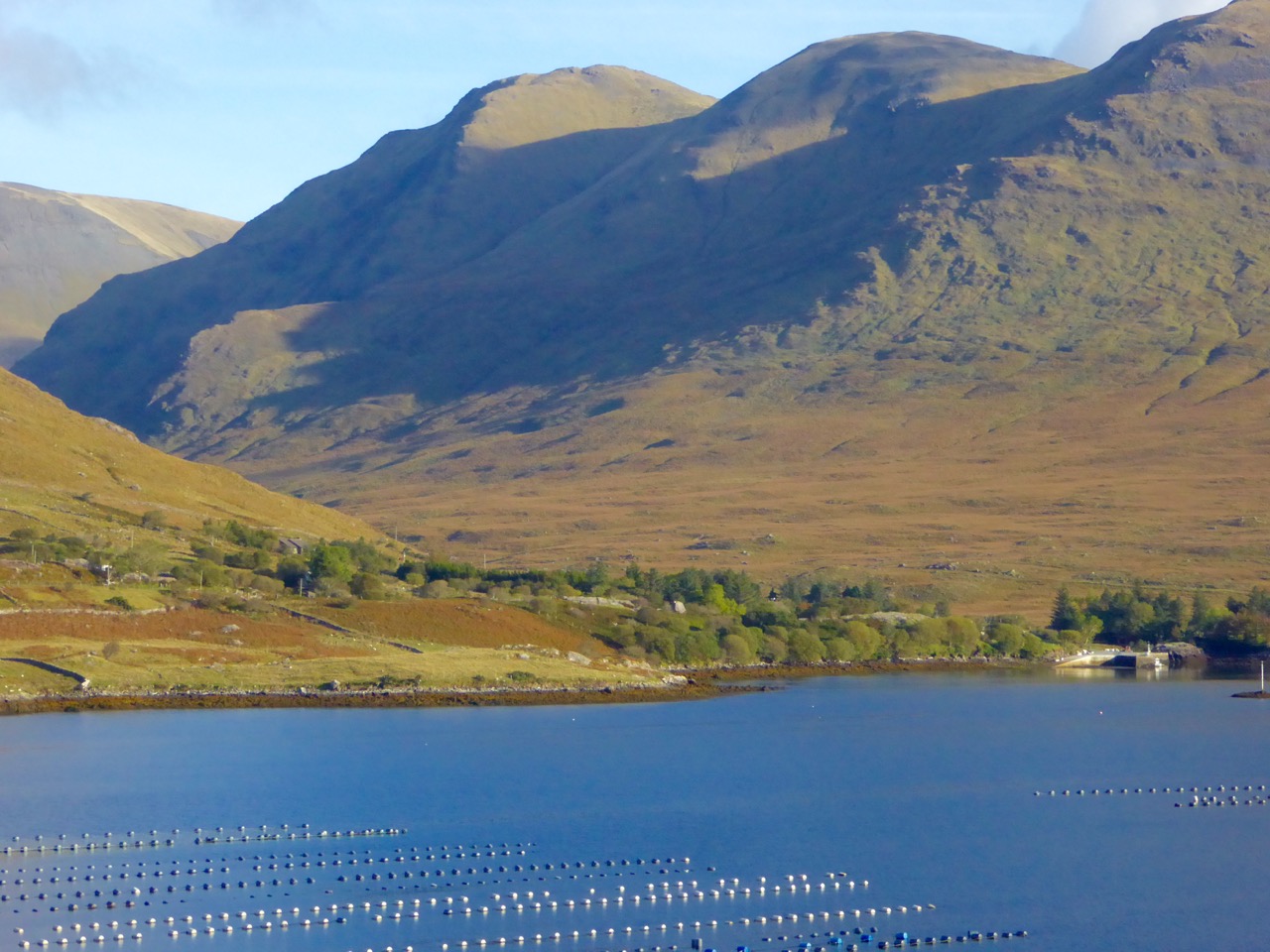
Killary Harbour, Connemara (above) and in Paul Henry’s landscape (above left) is said to be Ireland’s only true fjord (a flooded valley cut by glacial erosion which outlets to the sea): in the foreground are mussel ropes

irish mountain postcard

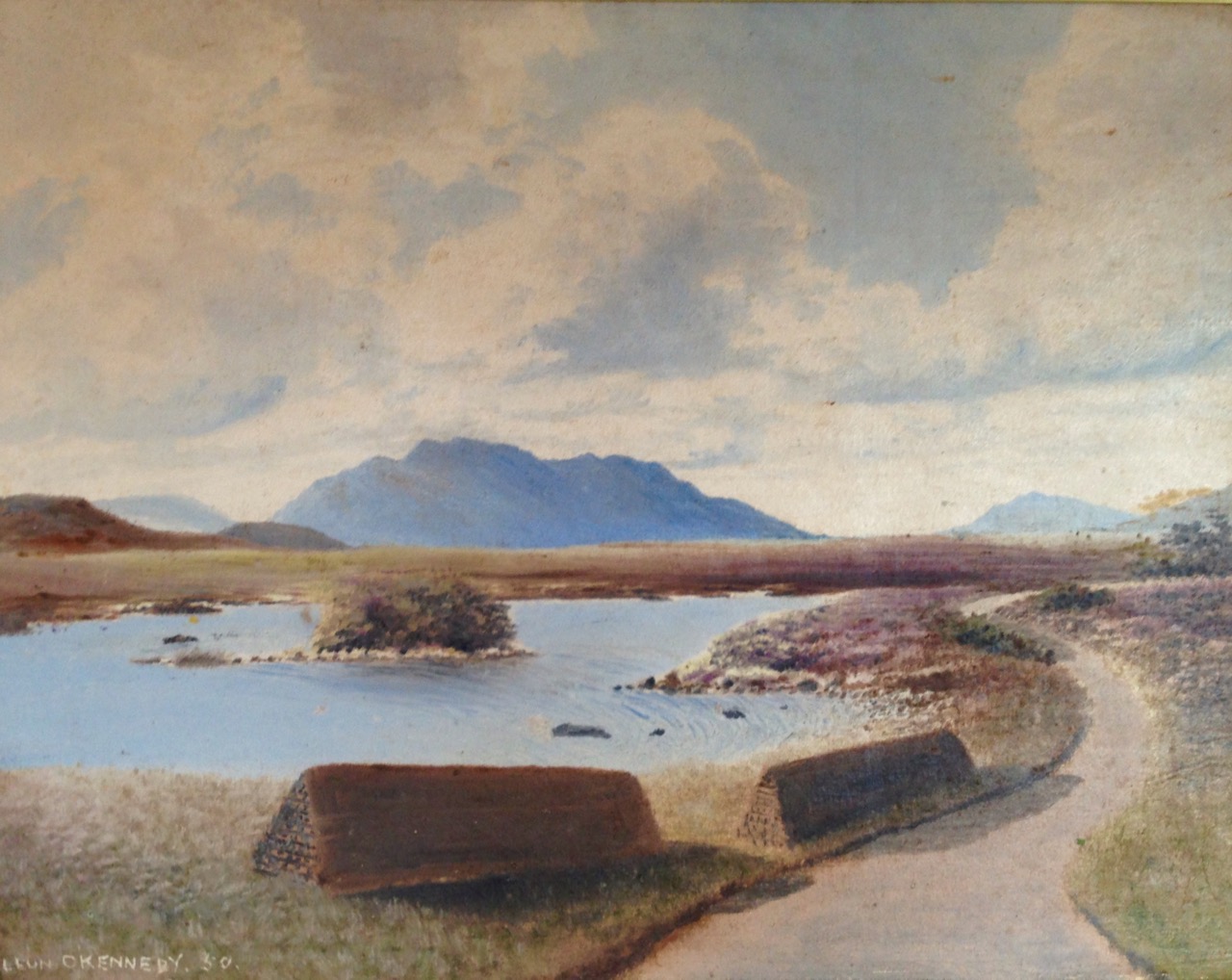
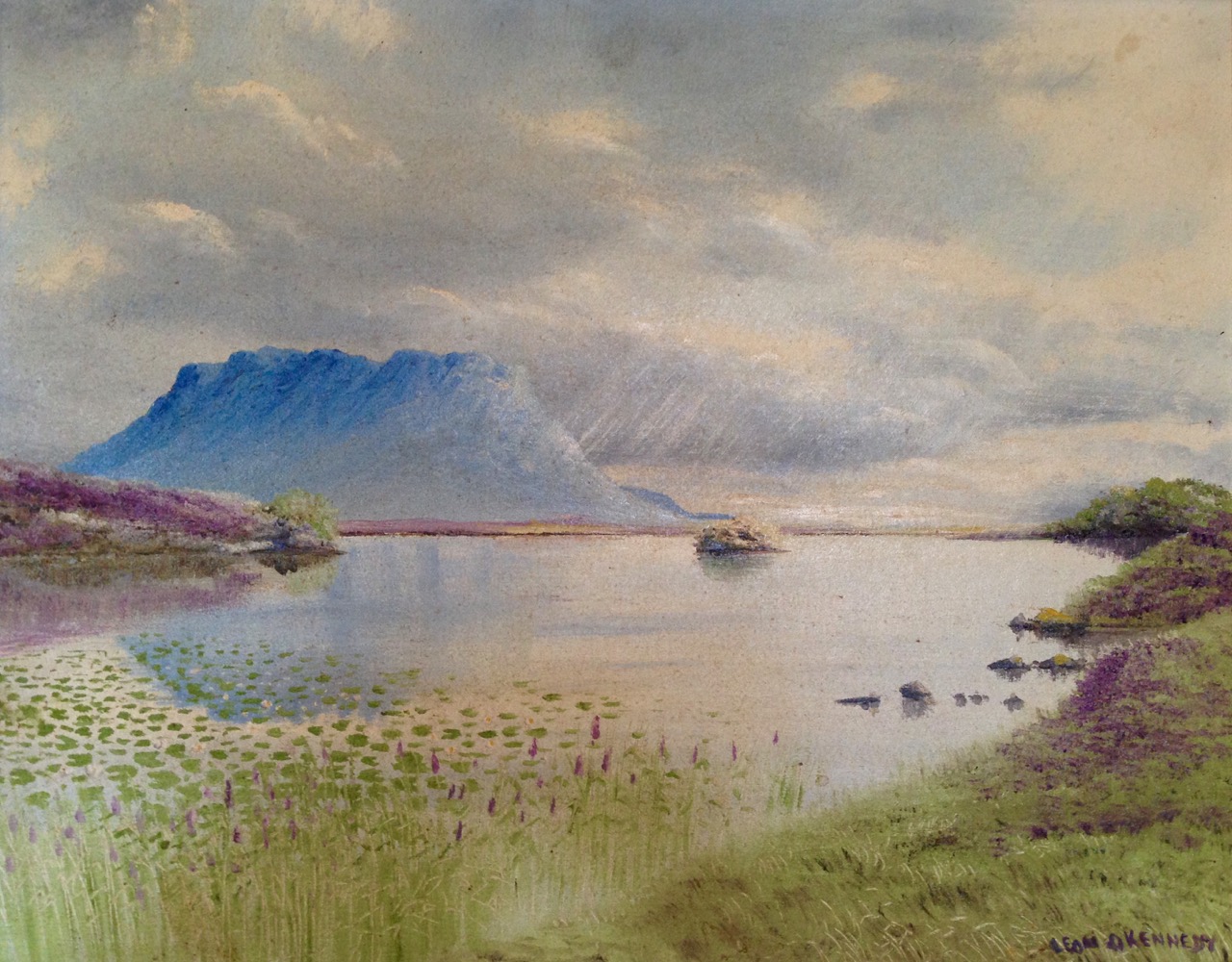
We stayed in the Lough Inagh Lodge – a comfortable hotel with great character and superb views to the mountains. There I was pleased to discover two original oil paintings by Leon O’Kennedy (1900 – 1979), a little known artist  who travelled mainly in the west of Ireland and, evidently, sold his work by knocking on doors. The hotel’s paintings might have arrived in this way as they depict local views: the prism shaped peat stacks are still very much in evidence in Connemara.

O Kennedy 1

O Kennedy 2

Connemara (which derives from Conmhaicne Mara meaning: descendants of Con Mhac, of the sea) is partly in County Galway and partly in County Mayo, in the province of Connacht. We were there only two days and barely did it justice. We intend to return and get to know it more intimately. In terms of our tour of Ireland’s mountainous districts it was the icing on the cake, but that in no way lessens the particular beauty of the other places we encountered – the strangely haunting limestone heights of Clare and the perennial grandeur of Killarney: all are experiences not to be missed.

rainbow over burren

Killarney

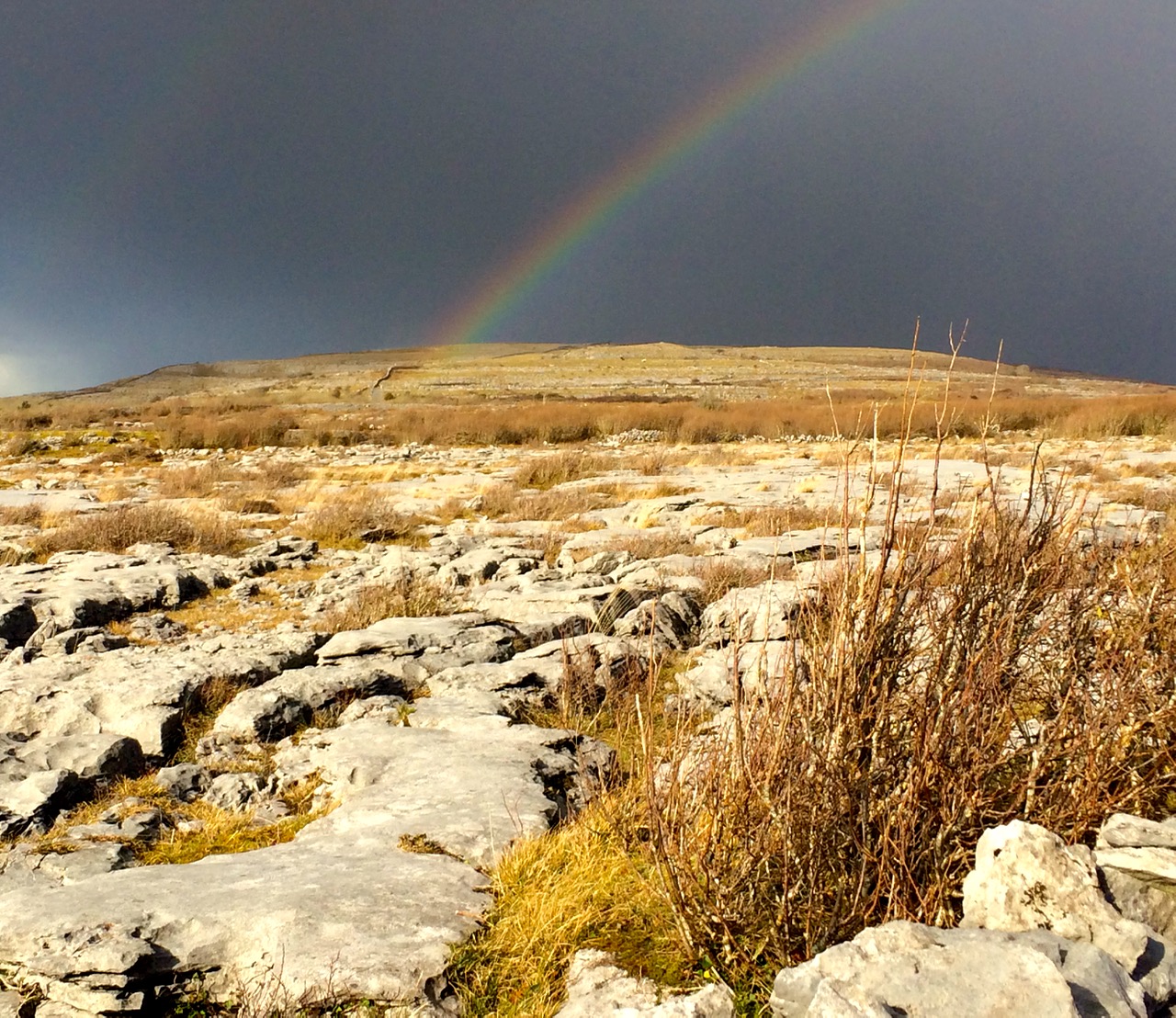
Limestone landscape in the Burren, Clare (top) and the lakes of Killarney, Kerry (above)

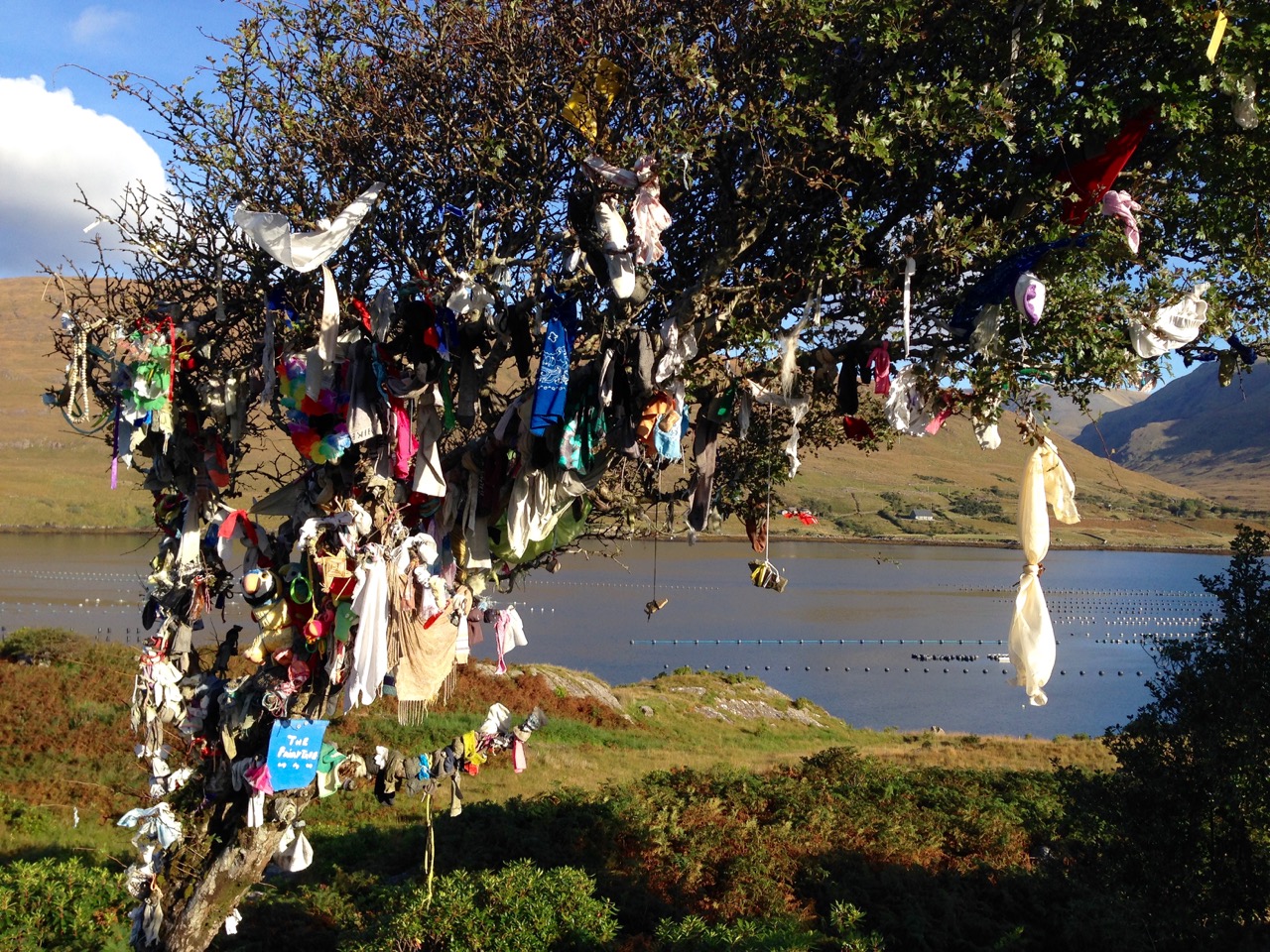
Fairy Tree

…By the craggy hillside,

Through the mosses bare,

They have planted thorn-trees,

For pleasure here and there.

Is any man so daring

As dig them up in spite,

He shall find their sharpest thorns

In his bed at night.

Up the airy mountain,

Down the rushy glen,

We daren’t go a-hunting

For fear of little men.

Wee folk, good folk,

Trooping all together;

Green jacket, red cap,

And white owl’s feather!

from The Fairies by William Allingham

March Miscellany

shovel

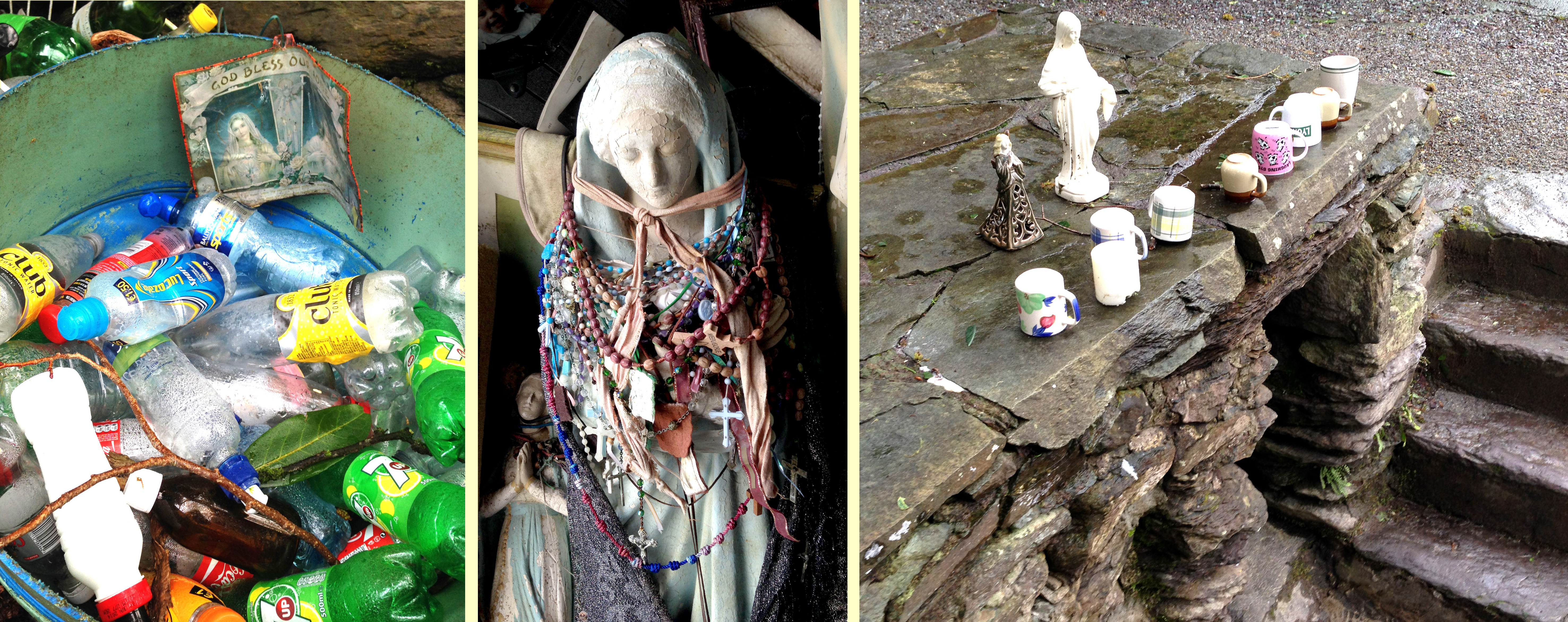
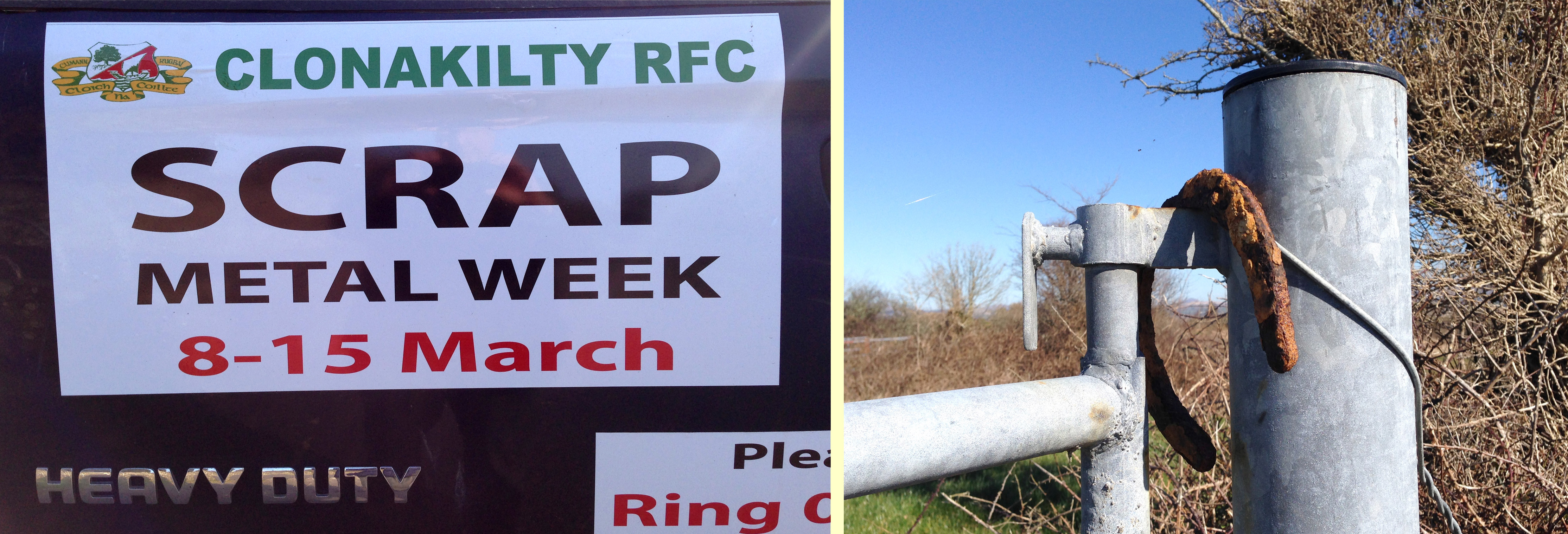
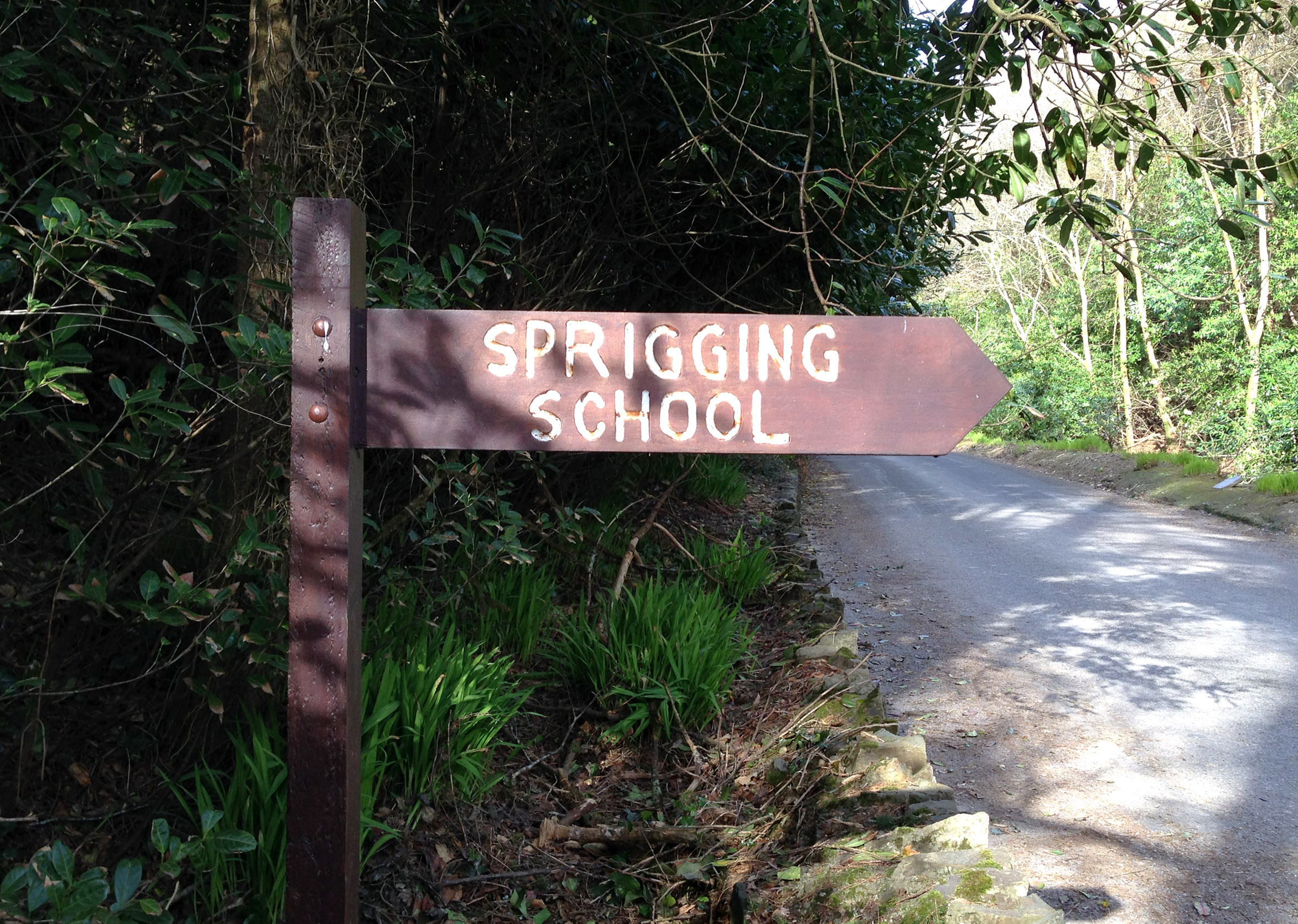
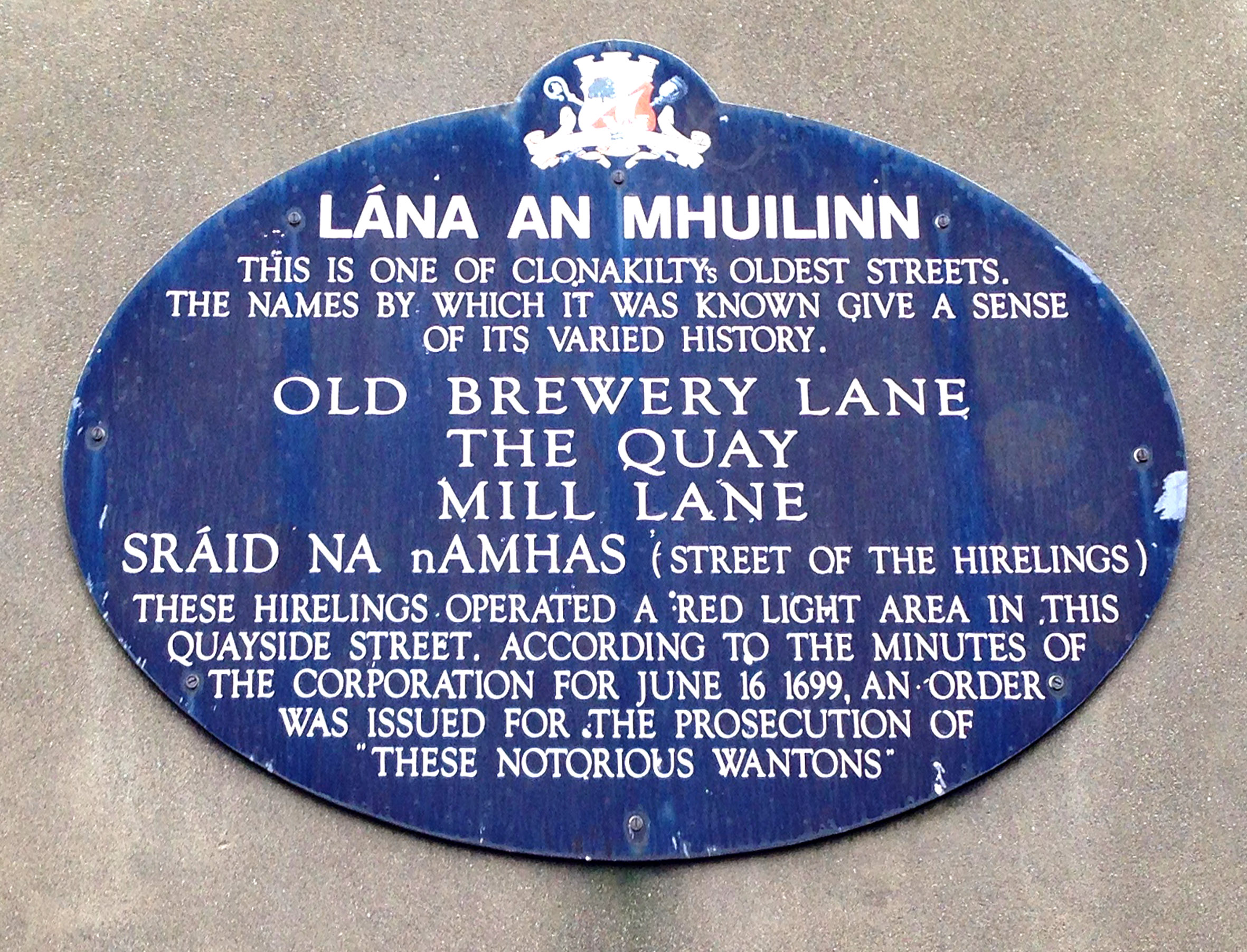
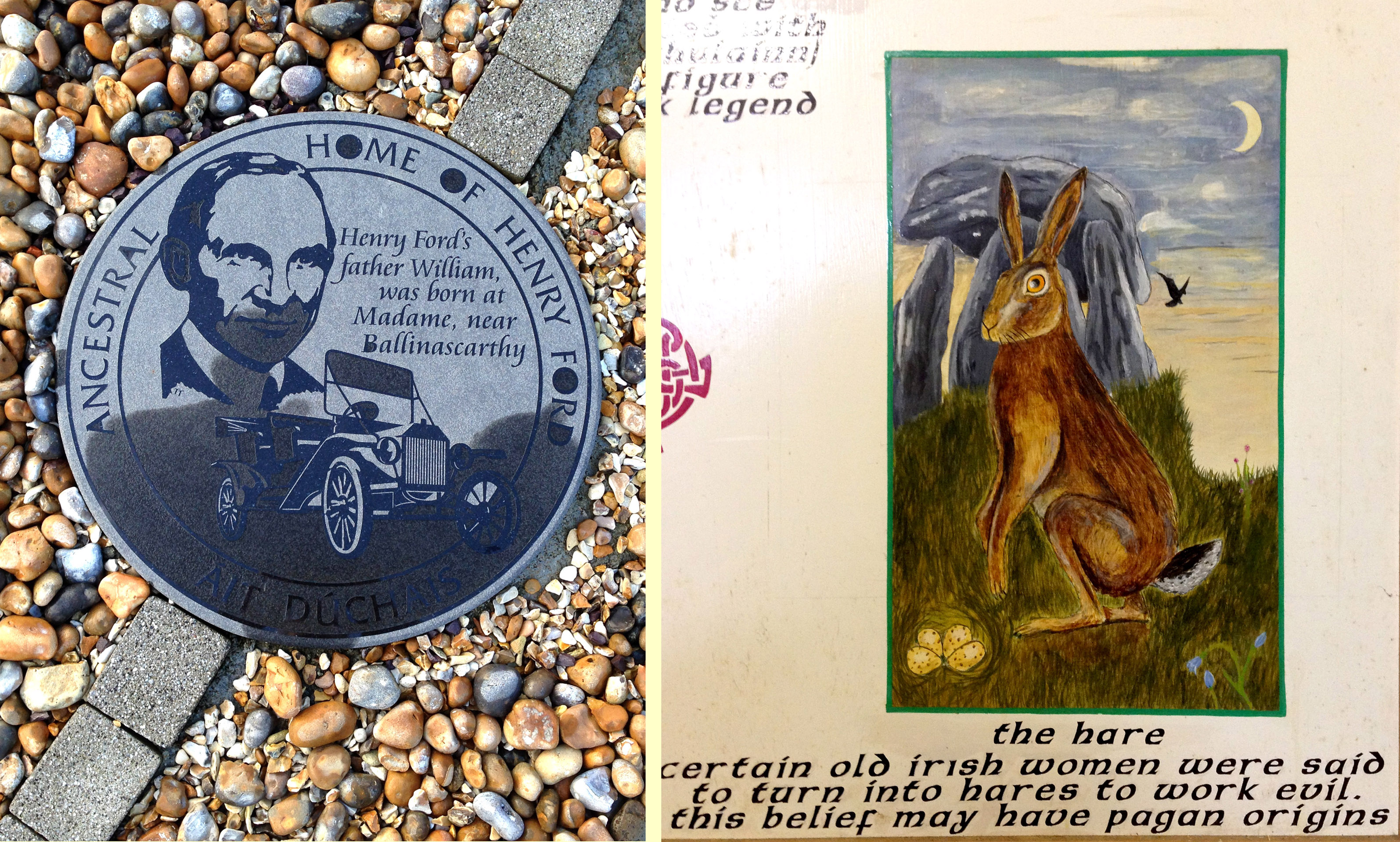
Another selection of Irish ‘normalities’ which have caught my English eye over the last few months (the previous selection is here). They have amused me, surprised me and sometimes baffled me. I have the greatest respect for their ‘Irishness’ – a unique outlook on life and culture from a small island which has made a big mark on the world. Mostly the images need no commentary but I have provided a little information for the curious at the end of the post.

them jobs

holy water

scrap

sprigging

ford hare

red light

shrine

luckyhouse

posterity

till he comes

walker

walking

offerings

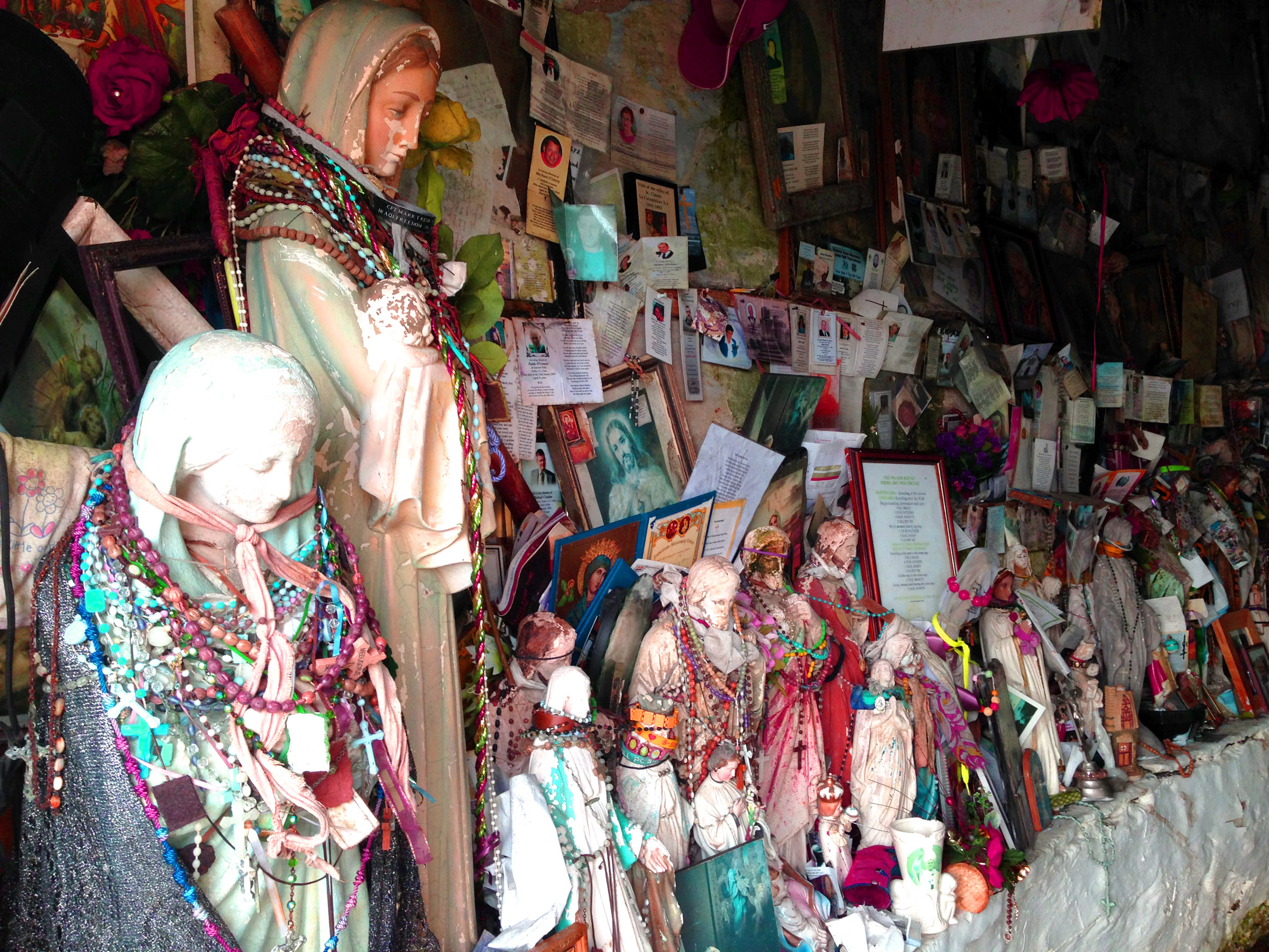
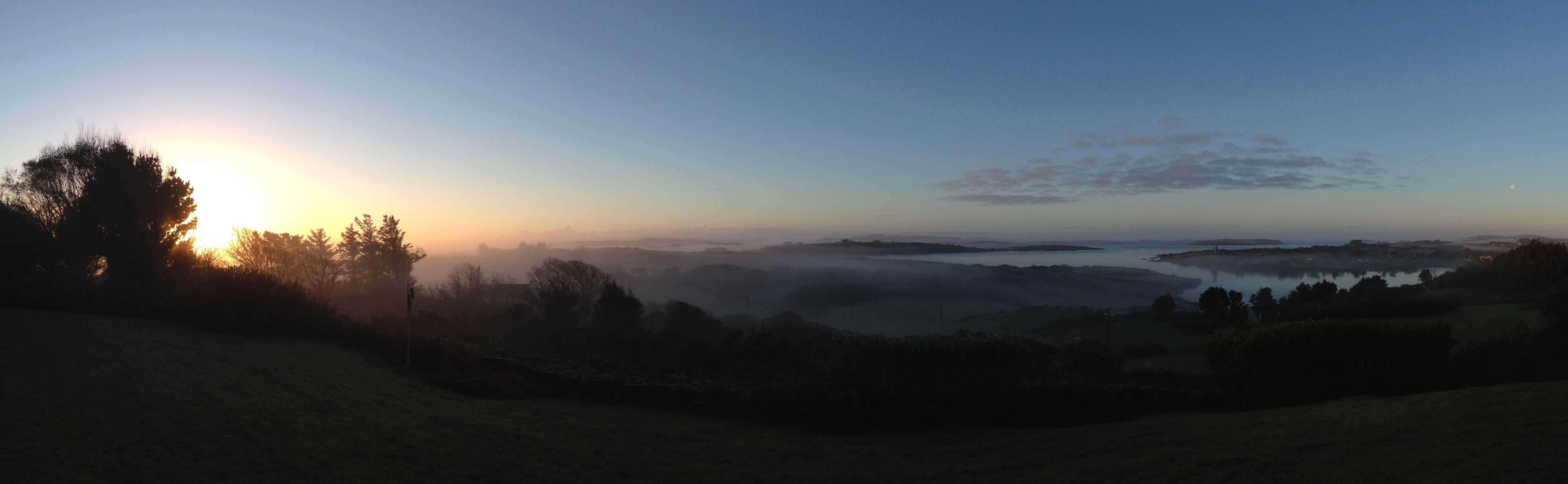
Most of the images are from our own neighbourhood, but the spectacular wells and shrines – including the one above (to St Brigid) were seen on our trip to Clare. Can’t resist just one more image: it’s the view we enjoy every day from Nead an Iolair, constantly changing and always arresting.

panorama

The Clare Trumpet

The Clareman's Trumpet - two fine modern concertinas, by Wim Wakker (left) and Colin Dipper (right)

Two fine modern concertinas, by Wim Wakker (left) and Colin Dipper (right)

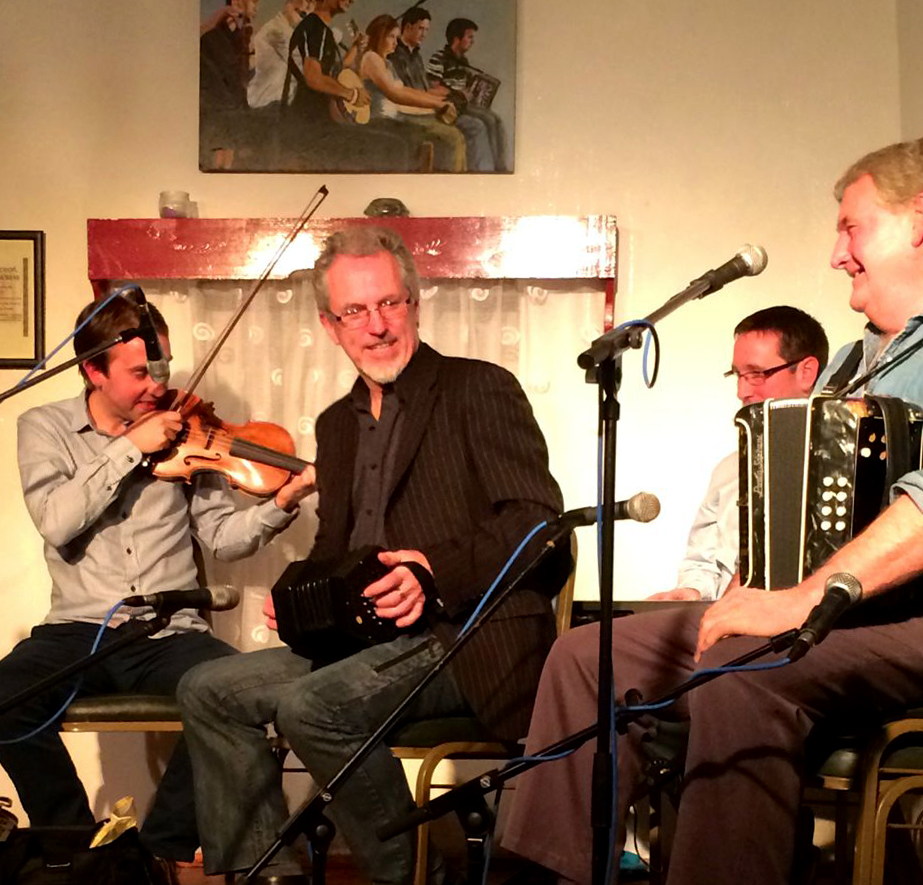
We went to Ballyvaghan, County Clare so that I could take part in the Concertina School run by Maestro of that instrument – and Clare man – Noel Hill. I have played concertinas for over 40 years but never in the ‘Irish’ style: here I am in Ireland so – in my seventh decade – it’s back to school for me! The concertina – a small squeezebox – has a long history in Clare, and in Ireland. It was pioneered by an Englishman, Charles Wheatstone, in the 1800s. Wheatstone’s real fame came as co-inventor – with William Cooke – of the electric telegraph which was arguably the forerunner of all our present day telecommunication systems (so thank you, Wheatstone, for my iPhone) but he was also prolific in his invention and improvement of many other devices, including musical ones. He took the Mundharmoniker – a German metal-reeded mouth blown instrument and turned it into the mouth-organ we know today; he then used the metal reeds and leather bellows to develop the concertina itself, a very portable instrument which has a tone and range similar to the violin. High quality concertinas bearing the Wheatstone name are still being made, as are many others, but it was the ability to mass produce these instruments at a low cost (far lower than the fiddle) which ensured their popularity in Victorian drawing rooms and in ale houses, dance halls and kitchens.

Noel Hill and Seamus Begley give a rousing finale to the Corofin Festival in Clare 2014

Noel Hill and Seamus Begley give a rousing finale to the Corofin Festival in Clare 2014

The concertina can be loud: the smaller the area of the bellows on a squeezebox, the more powerful the pressure that can be exerted on the steel reeds. Consequently the instrument has a very bright tone which carries above most others and is therefore ideal for accompanying dances in noisy rooms – or certainly was, before the days of amplification. Imagine a flag-stoned floor in a parlour or outhouse with a lively Irish set in full swing: the sound must have been fairly overwhelming, and it needed a loud instrument to be heard above the melee. Clare was and is a musical county, and gatherings for dancing (and socialising and matchmaking) were a major past-time in rural districts. The concertina was a boon on these occasions and is now an instrument forever associated with the area and its musicians. Because of its volume and its strident possibilities, the concertina has become known as ‘the Clareman’s Trumpet’.

old bog road music

I could write a whole post on the many varieties of concertina which have been developed since Charles Wheatstone took out his patent in 1829. Suffice it to say that you are likely to encounter only two types in your normal travels: the English Concertina – where each button plays the same note regardless of which direction you are moving the bellows – and the Anglo Concertina – where each button gives you two different notes: one on the push and another on the pull – similar in principle to the modern mouth organ. My instrument is the Anglo, and this is also the one most commonly (but not exclusively) found today in Irish Traditional Music.

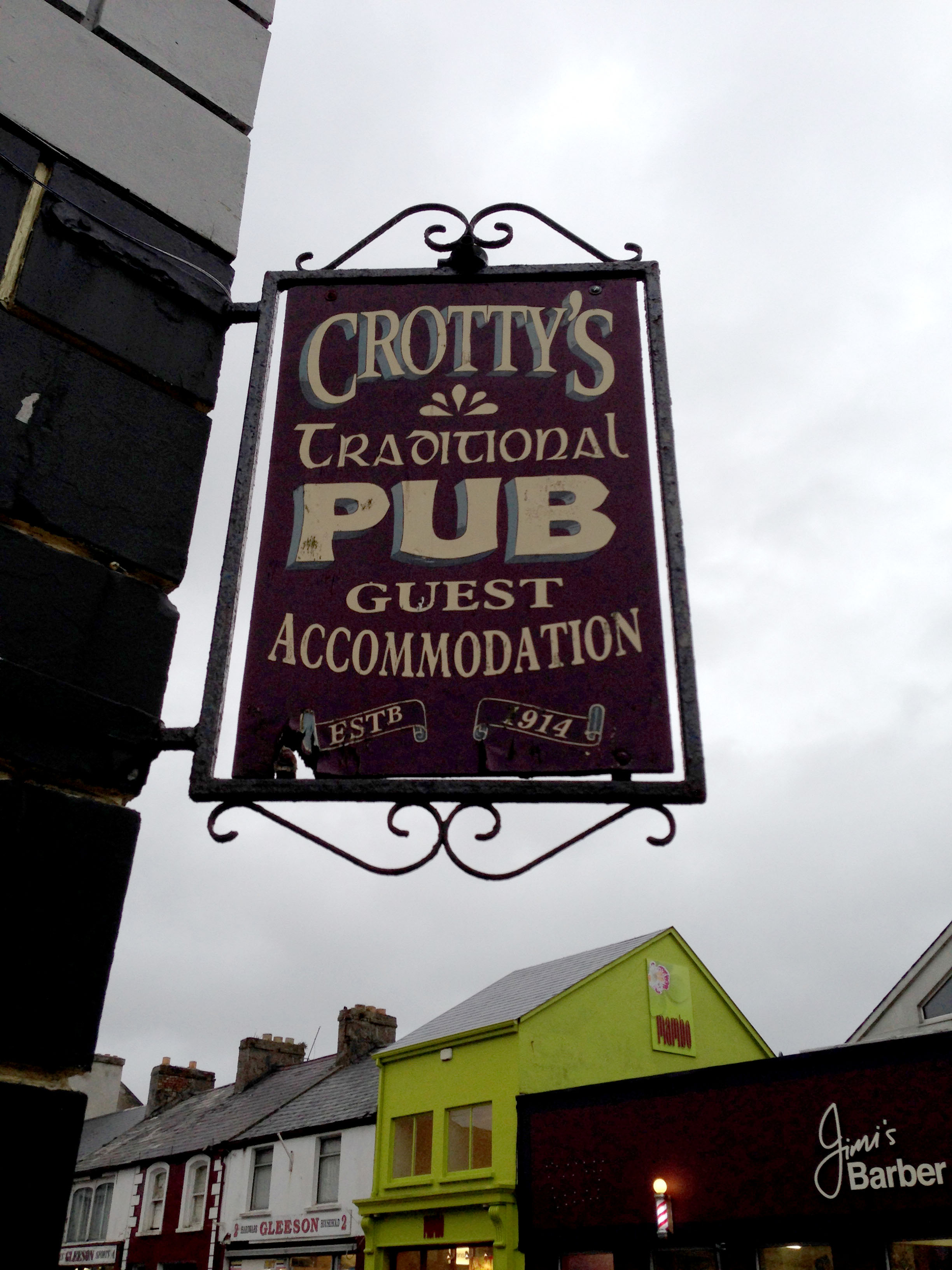
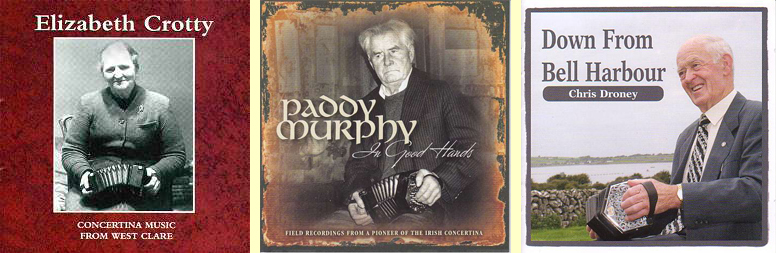
pub signNo mention of the concertina in Clare would be complete without a note on Mrs Elizabeth Crotty of Kilrush. She lived between 1885 and 1960 and was famous in her day as an Anglo player. Crotty’s pub is still there in Kilrush, and still in the family. I went there on my first visit to Ireland almost exactly 40 years ago. Mrs Crotty’s memory had not faded then. I played in the pub on that visit and was told (by her daughter) that this was the first music that had been heard in the pub since the First Lady of the Concertina had died. It’s a different matter today: there is live traditional music most nights in Crotty’s, and in so many other establishments all over the county. More Clare concertina names include Paddy Murphy (who I was fortunate enough to meet and hear at a wild and remote session on that first visit), Chris Droney of Bell Harbour, still playing in his eighties, and many another.

cds

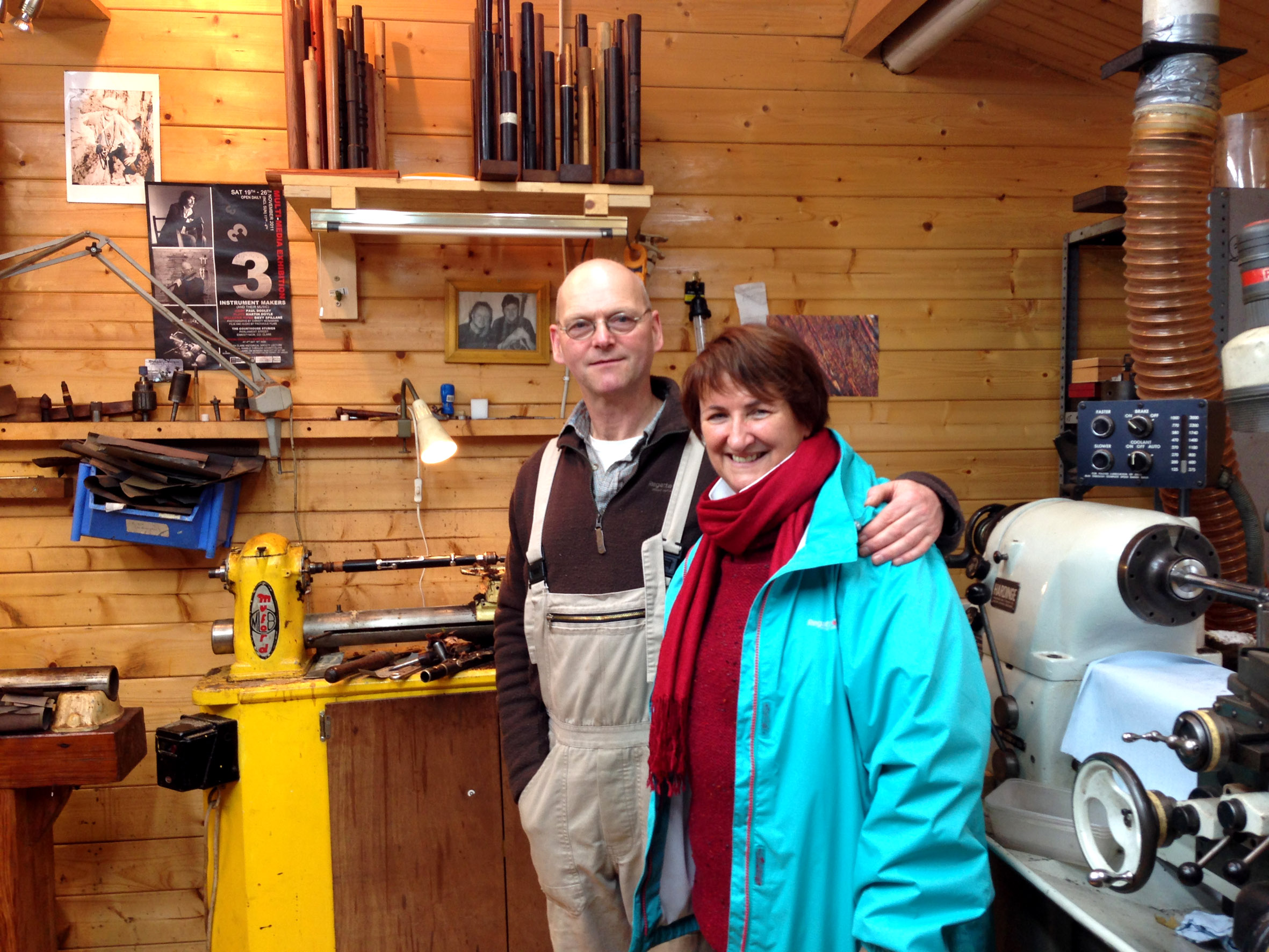
But Clare’s musical connections are not limited to the concertina: as we travelled around we became very aware of how important is music in all its varieties in this windswept, largely treeless but peculiarly beautiful part of the island. There are instrument makers: Finola grew up with Martin Doyle in Bray: he’s now one of the top producers of hand-made wooden flutes in the world! We visited his workshop – a well-equipped timber shed on the edge of the Burren. It was a great reunion: while the stories were in full flow in walked Christy Barry, renowned traditional flute player – also a Clare native, to join the chat.

Friends from school: Clare flutemaker Martin Doyle with Finola

Friends from childhood: Clare flutemaker Martin Doyle with Finola

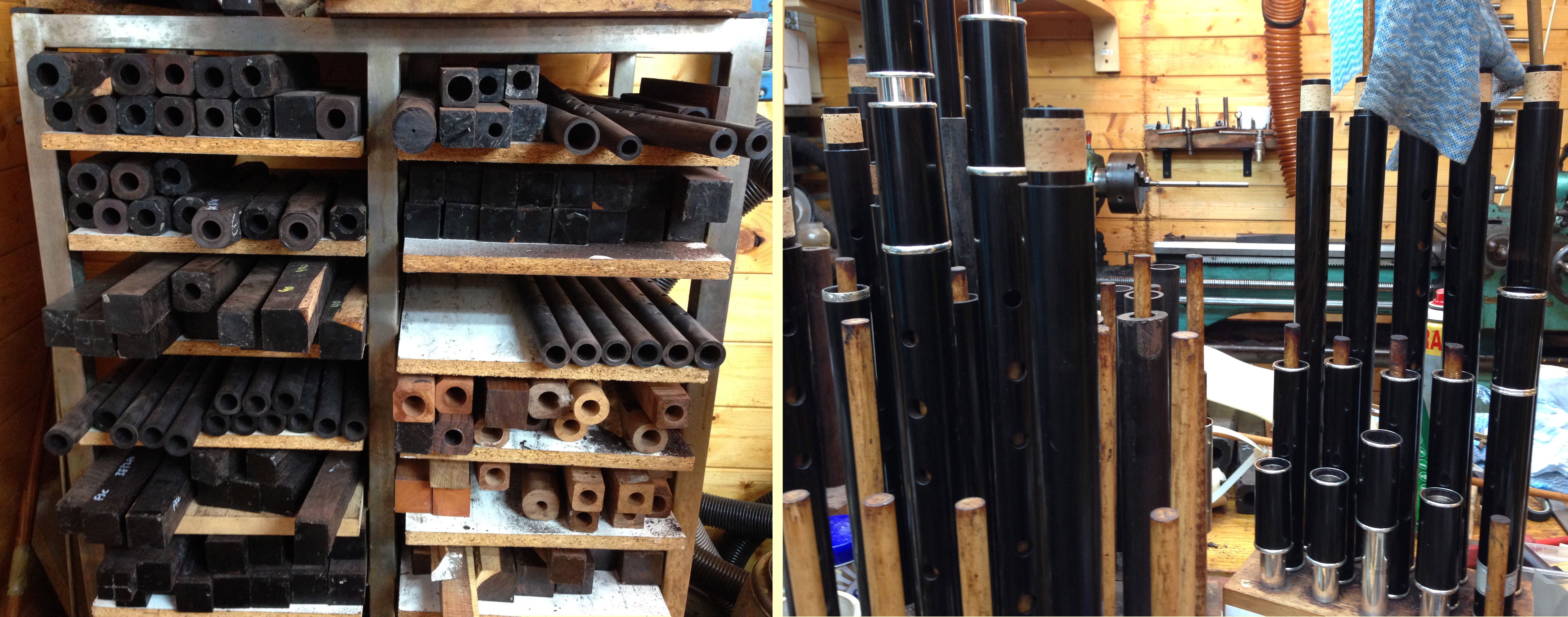
Raw material - and traditional Irish flutes in the making

Raw material – and traditional Irish flutes in the making

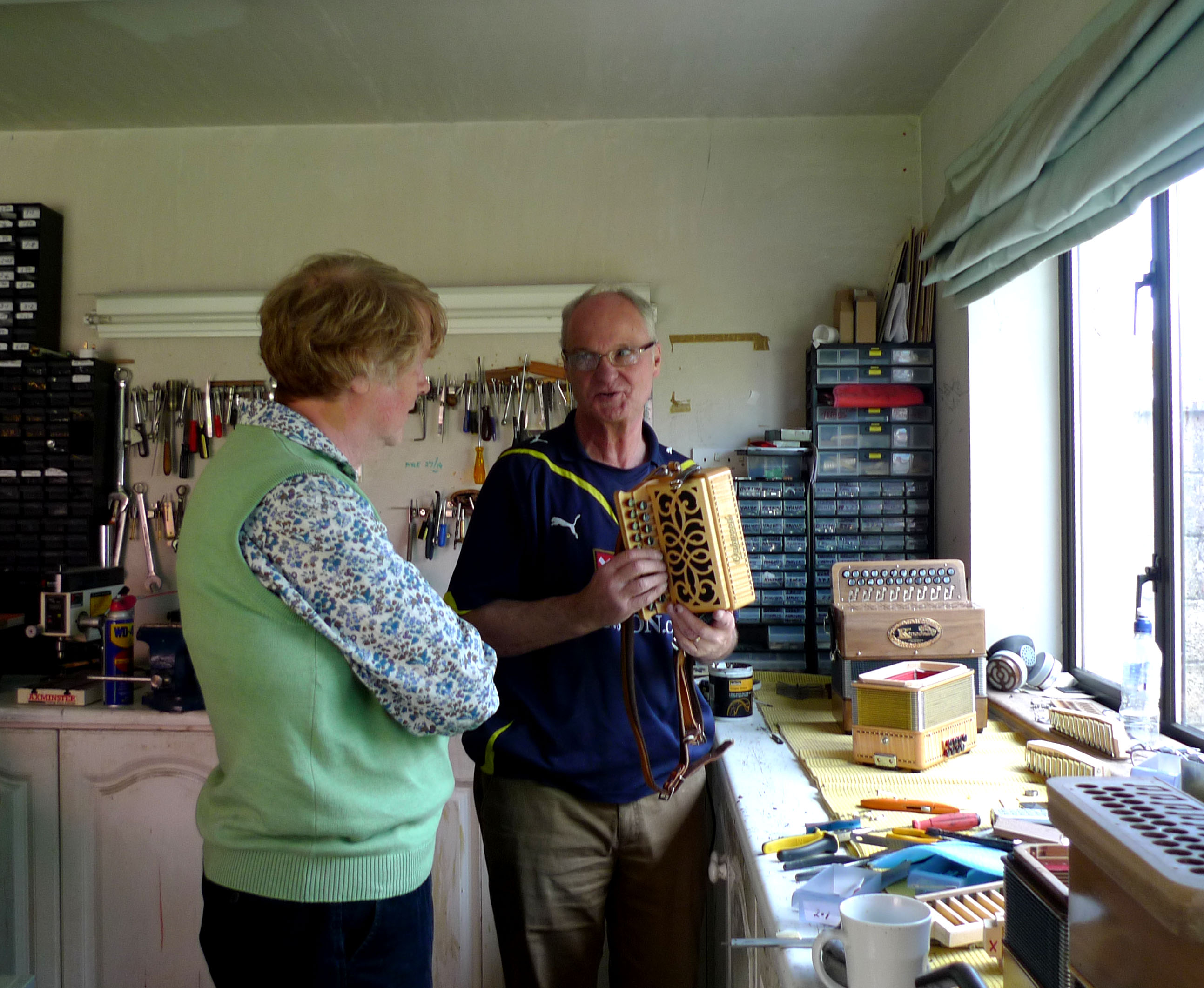
I mustn’t forget Martin Connolly, first class button accordion maker from Ennis, nor my all-time Irish music hero Martin Hayes (perhaps there’s something about the name Martin?) renowned fiddler and Director of the Masters of Tradition Festival every year down here in West Cork: he hales from East Clare.

Martin Connolloy - Clare accordion maker

Martin Connolloy – Clare accordion maker

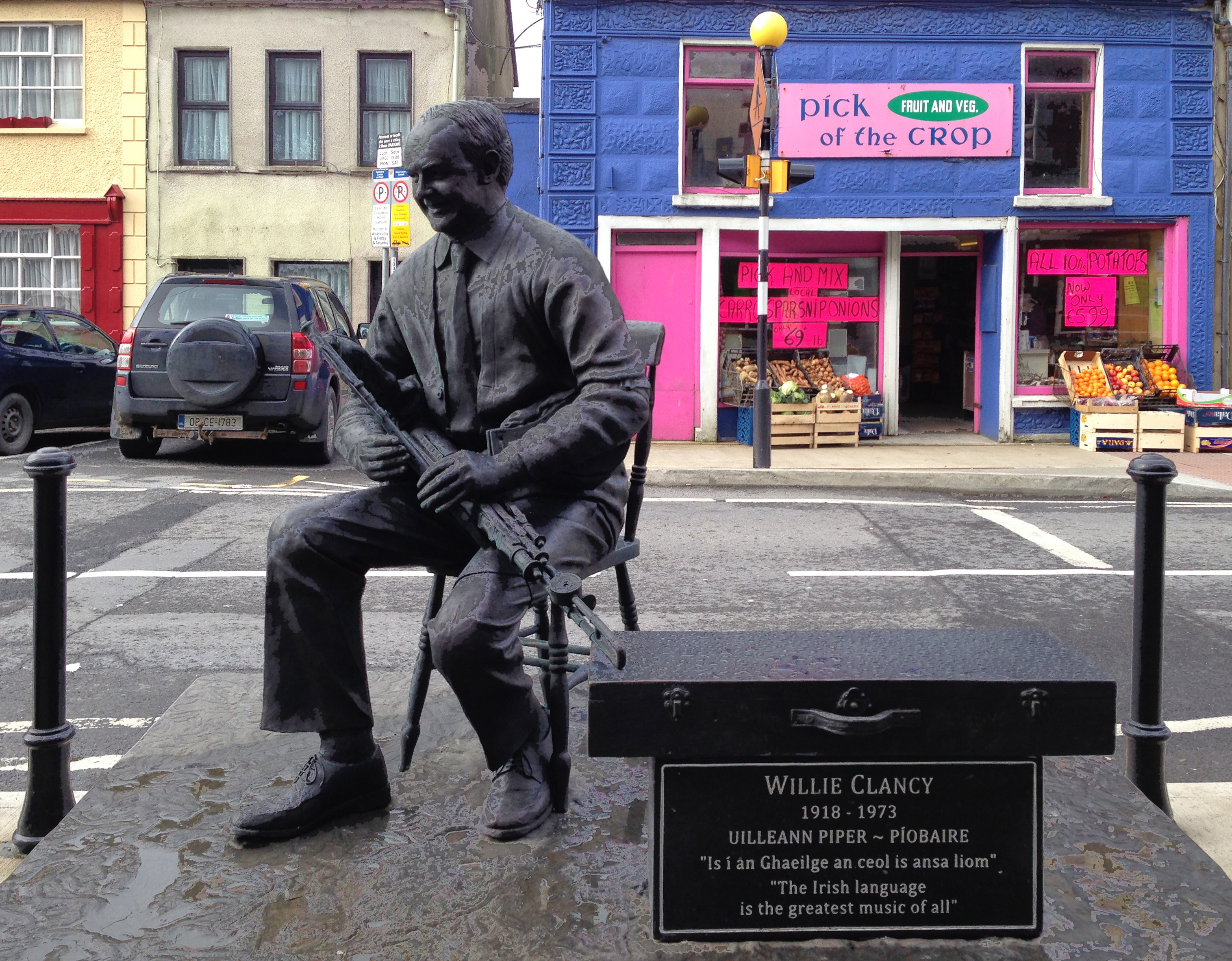
The roll call is endless, but perhaps pride of place (for now) should go to Willie Clancy, not a concertina player but a master of the Uillean Pipes. He has made famous the name of his home town, Milltown Malbay, where they have honoured him with a fine bronze statue. Every year in July around 10,000 people descend on the small West Clare town and swell its normal population tenfold. There are workshops, classes and concerts but, most of all, there is just constant music – in pubs and cafes, and on every street corner: the craic is mighty!

willie