No Wrens Were Harmed in the Making of this Post… An Update!

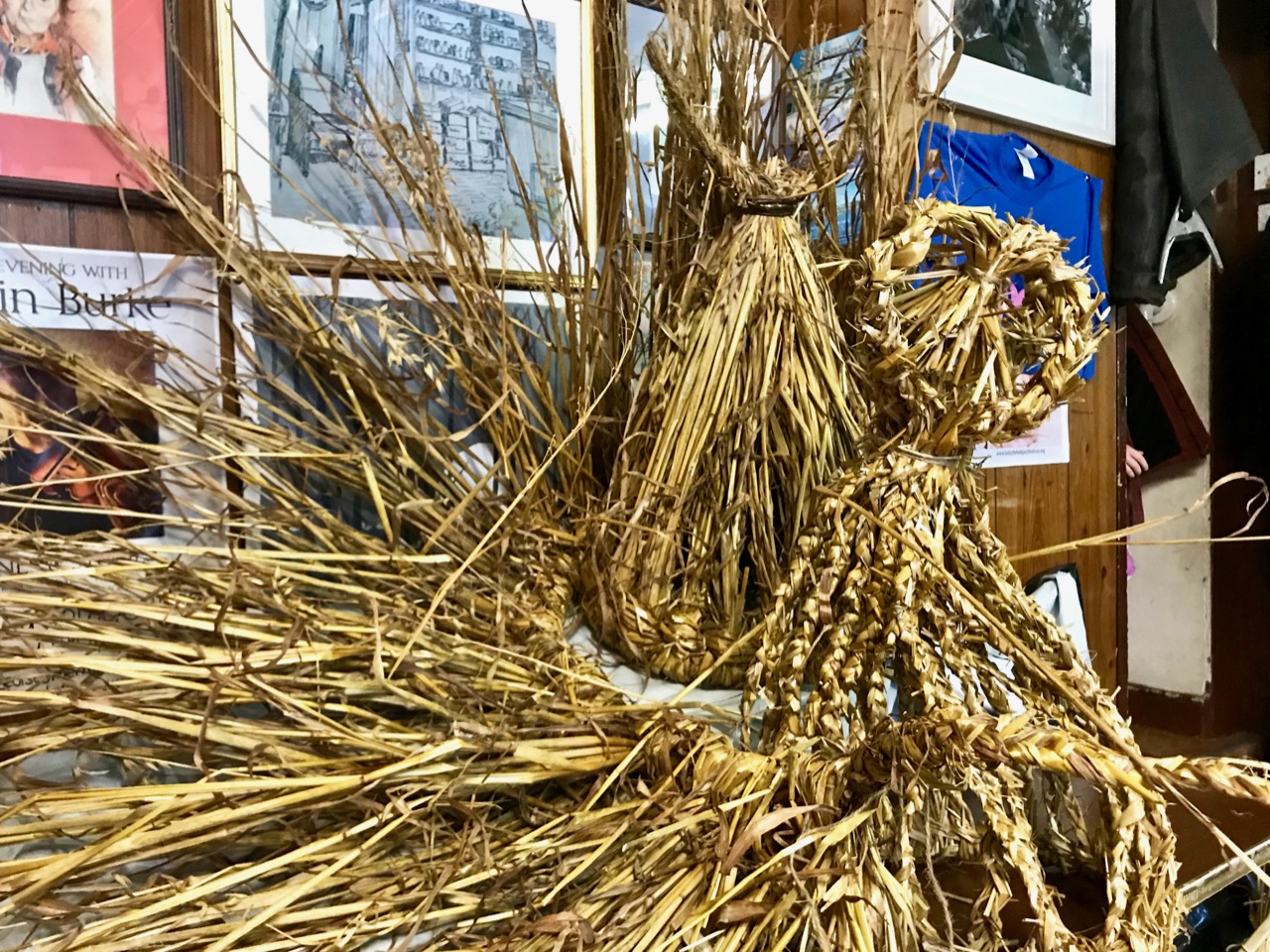
Do you remember pre-Covid days? Those times seem to bring out the nostalgia in me… It’s only two years ago that I wrote a post about our preparations – in Ballydehob – for the Wran Day celebrations that would take place on St Stephen’s Day – 26 December – following. Those festivities did happen, and we were then all in happy ignorance of how our lives were to be changed mightily by the pandemic that struck the world just a few weeks later. We’d like to think that, after all this time has passed, a level of normality will be returning. That’s not quite the case – but we are planning a ‘Wran’ this year, and today we gathered in Levis’s Corner House to make ready for it. Here’s a photo – kindly loaned by Pól Ó Colmáin – of the results of the workshop we held to prepare for the ‘Wran’ in 2019.
So firstly, here’s an abridged version of the post I put up after that workshop two years ago. I’ll follow it with an update of the equivalent [but socially distanced!] event which we held today . . .

* * * * * Back to 2019 * * * * *

Wran Hunting has featured before in Roaringwater Journal: that’s the way that St Stephen’s Day – 26 December – has been celebrated for generations in ‘Celtic’ parts of western Europe, specifically Ireland and The Isle of Man, but also in Cornwall – where it’s now only a memory – Brittany, Wales and Scotland. ‘The Wran’ is a very strong surviving tradition here, especially on the west side of the country. The Dingle Gaeltacht is the place to go if you want to see all the action (you may have to click on the bottom right of the window to turn on the sound):

In our own Ballyedhob community ‘The Wran’ is not forgotten. In fact you can even find a poem written about it in the Duchas folklore records. This was recorded in the 1930s by John Levis, aged 32, who took it down from Jeremiah Driscoll, aged 64 years. Jeremiah had been a Wren Boy in Ballydehob. Here’s the poem:

Come all you ladies and gentlemen,

For tis here we are with our famous wran

With a heart full of cheering for every man

To rise up a booze before the year is gone.

*

Mr O’Leary we came to see,

With our wran so weak and feeble,

The wran is poor and we can’t feed him,

So we hope your honour will relieve him

*

We’ve hunted our wran three miles and more

We’ve hunted this wran all around Glandore

Through hedges and ditches and fields so green,

And such fine sport was never seen.

*

As we copied our wran again

Which caused our wran-boys for to sing,
She stood erect and wagged her tail,
And swore she’d send our boys to jail.

*

As we went up through Leaca Bhuidhe

We met our wran upon a tree,

Up with a cubit and gave him a fall,

And we’ve brought him here to visit you all.

*

This the wran you may plainly see,

She is well mounted on a holly tree,

With a bunch of ribbons by his side

And the Ballydehob boys to be his guide.

*

The wran, the wran, the king of all birds,

St Stephen’s day he was caught in the furze,

Although he is little, his family is great,

So rise up landlady and fill us a treat.

*

And if you fill it of the best,

We hope in Heaven your soul will rest,

But if you fill it of the small,

It won’t agree with our boys at all.

*

To Mr O’Leary and his wife

We wish them both a happy life,

With their pockets full of money, and their cellars full of beer,
We now wish a merry Christmas and a happy New Year.

*

And now, our song is ended, we have no more to say,

We hope you’re not offended for coming here today,

For coming here this morning we think it is not wrong,

So give us our answer and let us all be gone.

Traditional, DUCHAS
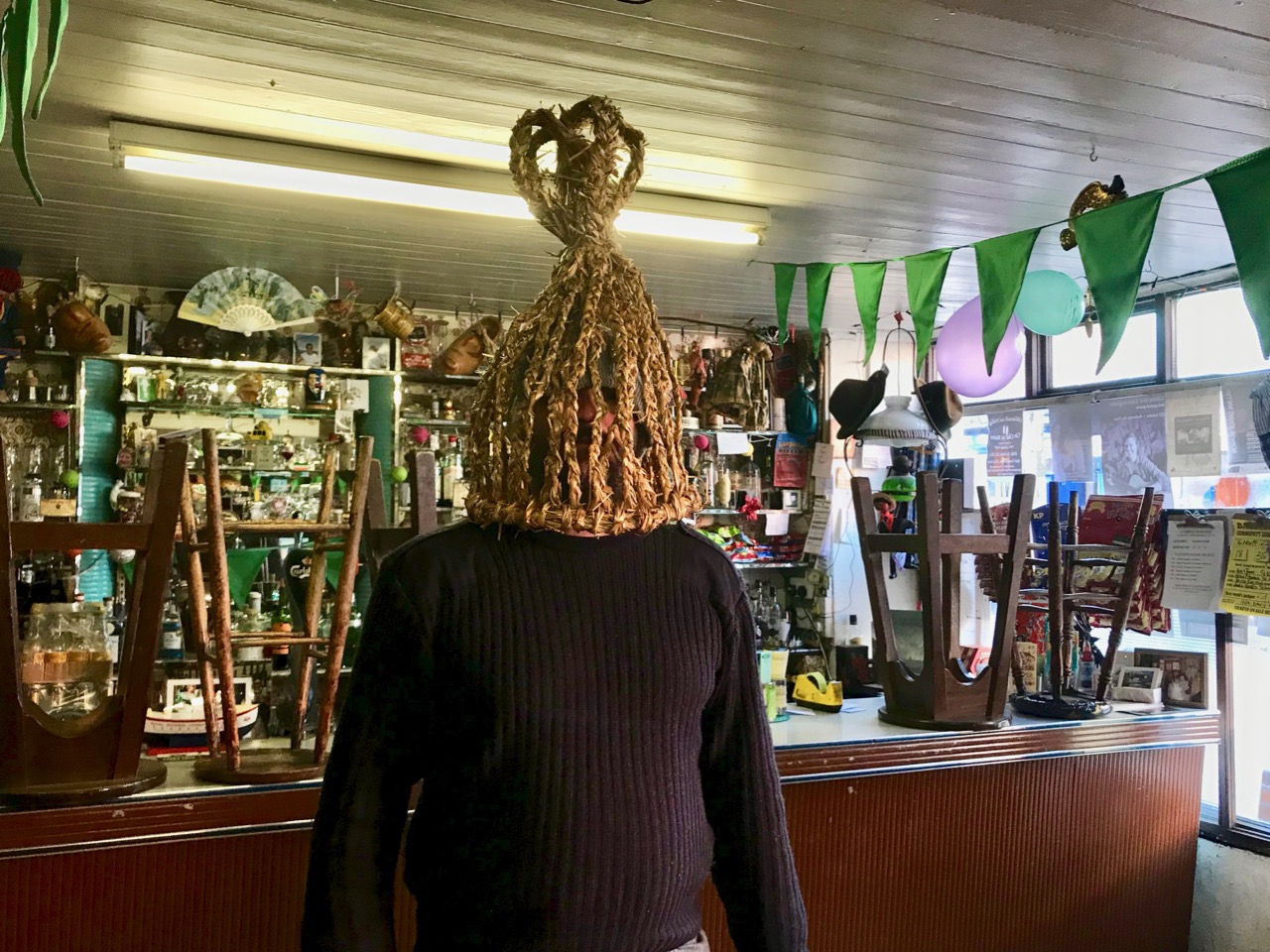
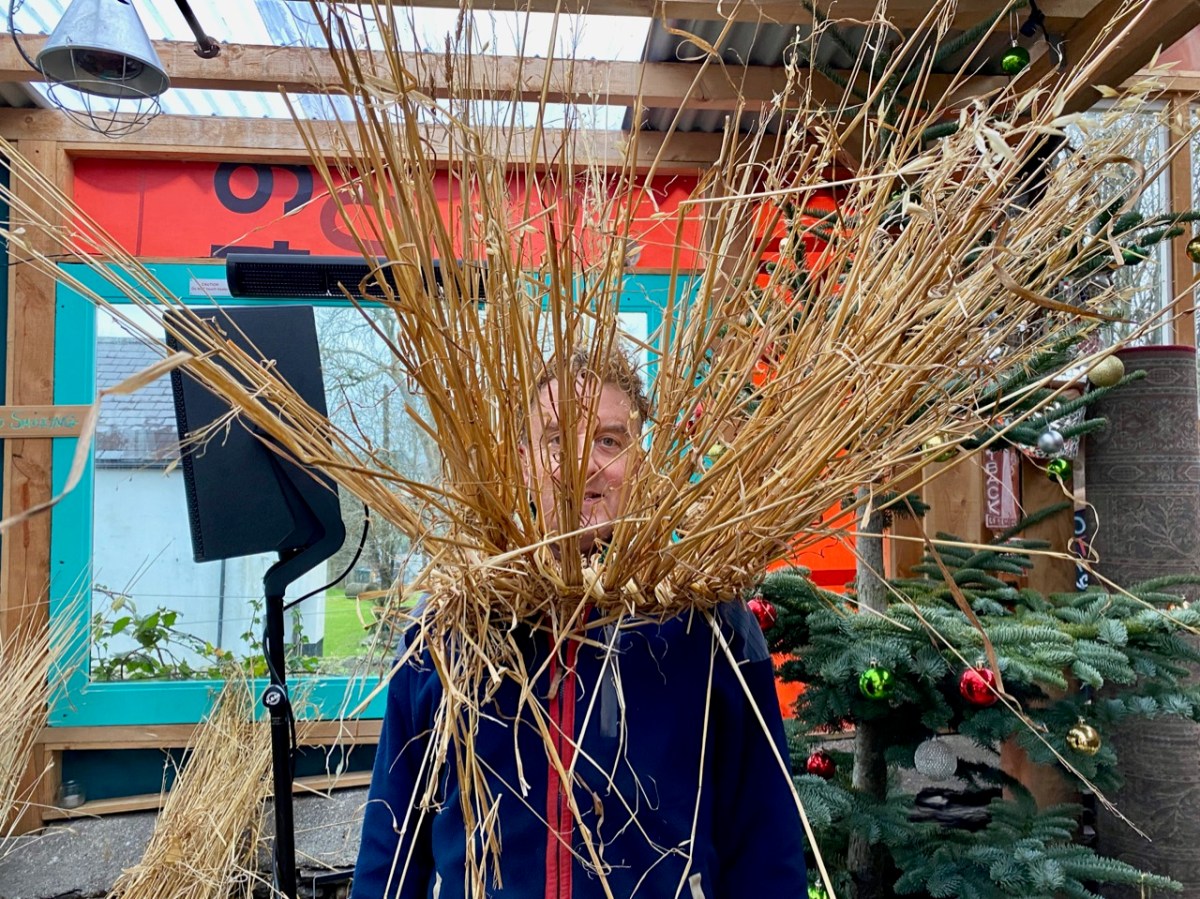
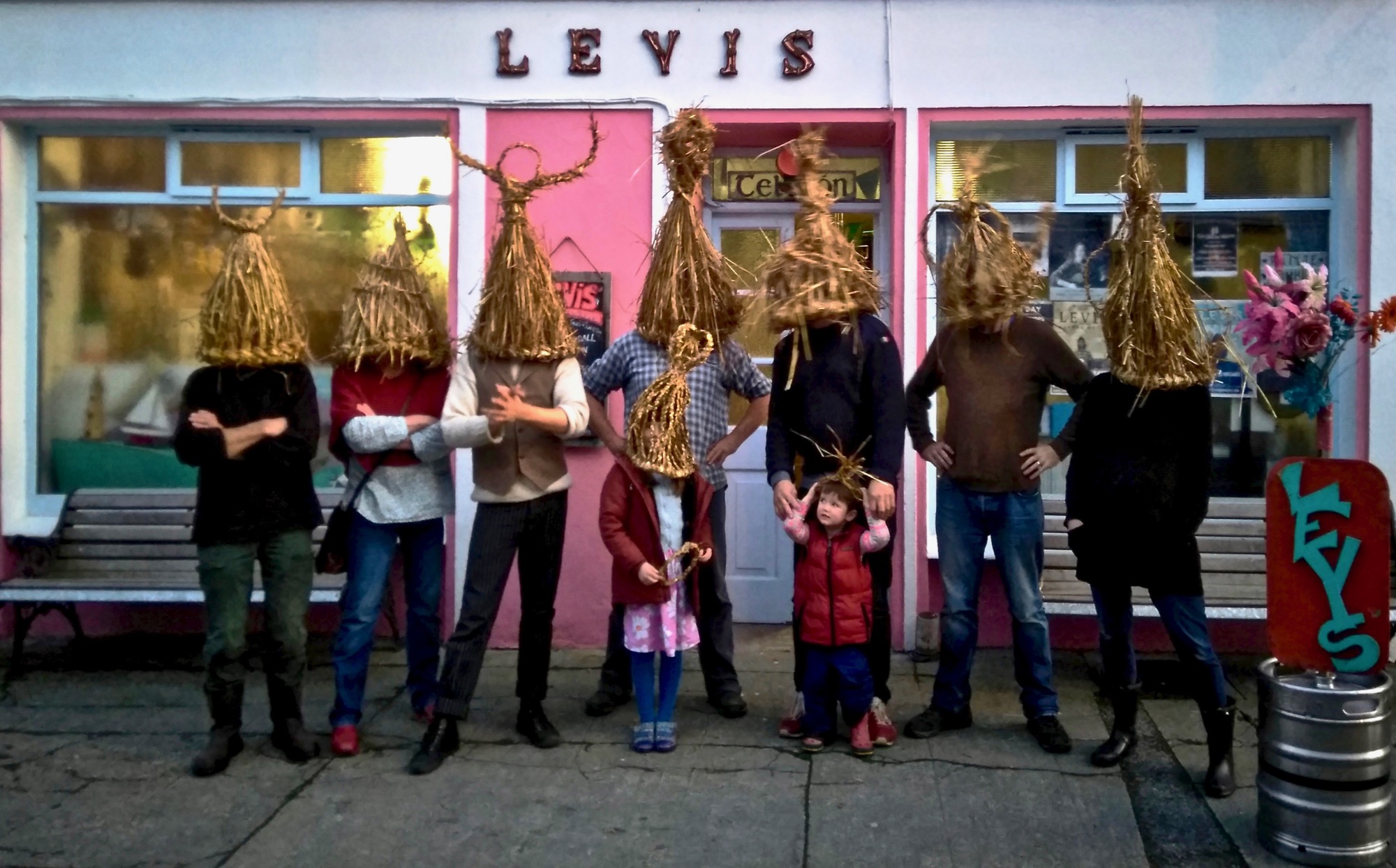
By good fortune there’s ‘Mr O’Leary’ above! He’s the landlord of Levis’ Corner House Bar in Ballydehob: he allowed the Wran workshop to take over his pub yesterday. Basically that involved covering the whole place in straw out of which, magically, appeared lots of wonderfully crafted Wran masks. Joe is wearing a fine example.
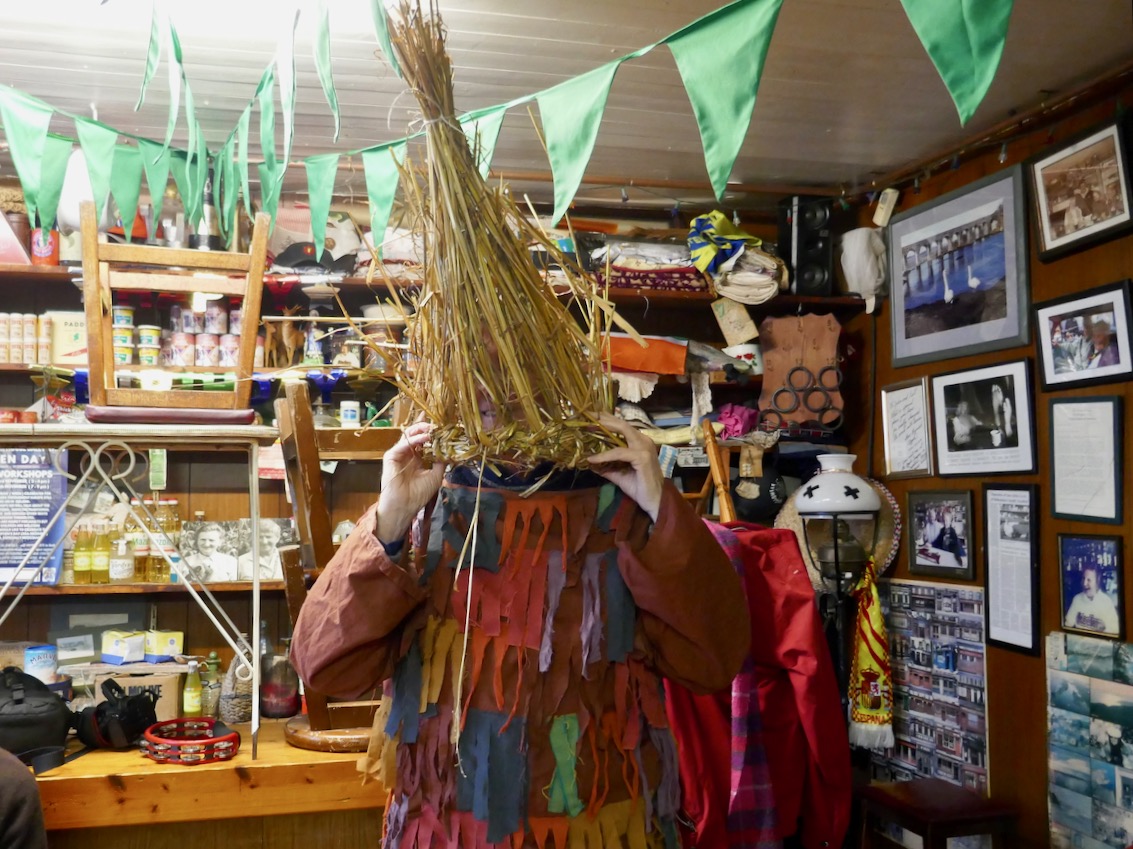
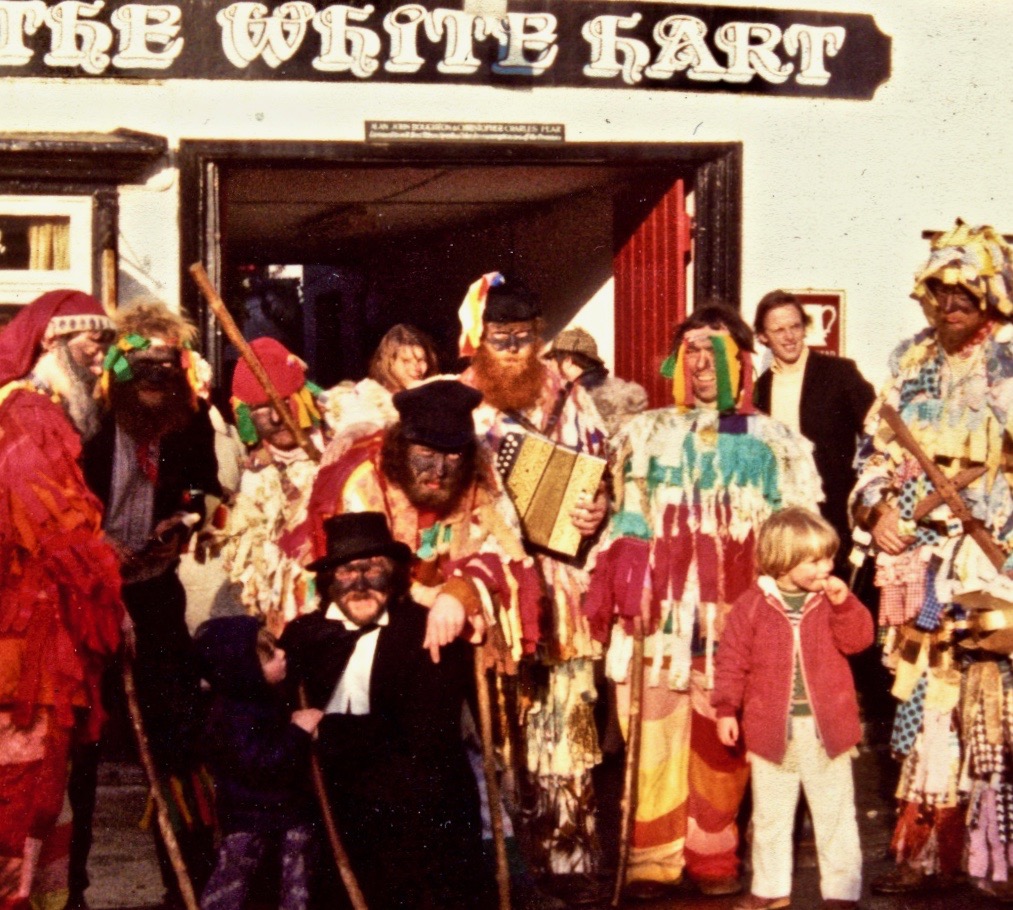
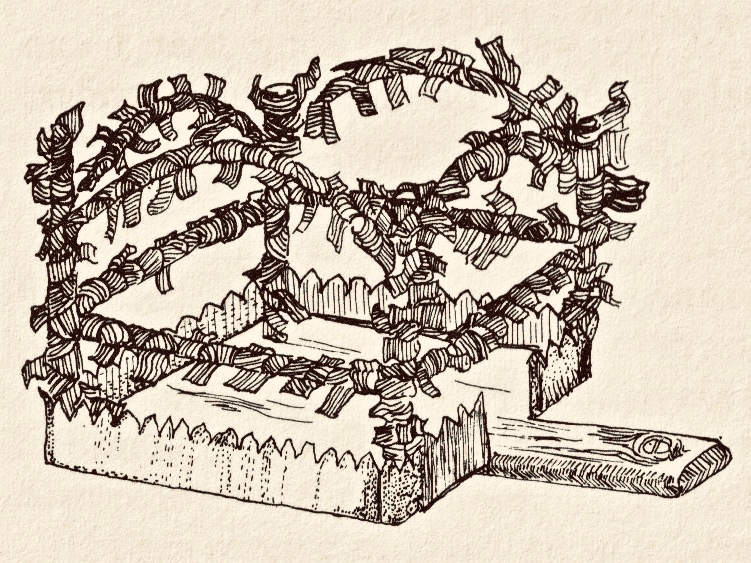
Finola and I were at the workshop, and there I am with work in progress on the straw mask which we made (upper picture). You’ll notice that I’m wearing ‘tatters’: I’ve had these for years, and I used to don them for our own mumming tradition in Devon which also happened on 26 December (that’s me with the squeezebox mumming in the 1970s! – lower picture). Over there we called St Stephen’s ‘Boxing Day’ because that was when ‘Christmas boxes’ were given to the postman, the milkman and anyone else who provided their services through the year. Interestingly, Kevin Danaher mentions the ‘Wran box’ which was taken around the houses by the wrenners (or Wran Boys) and used to collect money ‘for the Wran’. This illustration of a Wren box from County Galway is from Danaher’s book The Year in Ireland:
The workshop in Levis’ was very well attended, and there is clearly great enthusiasm for reviving this custom. Sonia collected the straw at the annual Thrashing in Ballydehob – which is a traditional harvest celebration. It’s not easy to find the right straw for making the masks nowadays: anything that has been through a combine harvester has been flattened and will not survive the plaiting.
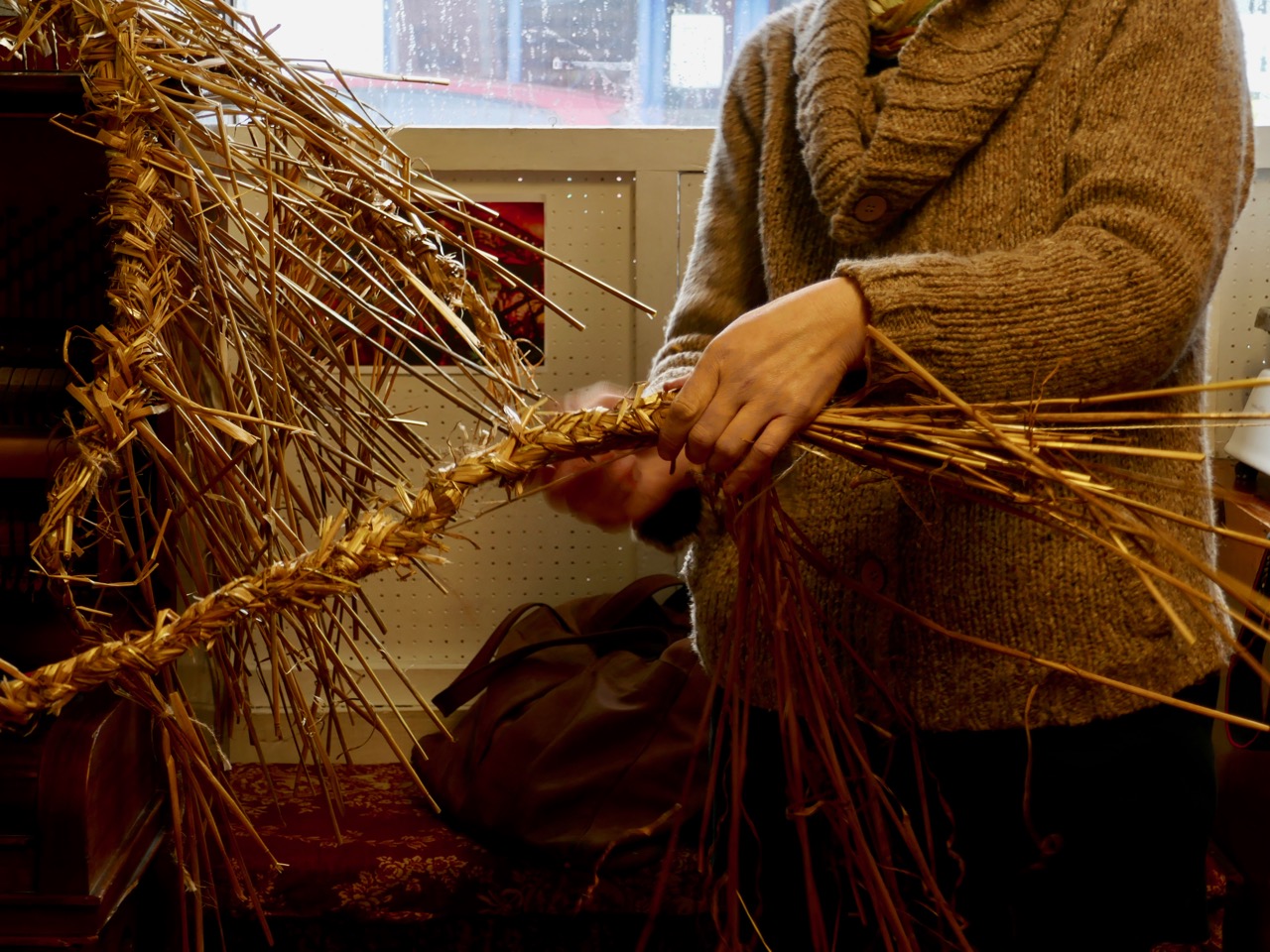
It’s a complex process, but the group coped well in acquiring the new skills under Sonia’s tutelage. The making – every year – has always been part of the tradition where it’s still practised today. Sometimes the straw masks (which are only one part of the ‘disguise’) are destroyed after Stephen’s. In some of the Dingle traditions they are ritually burned on the following St Patrick’s Day.

* * * * * * Fast Forward to 2021 * * * * *
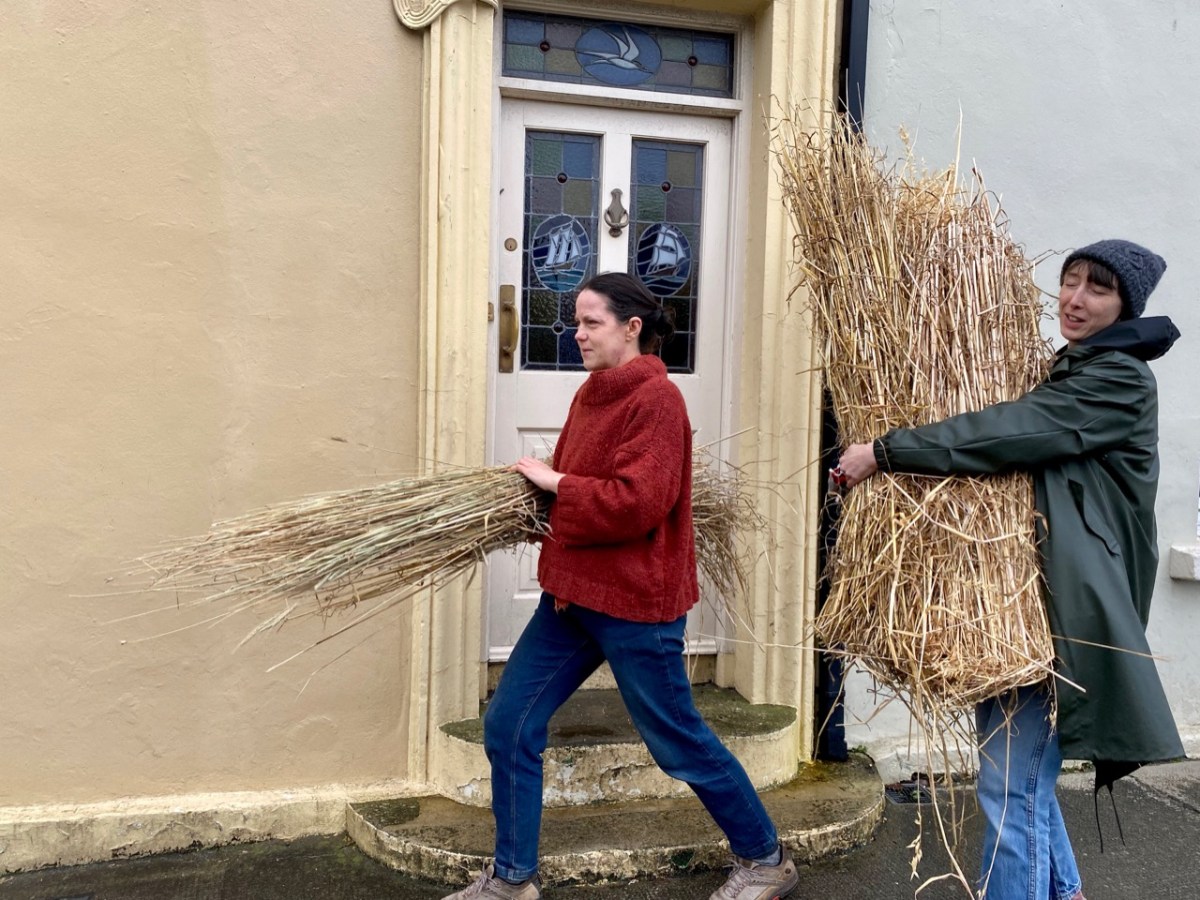
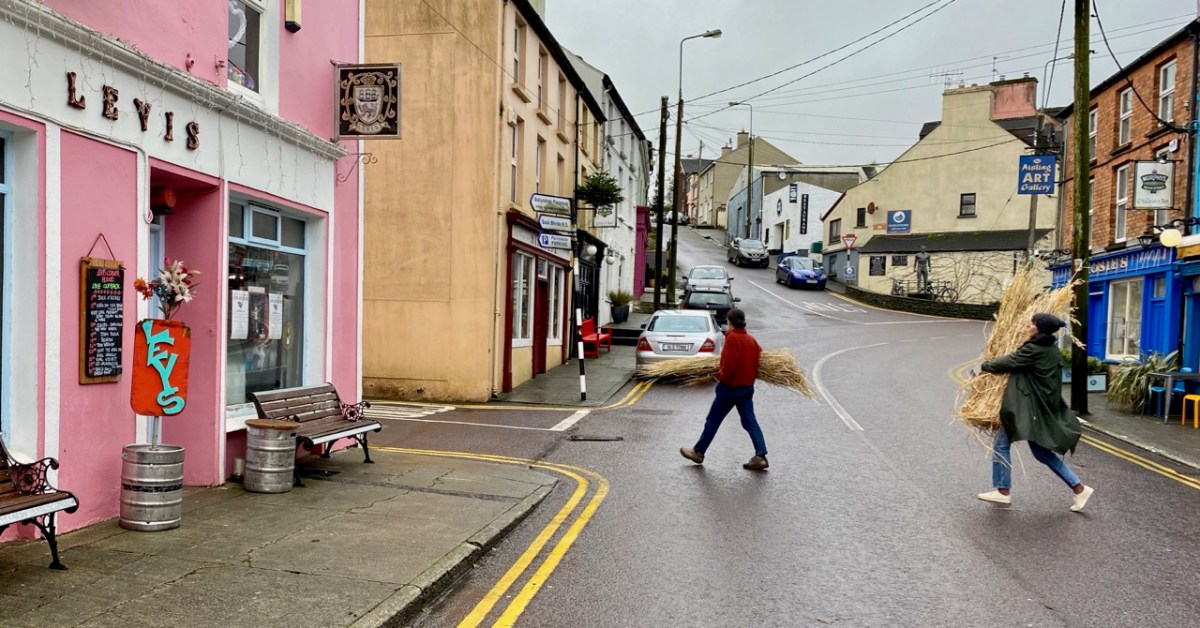
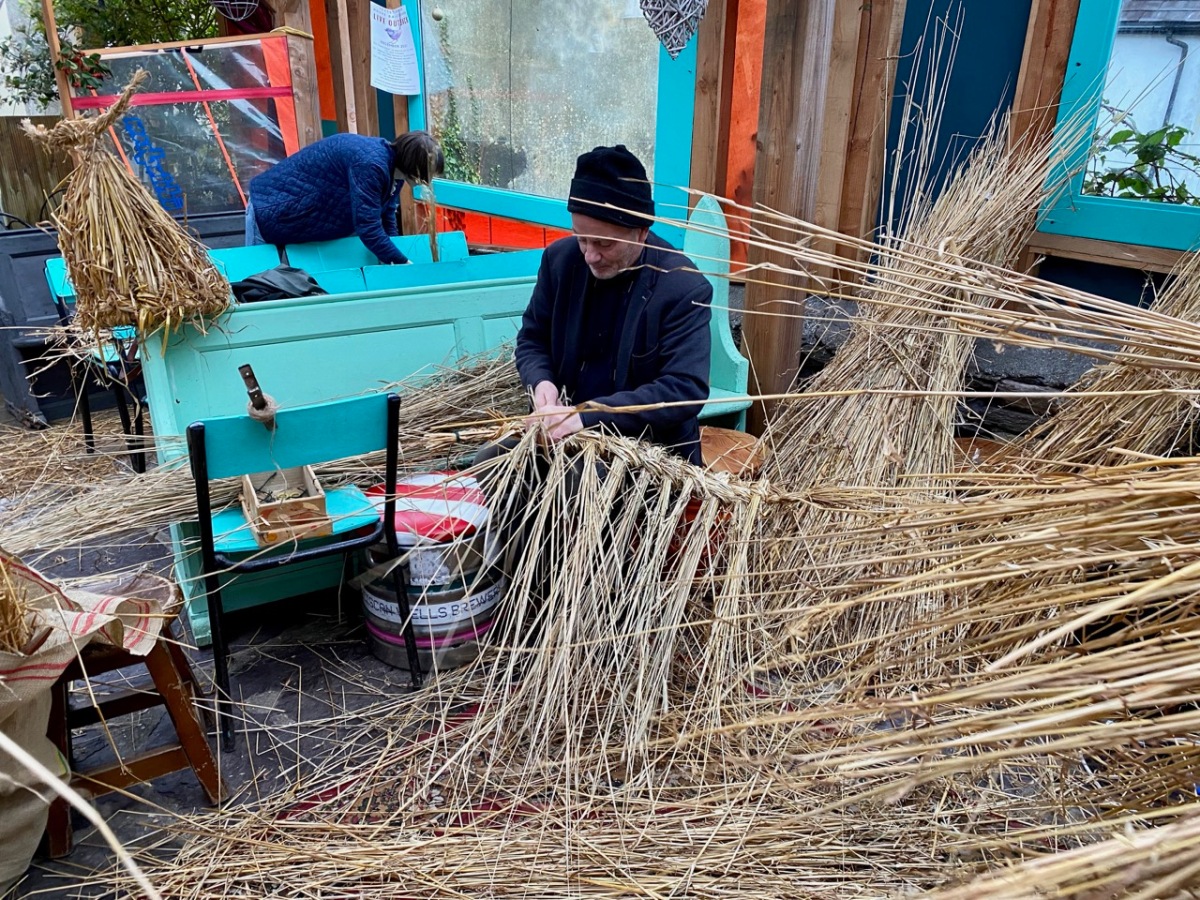
Two years later, on a damp Sunday in Ballydehob, you might have seen the strange sight of bundles of straw being transported across the road to Levis’, where the 2021 Wran Workshop is about to take place in the ‘outback’ area of the bar. That’s Sonia (on the left above) who is masterminding the whole proceedings, and also oversaw the growing of the straw.
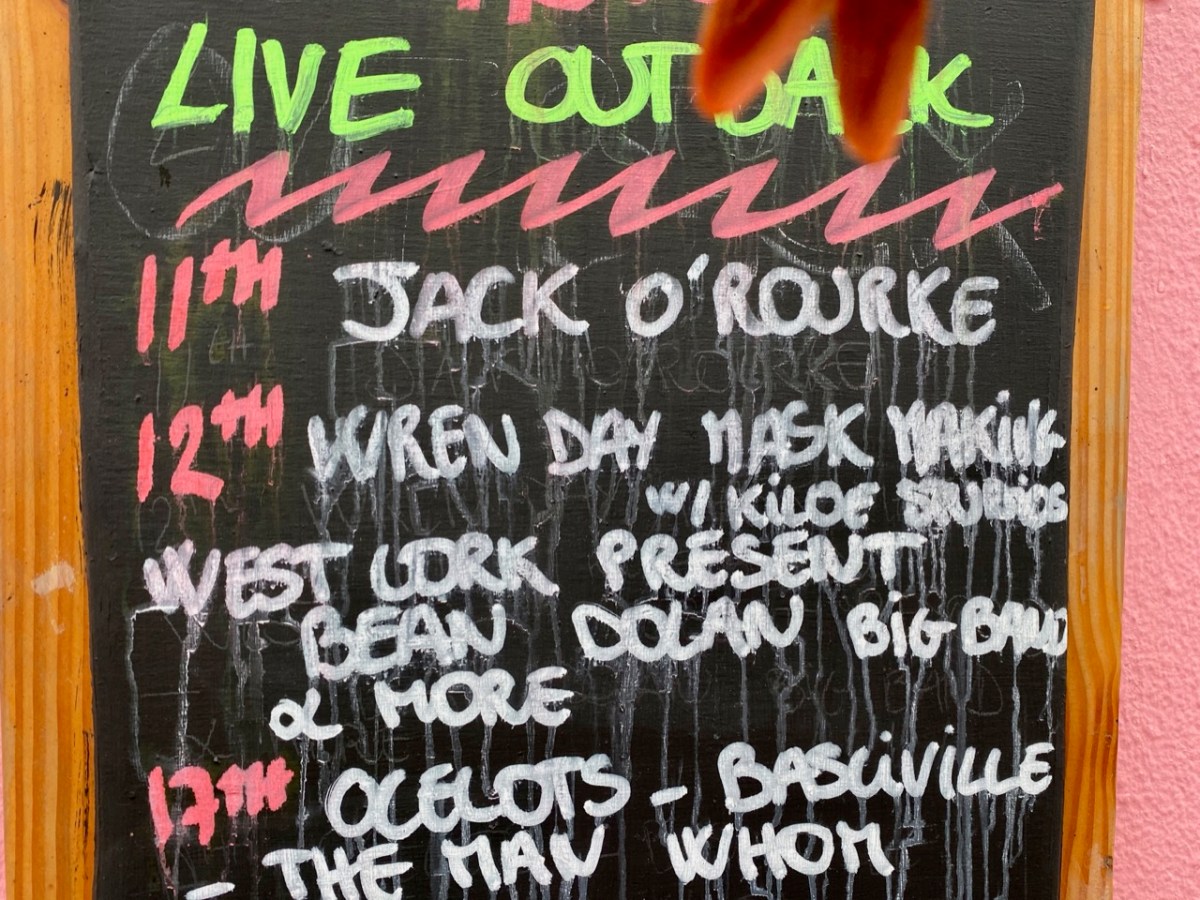
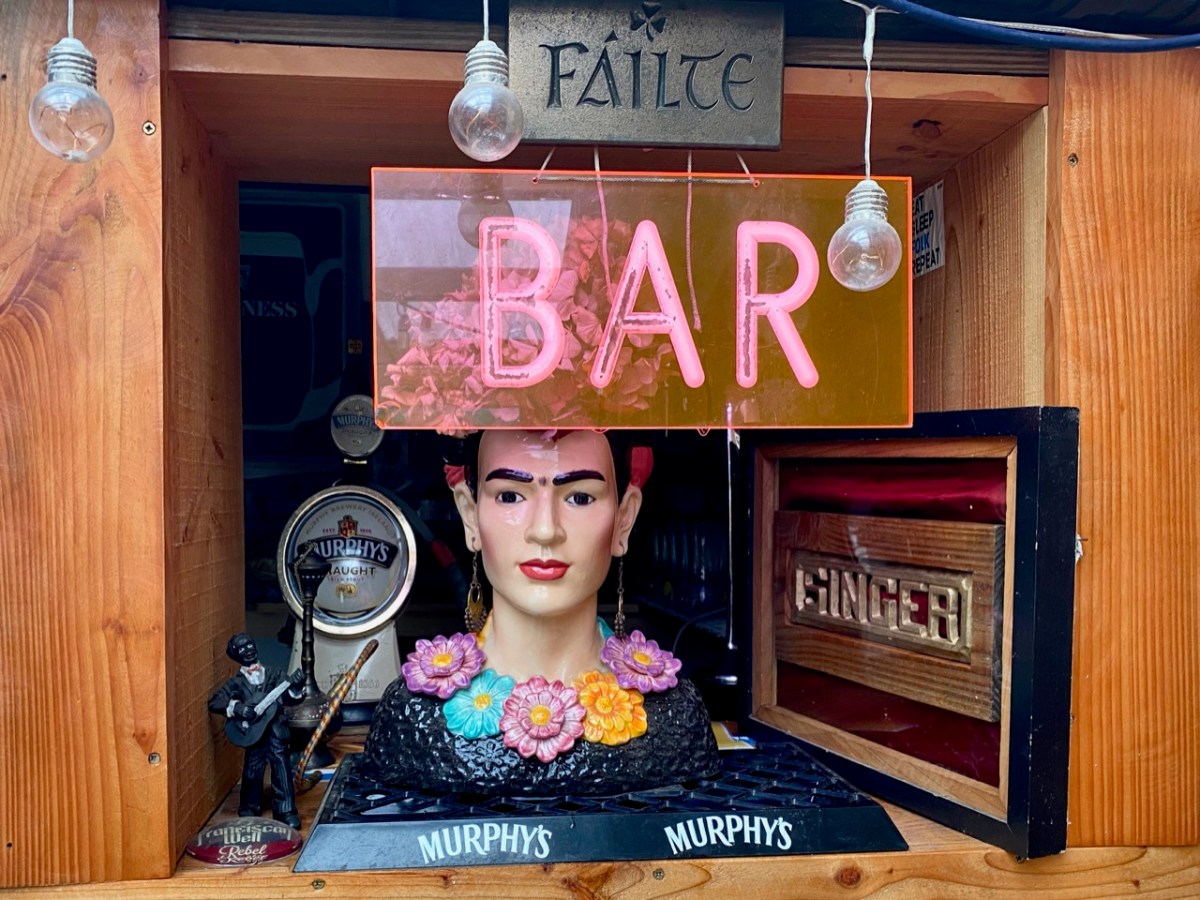
We all really appreciate Joe and Caroline – who run Levis’s – who are so supportive of community events and who, like everyone else, have had to struggle to keep business going through the ups and downs of Covid restrictions. The ‘Outback’ – formerly their yard – has been remarkably transformed into a comfortable outdoor venue, and live concerts and events are continuing through the winter season, helping to make our days seem as normal as possible.

We were a small but dedicated group, determined to get the tradition going again in Ballydehob. We are not sure, yet, when it will happen. Traditionally it should be Stephen’s Day, but it all depends on how available the participants will be. We will keep all our readers fully informed! meanwhile, if you need encouragement, look at the work that has gone into the straw masks this year . . .
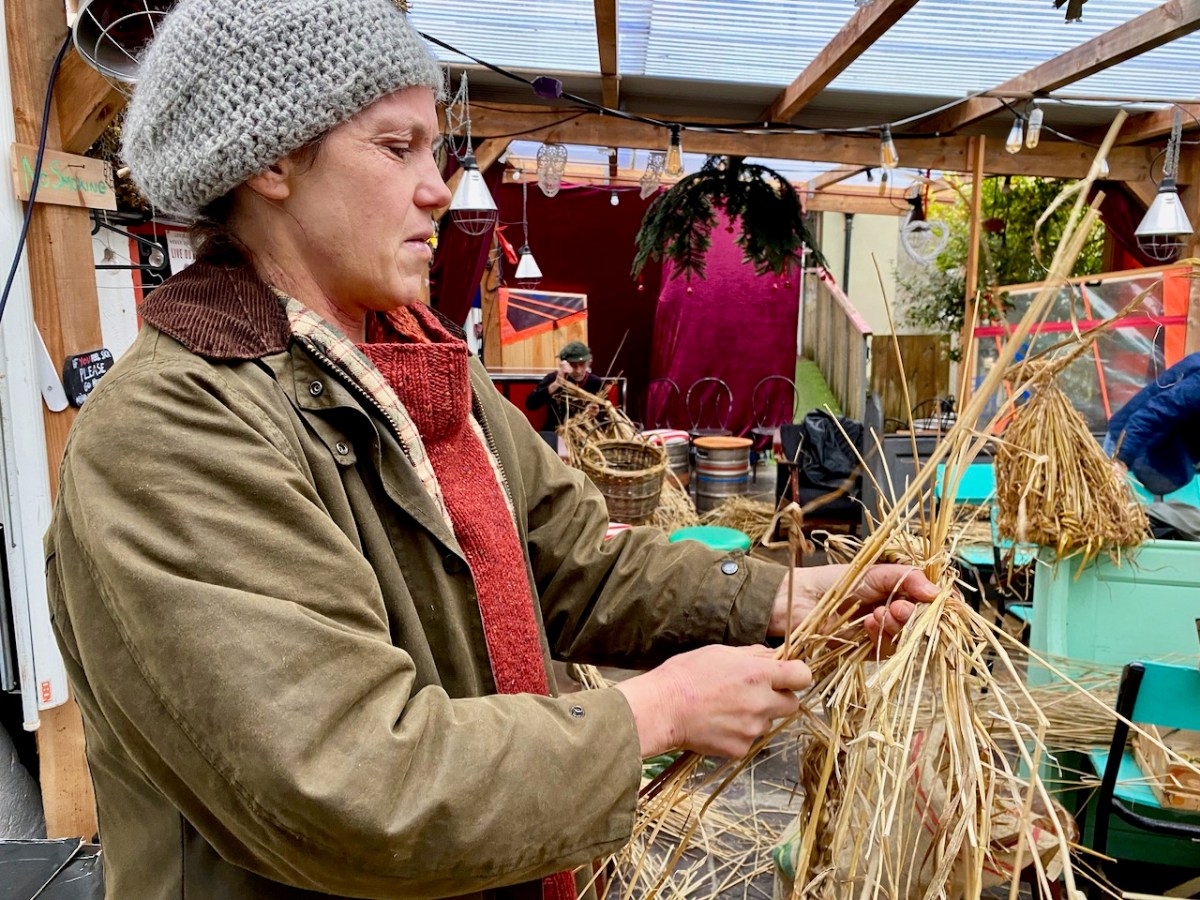
Here’s Sonia Caldwell again, above. We have featured her Kilcoe Studios in a previous post. She is undoubtedly the energy behind this project. Look out for us all shortly after Christmas – there is good entertainment to be had. But, also, essential traditions to be kept alive to ensure that our world keeps turning!

That’s Pól Ó Colmáin, above, testing out his mask for size before finishing off the conical headpiece. Marie and he run the Working Artist Studios in the main Street of Ballydehob – a wonderful addition to our village’s thriving assets. Pol also bravely works away at teaching the Irish language to a number of students, including me! Here are both of them this afternoon with their completed Wran Day pieces – and also my own mask back at home . . .

The Wild One

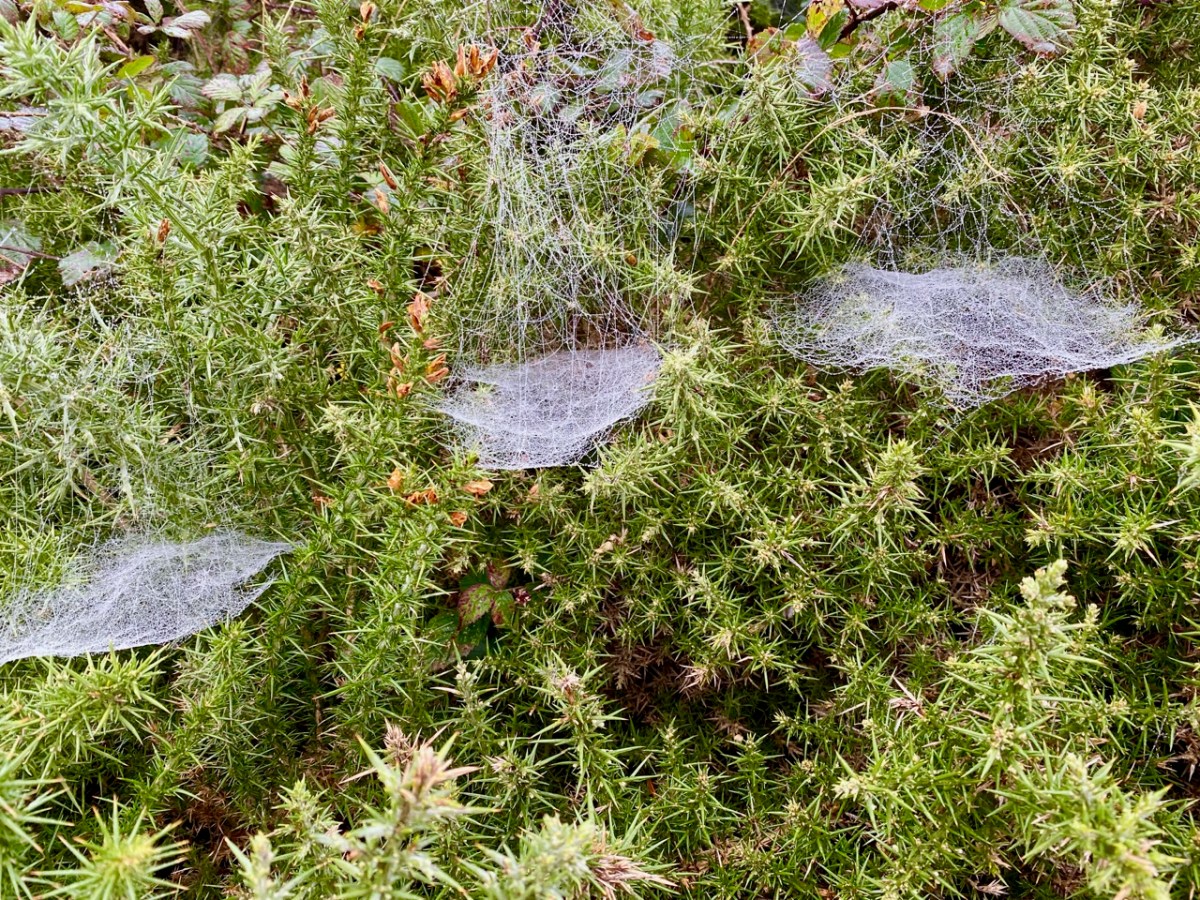
We are past November Dark – traditionally a ‘low’ time of the year when the effects of the approaching cold months begin to displace autumnal skies and spectacular sunsets: the term traditionally refers to the appearance of the new moon of the month (which happened this year on the 4th), but is probably inspired by the preceding nights when no moon is visible. For us at the moment, on the shores of Roaringwater Bay, the dark time is emphasised by a constant pervading mist which clings and covers everything in films of moisture, especially the myriad cobwebs on the gorse bushes which surround us. Gone – for now – are our fine views out across to the islands, and there is a feeling of being marooned and suspended in a lifeless grey tract which encompasses sea and sky.

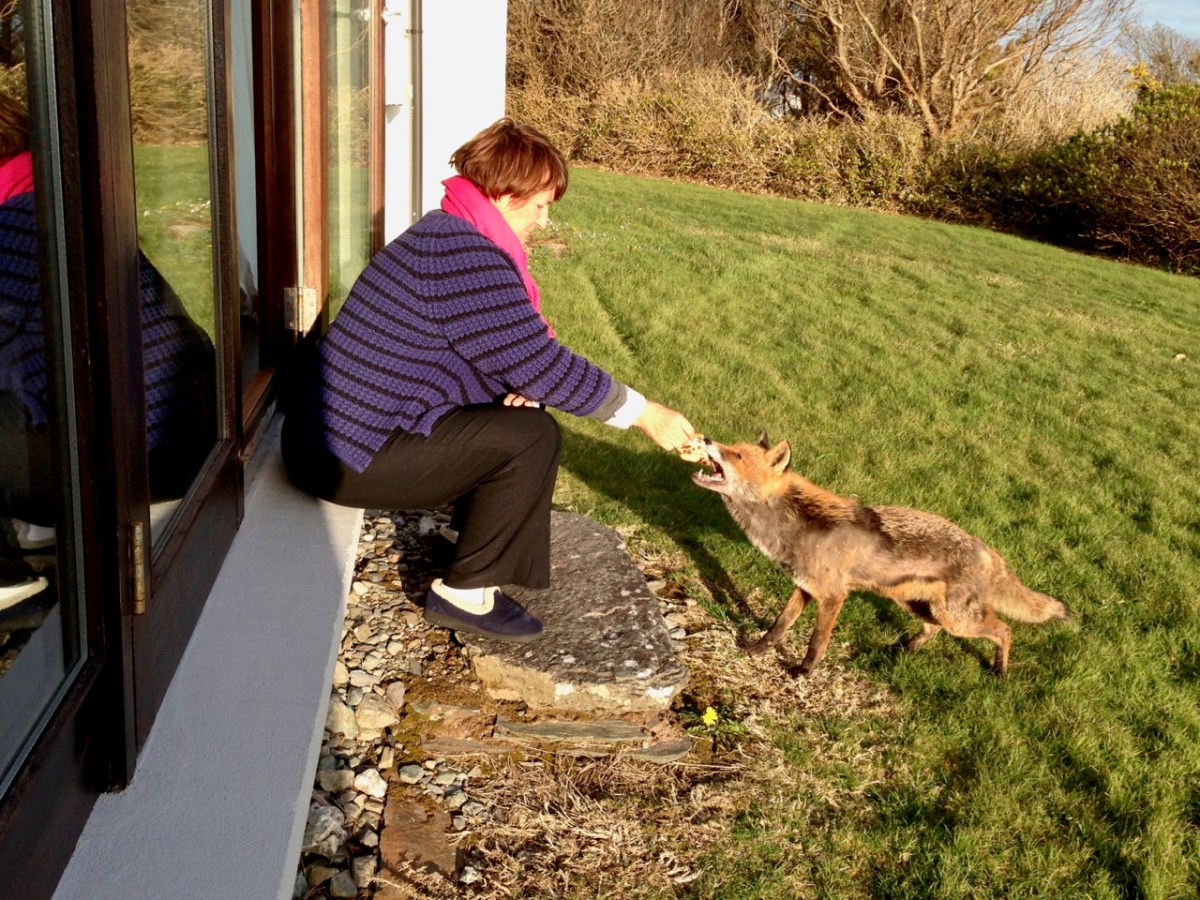
November Dark has brought with it tragedy to our garden. In explanation, I should first paint the idyllic picture of what we like to call our ‘peaceable kingdom’. For many years we have considered this domain a haven. Do you remember our fox – Ferdia – who was a constant companion to us in the first few years here at Nead an Iolair? He visited on a daily basis – often waking us by barking outside our bedroom window at dawn, and presided over a mixed community of birds and animals who share our territory – without any conflict.

Ferdia was happy enough to co-exist with the bird and pheasant families, the rats and mice, and the occasional cat that dropped in. I have a memory of fox and cat sitting side by side on our terrace, clearly having a conversation with each other: I would like to have eavesdropped, but whatever mutual language they share was not available to me! Ferdia vanished from our garden a few years back – gone to his happy hunting grounds no doubt; but the pheasants have remained with us through much of the decade we have been here.

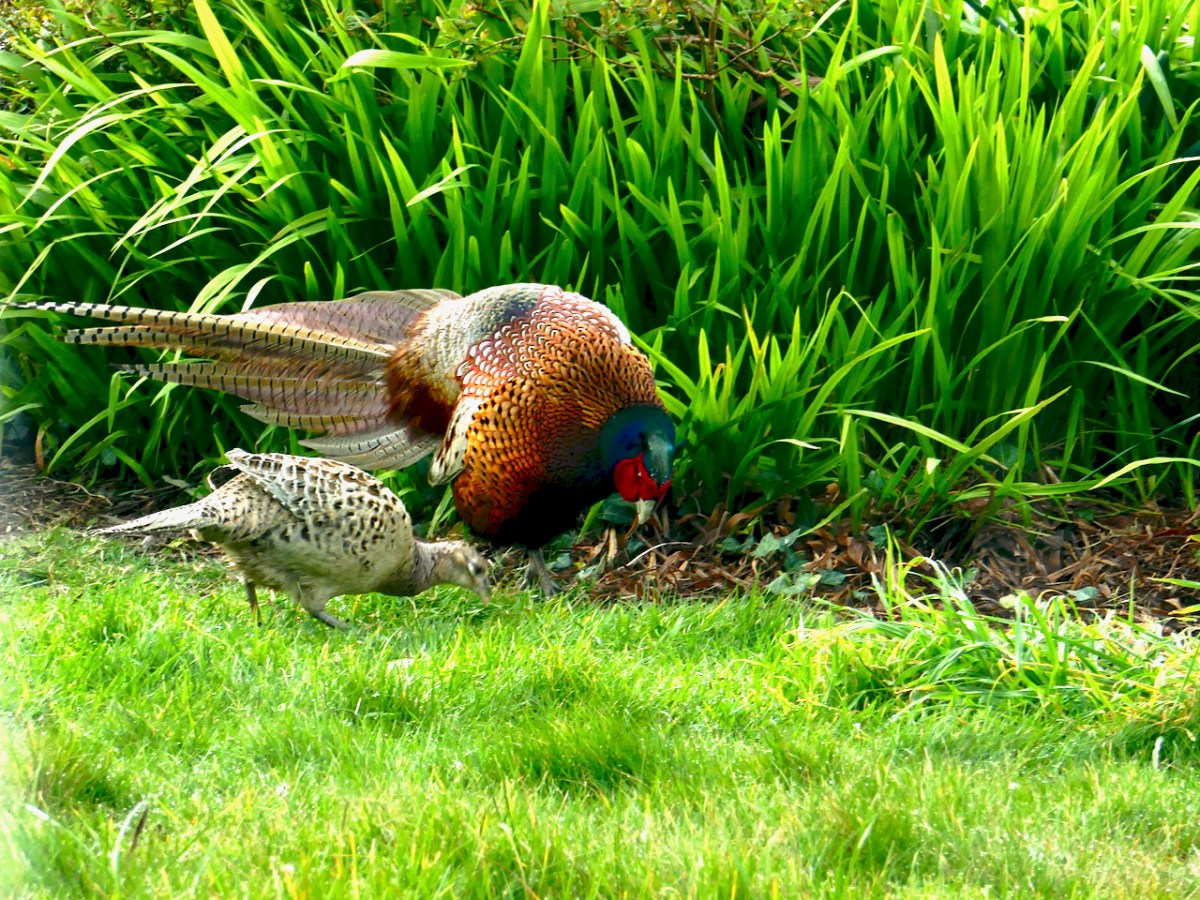
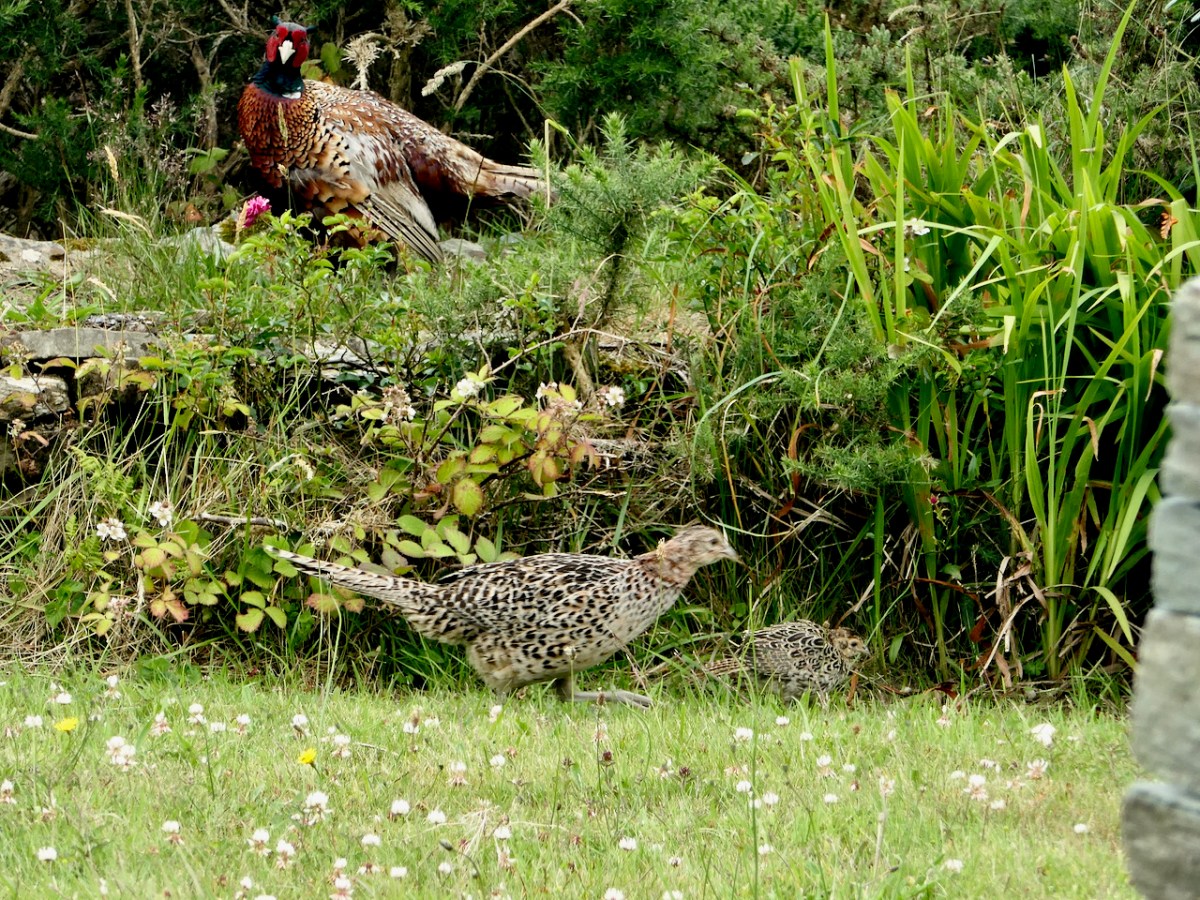
In the upper picture Finnbarr and his young wife, Fidelma, patrol our garden some five years ago. The lower picture was taken just before the start of the Pandemic, in March 2019. The couple have been a daily feature of life outside Nead an Iolair. They always appreciated feeding time, when they got a share of the seeds I put out on our patch for the many bird visitors, small and large. The picture below taken during the summer of last year shows a family group: pheasant chicks have been seen but rarely.

The idyll abruptly ended yesterday, when a bomb hit the garden – in the form of a small but fierce force of nature: only inches long but terrifying. I glanced out of the window where, minutes before, the two pheasants had been foraging as usual along the stone boundary wall. I was shocked to see Fidelma lying on her back, wings flapping, being dragged along the ground: there was a commotion among the small birds and Finnbarr had vanished. At first I could not see the attacker, but as I rushed outside I caught a glimpse of brown fur with a hint of white and black. My first thought – a rat! – could not have been borne out: we have lived side by side with rat families for years: they only ever appear to share the bird food, and are never aggressive.

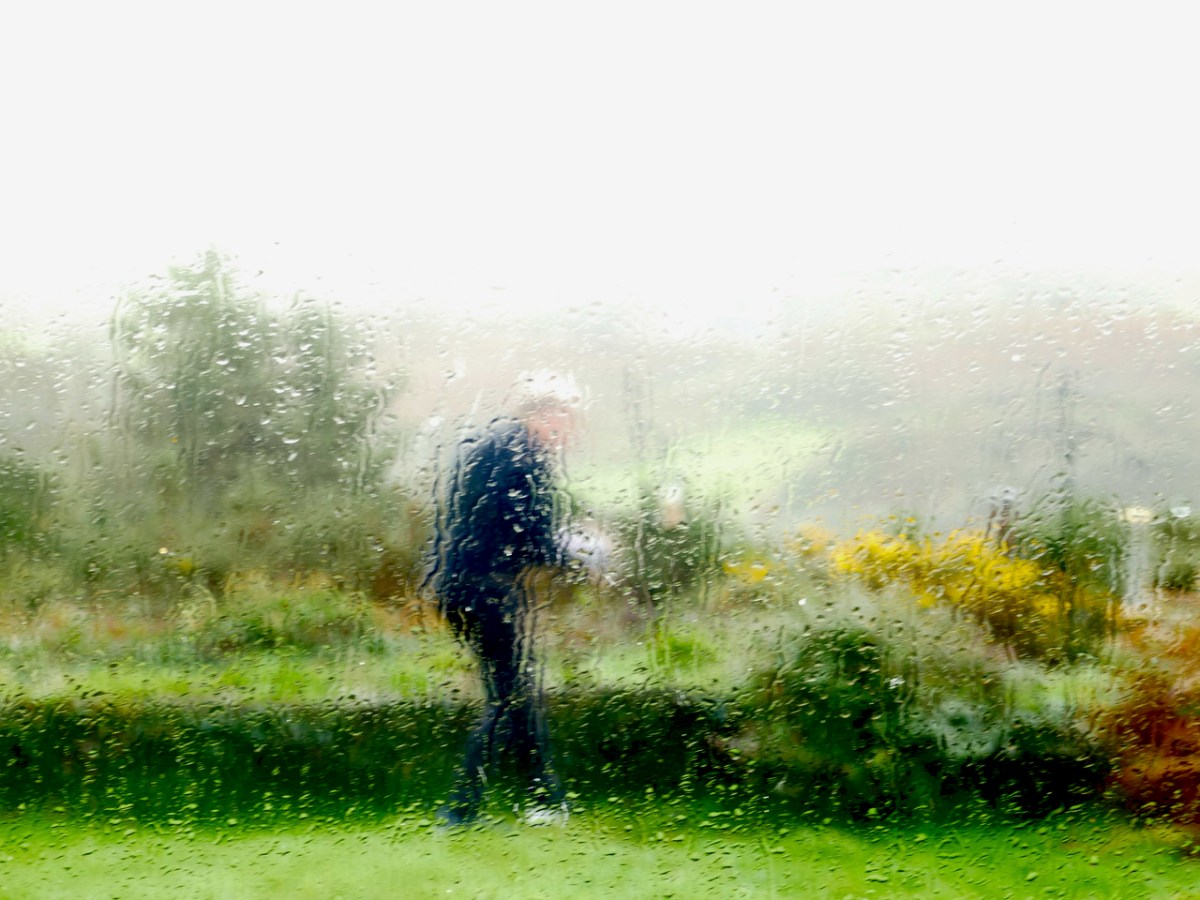
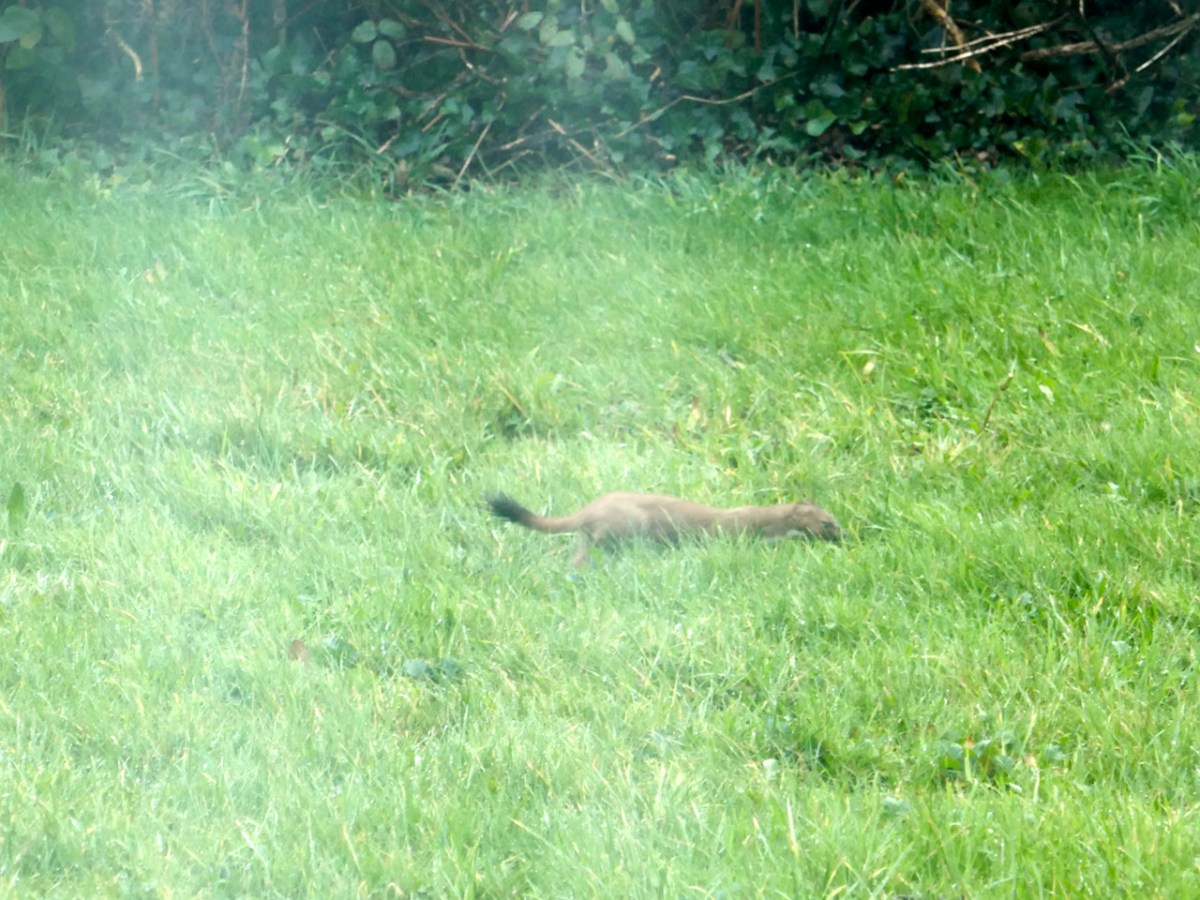
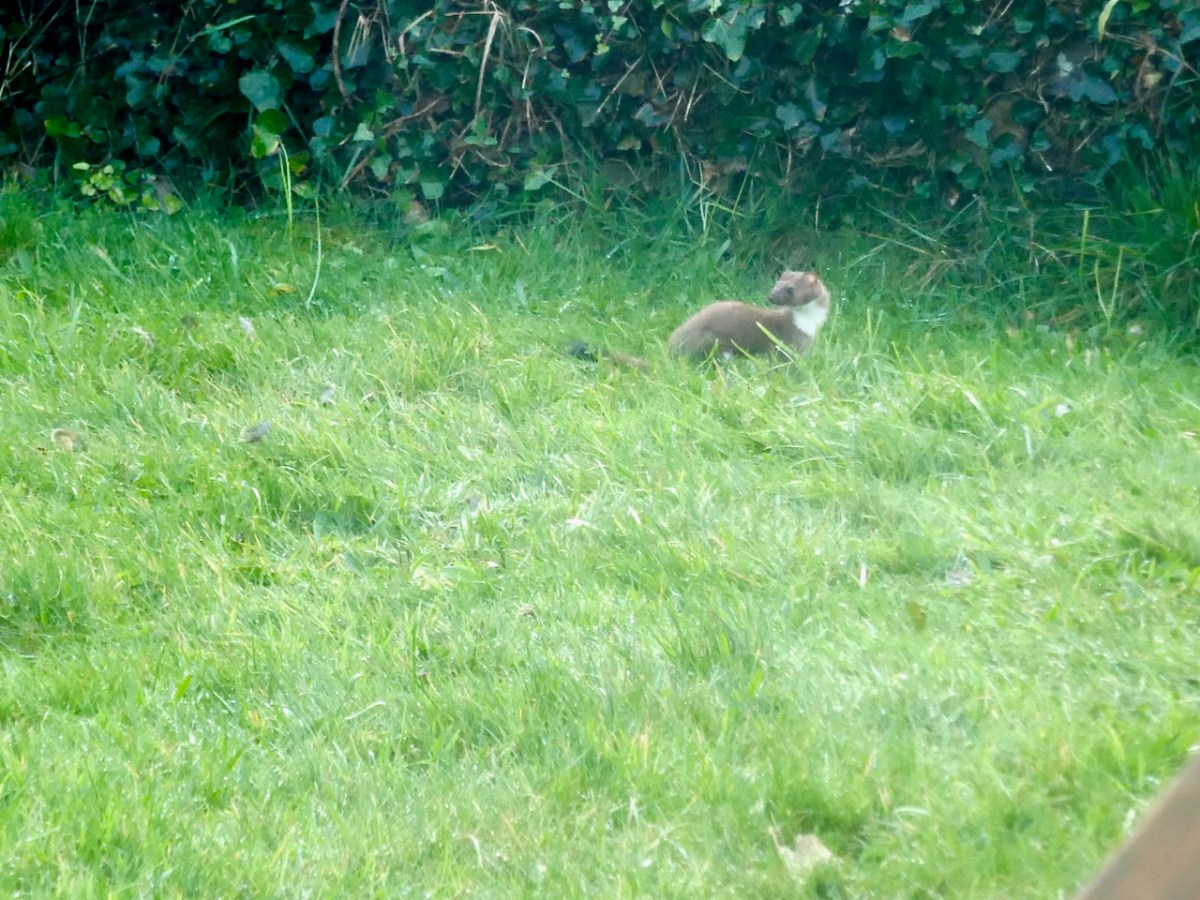
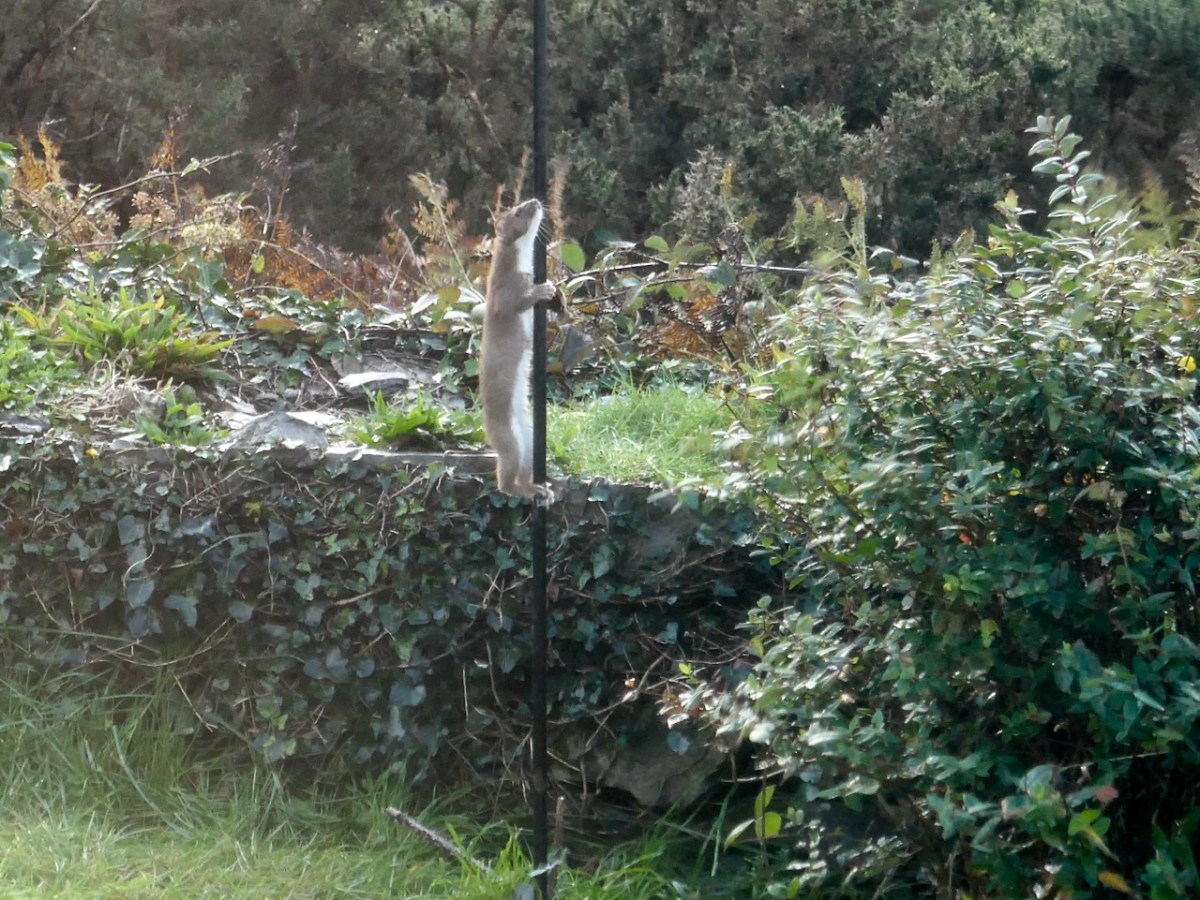
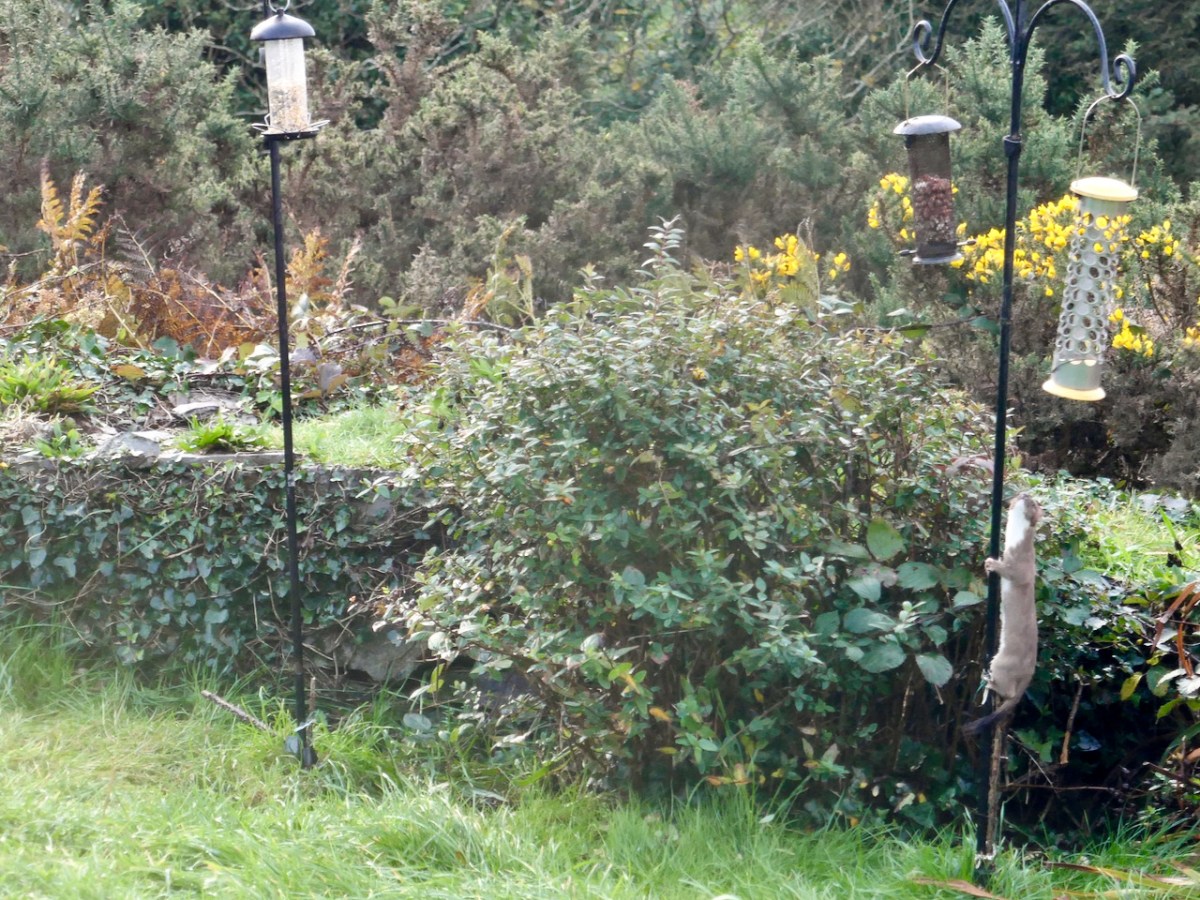
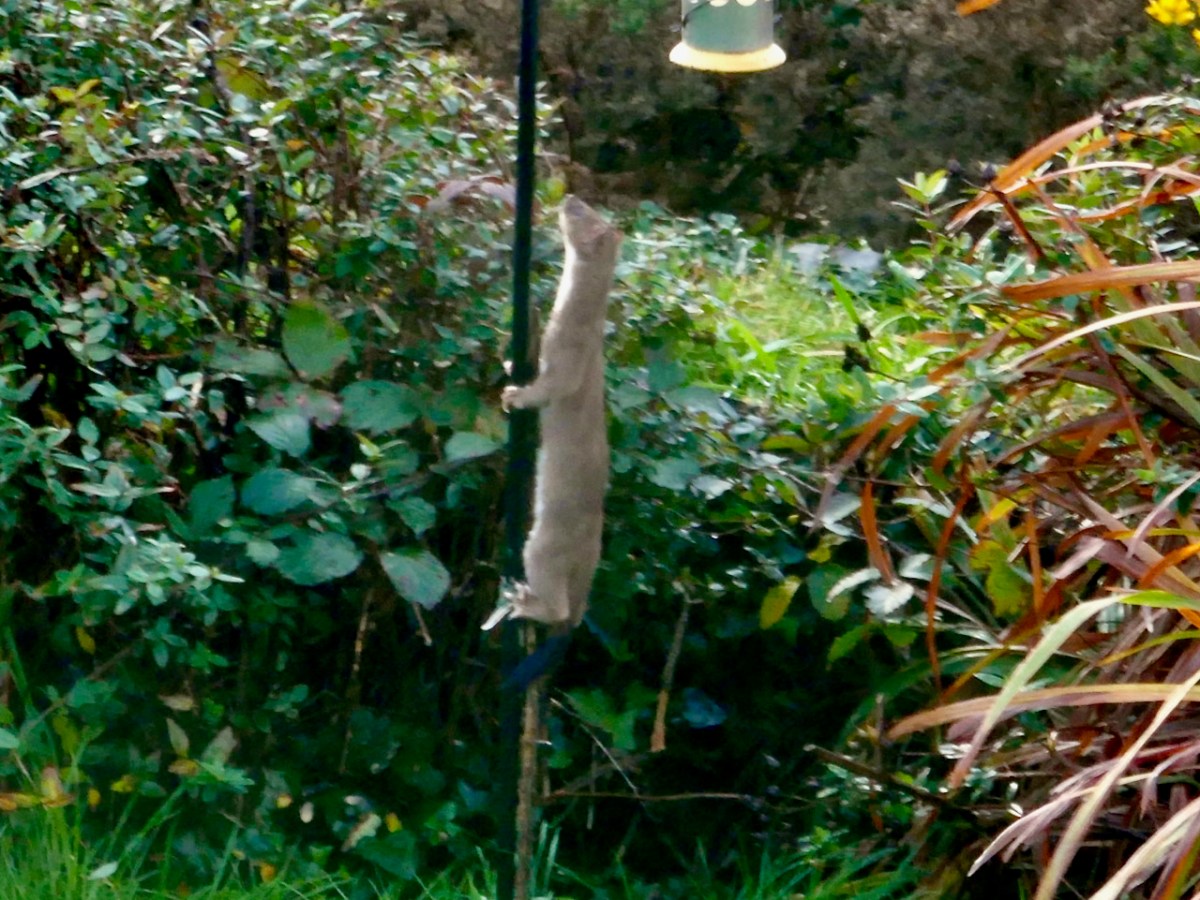
You can see the conditions that prevailed on this worst of days from Finola’s picture (top), taken from indoors through the windows. And – below that – the brazen culprit, who danced around the garden at breakneck speed, very ready to threaten me if I made a wrong move! It was our first sighting here on our land of an Irish Stoat. Having now read the books, I know in hindsight what a shocking phenomenon had hit us. Although fearing the worst, I quickly removed Fidelma to an indoor refuge and then watched the rampaging of this fur powerball traversing our territory at lightning speed; leaping from walls, trees and bushes and aiming for any likely food source.

Finola has done her best to clarify the images in the photos she rapidly took through streaming wet glass (above) on this appalling day. The weather did not in any way impede the progress of the animal which circumscribed our whole acre, it seemed, in record time.

. . . The Stoat is often called the Weasel in Ireland, but although the weasel (Mustela nivalis) is very similar in appearance to the stoat, it is not native to Ireland and has never been introduced here. In Ireland the stoat or ‘weasel’ was regarded as a very intelligent animal, but also vengeful. For example, since they were believed to understand human speech, if a stoat was encountered the correct thing to do was to greet them politely. In County Clare the custom was to raise one’s hat in greeting, or even to bow. The person who insulted them, on the other hand, or pelted them with stones, could expect to lose all their chickens before too long. Deliberately killing a stoat was most unwise, since it caused all the deceased animal’s relations to descend on the house of the culprit and attack with great savagery . . .

Ireland’s Animals – Myth legends and Folklore, Niall Mc Coitir, The Collins Press, Cork 2010

The Duchas Schools Folklore Collection – gathered in the 1930s – has numerous entries referring to the stoat. Above is an example from Co Carlow. When I was sifting through these, I was struck by the fact that similar stories about stoats are repeated over and over again, but from different parts of Ireland. I could write a volume based on these accounts, but will choose only a few:

. . . One time there was a girl who was very fond of going to the seaside. One day she went to the seaside and lay down and fell asleep. Ten weasels went down her throat. So she awoke when the last one was going down. She went to the doctor and the doctor said she would need to undergo an operation and then she would die. One day she was going to the shop and her granny knew all about cures. So she went into the granny. Her granny told her to get two pounds of salt and eat all the salt and go to the seaside and drink no water and keep her mouth open and the weasels would have to come out for a drink. So this she did. The weasels came out for a drink. The girl counted them. There were ten in it and the girl came home cured . . .

William O’Donnell, Cabra Glebe, Co Donegal

. . . One day long ago two men went to cut the meadow with scythes. They cut away for a while until they came to a weasel’s nest where there were four young weasels out of the nest and left them near by on the ground. After a while the mother of the weasels came home and found her young on the ground and was very angry, She hesitated for a moment and then understood what the men had done. Now the men had had a can of milk with them for a drink which they left near the weasel’s nest, the old weasel saw the can and went to see what in it. When she saw what was in it she spat into it because a weasel’s spit is poison. When the men saw this they were terrified and put back the young weasels into the nest, and the old weasel was pleased and went back and upset the can and spilt the milk from fear the men would drink of it and be poisoned . . .

James Gormley Senior, Aged 82, Commeen, Co Roscommon

Note that the term ‘Weasels’ is used far more often in these accounts than ‘Stoats’. There can only be the one animal, however, as there have never been true ‘weasels’ in Ireland. The story above, from Co Roscommon, is the most common of all ‘weasel’ tales in Ireland, and variants of it have been recorded from all parts.

. . . Many years ago an old woman lived by herself. There was a nest of weasels under the hearth in the house in which she lived and every day the old woman fed them until they became quite tame. When the young weasels were reared they went off but the old one remained in the hearth. One day the woman was sitting by the fire when the old weasel came out and sat with her. The weasel was continually looking up the chimney and at last the woman said “What the dickens are you looking at?” and at the same time looking up herself. She saw a little bag hanging in the chimney and took it down. To her surprise and joy she found it was full of gold. This was the weasel’s reward for her kindness to her and her family . . .

Mrs L Millett, Fiddaun Lower, Inistioge, Co Kilkenny

. . . The Swarm or Drove of Weasels: the following story or rather fact come from a reliable source to wit a teacher in Ballyshannon. In the end of August or about that time some distance outside Ballyshannon a great whistling was heard as if a number of little birds and a mighty drove of Weasels was seen heading for the mountains. An old man said that he heard that weasels used make for the mountains during the Grouse Season. The Priests housekeeper saw or heard of the same thing in Antrim . . .

J Clarke, Navan, Co Meath

. . . Some time about forty years ago there were children playing on the side of a hill and they saw a few weasels. They started to run and cry. They looked round and saw thousands coming after them. Only they got away the weasels would have devoured them . . .


Written by Kathleen McKenna Bragan, Co Monoghan 25th November 1938

I couldn’t resist that little foray into weasel stories from the Folklore Collection. There are many many more pages full of them! Interestingly, stoats are a fully protected species in Ireland. If stoats are proving a problem, by killing chicks or other domestic animals, you must solve the problem by using good fencing; it is illegal to kill a stoat.

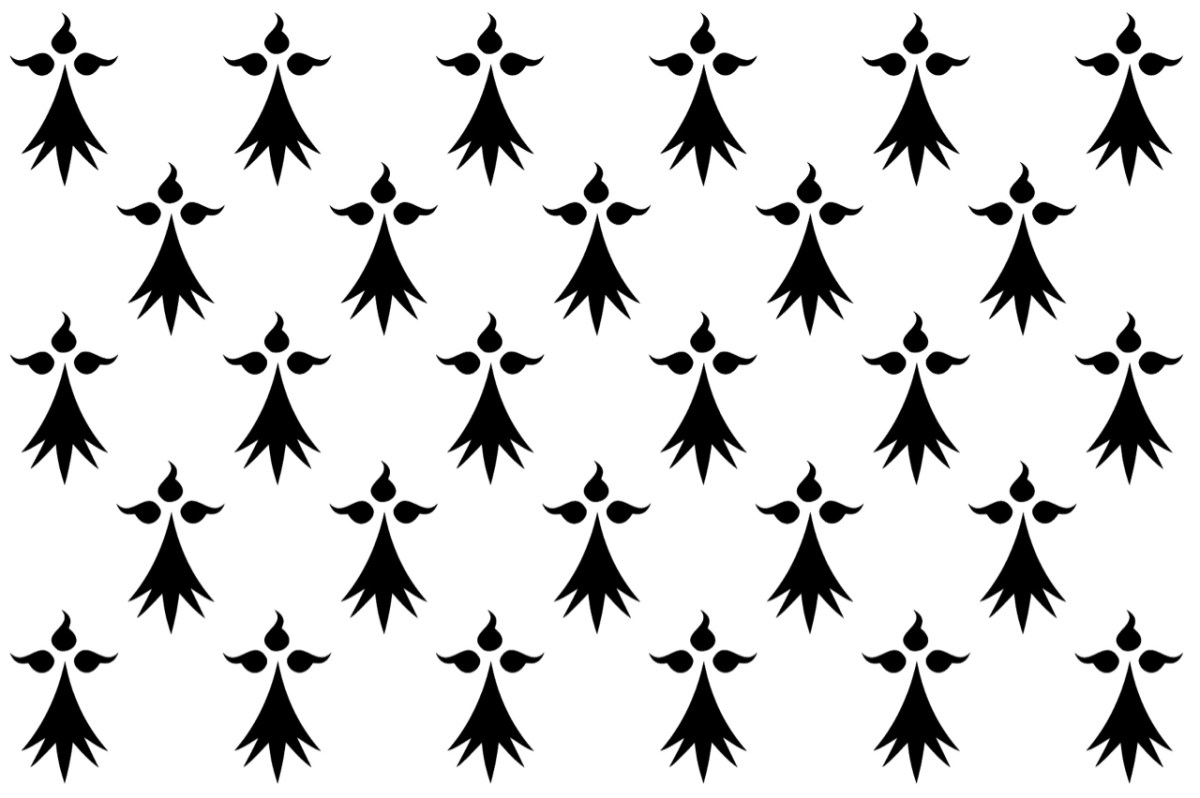
A possible reason for the attention which stoats attract in folklore is the fact that they can change colour, which adds a sense of the supernatural to them. In countries which have harsh winters the coat of the stoat becomes white in those months, offering a level of protection in the open landscape. The fur from the white – or ‘winter’ – stoat we call ermine, and the white fur is considered so precious that only royalty or nobility traditionally wear it. In the drawing above, the white stoat is wearing a cloak on which are printed the symbols of the flag of Brittany (below), which was an independent kingdom in medieval times. The white background represents the ermine fur, and the black markings are said to be based on the black tip of the tail which the animal retains, even in the winter.

Here (above) is another example of the Breton ermine representation: a finely worked silver antique brooch. In Ireland, the species of stoat which has evolved – Mustela erminea hibernica – does not usually turn white in winter, although examples have been noted. The animal is said to have been resident in Ireland from the post-glacial period and, in the present day, the population numbers are unknown: it is not a threatened species.

In spite of our attempts to care for Fidelma, she did not survive. Sadly, I decided to let Nature have her way and laid the body close to a fox-track above the house. Later, I noticed an assembly of corvids gathered in the area. When I returned there in the evening all traces had gone – just a few scattered feathers told the tale.

This morning, Finnbarr was absent from the garden. I did catch a glimpse of him wandering the distant pastures – forlorn and bereft. At least, those are the feelings my human soul projects onto him. He will find another mate, of course, and we hope they will continue to share our little bit of paradise. We will keep a lookout for unwelcome visitors, but we will always have to pay our respects to the ‘weasels’. If our stoat does return we will have to honour him with an Irish name: I am inclining towards Fiáinín – which means Little Wild One.

Lady with an Ermine, painted 1489–1491 by Leonardo da Vinci. The subject is said to be Cecilia Gallerani, the mistress of Leonardo’s Milanese employer, Ludovico Sforza. The Ermine is symbolic, rather than realistic – in fact it is pictured much larger than in real life. It has been suggested that the ermine in classical literature relates to pregnancy, sometimes as an animal that protected pregnant women. Around the time of the painting’s creation, Cecilia was known to be pregnant with Ludovico’s illegitimate son.

Castleruddery Stone Circle

Our travels are always attuned towards our particular interests, be they history, stained glass, art or – as in this case – archaeology. We go out of our way to take in sites we have never seen before – and there are so many. When we were ‘holidaying’ in Wicklow last week we searched out this stone circle in the townland of Castleruddery Lower. It was well worth the journey.

. . . Neglected, knee-high in grass and surrounded by round-crowned hawthorns whose May blossom speckles the bank, it is difficult to appreciate how important Castleruddery must have been early in the Bronze Age when Beaker copper prospectors and the Wicklow mountain goldminers passed by its brilliant entrance. It is not properly a stone circle but a henge, with a stone-lined interior. It was constructed on the summit of a hill just east of the valley into which the Little Slaney flows. Six miles north is the lovely Athgreany stone circle and only two miles to the south is the Boleycarrigeen ring, its stones embedded in a low earthen bank . . .

Aubrey Burl, Rings of Stone, France Lincoln Publishers, 1979

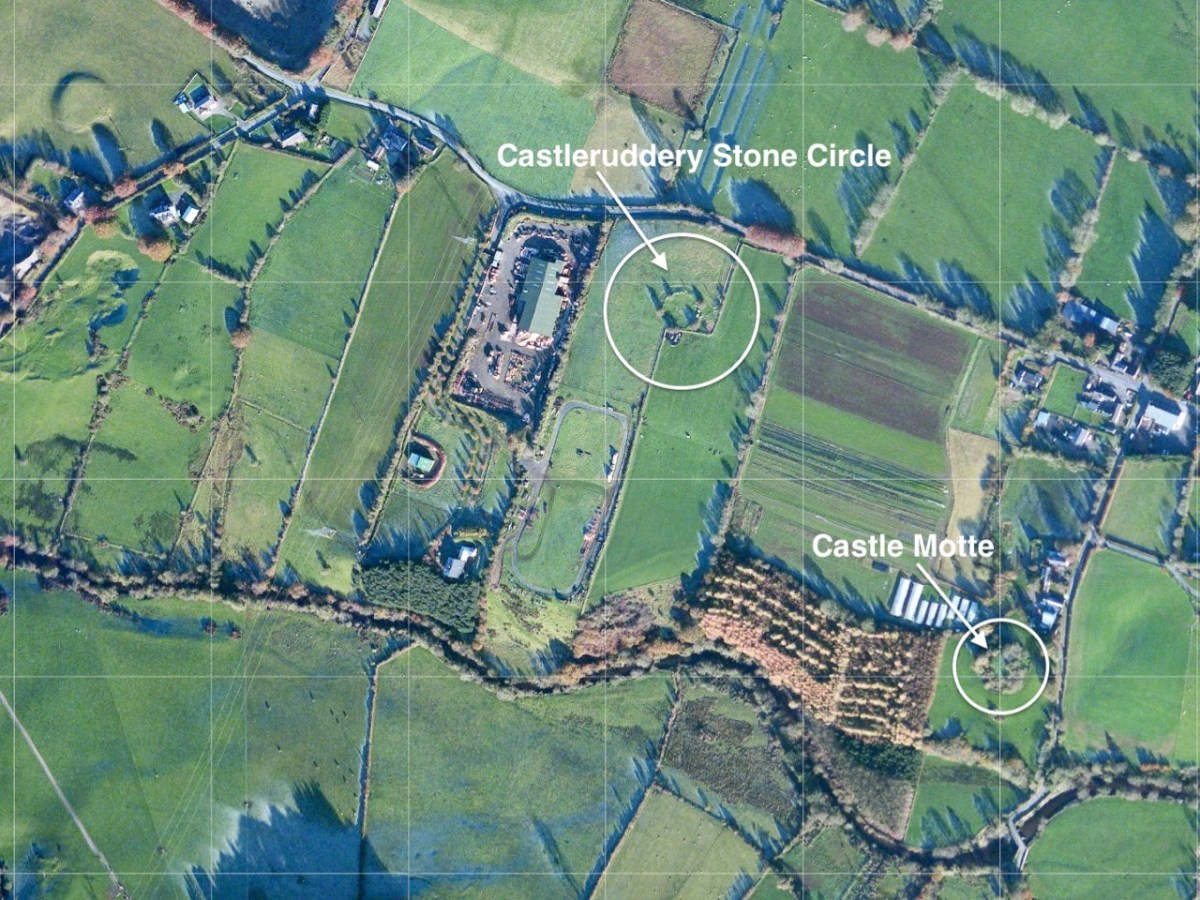
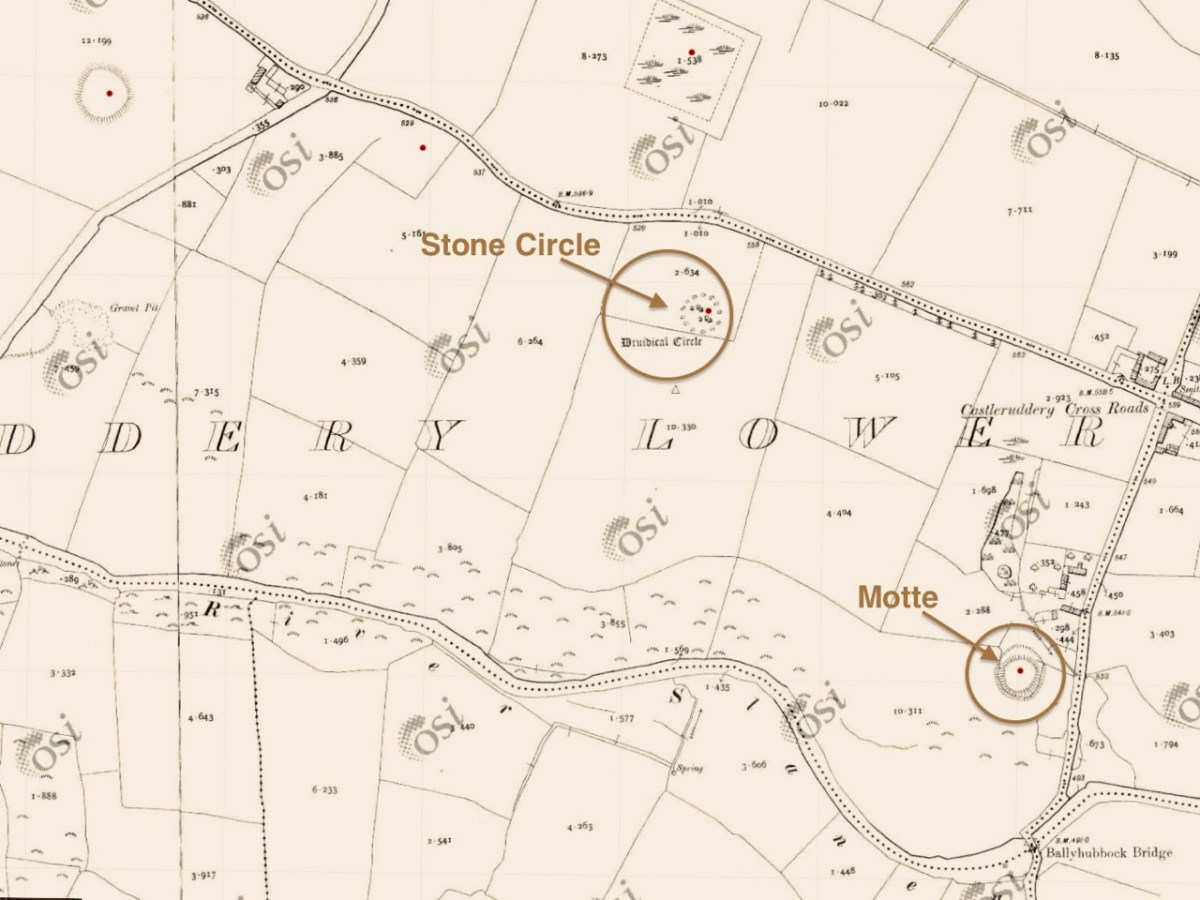
The aerial view, and the extract from the 25″ Ordnance Survey map (above) show the monument in the context of the surrounding landscape. Nearby is a medieval ‘Motte’, very much younger than the ‘Druidical Circle’ – thus named on many early maps. The local Irish name – Chaisleán an Ridire – translates as Knight’s Castle, which might make you think that there is some medieval connection between the circle and the Motte, but in fact Castleruddery stone circle is likely to date from the late Neolithic, around 2,500 BC, marking it as one of the earliest of this monument type in Ireland.

We noted this little figurine by the entrance gate to the circle: it made me wonder what folklore or traditions might be associated with the site today. I could find only one reference to Castleruddery in the Duchas Schools Folklore collection, dating from 1936:

The informer here was Michael Murphy, aged 68 – a ‘labourer’ from Colliga, Co Wicklow. The School collector was from Baile Dháithí, Dunlavin, Davidstown, Co Wicklow. There was no doubt in Mr Murphy’s mind that the stones could only have been placed there by supernatural powers!

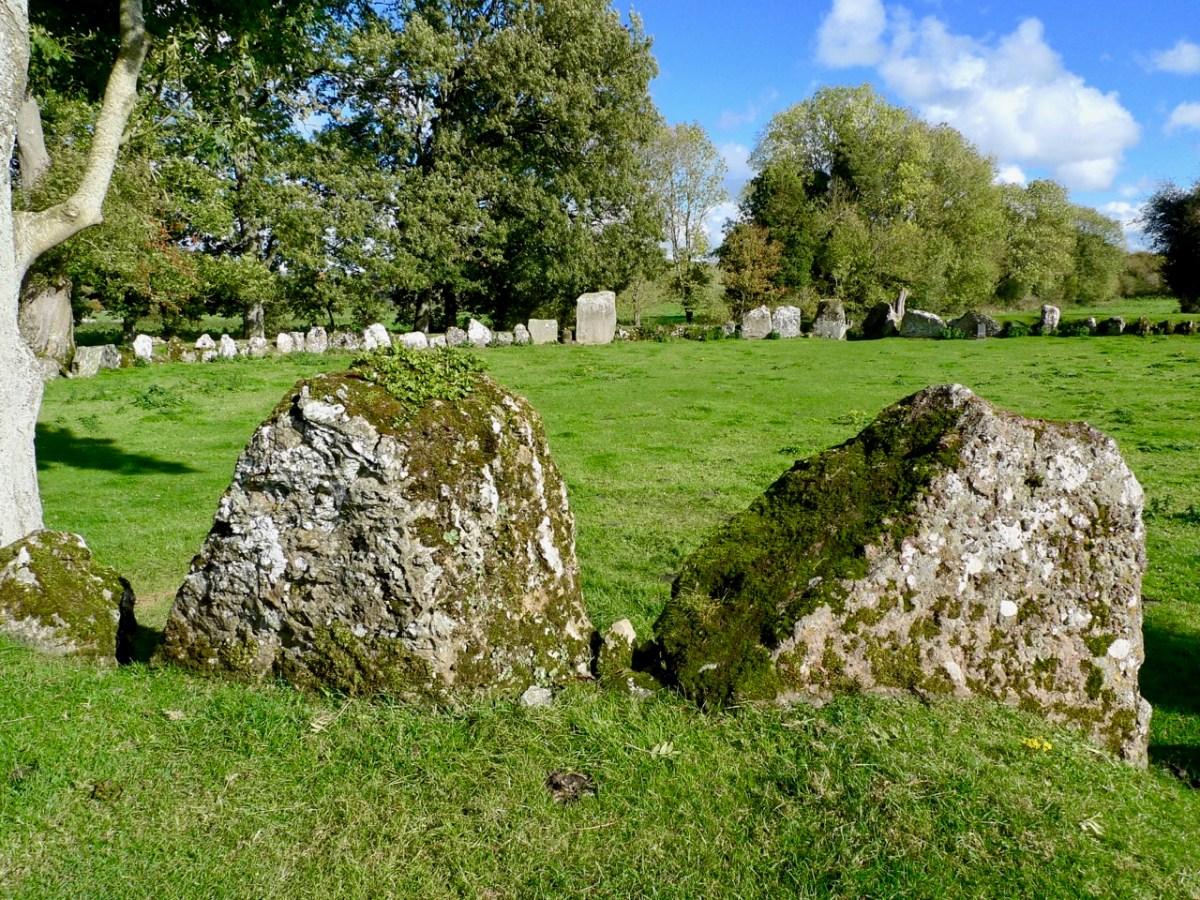
The two quartz portal stones at the east side of the circle are remarkable: deliberately chosen, no doubt, to emphasise the importance of the orientation. The circle has 29 significant stones still standing today, but there were probably more. There is evidence of attempts to break up and remove some of the stones, which would have made good building or fencing material for someone who did not share respect for the integrity of the circle.

The two views above show iron ‘drill’ markings: these were made to try and separate sections of stone to be taken away for re-use. In the upper picture one section has been removed, but the operation was unsuccessful for the remainder of the boulder. One has to wonder whether otherworldy forces intervened – and meted out some form of ‘bad luck’ to the perpetrators.

In the present day it’s territory for sheep, and they seem to be unconcerned about any ancient associations or supernatural influences interrupting their tranquil grazing. The archaeologists tell us that this is more of a ‘henge’ monument than the type of stone circle we are familiar with in West Cork. It’s certainly larger, and crop marks have shown that the 29 stones surmount an earthen ring, approximately 30 metres in diameter, and there is a further ring which was once supported or reinforced by timber. Comparisons are made with a henge circle at Grange, close to Lough Gur, Co Limerick, which we visited in 2016. There the ring of at least 113 stones has an internal diameter of 46 metres. We took the two photos below at Grange.

The Grange circle was excavated in 1939 by professor S P Ó Riordáin, and the Duchas board at the site states:

. . . The excavation indicated that the enclosure was constructed purely for sacred or ritual purposes. The bank may have provided a stand where an audience could observe ceremonies within the enclosure . . . One of the stones is known as Rannach Cruim Duibh. This suggests that the circle became associated with the festival of Lughnasa, traditionally the first Sunday in August, and a celebration of the harvest. Crom Dubh, meaning the Dark Bent One, was credited with bringing the first sheaf of corn to Ireland . . .

Duchas, Grange Circle

There must surely be connections, and common purposes, between the many similar circle monuments all over Ireland. We always want to know What was it for…? probably, we never will, but it’s part of the whole romance of archaeology to wonder about such places. We must be grateful that so much remains for us to explore.

Half a Kerry Day

Kerry is an Irish county rich in history and archaeology. Our day was spent in the company of the ‘Saints’ – a term given to devout men and women who set themselves apart, leading small communities in the remotest of places, dedicated to order, prayer, knowledge, and the contemplation of humanity. Traces of these medieval ecclesiastical sites abound in Ireland, (sometimes described as The Land of Saints and Scholars), and we are always eager to search them out.

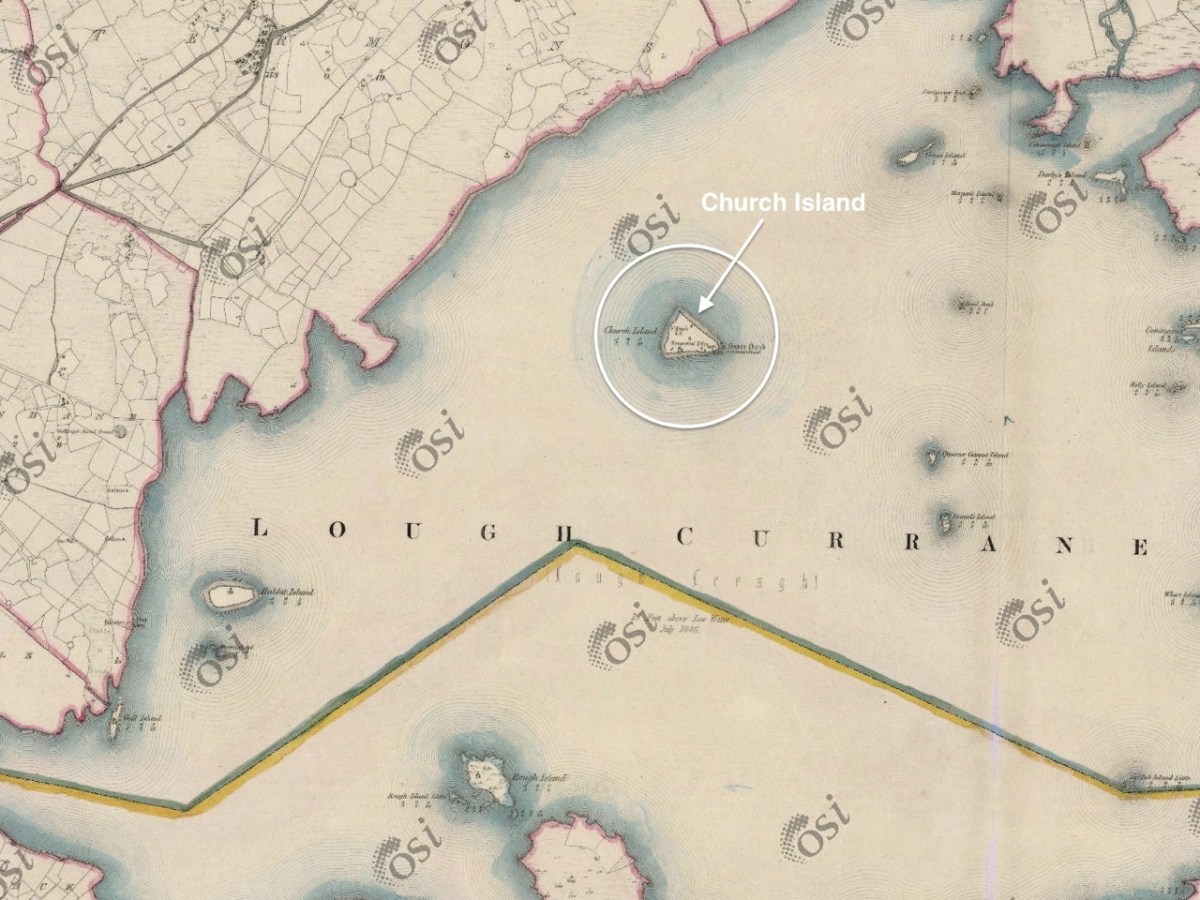
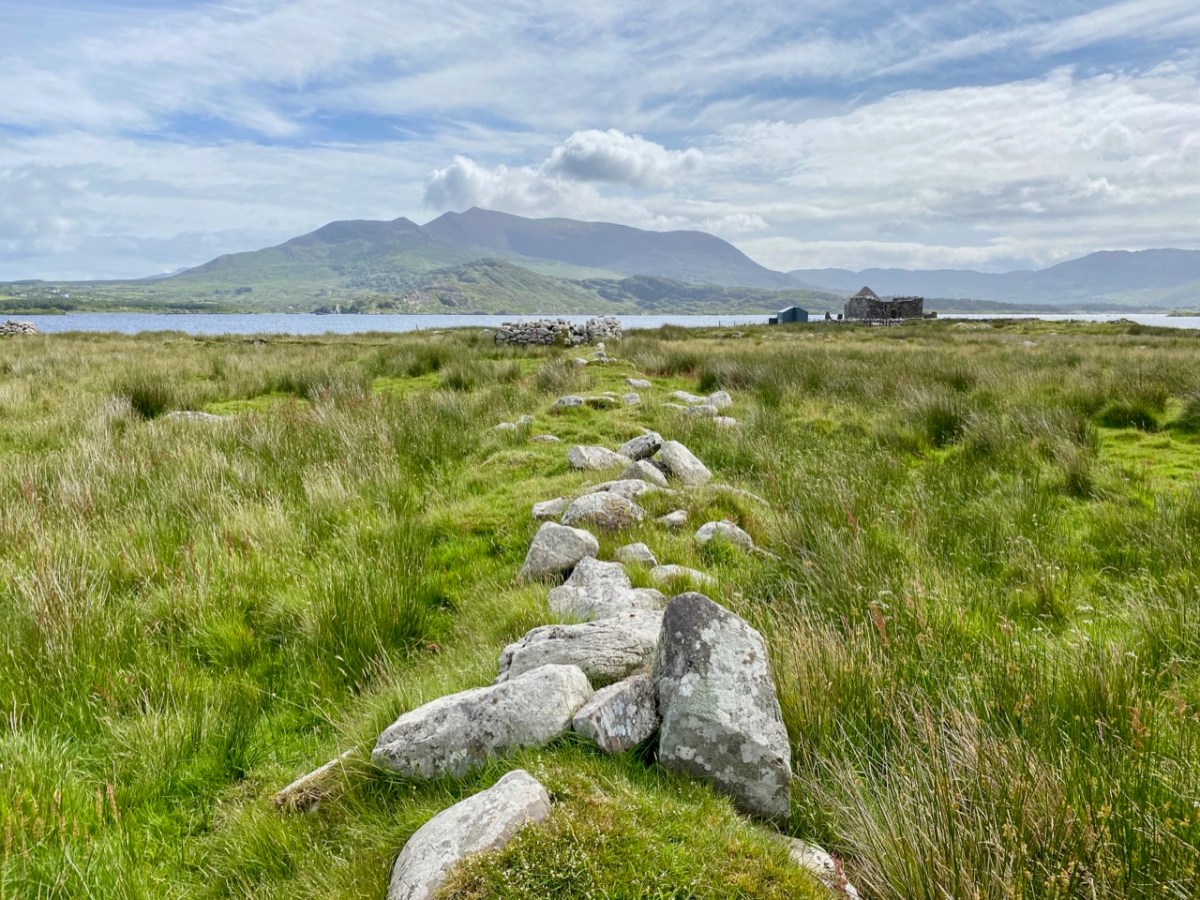
The header and the picture above are from Church Island, formerly known as Inis Uasal (meaning Island of the nobles), on Lough Currane near Waterville. The Lough – also known as Loch Luioch or Leeagh – is a substantial body of water, about 1,000 hectares in area. It is fed by the Cumneragh River in the north, Isknagahiny in the east, and drains to Ballinskelligs Bay at its south-western end. This Aerial view (below) shows the Lough in context, while the 6″ OS map extract dates from the 1840s.

We were fortunate to be taken to the island by Tom O’Shea. He is the owner of the island today, and a mine of information on its history and traditions associated with it. He is also a Ghillie – anciently the attendant of a Gaelic chief, whose job it was to carry the chief across a river or lake – but in the present day an organiser of fishing or hunting expeditions: Lough Currane is one of Ireland’s premier sea trout fisheries. We hired Tom to carry us across the water to this ancient sanctuary which had been occupied by saints and monks for over a thousand years!

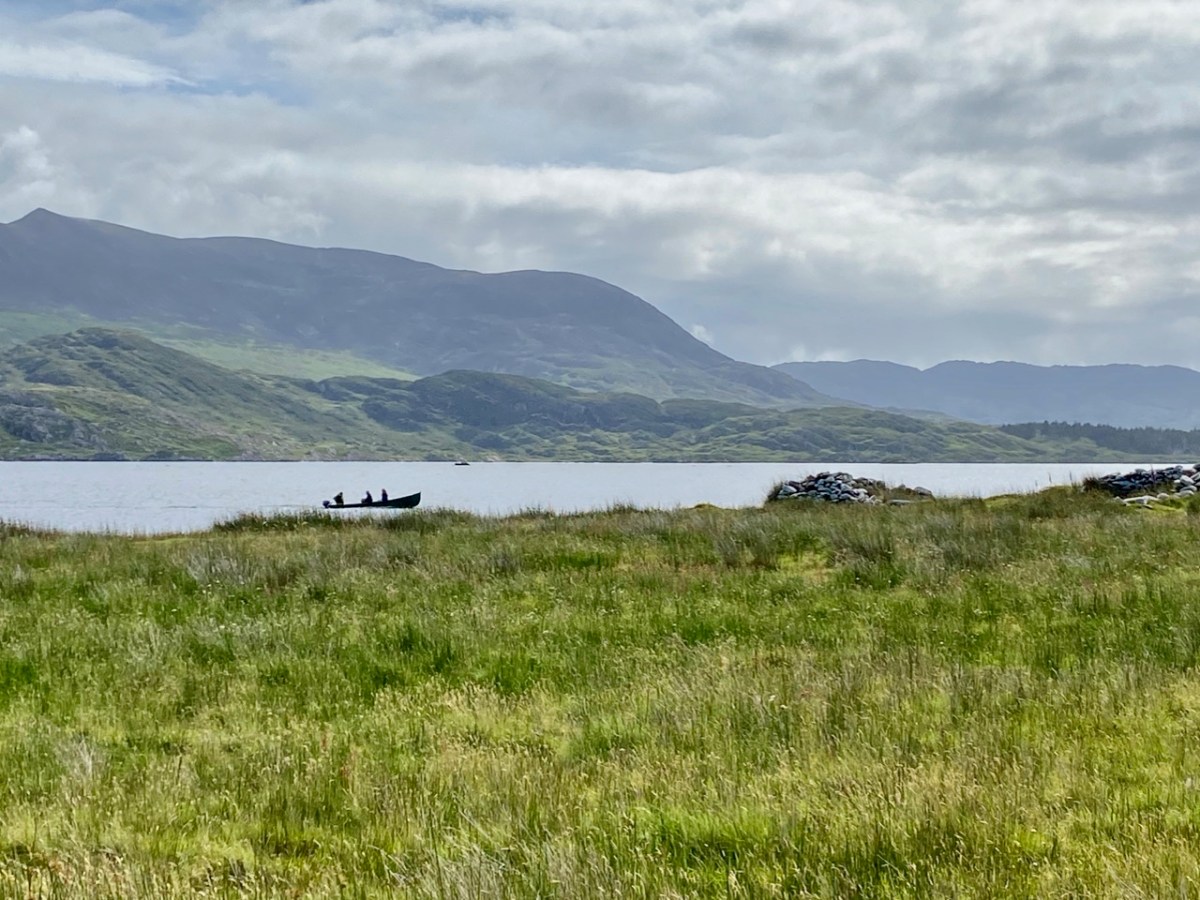
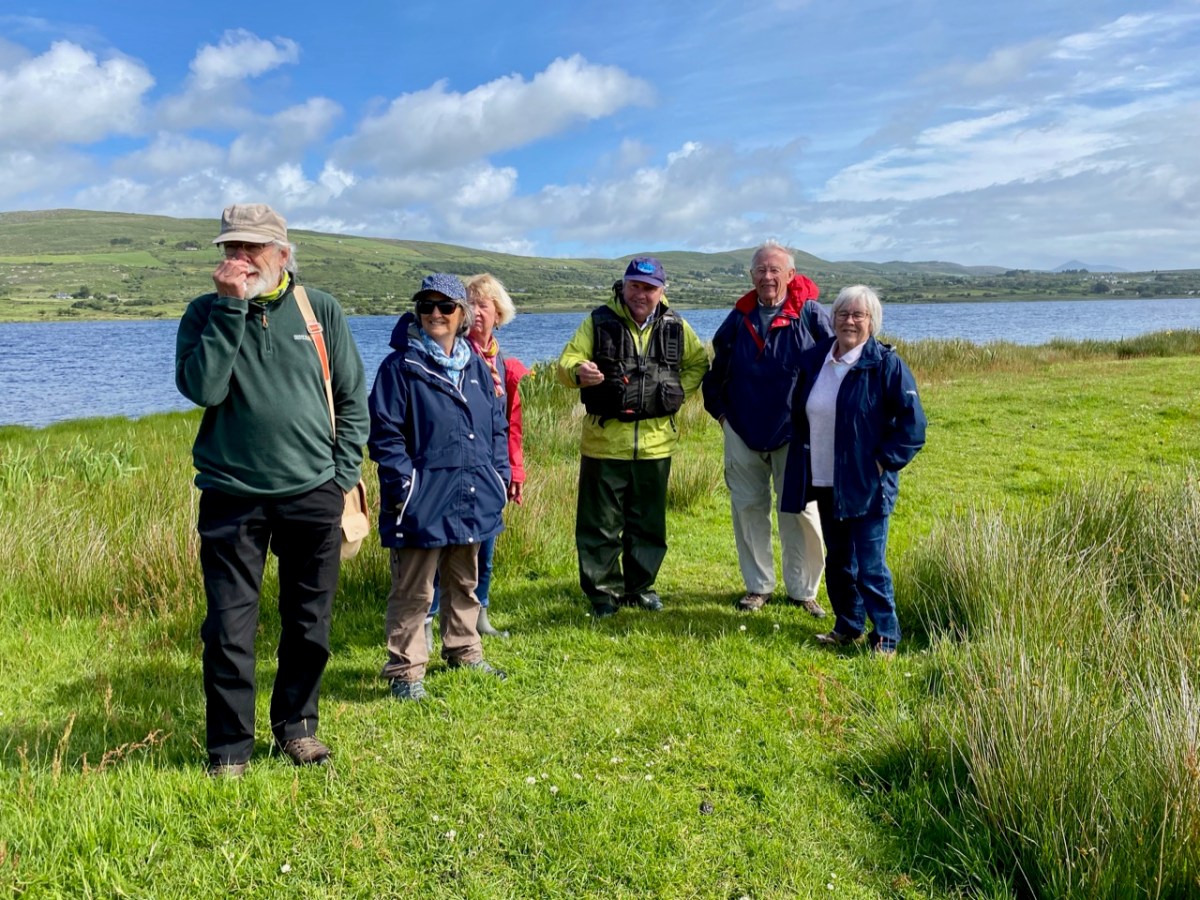
That’s Tom ferrying us across the lake in the upper picture – only two at a time due to Covid restrictions. Above is my picture of the rest of our group on the island, with Tom in the centre explaining the geography and history of this remarkable place. The day was organised by our good friends Amanda and Peter Clarke, and we had along with us friends from Kerry – David and Janet, all of us discovering this gem for the first time.

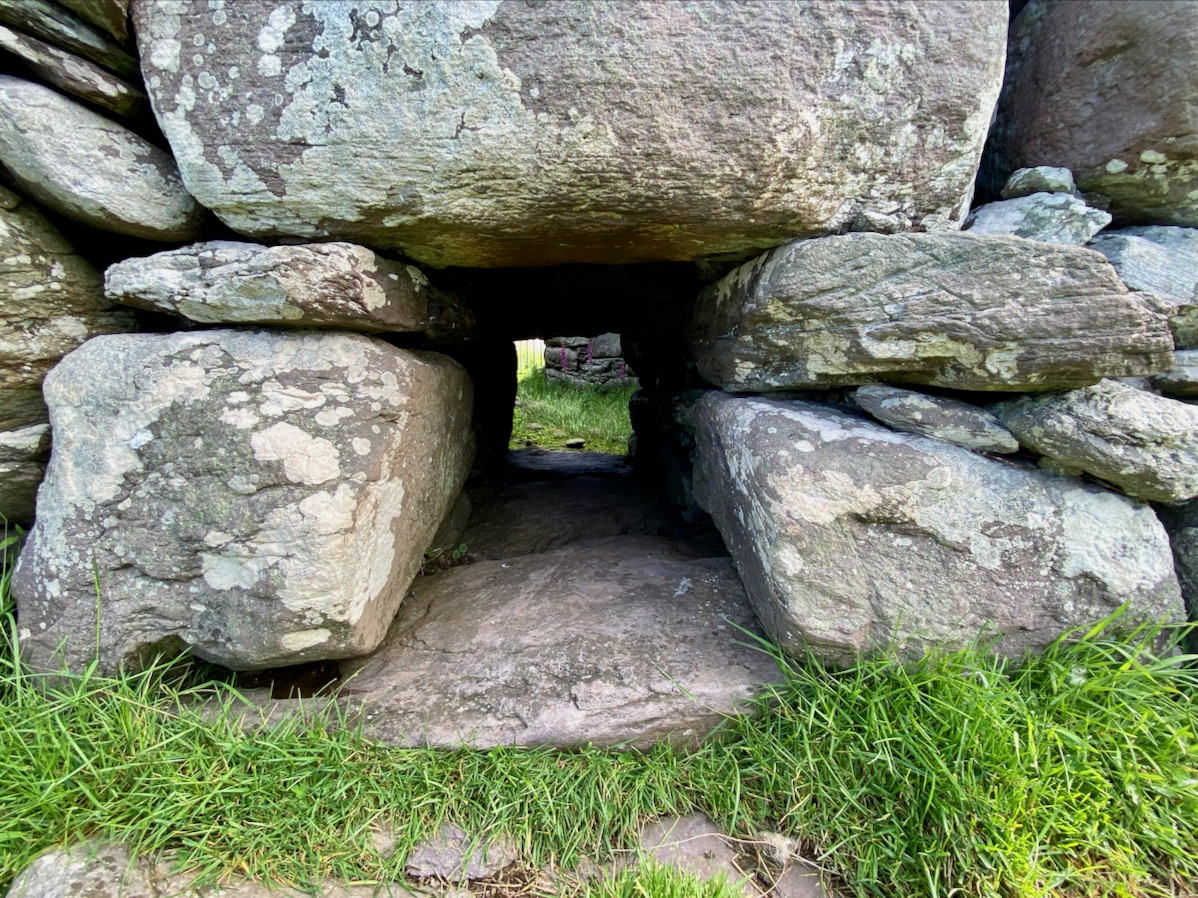
The monastic foundation on Church Island was set up by Saint Fionán Cam in the sixth century. Cam means ‘bent’ or ‘squint-eyed’, and it is significant that the name already gives us a picture of the man – a picture which has survived in local tradition for more than fifteen hundred years. One of the most impressive aspects of this island is that some of the historic structures date from the time of the saint – the one above is known as his oratory, or ‘cell’. This is a ‘gallurus’ type of oratory, and would have been roofed completely in corbelled stone: the upper part of the roof has fallen. Archaeologists do not agree over the dating of the structure, but local tradition is clear that it was built by the saint himself, and his community. At its eastern end is a low doorway with two roof boxes above, while opposite is a small, rectangular ‘squint’. It has been noted that the opes of this oratory align with the sunrise at midsummer. As that is almost upon us as I write, it is appropriate that we should have visited at this time of the year. The old photograph is courtesy of the National Library of Ireland Lawrence Collection, dating from the late 1800s. Below is the same view today: the ivy and creeper growth has been removed, revealing the roof box ‘slots’.

Fionán Cam was an important figure in Kerry: he is regarded as one of the three coinnle – or ‘candles’ of the Múscraighe, and descended from Conaire Cóem, High King of Munster. His birth was miraculous, his mother Beagnad – a virgin – having conceived while swimming in Killarney Lake, with a salmon. There are numerous dedications to this Fionán in the west of Ireland, but most traditions link him to Lough Currane and he is reputed to be buried beneath one of the three Leachta – or shrines – on the island, within the enclosure of the Romanesque church at its eastern end.

The OPW took over the archaeology of the island in 1880 and this illustration (above) from the Duchas information board shows pilgrims paying their devotions at the Leachta in 1000 AD. Nearly a century and a half on, the OPW has not yet completed their work on the island! There were plans to restore the west doorway of the twelfth century church (below), but this has not happened.

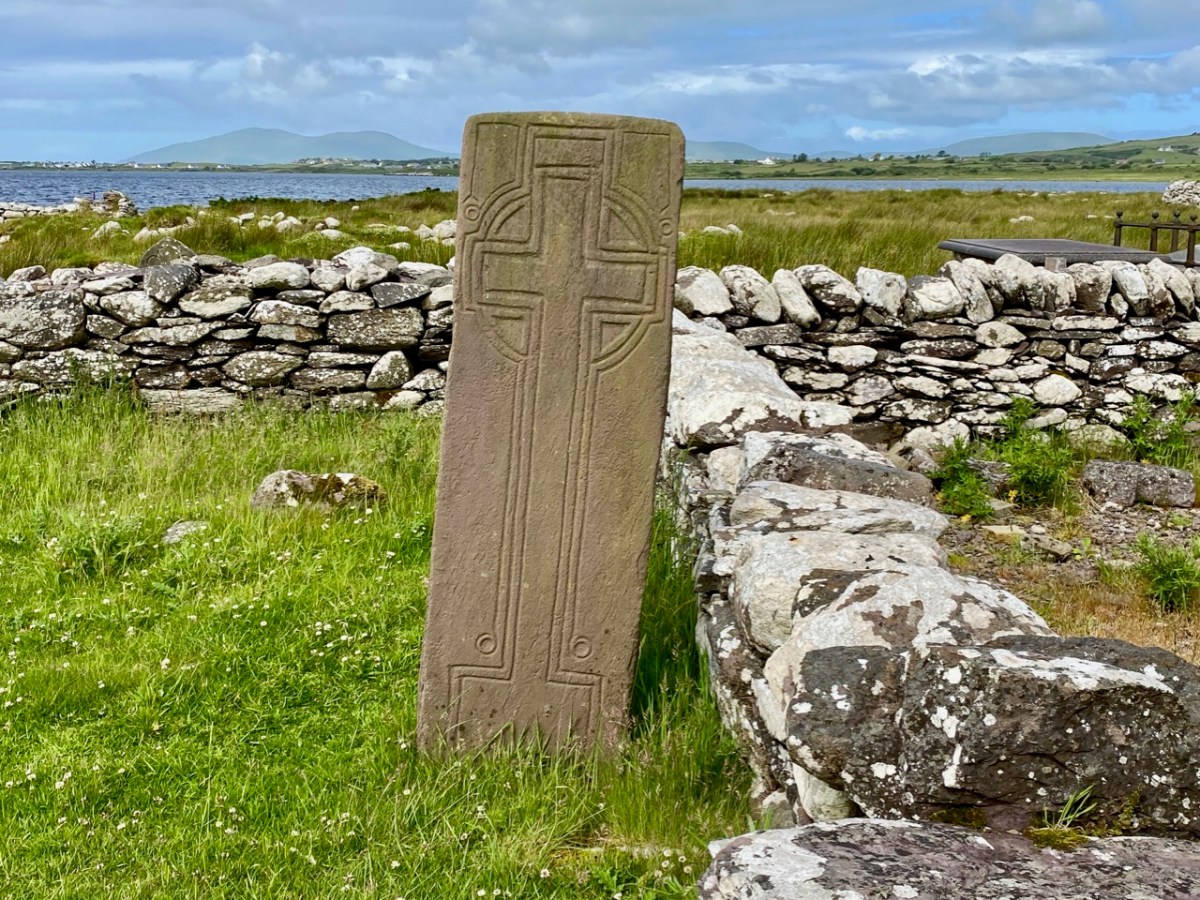
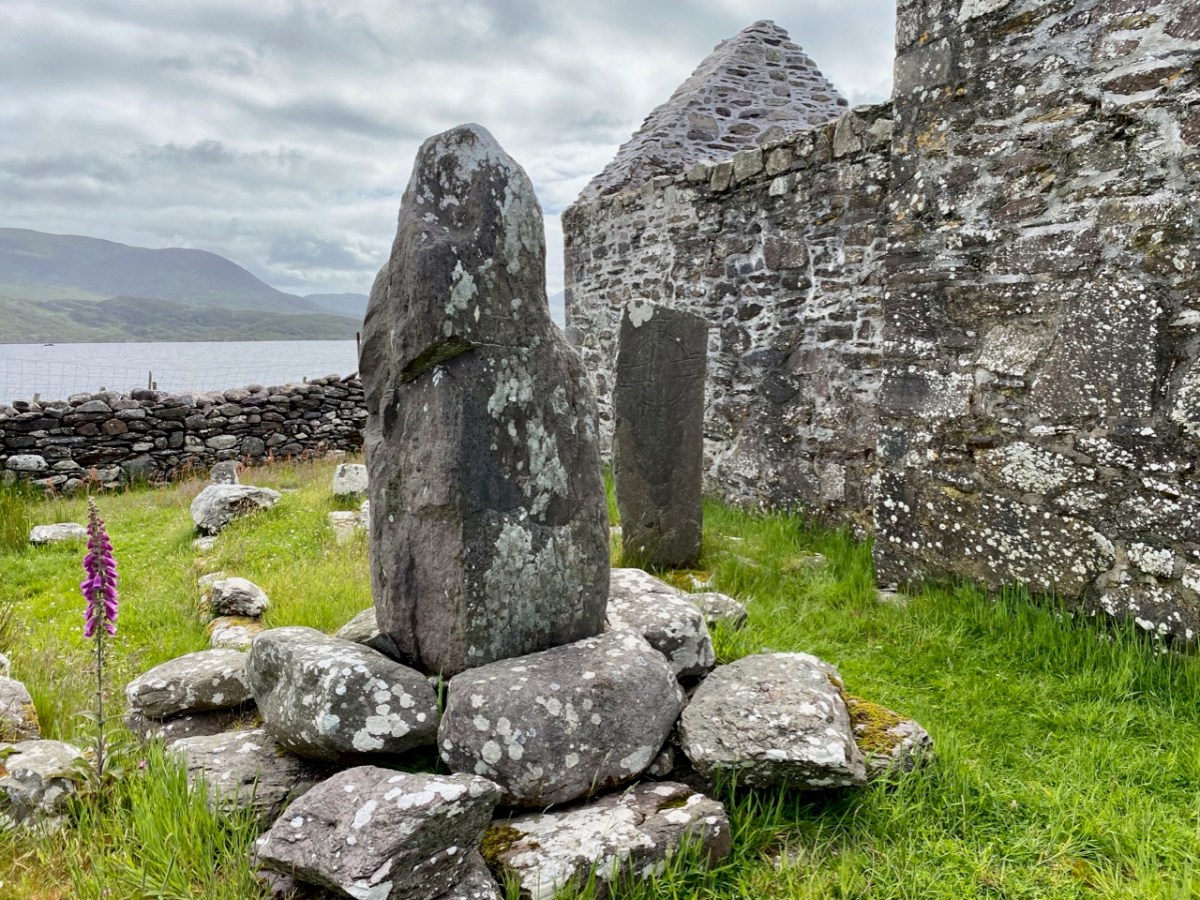
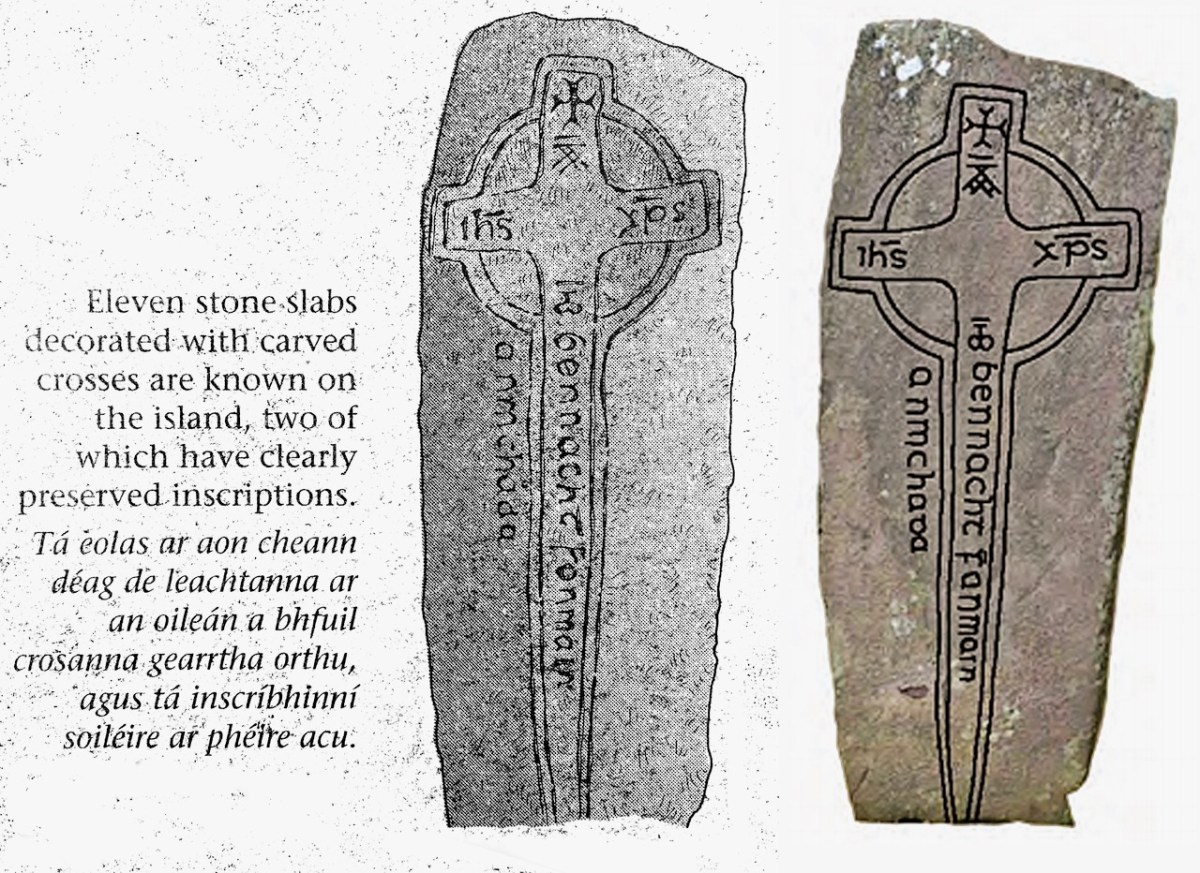
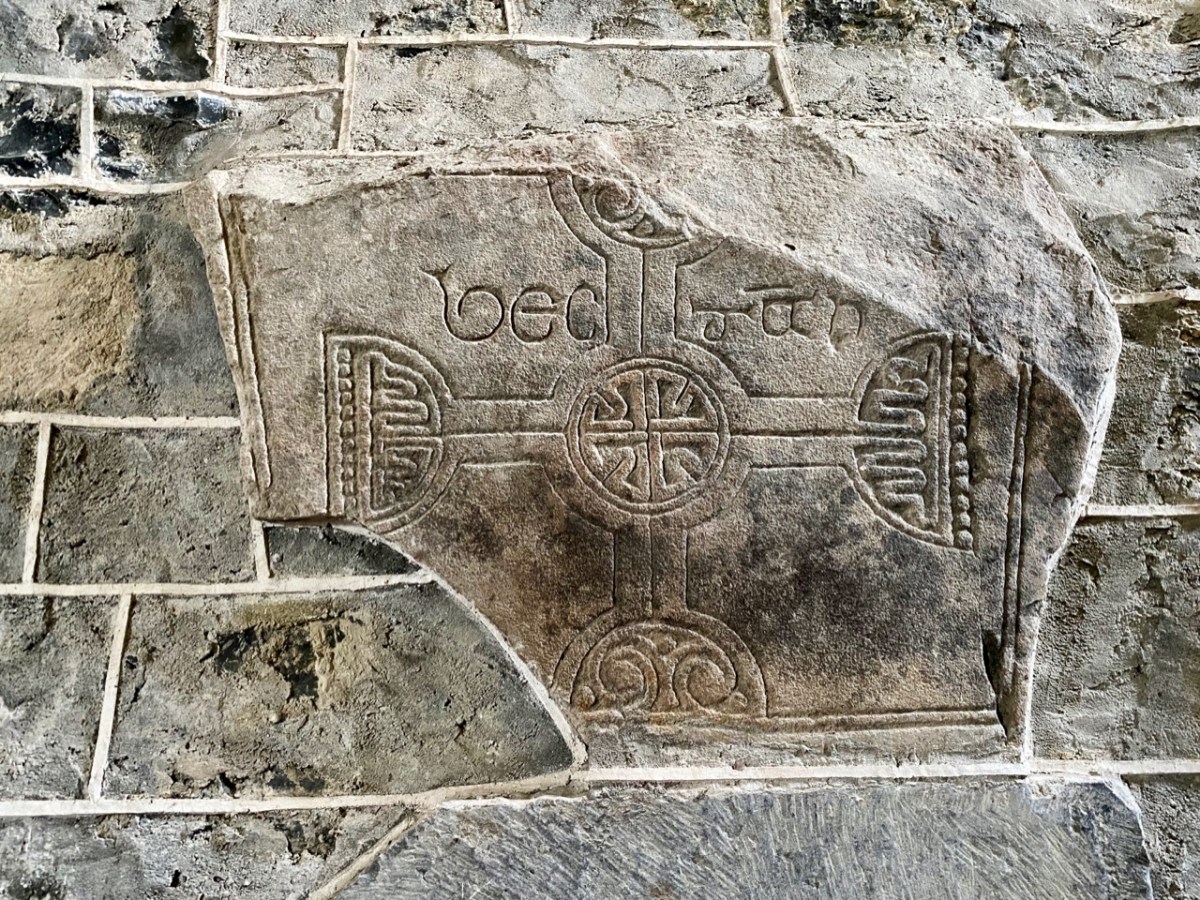
One of the Leachta (shrines) in the church enclosure. This probably marks the burial place of a later saint (or holy man) – Anmchad Ua Dúnchada – described as ‘anchorite of God’ in the Annals of Inisfallen, which states that he was buried here in 1058. Close by this shrine, and shown in the photograph above, is an inscribed slab on which can still be read the inscription to him:

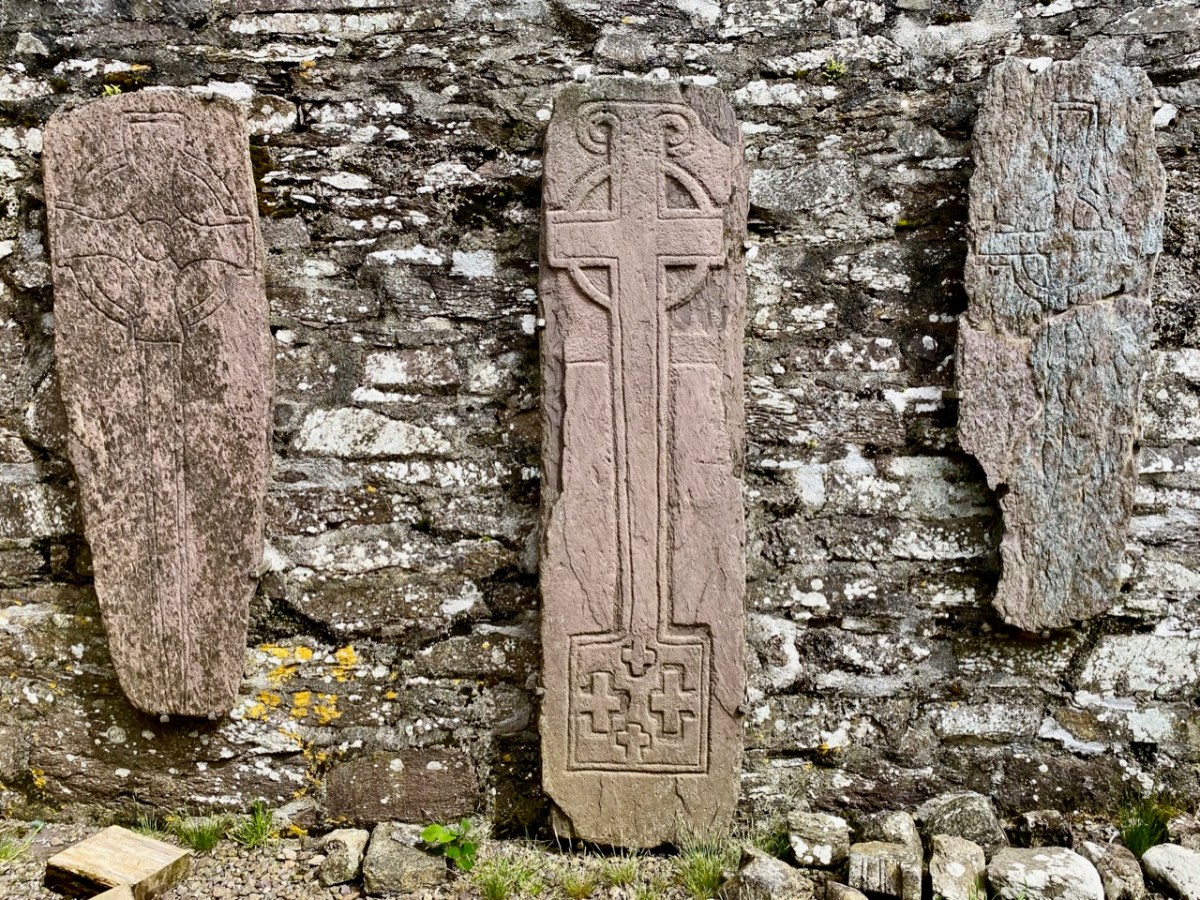
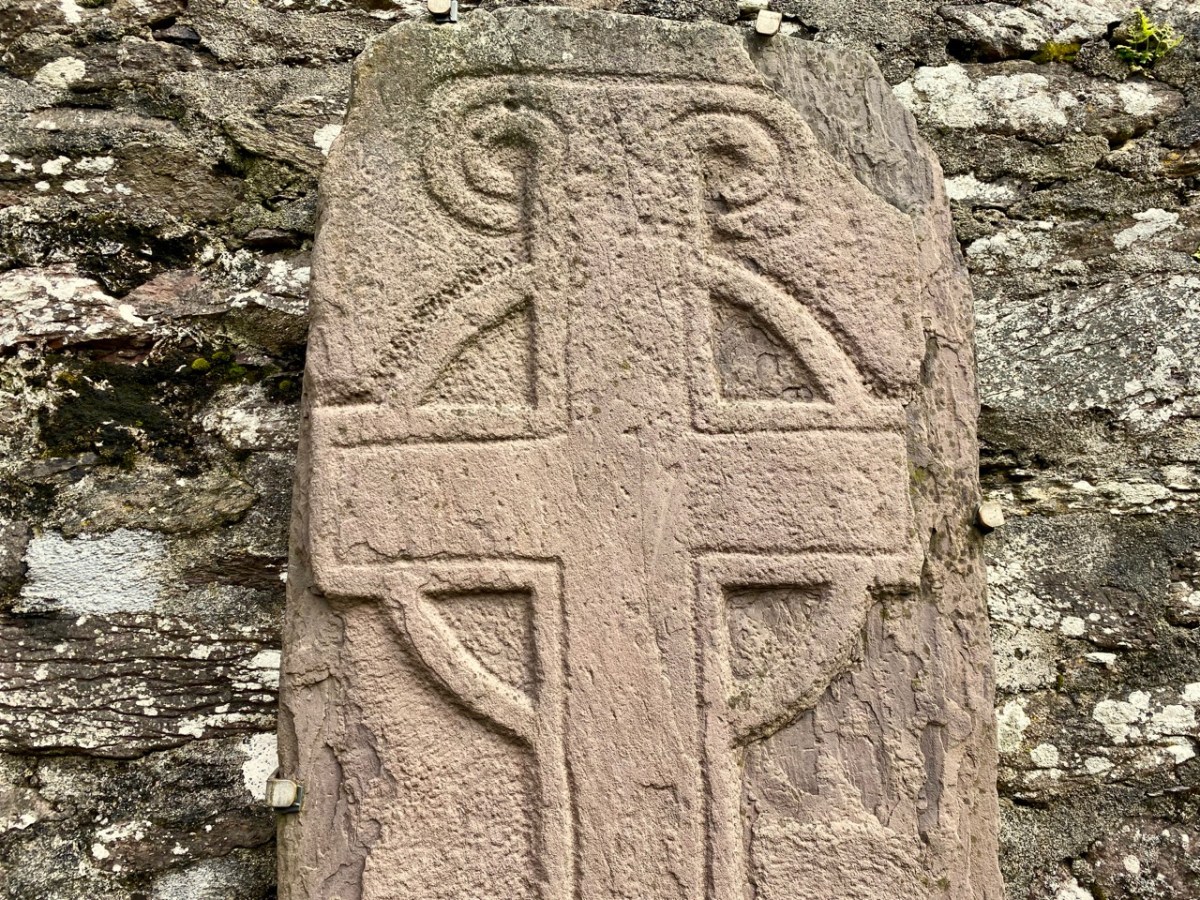
The eleven stone slabs – mentioned on the Duchas information board – are beautiful examples of this medieval craft: some are displayed now within the church building, although still open to the elements. Nevertheless they are surviving reasonably well.

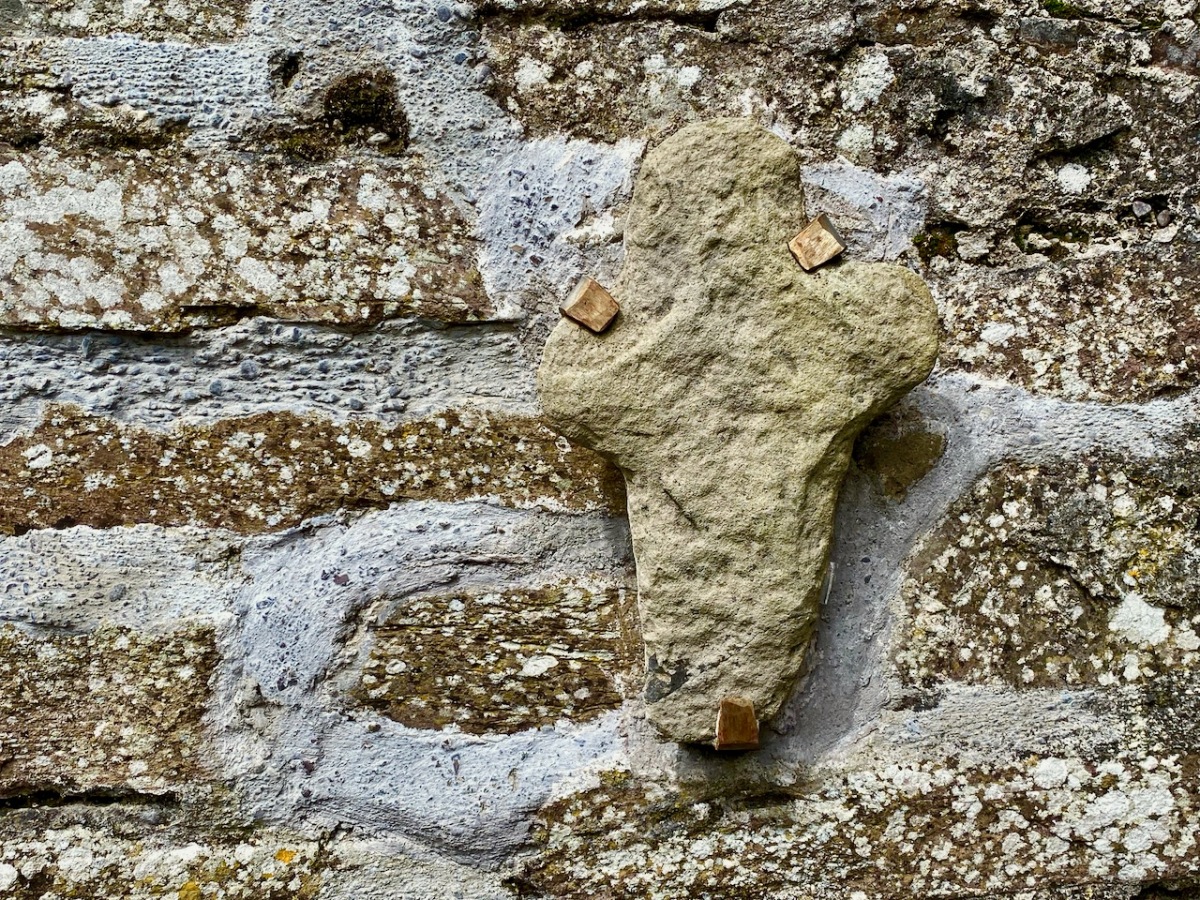
One carved stone from Church Island is very unusual, being a rare representation of a musician. Known as ‘the fiddler’ the figure is clearly playing a stringed instrument with a bow. It is thought to be a lyre, an instrument which came to Europe in the eleventh century. This is the only known early representation of a lyre found in Ireland. In fact, the stone that we saw is a replica (on the left, below), which has become very weathered: the original (right) is being conserved in museum conditions.

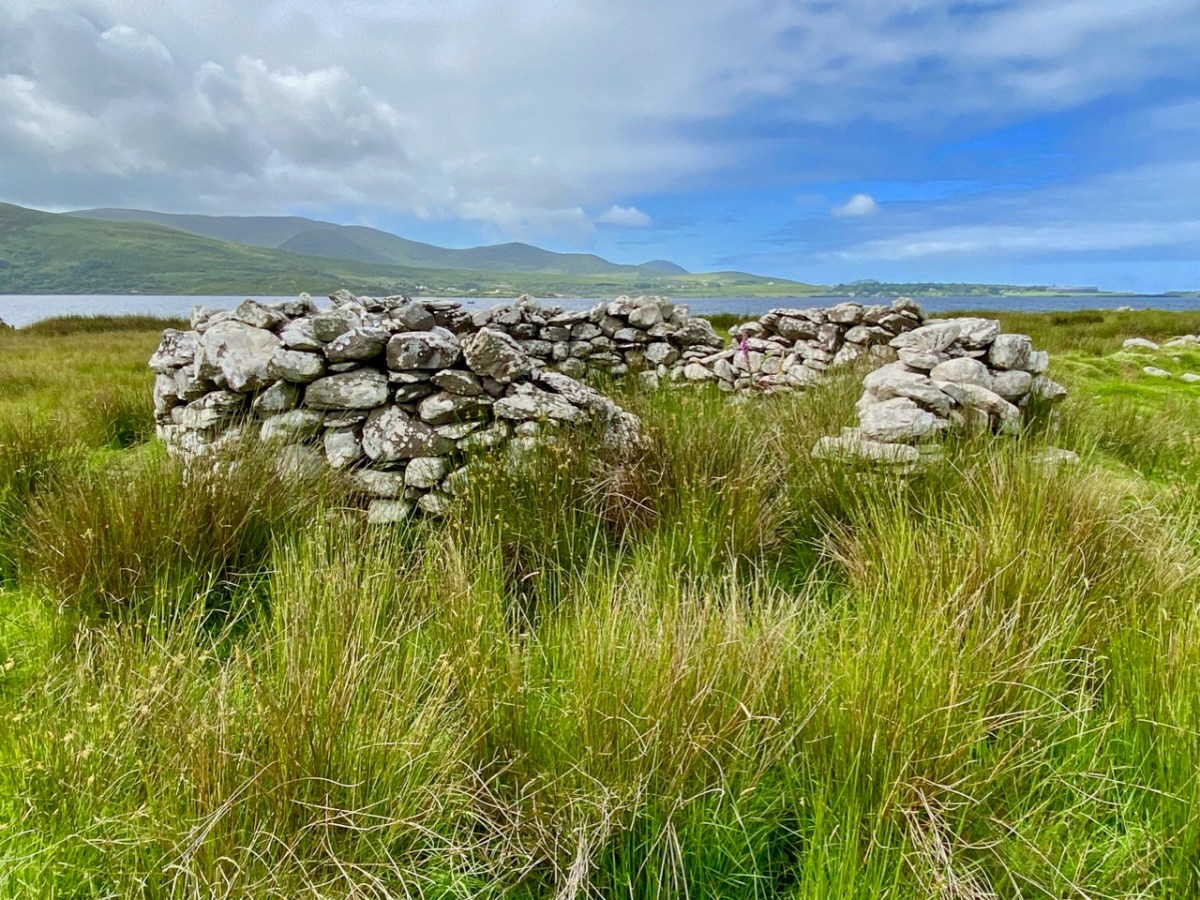
There are other early buildings on the island, including the base of a ‘beehive hut’, said to have been the home of the early saint.

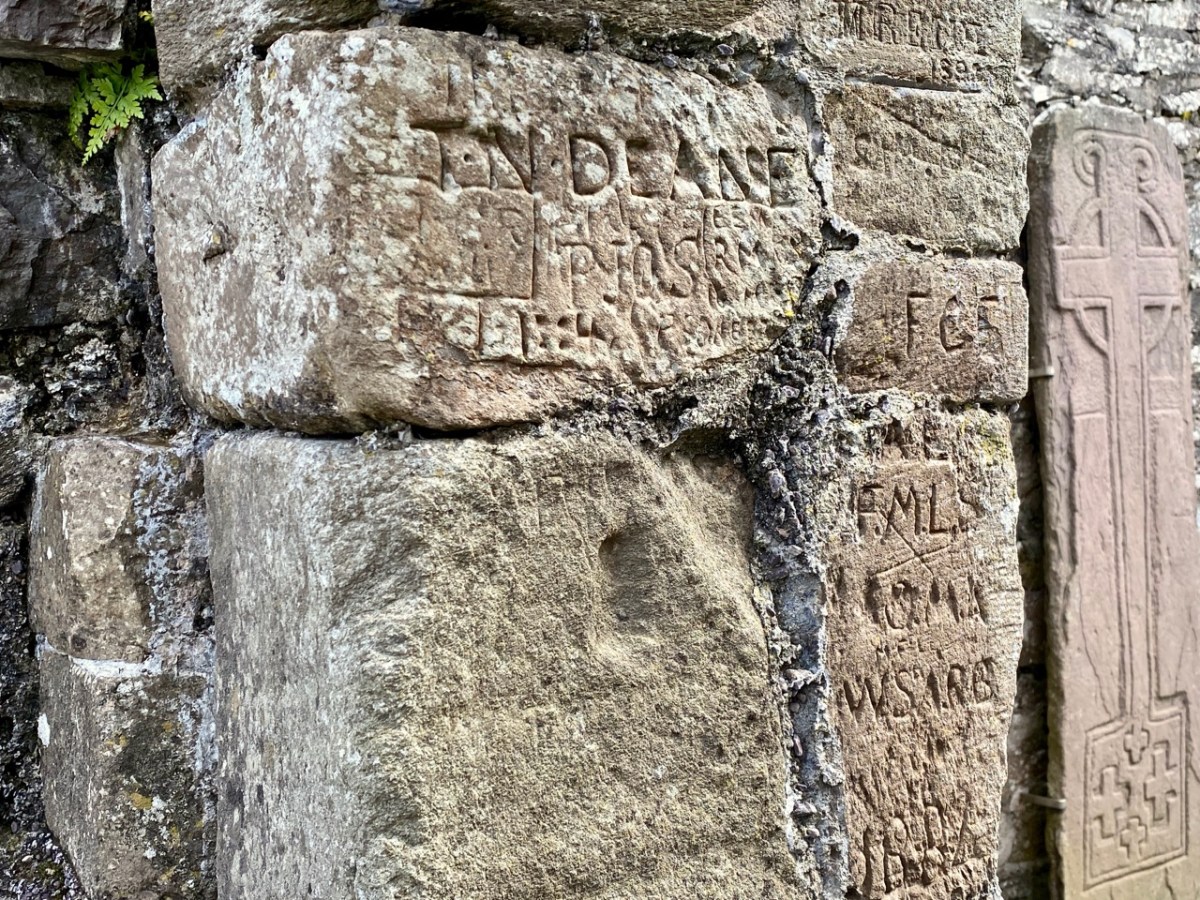
Some quite fine examples of graffiti by visitors to the island, on the Romanesque church walls: some of it dates from the nineteenth century.

Our visit to Church Island only occupied half of our Kerry day. We had more treats from medieval times – and earlier – in our explorations later on. These will have to wait for another post, but here are some tasters:

Back to Clonfert

Clonfert is only a couple of counties over from us: we just have to skip through a bit of Cork and Tipperary and there we are in Galway – a tiny corner of it that is shaped by the River Shannon. So, on a Thursday afternoon at the beginning of June, we found ourselves tripping along dead straight boreens – narrow for the most part – taking us through lush dairy lands – on a quest to revisit Clonfert’s medieval Cathedral, and its associations with one of Ireland’s most famous saints: Brendan the Navigator.

As we approached the little settlement of Clonfert, our empty road ahead was interrupted by a small white car, which seemed to travel erratically from one side of the lane to the other, and our arrival made little difference to its progress. As we got near, we realised that there was a wiry Jack Russell ambling along the road in front of the car: it was clear that the terrier was having its daily walk, with the owner driving along protectively behind it, regardless of where its fancy might take it. Ah, sure – we were in no hurry, so we joined the procession and waited as the dog sniffed and shuffled its way back home: eventually, dog, car and owner vanished through a gate, and we had the road to ourselves once again . . . This is life in Ireland, and it’s good!

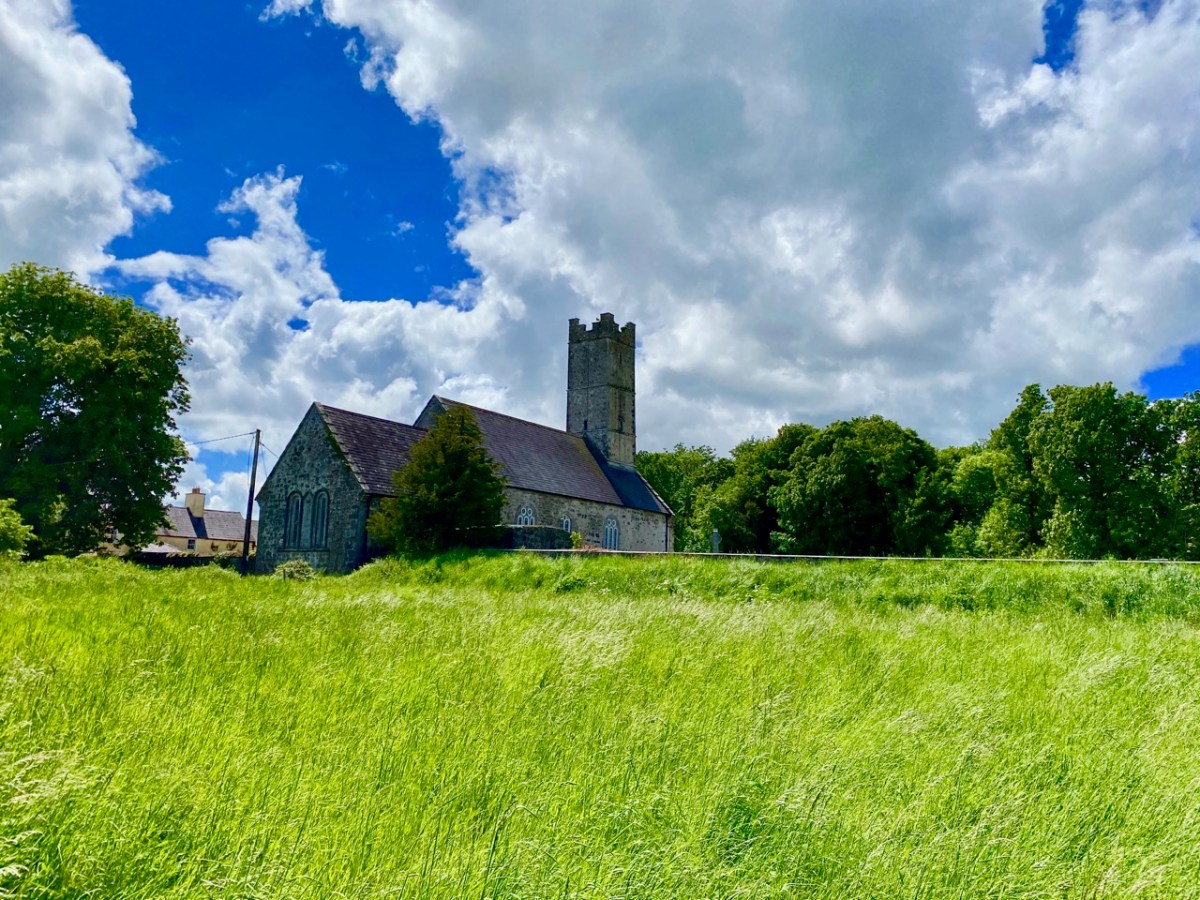
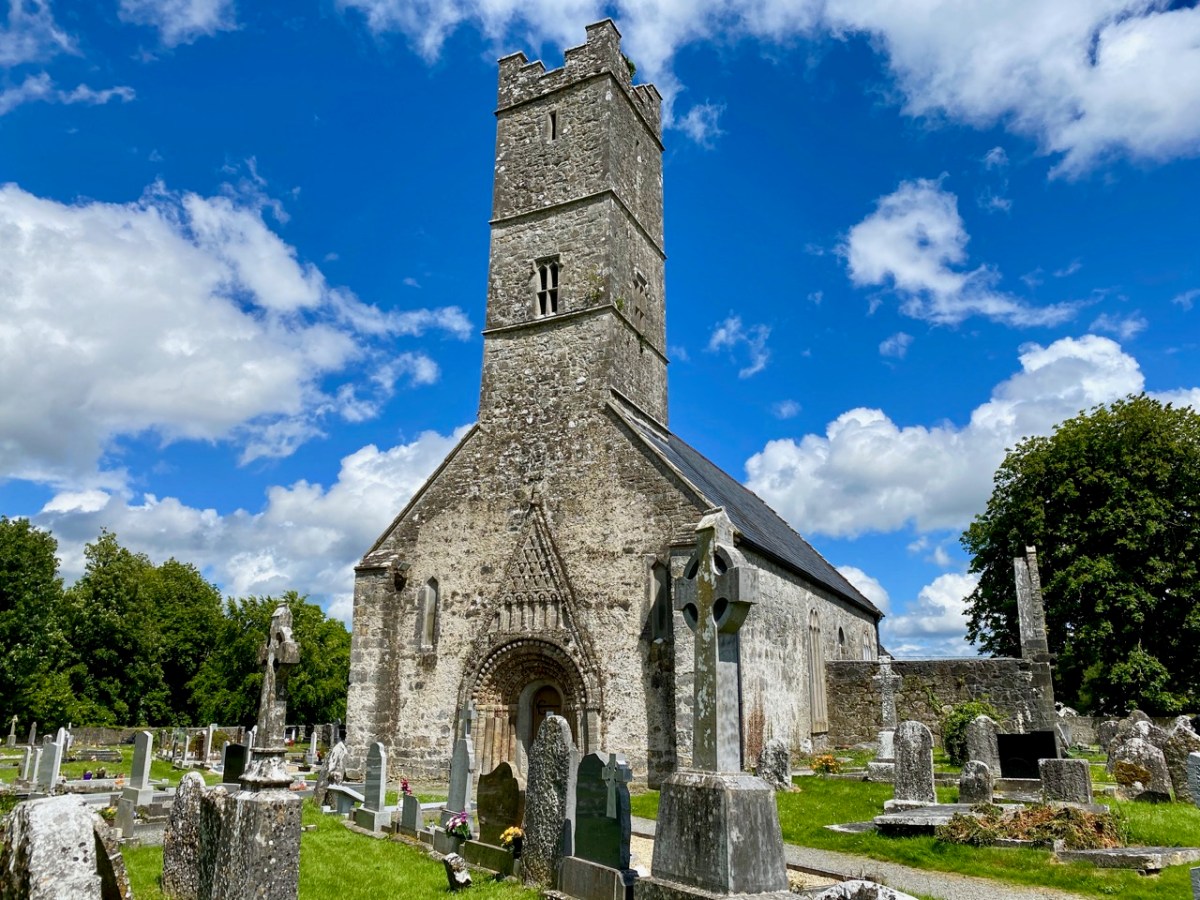
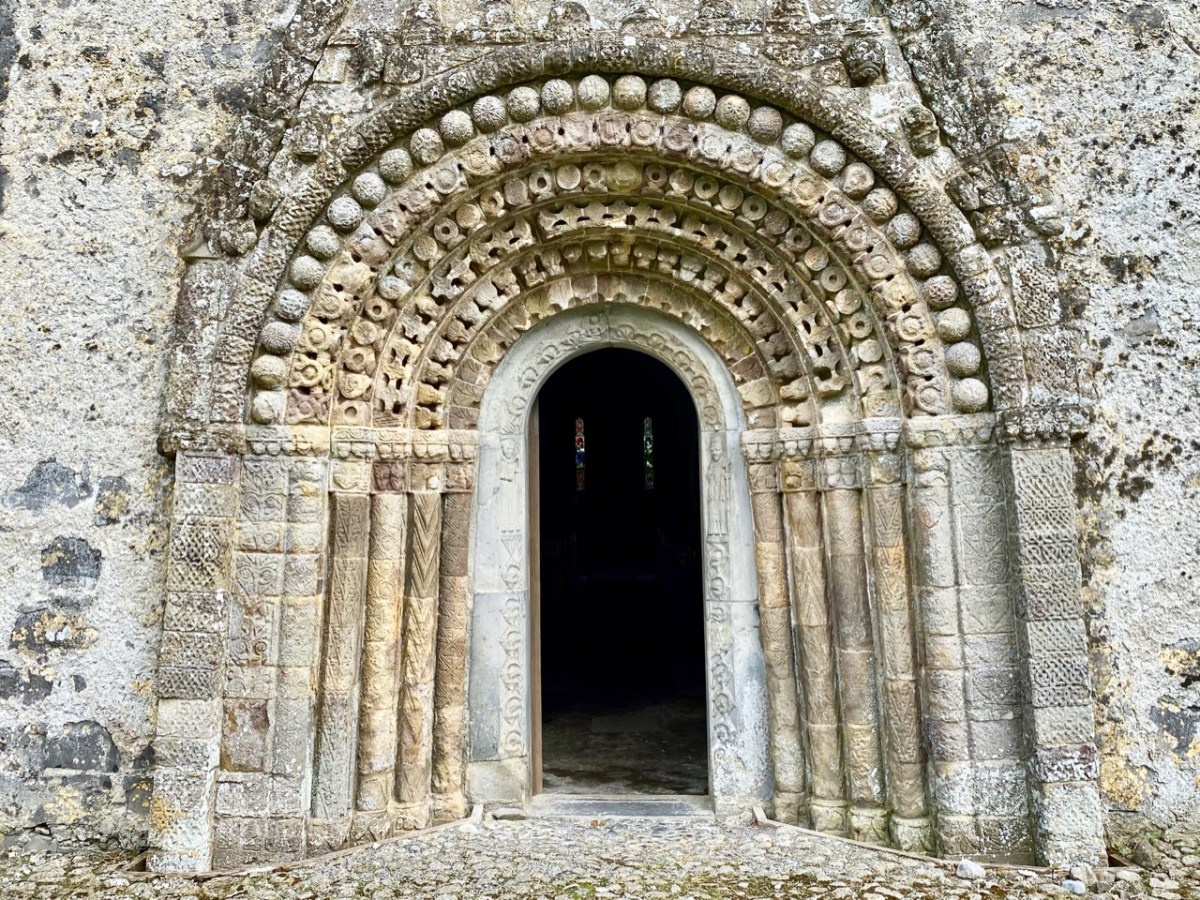
Clonfert’s grandly styled ‘Cathedral’ is so important historically, yet it could hardly be more remotely situated. From the east (upper picture above) it looks like many another Church of Ireland building, maybe not worth a second glance – unless, like us, you can’t resist examining every unturned stone because there is invariably something unexpected to be found under it. Just turn the corner and have a look at the west entrance door:

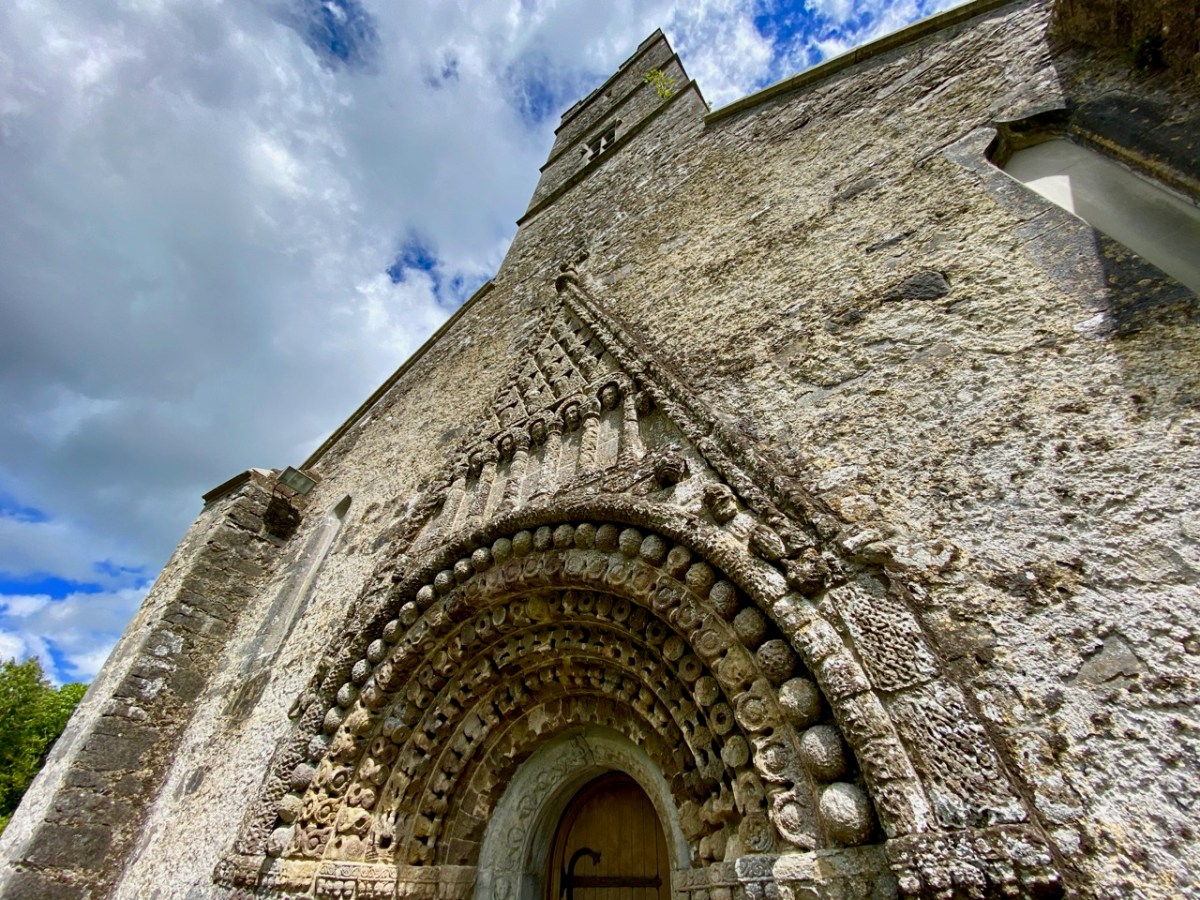
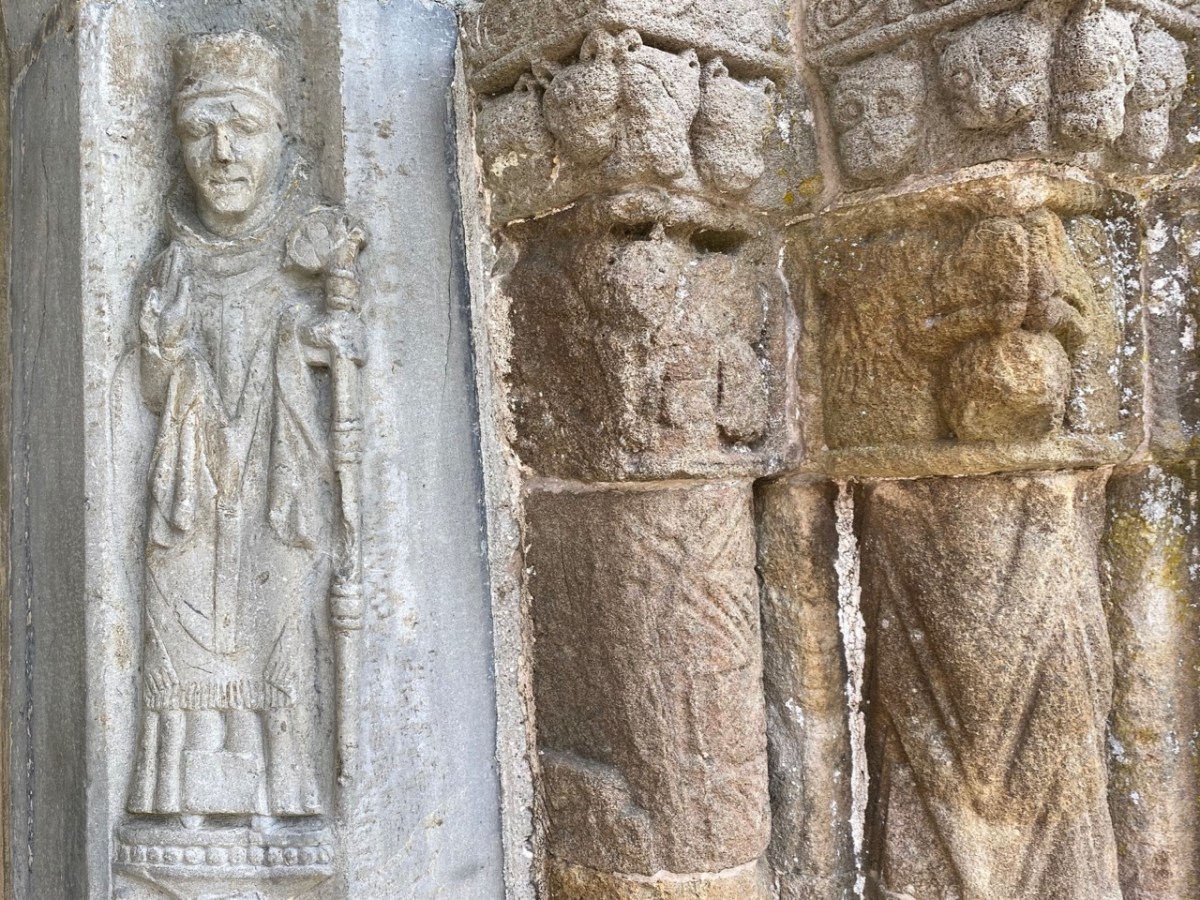
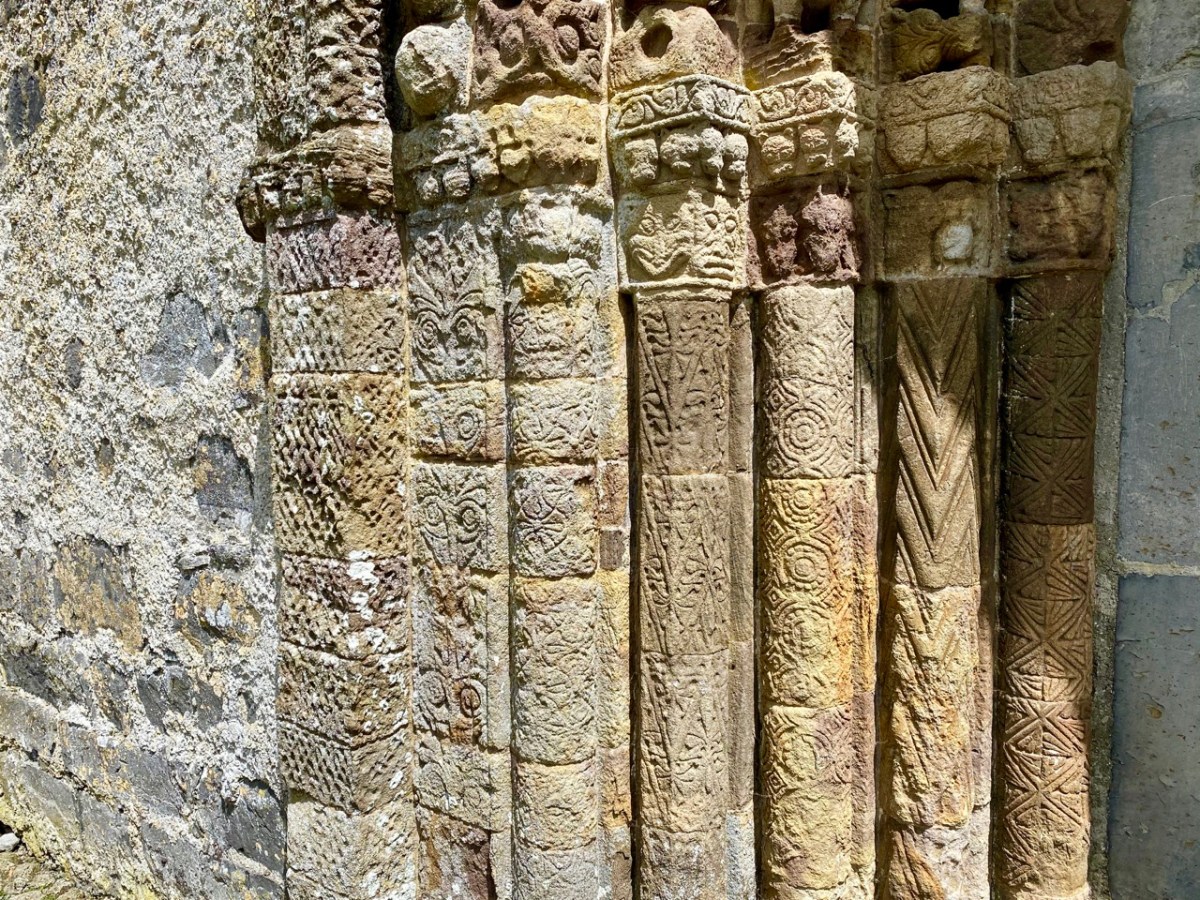
That doorway, with its exquisite decoration dating probably from the 12th century, has been described as ‘the supreme expression of Romanesque decoration in Ireland’. The carvings, although suffering from hundreds of years of wear and tear from the Irish elements, still display an extraordinary richness and variety: we can only wonder at the inspiration, skill and knowledge of the carver, who must have been deeply immersed in both lore and craft. Tadhg O’Keeffe, current Professor of Archaeology at University College Dublin, suggests a date of c1180 for this doorway. Records state that the church was burnt during a Viking raid in 1179, the same year in which a synod was held there by St Laurence O’Toole; installation of this imposing entrance may be connected with these events. Finola’s post today also explores Romanesque carvings not too far away, at Clonmacnoise. She has also written on Clonfert’s architecture in her Irish Romanesque series.

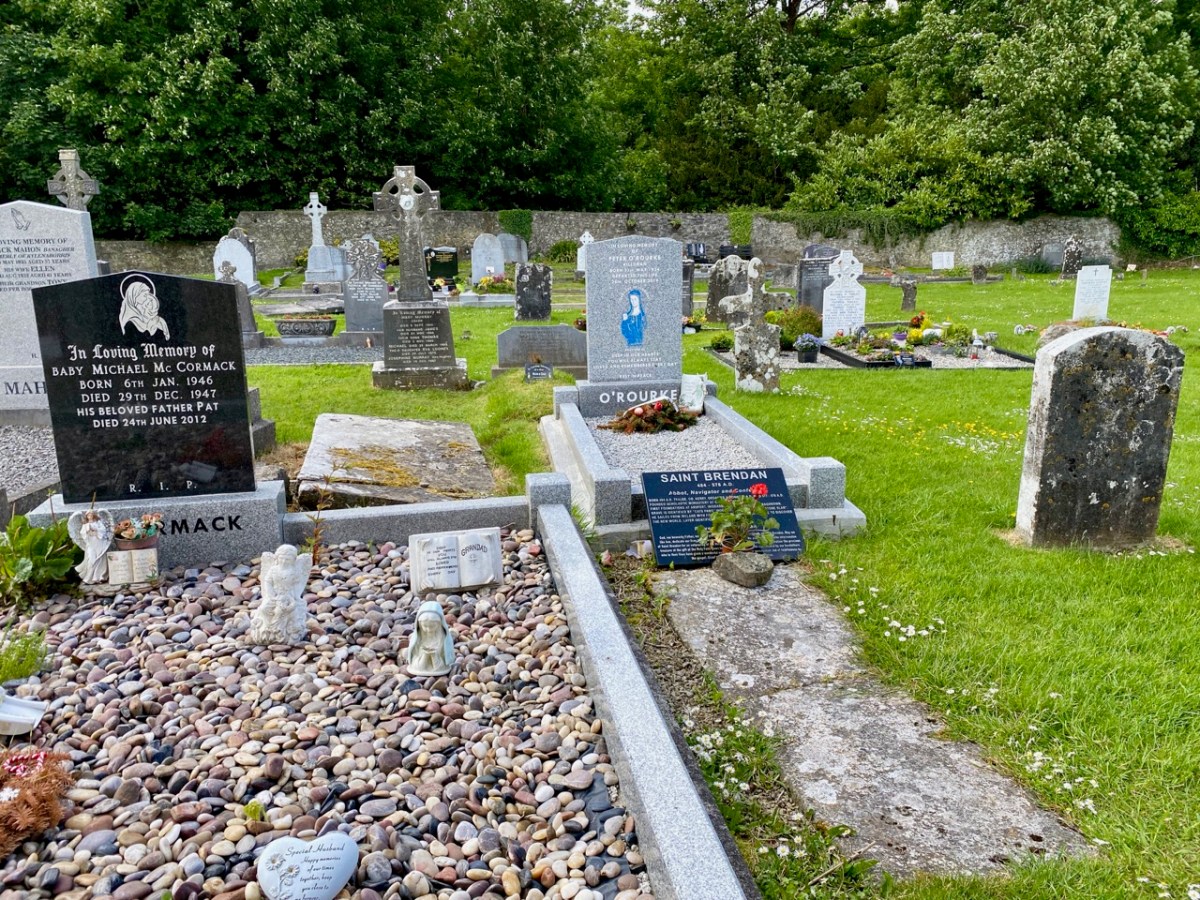
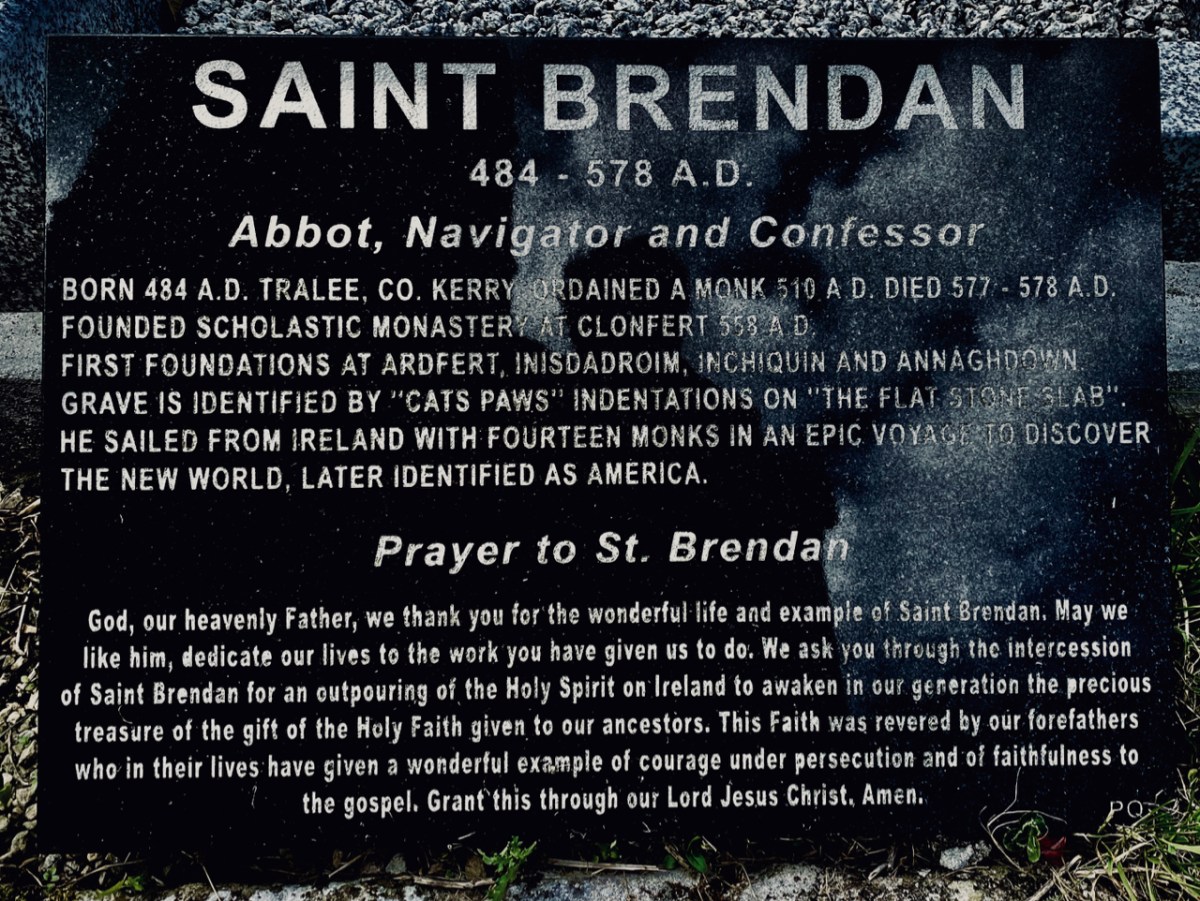
St Brendan lived from 484 to 577. We saw his birthplace in Fenit, Co Kerry, a few years ago. He founded many monasteries in Ireland but arranged for his body to be taken secretly to Clonfert Cathedral for burial as he didn’t want his remains to be disinterred by relic hunters. His grave is a stone slab just outside the great west door. On it are said to be the marks of cats’ paws – interestingly linked, according to folklore, with the many carvings of cats’ heads on the doorway arches.

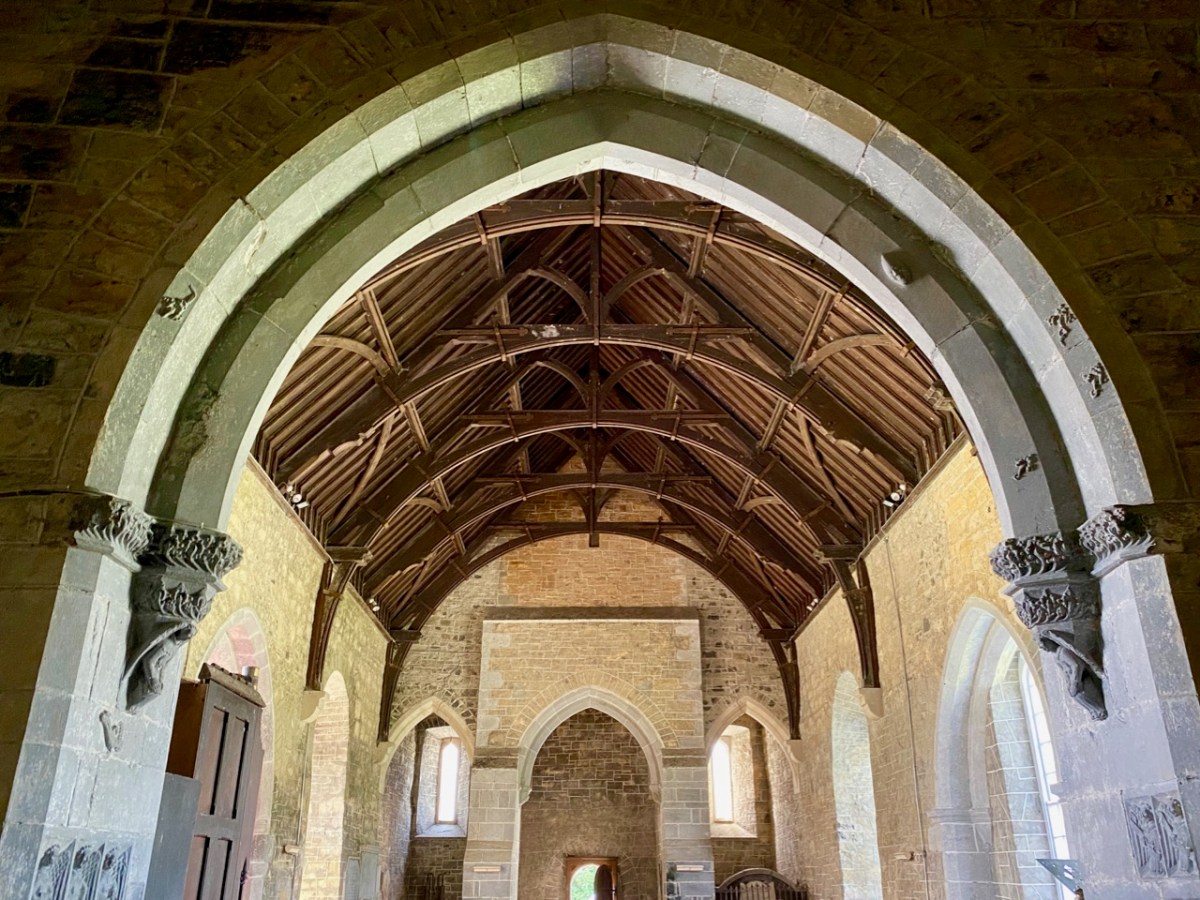
When we first visited Clonfert, many years ago, the cathedral itself was closed and we went away with the impression that we had seen all the wonders that the place had to offer by our explorations of the outside of the building and its setting. We were wrong: on this occasion the door was unlocked and there were unexpected treats hidden for us in the interior.

Further carvings decorate the church walls: they vary in date and style, but all are fascinating. Here is a selection – notice the seemingly random arrangement of heads and animal features on the great 15th century chancel arch, above.

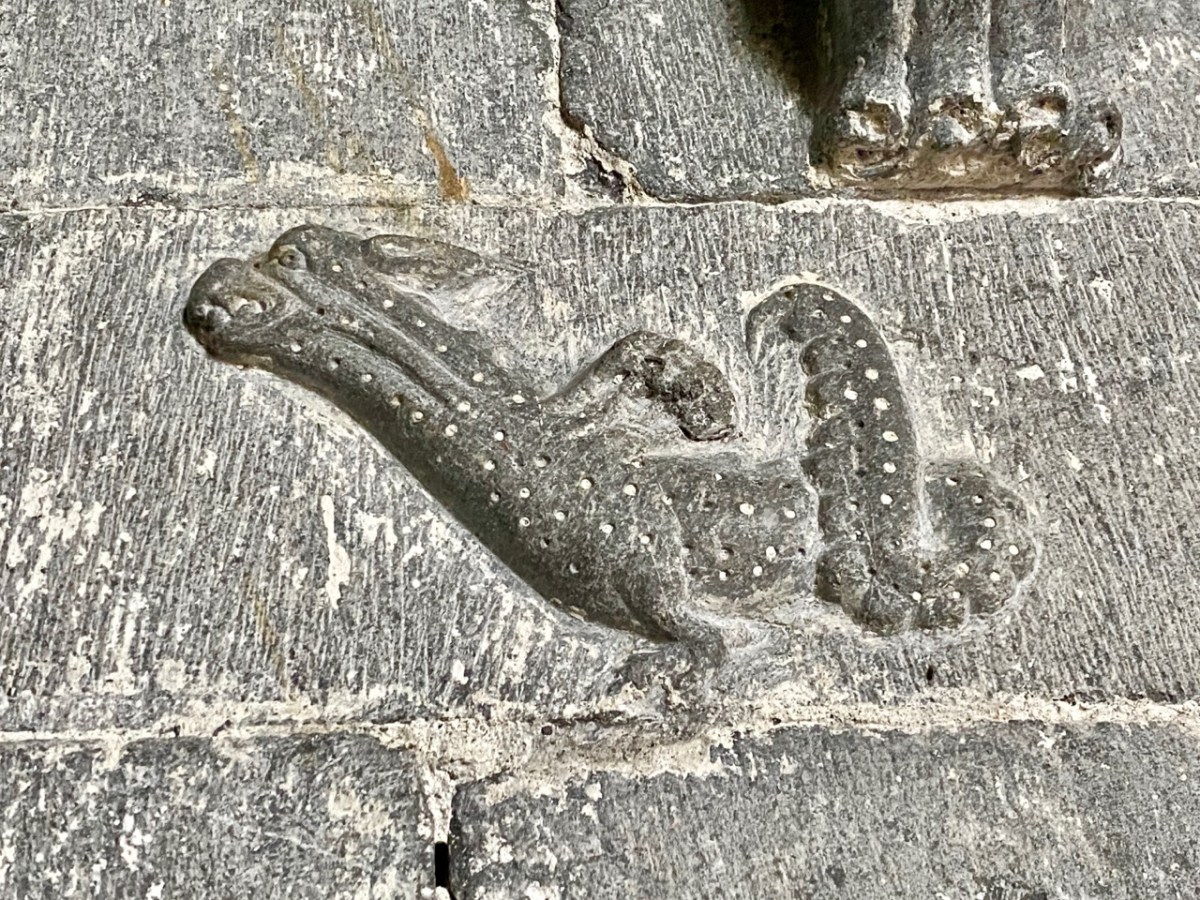
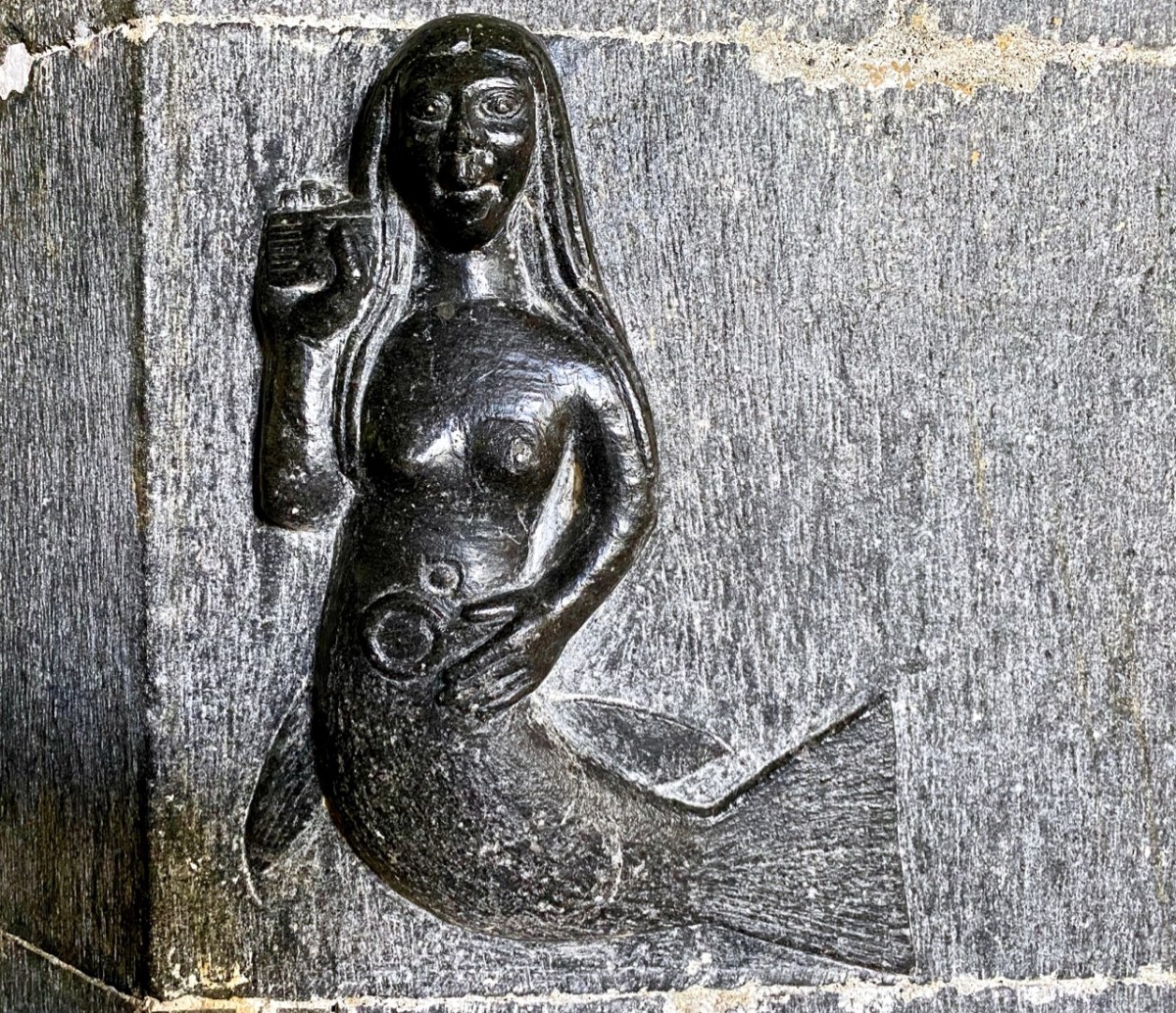
Angels, cross-slabs, a wyvern and, astonishingly, this fine mermaid complete with comb and mirror. I have found very little information to identify why these various carvings are found here in the Cathedral, apart from general legends which suggests links with Saint Brendan.

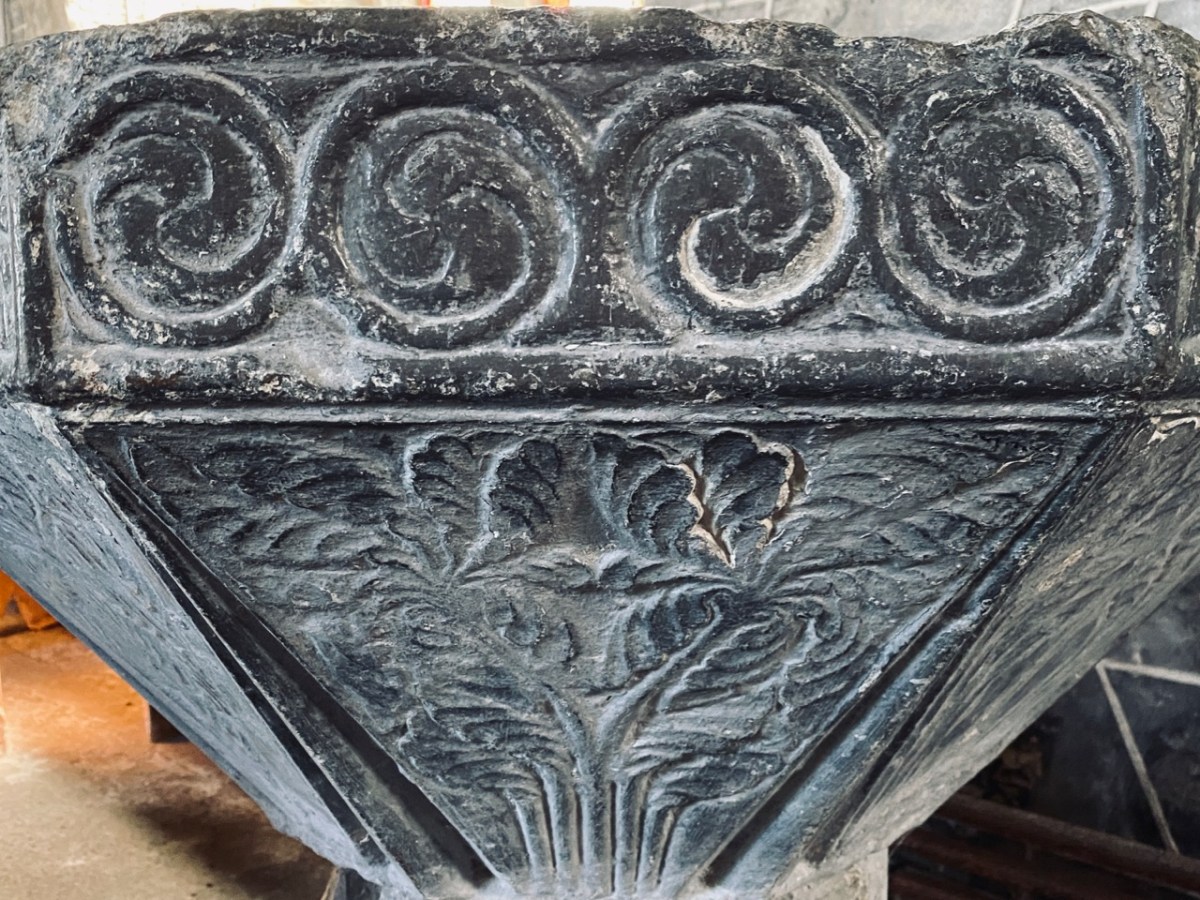
The carved stone head was found ‘in the ceiling’ when restoration work was carried out in 1985. It is said to date from around 1500, while the ancient and beautiful font is attributed to the thirteenth century. We could linger and feast on further treasures inside the church, but we need to look at the surroundings, which reveal yet more history.

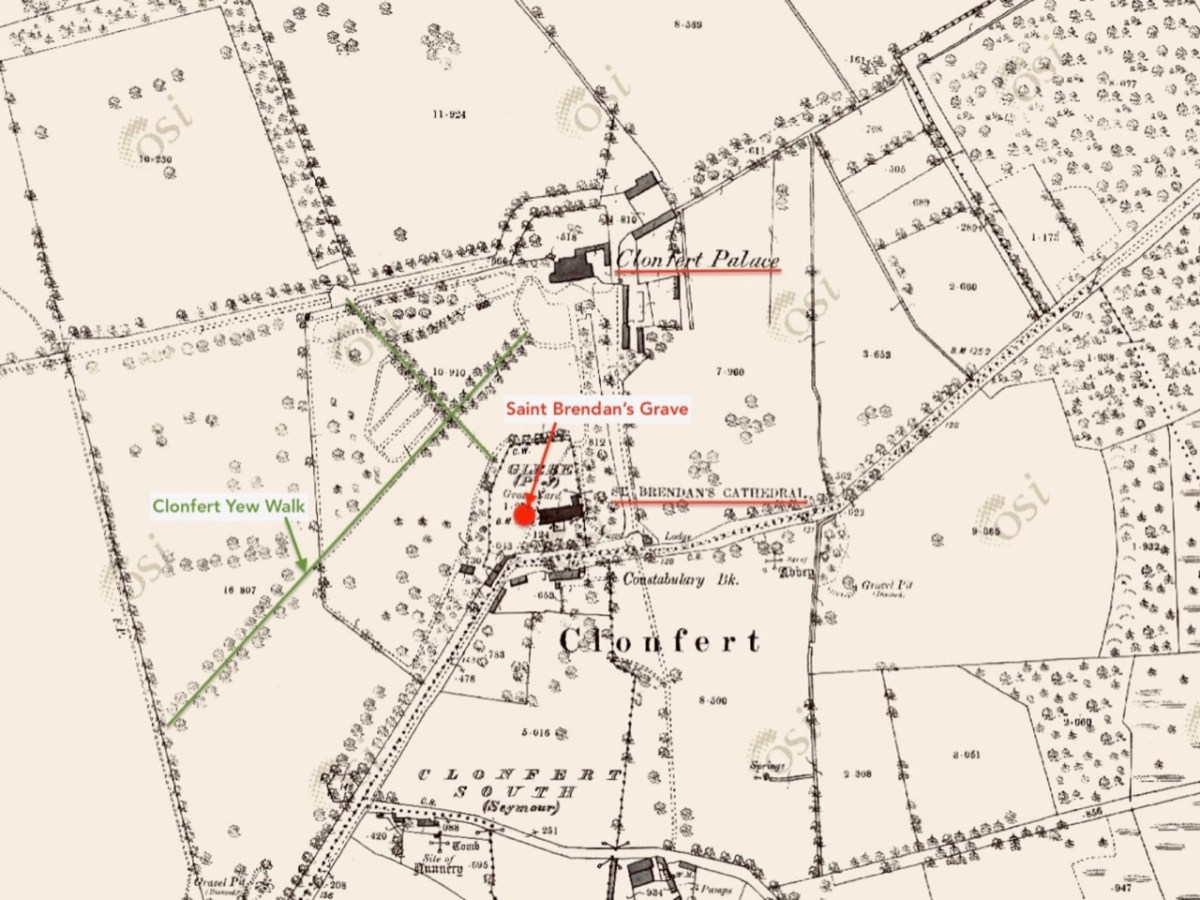
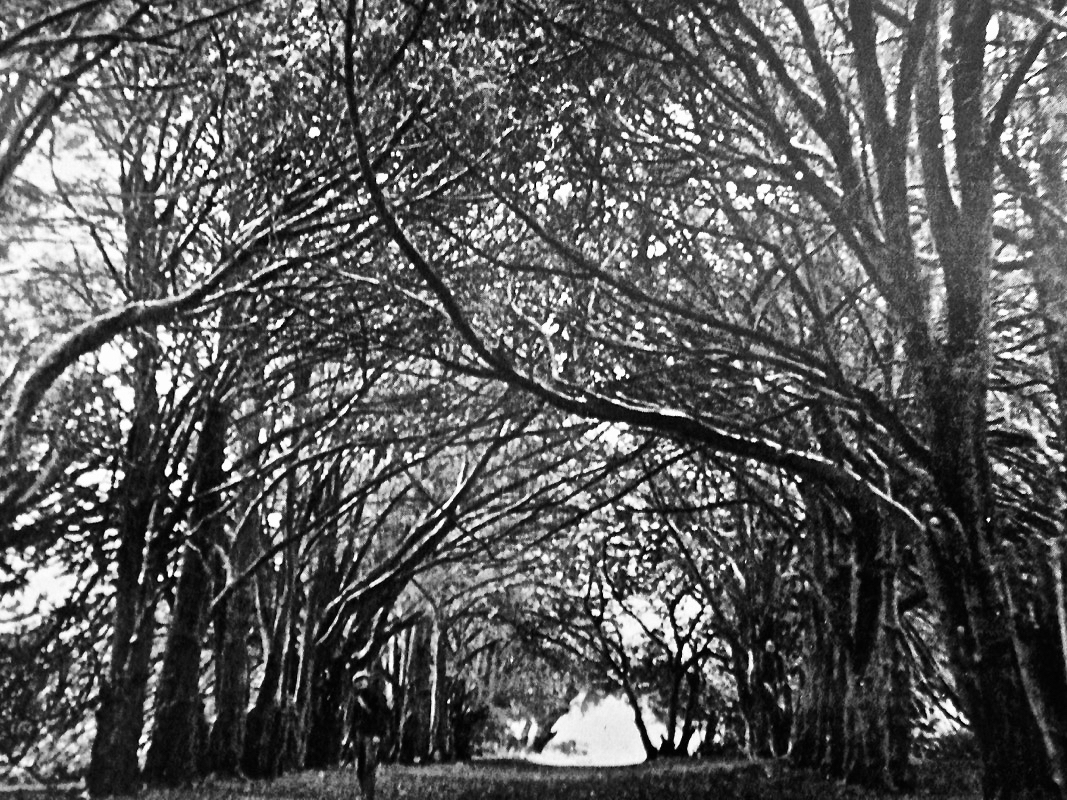
This extract from the 25″ OS map – late nineteenth century – shows the cathedral and some of the landscape features associated with it. We came here a few years ago, when we were researching Ireland’s waterways, following in the footsteps of English writer L T C Rolt. In his book ‘Green & Silver’ we read of his admiration for Saint Brendan, and his determination to find the grave at Clonfert, which he did in 1946. His book is illustrated with photographs taken by his wife Angela, and the one picture from Clonfert which is used in the book is this one of the ‘Yew Walk’ which was laid out as part of the gardens of the Bishop’s Palace, which you can see marked on the map.

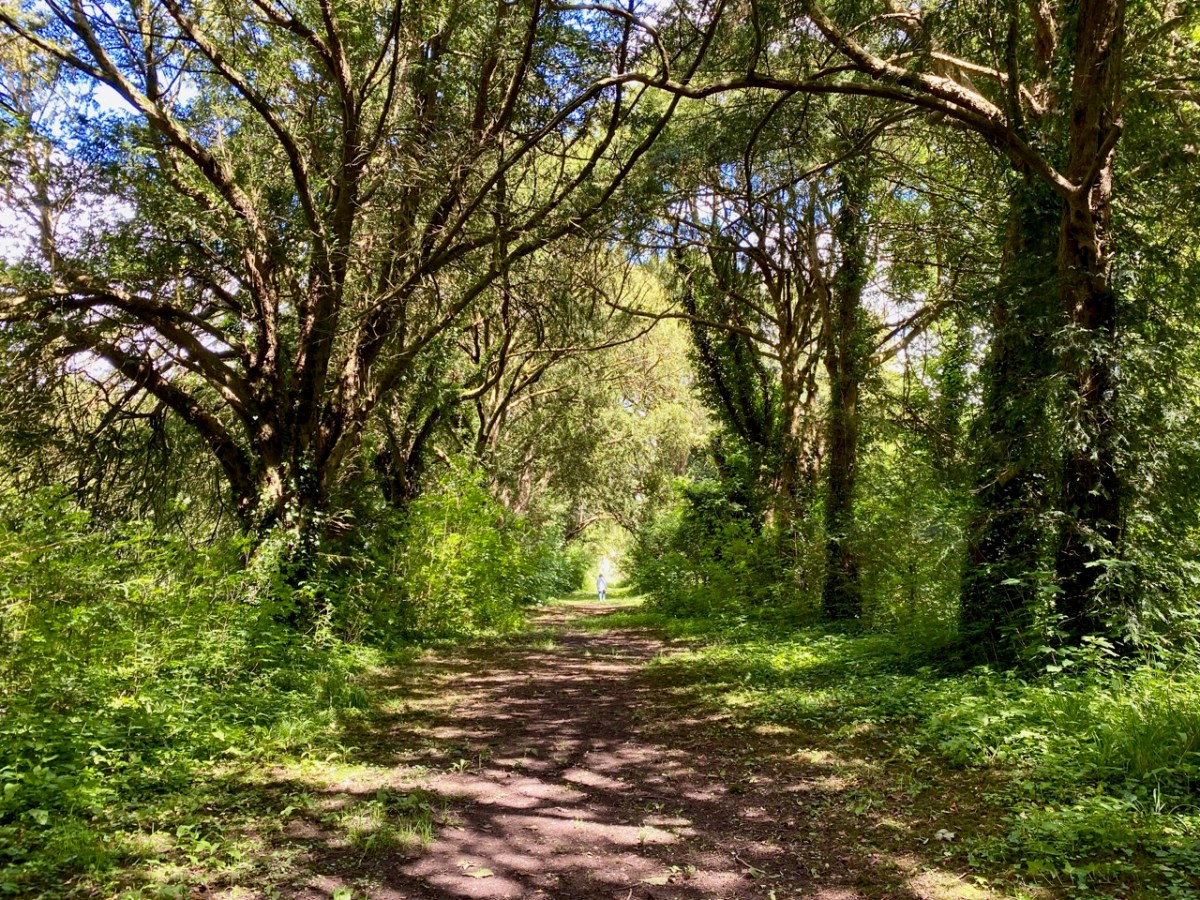
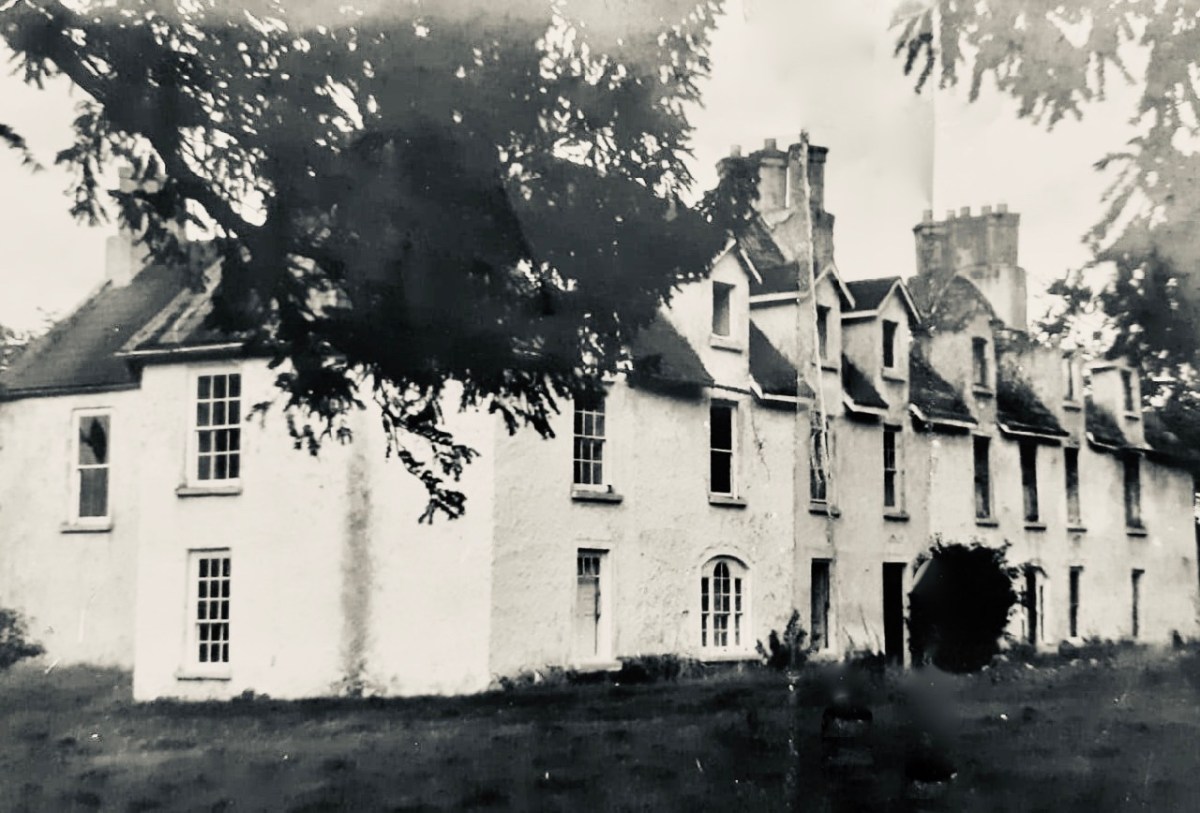
Our own photo of the Yew Walk at Clonfert was taken a few days ago. You can see that it survives, although neglected today. Some of the yew trees are said to be up to 500 years old. From the map you can also see that the Yew Walk connected the Cathedral to the 16th century ‘Clonfert Palace’, and was set out as an ornamental cruciform route, suggesting the path that might have been taken by the monks a thousand years ago. When we explored previously, we discovered the ruins of the Palace at the end of the Yew Walk, and wondered why it has been left in this state (since 1954, as we subsequently learned). The answer to that is fascinating, and I urge you to read my full account from that first visit, here. Below is a photo dating from c1950, showing the Palace at that time (with thanks to Dr Christy Cunniffe). My own photos from this week’s visit follow.

Clonfert might have been a very different place today if Queen Elizabeth had been listened to:

 . . . We are desirous that a college should be erected in the nature of a university in some convenient place in Irelande, for instruction and education of youth in learning. And we conceive the town of Clonfert within the province of Connaught to be aptlie seated both for helth and comodity of ryver Shenen running by it . . .

Queen Elizabeth, Letter to the Bishop Of Clonfert, 1579

The Queen’s advice was not taken up, and Trinity College Dublin was established instead – in 1592 – becoming Ireland’s first University.

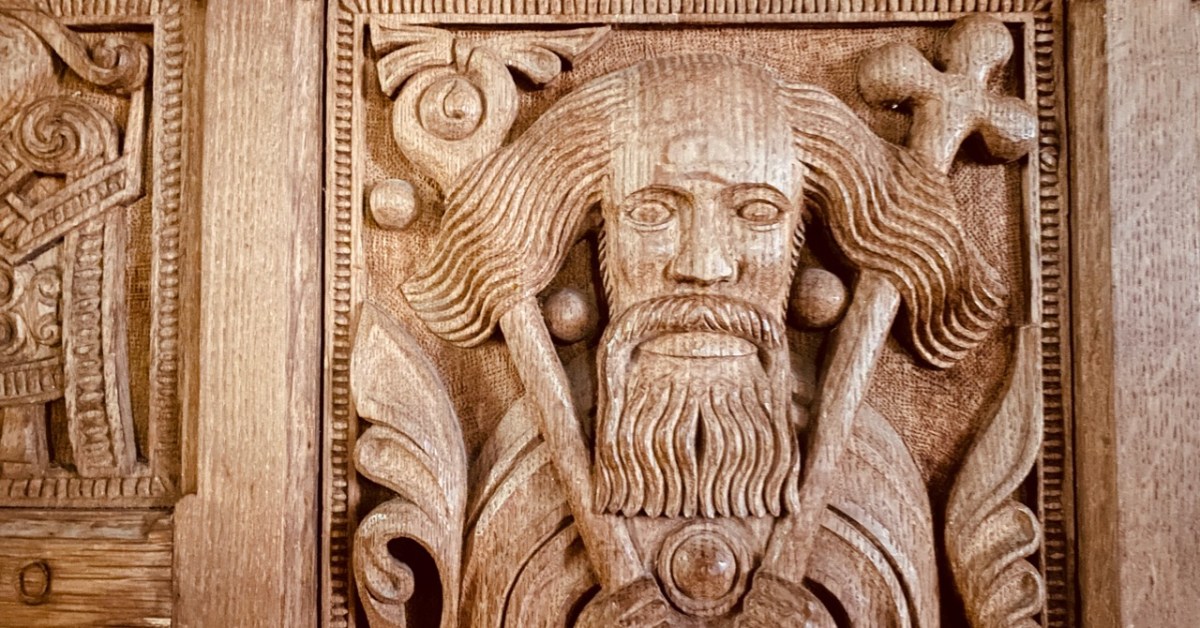
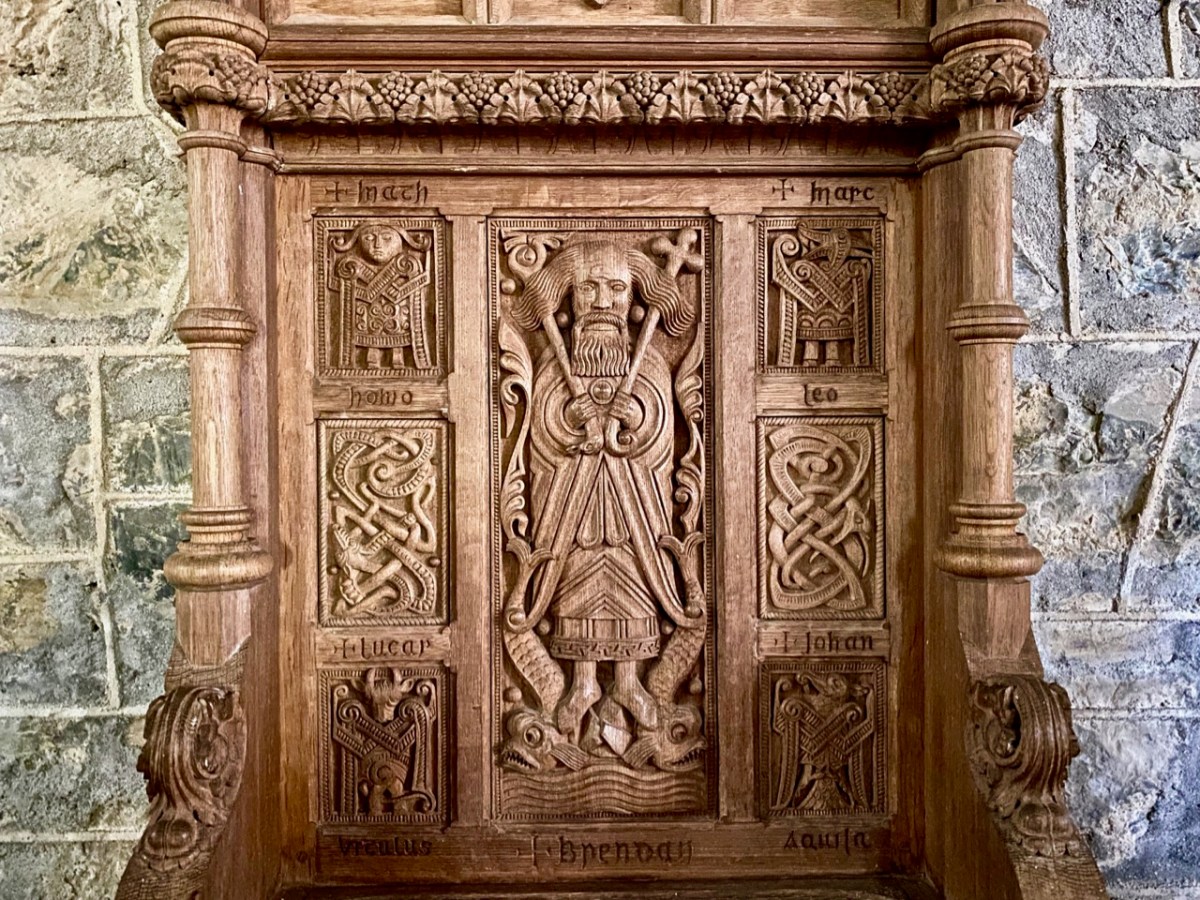
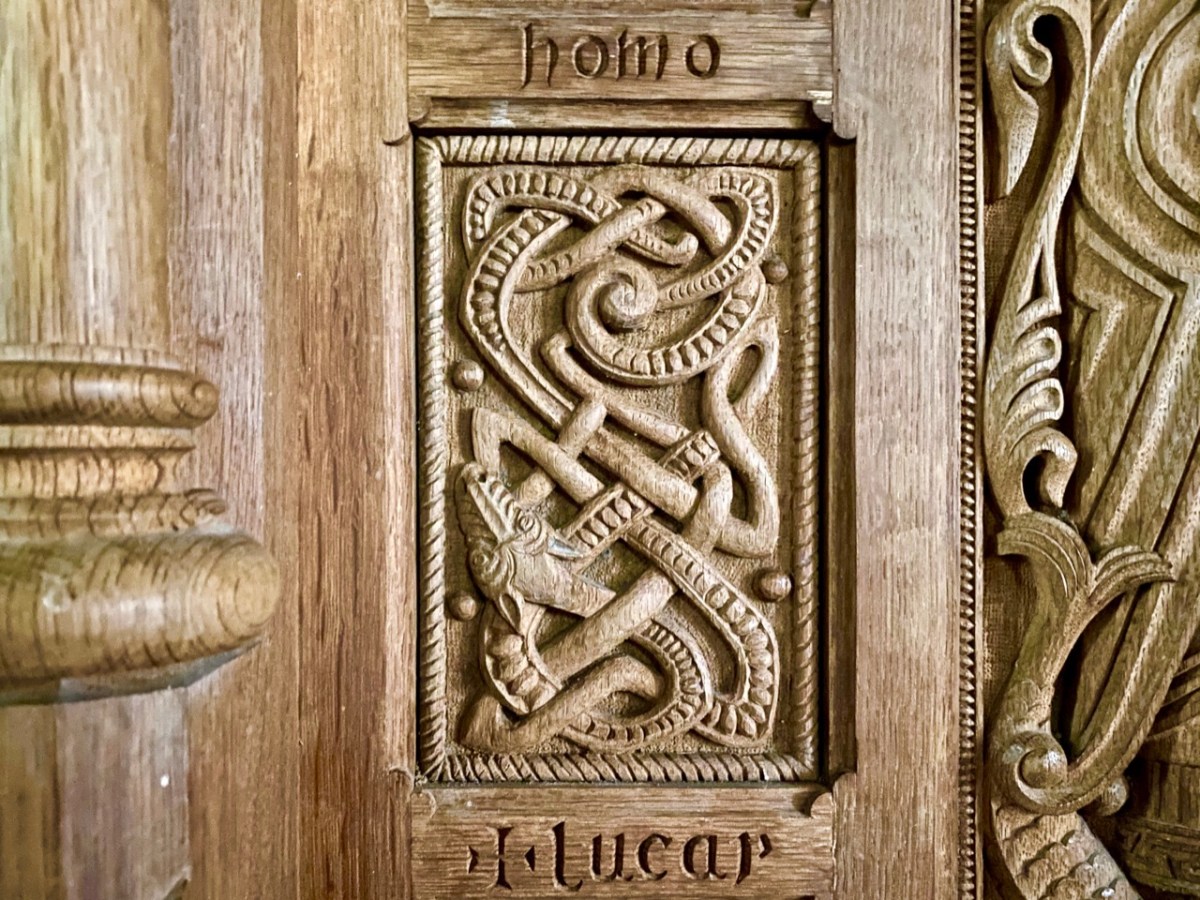
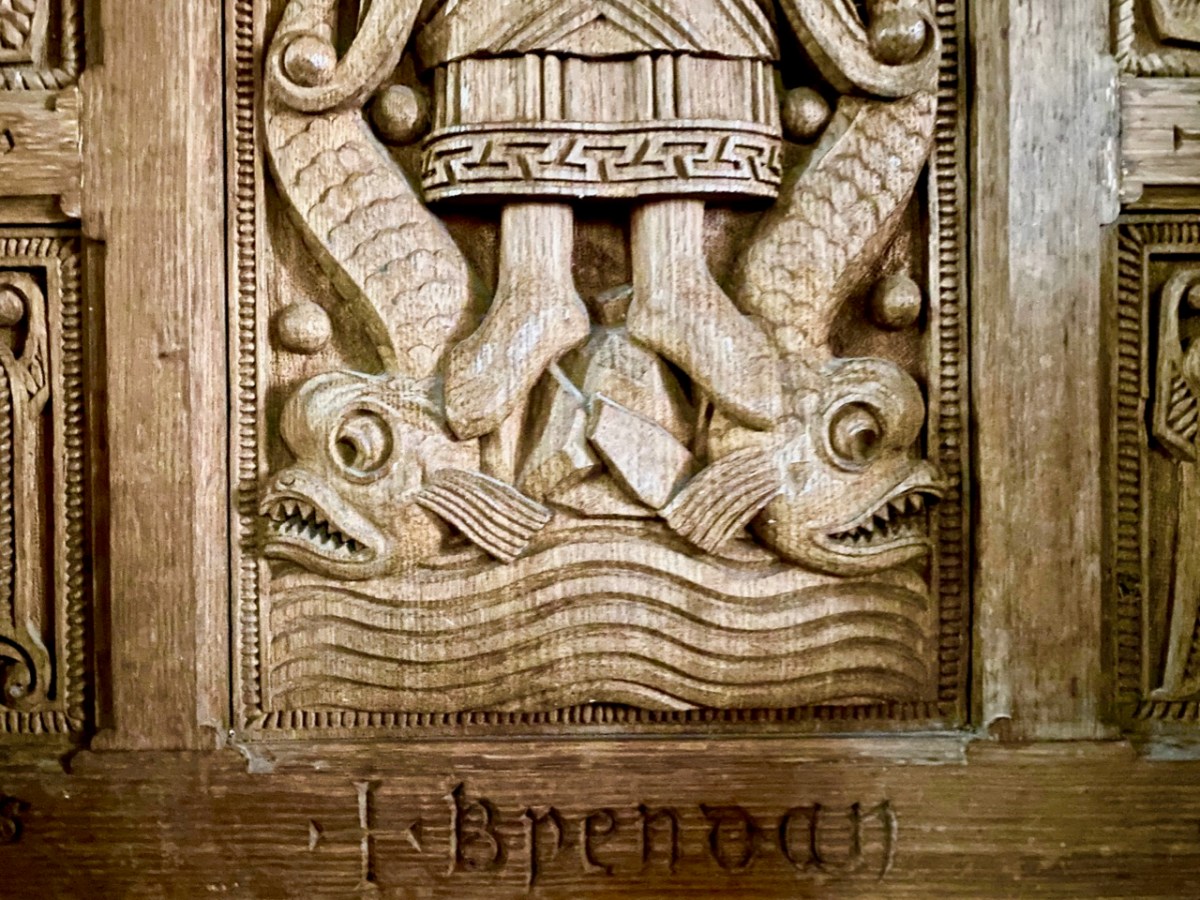
The site at Clonfert is so interesting – and covers so many periods in Ireland’s history – right up to the 20th century. It was well worth revisiting – and will merit further visits in the future, too. I’ll leave you with one aspect that probably impressed us most this time around. It’s the Bishop’s Throne which is hidden in the shadows of the Cathedral chancel. Carved from oak, most likely in the 19th century, it is a wonderful representation of Saint Brendan himself, surrounded by the Four Evangelists, crafted in the style of the Book of Kells. Look at him, also, on the header. Here is the Irish saint who set sail out on a voyage into the unknown – seeking Paradise – and discovered the World!

Inchydoney – and Virgin Mary’s Bank

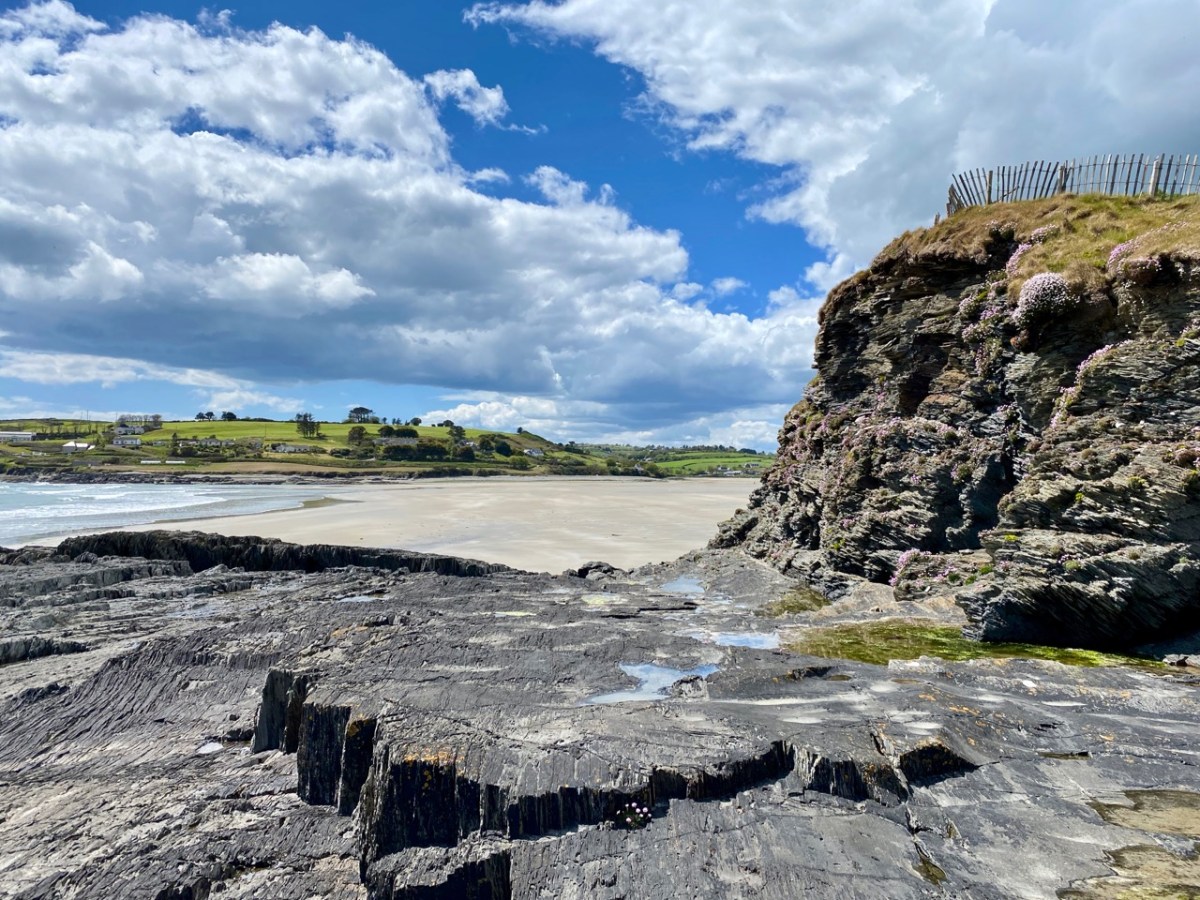
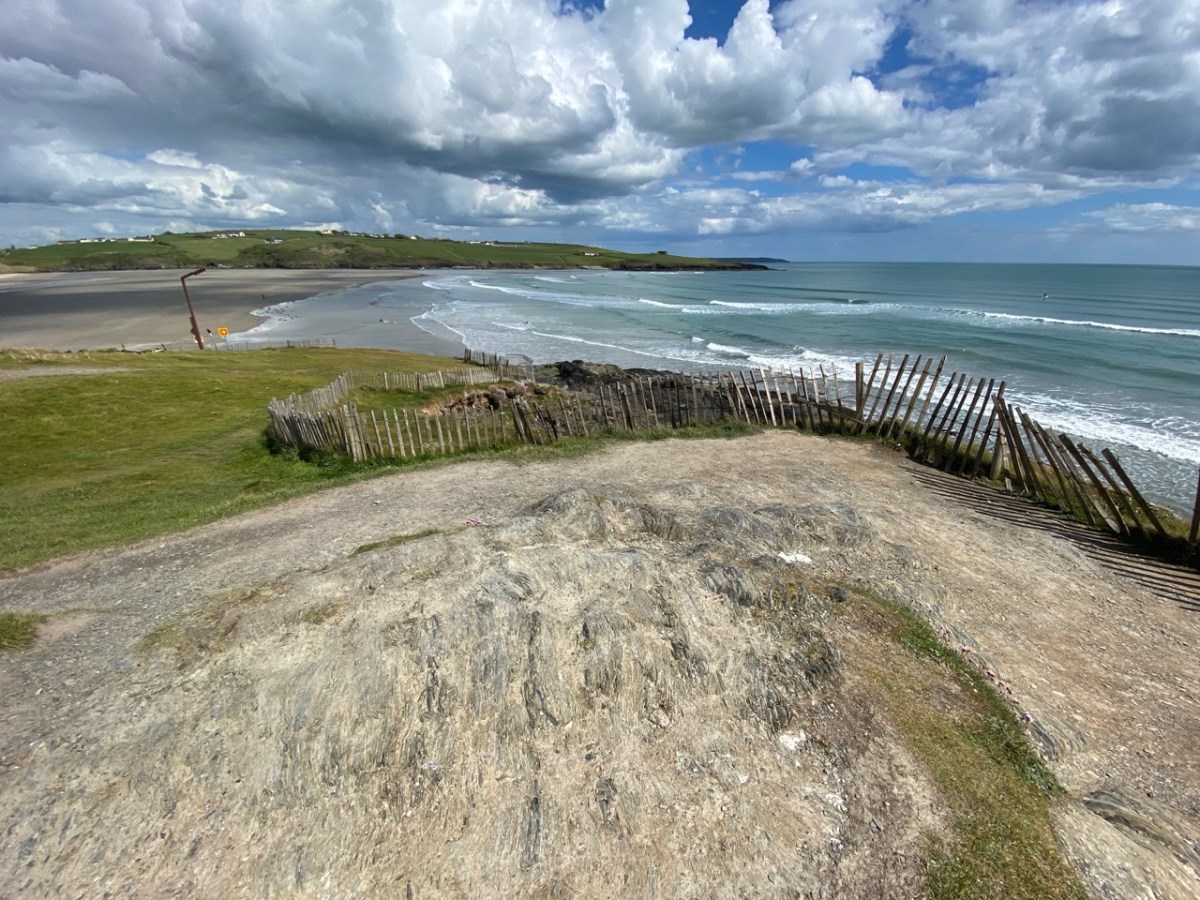
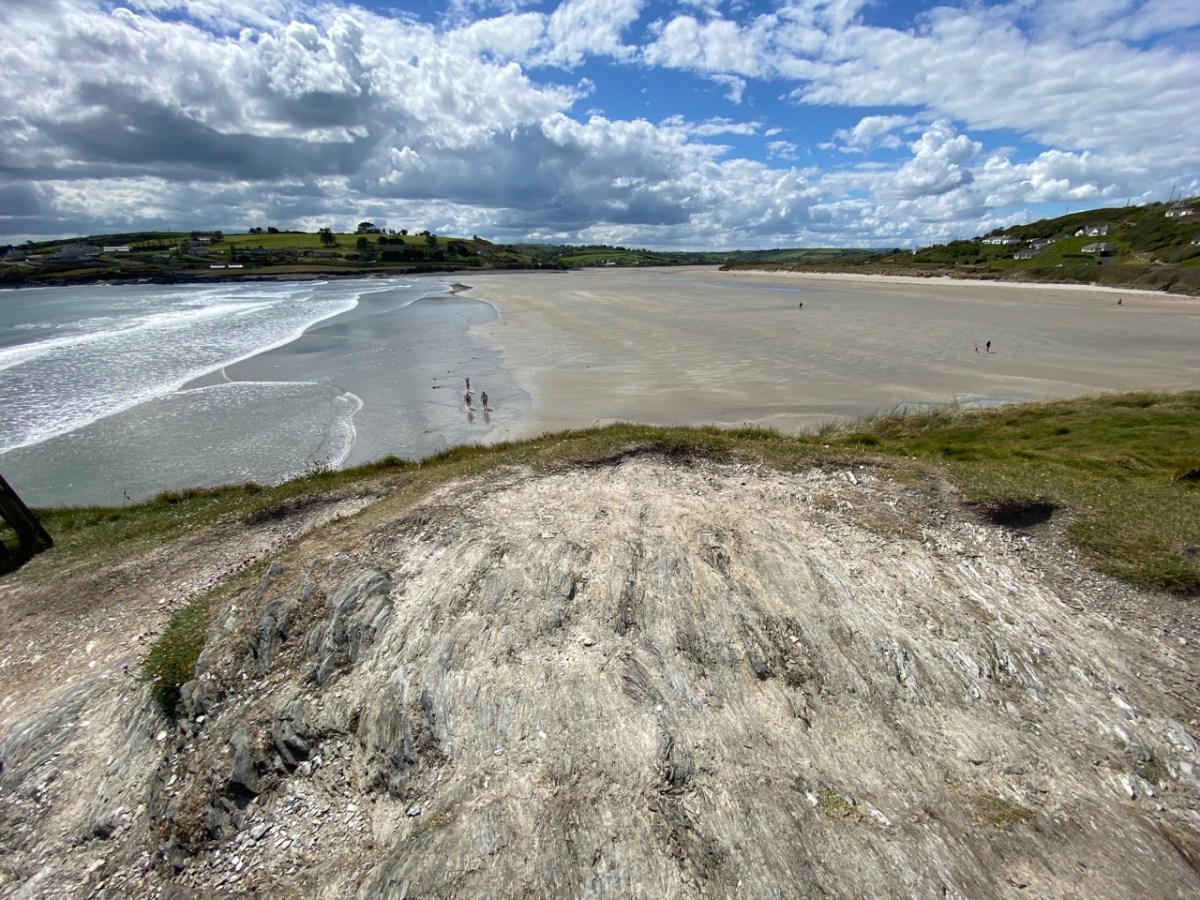
Virgin Mary’s Bank: it’s the intriguing name of a smallish rock outcrop that juts out into the sands at Inchydoney, West Cork. Stories abound, of course. Let’s do a bit of exploring…

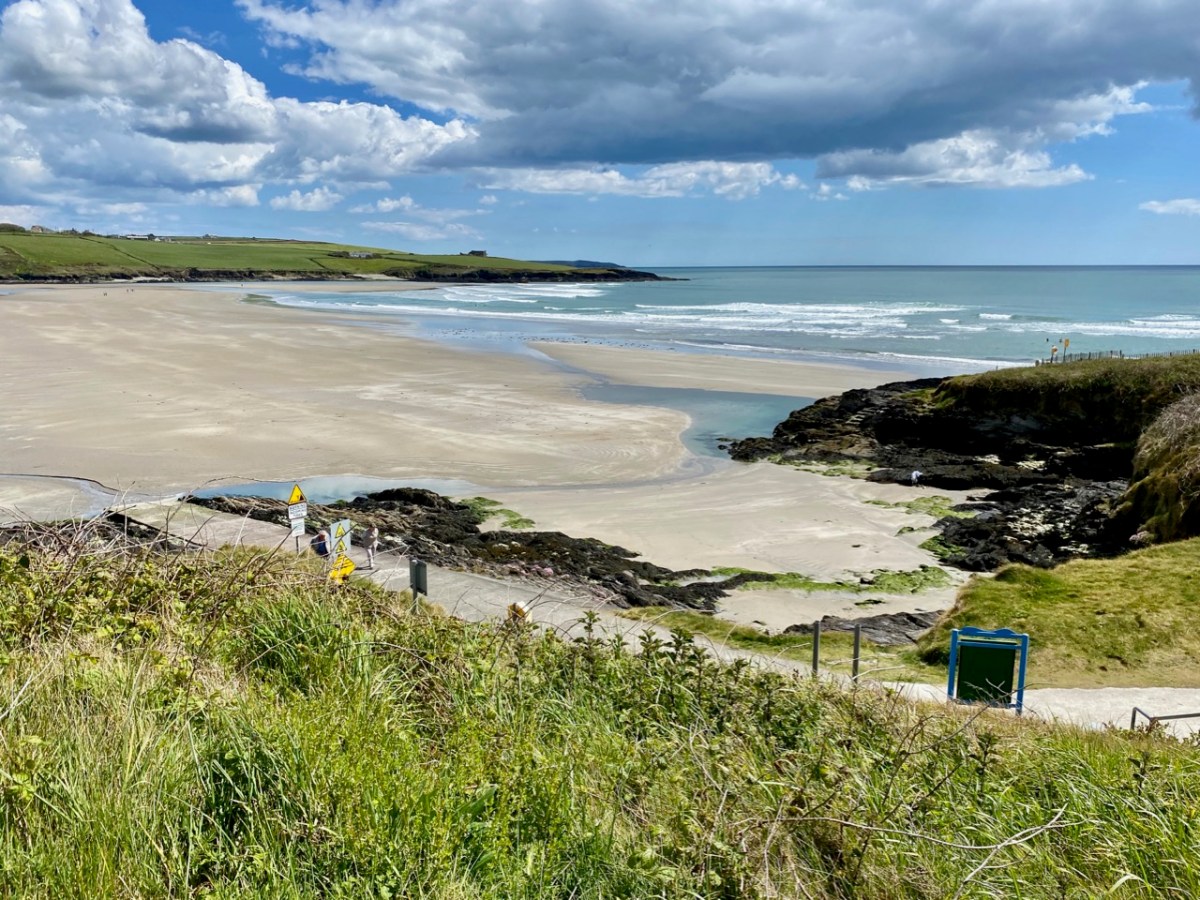
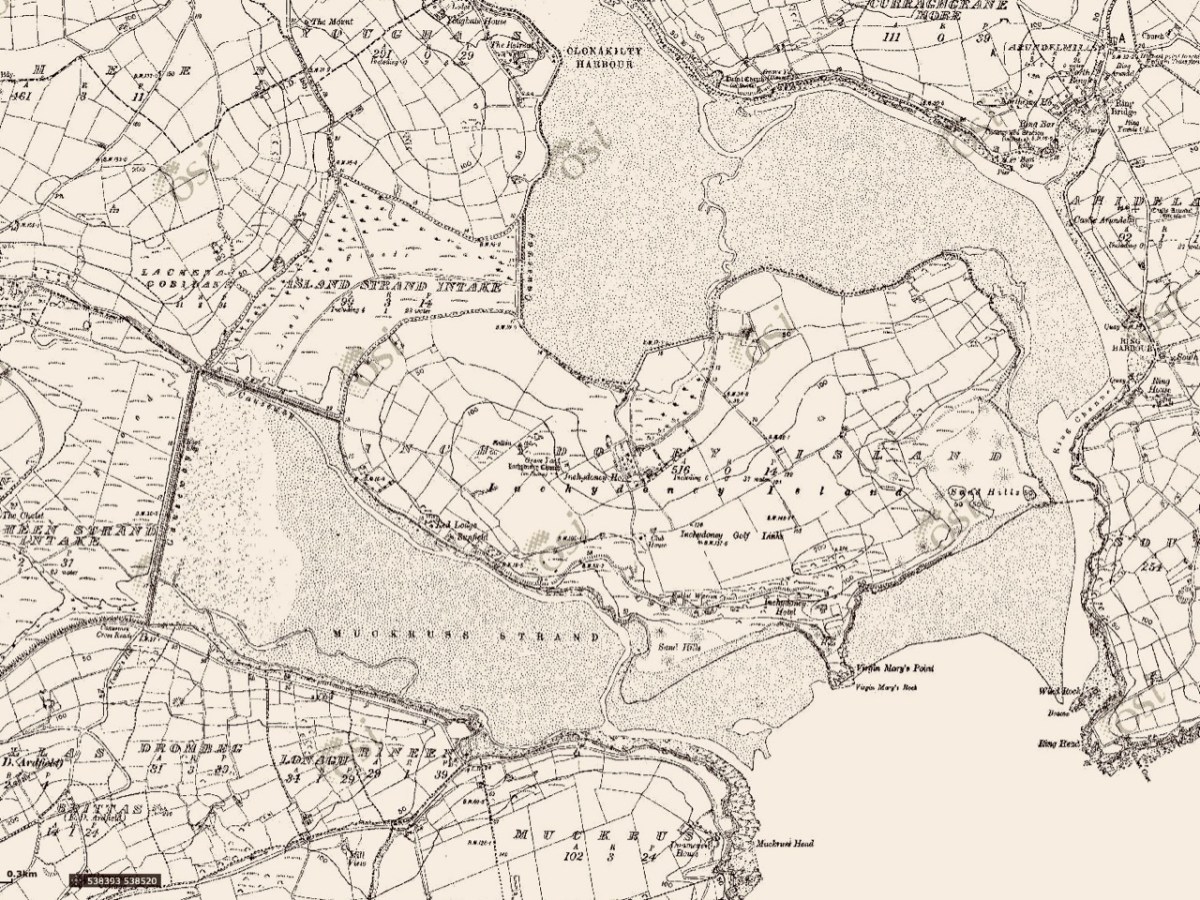
We first saw the name – Virgin Mary’s Bank (sometimes Virgin Mary’s Point or Virgin Mary’s Rock) – on the map when we were orientating our views across the sands from Ring on our excursion last month (above). There’s such a huge, sandy estuarial strand over on that side, stretching all the way from Ring and beyond Inchydoney island: it must be one of West Cork’s most covetable assets!

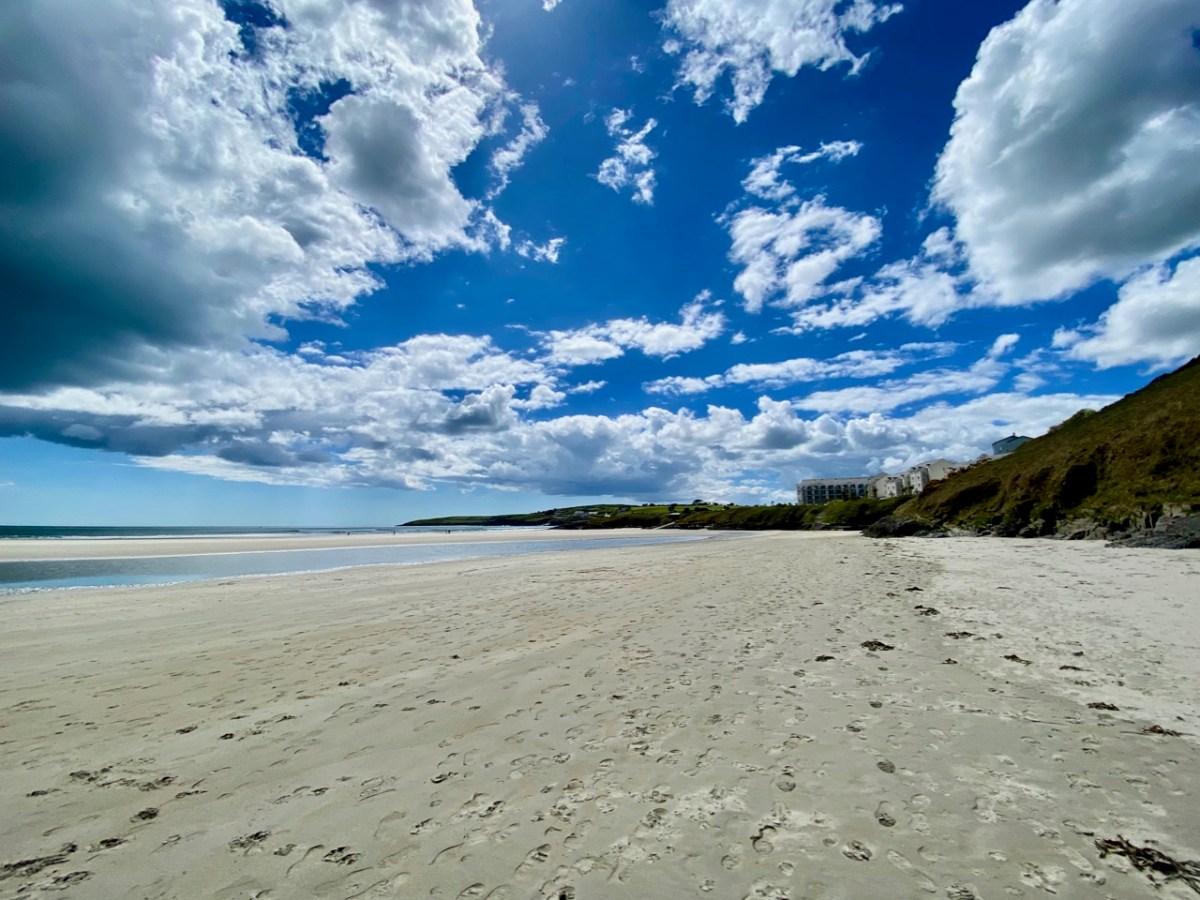
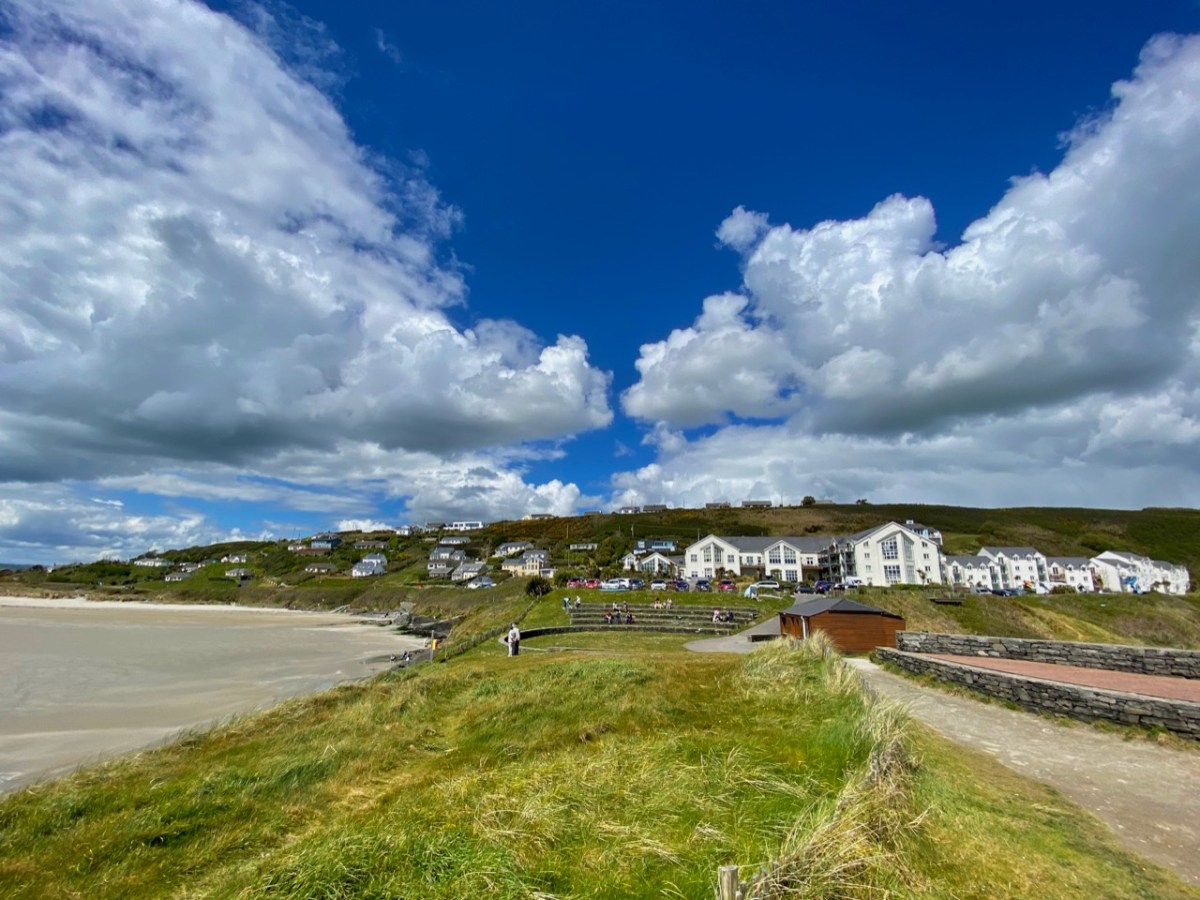
The view above – looking east from Inchydoney Island towards Ring Head – shows barely half the extent of the sands – and beautiful, golden sands they are. In the summertime, of course, the area is buzzing with visitors and sun-seekers, but there is plenty of room, and the beaches are never overrun, although car parking can be at a premium – get there early, if you can, in peak season. But why is Inchydoney an island, you might ask, when you look at the aerial view which seems to show it linked to the pastured landscapes to the north west? Here’s the answer:

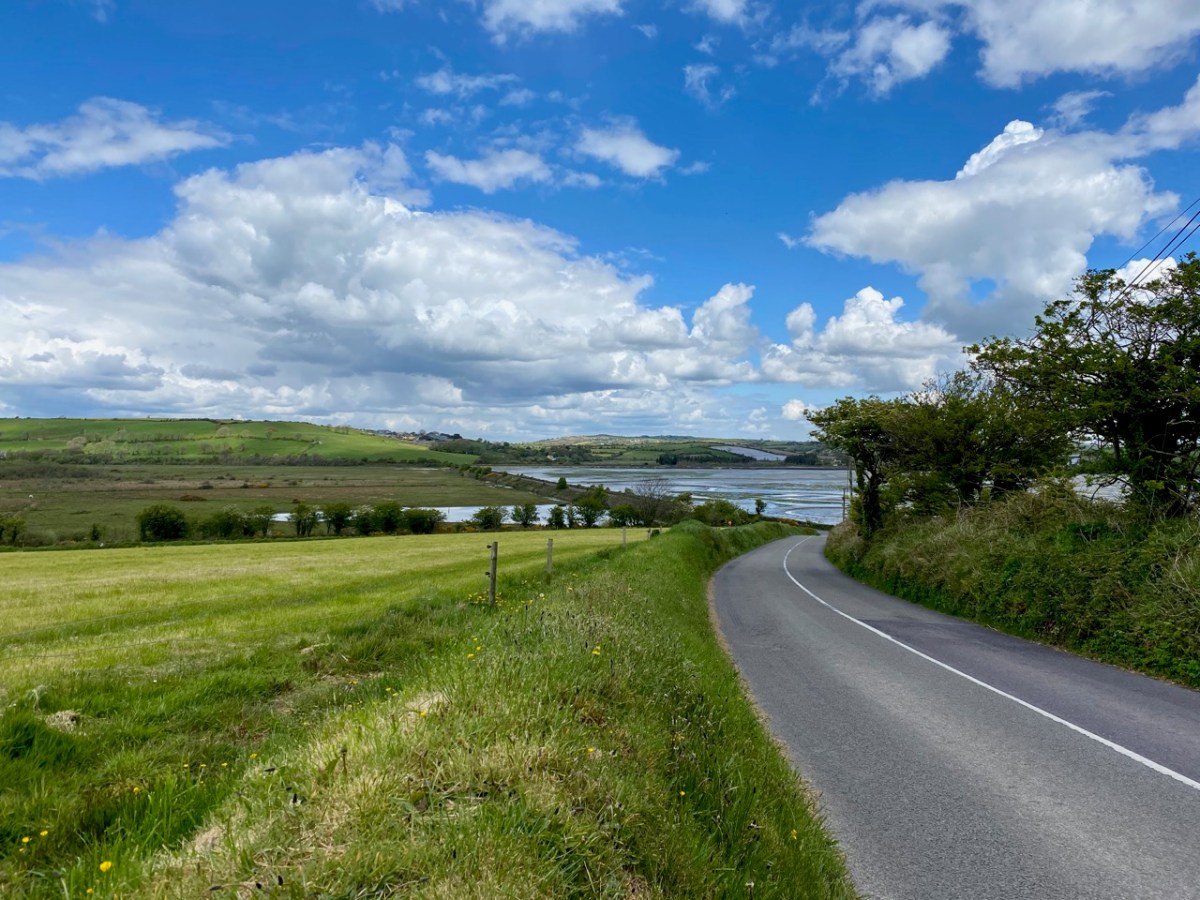
The top map is an extract from the earliest 6″ Ordnance Survey map, mostly surveyed in the 1840s. There you can see the island, clearly surrounded by water, with a causeway on the northwest side linking it to the nearby mainland. The principle features on the island at that time are Inchidoney House, a ruined church and burial ground. The later Cassini 6″ map (above) shows how causeway dams have been built to enclose areas of reclaimed land, here called ‘intakes’, effectively joining the former island to the adjacent mainland. The causeways are very clear if you approach the island from the west side (below).

The Cassini map was surveyed in the late 19th century, and we know from historical records that the causeway system was constructed by the Congested Districts Board in the 1840s, probably as a famine relief scheme. The roads and retaining boundaries were constructed from limestone quarried on the island. It is recorded that workers were paid a penny a day, and that on the first day of the works nine people died – presumably of malnutrition.

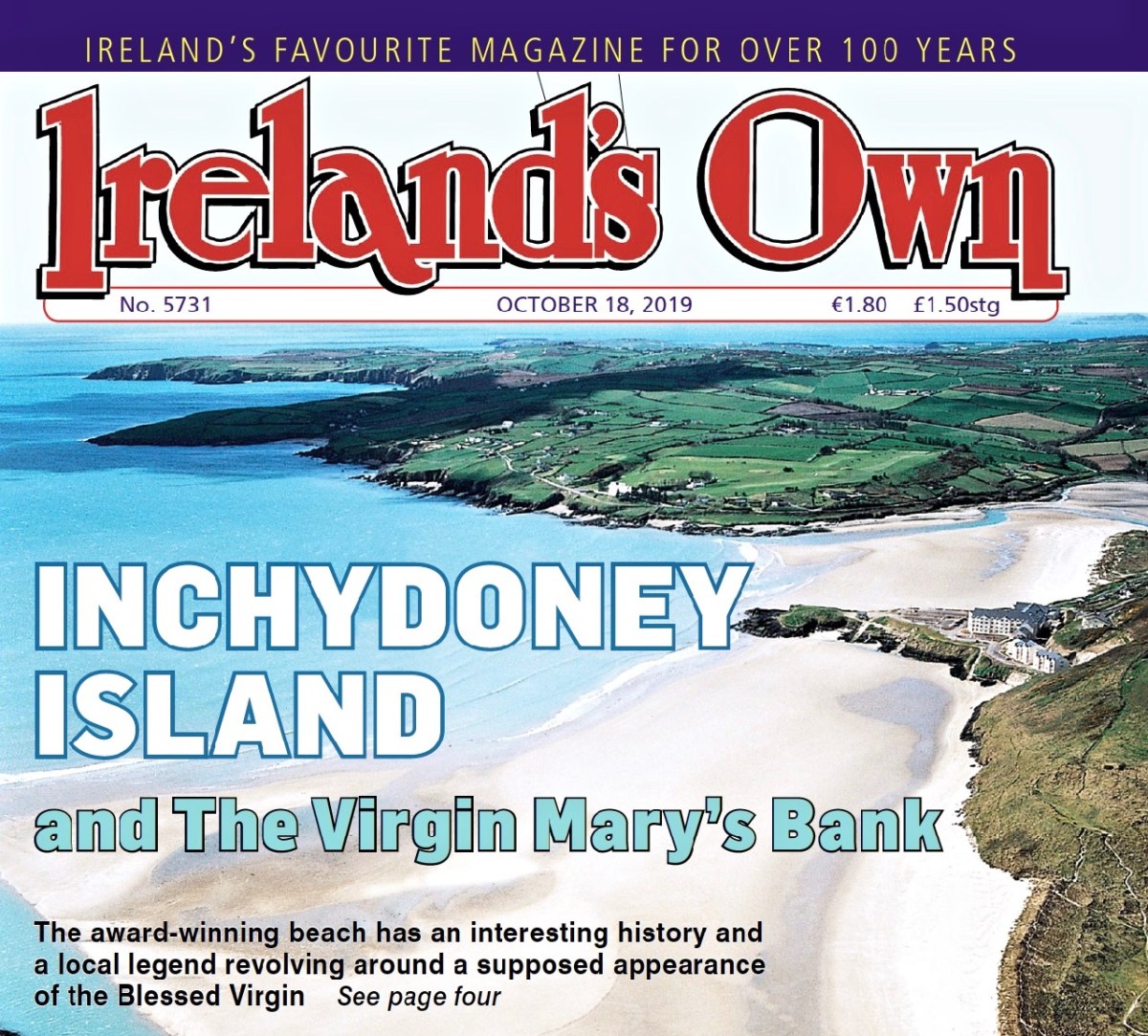
I found an excellent article on Inchidoney Island in a recent edition of Ireland’s Own (October 2019), available to download online, written by Mary Rose McCarthy. She relates how Richard Hungerford, from a Somerset family background, owned a substantial part of the island in 1690 and his descendants were there until the early 1900s. They rebuilt Inchydoney House in the early 1800s: it still stands. The writer ‘Mrs Hungerford’ – Margaret Hamilton of Rosscarbery – married into the Hungerford family and was notorious for an incident in 1905. Here is an extract from a letter sent by her to the Clonakilty Urban District Council on August 16th:

On 10th inst I received a letter from the Town Clerk of Clonakilty who ‘had been directed by the Urban District Council to ask me to receive a deputation with reference to asking me to open my grounds to the public on Sundays’ . . .

The Urban District Council, in proposing this resolution, ‘regretted that I had not followed the example of Mr Bence Jones’ (who had kindly thrown his most lovely garden open to the public every second Sunday) and one member, whom I shall not name but with whom I have had a little business transaction in the past, was of opinion that ‘I should have done so without waiting to be asked’. Now, during the past summer I have permitted every person, and at every hour, who asked leave at the hall door to go through to the strands. The result has been as usual in Ireland, disappointing, Gates were left open and of course my animals strayed away and people had to leave their work to hunt for them and the portion of ‘the public’ who considered asking for leave too much trouble, or perhaps, too derogatory, wandered over the land wherever they choose and papers, bottles etc, etc, littered the place . . .
Miss Hungerford, The Island, Clonakilty 1905

Mary Rose McCarthy, in her Ireland’s Own article, recounts:

. . . Locals felt they had a right to travel to the beach by an old roadway past Inchydoney House. Clonakilty UDC mediated but Miss Hungerford refused all approaches. A group of locals marched from town, tore down the gates, and asserted their right to travel to the beach. This gave rise to a local song – Who broke the island gates?, although the words were never recorded . . .
Mary Rose McCarthy, Ireland’s Own, October 2019

The author also notes that Margaret Hamilton (Miss Hungerford) wrote novels, the most famous of which – Molly Bawn – is mentioned by James Joyce in Ulysses; and also credits her with having coined the phrase ‘beauty is in the eye of the beholder’.

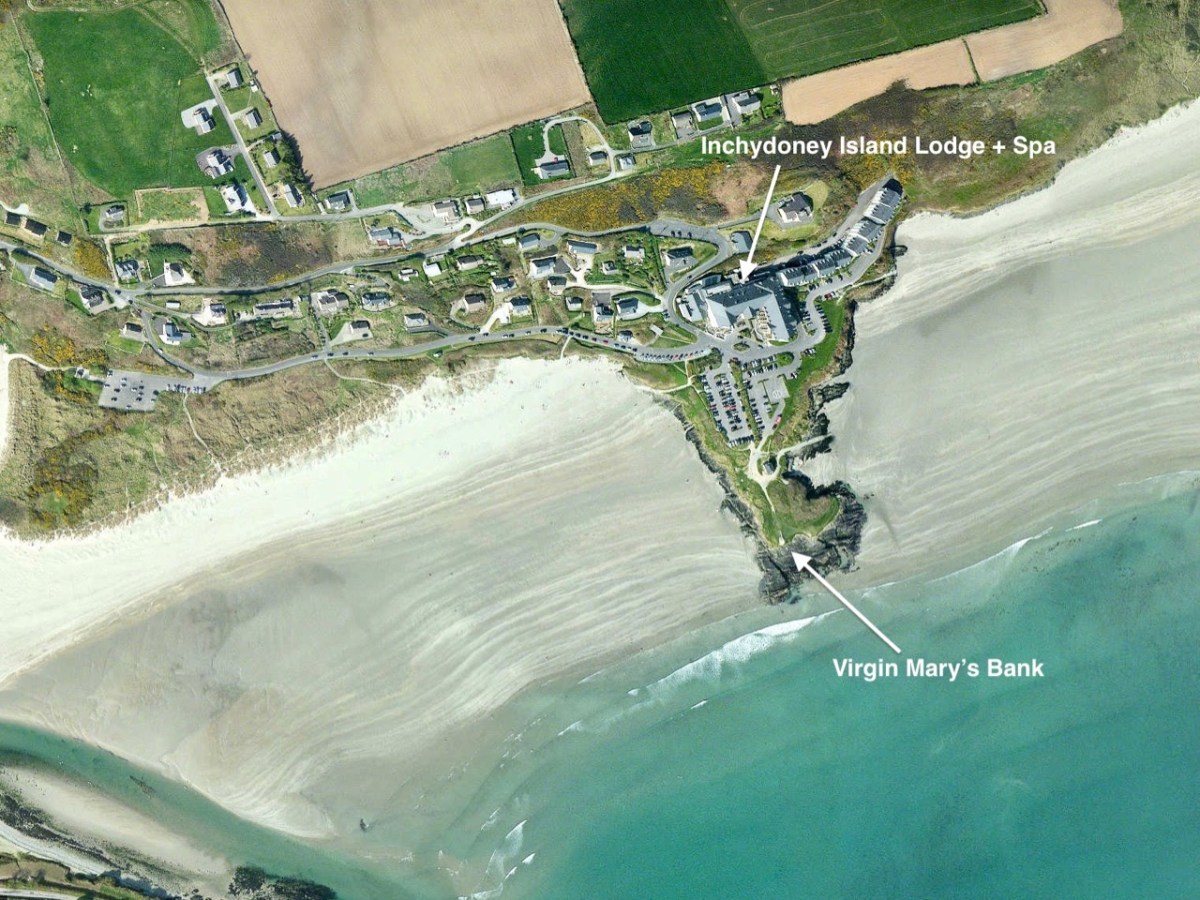
The most notable building on the Island today is the Inchodoney Island Lodge & Spa which – with associated apartments – commands a stunning view over the whole south strand. It replaces the earlier Inchydoney Ocean Hotel, built in the 1930s and famous for its ballroom – and the dances and fancy-dress parties held there, which always went on into the early hours of the morning. The postcard below, published by H Rosehill, Cork, shows the hotel in 1940.

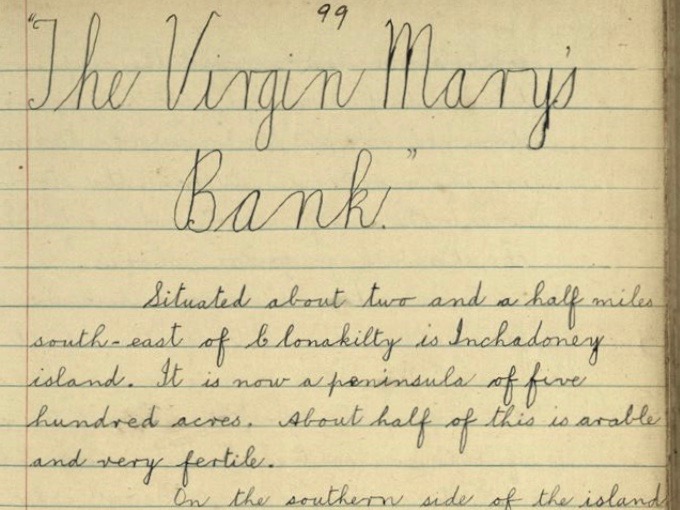
The aerial view gives an idea of the extent of the present day building, and also shows how it relates to the principal subject of today’s post: Virgin Mary’s Bank. The legend of this promontory is best told through the pages of the Duchas Schools Folklore Collection:

. . . Situated about two and a half miles south-east of Clonakilty is Inchadoney island. It is now a peninsula of five hundred acres. About half of this is arable and very fertile.
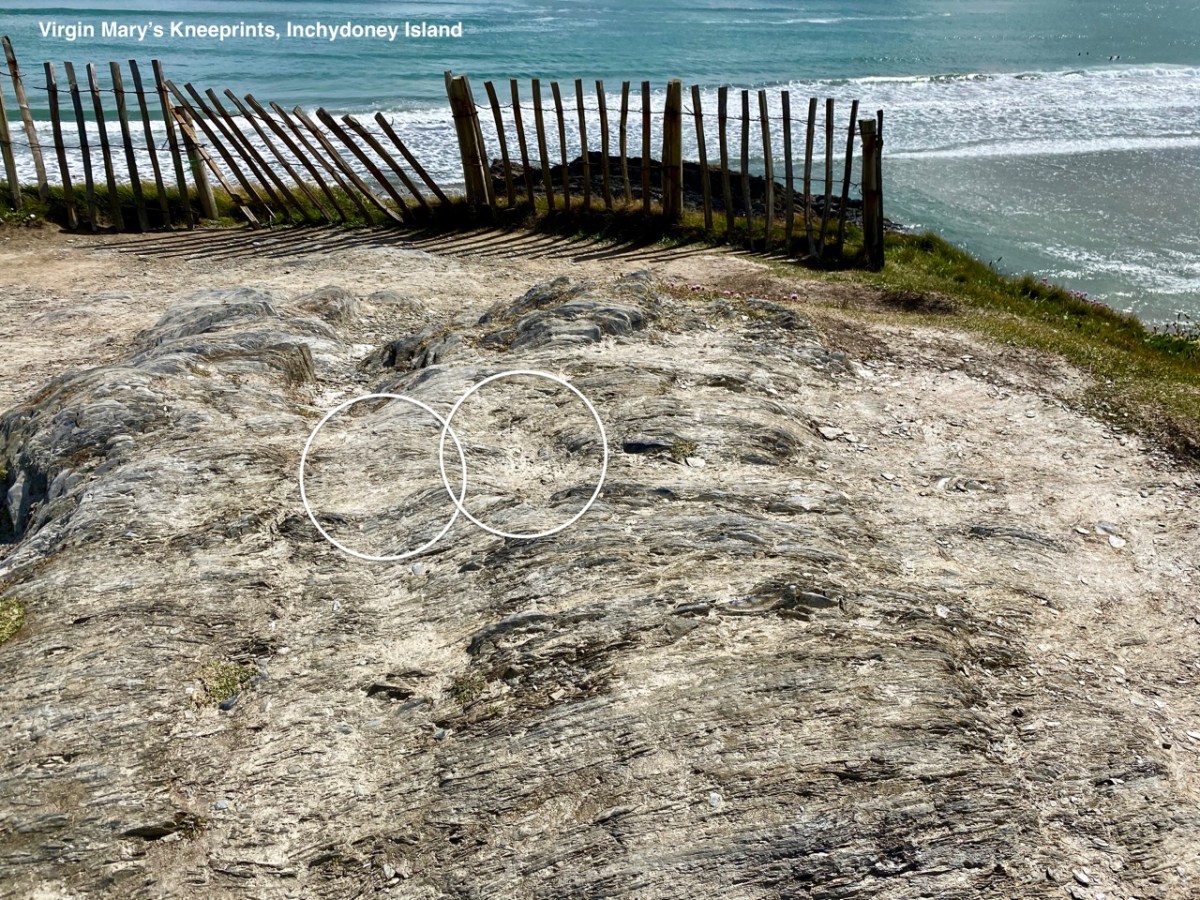
In the southern side of the island there is a bank jutting out into the sea called the Virgin Mary’s bank. It is said that there was a ship coming in there once and the sailors saw a beautiful woman praying on the bank. She was as white as snow and she was kneeling on a knoll which bears the impression of her knees to-day . . .
All the sailors but one began to mock and blaspheme her. Suddenly a great storm arose and the ship was blown to pieces and all her sailors were drowned except the one who took no part in the mockery. When the storm ceased the lady went out and brought the drowning sailor ashore . . .

In olden times there was a flourishing convent on the island and the remains of which are to be seen to-day. Some people say it was one of the nuns of this convent but it is more likely that it was the “Virgin Mary” who saved the man from drowning . . .

Tim Cowhig, Duchas Schools Collection, Clonakilty 1936

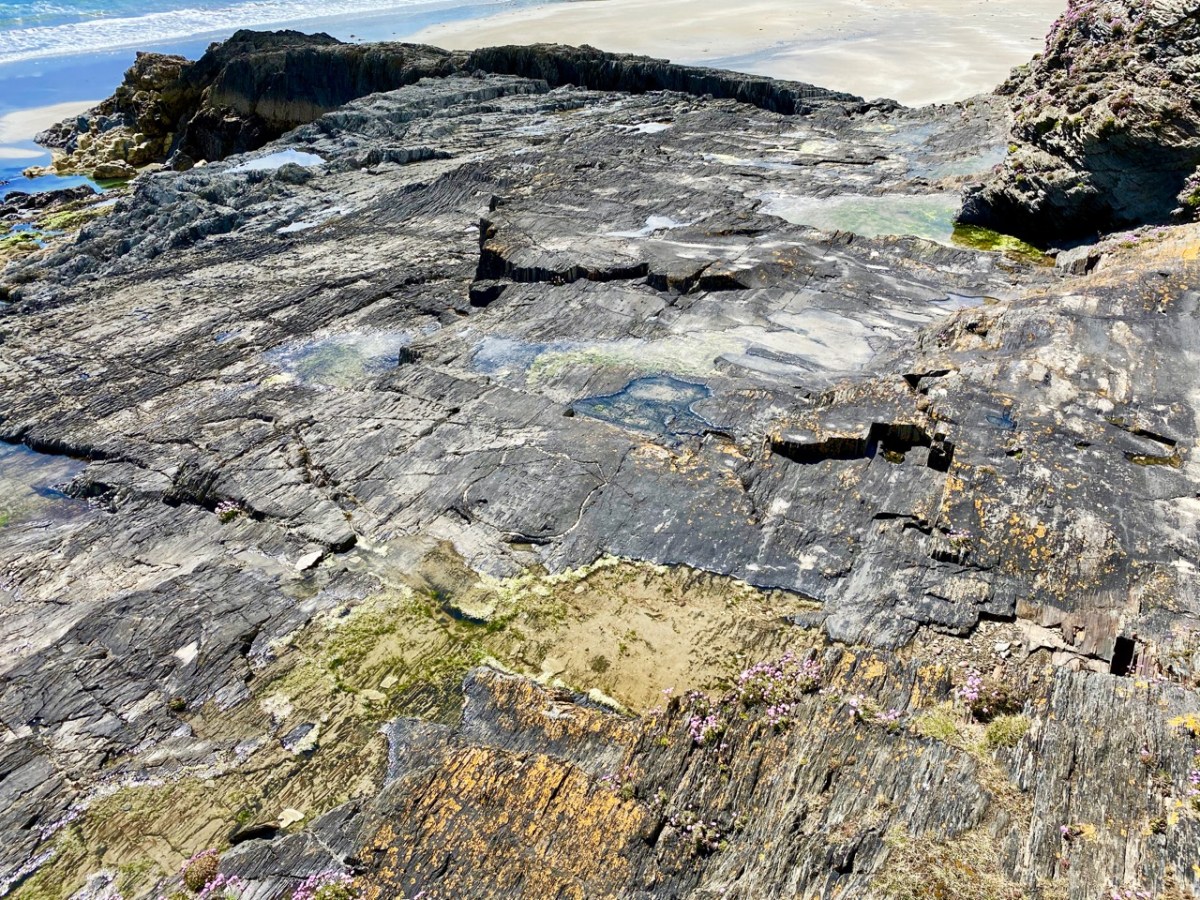
If ever doubt was to be cast as to the veracity of this story, there – as clear as day – are the knee-prints on the rock! A tragedy on the strand in 1932 is commemorated by a carving on the flaggy formation, just below Virgin Mary’s Bank. In August 22-year-old Timothy O’Sullivan from Casement Street in Clonakilty and 19-year-old Joseph Santry, a plasterer from Clarke Street Clonakilty, drowned. Charles P Millar from Summerhill, Cork, managed to rescue a third man who was also in difficulty but due to rough sea conditions he was unable to save the others despite his heroic attempts.

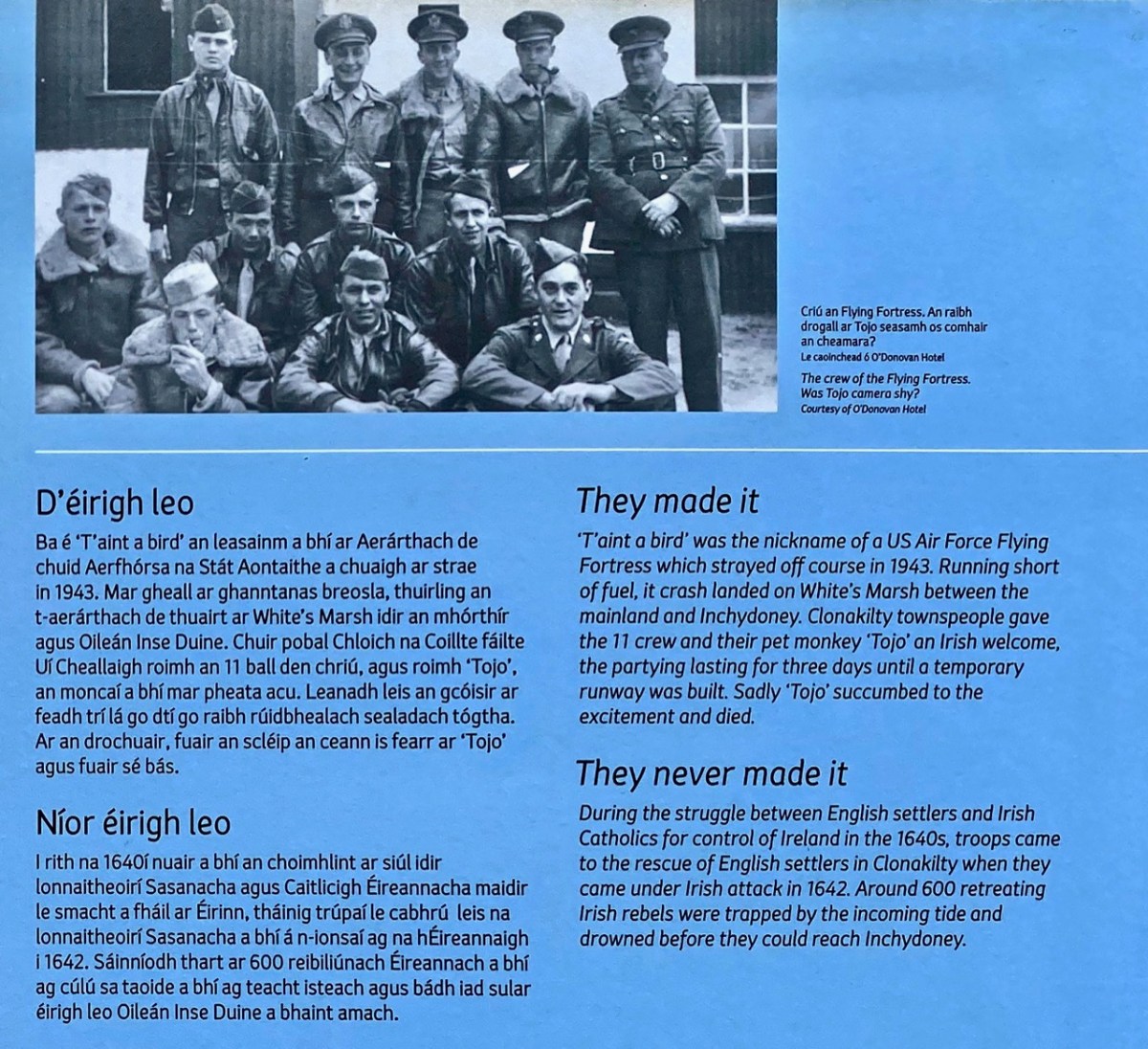
A Wild Atlantic Way information board close to Virgin Mary’s Bank tells of another incident, in more recent times.

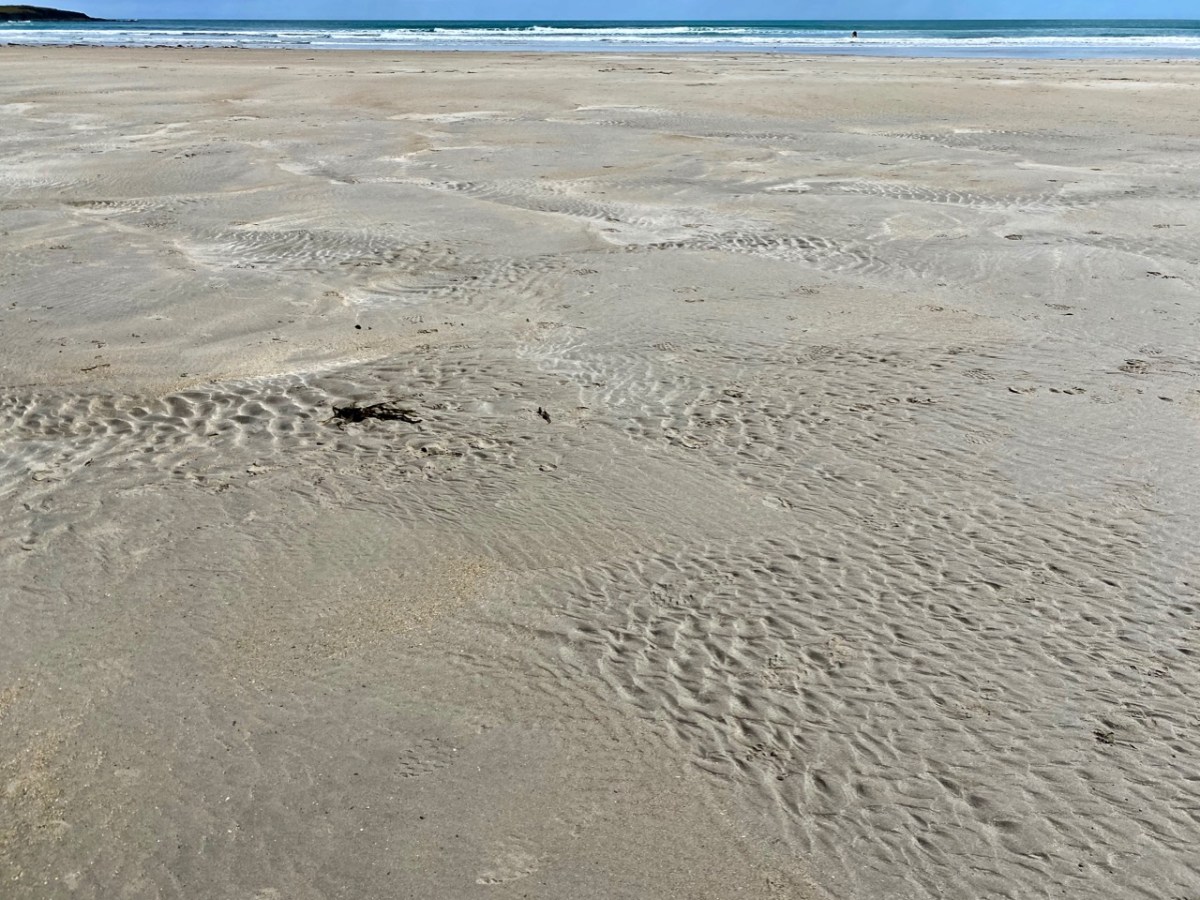
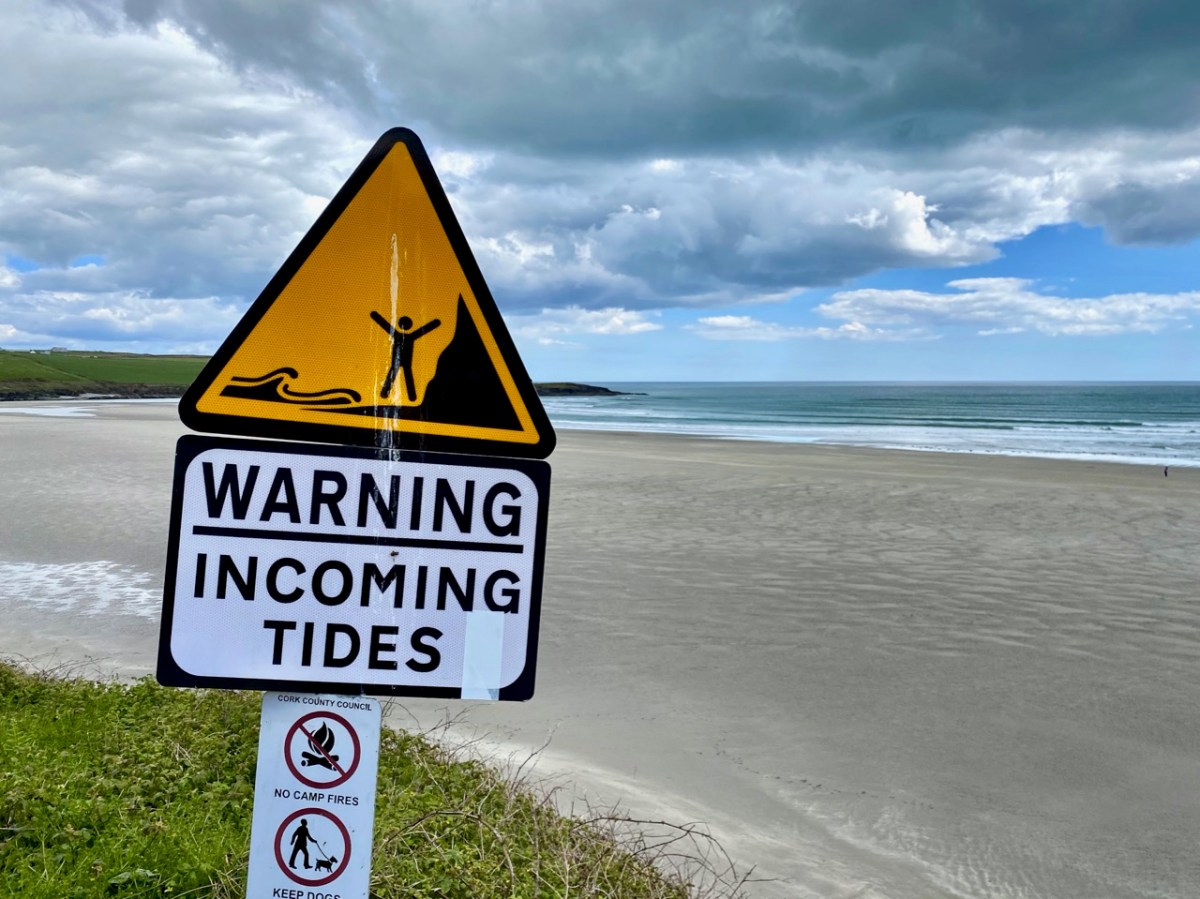
But note the paragraph They never made it, above. In 1642 around 600 Irish rebels were trapped by the incoming tide and drowned on the sands: a salutary warning, perhaps, for those who come to the beaches here and don’t keep a wary eye on the tide. Because of the wide, flat expanses of open strand it comes in at a great pace.

An all but forgotten Cork poet, Jeremiah Joseph Callanan (1795 – 1829), heard the story of the appearance of the Virgin Mary at Inchydoney and penned some verses which – according to local legend – all Clonakilty primary school children had to learn by rote. I have transcribed it from the Duchas Schools Collection record above, as the dramatic rendition is well worth quoting in full.

The Evening Star rose beauteous above the fading day,
As to the lone and silent beach the Virgin came to pray,
And hill and dale shone brightly in moonlight’s mellow fall;
But the bank of green where Mary knelt was brightest of them all.

Slow moving o’er the waters, a gallant barque appeared,
And her joyous crew looked from the deck as to the land she neared;
To the calm and sheltered haven she floated like a swan,
And her wings of snow o’er the waves below in, pride and beauty shone.

The Master saw Our Lady as he stood upon the prow,
And marked the whiteness of her robe – the radiance of her brow;
Her arms were folded gracefully upon her stainless breast,
And her eyes looked up among the stars, to Him her soul loved best.

He showed her to his sailors, and he hailed her with a cheer,
And on the kneeling Virgin they gazed with laugh and jeer;
And madly swore, a form so fair they never saw before;
And they cursed the faint and lagging breeze that kept them from the shore.

The ocean from its bosom shook off its moonlight sheen,
And up its wrathful billows rose to vindicate their Queen,
And a cloud came o’er the heavens, and a darkness o’er the land,
And the scoffing crew beheld no more the Lady on the strand.

Out burst the pealing thunder, and the lightning leapt about,
And rushing with his watery war, the tempest gave a shout;
And that vessel from a mountain wave came down with thundering shock,
And her timbers flew like mattered spray on Inchadony’s rock.

Then loud from all the guilty crew one shriek rose wild and high;
But the angry surge swept over them, and hushed their gurgling cry;
And with a hoarse, exulting tone the tempest passed away,
And down, still chafing from their strife, the indignant waters lay.

When the calm and, purple morning shone out on high Dunmore,
Full many a mangled corpse was seen on Inchadony’s shore;
And to this day the fisherman shows where the scoffers sank,
And still they call that hillock green “The Virgin Mary’s Bank”.