Ballymaloe

Ballymaoe House

Ballymaoe House

Even before I left Ireland in 1974, Ballymaloe (pronounced Ballymaloo) had a reputation. That reputation has only grown since. A family-run enterprise, it is known for great hospitality, delicious food, championing of Irish produce, and turning out a generation of Irish chefs. “Ballymaloe-trained” is synonymous in Ireland with “Great Cook.” 

Happy Ballymaloe pigs

Happy Ballymaloe pigs

To celebrate the second anniversary of the day we got engaged, Robert and I treated ourselves to an overnighter at Ballymaloe House earlier this week. It’s about half an hour from Cork, in the rich farmland of Ballycotton Bay. We stopped off in Cloyne first – see Robert’s post – and arrived in time for a late lunch served in the conservatory. 

Having checked in to our large and comfortable room with its own little outdoor terrace, we spent the rest of the afternoon exploring the grounds, winding our way through bluebell-lined paths and along a stream edged with yellow irises and overhung by weeping willows. We dropped into the Ballymaloe shop too, a treasure trove of kitchen equipment and tasty goodies. 

Racel Allen's Everyday Kitchen

Rachel Allen’s Everyday Kitchen

Before dinner we read more about the Ballymaloe story. Myrtle and Ivan Allan started a restaurant in the 60’s to highlight the best of Irish country house cooking, using fresh produce from their own farm, fish from nearby Ballycotton Bay and meat from local butchers. Their children and their families joined in and over the years the hotel developed and a cookery school flourished. Many other businesses emerged – a brand of relishes and preserves; cook books, cooking columns and TV cooking series; the shop and cafes; an entertainment and exhibition space; eco-tourism. The newest enterprise is an annual LitFest which centres on writing about, talking about and demonstrating cooking – and lots of eating the cooking too! We arrived the day after it ended and the place was still buzzing from the energy of it all.

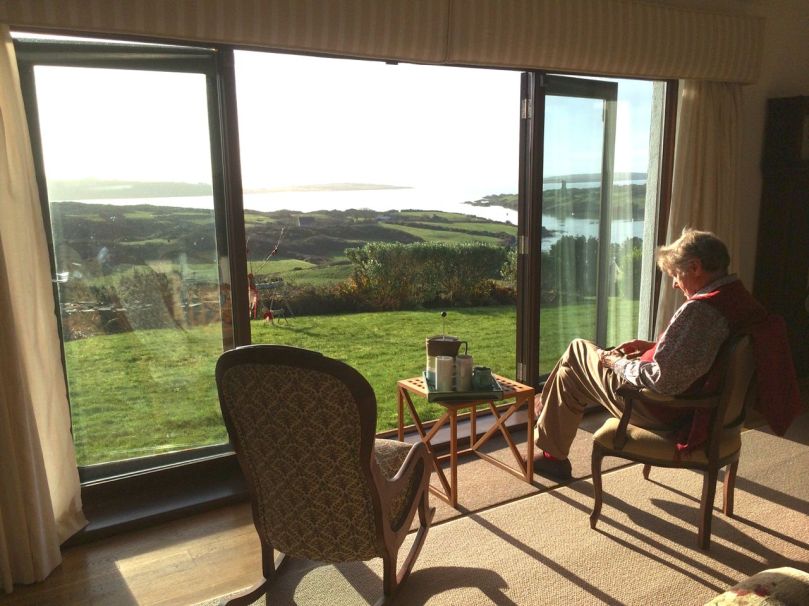
Coffee in the drawing room after a magnificent dinner

Coffee in the drawing room after a magnificent dinner

Dinner was, simply, delicious! It is a 5 course set menu, with choices at each stage. But this is not mannered food – nothing had been forced through a sieve and nothing was decorated with parsnip crisps. The emphasis was on fresh food expertly prepared and on letting the taste speak for itself without overloading it with spices or fiddly bits. My main course was lamb and it was served with turnip, cabbage and new potatoes. Hardly a Master Chef plate – but the lamb melted in the mouth and the vegetables were flavourful and satisfying. Soup, fish course, main, cheese and dessert – with our waitress asking if we wanted a second helping, or anything else, or anything different…well, we waddled out eventually to enjoy coffee (and petit fours for goodness sake) in the drawing room and to reflect on how spoiled we felt to be staying, and eating, in this remarkable place.
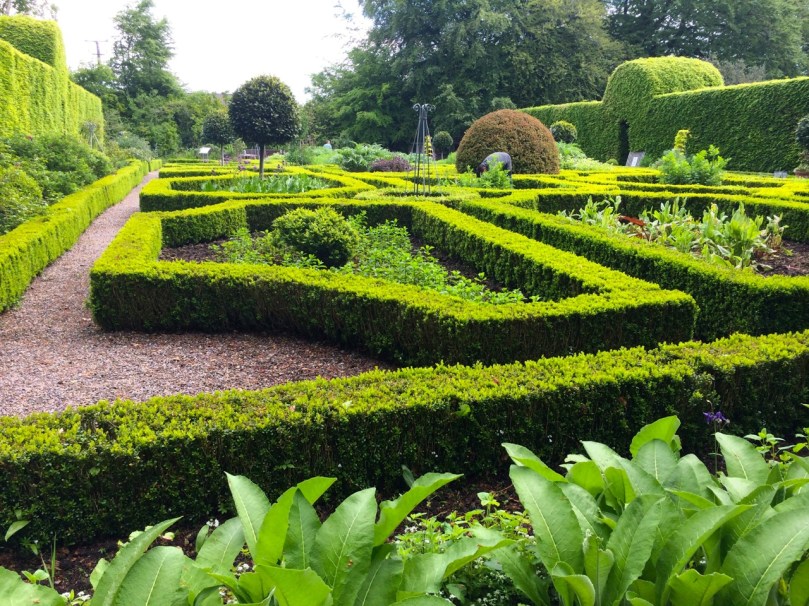
One of the many gardens at the cooking school

One of the many gardens at the cooking school

Next morning, after an equally scrumptious breakfast, we drove over to the cooking school and toured the gardens – there are several different kinds – the second shop, the shell house, the greenhouses, and the only henhouse in Ireland lit by a chandelier. We had to tear ourselves away finally to head back to West Cork, but vowing we would be back again to sample the delights of Ballymaloe.

The henhouse with the chandelier

‘Palais des Poulets’ – with chandelier!

Dancing Sun

Dancing Sun, Roaringwater Bay

Dancing Sun, Rossbrin Cove

“Where does that road lead?” said I, pointing to a road on the left of the one we were pursuing. “The road is it?” said the man with the cloak, “why, then, what road should it be, but the road to Sunday’s Well, a fine well it is, and a blessed place, for sure they say, though myself never seen it, that if one was to go there at peep of day on an Easter Sunday, they’d see the sun dancing a jig on the rim of the sky for joy; and I suppose that’s the reason they calls it Sunday’s Well” [Thomas Crofton Croker, Legends of the Lakes: or Sayings and Doings at Killarney, 1829]

When I lived in Devon I was told that the sun danced on Easter morning, but also that the ancient stone at the crossroads above the house where I lived could be seen to move at dawn on that day. I never caught the dawn when I lived there but here’s evidence that the sun does, indeed, dance at Roaringwater Bay. According to Kevin Danaher children in Ireland were shown the sun on Easter morning reflected in water – perhaps in the sea or a well – and this ensured that it would be seen to dance.

Gathering Bia Tragha at Rossbrin: the house on the skyline is Nead an Iolair

Gathering Bia Tragha at Rossbrin: the house on the skyline is Nead an Iolair

There are so many Easter customs: Finola is writing about the bia tragha – the custom of gathering shellfish and seaweed on Good Friday, the culmination of the austerity of Lent. Down in the Cove we joined several families collecting mussels. When I asked them why people in Ireland carry out this Good Friday tradition I always got the same answer – ‘…because we have always done it…’

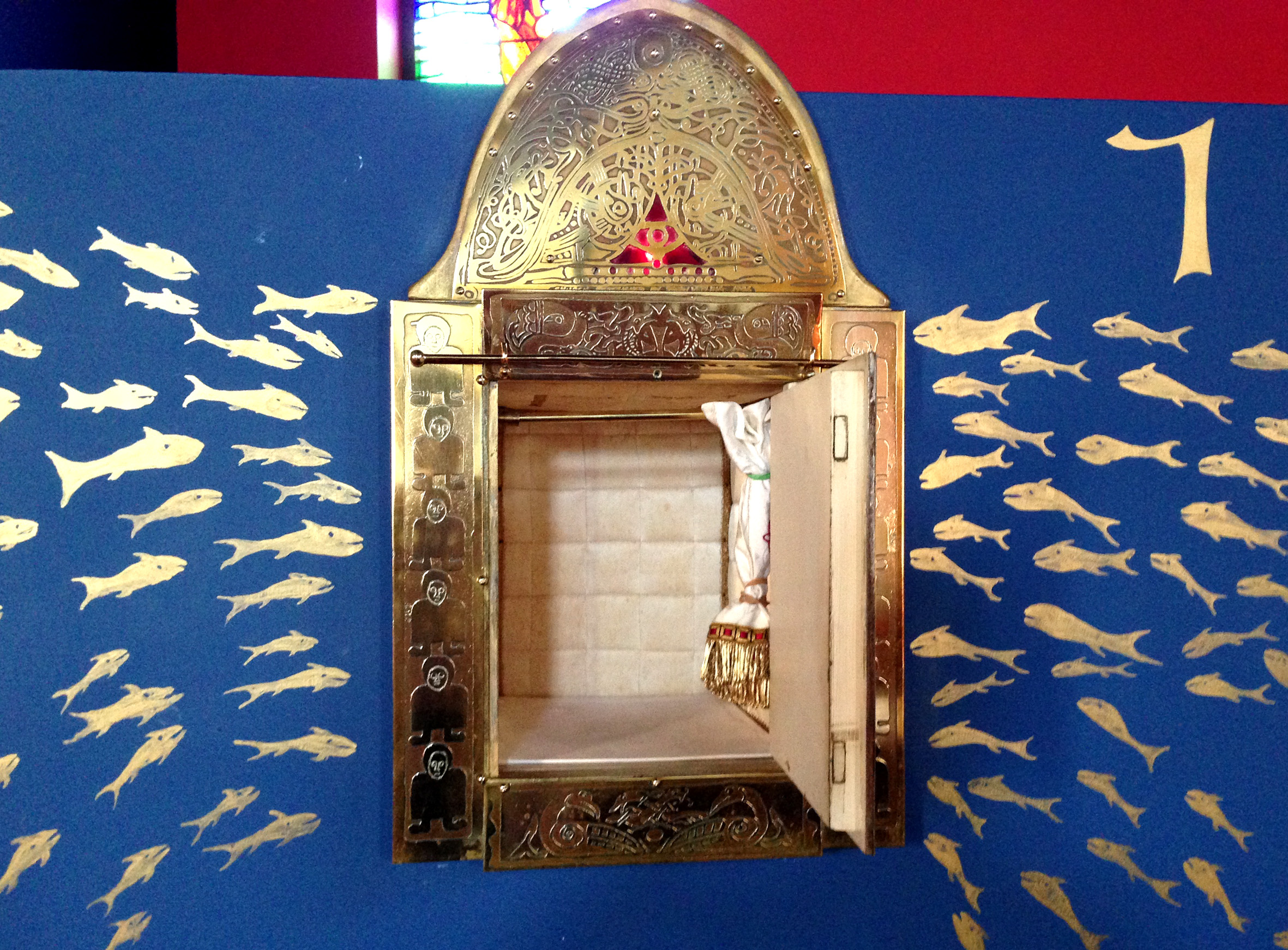
Good Friday - and the Tabernacle in Ballydehob Church is empty

Good Friday – and the Tabernacle in Ballydehob Church is empty

There is a lot of respect for the observance of Good Friday here. No alcohol is consumed: the pubs close at midnight sharp on Thursday evening (it’s not unusual on a normal day for them to stay open until two or three in the morning – especially if there is a session going on) and don’t reopen until Saturday. Ireland is probably the only Catholic country in the world where this tradition is still kept up. Not so long ago no work was done on the land, and ‘…no blood should be shed, thus no animal or bird could be slaughtered, no wood should be worked or burned and no nail should be driven on the day on which the Saviour was crucified…’ (Danaher)

Burning the Mountain on Good Friday

Burning the Mountain on Good Friday

Bearing this in mind we were surprised to encounter a ‘controlled burning’ of the gorse on the Sheep’s Head when travelling back from visiting friends on Good Friday evening. It was spectacular: the whole mountainside seemed to be engulfed.

On the Mizen – according to McCarthy + Hawkes ‘…Early on Easter Sunday morning all the lads from the townlands would go around in a big group, blowing a trumpet made from a cow horn. The women of the houses visited would give them boiled hen’s eggs to eat, sometimes coloured yellow from boiling with furze petals or onion skins. After Easter Mass everyone went home for a quiet day of rest and a good feed after Lent. The night would bring a ball with much drink and dance…’

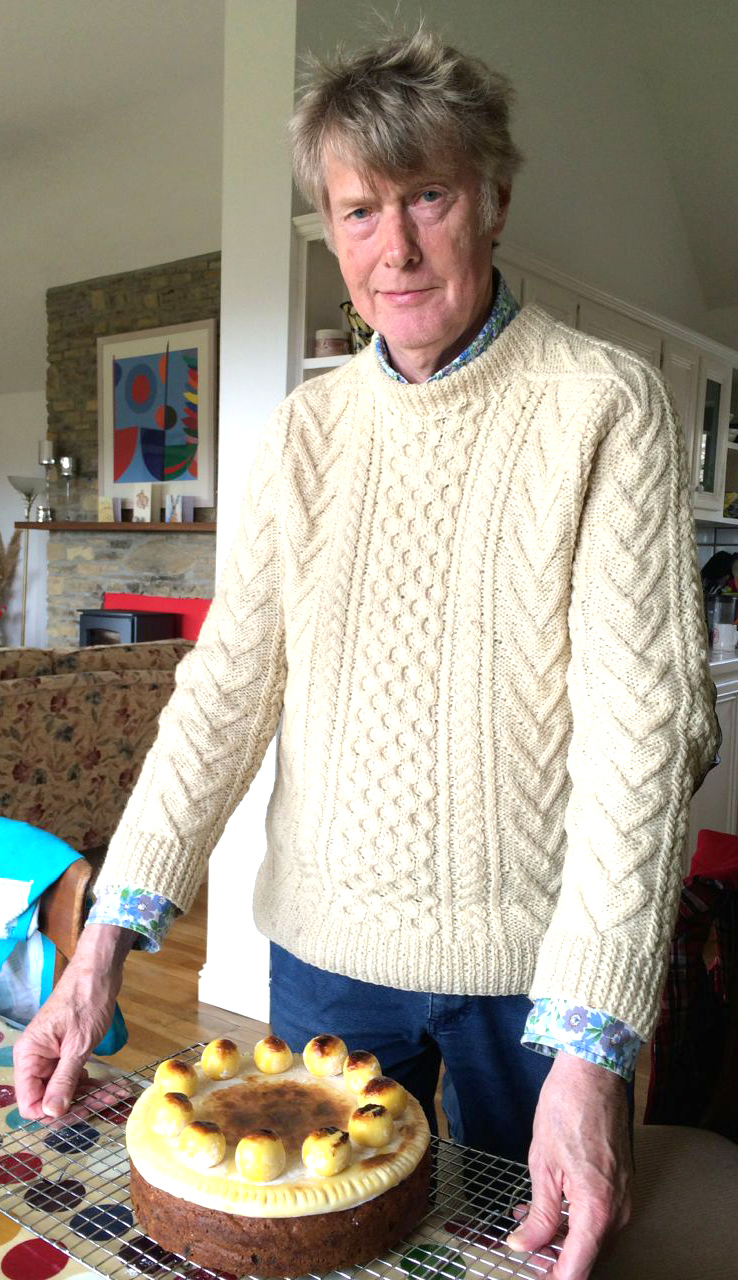
simnel

We are observing some of our own traditions today: we’ll be eating the Simnel Cake which I have made – more of an English tradition than an Irish one: the eleven marzipan balls represent the twelve Apostles (minus Judas) – and then we’re off to the Ballydehob Road Trotting races. Oh – and there are some eggs involved.

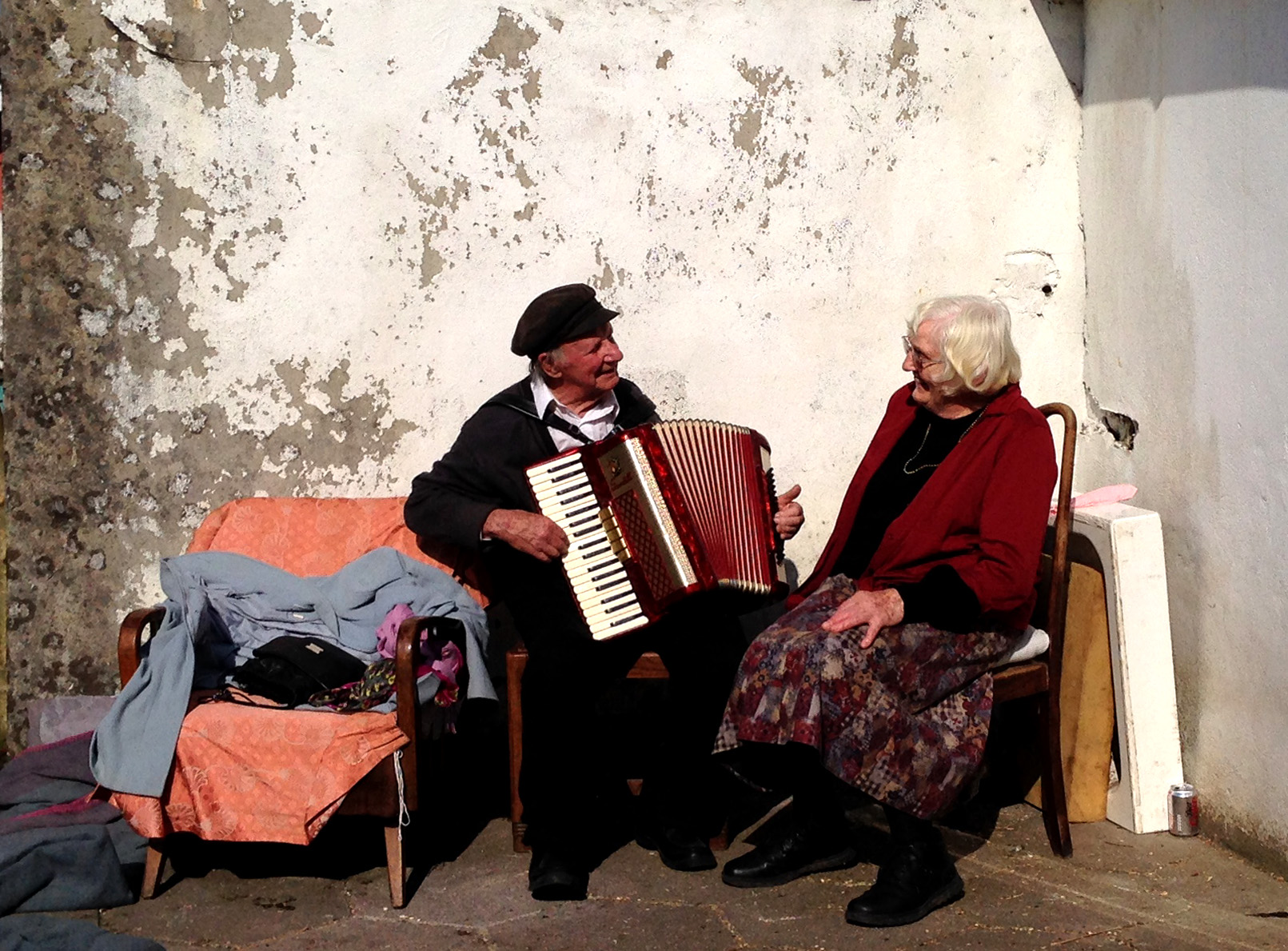
A scene in Provence? No - a sunny corner in Ballydehob on Easter Saturday

A scene in Provence? No – a sunny corner in Ballydehob on Easter Saturday


Good Friday – Foraging and Feasting

Fresh from the Shore!

Fresh from the Shore!

This post dates from 2014. Since we first published it, Tommy Camier is no longer with us and sadly the Gortnagrough Museum has had to close.

One of the Easter traditions Robert writes about this week is the practice of gathering shellfish on Good Friday. Traditionally, Good Friday was a day of complete austerity – the very apex of the Lent period when people gave up treats and went on a simple diet for the 40 days before Easter Sunday. In Ireland, Good Friday is the only day of the year apart from Christmas Day when the pubs are closed. No meat was eaten, and because fishermen would not put their boats out to sea on Good Friday, it was customary to gather whatever was available on the shore – seaweed and shellfish – for dinner.

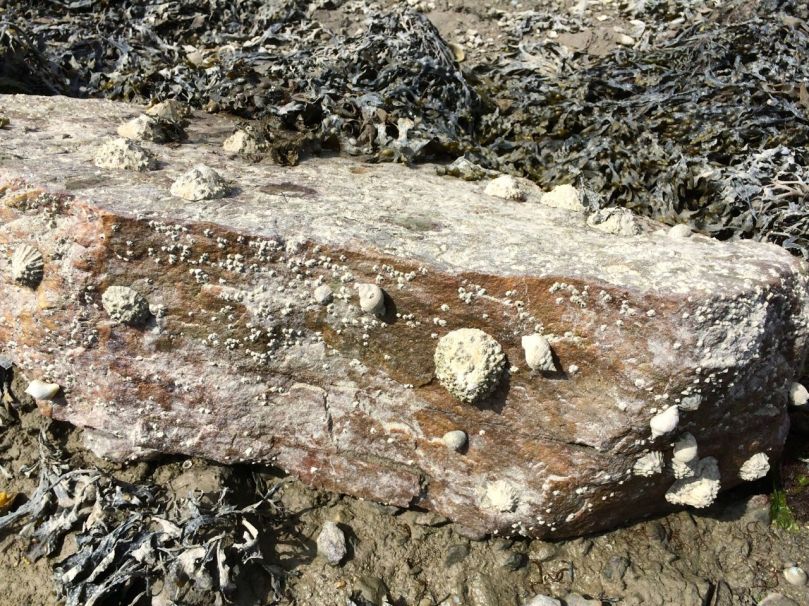
Limpets are edible too, but  difficult to dislodge

Limpets are edible too, but difficult to dislodge

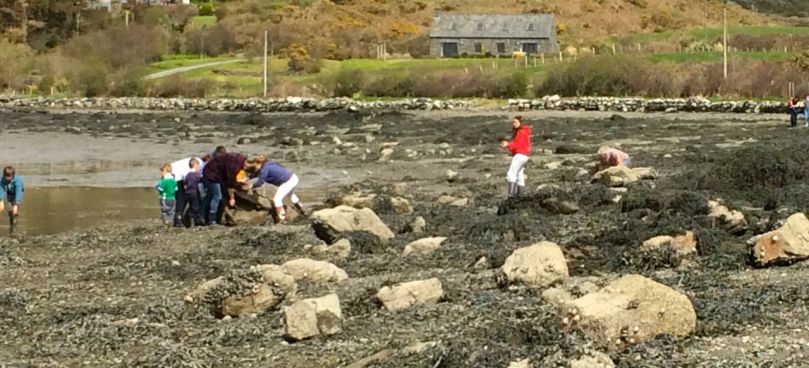
To our amazement, we have discovered that this tradition persists, here in West Cork. It has evolved, as such traditions do, into a family day on the shore, with everyone gathering shellfish, followed by a mussel feast back home.

On the shore

On the shore

We tagged along with friends, walking down to Rossbrin Cove, with wellies and buckets. We met Leita and Tommy Camier of the Gortnagrough Folk Museum, who were leaving with a full bucket of mussels. They told us they had gathered mussels on Good Friday as long as they could remember. There aren’t as many mussels now as in the old days, they said, and they’re smaller.

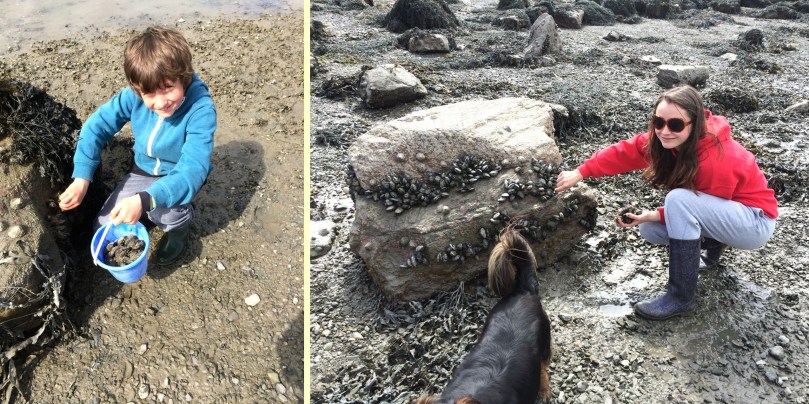
Gabriel and Matilda - hard working mussel pickers!

Gabriel and Matilda – hard working mussel pickers!

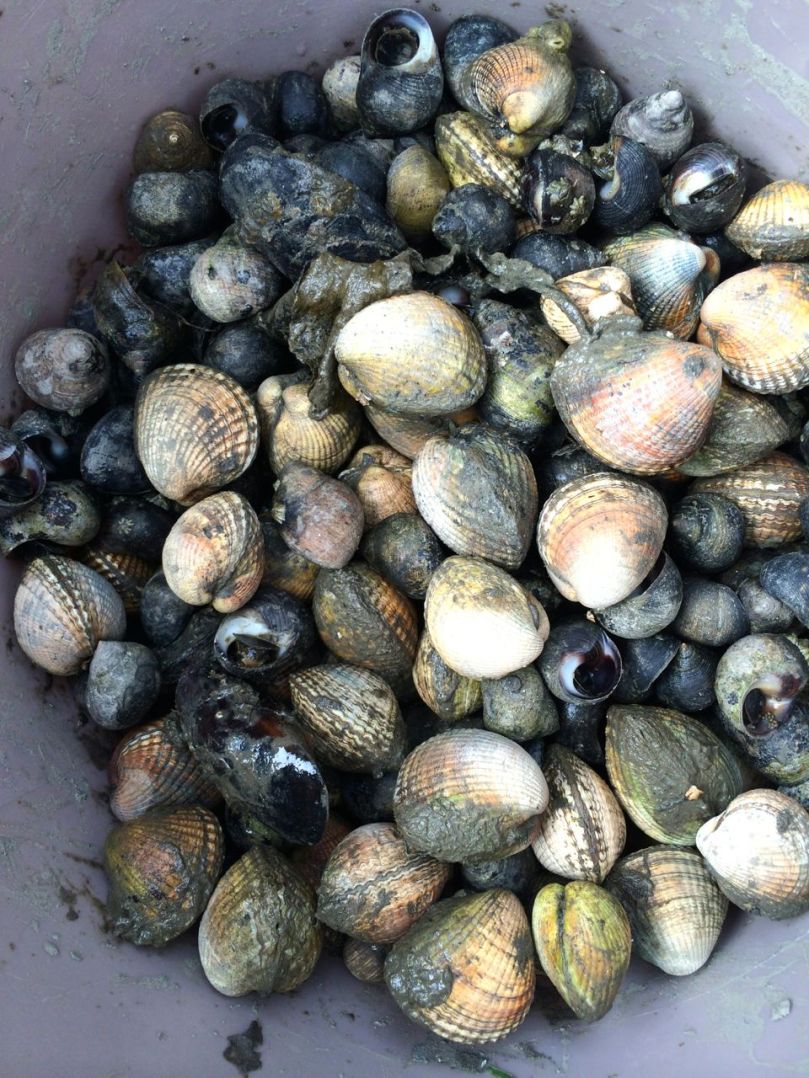
Mussels were the shellfish of choice for most of the folks who had come to the Cove. Picking was fairly easy, off the rocks, taking pains to avoid ones with barnacles. Our neighbour Hildegard and her family also gathered cockles and winkles.

Cockles and mussels, and winkles too

Cockles and mussels, and winkles too

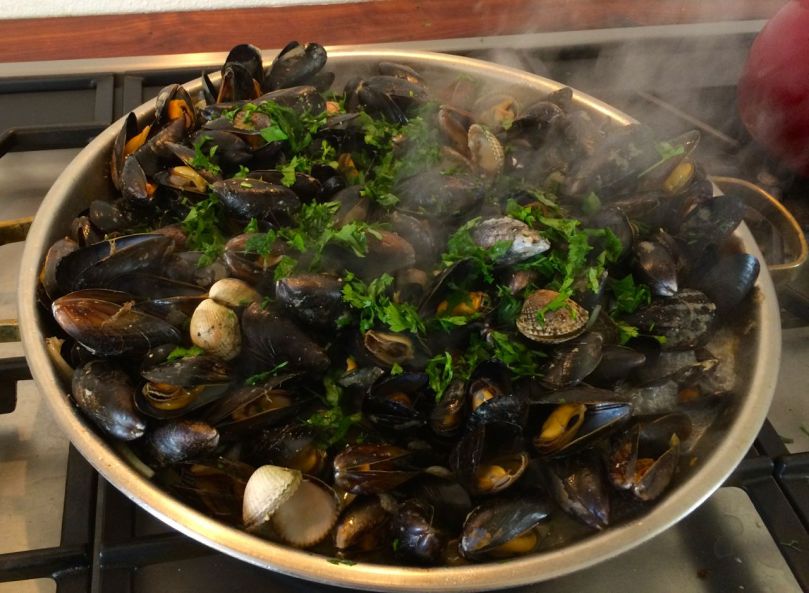
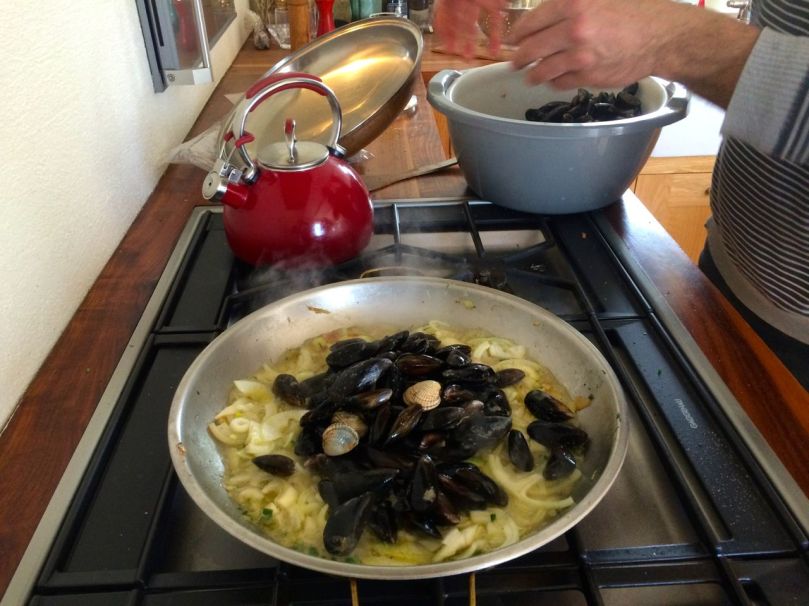
Afterwards, we ended up at Dietrich and Hildegard’s house for a feast. Robert and I are not mussel eaters – or so we had told each other. Robert stuck to bread and cheese, but I thought I should be polite and at least try some when presented with a plate of fresh steaming cockles and mussels and some warm French bread. Surprise! As cooked by Rui with onions and garlic and herbs, they are delicious! Two plates later, I am a firm convert.

Rui cooks up a feast

Rui cooks up a feast

I like this austerity business!

Good Friday abstinence

Good Friday abstinence

But enough of this deprivation! I wonder if Robert has remembered to get me a chocolate Easter Egg…

Nollaig ar Nead an Iolair

December 25th! Must be global warming

December 25th! Must be global warming

Our first Christmas at Nead an Iolair and it’s been everything we could have wished for. The day itself was bright and sunny. We threw the French doors wide open and exchanged our gifts in the sunshine. It’s a good job we enjoyed it while we could, as the wild weather set in on St Stephen’s Day (Boxing Day outside Ireland).

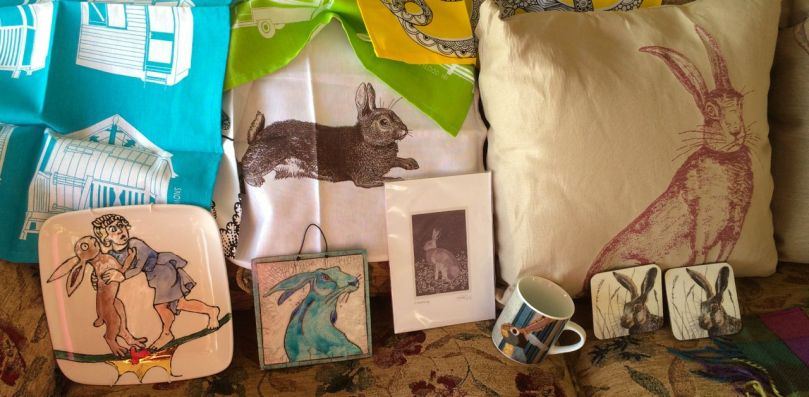
Is there a theme developing here?

Robert’s gifts: is there a theme developing here?

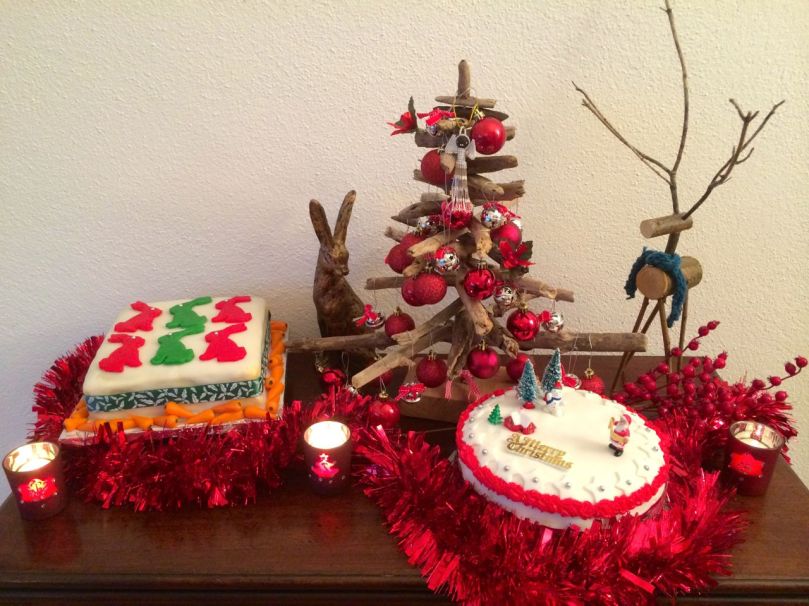
Of course, we had to have the ceremonial first cut of each of our Christmas cakes. Readers will remember that I made Monica Sheridan’s recipe while Robert made Delia Smith’s. The verdict? Mine was way better! (This is MY post.)

The avant garde and the traditional approach

The avant garde and the traditional approach

Our new stoves were installed just in time for Christmas. This kind of supplemental heating is essential for the winter months in West Cork, where fuel is very expensive. Together with our decorations, newly purchased from the Christmas markets and hung on twigs culled from nearby hedgerows, they created a cosy and seasonal ambience in the house. Also perfect for a house-warming party, which we are finally hosting this weekend.

Ready for the house-warming party!

Ready for the house-warming party!

Now so, at the end of 2013, we have to say that it’s been a grand year, like. And to our readers, Bliain nua faoi mhaise agus shona dhaoibh – a Prosperous and Happy New Year to you all.

From Roaringwater Bay to all our friends and readers - a Happy New Year!

From Roaringwater Bay to all our friends and readers – a Happy New Year!

Christmas Markets

En route to Goleen, every couple of Km, a reindeer points the way to the Christmas Market.

En route to Kilcrohane, every couple of kilometres, a reindeer points the way to the Christmas Market

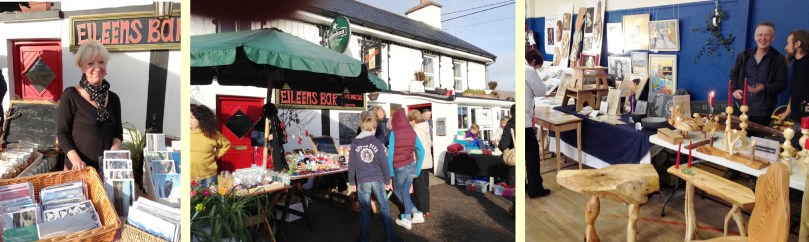
‘Tis the season…and oh dear, I am afraid to tot up what we have spent at the Christmas markets here in West Cork. We tell ourselves that we have moved here with nothing to hang on a Christmas tree; that we are supporting local entrepreneurs, artists, craftspeople and fund-raisers; that we need to lay in food for visitors; but the truth is that we find the whole Christmas market thing irresistible.

Amanda and her beautiful Wayfarer Cards; December weather in Kilcrohane; furniture and art in Ballydehob

Amanda and her beautiful Wayfarer Cards; blue skies in Kilcrohane; furniture and art in Ballydehob

We love the colour, the carols, and the stalls that only appear at this time of year. We love the ones run by kids – raffling for their youth group, or trying to make a bit of cash by knitting and stitching and sawing and hammering. We love the amazing array of wonderful foods: we have come to know many of the vendors as friends and it feels good to know where your food is coming from.

Raising money for the club; we made them ourselves!

Raising money for the club; elf workshop; we made them ourselves!

This year we have attended markets in Goleen, Ballydehob, Kilcrohane and Skibbereen – so far! Each community is proud of its market and each one has a distinct character. The weather has been marvellous too – a real bonus since at least part of every market is outside.

Everyone loves Eithne's baking; Josephine and he delicious Hannah Quill preserves; Paul and Anne and their Fabulous West Cork Pies; smoked fish, quial's eggs and Coolea cheese.

Everyone loves Eithne’s baking; Josephine and her delicious Hannah Quill preserves; Paul and Anne and their fabulous West Cork Pies; smoked fish, quail’s eggs and Coolea Cheese

I think we might be able to sport a respectable Christmas tree now…and we certainly won’t starve!

Part of the haul.

Part of the haul

The English Market

teeth

We’re both looking at markets this week: Finola is concentrating on the delights of our local Christmas community fairs, while I am looking at the ‘big market’ further afield.

moynihans

The Republic’s second largest city can trace its history back to a community of monks, scholars and scribes which St Finbarr established on the banks of the River Lee in the 6th century. The area was known as an Corcach Mór – ‘the Great Marsh’. This settlement became a notable centre of learning, giving rise to the phrase Ionad Bairre Sgoil na Mumhan – a motto adopted by the modern University College Cork as ‘Where Finbarr taught let Munster learn’.

Finola approves Walter's stall

Finola approves Walter’s ‘pop-up’ stall

First a town and then a city grew up around the marshes and in the 18th century large tracts of low lying land were drained and reclaimed, forming the area which is now the commercial centre of Cork, including Saint Patrick’s Street, the Grand Parade, Grattan Street and Cornmarket Street. In 1786 the Corporation of the City undertook to create here a new meat market ‘in the English style’. A grand opening took place on 1st August 1788. This was before the emerging United States of America had elected George Washington as its first President, and in the same year that Captain Arthur Philip’s First Fleet arrived in Botany Bay with its cargo of convicts – ‘The Founders of Australia’.

queen

ooysters

The English Market in Cork is an essential part of any visitor’s itinerary. Even the Queen went there for a look around during her Irish tour last year and reportedly was very impressed with it. We followed on last week, to visit the new Fresh from West Cork stall which has been set up over the Christmas period to sell the delicious produce which emanates from our small part of the world, and which has justly gained a country wide reputation. The stall is being ably run by Walter from Loughbeg Farm – just down the road from us, and it’s hoped that this trial period will result in Fresh from West Cork becoming a permanent fixture at the market.

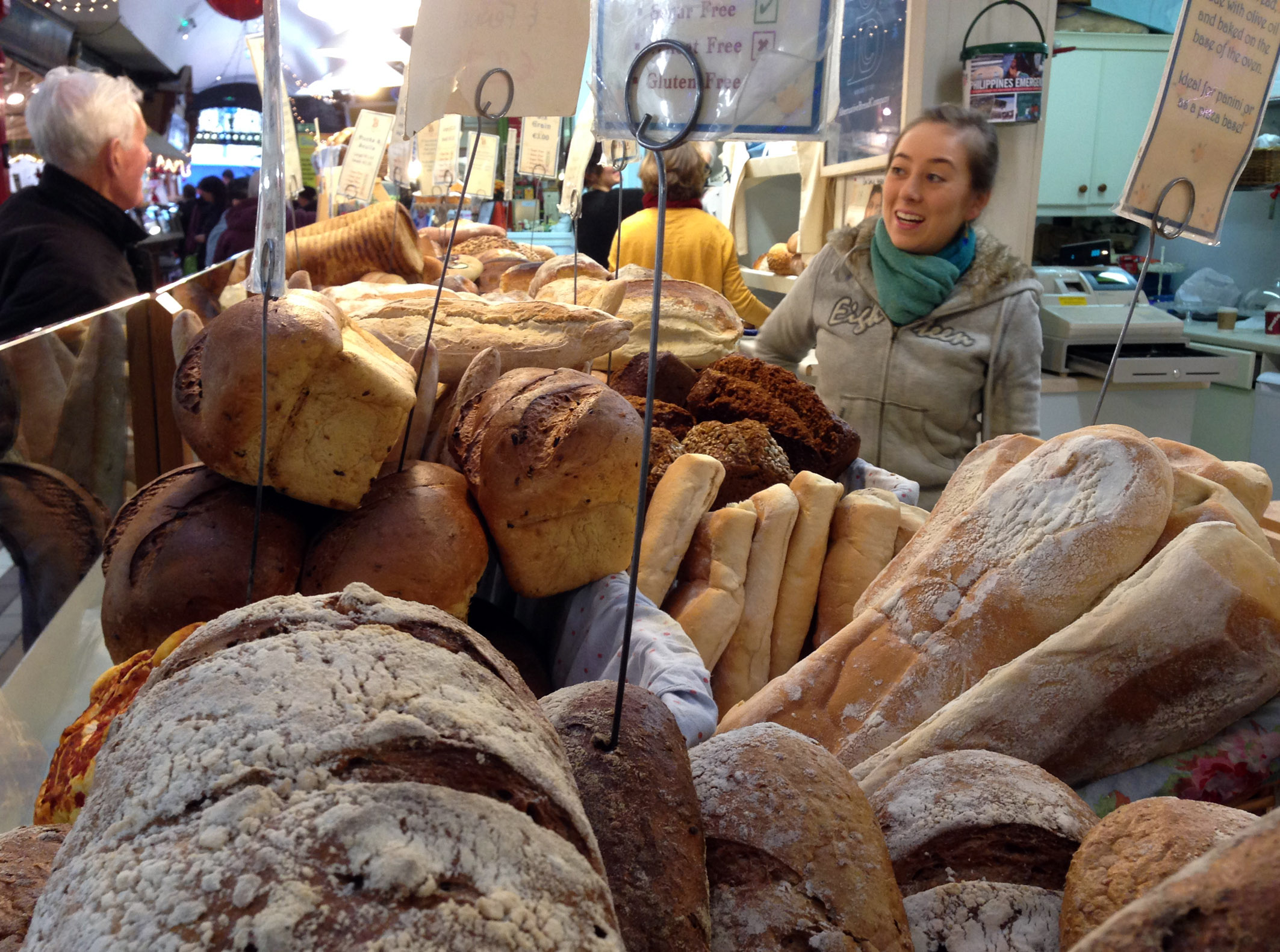
loaves

cakes

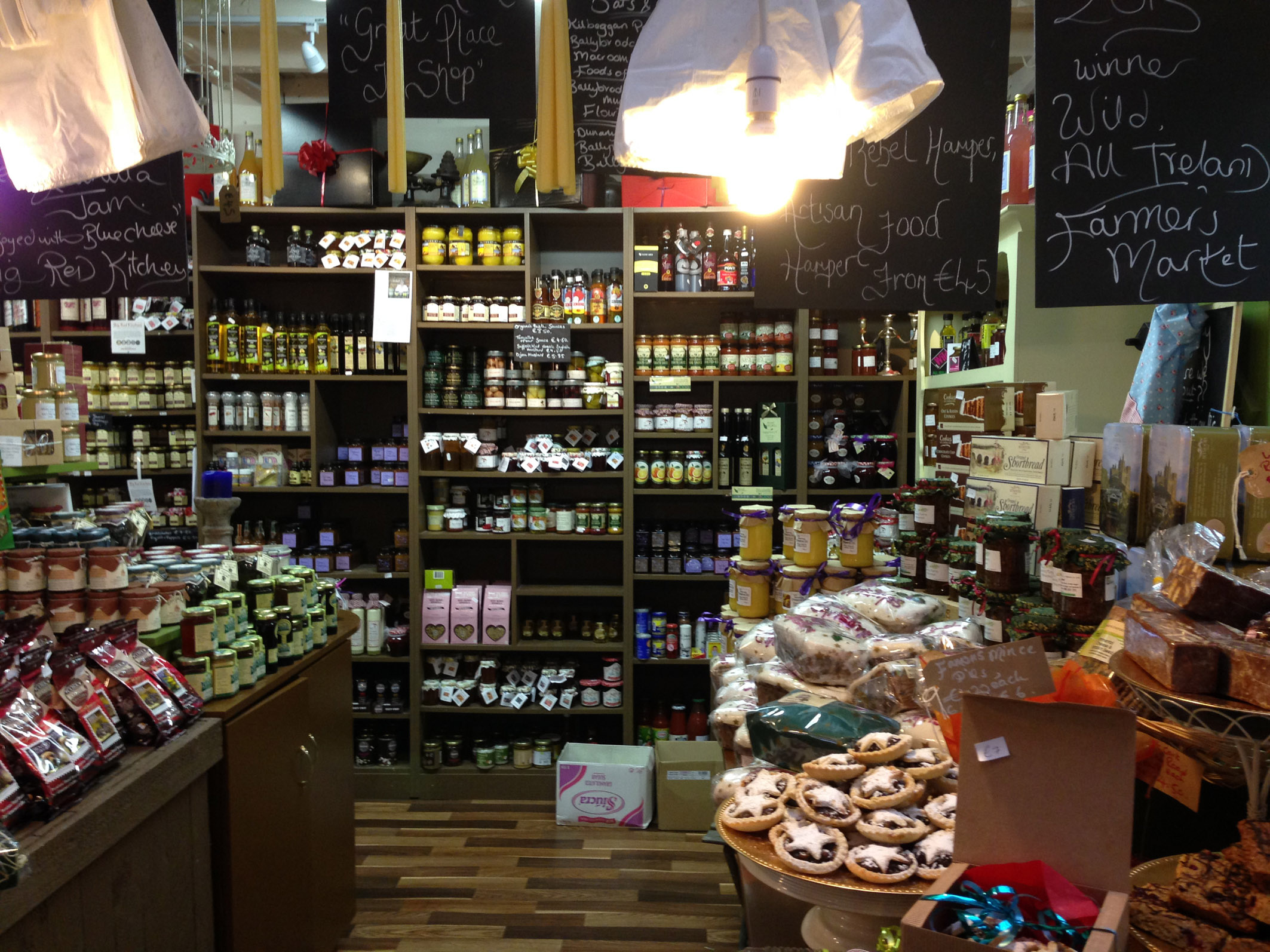
shelves

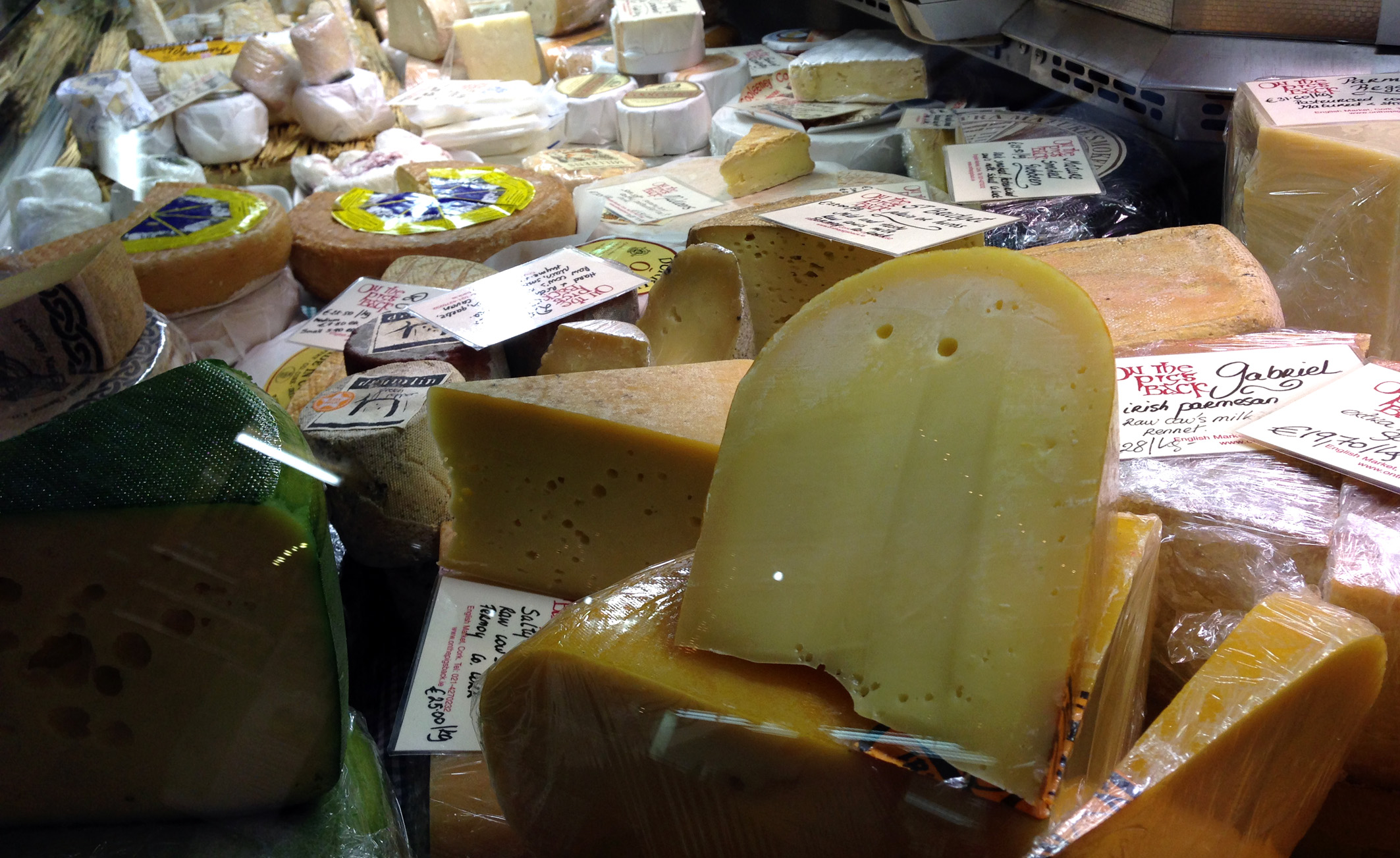
cheese

It’s no longer just a meat market – you can find every variety of good food there, as these pictures hopefully show, and an excellent cafe upstairs. If ever you are passing through, don’t forget to call in.

farmgate

jugs