Calary: An Eminent Gathering Of Souls

Adam and Eve in the Garden is an Aubusson tapestry, from the Atelier Tabard Frères et Soeurs (artist website) designed by Louis le Brocquy and dating from 1951-52. Le Brocquy was born in Dublin in 1916 and led a long life which included travelling extensively across continents, always completely engaged in art. He died in Dublin in 2012. On his death, President Michael D Higgins said: ”Today I lament the loss of a great artist and wonderful human being whose works are amongst this country’s most valuable cultural assets and are cherished by us all. Louis leaves to humanity a truly great legacy.” In 2002 the National Gallery of Ireland acquired le Brocquy’s painting ‘A Family’ – the first work by a living artist admitted to its permanent collection.
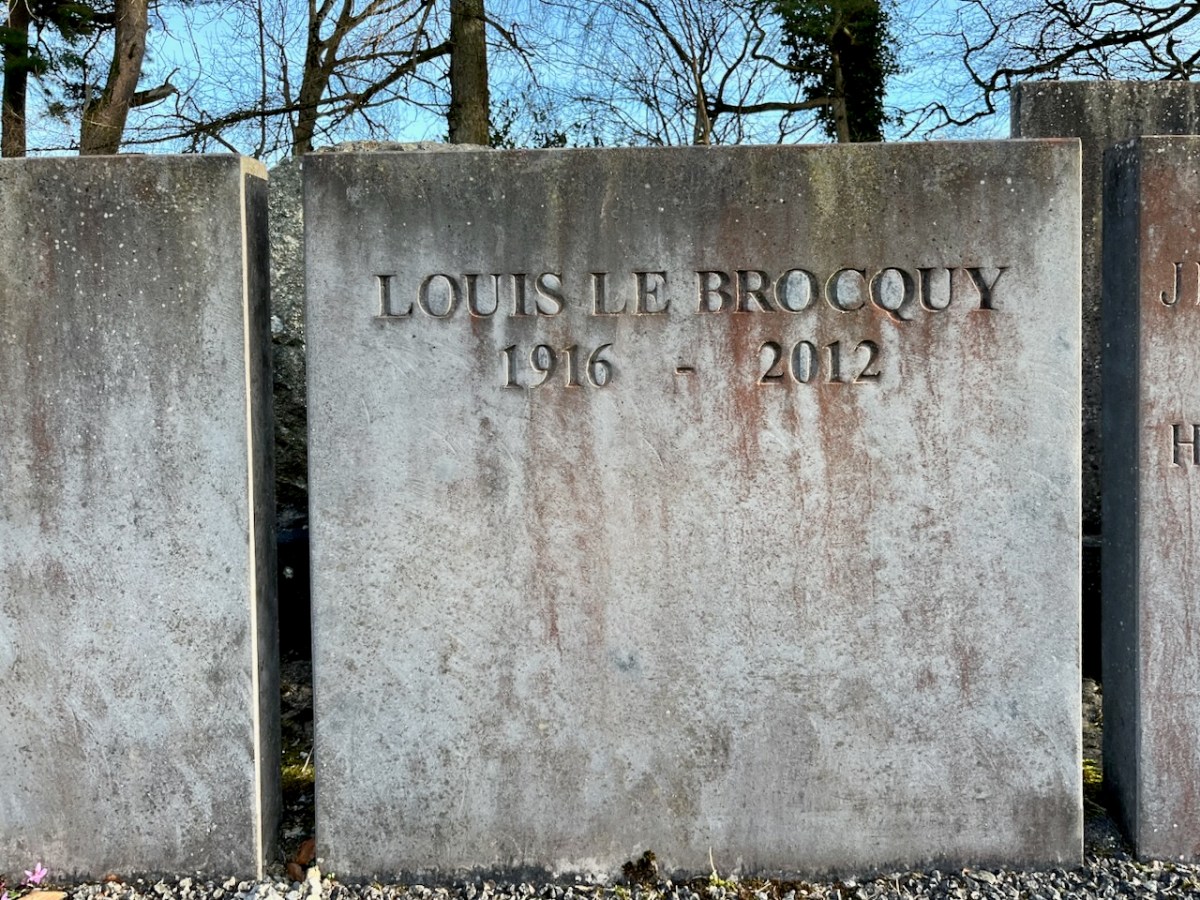
While out exploring the byways of rural County Wicklow, we chanced upon le Brocquy’s burial place. It’s in the little Church of Ireland graveyard at Calary. We had never heard of it before but – as we reconnoitred – the realisation dawned upon us that this is a very special site. Le Brocquy is probably the most eminent artist interred in these grounds, but he is only one of very many who have presumably chosen to spend eternity in this remote but extremely beautiful corner of rural Ireland. The views towards the not-too-far-away mountains are dramatic.
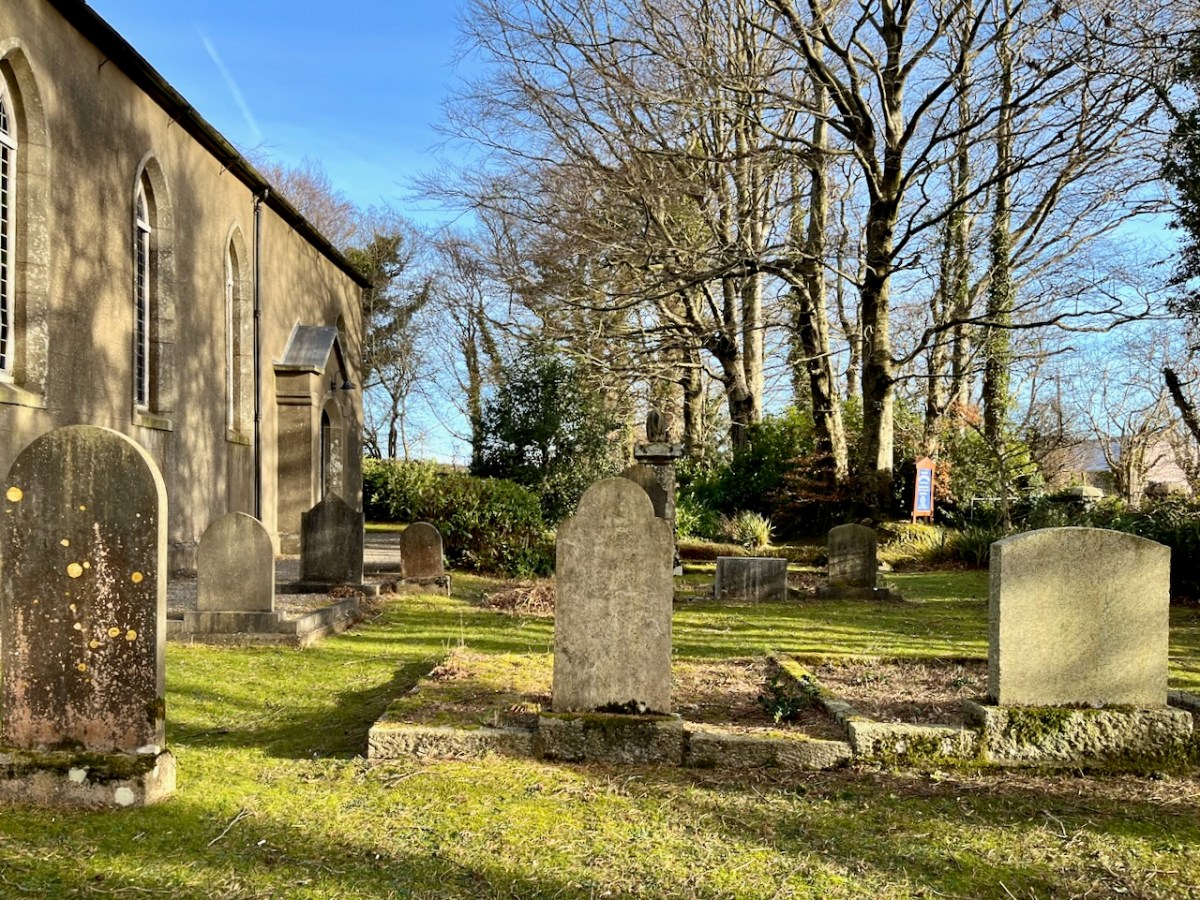
Le Brocquy’s wife, Anne Madden was born in London in 1932 to an Irish father and an Anglo-Chilean mother, and is still living. Madden spent her first years in Chile, where her Father owned a farm. Madden’s family moved to Corrofin, Ireland when she was ten years old. During the 1950s she met le Brocquy who was then working in London. They married in Chartres Cathedral in 1958 and set up house and studio in Carros in the south of France, where they remained until 2000. The empty plot at Calary beside Louis is presumably saved for her: she will add significantly to the artistic distinction of this community. The plot to the south of him is taken by Anne’s mother – Esther Madden Simpson – and brother – Jeremy Madden Simpson.

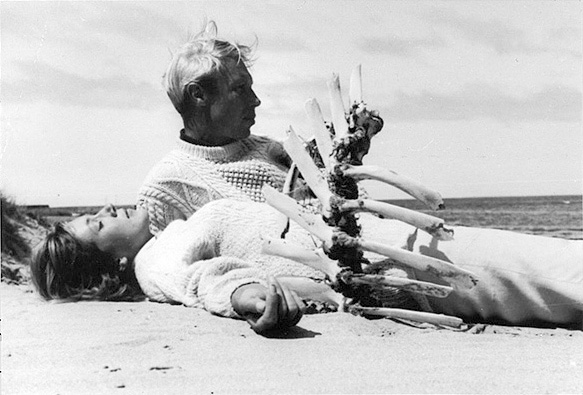
Anne Madden and Louis le Brocquy, 1974 (public domain). From that year onwards the family spent long summers on the Beara Peninsula.
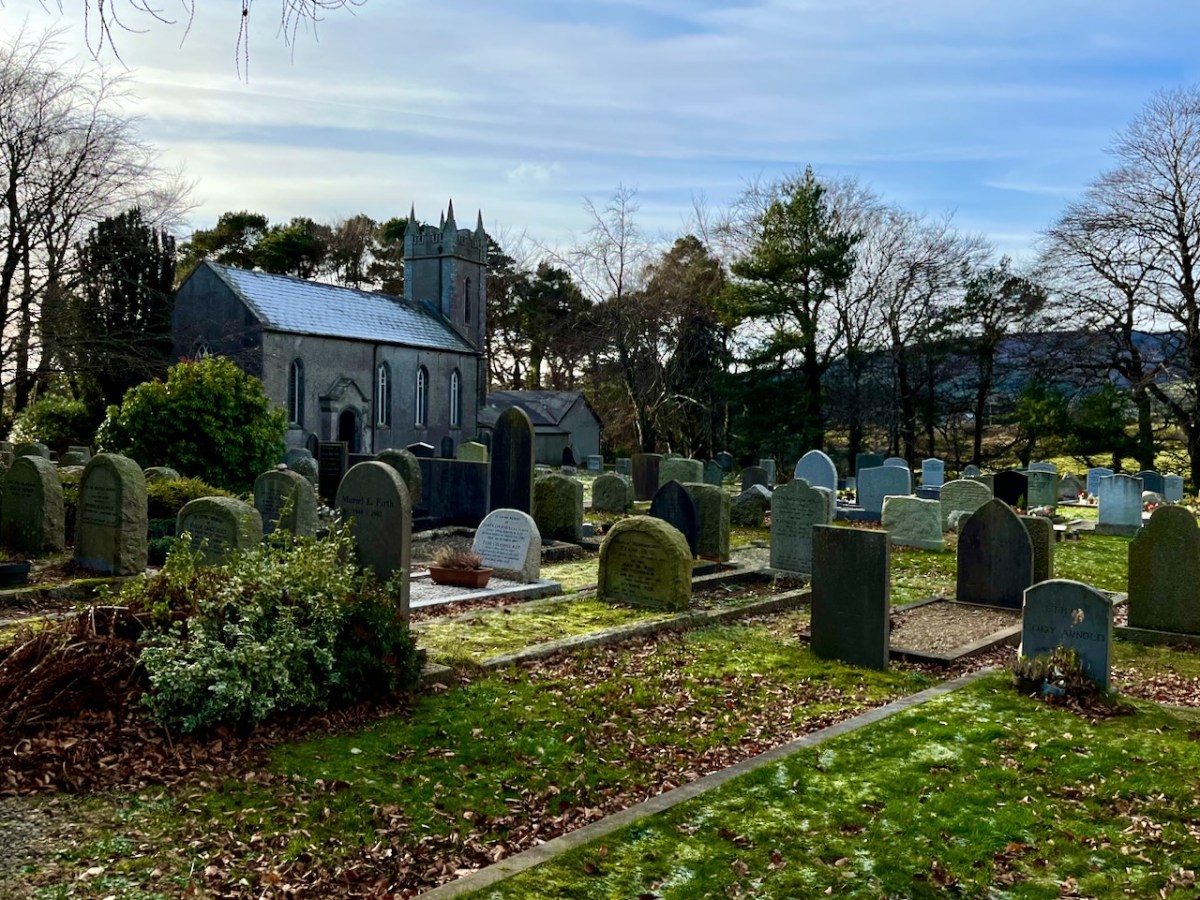
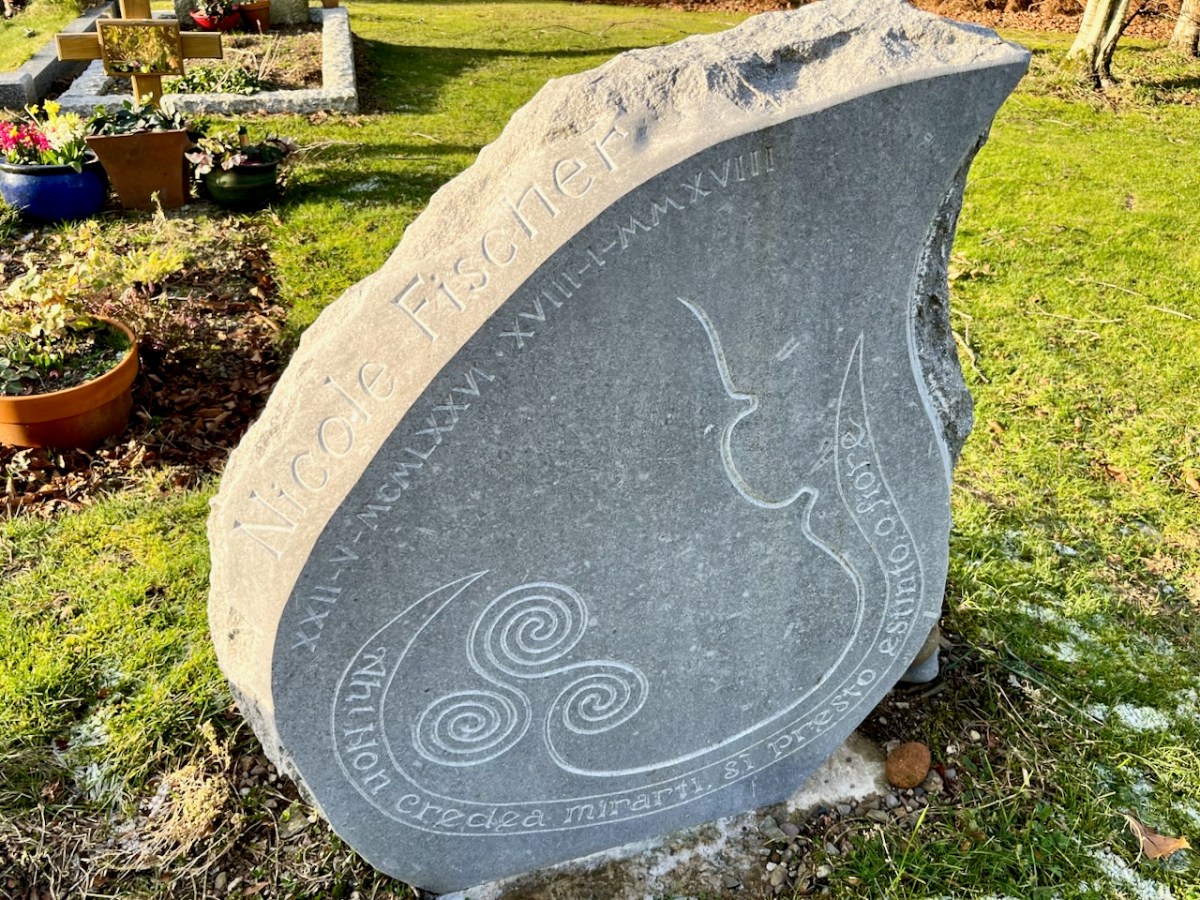
A relatively recent gravestone added to Calary is this one, dating from 2018. It remembers Nicole Fischer, a viola player with the RTE Concert Orchestra and the Amici String Trio. Sadly, her death occurred when she was in the prime of her life.

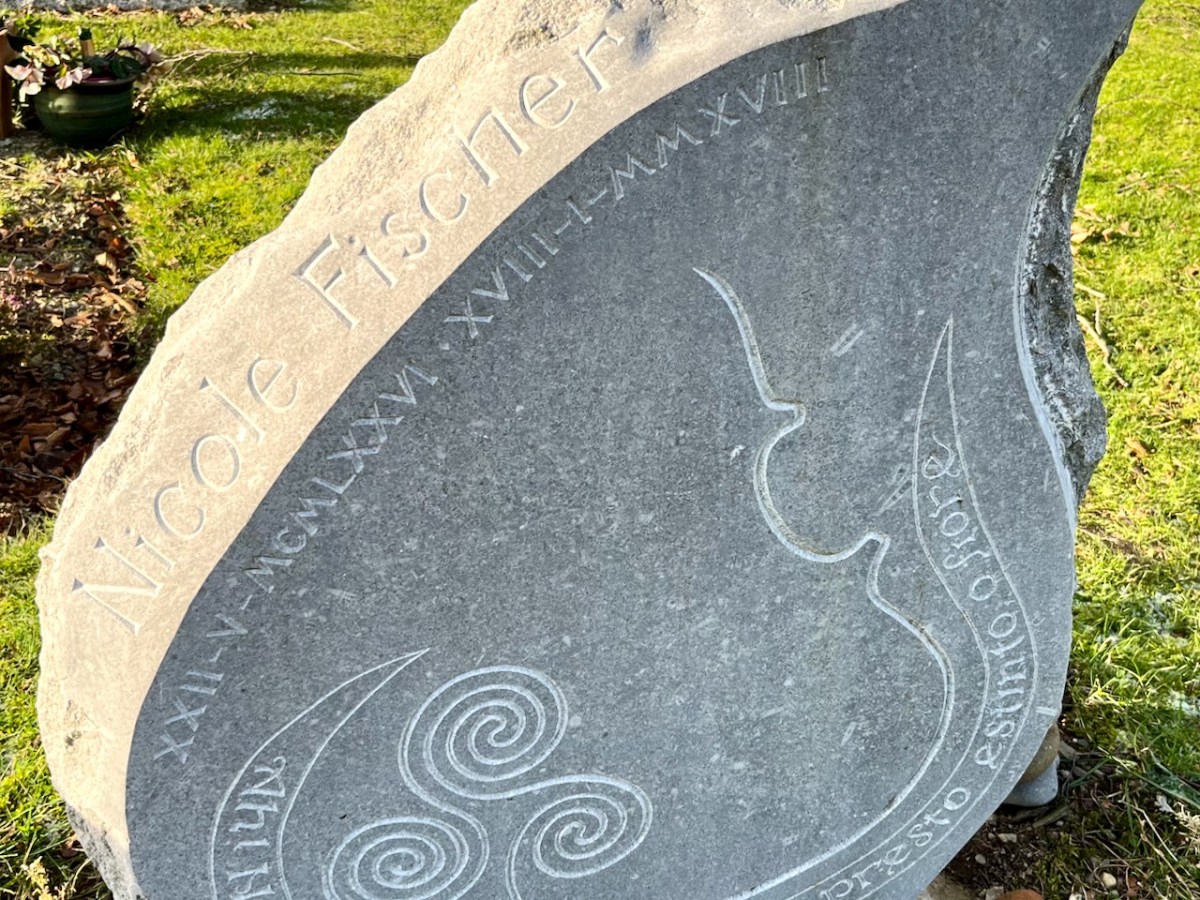
This impressive and beautiful gravestone is the work of Wicklow sculptor Séighean Ó Draoi. There are a number of unusual markers within this site: every one tells a story, of course.

Maurice Carey led a distinguished life in the Church of Ireland. He served as Dean of Cork from 1971 to 1993, when he retired, and in retirement returned to his native Dublin where he was in charge of St John’s Church, Sandymount. While in Cork, Dean Carey presided over a period of great change in St Fin Barre’s Cathedral and he was instrumental in setting up the St Fin Barre’s Study Centre.  He also achieved much in the musical and liturgical life of the cathedral.  “. . . His freshness of mind contributed greatly to this success and he was kind and helpful to younger clergy at the start of their ministry . . .” (obituary).

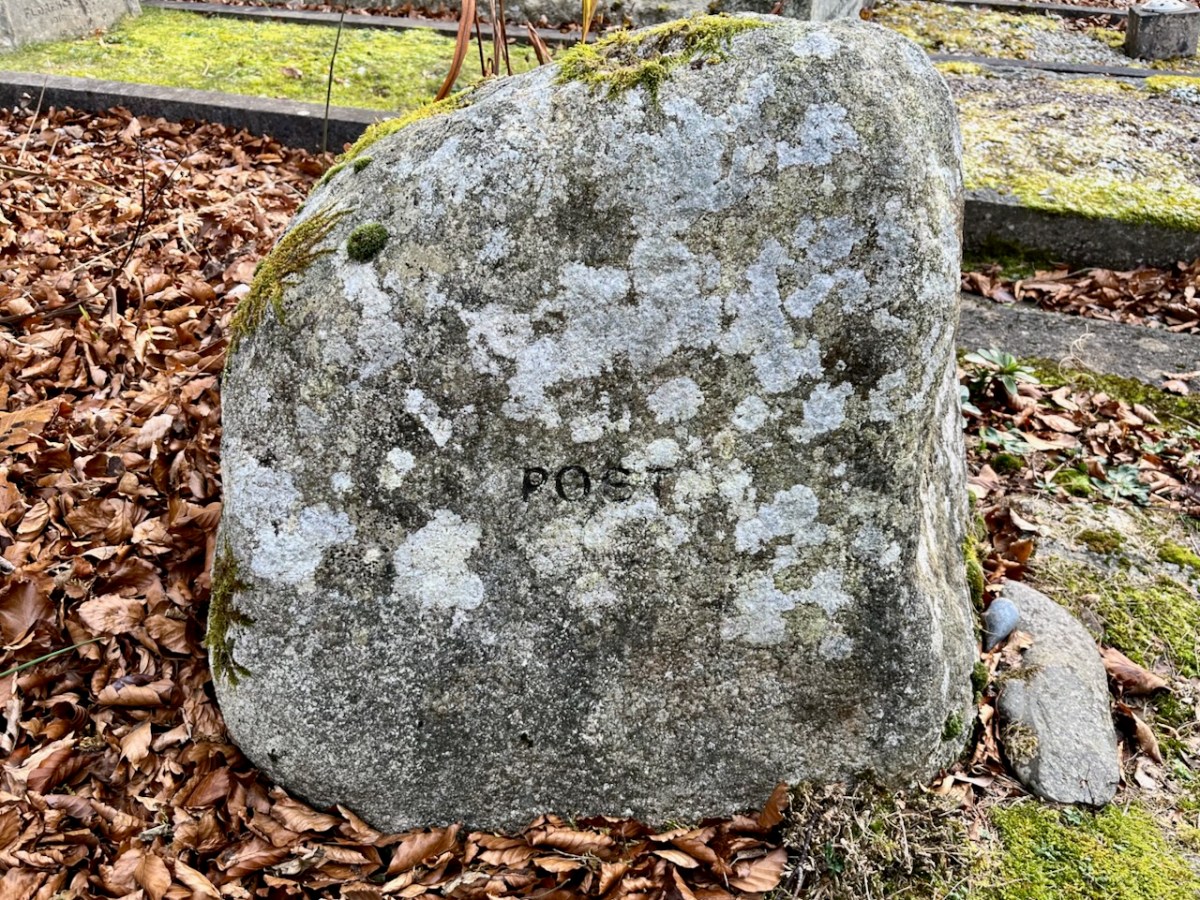
This stone belongs to Ronnie: Ronald James Wathen, who was born in 1934 and died before his time, in 1993. He was famed as a poet but also climbed mountains – and played the Uilleann pipes (https://www.discogs.com/artist/365089-Ronnie-Wathen):
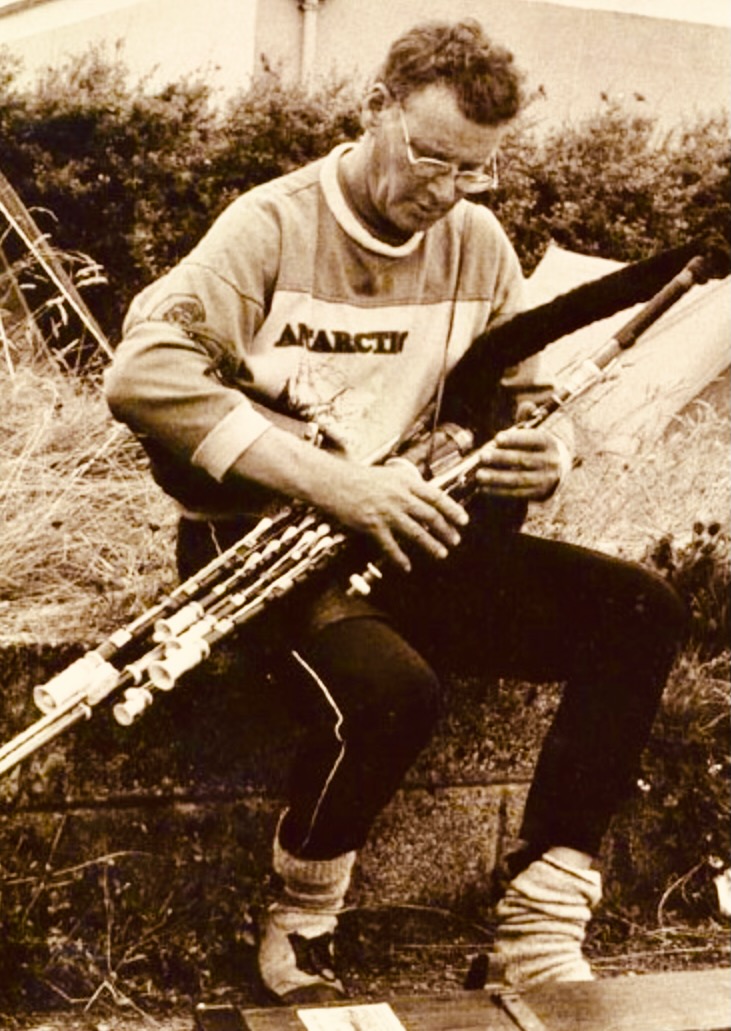
The poet’s printed obituary sums up a notably eccentric life:

. . . I feel there may be a ‘most individual and bewildering ghost’ glaring with mock ferocity over my shoulder, a restless shade who would never forgive me if I tried to bury him with platitudes. Ronnie Wathen was quite spectacularly different: unpredictable, provocative, abrasive yet stimulating in argument, generous with himself, always able to see and articulate the quirky side of life. In Ireland Ronnie’s first poems appeared and many slim volumes were to follow. He had a most splendid, if unruly, facility with words. Usually he employed them seriously but he also loved frolicking with them, standing them on their heads just for fun. He wrote about anything and everything that caught his fancy, as a poet should . . . the last I saw of Ronnie was when he strode off up the road to do a kindness to an old friend. I must end with a grumble. Ronnie was an insomniac, never known to leave a party until very late. His parting prank was to quit the party of life far too early, at the age of 58, just to tease I like to think. It was a cruel jest . . . he held his final party at the little church of Calary, below Sugarloaf Mountain, in the verdant lap of his beloved Wicklow Hills. On that sunny autumn afternoon many, many friends crowded the church, farewells were spoken in prose and verse, laments welled up from three of the finest pipers in Ireland and a lone fiddler knelt by the open grave and hauntingly played the restless Ronnie to his rest . . .

Mike Banks
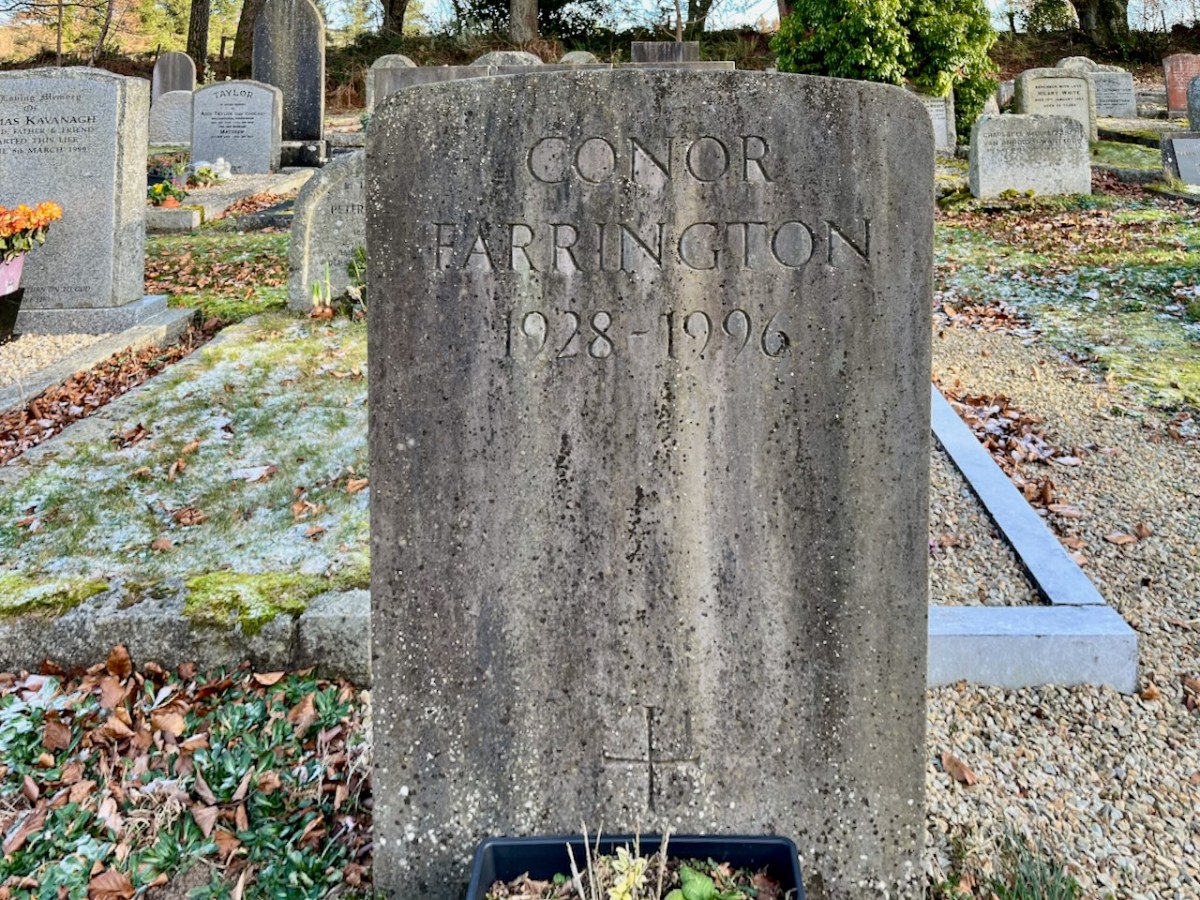
Conor Anthony Farrington was born in Dublin in June, 1928. His distinguished career included writing a number of plays for radio and theatre. Notable, certainly, were: Death of Don Juan (1951), The Tribunal (1959), The Good Shepherd (1961) and The Ghostly Garden (1964). ‘The Language of Drama’ in The Dubliner (July-August 1962) concludes the following: “…there are three reasons for a ‘radical alteration in the language of drama’ – viz, ‘the audience’s reason’, the ‘actor’s reason’, and ‘the dramatist’s reason’ – since ‘it is actually by means of particular words and phrases that he discovers his character’…” In later years appeared a collection of short stories (Cork: Fish Publishing 1996).
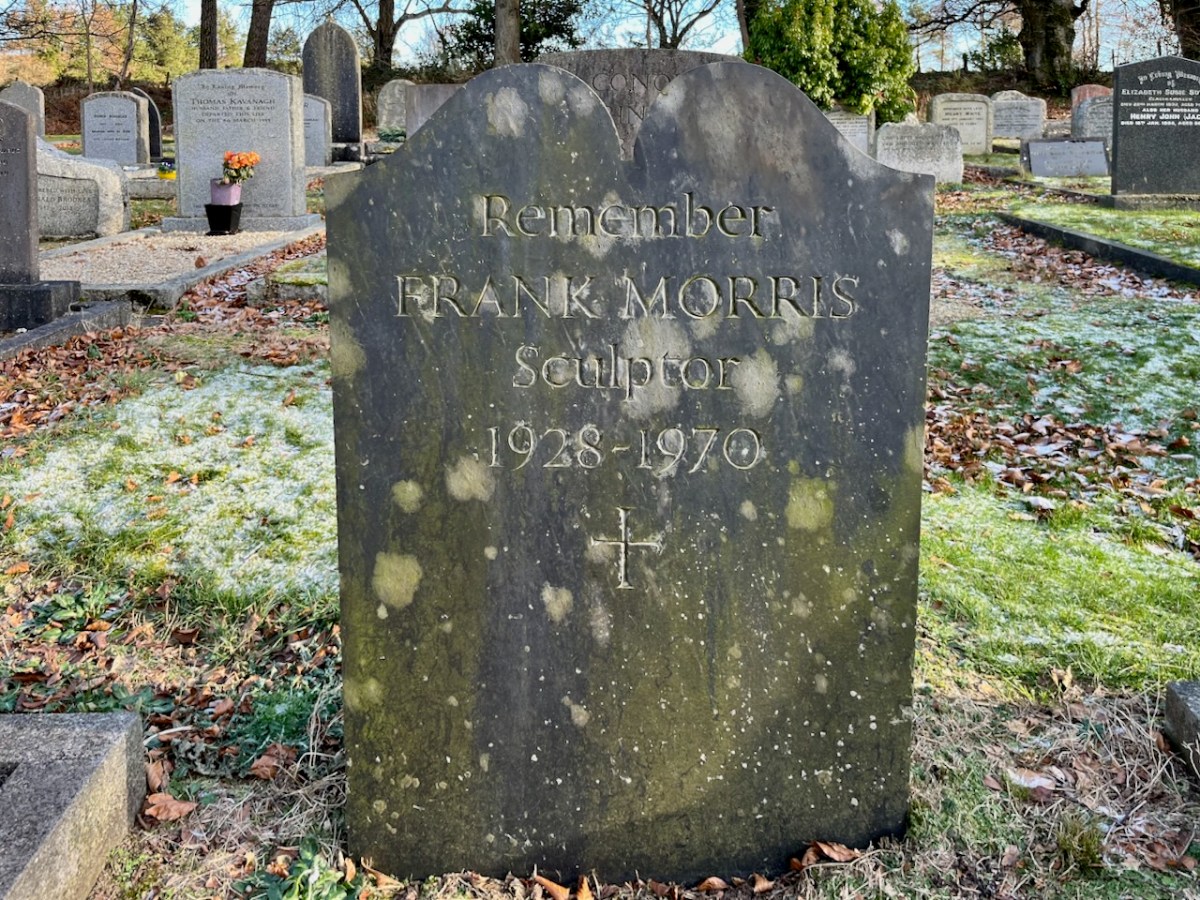
Another effectively simple slab remembers the sculptor Frank Morris, born in Arklow, Co Wicklow. He spent some years working with the Irish Forestry Department: while there he became a skilled wood-carver. The Dictionary of Irish Biography states that “. . . Carving for him was akin to peeling an onion to reveal the form within . . .” He also developed skills in sign-writing and letter-cutting. Have a look at his magnificent beaten copper door in the Holy Redeemer Church in Dundalk:

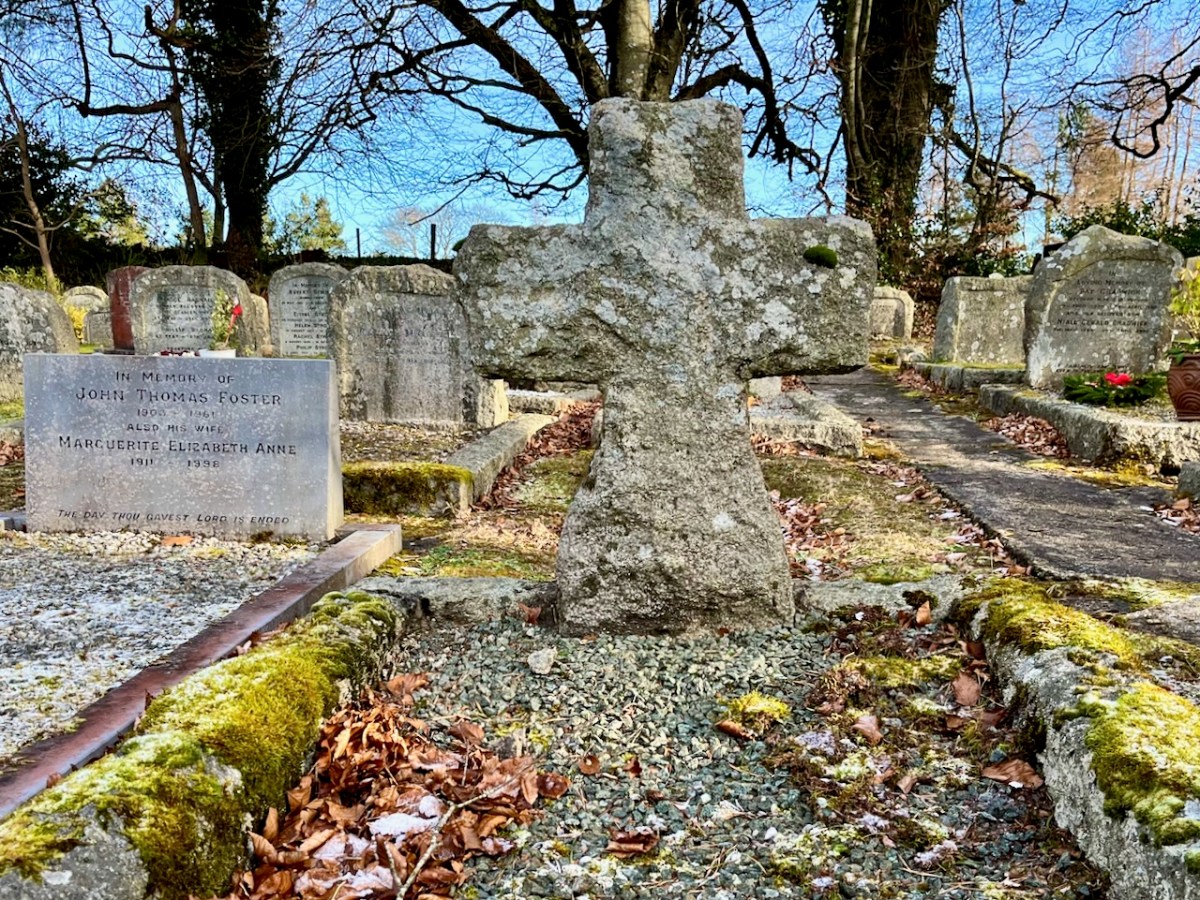
It’s interesting to find a Jewish grave in a rural Irish parish: Evelyn and Bruno Achilles (above and below).

In the 1930s The Schools Folklore Collection produced some memorable notes about the parish of Calary:

. . . Glasnamullen is our town land and there are nine families in it. Calary is the name of our parish. There are about twenty-six people in this townland. Sutton is the most common name in this district as their are four in Glasnamullen. All the houses in our town land is slated, but there are three or four thatched houses outside the townland. This place is called Glasnamullen as long as anyone can remember. Mr Arthur Sutton is seventy six, he lives in Glasnamullen, but Mr Fortune is one hundred and Mr Stokes is eighty six. They dont know any Irish, but they are great for telling stories in English. When my father was small he used to get Mr Stokes to tell him stories. Mr Fleming told me a story about Mr Byrne, The Paddock, Kilpedder. Once upon a time a man was cutting down a hawthorn tree in an old fort and as soon as he did a wind rose and took it away and over his head were thousands of birds. No one ever knew where the hawthorn went to, but everyone said that the fairies must have done it. They never plough the land owing to that. St Kevin is said to have blessed a little well beside a river in Ballinstowe. Every one goes and drinks it when they have colds. It is also said it has the power to cure sore eyes. There are pieces of cloth on the bushes around it left by people whose eyes were cured . . .

Muriel Taylor, aged 14
Schools Folklore Collection

“Beware of the Witches you meet in the ditches, between Calary bog and Ballinastowe.” – a local saying!

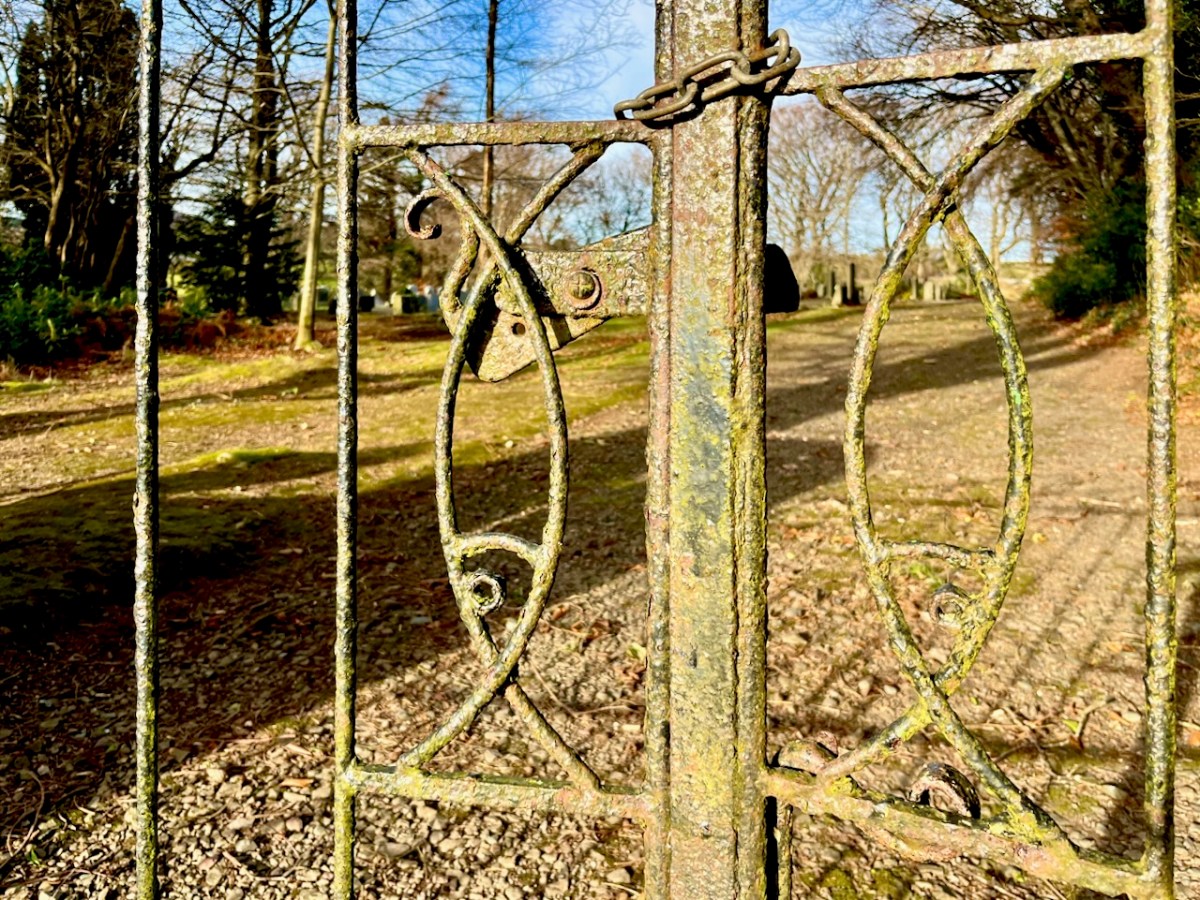
The ‘fishy’ gates to the graveyard are also artistically wrought.
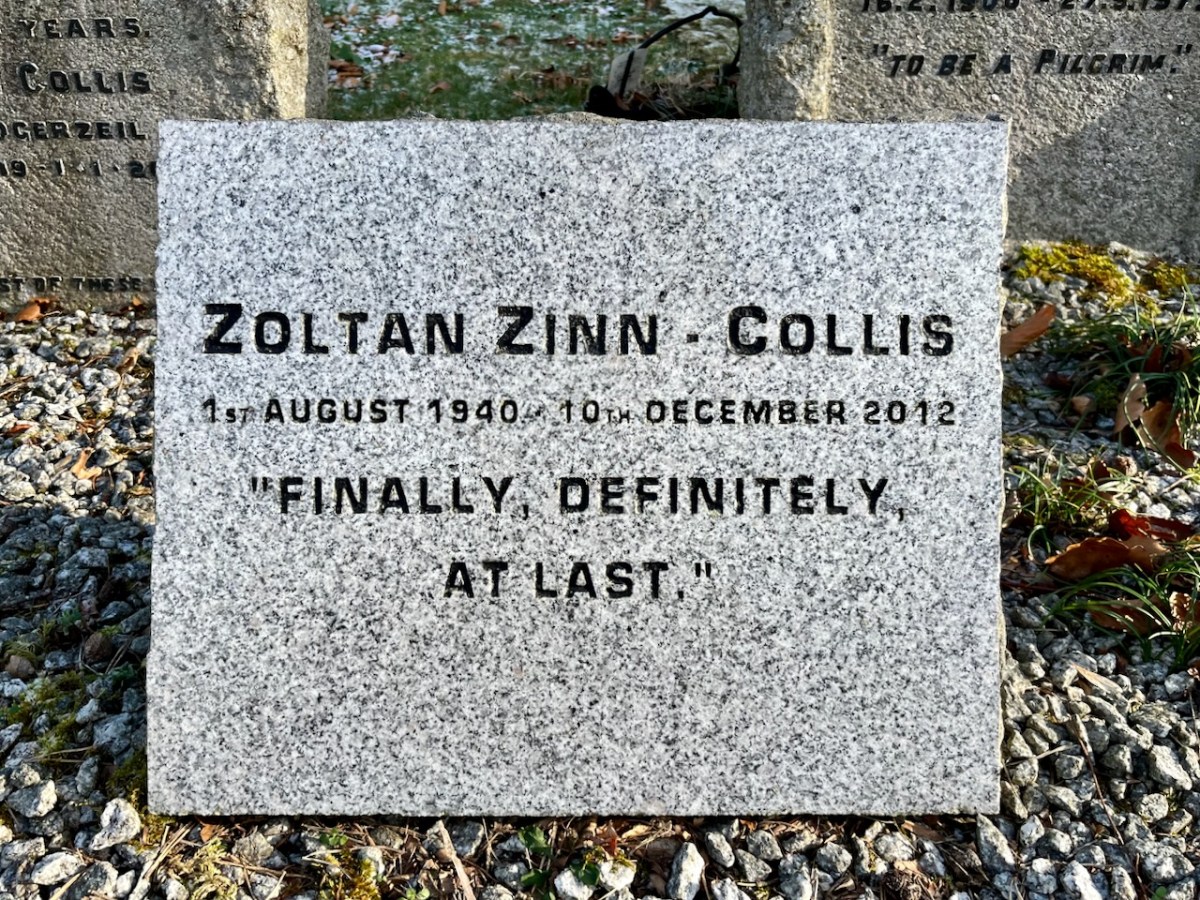
Zoltan Zinn-Collis was a holocaust survivor. Many thanks to our friend Paul Smith for sending us this information.

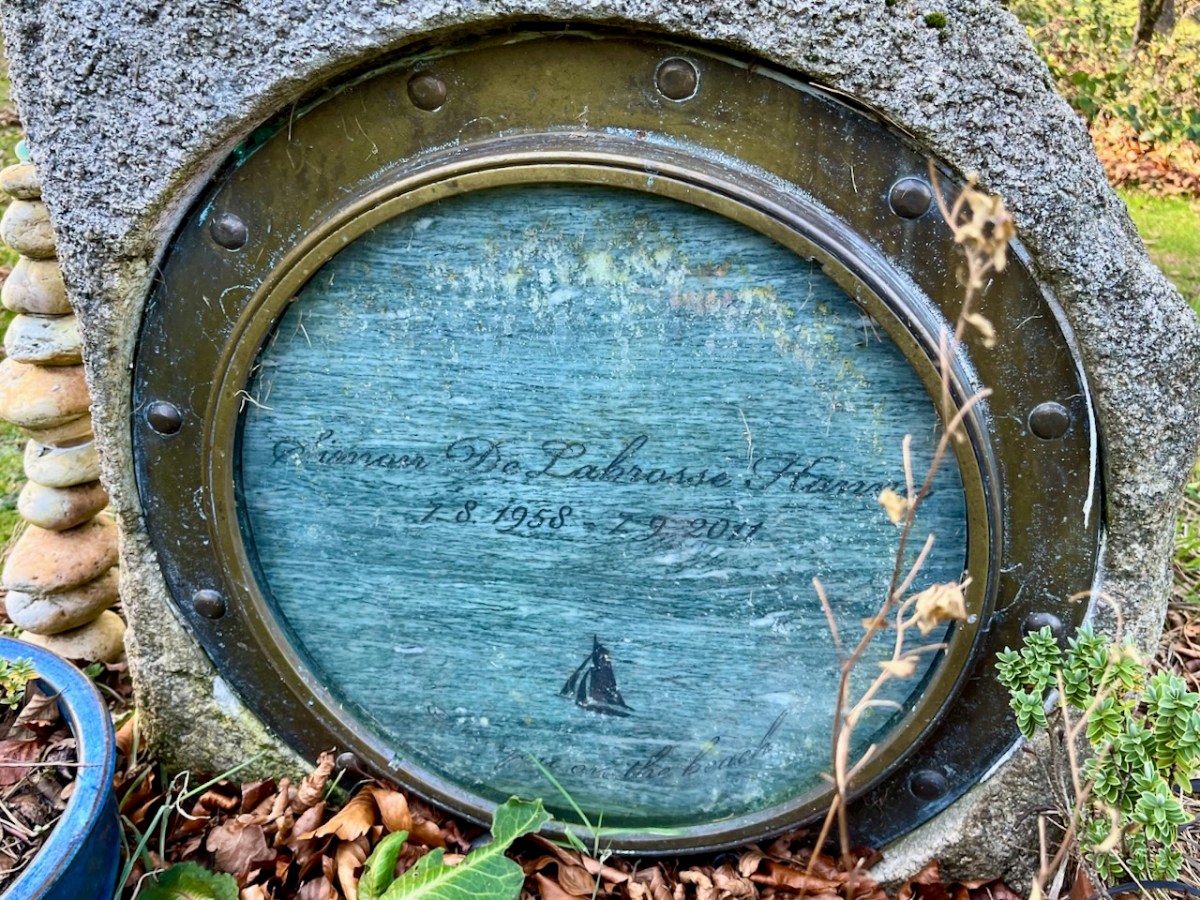
I have concluded that this fairly recent grave (2011) is in memory of a mariner. You can see that the inscription is within a porthole – and there is an illustration of a sailing boat. After much searching, I came across a funeral notice – here is a brief summary:

. . . HANNA Simon (late of Bray, Co Wicklow, formerly of New Zealand) – September 7, 2011, suddenly, son of Meg and the late Pat Hanna and brother of Tim, Mike, Pete, Kristin and Jane; sadly missed by his partner Sonja (McEnroe), her daughter Tali and her partner Danny, his sons Rowan, Aiden, Kieran and their mother Ann, his mother, brothers and sisters, extended family and many friends. Reposing in the factory workshop, Mill Lane, Bray from 4pm to 9pm tomorrow (Sunday). Removal on Monday to Calary Parish Church arriving for a Funeral Service at 2.00 o’clock followed by interment in the adjoining churchyard . . .

Funeral Notice

This is not an exhaustive account of the graves in Calary: it’s a selection only. Hopefully it’s sufficient to send you in this direction if you find yourself over in the east. It’s a beautifully atmospheric place. Let’s finish where we started – with a Louis le Brocquy tapestry. This is: Garlanded Goat 1949-50, Aubusson tapestry, Atelier Tabard Frères et Soeurs (artist website).

Exploring Ancient Drowned Landscapes

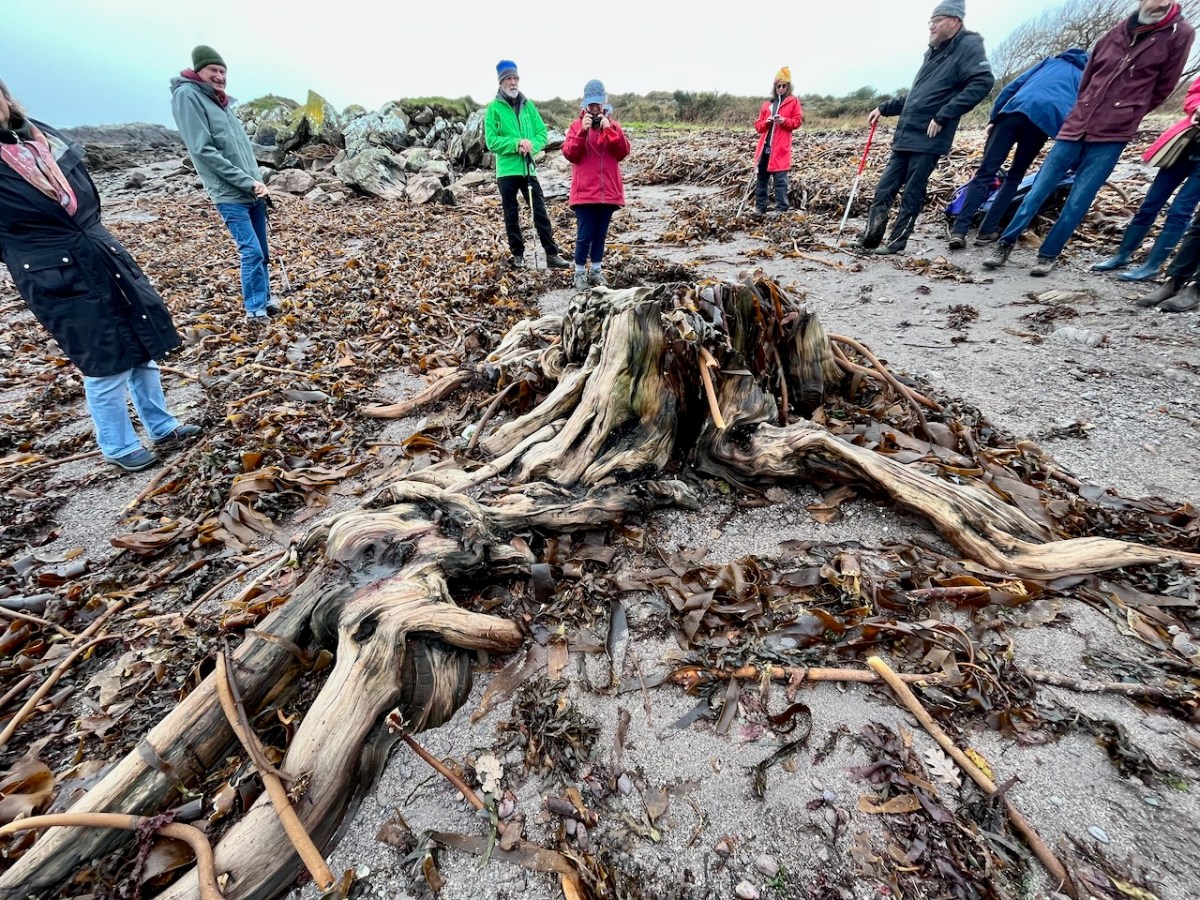
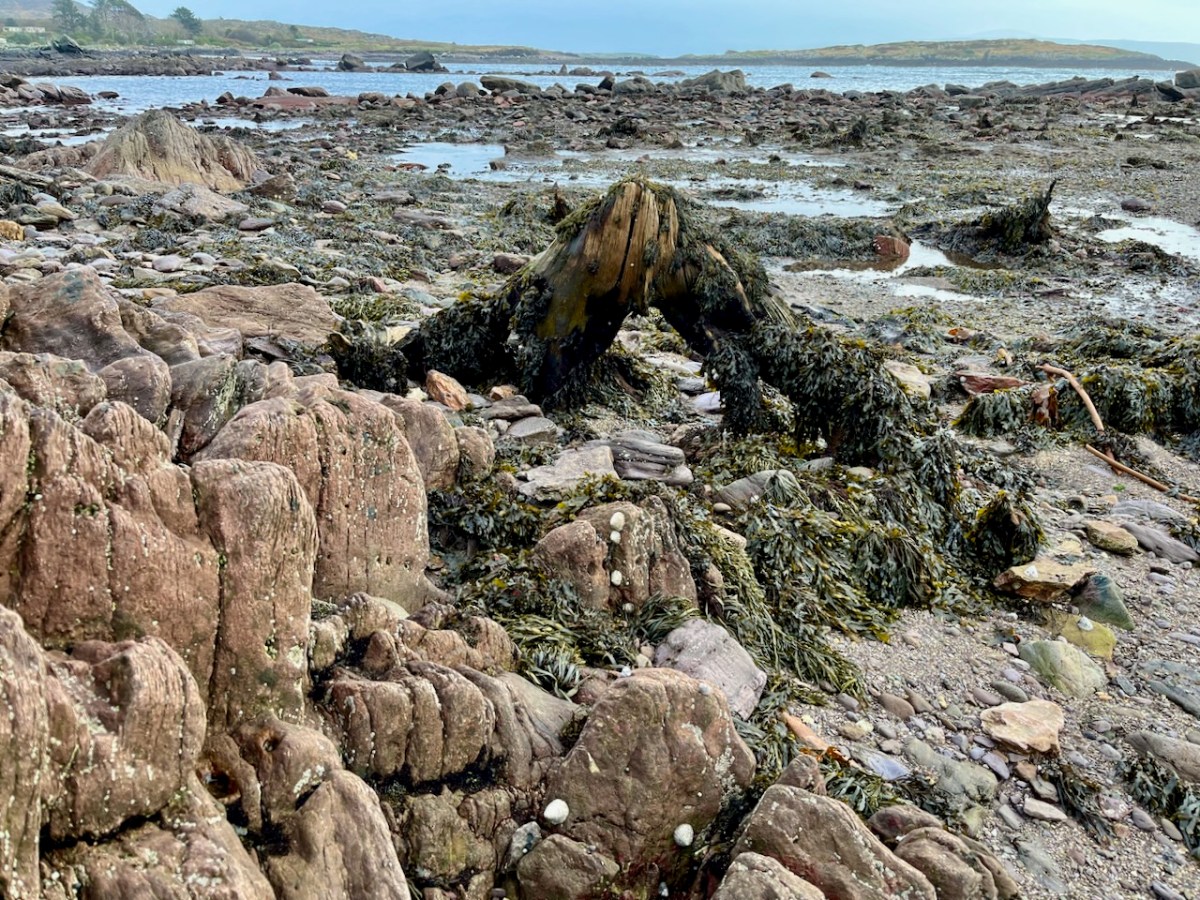
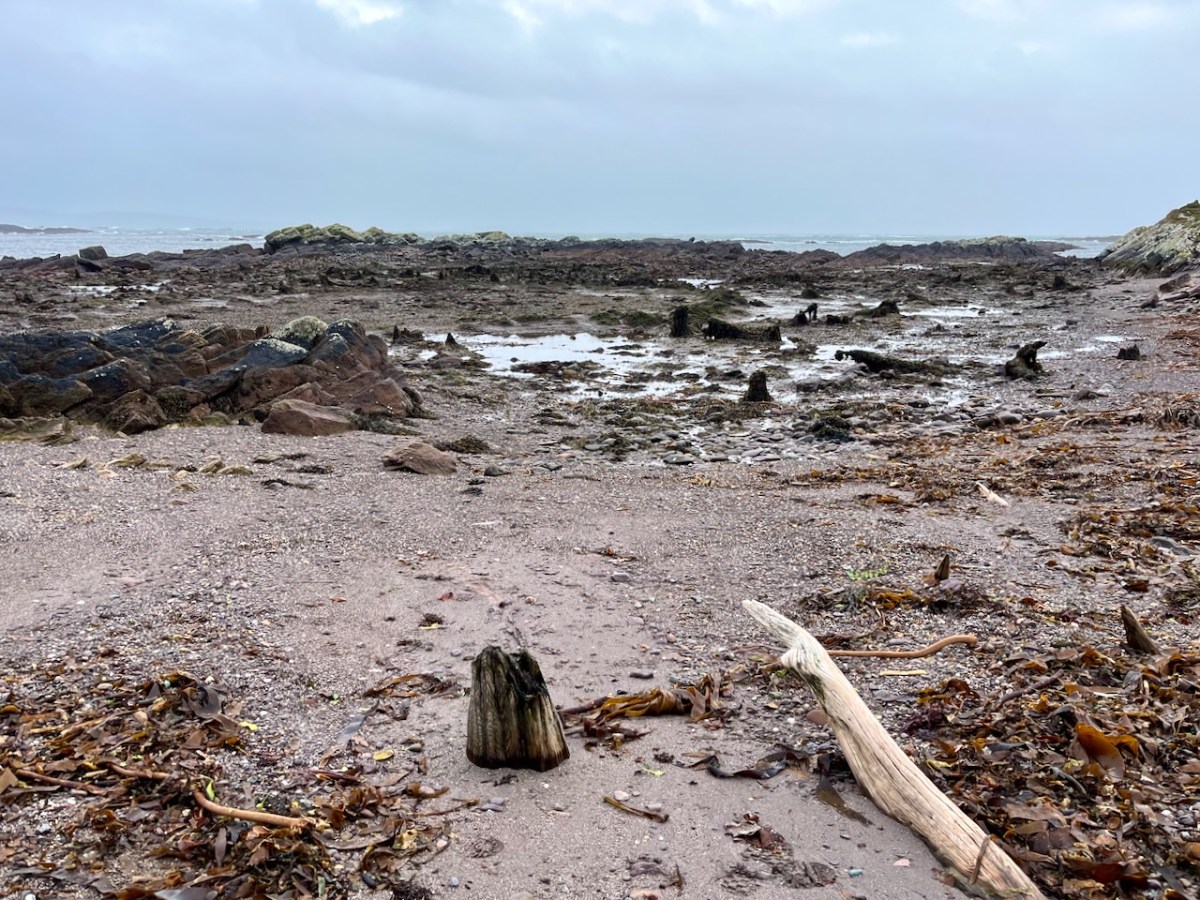
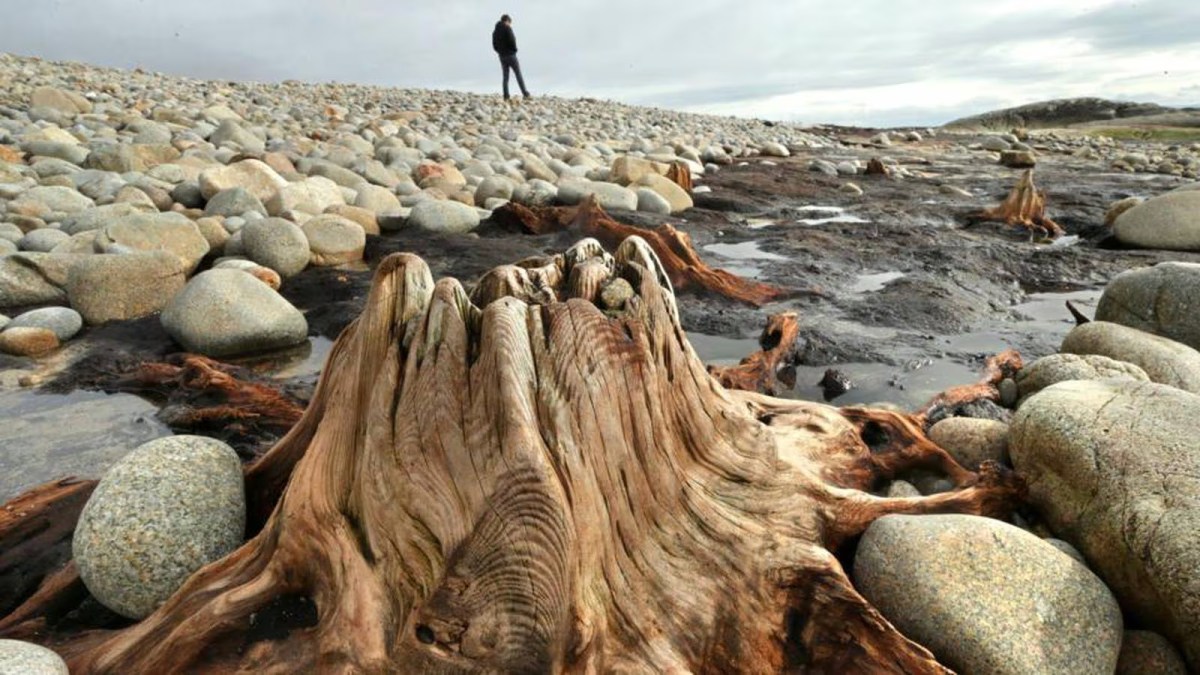
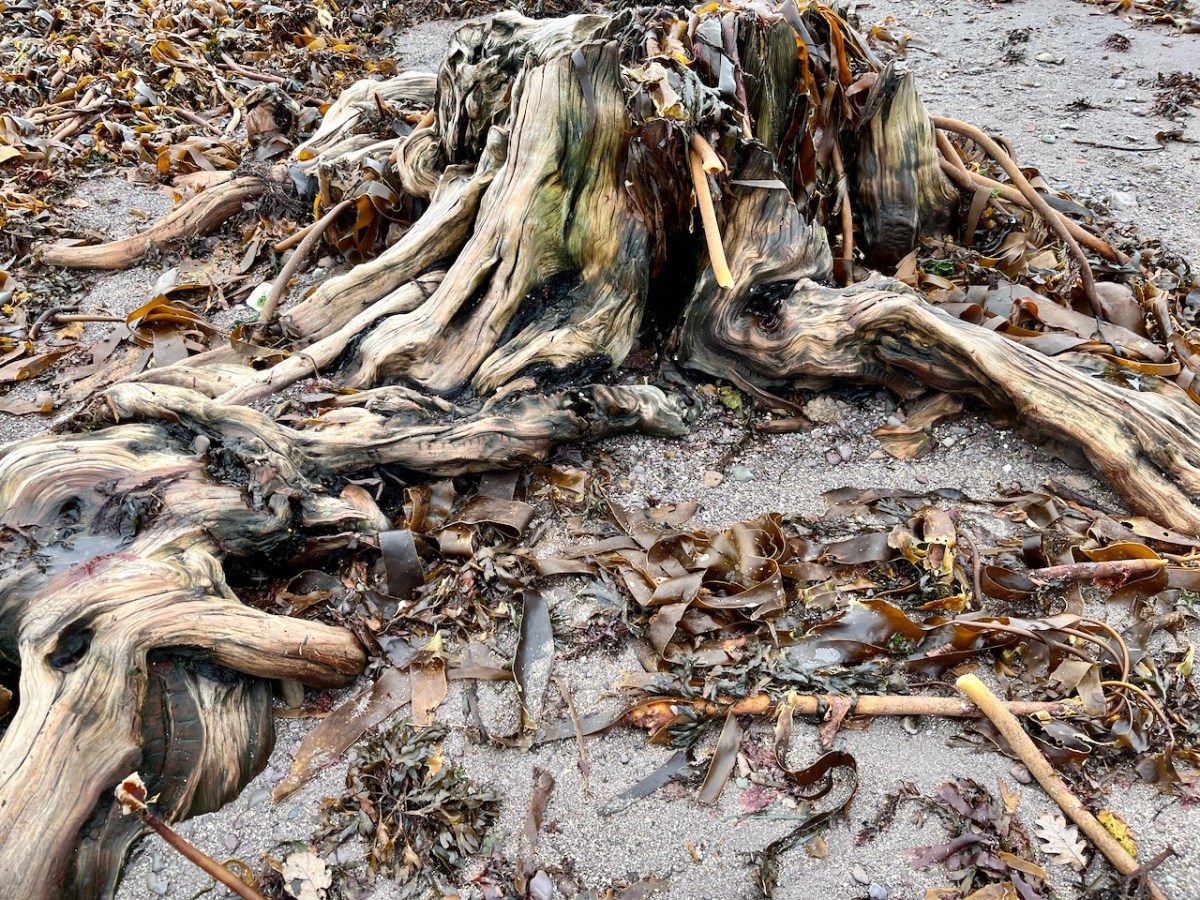
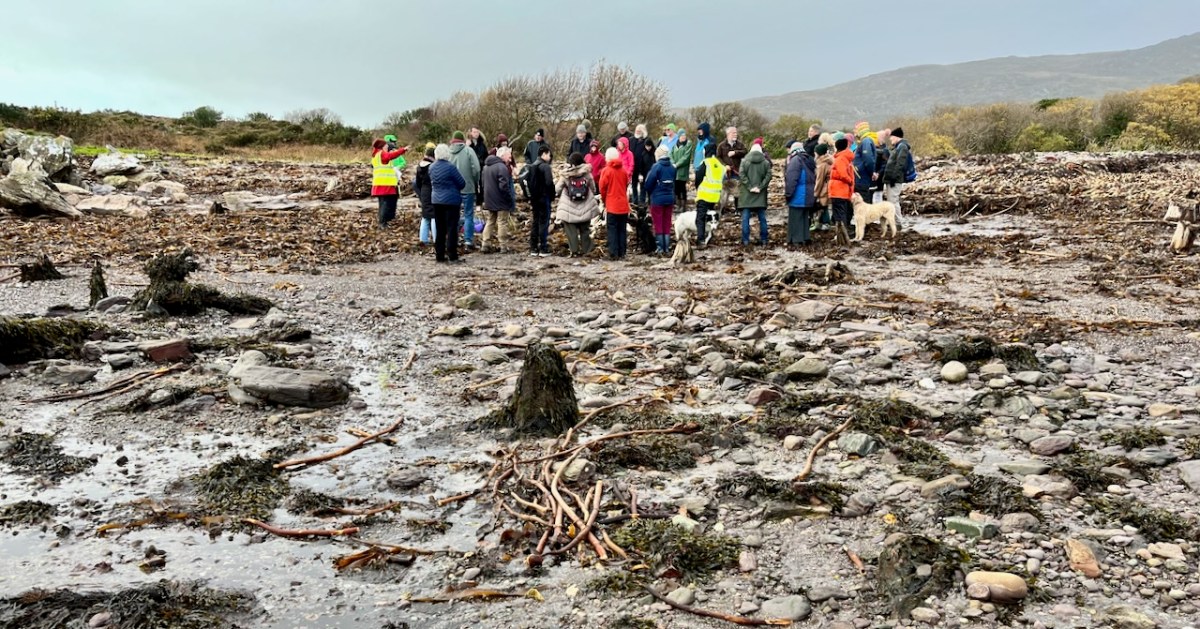
‘Drowned Landscapes’ – that’s an adequate enough description for us to look again at a subject which RWJ covered five years ago in this post: Tralong Bay, Co Cork – give it a read. I was reminded of the subject when we took part in an Archaeology Festival based in West Kerry just a week ago: Amanda’s current holy well blog describes the expeditions. One of the sites visited was Bunaneer Drowned Forest, where we saw stumps of trees on the beach there which were alive thousands of years ago. At low tide many tree remains become visible at Bunaneer, near Castlecove village on the south coast of Kerry’s Iveragh Peninsula. Our guides for this expedition were plant biologist Calum Sweeney and archaeologist Aoibheann Lambe.

This large jumble of roots (above) is known as Goliath. All the remains here can be seen at regular low tides: at other similar sites elsewhere in Ireland, remains of ancient tree boles and roots are only revealed when tides are exceptionally low. I find it remarkable to be able to see and readily touch these archaic pieces of timber: we are communing with distant history!

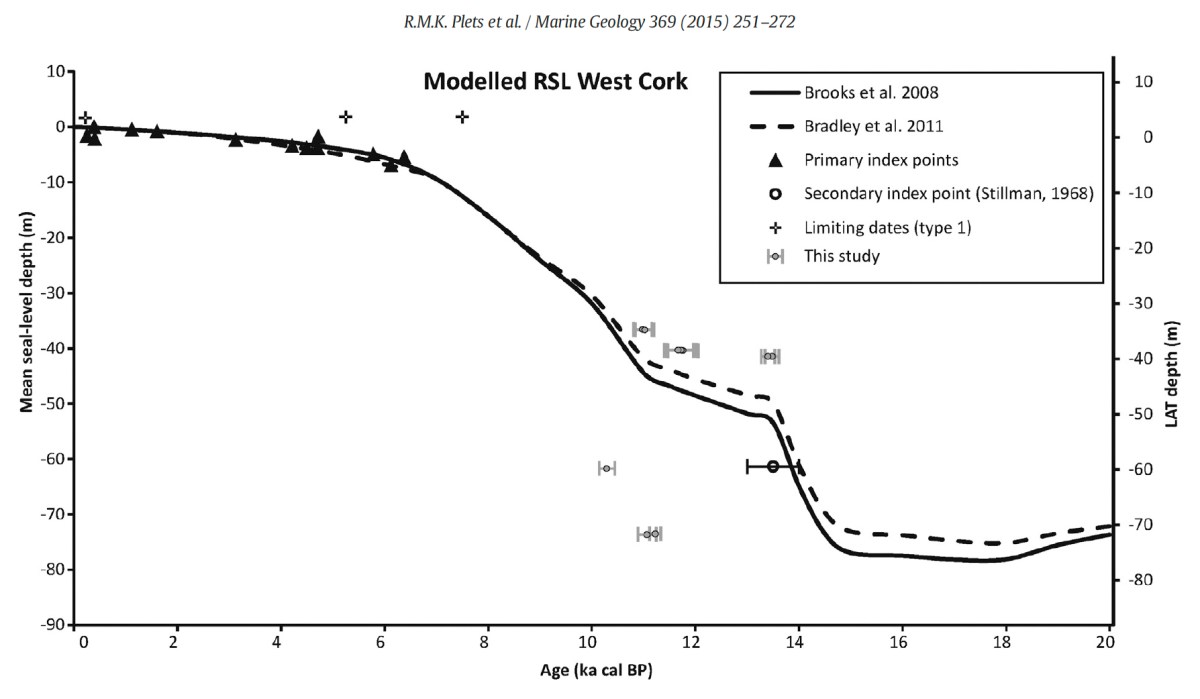
Carbon dating has shown that these remains were alive between three and a half and five millennia ago. This is evidence that sea levels were significantly lower then, and that the shore line was further out – perhaps 50 metres from where we see it today. We are constantly – and quite rightly – being warned about rising sea levels resulting from our changing climate in the long term: here we see clear verification that it’s a continuing – and now apparently accelerating – process.

Our friends Robin and Sue Lewando were also on this expedition. Robin has a particular interest in sea-level changes in the Late Quaternary and subsequent eras, and he pointed me to a 2015 paper which explores the subject specifically in the Bantry Bay area of West Cork. That’s a good place to be looking at ancient history: remember the story of Cessair – Noah’s daughter-in-law – who came ashore at Donemark? You first read about it here! So this is a scientific diagram which sets out how sea-levels have been changing over time in our locality:

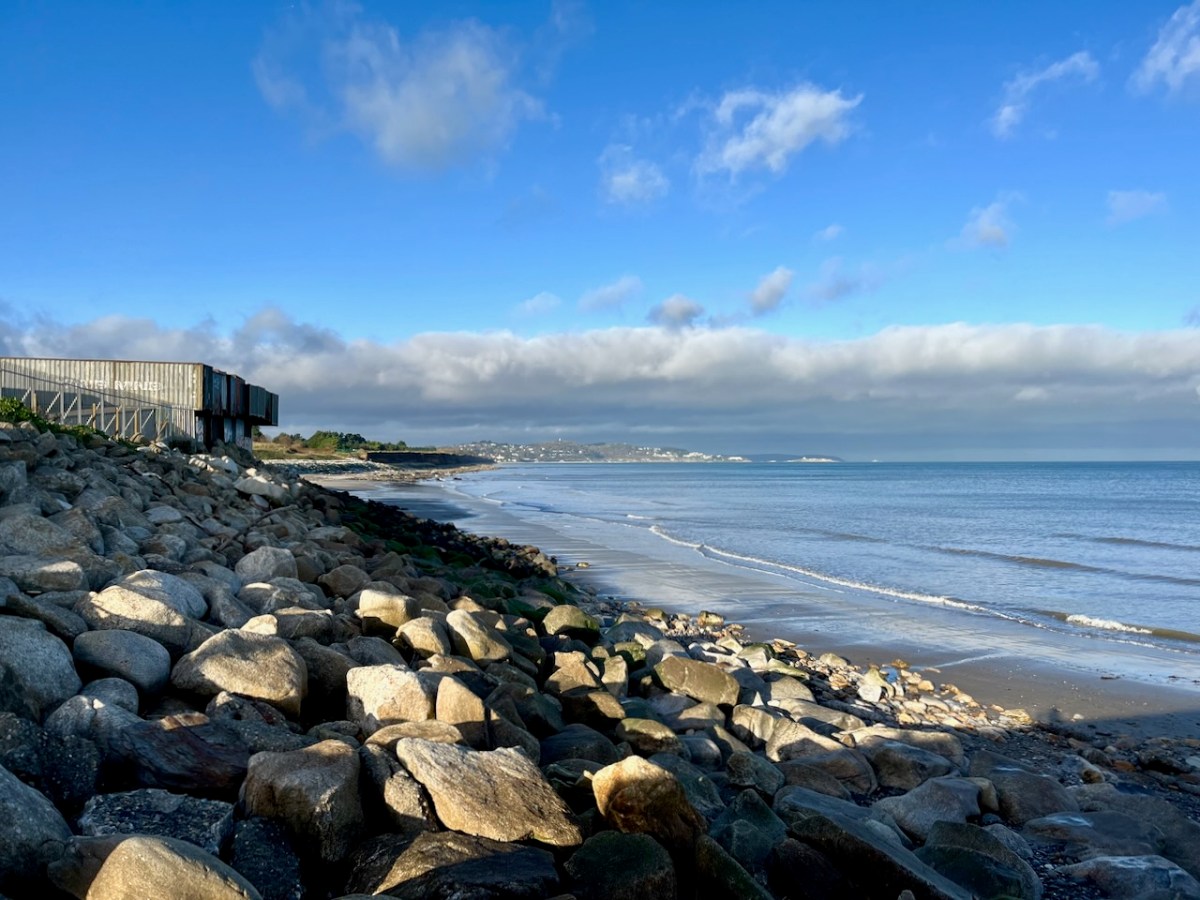
It’s an interesting comparison to take our horizons wider in our study of changing sea levels across the islands of Ireland. Over on the east coast – north of Bray, Co Wicklow – there is another substantial area where tree remains have been revealed at certain tidal conditions.

Above are the areas of beach between Bray and Killiney where ‘drowned forest’ remains have been observed. While at Youghal, Co Cork, further finds have occured:

This example catches our interest because the name of the settlement – Youghal – is derived from the Irish word ‘Eochaill’ meaning ‘Yew Woods’: they were evidently once common in the area, leading us to wonder whether the tree remains in this instance are of yew. In 2014 the following account of another ‘ancient drowned forest’ discovery appeared in the Irish Times (photograph courtesy of Joe O’Shaughnessy):

. . . Walking out on to the shoreline at low tide, geologist Prof Mike Williams points to the oak, pine and birch stumps and extensive root systems which were once part of woodlands populated by people, wolves and bears. These woodlands extended out into lagoons and marshlands that pre-dated the formation of Galway bay, Prof Williams says.

An extensive layer of peat also exposed at low tide in the same location in Spiddal was formed by organic debris which once carpeted the forest floor. The stumps at Spiddal are surrounded by root systems which are largely undisturbed. The carpet of peat is covered in strands of a reed called phragmites, which can tolerate semi- saline or brackish conditions.

“These trees are in their original growth position and hadn’t keeled over, which would suggest that they died quite quickly, perhaps in a quite rapid sea level rise,” Prof Williams adds. Up until 5,000 years ago Ireland experienced a series of rapid sea level rises, he says. During the mid-Holocene period, oak and pine forests were flooded along the western seaboard and recycled into peat deposits of up to two metres thick, which were then covered by sand.

Prof Williams estimates that sea level would have been at least five metres lower than present when the forests thrived, and traces of marine shell 50cm below the peat surface suggest the forest floor was affected by very occasional extreme wave events such as storm surges or tsunamis. He says most west coast sand-dune systems date to a “levelling” off period in sea level change about 5,000 years ago. Dunes in Doolin, Co Clare, are older still, having first formed around 6,500 years ago.

Prof Williams has located tree stumps in south Mayo and Clare, along with Galway, which have been carbon dated to between 5,200 and 7,400 years ago at the chrono centre at Queen’s University, Belfast. Some of the trees were nearly 100 years old when they perished . . .

Lorna Siggins
Irish Times 07/03/2014

Goliath, West Kerry, November 2023

The Electrification of Ireland – A Medieval Diversion

In my recent posts I have set out a brief history of how the new State became electrified – and how this affected the urban and rural ways of life in Ireland. An important part of the story was the building of the hydro electric power station at Ardnacrusha, on the River Shannon, between 1925 and 1929. That’s the original control room, above, unaltered since construction – there’s not a screen in sight! Most of the works of the station are now handled elsewhere using screens and keyboards rather than dials and switches. This site became the nerve centre for the electrification of Ireland and the National Grid was established in tandem with the project.

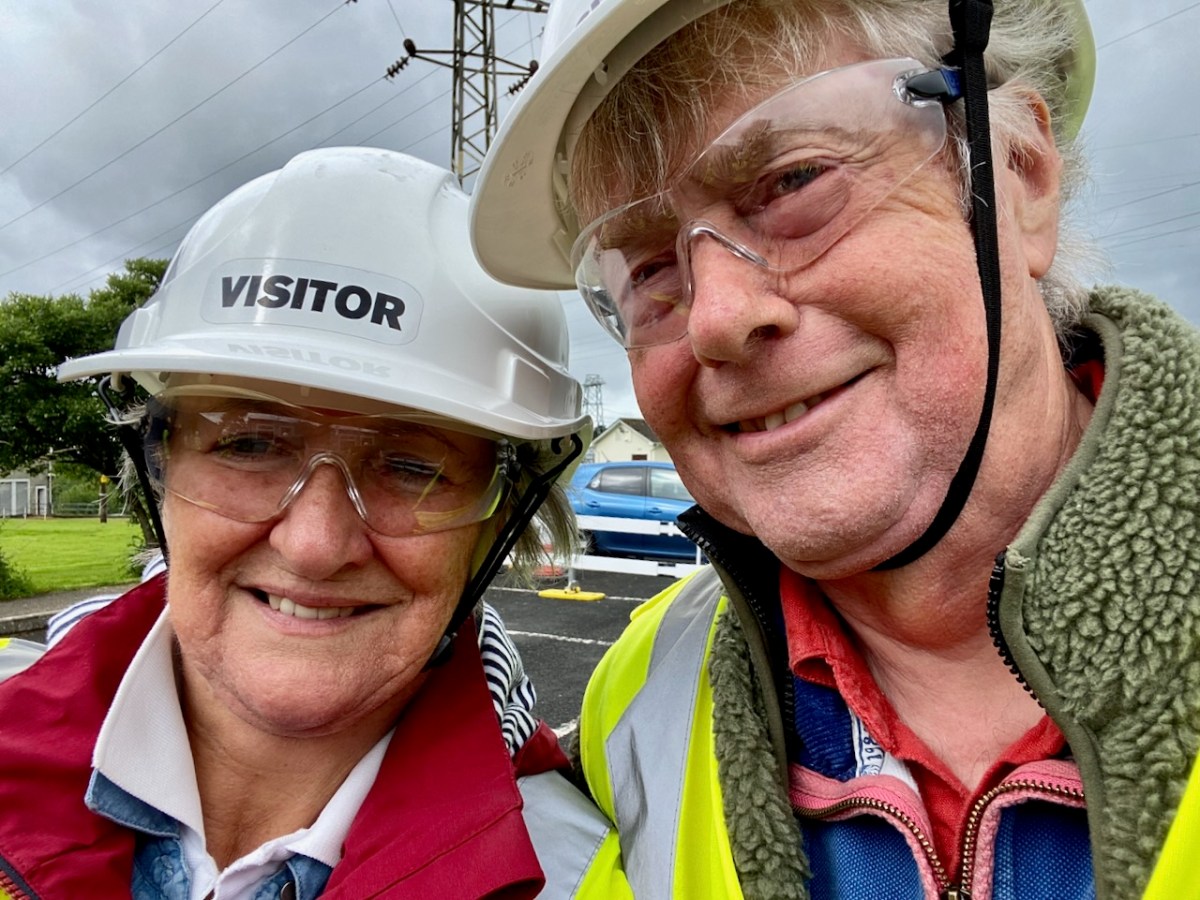
This selfie shows Finola and I on a visit to Ardnacrusha last week. (If you want to go yourself you have to book in advance). We had a great time! And I’ll be reporting back on that trip in due course. But first I want to take you back in time – more than a thousand years . . .
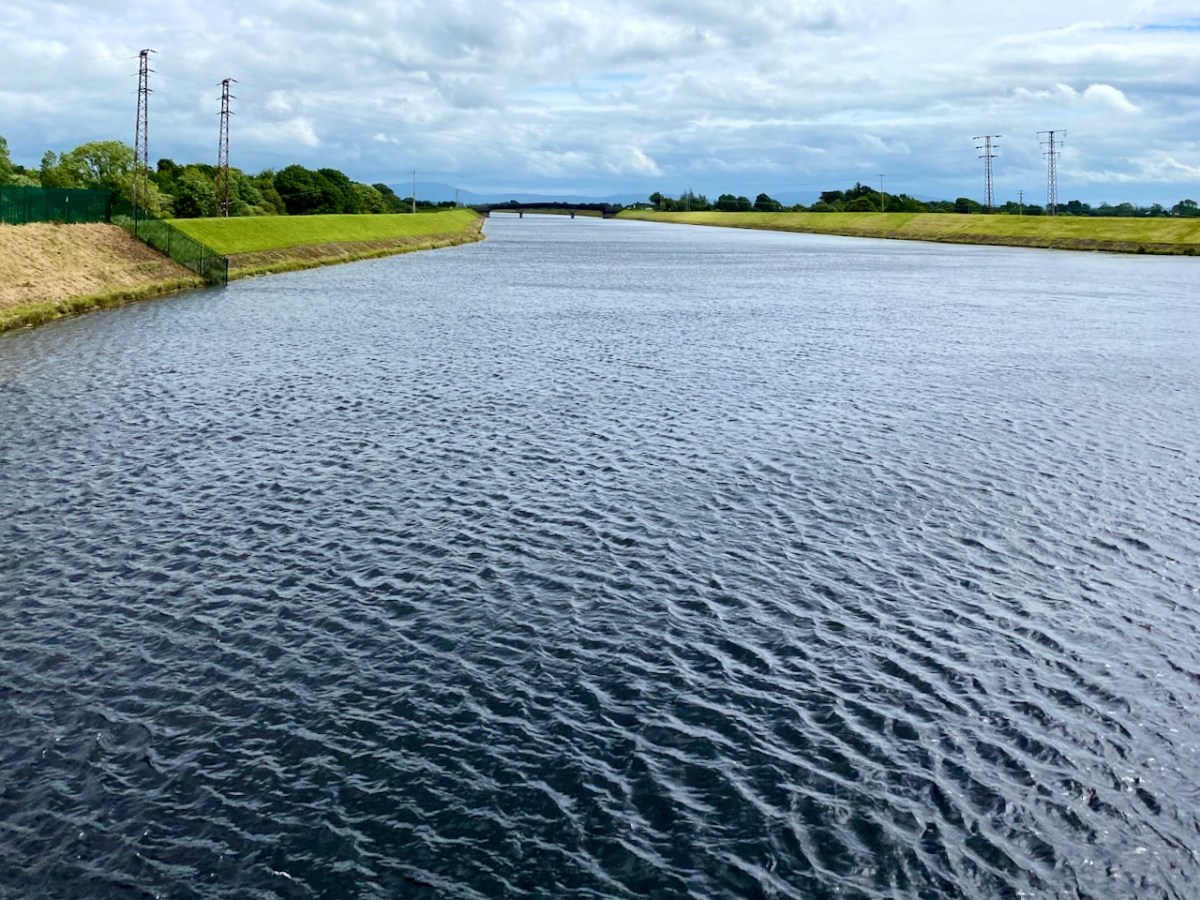
Here’s the River Shannon today, just north of the power station. There’s a big head of water there, and the river had to be dammed and flooded to maximise the feed to the turbines. The significantly raised water level had consequences.

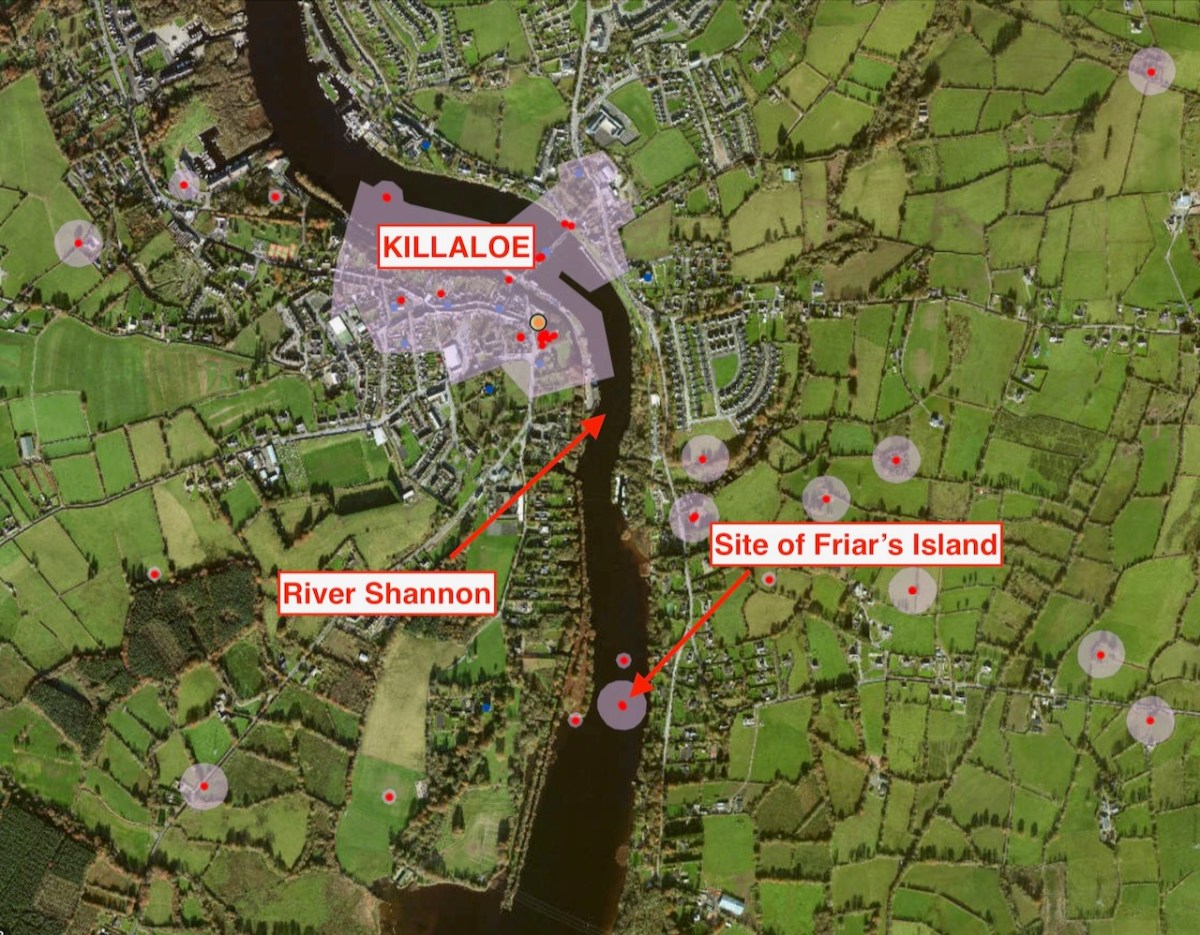
The aerial view, above, shows the river today with its elevated water level. In the pic you can see the ‘Site of Friar’s Island’ indicated: before 1930 there was an island there, on which were some noted relics, including the Oratory of St Molua of Kyle (also known as St Lua), who died in the year 608. His feast is celebrated on August 4th. It’s said that crowds used to assemble there on that day, most of them wading across the water to get to the island. This description of the saint is from the Schools Folklore Collection (informant Tom Seymour, aged 60, Cloncully Co Laois):

. . . We don’t know where he belongs. Some say he belongs to Killaloe. He had his monastery in Kyle. Near the monastery he had a big stone where he used to pray. There are two big holes where he laid his elbows, and two more where the tears fell. In Ballaghmore there is a trough laid up on a stone. It is always half-full of St Molua’s water. The hottest day in the summer the well is always half-full of water. When he died the people of Killaloe wanted to bury him in Killaloe and the people of Kyle wanted to bury him in Kyle. They made two coffins, one went to Kyle and the other to Killaloe. He had another monastery in Offaly . . .

Schools Folklore Collection

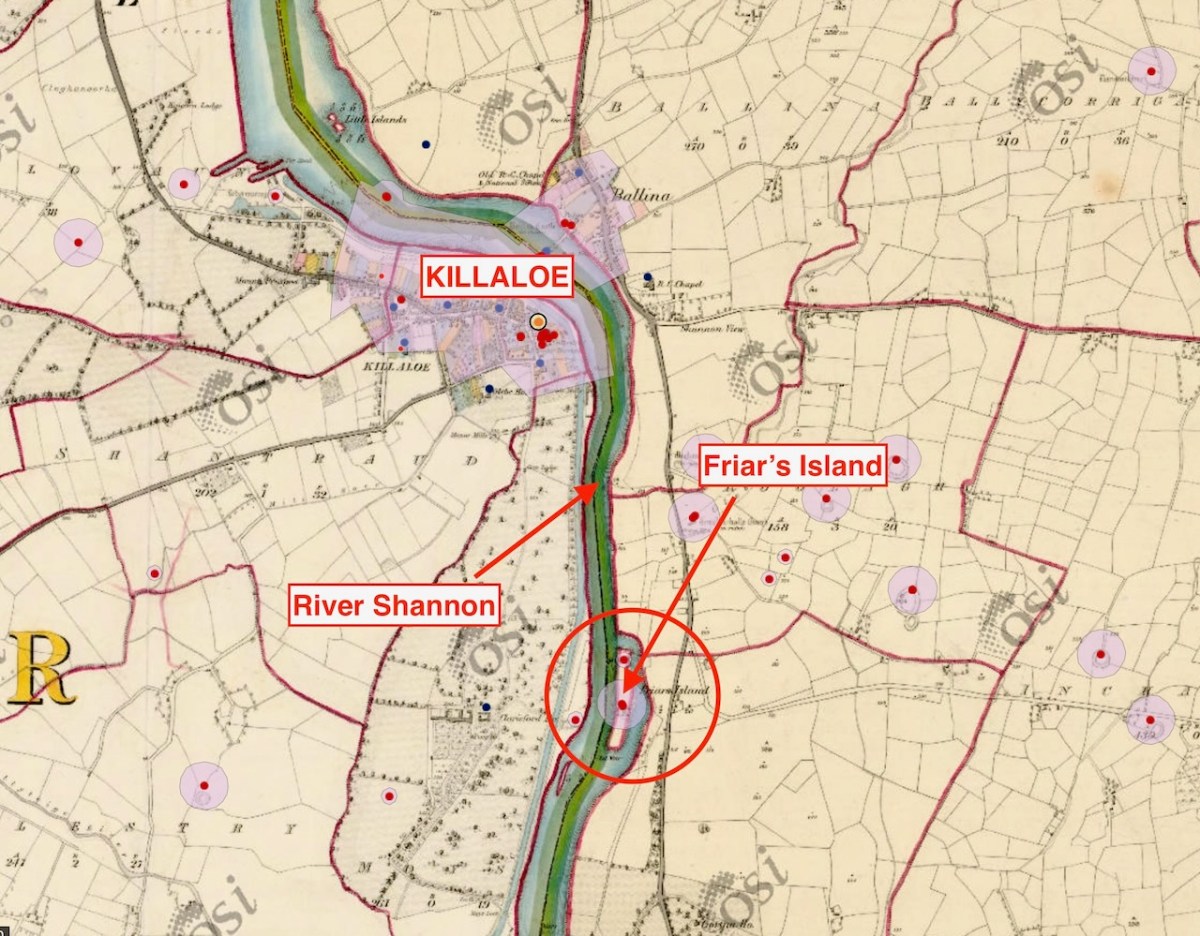
In this extract from the early OS 6″ map (above) you can see that the island was quite substantial. The pilgrimage involved visiting a holy well and St Lua’s Oratory. The small church was by tradition built by the saint, although it seems likely to date from the ninth or tenth centuries.

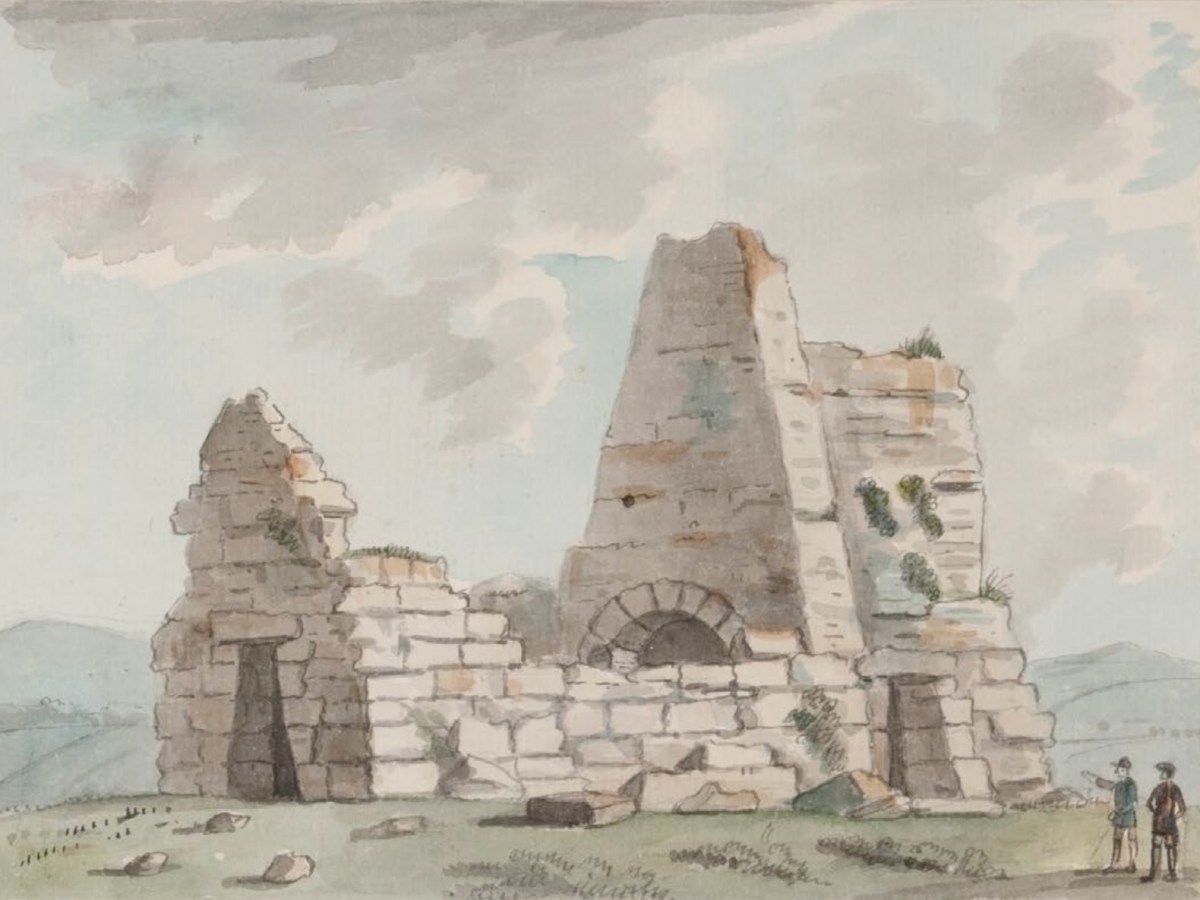
St Lua’s Oratory – Eighteenth Century water colour – Royal Irish Academy. The figures are somewhat out of scale. Below is a photograph of the Romanesque structure taken on the island in the 1920s.

. . . The nave walls are constructed with uncoursed cyclopean sandstone masonry while the chancel walls are constructed with roughly squared stones of smaller size. The chancel has a single-light round-headed E window with stepped sill-stone and unusual flat-headed doorway in the S wall. The round-headed chancel arch has curious jamb-stones which are not flush with the chancel arch and project inwards. The triangular-shaped chancel roof is bonded with lime mortar and is well preserved. The nave walls are poorly preserved and only survive several courses high with a trabeate doorway in the W wall. Excavations at Friar’s Island prior to the removal of the church revealed that the church was constructed on a stone platform enclosed by a possible cashel with a revetment wall of unknown purpose. A second stone platform (dims. 22ft (6.71m) N-S; 50ft (15.25m) E-W) was located to the S of the church and eleven skeletons were uncovered under or close to the foundations of the N wall of the church (Macalister 1929, 16-24) . . .

National Monuments Service description

As the plan to establish the new power station progressed, it became obvious that the level of the river below Killaloe would have to be raised significantly in order to maximise the water power turning the turbines to be installed: some five meters, in fact. The consequence for Friar’s Island were that it would be flooded, and the Oratory would be lost.

Considerable debate ensued, the main factions being archaeologists, engineers, and the Catholic Church. Politically, the efficient functioning of the new power station was paramount in order to show the State and the world that Ireland was an entity to be reckoned with. At the same time, the archaeologists were keen to project that the independent country recognised and championed its very rich ancient heritage, and would therefore go out of its way to preserve all surviving artefacts. The Catholic Church was anxious to show allegiance to all aspects of progress in the State, while noting that it was also the fundamental root of the unique Irish culture that led to the historical founding of sites such as St Lua’s Oratory. I was fortunate to be given access to a paper by Niamh NicGhabhann of the University of Limerick: Medieval Ireland and the Shannon Hydro-Electric Scheme: reconstructing the past in independent Ireland. Here’s an abstract:

. . . This essay considers the position of Irish medieval buildings in the early years of the twentieth century. Focusing on the treatment of the oratory of St Lua at Killaloe, it examines the ways in which the ruins of the medieval past were used to signify a range of political, religious and cultural ideas and attitudes. The rising water levels following the Shannon Scheme works (begun in 1925) meant that this stone oratory was moved from its original position on Friar’s Island to the grounds of St Flannan’s Roman Catholic Church in 1929. The resulting paper trail reflects the complex processes of decision-making within a civil service in transition as the new Irish Free State calibrated its position with regard to the past and the treatment of medieval ruins throughout the countryside. The case study of St Lua’s oratory is considered here in the context of the nineteenth-century tradition of scholarship on medieval buildings, the development of the idea of a national Irish architecture during this period, and the impact of this tradition on subsequent engagement with the buildings of the medieval past . . .

Niamh NicGhabhann
IrIsh studIes revIew, 2017 vOL 25 NO. 4

Above – a surviving photograph of St Lua’s Oratory being disassembled in 1929. The various debates had produced three alternative solutions to the dilemma of the impending inundation of Friar’s Island:

1 – Allow the island and the ruins to vanish below the flood: by far the cheapest course of action.

2 – Build a new concrete platform (effectively a new ‘island’) above the level of the flood water, and transfer the remains of the building to this.

. . . The RSAI officially responded in support of the second proposed scheme of work, involving the elevation of the building and the construction of a concrete pier. They suggested one amendment to the plan, that a ring of grass be added around the building to give the concrete plinth the appearance of an island. Given that both the RSAI and the OPW were in favour of the second scheme as the most appropriate and cost-effective course of action, the fact that the oratory was eventually moved and transported some distance from the site, however, reflects competing values, as well as several structural problems that emerged in the second scheme as proposed. As works progressed, it became clear that the elevated island site would be eventually undermined by the flow of the river, making this process untenable . . .

Niamh NicGhabhann
IrIsh studIes revIew, 2017 vOL 25 NO. 44

3 – The Scheme that was eventually adopted involved dismantling the Oratory and re-assembling it as faithfully as possible, on a suitable mainland site. Initially the suggested site was on the Clare bank of the Shannon, but the ground conditions were not suitable for a permanent structure.

. . . A further plan for relocation was also progressed, which involved moving the ruin into the town of Killaloe, and locating it beside the later and larger oratory of St. Flannan, and the medieval cathedral of St Flannan. These plans were at quite an advanced stage by mid – 1929, with several drawings and maps produced by Leask’s office for the purpose. However, while the preservation process was certainly hampered by these structural issues, ideological concerns also had a direct impact on the treatment of the oratory . . . The intervention of Bishop Fogarty was also noted on 13 July 1929, when the Limerick Leader reported that “the safeguarding of such a venerable relic of primitive Christian architecture is due to the timely intervention of Dr Fogarty, Bishop of Killaloe, who put the matter before the Government”. (Limerick Leader, 13 July 1929) . The use of the word “relic” as opposed to “ruin” is significant here, reflecting an interpretation of the site as part of a tradition of faith, rather than of architectural or antiquarian interest . . .

NIAMH NICGHABHANN
IRISH STUDIES REVIEW, 2017 VOL 25 NO. 44

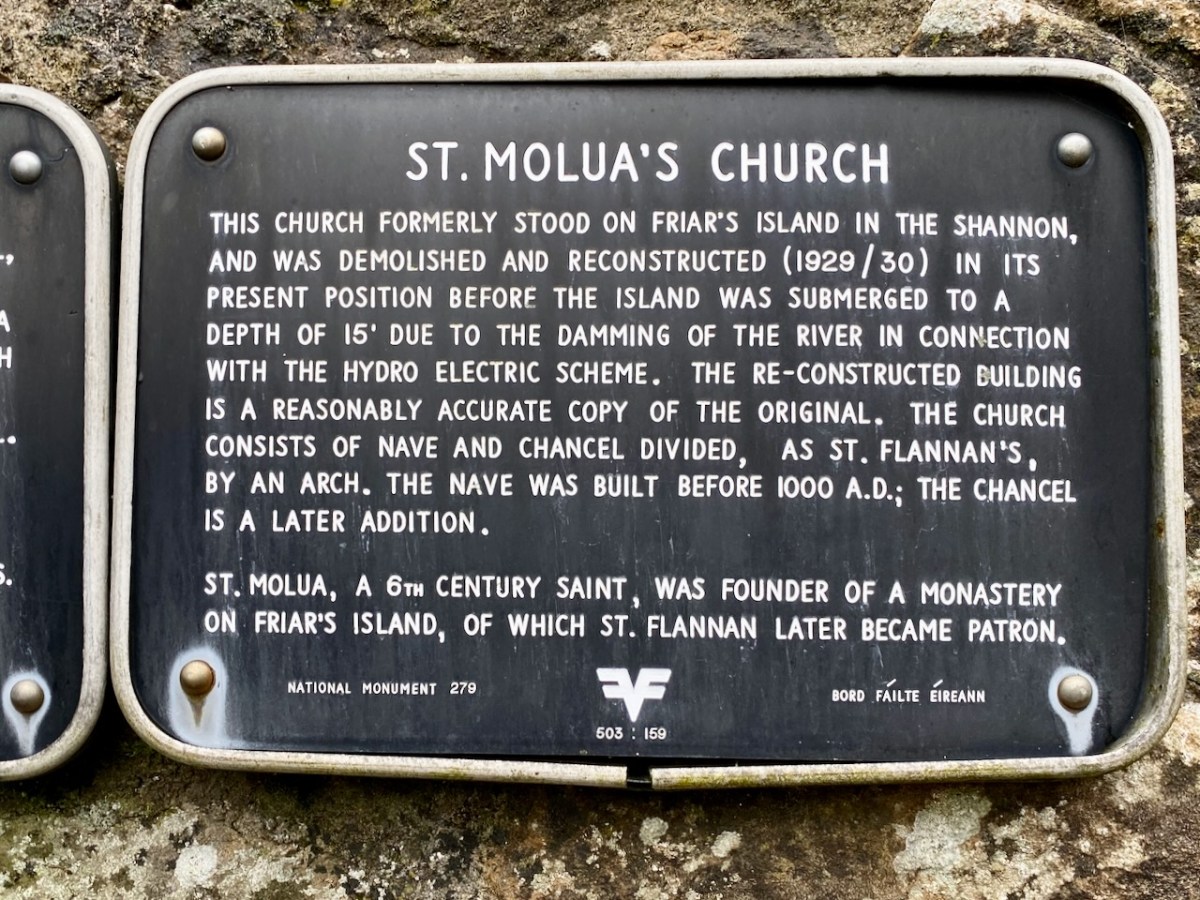
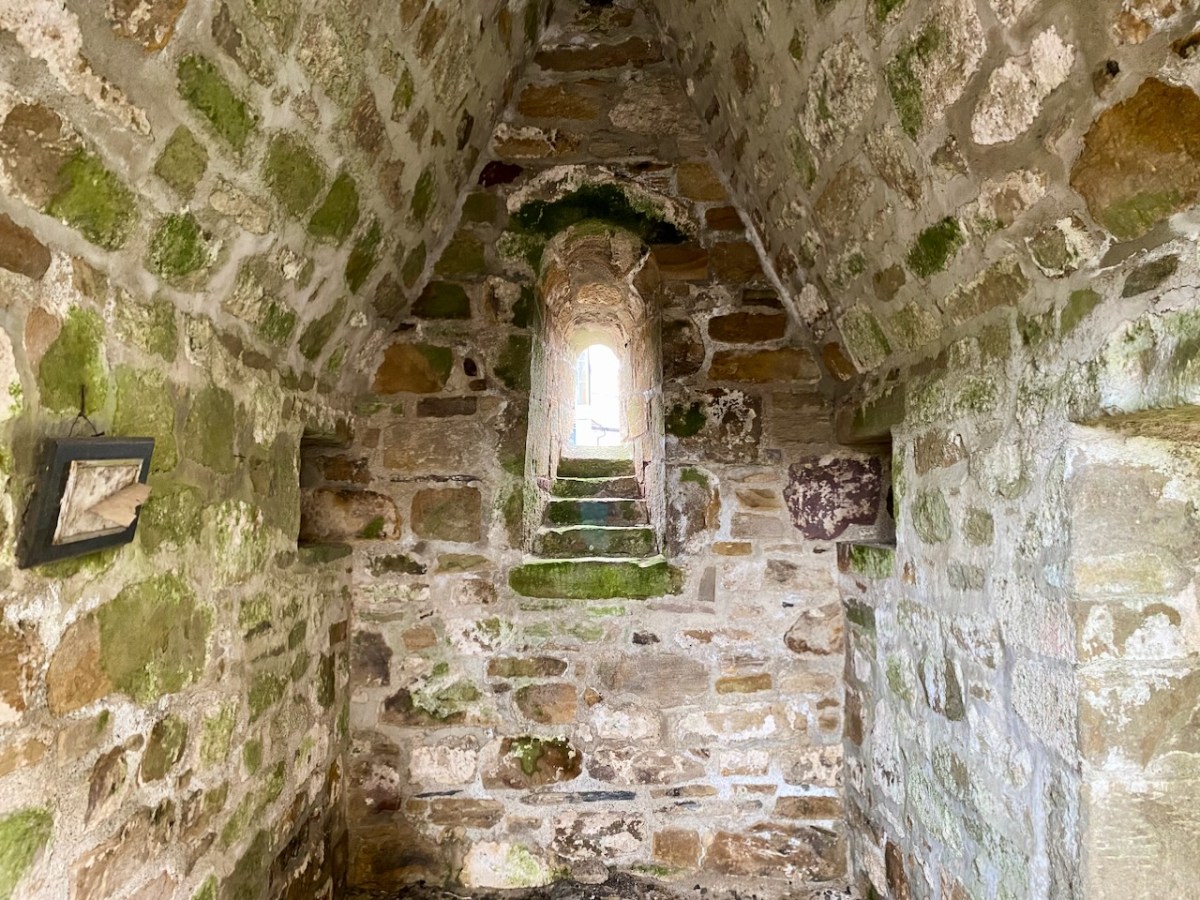
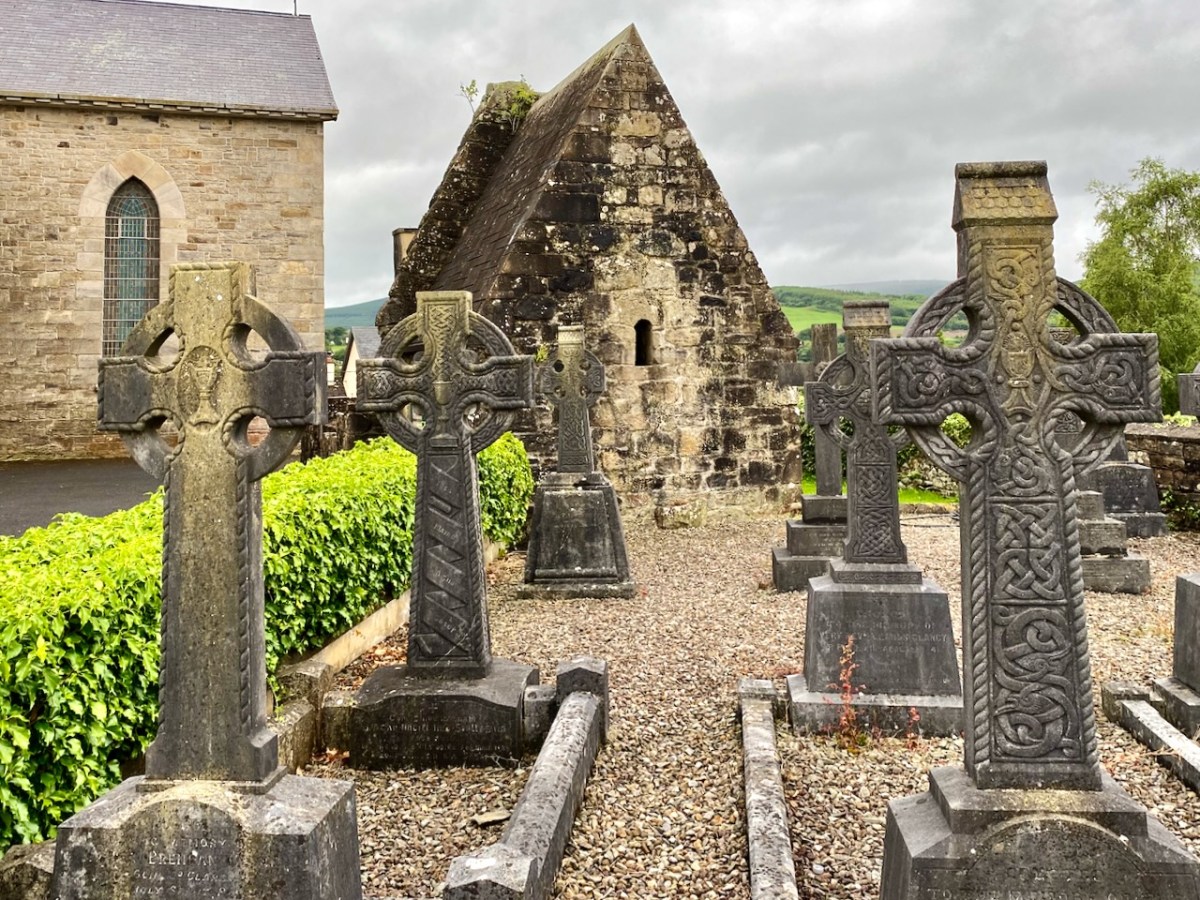
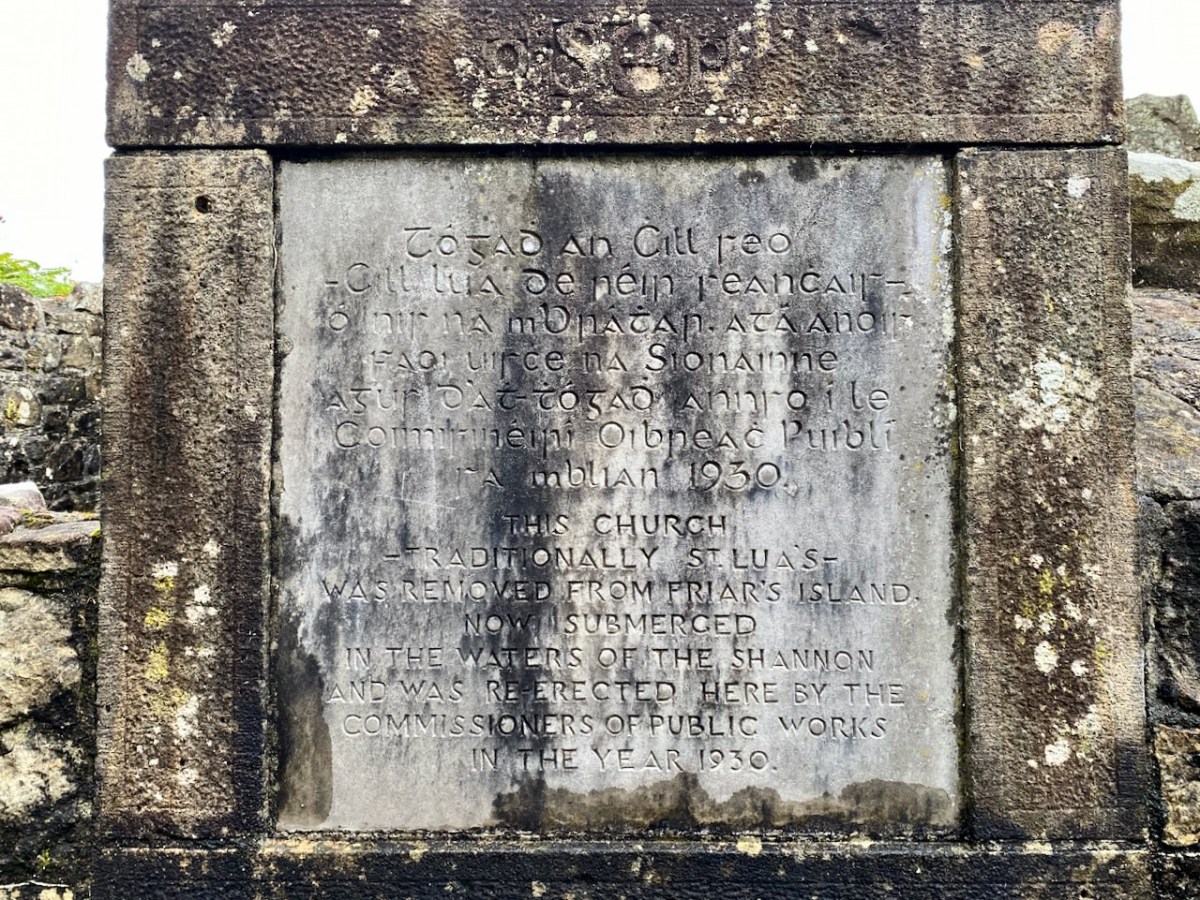
In this photograph of the Oratory as it stands today in the church grounds at Killaloe, it is perhaps worth wryly commenting that we see a true piece of early medieval architecture behind the screen of ‘pseudo’ high crosses. We have a good record of how the remains were dismantled and accurately re-assembled: this was written by the archaeologist H G Leask MRIA in 1930:

. . . In order that the rebuilding should be, as far as was possible, an accurate one, it was necessary to adopt a system of marking the stonework by which the original stones should occupy their original positions when reassemble. The stones being very varied in size and irregular in shape, and laid uncured, no system of numbering such as could easily be applied to squared ashlar was admissible. To the Clerk of Works in charge, Mr C J Dowdall, must be given the credit for the scheme finally decided upon. This consisted in marking with paint of different colours a series of level lines at two feet vertical intervals all round the exterior and interior wall faces. These lines were crossed again by a series of vertical lines at the same intervals but of one distinctive colour for each wall face inside and out. Where the squares formed by this grid of paint enclosed, unmarked, a number of small stones, diagonal lines were added to each square to ensure that every stone showed the same marking. A complete series of elevational photographs of each wall face was taken and careful drawings were also made with the coloured guide lines indicated upon them. On the large plot of ground on the opposite side of the river kindly lent by Major Lefroy, above future water level, timber guide planks were laid down as a frame to each wall and gable face. On the timber frames the coloured guide lines were indicated and the stones when transported were laid down face upwards, in sand, in correct relation with the coloured marks. Each wall, of course, was divided in two vertically along its length and “displayed”. Important quoin, jamb, and arch stones were numbered in colour in regular order. The transport over the Shannon was carried out by means of a specially built barge and a rope stretched from shore to shore, the workmen simply “handing” the boat across by this means. An inclined trackway with truck and winch was erected by Messrs Siemens Bau Union and two small temporary jetties by direct labour. The Most Reverend Dr Fogarty, Bishop of Killaloe, vested a site in the Church enclosure on the summit of the hill in Killaloe town, and the building has been erected there and is now (May, 1930) approaching completion. (Note: the work of re-erection was finally completed in July, 1930) . . .

The Church of St Lua, or Molua, Friar’s Island, Co Tipperary, Near Killaloe
Further Notes – H G Leask
13 May 1930

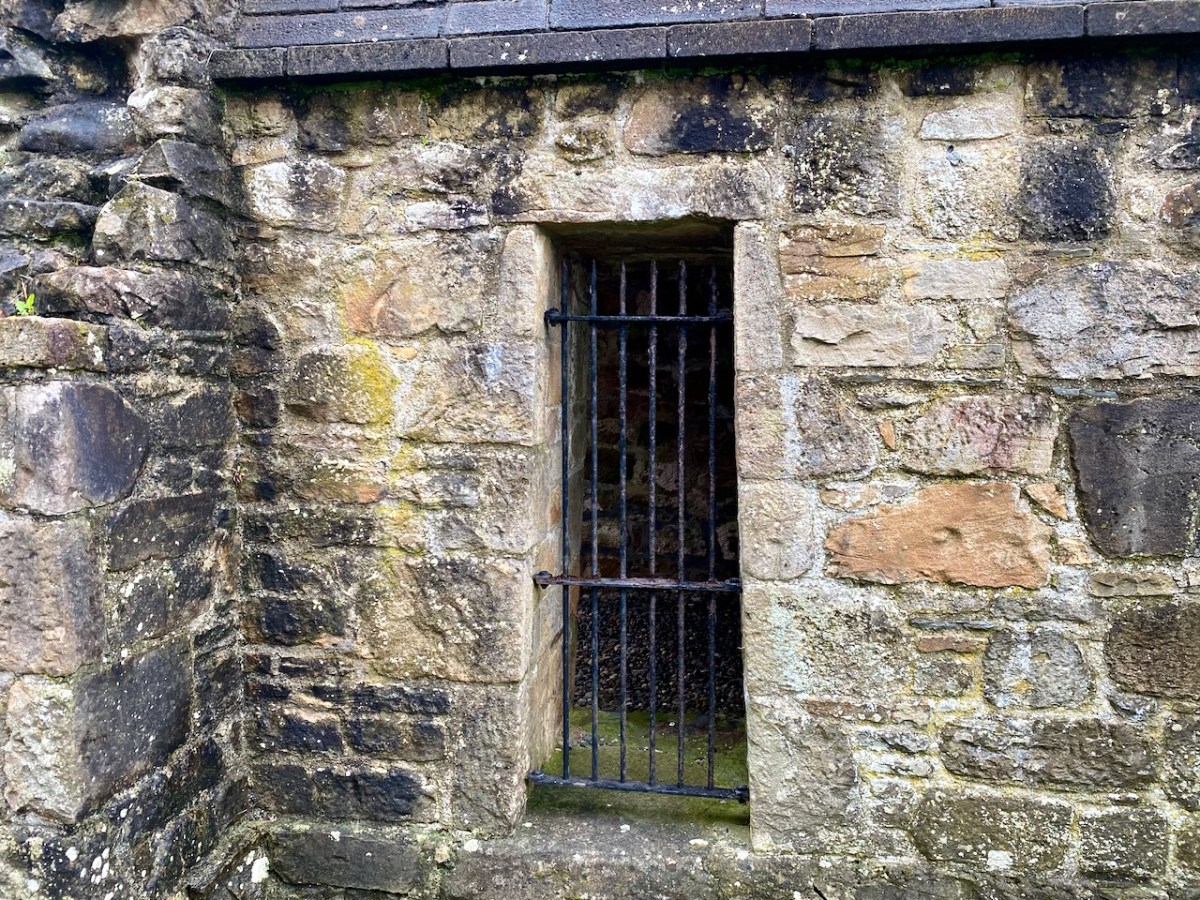
A couple of afterthoughts to finish off with: a letter from Canon Clancy to Leask, dated 14 October 1930, asked whether a gate could be installed, as it is “liable to be desecrated by boys using it as a urinal, in fact, some boys have already been using it”. And a contemporary cutting from the Nenagh Guardian noted that . . . works cost thousands of pounds are being misused on a “folly” in demolishing St Lua’s Chapel and hiding it in a yard when they could have lifted it above the waters and put a strong light in it that would have illuminated the whole country round, and made it one of the sights of the place . . .

I am grateful to Niamh NicGhabhann for allowing me access to her excellent paper on the tensions surrounding the proposals for the Oratory remains. Further information on the Electrification of Ireland can be found in these posts:

Night’s Candles are Burnt Out

Electrifying West Cork

Rural Electrification – Process and Effect

The Fassaroe-Type Crosses – How Old Are They?

This is Part 2 of my examination of the Fassaroe Crosses of South County Dublin. In the first post I described the four crosses that comprise the Fassaroe-Type group, so well described and drawn by Pádraig Ó hÉailidhe. In this one, given that some authorities have claimed they may be of a relatively recent 17th century date, I will look at a probable dating horizon for those crosses, based on analogies with other Irish examples. 

Let’s look first at the figure of the crucified Christ on the crosses at Fassaroe, Rathmichael and Kiltuck. It is immediately obvious that they are similar to each other in the slender shape and in the head, which is inclined or tilted to the right, and in the fact that the figure is recessed (although Rathmichael also has a figure in relief with no incline to the head). That tilt is pronounced on the Fassaroe cross but slightly less so on the figures on the Kiltuck example and the back of the Rathmichael Cross. 
In the Kerry County Museum (the photo above is taken, with thanks, from their Facebook page) is a bronze figure, about 10cm long, probably once attached to a cross. It is dated to C1150 (I am not sure by what method since I cannot access the 1980 Journal article) and comes from Skellig Michael. The tilt of the head and the elongated figure are both clearly analogous to the Fassaroe-type figures.

What about the shape of the cross-head? In Fassaroe this is a simple disc, while Rathmichael and Kiltuck have very short projecting arms. None of the South County Dublin examples have pierced heads, as in the classic Irish High Cross. We find similar crosses, in fact, in Ballymore Eustace (see this post in Pilgrimage in Medieval Ireland for more on that example – this image is from that post, with thanks), Kilfenora and Killaloe.

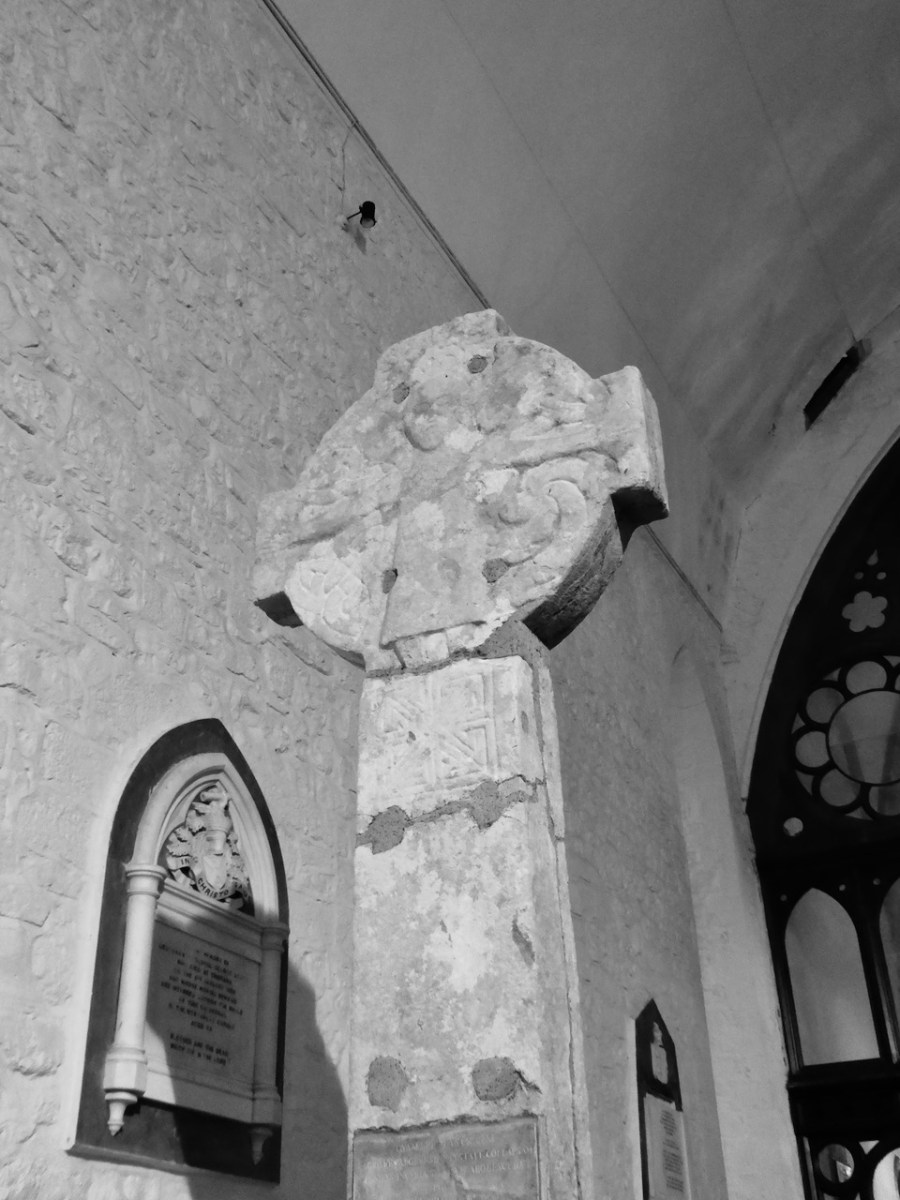
The Killaloe Cross, above, which actually came originally from Kilfenora, is perhaps the closest, and is dated to the 11/early 12th century. I have rendered my photograph in black and white as it is easier to make out that way,

There are several crosses in Kilfenora, associated with the 12th century church. Although they are more highly carved than the Fassaroe-type crosses, the unpierced disc form with the short arms can be seen on the back of the Doorty Cross (above). 

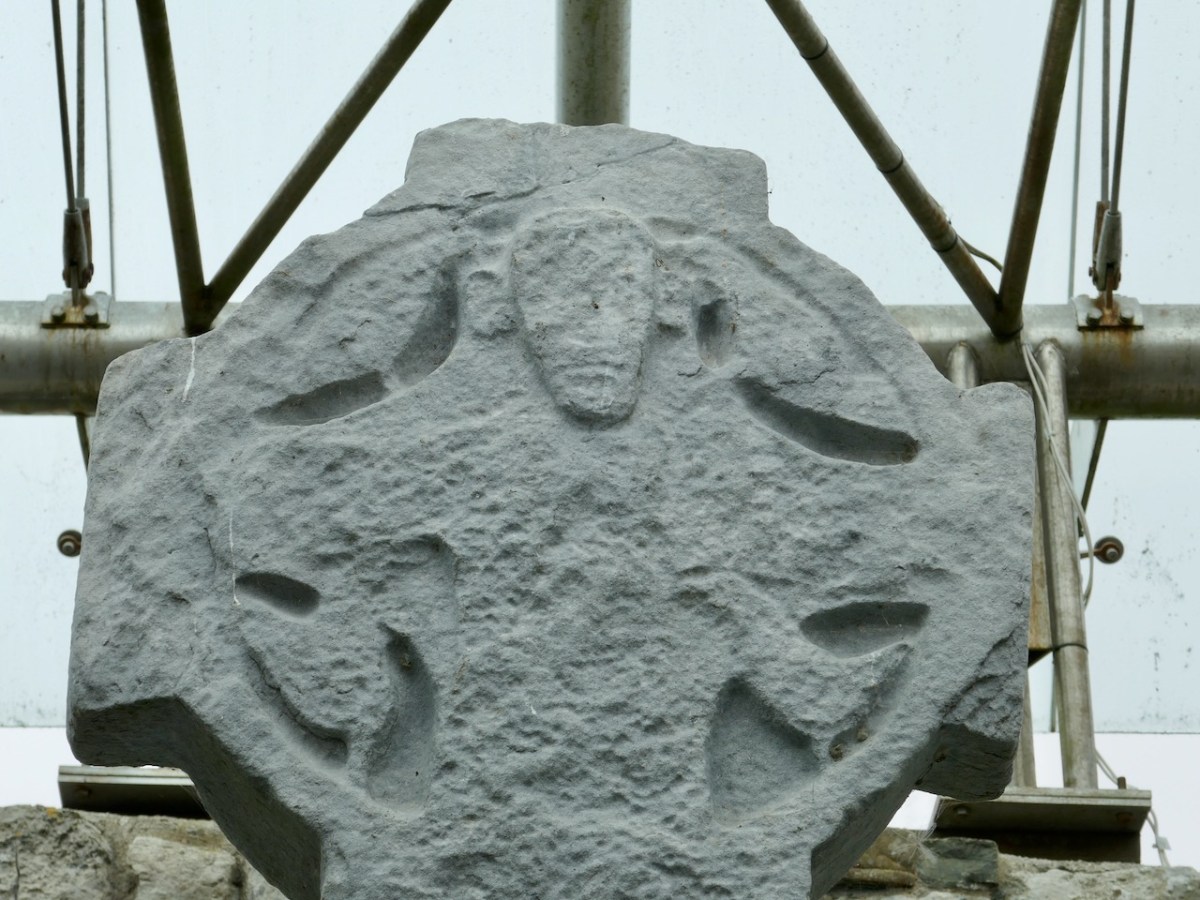
The back face of the Tuam High cross, below, captured from a 3D image* although pierced, has a simple figure with an elongated and tilted head.

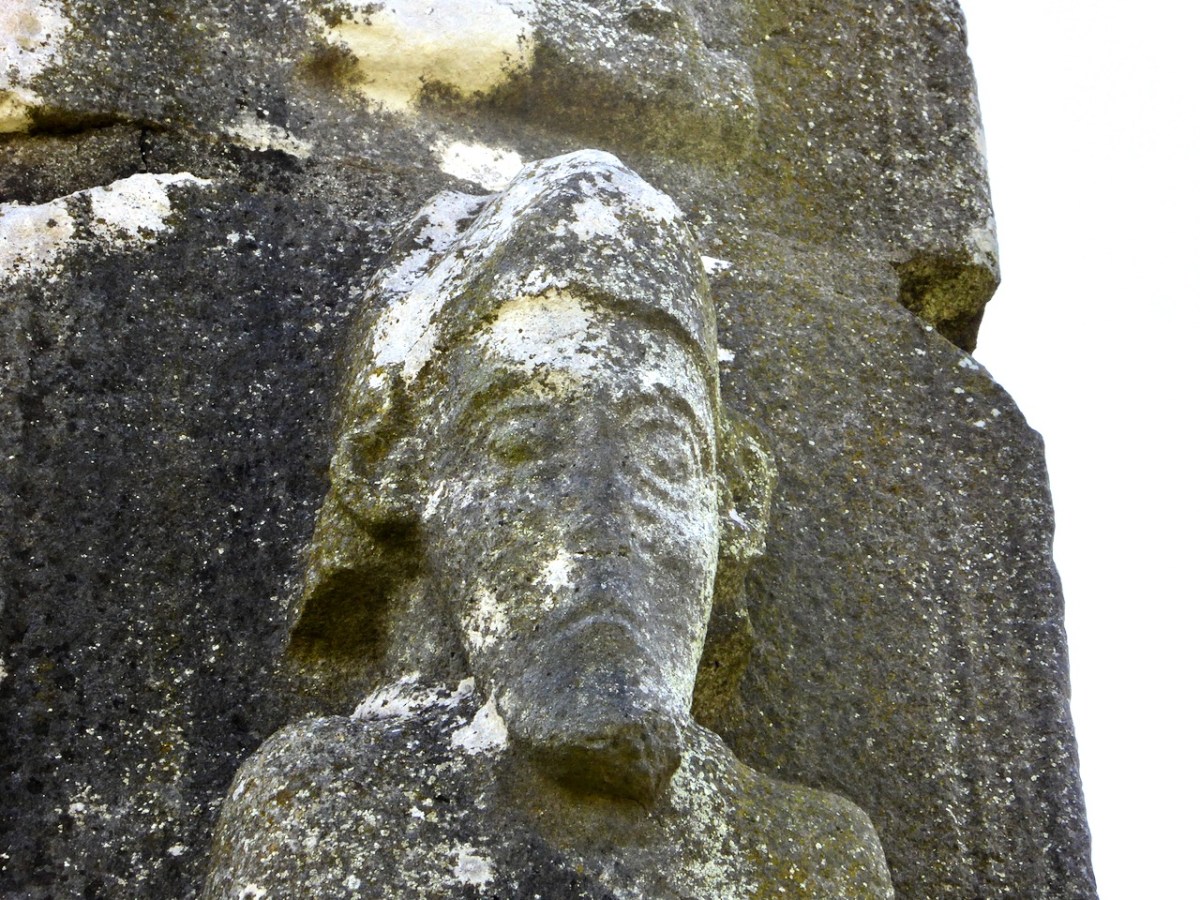
The Dysert O’Dea high cross (below) has several features of interest to us here. First, the conical mitre may be analogous to the Fassaroe head.

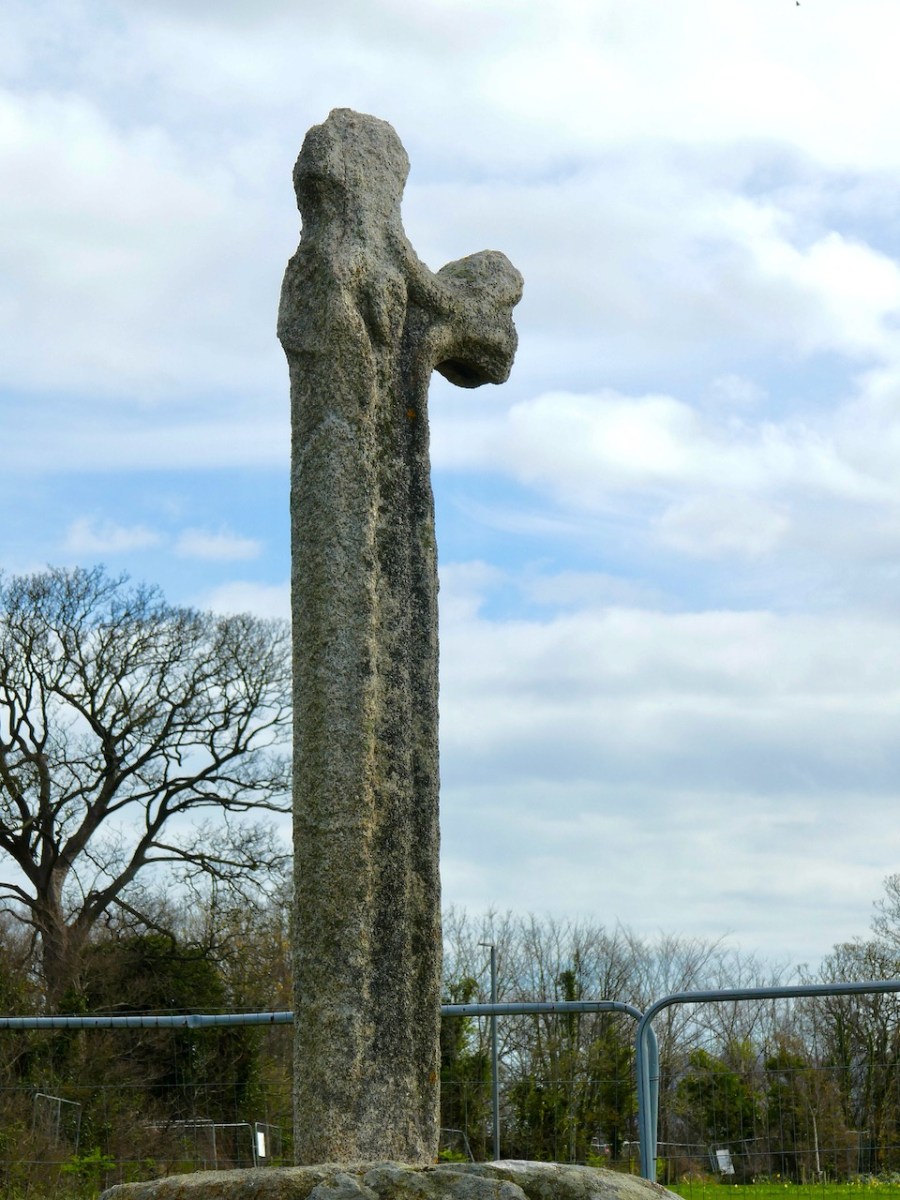
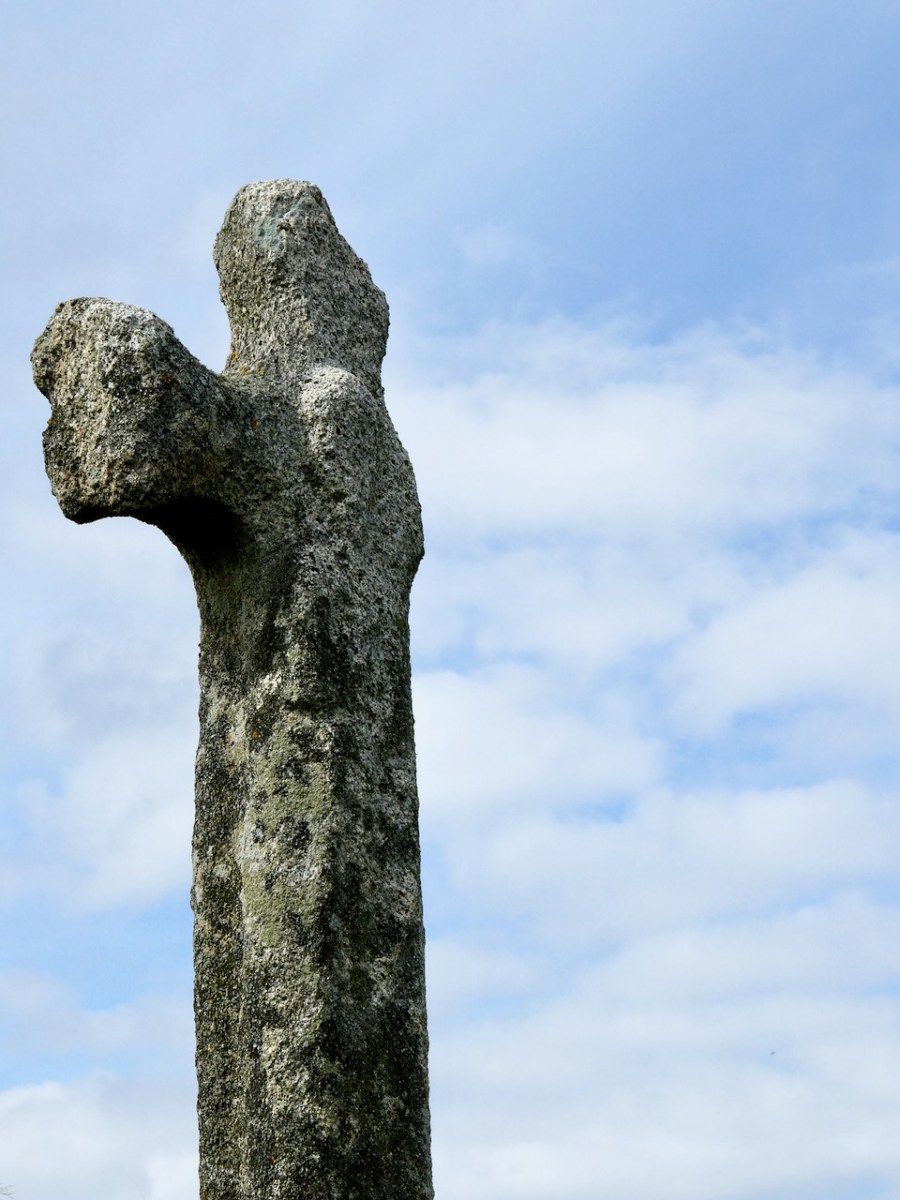
But it also points us to another monument close to the Fassaroe crosses – the Loughanstown Cross, below, now marooned in a new housing estate and very badly damaged. The form of the cross, however, looks quite similar to that of the Dysert O’Dea crosses while the projecting head (on one side) and the long figure (on the other) is also reminiscent.

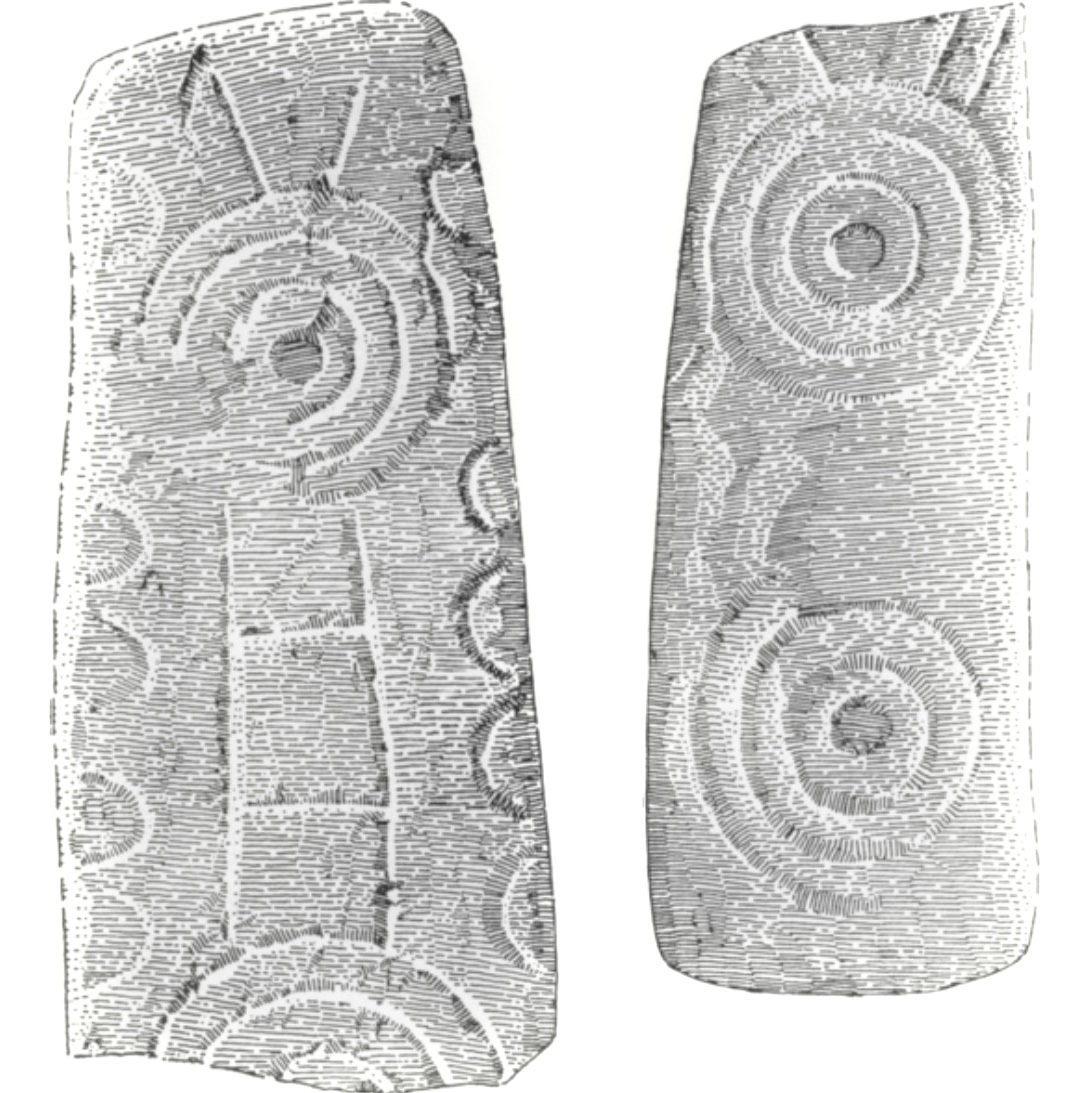
There is one more cross in the South County Dublin group which was situated in Killegar, about 4kms north-west of Fassaroe. It’s fragmentary, with only the disc-head remaining, containing on one side a simple crucified figure, with the head straight. In a piece for the JRSAI in 1947, Ó Ríordáin describes the other side as a cup-and-circle. This may mean that this cross was carved on the back of a piece of prehistoric rock art, but more likely that it relates it to the Rathdown Slabs, and brings us back full circle to the Rathmichael graveyard that Robert wrote about in his post Viking Traces.

The Rathdown Slabs slabs (also described and drawn by Pádraig Ó hÉailidhe, below) use that cup-and-circle form as part of their decorative technique, and are generally dated to the Viking period, or anything from the 9th to the 12th century.

That leaves us with the Blackrock cross, different in form from the others, except for that projecting head . The only analogy I can find among my own photographs ties it firmly to the Romanesque period (12th century) – that cross is at Kilmalkedar in Kerry (below). 

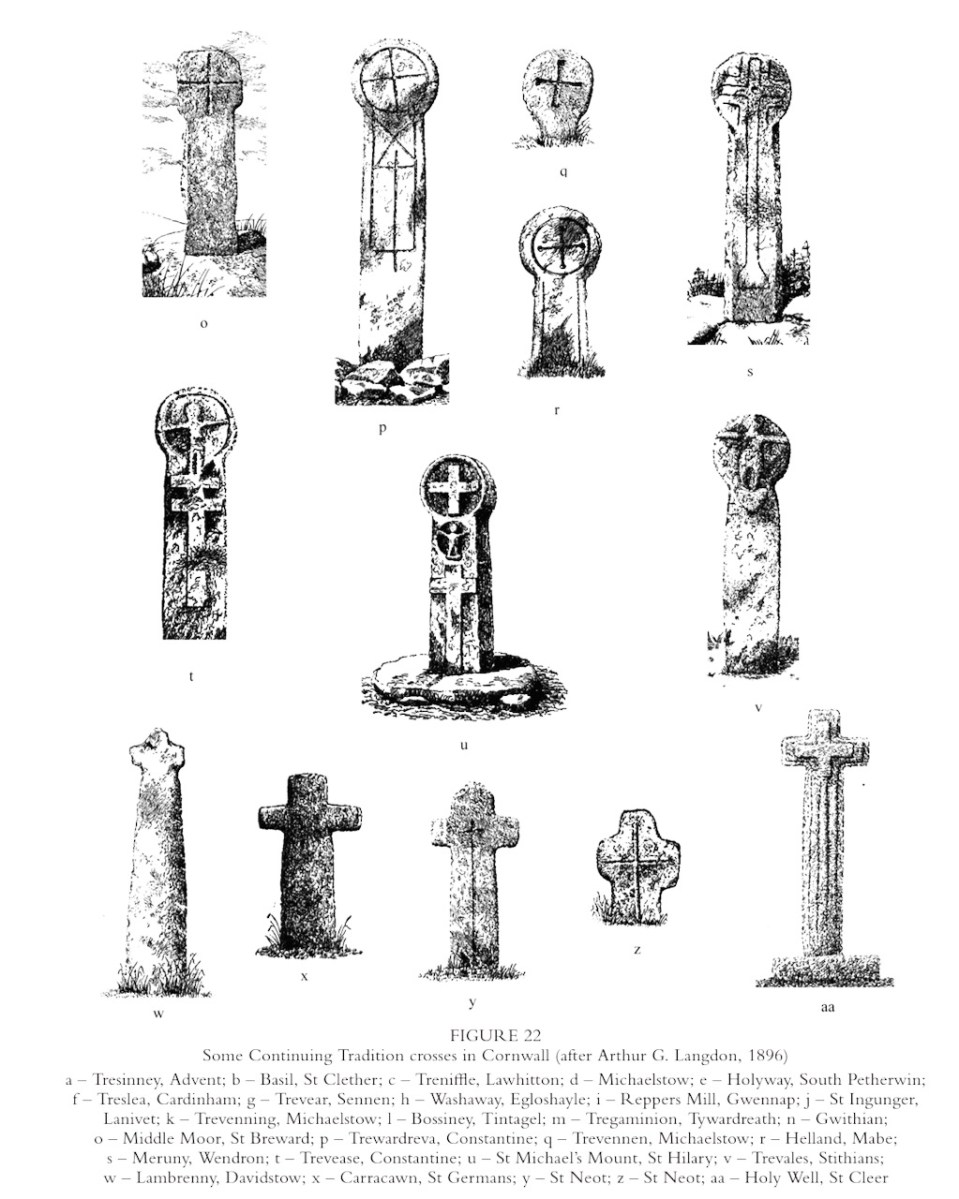
So – all of the evidence through association connects these crosses into a 12th century (or earlier), cross-carving tradition in Ireland. But Ó hÉailidhe also drew analogies with a group of very similar crosses from Cornwall, often referred to as ‘wheel-headed’. Their date? They were assigned to ‘very early Romanesque’ by Andrew Langdon, the authority on Cornish crosses over a century ago, and this assessment had been upheld by the august editors of the Corpus of Anglo Saxon Stone Sculpture in their 2015 Volume Early Cornish Sculpture. They state: The relationship of the Cornish sculpture to monuments in Wales, Ireland and Western Britain is of particular interest given Cornwall’s position as a peninsula jutting into the western seaways. In this context, the potential role of Scandinavian influence is considered against the absence of evidence for Scandinavian settlement in Cornwall.

Langdon’s illustration (above) will amply demonstrate how similar in form these crosses are both to the Fassaroe-type and to the Blackrock cross.

I will finish with a photograph of the Laughinstown Cross, behind its chain-link barrier in an under-developed park in a new housing estate. Behind me as I took this photograph is an equally beleaguered church (called Tully Church) of early medieval origins with associated graveyard. It is all but consumed by encroaching apartments, and clinging perilously to a cliff that is being dug out for yet more building. Although it’s clear we need more housing, it makes me sad that not more is being done to celebrate the heritage that still exists in this part of Dublin.

*In the public domain, but thanks to Digital Heritage Age and to the funding bodies: The Community Monuments Fund Awarded by The National Monuments Service, Department of Housing, Local Government and Heritage. Supported by Old Tuam Society, Galway County Council, TheHeritage Council and Galway Community Archaeology Project.

The Fassaroe-Type Crosses of South County Dublin

The Fassaroe Cross (also know as St Valery Cross, below) is familiar to me from childhood, but I hadn’t realised until recently that it is part of a concentration of four crosses in south County Dublin, all still extant*. We have visited them all now, and this first post will look at these remarkable examples of surviving Irish Early Medieval crosses. In the second post I will study their possible dates, established mainly through association with similar examples from elsewhere in Ireland.

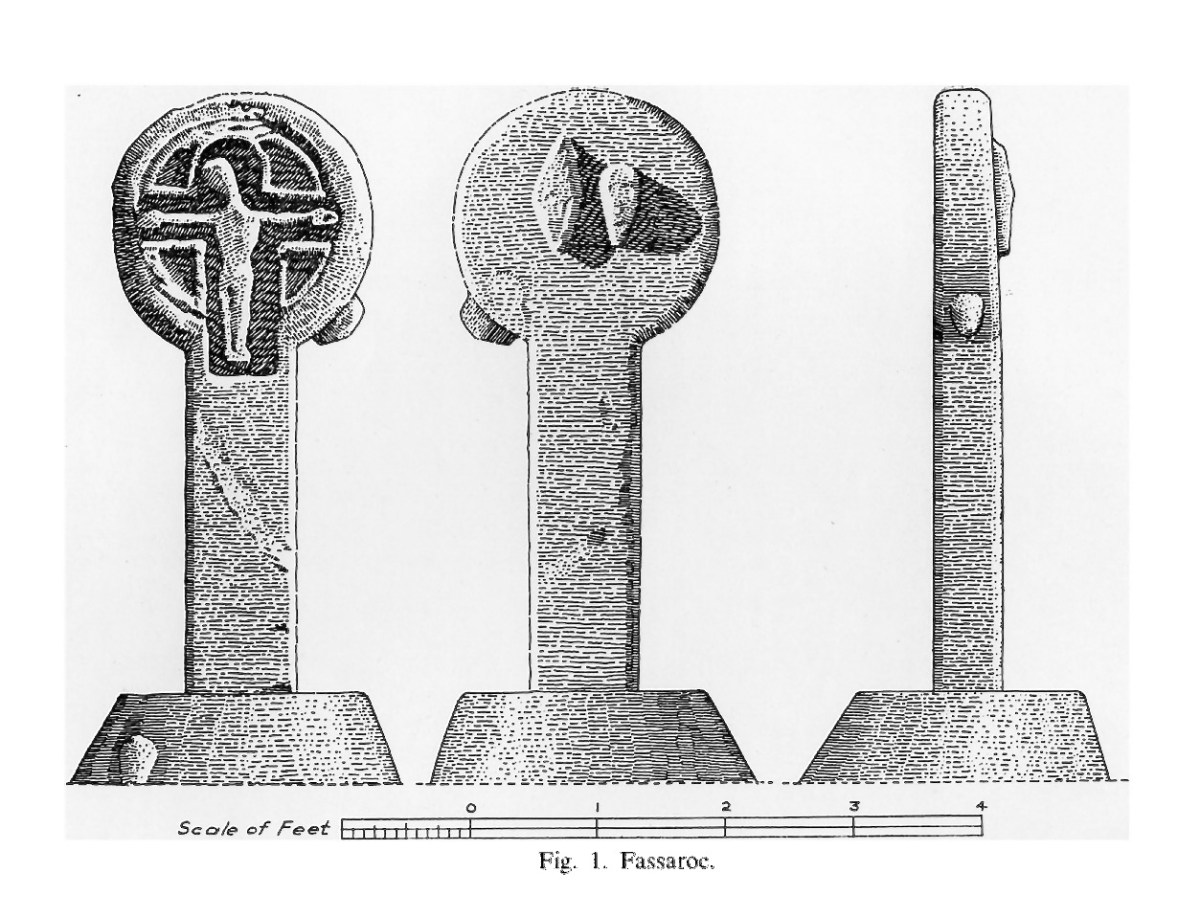
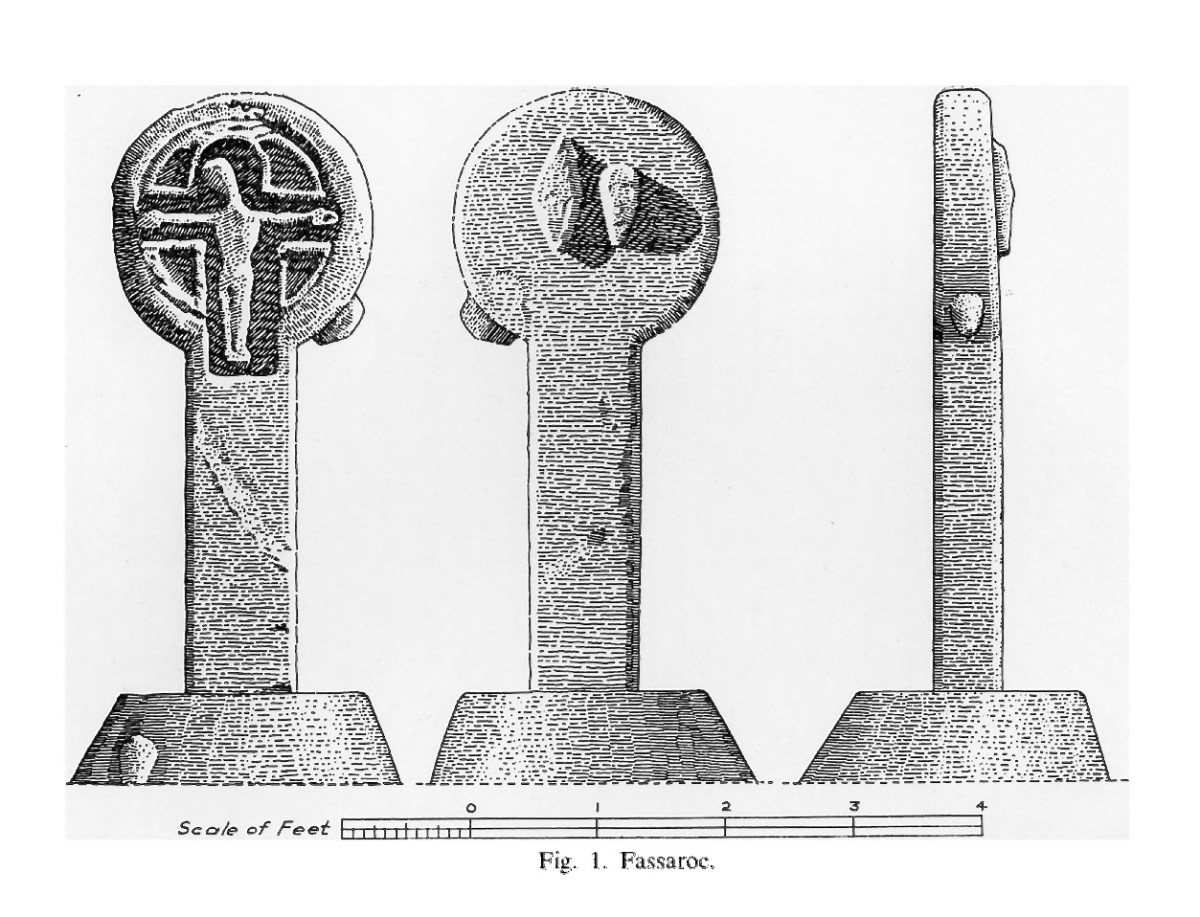
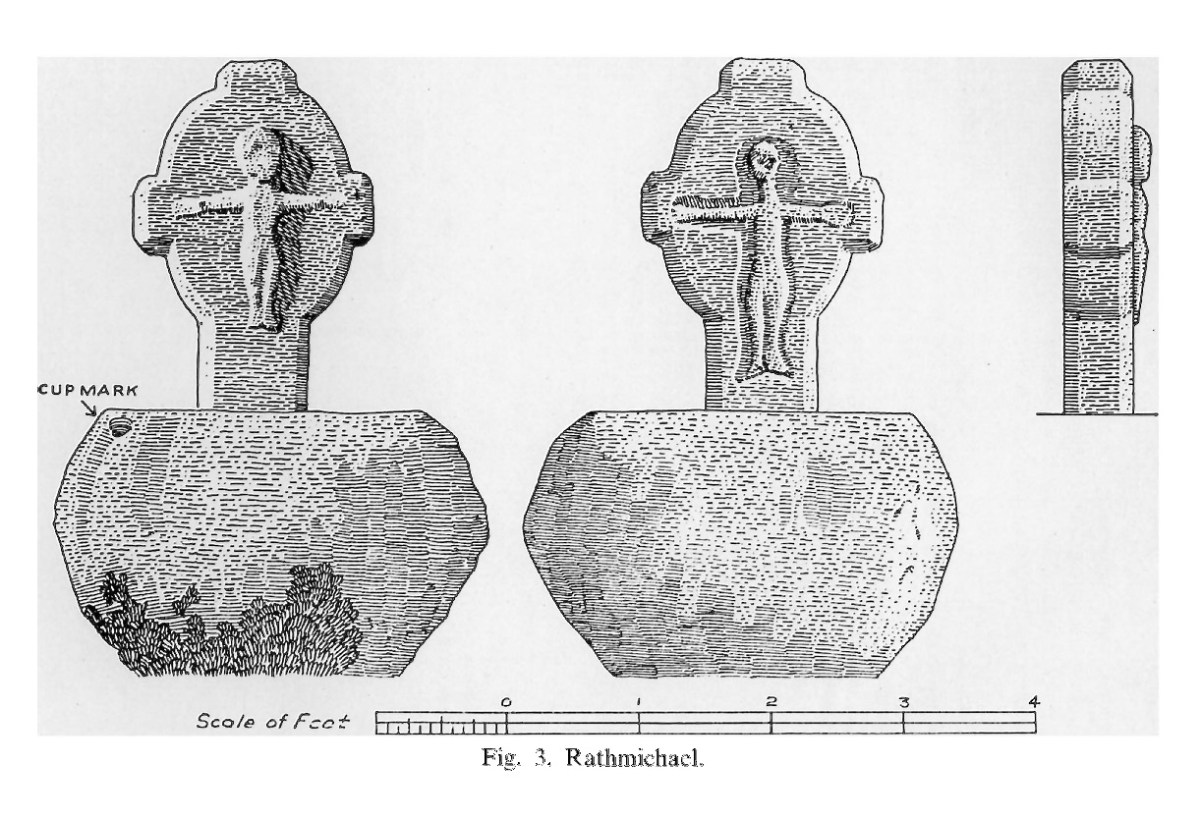
In using the term Fassaroe-type, I am following Padraig Ó hÉailidhe (better known as Paddy Healy) who, in 1958, published Fassaroe and Associated Crosses in the Journal of the Royal Society of Antiquaries of Ireland (available on JSTOR). Not only did he lay out what was known about these four crosses at the time, but he included his own wonderful and accurate pen and ink drawings.

Robert included the Fassaroe Cross in his post East Coast Archaeology, so I refer you to that for additional photographs of the cross in its context. It’s easy to see why this cross would have become the diagnostic ‘type’, since it is the most complete. 

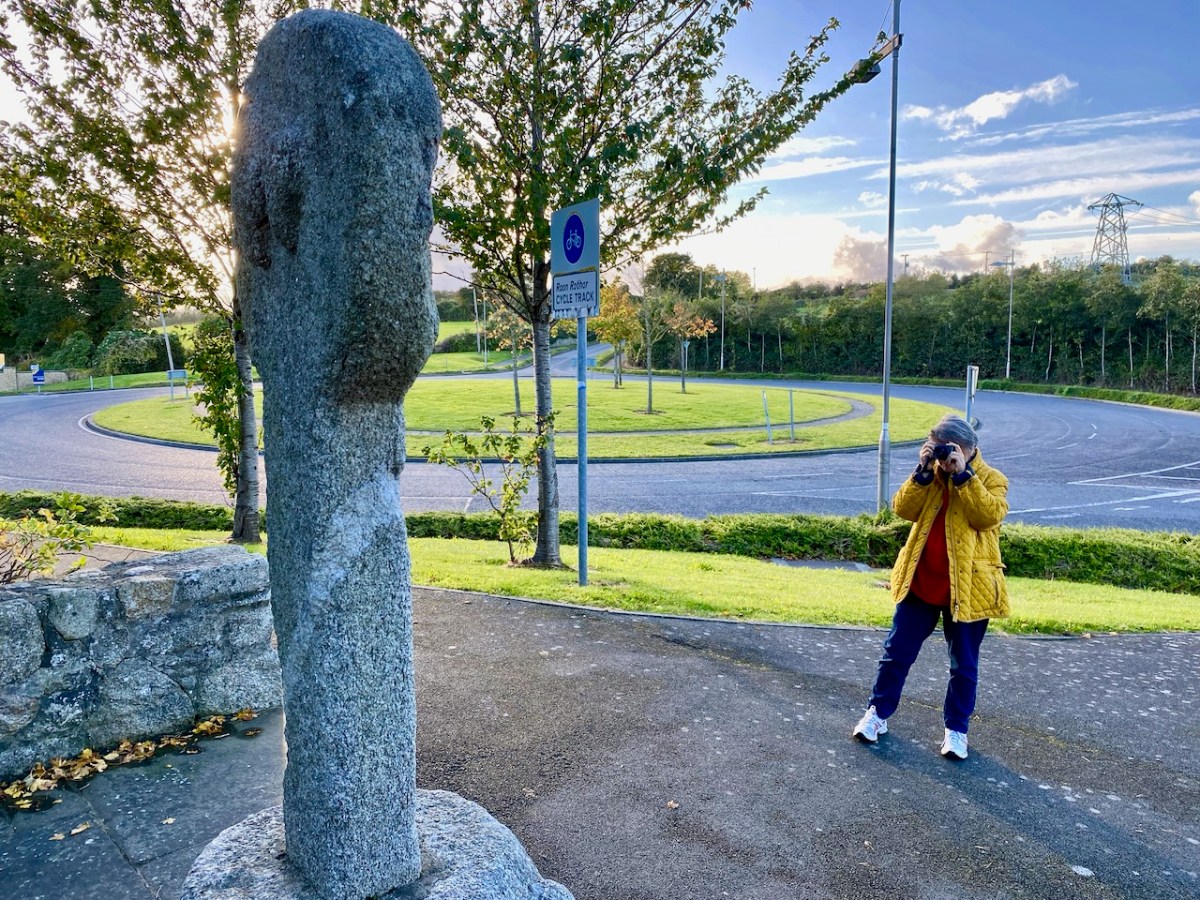
Standing incongruously at the edge of a traffic roundabout, the cross is an arresting sight. According to Ó hÉailidhe, It was brought from ‘a glen’ some distance away. He also states:

When O’Curry visited the site in 1838,4 he saw, in addition to the cross, a font, pedestal, and quern, which are still extant, a cross shaft which is now missing and part of a baptismal font which had been removed along with another quern to the farmhouse beside Fassaroe Castle. He was furthermore informed that a circular crosshead had also been removed, and that human bones had been dug up on the south side.

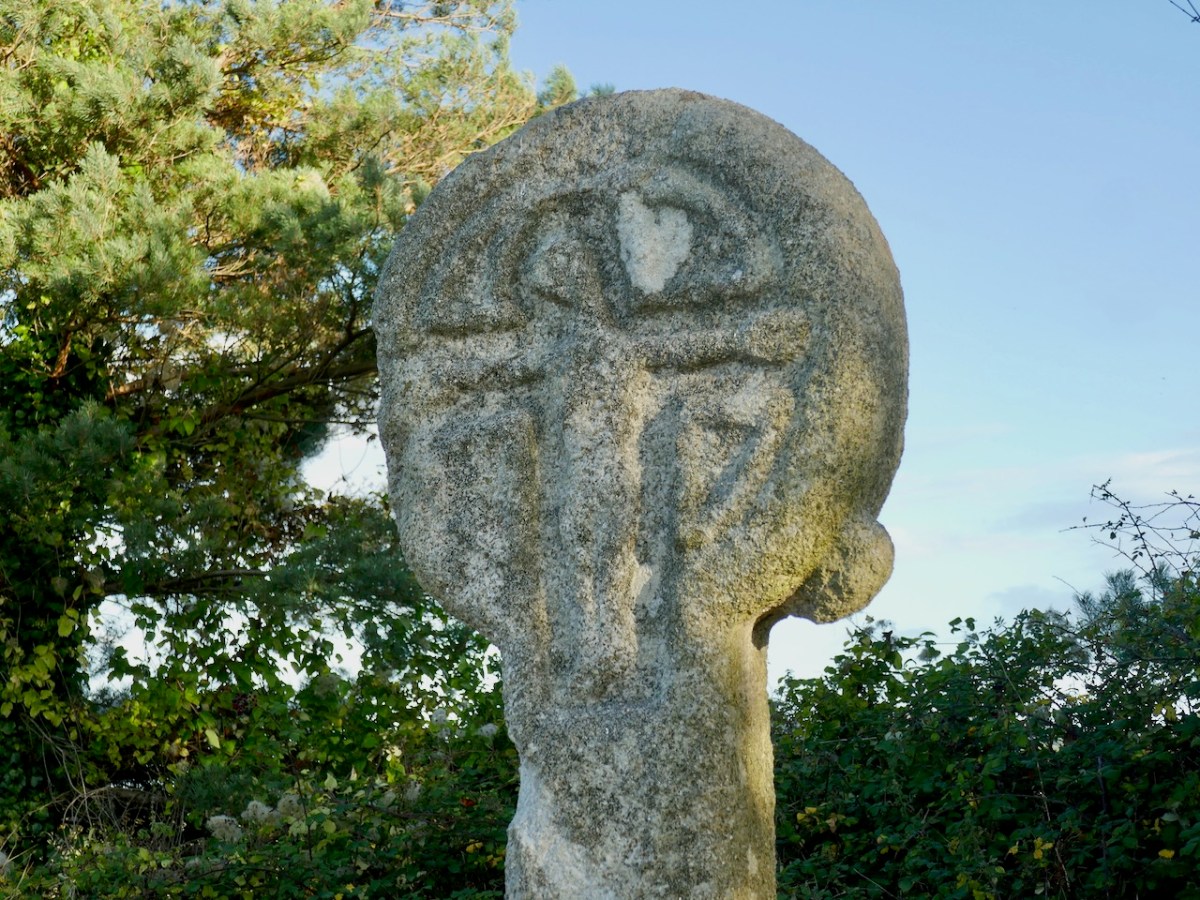
The cross has a circular head on a straight shaft which is set into a semi-conical base. On its front face its a crucifixion image, head tilted to the right. The crucified Christ is surrounded by four wedge-shaped quadrants, as if to indicate the hole-and-circle we associate with high crosses. A carved head occupies a space on the outer circle on the lower right.

The back of the circle has two carved heads. Although very worn, Ó hÉailidhe felt their elongated shape pointed to long beards and a mitre. The base has yet one more head. You can view the cross in 3D here, a project of the Medieval Bray Group.

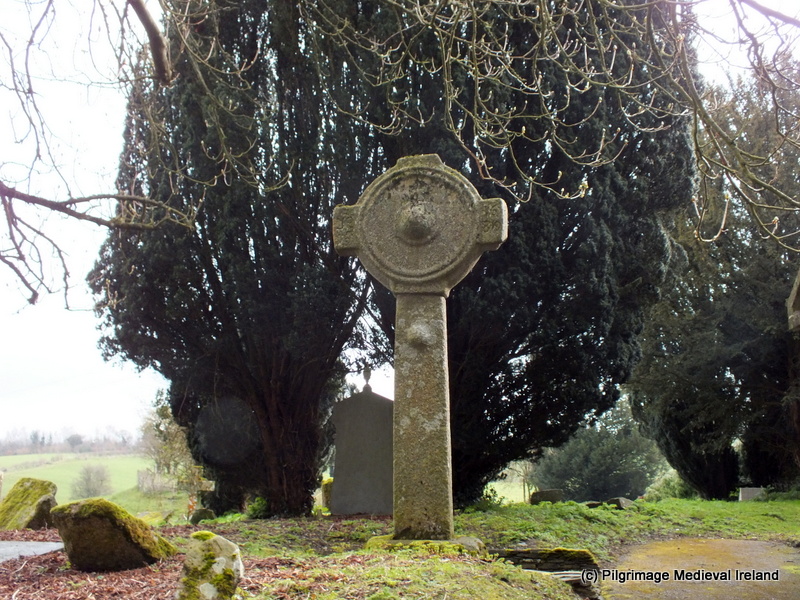
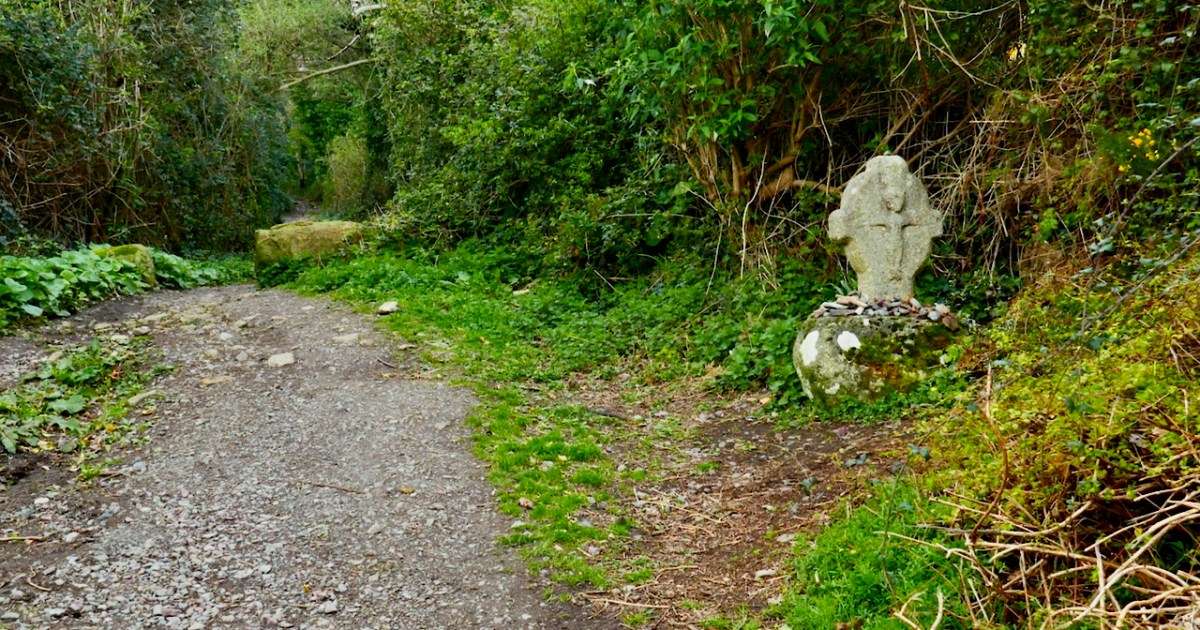
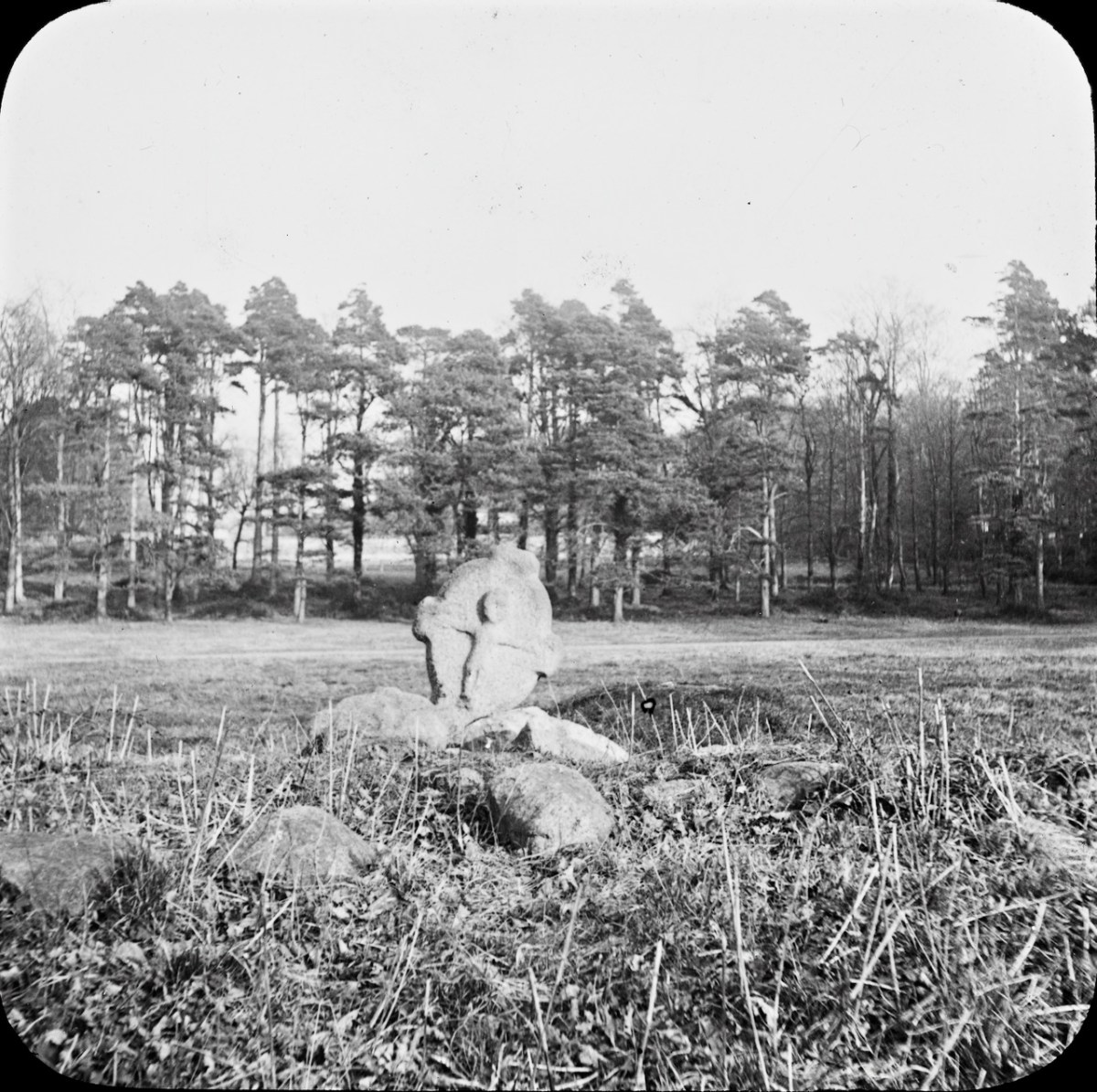
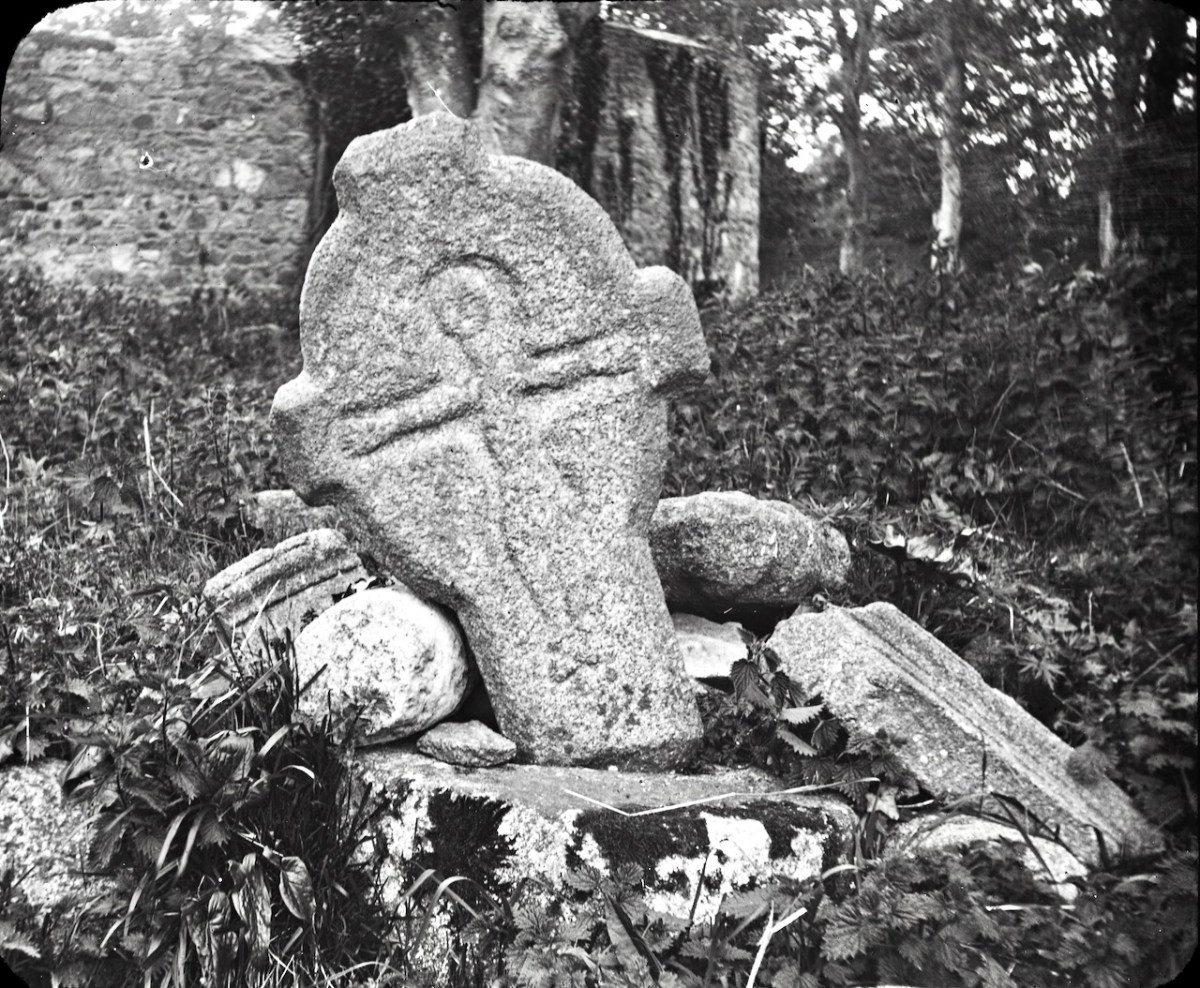
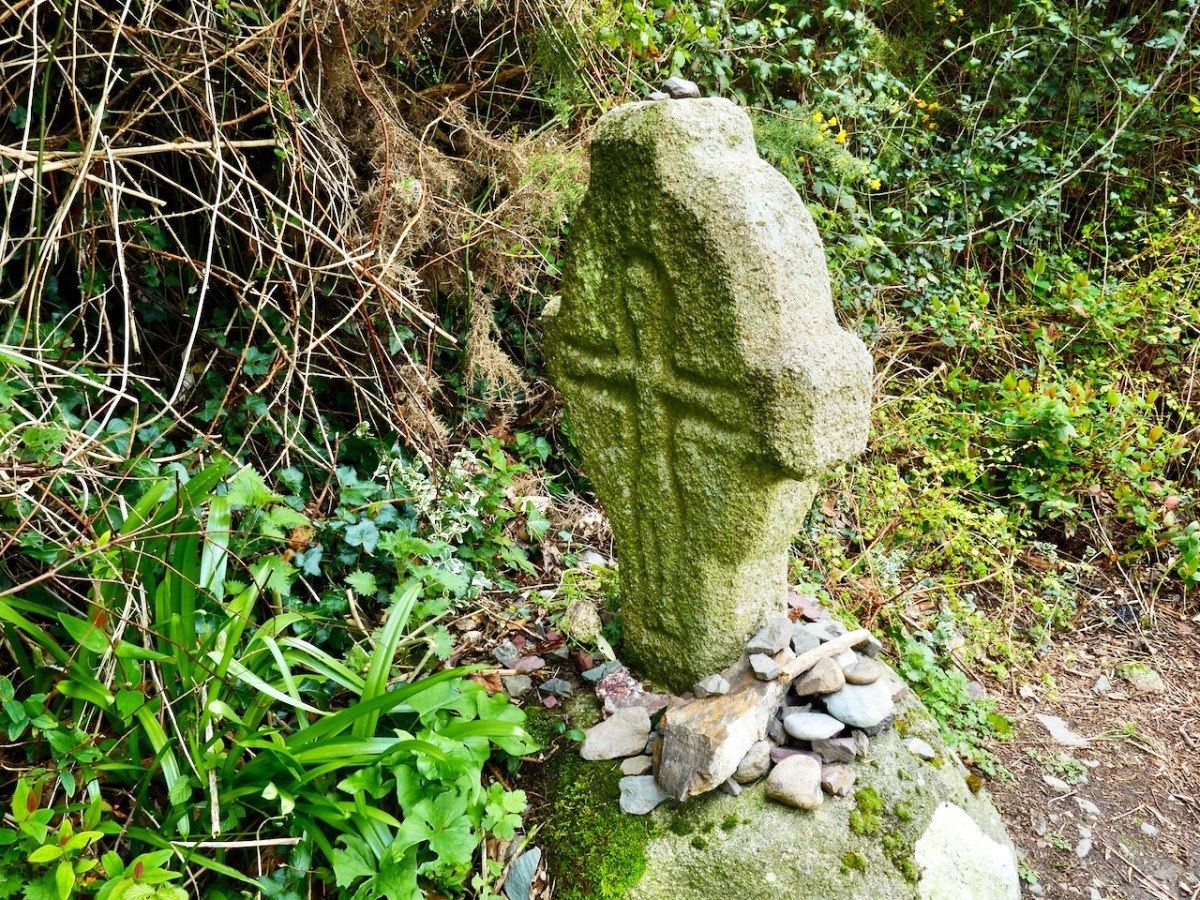
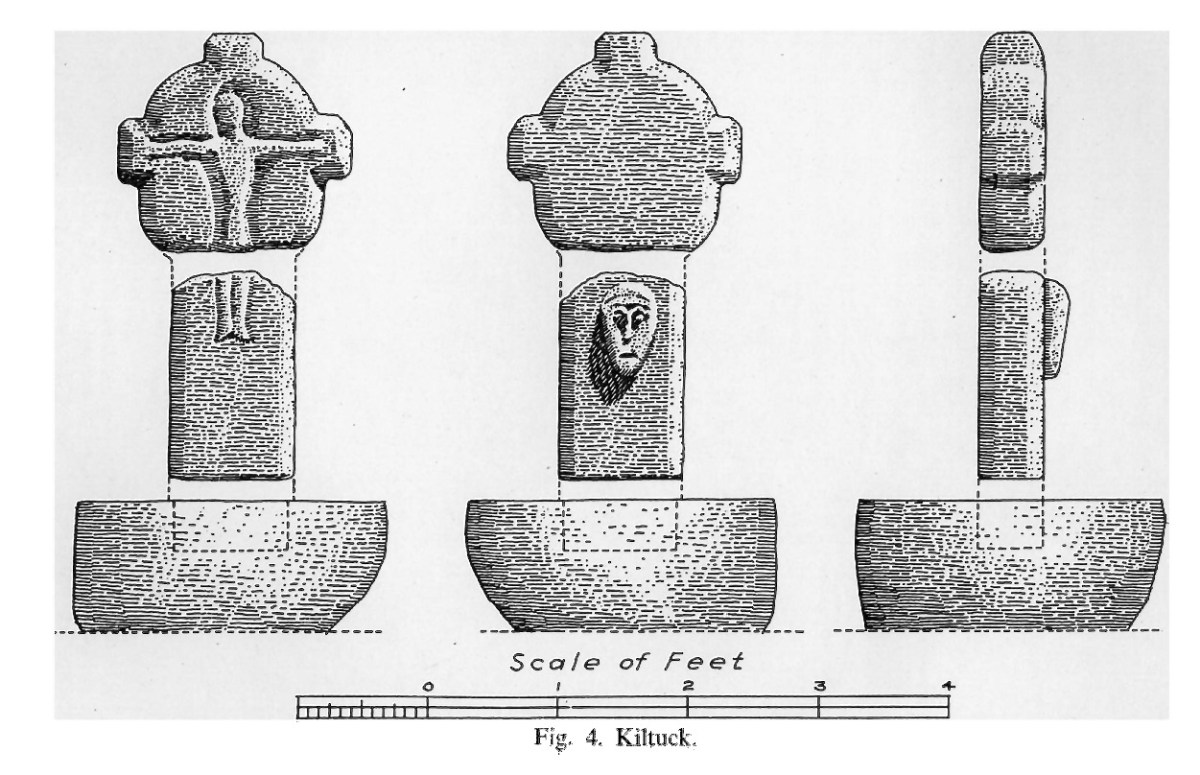
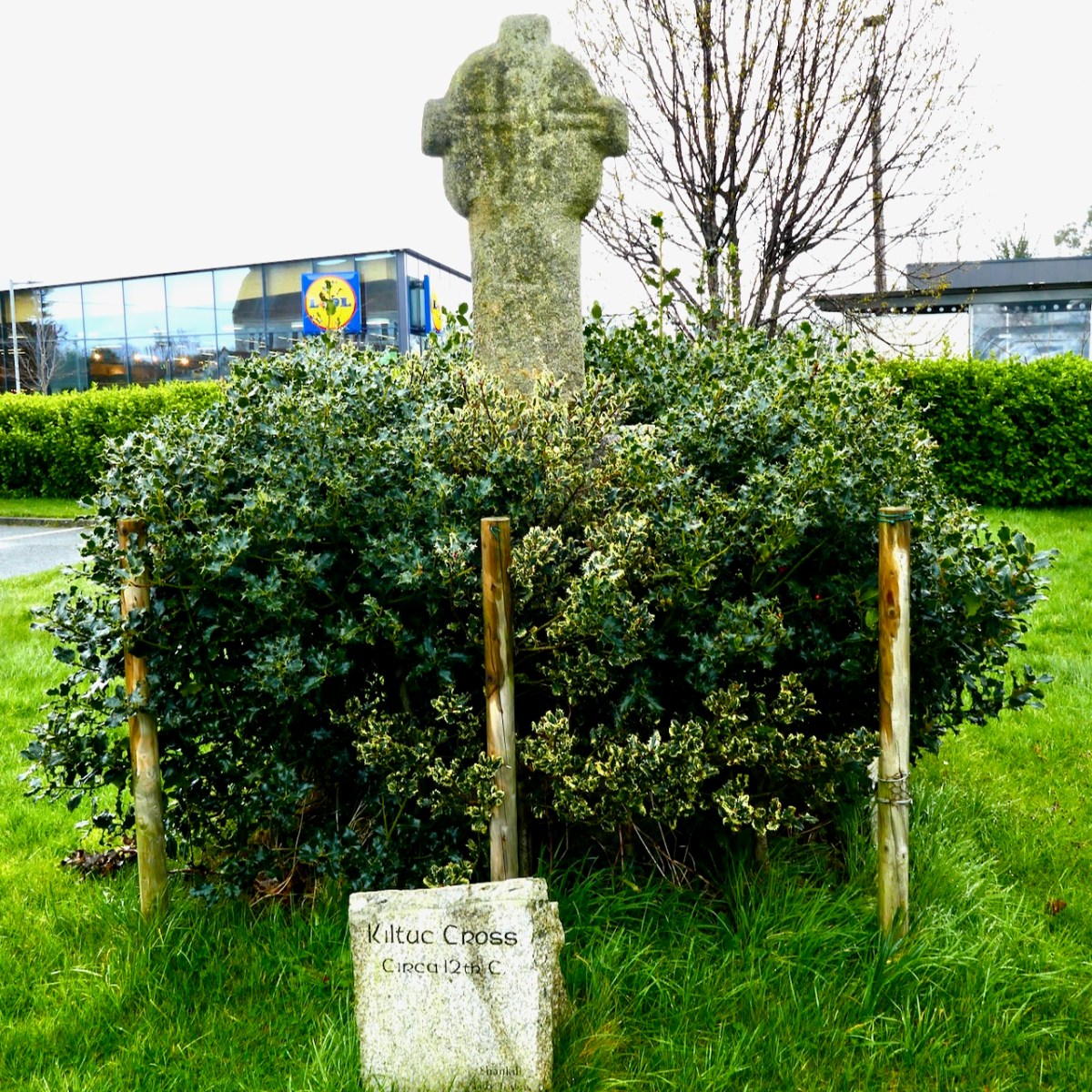
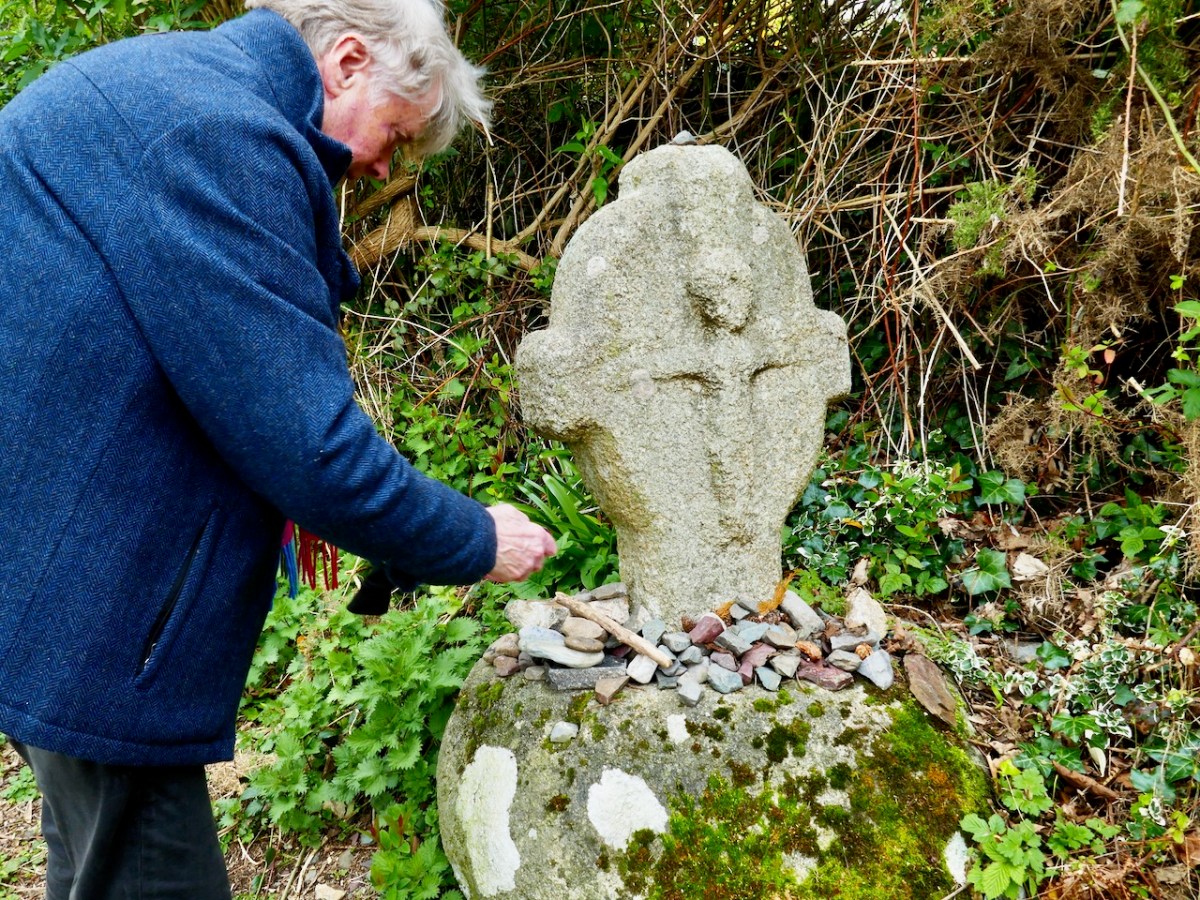
The second Cross is in Rathmichael, just outside Shankill, at the start of a woodland walk. It’s my lead photograph, which shows the context. It was moved here from the ruins of Kiltuck Church which once stood, with its associated graveyard, in what is now the housing estate of Castle Farm on the Bray to Shankill road. 

Old photographs taken by Thomas Mason (see Roberts post for more about this photographer) show it before it was moved, in a jumble of stones at Kiltuck.

The two Mason photographs above are from the Mason collection at the National Library of Ireland, and used under license from them.

Apparently the shaft was in the present location and when the cross was re-united with it – it fit! The front of the cross has the crucifixion image carved in relief, while on the back the image is recessed. Like Fassaroe, the recessed head  is slightly tilted to the right. Unlike Fassaroe, in which the top of the cross was circular, this one has very short arms. 

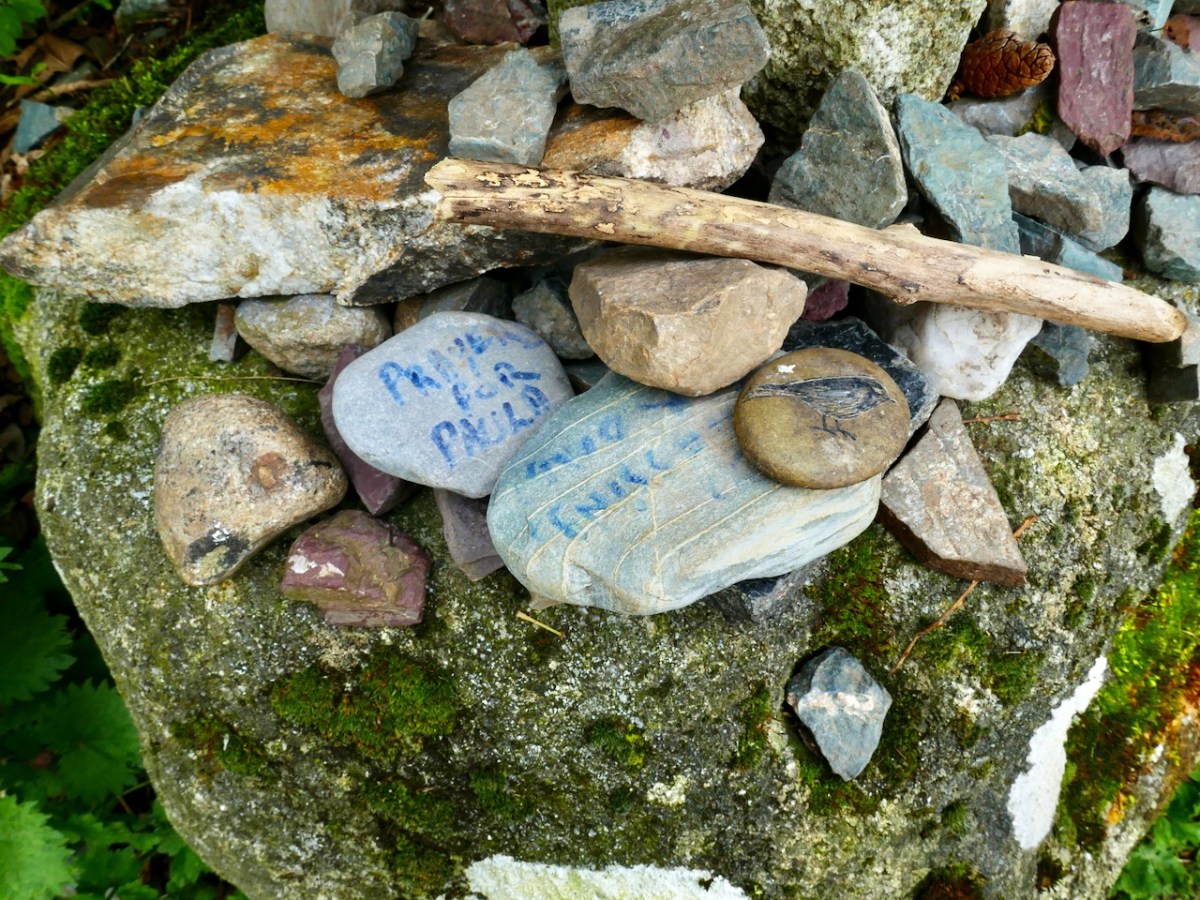
The base has a small cupmark. Since walkers regularly use this route, some have taken to leaving small offerings, and it’s good to see this cross as valued and respected.

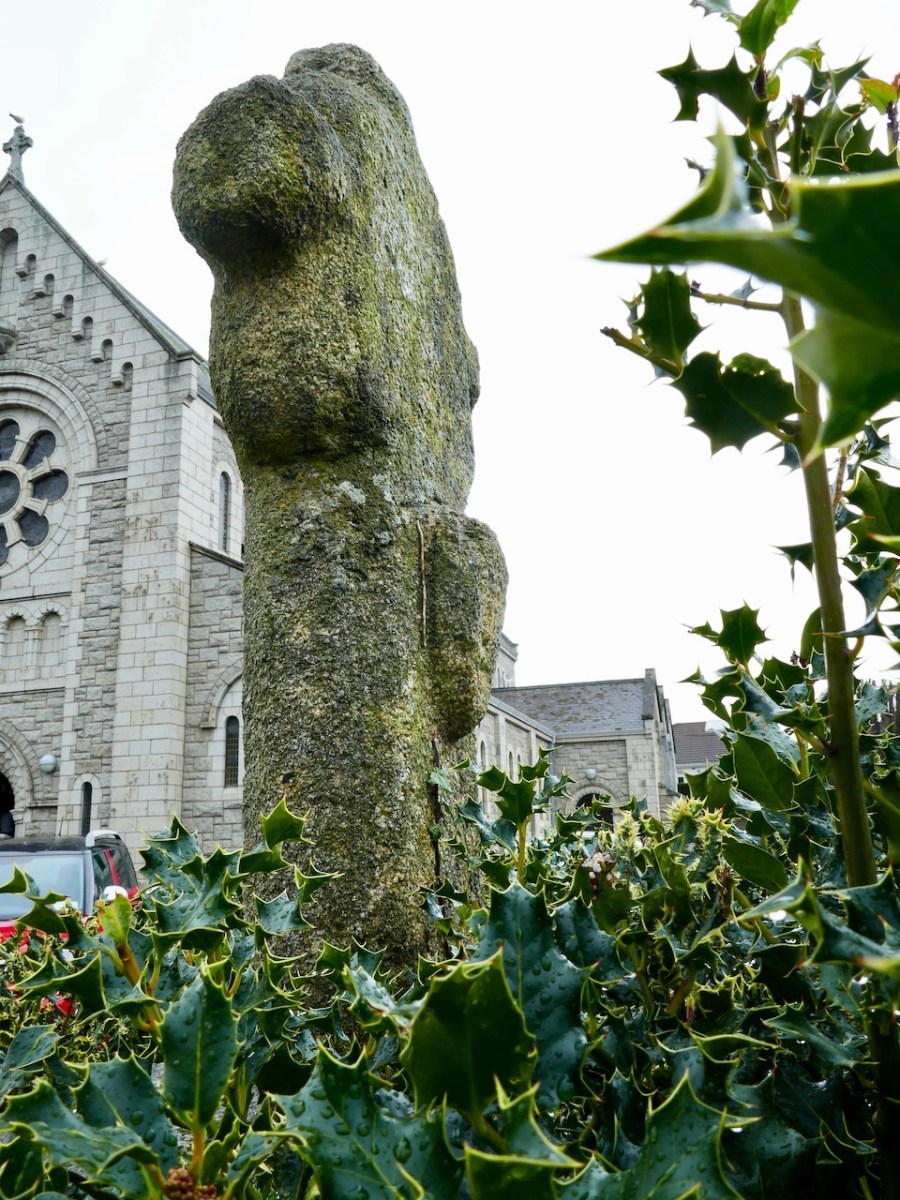
There were two crosses at Kiltuck, and the second one was removed by the Parish Priest of the newly-built Church of St Anne in Shankill in the early 1930s. In recent time the Rathmichael Historical Society, an active local group, sponsored its erection in its current location in front of the church, on a stone plinth.

The front face has a recessed crucifixion image, head slightly tilted to the right. The photograph below was taken in the church yard and shows the urban environment of this cross.

The back of the cross has a head, with the pointed chin such as we saw at Fassaroe. The head of the cross has the same short arms as the Rathmichael cross. 

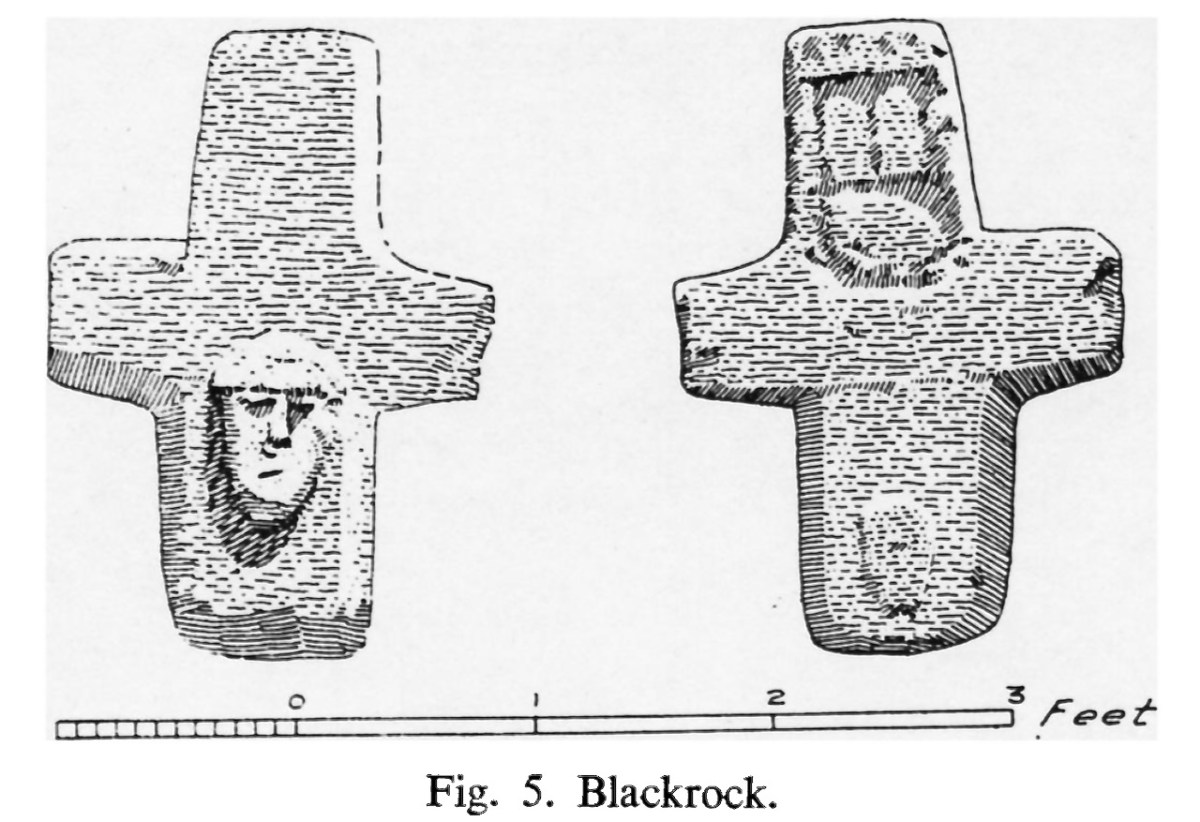
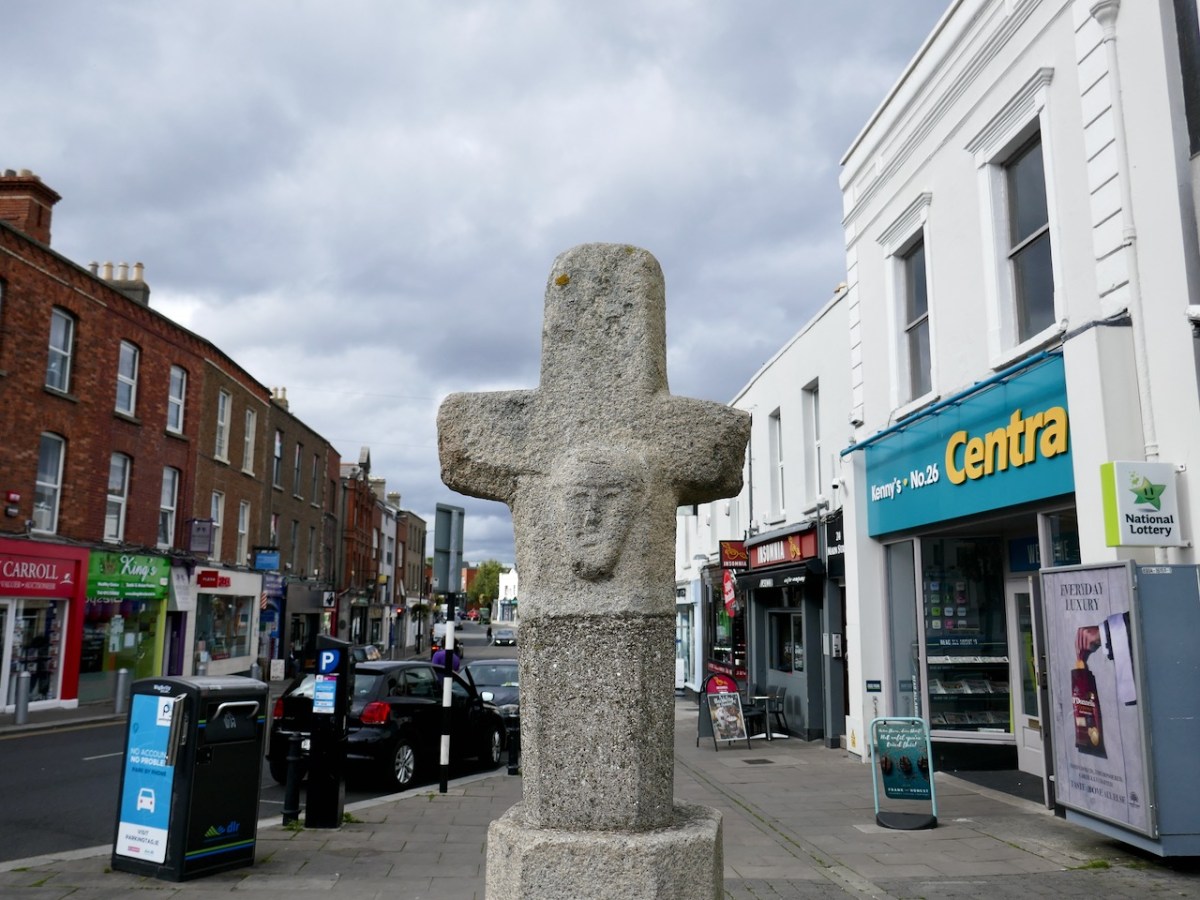
Our final cross is in a most unexpected location – right in the middle of Blackrock. It may have been used in the 15th century as a boundary marker to separate one medieval Dublin ‘franchise’ from another. Here’s what Ó hÉailidhe has to say on his decision to include it with the others: 

The newly erected cross at Blackrock (Fig. 5)26 has been included in this group, because it has several features in common with that of Kiltuck, i.e. a human head in exactly the same position on the shaft and some rather irregular chamfering. This cross does not possess any artistic or architectural merits.

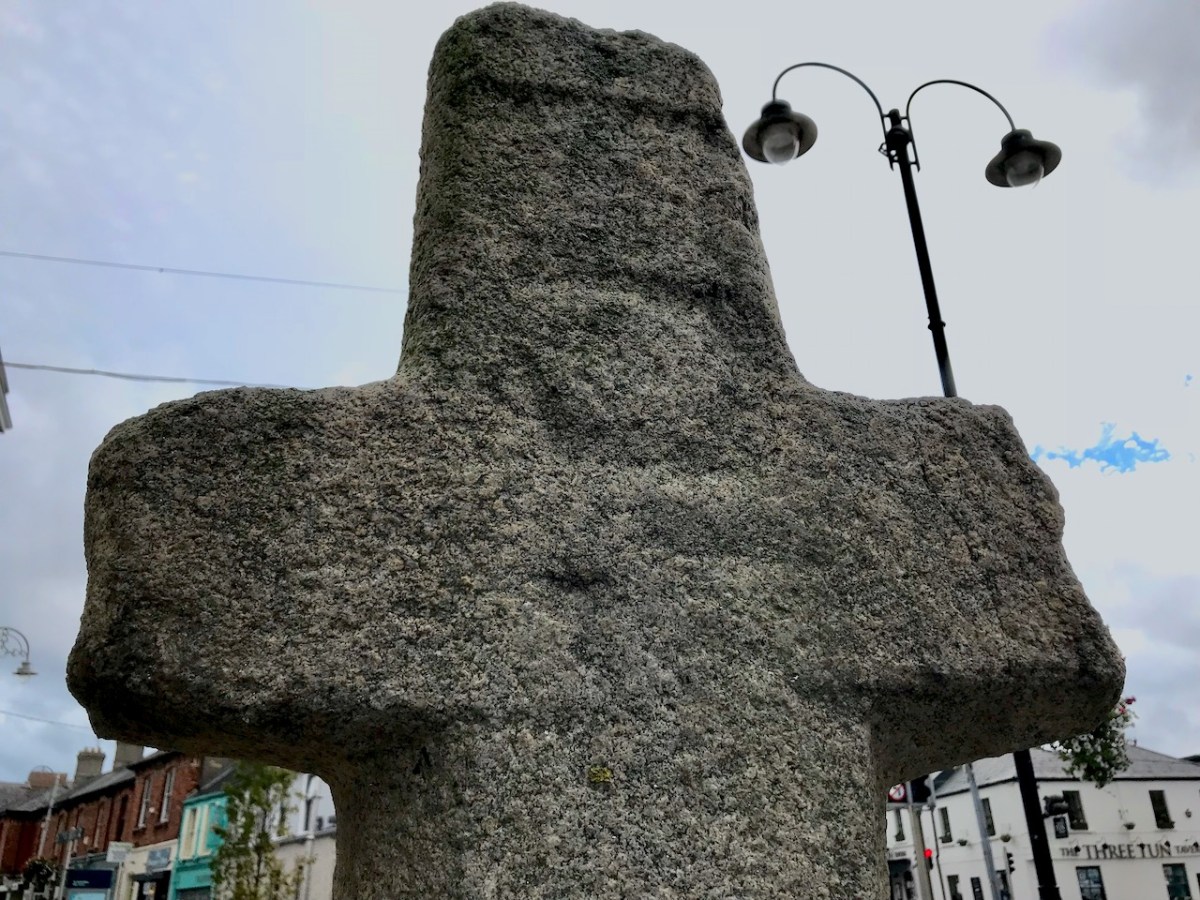
The chamfering is most obvious on the Kilmichael cross, while the head is similar to that at Kiltuck. The shape of the cross, however, is entirely different: rather than the head of the cross being circular, this one is, well, cross-shaped.

It’s impossible to make out what’s on the back on the cross, although Ó hÉailidhe tries manfully to illustrate it. 

Ó hÉailidhe includes one more cross, from Killegar in Wicklow, now in the National Museum, but I will deal with that one in the next post, when I will review the literature about similar crosses and come to a conclusion about likely dates. Spoiler alert: although there have been claims that these crosses may be as late as 17th century, as you will see, I agree with most authorities that they are 12th century. As such, they represent a very important monument group.

* Thanks to Chris Corlett for pointing me in the direction of resources for this post

Rathgall Hillfort

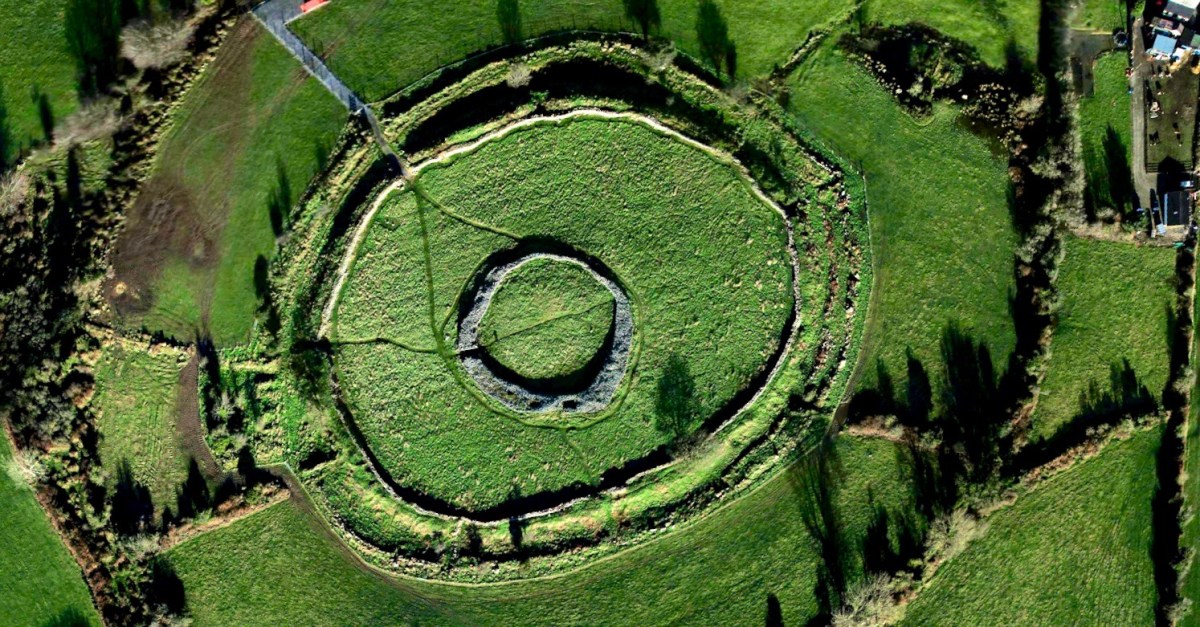
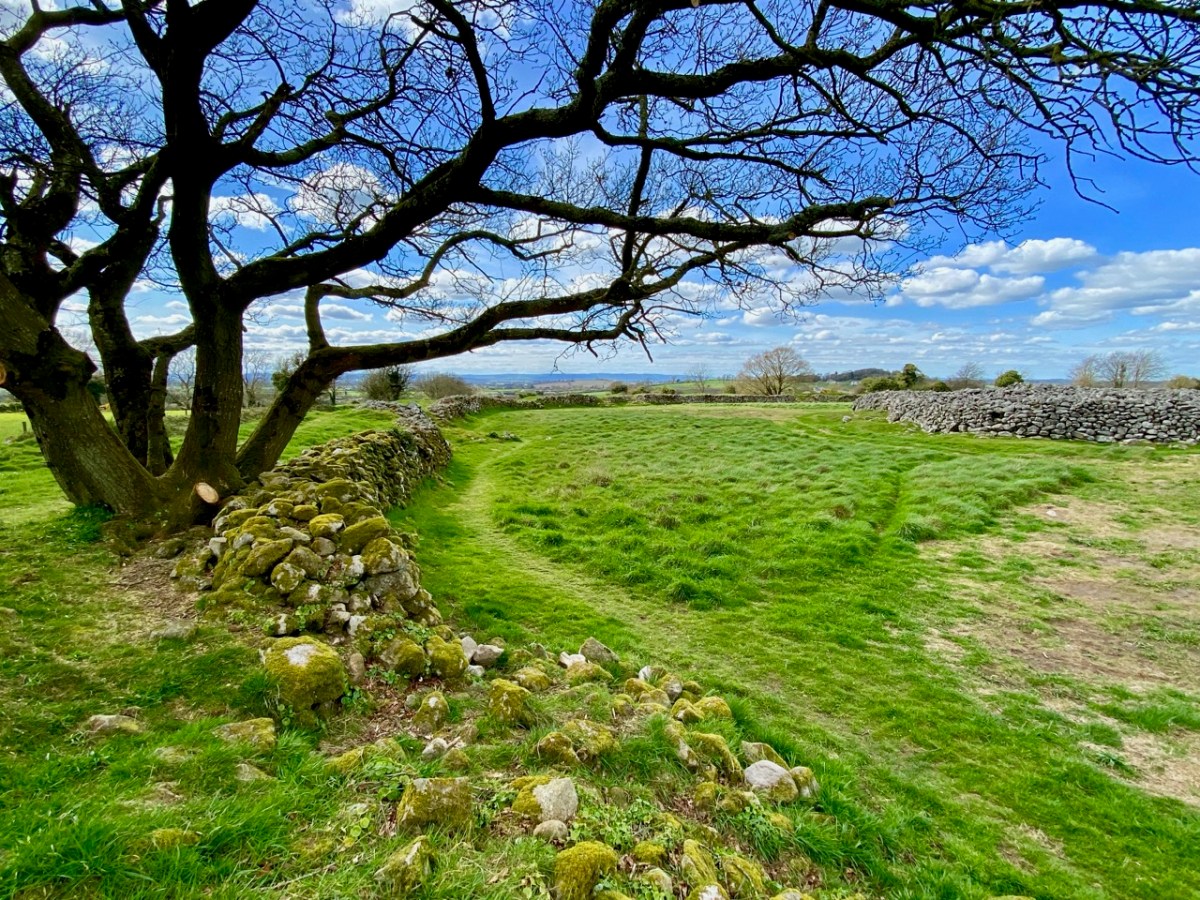
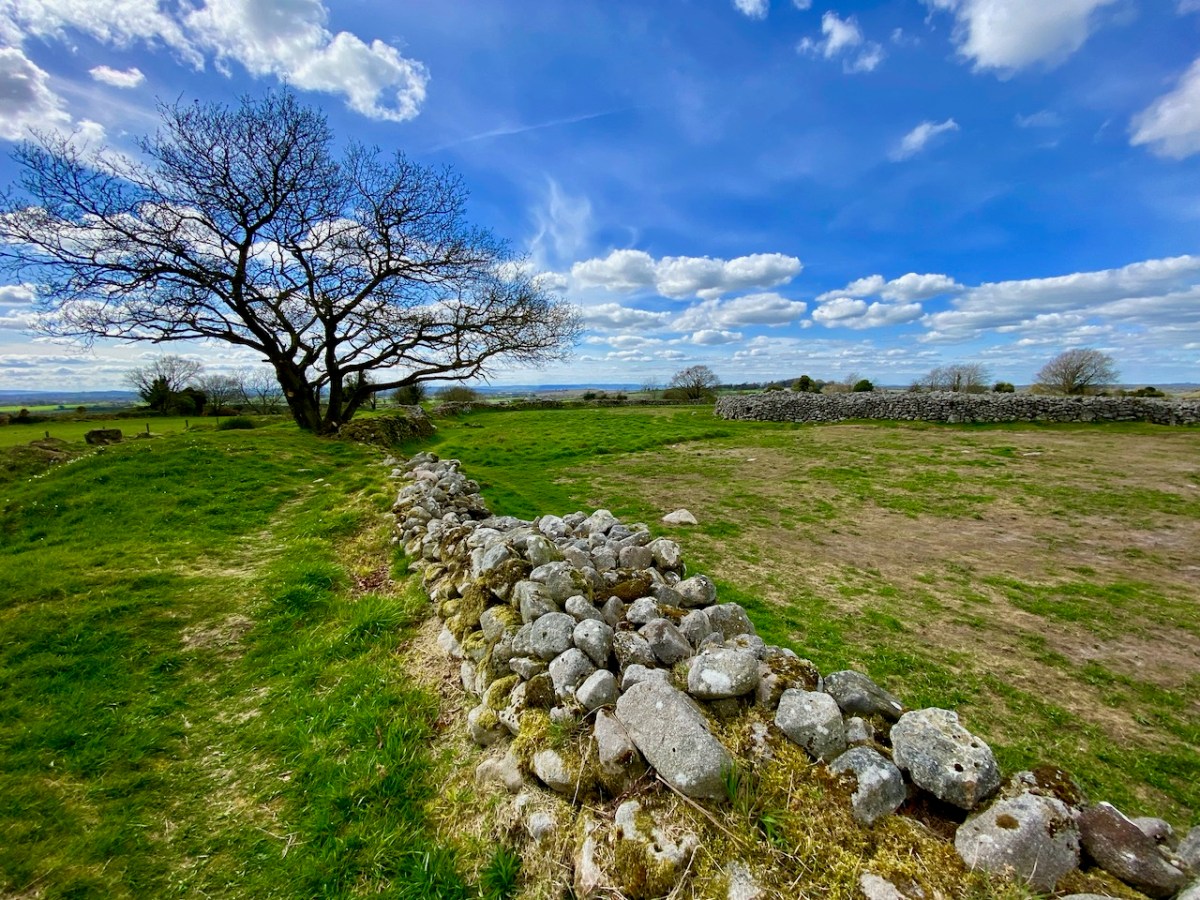
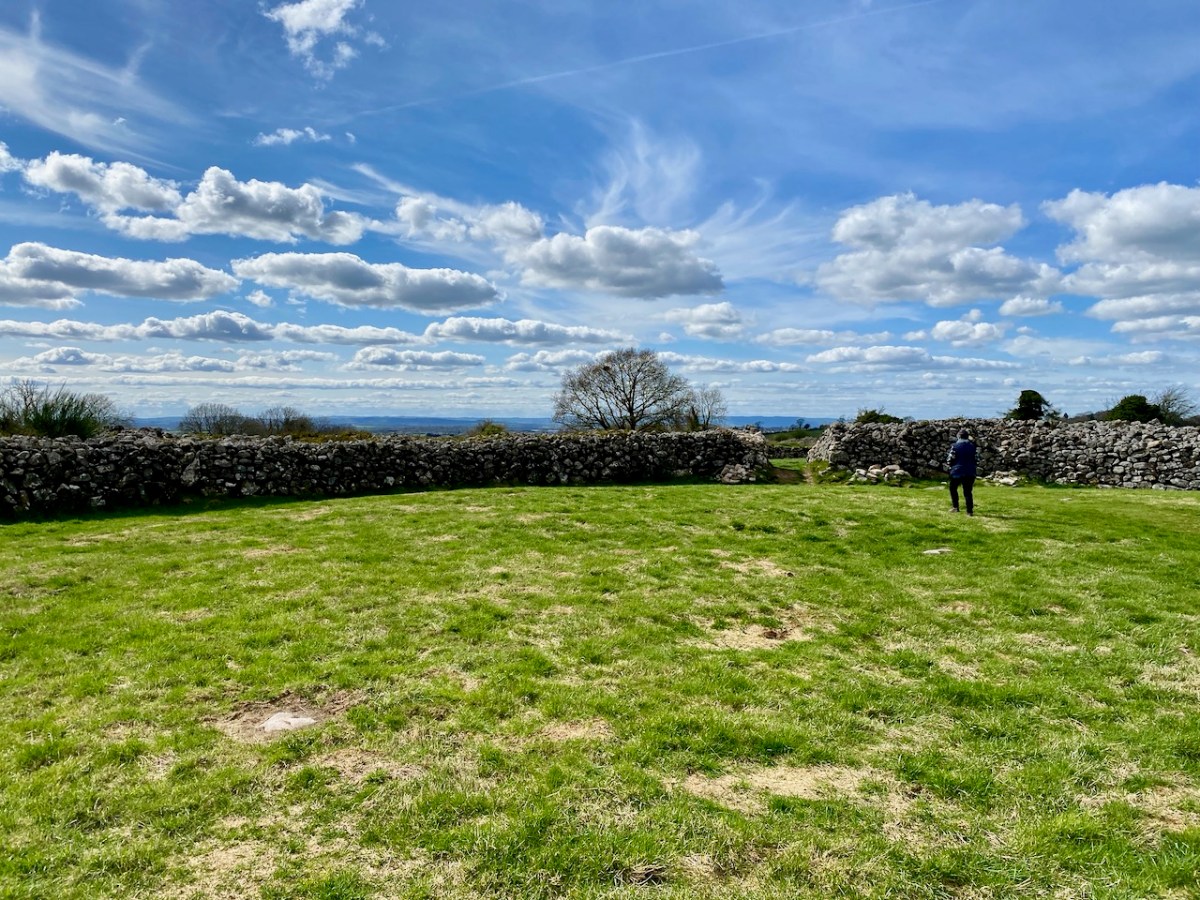
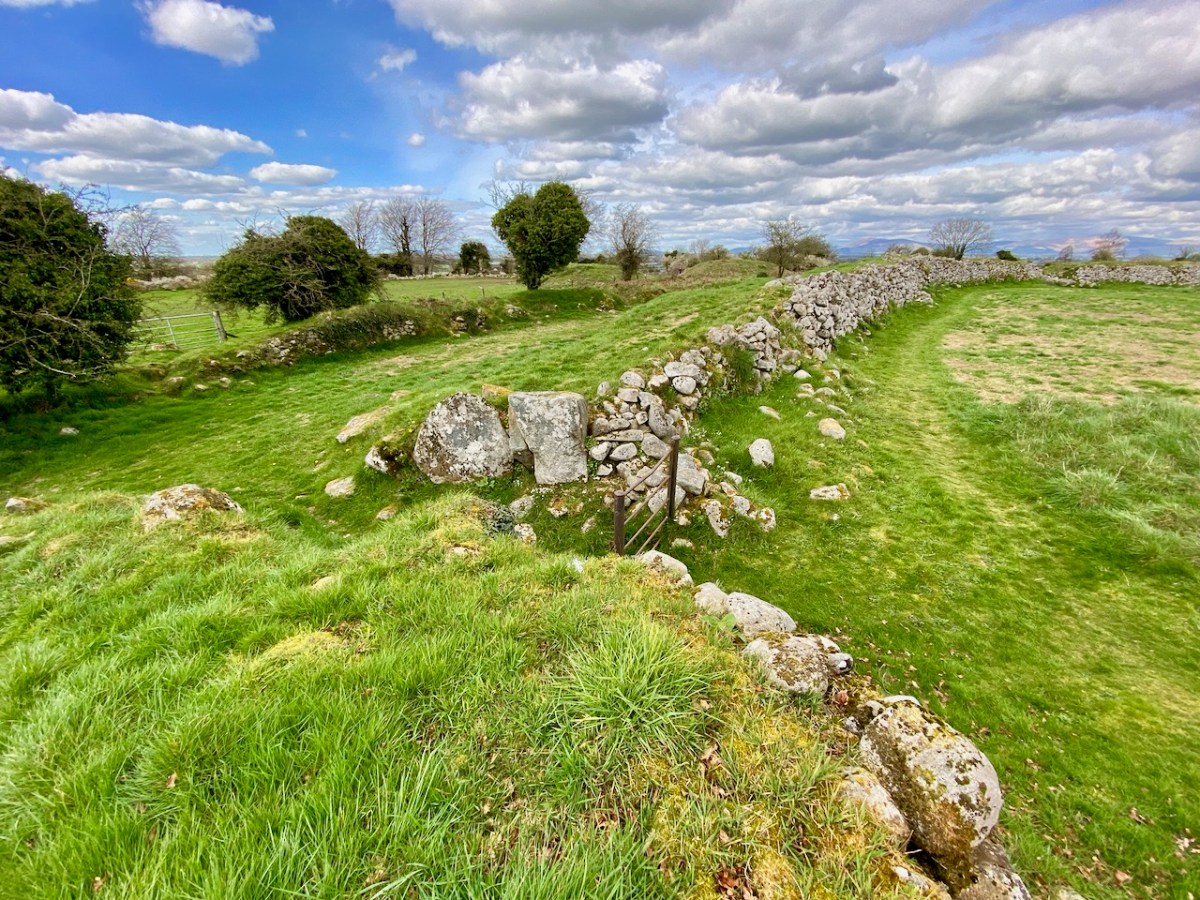
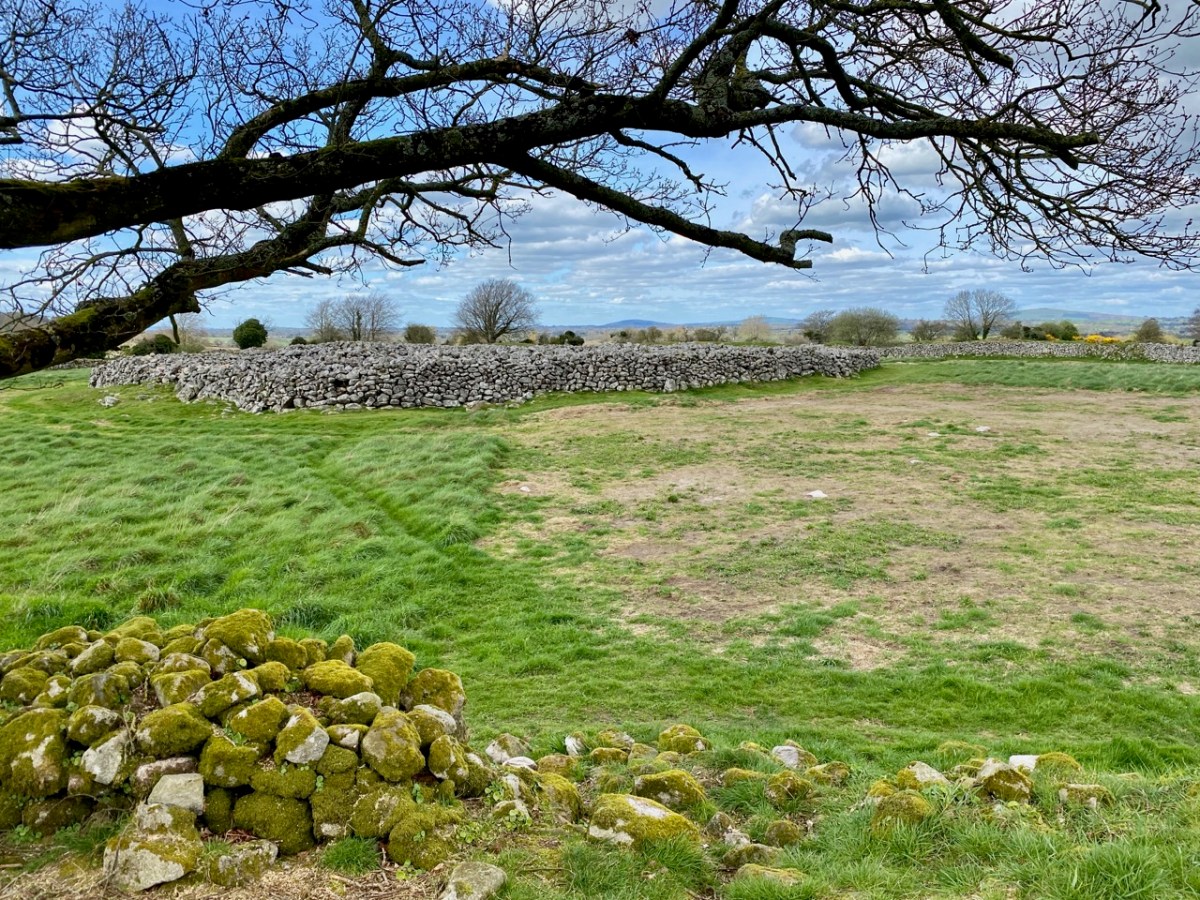
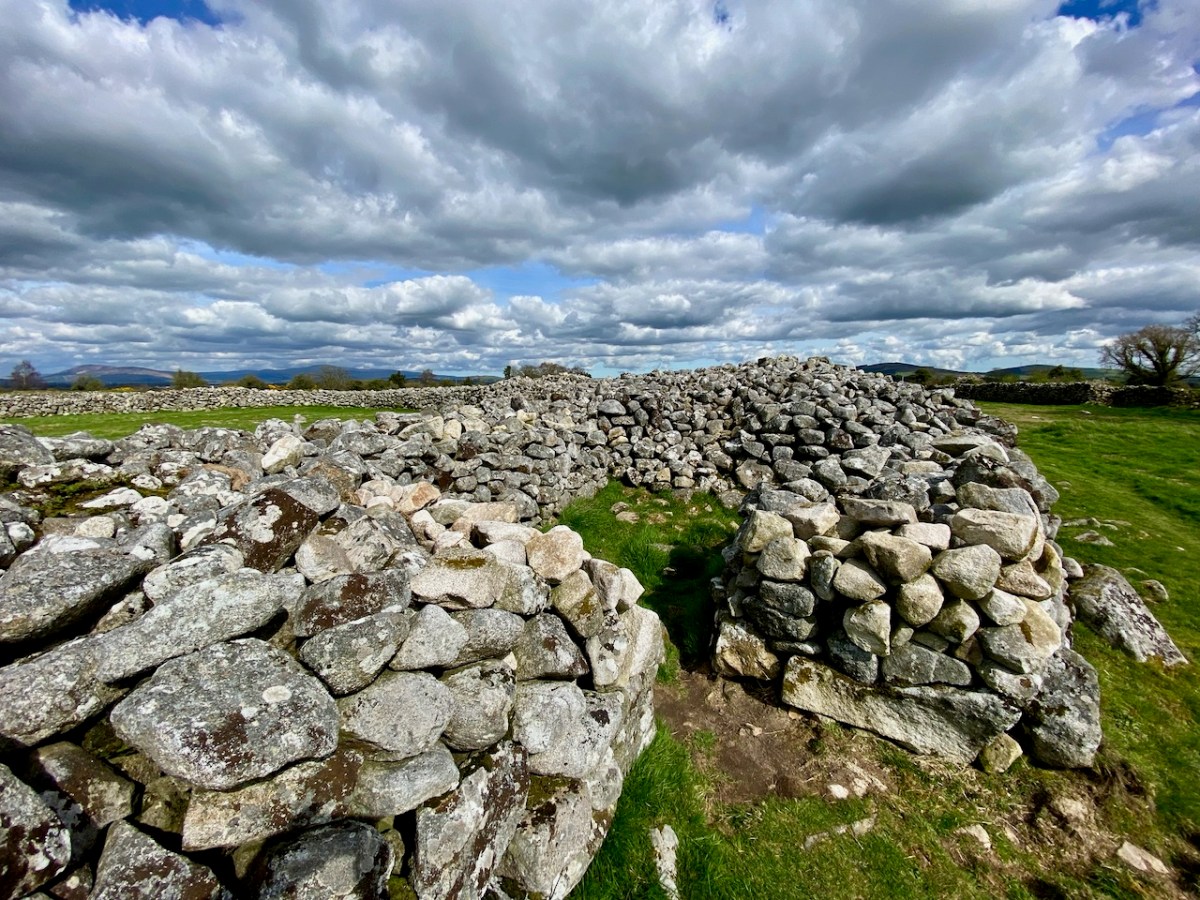
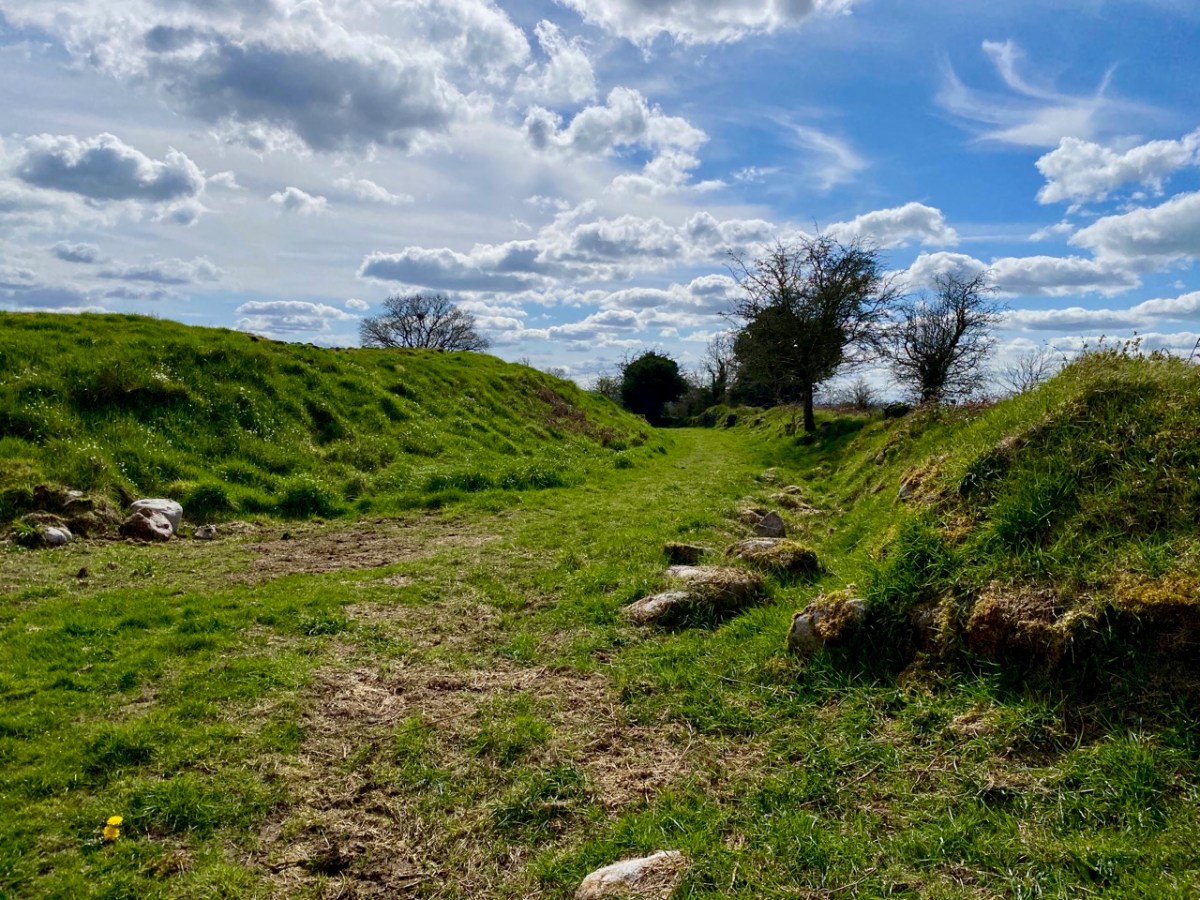
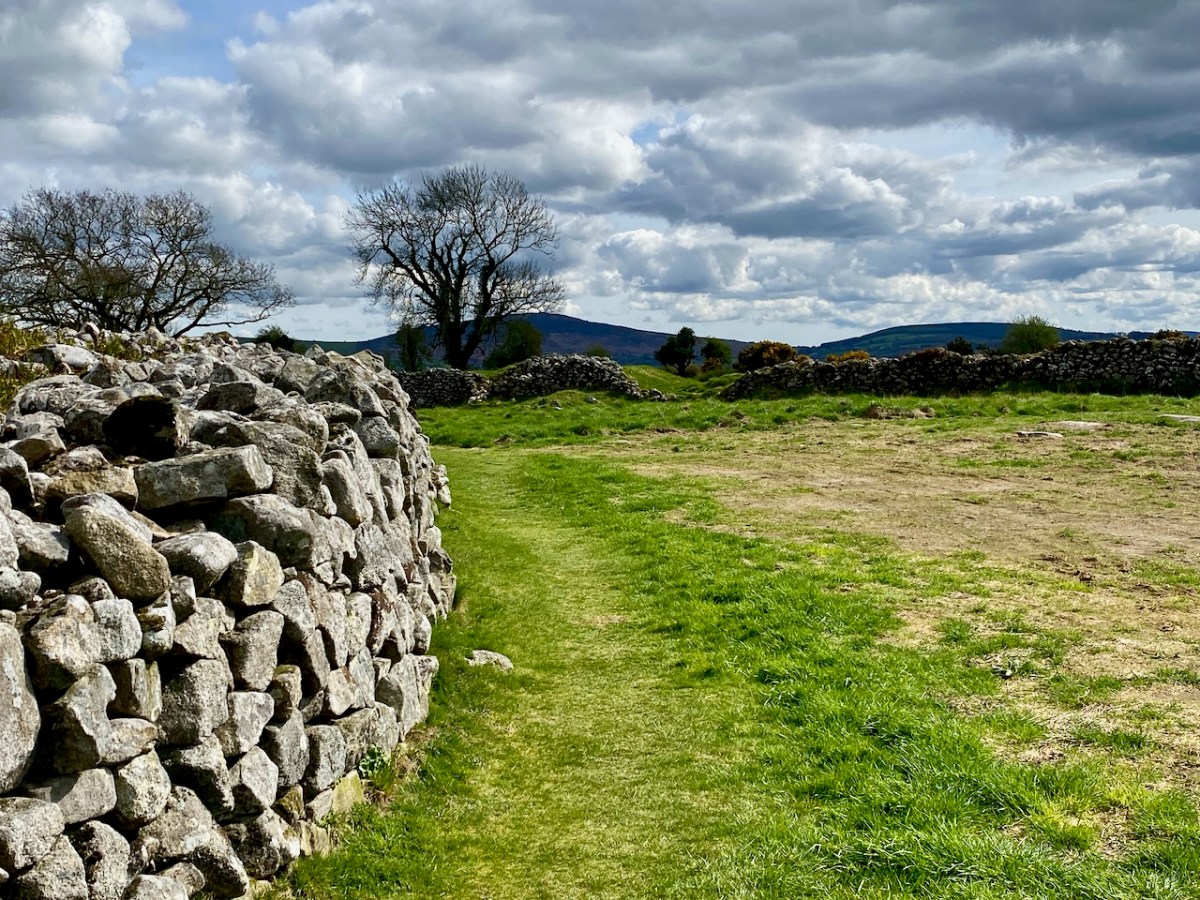
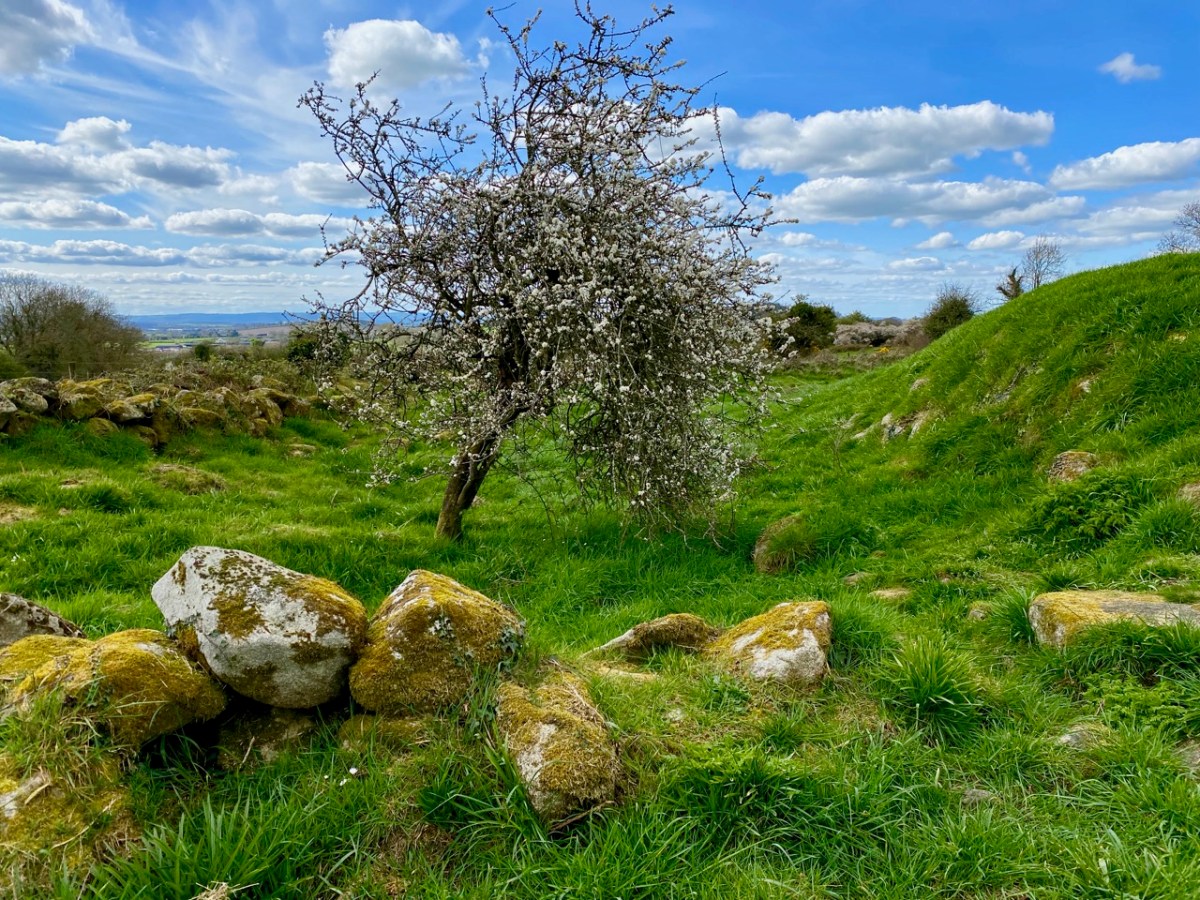
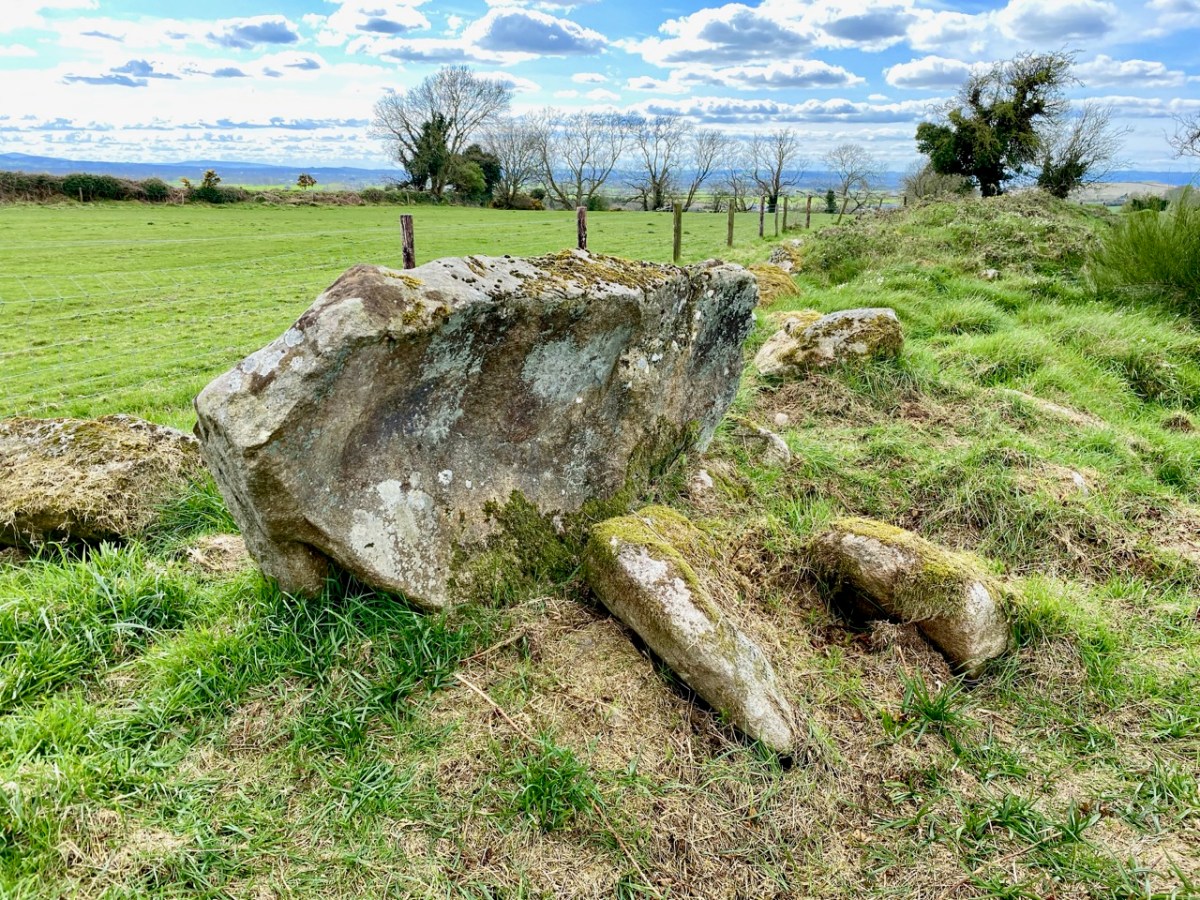
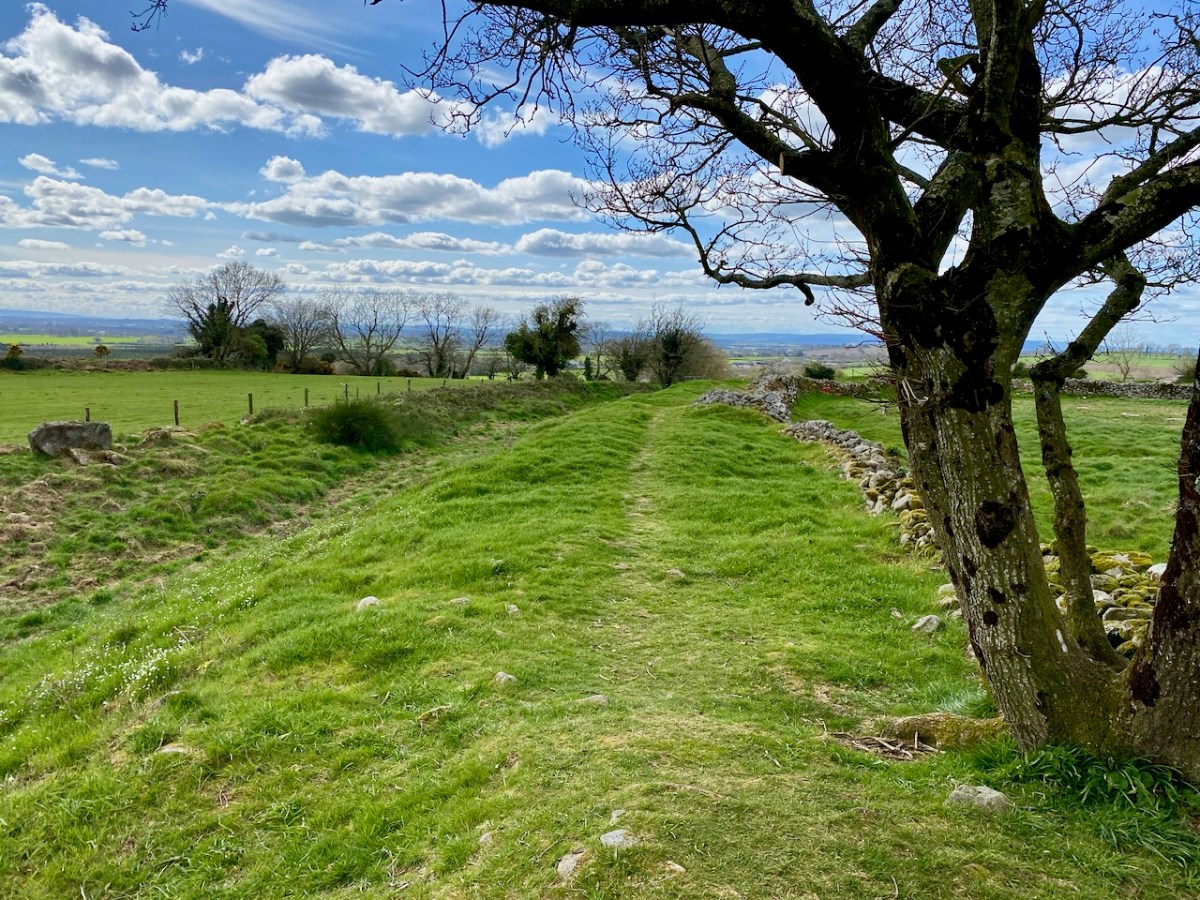
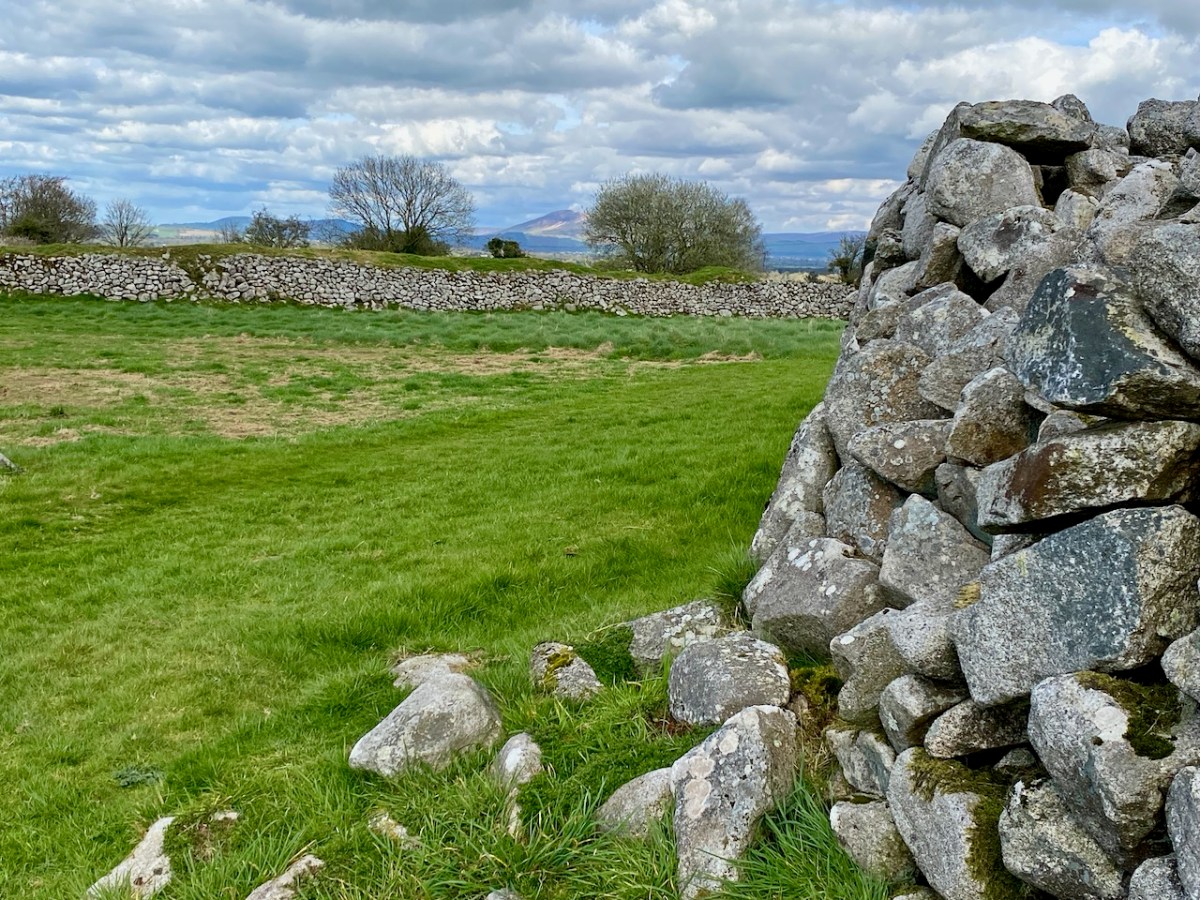
Our journeys in search of important Irish archaeology can take us a long way from home. Today’s subject – the impressive Rathgall Hillfort – is located in County Wicklow, on the east side of the island. But it is well worth a long journey: its size is impressive – it occupies an 18 acre site. And the history of the place goes as far back as the Neolithic age. We visited on a brisk spring day, when the clouds were determined to contribute to our appreciation of this monument.

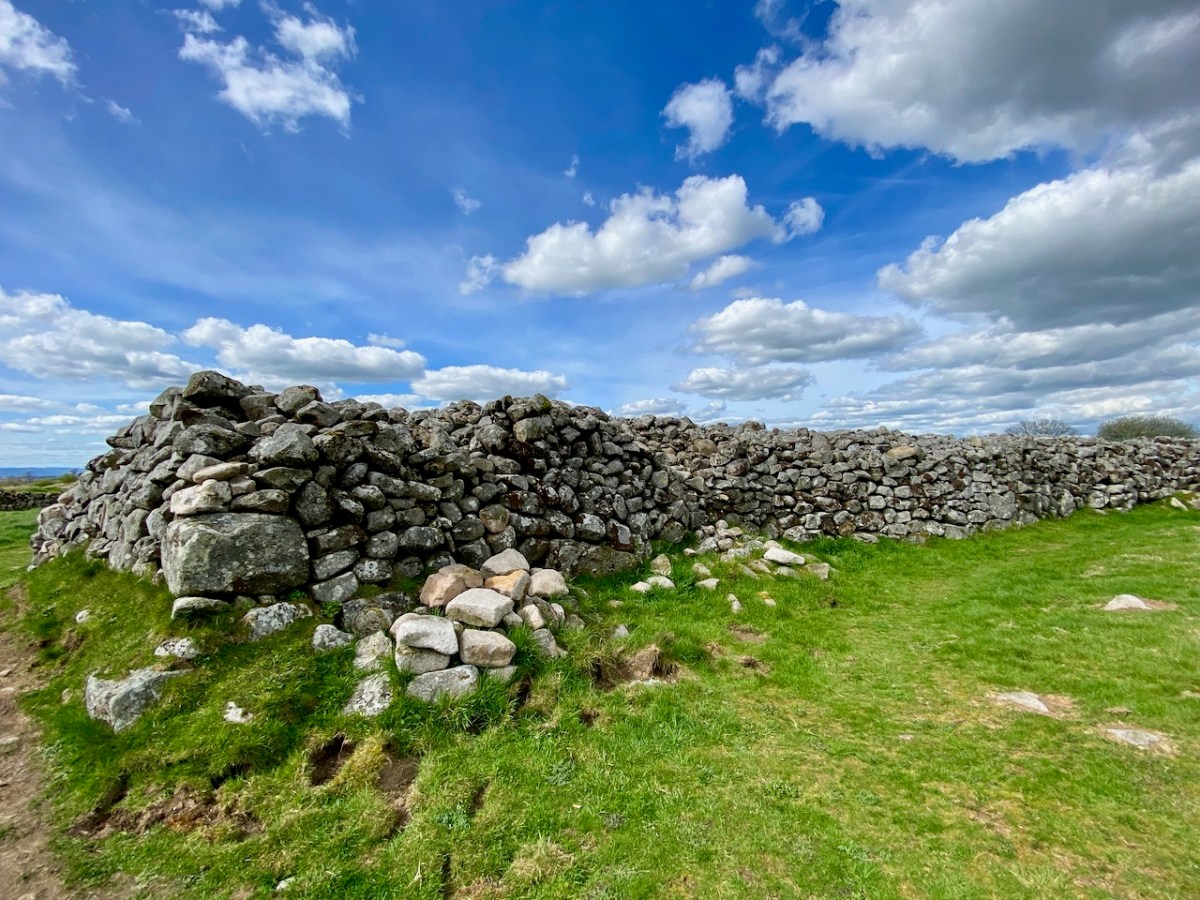
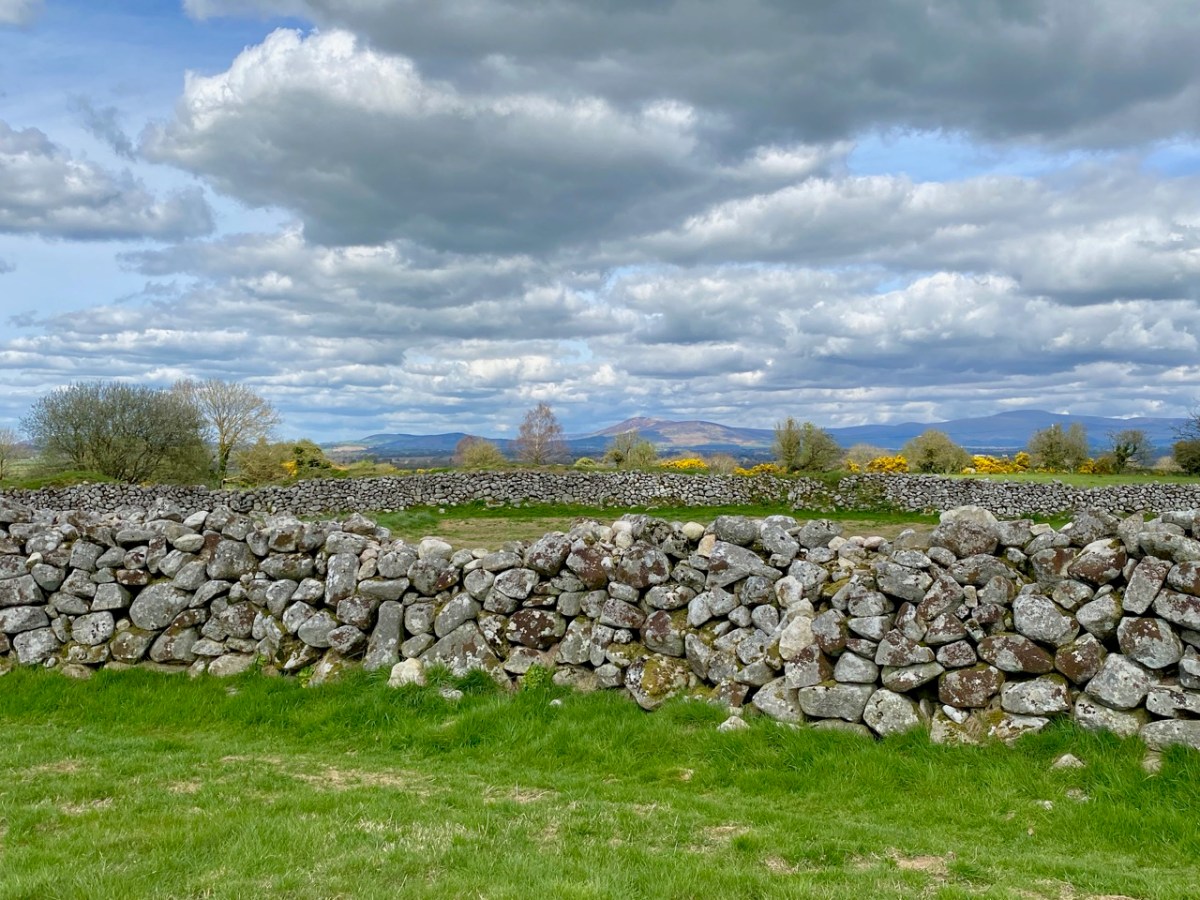
The size and longevity of this hillfort push it into a rare category. The substantial central rampart of stone walling is medieval, but the outer rings of stone and earth appear to have considerably earlier dates.

. . . Rathgall was a site of quite exceptional importance in the centuries spanning the birth of Christ, an importance that was clearly pan-European. The variety of structural information that the excavation yielded is unprecedented in the Bronze Age and the extraordinary concentration of artifactual evidence from the site has not been matched elsewhere in the country. Rathgall opens a wide range of questions concerning, not merely the nature of the Ireland’s later Bronze Age, but also the role of the hillfort in contemporary cultural developments . . .

Professor Barry Rafferty 2004

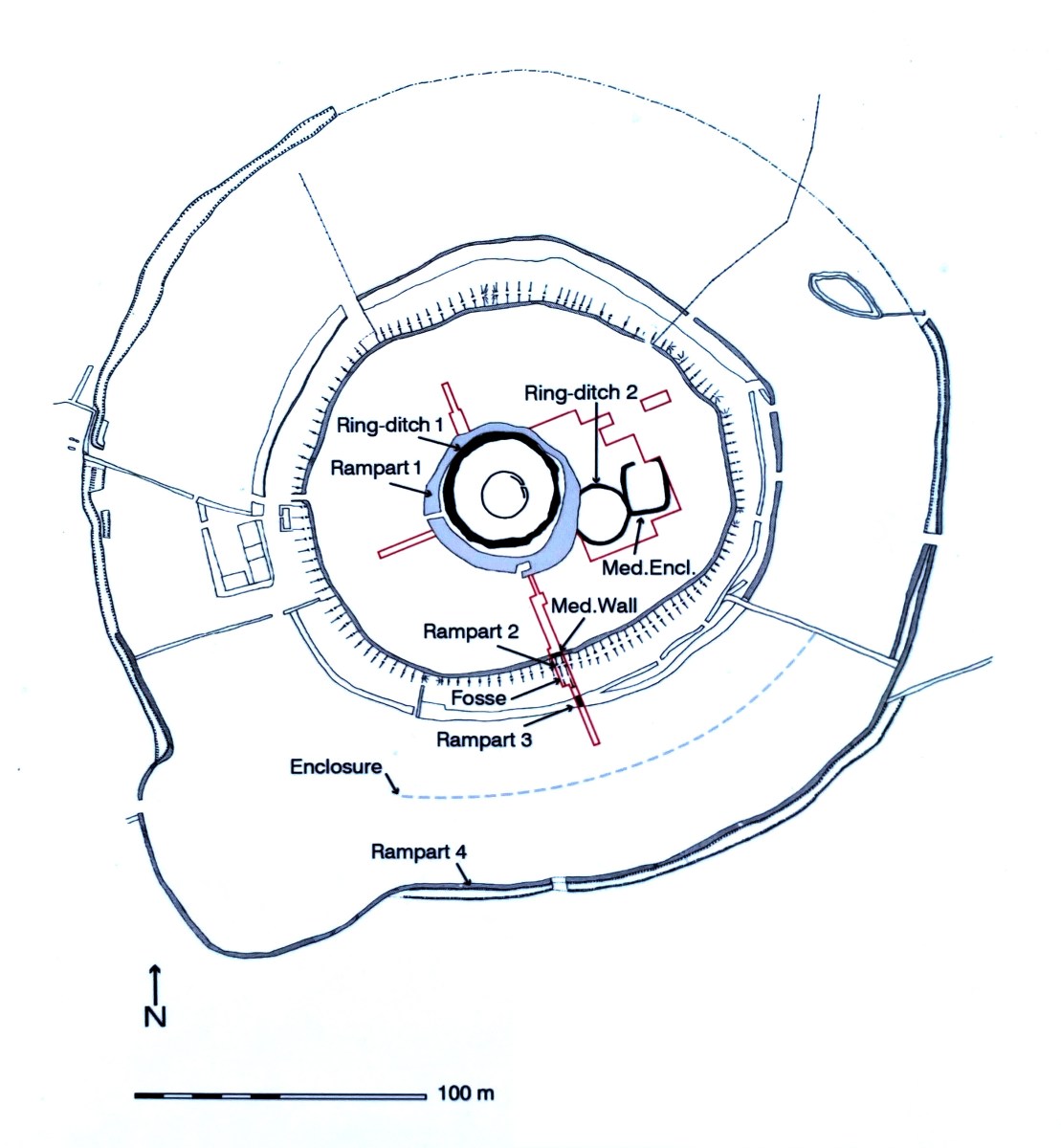
Plan of the hillfort and surrounding earthworks taken from the site notice board. Red lines indicate the site excavations. This board states that:

. . . Rathgall Hillfort is a hilltop settlement enclosed and defended by four concentric ramparts which can be dated to the early and middle Neolithic period . . . The outer three ramparts are stone and earthen banks and are likely to be prehistoric in date. Within the central enclosure there is evidence of metalworking, a cemetery and a round house; all dating to the Late Bronze Age . . .

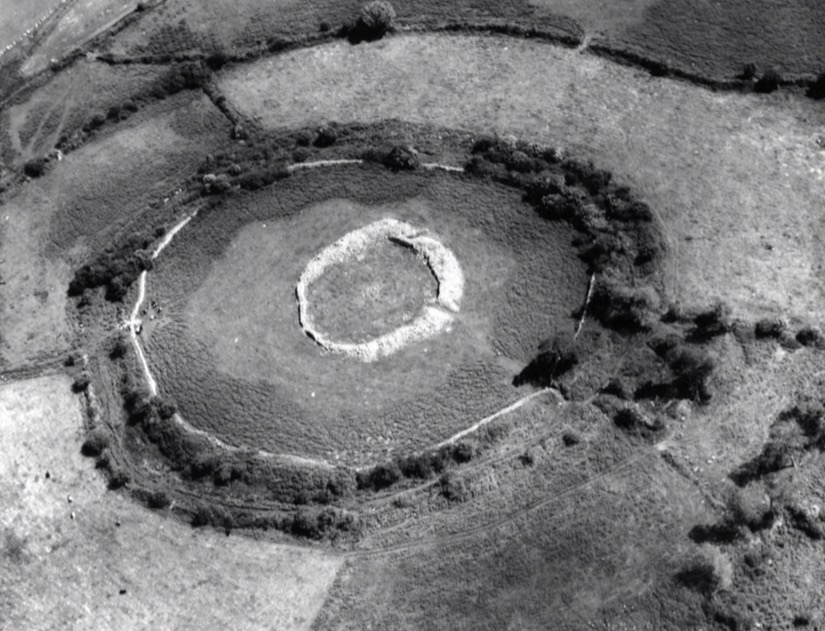
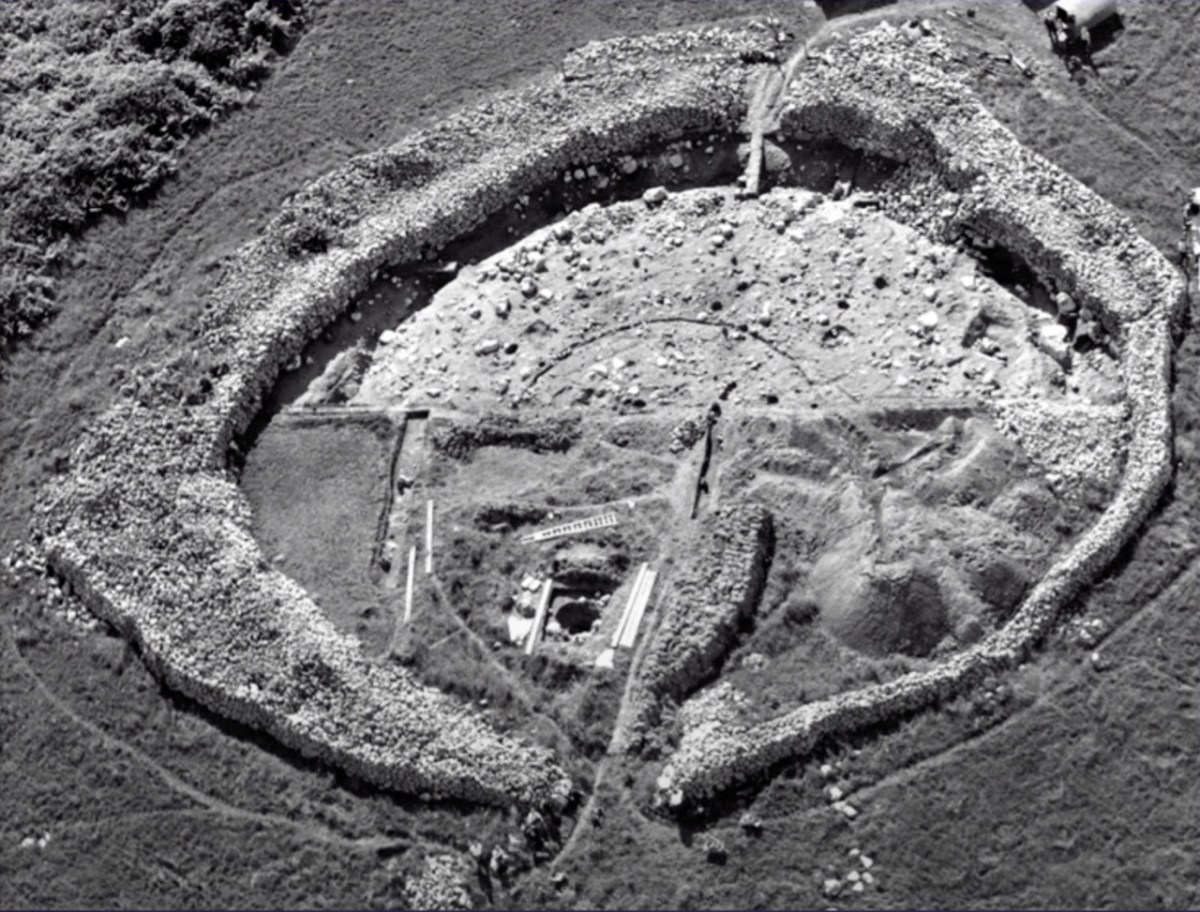
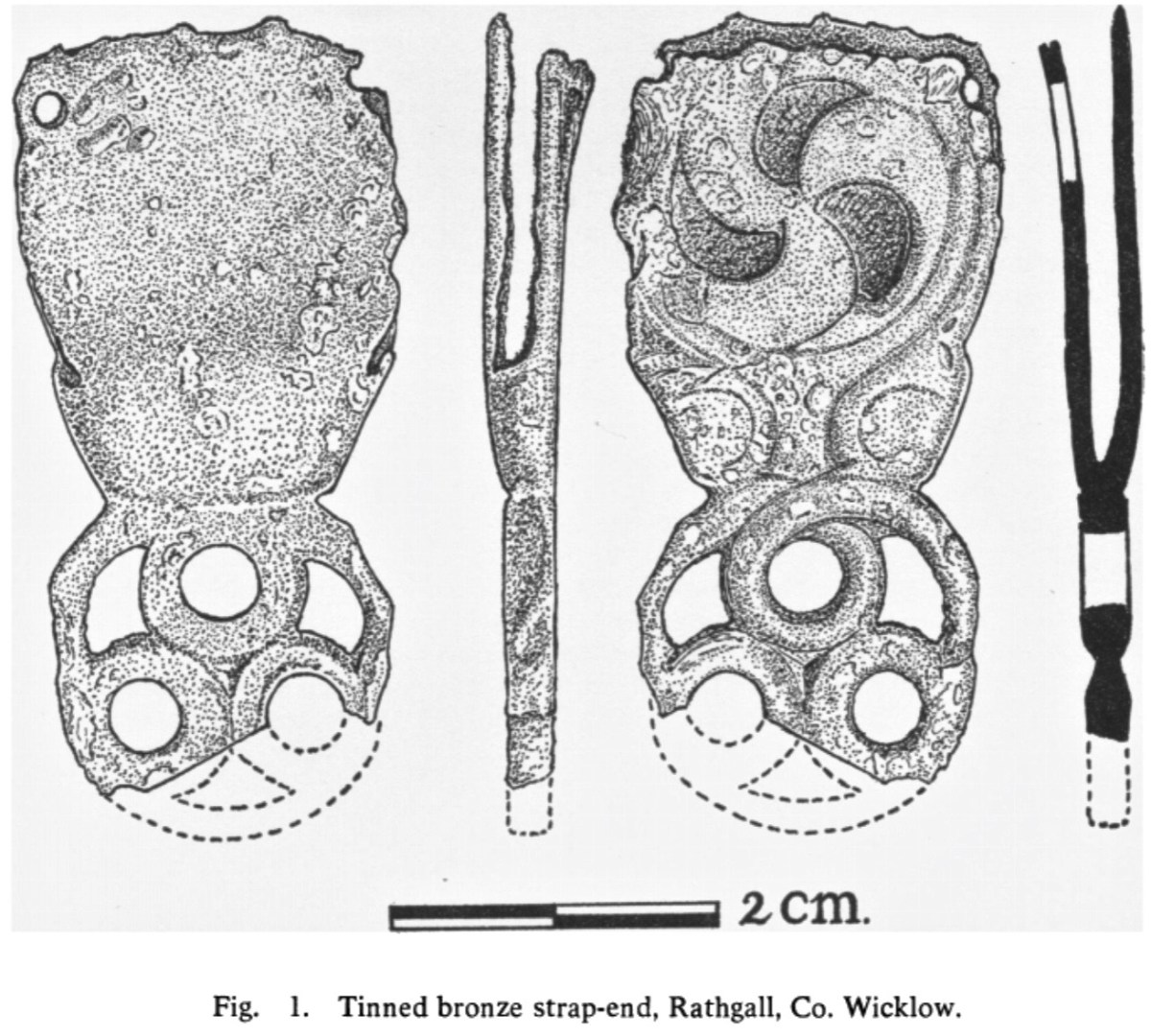
The two photographs above are taken from the time of archaeological investigations which commenced in 1969. The results of those excavations, which covered a number of years, have yet to be formally published. [Late edit: Elizabeth Shee has informed us that the findings will be published this summer by Wordwell, through the work of Katherina Becker of UCC. Many thanks, Elizabeth, we will look our for that]. The investigations found evidence that this was the site of an important and busy Bronze Age factory for metalworking (axe and spearheads, swords) and for pottery, jewellery and glass beads. In total over 50,000 pottery fragments were found, as well as 3,000 bronze and gold artefacts.

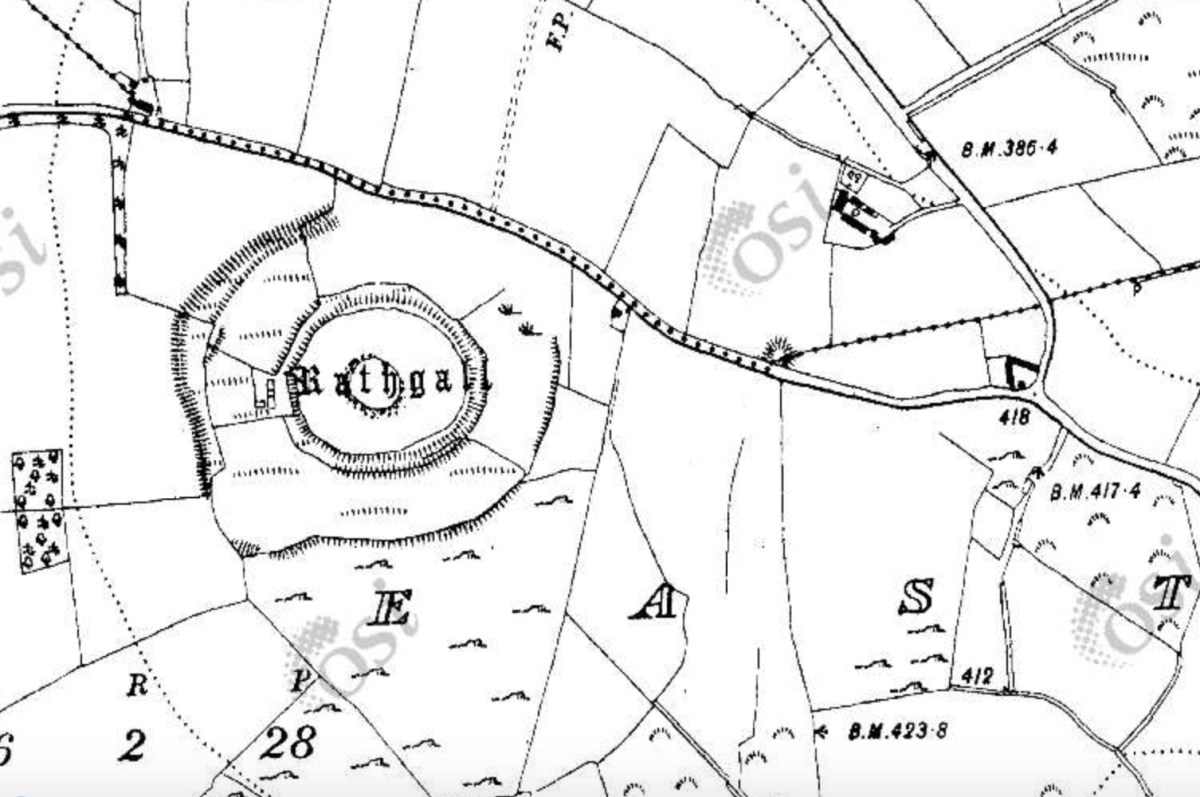
Rathgall from the early OS map. The importance of the site was realised and kept in use by successive generations.

Our knowledge of the societies that centred their life on settlements such as these in Ireland is sparse: here, and elsewhere, we are left with evidence of their stone structures (which will outlast us) but also intriguing finds – the following quotations summarize some of Professor Rafferty’s work here (courtesy of Rath Community Group and The Heritage Council):

1969 – 1971 . . . It took over 3 years to dig out the entire 15 metre wide section of the inner circle. Within an hour of starting work, he [Professor Rafferty] had located pottery pieces. Over 10,000 finds were from the inner circle; glass objects, clay moulds, stone and gold objects. Post holes indicate that there was a small house-like structure within the circle. The ditches were filled in with black material among the stones. An oval pit was discovered near the centre of the house. It had a carefully placed large boulder on top of black material almost covering the pit. The pit had been back filled in with yellow clay around the boulder. When the black clay was taken out, they found a small gold-plated copper ring, 1 cm wide approx, embedded in burnt baby’s bones. They came to the conclusion that this was a ritual burial pit . . .

1972 – 1973 . . . They moved to the southern slope of outside of the inner circle and were getting 400 finds per day. Prof Rafferty got down to prehistoric levels after 1 foot in some places. This area was “jampacked with artefacts, glass, gold, animal bones, pottery and basket remains.” Rabbits had done a lot of damage and stones were removed by people over the years. They found hundreds of clay mould fragments embedded in a black clay-like substance. Clay moulds are always broken when found as they could only be used once. The moulds were made for swords or whatever was needed: copper was poured in and in order to get out the sword etc, the mould had to be broken. He found a smaller crucible with traces of lead in it, parts of blades of swords or rapiers, spearheads, cauldron legs but not the cauldron . . .

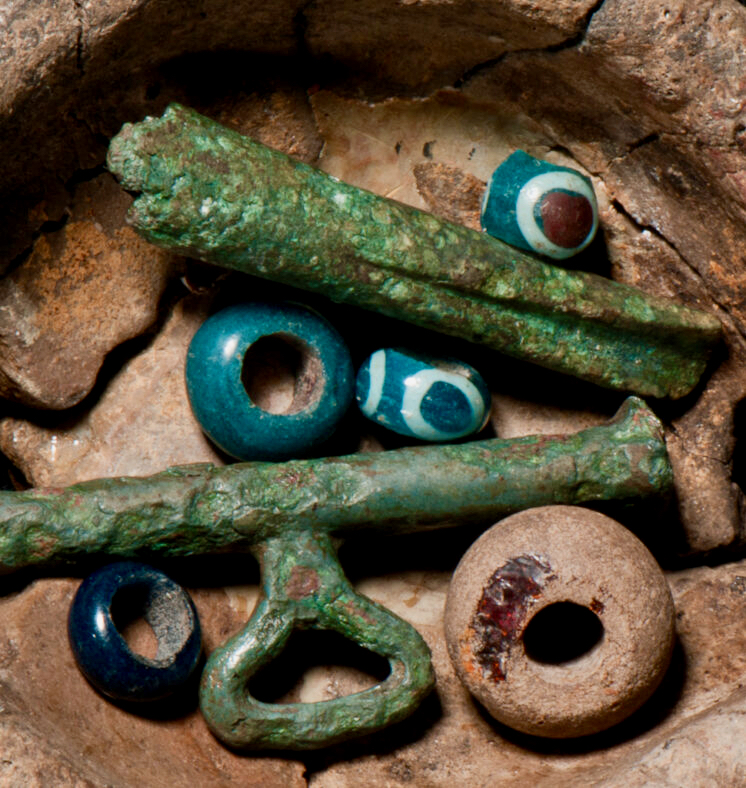
1974 . . . In Bronze age times people were buried crouched down in a foetal position and put in a clay pot. The remains of a female and child were discovered in such a clay pot at Rathgall, buried in a pit underneath large slab stones. Eighty eight glass beads were uncovered, which is the largest quantity found in any Bronze Age site in Ireland. These beads are 1 – 3 cm wide, mostly circular in shape, blue-green in colour and with a hole in them. This collection is unprecedented in the late Bronze Age of Ireland and is also one of the largest from a single site as yet discovered in Western Europe (Rafferty and Henderson 1987). Prof Rafferty found a 2cm twisted gold cylinder with its ends finely hammered and a dark green glass bead mounted in the middle, 2 – 3cm wide. Tiny delicate loops of gold were attached to each end. This is an object of great beauty and advanced technological expertise. He also found a metal disc with mercury gilding on it. Mercury gilding was used to stick gold to bronze. He got this piece analysed by the British museum and the piece was dated back to 1000 BC. Before it was analysed, the Irish professionals were uninclined to believe that this came from Ireland as nowhere in the world had mercury gilding been found that dated back further than 400 BC. Prof Rafferty felt that this emphasised the exceptional importance of the Rathgall site . . .

While visiting this site I was reminded of an adventure we had last summer in Northern Ireland. You’ll find it here. There we discovered The Giant’s Ring: that earthwork struck us as ‘gigantic’. But it only occupies an area of 2.8 hectares. Our latest exploration is over 7 hectares! That makes it Cyclopean, surely! While this Co Wicklow site has been examined by archaeologists, we certainly don’t yet have all the answers as to why it existed, nor do we know everything we would like to about those who built it. We just can’t help expressing a sense of wonder at this – and other – artefacts which have made their marks on our landscapes. We are grateful to those who have explored and labelled these sites, and also to those who make sure they are conserved for our future generations, who might find more answers than we do as to their origins.