Darerca – A Neglected Saint

Ireland is ‘The Land of Saints’. The Catholic Online website lists 331 of them, but some get much better treatment than others. Last week we celebrated St Patrick – the news was full of it, as it always is on 17 March. Yet, just five days after Patrick’s Day – on 22 March – I was at a schoriacht and asked the assembled crowd who was the Saint for that day: nobody knew. It was the day for St Darerca and she is, unfairly, much neglected, especially since she is St Patrick’s sister. In order to redress the balance I have put together everything I can find on the story of St Darerca, and – because she has never been pictured (as far as I can tell) – I have illustrated it with some general Irish Saintly connections.

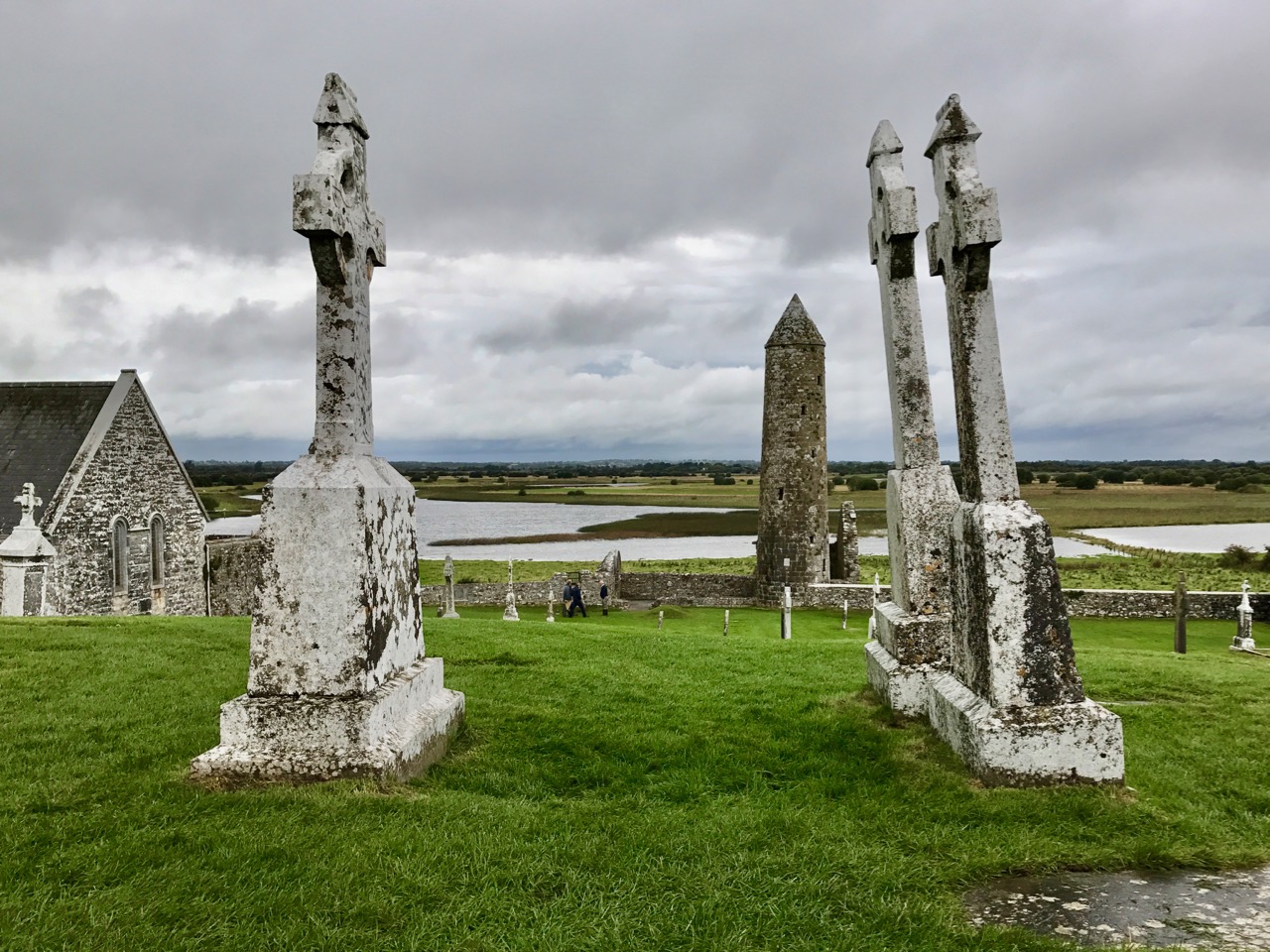
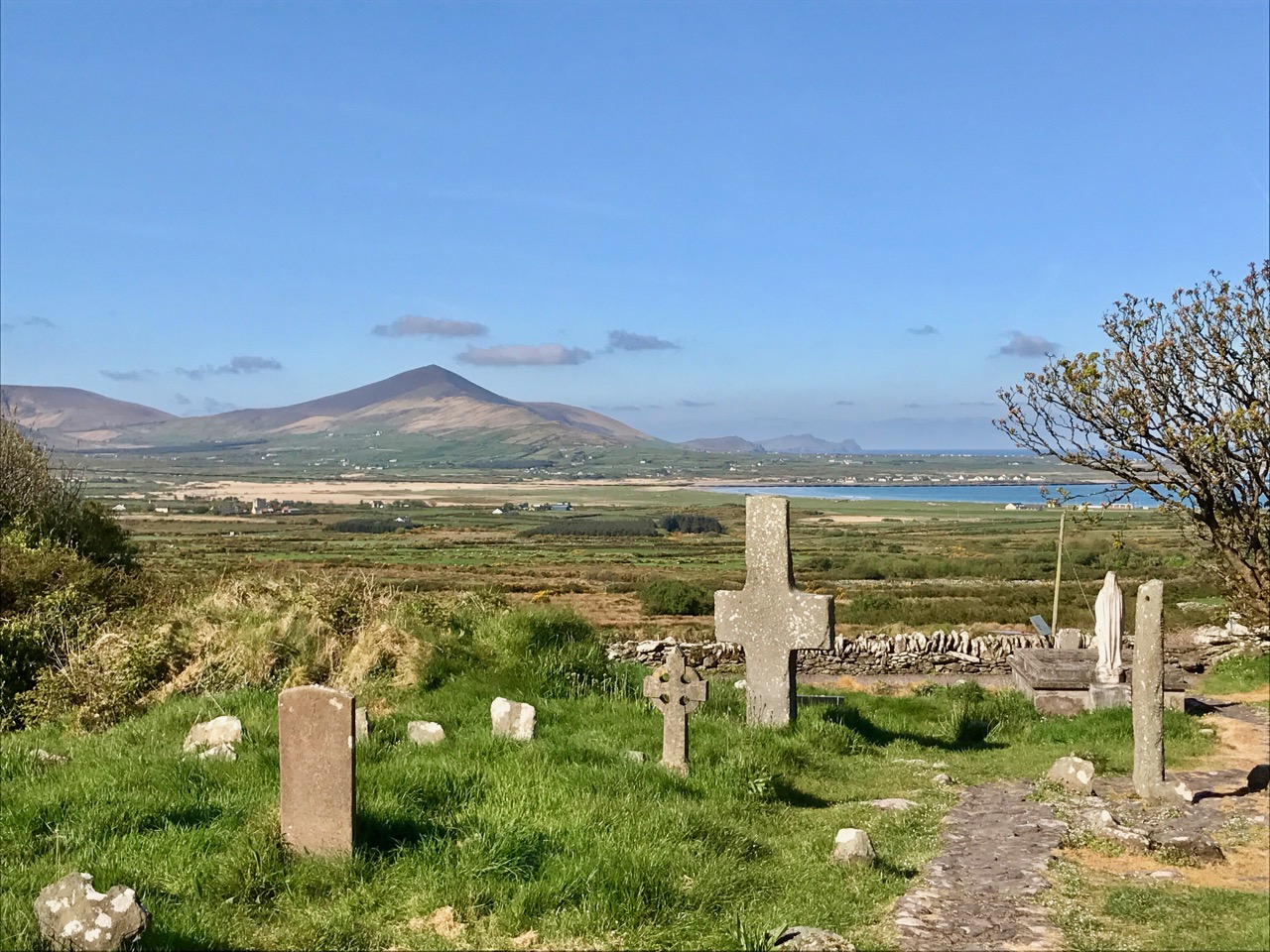
Land of the Saints: header picture – Clonmacnoise, Co Offaly – Ireland’s holy centre, and one of the oldest and most important early Christian settlements in Europe. Above – the beautifully located Kilmalkedar monastic site in Kerry has long associations with Saint Brendan the Navigator

St Darerca is first mentioned in the Vita tripartita Sancti Patricii (Tripartite Life of Saint Patrick), which some scholars believe was written in the sixth century – within a century of St Patrick’s death (possibly in 493 at the age of 120). In the Tripartite Life, we read that St Patrick had two sisters, and that when he came to Bredach in County Derry for an ordination, . . . he found there three deacons, who were sons of his sister Darerca . . . These deacons were eventually ordained bishops and became St Reat, St Nenn, and St Aedh, the . . . sons of Conis and Darerca, Patrick’s sister . . . 
Upper – St Patrick’s Bell; lower – inscription on another 10th century bell – both now in the National Museum, Dublin

In his own Confessio, St Patrick makes no mention of his sisters. The Confessio begins:

. . . My name is Patrick. I am a sinner, a simple country person, and the least of all believers. I am looked down upon by many . . .
But it’s a very brief account of his life, and hardly qualifies as an autobioigraphy.

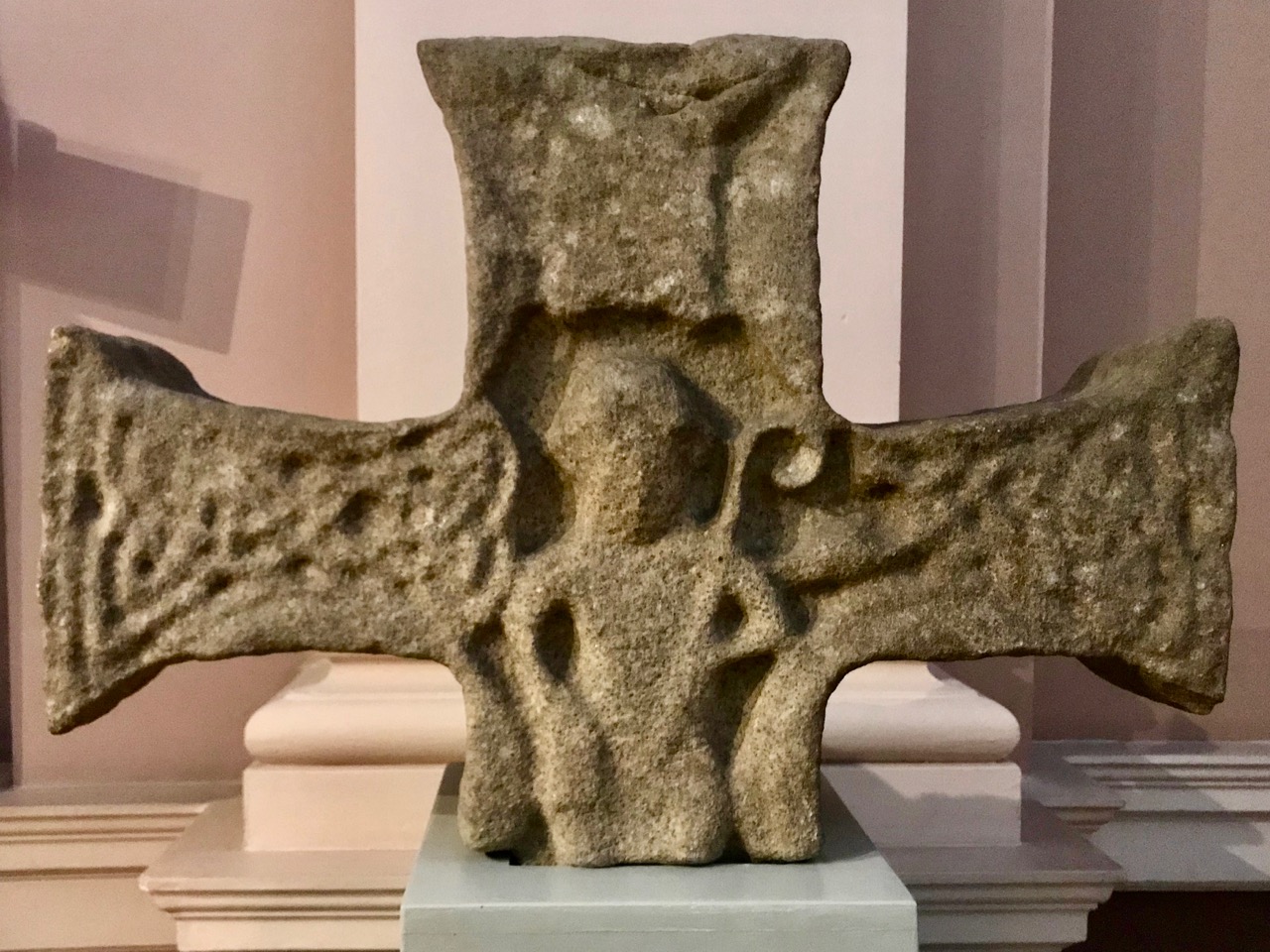
Medieval cross head, in the National Museum, Dublin

One version of the Tripartite Life suggests that both sisters were kidnapped from Britain along with St Patrick and returned to Ireland with him when he set out on his missions. A 17th century Irish hagiographer, John Colgan, collected fragments of information pertaining to Darerca . . . from Irish tradition . . . He asserted that St Darerca may have had as many as seventeen sons between two husbands, and that all of them became bishops. He also states that, according to tradition,  many of these became saints:
. . . By Darerca’s first husband, Restitutus the Lombard, she bore St Sechnall of Dunshaughlin; St Nectan of Killunche, and of Fennor (near Slane); of St Auxilius of Killossey (near Naas, County Kildare); of St Diarmaid of Druim-corcortri, in addition to five other children. By her second husband Conis the Briton, she bore St Reat, St Nenn, and St Aedh; ancient Irish authors also attributed her motherhood to St Crummin of Lecua, St Miduu, St Carantoc, and St Maceaith . . .

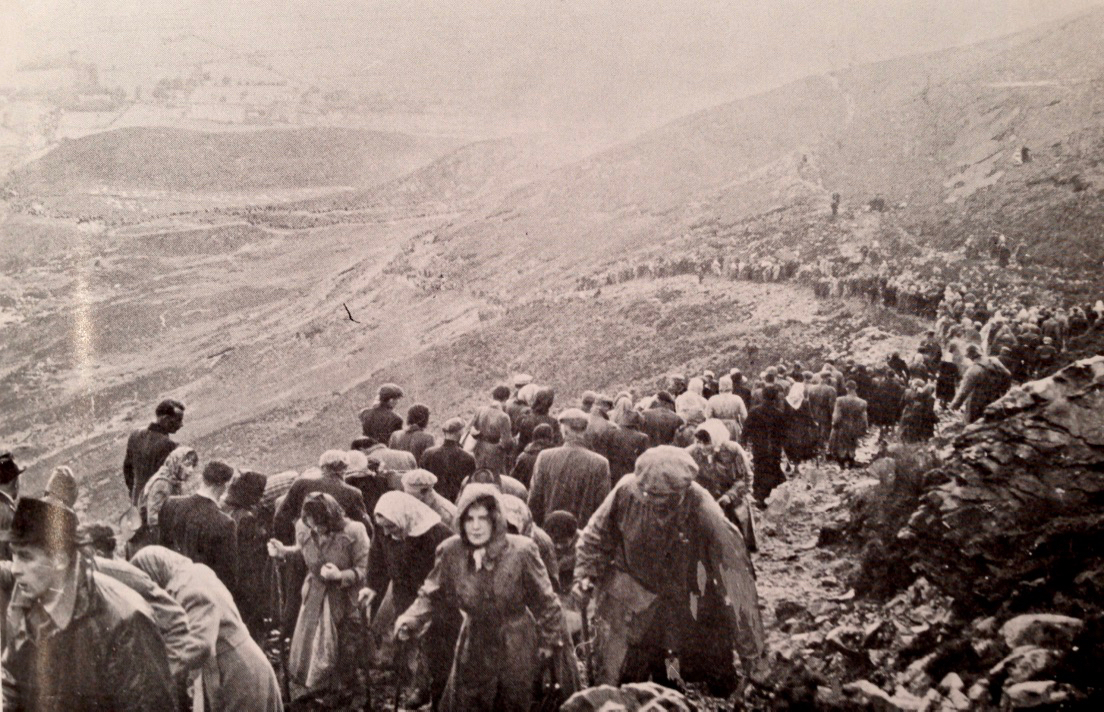
A 1950s photograph from Tomás Ó Muircheartaigh showing the annual pilgrimage to the summit of St Patrick’s holy mountain in Co Mayo, Croagh Patrick

St Darerca’s second husband, Conis, was said by some to be the King of the Bretons, although others only suggest that, by him, she gave birth to Gradlon the Great, who became King of Brittany. It’s really surprising (and a shame) that we don’t know more about Darerca: perhaps she has just always been overshadowed by her famous brother. As well as – perhaps – seventeen sons, she is supposed to have had four daughters, all of whom were also connected with the spread of Christianity in Ireland. Only two are named: St Eiche of Kilglass and St Lalloc of Senlis.

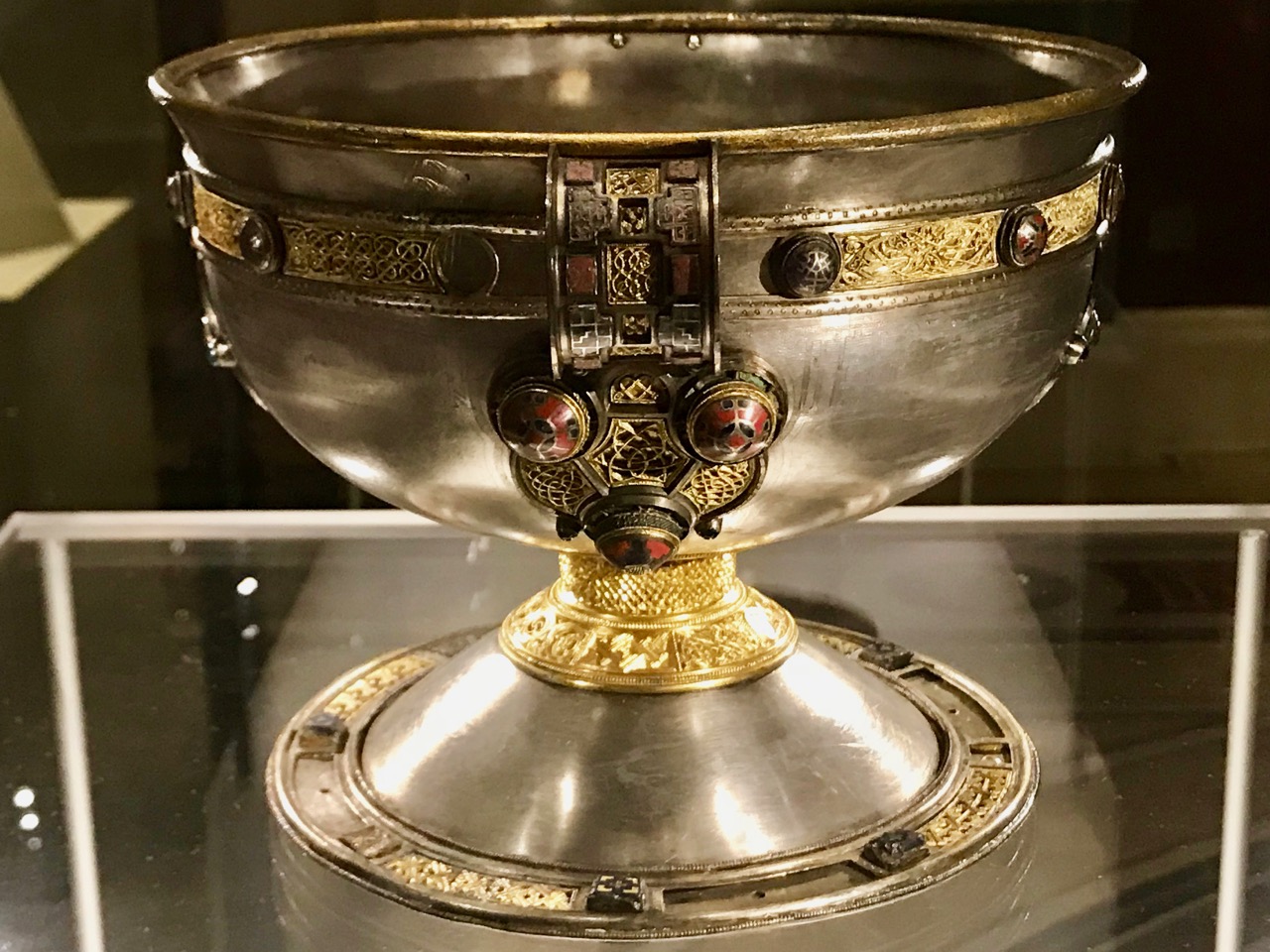
The Ardagh Chalice, National Museum, Dublin

There is a reference to Darerca as having another name: Moninna, said to have founded a convent at Killeevy, Co Armagh which was second in importance only to that at Kildare. A curious story is told to account for the change of her name to Moninna. The Irish commentary is translated into English by Whitley Stokes:

. . . Darerca was her name at first. But a certain dumb poet fasted with her, and the first thing he said after being miraculously cured of his dumbness was minnin. Hence the nun was called Mo-ninde, and the poet himself Nine Ecis . . .

Moninna studied theology, established convents in Ireland, Scotland and England and travelled to Rome. Perhaps most interestingly she is also known by the name Liamain, and there is a connection with an ancient stone on the island of Inchagoill in Lough Corrib. The ‘Pillar Stone’ on that island is known as Lugnaedon Pillar, a piece of Silurian grit stone, about two feet high with an incised cross on the north side, and two such crosses on each of the other sides. The inscription on the stone translates as . . . The stone of Lugnaedon, son of Limenueh . . . or Liamain. The pillar is said to originate in the 6th century, and would therefore be the oldest Christian inscribed stone in Ireland.

Two photographs of the 6th century Lugnaedon Pillar on Inchagoill Island. It is also known as the Rudder Stone because of its shape

The Benedictines say that Darerca’s name is derived from the Irish Diar-Sheare which means ‘constant and firm love’. And, finally, a piece of local folklore say that St Darerca blessed a poor man’s beer barrel so that it provided an endless supply of beer ever after!

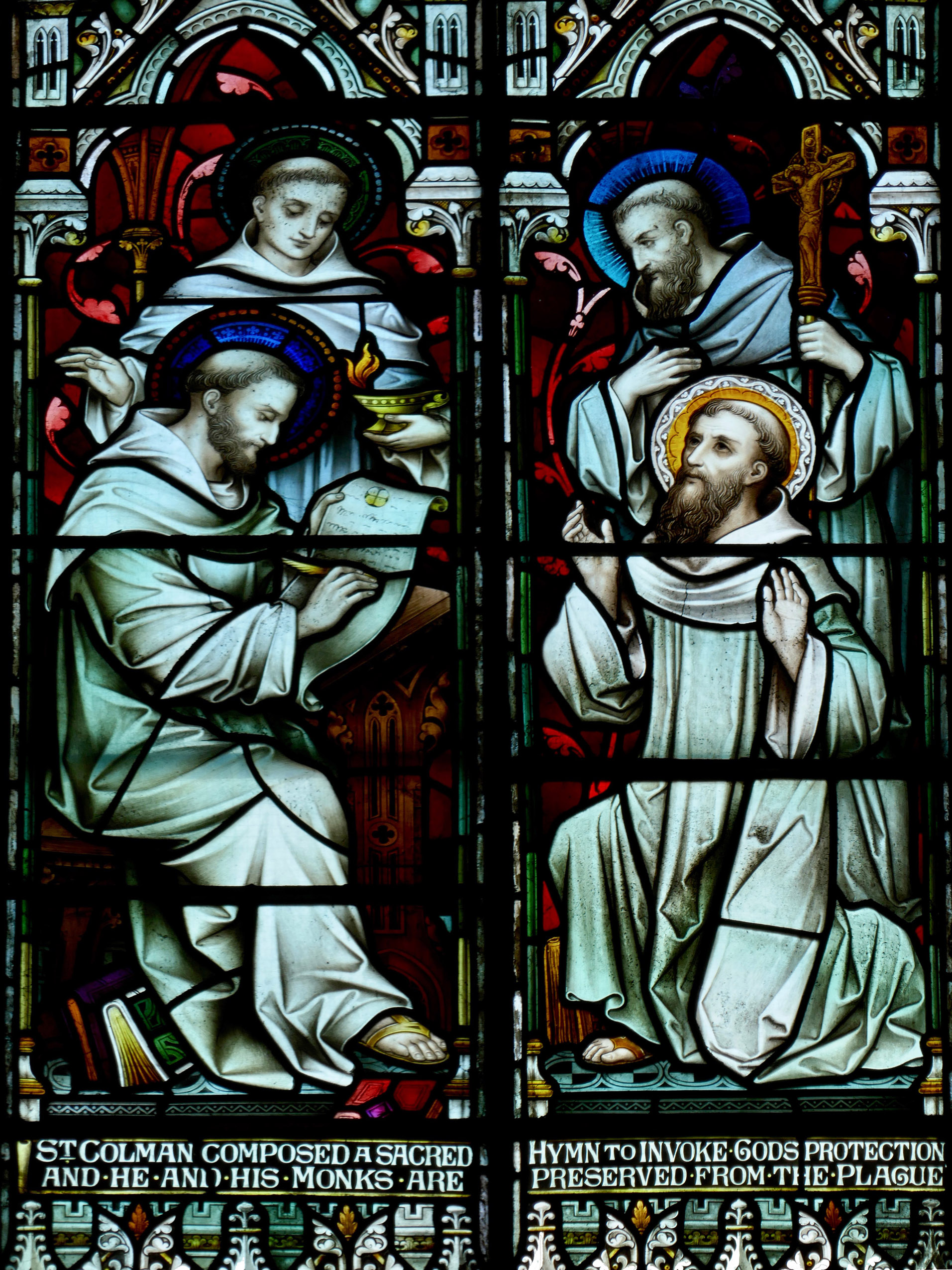
Lives of the Saints – a detail from a stained glass window by George Walsh in St Kentigern’s Church, Eyries

So there you have it – scraps gleaned from many sources, some of which are not named – from which we can piece together an incomplete picture of an Irish saint who may well have done as much in her day for Christianity in Ireland as her famed brother. How about giving Patrick a rest next year and, instead, celebrating the day of St Darerca?

Kilkieran High Crosses – Medieval Gems

You will remember Saint Ciarán of Saigir, who was born on Cape Clear, perfectly framed in our view from Nead an Iolair? He was known as the ‘First Saint of Ireland’, preceding Saint Patrick by almost a century, and also as one of the Twelve Apostles of Ireland. A manuscript dating from 1629 and housed in the Bibliothèque Royale, Brussels, tells how the Twelve Apostles were educated together in Clonard, Co Meath – the most important monastic school in early Christian Ireland – under Saint Finian. It is said that ‘ . . . there were no fewer than 3,000 pupils getting instruction at one time in the school in the green fields of Clonard. The master excelled in exposition of the Sacred Scriptures, and to this fact must be mainly attributed the extraordinary popularity which his lectures enjoyed. Finnian’s gift for teaching and his absolute dedication to the ascetic ideal, inspired a whole generation . . . ‘ St Finian achieved the age of 140 years himself, while Ciarán – who went off to Cornwall where he is known as St Piran (you will also remember) – lived to be 206 before falling into a well on the way home from a wild party. There’s a lot to be said for being a saint in those days.

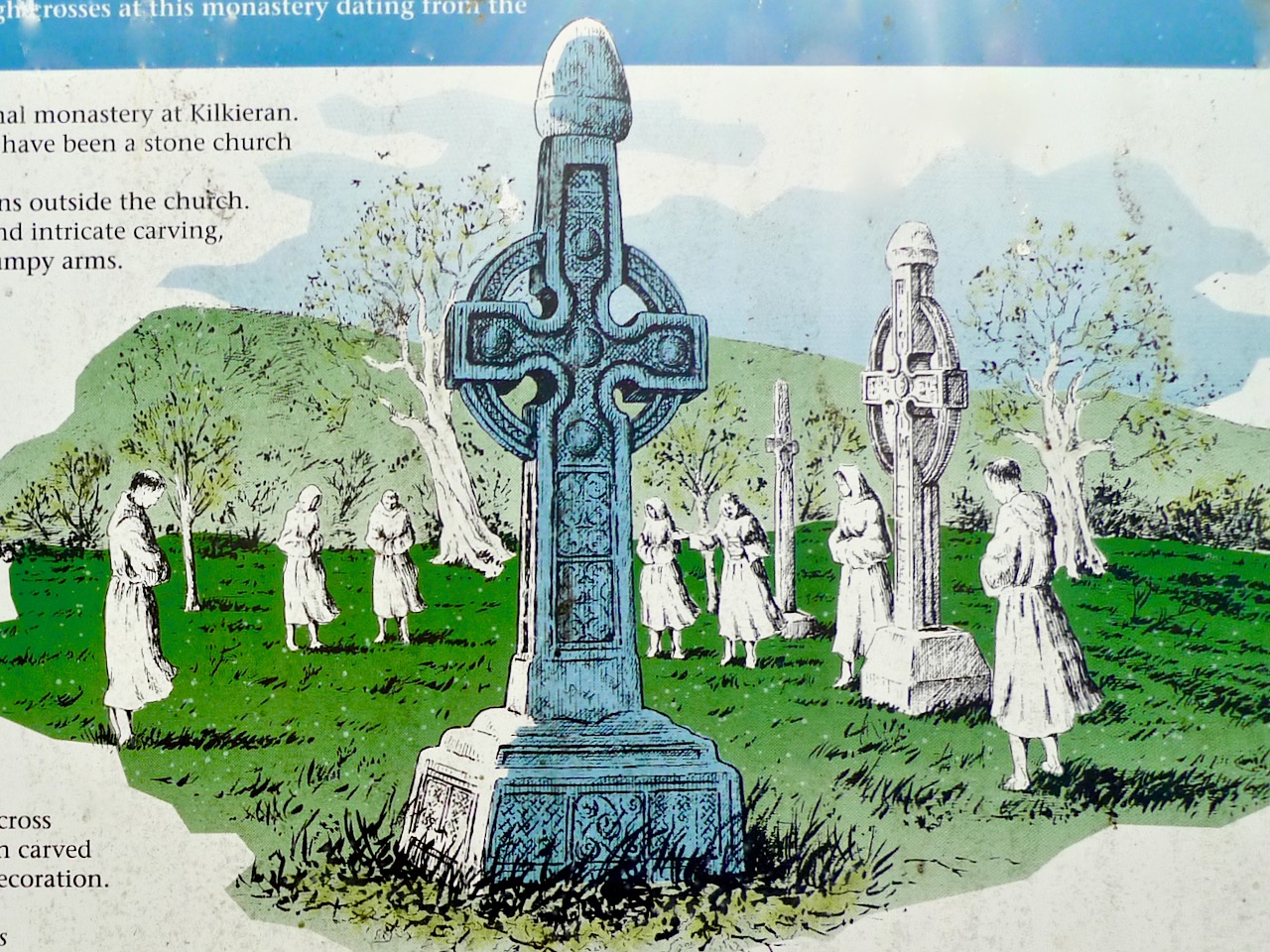
These are extracts from the OPW signboard located at the site

Why are we revisiting St Ciarán? Well, we’ve just past March 5th, which is his day, so we have to celebrate him. To do that we will go off to County Kilkenny, where there is a very important medieval site, noted for its high crosses but with plenty more to see: it’s a 45 minute drive north of Waterford city. The site, known as Kilkieran (Kieran is an alternative anglicised spelling, prefixed by ‘Kil’ which means ‘church of’) was once home to a monastery founded by St Ciarán, and the high crosses date from the 9th century.

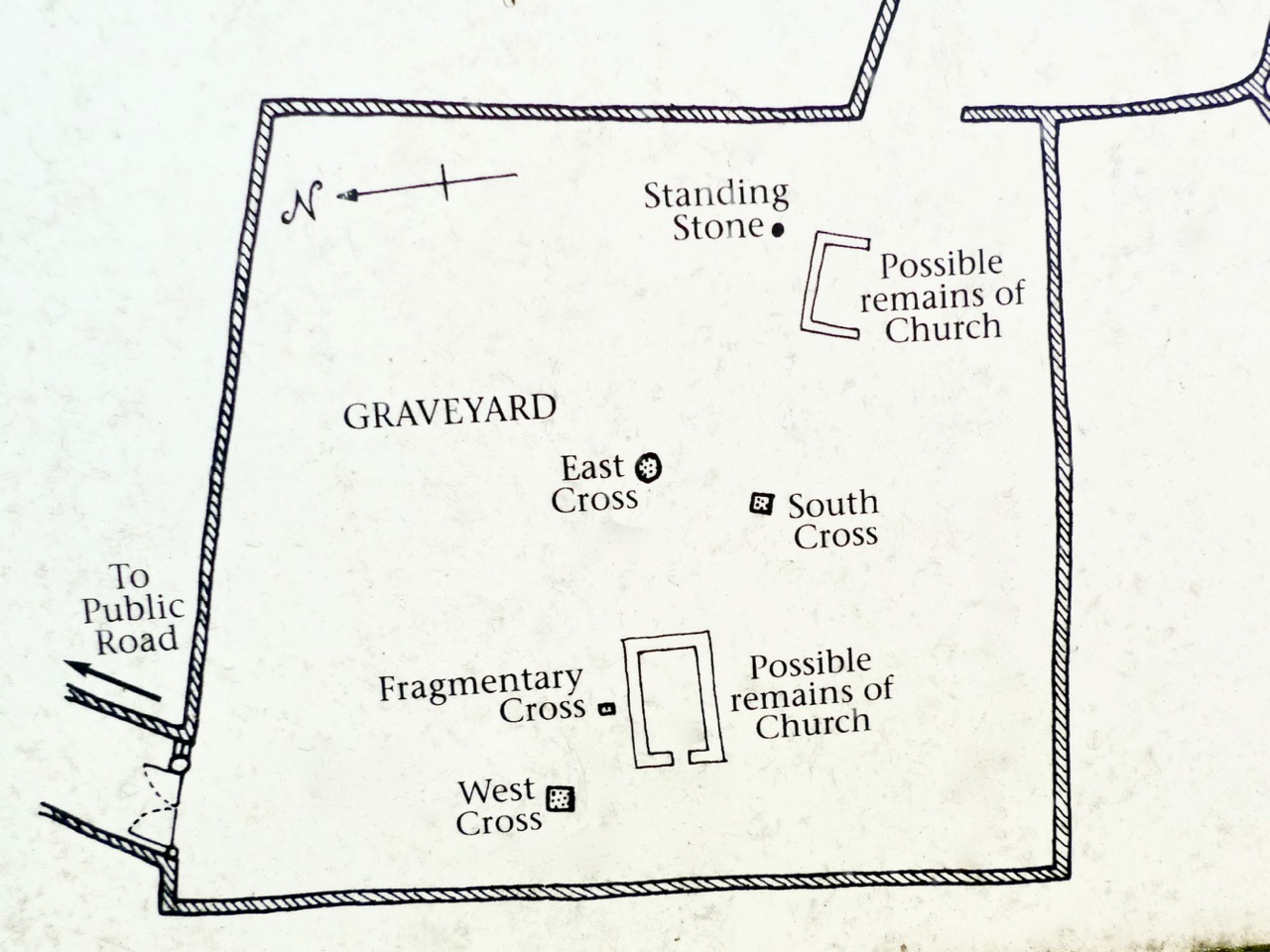
The West Cross has animal motifs and some unusual interlacing carved on the various elements; below is the site plan included on the OPW signboard

To be able to see exquisite artistic medieval carved stone from 1200 years ago still standing where it was first placed is remarkable. In other discussions on high crosses and similar works of expertise we have asked whether these gems should be preserved out of the elements – as some are – to prevent the deterioration which is undoubtedly taking place. While I tend to favour that approach – and it seems to me to be particularly appropriate where they are replaced by high quality replicas ‘in the field’ – there is something very special about visiting intact sites like this one. The whole conservation process is full of dilemmas.

The enigmatic East Cross – unlike any other Irish High Cross

There were once four crosses at Kilkieran. Three are still complete and in reasonable condition, although much weathered, while the fourth is just the stump of a shaft. One –  the East Cross – is unusual: it is slender, largely undecorated, with minimal crosspieces and no roundel. There’s a nice little tale about it: the cross was attacked and destroyed by iconoclasts, but was painstakingly reconstructed in the mid-19th century by blind local stonemason Paddy Laurence, who had lost his sight while working on the construction of the Palace of Westminster in London: the old Palace had been ravaged by fire in 1834 and was rebuilt to its present design under the auspices of Charles Barry and Augustus Pugin.

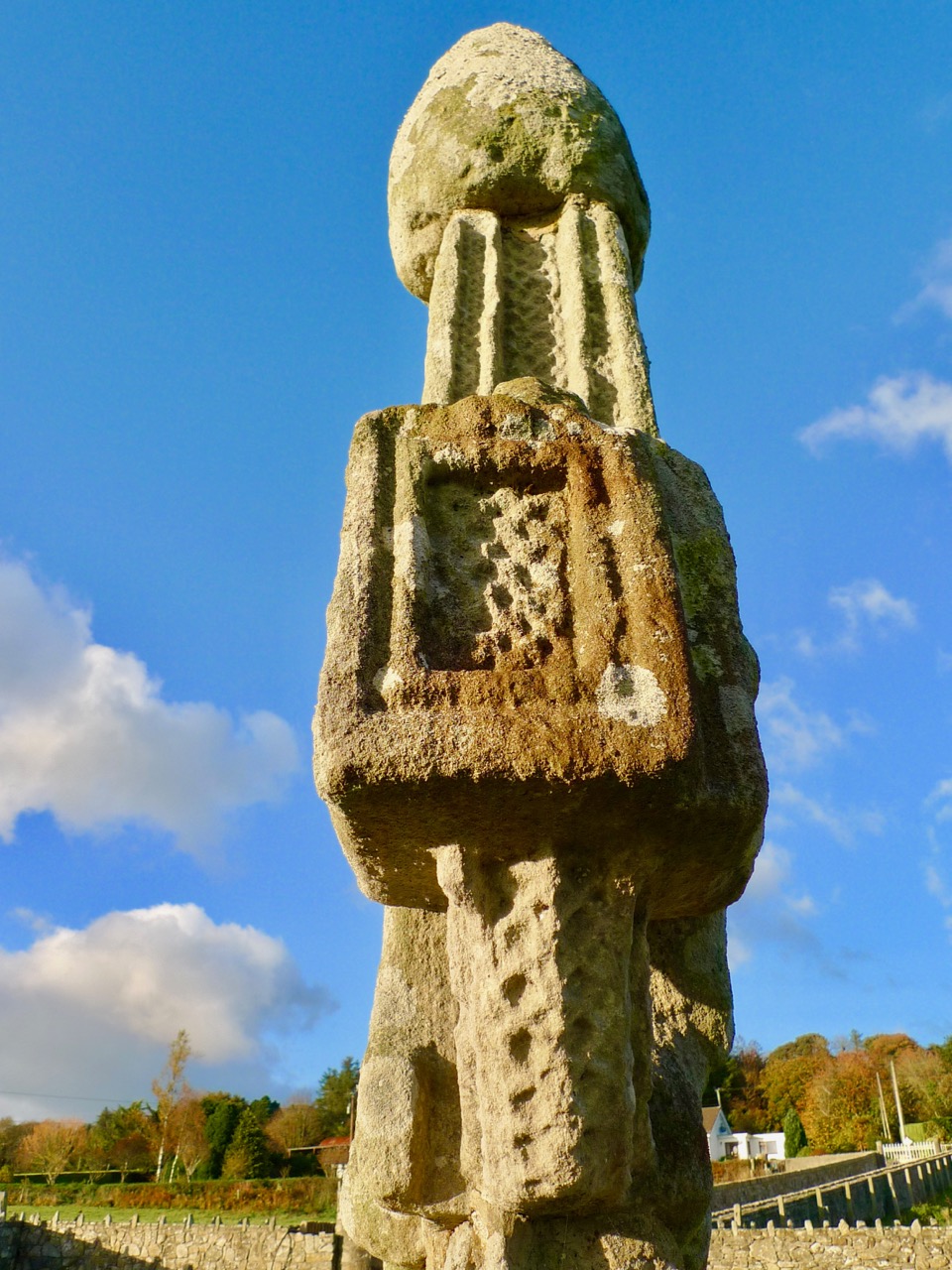
The plain South Cross: the large, acorn-shaped capping is found on other crosses in the ‘Ossory Group’

The high crosses at Kilkieran are simpler and less decorated than many others, but have a great dignity, especially in the context of the burial ground which has grown up around them. We were fortunate to visit them on a really clear day, when the shadowed relief stood strongly out.

A still-visited Holy Well and bullaun stones are found on the old monastery site

You will want to go to Kilkieran yourself: when you do, don’t miss some fine ancient grave slabs and the nearby Holy Well. Then you should take yourself off to the other High Cross sites in what is known as the ‘Ossory Group’, beginning with nearby Ahenny. I’ll be writing about them all soon.

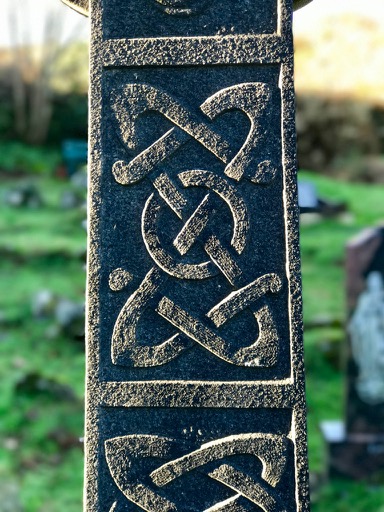
Below – an early carved grave slab on the site, carving on the West Cross shaft, and a detail of the West Cross ring

Viking Traces

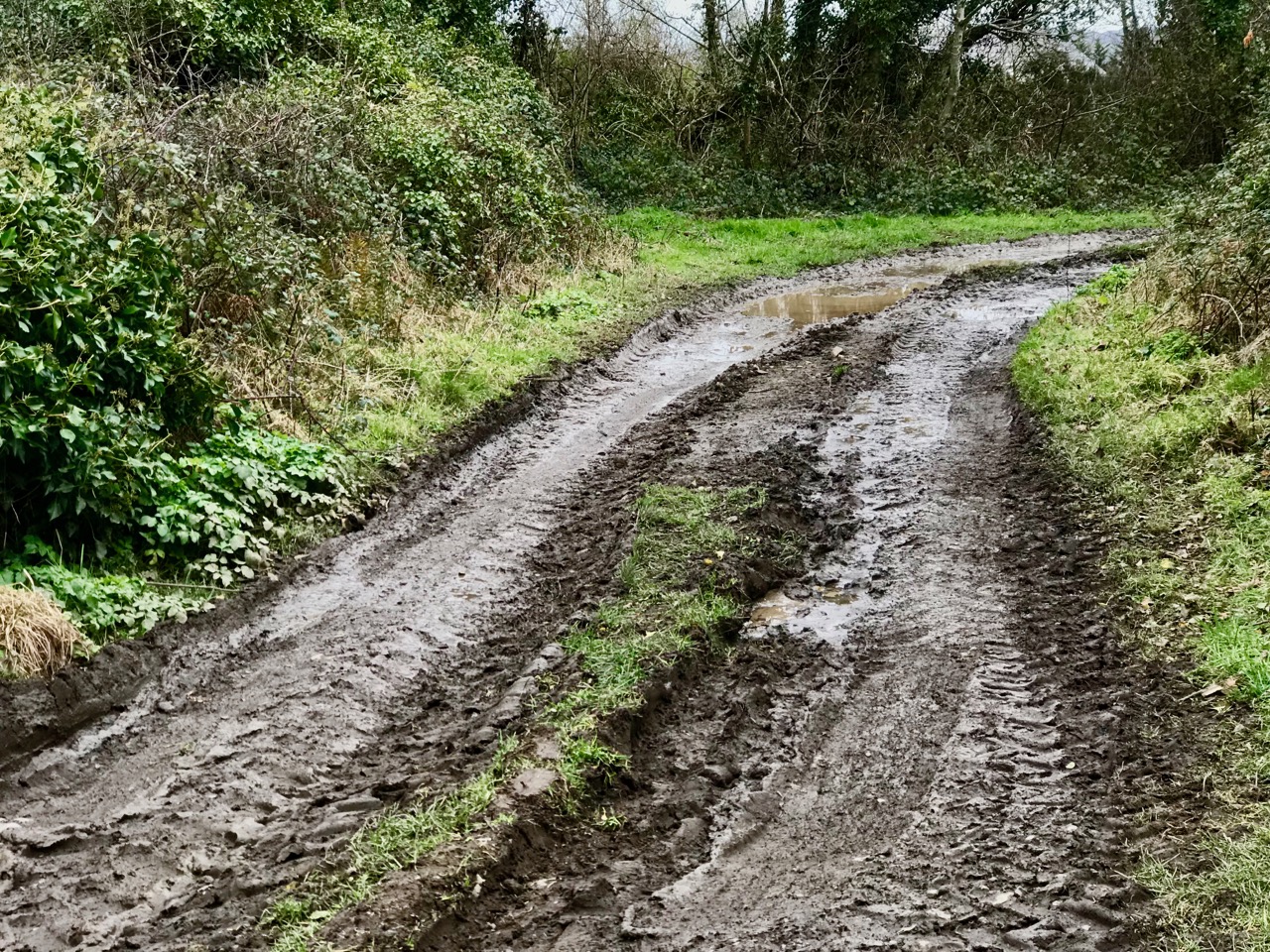
If you want to find some remote Irish history which is a long way off the beaten track, try the city of Dublin! Just a few minutes’ drive from the edge of this bustling metropolis (and down a long, rough and muddy farm track) is a collection of carved stones which have their roots in the time of the Vikings.

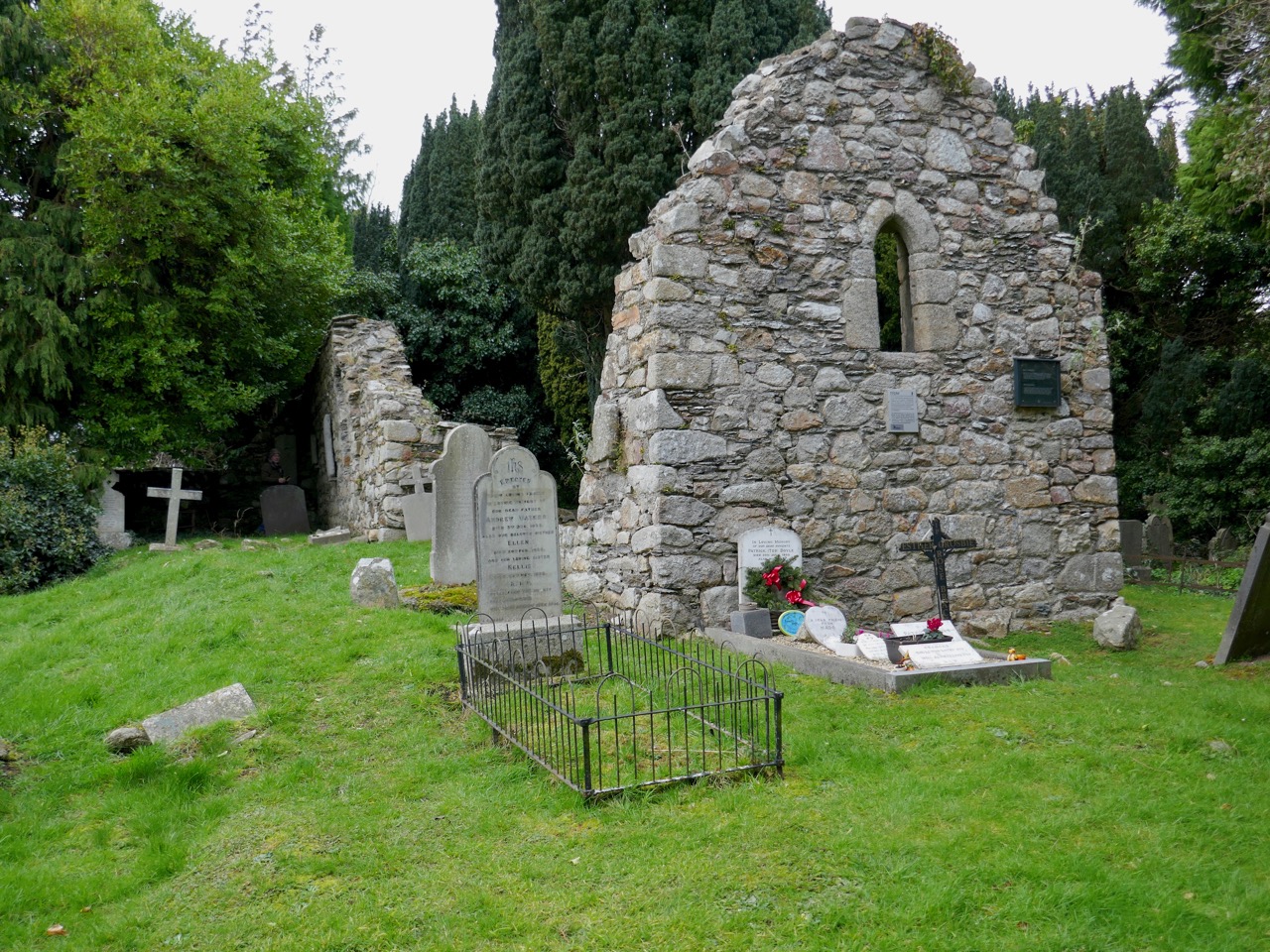
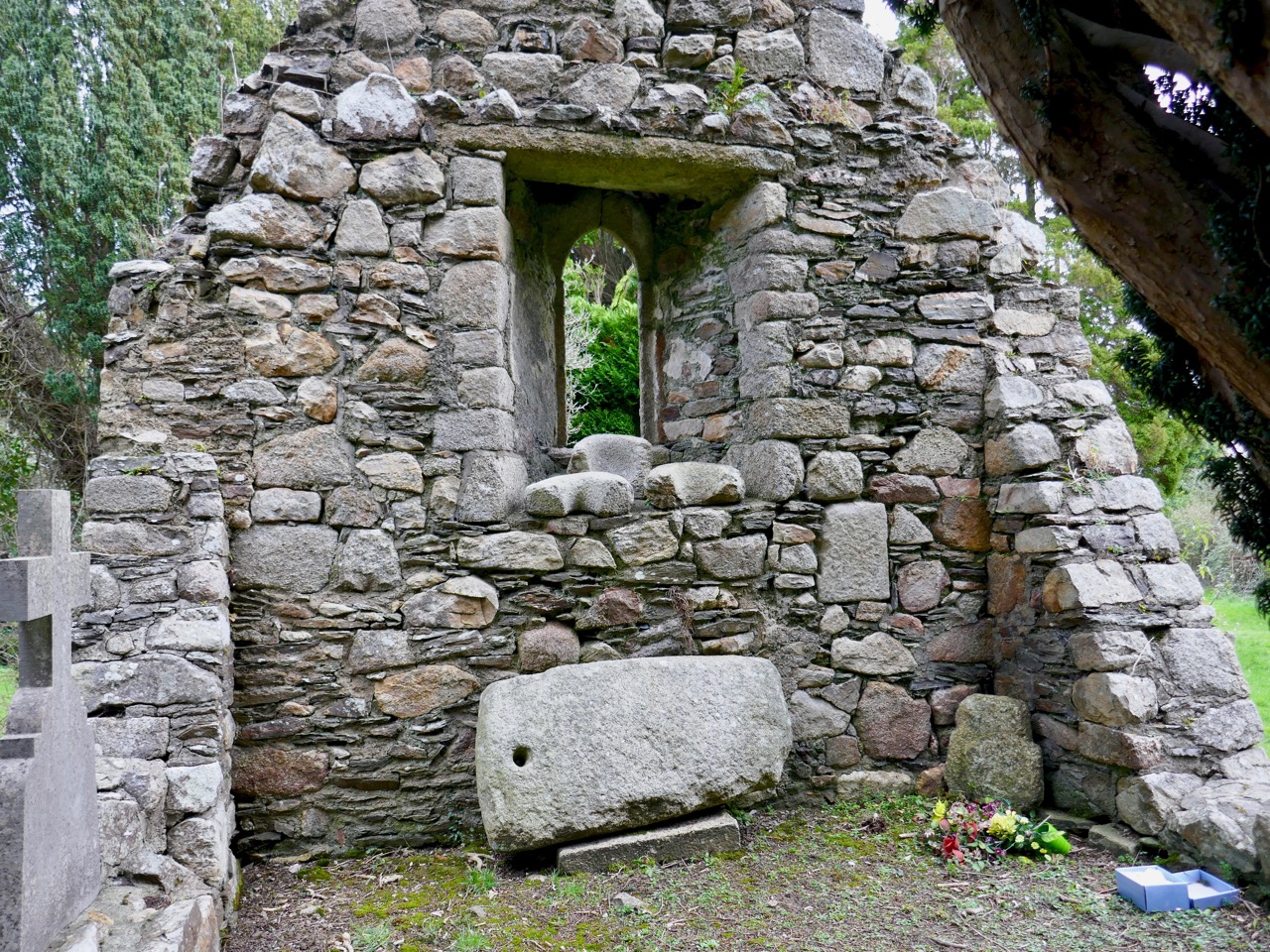
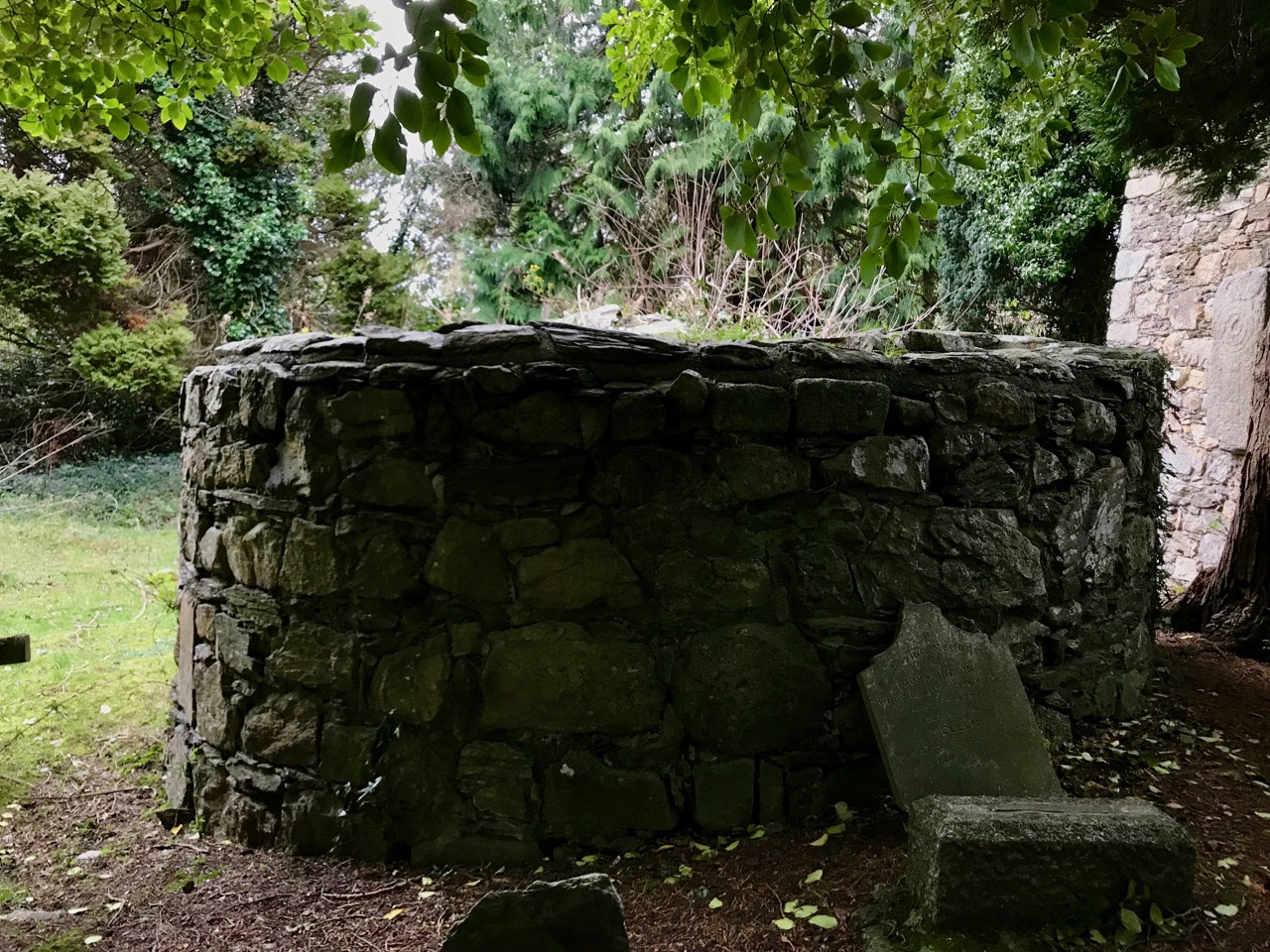
Here, in the barony of Rathdown, the remains of a small ruined church date from the twelfth century, but a monastic settlement was set up long before that by St Comgall of Bangor, who lived from 520 to about 600 AD. There is the stump of a round tower here, known locally as the Skull Hole, as bones from the surrounding graveyard were thrown in here. Some say, also, that it is actually the entrance to an underground tunnel going down to the coast: furthermore, a piper was once seen to enter the tunnel playing his pipes – but was never seen again!

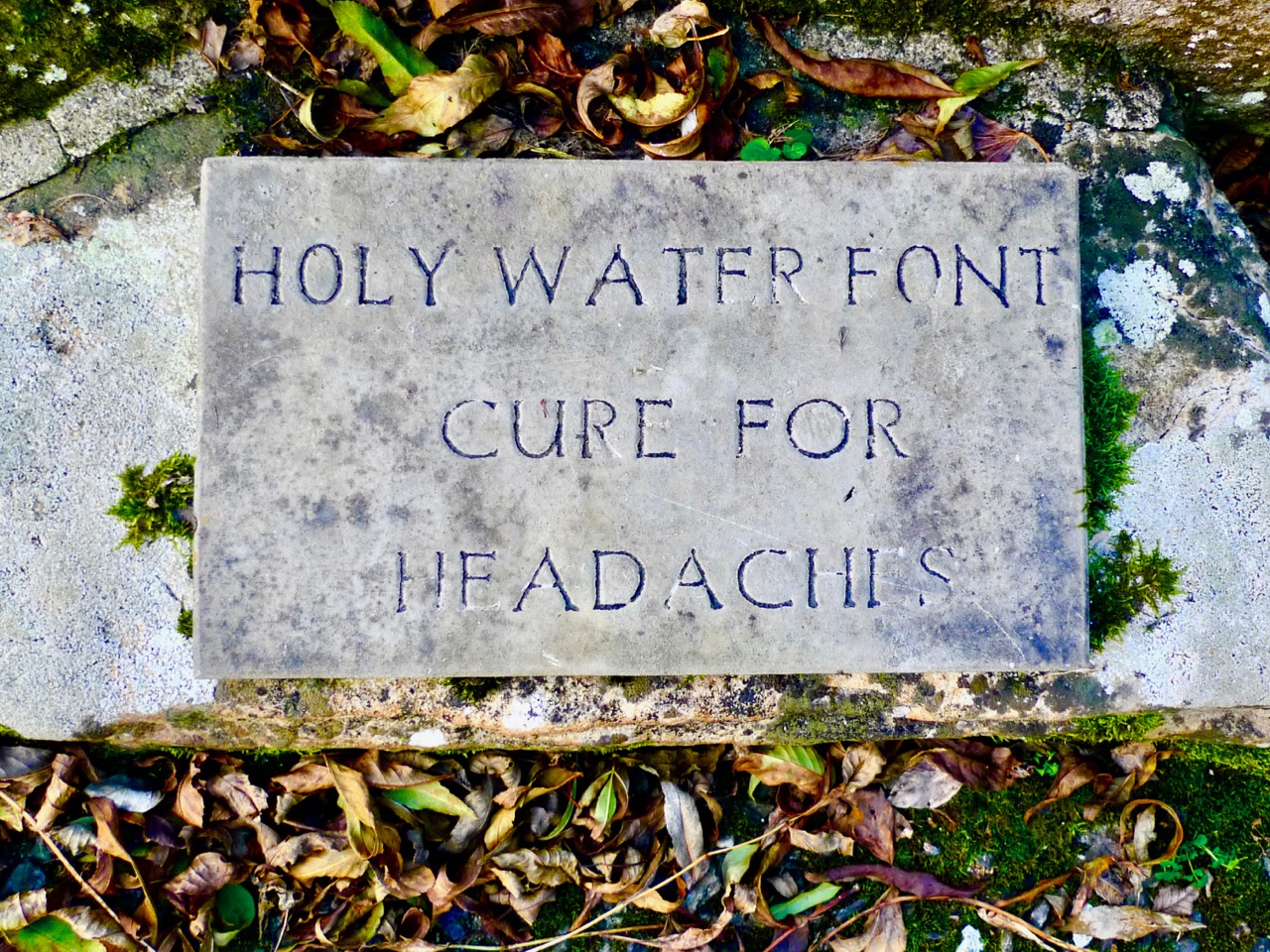
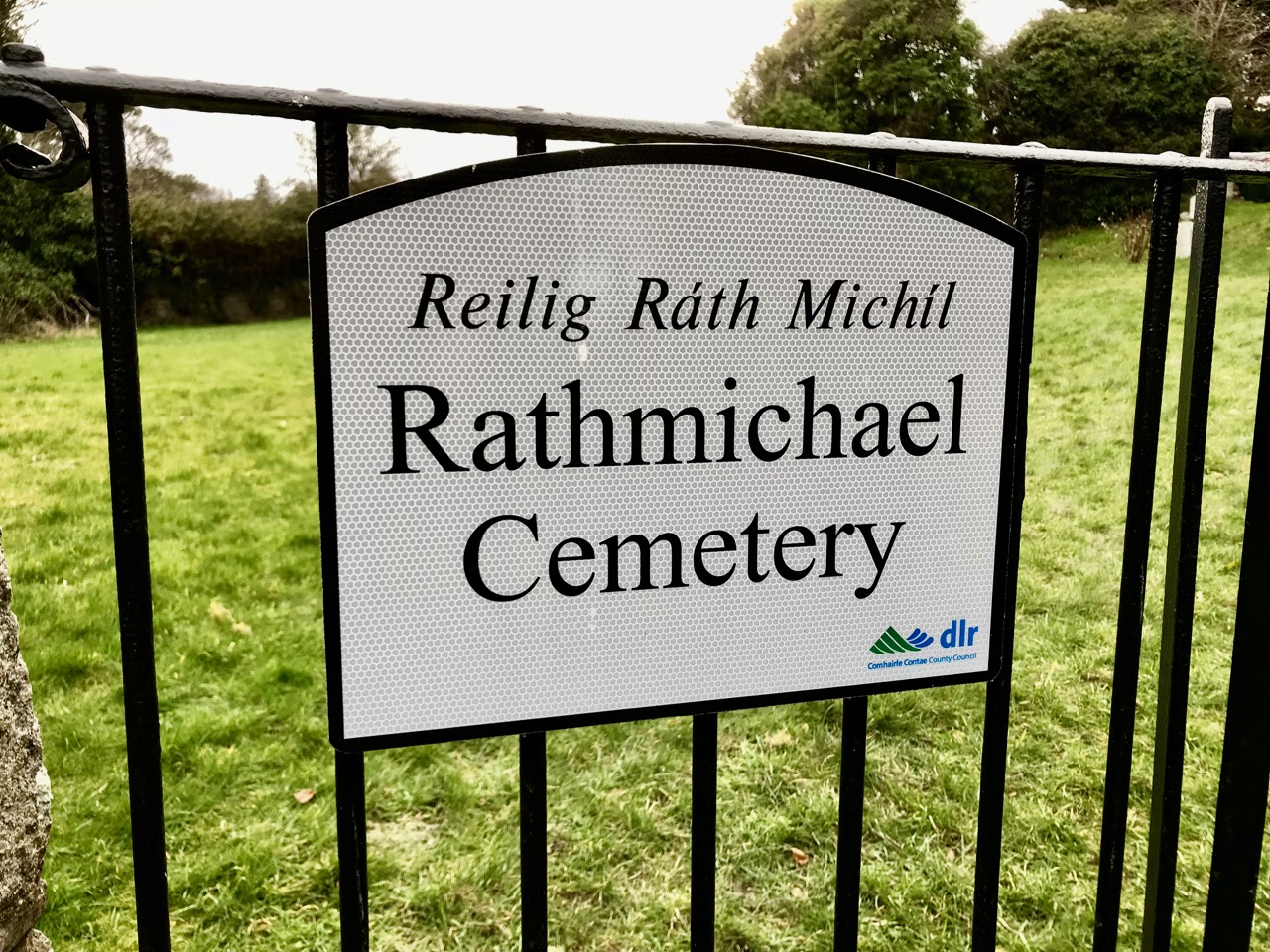
There is another piping tale connected with a nearby site: Puck’s Castle. A fairy piper is often seen jumping from rock to rock while also playing his pipes. We watched and listened, but in vain . . . Here are some of the noteworthy ‘modern’ gravestones in the cemetery at Rathmichael:

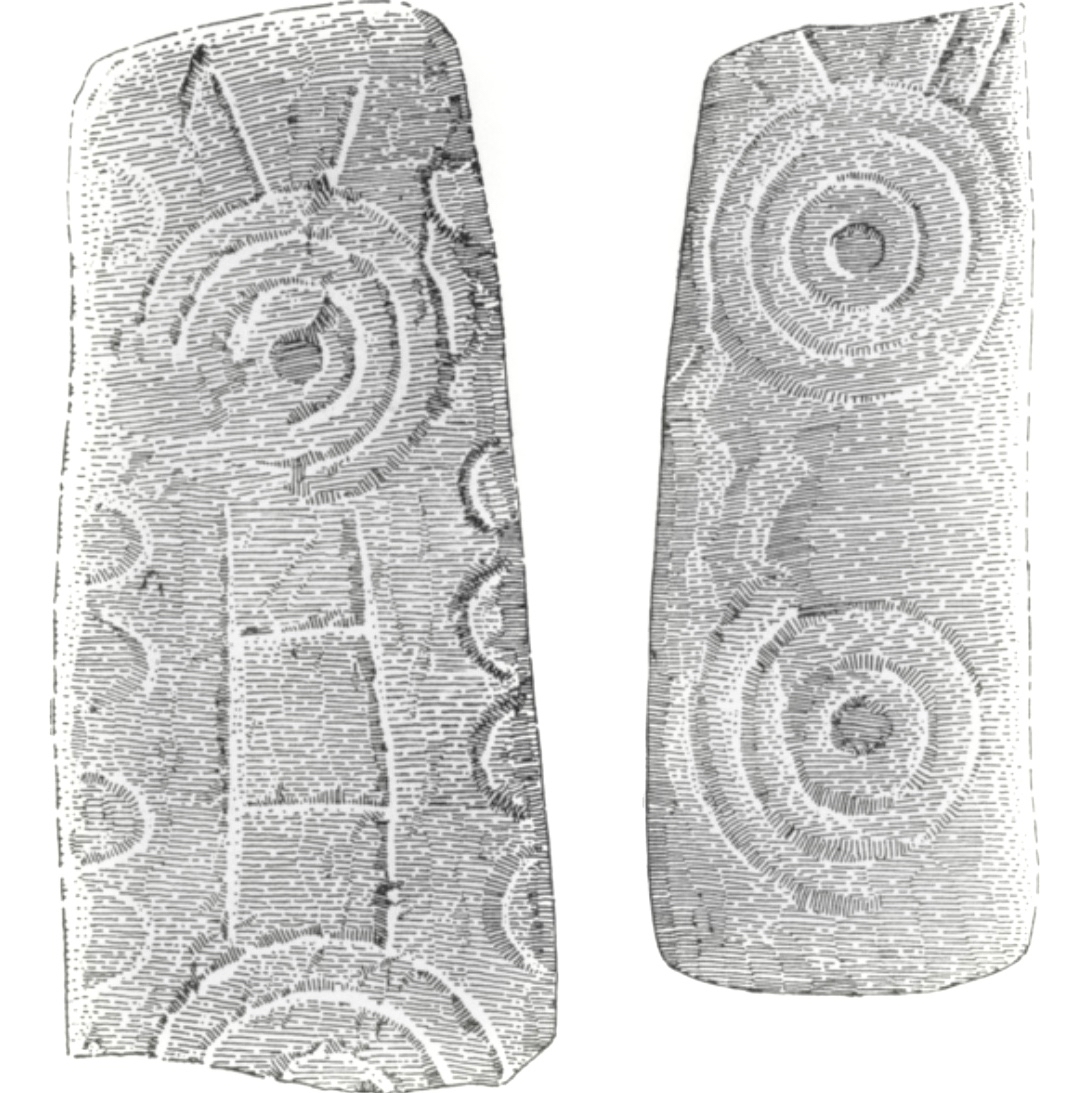
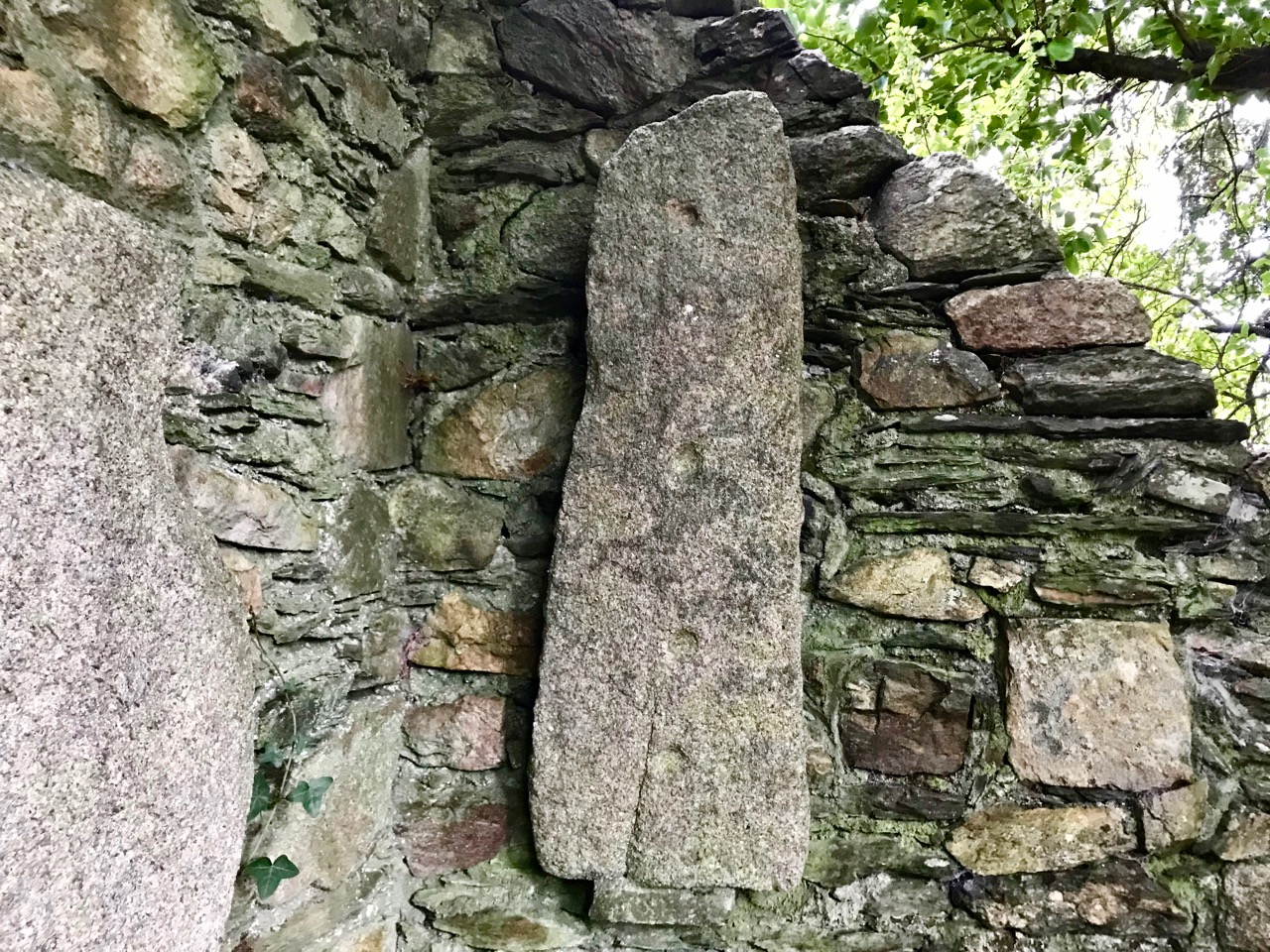
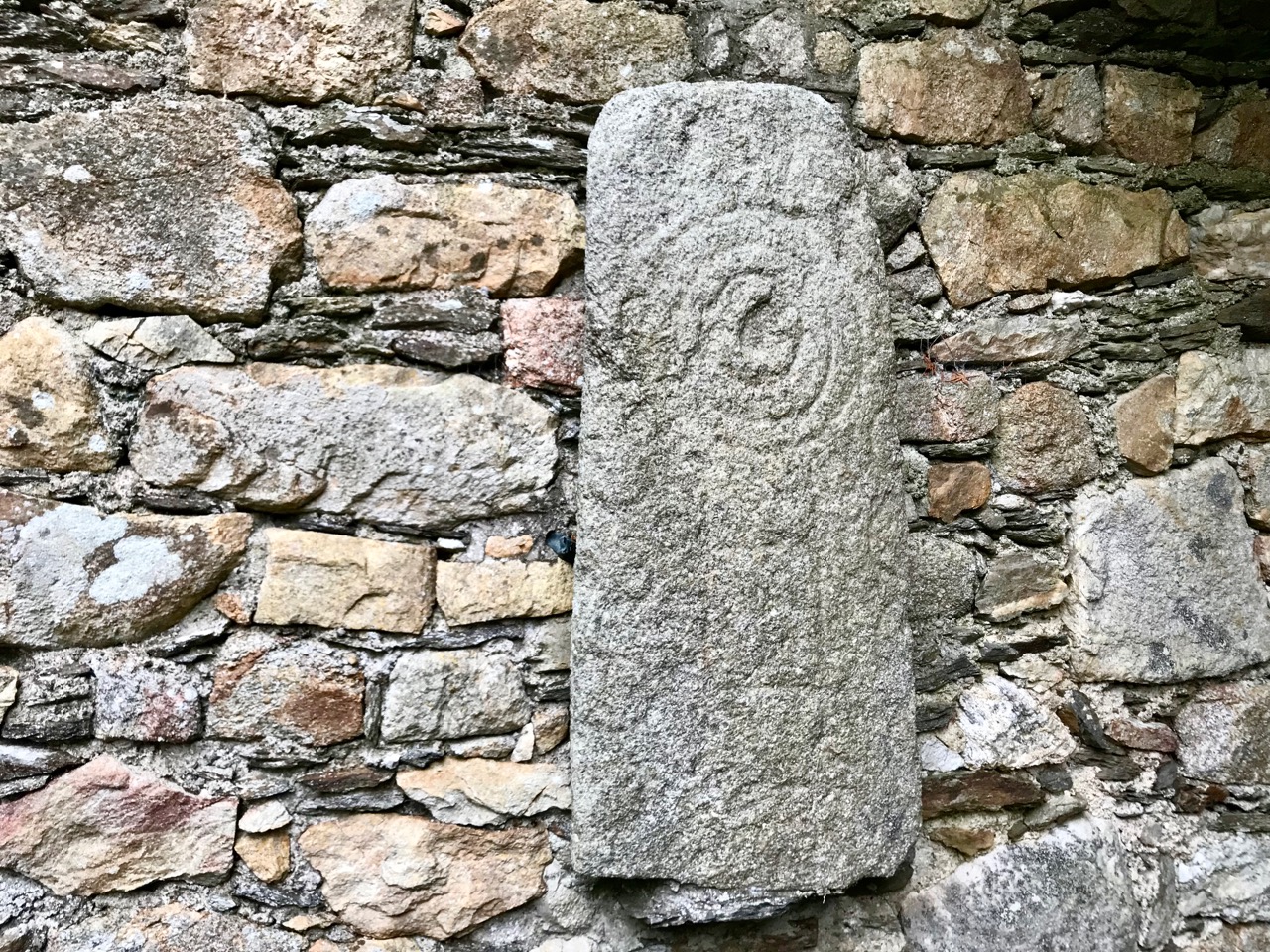
But the real treasure of the place are the carved stones which date from Viking times, and which are probably early Christian grave markers. They are generally known as The Rathdown Slabs. Some of these we would classify as ‘Cross Slabs’, even though, on some, the cup marks and concentric circles make us think of Prehistoric Rock Art. Well worn by time and weather we can still make out the various motifs – and we are fortunate to have good drawn records of these stones dating from a study carried out by Pádraig Ó hÉailidhe, a member of the Society of Antiquaries of Ireland, and published in volume 87 of the Journal of that Society in 1957.

Rathdown Slabs (top to bottom): 1 and 2; 8 and 9; 3 and 4 – as classified by P Ó hÉailidhe in his 1957 study

From around 850 AD we find mention of Norse names: Amláib (Olaf the White) arrived in Dublin in 853 and ruled jointly with Ímar (Norse Ívarr inn beinlausi – ‘Ivar the Boneless’). Amhláib was a Norwegian but Ímar may have been a Dane. Ímar is mentioned as ‘king of all the foreigners in Ireland’ at his death in 873. The grave slabs at Rathmichael probably date from the time when Viking settlements were established in the Dublin area, and – although we tend to think of the Vikings as plunderers of monasteries – it seems that they began to follow Christian practices once they settled in Ireland. 

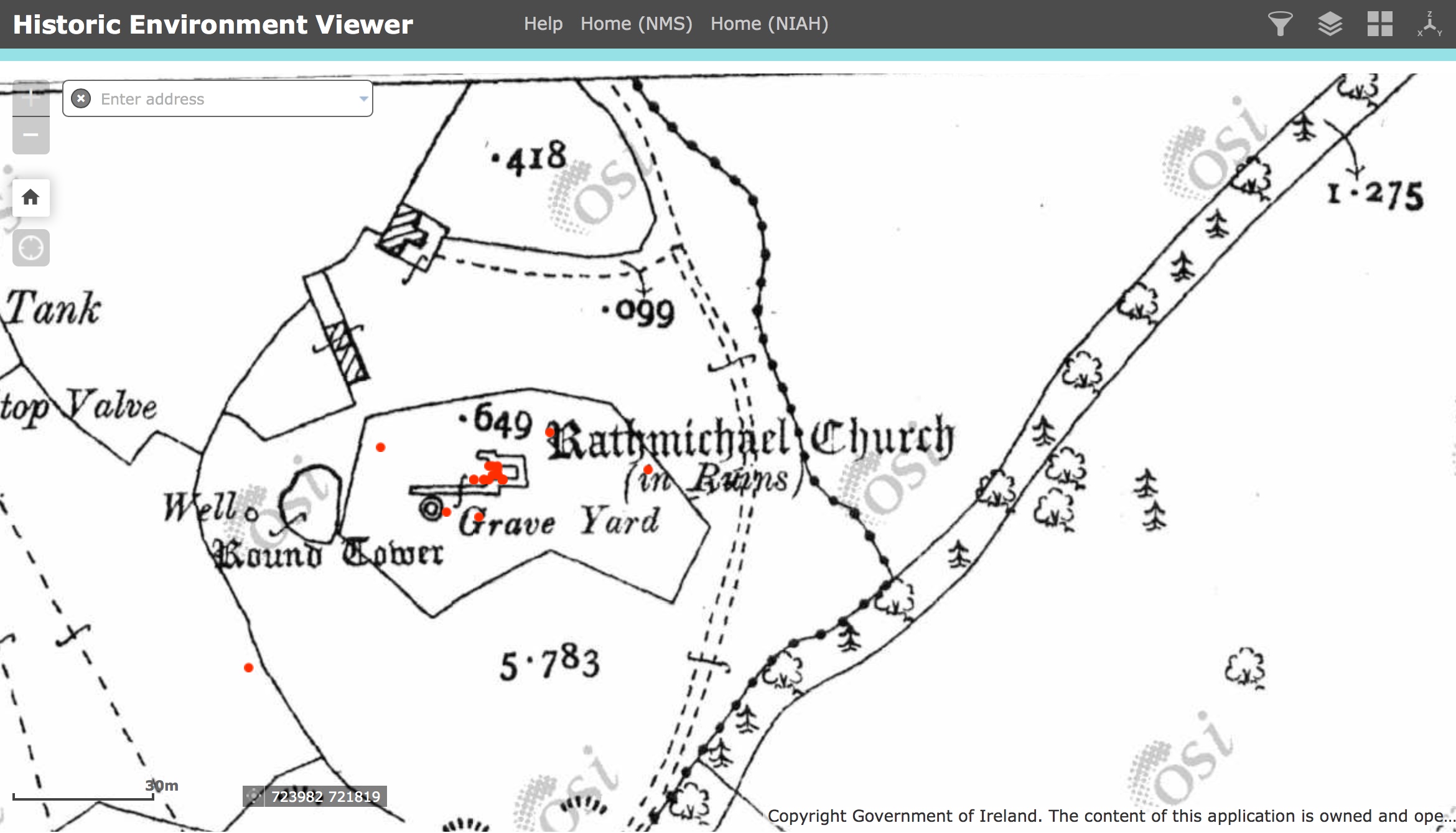
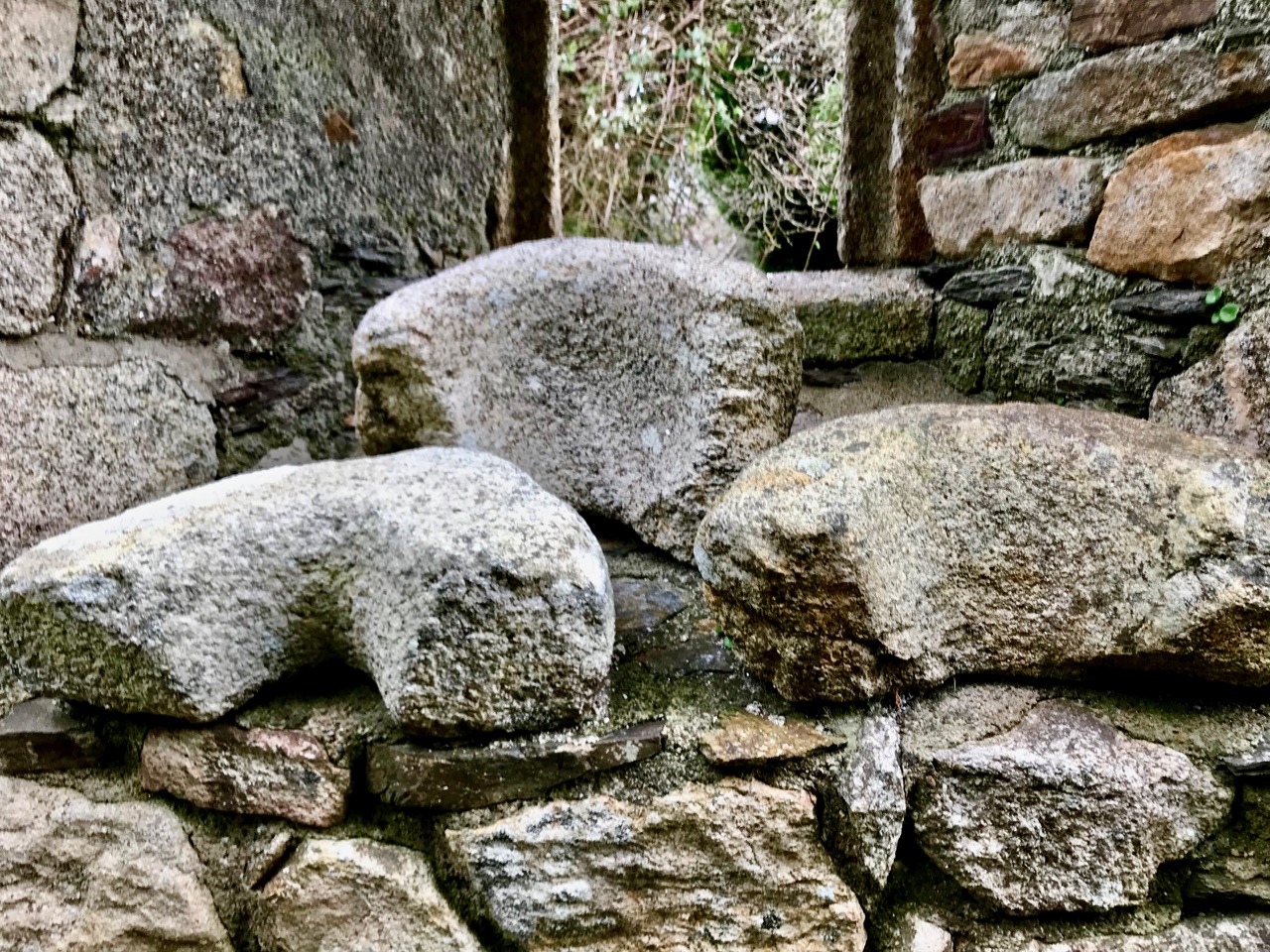
Top – Rathmichael Church with its round tower and Viking graves was established on an ancient Rath or fort, in fact one of the largest in the locality: you can see the probable circular outline of the fort in this extract from the National Monuments Service Archaeological Survey Database; middle – ruins of the medieval church at Rathmichael and, lower – fragments of Bullaun Stones at the church site

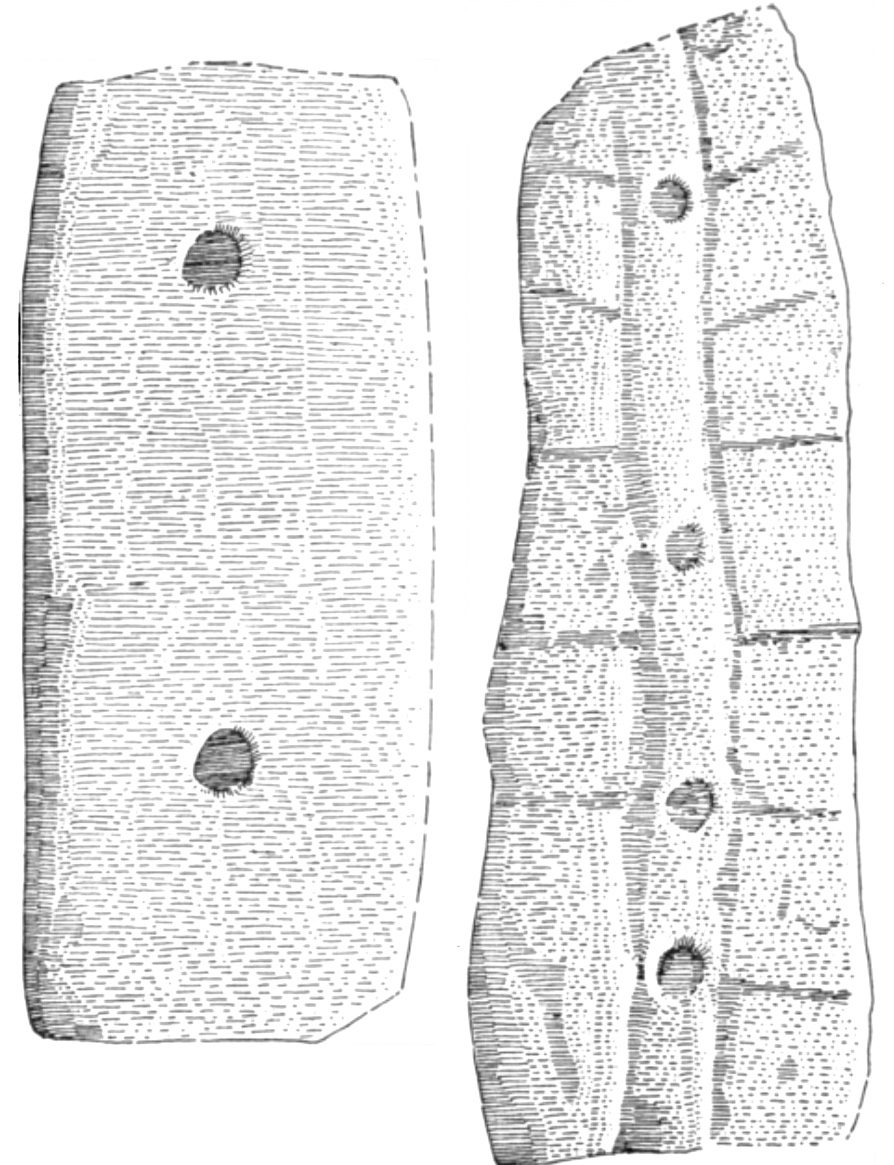
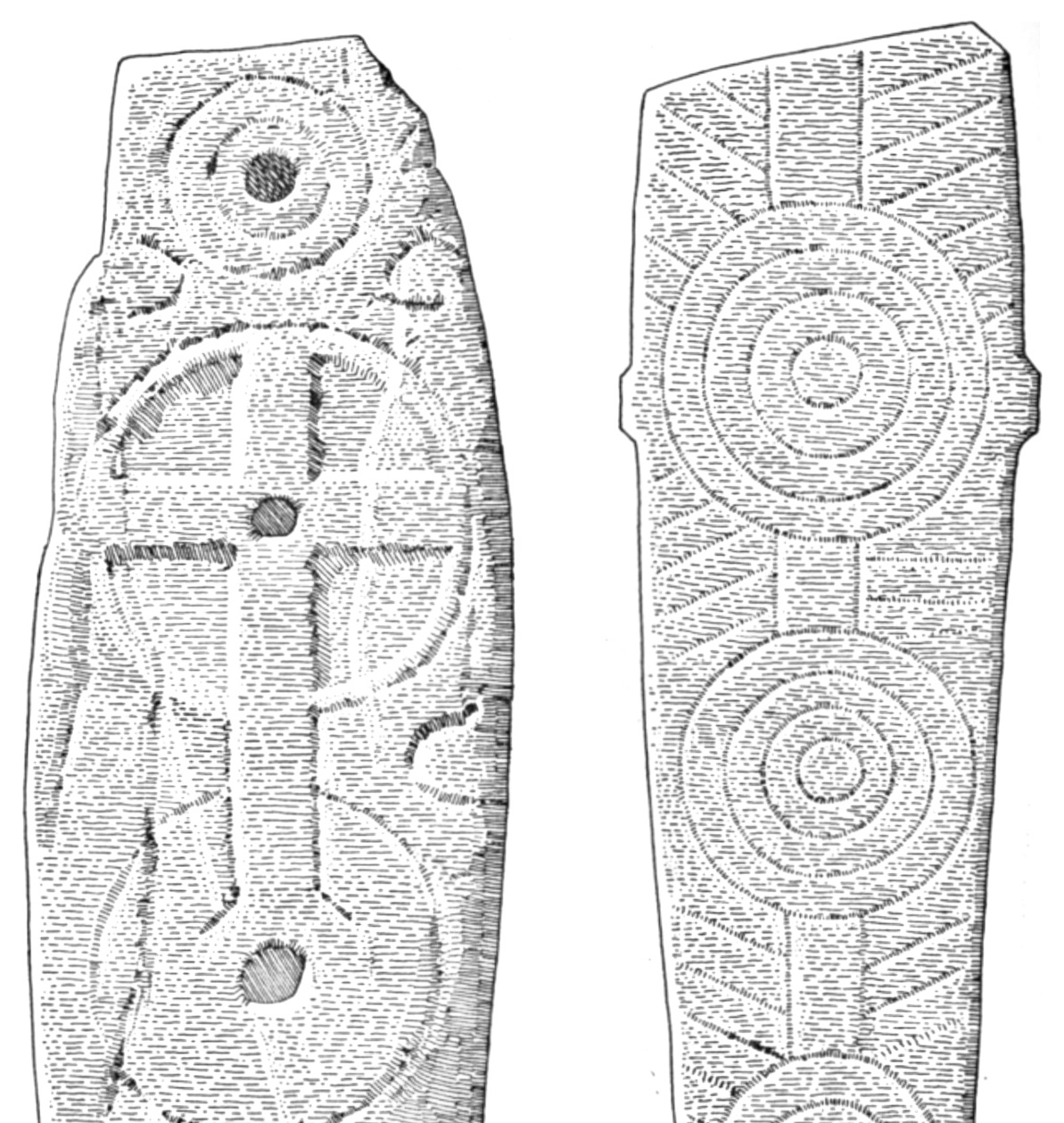
Other – probably related – inscribed slabs from the wider area are recorded by Pádraig Ó hÉailidhe (below): Dalkey Castle Heritage Centre displays one of the finest of them all (left), while the Tully Slab (right) is assumed to have come from another remote church ruin close by – however I cannot find any record of its current whereabouts. If anyone can throw light on this, please let us know.

Dalkey and Tully grave slabs – drawn by Pádraig Ó hÉailidhe, 1950s

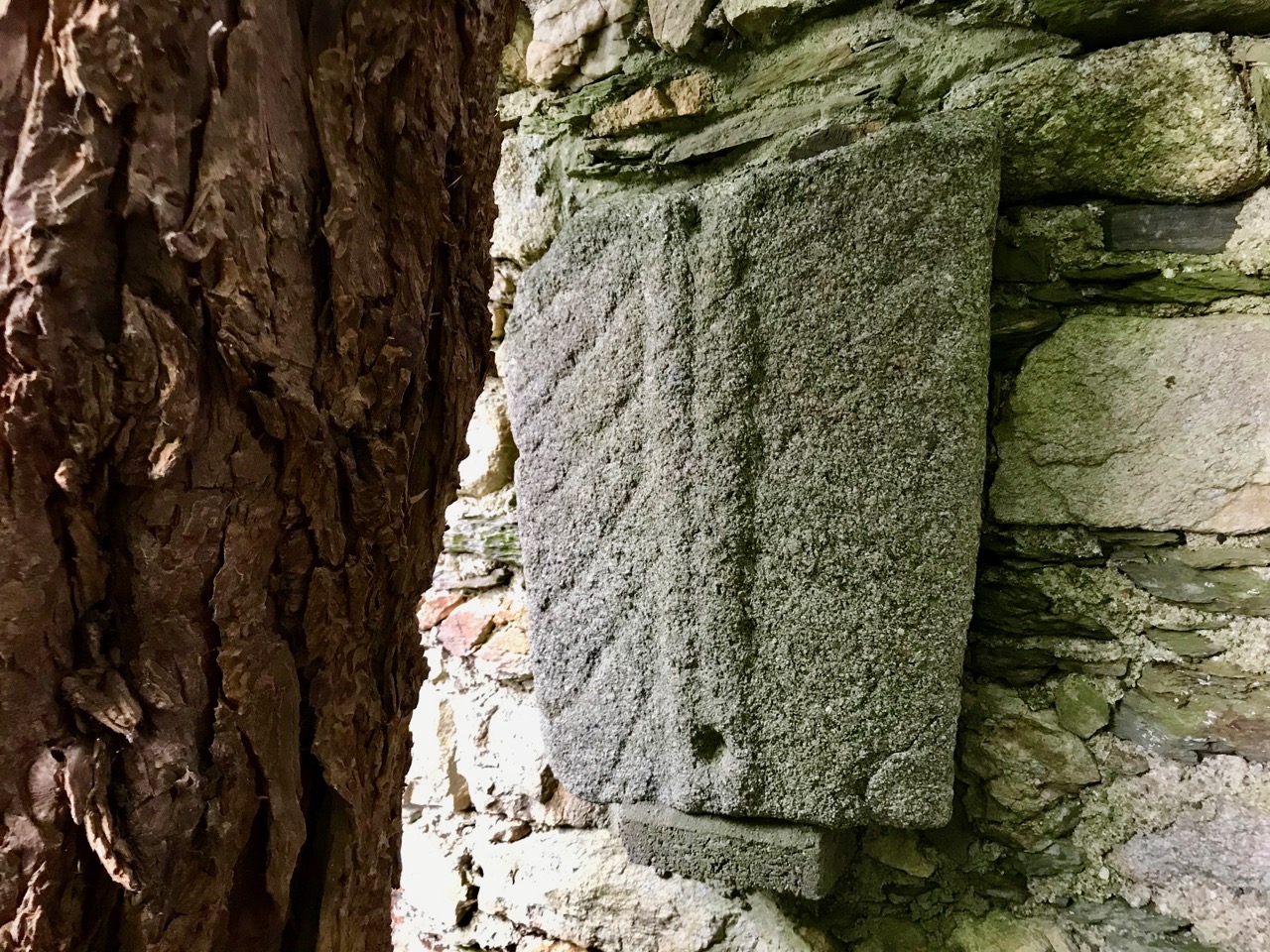
I have used the drawings by Ó hÉailidhe because they are so clear: we visited the Rathmichael site this week and were struck by how faded much of the inscription seems to be. It could be that we were not seeing the carvings in a good, clear light. Worryingly, it may also be that the stones are suffering from accelerated weathering (much as our unprotected medieval high crosses appear to be) due to acid rain and pollution. You can see for yourselves by comparing the drawings above with our own photographs, a selection of which form the tailpiece of this post.

Nicola Gordon Bowe, 1948 – 2018

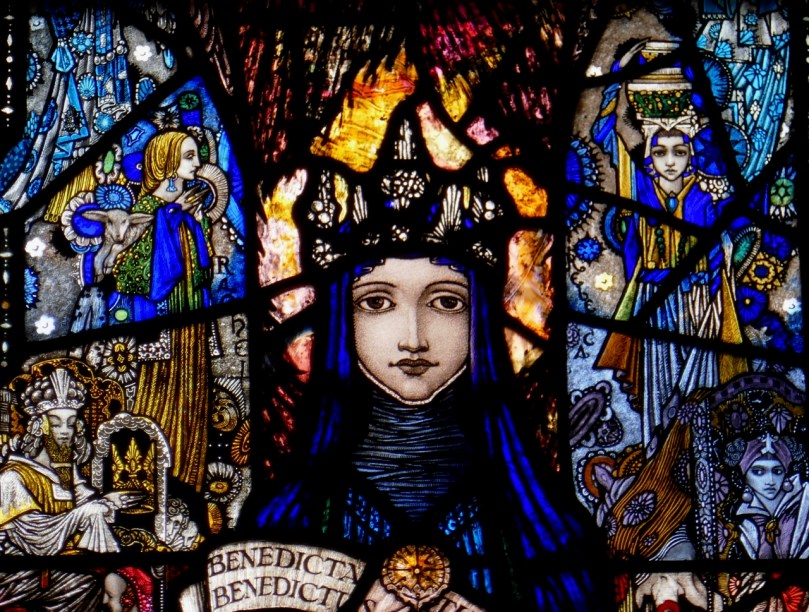
Harry Clarke’s The Coronation of the Virgin, from his Terenure windows. Nicole Gordon Bowe revealed him to the world.

The Irish art world sustained a terrible loss earlier this year with the death of Nicola Gordon Bowe, or Nikki, as she was universally known to her friends. In a very small way, I feel immensely grateful to have been counted among those friends. Although we only met once, we carried on a happy correspondence and were to have seen each other again this summer. But there are probably a thousand people like me, who have lovely memories of this wonderful woman, because Nikki had that rare gift of making each individual feel seen and heard and encouraged.

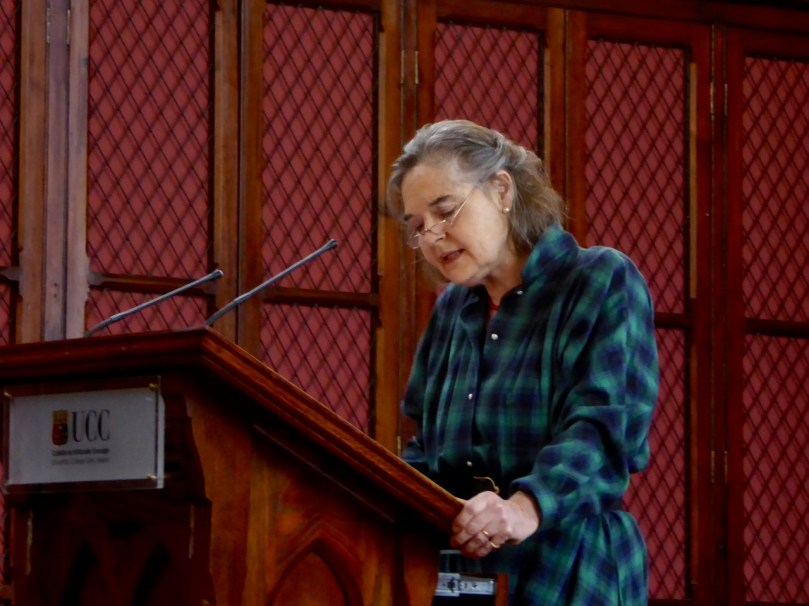
Nikki at the day-long symposium on the Honan Chapel, in Cork. Obviously in pain, she nevertheless gave a brilliant summary of Harry Clarke’s famous windows

Reading comments on various obit pages, from a generation of students, colleagues and friends, clear themes emerge of formidable scholarship, wide-ranging erudition, and passion for her subject. She was, as Alistair Rowan who spoke at her memorial service emphasised, the world expert on the Irish Arts and Crafts movement and on Irish stained glass.

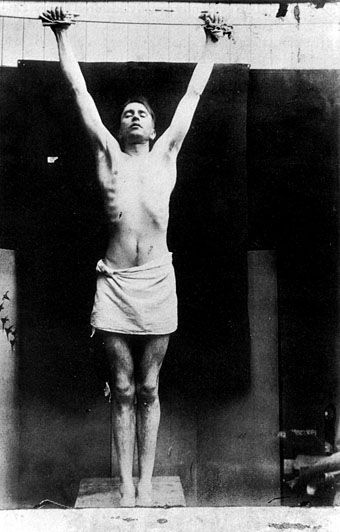
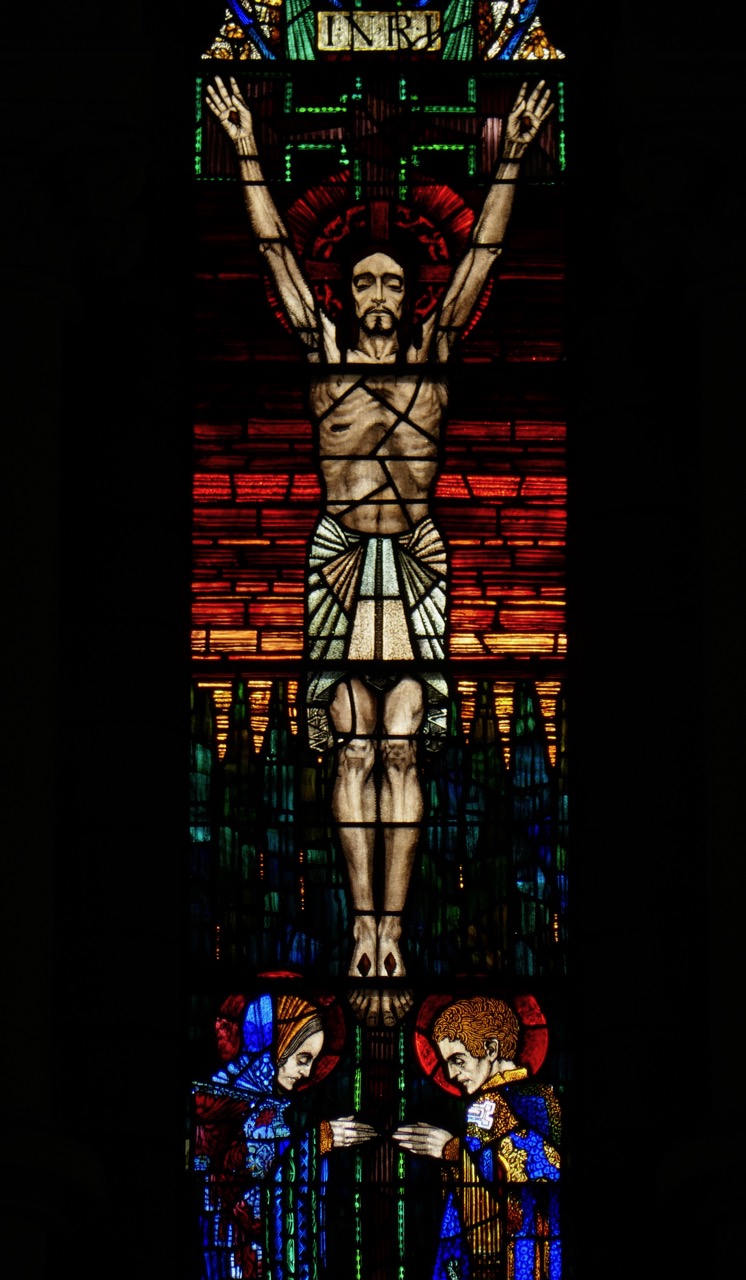
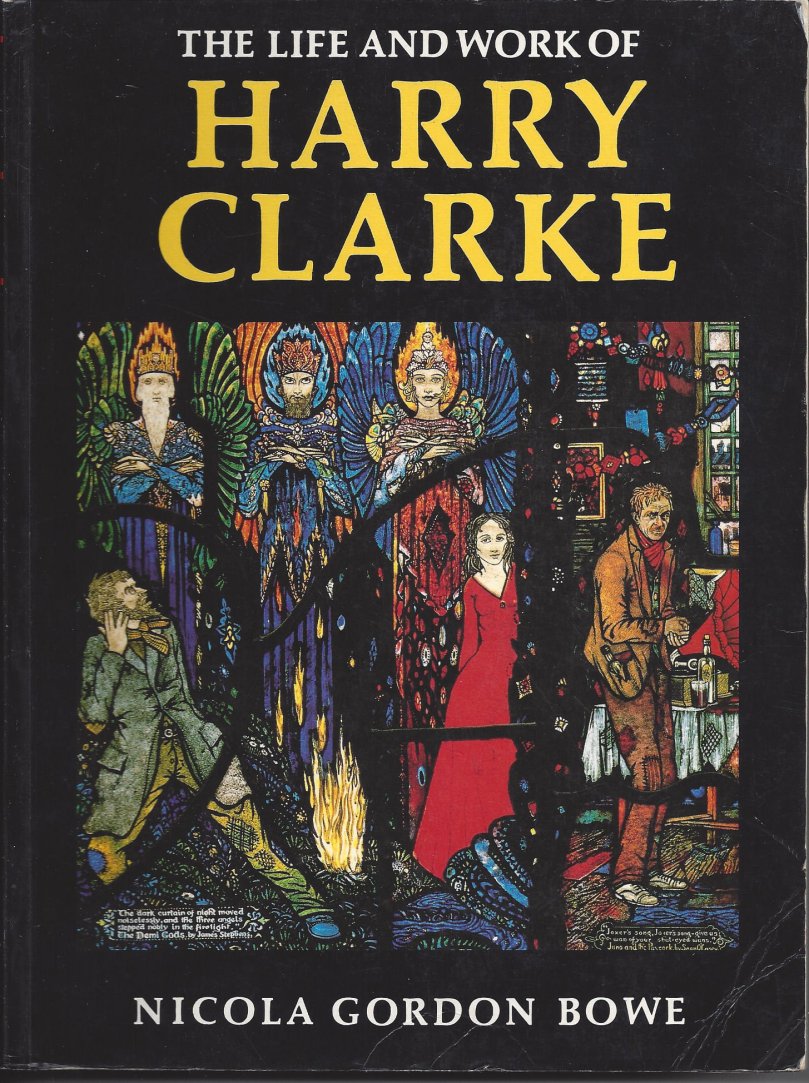
In her book, The Life and Work of Harry Clarke, Nikki traced Clarke’s influences and training. He often used himself as a model – in this instance for the crucified Christ in the Terenure windows

But the other theme was that of friendship, of a wonderful sense of humour and a ready smile, of her encouragement to junior researchers, her collaboration, nationally and internationally with other scholars in her field, and the boundless generosity with which she shared her knowledge.

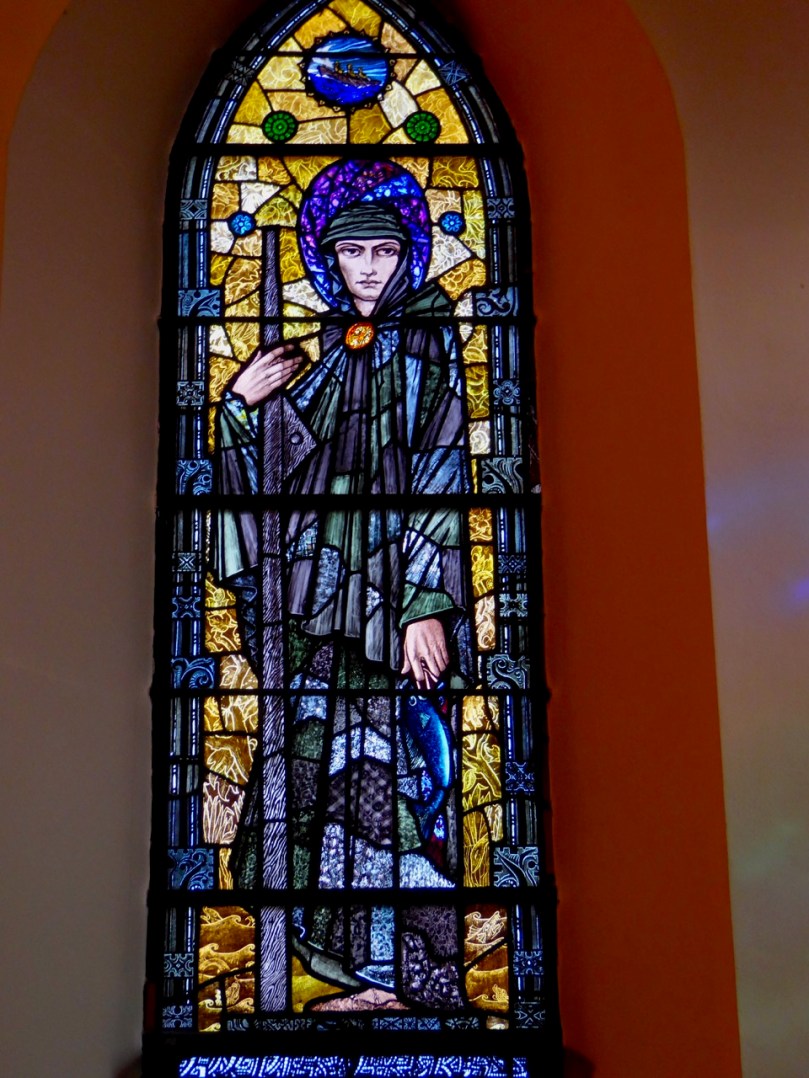
St Brendan, Nikki pointed out (as true for this window in Tullamore as for the Honan windows she was discussing) does not look like the kind of muscular saint that could navigate the Atlantic. ‘Effete’ was the word she used.

Nikki’s book on Harry Clarke has been my bible for all the posts I have written about this genius of Irish stained glass. Last year her second magnum opus was published, on the life and work of Wilhelmina Geddes. I haven’t read it yet – a future pleasure – but it was widely considered the finest Irish art book of the year, perhaps the finest book of the year.

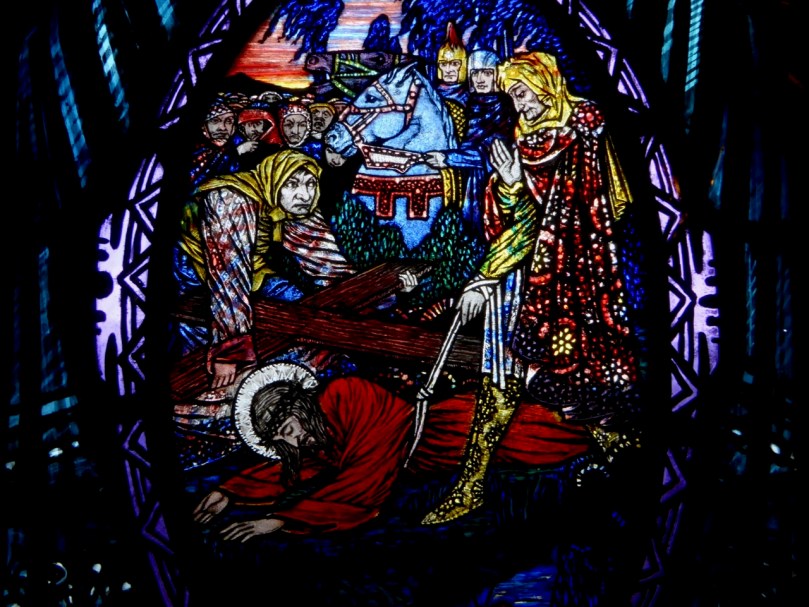
Jesus Falls for the Third Time: one of the medallions that form the Stations of the Cross in Lough Derg. Nikki’s research indicated that these were mostly executed by his apprentices during a period of illness, although  they were designed by him.

She also wrote for the Irish Arts Review, the Dublin Review of Books and contributed essays to edited collections – the busy life of an established and disciplined scholar. At the time of her death she was working on what was to be a definitive study of the Irish Arts and Crafts Movement.

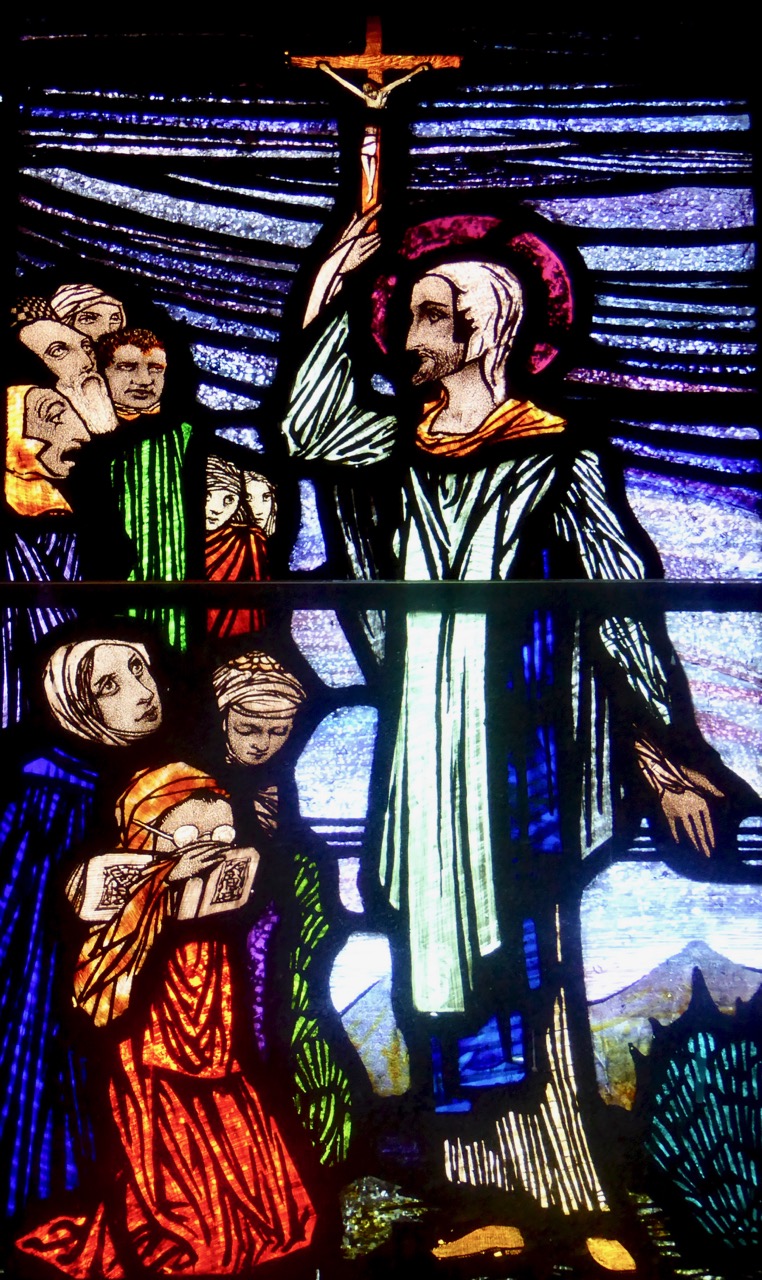
St Fechin, from the Ballinrobe windows: Harry Clarke loved to populate his scenes with a host of figures – now who is that small one with the glasses?

Nicola Gordon Bowe, more than any other person, was responsible for rescuing Irish Arts and Crafts from obscurity and establishing the reputation as artists of its major practitioners, none more so than Harry Clarke. She was impatient of those who dismissed stained glass as mere craft and who failed to see how the medium of glass both compounded the difficulty and enhanced the impact of the work of Harry Clarke and others. In the newly refurbished and finally open National Gallery of Ireland there is now a Stained Glass Room full of breathtaking pieces – it is no stretch to say that we can thank Nikki for that.

The Song of the Mad Prince, an exquisite small panel in the new National Gallery Stained Glass Room

I have chosen to illustrate this post with photographs of Harry Clarke windows and details, as a tribute to Nikki. She was his great and ardent champion and now the world knows what a true legacy of masterpieces we have been left by him. Nikki’s legacy is also secure – her works will be consulted for generations to come, and her memory kept warm by all who were privileged to know her.

From the Eve of St Agnes, in the Dublin City (Hugh Lane) Gallery

For obituaries, see here and here and here. Rest in peace, Nikki.

The Annunciation Angel from the Terenure Annunciation window

Finn McCool’s Causeway

In a recent post this year I said how much we liked to go off the beaten track and find Ireland’s gems hidden away among the narrow boreens of West Cork and elsewhere. But sometimes it’s also worth going to the better known hotspots around the country – and being prepared to regard them objectively in spite of the sometimes intrusive crowds that you might meet along the way.

Last summer our trip around the coast of Northern Ireland took us past the Giant’s Causeway in County Antrim. I had never been there before (Finola had) so I was keen to see what all the fuss is about. After all, I knew the causeway had been built by one of Ireland’s greatest heroes – Finn McCool – and that it once extended all the way to Scotland: the other end of it can be seen at Fingal’s Cave on the Scottish island of Staffa (Staffa is a Norse word meaning ‘Pillars’ and is named from the rock formations there): the Gaelic name for the cave is An Uaimh Bhinn, meaning ‘the melodious cave.’ It has been suggested that the name ‘Fingal’  is linked to the name ‘Finn McCool’ possibly after an 18th century Scots poet, James Macpherson, wrote an epic poem loosely based around the Finn story. Later, the composer Felix Mendelssohn visited the cave and celebrated it in his Hebrides Overture. It’s worth looking at this Youtube video of the piece as it is well illustrated with dramatic views of the Scottish end of things:

Before leaving Scotland – and this atmospheric music – I was intrigued to find mention of a tradition that the Staffa cave is fully illuminated by the sun on only one day of the year: on or around the 16th of December (quite close to the winter solstice), and the teller of this tale will point out that it was exactly on that day – 16 December – in 1830 that Mendelssohn completed his overture . . .

Ireland’s Giant’s Causeway has been a popular tourist destination for as long as there has been tourism in Ireland. I hadn’t realised that it had been served by a dedicated tramway since the 1880s (the photo above dates from that time). The line, running from the mainline railway at Bushmills, was the world’s first to be powered by hydro-electricity – fed by a generating station at Walkmill Falls near Bushmills via 104 horsepower 78 kW Alcott water turbines providing 250 volts at 100 amps. Sadly, the line closed down in 1949 but has been revamped over the final 3.2 km of the original tramway during the main tourist season, carrying its first passengers at Easter 2002.

Another modern development is the tourism and visitor centre, which opened in 2012: the previous building was burned down in 2000. As an architect (happily retired!) I always take an interest in large public buildings and their design. This one was very controversial when it was mooted, partly because there was concern about the way it was being commissioned – initially it was to have been privately financed and run. In the end funding was raised from the National Trust (who own the site), the Northern Ireland Tourist Board, the UK Heritage Lottery Fund and public donations. I think it is a successful building: it has gravitas while also being quite playful with the references to the hexagonal basalt formations of the Causeway. It has to achieve a difficult job: handling thousands of tourists (in 2016 there were 851,000!)  as efficiently as possible while providing a good informed experience.

Top – the Giant’s Causeway Visitor Centre has a well designed interactive information area. Above – Fare on offer at the Visitor Centre includes basalt column-shaped chips, and souvenir travel sweets!

The popularity of the causeway has ensured that it has been well recorded by artists, topographers and postcard publishers. Here are a few examples, beginning with one of our favourite antiquarians, George Victor Du Noyer.

Top to bottom – George Victor Du Noyer c1850; Thomas Rowlandson c1812; Susanna Drury, c1740; tourist postcard from 1907

The Giant’s Causeway was supposedly discovered by the Bishop of Derry in 1692, and announced to the world the following year when Sir Richard Bulkeley, a fellow of Trinity College Dublin, presented a paper on it to the Royal Society . . . I wonder if he mentioned Finn McCool? Just in case you don’t know this story yourself, here’s a good version of it, narrated by Tom Purves and beautifully accompanied on the Uillinn pipes:

We went fairly late in the season (October) and on a wet and windy day. It was a worthwhile visit and I do recommend it: the Antrim coastline is spectacular enough to warrant the journey, even if the causeway wasn’t there – but what a legend! It links one of Ireland’s best known heroes with the nearby Scottish coastline, and credits him with the creation of both Lough Neagh (Ireland’s largest inland mass of water) and the Isle of Man. Today it’s a Unesco World Heritage Site – in fact the only one in Northern Ireland.

Fading Treasures

For me, Ireland’s greatest treasures are those that are shy of publicity. There’s nothing more rewarding than turning off the beaten track and negotiating a narrow boreen with a lush growth of grass down the middle and brambles scratching your car on either side to find – often by chance – a stunning piece of medieval architecture, perhaps just the fragments of a ruin in a field, but revealing the beauty of a decorated doorway or an ornately carved corbel. Always these items are discernible but fading. Their splendour – and the exquisite craftsmanship that created them – are manifest. But there’s a melancholy in these finds: you see them, and wonder at them, yet you ask: how many more generations will be able to appreciate these works of ancient hands?

A classic case study would be the medieval high crosses. There are a remarkable number of these still intact on the island of Ireland, and many more fragmentary remains. We go out of our way to search for all these traces in our travels: some of those we have visited to date can be found through this link. It’s such a rich archive, and there are many more to be written up.

Above is St Cronan’s High Cross, Roscrea, Co Tipperary. As you can see, this example has been removed to an indoor location (Black Mills Heritage Centre), to protect it from further weather deterioration, although all the fine detail has been lost. In fact, this example has been assembled from sections of two different medieval crosses for purposes of display. I am an advocate of protecting these artefacts in this way, as acid rain and modern pollution seem to be accelerating the decay of the stone monuments. As in many cases with the protection measures, a high quality reproduction cross has been placed on the original site in the churchyard of St Cronan’s, just a few metres away. Have a look at my post on Monasterboice for a further discussion on the arguments for preservation of these monuments – and compare the condition of the as yet unprotected high crosses there with the wear and tear above.

While in Roscrea, you can take your own journey along a ‘secret track’ to find treasures. Visit Inis na mBeo (Island of the Living) at Monaincha, just a stone’s throw from the town: you are likely to be the only visitors there and can fully appreciate the solitude of the location while exploring a ruined Romanesque church and a reconstructed high cross (above). The monastic site was founded in the 6th century, and was then a true island, only accessible by boat; now you can walk to it. Not least of its attractions is the fact that you are immortal while you are there (so they say). Certainly, we came back alive, but I was concerned to read later that another tradition has it that when the now dry lough contained water, no woman or female animal could ever set foot in or cross it without dying instantly. (Below – looking along the remote trackway that takes you to the former Island of the Living at Monaincha).

Another ‘rescued’ high cross can be found quietly located in the far less remote (but still a little unsung) Cathedral of St Flannan in Killaloe, Co Clare. Megalithic Ireland has a good account of the history of this cross, which can be seen in the images below (while the header picture at the top of this post shows exquisitely carved detailing from a Romanesque doorway in the same Cathedral):

. . . The High Cross in St Flannan’s Cathedral was moved to Killaloe from Kilfenora in 1821. Originally the cross stood on the highest point south of Kilfenora Cathedral, and became known as the cross on the hill. Dr Richard Mant who was appointed Bishop of Killaloe and Kilfenora in 1820, was appalled by the condition and lack of respect shown for the antiquities in Kilfenora. The cross, which had fallen in 1820, was sent to the Bishop the following year. He had it erected on the grounds of his residence Clarisford Palace. The cross was moved at a later date by a Bishop Ludlow and moved back within the Palace grounds in 1850. In 1934 the cross fell again and this time broke into three pieces. It was re-erected inside the cathedral and fixed against the west gable. In 1998 the cross was repaired and erected as a free standing cross. It stands over four metres high and bears a figure of christ in the centre of the head . . .

The White Cross of St Tola (images below) may not be on everyone’s list of things to see at Dysert O’Dea in Co Clare (you are more likely to be channelled to Corofin), but it’s easy to visit from the better known Romanesque monastery ruins: the ecclesiastical centre was founded by the saint in the 8th century. Cromwell’s forces destroyed the monastery and demolished the cross, but the cross was repaired by Michael O’Dea in 1683. The Synge family restored the cross again in 1871, and in 1960 it was temporarily dismantled and shipped to Barcelona for an exhibition on Irish art.

Clonmacnoise is likely to be on everyone’s list, and rightly so. It was one of Europe’s most important religious centres in medieval times. Ireland’s Ancient East website describes it thus:

. . . The whole of this early Christian site – including ruins of a cathedral, seven churches (10th–13th century), two round towers, high crosses and the largest collection of early Christian grave slabs in Western Europe – is a vast story in stone that keeps alive the spirit of Ireland as a Land of Saints and Scholars . . .

There are three conserved high crosses at Clonmacnoise – all are placed inside the visitor centre, while quality replicas are positioned on the original sites: this is a good exemplar of how to look after ancient stones and, while perhaps the seasonal crowds can be off-putting, I believe it’s the only answer for maintaining access to and displaying this valuable history. Ancient East mentions the important grave slab collection: after the high crosses (and, of course, Romanesque architecture) I feel these are the most beautiful representations of art and craftsmanship that connect us across the centuries to our remarkably focussed forebears.

These are just a few examples of the many grave slabs which are fortunately conserved at Clonmacnoise. But there are many more monuments that are less fortunate, albeit they may enjoy some sort of state care. There are just not enough resources to look after the huge historical heritage of Ireland: we can only hope that, in time, they will all be fully appreciated and that not too many treasures will fade away.