Ballyfin – Part 2: Decline and Revival

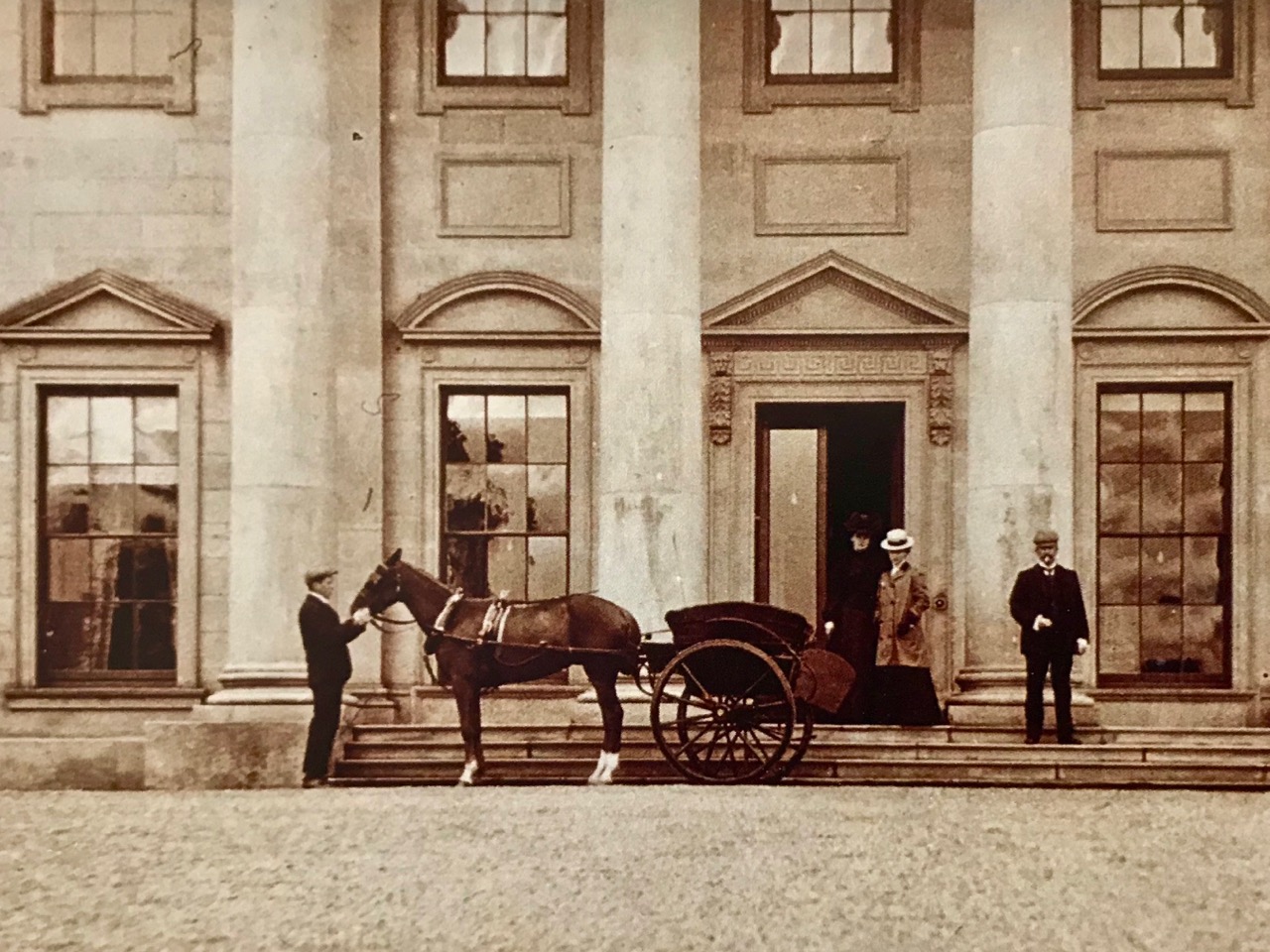
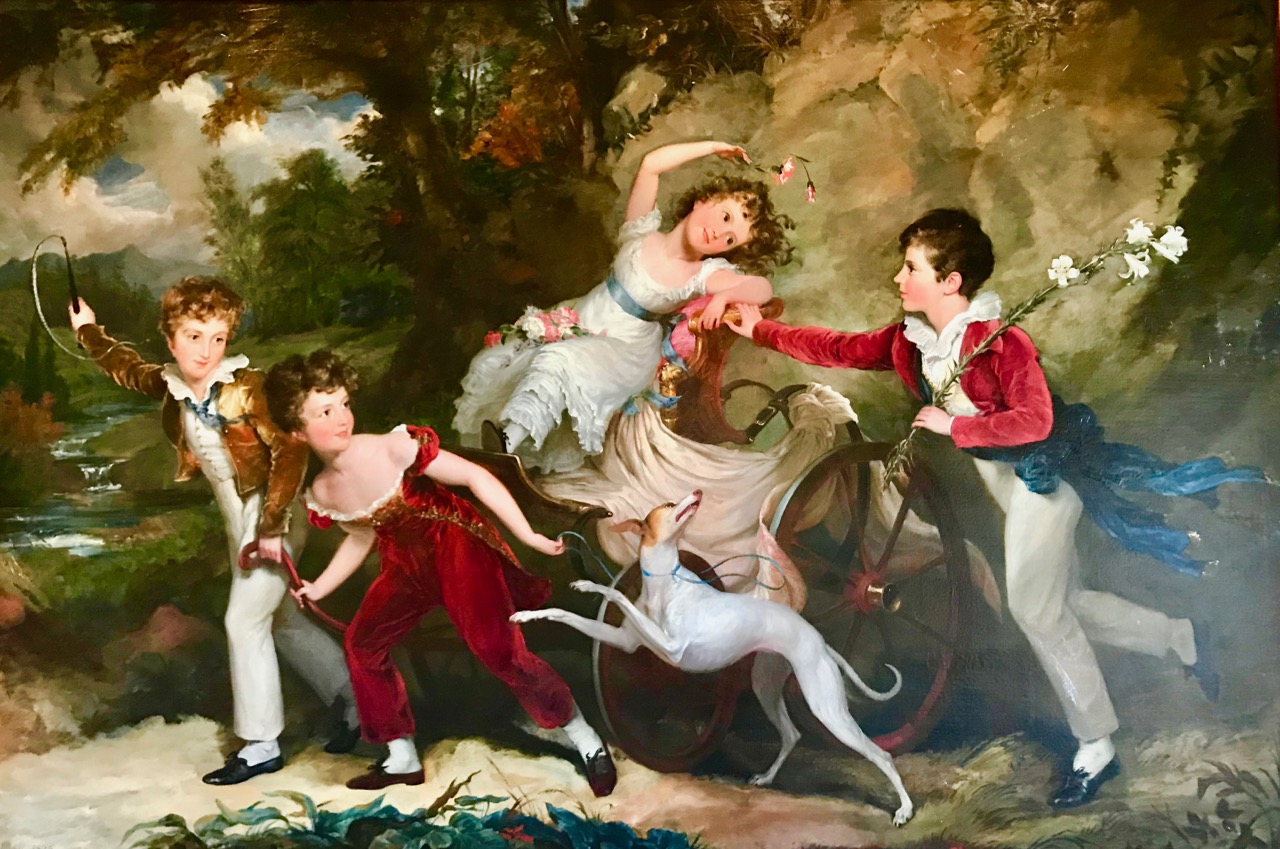
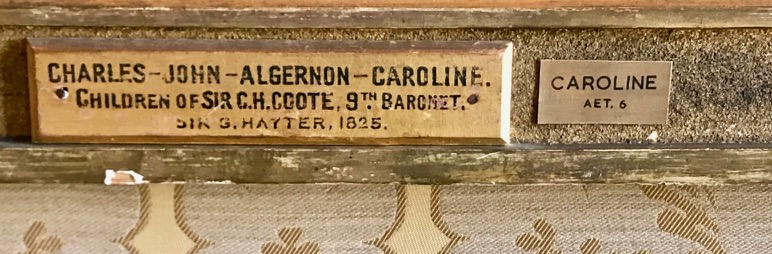
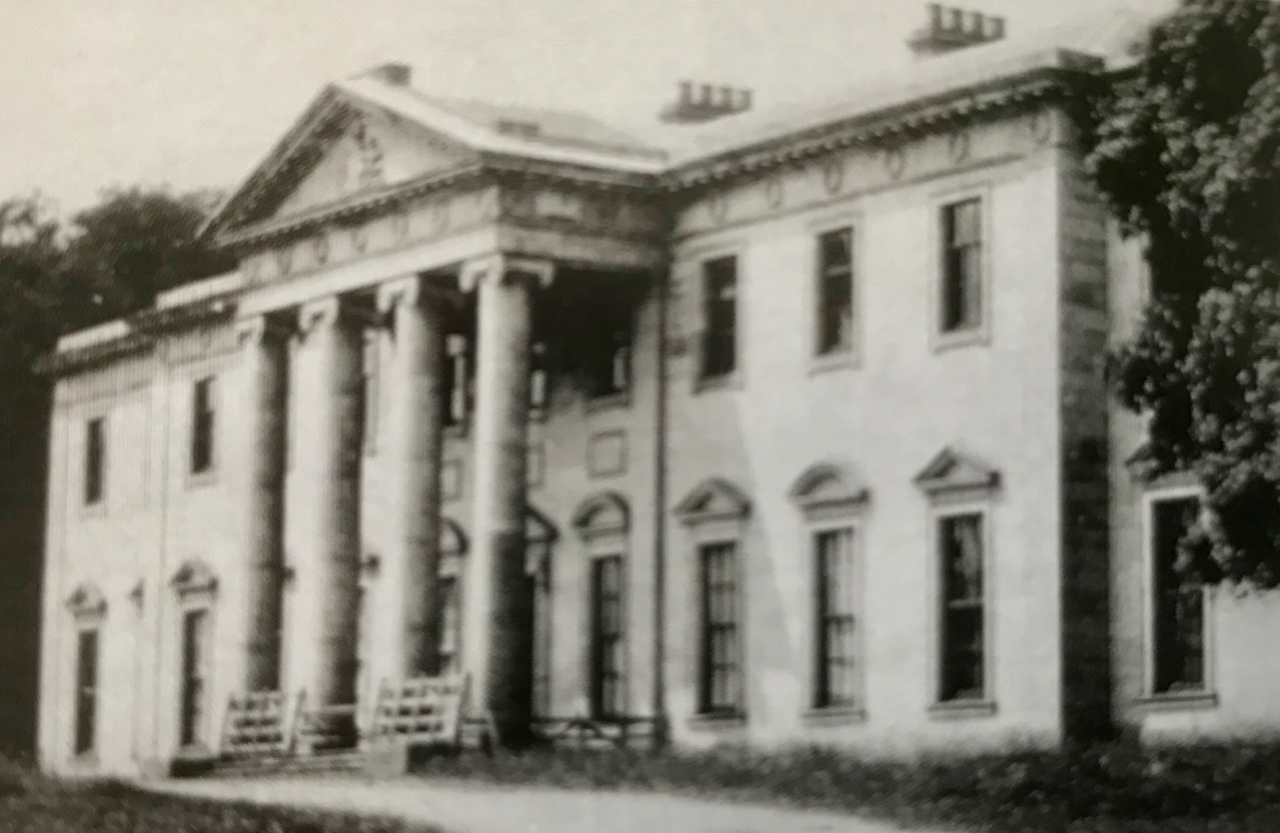
Last week Roaringwater Journal visited Ballyfin Demesne: I sketched out the early history of the house and Finola looked at the magnificent grounds. Today I’m bringing the story up to date. We got as far as the gracious Victorian and Edwardian days, when the Coote family were in residence, as they had been since 1813. The photo above dates from 1903 and shows a jaunting car waiting at the entrance to the house (Magan Collection): perhaps those days were not quite as settled as the halcyon period when the children of Sir Charles Coote were painted so fancifully in the early nineteenth century (artist: George Hayter – with the addition of a whippet painted by Edwin Lanseer!). The painting (below) is now a centrepiece in the Gold Room at Ballyfin.

At the dawn of the twentieth century, there were clouds on the horizon for the Anglo Irish families and their big houses, although life at Ballyfin seemed to maintain a continuum up until the commencement of the Great War. Generations of Cootes are remembered as having been good landlords and employers: on Sir Charles’ death in 1864 the most important members of staff were ‘handsomely rewarded’ in his will, while in the early 20th century the 12th Baronet, Sir Algernon Coote, paid the highest wages in the county – and ‘provided a comfortable house’ – to all outside labourers. In 1920, Sir Algernon died and was succeeded by his eldest son, Ralph,  the 13th Baronet. In the atmosphere of the Irish War of Independence, Ralph could no longer see a future in remaining at Ballyfin: ‘ . . . nothing would ever be the same again . . . ‘

A sad picture of Ballyfin – the house now abandoned and awaiting its fate in 1926

Sensibly – and most fortunately for today’s owners, Sir Ralph determined that the demesne should not be broken up and dispersed. He insisted that it should be marketed as one lot:

‘ . . . I have no intention whatever of dividing the demesne, the price is £10,000 . . . The figure is final and you need not bother to waste any time with anyone trying to reduce it. I would let the place fall down first . . . ‘

It was precisely one hundred years after the 9th Baronet had rebuilt Ballyfin to re-establish a permanent residence there.

So it was that, in 1930, Ballyfin set out on a new path in its development – as a school owned and run by the Patrician Brothers – a Roman Catholic teaching brotherhood. The only significant alterations to the house were the creation of a College Chapel in the old Dining Room (above), a dormitory across the north front of the first floor, and improved services. The immediate grounds were retained to provide productive gardens and the yards were filled with livestock.

Reports of life at the school from those who have memories of it are generally very positive, particularly because of the idyllic surroundings and features of the estate.  While the Patricians did their best to ensure that Ballyfin catered for the needs of a large secondary school and also strove to keep the entire demesne intact, in the end economic pressures and decades of slow decline took their toll. The Brothers closed the College in September, 2001, after 74 years of stewardship: once vacated, Ballyfin House was considered  by the Irish Georgian Society to be foremost amongst Ireland’s endangered buildings. It needed a saviour to rescue it. Fortunately, three appeared.

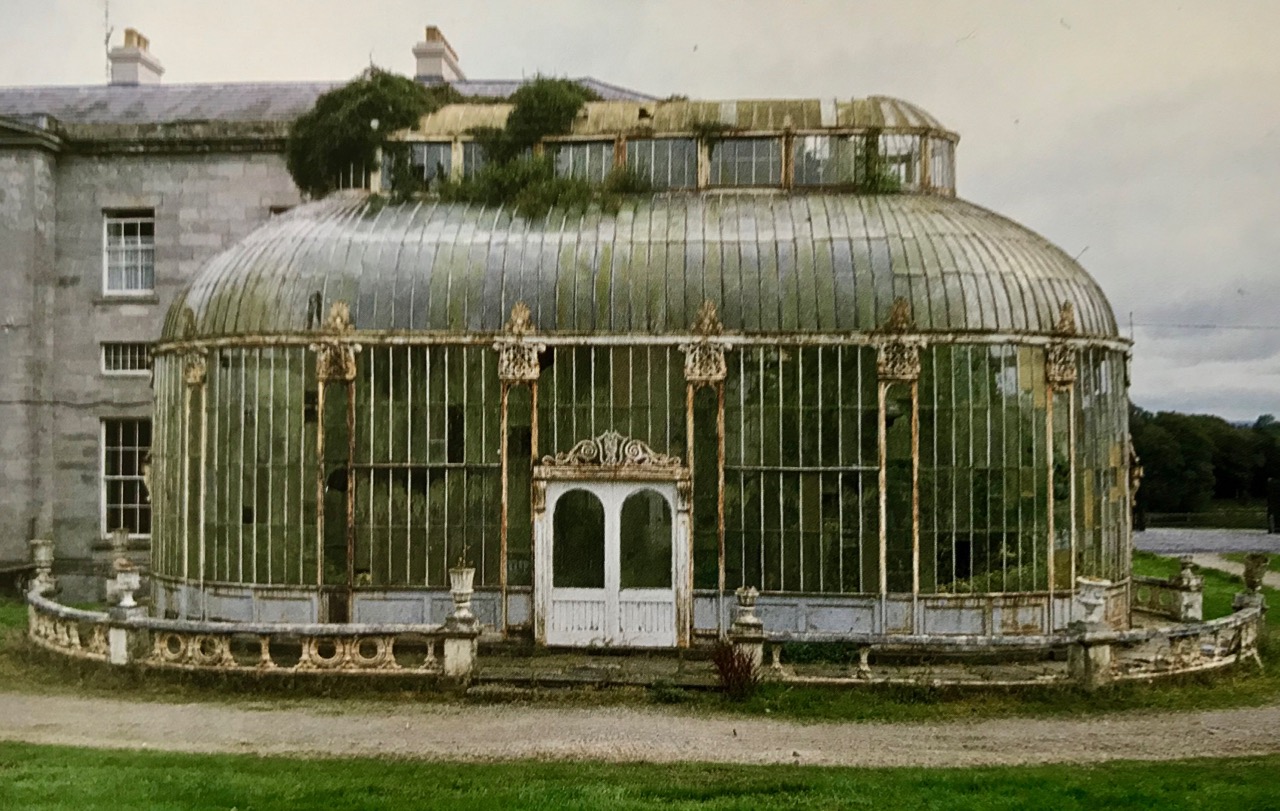
Above – an example of the declining fabric of Ballyfin during the twentieth century: Richard Turner’s iconic iron conservatory seems beyond repair, yet the reincarnation of the estate that commenced in 2004 has magnificently returned this architectural gem to prime condition, along with the rest of the house and Demesne. The conservatory was completely dismantled and – piece by piece – the ironwork was restored, then reassembled. Then a complete reglazing took place (practically every pane is a different size): in the days of the school the boys had found the glass an irresistible target!

In 2002, a Chicago based couple, Fred and Kay Krehbiel, became the new owners of Ballyfin and invited Jim Reynolds – one of Ireland’s leading landscape designers (who incidentally shared an archaeology education with Finola!) – to join them as shareholder and managing director on a project that was ‘ . . . a fundamental desire to recreate, primarily through restoration, the great hospitable tradition. the luxury and the atmosphere of the Irish country house . . . ‘ Ballyfin encompassed everything they had been searching for: ‘ . . . a great endangered house in a beautiful landscape that needed rescuing . . . ‘

The source of much of the history of the demesne recorded here is the impressive volume by Kevin V Mulligan, to which I referred last week. This extract is a good summary of the ethos and achievement of those who drove the project:

‘ . . . The primary aim of the new owners and Jim Reynolds has been to re-establish the integrity of the house and everything within the demesne walls – its historic buildings, gardens and parklands, and by opening the house to guests, to fulfil the hospitable intentions of the Irish country house. Since 2004 an extensive programme of restoration works has brought the house closest to its state following completion almost two centuries ago. It has taken eight years to achieve this, longer in fact than it had taken to complete the house in the first instance . . . ‘

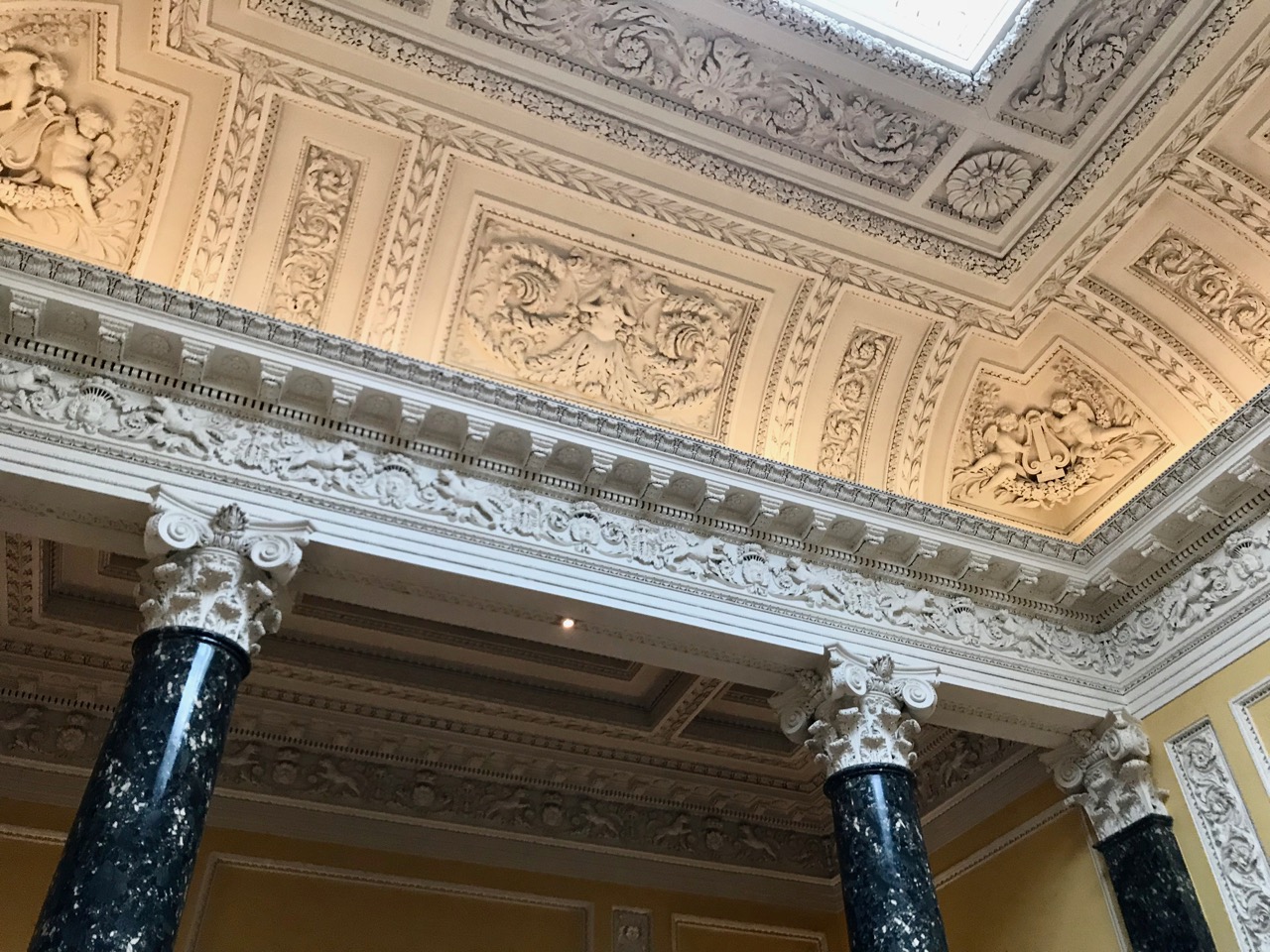
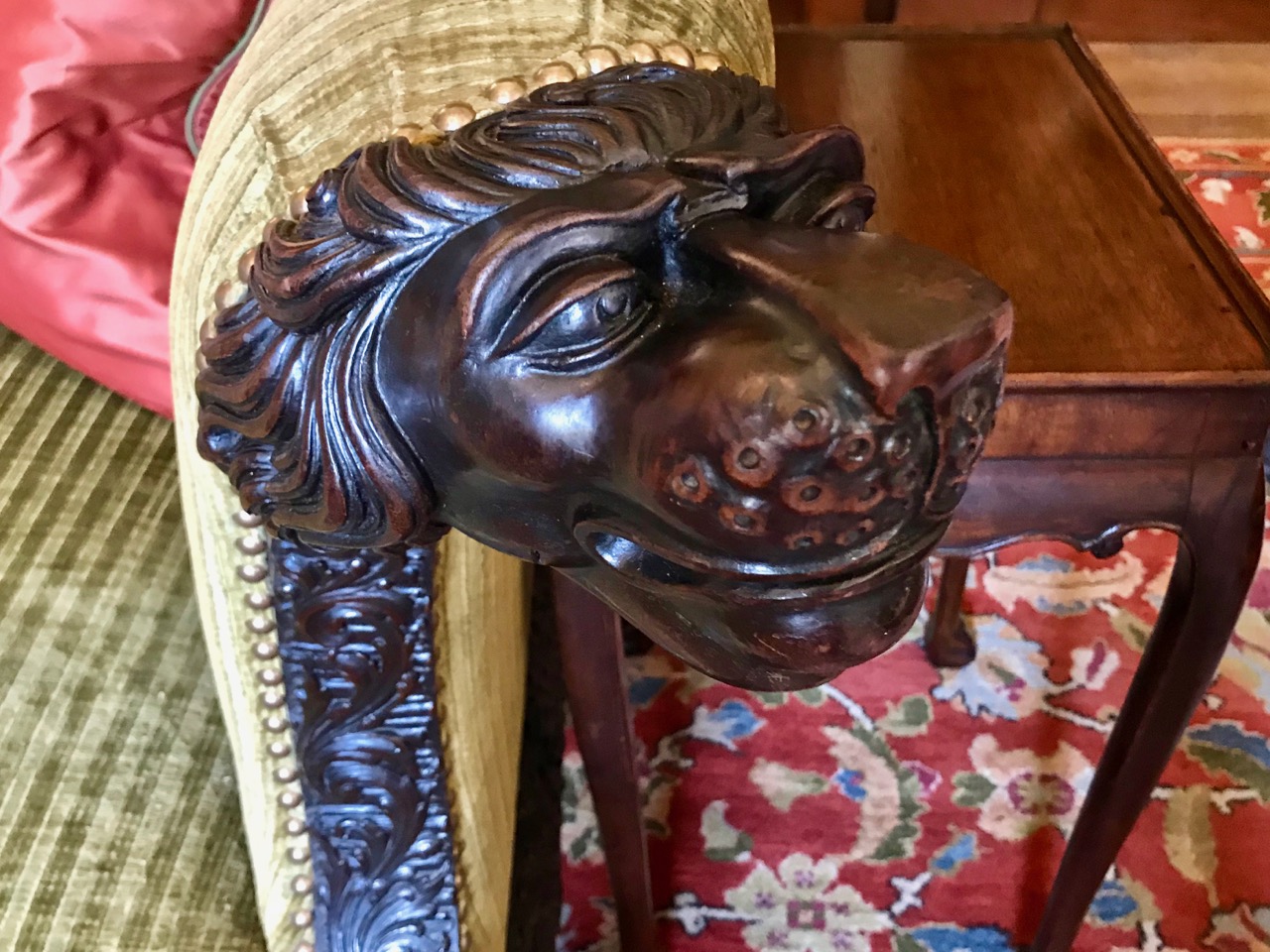
This photo compendium indicates the high quality of the restoration and the attention paid to every detail, including the recovery and hanging of many of the original portraits showing the owners of the estate during its history.

Ballyfin today reflects one piece of the complicated jigsaw puzzle that is the history of Ireland. It paints a picture of way of life now in the past.  In today’s incarnation as a first class, small hotel it offers a distilled and polished experience of the best of contemporary Irish hospitality.

Ireland’s Finest Prospect – The Story of Ballyfin Demesne, Part 1

There are two reasons why Ballyfin, in County Laois, was high on our list of Important Places To See In Ireland. One was the story that the name – An Baile Fionn in Irish – could mean ‘The Place of Fionn’ – and there is a legend that the great warrior Fionn Mac Cumhaill was raised here, in the foothills of the Slieve Bloom Mountains. Fionn has left behind him so many traces all over Ireland that the place where he was – perhaps – born and grew up deserves pilgrimage status.

A place fit for a legendary Irish hero? Ballyfinn has associations with Fionn Mac Cumhaill. The lake which is central to the prospect from Ballyfin today was constructed by William Pole in the second half of the eighteenth century

An alternative translation of An Baile Fionn is ‘The White Town’, and the location has long had a reputation as a place of great beauty. Emily Fitzgerald, the Countess of Kildare – a remarkable lady who was illegitimately descended from King Charles II and who bore twenty-two children – wrote in 1759: 

. . . Yesterday, I saw a most delightful place indeed, much beyond any place I have seen in Ireland – Ballyfin . . .

The beauty of the Irish Midlands in the eighteenth century: Ballyfinn House can be seen in the centre distance of this pastoral view from 1784: beyond are the Slieve Bloom Mountains (painting by William Ashford)

In medieval times Ballyfin belonged to the O ‘Mordha clan but was lost during the Tudor conquest of Ireland. The process of Plantation (in which areas of the country were to be settled with people from England, who would bring in English language and culture while remaining loyal to the crown) was first implemented in Laois – then known as ‘Queen’s County’ after Queen Mary I – in the mid sixteenth century. It was a complicated and unstable period in British and Irish history, and Ballyfin saw many possessors ascend and fall until in May 1666 the estate of approximately 3,500 acres was conferred on Periam Pole, a recent arrival from Exeter in Devon. Pole and his son William expanded the estate, built a ‘modern’ house and reshaped the entire gardens and demesne. William planted woodlands and constructed the 30 acre artificial lake which is there to this day. The improvements were ‘grand and expensive and their designs were elegant’.

A view of Ballyfin engraved by William Beauford and published in 1794 shows the woodland, landscaped grounds and lake. The house  – which the Poles extended and improved – was described as ‘a rambling Georgian house’ although with no particular architectural merit

In the time of the Poles, Ballyfin began to build its reputation as one of Ireland’s grandest estates. However, it was not until the Poles were succeeded by the Cootes, in 1813, that the significant architectural statement that is Ballyfin today came into being.

Progenitors of Ballyfin: left – William Pole who died in 1781 (artist unknown) and right – Sir Charles Henry Coote who died in 1864 (artist John Hoppner). The legacy of these two families is a house and demense which are acknowledged as outstanding examples of their period – probably the finest in Ireland

Sir Charles Henry Coote already owned substantial estates close to Ballyfin, and it was timely and appropriate that he was able to purchase the demesne. He employed the father and son team of Richard Morrison and William Vitruvius Morrison as architects to rebuild the house, which is widely acknowledged as one of the most important examples of nineteenth-century neo-classical architecture in Ireland and is famed for its elaborate interior design.

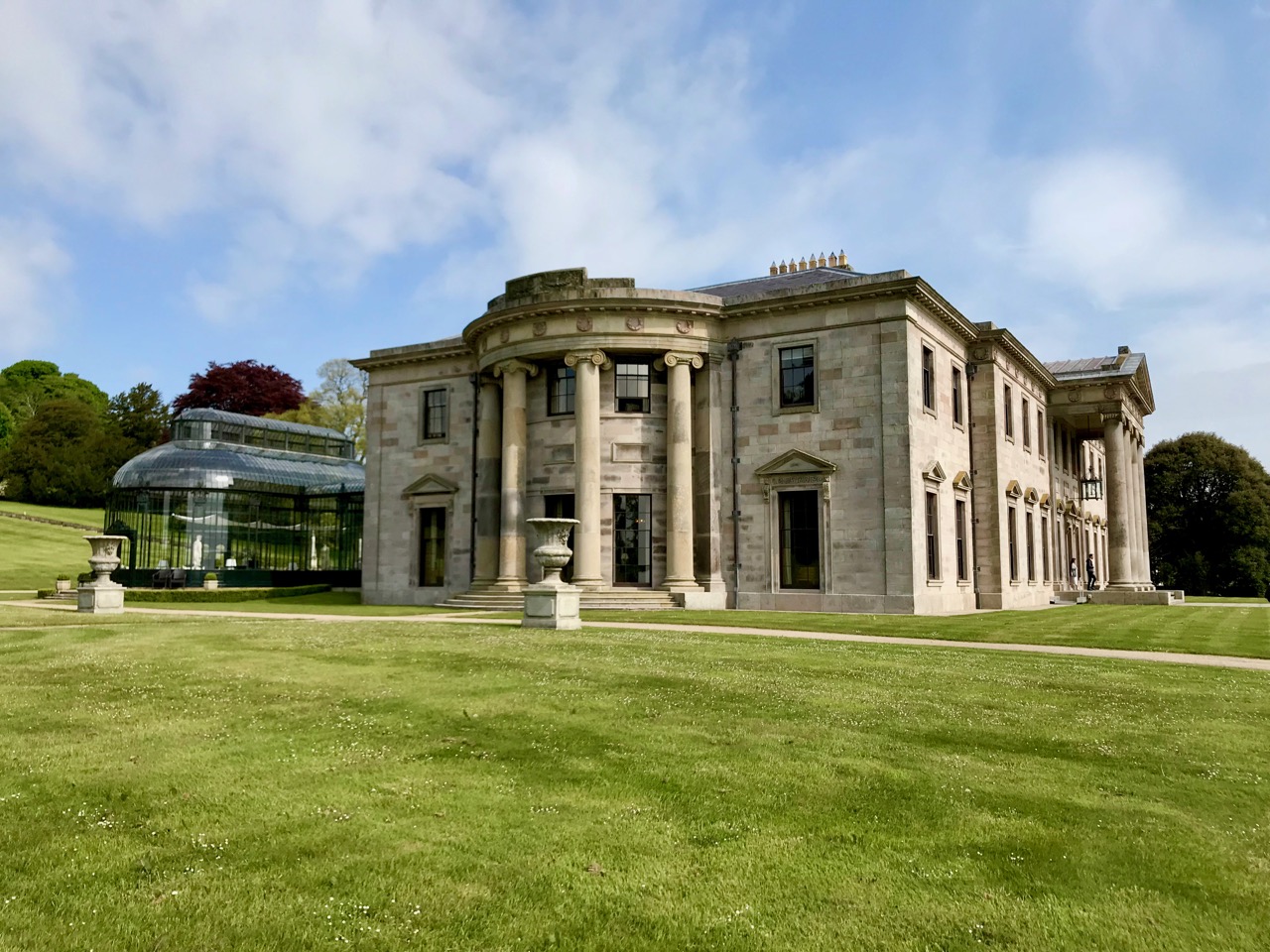
A print showing the ‘new’ house designed by the Morrisons in the neo-classical style (1828 British Library). below – views of the house today

The picture above shows the west elevation of the house with the finely-wrought conservatory that was added in around 1855, designed and constructed by ironfounder Richard Turner, who was also responsible for the great Palm Houses at Kew and Belfast Botanic Gardens and the range of glasshouses at the Irish National Botanic Gardens at Glasnevin, Dublin. It’s my favourite part of the architecture – lightweight and elegant: seemingly timeless – it could be a contemporary structure.

Fine though the house is, it would fail without its context. The demesne is so important as a setting for the rather uncompromising architecture of the elevations. Finola has looked at the grounds and the surroundings. But it’s also the interior that sets Ballyfin apart as an icon of its time.

The Library at Ballyfin: upper – in Victorian days (Coote Archive); lower – splendidly restored, today

The Saloon: upper – a sketch from c 1855 by the Marquis de Massigny de la Pierre (Coote Archive); lower (and header picture) – the restored Saloon forms the centrepiece of the house today. Note the magnificent parquet floor

The Entrance Hall incorporates a Roman mosaic pavement: one of the art treasures brought over by Sir Charles Coote from his Grand Tour of 1822. The hall also displays a far more ancient antiquity: the antlers of Megaloceros Giganteus – the Irish Elk, recovered from an Irish bog and some 10,000 years old!
Details from the superbly restored marquetry flooring in the saloon – the most exotic examples to be found anywhere in Ireland

The first part of our story ends with the Cootes: the family owned Ballyfin until the 1920s. But there’s much more to tell about its succeeding time as a school – periods of neglect and decline – and, most remarkably,  its revival and return to distinction through one of the most complete and elaborate architectural restoration projects undertaken in Ireland in the 21st century. Ballyfin is now a first-class 5 star hotel where attention to detail in the service it offers is absolute: it has justifiably won many accolades and awards.

Afternoon tea on the Dining Room terrace at Ballyfin, c 1903 (Magan Collection)

The story of Ballyfin has been expertly and completely documented by Kevin V Mulligan in the volume Ballyfin – The Restoration of an Irish House & Demesne, Churchill House Press 2018. We are indebted to this author and his work. The architectural restoration and the incarnation of the house today is described in Part 2 of this post: Decline and Revival.

The Elemental World of Cormac Boydell

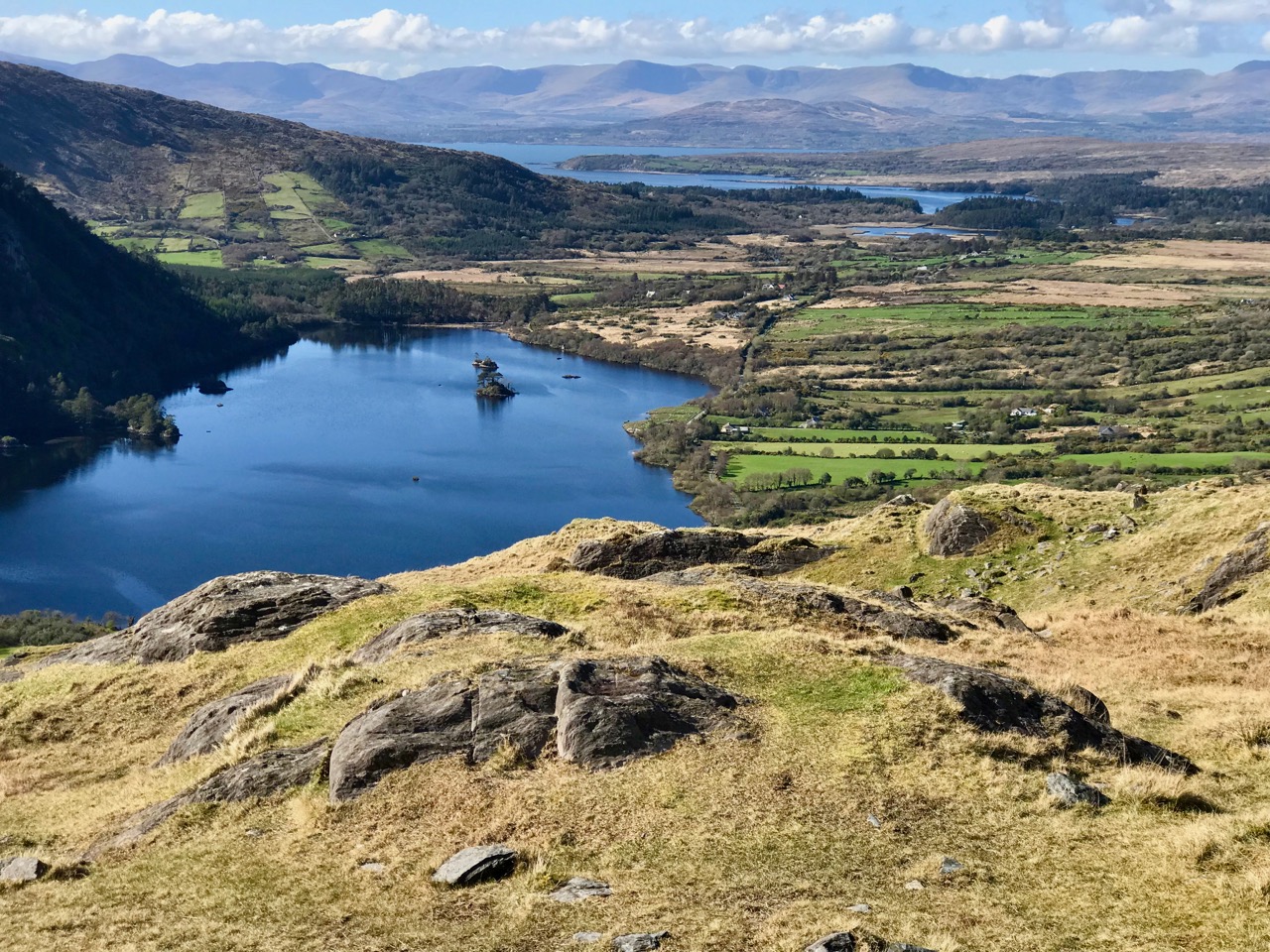
Perched on the very edge of Europe and facing into the Atlantic Ocean, the far west of Ireland is a terrifyingly beautiful place to set down your roots. Our own little spot, overlooking the comparatively calm reaches of Roaringwater Bay, faces into the winter gales and it’s a constant fight to keep the weather out: always a losing battle. But, could we live anywhere else? Certainly not. This week we met up with Cormac Boydell and Rachel Parry – two artists who live just about as far away as it is possible to be in wild West Cork. Like us, they battle with the elements; like us, they couldn’t envisage living anywhere else.

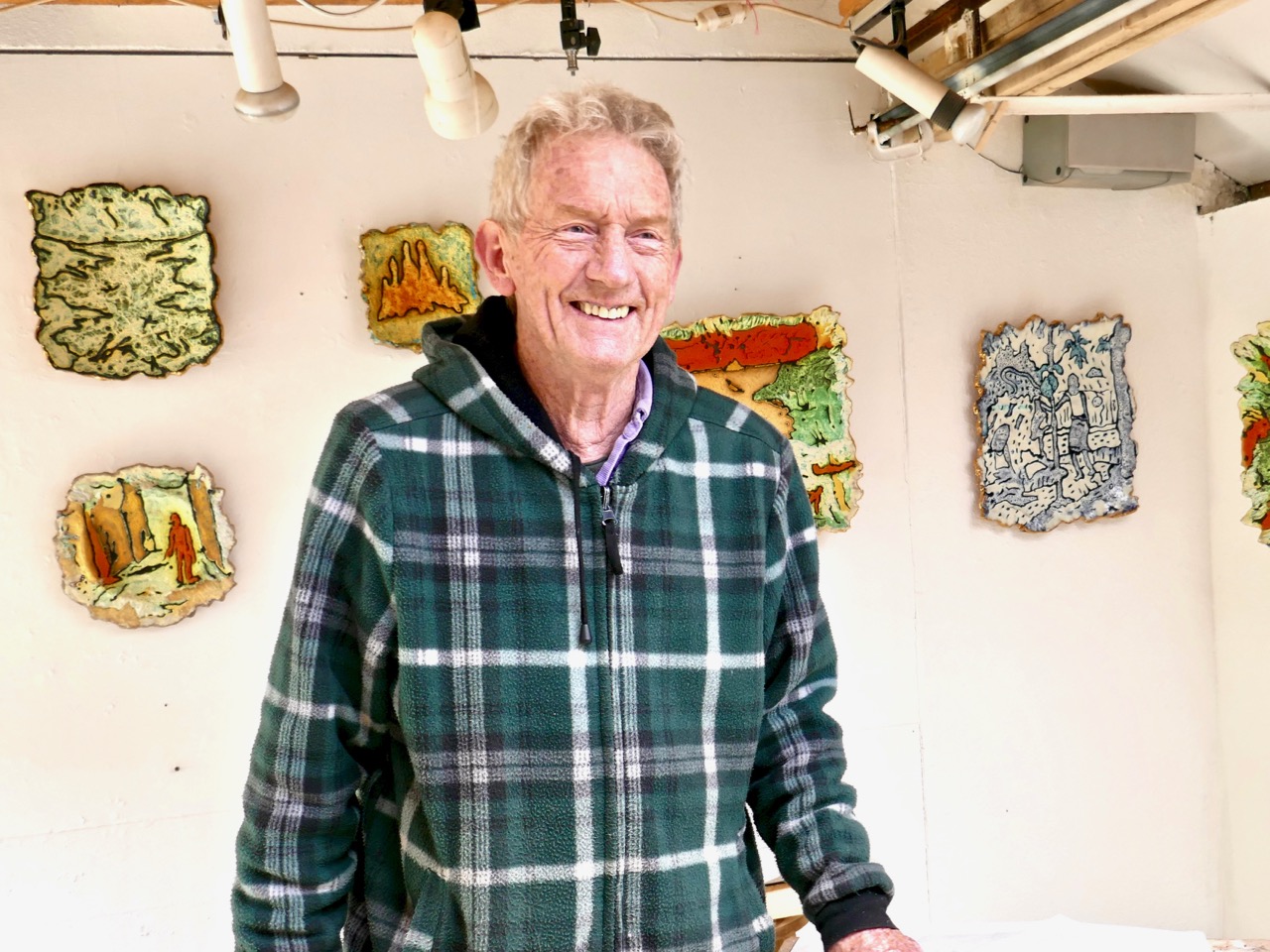
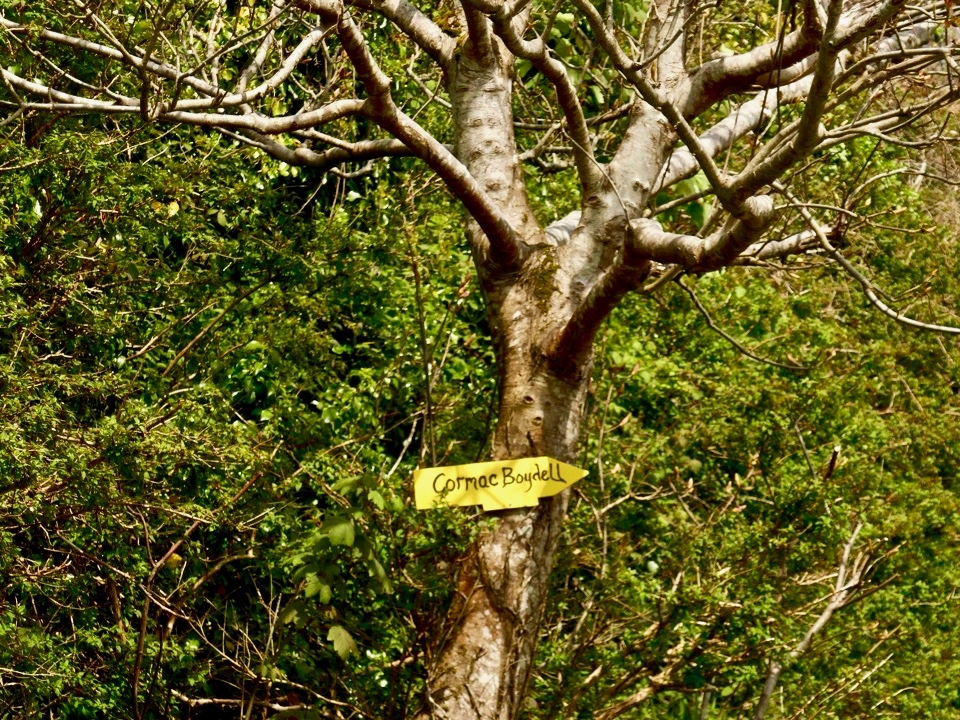
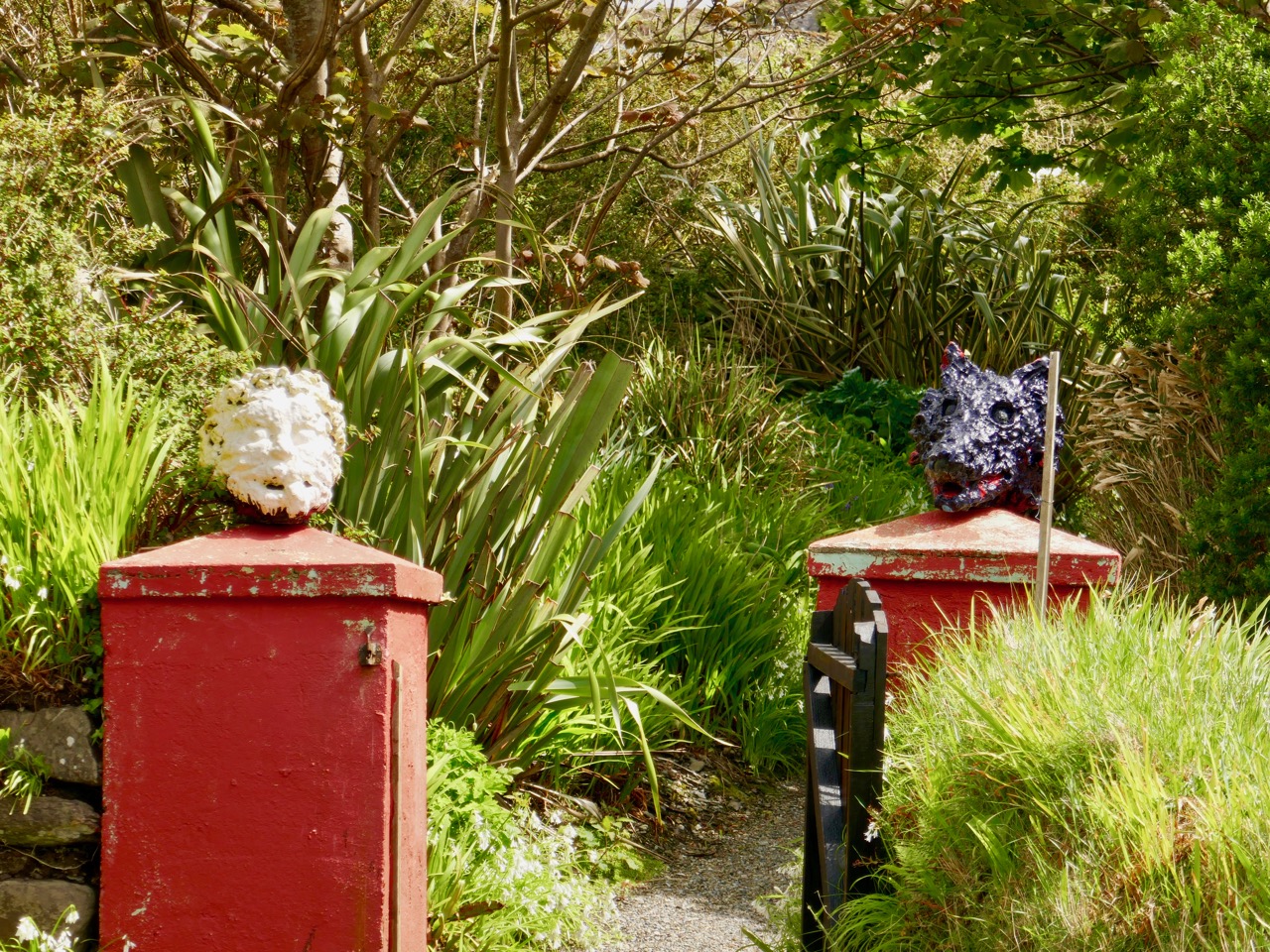
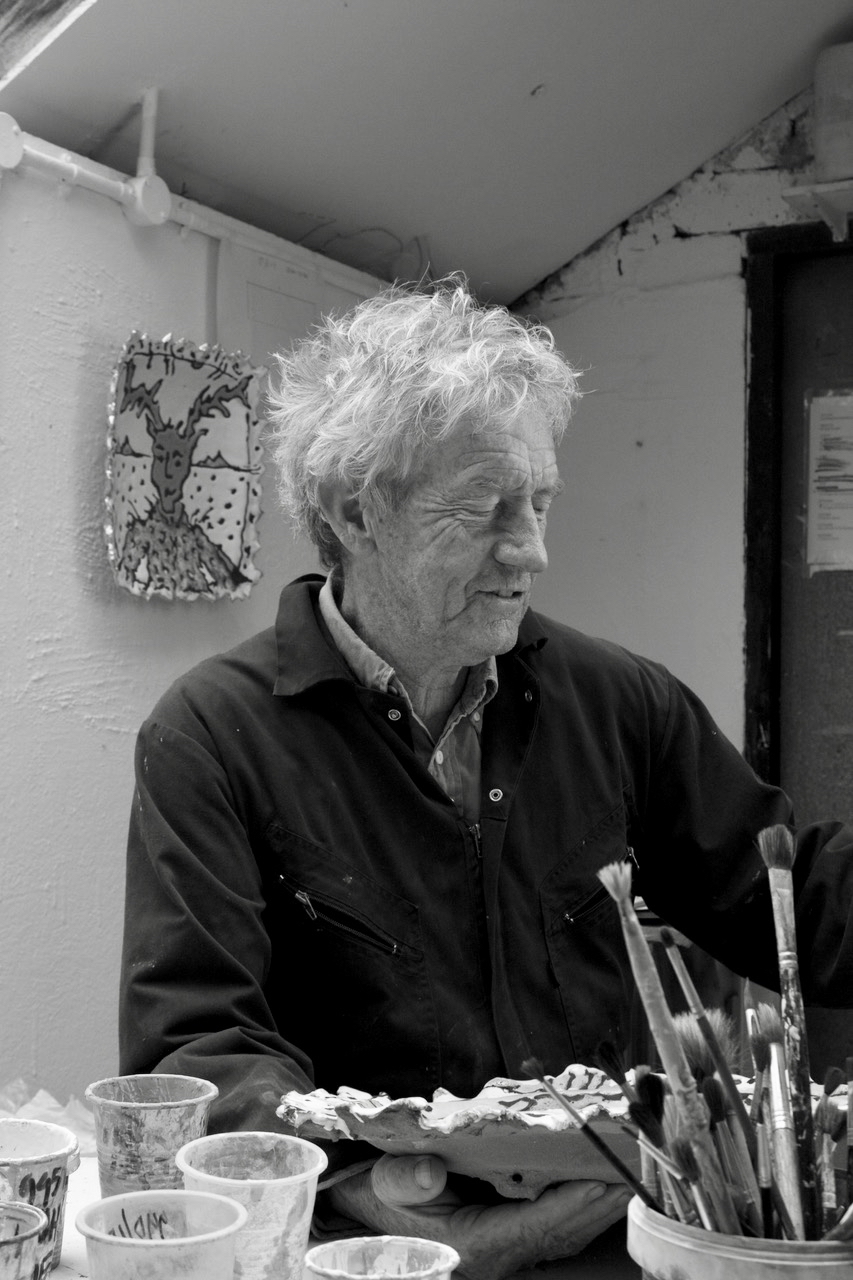
Cormac Boydell (header picture – in his studio) and Rachel Parry live on the edge of Ireland: their cottage and lush gardens feel as if they are carved out of the mountainside to seek maximum shelter from winter storms. They are well off the beaten track close to the end of the Beara Peninsula: the nearest settlement is Allihies (from the Irish Na hAilichí, meaning ‘the cliff fields) which was a centre for copper extraction in the Bronze Age and from the beginning of the Industrial Revolution when generations of Cornish Mine Captains came here to manage the mines, providing work for a substantial local population.

Connection with the landscape is something that’s inherent in the make-up of Cormac Boydell. It must be significant that he started out studying and working as a geologist – getting to know the physical fabric of the rocks and the earth around him – before setting out on a more creative path, working with those very elements to produce exuberantly robust ceramic sculptures which are unique and highly sought after.

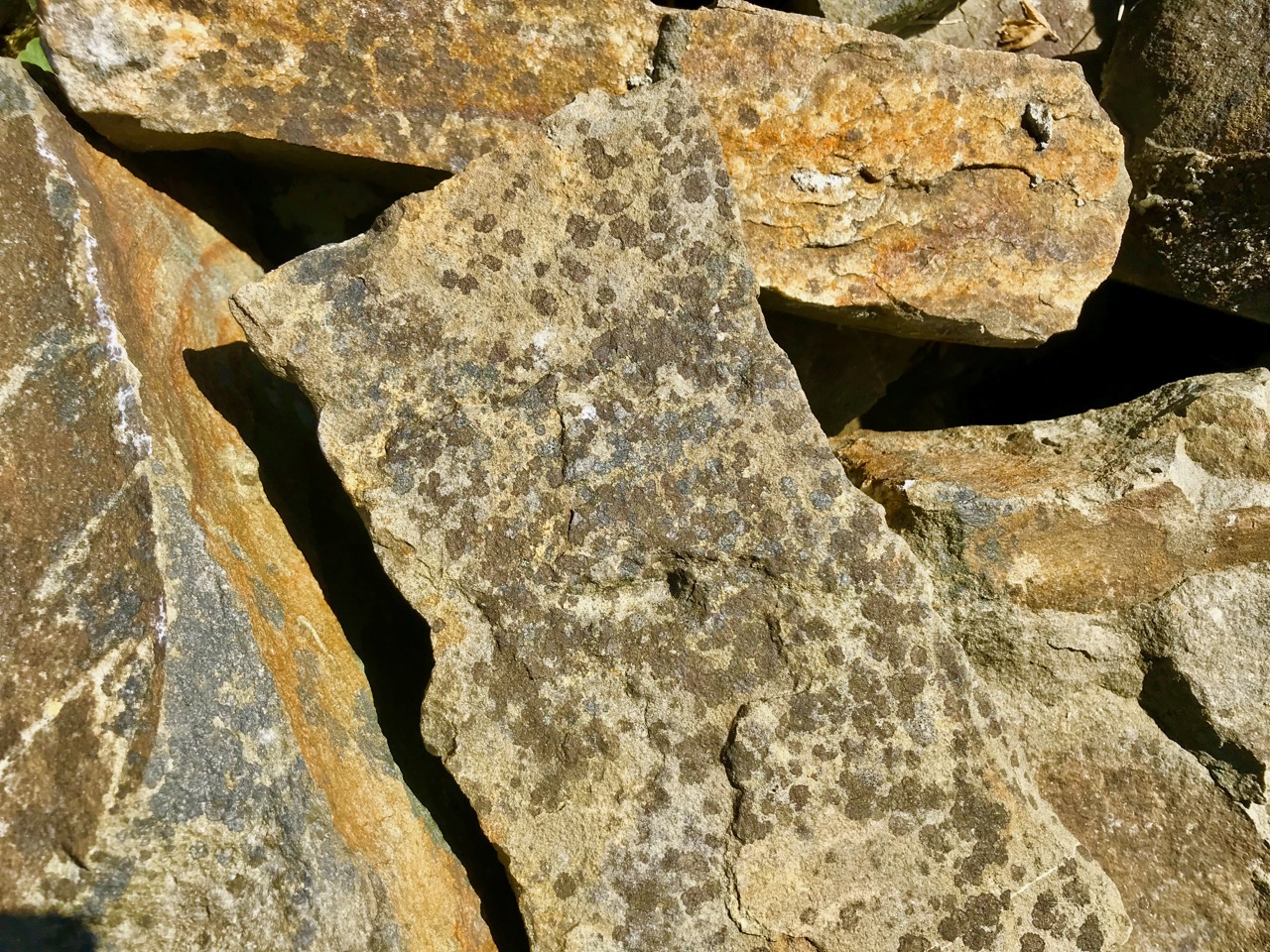
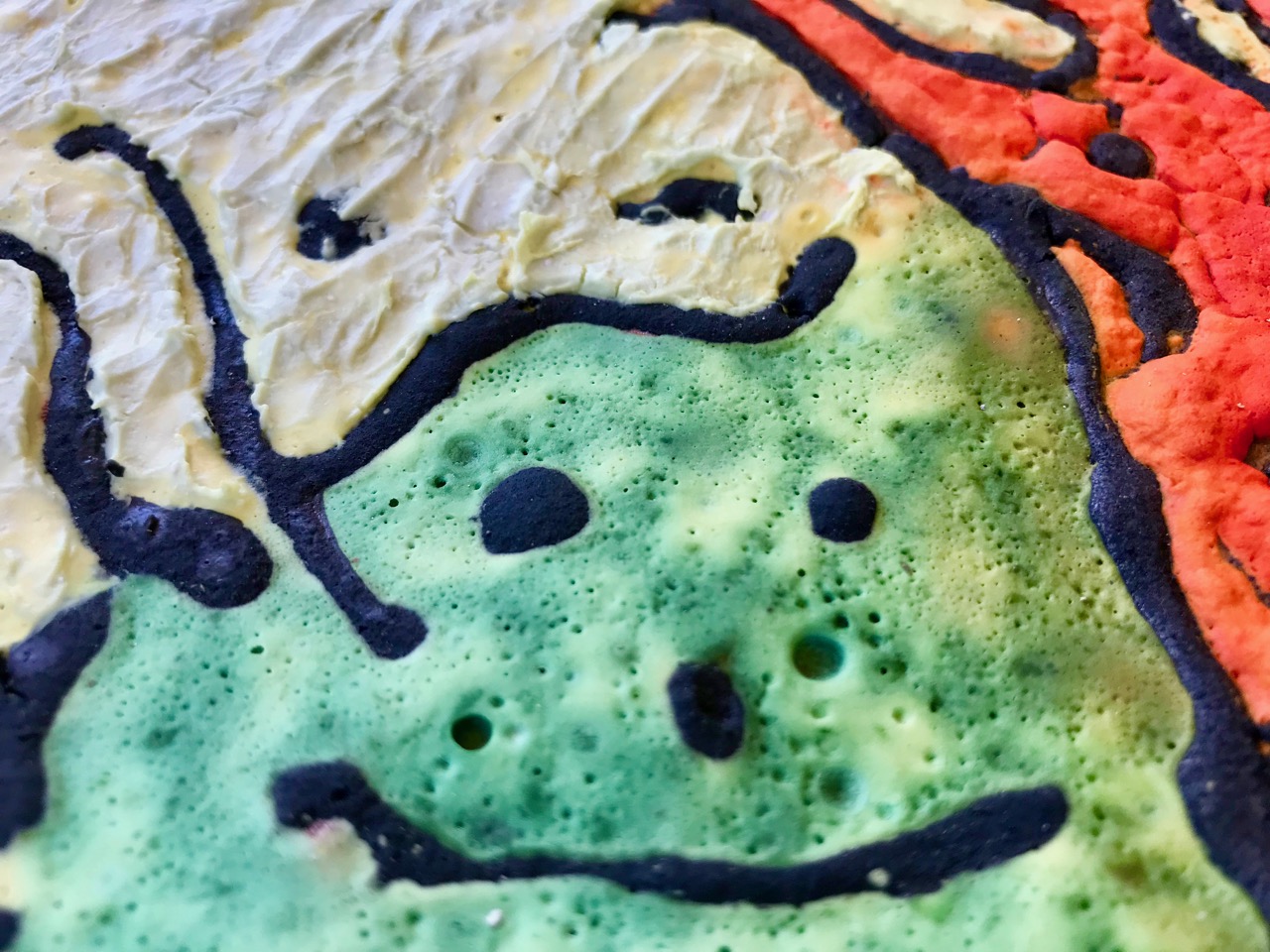
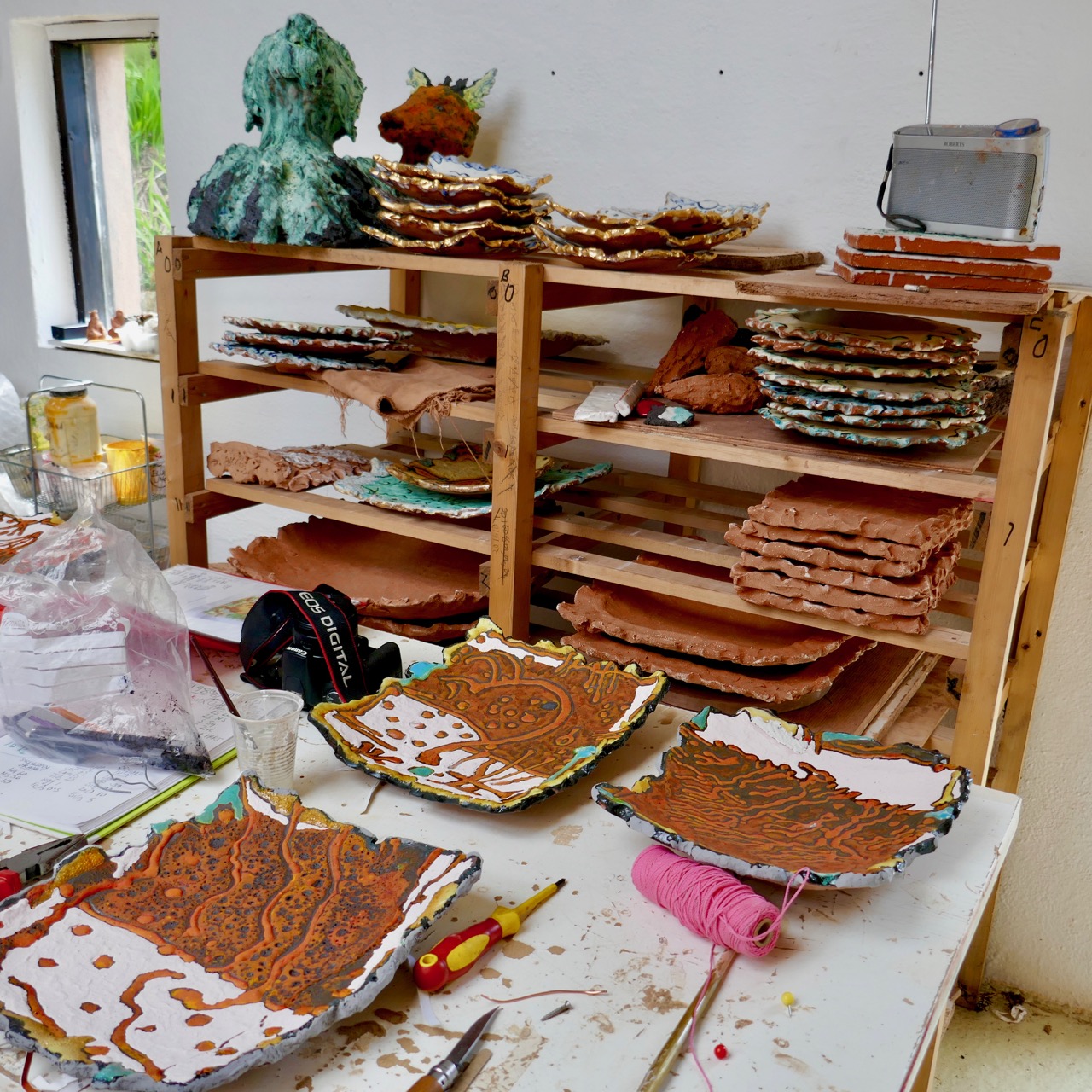
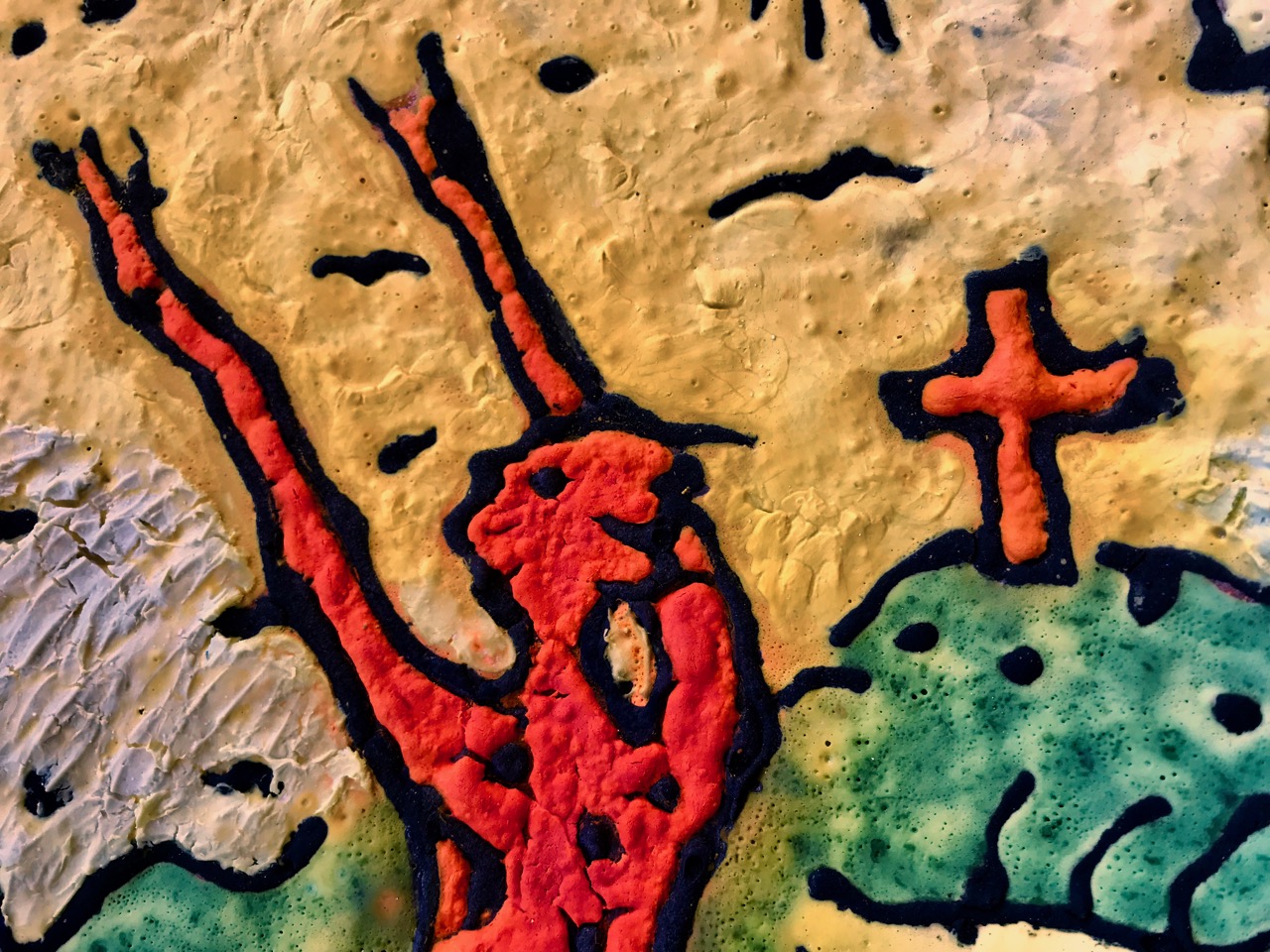
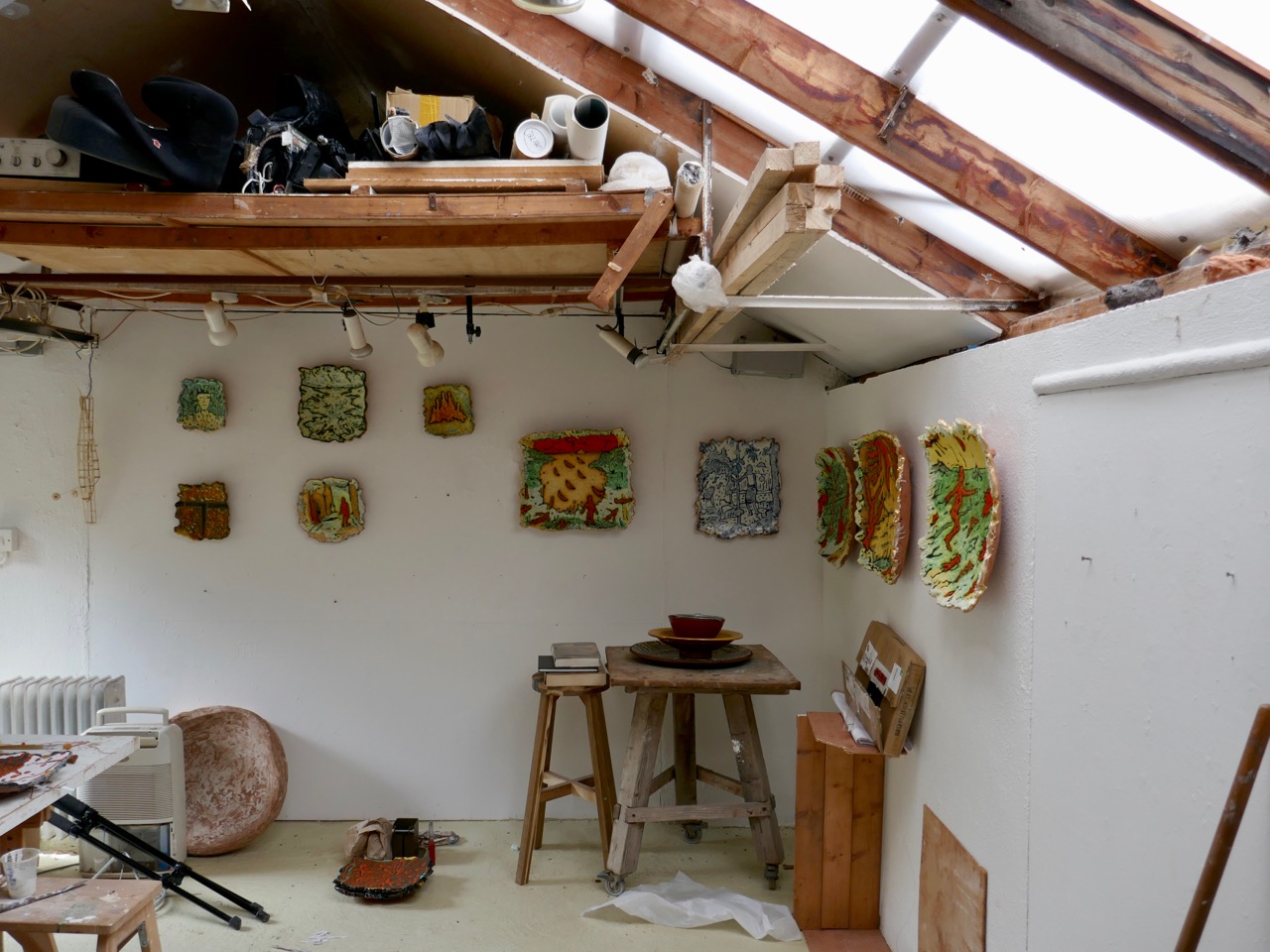
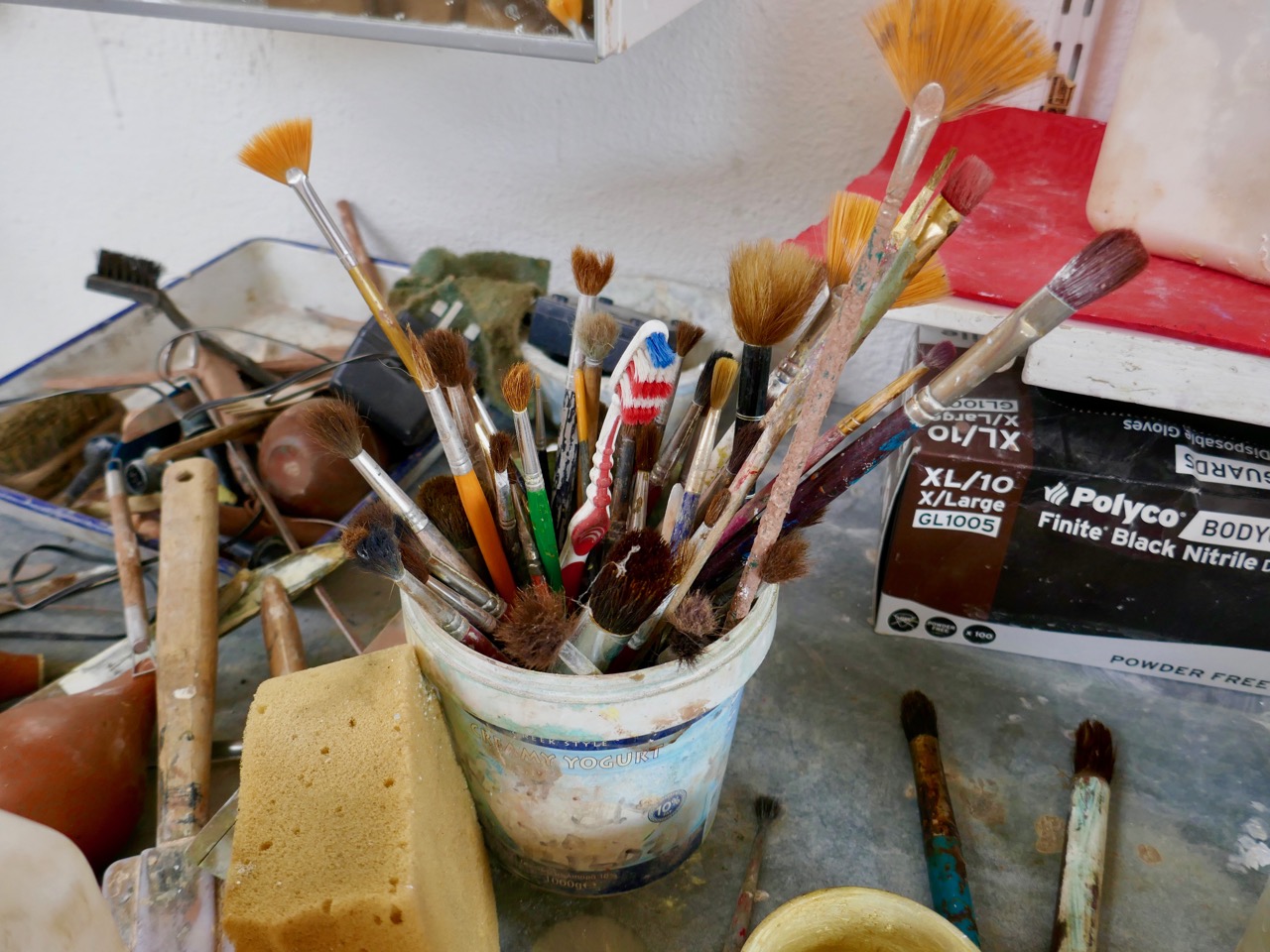
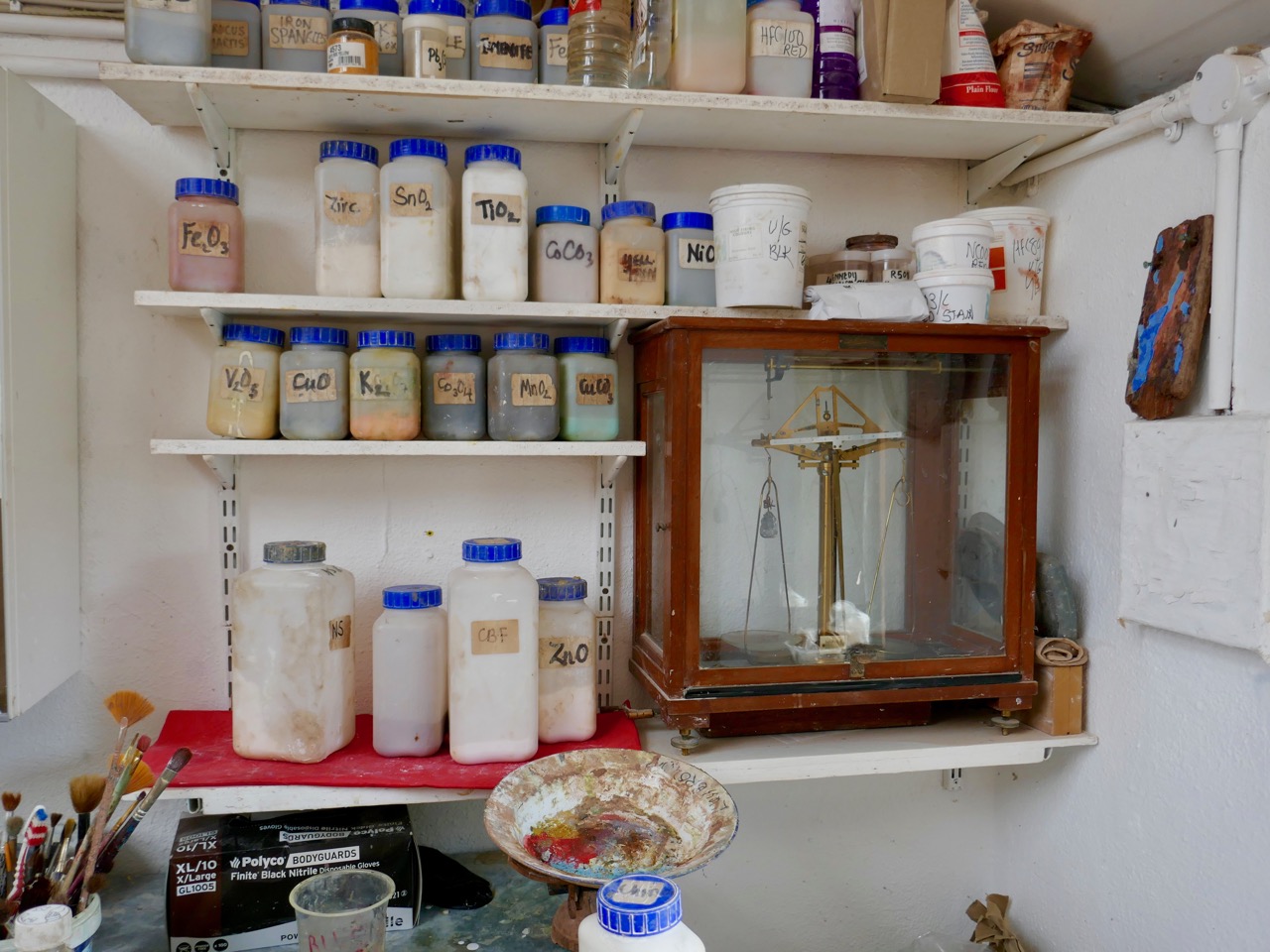
Cormac’s tools are his hands. He works raw terracotta clay and crafts the shapes of his pieces without wheel or mould. He applies colours and – most importantly – textures into the surface, and firing provides the finishes – not always predictable. For him, this is all part of the living process. But that’s the physical process: into the whole equation, also, are his close observations of the environment around him – the geology, textures and colours of the rock surfaces from the natural and cultivated landscapes. He sees the way rocks break and how they weather – how time is an element in their metamorphoses. Somehow, into all this surveillance and appreciation of nature he also makes stories. He finds inspiration in ancient sagas, particularly those from Ireland, as we saw in the exhilarating work on the walls of his studio.

Cormac Boydell is one of the important group of artists who came and settled in West Cork during the second half of the last century – a group whose lives and work have yet to be properly celebrated. Like many others of this group he has stayed for life and contributed to raising the profile of art produced in Ireland. In a catalogue of work produced by West Cork artists and displayed both in Skibbereen and the Crawford Gallery in Cork 30 years ago – Living Landscape ’87 – he writes this of his own contribution to that exhibition:

. . . Landscape is not the first term I would apply to my work. However I always welcome challenge. Breaking new ground stimulates creativity where repetition kills it. Experimentation, welcoming both failures and success, working out beyond the boundaries of my vision… that’s the excitement of art making. Using rock and fired clay as elements of the landscape, “Earthbone” expresses the spirit from which the landscape is formed . . .

Alison Ospina wrote in 2011 in the introduction to her book West Cork Inspires:

. . . Hidden down the leafy lanes of West Cork I have found artists whose work is of the highest calibre and should be considered of national importance . . . I have selected people working in a variety of media whose work has had an impact on other craftspeople and has been influential in developing West Cork’s reputation for excellence and originality . . .

In her book she writes of Cormac Boydell:

. . . Cormac’s work is organic and elemental, the earth is its source. It resonates across millennia from when the bedrock of this country was being laid down and speaks of torsion and vortices, glacial drift and the alchemy of fire. It taps into the energies of nature, to which it is inextricably linked . . .

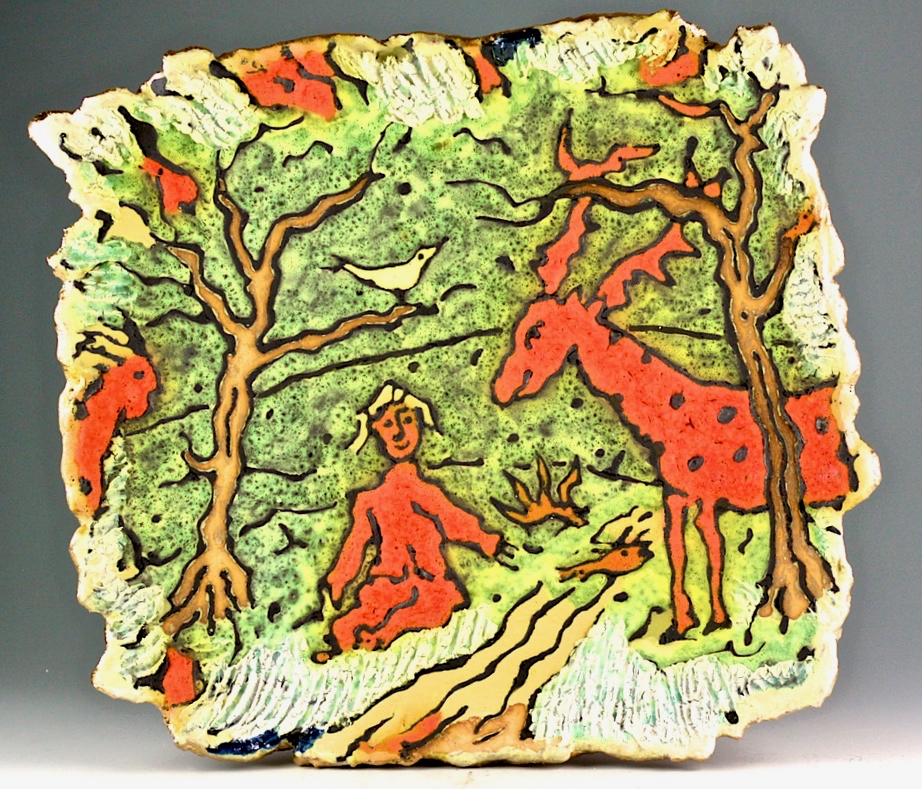
One of my favourite new pieces from Cormac Boydell is this large plaque inspired by the story of the Irish Saint Éinne (also known as Saint Enda): the patriarch of Irish monasticism. He is the brother of St Fanchea (see Finola’s post about Irish women saints) and was a warrior until Fanchea persuaded him to lay down his arms. He went to Aran in 484 and founded the first monastery there but the local chieftain Corbanus intervened. Éinne’s response was to banish all of Corbanus’s horses from the islands. This is the scene which Cormac has illustrated and it’s one of a recent series which is based on myths and legends.

You could own a piece by Cormac Boydell! This ceramic – based on a story from the Finn McCool cycle – has been purchased by Uillinn, the West Cork Arts Centre gallery in Skibbereen, and will be on display there from this week until the end of the Art & The Great Hunger Exhibition which runs from 20 July to 13 October. While the gallery is open you can purchase draw tickets at only 5 Euros each: the prize, which will be drawn on the last day of the exhibition, is the Boydell ceramic. What an opportunity – every ticket stands an equal chance of winning this unique work of art! And all your contributions will be supporting the activities of the Arts Centre.

With grateful thanks to Cormac and Rachel for allowing us a glimpse into their world

Sun’s Out!

On one April day after a bleak, harsh winter that had gales, hurricanes, blizzards and unceasing bitter east winds thrown at us – the sun came out! We were out too, and headed up to the Beara Peninsula to see if we could remember what sun-soaked landscapes felt like… They felt great!

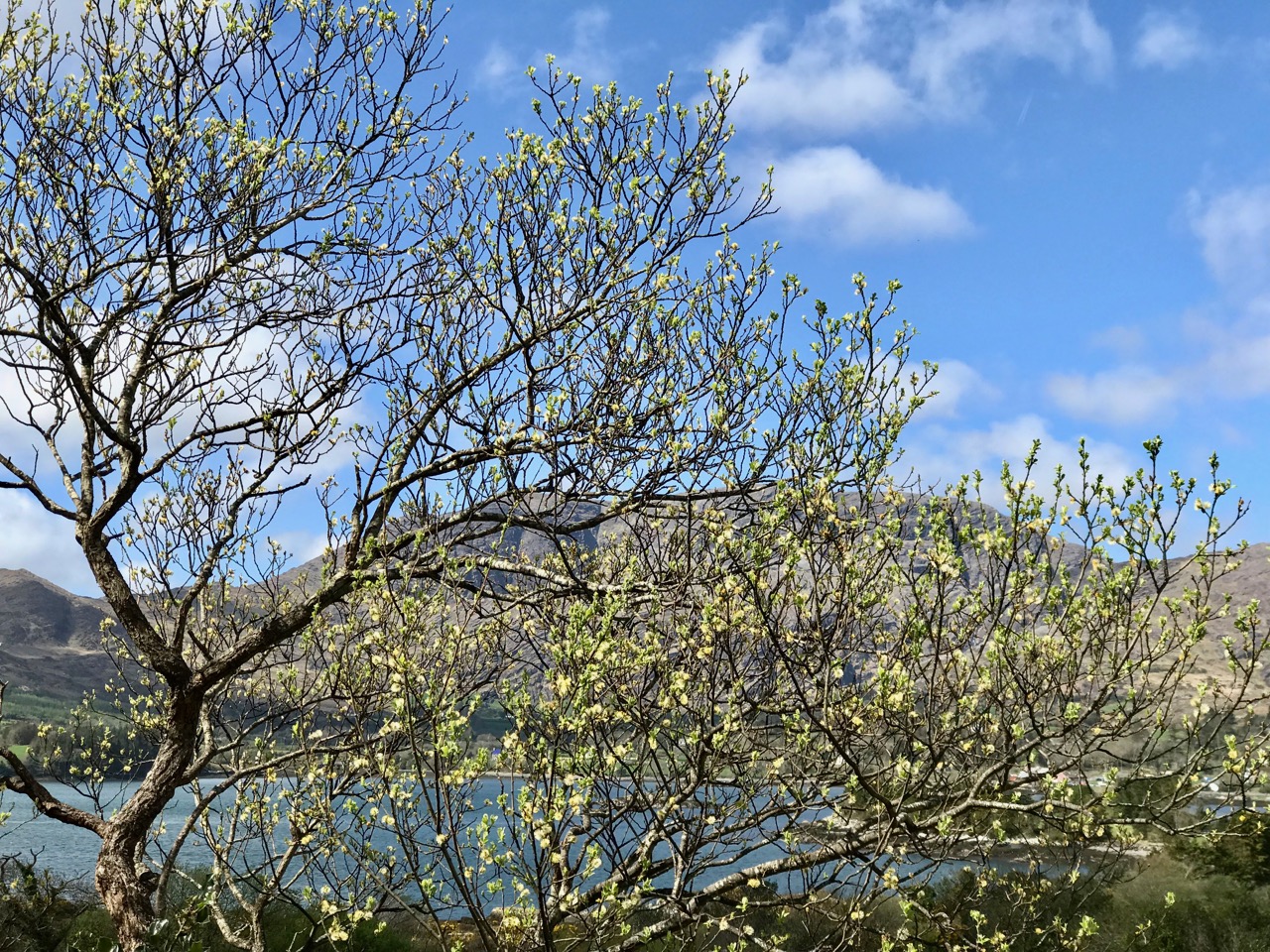
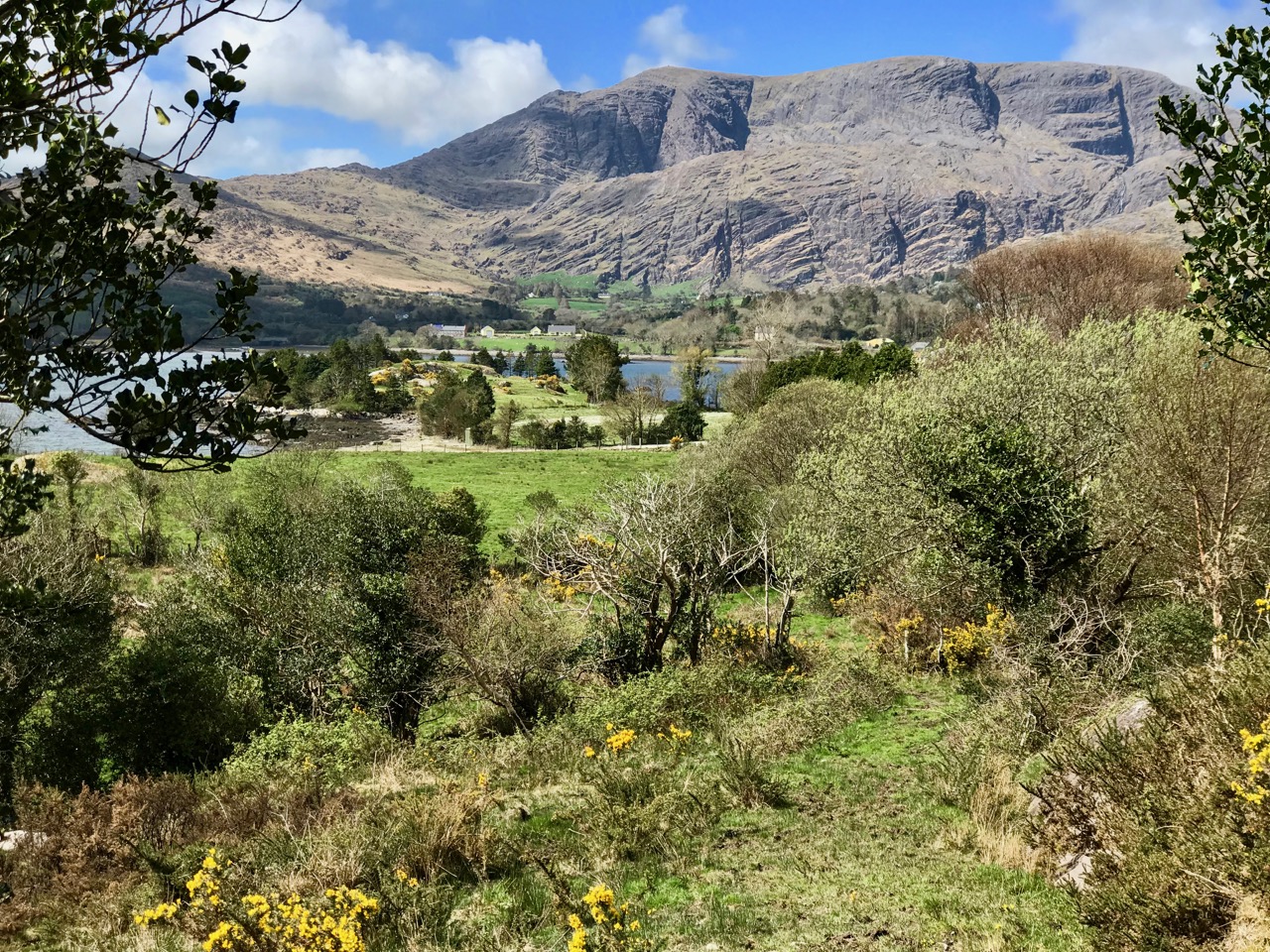
Header – the glories of Cork and Kerry combine on the spectacular Beara; top photograph – finally, after a long,harsh winter, we see the spring blossoms appearing; middle – a wayside shrine on the road out from Glengariff; bottom – Hungry Hill dominates the views as we head west on the peninsula

You will remember our previous visits to the Beara: there are not enough superlatives for what it has to offer in the way of stunning scenery and colour. None of these photographs have been enhanced – what you see is exactly what we saw on the day – and it’s what you will see, too, if you choose aright (although even on dull days we always find plenty to interest us).

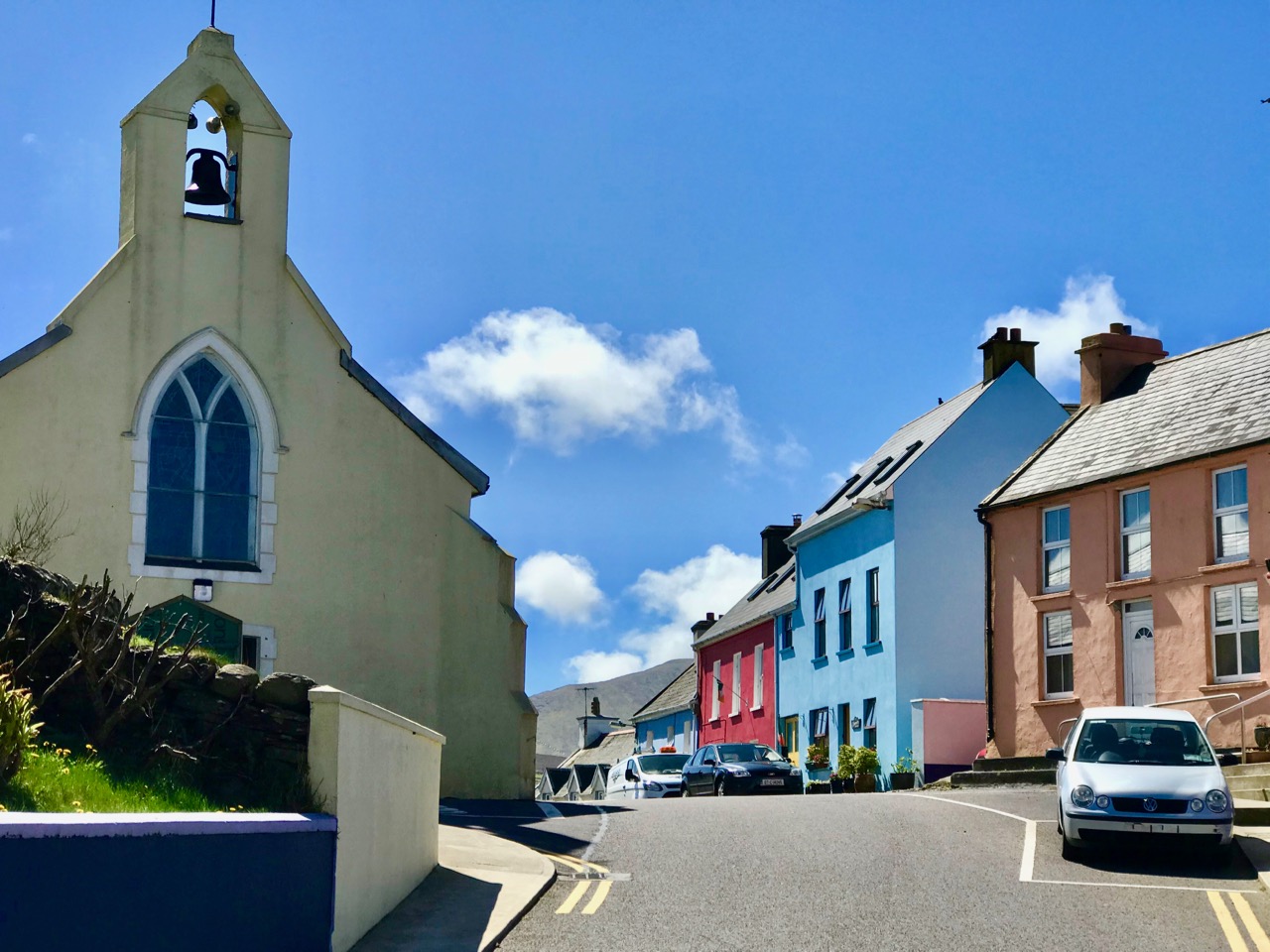
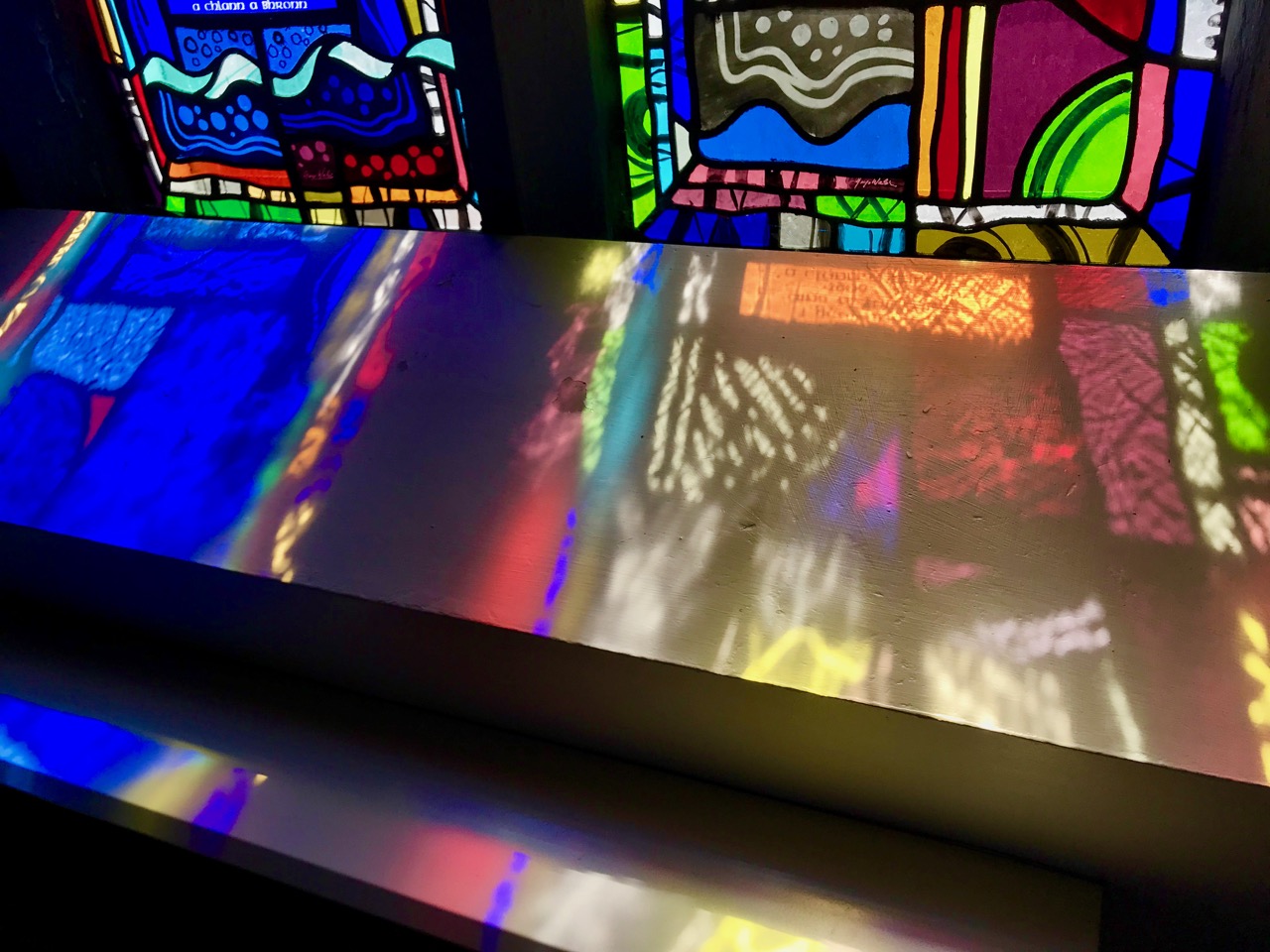
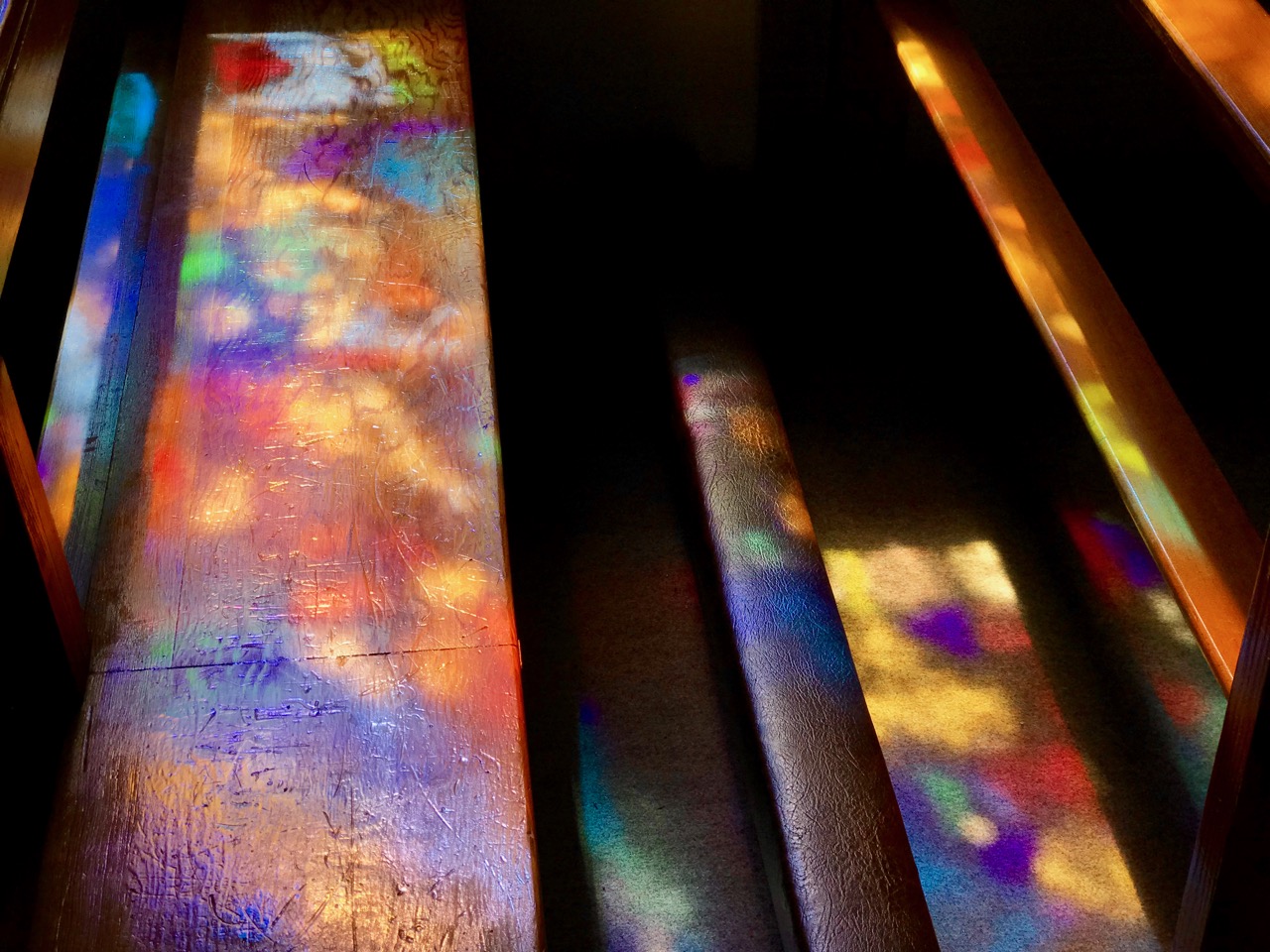
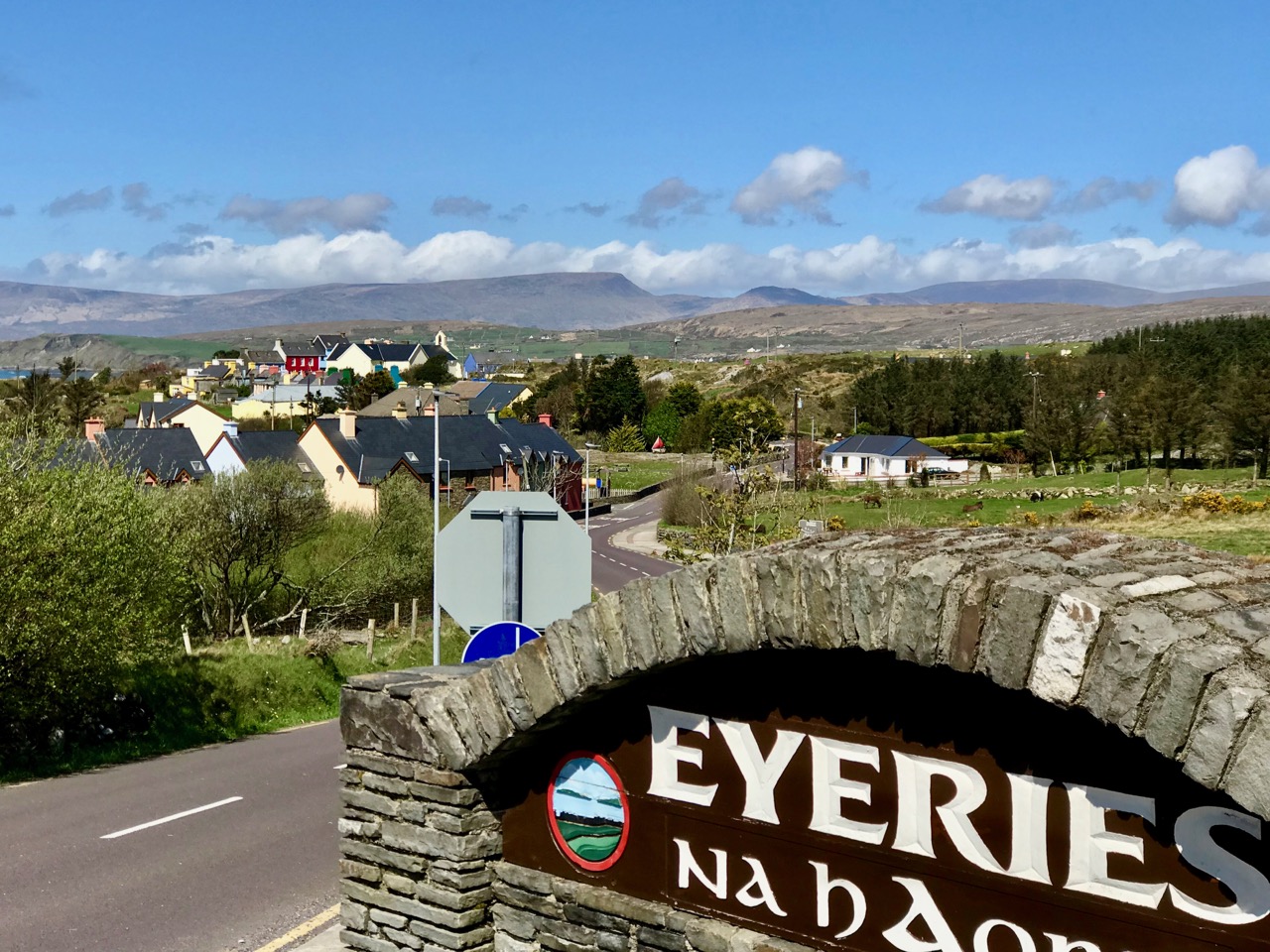
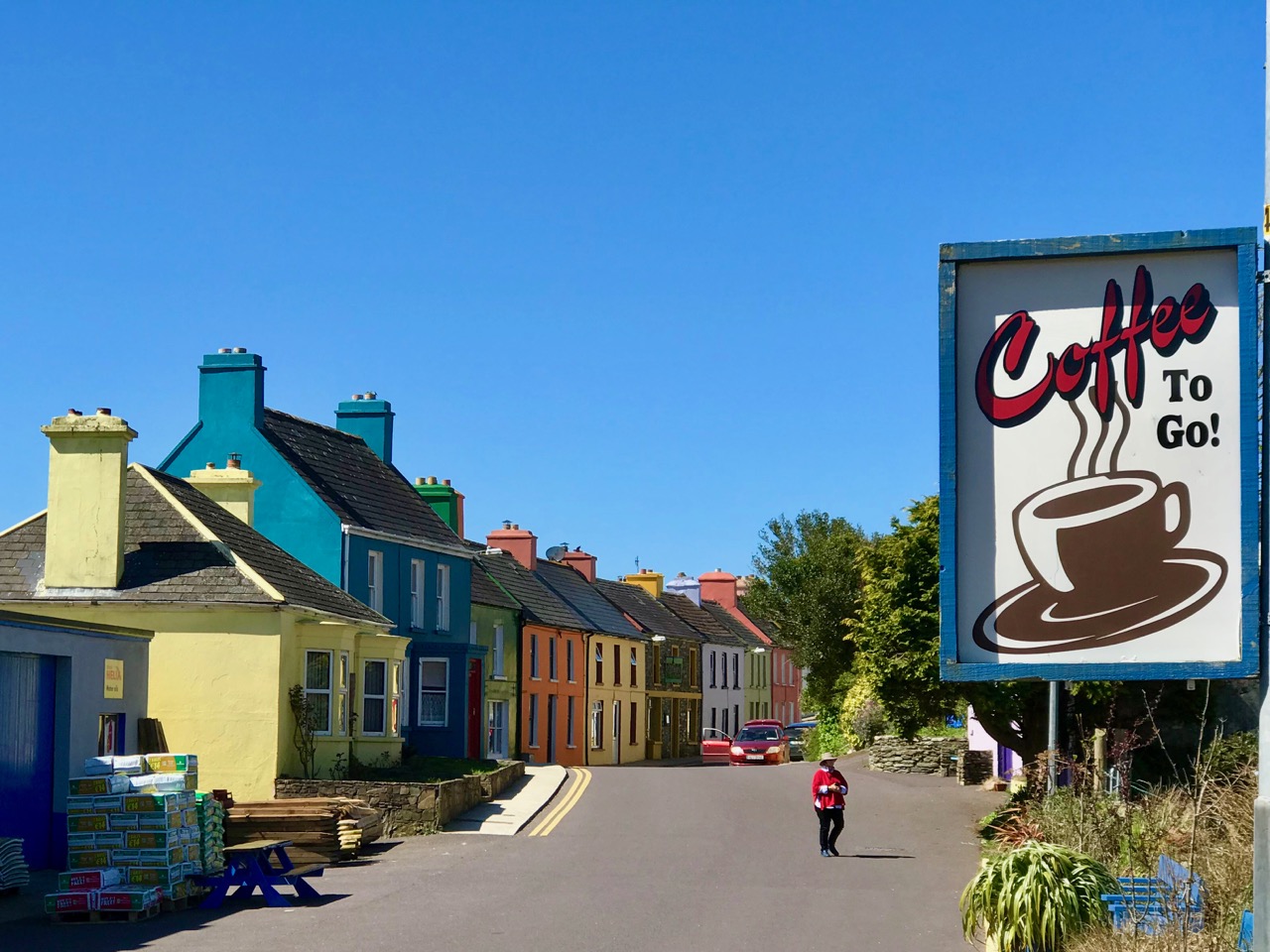
Top photograph – St Kentigern’s Church is in the centre of one of Ireland’s most colourful villages; middle – the sunlight plays games with the beautiful windows by glass artist George Walsh; bottom – light from the windows dances on the pews

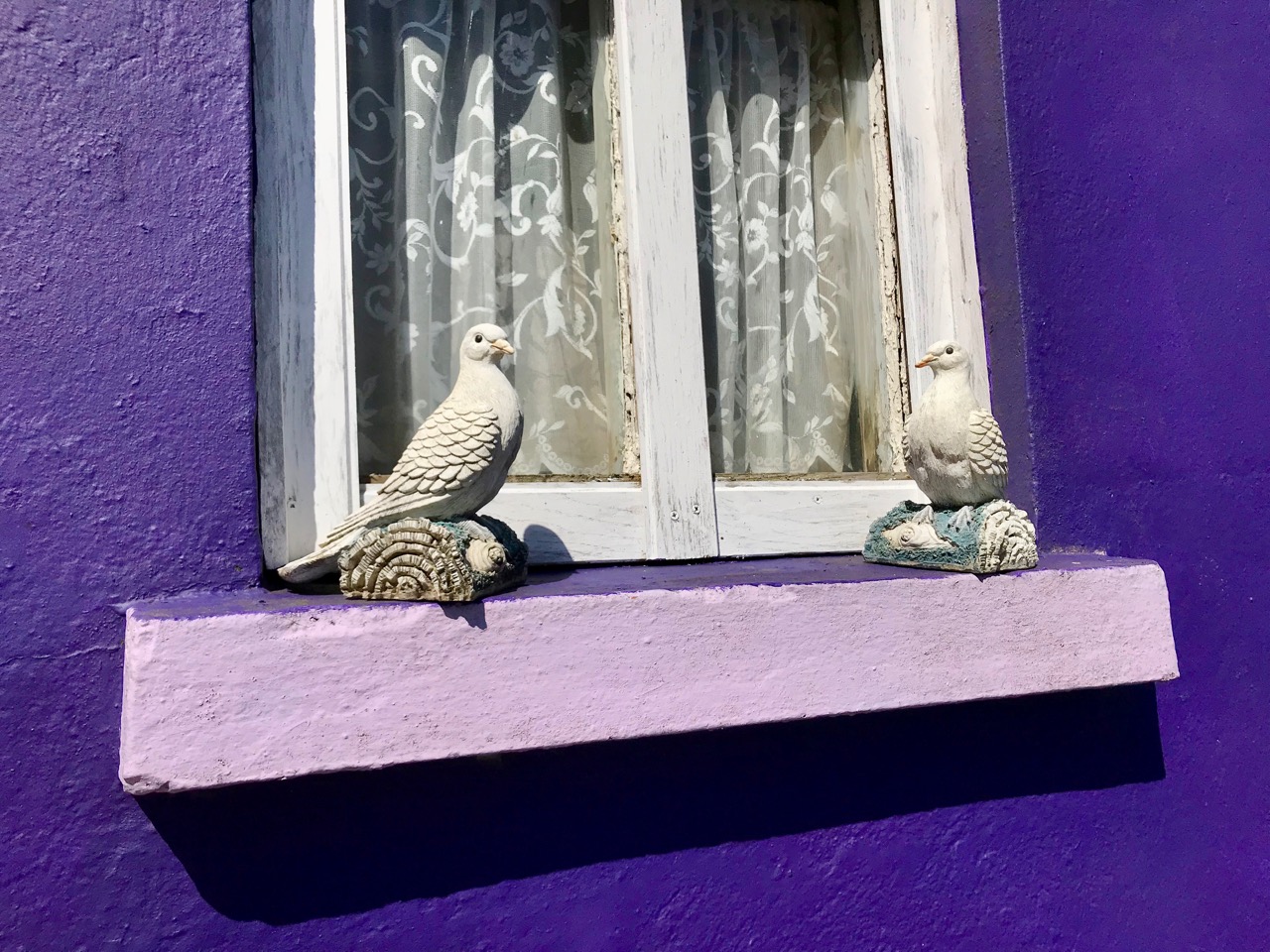
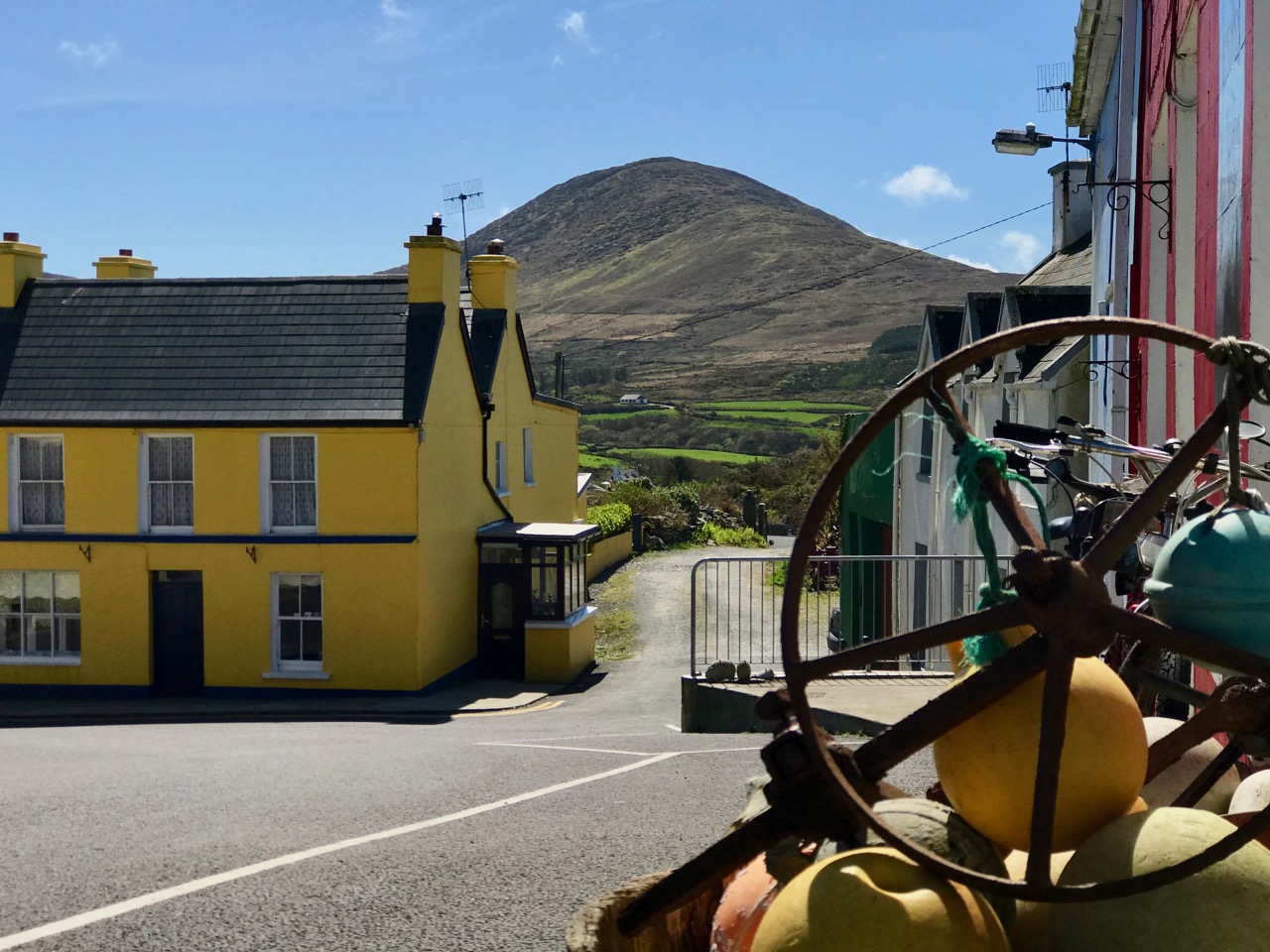
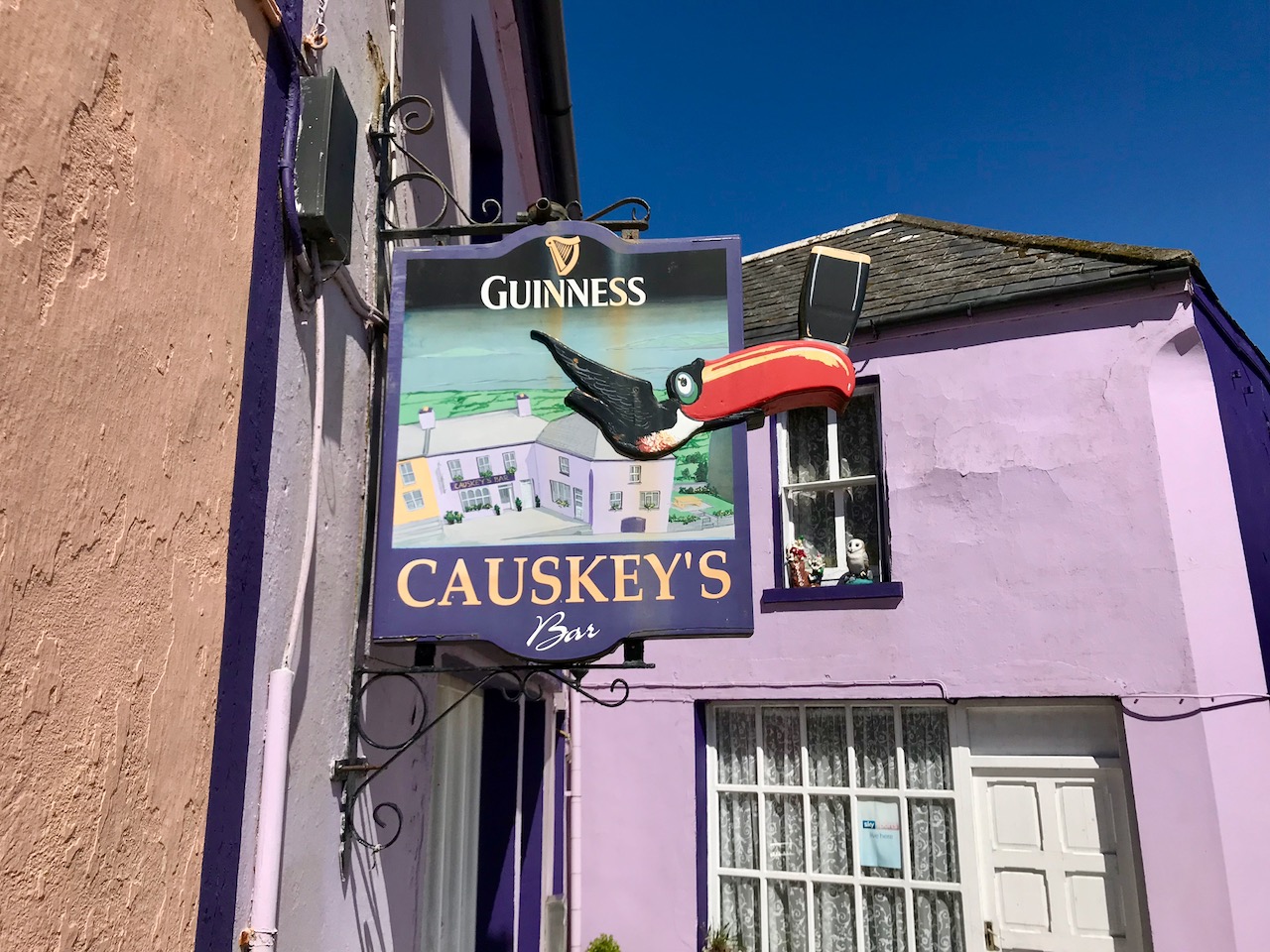
We knew where we were going: Finola was keen to revisit the little Catholic church of St Kentigern in Eyeries, which has a fine collection of windows by George Walsh: it’s a gem – and at its best for the quality of the light enhancing it on the day. I wanted to see the settlement itself in the early spring sunlight as it’s one of the most colourful places in the whole of Ireland! Neither of us was disappointed.

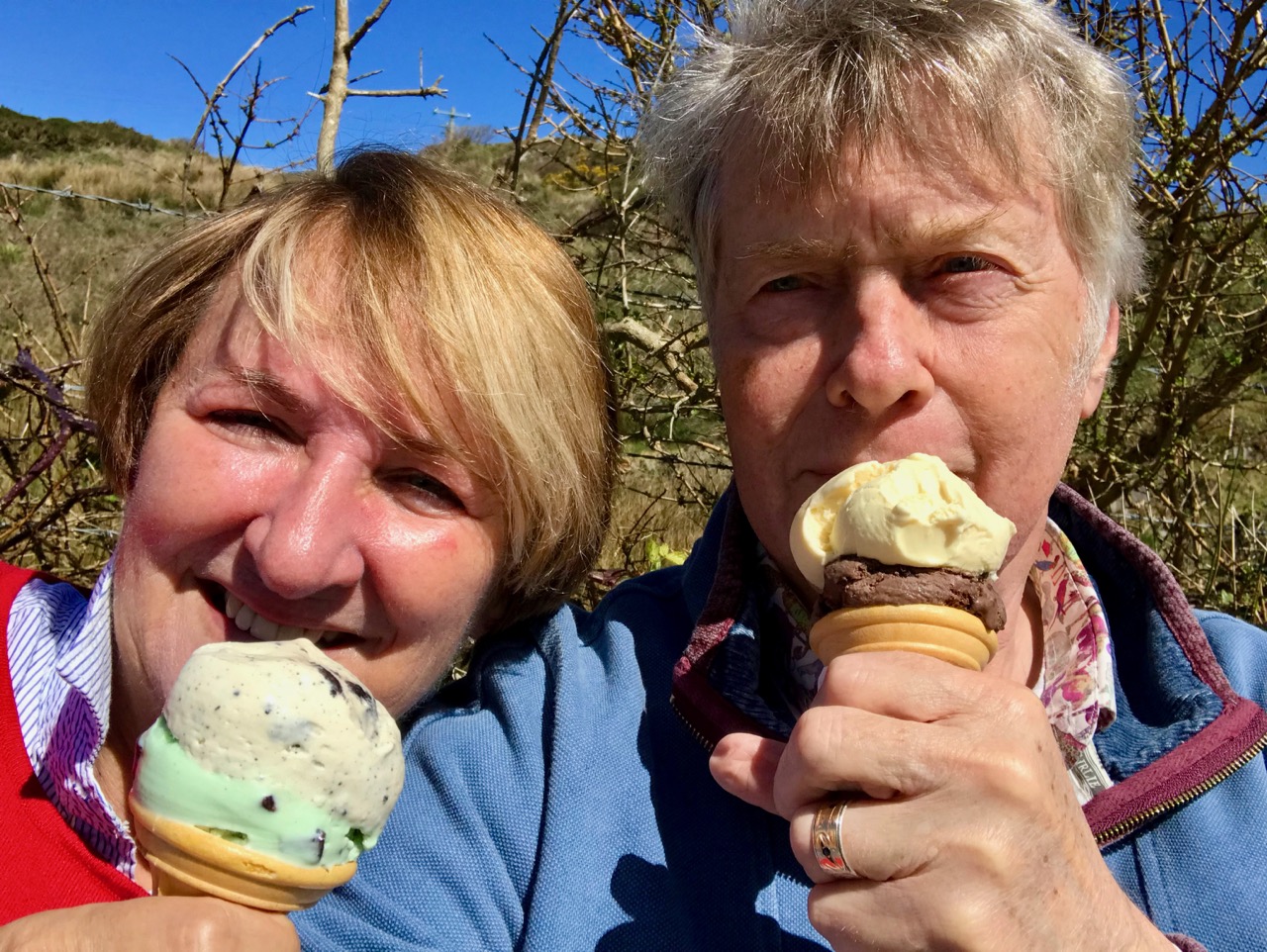
Just a taster of the treats in store in Eyeries: on a beautiful spring day there was hardly a soul around, but we were still able to find an ice cream in O’Sullivan’s!

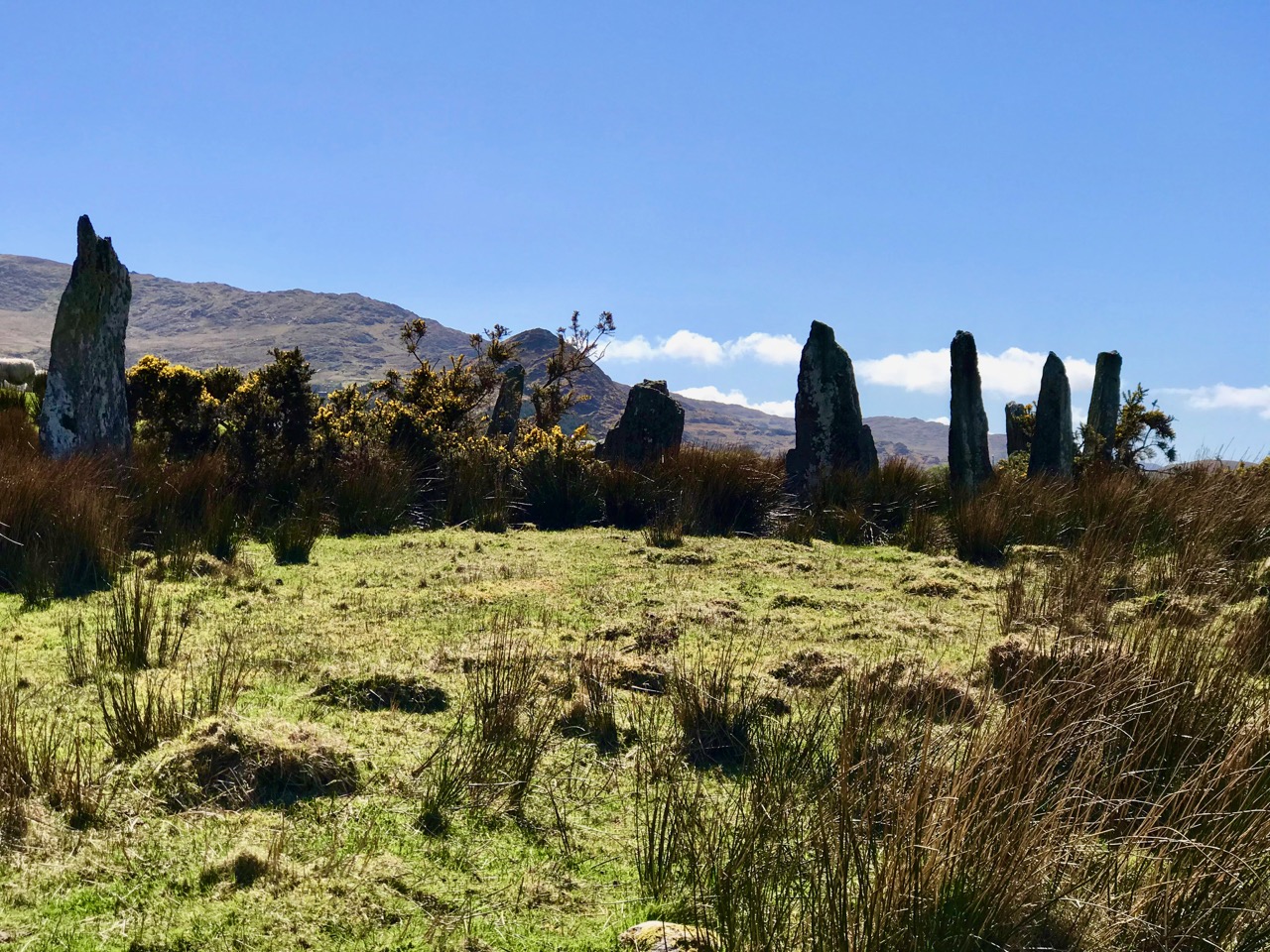
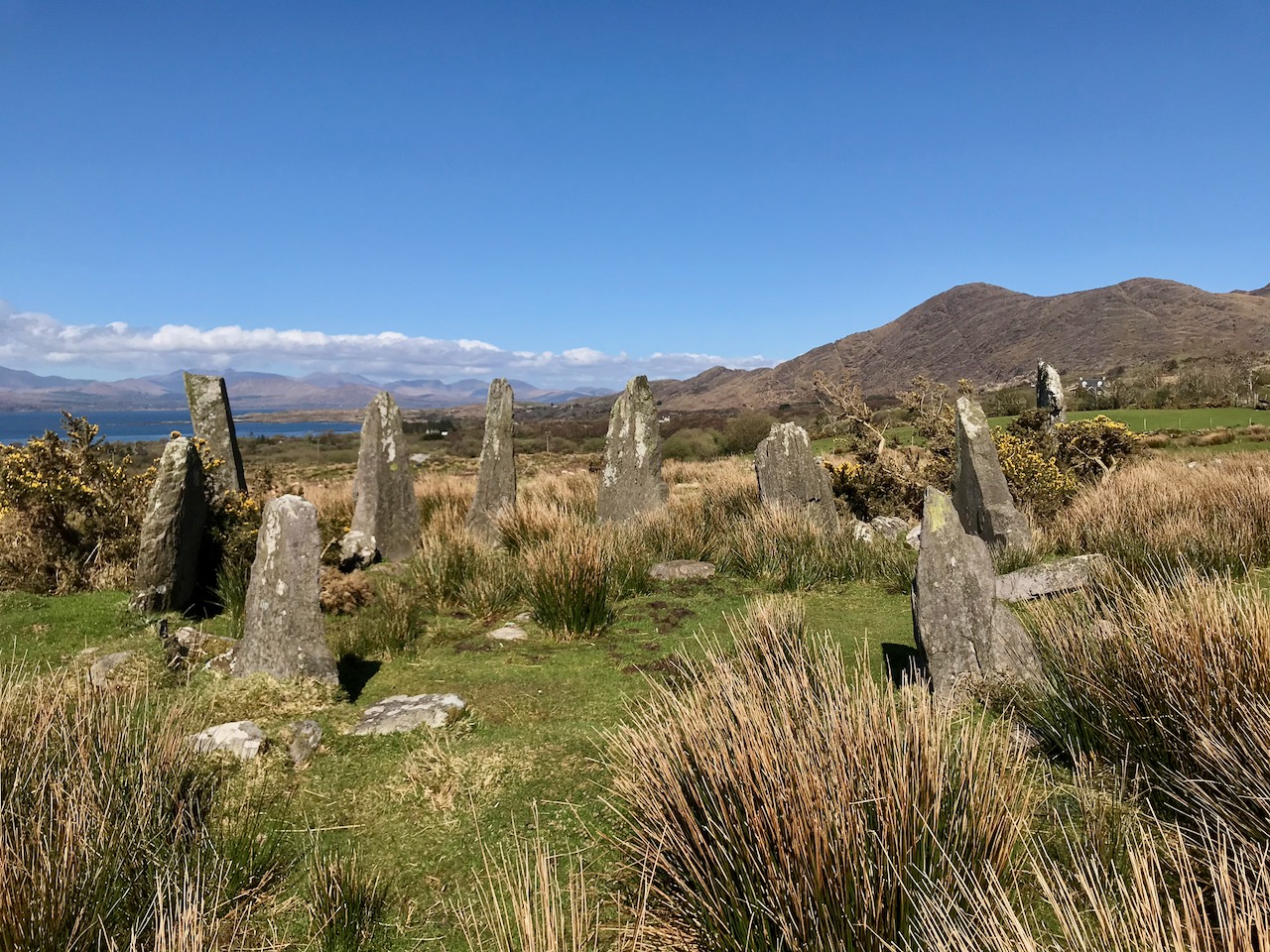
Our second objective was to travel into the hills and find Ardgroom Outward stone circle. The trail involves farm gates, stiles and a lot of mud – but the 9 stone circle (named locally ‘Canfea’) is a fine, almost intact monument with wide vistas to mountain and sea. The impressive outlier stone is 3.2m in height.

The magnificent Ardgroom Outward (or ‘Canfea’) stone circle is accessible via a marked, boggy path: the vistas from the site make the journey worthwhile. Finola is dwarfed by the huge outlier!

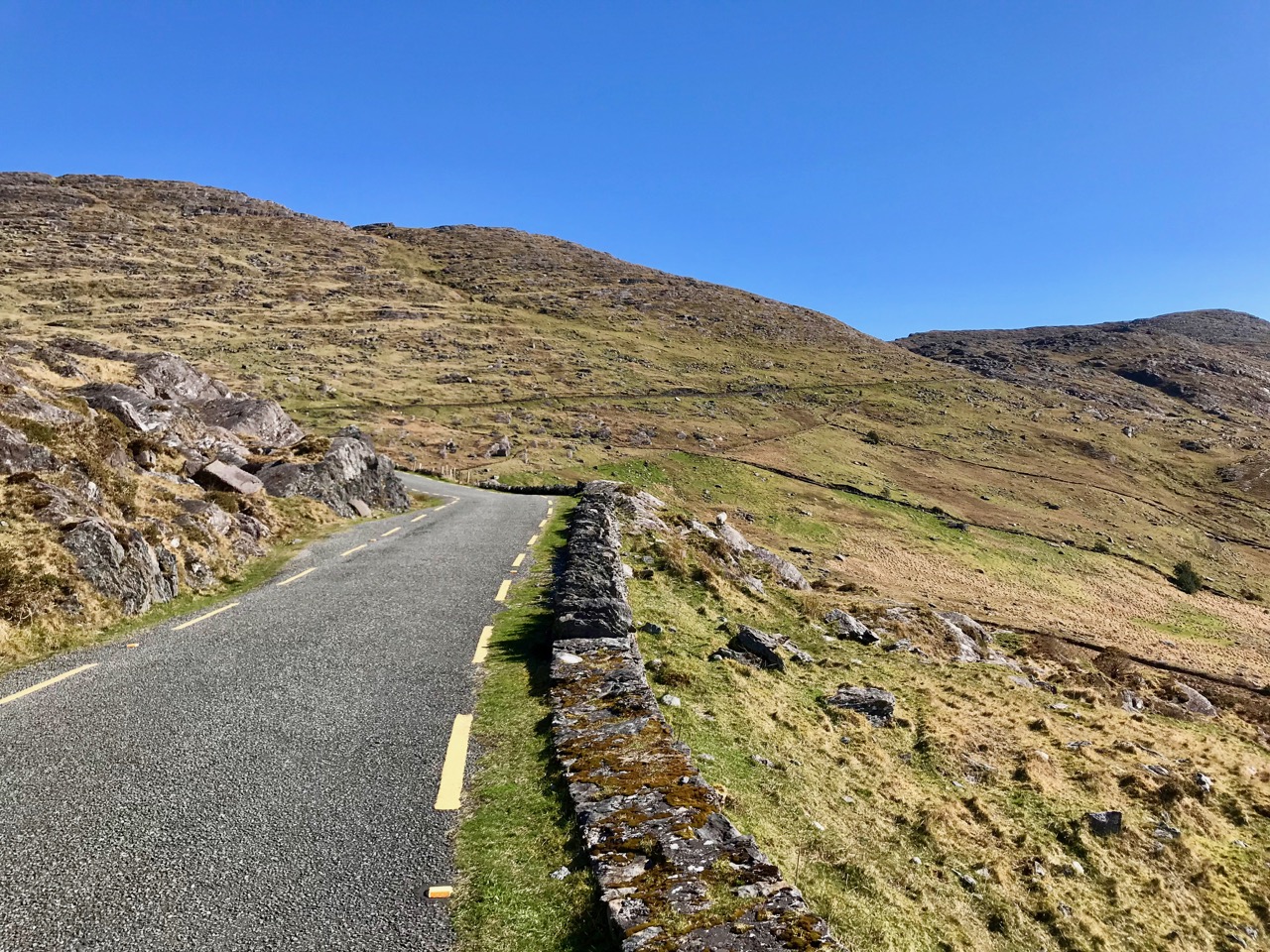
It’s barely a skip up to Eyeries from Nead an Iolair, so we had to carry on around the peninsula and take in the almost surreal views of oceans, lakes and mountains before dipping into Kerry and then heading over the top back into Cork county and down the Healy Pass – surely one of Ireland’s most spectacular road trips.

Returning home – with the evening sun setting gloriously over Roaringwater Bay – we reflected that there can’t be many places in the world where a single day can offer such a feast to satisfy all the senses.


Signs and Times

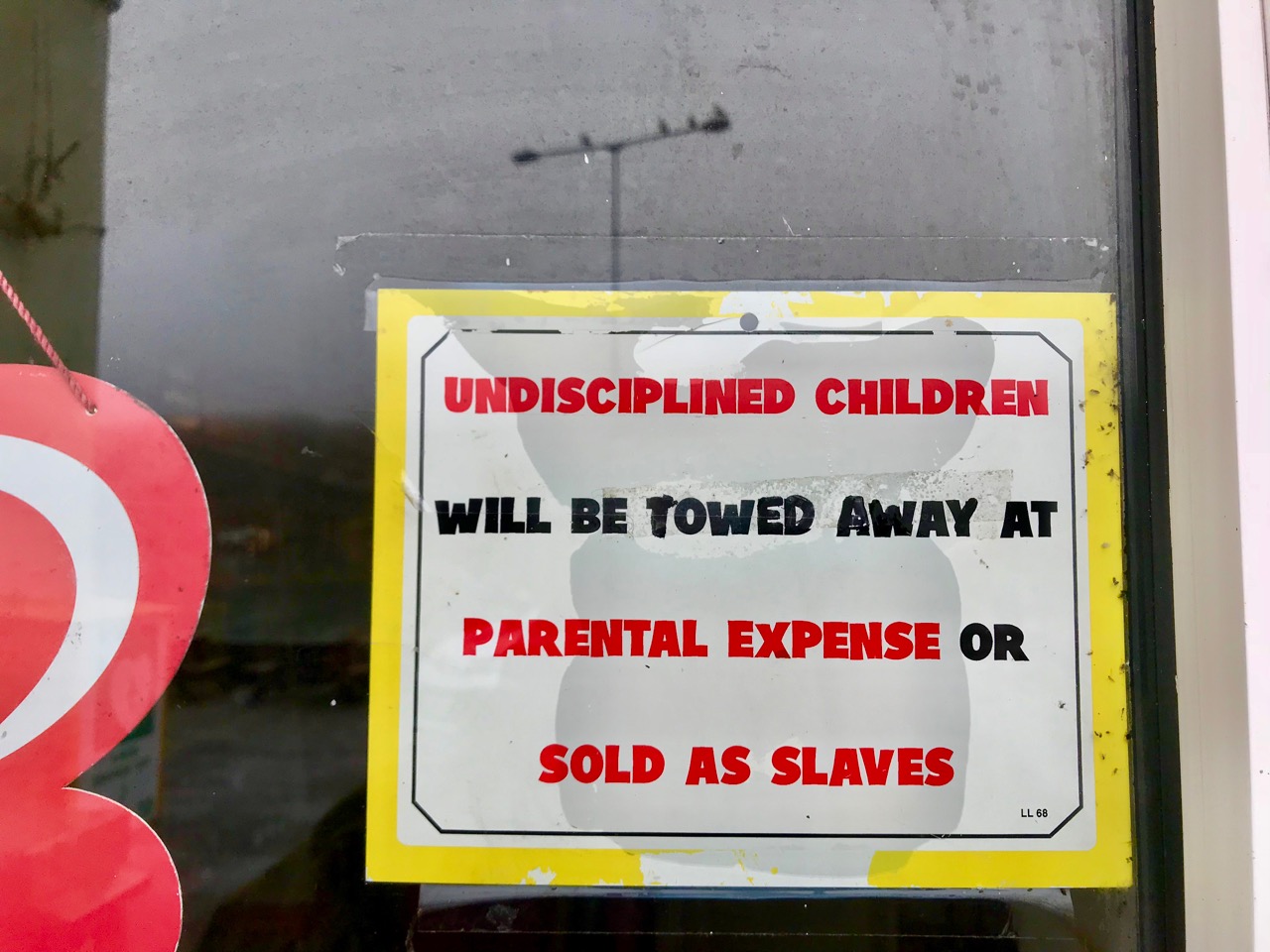
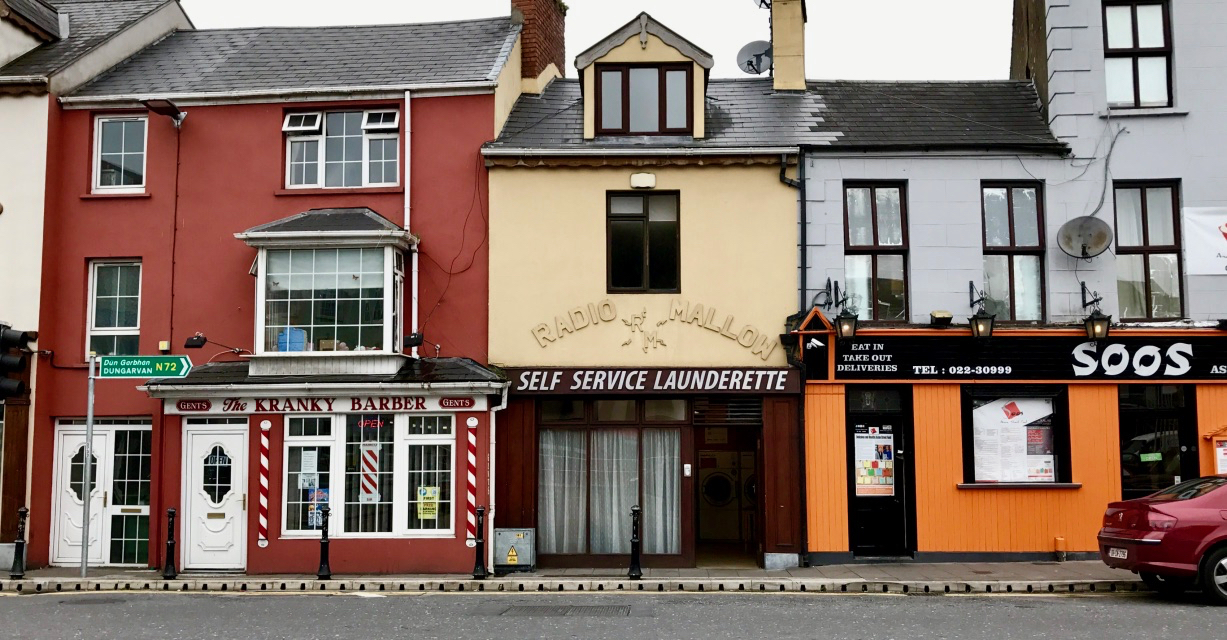
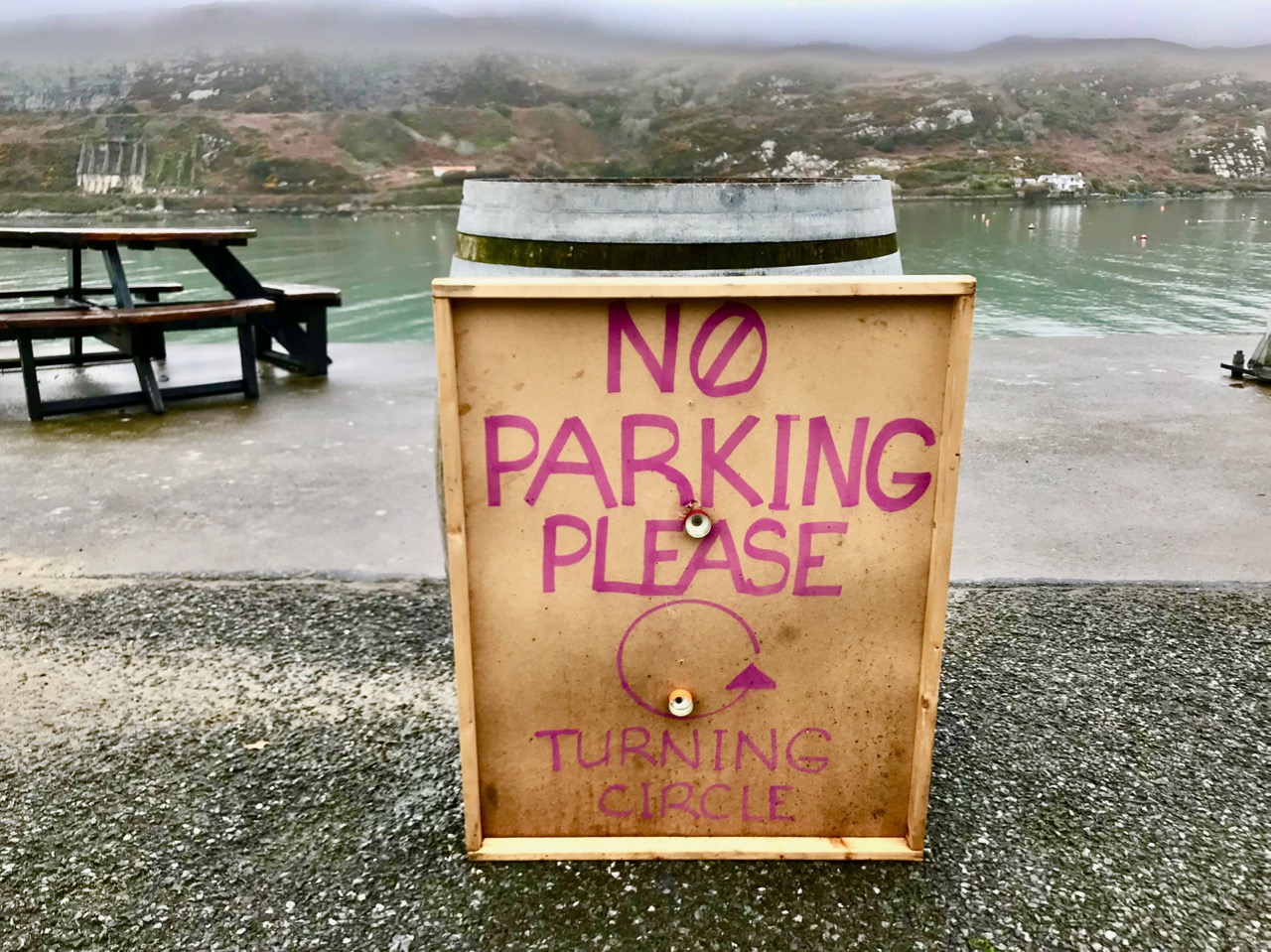
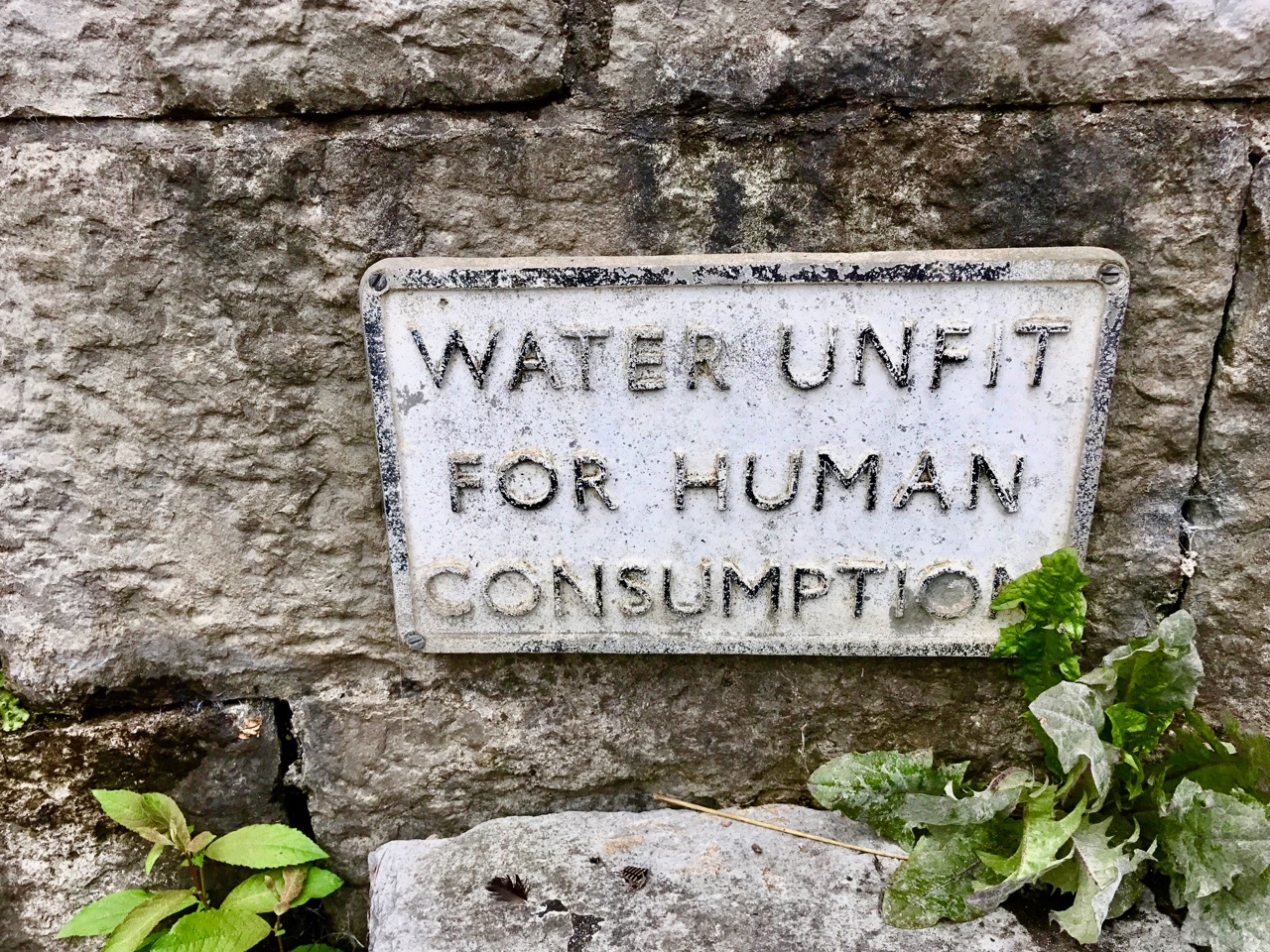
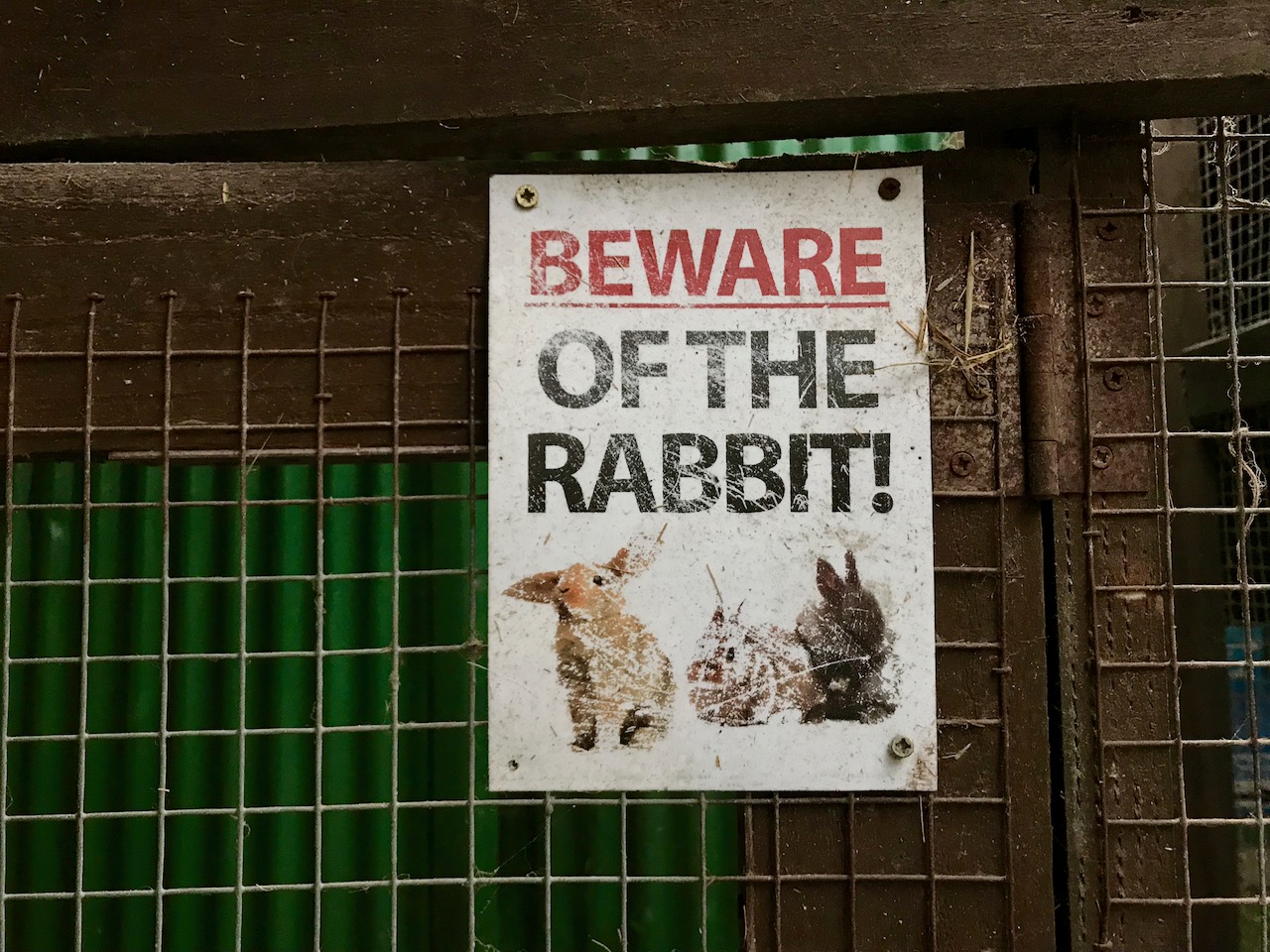
Some signs make no sense – others don’t mean what they say. There are those that attract the attention because they are, simply, picturesque. Always, context – or lack of it – is important. Here is a new selection, to add to those that you may have seen already. As usual, I don’t feel that there’s any need for a commentary. If it all leaves you puzzled, just put it down to my own quirky sense of perception!

Gothic Revival – With Bells

A month ago I wrote of our first visit to Cobh, in County Cork, and told how impressed we were with the town and its architecture. I promised that Roaringwater Journal would revisit Cobh, and today I will concentrate on the splendour of the Cathedral, which dominates the skyline and looks across to the Lee Estuary. All shipping using the port, or passing up to Cork, will be aware of this spectacular building.

St Colmán’s Cathedral was conceived in the mid-Victorian era, when the Gothic revival style of architecture was in full swing. Popularity of the style was, perhaps, generated as a reaction to the society and machinery of the Industrial Revolution – all noise, smoke and progress – and harked back to a perception of medieval life when all seemed sylvan and pastoral and when everyone, from lords to artisans, knew their place: Medievalism meant a concentration on the trappings of chivalry, craftsmanship and decoration, particularly in religious buildings – although private houses for the very wealthy also explored the idiom: have a look at our post on Adare Manor.

Construction work on the Cathedral began in 1867. The designers were Edward Welby Pugin (son of Augustus Welby Pugin – probably the greatest of the British Victorian architects) and Irish-born George Coppinger Ashlin who was responsible for over 100 new churches in Ireland including those in Clonakilty and Skibbereen, here in West Cork. St Colmán’s was not completed, however, until 1915. The tower – 90 metres high – was the last element to be finished – old photographs above (emptyseas) and below left (National Archives of Ireland) show the Cathedral in use without it in the 1890s while the picture (below right – from the Michael O’Leary Private Collection) shows the tower under construction in 1914.

The Cathedral is dedicated to St Colmán of Cloyne, who founded the Diocese in the year 560. This saint is known as ‘The Poet Saint’ as he trained to be a bard for twelve years and entered the court of Aodh Caomh, High King of Munster, at Cashel. Influenced by St Brendan and St Ita, Colmán became a priest and then set up a monastery on the shores of the Lee, where Cobh now stands.  Our friend Amanda has told the story of this saint, and includes a piece from the Schools Folklore Collection, written by Padraigh Ua hAodha in the 1930s:

. . . When St Coleman was building the round tower in Cloyne a woman asked him what he was doing so high up. When he heard her speak he got such a shock he jumped from there to Kilva where the print of his feet are still to be seen on a stone. He jumped from there to Glen Iris Wood. When he landed he prayed to god to send him some water and immediately water sprang up at his feet. When he had drunk some he sprang from here to Cove  where there is a cathedral built called Saint Coleman’s. The spring that sprung up at his feet is now known as St Coleman’s Well . . .

The Cathedral contains an inscribed list of all the bishops of the Diocese, from St Colmán to the present day. This list includes Thaddeus McCarthy, bishop from 1490 to 1492 – Finola is telling his story today. The richness of the building is as evident inside as it is without. It’s an homage to fine detailing and craftsmanship and there is no corner free from it: unfortunately I could not find the names of the the artists, masons and carvers in any records. At least their skills are celebrated in their works.

Something you may not discover from a visit to St Colmán’s is the carillon which was built in to the new tower in 1916. A carillon is a giant musical instrument which, using a large mechanical keyboard and pedals, sounds a whole series of cast bells. In this cathedral there are 49 bells – making it the largest carillon in Ireland and Britain: the heaviest bell weighs 3.6 tons, and is named Colmán! Please watch this fascinating seven minute film about the carillon, and the man who plays it: his title is Carillonneur. Through the summer recitals are given and can, of course, be heard not only in the Cathedral, but over the whole town.

Visiting Cobh is itself a great experience, but allowing sufficient time to explore and appreciate the Neo-Gothic gem which is St Colmán’s Cathedral has to be the icing on the cake. Although only completed a hundred years ago, remember the long tradition of the saints who set up their foundations here in Ireland, keeping civilisation alive . . . while the Dark Ages settled on Europe . . .