Adare Manor

When studying architecture (fifty years ago!) I had little time for what was then generally termed the Victorian Gothic style. It seemed to me derivative, dark and fussy. Now, half a century on, I am suddenly a convert – and all because of a visit we made to Adare Manor: surely one of Ireland’s leading five star hotels, but also the finest embodiment of Neo Gothic attributes that I have come across in any building to date.

The settlement of Adare, in County Limerick, is a bit of a traffic bottleneck waiting to be sorted out – by a much yearned-for bypass which is likely to take a few years to complete. Once in the village, however, you will find a magical and slightly surreal place with its clusters of picturesque thatched cottages, pubs and restaurants, art galleries, antiques vendors and the greatest concentration of fashion shops and boutiques outside of any city in Ireland (probably). But when it comes to hospitality and architecture, then Adare Manor itself beats all contenders.

From the superbly landscaped gardens (top – there are 840 sweeping acres on the estate), through to elegant interiors (the drawing-room, centre, is a prime example), the mansion is on a grand scale and very much reflects, today, the spirit in which it was reincarnated in the 1830s (lower – the Great Hall) by the splendidly monikered incumbents of that time: Windham Wyndham-Quin, 2nd Earl of Dunraven and Mount-Earl and his wife Lady Caroline Wyndham, heiress of Dunraven Castle, Glamorgan, Gloucestershire.

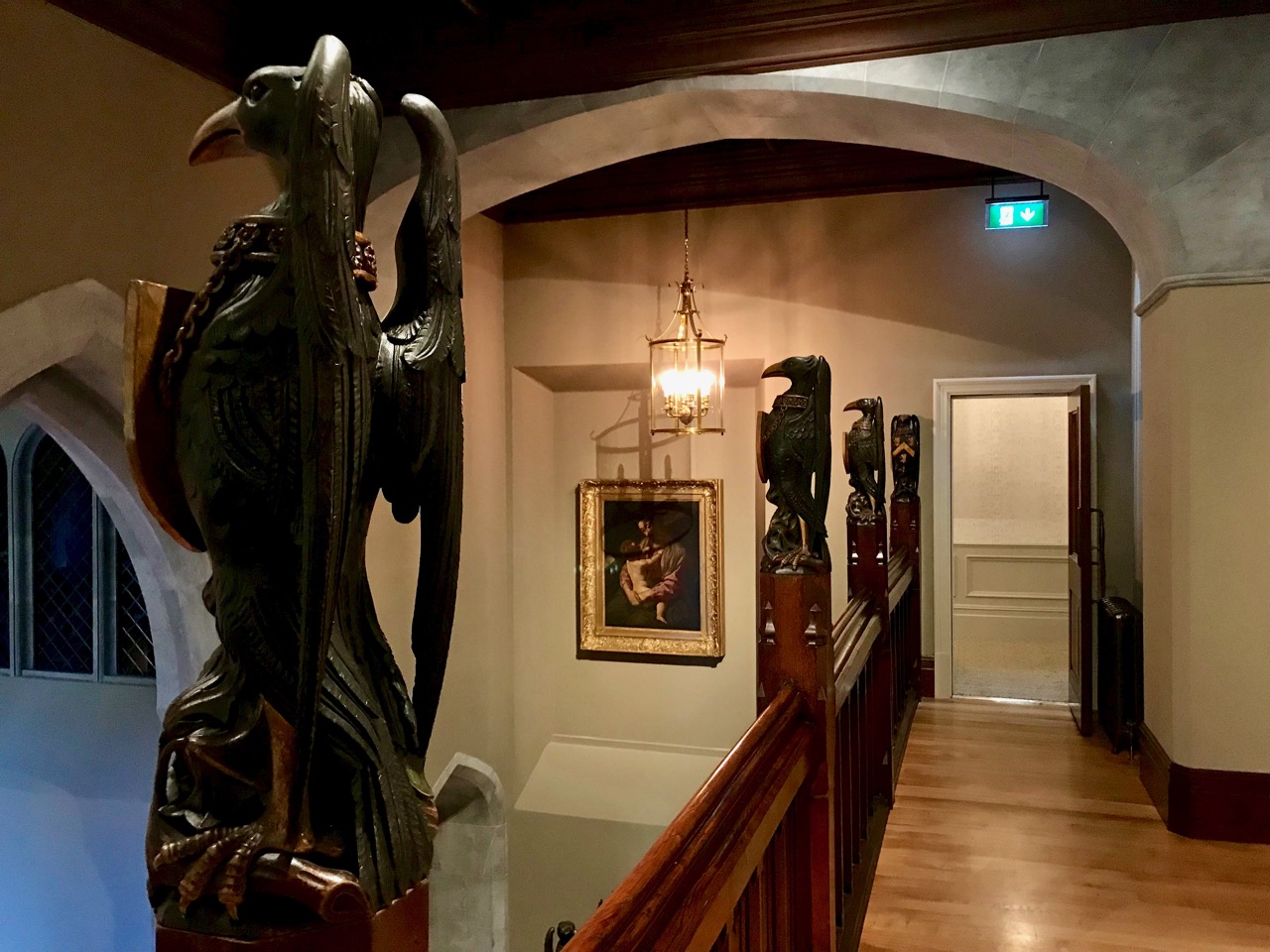
The Manor House as remodelled by the Second Earl is a riot (Dunraven ravens, above). Known to have always actively pursued outdoor life, riding, hunting and sports, it is said that Windham was laid low by an acute attack of gout. Lady Caroline encouraged him to channel his frustrated energies into a building project: to modernise and enlarge their modest Georgian residence. The Earl rose to the challenge and embraced the exuberance of the fashionable Gothic Revival style of architecture.

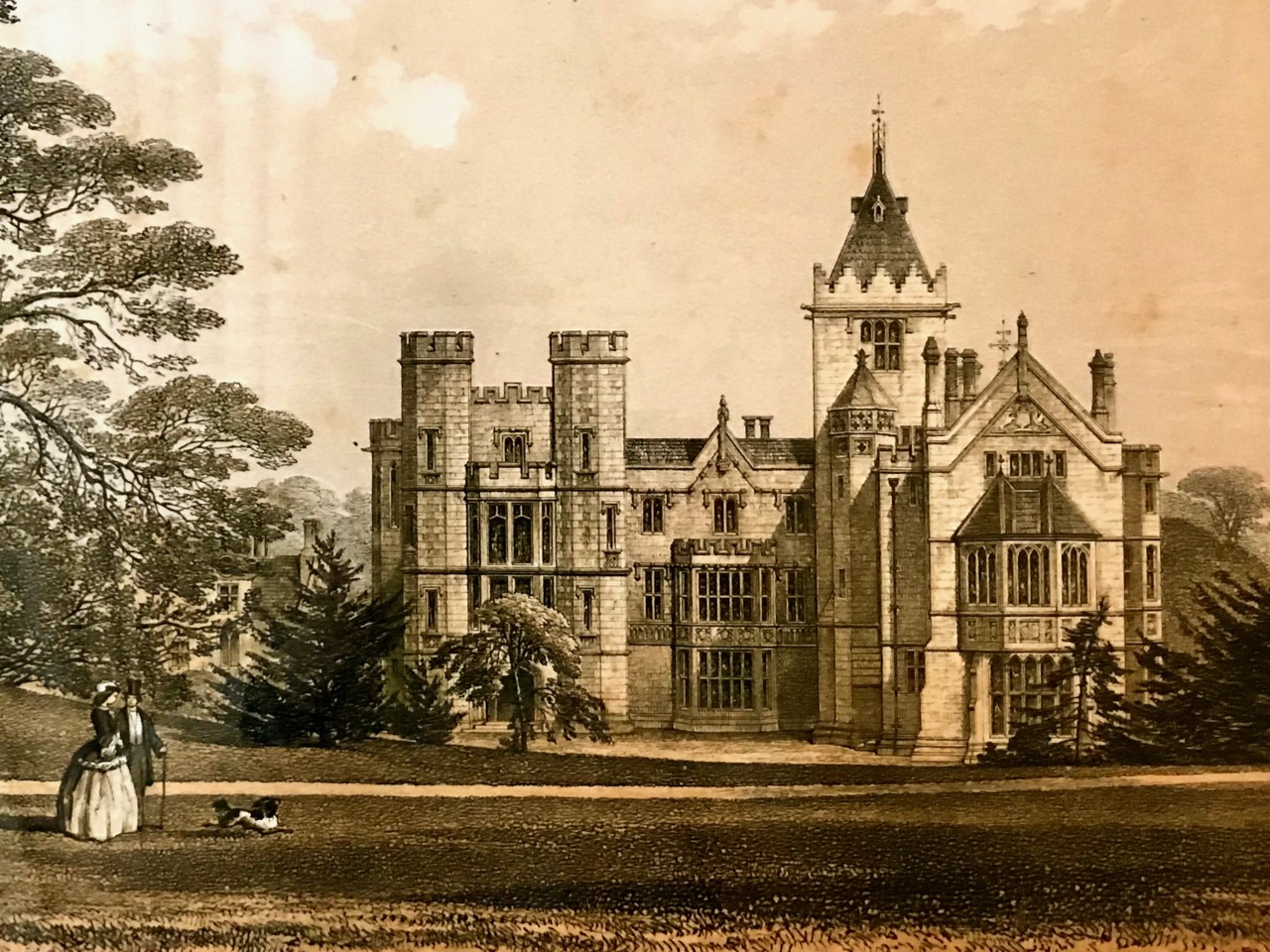
Adare House in the 18th century (top) and its transformation by the 2nd Earl (lower – a 19th century engraving). Clearly funds were not a problem, as a stone plaque on the south elevation attests (one of many texts embedded in the refurbishment of the fabric):

…This goodly house was erected by Windham Henry Earl of Dunraven and Caroline his Countess without borrowing selling or leaving a debt AD MDCCCL…

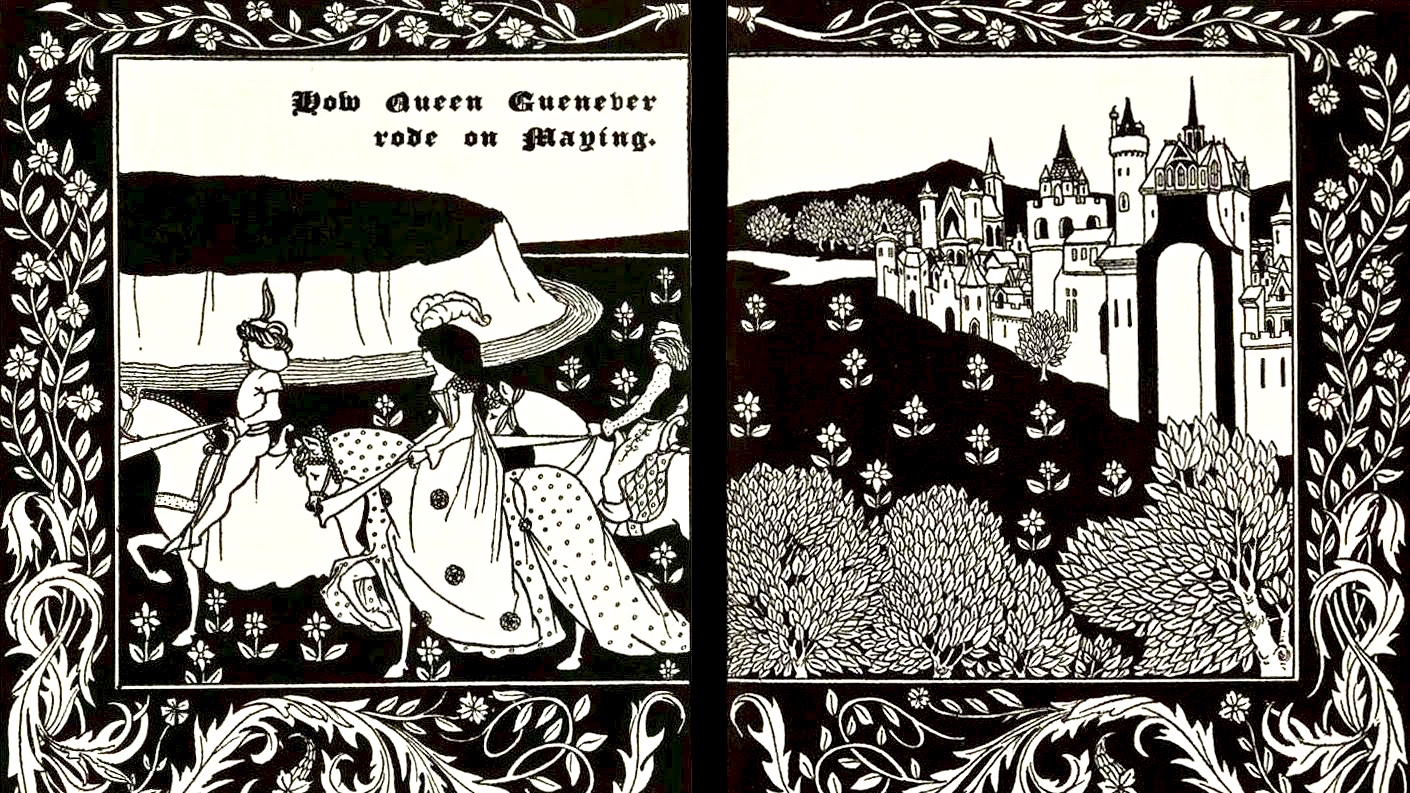
Inspiration for the architectural elements came from an early 19th century romantic revival of interest in all things medieval: particular a perception of the trappings of chivalry: knights in armour, courtly love, stately homes, heraldry, jousting and country pursuits (you’ll see in Finola’s post that we indulged in some of those!). As the Victorian era progressed in the British Islands, these ideals evolved through art – the high point being the Pre-Raphaelite movement – and literature, as espoused in Malory’s Morte D’Arthur, for example, with its interpretation and embellishments by Tennyson and Beardsely:

In respect of architecture, the 2nd Earl was ahead of his time in pursuing medieval themes and must, surely, have been endowed with a good sense of humour. Lady Caroline always loyally stated that all the ideas in the remodelled house were Windham’s; however, we know that the ‘Gothic architects’ James and George Pain were involved, as were Philip Charles Hardwick and Augustus Pugin, in a project that spanned three decades.

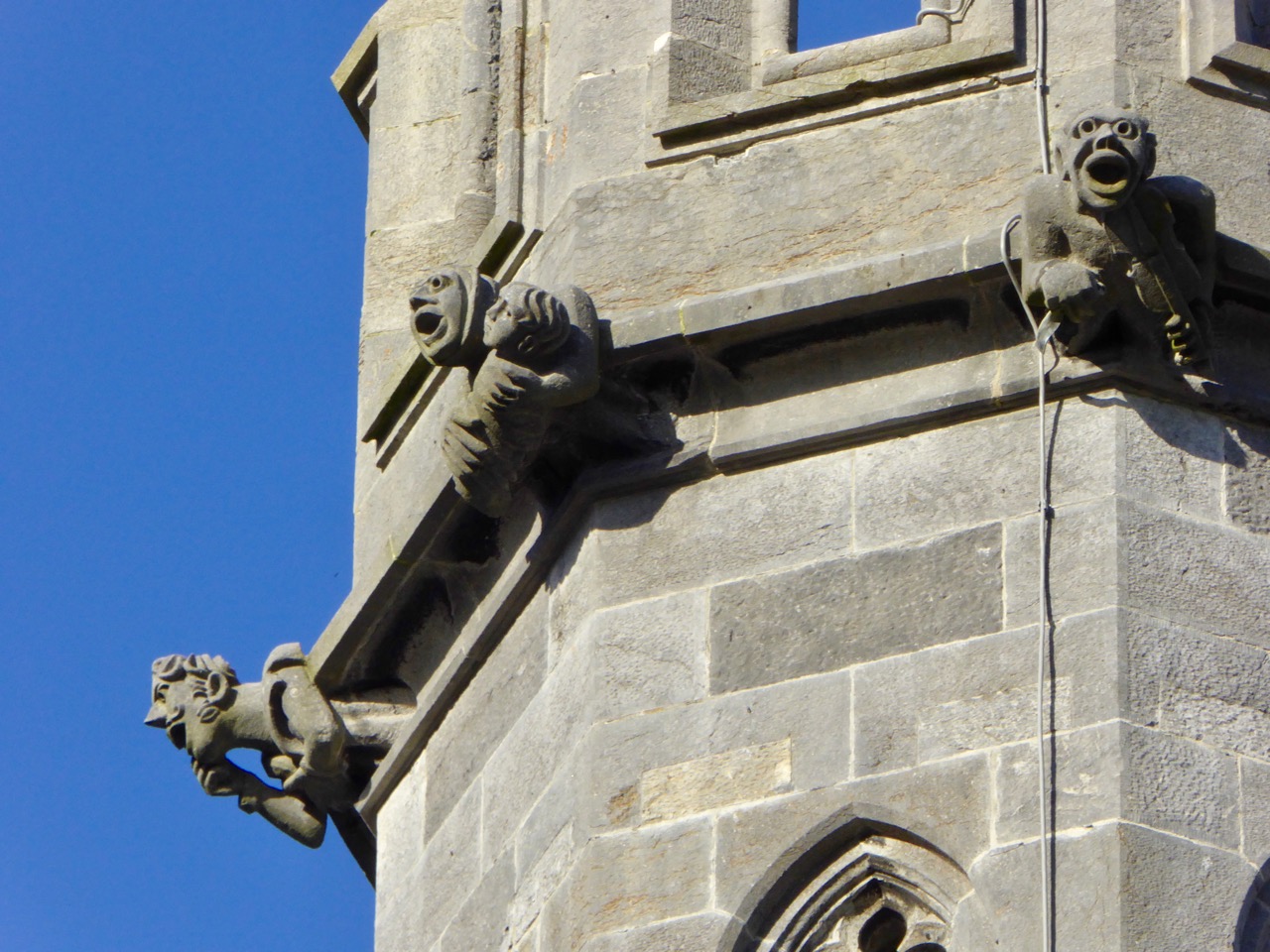
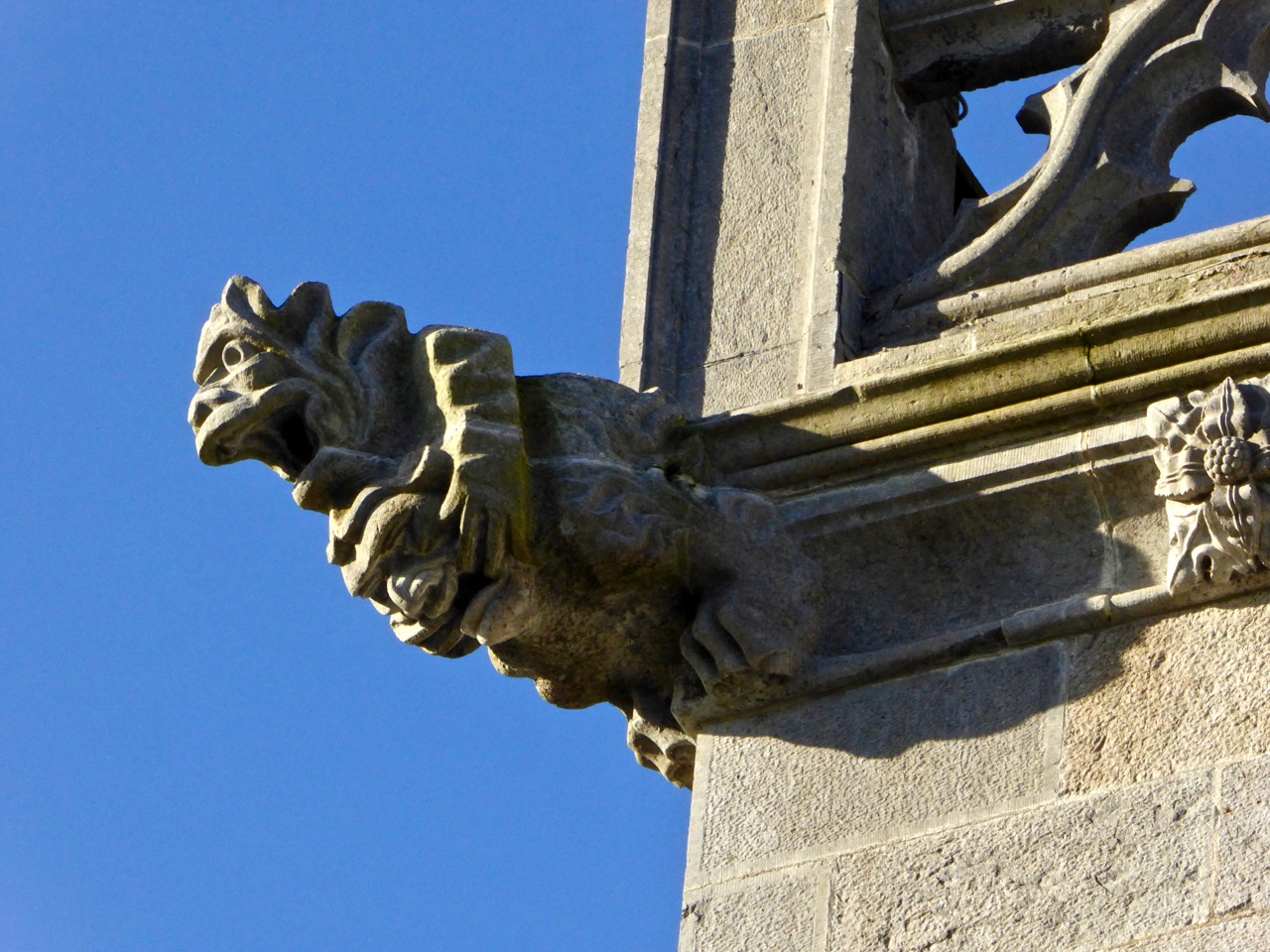
You can see from this one small corner of the Manor the richness and quantity of detailing that was incorporated into the architecture, both inside and out. The 2nd Earl must have dreamed up or approved of all the themes which are well worth studying at length. Here are only a few of the gargoyles which attracted our eyes:

The 1897 photograph, above, shows the carriages of the Duke and Duchess of York at the entrance to Adare Manor. The Duke became George V in 1910. Everyone who comes to the Manor has to enter through a magnificent ‘Romanesque’ doorway (eat your heart out, Finola!) – whether royalty, like the party above, or mere mortals like us, who treated ourselves to a stay to celebrate our wedding anniversary. Have a look at the detailing on the architraves:

The craftsmen stonemasons of Adare were kept very busy – and fully employed – throughout the building period, which encompassed the worst years of the Great Famine. As were the woodcarvers. One room in the Manor – the Long Gallery – spans the whole width of the house: 40m long and 8m high. It’s now the ‘informal’ dining room. It has a magnificent array of carving, some – the choir seats – brought in from Flanders and dating from the 17th century (see the enigmatic example in the first photograph below), but most purpose-made locally for the new Manor. Each one tells a story. We need to go back again and spend more time there (please) just to even get a glimpse of all of them. By the way, if you want to see real medieval carving, have a look at this post of mine, from the West meets West series.
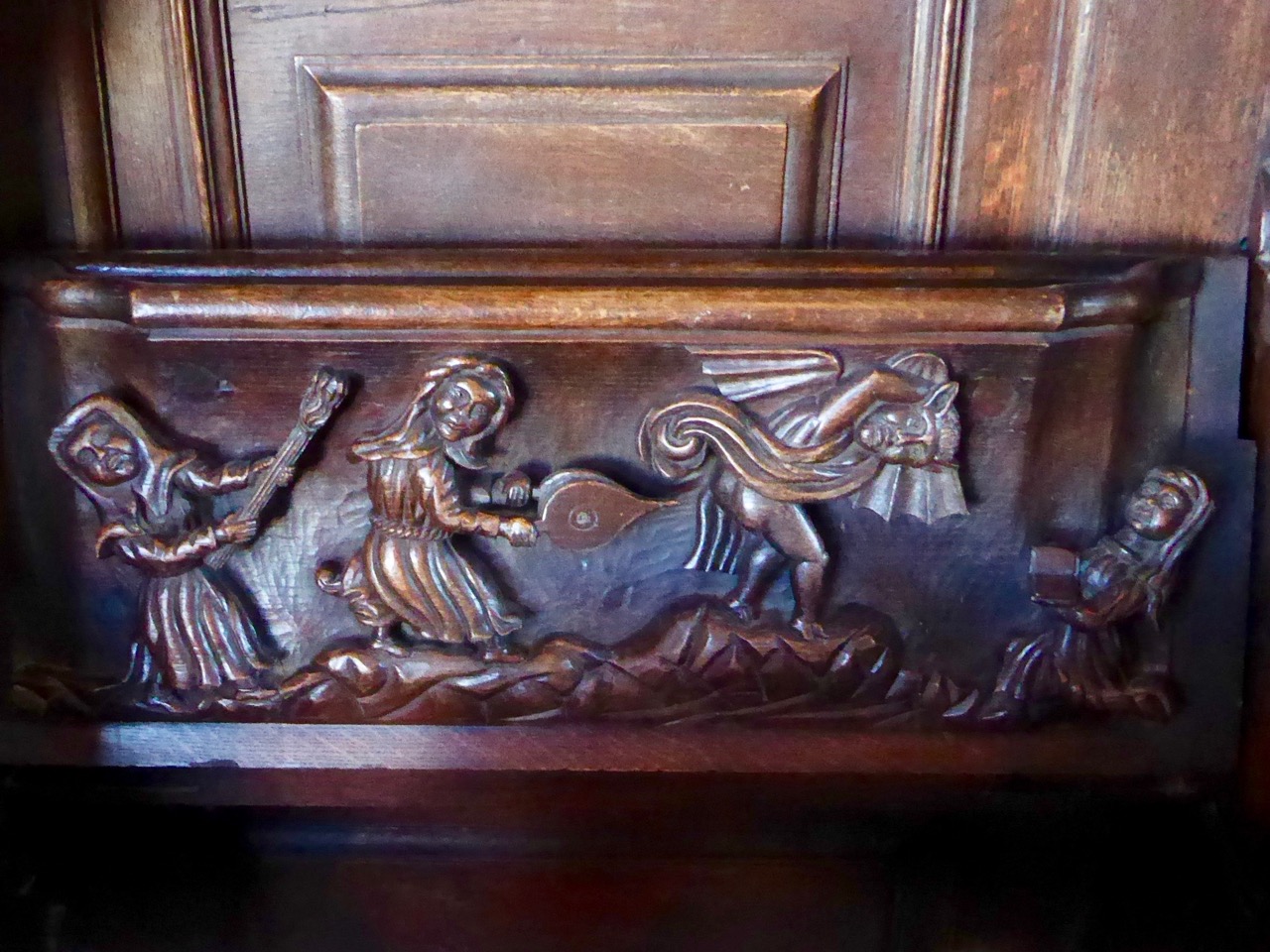
Lady Caroline was just as industrious as the Earl in contributing to the project and in creating employment through the famine. She established a School of Needlework to develop marketable skills and opportunities for local women: some of the work of the School graces the walls of the Manor. In fact, the work of local craftspeople is prominent throughout the interior of the building. Below left is the Long Gallery, showing off decorative work on the ceiling, tapestries and stained glass. On the right is a carved stone figure that looks down on guests in the Great Hall.

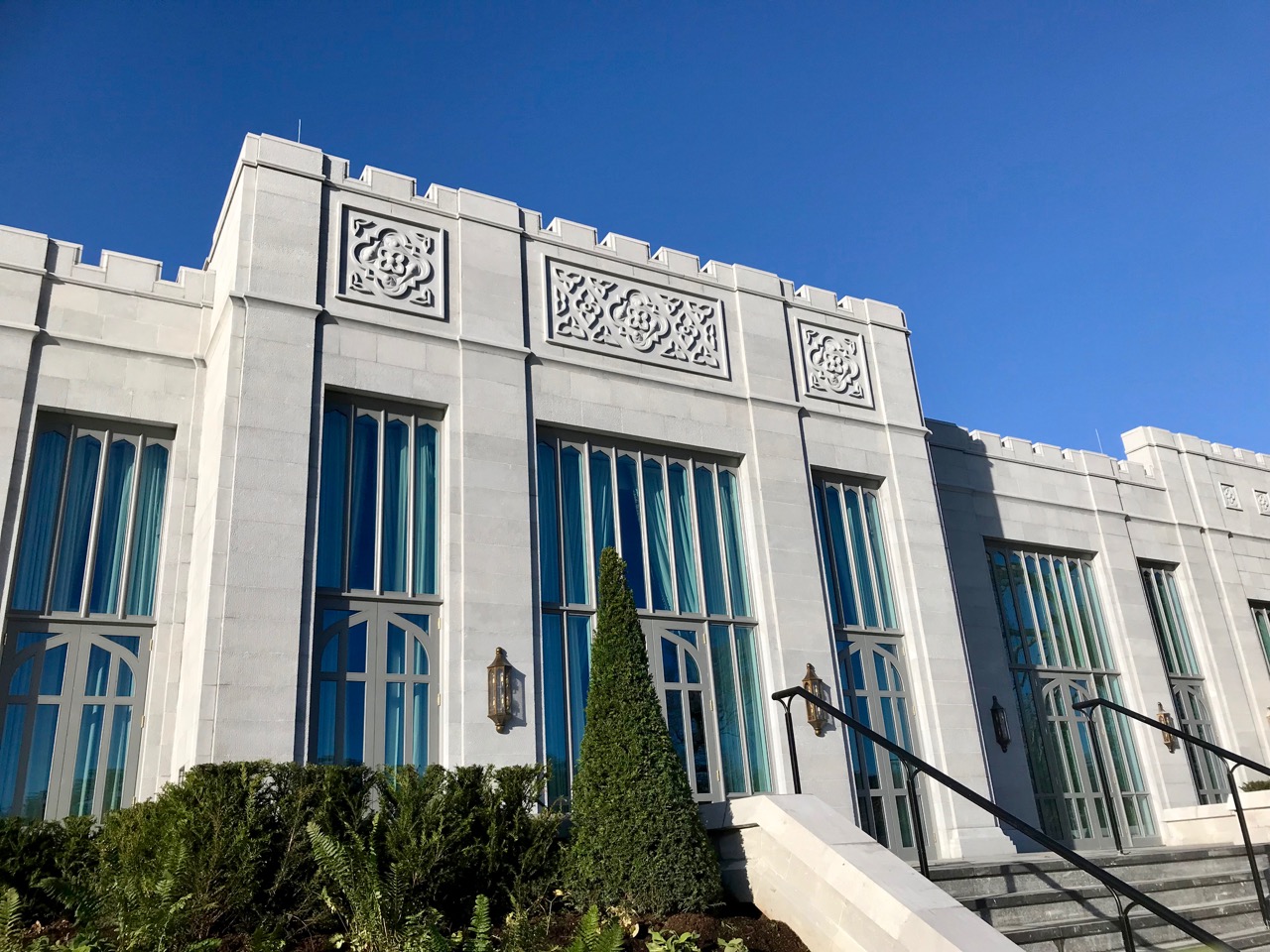
All of the above is just a taster for the wealth of architectural delights that awaits future visitors to this hotel. We were among the first: the Manor re-opened after a full two-year refurbishment and extension the week before we took our stay there. We can confirm that the standard of this establishment is among the highest that we have come across in all our travels in Ireland. Every detail has been thought out: rooms are spacious and warm; beds are large and comfortable; all mod cons are incorporated – right down to a switch beside the bed which opens or closes the curtains! The food excels – and we have yet to sample the full restaurant facilities. Above all, the service is faultless, welcoming, attentive and personal. Amongst the new features is a ballroom, which would make the ultimate wedding venue, built in a style which fully compliments the character of the original architecture:
Flamboyant, exuberant, playful, grand… I will run out of epithets, and superlatives. I was just – delighted – by Adare Manor, and we feel privileged that we can still appreciate the aesthetic  wit which the Earl and Lady Caroline brought to the house, and which has been extended by subsequent generations: the last Wyndham-Quin to inhabit the property – the 7th Earl of Dunraven and Mount-Earl – moved out in 1982. Lady Caroline should have the last word: she wrote this in her 1856 book Memorials of Adare Manor

This charming spot was my home of unclouded happiness for forty years: may Heaven’s choicest blessings be poured with equal abundance on its present and future possessors!
More on Martinmas

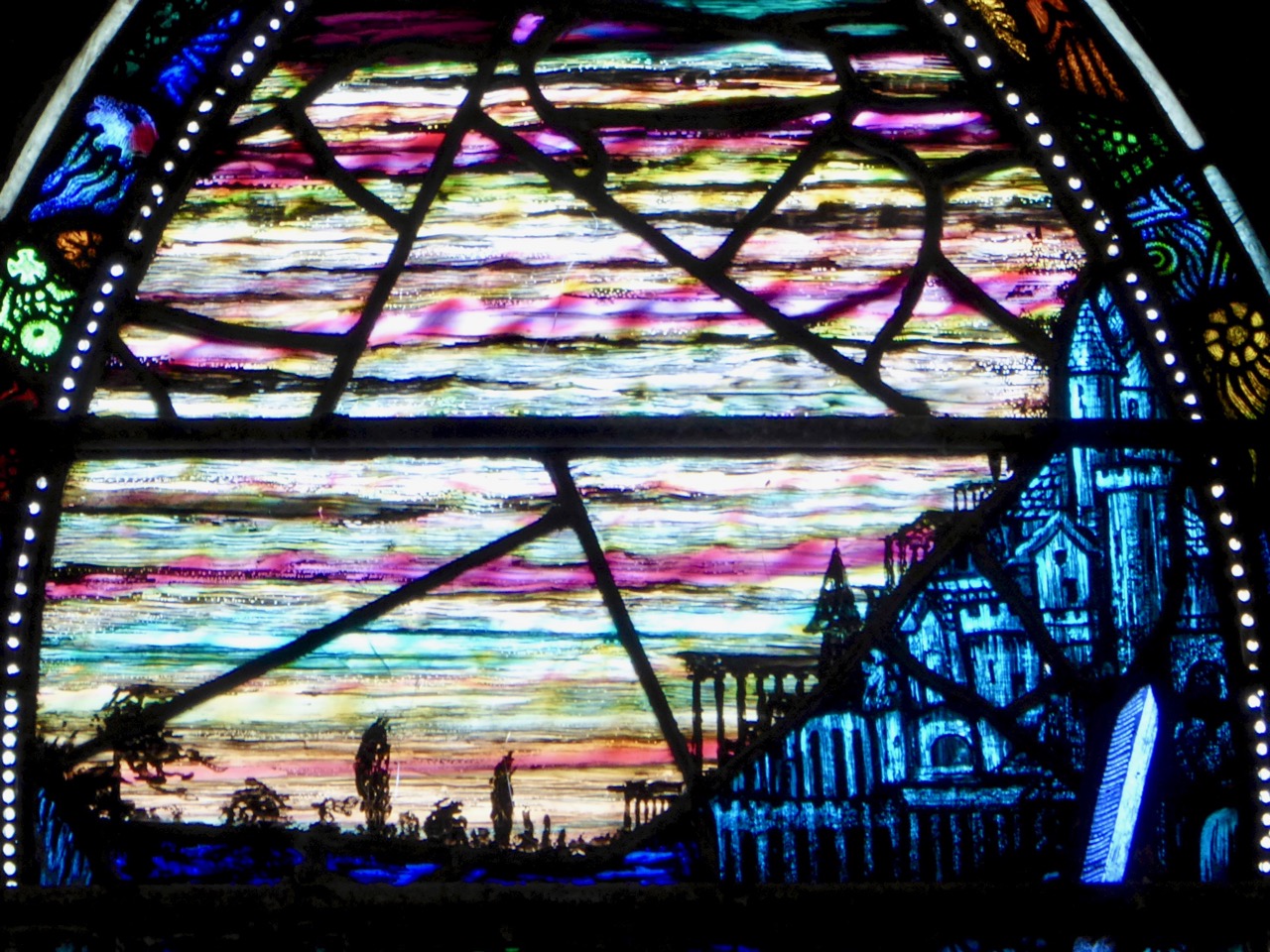
Today – November 11 – is Martinmas. That’s the feast day of St Martin of Tours: the picture above is Harry Clarke’s representation of the city of Tours, which we can see in St Barrahane’s Church, Castletownshend, here in West Cork. St Martin was a saint of Hungarian origin who founded a monastery in Marmoutier, in north-eastern France in 372. As far as we know, he never visited Ireland, yet he is widely celebrated here… Why?

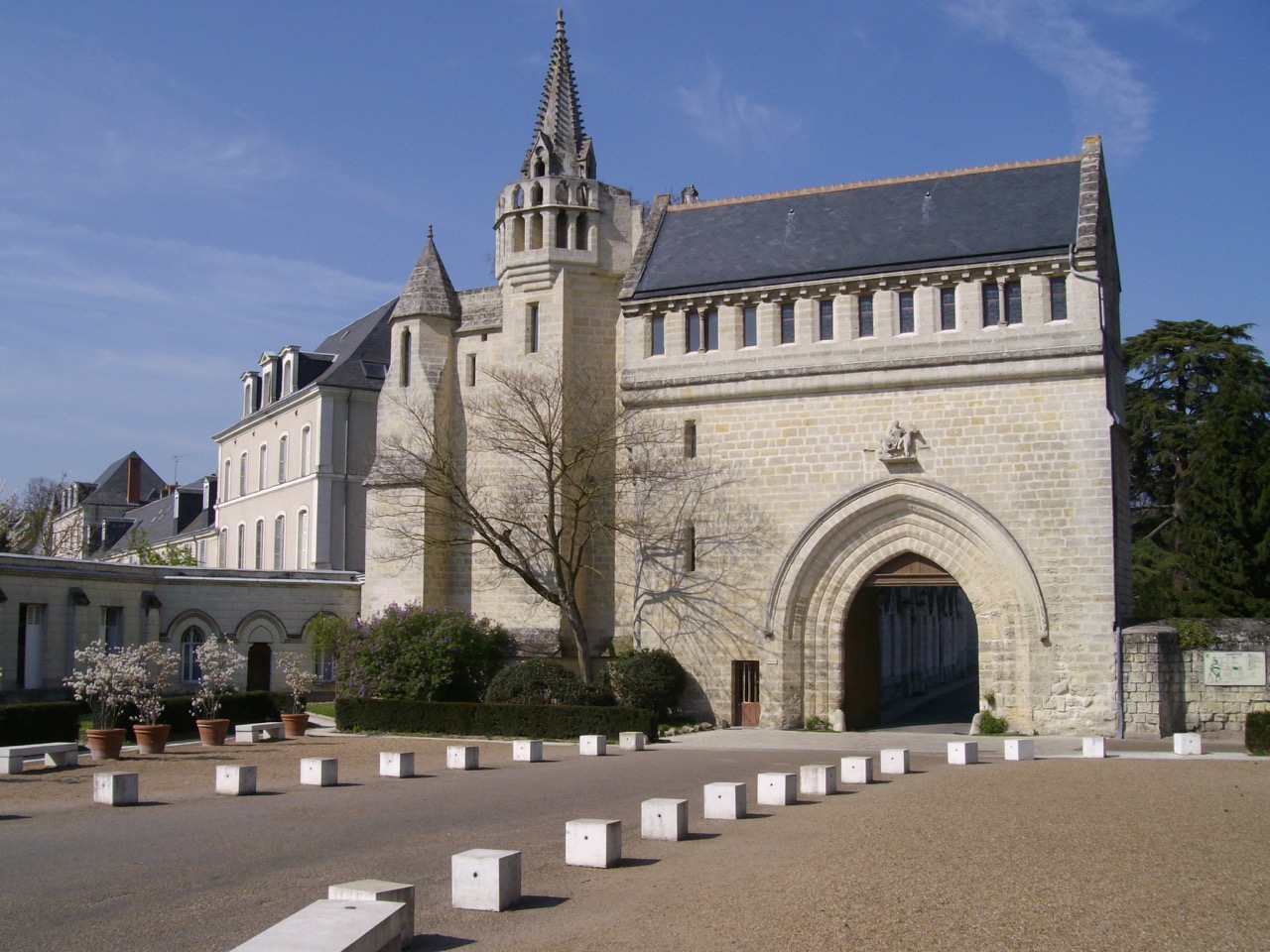
Marmoutier Abbey, near the city of Tours (photo from Wikimedia Commons)

Well, one reason could be that St Martin was the sister of St Patrick’s mother, Conchessa. Or, perhaps he was her uncle – we don’t have definitive records from that time, but we do have plenty of stories. The one everyone seems to know about St Martin is that he came across a naked beggar while travelling in the middle of winter. He immediately split his cloak in two and gave half to the beggar. That night he had a dream in which Jesus told him that it was he who had received the gift of the cloak from Martin. From then on Martin determined to spread Christianity wherever he went.

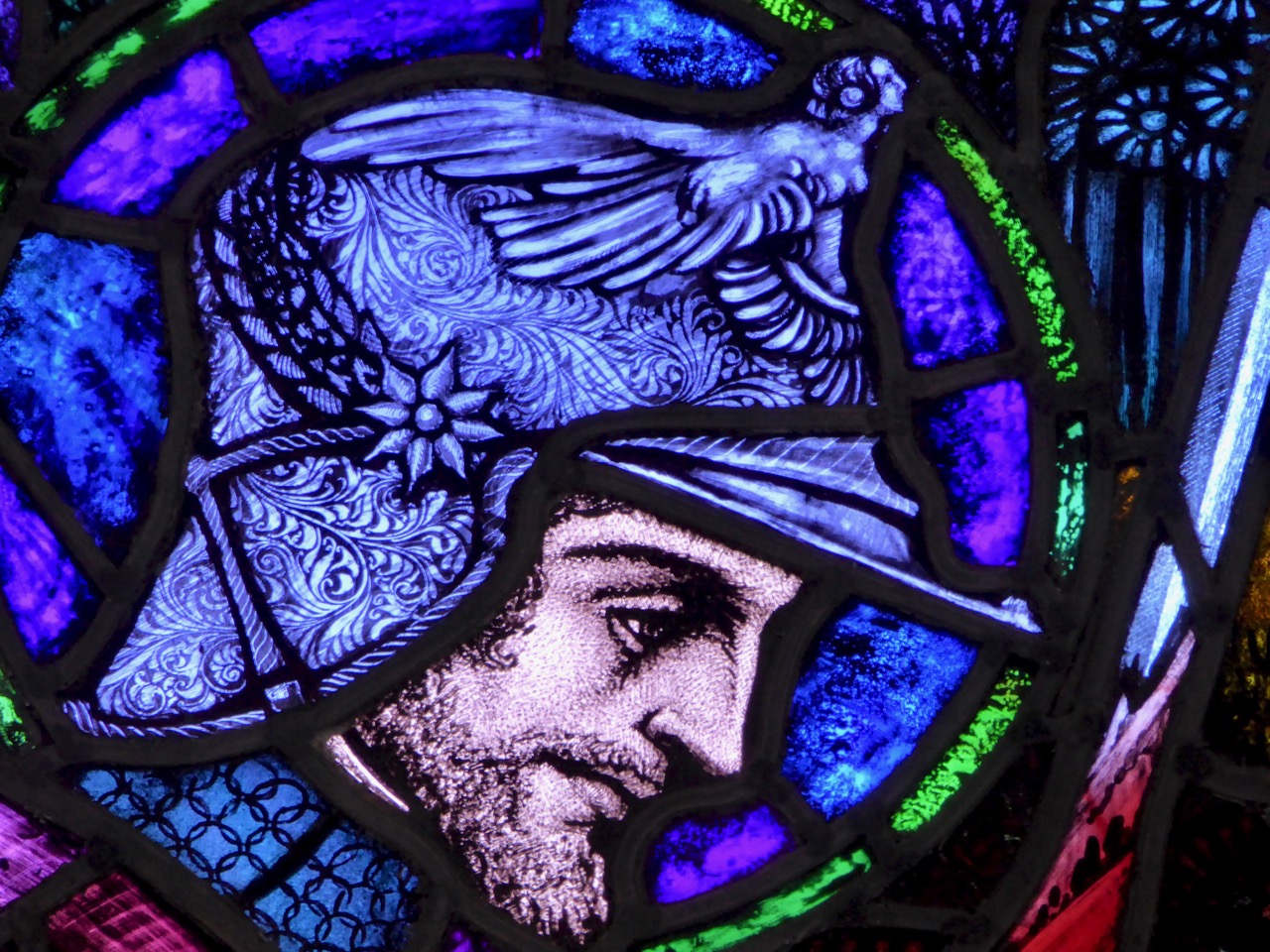
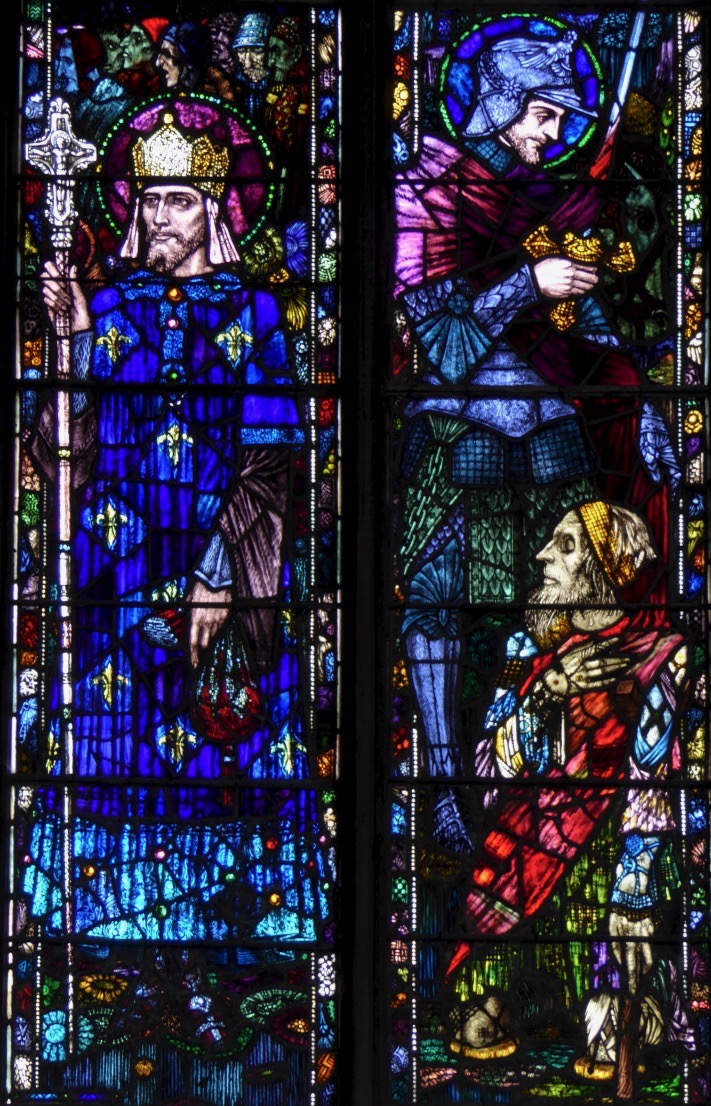
Here is St Martin, depicted in Harry Clarke’s Castletownshend window. Finola tells the full and fascinating story of this wonderful window here. He is depicted as a soldier, and is the patron saint of soldiers. Confusingly, he is also the patron saint of conscientious objectors! In fact, he was the first recorded conscientious objector as he became converted to Christianity while he was serving in the Roman Army. Because of his beliefs he refused to fight but – to prove he was not a coward – he was prepared to go into battle unarmed and stand between the opposing parties in the name of Jesus. Miraculously, on the eve of the battle an armistice was declared. Martin was given a discharge and was able to pursue his calling. Eventually he was made Bishop of Tours and founded his Abbey across the River Loire.

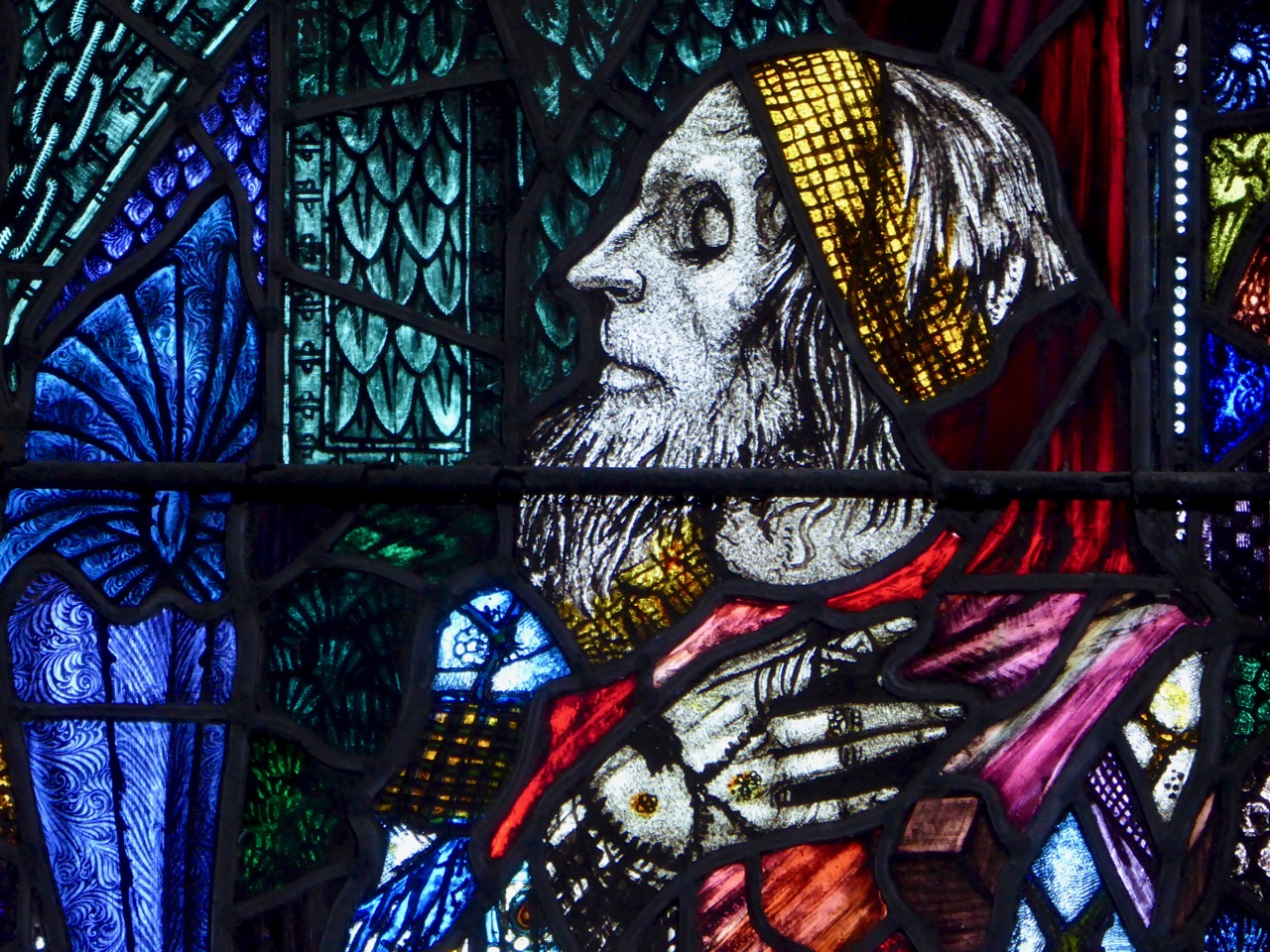
This is the beggar who received the gift of St Martin’s cloak – also from the Harry Clarke window. Here in Ireland there were once many customs associated with Martinmas. I set out some of these in a previous post a few years ago. For me, the most interesting is that no wheel should be turned on St Martin’s feast day. This is because the saint met his death by falling under a mill wheel. Below are two of ten 14th century frescoes from the San Martino Chapel in Assissi, setting out the stories of the saint: these depict his death and his funeral.

In County Londonderry, Northern Ireland, St Columba founded a church in the sixth century and named it after St Martin: Díseart Mhartain or ‘Hermitage of Martin’. Fascinating that this European saint should have such a following in Ireland: I found at least four churches dedicated to him in the Republic. One thing I touched on in my earlier post was the custom of killing a goose or cockerel on the day and sprinkling its blood in the four corners of the house to ensure well-being for the next year. I have since found that it is correct to say ...In onóir do Dhia agus do Mháirtin… while doing this (In the Honour of God and St Martin). I hope I’m not too late to wish you a good Martinmas! And I’m leaving you with the full image of the Harry Clarke window…

Kilcoe Studios – Dedication and Passion

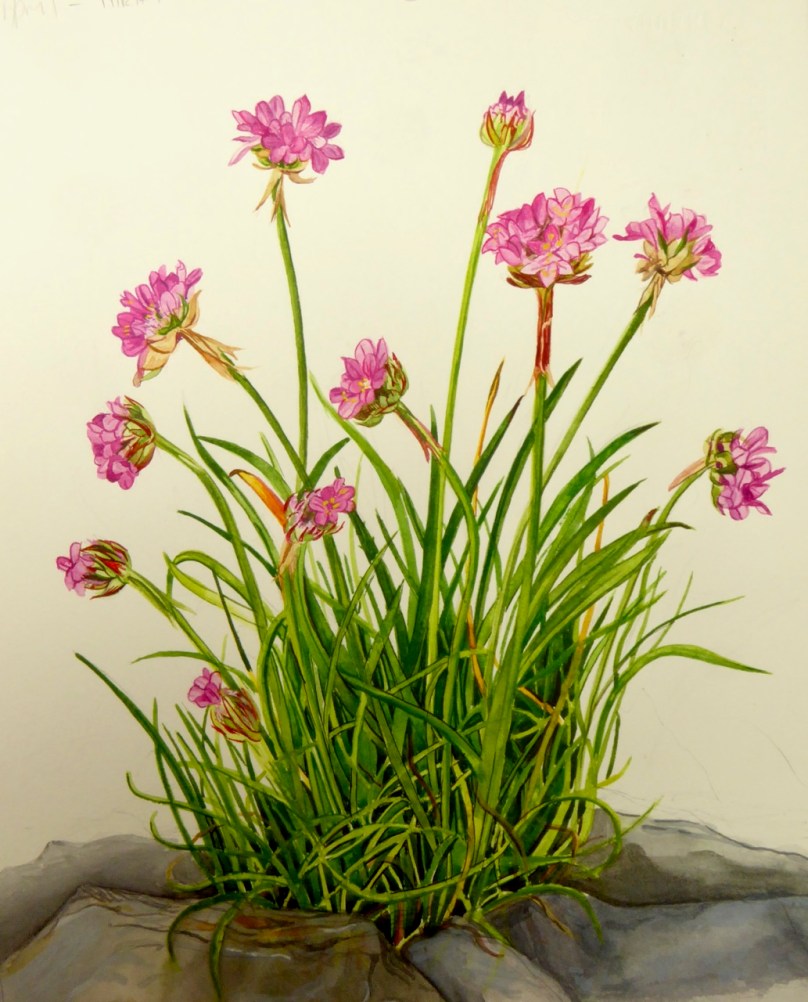
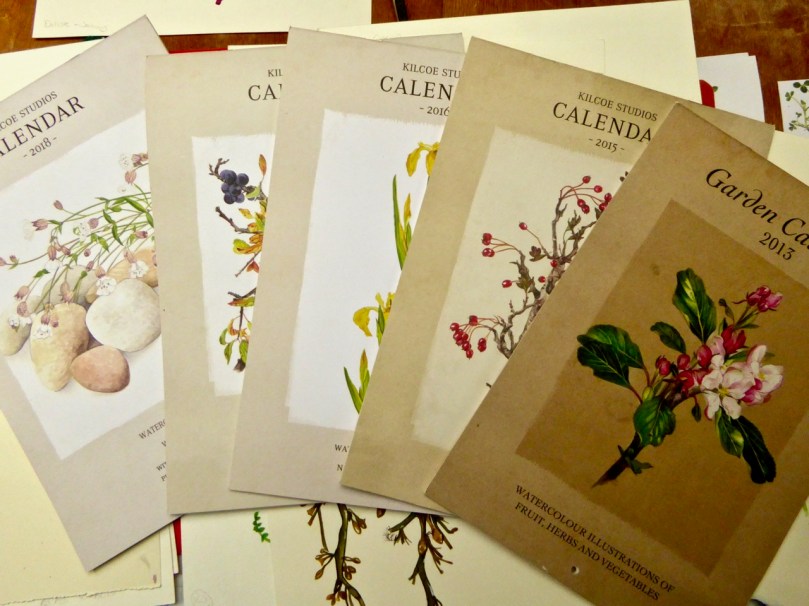
Every year I’ve pounced on the Kilcoe Studios calendars as soon as they come out, and bought their exquisite cards. Recently I met their creator, Sonia Caldwell and discovered that the studio is quite close to me. I told Sonia that I’ve long been an admirer of her work and asked if I could visit her in her studio and talk to her about her inspirations. In the process I discovered a dedicated and hard-working artist and sculptor and a fellow wildflower lover. *

Thrift, or Sea Pinks

Sonia’s botanical artwork is meticulous and yet avoids mere illustration. Her colours are delicate but true and she insists on live models – you just can’t get the detail you need from a photograph, she asserts.

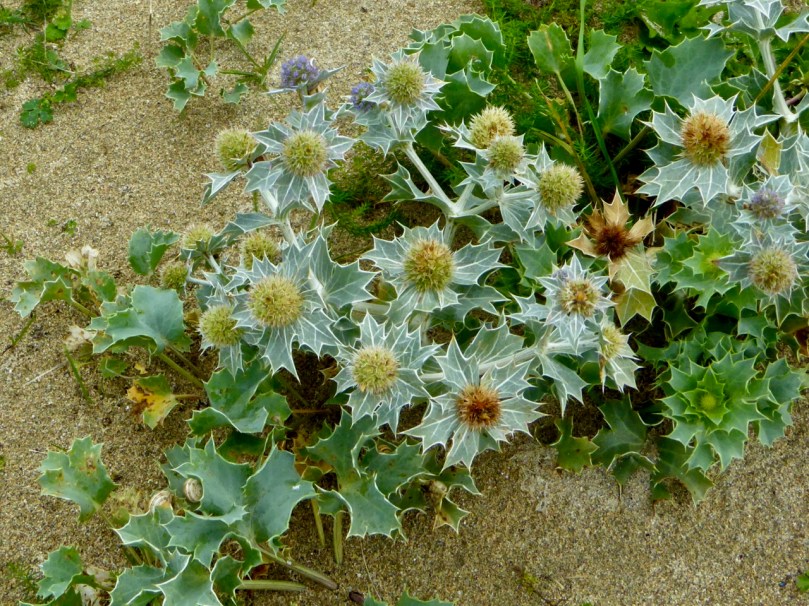
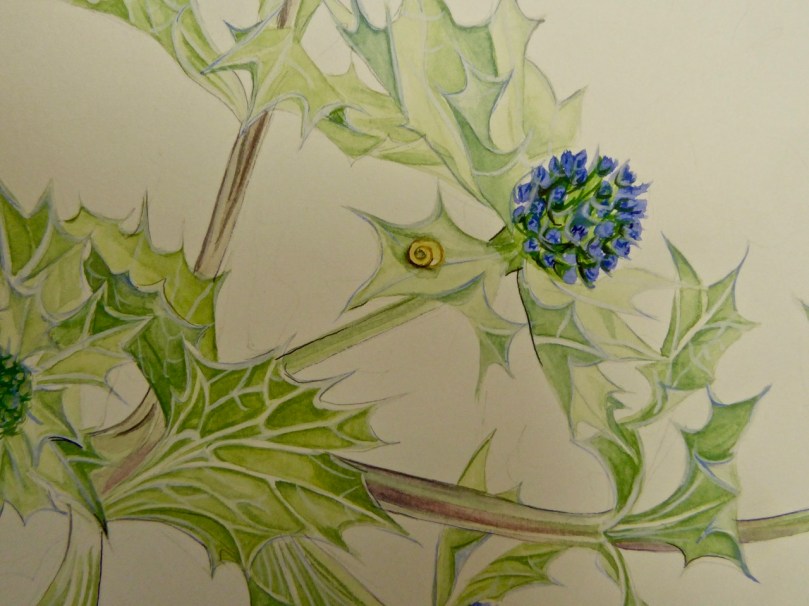
Sea-holly: my own photograph, and a detail from one of Sonia’s paintings

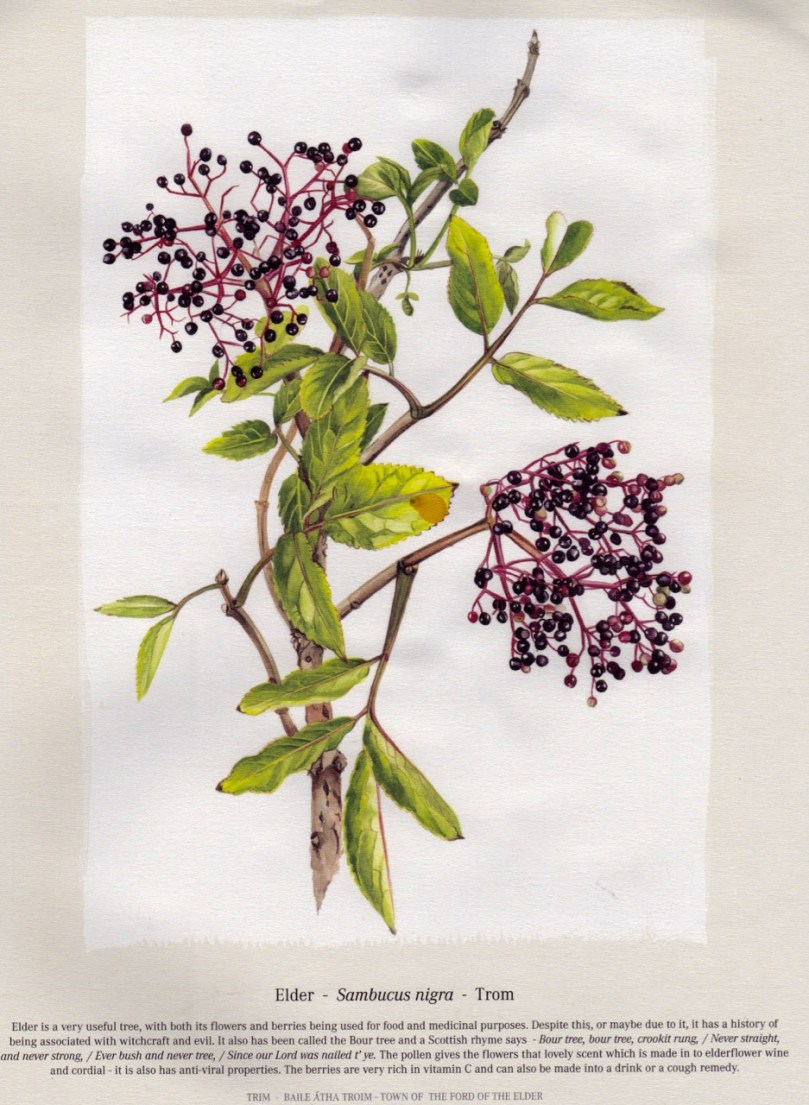
But it’s more than that – she researches each flower, tree, shrub, berry, fruit and provides information on folklore, herbal uses, Irish names and their meanings, and other little titbits of information.

She collaborated with the marvellous Pilgrim’s Restaurant of Rosscarbery for the latest (2018) calendar. We’ve eaten there a couple of times and been blown away by their approach to food – simple, fresh, delicious, and often with foraged ingredients. I’m still living on the memory of their blackberry and meadowsweet sorbet. So with this calendar not only are you getting Sonia’s wonderful botanical prints but recipes from the Pilgrim’s chefs as well.

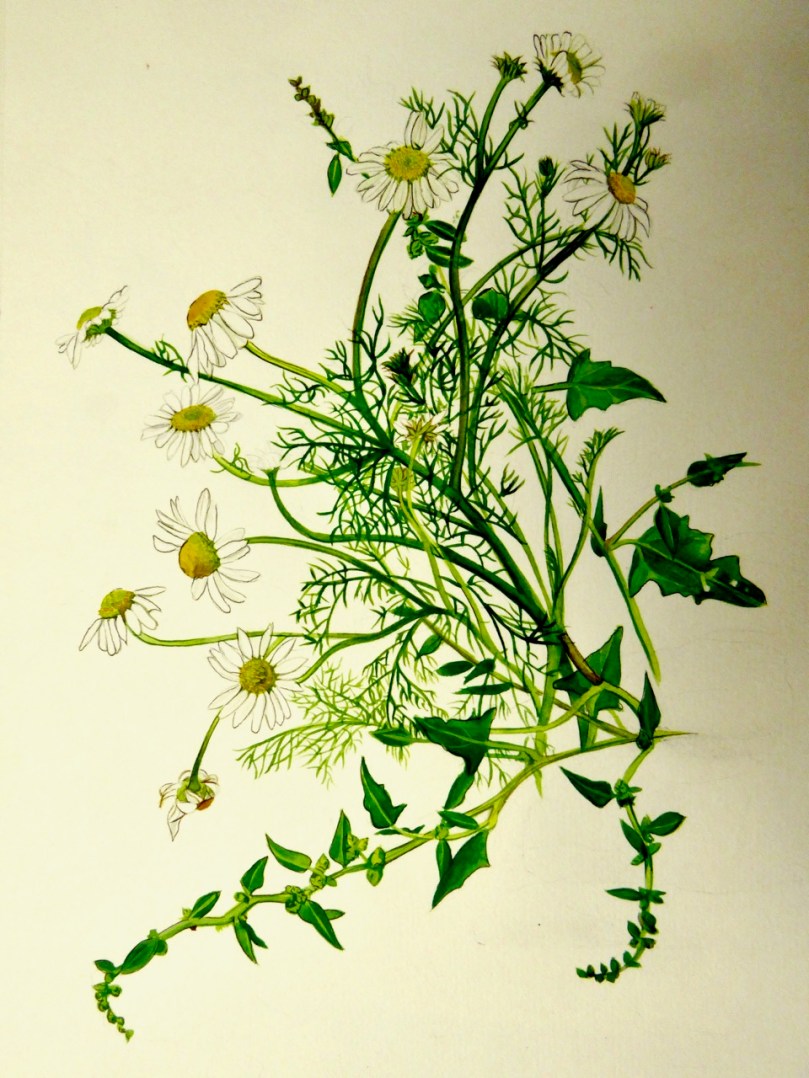
This is Sea Mayweed and Orache intertwined. Pilgrim’s recommends a one-minute steaming for the Orache, and pairing it with white fish (like hake), new potatoes and a cream sauce. You can also mix it with other “tidal greens” such as rock samphire, sea aster, and sea beet.

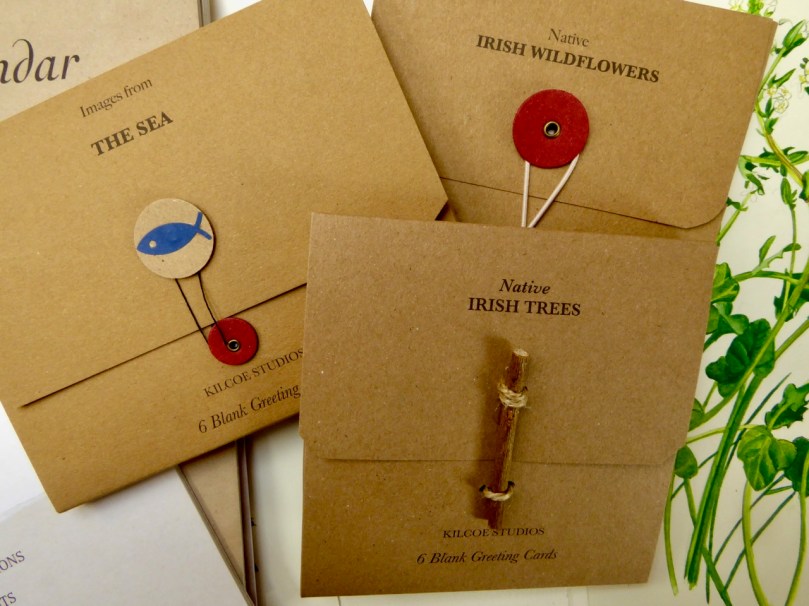
The painstaking drawings she lovingly creates for her calendars also go into her cards. That’s great, because they should outlive their ‘year’. The card packaging is a work of art in itself – I’ve given many a set as a gift.

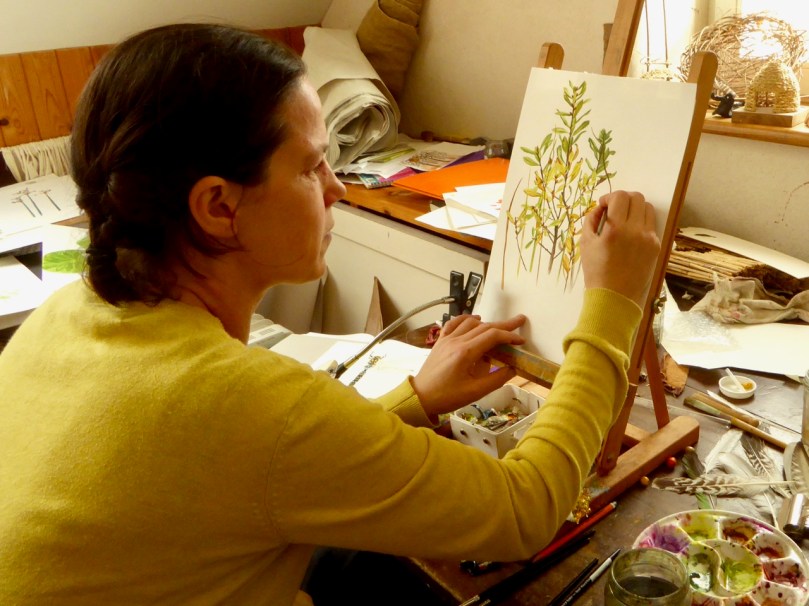
Because I’ve spent so many hours myself photographing wildflowers I know what goes into identifying, researching, and then reproducing each one, but only on a superficial level compared to the kind of attention each one gets from Sonia. Watching her getting the colour of each leaf exactly as she saw it was illuminating, and humbling.

Sonia sells her work in various stores throughout Ireland, but you can also order from her online shop. There’s still time to get those 2018 calendars!
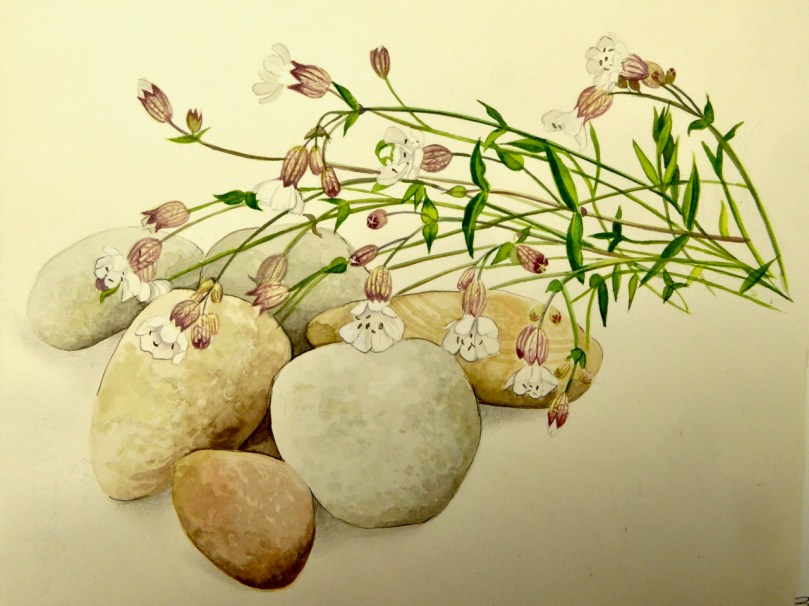
Sea Campion – the front cover illustration for the 2018 calendar

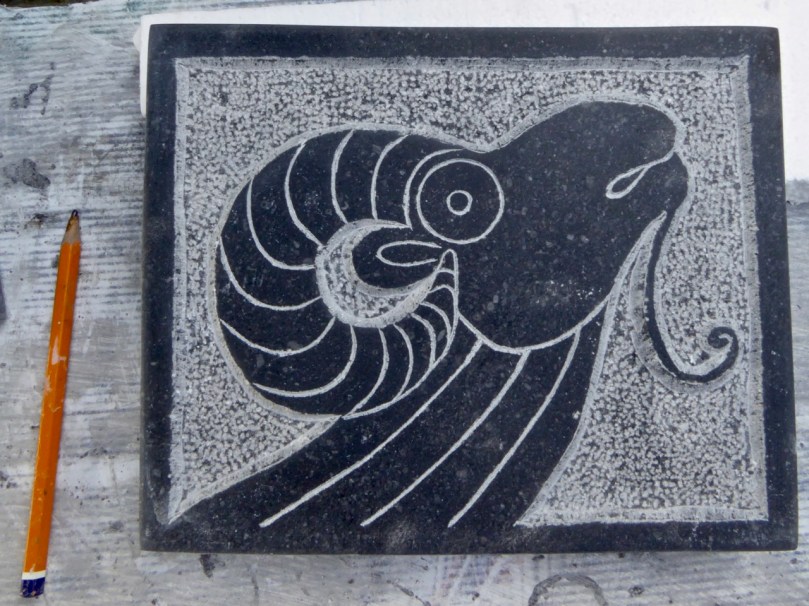
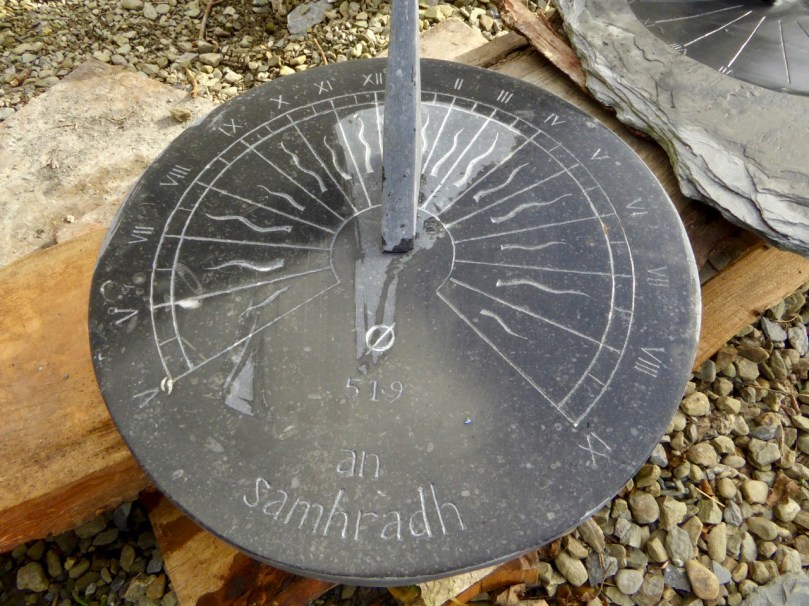
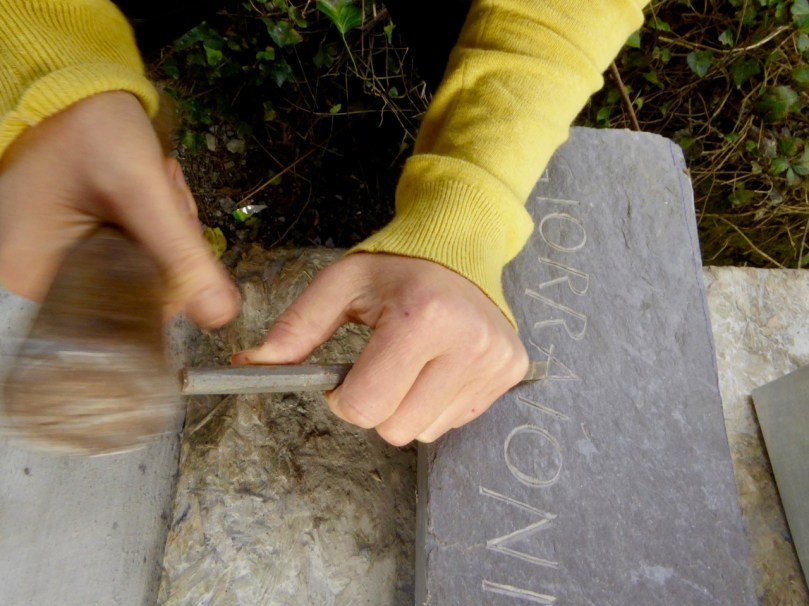
Although I was aware that Sonia was also an accomplished sculptor, I was unprepared for what I found in her studio. She works in stone, on both a small and large scale. She makes beautiful bowls, sundials and plaques as smaller, more affordable pieces, and they are popular buys at the summer markets. 

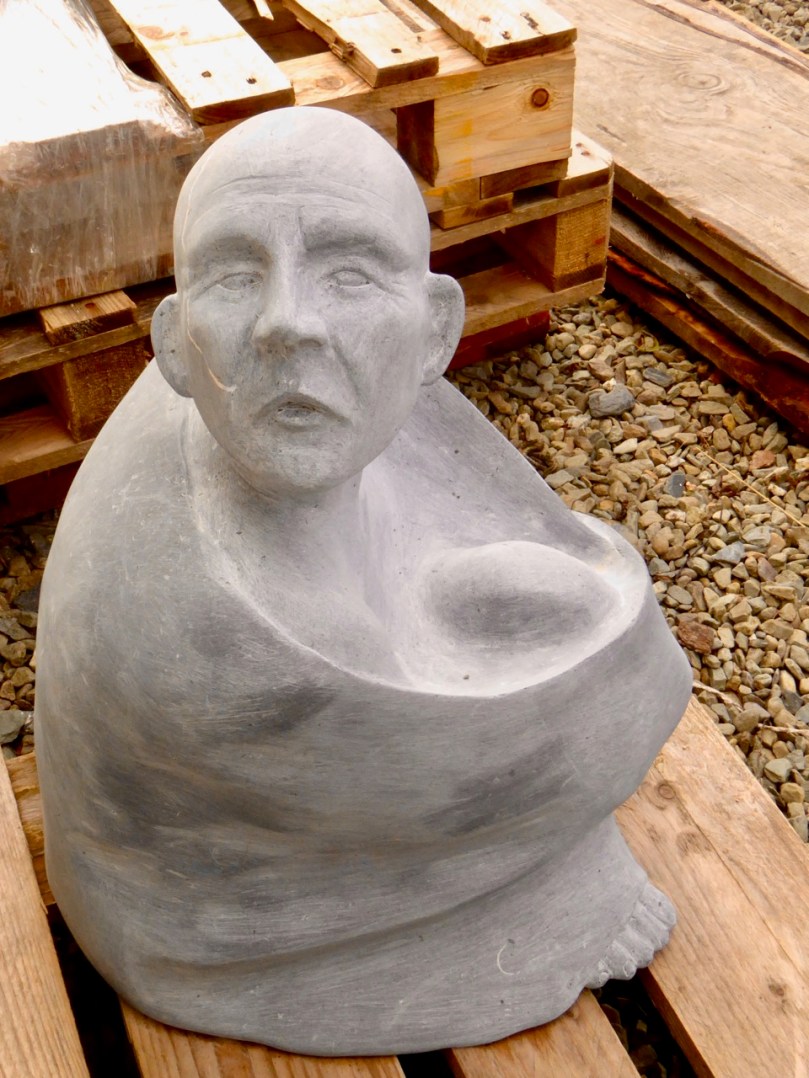
But her passion is her figurative work. These are large-scale carvings, mostly in Kilkenny limestone, which she polishes to a beautiful finish using finer and finer grades of sandpaper. It’s physically demanding work, but I get the impression that when she’s engaged in it, she’s lost to time, and indeed to everything except what’s under her chisel.

Her work has a quality to it that I can only call ‘questing.’ The eyes look far away, seeking answers to some great question. In one case, they are blindfolded, forcing the quester to look inward. The bodies fold in on themselves, or on one another, or are rigid, as if acting as mere plinths for the imagination or the brain

It’s powerful stuff, and left me wondering why artists such as Sonia face such difficulties in the market place. Sculpture, I now understand, is much harder to sell than paintings. You can see a range of Sonia’s sculpture on her separate artist’s website. She has exhibited widely.

Sonia works with her husband, Eamon Quinn, a master joiner. Take a look at his beautifully-crafted furniture on their website. It’s inspiring to spend time with someone like Sonia, someone so dedicated and talented and committed. The good news is that, even if you don’t happen to live near her, you can still enjoy her art every day of the year.

*All the images of Sonia’s work are used with her permission. Please respect intellectual property issues and copyright for all the artwork in this blog post.

The Wonders of Monasterboice

In our recent journeys around Ireland we both had opportunities to indulge our particular interests. Among them, Finola was able to take in some fine examples of stained glass and Romanesque architecture, while I concentrated on the beautiful medieval carving of a number of Irish High Crosses, to add to the examples I have written about recently.

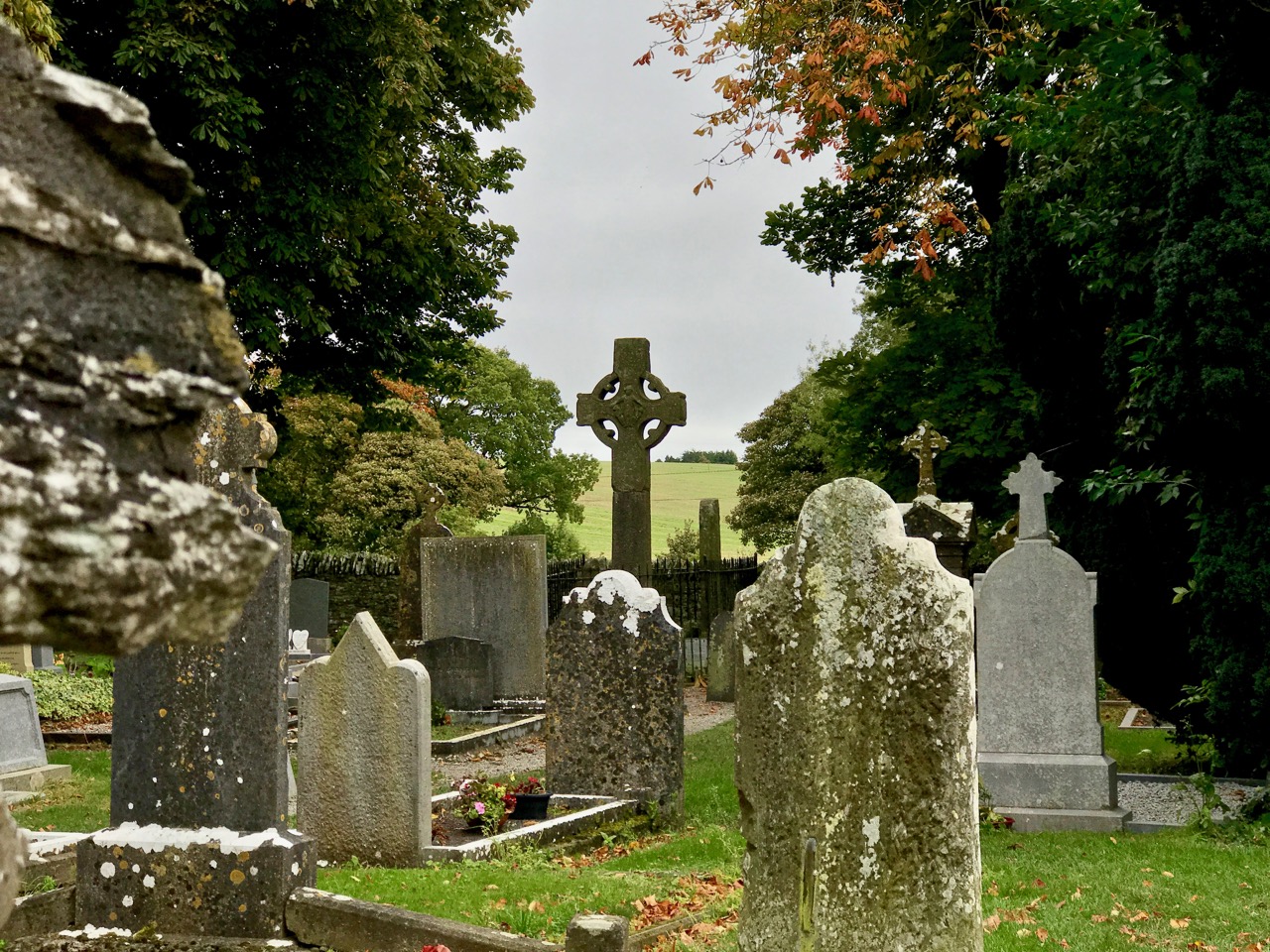
For any Irish High Cross enthusiasts (I suspect that there are many of you out there), Monasterboice in County Louth has to be on the list of ‘must see’ places. It was founded in the 5th century by Saint Buithe, a follower of St Patrick – the Irish Mainistir Bhuithe means Monastery of Buithe – and was an active and important Christian settlement through to the 12th century, when its importance was eclipsed by Mellifont. I found out that St Buithe ascended into Heaven by climbing a ladder that was lowered down to him for the purpose.

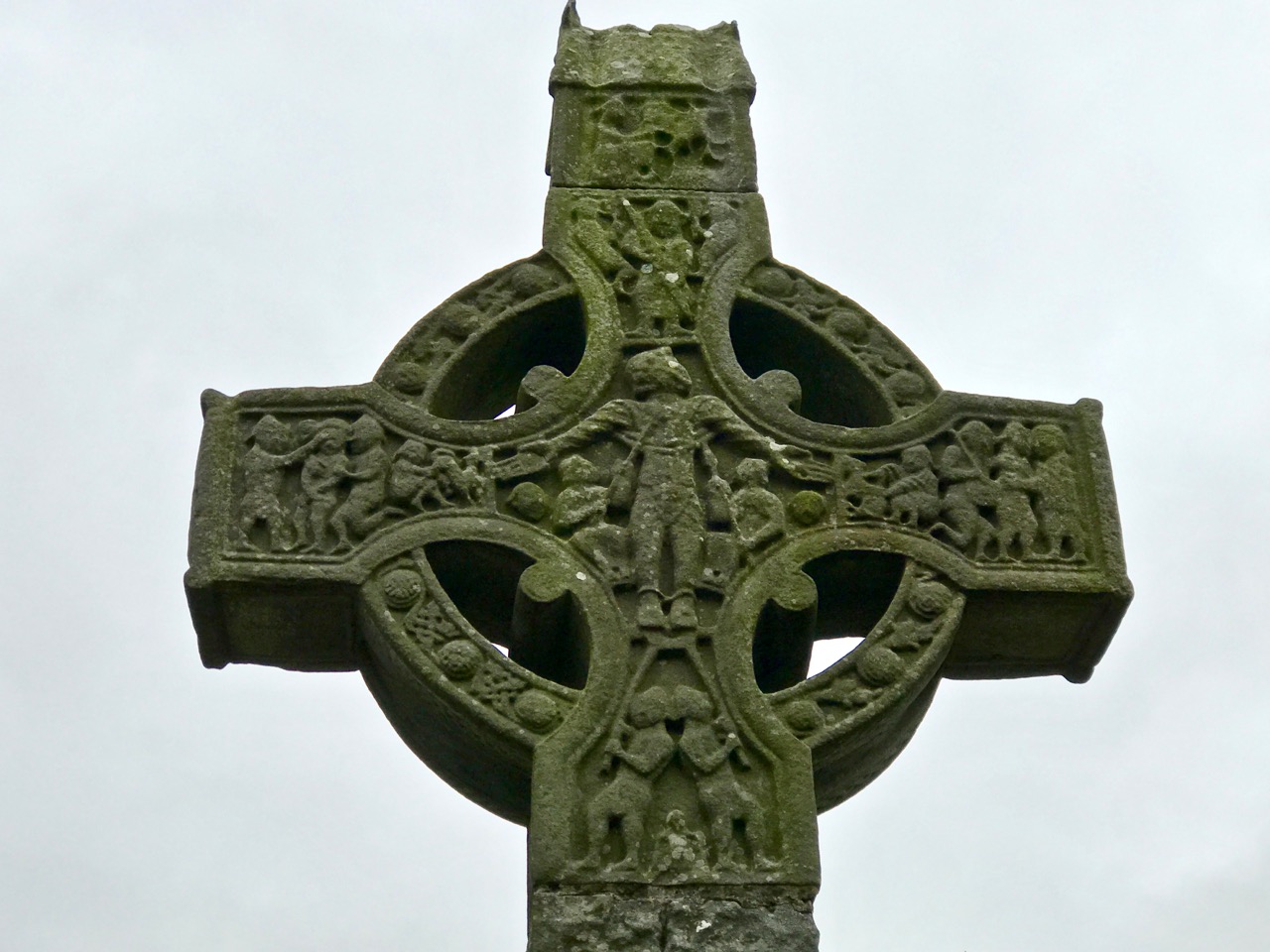
Left – a photograph of the great cross at Monasterboice – known as  Muiredach’s Cross – taken in 1905 and, right – the same west face seen today. Finola is there to show its true scale: remarkably it is 5.5m tall

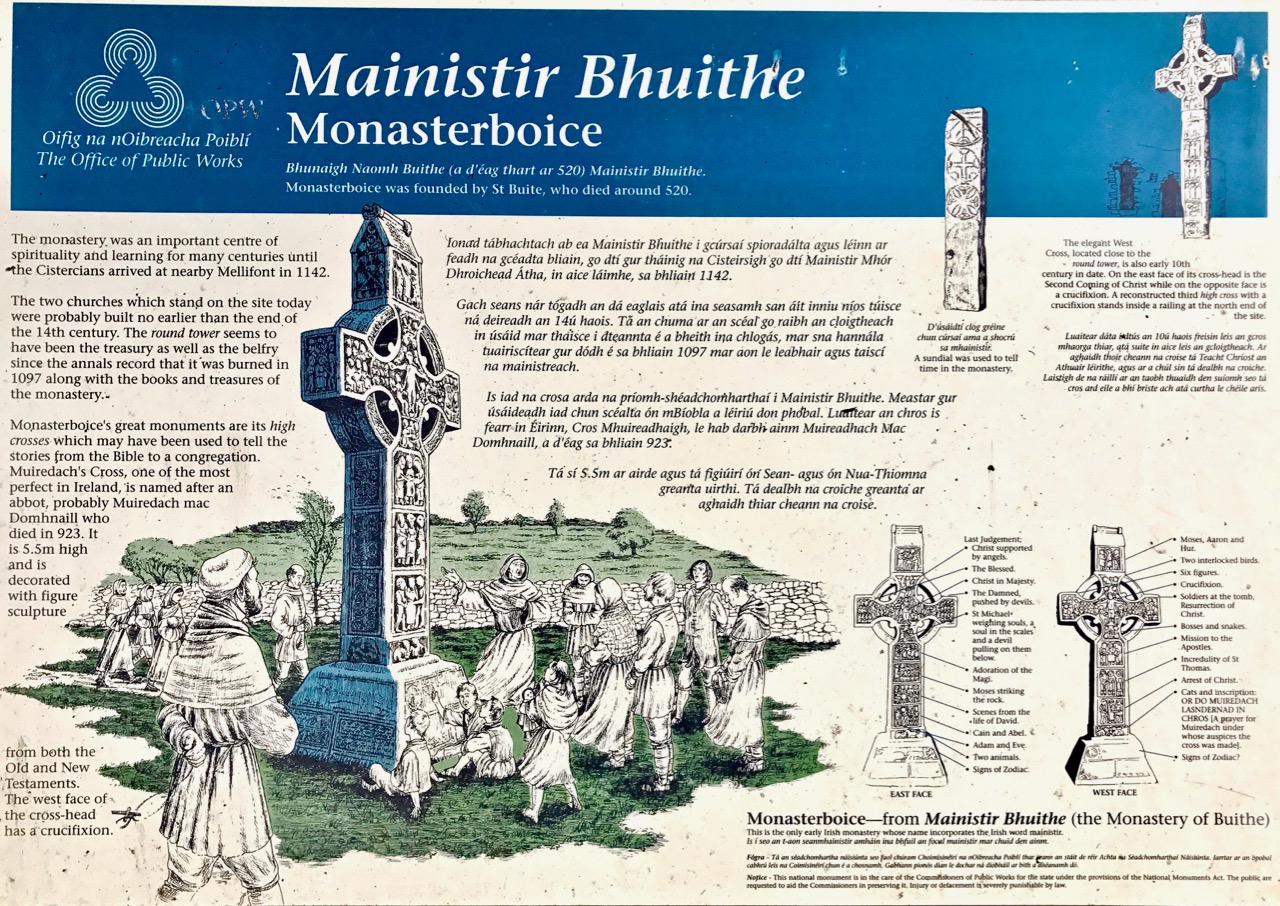
Muiredach mac Domhnaill, who died in 923, was an Abbot at Monasterboice. He is  credited with commissioning the great cross, shown above. It’s not quite the tallest high cross in Ireland, but it’s said to be the finest, probably because of its stature and remarkable state of preservation. The carved panels are all legible, and the biblical stories illustrated have all been identified. An inscription on the lower section of the cross shaft states: OR DU MUIREDACH LASNDERNAD IN CHROS – A prayer for Muiredach under whose auspices this cross was made. Confusingly there was also a king, Muiredach mac Cathail, who owned the lands on which the monastery was built. He died around 867, so it is possible that the cross was commissioned by him, or was made in commemoration of him, rather than by the Abbot.

The Office of Public Works has responsibility for overseeing the site at Monasterboice. The well produced information panel details the carvings on Muiredach’s Cross

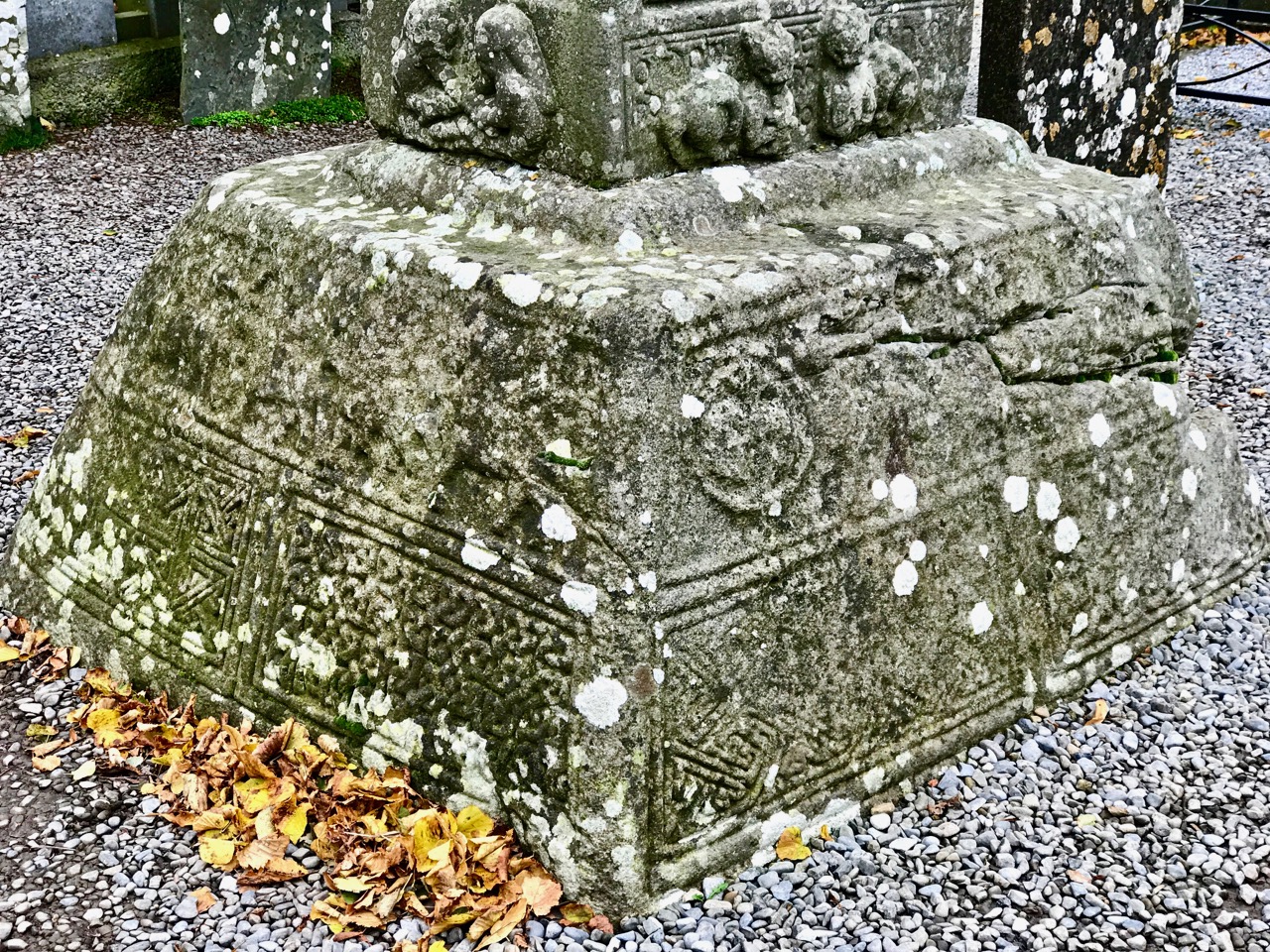
A gallery of detailed carving work from Muiredach’s great cross: the subjects include Adam and Eve and Cain and Abel; Celtic knotwork; Moses striking the rock; the crucifixion and (header) nativity scene with the Magi. The lowest picture, above, shows the decorated base, which is shaped like a saint’s reliquary and the panel with two cats and the prayer for Muiredach

This wealth of medieval art is only part of the site’s wonders. There are two more complete High Crosses, fragments of other carvings and slabs, and a round tower. The Tall Cross or West Cross is the highest in Ireland, at nearly 7 metres. Because of its size it has the greatest number of carved panels of any Irish High Cross. However, these panels are suffering from weathering much more than Muiredach’s Cross, and their present state must raise concerns for all the carvings at Monasterboice. At other sites, crosses have been sheltered (Moone) or moved into buildings (Clonmacnoise, Durrow).

The Tall Cross (or West Cross) at Monasterboice; left – in context with the round tower beyond; right – an example of a badly weathered panel on the Tall Cross

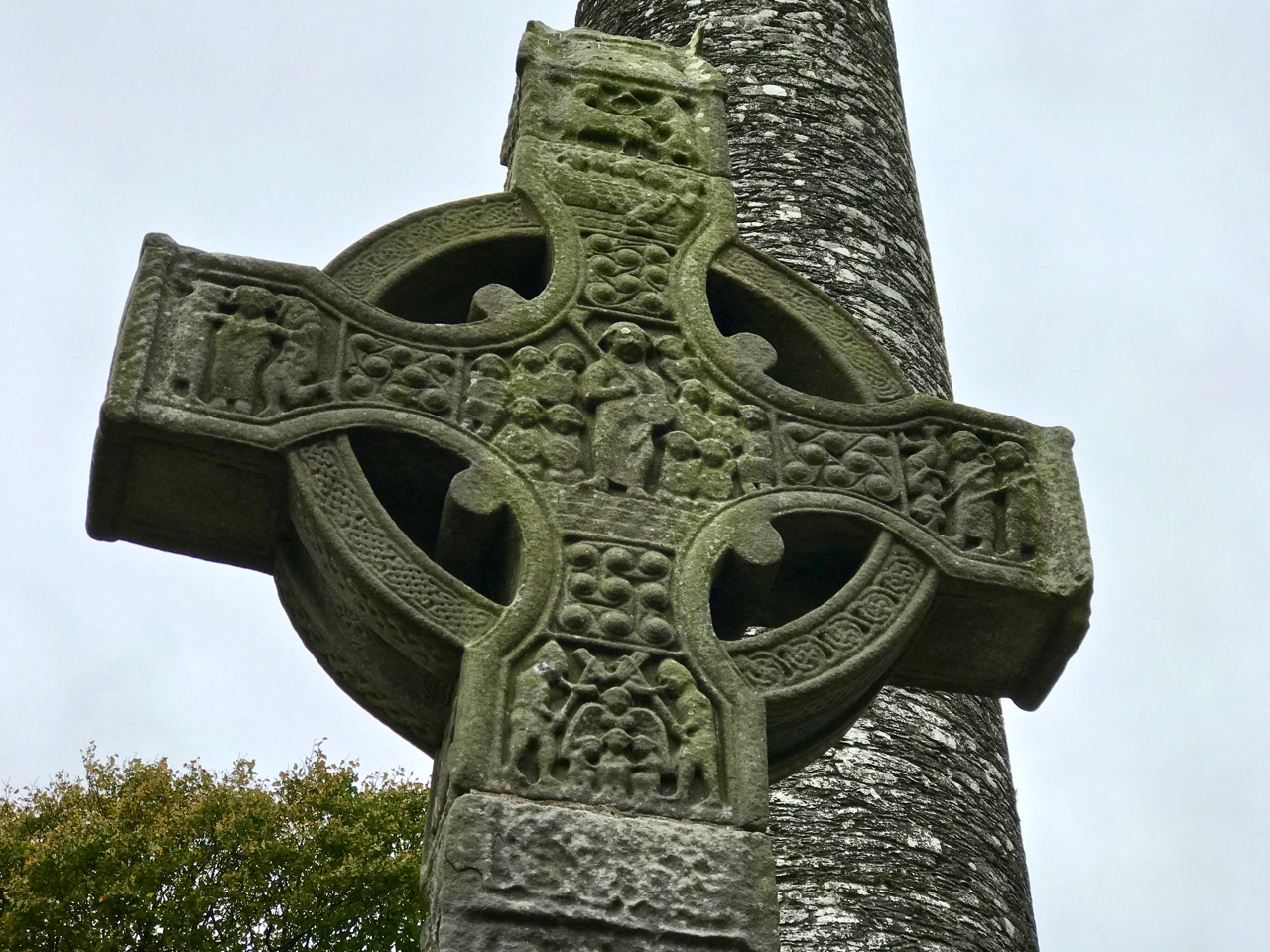
Upper – the west face of the Tall Cross cross-wheel, which is in comparatively good condition, and lower – the east face. The number of scenes depicted on these panels alone is remarkable

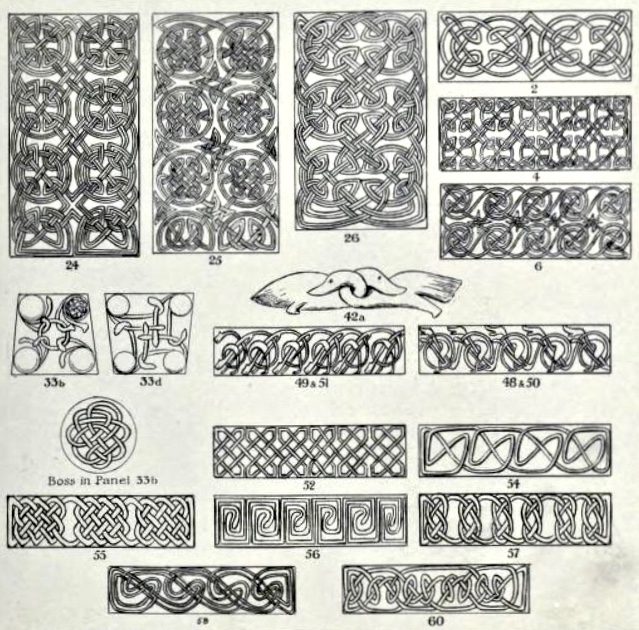
Carved panels on the Tall Cross at Monasterboice and – lower – a study of Celtic knotwork found on Irish High Crosses, taken from MUIREDACH – Abbot of Monasterboice 890-923 AD by R A S McAlister MA FSA, Dublin 1914

There is a third High Cross at Monasterboice, known as the North Cross. It is less spectacular, perhaps, than the large ones, and the carvings are comparatively minimal. Nevertheless, its modesty gives it a somewhat more refined character. Close to the North Cross are some fragments, including part of a medieval sundial – reminiscent of the one we saw at Kilmalkedar, County Kerry, earlier this year.

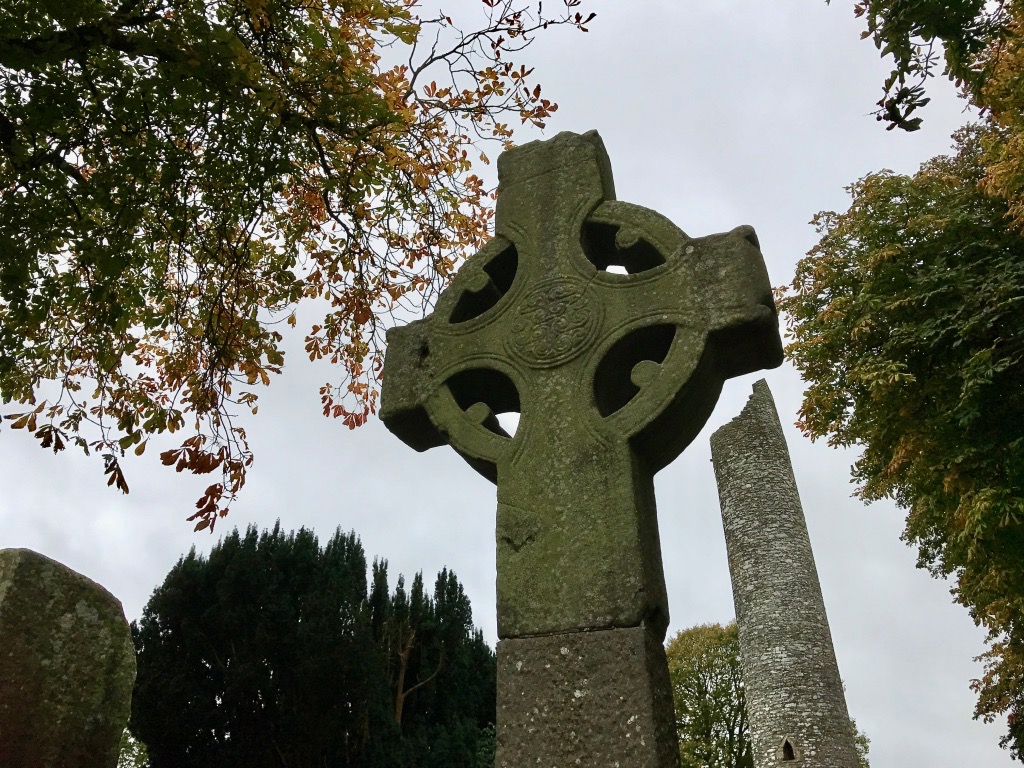
Upper – the North Cross with the round tower in the background; lower left – North Cross east face and, lower right – nearby fragment of a medieval sundial

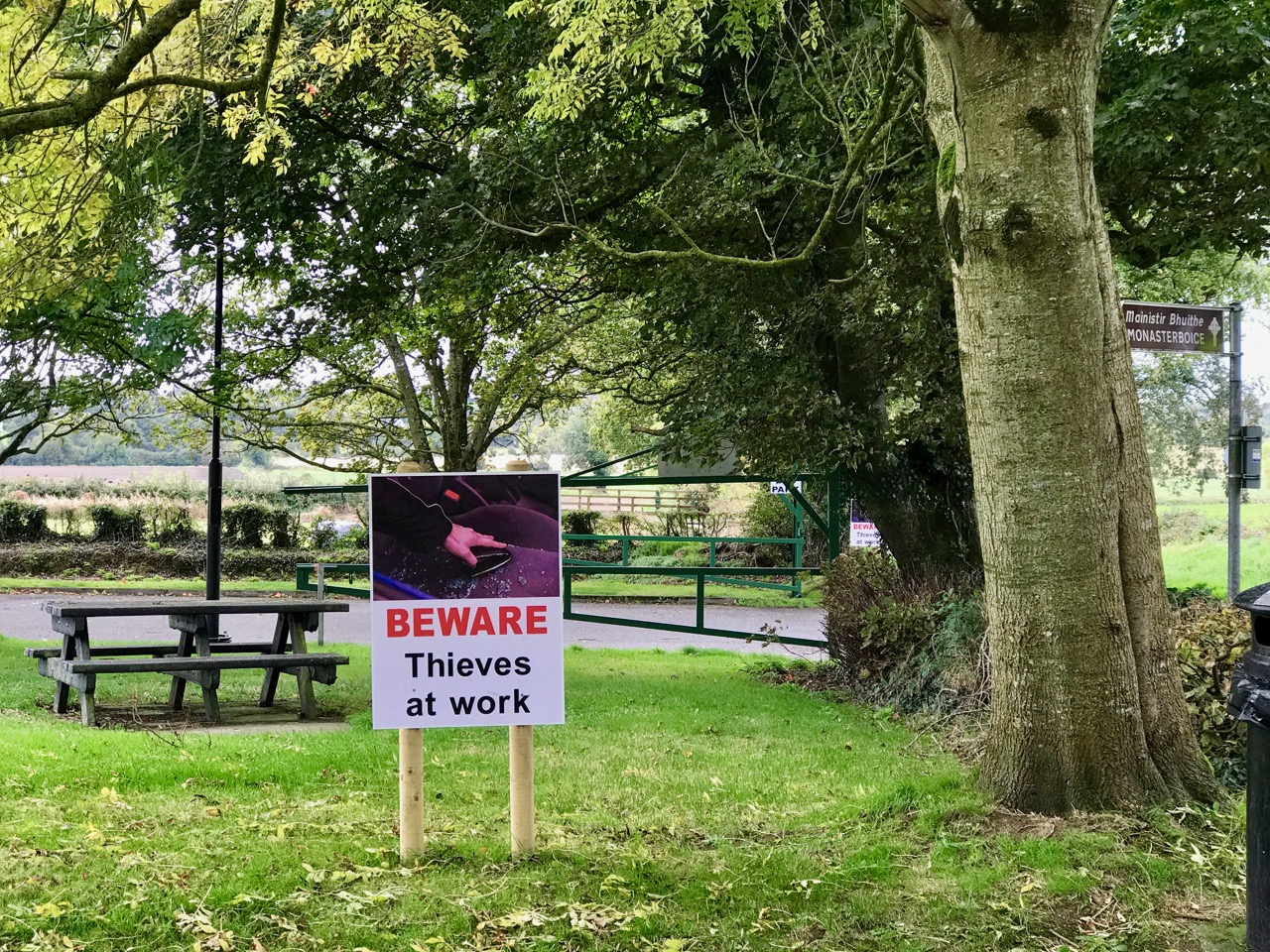
Monasterboice displays so many wonders. Yet, in some ways, it’s an uneasy site. It’s probably not helpful – but perhaps essential – that the parking area a little way off is rife with warnings about thieves, and broken glass is evident. There have also been reports of vandalism against the monuments themselves – emphasising their vulnerability. The place is of major importance: during the summer season the site is attended, and guides are available. We were there in early October, when no-one was around.

This site – and similar ones all across Ireland – are vitally important to the heritage of this country. The artefacts are irreplaceable, yet too little resource is given to protecting them – from weather and people. As we know from our forays into the world of Prehistoric Rock Art, stone carvings are fragile, and under-appreciated. There’s no obvious easy solution, apart from them being given higher status and priority by the empowered bodies such as the Office of Public Works. They, in turn, need to be given more support by the State, particularly in terms of funding: they do the best they can with very limited resources.

Cats on the base of Muiredach’s Cross, recorded  by McAlister in 1914:

Freshly Dug Queens

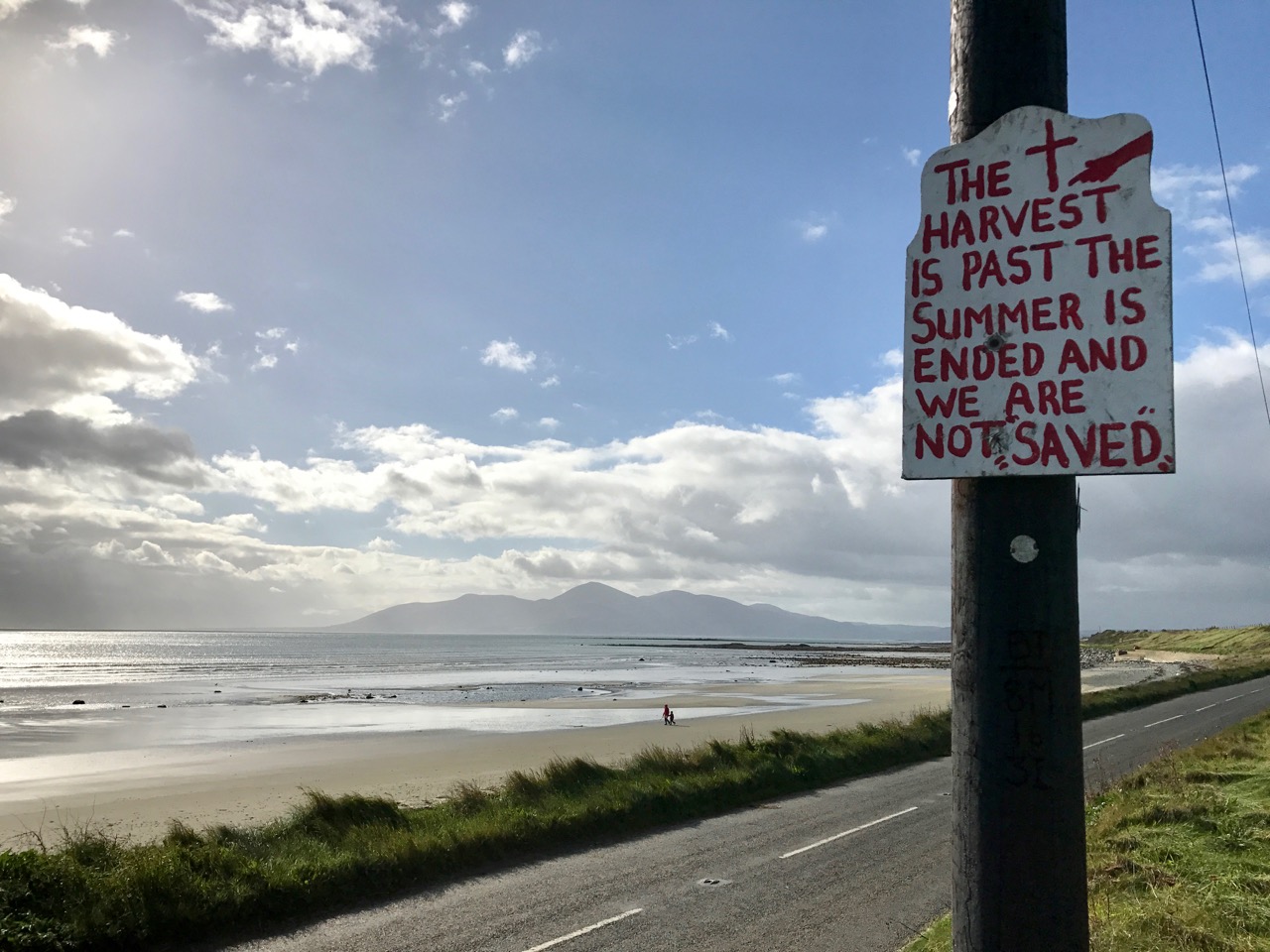
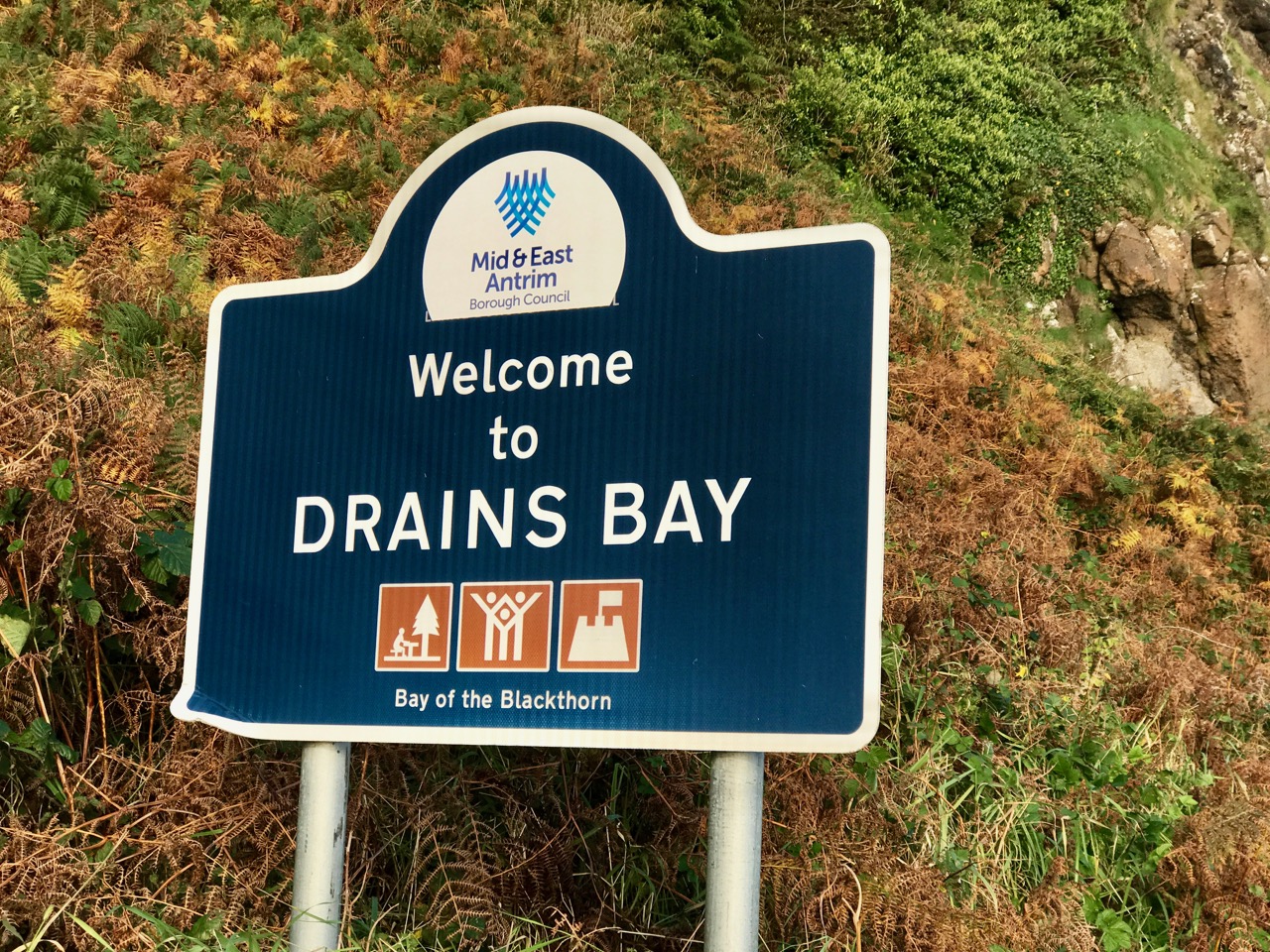
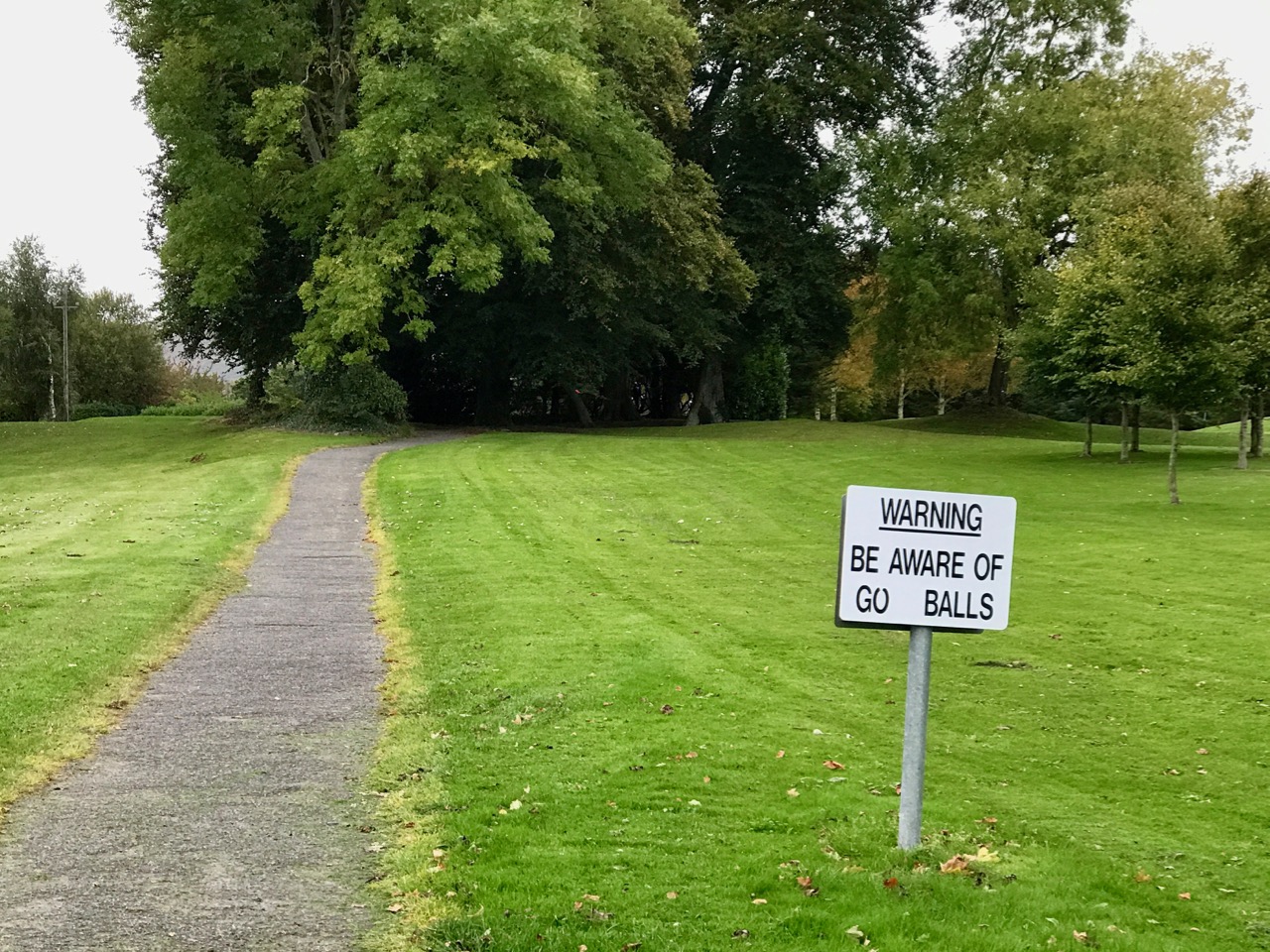
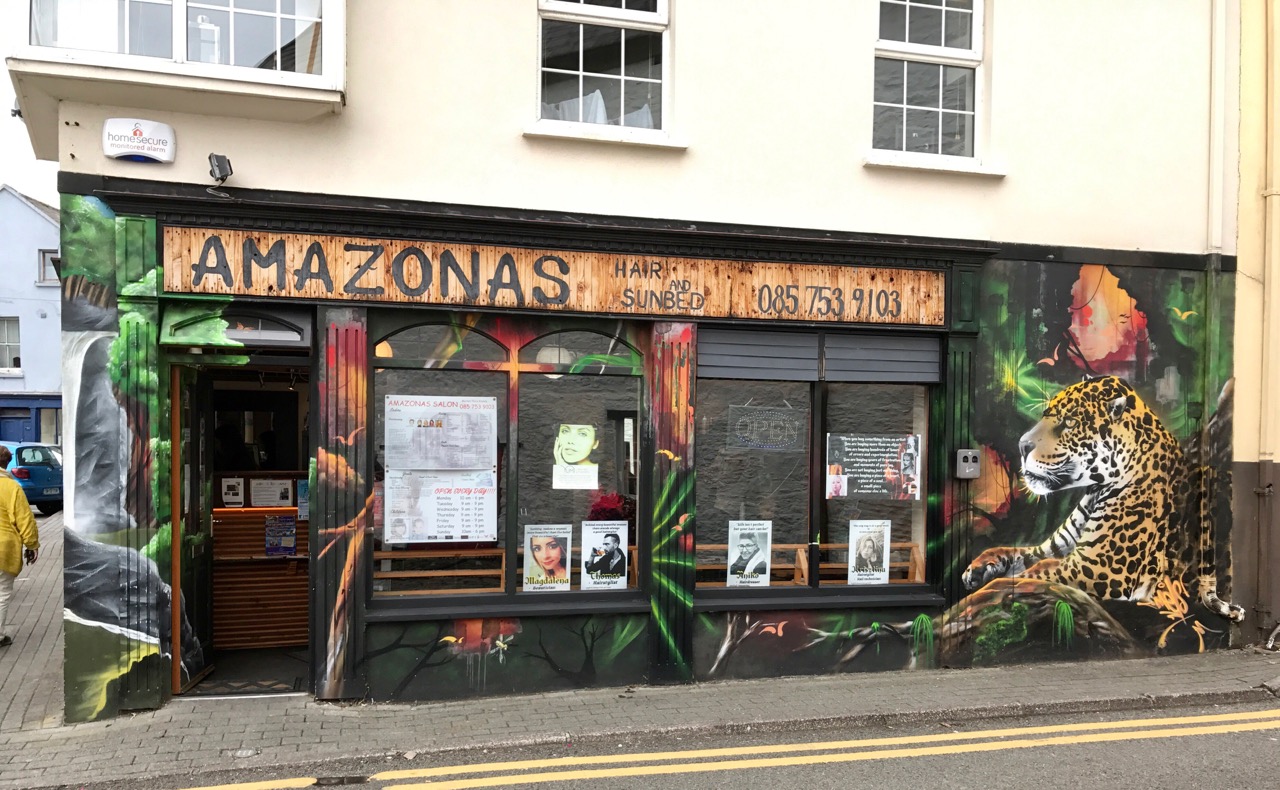
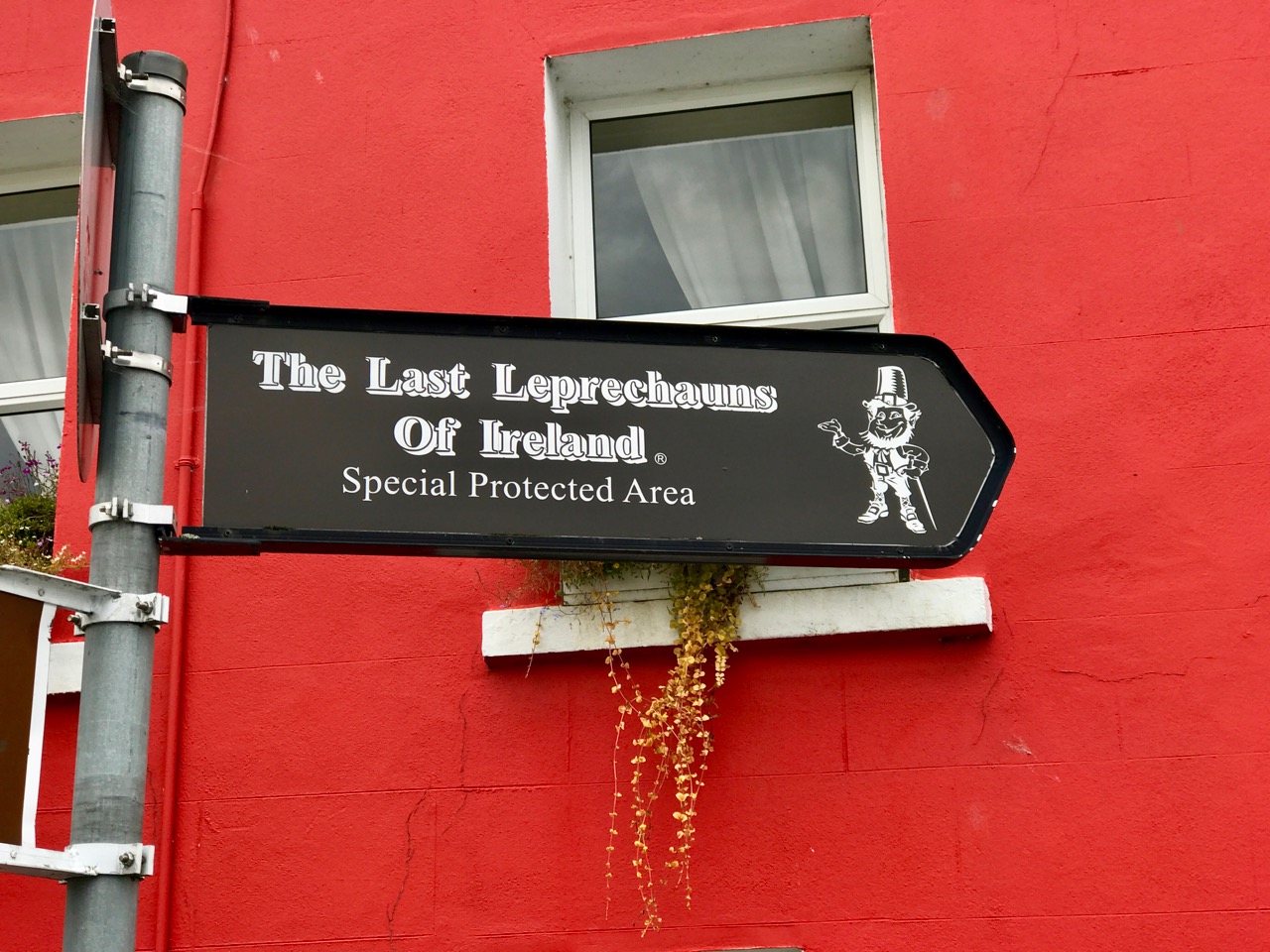
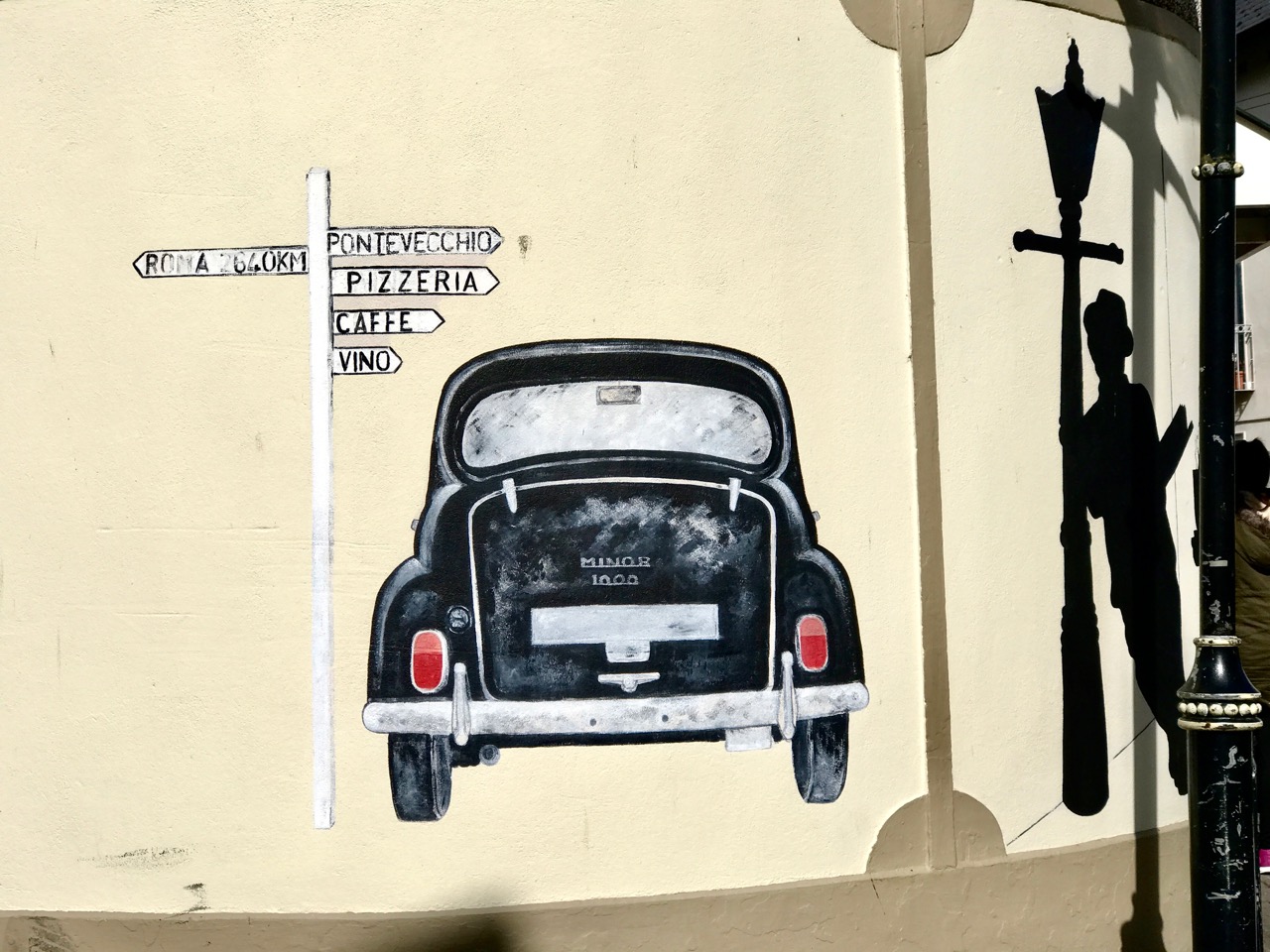
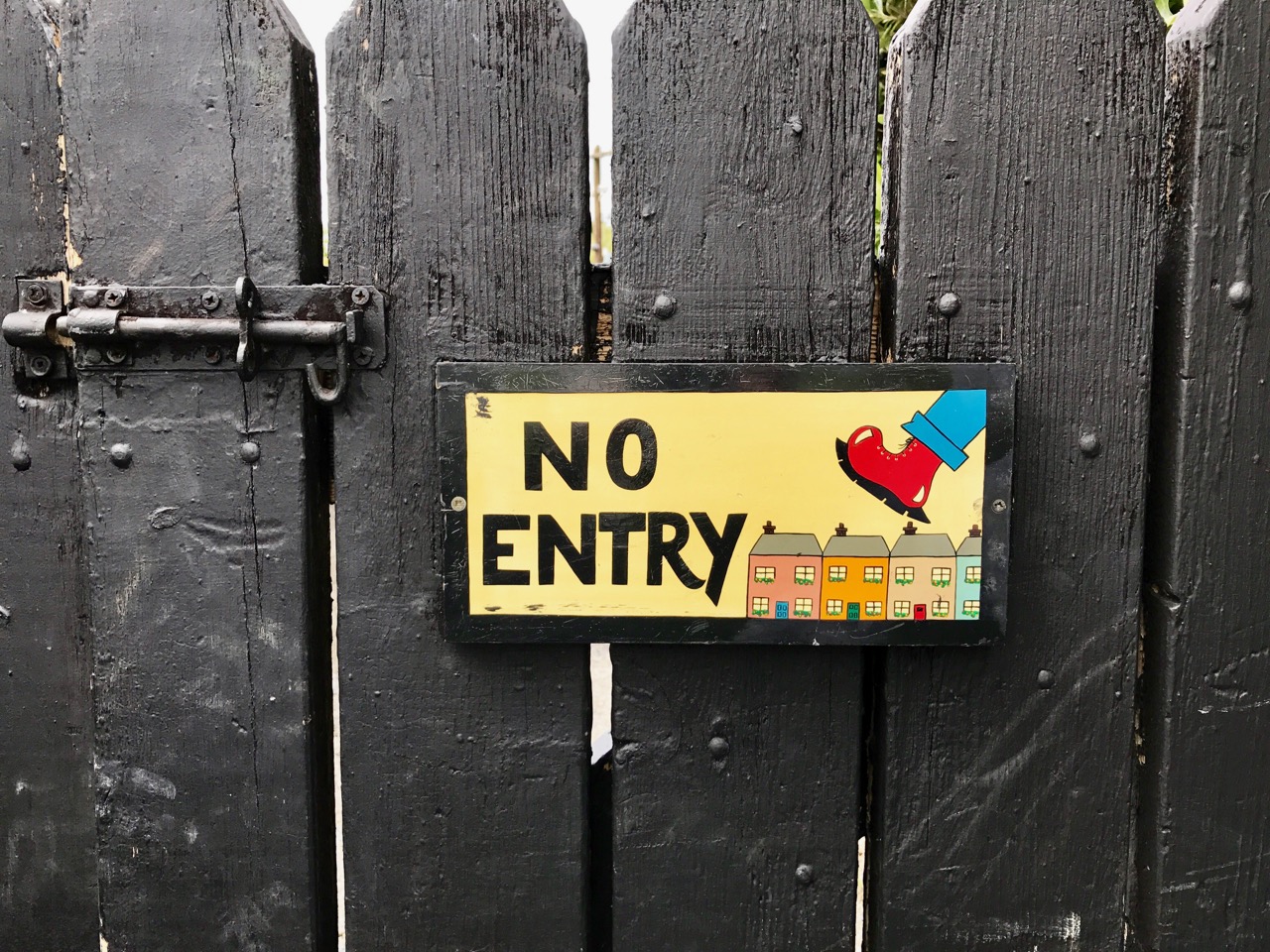
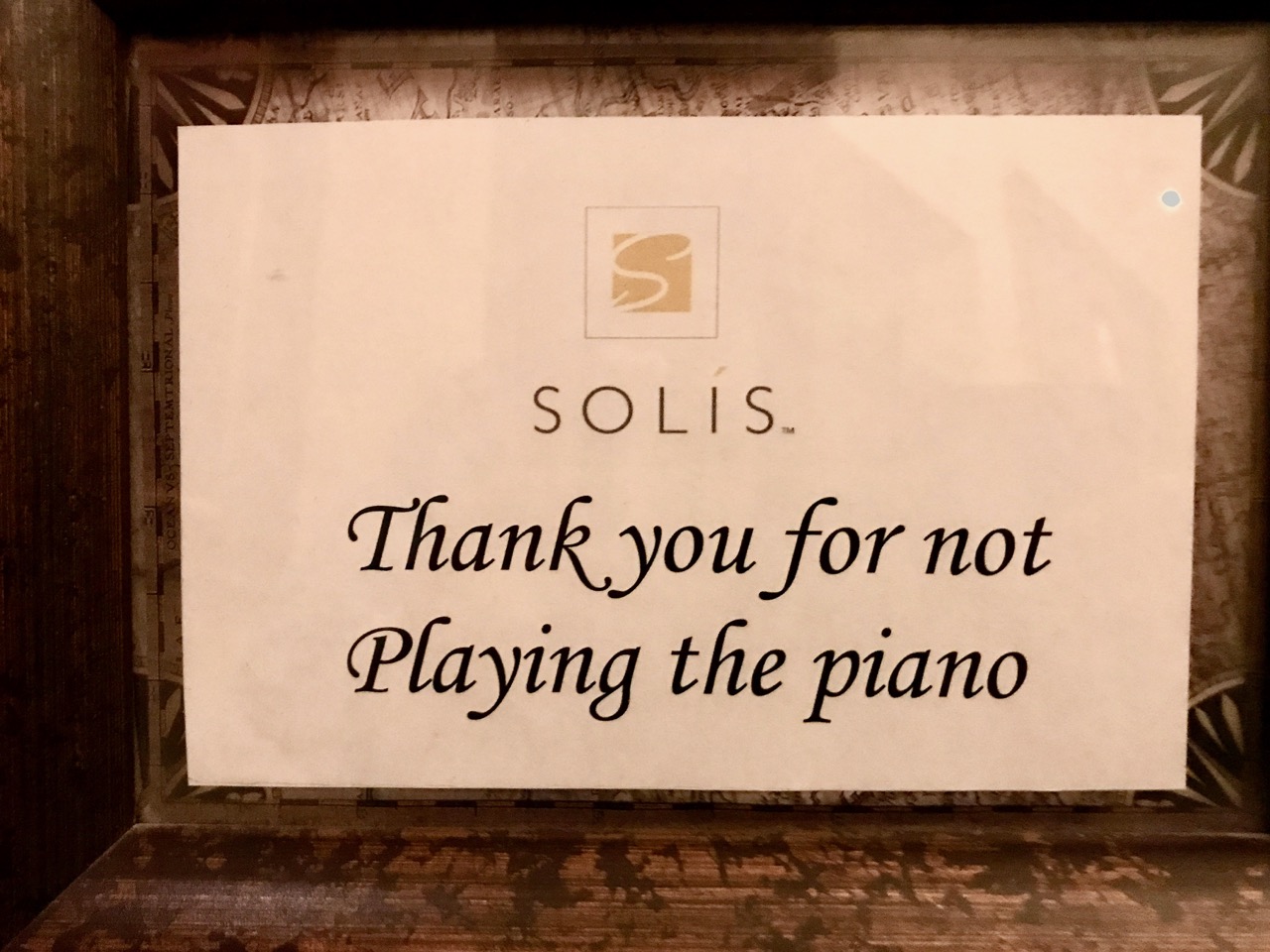
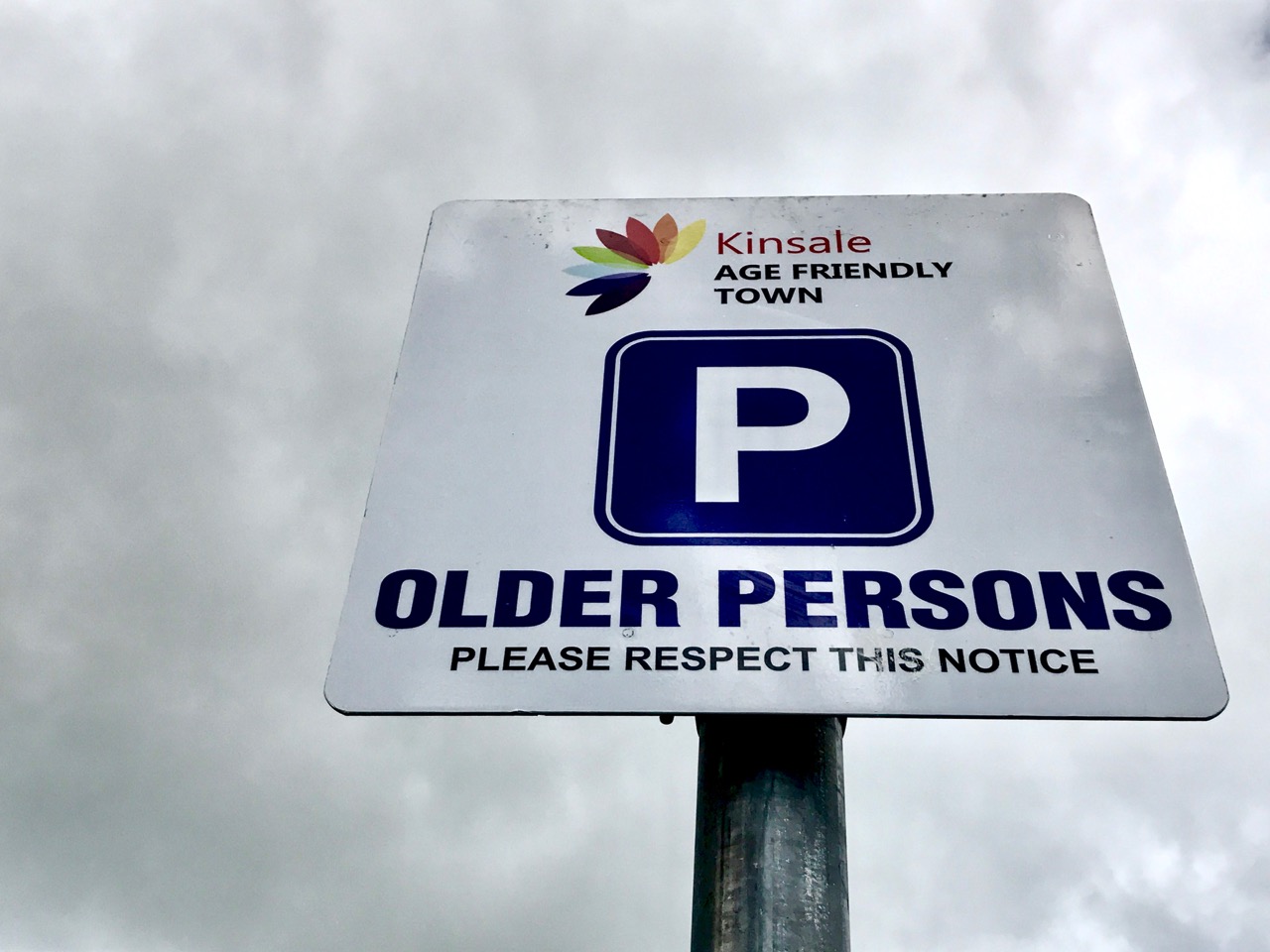
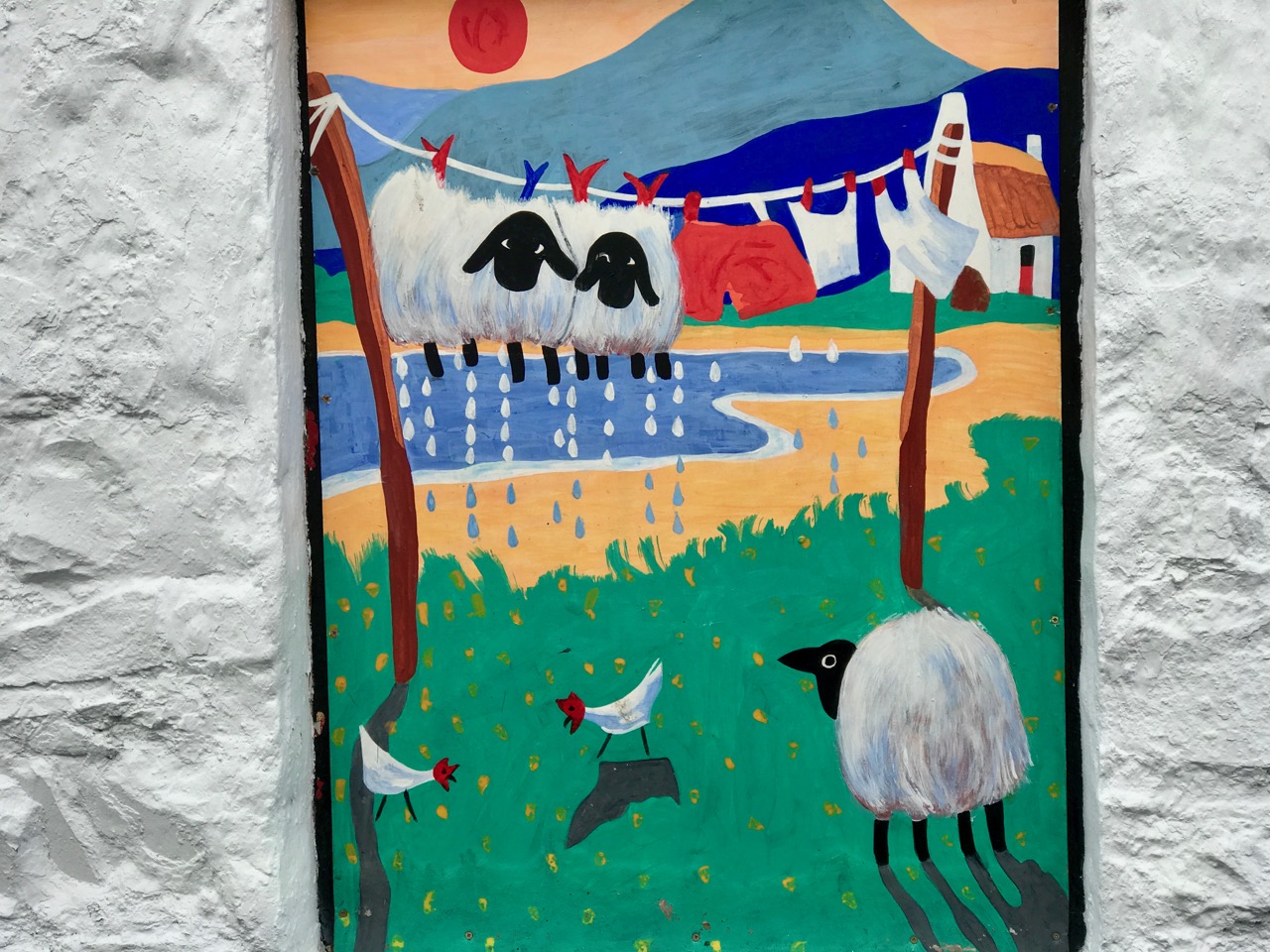
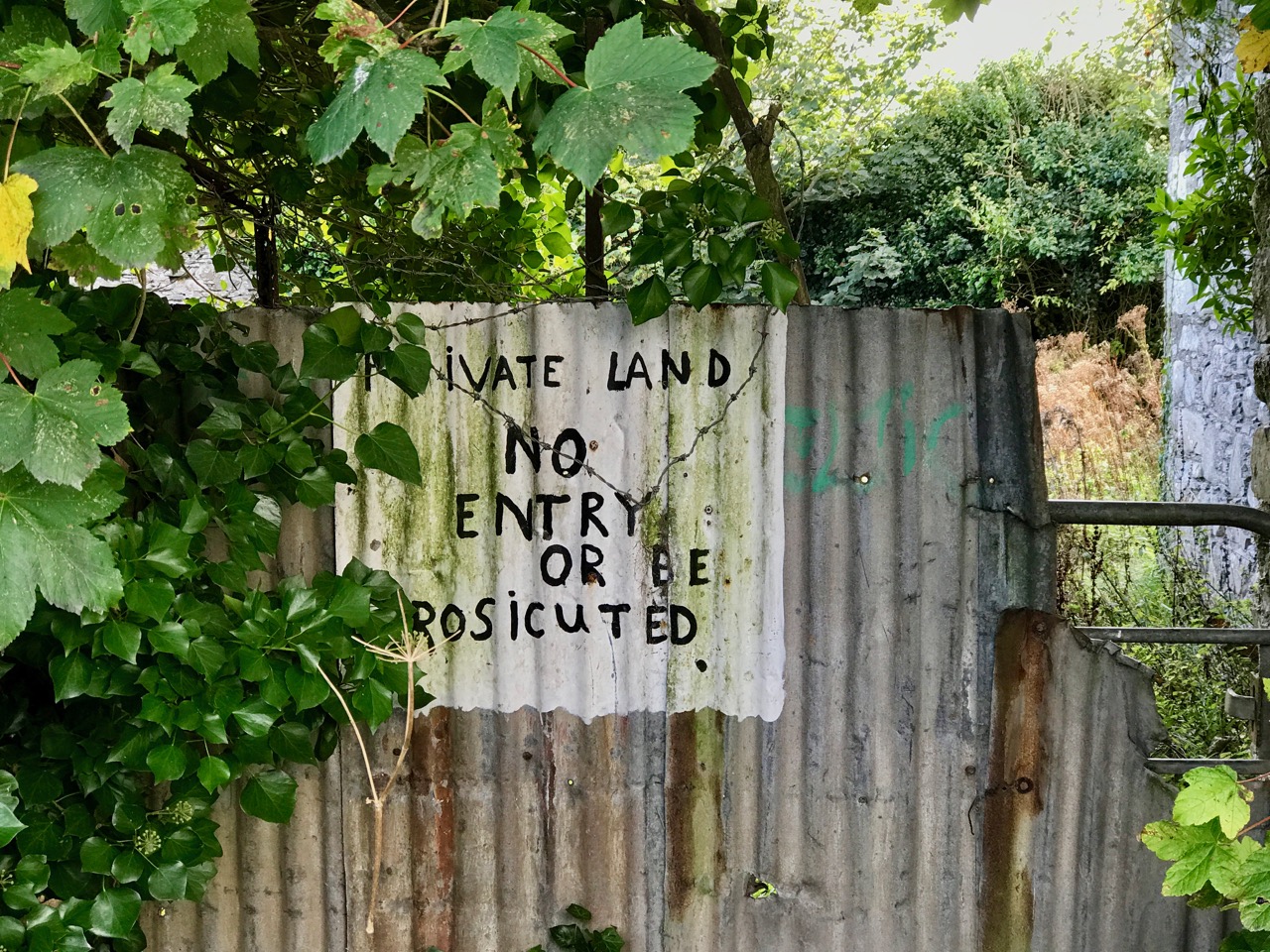
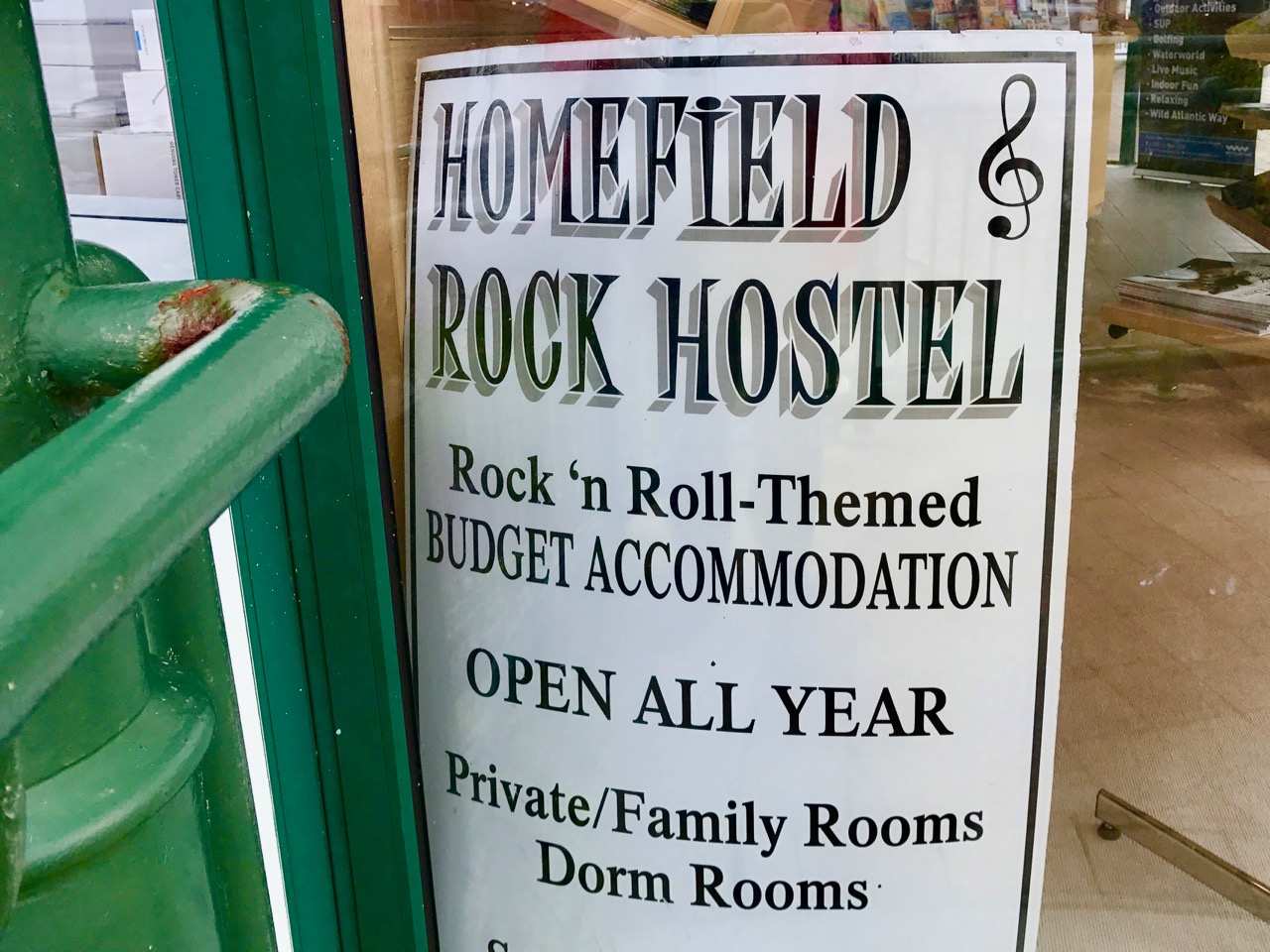
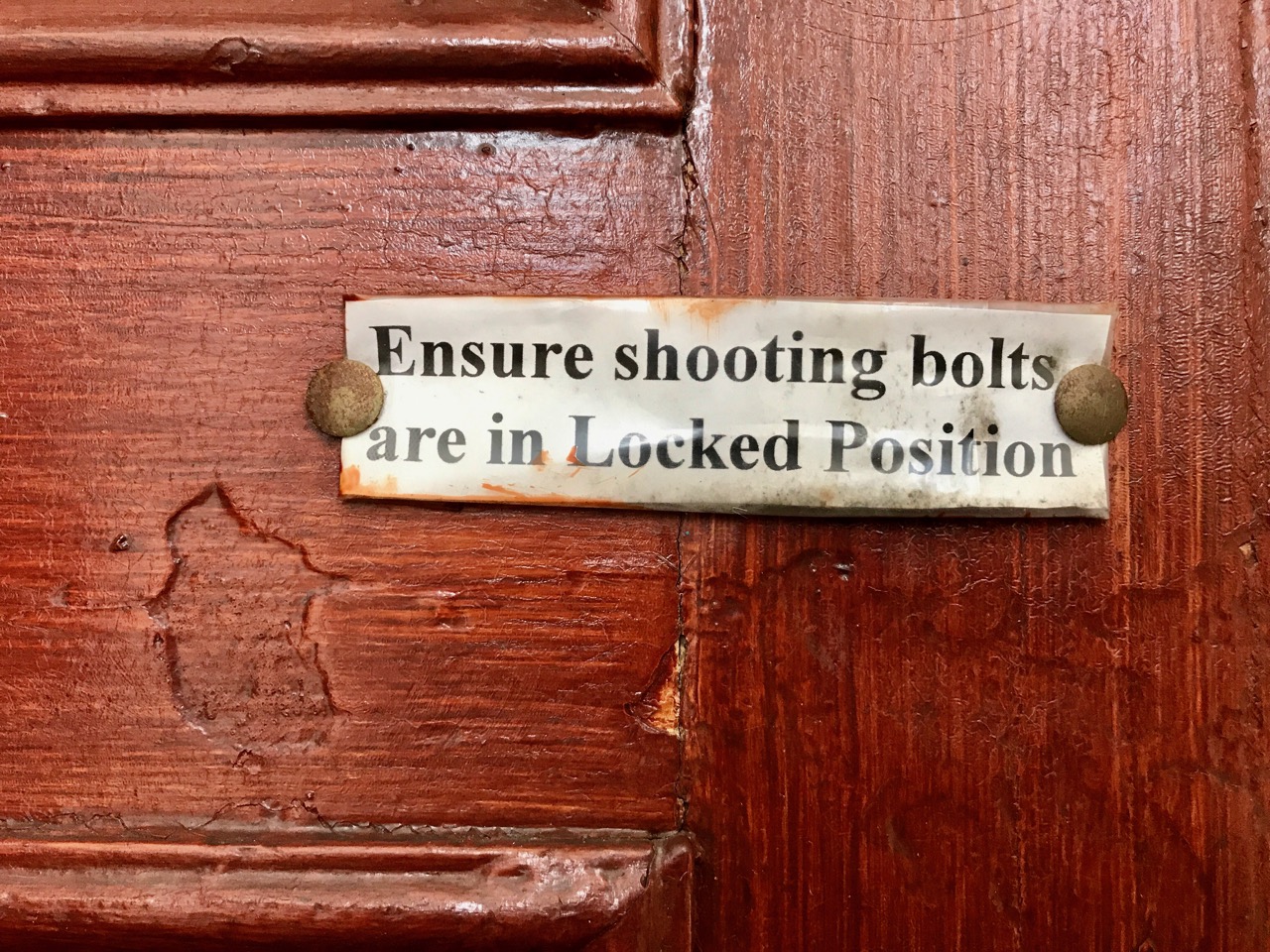
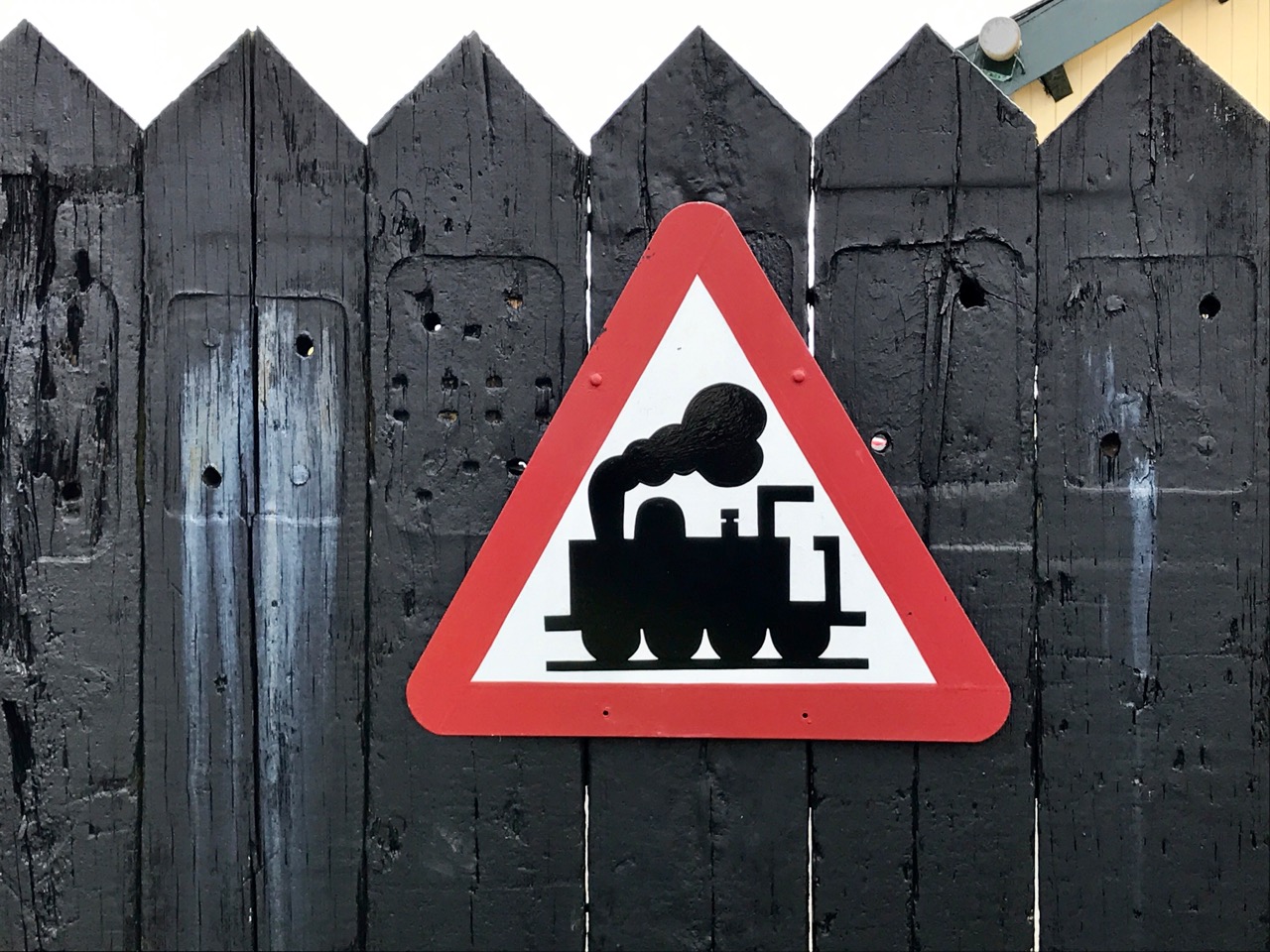
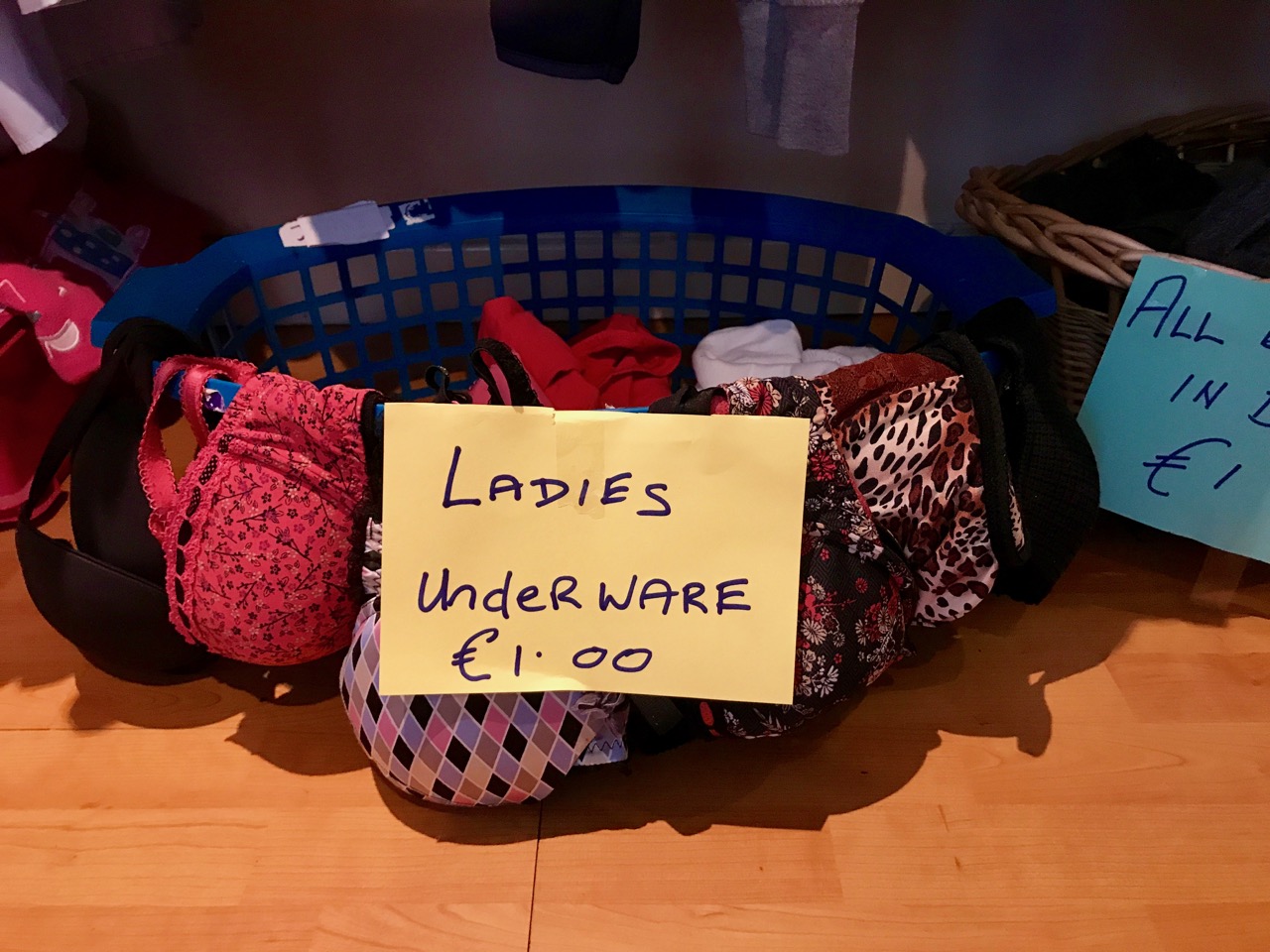
It’s always the ones that got away that are the best! We saw Freshly Dug Queens in a field of potatoes in Northern Ireland but were unable to stop on the busy road to capture it on film. We are just left with the concept hanging in the air… Worthy of a title, however, for this latest review of signs – amusing, curious and sometimes just plain puzzling – from all around Ireland. Take a look at the picture above: the dramatic Mountains of Mourne form a serene backdrop, but I couldn’t resist the enigmatic message hanging on a pole beside the beach.

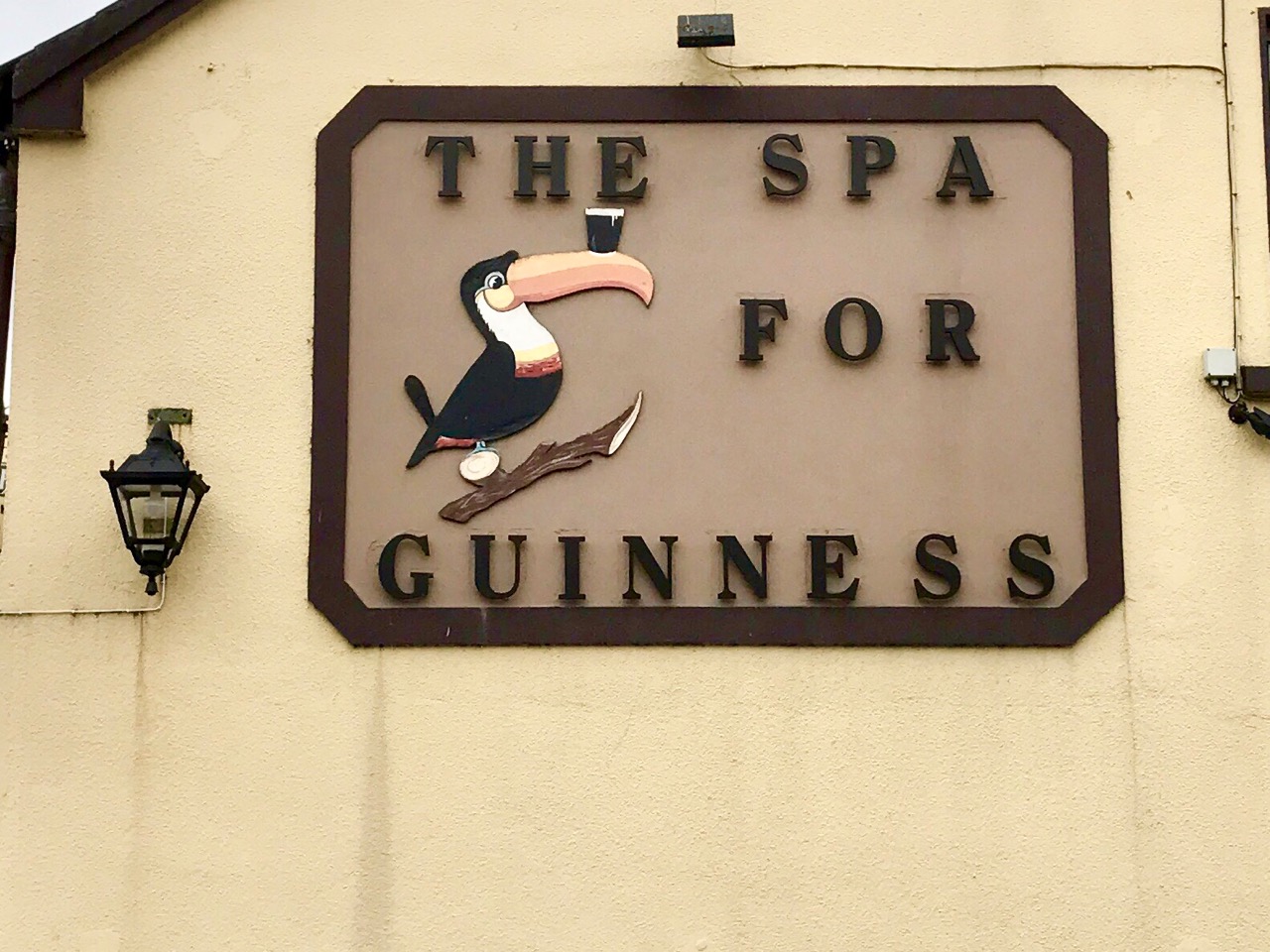
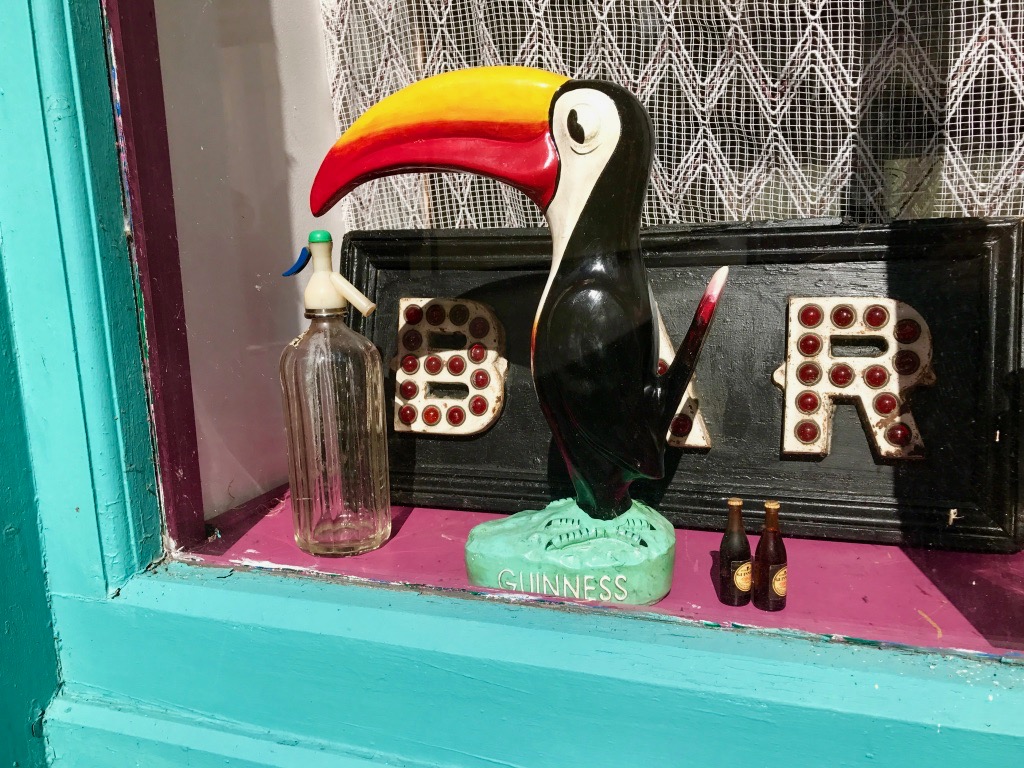
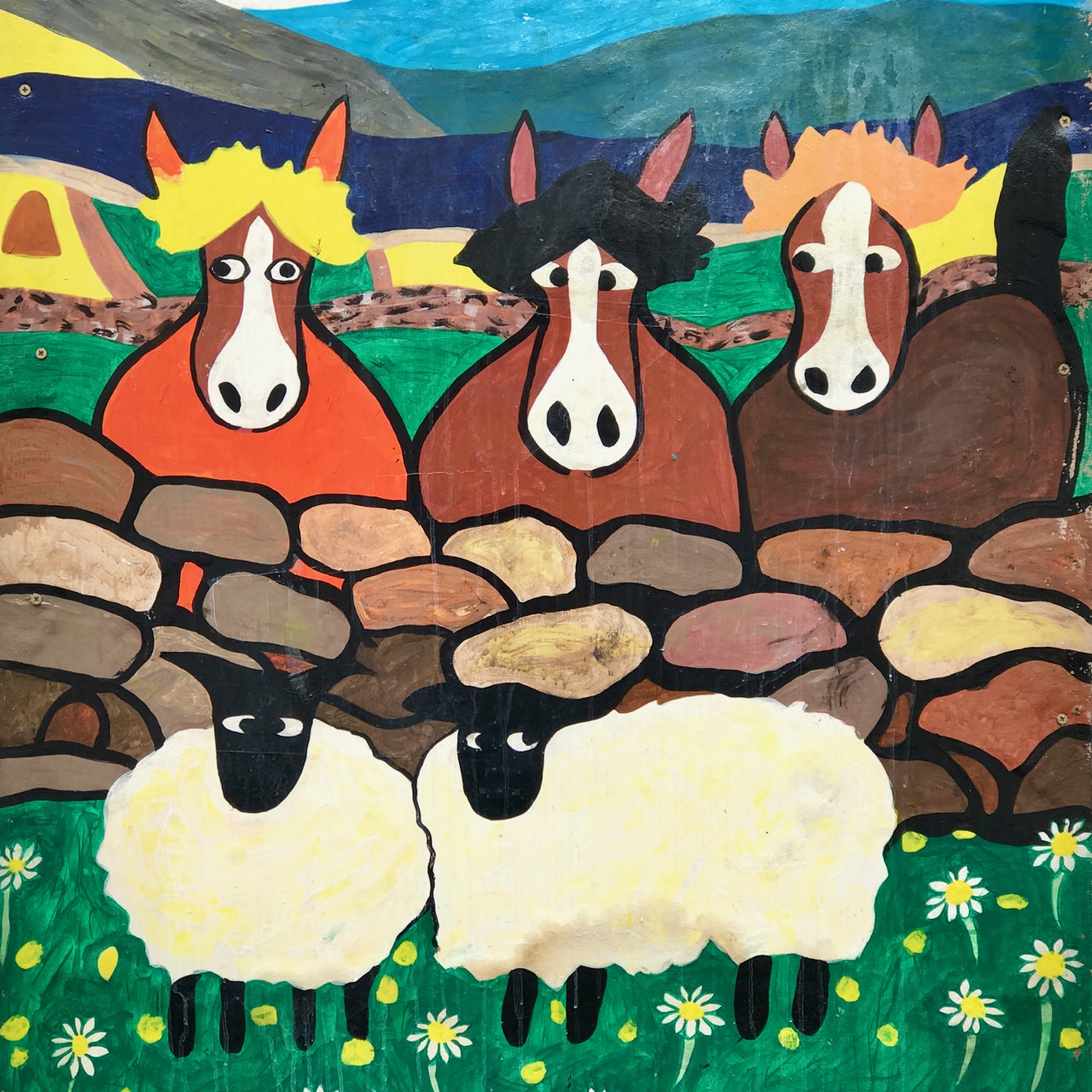
It’s always the case that context is everything: where the sign is often provides the clue as to what it means. But it’s almost better not to know the context. This time around, I’m including some which are purely pictorial – and even some shopfronts which, for me, enter the category of Folk Art. There’s plenty more in my own archives – you’ll find some here. Meanwhile, just enjoy them for the visual delights that they are.

You’ll notice that I have a particular liking for the various Guiness signs. That’s because I remember being fascinated by them during my childhood. I think I learned to read through looking at them!


Shay Hunston and the People of the Wild Atlantic Way

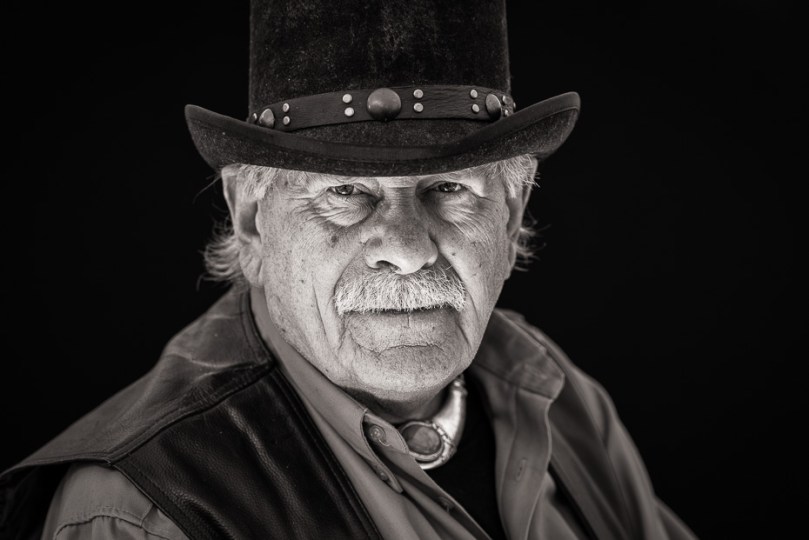
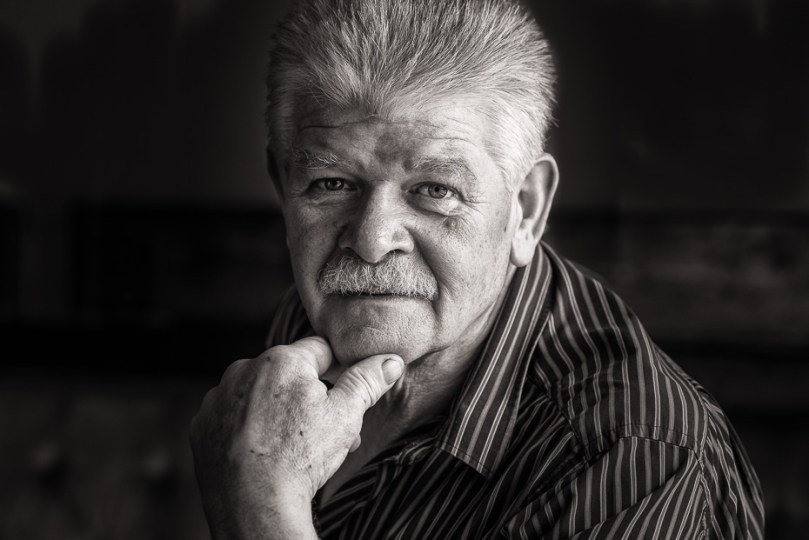
It’s the people! Shay Hunston is passionate about his subject. Sure, we have wonderful scenery, and every photographer is out capturing it. But time and again, what visitors tell us is that what makes Ireland special for them is the people they meet, their warmth, humour, empathy, poetic language, and the interest they take in others. So I set out to document those people – to show the faces and the personalities you will meet along the Wild Atlantic Way.

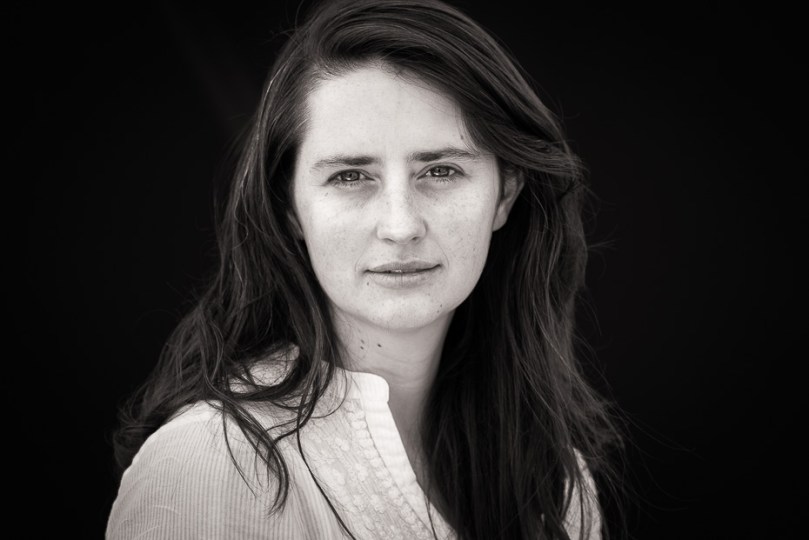
The first photograph above is part of that project – it’s Mike Watkins, the friendly face we pass most days as we drop into Budd’s of Ballydehob. He sits outside, drinking tea and greeting everyone. Here’s what he has to say about life: I have sunshine in my heart and I never, ever, ever get upset about anything. I’m happy every single day and everybody else should be the same, and we should all hug each other and talk to each other. This I have learnt from a lifetime of experience.

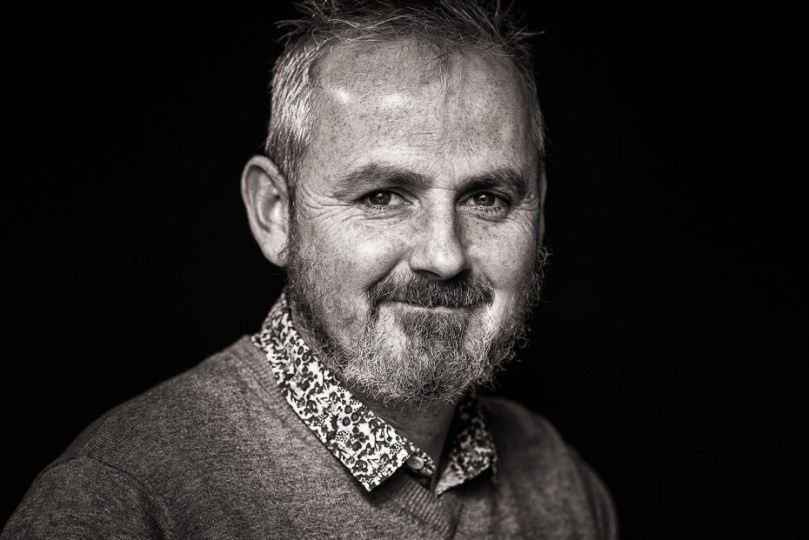
Tim Healy – Leap. The best advice I ever received in life was when I came to live in Leap in 1983. I knew of a local lad who had a reputation for liking a bit of a ‘Work Out’, he was well able to look after himself. So I said to him, just to wind him up, would you like to have a go, the two of us for 20 pounds. No, he said, I’ll tell you what, don’t be wasting your money, we’ll fight for pleasure.

So far, Shay’s project has been a Wild Atlantic Success, and he hasn’t even moved beyond Cork yet. He’s been going from community to community along the Wild Atlantic Way, photographing whoever volunteers. Once the prints are made, the town or village mounts an exhibition of his strong black and white images, in shop fronts, on the approaches to town, on walls and railings.

Caroline O’Donnell – Ballydehob. My grandmother once told me that as long as I have music and laughter in my life I would never grow old. I think about her every day and try not to grow old. She also said never marry a man you haven’t seen drunk… I’m still thinking about that advice.

We missed the shoot in Ballydehob as we were away, so we participated in Schull. It’s a nervous business, sitting for a portrait, but Shay creates an instantly warm and relaxing environment. He’s good humoured and patient and empathetic and he obviously loves doing this. He was also cool about my photographing him and his process (no pressure like, to be snapping away in the presence of genius!) and doing a blog post.*

Pat Murphy – Castletownbere. I started fishing at 13 years of age in open boats with a crew of three. We fished winter and summer in all kinds of weather. From October to March we fished for scallops, two rowing the boat and the third man looking after the dredge, by God you had muscles from pulling oars for six months…In summer we would fish for lobsters and crabs. To make the pots we would go to the mountains to cut hazel and sally rods. I use to make four pots a day. Besides the fishing we all had a bit of land to grow our own vegetables and potatoes. Come September, those of us who had a pig or a cow would slaughter them, butcher and salt the pieces and put them in a barrel, there they would be left for 6/8 weeks, they would then be hard dried or smoked, we would also salt fish. The best life advice I could give anybody is to be able to negotiate with people, to work together, not against each other.

Shay asks people to write a few words to go with the image. It’s lovely to meander down the street and read what people have said, so I’ve included snippets under each photograph.

Saoirse Canty – Ballydehob. My perfect day would be my friends and I hanging out around Ballydehob. We would do nothing and talk about nothing all day. The reason why that is so perfect to me is because it makes me truly happy and the familiarity of this beautiful town is very comforting. It is one of those things that I could do forever.

You will notice, of course, that this post is (not surprisingly) a little heavy on Ballydehob folk, so as part justification for that, here’s what Shay himself wrote about his experience working in Ballydehob:

Ballydehob is a remarkable place, a multicultural melting pot of creative activity and is home to artists, poets, writers, musicians, sculptors and craftworkers. The local community encourages people to pursue and develop their creative and artistic talents…With the influx of artistic people in the 70’s, Ballydehob became known as the ‘San Francisco of the Mizen’. Ballydehob is an inspiration to all and is a template for how a multicultural community can live in harmony, with sympathy and compassion for each others needs.

But just to show I am not totally biased, here’s Danny Smith, whose day job as a postman in Bantry allows him the space to observe and dream about his next painting. Next time you’re in Kilcrohane, drop into The Old Creamery and see the wonderful results.

Danny Vincent Smith – Bantry. I started painting as long ago as I can remember, this passion for painting started from there. Every hour I would be thinking and looking for some kind of angle for a painting, observing everyday life, watching people’s faces, their expressions, trying to capture movement in the moment, such as an old lady with shopping, old farmers or a fella sitting inside the pub by himself. I try to picture people’s life’s and transfer them to canvas. My environment has a massive influence on my work and I feel like I’m documenting a time and place in rural life from where I live for future generations.

Go visit Shay’s website NOW to see lots more of his people photography, including his project to photograph the people of Dublin’s Temple Bar. Or sign up to follow him on Facebook or on Twitter. The Schull images should be ready in a few weeks – I will let you know.

Callum Donnelly – The Ludgate Hub, Skibbereen. My Perfect Day – A frosty morning, circa 8am, the ground is firm. I wrap up in a coat, scarf, gloves and I bring my springer spaniels for a walk around our local woodland. The air is sharp, and you can take a deep breath, and try to ignore the daily bombardment of emails, messages & calls. To be able to walk in silence, absorb your surroundings is a fantastic way of  balancing your mind in a world where work can often take precedence. Young people feel enormous pressure to succeed, and perform, its good to take some time out in an environment that is a polar opposite to your usual surroundings.

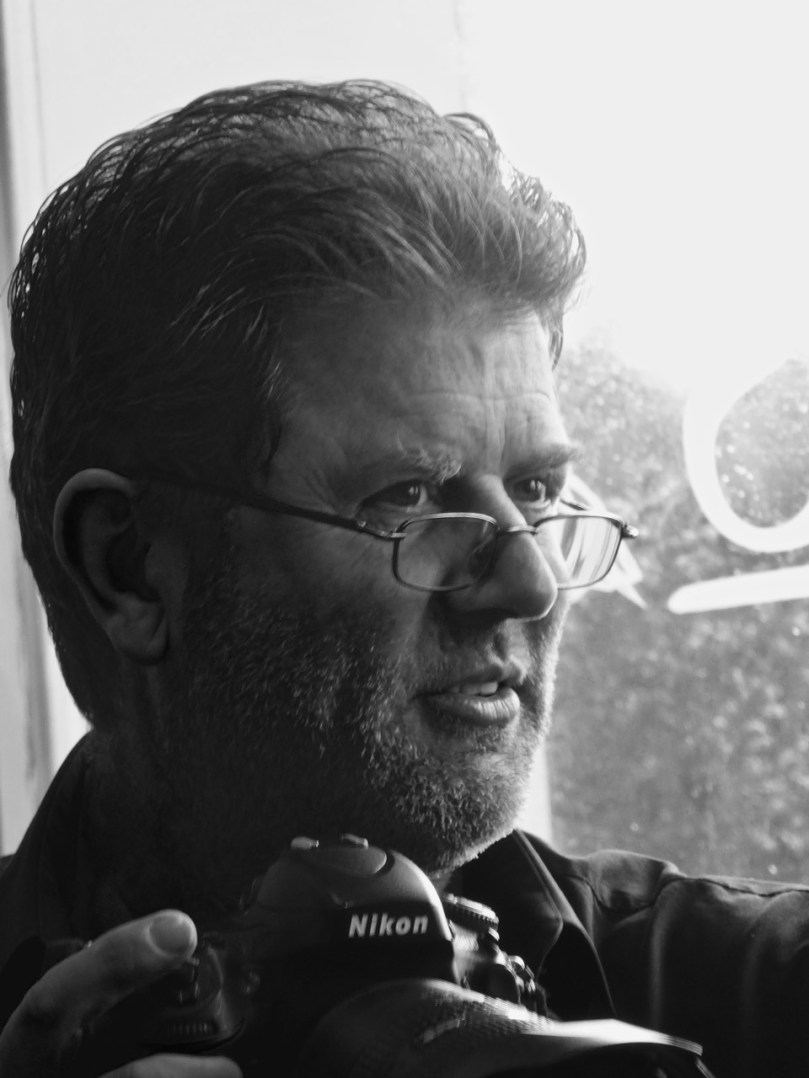
I will leave you with a couple of shots of Shay himself and his session with Robert. If he comes your way, you lucky people of the Wild Atlantic Way, take advantage of this opportunity! And as for everyone else – come and meet us for yourselves.

Shay and Robert

Himself

*Images were downloaded from Shay’s website with his permission. Please always credit the source for any image you download from the internet.