Looking Back on 2023: Robert

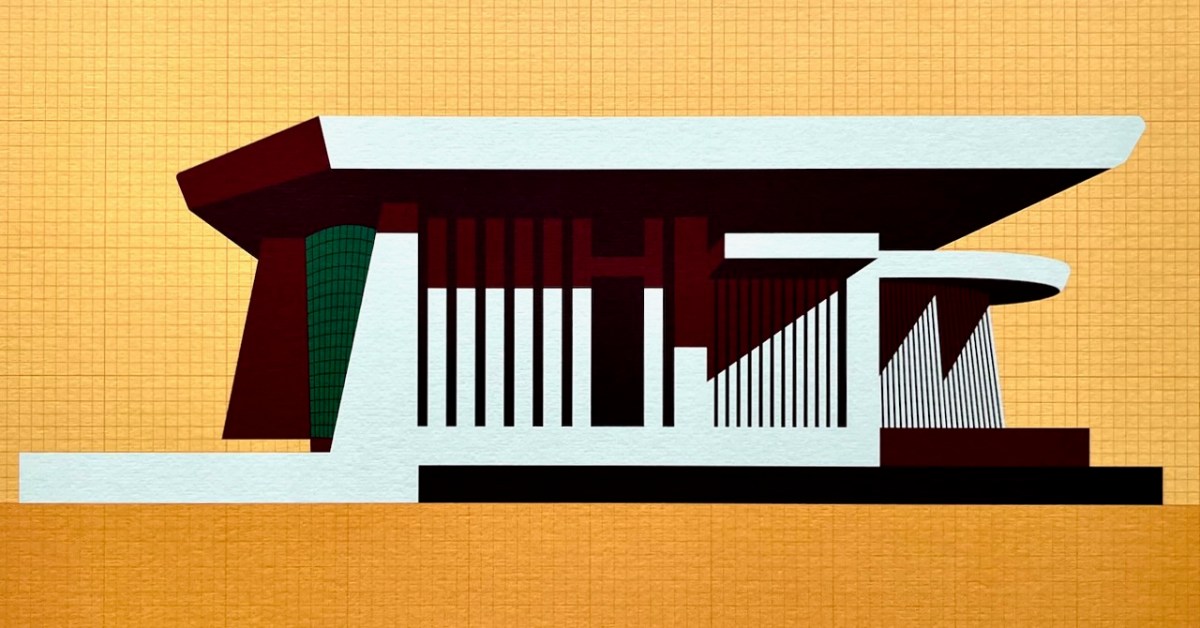
This is my favourite image of the year! I published a post about the architecture of Bantry Library, and it proved to be our most popular . . . This limited edition print, a collaboration between Dermot Harrington of Cook Architects and Robin Foley of Hurrah Hurrah is celebrating the upcoming 50th Anniversary of the completion of Bantry’s Library in 1974, and some refurbishment work is being undertaken for the occasion. For me, the print captures perfectly the iconic graphic of this most unorthodox design.
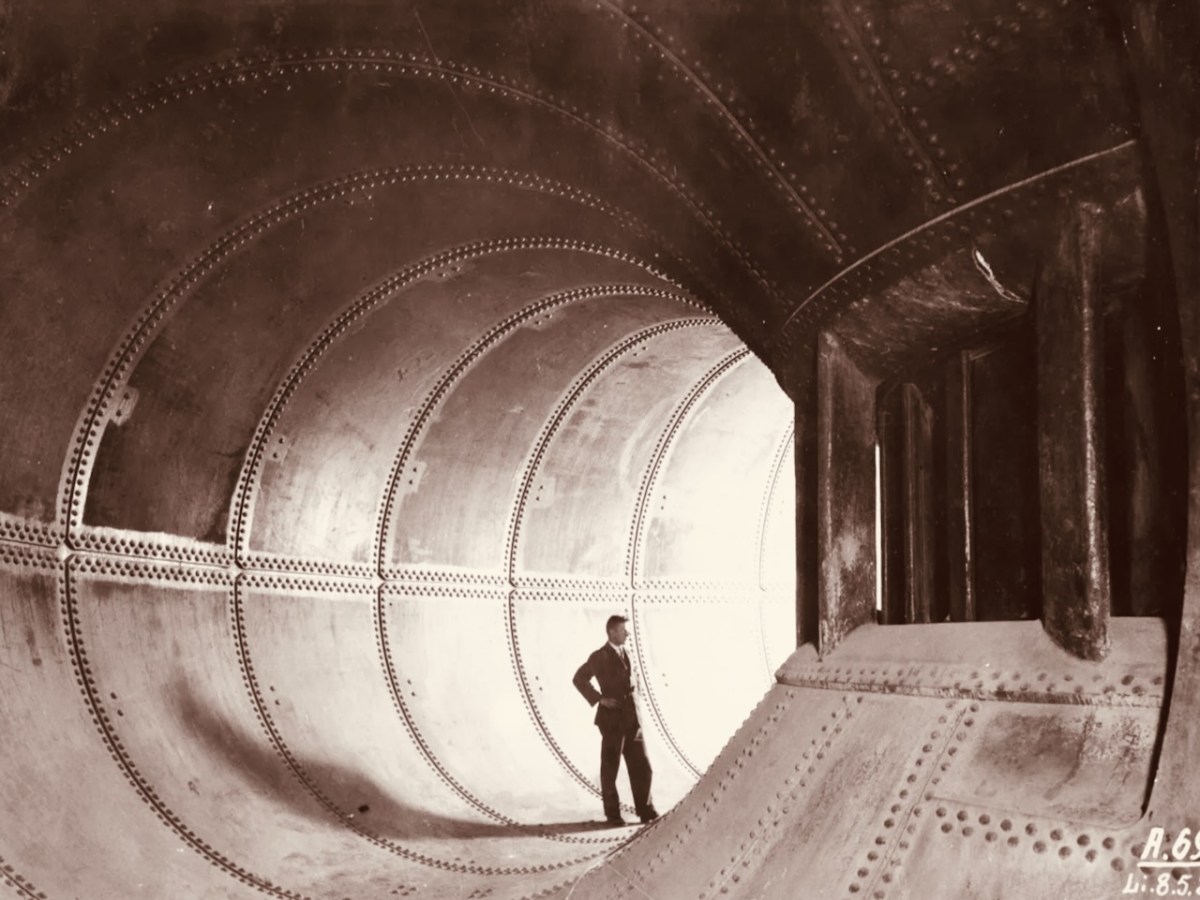
We both wrote 52 posts this year, each of around 1,000 words, and all fully illustrated. Above is a pic of one of the penstocks which brings the water into the turbine casings at Ardnacrusha Power Station (courtesy of ESB Archives). This incredible engineering feat – well ahead of its time – was constructed between 1925 and 1929, and was integral to the supply of electricity throughout Ireland’s young state by harnessing water power from The Shannon. West Cork benefitted from Rural Electrification, and I thoroughly enjoyed researching and writing a series of posts on the whole subject.

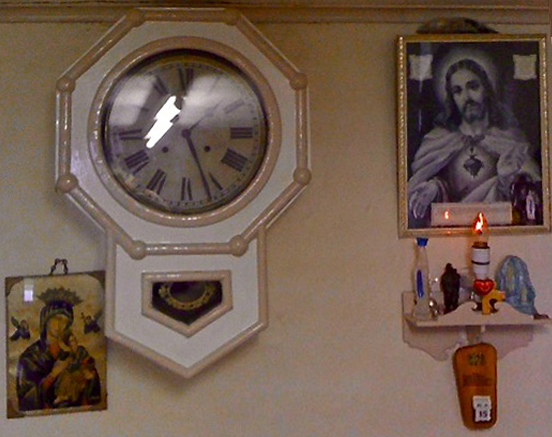
. . . Once a community was connected, or about to be connected, the ESB held public demonstrations of household appliances. These were then sold bringing electric irons, kettles, stoves to homes. The demonstration evening in Glenamaddy was held in January 1951. The handwritten report records that it took place “in the very fine Esker Ballroom”; these events were social occasions that brought communities together. The Glenamaddy evening “was attended by about 90, including 50 women. As is usual, the women appeared to be more keen than the men and more inclined to ask questions (and to argue). After the demonstration, a melodeon player turned up and an impromptu dance got under way” . . . Small towns and rural townlands became brighter and winters less harsh and Christmas more special as the fairy lights began to shine. It also gave rise to a rural Irish icon as every house had the Sacred Heart picture with the (electric) red lamp (below): many didn’t get a kettle and washing machine until later on . . .

ESB Archives
The whole series on Rural Electrification was written during the summer and can be read through this link: https://roaringwaterjournal.com/tag/electrification-of-ireland/
Since 2018 our own Museum in Ballydehob has been showing exhibitions of the work of locally based artists. This year it was the turn of the Verlings – John and Noelle. John died, sadly, in 2009; Noelle is still alive and kicking and assisted Brian Lalor and myself in assembling an excellent collection of the work of these two creative residents of our village, assisted technically and ably by Stephen Canty. BAM is a really valuable resource in setting out the unique history of the artistic community here in West Cork from the 1950s onwards.

A wonderful photograph (courtesy Geoff Greenham with many thanks) of St Bridget’s Catholic Church in Ballydehob. The interior was reordered by John Verling.

. . . The gold fish hand drawn in the background of the altar and the depiction of one fish swimming against the shoal continues to evoke admiration from locals and visitors alike. He also designed the two ‘windswept thorn’ stained glass windows and etched the brass surround of the tabernacle. The Altar slab, composed of a vast monolith like the capstone of a dolmen, is a distinguished piece of sculpture and a tribute to his imaginative capacity . . .

JOHN VERLING WEBSITE: HTTPS://WWW.JOHNVERLING.COM

There was great drama off the coast of Ballydehob on the night of 22 September 1973, and its 50th anniversary was duly celebrated in Roaringwater Journal!

. . . AS an inspector from the aeronautical section of the Department of Transport and Power arrived in Ballydehob to begin an investigation into Saturday night’s plane crash off the Cork coast, it was learned last night that the pilot of the Piper Cherokee almost lost his life in his efforts to save the other three men on board. Michael Murphy (23), of Mercier Park, Curragh Road, Cork, who was sitting next to the pilot, Eric Hutchins of Ballinlough, Cork, said that Mr Hutchins was concentrating so much on getting the plane down that he was knocked unconscious at impact. Mr Murphy, together with Noel O’Halloran, of St Luke’s, Cork, and James McGarry, of Monkstown, Co Cork, had been braced for the crash and scrambled free on to the wing. But then they found that they could not get out Mr Hutchins who was unconscious. Mr O’Halloran then went back into the rapidly sinking plane and between them they pulled Mr Hutchins free and threw him into the water. The three men then swam ashore taking 40 minutes to reach land at Fylemuck, as they had to support the injured man all the way . . .

IRISH PRESS, MONDAY 24 SEPTEMBER 1973

All four crew and passengers on the plane survived the ditching, but the aircraft itself (a photo taken in its good days, above) was a write-off. Those living locally who remembered the event gathered to mark it in Schull, on the anniversary.
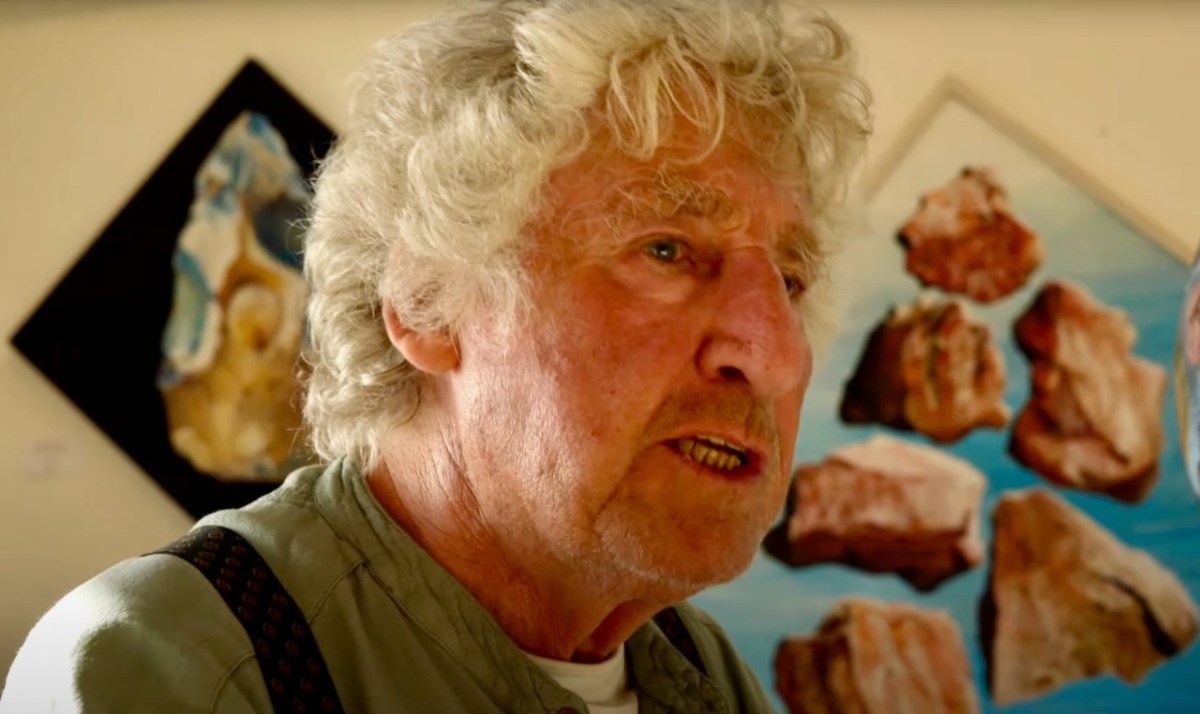
That’s Keith Payne, above. He’s one of the many artists who has lived in West Cork for a significant part of his life – at Leamcon, and he was deservedly given an exhibition in The Blue House Gallery, Schull, in September this year. He has always been fascinated by ‘early markings’, including Rock Art: he contributed dramatically to our own Rock Art exhibition at The Public Museum, Cork, in 2015.
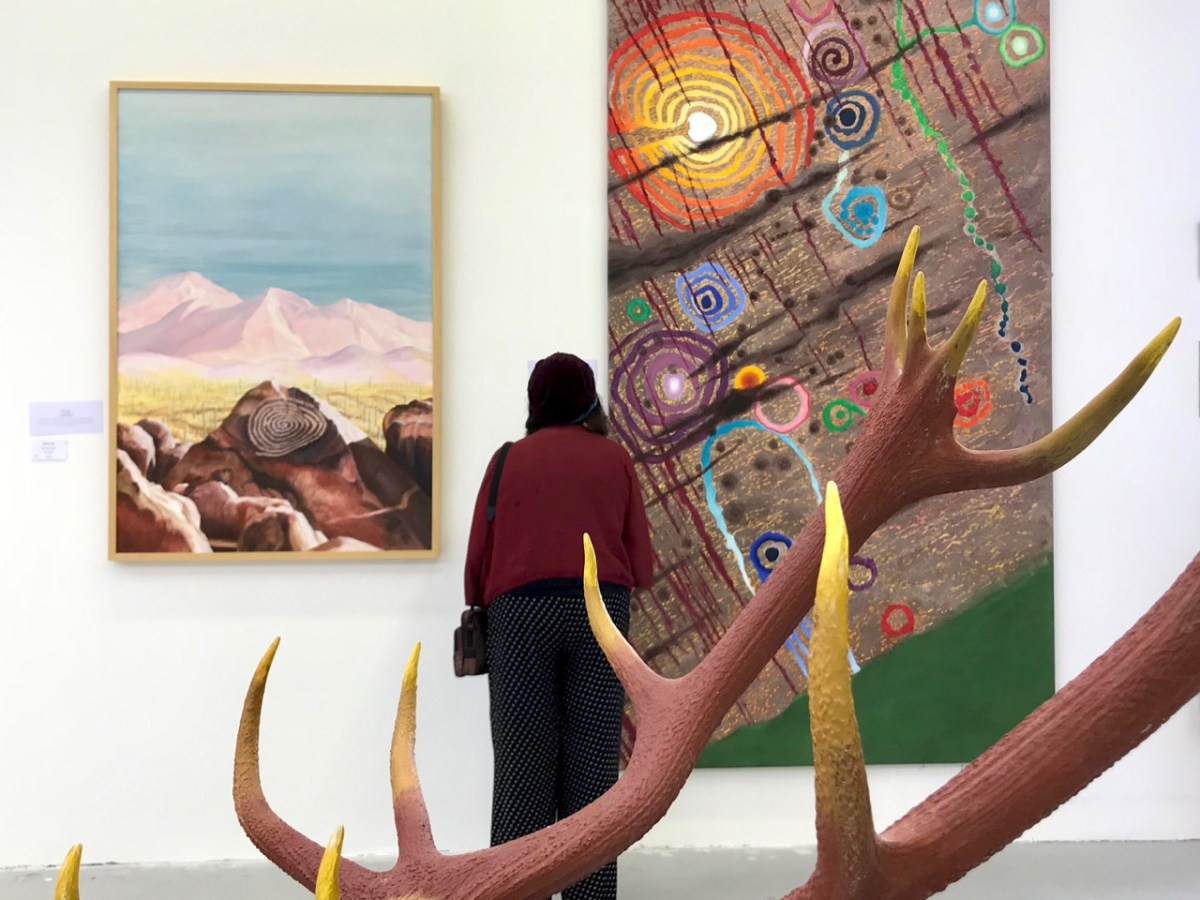
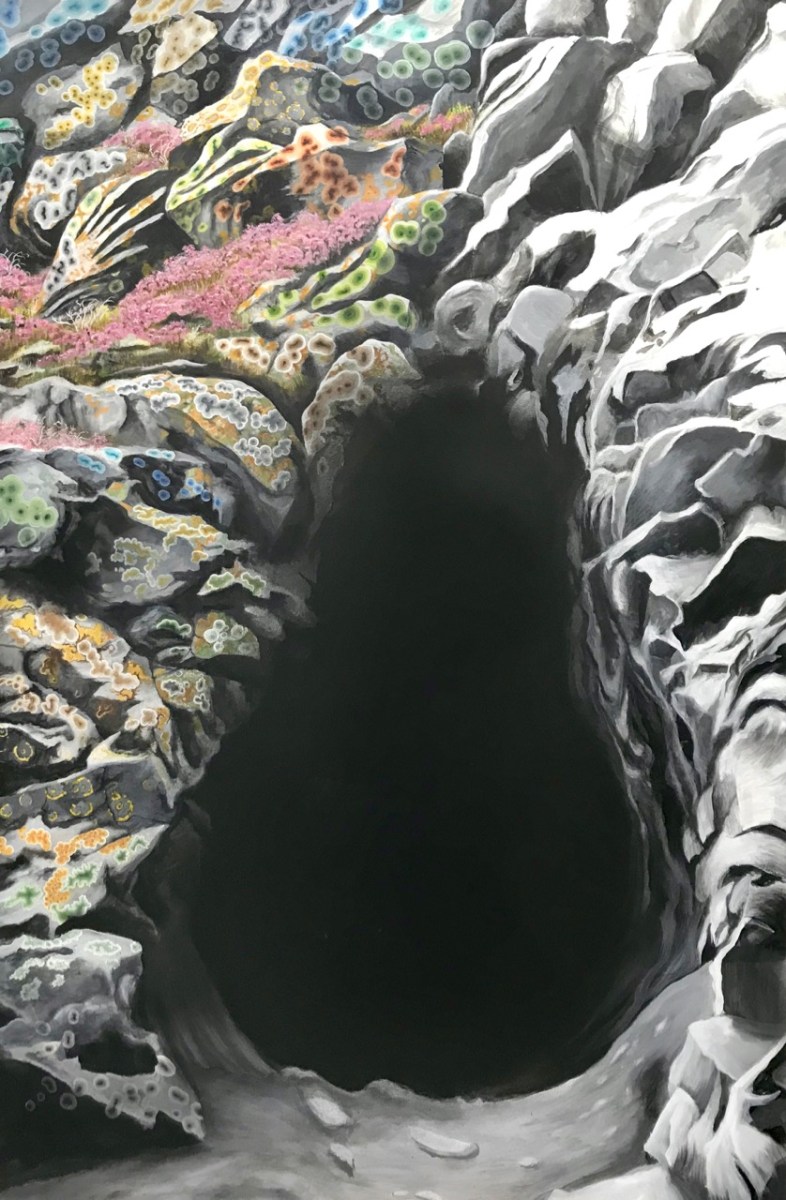
That’s a spectacular large canvas by Keith inspired by Rock Art at Derreenaclogh, West Cork (on the right, above). It’s from an earlier exhibition by Keith in County Clare in 2018, at the Burren College of Art Gallery in Ballyvaughan, Co Clare. The work below is titled Cave Entrance.
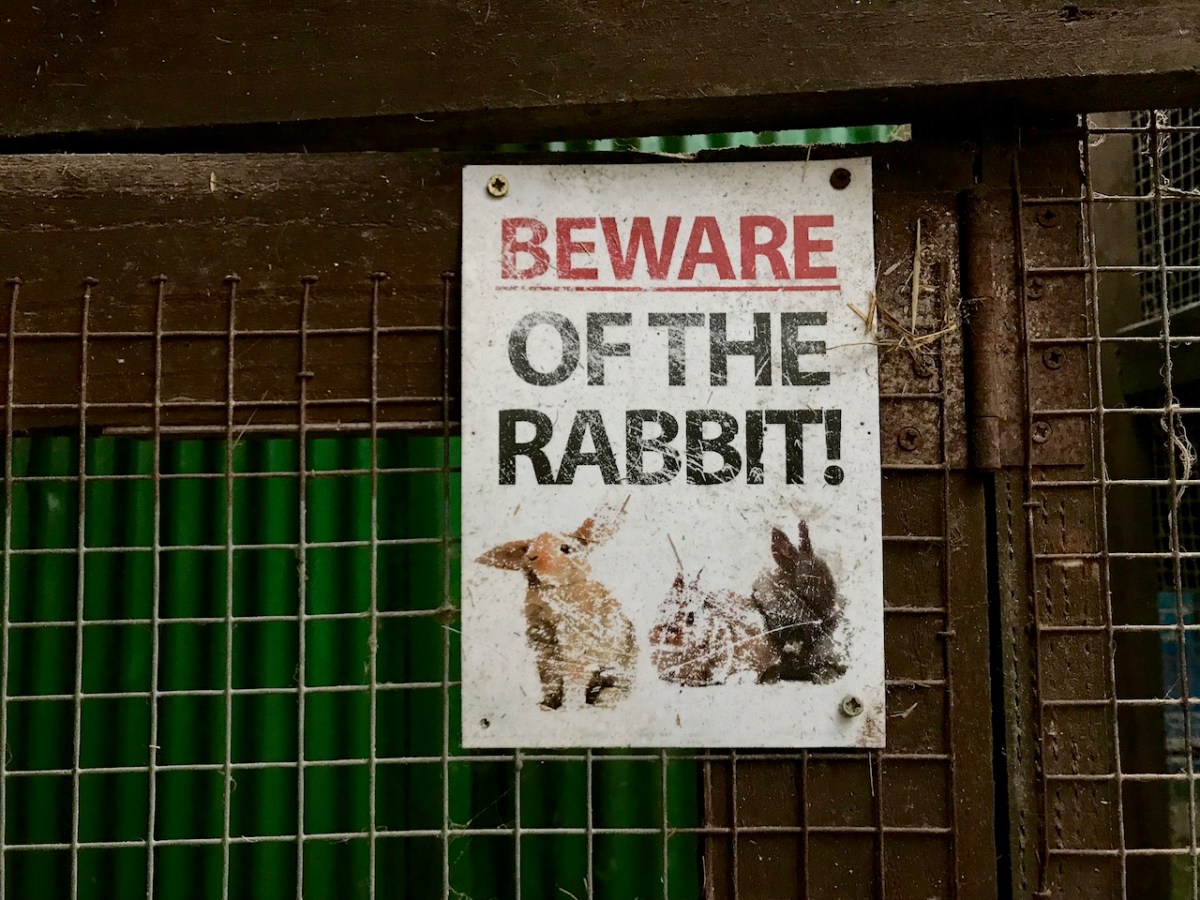
Throughout the year I continued to publish posts on some of my favourite subjects: Irish signs, advertising and curiosities. I’m always avidly collecting these, and will have some to show in 2024, for sure. In the meantime, let’s hope our general news becomes more positive as we move forward in this disorienting world of ours . . . Have a good new year, everyone!
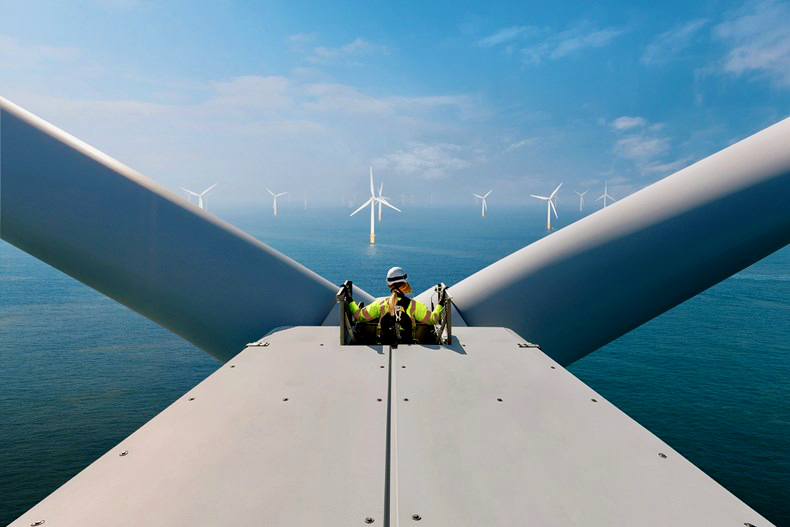
And here’s a little PS . . . Way back in January, before I had the idea to write about Rural Electrification in Ireland historically, I penned a post about how I saw Ireland very much at the forefront of harnessing wind power – all at sea. Here it is!
A Cabinet of Curiosities

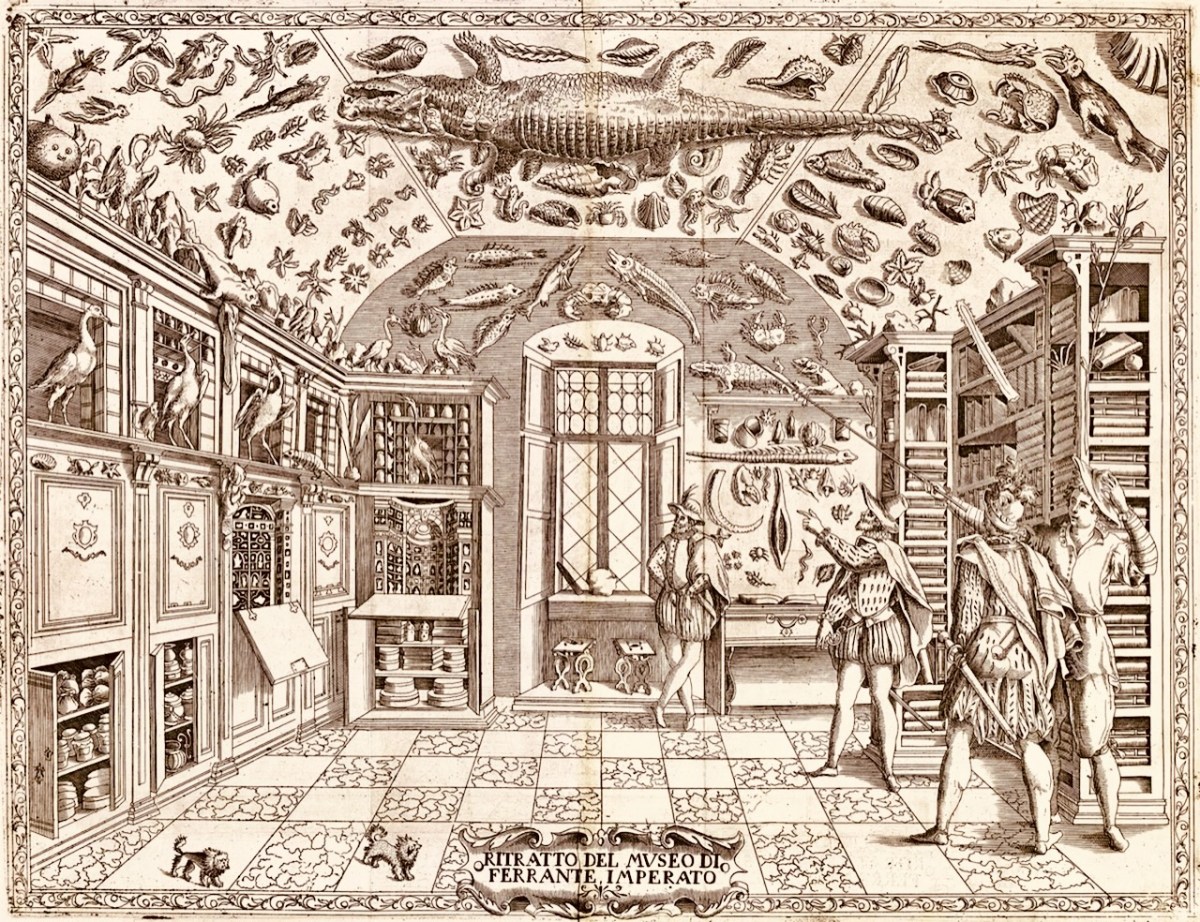
The forerunners of the museums that we visit today were known as ‘Cabinets of Curiosities’. Starting – just about – at the very end of the sixteenth century – we find mentioned and illustrated collections of objects gathered from exotic places: things that a gentleman might be unfamiliar with; things that could expand our knowledge and cause wonder. Curiosities, undoubtedly. Here’s one collection illustrated in 1599:

This is an engraving from Ferrante Imperato’s Dell’Historia Naturale (Naples 1599), the earliest illustration of a ‘natural history cabinet’ (courtesy Oxford University). It shows a room fitted out to display imported paraphernalia: (hopefully mounted) creatures, dried specimens, fossils – also books and illustrations. The collector here takes on the role of educator – perhaps showman. Here you might encounter unicorn horns, a dragon’s blood, mermaid scales as well as the full sized alligator hanging from the ceiling.

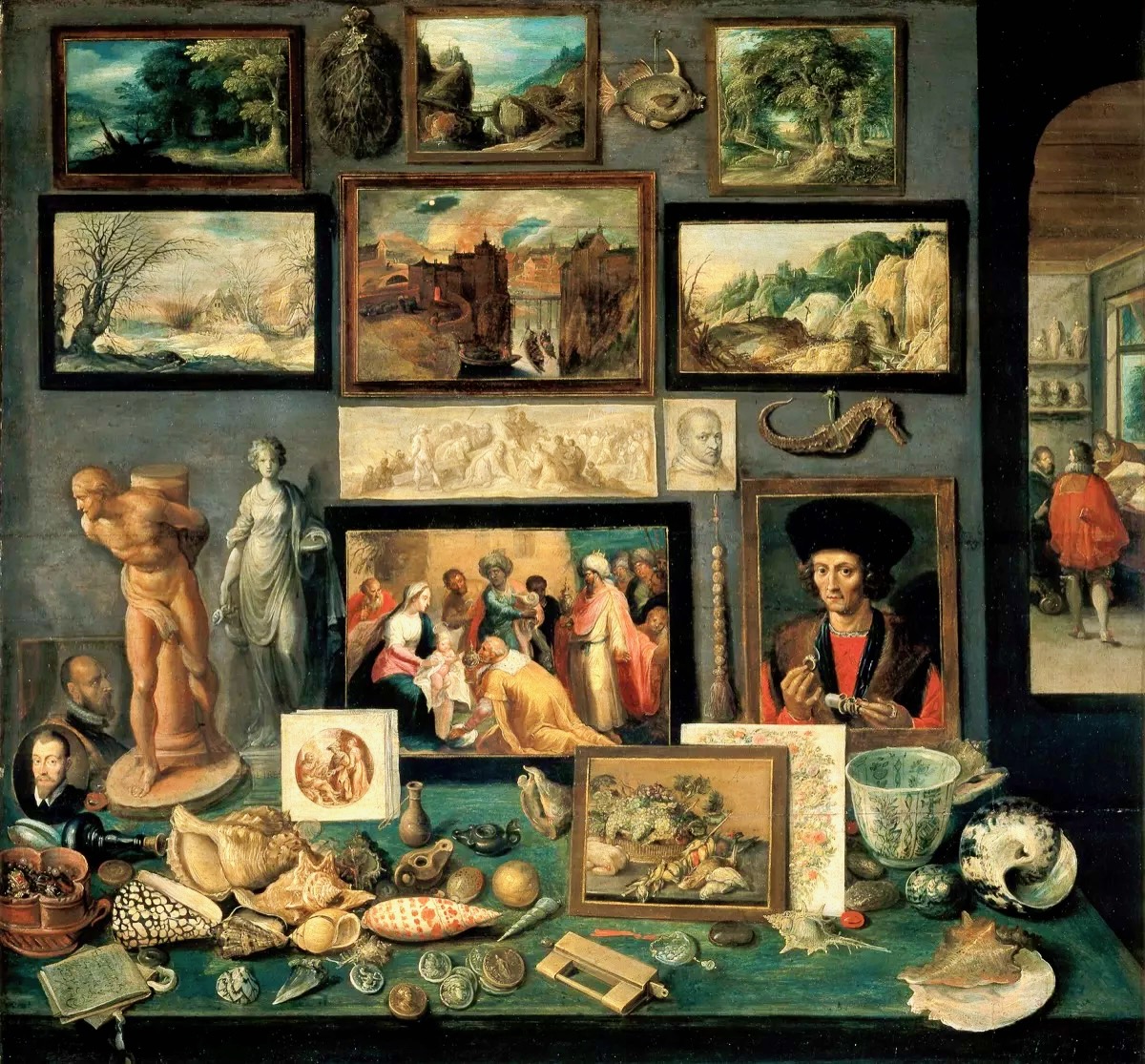
Frans Francken the Younger, Chamber of Art and Curiosities, 1636 above (Public Domain). Another selection of paintings intermixed with fish, carved beads, sculptures, with on the table exotic shells, gem-stones mounted with pearls, coins and medals.

Rathfarnham Castle (above) is a good example of an Irish Fortified Manor House. This mainly seventeenth century building type would have been the relatively comfortable home of an aspiring clan – perhaps a titled family with church or merchant connections: Finola has written about a West Cork example. Austin Cooper – a tax collector who indulged his hobbies of sketching and writing while travelling through Ireland in the performance of his duties – wrote of Rathfarnham:

. . . What renders this a Place of any Note is the Cas. belonging to the E. of Ely. This Cas. is square, with a large square Tower at each corner – on the S. side in the Center is a semicircular Tower . . . The hall is but low, at the same time exquisitely elegant . . . The gallery is a beautiful room, at the far end is a curious cabinet of Tortoise Shell & Brass containing some most extraordinary Work in Ivory . . .

Austin Cooper’s Notes, rathfarnham Castle

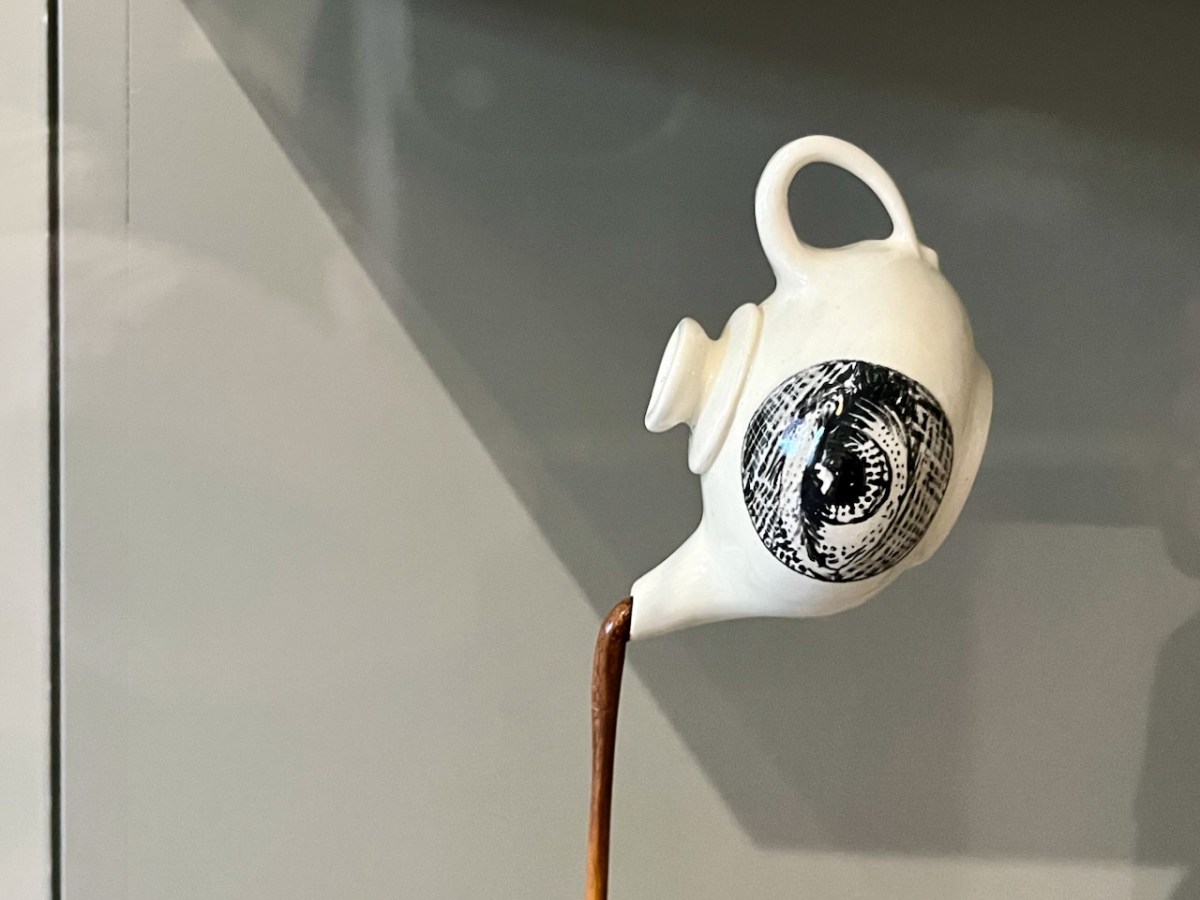
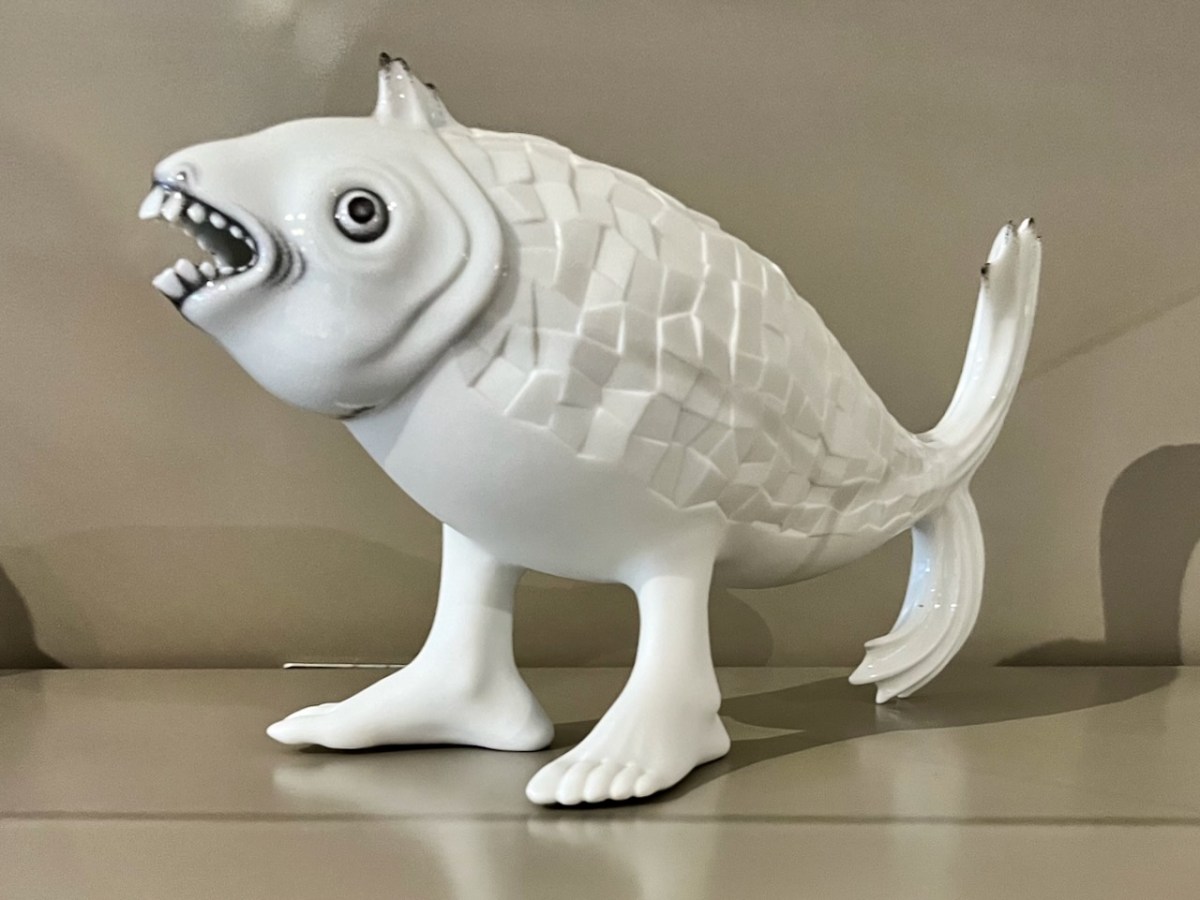
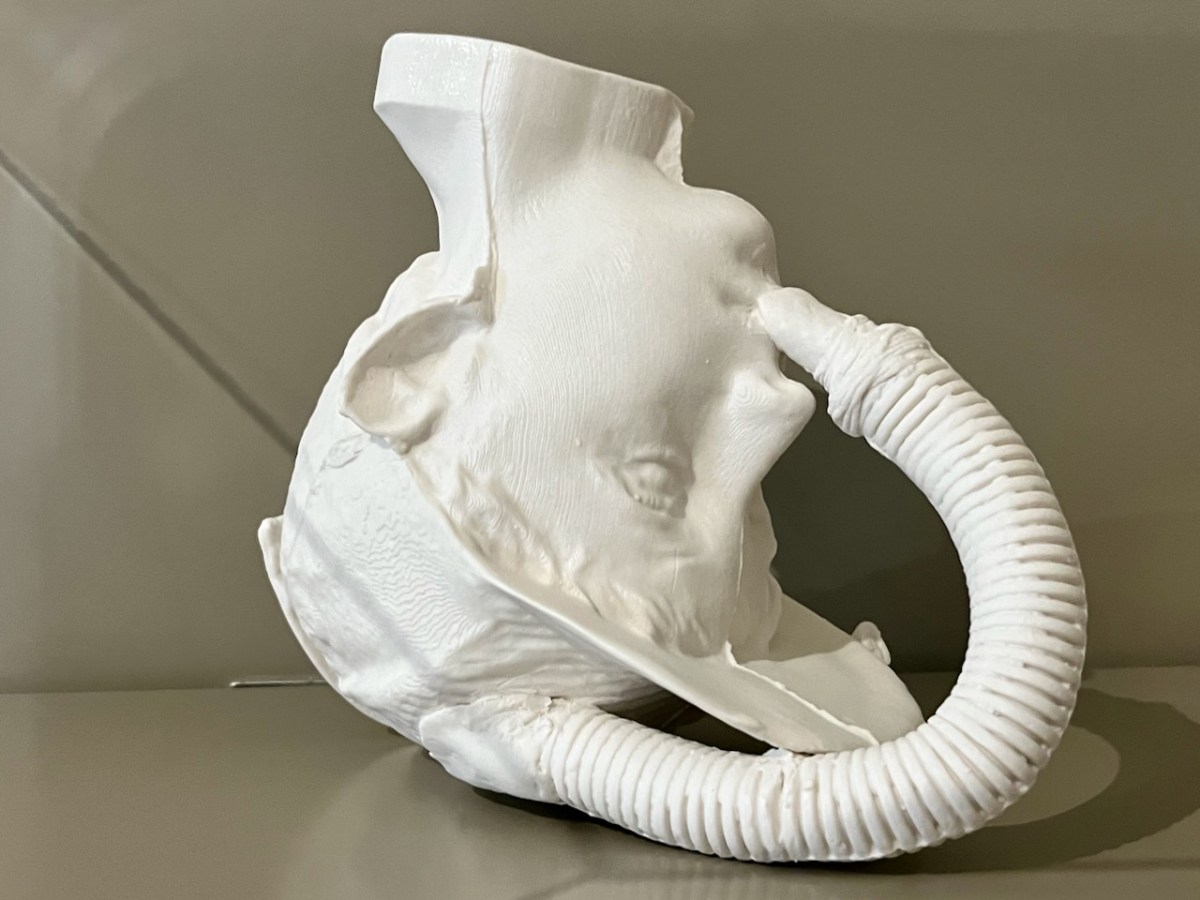
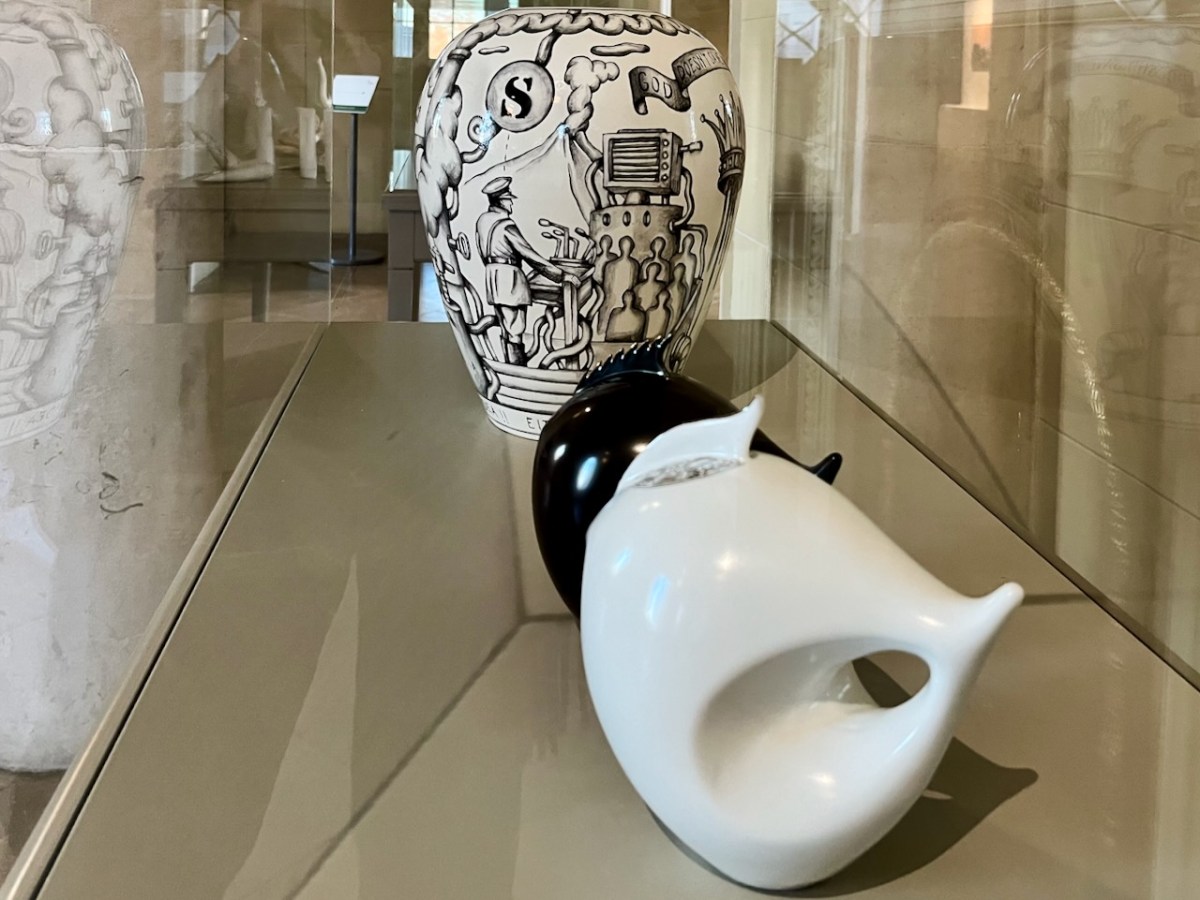
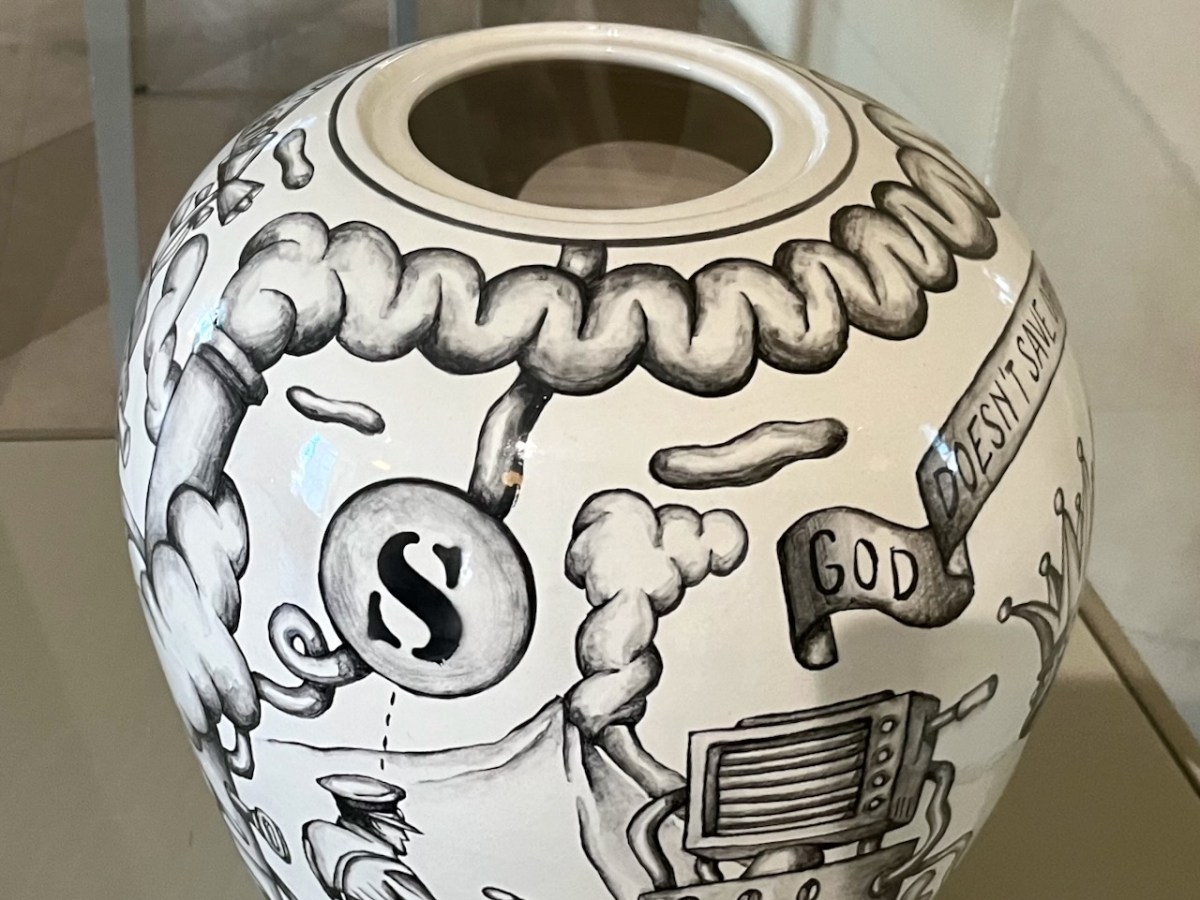
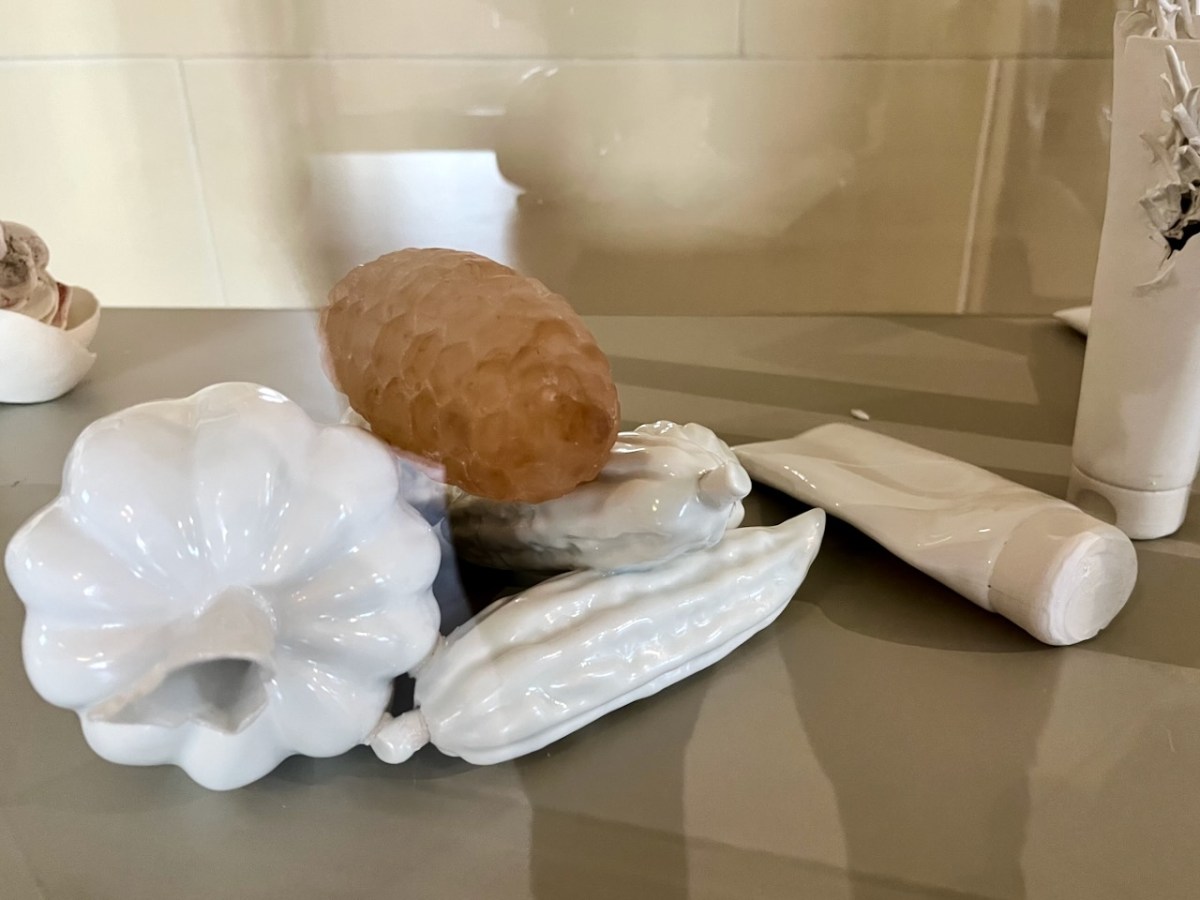
Rathfarnham Castle has, in modern times, a distinguished continuing association with contemporary ceramicists and in 2015 established a modern Cabinet of Curiosities which continues the tradition of displaying ‘extraordinary work’, and provides excellent material for a Sunday morning post!

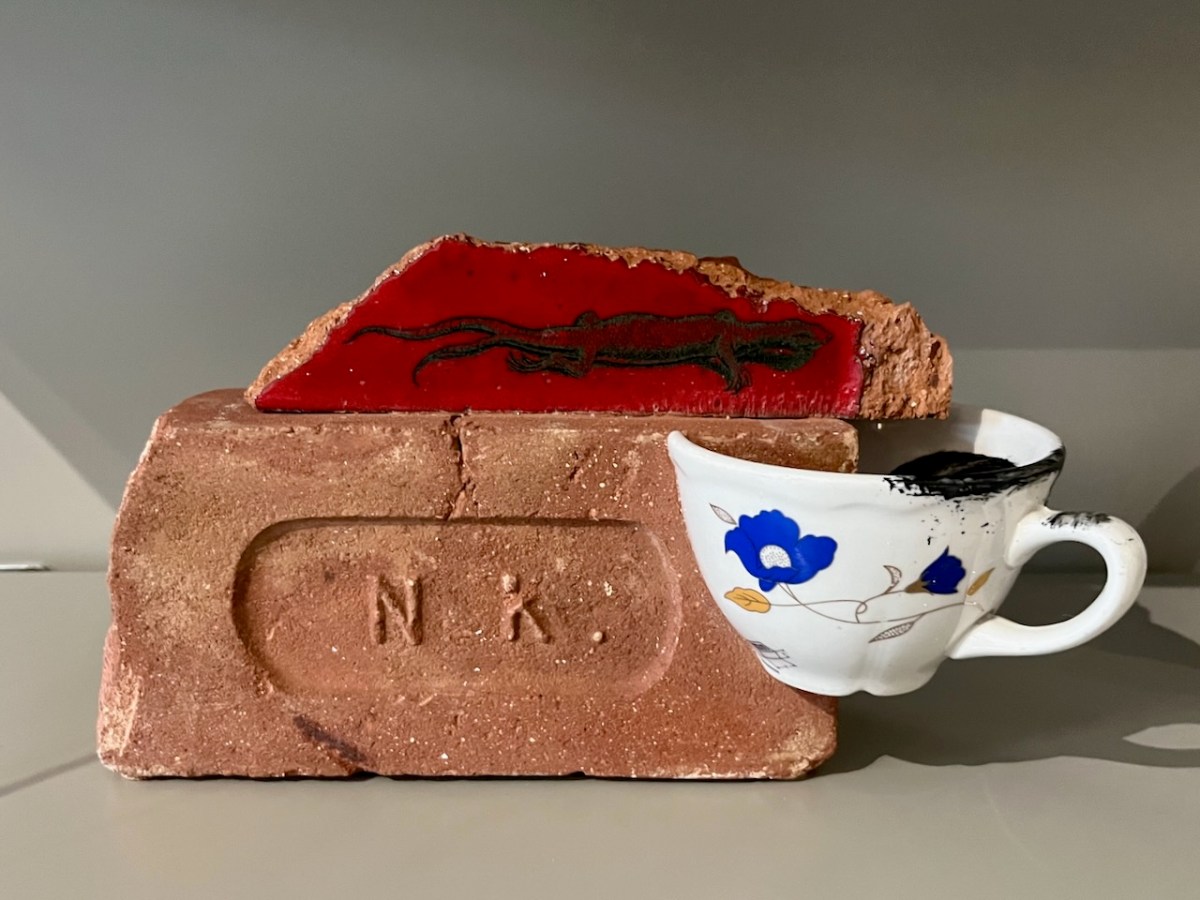
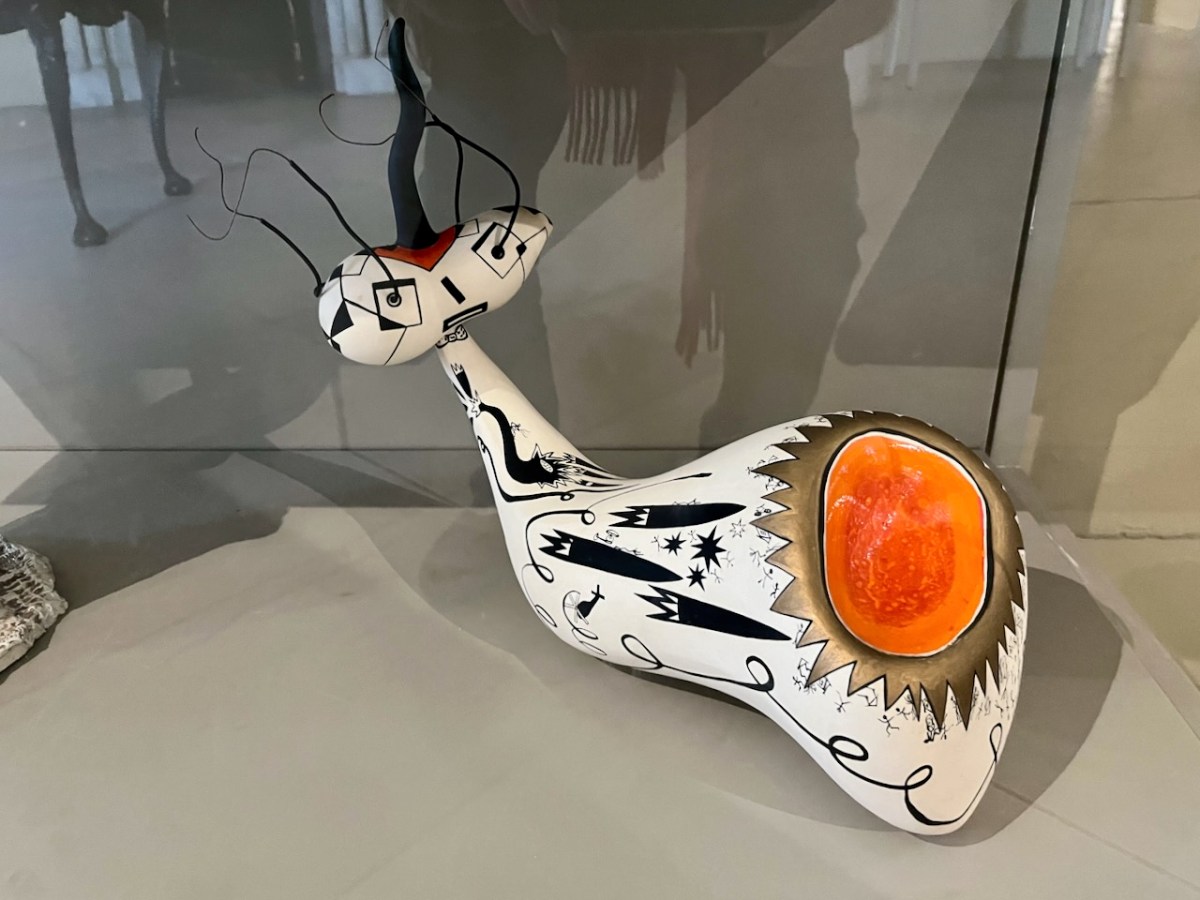
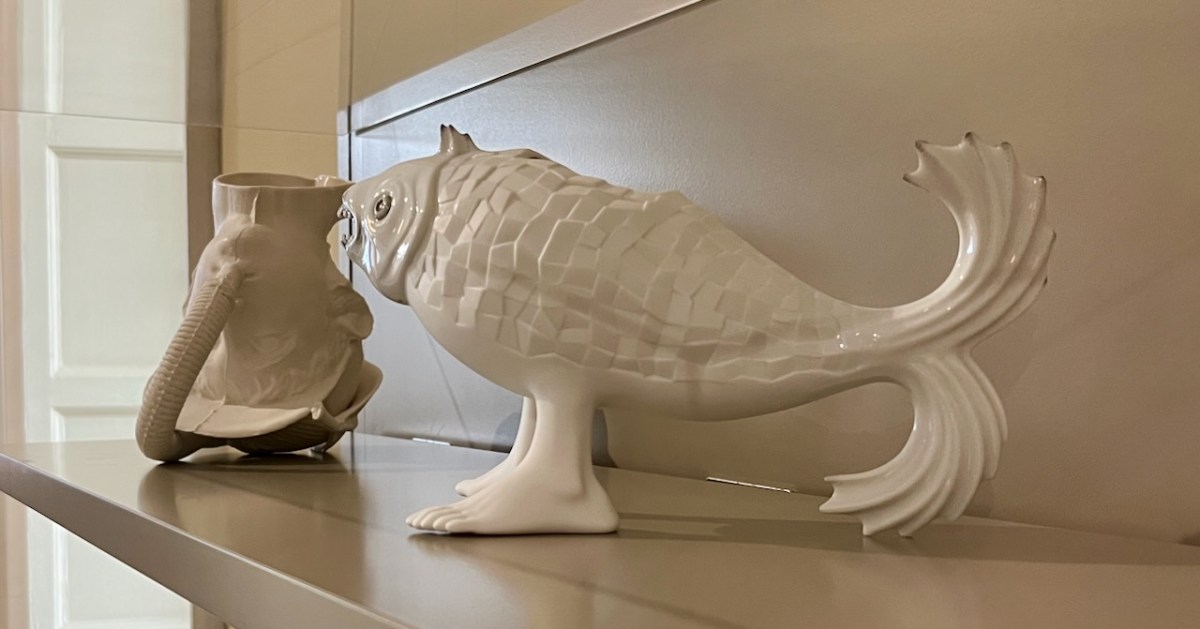
The curiosities are not labelled – and nor are their creators. Peter Bagshaw, OPW at Rathfarnham, has kindly provided me with a list – thank you, Peter – attached at the end of this piece. I cannot necessarily individually identify each item: I will leave you to work out which might be which . . .

This eye-pot looks great when you pan out a bit . . .

This one certainly harks back to some of those manufactured creatures that turned up in cabinets of old.

Leather teapot – a fashion item, perhaps?

I think the final image might be my favourite: a young person clutching an angel’s wing? Could this be The Sequestrator?

List of pieces – not in any order:

The Sequestrator Roderick Bamford, Australia

Mosaic Parrot Fish Ilona Romule, Latvia

N.K. Red Lizard Cup Robert Harrison, USA

New Leather Teapot Xiaoming Shi, China

Eyes Tea Verne Funk, USA

Figure Leo Tavella, Argentina

All that promise Ting Ju Shao, Taiwan

Immigration Emilia Chirila, Romania

Black and White Rotation Sylvia Nagy, USA

Yeats’ Day

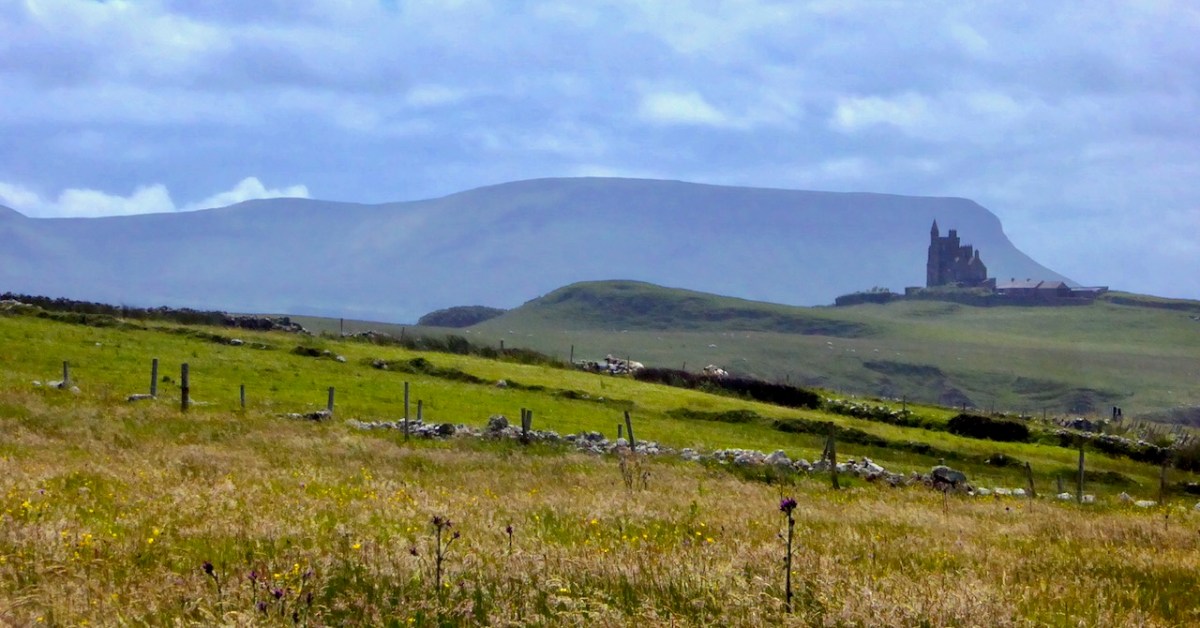
Yeats country – Benbulben and Classiebawn Castle (above). Finola took this fine view seven years ago, when we set out to visit the haunts of William Butler Yeats. We have to turn to Yeats now, as it’s exactly one hundred years since he was awarded the Nobel Prize for Literature – in December, 1923. I have carried a place in my heart for Yeats, ever since I was at Primary School on the Hampshire/Surrey borders, not far from Thomas Hardy’s Wessex. Yeats and Hardy were rivals for the coveted award – the final vote in 1923 was between the two of them: in the end, only two Nobel committee members voted for Hardy, and Yeats achieved the prize. The Guardian newspaper said that “…Mr Yeats is to be congratulated, almost without reserve, on lifting this substantial stake. He is a poet of real greatness; prose, too, he can write like an angel…”, however then arguing that Thomas Hardy would have been a worthier recipient of the award!

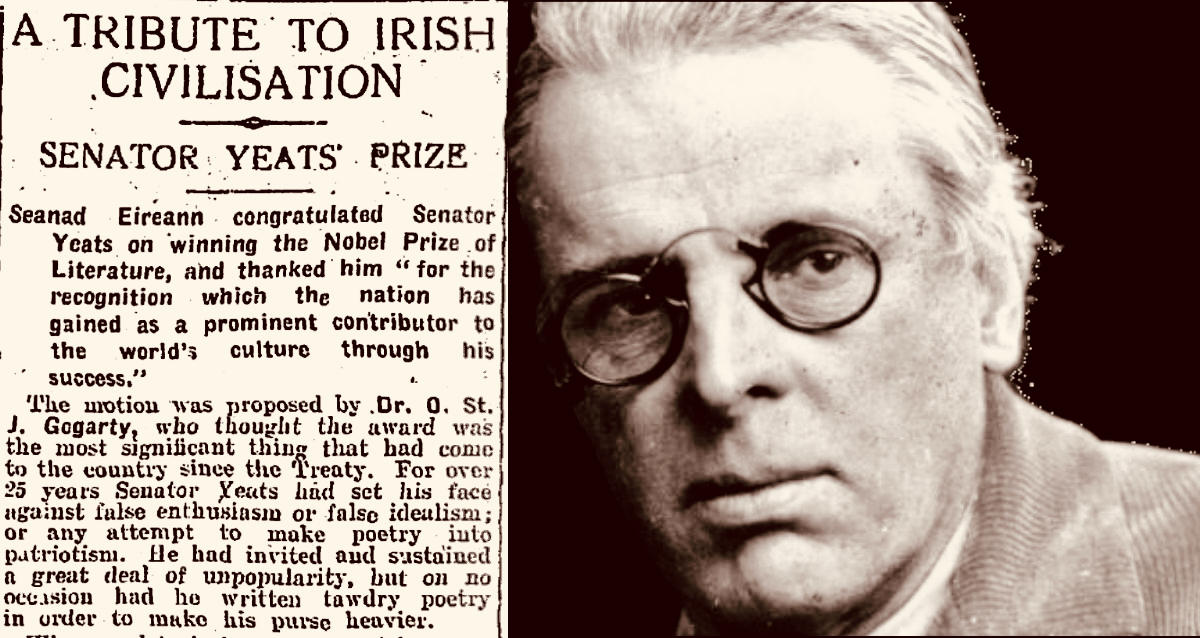
The Irish press congratulates Yeats on his achievement (above – Irish Independent 29.11.1923). My schoolboy encounter with the poet must have been when I was around ten years old and we were tasked to learn The Lake Isle of Inisfree. I can still recite it, word for word, to this day, sixty seven years later. But it was far more than mere words for me, then. Our teacher – Mr Sharpe – was careful to explain that this man was cooped up in the city of London – on its “pavements grey” and was yearning for the countryside he loved:

I will arise and go now, and go to Innisfree,
And a small cabin build there, of clay and wattles made;
Nine bean-rows will I have there, a hive for the honey-bee,
And live alone in the bee-loud glade.

And I shall have some peace there, for peace comes dropping slow,
Dropping from the veils of the morning to where the cricket sings;
There midnight’s all a glimmer, and noon a purple glow,
And evening full of the linnet’s wings.

I will arise and go now, for always night and day
I hear lake water lapping with low sounds by the shore;
While I stand on the roadway, or on the pavements grey,
I hear it in the deep heart’s core.

Inisfree serves the poet’s romantic dreams of a remote idyllic landscape far away from the noisy metropolis. It does exist as a place – on Lough Gill in Co Sligo: Yeats spent childhood summers nearby. Interestingly, I searched the internet for pics of the island, and the above came up. It’s from a Roaringwater Journal Post which I wrote in 2016. And it’s not Inisfree, but another ‘lake island’ – just outside Skibbereen, in West Cork – Cloghan Castle Island on Lough Hyne: there’s a holy well nearby, and an 8th century church dedicated to St Brigid – but all that is another story. The diversion just serves to warn against trusting what you find online!

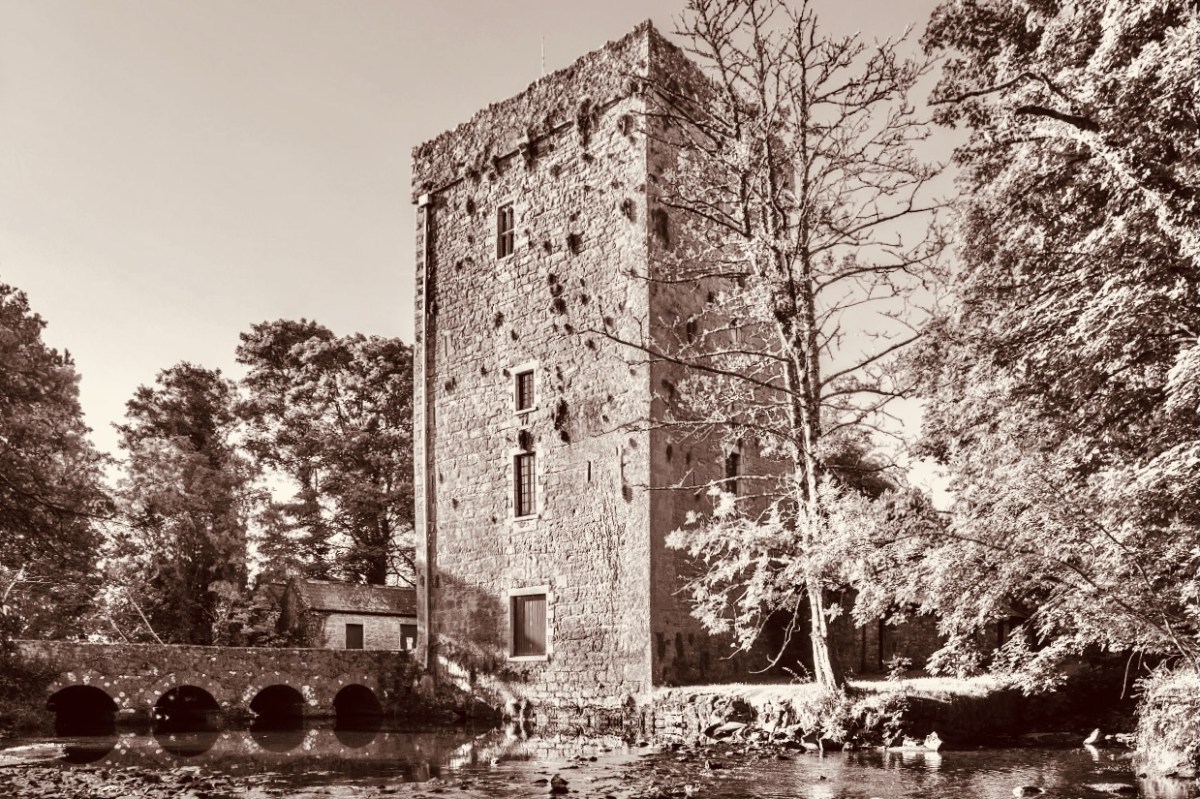
Thoor Ballylee Tower, Co Galway (above) – this 14th century tower house was described by Seamus Heaney, another Irish Nobel Literature prize winner, as The most important building in Ireland, because of its associations with Yeats, who spent many summers there with his family.

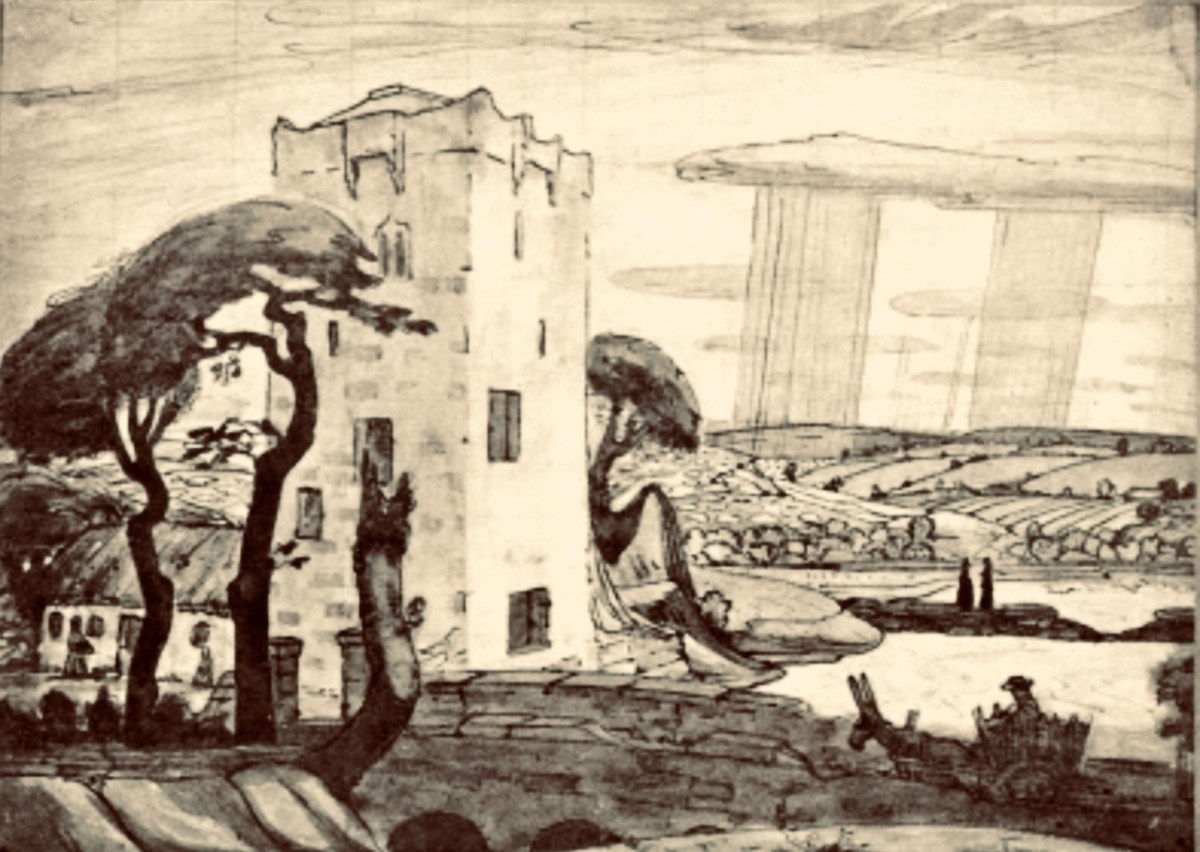
Here is the finely crafted cover of The Tower: a book of poems by W B Yeats, published in 1928 (courtesy Yeats Thoor Ballylee Society). The Tower was Yeats’s first major collection as Nobel Laureate after receiving the Nobel Prize in 1923. It is considered to be one of the poet’s most influential volumes and was well received by the public. (Below) a 1917 drawing by Robert Gregory – son of Isabella Augusta (Lady) Gregory and Sir William Gregory of Coole Park, Co Galway – of The Tower (courtesy Yeats Thoor Ballylee Society).

Going back to my early school years: I was an incurable romantic, and a daydreamer. I paid enough attention to lessons to get by, but my heart lay outside the school gates. Just minutes away were hop-fields and, beyond those, pastures, woodlands, streams – idyllic places where I loved to wander. I could completely relate to Yeat’s desire to be far away from the city, and that’s why his poem appealed to me. I knew very little about Ireland, and had no idea that was where I would one day make my home. I am here now, sitting at my desk, with the hills and oceans of Yeats’ own country beyond.

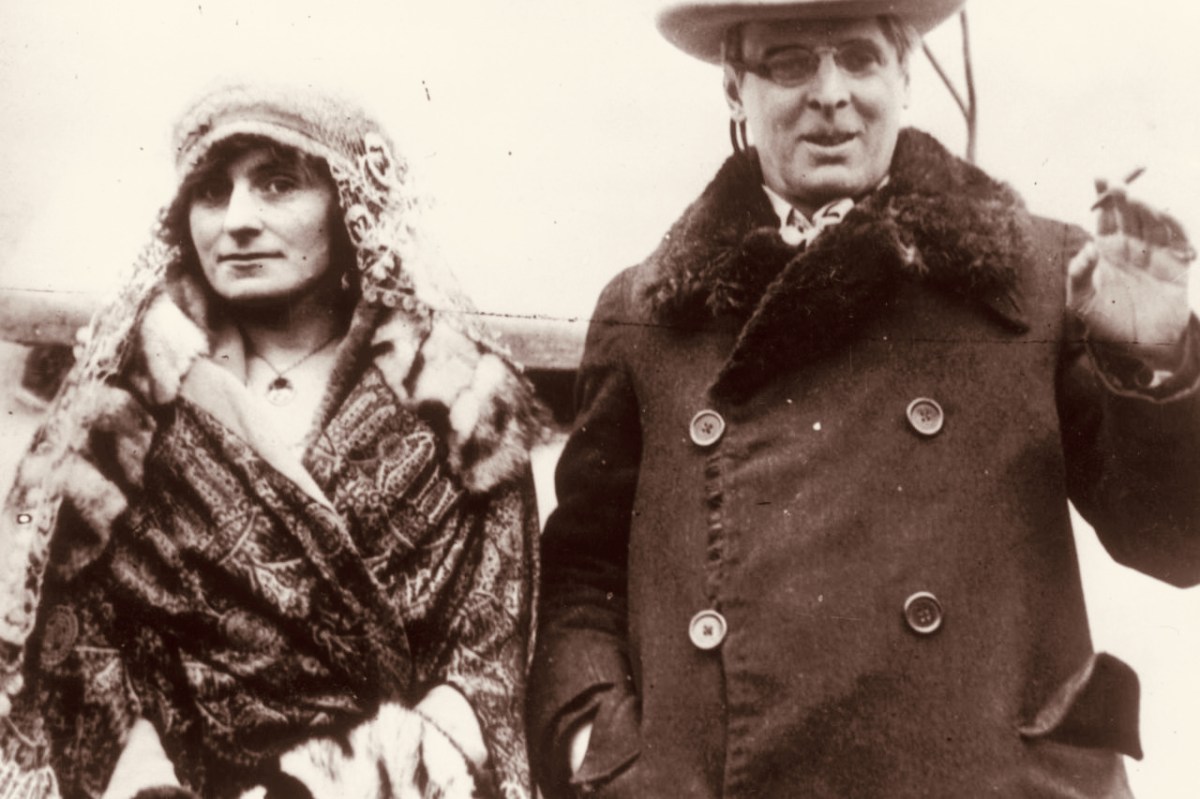
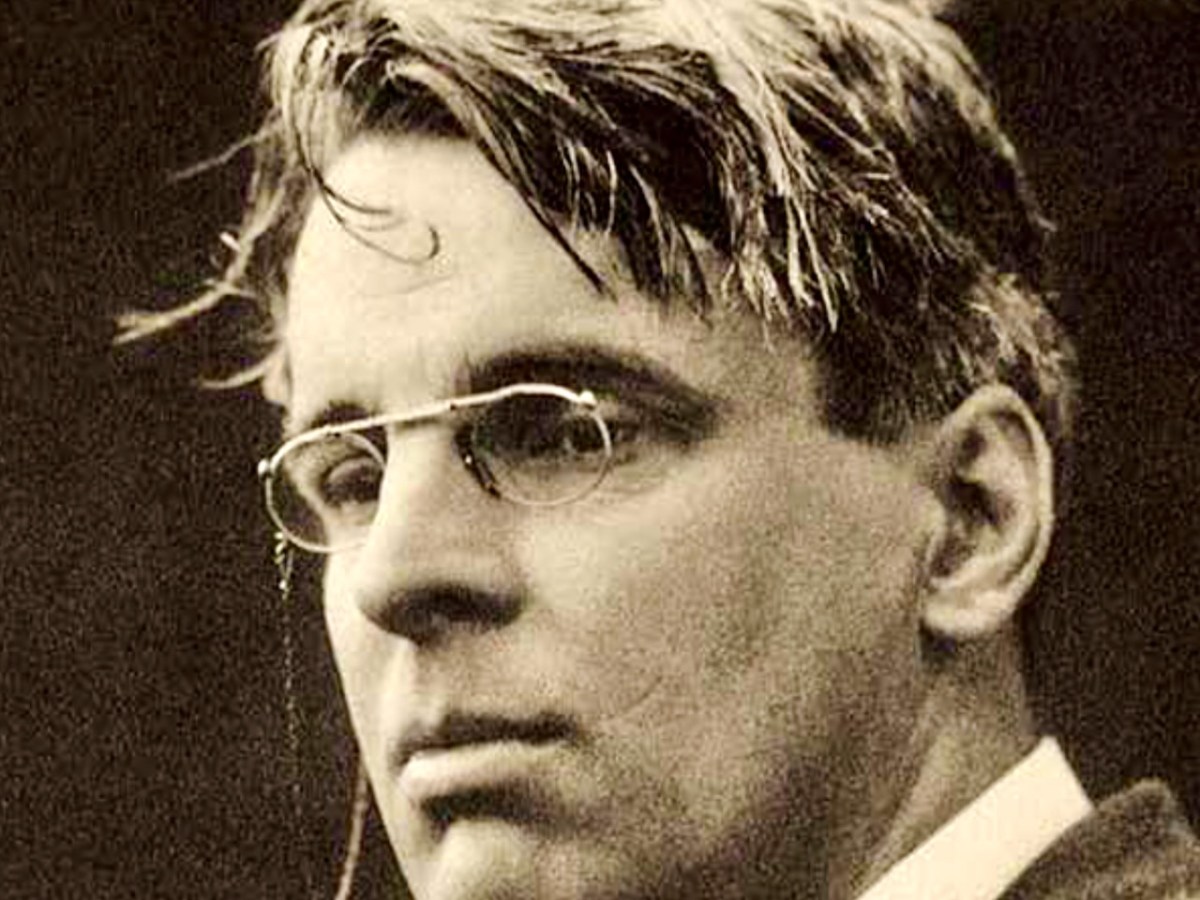
W B Yeats and his wife George Hyde-Lees heard the news that the Nobel Prize had been awarded to him on 14 November, 1923. The photograph above (courtesy Irish Independent) is said to be taken on that day. It’s also said that they celebrated by cooking sausages! The Irish Independent records: “Irish poet and senator, William Butler Yeats created history when he was awarded the Nobel Prize in Literature, the first Irish citizen to achieve such an accolade. The prize was awarded to Yeats ‘for his always inspired poetry, which in a highly artistic form gives expression to the spirit of a whole nation’.”
Somewhat surprised by the award, Yeats would later write in his (unpublished) autobiography: “Early in November (1923) a journalist called to show me a printed paragraph saying that the Nobel Prize would probably be conferred upon Herr Mann, the distinguished novelist, or upon myself, I did not know that the Swedish Academy had ever heard my name.” The news of the award was widely praised in Ireland with members of Dáil Éireann proudly announcing that it had placed Ireland on the international stage. It was a sentiment reiterated by the laureate himself, who at the awards ceremony claimed that the Nobel Prize was less for himself than for his country and called it Europe’s welcome to the Free State. In his presentation speech, Per Hallstrom, then chairman of the academy’s Nobel Committee, praised the poet’s ability to ‘follow the spirit that early appointed him the interpreter of his country, a country that had long waited for someone to bestow on it a voice’.

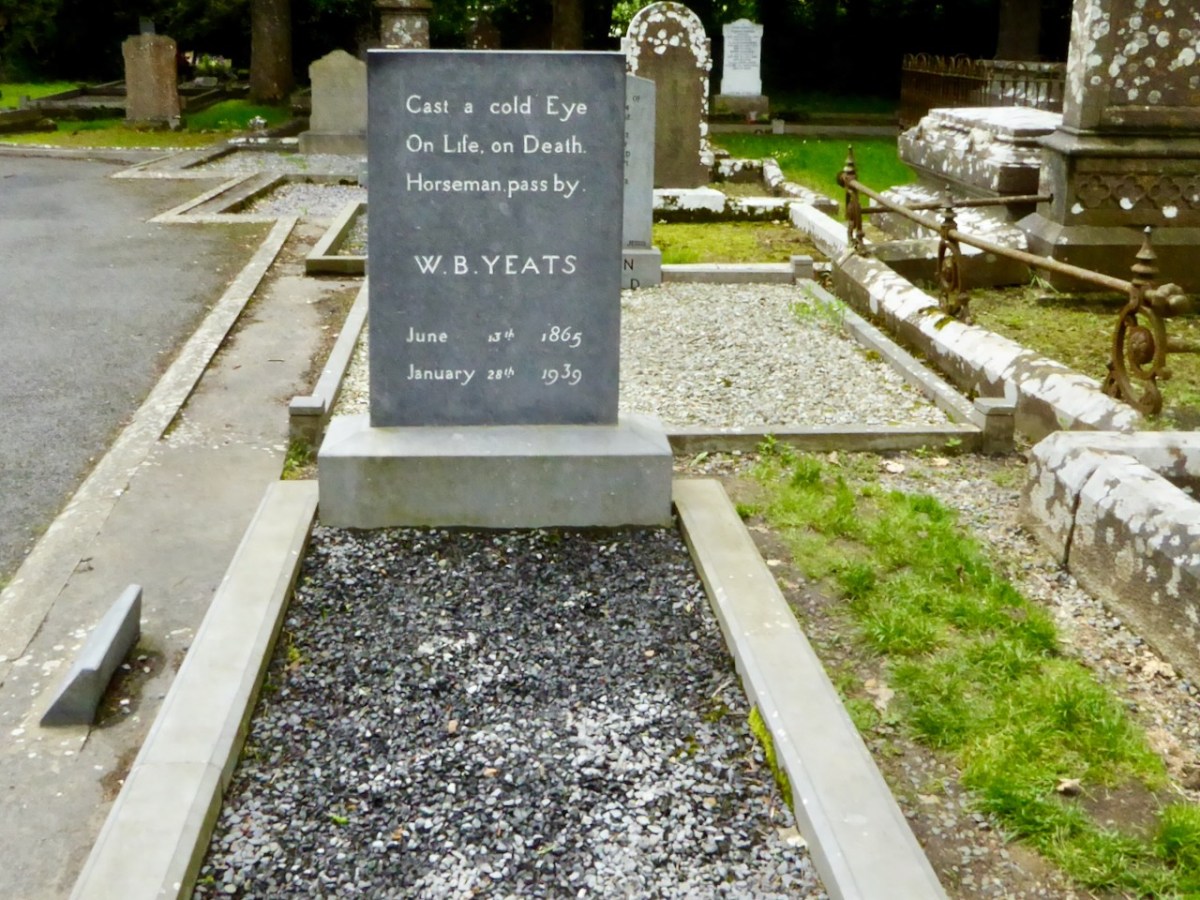
A portrait of Yeats painted by Augustus John OM RA in 1930 (courtesy Sothebys – private collection). Before Yeats passed away he requested that his final resting place be in Sligo. He died in Menton, France in 1939 aged 73 and was buried there. His wish was fulfilled in 1948 when his body was exhumed and buried in St Columba’s Church, Drumcliff. His headstone reads:

Prince of Peace: A Modern Irish Church

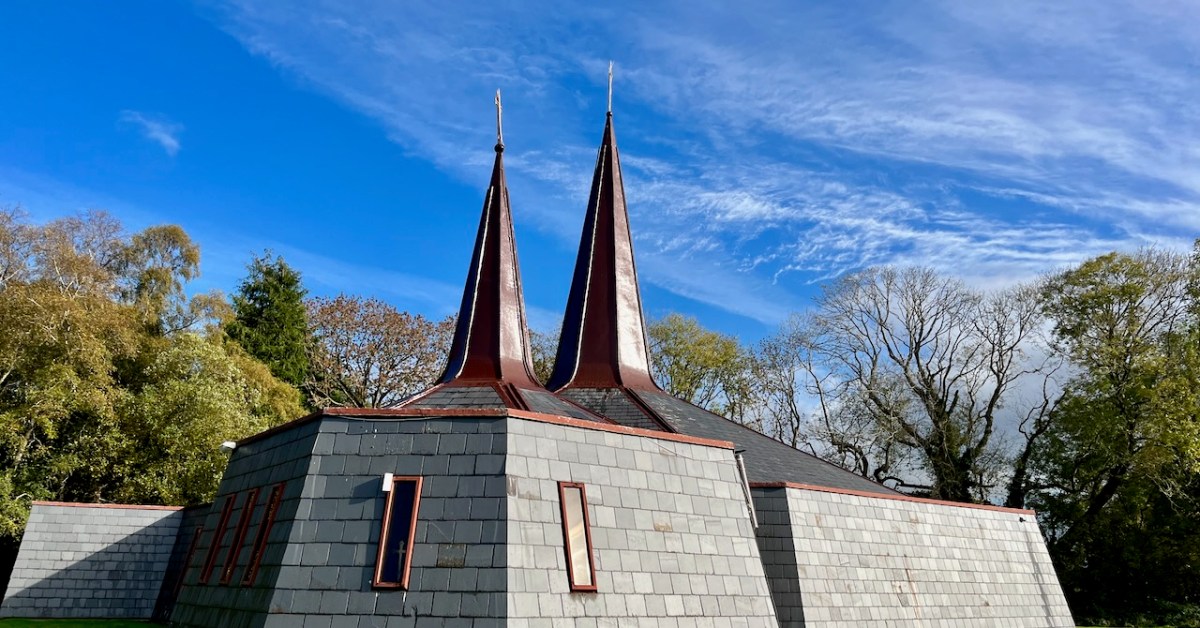
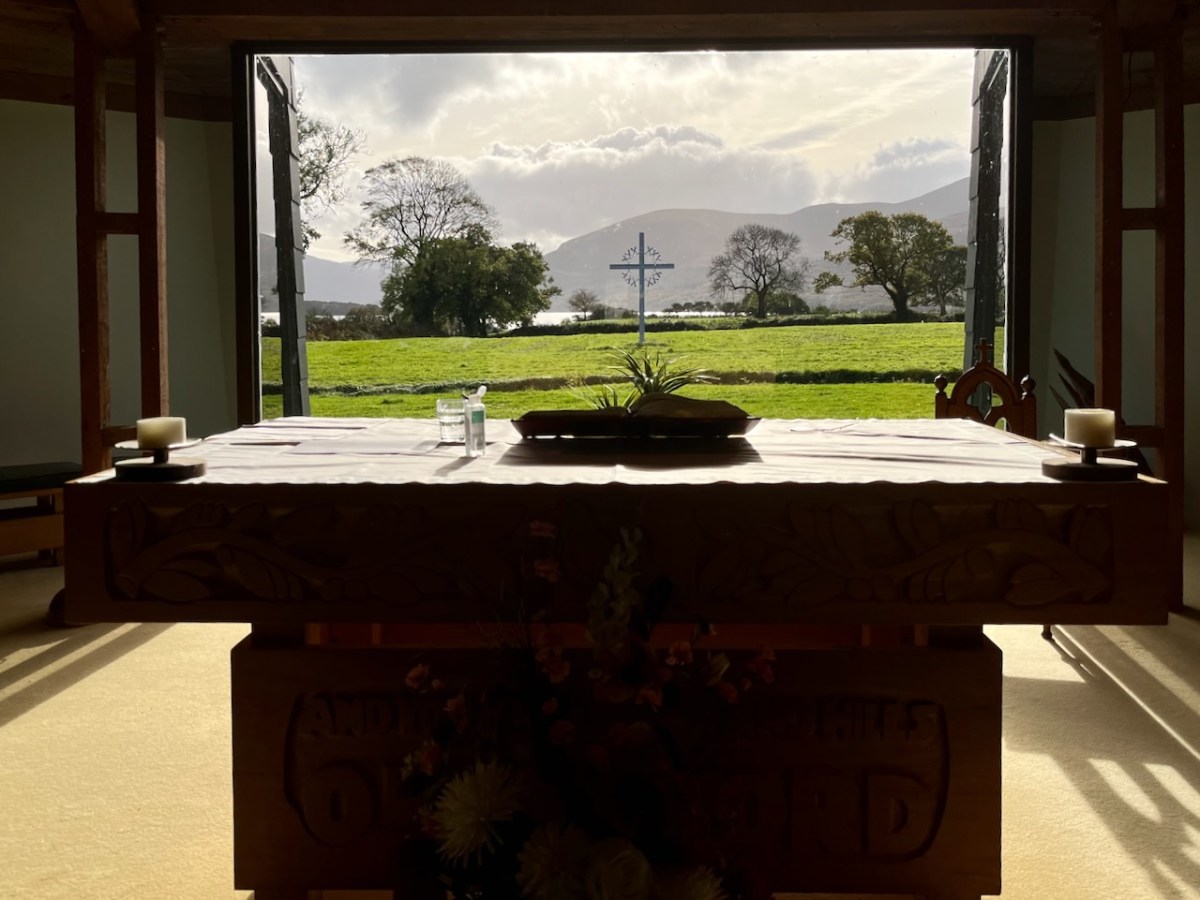
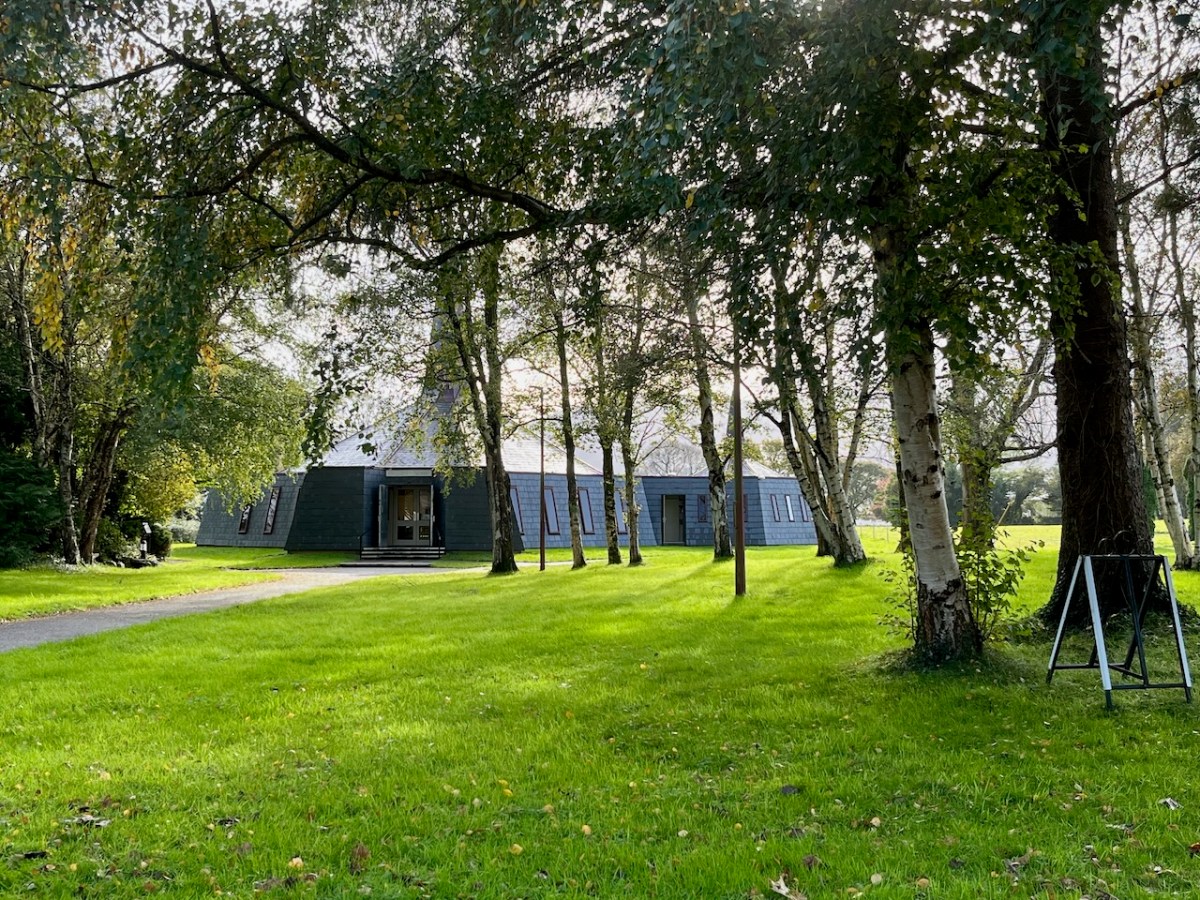
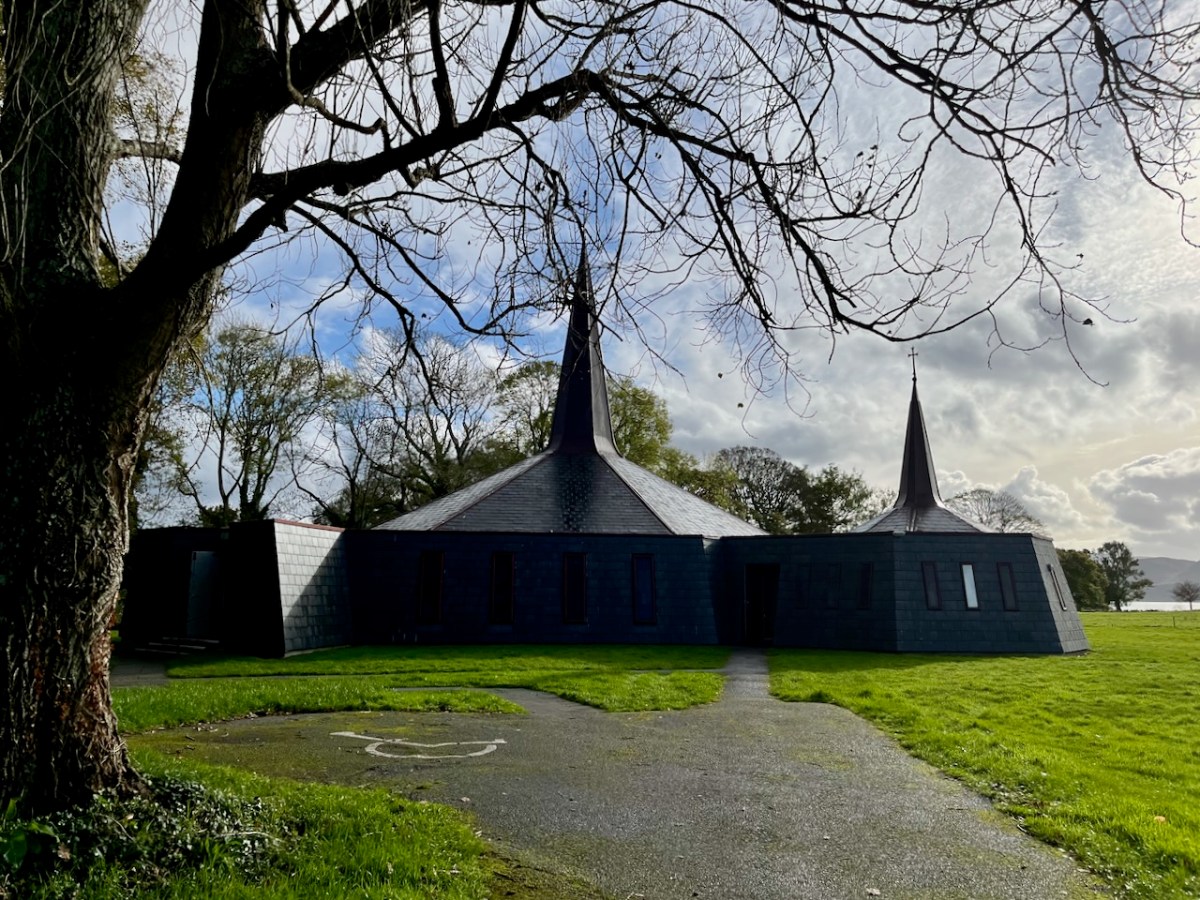
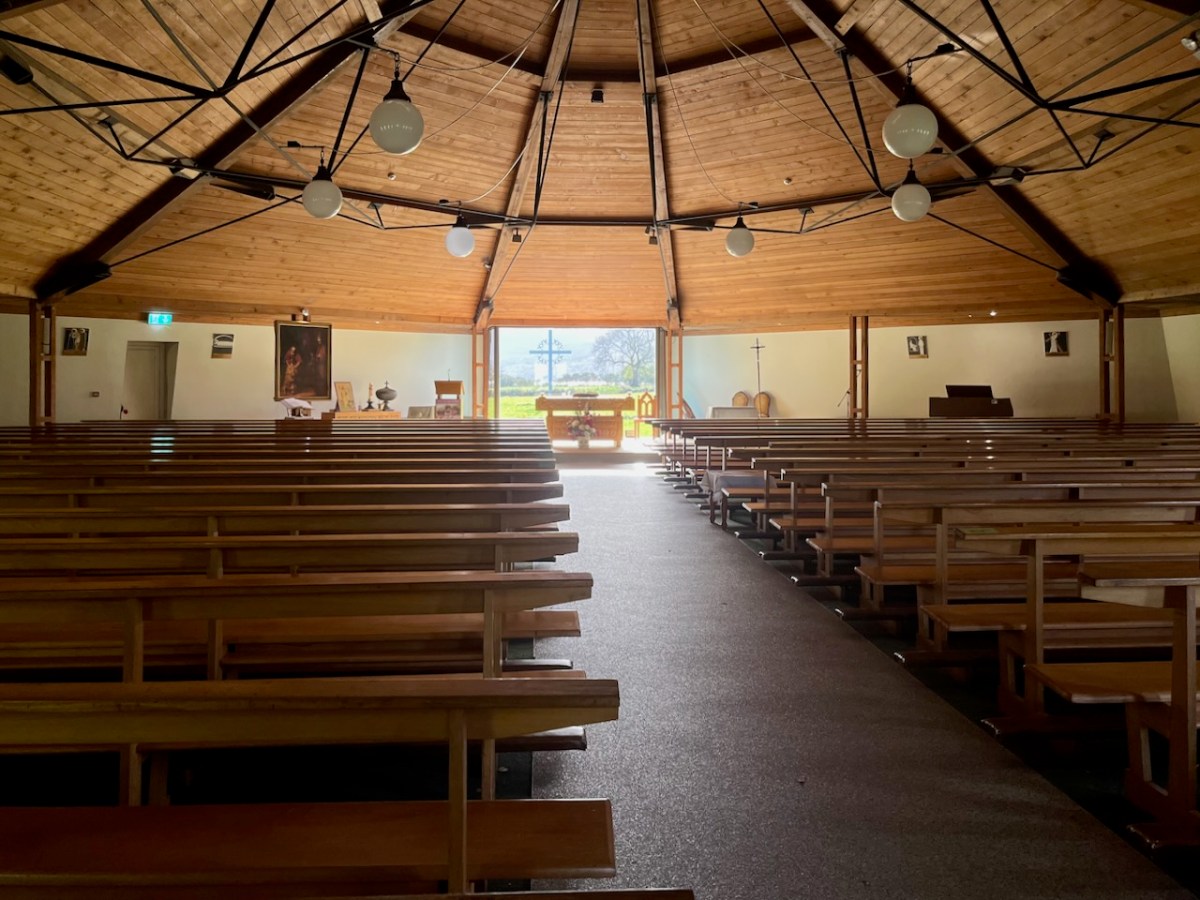
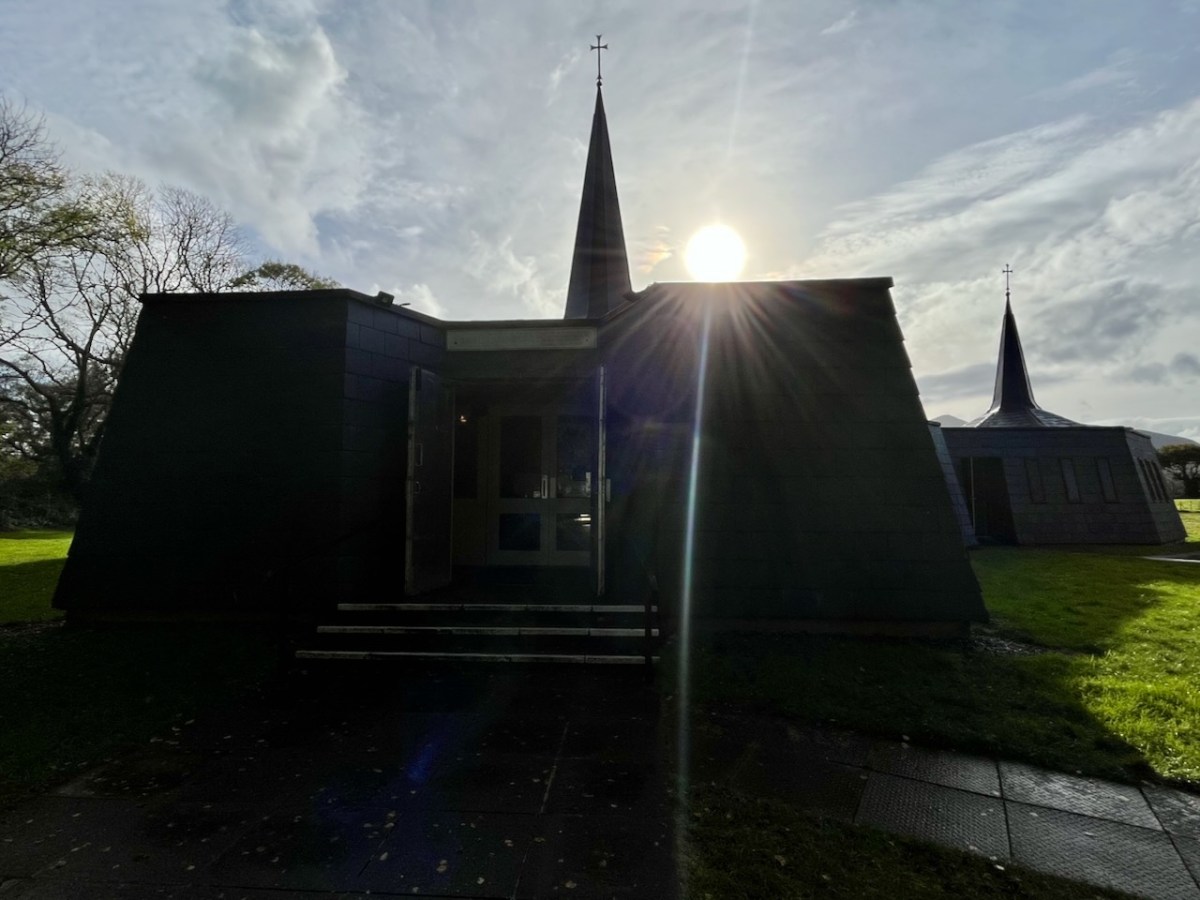
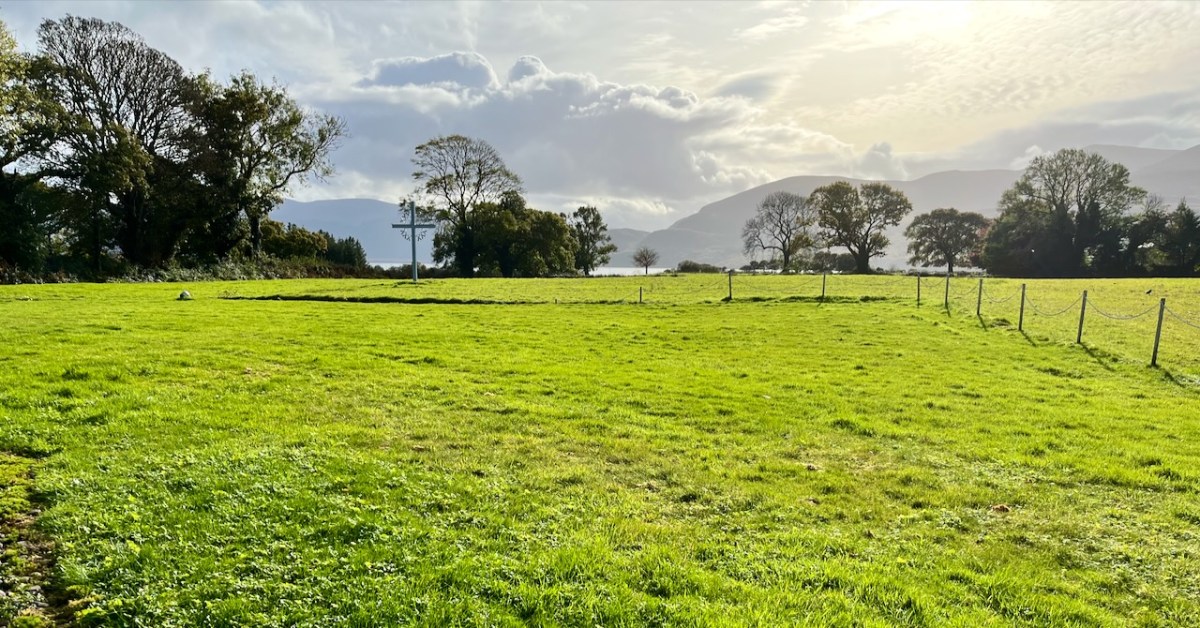
On our travels in Kerry recently, we happened across a striking church building. It’s situated west of Killarney and overlooks Lough Leane: in fact the view of that stretch of water is a principal feature from the interior of the church. An enormous picture window is situated beyond the altar.

I have titled this piece: A Modern Irish Church. Everything is relative, of course: this Fossa Church was completed in 1977, getting on for half a century ago, but one could only fairly describe the style as ‘modern’. It is one of twenty seven ecclesiastical buildings designed by the architectural practices of Liam McCormick (1916-1996). While based in Derry the architects carried out commissions throughout Ireland: the practice of Mullarkey Pedersen Architects, Derry and Dublin, continues their work to this day. My own life experience as an architect – (I carried out a number of church projects) – tempts me to embark on a tour of McCormick’s buildings, many of which are visually dramatic..

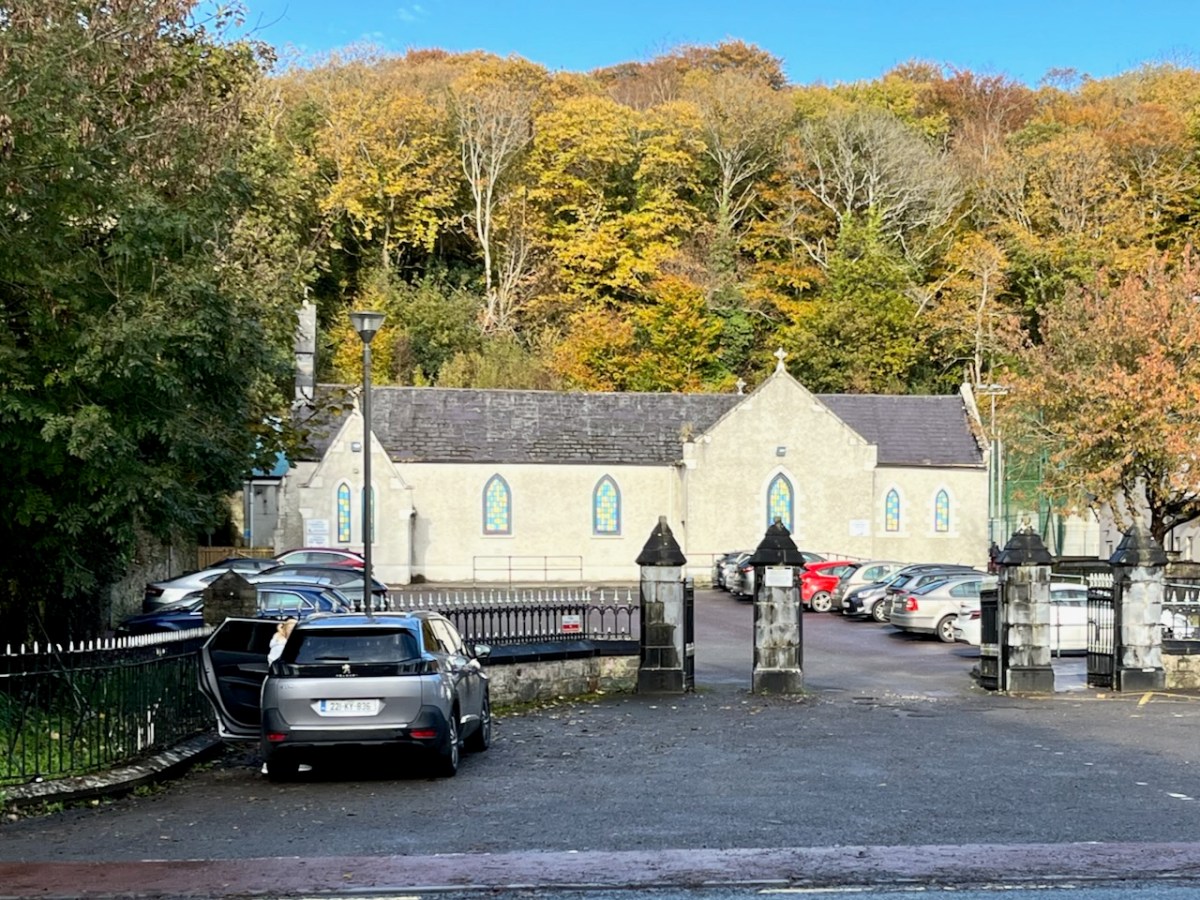
The lakeside church was designed to supersede an earlier building – St Lelia’s – which dated from the 1840s. That building remains and is in communal use (above): it is set back from the present site.

Unusually, there is no contemporary stained glass in this building. Instead, the focal point is the central view. I wonder whether this might be a distraction while the priest is in action? It may be that he would always be in silhouette in daylight: there is no means of subduing the window. The church does contain some distinctive artwork, however.

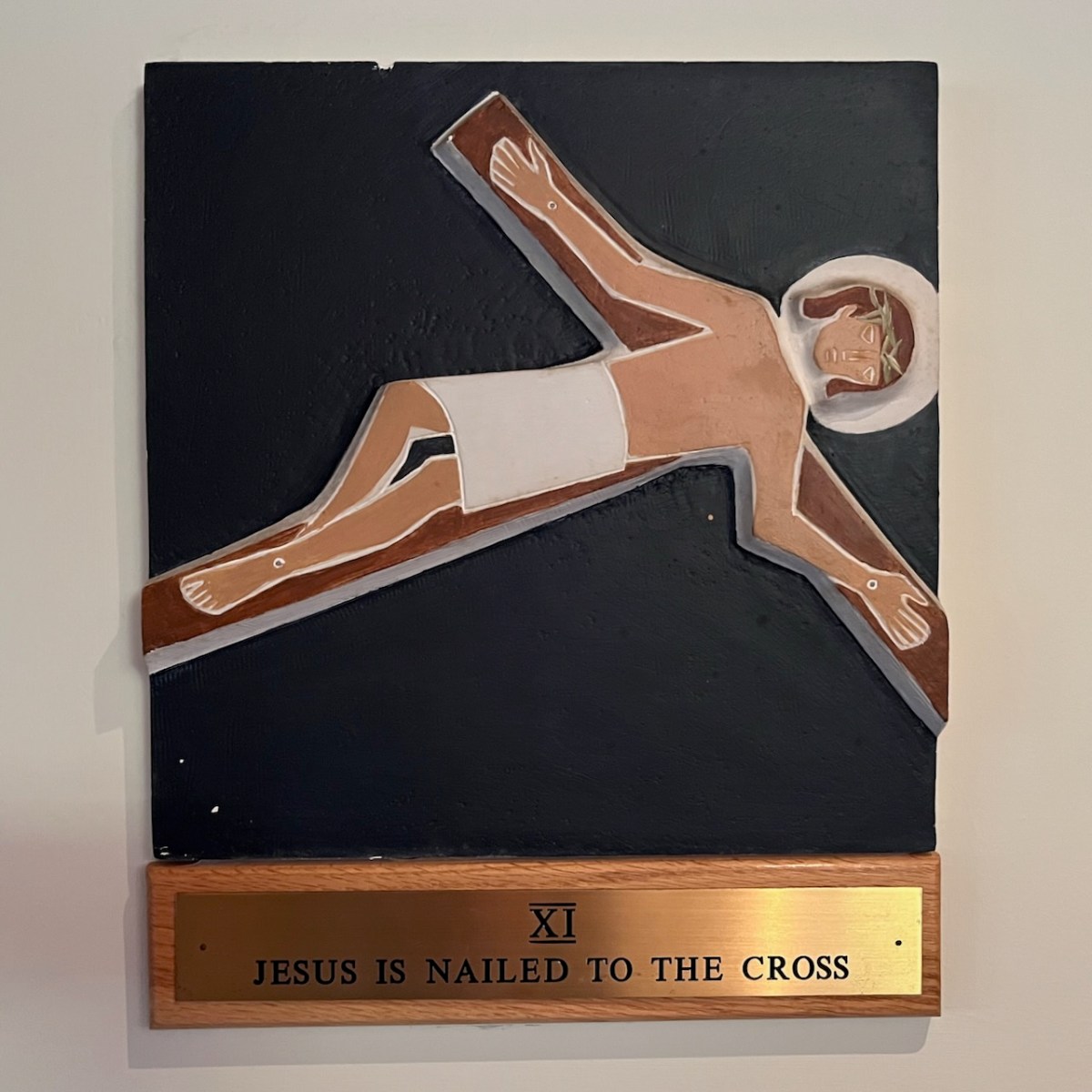
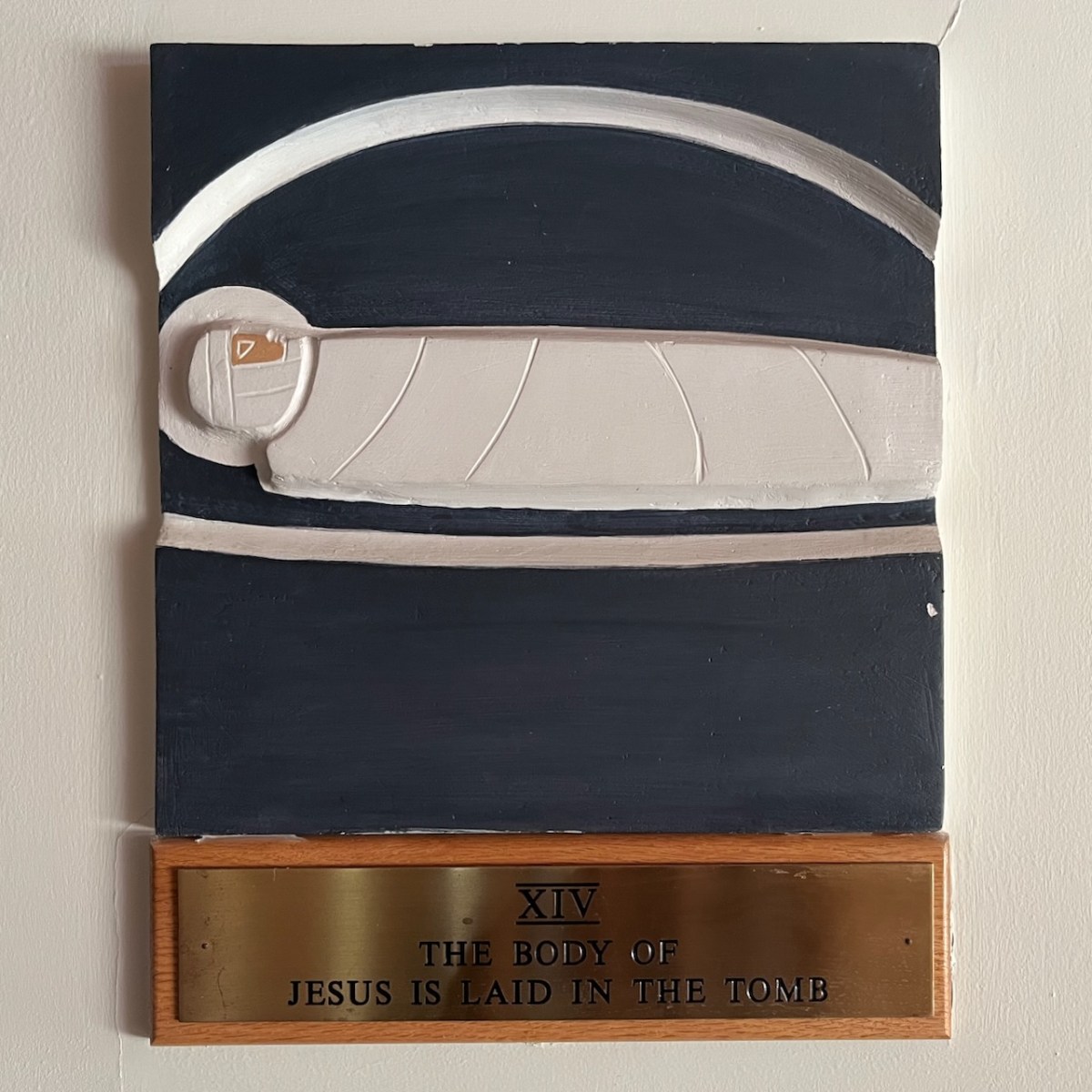
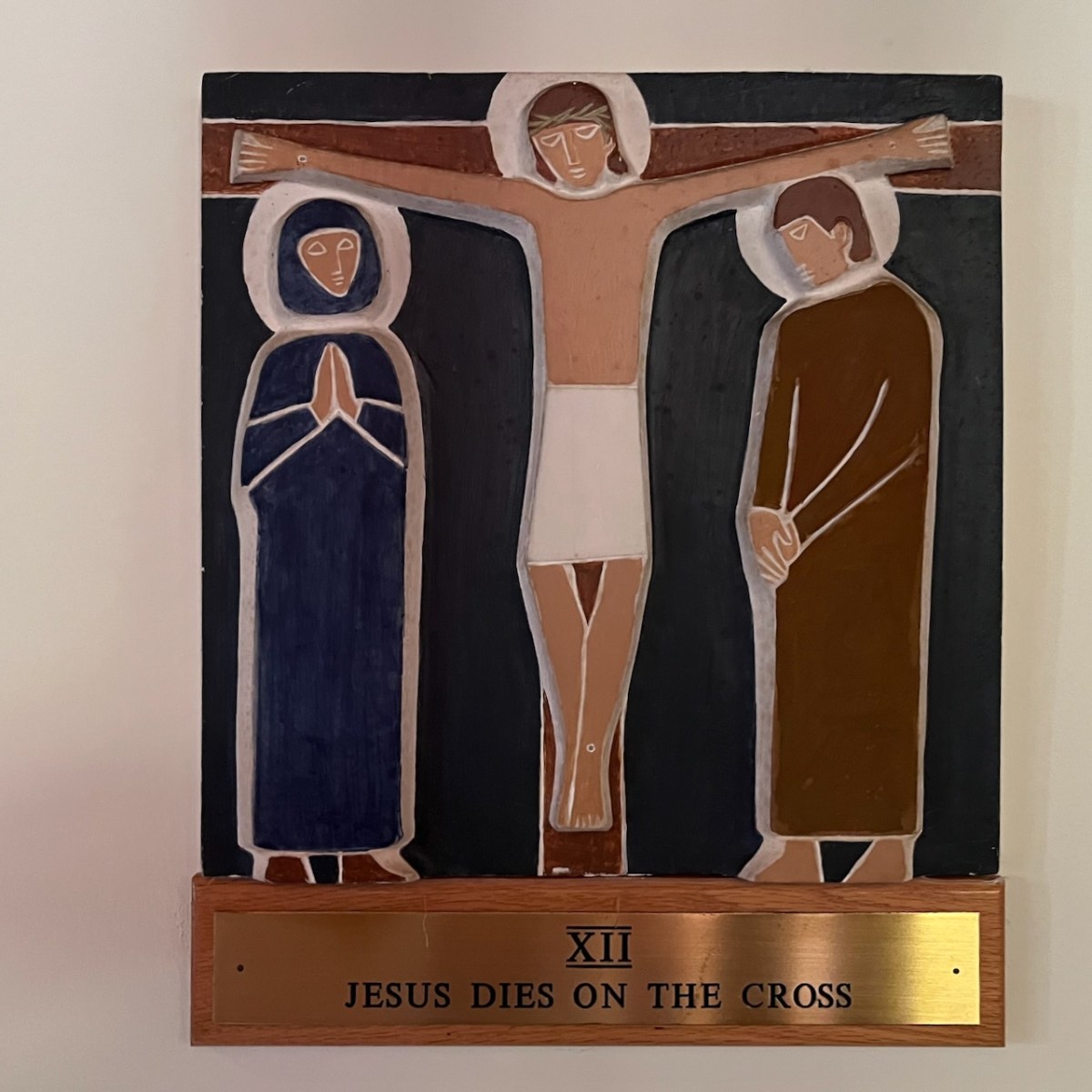
The Stations of the Cross are notable. They are the work of Nell Murphy Pollen (1927-2011). A ceramicist, woodcarver and sculptor, she was a native of New Ross and studied at the Crawford.

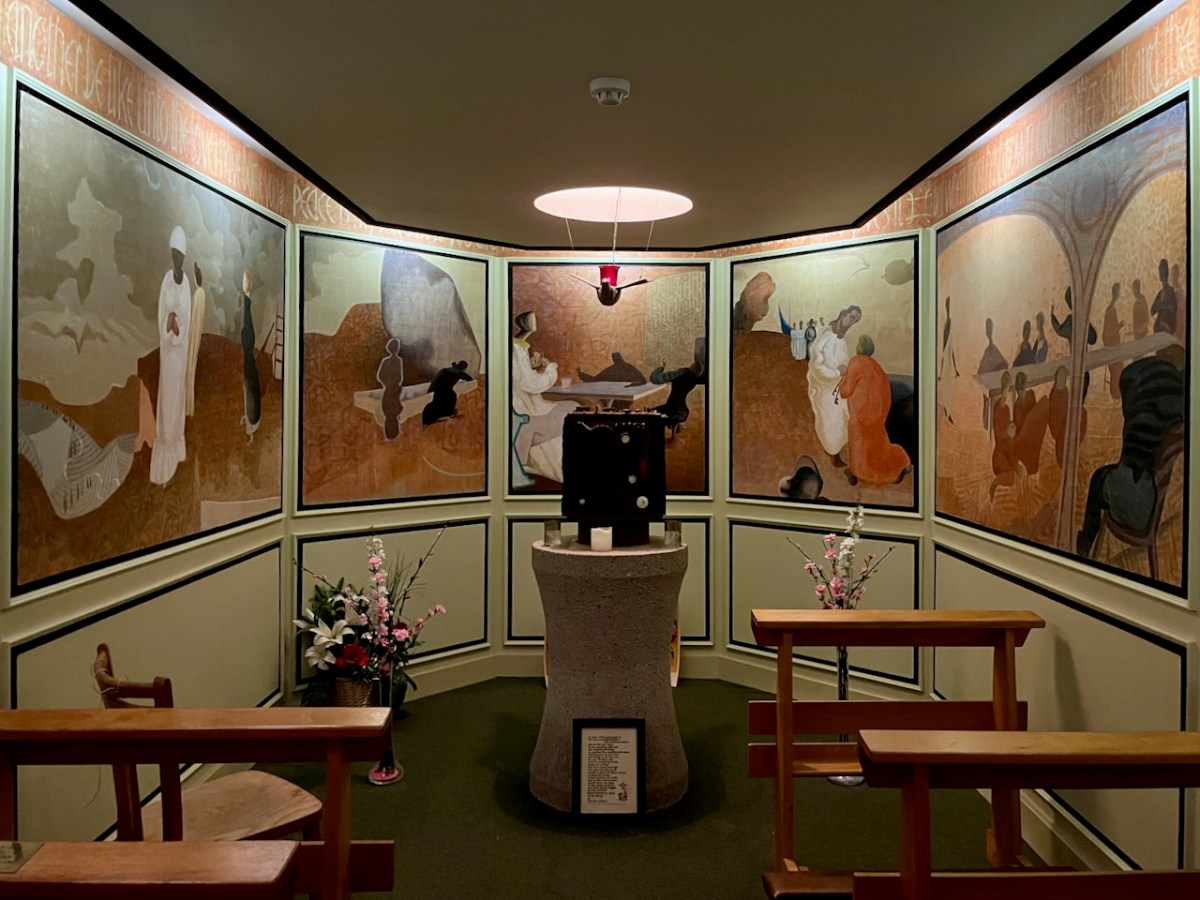
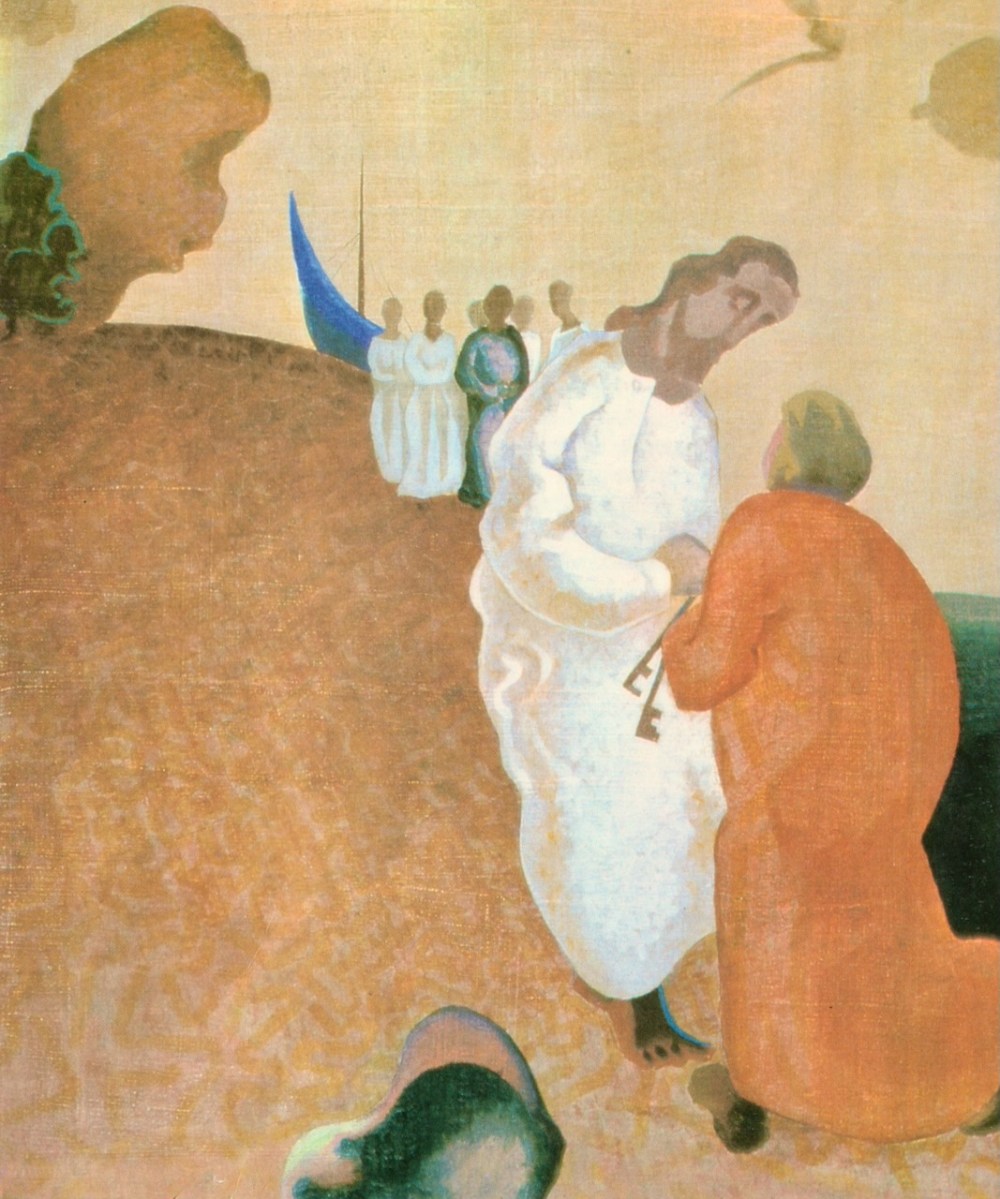
Perhaps one of the most striking aspects of the church at Fossa is the little Blessed Sacrament Chapel: “. . . a chapel of reconciliation dedicated to the Prince of Peace . . .” This (above) is decorated with murals by Patrick Pye (1929-2018). They are produced in a traditional medium which dates from the time of the early Renaissance, tempera on a gesso ground.

Pye’s tempera/gesso painting Peter receiving The Keys from The Christ – The Blessed Sacrament Chapel, Fossa. Patrick Pye is an artist whose work we have followed, and he will have a post to himself before too long. He was born in Winchester, in Hampshire – a city in which I lived for a while in my younger days, but it is more famous for having been the home and burial place of Saint Swithun, a ninth century Anglo-Saxon Bishop who died in 862 AD – he whose feast day (15 July) traditionally marks either 40 days of fair weather or (more usually) constant rain.

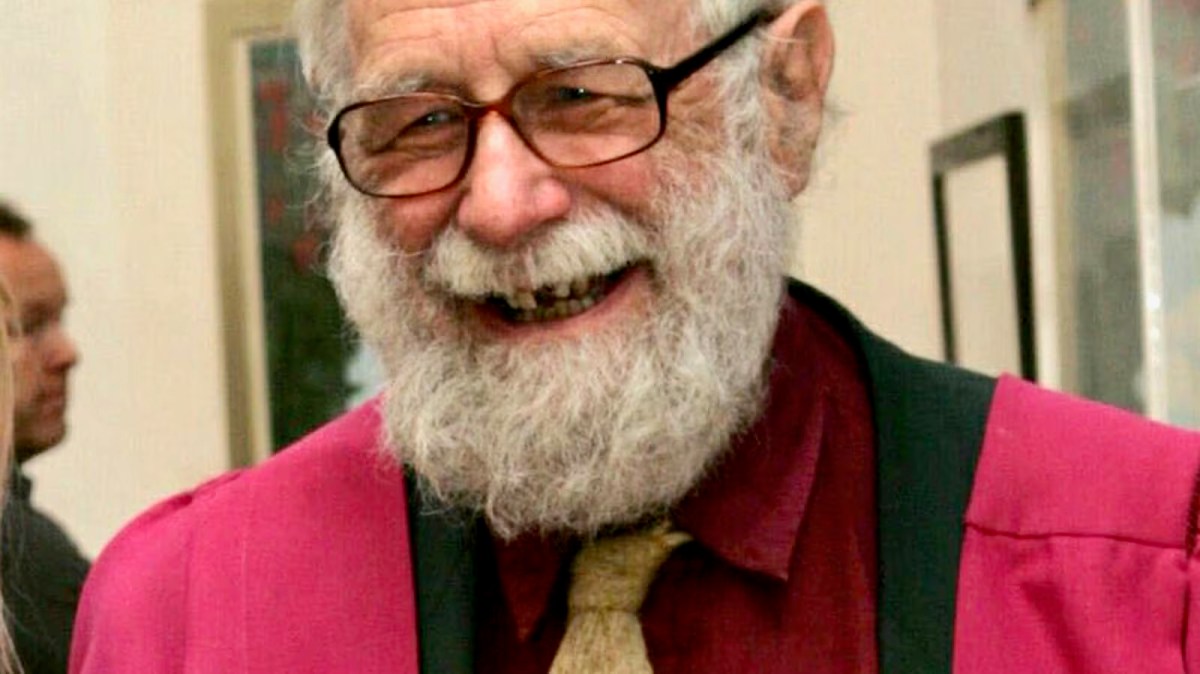
Patrick Pye at the RHA annual exhibition in 2007. Photograph with many thanks to Cyril Byrne.

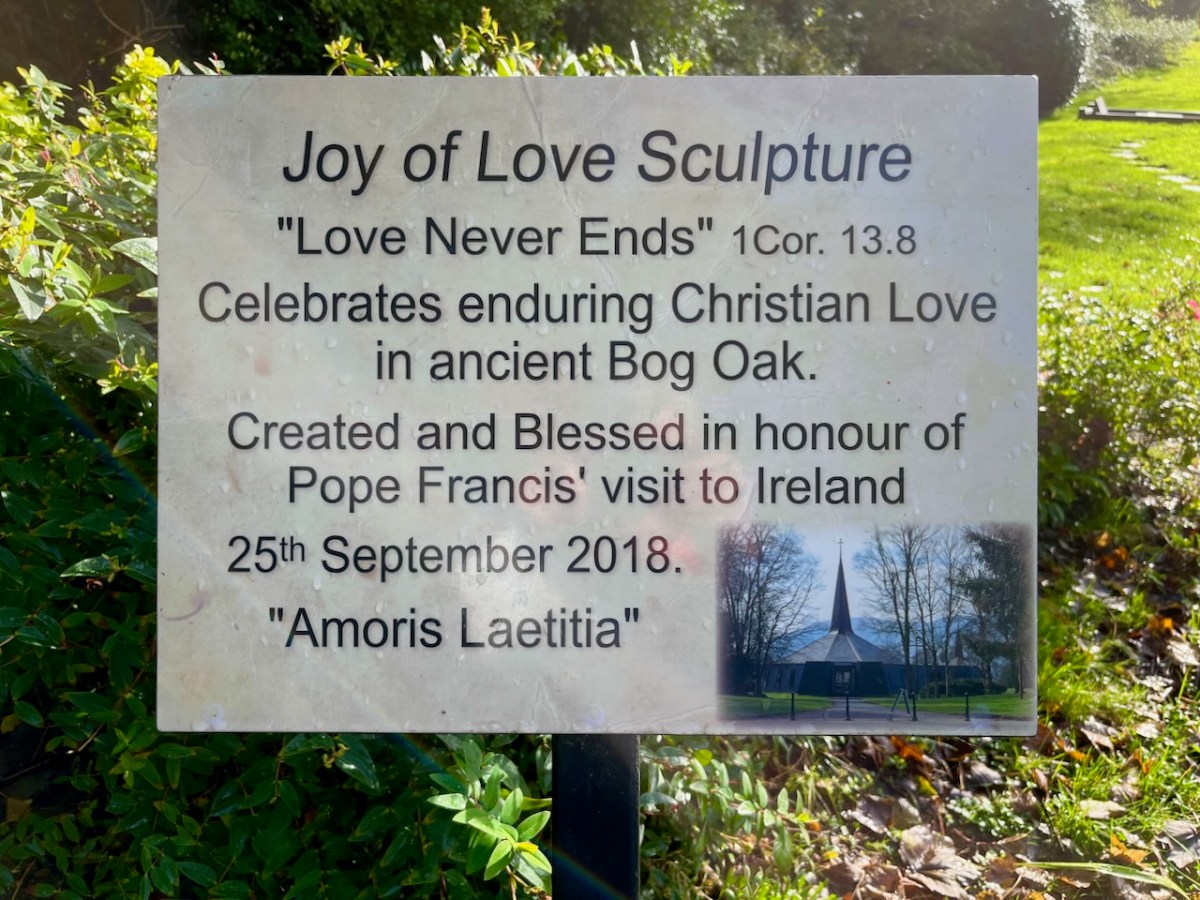
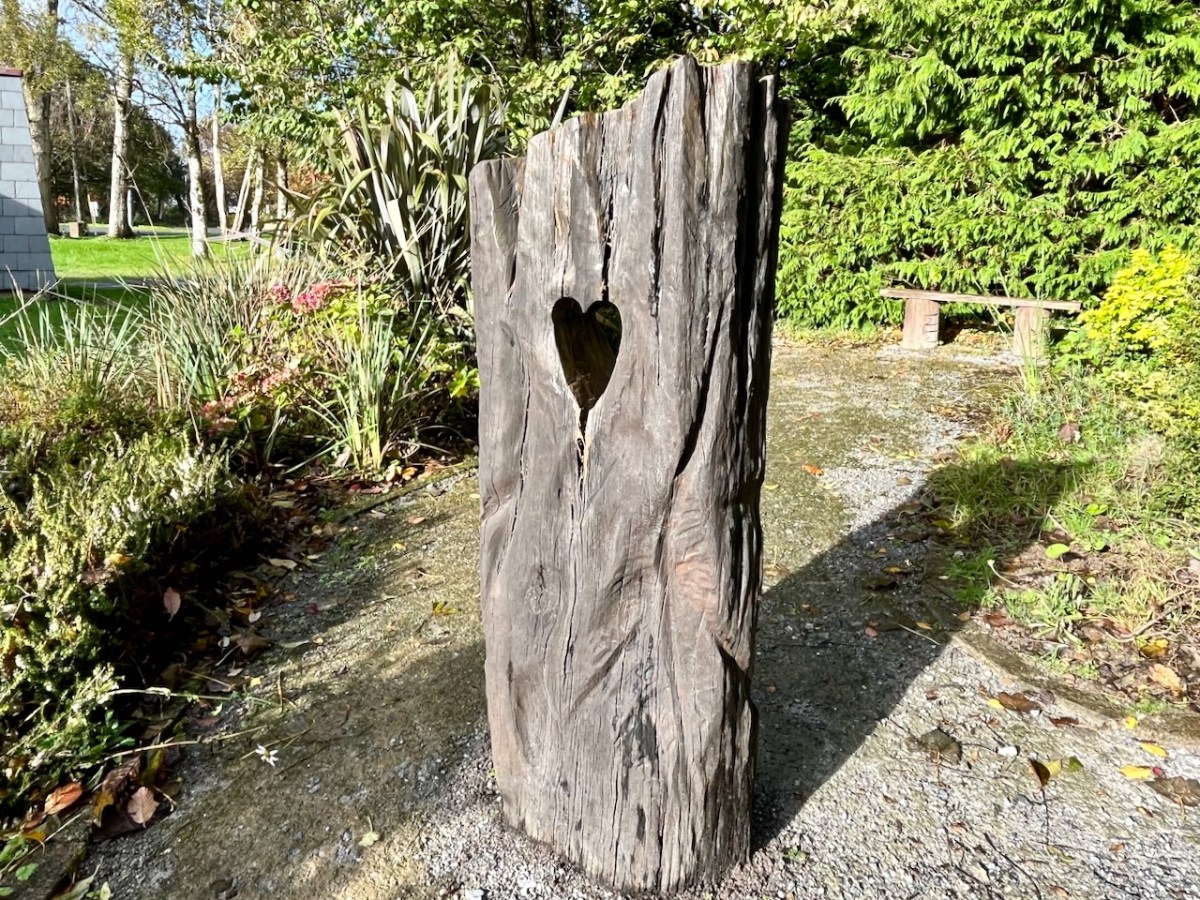
Above: you will find outside the church a bog-oak sculpture, specially commissioned to commemorate the visit of Pope Francis to Ireland. The carved heart at its centre is designed to offer all married couples and sweethearts the traditional Celtic opportunity to touch hands through the opening to commit to each other.

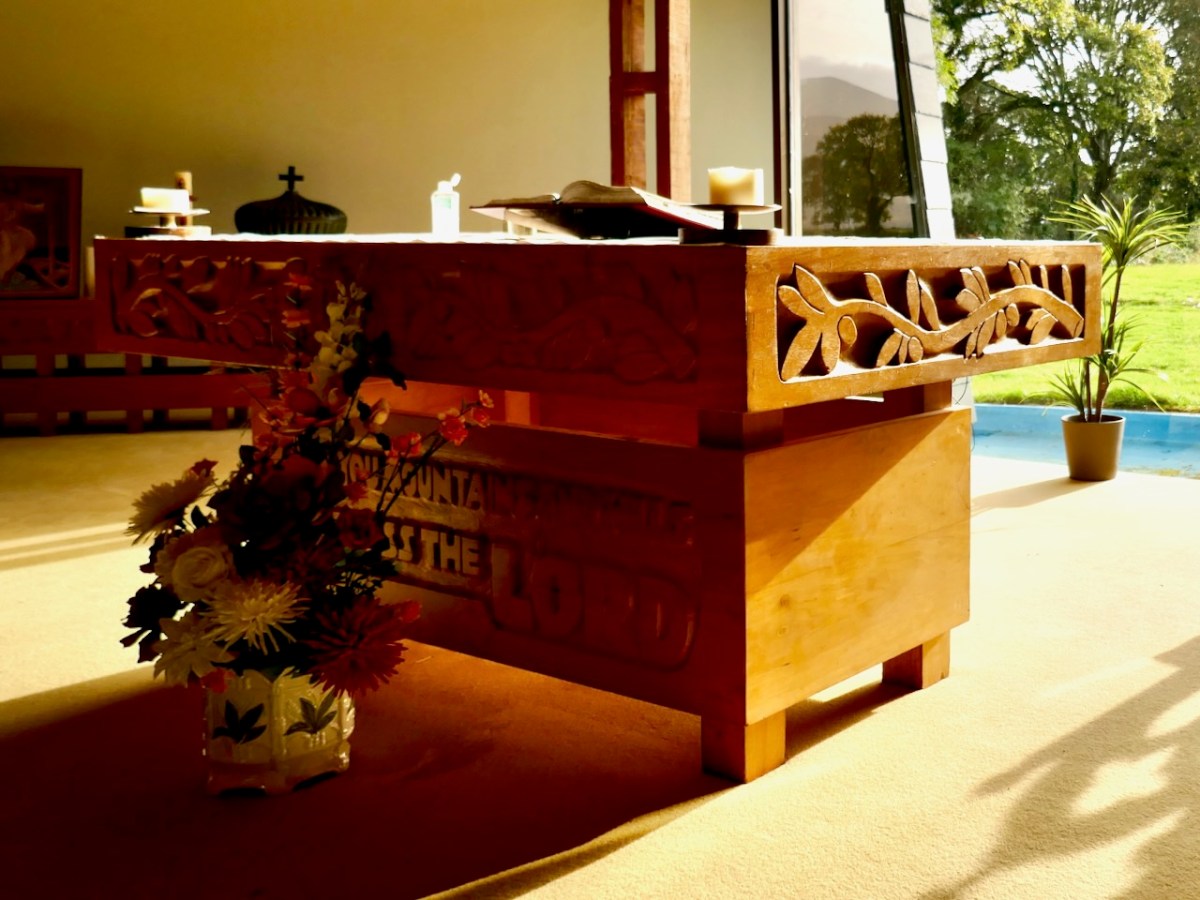
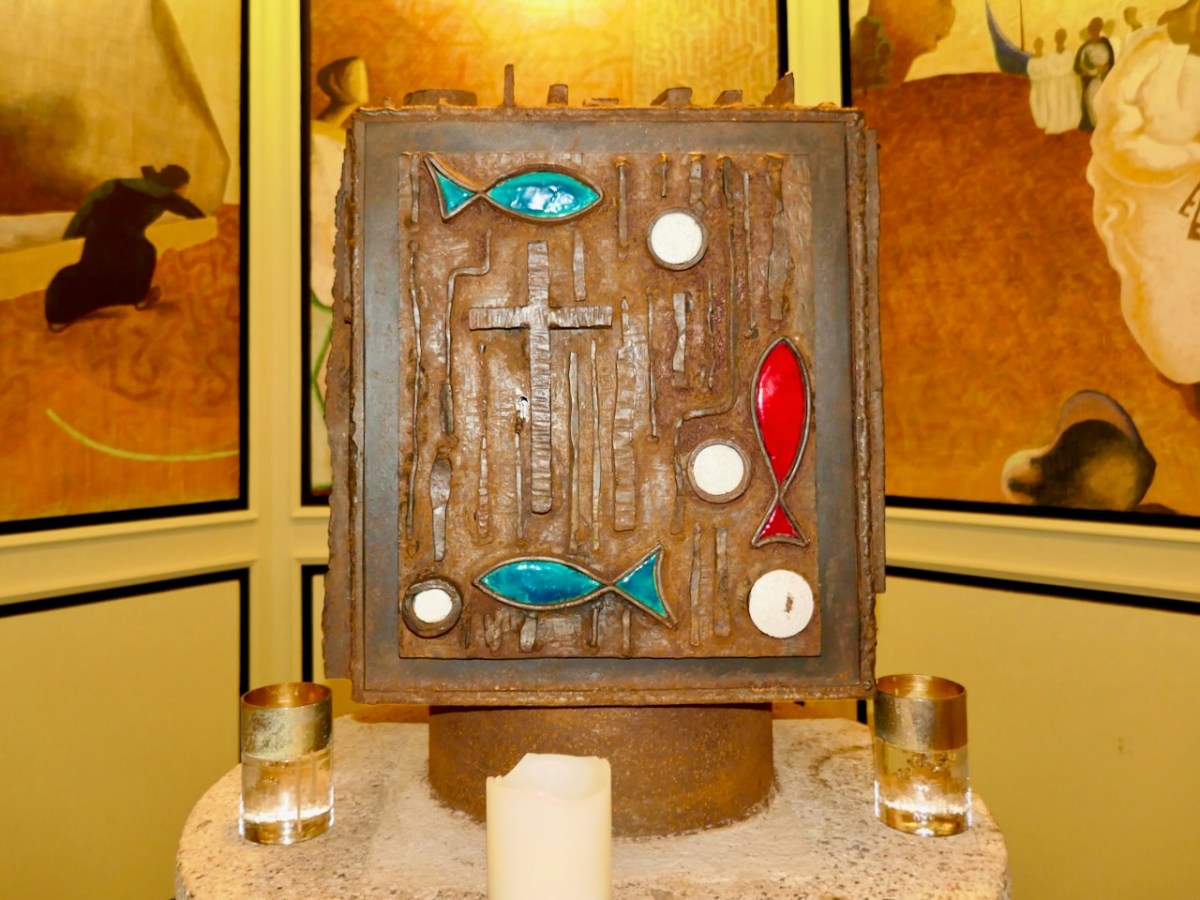
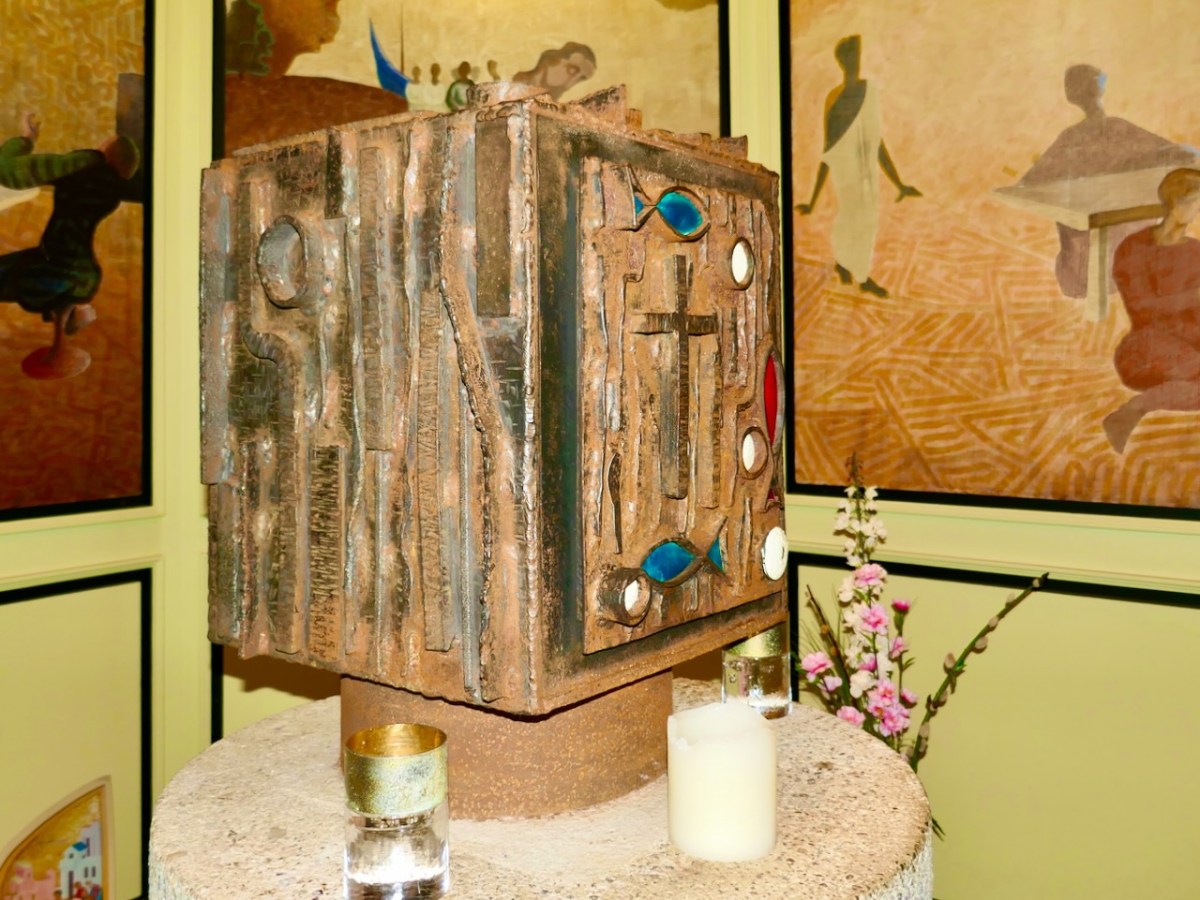
This little Kerry church is very well endowed with high quality artworks, both inside and outside. The carved altar (and a bench, not shown) is by Imogen Stuart (b1927), while (lower and below) is the tabernacle which we believe is by John Behan (b1938) who is also responsible for the cross outside the window. The tabernacle rests on a carved granite plinth by Michael Biggs. All these artists were longtime collaborators of McCormick’s. A brochure has been produced on the church which would give further information on the furnishings, but we have not yet located a copy.

This special church enjoys such a stunning setting with lough and mountains beyond, and is endowed with very fine artworks: it is well worth turning aside for.

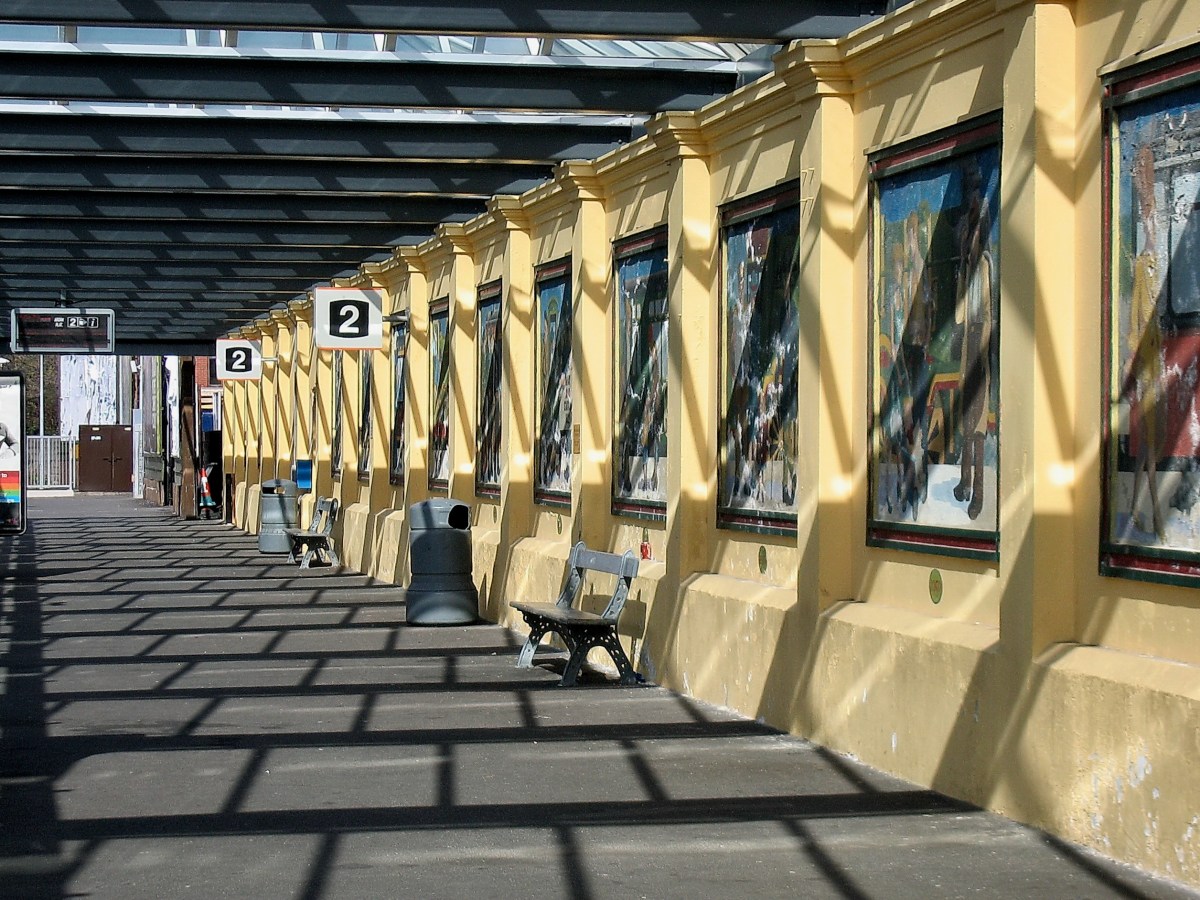
Bray Railway Station Murals

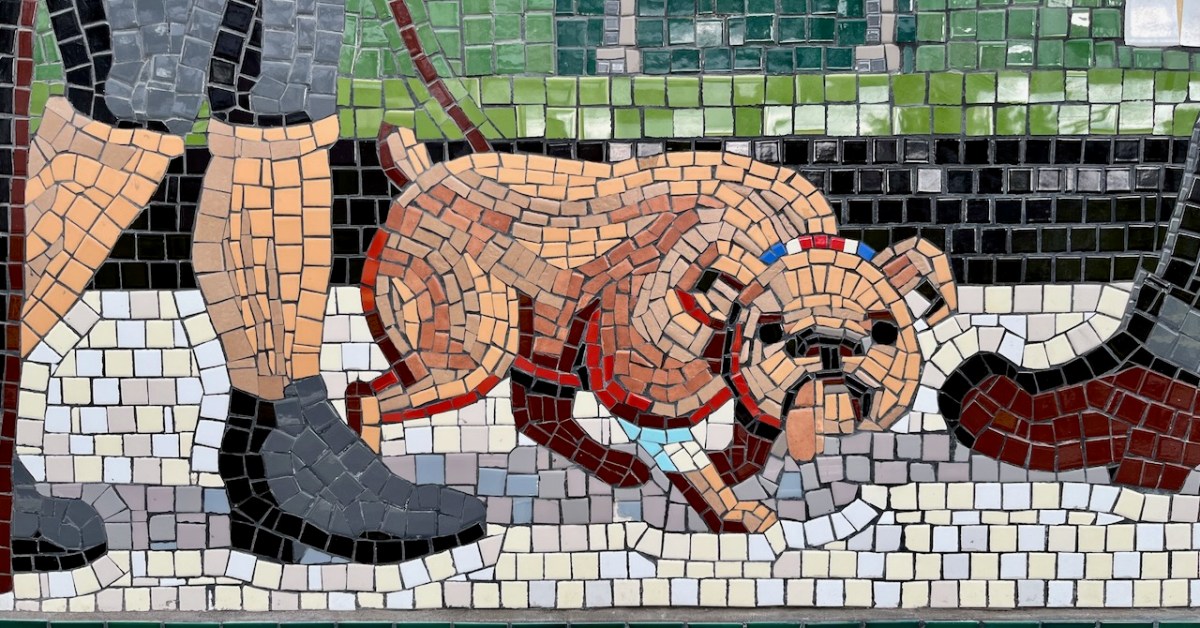
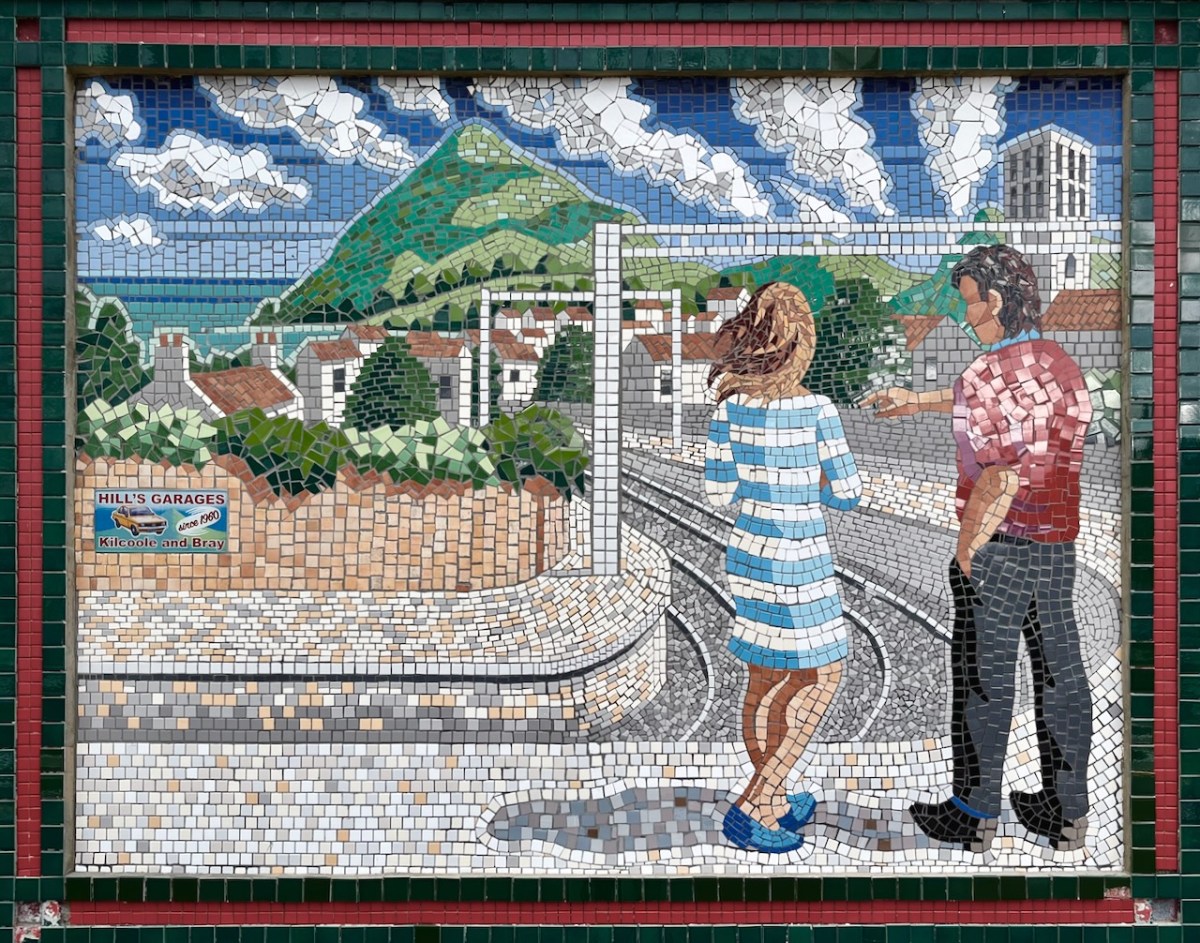
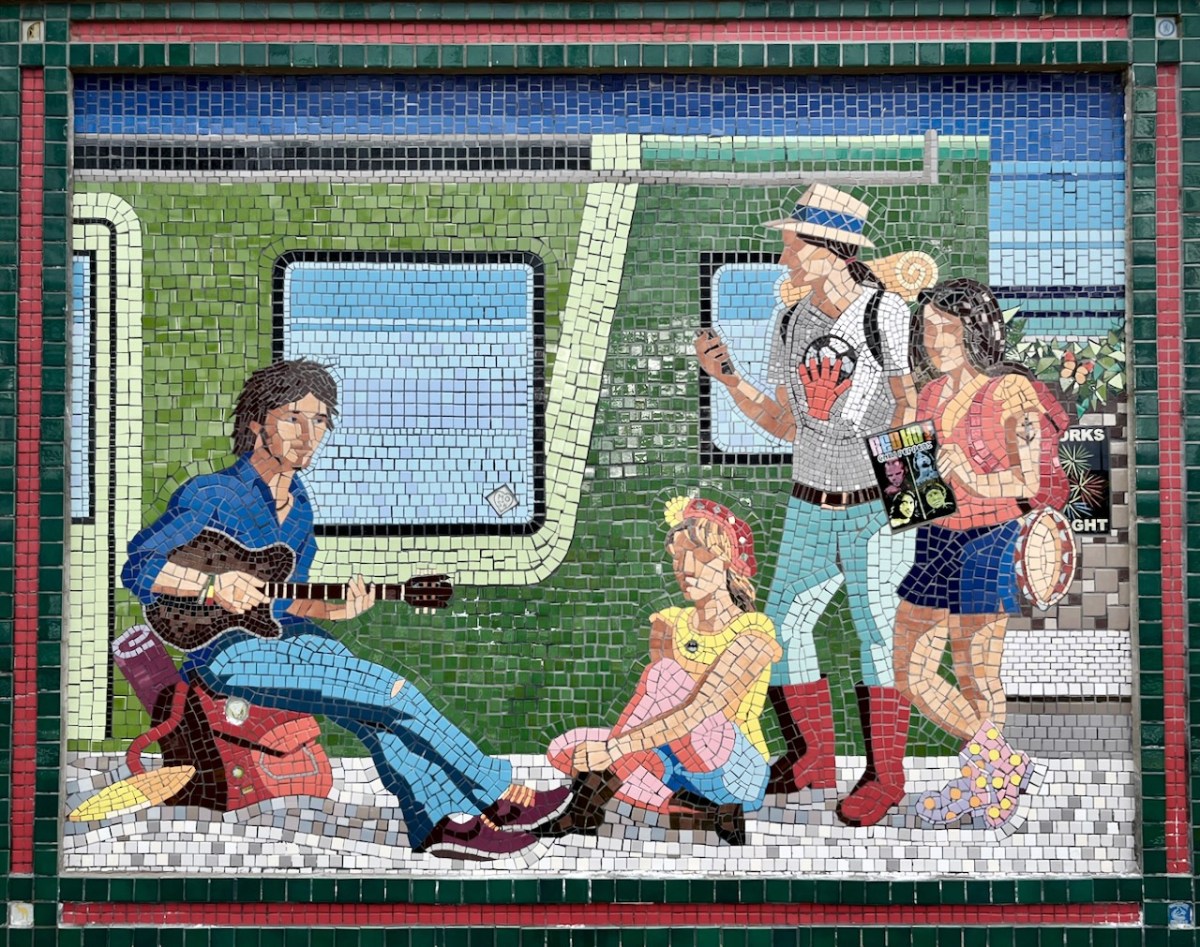
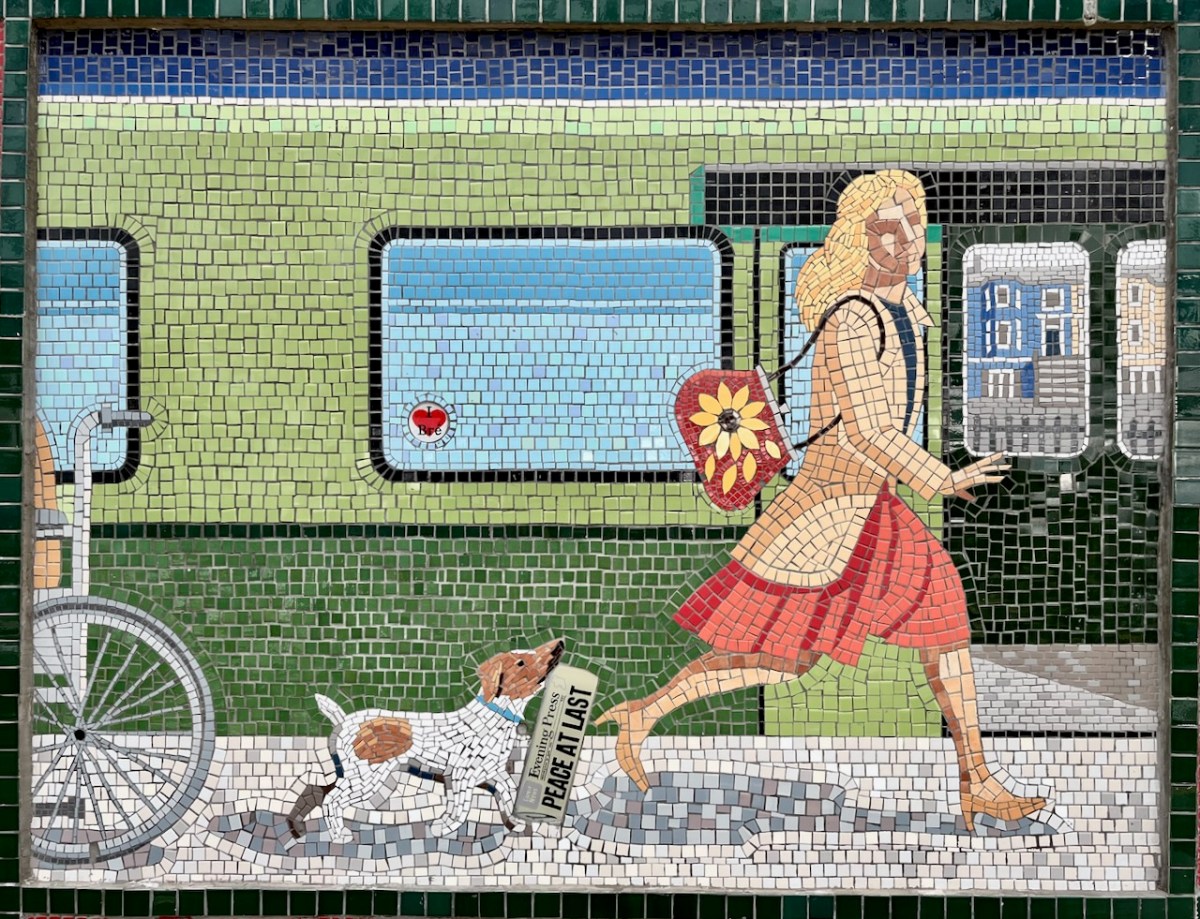
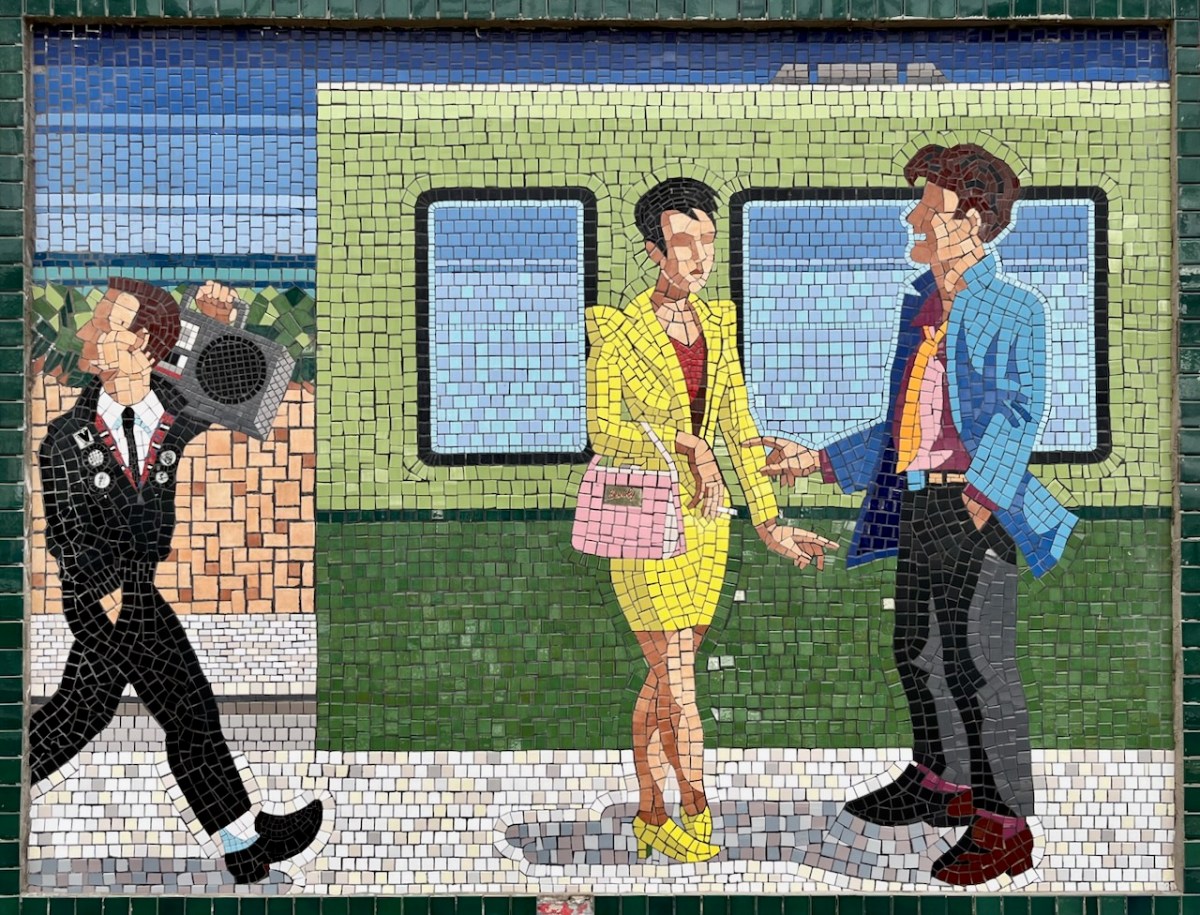
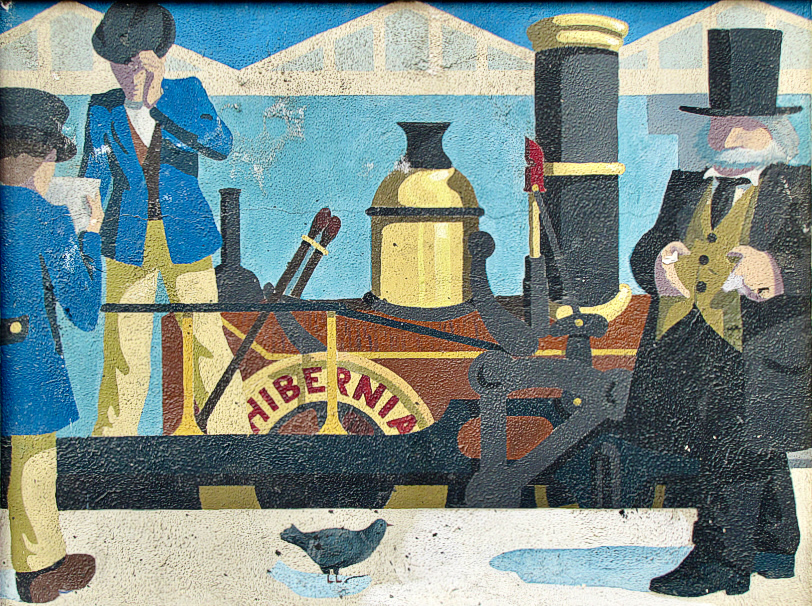
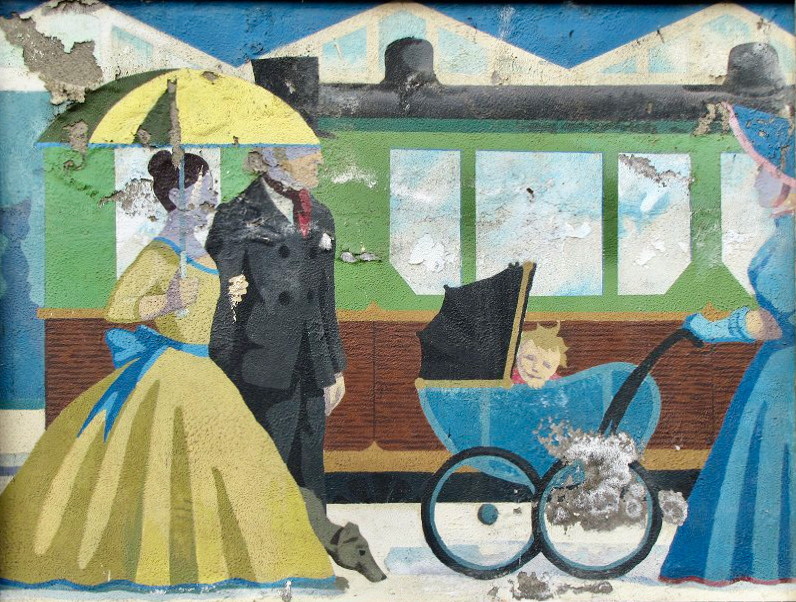
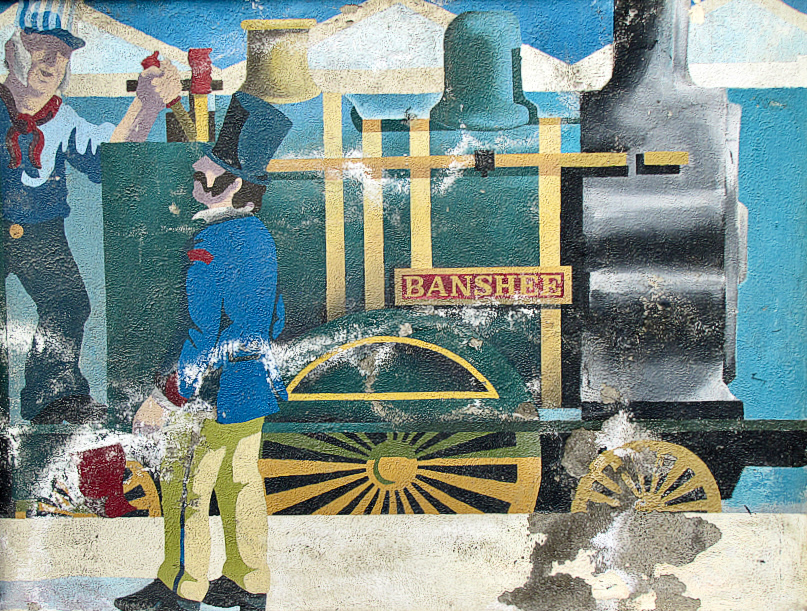
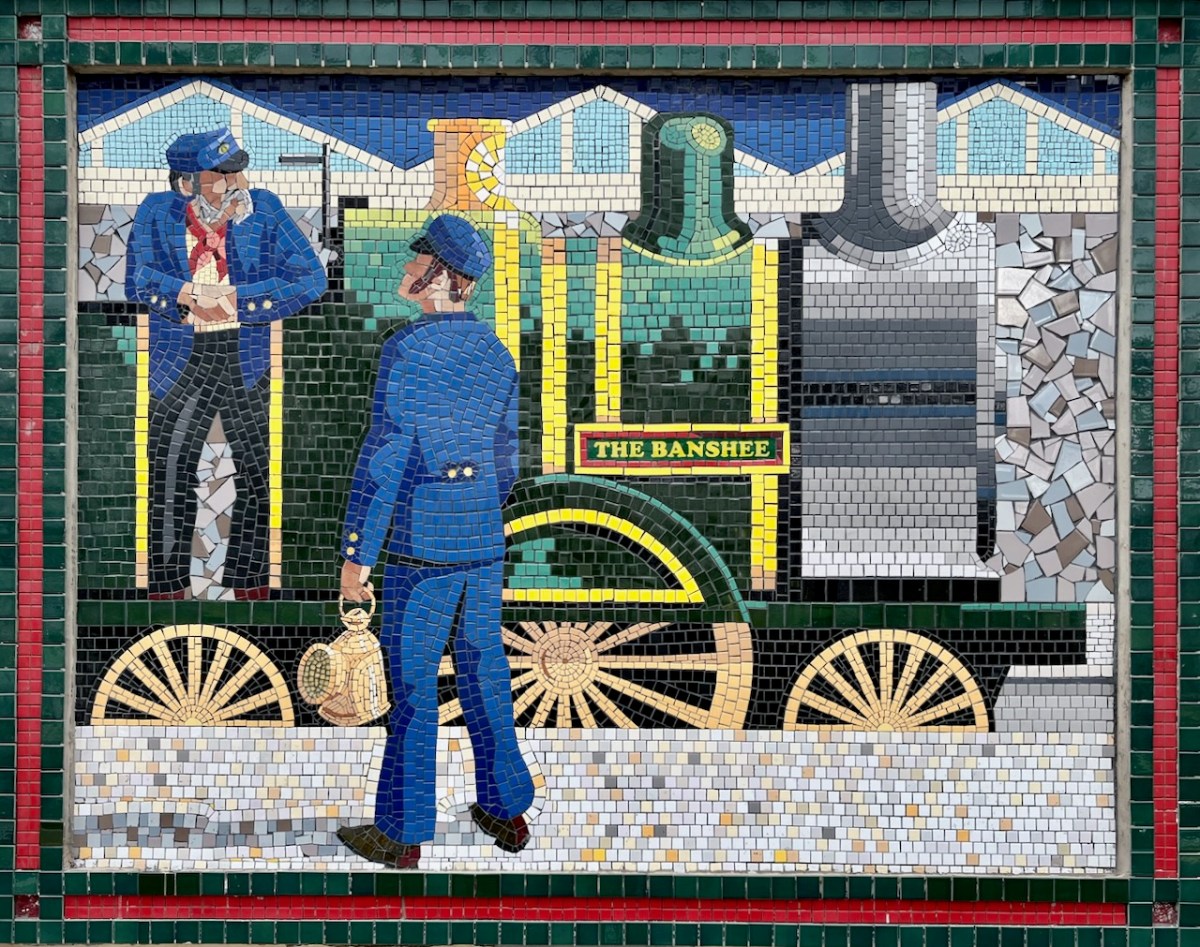
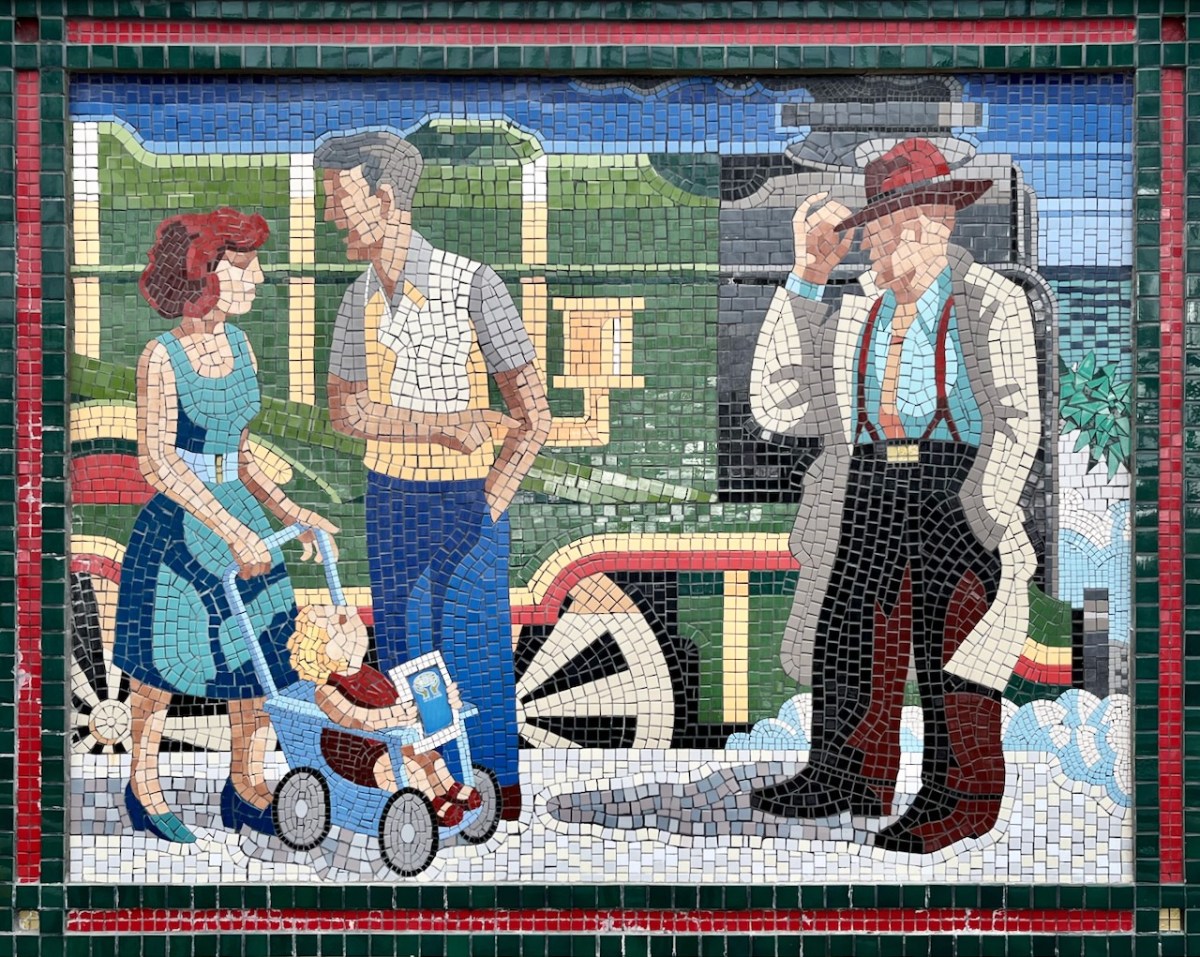
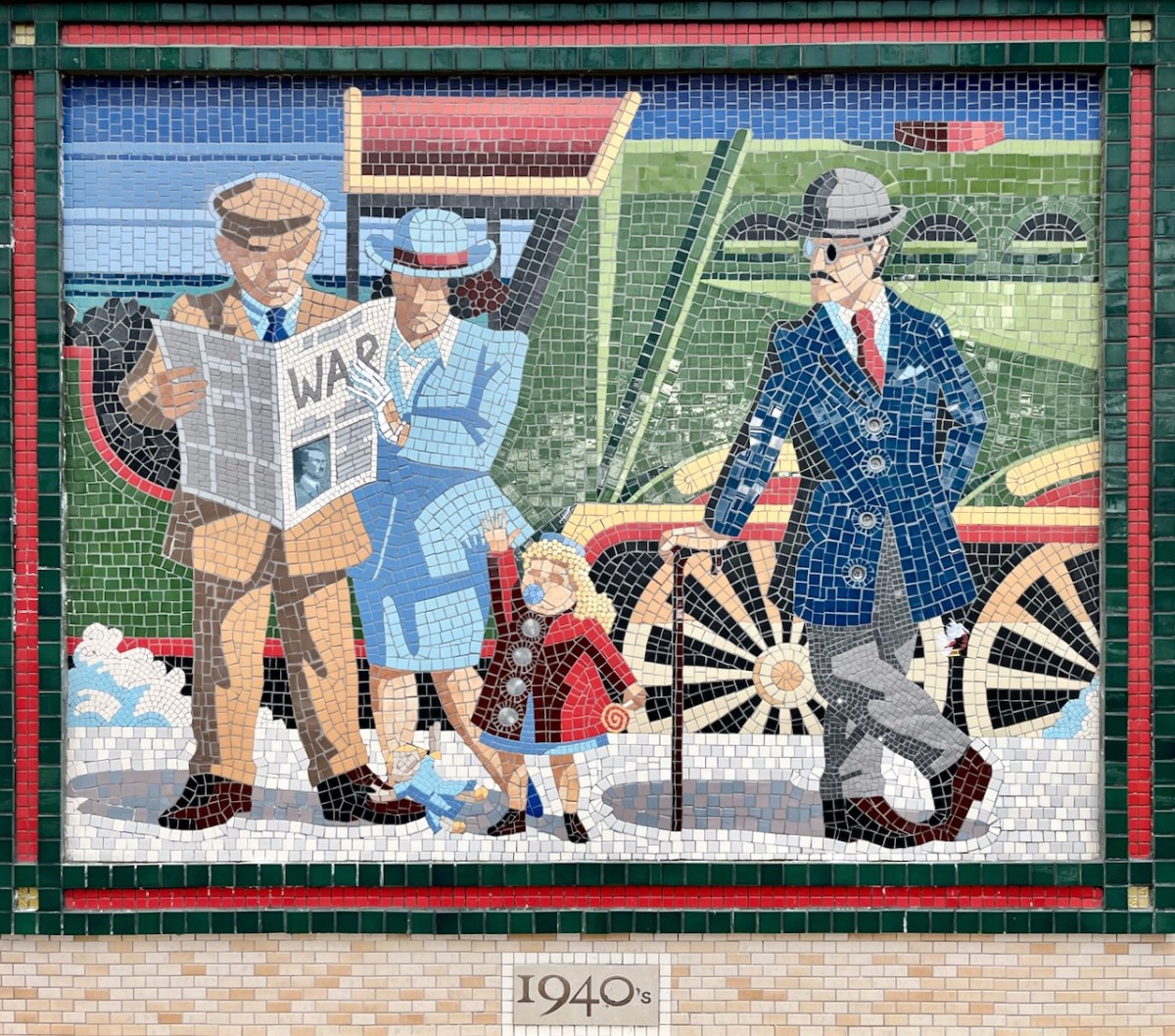
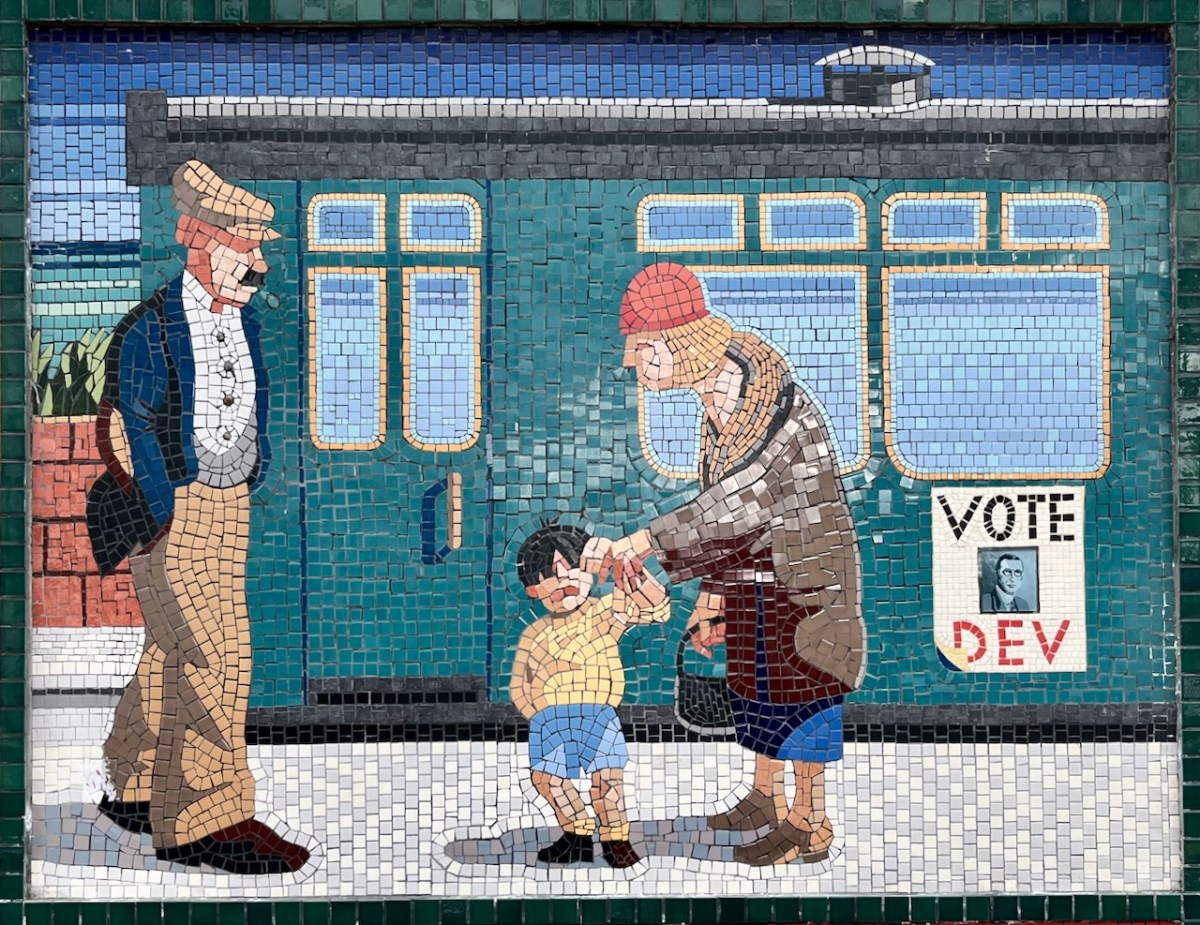
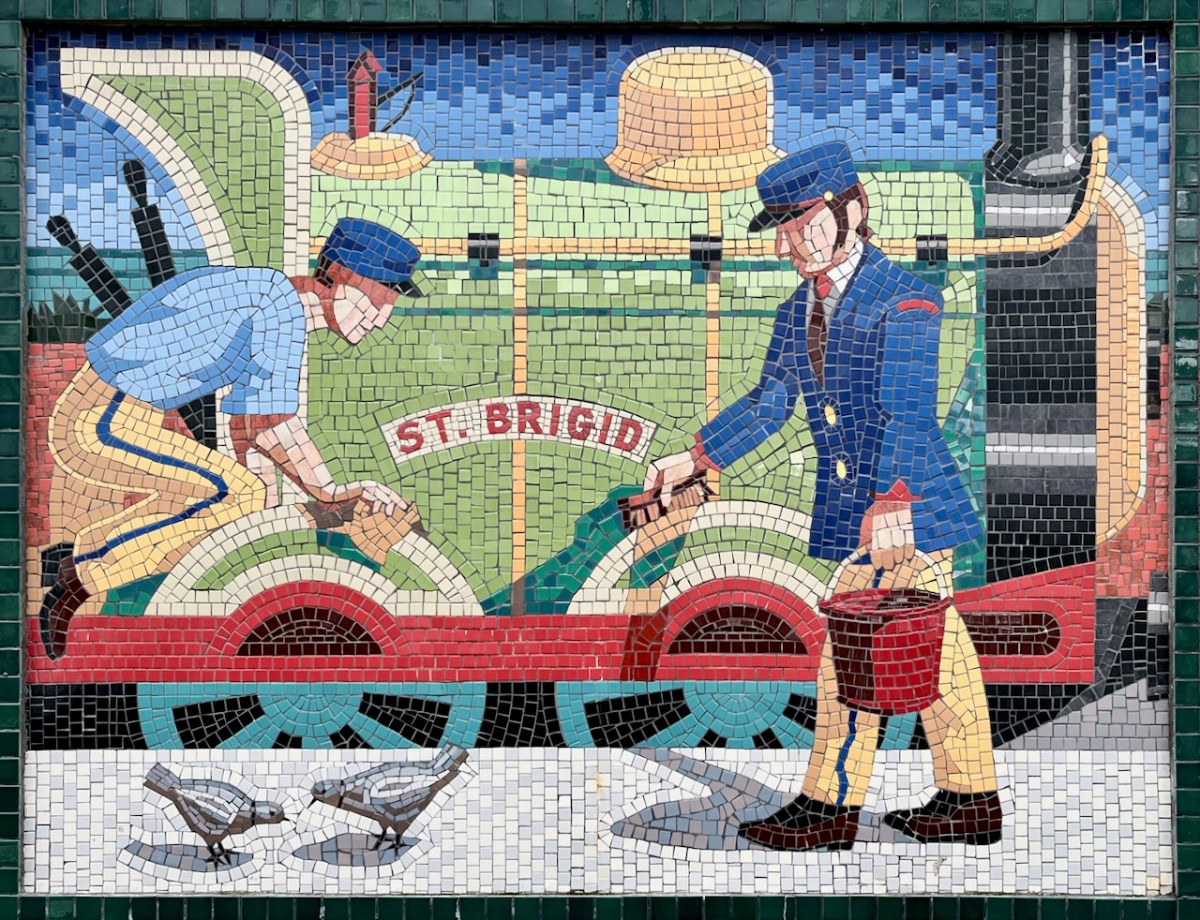
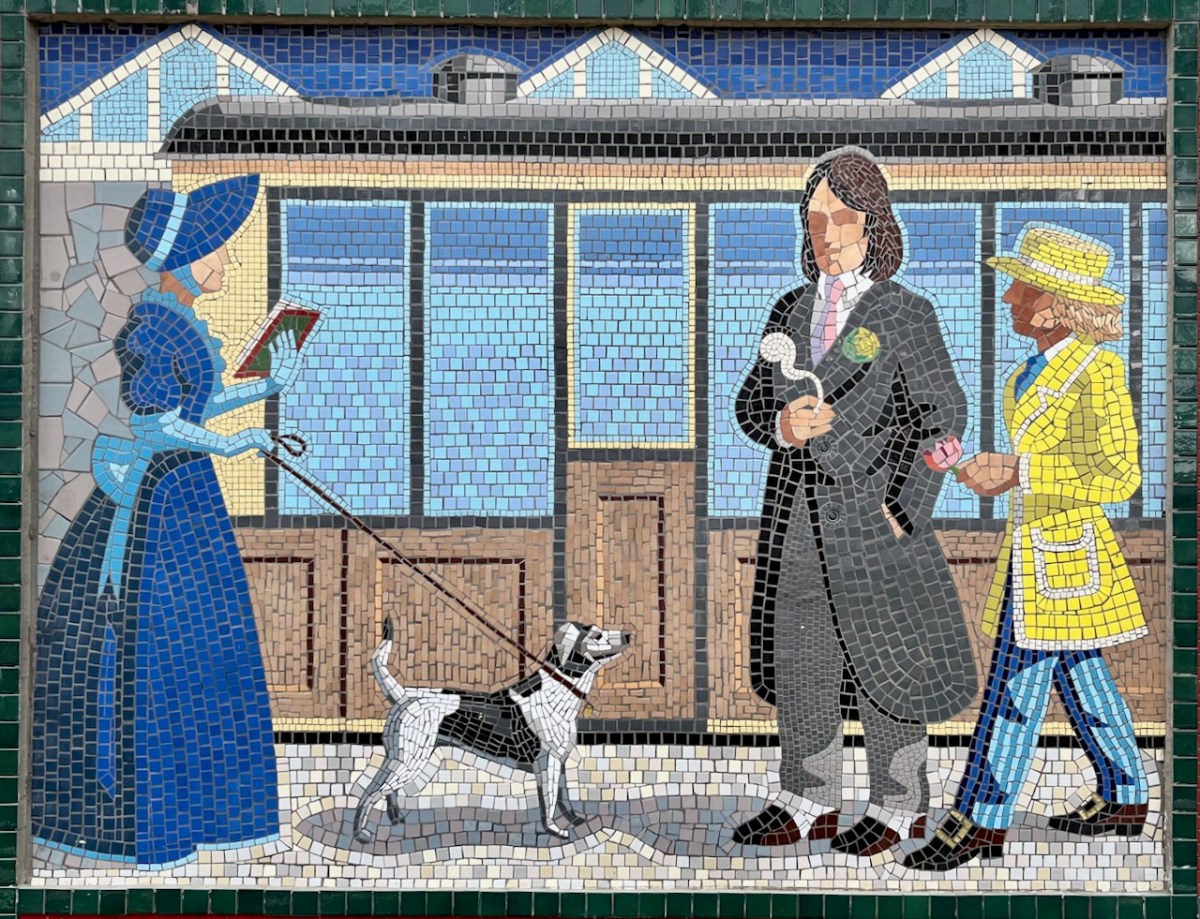
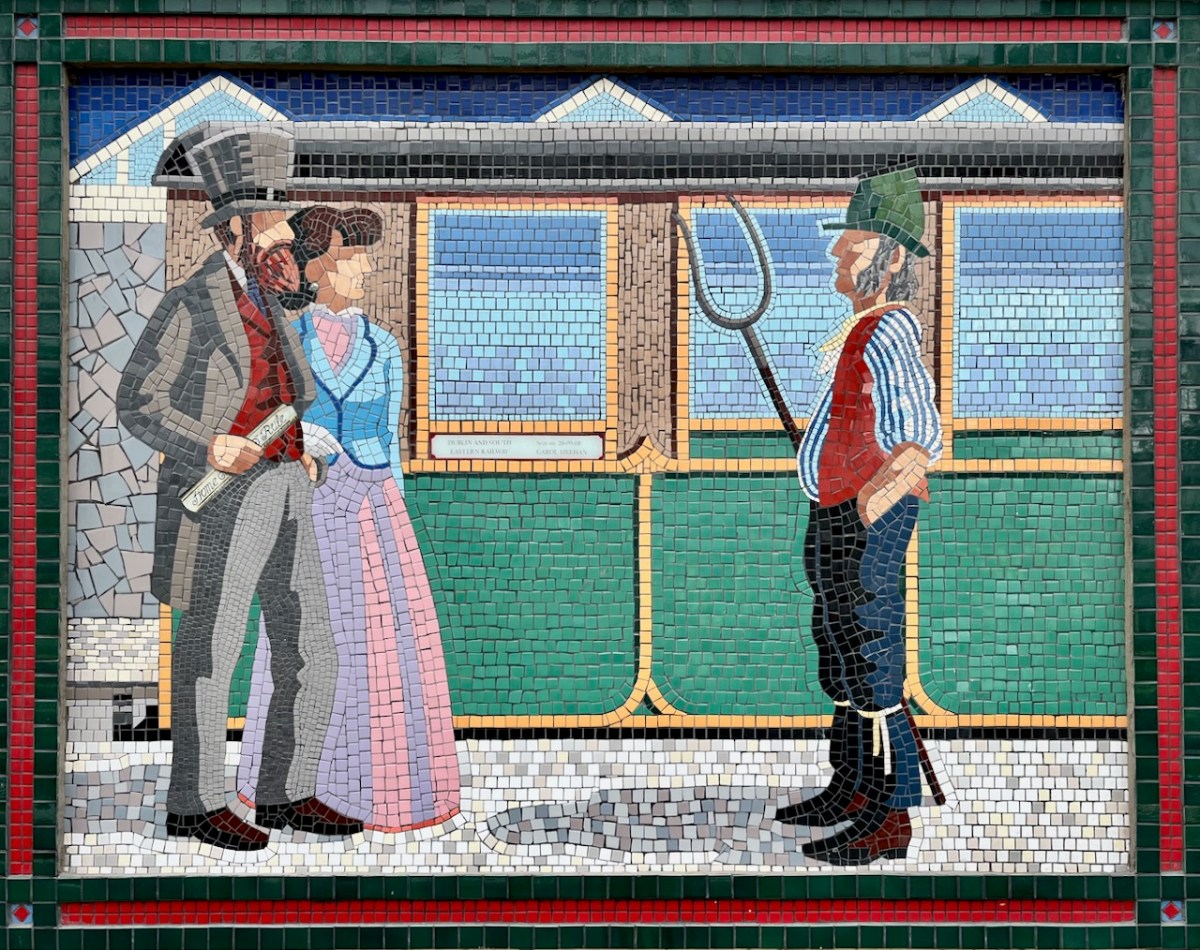
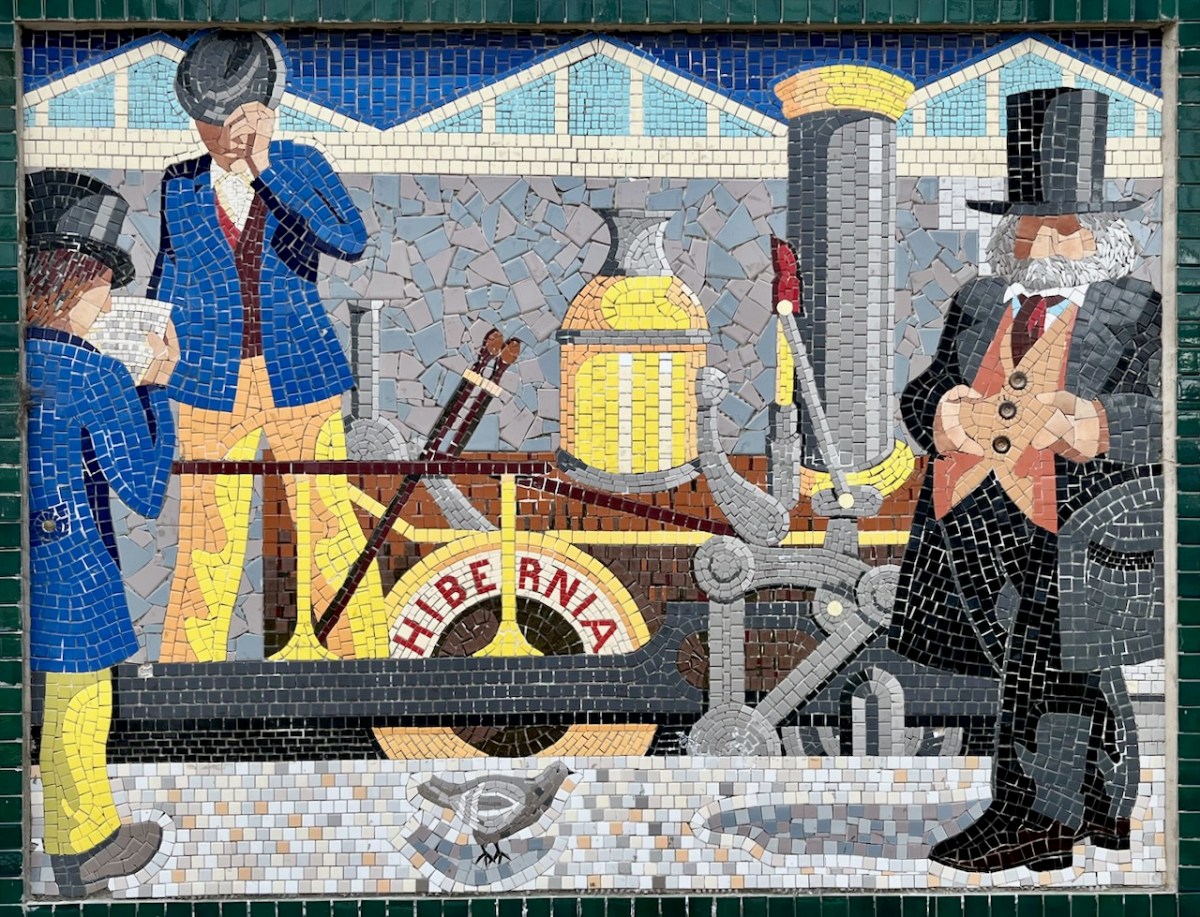
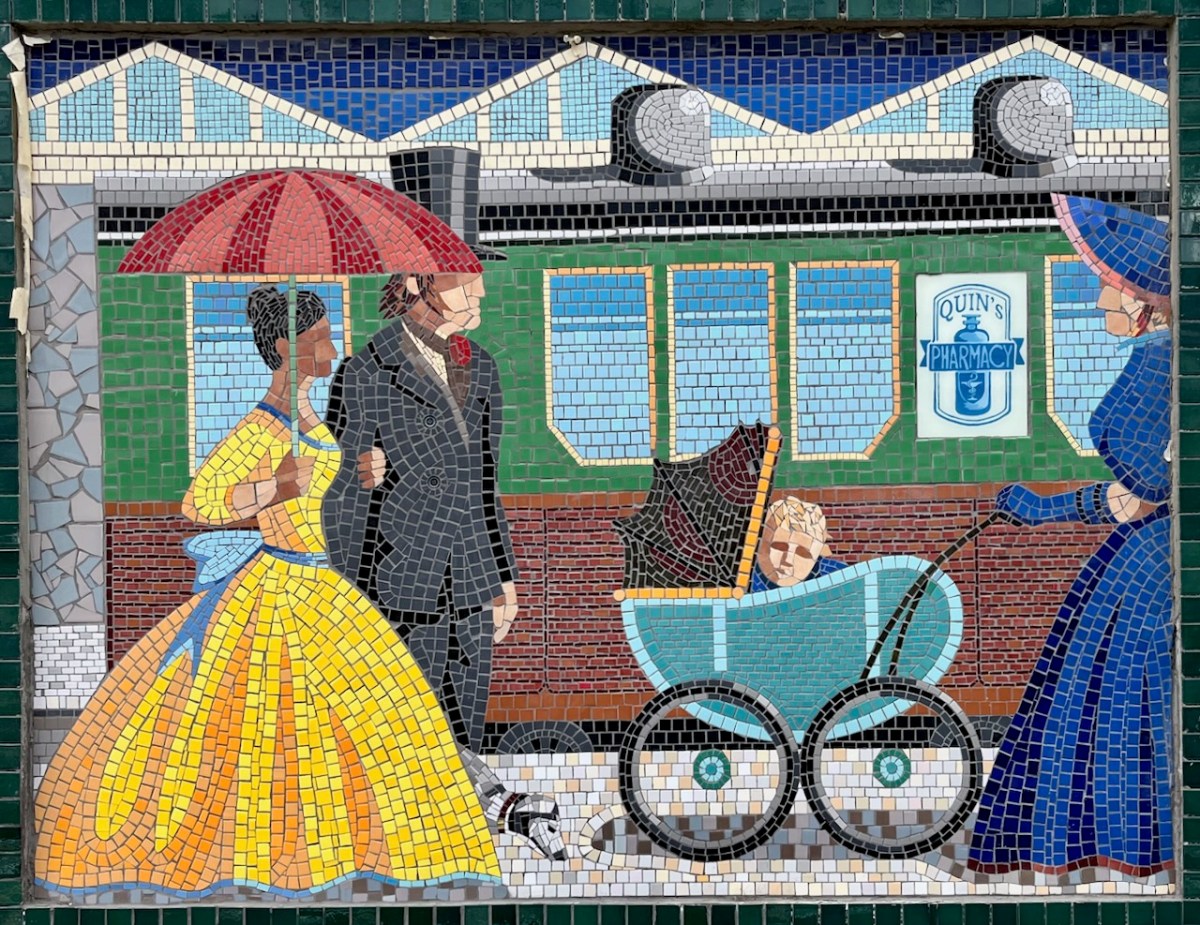
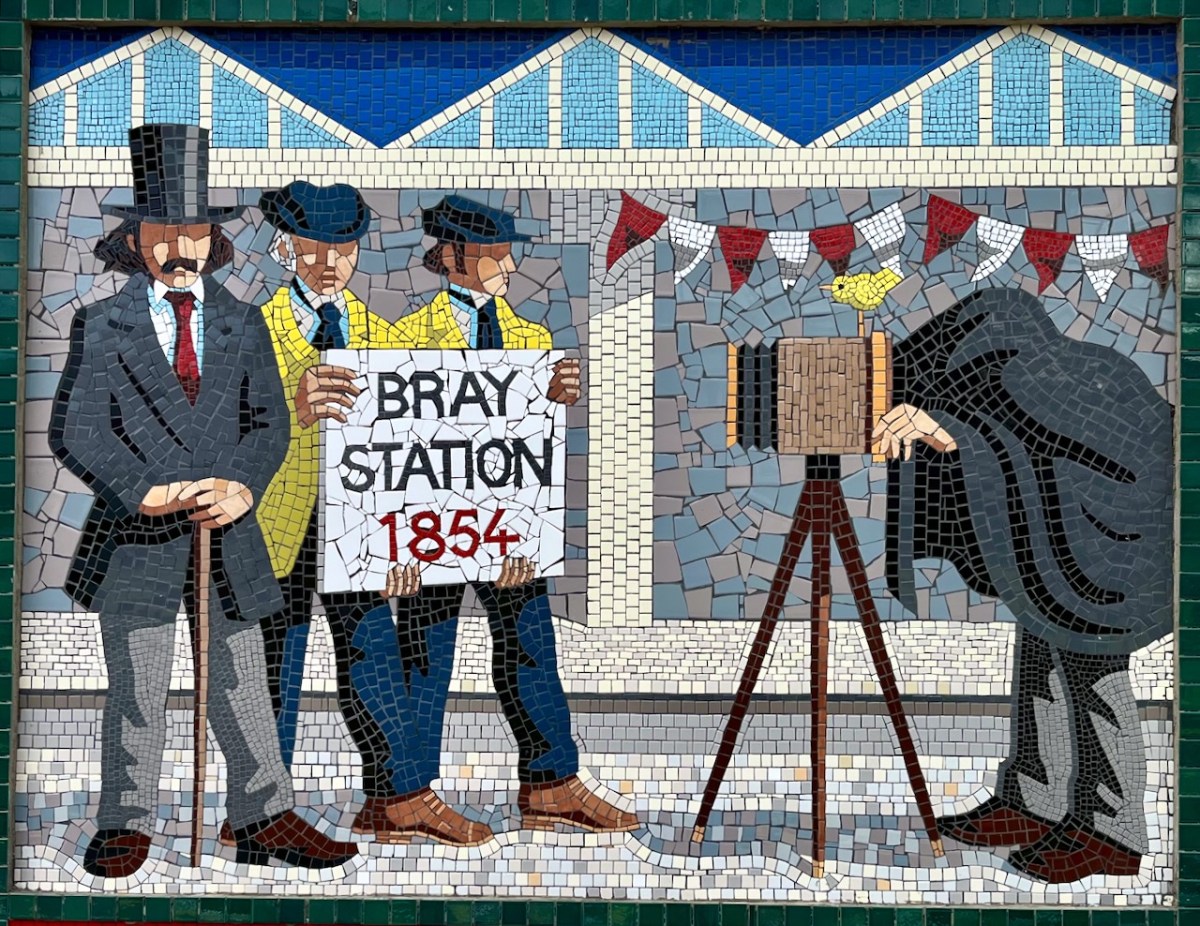
In a recent post I gave some examples of public art which can be seen on the railway station at Bray, Co Wicklow. I think this subject deserves a more comprehensive airing, so here we go! Just to recap, murals were originally painted here by Jay Roche and John Carter, who won a competition in 1987. Over the years the paintings deteriorated, and were replaced by the same team – assisted by Anthony Kelly and Eileen Maguire – with a very fine set of tiled murals. I’m recording the rest of these in this post, as I am so impressed by the overall work.
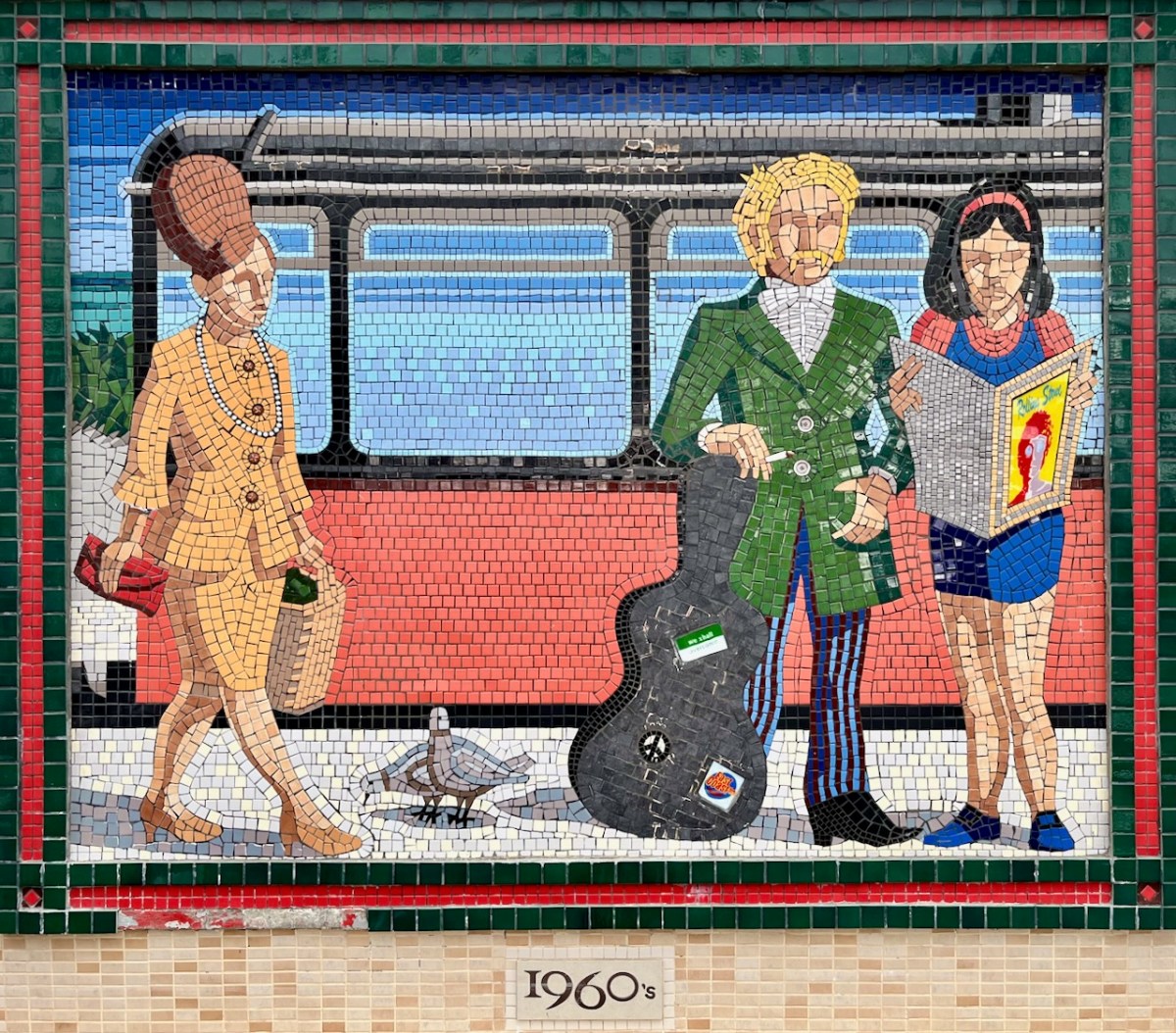
Each panel represents a decade in the line’s history. You’ll have to decide for yourselves which decade is which . . .

If only that newspaper headline was really true!

From Wiki Commons 2007: A Panel for Every Decade since 1850s in Bray Railway Station. These are the painted murals.

(Above) some of the painted murals in a fairly advanced state of decay: probably early 2000s. The tiled murals are loosely based on the subjects of the originals, but the artists have respected the variations that the change of medium calls out for:

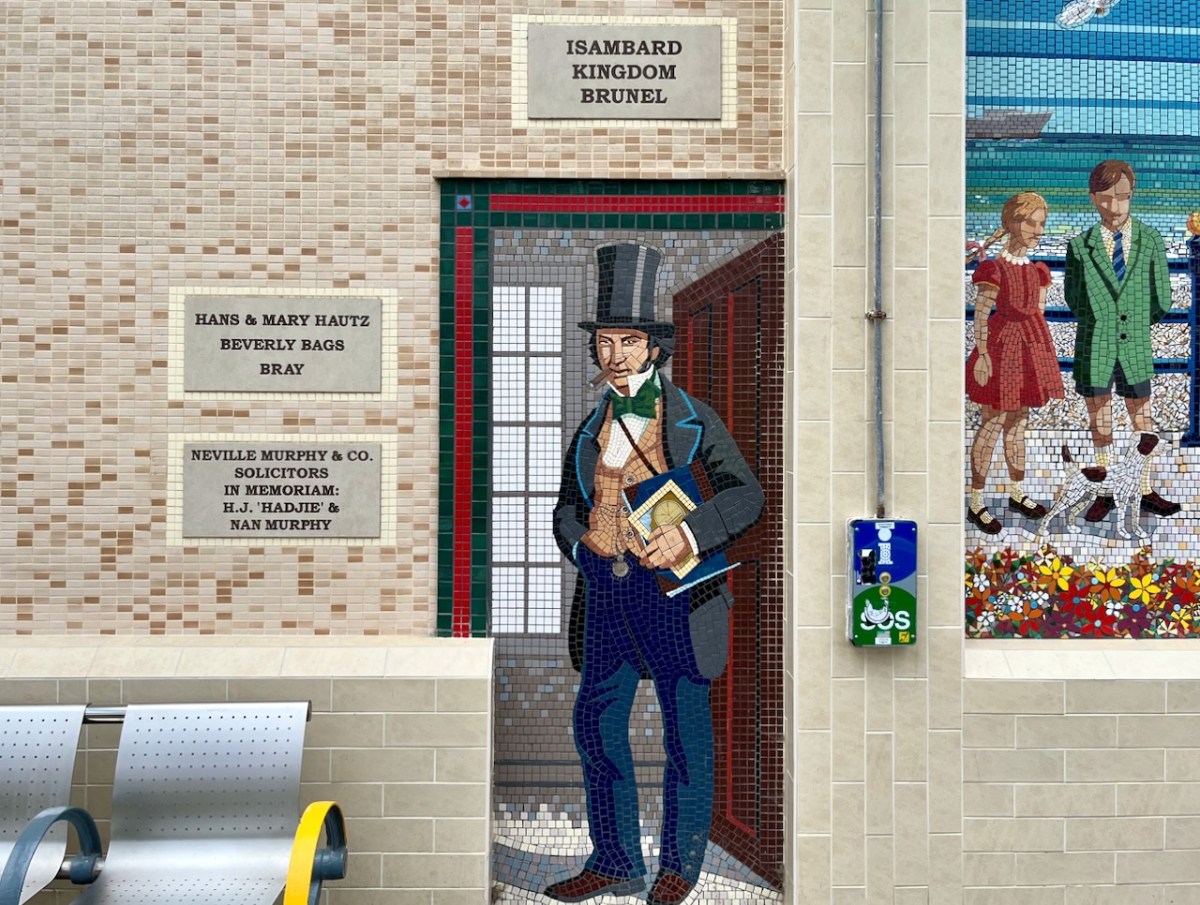
I mentioned – in Taking Notes – that Brunel was responsible for the line that runs through Bray. Here he is, standing on Bray Station:

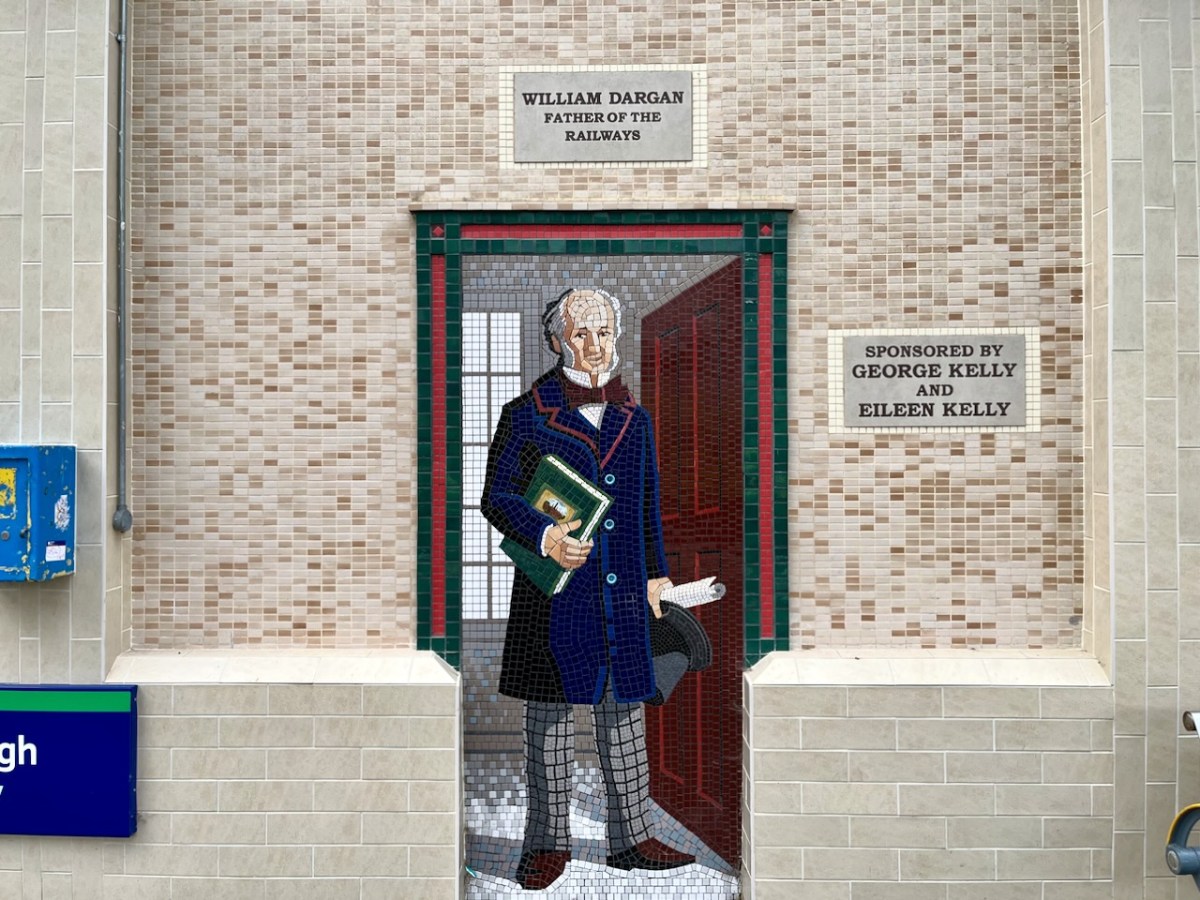
And here (above) – also one of the tiled murals on Bray Station – is a portrait of William Dargan. As you can see – considered ‘Father of the Irish Railways’ – Dargan lived from 1799 to 1867. He engineered over 1300 km of railways in Ireland. Working firstly in the UK he was an assistant to Thomas Telford, and oversaw the construction of roads and canals in the Midlands. He returned to Ireland in the 1820s and took an interest in promoting railways here. The first public commuter railway system in Ireland was designed and built by Dargan: it opened in 1834 and ran between Dublin and Kingstown, now Dún Laoghaire. The line as built was ‘standard gauge’ (ie 1,453mm between rails). This was converted to the ‘Irish standard’ of 1,600mm in 1857. The line extended south to Bray in 1854, and to Greystones the following year.

Isambard Kingdom Brunel, an engineer of Britain’s Great Western Railway, informed the Dublin and Kingstown Railway board that he was planning to build a line into South Wales and start a new sea route from Fishguard to Rosslare. He suggested a joint venture for a line from Wexford to Dublin. A coastal route from Bray (rather than inland) was chosen specifically because it would be scenically attractive for travellers. This led to engineering difficulties including tunnels and retaining structures which are still evolving to this day.

Brunel’s vision of a line going from the capital to Wexford and linking with a service of Irish Sea ferries has been fully realised, and is taken for granted. Let’s hope that this line is maintained and continues on far into the future.

I hope you have noticed how the design of the rolling stock has been changing as we go back through the decades. The representation on these murals is accurate, as far as I can see.

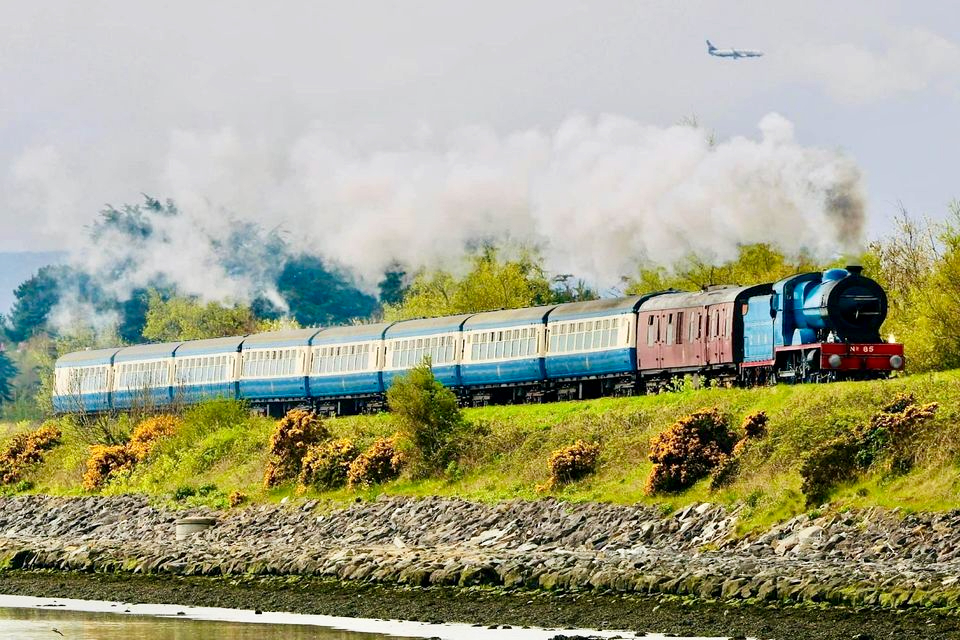
I was sorry to miss the sight of restored steam locomotives and carriages coming through Bray and Greystones on Sunday 24 September this year. Here’s a previous Steam Express visit to Wicklow in 2022 (courtesy Irish Independent):

Here in the West we did have some very singular railway lines – look at these posts: The Great Southern Railway: Headford Junction to Kenmare; Aspects of Baltimore; The Flying Snail and Tracking the Trains. Sadly, it’s no longer possible to travel by train in our region: all lines west of Cork City closed on 31 March 1961. Before that you could get to Skibbereen, Ballydehob, and Schull, Bantry and Baltimore and even, on a little branch line, to Timoleague and Courtmacsherry. Don’t we miss those opportunities?

Watson’s Brian Boru: One Window, 7 Stories

Story 1: Jasmine

The first story concerns Jasmine Allen – she is the charming and erudite Curator of the Stained Glass Museum in Ely, in the UK. At a recent Stained Glass Symposium in Trinity, she showed us how stained glass studios were advertising their artistry and products at exhibitions in the late nineteenth and early twentieth centuries in Britain and Ireland, starting with the Great Exhibition in 1851, but happening at regular intervals after that. The Irish International Exhibition was held in Dublin in 1907. It was inspired by the success of the Cork International Exhibition of 1902 (see Robert’s post about that here) and even copied their thrilling water slide!  For a marvellous collection of images from that exhibition, see this Flikr Album from the Church of Ireland. The story of their discovery is also fascinating.

Irish international exhibition from Herbert Park, by National Library of Ireland on The Commons

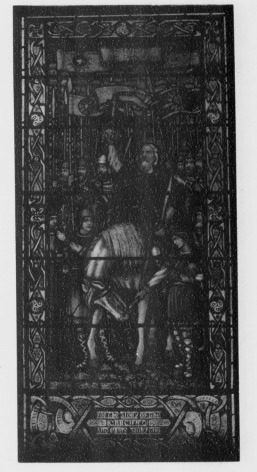
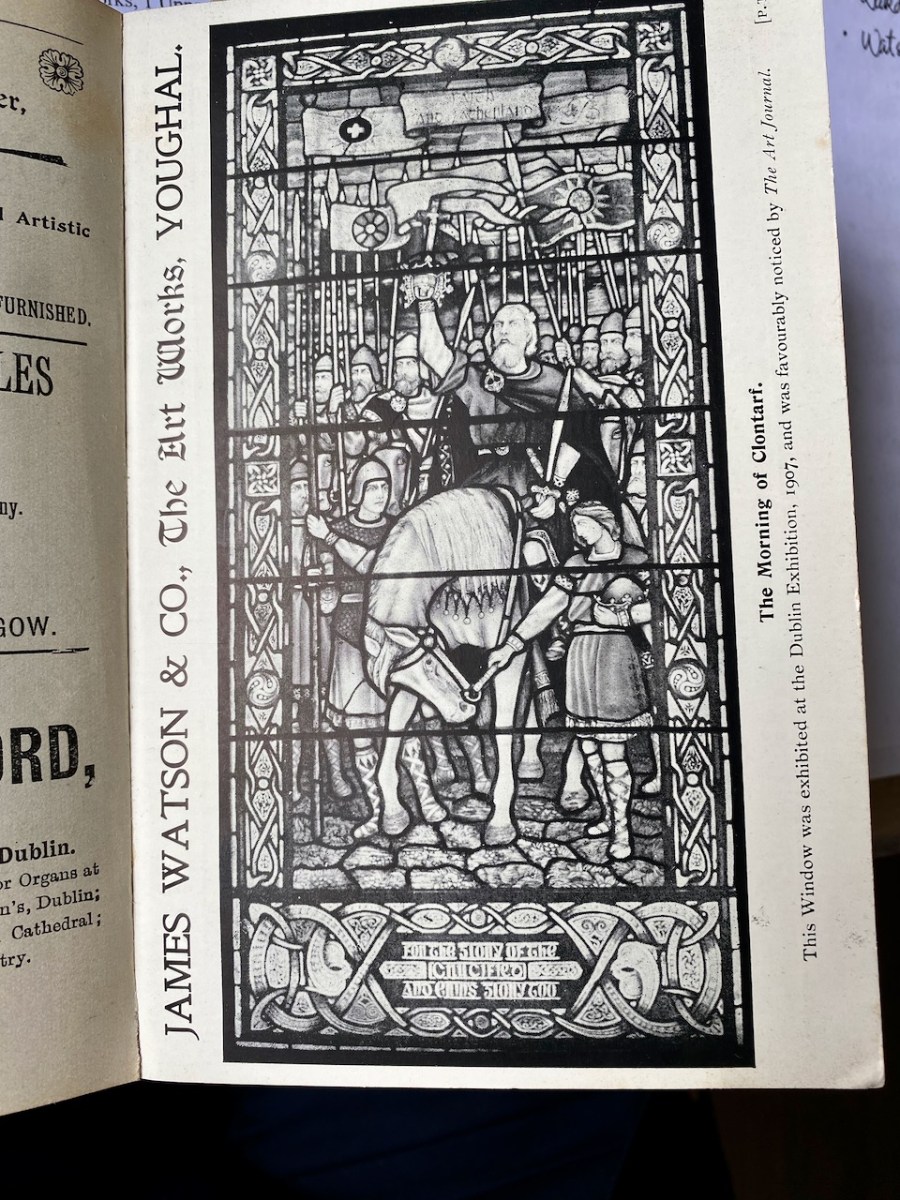
One of the exhibitors was James Watson and Co of Youghal. Jasmine subsequently sent me this image, saying: Catalogues of these exhibitions are all too brief and I would love to know what happened to it. Is it in a church or secular building in Clontarf? I only have a very bad image from the Art Journal (early b+w photography was worse than engraving for capturing stained glass!)

Story 2: Michael

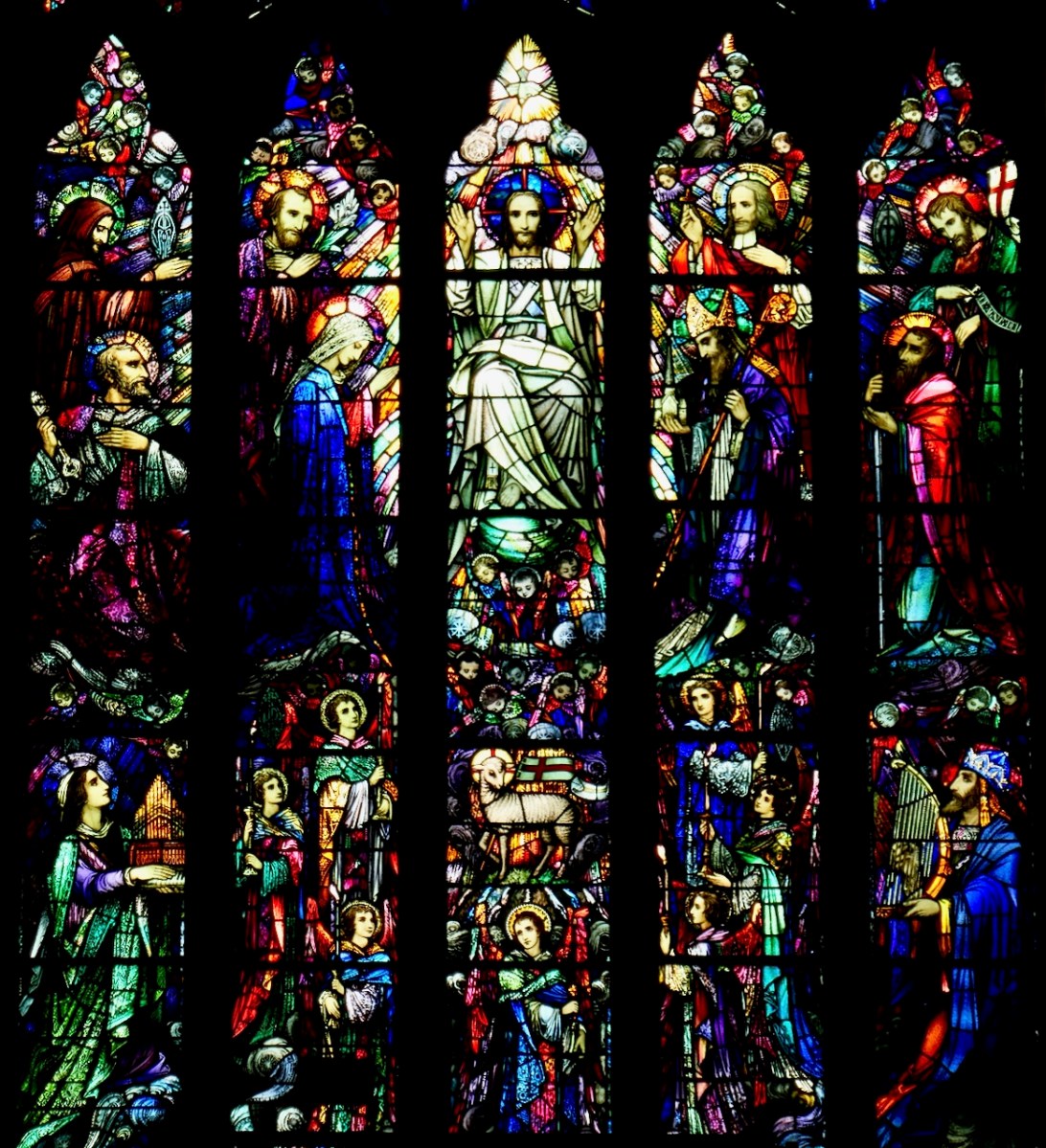
I sent the photo to the group of colleagues, mostly contributors to the Gazetteer of Irish Stained Glass with whom I correspond on a regular basis and who are always helpful, asking if any of them knew the fate of the window. I got several “no idea” responses and then I heard from Michael Earley. Anyone interested in Irish stained glass will be familiar with the name of Earley, and Michael Earley, a great-grandson of the founders, has just completed doctoral studies on the Studios. I’ve featured Earley windows here and there in my blog posts, but here’s an example of their work – you will find it everywhere throughout Ireland, often distinguished by glass of unique and brilliant colour, enormous packed scenes of multiple angels and saints surrounding a central images, and beautifully rendered figures. Here’s one from St Aidan’s Cathedral in Enniscorthy.

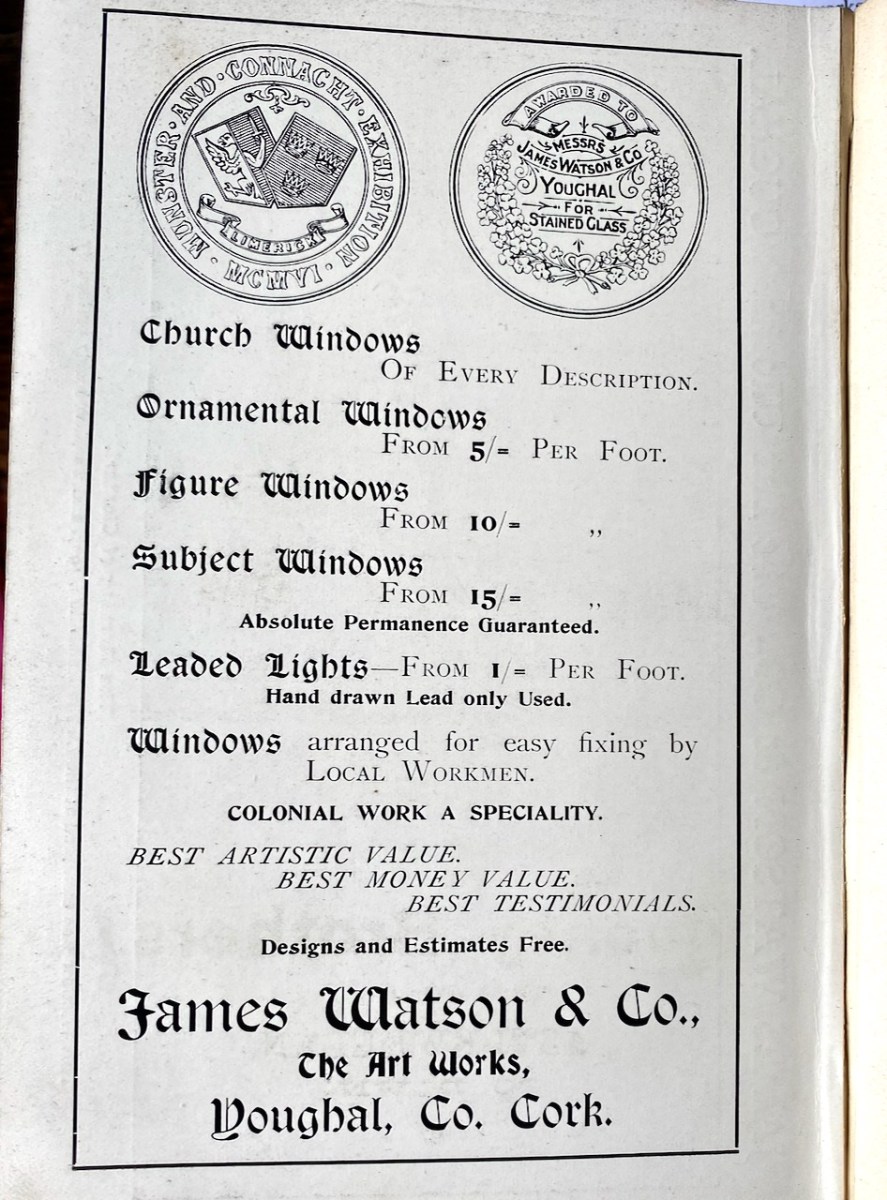
Michael didn’t know what had happened to the window, but he did send me two pages from the Irish Catholic Directory of 1908. The first page was an advertisement for James Watson and Co, The Art Work, Youghal, Co. Cork. Here it is:

Much to savour in this ad – the prices, the variety of windows, “colonial work”. . .  The second page, though, hit the jackpot. It was from the same Directory, and was a full scale black-and-white photograph of the window. Titled The Morning of Clontarf, a subtitle reads “This window was exhibited at the Dublin Exhibition, 1907, and was favourably noticed by The Art Journal”. 

Now I had an excellent image with which to pursue my inquiries – and I knew exactly who to consult!

Story 3: Vera

The art historian who knows more than anyone else about Watson of Youghal is Vera Ryan. In fact, it was Vera who curated the Crawford Gallery 2015 exhibition of the Watson Archive, when the Crawford acquired the Archive. She also wrote the piece on Watsons:  Divine Light: A Century of Stained Glass, in the Summer 2015 edition of the Irish Arts Review. A couple of years ago, when I was trying to find information on a Watson window which was the centrepiece of an article I was writing for the Clonakilty Historical and Archaeological Journal (now published and available here), Vera mentored me as I tried to dig my way through the archive. We have been exchanging information ever since. 

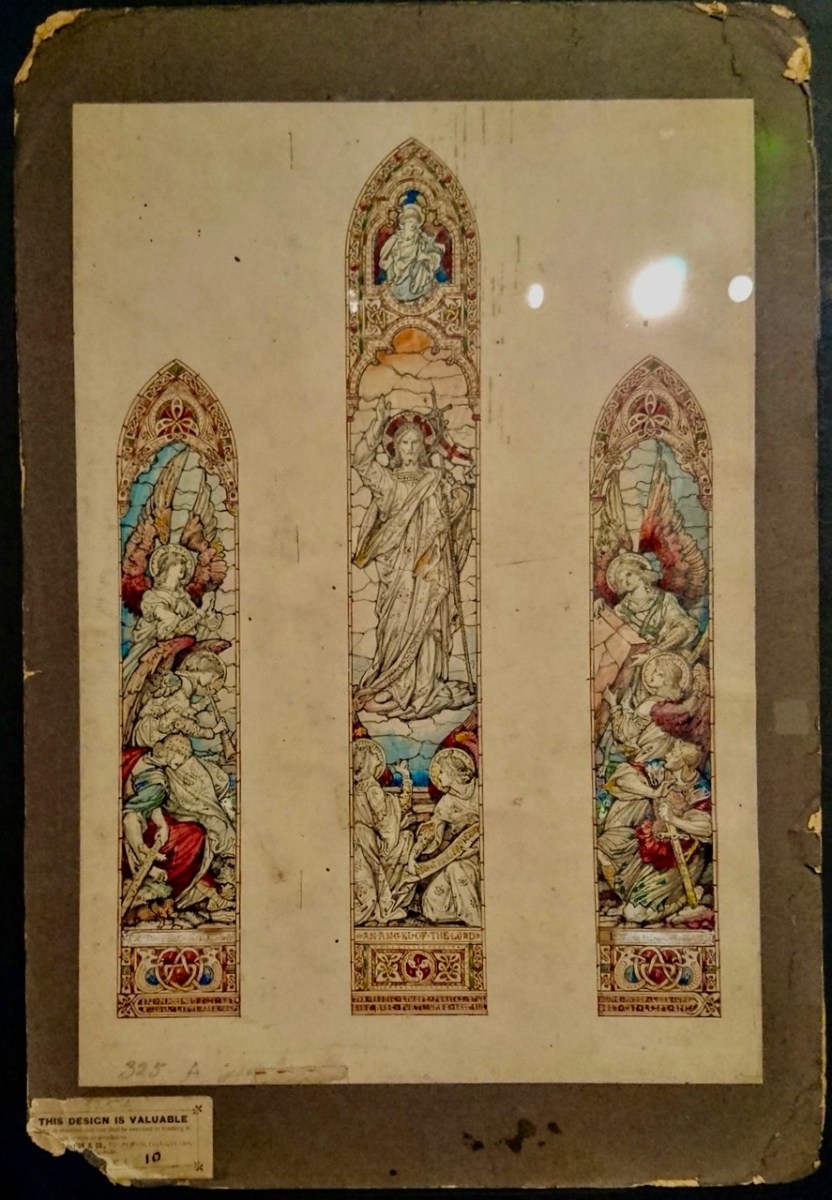
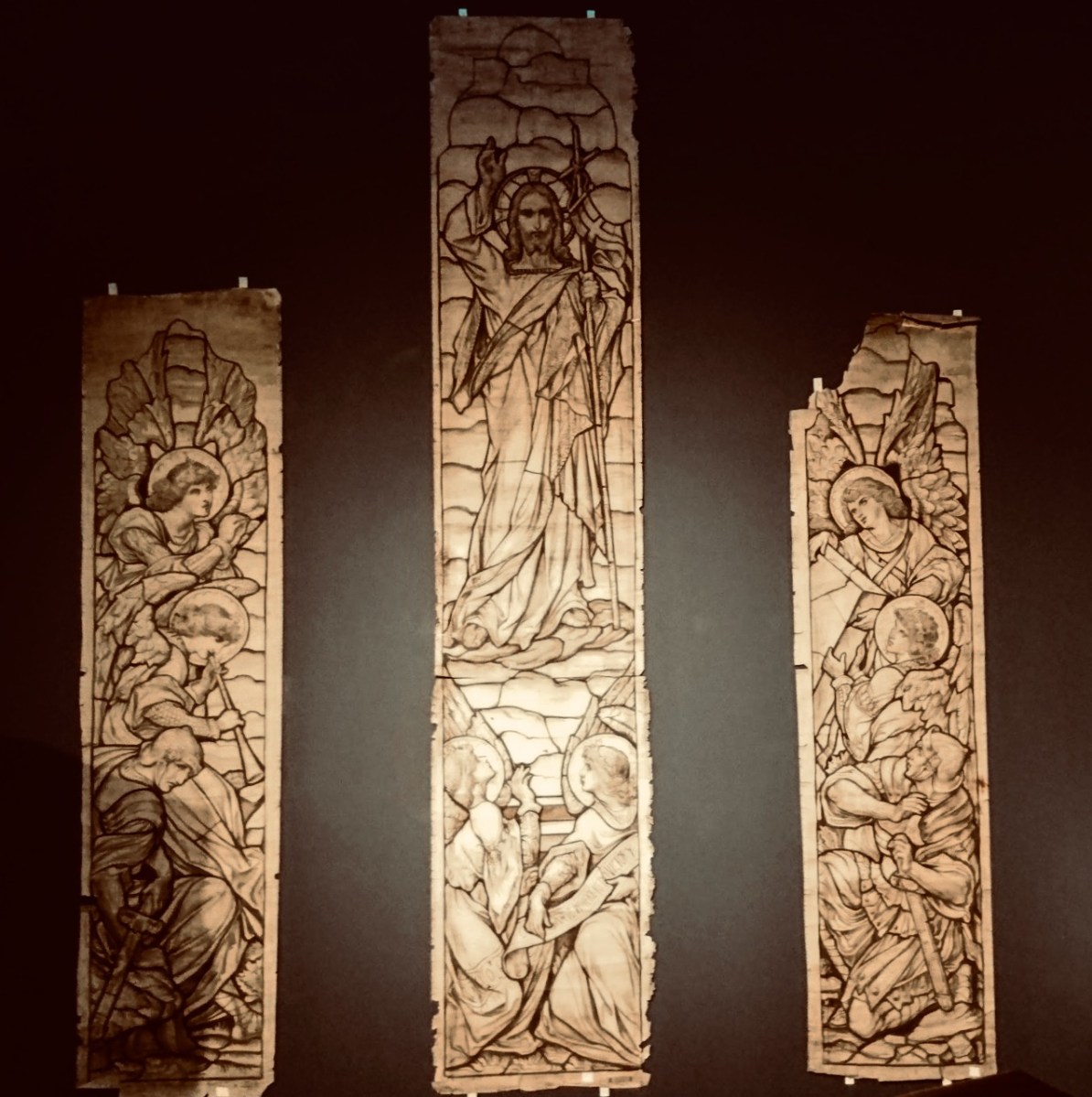
Above is a window in St Michael’s Church, Tipperary, erected in 1914. The design (below) and cartoon (below below) for this window were still in the Watson Archive and were displayed in the Crawford Exhibition. This represents a special opportunity to see the evolution of a stained glass window from concept to completion. 

This opportunity is relatively rare in stained glass studies – there aren’t many collections like this, so it is wonderful that the Crawford rescued the archive, which has now been passed on for expert conservation, to the National Gallery of Ireland.

When I contacted Vera, she remembered the Brian Boru window well, and told me that the cartoon was part of what came to the archive, although in a very fragile state. The window, itself, she thought, was still extant, and possibly in Knappogue Castle. The important person to talk to, she said, was Antony Watson, great-grandson of James Watson and the executor of the Watson Estate.  Before I did that, I tried some detective work of my own.

Story 4: Jody

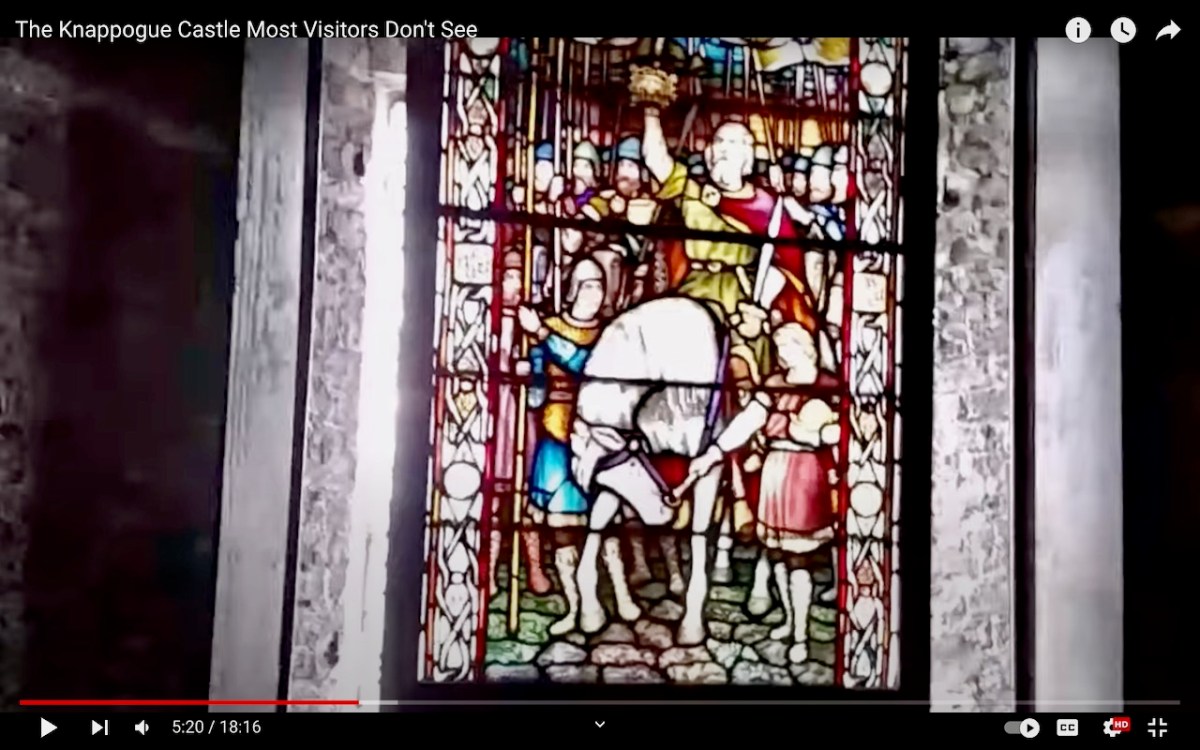
I don’t know Jody Halstead, but in 2016 she stayed at Knappogue Castle and posted a video to YouTube, titled The Knappogue Castle Most Visitors Don’t See. At about the 5 minute mark she arrives at a landing and as her camera roams around, it captures a stained glass window – and there it was! Here’s a screenshot from the video.

Because of Jody, now I had proof that the window was still in existence. The next challenge was how to get a good photograph of it. Once again, thanks to the glorious (and relatively small) world of Irish stained glass scholars and enthusiasts, I knew who to turn to.

Story 5: John

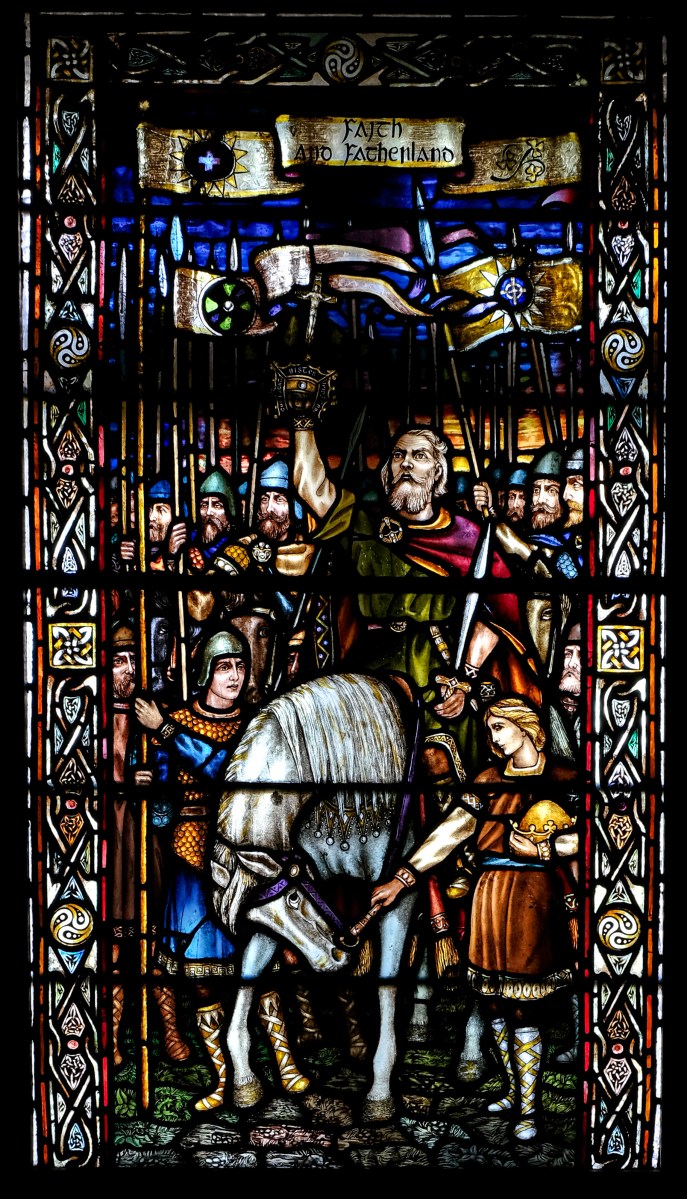
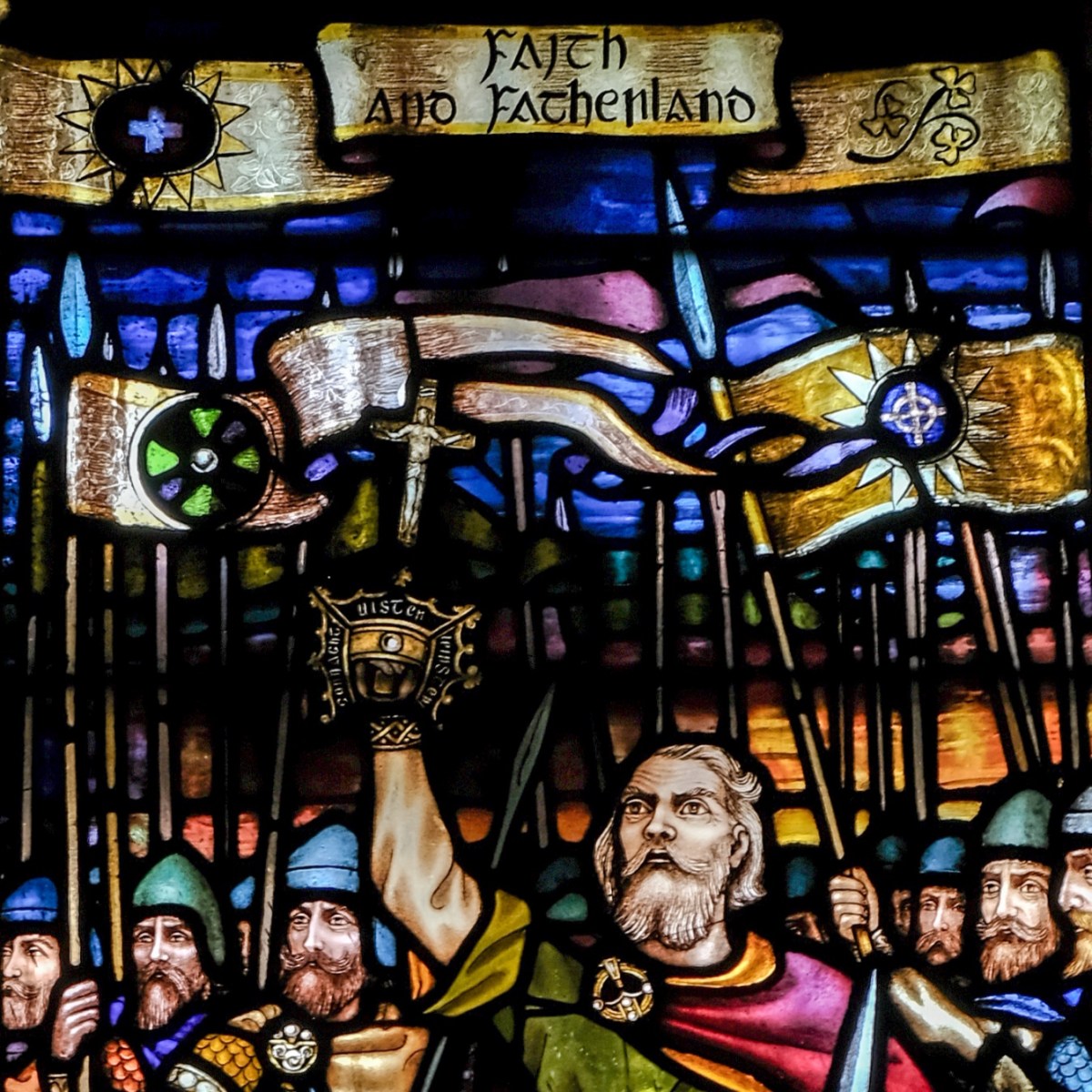
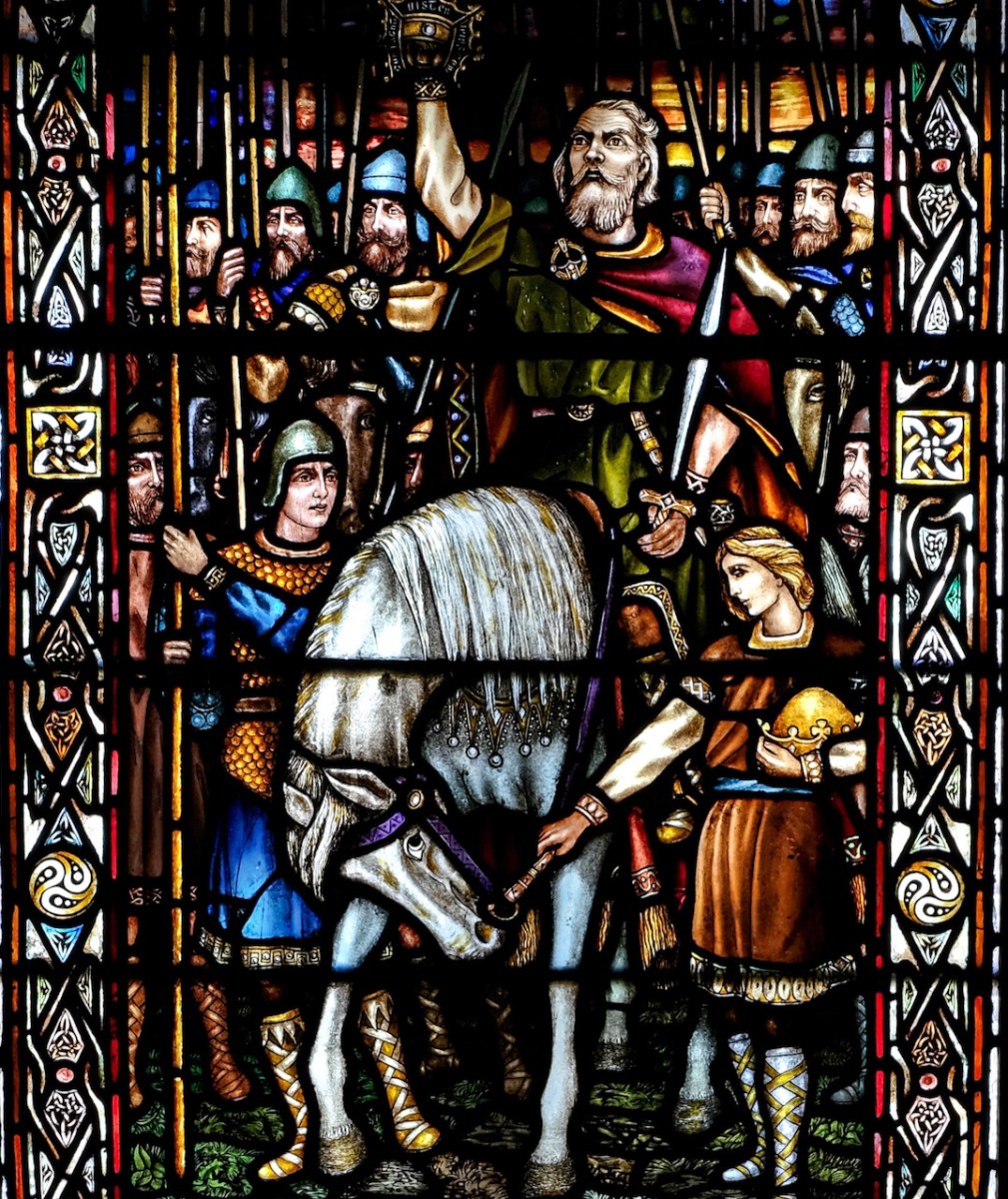
John Glynn is an outstanding photographer with an interest in stained glass. His was the excellent image from Kilrush I used in my post on Brigid: A Bishop In All But Name, and he lives in West Clare, about an hour by car from Quinn, where Knappogue Castle is located. I thought he might already have taken a photograph of the window – he hadn’t but promised to do so as soon as he could. To my great delight, he did it right away. Here is what he sent me.

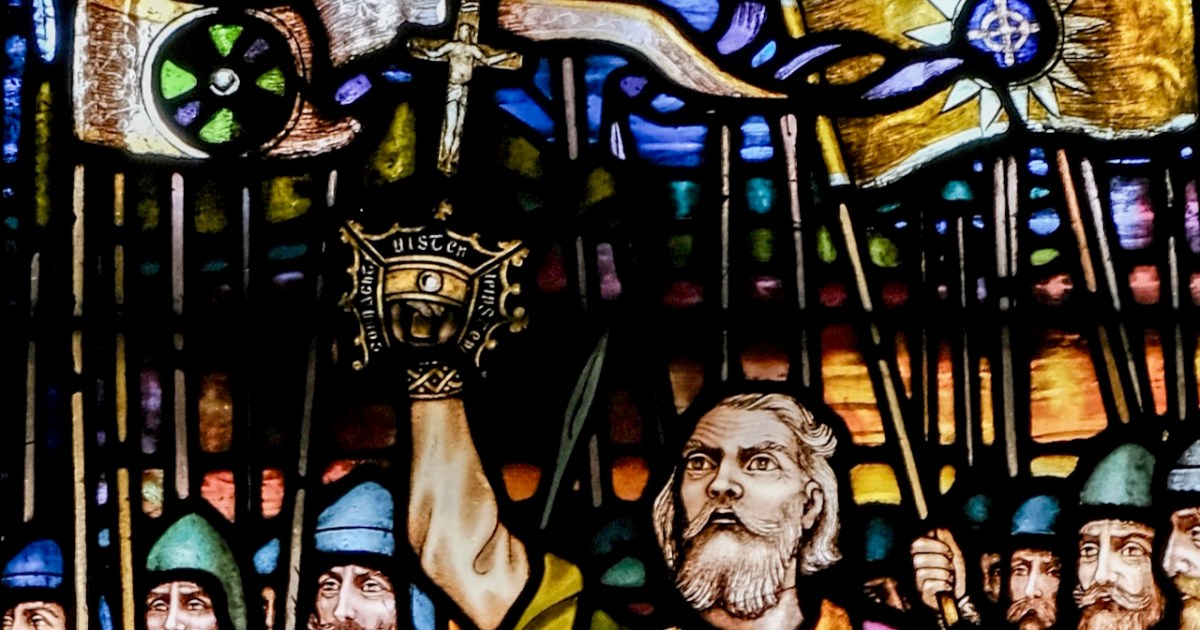
This and all detailed images of the Brian Boru window in Knappogue, are the work of John Glynn, and used with his permission

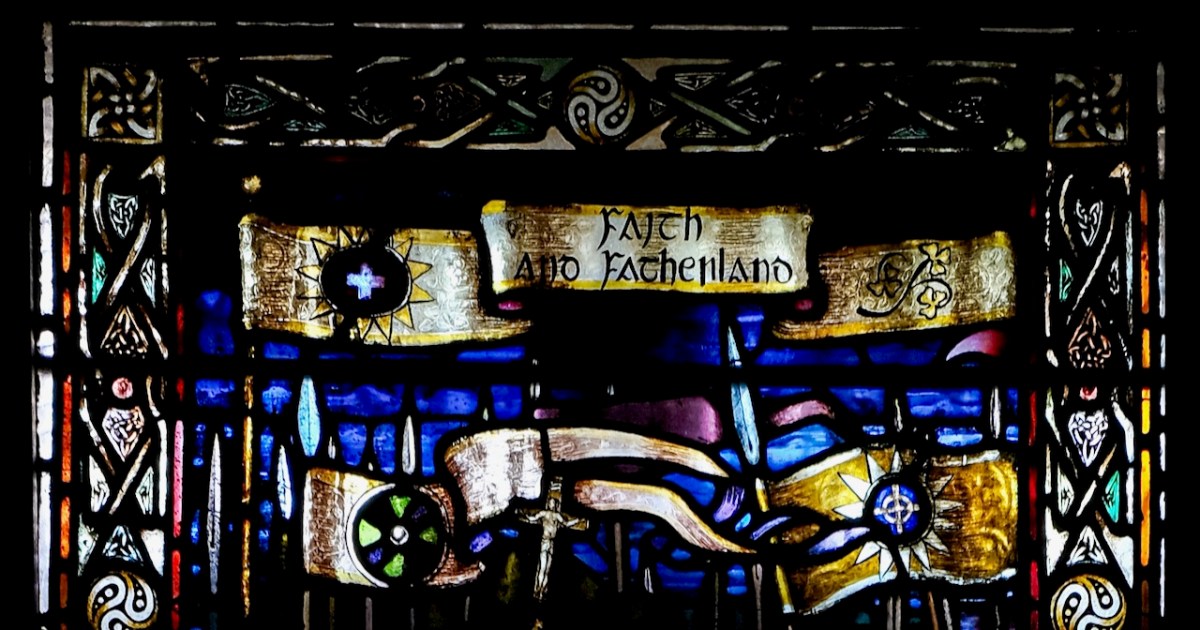
Isn’t it an amazing photograph! What’s also clear in this photograph is that the window is incomplete. To make it fit the opening, the predella, or bottom section, has been removed. Here’s what’s missing. 

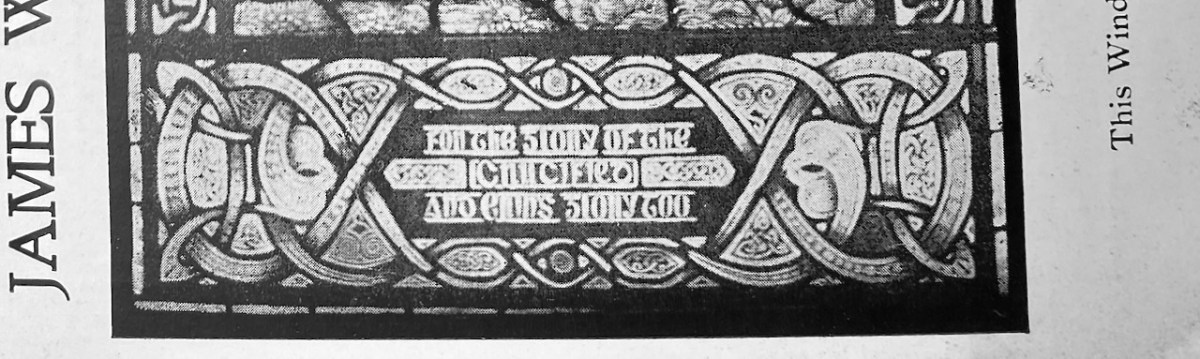
The text, in old Irish script, reads FOR THE GLORY OF THE CRUCIFIED AND ERIN’S GLORY TOO. The Celtic Revival interlacing that surrounds it is beautiful, and accomplished – it’s the thing that Watson’s were to become most famous for. So that’s a loss. Perhaps it was felt that the script was not suitable for a secular building: however it is more likely that it had to go in order to make the window fit. The rest of the window, comparing it to the original black and white images, seems to be intact. I was curious as to how the window came to be there, and this brings me to my second-to-last story.

Story 6: Antony

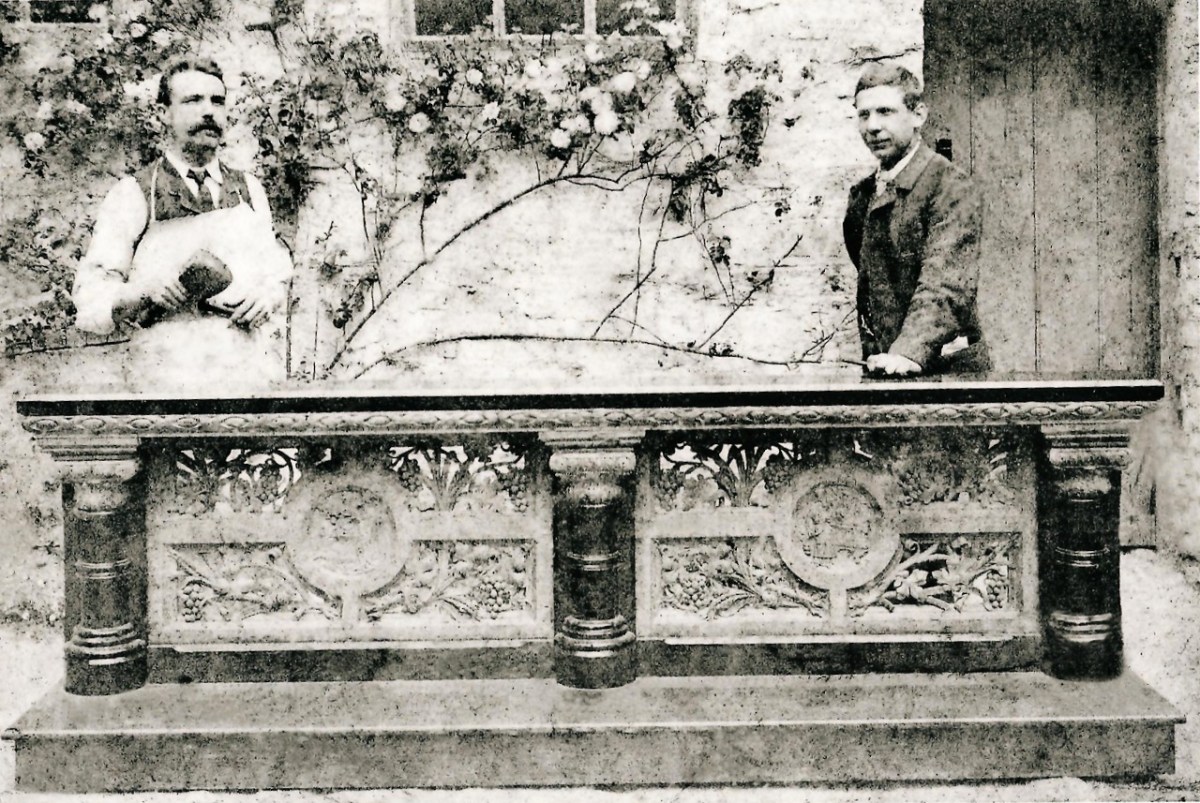
Vera kindly put me in touch with Antony Watson, and yesterday we had a long talk on the phone. Antony’s father was John Watson, Manager and Chief Designer for Watson of Youghal. John’s father was Clement, universally known as Capt Watson (he was an officer in the RFC/RAF), and Clement’s father was James Watson, seen here with a marble altar carver.

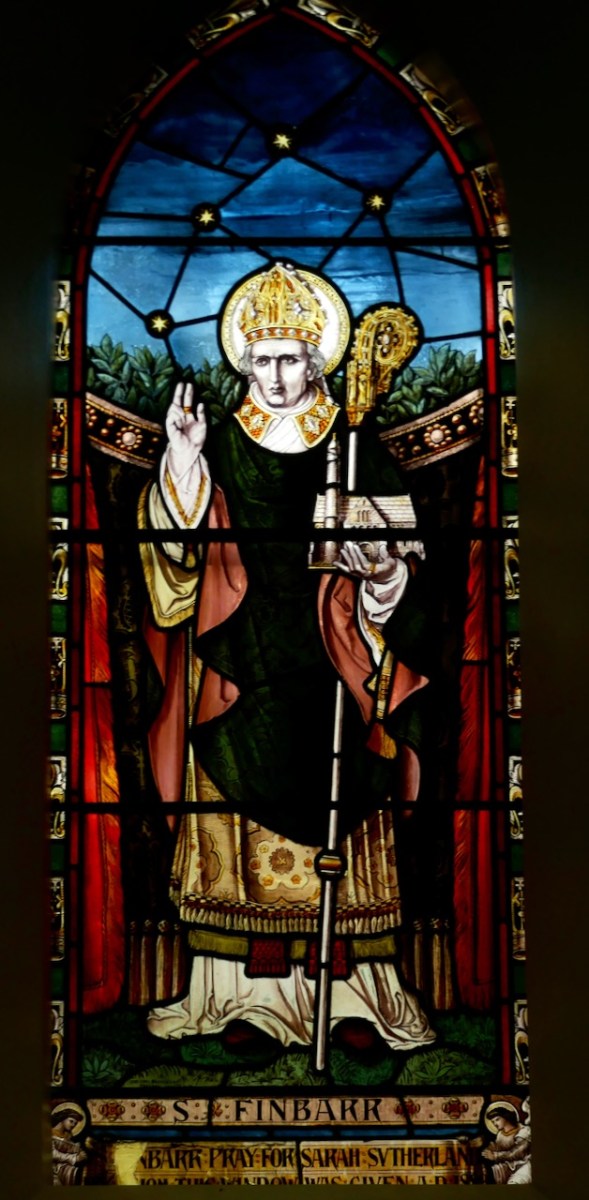
James had come from Yorkshire to run the Irish office of Cox, Sons, Buckley & Co, Church Outfitters, and eventually bought the Irish branch of the company. Here’s one of their early windows, in Ballingeary, from the 1880s, when they were still being signed as Cox, Sons, Buckley, Youghal and London.

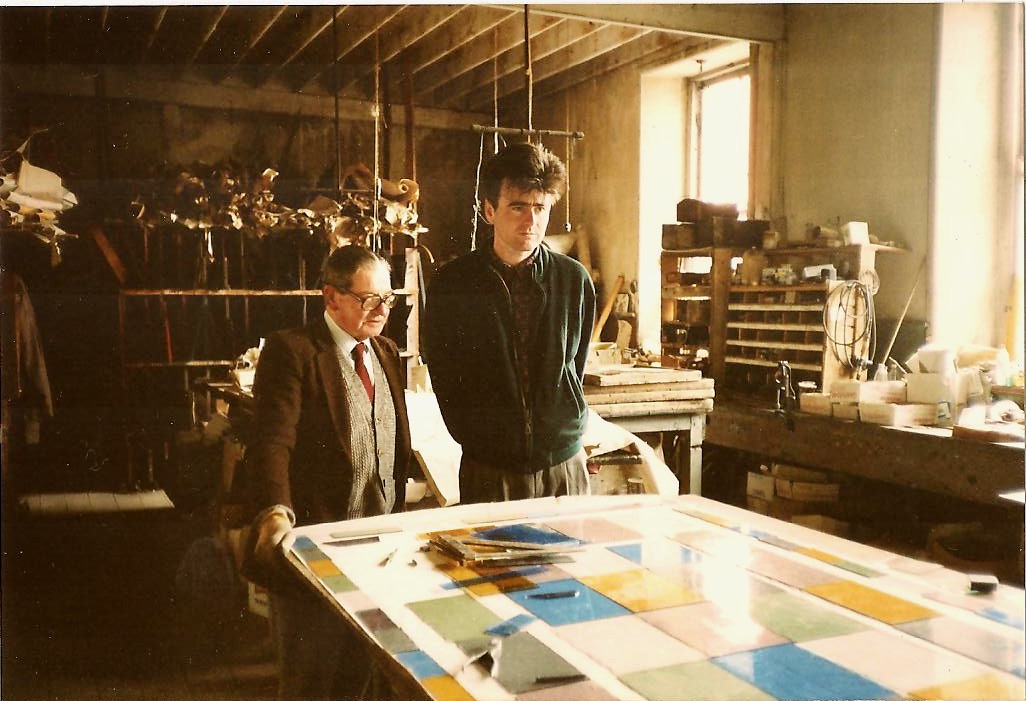
Antony told me the most enthralling stories, and I want to devote more posts to cover some of that treasure trove in the future, but I don’t want to get too distracted from Brian Boru now. Antony loved his life in and around the studios and workshops when he was young and has a very clear memory of the Brian Boru window. It stood, he said, in a rack in what was called the Great Hall (a grand name for a storage area for tall items). Here’s Jack, Antony’s father, with a client, in the early 1990s.

Watsons got the job of installing leaded windows into Knappogue Castle when it was bought by wealthy Americans – Mark and Lavonne Andrews. He remembers the day they arrived to see the Brian Boru window – there was a frantic tidy-up beforehand and the whole of Youghal turned out to witness two stretch limos arriving in state and disgorging the ‘Texas millionaires’ and their retinue.

Story 7: Mark and Lavone

This is Mark Edwin Andrews, highly educated (Princeton) and cultured, and at one time Assistant Secretary of the Navy under Truman. He went on to become an industrialist and oil producer. His wife, Lavone Dickensheets Andrews (so sad I can’t find a photograph of Lavone) was a prominent architect. Together they purchased Knappogue Castle in 1966 and set about restoring it from a ruinous state. Knappogue is located in Quinn, Co Clare, the heart of Brian Boru country. It’s now owned and managed by Shannon Heritage.

It was Mark and Lavone who rescued the Brian Boru window and had it fitted into Knappogue Castle, some time in the 1970s. And there it still is, a testament to the enduring attraction (and durability) of stained glass windows and their power to enchant and intrigue us.

It’s a highly unusual window in so many ways, not least that it is a secular rather than a religious subject. It showed off, when it was exhibited, one of our historic heroes, Brian Boru (for more about Boru, see Robert’s post, Battling it Out), as well as the Celtic Revival decoration which Watsons mastered: both the subject matter and the treatment established them firmly in the Nationalist Camp. This of course, was a canny move designed to appeal to Irish Catholic church-builders. Antony tells me that nobody espoused Irish Nationalism more enthusiastically (or astutely) than James Watson, in the broad Yorkshire accent he kept to the end. 

As an image of Faith and Fatherland, this window knew exactly who it was appealing to. It appeals to us still.