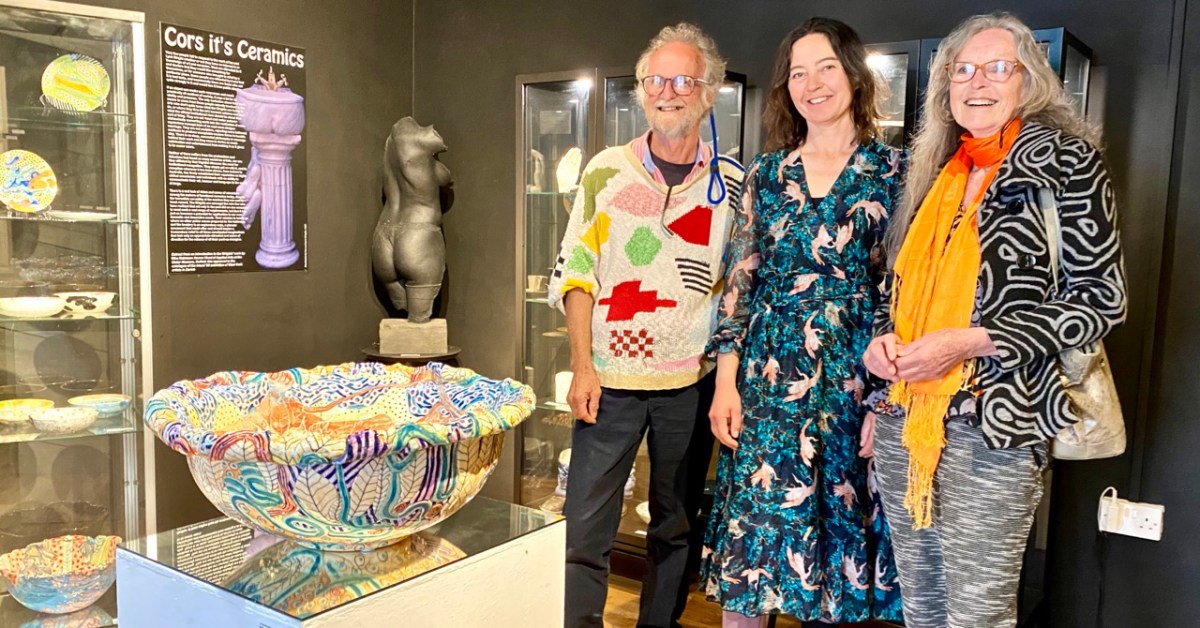
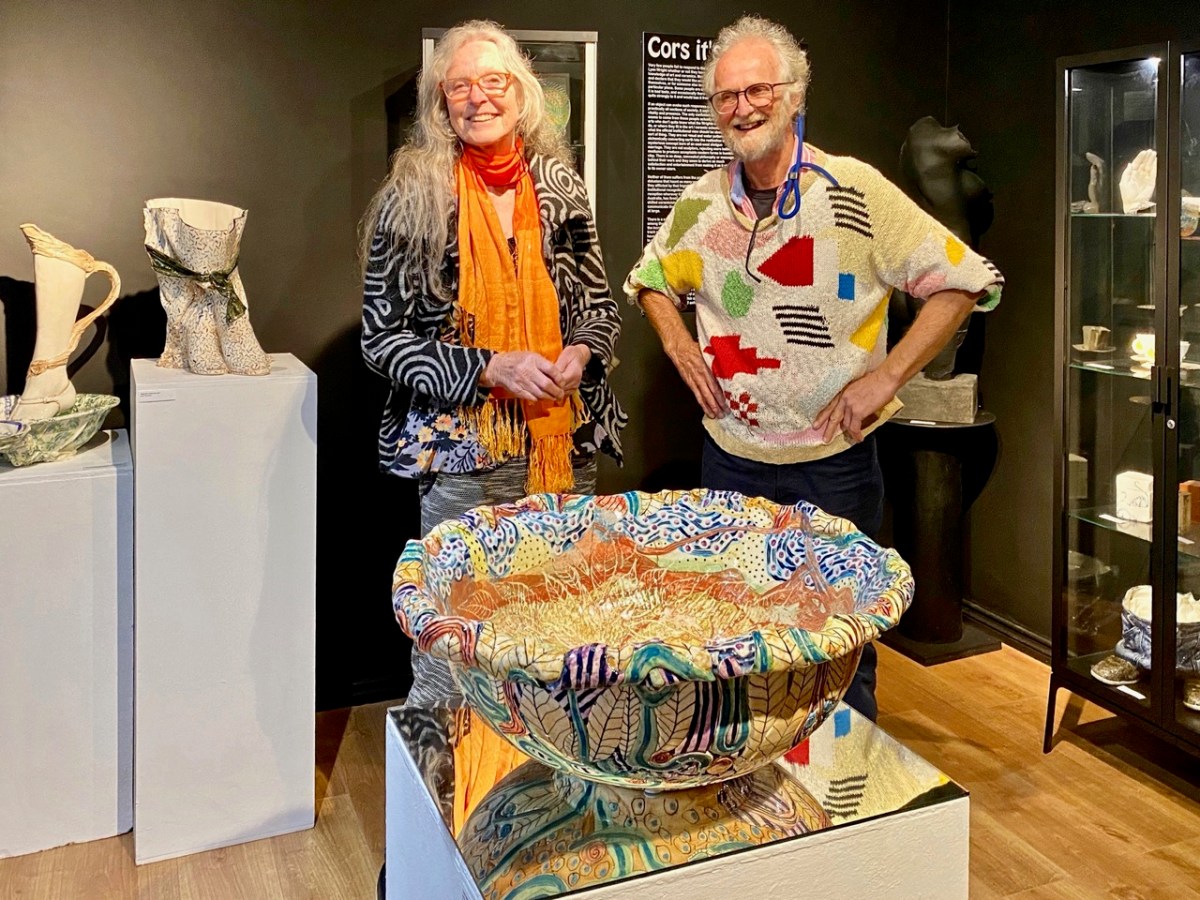
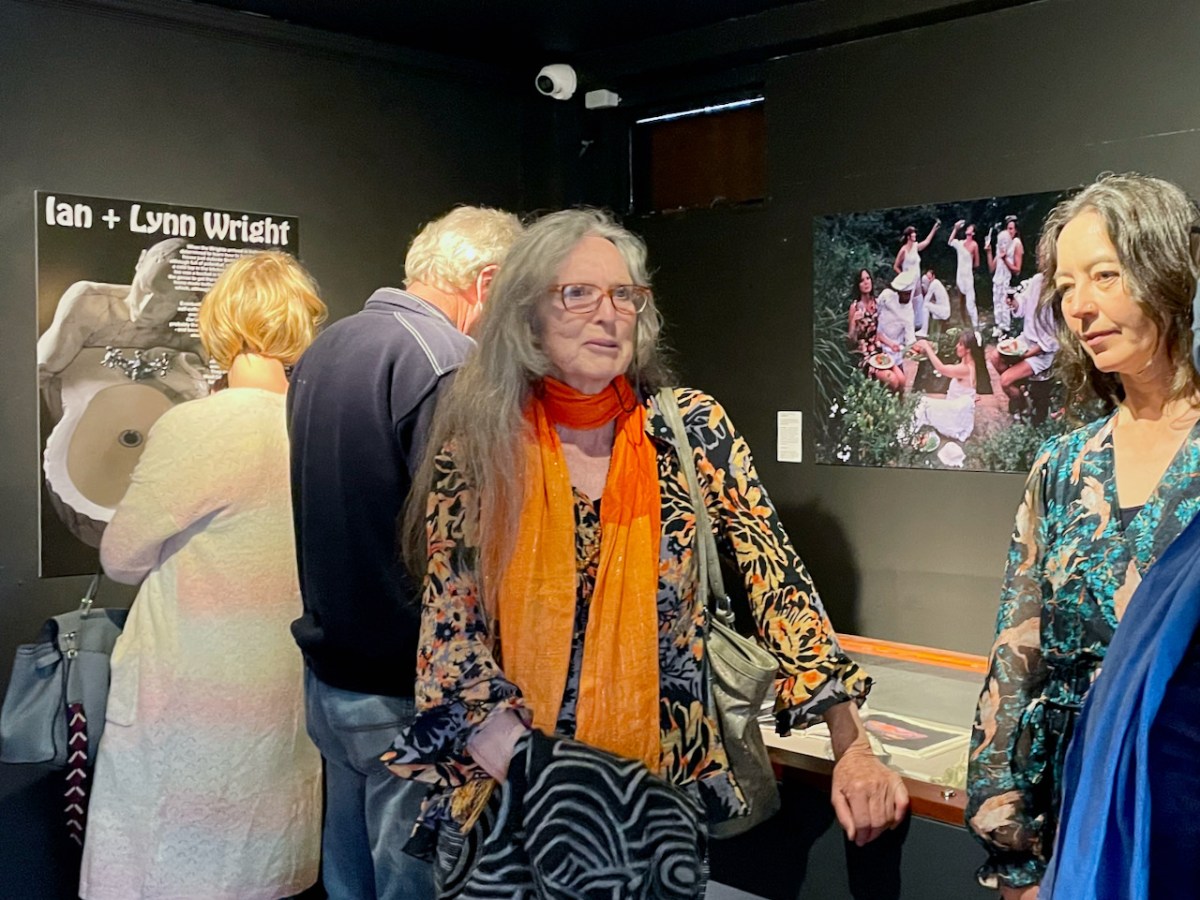
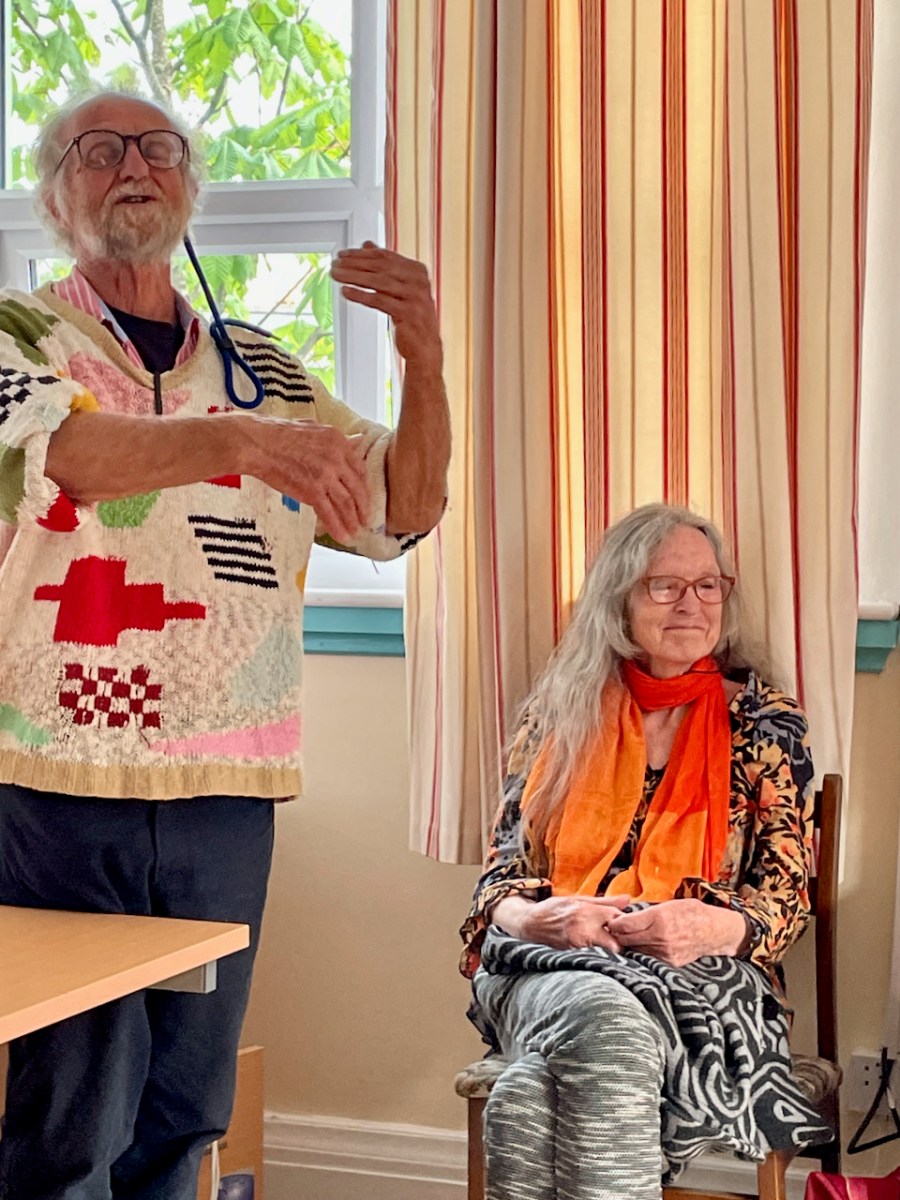
BAM – the Ballydehob Arts Museum – is open through the summer. Make sure you don’t miss the impressive exhibition that’s on at the moment. It shows the work of West Cork art creators Ian and Lynn Wright (shown above with Eleanor Flegg). They were part of the ‘invasion’ of artists who came to the Ballydehob area from the 1960s onwards, and who are now featured in what is perhaps Ireland’s smallest art gallery, situated in Bank House, the headquarters of the Ballydehob Community Council.
You will find out all about the Museum here and here. Curator Brian Lalor (who featured in last week’s post) and Director Robert Harris (that’s me!) have put together a new exhibition this summer, following two years of absence due to Covid.
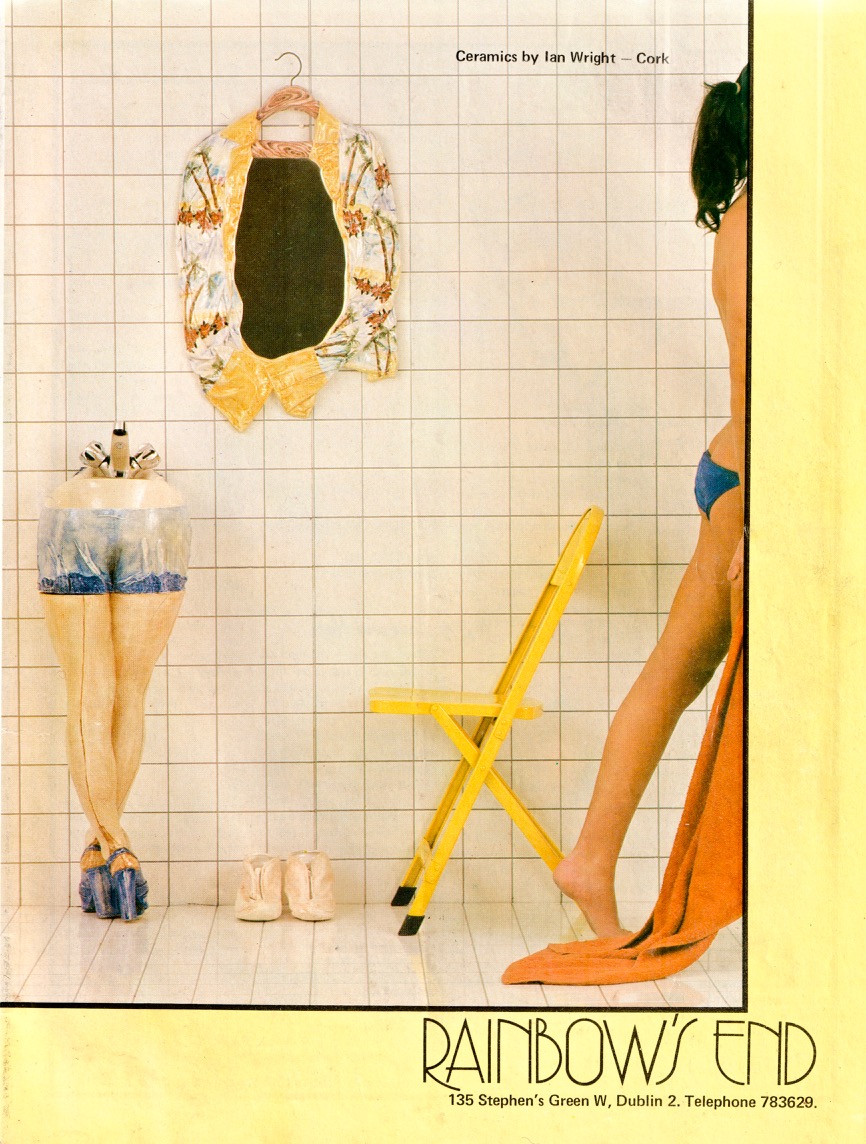
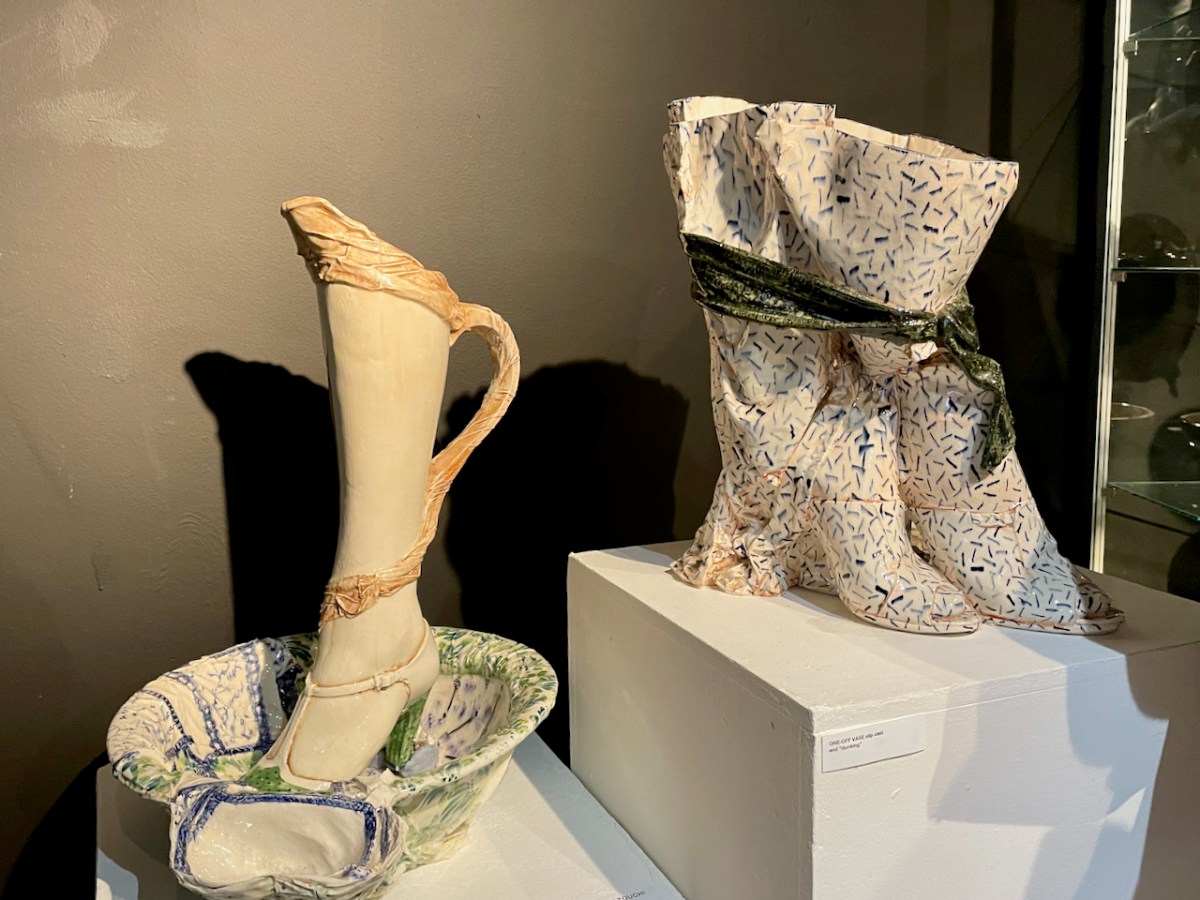
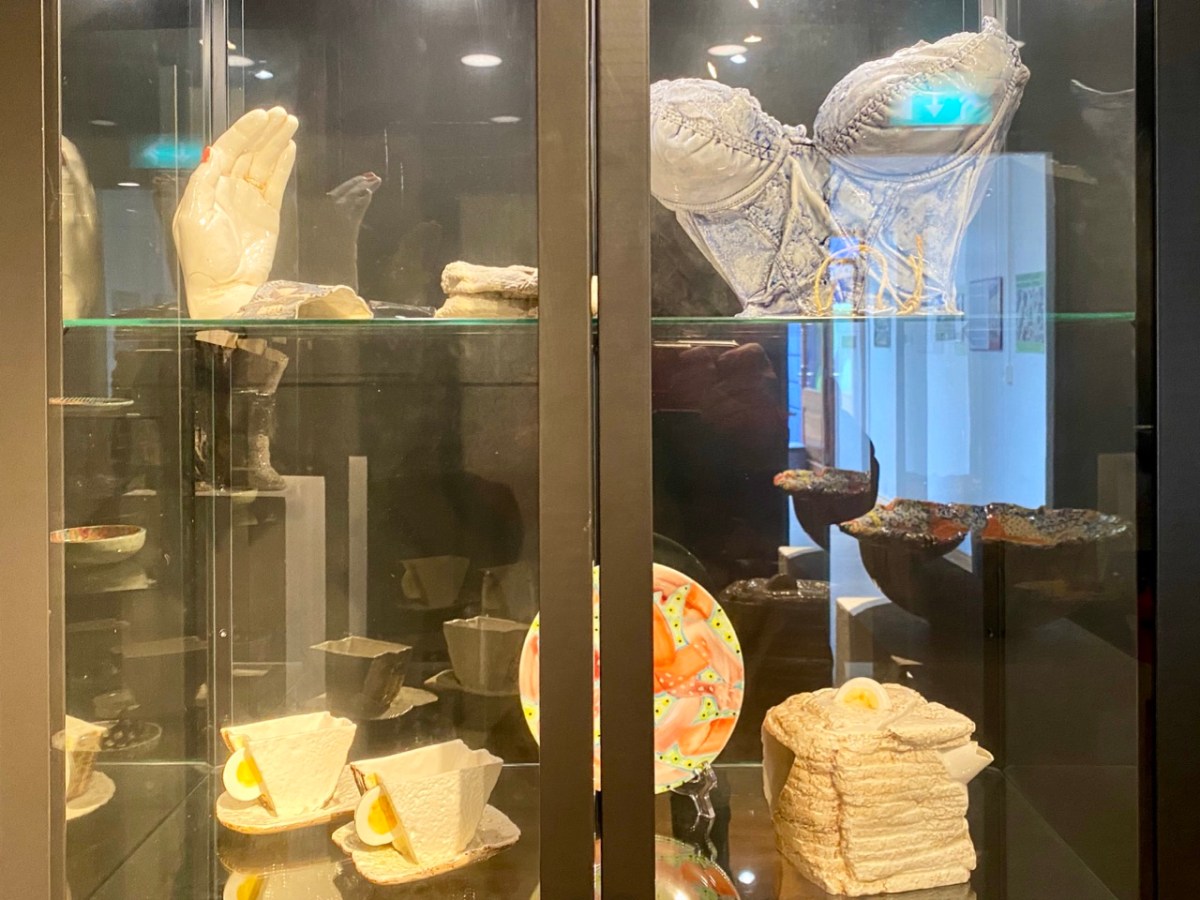
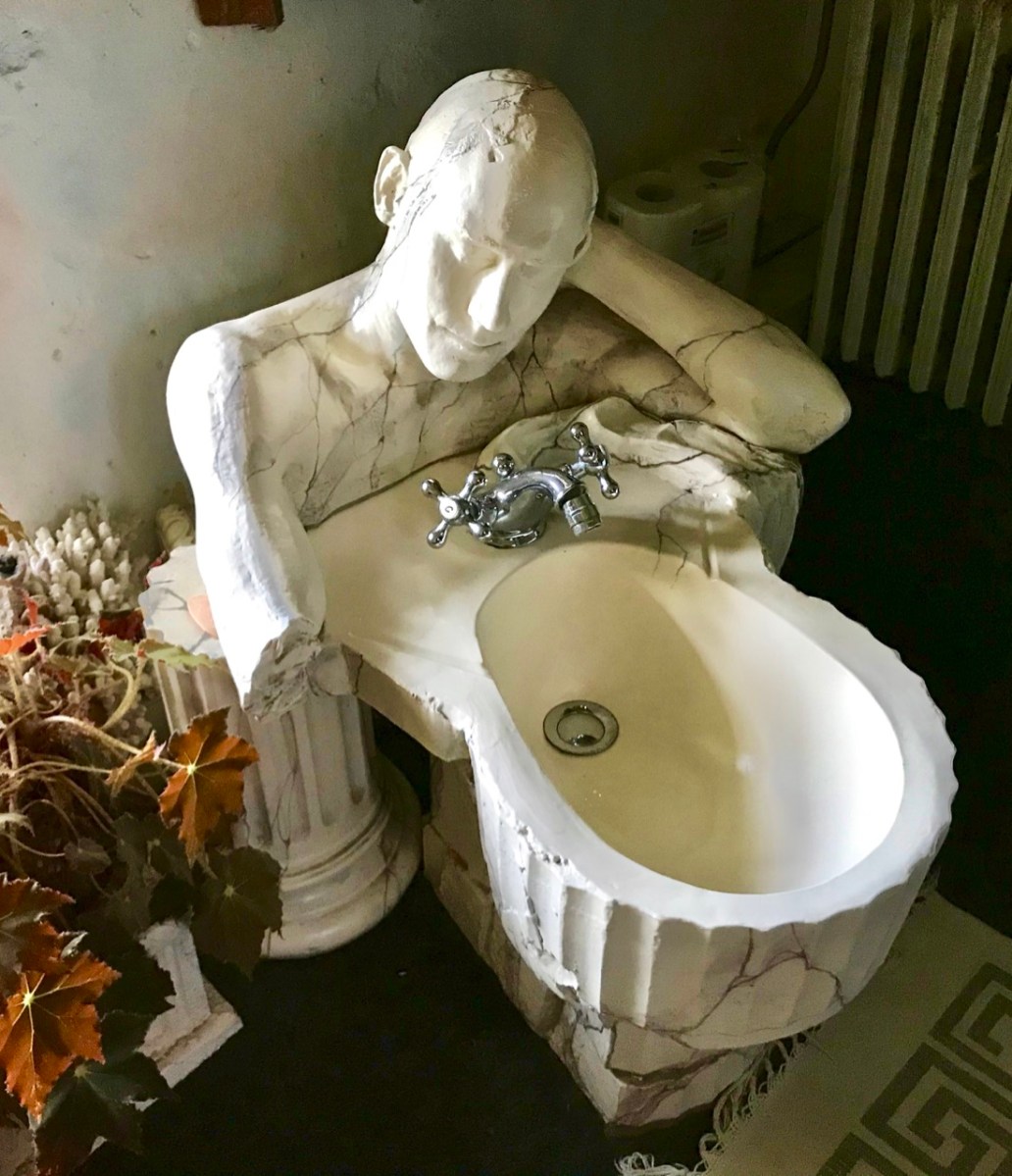
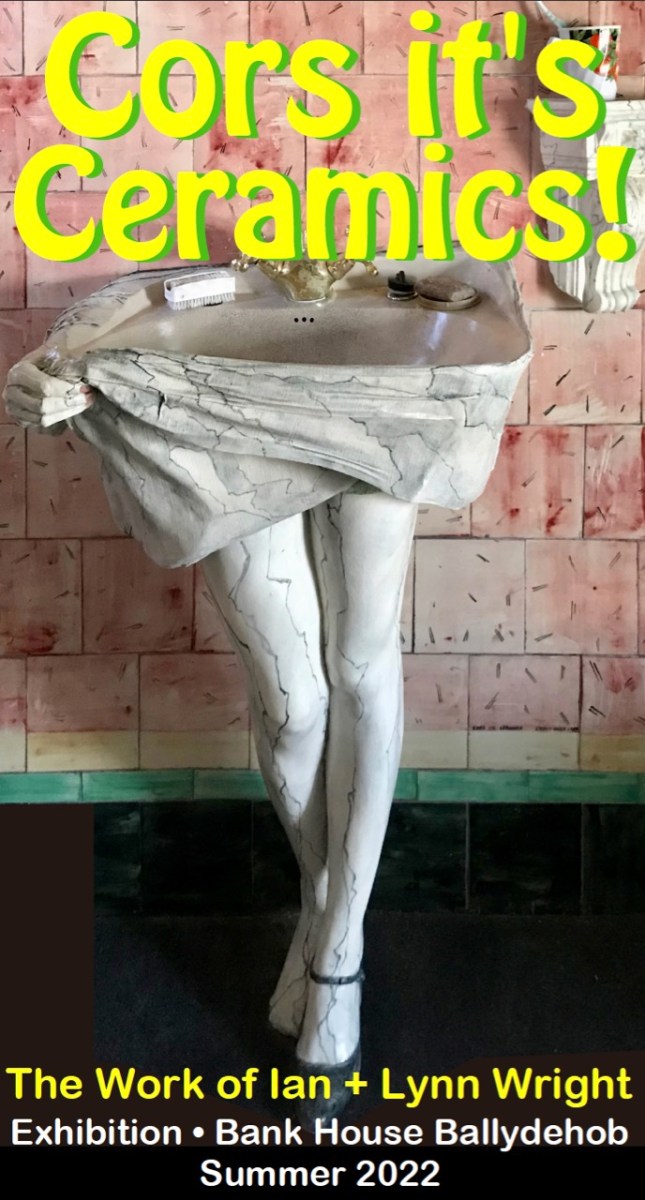
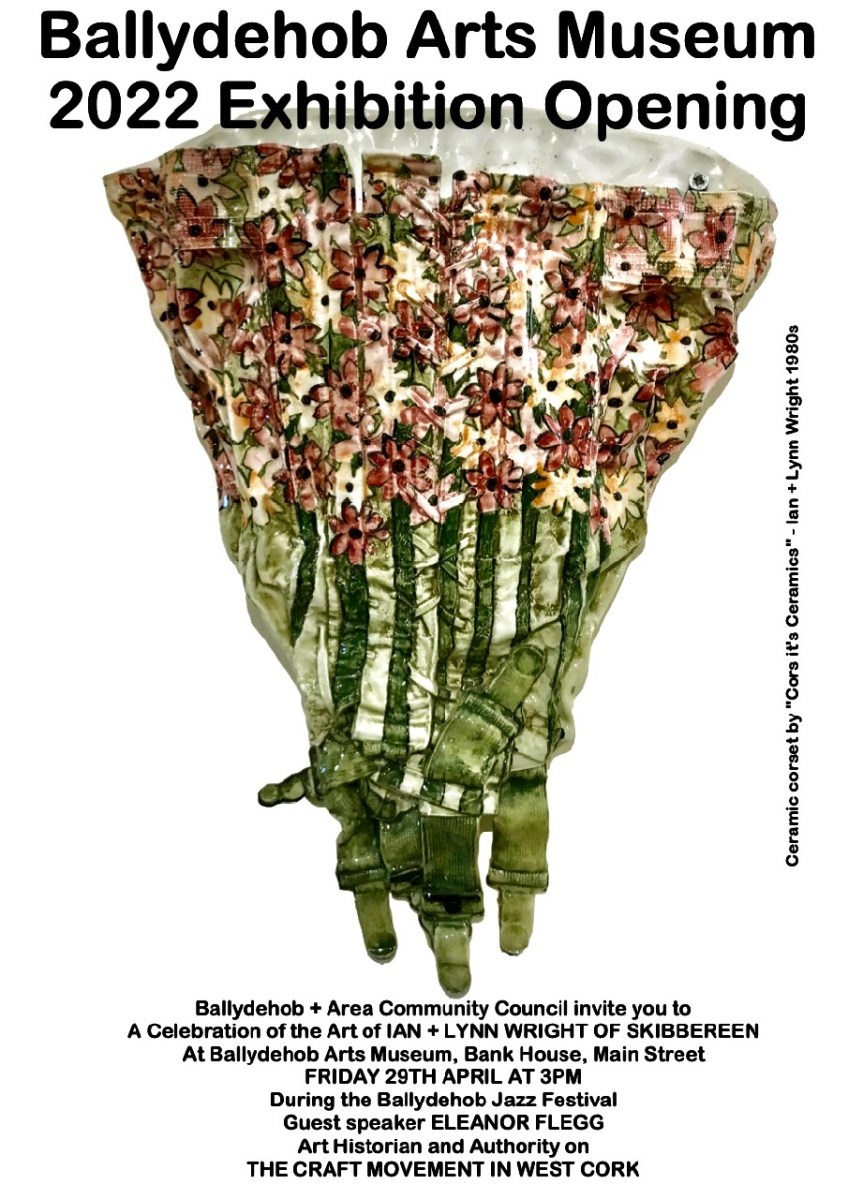
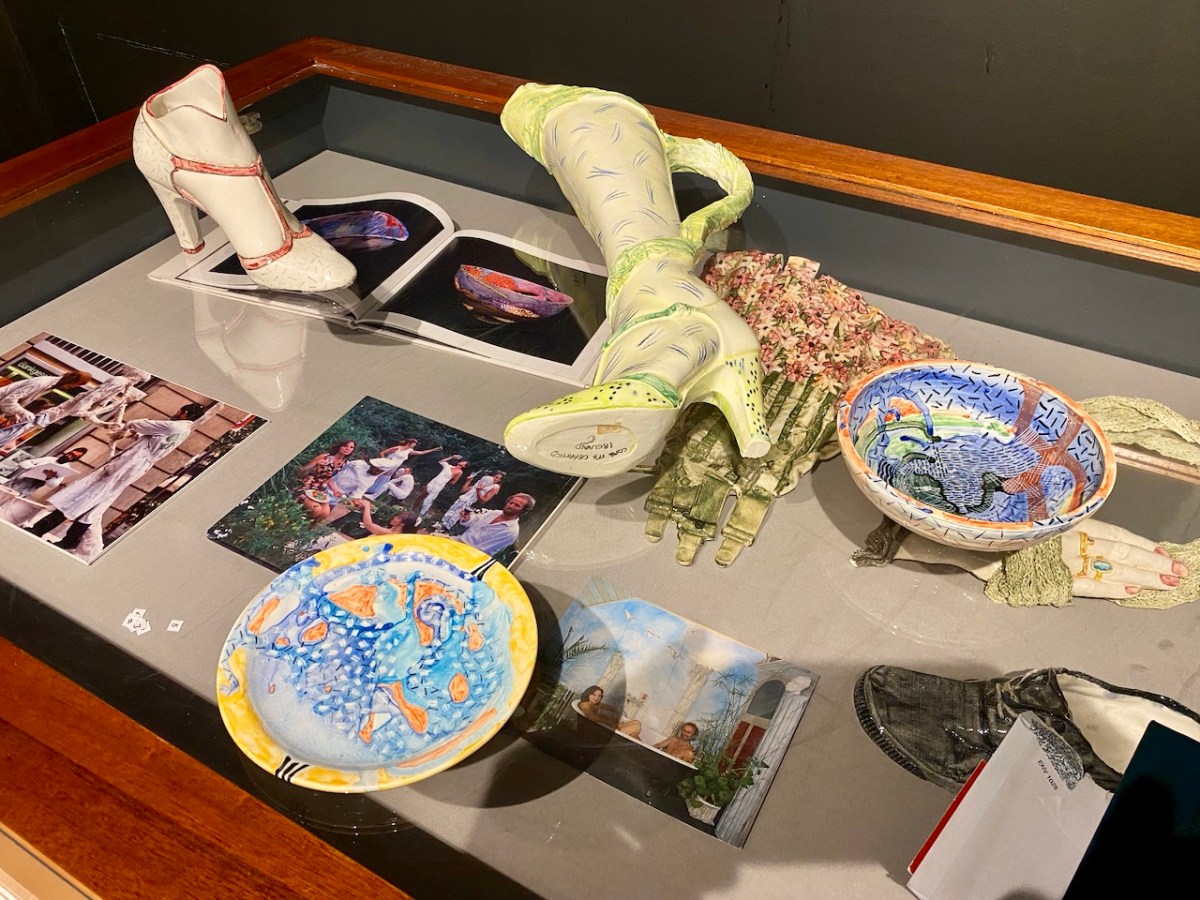
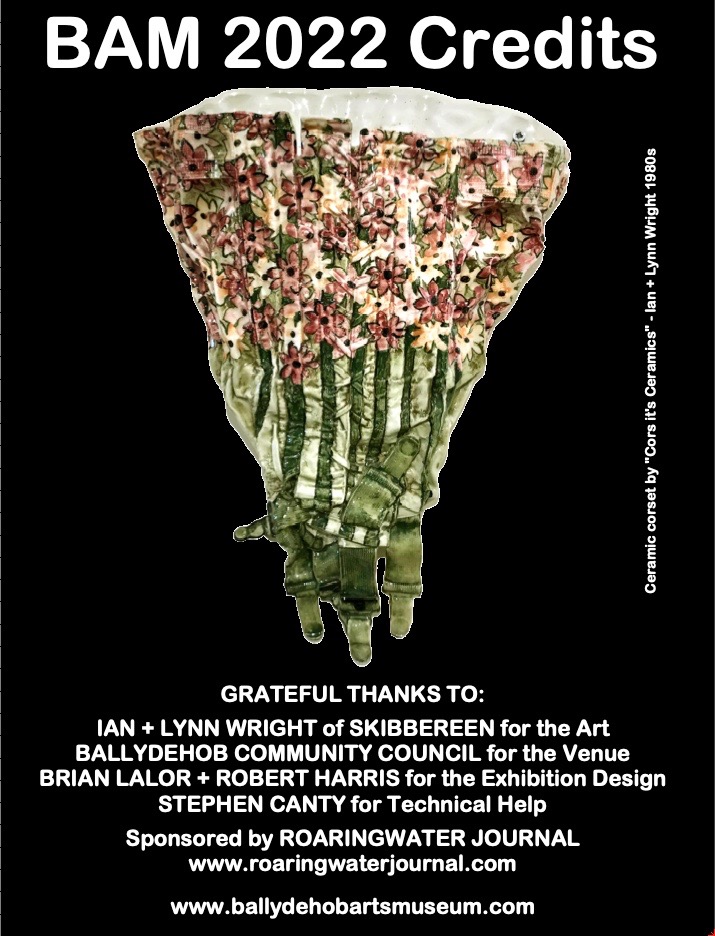
The ad above (from the early 1980s, I think) shows how Ian and Lynn’s work was being marketed at that time. They called themselves Cors it’s Ceramics, and they definitely projected a cheeky identity, making one-off ceramics – basins, bidets, loos and bathroom accessories: unique, appealing and often erotic. Their work was popular, and their production processes couldn’t keep up with demand! Today, the Wrights are producing more measured ceramics: Lynn produces beautiful large bowls, while Ian uses human body moulds to make impressive torso casts. Examples of all their working styles can be seen in the present Museum exhibition.
The Museum display is stunning. It brings together – probably for the first time ever – an eclectic extravaganza of the Wright’s output over half a century: examples of work small and large. There are no complete bathroom settings here: those that survive are still installed in the domestic settings for which they were commissioned. But we are fortunate that we have had access to the Wrights’ own collection of their work, which they have freely lent to the Museum. We do, of course, also have photographic records of other examples.
The Exhibition was formally opened earlier this year by Eleanor Flegg, and it can now be viewed for free whenever the Ballydehob Tourism Office is open. Through the summer this is usually from Monday to Saturday – 11am to 1pm, and from 2pm to 5pm. However, please check before visiting, as the office is staffed only by volunteers, and we can’t guarantee those hours at all times. It’s best to ring this number to confirm that it will be open: 028 25922.
A lot of effort has gone into making this exhibition. It’s on for the rest of this season, so please don’t miss it. It is the aim of the Ballydehob Arts Museum to celebrate the very special projects that have been carried out over decades to give the village its reputation as an artistic centre of excellence. Nowhere else can you find the full flavour of what has made this community so special.
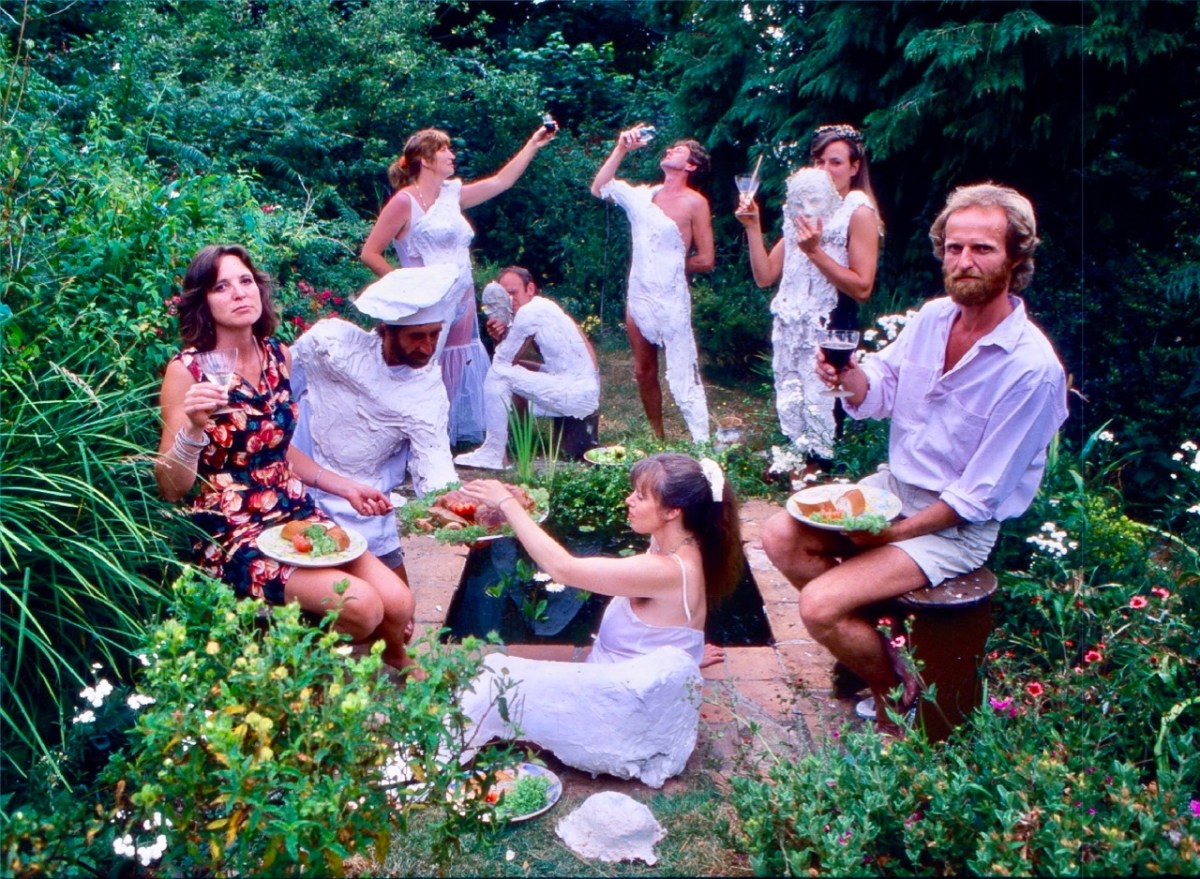
This photo (above) appeared in the Mail on Sunday newspaper in 1983. Lynn and Ian are on the left and right respectively. The occasion is a ‘body casting party’ in the Wright’s garden.
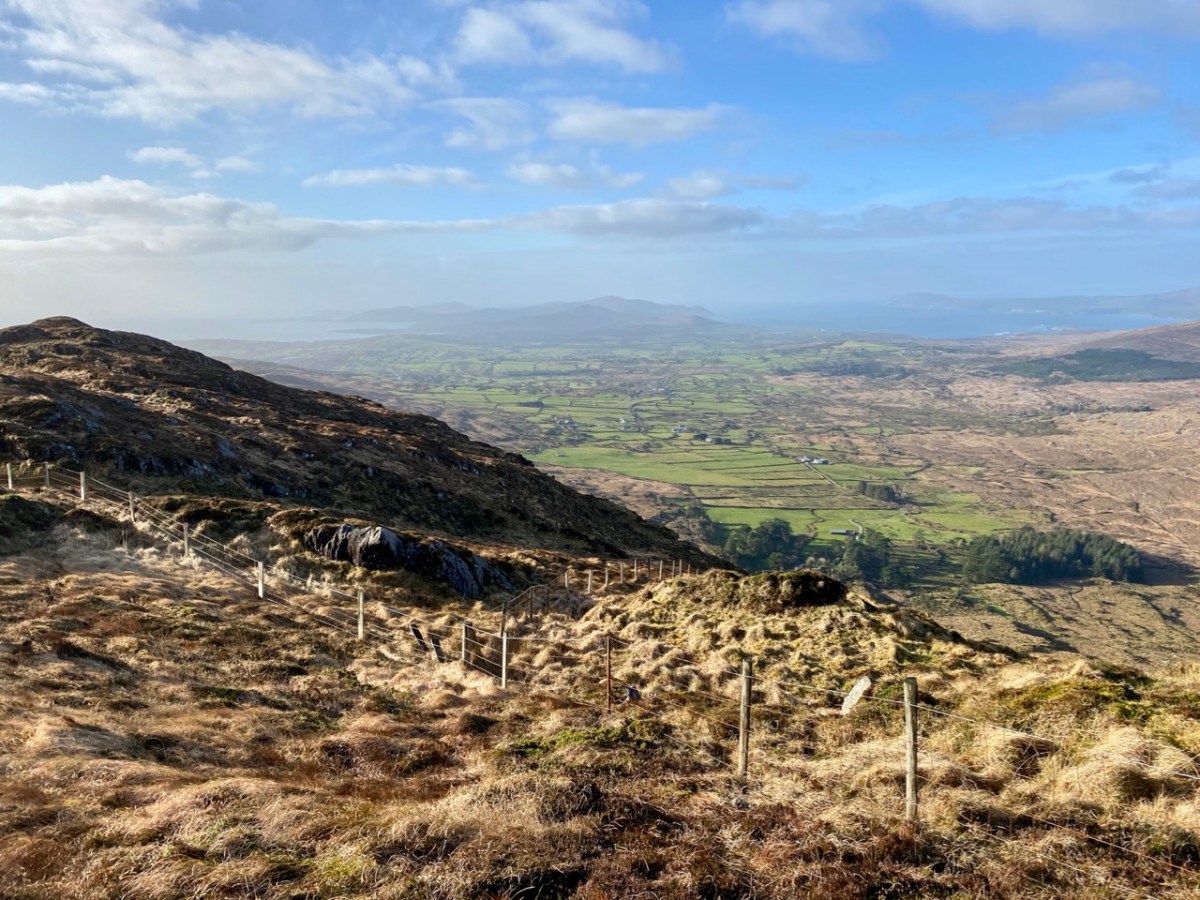
Mount Gabriel is, I believe, a rarely regarded topographical prominence on the Mizen. Yet it is impossible to ignore: the summit can be seen from most parts of this western peninsula. And, for those visitors who do notice it – and make the effort to scale its heights, it presents the most spectacular of views over rugged landscapes to the oceans beyond.
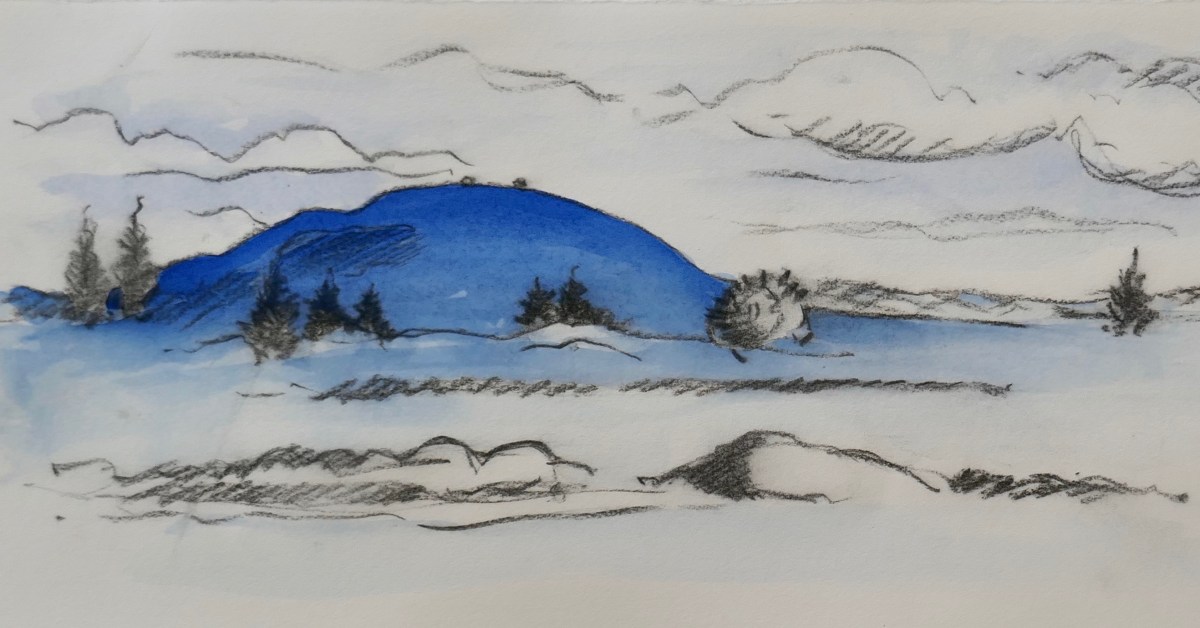
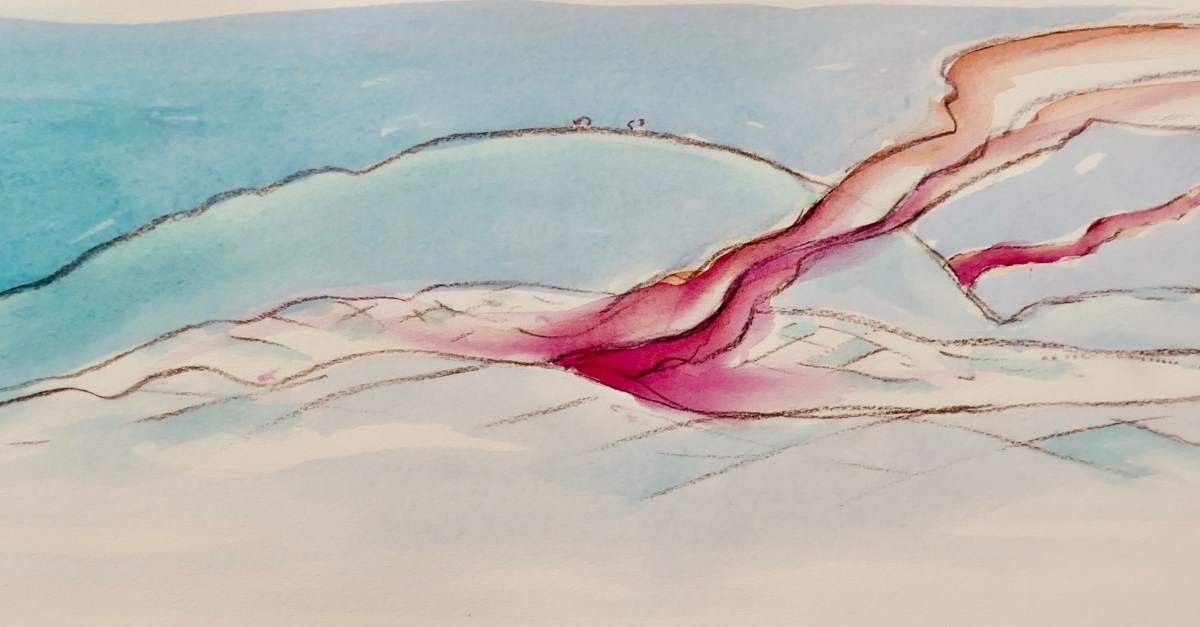
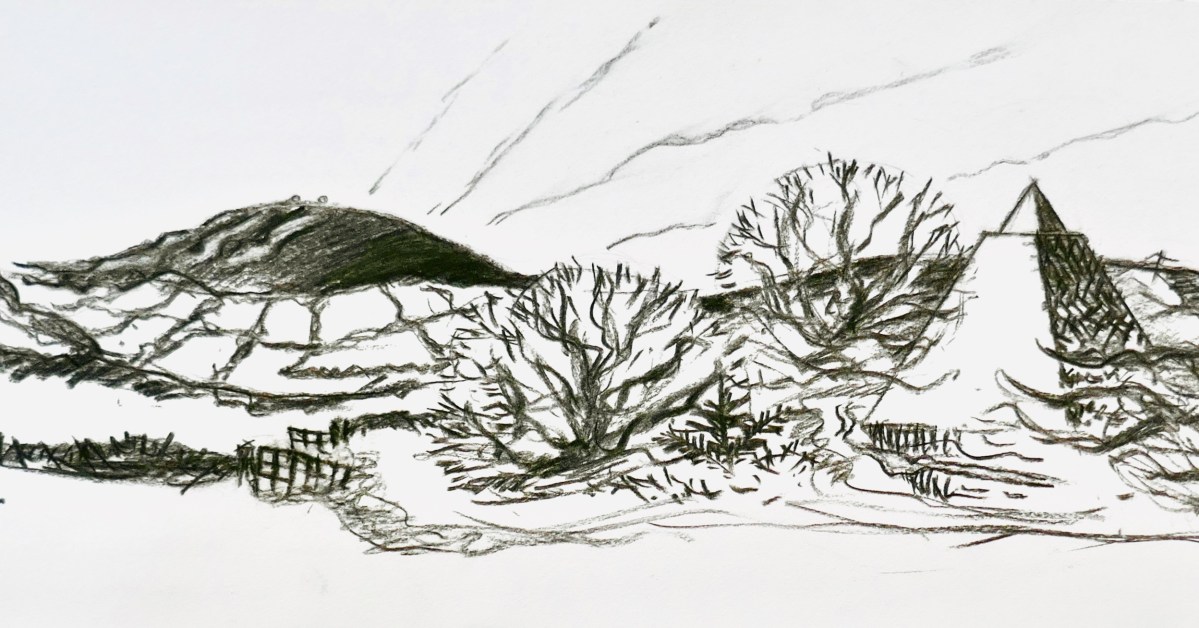
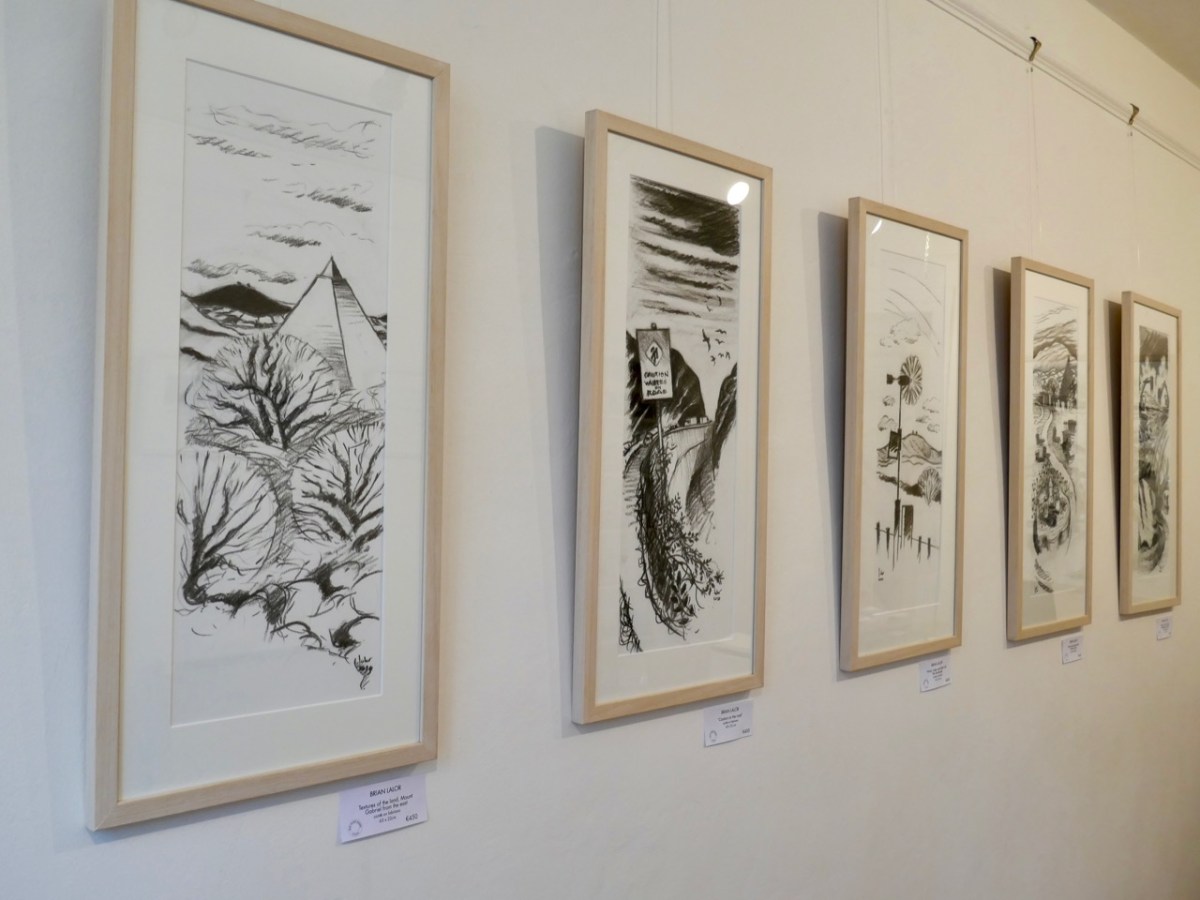
Brian Lalor has chosen to make this peak the centrepiece of his new exhibition, which opened in Schull’s Blue House Gallery at the weekend: Thirty-Six Views of Mount Gabriel. You have to see it. The works are for sale, so it will be impossible, probably, to assemble them as one entity ever again. (Unless, perhaps, in a hundred years time – if there is still an intellectual world in existence – Brian’s genius will be fully recognised and appreciated, and an astute curator will raid collections from all over the world in order to put this canon back together as a centenary project).
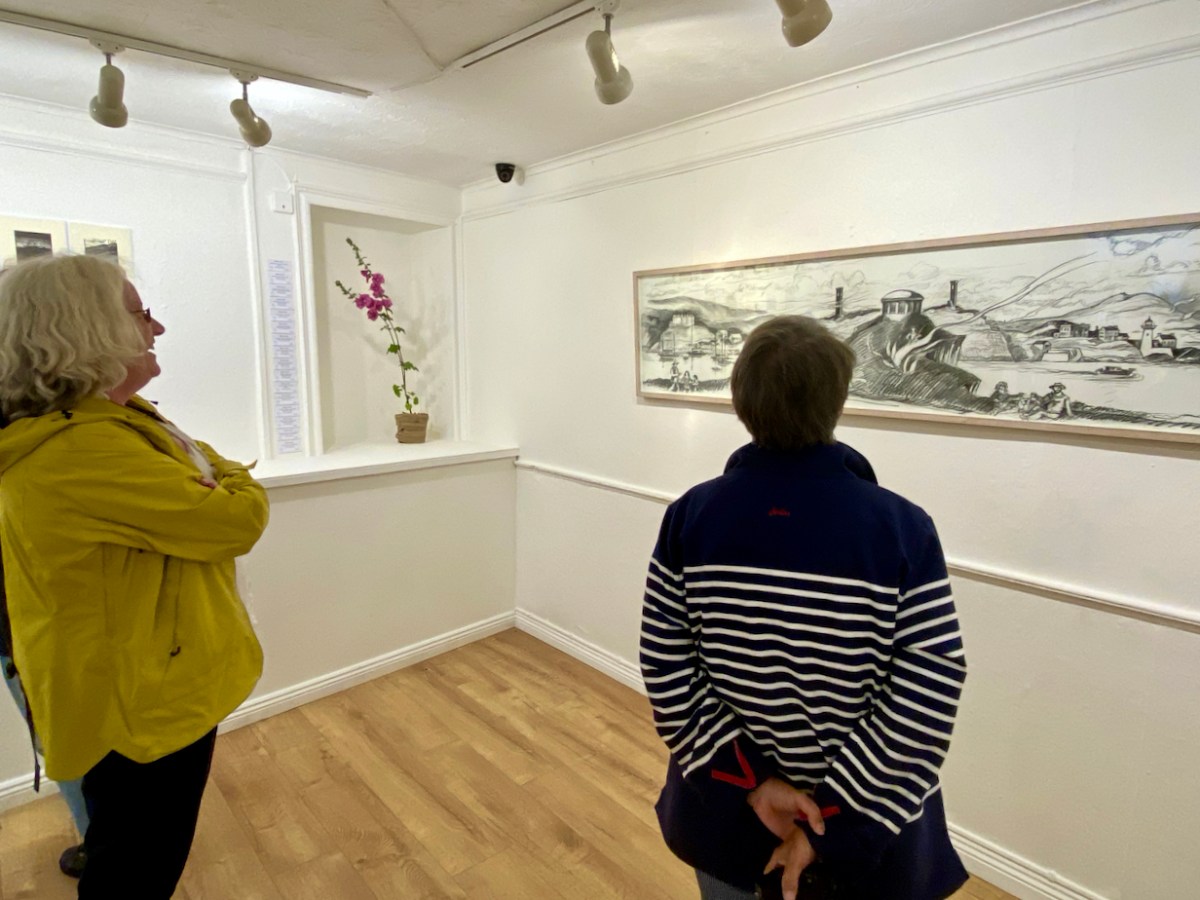
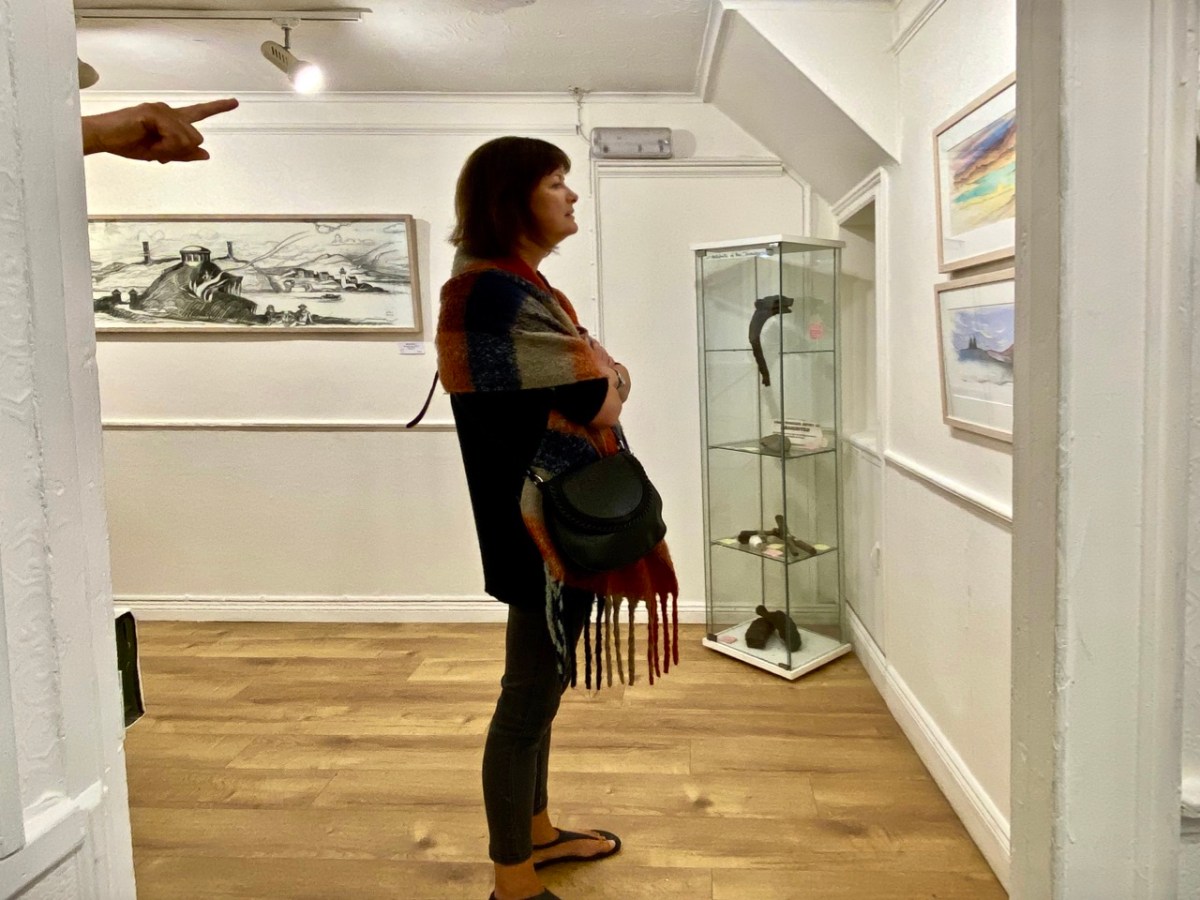
The works themselves draw attention to some of Brian’s many artistic talents: conté crayon drawings, exquisite watercolour sketches and linocut prints. They make an impressive whole on the walls of Schull’s eccentric gallery, which is a jumble of smallish rooms, a staircase and landing, with a minimalist shop-window frontage. Circumnavigating the spaces is a revealing and stimulating experience.
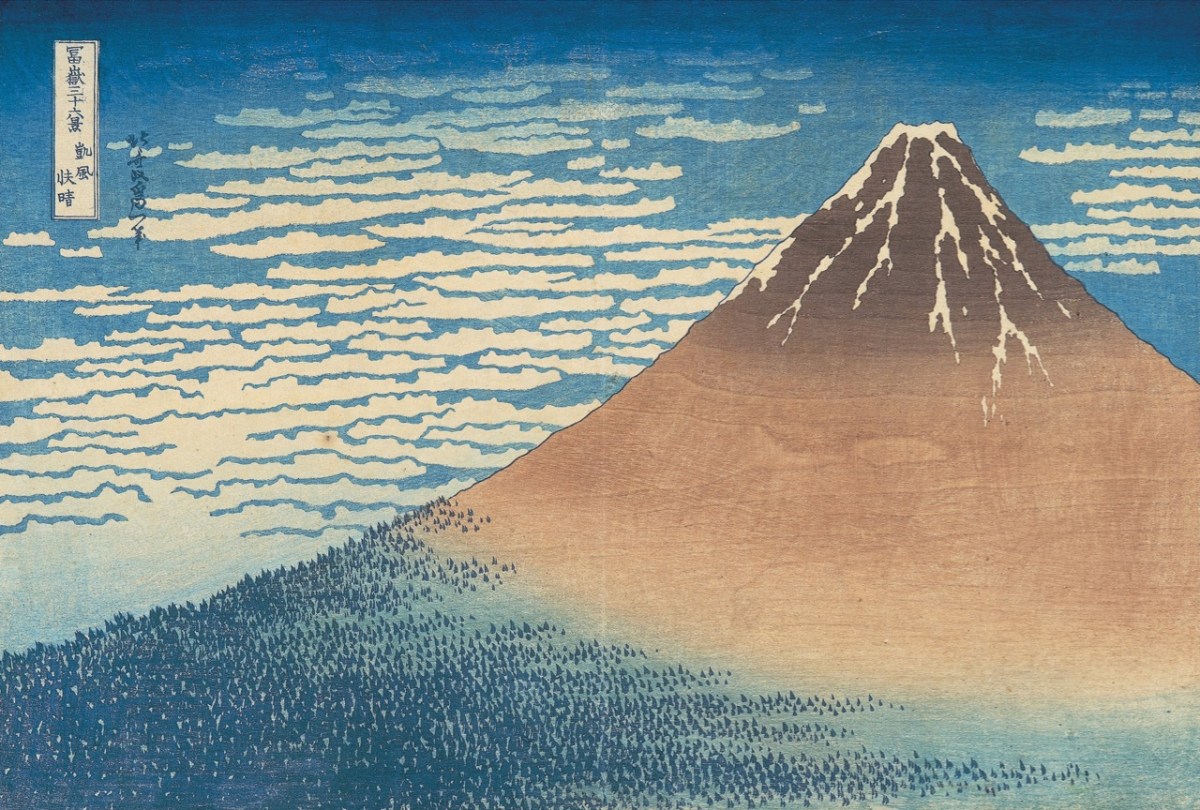
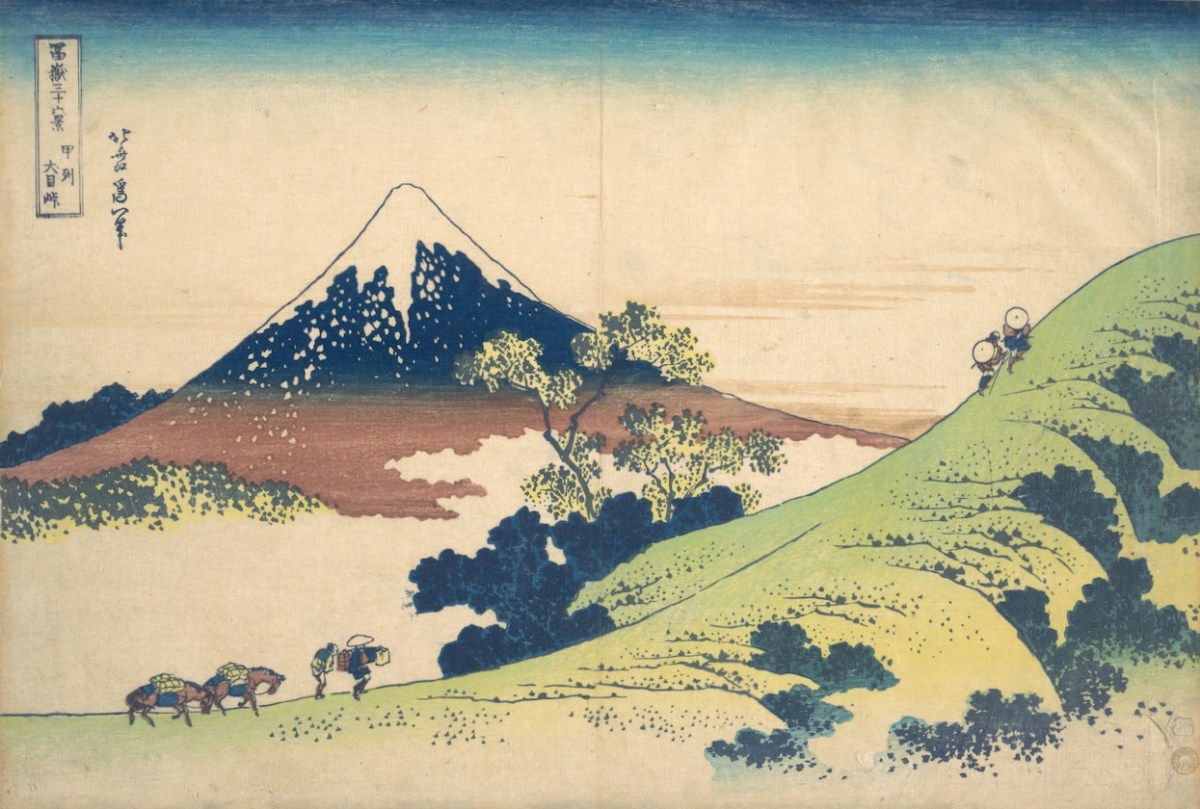
Returning to the subject matter of the work, Brian – General Editor of Gill & Macmillan’s mammoth 2003 volume The Encyclopaedia of Ireland – and considered a prime authority on Ireland’s art heritage and its place in world culture, is familiar with artists’ legacies from many other domains. He grew up in a household which contained significant pieces of Japanese art and was au fait from a young age with the concept of ukiyo-e – the floating world. His early awareness of the arts of Japan provided the source of inspiration for this exhibition: Katsushika Hokusai’s Thirty-Six Views of Mount Fuji, woodblock prints which date from the early 1830s. Here are Fine Wind, Clear Morning (upper) and Inume Pass (lower) from the series:
Fuji is one of Japan’s Holy Mountains. Brian’s juxtaposition is brilliant: our Mount Gabriel has to be a holy place. It is named after an Archangel, who is said to have descended to the mountain top to view the unsurpassed beauty of West Cork’s landscapes, the reputation of which had reached to Heaven even back in those days. In so doing he left behind his footprint, which is still to be seen on the summit.
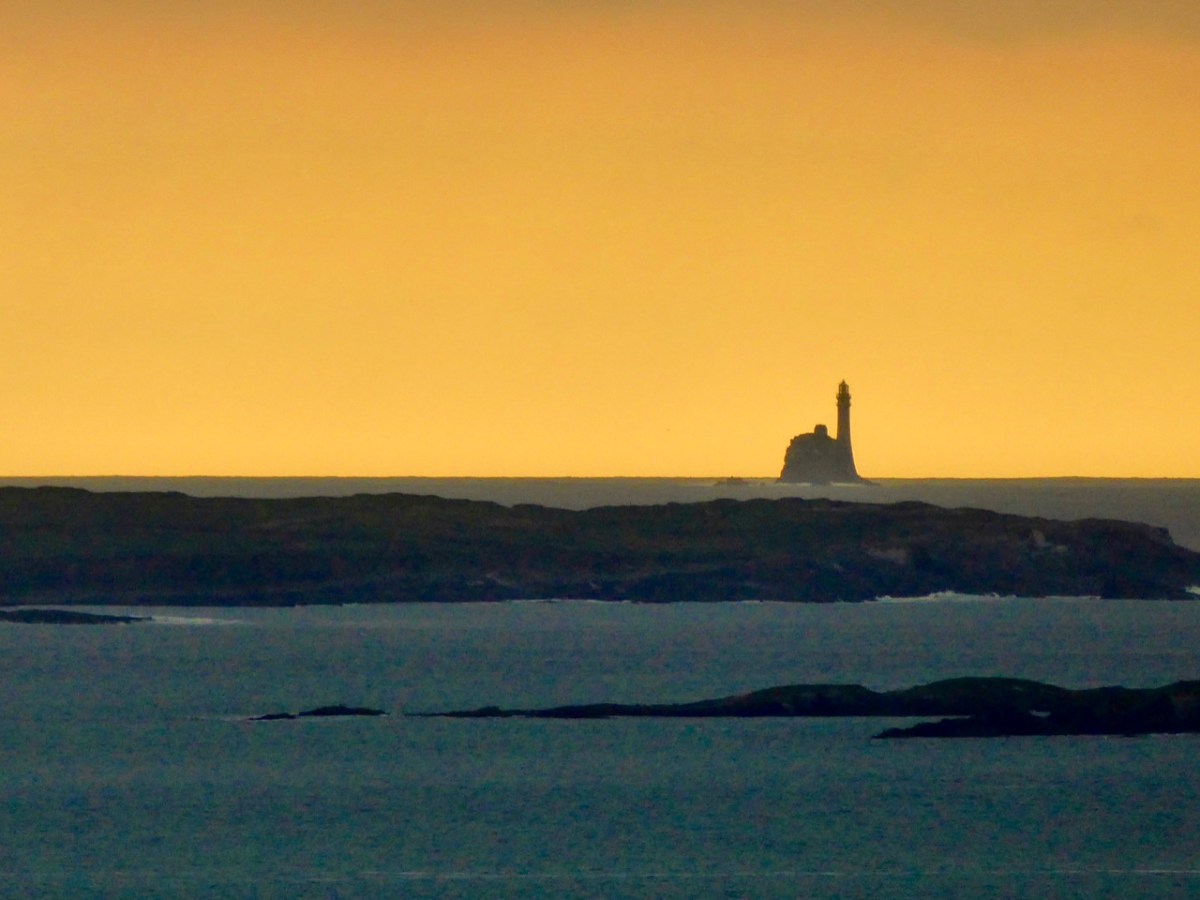
The Archangel was not the only biblical character to visit Gabriel: Satan himself touched down, but stumbled on a large rock. In a fit of temper he picked up the rock and threw it far off into the sea beyond. This caused such a hazard to shipping that we have had to erect a lighthouse on it. Here is Finola’s photographic view of The Fastnet, taken at sunset. For me, it has a suitably print-like quality . . .
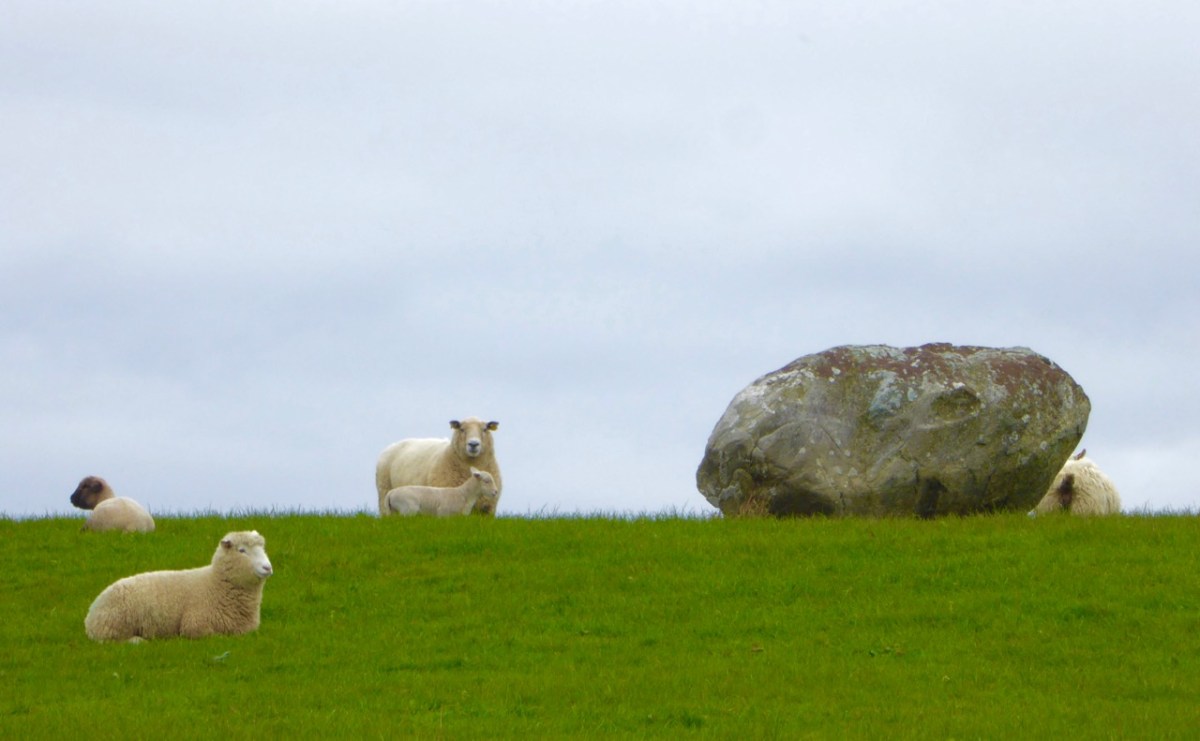
Legends attached to Gabriel include many that attribute Irish heroes to activities on the summit. Finn MacCool, for example, is also credited with throwing large rocks from the mountain, including this fine boulder burial at Rathruane:
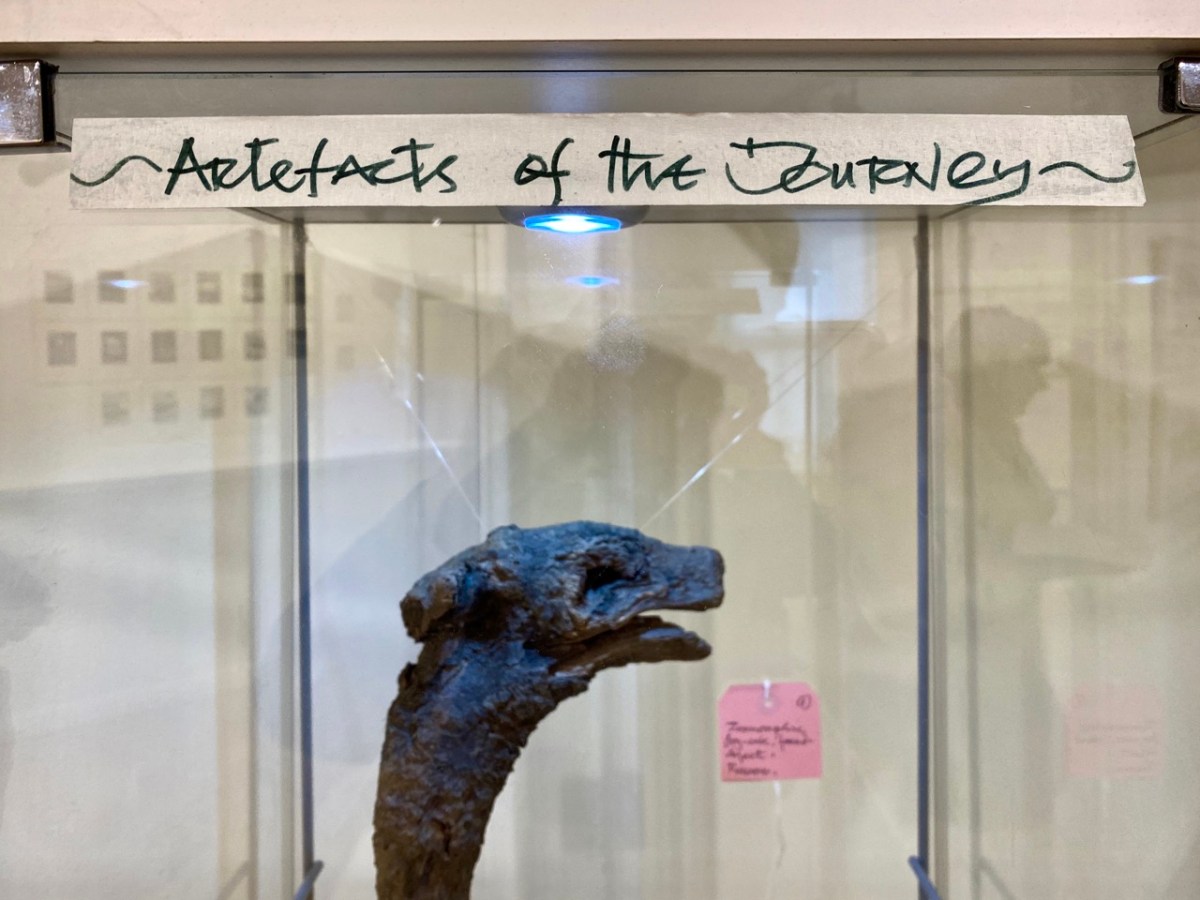
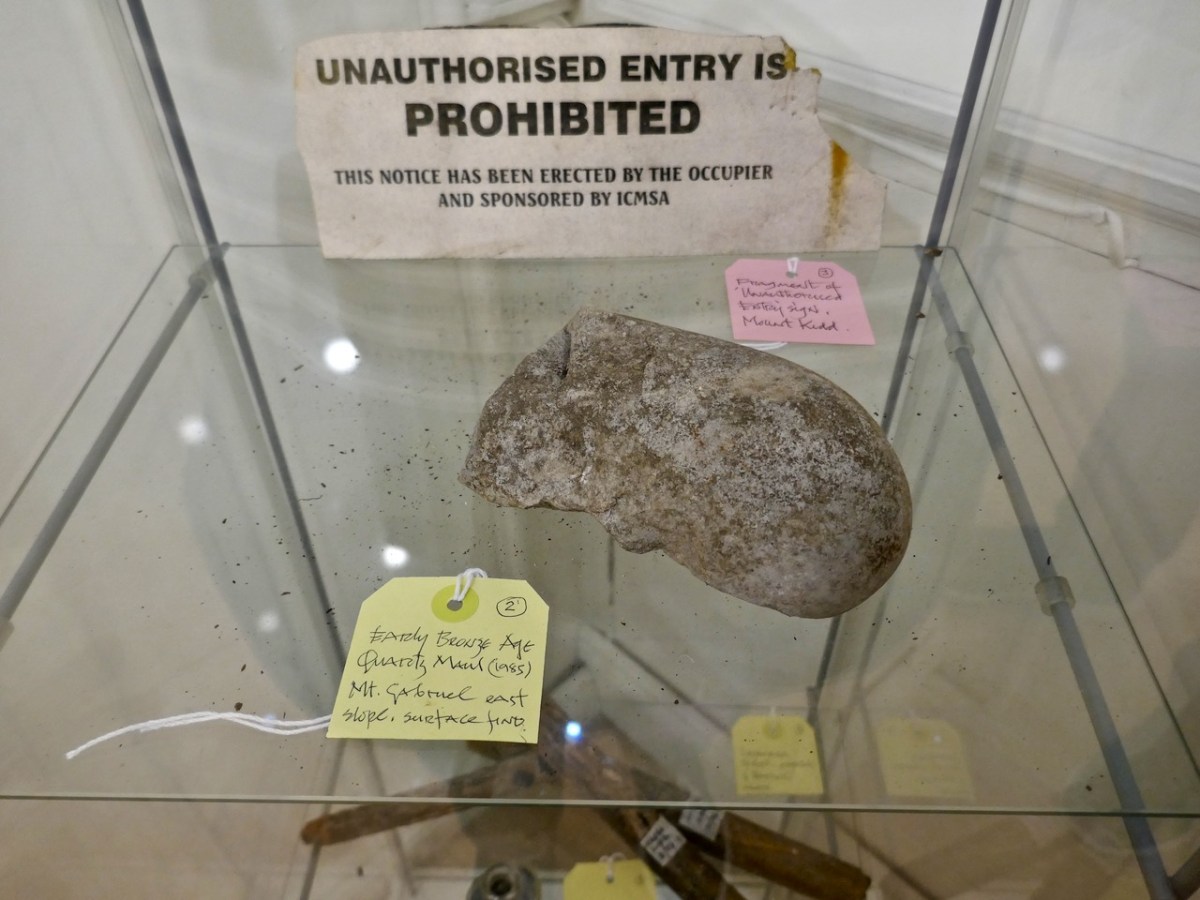
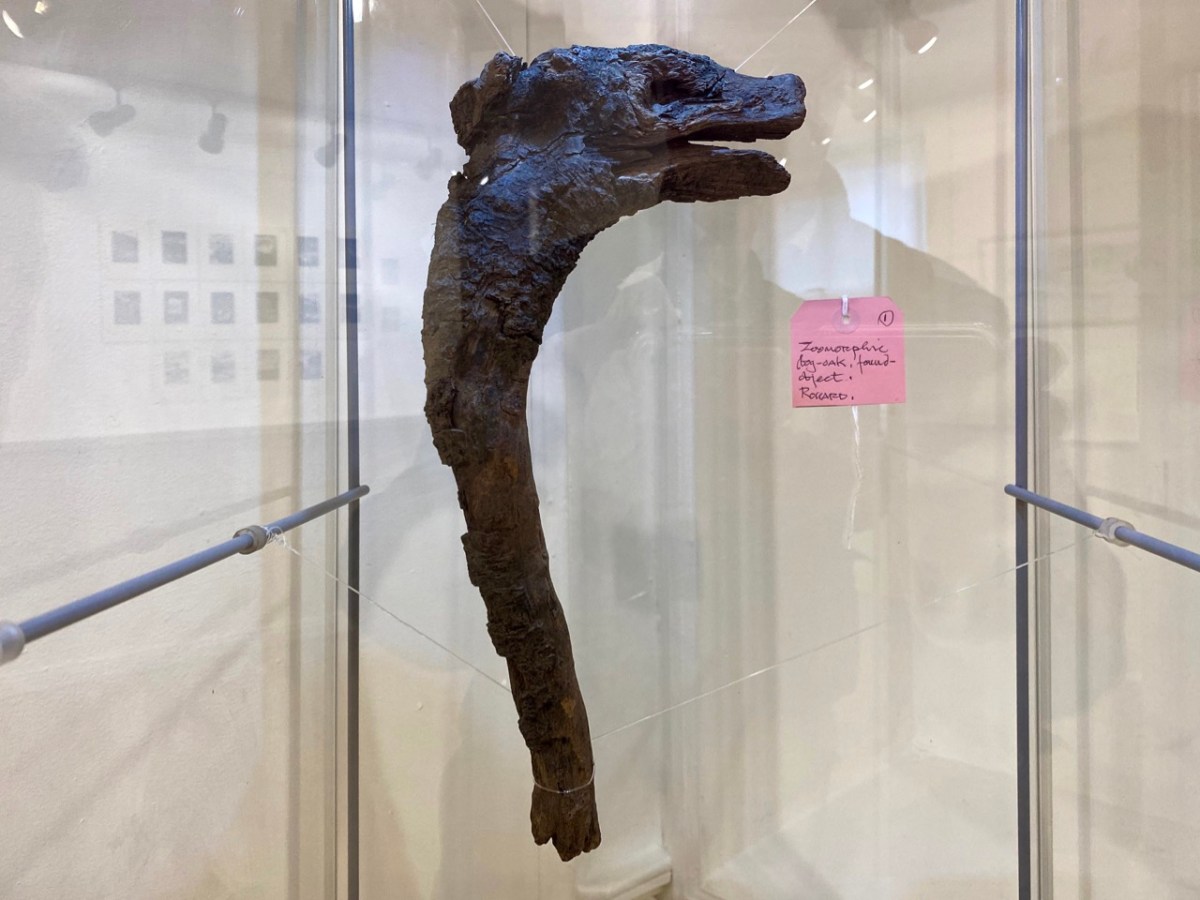
Brian’s observation and humour are not missing from this exhibition. He has included a cabinet of ‘artefacts’ distilled from his own explorations on the mountain. These make reference to the ancient history of the site and its connection with copper extraction in the Bronze Age and in medieval times, and also the twentieth century manifestations of air traffic control technology (known as ‘Gabriel’s Balls’) . . .
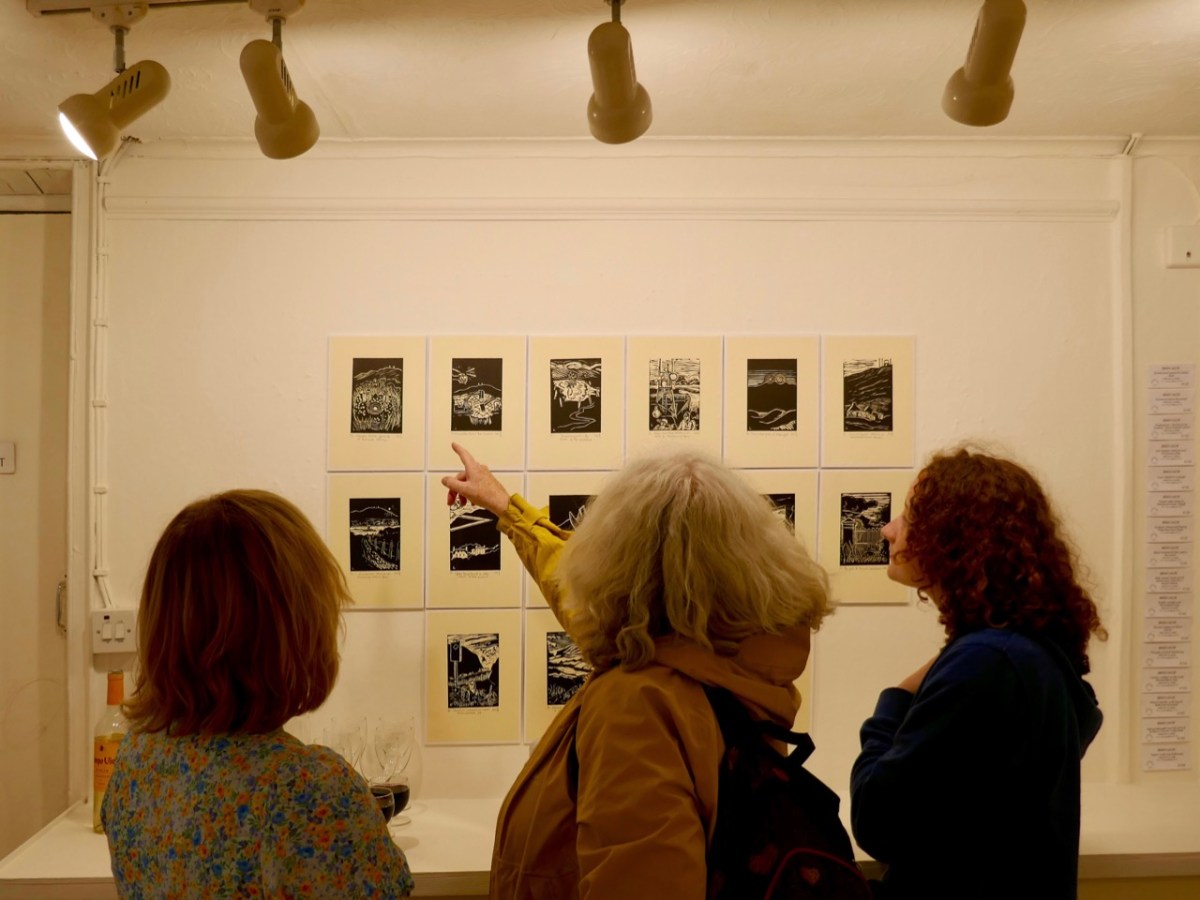
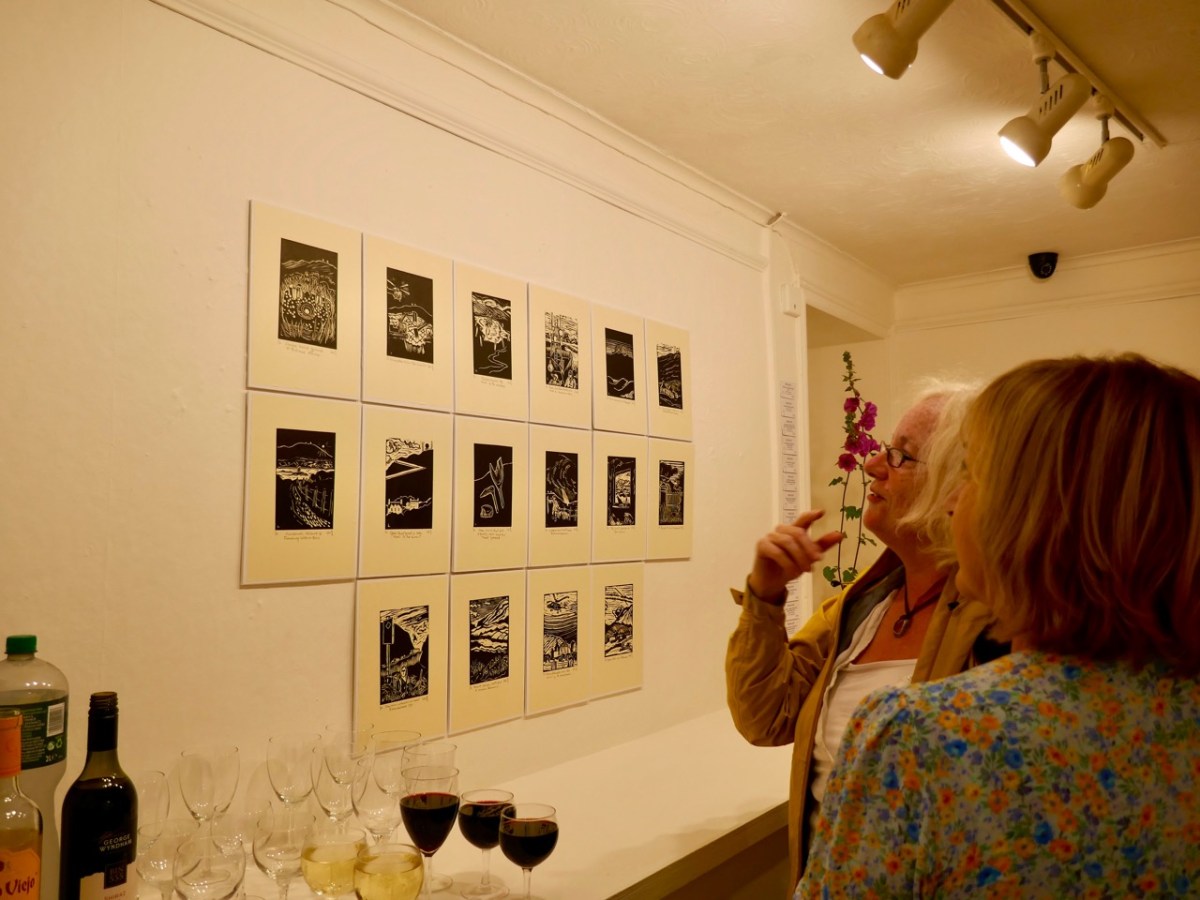
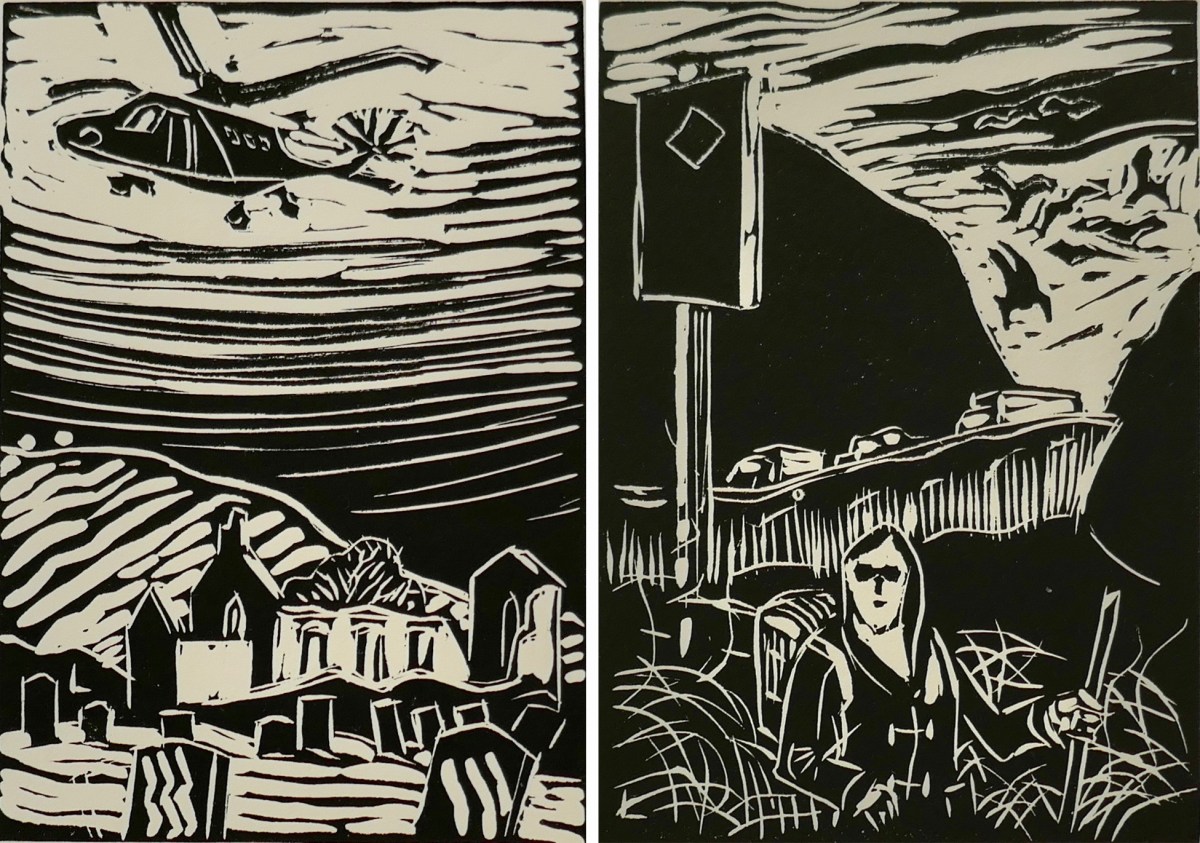
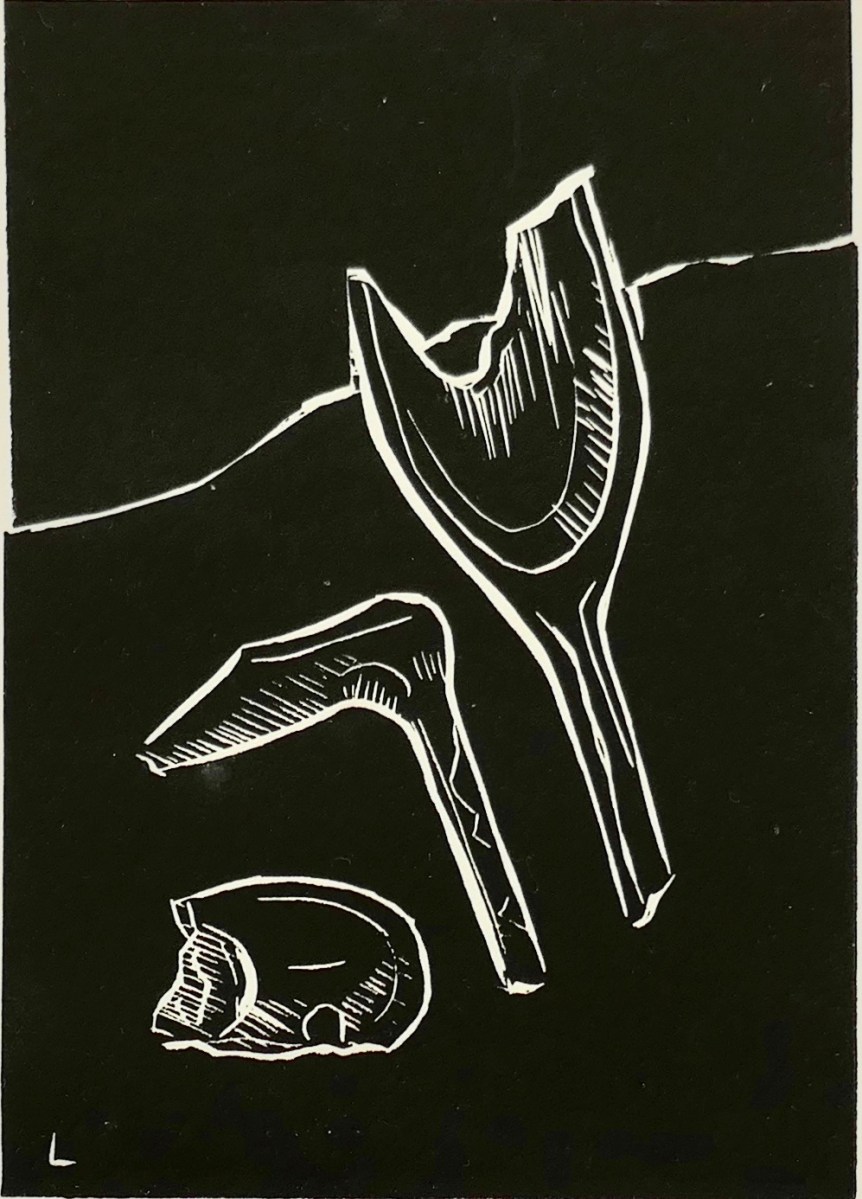
I am particularly taken with Brian’s linocut series – a limited edition of only ten of each print. They provide the ‘fine detail’ in the overall assemblage, and work so well together on the back wall of the largest room.
The detail print, above, shows Brian’s representation of archaeological finds connected with ancient copper mining which have been found during excavations on the mountain.
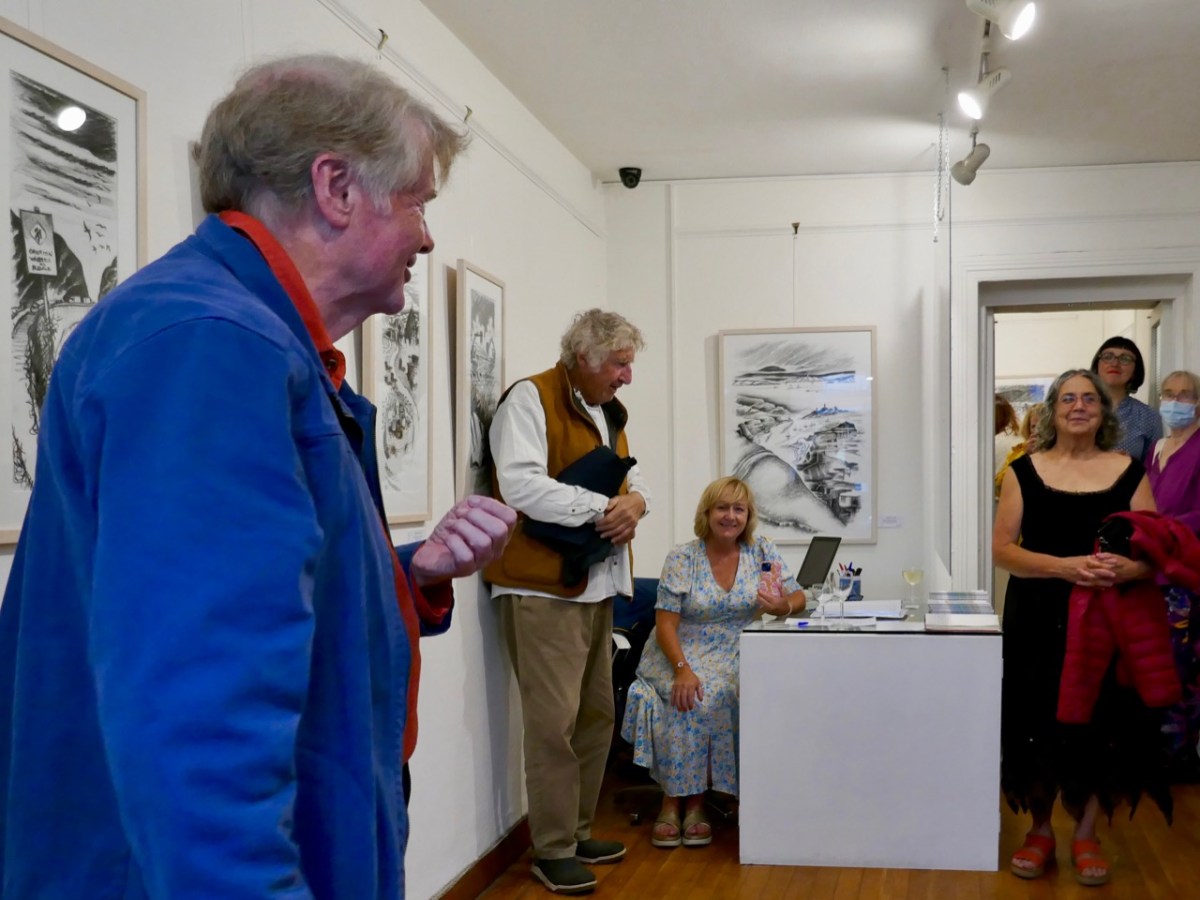
As ‘Guest Curator’ of this exhibition I was delighted to introduce it to an eager audience on the opening night in Schull (above). The show only runs until the 3rd of August, so please rush over in order not to miss it. It is (for me) the highlight of West Cork’s summer offerings!
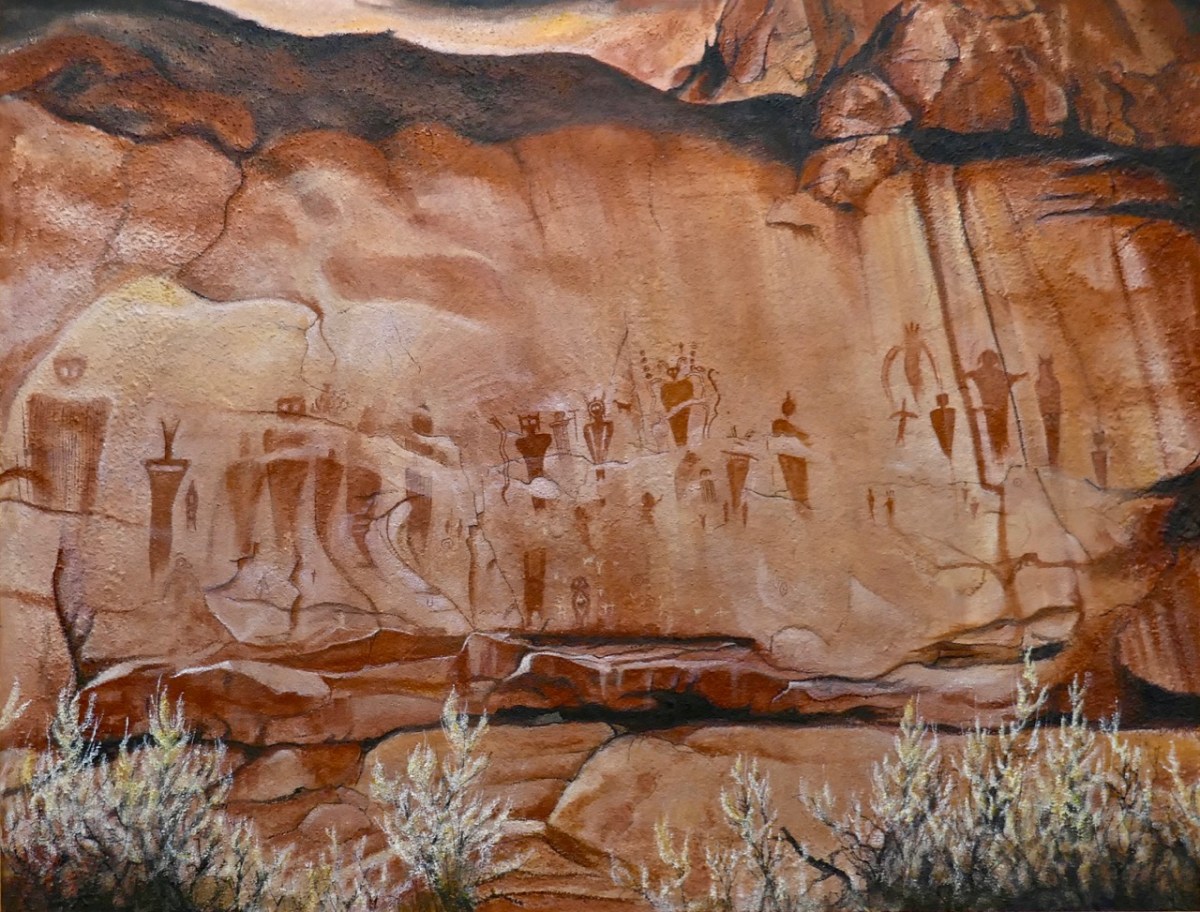
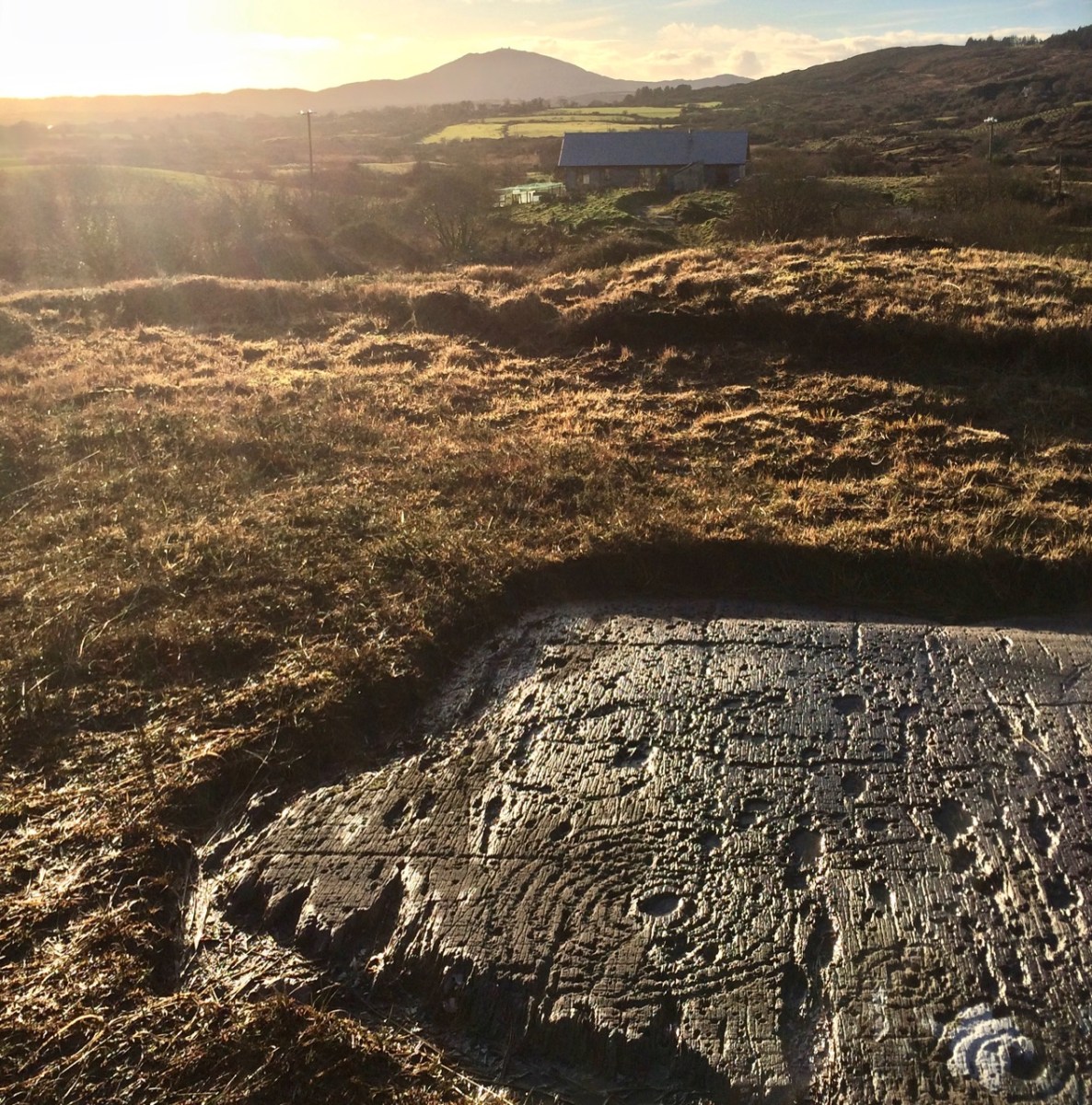
The gallery also has on show some work by other West Cork artists, well worth exploration, so don’t miss them when you go. I can’t resist finishing with one of them: this work (below) by Keith Payne – Sego Canyon. Keith has always been fascinated by ‘Rock Art’ in all parts of the world, and painted this based on his visit to a collection of petroglyphs on a cliff-face in Utah. It’s very apt, I think, to see this work in the context of the Brian Lalor exhibition. Below it is our own photograph of 5,000 year old Rock Art at Derreenaclough, West Cork – discovered only a few years ago. I am personally of the opinion that the siting of this rock in full view of ‘sacred’ Mount Gabriel is purely intentional!
A fully illustrated catalogue is available to purchase in the gallery
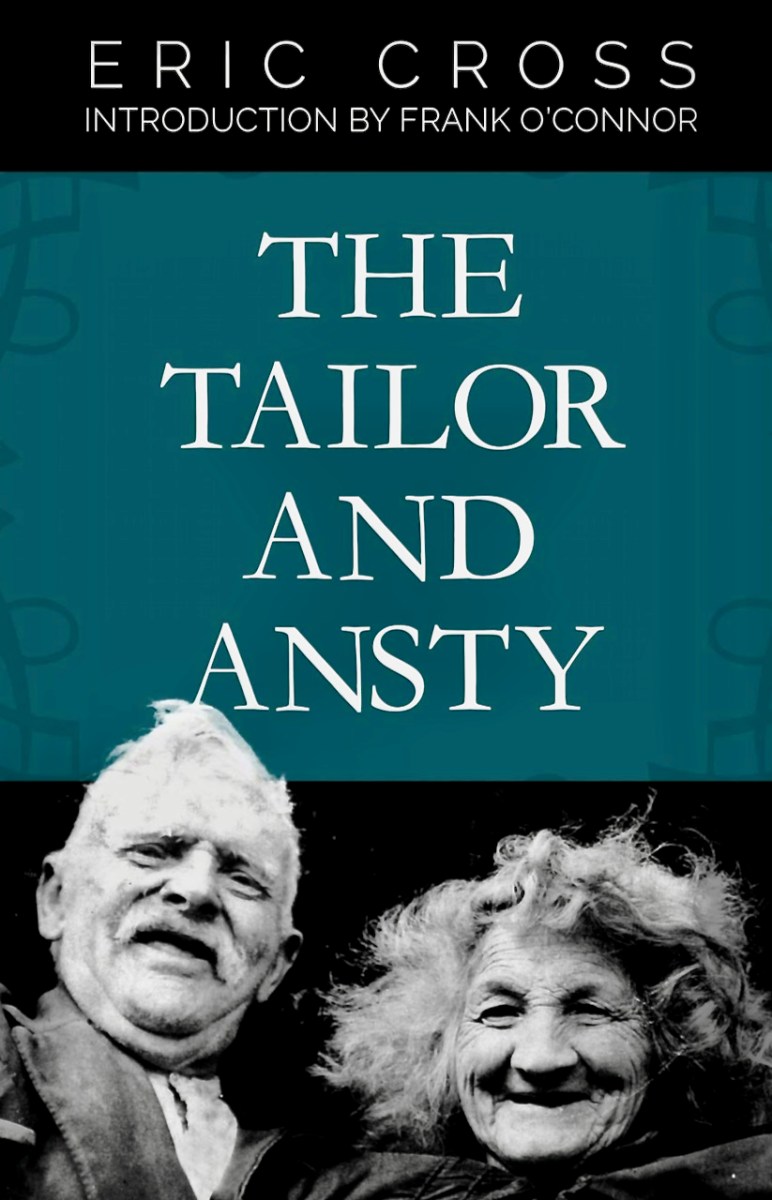
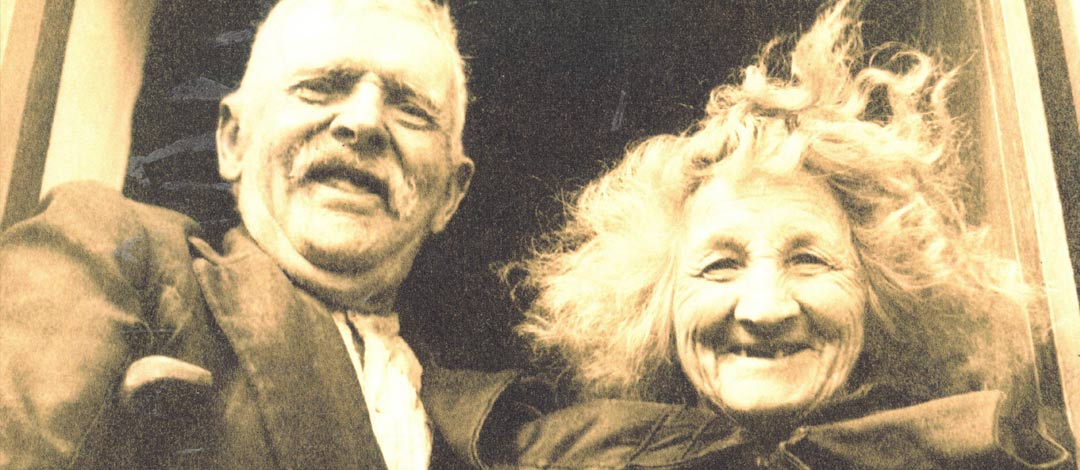
The Tailor and Ansty is a classic book by Eric Cross (below) – beautifully written, hilarious, and capturing the couple in all their humorous (Tailor), crotchety (Ansty) and big-hearted glory. The story didn’t have a happy ending (see Robert’s post) and Ireland will forever be ashamed of that episode in our priest-ridden history, but this post will concentrate on happier times.
People flocked to visit the Tailor and no matter who you were – neighbour, stranger or famous person – you were sure of a welcome, a cup of tea, and a taste of the Tailor’s way with stories and earthy humour. Among those who came were prominent artists of the day, including Nano Reid and Seamus Murphy. Nano, it is thought, would cycle all the way from Ardnagashel, where she was staying with her lifelong friend Patricia Hutchins (yes – the same family as our beloved Ellen Hutchins). This is her painting, only recently identified as depicting the Tailor – my sincere appreciation to David Britton for the image and all the information. David runs one of those pages that convince you that Facebook still has the power to be a force for good in the world.
As David pointed out to me, if there are any doubt as to who this is, Eric Cross’s description of the Tailor in his usual place by the fire should clinch it (look closely).
At one side of the fire is an upturned butter-box. This is the Tailor’s fireside seat. It is placed so that its opening is between his legs, and here he sits, never upon a chair.
Like everything else in the house it has a name. The Tailor refers to it always as ‘Cornucopia’ and explains that a long time ago a Greek king gave such a box to a ‘jolly cupper’, who gave him a drink when he was thirsty, telling her that whenever she was in the want of anything she had but to look inside and she would find it there. . . .
Whatever Amalthea’s horn held, the Tailor’s ‘Cornucopia’ almost rivals it for contents. Beneath the axe with the insecure head, with which he chops wood upon the hearthstone, and the goose-wing with which he sweeps up the ashes, there is a collection of bits of cloth, cords, tins, bits of tools and such like things, out of which he can always find a makeshift for almost anything. . .
Behind ‘Cornucopia’, against the wall, is the settle. In the corner of this, directly behind the Tailor, is the office. This is his accumulation of correspondence over the years. There are letters, photos, postcards from all over the world, stacked up into a pile. Here, too, is his box of cuttings from papers. There are paragraphs cut from newspapers relating to people he knows mixed up with accounts of freak calves and suchlike wonders. Between the arms of the settle and the wall are his pipes. Each pipe, each letter and each photo recalls a friend.
Seamus Murphy was counted as a special friend and came often to visit. At this time (1936) Seamus was making a name for himself as one of Ireland’s foremost sculptors. Here he is in 1934, courtesy of his family who maintain the site https://seamusmurphysculptor.com/wp/
Seamus proposed to do a bust (or busht, as Ansty called it) of the Tailor’s head and the Tailor was immediately agreeable. Chapter fourteen of The Tailor and Ansty relates what fun he had with this project.
‘Dammit, man, it was ever said that two heads are better than one, and the one I have now I have had for 75 years and it is getting the worse for wear. Of course I’ll have a new one’.
All the apparatus and materials were assembled, and the Tailor inspected them with the interest of a fellow craftsman. Ansty ignored the business in the beginning. Her only interest in it was her resentment of the invasion of the Room – ‘with all the old clay and mortar to make a new devil’ – and making fresh disorder of her disorder.
The Room at last justified the Tailor’s name for it, and did become for a while ‘The Studio.’ For an hour or so each day he posed and talked and commented. The measurements interested him and he linked this part of the business with his own craft.
‘Many’s the time that I have measured a man’s body for a new suit of clothes, but I never thought that the day would come when I would be measured myself for a new head.’
‘I think that we will have a rest for a while,’ suggested Seamus during one session.
‘The devil a rest do I need. Do you know that I feel it less than I did the time the whole of my body was making before I was born. There is a considerable improvement in this method. A man can smoke and take it easy and chat away for himself.’
The Tailor is visited by his friend the Sheep, a man given to worry, who wonders if it is an unlucky thing for a man to have his image made and asks how it is to be done. The Tailor explains the process:
‘Yerra, manalive. It’s easy enough. You stick your head into a pot of stirabout, and when it is cold you pull out your head and melt the metal and pour it into the hold your head made. Then you eat up the stirabout and you find your new head inside the pot.’
The exchange with his friend, Dan Bedam, captures all the wit and divilment of the Tailor. Having assured Dan Bedam that there’s a new method of making people because the young people are failing at the job, and the population of the country is going down he responds to Dan’s wonderment.
‘Dam, I was thinking, Tailor, will you be able to use it? Will you be able to talk and smoke and see with it?’
‘Thon amon dieul! What the hell do you think that I am having it made for? Do you think that I want to become a dummy? I tell you that when I have this head I will be a different man. You have often heard tell that you cannot put a young head on old shoulders. Well, this is what it is. I was thinking of having it done the other way at first. Of having a new body fitted to my old head, but the expense for the bronze was too much, so I am starting with the head first. Then I thought that the new brains would not be so good as the old ones. Then I thought that the old ones had done a power of thinking in their time and it would be better after all to make a start with the head.’
Dan was lost in wonderment for awhile.
‘Bedam, but Seamus Murphy must be a clever man.’
‘Clever! I should think he is. He is as good as Daniel O’Connell and Owen Roe put together. They were good enough in the old-fashioned way, but before he’s finished he’ll have the whole of Ireland populated again. It’s a much quicker way than the way you had of going about the business, Dan.’
Eric Cross gives an account of the unveiling, with the whole valley there to see it and The Saint (Fr Traynor) giving a speech. The image, of the busht, above, is from the marvellous Catalogue of Seamus’s work published by the Crawford Gallery.
It was a great night. The drink flowed and the tongues were loosened. The Tailor sang and everyone sang and soon the busht was forgotten. But the Tailor keeps in touch with it still. He has cuttings from the papers relating to it, and he follows it round from exhibition to exhibition in the newspapers.
Nor has Ansty forgotten. Now and again she contemplates the Tailor for a moment or two and wonders, and then expresses her thoughts, ‘and to think that Seamus made a busht of that old devil as though he was a saint in a church. The man must be half cracked. As cracked as himself. Glory be! and to think that he wouldn’t settle the leak in the chimney for me, and he with the good mortar and plaster, making a busht’.
Seamus was a friend to the end – he made the marvellous tombstone that can be seen in the graveyard at Gougane Barra. On it he carved the words A Star Danced and Under That Was I Born.
By the way, if you want to see how one of the casts looks in situ, here is a marvellous post by Don Ross, a Guide at Farmleigh House in the Phoenix Park. Thank you Don – you were one of the inspirations for this post, along with a recent conversations with Seamus’s daughter Orla and her husband, Ted.
As a retired couple we often get asked what we find to do all day. How do you spend your time? Perhaps there’s a subtle sub-text of ‘way out there in the wilds of West Cork.’ Well, it’s only half way through the month and we have had numerous experiences already in June, including many that revolve around art and music so I thought I would highlight them in this post to give you a flavour of the Wilds.
Robert has written extensively about the thriving art scene established first by the artists and hippies that made West Cork their home starting in the 60’s, a legacy that is celebrated in the Ballydehob Arts Museum. But it’s as true now as it was then and just in our small villages of Schull and Ballydehob we have been to several exhibitions over the last couple of weeks. I am always drawn to photography and I was bowled over in particular by three exhibitions.
Oliver Nares is exhibiting at the moment in the Working Artists Studio in Ballydehob. The first three photographs in this post are his. The first two are Flutes and the one above is Tambourine. Oliver captures his images live and, as Pól Ó’Cólmán astutely noted at the opening, he photographs the music, not the musicians. Unbelievably, this is Oliver’s first ever exhibition – if the reaction is anything to go by, it won’t be his last!
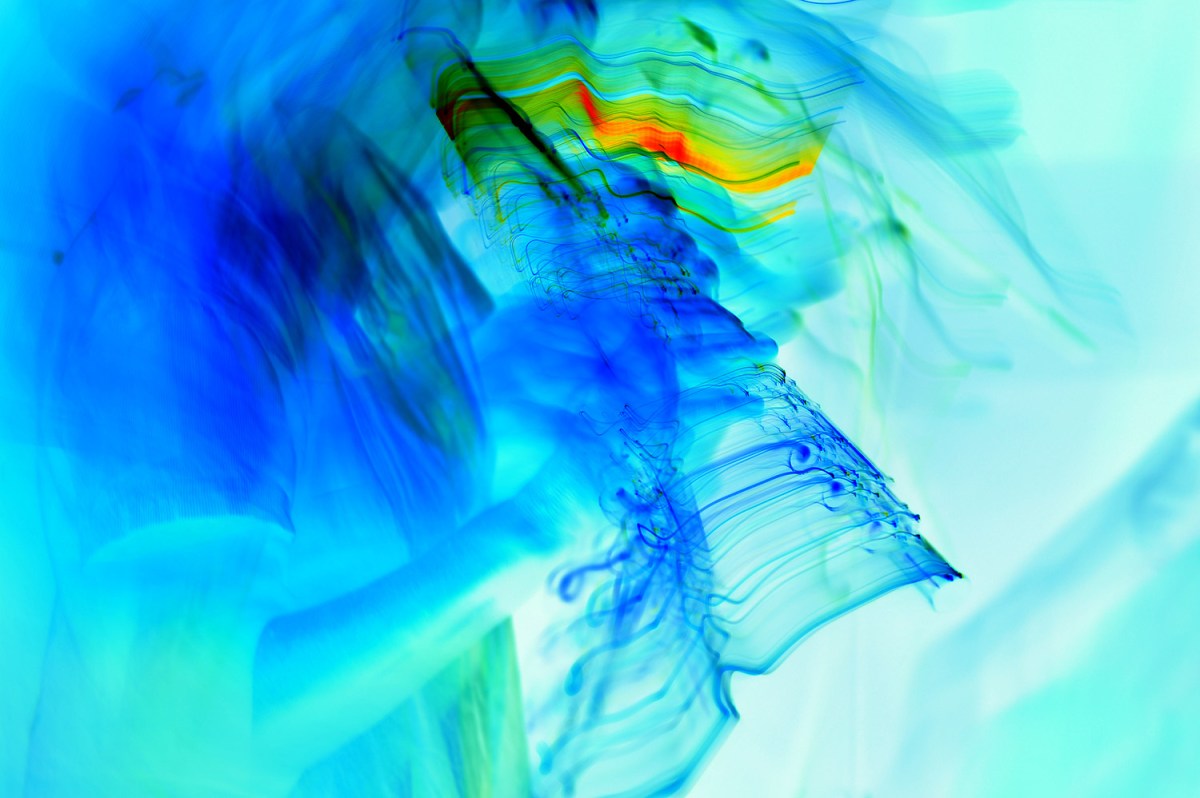
Another exhibition that left me breathless was Richard Breathnach’s The Bog in the Bale at the Blue House Gallery. Everyone who comes to see this has the same reaction – what is this? An Oil Painting? An abstract? Richard’s photography, which included many many hours of lying in a bog waiting for just the right image, captures the reflections of a bog in those ubiquitous black plastic silage bales – the results are extraordinary and you can see more on his website.
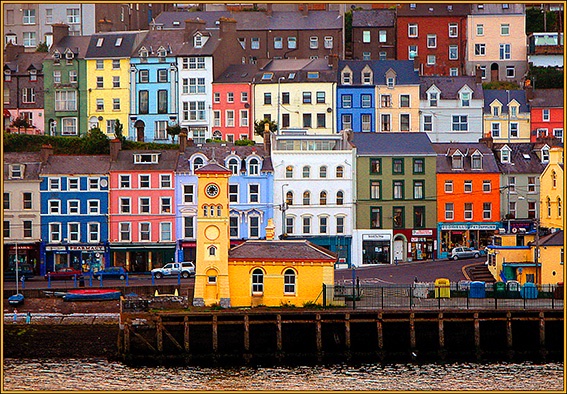
Meanwhile, the Aisling Gallery, situated over Rosie’s Pub in Ballydehob, has an exhibition focused on All Things Maritime. Chris O’Dell’s iconic image of Cobh (above), taken from the sea, is only one of several of his photographs, and the photographs of others, on display in this show. Chris is a distinguished cinematographer who has worked in television and cinema and is now recording his archive.
We went to Kenmare to see the new Butter Market Gallery, recently opened. (OK – that’s in Kerry, not West Cork, but sure it’s only the next parish over.) With a Modern Irish Sculpture show as its premier event, we weren’t disappointed!
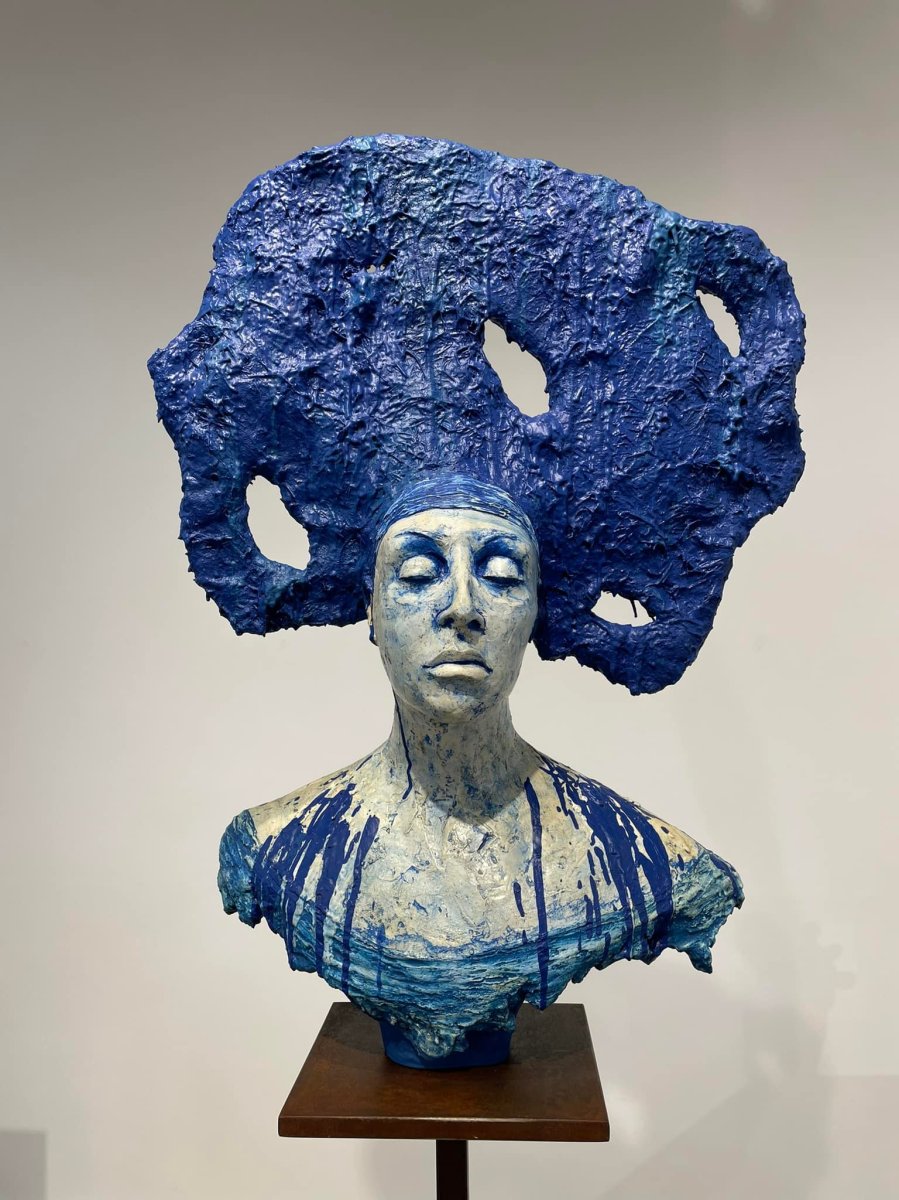
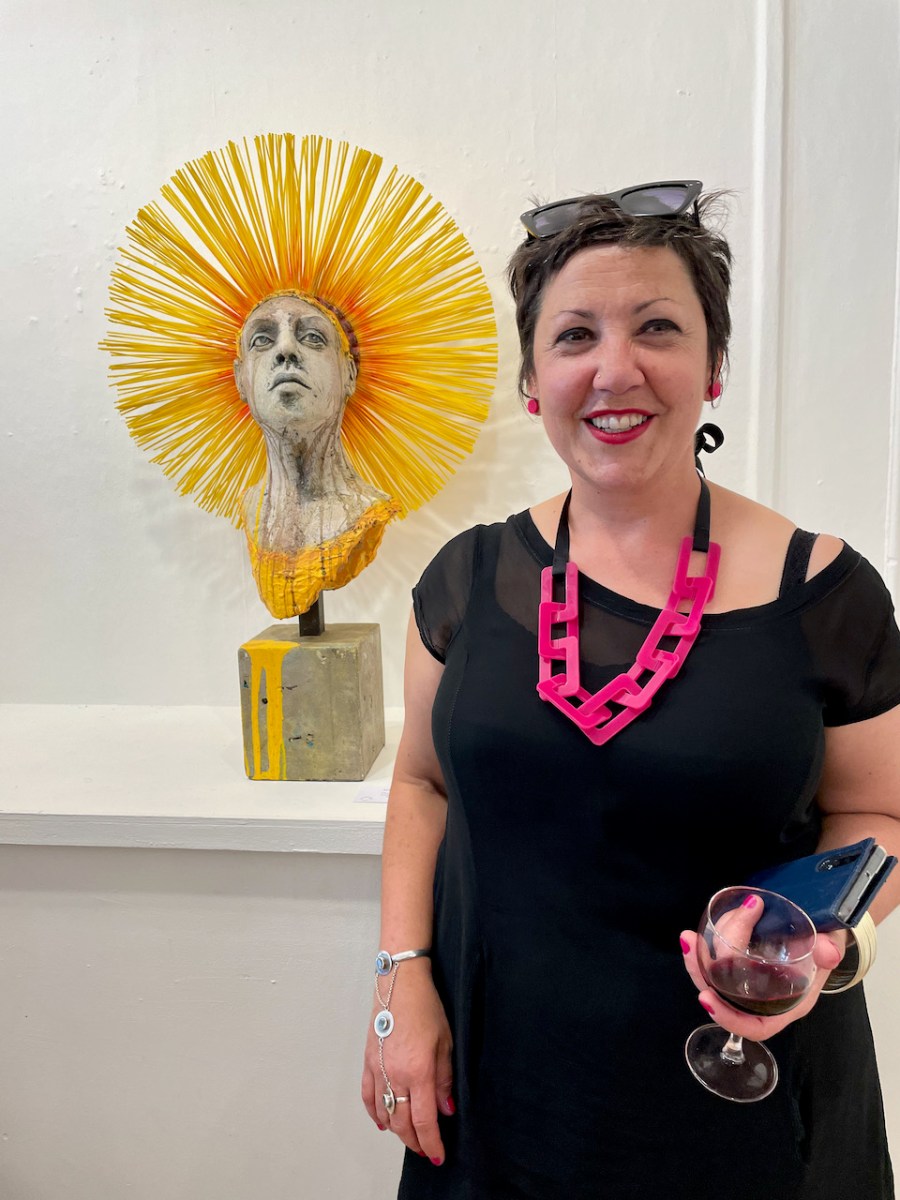
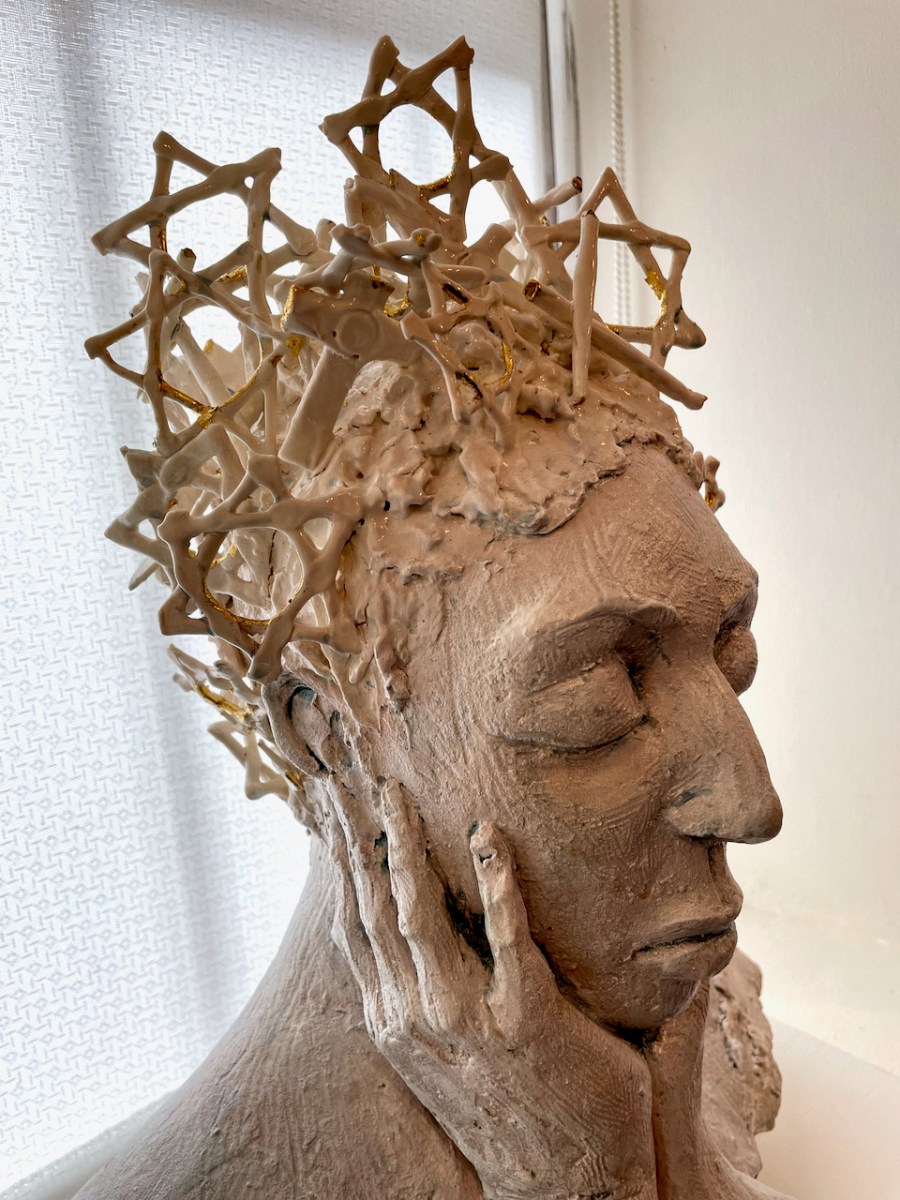
One of the standout artists in the Kenmare show for us was Ayelet Lalor – that’s her large piece above destined now for a hotel. Back in West Cork we were delighted that the Blue House Gallery in Schull devoted prime space in their latest show to her work. Titled A Life at Odds, Ayelet uses her iconic female heads to explore her own heritage and influences with an eclectic conglomeration of media including concrete, ceramics, cutlery, garden forks and industrial brooms! The results are both captivating and provocative.
On to the music – our regular Friday sessions have resumed in Ballydehob after two years. It’s always great fun for Robert to participate in these and even more so now as they are earlier in the evening (starting at 7 rather than at 9) so he’s full of beans as he heads off with his melodeon and concertina. His post last week had a clip of them all playing. The Fastnet Maritime and Folk Festival is on here at the moment, so the village is full of musicians, including Jackie Daly and Matt Cranitch, about whom Robert wrote in his post Learning from the Masters – check that out to see some of their playing. For now, a tiny clip of John and Uwe from one of the sessions on tin whistle and flute playing Carolan’s Draught.
A couple of days ago we went over to the Beara to meet up with our friend Susan Byron, of Ireland’s Hidden Gems and her group of American tourists. Among them was Bob, who played us over the Healy Pass.
Finally, for something completely different, we travelled to the Beara again today to hear the wonderful David Syme in one of his legendary Living Room Concerts. If you ever get a chance to do this, grab it! Here he is playing the Chopin Etude “Tristess”. This is his own recording on YouTube, and if you Google David Syme and choose video, you’ll get lots more that will give you a flavour of what we heard this afternoon.
Among the pyrotechnics of Chopin, Schubert, Brahms, Bach and Gershwin, David told us a moving story about his Ukrainian-Jewish grandmother and played us a gentle piece called Jewish Prayer for Healing by Debbie Friedman. I will leave you with a short clip from his performance.
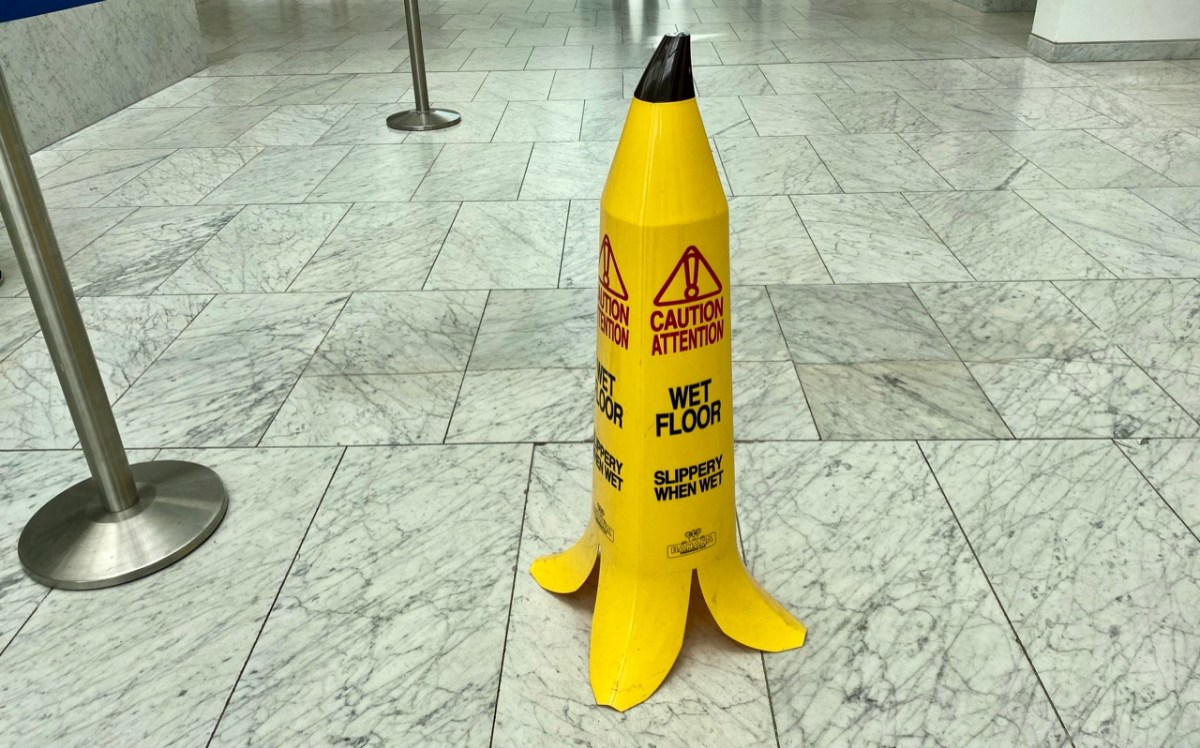
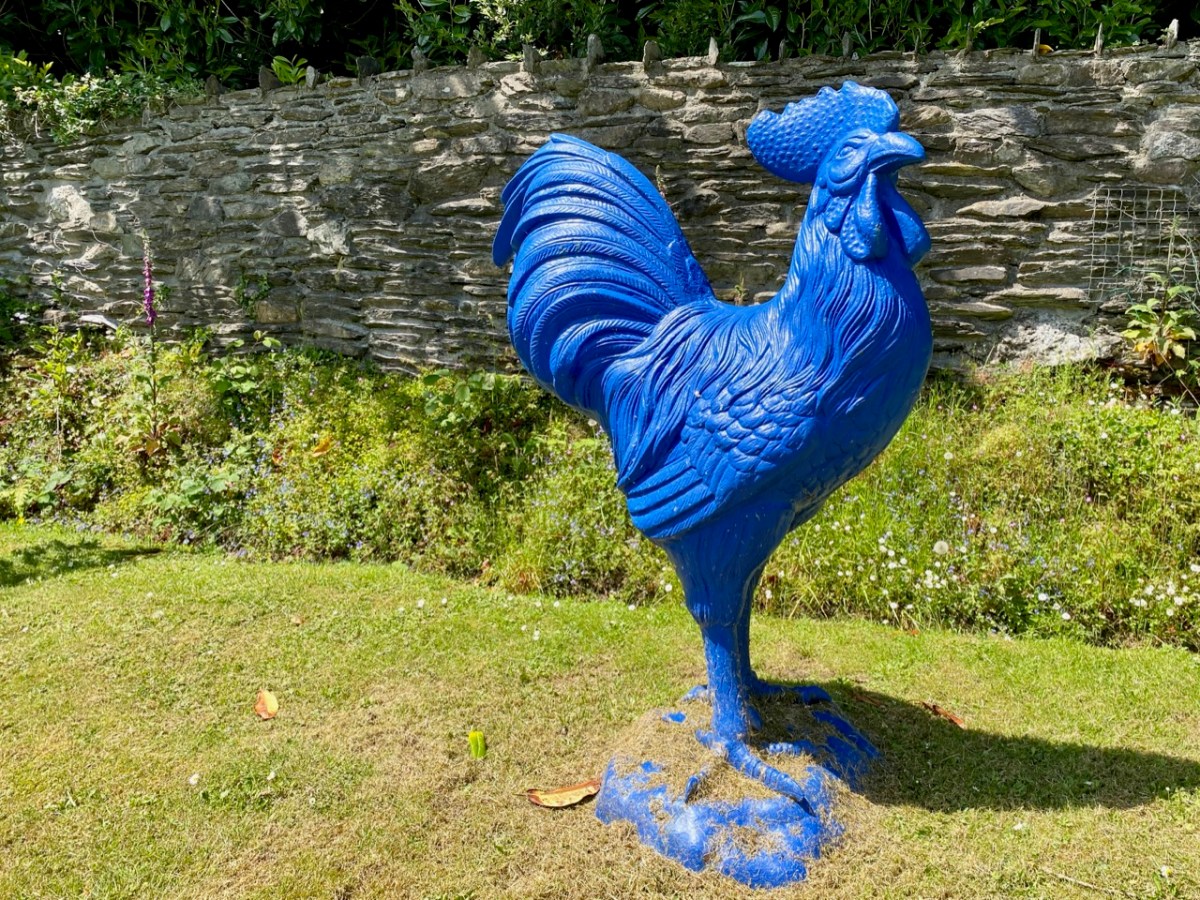
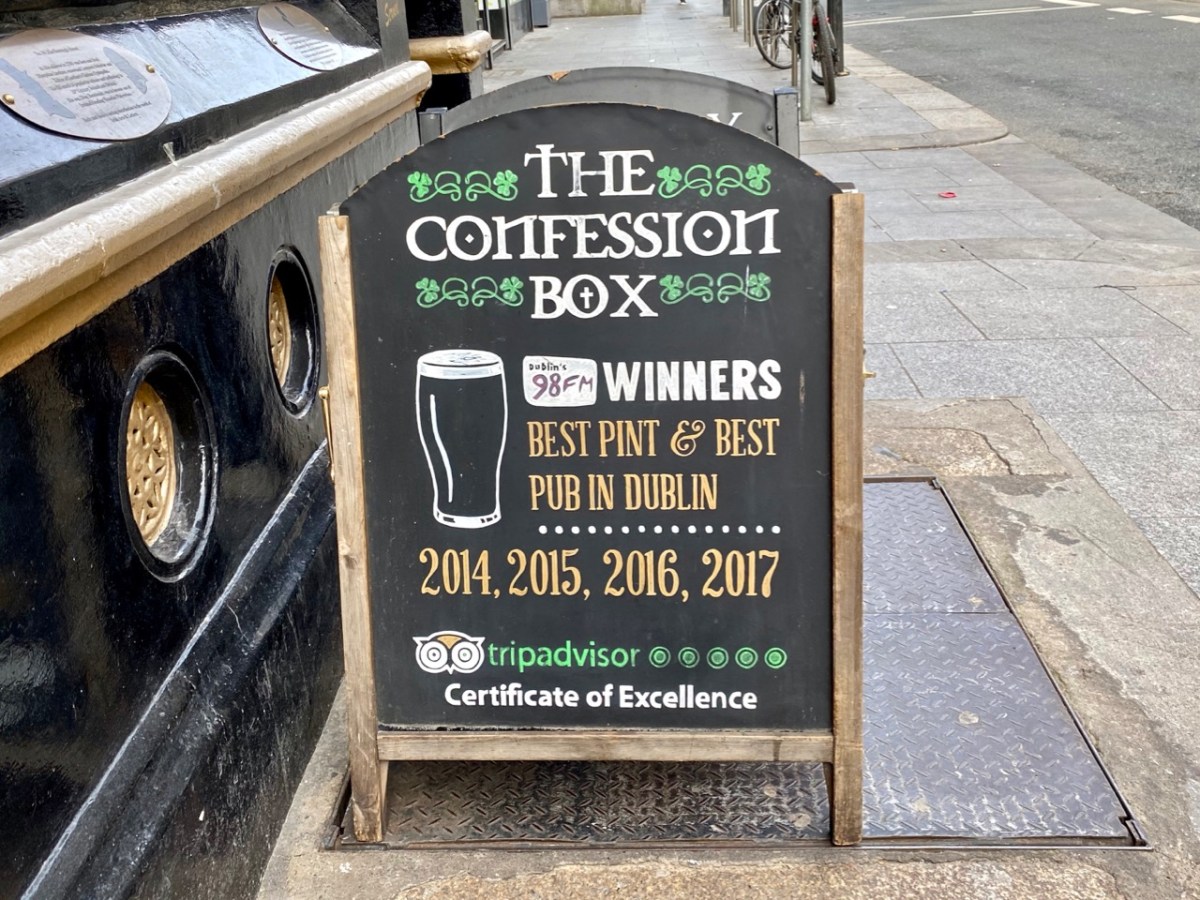
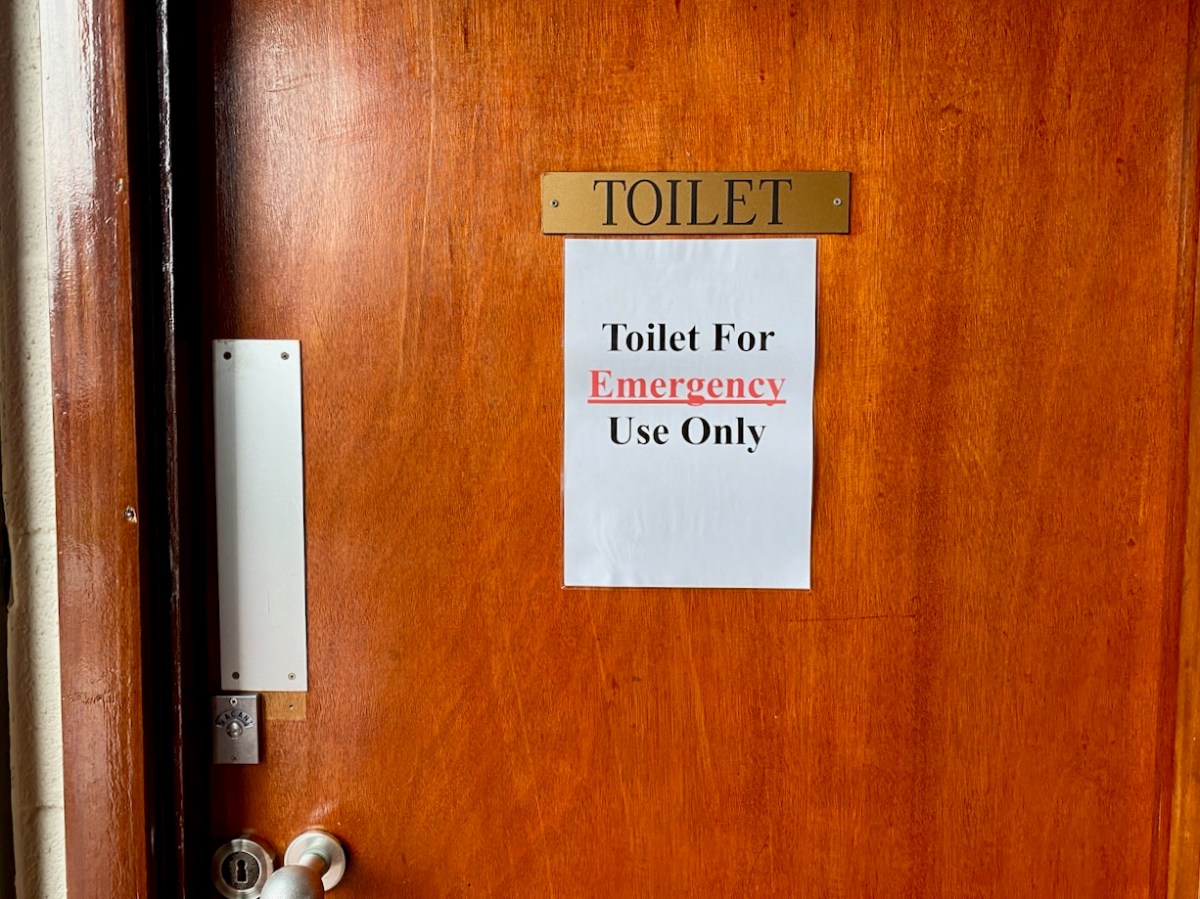
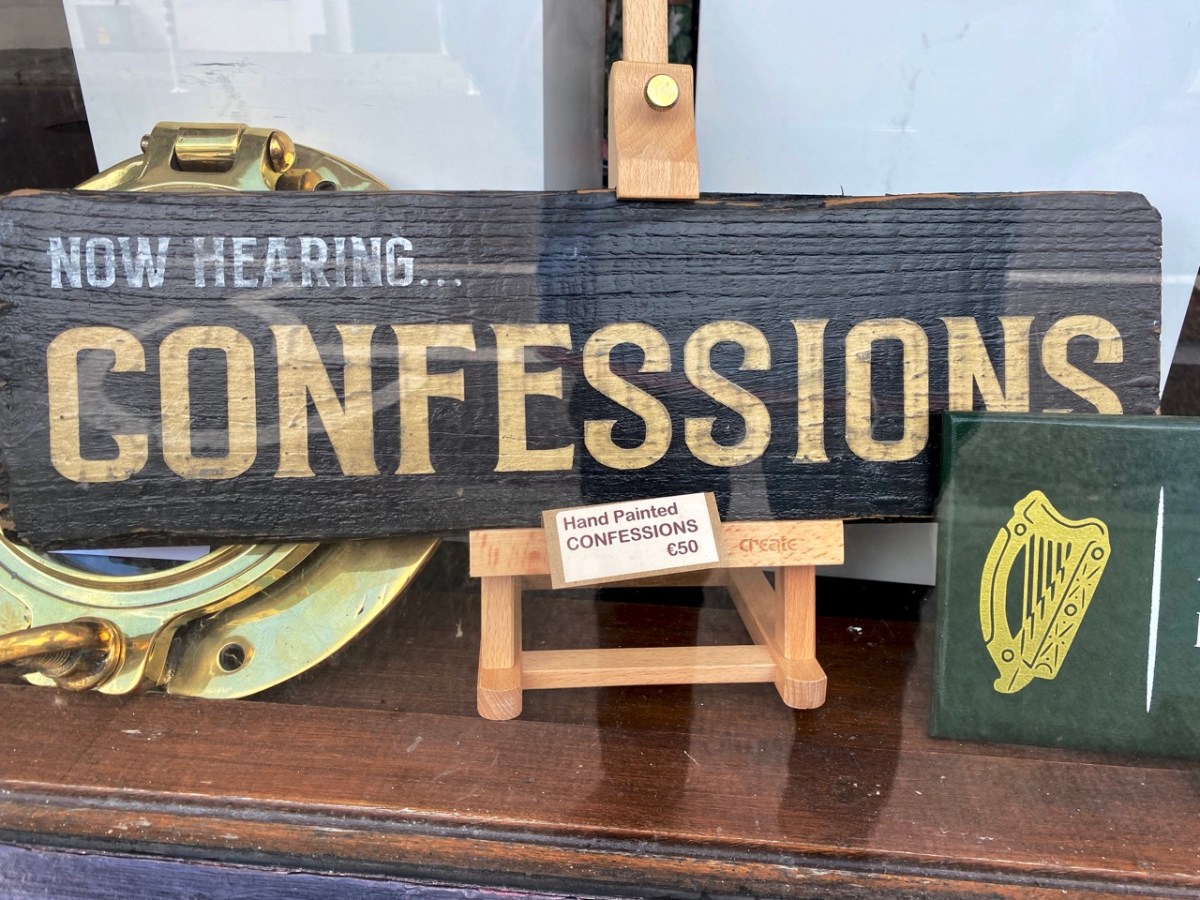
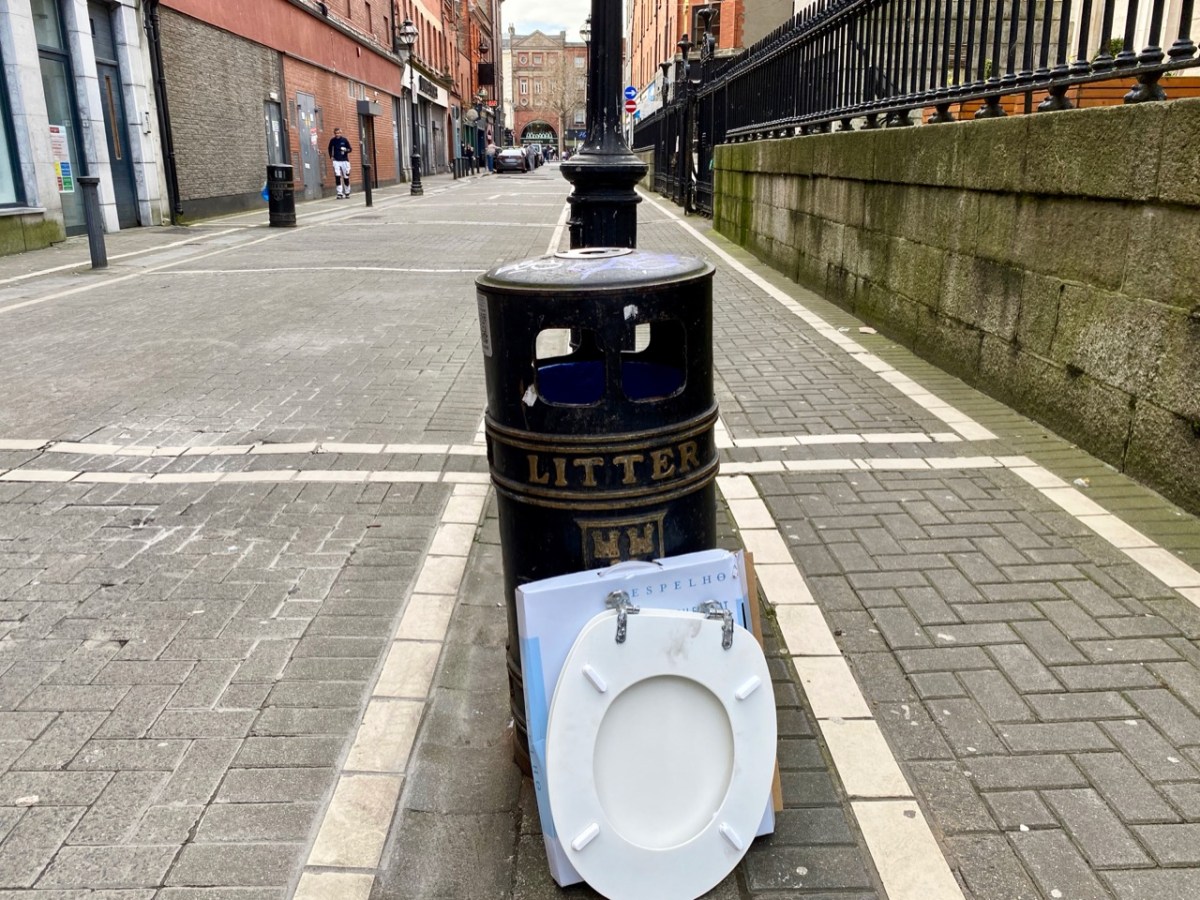
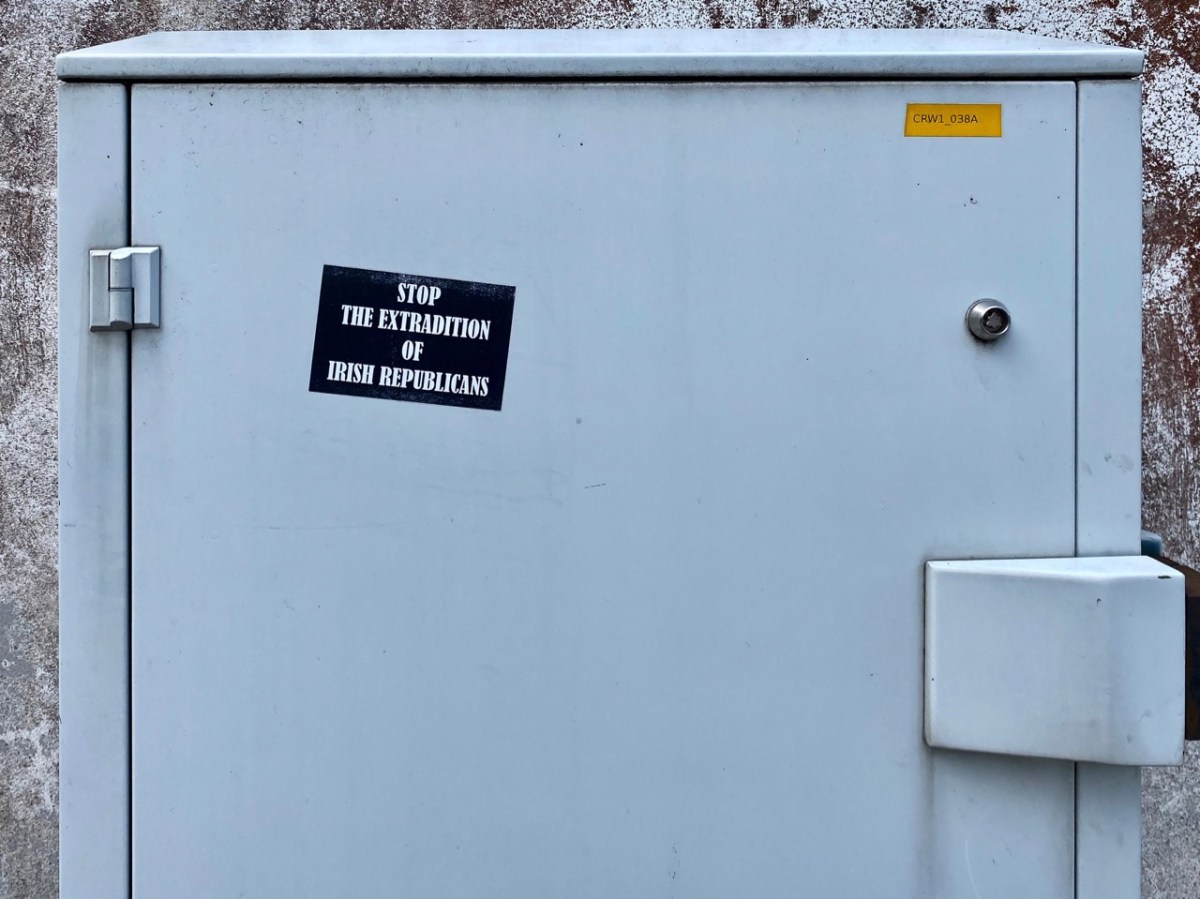
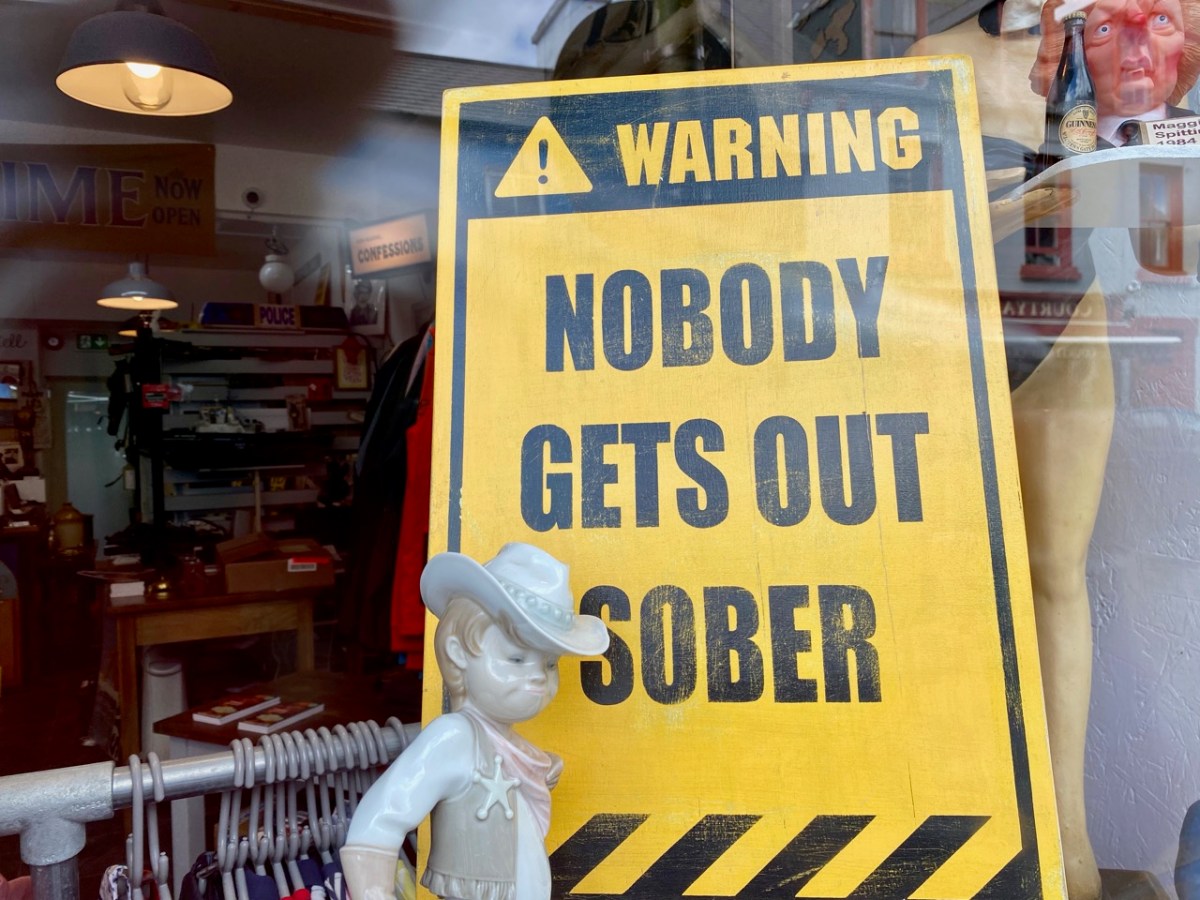
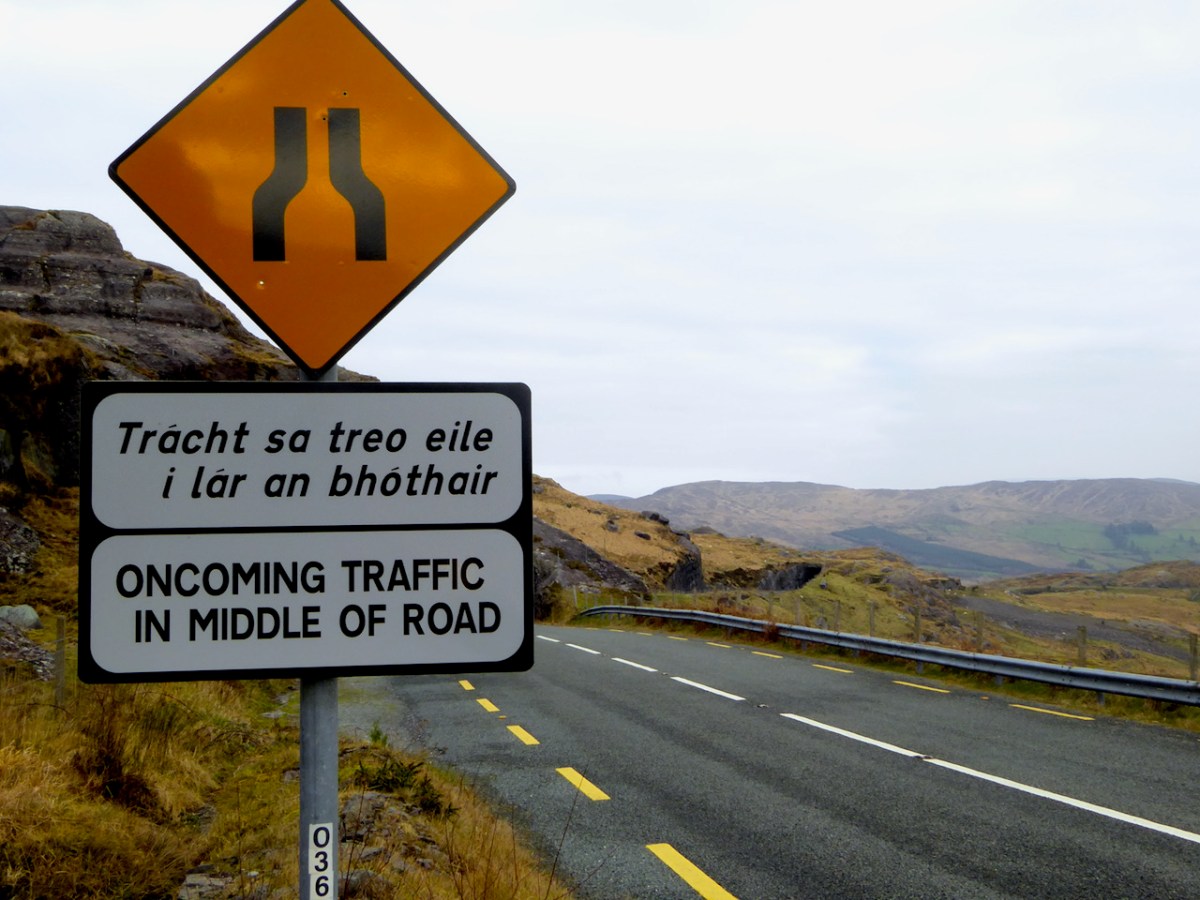
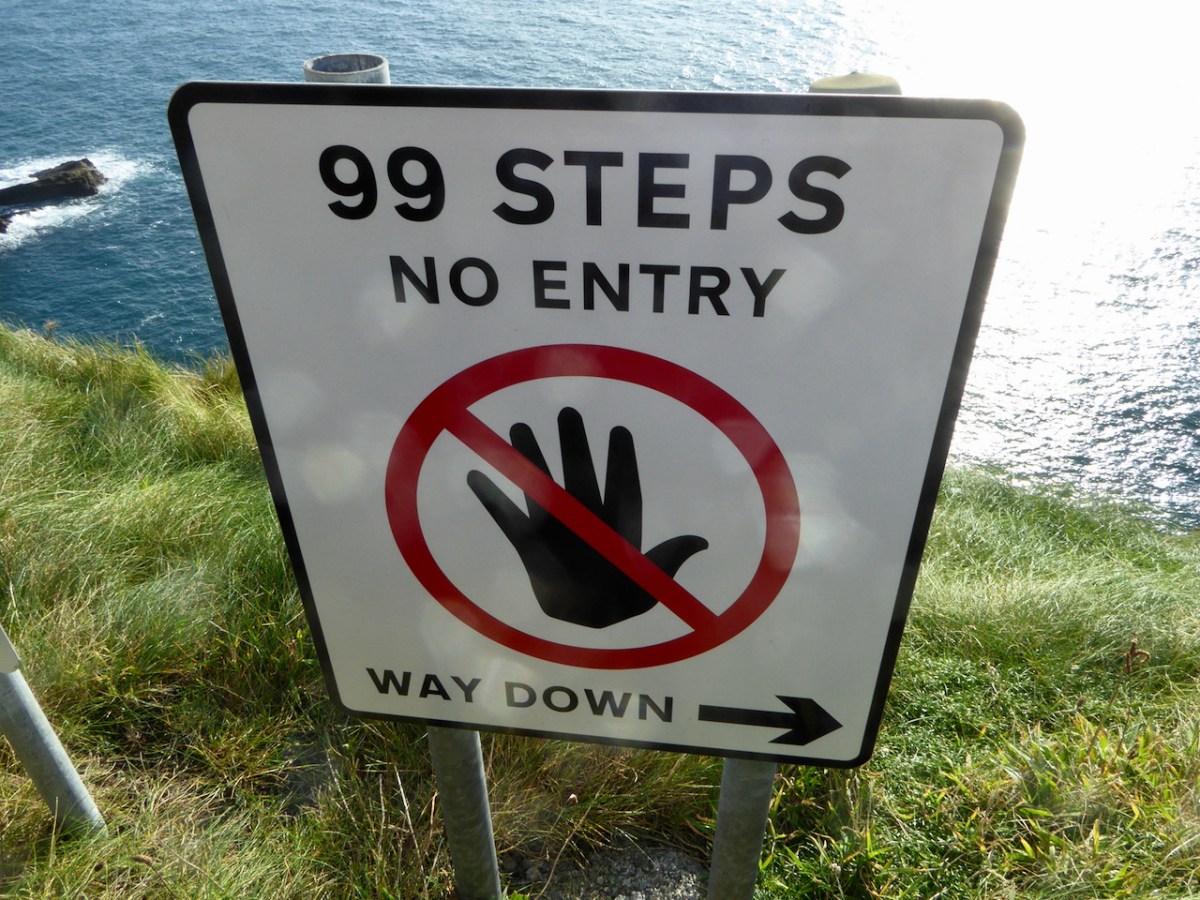
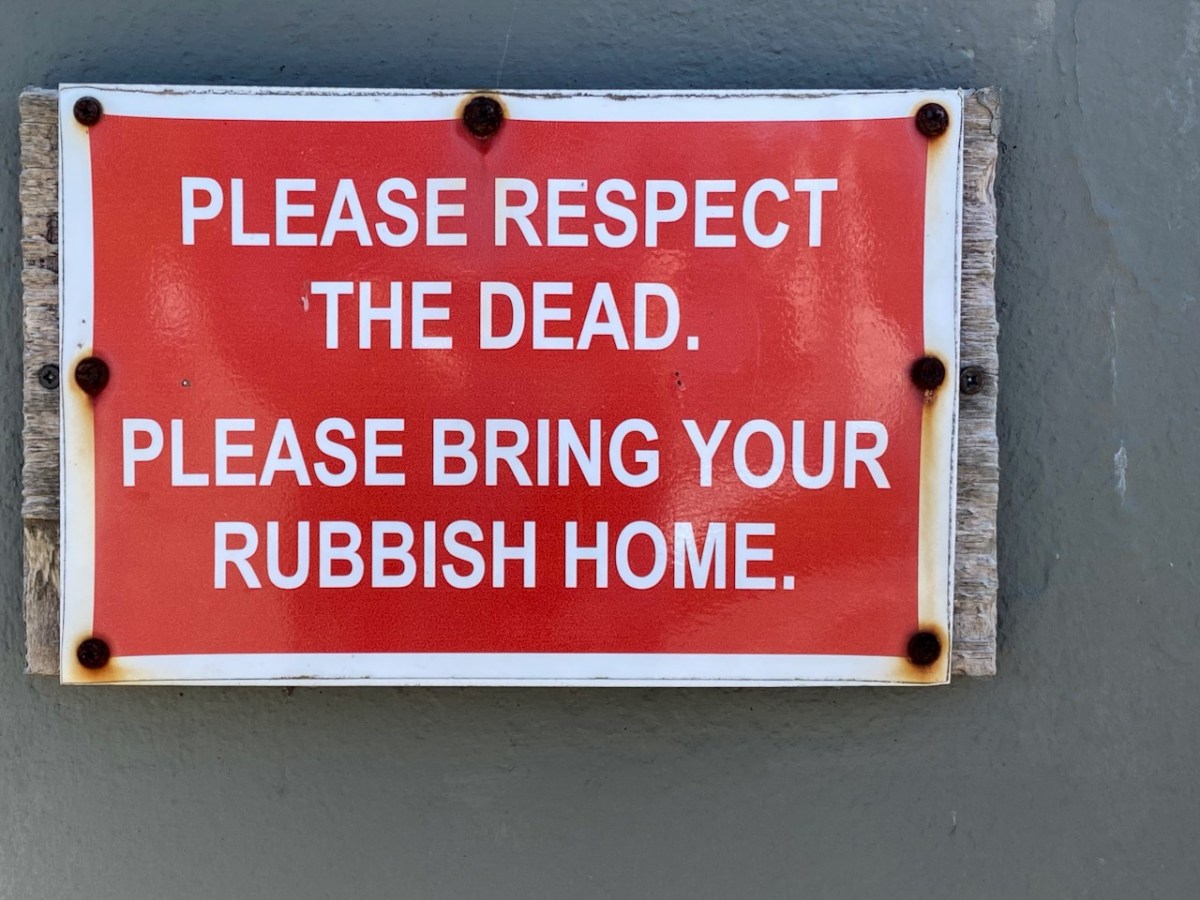
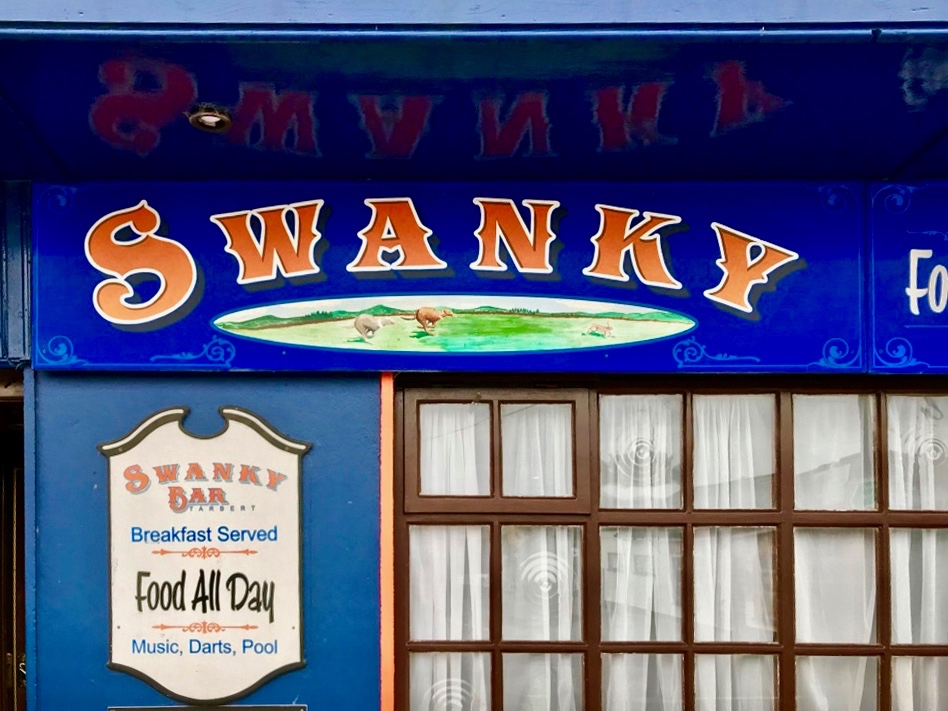
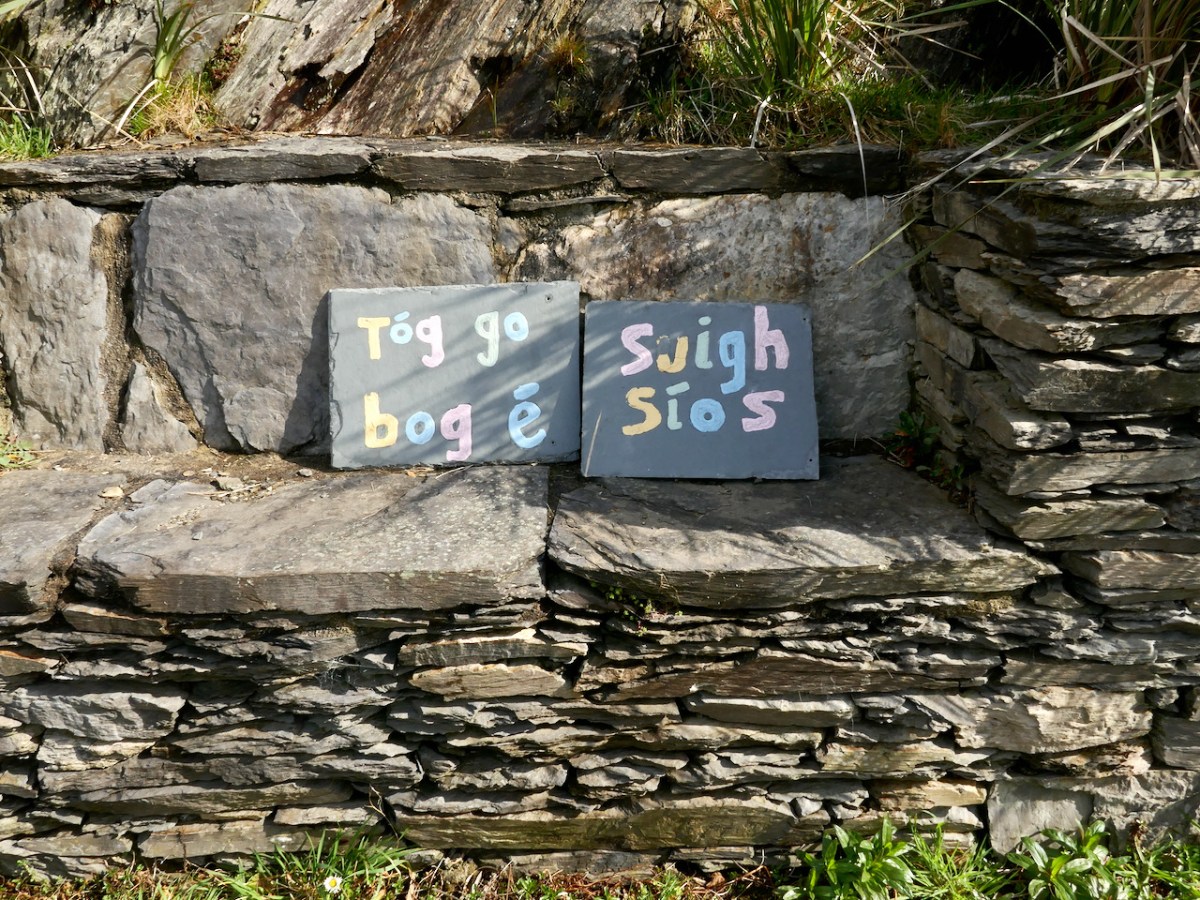
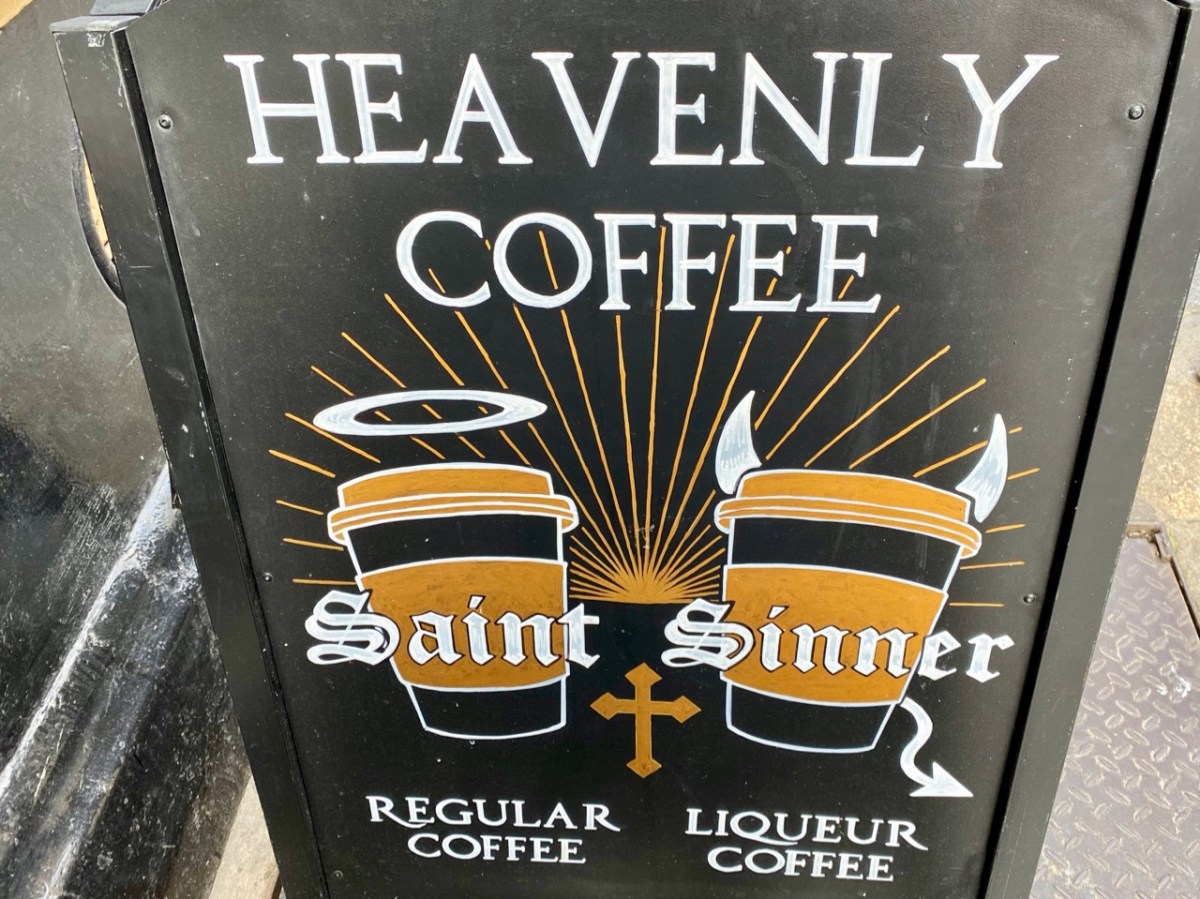
Another post about signs in Ireland: I ‘collect’ them and update them every few months. The slippery banana – above – is a classic and is to be found in the City Hall in Cork. Following it are a whole variety of examples with – hopefully – some touches of humour about them. Others have to be classified as eye-catching curiosities, including this magnificent bright blue cockerel.
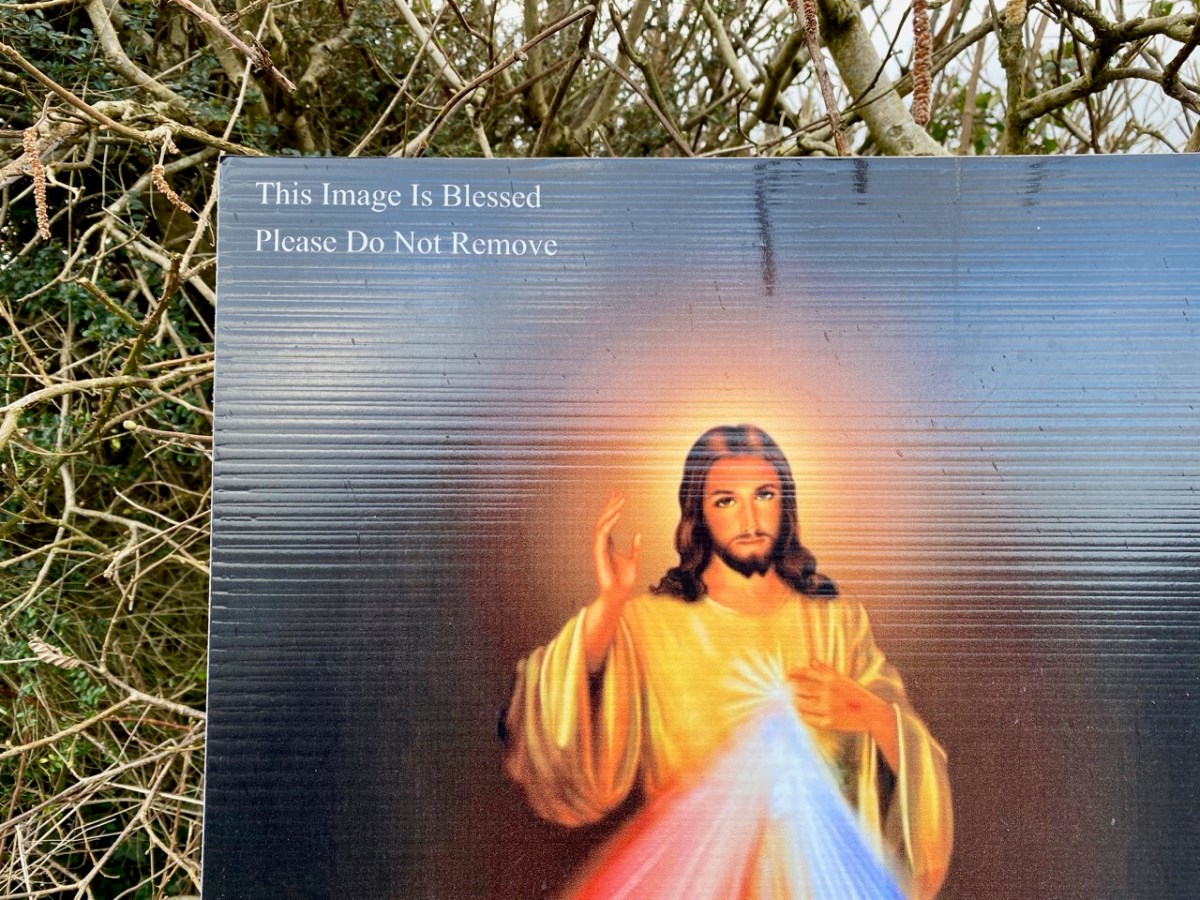
Mostly, the signs just speak for themselves…
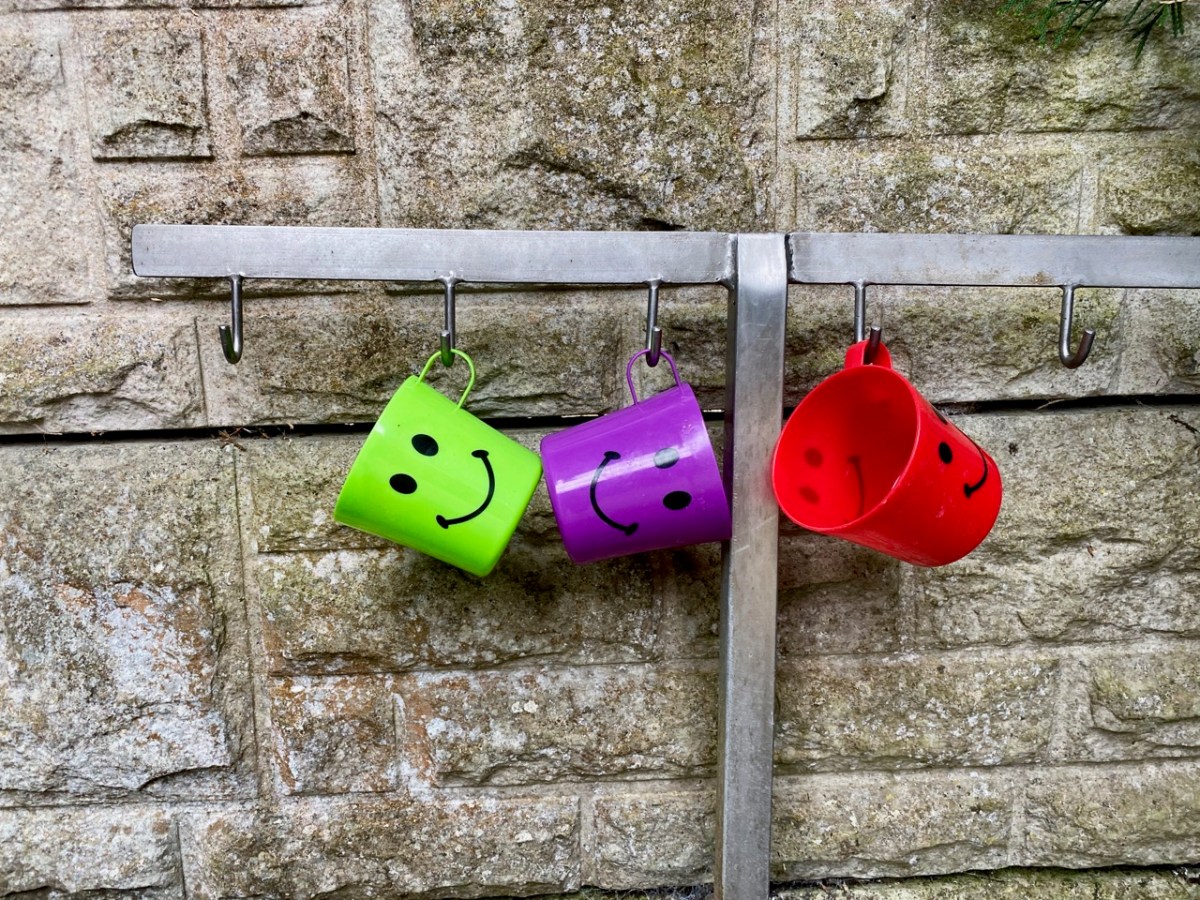
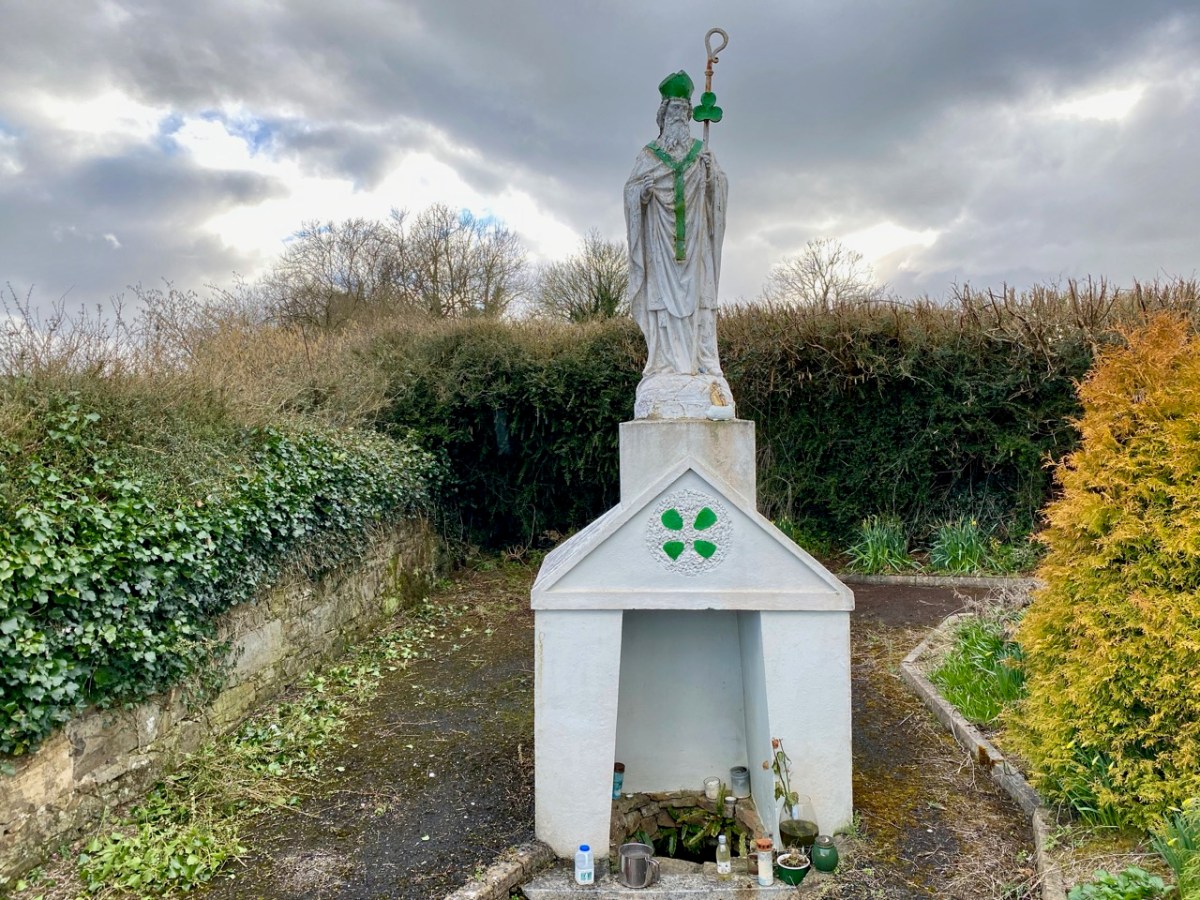
These cheerful cups can be found at a wayside Holy Well.
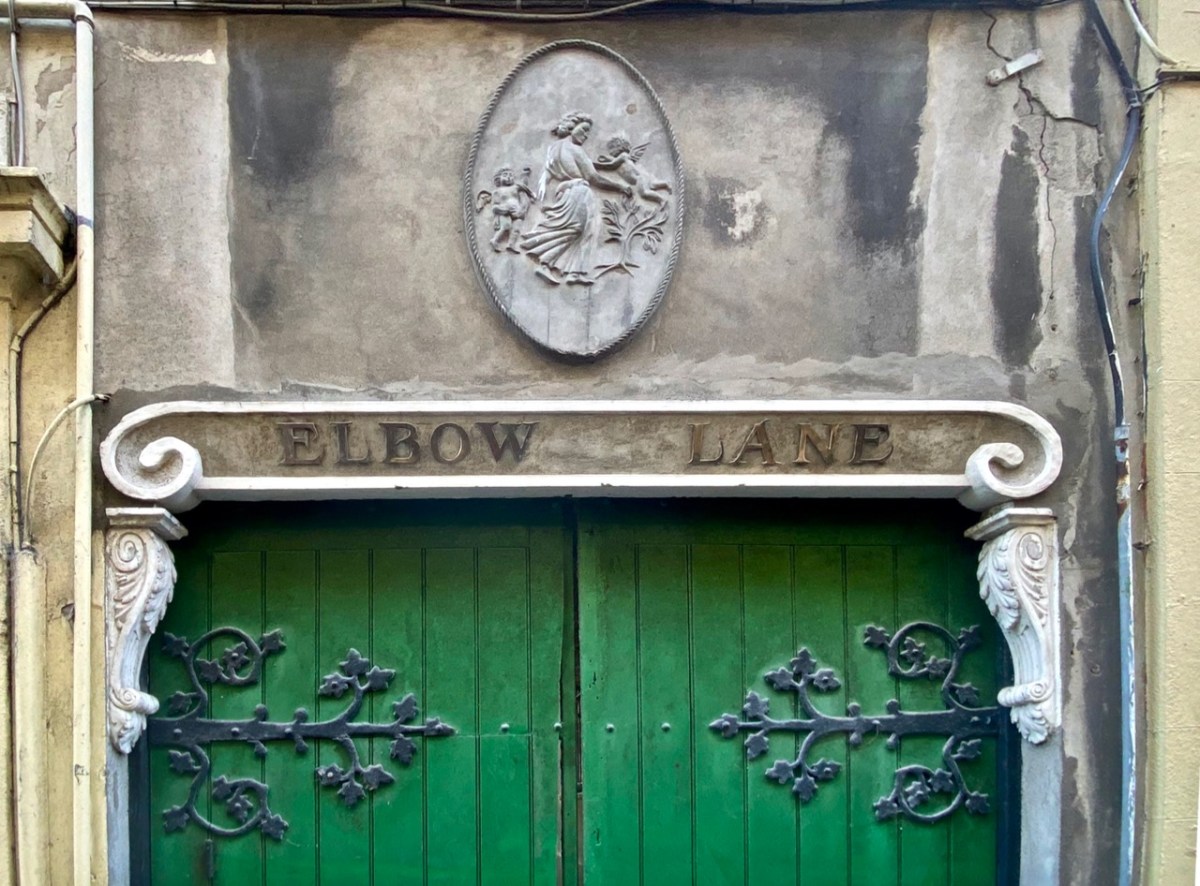
The gate above, also from Cork city, shows what architectural gems are waiting to be discovered on the streets. I was pleased – and puzzled – to come across the following:
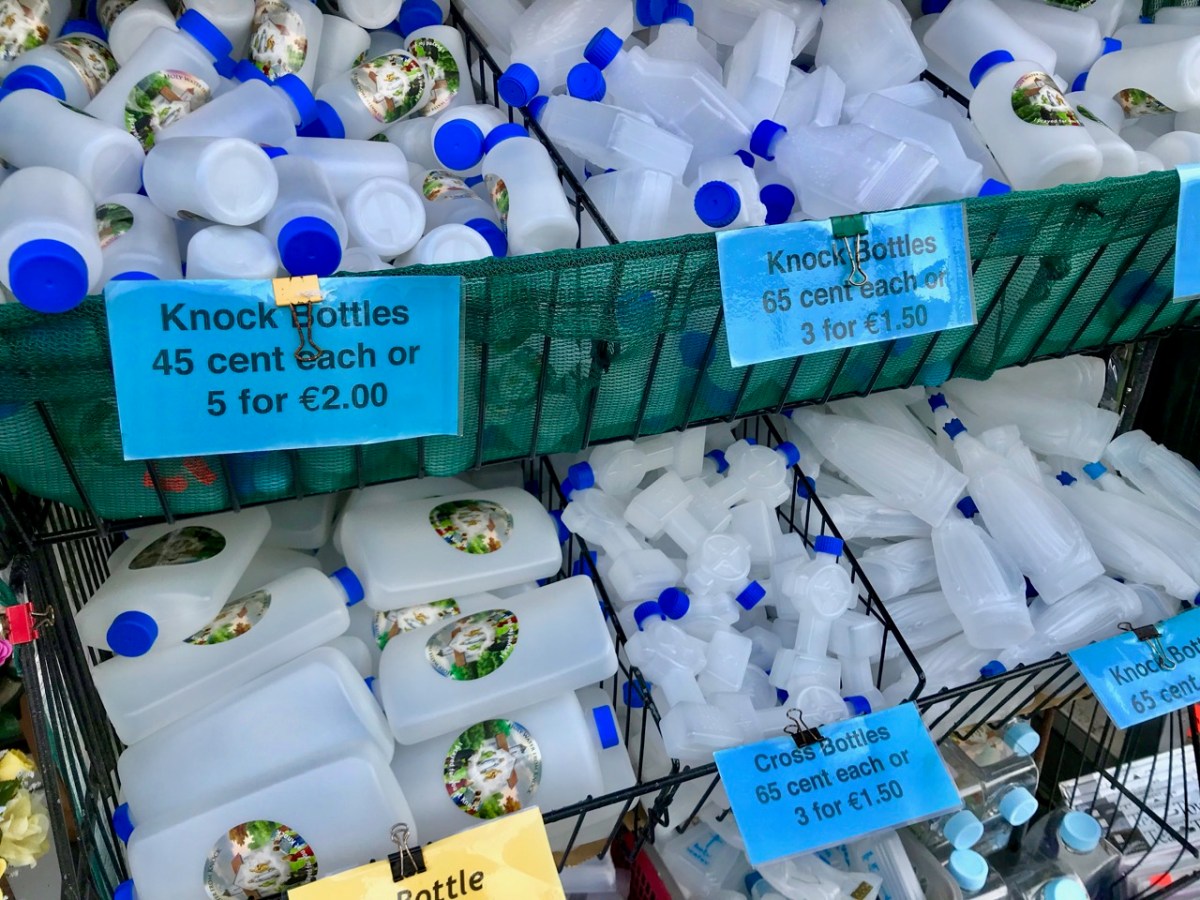
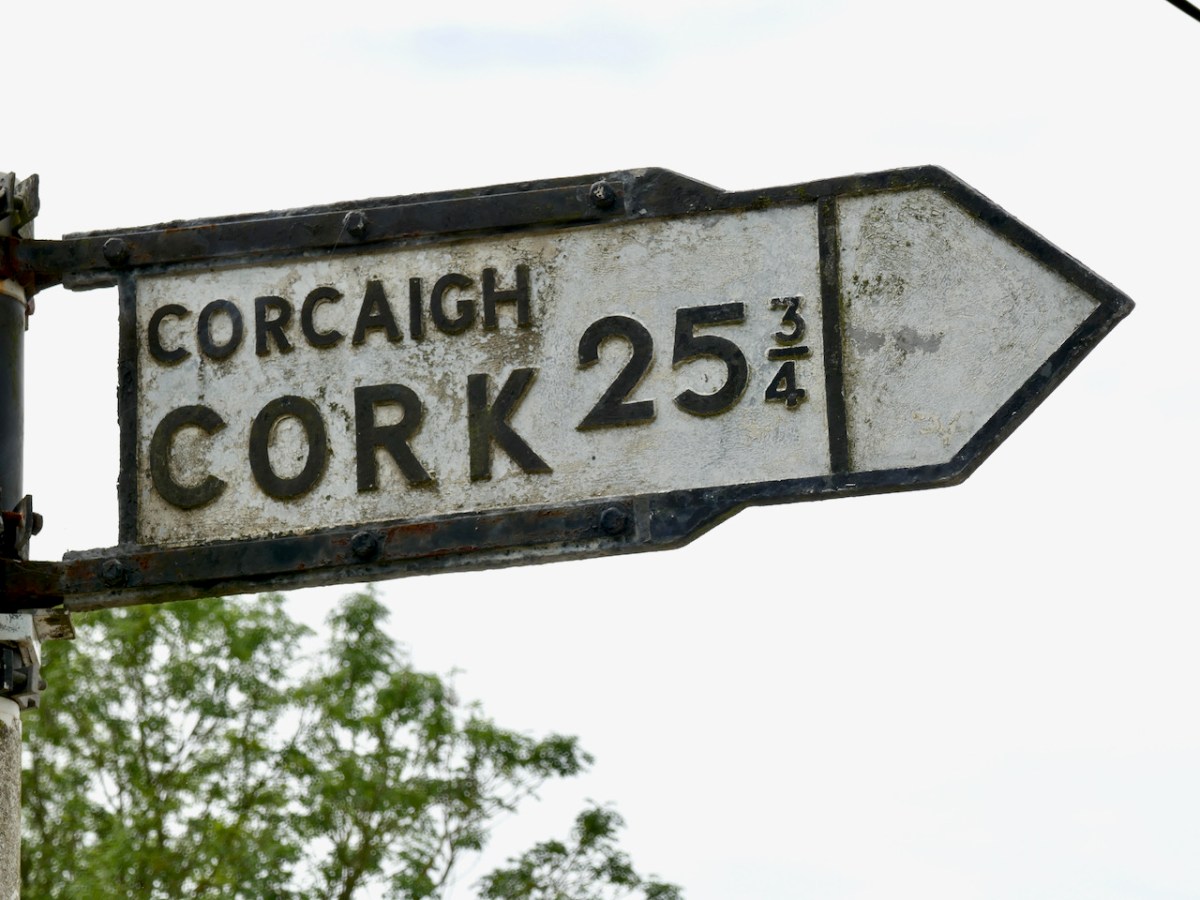
If you visit Knock (above) you can collect your own holy water. This is my report on the place. Here (below) is a curiosity – not far from our West Cork home: an old signpost marking the distance in miles. You might say it’s one that got away!
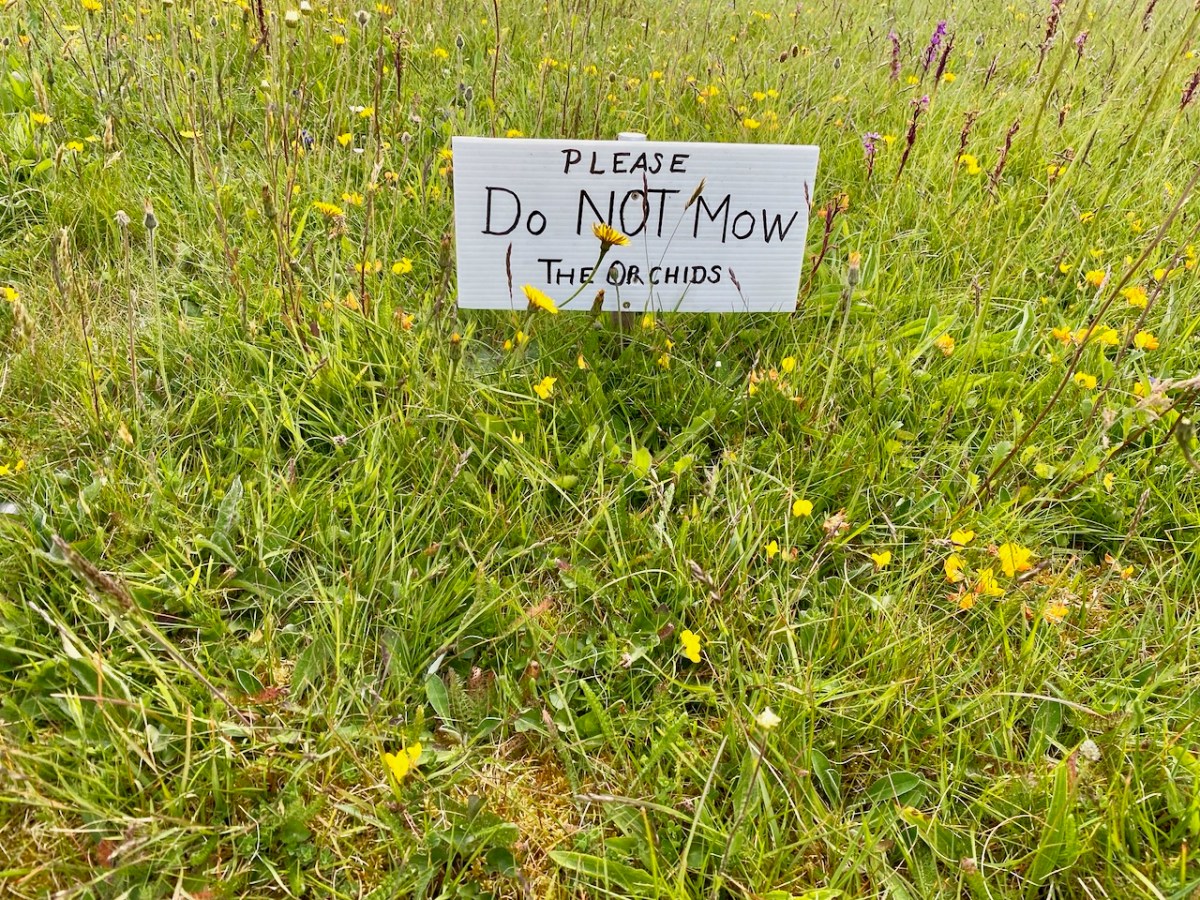
Quite right! The orchids at Toormore Church are spectacular, and have to be looked after.
A coded message from another world, perhaps?
Signs can be enigmatic here in Ireland. There’s usually a reasonable explanation for them, though.
There’s plenty more where these came from (in fact they come from all over Ireland). Keep a watch out yourselves!
I write about stained glass all the time, but I have never tried my hand at classic leaded glass. Having enormously enjoyed my sortie into fused glass with the wonderful Angela Brady, I’ve been looking for an opportunity to have a similar experience with leaded glass. Luckily, we have in West Cork the equally wonderful Deirdre Buckley Cairns, an award-winning multi-talented artist who lives in Schull and who teaches stained glass. I signed up for a full day workshop.
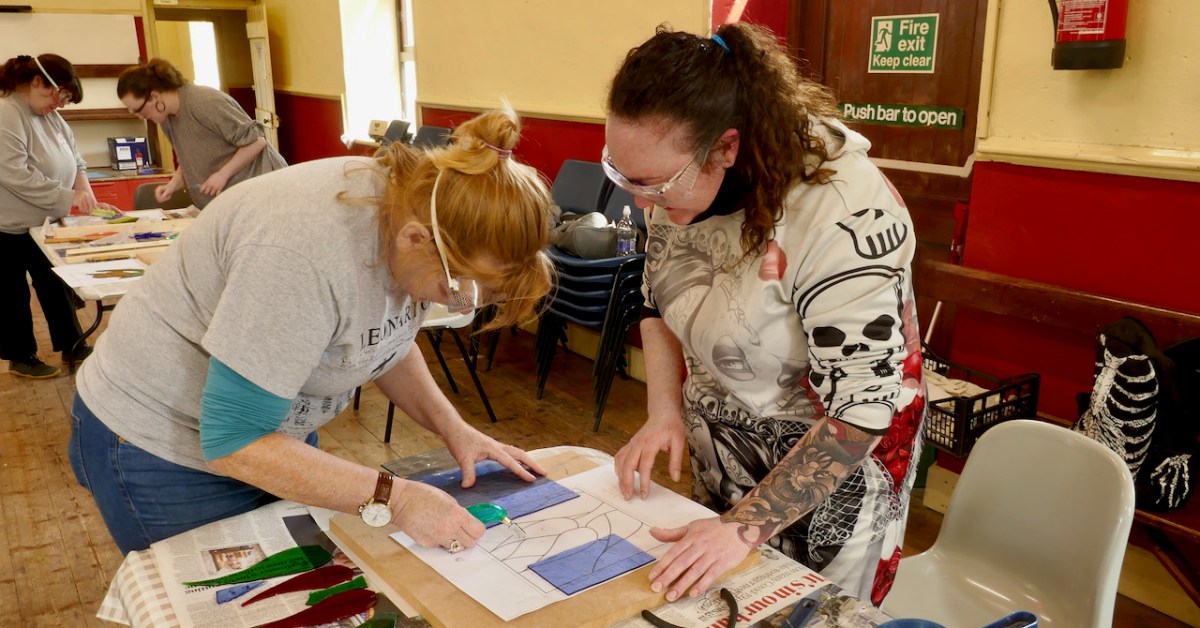
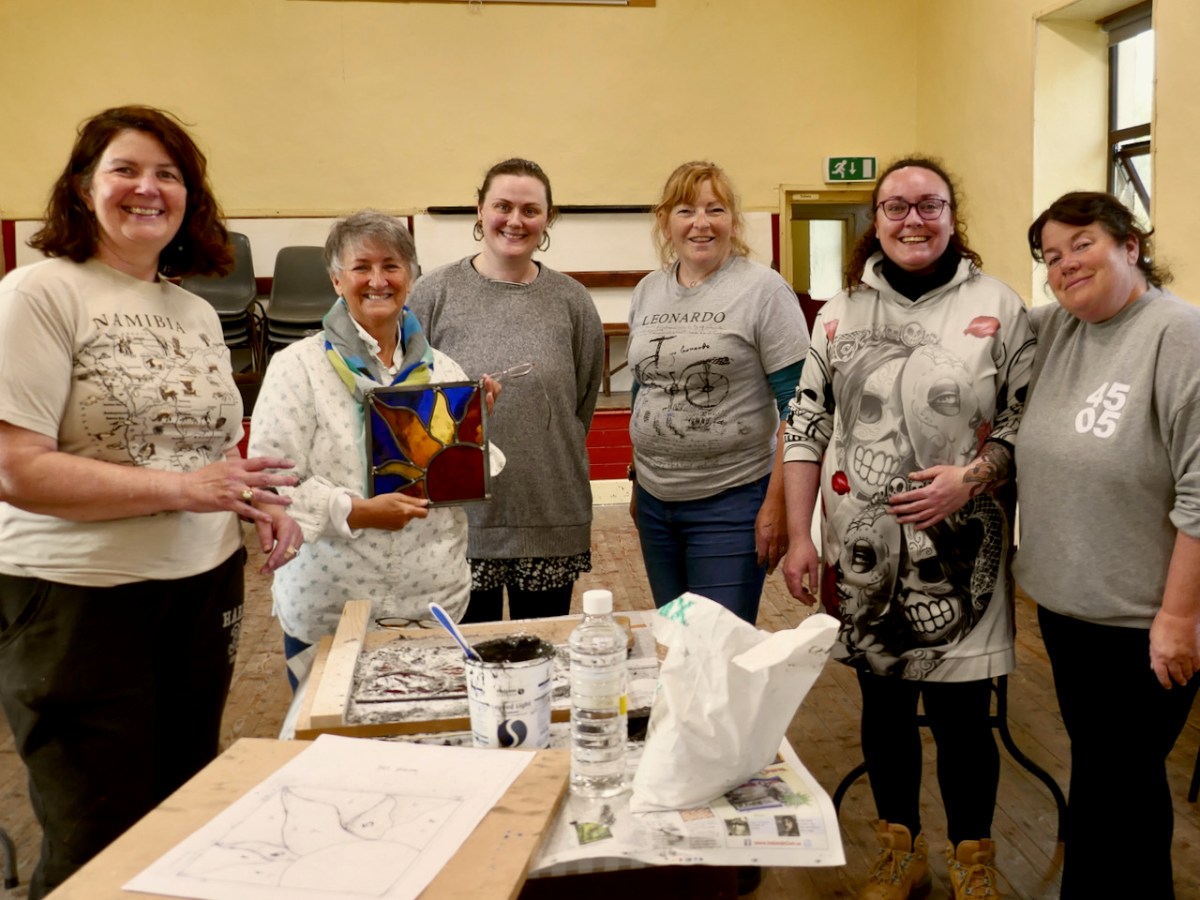
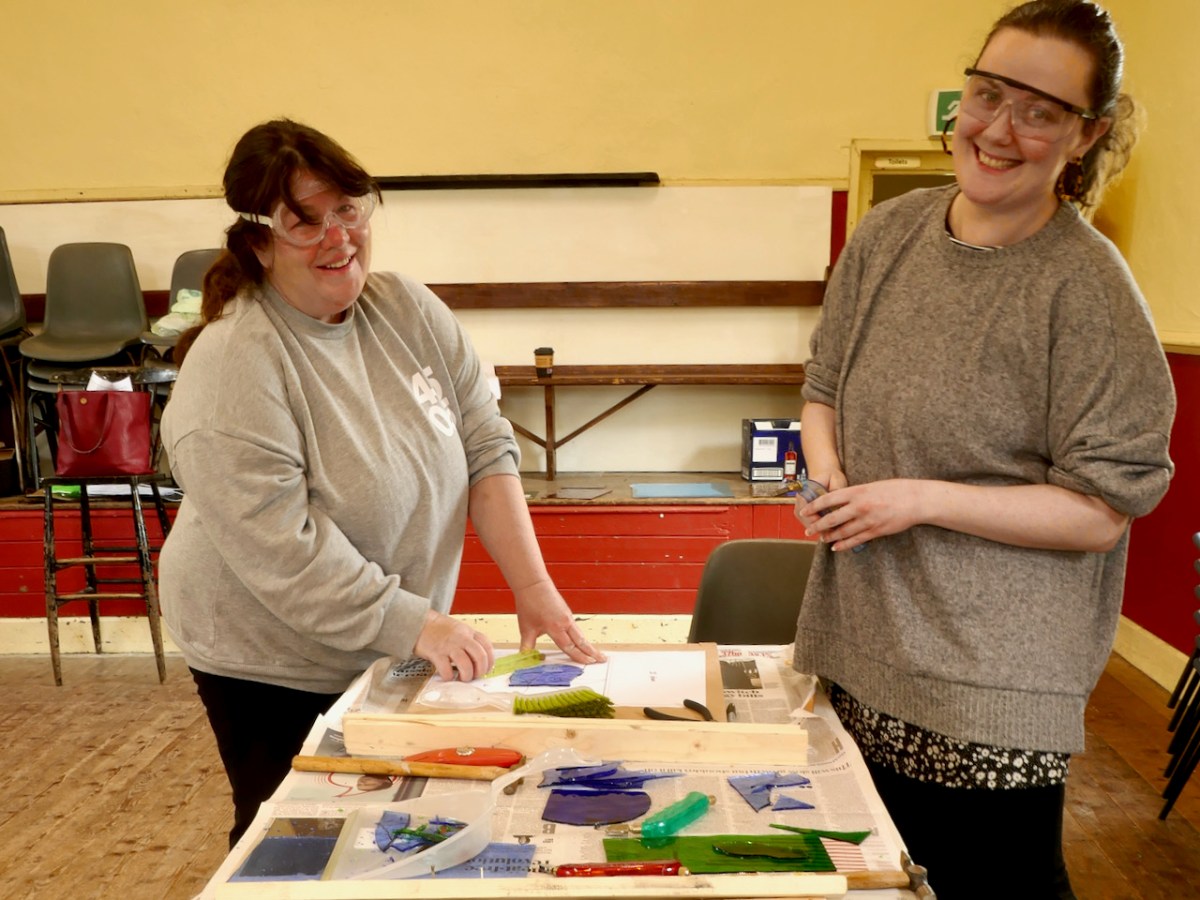
Deirdre is an experienced and excellent teacher. I’m in a good position to judge this as I ran a teacher education program for several years, so I know good technique when I see it. Deirdre was ultra-prepared, guided us through the day in well-calibrated steps, and was unfailingly positive and encouraging. We got there at 9 – Adrienne, Sarah, Susan, Louise and I – and she had everything laid out on each bench – all the tools and supplies we needed – and her own demo bench all set up.
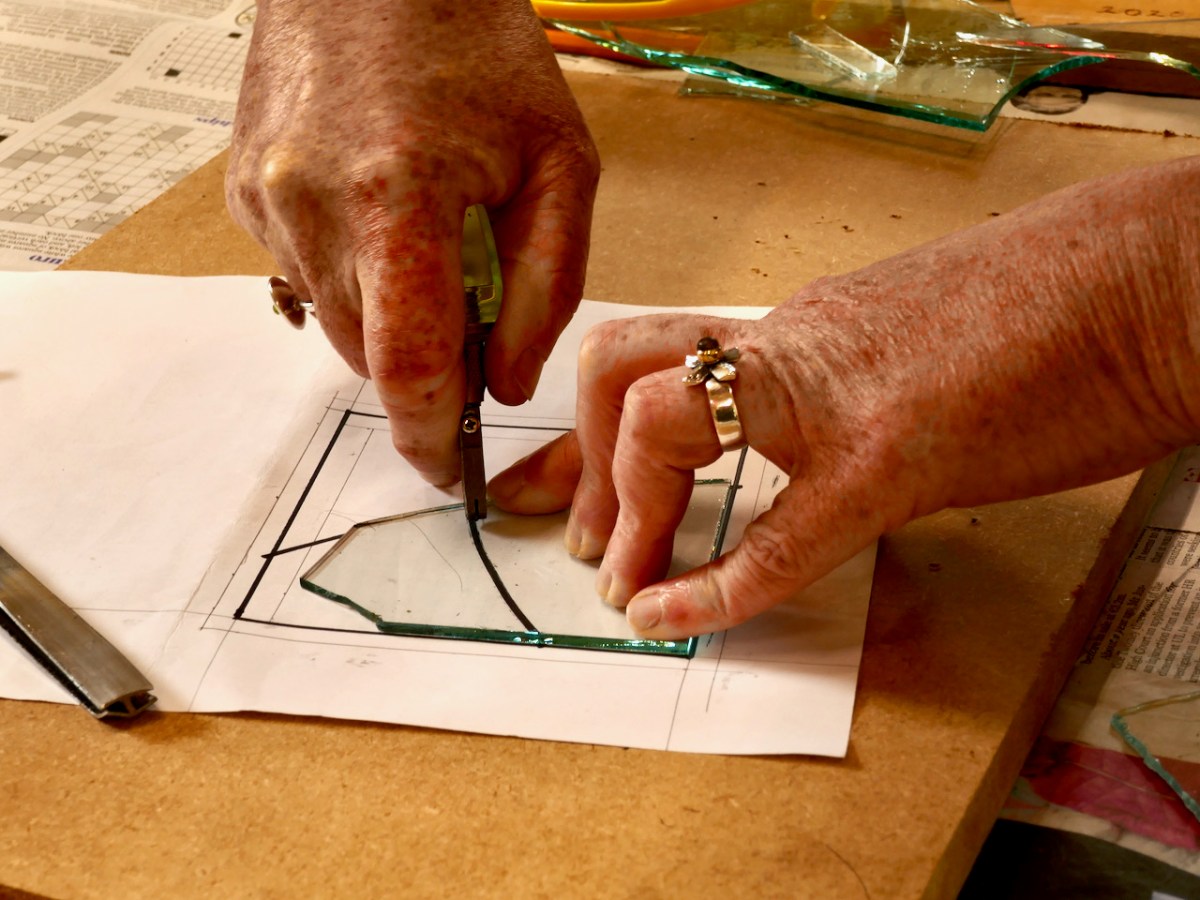
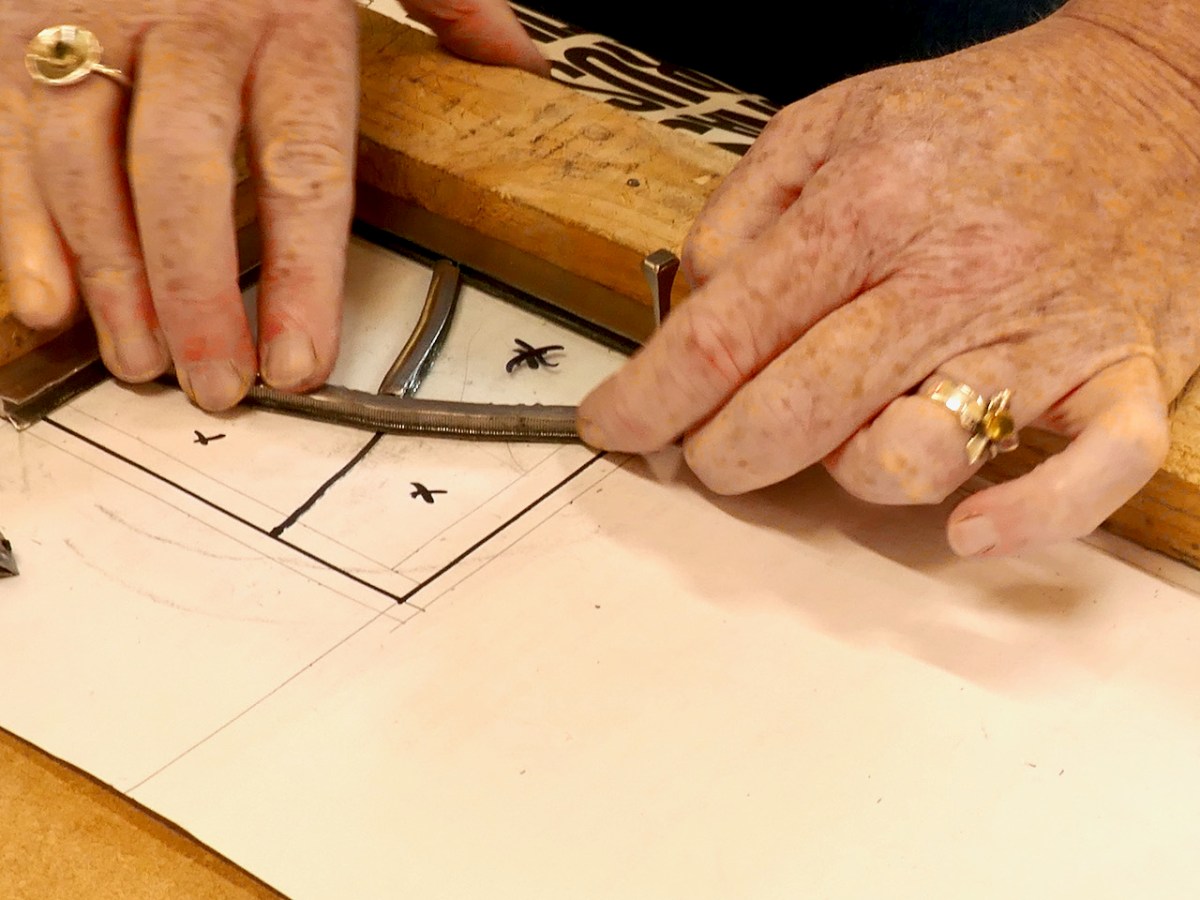
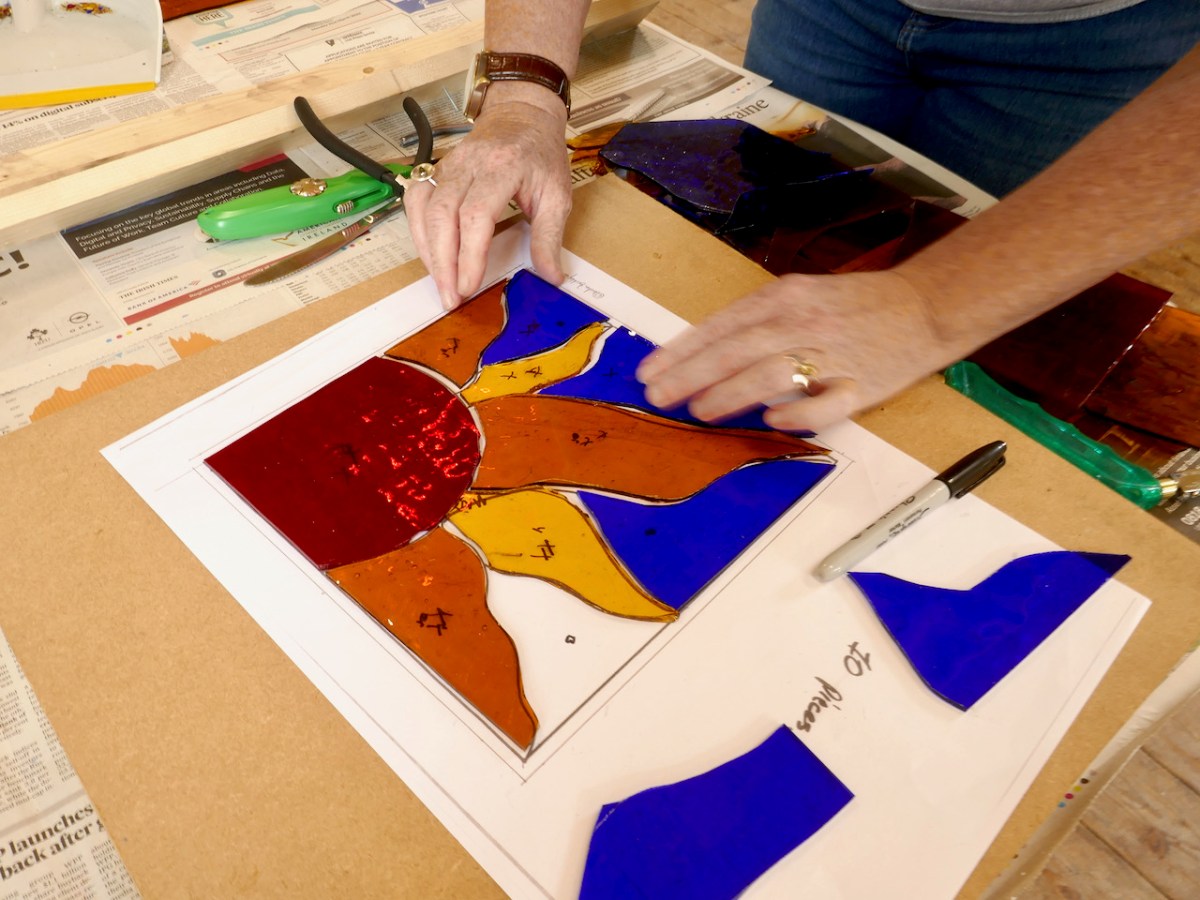
We each chose one of Deirdre’s designs that she has carefully worked out to be doable in a day and I must admit I went straight for the ten-piece design, which looked the least intimidating. Our class started with how to lay the glass properly over the design and how to cut the shapes.
This is where I ran into the first of many humbling fumblings – that nifty little glass cutter thingy is a lot harder to control than it seemed when Deirdre expertly guided it exactly over the felt marker line under the glass. It stops unexpectedly, it shoots off in the wrong direction, it leaves gaps – it’s a fiendish little instrument of the devil. It was the first of my many realisations throughout the day of how much time and practice it takes to develop into a skilful glass cutter.
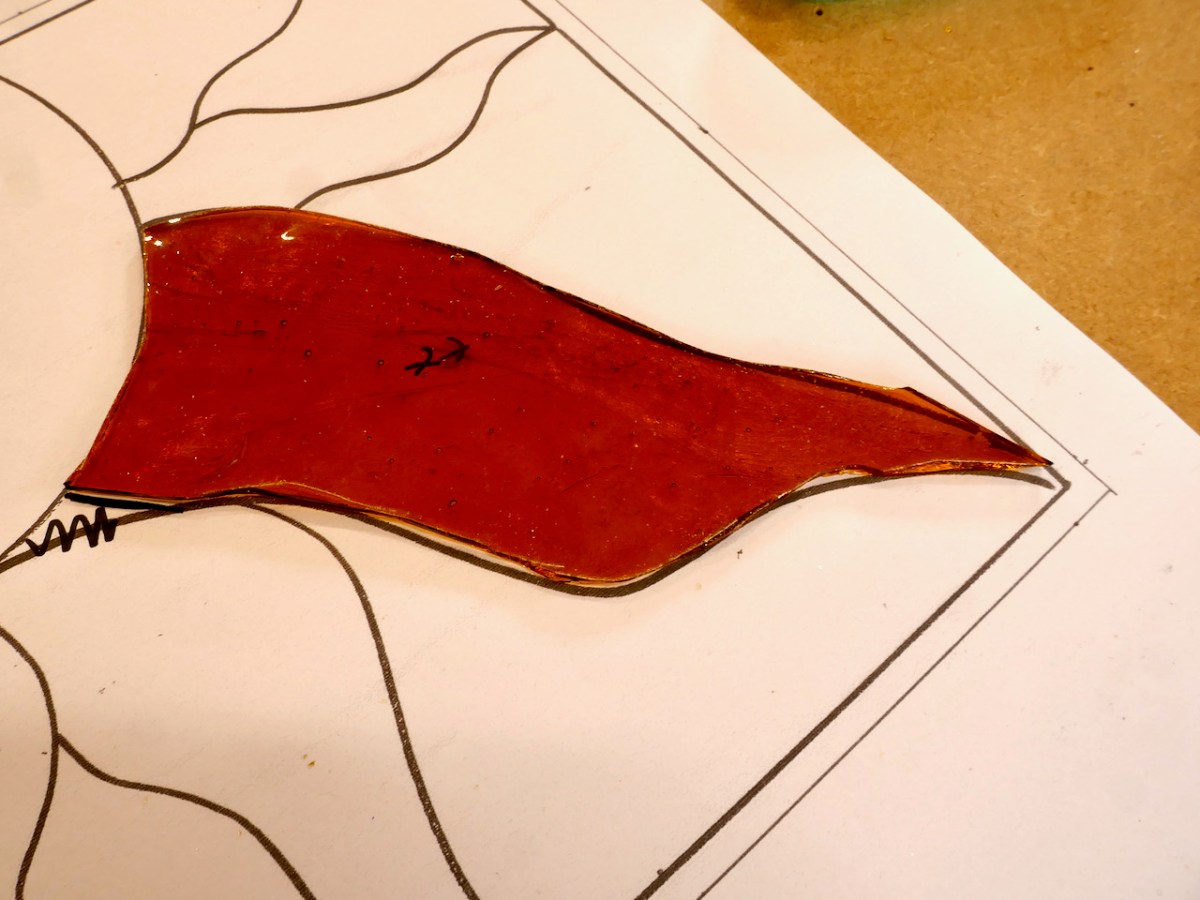
By lunchtime – that’s three hours for ten pieces – I had my glass cut out. They looked a little rough around the edges, but at that point I hadn’t realised how much that lack of finesse would come back to bite me, so I was basking in a warm glow of accomplishment and ready to enjoy a break.
Susan seemed to have grasped the concept better – her pieces looked remarkably accomplished!
After lunch we had the demo on how to lead the glass together. Starting with two outside leads, Deirdre showed us how to measure, cut and shape the soft lead cames so that all the pieces of glass come together within the lead borders. Seemed straightforward enough – hah!
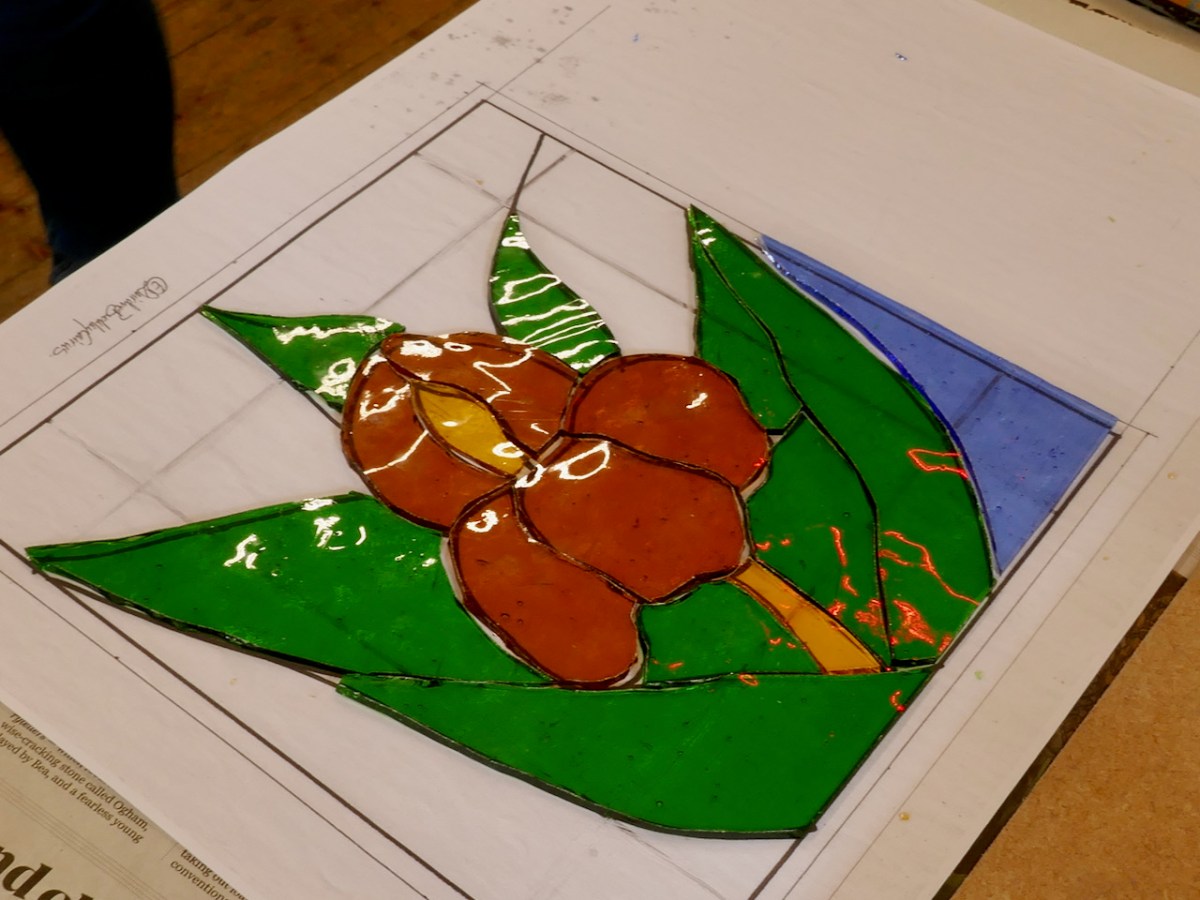
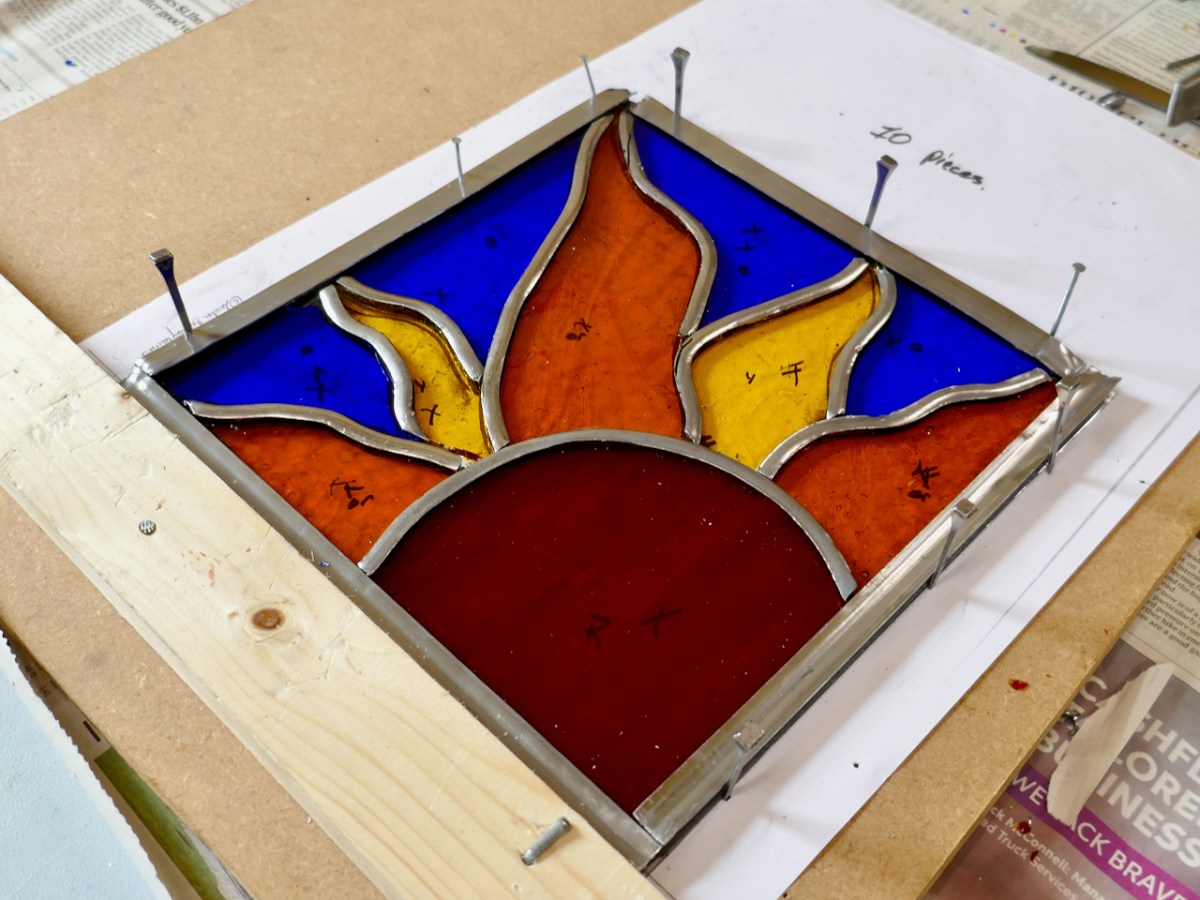
The first few pieces went fairly well, but then the lack of precision in my glass cutting started to become a problem, as I tried to jimmy and tuck pieces together. Deirdre showed me how to use the grozers (a kind of pliers) to nibble away incorrect edges. Well, nibble is the ideal – in my awkward hands the ‘nibbling’ seemed to create ever more jagged edges. Sometimes we had to use the grinder to try to sort out the final shape – as you can see below, my final piece was far too big for the space it had to fit.
Even though I got the glass more or less leaded in the end, nobody could pretend that it looks anything other than a very amateurish piece of work, with holes where there shouldn’t be holes and a crooked frame. Nevertheless, I was ecstatic to have managed to push and shove it, with lots of help from Deirdre, into a final square shape.
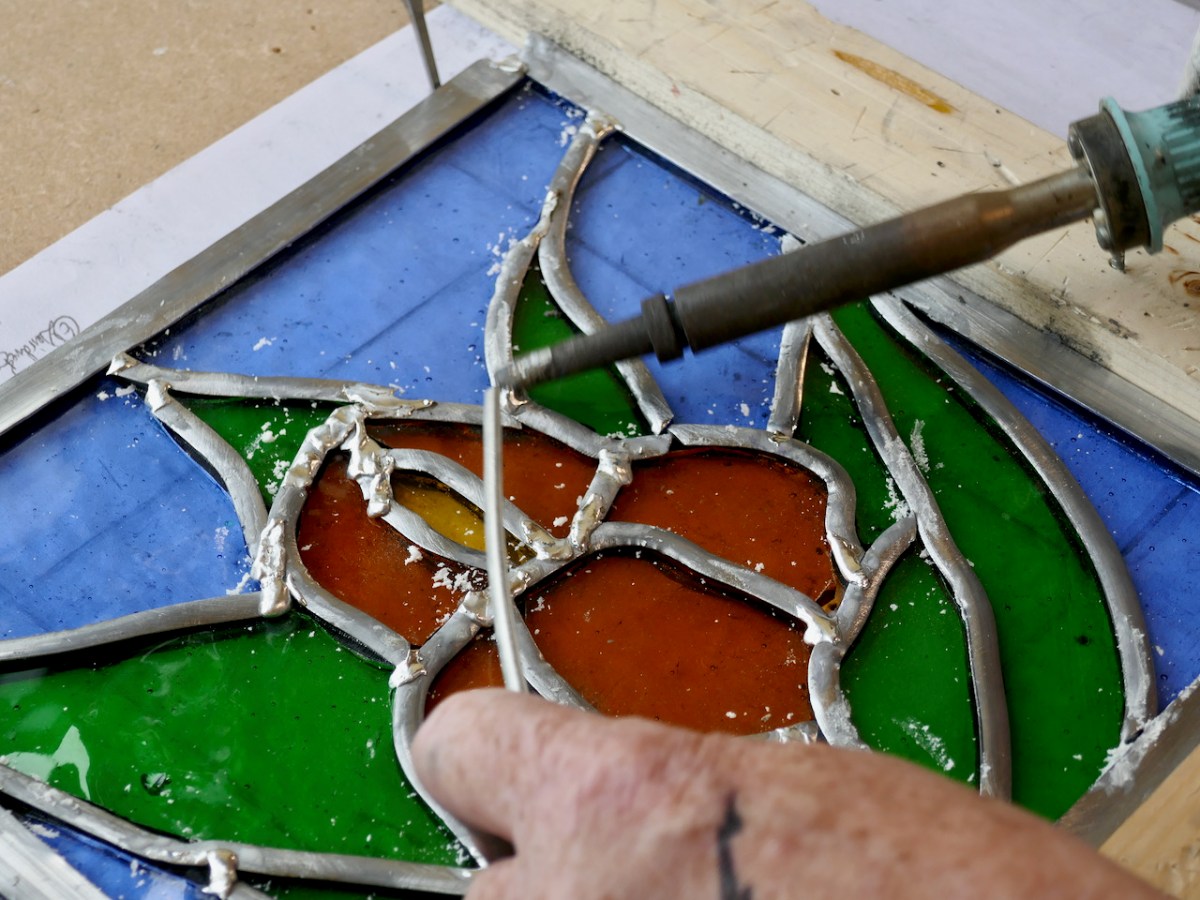
The next step was to secure all the joins with solder and I hate to say it but this was the most fun part. Or maybe I mean the least stressful. There’s something deeply satisfying about melting metal and watching it magically knit two pieces of lead together.
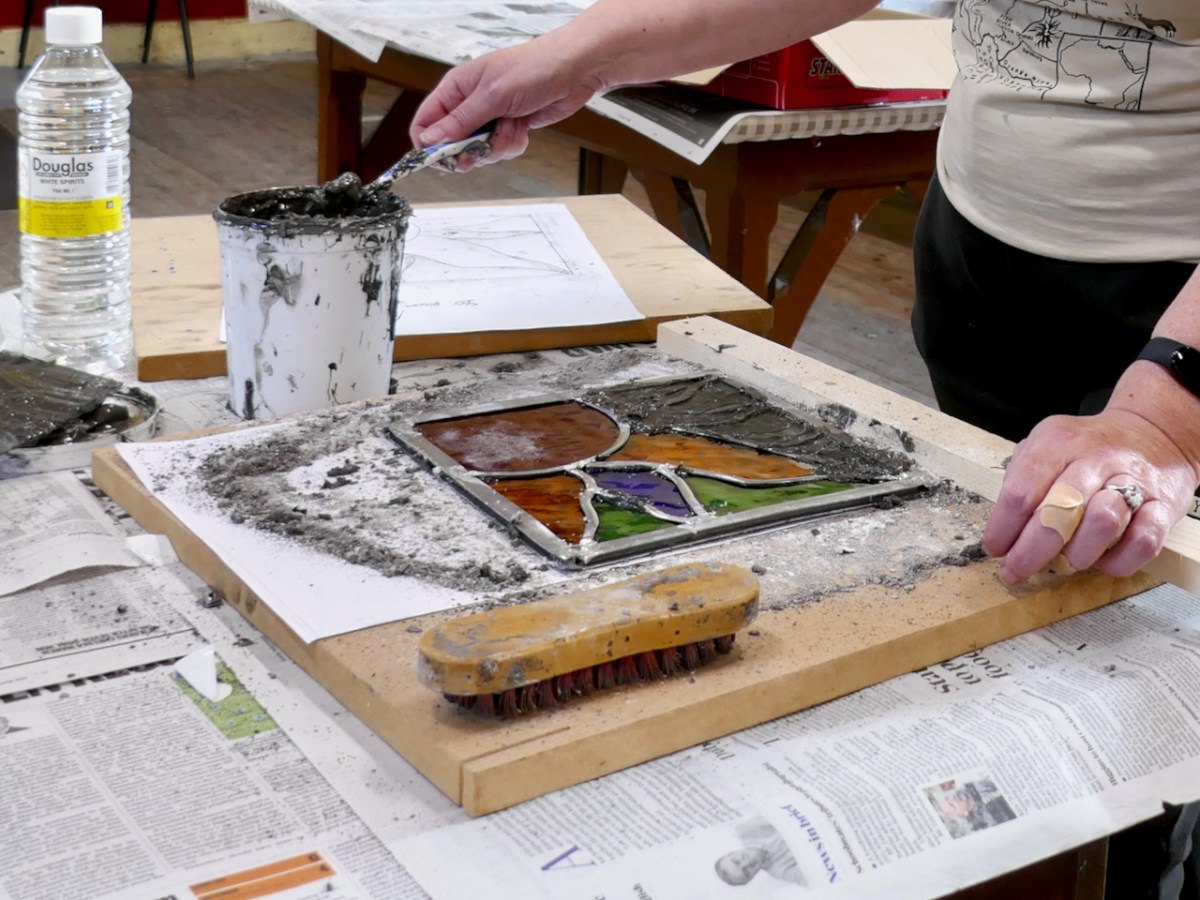
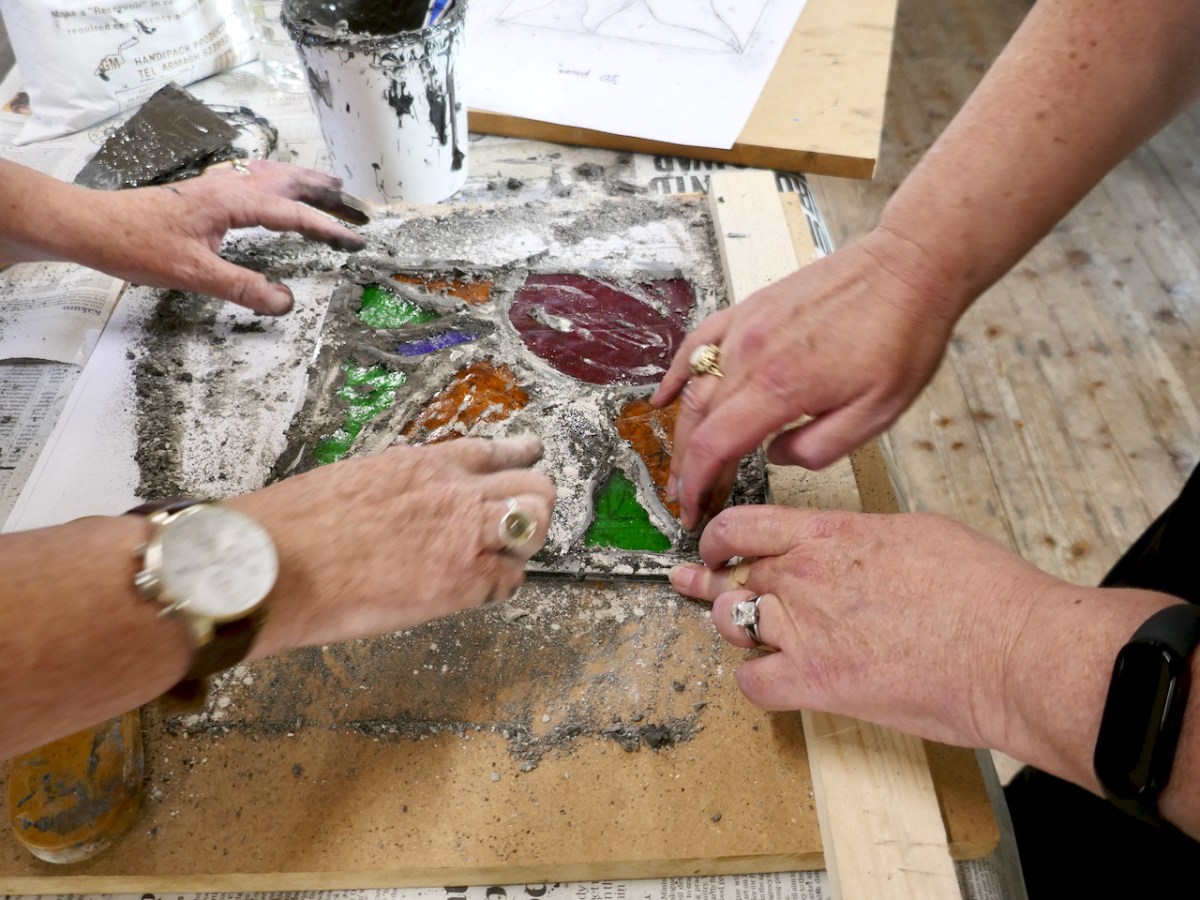
The final process was to cement the glass so that it was properly bedded to the lead cames, and not just rattling around inside them. This was a sloppy business, bringing out those inner children who love to play with mud.
Then came a dusting of plaster to dry the mud and a pushing of the mud/plaster mix into the corners and well under the cames. A final polish with stove blacking and we were done!
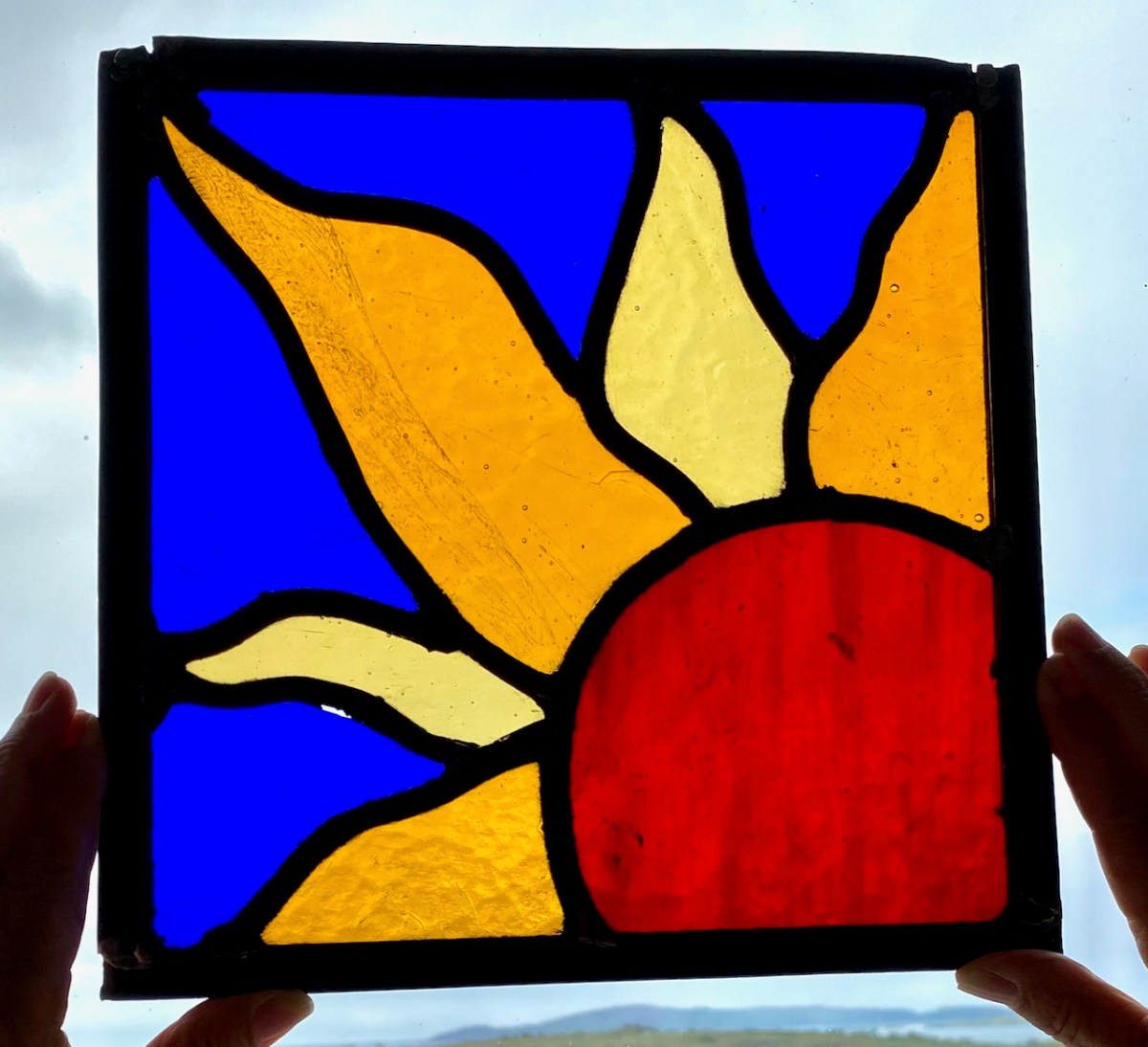
And I was wrecked! My back hurt and my wrists and shoulders ached. I had a little sun window to take home with me (don’t look closely!) – and I had learned SO much.
Mostly, that learning had to do with a whole new appreciation for the skill of making stained glass – how physical it was, how exacting, how long it must take to get truly proficient at it, how many steps were involved.
And of course, this is only the most basic part of making a stained glass window – we did no painting, etching, decorating of any kind. As I type this I have my Finola window to my right – each pane (and there are over a hundred in the window) is worked – painted, scratched, cut away. Some of the glass is flashed with the design cut or etched into it to reveal the colour underneath the coloured flash (thin top layer). Some is covered with thick black paint, through which the design has been etched. Glass has been carefully chosen for different properties – streakiness or bubbles or colour variation.
At the end of the day, I had accomplished my goal, which was just to gain a tiny insight into the most basic of the processes involved in the making of a stained glass window. The workshop was great fun – not least was finding all of us, a wonderfully compatible group, shouting along to some of Deirdre’s musical accompaniments.
It takes years, and true talent, to become a stained glass artist. I remain in awe of those who have mastered this difficult and remarkably beautiful art.
Welcome to the UCD Library Cultural Heritage Collections blog. Discover and explore the historical treasures housed within our Archives, Special Collections, National Folklore Collection and Digital Library