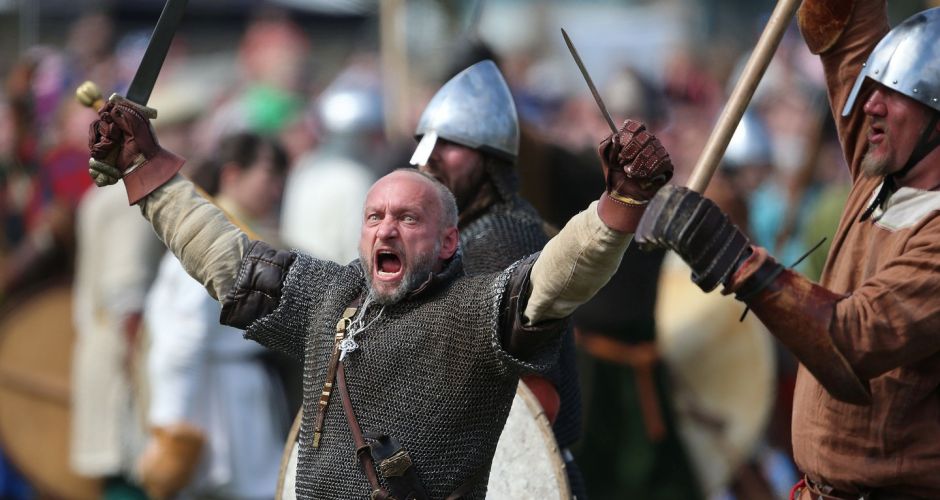
Battling It Out

image-2

…Fierce is the wind tonight, it ploughs up the white hair of the sea – I have no fear that the Viking hosts will come over the water to me…

Translated by F N Robinson from an old Gaelic poem ‘The Viking Terror’
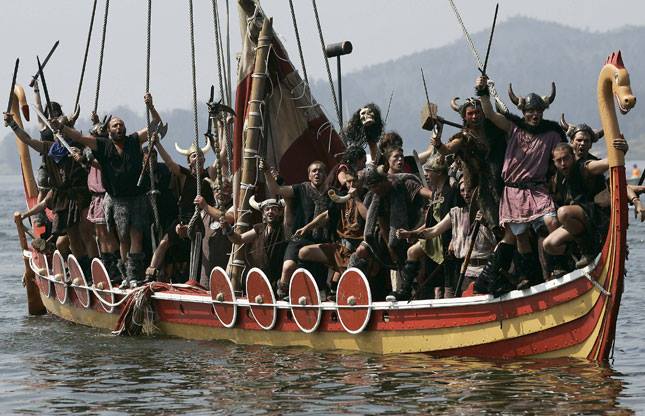
The Vikings are coming!

The Vikings are coming!

There was a great battle fought in Ireland on Good Friday.

Really? Good Friday just gone?

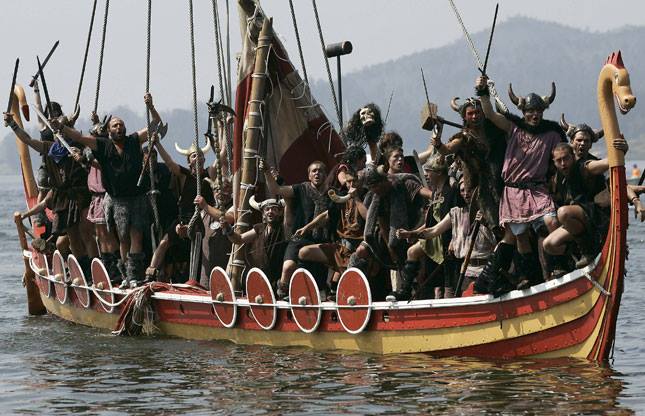
Yes – huge forces, hundreds of people, Viking longboats, swords, spears, axes…

I don’t think that’s very likely in this day and age.

It is in Ireland: the Battle of Clontarf was re-enacted this Easter – 2014 – exactly 1,000 years after it took place.
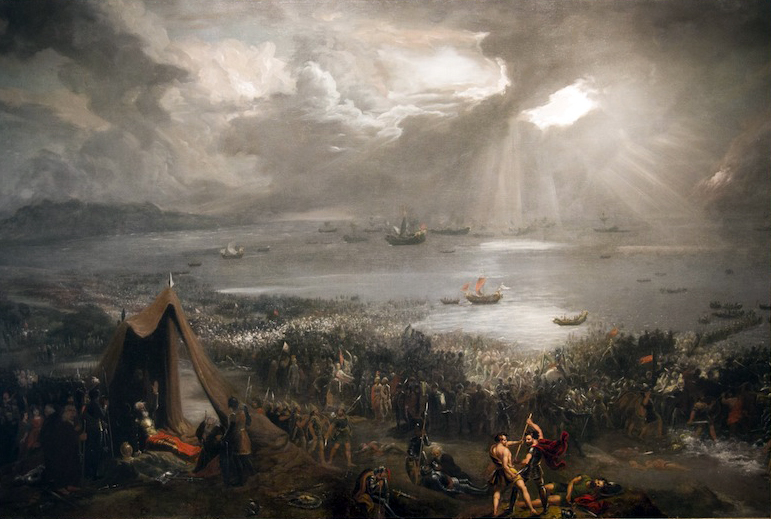
Battle of Clontarf, Good Friday 1014

Battle of Clontarf, Good Friday 1014 (Hugh Frazer 1826)

So what’s the connection with West Cork?

Well, the victor of the battle was Brian Boru, and he was at one time the King of Munster – crowned on the magnificent Rock of Cashel. That is, before he became the High King of all Ireland – seated at Tara, County Meath, and before he decided to take up arms against the Vikings.
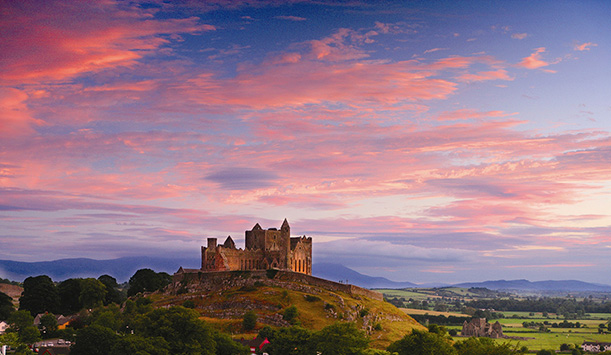
The Rock of Cashel

The Rock of Cashel

So, this was a battle between the Irish and the Vikings?

Actually, no. This was the Irish and the Vikings fighting – er – the Irish and the Vikings.

Sounds a bit complicated.

Irish history has always been complicated. The first Viking raids on Ireland took place in the eighth century. Initially they were aimed at the rich ecclesiastical centres but eventually the raiding parties became colonising parties, and by the tenth century there were many settlements of Norse people in Ireland who mingled, married and traded with the locals. As always there were factions within factions and the Irish clans – who frequently picked fights with each other – formed allegiances with some of the colonisers while falling out with others.
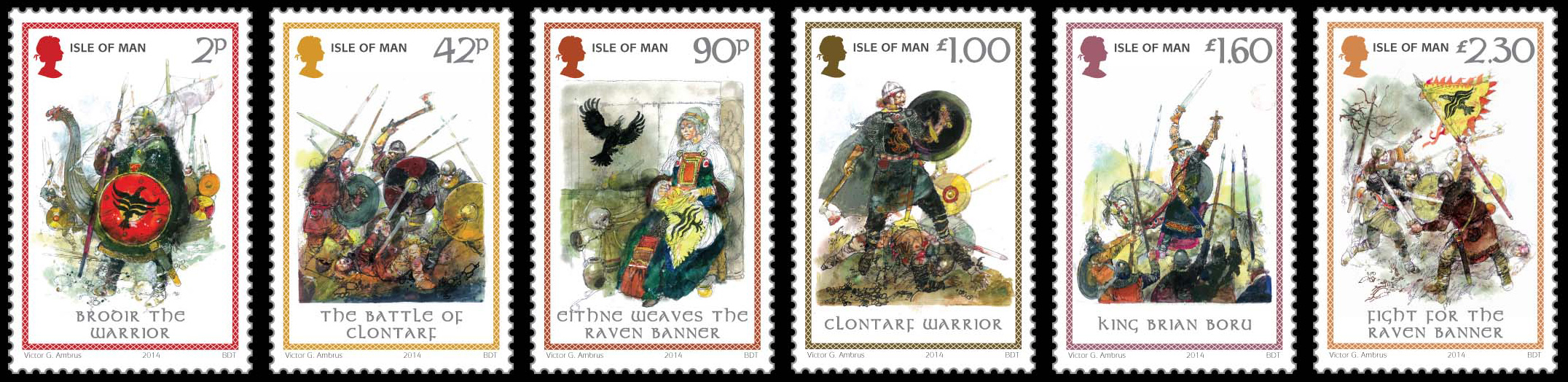
stamps


So, who won the Battle of Clontarf?

Well, in 2014 everybody did: there were no casualties. But in 1014 Brian Boru’s forces (which included some Viking allies) lost 4,000 of his 7,000 followers while on the other side the opposing mainly Viking forces (but including a contingent of Leinster men who had fallen out with Brian Boru) lost 6,000, leaving them only 500 standing on the field. You could say that it was a rout – and legend has it that Brian Boru drove the Vikings out of Ireland.

So we’ll put that down as a win for Brian then?

In a way, but sadly he didn’t live to see it. At 74 he was too old to fight and he spent the day praying in his tent. Brodir of Mann, one of the fleeing Vikings, found him there and murdered him.

That’s a bit much…

Yes, not exactly the end you’d like to see for such a hero. But I suppose it made him a martyr for the Irish cause and has certainly assured him a top place in history and legend.
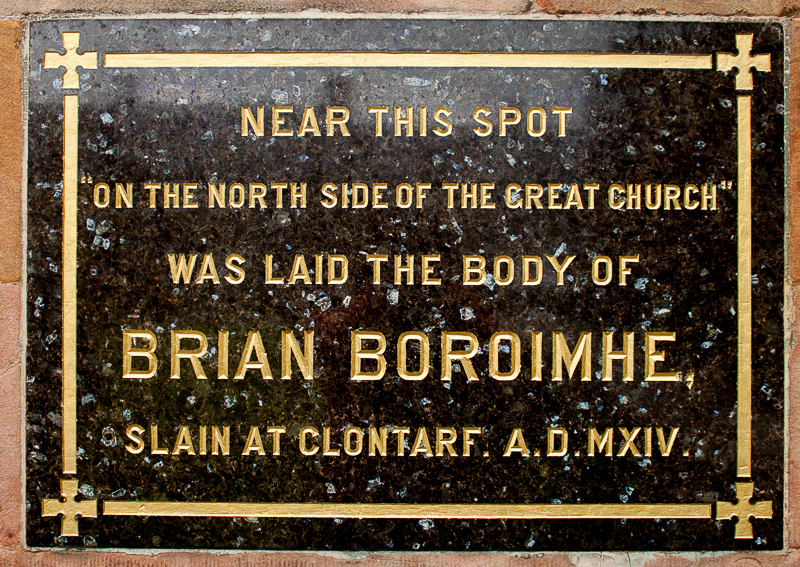
plaque

You haven’t mentioned any legends.

To be honest the whole Brian Boru story was once considered to be a complete legend. No archaeological remains have ever been found of the battle; its site is disputed; and no-one knows exactly where Brian Boru has been buried – although there are various stories about all this which are still told in good faith after 1,000 years.

Didn’t he play the harp?

Well ‘the Harp that once through Tara’s Hall the soul of music shed’ was supposedly played by King Brian. It’s kept in Trinity College Dublin – where you can also see the Book of Kells. Unfortunately it’s been dated to the 15th century and therefore could never have belonged to Brian.

The harp has been used as a national symbol by the Free State but is perhaps most familiar in its incarnation on Guiness bottle labels. It has a chequered history itself: it was restored (very badly) and played for a time on special occasions but is now considered too fragile to allow the wire strings to be fully tensioned. In March 1969 it was stolen!

boru harp

Oh no! Did it come back?

Yes: after some very cloak-and-dagger antics involving large sums of ransom money being left in a dustbin in a Dublin back street it was eventually found wrapped in a sack in a sandpit.

Did they catch the dastardly thief?

They did, and he was given a two year suspended sentence as his defence counsel argued that he should be allowed to flee the country or he would be lynched…

A sensible approach to matters of law!

Indeed. And we can be happy that the whole Brian Boru / Battle of Clontarf story has given rise to huge media coverage, hopefully boosting tourism in Ireland.

That’s grand.
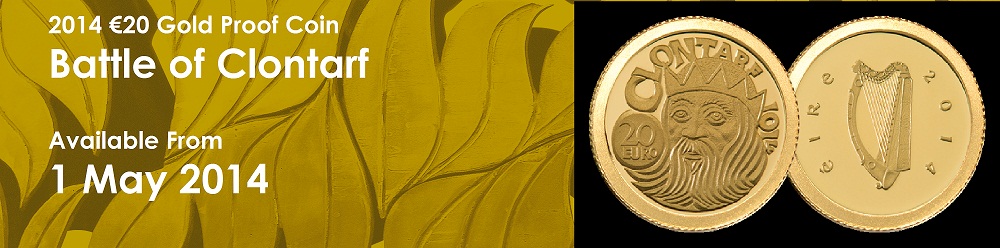
coin


Dancing Sun

Dancing Sun, Roaringwater Bay

Dancing Sun, Rossbrin Cove

“Where does that road lead?” said I, pointing to a road on the left of the one we were pursuing. “The road is it?” said the man with the cloak, “why, then, what road should it be, but the road to Sunday’s Well, a fine well it is, and a blessed place, for sure they say, though myself never seen it, that if one was to go there at peep of day on an Easter Sunday, they’d see the sun dancing a jig on the rim of the sky for joy; and I suppose that’s the reason they calls it Sunday’s Well” [Thomas Crofton Croker, Legends of the Lakes: or Sayings and Doings at Killarney, 1829]

When I lived in Devon I was told that the sun danced on Easter morning, but also that the ancient stone at the crossroads above the house where I lived could be seen to move at dawn on that day. I never caught the dawn when I lived there but here’s evidence that the sun does, indeed, dance at Roaringwater Bay. According to Kevin Danaher children in Ireland were shown the sun on Easter morning reflected in water – perhaps in the sea or a well – and this ensured that it would be seen to dance.

Gathering Bia Tragha at Rossbrin: the house on the skyline is Nead an Iolair

Gathering Bia Tragha at Rossbrin: the house on the skyline is Nead an Iolair

There are so many Easter customs: Finola is writing about the bia tragha – the custom of gathering shellfish and seaweed on Good Friday, the culmination of the austerity of Lent. Down in the Cove we joined several families collecting mussels. When I asked them why people in Ireland carry out this Good Friday tradition I always got the same answer – ‘…because we have always done it…’

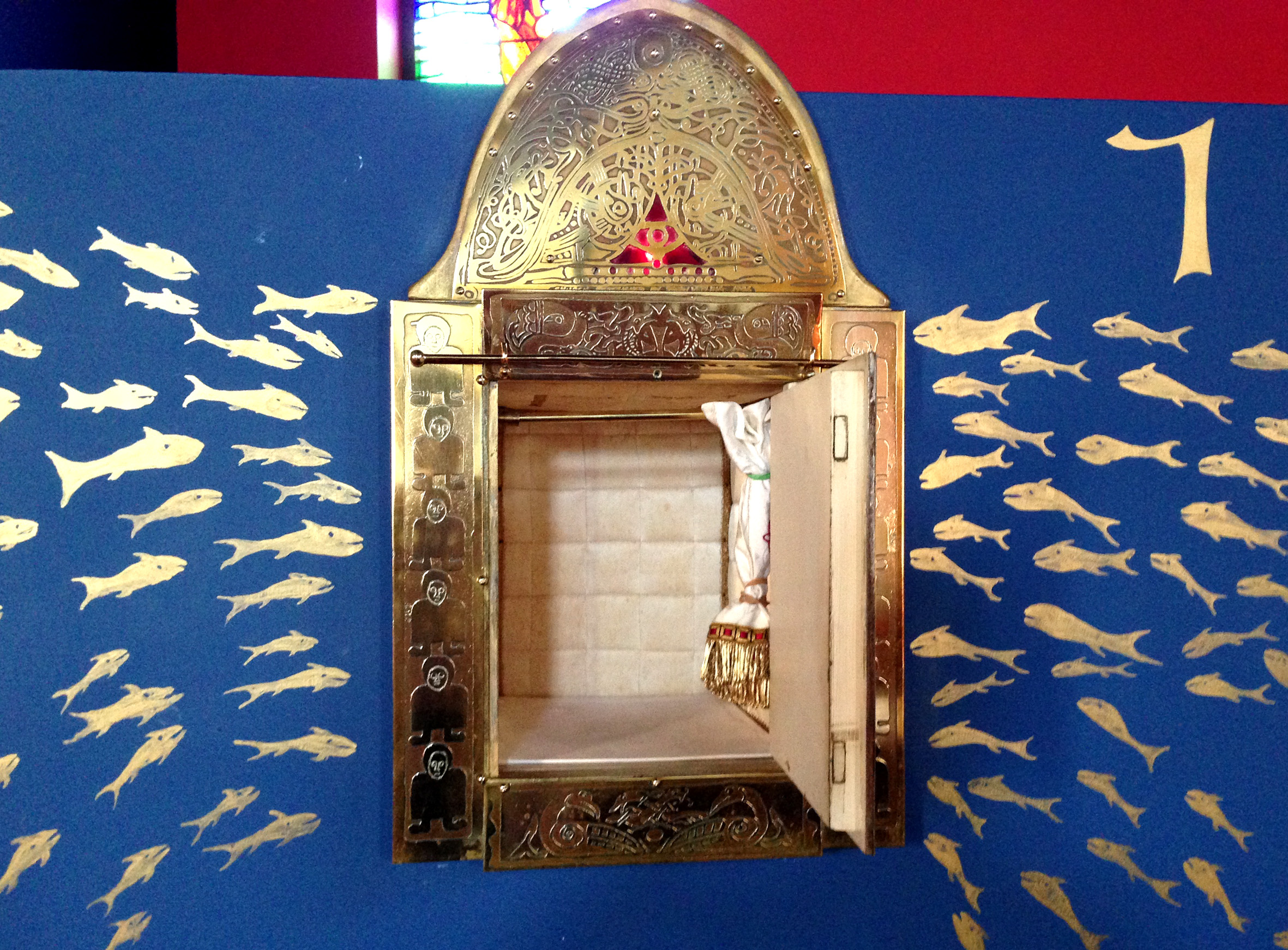
Good Friday - and the Tabernacle in Ballydehob Church is empty

Good Friday – and the Tabernacle in Ballydehob Church is empty

There is a lot of respect for the observance of Good Friday here. No alcohol is consumed: the pubs close at midnight sharp on Thursday evening (it’s not unusual on a normal day for them to stay open until two or three in the morning – especially if there is a session going on) and don’t reopen until Saturday. Ireland is probably the only Catholic country in the world where this tradition is still kept up. Not so long ago no work was done on the land, and ‘…no blood should be shed, thus no animal or bird could be slaughtered, no wood should be worked or burned and no nail should be driven on the day on which the Saviour was crucified…’ (Danaher)

Burning the Mountain on Good Friday

Burning the Mountain on Good Friday

Bearing this in mind we were surprised to encounter a ‘controlled burning’ of the gorse on the Sheep’s Head when travelling back from visiting friends on Good Friday evening. It was spectacular: the whole mountainside seemed to be engulfed.

On the Mizen – according to McCarthy + Hawkes ‘…Early on Easter Sunday morning all the lads from the townlands would go around in a big group, blowing a trumpet made from a cow horn. The women of the houses visited would give them boiled hen’s eggs to eat, sometimes coloured yellow from boiling with furze petals or onion skins. After Easter Mass everyone went home for a quiet day of rest and a good feed after Lent. The night would bring a ball with much drink and dance…’

simnel

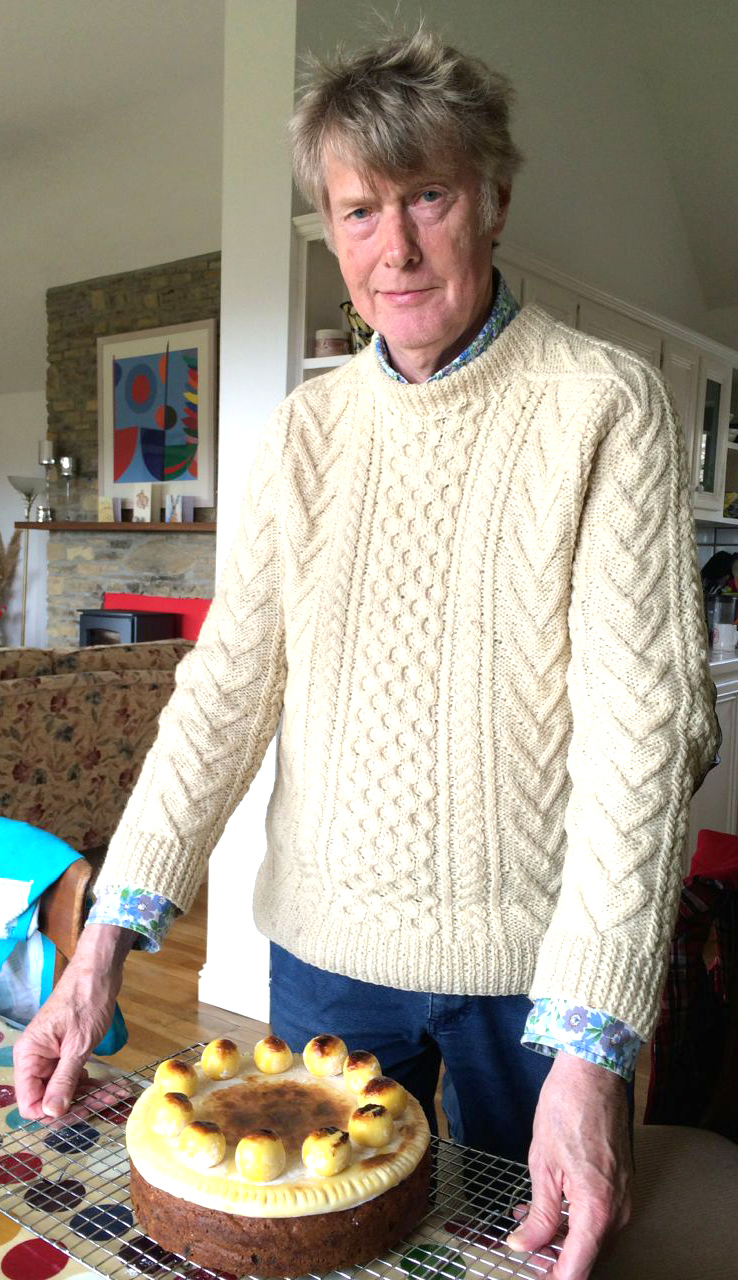
We are observing some of our own traditions today: we’ll be eating the Simnel Cake which I have made – more of an English tradition than an Irish one: the eleven marzipan balls represent the twelve Apostles (minus Judas) – and then we’re off to the Ballydehob Road Trotting races. Oh – and there are some eggs involved.

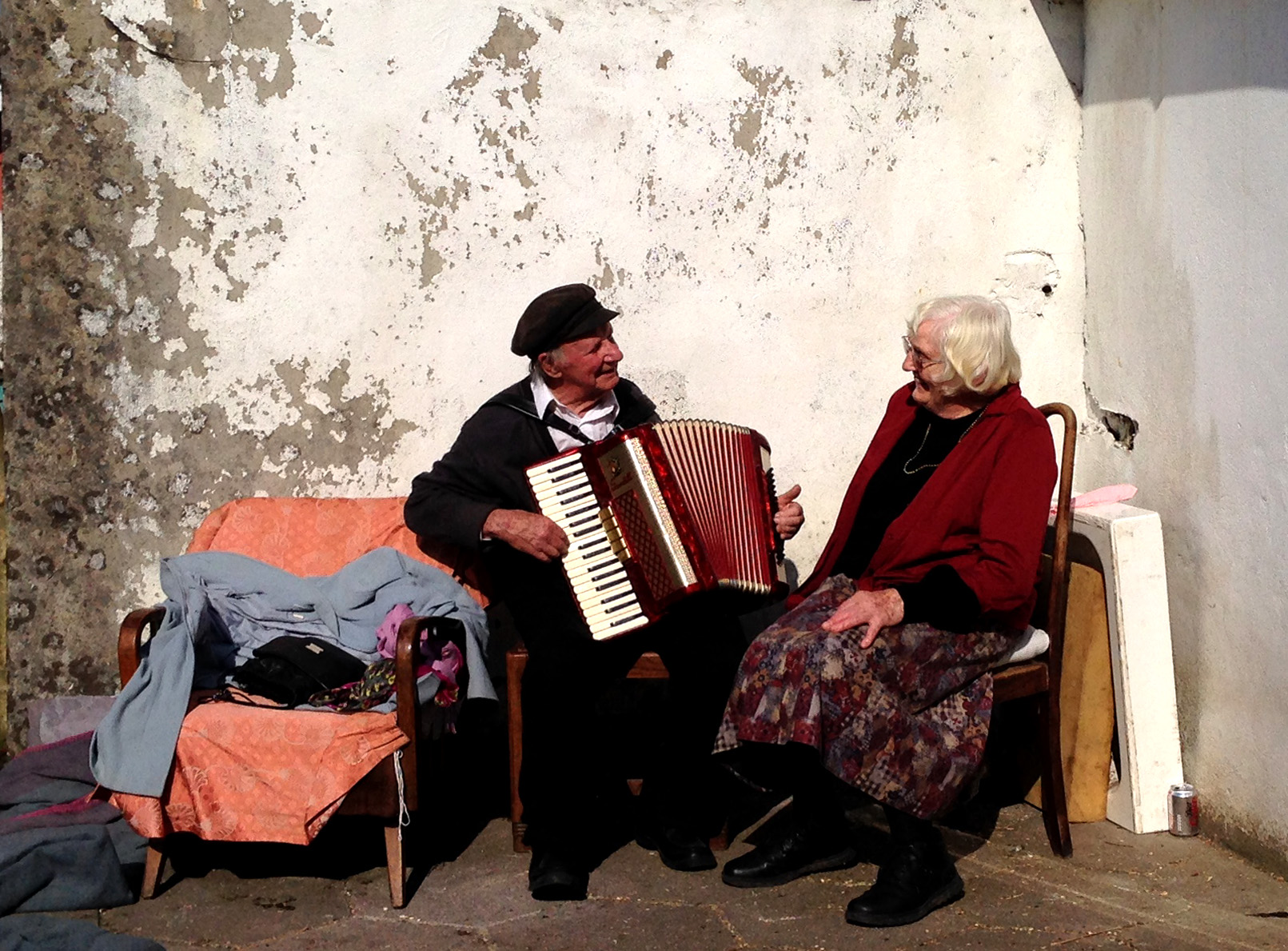
A scene in Provence? No - a sunny corner in Ballydehob on Easter Saturday

A scene in Provence? No – a sunny corner in Ballydehob on Easter Saturday


News from The Pale

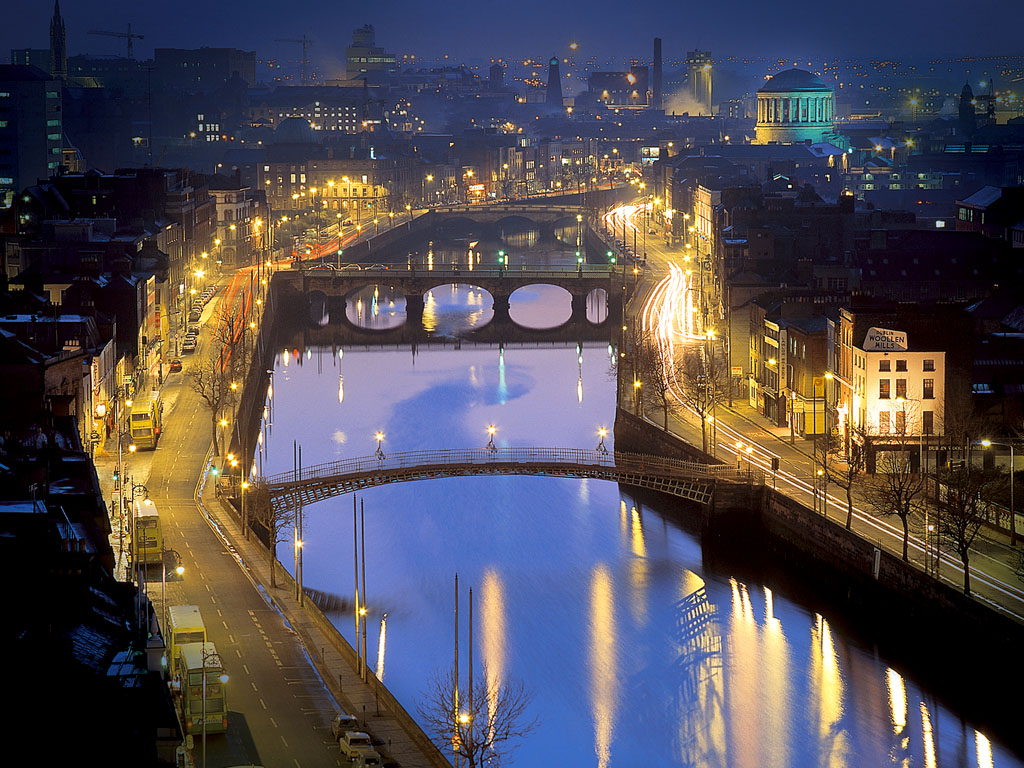
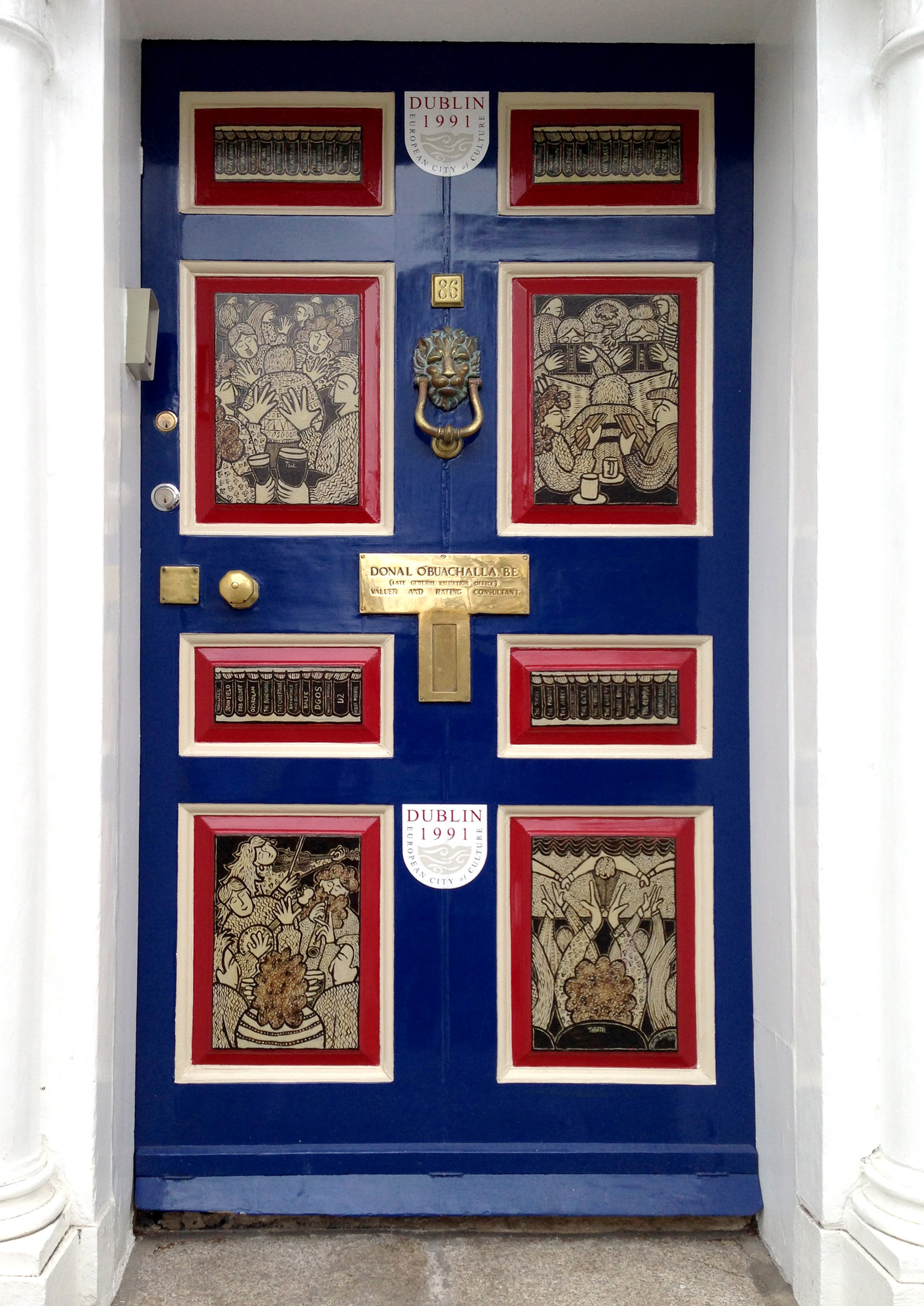
The European City of Dublin

The European City of Dublin

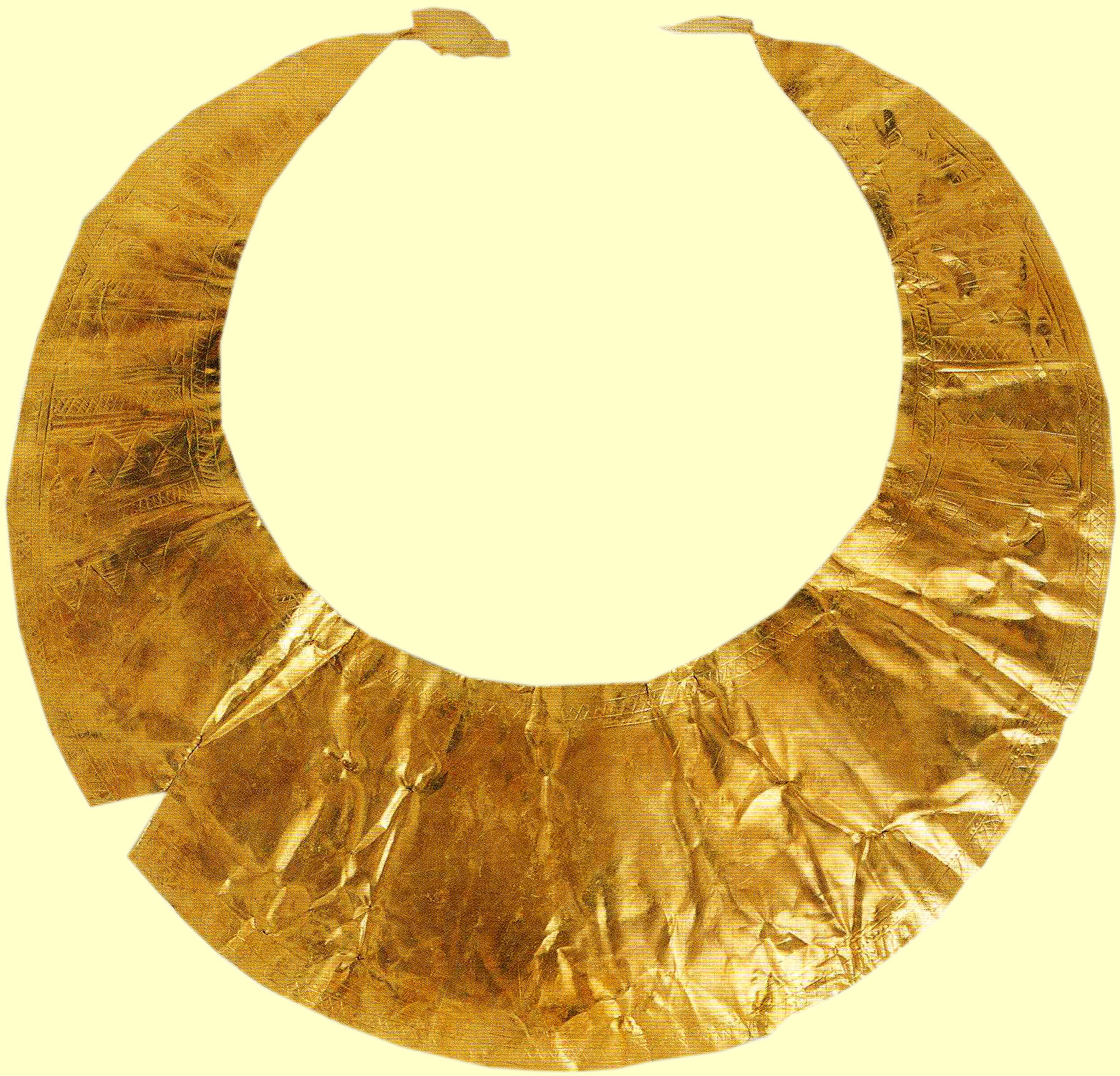
We are in  Dublin for a few days. Some of you will remember my piece on the expression Beyond the Pale: now I can report from The Pale itself. In some ways Dublin is quite like any other capital city in the world – it has its shops and shows – but in others it is unmistakably Irish. The National Museum, for example, has one of the greatest collection of Bronze Age artefacts anywhere – and some Rock Art

Gold Lunula from County Kerry - a 4,500 year old artefact in the National Museum

Gold Lunula from County Kerry – a 4,500 year old artefact in the National Museum

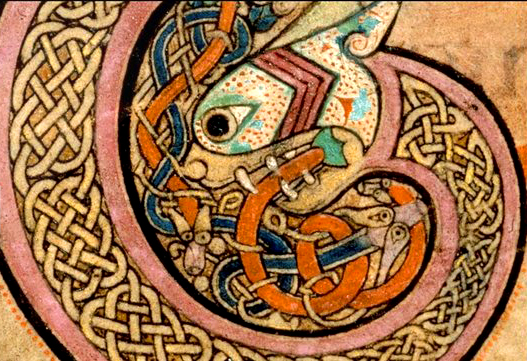
…while Trinity College Library, Dublin, is the home of the Book of Kells – an equally impressive medieval treasure. This unfinished manuscript dates possibly from the eighth century and tradition has it that it could have been begun by St Columba himself and that it was worked on for at least three centuries.

kells

The Book of Kells

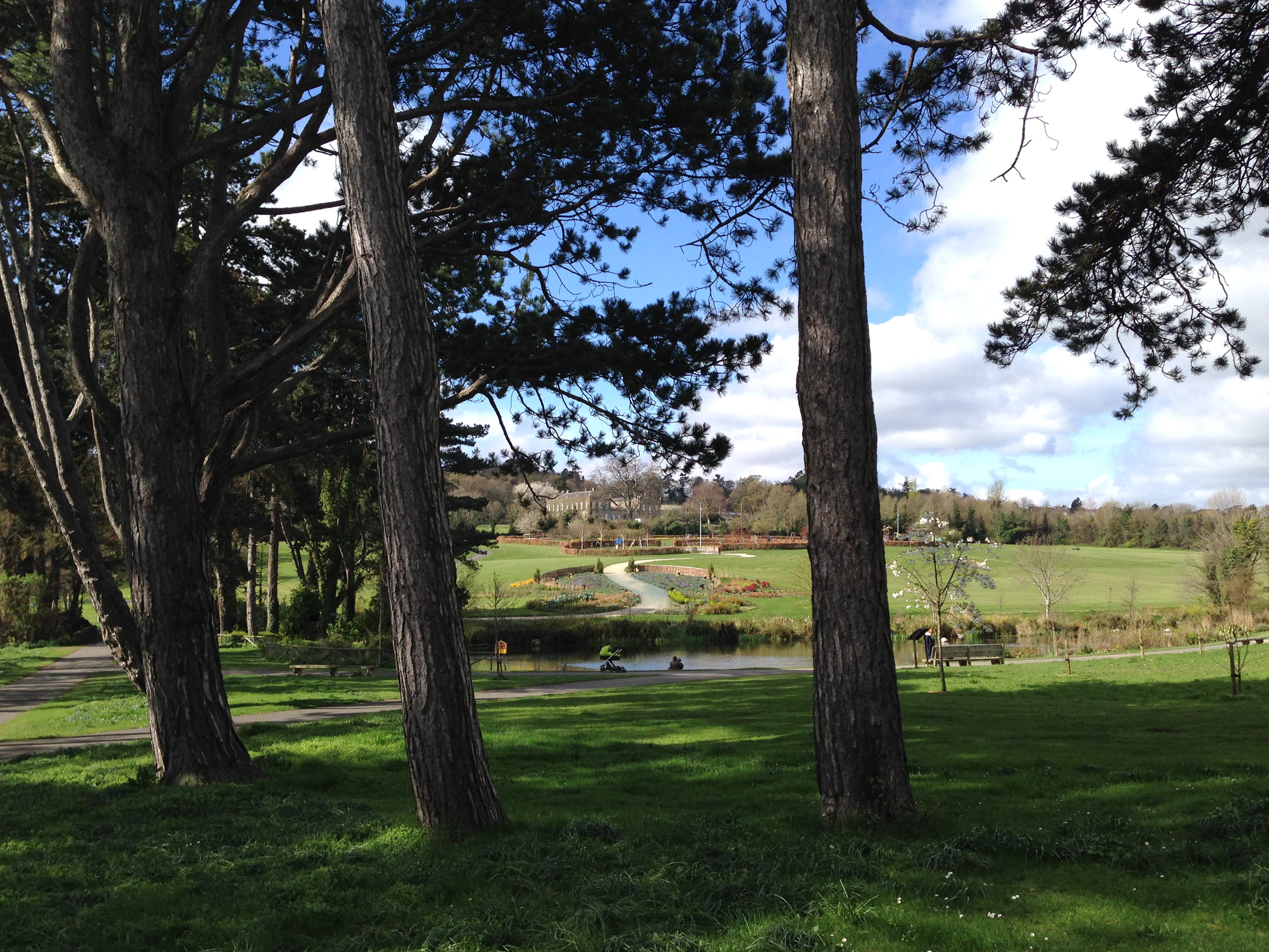
Away from the centre of things we discovered a little gem: Cabinteely Park. This publicly accessible amenity spans 45 hectares and provides city dwellers with walks, woodland, playground and cafe. It was once the estate of the Earls of Clare and now belongs to the local council. The ‘big house’ itself still stands and is undergoing slow restoration. The park is within minutes of where we are staying, and provides us with evening walks in the sunshine – and breakfast treats.

City Amenity: Cabinteely Park

City Amenity: Cabinteely Park

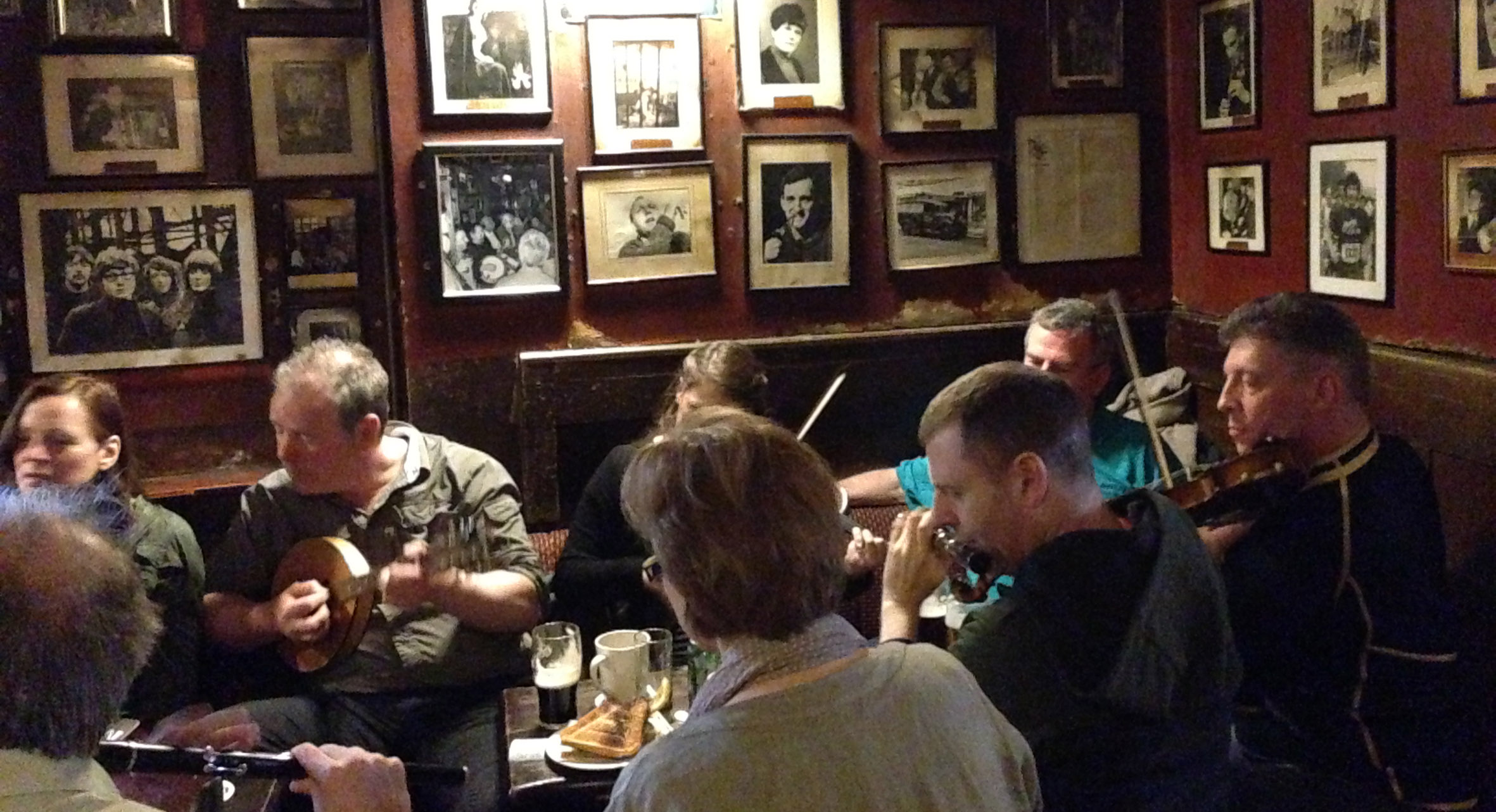
Being an Irish city, the music sessions are good. We went to O’Donoghue’s pub on Friday lunchtime and found 18 musicians gathered: fiddles, concertinas, flutes – and even a bagpipes played by a Scottish visitor.

Trad Session at O'Donoghue's

Trad Session at O’Donoghue’s

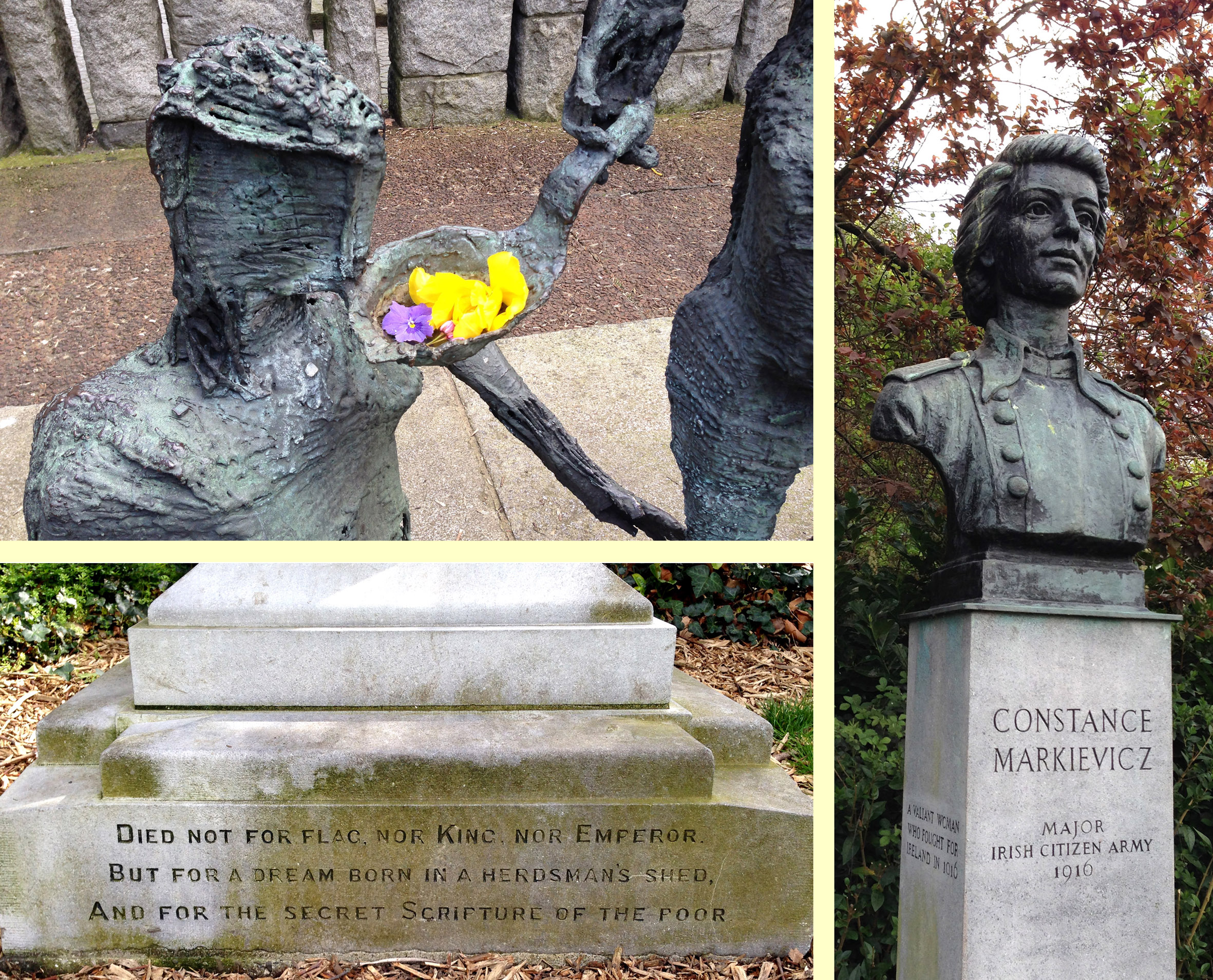
In the heart of Dublin City is St Stephen’s Green – which presents a collection  of statues of various Irish figures who are known to the world through the arts: Oscar Wilde, W B Yeats, James Joyce et al, but also nationalists who fought for the cause of Irish independence.

Remembering Irish History in St Stepen's Green

Remembering Irish History in St Stephen’s Green

At present the media is full of the state visit of the President of Ireland to Britain: it can only be a good thing that the two nations should become closer, and it’s great to hear the pretty universal enthusiasm for it from this side of the Irish Sea. So while this new era of better relations is taking off, I am dismayed to read of the rise of nationalistic right wing politics in Britain itself: could these lunatic press-inspired extremists really derail Britain’s place in the European Union? Will common sense ultimately prevail? I can only look on from the shores of a very firmly European country and hope.

Dublin Doorway

Dublin Doorway


Whiddy Island

Whiddy Island from Sheeps Head

Whiddy Island from Sheep’s Head

On a sunny Sunday in March, we were lucky to find out about a guided tour around Whiddy Island and enthusiastically signed up. Our guide, Tim O’Leary, runs the ferry to the island and its only pub, the Bank House. He is a native Islander and extremely knowledgeable about the island’s history, traditions, stories, flora and fauna. 

Off to Whiddy Island on a beautiful day in March

Off to Whiddy Island on a beautiful day in March

It was a gorgeous day for a tramp – a good thing as it’s a six mile walk – and the weather allowed us to drink in the glorious views and to stand at various spots listening to Tim as he shared stories of life on the island.
Whiddy Island Graveyard

Whiddy Island Graveyard

In the graveyard he told us about the island tradition of burial: a coffin has to be lifted from the boat at a particular quay and laid on a special coffin rock. From there it is shouldered uphill to the burial ground by four men of the same last name as the deceased. Nothing but human power can be used on the long uphill climb, or to dig the grave or conduct any part of the service. “We will carry this tradition on,” he said, “as long as we can.” The burial ground itself is part of an ancient ecclesiastical site and commands views across the island.
View out to Bantry Bay from the Island high point

View out to Bantry Bay from the Island high point

We learned that many island families made a good living in times past from fishing and fish processing, and it still an important part of the economy, although now mussel beds have replaced fishing lines and ‘pilchard palaces.’

Tim shows us the 'hairy rope' used to grow mussels. Mussel beds ring the Island.
Tim shows us the ‘hairy rope’ used to grow mussels. Mussel beds ring the Island.
The land was famous for being fertile and one historical document talks about the earliest potatoes always being grown on Whiddy. All this activity supported up to 800 people but like many places in West Cork the population was decimated by the Great Famine. Now, fewer than 30 people live here year round.

The Island can no longer support a school

The Island can no longer support a school

We walked up to the remains of O’Sullivan Beare’s castle, which functioned more as a prison than a dwelling as it housed those who needed to be ‘encouraged’ to pay the taxes he imposed for fishing rights. We explored the area that had once been a thriving American Air Force base for a brief period at the end of World War I – nothing remains except acres of concrete and memories of the vibrant life that the service personnel brought to this small community. Other defensive structures exist on the island too – several ‘batteries’  with huge guns were built after the French invasion of 1796 but alas they are too unsafe to visit.

O'Sullivan Beare's stronghold

O’Sullivan Beare’s stronghold

The west end of the island contains enormous tanks that now house the Irish national oil reserves. It was built as a Gulf Oil terminal in the late 60s and was the scene of a horrifying accident in 1979 when an explosion sank a French tanker, the Betelgeuse, and 50 people lost their lives. The enormous tanks, behind their barbed wire barriers, loom darkly against the landscape, a permanent reminder of this awful tragedy.

The oil tanks at the west end of the Island

The oil tanks at the west end of the Island

Take the ferry across to Whiddy Island any time and hike around the hills and the beaches. But if you can, catch one of Tim’s guided walks, and finish with a well-deserved pint in the Bank House at the end of the day.

There's nothing like a guided tour with Tim!

There’s nothing like a guided tour with Tim!

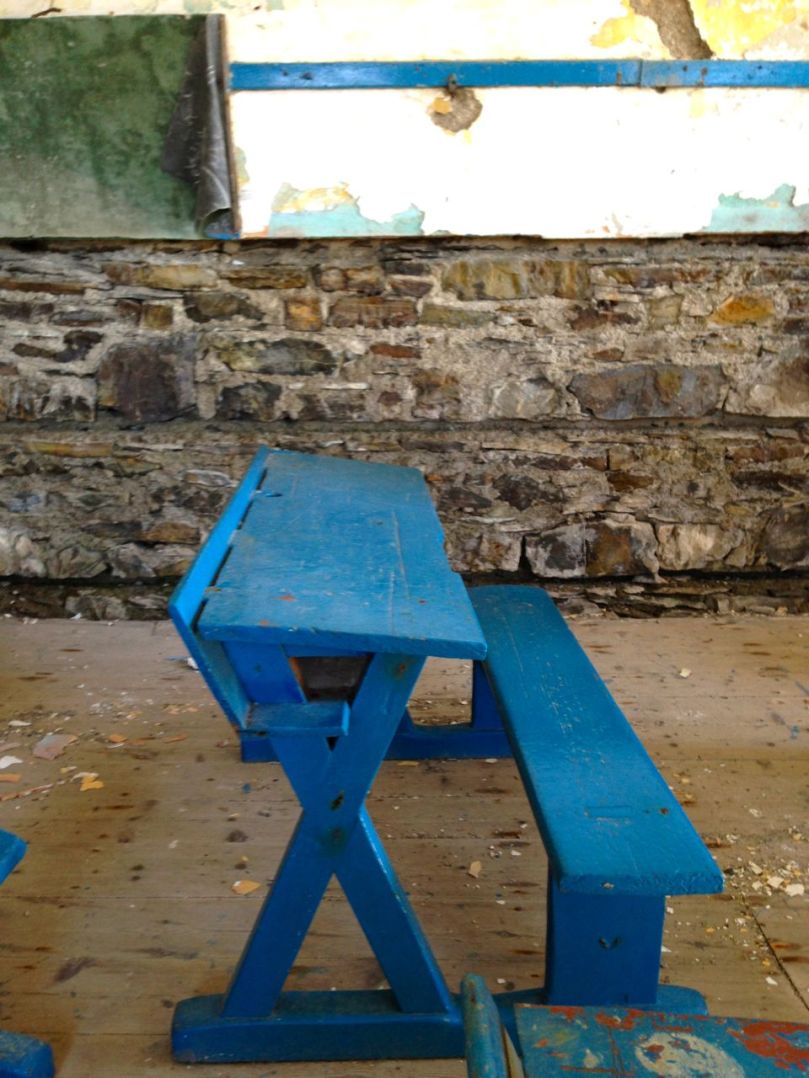
One thing, though…when Tim sat in this desk back in the day, his teacher forgot to teach him about distances. So just take it with a grain of salt when he tells you there’s “only another half mile to go.”

desk

A note on the West Cork Speak Competition! Deadline extended to the end of next week. Only one entry so far, so don’t be shy and get those conversations in!

The Barnacle Goose – and Other Wonders

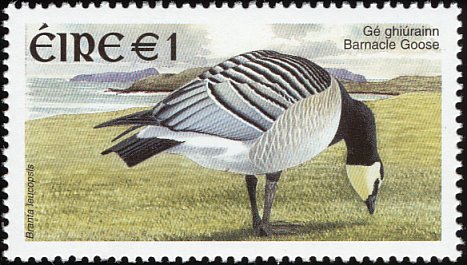
Barnacle Geese portrayed on canvas by Charles Tunnicliffe

Barnacle Geese portrayed on canvas by Charles Tunnicliffe

Here we are in Lent and the butchers are feeling the pinch.

Excuse me?

Well, strictly speaking we shouldn’t eat any meat or animal products during the 40 days of Lent. So that’s a lean time for the milk sellers, the cheese makers and the egg producers as well as the butchers. 

Surely that’s not still the case?

Depends on how strictly you observe the ‘abstinences’. But – I have to be honest – these rules were officially relaxed by the Catholic Church in Ireland in 1917. Still within living memory, however – just. And old habits die hard… 

So, tell me a bit more about Lenten traditions.

Published by Mercier Press, 1972

Published by Mercier Press, 1972

I will: I’m relying for much of this on The Year in Ireland, an excellent book published in 1972 and written by Kevin Danaher, who at that time was Lecturer in Irish Folklore at University College, Dublin. While he derived some of his material from printed sources he cites ‘…memories of a childhood spent in a district where old beliefs and customs still survived vigorously…’ and ‘…more than thirty years of research into Irish folk tradition…’ so it’s reasonable to say that much of the popular culture he describes was alive and well in the middle of the twentieth century – at least around his native part of the West of Ireland, County Limerick.

Now, the butchers….?

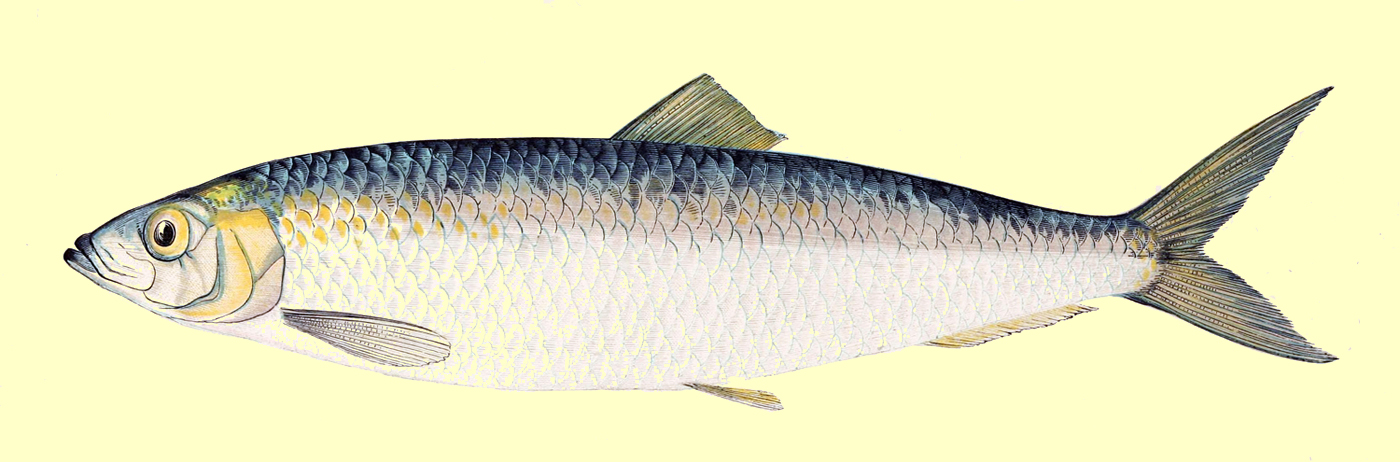
Yes – so pleased were they that Lent was over that on Easter Saturday in Cork, Drogheda and a few other towns they held a mock funeral for the Herring (for salted Herrings became a staple diet during the ‘abstinence’). The butchers put a Herring on the end of a nine foot long lath and carried it through the streets, insulting the poor fish as they went. When they got to the bridge the Herring was hurled into the water and they hung up a quartered Lamb decorated with ribbons and flowers instead.

herring

Another commentator in 1916 describes a remembered ceremony in County Monaghan:

whippingtheherring‘…On Easter Sunday morning, immediately after last Mass, all the young men and maidens, dressed in their best, flocked into the town of Carrickmacross, where they formed into a procession, headed by one of their number carrying a long pole, from the top of which dangled a Herring, and marched to the tune of whatever musical instruments they could muster (fiddles were the most common in those days) till they came down to the lake just outside the town, when the Herring was taken down from the pole and thrown into the water amidst the cheers and laughter of the spectators… The Herring, being the cheapest and most plentiful fish, was the principal dish of the poorer classes, and of some of the better-off people, too; consequently the people grew so tired of seeing him day after day on their tables that they conceived the idea of getting rid of him by drowning, after which they would indulge in all kinds of games and pastimes, amply making up for the quiet time they spent during Lent, as no one would think of enjoying themselves during the Holy Season…’

Enjoyment being another ‘abstinence’ then?

Certainly. Danaher again: ‘…there was no merrymaking during Lent, no music, dancing, card playing or visiting friends. No mother would visit her daughter newly married at Shrove until Lent was over. Musical instruments were stored away. In many houses the pack of playing cards was burned and a new pack was bought at Easter. Many people, women (who were equally addicted) as well as men, gave up smoking and some in excess of zeal broke or burned their tobacco pipes. And although some topers found solace in the old couplet:

 – Good luck and long life to the Council of TrentIt took away meat but it left us the drink –

large numbers took a pledge against alcoholic drinks ‘for the duration’…’

The Council of Trent

The Council of Trent

I’m getting dizzy – just tell me about the Barnacle Goose.

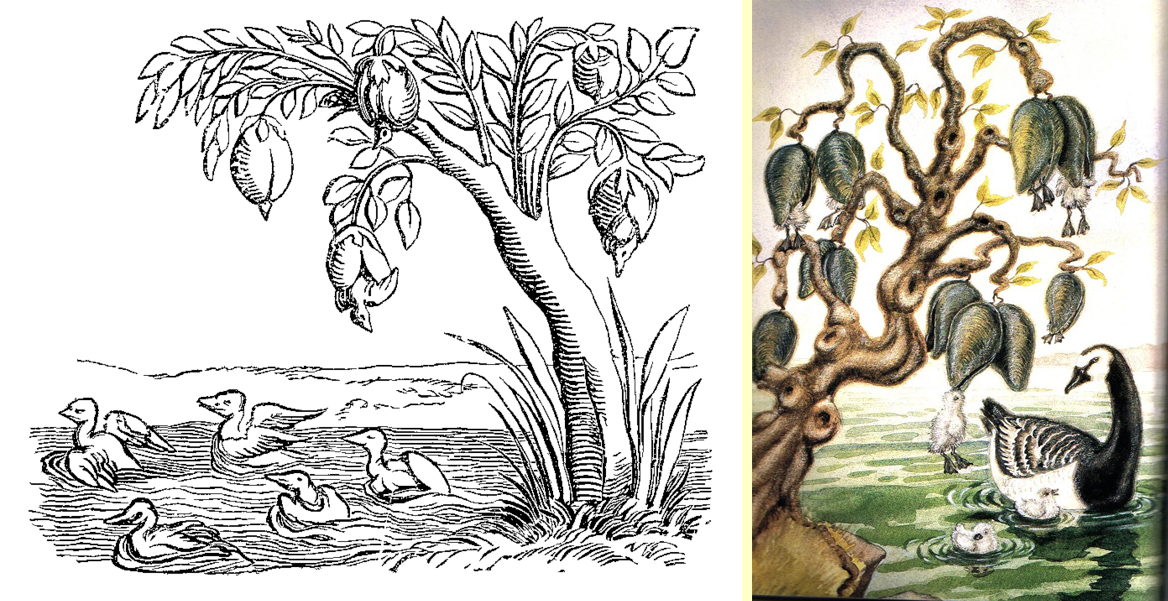
Human ingenuity has a way of overcoming all difficulties and we find that the clergy were eating Geese throughout Lent! This was because it was once thought that the Barnacle Goose (and the Brent Goose) – both of which winter on our west coast but don’t breed here – should be classified as fish. This is first mentioned by Geraldus Cambrensis who visited Ireland in the twelfth century and described the wonderful way in which these Geese came not from eggs but from Shellfish – or grew on trees!.

img4465-1

He goes on to say ‘…Accordingly in some parts of Ireland bishops and religious men eat them without sin during a fasting time, regarding them as not being flesh, since they were not born of flesh..’ More recently – shortly before the 1914-18 Great War – Martin Duncan, librarian of the Zoological Society, was lecturing in the North of Ireland on marine mammals when he was asked by a local Parish Priest ‘…whether he had told the whole story of the Barnacle “because his people were in the habit of eating the Barnacle Goose during Lent under the impression that it was more fish than fowl”, and stating that a comparatively recent pope had granted a dispensation to the people of Derry to continue to eat the Barnacle Goose during Lent as an ancient and established custom…’ The same licence obtained all along the Kerry coast ‘…not because they had any belief in the mythical story of its origin, but because they knew that it lived more on the sea than on the land, and so acquired fishy character…’

In fact it is true that a pope commented on the topic, but that was Innocent III in 1215 – and he condemned it. As Danaher relates, ‘…news of this does not seem to have yet reached the people of the west of Ireland…’

Good for them! Oh – and what is the collective noun for Barnacle Geese?

A Crustacean of Barnacle Geese…

BarnacleGooseIE

A Week in Clare

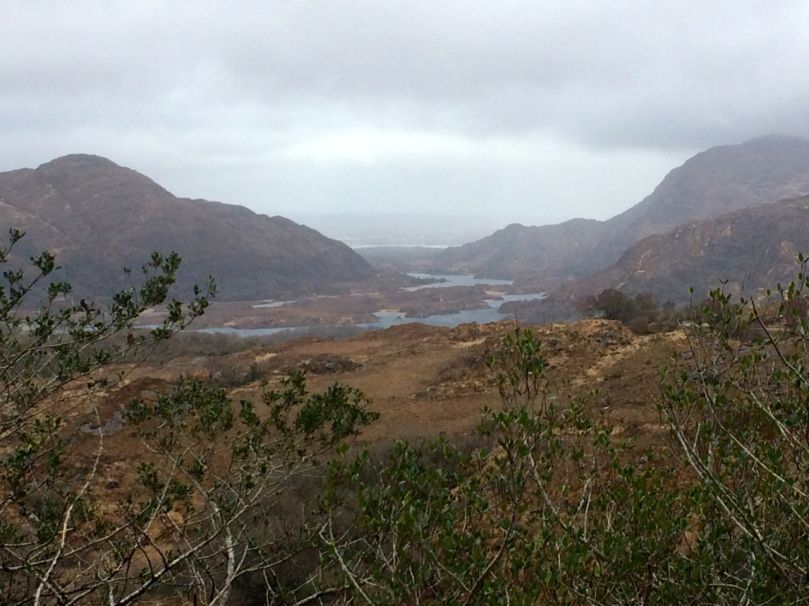
Even on a cloudy day, the Lakes of Killarney are breathtaking

Even on a cloudy day, the Lakes of Killarney are breathtaking

From West Cork, the whole of the southwest of Ireland is within easy reach. Killarney is an hour and half straight north, through magnificent mountain scenery. Another hour brings you to Tarbert, on the banks of the Shannon Estuary. Take the ferry across to Killimer, and you’re in County Clare. For the trip last week, our lodging was a beautiful holiday home in Liscannor, owned by a generous friend. It’s about half way up the County, right beside the famous Cliffs of Moher – an ideal base for exploring Clare.

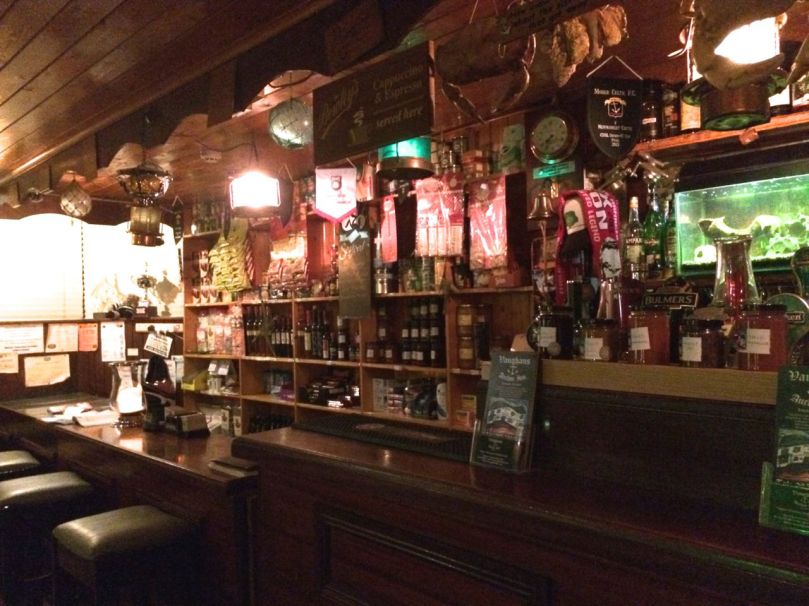
Anchor Inn, Liscannor. Best food in Clare!

Anchor Inn, Liscannor. Best food in Clare! This is the bar/grocery section.

While Robert attended the annual Noel Hill Concertina School I became a tourist. Clare is an astoundingly fertile area for geography, history, archaeology and culture and a wonderful place to spend time exploring with a map and guide book. I highly recommend The Burren and the Aran Islands: Exploring the Archaeology, by Carleton Jones – one of the best guides of its kind I have ever used. I was also lucky to have met a new friend online recently, Susan Byron, and in Clare I met her in person. The brains behind Ireland’s Hidden Gems, she gave me all kinds of great advice, along with lashings of tea and apple pie, about how to spend my time here.

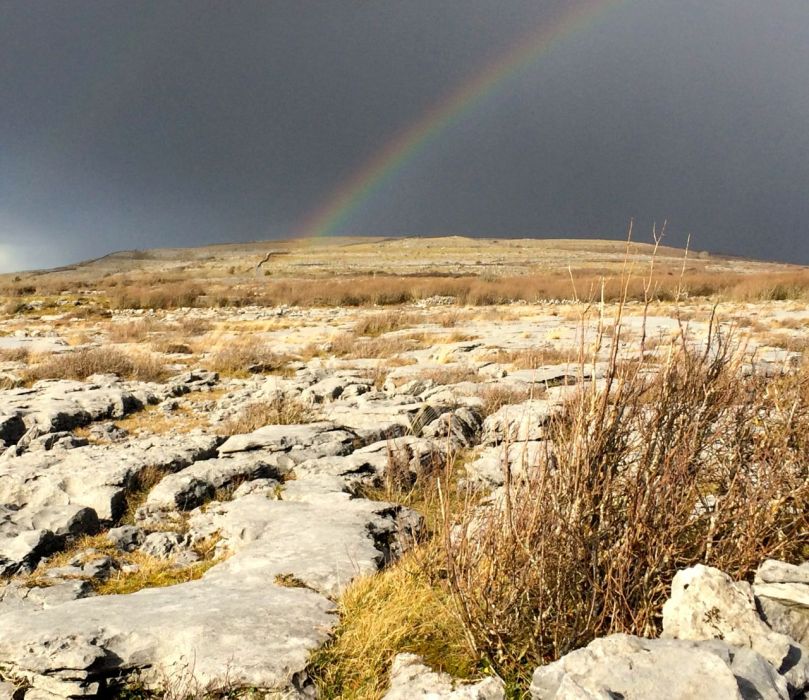
Burren Landscape

Burren Landscape

For this visit, I confined my travels more or less to the area known as The Burren, which occupies the northern third of the county. It is a striking landscape of bare limestone hills – a karst formation full of caves and limestone ‘pavements’ and home to many species of rare and colourful wildflowers. No flowers yet – it’s still too cold. Too cold for other tourists too, so I had most places to myself. It rained and it hailed and the winds blew mightily, but in between the sun shone enough to imagine it was really spring. And if I got too cold, well, I retreated to the nearest friendly pub with a roaring fire and a pot of tea.

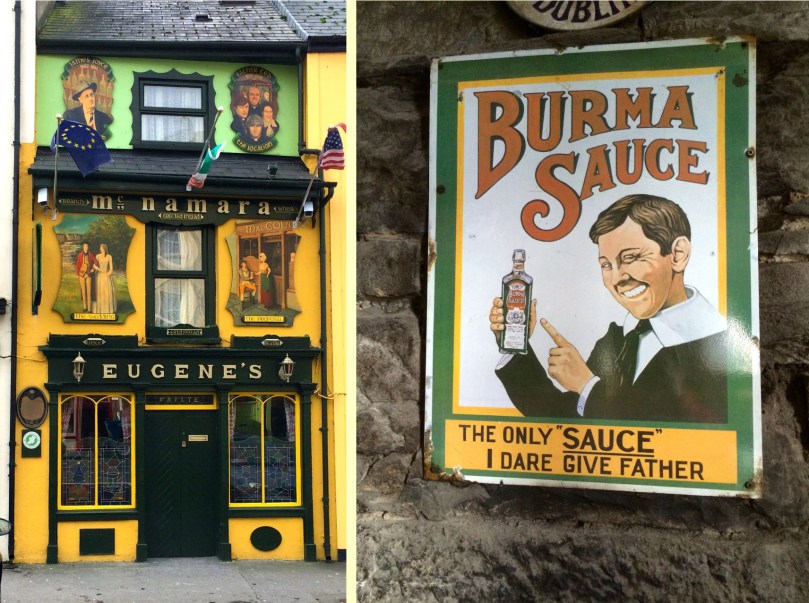
Eugene's Pub in Ennistymon/old ad in Valughan's in Kilfenora

Eugene’s Pub in Ennistymon/old ad in Vaughan’s in Kilfenora

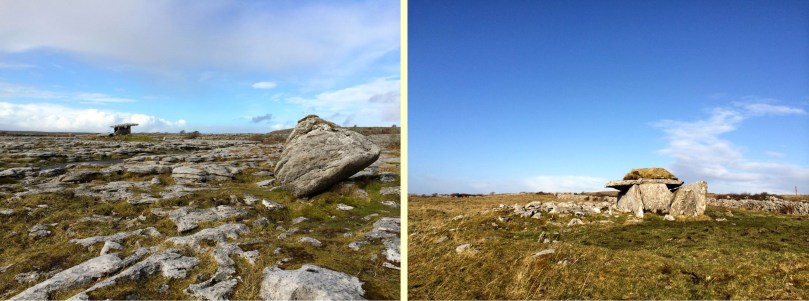
The photographs I have chosen are a small selection of the sites I visited. One of the most iconic of all irish prehistoric sites is Poulnabrone portal tomb (what used to be called a dolmen). I don’t think it’s possible to take a bad photograph of it. Not too far away is Parknabinnia wedge tomb, another example of a neolithic stone monument. In researching this one on the internet I came across a recording on the excellent Voices From the Dawn site of an interview with 88 year old Paul Keane. Mr Keane’s story, familiar to us all over Ireland, illustrates how the beliefs of country people have kept these sites safe from depredation over many centuries.

Poulnabrone and Parknabinnia

Poulnabrone and Parknabinnia

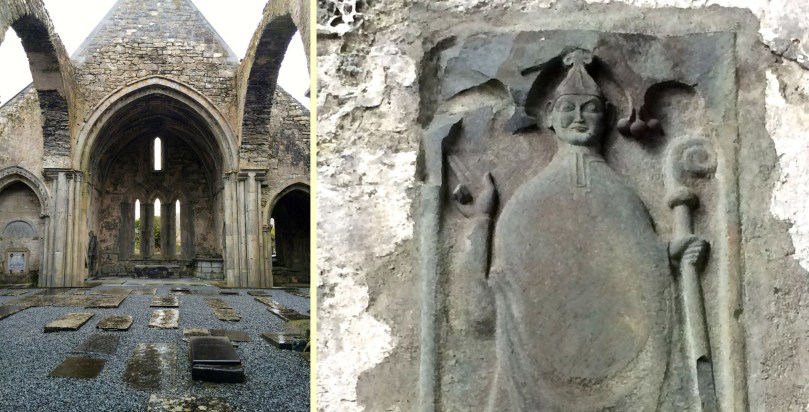
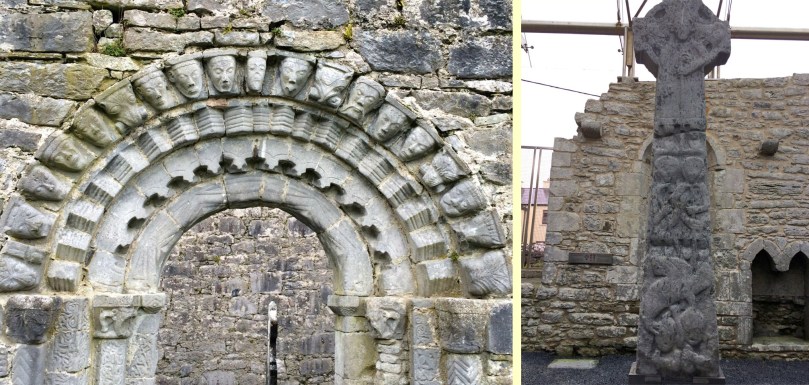
Medieval ruins abound in Clare. I went twice to Corcomroe to admire the stonework, to Dysert O’Dea (one of the most impressive Hiberno-Romanesque doorways I have ever seen, ruined abbey, round tower, an unusual high cross and 15th century castle) and Kilfenora, where the crosses are stored in the ruined church under a glass roof.

Corcomroe Abbey. 13th Century Cistercian Monastery

Corcomroe Abbey, 13th Century Cistercian Monastery

I also took in, although I have not illustrated, a church in Killinaboys with a sheelenagig (more on sheelanagigs in an upcoming post) and one in Noughaval to view the ‘cyclopean’ masonry. I spent a fruitless couple of hours, as the light was fading, trying to find a way to visit a particular stone cashel but had to give up – there’s lots to see but not everything is signposted, close to a road, or down a grassy boreen.

Dysert O'Dea and Kilfenora

Dysert O’Dea and Kilfenora

Robert has written about the incredible music scene we were part of in Clare, something that is also accessible to anyone who visits. The wonders of Ireland- no matter where you go, there’s so much to do and see! If you’re coming, try to fit in some time in Clare.

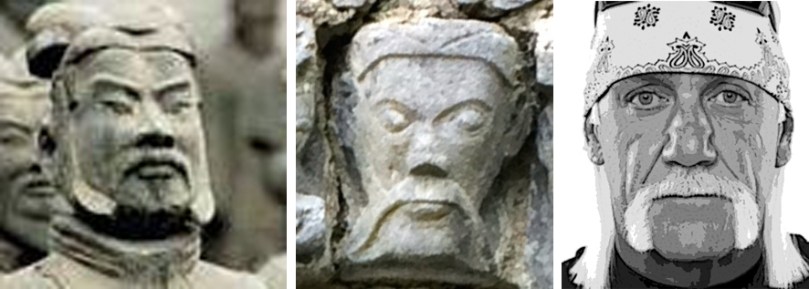
Finally – a piece of whimsy. Indulge me….

First century BC Chinese head from the Terracotta Warriers; 12th Century Irish head from the Dysert O’Dea Romanesque doorway; 21st Century American head from Wrestlemania.

Just sayin’…

Dysert Fu1