. . . It is very seldomly violently cold here, and freezeth but little. There are commonly three or four frosts in one winter, but they are very short, seldom lasting more than three of four days together and with all their very worst, nothing so near so violent as in most other countries. But, how mild they ordinarily be, and how little subject to excessive cold. And as the cold in winter is moderate and tolerable, so is also the heat in summer; which is seldom so great, even in the hottest times of the year as to be greatly troublesome . . .
1726: A Natural History of Ireland in Three Parts by Gerard Boate, Gerard and Thomas Molyneaux
I was attracted to the early 18th century quote by Boate (first paragraph), because it certainly always seemed to be the case that Ireland has the perfect climate: never too cold and never too hot. In these days of global warming, maybe that’s less so than it used to be: we are experiencing long, cold and wet winters (here we are in mid May and we have to keep our fires burning!) and some scorching summer days when it’s exhausting to be out in the sun. Nevertheless, I believe we are fortunate not to suffer too much from unhealthy extremes – as yet.
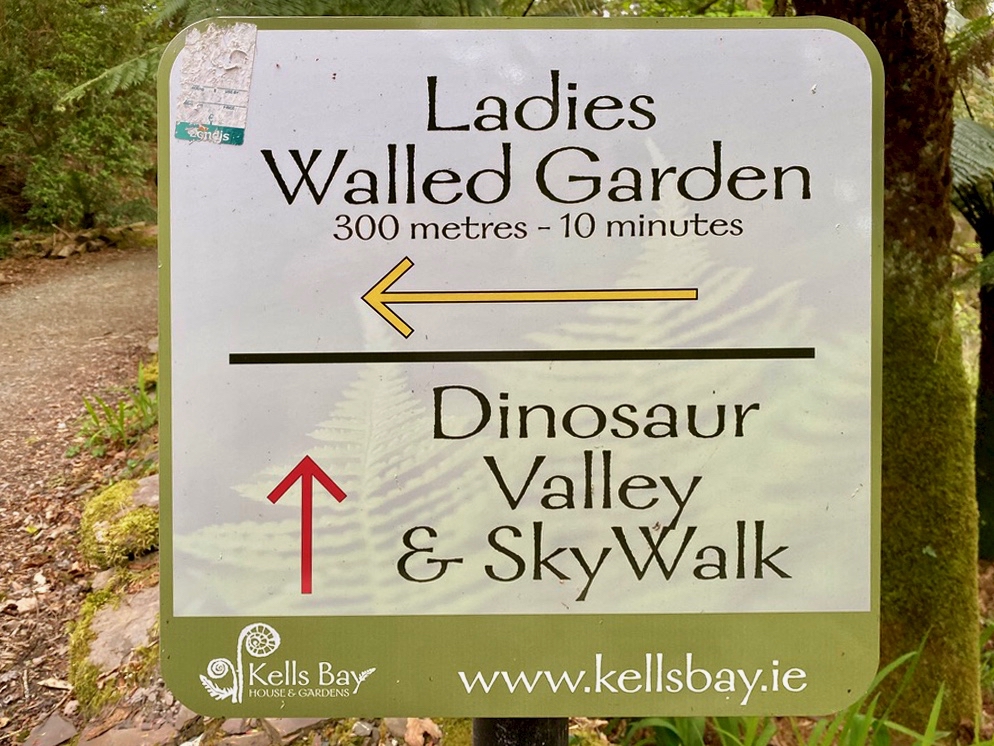
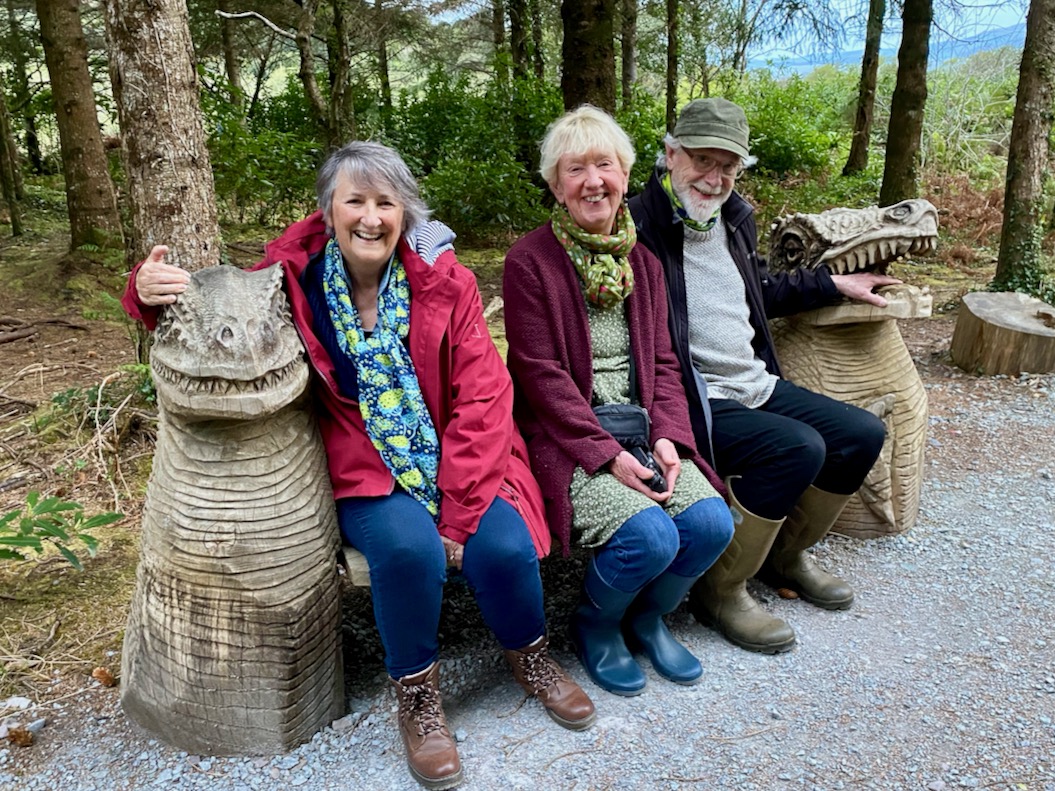
Today’s post sees us travelling again with our frequent companions Amanda and Peter (above, with Finola). Remember my post from last week? For that expedition we stayed at Kells Bay House, in Co Kerry: Peter and Amanda organised that wonderful trip. We decided we couldn’t leave that sublime place until we had visited the Primaeval Forest there.
. . . Rowland Ponsonby Blennerhassett (1850-1928), grandson of Rowland Blennerhassett, married Mary Beatrice Armstrong from London in 1876 and is recorded as living at Kells. He extended the original Hollymount Cottage and renamed it Kells. They also kept a house at Hans Place, Chelsea, near to the Chelsea Physic Garden. Rowland Ponsonby is widely held responsible for making additions to the garden which still stand today. He established the Ladies Walled Garden adjacent to the front of the house for his wife Lady Mary, planted the Primeval Forest and laid out the pathways through the gardens . . .
The History of Kells Bay House & Gardens Helen M Haugh 2015
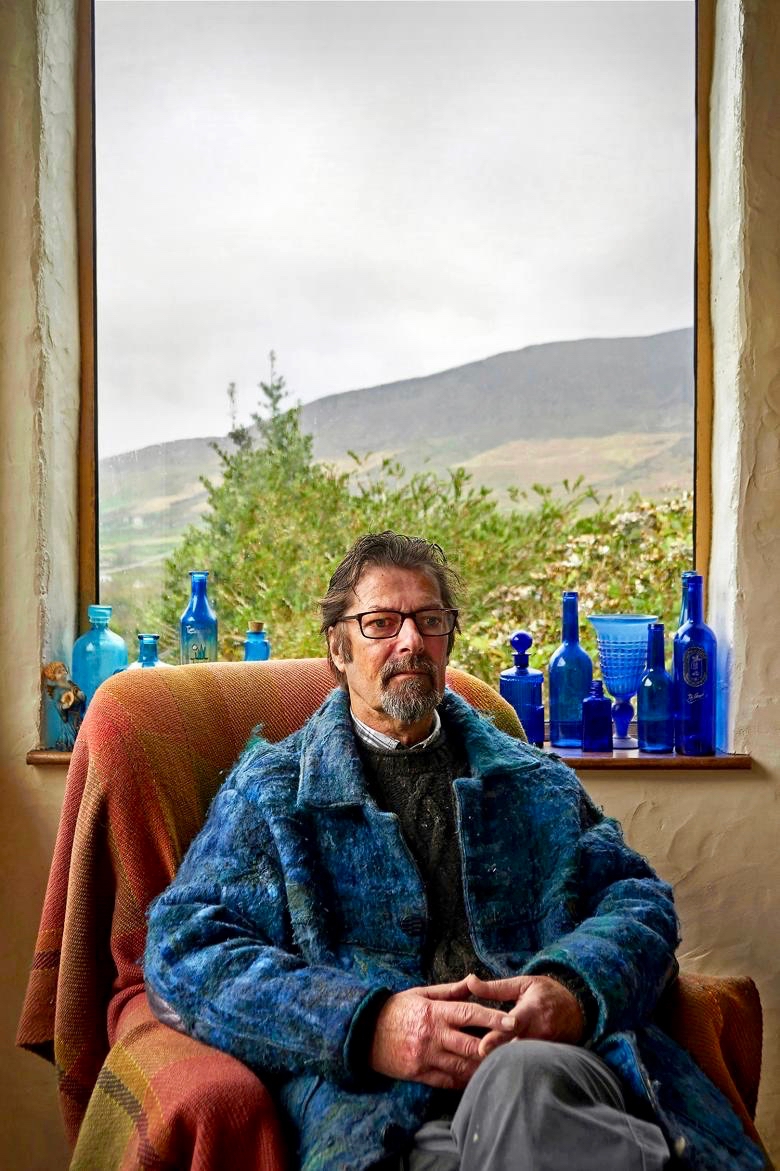
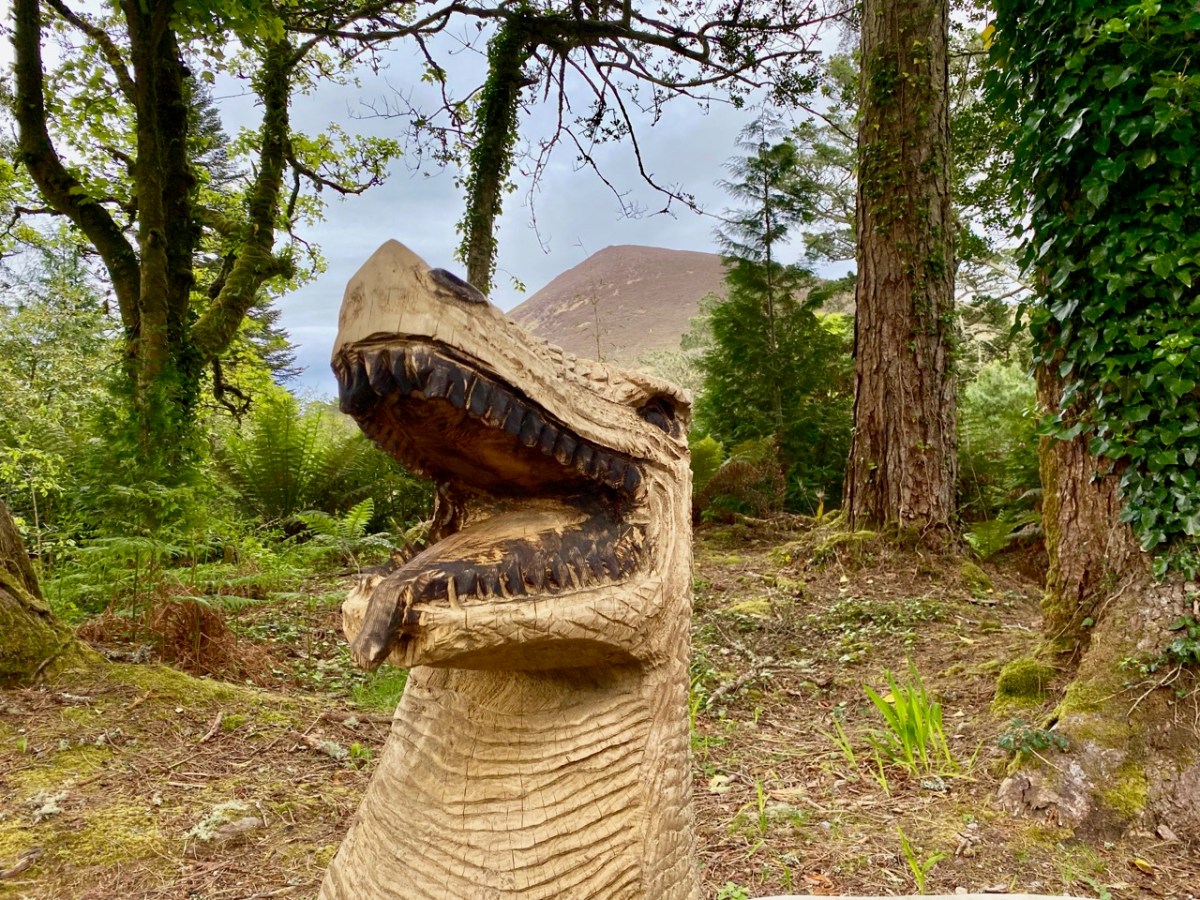
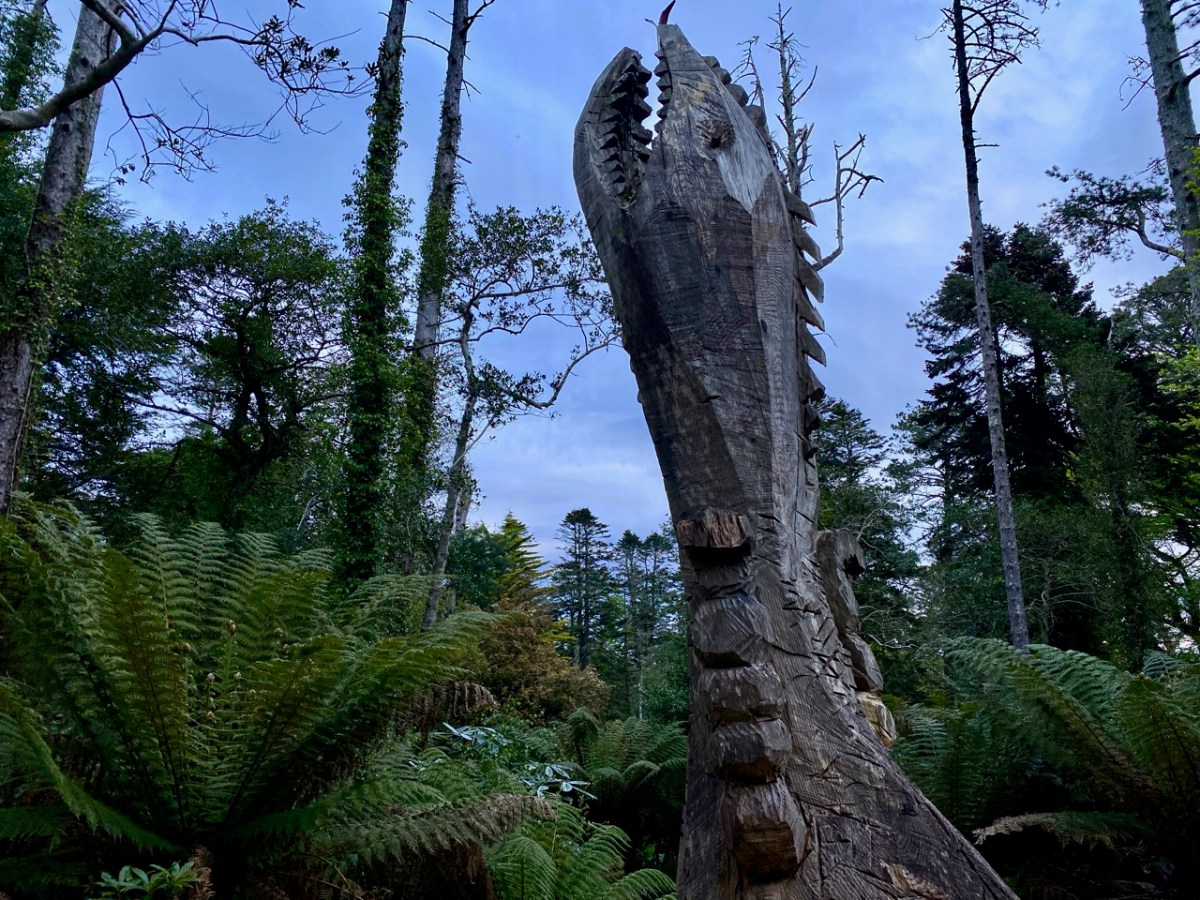
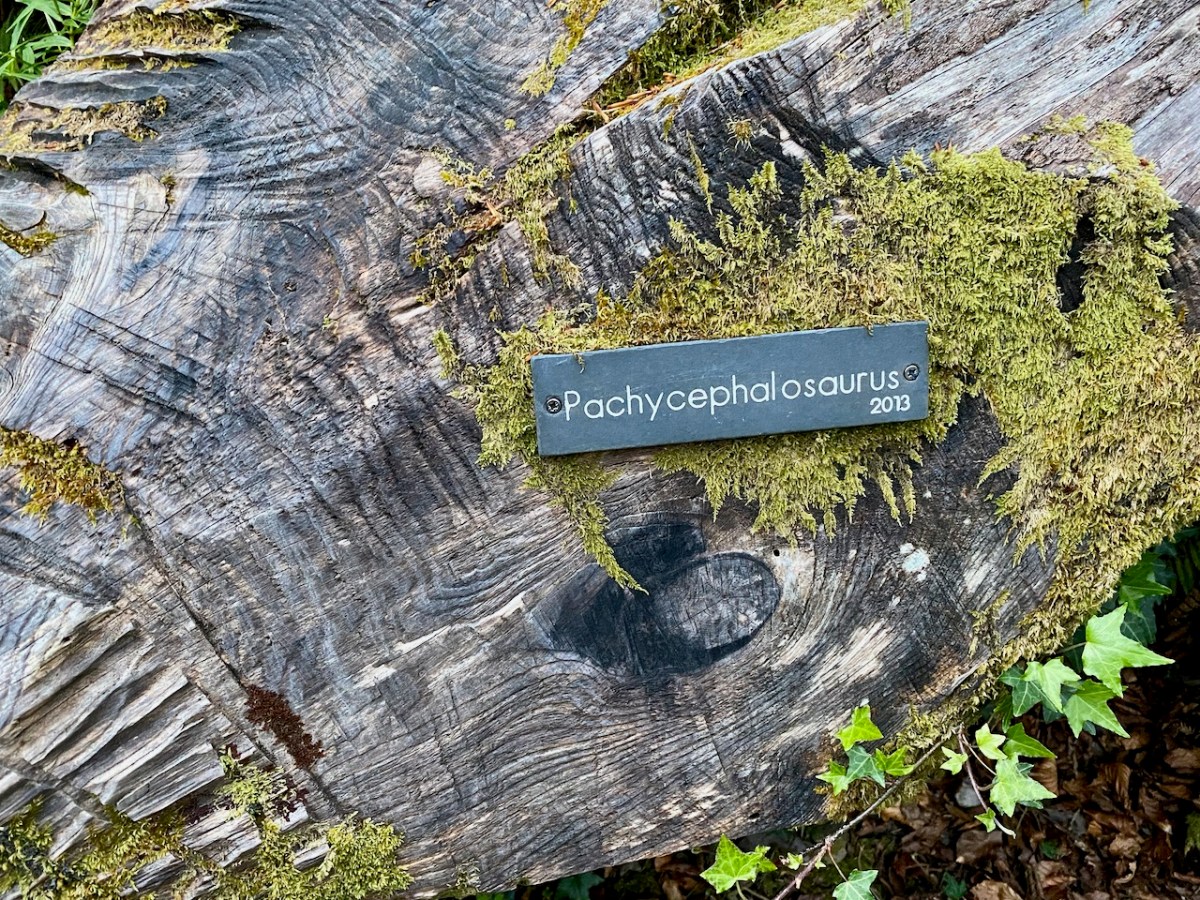
One of the principal attractions of the gardens at Kells Bay – and the Primaeval Forest – is a series of sculptures carved from tree fragments, commenced in 2011, by Kerry sculptor Pieter Koning. Here is a striking portrait of that artist by photographer David Molloy:
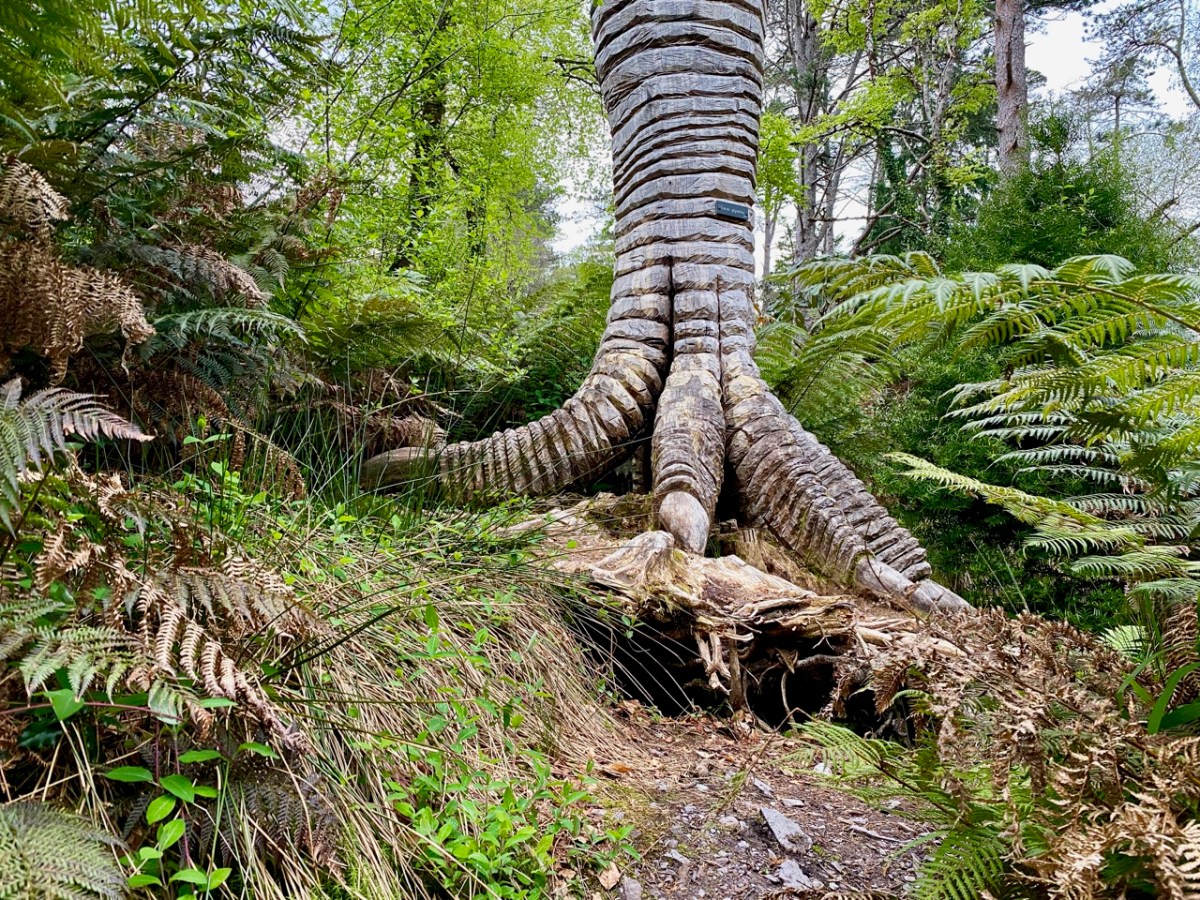
The Dinosaur sculptures have blended well into the natural landscape over the years: we were delighted with them!
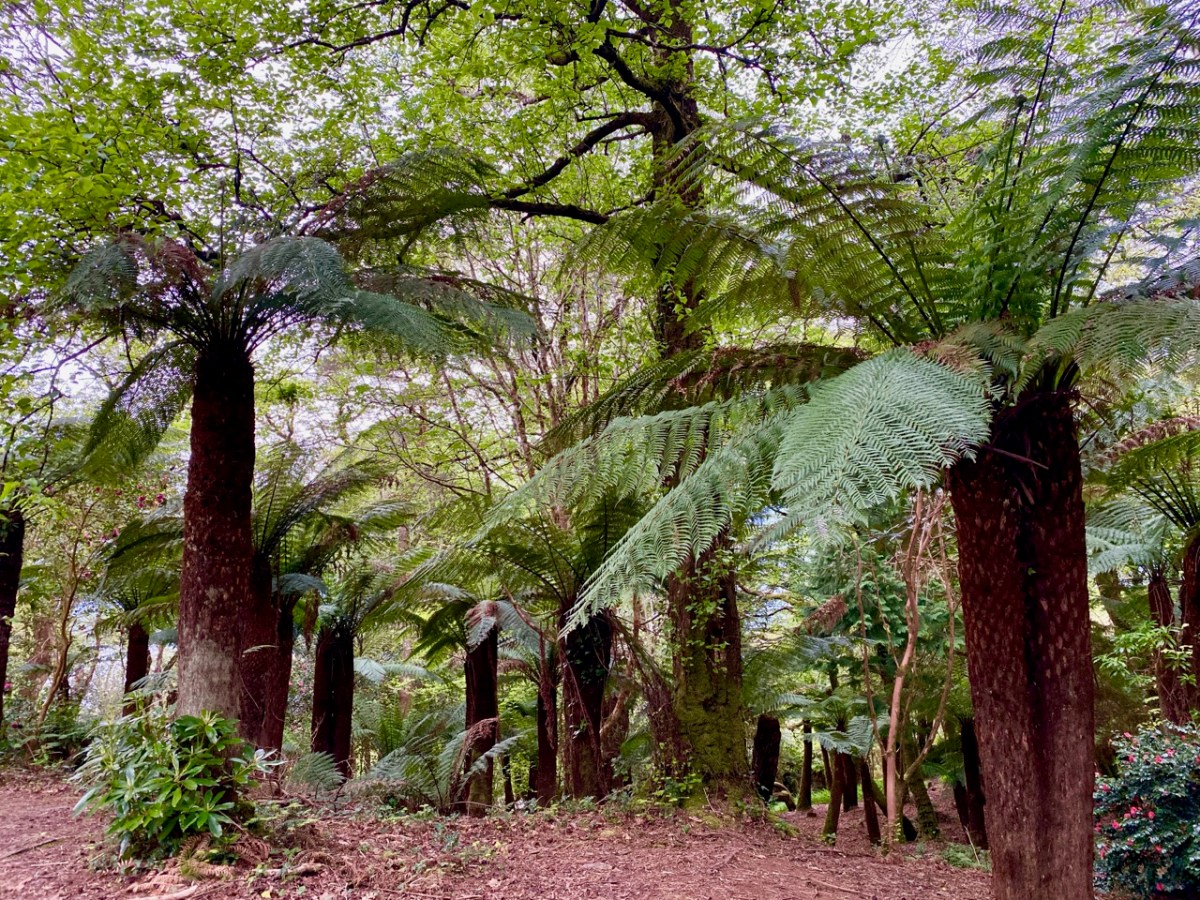
In addition to the Dinosaurs, which are well worth an exploration (I have only shown a few here to tantalise you into a visit!), there is a tree-fern forest planted by Blennerhassett, and spectacularly enhanced by the present owner, Billy Alexander, who has been awarded a Gold Medal at Chelsea Flower Show for his Kells Bay Gardens ‘mirocosm’. There are plenty of landscaping features old and new, and a ‘Sky Walk’ rope bridge, which is quite challenging.
Finola and I are at odds about this species: Gunneramanicata. Finola sees them springing up in the countryside where they ‘don’t belong’ – they originate in South America and are now spreading wildly, particularly here in the west of Ireland. Gunnera is listed on the Third Schedule of the EU Habitats Regulations which makes it an offence under Regulation 49 …to plant, disperse, allow or cause to grow this plant in the Republic of Ireland… So I can see Finola’s viewpoint. But I have always admired them. They grow so fast that you can almost see them getting bigger if you stand and stare for a few minutes. In this context, at Kells Bay House, they are part of an exotic collection dating from the 1800s, and therefore excused (says I).
I hope you will agree that Kells Bay House and Gardens is a ‘must see’ destination. And it’s well worth more than one visit. Include it – as we did – in a tour of landscape, archaeology and Holy Wells. The county of Kerry has so much to offer!
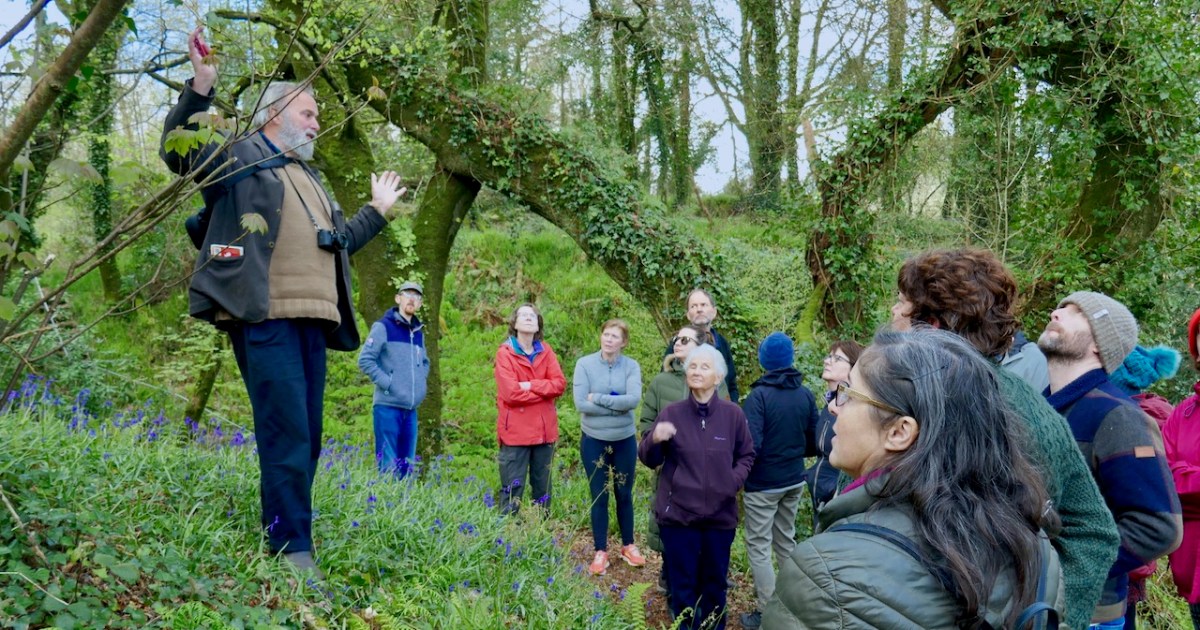
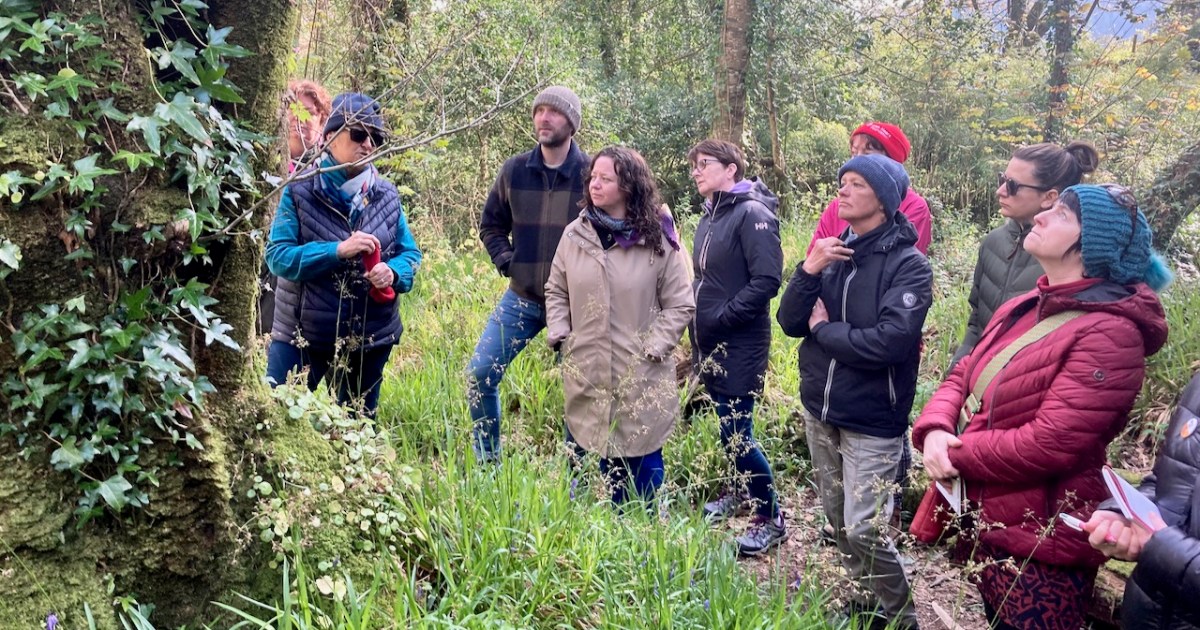
I had the great pleasure yesterday of co-leading a walk through Myross Woods, along with Mark Robins and Conor Buckley. Mark (that’s him above) is an ecologist, now retired to West Cork (and lucky we are to have him) and Conor is the dynamo who runs Gormú Adventures and who has an inexhaustible store of folklore, mythology, and local history. My job was to talk about the wildflowers, Mark set the context by explaining what a healthy woodland habitat looked like, and Conor enriched all the narratives with local lore.
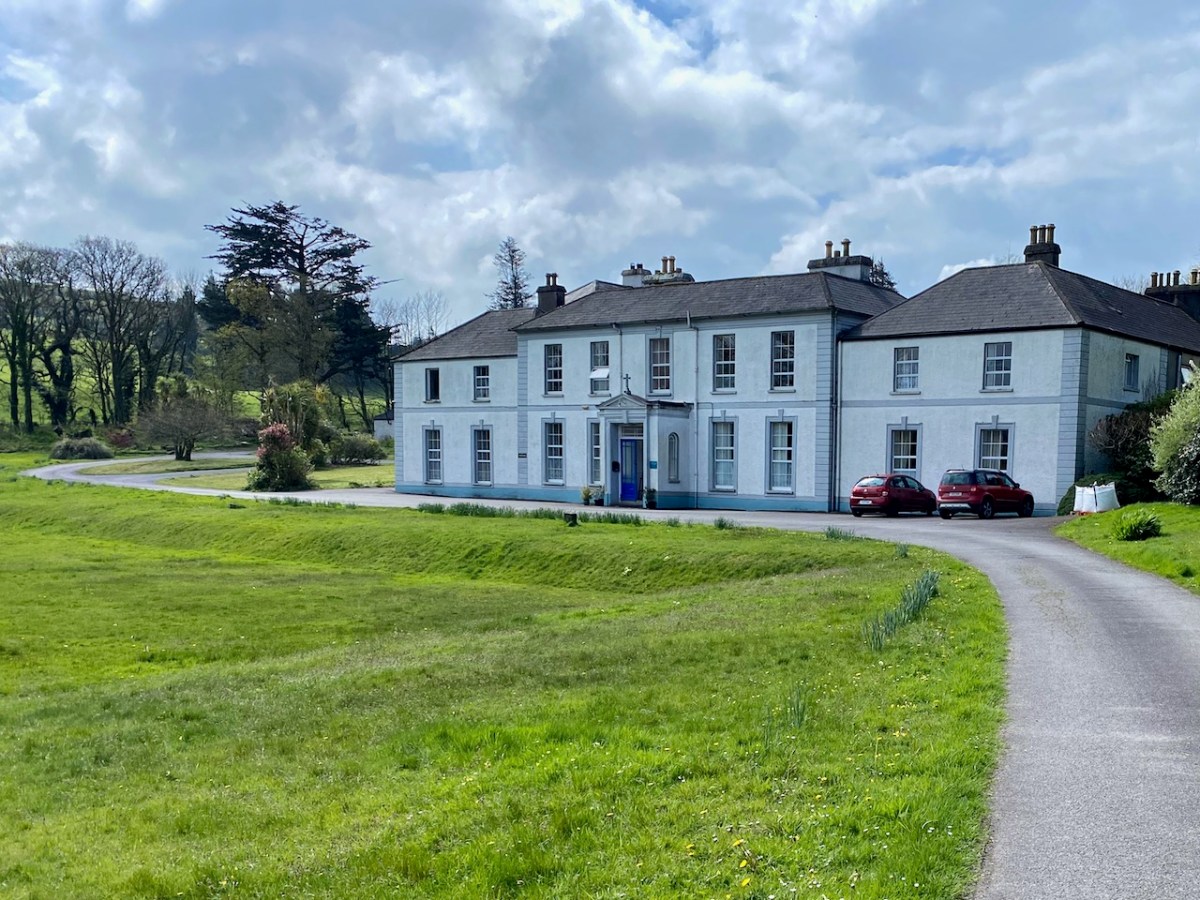
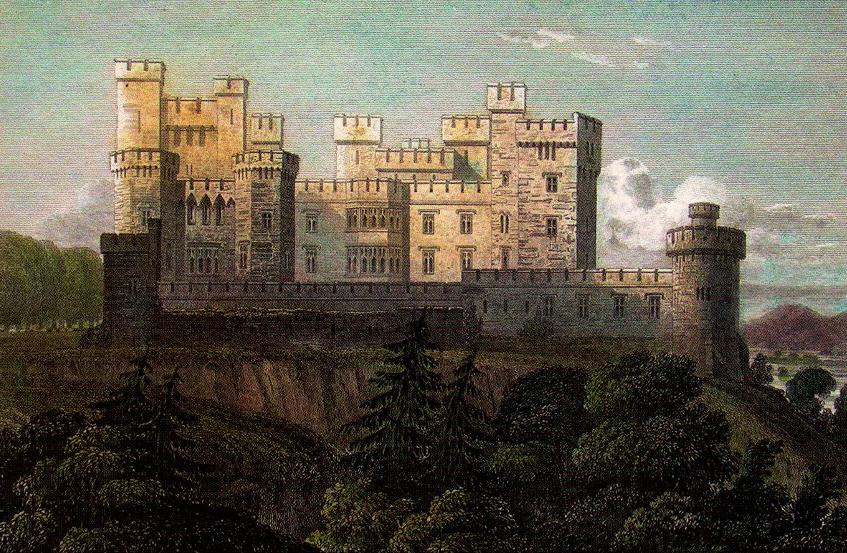
So where, and what, exactly, is Myross Woods? It’s a large House on an estate of the same name, built originally in the mid-eighteenth century by the local Vicar, Arthur Herbert, who sold it eventually to the Earl of Kingston who was building Mitchelstown Castle and needed a place to live while it was under construction.
Mitchelstown Castle was one of the most impressive Castles ever built in Ireland. It was looted and burned by the IRA in 1922.
It was probably the Earl who set about designing the landscape as a series of vistas and pleasure gardens to impress his guests – his guiding principle seems to have been that ostentation should be given priority (he specified that Mitchelstown Castle should be the biggest in Ireland). The eighteenth century was the era of the Designed Landscape. As I said in my post on Belvederes
The effect they strove for was naturalistic (as opposed to natural) – a planned layout that mirrored but enhanced their idea of a ‘wild’ and romantic landscape. Large expanses of grass, strategically placed lakes and ponds, plantings of carefully chosen tree and shrub species, and clever little structures such as temples, summer houses and belvederes all combined to delight the eye, create a romantic mood and, of course, attest to the taste and wealth of the owner.
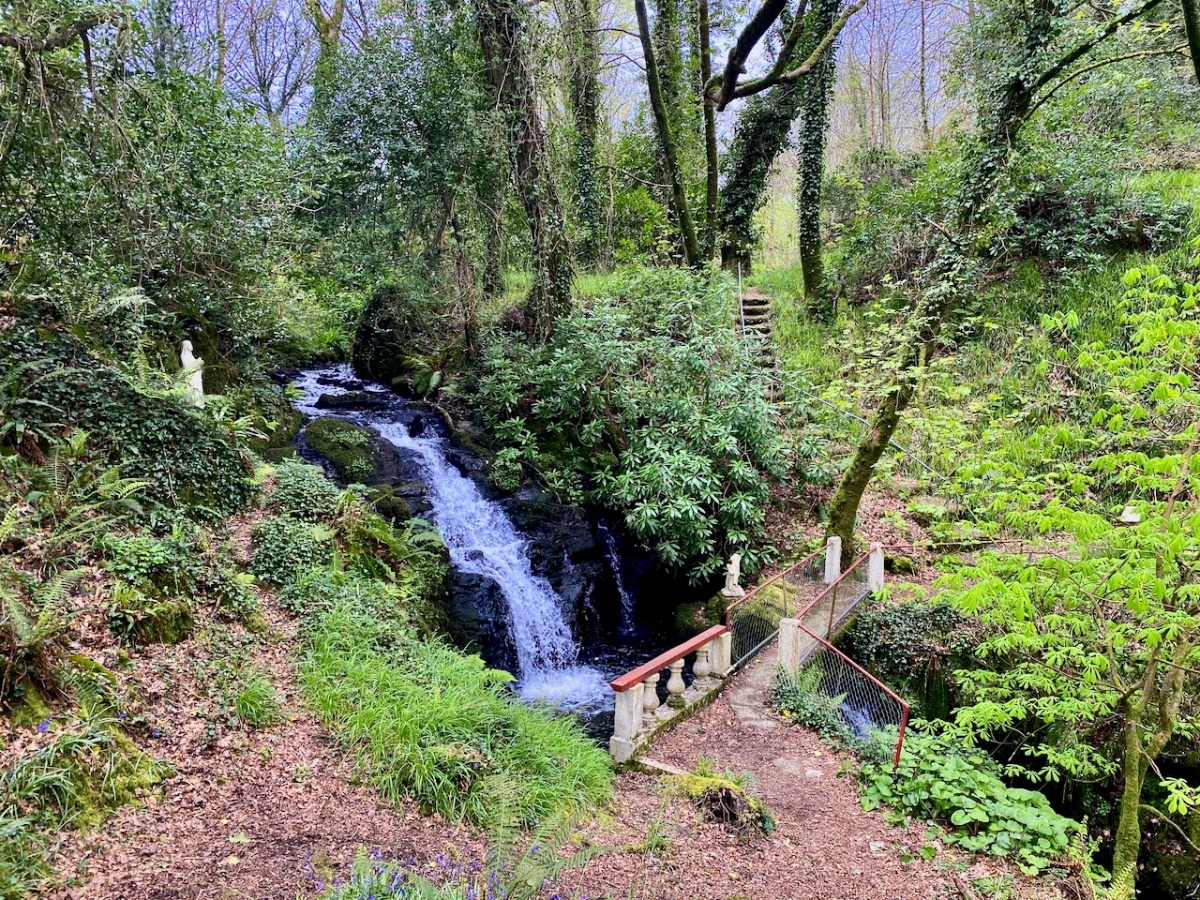
One of Kingston’s enhancements was to carve out the rock to create a waterfall. I wonder how he and his Protestant guests would feel if they knew that the Missionaries of the Sacred Heart, who ran Myross Woods as a retreat house for most of the twentieth century, had turned his sylvan feature into a Marian Grotto.
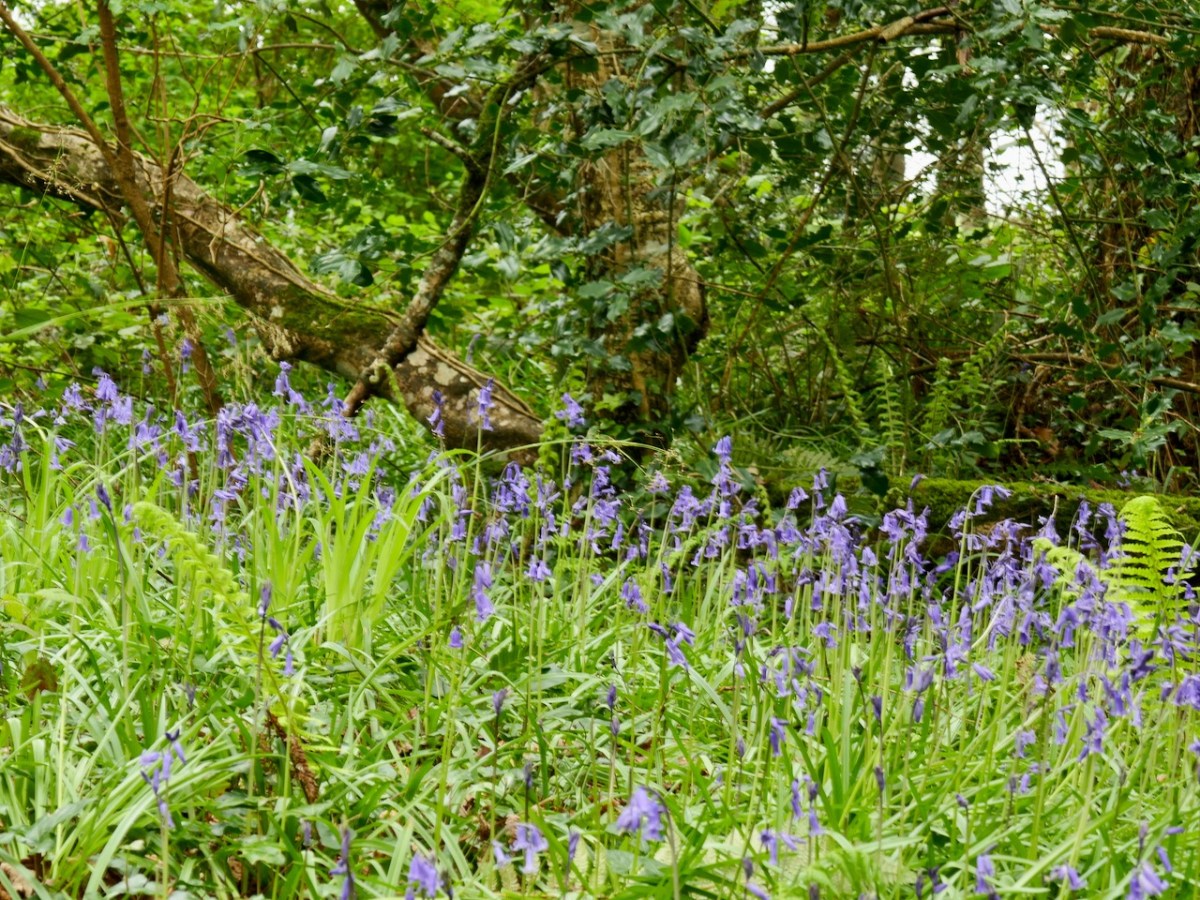
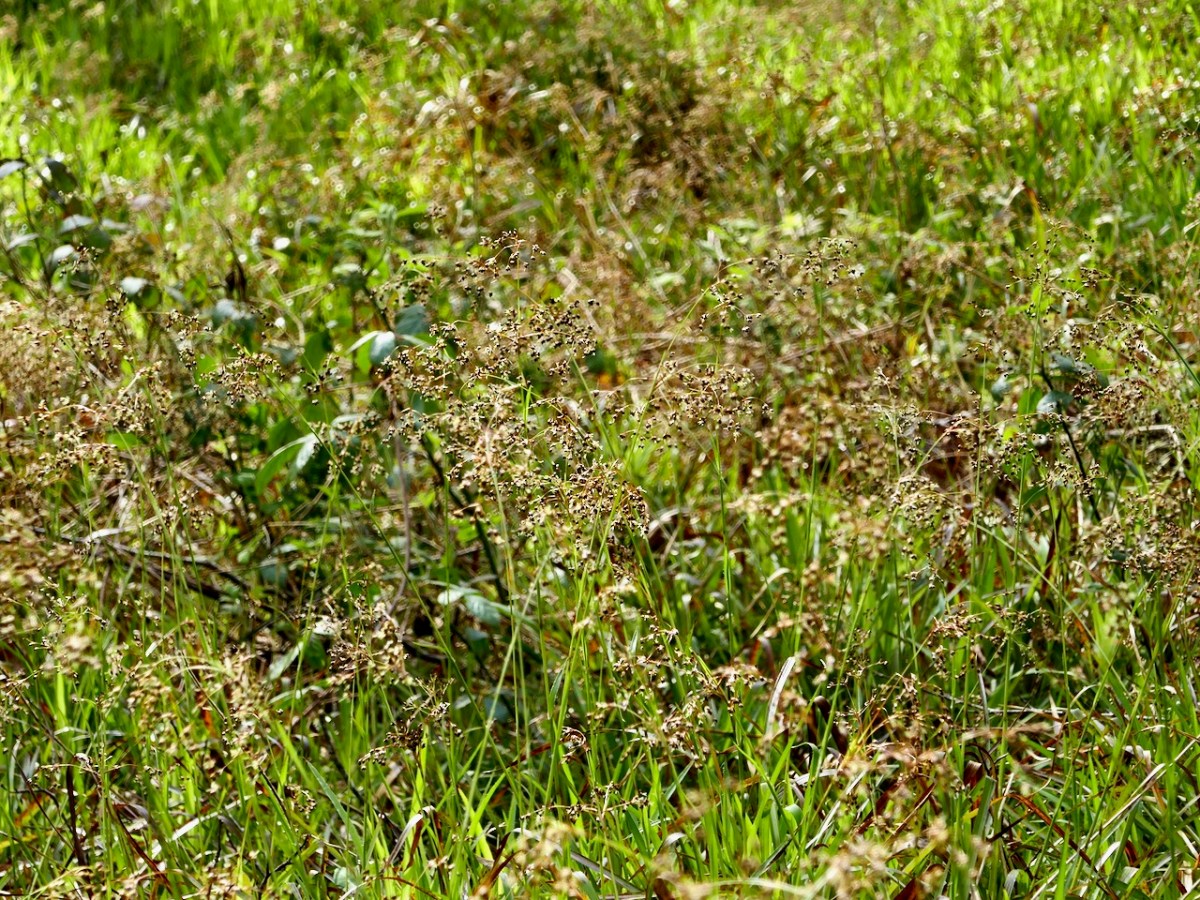
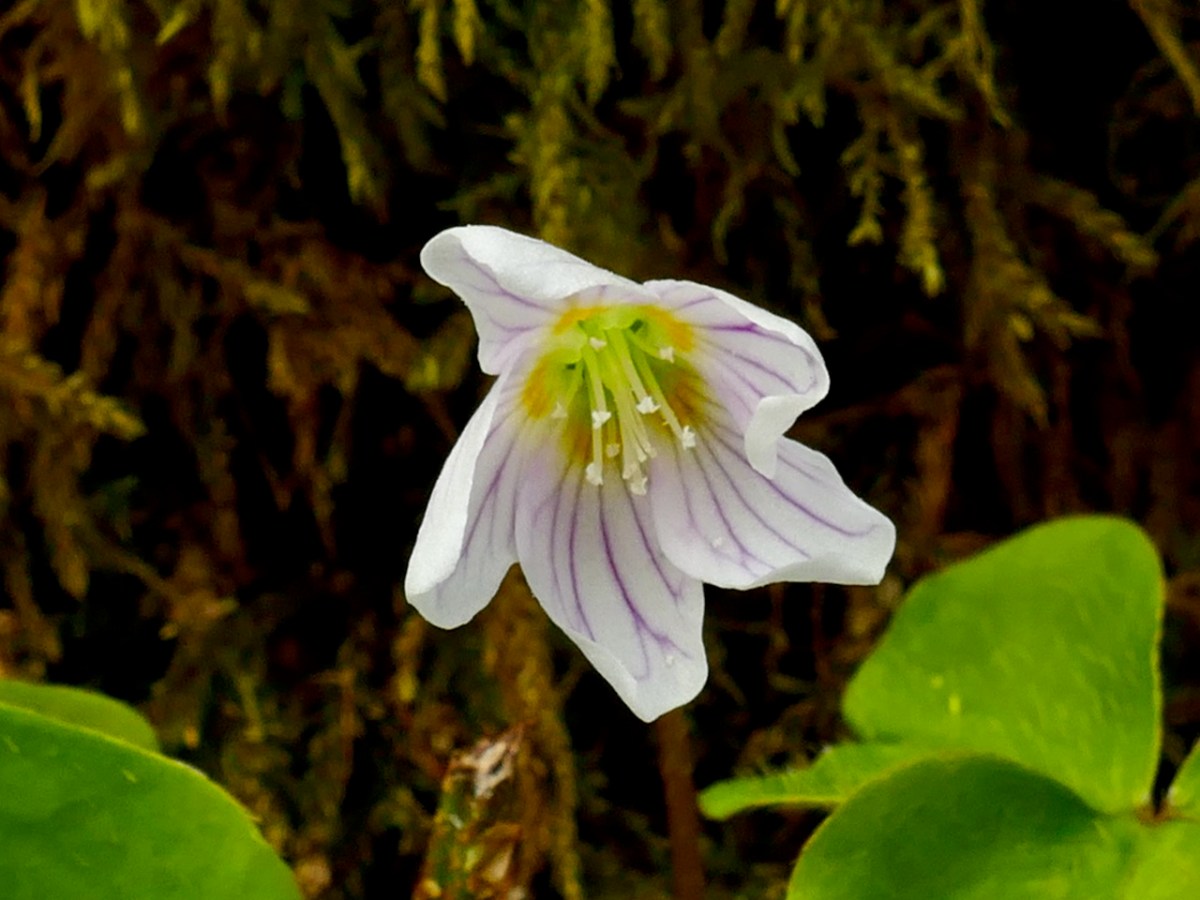
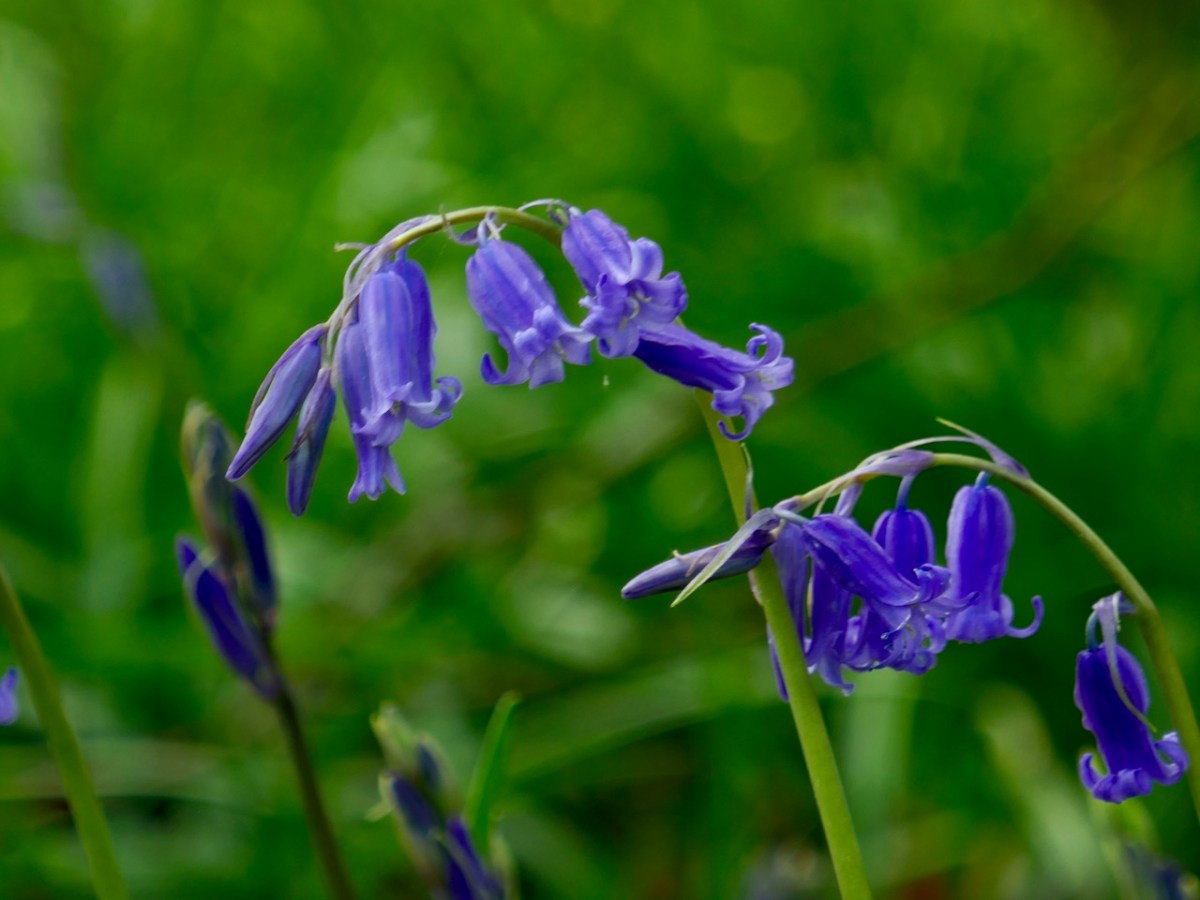
In the case of Myross Woods there is good evidence that there was an existing and ancient woodland, since some of the indicator species are present. Believe it or not, one of those species is the native Bluebell (Hyacinthoides non-scripta), which flourishes in ancient woods. Another is the Woodrush (ditto, above) which is identified with oak forests, such as we have at Myross Woods, as well as Wood Sorrel (above).
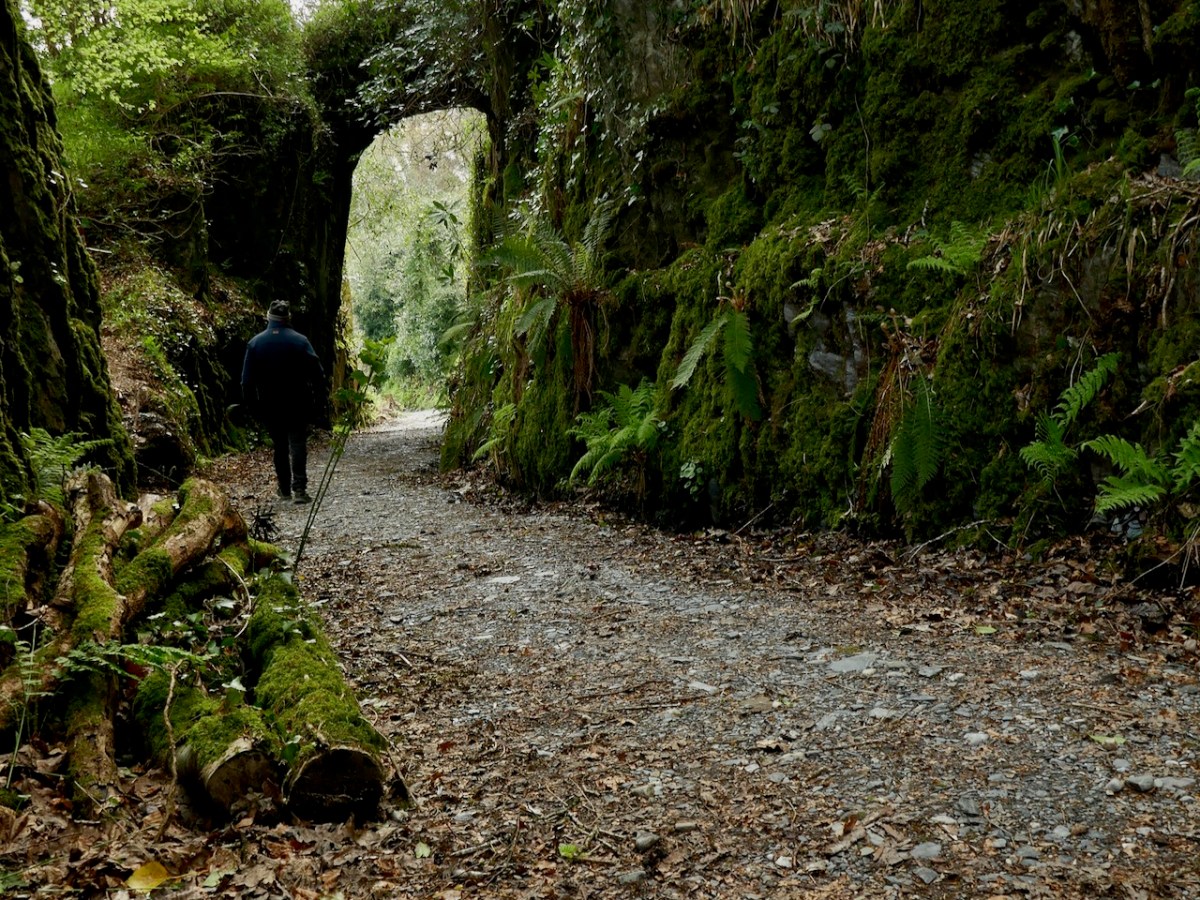
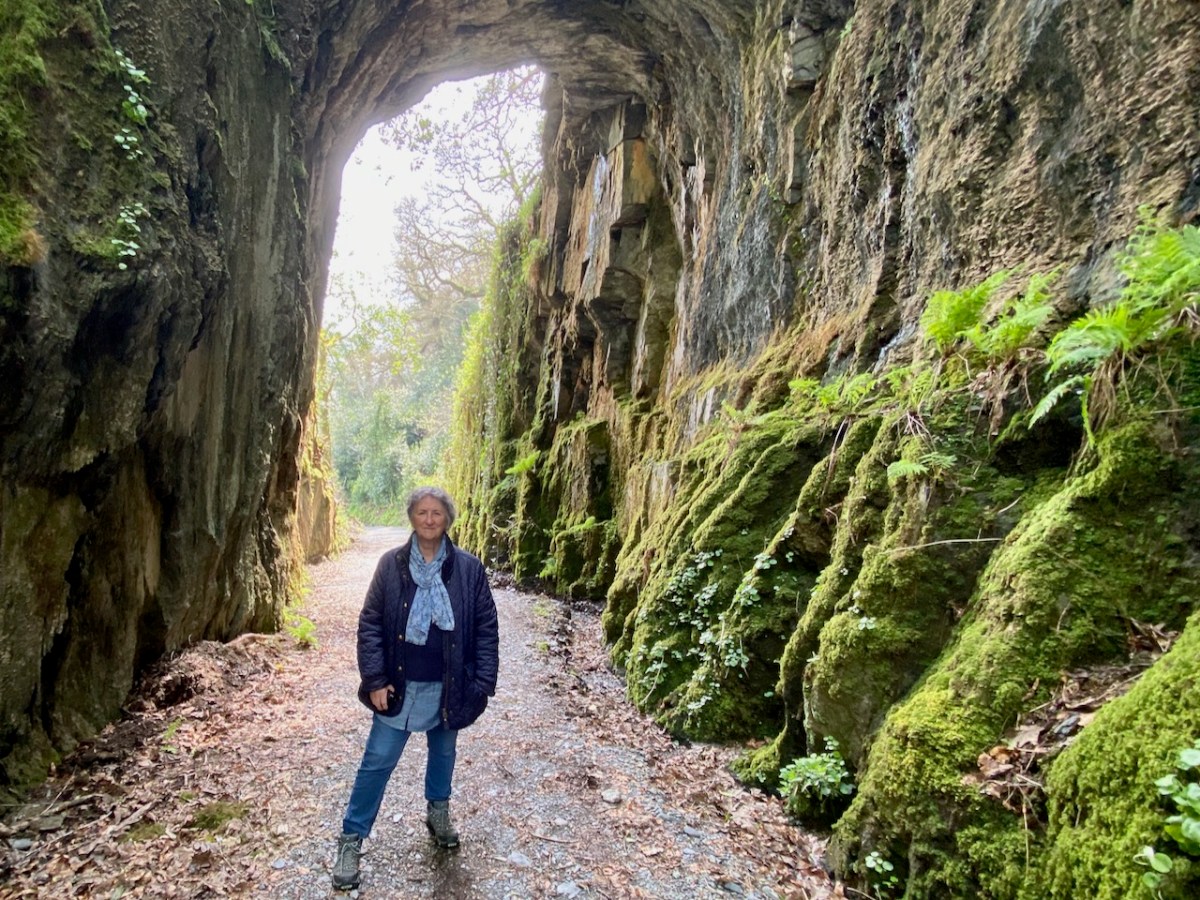
Kingston set about enhancing the environment by planting Beech Trees, by carving out clever little waterfalls, by building an impressive entryway featuring a hand-hewn tunnel, by walling a garden behind the house, and by all the interventions that were used at the time to create imposing carriage drives, romantic vistas and delightful walks.
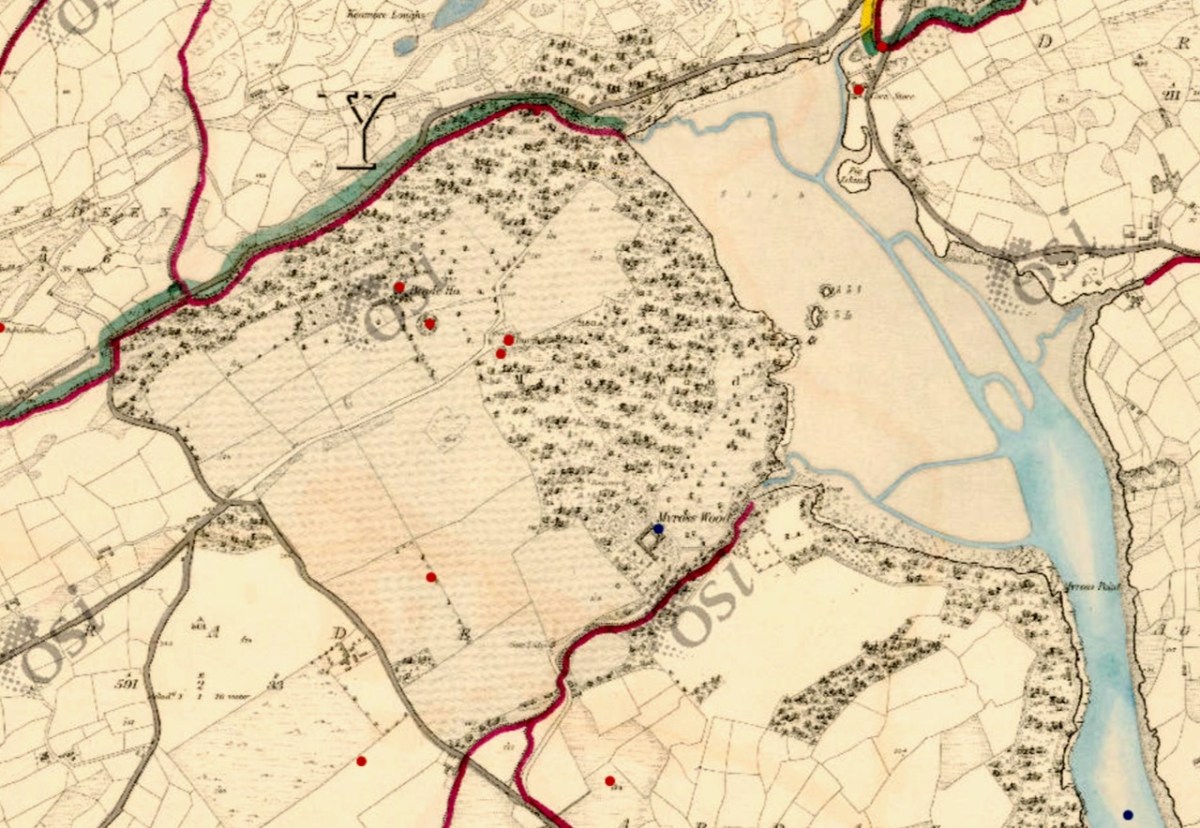
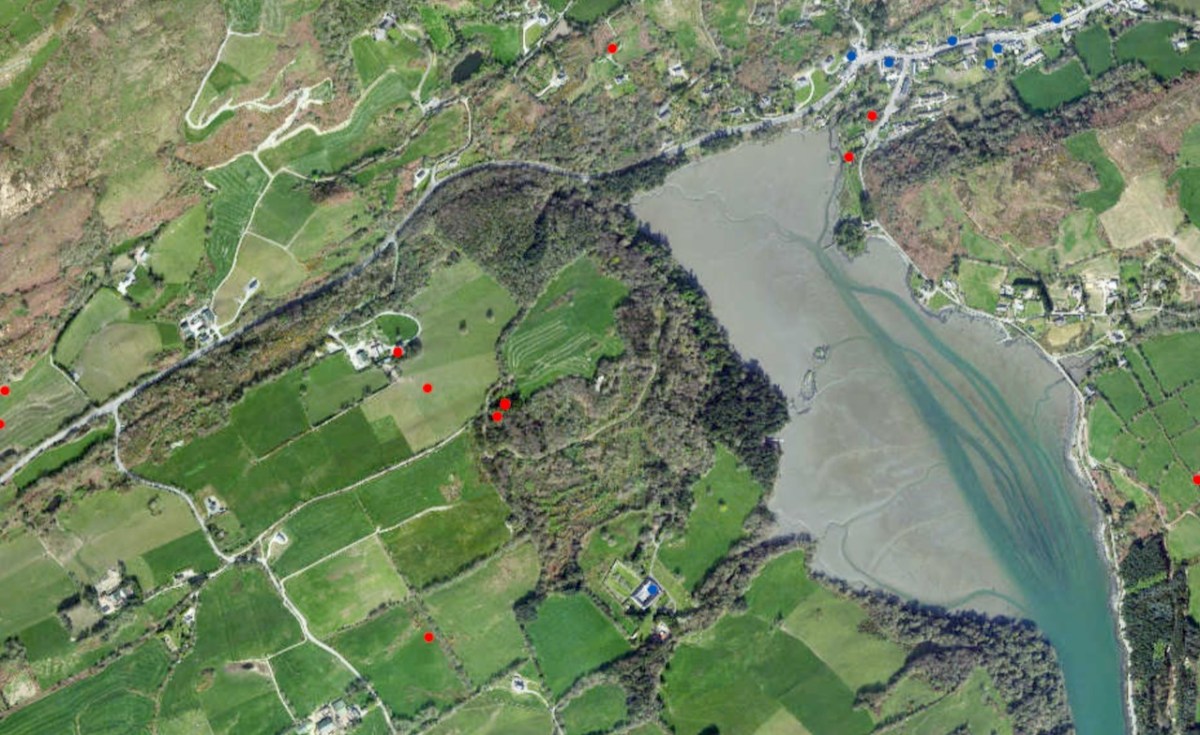
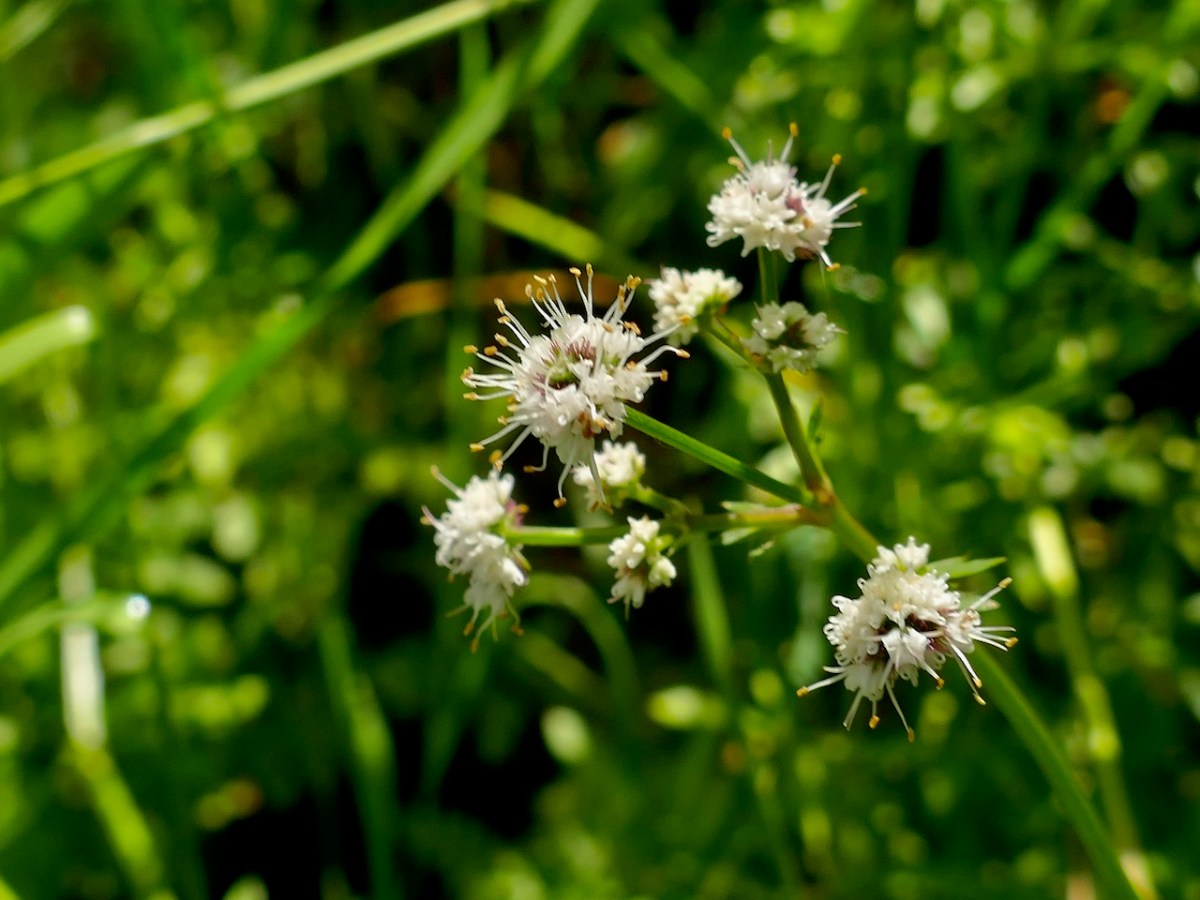
As you can see above, the 1840s map and the modern map illustrate that the woods have remained more or less as they were, in terms of location and extent. It’s the composition of the woods that is the issue. The presence of Sanicle (below), for example, indicates that non-native Beech trees were introduced here (Sanicle typically grows under Beech trees).
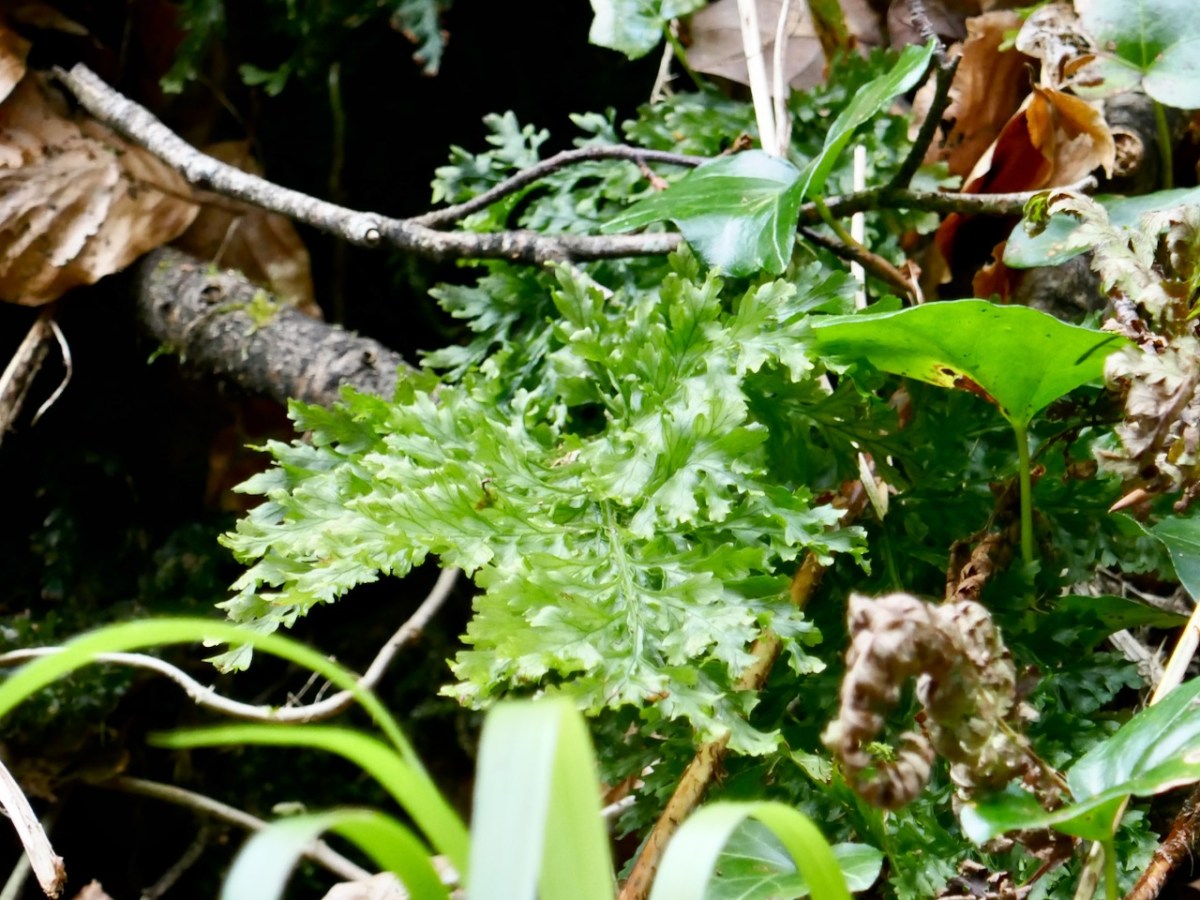
While it can be hard to say in places where the original woods leave off and the new plantings begin, for the most part the interventions are fairly obvious. This creates a dilemma for those committed to restoring the woods. For example – the Killarney Fern is found here (below). Incredibly rare, it’s one of Ireland’s three types of filmy fern. Is it native to these woods or was it introduced by those fern-mad Victorians? Whichever it was, its presence here is what has conferred on these woods a Special Area of Conservation order. The fern requires shade, and that shade is currently being provided by invasive Laurel – see the problem?
The Friends of Myross Woods has been set up to support the creation of a living, community woodland resource for biodiversity, education, recreation and the arts. They have been hard at work on a long-term project to restore the woods to something closer to a native woodland. They want to gently shift the site from a mixed broadleaf woodland to a more oak dominated birch and holly woodland (the most natural woodland type for this area).
On our walk Mark pointed out what has been accomplished and the immense amount that needs to be done. YOU CAN HELP! Sign up to become a Friend of Myross Woods, see what you can do to help, or make a donation to their efforts. Think how good you will feel, knowing you are doing your bit for this wonderful environment.
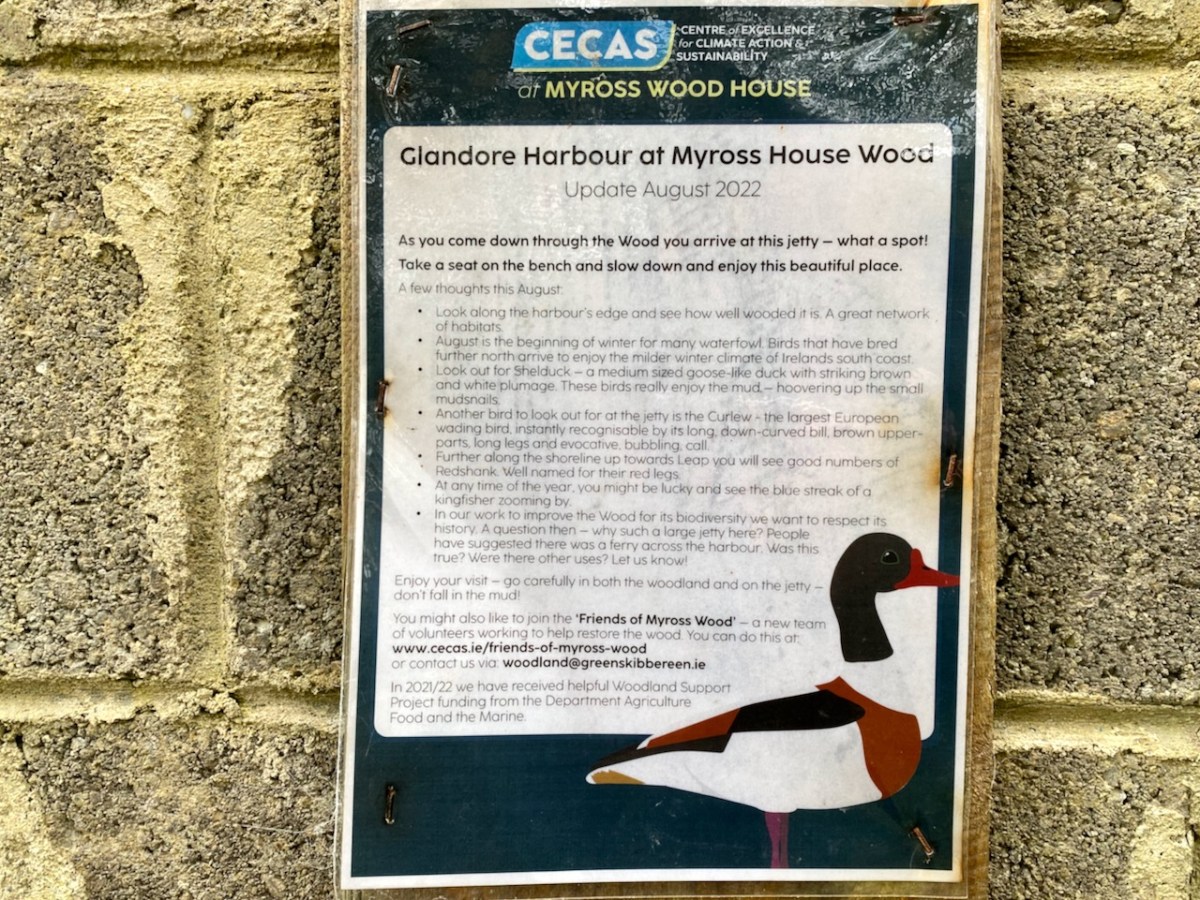
But even if you can’t do any of that, just go and take a walk in the woods – it’s open to everyone and it’s a restorative experience at any time of the year. There are two walks you’ll want to do, both short and easy. The first of the one to the south of the house, leading down to the water of Glandore Harbour. This is the walk we did yesterday.
The second is the Tunnel Wood walk, near the N71 entrance. It will bring you to the tunnel, dripping with bryophytes (mosses and liverworts) and on to the amazing bridge that Kingston had built to provide a suitably opulent entry to his demesne. Be careful here, though – it’s high and precarious.
Myross Woods is just one branch of the great work that is being done by CECAS (Centre of Excellent for Climate Action and Sustainability), an initiative of Green Skibbereen. By signing up to support CECASyou become part of a movement that is stepping up and actively tackling climate change in our West Cork Community.
We’ve had a long cold winter and it’s raining, misty and downright bleak outside as I write this. But there have been bursts of sunshine here and there and when I can catch those moments I am out with my camera to see what I can find in the trees and the grass. The land is waking up. This video is a compilation of what I’ve seen in the last week, in my own garden and along the boreens around me.
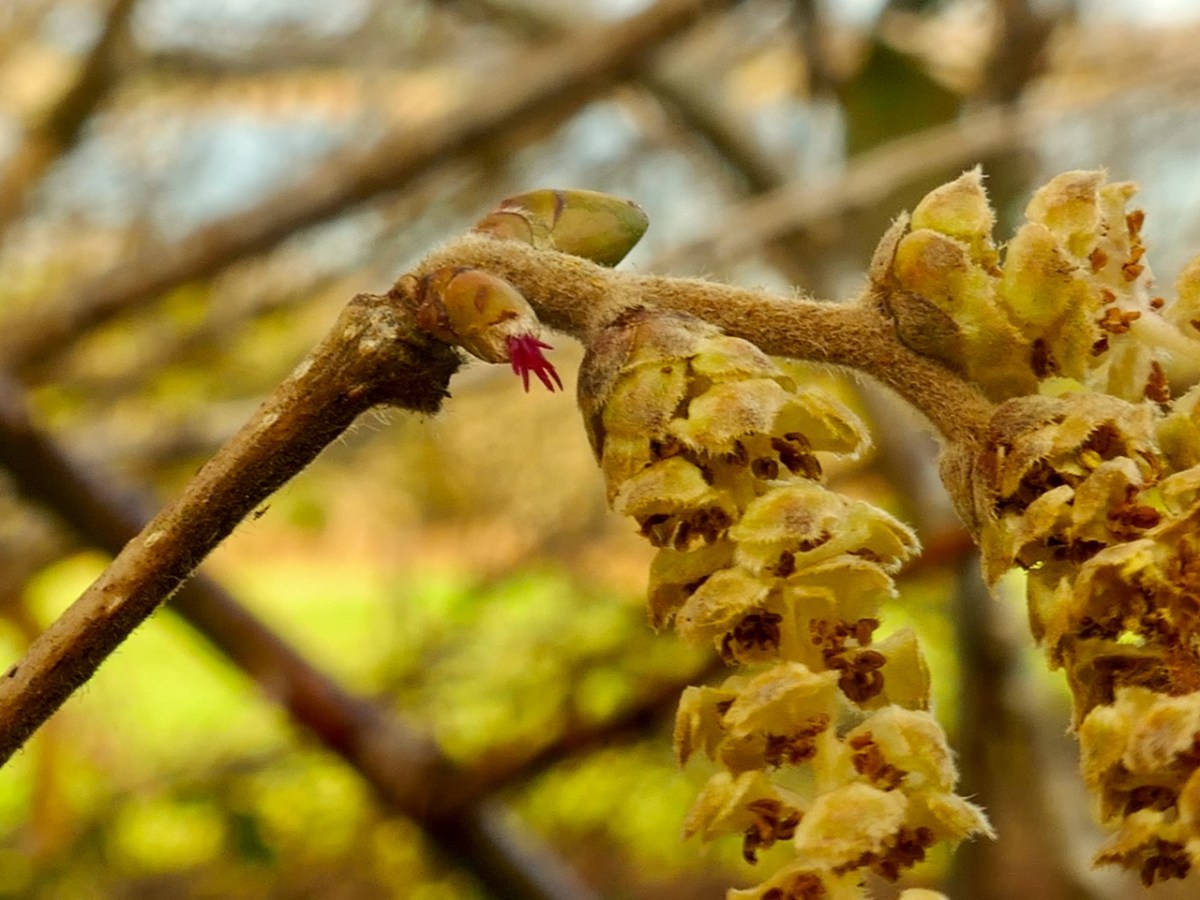
Here’s what I saw – all native and all typical of our West Cork flora. Hazel trees produce both male catkins – easy to see – and tiny red female flowers – very difficult to see and easy to overlook, but very pretty little pincushions when you see them.
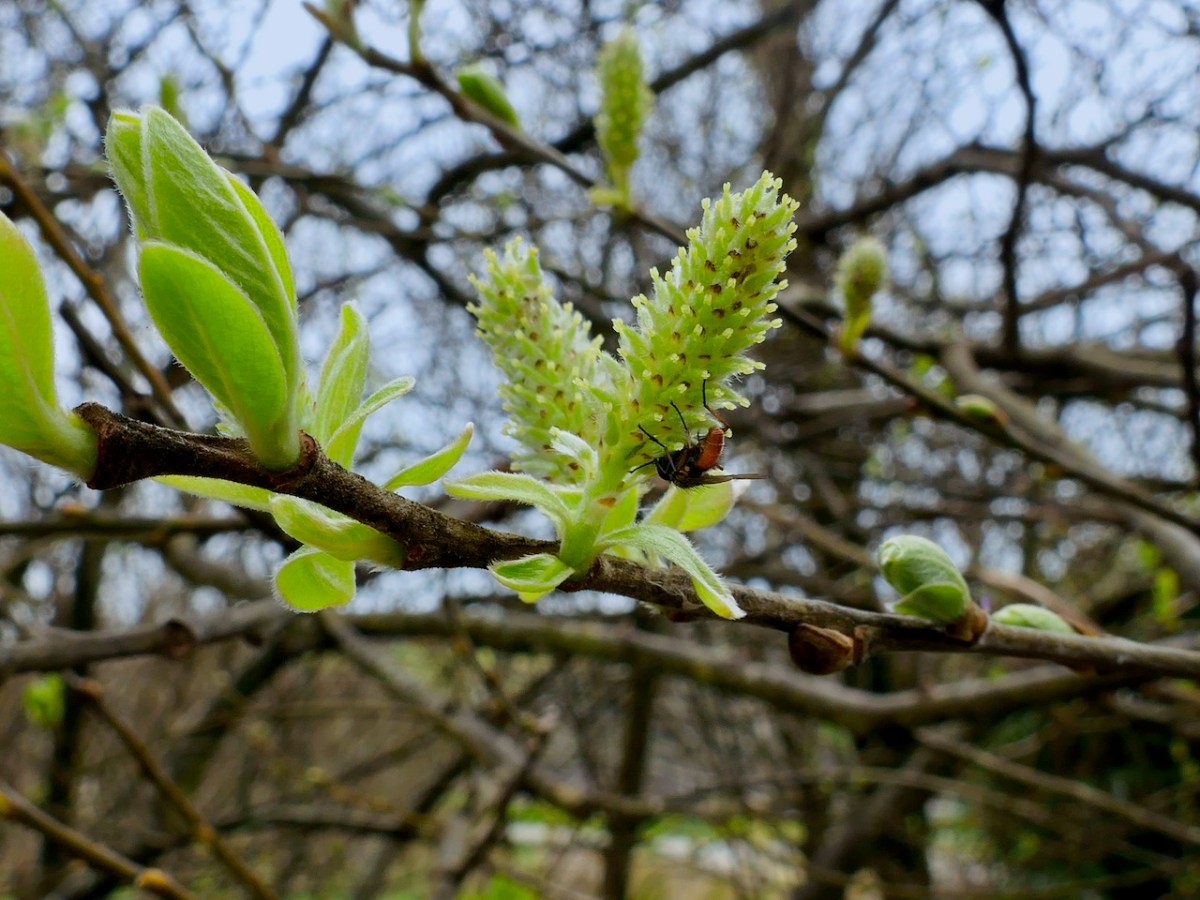
Willow trees, on the other hand are either female or male and depend on wind and insect to pollinate one from the other. The male trees are the ones who produce the cute little pussy willows, which explode into yellow flower heads as they mature.
I only have a female tree, with its own distinctive catkin-like spiky flowers. Fortunately, as you’ll see in the video, when I was photographing it, it was visited by a Great Tit and a White-tailed Bumble Bee, all helping (along with the breezy weather) with the pollination.
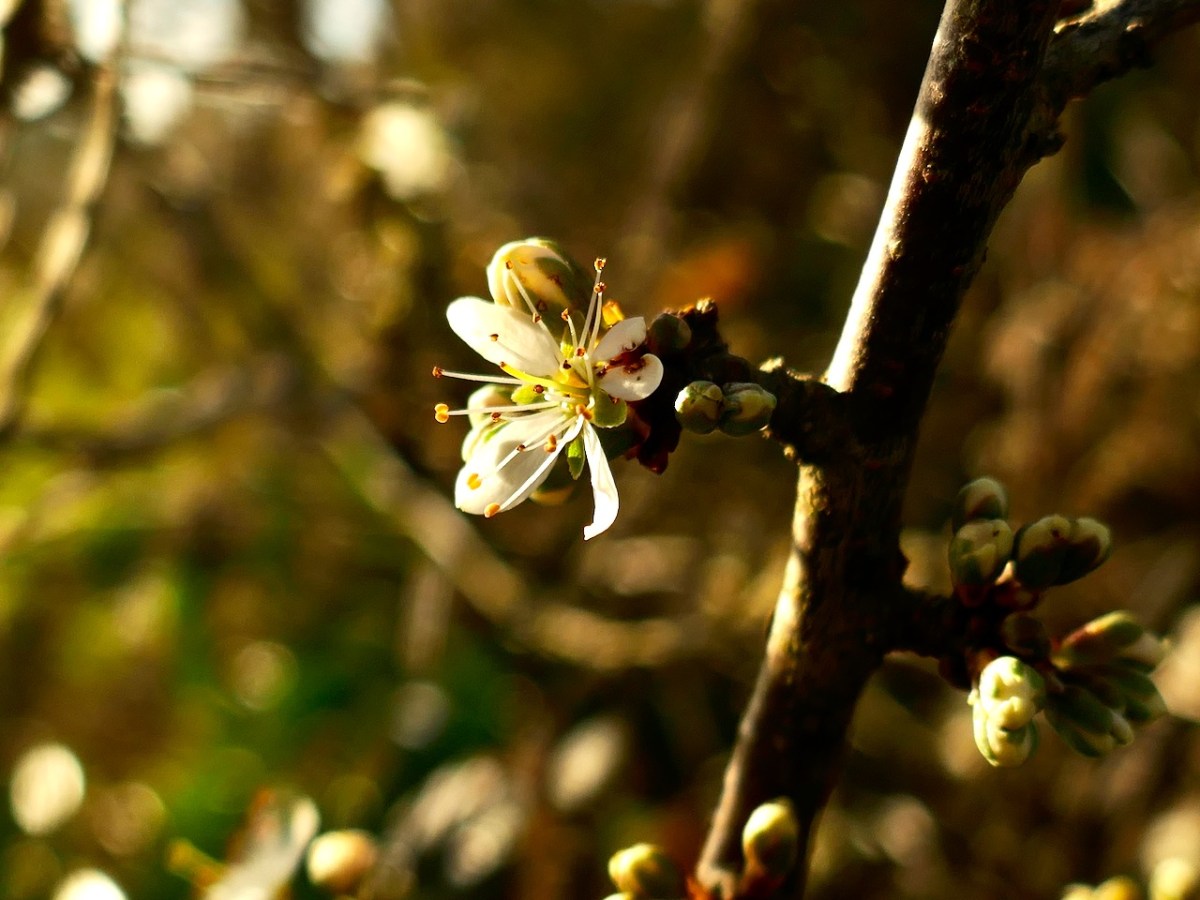
The blackthorn trees are one of our true harbingers of spring – the flowers emerge before the leaves, looking bright and beautiful against the dark bark.
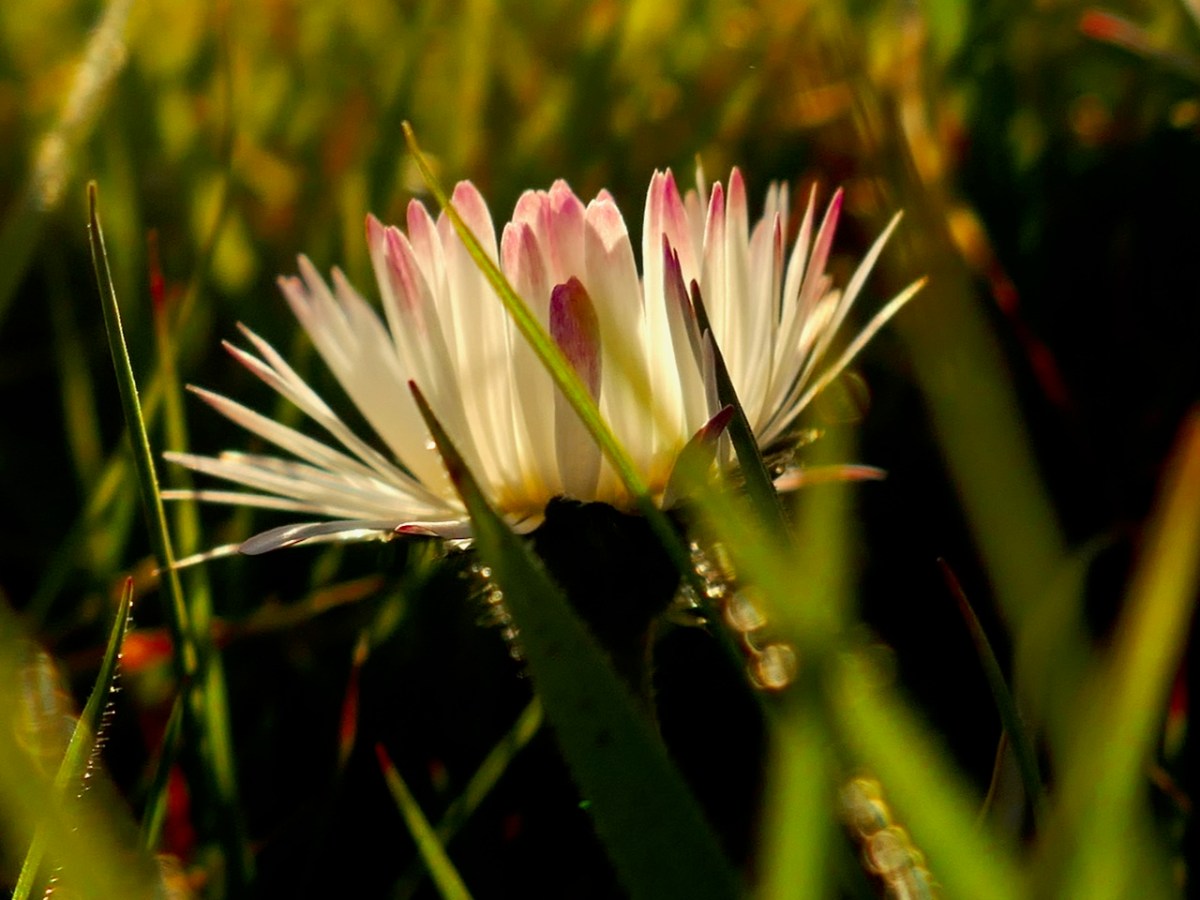
Some Staghorn moss is followed by two Dandelions and then some Lawn Daisies, Dandelions come early in West Cork and don’t last long – they are soon replaced by Cat’s-ear in my lawn. The daisies are a constant delight all summer long.
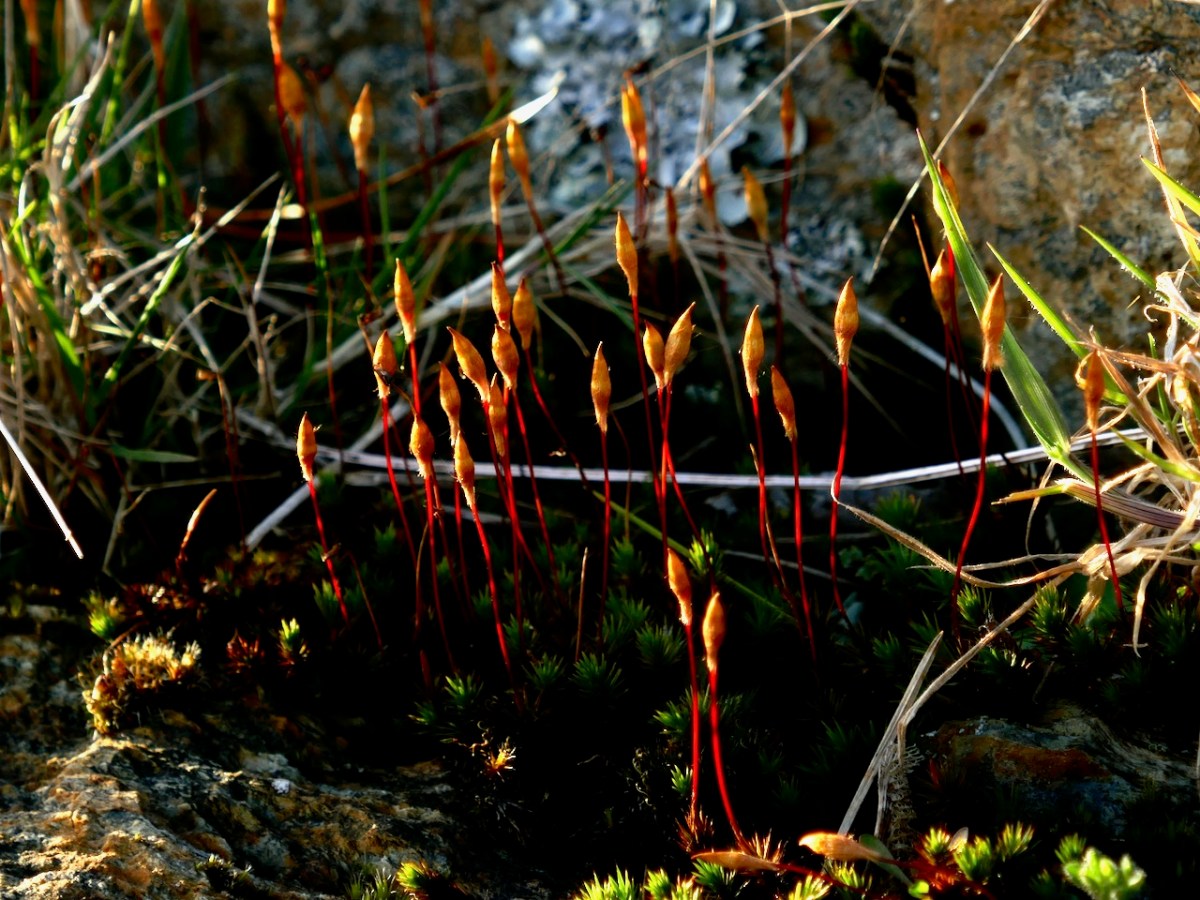
Another early spring wildflower is Common Dog-violet. This one really rewards getting up close. See my lead photo for this one. Finally, a couple of shots of Herb Robert emerging from a stone wall, followed by photos of Juniper Haircap Moss, which has established a little colony in the crevices of the rocks that line my driveway. The spore capsules sit atop tiny bright red stems. That’s my lead photo for this post, and the shot below.
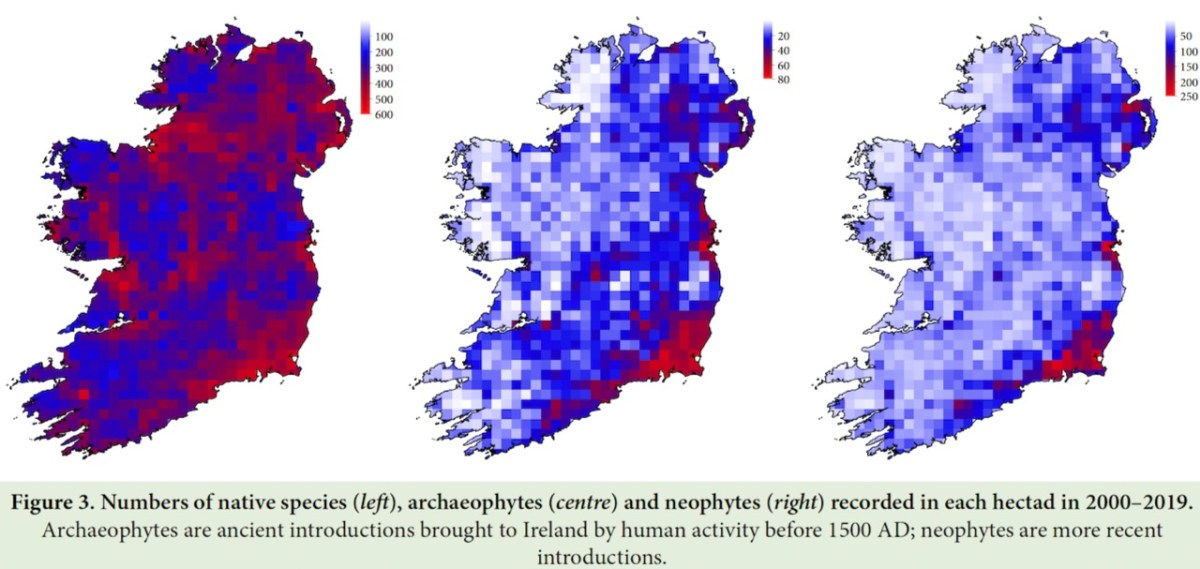
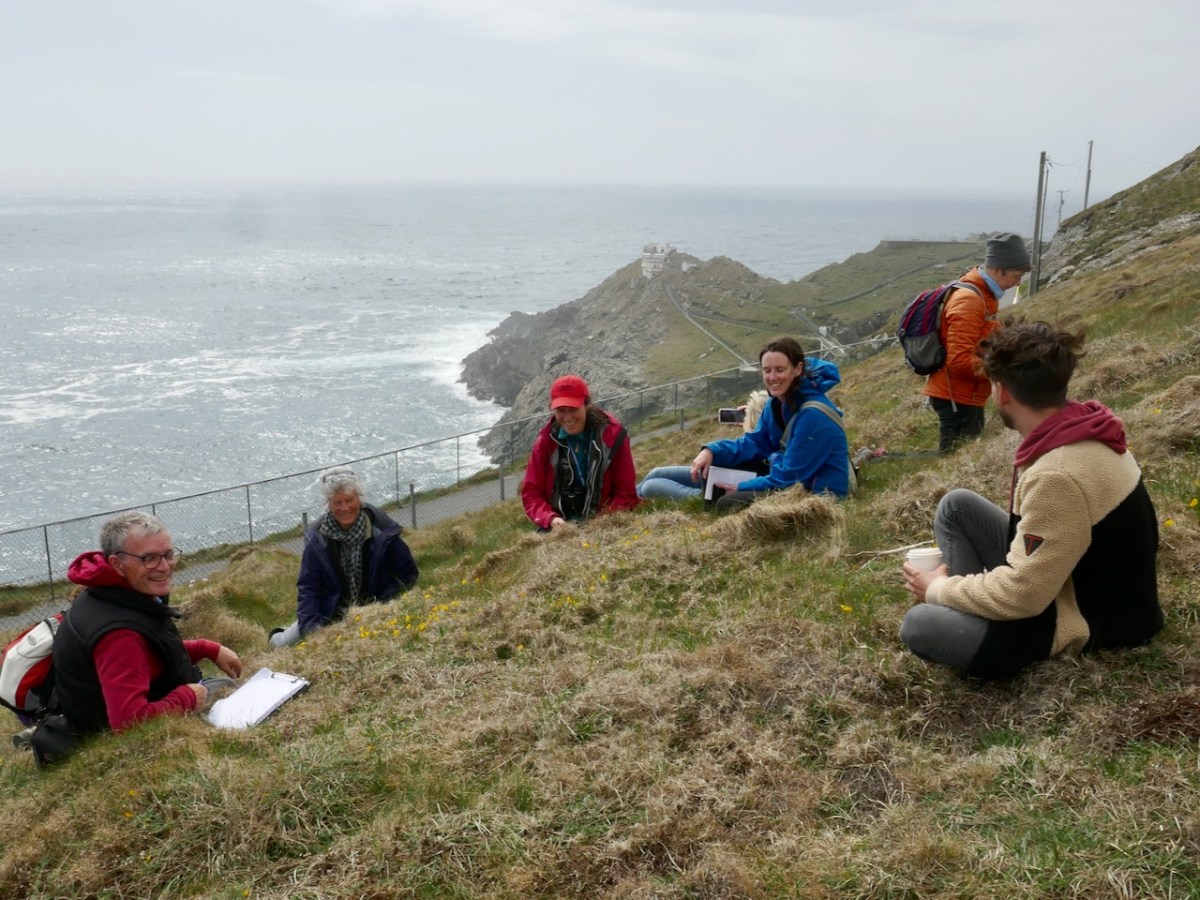
A publication of the Botanical Society of Britain and Ireland, and written in an accessible style, this vital report, a summary of a much longer book, charts what has been recorded of the changes in plant diversity in the last 20 years, based on the hard work of hundreds of recorders in the field. I’ve had the privilege to participate in a Rare Plant Monitoring Workshop (below, on Mizen Head) and every year I monitor three rare plants for the National Biodiversity Data Centre.
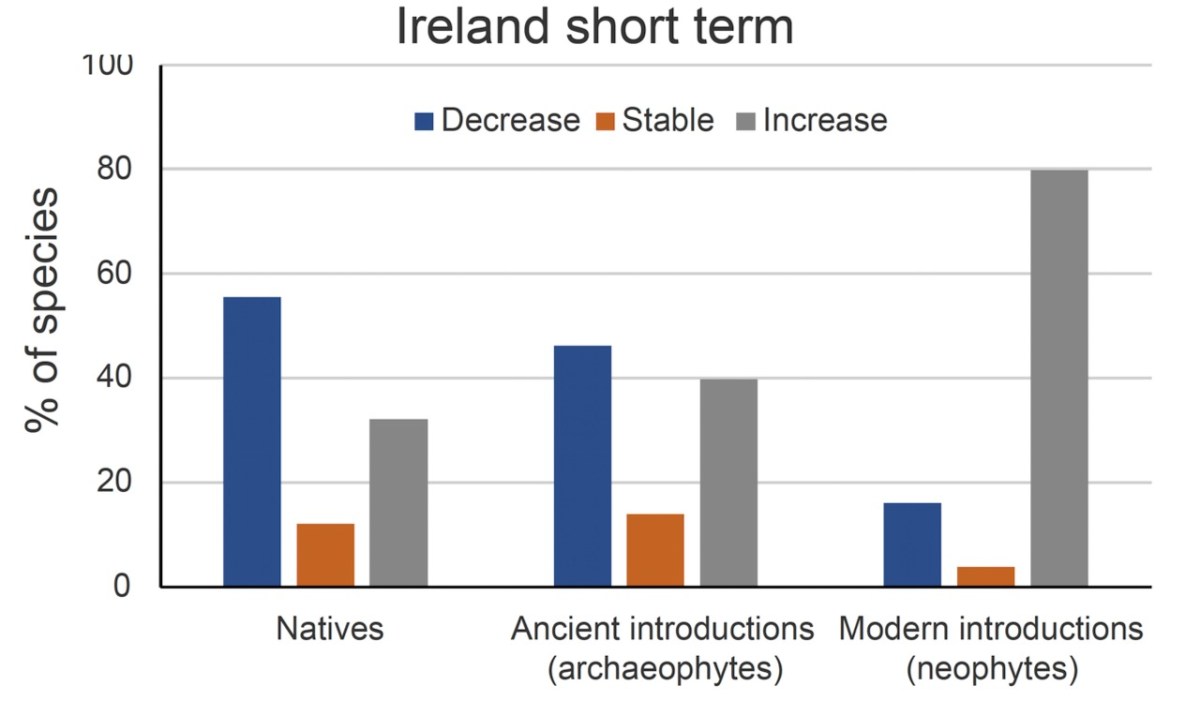
The results are, as you might expect, not happy. Here is a bar chart, for example, showing how Native Plants, Archaeophytes and Neophytes are trending.
The chart shows that more than half of all natives have decreased, whereas the overwhelming majority of neophytes have increased. These figures are based on short term trends, i.e. since 1987.
Why does this matter?
The decline in awareness of plants has occurred when plants need our attention the most. Globally we know that 40% of plant species are threatened with extinction. Many insects and other forms of life depend on specific plants, so the extinction of plants leads in turn to the extinction of many other things. In the Ireland Red List, 18% of plant species are in one of the threat categories and a further 9% are on a waiting list because of insufficient data. Time is not on our side.
The report looks at examples of plants which have increased or decreased and our own experience in West Cork will readily confirm its findings. Sitka Spruce, of course is one of those that have increased enormously, but here are four other examples from my own files.
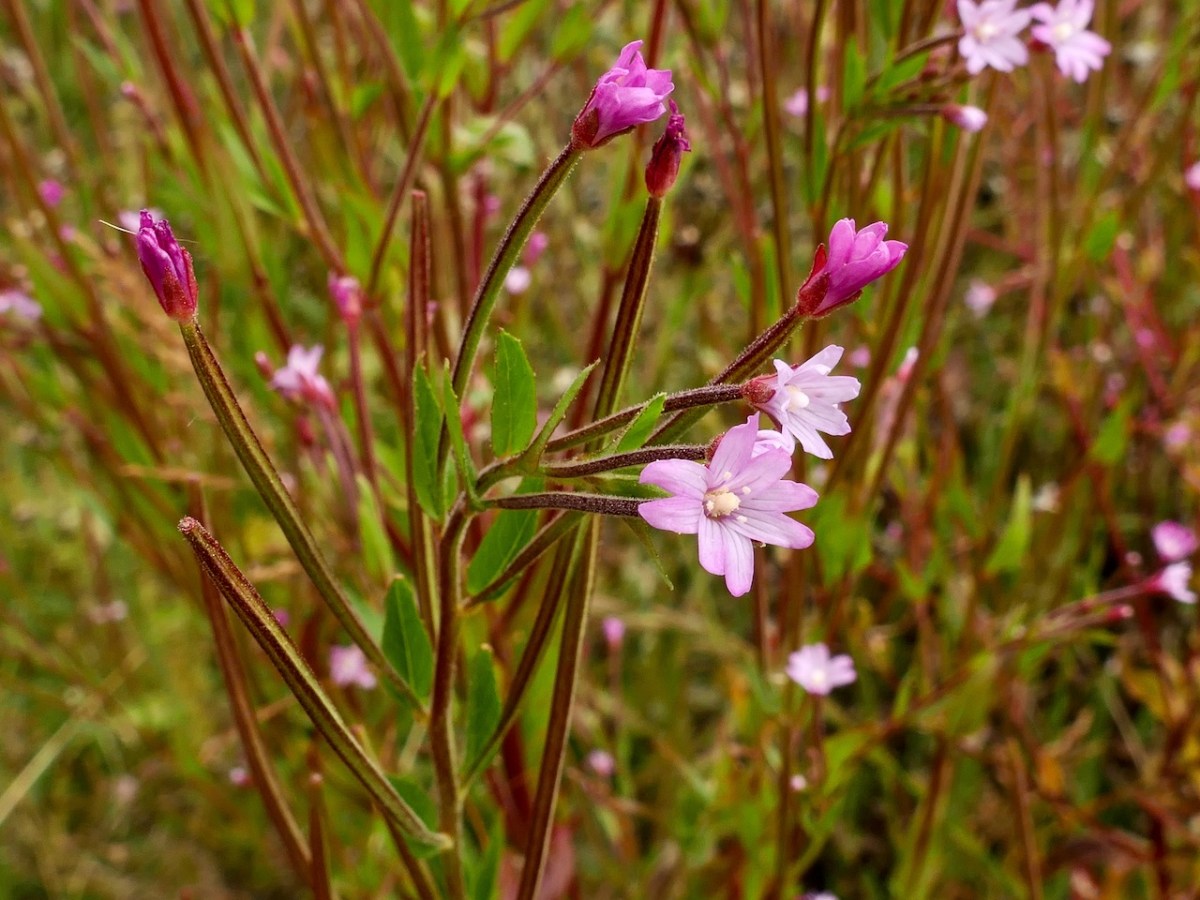
American Willowherb, first recorded in 1958 and now everywhere, including my own garden.
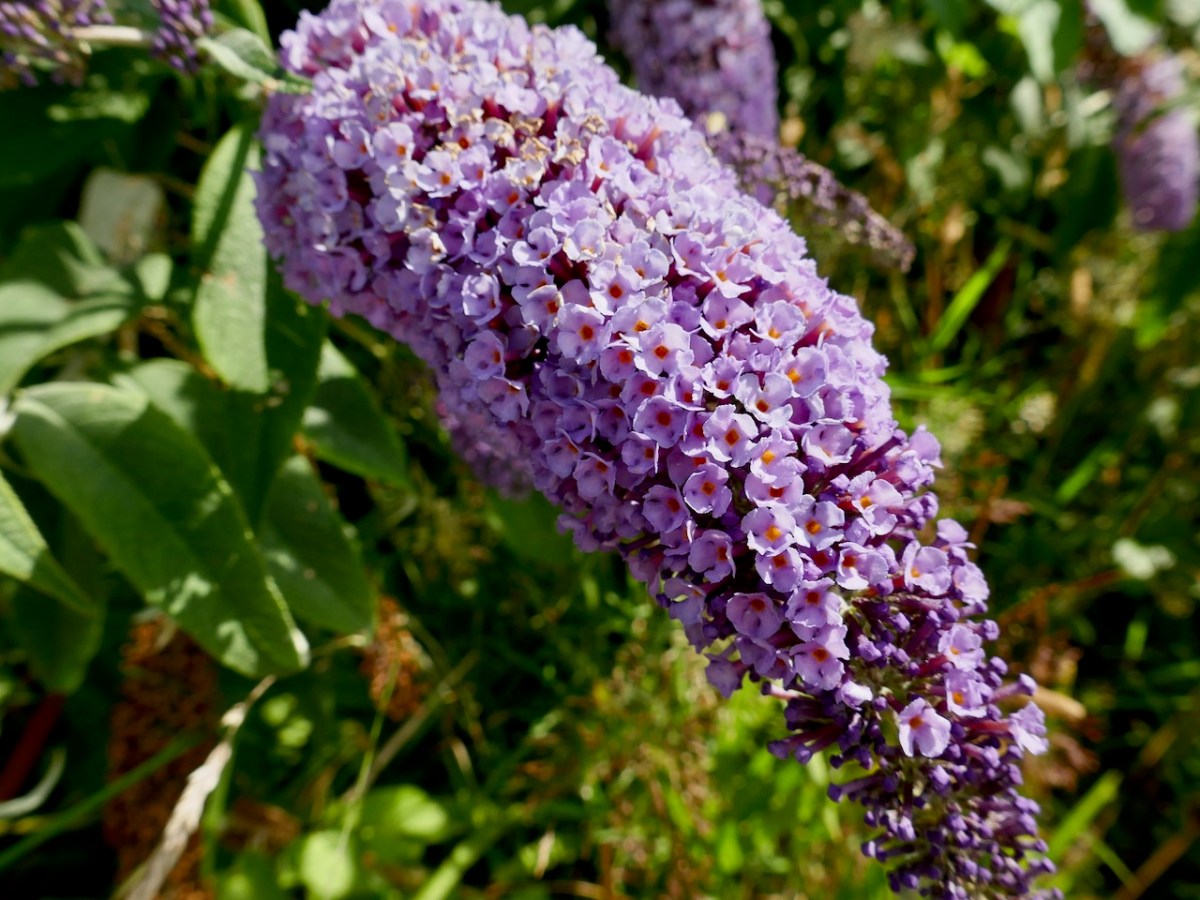
Butterfly Bush has spread rapidly since the 1960s. Butterfly Bush may seem benign but like many other introduced species there is a dark side. First of all, as Tony O’Mahony points out in his Wildflowers of Cork City and County, it’s quite invasive and can take over and crowd out native species. The roots can do significant structural damage to the very walls it depends on for survival. More serious is the charge that, while it provides nectar for butterflies it is not a butterfly host plant – that is, one that butterflies can use to deposit their larva, which will then feed on the leaves. According to a spokesperson concerned about the destruction of chalk grasslands at Folkestone Warren in Kent: If left uncontrolled, then buddleia and other shrubs would have engulfed the chalk grassland. Clouds of butterflies used to be seen there, but now only common species can be spotted and even these are in decline, with the rarest ones disappearing altogether. Buddleia was eliminating butterfly habitat by killing off everything else, and while the shrub provided food for adults and larger insects, other plants were needed for butterflies in their larval stages.
Himalayan Balsam, a beautiful but highly invasive species that can colonise waterways, choking out our native flowers.
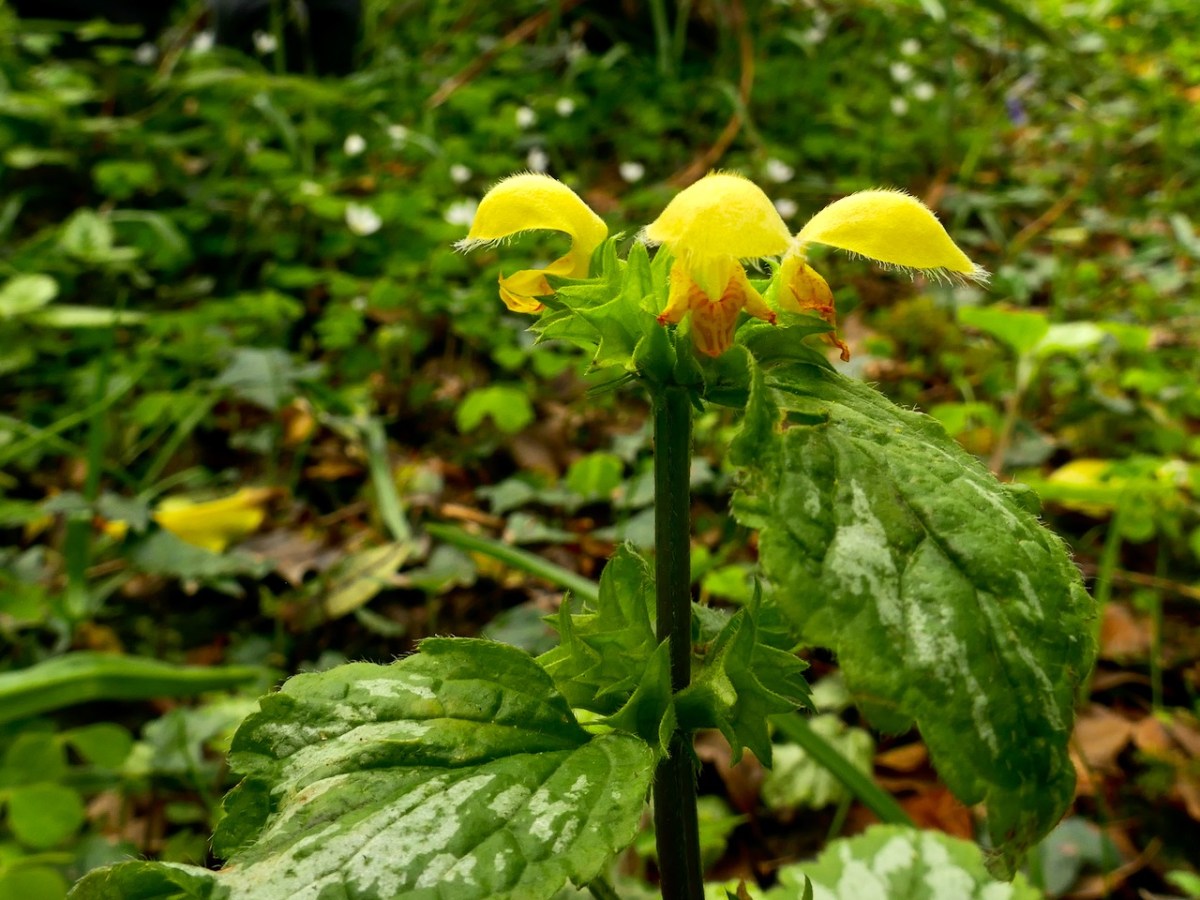
Variegated Yellow Archangel – only here since the 70s, it can carpet woods in the spring, crowding out our native woodland species.
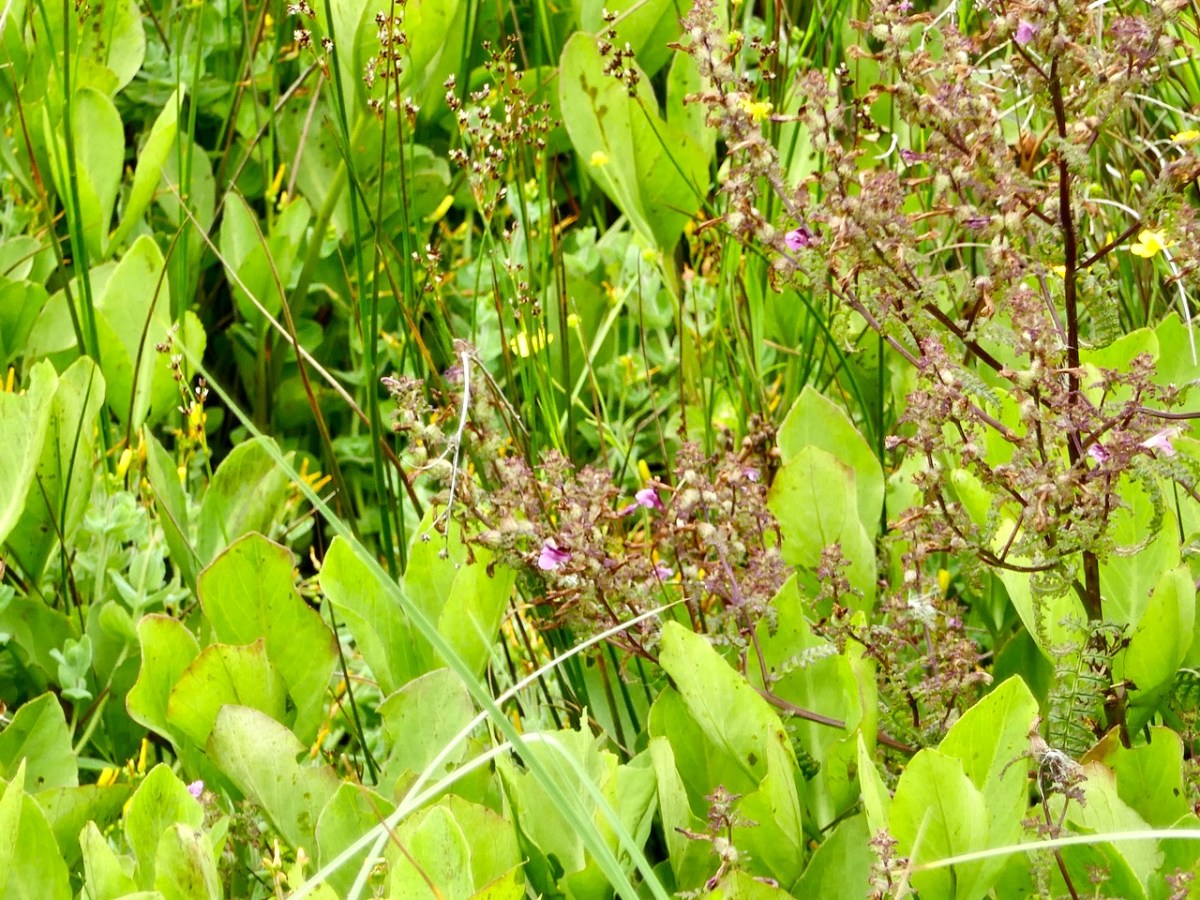
Examples are also given of plants that have decreased, and indeed most of these I have never seen, such as Agrimony, Corn Mint, Field Gentian, Heath Cudweed and Mugwort. Two that I have been fortunate to observe and photograph before they get even rarer are Corn Marigold and Marsh Lousewort.
Corn Marigold – just as it is supposed to grow, on the edges of arable fields. It is hanging on in West Cork here and there and it’s always a treat to see it.
A section of the report looks at Habitat Loss and another at Climate Change and its effects on our wild flora. Reading about the loss of species-rich native Grasslands is particularly sobering.
It may seem ironic that grassland should be threatened in Ireland, but it is the loss of certain types of grassland – those on less fertile soils and rich in wild species – that is the issue. These ‘semi-natural’ grasslands supported a large number of our characteristic native species, including many orchids. They were maintained by extensive grazing, or by the cutting of hay in mid to late summer. Converting these habitats rich in species into more intensively managed grassland, or in some cases abandonment to scrub, has led to the loss of many species that could not compete in the altered environment. The underlying reason for the decline of many grassland plants lies in their response to nutrient concentrations, such as soil nitrogen levels and nitrogen deposition from the atmosphere. For the most part, native grassland species require low levels of fertility; they cannot compete successfully at higher levels. It may at first seem counterintuitive that high fertility levels could be inimical to plant diversity, but there is now a very large body of evidence pointing in this direction. We can conclude that grassland plants generally are in trouble, with the exception of those few species that thrive in highly fertile conditions.
Even in West Cork, our fields are becoming larger and hedgerows are disappearing. Wetlands, woodlands and ‘Arable land and other disturbed habitats’ are also dealt with. The report notes that while the volume of ‘weeds’ in agricultural lands has reduced, what is mostly missing are the native plants, while the variety has increased with the advent of new species. The Common Poppy, for example, might be making a comeback since it is often included in wildflower mixes. I saw the ones below in a field in Wicklow.
The report concludes with some highly charged questions.
A botanical visitor to the present day from the 1950s would see vast changes in Ireland. Changes in the landscape would stand out, with large swathes of dark conifer forest in the uplands having replaced areas of blanket bog and hill pastures. There would be larger, more uniformly deep-green fields in the lowlands, less length of hedge, more fence, and many fewer areas of marsh and bogland. Roads would be larger and straighter with verges that were mown by machine once or twice a year rather than grazed or cut spasmodically by hand. There would be fewer small potato patches, and arable crops would be less widespread and more concentrated in favourable areas.
Looking more closely, they would see that the mature conifer plantations consisted mainly of one species, Sitka Spruce, in huge numbers of even-aged stands, and had very few plants growing within them. The green fields of the lowlands would have a few plants of familiar common species like Dandelions, Docks and Chickweed along with the ubiquitous Ryegrass, but the diverse flower-rich meadows would have disappeared. Road verges would be dominated by rank growth of grasses. Pockets of wetland would be far fewer except in the West. All these changes and many more have been documented, implicitly or explicitly, by the findings of Plant Atlas 2020 and comparisons with those of its predecessors.
Our visitor might raise a flurry of questions. Have scientists been looking the other way? Why were the best habitats not protected? Who should have prevented the pollution of water bodies by nutrients? How did the idea of planting vast uniform stands of one alien conifer on deep peat take root Whose job should it have been to develop a long-term vision for Irish land-use? Were the consequences of moving towards energy-intensive farming systems foreseeable?
These are questions closer to the realm of politics than of science. Plant Atlas 2020 itself cannot answer them, but the information within it provides an enormous wealth of data about the distributions of Irish plants and how they have changed.
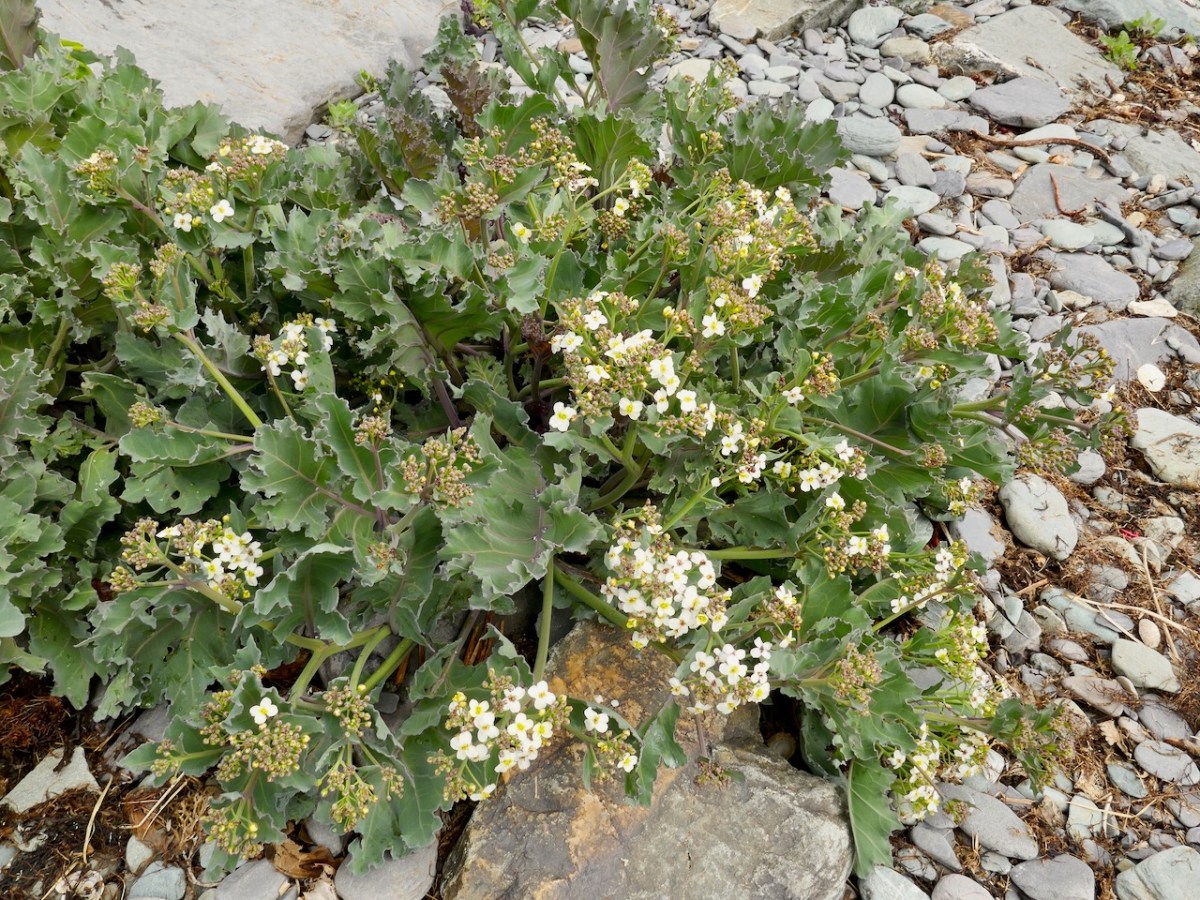
Sea Kale, above, is a rare plant that seems to be more abundant now that it was 20 years ago. As the report points out, there are a few examples like this that may relate to how records are collected rather than the absolute abundance/rarity of the plant, and the report tries to provide a model that corrects for this.
Finally, there are a set of recommendations based on protecting and restoring habitats, and the last is this one:
Repair the cultural standing of plants. As generations of people become more distant from their origins on the land, they tend to overlook the vital roles of plants. Their place in formal education has dwindled, and most people can name very few of them. By omission, plants are misunderstood, downplayed, ignored, and dismissed, even though we still need them as much as ever. Plants require more of our attention and it is in our interest to give it to them.
So what can we- you and I – do about this? Here are my own actions – they are simple and doable by anyone.
First, I have educated myself about wildflowers. Buy a copy of Zoe Devlin’s Wildflowers of Ireland and take it with you as you walk (that’s Zoe, above, with a group of us hanging on her every word). Or take your phone and use her website or one of the new plant ID APPs. People swear by their own, but I have to say I have found the Picture This app to be reliable and easy to use.
Second, I have tried to spread the good word. I do this using this blog – see the Flora and Fauna of West Cork Pagefor many many posts on our wildflowers – including lots of slideshows for pure enjoyment. The one above, Wandering the Boreens, is one of my favourites and shows what can be seen along a typical West Cork road in summer. I have also developed a Wildflowers Brochure for use along the the Fastnet Trails, and occasionally lead wildflower walks (below) and give talks. Perhaps most importantly, I am now using my Instagram page for short (I aim for 30 seconds or less) videos on individual wildflowers. I’ll be starting that up again soon for 2023.
Third, I have set aside part of my own One Acre as a wildflower meadow. How I have done this is all laid out in my Rewilding My One Acre Posts and it has taken very little work on my part. If you have a garden or any bit of land around your residence, do consider whether you can do this too. The Pollinators will be very grateful.
Finally, I try to mow as little as possible and I have changed my mindset about ‘weeds’ and such concepts as ‘curb appeal’ and ‘tidiness.’ True gardeners would be horrified, but the insects don’t seem to mind. A tiny rare plant, Sharp-leaved Fluellen (below), showed up on my driveway, who knows how – but if the ‘weeds’ had been eliminated, I would never have found it.
PLEASE read the report, and see what you can do to protect our precious biodiversity.
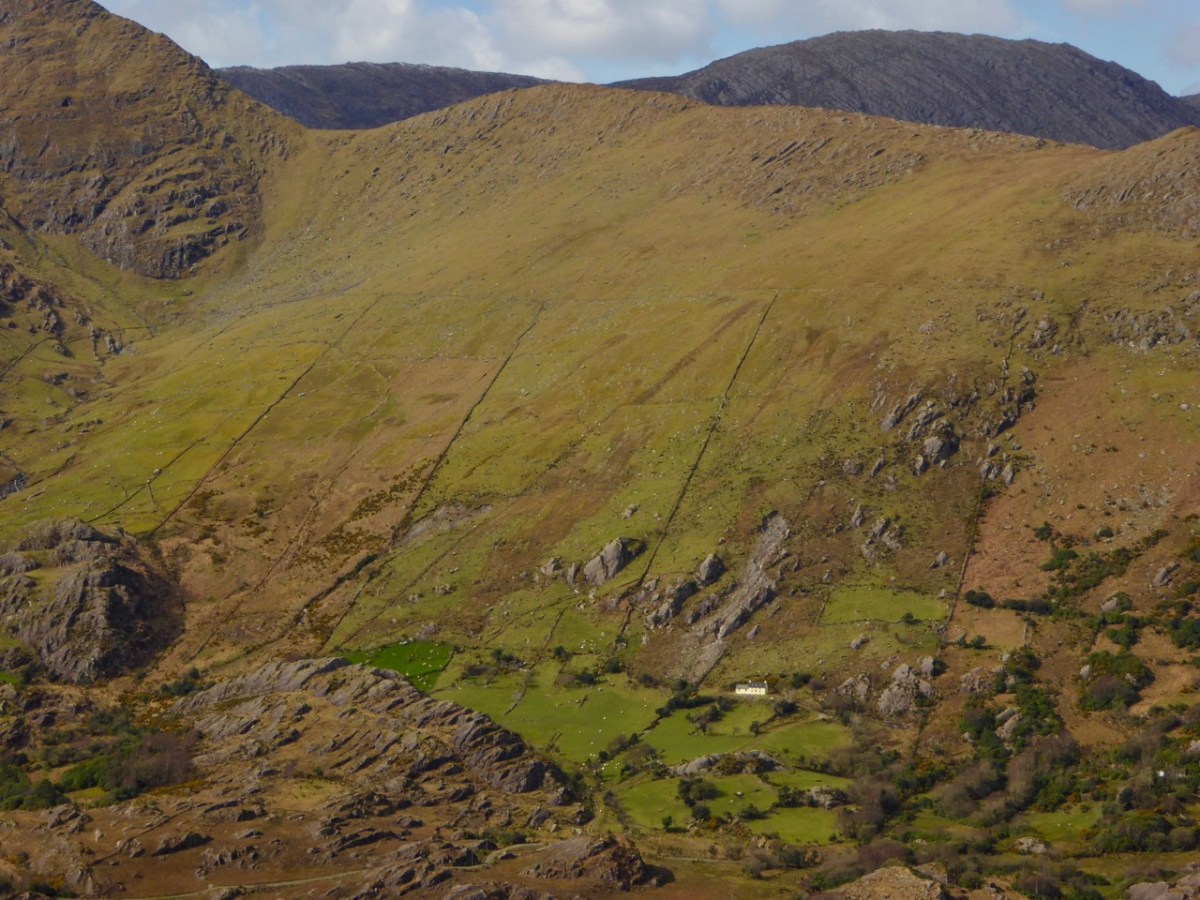
You know we love the beauty of West Cork, and we can’t resist the odd foray into all our neighbouring parishes. They are perhaps a bit wilder and higher, with markedly remote open spaces. So here’s a little wander on to the Beara Peninsula and beyond: I have raided our archive of photographs to enthuse us – and, hopefully you – to travel those roads in the coming spring. Firstly, have a look at this:
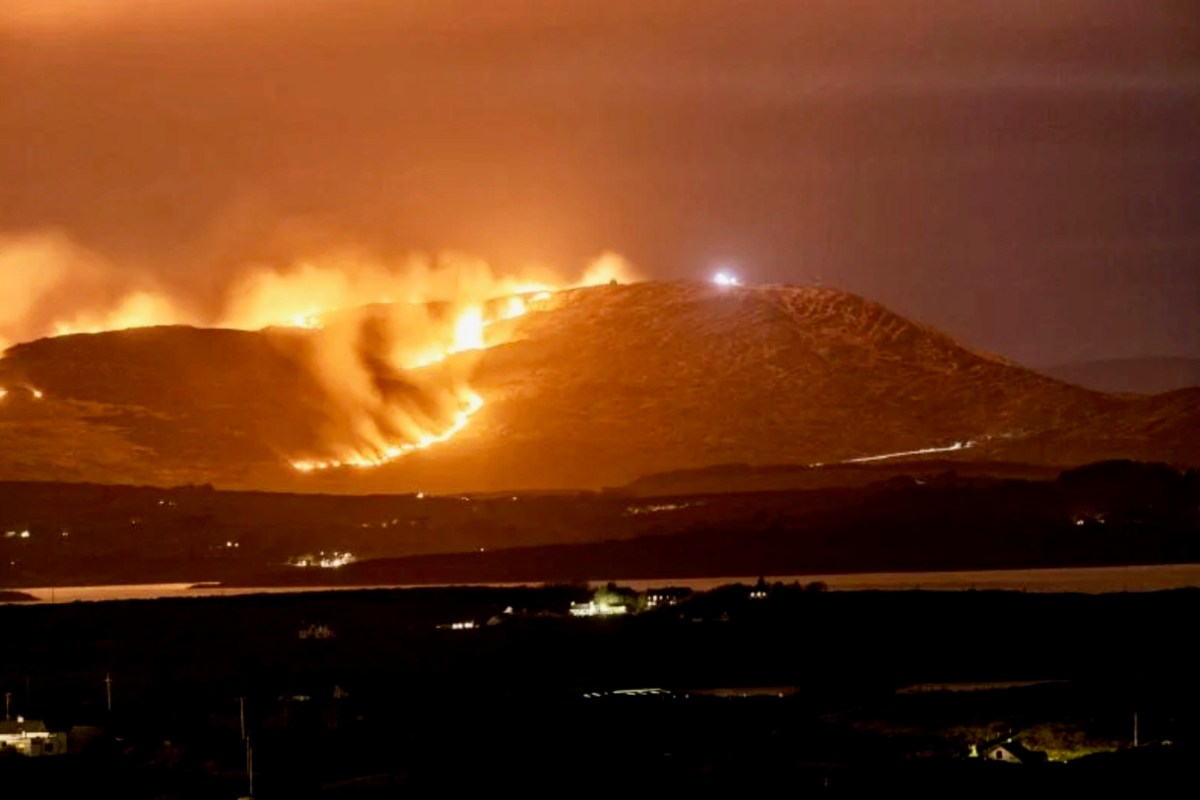
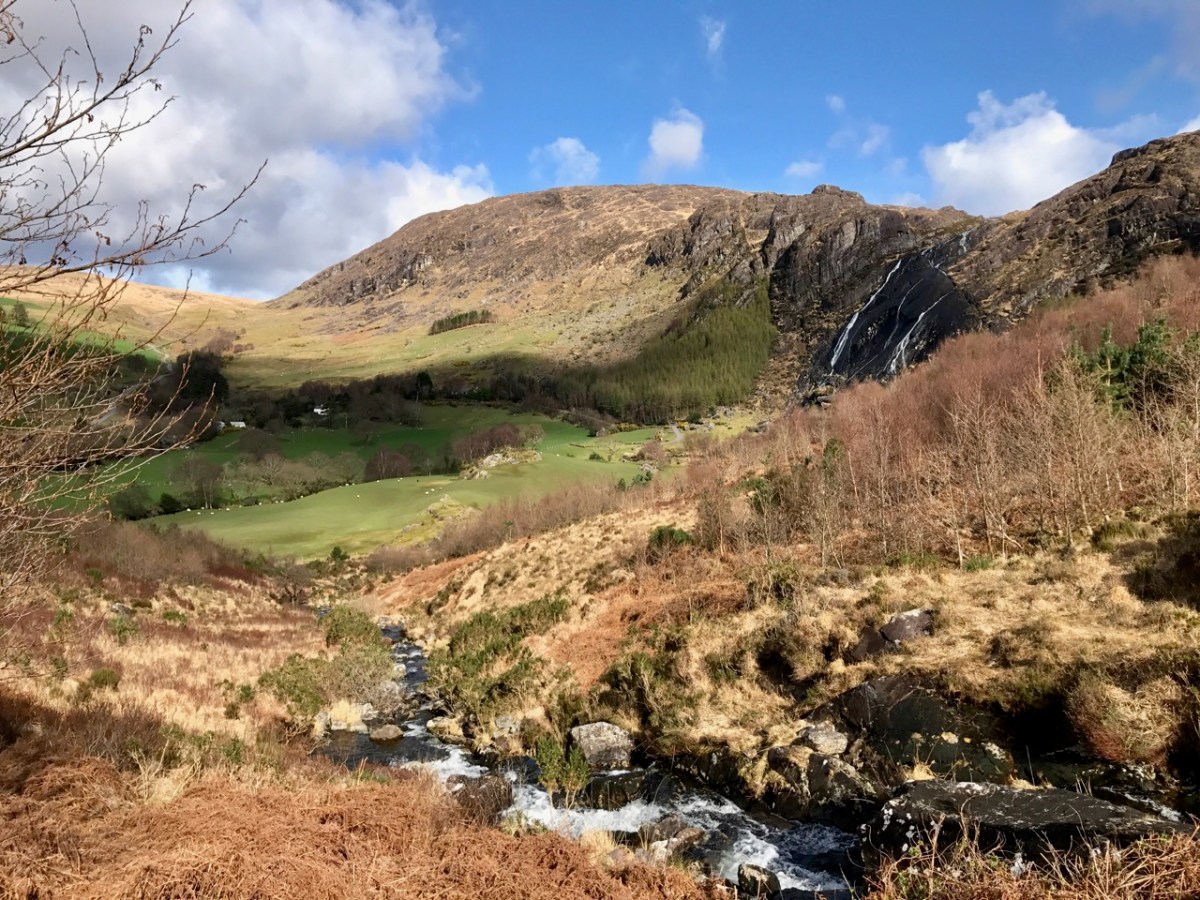
There’s a house down there, nestled under some spectacularly steep fields! This is to remind you that you have to up the scale a bit if you are stepping across the county boundaries. This Kerry landscape is such a contrast to our own seascapes and islands. We have our hills, of course: Mount Gabriel was in the news this week because of the gorse fires which lit up its summit. Such fires are allowed up until the first of March – by longstanding tradition – to clear the land and improve the grazing. It all seems a bit incongruous, though, when governments are planning to outlaw wood-burning stoves because they lead to poor air quality, and we are being advised by the HSE about the adverse health effects of air polluted by smoke and ash. Fire on Mount Gabriel 26 February 2023 – photo by Magnus Burbanks – courtesy Southern Star:
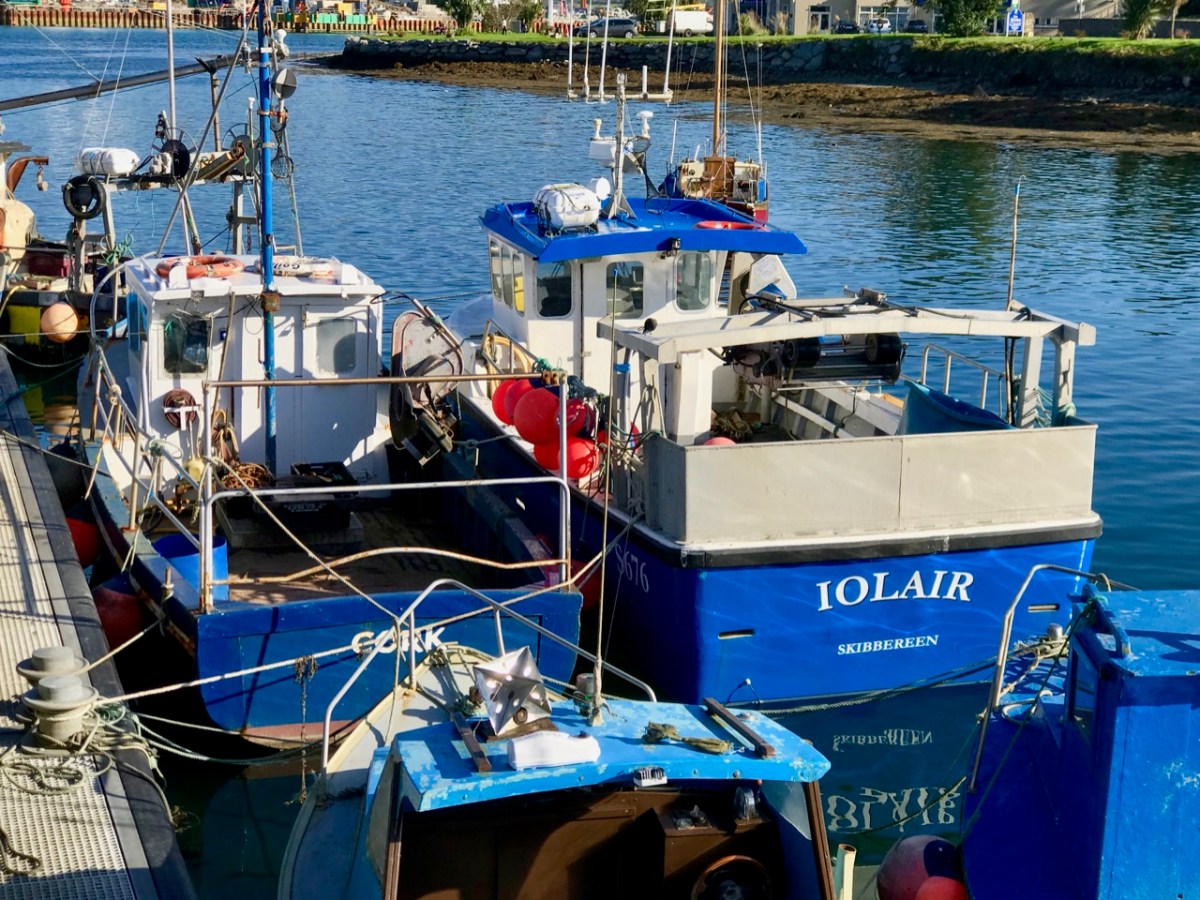
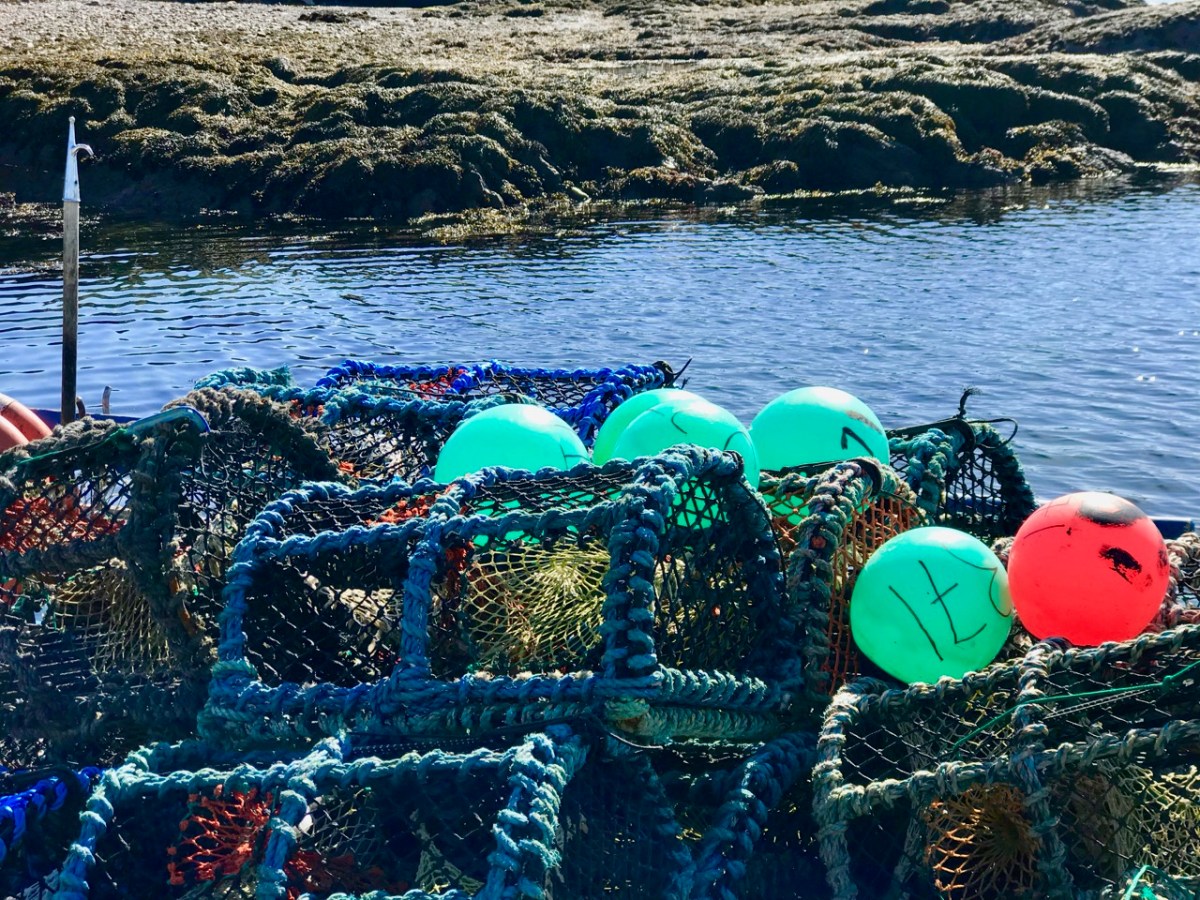
Let’s leave that argument – and the drama – for others to debate, and return to the colour and spectacle of our neighbours. Below are fishing boats tied up in Castletown-Berehaven. You’ll note that ‘Iolair’ is registered in Skibbereen. If this seems strange, remember that our West Cork town on the Ilen River is still the Port Of Registration for all shipping on the south-west coast of Ireland between the jurisdictions of Cork and Limerick. My recent post on the Ilen described Skibbereen as “. . . a settlement served by water . . .” with perhaps up to nine historic quays and a Custom House located within the town in its heyday of commercial vessels working on the river. Present day Shipping registrations are administered by Customs & Excise in Bantry, even though the prefix ‘S’ (for Skibbereen) is still used – a somewhat quirky anomaly: the Custom House in Skibbereen was closed in 1890!
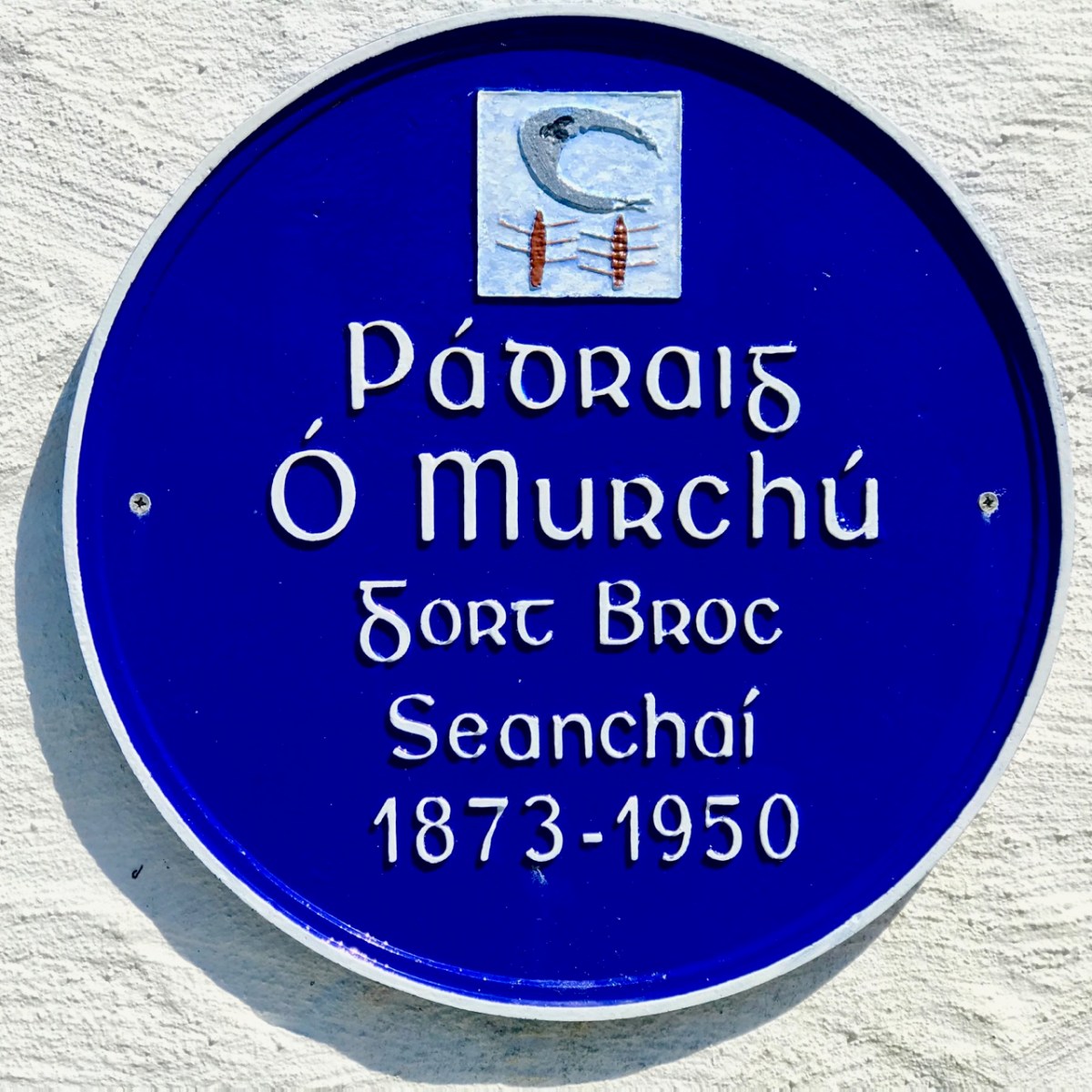
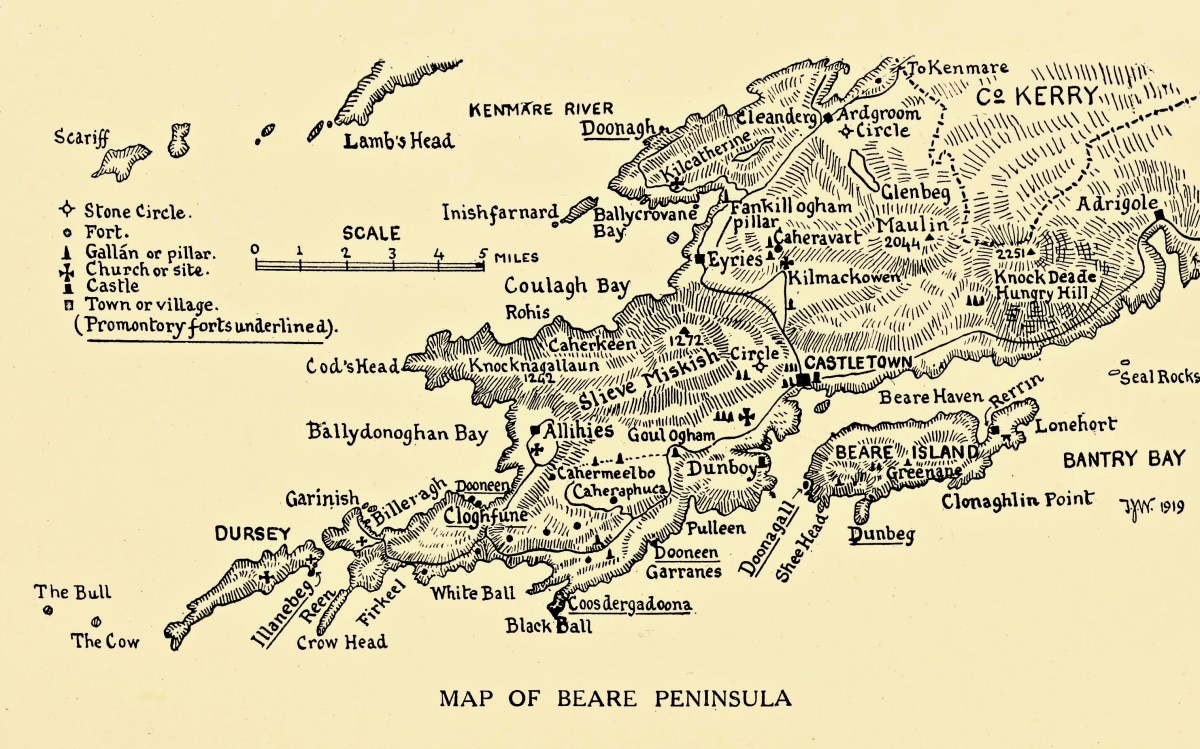
The people of the Beara Peninsula quite likely think of themselves foremost as an entity, rather than a mixture of Corkonians and Kerry people. In Eyries a Seanchaí – or storyteller – is celebrated: Pádraig Ó Murchú. His story is a somewhat sad one, certainly not untypical of many remote areas in Ireland. He was born in Gort Broc (Gortbrack, Co Kerry – north of Kenmare Bay) on 15 February 1873. His parents were Seán Ó Murchú whose wife Máire Harrington. (‘Caobach’) and he had four sisters and two brothers. Five of them, the boys and three of the girls, went to Butte, Montana. Seán died in Gort Broc at the age of 47 when Pádraig himself was a young boy. None of his forebears ever returned home but he would receive a letter every now and then from one of his aunts. Folklorist Martin Verling states that 707 men and 431 women emigrated to Butte from the parish of Aorí between 1870 and 1915. An account of how his great-grandfather, Seán Ó Murchú, settled in Kerry was taken down from Pádraig’s mouth (or Patsy as he was called): Seán was abducted by one of the ‘Cithearnaigh’ (a name given to certain Irish landlords in Beara) in Kerry and sold in France as a slave. When he managed to escape, he landed in Beara.
Commemorating Pádraig Ó Murchú in Eyries
Measles affected Pádraig’s eyesight so badly that he was given a blind pension; ‘flickering’ left him unable to read or write. He spoke English fluently, with Irish his native tongue. Until she died in 1923 his mother lived with him, and it fell to him to tend to her during the decline of old age. He earned his living by farming and fishing and was always in good health, apart from his eyesight. Writer and folklorist Máirtín Verling recorded memories of him from men who were young boys during Pádraig’s old age. Pádraig was part of a culture now vanished, and Verling states “. . . the day Pádraig Ó Murchú was lost as an old man – the habit of storytelling, and the habit of speaking Irish, died together in Béarra . . .”
Map of the Beara Peninsula from the Royal Society of Antiquities of Ireland, T J Westropp 1919. Principal archaeological sites are indicated.
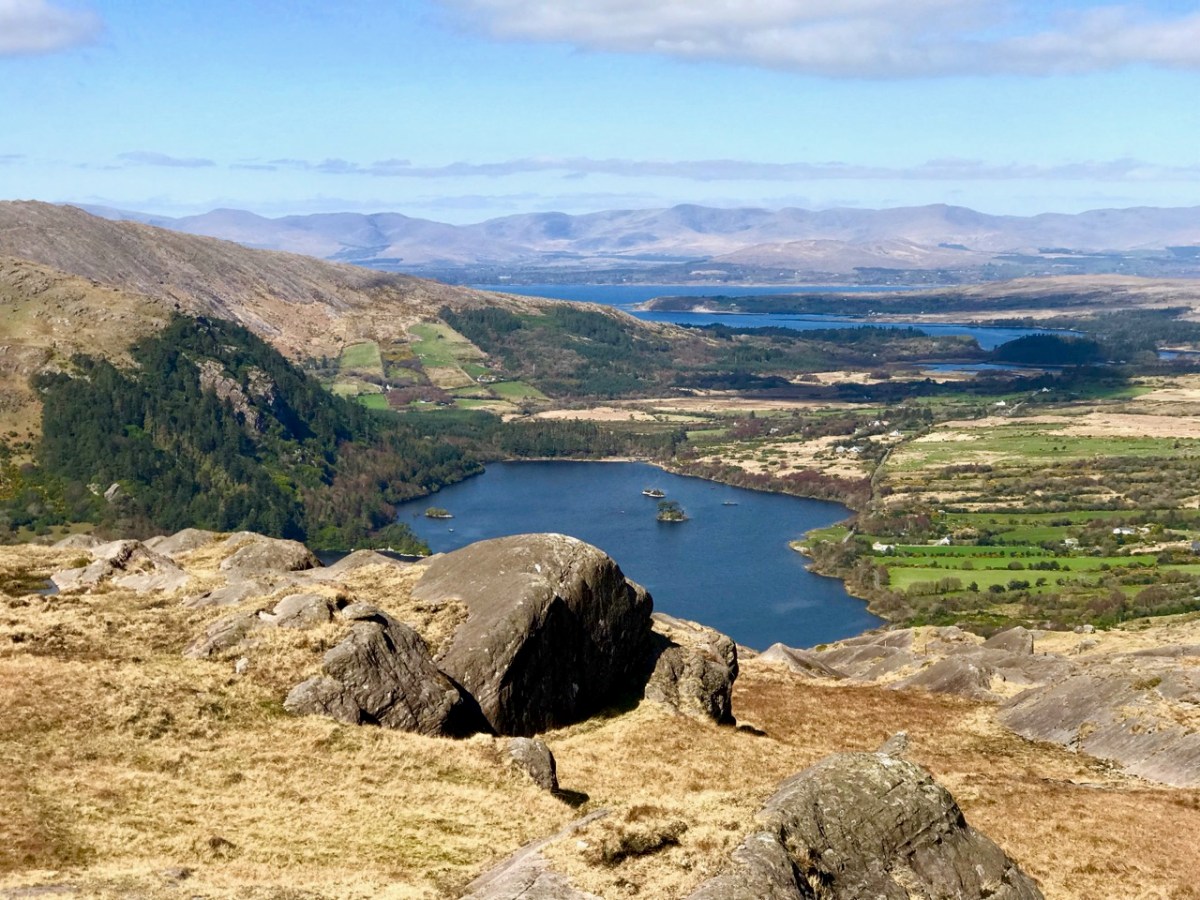
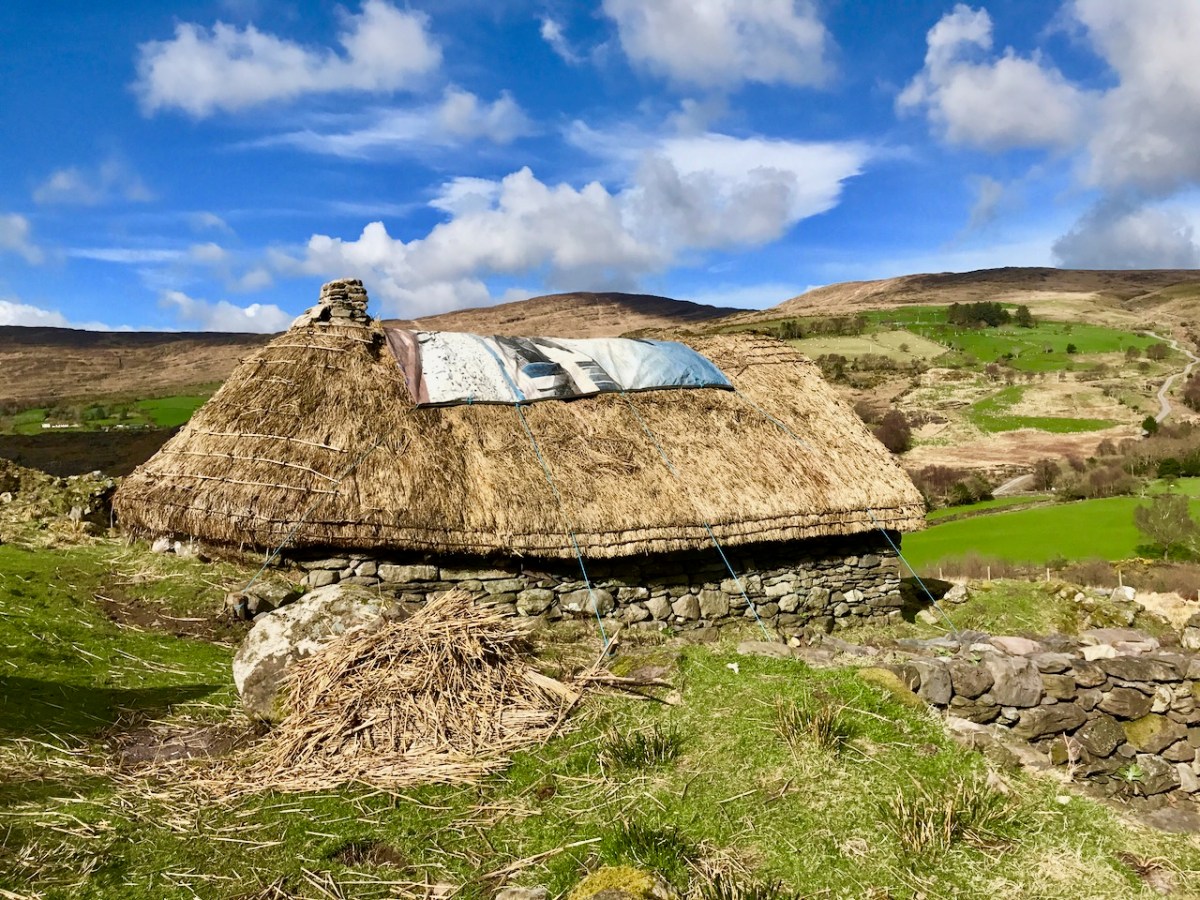
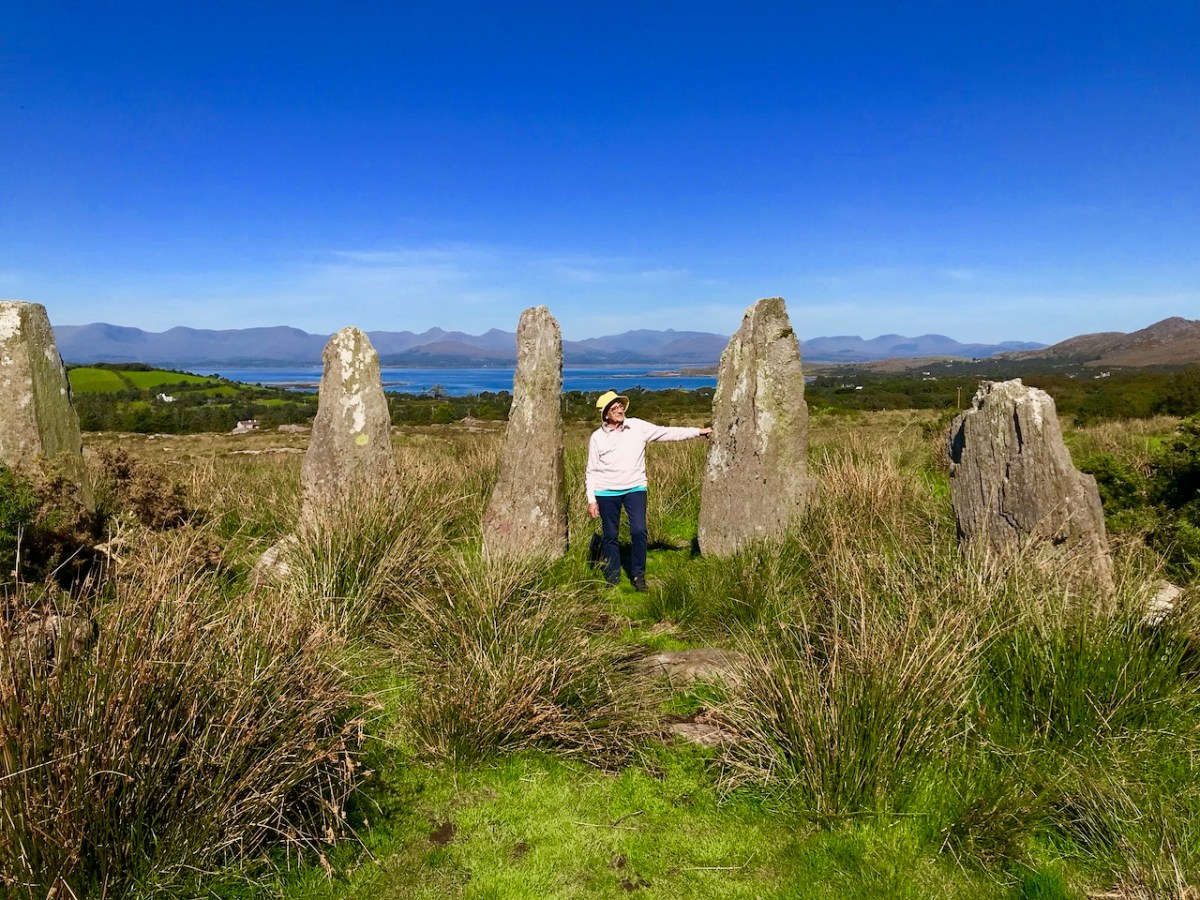
These Beara landscapes are typical of the remote grandeur of the territory. Human settlement has encroached upon it – the patchy forestry plantations above are unnatural and uninspiring – but there are sufficient wild prospects remaining to ensure that the all-embracing beauty can never be eroded. Plenty of living history remains in evidence.
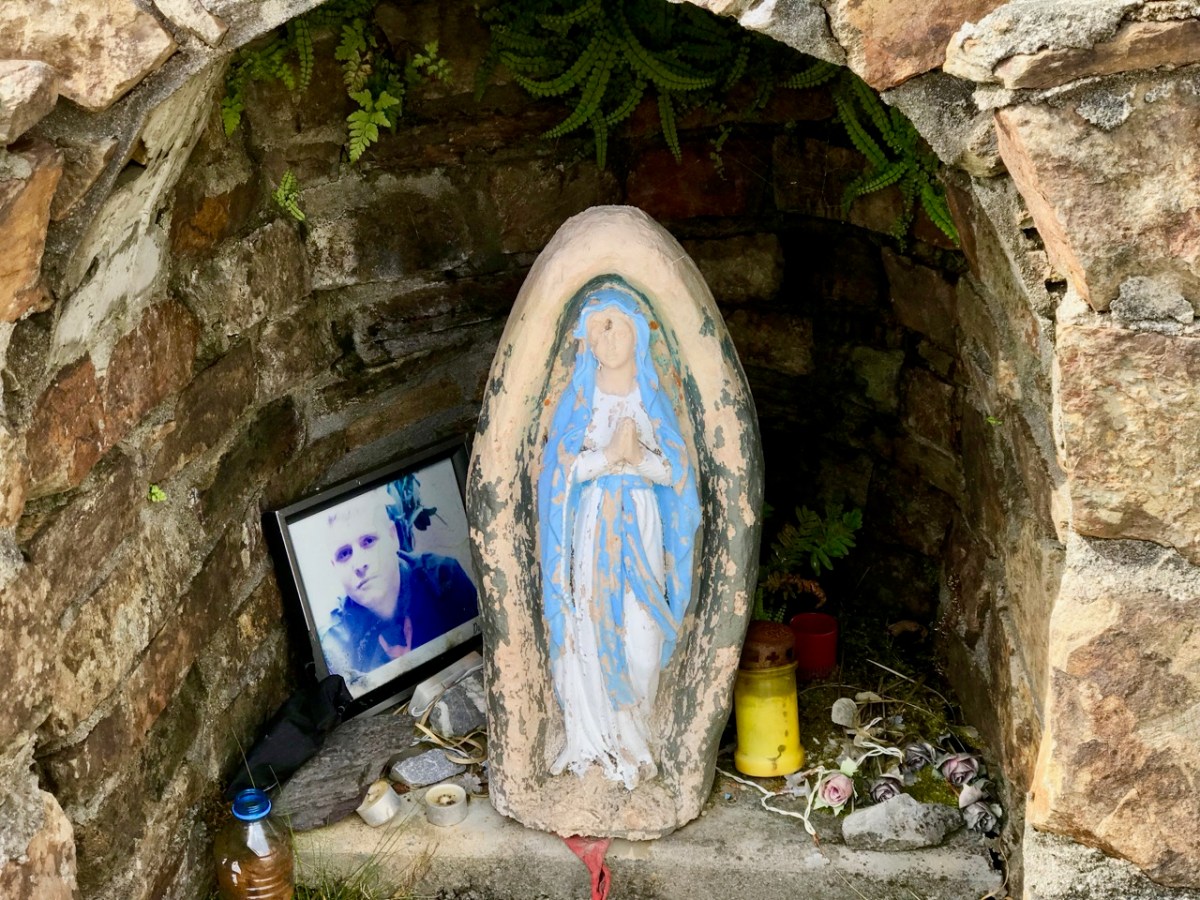
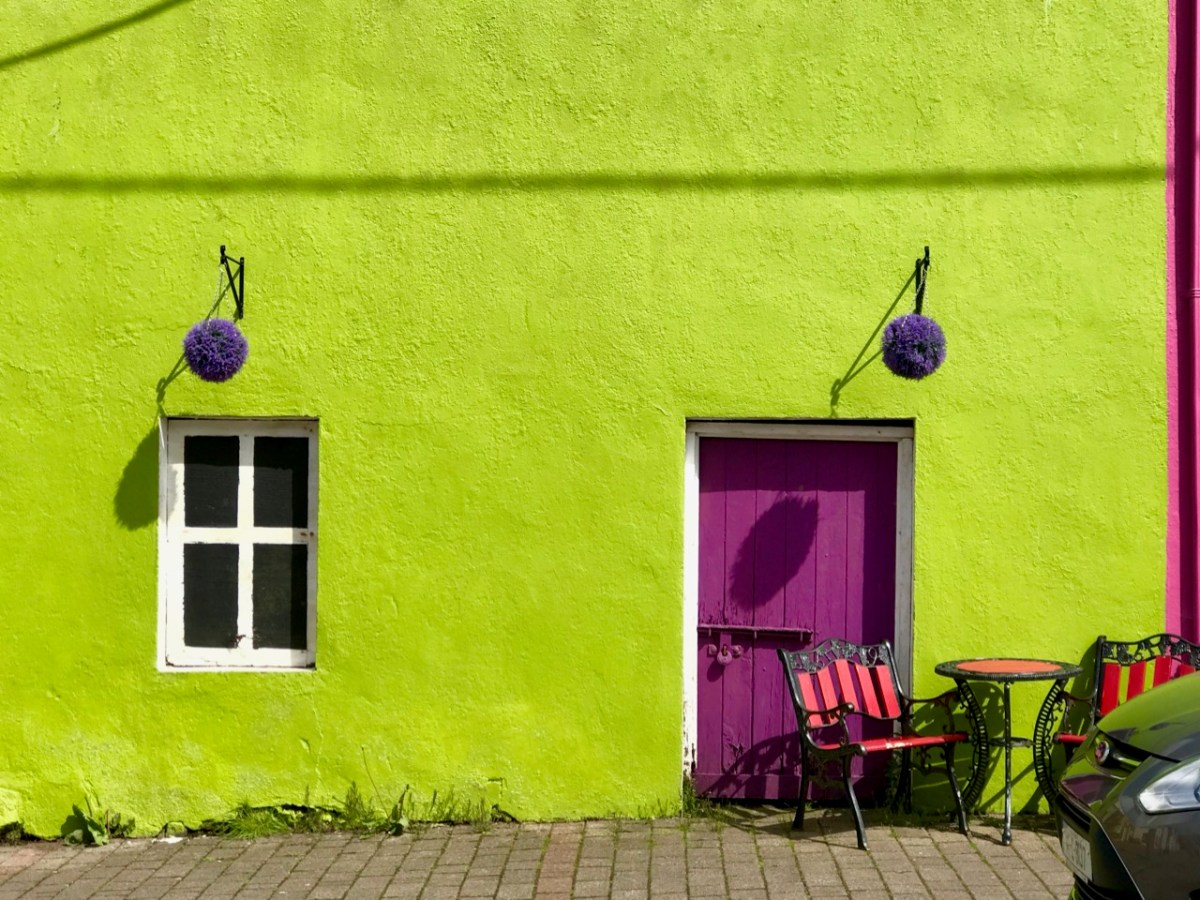
Archaeology, colour and community are all part of the local scenes on the Beara. The tourism industry is undoubtedly thriving, bringing fresh life with it.
We hope you will agree that the Beara – whether it’s Cork or Kerry – is deserving of a visit – and a stay: you have to delve deeply into the lifestyle and traditions. Enjoy!
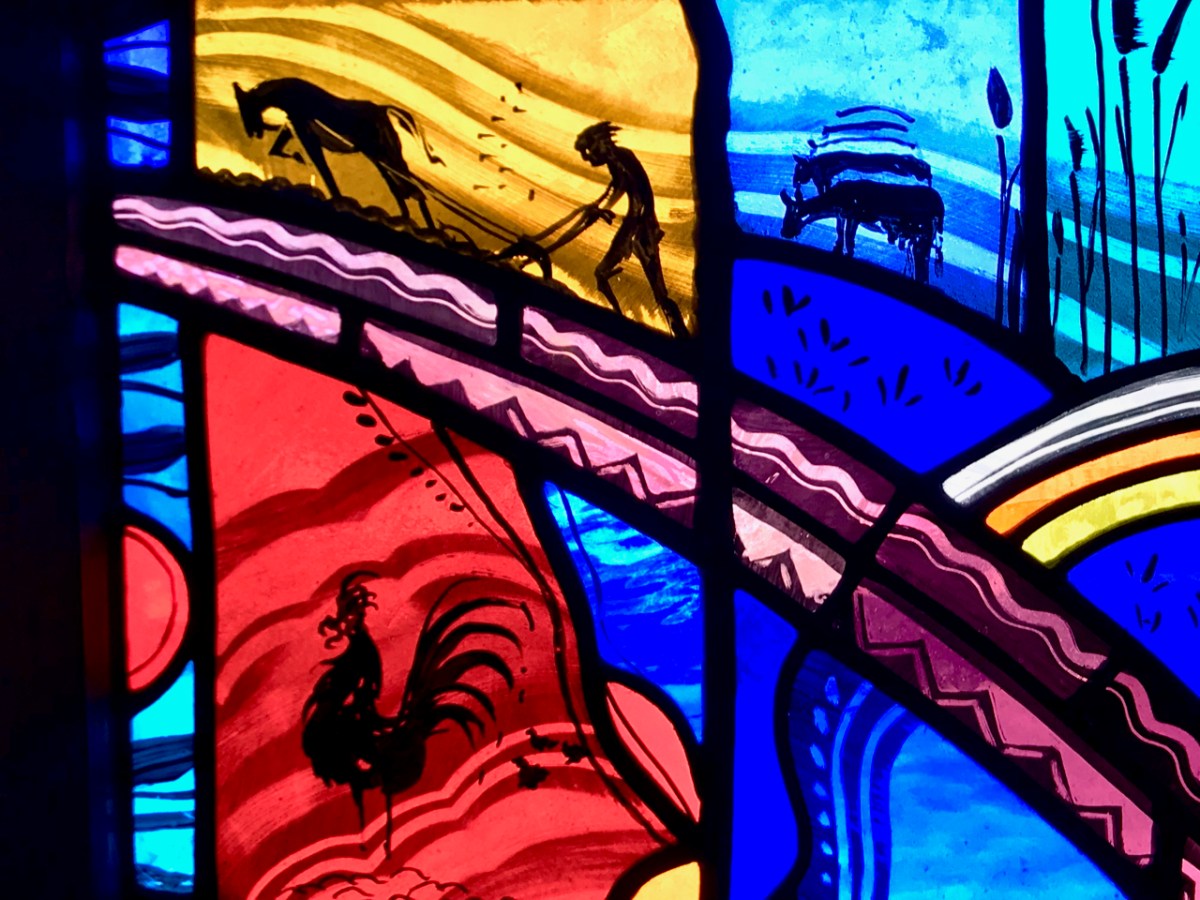
(Above – the work of stained glass artist George Walsh. A visit to the little church in Eyries to take in more of this is a must)
Welcome to the UCD Library Cultural Heritage Collections blog. Discover and explore the historical treasures housed within our Archives, Special Collections, National Folklore Collection and Digital Library
















 Roaringwater Journal