Code Red

A joint post by Robert and Finola

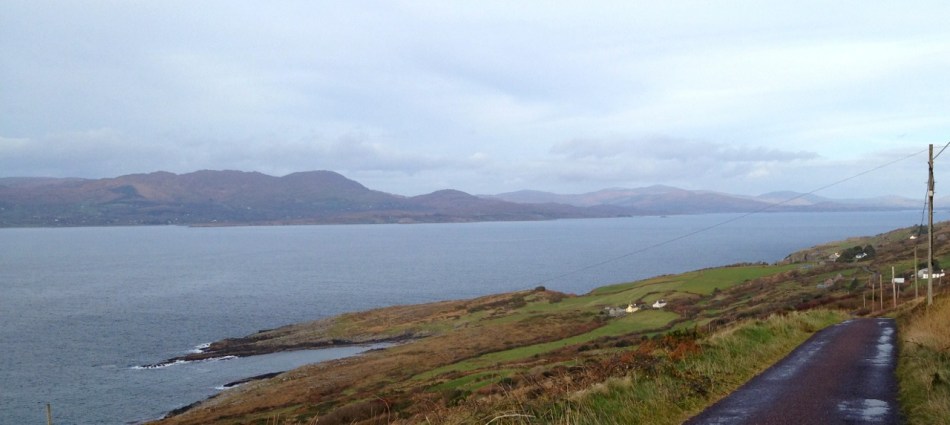
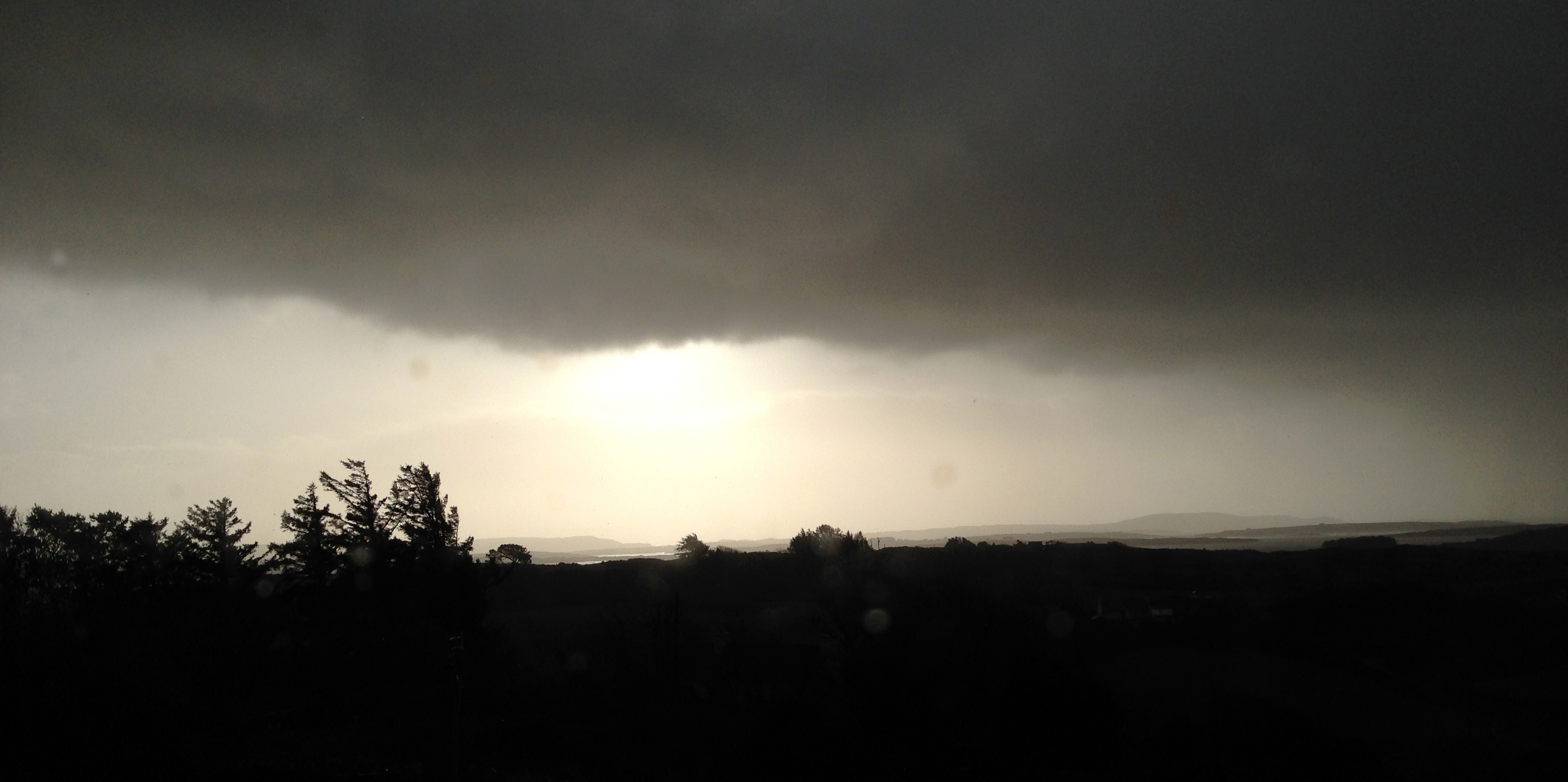
By Rossbrin Cove, after Storm Darwin

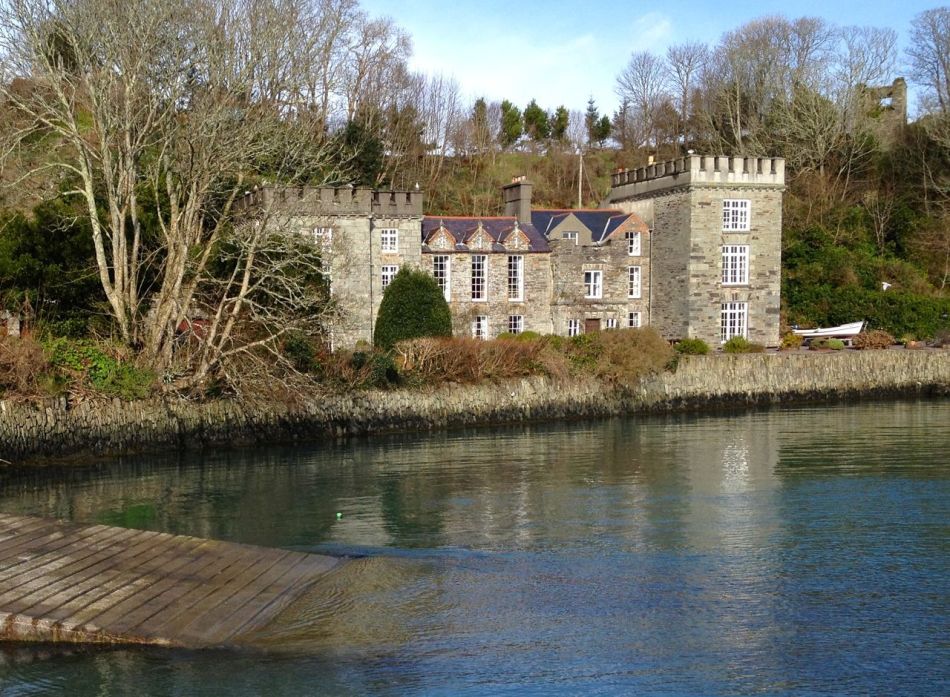
By Rossbrin Cove, after Storm Darwin

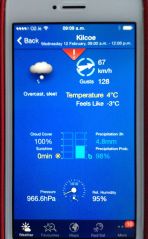
Weather apWe looked back recently and counted the number of posts both of us have done on the subject of the weather, and decided not to do any more on pain of boring our readership to death. But this week Met Eireann issued a rare Code Red warning and their direst predictions came true. The Southwest of Ireland was pounded by hurricane force winds, the like of which many people had never experienced before. Storm Darwin wreaked havoc in our corner of the world.

We were lucky! Our power was off for several hours, but our house is set up so we can still stay warm, run water, and cook. We lost a few more trees, including two that fell over the road, blocking access. Our terrific landscaper, Thomas, chainsawed them off so that at least cars could get by. Trees that came down in our neighbour’s property severed our telephone cable and we have been told that it could be ten days before this is fixed – so we have no landline and no internet. We use our cell phones to connect whenever we can in cafes in town or in friends’ houses, but reception has been spotty all week due to storm damage.

We're almost out of trees now in the haggard

We’re almost out of trees now in the haggard

Many of our neighbours have not been so fortunate and are still without power. For some this can also mean no water and no way to cook. The County Council has issued a warning to boil drinking water amid fears that water supplies have been contaminated. All over the countryside crews are out clearing away trees and restoring cables. Two young men were swept to their deaths by huge waves on the north side of the Sheep’s Head. Another man, part of a telephone repair crew, has died while working on the high wires. Roads and towns flooded although this time the storm surges did not coincide with high spring tides so the water damage was not as bad as it had been earlier in the year.

Boats blown down

Boats blown down

And what do we do in Ireland when the storm hits? We hunker down next to the fire in a warm dry pub, of course, and sing our hearts out! This week, an old friend of Robert’s arrived from Cornwall with his Lifeboat Choir – singers associated with lifeboat stations around Cornwall. The group has developed a long-term relationship with a similar group here in West Cork and this was their annual visit. So we found ourselves holed up in a hospitable establishment in the village of Ballinadee, with musicians and singers from both sides of the Irish Channel, singing and playing and hooting and cheering the night away, and then driving home beneath a clear brilliant moonlit sky that looked as if it had never held a drop of rain.

Cornwall comes to West Cork

Cornwall comes to West Cork

Life in West Cork is nothing if not variety!

This post has been brought to you courtesy of a friend’s internet. Lack of internet and a planned trip to Clare will disrupt the regular posting schedule over the next couple of weeks but normal service will resume as soon as possible.

The Workhouse

The ruins of the Schull Worhouse

The ruins of the Schull Workhouse

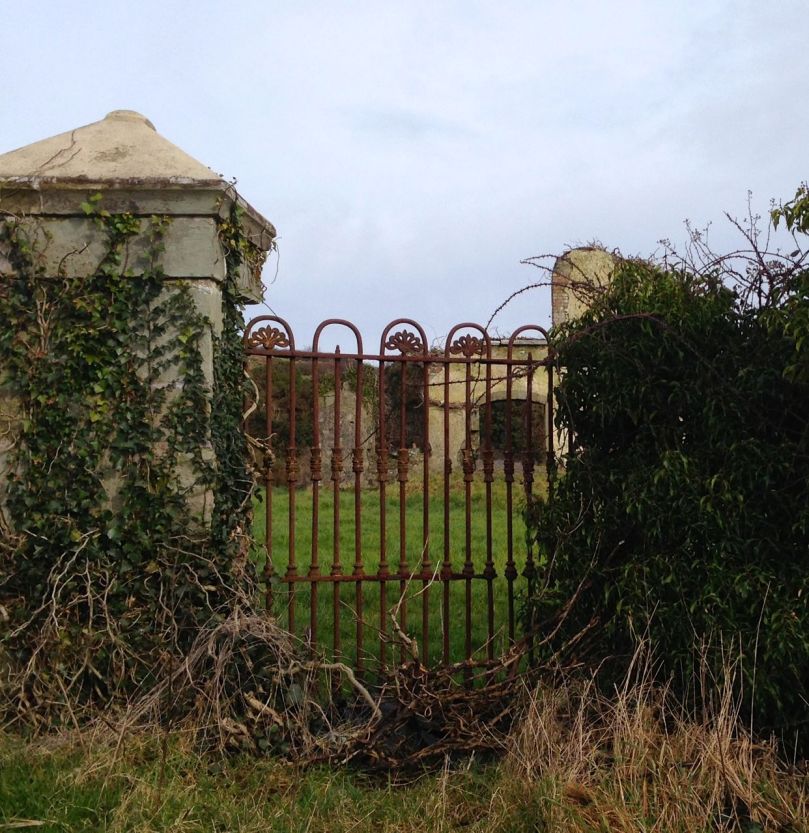
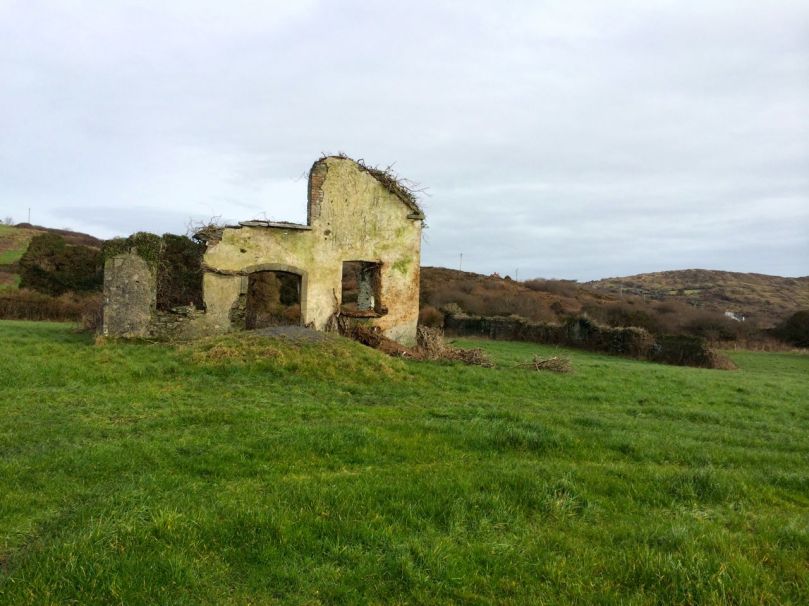
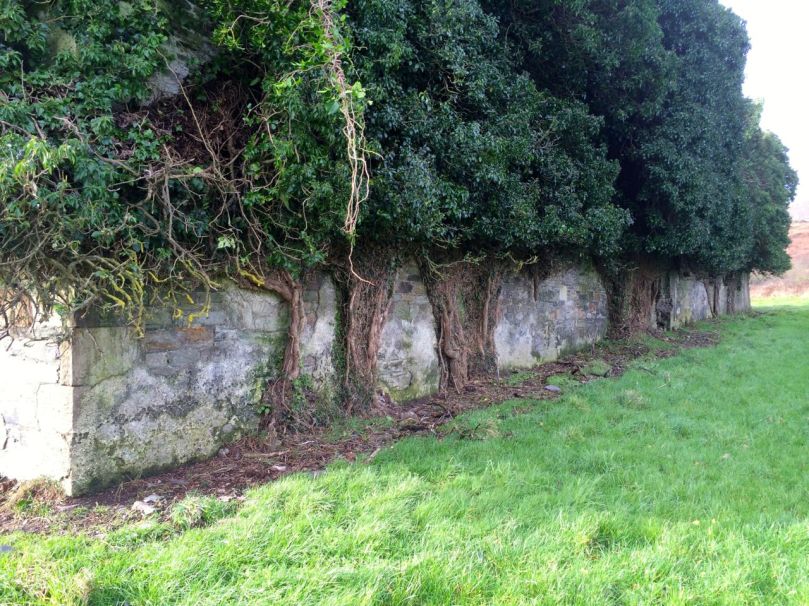
Of all the old ruined or abandoned buildings that dot the countryside of Ireland, one type has the distinction of being the most hated – the workhouse. Many have disappeared: most of the West Cork workhouses have been pulled down or completely rebuilt as community hospitals. A few hints remain – a wall here, a shed there. The workhouse in Schull, although in a ruinous state, has managed to maintain enough of a presence to remind us of its former role in the community. Surrounded by a high stone wall, you can still see parts of the administration building where inmates were admitted, remains of the dormitories and the hospital.

Administration Building and Entrance to the Workhouse

Administration Building and Entrance to the Workhouse

We wander around a lot of ruins here in West Cork, but this one is different. No good feelings emanate from these walls. Instead, an aura of decay and sadness lies thick upon the site. We found ourselves exploring in silence, contemplating the misery that was the inevitable condition of those who entered.

Schull Workhouse Plan

Schull Workhouse Plan

Workhouses were built throughout the nineteenth century in Ireland. The philosophy of charity prevailing at the time dictated that the workhouse must represent the absolute last resort of the desperate – those who could no longer feed, clothe or house their families or themselves. Once admitted, families were separated and might never see each other again. All inmates were assigned hard labour, although some rudimentary schooling was provided for children. There was no comfort, little sanitation, crowded conditions and meagre allowances of food.

One of the most intact spaces

One of the most intact spaces

The Irish Workhouse Centre in Portumna has an excellent website if you want to learn more about the Irish context, but the site that dwarfs all others in the sheer amount of information is The Workhouse: The Story of an Institution, created and maintained by Peter Higginbotham. He makes the point that not all was bad about workhouses, that many workhouses in Britain provided inmates with sanctuary, life-saving treatment and skills. This is not their reputation in Ireland, however, where their memory evokes dread and abhorrence.  Part of this is rooted in their response to the Great Famine of 1845-49. Established to provide Inside Relief many of them initially turned away those who came to the gates asking not to be admitted but to be fed. For those inside, conditions at this time were appalling. As an example, the Durrus History Blog records the report of a Dr Stephens on a visit to the Bantry Workhouse in 1847.

A kitchen, perhaps?

A kitchen, perhaps?

The workhouse in Schull was not built until 1851, in the aftermath of the Famine. It was burned down in 1921 during the War of Independence (there’s an account here), as were many workhouses, to prevent it being used as a barracks by the British army. When the Irish Free State was established, one of the first acts of the new government was to abolish the despised workhouse system and transfer its responsibilities to a new Ministry of Health.

The hospital wing?

The hospital wing?

All Irish workhouses were designed by the same man, to one plan, you can get a better idea of how the Schull workhouse might have looked on the Irish Workhouse Centre website. An exception to this sameness was the Durrus Grainstore, pressed into service as an auxiliary workhouse at the height of the hunger for a couple of years.

Durrus Grainstore. Photo by Amanda Clarke of Sheep's Head Places.

Durrus Grainstore. Photo provided by Amanda Clarke of Holy Wells of Cork

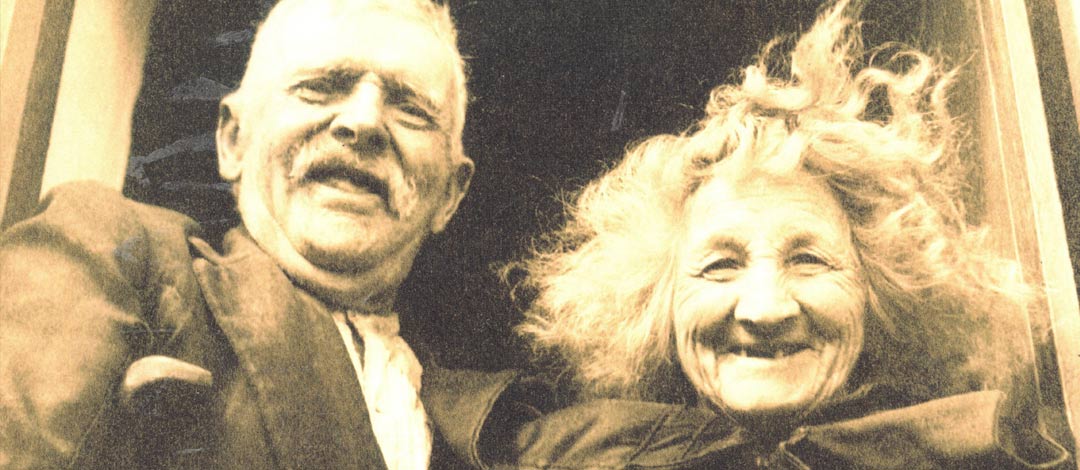
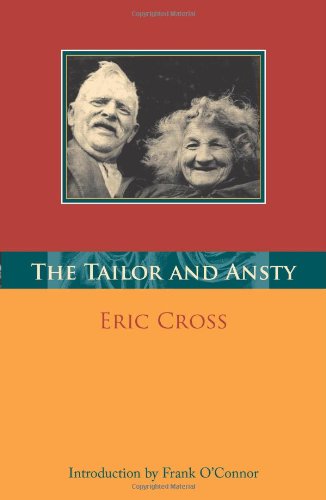
The Tailor and Ansty

The-Tailor-and-Ansty

Travel up to the north of County Cork, into the high country which is still not quite part of the Kingdom of Kerry: make your way to the windings of the youthful River Lee just before it rises in the fastness of the Shehy Mountains, and you will find yourself in a magical place.
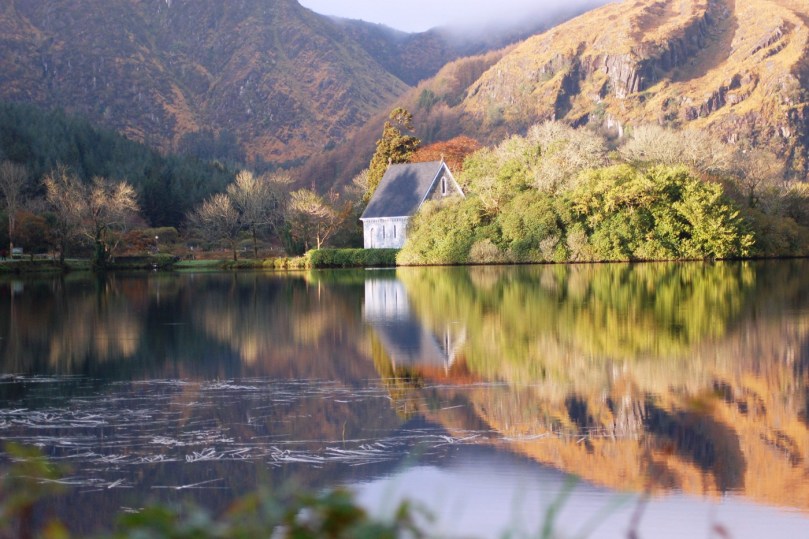
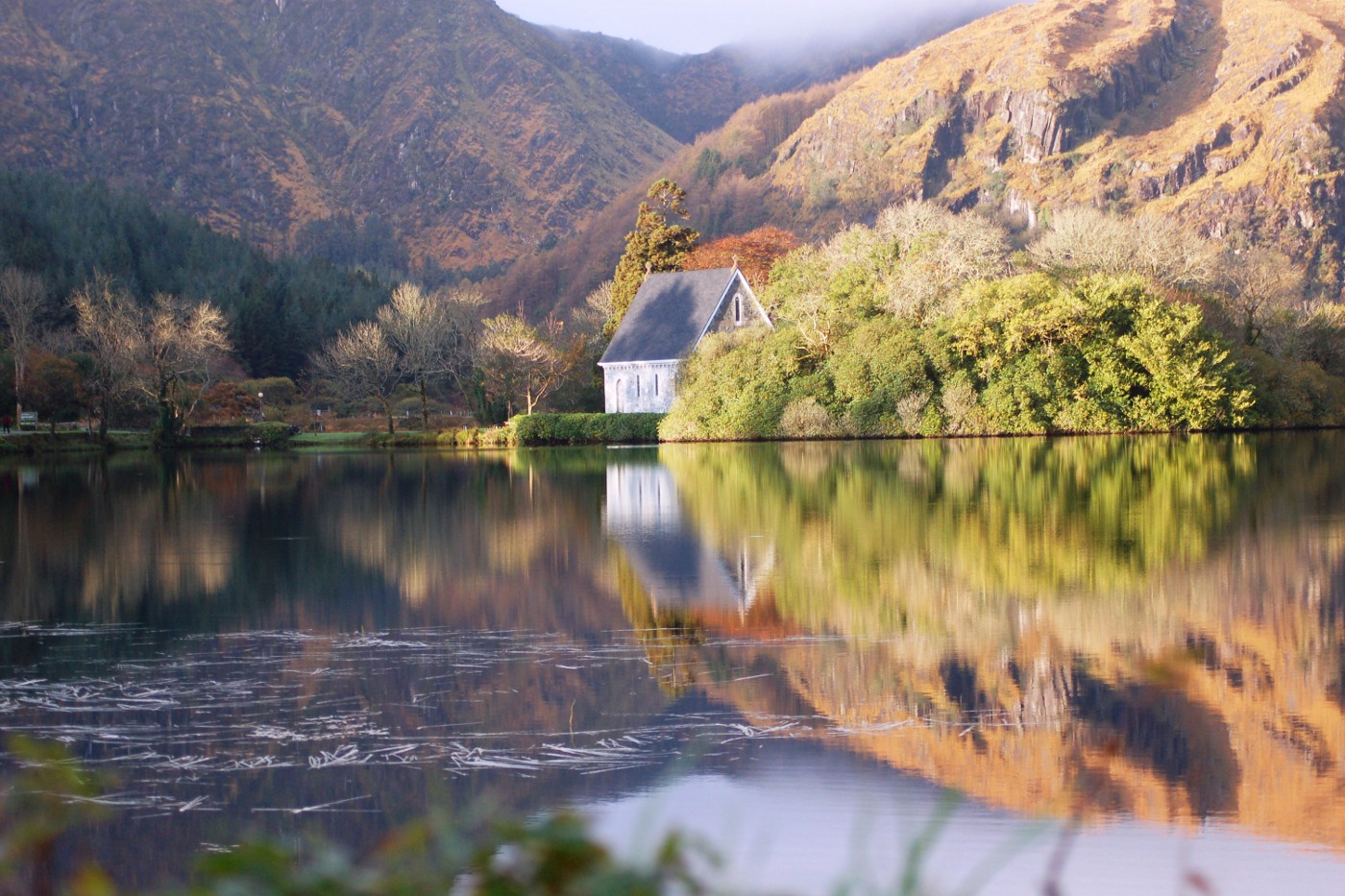
Gougane Barra Lake

The Lake in the Mountain – Gougane Barra

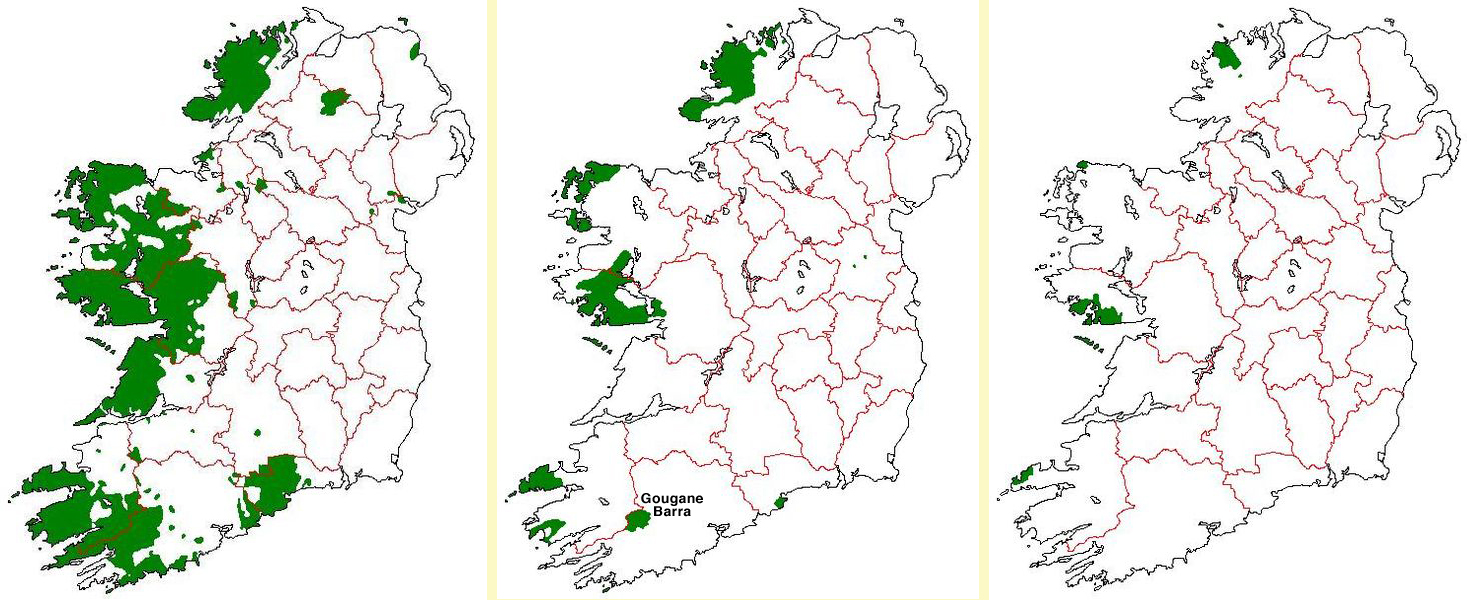
You are in Múscraí (West Muskerry), one of the Gaeltacht districts of Ireland – areas where Irish is still spoken as the predominant native language. These districts were first defined when the Irish Free State was set up as part of the new government’s policy to restore the Irish language. Finola will confirm that everyone who grows up and is educated in Ireland today studies Irish in school. Sadly, the maps below show how native Irish speakers have declined since an Ghaeltacht was set up in 1926, partly through migration but mainly because of the predominance of the English language in public life.

The Gaeltacht areas: Irish native speakers in 1926, 1956 and 2007

The Gaeltacht areas: Irish native speakers in 1926, 1956 and 2007

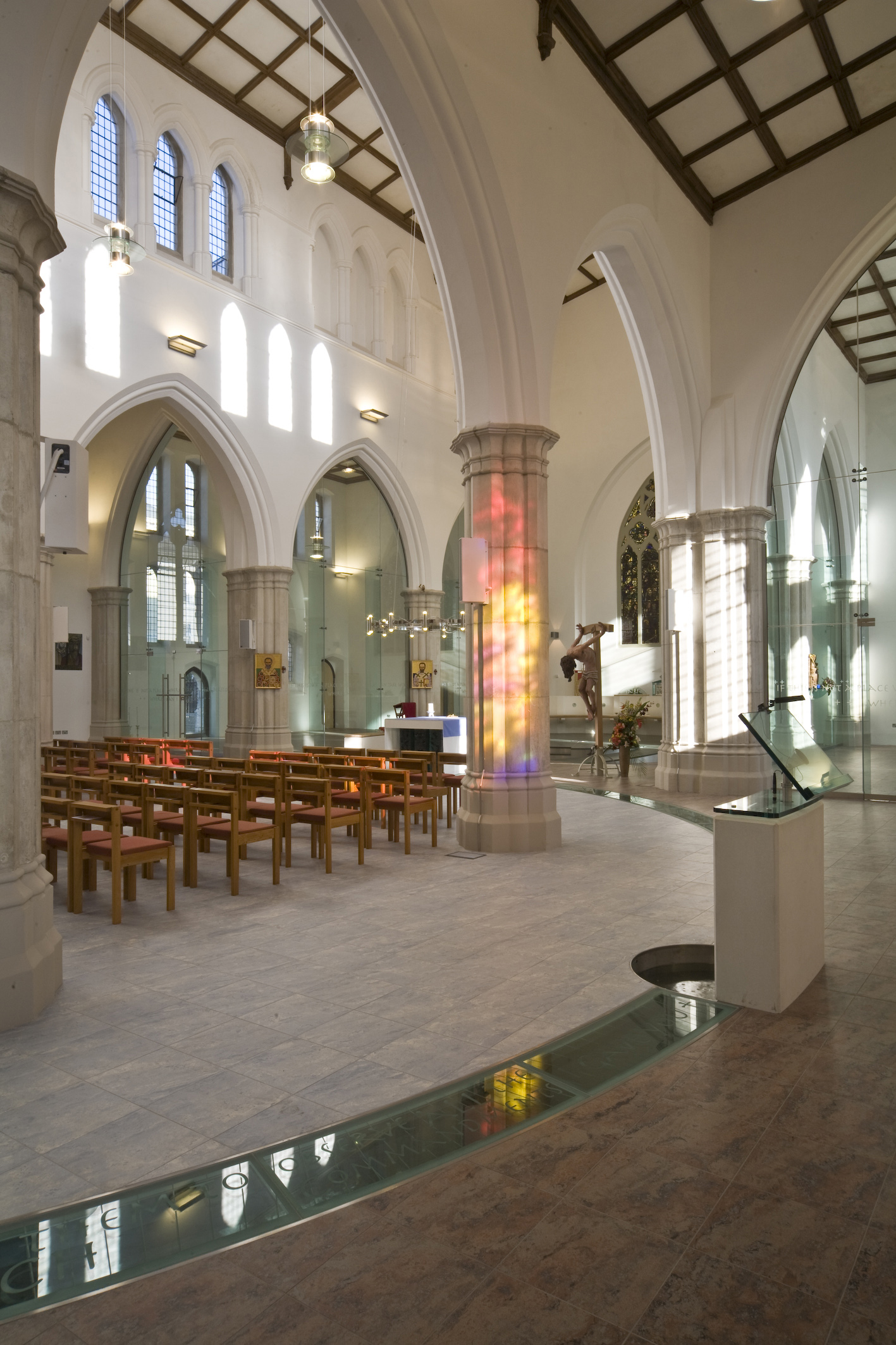
Our journey today takes us to Gougane Barra, a historical site where in the sixth century Saint Finbarr set up a collection of cells for his monastic community on a lake island in the mountains. Nowadays it is a centre for pilgrims and tourists. I was sent to Gougane Barra many years ago on the instruction of a client and friend, Father Sam Philpott, who had commissioned my architectural practice in the UK to reorder a church in the centre of Plymouth. The place proved an inspiration to me – as he had hoped – and the renewed St Peter’s now has a rill of water running around the worship area echoing the water surrounding Finbarr’s community in the mountains: a piece of West Cork in West Devon!
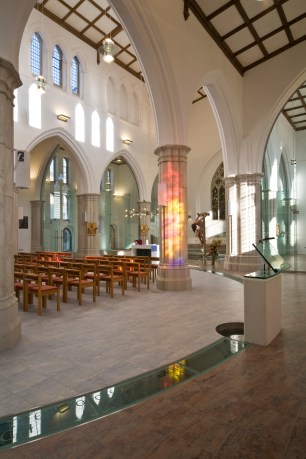
St Peter's, Plymouth - the reordering completed in 2007

St Peter’s, Plymouth – the reordering completed in 2007

Gougane Barra was also the home of The Tailor and Ansty – immortalised in a book of that name first published in 1942 and written by Eric Cross, a journalist from Newry who lived in the locality for many years and visited the couple on a daily basis. ‘The Tailor’ (Tim Buckley) was a storyteller: not a Shanacai who travelled around the country seeking hospitality, as he had a paralysed leg since his youth and could only walk with the aid of a crutch, but someone to whom the world came and sat with while he ‘minded the dairy herd’ (a single black cow) or ‘reddened his pipe’ while perched on an old butter box (which he called Cornucopia) beside the kitchen fire of an evening, and listened to his tales and his homespun philosophy. He and his wife Anastasia were both fluent Irish speakers, and perhaps the book loses something for being written in English. However, it is a goldmine for folklorists or students of Finola’s Cork Speak lessons, because of the expressions which The Tailor uses: Thon amon dieul – (T-anam an diabhal – your soul to the devil), Yerra, man alive and (my own favourite) Thamwirrashimfaina being just a small selection.

I can only commend the book to you: it’s impossible to summarise it. It’s romantic, thoroughly entertaining and completely readable. It’s one of those books that you don’t want to get to the end of and – when you do – you almost feel that you are ready to start it all over again. I will extract only the first few paragraphs to give you a flavour:

…’In the townland of Garrynapeaka, in the district of Inchigeela, in the parish of Iveleary, in the barony of West Muskerry, in the county of Cork, in the province of Munster’ – as he magniloquently styles his address, lives the Tailor.

His small whitewashed cottage, with its acre of ground, stands at the brow of a hill, at the side of a road which winds and climbs into a deep glen of the mountains bordering Cork and Kerry.

In the summer you will usually find the Tailor himself leaning up against the bank of the road, minding his one black cow. As you pass up the hill he will have watched you come and sized you up in his shrewd and kindly way. As he stands talking to you, helping you, pointing out this and that to you, you will scarcely believe that he has seventy-seven years put over him. The vigour of his body, in spite of the handicap of his crutch, the firm tones of his voice, the smile of his lively eyes, the thick head of silver hair, all belie the fact of the years.

He will most likely invite you inside for a glass of buttermilk or a heat of the tea. Go with him. Let the beauties of Ireland wait. They will still be there when he has gone. Be, as he is, prodigal of time, and sit and listen to him. Forget the rest of your journey as the Tailor forgets the cow. Humanity matters more than either cattle or scenery. You have met a man – finished.

Sit by his turf fire at night and learn how to practise his favourite precept – ‘Glac bóg an saol agus glacfaidh an saol bóg thú: take the world fine and aisy and the world will take you fine and aisy’…

jacket

The Mercier Press Edition

The book was published in 1942, when the Tailor was 83. He lived only two years longer. He was proud of the book – and of his celebrity: scholars, folklorists and writers flocked to his fireside to meet him and to hear his stories, his proclamations and his banter with the long-suffering Ansty.

But – there is a twist in this tale. The Tailor was down to earth and forthright. As with all country people he had no qualms about including in his stories all the vagaries of human existence, and references to the coupling of man and woman or the cow and the bull, and these were faithfully recorded by Eric Cross. The effect on the government of the day and its leader Eamonn de Valera was instantaneous: the ‘indecent and obscene’ book was banned, and the life of the bewildered Tailor and his companion became unbearable. The story is taken up by Frank O’Connor, a notable writer and friend who remained faithful to them:

… As a result that kind old couple who had offered their simple hospitality to students from all over Ireland were boycotted. I am not exaggerating. I was there with them one night when a branch of a tree was driven between the wall and the latch so that we were imprisoned. Three priests appeared at their cottage one day and forced that dying old man to go on his knees at his own hearth and burn the only copy he had of his own book…

The situation led to a debate in the Senate which lasted four days! Only one public man – Sir John Keane – defended the book. He quoted sections from it and these quotations were struck from the public record ‘…in case they should lead to immorality of the nation…’ The motion was lost by 34 – 2, and the couple were ostracised within their own community.

It wasn’t until 1963 that the matter was reconsidered, and a revamped Censorship Appeals Board discovered that the book was not obscene at all. It was republished and has remained in print ever since. But by then both the Tailor and Ansty were buried in the graveyard at Gougane Barra, under a stone designed by their friend Seamus Murphy, a well known sculptor. Frank O’Connor wrote the short epitaph that adorns it:

 A Star Danced And Under That Was I Born
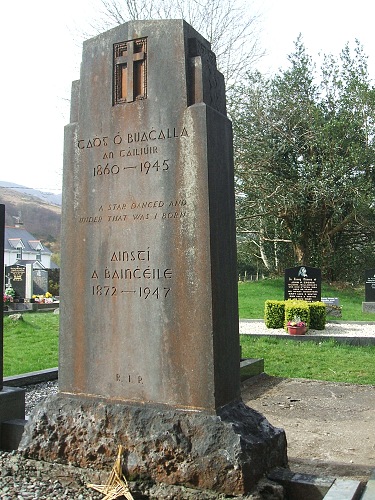
headstone

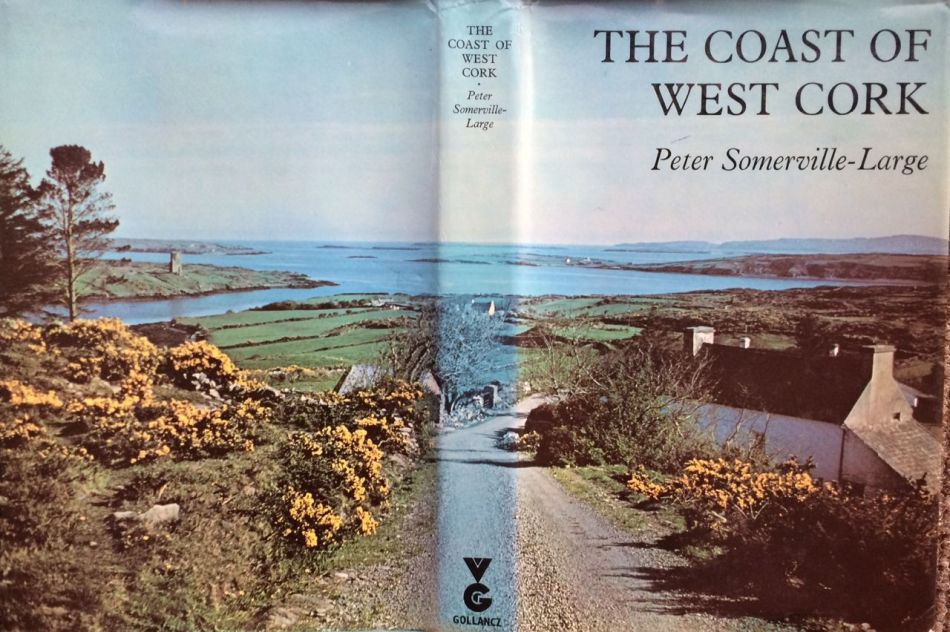
The Coast of West Cork

Coast of West Cork cover

Every personal library in West Cork, maybe in Ireland, has a copy of the book The Coast of West Cork by Peter Somerville-Large. First published in 1972, it is a classic of travel writing – amusing, learned, thoughtful – that still holds up as a fascinating portrayal of this part of the world. The photograph above is of the front cover of the book, signed by the author, that I brought with me to Canada when I emigrated in 1974. Forty years later, I am living on the very spot where this photograph was taken! It took me a while to figure this out, as the picture is actually reversed.
Peter Somerville-Large, now in his 80s, is still writing. He is connected to the old Castletownshend families (Edith Somerville was a relation and he mentions Townsend aunts) and was already very familiar with West Cork when he set out to tour it by bicycle in the spring of 1970. He takes every road, every byway and boreen, and describes in detail the scenery, the characters and the conditions along the way.

Grand road for cycling!

Grand road for cycling!

Far more than a travel diary, this is a comprehensive account of West Cork. Somerville-Large’s erudition is impressive. Either before or after his journey he spent many hours in the National Library, researching the history, folklore, archaeology and literature of the area and he weaves this knowledge seamlessly into his narrative. Because of his own personal background, he is able to include stories and anecdotes from the Big Houses of the gentry. A great aunt

“…remembered going down to a cellar which was filled with swords used to arm the tenants during the time of the Whiteboys and also with empty stone wine jars which had carried wine smuggled in from France. From this cellar there was believed to be a passage underground to the O’Driscoll Castle of Rincolisky, whose truncated remains are to be found in a neighbouring field…An earlier Townsend sent his…page down the passage to see if it was clear. The boy was never seen again.”

Castletownsend Castle

Castletownshend Castle

His affection for the place leads him to mourn the loss of population from the Islands of Roaringwater Bay.

“One by one the small islands became deserted…Only a few years ago I visited Horse Island, just opposite Ballydehob. The last people there, an elderly couple, were living all alone. It was summer, and the old man was sitting in a chair outside his house, his feet in a basin of water. His wife, behind him, fed hens. Next year, they were gone. The house, still intact and comfortable, stood empty, the linoleum in place, last year’s calendar on the wall. Down by the pier a plough had been thrown into the water where it looked like a gesture of despair.”

Looking across to Horse Island

Looking across to Horse Island

He documents the importance of the creamery in the social life of the townlands, the old occupations of fishing and mining and the loss of such sources of income, the string of castles that dot the coast and the great irish families that built them, the “brash new bungalows” springing up around the scenic areas, the awful legacy of the famine, and the sheer beauty of the scenery. He is conscious of a way of life passing. Going out of his way to visit a sweathouse (a feature of the Irish countryside in times past) he ends up in the O’Sullivan’s kitchen, drinking whiskey and eating biscuits.

“Mrs. Sullivan told me that the valley was once thickly populated, and when she was a girl there had been sixty children at the school that closed last year. The way of life had gone with it…Once it had been a great place to live in, her husband said. There were monthly fairs at Ballydehob and Schull, and he had walked all the way to Bantry with the cattle and all the way back again.”

Deserted cottage

Deserted cottage

The parts I have quoted deal with the area around where we live, but the bicycle trip stretches from Clonakilty to the Beara Peninsula. Describing West Cork as it was in 1970, it is now an important historical document in its own right, alongside such accounts as Thackery’s Irish Sketchbook of 1879, or the Pacata Hibernia of 1633. Mostly, however, it is a charming, engaging and fascinating depiction of a special place.

Over the hill to Durrus

Over the hill to Durrus

Outlook: Changeable

storm

Sunday morning sky over Nead an Iolair

One of my favourite expressions about the weather was learned from an elderly gentleman who had lived all his life in Hampshire, England. …Tis black over Will’s Mother’s… This would have described very well the scene above, which was taken from Nead an Iolair when we awoke this morning. As an Englishman I would be expected to talk about the weather all the time; Irish people are not far behind in this, probably because there is such a variety of weather – even in a single day – that it demands to be described. …Is iomaí athrú a chuireann lá Márta dhe… means: …There is a lot of weather in a March day… This might just as well refer to a January day, or a day in any month in our experience. To illustrate this I decided to try a time lapse video, using my iPhone and a tripod. I had to shoot it through the window, hence the reflections – just as well because during the process we had torrential hail to add to the variety. So this is a thirty minute session of Irish weather coming in to Roaringwater Bay compressed to thirty seconds, each frame being shot a second apart:

By asking around the locality I have compiled some Irish expressions for weather. These are ones that I particularly like:

A snipe won’t stand in the morning… (meaning icy weather)

It’s a hure of a day… (meaning it’s a hure of a day – Finola has her own version here)

 Bad aul’ day isn’t it?

And – occasionally – The Sun does be splittin’ the stones

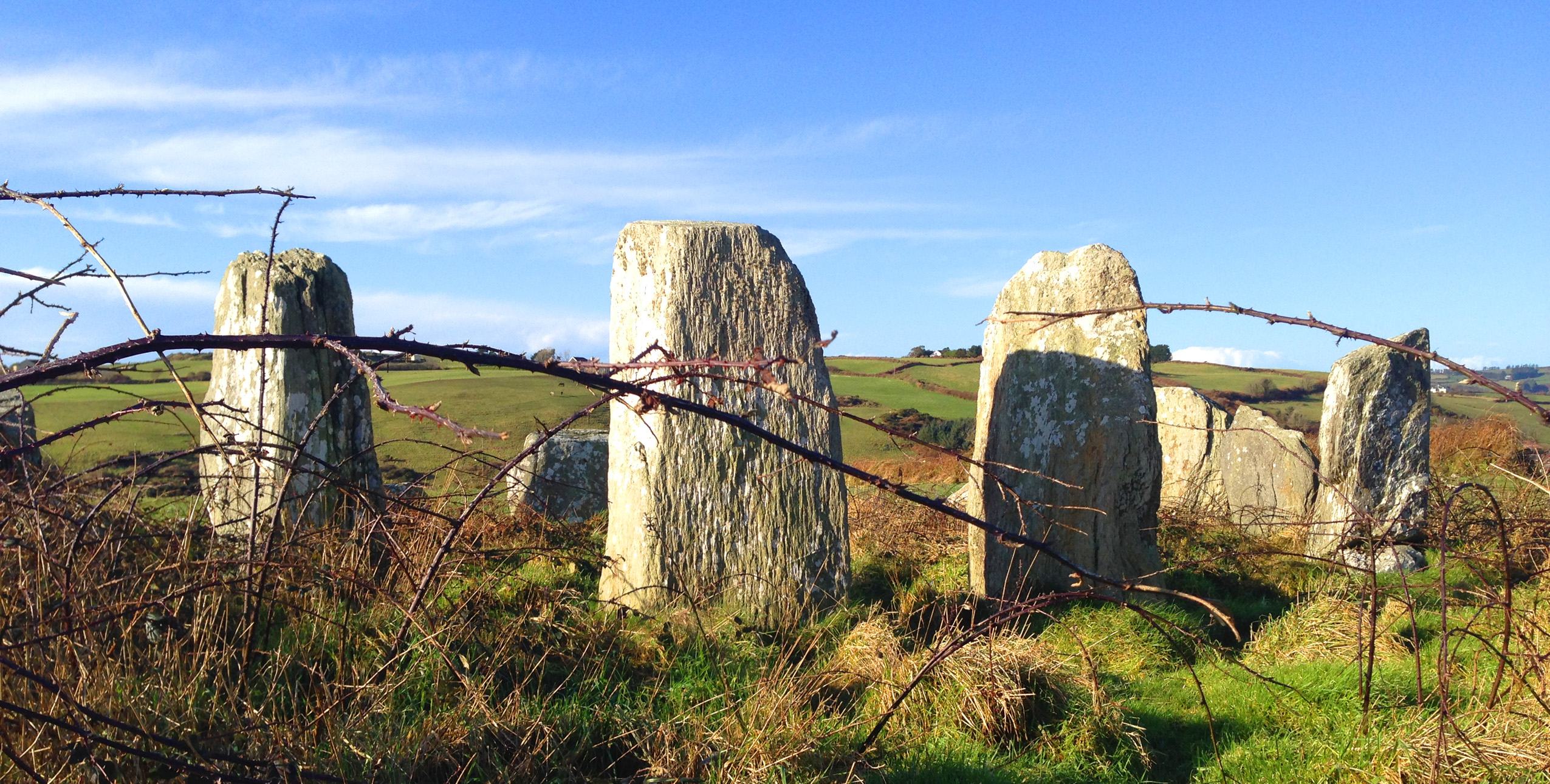
Sun circle, Bohanogh, a week ago

Sun circle, Bohonagh, a week ago

Now, as we get near to St Brigid’s Day – more on that next week – we can truly be saying:

There’s a grand aul’ stretch to the evening… (the days are getting longer)

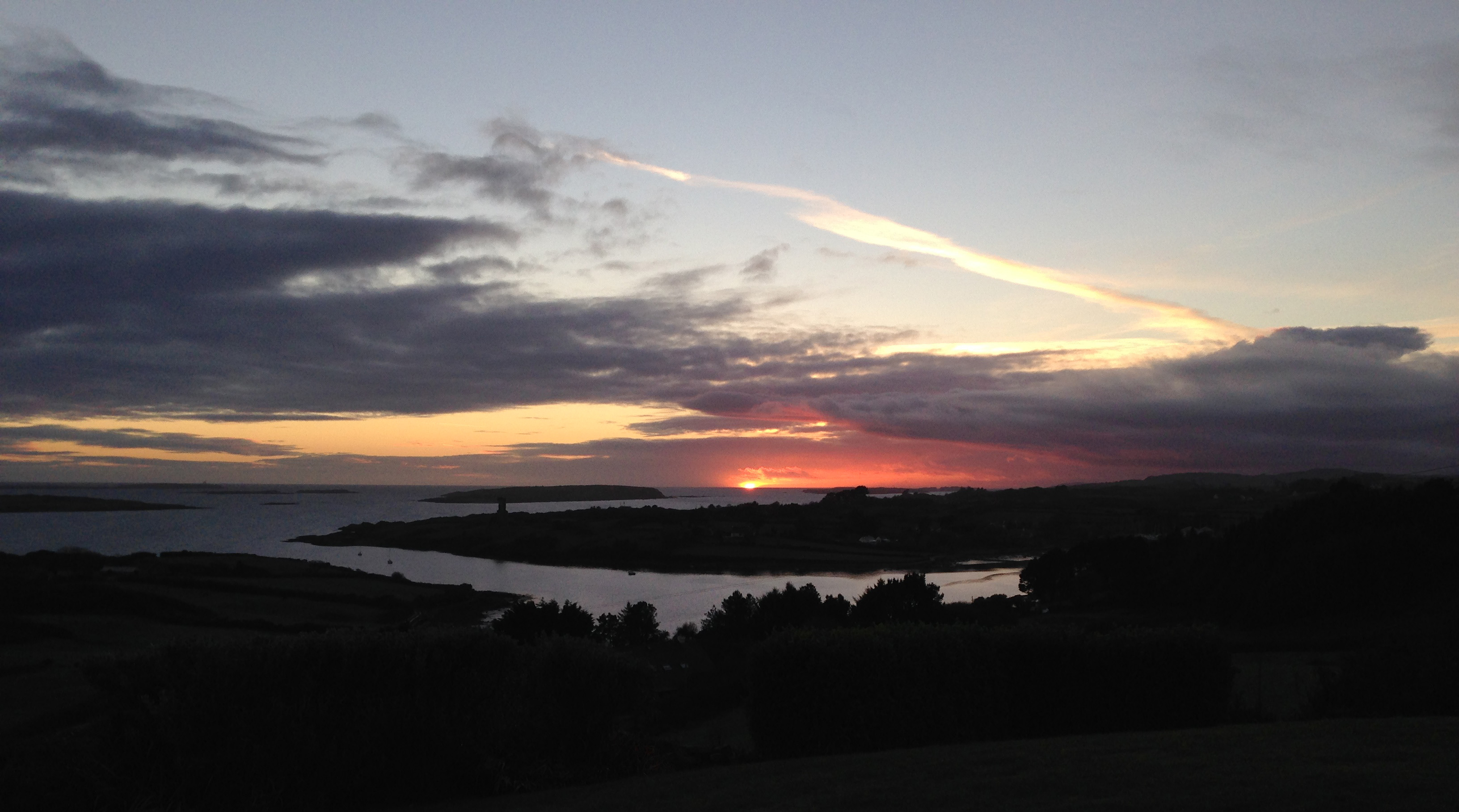
sunset