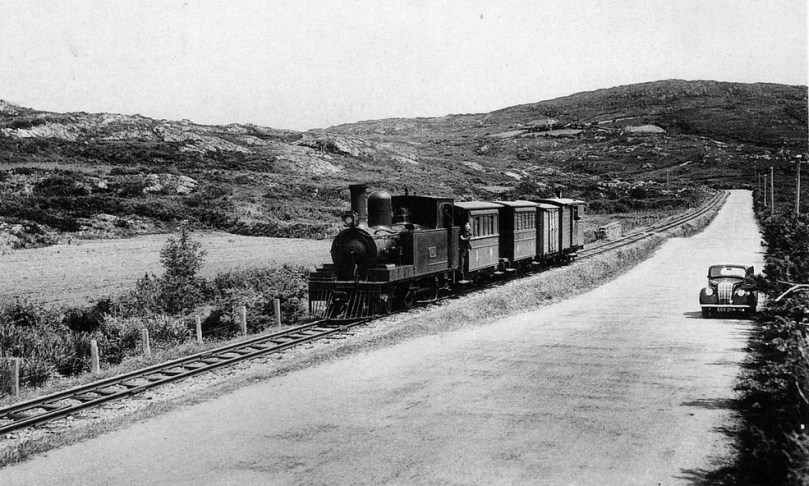
The Flying Snail

Iarnród - between Ballydehob and Schull 1939

Iarnród – between Ballydehob and Schull 1939

In the heydays of transport by rail, the south of Ireland was served by a network of lines radiating out from Cork. Most of these were scenically picturesque – the nature of the countryside saw to that – and all were imbued with Stories, still recounted with relish by the local people who remember them, or whose mothers and fathers remembered them. Here’s one of the stories – told about the Chetwynd Viaduct, coming out of Cork on the way to Bandon.
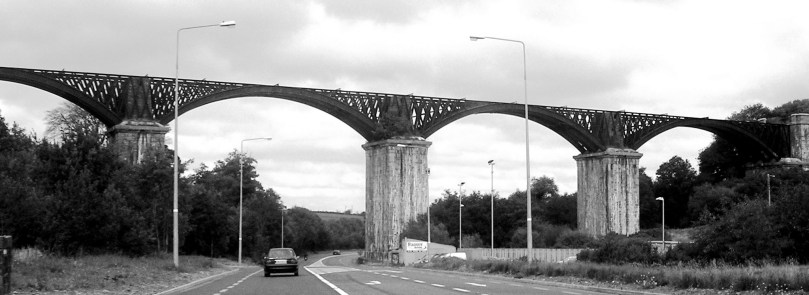
Chetwynd Viaduct today - a scheduled monument

Chetwynd Viaduct today

This structure was designed by Charles Nixon, a pupil of Isambard Kingdom Brunel, and built between 1849 and 1851. It’s still in place today, passing over the main  N71 road from Skibbereen, and is a scheduled monument. The railway, track and track bed have all gone. For quite a while after its construction it was known as “The Bowlers’ Everest”. Alert followers of these posts will know about Road Bowling already (don’t forget to pronounce it correctly: Road Bowelling) – a very skilful and ancient Irish sport involving hurling a heavy iron ‘bullet’ along a road, and getting it from one place to another in the shortest number of throws. For Bowellers, the viaduct presented an obvious challenge: to throw the ‘bullet’ on to it. This was attempted many times year after year, but it took a mighty man to do it: Mick Barry, widely acknowledged as the greatest bowlplayer ever. My informant was careful to add “…This has been said by many and denied by very few…” The Cork Examiner takes up the tale:

“…Barry conquered the Bowler’s Everest, the Chetwynd Viaduct on the Cork-Bandon Road on Saint Patrick’s Day, March 17th, 1955. He lofted the 16oz bowl on to the 100 foot high parapet; an incredible feat which required almost superhuman strength, virtually defying the laws of physics. This feat was witnessed by thousands of spectators…”

chetwyndbolmc

Bowlers’ Everest – the viaduct at Chetwynd and a 16oz ‘bullet’

Less commonly cited is another Chetwynd story: on September 8th, 1985, watched by over 10,000 people, Hans Bohllen from West Germany lofted a 28oz bowl clean over the viaduct, clearing the top by ten feet.
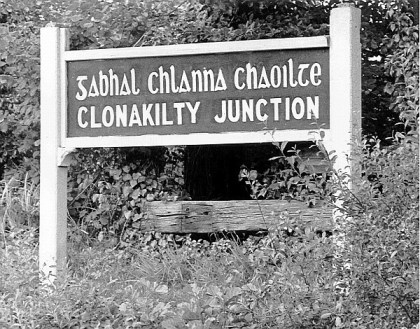
clonjunctionLines from Cork eventually penetrated surprisingly far into the south west extremities of the state: to Kinsale, Bandon, Courtmacsherry, Clonakilty, Bantry, Baltimore, and – on a 3ft gauge narrow line snaking out of Skibbereen – to our two local towns of Ballydehob and Schull. It’s worth mentioning the colourful history of railway track gauges in Ireland: the standard now is 5ft 3in – something shared in the world with only Brazil, Australia and New Zealand – but earlier lines had 4ft 8½ins [UK and Europe standard], 6ft 2ins and 5ft 2ins, and when trams were first introduced to Dublin they had 5ft 2 and a bit.
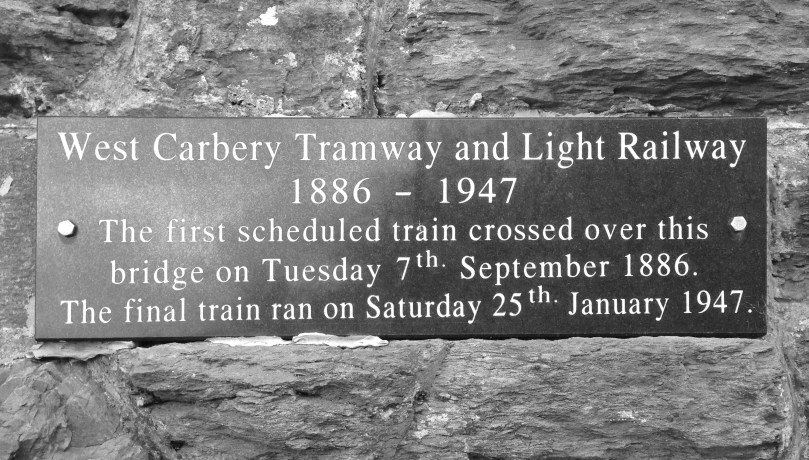
plaque

Local history: plaque on the viaduct at Ballydehob

In 1925 all the railway lines in the new Irish Free State were amalgamated to become the Great Southern Railway, and in 1945 the system was consolidated with road transport concerns and trams to become Córas Iompair Éireann. The logo used by CIÉ until 1964 was affectionately (and, perhaps, cynically) known as The Flying Snail.

Córas Iompair Éireann - the national rail and bus company - logo used between the 1940s and 1964: known affectionately as 'The Flying Snail'

‘The Flying Snail’

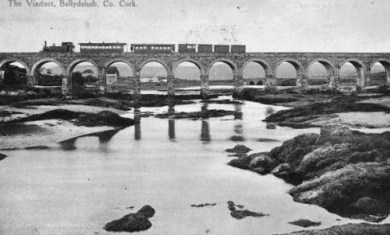
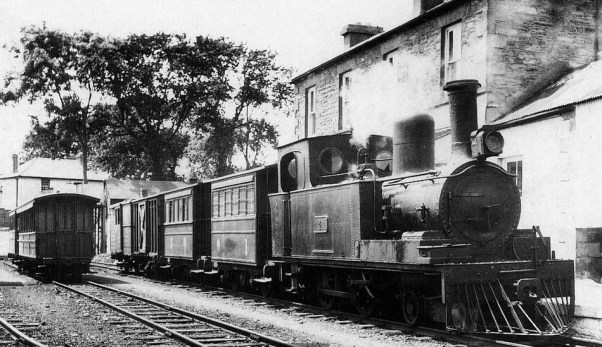
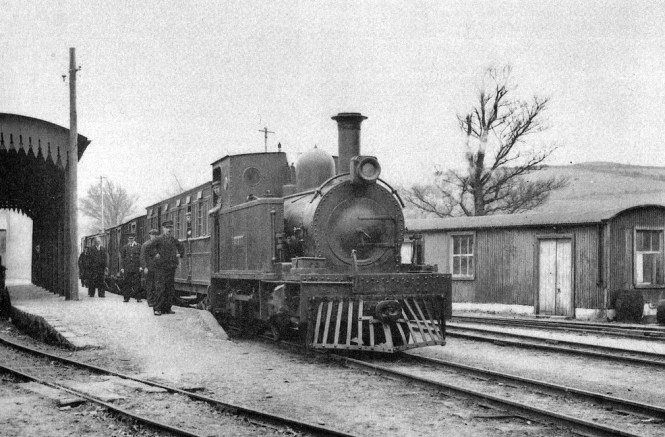
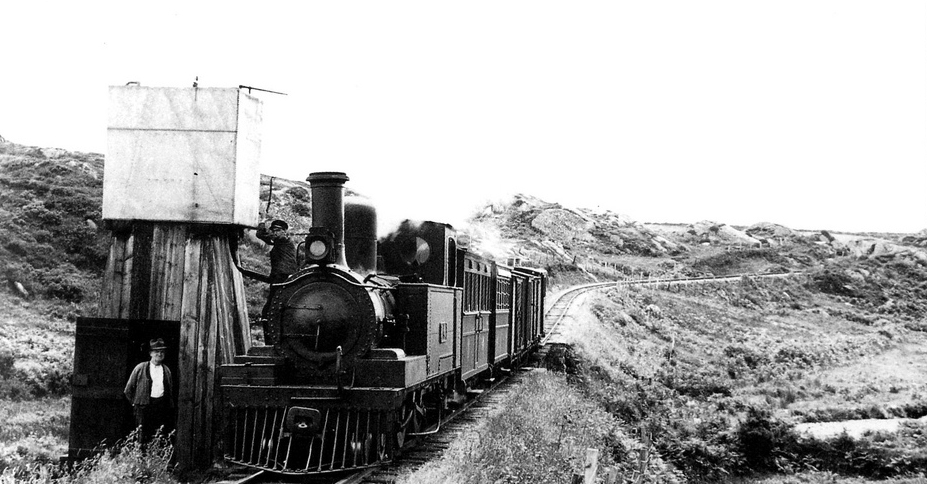
ballytrainmcThe line out to us here in West Cork was particularly eccentric and would have been a magnet for present day railway enthusiasts if it had survived. In places the narrow gauge track ran along the main road; it reached speeds of up to 15 miles per hour… But how we all wish it was still possible to catch a little train out of Schull, Ballydehob or Skibbereen and arrive in Cork in a bit. It would be grand!
view

Water stop – with a view…

schull station

Leaving Schull Station, 1939

skibb station

All aboard at Skibbereen!
Going for the Messages

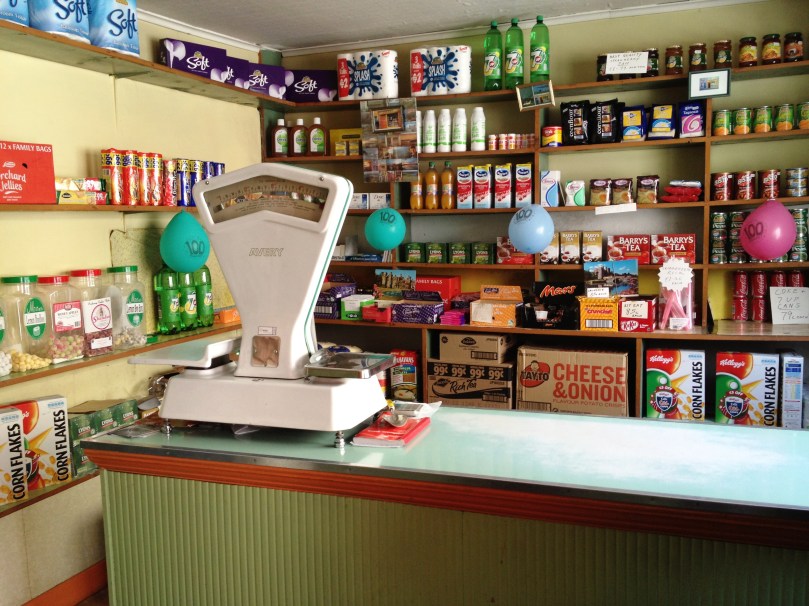
Inside Miss Clerke's, Skibbereen

Inside Miss Clerke’s, Skibbereen

When we were growing up in Ireland our mothers would send us up to the shops for messages. Clutching the coins she entrusted to us we would give the note to the shopkeeper, or recite what she wanted and he would duly hand over the message wrapped up in brown paper and tied with string.

Messages I remember: 10 Craven A, a yard of knickers elastic, 2oz of cheddar, 5 codeine, 1lb of broken biscuits, a packet of Bisto, a pair of brown shoelaces, a bottle of paraffin, a nice fresh piece of plaice.

Need a chamber pot?

Need a chamber pot?

Found it!

   Found it!

Nowadays we go off to the brilliant local supermarket (ultra efficient but with a wonderful variety of local produce) or the well-organized hardware store with its stocked and gleaming shelves, where the shopping experience is similar to that in Canada. But the shops of my childhood are still here too, in the small towns and villages. You can find hardware stores stuffed to the ceiling with everything you might need heaped in teetering piles. Ballydehob has one, My Beautiful Launderette, where we have dropped off our laundry and bought glue, mousetraps, nails, tools and flower seeds. In Bantry, when we can’t find the exact light bulb we are looking for in the airy modern electrical supply shop we can be sure to track it down in Vickery’s, a shambolic space loaded to the scuppers with kitchen ware, hinges, table lamps, shovels, and soap dispensers.

My Beautiful Launderette, Ballydehob

My Beautiful Launderette, Ballydehob

While modern boutiques abound in the larger towns, some clothing and haberdashery stores retain an old-fashioned charm, with most of the goods shelved in plastic bags behind glass-fronted counters.

Shoes, hats and First Communion dresses

Shoes, hats and First Communion dresses

Perhaps our favourite is Miss Clerke’s in Skibbereen. It is unchanged from the small grocery shops of the 1950s, with a little of everything neatly arranged around the walls. We go in there to buy bonbons – Robert has a liking for the apple-flavoured ones – although we have been out of luck lately. “The traveller,” she tells us, “hasn’t been able to get the apple ones for a while now.” We go home happily chewing on lemon ones (a ‘quarter’ in a paper bag) and fantasizing about life as a bonbon traveller.

clerke

Theme and Variations

November sky at Nead an Iolair

Prelude: November sky over Nead an Iolair

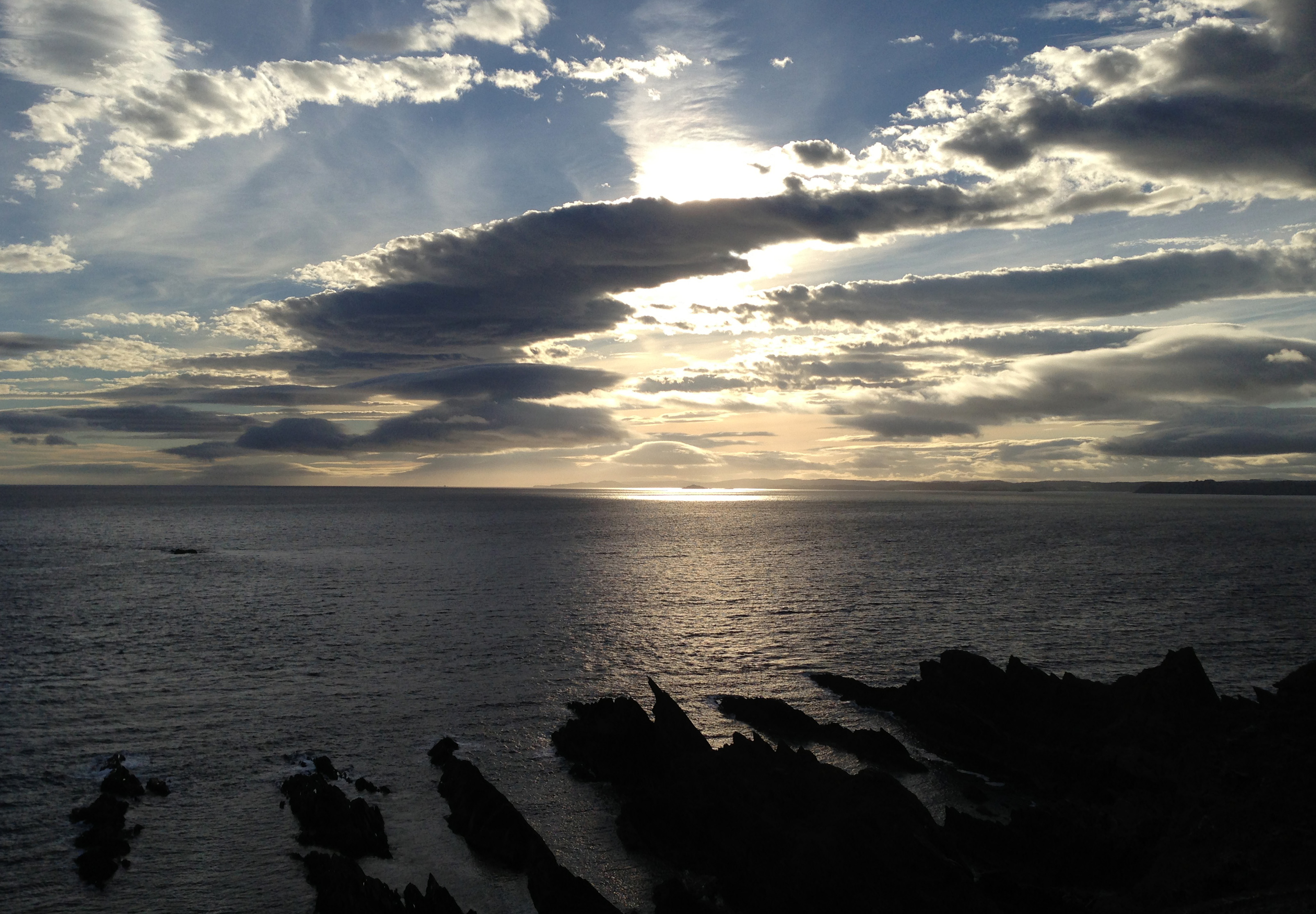
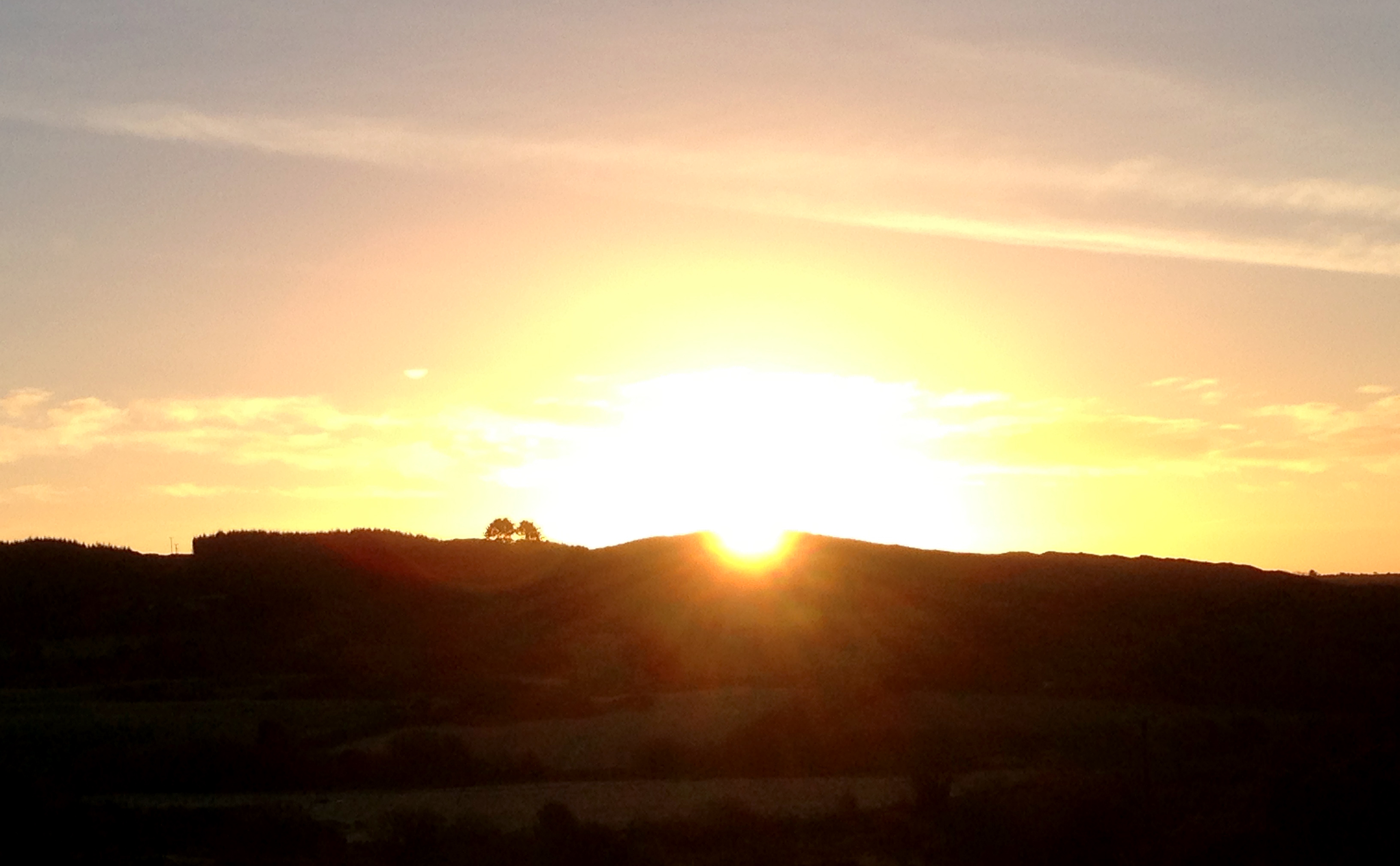
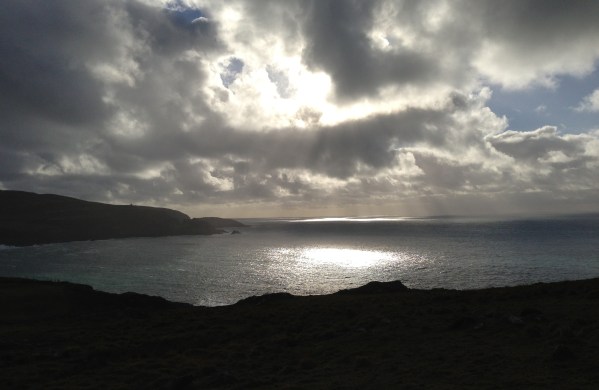
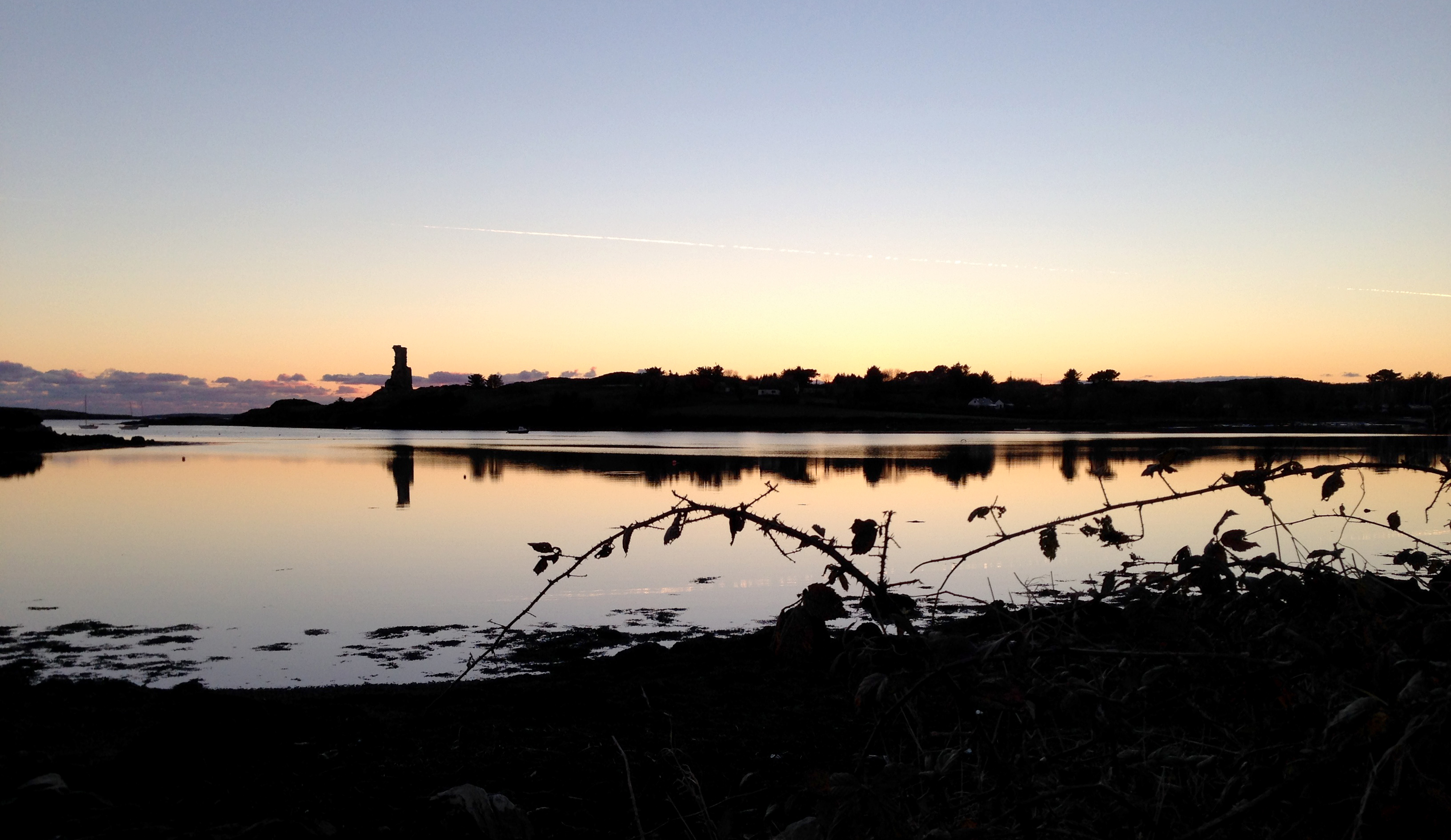
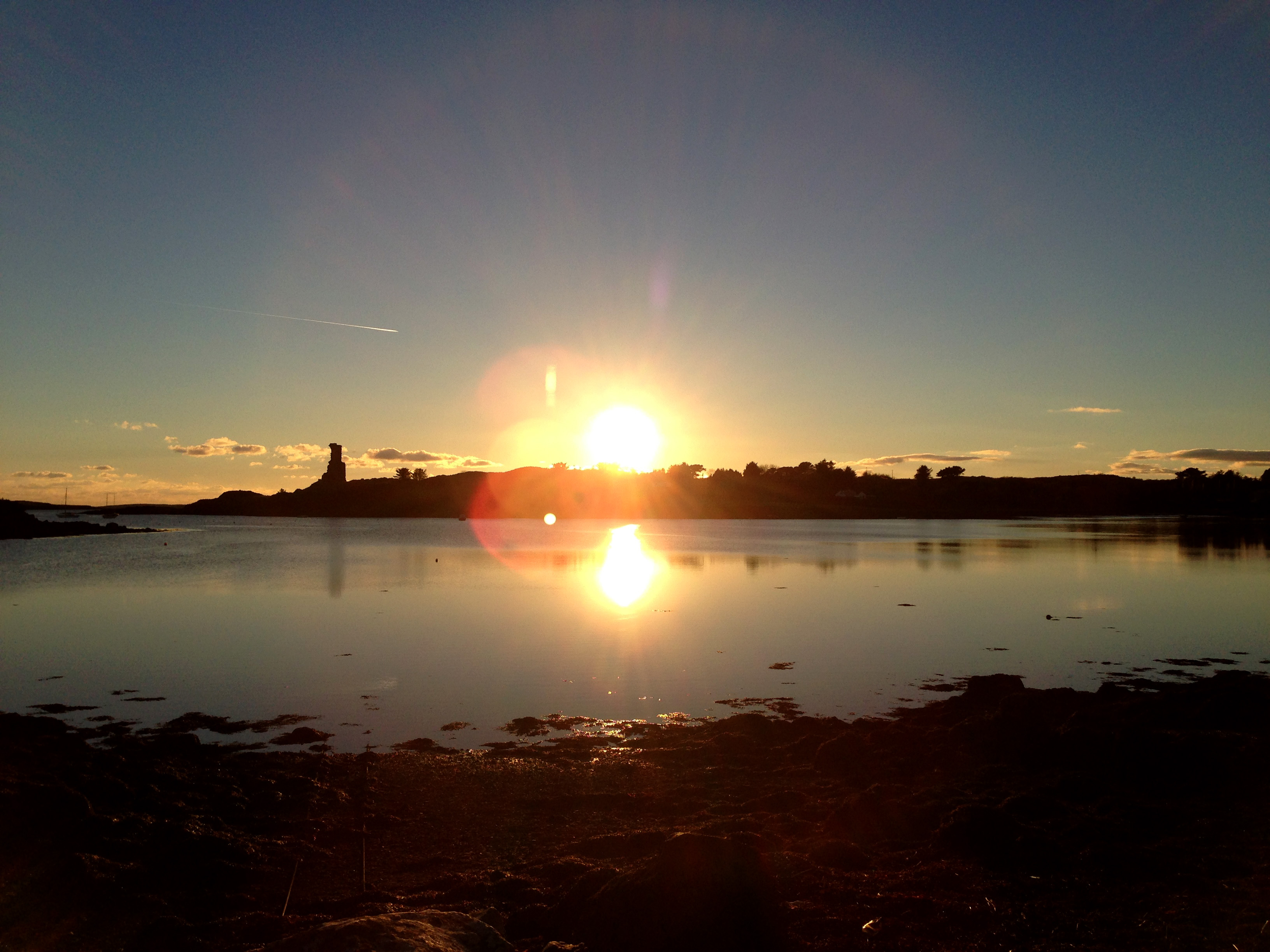
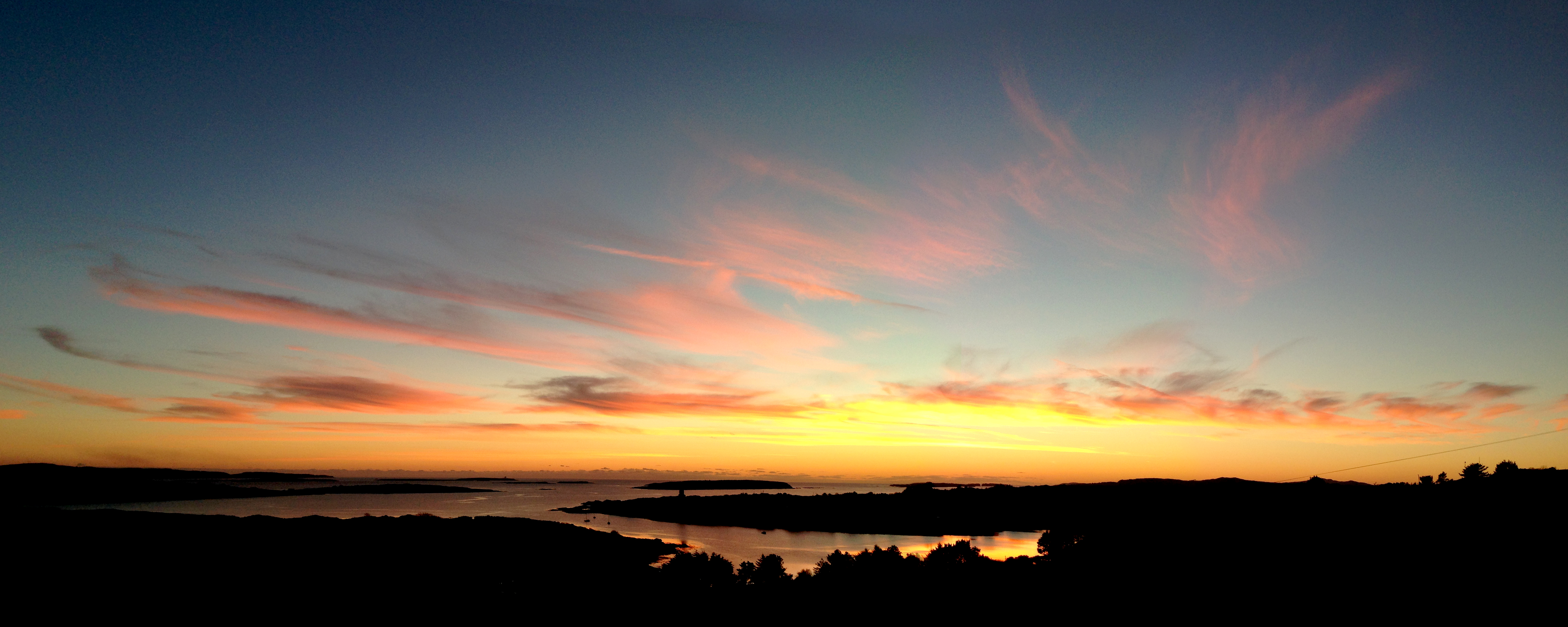
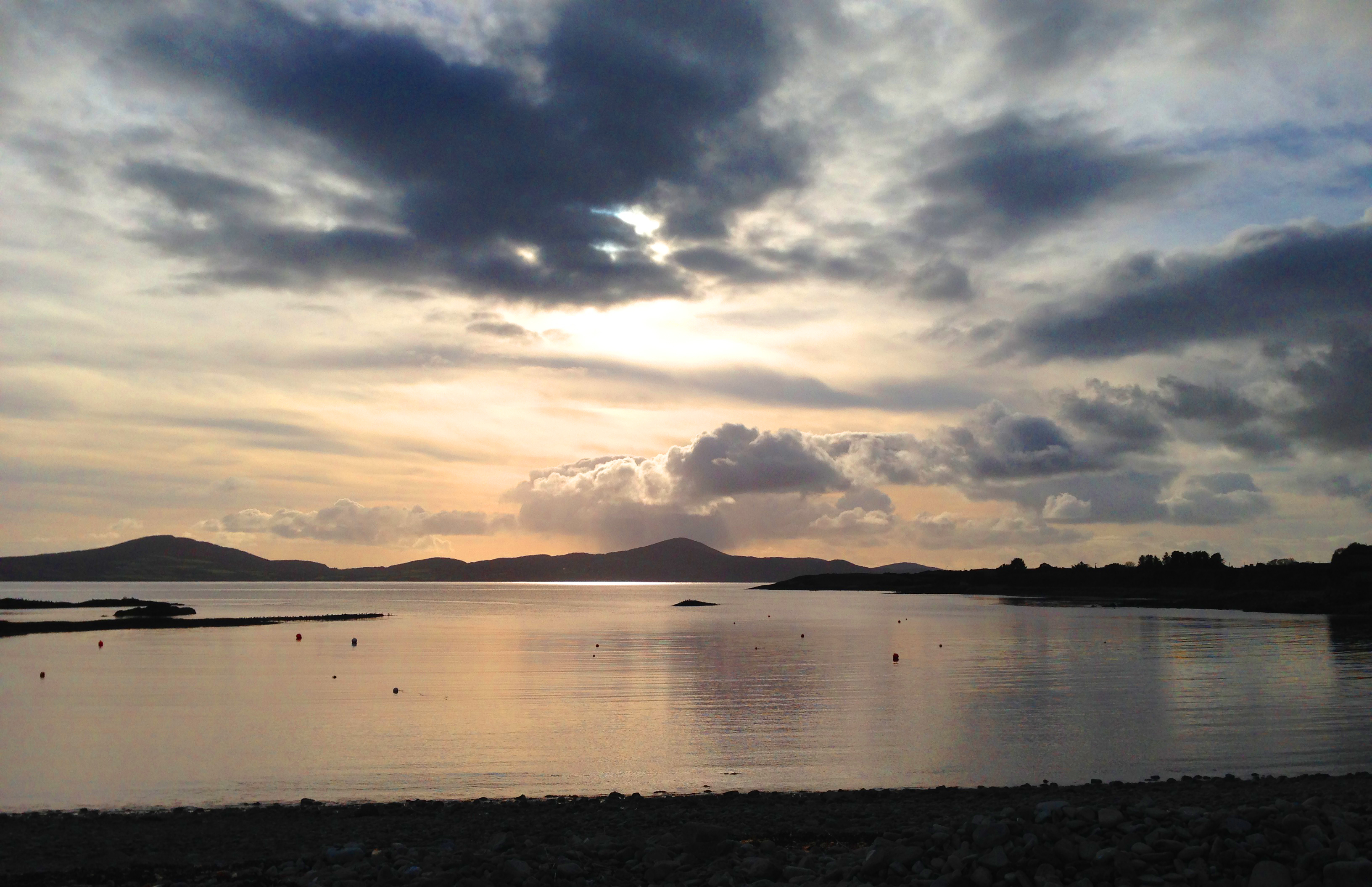
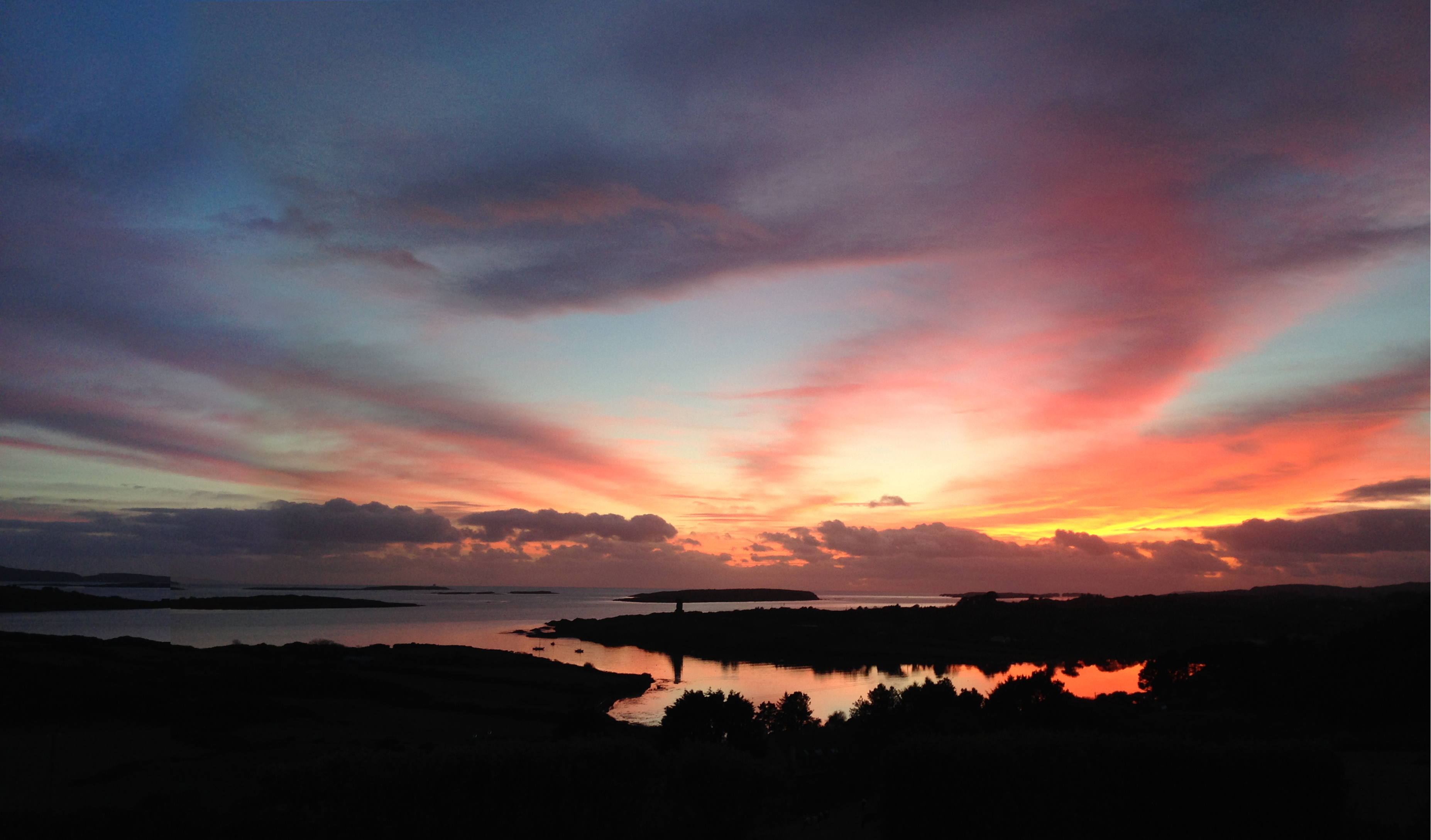
Up on our hill above the Cove we are constantly treated to painterly skies. We could fill a whole blog with these changing skyscapes, and now – in late November – we have an extended period of clear cold weather which offers us spectacular sunsets: each day seems to outdo the previous one. On our walks we can’t resist using our cameras to record the wide West Cork skies, although these pictures are barely adequate to recreate the full celestial symphony. We have tried to come up with words to express to ourselves how magnificent these are: somehow the words seem trivial…. Stunning crops up frequently, as do mesmerising, awe-inspiring, exquisite, sublime, unsurpassed. Perhaps it’s best just to let the images speak for themselves: we feel privileged to be living in this incomparable land.

Bay rainbow

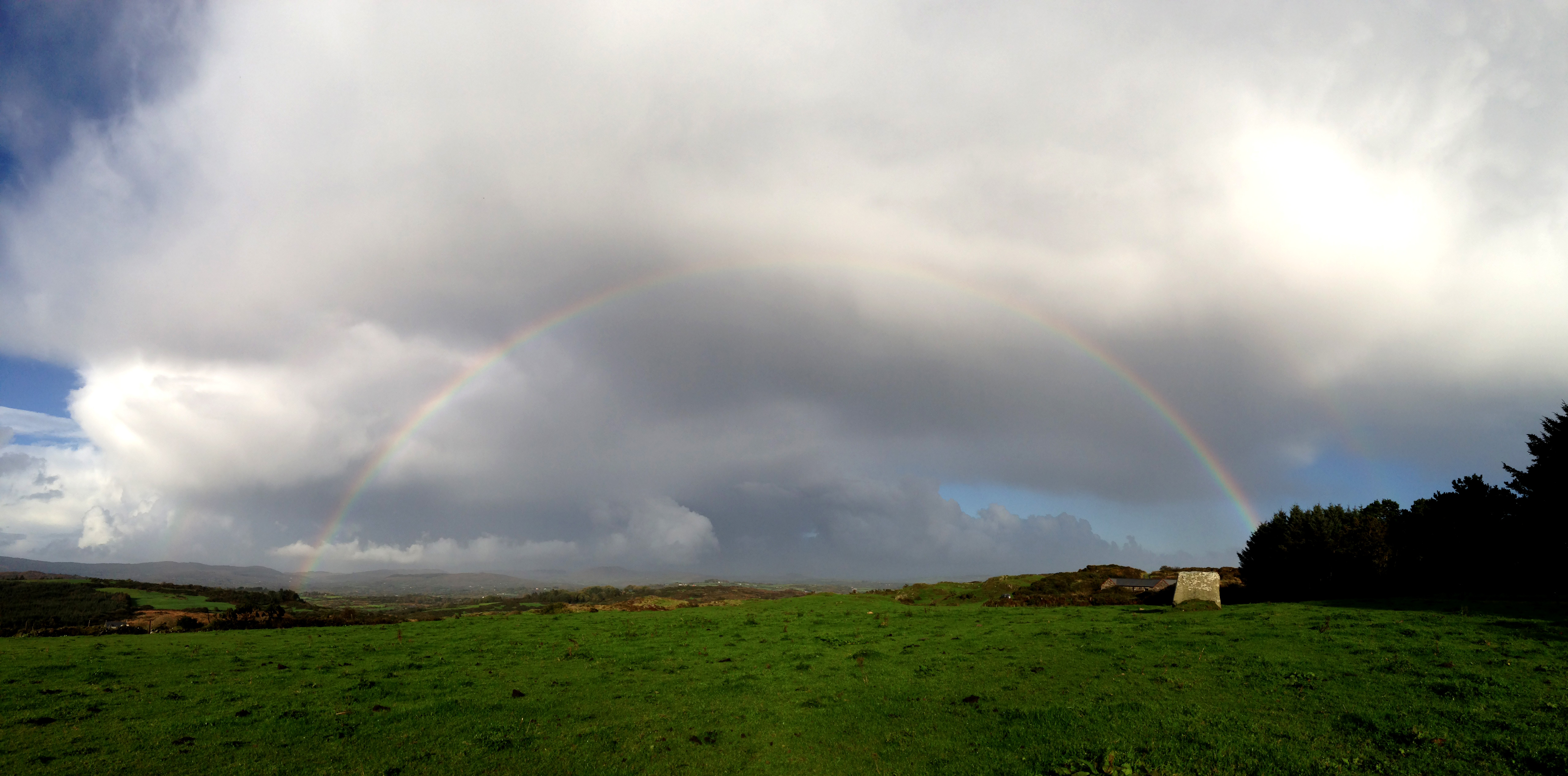
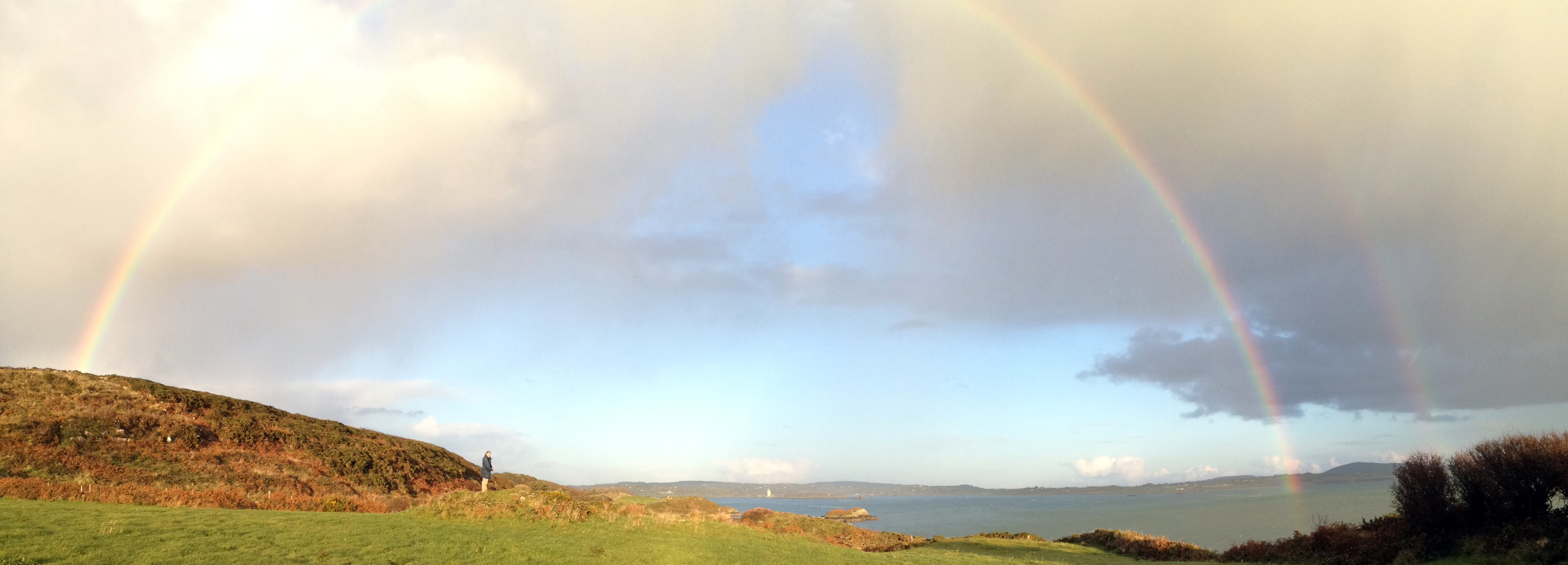
Overture: Bay rainbow

Sheep's Head sky

Arietta: Sheep’s Head horizon

Bow over Bishops Luck

Intermezzo: Bow over Bishops Luck

Ballybane sunrise

Crescendo: Ballybane sunrise

Silver sky

A bocca chiusa: silver Mizen sky

Sky trail

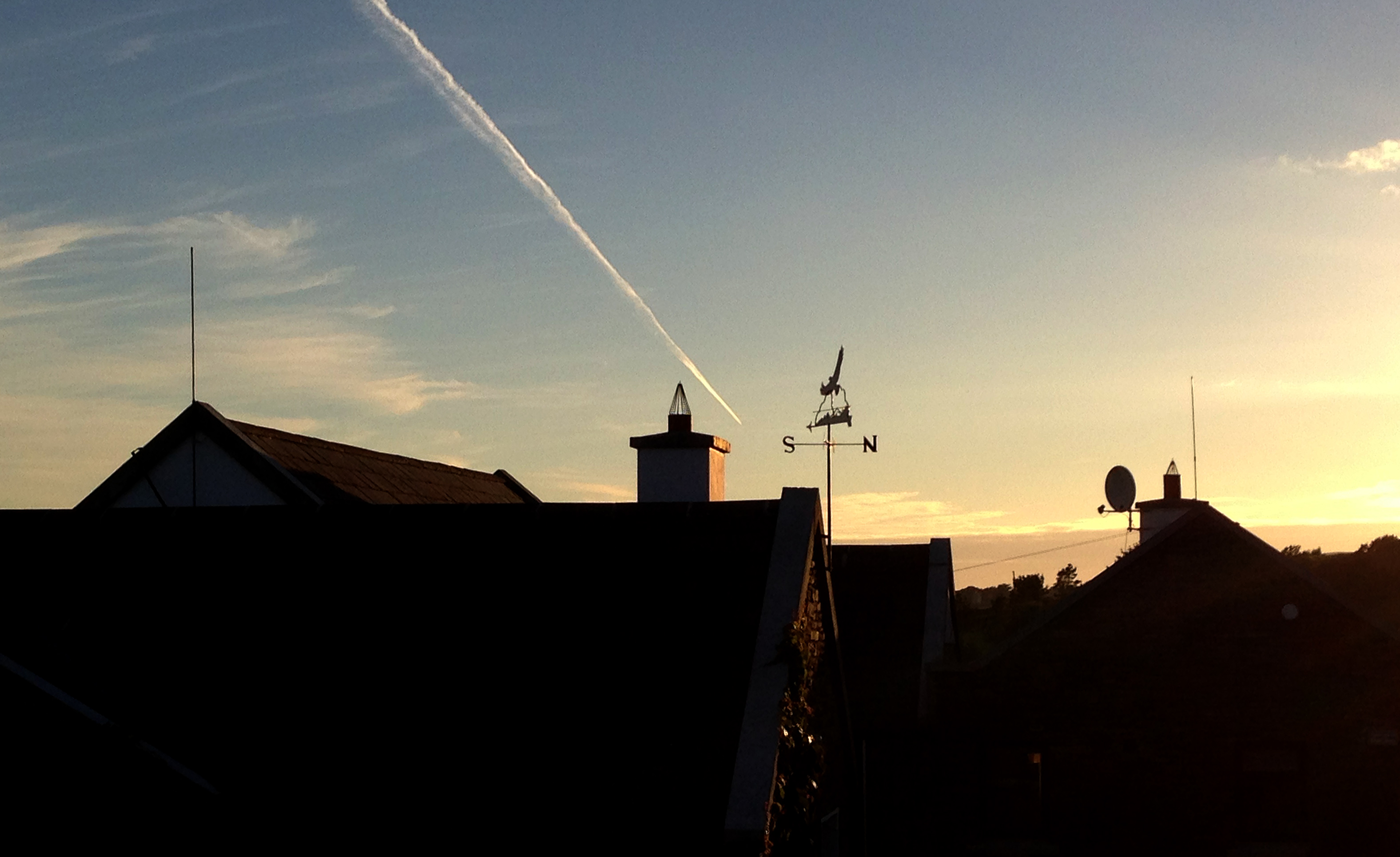
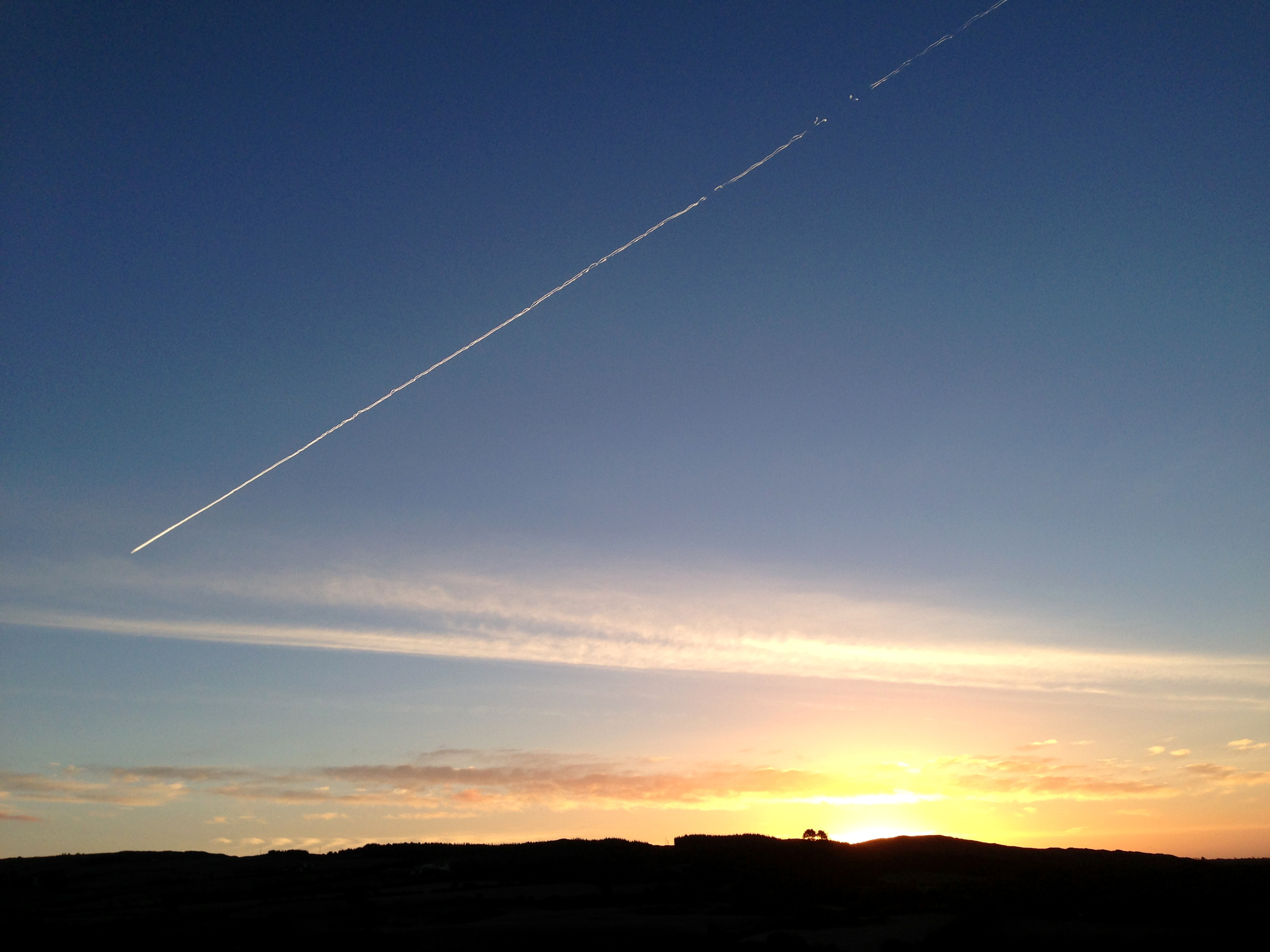
Segue: Meteoric dawn

Rossbrin, dusk

Tranquillo: dusk at Rossbrin

Two suns

Caballeta: two suns

Wide sky

Con fuoco: Roaring Water resplendent

Peninsula

Cadenza: transcendental times

Finale

Finale and Coda

A Charm of Goldfinches

Carduelis Carduelis

Carduelis Carduelis

Ferdia demolished our beautiful bird-table – made for us by Danny – by jumping up and hanging on to the peanut feeder, swinging there until the whole thing came down: and he showed not one ounce of contrition! After his peanut feast he licked his lips, stared at us brazenly and seemed to say “Now, so – that was a grand game”…. The outcome is an architect-designed, post-modern, deconstructivist bird feeding station made from two broom handles (total cost 3 euros) that is painted green (of course) and is Fox proof!

redhanded

Caught redhanded!

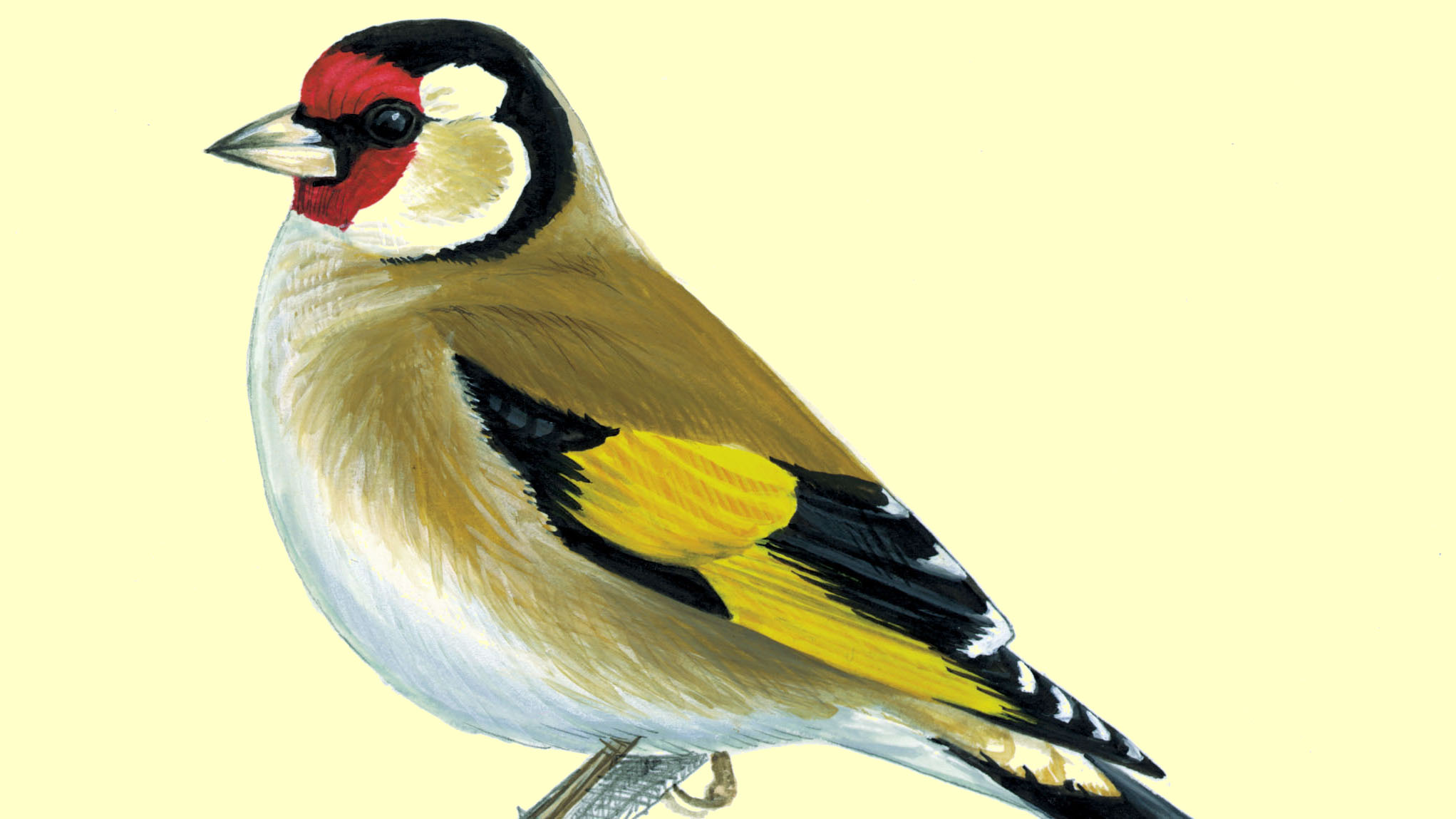
Ferdia may feel thwarted, but our resident Goldfinches are delighted. I was delighted, also, when I found out the collective noun for Goldfinches: a Charm. How apt – the birds are vivacious, colourful and noisy. The word might come from the latin Camina – song.

It’s hard to keep up with them as they fall out of the sky (literally – they just appear suddenly, flap around the feeders, hang on – often upside down, constantly squabble with each other, and then vanish just as quickly) but I have counted up to 20 in one ‘sitting’. The Chaffinches, Robin and Tits edge in occasionally, but when the Charm is around then it’s all-pervasive. Only the Greenfinches seem oblivious to the crowd and staunchly carry on with their meal through all the mad tumblings and twitterings.

gfinch2

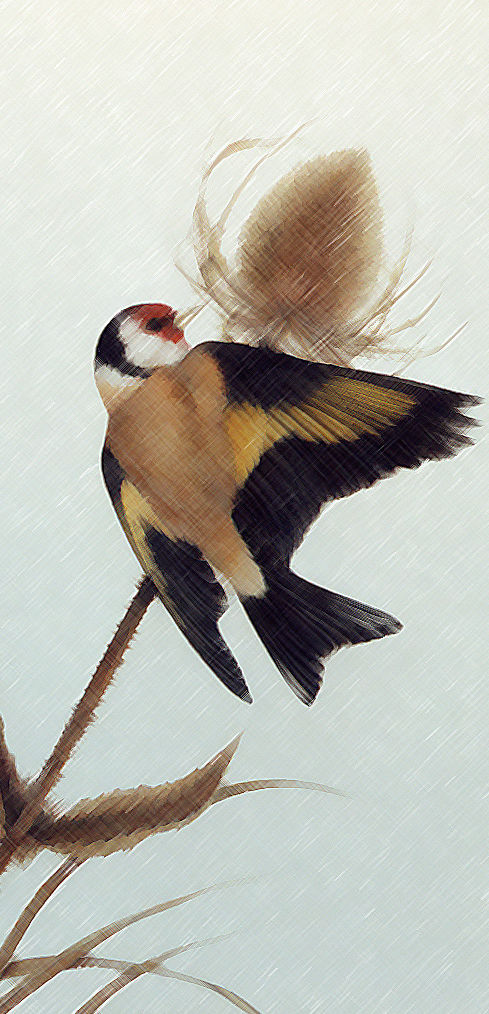
‘Teasel-tweaker’

Goldfinches have a folk name: Thistle-tweaker. Evidently their preference is for the thin seeds of thistles and teasels which they prise out with their beaks. We provide exactly the right seeds (purchased at the bird shop at great expense) but will they have them? Not a bit of it! Only one thing interests them and that’s the peanuts  – just like Ferdia. But their supposed liking for sharp seeds, and thorns for their nests, has given them a place in Christian iconography – and folklore.

A medieval legend tells that when Christ was carrying the cross to Calvary a Goldfinch came down and plucked a thorn from the crown around his head. Some of Christ’s blood splashed onto the bird as it drew the thorn out, and to this day Goldfinches have spots of red on their plumage (a similar story is told about the Robin). Certainly, Renaissance artists frequently depicted the Christ child with a Goldfinch, and it is suggested that the bird is linked to a foretelling by Christ of the manner of his death – something often attributed to the great Folk Heroes.

Chaucer’s Cook is thus described: “…gaillard he was as a goldfynch in the shawe…” – as merry as a goldfinch in the woods. In some parts of England the popular name for the bird was Proud Tailor – which picturesquely sums up the patchwork appearance of this busy and brightly colourful little character.

There is a Valentine’s Day tradition based around birds. If the first bird a girl sees on that day is a Bluetit, she will live in poverty; a Blackbird foretells marrying a clergyman; a Robin tells of a sailor; and if she sees a Woodpecker she will be left an old maid. If the first bird she sees is a Goldfinch, however, she is promised a wealthy marriage…

Goldfinches in Rennaissance art

Goldfinches in Renaissance art

John Keats wrote this verse in ‘I stood tip-toe upon a Little Hill’

…Sometimes goldfinches one by one will drop

From low hung branches; little space they stop;

But sip, and twitter, and their feathers sleek;

Then off at once, as in a wanton freak:

Or perhaps, to show their black, and golden wings,

Pausing upon their yellow flutterings…

Here in Ireland there is a tradition that Goldfinches – under their other folk name: Redcaps – haunt the realms of The Other Crowd, and they will always be seen around the raths (Fairy Forts), ancient mounds and in thorn trees. I will have to research that one.

West Cork Speak: Lessons 1 and 2

The scenic route

The scenic route

Stories abound of hapless tourists convinced that the locals were speaking to them in Irish (which foreigners typically call Gaelic) and finding afterwards that in fact it was English. (For an amusing twist on this idea see the excellent short film: Yu Ming is Ainm Dom.)

The sing-song burr of English as she is spoke in West Cork can be impenetrable to non-natives. For those planning a visit, therefore, I thought I would do the world a favour and provide a primer on sounding like a native.

Lesson 1: Grand and Like

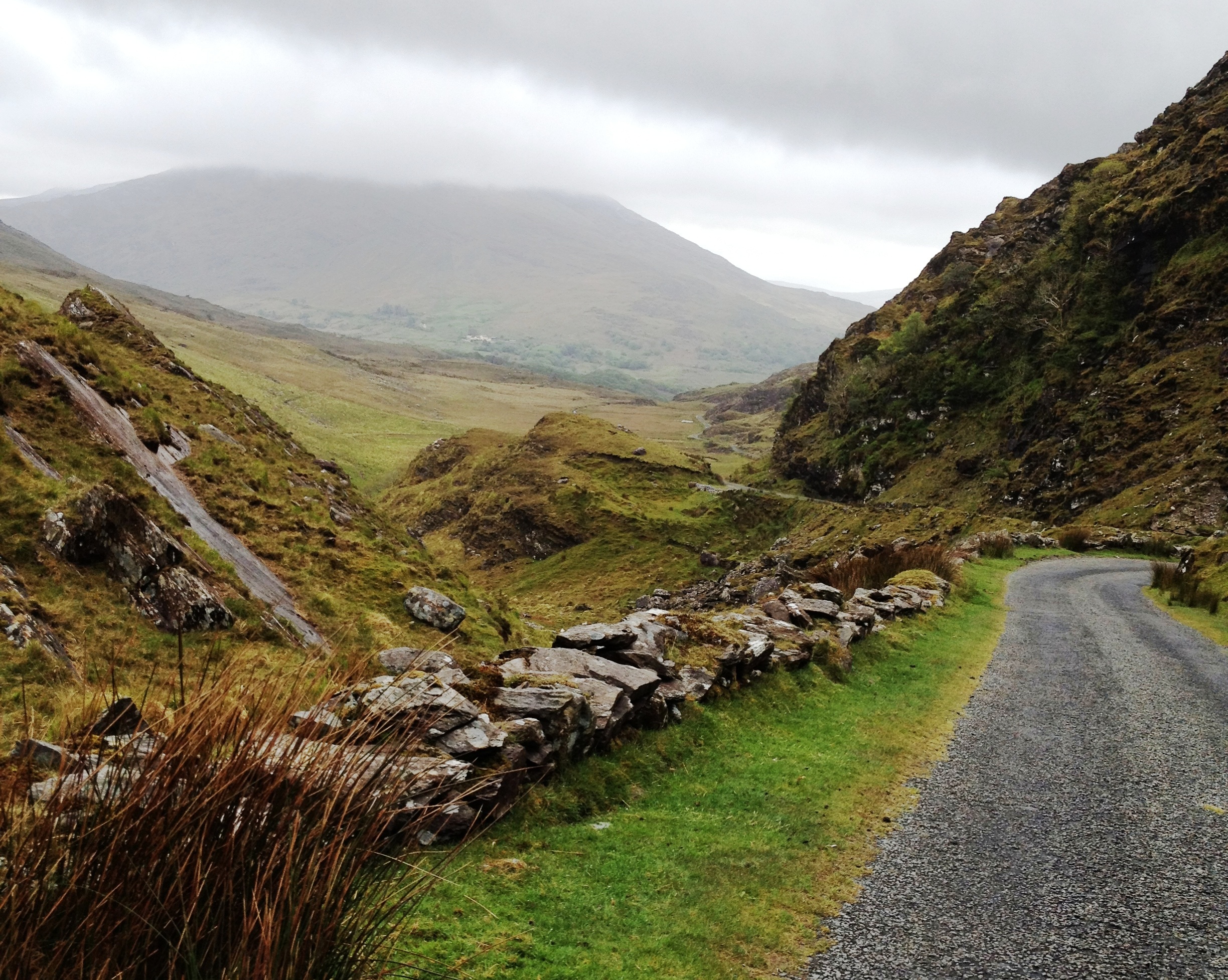
The first thing to know is that you put like at the end of every sentence, and the word grand somewhere within it. I’ll give you an example. You have hired a car and chosen a route marked on the map as scenic. You find yourself inching along a potholed track that clings perilously to a mountain side, with yawning cliffs beneath and a mountain with a cross on it above. You are sure you have gone astray and are on a long abandoned road to nowhere. You are about to turn back (but how? The road is barely wide enough for your car) when around a bend comes a tractor, bucketing and swaying, driven by a genial man in a cloth cap. Through some miraculous process that you can’t afterwards describe, he manages to find enough ground to pull over to let you pass. You roll down your window and ask him if the road is passable ahead. He looks puzzled, then realizes you are a tourist and assures you “’Tis a grand road, like.”

'Tis a grand road

‘Tis a grand road

You are now in possession of a word, Grand, that is appropriate for all possible occasions and can be used in the most prodigal manner. Indeed, you can’t go wrong with it.

keep-calm-it-ll-be-grandHow are you? I’m grand. Better – I’m grand, thank God.

How is your husband? Himself? The back was playing up, but sure he’s grand now, thank God.

Oh, sorry – I can see I am in your way. Ah no, you’re grand.

I’ve just broken both arms and the bank is repossessing my house. Ah sure, it’ll be grand, like.

Lesson 2: Now and So

Together with Grand and Like, Now and So will get you through a surprising number of situations. Although they can be used interchangeably on occasion, they also have distinctive nuances. Now is the one that every waitress will say to you as she appears to take your order and as she delivers your food. It announces that she is here to look after things and you can relax. Its versatility doesn’t rest here – if delivered in a forthright or perky manner you can use it to indicate that you are ready for whatever the day holds as you head out the door, that you are settling down to a good conversation about your neighbours, that the kettle has just boiled, or that it’s your partners turn to hit the ball. If you say it with a slow or sad inflection – ah, now – you can use it to deflect an insult or express sympathy with one who suffers.

So contains a hint of expectancy – So, breakfast is served at 8; So, is it from Canada you are?; So, that will be twelve euros.

But the real trick is to use them together properly – Now so, or so now.

So now is a good one as you settle into a corner of the sofa for a chat: So now, Maureen, I hear Donal up the road was seen in Dunmanway last week with that American woman.

Now so can be used to wind up the conversation: Now so, I’d better be going or himself will be roaring for his dinner, like.

Now so, you’re all set for the first day of your holiday in West Cork. Yes, they drive on the left but just take your time, like, and it’ll be grand. And once you get into the rhythm of life here you’ll be ready for lesson 3 – how to manipulate every sentence into the conditional tense. Perhaps we will also touch on one of the truest Cork talents: how to insert multiple vowel sounds into the word no.

I Can't Do It

I Can’t Do It

Meanwhile, if you want to get a true flavour of the accent, try viewing some of the Sminky Shorts by the talented  Andrew James on YouTube. Be warned – the language is atrocious in some of them – back away NOW if this offends you. Otherwise, start with the Chicken Audition or the Nervous Horse.

Bay of Rainbows

rbphoto

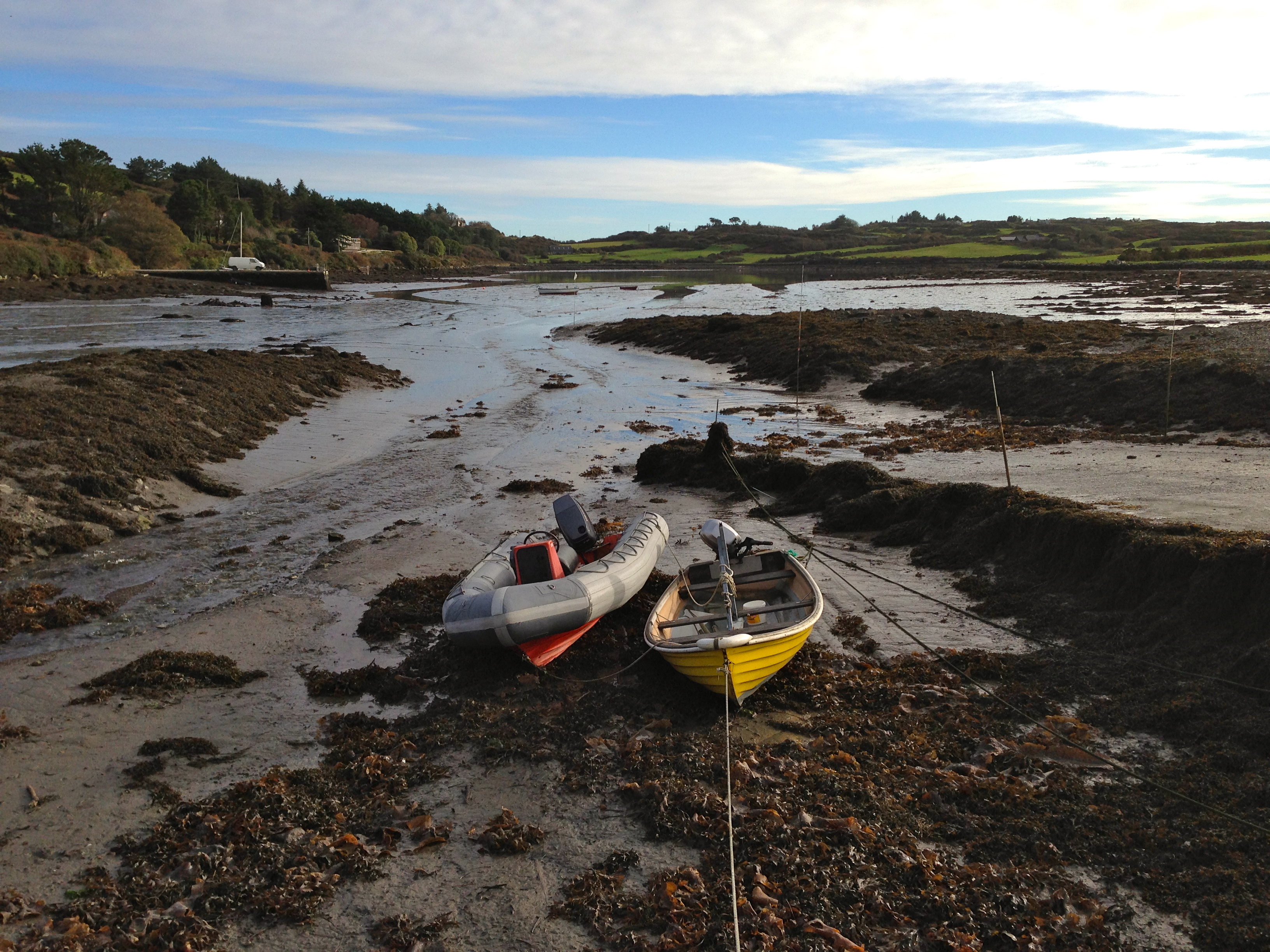
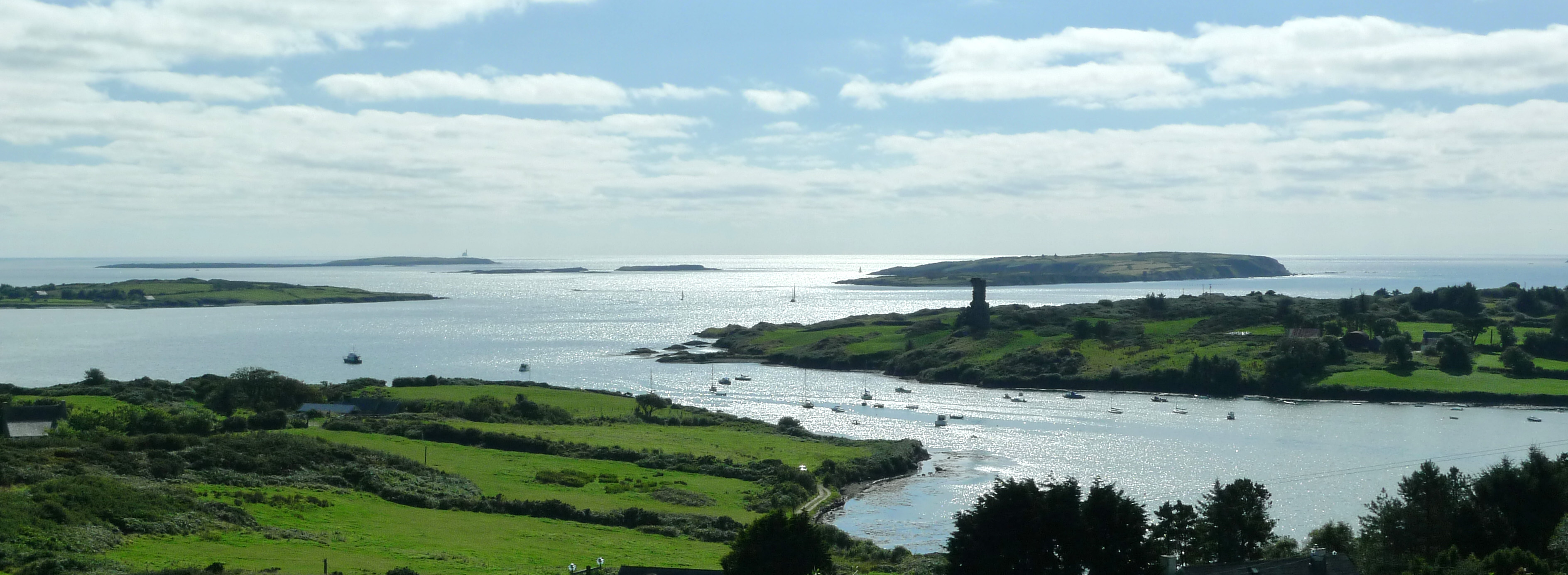
It’s a five minute walk down the hill from Nead an Iolair to the water at Rossbrin Cove (and a ten minute walk back up!). I do that walk as often as possible, and I grow ever fonder of this secluded place. I’m always on the lookout for birds: when the tide is low the natural inlet is a large mudflat – ideal territory for waders (Curlews, Oystercatchers), Gulls, Ducks and – occasionally – Divers. I often see the mussel boat working just outside the Cove: there is a network of mussel beds in Roaringwater Bay. The mussels Mytilus Edulis are grown in polyester ‘socks’ hanging from ropes attached to buoys, long lines of which can be seen on the surface of the water between the Cove and the islands. The mussel boat is a strangely complicated piece of floating machinery, having on board heavy winches and drums for winding in the ropes. Altogether smaller are the lobster and shrimping boats – one-man operations which also set out buoys to identify where their pots are put down. I know when the lobster boat is out: there is a white van down on the pier, usually with an elderly Collie asleep underneath it.

low tide

Low tide

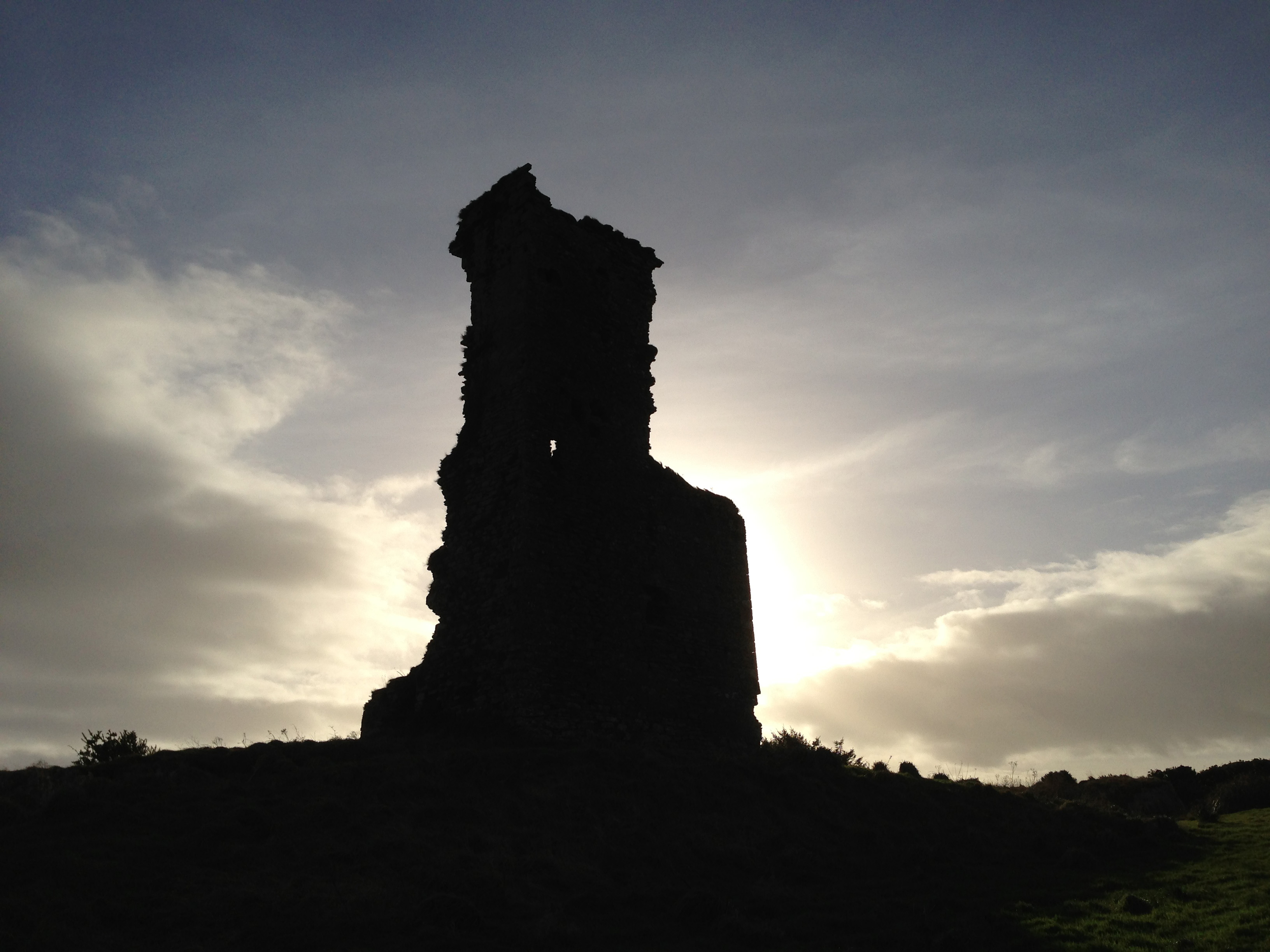
From our perch up here we can see six castles, the most prominent being Finghinn O’Mahony’s which once guarded the entrance to the Cove. It’s in a poor state now – quite a lot of the stonework has fallen in the last ten years. The castle and its acreage were recently sold and there is talk of some strengthening of the ruin being put in hand to prevent its complete loss. It’s a great piece of history, well worth preserving. In medieval times Finghinn – the Scholar Prince – presided, here, over one of the great centres of learning in Europe, and in the British Museum there is a leather bound volume scribed at the castle during his time which has never been translated from the Irish. It’s strange to walk along the shoreline, to experience the peace and remoteness, and to remember that this was once a hotbed of knowledge and also a hub for large French and Spanish fishing fleets in the fifteenth and sixteenth centuries, all paying their dues to the O’Mahony septs (Irish clans) for rights and protection. These rights were worth thousands: West Cork was a wealthy place then – far away from the tax collector!

Rossbrin Castle - at the centre of the Medieval world

Rossbrin Castle – at the centre of the Medieval world

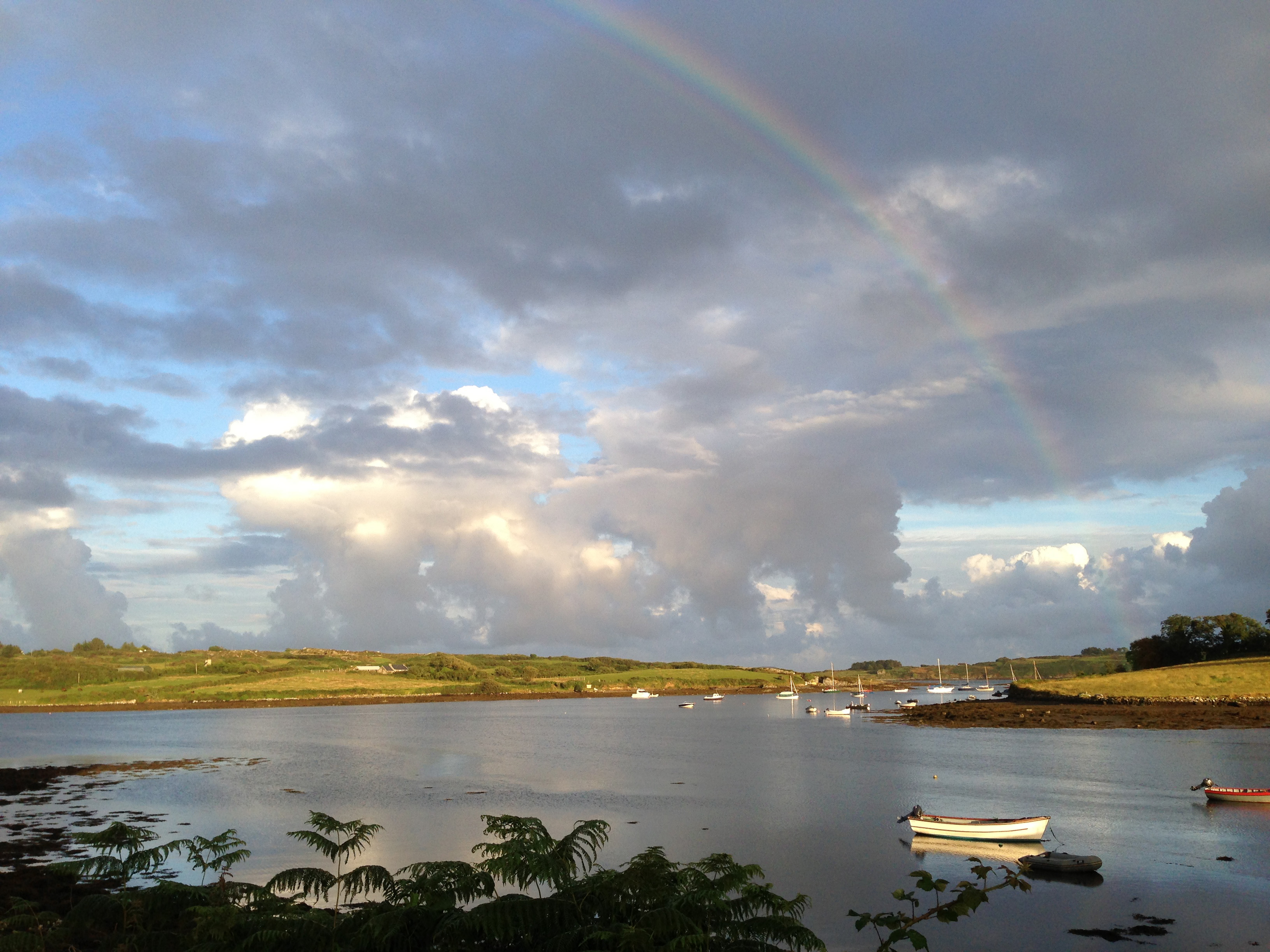
Today we walked out to the edge of the Cove, searching for an ancient cillín (look out Finola’s post for a definition). We are not sure whether we found that, but we did see some very strange field boundaries and a possible unrecorded cup-marked stone. We started out in sunshine but – as often happens here – we were caught out by a sudden storm squall blowing across from the Atlantic: we were soaked. But the reward was a superb rainbow spanning from south to north horizons. Central to it was a shaft of sunlight lighting up Jeremy Irons’ castle at Kilcoe.

Holy well

Holy well (well, possibly the site of one…)

The Cove abounds in history: there is a holy well marked on the old maps, right on the north shore. All that can be seen there now is a spring – presumably of fresh water – which is immersed at high tide. It’s fascinating to think what meaning this once had for those who dwelled here – and long before the time of the Scholar Prince. There is at least one Fairy Fort close to the water, while high above and overlooking the Cove is the enigmatic Bishops Luck standing stone. In more modern times there was extensive copper mining – our Calor gas tank at Nead an Iolair is supposed to be situated over an infilled shaft!

cove

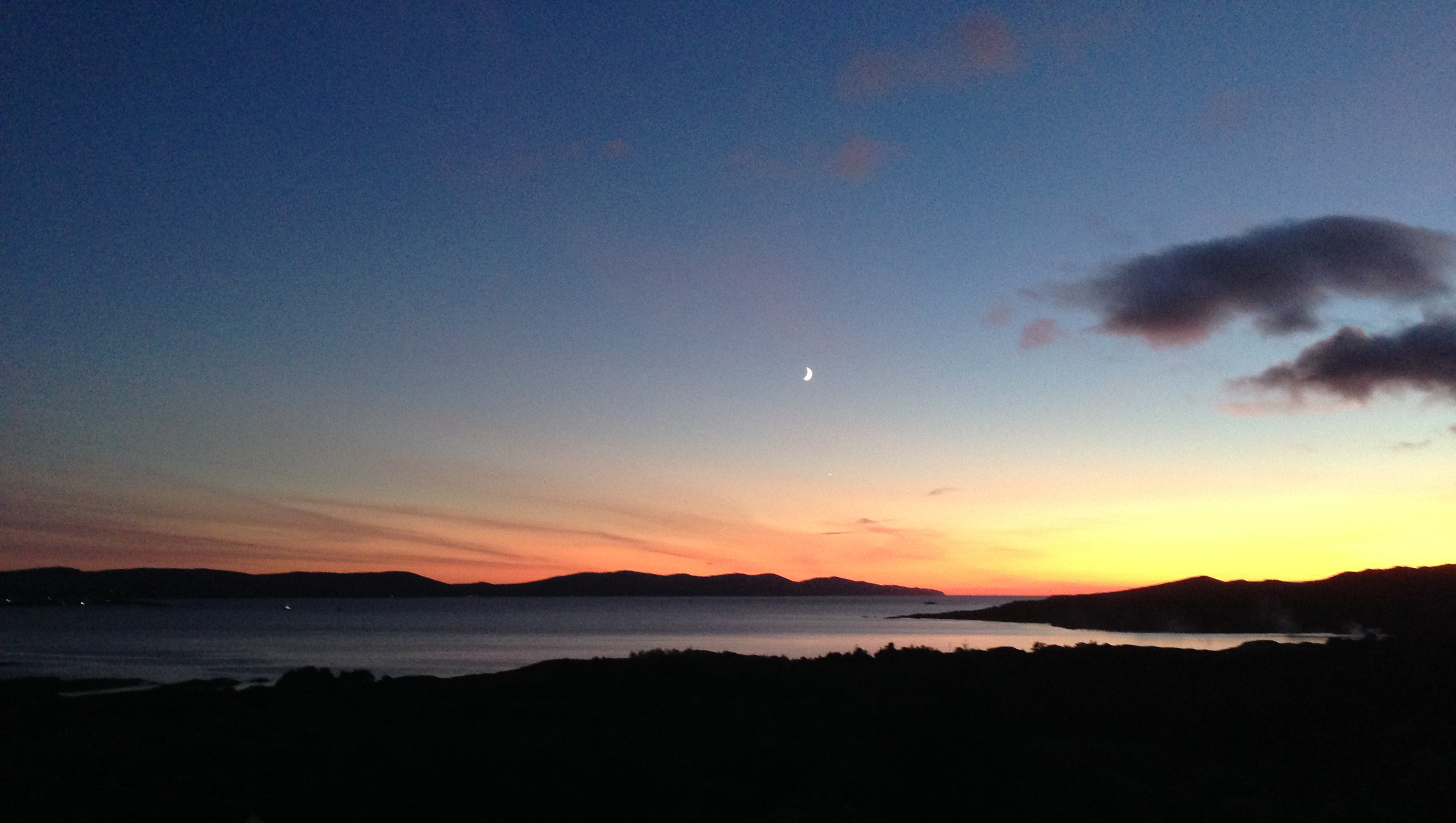
Mines; standing stones; Fairy Forts; medieval castles and manuscripts; holy wells; mussel farming; lobsters, shrimps et al… We are surrounded by evidence of human endeavour going back thousands of years. Through it all the natural world continues regardless: the sun rises, the moon wanes, storms blow in, seasons turn; the tides bring daily changes to the shoreline – and the rainbows are our evanescent doorstep miracles…

cove1

moon2