The Roaring

Waves crash against the islands in Roaringwater Bay

Waves crash against the islands in Roaringwater Bay

In our early days here I read in a couple of places that Roaringwater Bay got its name from the Roaringwater River, which in turn derived its name from the sound of the water tumbling over the rocks as it neared the sea. Now, I know better. The water in this huge bay, with its multiple islands and rocks, does roar. Not all the time, of course – you could live beside it for weeks, even months and never hear it.

The view past Castle Island, after a storm

The view past Castle Island, after a storm

But after a storm, when the wind has died down, the rain has stopped, and all is calm we fling open the doors to enjoy once more the bright sunshine and balmy air. That’s when it stops us in our tracks: a constant roar, like a distant jet engine, or a working factory just out of sight. The first time we heard it we were viewing a house on a hill about a mile inland and came around to the side facing the sea – and there it was. It took us a while to figure out what we were hearing: it sounded like some kind of foundry or industrial equipment. (Aha! So that’s why they want to sell this place!) It gradually dawned on us that there was nothing like that in this isolated spot and that what we were hearing was coming from much further away – from the sea, in fact.

Is there a prevailing wind here?

Is there a prevailing wind here?

Once back home we got out the spotting scope and could clearly see the waves crashing against the islands. In the aftermath of the storm the water was still turbulent, with giant waves pounding against the rocky shores and breaking right over the rocky islets. The cliffs at the western end of Cape Clear were covered in sheets of salt spray. We have a clear view of the Fastnet Rock (more about this in a future post) and in particularly wild conditions we can see waves breaking over it, reaching up to the trunk of the enormous lighthouse.

Near Ahakista: The calm after the storm

Near Ahakista: The calm after the storm

Our recent storms have been, as we say in West Cork, mighty. A particularly vicious series of gale, storm and hurricane force winds (9, 10, 11 and 12 on the Beaufort Scale) has wreaked havoc along the coast. Yesterday we went to Ahakista on the Sheep’s Head. The damage there has been recorded by Amanda – click here to see her photos and account. We had a respite from the winds today – a perfect opportunity to listen to the roaring water.

Earth Winds. Jan 05, 2014

Earth Winds. Jan 05, 2014

Tonight we are expecting another onslaught, like the one on St. Stephen’s night that Robert reported on in his last post. I have discovered the Earth Winds Map – one of the coolest sites on the internet. Updated every three hours, it shows how the winds are flowing around the earth. This screen capture shows the Atlantic storm that is heading for us and packing winds of 109km per hour. That’s classified as “Violent Storm” and just a few km/h short of a hurricane. Met Ireland has issued a warning, especially for areas affected  by high tides, of storm surges and potential flooding. We will hunker down and keep our fingers crossed for ourselves and our neighbours here in West Cork. And when it’s all over, we will listen for the roaring of the waters.
Nollaig ar Nead an Iolair

December 25th! Must be global warming

December 25th! Must be global warming

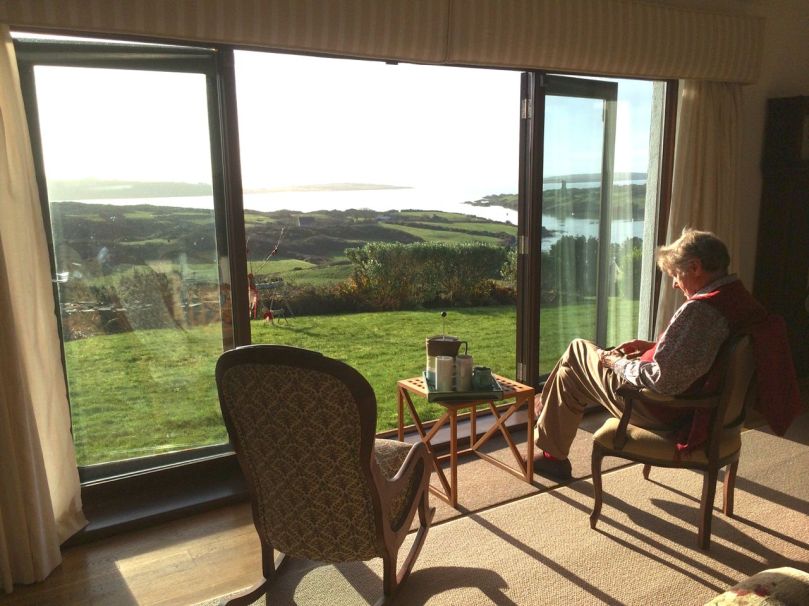
Our first Christmas at Nead an Iolair and it’s been everything we could have wished for. The day itself was bright and sunny. We threw the French doors wide open and exchanged our gifts in the sunshine. It’s a good job we enjoyed it while we could, as the wild weather set in on St Stephen’s Day (Boxing Day outside Ireland).

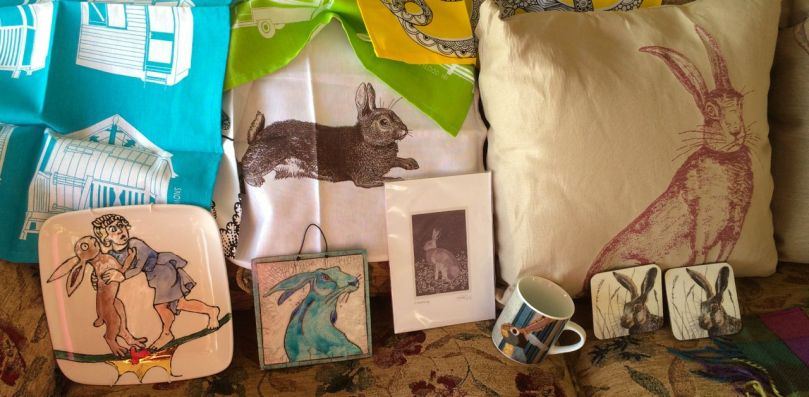
Is there a theme developing here?

Robert’s gifts: is there a theme developing here?

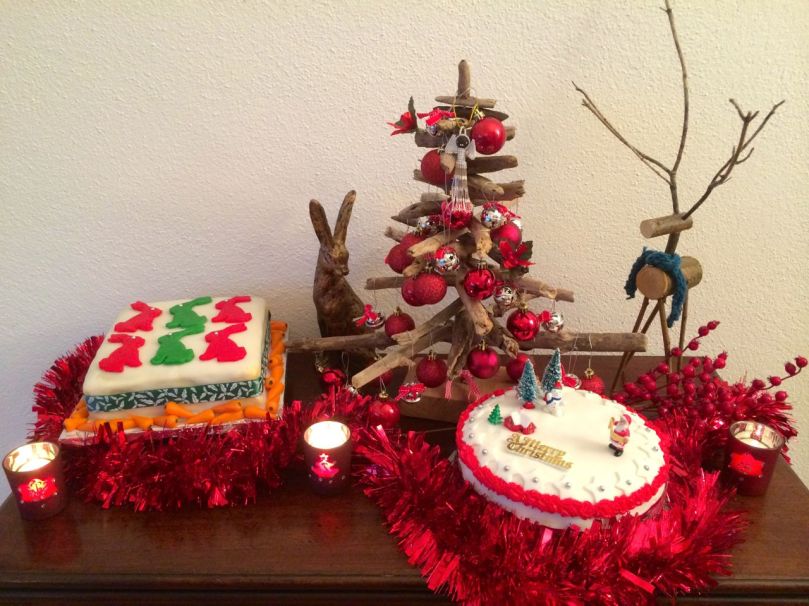
Of course, we had to have the ceremonial first cut of each of our Christmas cakes. Readers will remember that I made Monica Sheridan’s recipe while Robert made Delia Smith’s. The verdict? Mine was way better! (This is MY post.)

The avant garde and the traditional approach

The avant garde and the traditional approach

Our new stoves were installed just in time for Christmas. This kind of supplemental heating is essential for the winter months in West Cork, where fuel is very expensive. Together with our decorations, newly purchased from the Christmas markets and hung on twigs culled from nearby hedgerows, they created a cosy and seasonal ambience in the house. Also perfect for a house-warming party, which we are finally hosting this weekend.

Ready for the house-warming party!

Ready for the house-warming party!

Now so, at the end of 2013, we have to say that it’s been a grand year, like. And to our readers, Bliain nua faoi mhaise agus shona dhaoibh – a Prosperous and Happy New Year to you all.

From Roaringwater Bay to all our friends and readers - a Happy New Year!

From Roaringwater Bay to all our friends and readers – a Happy New Year!

Stormy Weather

neadwinter

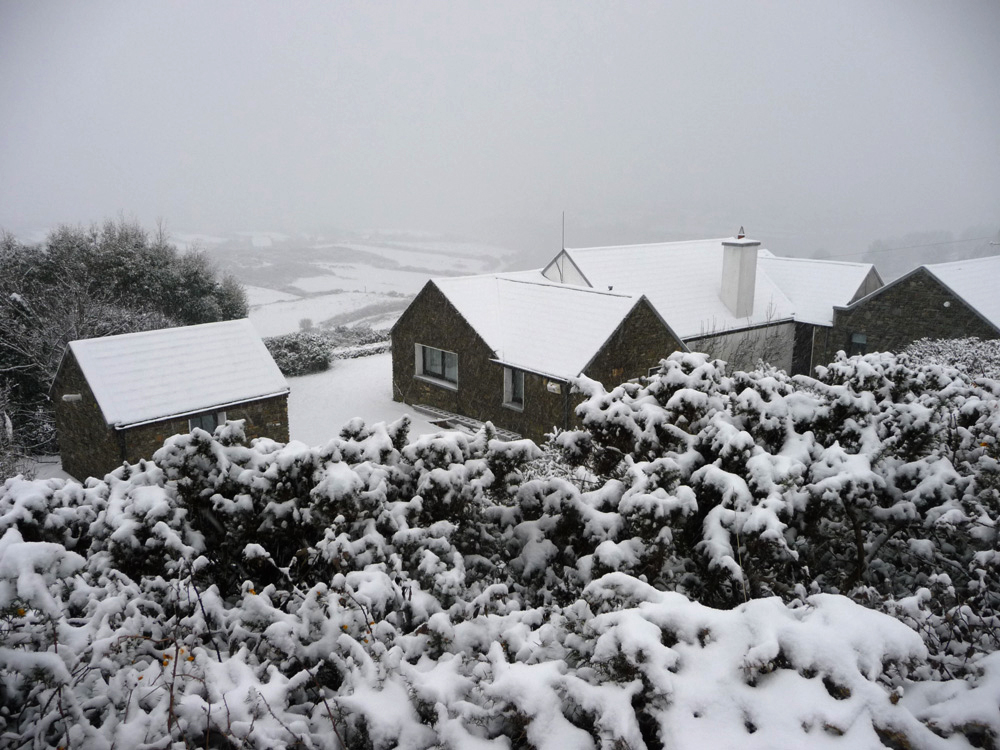
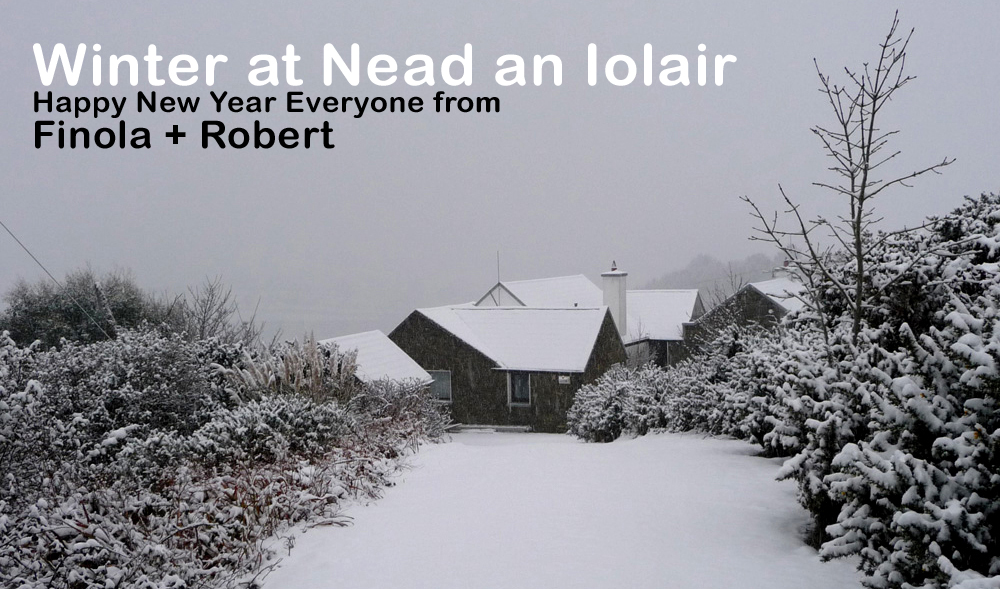
This picture of Nead an Iolair is here to create a seasonal feel: it was taken by our neighbour Dietrich in the Great Winter of 2010 – 2011 when the extremes were all about deep snow, frozen roads and frozen pipes, unusual for this little corner of the island normally kept mild by the Gulf Stream. This winter we have a different extreme – hurricane force winds!

spiked

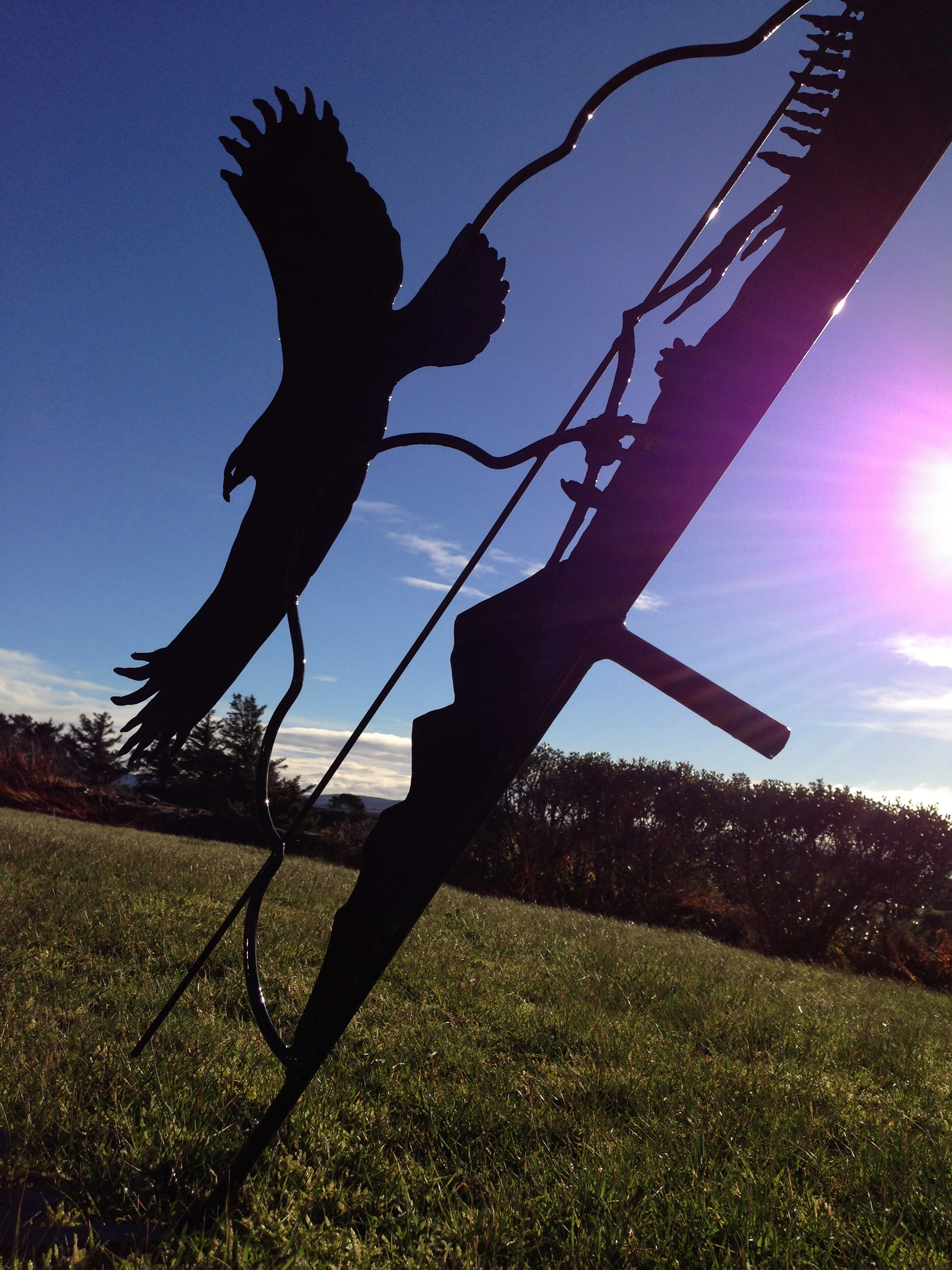
‘Hurricane’ on the Beaufort scale means wind speeds of 118 km/hour or more. We went to bed on St Stephen’s Day evening, having measured the wind speed outside as 87 km/h. That seemed wild to us: the trees were bent over and the salt laden rain and sleet were coming in horizontally and lashing our south west facing windows. It was hard to sleep: the slates were rattling loudly above us and the aerials and lightning conductors on our roof were shrieking and bending. The noises got louder and more terrifying as the night went on. I wanted to venture outside with my little hand-held anemometer but I couldn’t face it. The violent storm began to abate only in the early hours of the morning and, when we did creep out, it was to find some damage: two trees down in the haggart, sadly, and our beautiful weather vane collapsed. It was as well that we weren’t underneath when the flying Eagle and its sharply pointed arrow came crashing on to the lawn, just missing our door.

levissession

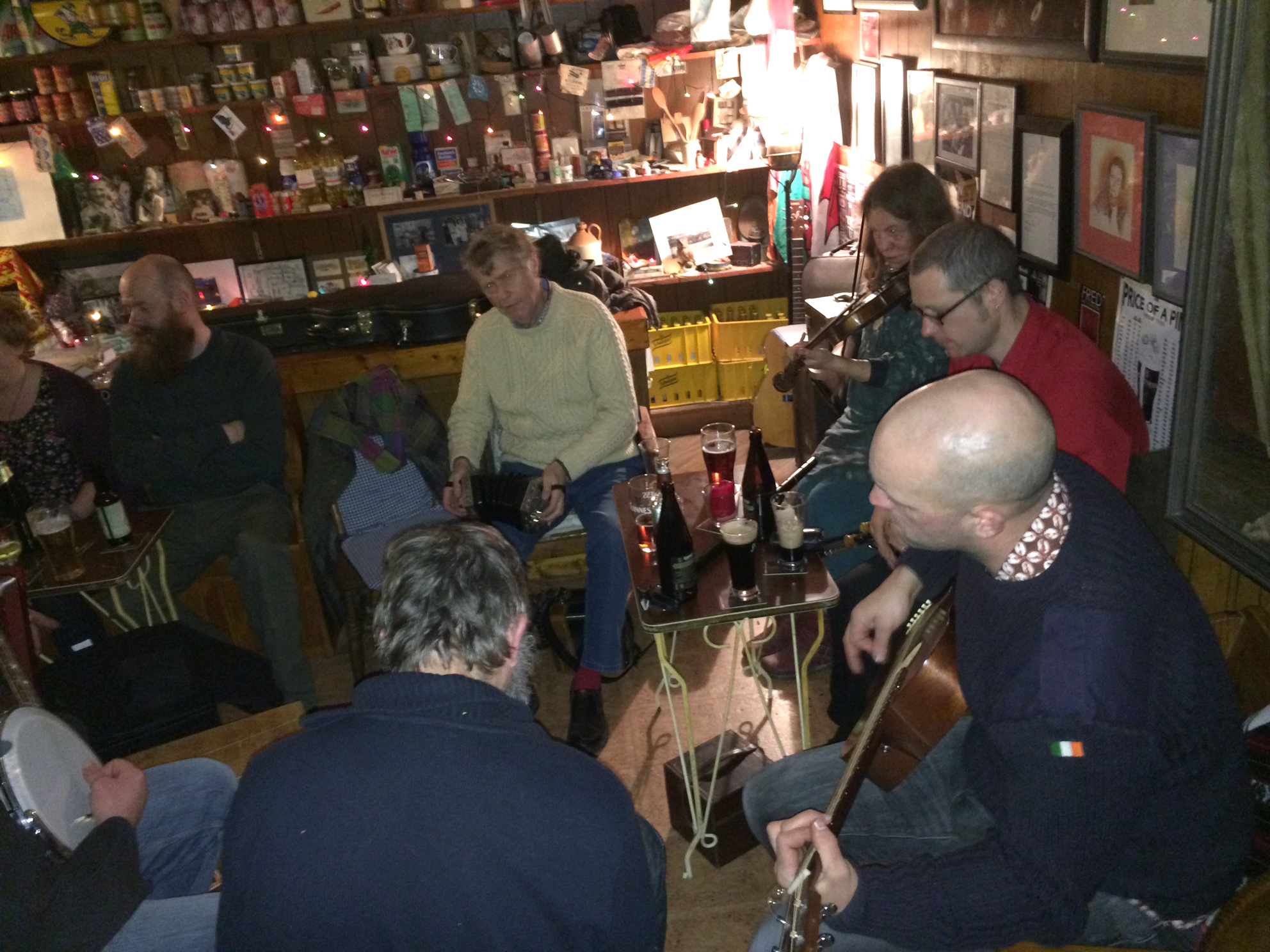
St Stephen’s Day Session, Ballydehob


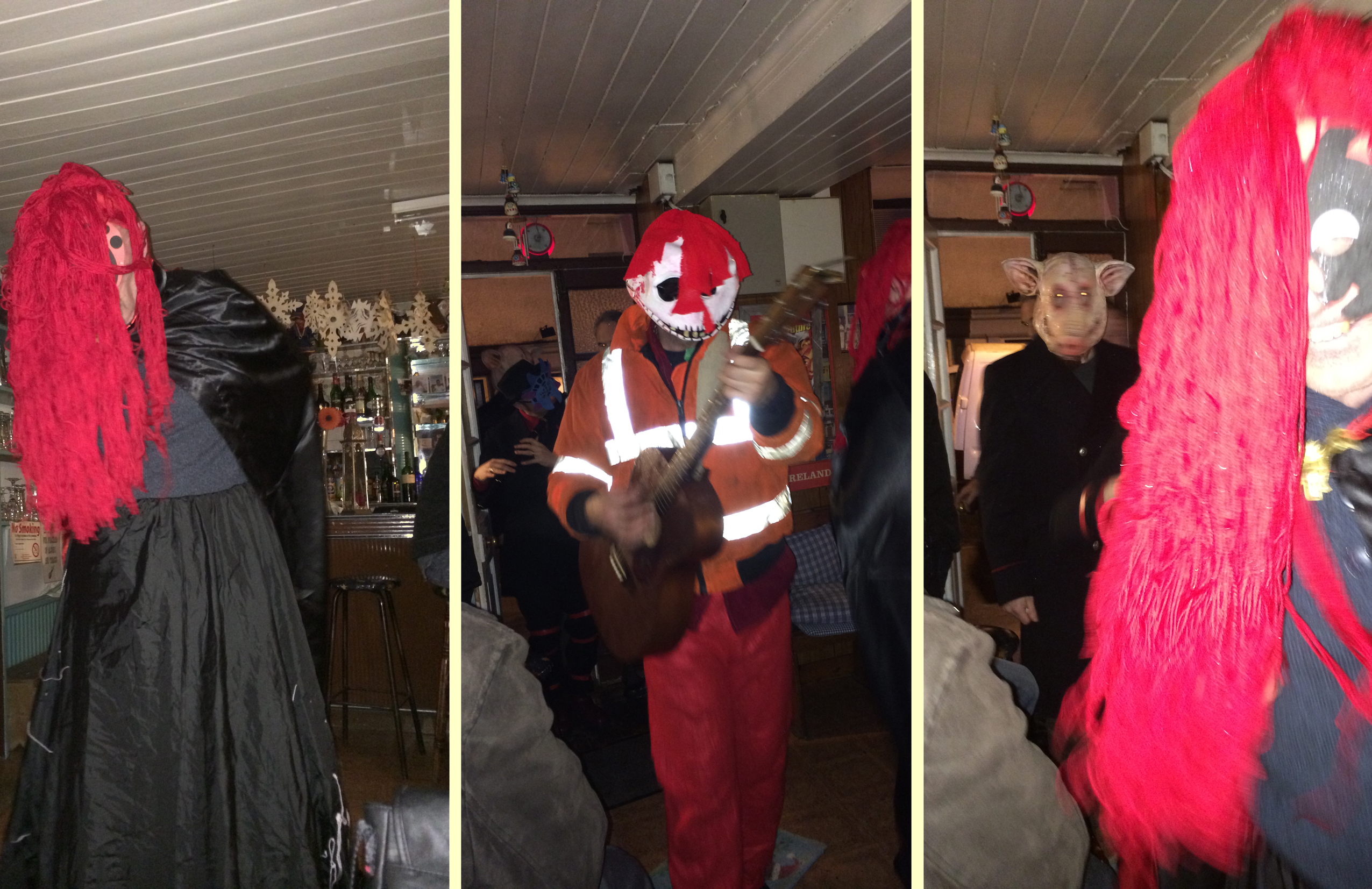
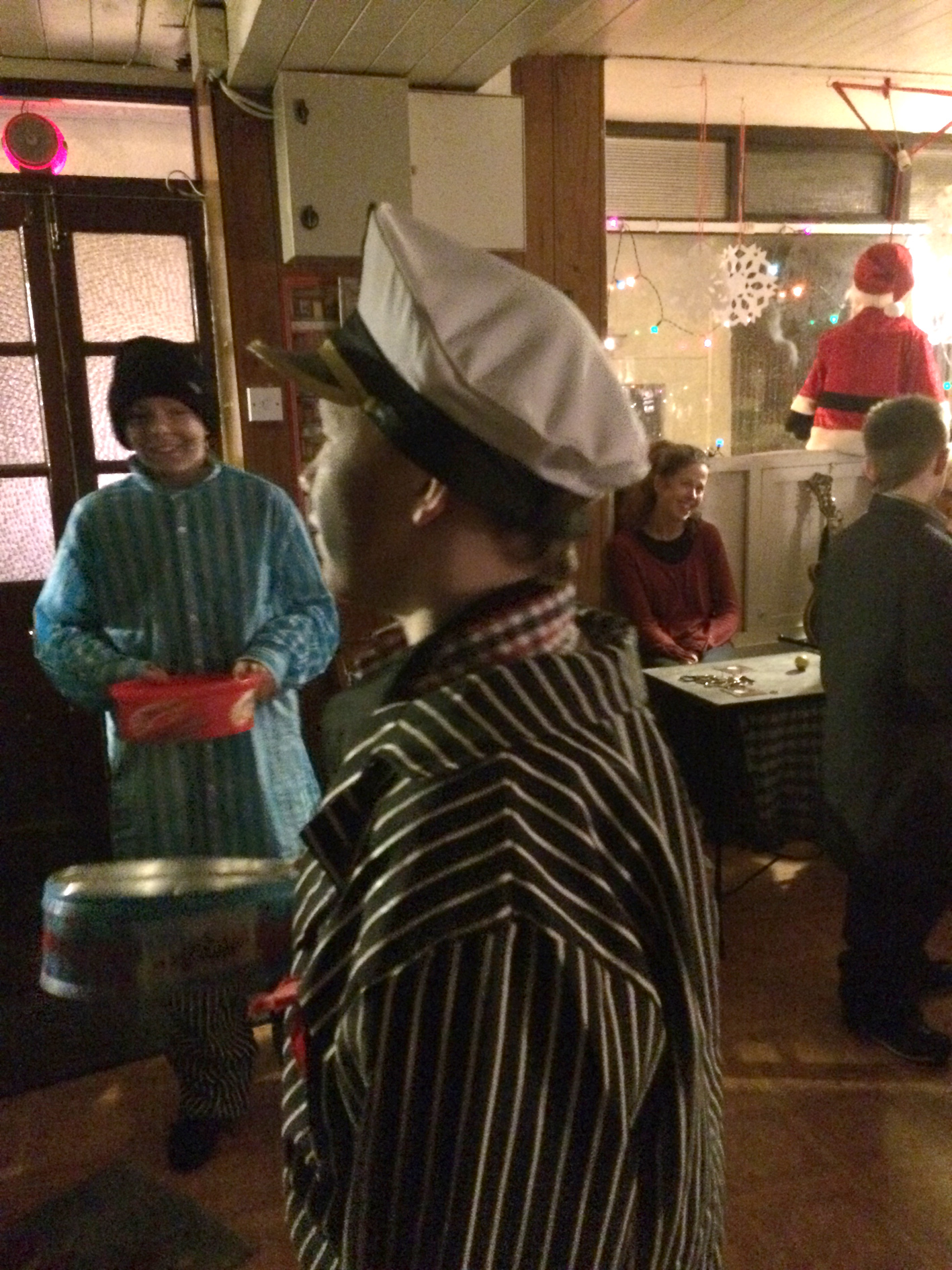
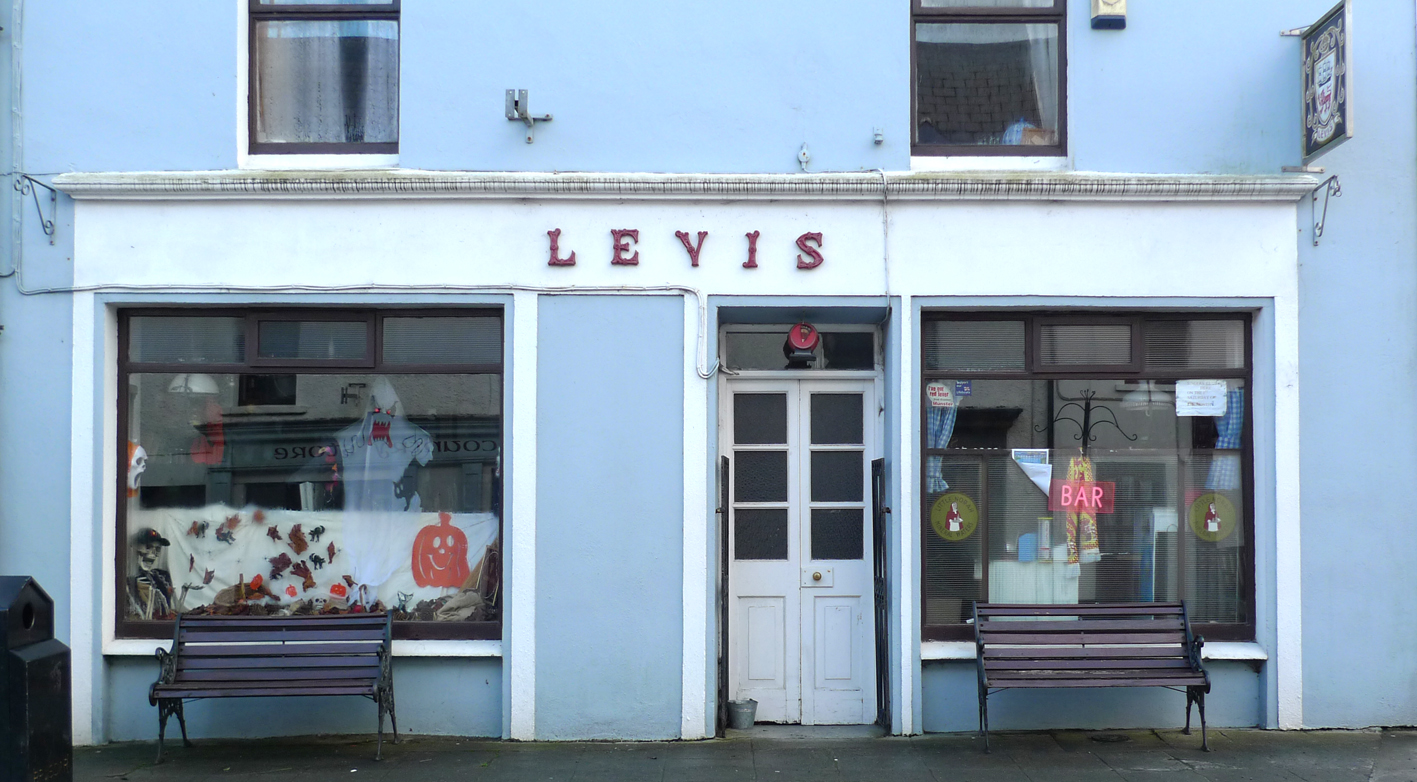
Earlier in the day we had enjoyed an unexpected visit by the Wren Boys to Levis’s pub, where we were involved in an improvised session. Two groups of Wren Boys in fact: the first an adult company with musicians, colourful costumes and bizarre masks, and the second a group of boys dressed in old coats turned inside out, pyjamas and sailor caps, carrying large collecting tins. All were welcomed and the festivities grew merrier as the wind strengthened.

wrenners

wrenboys

Keeping traditions going: outlandish Wrenners visiting Ballydehob – top – and local lads collecting in Levis’s Bar – below

As I lay in bed at the height of the storm I found myself worrying about our birds: how on earth could the Goldfinches, Chaffinches, Robins and Wrens (any Wrens who had escaped the St Stephen’s Day hunt that is) have survived that terrible gale – which stripped the bird feeders of everything moveable and the bushes and shrubs of their sheltering leaves? In the morning, there they were back again, and noisily demanding a refill which, naturally, I was delighted to provide.

message

Meet the Seanachaí

Eddie Lenihan - travelling storyteller

Eddie Lenihan – travelling storyteller

Seanachaí – a word with many ways of spelling it in the Irish: seanchaidhe (plural seanchaidhthe); seanchaí, or shanachie in its anglicised form. In Scottish Gaelic the word is seanchaidh or shennachie, while in Manx Gaelic the word is shennaghee.

poster

A Seanachaí is a bearer of old lore – the role that the Bards once fulfilled, either attached to the retinue of clan chieftains or individually travelling through the Provinces where it was obligatory to offer them hospitality in return for an evening of elucidation or entertainment. I have previously mentioned the travails of ‘Red’ Aengus O’Daly whose reputation of publicly criticising his hosts on his travels led to a sticky end.

levis

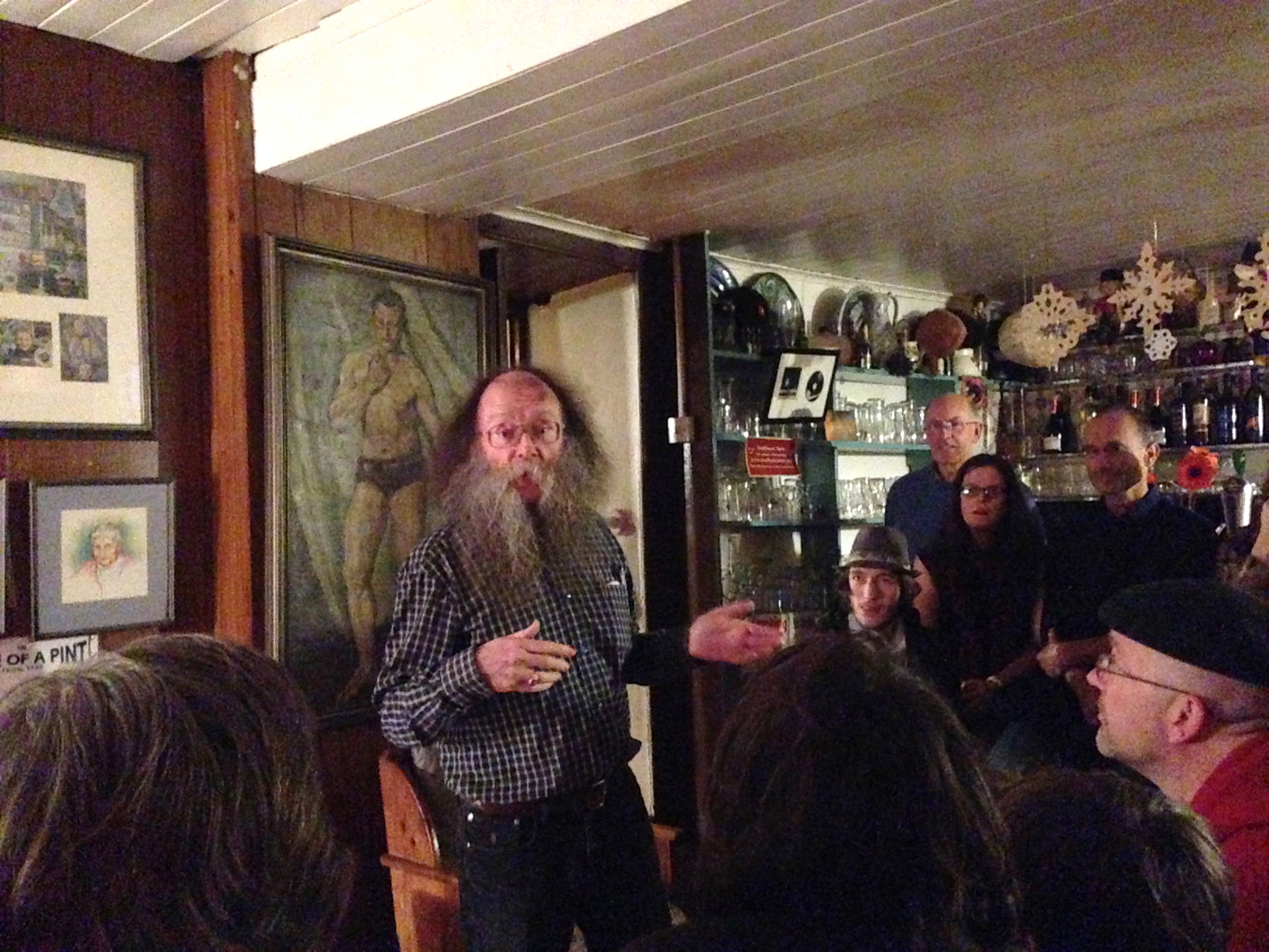
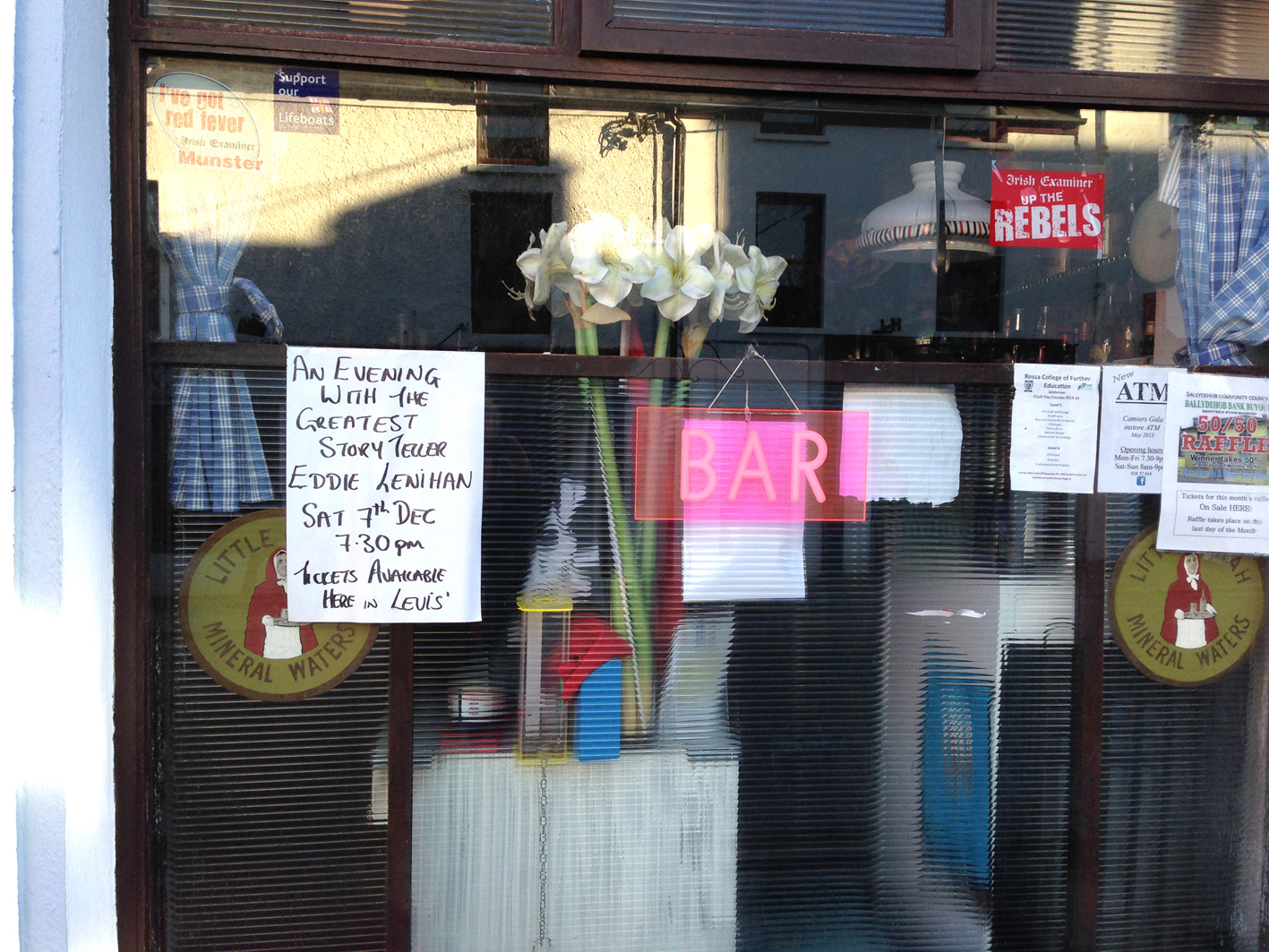
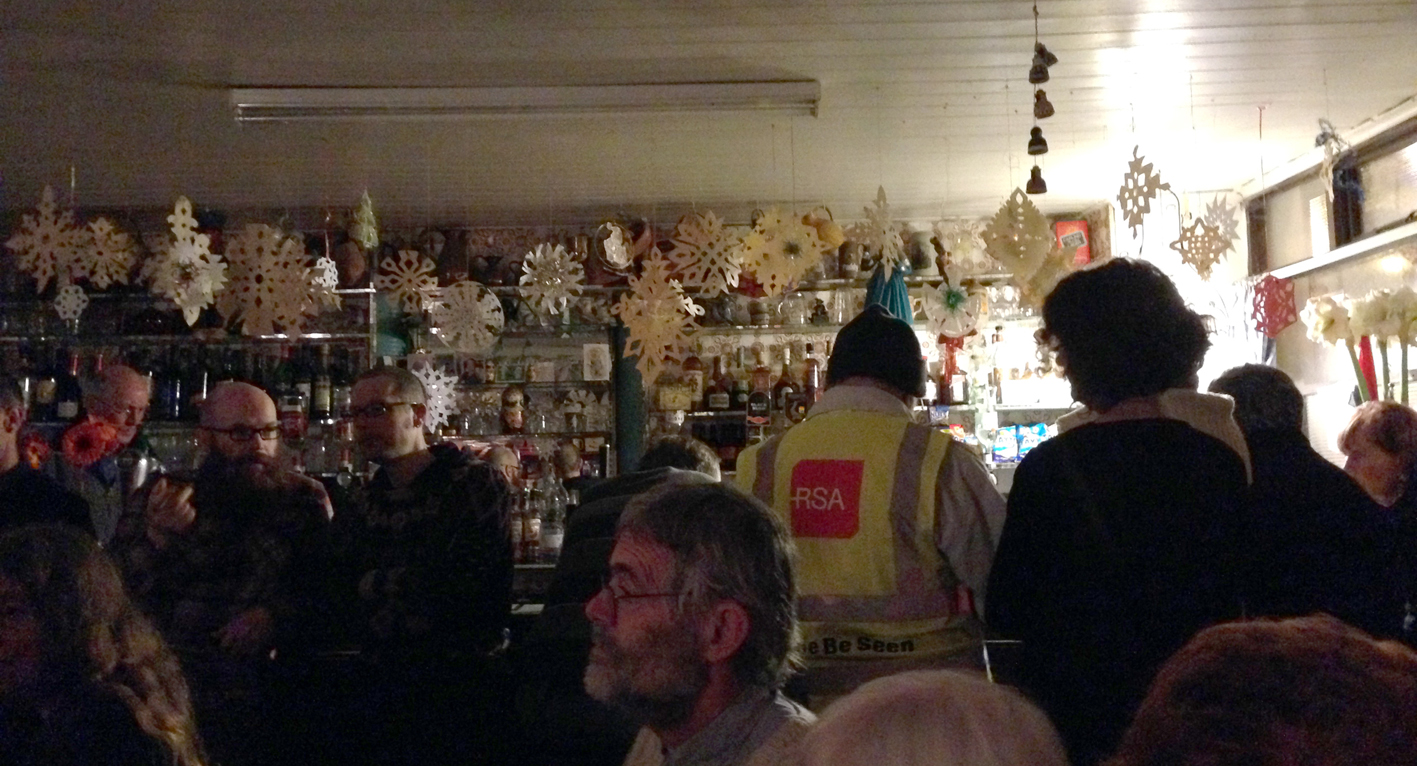
The Seanachaí came to us in Ballydehob – heralded by a missable poster in the window of Levis’ Bar, which held the event. Levis’ is one of the smallest pubs in the town but over fifty people crowded in to listen to Eddie Lenihan – probably Ireland’s best known living storyteller. The pub interior itself is a wonderful backdrop for such an occasion: a selection of groceries and household goods rubs shoulders on the shelves with old postcards and paintings. Behind Eddie in the photo you can see a full length portrait of Ballydehob’s most famous son, Danno O’Mahony, 6ft 3ins tall and weighing over 18 stone: he was regarded as the strongest man in the world. The family haled from Dereenlomane and Danno was born in 1912. By 1934, at the age of 22, he was already the Irish Wrestling Champion and started a professional wrestling career in America. He won 55 out of 55 fights and became Supreme World Wrestling Champion in 1935. He successfully defended his title 125 times. His homecoming to Ballydehob after winning the world title was captured on Pathe News, here.

listeners

Returning to our own champion storyteller, Eddie Lenihan provided a fascinating, amusing and sometimes frightening evening’s entertainment to an enraptured audience of young and old listeners. He has gathered stories of The Other Crowd, Irish folk and country ways from people who still remember them being told in their own youths seventy or eighty years ago, and he is passing them on. Sometimes he speaks of stories which can’t be told: intriguing. He was born in Kerry, lives now in Clare and was passing through Cork: truly keeping alive the tradition of bearing the old lore: the Seanachaí.

Wrens and Rhymers

troglodytes

…..…In comes I the Wran,

The Wran, the Wran, the king of all birds.

On St Stephen’s Day I was caught in the furze.

Although I am little my family is great,

Rise up landlady and give us a trate.

Up with the kettle and down with the pan,

Give a few pence to bury the Wran.

Then I’ll dip my wings in a barrel of beer,

And I’ll wish you all a happy New Year.

St Stephen - the stoning
Stoning of St Stephen by Uccello

– St Stephen was the very first Christian martyr: in the same year that Christ was crucified he claimed to have a vision of Jesus in heaven standing at the right hand of God. To Stephen’s enemies this was a blasphemy, and he was forced into hiding. But his hiding place was given away by the song of a little Wren, and St Stephen was publicly stoned to death. In retribution for this the Wren is traditionally hunted in Ireland  (and some other Celtic countries) on St Stephen’s Day – December 26th, and groups of Wrenboys carry the bird from door to door – slung from a pole or interred in a small wooden coffin: there was a time when the poor Wren himself would have been stoned to death. An old story also blames the Wren for alerting a band of Vikings to the approach of the Irish army by pecking on a drum; yet another claims that when Cromwell’s soldiers were asleep and the Irish were about to attack, a flock of Wrens rose into the air and wakened the enemy with the sounds of their wingbeats. So there has always been a strong connection with betrayal.

Wrenboys in Cork - 19thC and Wren Boys by Jack Yeats
Wrenboys in Cork – C19th and The Wren Boys by Jack Yeats

Troglodytidae (cave dweller) is such a small bird: here at Nead an Iolair we occasionally catch sight of him darting out from thick, seemingly impenetrable bushes close to the bird feeder – his movements seem more like a mouse. Small, yet in mythology he’s a giant – King of the Birds in several traditions: Koning Vogel in German, Konije in Dutch, Reytelet in French, Bren in Welsh – all mean King or Little King. When the birds were electing their king they decided that whoever could fly the highest would win the contest; the Eagle easily outflew everyone else but the Wren was hiding in his wings until the Eagle had exhausted himself and then flew on up to claim the title. But there’s more: the Wren is forever associated with that turning point of the year when everything goes topsy turvy: the Twelve Days of Christmas. At this time the Lord of Misrule presides and traditional roles are reversed; it’s not surprising, then, that the tiniest of the birds should become the most important. But, like all kings, his reign is finite – and he is sacrificed at the dark year’s end to ensure that the sun will rise again.

wren song

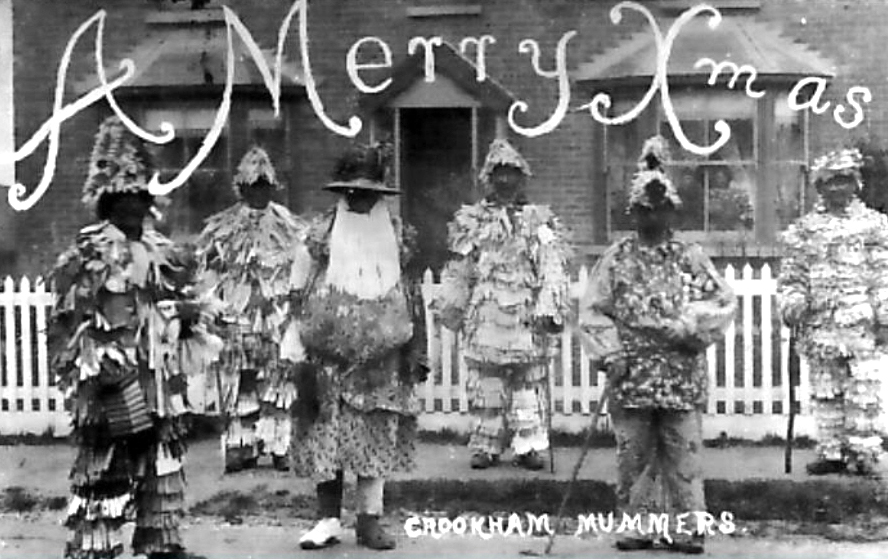
Which brings us to Rhymers… and Wrenboys, Strawboys, Guisers and Mummers… The Feast of Stephen is their day too. When I was a boy we went out every Boxing Day morning to Crookham in Hampshire to watch King George slaying Bold Slasher, who was miraculously brought back to life by the quack Doctor, after which the young fertility figure Trim Tram Jolly Jack ‘…wife and family on my back…’ killed Old Father Christmas – something which must have seemed odd to a child, who might not have understood the symbolism of the  old, dark winter giving way to the new life of spring. Danny tells me that when he was growing up in Limerick he saw the Strawboys or Rhymers performing the same play on the streets – and he remembers the Wren being paraded in procession, too.

crookham mummers
Mummers in Hampshire, England, above – and Wrenning in Kerry, Carrigaline and Dingle below
wren day

The folk play is alive in Ireland: there are Mummers in Wexford, Cork and Dingle, and the Armagh Rhymers travel across the world to perform their rituals. Here at Nead an Iolair I shall be reciting ‘…In comes I…’ around Christmas time: the words of all the characters are locked firmly in my brain – I have never seen them written down. It’s a true oral tradition – and a surviving one. Who knows – if I don’t repeat those words, the sun might just stop shining… It’s not worth the risk.

The Armagh Rhymers
The Armagh Rhymers

And – on St Stephen’s day – I shall be on the lookout for a Chime of Wrens, but I love all our birds, so it will only be a token ‘hunt’.

Christmas Cribs

Bantry Town Square

Bantry Town Square

In this part of Ireland putting up a nativity scene at Christmas time is as natural as breathing. Known as cribs, they appear everywhere at the beginning of December. Every Irish home has one, perhaps passed down through the generations, and they come out from the attic storage boxes along with the decorations to be displayed in a window or on a mantlepiece or hall table. Even for families that consider themselves non-religious, the crib is an essential part of getting a house ready for Christmas.

One for every budget

One for every budget

Large cribs are erected in town squares and in churches. Sometimes the figures in a church crib will be inserted slowly, one a day, in little ceremonies involving children. Traditionally, the baby Jesus, was not placed in the manger until Christmas Eve. Live cribs, where the nativity figures and animals are alive, are often mounted as fundraisers. I wrote about the Skibbereen one last year. There is even, in Dublin, the Moving Crib – an institution that generations of Irish children will remember and which is still going strong almost 60 years after it was first introduced as a Christmas wonder in a church basement.

Rosie's Pub in Ballydehob

Rosie’s Pub in Ballydehob

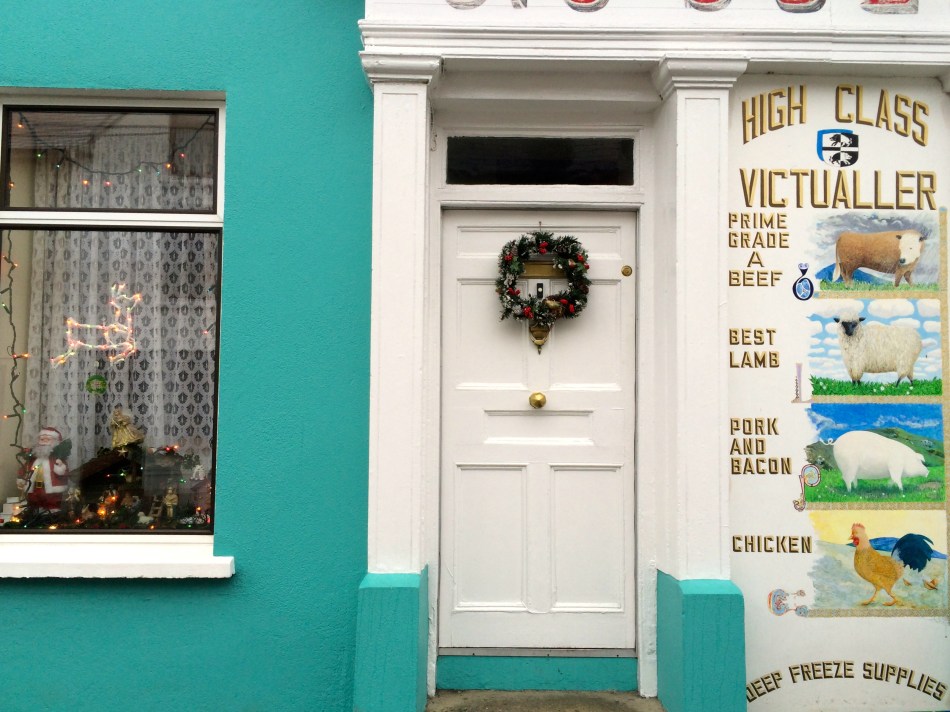
Many businesses clear their window displays to feature the crib at Christmas – along with Santa, reindeer and the usual holly and candles. Shops, hairdressers, garages, pubs: it’s universal and it’s all a reminder that Ireland, which now prides itself on its multi-cultural and pluralistic society, is still at heart a traditional Catholic country.

Outside the Catholic Church in Schull

Outside the Catholic Church in Schull

A striking aspect of Irish cribs is their conventional character: lifelike (and sometimes life-sized) representation is the norm. Mary, Joseph, Baby Jesus, shepherds and kings, the cow and the donkey are all instantly recognisable and similar, as if stamped out by the same crib-figure factory in Italy.

In Ballydehob

In Ballydehob

John Charles McQuaid and Eamon DeValera - together keeping Ireland devout

John Charles McQuaid and Eamon DeValera – together keeping Ireland devout*

As I considered this, a memory stirred and I went hunting on the internet for more information. In 1964 a new church was built at Dublin Airport. Named, suitably, “Our Lady Queen of Heaven” it was a beautiful piece of mid-century modern architecture designed by an Irish architect, Andrew Devane, who had studied under Frank Lloyd Wright. For Christmas 1966 a new crib was installed. Consisting of minimalist, highly stylised all white figures (I am going by memory here – I can’t find any pictures of it on the internet) it created a sensation at the time. My father, who worked at the airport and who was very proud of the church, brought us to see it. Alas, it was all too much for the Archbishop of Dublin, the famous John Charles McQuaid. Decreeing that it was “beneath the level of human dignity” and that its presence was an offence against Canon Law, he ordered it removed. This sentiment was echoed in the Irish parliament (Dáil Éireann) by the Minister for Public Works of the day, Oliver Flanagan. He said: A crib in modern design was erected at Dublin Airport last winter. The Archbishop of Dublin ordered it to be removed. The images could be described as anything but the kind of images one associates with the Christmas crib. We must have modern art. We must have proper designs for memorials and statues in keeping with the present and the past. Monuments commemorating the past must resemble the past.

I can’t imagine this happening today in Ireland and perhaps there are now many modern and unique cribs around the country. But I certainly haven’t found any so far in West Cork.

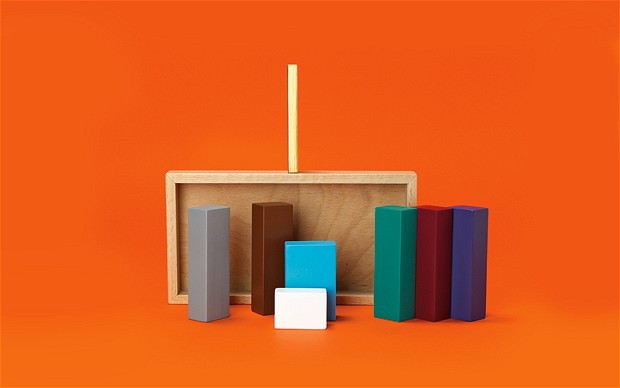
How's this for a modern crib?

How’s this for a modern crib?

*From the Irish Independent Website