En route to Kilcrohane, every couple of kilometres, a reindeer points the way to the Christmas Market
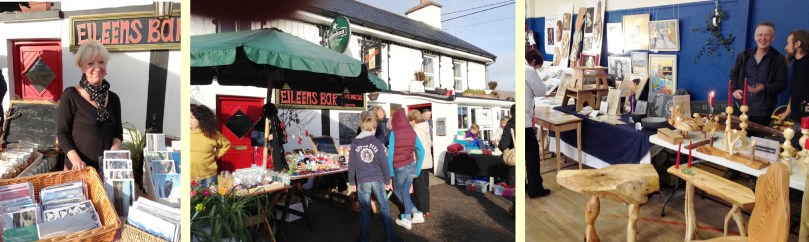
‘Tis the season…and oh dear, I am afraid to tot up what we have spent at the Christmas markets here in West Cork. We tell ourselves that we have moved here with nothing to hang on a Christmas tree; that we are supporting local entrepreneurs, artists, craftspeople and fund-raisers; that we need to lay in food for visitors; but the truth is that we find the whole Christmas market thing irresistible.
Amanda and her beautiful Wayfarer Cards; blue skies in Kilcrohane; furniture and art in Ballydehob
We love the colour, the carols, and the stalls that only appear at this time of year. We love the ones run by kids – raffling for their youth group, or trying to make a bit of cash by knitting and stitching and sawing and hammering. We love the amazing array of wonderful foods: we have come to know many of the vendors as friends and it feels good to know where your food is coming from.
Raising money for the club; elf workshop; we made them ourselves!
This year we have attended markets in Goleen, Ballydehob, Kilcrohane and Skibbereen – so far! Each community is proud of its market and each one has a distinct character. The weather has been marvellous too – a real bonus since at least part of every market is outside.
Everyone loves Eithne’s baking; Josephine and her delicious Hannah Quill preserves; Paul and Anne and their fabulous West Cork Pies; smoked fish, quail’s eggs and Coolea Cheese
I think we might be able to sport a respectable Christmas tree now…and we certainly won’t starve!
We’re both looking at markets this week: Finola is concentrating on the delights of our local Christmas community fairs, while I am looking at the ‘big market’ further afield.
The Republic’s second largest city can trace its history back to a community of monks, scholars and scribes which St Finbarr established on the banks of the River Lee in the 6th century. The area was known as an Corcach Mór – ‘the Great Marsh’. This settlement became a notable centre of learning, giving rise to the phrase Ionad Bairre Sgoil na Mumhan – a motto adopted by the modern University College Cork as ‘Where Finbarr taught let Munster learn’.
Finola approves Walter’s ‘pop-up’ stall
First a town and then a city grew up around the marshes and in the 18th century large tracts of low lying land were drained and reclaimed, forming the area which is now the commercial centre of Cork, including Saint Patrick’s Street, the Grand Parade, Grattan Street and Cornmarket Street. In 1786 the Corporation of the City undertook to create here a new meat market ‘in the English style’. A grand opening took place on 1st August 1788. This was before the emerging United States of America had elected George Washington as its first President, and in the same year that Captain Arthur Philip’s First Fleet arrived in Botany Bay with its cargo of convicts – ‘The Founders of Australia’.
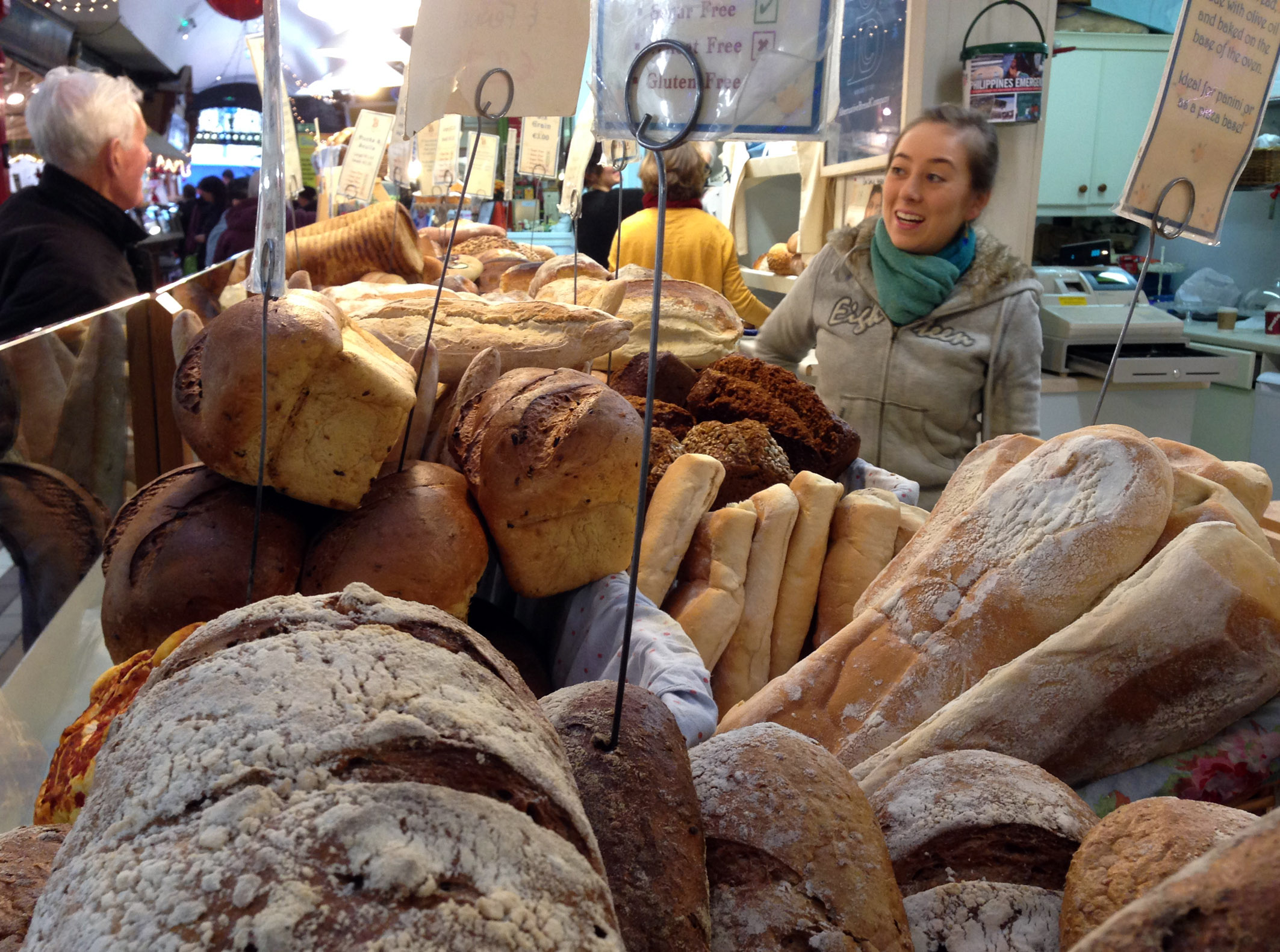
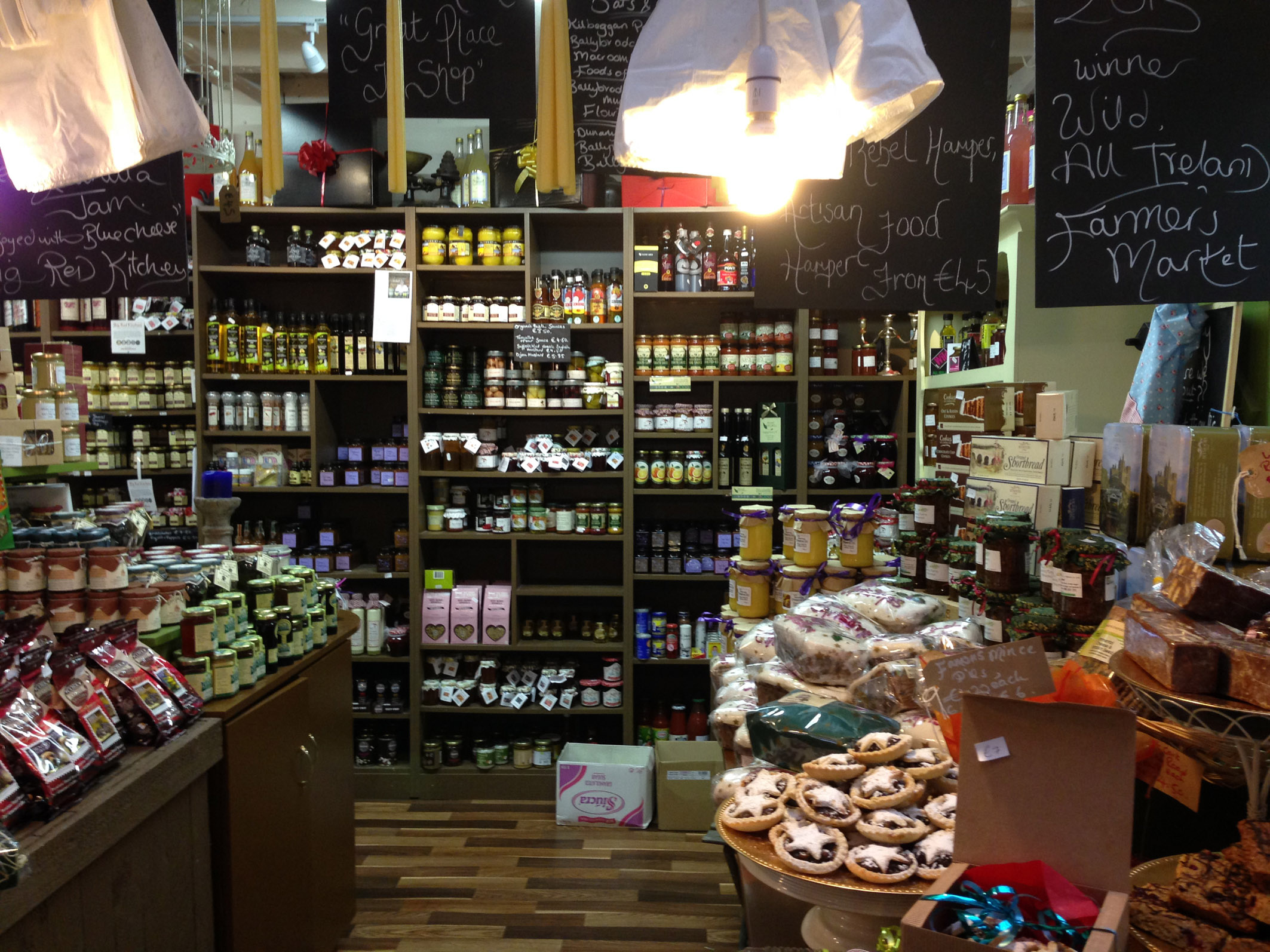
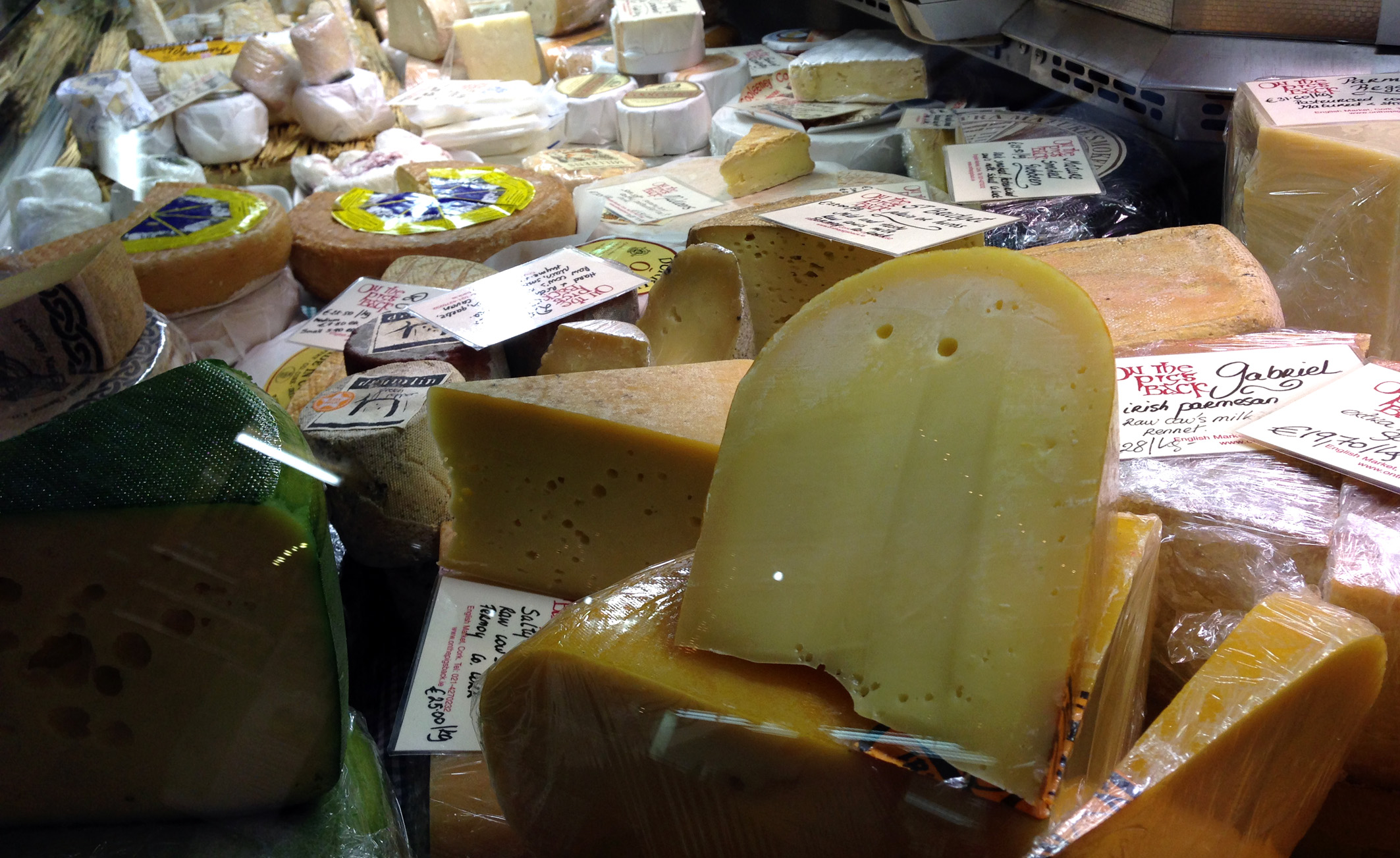
The English Market in Cork is an essential part of any visitor’s itinerary. Even the Queen went there for a look around during her Irish tour last year and reportedly was very impressed with it. We followed on last week, to visit the new Fresh from West Cork stall which has been set up over the Christmas period to sell the delicious produce which emanates from our small part of the world, and which has justly gained a country wide reputation. The stall is being ably run by Walter from Loughbeg Farm – just down the road from us, and it’s hoped that this trial period will result in Fresh from West Cork becoming a permanent fixture at the market.
It’s no longer just a meat market – you can find every variety of good food there, as these pictures hopefully show, and an excellent cafe upstairs. If ever you are passing through, don’t forget to call in.
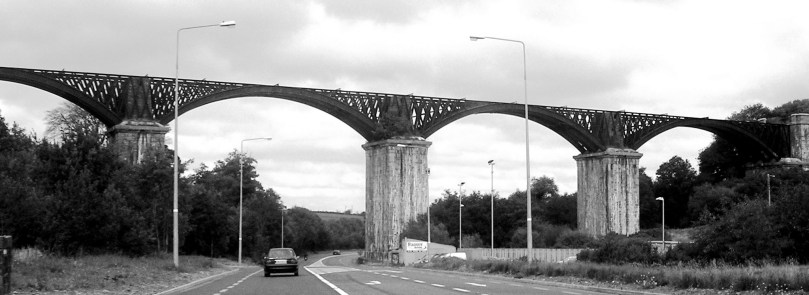
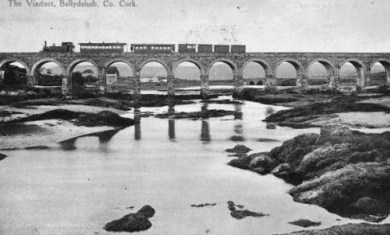
In the heydays of transport by rail, the south of Ireland was served by a network of lines radiating out from Cork. Most of these were scenically picturesque – the nature of the countryside saw to that – and all were imbued with Stories, still recounted with relish by the local people who remember them, or whose mothers and fathers remembered them. Here’s one of the stories – told about the Chetwynd Viaduct, coming out of Cork on the way to Bandon.
Chetwynd Viaduct today
This structure was designed by Charles Nixon, a pupil of Isambard Kingdom Brunel, and built between 1849 and 1851. It’s still in place today, passing over the main N71 road from Skibbereen, and is a scheduled monument. The railway, track and track bed have all gone. For quite a while after its construction it was known as “The Bowlers’ Everest”. Alert followers of these posts will know about Road Bowling already (don’t forget to pronounce it correctly: Road Bowelling) – a very skilful and ancient Irish sport involving hurling a heavy iron ‘bullet’ along a road, and getting it from one place to another in the shortest number of throws. For Bowellers, the viaduct presented an obvious challenge: to throw the ‘bullet’ on to it. This was attempted many times year after year, but it took a mighty man to do it: Mick Barry, widely acknowledged as the greatest bowlplayer ever. My informant was careful to add “…This has been said by many and denied by very few…” The Cork Examiner takes up the tale:
“…Barry conquered the Bowler’s Everest, the Chetwynd Viaduct on the Cork-Bandon Road on Saint Patrick’s Day, March 17th, 1955. He lofted the 16oz bowl on to the 100 foot high parapet; an incredible feat which required almost superhuman strength, virtually defying the laws of physics. This feat was witnessed by thousands of spectators…”
Bowlers’ Everest – the viaduct at Chetwynd and a 16oz ‘bullet’
Less commonly cited is another Chetwynd story: on September 8th, 1985, watched by over 10,000 people, Hans Bohllen from West Germany lofted a 28oz bowl clean over the viaduct, clearing the top by ten feet.
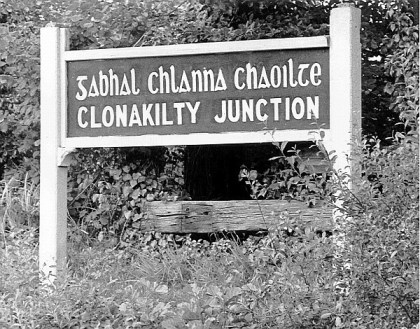
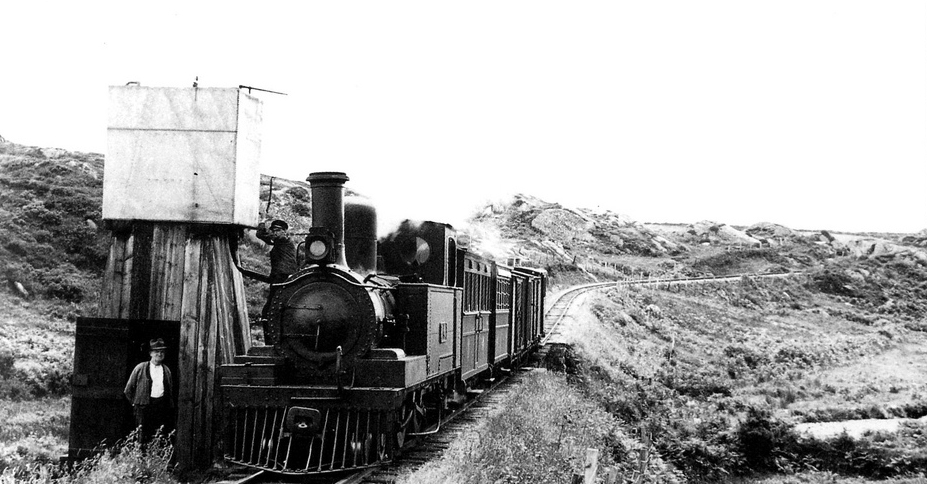
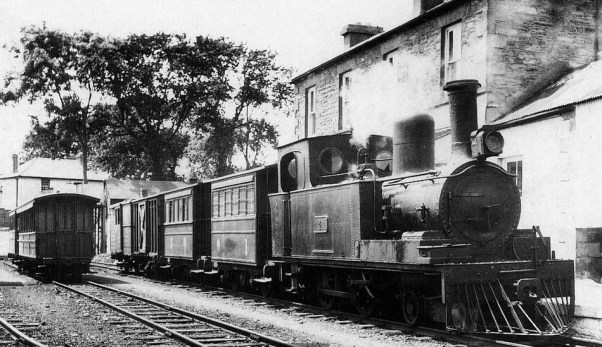
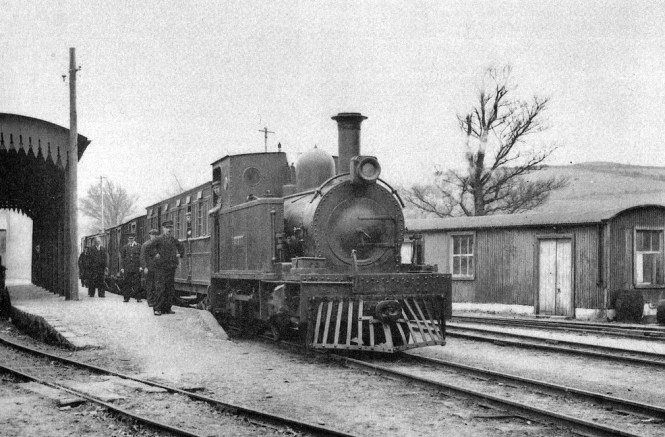
Lines from Cork eventually penetrated surprisingly far into the south west extremities of the state: to Kinsale, Bandon, Courtmacsherry, Clonakilty, Bantry, Baltimore, and – on a 3ft gauge narrow line snaking out of Skibbereen – to our two local towns of Ballydehob and Schull. It’s worth mentioning the colourful history of railway track gauges in Ireland: the standard now is 5ft 3in – something shared in the world with only Brazil, Australia and New Zealand – but earlier lines had 4ft 8½ins [UK and Europe standard], 6ft 2ins and 5ft 2ins, and when trams were first introduced to Dublin they had 5ft 2 and a bit.
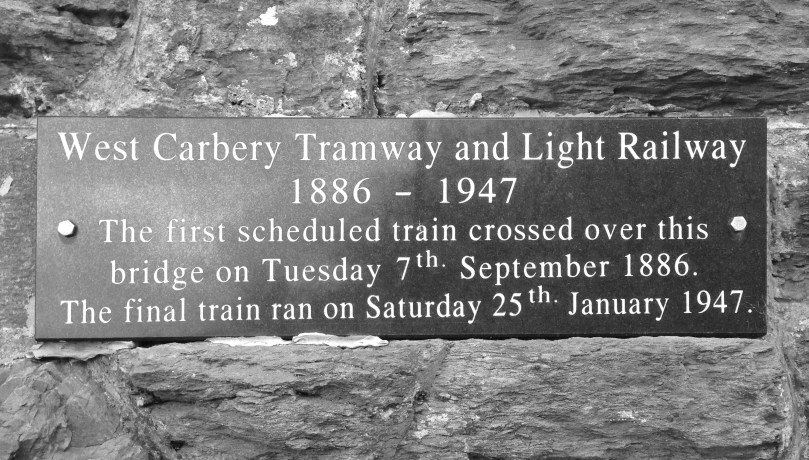
Local history: plaque on the viaduct at Ballydehob
In 1925 all the railway lines in the new Irish Free State were amalgamated to become the Great Southern Railway, and in 1945 the system was consolidated with road transport concerns and trams to become Córas Iompair Éireann. The logo used by CIÉ until 1964 was affectionately (and, perhaps, cynically) known as The Flying Snail.
‘The Flying Snail’
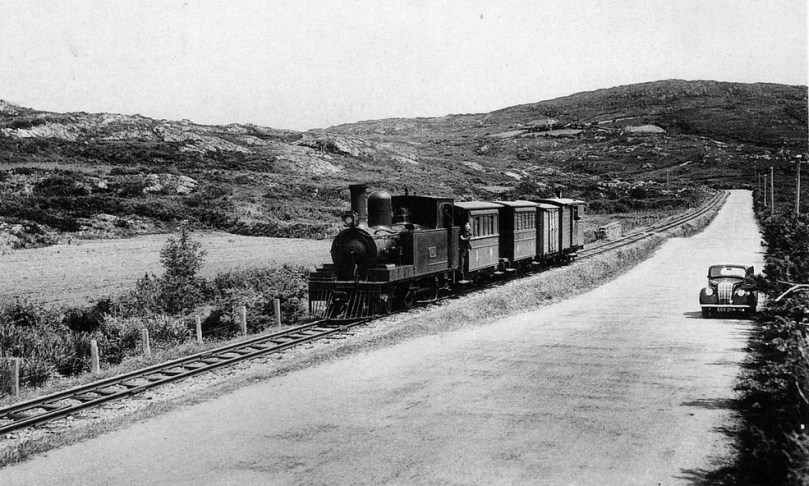
The line out to us here in West Cork was particularly eccentric and would have been a magnet for present day railway enthusiasts if it had survived. In places the narrow gauge track ran along the main road; it reached speeds of up to 15 miles per hour… But how we all wish it was still possible to catch a little train out of Schull, Ballydehob or Skibbereen and arrive in Cork in a bit. It would be grand!
When we were growing up in Ireland our mothers would send us up to the shops for messages. Clutching the coins she entrusted to us we would give the note to the shopkeeper, or recite what she wanted and he would duly hand over the message wrapped up in brown paper and tied with string.
Messages I remember: 10 Craven A, a yard of knickers elastic, 2oz of cheddar, 5 codeine, 1lb of broken biscuits, a packet of Bisto, a pair of brown shoelaces, a bottle of paraffin, a nice fresh piece of plaice.
Need a chamber pot?
Found it!
Nowadays we go off to the brilliant local supermarket (ultra efficient but with a wonderful variety of local produce) or the well-organized hardware store with its stocked and gleaming shelves, where the shopping experience is similar to that in Canada. But the shops of my childhood are still here too, in the small towns and villages. You can find hardware stores stuffed to the ceiling with everything you might need heaped in teetering piles. Ballydehob has one, My Beautiful Launderette, where we have dropped off our laundry and bought glue, mousetraps, nails, tools and flower seeds. In Bantry, when we can’t find the exact light bulb we are looking for in the airy modern electrical supply shop we can be sure to track it down in Vickery’s, a shambolic space loaded to the scuppers with kitchen ware, hinges, table lamps, shovels, and soap dispensers.
My Beautiful Launderette, Ballydehob
While modern boutiques abound in the larger towns, some clothing and haberdashery stores retain an old-fashioned charm, with most of the goods shelved in plastic bags behind glass-fronted counters.
Shoes, hats and First Communion dresses
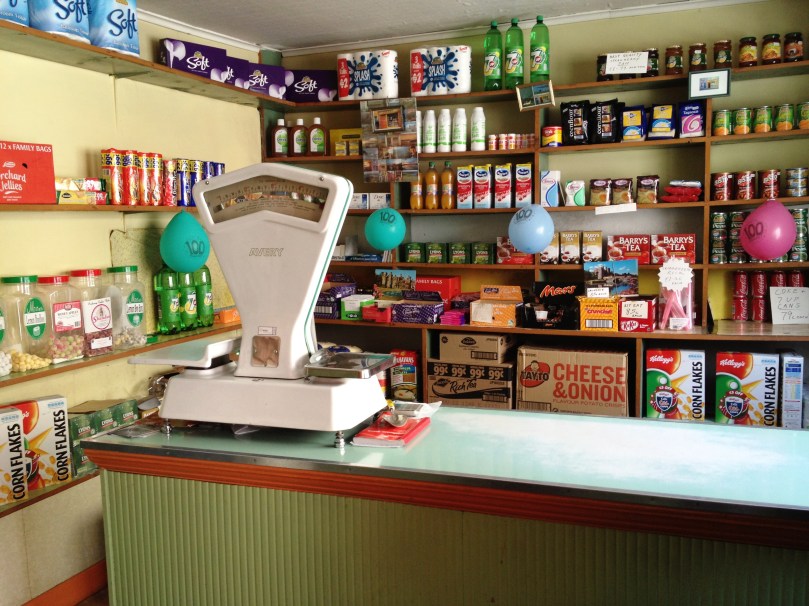
Perhaps our favourite is Miss Clerke’s in Skibbereen. It is unchanged from the small grocery shops of the 1950s, with a little of everything neatly arranged around the walls. We go in there to buy bonbons – Robert has a liking for the apple-flavoured ones – although we have been out of luck lately. “The traveller,” she tells us, “hasn’t been able to get the apple ones for a while now.” We go home happily chewing on lemon ones (a ‘quarter’ in a paper bag) and fantasizing about life as a bonbon traveller.
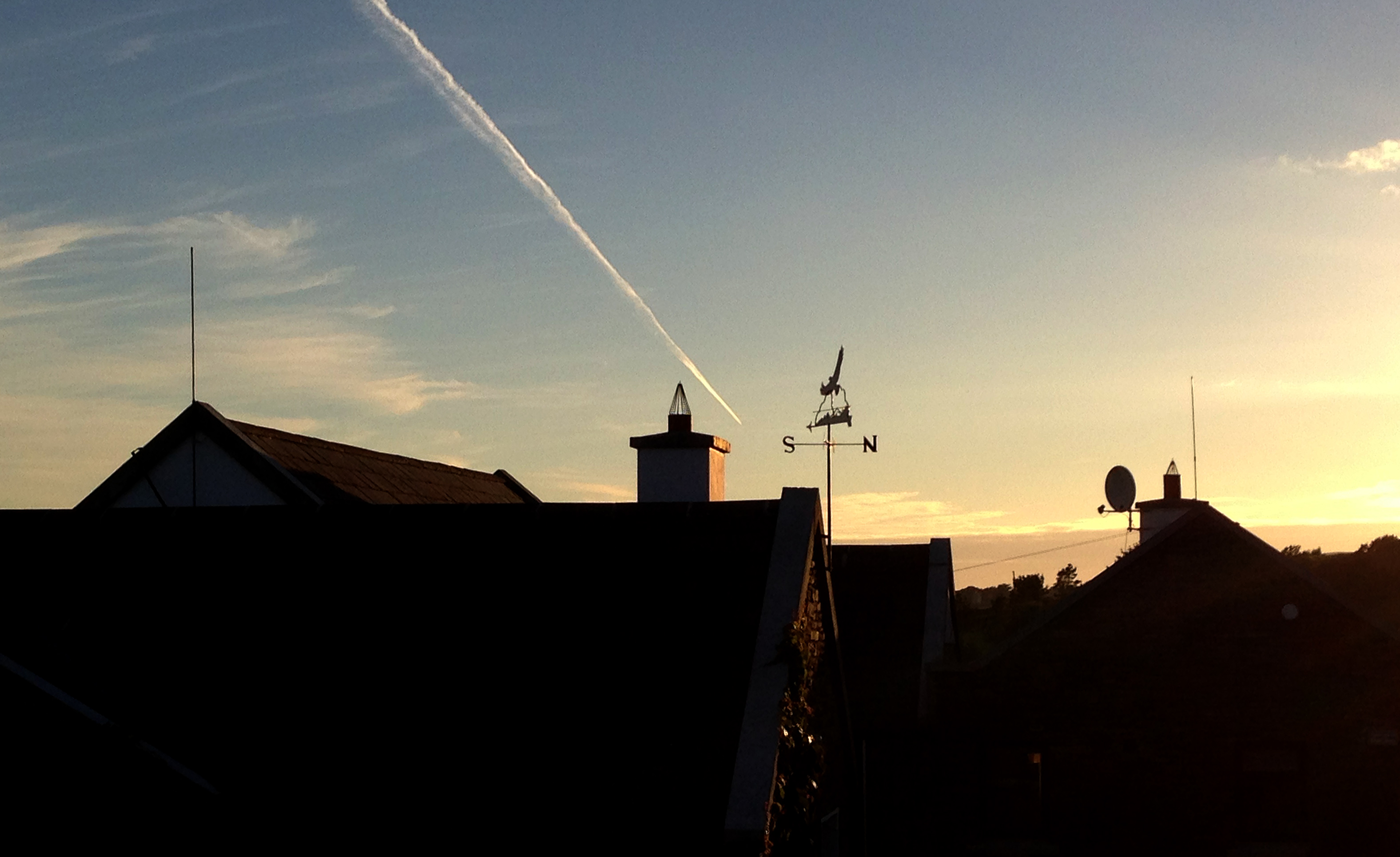
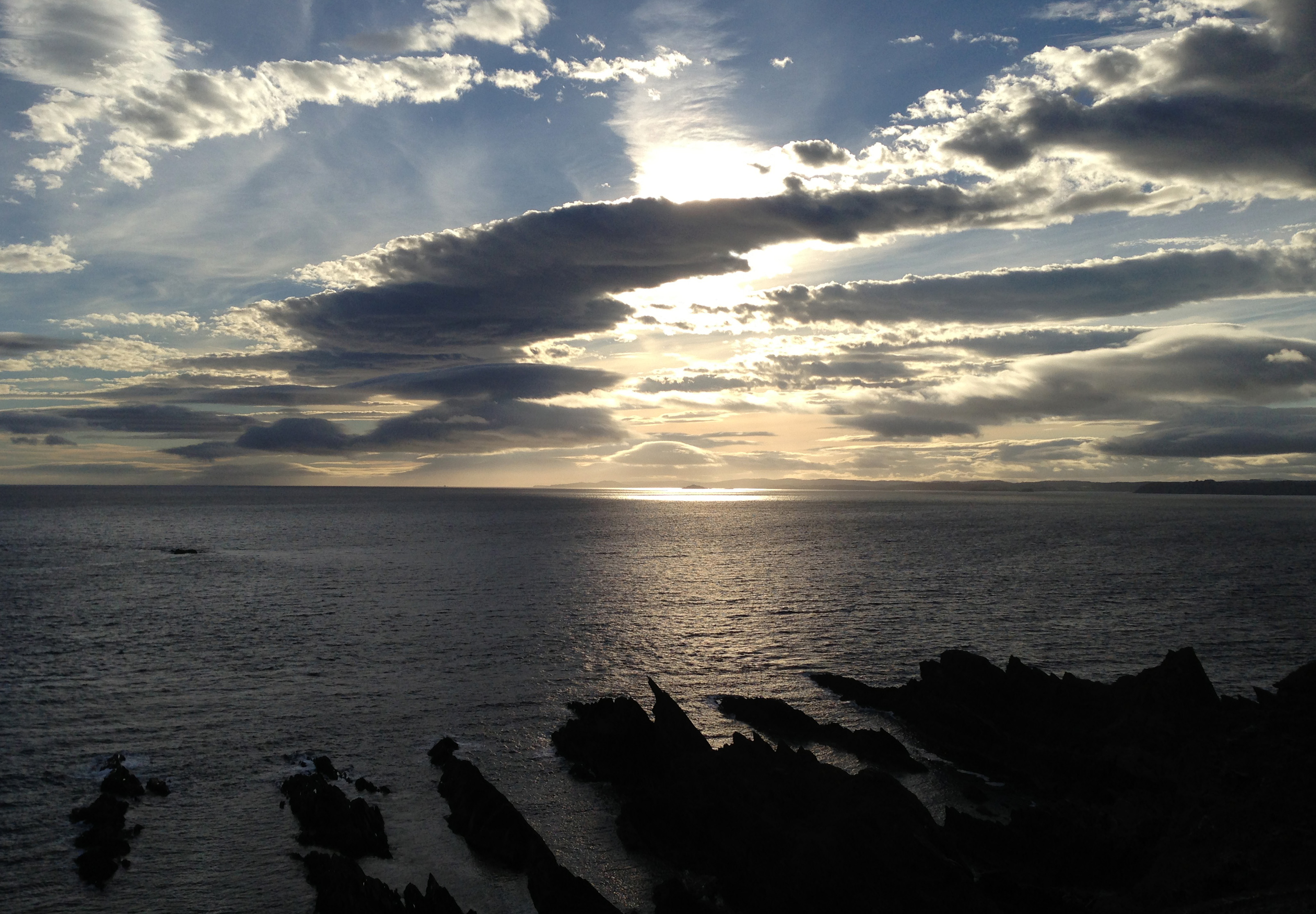
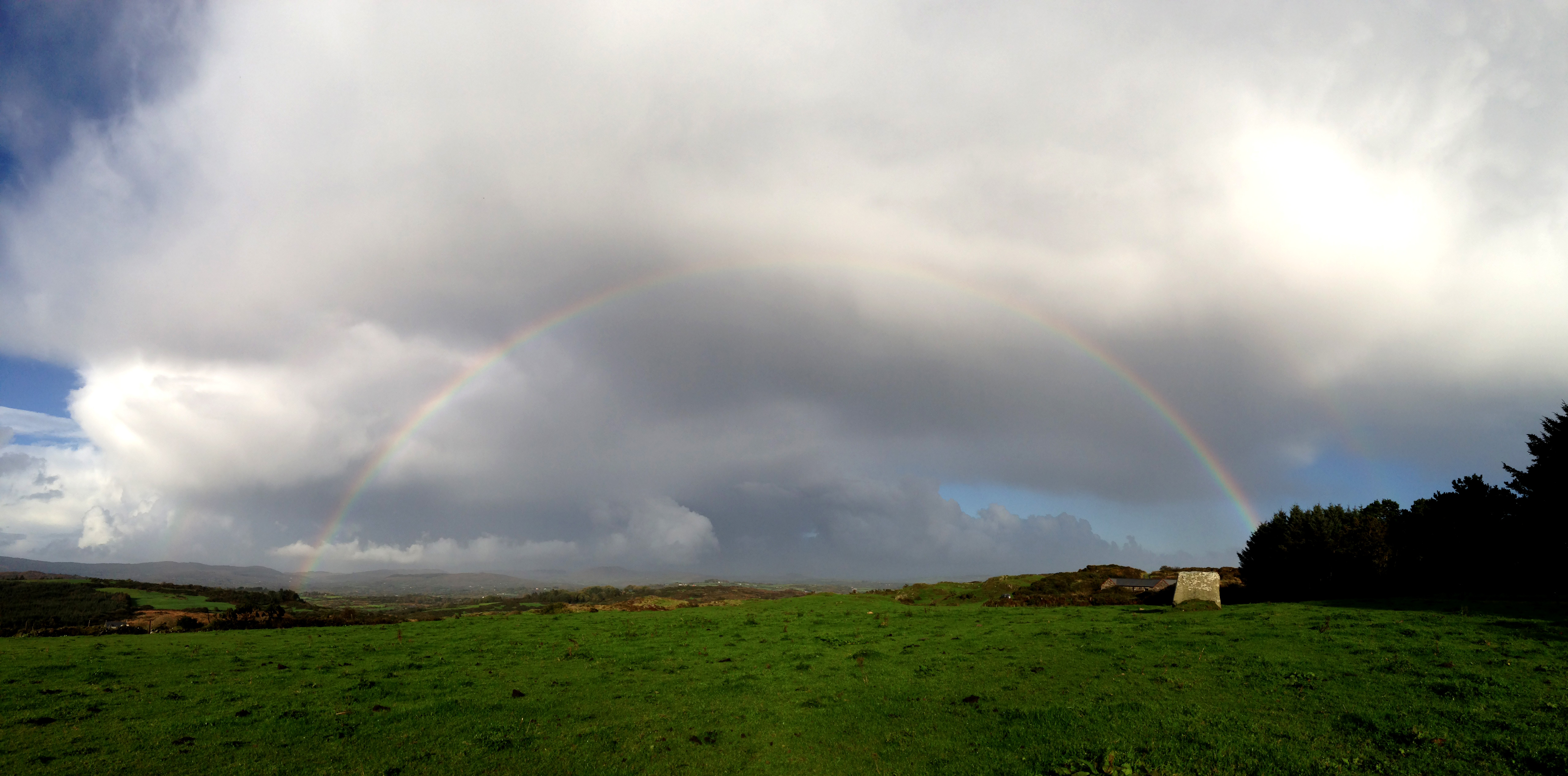
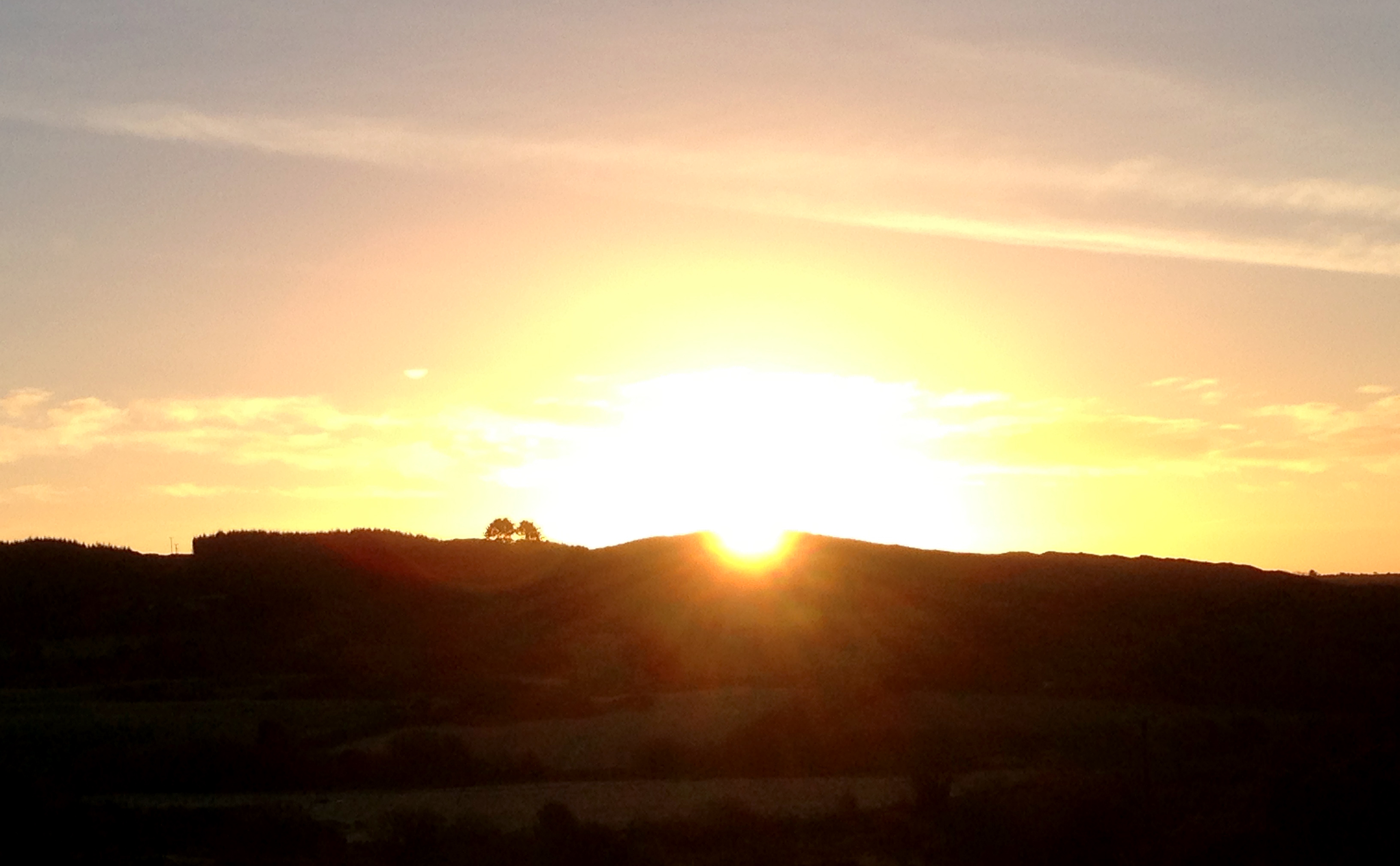
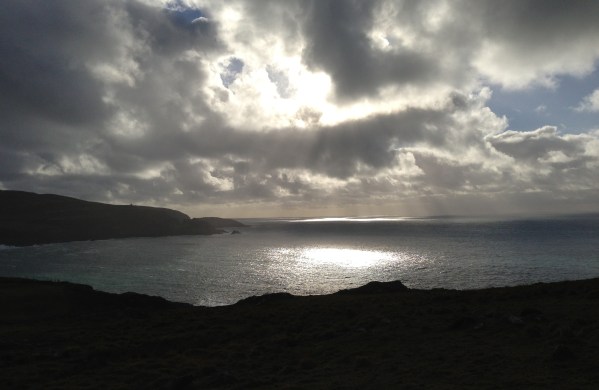
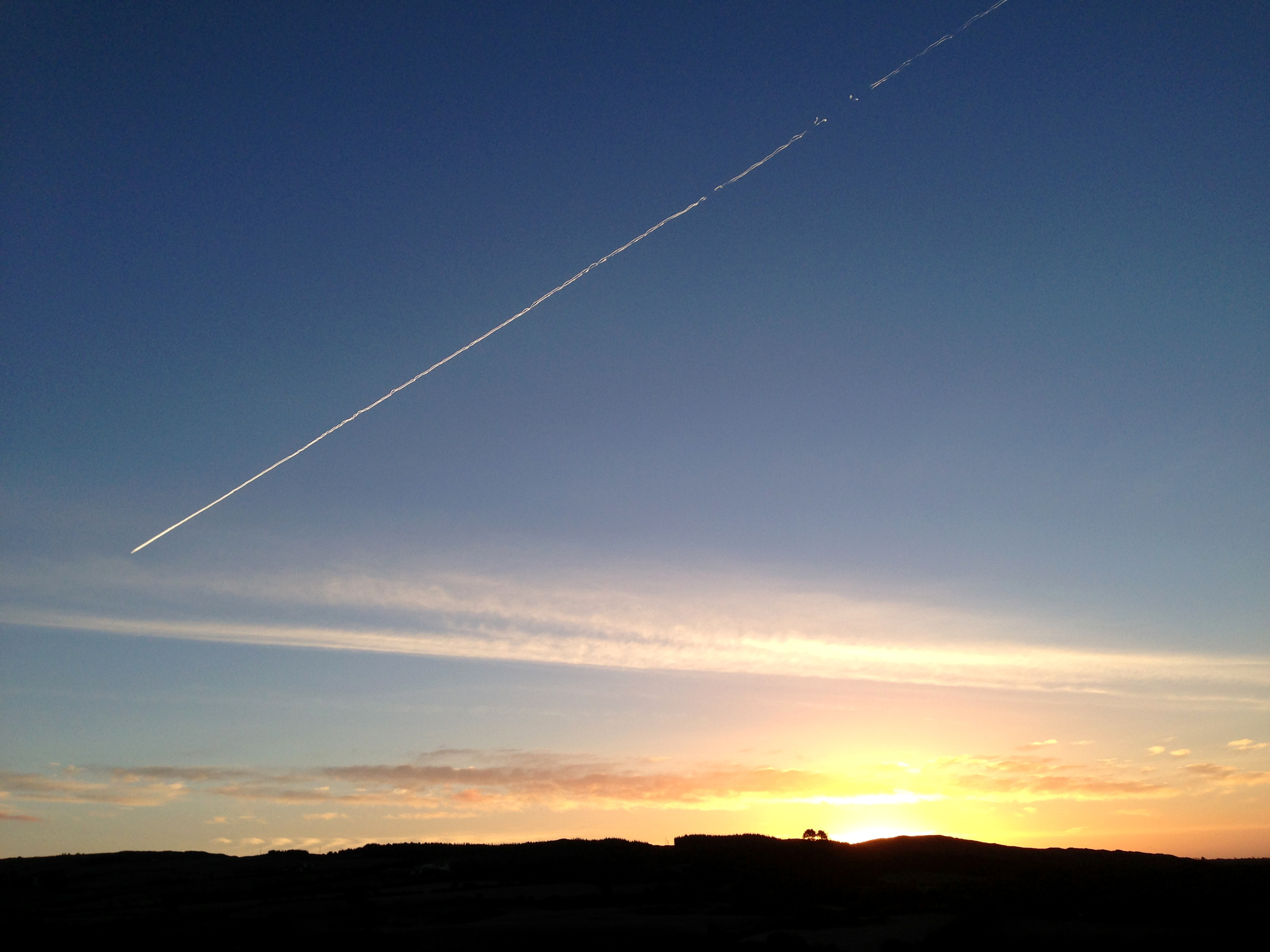
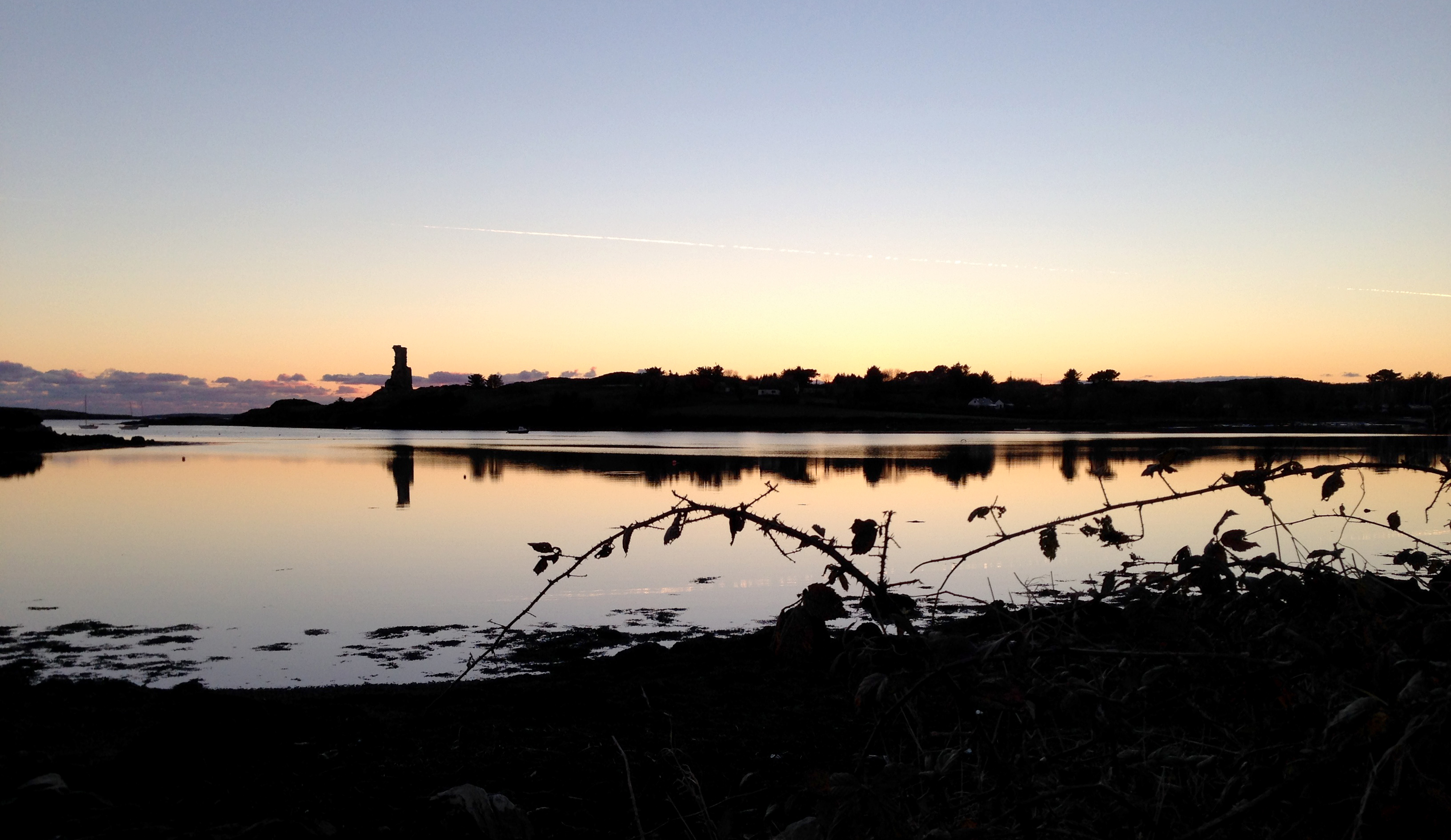
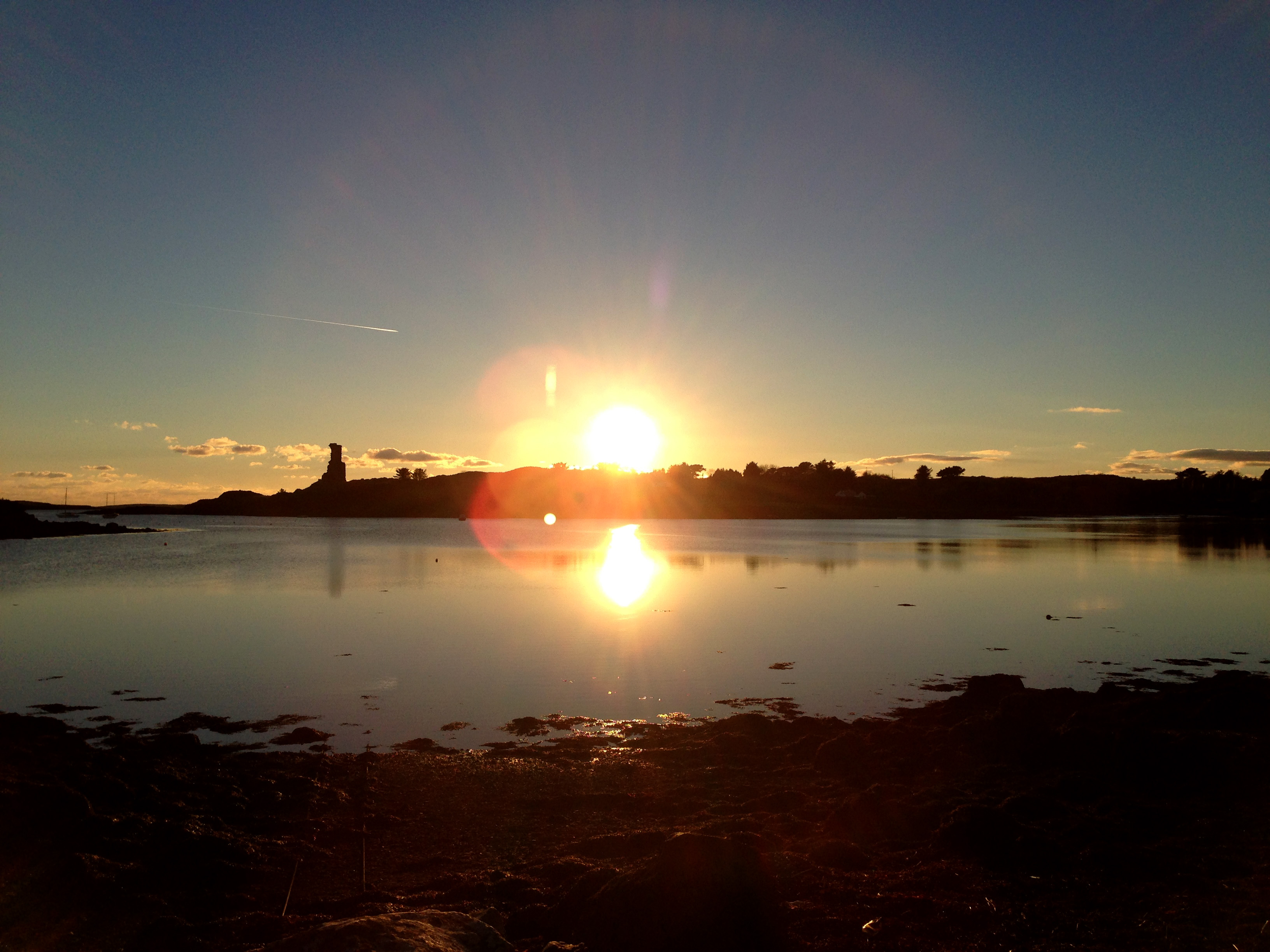
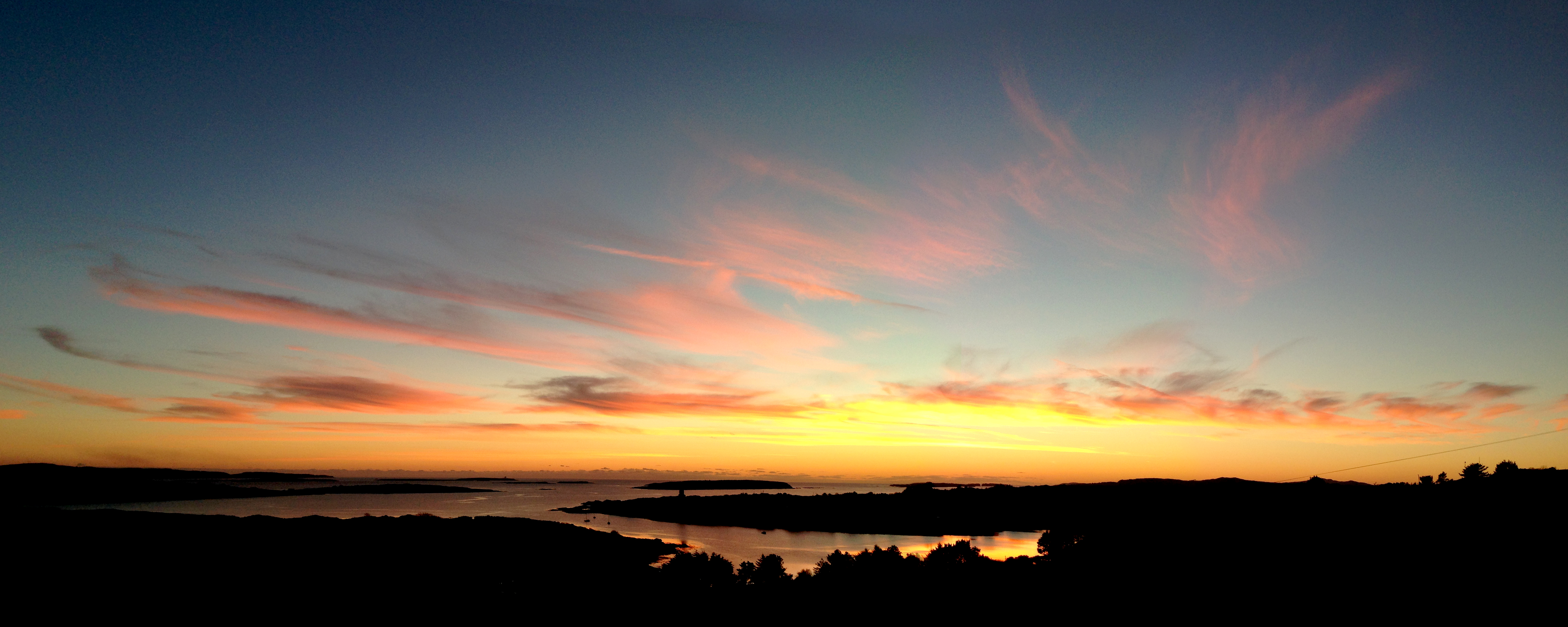
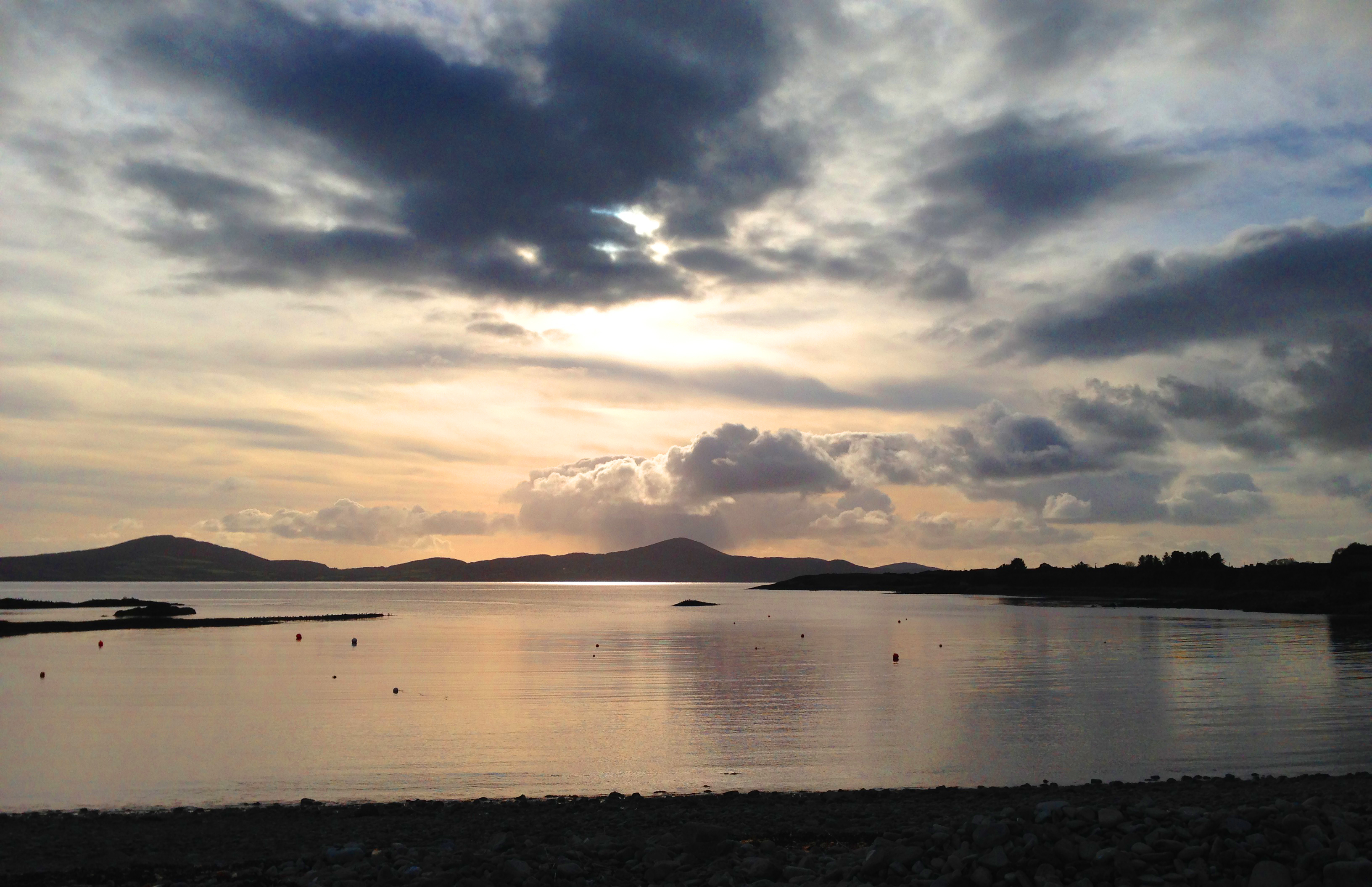
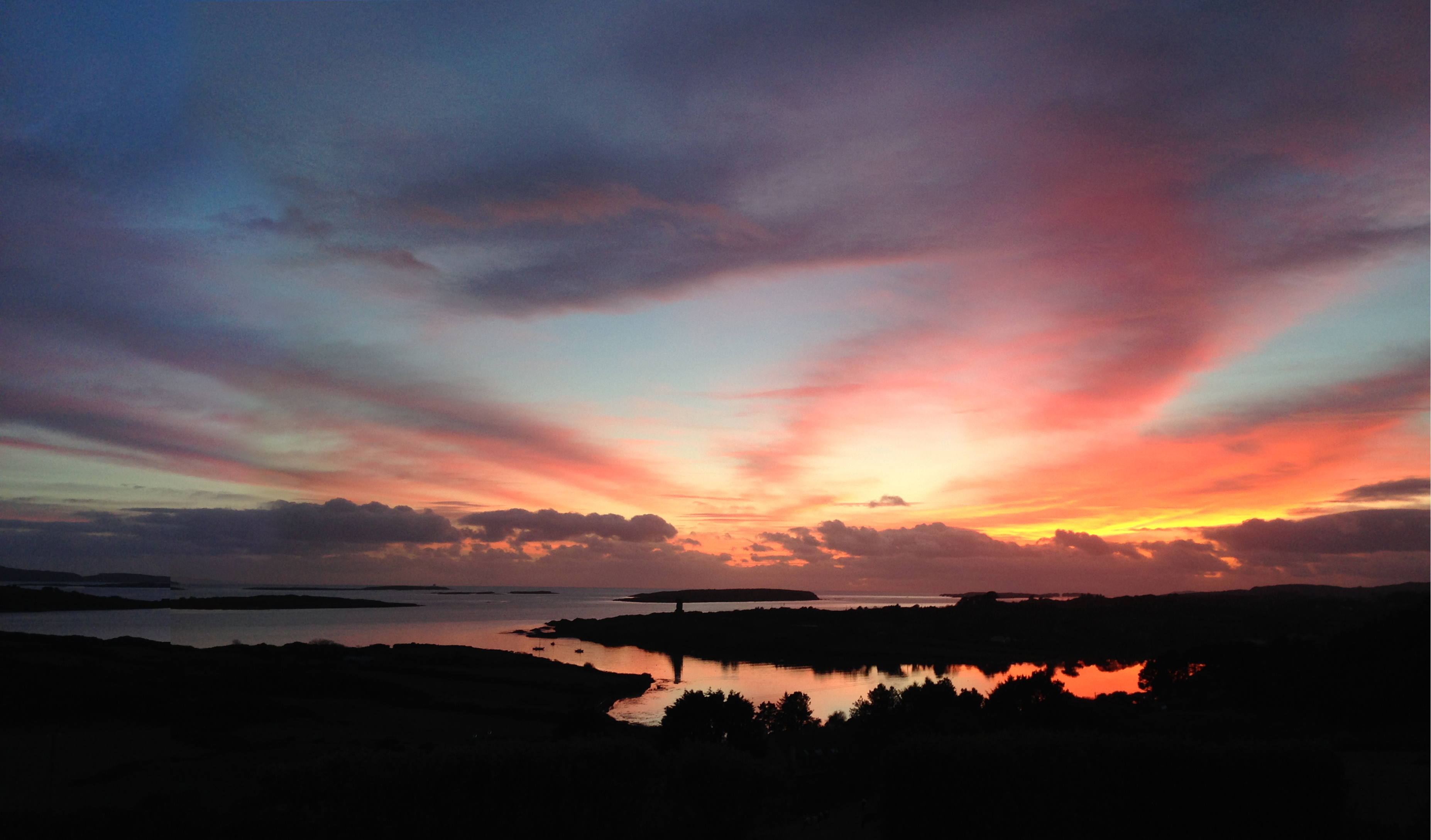
Up on our hill above the Cove we are constantly treated to painterly skies. We could fill a whole blog with these changing skyscapes, and now – in late November – we have an extended period of clear cold weather which offers us spectacular sunsets: each day seems to outdo the previous one. On our walks we can’t resist using our cameras to record the wide West Cork skies, although these pictures are barely adequate to recreate the full celestial symphony. We have tried to come up with words to express to ourselves how magnificent these are: somehow the words seem trivial…. Stunning crops up frequently, as do mesmerising, awe-inspiring, exquisite, sublime, unsurpassed. Perhaps it’s best just to let the images speak for themselves: we feel privileged to be living in this incomparable land.
Ferdia demolished our beautiful bird-table – made for us by Danny – by jumping up and hanging on to the peanut feeder, swinging there until the whole thing came down: and he showed not one ounce of contrition! After his peanut feast he licked his lips, stared at us brazenly and seemed to say “Now, so – that was a grand game”…. The outcome is an architect-designed, post-modern, deconstructivist bird feeding station made from two broom handles (total cost 3 euros) that is painted green (of course) and is Fox proof!
Caught redhanded!
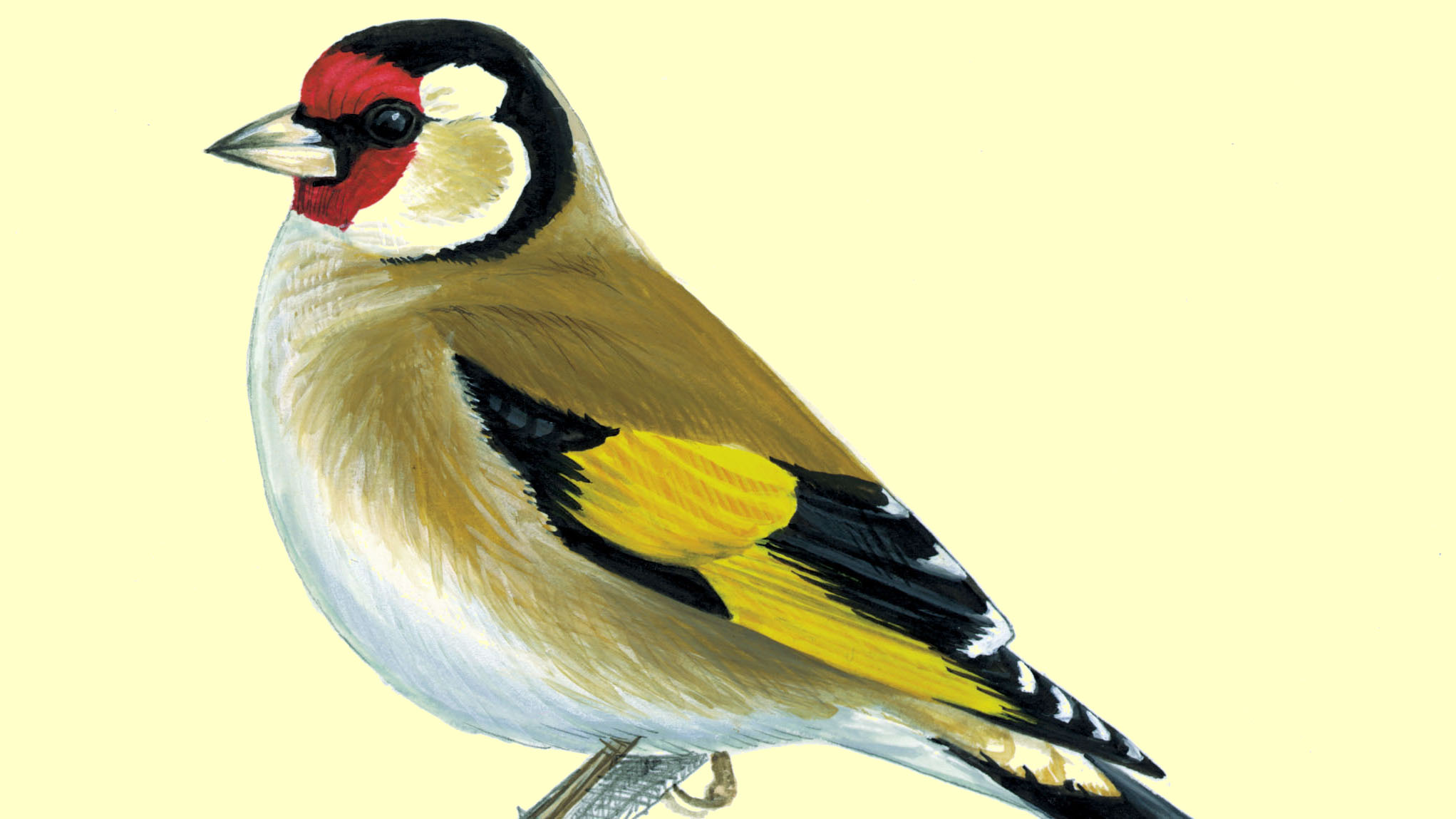
Ferdia may feel thwarted, but our resident Goldfinches are delighted. I was delighted, also, when I found out the collective noun for Goldfinches: a Charm. How apt – the birds are vivacious, colourful and noisy. The word might come from the latin Camina – song.
It’s hard to keep up with them as they fall out of the sky (literally – they just appear suddenly, flap around the feeders, hang on – often upside down, constantly squabble with each other, and then vanish just as quickly) but I have counted up to 20 in one ‘sitting’. The Chaffinches, Robin and Tits edge in occasionally, but when the Charm is around then it’s all-pervasive. Only the Greenfinches seem oblivious to the crowd and staunchly carry on with their meal through all the mad tumblings and twitterings.
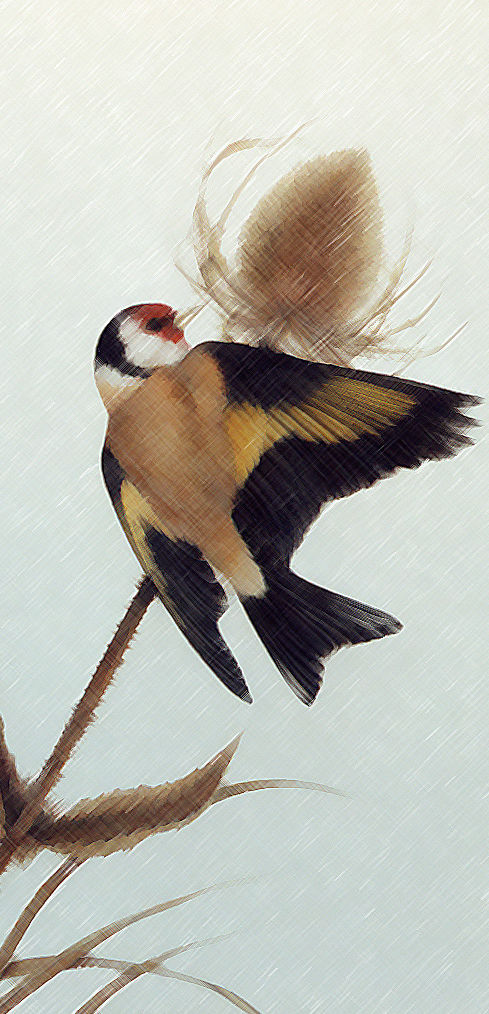
‘Teasel-tweaker’
Goldfinches have a folk name: Thistle-tweaker. Evidently their preference is for the thin seeds of thistles and teasels which they prise out with their beaks. We provide exactly the right seeds (purchased at the bird shop at great expense) but will they have them? Not a bit of it! Only one thing interests them and that’s the peanuts – just like Ferdia. But their supposed liking for sharp seeds, and thorns for their nests, has given them a place in Christian iconography – and folklore.
A medieval legend tells that when Christ was carrying the cross to Calvary a Goldfinch came down and plucked a thorn from the crown around his head. Some of Christ’s blood splashed onto the bird as it drew the thorn out, and to this day Goldfinches have spots of red on their plumage (a similar story is told about the Robin). Certainly, Renaissance artists frequently depicted the Christ child with a Goldfinch, and it is suggested that the bird is linked to a foretelling by Christ of the manner of his death – something often attributed to the great Folk Heroes.
Chaucer’s Cook is thus described: “…gaillard he was as a goldfynch in the shawe…” – as merry as a goldfinch in the woods. In some parts of England the popular name for the bird was Proud Tailor – which picturesquely sums up the patchwork appearance of this busy and brightly colourful little character.
There is a Valentine’s Day tradition based around birds. If the first bird a girl sees on that day is a Bluetit, she will live in poverty; a Blackbird foretells marrying a clergyman; a Robin tells of a sailor; and if she sees a Woodpecker she will be left an old maid. If the first bird she sees is a Goldfinch, however, she is promised a wealthy marriage…
Goldfinches in Renaissance art
John Keats wrote this verse in ‘I stood tip-toe upon a Little Hill’…
…Sometimes goldfinches one by one will drop
From low hung branches; little space they stop;
But sip, and twitter, and their feathers sleek;
Then off at once, as in a wanton freak:
Or perhaps, to show their black, and golden wings,
Pausing upon their yellow flutterings…
Here in Ireland there is a tradition that Goldfinches – under their other folk name: Redcaps – haunt the realms of The Other Crowd, and they will always be seen around the raths (Fairy Forts), ancient mounds and in thorn trees. I will have to research that one.
Welcome to the UCD Library Cultural Heritage Collections blog. Discover and explore the historical treasures housed within our Archives, Special Collections, National Folklore Collection and Digital Library