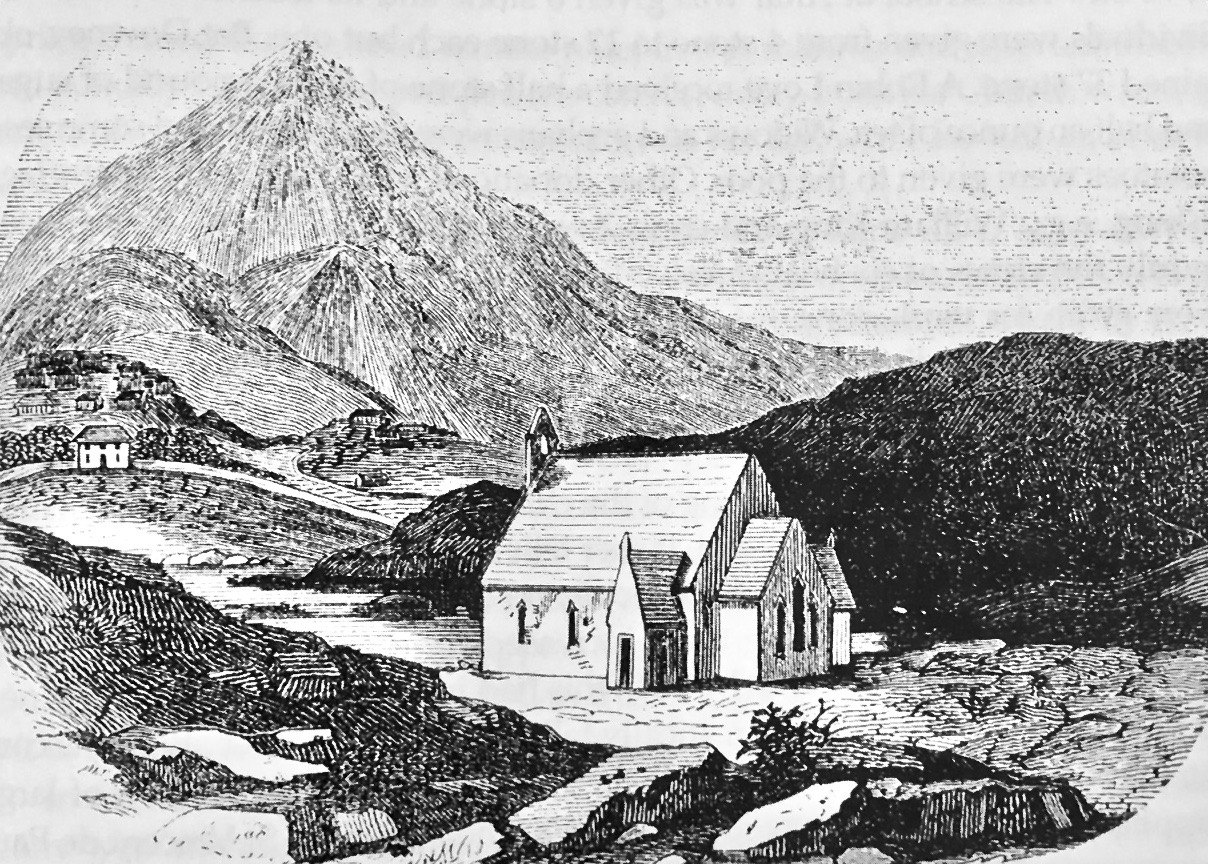
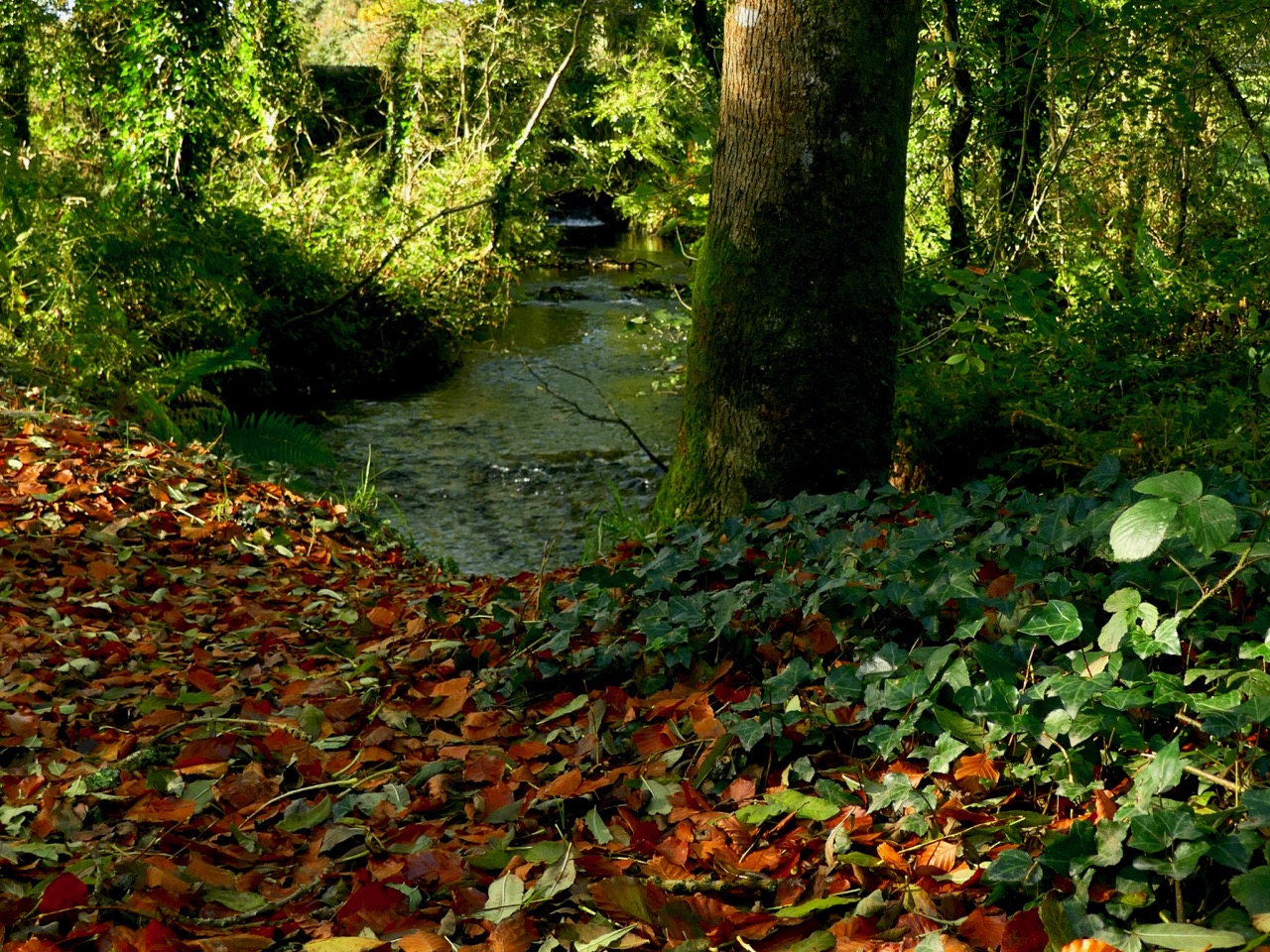
How Well Do You Know West Cork?

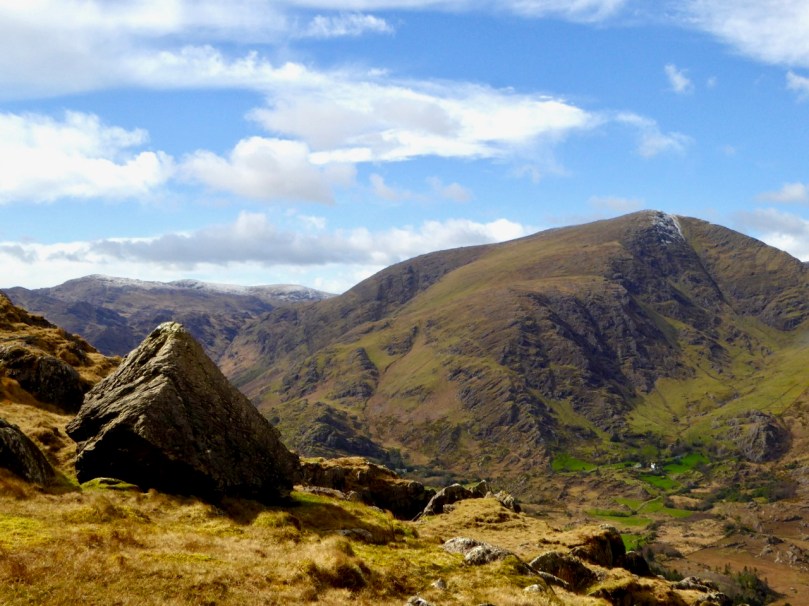
1 Where was this taken?

We started a series this year on our Facebook Page that has proven to be very popular. We post a photograph of West Cork and ask our Friends if they can identify the place. It turns out that it is really hard to stump West Cork folk!

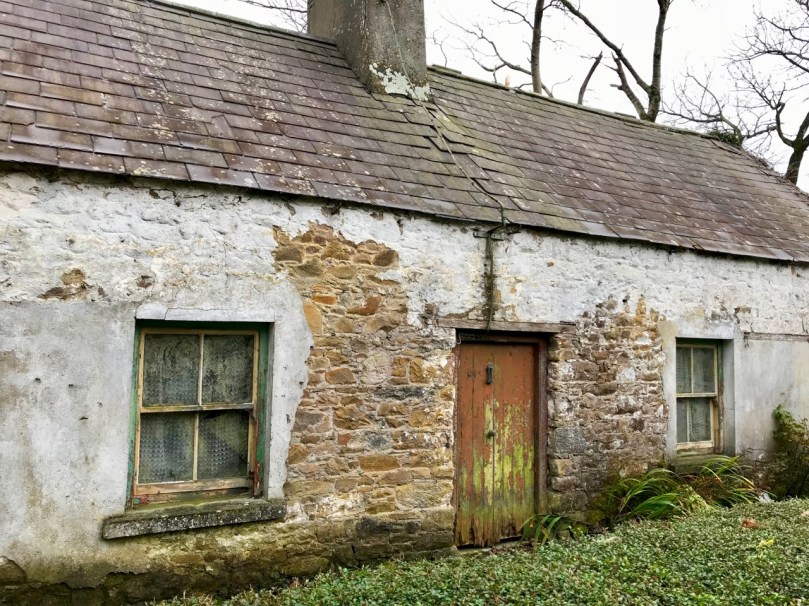
2 You know we love colourful houses, and this juxtaposition of green and pink is particularly eye-catching. Where would you see it?

So we thought we’d give our non-Facebooking readers a crack at this too. Of course, many of you are not from West Cork, so this is a post you can just sit back and enjoy.

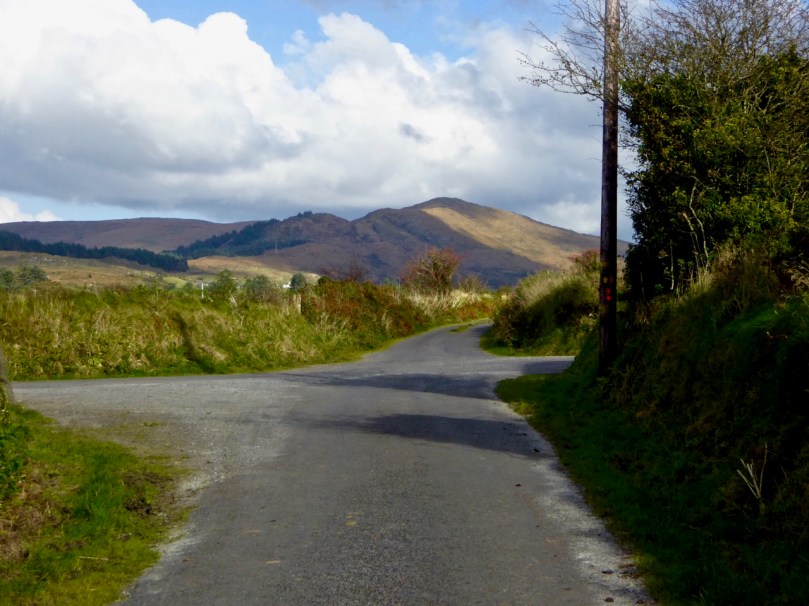
3 This is a cross roads that’s made for dancing!

Some of the photos have featured in our posts, like the one above where Robert and I joined in the dancing at the crossroads. You may remember that post, although it was a while ago.

4 The statue is gazing down at a holy well site – but which one?

And where would we be without a holy well photograph, having shared so many of our adventures over the last few years with Amanda and Peter of Holy Wells of Cork? Amanda is nearing the end of her journey to visit every Cork well now, but is still managing to uncover all kinds of fascinating stuff about the wells she catalogues.

5 This is a wonderful ancient monument – do you know which one it is?

Archaeology has to feature, naturally, as it’s an ongoing preoccupation of ours. West Cork is rich in ancient sites and we have visited and written about so many of them, including the one above.

6 Taken from an iconic vantage point – can you identify it?

And you’re on the right track if you keep thinking ‘archaeology’ for the photograph above. This is a site you may have visited, even if you don’t live here full time.

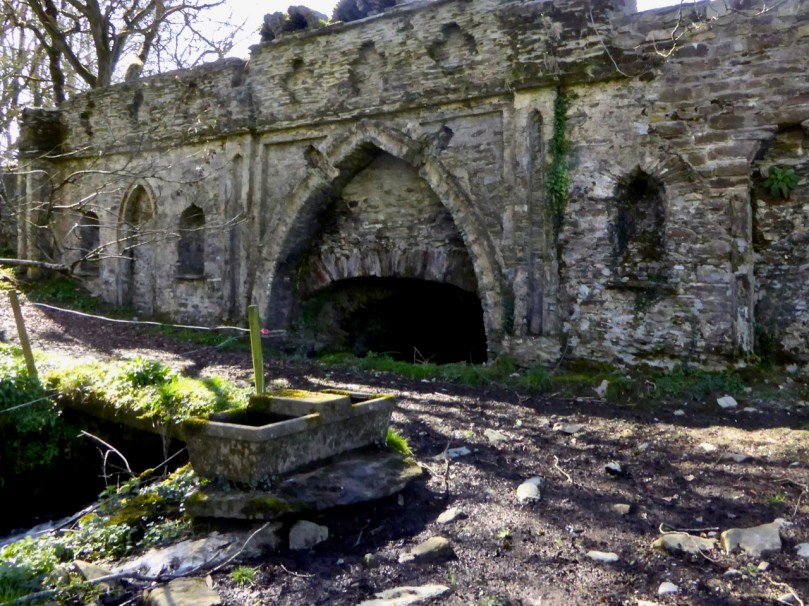
7 A river runs through it – but where is this?

We aren’t used to looking at this side of the bridge above. In fact, you may not even know this is a bridge. Chances are, if you’ve been in West Cork, you’ve driven over and past this numerous times.

8 A lovely farm house in a remote valley. Recognise it?

Mount Gabriel seems to pop up in many of our photographs, probably because it is so prominent on the landscape. And so it is in the one above – see the air traffic control domes (it may help to biggify)? But I’m willing to bet you won’t know where this shot was taken.

9 Which headland is our friend, Susan Byron, on?

I think you might know this one. If you’ve been there, it’s pretty much unforgettable. I think it’s one of the most beautiful places in Ireland – and that’s saying something.

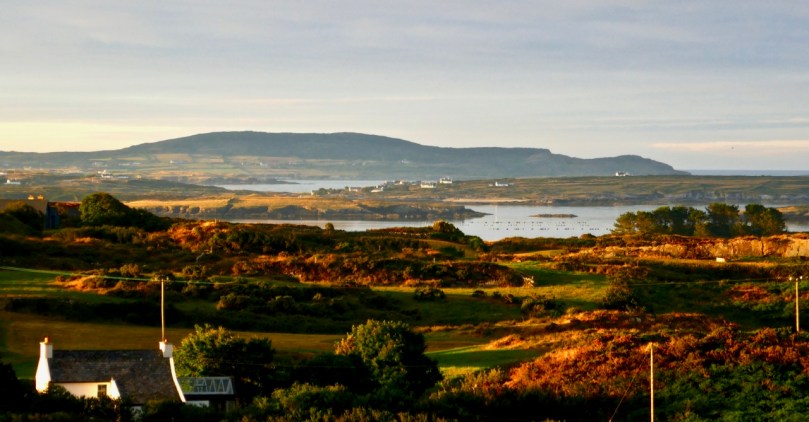
10 Close to our hearts

And finally, a photograph of our own view from here at Roaringwater Journal International Headquarters, Nead an Iolair. From it, can you tell where we live, and what we are looking across to in this shot?

Leave your answers, or any comments you might have, in the comments section below, or if you like, on our Facebook page. Good luck, Dear Readers!

Saints and Soupers: the Story of Teampall na mBocht (Part 3, The Protestants – Tithes and the Second Reformation)

While the Church of Ireland was the Established Church in Ireland since the time of Henry VIII, it was not the only Protestant group operating in Ireland. Methodists, in particular, had won many converts since the days when John Wesley himself had come preaching (above). However, like Catholics, breakaway and Dissenter communities were disadvantaged in comparison to the Church of Ireland.
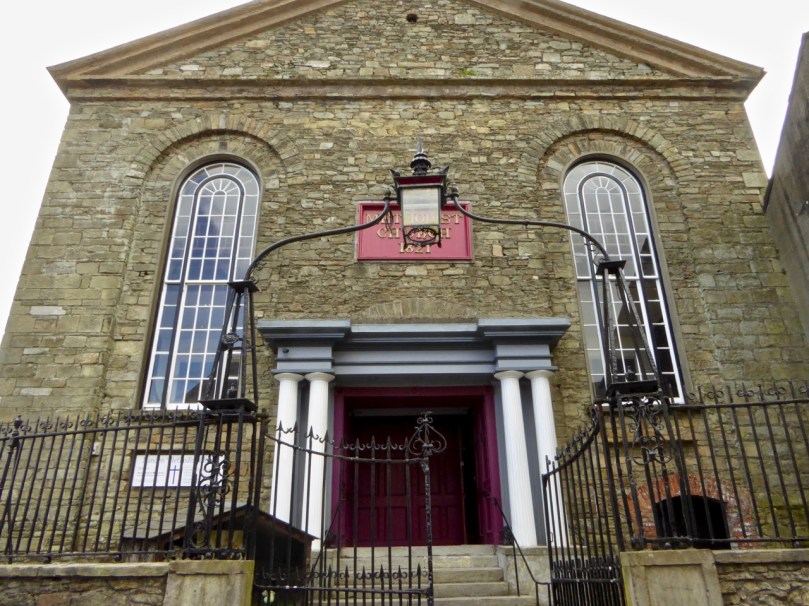
Bandon Methodist Church, established in 1821

This privileged position, while it came with all the advantages conferred by reliable revenues, political power and access to education, was also accompanied by the constant awareness of being a minority, often an unwelcome one, and by the decadence and laxity that generations of wealth can confer.
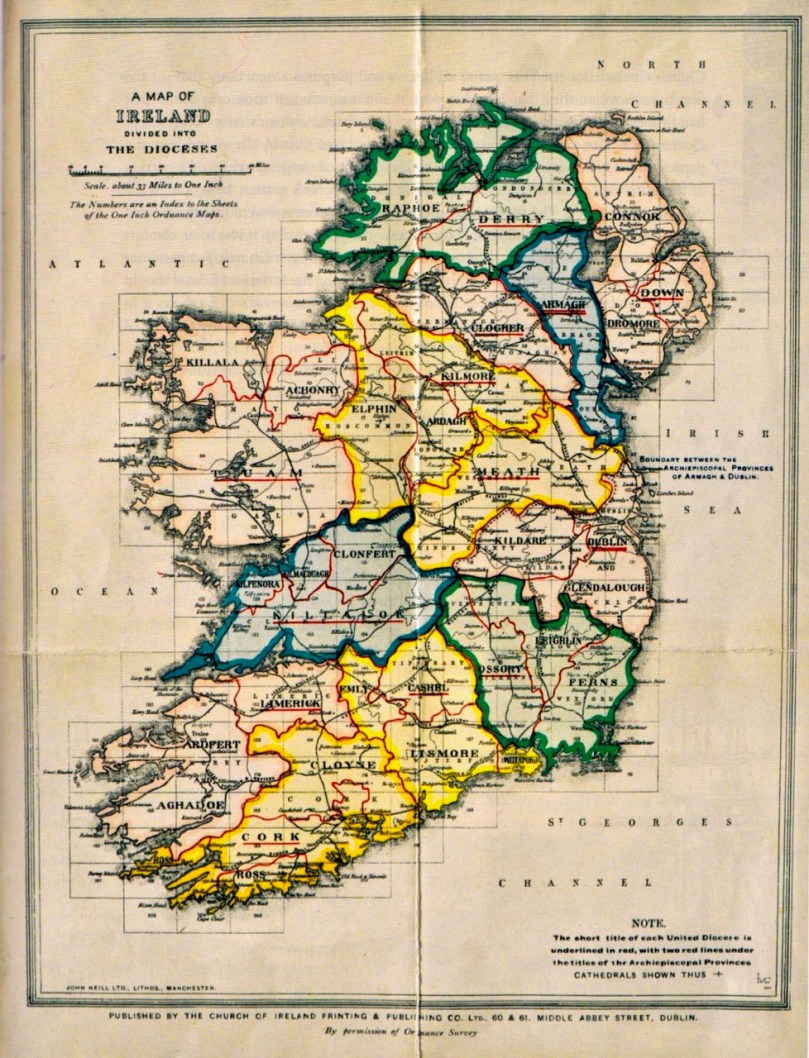
1864 Map of the Church of Ireland Dioceses

Dr Kenneth Milne, writing in The Church of Ireland: An Illustrated History (Published by Booklink, 2013) describes the situation thusly:

. . . plurality and non-residency came to be regarded as endemic. There is evidence that there were many faithful (and often impecunious) Church of Ireland clergy, but their existence has been somewhat masked by the prevalence of ambition and negligence among many others, particularly of the higher rank.

While it was to the bishops that one would have looked to remedy the situation, they themselves were frequently non-resident, at least for long periods, preferring the amenities of Dublin (or sometimes London and Bath, for most of the more remunerative sees were given by the crown to Englishmen as part of that great web of patronage that lay at the heart of government and was the norm). Such episcopal failings were by no means peculiar to the bishops and other dignitaries of the Church of Ireland, and were common throughout Europe, but what made the Irish episcopate more vulnerable to criticism was its remoteness (in more sense than one) from the great majority of the populations, and the fact that it drew it emoluments, often very considerable indeed, from lands to which its entitlement was often in dispute. In addition, it demanded tithes paid by a resentful population who, be they Roman Catholic or Dissenter, were also encumbered with contributing towards the support of the ministry of the Church to which they gave their fealty.
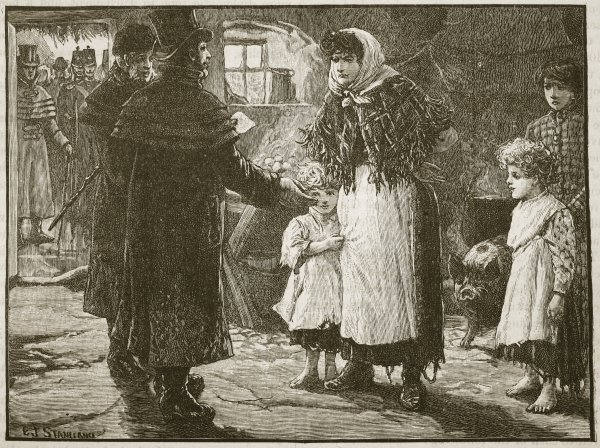
The Tithe Collector – collectors were employed on behalf of the clergy and were called Proctors. They took a cut, so there was a strong incentive to collect

Catholic Emancipation in 1829 was followed by a period of intensified conflict over tithes, known as the Tithe Wars. (Tithes had been a source of great conflict forever – see Robert’s post for La Tocnaye’s observations about tithes in the 1790s.) A large anti-tithe meeting was held in Skibbereen in July 1832 and the speech made by Father Thomas Barry of Bantry was reported in full. Here are some extracts from it, reported by Richard Butler in his paper St Finbarr’s Catholic Church, Bantry: a history for Volume Three of the Journal of the Bantry Historical and Archaeological Society:

The Rev. Thomas Barry, P. P., in seconding [an anti-Tithe] resolution, announced himself as a mountaineer from Bantry, and was received with a cead mille failthe [sic], which was sufficient to affright all the proctors in the kingdom from their propriety. . . .

But (continued the Rev. Gentleman) . . . If to assist the people in their peaceful and constitutional efforts for the removal of grievances to hear the insolence of power in defence of the poor man’s rights, invariably to inculcate on the minds of my flock the most unhesitating obedience to the laws, and at the same time, to raise my voice boldly and fearlessly against injustice and oppression. If these constitute the crime of rebellion, then do I rejoice in acknowledging the justice of the charge. [tremendous cheering.]

. . . Some time since I commenced building a chapel in Bantry, which, owing to the poverty and privation of the people, I have been unable to finish, although thousands are extorted from them for the Parson and the Proctor – the Churchwarden applied to me for Church rates – I desired him to look at the Chapel, and there he would find my answer: he begged of me not to give bad example by refusing to pay, and I told him, that I was well convinced that the example which I gave in this instance was particularly edifying. – (great laughter and much cheering.) – The proctor came next, and threatened me with distraint for the amount of tithes with which he charged me, and which I must do him the justice to say he never previously demanded. I told him to commence as soon as he pleased; and so gratified did I feel at the honour which he intended for me, that I was resolved to make a holyday day for him (laughter and cheers.)

– The Rev. Gentleman sat down amidst the most enthusiastic cheering.

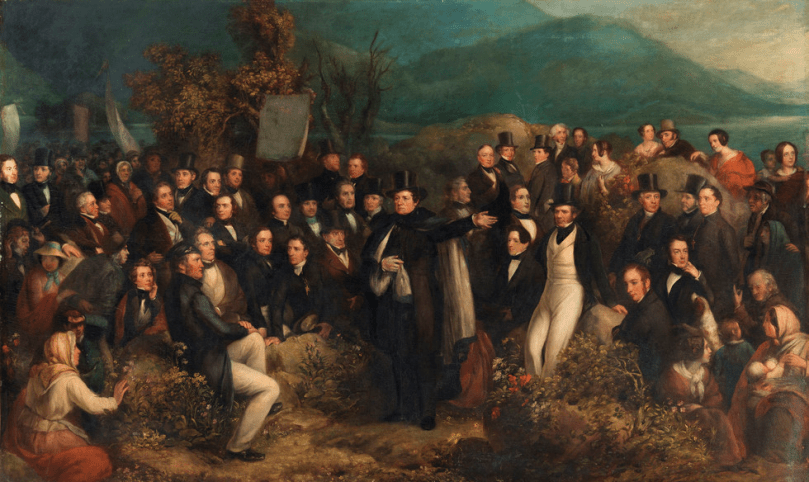
This meeting was but one in a series in West Cork throughout the 1830s. Patrick Hickey, in Famine in West Cork, reports on meetings in Bantry and at the foot of Mount Gabriel – meetings attended by thousands, each parish under the leadership of their priest. In Bantry, the various tradesmen of Bantry marched in procession, each trade with its own banners. On one side of the tailors’ banner was a portrait if Bishop Doyle with the inscription, ‘May our hatred of tithes be as lasting as our love for justice’ and on the other side a portrait of Daniel O’Connell. At the Mount Gabriel meeting a procession of boats came from the islands and the men of Muinter Bheara arrived under the command of Richard O’Donovan of Tullagh and many Protestants (including Methodists and the descendant of Huguenots) attended.

One of the most outspoken of the Church of Ireland community against the anti-tithe movement was Rev Robert Traill, Rector of Schull (above). In doing so he was following the example of his father, the Rev Anthony Traill, who had used a particularly brutal proctor, Joseph Baker, to collect his tithes, while he himself resided in Lisburn. Fearing, of course, the loss of his income, Rev Robert railed against the meetings, declaring that in doing so he waged war against Popery and its thousand forms of wickedness. When cholera broke out after one of the monster meetings he wrote that is was God’s punishment for the agitation stirred by the iniquity of these wicked priests. He had reason to be afraid – the rector of Timoleague had been murdered and throughout the country killings, assaults and riots had occurred. It was a challenging time to be a Church of Ireland rector. (Remember Rev Traill, by the way, and don’t cast him as a villain in this story – he will feature again for his heroic role during the famine – yet another twist in the complex role of the Protestant church in this part of Ireland.)
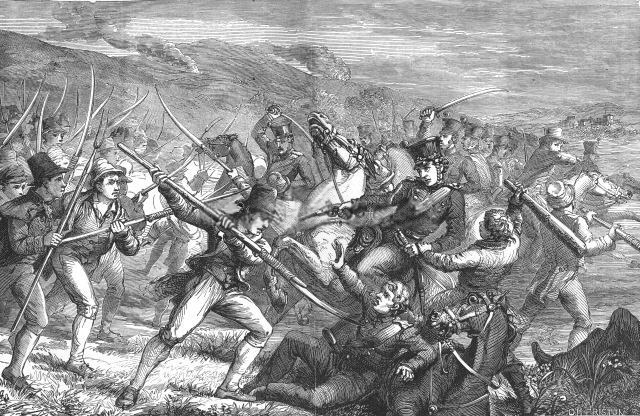
The battle at Carrickshock, Co Kilkenny (from Cassell’s Illustrated History of England). This confrontation over tithes resulted in several deaths and sent shock waves through the country

Eventually (see Part 2) the Tithe Wars eased, a compromise (if not a solution) was reached and outright protests ceased. Let us turn our attention now to what was happening within the Church of Ireland in matters of doctrine.

An enormous stained glass window in Holy Trinity Catholic Church in Cork is dedicated to Daniel O’Connell, The Liberator, by a grateful people

Latitudinarianism – lovely word, isn’t it? It refers to the live and let live philosophy that was generally adopted by Protestants in the 18th century. Actually a reaction against the Puritan insistence on a single form of Truth, it was sometimes called Broad Church and was a mode of thought that tolerated variations on thought and practise and sought to peacefully co-exist with other forms of worship. However, by the beginning of the nineteenth century, this emphasis on compromise and moderation was gradually being replaced with a new evangelical fervour, leading to a movement known as the Second Reformation.

This movement, it is often said, was kick-started in Ireland by William Magee, Archbishop of Dublin and fervently committed to the Second Reformation. He gave a firebrand sermon upon his inauguration in 1822 in which he accused the Catholics and the Methodists thus:

. . . the one possessing a church without which we can call a religion, and the other possessing a religion without which we can call a church: the one so blindly enslaved as to suppose infallible ecclesiastical authority, as not to seek in the word of God a reason for the faith they possess; the other so confident in the infallibility of their individual judgment as to the reasons of their faith that they deem it their duty to resist all authority in matters of religion. We, my Brethren, are to keep free of both extremes, and holding the Scriptures as our great charge, whilst we maintain the liberty with which Christ has made us free, we are to submit ourselves to the authority to which he has made us subject.

In this sermon, which created a furore at the time, he was essentially giving voice to prevailing Protestant opinion at the time regarding the other churches, and also to the claim of the Church of Ireland to be the only national church. It is important to note here that the Church of Ireland considered then, as it does to this day, that far from being an imported or imposed religion, it was, and remains the only true successor of the original faith of the Irish. This was first argued by James Ussher (portrait below by James Lely) in the seventeenth century.

The Church of Ireland, Ussher said, was not created by Henry VIII, but that St Patrick was Protestant in his theology and that the real problem was the interference of the Pope. (Ussher, by the way, is the same prelate who established that the world is only 6000 years old, another statement that continues to resonate in fundamentalist circles – but that’s another story.) In this origin story, it was important to “rescue” the true Irish church from Rome and restore it to the vision of St Patrick. The current catechism on the St Patrick’s Cathedral website continues this tradition. To the question “Did the Church of Ireland begin at the Reformation?” the answer is “No – the Church of Ireland is that part of the Irish Church which was influenced by the Reformation, and has its origins on the early Celtic Church of St Patrick.”
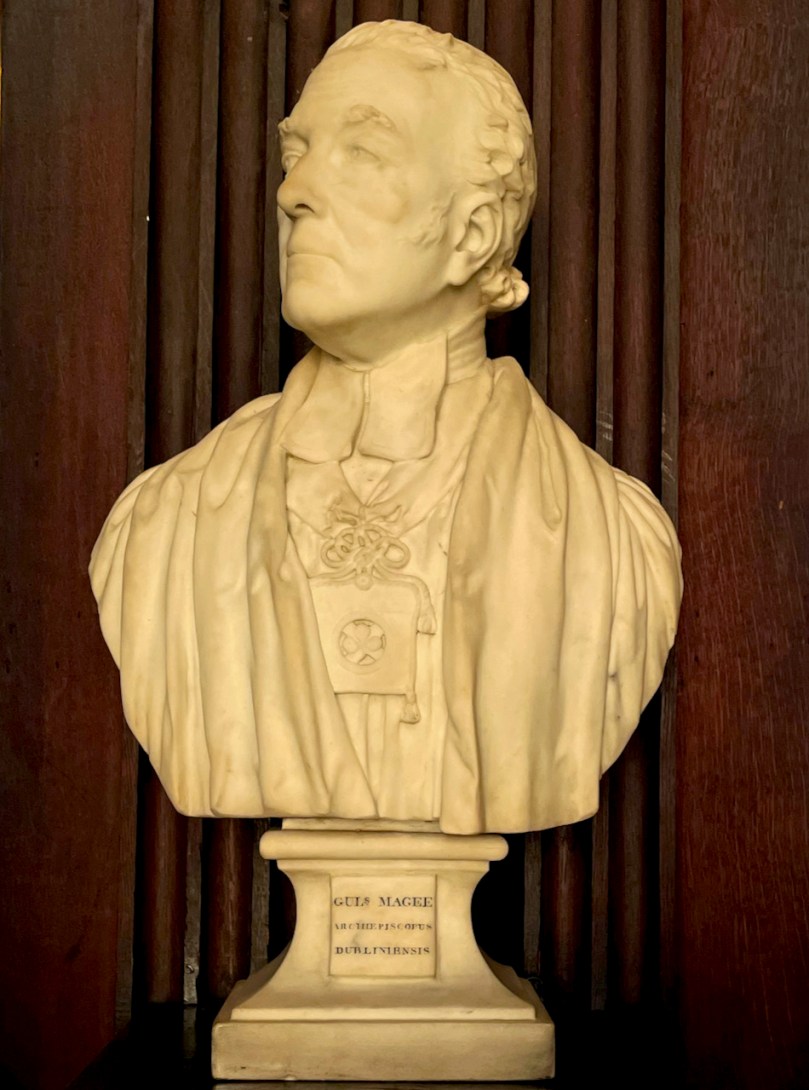
William Magee Bishop of Dublin bust at TCD
William Magee bust in Trinity College

Magee’s assertions were sincerely held positions. Although a cultured and erudite man, and tolerant in many respects, he was violently opposed to Catholic Emancipation, seeing the conversion of Romanists to Protestantism as a far better option both for them and for the country. His sermon effectively marked the end of any leftover latitudinarian attitudes in Ireland and heralded the arrival of a new era for the church of Ireland, in which educational, evangelical and proselytising activities were seen as essential. Next week we will see what effect those activities had on the already deepening divide between Ireland’s faith communities in the pre-famine period.
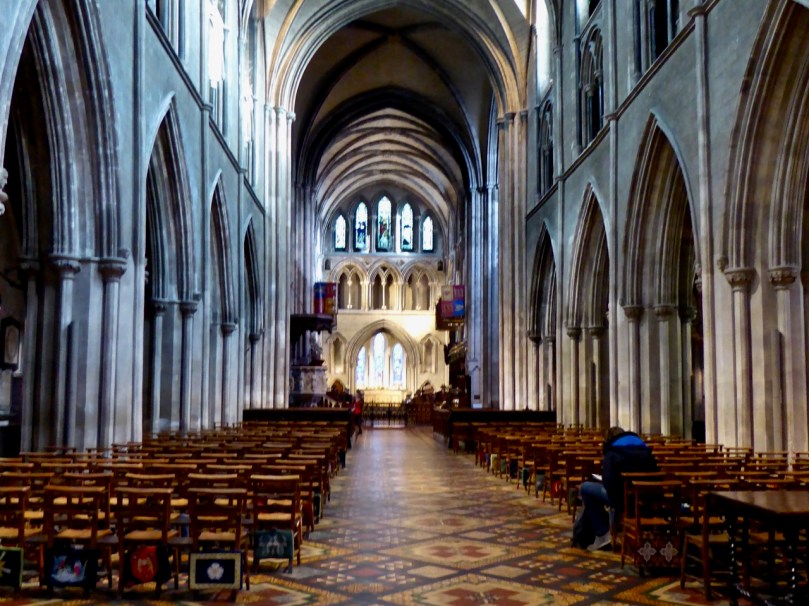
St Patrick’s Cathedral, Dublin – along with the position of being the Established Church, all the ancient churches became the property of the Church of Ireland, including this one. Magee delivered his famous sermon here

This link will take you to the complete series, Part 1 to Part 7

Saints and Soupers: the Story of Teampall na mBocht (Part 2, The Catholics)

Most of what we think we know about traditional Catholic practice in the period leading up to the famine is wrong. The religious environment of the first half of the nineteenth century in Ireland was very different from what we experience today, and different too from what we understand as ‘traditional’ Catholicism and Protestantism in Ireland. In imagining this period we have been over-conditioned by our own experiences of Ireland in the twentieth century – a country in which each town or village was dominated by a large Catholic church, in which the priest was a man of great influence, the population (90% Catholic) went to mass every Sunday and participated in sodalities, novenas and retreats regularly, and in which children attended schools where Catholic Doctrine was integrated into the curriculum. It’s a picture of a devout, disciplined, orderly and mono-cultural society. Meanwhile, the Protestants attended a mysterious ‘service’ (mysterious because it was a sin to go inside a Protestant church), practised birth control, often spoke in a different accent from us, and appeared to us not to take their religion as seriously as we did. None of this, it turns out, was the norm in most of Ireland, and definitely not in the isolated parishes of West Cork, in the period leading up to the famine. Let’s look at the situation for Catholics first, as we lead up to the story of Teampall na mBocht (link to Part 1 at the bottom of this post).

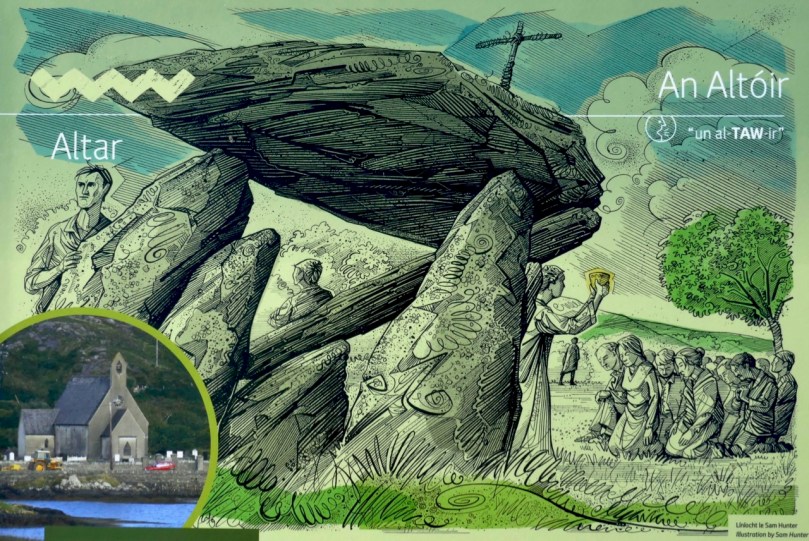
The Information post for the Bronze Age wedge tomb at Altar shows a scene in which the wedge tomb has been repurposed as a mass rock

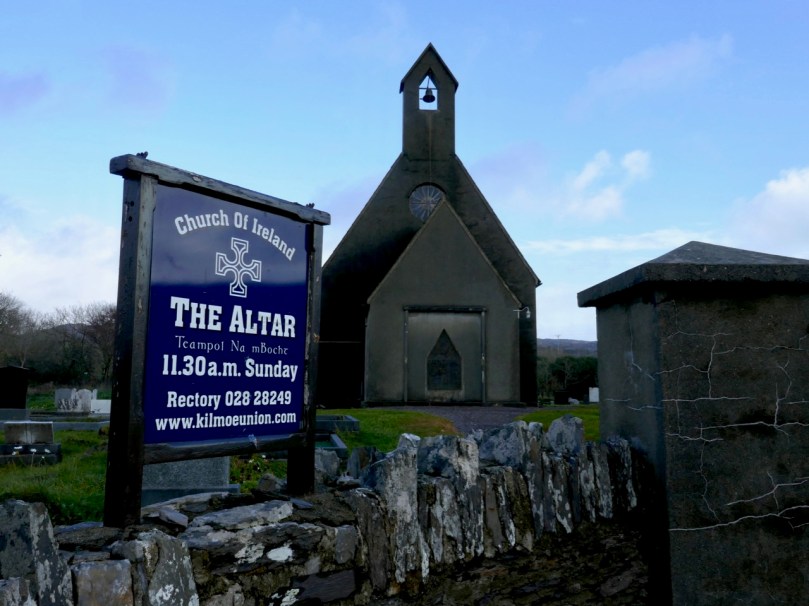
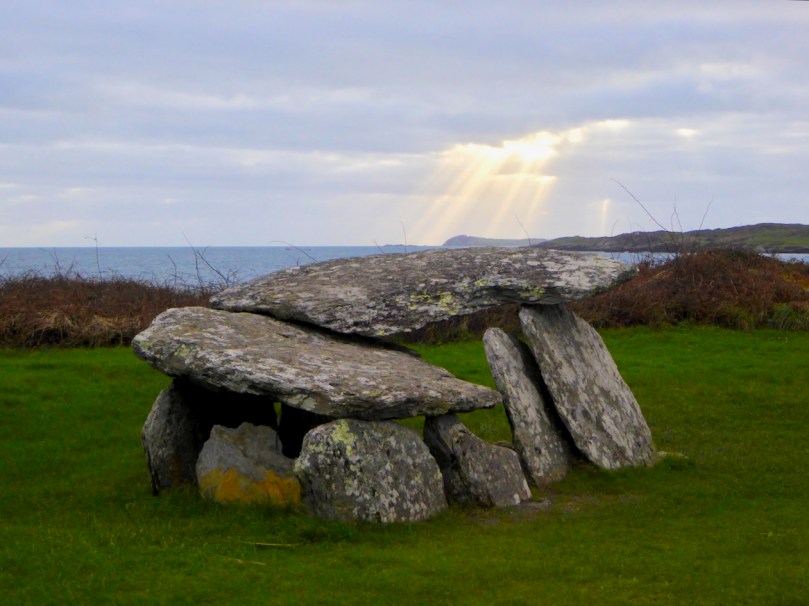
Catholic Emancipation, won by Daniel O’Connell in 1829, finally lifted the numerous legal restrictions under which Catholics in Ireland lived their lives since the enactment of the first and subsequent Penal Laws from the early seventeenth century. The legacy of those laws was fully and poignantly alive in Kilmoe Parish – the townland in which Teampall na mBocht was built is called Altar, after a prehistoric wedge tomb across the road from the church which had served as a Mass Rock. It was a powerful symbol, a reminder that Protestants had been free to build churches and hold services under shelter, while Catholics were not. An alternate name for Teampall na mBocht is The Altar Church (see lead image)

The Bronze Age wedge tomb known as The Altar

While some of the worst constraints of the Penal Laws had been lifted in practice during the 18th century, the Church of Ireland remained the official Established Church. This meant that the whole population was required to support it through ‘tithing’ – everyone, no matter their religion, had to pay a tax equal to one tenth of their earnings. Especially after Catholic Emancipation, the inequity of this led to several years of conflict known as the Tithe Wars. In 1838 an Act of Parliament changed the way tithes were collected. While this had the effect of dampening the worst of the conflict, it increased rents, since tithes were passed on to landlords.

Daniel O’Connell campaigned vigorously against Tithing – here he is depicted at one of his Monster Meetings

The fact that the Church of Ireland was predominantly the church of the ruling classes, the landlords, the government officials and the wealthier sections of society served to underscore and deepen sectarian divisions and mistrust between the communities. The uneven distribution of wealth was stark – while there were certainly poor Protestants, and wealthy Catholics, Catholics in general were vastly over-represented, as a percentage of the overall population, in the ranks of the impoverished.

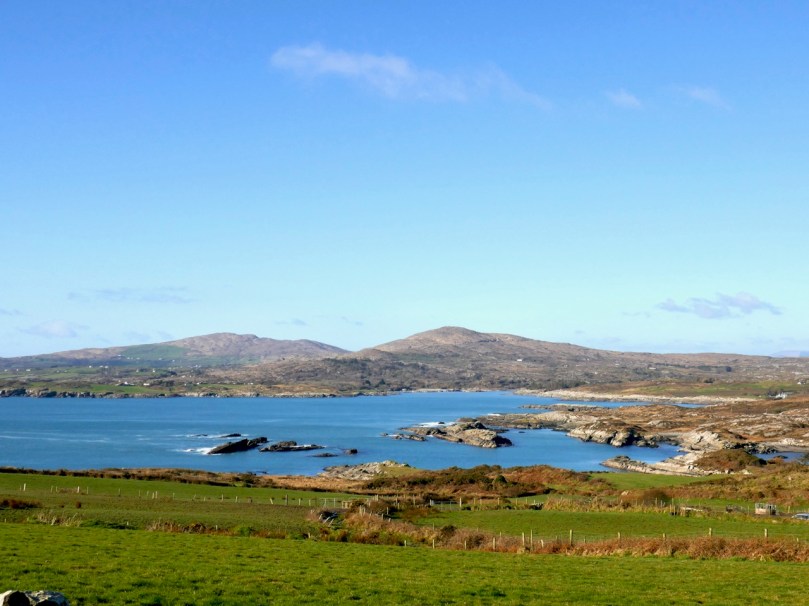
Toormore Bay, the scene of the action of this story. This photograph illustrates well how much of the land was rocky and barren

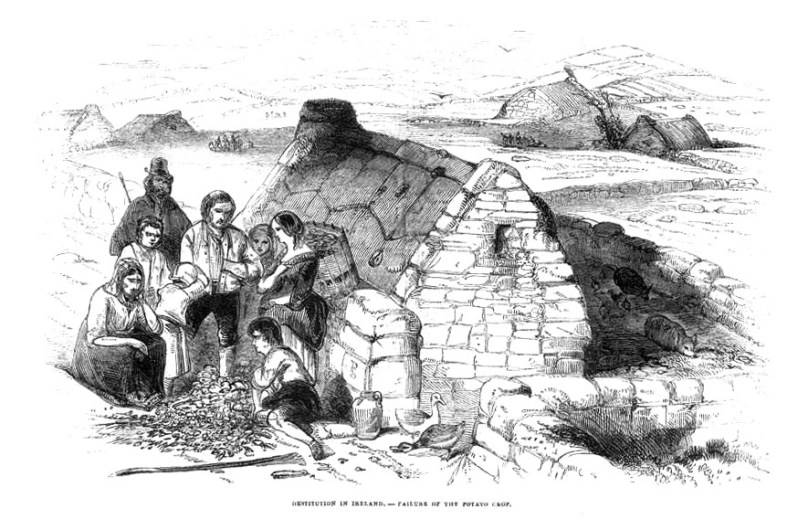
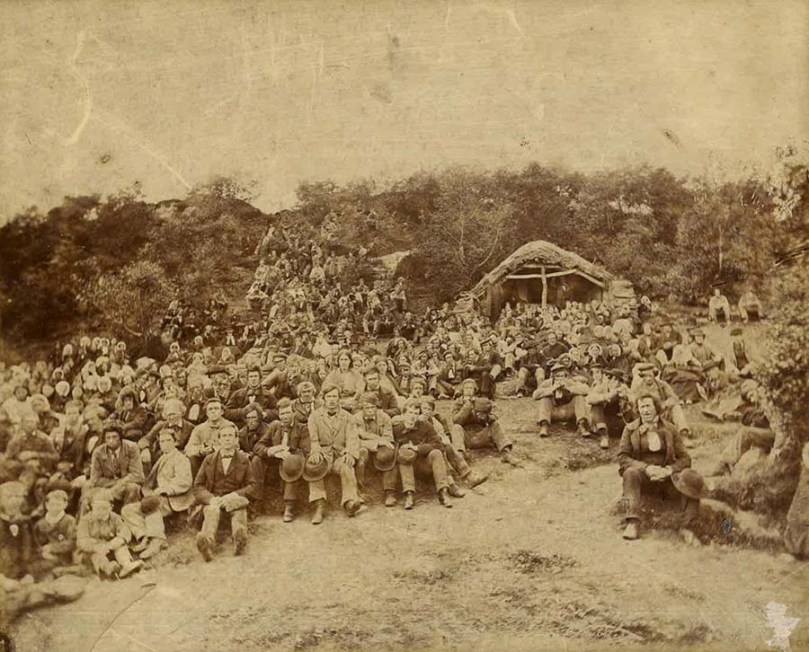
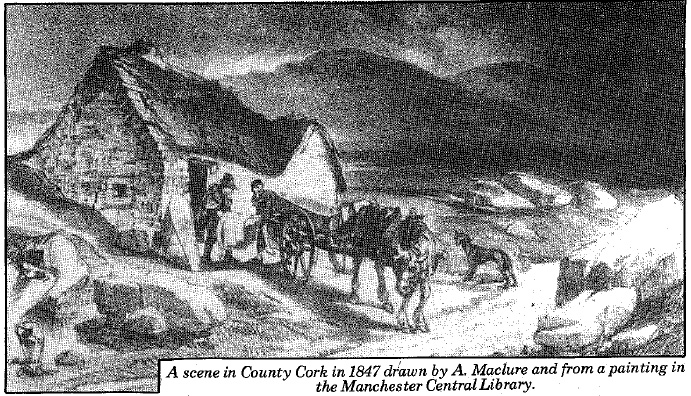
Poverty was, perhaps, the defining condition of the majority of the Catholic population of the Mizen Peninsula in the period leading up to the famine. There were few proper churches and few priests. Accounts exist of open air masses, attended by great numbers, kneeling reverentially in the mud and rain (see final image). Others crowded into whatever miserable huts or mass houses there were. Most stayed away – mass attendance hovered between fifteen and forty percent. Stories abound of those who could not go because the family did not have enough clothes between them to send even one person.

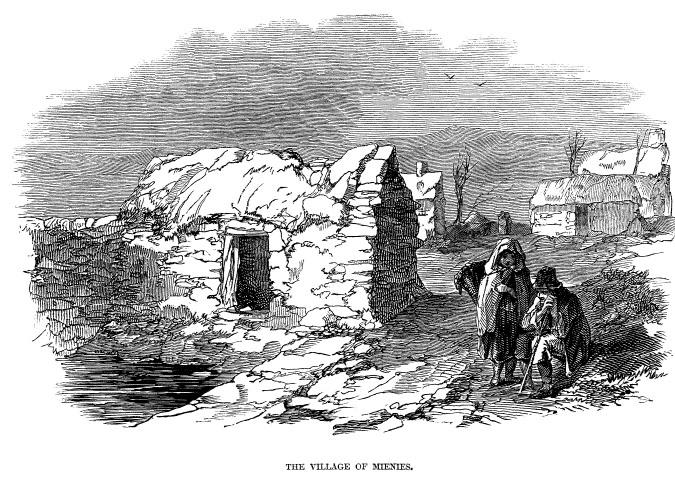
James Mahony’s drawing of the Village of Mienies, near Drimoleague, showing the extreme destitution of the inhabitants

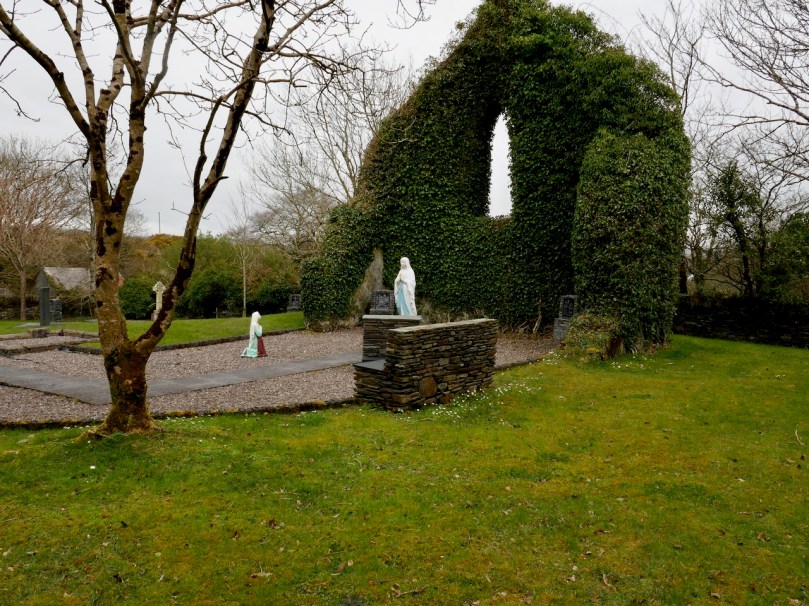
Despite this, new Catholic churches were starting to be built, some where none had existed before and some to replace tumbledown structures. Because of lack of money to erect buildings to withstand the elements, some, in turn, became unfit for purpose fairly quickly, such as this one (below) near Roaringwater Pier, now reimagined as a grotto.

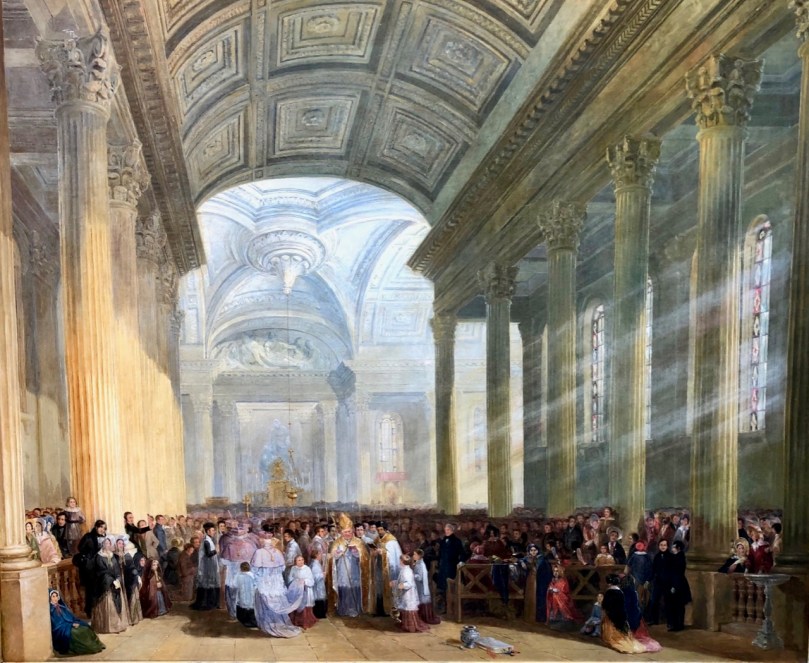
Wealthy Catholics in Cork City built the magnificent Church of St Mary on Pope’s Quay in Cork, opened with great fanfare in 1839. James O’Mahony, who became known later for his harrowing sketches of the famine in West Cork, painted the opening in all its magnificence (below). This work was exhibited in Skibbereen as part of the Art and the Great Hunger Exhibition this summer.

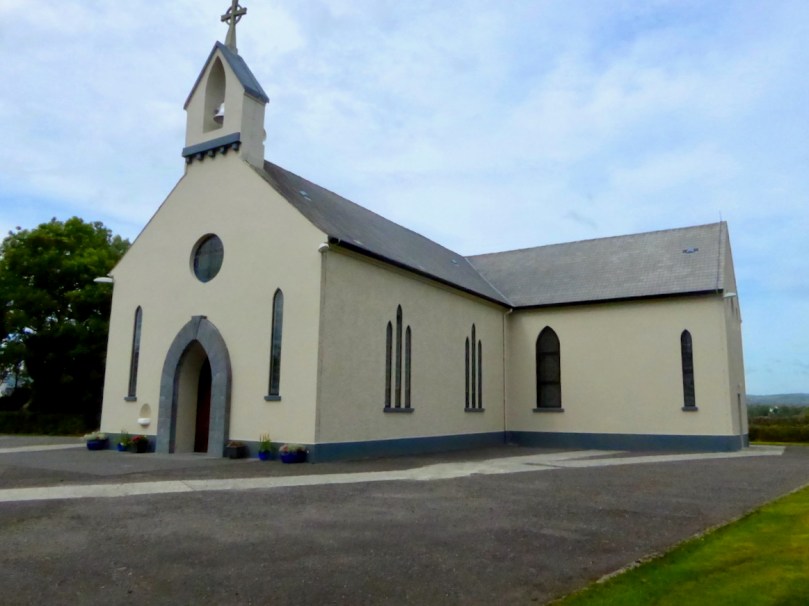
But most Catholic churches erected during this period were far simpler. Five were built in all on the Mizen. St Brigid’s in Ballydehob is a good case in point. Begun in 1825, before Emancipation, it was funded through a Herculean collection and subscription effort, with much of the money coming from local landlords who were not themselves Catholics. While the presence of a church increased mass attendance, levying an entrance charge was customary, both to repay loans for building the church and to maintain the priest. Many could not afford to pay this entrance fee so either stood outside for the duration of the mass, or stayed away.
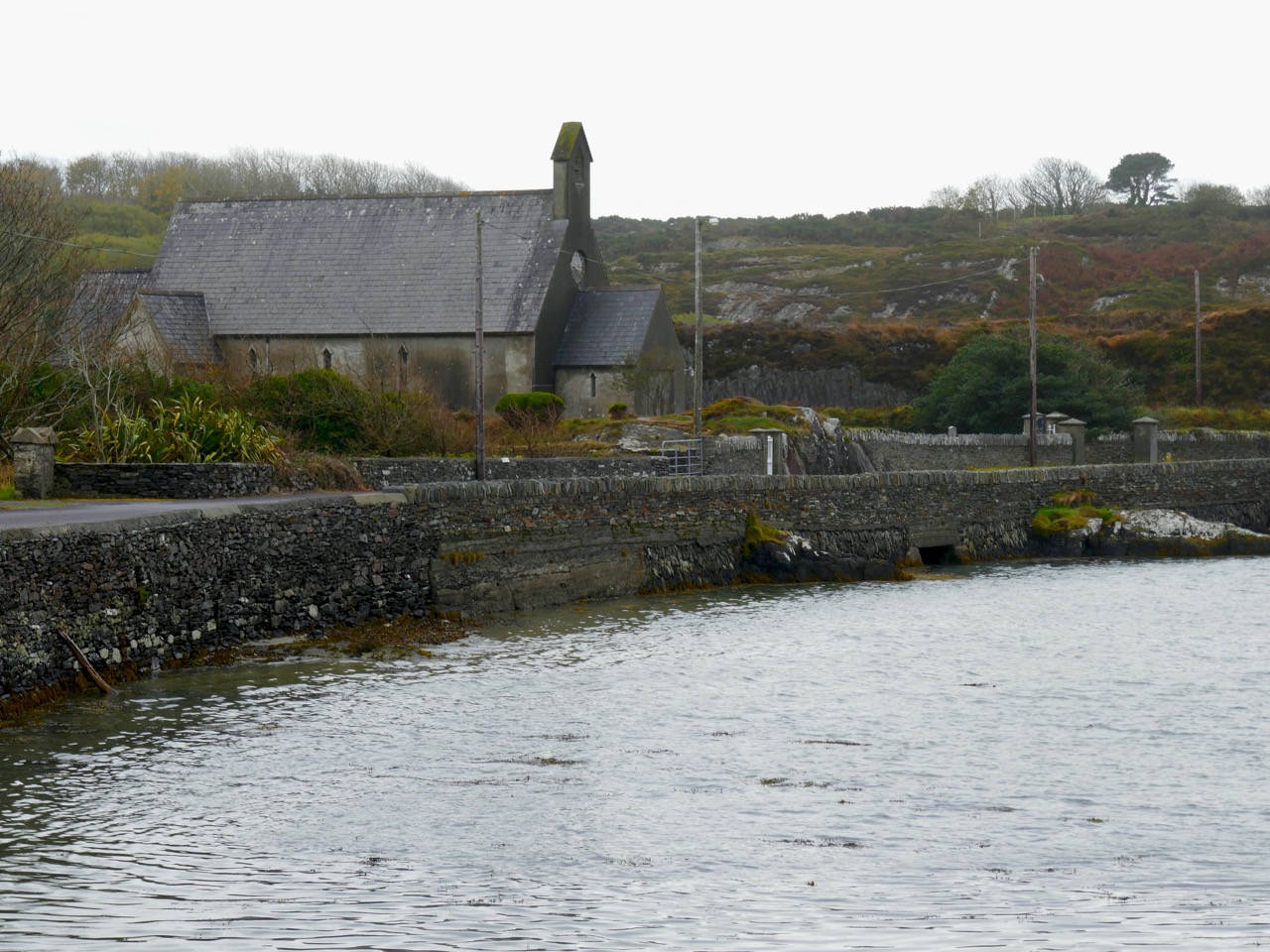
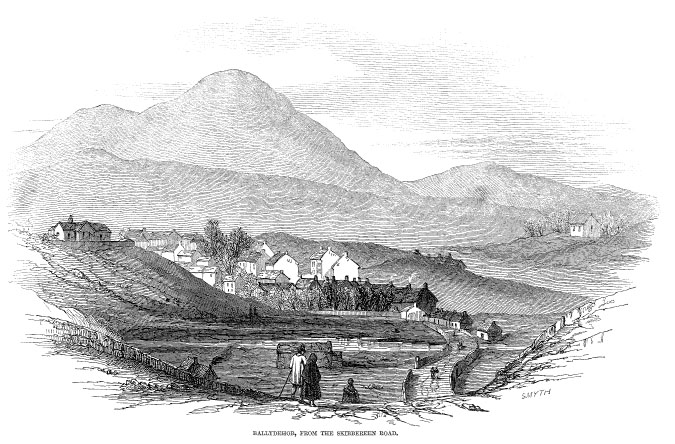
Ballydehob in the 1840s showing the Catholic Church on the hill. Construction was solid enough that the church remains to this day, little changed (see next image)

In far-flung areas ‘dues’ were also to be paid to priests who rode in at Easter and Christmas on horseback to say mass and hear confessions. Fr Hickey in Famine in West Cork refers to the account of Father Michael Collins of Skibbereen: Many confessed but paid nothing…In brief he was admitting that the priests were losing contact with some of their flock, especially the poor who could not afford a half penny for Sunday Mass.

So if poor rural Catholics were not always able to attend mass, how did they stay connected to their idea of themselves as Catholics and how did they participate in religious observances? The answer appears to lie in a host of practices that centred on feast days, such as St Patrick’s Day, May Eve or Halloween, in ‘patterns’ (the complex customs that accompanied a visit to a shrine or holy well), in ritualised wakes and funerals, and in a vast set of semi-religious/semi-folk beliefs (often based in pre-Christian traditions) that influenced daily actions. Many of these beliefs and practices continue to resonate today, especially in country areas – just take a quick browse through Holy Wells of Cork.

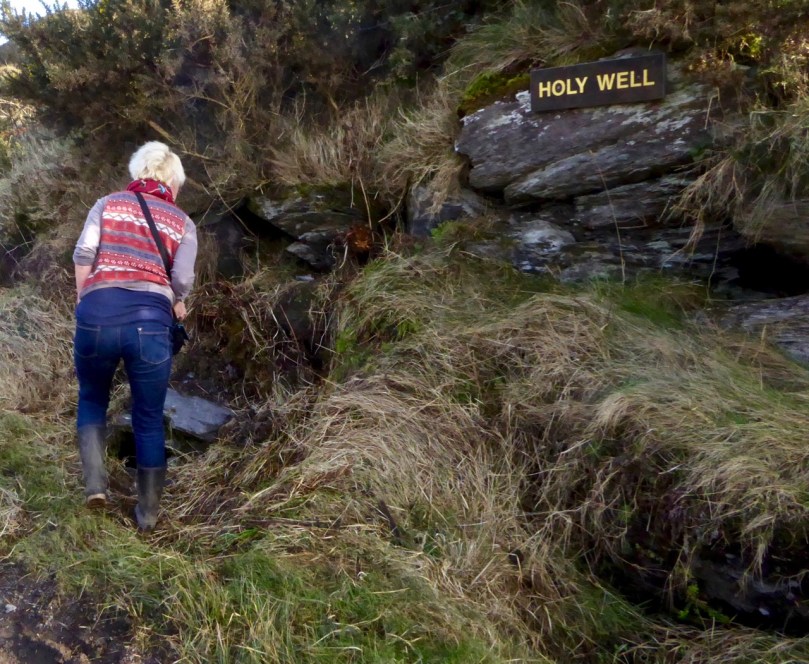
This holy well, being inspected by Amanda for her blog, is at Callarus Oughter on the Mizen

At the same time, National Schools were slowly replacing the hedge schools to provide basic instruction to the children of Ireland. The National School System was established in the aftermath of Catholic Emancipation to provide education to all children, regardless of religion – it was emphatically and specifically non-denominational in its intent. However, it didn’t work out that way. Herein lies one of the great tragedies of Irish history – the failure to establish a non-sectarian national education system.

All that’s left of the Boys’ School at what was once the thriving community of Roaringwater

While Catholics, on the whole, seized upon the opportunities provided and threw themselves enthusiastically into the task of raising money and building schools (to be open to all religious persuasions), Protestants went into near-panic in their opposition, mainly focussed on the prohibition of teaching the Bible as part of the curriculum. Opposition rallies and meetings were held all over the country and several organisations were established to provide alternate education – but more about this in Part 3. Since parents had to pay to send their children to the schools (there was no guaranteed external source of funding to cover all costs) the schools benefited mostly the better-off and the poorest children did not receive the education they so badly needed.

This school at Clonmeen, near Banteer in North Cork, was built in 1837 to replace the previous hedge school. It served as both a dwelling for the teacher and a school. Few of these original very early schools have survived

What we see in the Mizen in the first half of the nineteenth century, then, is the antithesis of that disciplined and orderly ‘traditional’ Catholic society that I described in the first paragraph. Among the poor people of the Mizen (and the majority were poor) illiteracy rates were high; vast numbers lived on the knife-edge of starvation and could afford neither mass nor school; Catholicism, although fiercely adhered to, was for most people a haphazard collection of beliefs and customs. But the happenings at Teampall na mBocht (yes, we’re still getting to that) were one of the catalysts for change in the Catholic Church, change that led to what we now think of as the ‘traditional’ Catholicism which is very much a post-famine phenomenon in Ireland.

The Protestant Churches, too, had experienced some seismic shifts in philosophy and practice in the same period. In Ireland, those changes in direction set them on an inexorable collision course with their Catholic neighbours. The ultimate catalyst for this clash was the famine. As some clergymen saw it, those impoverished, ignorant, superstitious, underserved, non-church-going slaves of ‘popery’ were in need of salvation as much as food. Next week, we’ll get to know what was going on with that side of things.

People gathered for an outdoor mass in the 1860s in Donegal. Apart from the decent clothing, this scene may have come from the 1840s on the Mizen

This link will take you to the complete series, Part 1 to Part 7

Eleventh Hour

I write this at 11am on the 11th November 2018 – exactly 100 years since the ending of The Great War. I have been aware of the significance of this moment of remembrance since my childhood: wherever we were at the eleventh hour of the eleventh day of the eleventh month, we had to stop what we were doing and be silent for two minutes. This – and the horrors of war – have been in my psyche forever.

Growing up in Britain there was always that awareness of the two world wars, and the losses and sacrifices that they caused: every town and village has its war memorial, giving the names of those who died. That first – Great – war also affected Ireland but, until quite recently, it seems those Irish people who died because of it have received scant commemoration. But – as always in Ireland – once you begin to turn over the stones you do find the history; today’s post looks at just a few examples of memories and commemorations of the 1914 – 1918 conflict.

Firstly, the poetry. Yeats wrote of war poets – “We have no gift to set a statesman right.” I think he was wrong – poets and artists are probably most able to express emotions about war and its outrages in ways that others can approach and embrace. Francis Ledwidge, although an ardent Irish nationalist, states that he . . . joined the British Army because she stood between Ireland and an enemy common to our civilization and I would not have her say that she defended us while we did nothing at home but pass resolutions . . . Only a poet, surely, could describe an army as feminine. Ledwidge gave his life in pursuit of the cause: he was blown to pieces at Ypres on 31 July 1917. A year previously his friend, Irish patriot (and poet) Thomas MacDonagh, was executed (for his part in the 1916 rising) by soldiers in the same uniform that Ledwidge was wearing. The irony is only compounded by the fact that the poet’s Lament for Thomas MacDonagh can be seen now as Ledwidge writing on his own fate:

He shall not hear the bittern cry
in the wild sky, where he is lain,
Nor voices of the sweeter birds
Above the wailing of the rain
  
Nor shall he know when the loud March blows
Thro’ slanting snows her fanfare shrill,
Blowing to flame the golden cup
Of many an upset daffodil.
  
But when the dark cow leaves the moor
And pastures poor with greedy weeds
Perhaps he’ll hear her low at morn
Lifting her horn in pleasant meads.

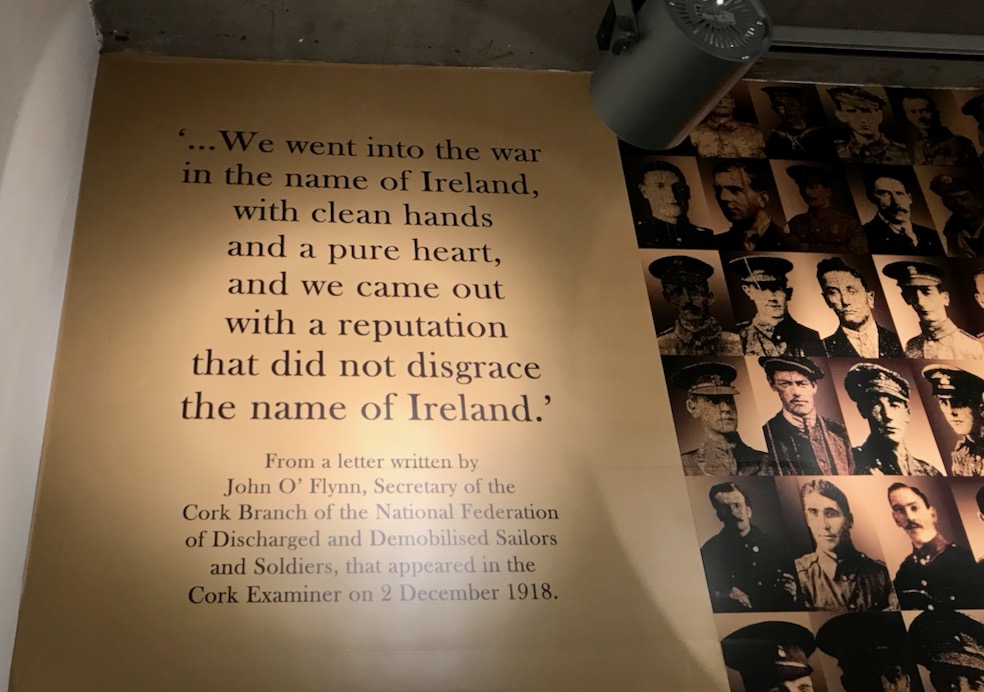
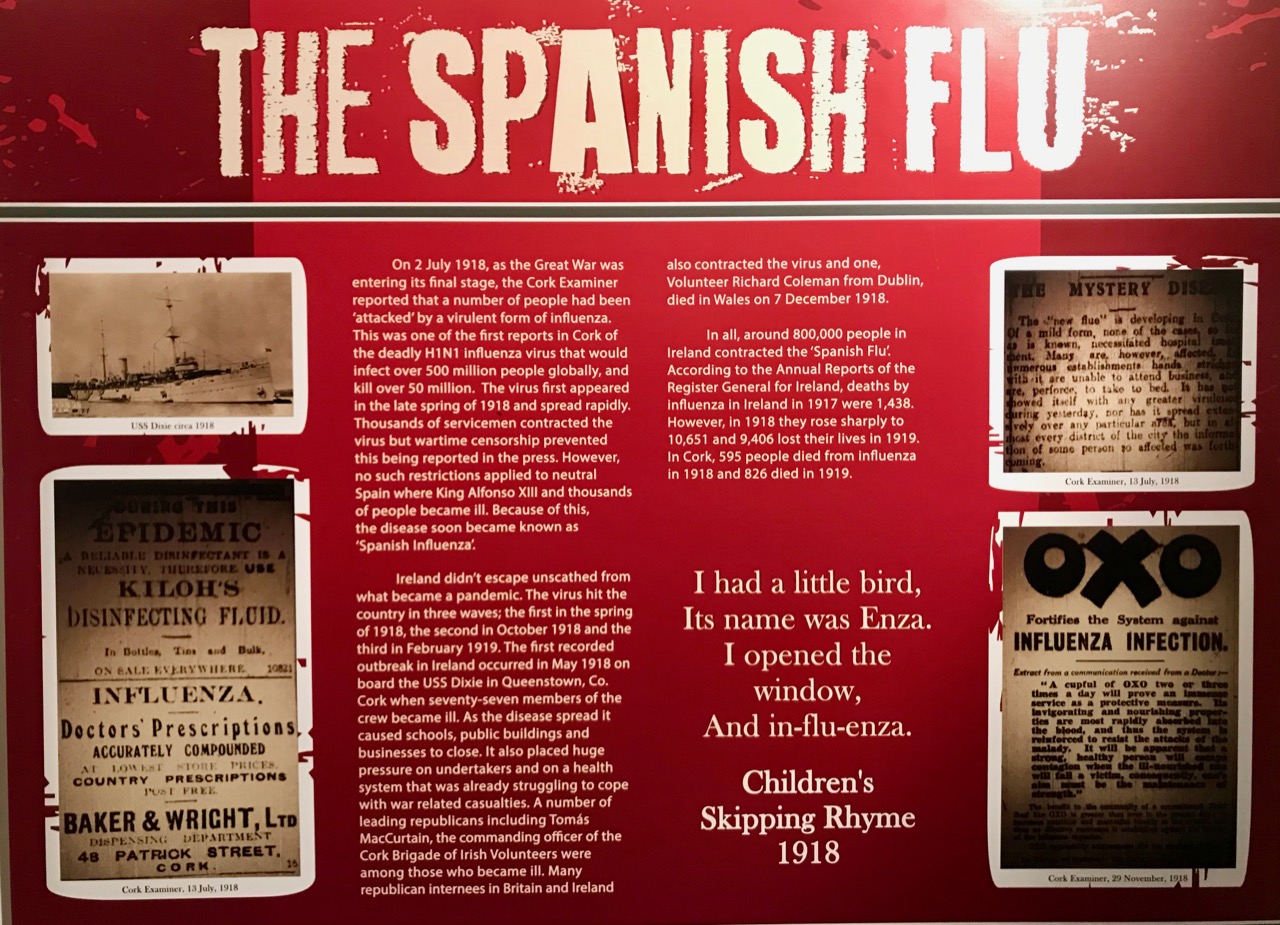
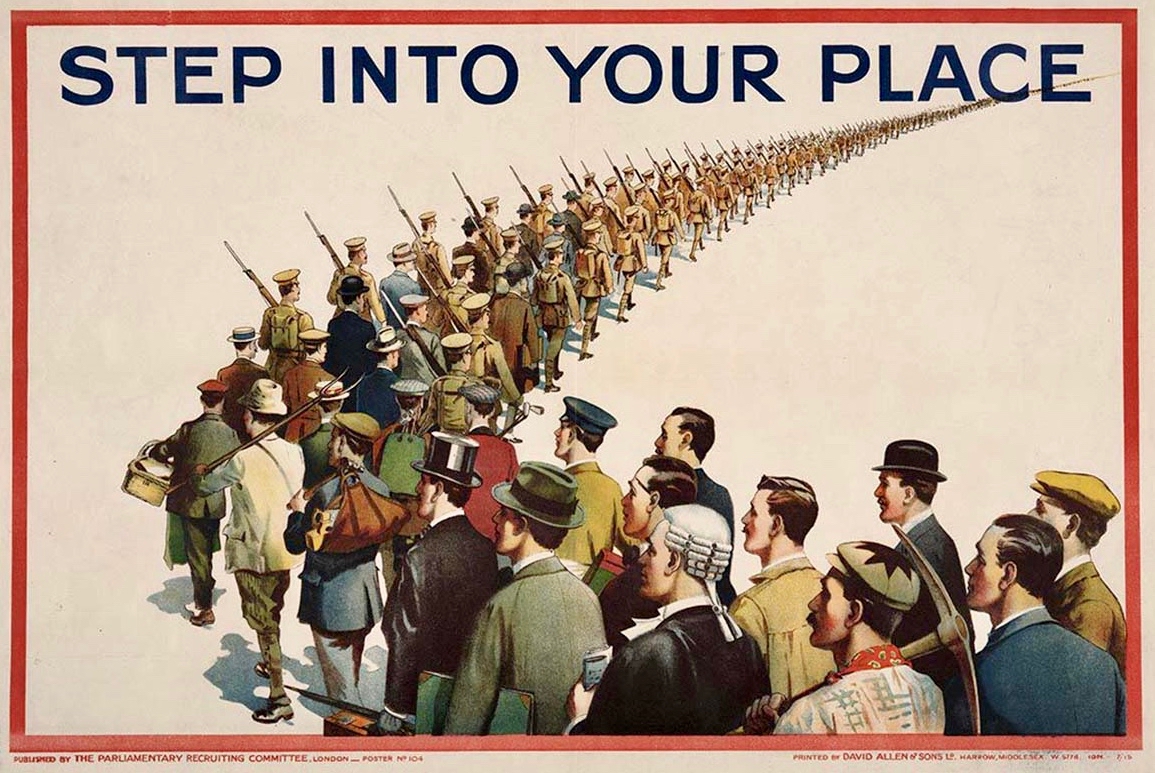
Last week saw the opening of a new exhibition at the Cork Public Museum – Cork 1918: Victory, Virus and Votes. There are photographs, posters and artefacts – all very well displayed – telling the story of the involvement of people from Cork in the Great War, the political fallout from the War and the aftermath of the world wide Spanish Flu epidemic which claimed millions of victims. It’s a must-see exhibition and congratulations are due to Dan Breen and his dedicated team at the museum for bringing it to fruition at this appropriate time. The images above and below are from the new exhibition.

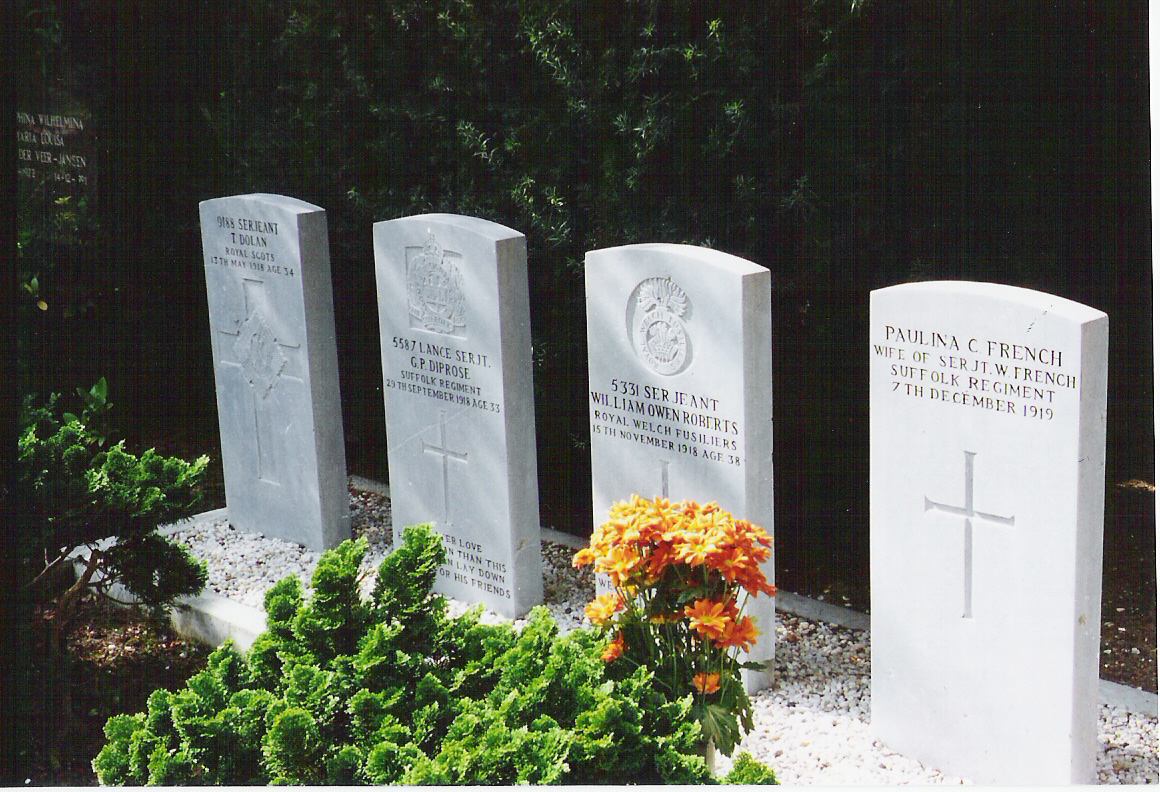
Today Finola is thinking about her grandfather – Sgt William Owen Roberts – who served in the Welsh Fusiliers and had a distinguished military career which included the Boer War and the Chinese Boxer War. He served in the Great War and was captured and interned in Germany and Holland. He contracted and died of the Spanish Flu on 15th November, 1918 – just a few days after the end of the conflict – at the age of 39. His grave is in The Hague.

There can be only a few families not affected by the wars of the twentieth century. My own Uncle Jack died in a prison camp in the 1940s, while my mother’s mother was a victim of the flu epidemic, dying in 1918 and effectively orphaning my mother (aged four) and her three siblings, as their father was away serving in the army.

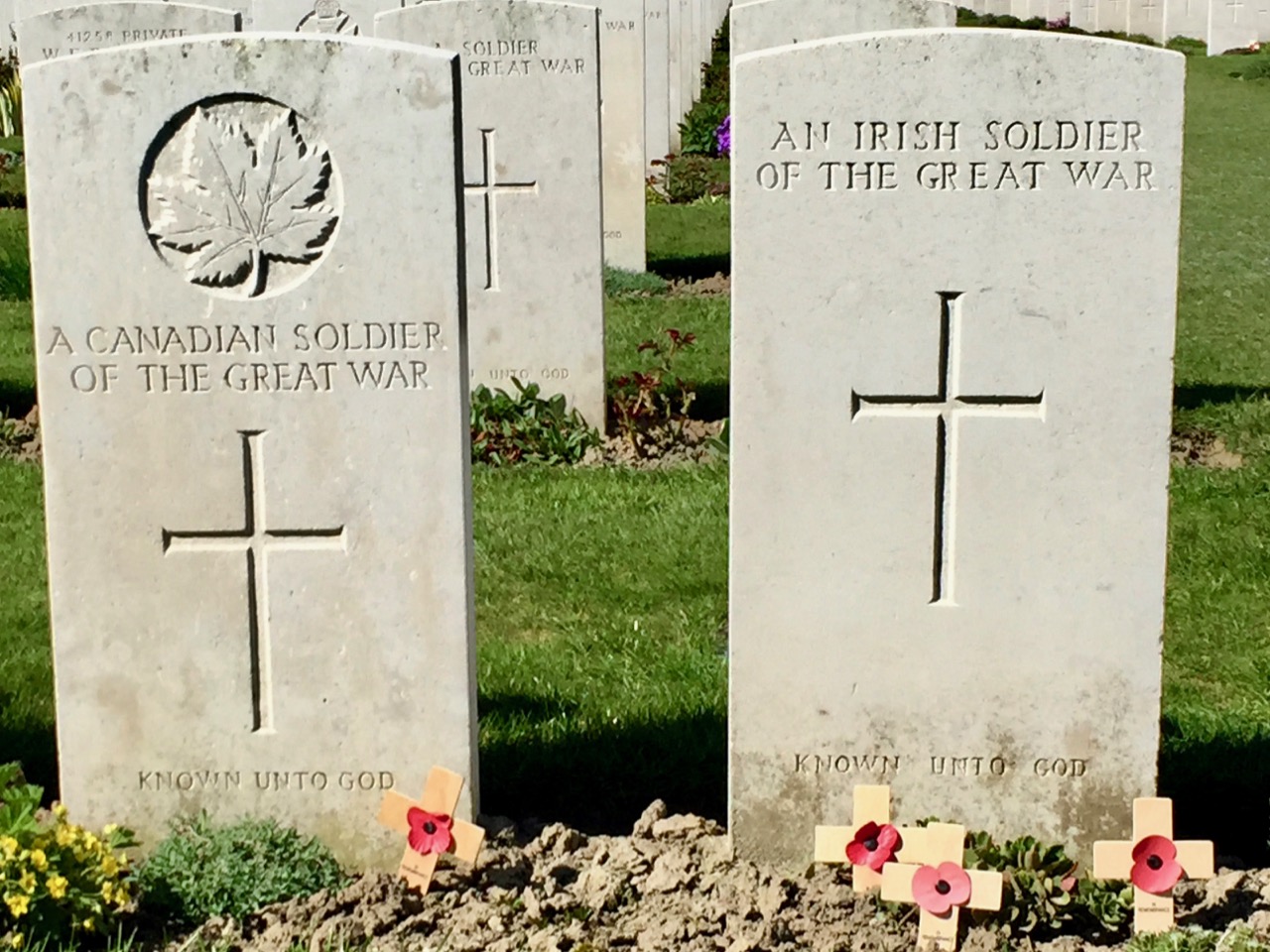
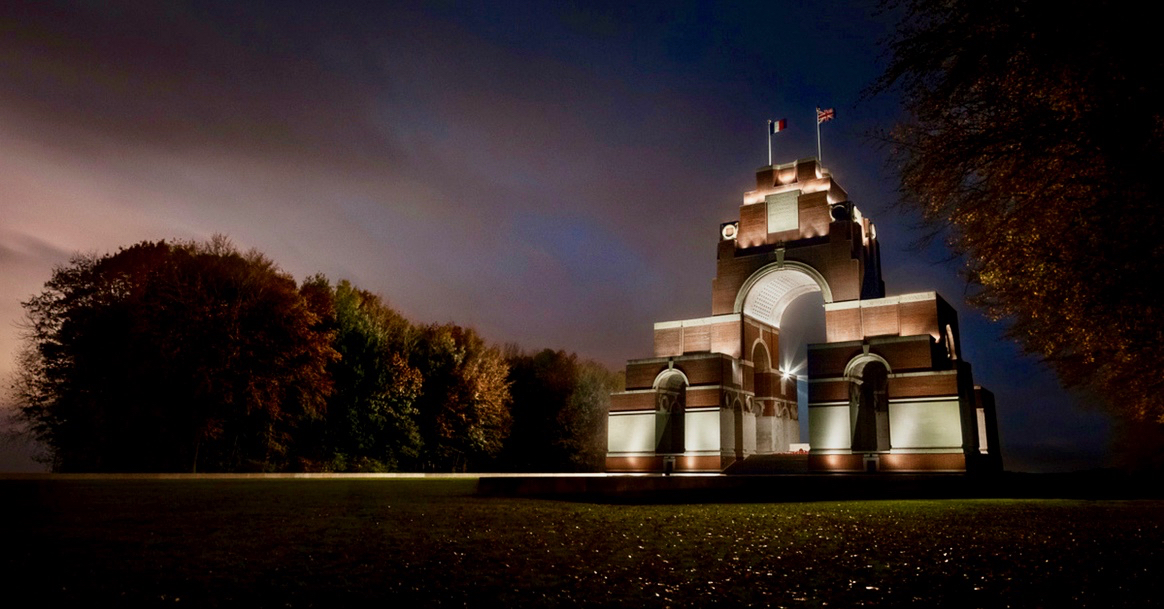
Tucked away in burial grounds around Ireland are the graves of those who died in Europe between 1914 and 1918 in that awful war – and of those who died subsequently as a result of injuries and mental stress arising from the war. We mark them out on our travels around the country. The graves – erected by the Commonwealth War Graves Commission – are of a distinctive uniform design, originated by the architect Edwin Lutyens (who also designed the great Thiepval Memorial in France, the largest Commonwealth memorial to the missing in the world, inscribed with over 72,000 names). The sheer magnitude of that number – people of whom no trace is left other than a name carved on stone – is bewildering. The image below of Thiepval is courtesy of the CWGC.

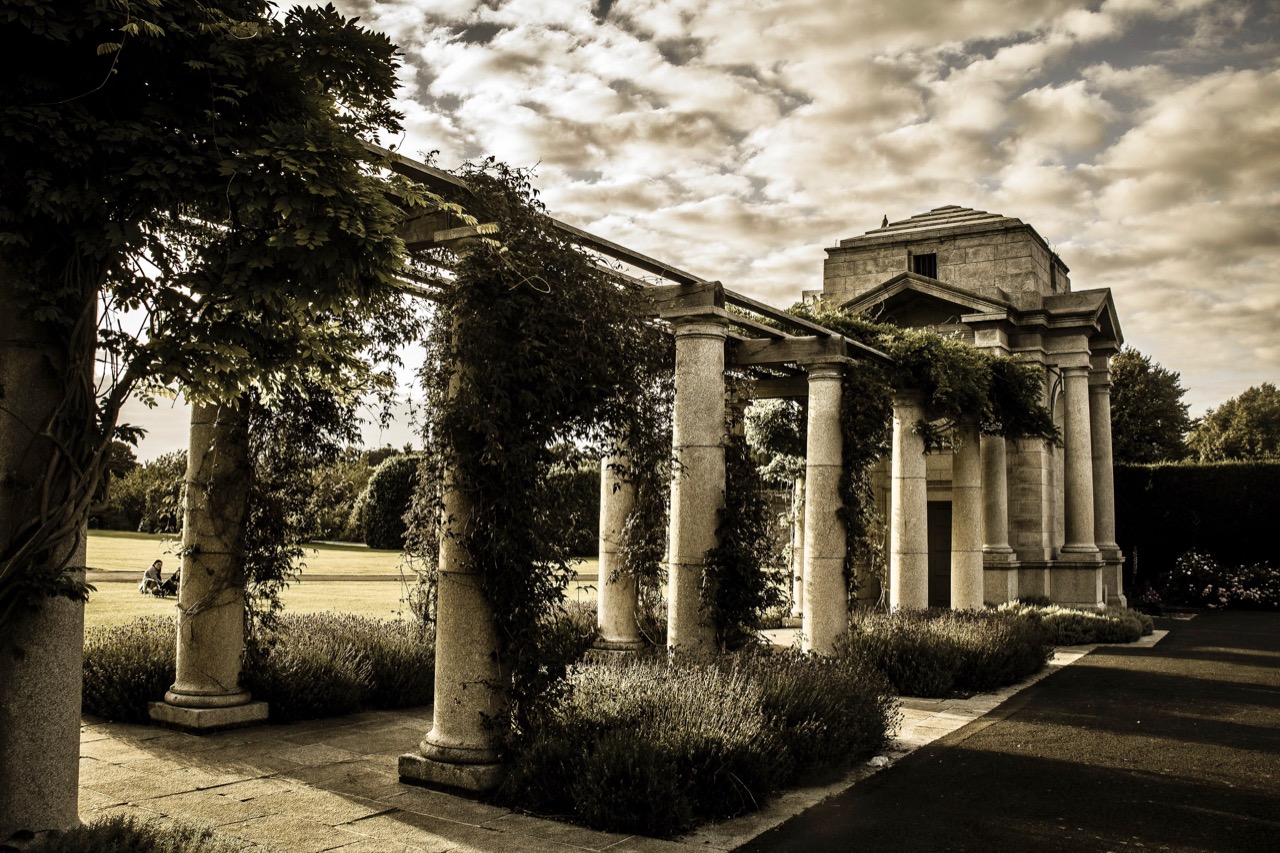
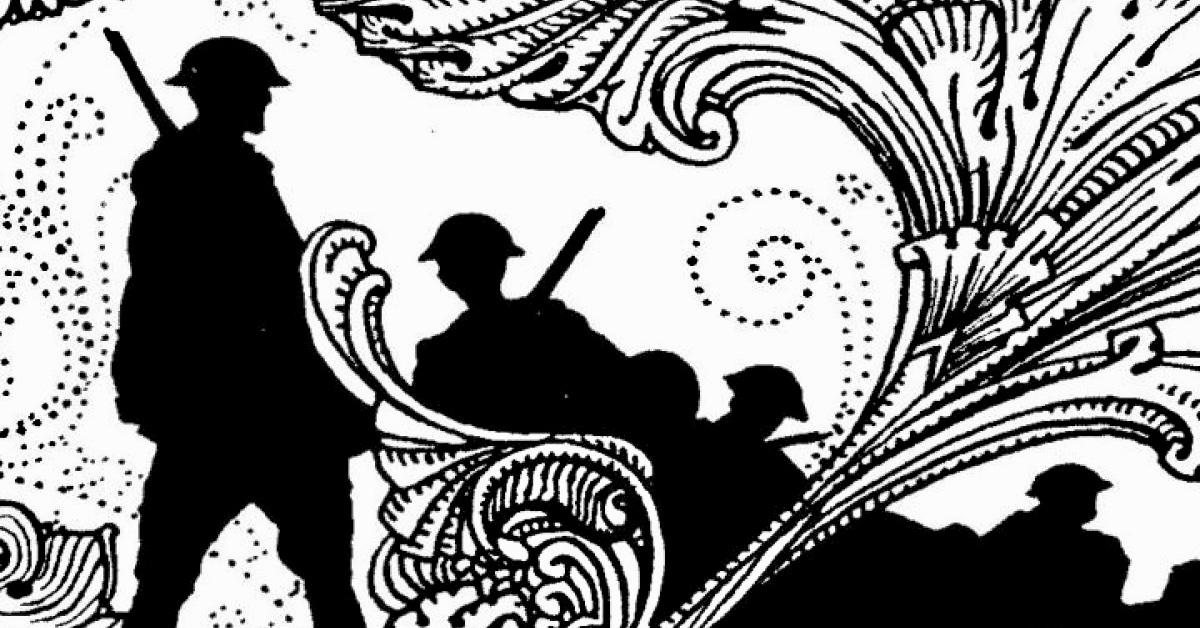
Ireland does now have its own dedicated national war memorial to commemorate the Irish men and women who died during the First World War. The idea was first mooted in 1919 but took years to gestate. Lutyens was commissioned to design formal gardens in Islandbridge, Co Dublin, in the early 1930s, and construction work was largely completed in 1937, following by the establishment of trees and landscaping, an essential element of the design. The 1939 – 45 war in Europe delayed the opening of the memorial, which languished and suffered from decay and neglect for years after that. It wasn’t until 10th December, 1980 – following restoration by the Office of Public Works – that the Irish National War Memorial Gardens were formally dedicated, and they are now maintained to a high standard. As a point of interest, the gardens include classical pavilions – ‘Bookrooms’ – designed to house the memorial record illustrated by Harry Clarke and inscribed with the names of the 49,400 Irish soldiers lost during the Great War. The image of the memorial gardens below is by Diego Lopez Sebastian. The ‘tailpiece’ is a Harry Clarke Illustration from Ireland’s Memorial Records.

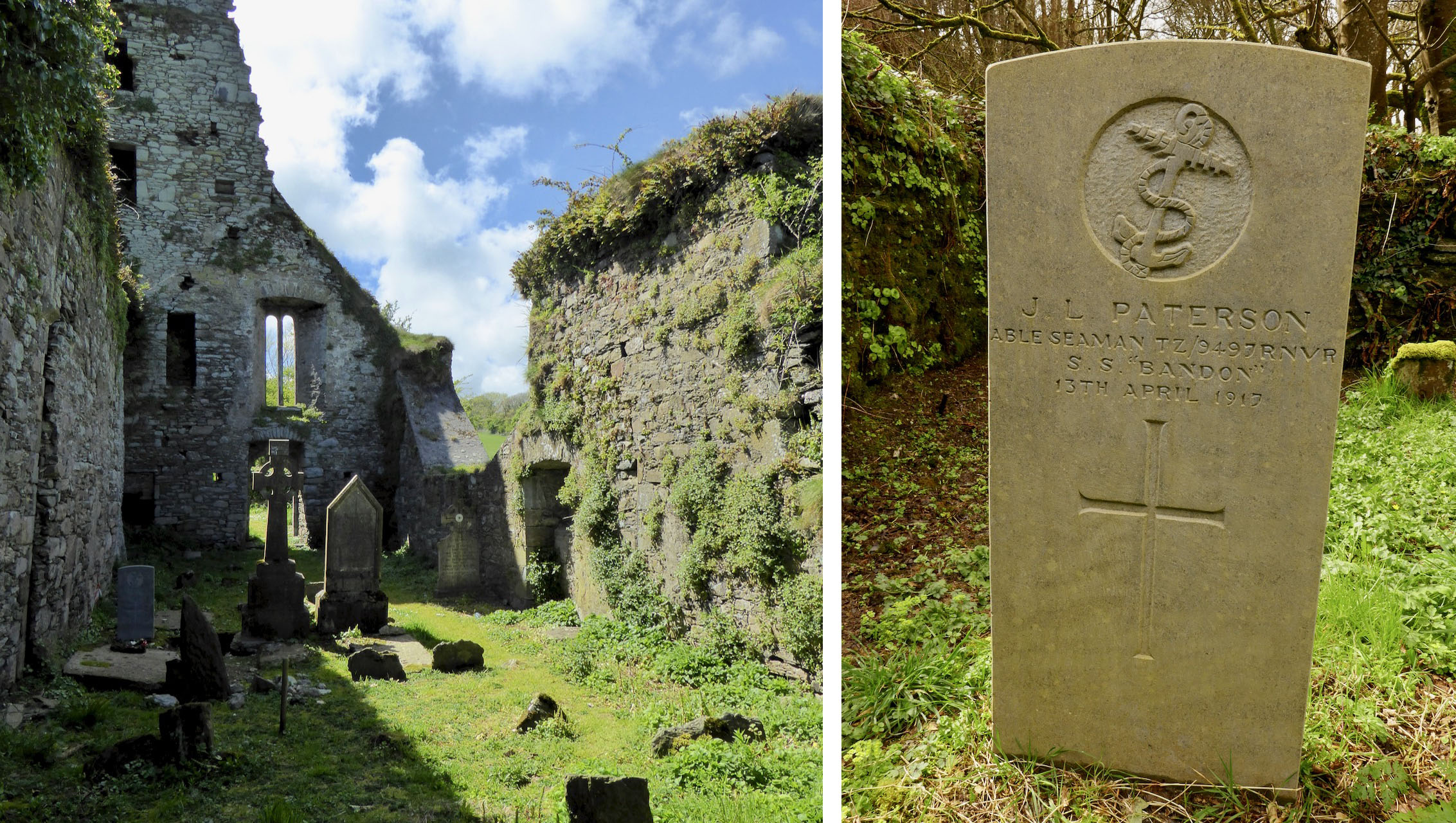
For us, perhaps it’s those tucked-away and often forgotten graves in the corners of Irish cemeteries that are the most poignant. We know that each one tells a story: we can’t know that story – but hopefully there is always somebody who does know – and who passes on the memories to future generations.

Above: two tucked-away West Cork war graves. The left-hand picture has an example, lower left, and is at Abbeymahon Graveyard, Courtmacsherry. On the right is an example at the ancient burial ground of Castlehaven.

Saints and Soupers: the Story of Teampall na mBocht (Part 1, Introduction)

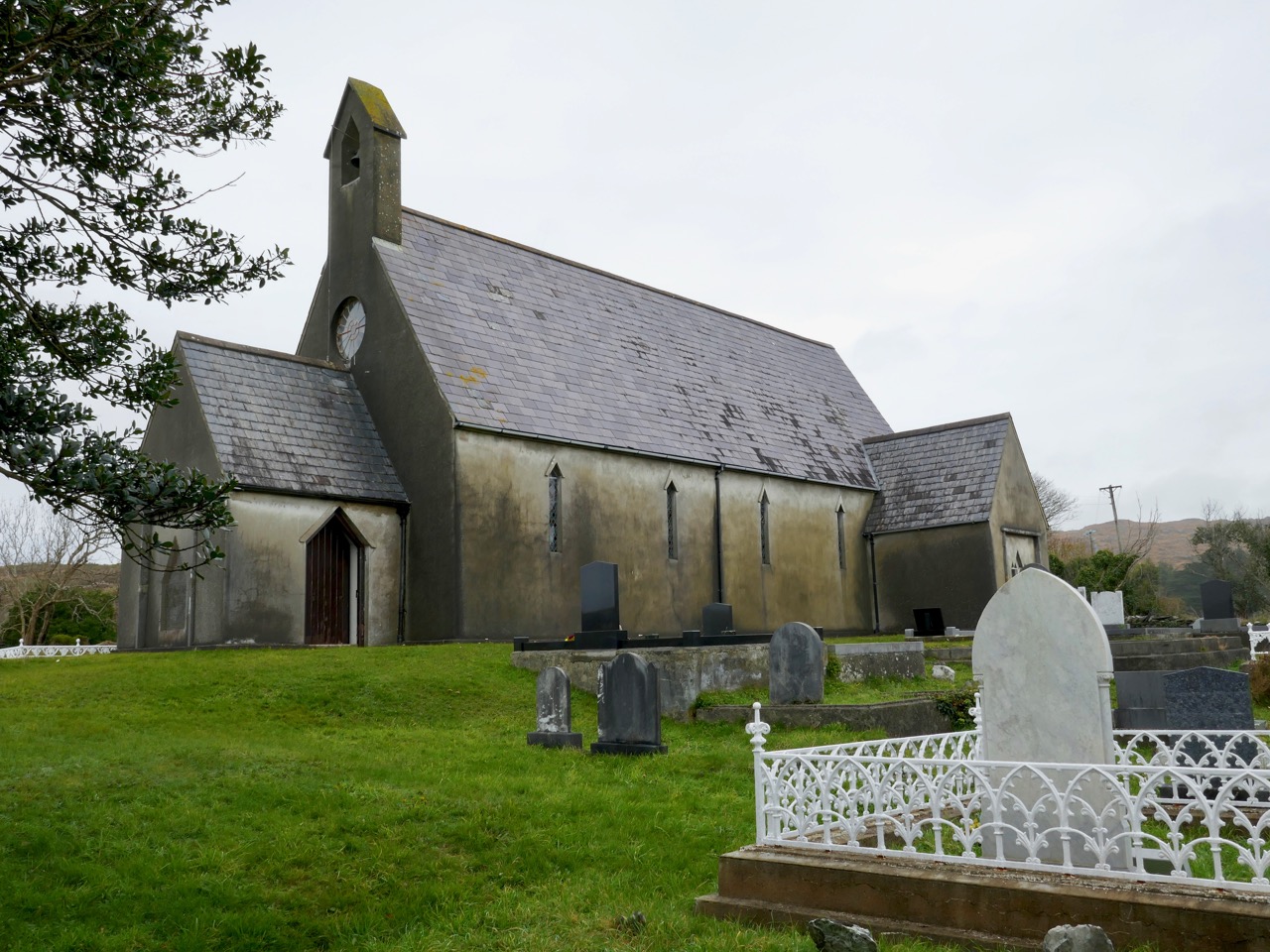
It’s an unassuming little building, quaintly situated on a piece of rocky land by the sea just west of Schull on the Mizen Peninsula. Nothing in its appearance now hints at its contentious past, although it certainly manages to look very attractive in this watercolour by Paul Farmiloe.

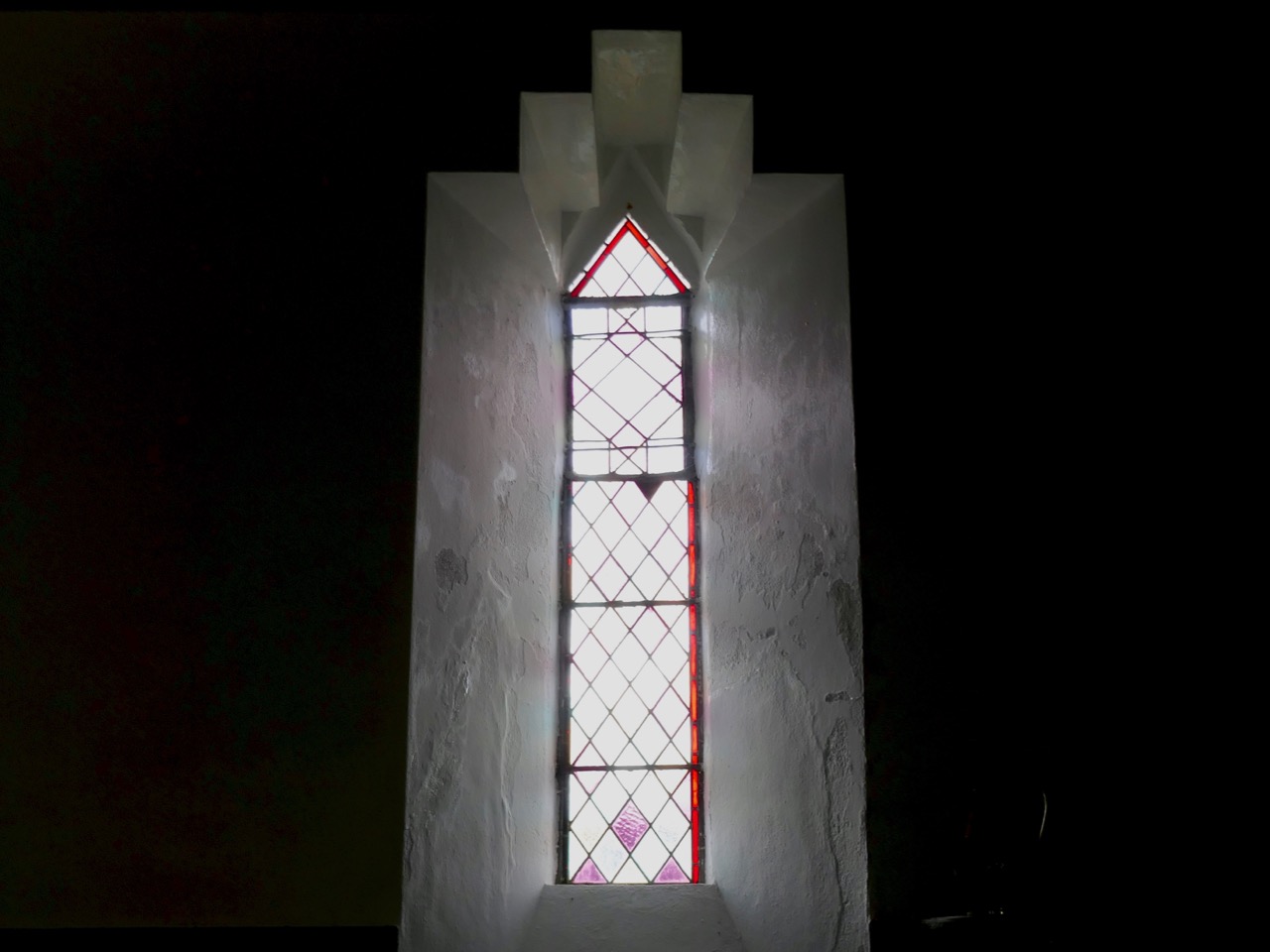
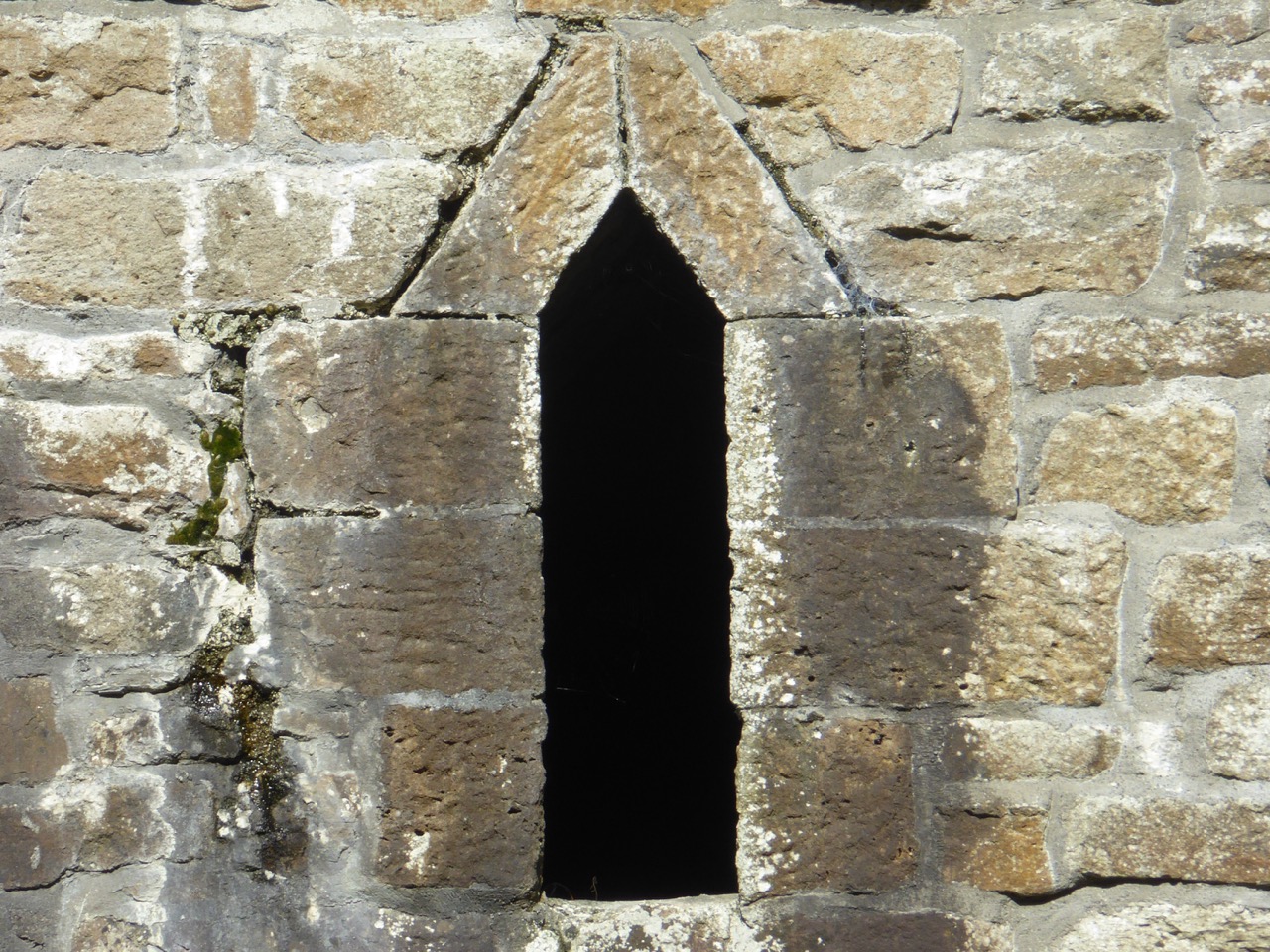
The church is often described as ‘Celtic’, ‘Romanesque’, or ‘based on an ancient Irish model’. This is curious as it has no precedents that I know of in ancient Irish architecture, except perhaps for the small triangular window arches, such as this one (above) from St Flannan’s Oratory in Co Clare.

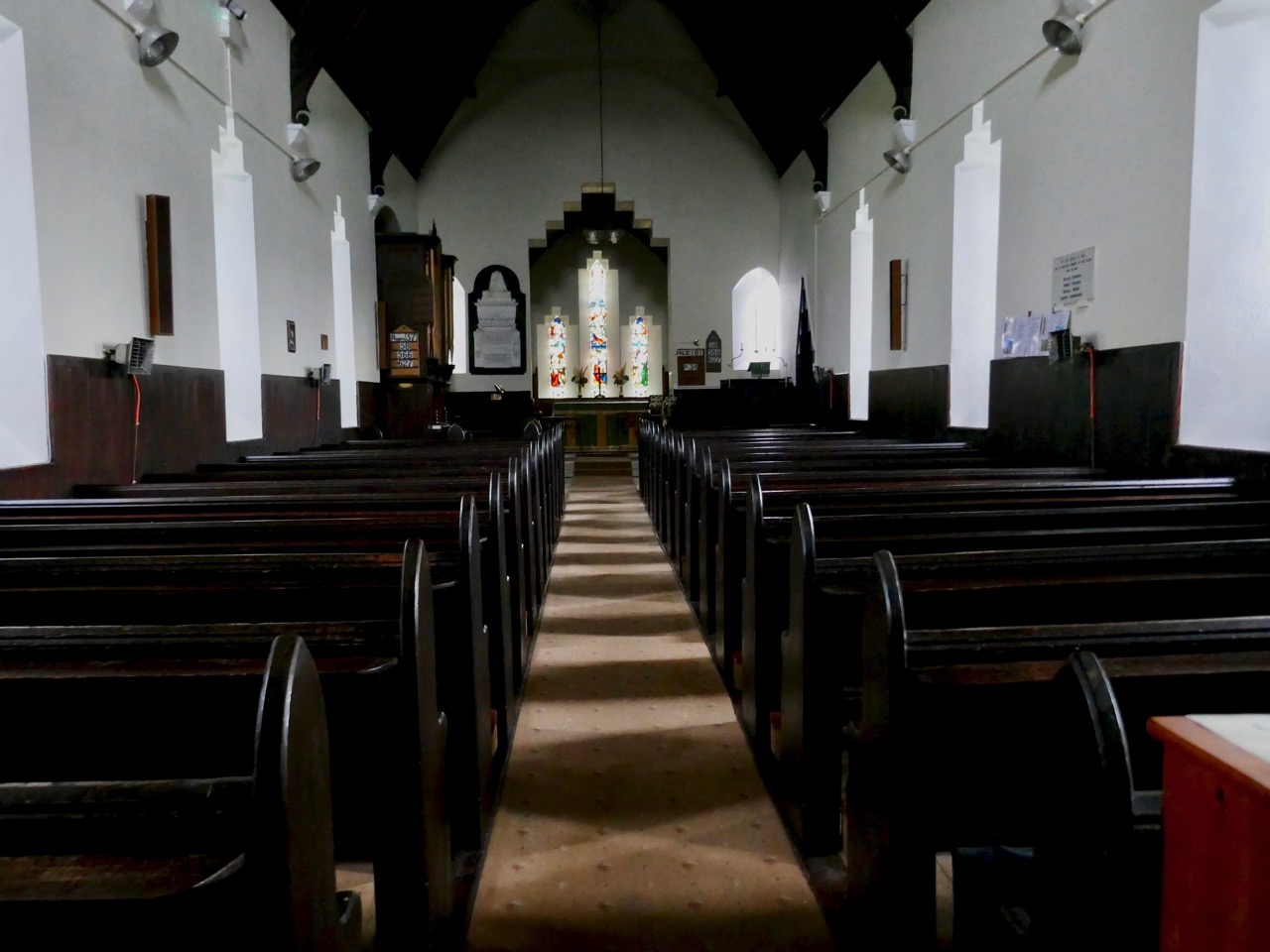
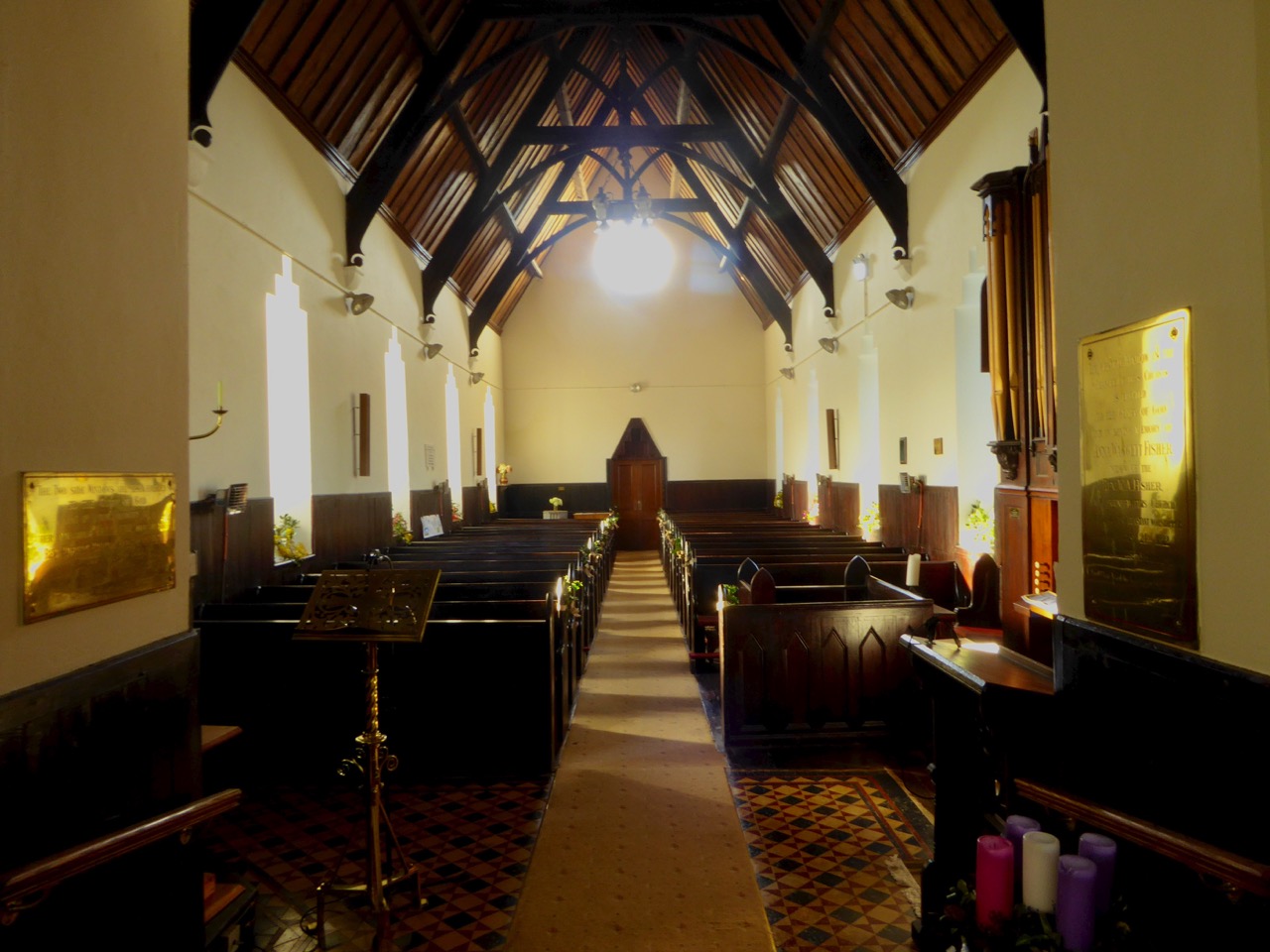
The interior is quite beautiful in its simplicity and in the repeated use of the motif of an unusual and striking stepped-triangular design for the chancel arch, the windows and the doors.

The name, perhaps, seems unusual – in fact it is the only Church of Ireland building named in Irish, Teampall na mBocht, the Church of the Poor. Yet this one small building, constructed at the height of the famine of 1845 to 50 was once the focus of a firestorm of accusation and counter-accusation.

The story of Teampall na mBocht is central to the history in Ireland of what is known as souperism. To take the soup or to be a souper is the worst thing you can accuse a person of – it means to sell out your principles for worldly gain and is based on ugly incidents during the Great Hunger where Church of Ireland and Methodist Ministers were accused of offering food in exchange for conversion. Souper was originally used to describe the person offering the soup, but in modern parlance it is usually reserved for those taking it. As we shall see, accusations of souperism were levelled in both directions – by and against the Catholic Church – during this period.

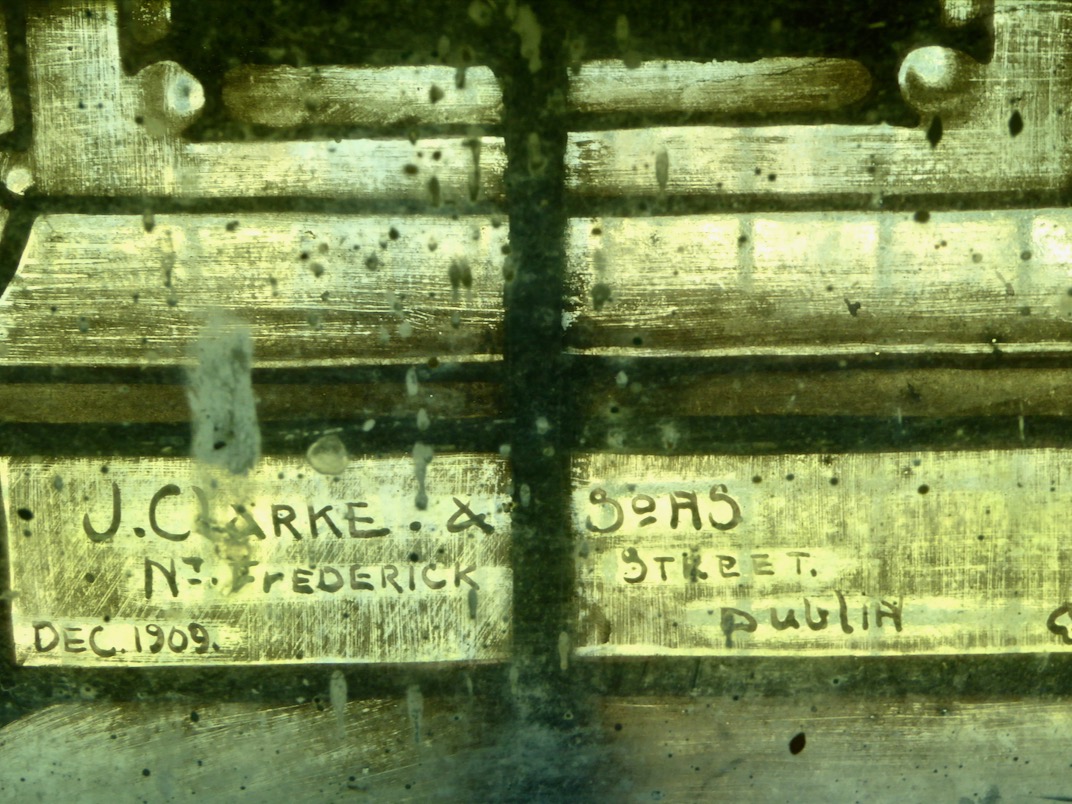
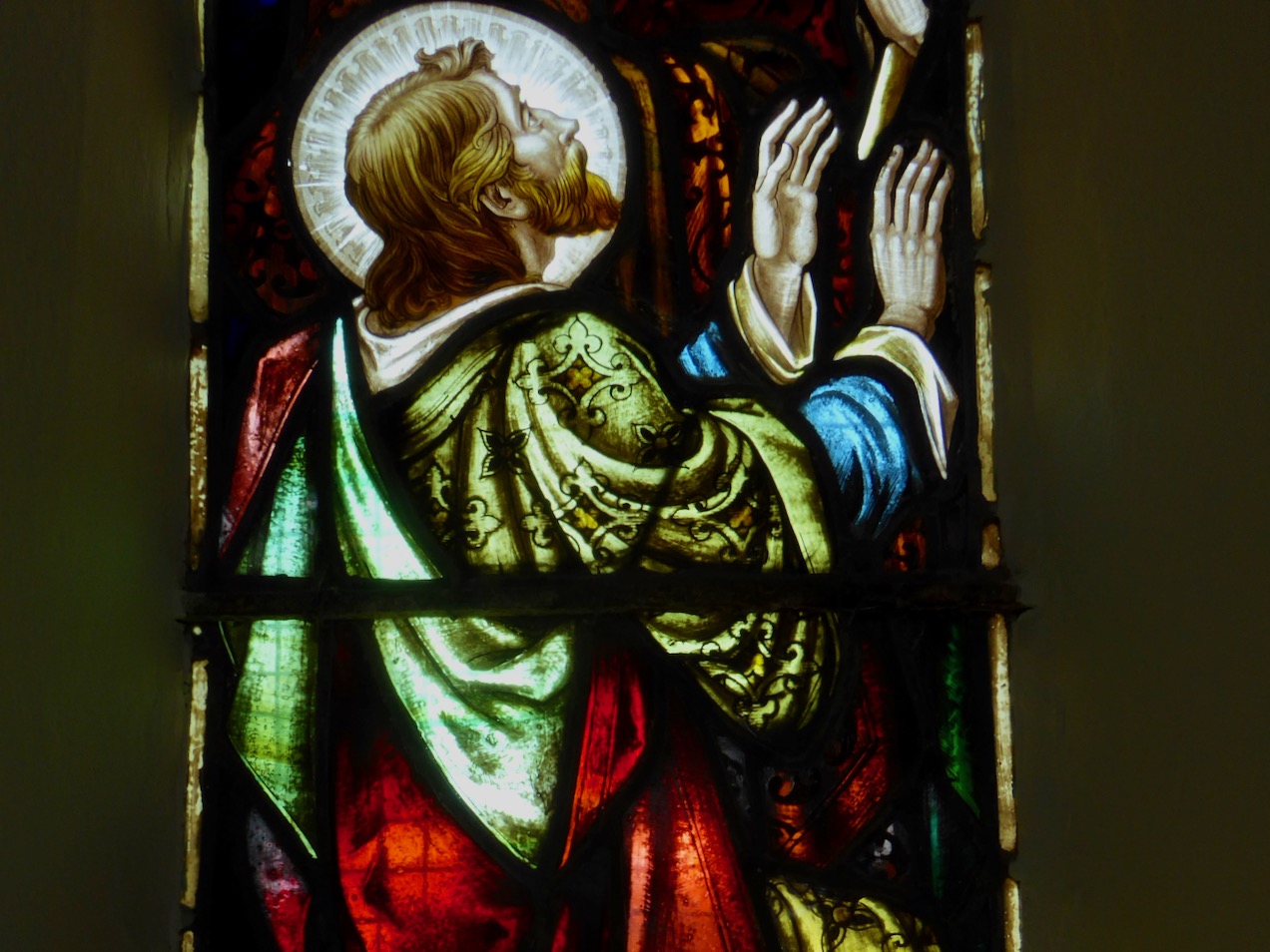
The stained glass windows were a later addition. The East, Ascension window is by Joshua Clarke and executed in 1919. Although Harry Clarke was working with his father at this time there is no evidence that he had a hand in this window, which is not in his style. However, Harry learned much in his father’s studio that is evident in this window, including attention to detail, the use of good glass and sumptuous colour

The term ‘famine’ is in itself controversial, since many assert that it cannot be used except where food sources have dried up. They point out that food continued to be grown and exported during the period of the potato blight. I use the word here, along with the term ‘Great Hunger’ since it is the terminology used in most of the sources I consulted. Also, as will be seen, it accurately describes the situation in Kilmoe during this period, in which there was literally no local food to be found by any means.

The above image was retrieved here

The story is a complex one, and as I have tried to navigate it my chief source has been the magnificent volume Famine in West Cork: The Mizen Peninsula, Land and People 1800-1852 by Patrick Hickey. The book is now out of print but available through the internet. Fr Patrick Hickey, or Father Paddy as he is known locally, published his study in 2002, a monumental work of unparalleled erudition and thorough research. Himself a Catholic priest, his study is even-handed and fair, giving credit where it is due on all sides, and filling in the vital historical background to present a picture of these remote communities and the religious, educational, economic and social conditions prevalent at the time.

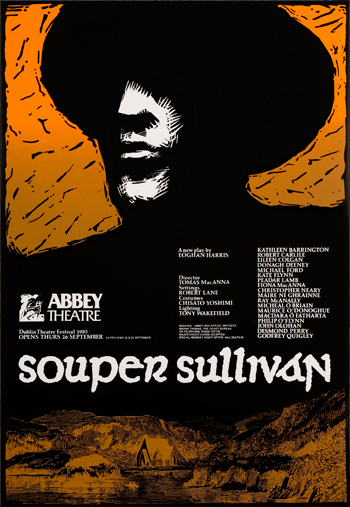
Others too have studied this little church, including the journalist and writer Eoghan Harris who based the action of his play Souper Sullivan on the events I will describe. Harris is himself not shy of controversy and has long waged a lonely battle against what he sees as the black-and-white victim-narrative version of Irish history. He poses the question – “So why is the heroic story of the spalpeens of Teampul na mBocht not a cherished part of Skibbereen’s Famine memory?”

In this multi-part post, I hope to address Harris’s question, and tell a story that captures this terrible time in all its complexity. But first – the bare facts.

In 1848, at the height of the famine in West Cork, Rev William Allen Fisher, using funds raised chiefly in England, employed starving locals to build a Church of Ireland (Protestant) church in his parish of Kilmoe. In doing so, he surely saved several hundred from starvation. His admiring son-in-law, none other than Standish O’Grady, described his devotion to the poor of his parish and his heroic efforts on their behalf and pronounced him a Saint. The Catholic Church, on the other hand, accused him of buying souls with food and held him up as the worst example of Souperism. (There’s a slightly fuller version in Robert’s post Another Grand Day Out on the Fastnet Trails.)

And yet – it had all started out well enough, with the Rev Fisher and Fr O’Sullivan the local parish priest working together to alleviate the awful situation. How did it all go so wrong? Who were the actors at the heart of the drama? What was the prevailing social and religious environment in the district at the time? What lens can we use to view this part of our past?

Stay tuned…

This link will take you to the complete series, Part 1 to Part 7


Fierce Mild

“Fierce mild” my neighbour said when commenting about the weather. While this is an Irish-ism that simply means very mild, it struck me as particularly apt, in that this mildness, while very welcome to us humans in the autumn, can have a fierce effect on our native flora and fauna.

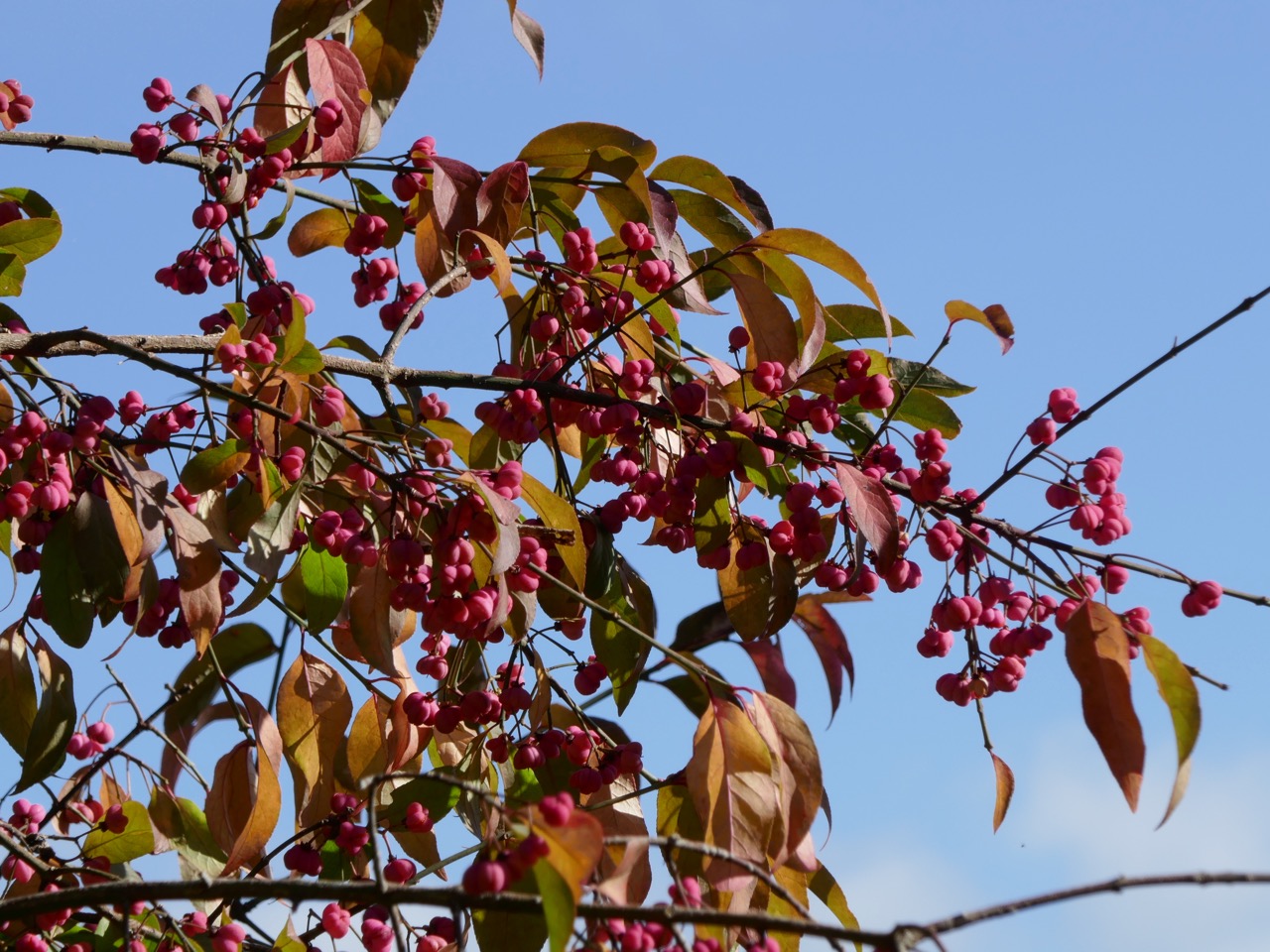
The Spindle Tree comes into its own in October

It’s true that up now we have had a wonderful long, mild autumn. Warm sunny days, perfect for long walks looking for wildflowers, have lured us outdoors and convinced us that this will last forever.

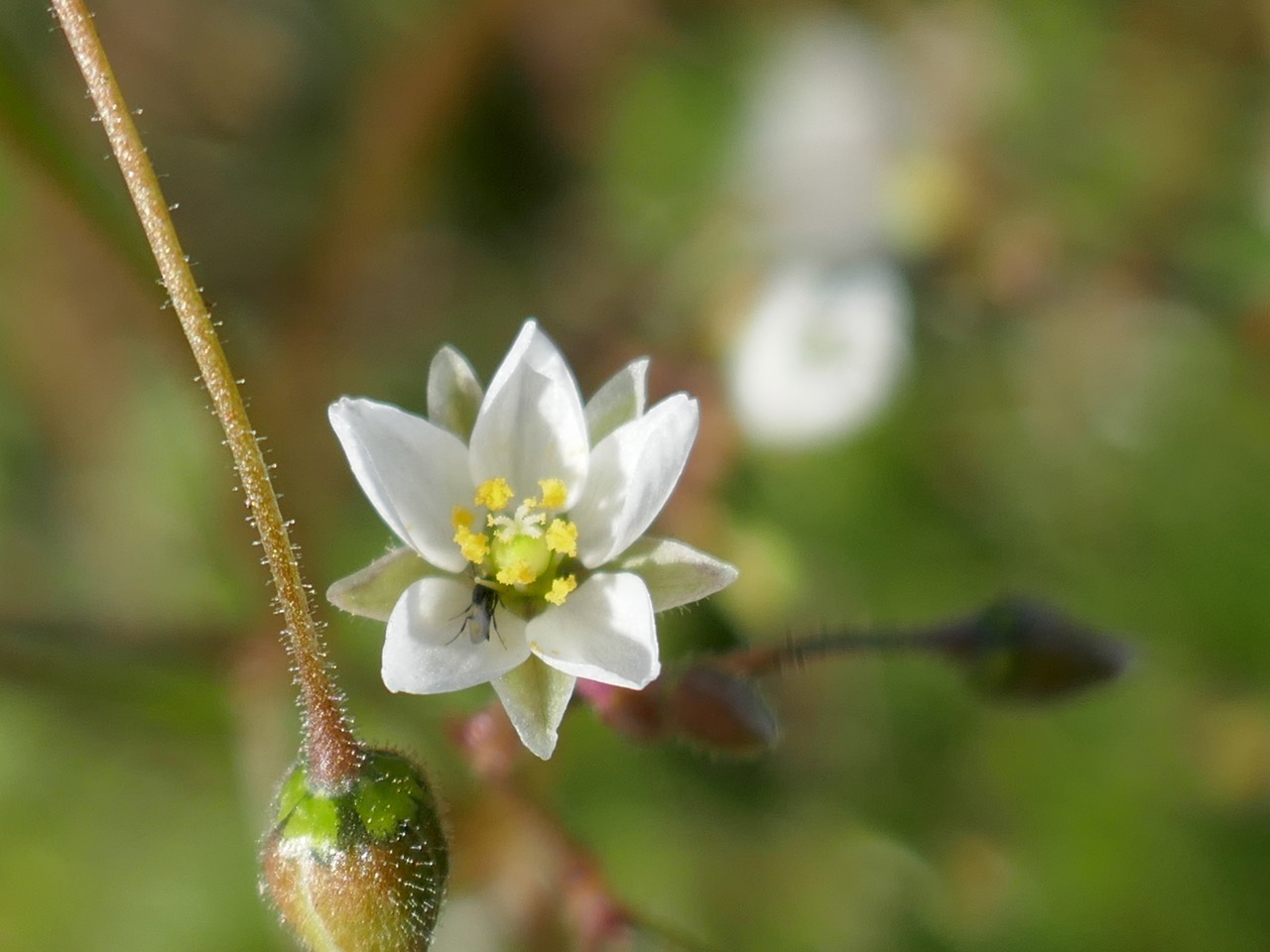
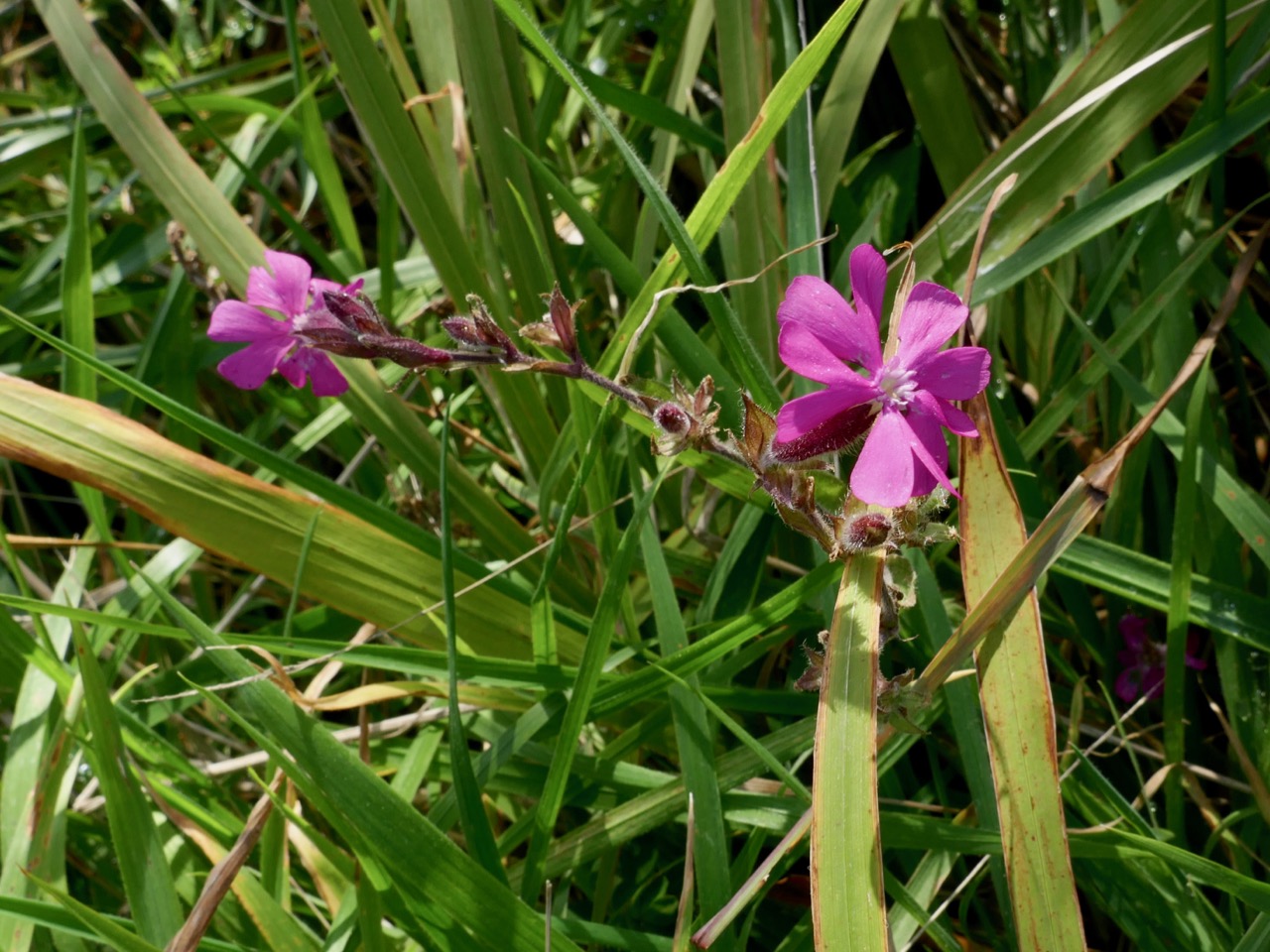
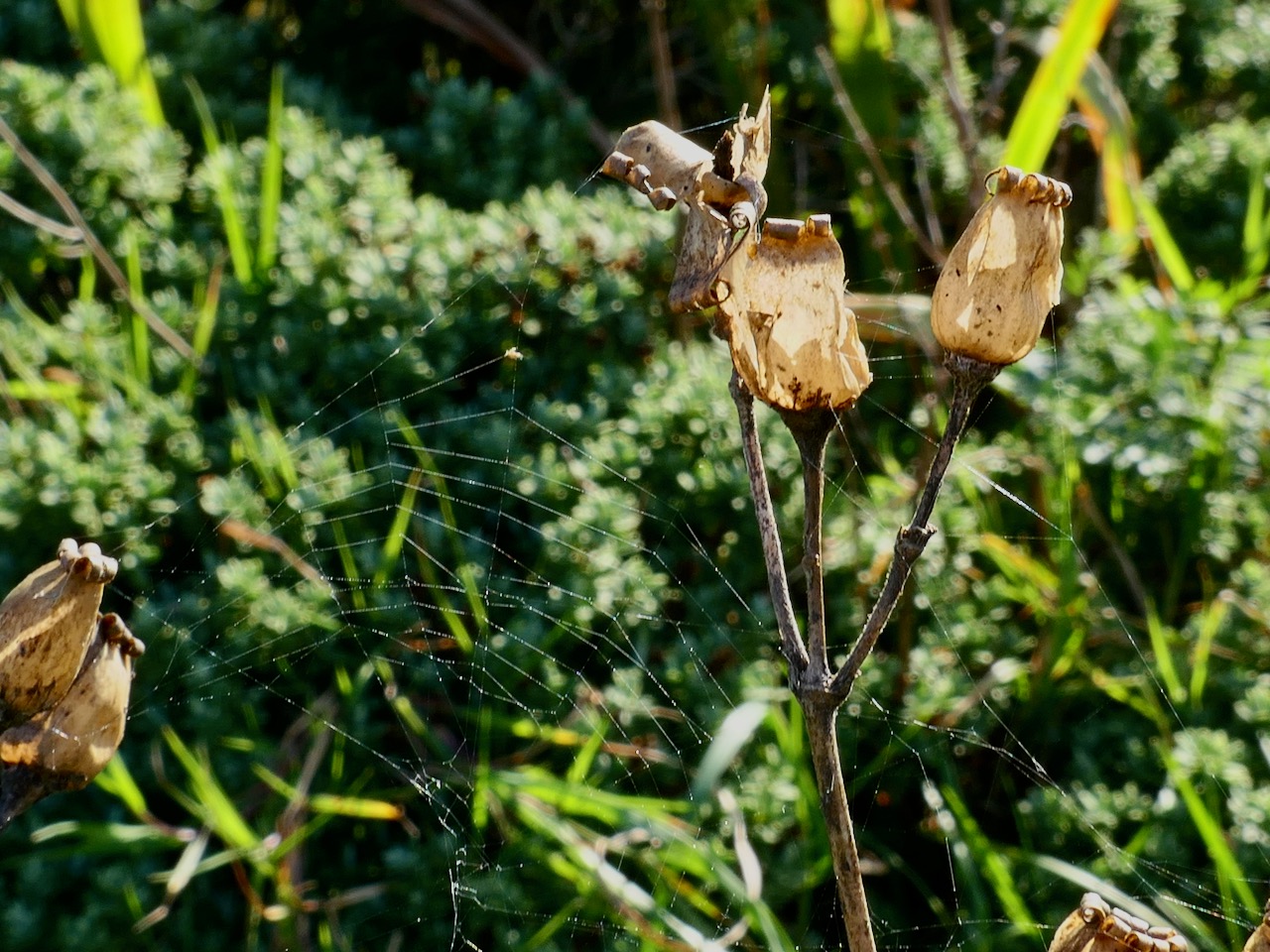
From the top: Corn Spurrey, generally finishes blooming in September; Red Campion – by now we expect to see the empty seed pods, but along with them there are a few flower heads still blooming

And the wildflowers are certainly hanging in. I’ve seen lots that would normally be over by now, but who find a sheltered spot and bloom merrily away for our enjoyment. It’s been lovely, and I can’t help wishing it would last well into November. But the truth is that an unusually mild winter is not good for our plants.

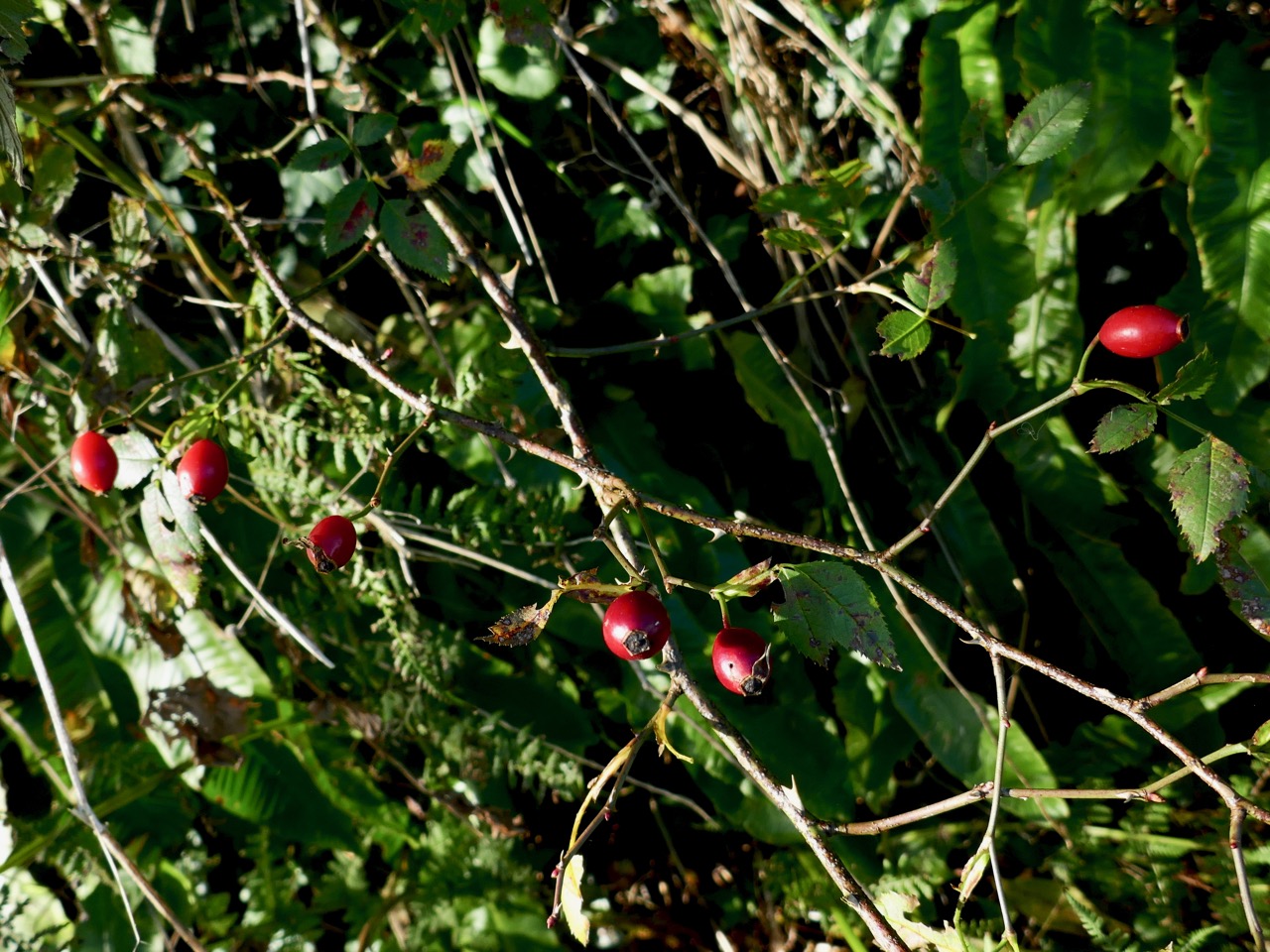
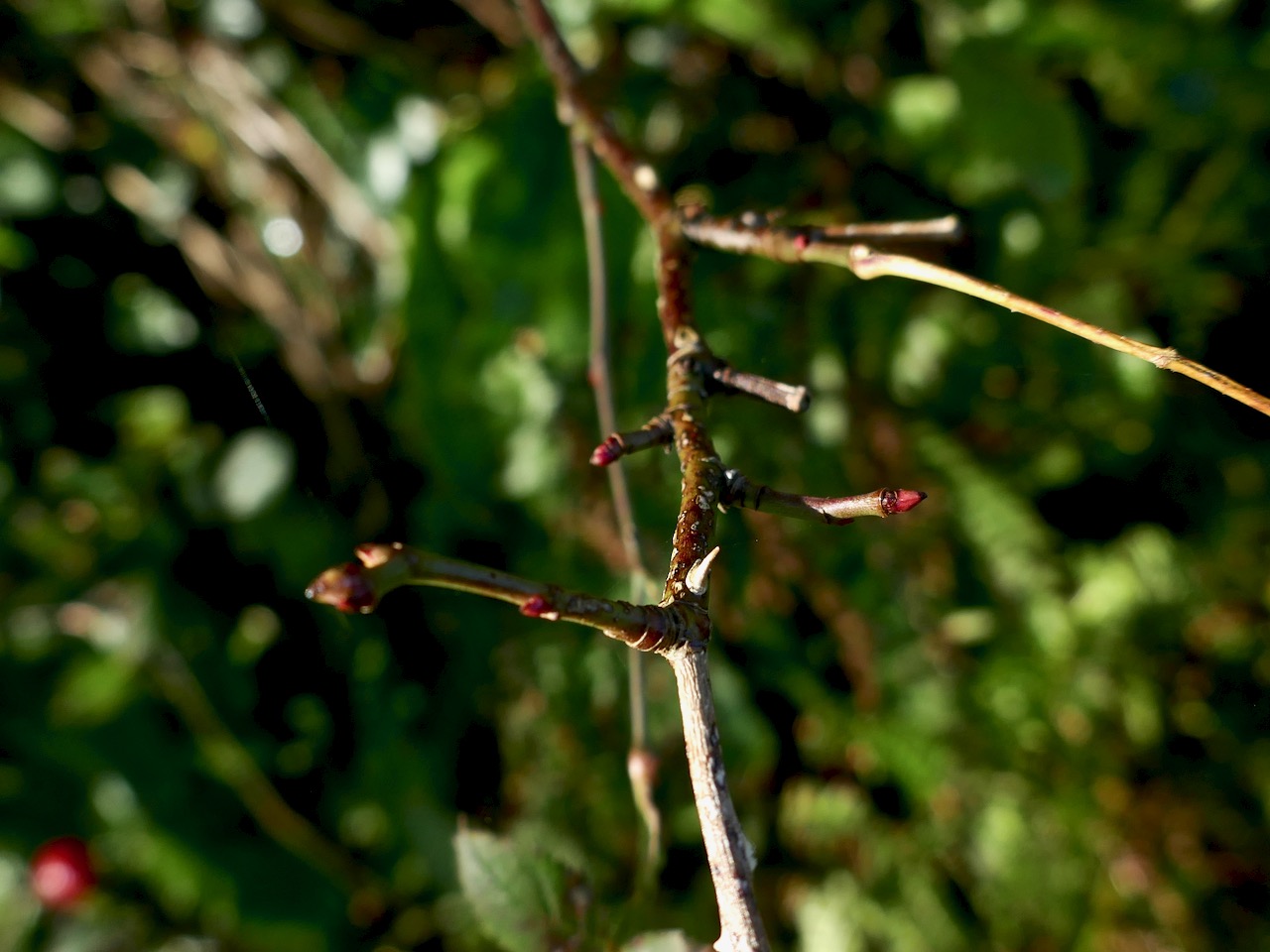
Rose hips – seasonally correct; but look at the branches, are they starting to bud?

The factors that cause winters to be milder than usual are many and complex. Forecasters appear to be conflicted as to whether Ireland can look forward to winters in the coming decades that are shorter and milder than average or longer and colder. Both scenarios pose problems for plants and insects and therefore for those of us who depend on the health of our pollinators. And that, actually, is all of us.

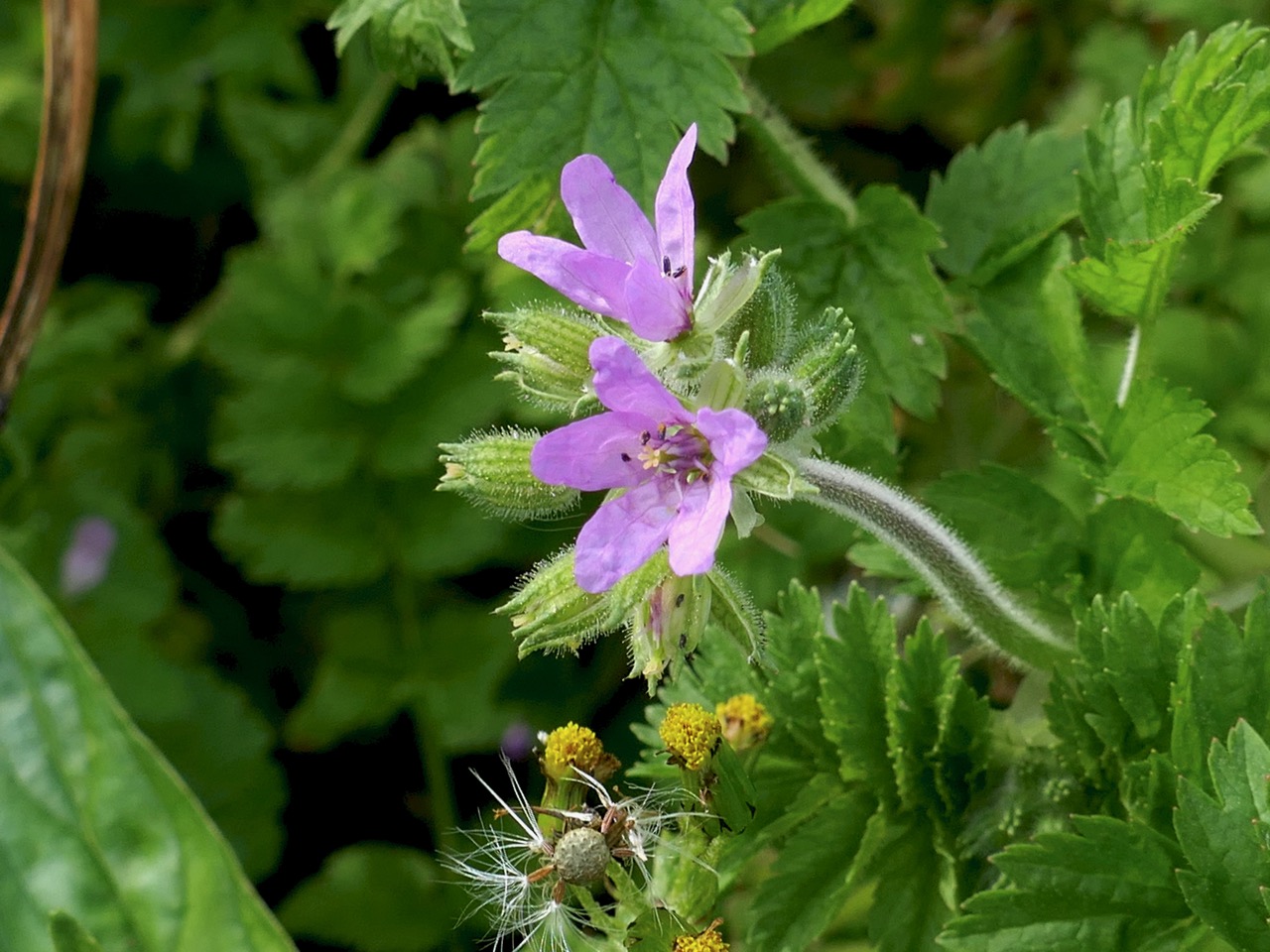
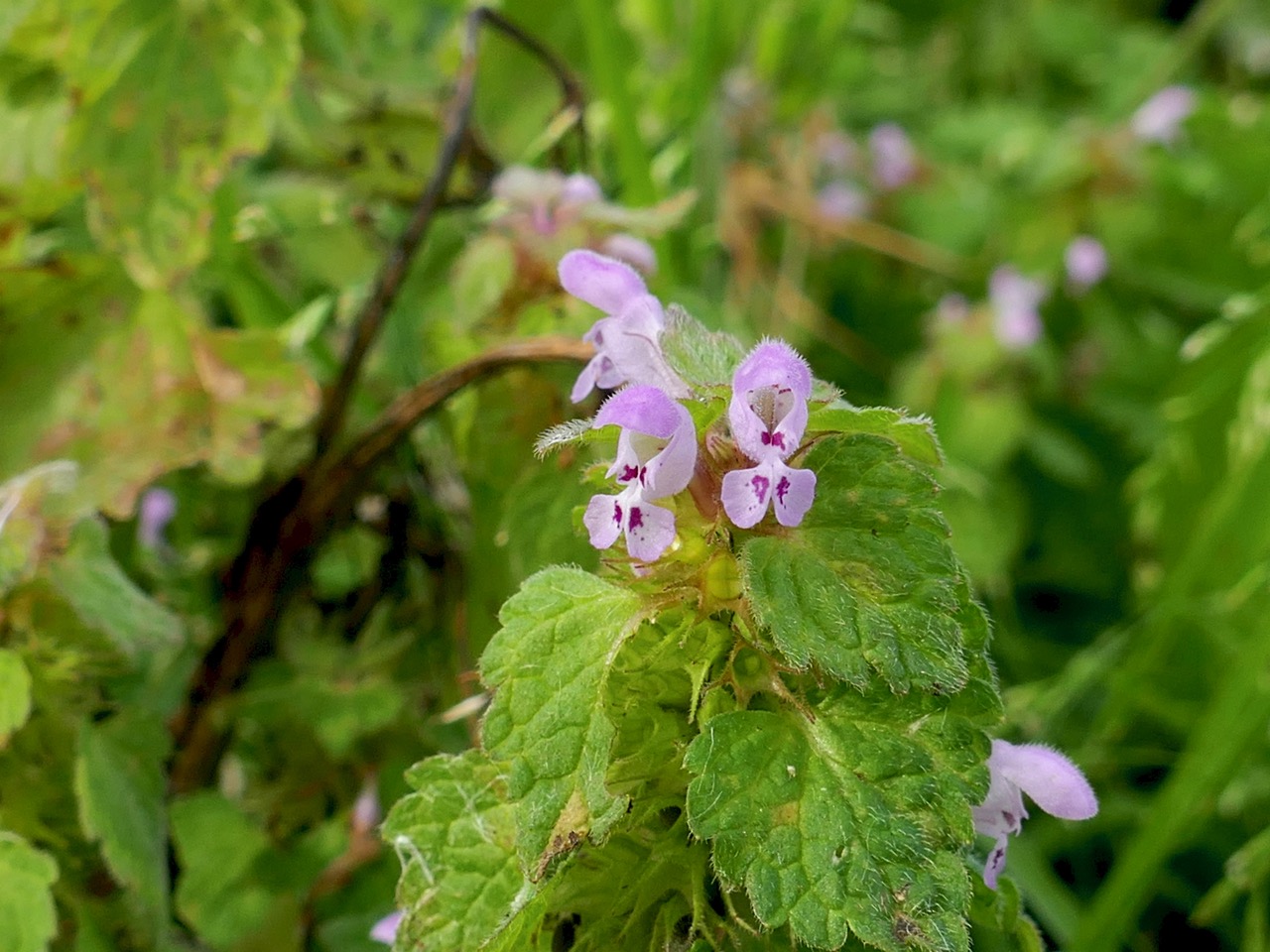
Found on the same south-facing slope; Top: Musk Stork’s-bill – it should have finished flowering in July, but it’s found a sunny spot and is still blooming; Bottom: Red Dead-nettle can bloom well into November 

While it’s impossible to extrapolate from recent weather experiences to talk about long-term trends, a mild autumn can show us what can happen when temperatures vary from the norm. We already know that our springs have come sooner than they used to fifty years ago (two to three weeks earlier!) but we have also seen an increase in average temperatures in the autumn, which can lead to prolonged spells of mild and sunny days, such as we are experiencing at the moment.

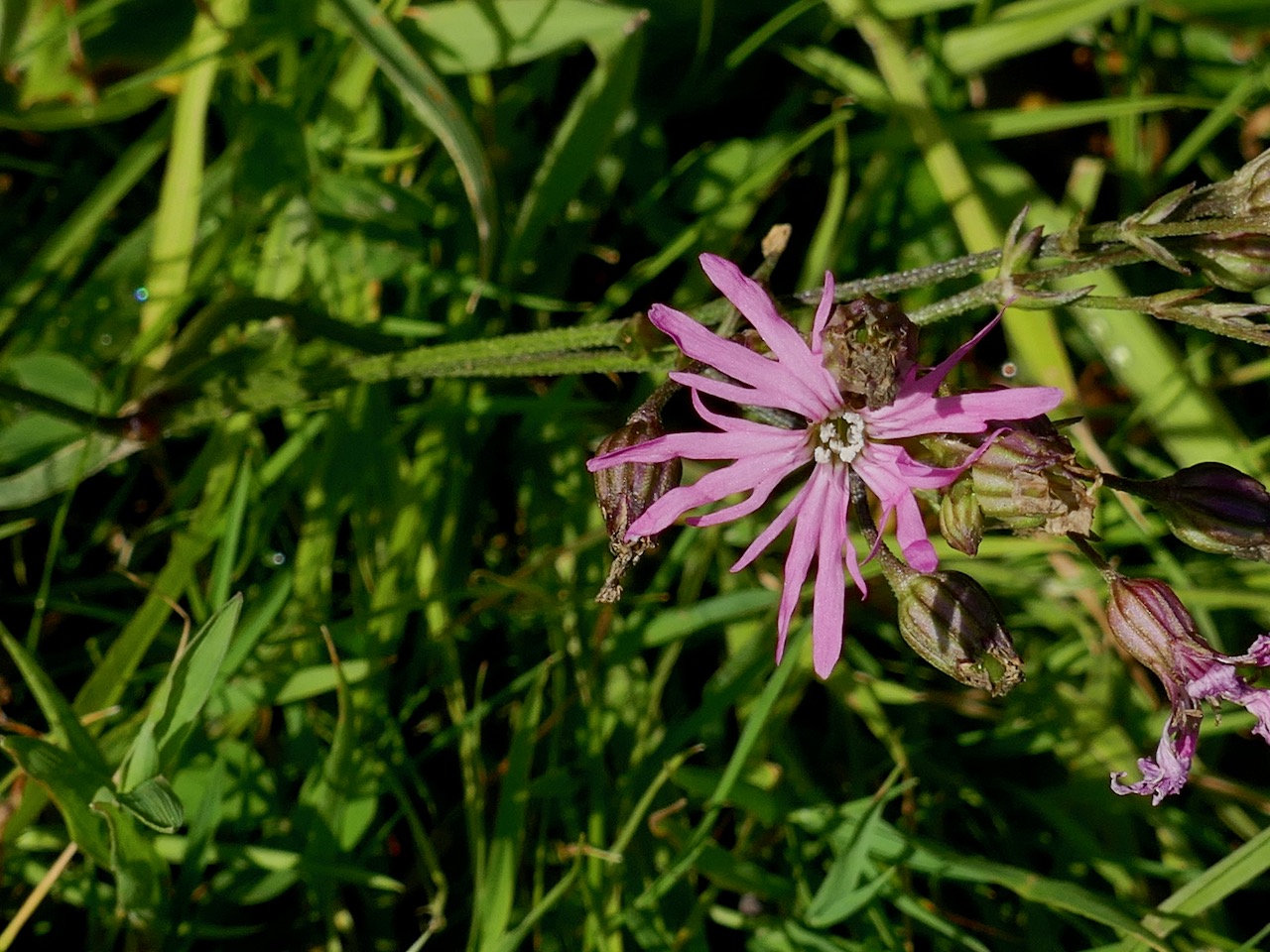
Ragged Robin is a spring/summer flower and it’s a little worrying to see it blooming this late

Mild temperatures in the autumn can trick flowers into thinking that it’s spring, and time to wake up and grow. Trouble is, there’s bound to be a cold snap sooner or later and the fragile bloom will freeze and it won’t bloom again when true spring arrives.

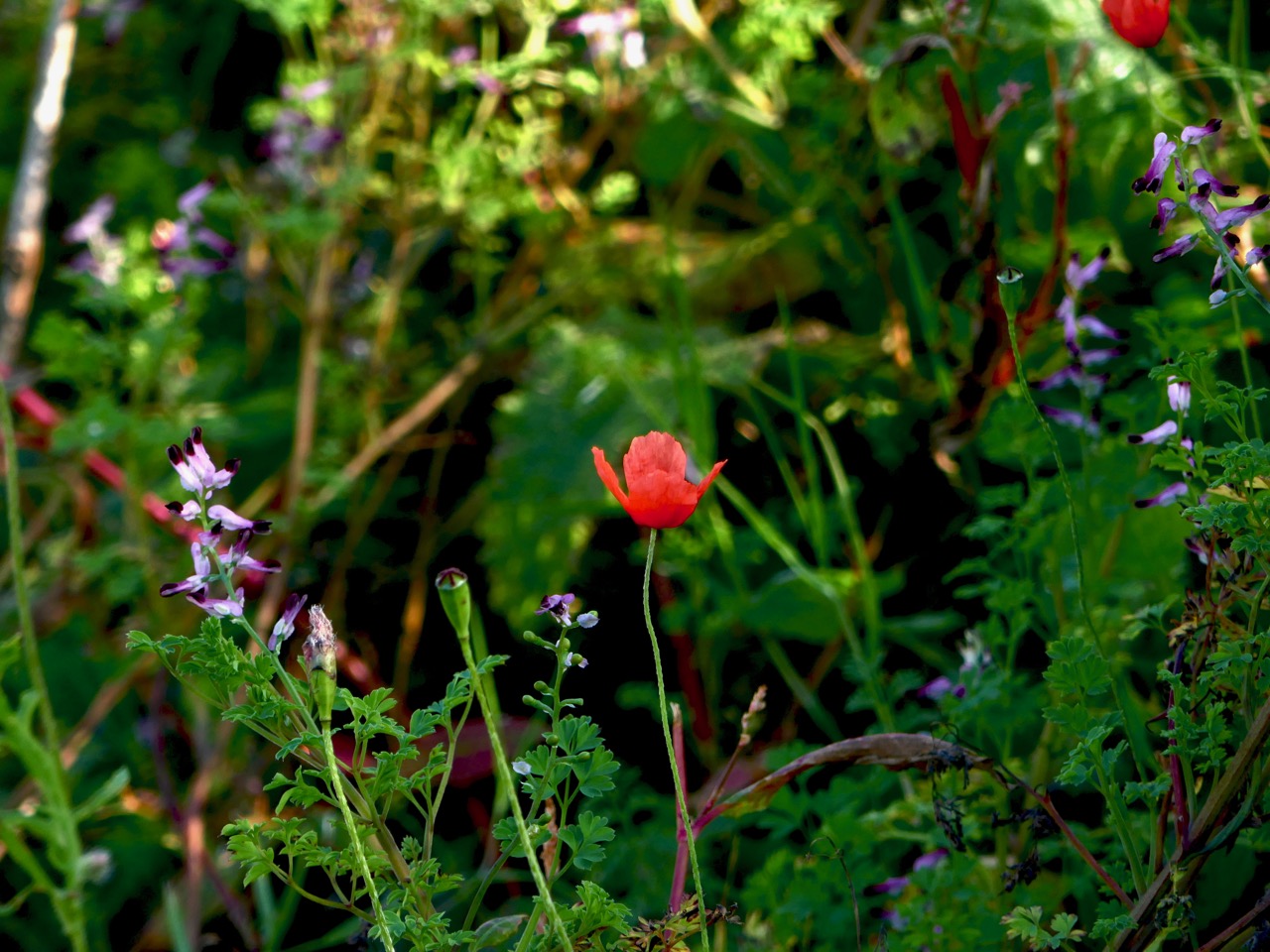
This Long-headed Poppy and Common Ramping-fumitory are blooming late, especially the Poppy

Our native and naturalised plants have adapted to our ecosystem, including our climate, and any disruption to that has to be, in turn, adapted to. But this takes time – centuries, millennia even – for many organisms: the rate at which our planet is warming may not give them the time they need to make that adaptation.

Sweet Alison, rare in West Cork, on the same sunny slope as the Musk Stork’s-bill and the Red Dead-nettle

That’s all a bit doomsday, and I’m never inclined to embrace the most alarmist predictions, but whether related to global warming or not, a mild autumn can a problem for wildflowers. Flowers that appear in late summer and normally bloom into September and early October are still nodding away in the fields and hedges this year, and that’s lovely to see.

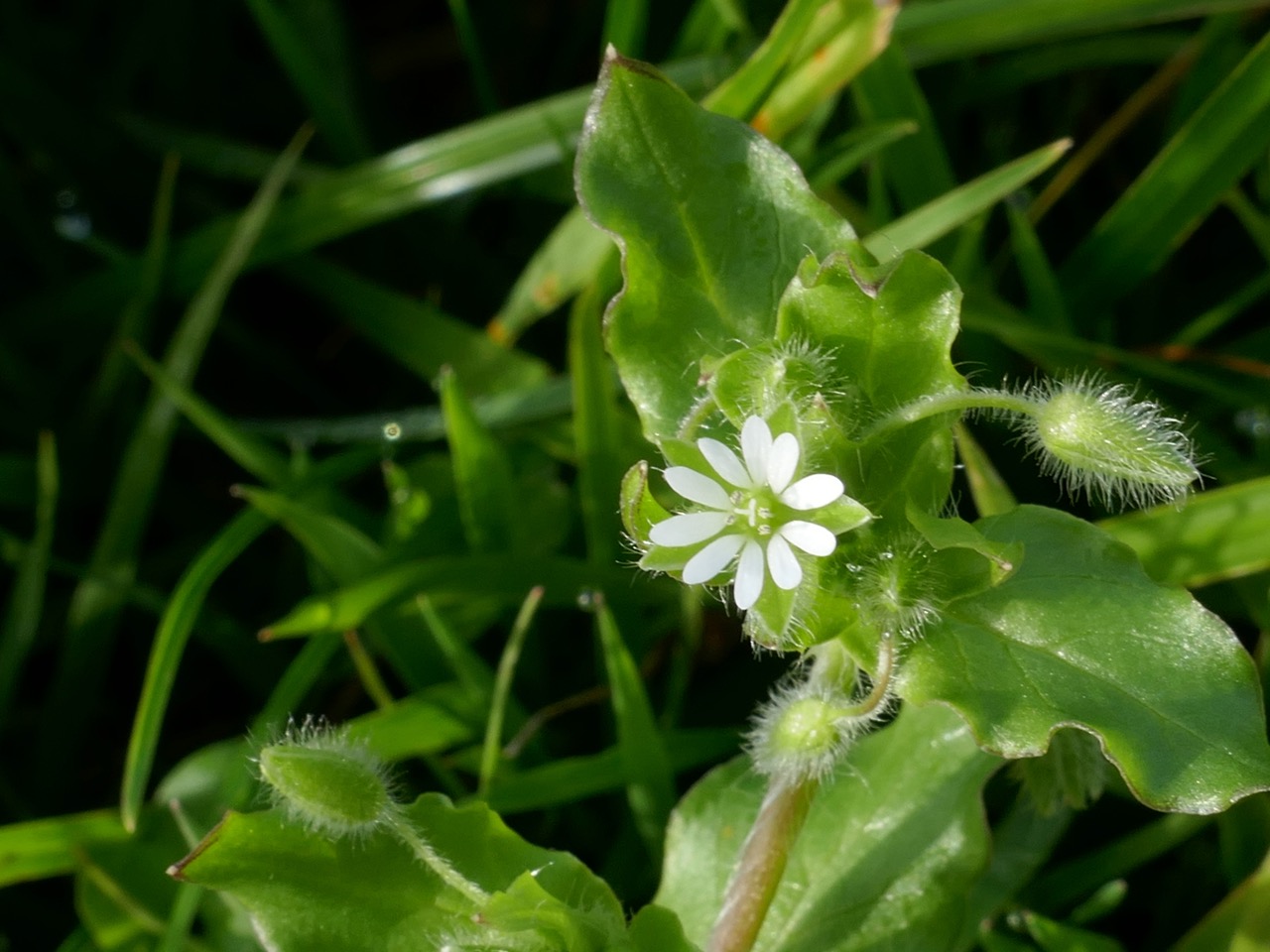
Common Chickweed – this one blooms all year round!

What’s not so great is that I have seen a few spring/early summer flowers too, long after they should be asleep. I can only conclude that they have sensed that it’s time to produce their one and only set of buds and that the first deep frost will probably kill them.

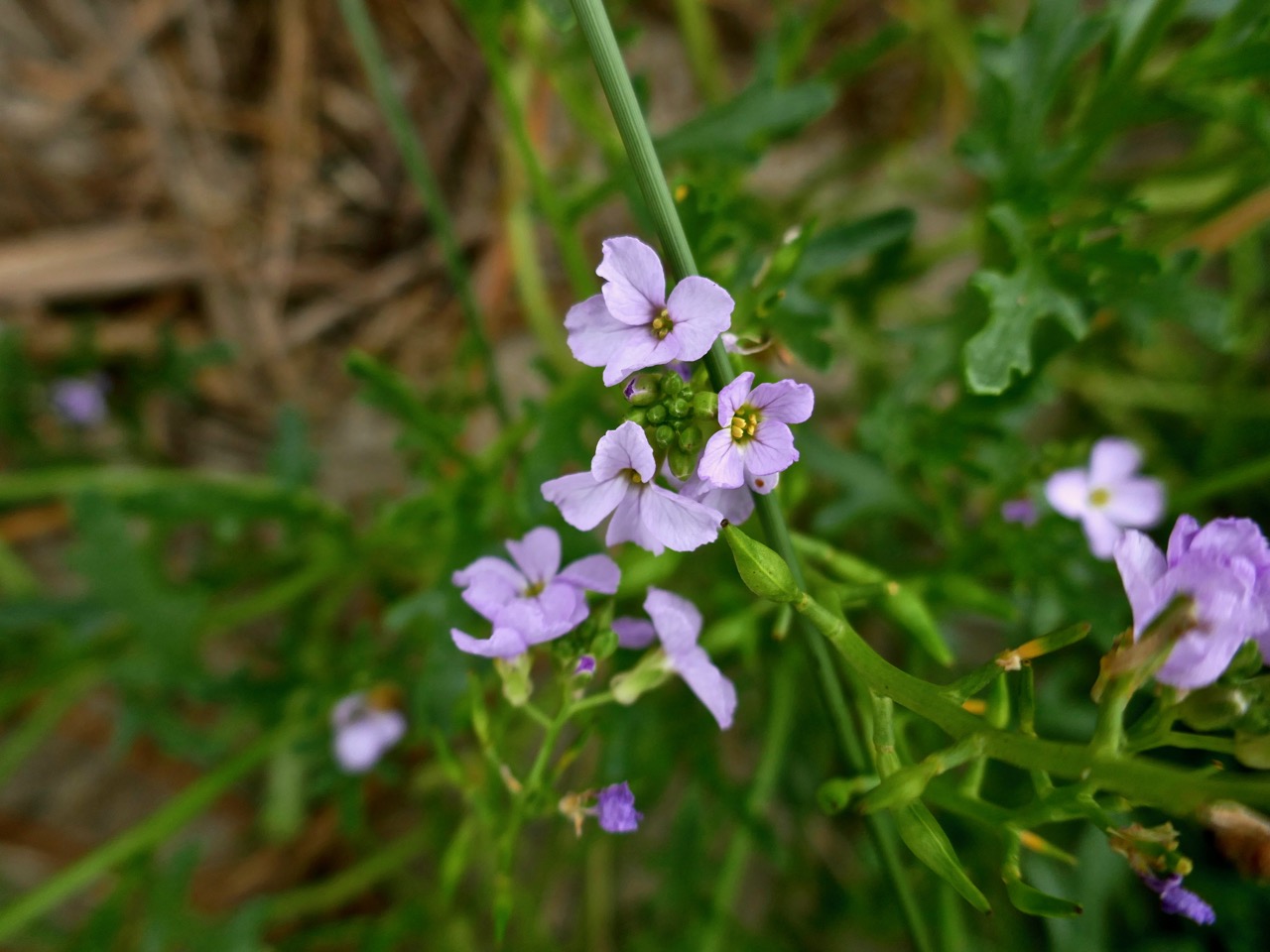
A lovely lilac-coloured variety of Sea Rocket, still in full flower at Barley Cove

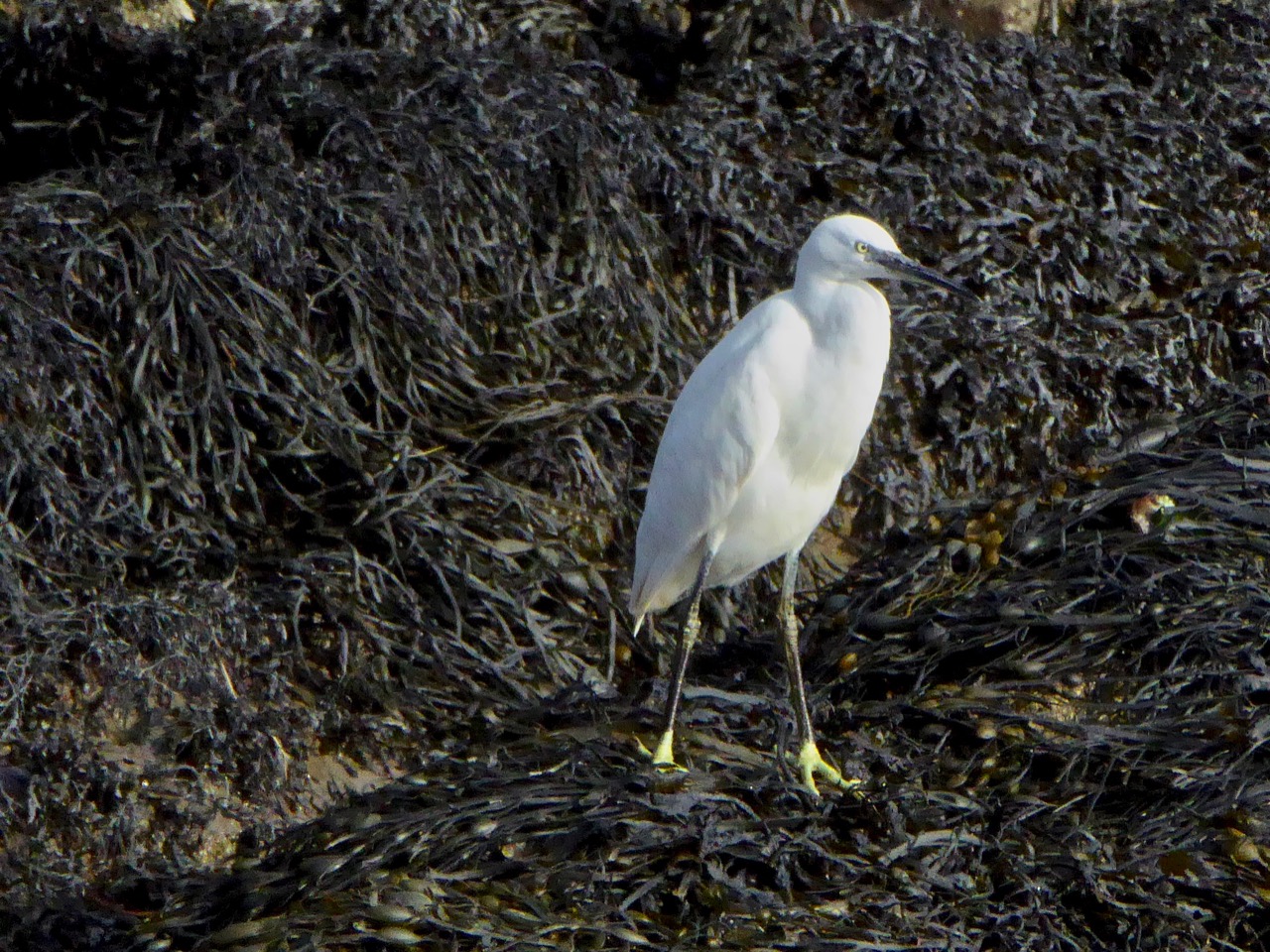
A longer growing season also provides opportunities for insects and fungus that would be kept in check by colder weather to predate on plants. Plants that arrive from warmer climates, whether by accident (hitching a ride on a long-distance freight truck, or hidden in nursery stock) or design (imported for garden use) can start to reproduce once our climate catches up to the conditions they have been bred for. A good example of this is the snowy white egret – it only arrived here 20 years ago!

Little Egret; Russian Vine at Rossbrin Cove, an unwelcome invasive species

A fierce mild autumn is lovely, and we are certainly enjoying getting out and about on our favourite walks and our various explorations. But it’s time to cool down now – for our flowers’ and insects’ sake and ultimately for our own.

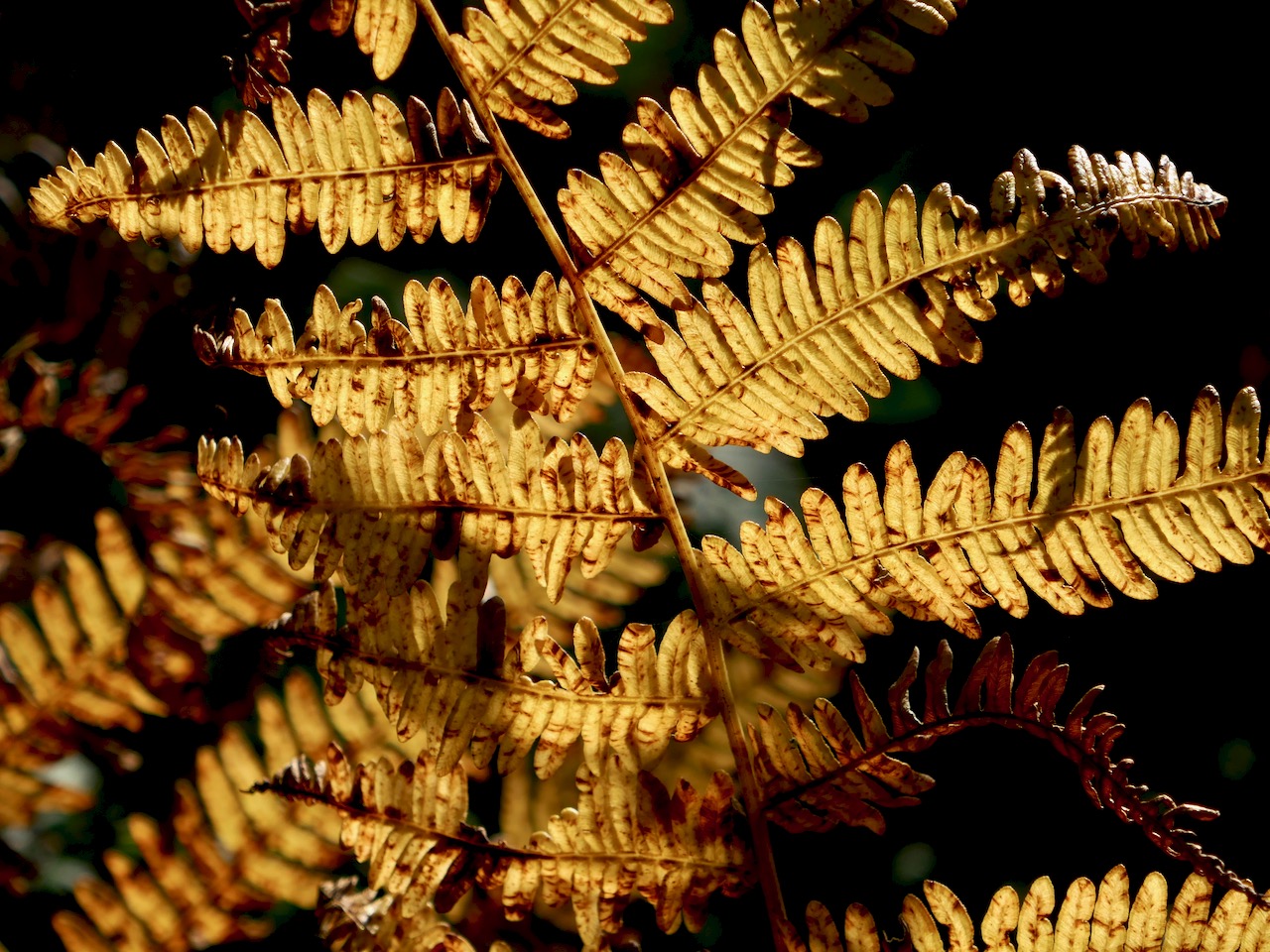
I love the colour that the bracken turns at this time of year

The good news is that a north wind arrived yesterday and suddenly it’s chilly. Good news for the wildflowers, that is. Not so great for us – we will miss those sunny walks!

Beautiful West Cork in October