Sky Garden

Iris Sky Garden (photo by Liss Ard Estate)

Irish Sky Garden (photo by Liss Ard Estate)

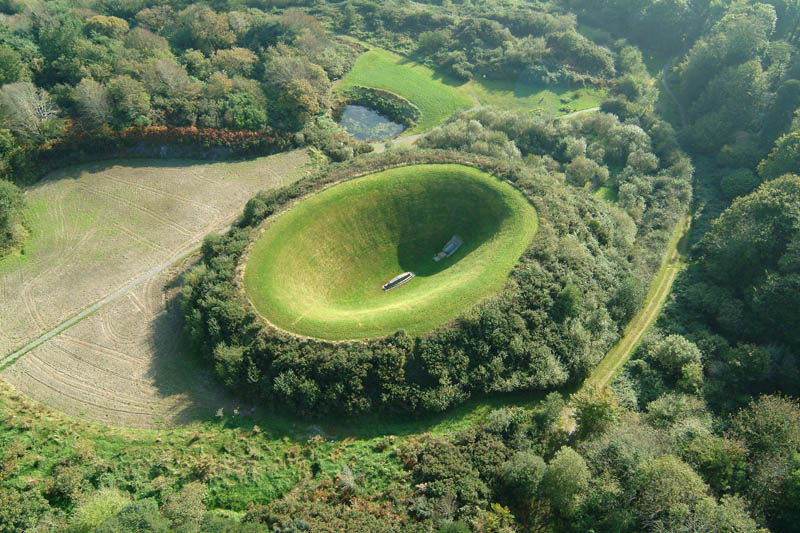
Just outside Skibbereen – a stone’s throw from Nead an Iolair – is a work by Californian artist James Turrell: the Irish Sky Garden. It’s a piece of landscaping which explores light by both night and day: an observatory. The structure is an artificial crater with a stone plinth at its centre from which two participants can view the sky framed by the perimeter of the oval enclosure.
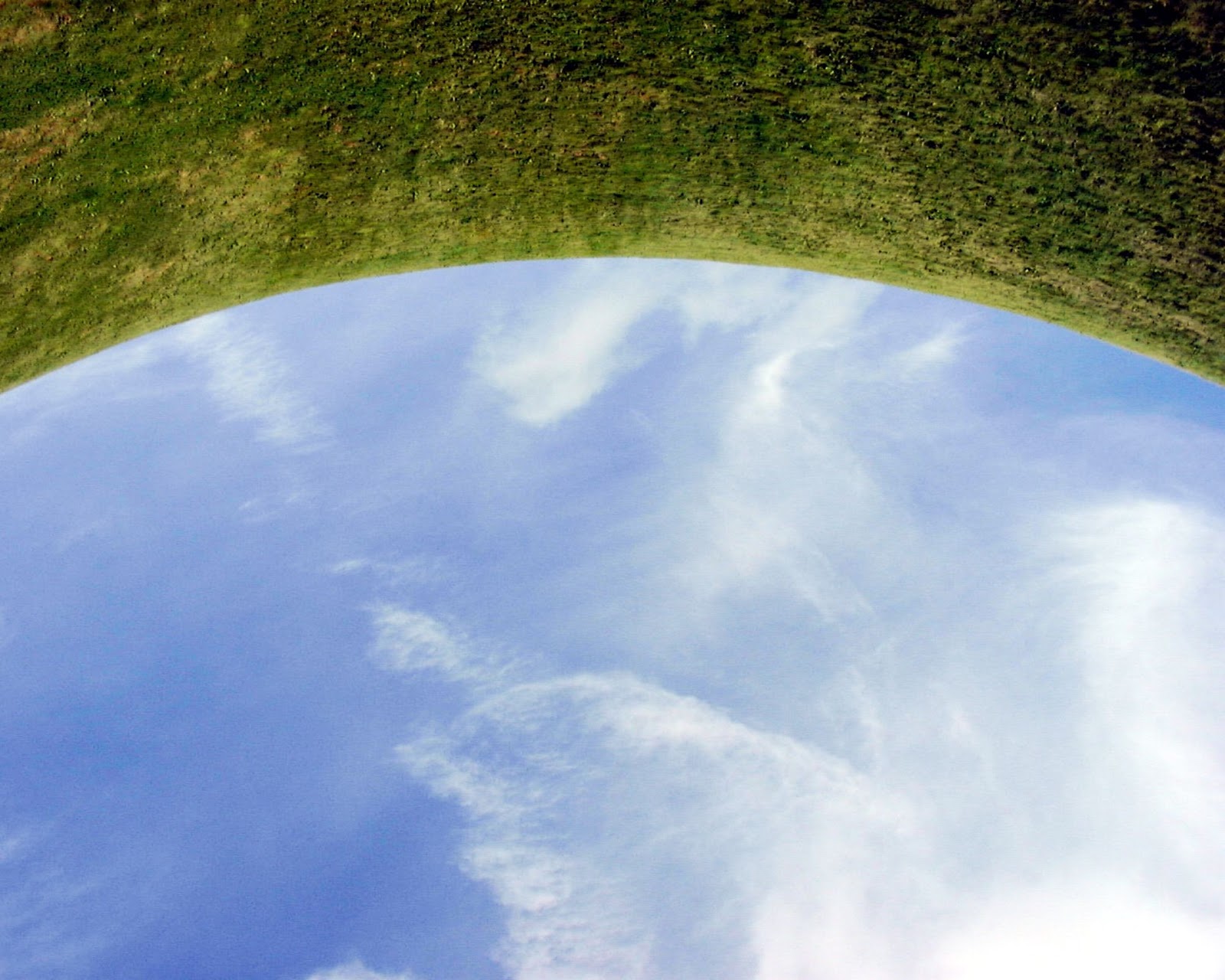
Sky view from the plinth

Sky view from the plinth

In Turrell’s own words describing the experience “…The most important thing is that inside turns into outside and the other way around, in the sense that relationships between the Irish landscape and sky change…”
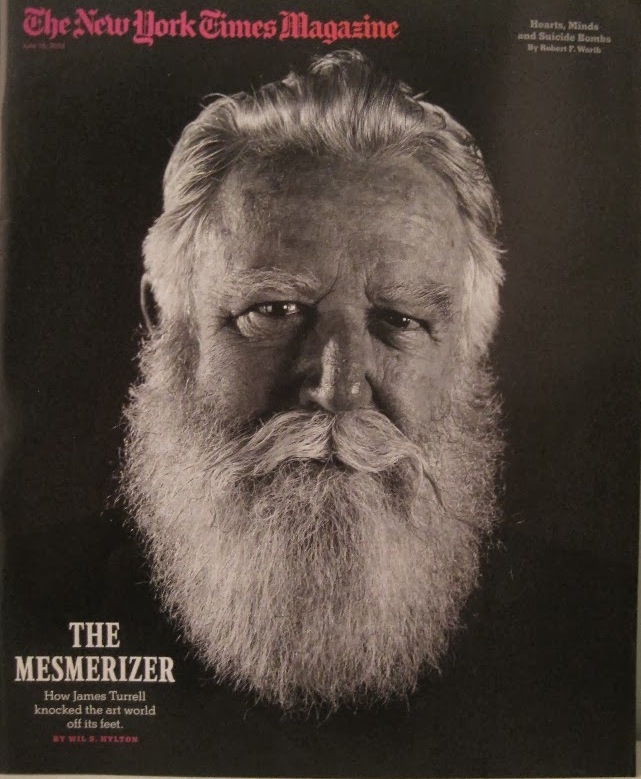
Turrell CoverJames Turrell was born in 1943 – in Pasadena. His father was an aeronautical engineer and James obtained his pilot’s license when he was just 16. He has been exploring landscapes by flying over them ever since. He studied perceptual psychology, mathematics, geology and astronomy. He enrolled in the graduate Studio Art program at the University of California, Irvine, in 1966, when he began to explore light projections. At the same time Turrell, a Quaker and conscientious objector, was jailed for a year for encouraging young men to avoid the Vietnam War draft.

All the artist’s work is focussed on light and space. In an interview of 2002 for the International Sculptor Center he explained:

“…I was raised a Quaker, and now I have come back to being active. I’m not sure whether that has impacted my art-making, because my work is not about specific issues—perhaps being a Quaker influences how I live my life and what I value. People tend to relate any work in light to the spiritual. I don’t think this is actually correct, yet, in terms of our lives, we greet light in three major ways that aren’t necessarily partitioned. There is a psychological aspect, a physical aspect, and a spiritual aspect. In terms of the physical, we drink light as Vitamin D, so it’s literally a food that has a major effect on our well-being. The strong psychological effects of light can readily be felt in particular spaces…” 

Some examples of Turrell’s work in light and space:

Finola’s post on Liss Ard Gardens gives a good background to the setting of this artwork: a Georgian house (now also an excellent hotel and restaurant – check for opening hours) surrounded by formal and informal landscaping and lakes interlaced by tracks and footpaths which offer ever changing vistas. When she wrote the post a year ago she probably had no idea that it would be the setting for our marriage – which took place this week!

Liss Ard House

Liss Ard House (photo by Peter Clarke)

The name Liss Ard comes from Lios Ard, ‘lios’ being an Iron Age ring fort and ‘ard’ meaning high – hence high fort. The ring fort is still extant as a magical space – a grass circle surrounded by trees; there is also, under it, a souterain – a system of low tunnels and chambers which are often found in association with structures of this type. When we discovered that Liss Ard was licenced to hold weddings – and that licence covered all of the grounds – we jumped at the opportunity to ‘tie the knot’ within an Irish archaeological site…
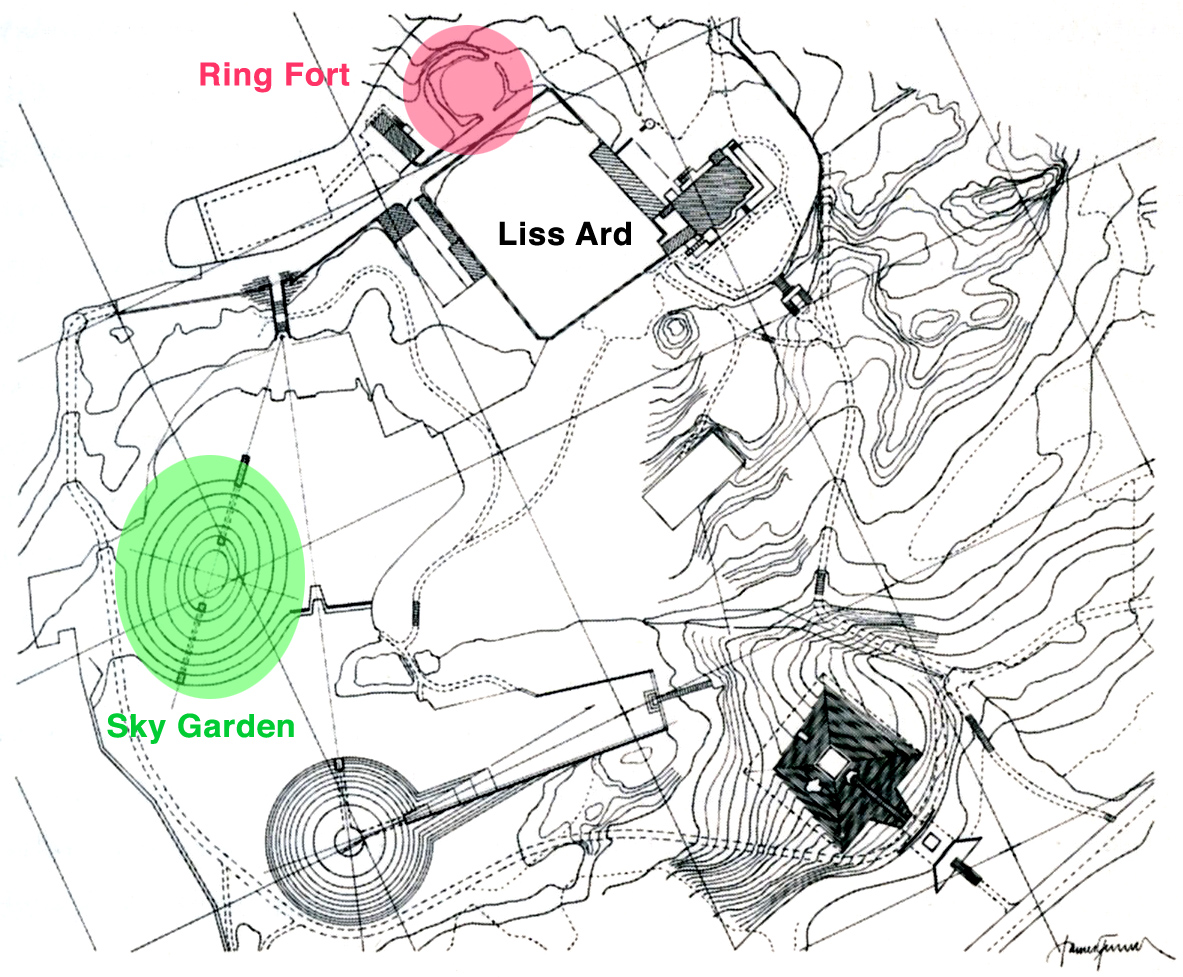
James Turrell's concept drawing for the Liss Ard project, showing Ring Fort and Sky Garden

James Turrell’s concept drawing for the Liss Ard project, showing Ring Fort and Sky Garden

Our ceremony was simple – a humanist celebrant and just a few guests who have been important to our lives in Ireland. After the official bits we wandered down to the Sky Garden and admired Turrell’s vision from the altar-like plinth. We were blessed with blue sky and sunshine.
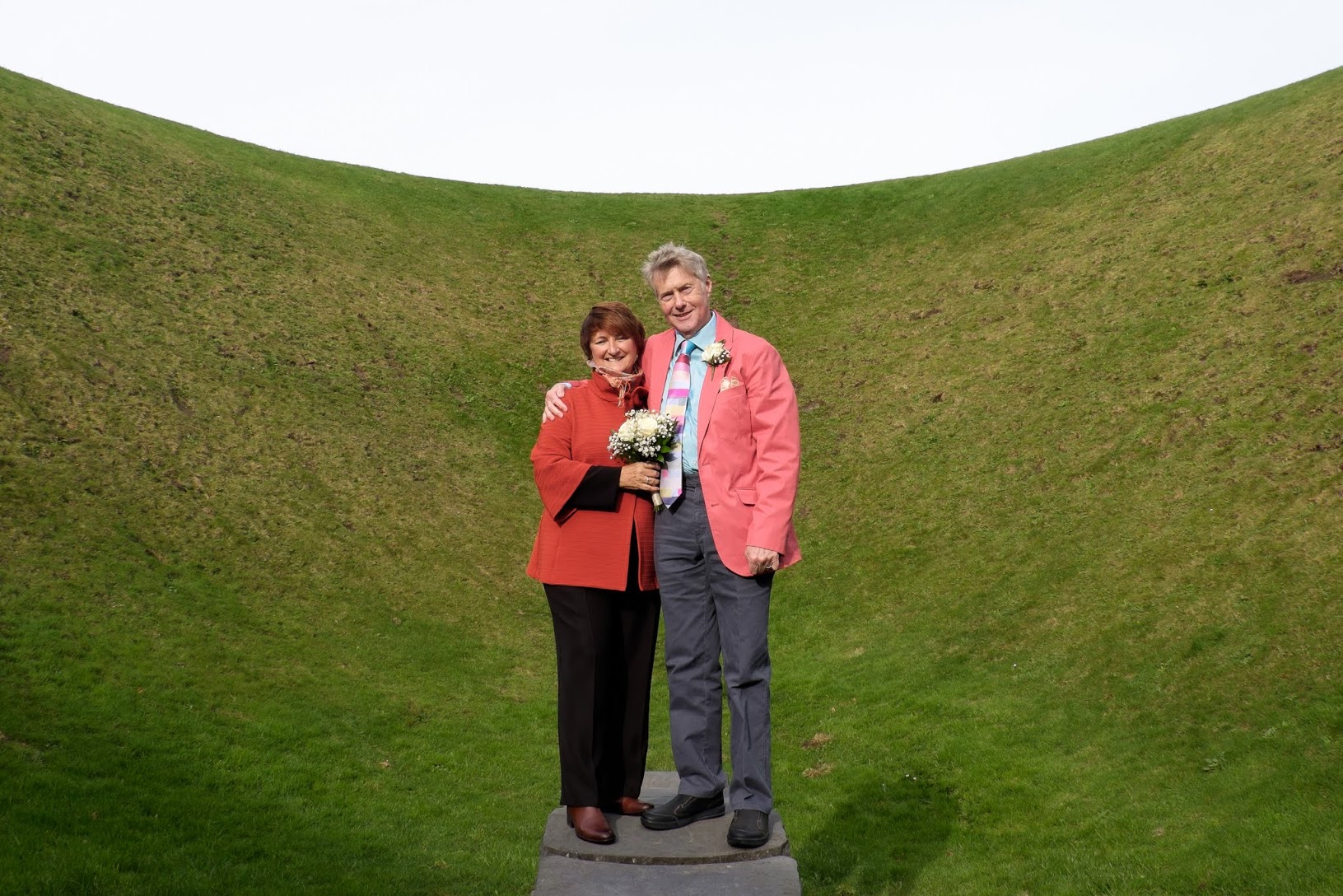
Wedding Day...

Wedding Day… (photo by Peter Clarke)

In 1979 James Turrell acquired a vast natural cinder crater located outside Flagstaff, Arizona. This – the Roden Crater – is possibly his best known work, and it is still in progress. He is turning this volcanic crater into a massive naked-eye observatory, designed specifically for the viewing of celestial phenomena. There are other ‘sky’ works in a number of countries: a ‘Turrell Tour‘ has been mapped out which takes in an least 23 of them.
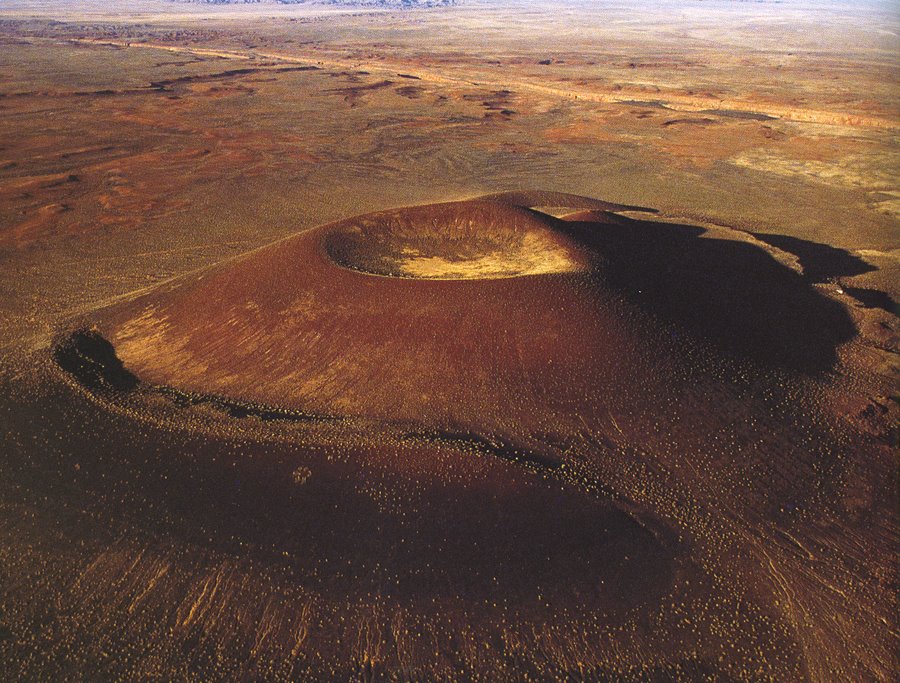
Roden Crater

Roden Crater, Arizona

Skyspace, Scotland
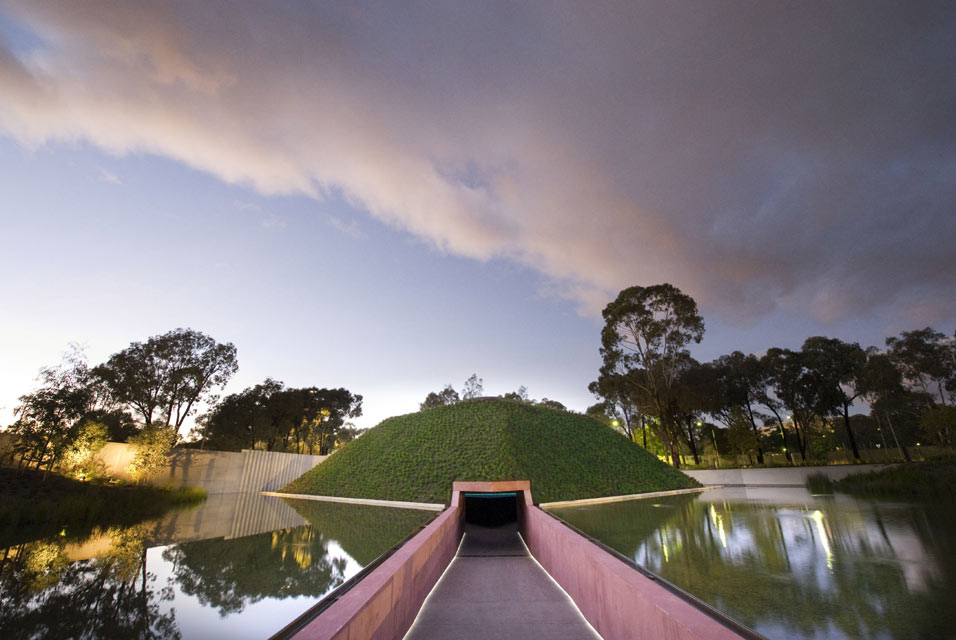
Skyspace, Scotland

Within-Without

Within-Without, Canberra 2010

Celestial Vault, Stroom, Holland 1996

Celestial Vault, Stroom, Holland 1996

*

It’s a big leap – from Liss Ard to Arizona and beyond. The full concept of the Sky Garden has never been completed: two more installations were planned. But how exciting that here in West Cork we have a stunning example of the work of this world-renowned artist.

Glebe Gardens

Glebe Gardens in the autumn

Glebe Gardens in the autumn

We’ve been to the Glebe Gardens in Baltimore on numerous occasions, for a delicious lunch in their restaurant, or to attend a concert in their amphitheatre. Until this autumn, however, I had never really been around the gardens themselves. I was fortunate, during the Taste of West Cork Food Festival, to be able to sign up for a tour with Master Gardener Jean Perry. Jean and her husband Peter started and manage the gardens, now with their daughters actively involved as well. It’s been an enormous amount of work over many years but in that time it has become a beloved West Cork institution.

Jean Perry, our tour Guide

Jean Perry, our tour guide

I had never heard of No Dig Gardening, the philosophy underlying this garden, until I heard about it from Jean. Vegetables are, for the most part, grown in deep beds and the soil is left as undisturbed as possible. When one crop comes out, another goes in. Fertilising and soil rebuilding is accomplished with organic compost, with occasional additions of seaweed pellets. They start the seeds in a protected place and plant them out once they’re big enough. They grow module plants – for example, lettuce in the spring, beetroot in the summer, brassicas in the fall – and get two and sometimes three crops a year. Besides the outdoor crops there are greenhouses loaded with tomatoes, peppers – and grapes!

Raised beds

Raised beds

The vegetables grown here are used in the restaurant. You can tell – everything tastes fresh and homemade. But flowers also make an appearance in this garden. Even though it was late in the year we were treated to a feast of colour in the herbaceous border.

This slideshow requires JavaScript.

The gardens include a stretch of canal that was once the railway cutting. A winding path leads down over a wooden bridge and eventually to the amphitheatre.

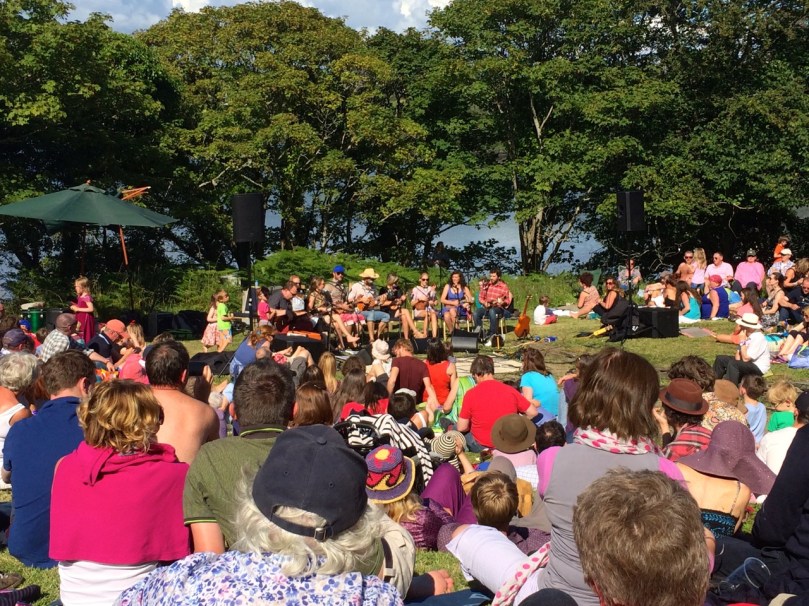
The amphitheatre was an inspired addition to the garden – in a tricky climate it’s always a nerve-wracking watch to see what the weather will do when you’ve scheduled an outdoor concert. The gods have smiled on it, though – very few concerts have been affected by bad weather.

Summer concert at the amphitheatre - the West Cork Ukelele Band

Summer concert at the amphitheatre – the West Cork Ukelele Band

Next it was up to visit the hens and goats – where Robert made a new friend – and then on to the greenhouses to see a truly impressive variety of tomatoes and to sneak a grape or two.

kiss kiss

kiss kiss

The tour finished with a tomato-tasting session and an impromptu lesson from Jean on which ones were best for what dishes. Robert and I stayed for lunch in the restaurant and a chat with fellow-tourists.

Glebe Gardens open from March to September, and occasionally for special events during the winter. Next time you’re in Baltimore, pop by for lunch.

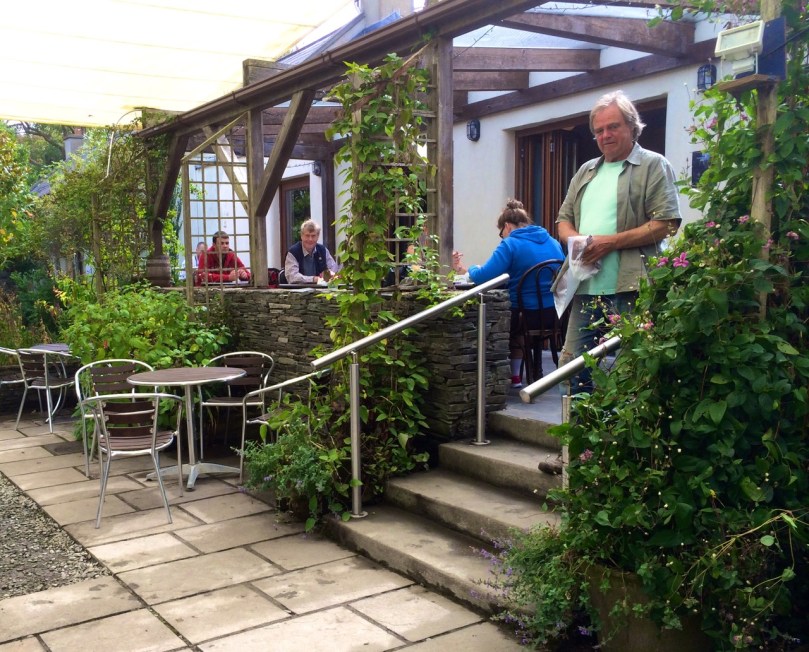
Waiting for lunch

Waiting for lunch

And after that final excellent latte, take a stroll through the gardens. Or make it part of your West Cork Garden Trail next year, along with Carraig Abhainn and the Heron Gallery, or any of our other wonderful gardens. Spoiled for choice, we are!

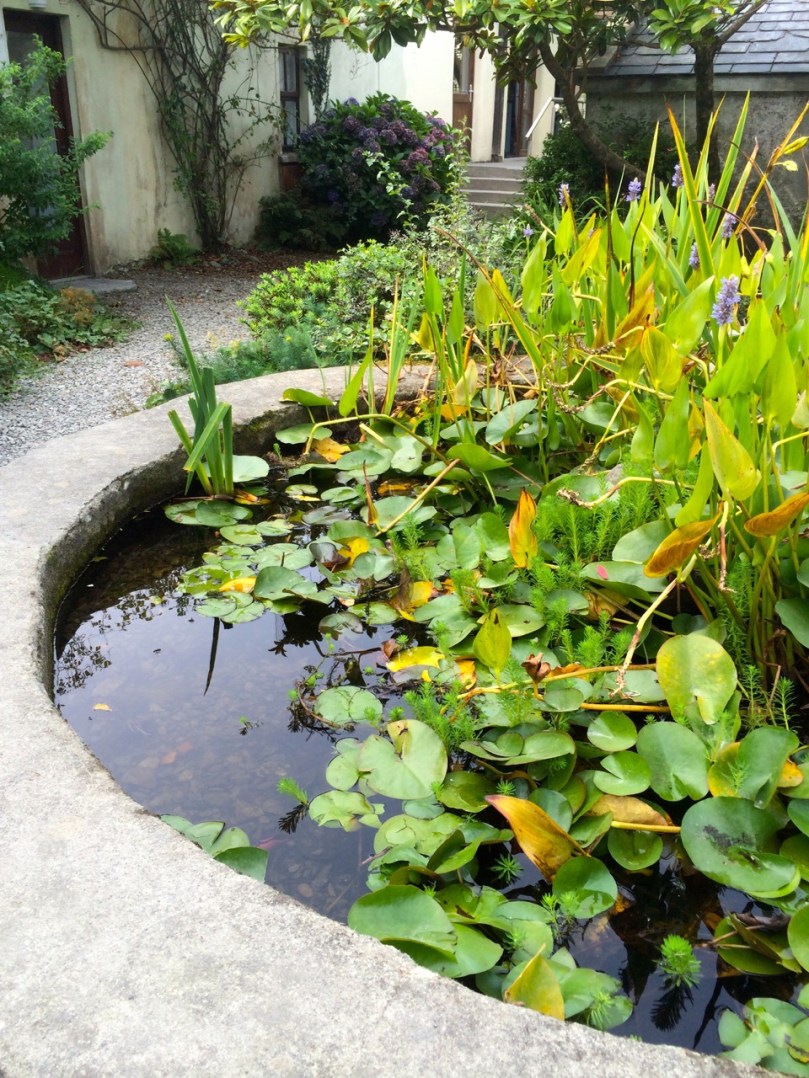
pond

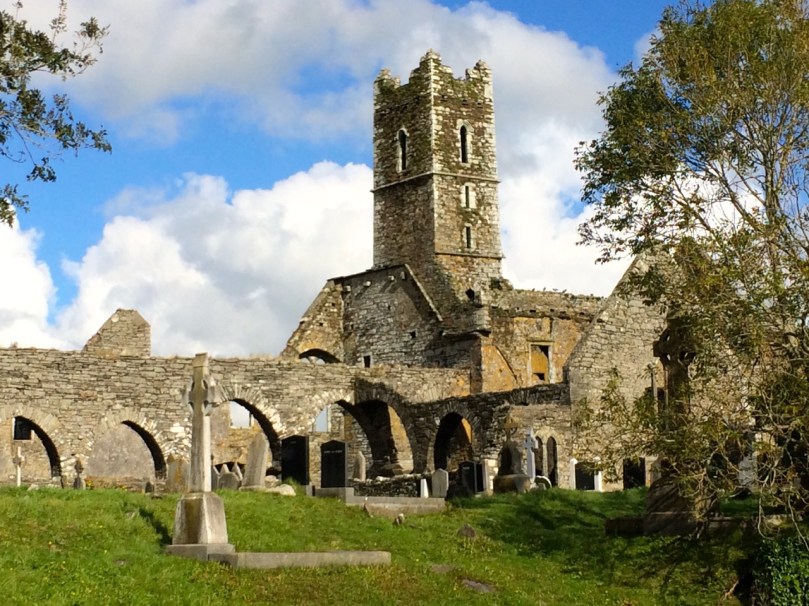
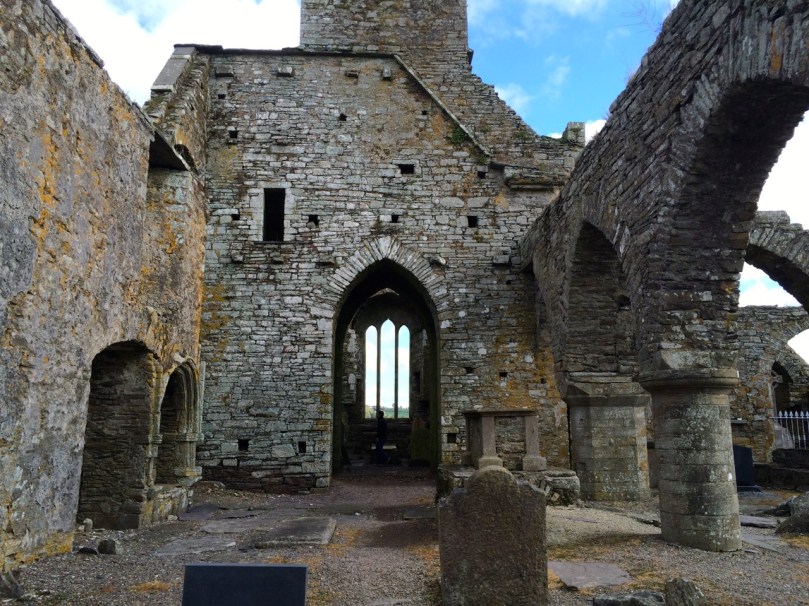
Timoleague Friary

Timoleague Friary

If you take the coast road from West Cork to Cork City, you go through Timoleague, a beautiful village at the top of Courtmacsherry Bay. This little town has a main street of colourful houses and shops, a large and imposing Catholic church with notable stained glass windows, a medieval bridge spanning the inlet, and lovely walkways by the Arigideen River.

Looking across the river to the Friary

Looking across the river to the Friary

What makes us stop, though, no matter how often we have visited it before, is the Friary. Perched on a knoll overlooking the river, this Franciscan establishment was built in the 13th or 14th Century, and subsequently enlarged and extended. It somehow managed to survive the reformation but was finally abandoned when it was burned in 1642.

The Franciscans first arrived in Ireland about 1230. The order spread quickly and in time there were many Franciscan houses in Ireland. Followers of the Rule of St. Francis, they lived in fellowship in the friary, but went out every day to work among the people. Unlike monks in abbeys or monasteries, they did not shut themselves away to follow a strict regimen of prayer and work. Instead, the friars depended upon their parishioners for sustenance, devoted themselves to their flock during the day and returned to the friary for their simple meals and prayers.

The Cloisters

The Cloisters

Despite this avowed simplicity, the friary is large and imposing. The remains of the cloisters give evidence of the daily meditation and recitation of the Divine Office. Their living quarters included a chapter room, refectory and infirmary.

Nave and choir

Nave and choir

The church would have been impressive in its day, with large and elaborate windows, a long nave and a sizeable transept. The columns between the nave and the transept are massive: the cut stone demonstrates the high quality of masonry that went into the building of the Friary.

A wander through the ruins is a delight. There is a wart well, old gravestones (while away half an hour deciphering some inscriptions!) and niches that would have held the tombstones of dignitaries. Lichen of every colour clings to the stones while low archways appear around every corner, with inviting vistas of further corners to explore.

Timoleague is named for St Molaga, who is also associated with other locations in Ireland. Many stories are told of St Molaga. Here is one, recorded by Colonel James Grove White and provided online by Cork City Librarians.

Close to Temple Molaga is a copious spring well, which was always held sacred by the people and should be used only for drinking and curative purposes; but on one occasion, the lady of the manor, an unbeliever, would insist on cooking her husband’s dinner in the water of the sacred spring. When the water had time to boil, the cook remarked it was icy cold; more logs were placed on the fire, still to no effect. The logs were still being piled on, the fire blazed, but when the dinner hour arrived, the water was still as cold as ever. The lord waxed hungry, and, like other mortals, became angry; he rushed into the kitchen to ascertain for himself the cause of the delay, had the cover lifted off the huge pot, and, although the fire was crackling and blazing high about it, he felt the water was quite cold; but what astonished him more was to behold a beautiful trout swimming about in it, without apparently suffering the least inconvenience. He became wonder-stricken, and had his advisers called in. They told him to take the water back to the well without delay and pour it in. This being done, the trout again became invisible, and is since rarely seen, except by certain votaries.

In the district it is a common saying when water is slow to boil, “perhaps the Molaga trout is in it.”

Timoleague Friary, as the largest medieval religious ruin in West Cork, is a unique and special part of the West Cork landscape.

friary silhouette

Ballydehob Rocks Art and Culture

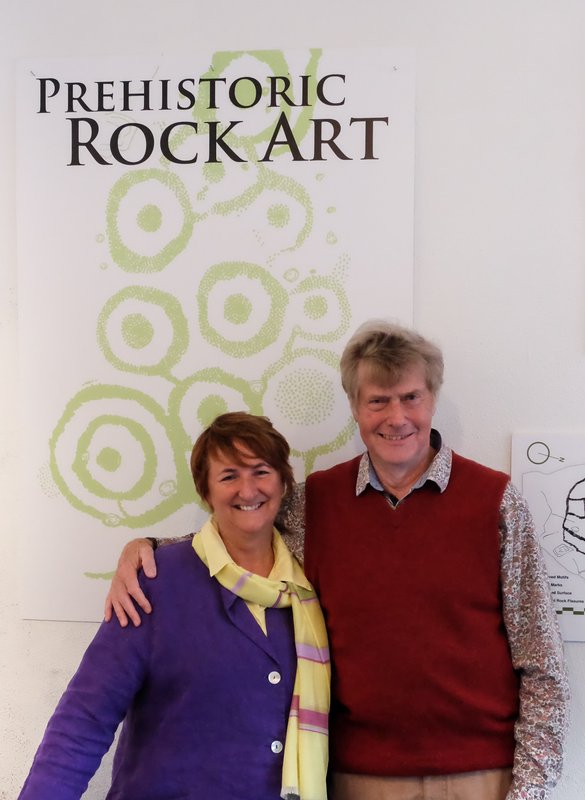
Looking pleased with the exhibition!

Looking pleased with the exhibition!

I’ve posted before about the amazing variety of events and festivals that West Cork towns host. The latest, and this is a new one, is Ballydehob’s Art and Culture weekend. It’s just over and it was great fun.
For the most part the venues were intimate (think pubs, cafes, An Sanctoir) or outdoors. The weather was variable – we got everything from gales to sunshine – but only one event had to be cancelled because of it.
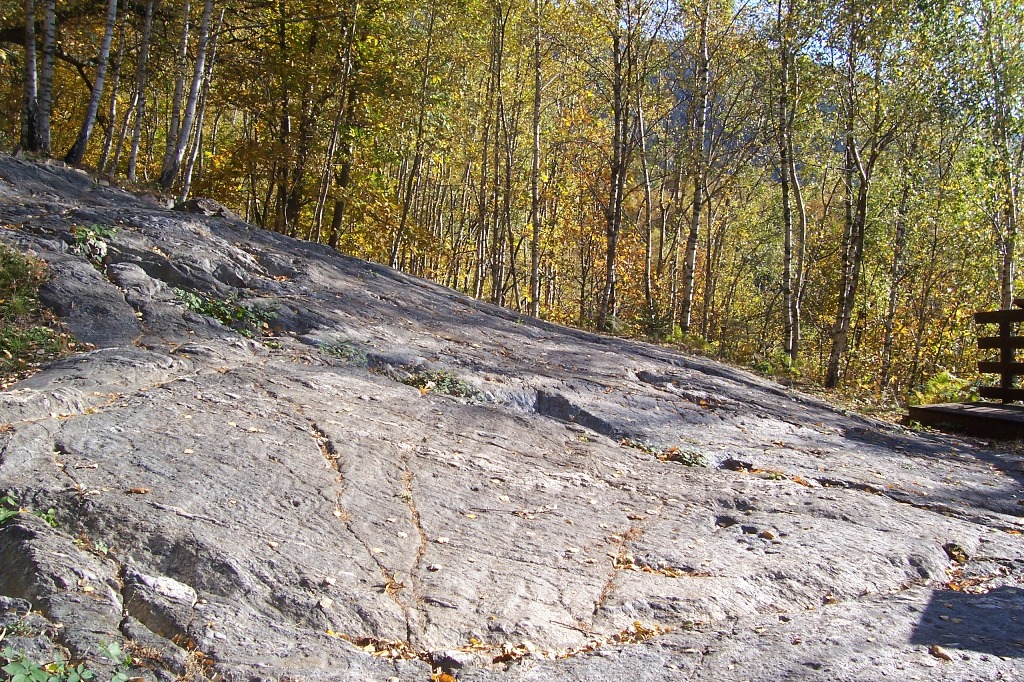
There was a bus tour to the delightful Gortnagrough Museum, and another to the Rock of the Rings (local rock art!) and an historic walking tour of the town. There was a poetry trail, storytelling, plays, dance performances, a dozen different art exhibitions (including our own), kids’ workshops and movies, a cabaret, and of course music – lots of music from trad to country to world music to drumming to classical.

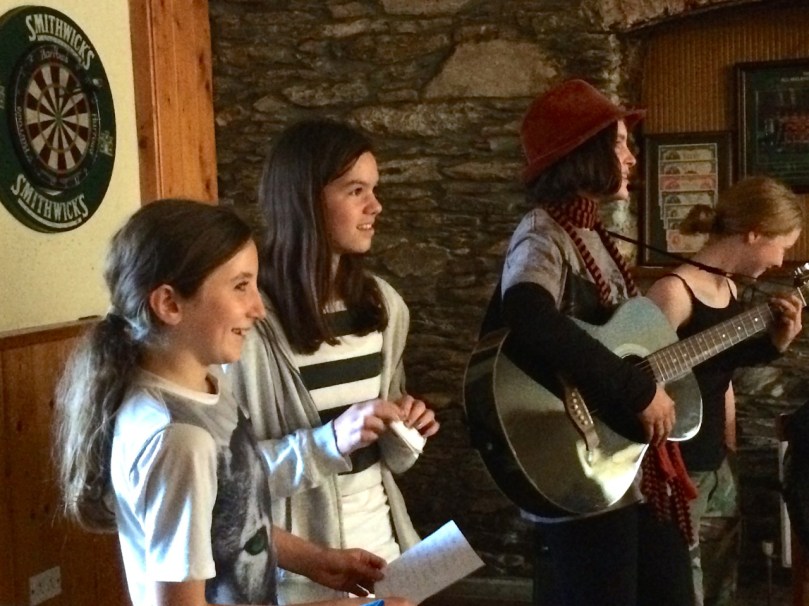
Young songwriters

Young songwriters

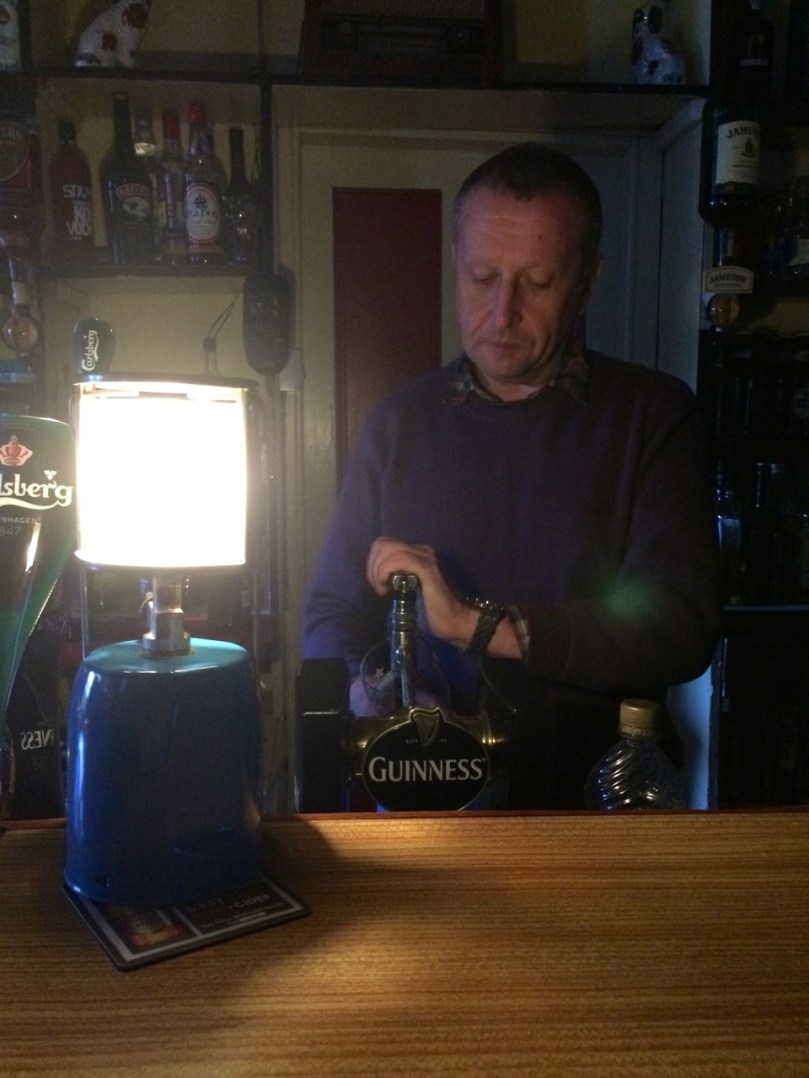
Perhaps one of my favourite moments was watching the girls who had taken the songwriting workshop, which had been led by a 12 year old, perform the songs they had written. We’ve been having fierce gales and the whole of Ballydehob was without electricity, so the pub was lit by candles and gas lamps. It was like going back to the rare old times when we made our own entertainment for gatherings of neighbours and friends. The lack of power didn’t bother anyone – the following act simply switched from electronic to acoustic with no fuss and soon we were singing again. The Choir I (try to) sing with, A Capella Bella, had a sing-along too – it was great to hear so many voices belting out our African rythms, enthusiastically conducted by the talented Caz Jeffreys.

By lamplight

By lamplight

Our own event, the Prehistoric Rock Art Exhibition, proved to be popular. The talk was packed and people lingered afterwards and peppered us with questions. There is a lot of interest here in anything to do with our heritage, and rock art is a little-known aspect of it: many people commented that they had no idea it existed or what it was like. People also liked Robert’s account of rock art in other parts of the world. For those of you who would have liked to be there but couldn’t, we are planning a permanent blog page on rock art which will contain some of the images we used as well as the program we produced for the show. You can also read our friends Amanda and Peter Clarke’s accounts of the exhibition here and here – they supplied the photographs of the exhibition I’ve used in this post.

These small local festivals can make a huge difference to a place. I’ve written before about the economic downturn in Ballydehob and the depressing effect it has had on local business, but the community has never lost its positive attitude and its volunteering spirit. One of our local writers, Sarah Canty, illustrates, in her documentary Down But Not Out, the challenges facing small villages like ours.

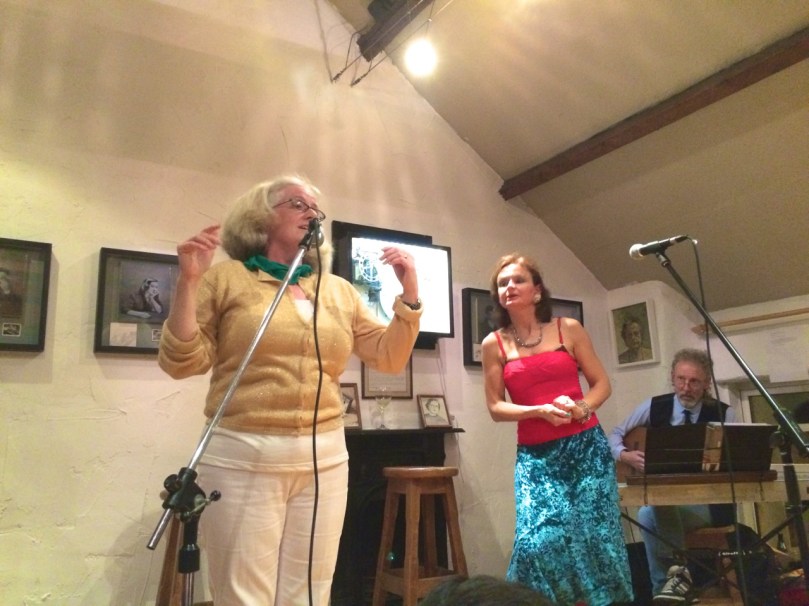
The Eileen and Marilyn Experience

‘The Eileen and Marilyn Experience’ Caberet

This festival was spearheaded by a great team, many from the Ballydehob Social Club, with lots of other volunteers pitching in. A huge thank you to the pubs and other venues for providing free space and paying for entertainers. And a special shout out from us to Joanne Cassidy at the West Cork Gourmet Store for providing a wonderful gallery for our Rock Art Exhibition. 

The Weekend ended with a huge party – more music, more dancing, more laughter and camaraderie.

Ballydehob – you rock!

Rock Art Ramblings… away from home!

Ireland? No - it's Rock Art in Italy

Ireland? No – it’s Rock Art in Italy

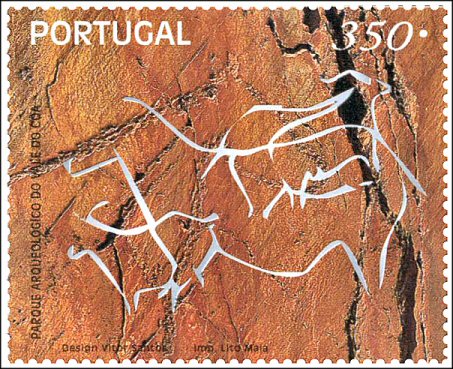
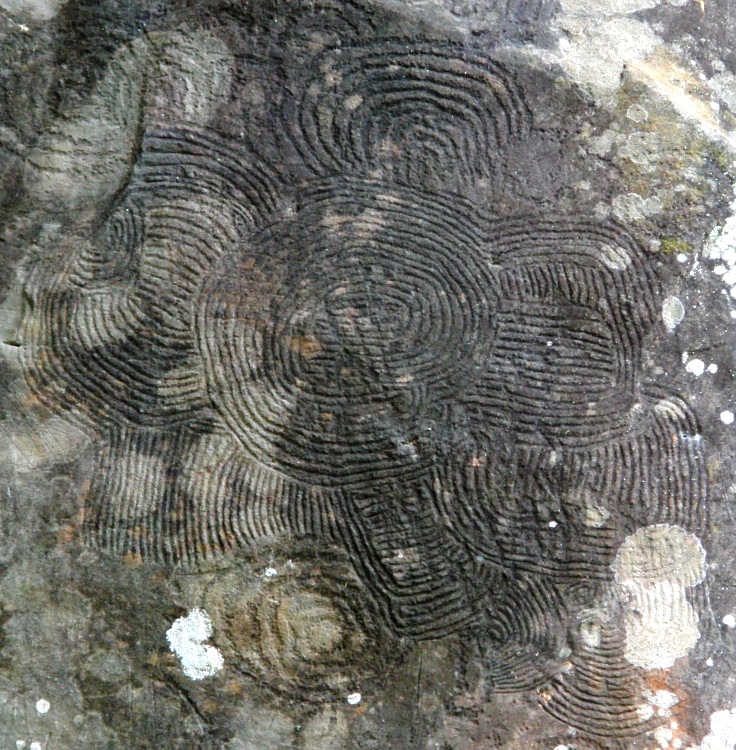
At our talk in Ballydehob yesterday I mentioned briefly the world-wide context of Rock Art: this generated a lot of interest during and after the event so I thought it worthwhile to write a post about non-Irish Rock Art. portugal stamp The carvings in Ireland appear to be part of a cultural phenomenon that runs down the Atlantic coast – from Scandinavia to Iberia – taking in Ireland and Britain on its way. However, Rock Art is widespread across the world, and over the whole time spectrum of human occupation of land. There is a UNESCO World Heritage site in Portugal – the Côa Valley Archaeological Park – which is based on finds of Rock Art. When the project was opened in 1996 its Director stated: “…The Upper Paleolithic art of the Côa Valley is an exceptional illustration of the sudden development of creative genius at the dawn of human cultural development…” That’s quite an announcement! The Park is home to some 25,000 carvings created at various periods over the last 10,000 years. Some of it is visually similar to our own Neolithic / Bronze Age examples (which were probably made within the last five Millennia) but other earlier examples seem – surprisingly – more sophisticated: mainly very beautiful representations of animals.

Canary Island example

Canary Island example

Where do we find the oldest Rock Art? Possibly in India: the Bhimbetka Caves show evidence of human habitation dating back more than half a million years, and in one particular site – known as the Auditorium Cave – carved cupmarks were found under human debris deposits that could be dated to at least 290,000 years ago. This means that the cupmarks must be as old as that date. Some scientists claim that they could be twice this age. Those cupmarks are exactly the same as the ones we have in Europe – and when found they contained traces of red pigments, suggesting that the carvings might have been painted.

India – Norway – Africa – Europe – the Americas – Australia… Ancient rock carving has been found in all continents of the world excluding Antarctica. It’s not all the same as Irish prehistoric Rock Art – where the simple motifs are familiar to regular readers of this blog – but cupmarks do seem to predominate as a common occurrence, and are usually apparently carved in the same way wherever you find them: shallow circular indentations are picked out using one hard stone tool striking another.

What does it all mean? Finola did a good job of sidelining that question during yesterday’s talk but came up with some plausible pointers: it is, of course, impossible to be certain when we are so out of touch with the peoples who produced the marks. We should also be careful of making any assumptions based on our own cultural ways of thinking. An archaeologist (Mountford) witnessed cupmarks being carved in central Australia in the 1940s: he reports that these were made as an increase ritual for the Pink Cockatoo (Kakatoe leadbeateri). The particular rock the cupmarks were hammered into was thought to contain the life essence of these birds, so the mineral dust rising from the activity was believed to fertilise the female cockatoos and thus increase their production of eggs, which the Aborigines valued as food.

I have mentioned before the cupmarks which are found carved into the lava stone in Hawaii’s Volcanoe National Park: it’s worth noting again that they are very similar to those we find in Ireland and Britain – even to the extent of having concentric rings around some of them. Hawaian families who go a long way back will tell you that they are made to receive the umbilical cords of newly born babies – to ensure health, long life and fertility. The carvings are known as ‘Puka’.

Rock Art is fascinating. I want everyone to be excited by it. It’s a ‘poor relation’ archaeologically speaking: it’s very easy to miss. It’s also an ‘endangered species’: in Ireland, some examples which have been recorded in the past can no longer be found. Perhaps our exhibition and talk will at least have raised awareness.

Our Rock Art Exhibition!

A joint post by Robert and Finola…

Derrynablaha A2.PC9

For all of you who are fortunate enough to live within reach of our beautiful part of West Cork we are pleased to invite you to our exhibition, which is being shown as part of the Ballydehob Art and Culture Weekend, running from 17th to 19th October. The exhibition is being held in the West Cork Gourmet Store (go left at the statue of Danno and it’s just up on the right, behind the Post Office), and it will continue to run there during opening hours for the two weeks after the Art and Culture event.

Finola studied for her Archaeology degree at the University of Cork, and her thesis was written on the Rock Art of Cork and Kerry. For her research – in the early 1970s – she travelled across the two counties on a borrowed Honda 50, visiting every piece of Rock Art known at the time, and recording each piece using a tracing technique which would not be allowed today. The thesis is a unique and valuable archive of the rock carvings, which date back anything from three to five thousand years. We believe that this is the first time a comprehensive exhibition of Irish Rock Art has been shown.

knockdrum detail.PC9

Regular readers of Roaringwater Journal know that we are still working on Rock Art: Robert has recorded some more recently found examples using a ‘non-invasive’ technique, and we are involved with CRAG – the Cork Rock Art Group – under the aegis of the University, where our aim is to produce a website which lists and illustrates all known examples of Rock Art in the west of Ireland. Eventually the work may extend further afield: there are Rock Art sites elsewhere in the Republic. Similar carvings are found on the Atlantic coast, from Scandinavia down to Iberia.

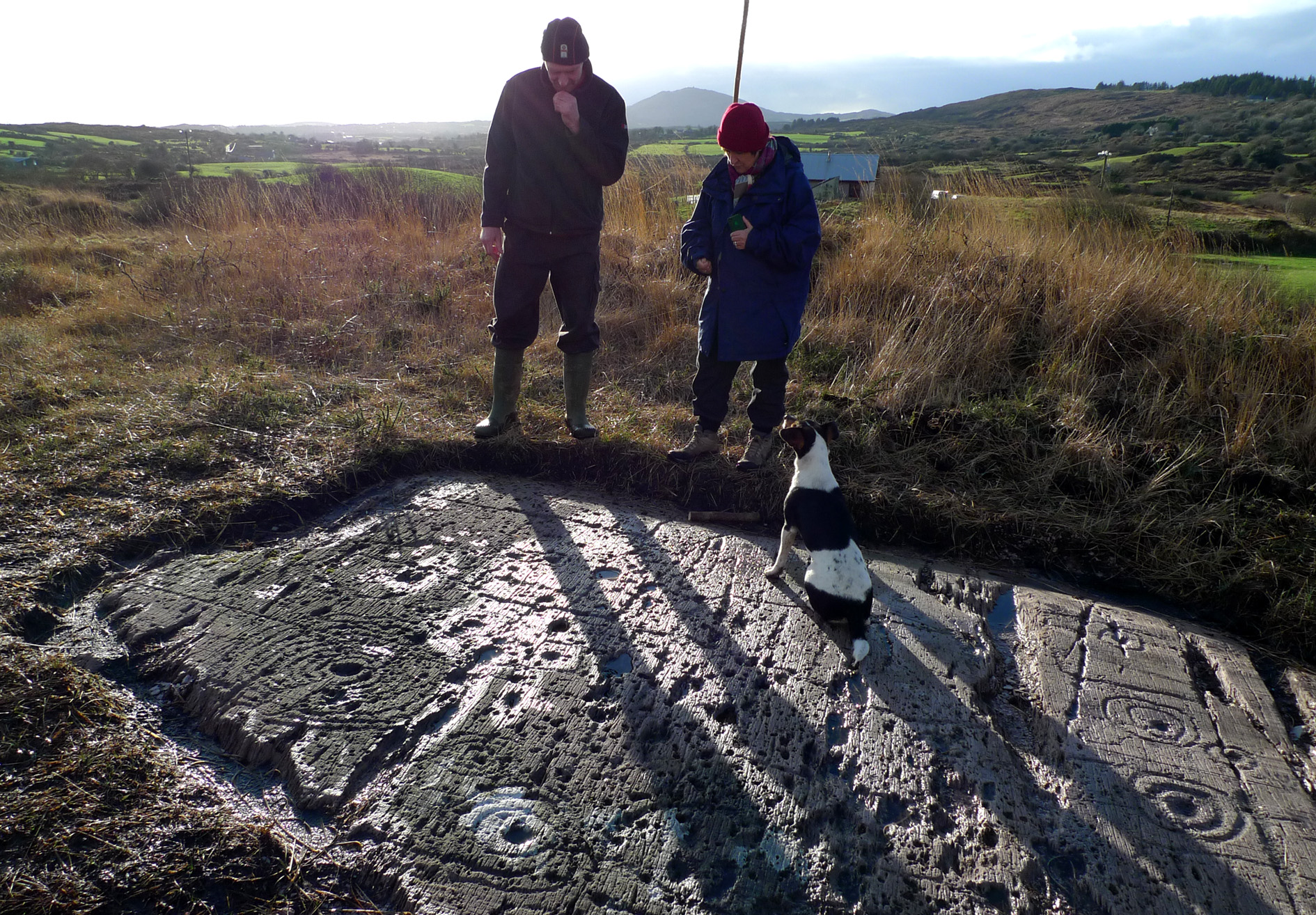
Finola, Gary and companion study the Art

Finola, Gary and companion study the Art

On Saturday 18th October the exhibition will be formally opened at 4pm, and we will be giving a talk on the subject and on our adventures studying it. Some refreshments will be on hand: please come if you can!

Title poster.PC9