Art and the Workhouse

Trump was not the first man who thought that separating desperate families applying for asylum provided an additional deterrent – that distinction belonged to the workhouse system in which men, women and children were kept apart once admitted.

Two distinct artistic projects centre on the remains of local workhouses in West Cork in the coming week. Both are associated with the highly anticipated Coming Home: Art and the Great Hunger Exhibition at Uillinn.
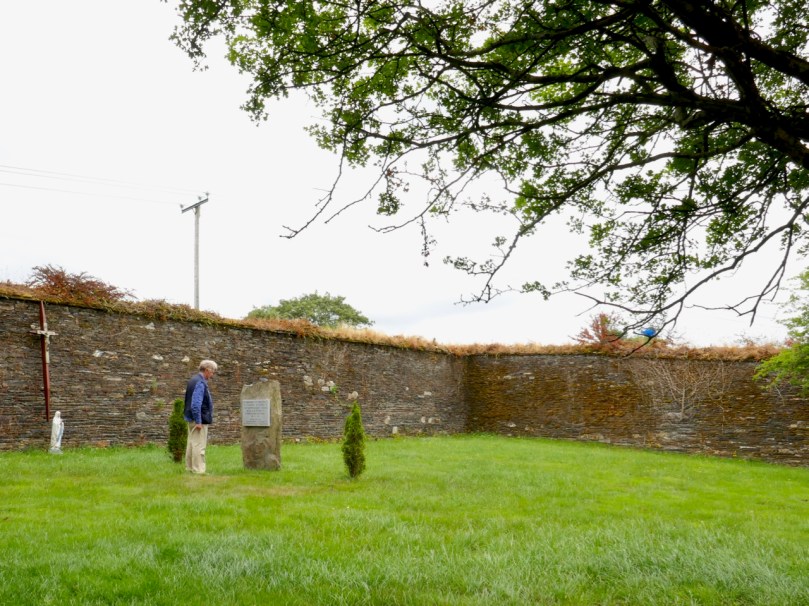
Robert contemplates the memorial plaque at the famine graveyard in the grounds of the Skibbereen Community Hospital – the former site of the Workhouse. The towering wall remains from that time

How do we address the ghastly system that was The Workhouse? How can we look back on the barbarity of the political and economic philosophies that dreamed up such an institution and perpetrated such depths of misery on starving people? How do we remember without stirring up old hatreds and move instead to a place of compassion and healing, a place of determination not to repeat such atrocities in this country? Perhaps one way is though art. Two distinct artistic approaches have been underway in West Cork for some time and each will culminate this week.
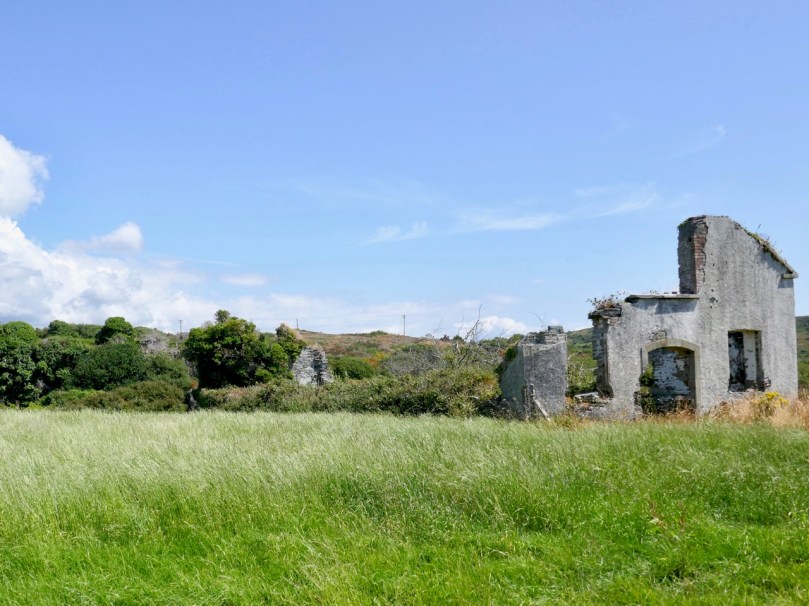
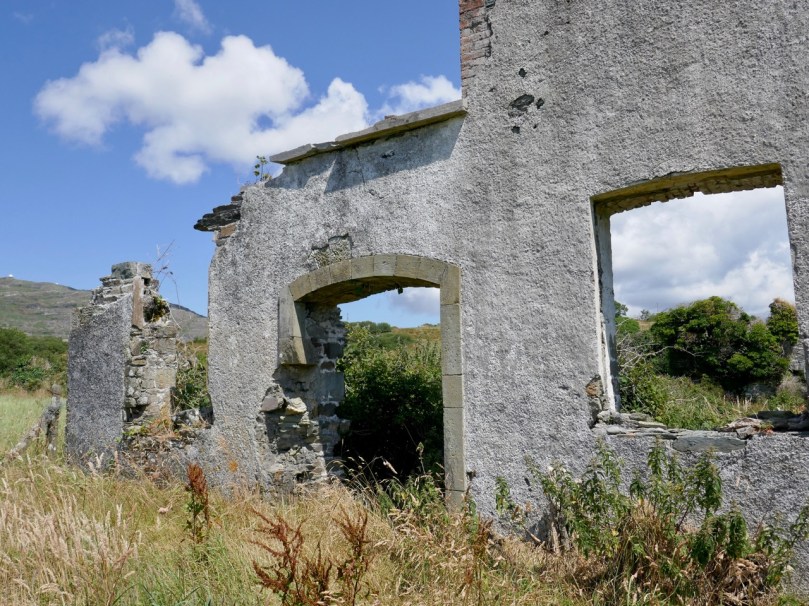
What’s left of the Schull Workhouse. It was destroyed by the IRA during the War of Independence. The dreaded reception area is on the right, and in the initial photograph

Before I talk about the two projects, take a moment here to revisit my 2014 post on the Workhouse. It explains the Workhouse system and has links to more information. You might also, if you haven’t already done so, read what Asenath Nicholson had to say about dire poverty and the Bantry Workhouse.

Jean Leary was one of the 110 Skibbereeen girls – here she is celebrating her 50th wedding anniversay in Australia. Thank you to her great, great……granddaughter Judith Constable for sharing this photograph. Judith will be travelling from Australia to attend the unveiling of the memorial on Friday

Artist Toma McCullim’s project centres on the Skibbereen Workhouse and is called 110 Skibbereen Girls. The Earl Grey Famine Orphan Scheme provided passage to Australia for young women. The young women from Skibbereen left a difficult present for an unknown future, and it is estimated that perhaps 10,000 Australians trace their descent to them. There is an excellent account of the project in the Irish Times and another in the Examiner.
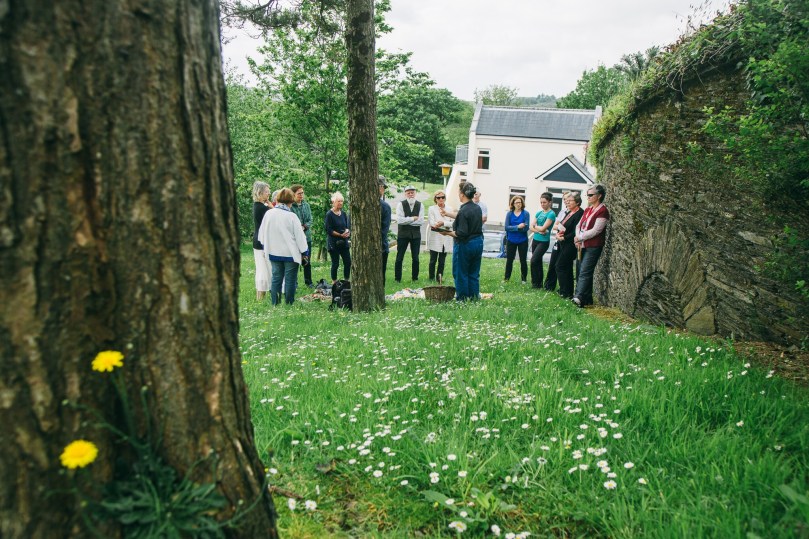
Photograph courtesy of Aoise Tutty

I participated in a Walk and Talk with Toma in the grounds of the former Skibbereen Workhouse, now the Community Hospital. It was a deeply moving experience, as Toma asked us to imagine ourselves in the position of one of the girls, and talked us through the events of their lives. We started at what was once the Women’s Entrance and walked up to the graveyard.

We chose an apple and mine represented Alice Fitzgerald. It was all too easy to slip into the past with Toma, and a very emotional experience. Photograph courtesy of Aoise Tutty

Toma is a gifted educator: her tour immersed us in the lives of the young women in an imaginative and emotive way. The pièce de résistance, however, was when her phone rang, and on the line from Australia was a descendent of one of ‘our’ girls. It was a telling moment, somehow underscoring the resilience and heroism of the girls who had made such a difference in the land of their adoption.

The phone call from Australia

It is at the Women’s Entrance that the commemorative sculpture will be unveiled next Friday (July 20th, 2018) by the Australian Ambassador. All are welcome.
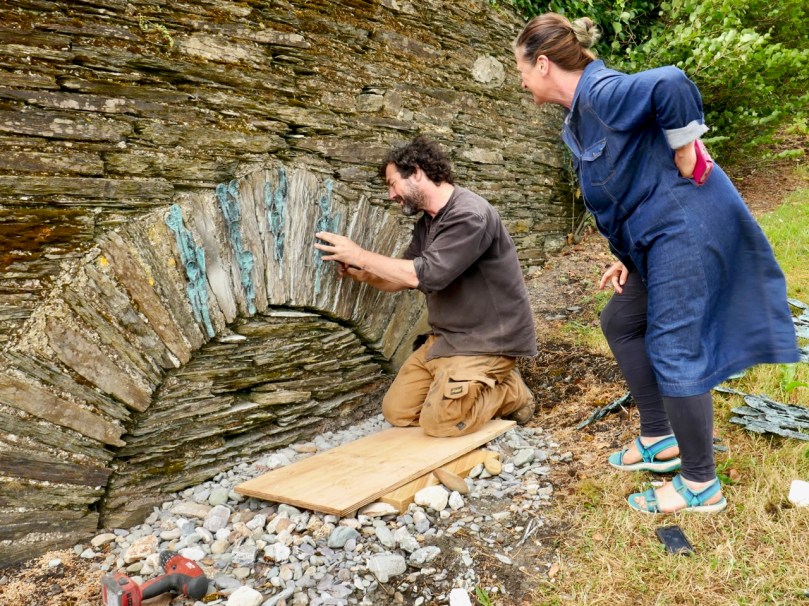
Installation underway

The following day (Saturday, July 21, 2018) we have another workhouse-based art project. It’s called Anáil na Beatha (Breath of Life) and it’s a multi-media performance by Alanna O’Kelly. Here’s the description:

The audience will proceed into the ruins of Schull Workhouse, where they will be immersed by fragmented sounds, layered imagery and light, surrounded by the silence and vastness of the countryside, and the stories of the thousands who were silenced by the Great Hunger. The performance will run as a series of vignettes that will reference some of the stories of the Great Hunger in West Cork, both historic and contemporary.
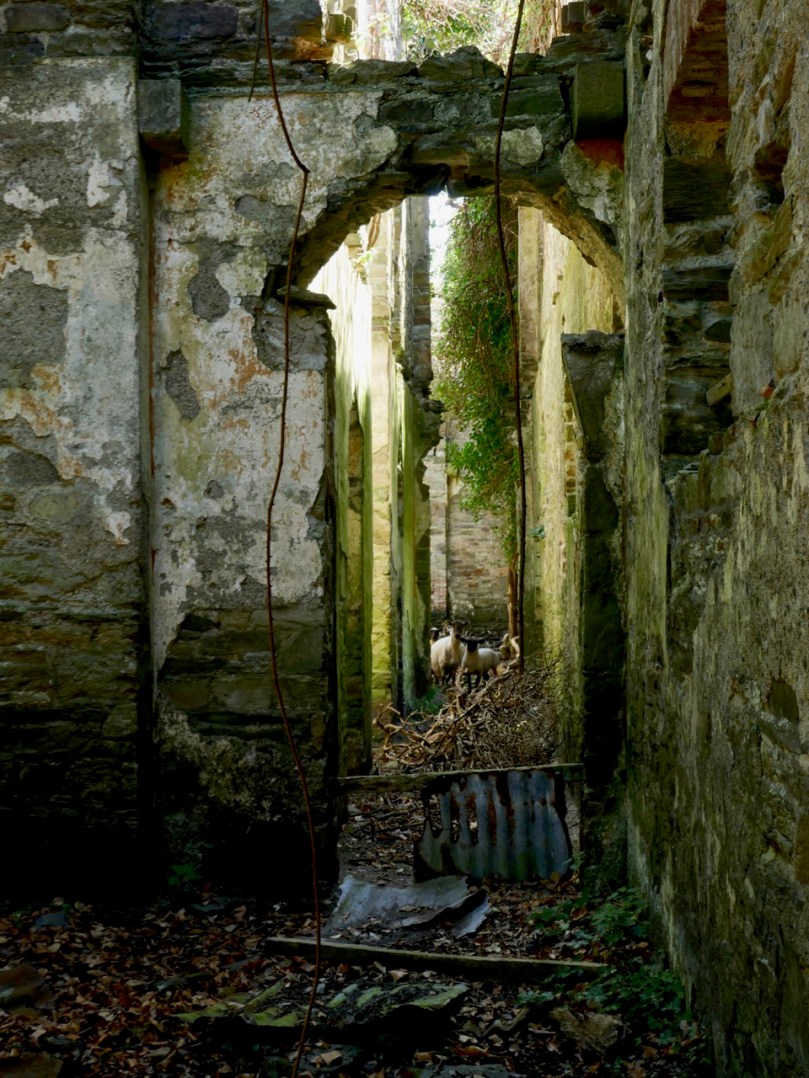
The only current inhabitants of the Schull Workhouse

Some friends are participating in the performance and, based on their experience in rehearsal, are urging everyone to go to what promises to be a deeply moving and artistically striking event. Robert and I have our tickets (they are available on Eventbrite).
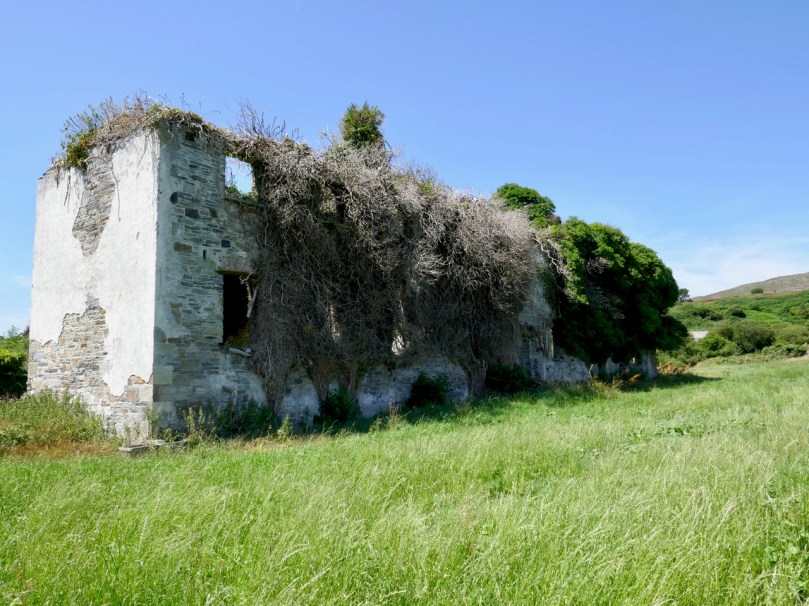
Schull Workhouse ‘Mortuary Hospital’

I never thought I would get to attend something like this at the Schull Workhouse. In my Workhouse post I described the ‘aura of decay and sadness’ that resonates there, an echo of the misery that was visited upon the inmates. I am looking forward very much to seeing how Alanna uses the site in her performance piece, as expressed here:

She has a deep interest in place, people, community, our past and its effect on our present, the shaping of our culture, our identity and relationship to the world community and she is drawn to the particularities of place and context.

Workhouses stand out in Irish history as the most hated, feared and despised buildings in the land. The gaunt remnants that dot the countryside act as a constant reminder of a dark time in our collective memory. Perhaps through art we can begin to focus on a more hopeful and healing integration of that period: both a rejection of those values and compassion for those who suffered. We need, in Ireland, that kind of negotiation with our past.
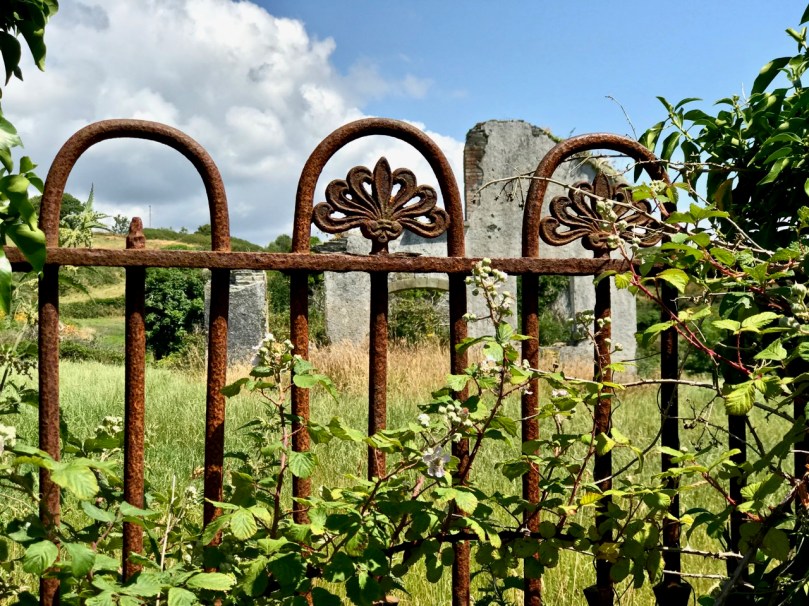
Skibbereen Celebrates: Arts and Artists

There’s seldom been as much sunshine in Skibbereen as we are seeing this summer: every day feels like a holiday, and there’s so much for residents and visitors to do – it’s going to be hard to keep up with it all! Coming soon is the launch of the Skibbereen Arts Festival (I love this great graphic!) –

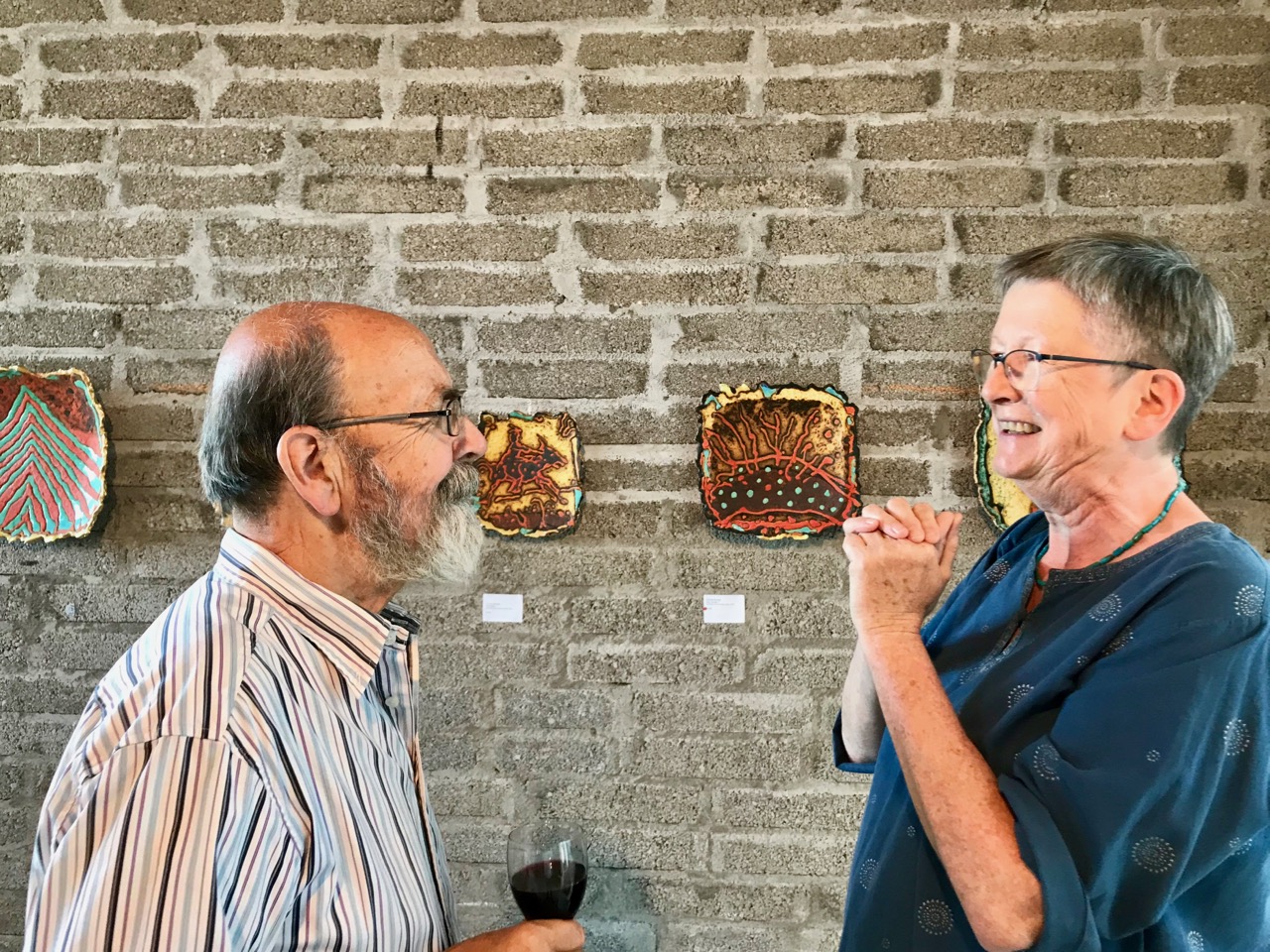
On Friday night we were treated to the ‘Preview’ of the ‘flagship exhibition’ for the Skibb Arts festival, running from now until 6 August at The O’Driscoll Building, Old Quay in the centre of town. It’s titled Elements: West Cork Landscape and features works by 30 artists from the area. In fact, the sunshine and the excitement brought out practically every artist, anyone connected with arts, and a whole lot of West Corkonians and visitors to see what’s on offer.

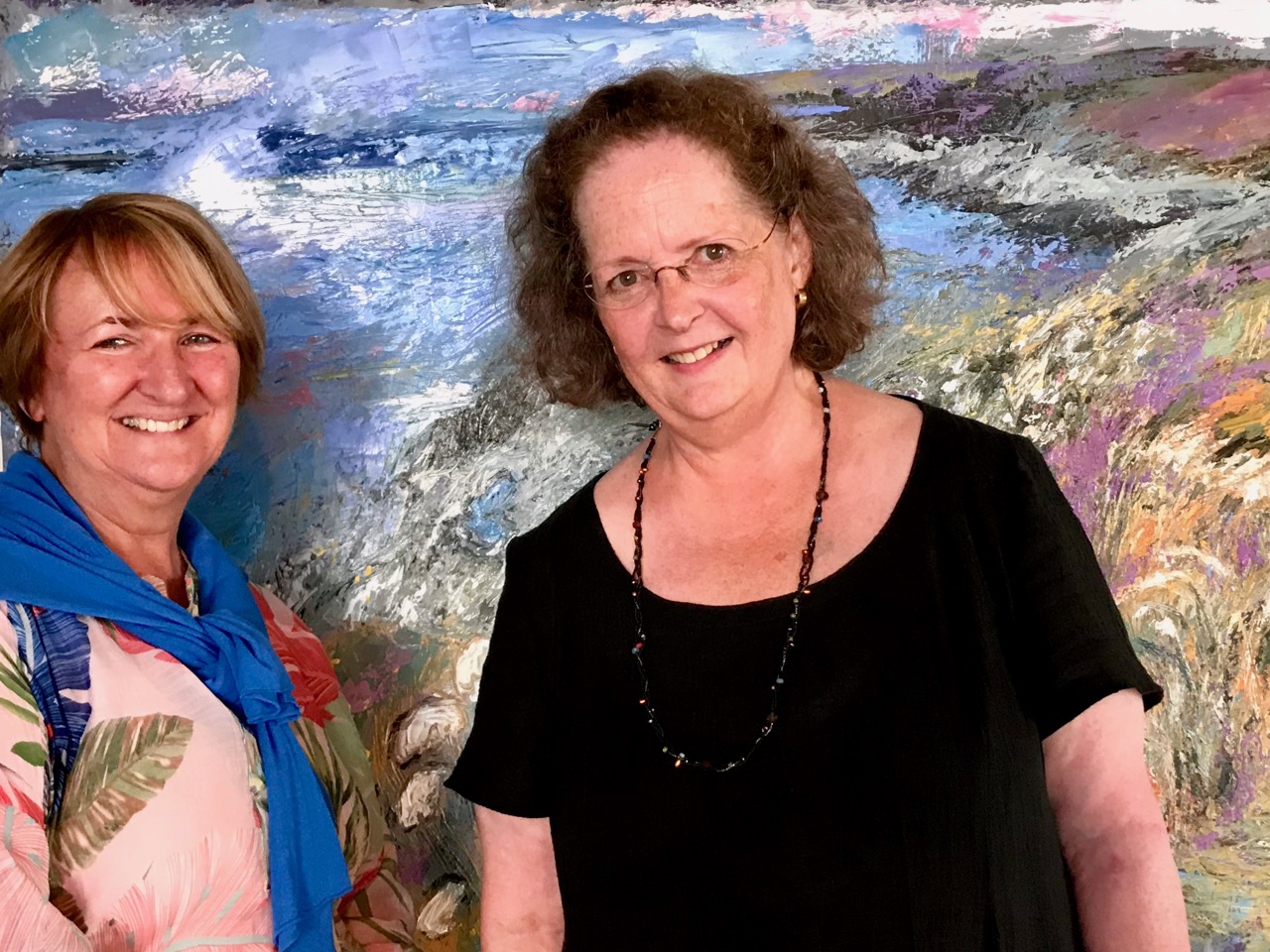
The exhibition has been put together by Catherine Hammond (above, right, with Finola – standing in front of a Christine Thery canvas) and it’s great to see Catherine curating in Skibbereen again. The art here is strong and looks good on the bare concrete walls of the building, the vacant shell of which is a reminder of Celtic Tiger days, but it always works so well as a gallery.

The work of two artists struck us as soon as we entered the building on Friday: the bold, simple architectural forms of Helena Korpela, two examples above. (NOTE: images removed at request of artist. Please see Korpela website for examples); Helena has connections with West Cork and Helsinki, which emphasises the breadth of art makers working here today.
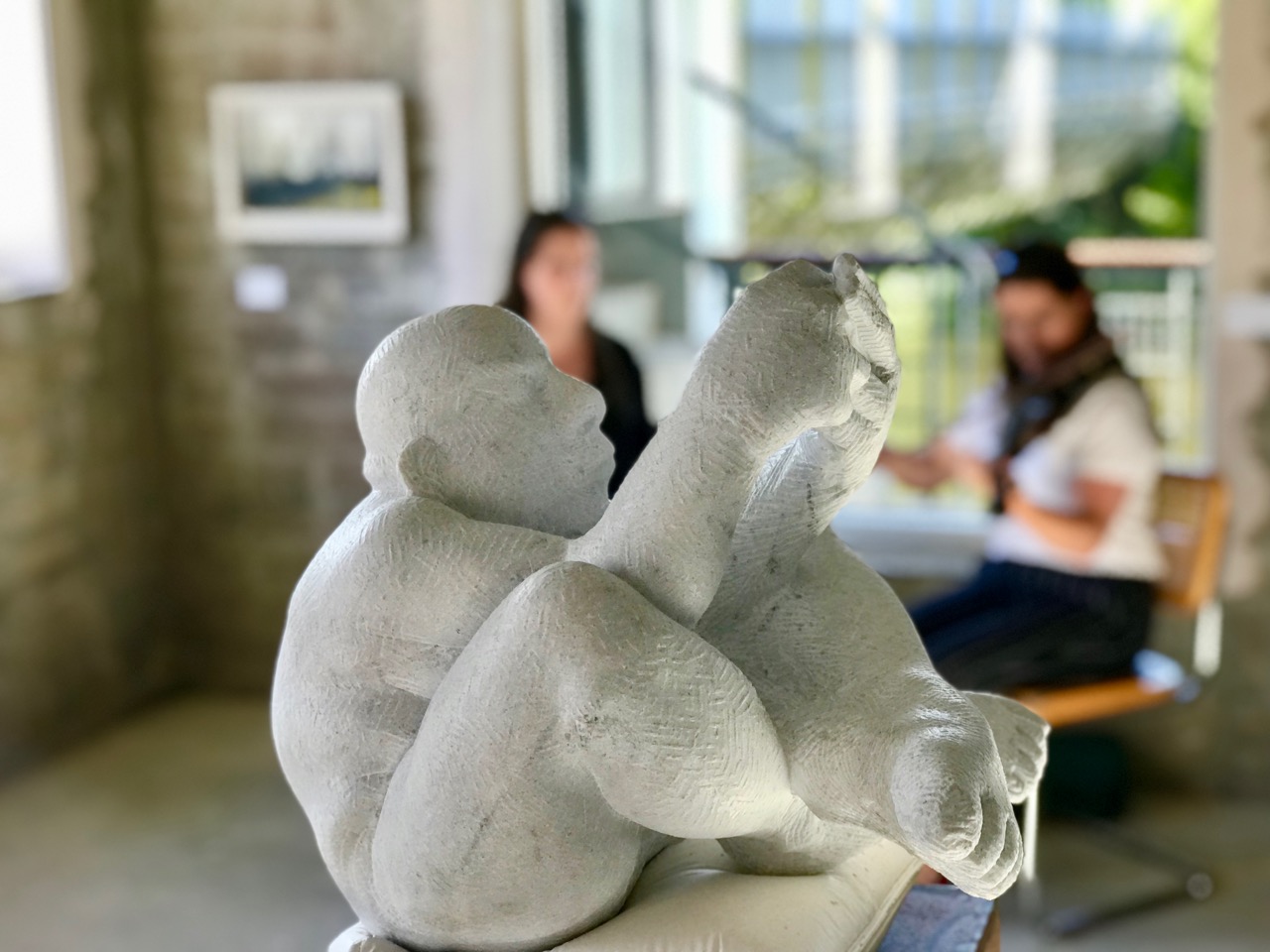
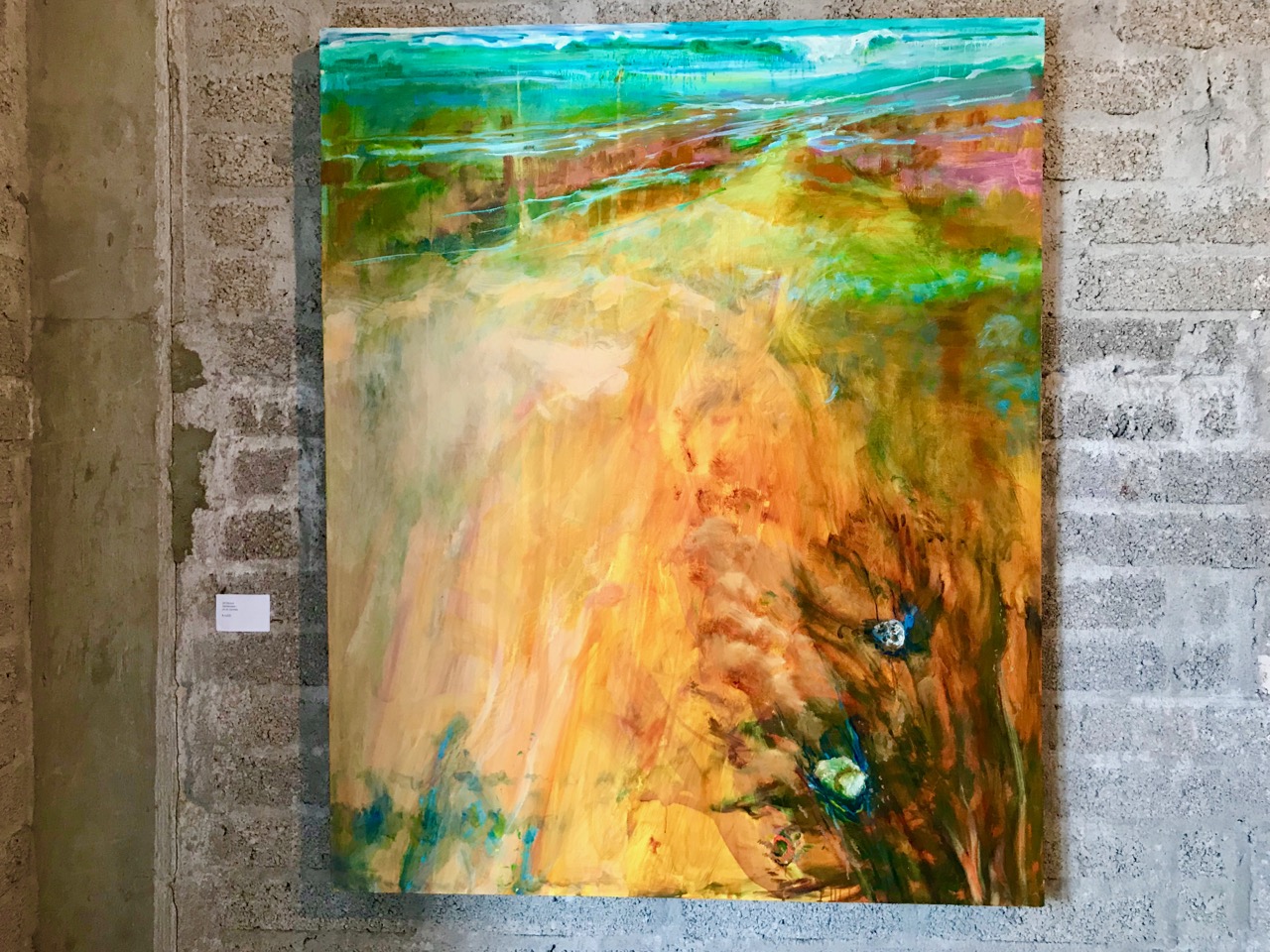
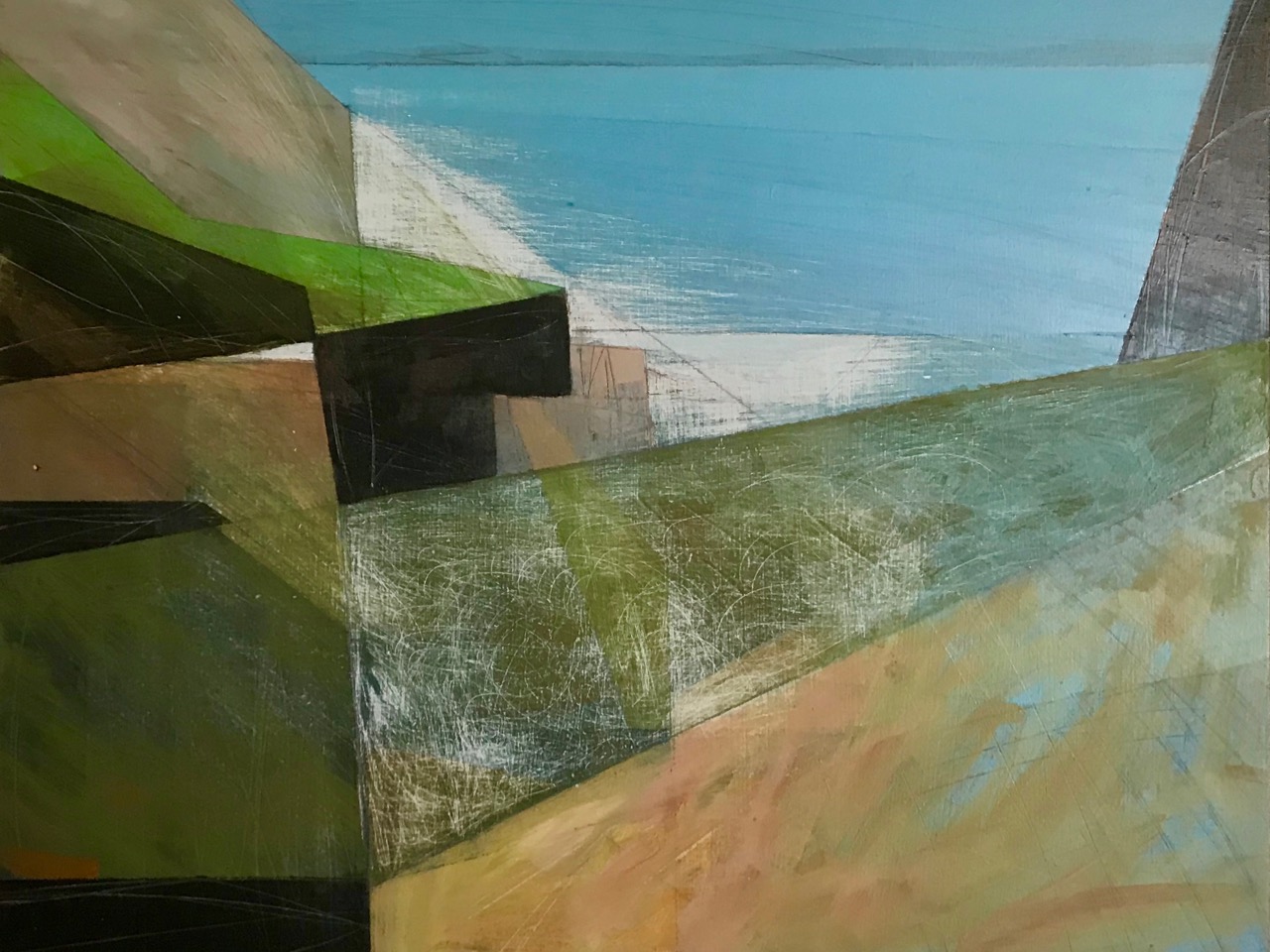
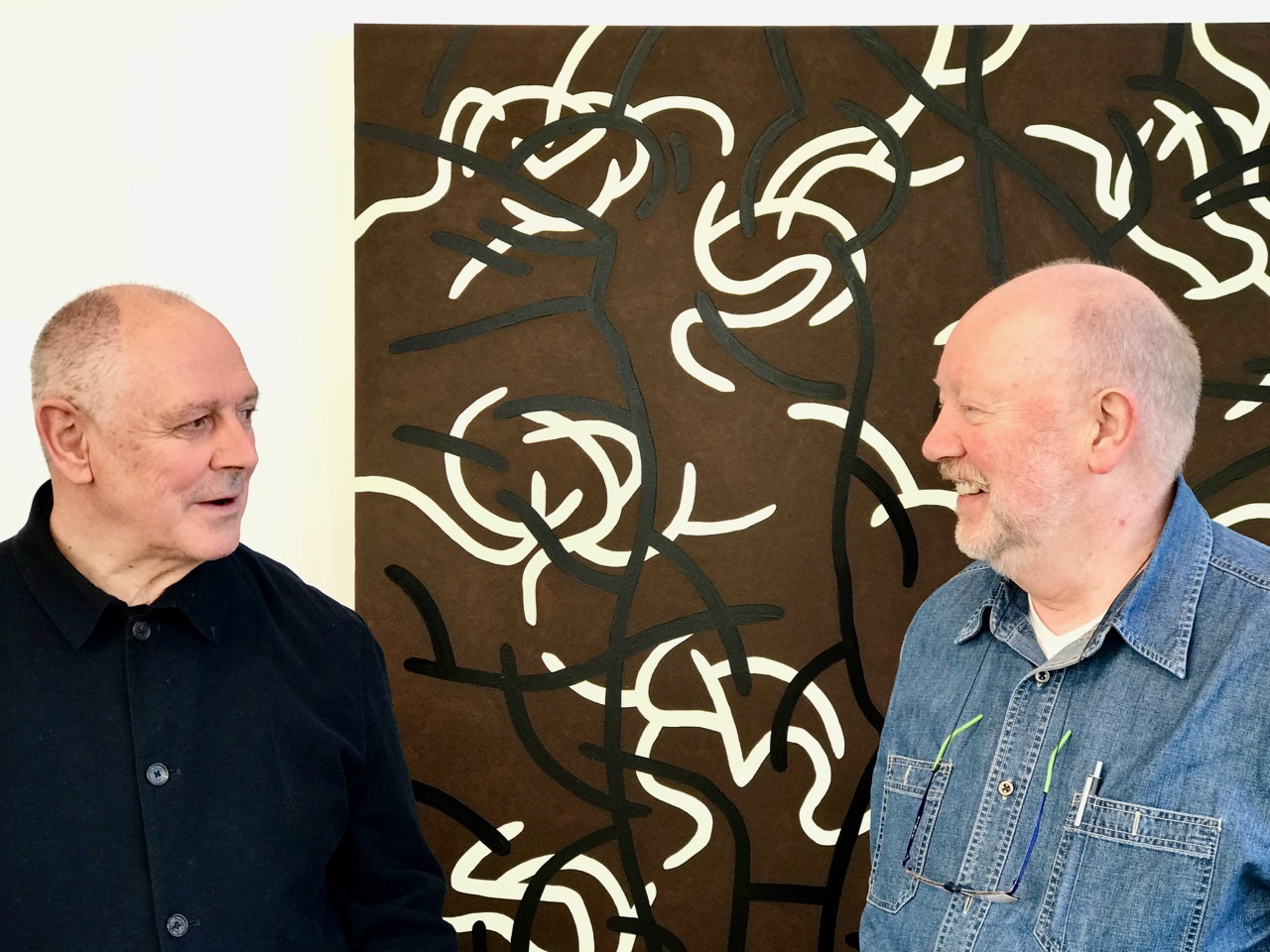
Personal favourites in this exhibition, for me, are two new pieces by Michael Quane. This Cork born artist now based in Leap is well-known for his large public sculptures, but I like the dynamics of these two smaller works (header picture and above). Roaringwater Journal has reviewed many of the artists currently on show at The Old Quay: have a look at these posts on William Crozier, Terry Searle and Cormac Boydell – and let’s see some examples…

Upper – Crozier; middle – Searle; lower – new ceramics by Boydell. It was also great to see works from elsewhere in Cork: this canvas – by Jill Dennis – is impressive.

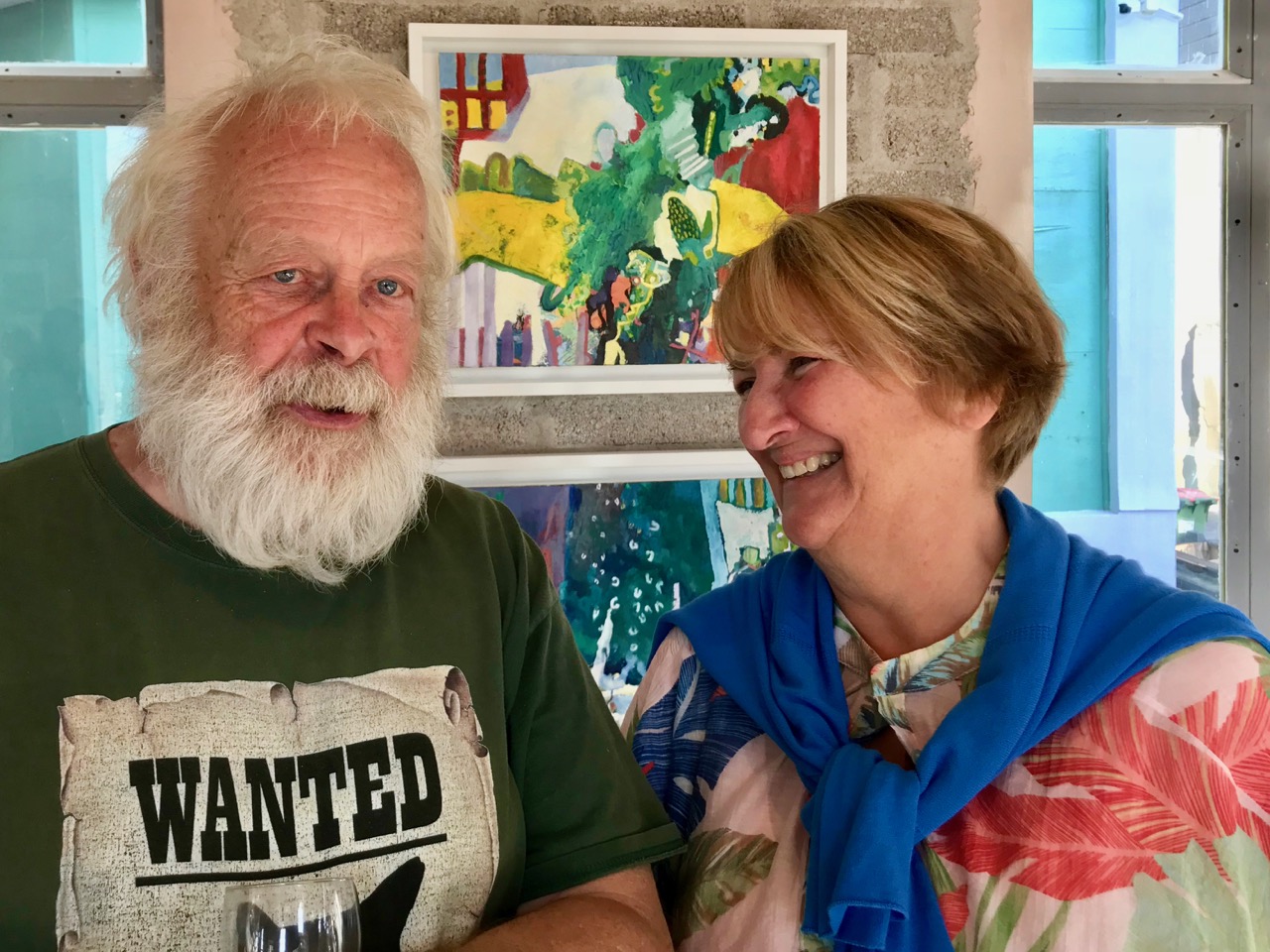
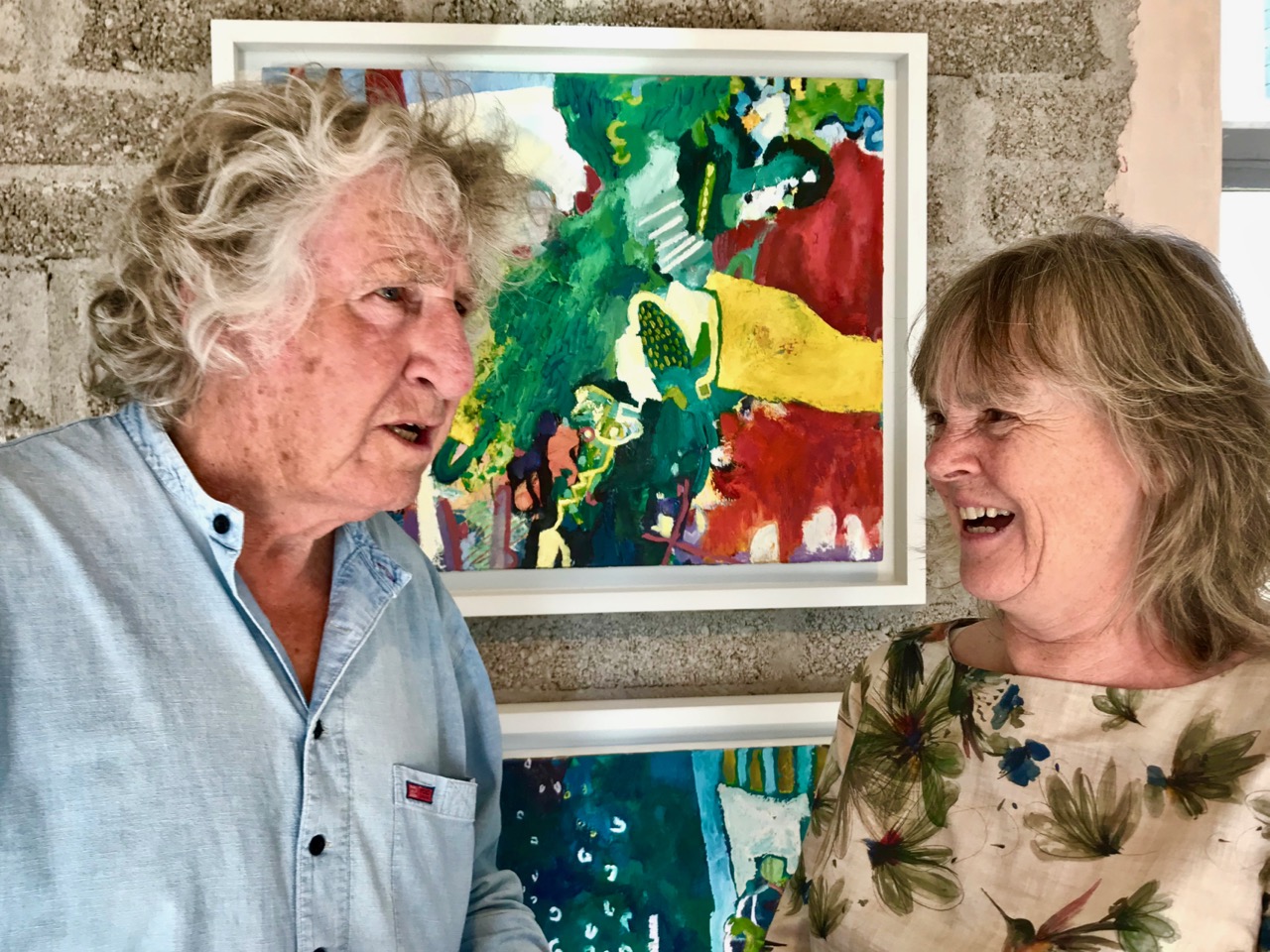
It wasn’t just the artists who produced the work that came to the opening: other familiar names in Ireland’s contemporary art world were also well represented. See who you can spot… *

So, everyone is here, everyone is enjoying the summer and Skibbereen is swinging! Art events not to be missed include the opening of Coming Home: Art and the Great Hunger exhibition at Uillinn, and the related performance pieces and installaions which Finola is discussing in her post today, and also mentioned in her post last week. But those are only a fraction of the whole Skibbereen Arts Festival this year – we haven’t even started on the music, film, poetry or workshops: get hold of a programme and book up now – while there are still tickets available.

Angela Fewer – Off Heir Island

* John Kelly, Brian Lalor, Penny Dixey, Jim Turner, Keith Payne, Eion McGonigal, Peter Murray…

Uillinn – Surviving and Thriving

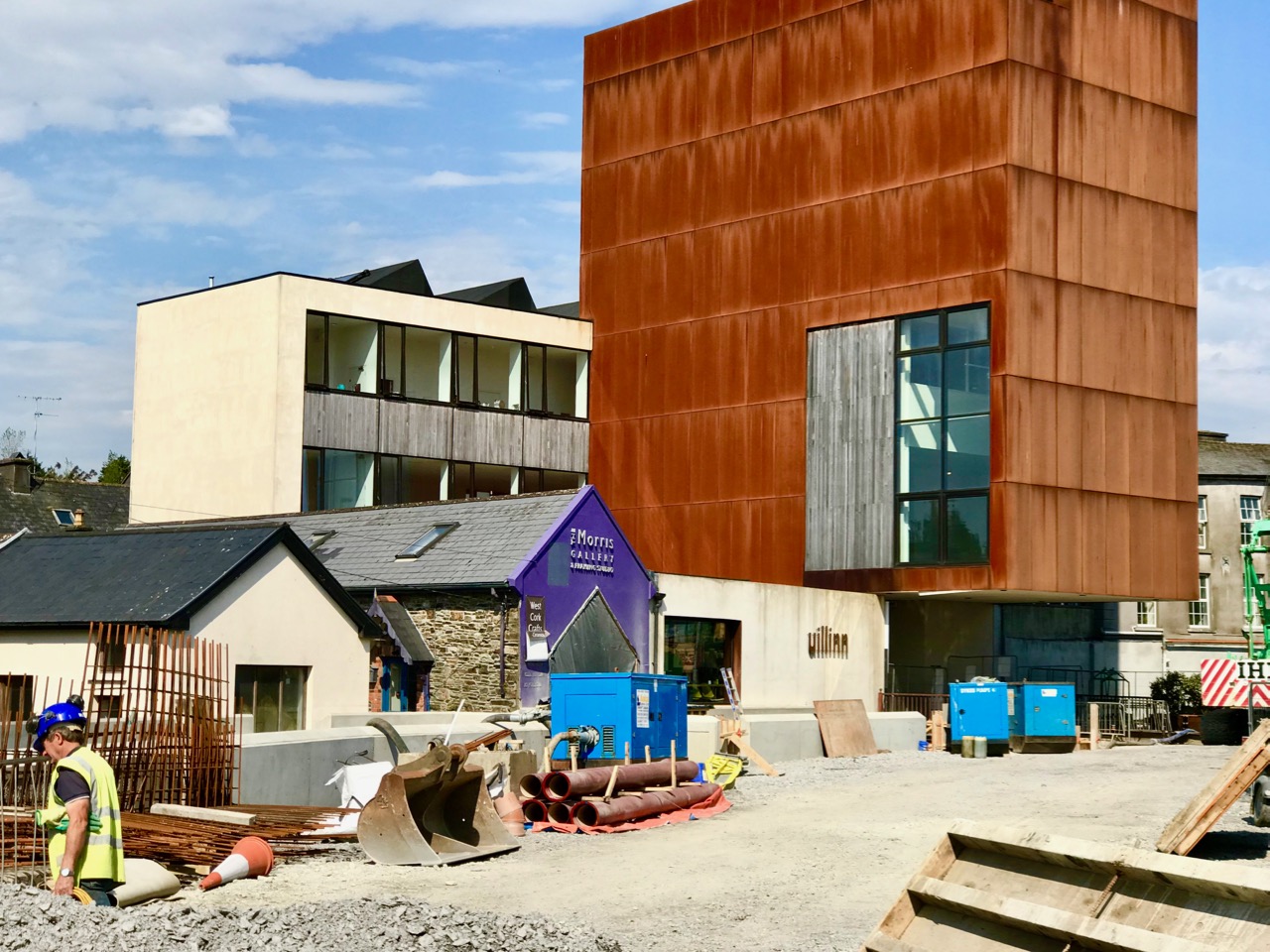
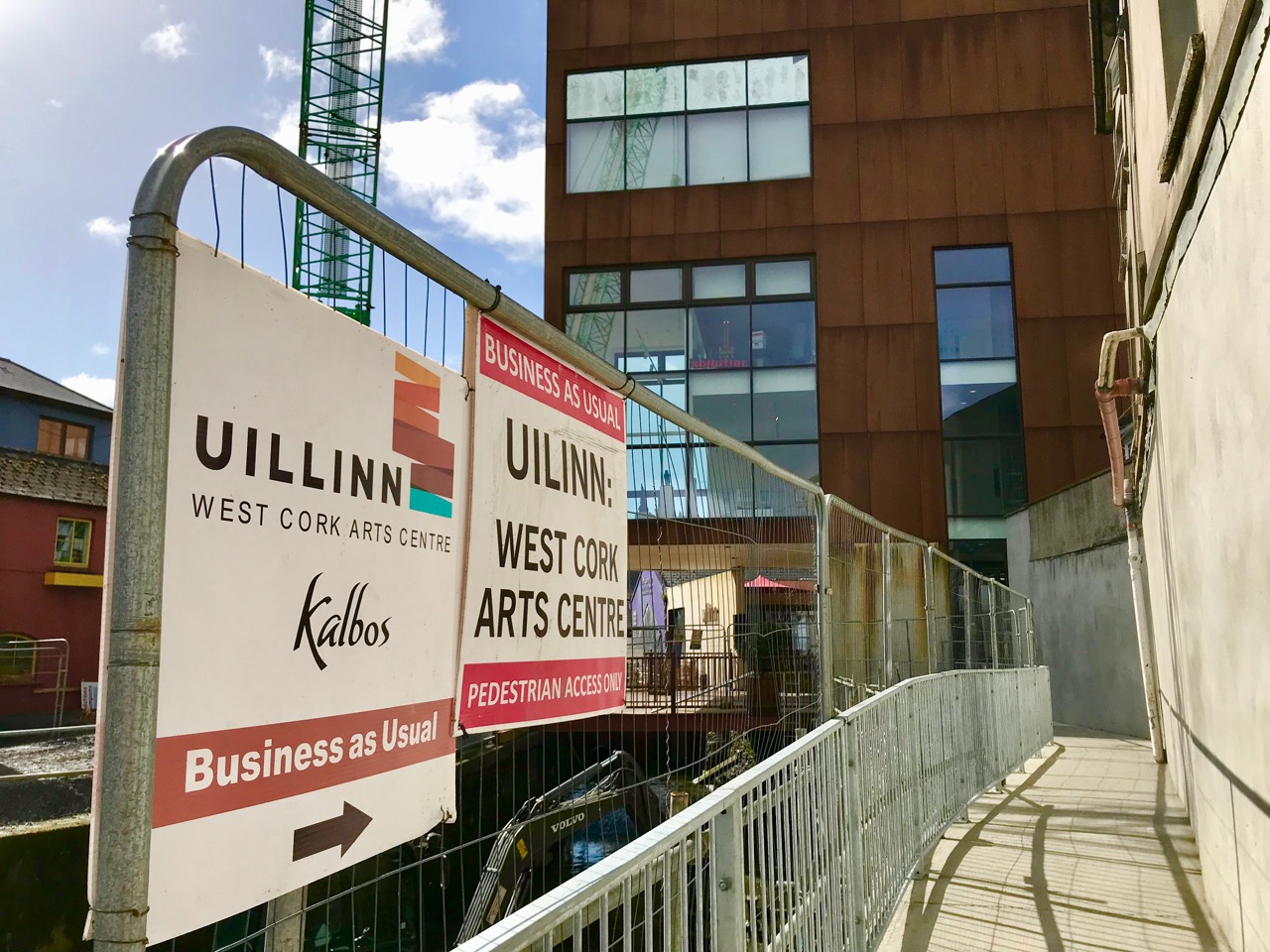
Uillinn, Skibereen’s unique contemporary art gallery, is thriving and surviving while apparently ‘under siege’ from the onslaught of the major engineering works engulfing the town centre at the moment. It’s all about making the town and its buildings safe from future flooding: extreme weather conditions – which are likely to get worse as the years go by – are threatening Cork city and many of the low-lying  West Cork communities and works are now in hand to protect these settlements against serious flooding into the foreseeable future. The result is a whole lot of disruption but, as always, imperturbable Cork Rebels are just getting on with life in spite of it all.
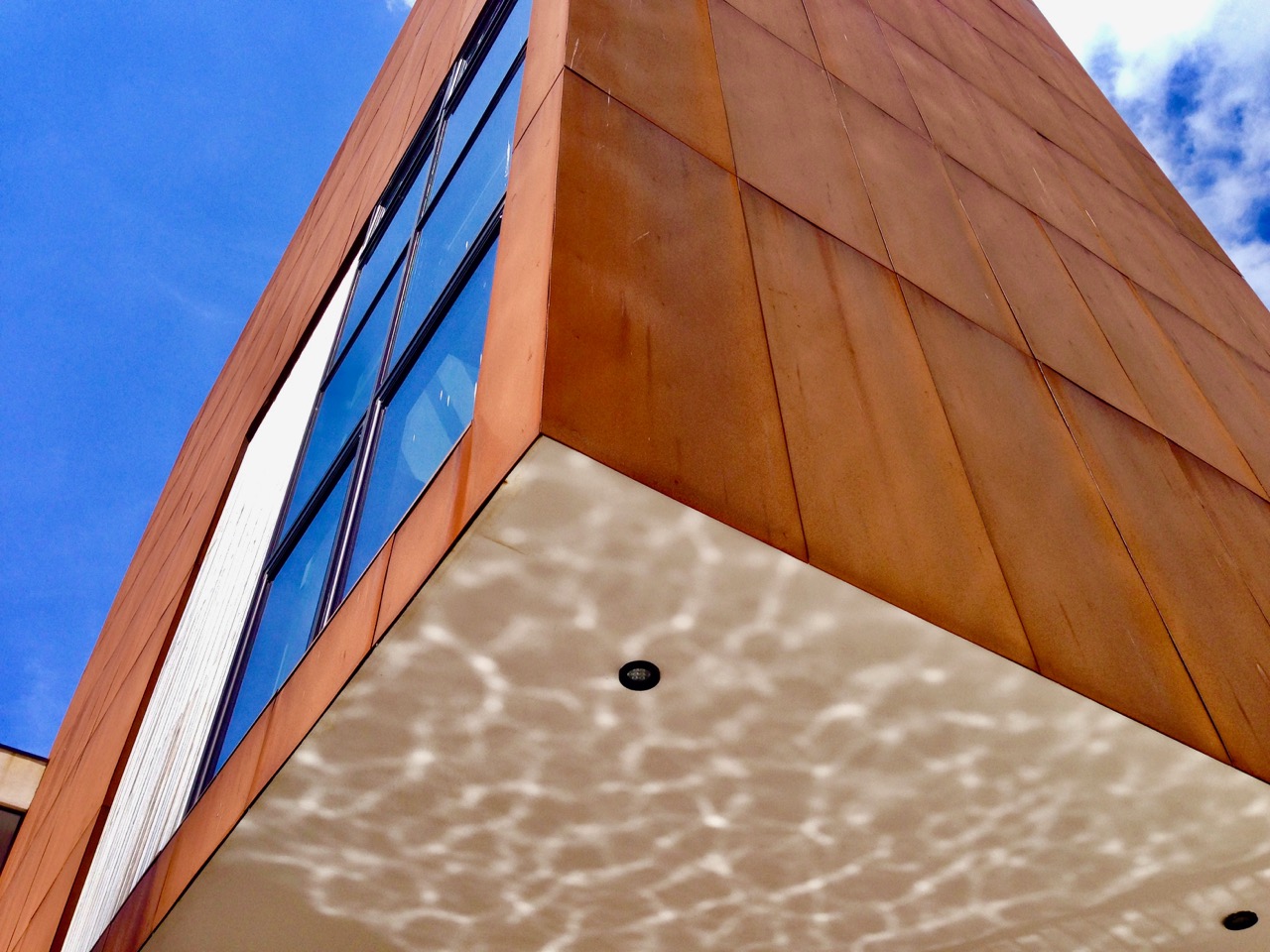
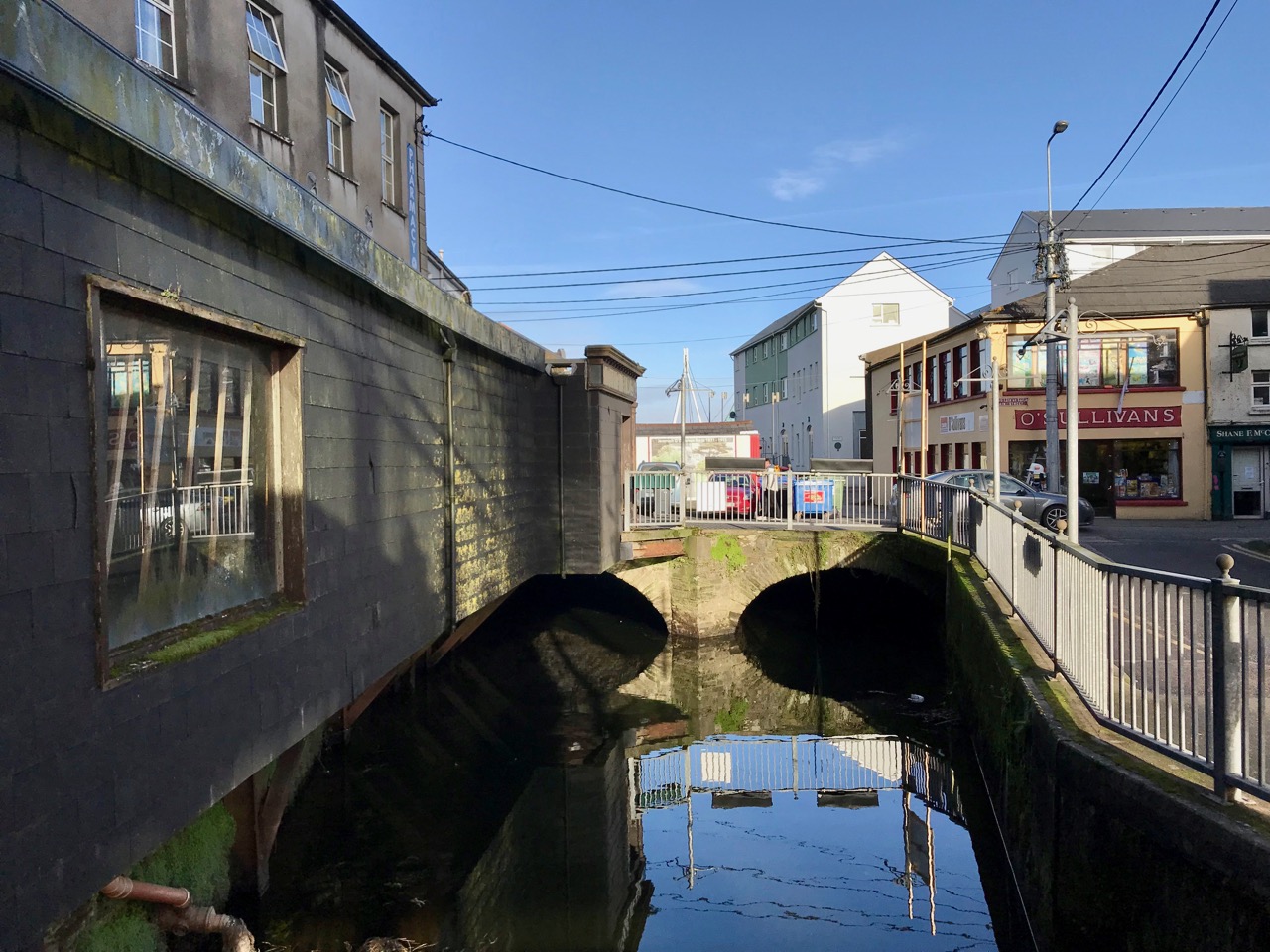
Peace and quiet in Skibbereen, before the works commenced. Header picture – the Caol Stream reflected on the canopy of the cantilevered gallery

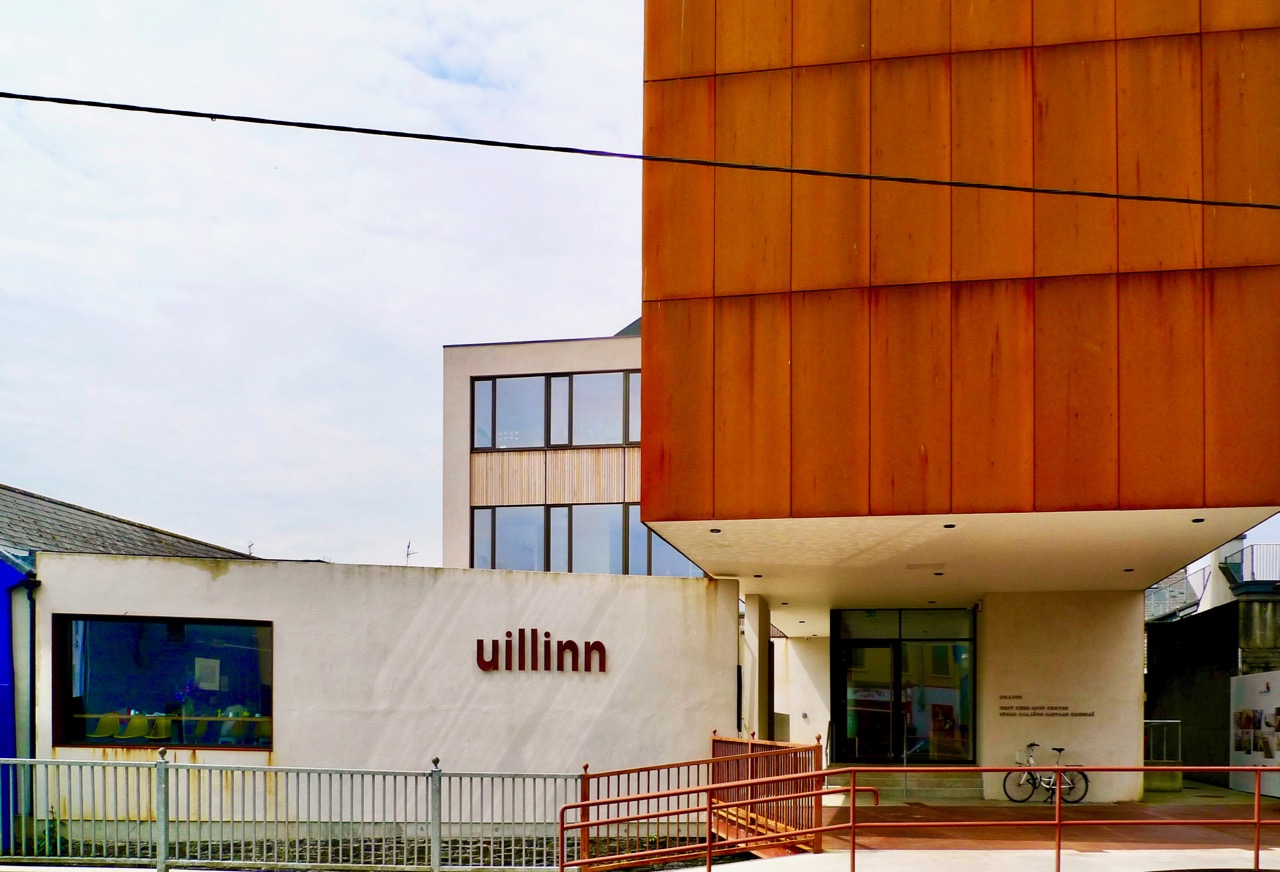
When the West Cork Arts Centre took the plunge to propose a significant arts gallery in Skibbereen back in the early years of the new Millennium, an architectural competition was held. In 2009, the winning design, by Dublin based Donaghy and Dimond Architects, proposed a dramatic 5-storey high Corten steel-clad box cantilevering over the Caol Stream that runs beside the site, gaining valuable ‘bonus’ space for accommodating the work of the Centre. In fact, the name Uillinn means ‘elbow’, and the gallery is situated on a bend – or elbow – of the stream. Economically – after the collapse of the Tiger years – it was a difficult time for Ireland and numerous projects were being cut or shelved, but work on the gallery went ahead, although not without compromise. Here’s an excellent article from the Irish Times which charts the progress of the building process.

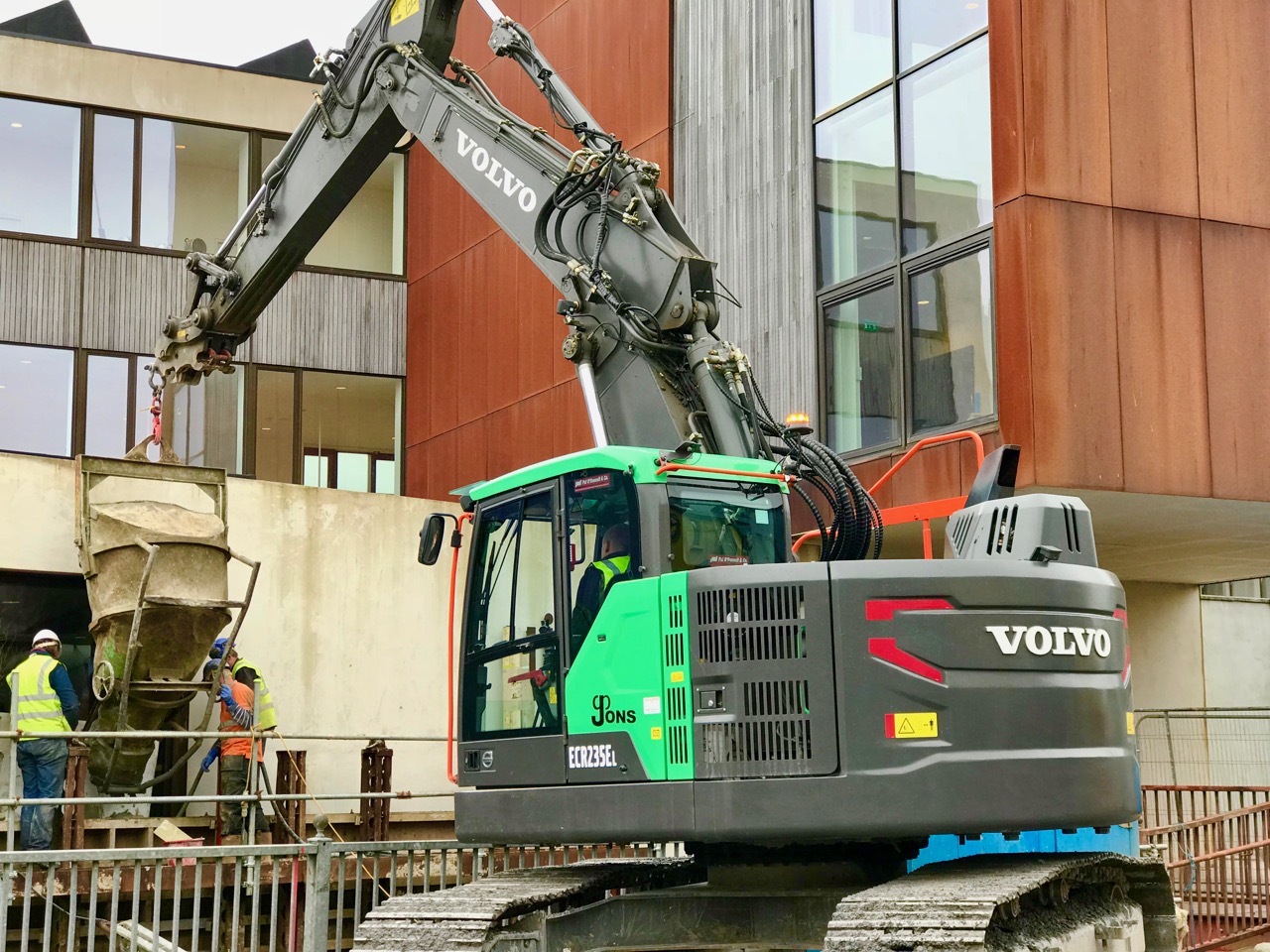
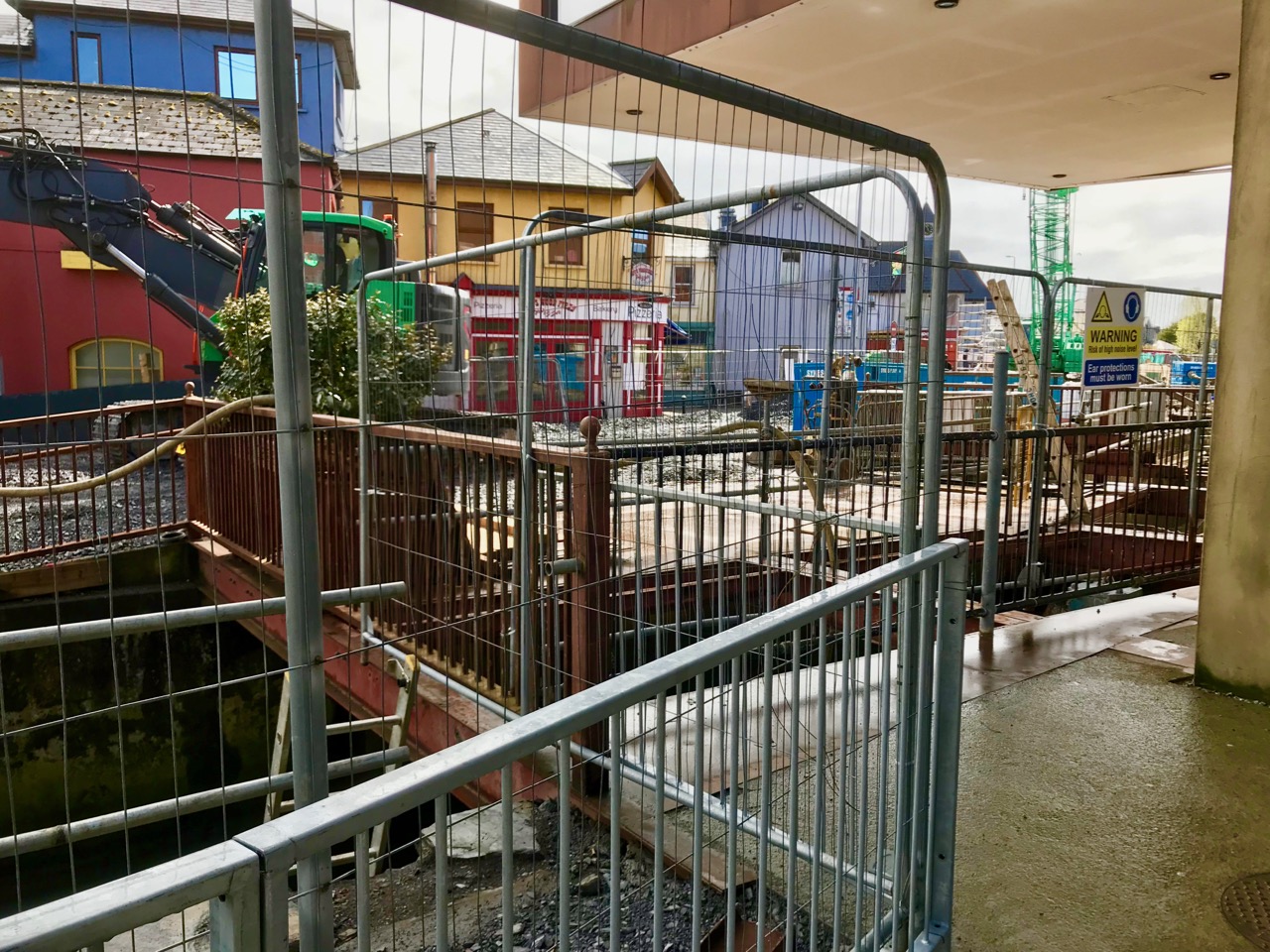
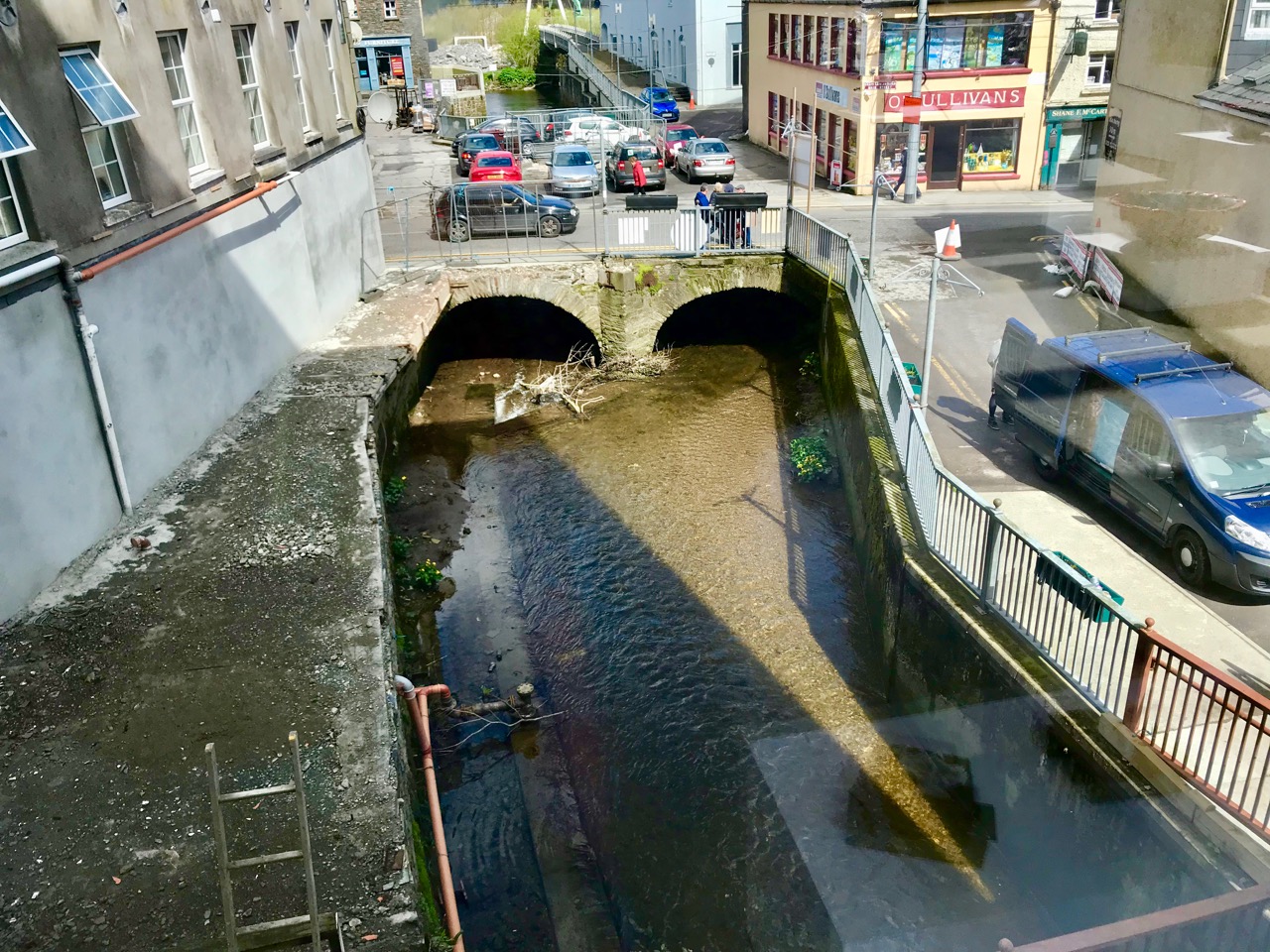
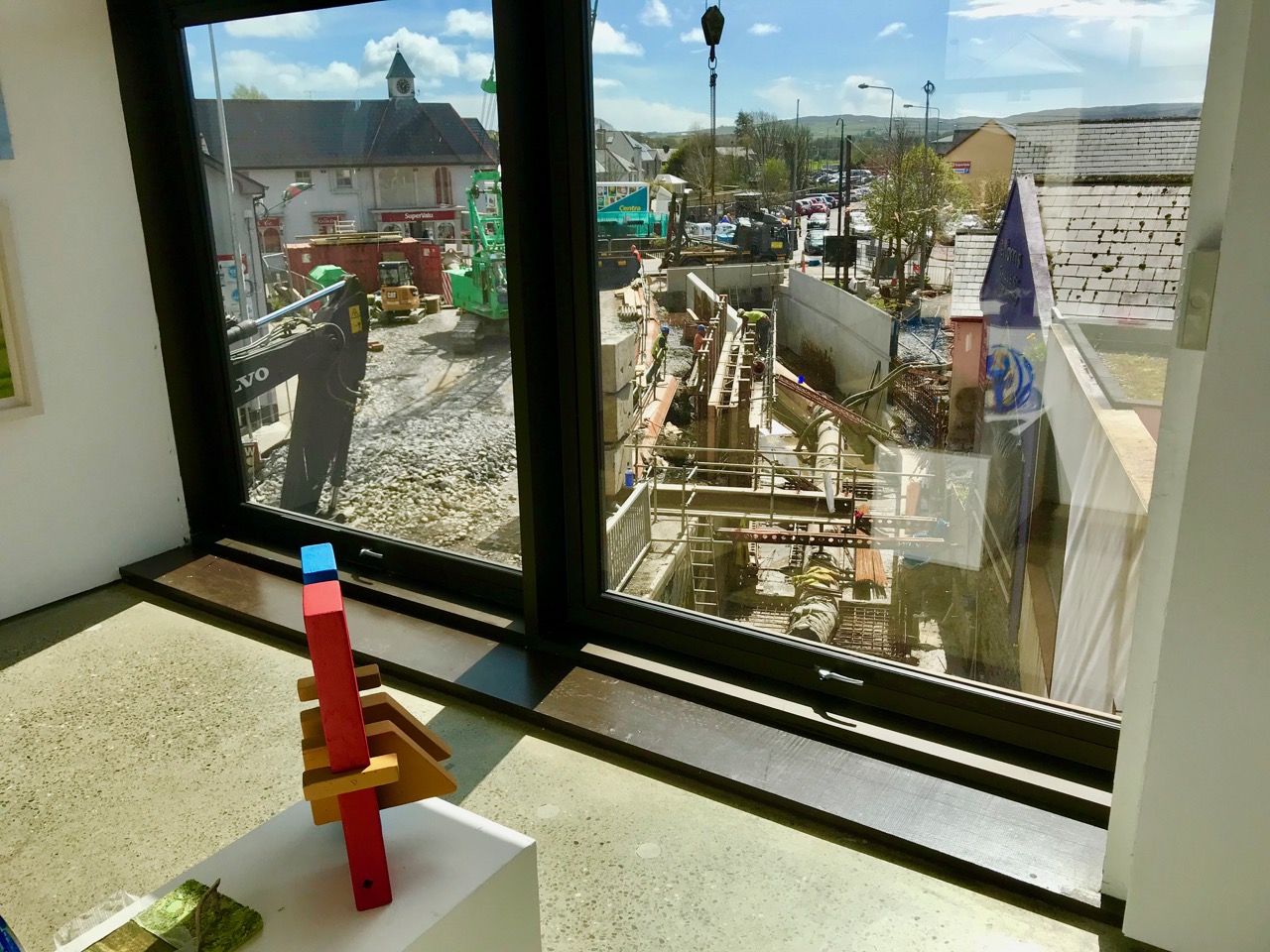
Now, the gallery is facing new challenges as the flood relief works are encroaching on the surroundings of the building. The basis of the engineering solution to protect Skibbereen from further floods is to build high, waterproof walls around every watercourse in and around the town. The principal one of these is the River Ilen, which skirts the north side of the town. However, the Caol Stream – a tributary of the river – runs right through the commercial centre, and right by Uillinn. Finola has written about the abundant natural life that was contained in this stream, albeit much of it partly hidden from view. Everything is changing now, as the sides of the waterway are being steel-piled and concrete walls are being built up to a height of 1100mm all the way around it, as you can see in the photographs below. In places, toughened glass sheets will be inserted in perforations in the retaining walls to enhance the structure and allow views to the water.

Of course, a fresh ecosystem will establish itself in the new, concrete-encased channel, although the character of it is sure to change. Uillinn’s problem is that it is bounded by the stream all the way along its east elevation – and the main entrance is via a bridge (now temporarily dismantled) over the waterway.

Close work: the channel of the Caol Stream is being excavated and then lined as it passes beside Uillinn. The bridge providing the main access to the gallery has been removed to allow these works to proceed

In spite of all these works (which, for Skibbereen as a whole, won’t be finished until 2019) Uillinn – and the renowned Kalbo’s Café which it embraces – have to remain open and viable at all times. This is being achieved by constant liaison and close co-operation with the contractors, Jons Civil Engineering, appointed by Cork County Council, as agents of, and in partnership with the Office of Public Works. Although delayed by the ravages of Hurricane Ophelia and other severe winter storms, the contractors have pulled out all the stops in order to restore normality to the centre of the town as soon as possible and have managed to maintain full access to the gallery and cafe, and all premises in the path of the works, although some disruption to businesses in such circumstances is inevitable. On the west side of the Caol Stream, between Uillinn and Skibbereen’s Main Street, a disused single story shop has been purchased and demolished, and its site now provides a new pedestrian access to the gallery – and it’s one which will continue to be used once everything is finished and the bridge is restored. Suitably streetscaped, the overall approach to Uillinn will be much improved as a consequence of all these works.

The ‘old shoe shop’ (top) was an unusual structure, partly cantilevered out over the Caol Stream. Its removal (lower pictures) has enabled an extra pedestrian access to be established from Main Street

As a member of the Board of Uillinn, closely involved with much of the liaison between the gallery personnel and the contractors, I can confirm that relations have at all times been caring, cordial and helpful, and I commend those involved in the physical work for their skills and approachability through all the potential difficulties. I also commend the Director, Anne Davoren, and her dedicated team at the gallery for keeping cheerful and smiling throughout, and always maintaining a smooth efficiency. The staff of Kalbo’s Café have also kept up their impeccable standard of service and remain such an asset to Uillinn.

It’s unlikely that things will be back to normal before the opening of Uillinn’s momentous venture on 20 July this year – Coming Home: Art and the Great Hunger

. . . The exhibition of artworks at Uillinn, including work by major Irish and Irish American artists of the past 170 years such as Daniel Macdonald, Paul Henry, Jack B. Yeats, William Crozier, Hughie O’Donoghue, Dorothy Cross and Alanna O’Kelly, will be accompanied by a rich and diverse programme of performances, talks, lectures and events at Uillinn, and off-site in other locations in West Cork. These will resonate with the history and legacy of the Great Hunger and also amplify the contemporary themes explored in the exhibition. The themes include famine, the politics of food, poverty, displacement of peoples, refugees, emigration, identity, memory and loss . . .

We are all looking forward to the launch of this unique event in Skibbereen, and we know our contractors will ensure that everything will be done to prioritise good access and presentation of the gallery through the duration of the exhibition.

Coming Home: Art and the Great Hunger runs from 20 July to 13 October at Uillinn, Skibbereen

Knockdrum Stone Fort

There is no firm line that denotes where our most south-westerly Irish peninsula begins. Our series, Mizen Magic, has reported on walks, roads, views, history and archaeology which can definitely be defined as belonging to the Mizen (which we tend to think of as being to the west of, and including, its ‘gateway’ – Ballydehob). Perhaps we should start a series titled Magic Beyond The Mizen – in which case this would be the first: a report on a very prominent site about half an hour’s drive along the coast east of where we live: a historic structure – built within the last 2,000 years – but which contains evidence of much older human activity.

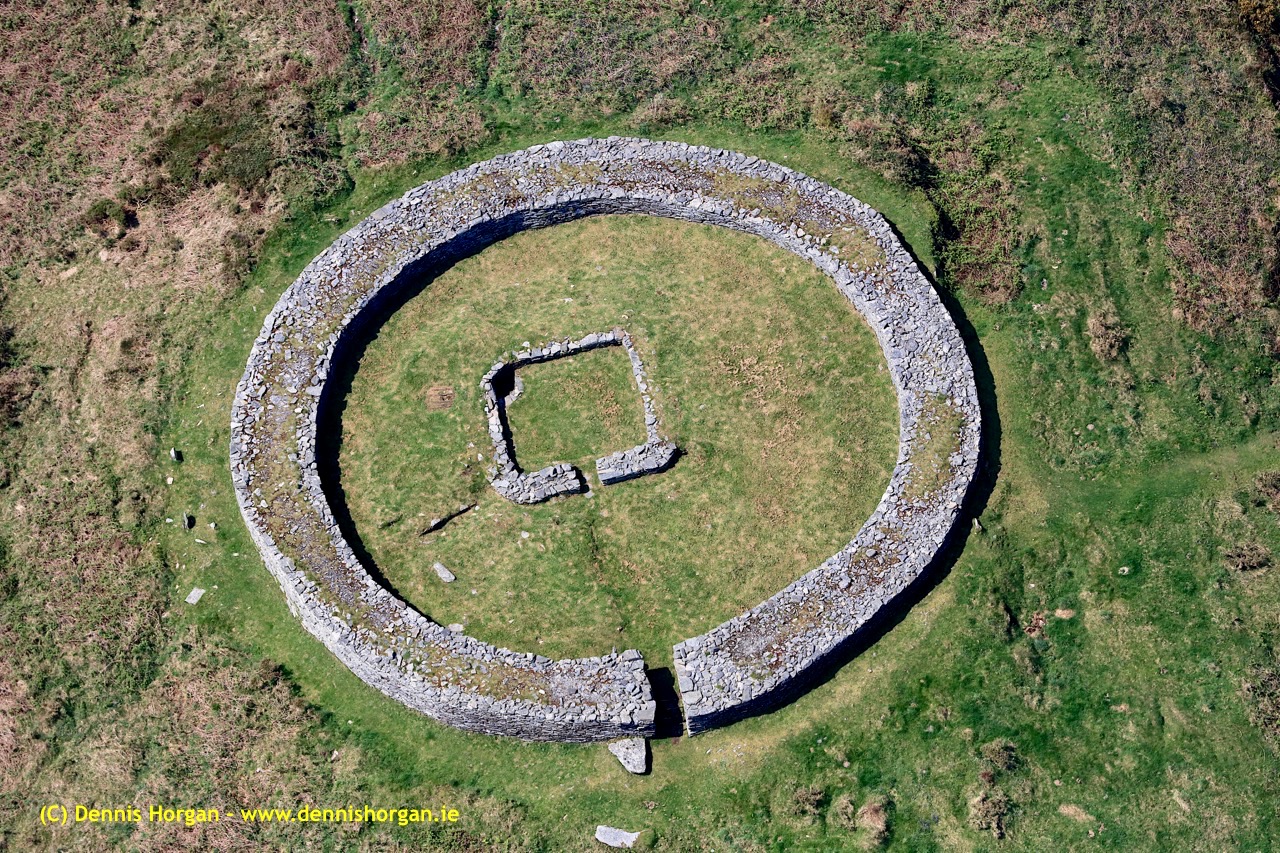
Here is an overhead view – the best way to see and understand the layout and construction of Knockdrum Stone Fort, which occupies a superb hilltop location in the townland of Farrandau between Skibbereen and Castletownshend. Thank you, Dennis Horgan – our professional West Cork aerial photographer – for allowing us to use this image: have a look at his website for other examples of his work, and for details of his excellent photographs and books.

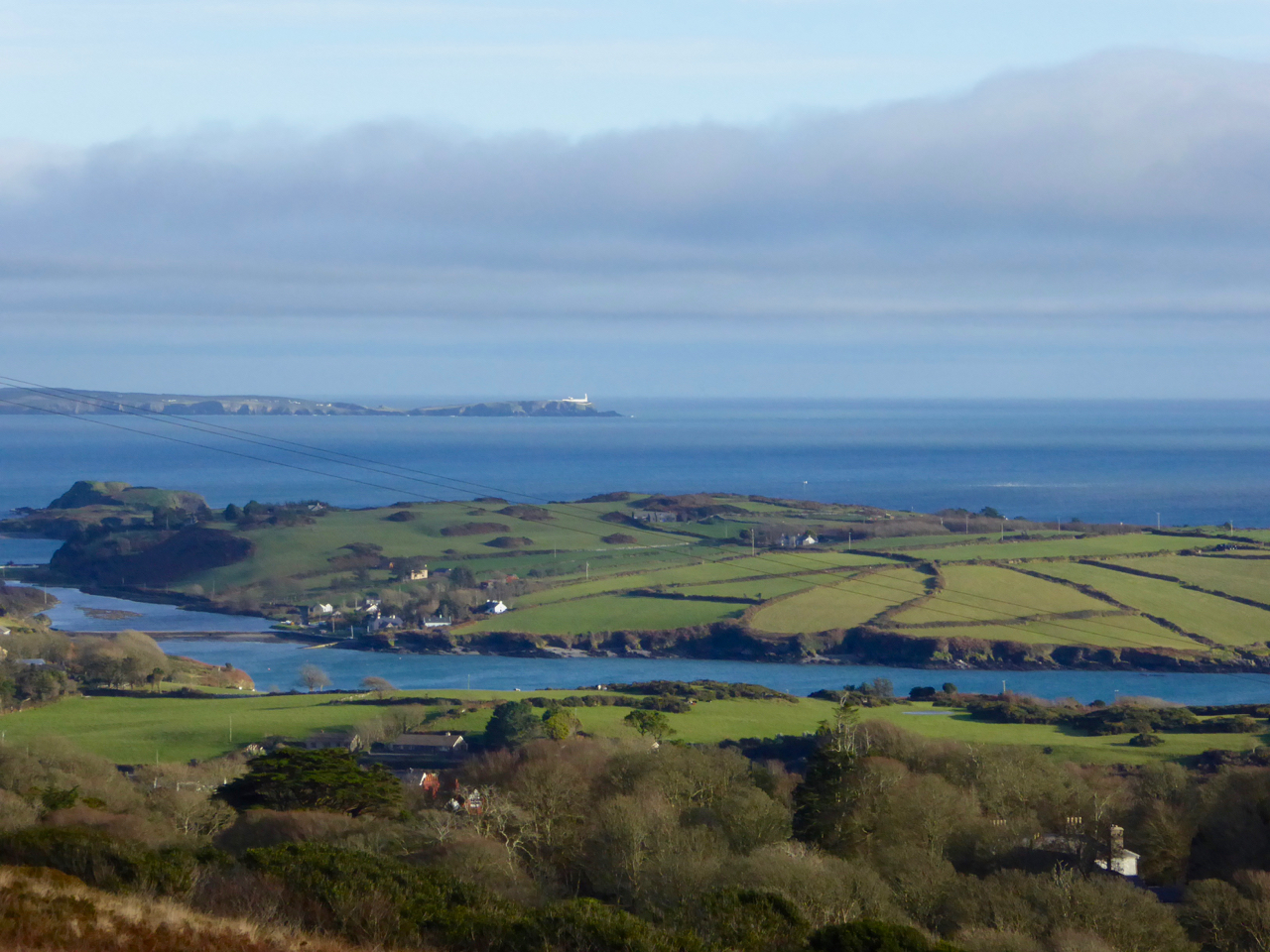
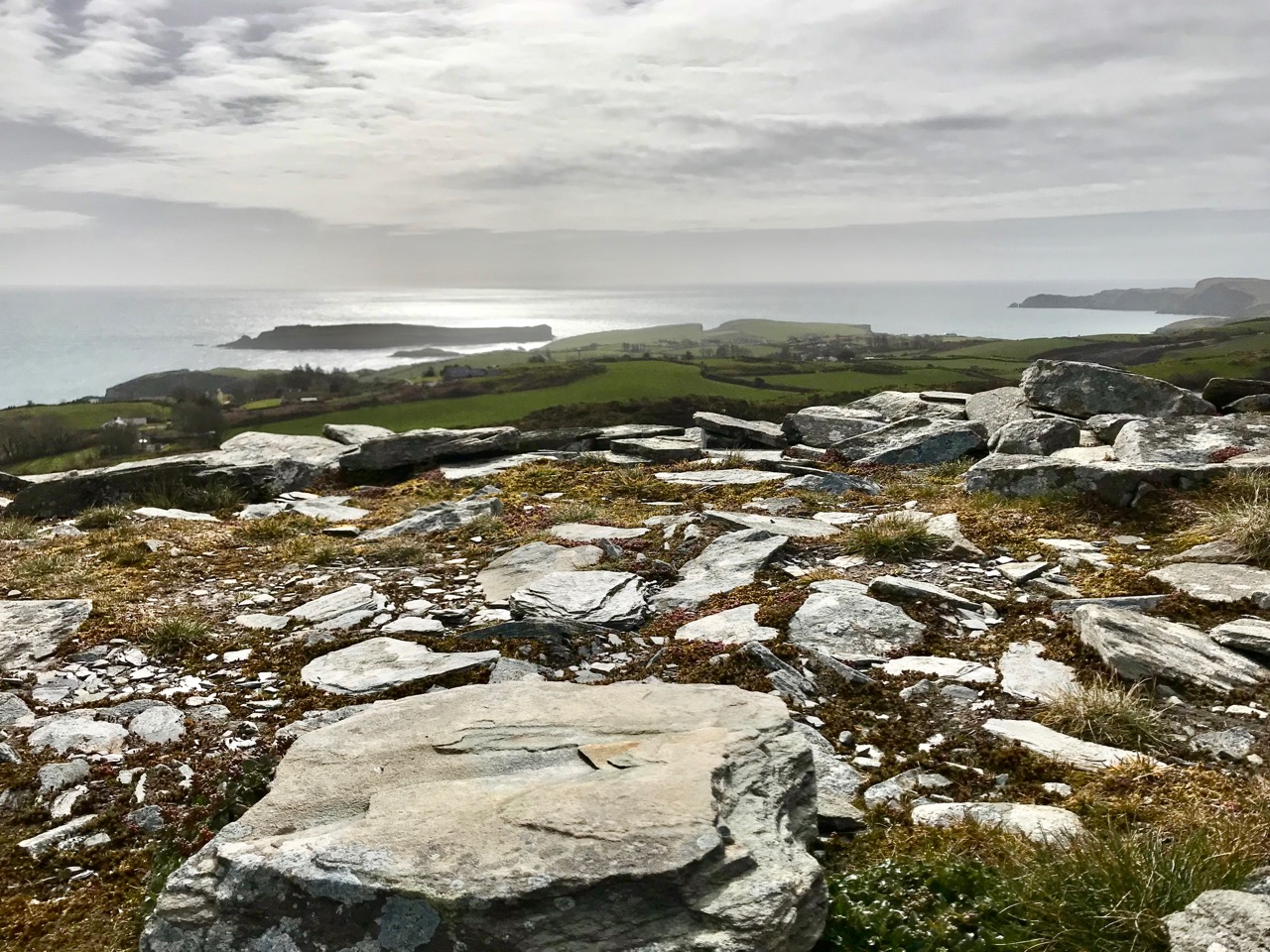
The Fort is located on a high ridge (although not on the summit of the ridge) with far-reaching views both inland and to the south, over the sea. The header picture looks from the Fort out to the west over Castlehaven to Galley Head in the far distance; the view in the picture above is due south – looking towards Horse Island, and the stone wall of the Fort is in the foreground. From these breathtaking vistas it’s reasonable to conjecture that Knockdrum Fort has a strategic siting, providing views of anyone approaching from the sea, and able to signal their arrival to dwellers in the ‘interior’ – the lands to the north. We cannot know for sure that stone fort structures had this – or any other – specific purpose: many theories have been advanced. Comparison with other examples is worthwhile. One of the largest stone forts in Ireland is Staigue Fort, near Sneem in County Kerry.

Staigue Fort (above) has a diameter of 27.5 metres, the present wall height is 5.5 metres, and the wall thickness is 4 metres. At Knockdrum the diameter is 22.5 metres, the present wall height is 2 metres and the wall thickness around 3 metres. The Duchas information board at Staigue says:

. . . This is one of the largest and finest stone forts in Ireland and was probably built in the early centuries AD before Christianity came to Ireland. It must have been the home of a very wealthy landowner or chieftain who had a great need for security . . . The fort was the home of the chieftain’s family, guards and servants, and would have been full of houses, out-buildings, and possibly tents or other temporary structures. No buildings survive today . . .

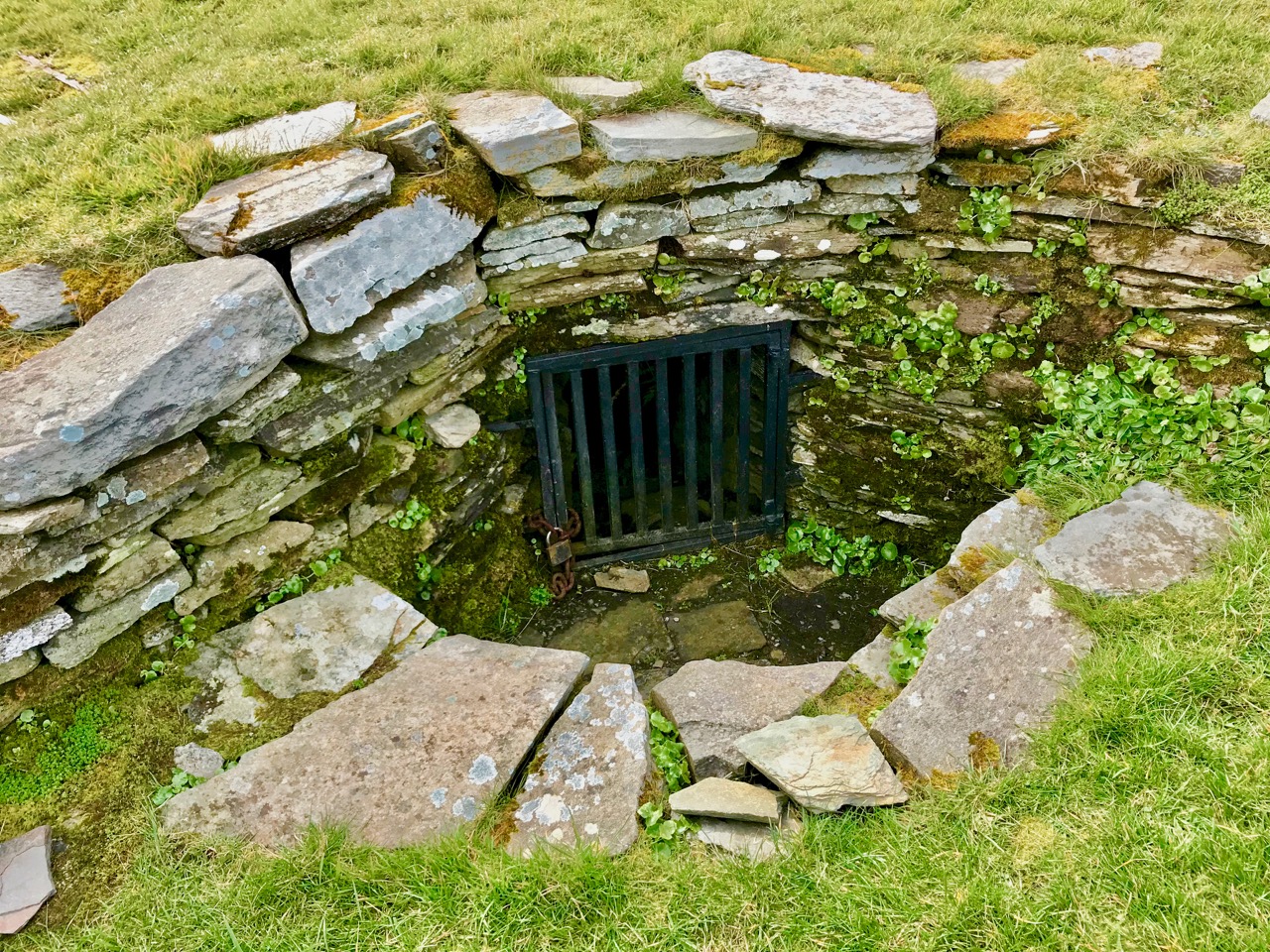
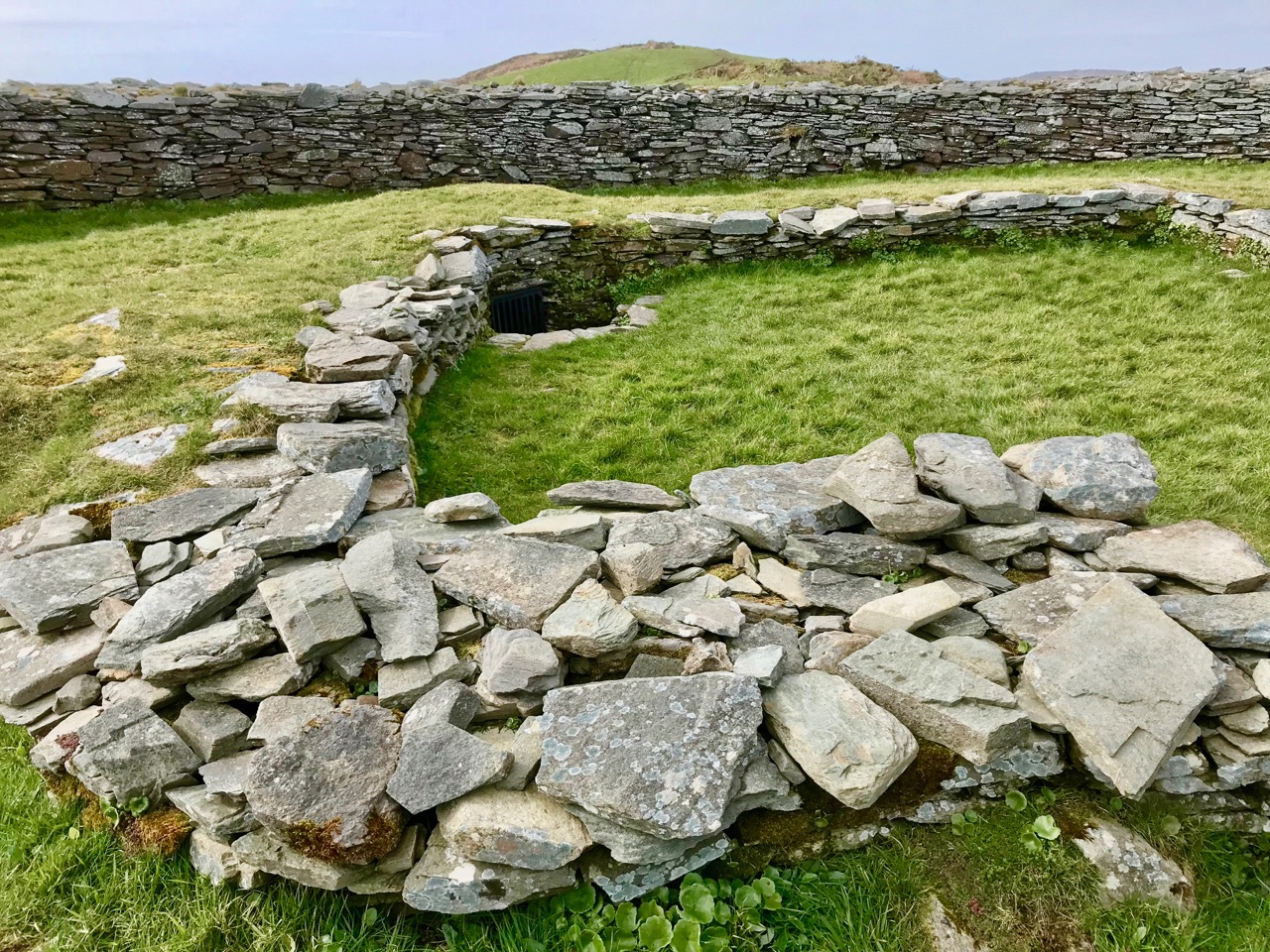
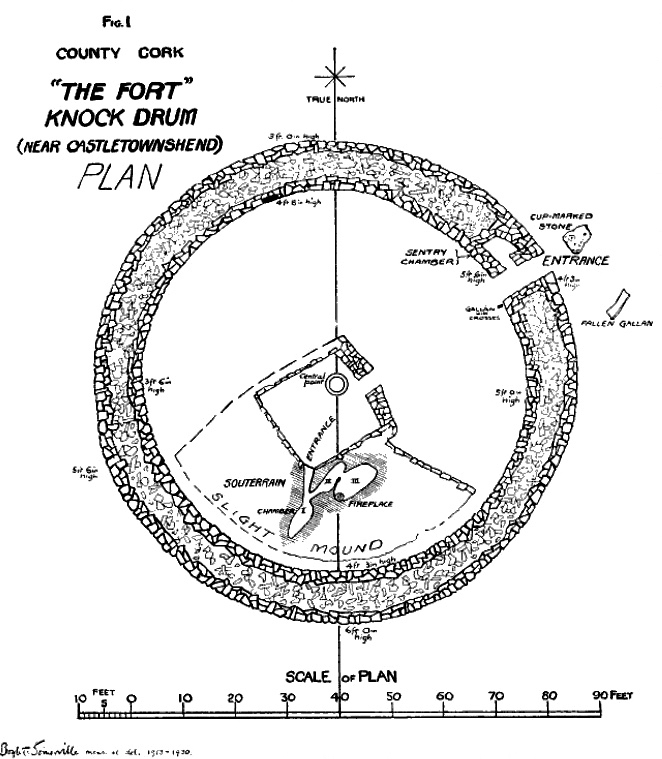
The picture above shows the present interior of Knockdrum Fort: the stone walls are likely to delineate a former building here. In the corner of the inner stone enclosure is the entrance to a ‘souterrain’ – a series of underground passageways. The souterrain is outlined on the following drawing of the Stone Fort which was made in 1930 after a detailed investigation of it by Vice Admiral Henry Boyle Somerville, the younger brother of writer and artist Edith Somerville of Castletownshend. Boyle, his life and his tragic death, is the subject of Finola’s complementary post today.

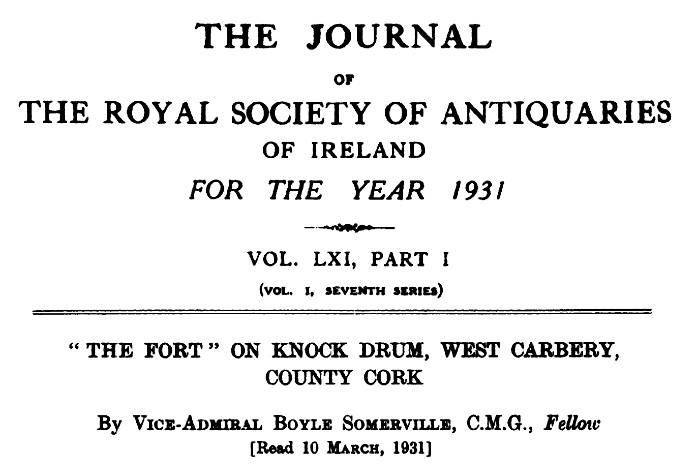
Finola is also discussing Boyle Somerville’s interest in the alignments of archaeological structures. In Boyle’s paper for The Journal of The Royal Society of Antiquaries of Ireland, 1931 (title page below), he presents the evidence that this Fort is on a solar alignment.

Boyle sets out the case for an alignment based on the Knockdrum Fort:

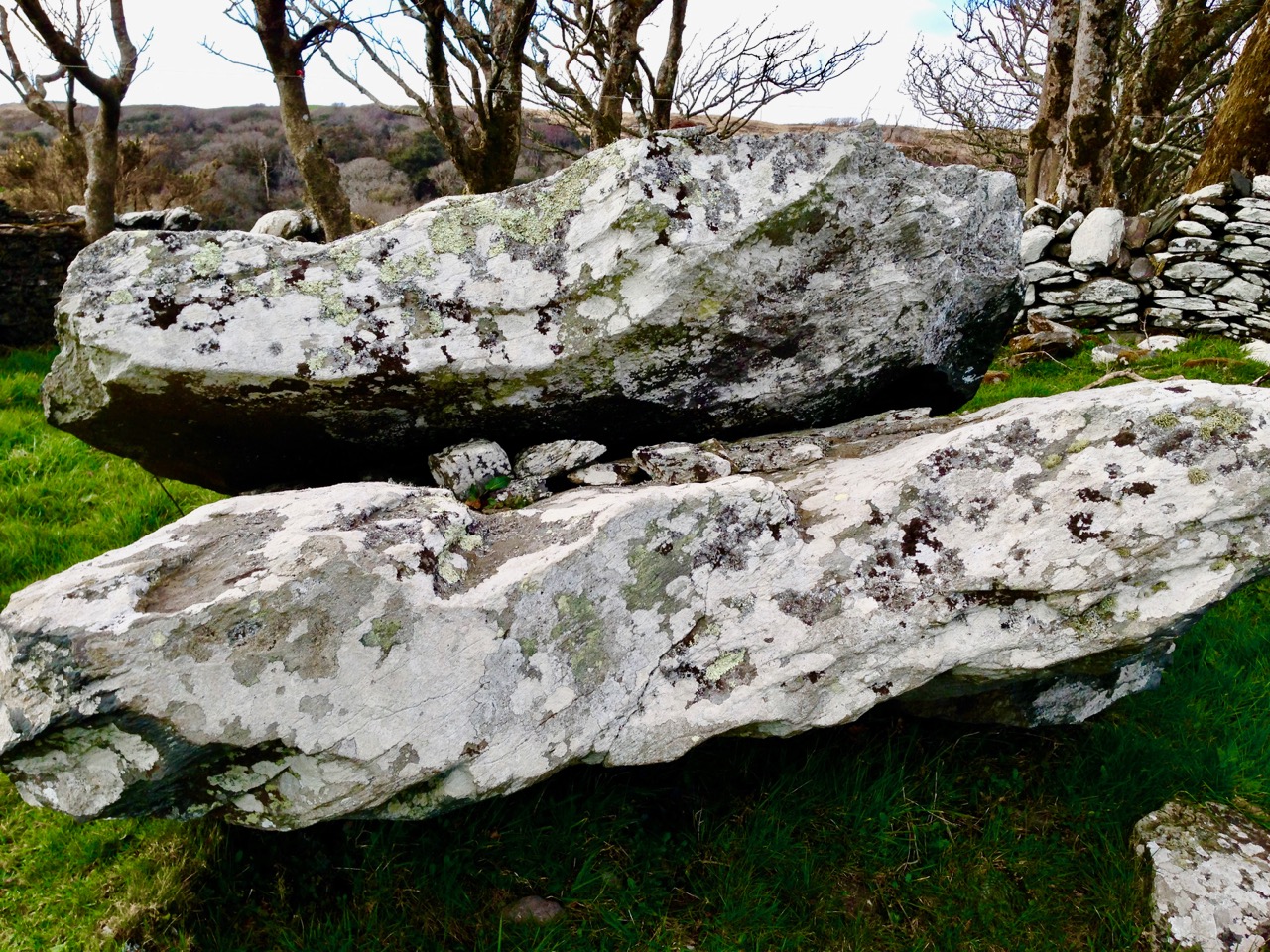
. . . This conception of the earlier use of the site of the cathair [the stone fort] for purposes which may perhaps be termed “religious,” seems to be borne out by the following fact. At a horizontal distance of about 600 yards to the E.S.E of the cathair, and at 210′ difference of level below it, there is a small rocky ridge standing up from the surrounding grass land. The name of the ridge is “Peakeen Cnoc Dromin,” The little peak of the white-backed hill . . .

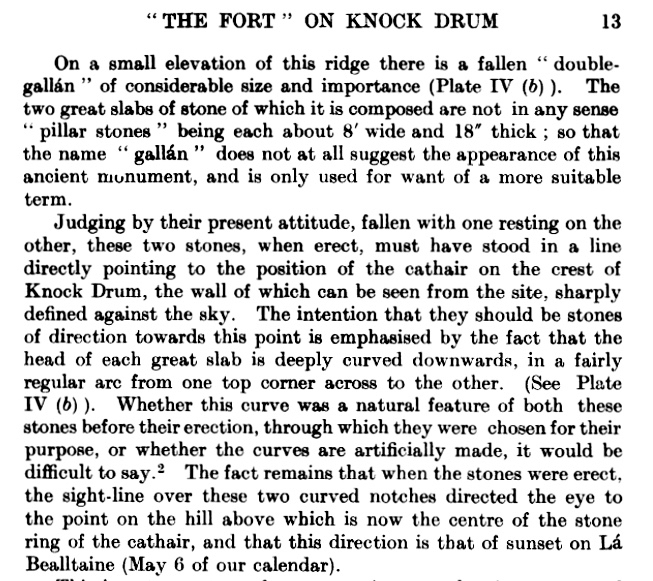
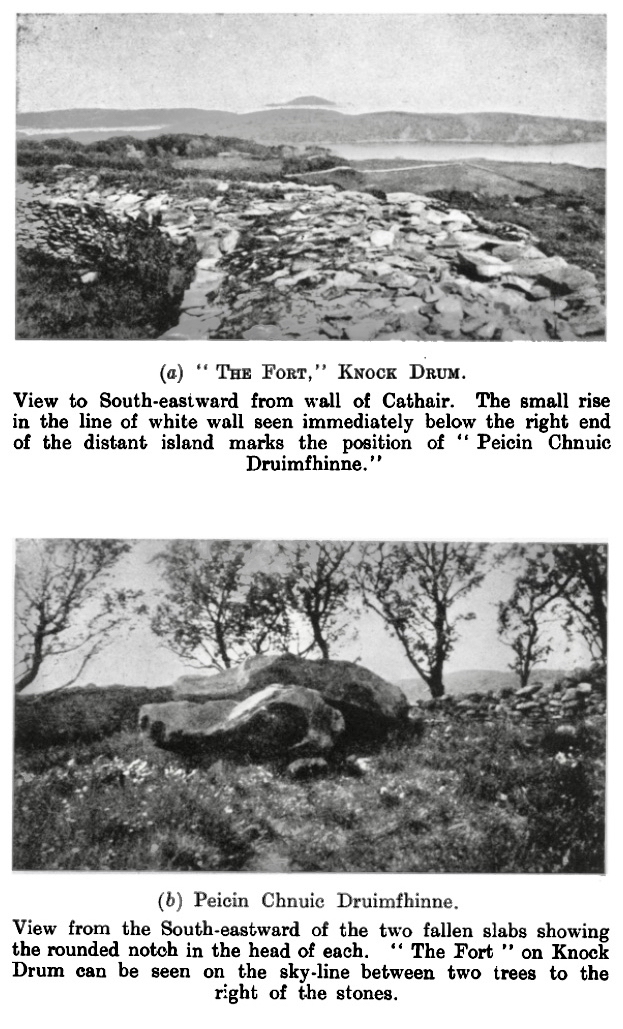
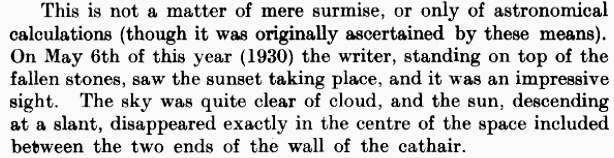
The following paragraphs and photos are from the Journal paper:

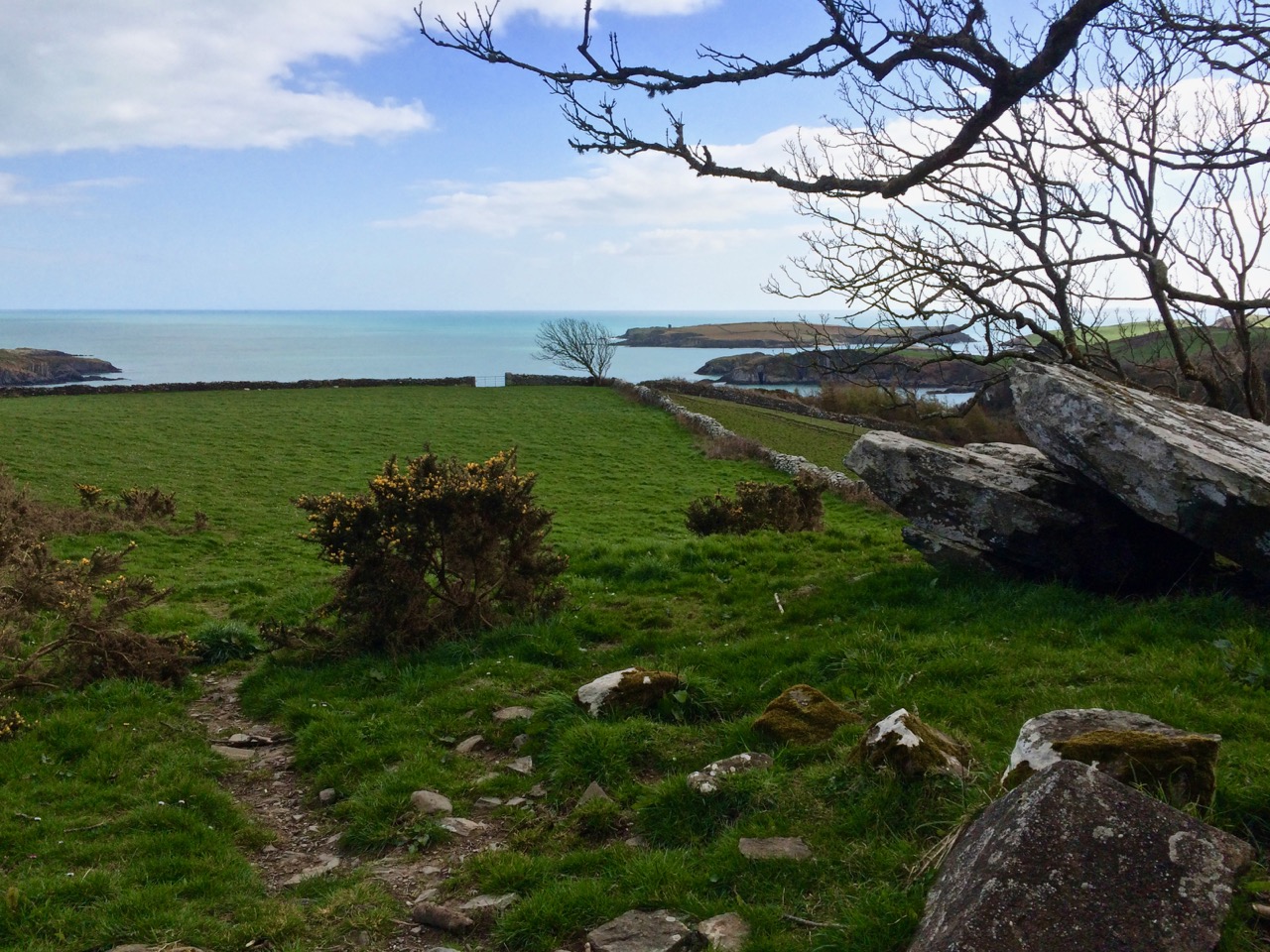
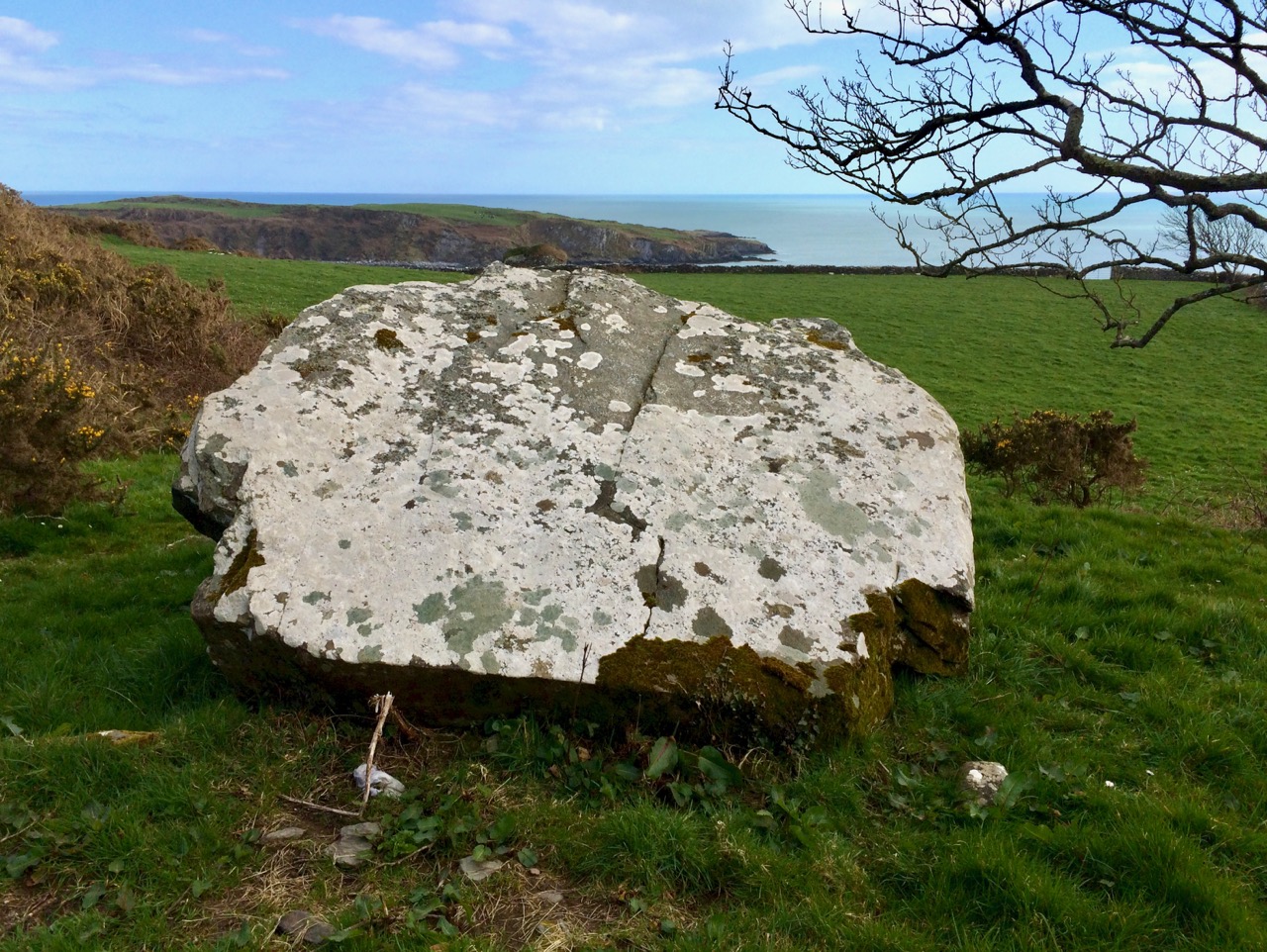
Finola and I are familiar with the Peakeen Cnoc Dromin from our researches into Rock Art: the uppermost stone (which does appear similar to the capstone of a fallen dolmen) is heavily cupmarked. The photos of the Peakeen (above) were taken before we had any idea that they might form an alignment connected with Knockdrum Stone Fort. We will have to revisit again at Bealltaine. Boyle confirmed his alignment theory by personal observation:

He went on to suggest:

. . . It is one of the clearest instances of intentional orientation between two ancient, and artificially formed monuments that can be imagined . . .

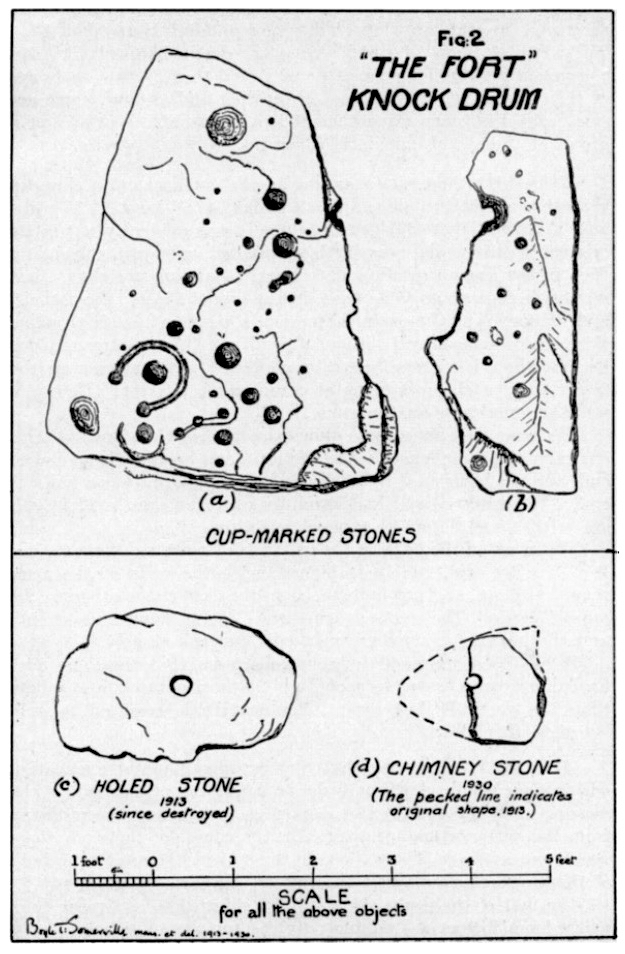
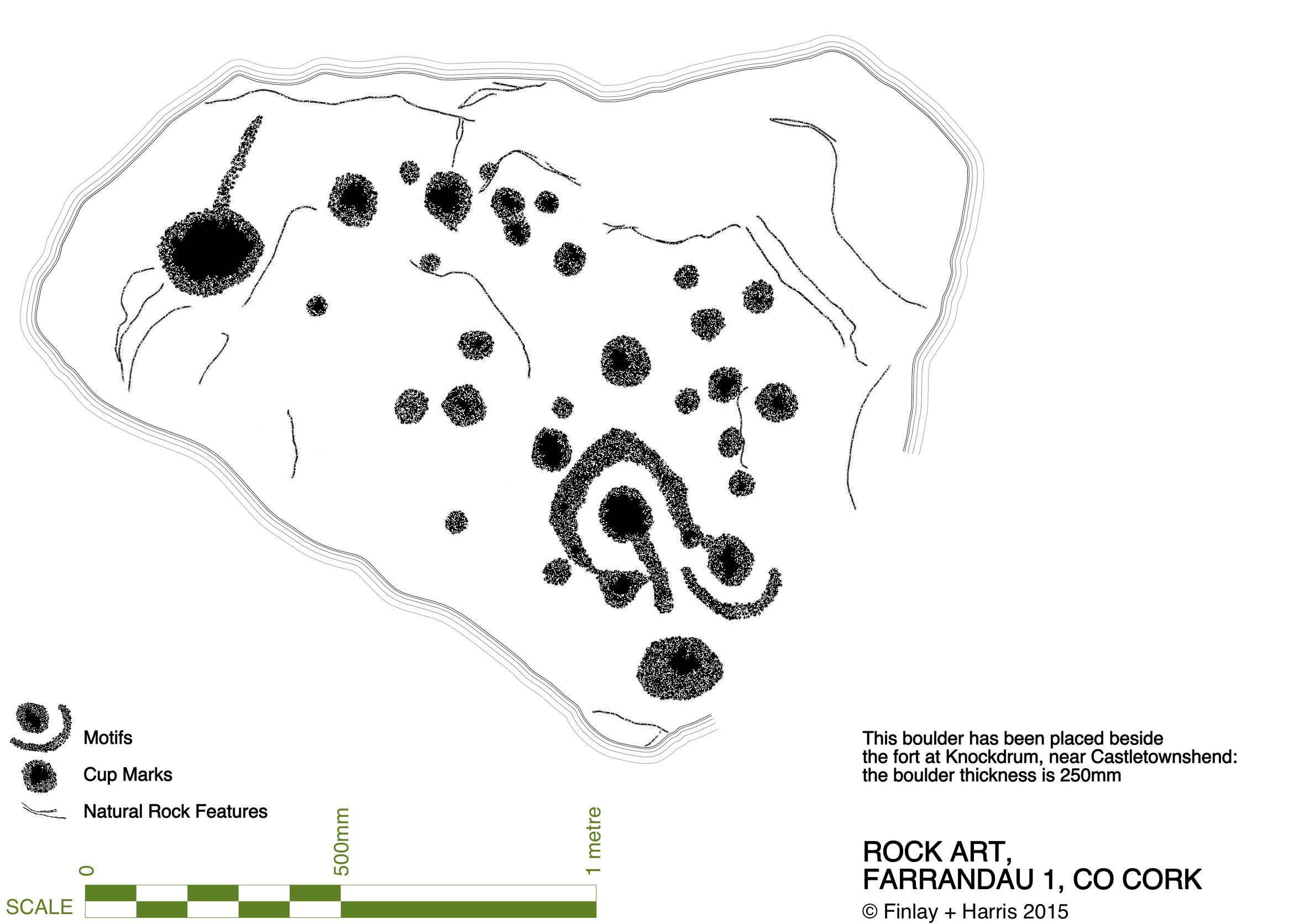
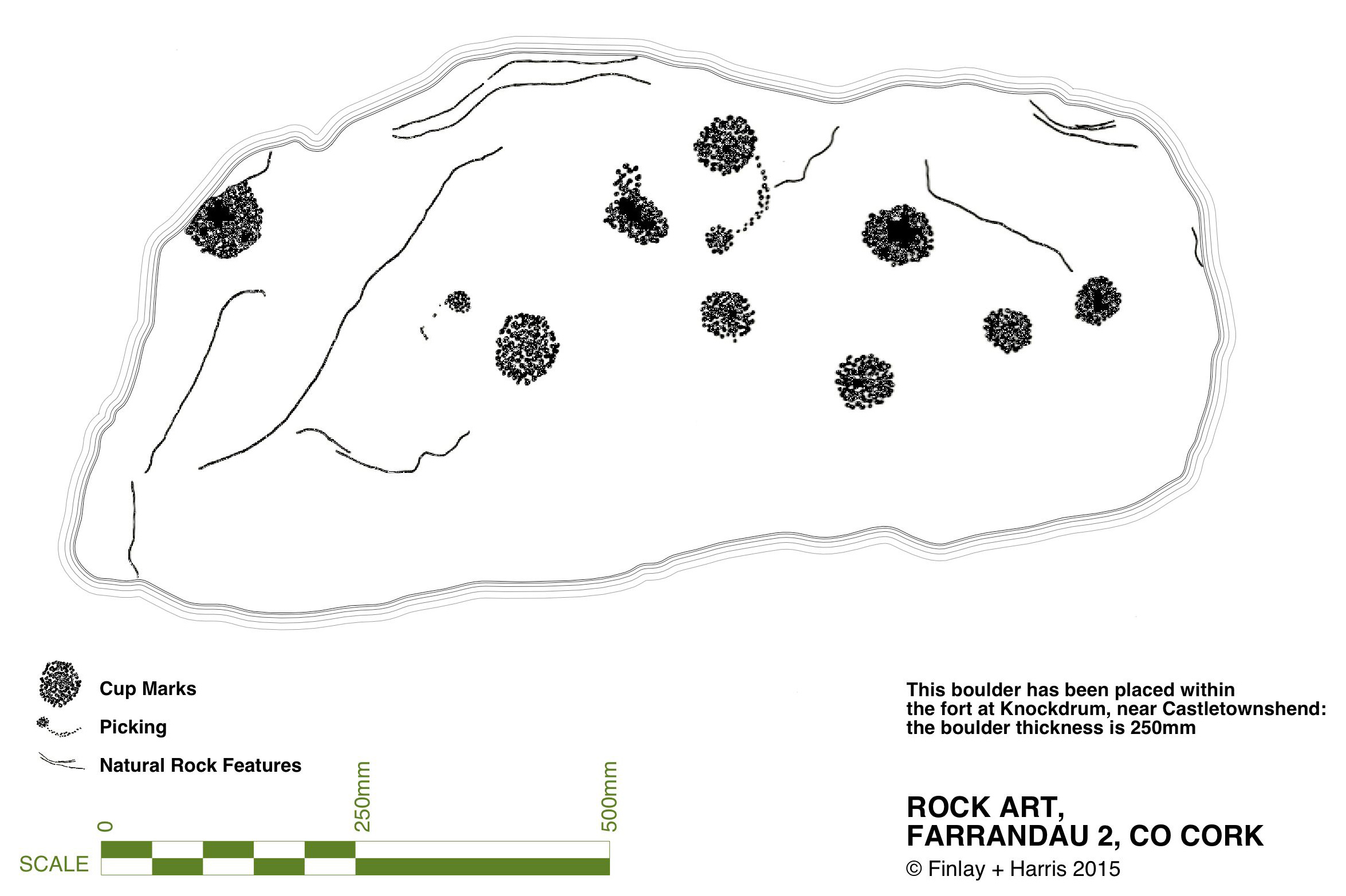
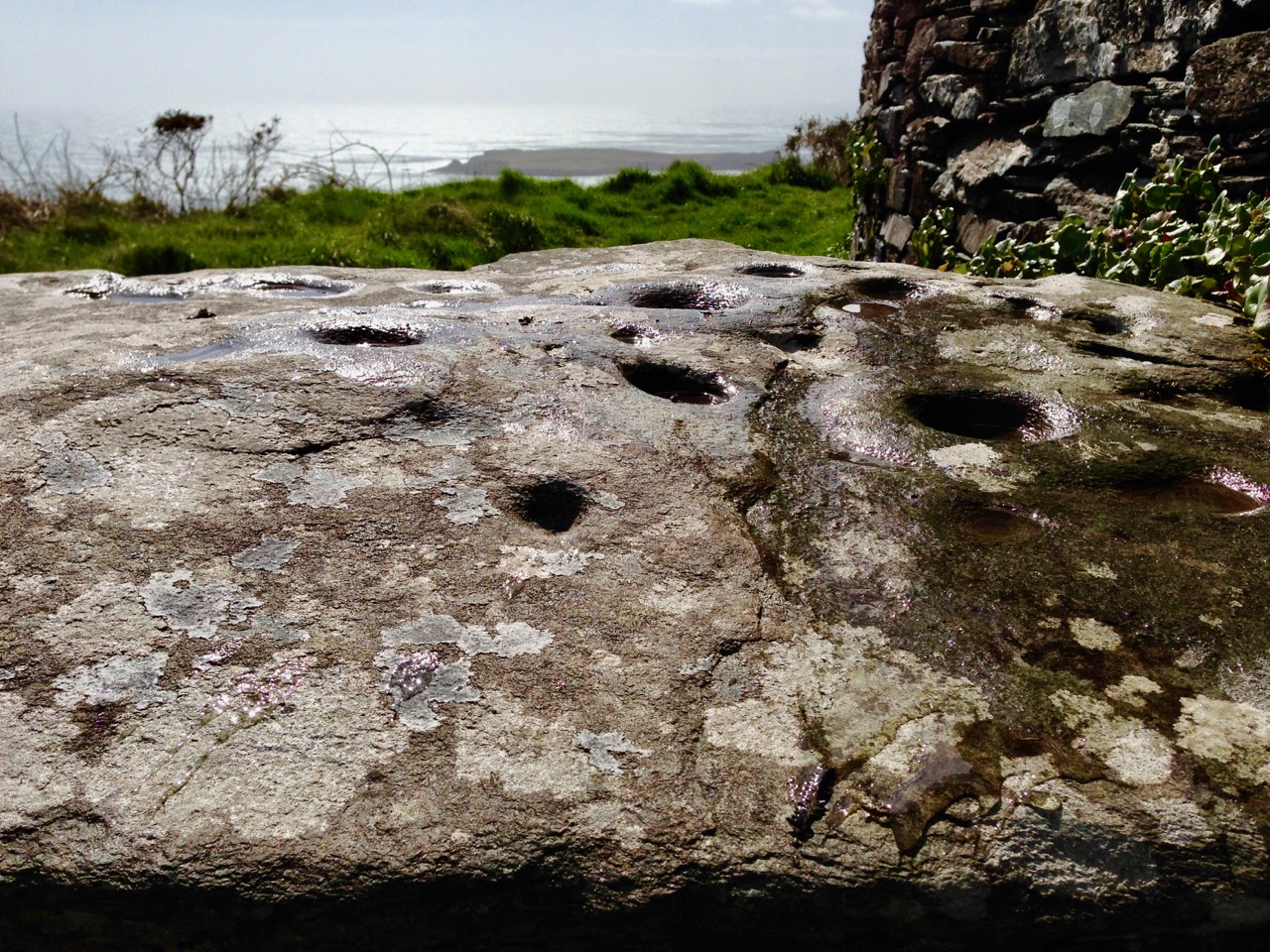
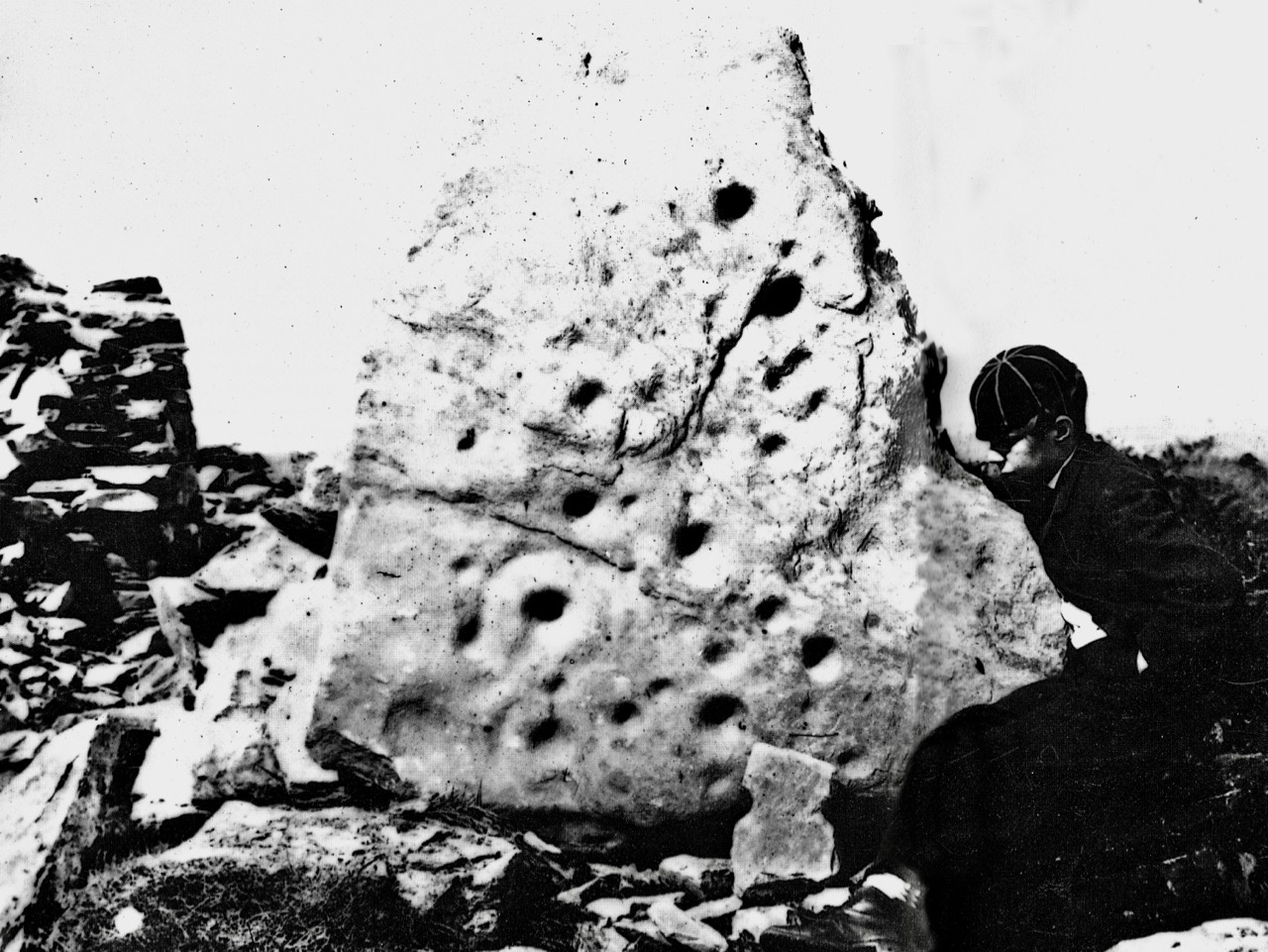
Of course, it can’t be the case that a cupmarked stone dating from anywhere between 3,000 to 5,000 years ago was in any way connected with a stone fort that dates from the early part of the first millennium AD. However, I have as yet omitted an important piece of information: at Knockdrum Fort, high up on the hill, are two further ancient cupmarked stones – and significant ones: the larger also exhibits Rock Art. Somerville illustrated them in 1930, and Finola recorded them in detail in 1973.

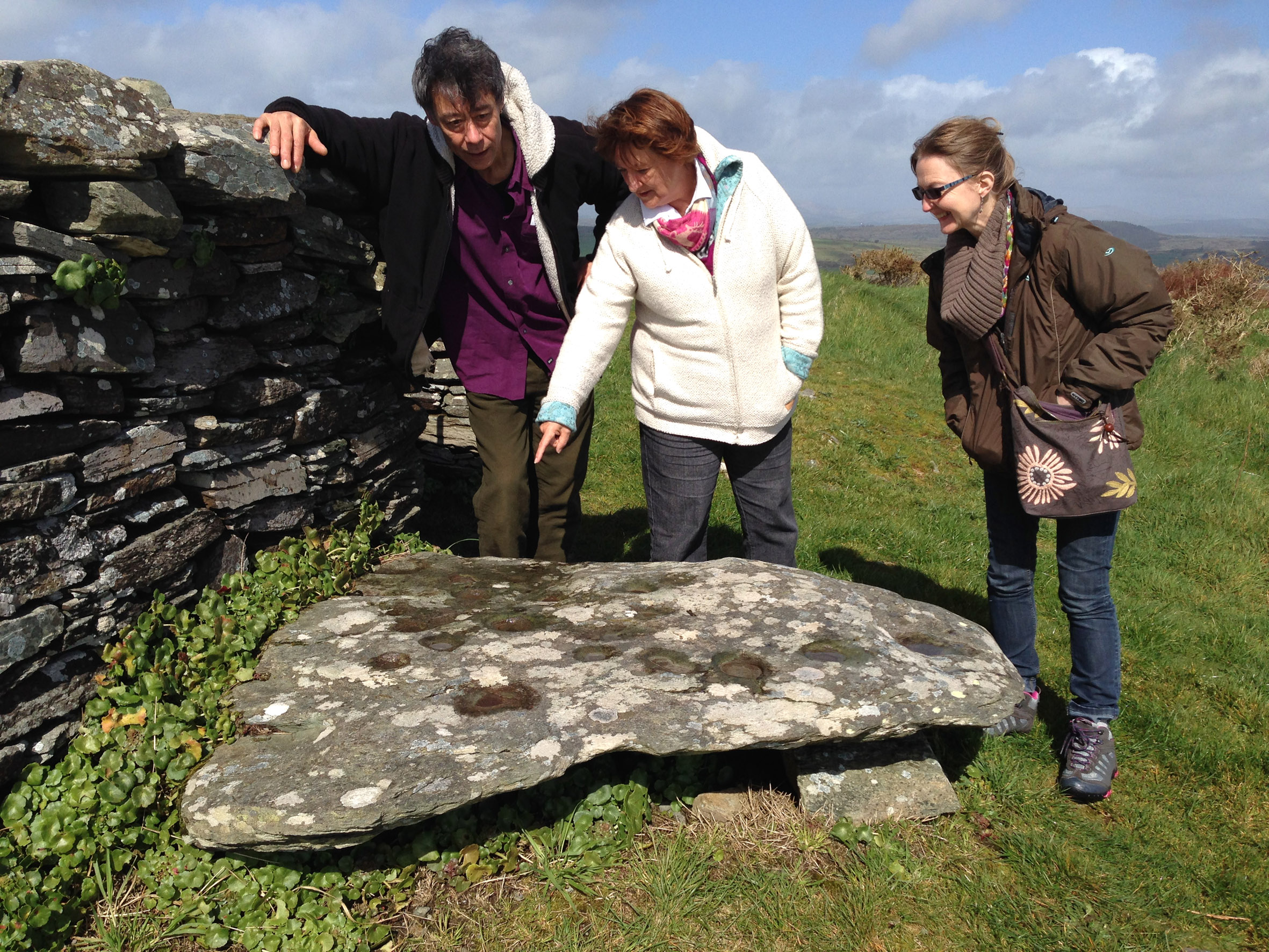
Images above are of the stones recorded at Knockdrum: topmost is Boyle’s drawing from 1930. Below Finola’s drawings are photographs of the large stone lying by the Fort entrance today: it is known that this has been moved, possibly during Somerville’s time. The old photograph immediately above is from the Coghill Family Archive and shows Arthur Townshend beside the stone, which is standing. Arthur was born in 1863: this photograph may record the occasion of the expedition by the young Somervilles and ‘their cousin’ (quite possibly Arthur) to Knockdrum described below, which took place in 1875. It is the presence of Rock Art and cupmarks at the Fort itself which tells us that the site must have had significance in far earlier times (perhaps that’s why the fort was sited in that location – rather than on the summit of the ridge), and Boyle’s reported alignment would have been with the carved rocks (or the important location that they marked) rather than with the comparatively modern stone fort.

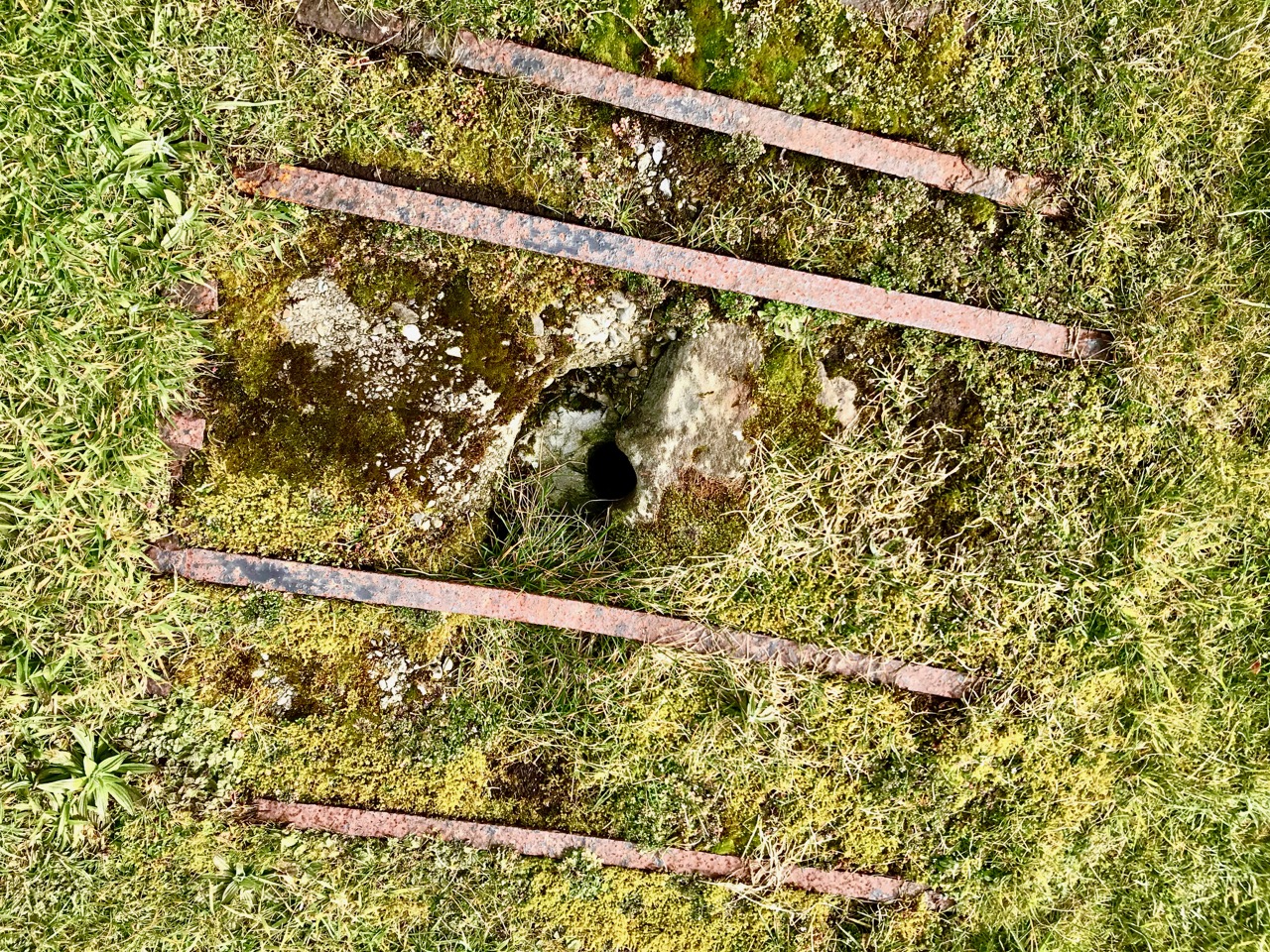
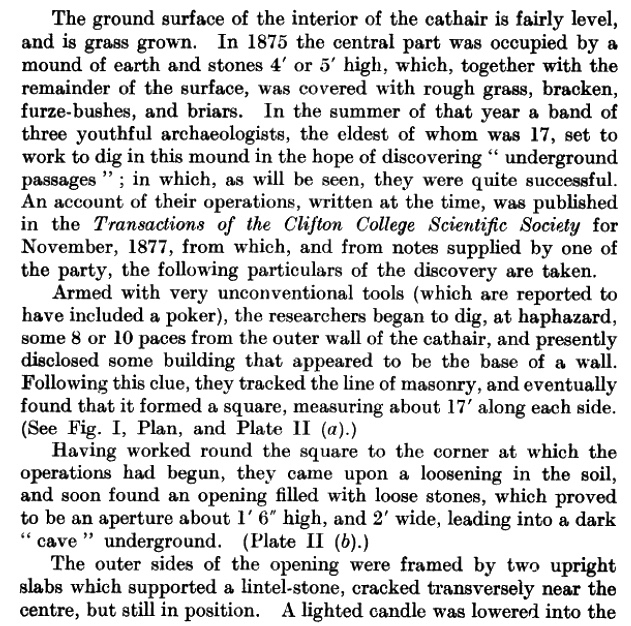
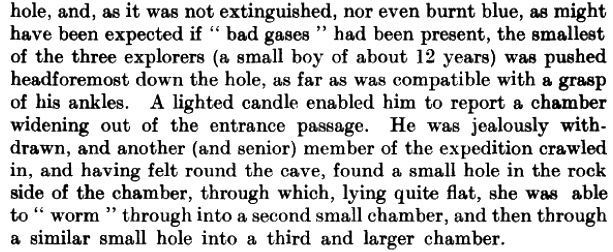
The souterrain in the enclosure of Knockdrum Fort (entrance in top photograph – ‘chimney’ in lower photograph) was explored in 1875, as Boyle recounts:

The ‘band of three youthful archaeologists’ are likely to have been Somervilles: Edith (the eldest, then 17), Boyle (then 12 – it was he who was lowered down into the discovered ‘cave’ by his ankles!) and, probably, a cousin. Great adventures, which would undoubtedly raise eyebrows today.

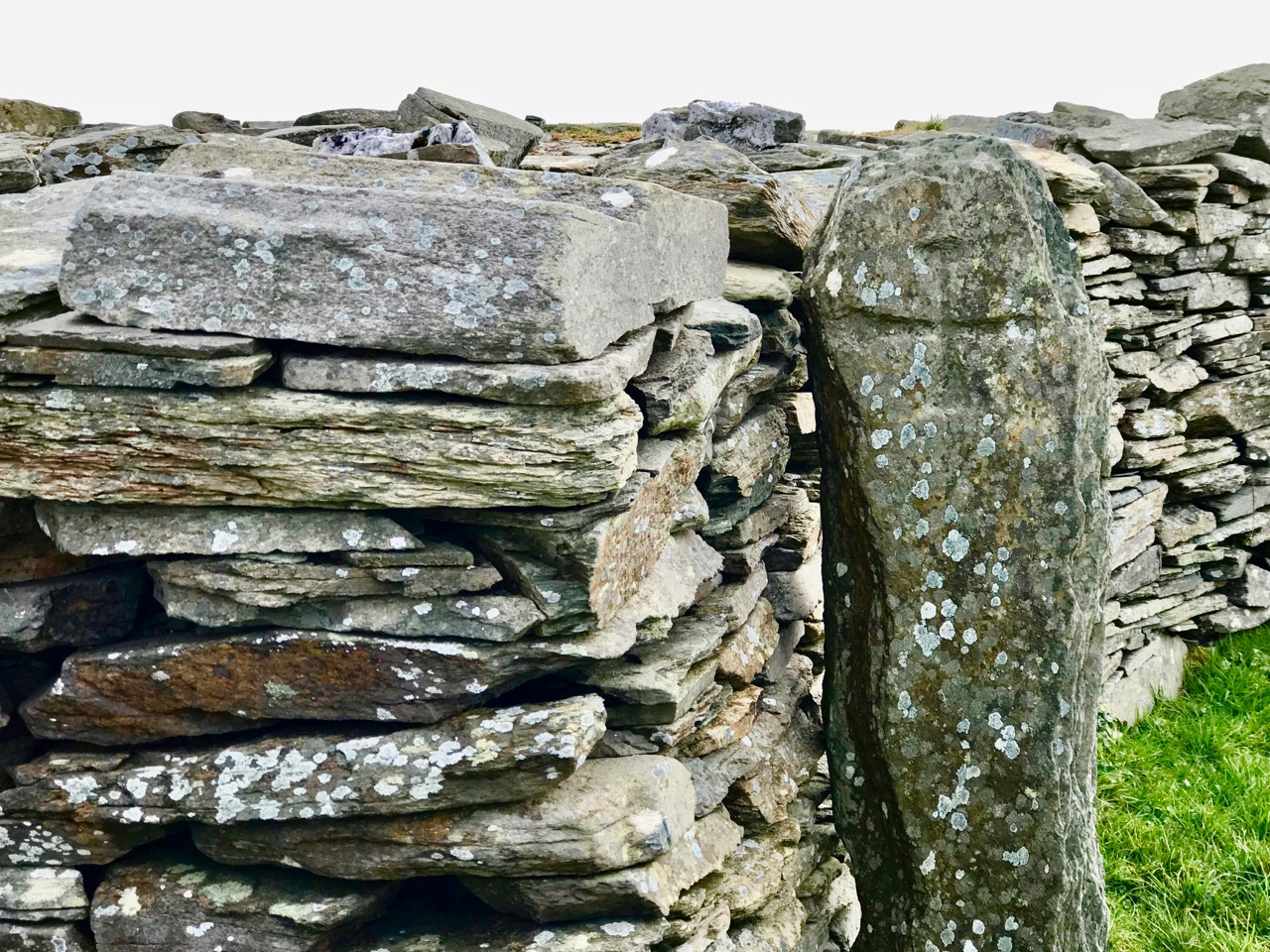
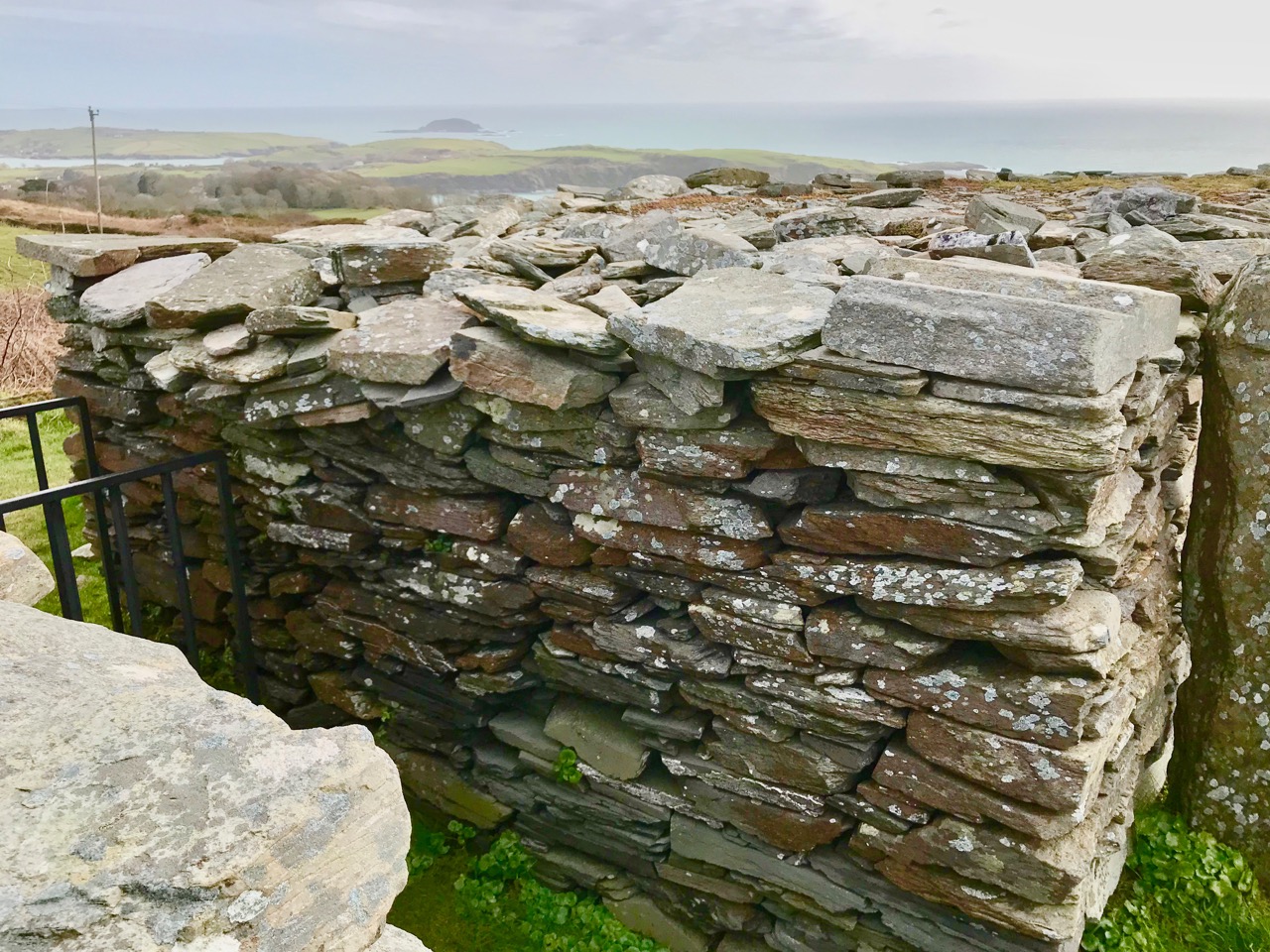
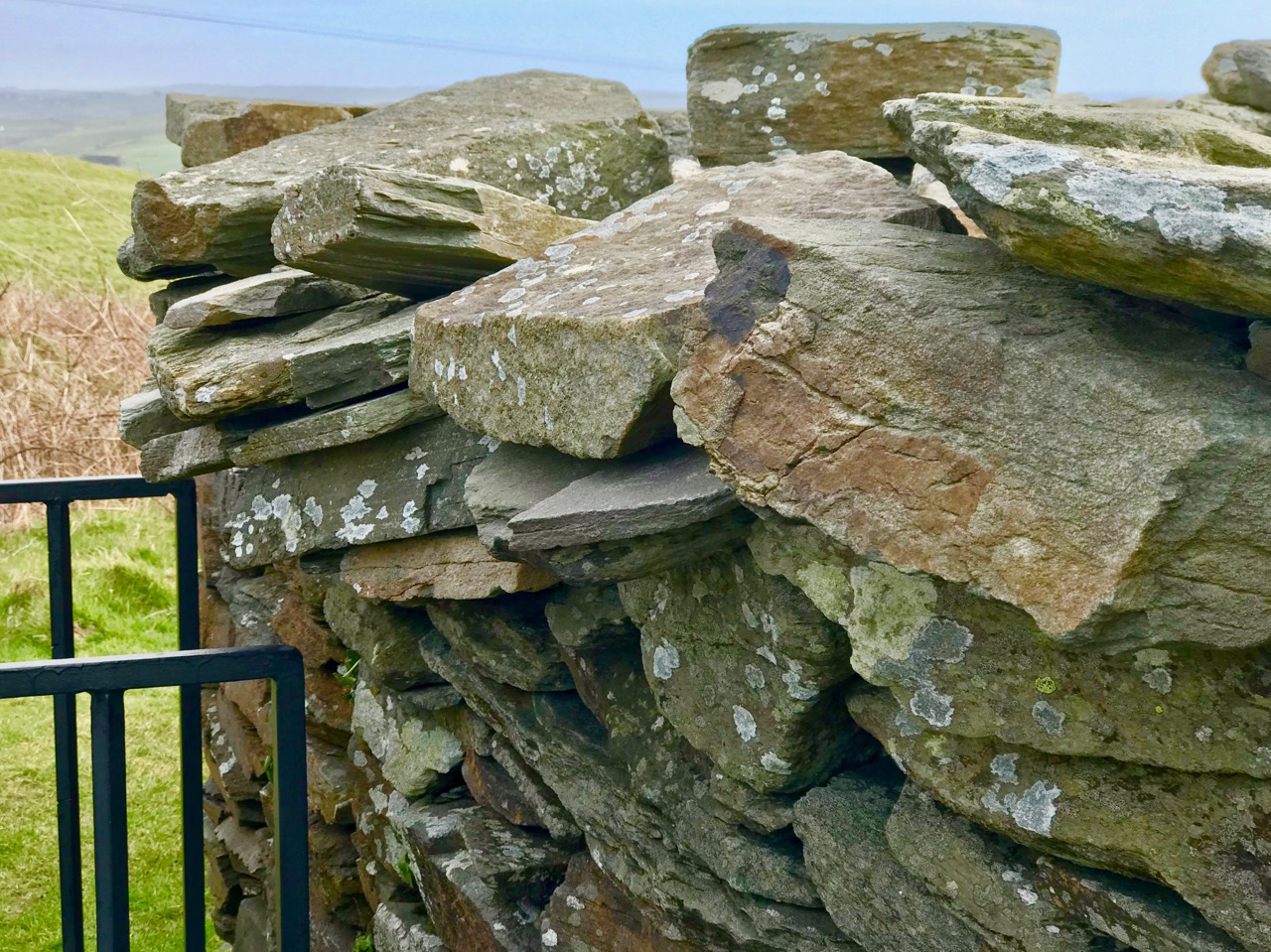
Within the fort enclosure is this cross-marked stone. It was apparently leaning against the wall in Boyle’s days, but has now been embedded close to the entrance. We visit this site often: this time we noted some significant disruption to the upper level of the dry stone walling, possibly caused by the fierce storm winds earlier this year. Compare the detail below with Dennis Horgan’s aerial view above, taken a few years ago.

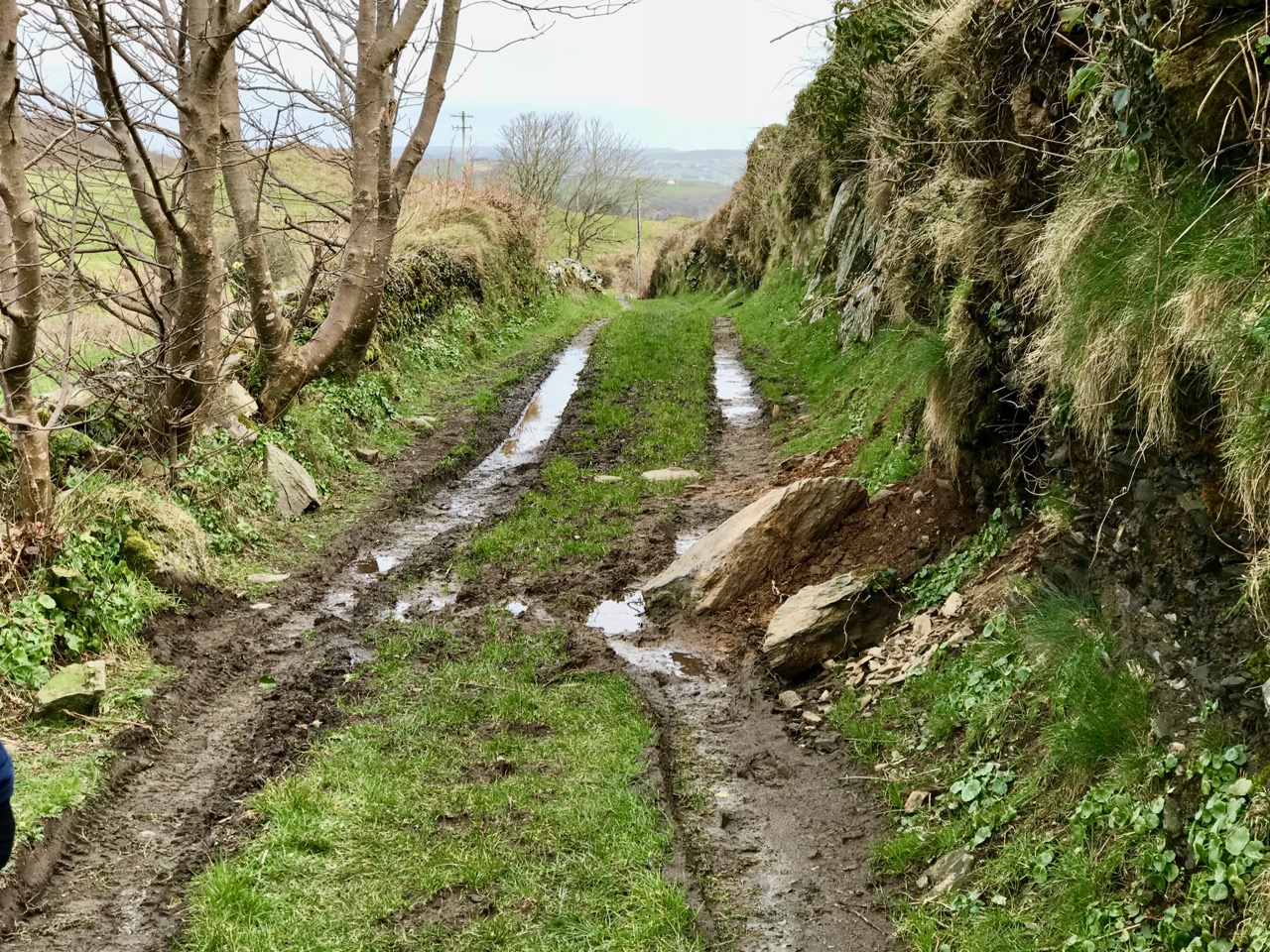
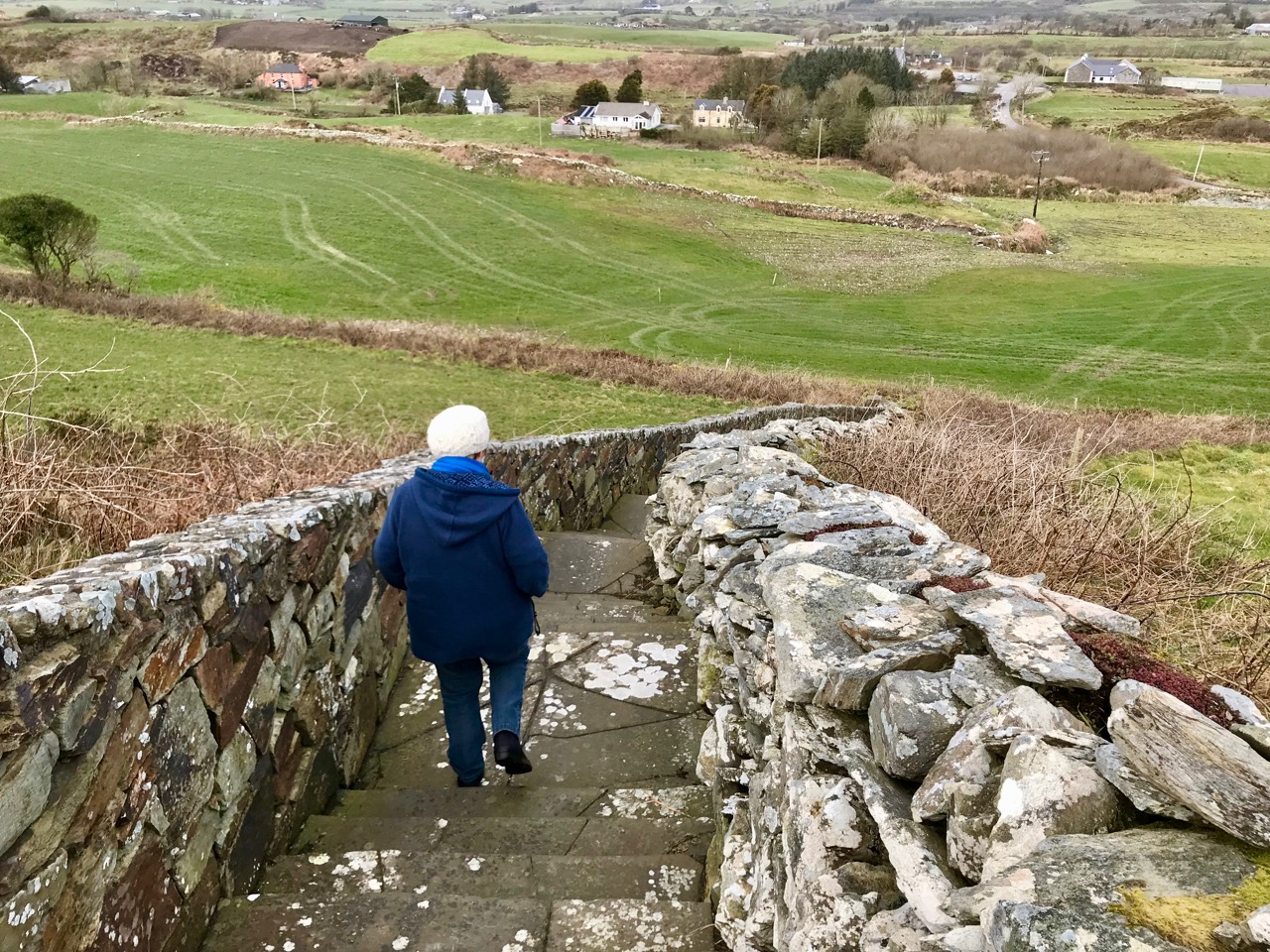
Some damage has also been suffered to retaining walls on the green boreen leading to the Fort from the main Skibereen – Castletownshend road (a walking route only), and on the stone walls beside the 99 steps which take you from the green path to the top of the hill. These are passable with care, but it is hoped that this monument – which is in State ownership – will be deservedly returned to good order before too long: it is one of the historic wonders of West Cork.

Buzzing and Humming

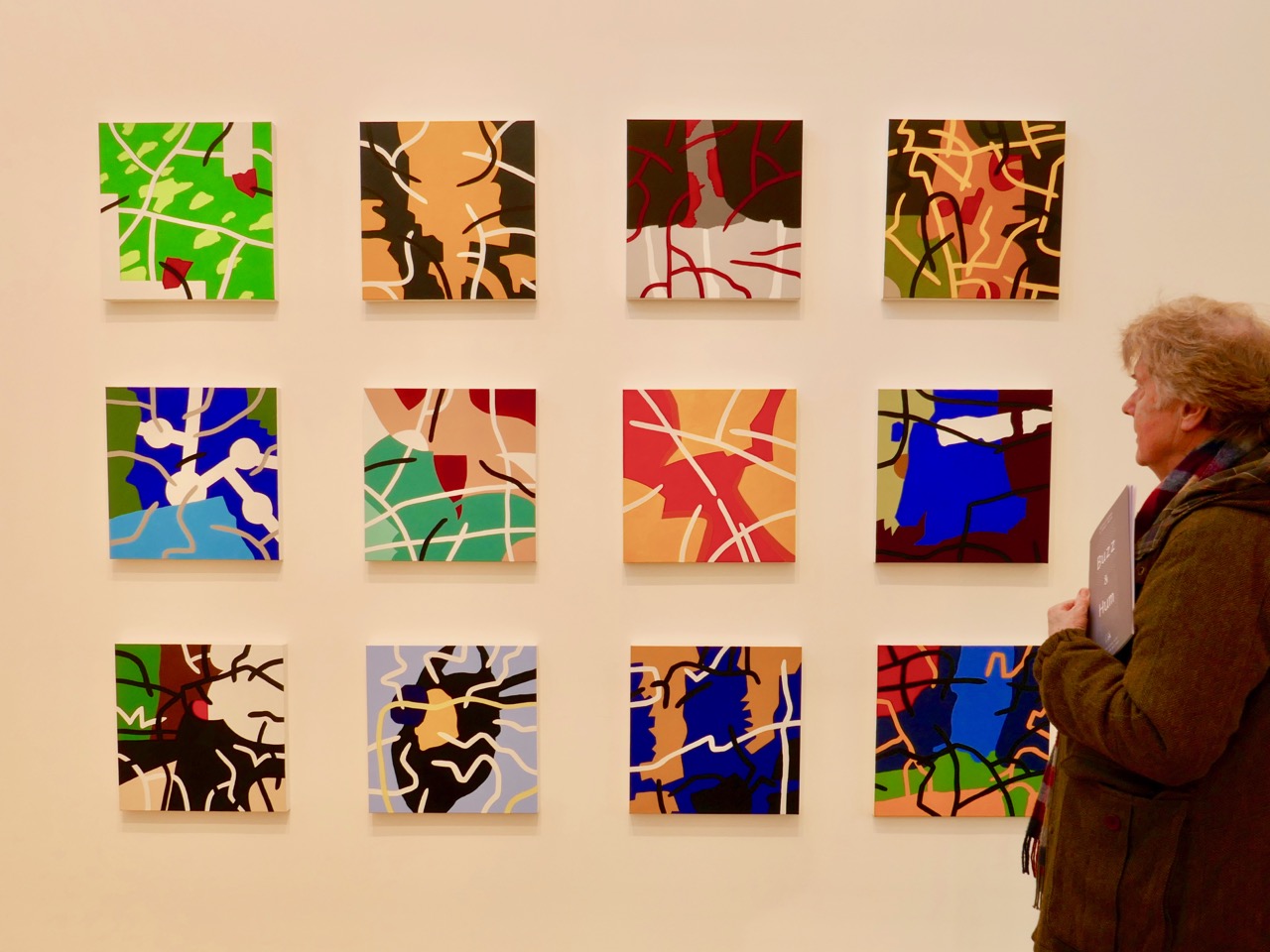
It’s a great title for an art exhibition: Buzz and Hum, and you’ll be drawn into the gallery – Uillinn in Skibbereen – by the glimpses of strong colour seen through its doors and windows. If you like colour (as I do) you will remember the memorable exhibitions we have seen in Skibbereen over the past few months: at Uillinn – Scissors Cut Paper Wrap Stone, West meets West (the work of Cornish Artists), David Seeger: 80 Moving Still – and the wonderful William Crozier: The Edge of the Landscape. At the O’Driscoll Building at Levis Quay in the summer we also saw the excellent retrospective of the work of West Cork Artist Terry Searle.

Colourful art shown in Skibbereen, 2017 – clockwise from top left: Jennifer Mehigan; David Seeger; Booth, Lanyon and Lattimer; Terry Searle and William Crozier

Uillinn’s first exhibition of 2018 is a stunning outburst of colour and composition, the non-objective accomplishment of two artists who have different approaches, different philosophies, yet allow their work to hang together – literally – and find balance with each other.

Upper – the smaller ‘Locus’ panels by Samuel Walsh form an astonishingly rich group in this juxtaposition; lower – Gallery II at Uillinn, awaiting the Artists’ Talk, creates a dramatic sunlit setting for Richard Gorman’s  3 metre square ‘Shuffle’

. . . The title of this exhibition by the two artists who have been familiar with each other’s work for nearly 30 years, derives from an insight arrived at by one, then happily endorsed by the other, regarding a persistent distinction between their respective bodies of work . . . writes Caoimhin Mac Giolla Leith in her introduction to the exhibition catalogue . . . Richard Gorman’s observation that his colleague Samuel Walsh’s paintings generally ‘buzz’, while his own tend to ‘hum’, was not intended to occlude the fact that they otherwise have much in common. What they share most significantly is a fidelity to the pursuit of abstract painting over the course of three decades during which the fortunes of this form have varied considerably in different parts of an increasingly globalised art world . . .

Buzz and Hum – clockwise from top left: Walsh, Locus II (Ladakh); Gorman, Kan Run; Walsh, Autumnus X (Bénodet); Gorman, Kan Fly

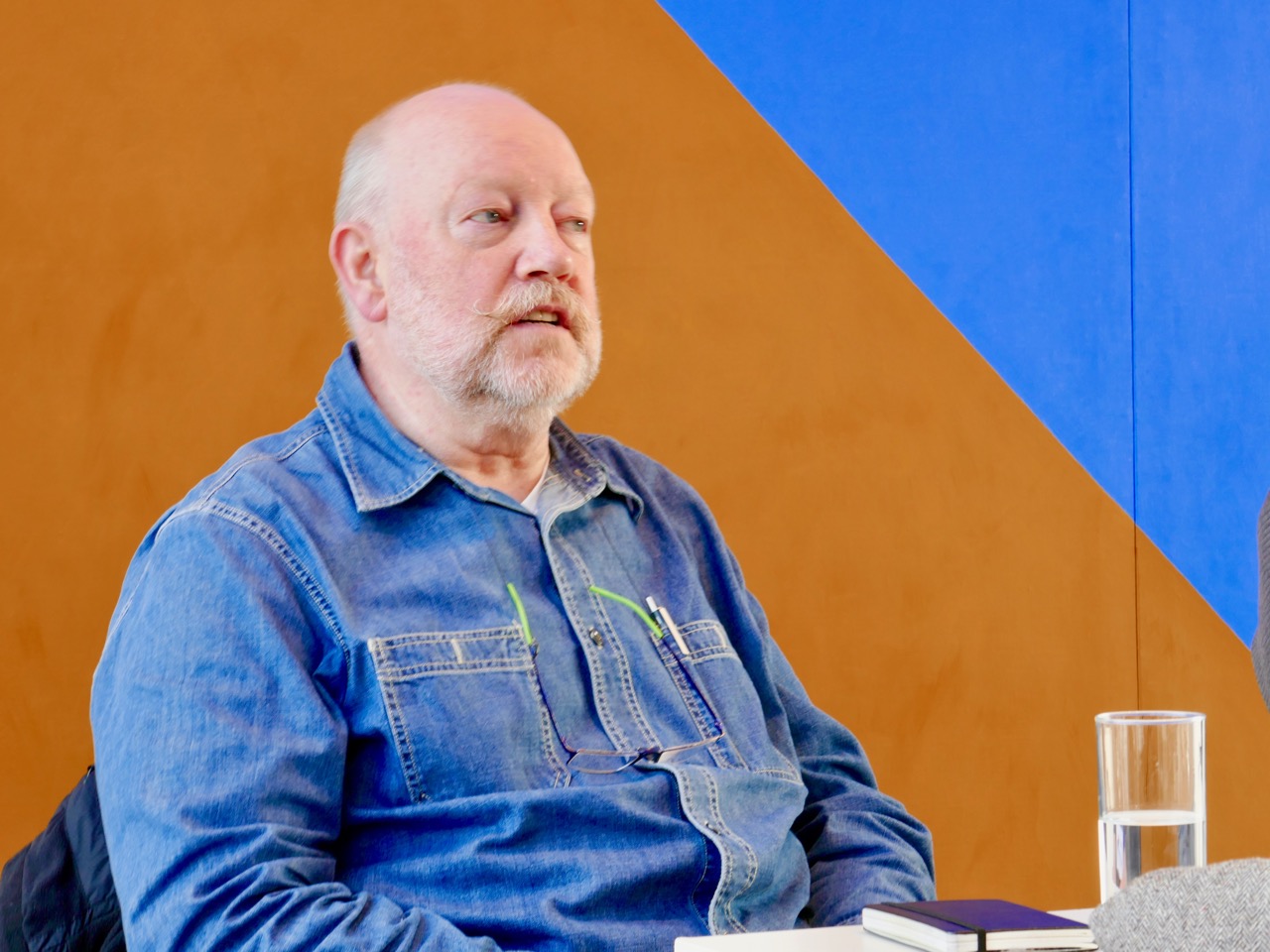
The gallery talk at Uillinn was partly a dialogue and partly a presentation by each artist on their individual approaches to their work and the techniques they use: it was a gentle and informative amble, and it was clear that each respects the other. I always wonder whether I should come away from such encounters with insights as to what the work means. I don’t know any better, now, what this work ‘means’ – but, having heard the artists speak, I do sense that they don’t want it to ‘mean’ anything. It’s visual exploration, and I sense the artists want us to view their works completely as visual experiences: I don’t have a problem with that approach, in fact I like to engage with any artwork with no prior preconceptions. I thoroughly enjoyed the dynamic experience of walking through Uillinn and absorbing these works, all of which are – in my opinion – of a consistently high standard. I could easily live with any or all of them.

Samuel Walsh (upper image) talked of how he records events and places in a number of notebooks (lower image) – making an intricate series of lines; his paintings will extract and build on these records

Richard Gorman (upper image) explained how important the process is to his work: each shape is fully considered and placed: this becomes an anchor for the next shape. The continuity follows, not only in each individual work but through a whole series of works. Gorman’s canvasses have been shown in Castletown, Co Kildare (lower images), and I was intrigued to see how the paintings interacted with and related to the Palladian setting

I’m hoping that this little review will have whetted your appetite for the work on show in Skibbereen. It’s well worth looking at the whole exhibition. It runs at Uillinn until 20 February: don’t miss it!

The Best of Five

It’s been five years! That’s a long time to have kept up a journal, with original pieces appearing every week – usually two, each of us writing a post. It keeps us busy: 464 posts to date. We thought we should do a review of the posts which have been most popular: viewed by the most people. These are not necessarily the ones we would consider to be our own favourites: we’ll let you know what we feel our ‘finest hour’ has been next week – while you are all preparing the Christmas lunch!

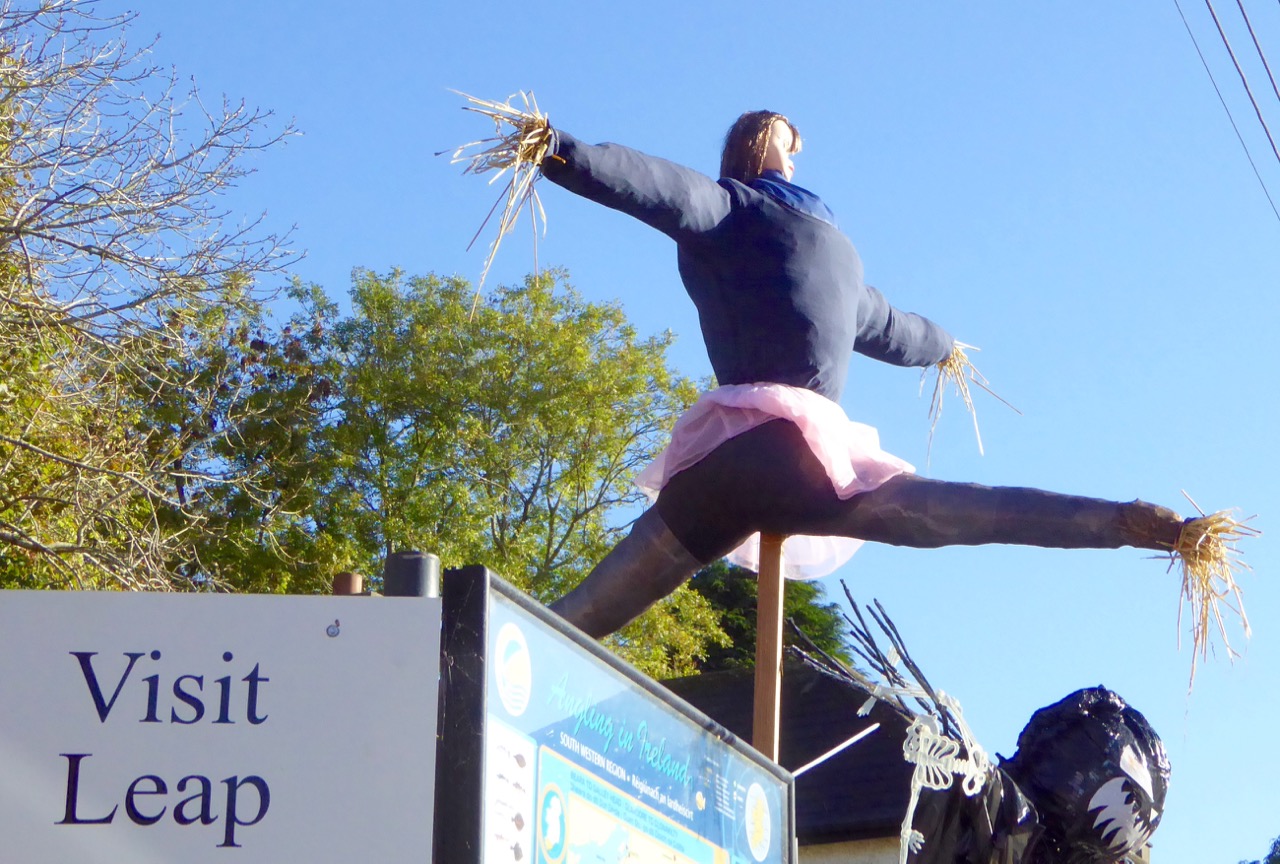
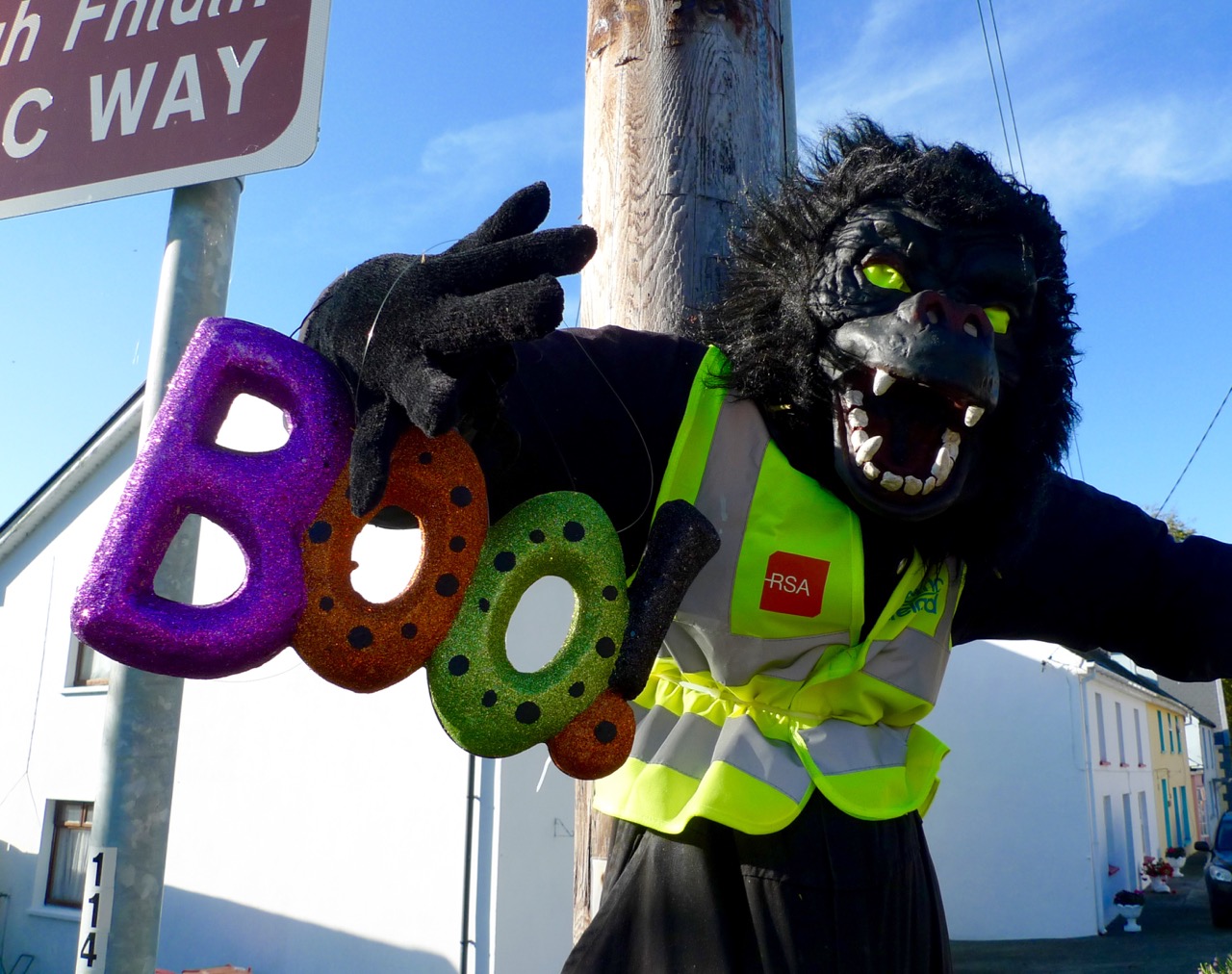
We never quite understood the all-time popularity of Beyond Leap, Beyond the Law, my post which was simply a collection of photos taken at the West Cork village’s 2015 Scarecrow Festival – with a little bit of history about the place added in. It was certainly a wonderful display of the imagination of the people of Leap. Have a look at the post: just one or two photographs don’t do it justice.

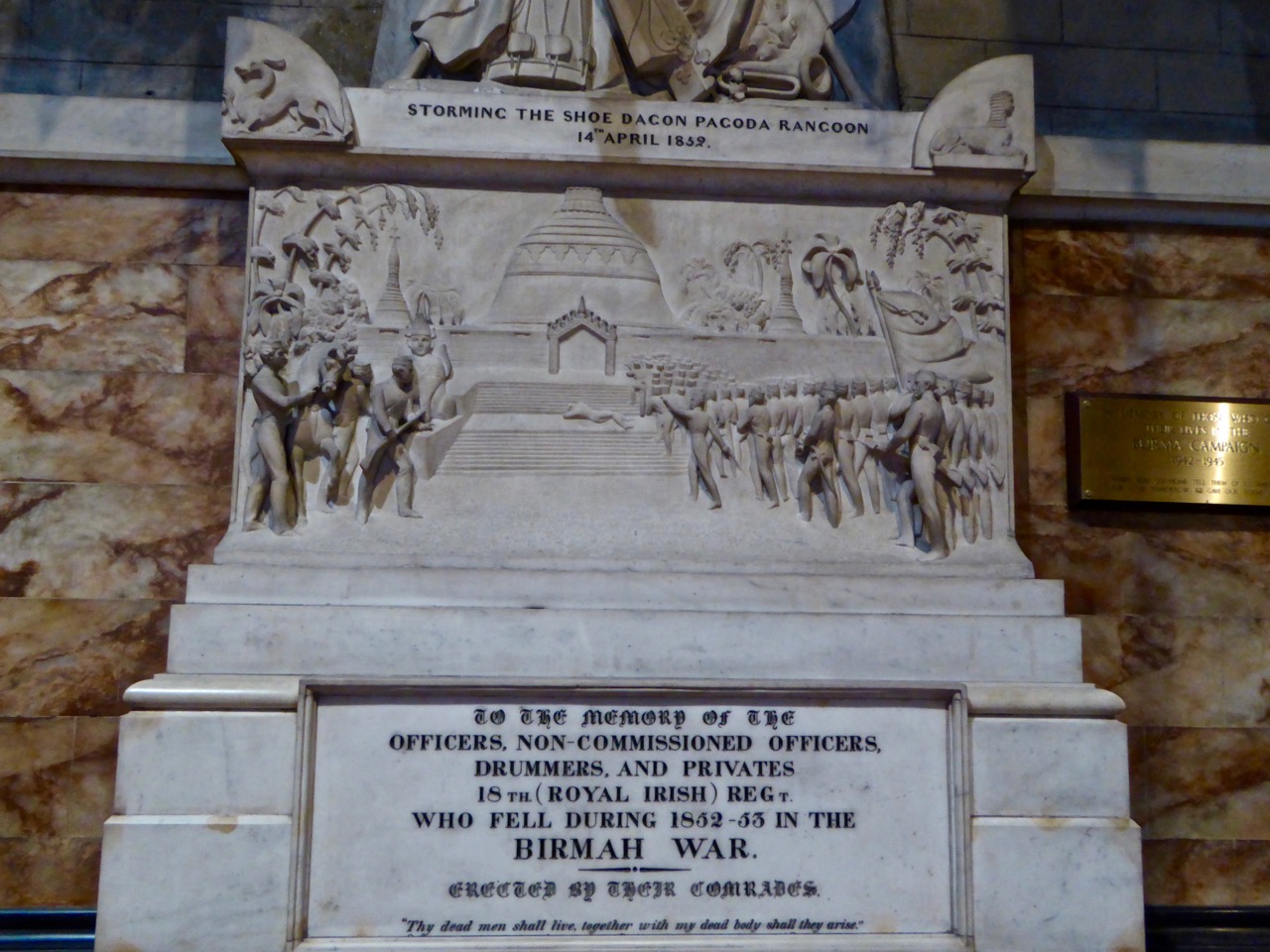
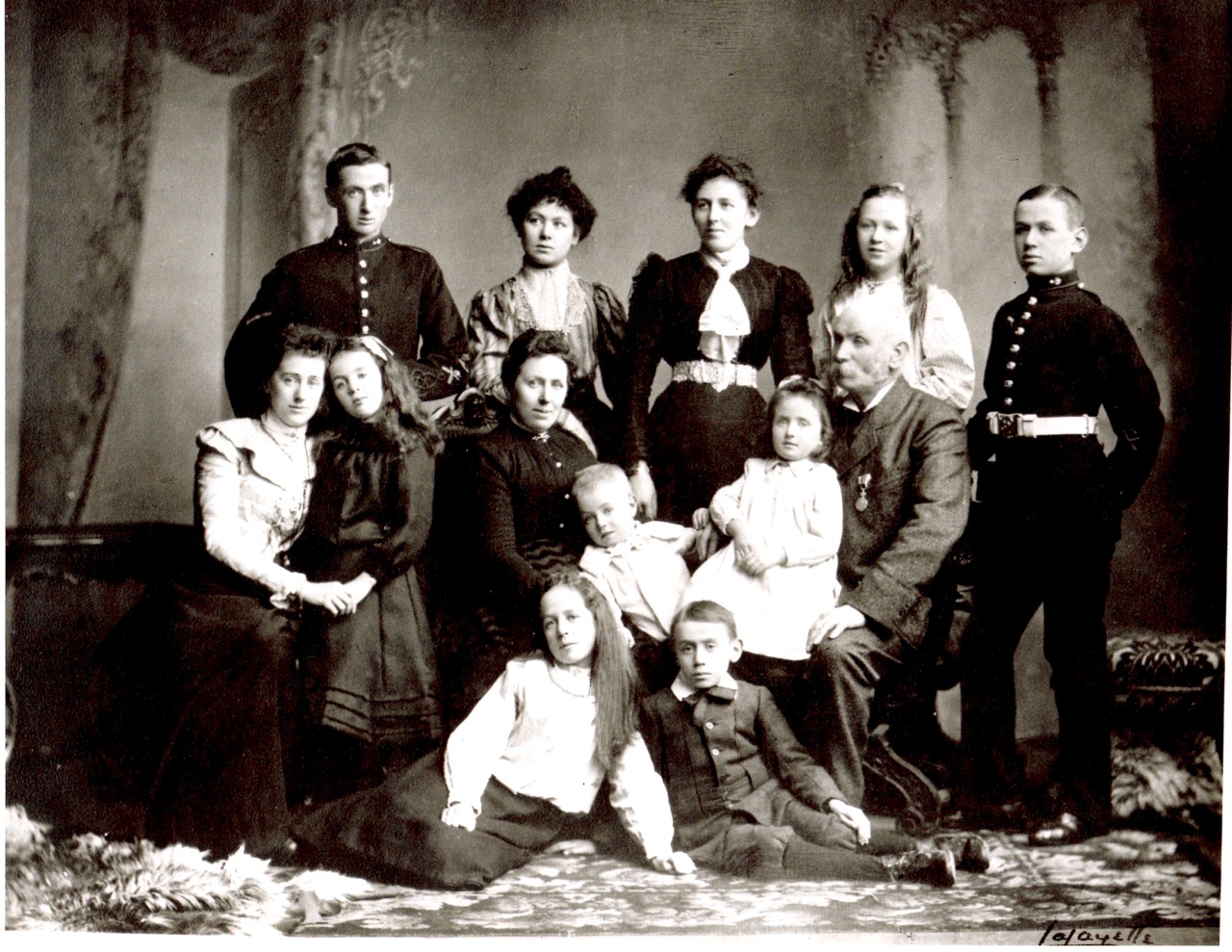
Up next is Finola’s piece from 2016 – Outposts of Empire. This was a much more scholarly article, and involved a lot of research. As you must know, we never pass a church or a burial ground without a full investigation: they provide a wealth of local history. Finola became fascinated by the memorials – mainly military – which appear in Protestant churches around the country. This led her down the path of her own ancestors, many of whom served in the Irish regiments of the British forces. She found this wonderful photo from around 1900 of her Brabazon forebears. Her grandmother Marie is in the centre of the back row, while her great grandfather John Edward Brabazon, who had served in India and Afghanistan, wears a military medal. The two younger men are Finola’s great uncles Michael and James, and they are wearing the uniform of the Royal Hibernian Military School.

Finola’s series on ‘how to speak like a West Cork person’ was a winner, the most popular being her fifth episode: How Are You Keeping? Here is a link to all of them. They make amusing reading, but at the same time they give a lot of insights as to how the Irish language has coloured the way English is spoken here. And here is Finola’s great picture from that post: two Skibbereen gentlemen who might well be asking how are you keeping?

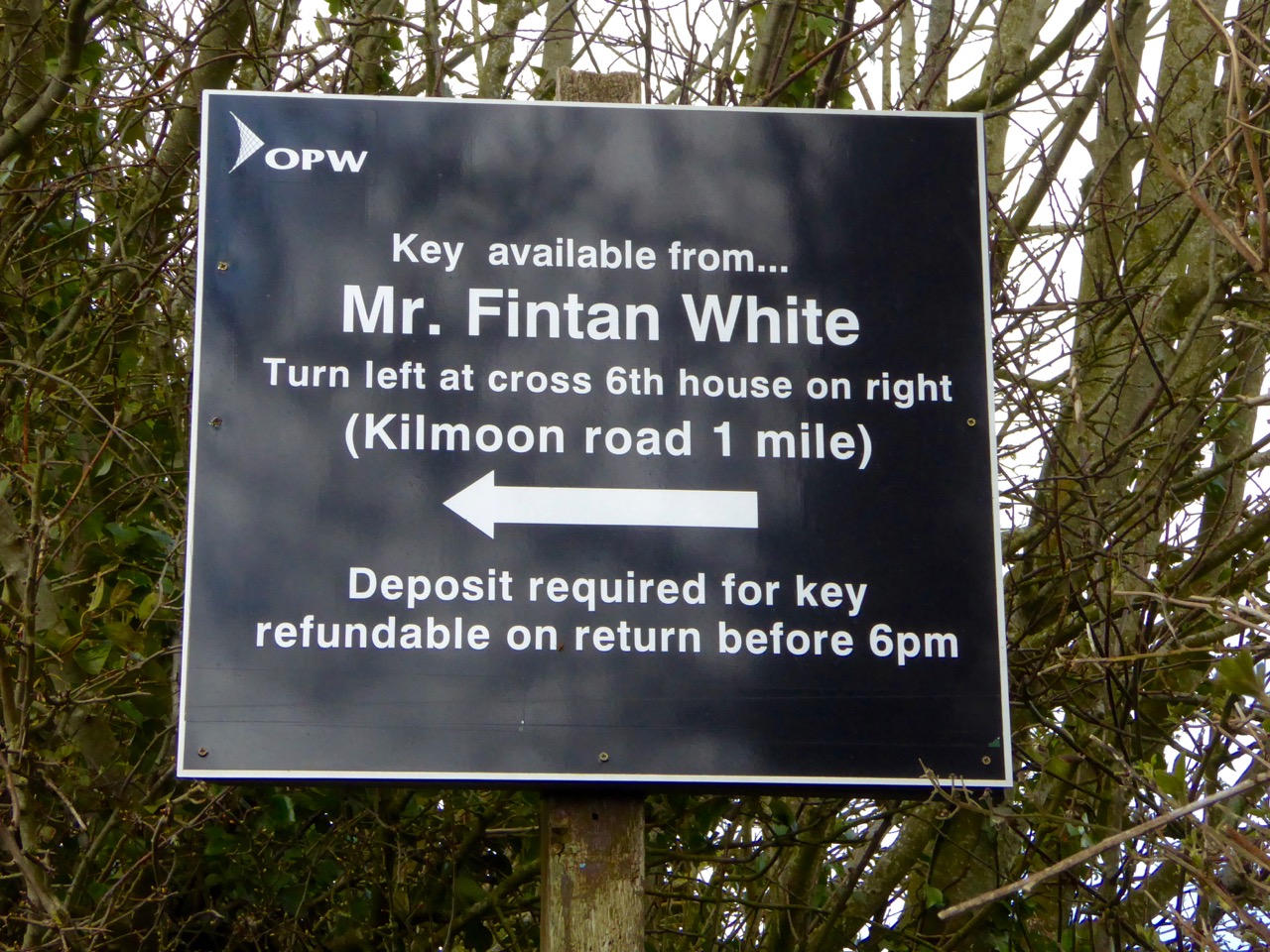
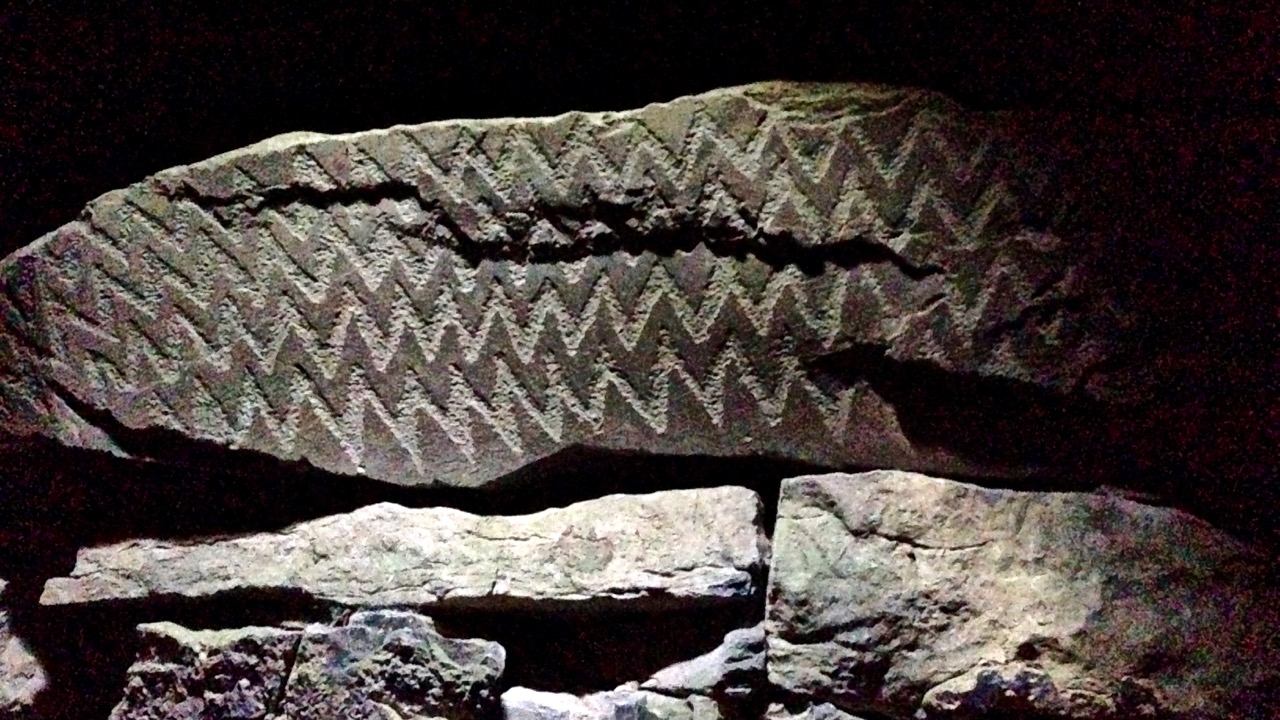
Archaeology comes next, with my account of a most eccentric decorated chambered cairn within the Boyne Valley complex: Fourknocks – the Little Giant. I was particularly taken with the adventure of visiting this tomb, from the first moment of having to collect the key from a farm a mile away in order to let ourselves in, to the experience of being inside with the door shut behind us: total darkness at first, but gradually becoming aware of the remarkable 5,000 year-old zigzag carvings on the rock surfaces within.

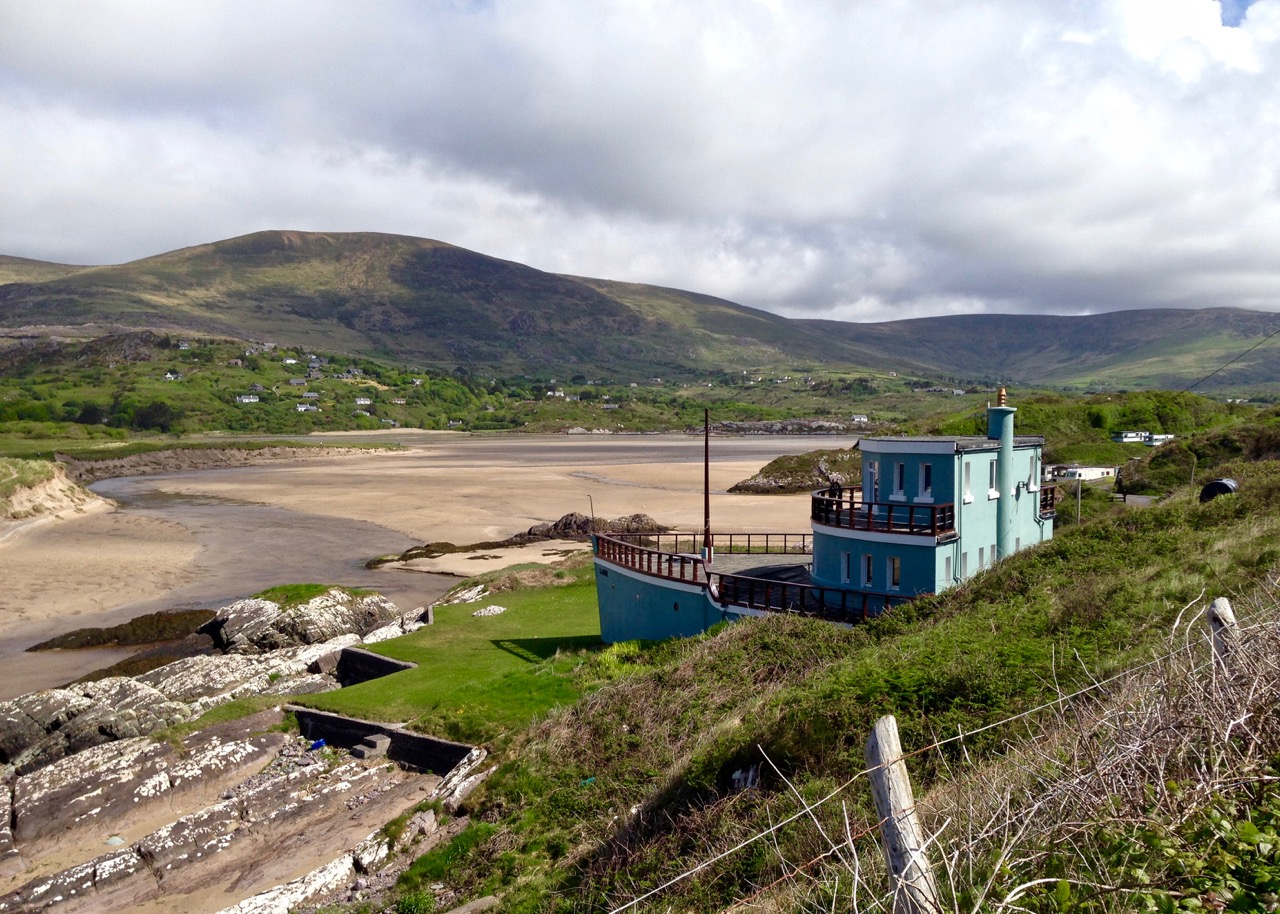
I’m pleased that the fifth most popular post of all time is also the one I most enjoyed writing: Aweigh in Kerry. This was all about a very unusual piece of architecture which we found while travelling in Kerry – a house shaped like a ship, sitting in the sand dunes on the shoreline of Ballycarnahan townland, facing a most spectacular view across to Derrynane, the home of ‘Ireland’s Liberator’ Daniel O’Connell. I was an architect in a former life, and I would have welcomed a commission such as this. It was built in the early 1950s.

Sixth and last in this little review is a post from Finola (happily, we had three each in this list of the top most popular posts!): Castle Haven. Such an account of a place in magical West Cork – which typically offers everything anyone could want in beautiful landscape, village architecture, archaeology, history, literary heritage, art and the omnipresent Atlantic coastline – is exactly what we aspired to for the foundation stone of Roaringwater Journal when we set out, in 2012 on this happy, continuing journey.