Family-Friendly Archaeology Day in West Cork (Updated)

This is an update of a post originally published a while back. I’ve added a holy well (to finish your day off right) and some new photographs, and deleted some out-of-date information. I’ve also provided a list of informative posts about the monuments you’ll be seeing at the end.
West Cork is loaded with prehistoric monuments but many are on private land or inaccessible. So we’ve planned a day for you in which you can have a Grand Day Out and a tour through some of the best West Cork archaeology sites. Load the kids into the car, stick Discovery Map 85 in your pocket (or print out the one we’ve provided in this post), bring boots or wellies, and off you go! By the way, we advise leaving the dog at home when on a field trip like this, since you will be visiting private farm land which will likely have cattle on it.

Our starting point is Ballylicky – here’s your opportunity to pick up a picnic at the marvellous Manning’s Emporium, while you fuel up with a pre-trip latte. Ready now? First stop is Mill Little.

1 Mill Little Complex
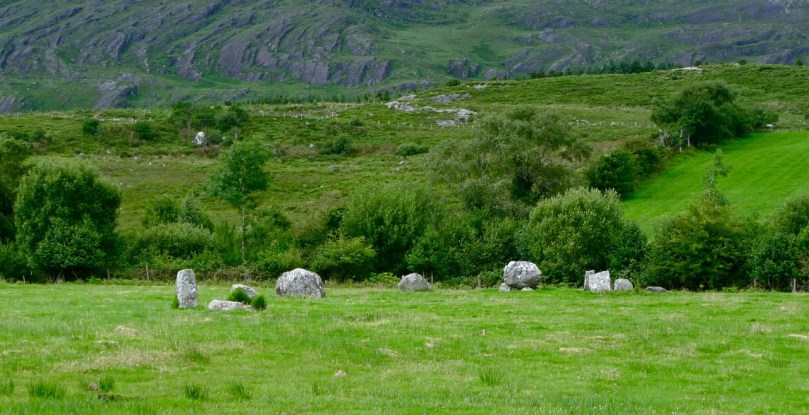
From Ballylicky, head west along the scenic seaside road towards Glengarriff for a couple of kilometres and take the first turn right at Snave. You’ll be following the Coomhola Rive as it tumbles down between high hills. Once you’ve crossed Snave Bridge continue for a about a km, take the second left and then immediately right. One km on, take a left and then the next right. Park along here and the Mill Little complex is in a field on the left.
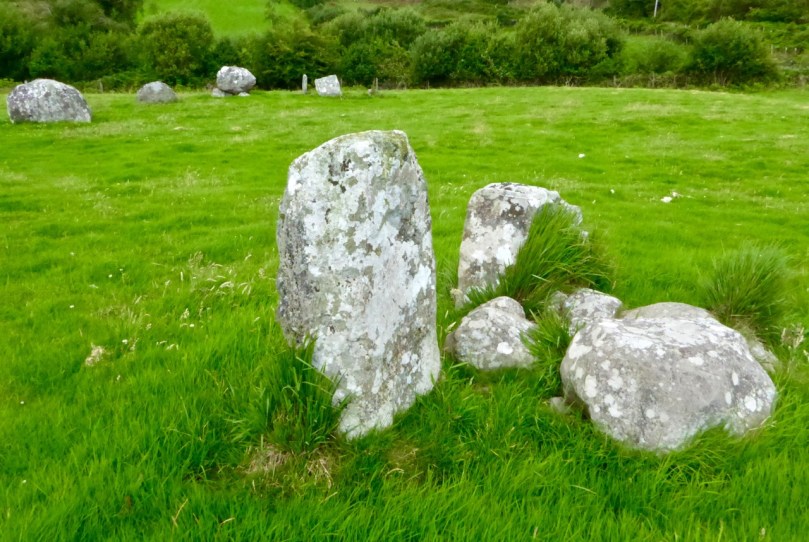
This is a complicated site, comprising a stone pair (don’t be confused by the other stones around the pair, which have been piled here), three boulder burials, and a small five-stone circle. All these monuments probably date from around the same time – the Bronze Age, about three to four thousand years ago. A particular feature of West Cork archaeology is that boulder burials, standing stones (single, in pairs, or in rows) and stone circles are often found together. Stone circles and stone rows are oriented towards significant solar events, such as the rising solstice sun or the setting sun at an equinox. In the Mill Little stone circle the alignment over the recumbent is NE/SW. At a site like this, it is possible that all the features formed a large observational arena, with the stone row, boulder burial and stone circle providing multiple alignment possibilities and marking both solar and lunar events.

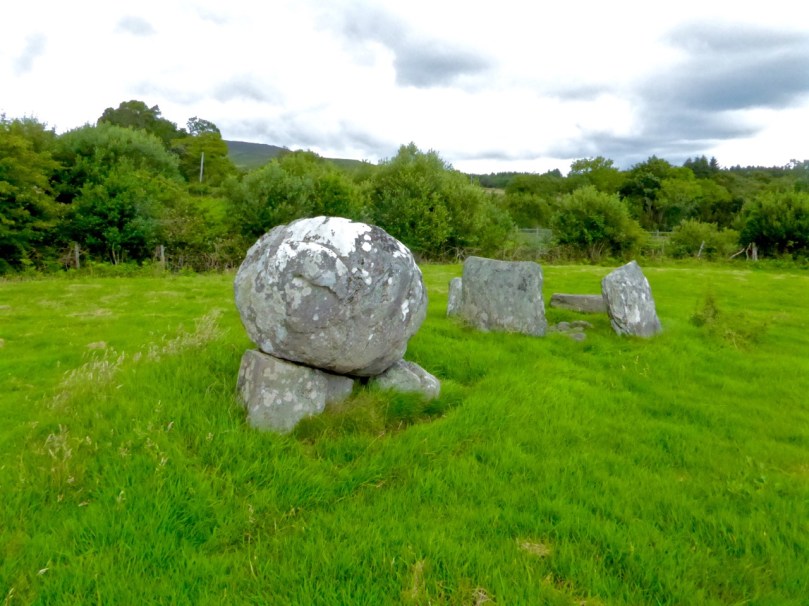
The boulder burial nearest the stone circle is the most classic in appearance – a large glacial erratic sitting on top of three support stones. Excavations at boulder burials in West Cork, however, haven’t really yielded evidence of actual burials – perhaps the term is a misnomer!
2 Carriganass Castle

Retrace your steps back towards Ballylicky and take the road to Kealkill – or try an overland route using the map. At Kealkill take the last fork signposted to Gougane Barra and you will see Carriganass Castle almost right away.
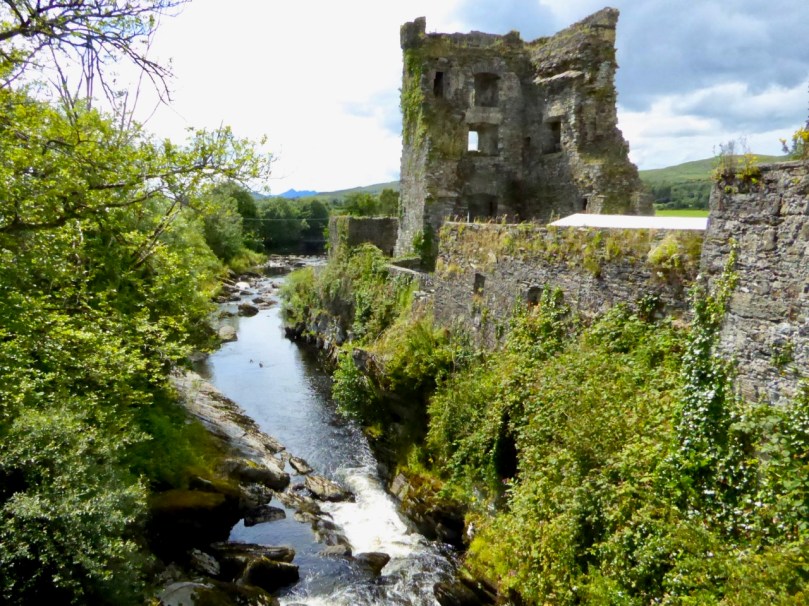
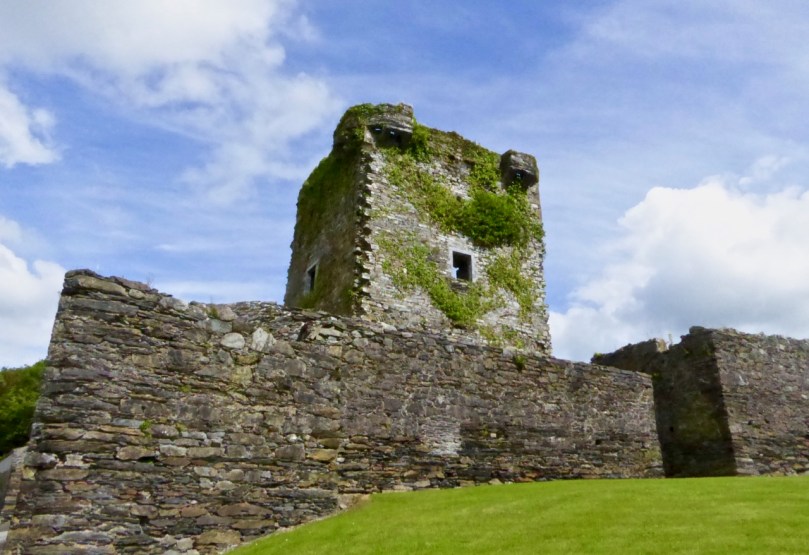
Carriganass is an excellent example of the medieval tower house – take a look at the posts linked below (at the end) for more about these structures in West Cork. There’s easy parking around the back and lots of explanatory signs around the castle. This is a good place for a picnic, or you can wait until after you’ve been to Maughanasilly, since you come back this way. If it’s a hot day, such as we’re experiencing right now in West Cork, the kids will enjoy a dip in the river here.

3 Maughanasilly Stone Row
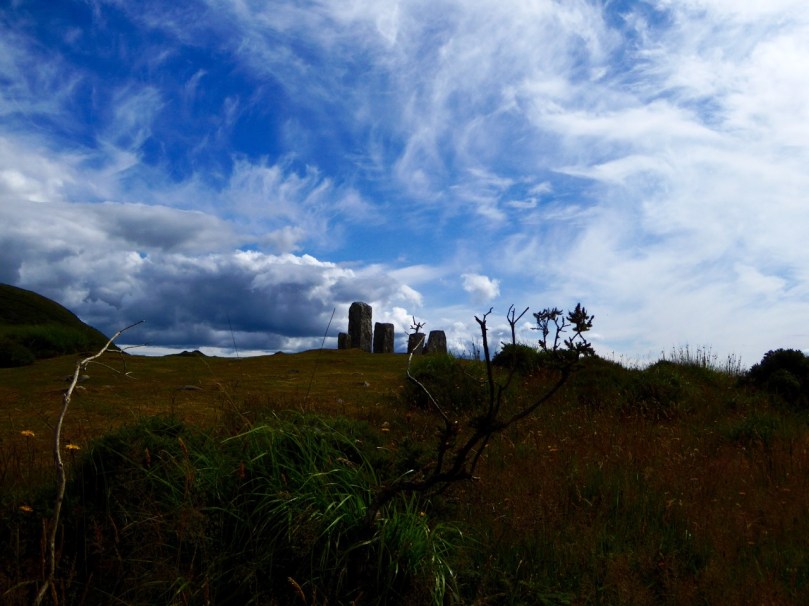
Continue past the back of the castle. At the first junction take the left fork and continue until you see a small lake on your left. Shortly after you will come to a cross roads. Turn right and park – the stone row is in the field on your right.

This is a good example of a multiple stone row: it occupies a very dramatic setting on a knoll overlooking the lake. There’s a helpful explanatory sign.. Note that, instead of being straight, the stones form a slight arc. This is deliberate, as is the placement of the stone lying flat on the ground According to one expert, this stone is placed so that anyone walking up to it and standing with toes touching its edge is looking straight at the equinox. This stone row also appears to have been an important one for lunar observations. It takes the moon over 18 years to complete its cycle and from this site observations of the lunar maximums (the most extreme northerly and southerly moonrises) were likely made.
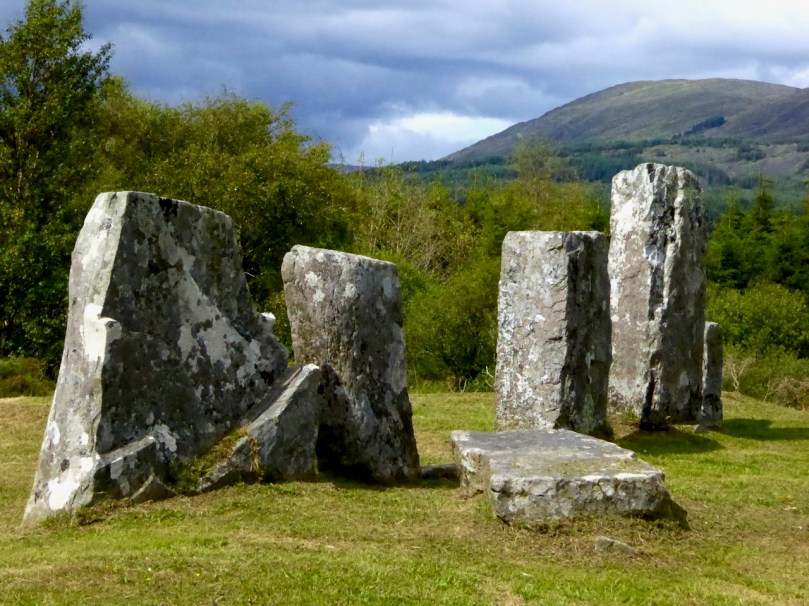
Ponder on the sophistication of our Bronze-Age ancestors. Much of the knowledge they built up so that they could keep track of time and seasons had to be re-learned by later people.

4 Kealkill Stone Circle

Back you go to Carriganass (picnic now, if you haven’t done so already) and on to the village of Kealkill – a pretty and well-kept village (and home to a famous St. Patrick’s Day parade). The stone circle is signposted from the village – just follow the steep and winding road that runs up from the church. After a sharp bend to the right, take the first left turn. There’s enough room to park at a small pull-out. The walk across the field to the circle is often muddy and squelchy so make sure to wear your boots here.
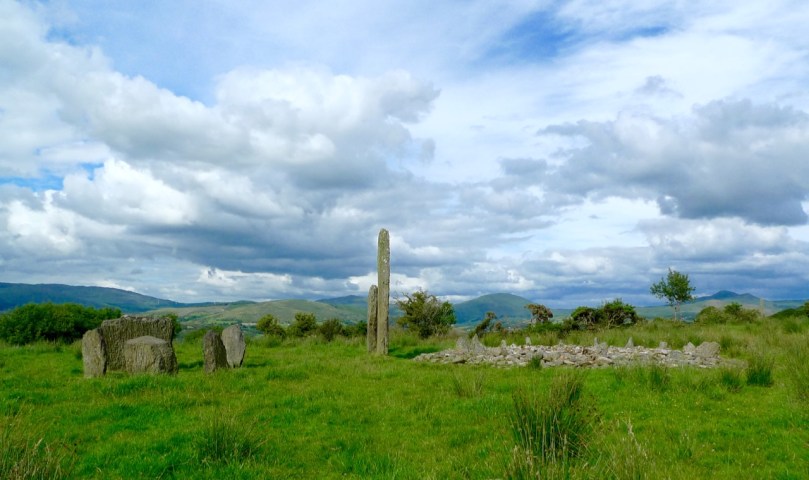
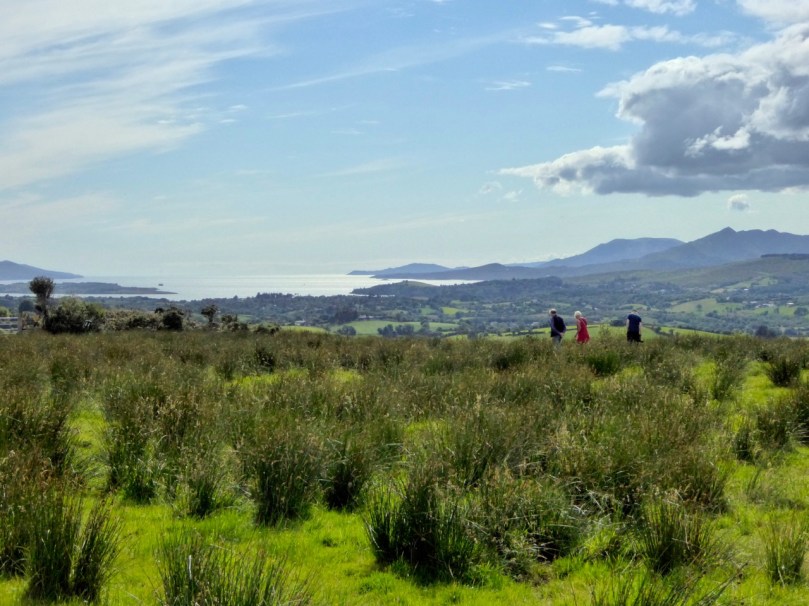
This is yet another complicated site. There is a standing stone pair, a five-stone circle and a radial cairn. But perhaps the first thing you will notice is the spectacular view. From this spot you can see all the way down the spine of both the Sheep’s Head and the Beara Peninsula to the South-West, and across the valley to the Shehy Range to the North and East.
One of the stone pair is over 4m high. But it’s broken – and may originally have stood over 6m high.  Imagine the difficulty of erecting this!
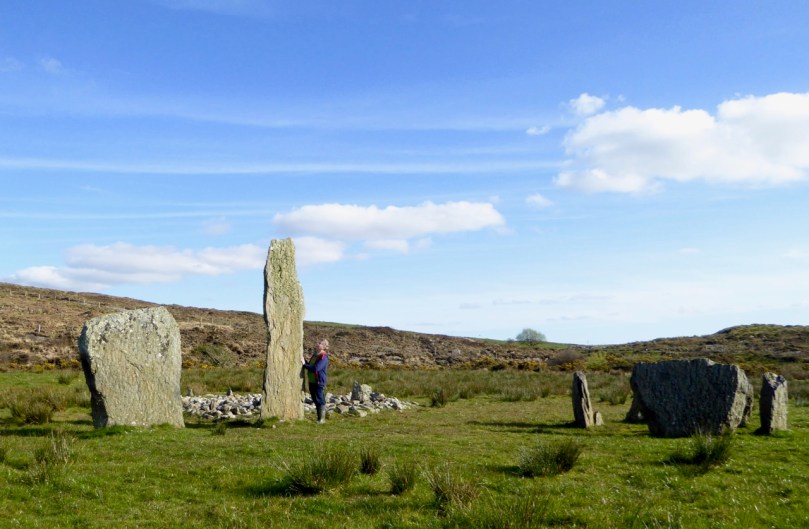
The radial cairn is a mysterious monument – nobody is quite sure of its function – and relatively rare. Once again, it is often found in conjunction with other monuments – stone alignments or stone circles. This one was excavated, but nothing conclusive was found to help determine its function. Note the small upright projecting stones that look like the face of a clock among the cairn stones.

5 Breeny More, Ring Fort, Boulder Burials and Stone Circle

This is almost directly south of the Kealkill circle and on the other side of the road. Go back down the hill towards the village of Kealkill, take the first left and it’s around the first bend. There’s a ring fort (Early Medieval farmhouse enclosure, perhaps 1000 years old) right inside the gate. This is a farm field so check there are  no animals or machinery working before venturing across and up it. There’s a multiple stone circle here, with four boulder burials within it. There’s not much left of the stone circle, but the portal stones and recumbent remain, so the alignment can be discerned. The boulder burials are laid out in square formation in the centre – a very unusual occurrence, since boulder burials are normally outside the circle.

The site is on a natural ridge, with similar panoramic views to the Kealkill Stone Circle. One writer has speculated that if trees were removed it would be possible to see the tall standing stone at Kealkill from this site.

6 Kealkill Holy Well
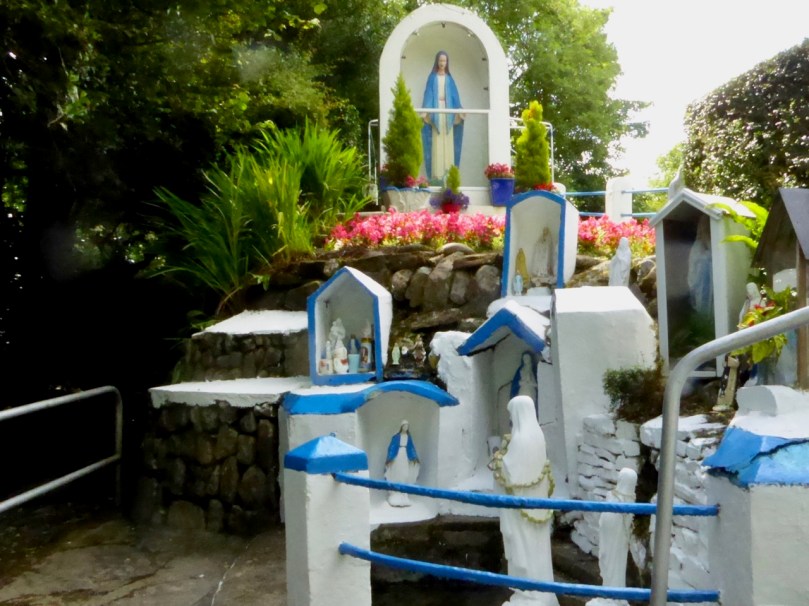
What’s a field trip without a holy well? This one is wonderful. Park at the graveyard about a km from Kealkill on the road towards Ballylicky and walk up through it, then follow the path across a small field to the Marian statue. The holy well is behind the shrine. Known locally as Tobairín Mhuire (Mary’s Little Well), mass was traditionally celebrated here on August 15th. If you’d like to learn more about holy wells, or visit some other West Cork examples, have a good browse around Holy Wells of Cork – it’s the go-to website on this subject (see list below).

Here’s more information about the kinds of monuments you’ll be visiting:

Stone Circles: Ancient Calendars

Standing Stones and Rows: Monoliths, Mysteries and Marriages

Holy Wells: Holy Wells of Cork

Boulder Burials: Boulder Burials: A Misnamed Monument?

Castles: Several posts about tower houses

We hope you enjoy your day! Let us know how you get on.
A Visit to Knock

Our travels have taken us to quite a few Christian pilgrimage sites in Ireland: they are all fascinating, and range from St Patrick’s holy mountain  – Croagh Patrick (where snakes were cast out of this country forever) – through the rather daunting Station Island on Lough Derg (where a medieval pilgrim entered, and returned from, Purgatory) to the more ‘unofficial’ shrine at Ballinspittle, here in West Cork, where a statue of the Virgin was seen to move (by hundreds of onlookers) in 1985. Recently we found ourselves in Mayo, so a trip to Ireland’s most impressive shrine – at Knock – was essential.

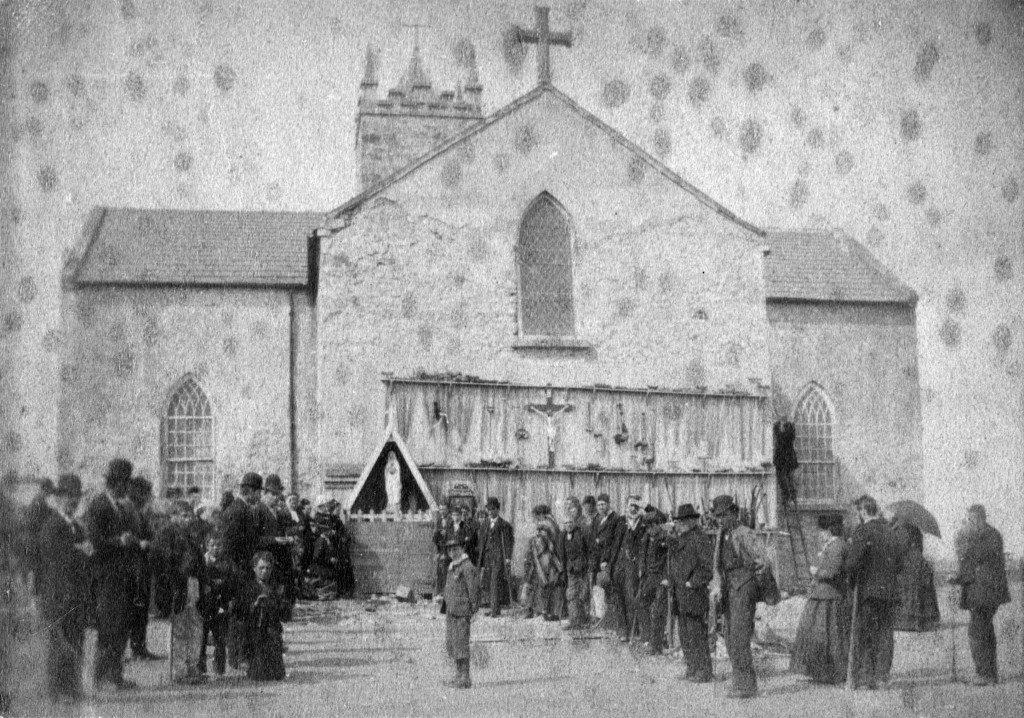
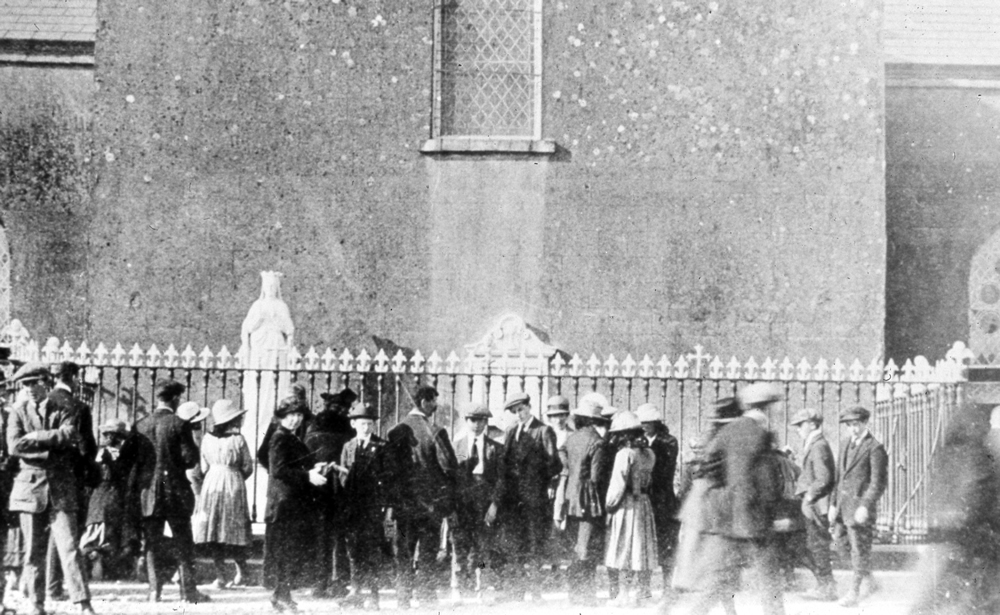
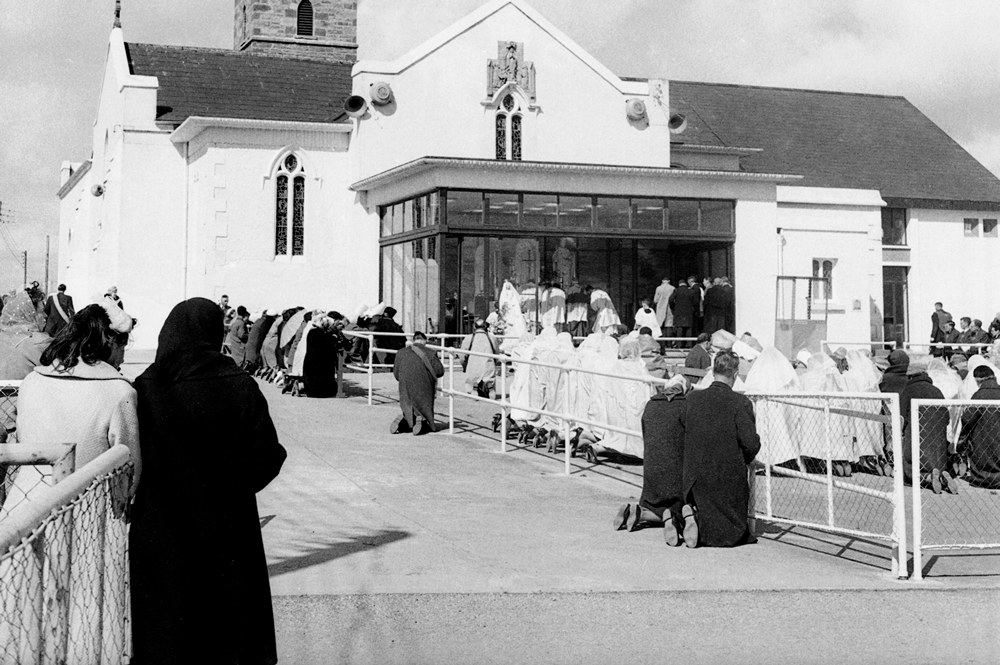
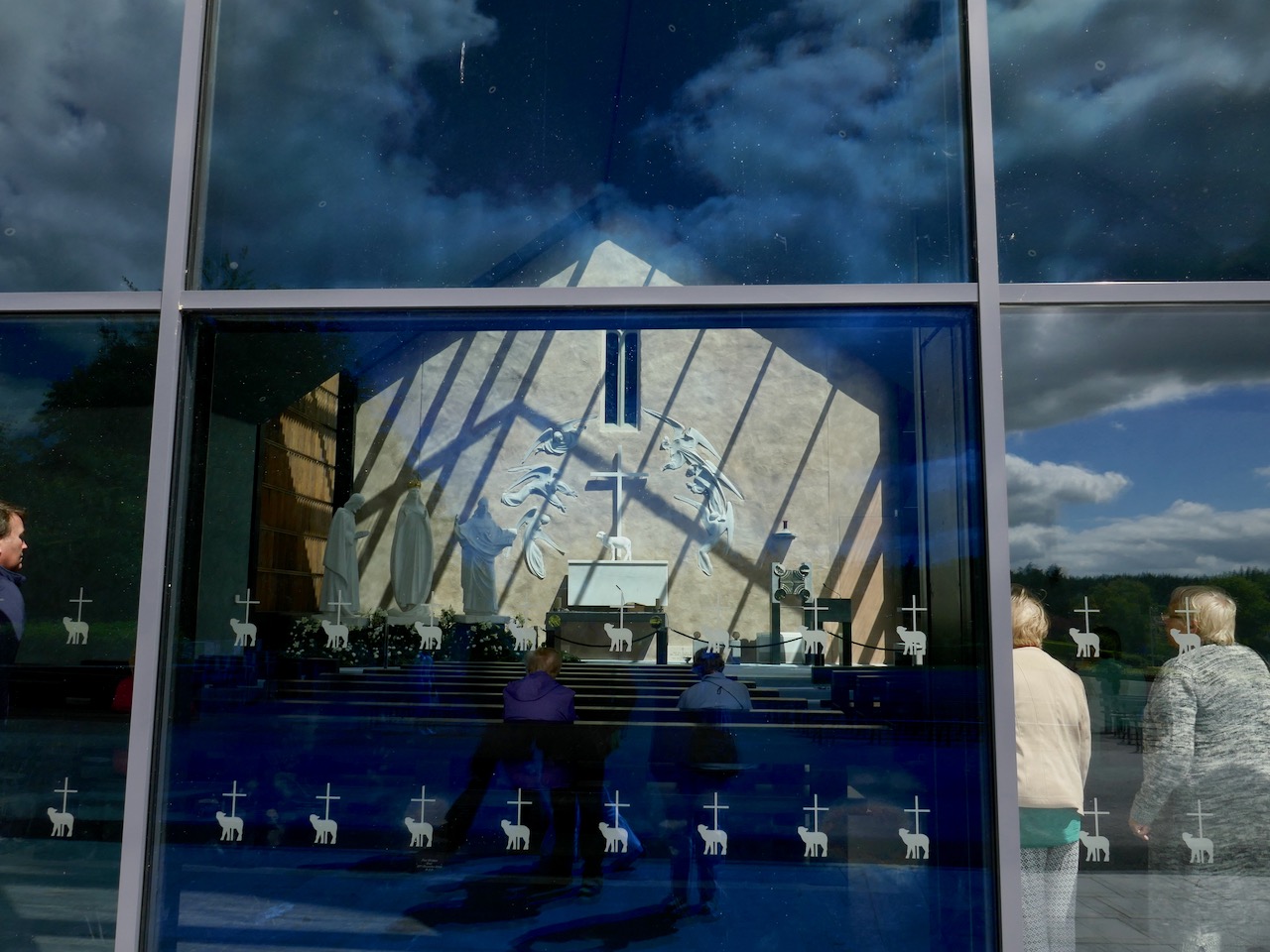
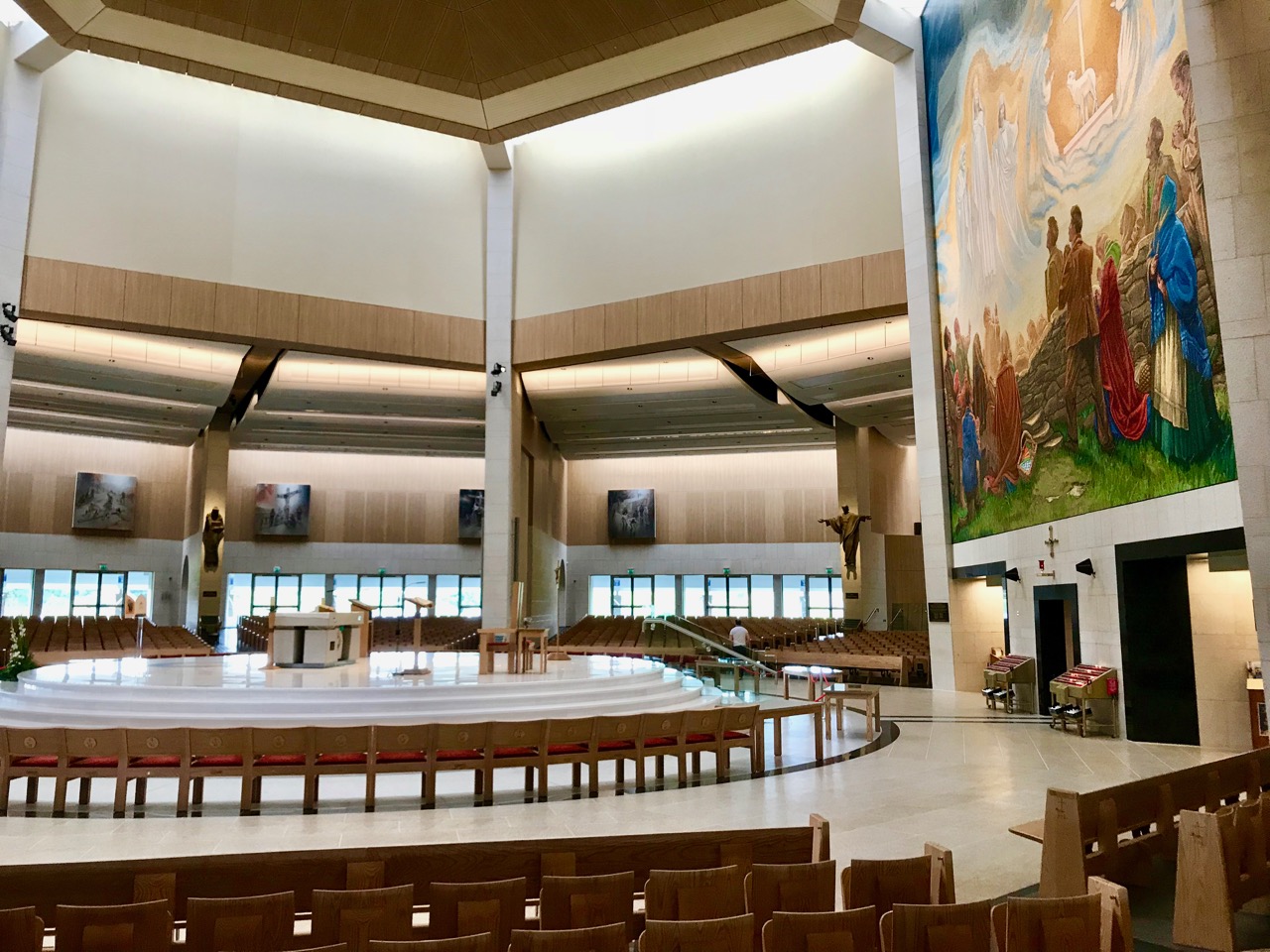
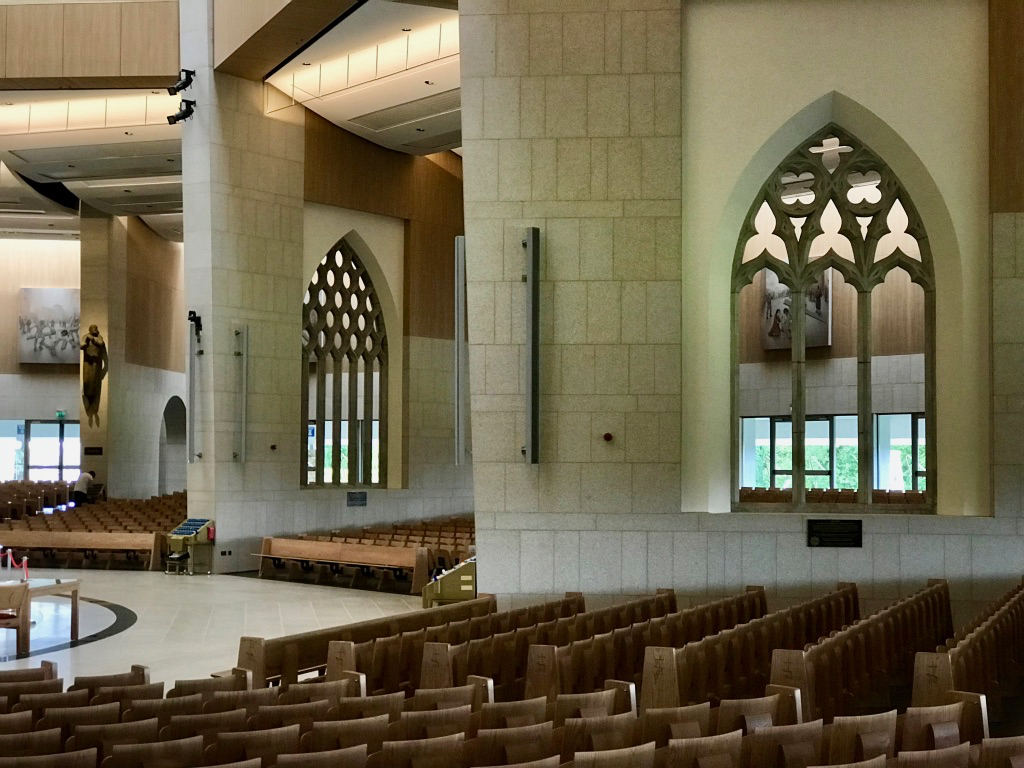
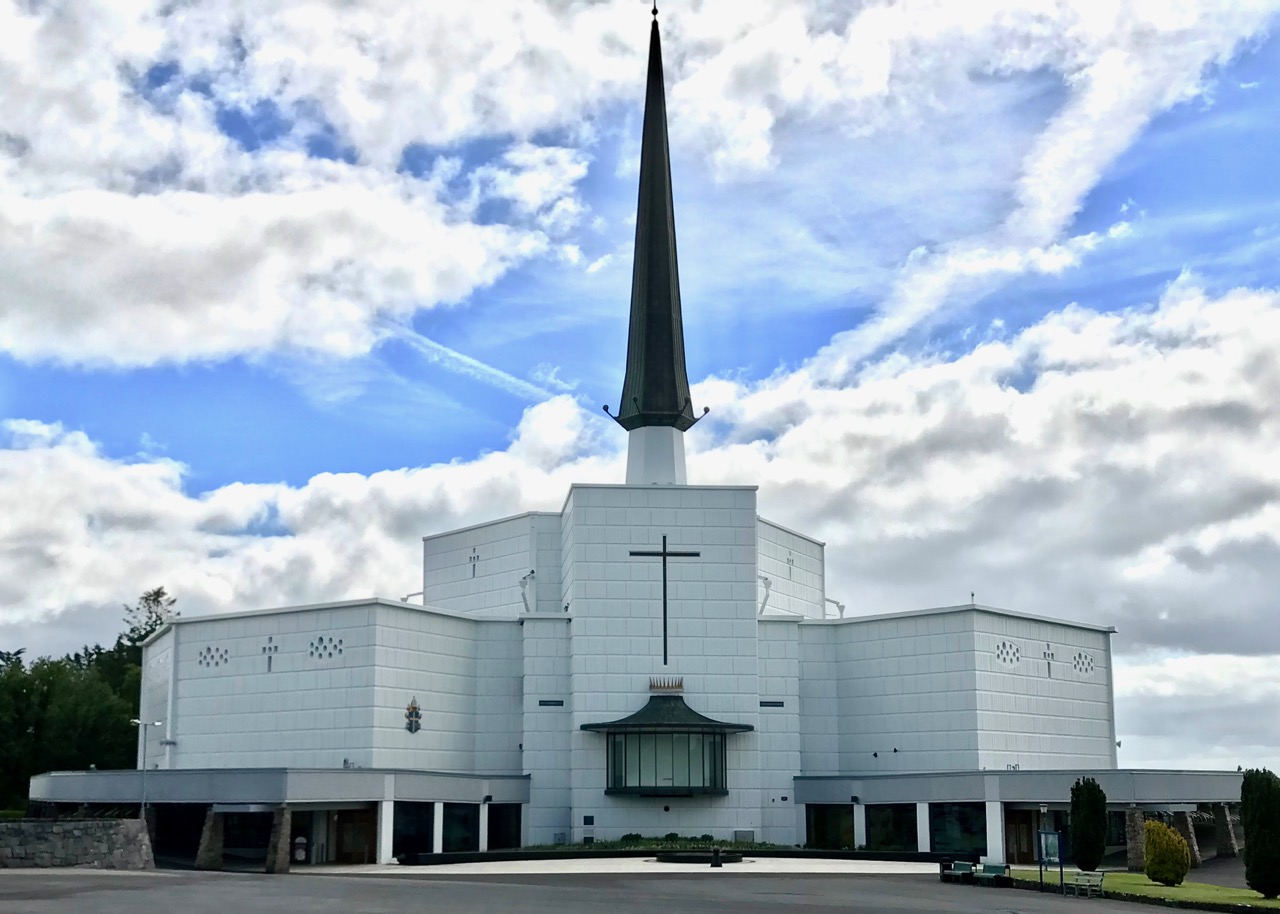
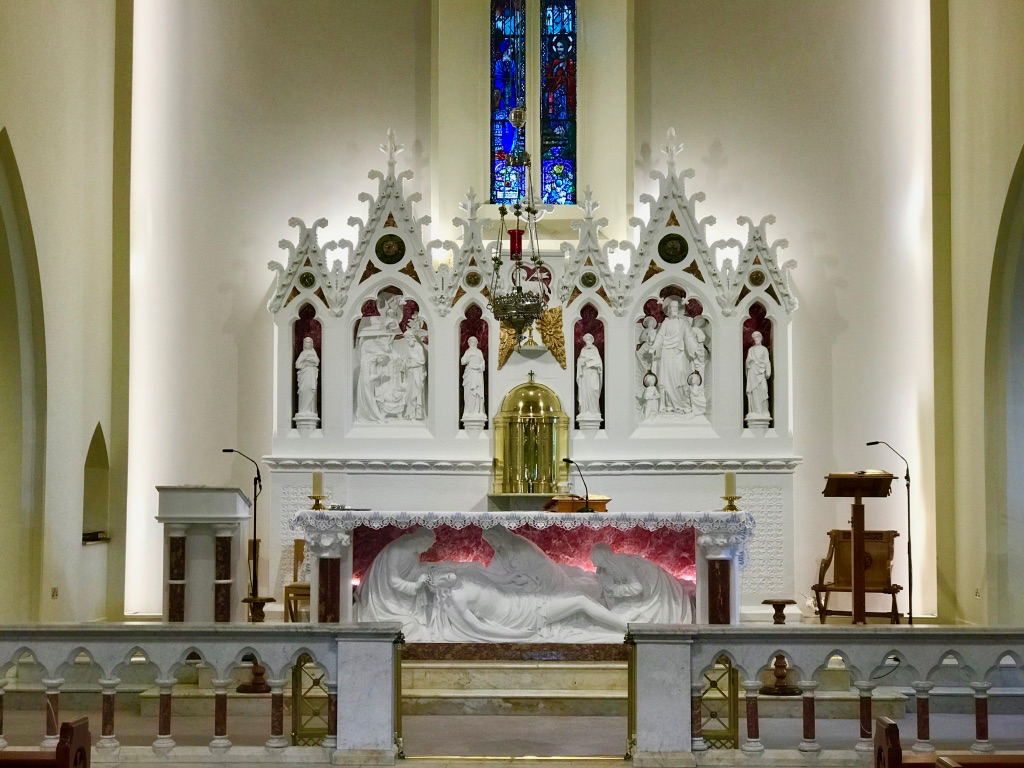
These illustrations show the evolution of the shrine. At the header is the updated interior of the Parish Church of Knock-Aghamore today, showing the beautiful high altar which was made by P J Scannell of Cork and which was presented as a gift during a pilgrimage in 1880. Behind this east wall is the gable where, on 1st August 1879, fifteen local people witnessed an apparition of Mary, Joseph, St John the Evangelist, and a lamb on an altar which seemed to float, stationary and silent, in front of the wall. It was 8pm and the rain was pouring down, yet the gable wall and the ground in front of it remained dry. The vision – which was also seen by others – seemed to last for about two hours. The upper picture above, which probably dates from around 1880, shows the gable and in front of it a rack of crutches and other paraphernalia apparently left by those cured at the shrine. The very first recorded cure, which happened soon after the vision, was of Delia Gordon, a young girl from nearby Claremorris, who was instantly cured of an acute ear infection and deafness after her mother scraped a little of the plaster off the gable wall and placed it into her ear. You can see in the upper picture where considerable amounts of the plaster appear to have been removed (presumably, following that first cure); by the 1930s (second picture) an iron fence had been erected to protect the wall. In 1963 (third picture), a dedicated chapel had been built in front of the gable, and today (fourth picture) a modern Apparition Chapel is in place to contain the large number of pilgrims who attend mass there on a daily basis. You can also see the elegant sculptures which have been installed on the wall to represent the figures of the apparition.
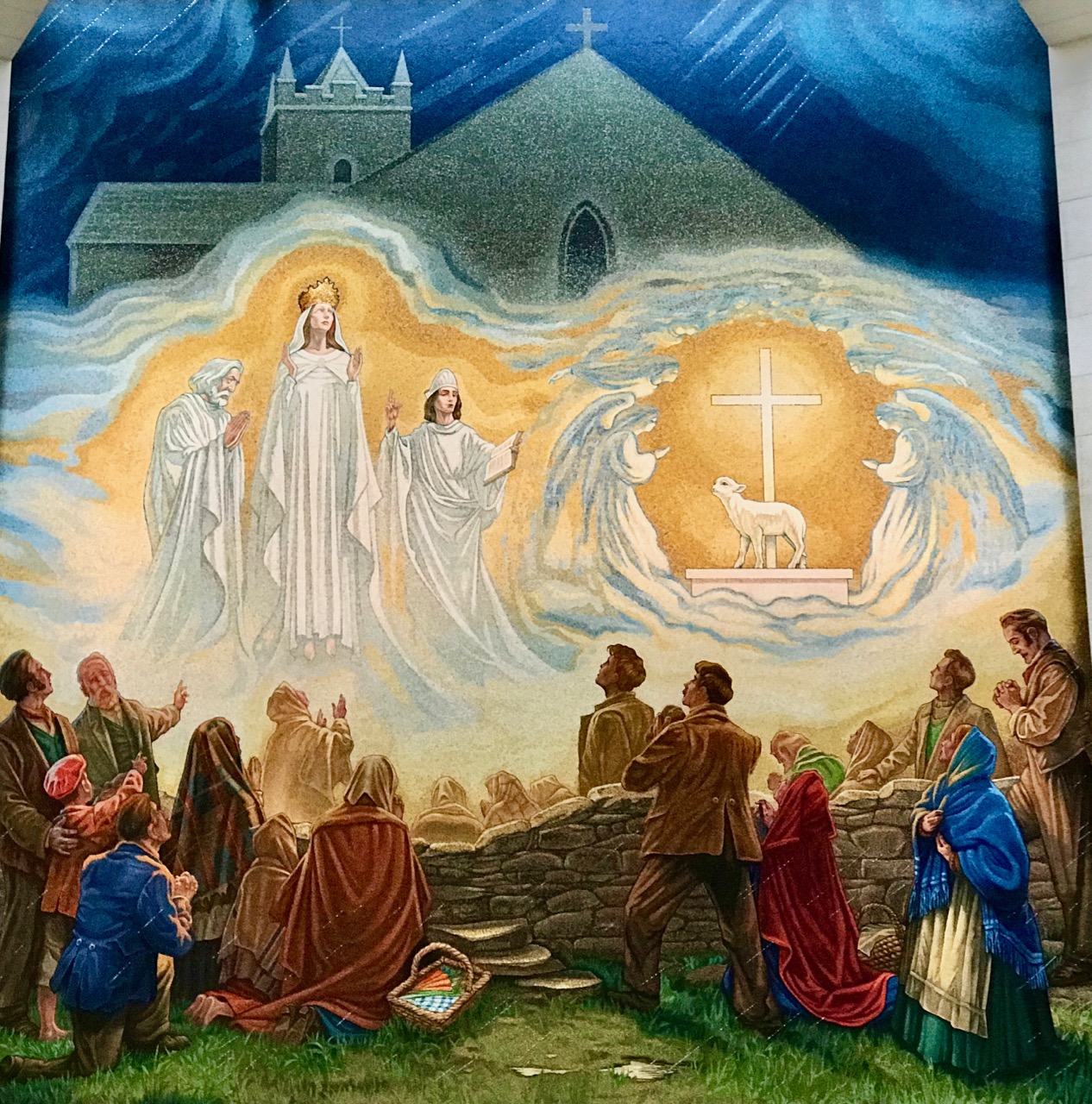
The vision is superbly depicted in this enormous mosaic which has recently been installed in the Basilica at Knock. P J Lynch, the artist who designed the mosaic, said he . . . tried hard to capture the sense of the wonder that the witnesses must have felt on that wet August evening back in 1879 . . . The mosaic measures 14 metres square and is one of the largest single flat pieces of religious mosaic of its kind in Europe: it is made predominantly from Venetian glass smalti and there are approximately 1.5 million individual pieces of mosaic in the complete work.

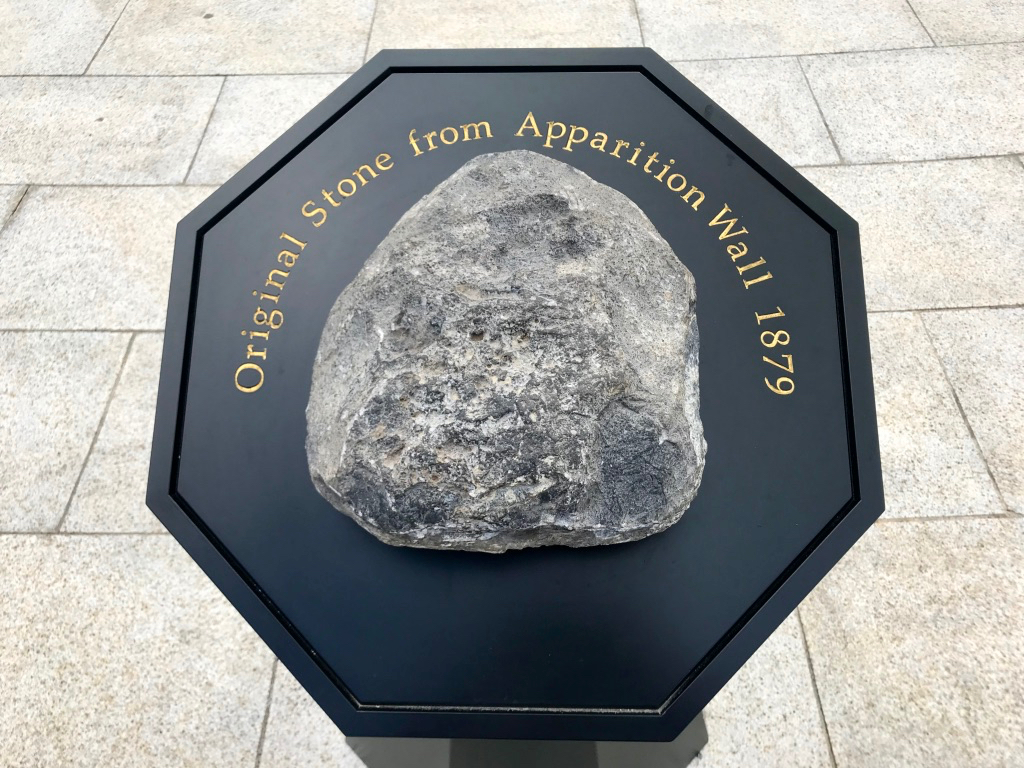
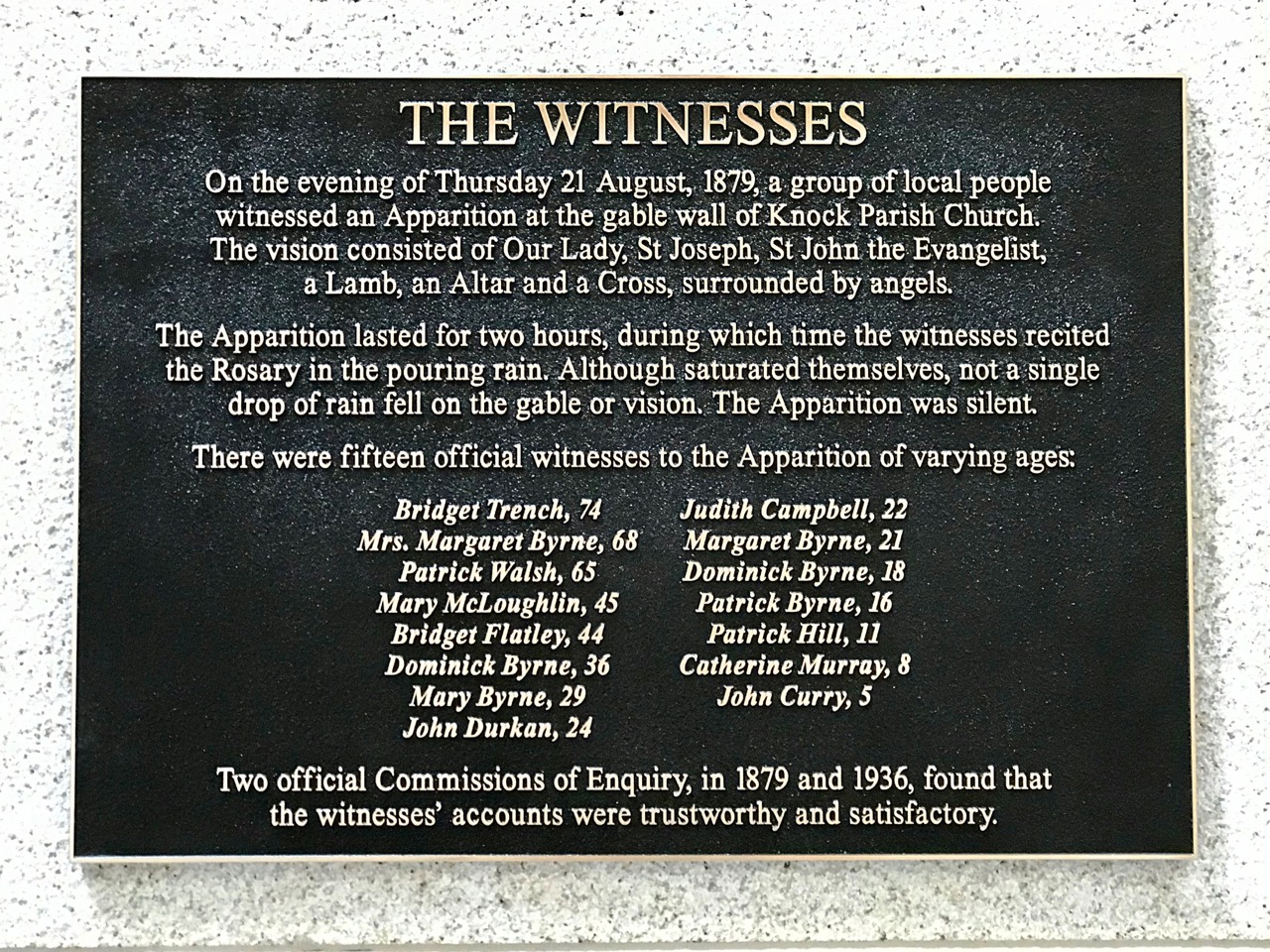
This is original stonework from the gable wall to the Parish Church: the lower picture is a panel built in to the modern Apparition Chapel wall. The statements made by the 15 witnesses who saw the vision at the wall in 1879 are fully documented here – an official Commission of Enquiry was held by the Catholic Church in that same year and concluded . . . the words of the witnesses were trustworthy and satisfactory . . . a further investigation in 1936 interviewed the then surviving witnesses, who corroborated what they had seen. Mary Byrne, who was 29 at the time of the apparition and 86 during the second enquiry said . . . I am clear about everything I have said and I make this statement knowing I am going before my God . . . She died shortly afterwards. John Curry, the youngest witness, was 5 in 1879. The child said . . . he saw images, beautiful images, the Blessed Virgin and St Joseph. He could state no more than that he saw the fine images and the light, and heard the people talk of them, and stood upon the wall to see them . . . He confirmed his memories when interviewed in new York for the 1936 enquiry.
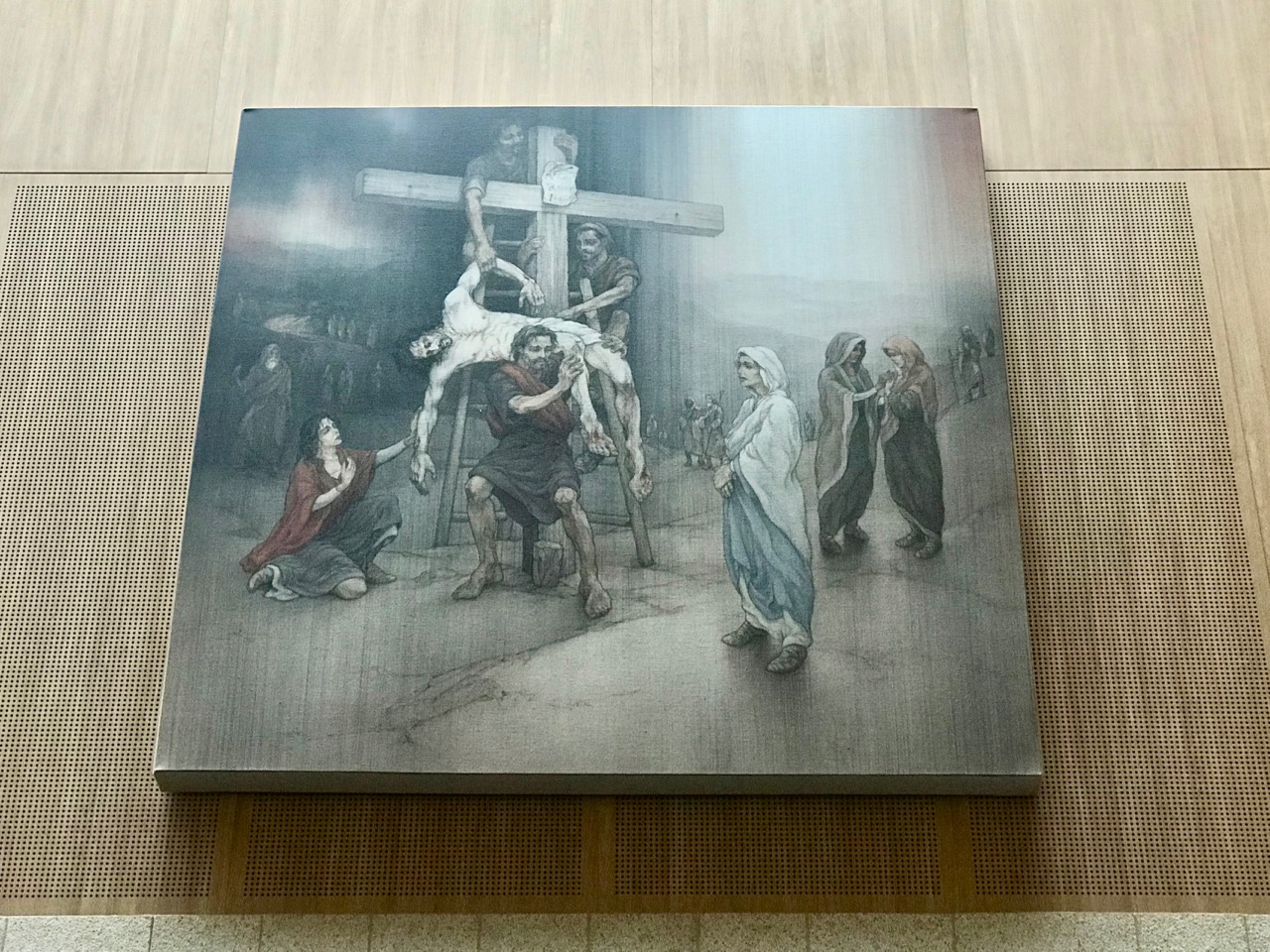
Over a million people a year come to Knock, in search of faith, enlightenment, cures perhaps: or just out of curiosity. It is a place with a great sense of purpose – and long may it continue. As a (now retired) church architect I was distinctly struck by the enormous Basilica which was constructed initially in the 1970s and which has been refurbished very recently. It is spectacular in its size and scale and is fittingly  furnished with powerful works of art. In particular I was impressed by the large, harrowing, painted Stations of the Cross, the work of Mayo artist, Ger Sweeney.

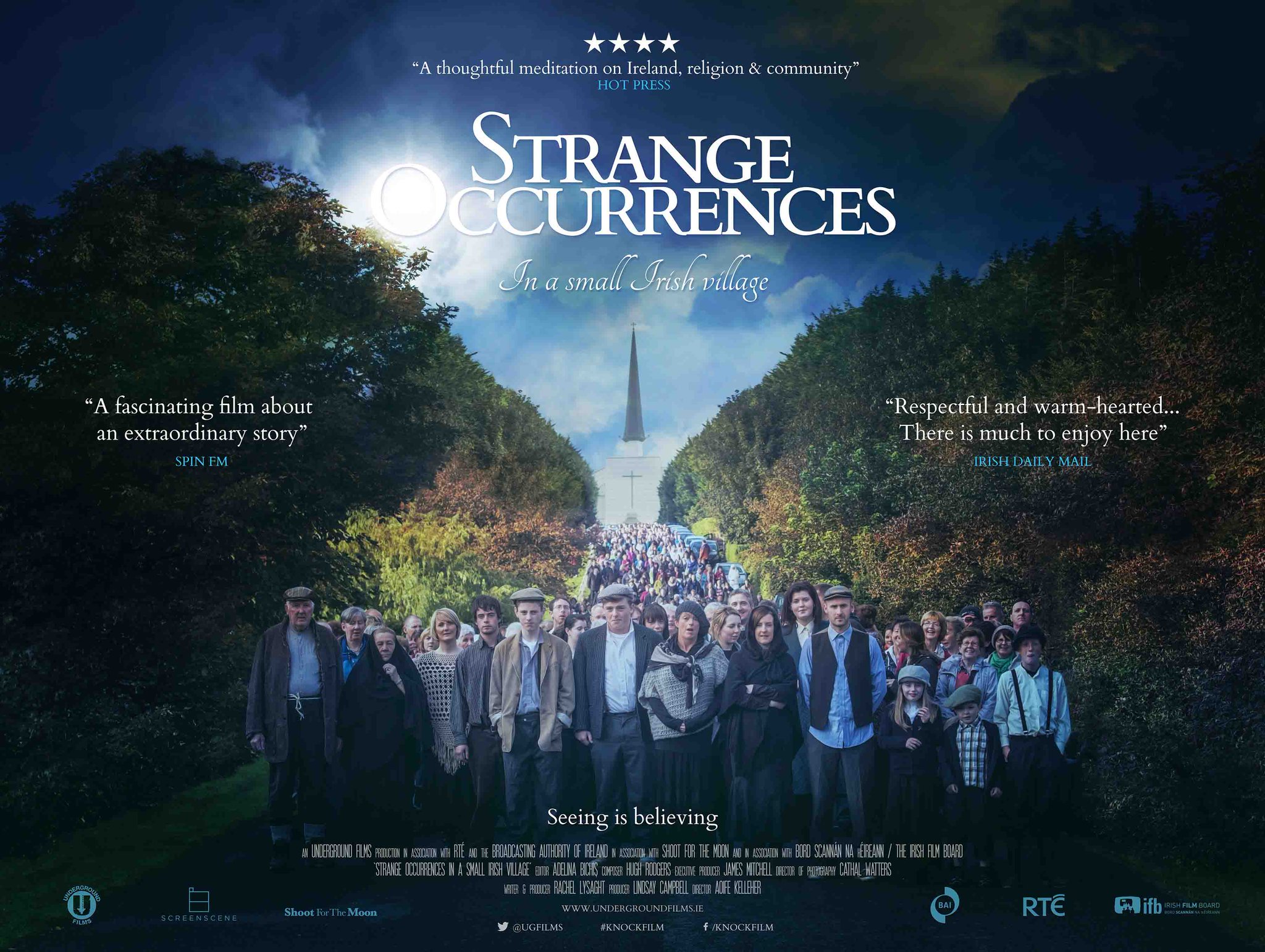
If you have a spare couple of hours it’s worth finding and watching this entertaining and fair-minded documentary about Knock, made by RTÉ in 2016:

I make no judgments as to the veracity or otherwise of what was witnessed on that day in 1879. There have been many theories put forward, ranging from magic lanterns to unrest provoked by the Land Acts! But why should we doubt the faith of anyone, whatever their religion? The Christian story is all about miracles, so surely miracles are just as possible in the 19th century as they were in the 1st… The village of Knock carries on its normal life around all the trappings of the shrine: shops selling statues and Holy Water bottles abound, and add to the colour. On the site you can look out the well-curated museum, and treat yourself to good refreshments. It’s all worth visiting, even if your interest is purely anthropological. The Pope himself will be there this August and all the 45,000 (free) tickets have been booked. If the sun keeps on shining – and perhaps it will – it’ll be a grand day for all!

Off the M8 – A Secret in The Glen of Aherlow

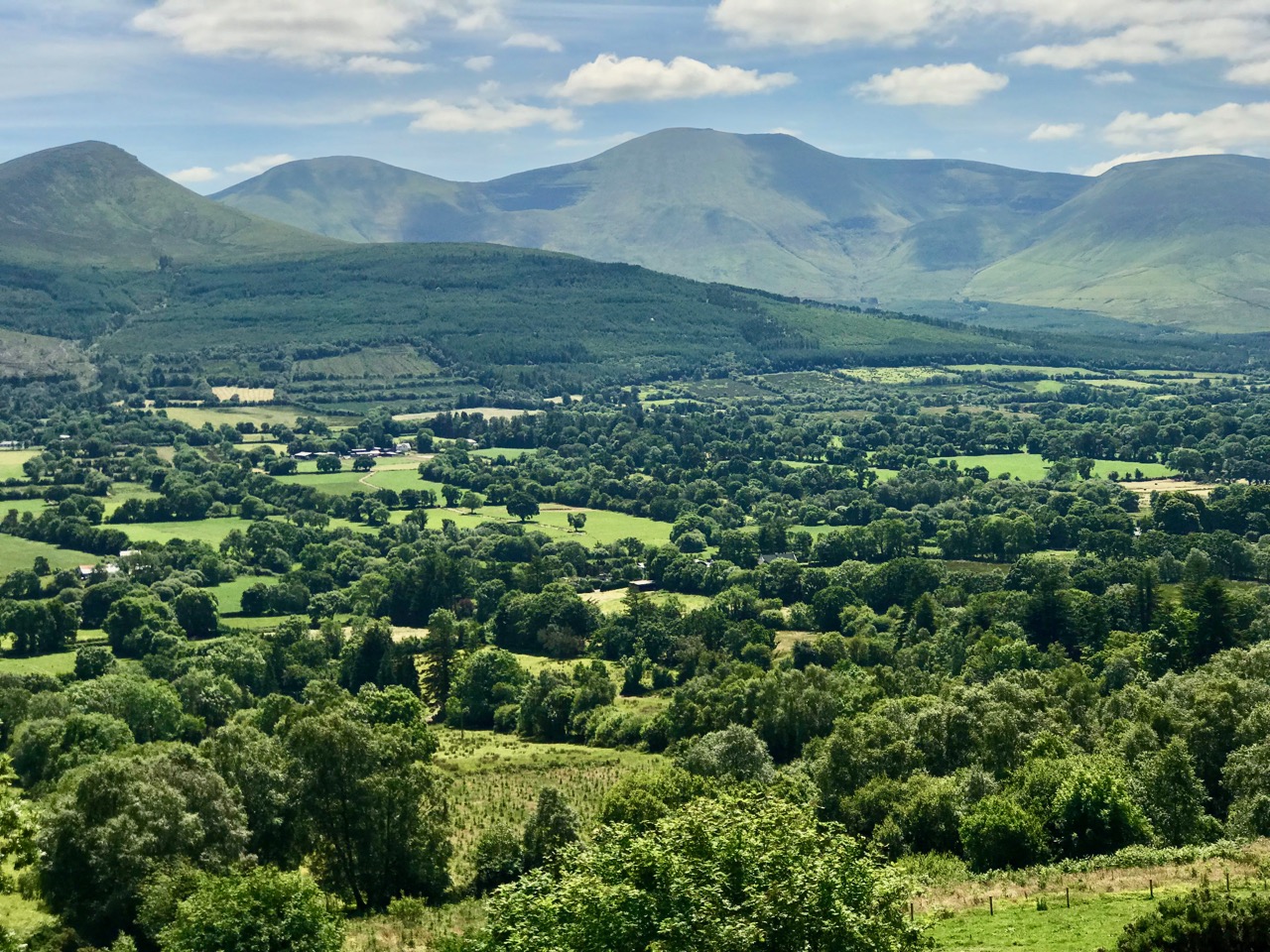
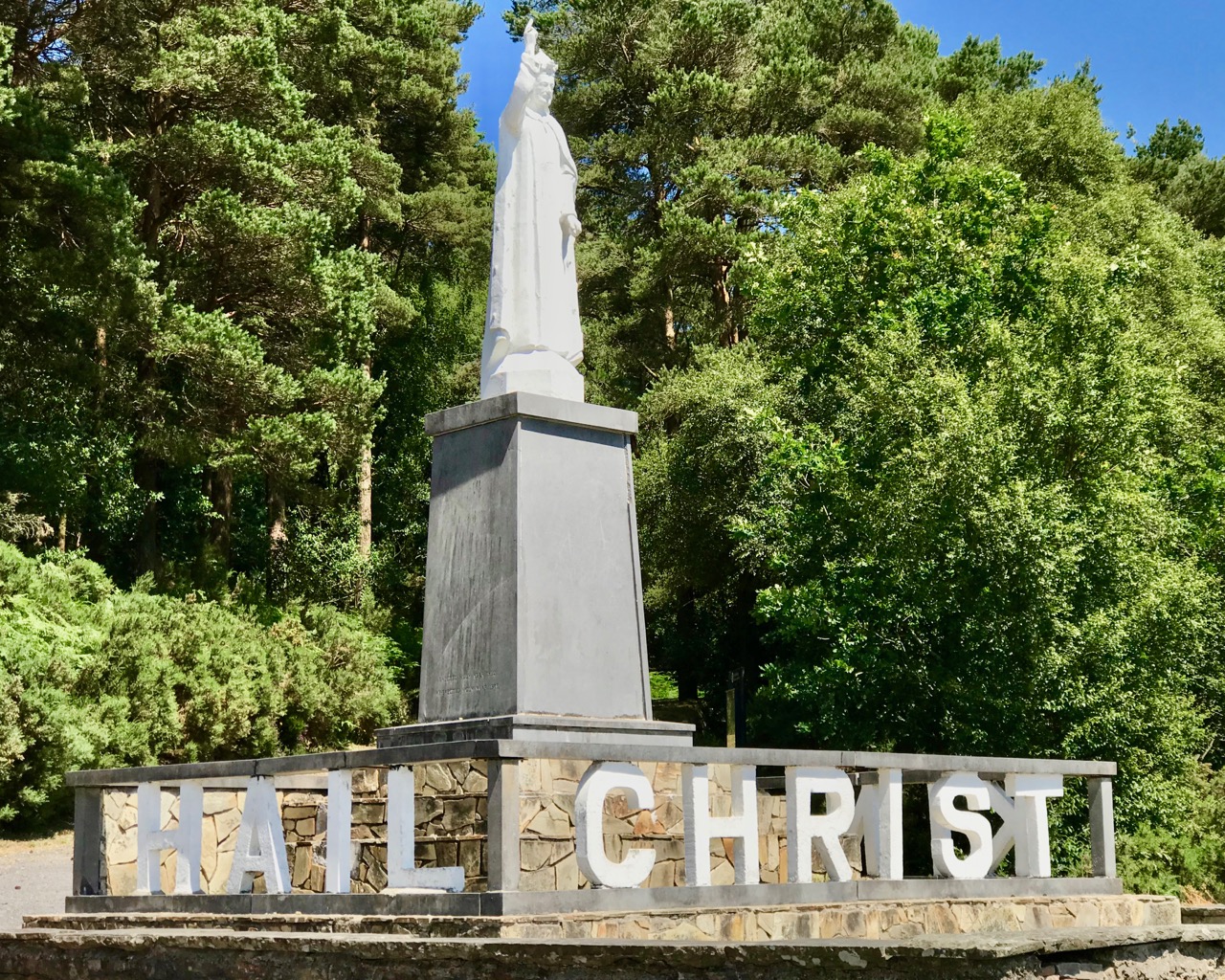
The Glen of Aherlow, County Tipperary: I had never heard of it. However, as you can see from the view, above, the place deserves to be explored: it’s about 20 minutes from junctions 10 and 11 near Cahir. That’s not too much of a diversion. From the spot where this photo was taken – on our travels this week – you can look out across to the Galtee Mountains, a prospect enjoyed for eternity by this imposing statue of Christ the King, whose hand is raised . . . in blessing the Glen, its people and all those who pass by . . . The statue was originally placed here by volunteers in the Holy year of 1950, and recreated in 1975. It has become the symbol of the Glen.

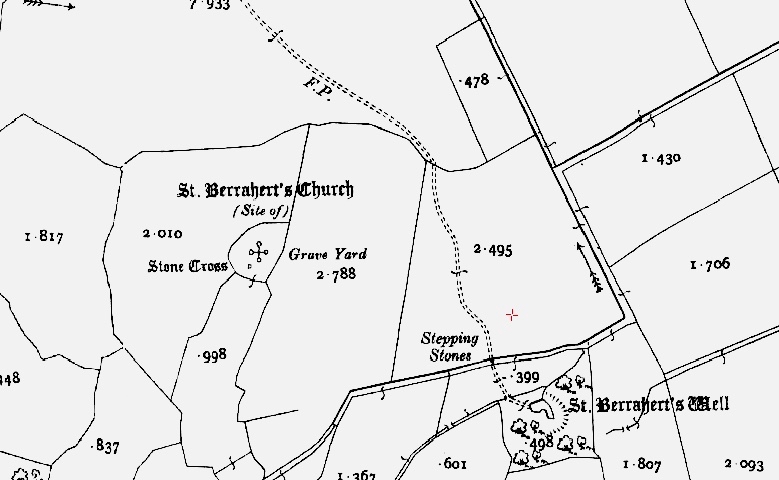
We were passing on our way to search out a secret which the Glen holds: somewhere in the townland of Ardane, we knew that there is a very ancient site where treasures have been hidden away for centuries. The first edition of the Ordnance Survey map has it marked:

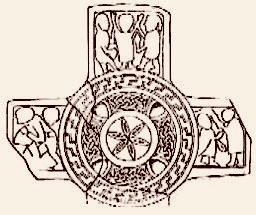
I was intrigued, because a ‘Stone Cross’ indicated in this way often implies a High Cross, and a monastic settlement, so I was anxious to investigate. You will remember previous posts I have written on the many magnificent examples of these medieval treasures which Ireland holds. We had been alerted to this site by our friends Amanda and Peter, who have recently visited, and Amanda has given a comprehensive account of St Berrahert’s Well (also shown on the map) in Holy Wells of Cork. Like Amanda, I am unsure if there is a ‘correct’ spelling of St Berrahert: he is also known as Berrihert, Berehert, Bernihardt, Bericheart, and Bernard! Not a lot is known about him, other than that he came to the Glen after the Synod of Whitby in AD 664 and died on 6 December 839 – one of the saints who, like St Ciarán . . . the first Saint of Ireland . . . had a remarkably long life and who has left his name behind in the heart of Tipperary.

The place is generally known as St Berrahert’s Kyle (from the Irish word cill, ‘church’). It’s hard to find. We enlisted the help of Jimmy Martin, a local resident, who regaled us most entertainingly – and at great length – about hooded monks, crows and strange characters he had personally encountered at the site, and cures which he had witnessed at the well. Following his instructions we crossed fields, passed somnolent cows, and saw before us the remarkable ‘Kyle’.

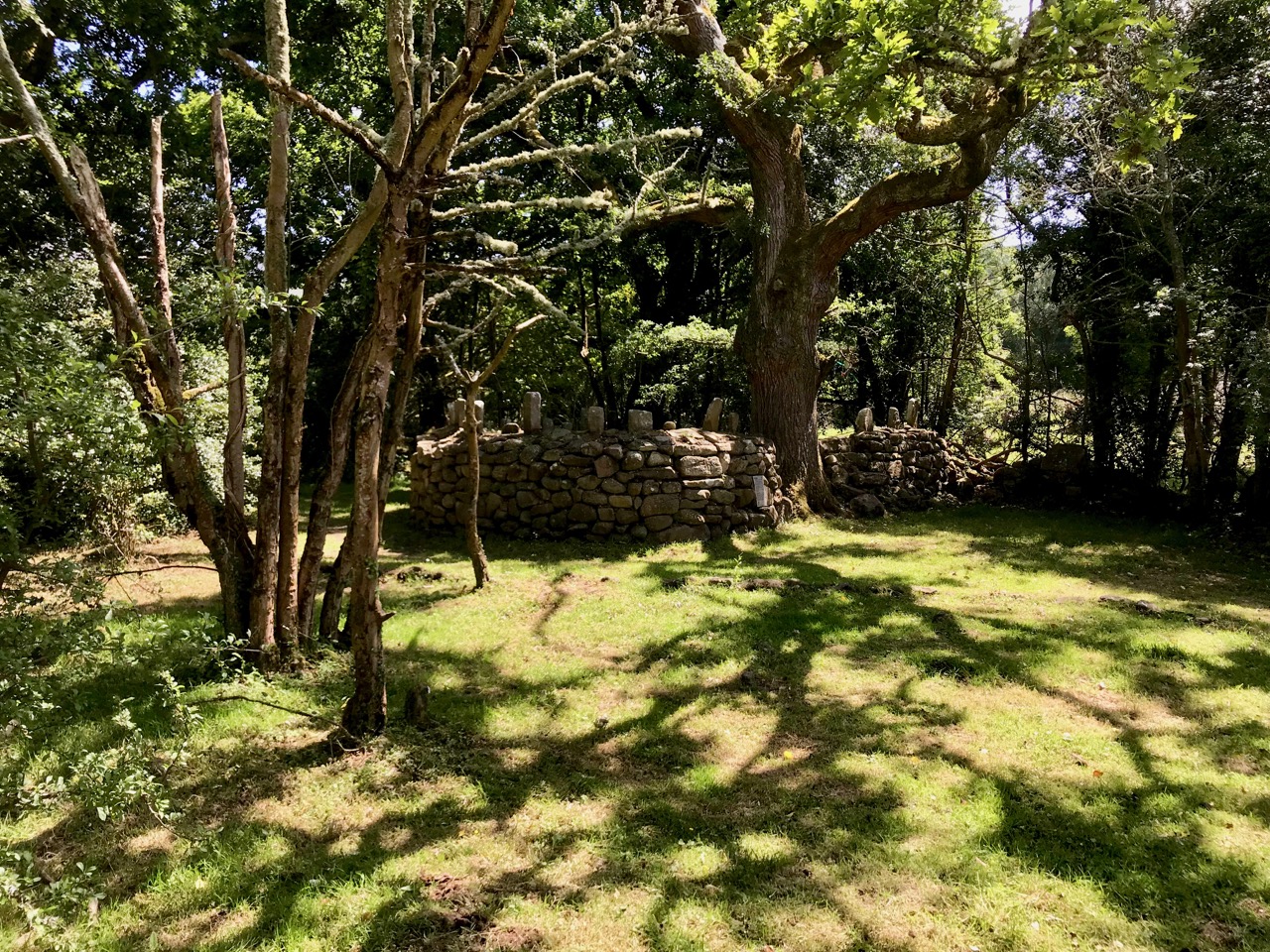
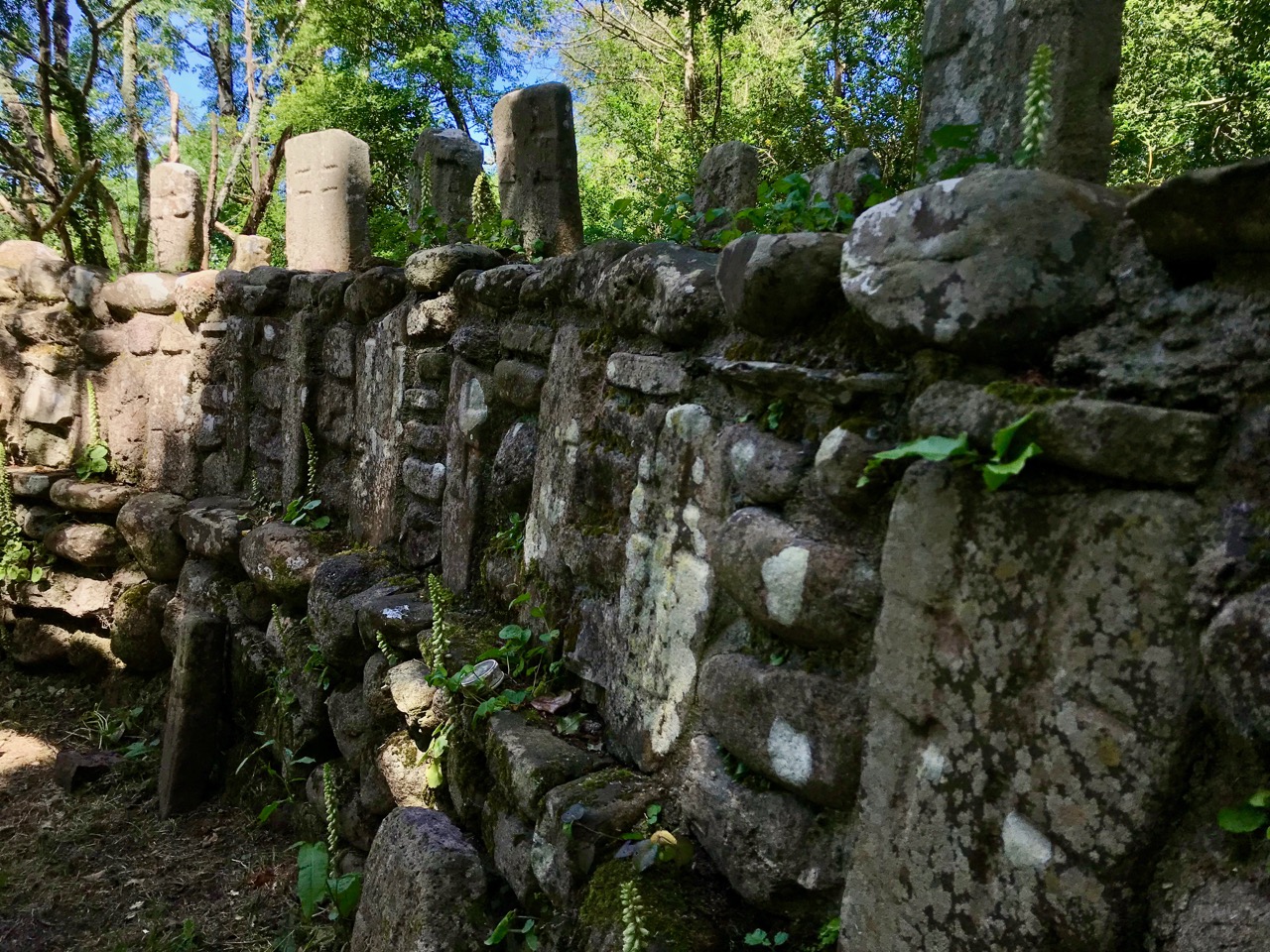
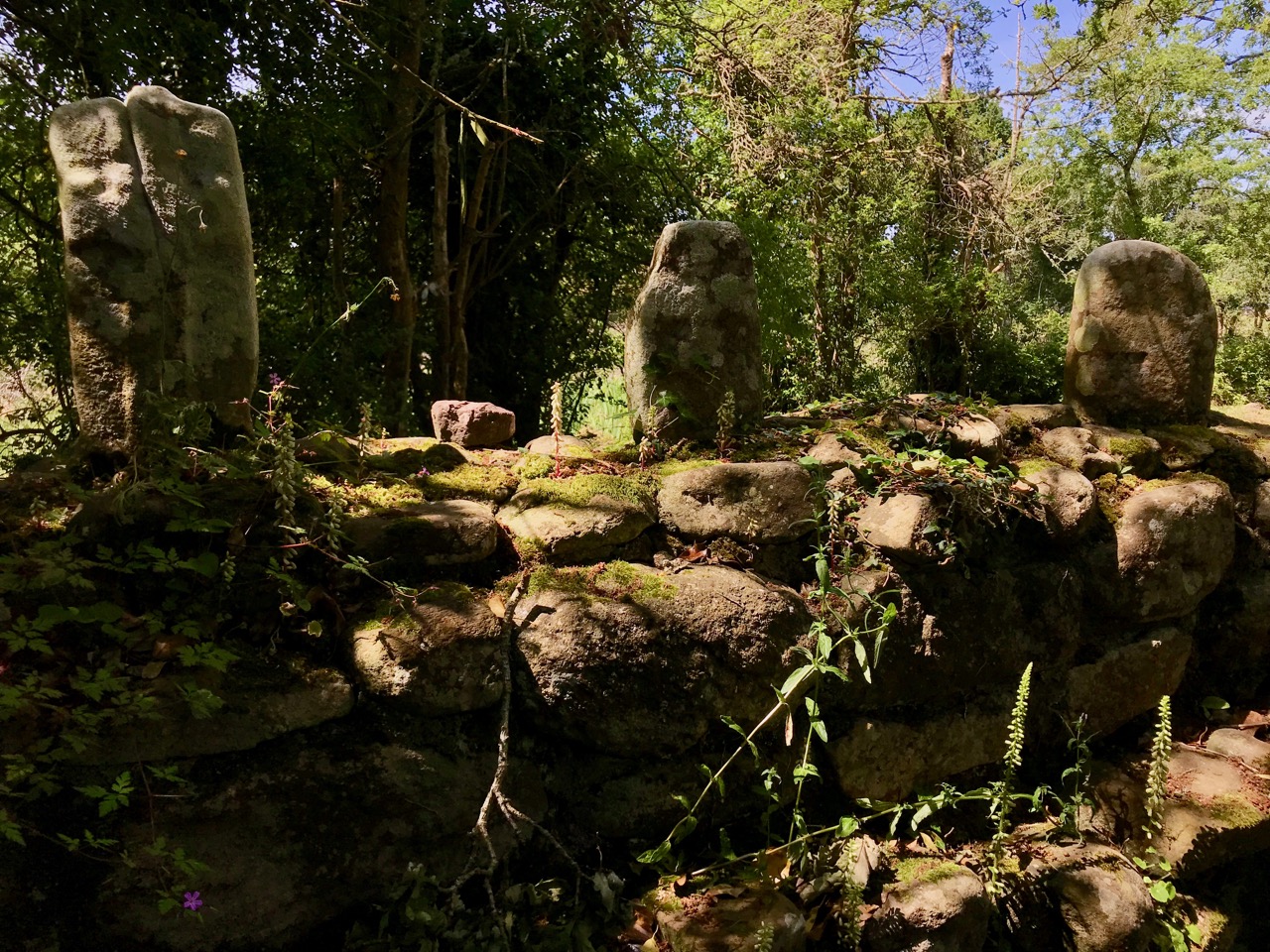
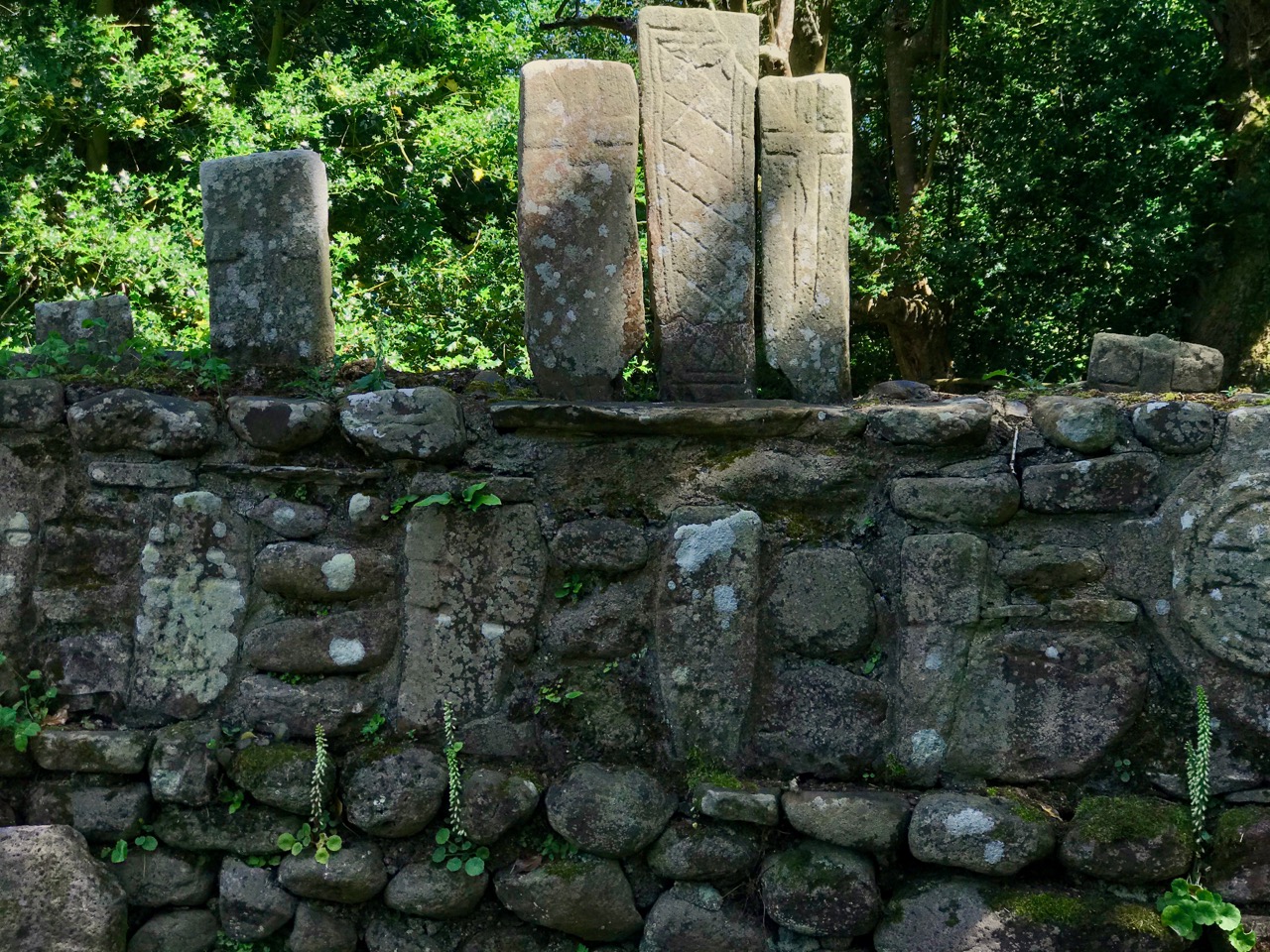
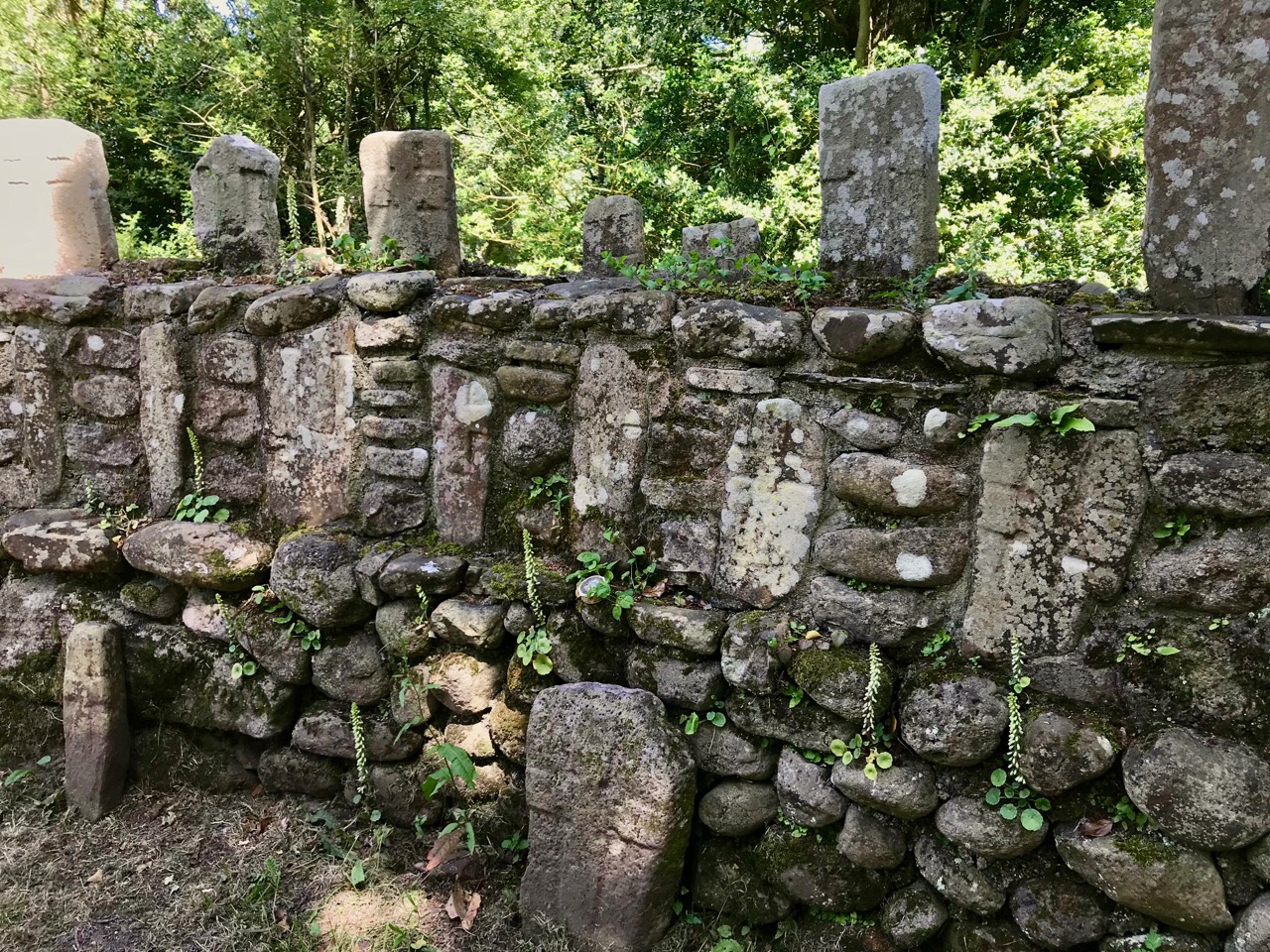
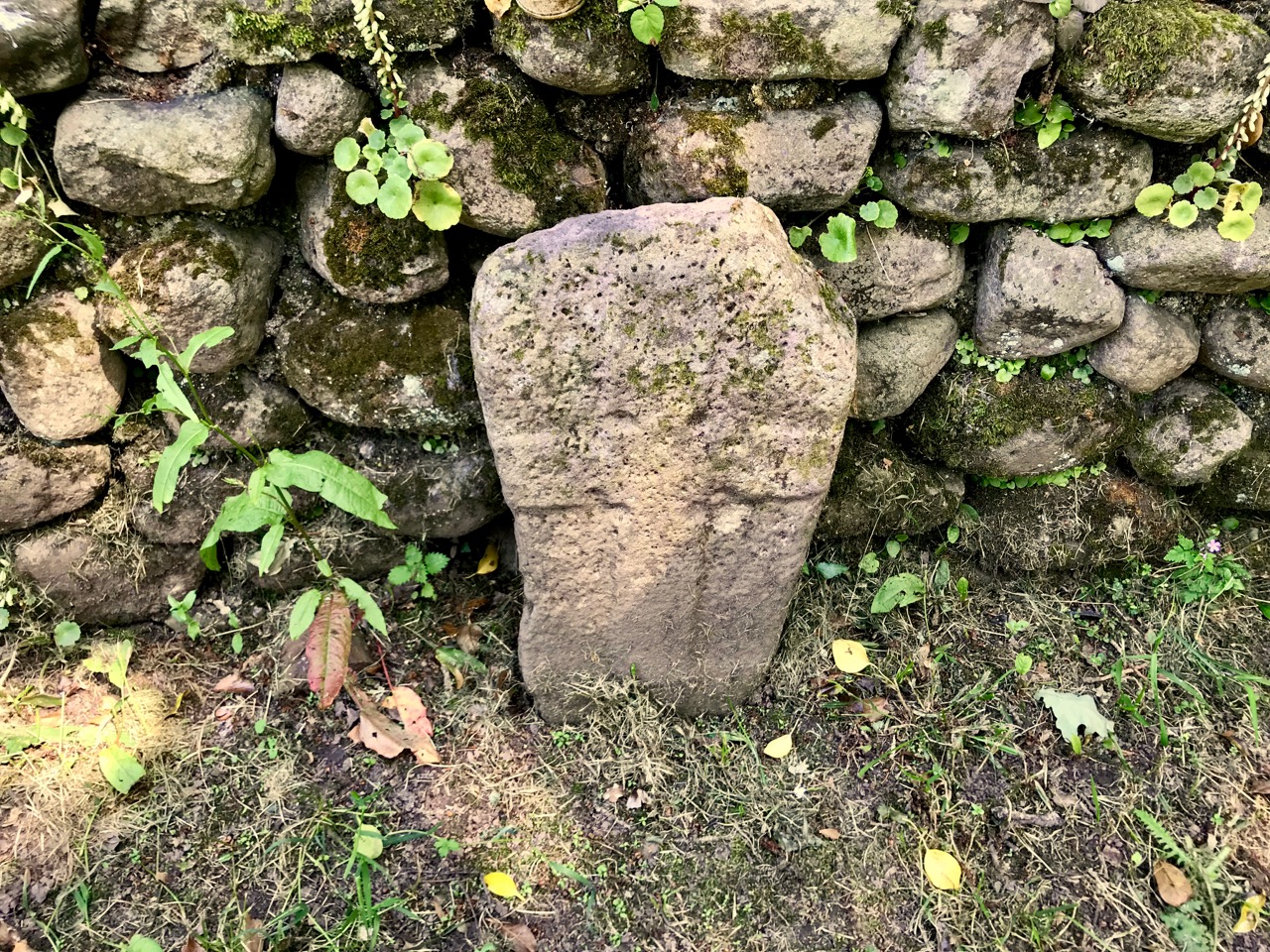
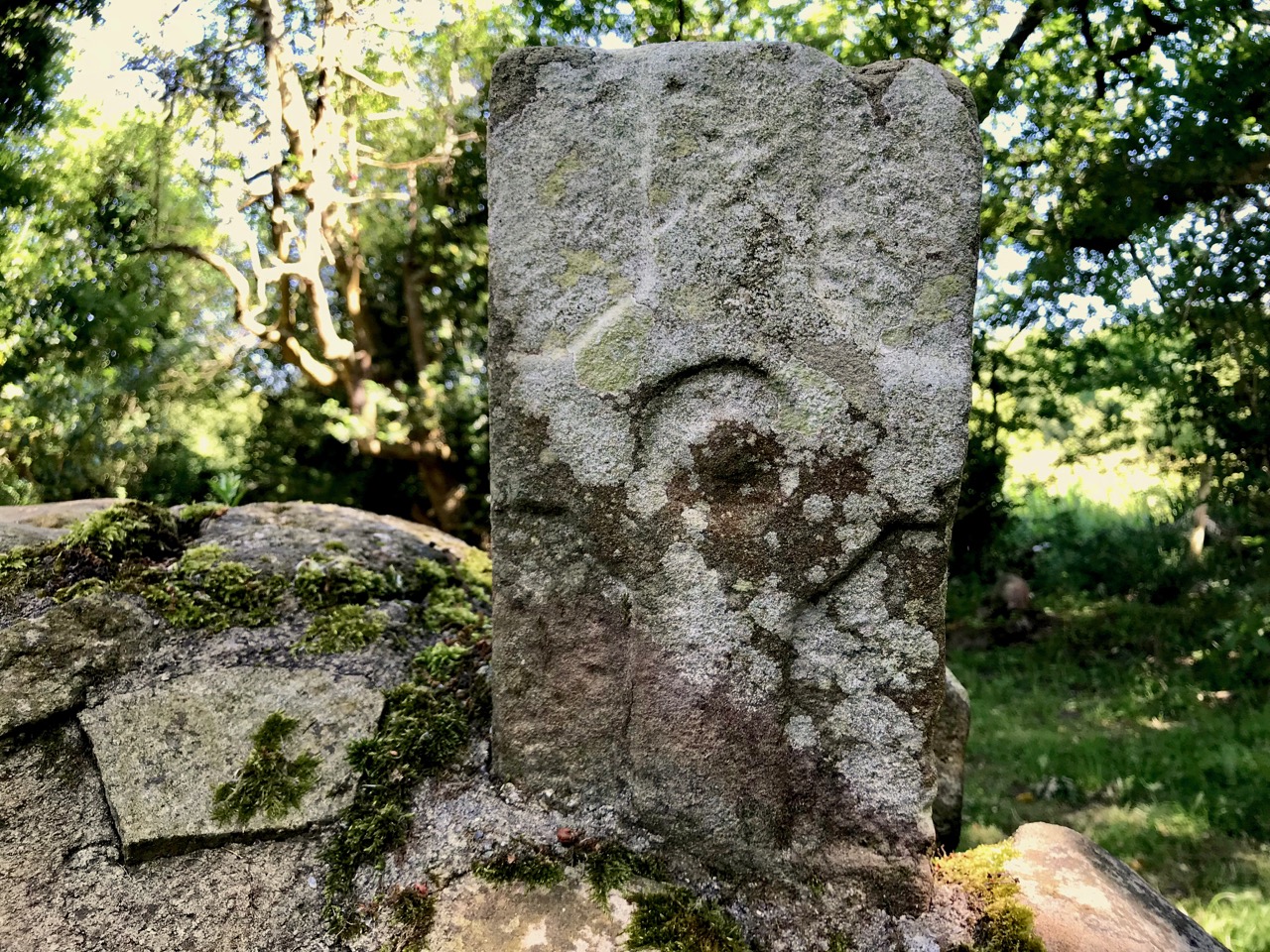
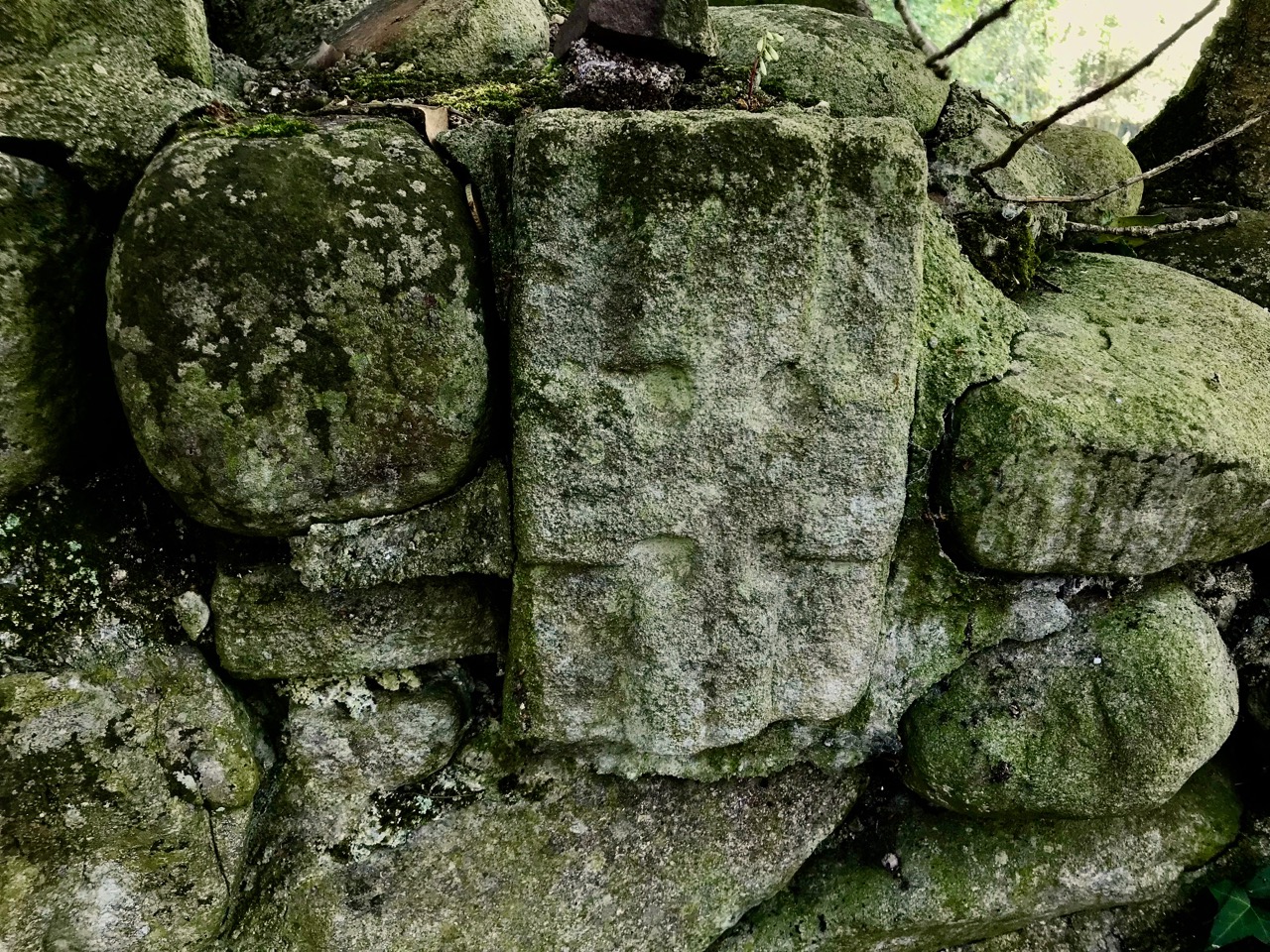
Stone walls and large trees completely encircle an oval shaped enclosure, and the only way in is by steps going over the wall. You are unlikely to be fully prepared for what you find inside. I had hoped for a High Cross – or the fragments of one: we did find a High Cross (perhaps two), but we also found around 70 other stone crosses! Somehow, the Kyle has become a repository for them, but hardly anything is known of their history. After our visit I looked into the stories and found that the enclosure itself – which feels timeless – is probably only as old as I am…

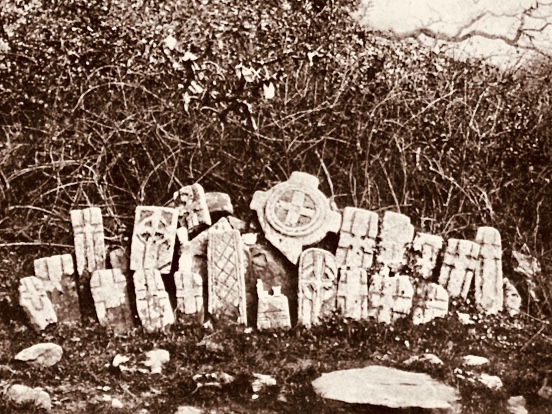
This photograph was taken in 1907. It shows that, for whatever reason, by that time a collection of stone crosses was assembled here. Suggestions have been made that an ancient church on this site was robbed of good building stone, but ‘sacred’ marked stones were left behind out of respect (or from fear of divine retribution). But records do show that the stone enclosure was built in 1946 by the Office of Public Works. What we see today, therefore, is (like me) 72 years old, although of course the stones themselves must have been carved long ago.

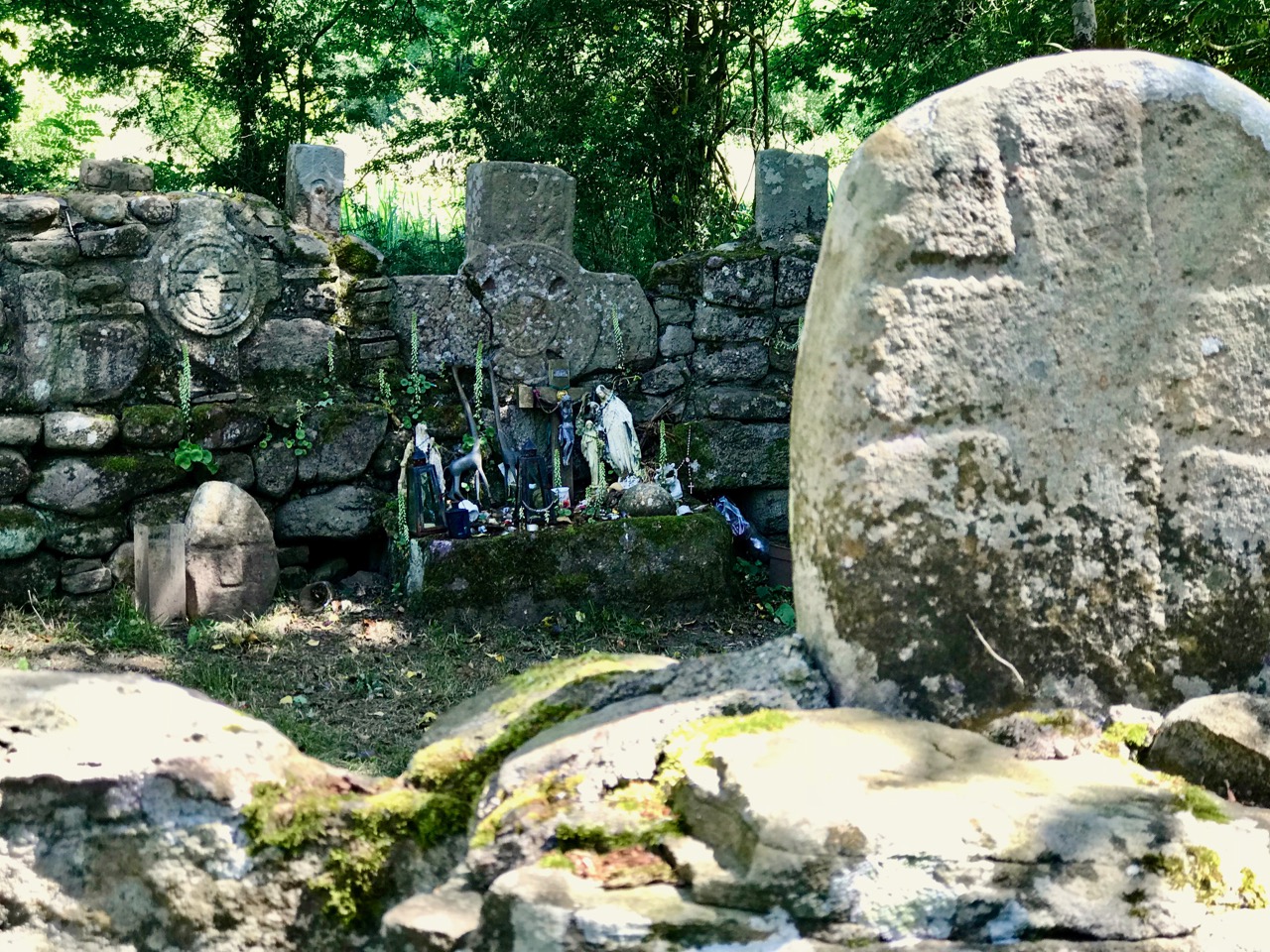
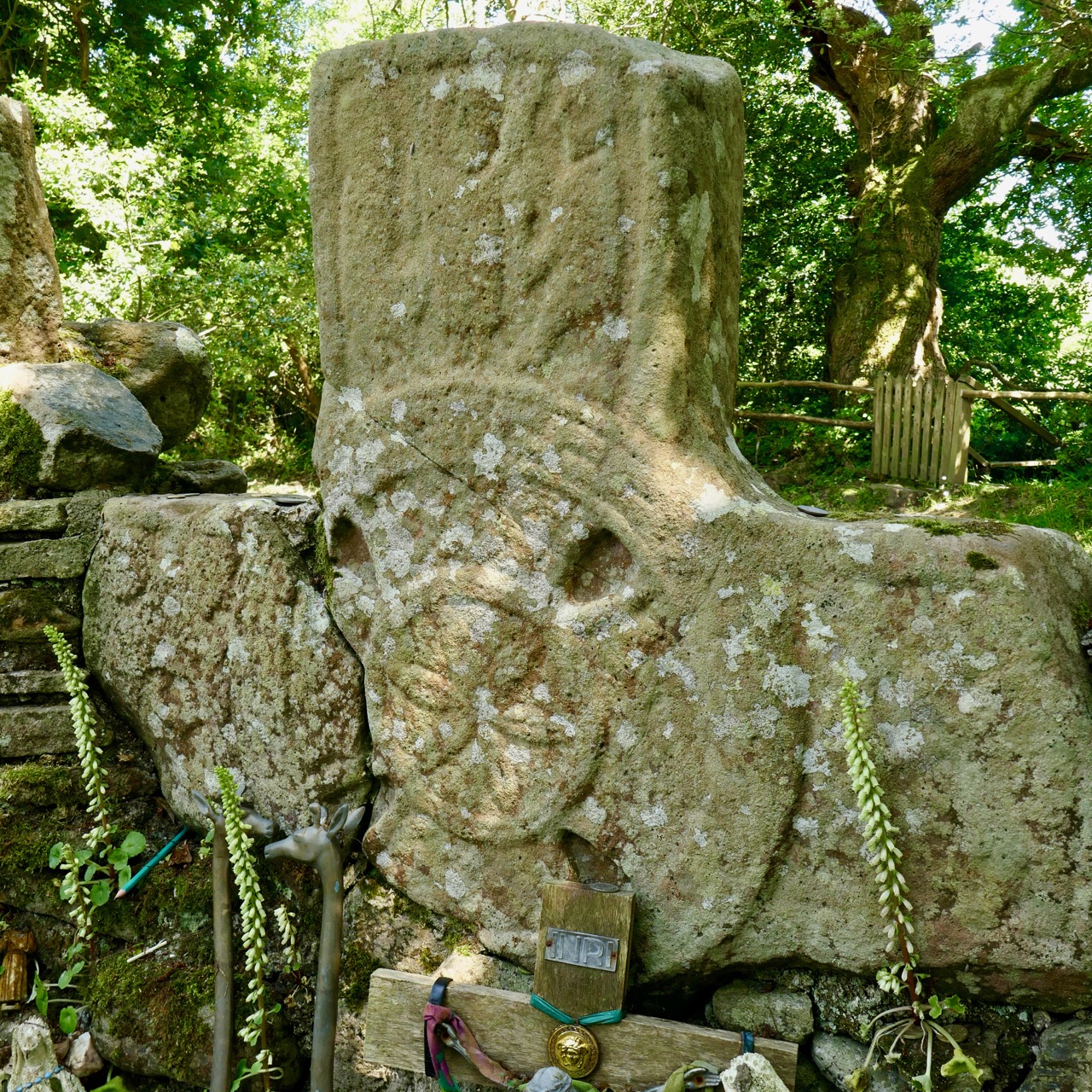
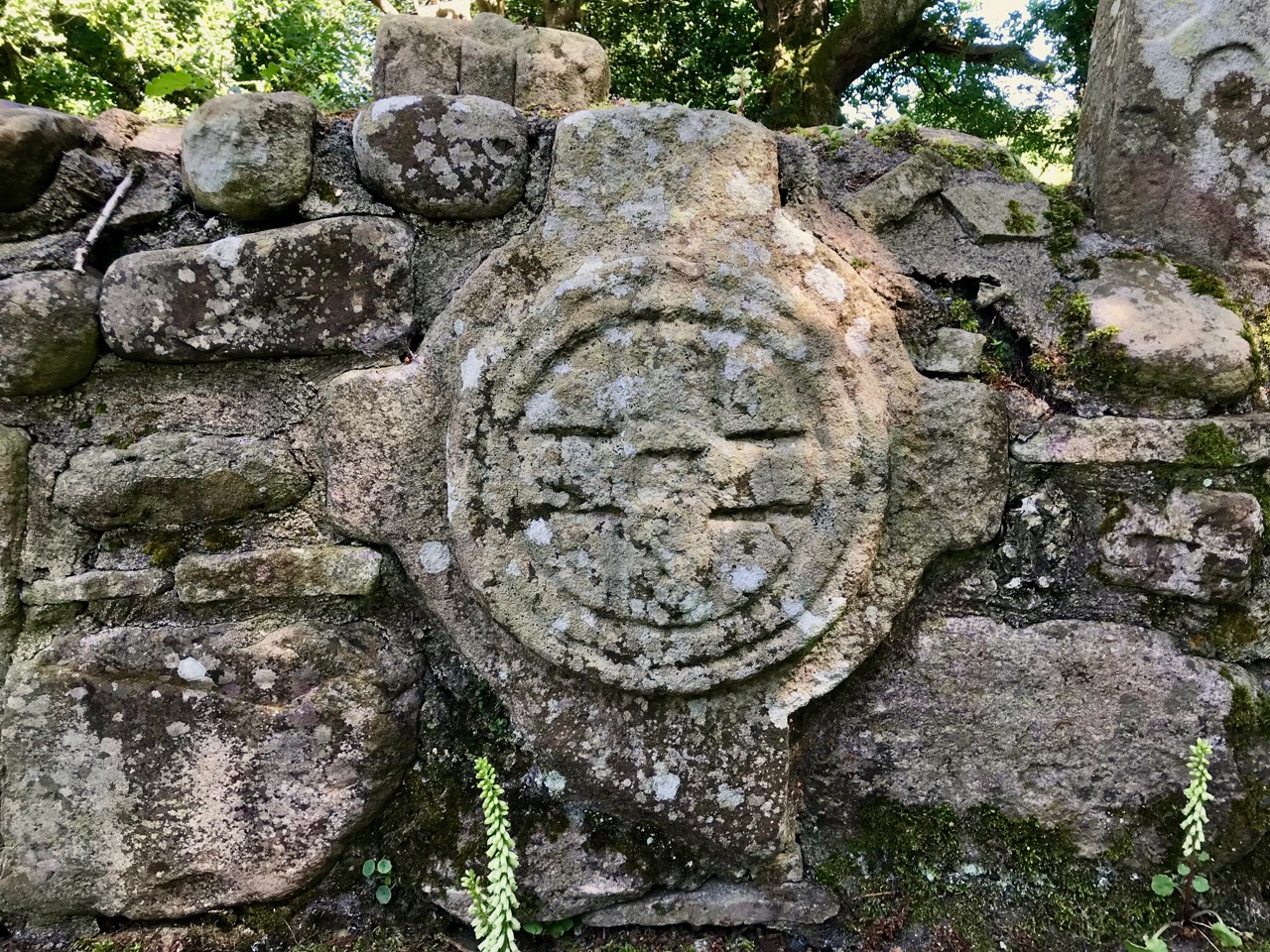
The whole collection of stone cross slabs, cross wheels and decorated pillar stones has been put together into an aesthetically pleasing composition which is exciting and – relatively – in safe keeping. To my mind it’s a far better way of displaying these enigmatic pieces than being tucked away in a museum. On a day when the harsh sunlight and perfect blue sky cast deep shadows and outlined the carvings so clearly the place was absolutely magical: the outside world seemed so very far away. The two largest crosses are set close to each other, built into the wall itself. The first is – to my mind – undoubtedly a High Cross in the medieval tradition; it is likely to have originated here, in St Berrahert’s holy place. As to the others, their stories will probably remain untold. But I wish them all well, and hope that future generations appreciate that what has been put together here has a life of its own and should remain an open secret, to be revealed to anyone who makes the effort to search it out.

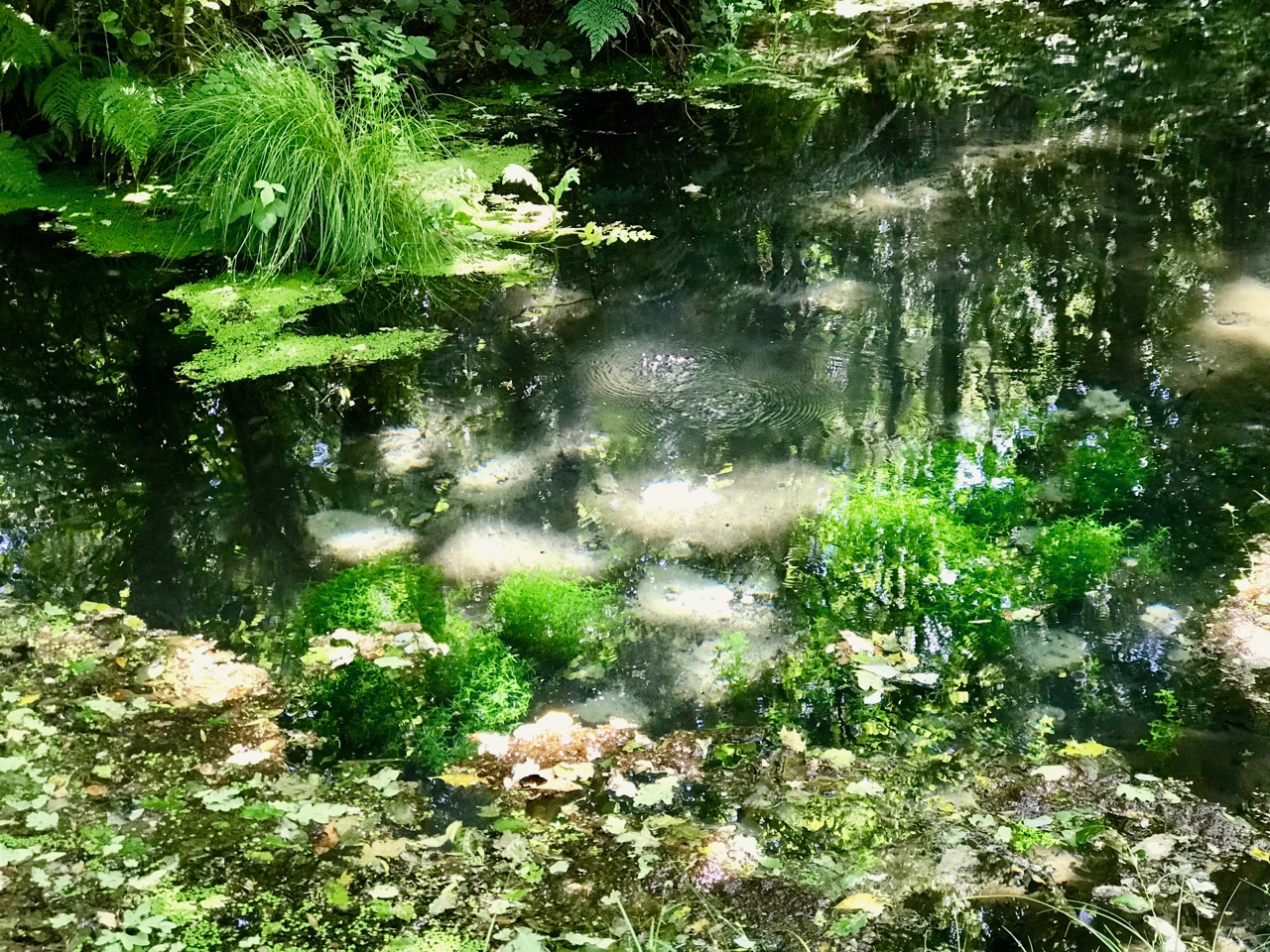
A pilgrim path – set out with ‘stations’ – encircles the enclosure (photos below). Would this be part of the 1946 construction? From here, the way to the well is marked across more fields, and requires negotiating a boardwalk. It’s a trip that has to be made, though, as the well itself – continuously bubbling up from the sandy bed – is just as magical as the Kyle.

Loughrea Cathedral and the Irish Arts and Crafts Movement

How did a church in an Irish country town become a repository for some of the greatest treasures of the Arts and Crafts movement of the early 20th century? That church is St Brendan’s Cathedral in Loughrea, Co Galway, which we visited last week.

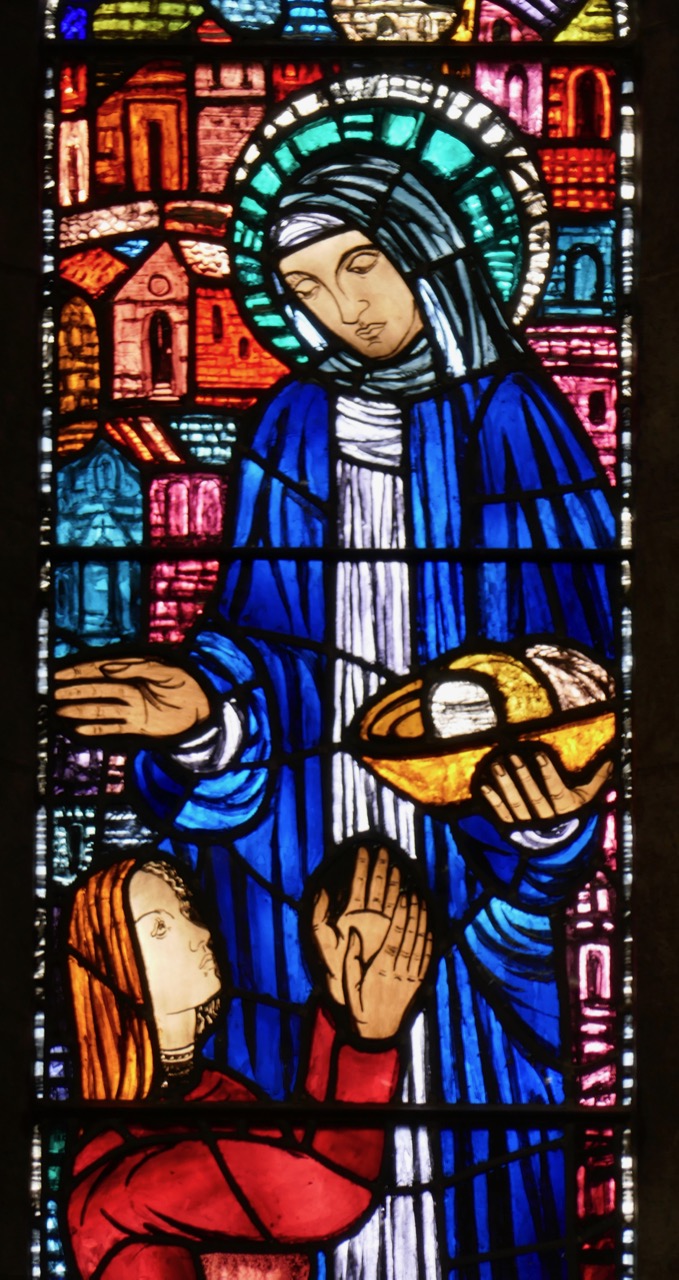
Evie Hone’s St Brigid window

The Arts and Crafts movement was a reaction against soulless methods of industrial production which emphasised repetitive tasks and removed the link between the worker and the final product. Such factory processes were eventually applied to works of art, such as stained glass windows, where numerous workers would be employed to assemble a final product. Within the movement, artisans, artists and makers sought to get back to a former time, often conceived as medieval and highly romanticised, when craftsmen and women designed and executed exquisite works from start to finish.

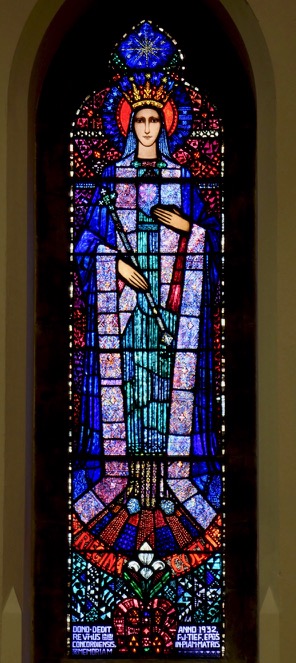
Queen of Heaven window by Michael Healy

So where does Loughrea come in? Well, for a start, it was the home of Edward Martyn, a wealthy enthusiast for all things Gaelic Revival including language, theatre, literature, music and art. Heavily influenced by the philosophies of the Arts and Crafts movement, particularly by those of William Morris, he worked with Sarah Purser to found An Túr Gloine (The Tower of Glass) as an artist/maker stained glass studio. Not a small part of their initial success was his ability to promise commissions from the decoration of St Brendan’s Cathedral.

The Stations of the Cross are by Túr Gloine artist Ethel Rhind and are executed in the unusual opus sectile mosaic technique

Thus it is that this church, in outward appearance very much like the prevailing neo-Gothic style of the end of the nineteenth century, is packed with the work of the most eminent women and men artists of the opening decades of the 20th century. Yes, that’s right, women and men – the Arts and Crafts movement empowered women artists like few such movement had before (or since, perhaps).

The Agony in the Garden by A E Child, detail

It takes a moment to realise what you have entered – initially the church interior seems familiar and unremarkable, almost heavy in its preponderance of marble, tile and dark wood.

But as the eyes adjust, you can be permitted a gasp or two as you realise that all the capitals are carved with scenes from the life of St Brendan, that there are fine sculptures here and there, that the arm of each pew has been individually decorated with idiosyncratic characters, that are are art-nouveau-looking light standards throughout the aisles, that the stations of the cross are unlike any you’ve seen before, and finally that the stained glass windows are numerous and beautiful.

Two scenes from the Death of Brendan, carvings by Michael Shortall

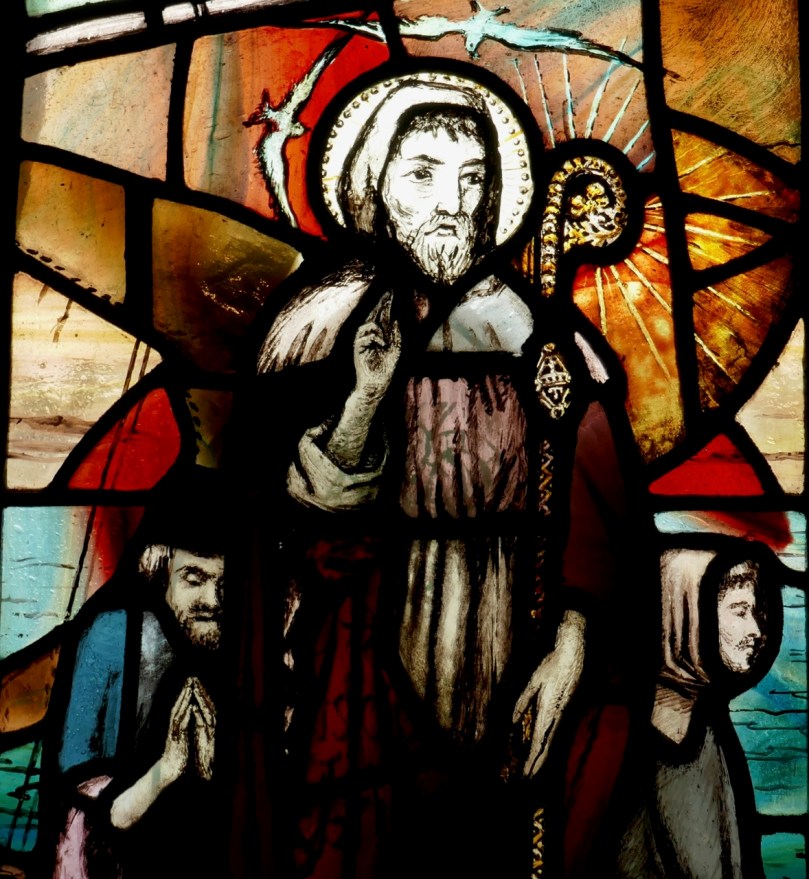
All the Túr Gloine stained glass arts are represented here: A E Child, Michael Healy, Ethel Rhind, Catherine O’Brien, Beatrice Elvery, Evie Hone and Hubert McGoldrick. There is even a small St Brendan window by Sarah Purser herself – a rarity as she mostly confined herself to the management of projects rather than glass-painting.

One of the very few stained glass windows actually executed by Sarah Purser herself – a Brendan image in the porch of the church

The stone carving is mostly the work of Michael Shortall, a student of John Hughes, the foremost sculptor of his day who provided bronze figures for the church. Eminent architect William Scott was engaged to design church furnishings and was responsible for the side altars, the entrance gates, the altar vessels and candlesticks, the baptismal font and altar rail.

Each pew arm has a whimsical creature – this one was no doubt intended to concentrate the mind on mortality

The woodwork was all done locally, with the workers encouraged to use their skills to depicts beasts and mythical figures, in much the same way that medieval craftsmen had done.

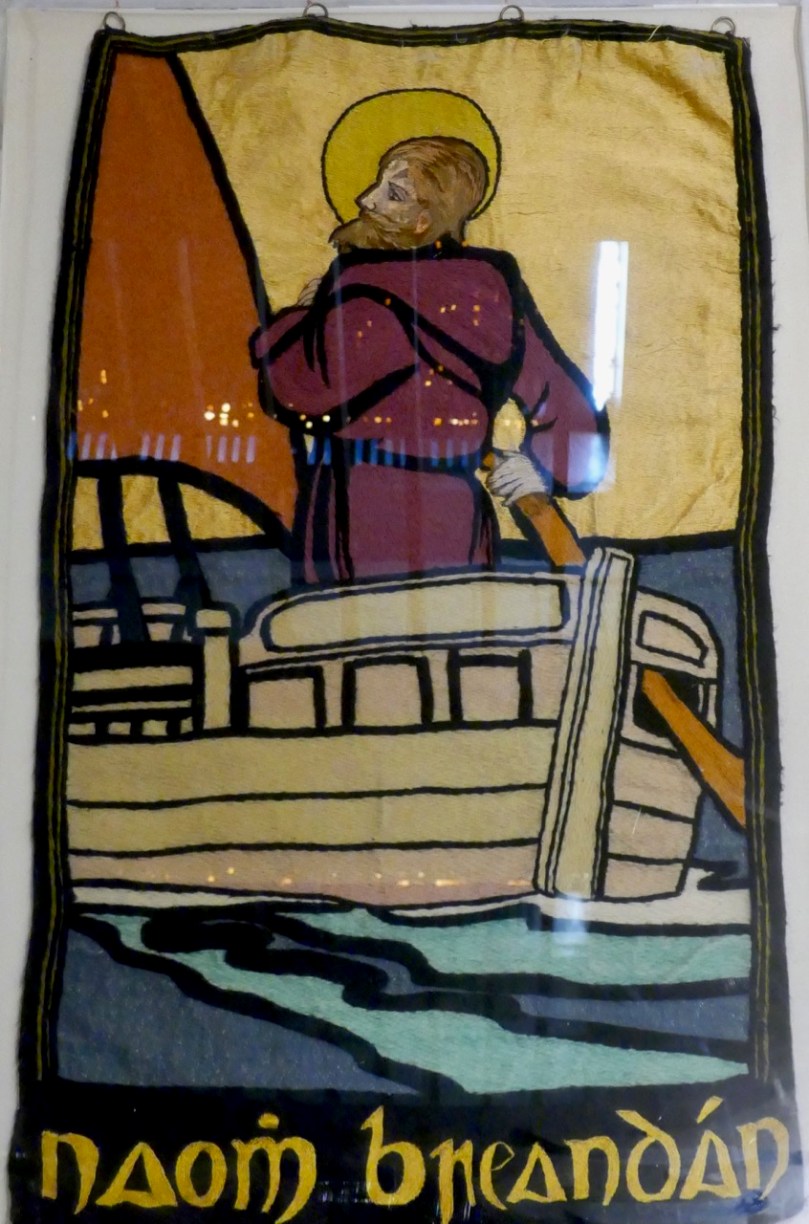
The museum contains an outstanding collection of sodality banners designed by Jack B Yeats and his wife, Cottie, and embroidered by the Dun Emer Guild. Above is the original design and the finished product

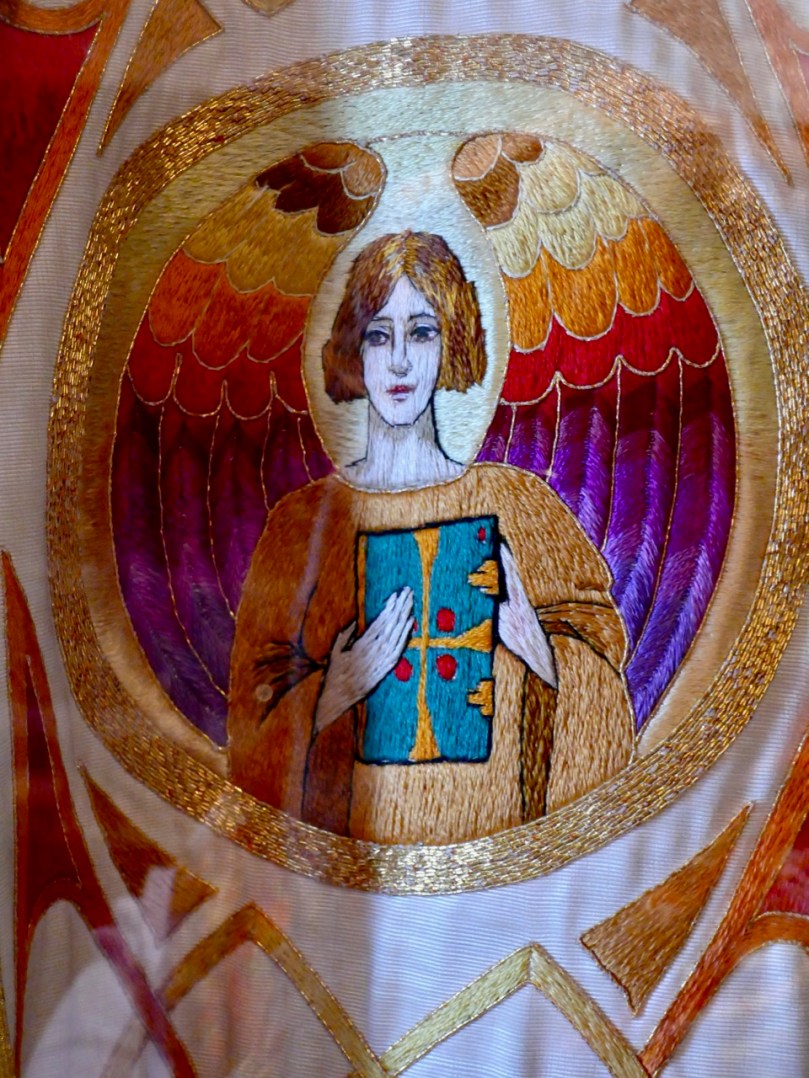
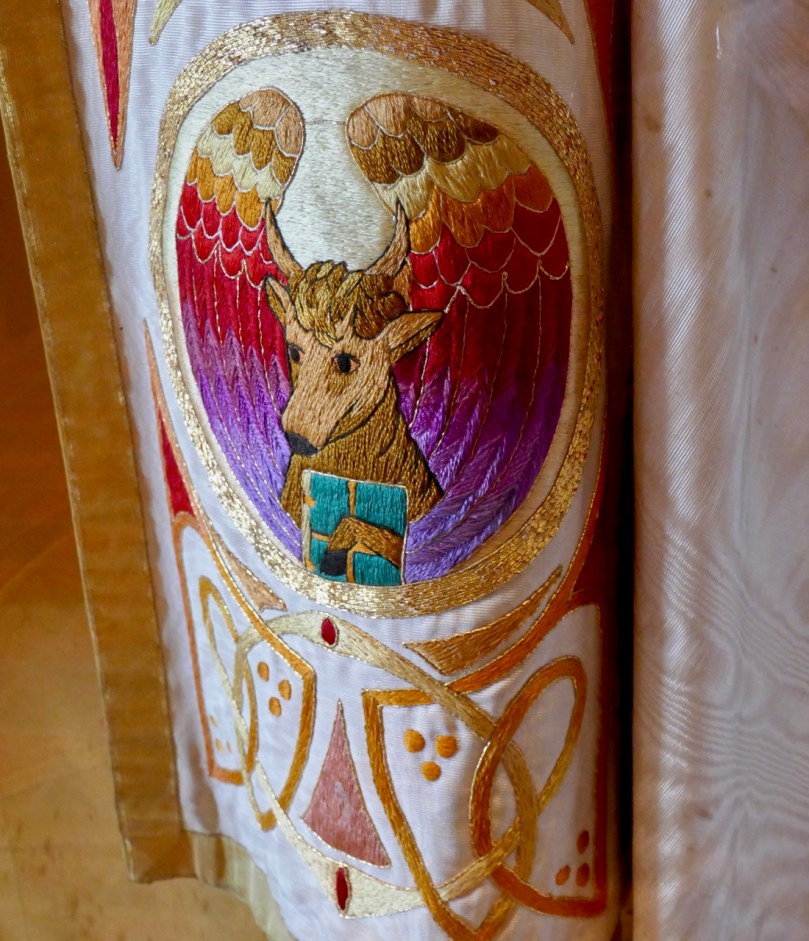
But that’s not all. Beside the church is a small museum, similarly packed with treasures. In particular, here is where you will see the work of the Dún Emer Guild, a women’s cooperative enterprise that designed and supplied materials (altar cloths, vestments, rugs, tapestries) to churches and others. Strongly influenced by traditional Irish designs such as scrollwork, interlacing, high crosses and Book of Kells symbols, the works supplied to St Brendan’s are wonderful examples of Irish Revival motifs, skillfully embroidered in gorgeous colours.

The Museum holds other artefacts too, including extremely rare medieval wooden carvings: most wooden statues were destroyed by the Puritans and very few have survived. There are also fifteenth century vestments, original drawings and sketches by Irish artists, altar vessels, and stained glass cartoons.

Twelfth or Thirteenth century wooden statue of the Virgin or Child

This post is a small introduction to the wonders of Loughrea Cathedral. About 40 minutes east of Galway and just south of the M6, this church is a must-see for anyone interested in the history of Ireland and its Arts and Crafts movement. The only comparable experience is the Honan Chapel in Cork.

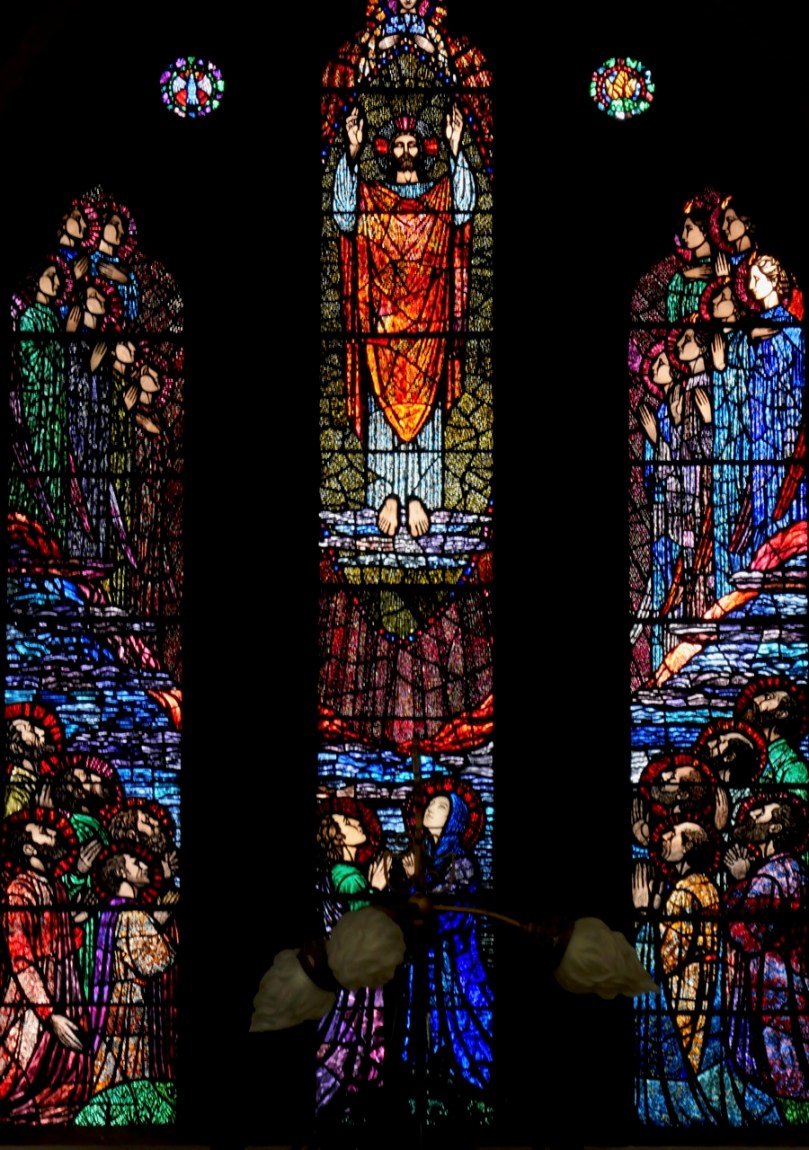
Michael Healy’s magnificent Resurrection window

All I can do here is show you a representative sample of what we saw and encourage you to go see the totality for yourself. You won’t regret it.

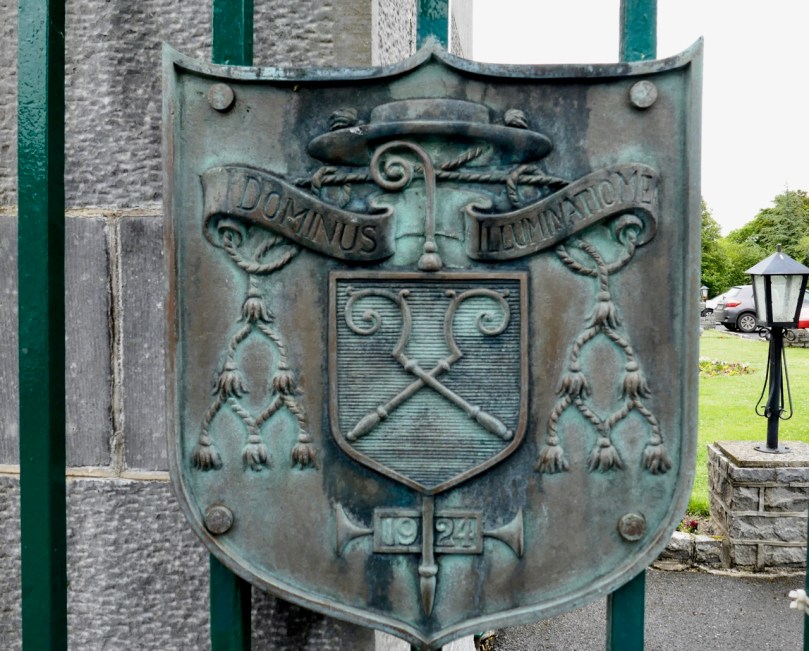
The massive cathedral gates, designed by William Scott

A Day on Cape Clear: Guest Post by Hugo Caron, 11

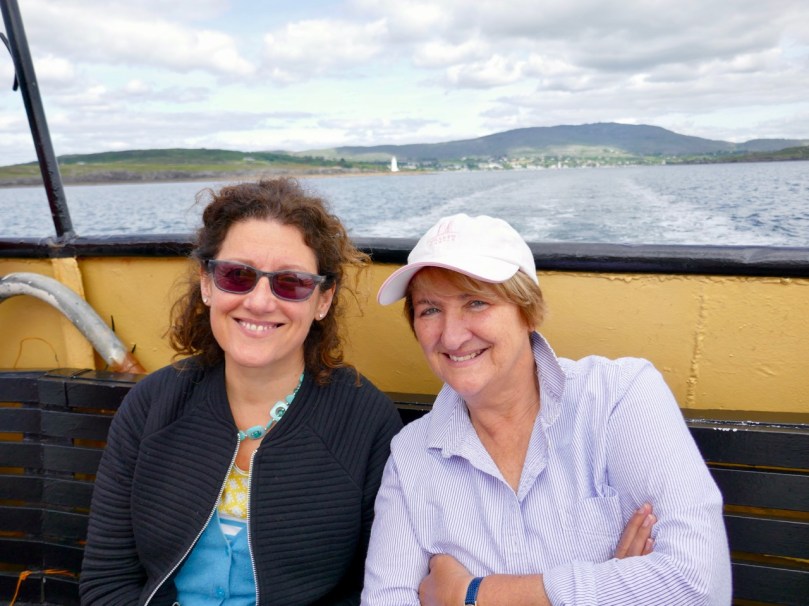
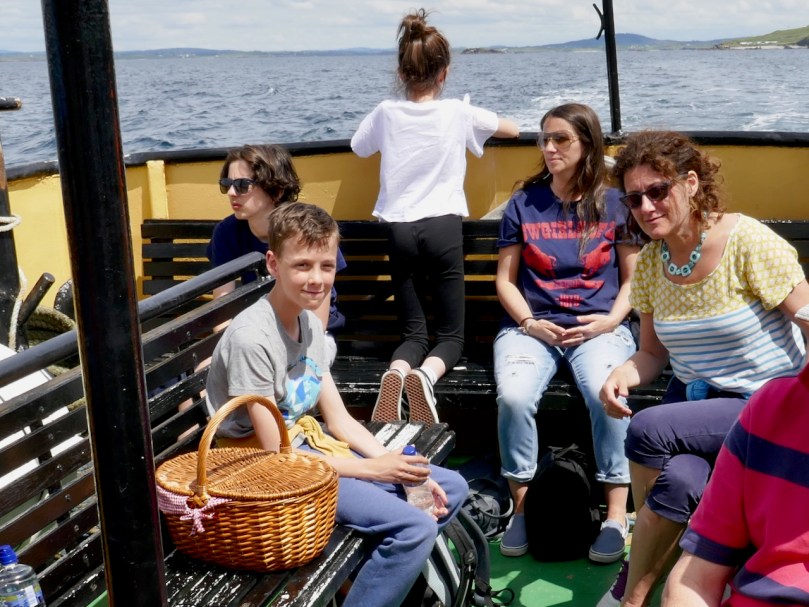
On Tuesday 12th June my Mum, my Aunt, Finola, and I went to Cape Clear. We left the house at about 10 o’clock. We went to a coffee shop before we went to Cape Clear. I had a hot chocolate (which I would later throw up over the side of the boat).

When we got to the boat I started taking photos of the other boats.

It took about an hour to get to Cape Clear.

My Mum bought an ice-cream for me when we got there . After we had the ice-creams, we walked up a mountain on Cape Clear.

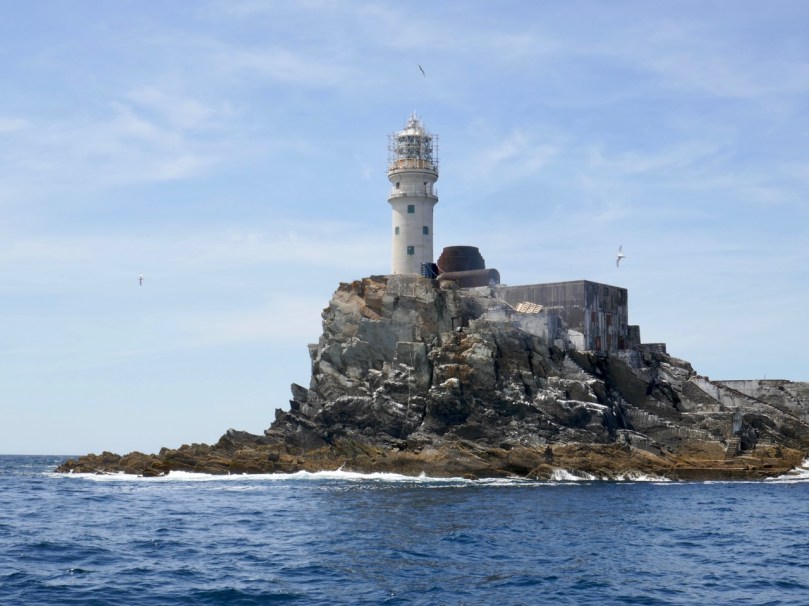
We got on the boat to Fastnet Rock.

We got back to Cape Clear, and waited for the boat back to Schull.

When we got back to my Aunt’s house, I cropped all my photos (there was 172). I had great day.

Note from the Aunt: Hugo took (and processed) all the photos except one (last one, above, of Hugo and his mum), and wrote the text for this post. The reason I took the last one is that he was feeling queasy (see paragraph 1). 

Some That Got Away!

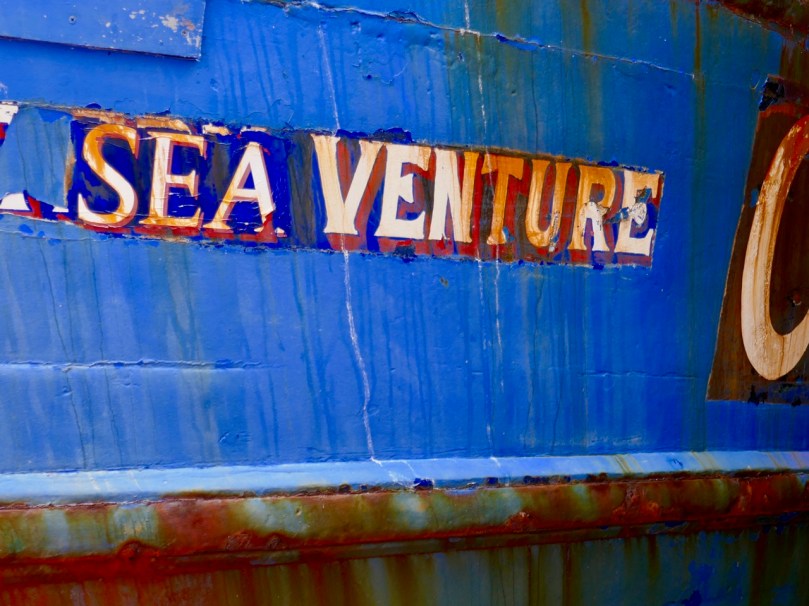
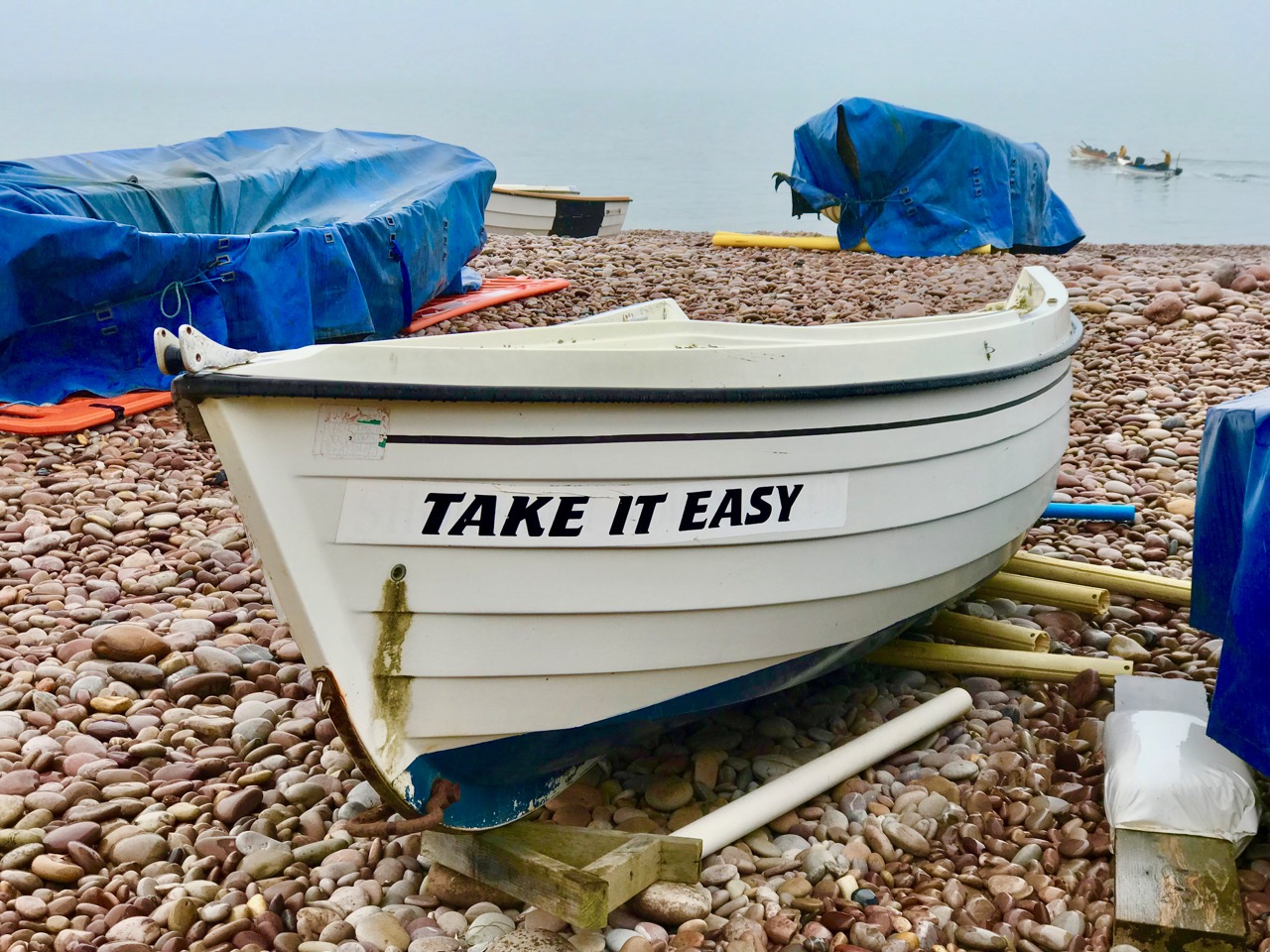
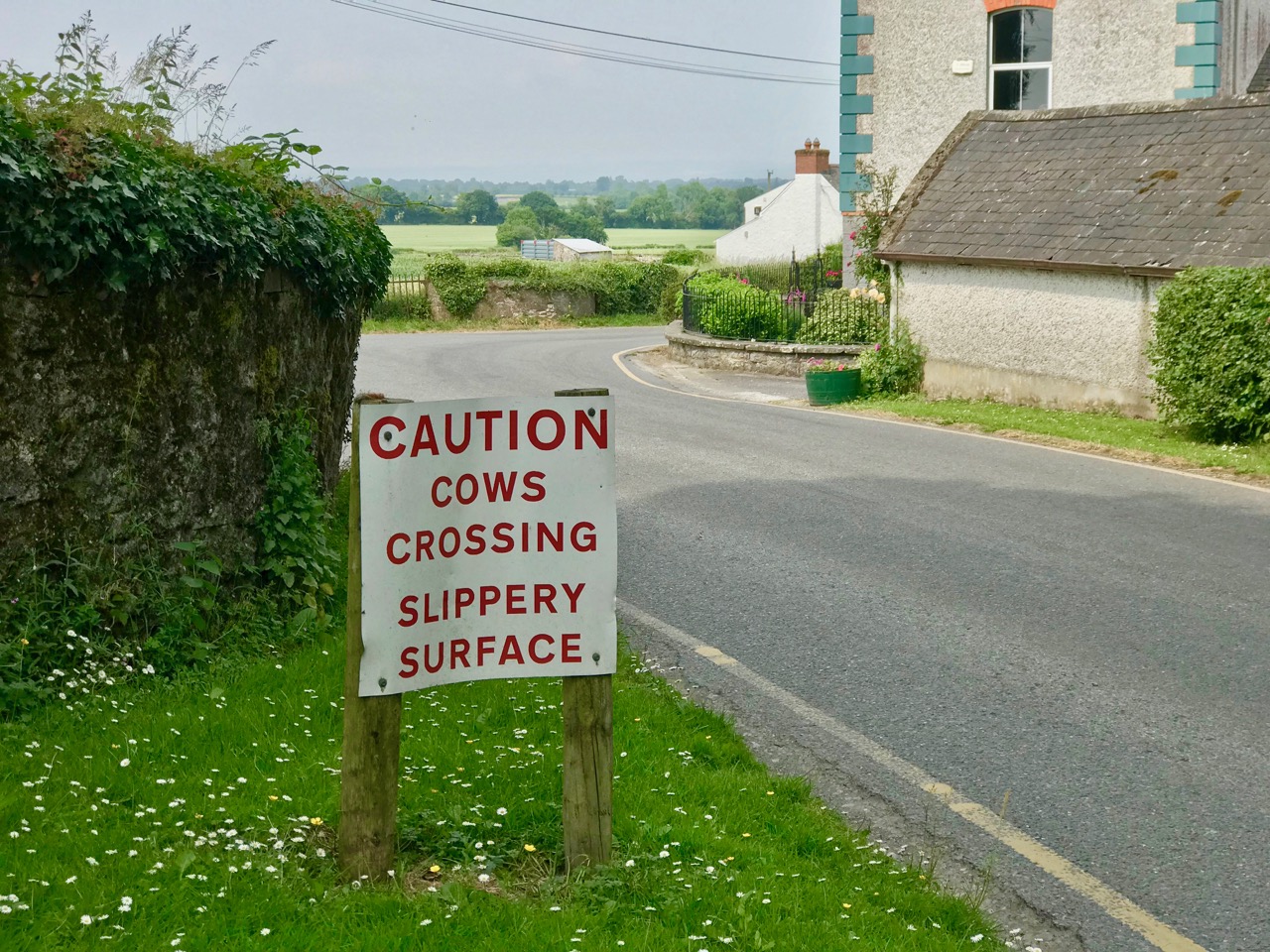
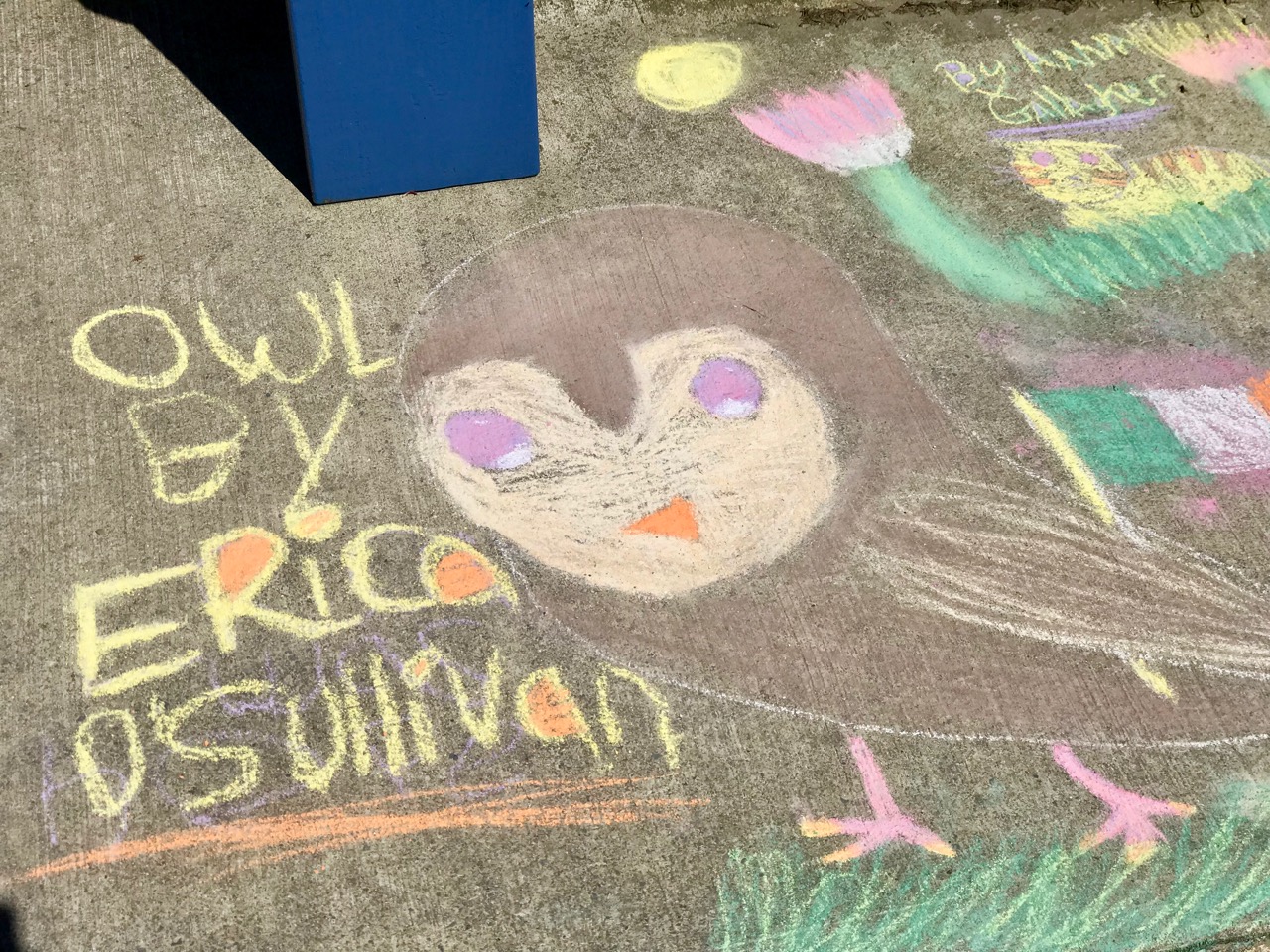
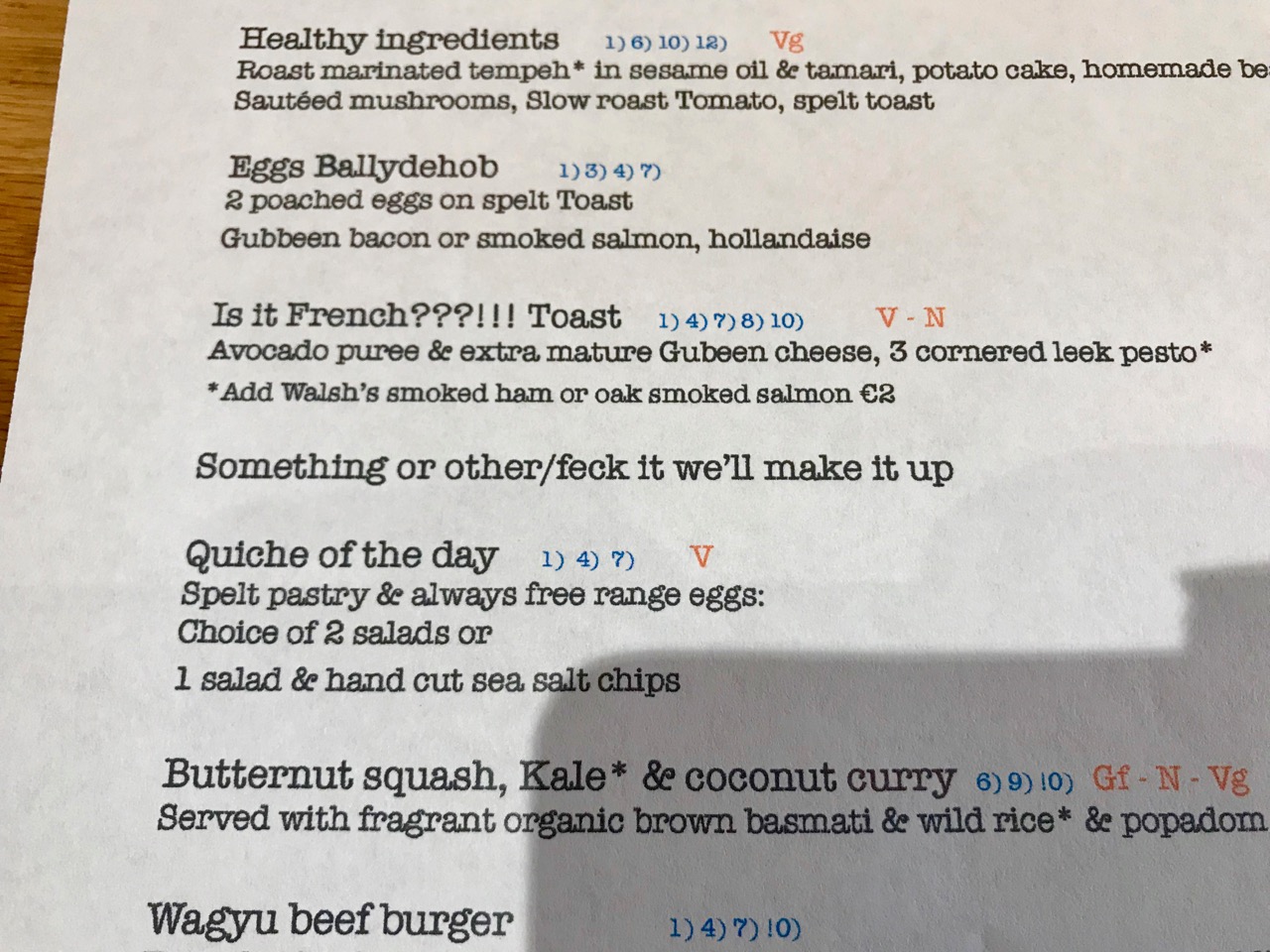
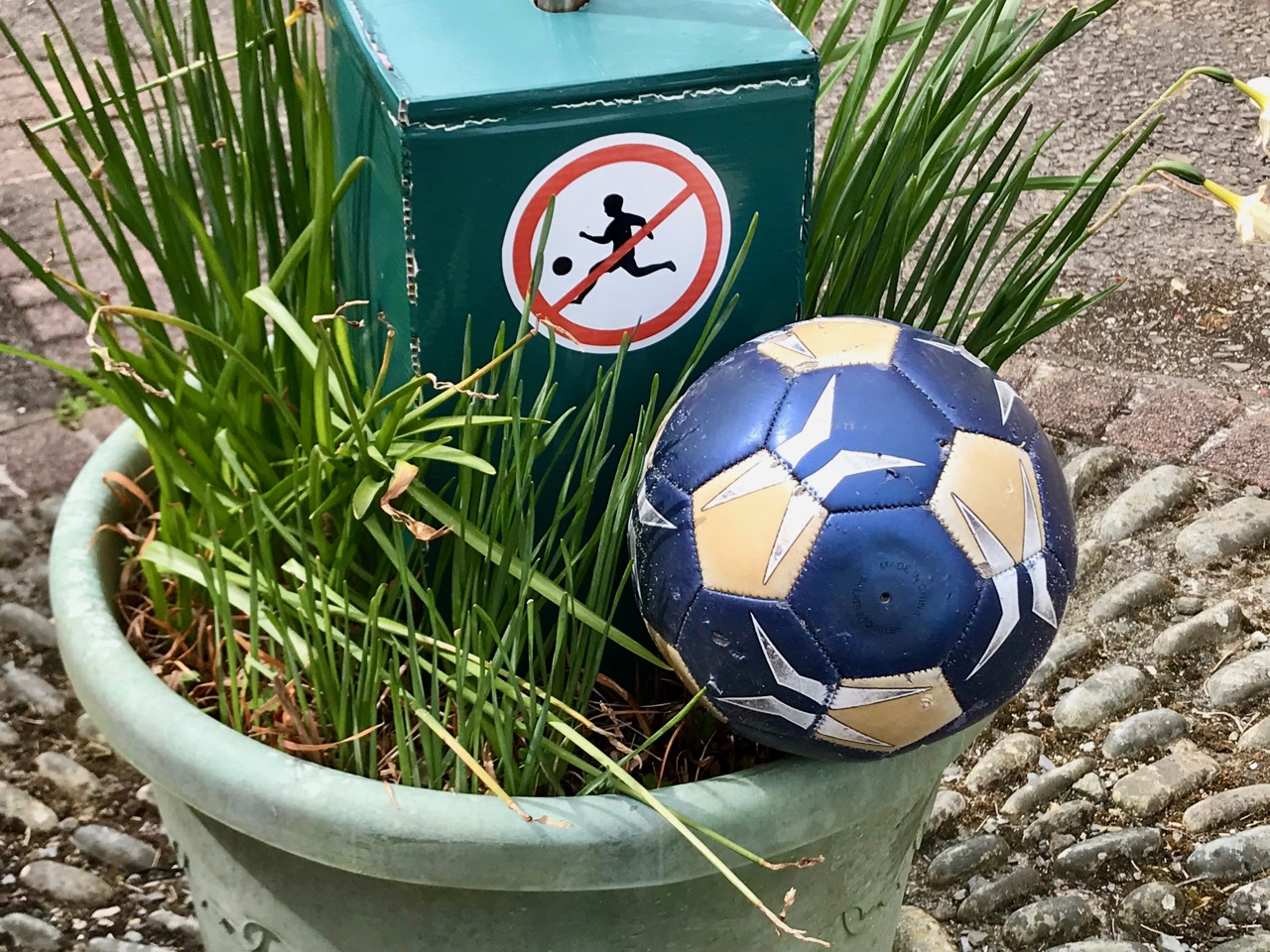
I have been going through my collection of Quirks – pictures I have taken of Irish oddities, signs and sundry graphic images. For whatever reason, they have missed out in my series on good signs: I think it’s time I gave some of them an airing. They are not all humorous: sometimes they just conjure up a thought or an idea. The one above, for instance, is a really good name for a boat – it makes you think of lazy, sunny days drifting on calm waters. Many, of course, require no explanation at all. Here’s one…

There are those that I’ve retrieved from the reject pile because actually they are arresting enough to make you want to have another look. Some of it is just elaborate graffiti…

In other cases, people have been imaginative in their use of signs…

Then, there are those which just needed to fill an empty space…

Just in case you have to look twice, there’s a message in here somewhere…

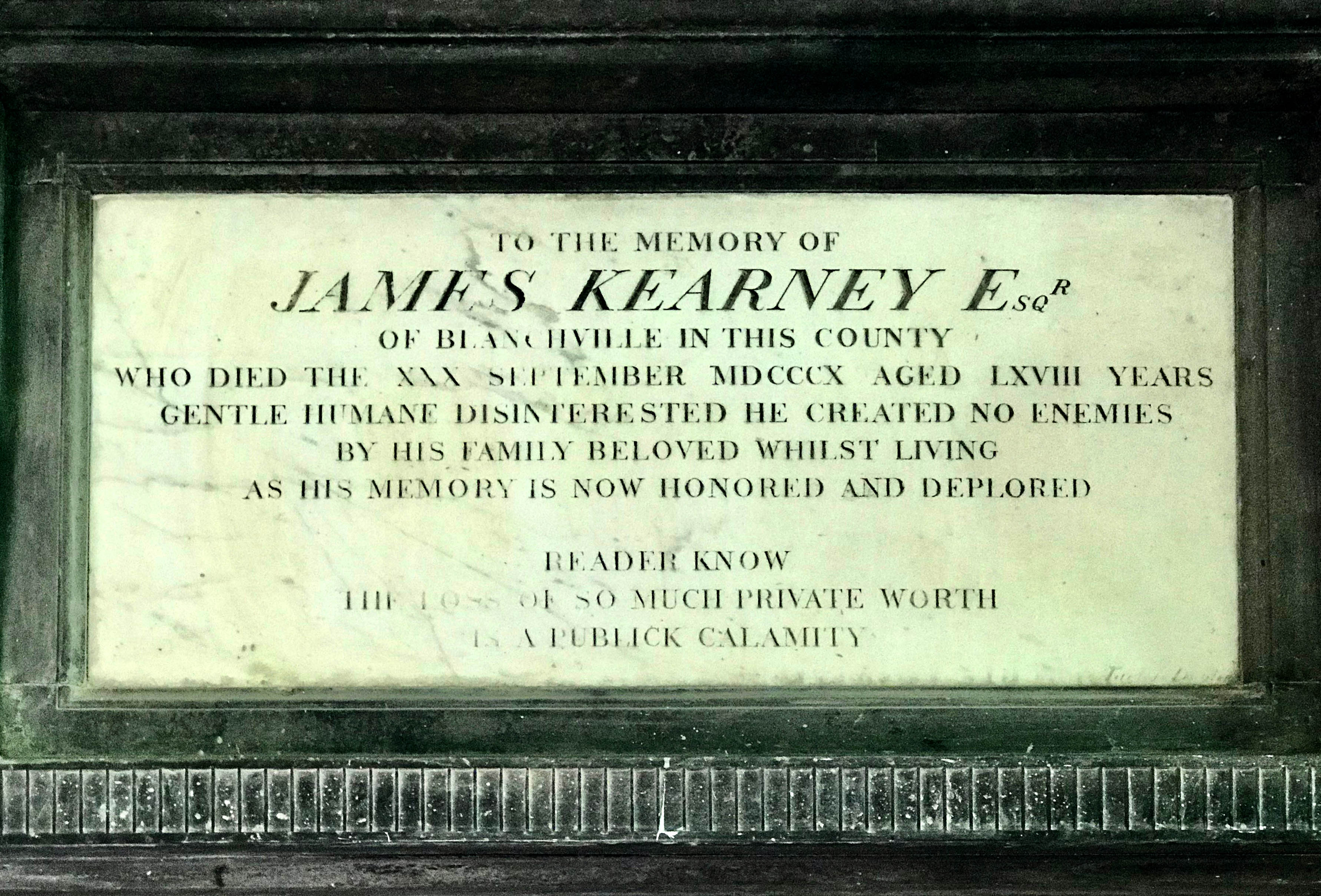
Here’s a particularly strange one, on a memorial in Gowran Church, that had me scratching my head…

I’m sure the erudite among you will not have been puzzled – I had to resort to the dictionary, where I found that the term ‘deplored’ has two meanings: the less usual one is ‘lamented’!

But – enough! The rest can just speak for themselves…

And – last, but not least – I couldn’t resist this one from a farm gateway out on the Sheep’s Head…