Mizen Magic 9: Rossbrin to Schull

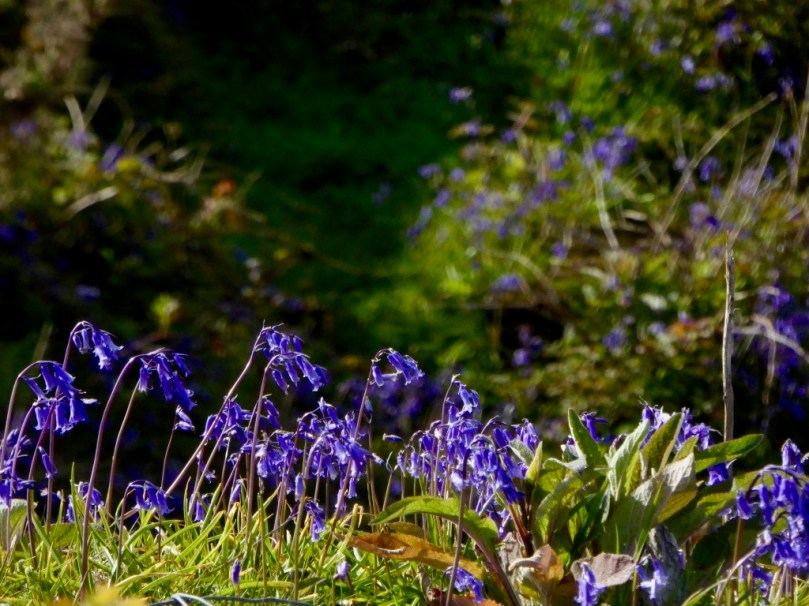
There’s a main road between Ballydehob and Schull, and then there’s a back road – a road that meanders through farmland and down half-forgotten boreens, a road lined with wildflowers and dotted with the remains of past history, a road that looks over once-inhabited islands. South of this road lies Mizen Magic 9.

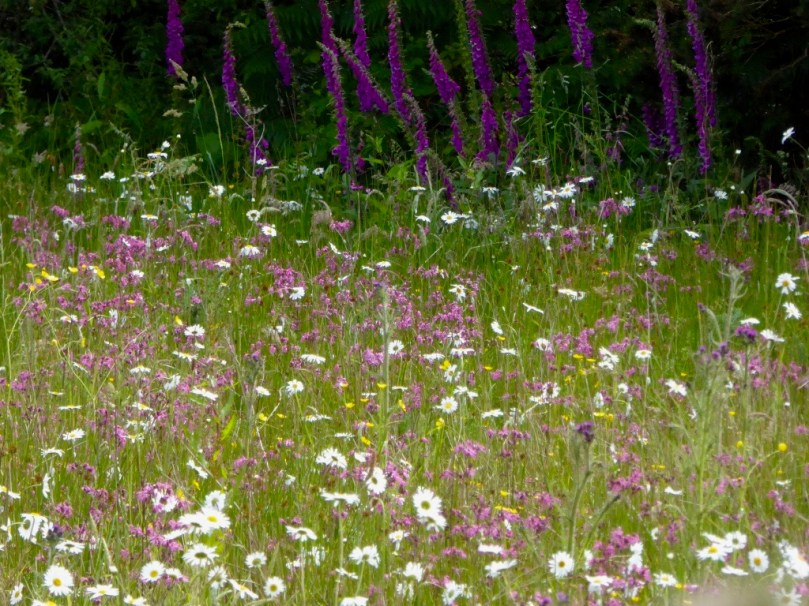
Along the back road in early summer

We’ll start at Rossbrin Cove – a place that Robert has written about over and over, like any writer with his own ‘territory.’ This was the home, in the 15th century, of Fineen O’Mahony, the Scholar Prince of Rossbrin.

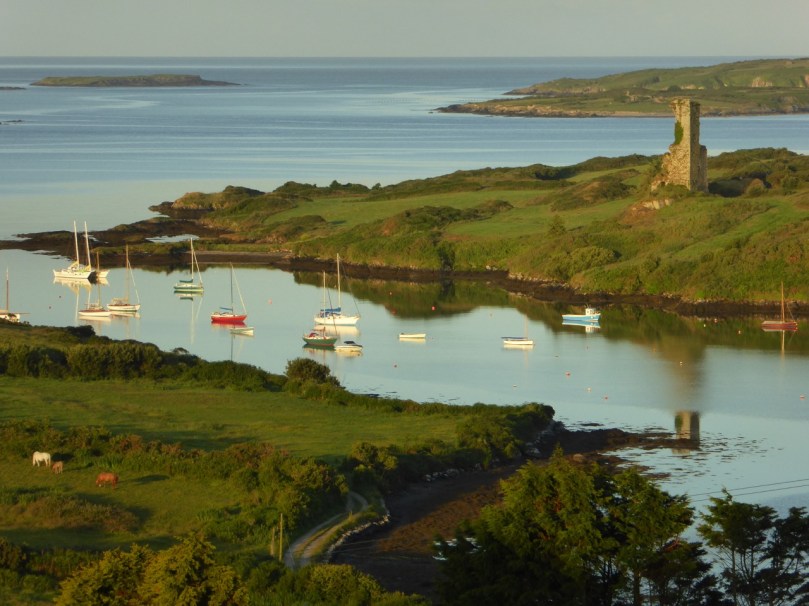
Looking down now on what’s left of his castle, it’s hard to imagine that this was a place teeming with life and learning – a mini-university where scribes and poets and translators transcribed to vellum (and to paper – a first in Ireland) psalters, medical tracts and even the travels of Sir John Mandeville. The castle has been in ruins since the 1600s, and we live in fear that the next storm will bring the last of it down.
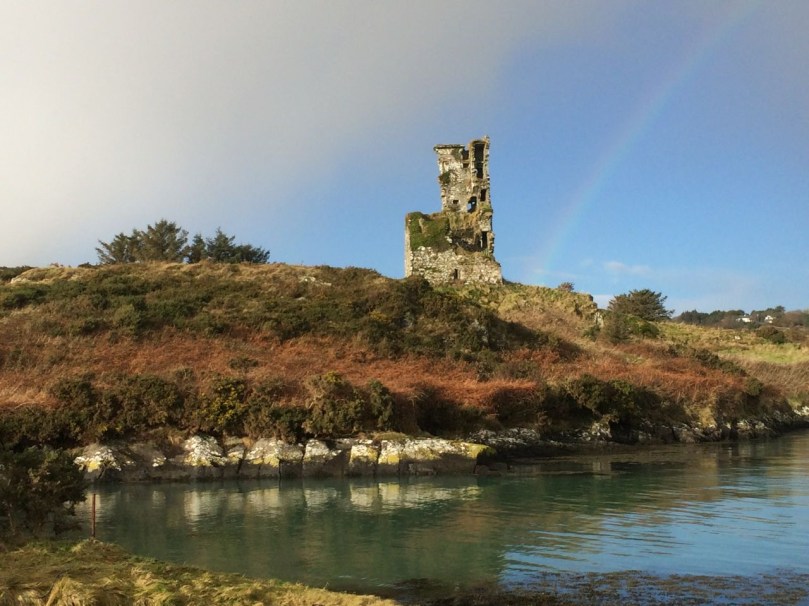
Rossbrin Castle from the sea

The road runs through the townlands of Rossbrin, Ballycummisk, Kilbronogue, Derreennatra and Coosheen. Ballycummisk has a wedge tomb from the Bronze Age and a ring fort from the Early Medieval period – just to remind you that you are far from the first to want to settle in this place. In more recent times, and like Horse Island, it was once the centre of a thriving mining industry, but a spoil heap and stone pillars are all that remain.

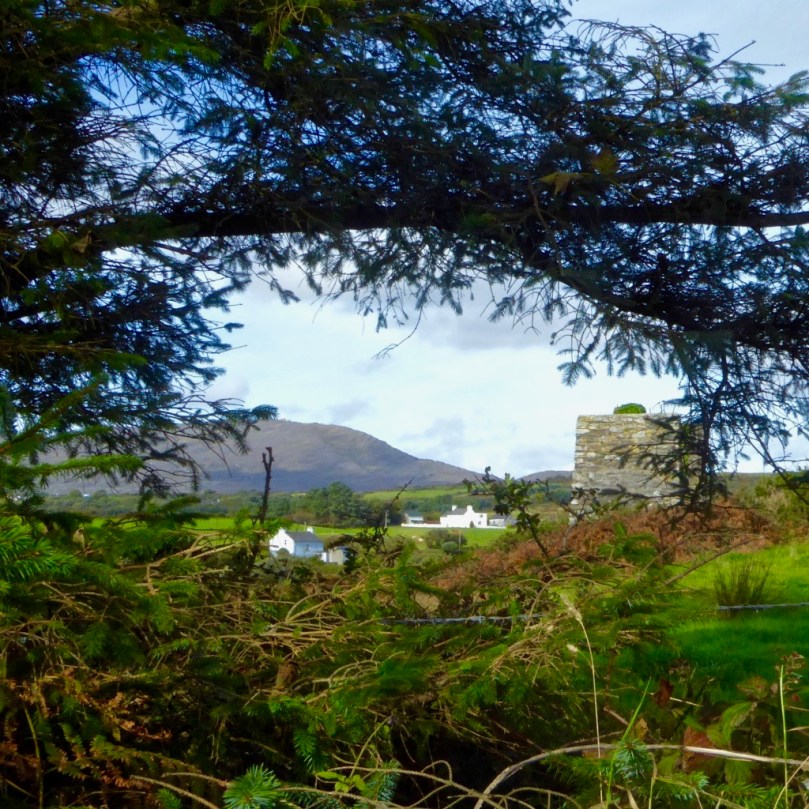
Large ring fort, and the remains of mining activity, in Ballycummisk

Two islands dominate the views of Roaringwater Bay along this road. The first is Horse Island, owned now by one family, with its industrial past a distant memory. There have been various plans for Horse Island in recent years – a resort, a distillery – but so far it has resisted development.
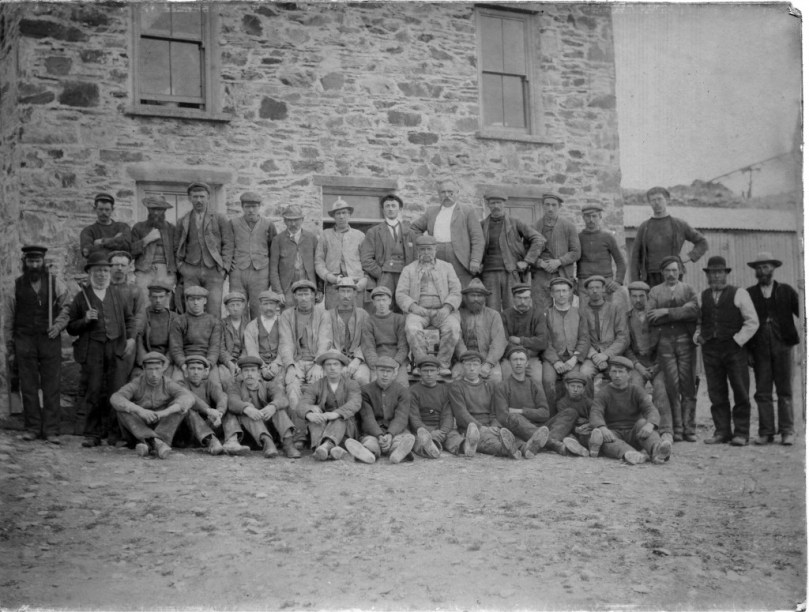
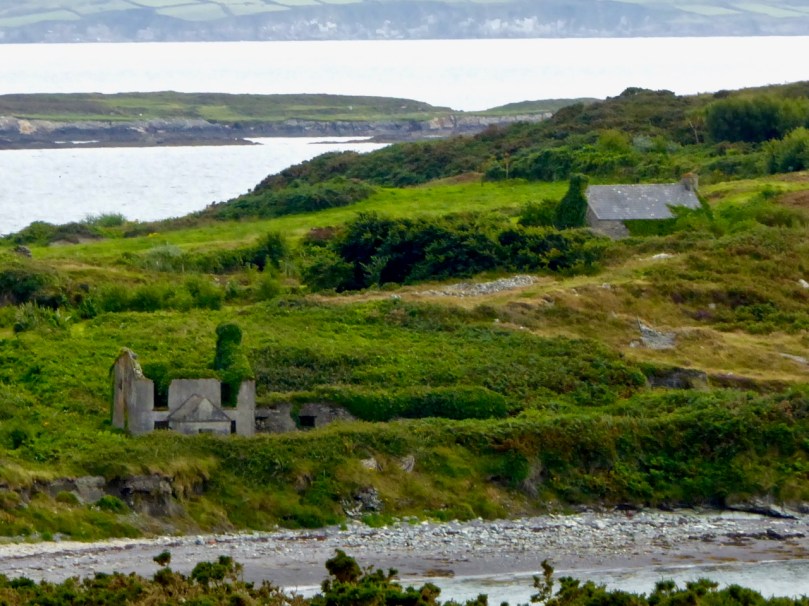
Horse Island Miners in 1898 and the ruins of miners’ dwellings

The other is Castle Island, home to yet another vestigial O’Mahony Castle – one of a string along the coastline, all within sight of each other and sited strategically to control the waters of Roaringwater Bay and their abundant resources.
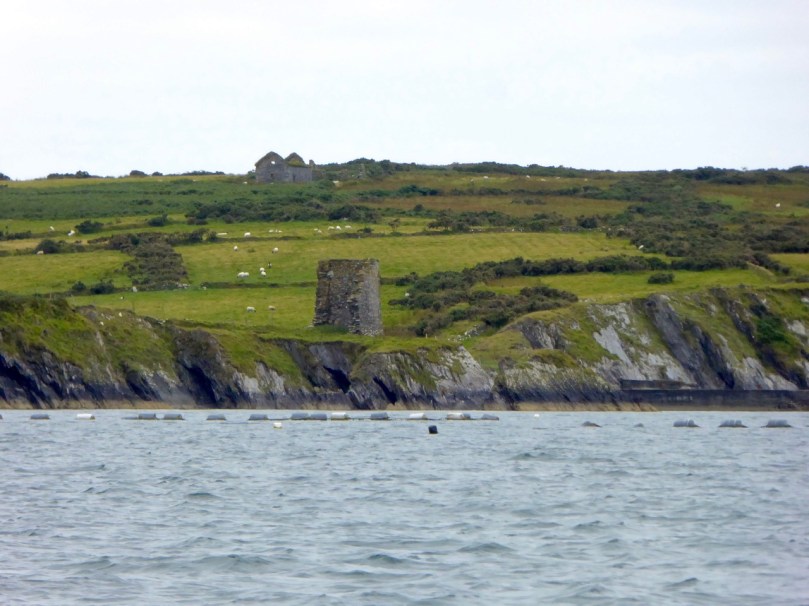
There’s not much left of the castle on Castle Island

The O’Mahonys became fabulously wealthy in their day, charging for access to fishing and fish processing facilities and for supplies and fresh water. They also forged strong alliances with the Spanish and French fishermen and visitors who plied those waters – a friendship that was to cause great concern to the English crown and that was to spell, in part, their eventual downfall.
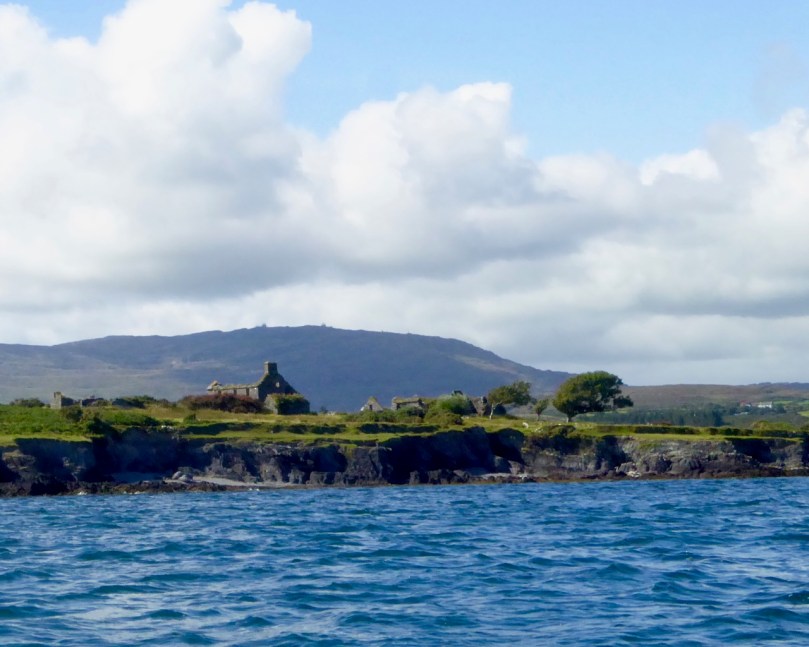
Ruined farm houses on Castle Island. The photograph was taken from a boat – that’s Mount Gabriel in the background

The closest spot to Castle Island (also uninhabited) is the beautiful little pier at Derreennatra. There is a large house up behind the pier, now inaccessible but once run as a guest house and famous for its hospitality. A curious bridge once gave access to the demesne and it remains a striking landscape feature, with its pillars and giant Macrocarpa tree.
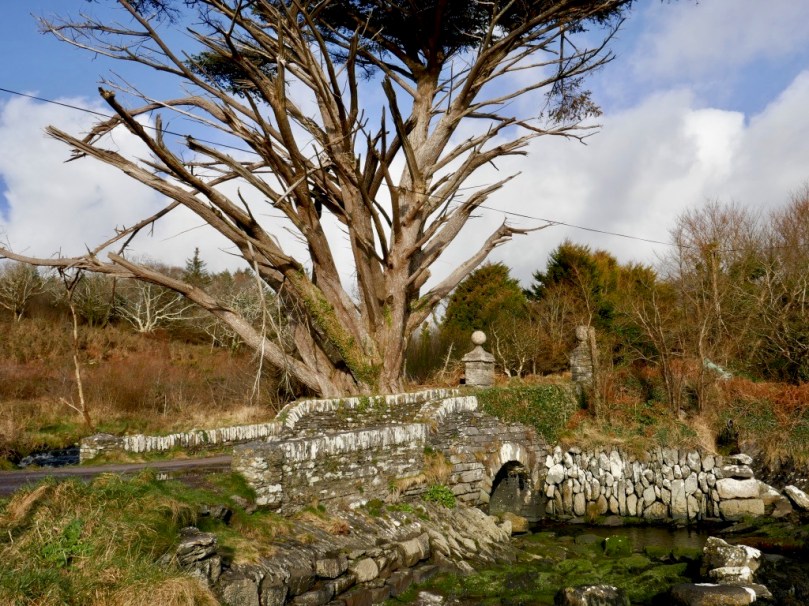
Derreennatra Bridge

Continuing towards Schull we come to the last of the O’Mahony castles and the best preserved in this area. This is Ardintenant (probably Árd an Tinnean – Height of the Beacon – possibly referring to a function of the castle to alert others to the presence of foreign vessels) and it was the home of the Taoiseach, or Chief, of this O’Mahony sept.

Two ‘beacons,’ ancient and modern – Ardintenant or White Castle below and above it the signal stations on Mount Gabriel

The castle, or tower house, still has a discernible bawn with stretches of the wall and a corner tower still standing. If you want to learn more about our West Cork tower houses, see the posts When is a Castle..?; Illustrating the Tower House; and Tower House Tutorial, Part 1 and Part 2.

Ardintenant is also known as White Castle, a reference to the fact that it was once lime-washed and stood out (like a beacon!) to be visible for miles around. It appears to have been built on top of an earlier large ring-fort which in its own day was the Taoiseach’s residence before the fashion for tower house building.
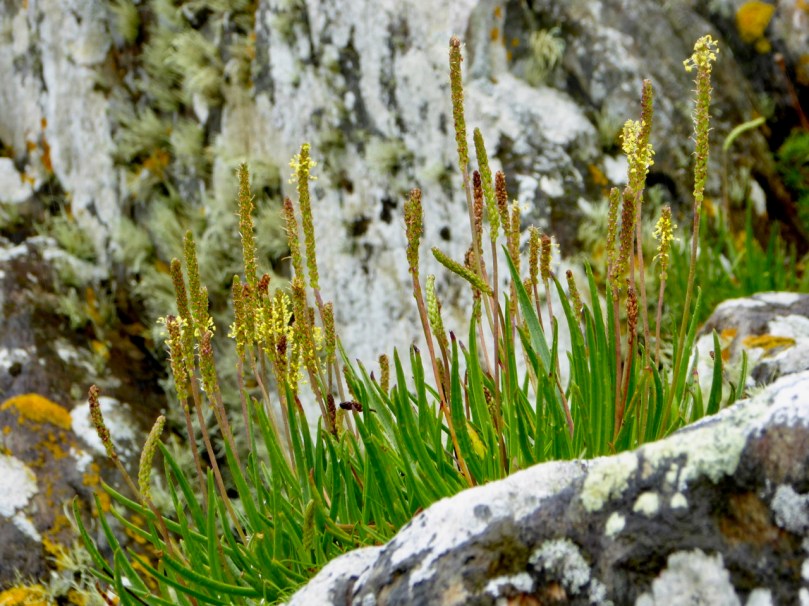
Sea Plantain at Coosheen

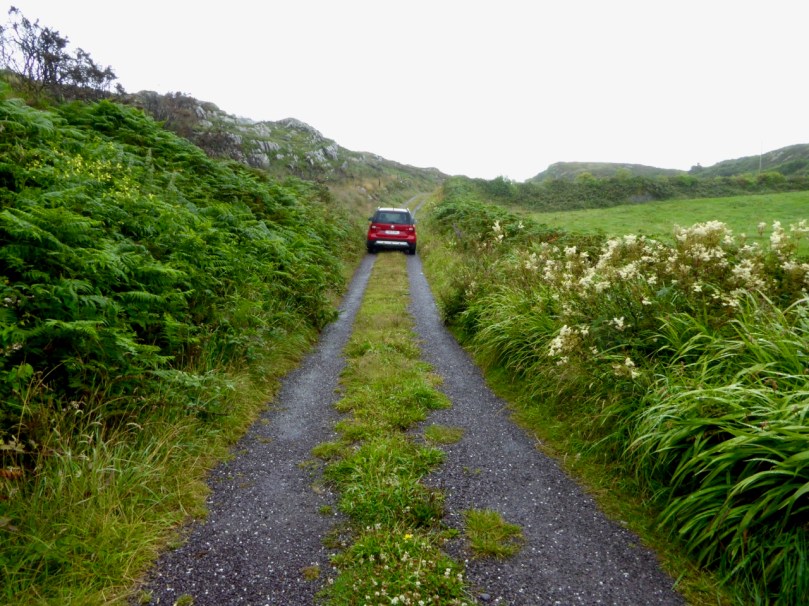
From Ardintenant we head south to Coosheen, a picturesque pebble beach known only to locals. It’s one of my favourite places to go to look for marine-adapted wildflowers. On a rainy day last August I saw Sea-kale, Sea-holly, Sea Plantain and Thrift, and drove back on a boreen lined with Meadowsweet and Wood Sage and past a standing stone whose purpose has been long-forgotten but that continues its vigil through the centuries.
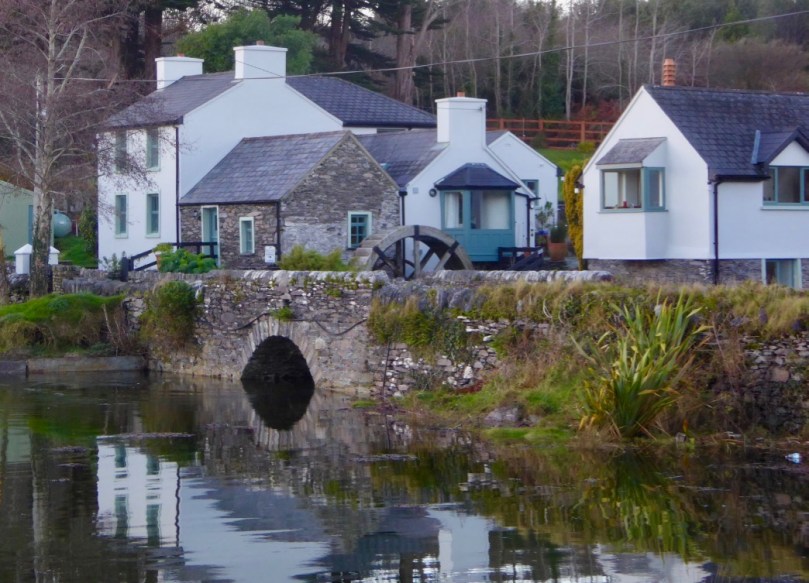
Our final spot in Coosheen is Sheena Jolley’s mill house, now the gallery of this award-winning wildlife photographer. She has restored it beautifully and the gardens are a work-in-progress that manage to capitalise on, rather than overwhelm, the mill stream and the rocky site. This is also the starting point for the Butter Road walk – but that deserves a new post one of these days, a post in the Mizen Magic series. We have written one but it was a long time ago.
Take a walk, or a drive, down any part of this road – do it in summer when the boreens are heady with wildflowers, or do it in winter when the colours of the countryside are at their most vivid. Heck, do it any time!
 

Vinegar Hill

Recent travels took us to County Wexford, and we immediately immersed ourselves in the locality. For years I have played the tune usually known as Boolavogue, without fully understanding the significance of the piece – and its place – in Irish history. Firstly, here’s a masterful rendering of this most heartrending of airs  by Davy Spillane and Aly Bain (from the Transatlantic Sessions) – enjoy the beauty:

That’s the instrumental but, according to the history books, the tune was originally called Eochaill (Youghal Harbour), used as the melody for a song written in 1898 by Patrick Joseph McCall to commemorate the centenary of the Irish Rebellion: the song was known as Fr Murphy of the County Wexford, and became ‘Boolavogue’ in more recent times. Here is Eochaill beautifully played by Paul Davies who I met on my first visit to Ireland back in the 1970s: he took me on a musical trail around County Clare where I met and heard some of the then ‘greats’ of Irish Traditional Music, including concertina player Paddy Murphy. Sadly, both Paddy and Paul have passed away now, but it’s good to keep their memories alive.

It may not be immediately obvious that Eochaill and what we now know as Boolavogue are the same melody, but comparison of the tunes is a good exercise in the study of evolution in musical traditions. What’s more important to our subject is the words of the song, and the reasons for the writing of it.

At Boolavogue as the sun was setting
O’er the bright May meadows of Shelmalier
A rebel hand set the heather blazing
and brought the neighbours from far and near
Then Father Murphy from old Kilcormack
Spurred up the rock with a warning cry:
“Arm! Arm!” he cried, “For I’ve come to lead you
for Ireland’s freedom we’ll fight or die!”

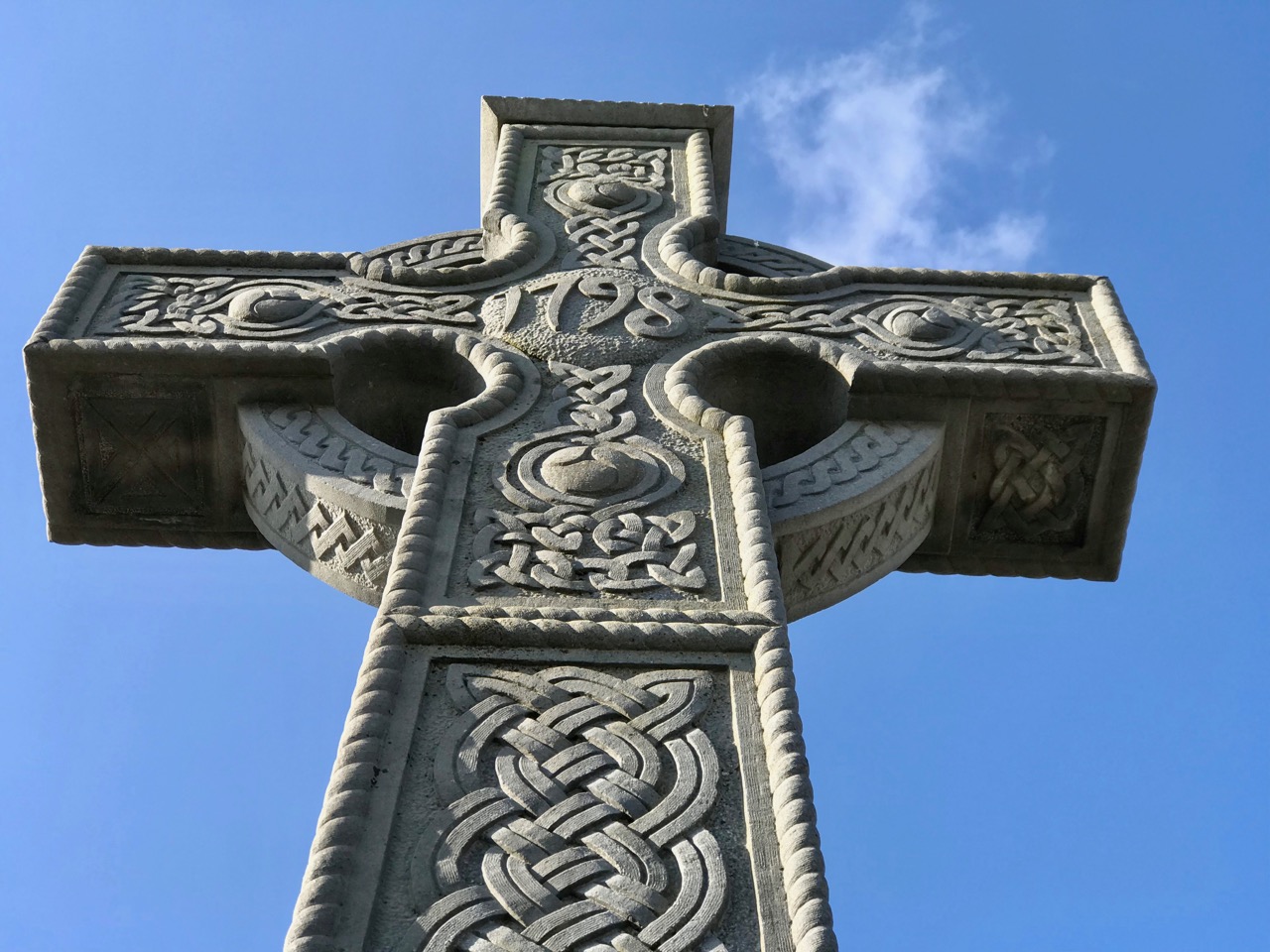
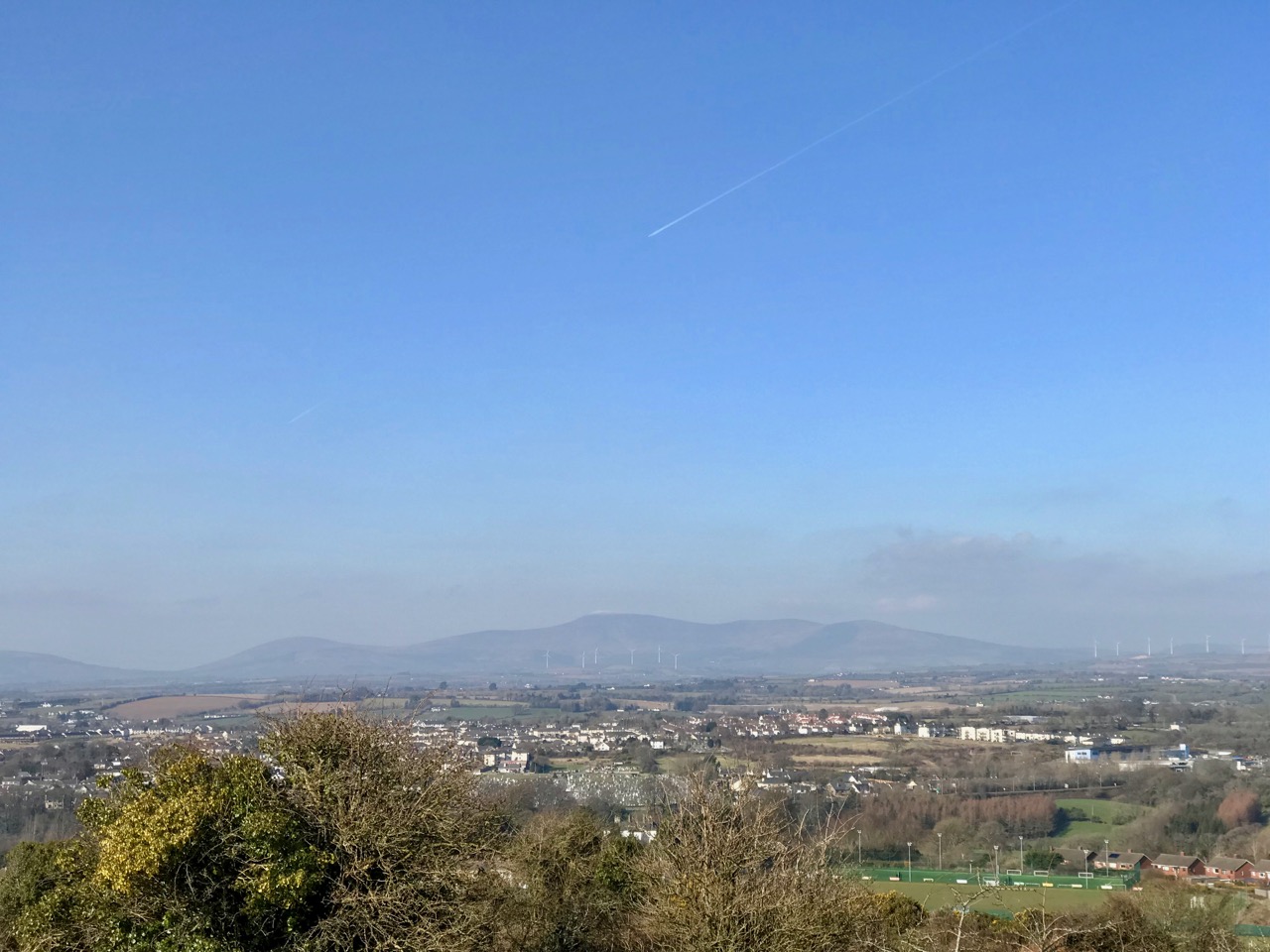
The header picture is a view from the top of Vinegar Hill, just outside the town of Enniscorthy, Co Wexford. Above is a view of the summit of the hill: it’s peaceful in the wintry sunlight. In 1798, however, it was a scene of carnage, as the United Irishmen, led by Father John Murphy, gathered to meet the British forces. George Cruikshank, the British caricaturist, produced illustrations for a history of the Irish Rebellion written by William Maxwell in 1845: he was not kind to the Irish cause but his drawings are probably accurate in their depiction of mayhem, slaughter and atrocities which were reportedly committed by both sides.

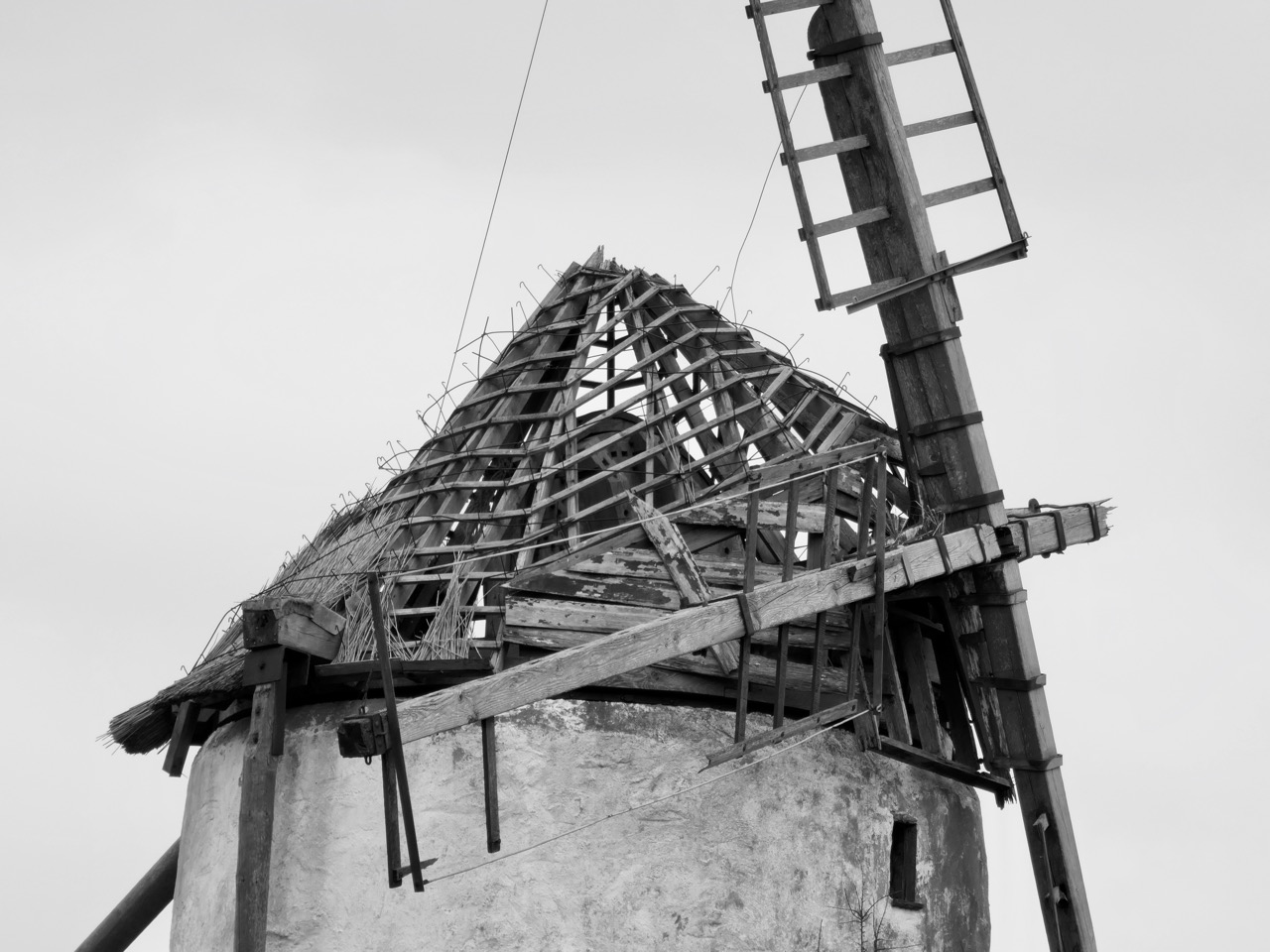
Cruikshank’s first drawing shows the Irish encampment on the summit of Vinegar Hill: women and children are evident. The windmill, which became the rebel command centre, dates from the 1600s and can still be seen on the hill today (shown in the photograph above). Disused probably since the time of the Rebellion, it fell into serious disrepair in the 1960s and a notice was affixed to it:

“Vinegar Hill, scene of glorious battle in 1798 between Insurgents and British Crown Forces. Carefully maintained by British Government from 1803 to 1922. Abandoned by the Irish Office of Public Works when freedom obtained. Only historic monument in the care of Irish Government in Enniscorthy area. Thank God for it.”

In our travels we chanced upon the ruins of another old windmill not too far away from Enniscorthy – in Tagoat. Today it’s in poor shape (but surely worthy of conservation) – we were unable to get close to it, but Finola managed to take this view:

Cruikshank’s imagining of the Battle of Vinegar Hill (above) could be a fair depiction. The engagement took place on Midsummer’s Day in 1798 and saw a rebel army of up to 20,000 – mainly armed with pikes – pitched against military forces of 13,000. Further military forces attacked nearby Enniscorthy.

He lead us on against the coming soldiers
And the cowardly Yeomen we put to flight
‘Twas at the Harrow the boys of Wexford
Showed Bookey’s regiment how men could fight

Look out for hirelings, King George of England
Search every kingdom where breathes a slave
For Father Murphy of County Wexford
Sweeps o’er the land like a mighty wave

Father Murphy is remembered everywhere in Wexford. He has a fine memorial in Ferns (above), and a centre dedicated to him at his former home near Boolavogue. No lives were spared by the British at Vinegar Hill; rebels who escaped marched to the midlands but dissipated after failing to garner enough support to continue the uprising. Father Murphy and a companion were captured but not recognised. Even when mercilessly tortured neither man revealed their identity. Both were hanged in the market square in Tullow. The yeomen cut off Father Murphy’s head, put it on display on a spike and burned his body in a barrel of pitch.

At Vinegar Hill, O’er the pleasant Slaney
Our heroes vainly stood back to back
and the Yeos at Tullow took Father Murphy
and burnt his body upon a rack

God grant you glory, brave Father Murphy
And open Heaven to all your men
the cause that called you may call tomorrow
in another fight for the Green again

There’s a 1798 Centre in Enniscorthy, but it was closed on the day we visited. We also looked for the Father Murphy Centre at Boolavogue, but the fine iron gates leading down to it were locked up for the winter. This Irish Rebellion deserves more exposure in this Journal – something we will address in the not-too-distant future. But I am pleased to have gained a greater insight into one of my favourite Irish airs: Boolavogue. Here’s an interesting rendering of P J McCall’s version, by ‘Flying Column’ dating from 1972: it’s preceded by Seamus Heaney’s sonnet Requiem for the Croppies, inspired by these same events.


Viking Traces

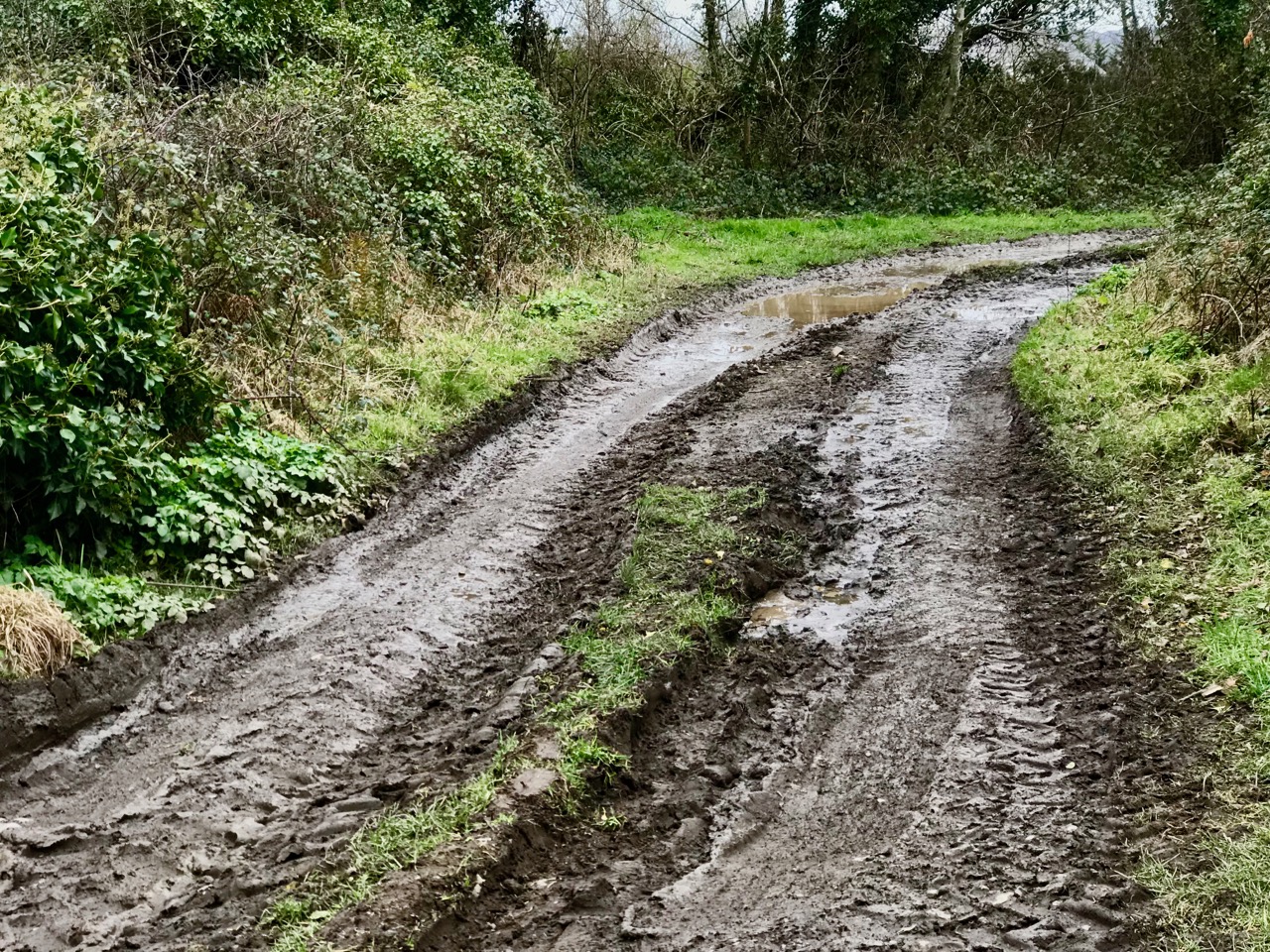
If you want to find some remote Irish history which is a long way off the beaten track, try the city of Dublin! Just a few minutes’ drive from the edge of this bustling metropolis (and down a long, rough and muddy farm track) is a collection of carved stones which have their roots in the time of the Vikings.

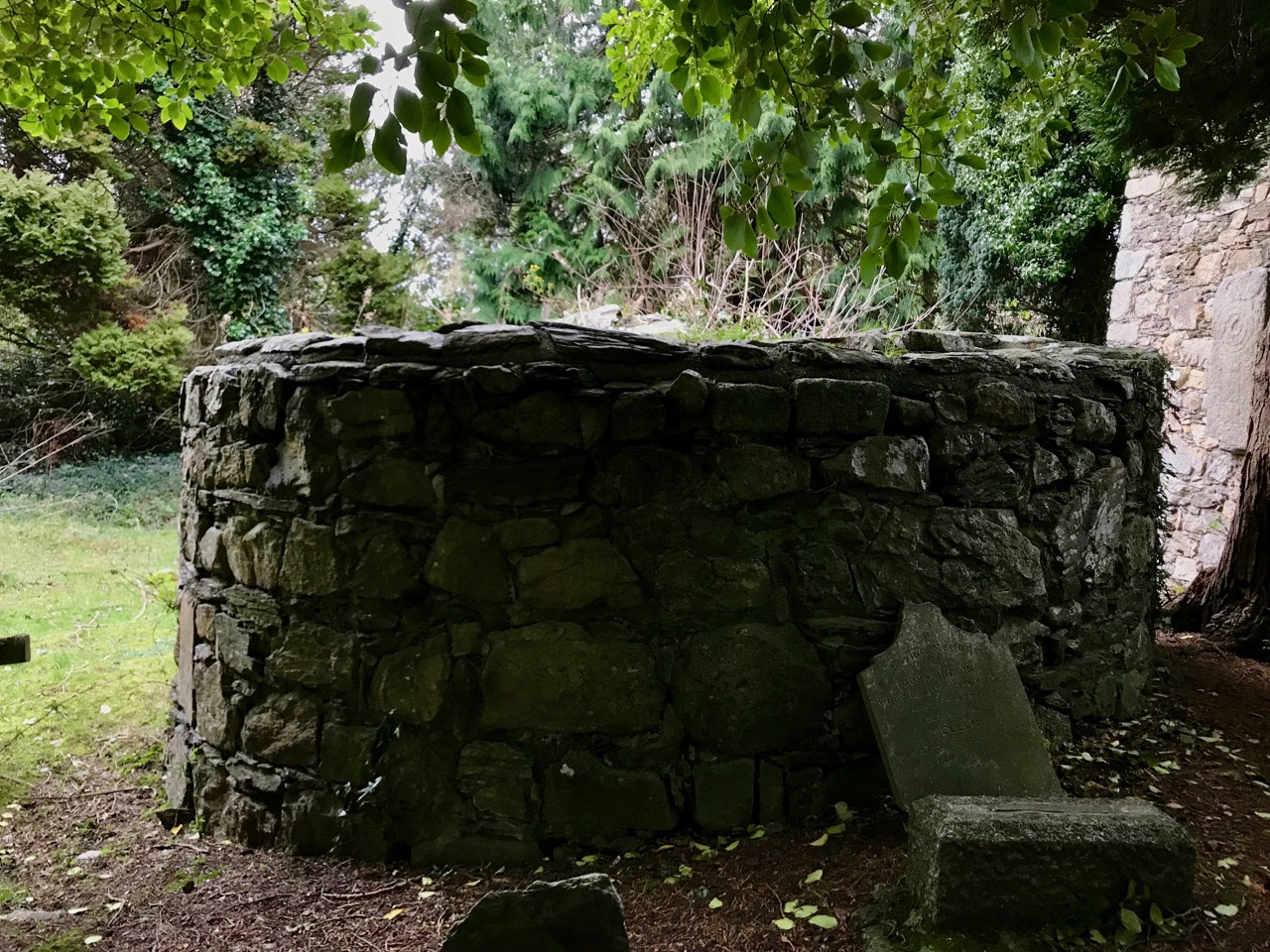
Here, in the barony of Rathdown, the remains of a small ruined church date from the twelfth century, but a monastic settlement was set up long before that by St Comgall of Bangor, who lived from 520 to about 600 AD. There is the stump of a round tower here, known locally as the Skull Hole, as bones from the surrounding graveyard were thrown in here. Some say, also, that it is actually the entrance to an underground tunnel going down to the coast: furthermore, a piper was once seen to enter the tunnel playing his pipes – but was never seen again!

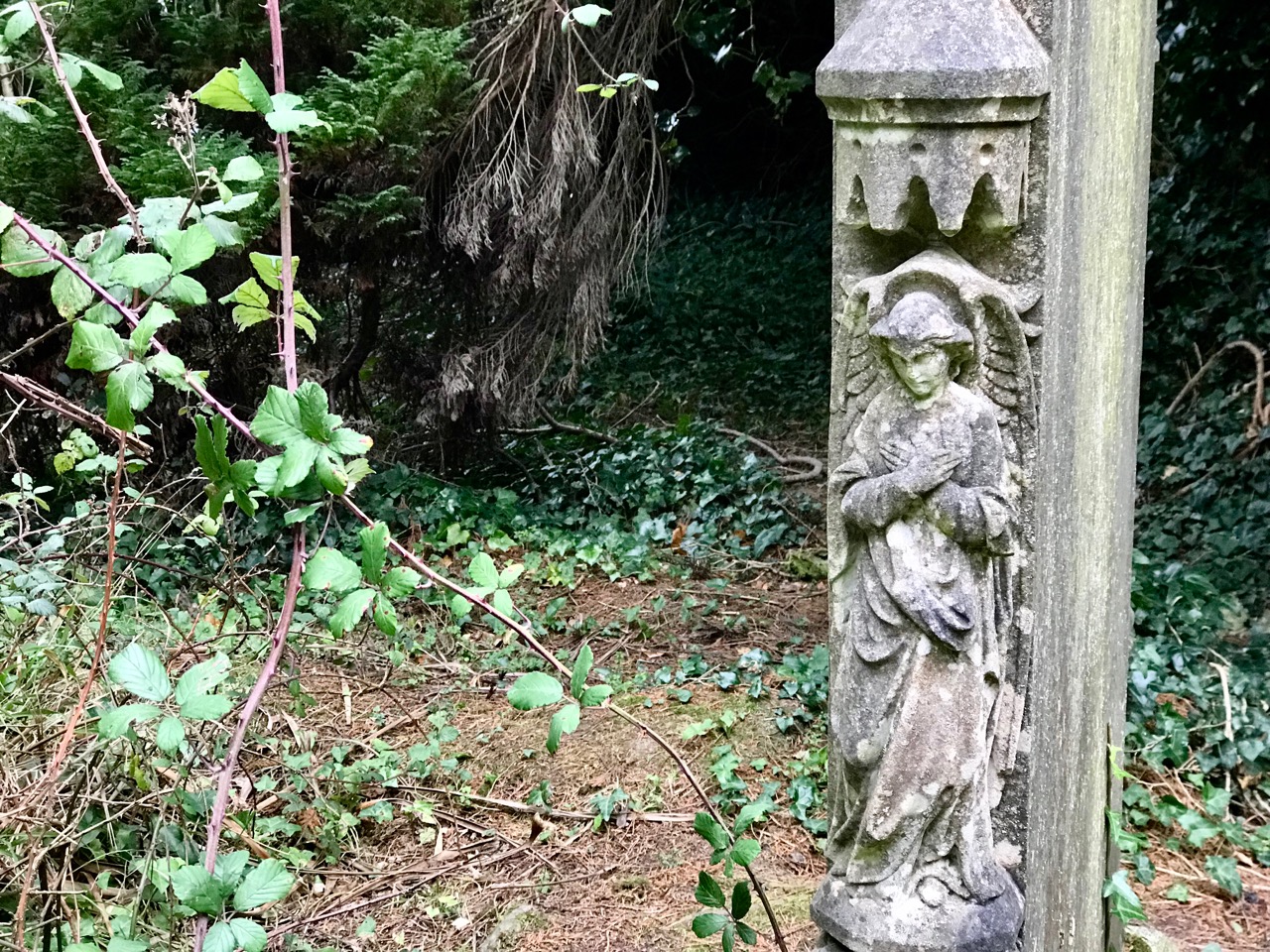
There is another piping tale connected with a nearby site: Puck’s Castle. A fairy piper is often seen jumping from rock to rock while also playing his pipes. We watched and listened, but in vain . . . Here are some of the noteworthy ‘modern’ gravestones in the cemetery at Rathmichael:

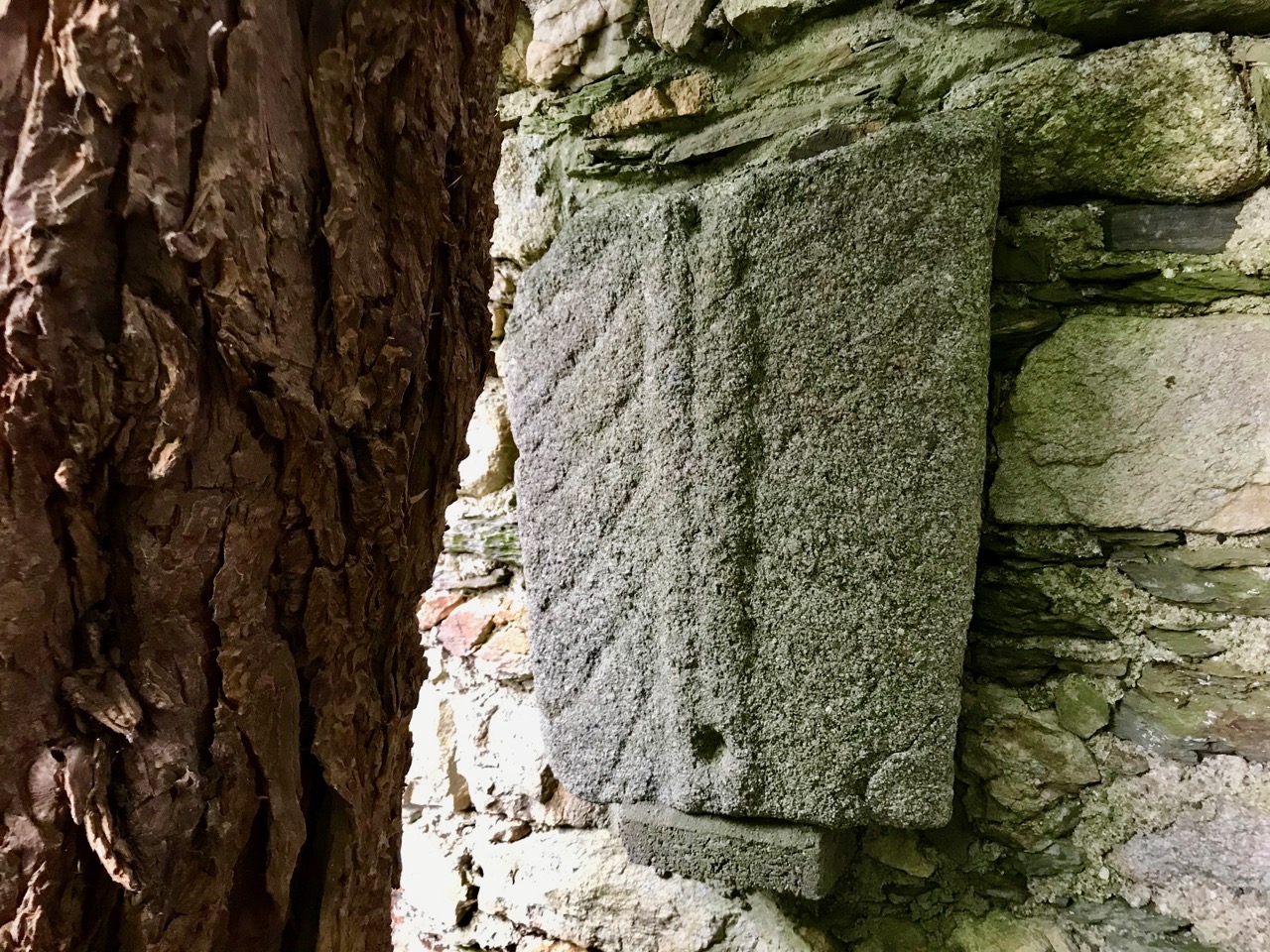
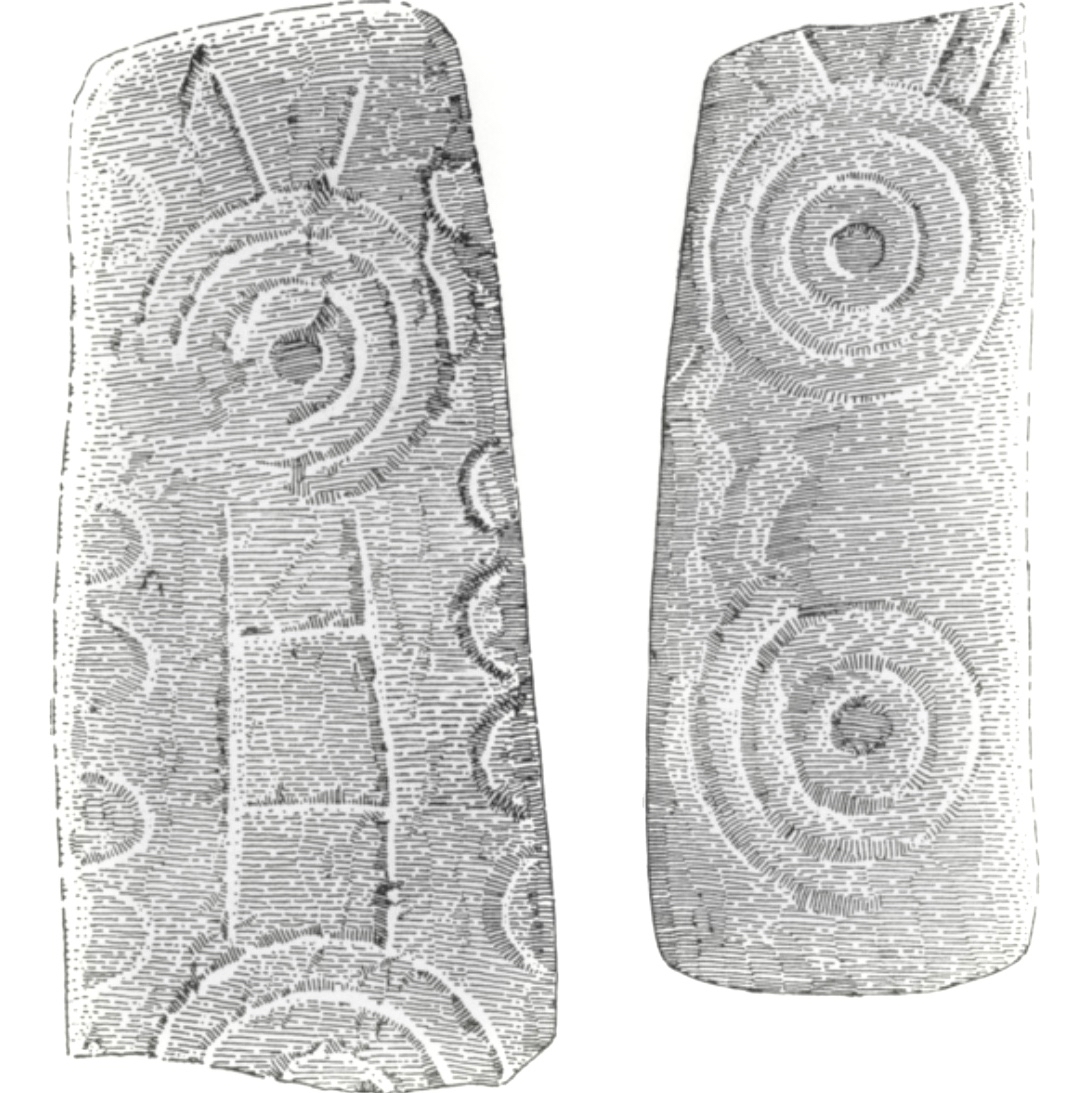
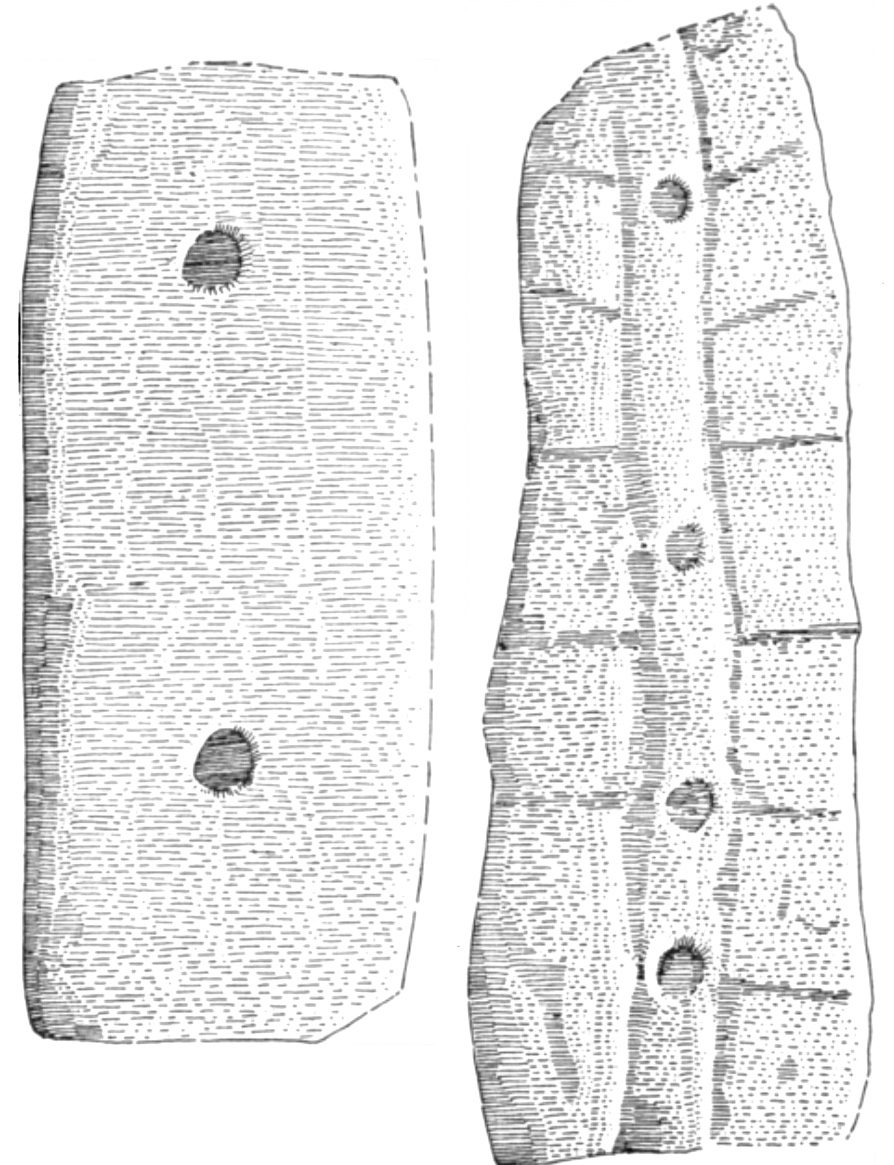
But the real treasure of the place are the carved stones which date from Viking times, and which are probably early Christian grave markers. They are generally known as The Rathdown Slabs. Some of these we would classify as ‘Cross Slabs’, even though, on some, the cup marks and concentric circles make us think of Prehistoric Rock Art. Well worn by time and weather we can still make out the various motifs – and we are fortunate to have good drawn records of these stones dating from a study carried out by Pádraig Ó hÉailidhe, a member of the Society of Antiquaries of Ireland, and published in volume 87 of the Journal of that Society in 1957.

Rathdown Slabs (top to bottom): 1 and 2; 8 and 9; 3 and 4 – as classified by P Ó hÉailidhe in his 1957 study

From around 850 AD we find mention of Norse names: Amláib (Olaf the White) arrived in Dublin in 853 and ruled jointly with Ímar (Norse Ívarr inn beinlausi – ‘Ivar the Boneless’). Amhláib was a Norwegian but Ímar may have been a Dane. Ímar is mentioned as ‘king of all the foreigners in Ireland’ at his death in 873. The grave slabs at Rathmichael probably date from the time when Viking settlements were established in the Dublin area, and – although we tend to think of the Vikings as plunderers of monasteries – it seems that they began to follow Christian practices once they settled in Ireland. 

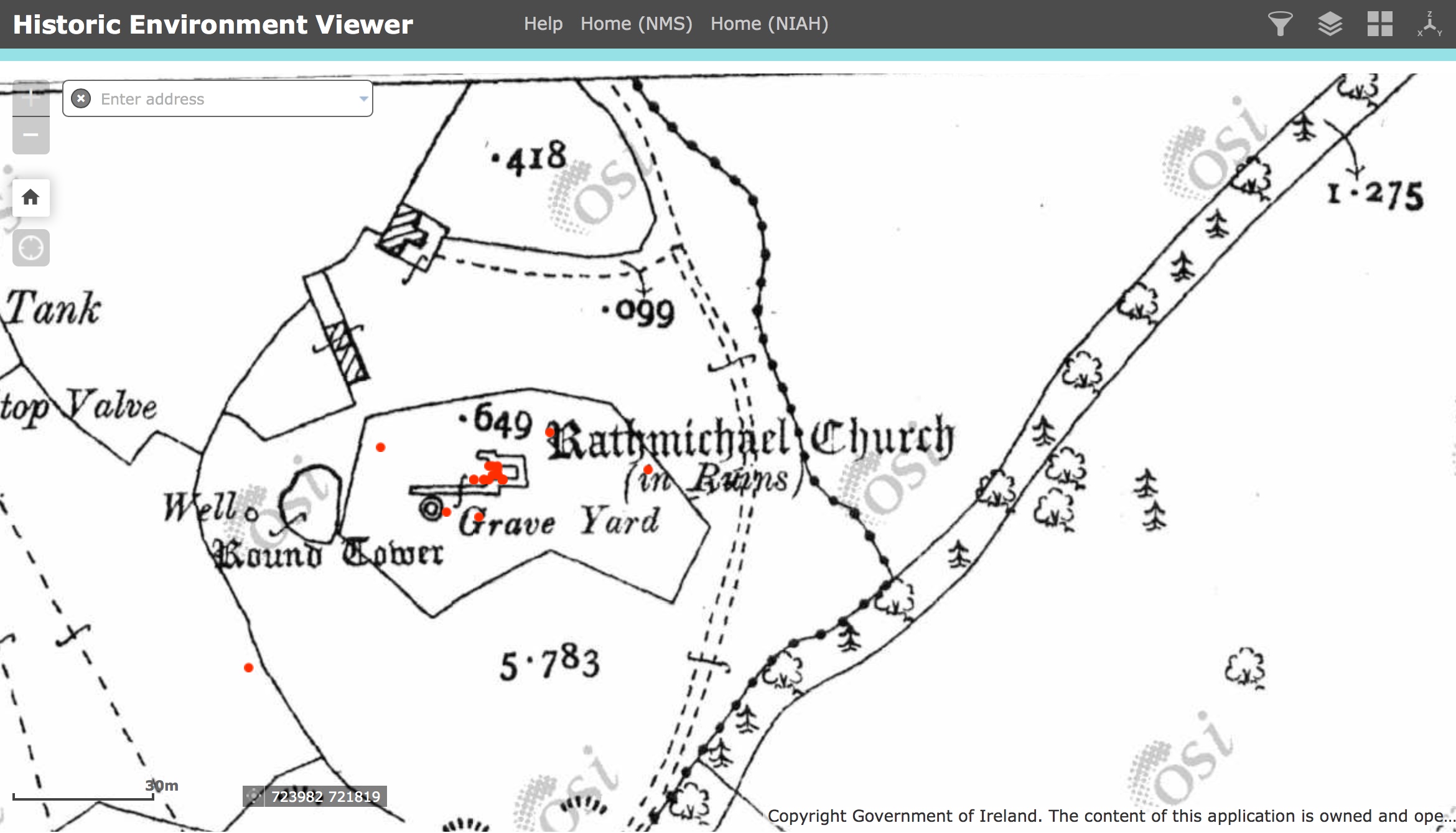
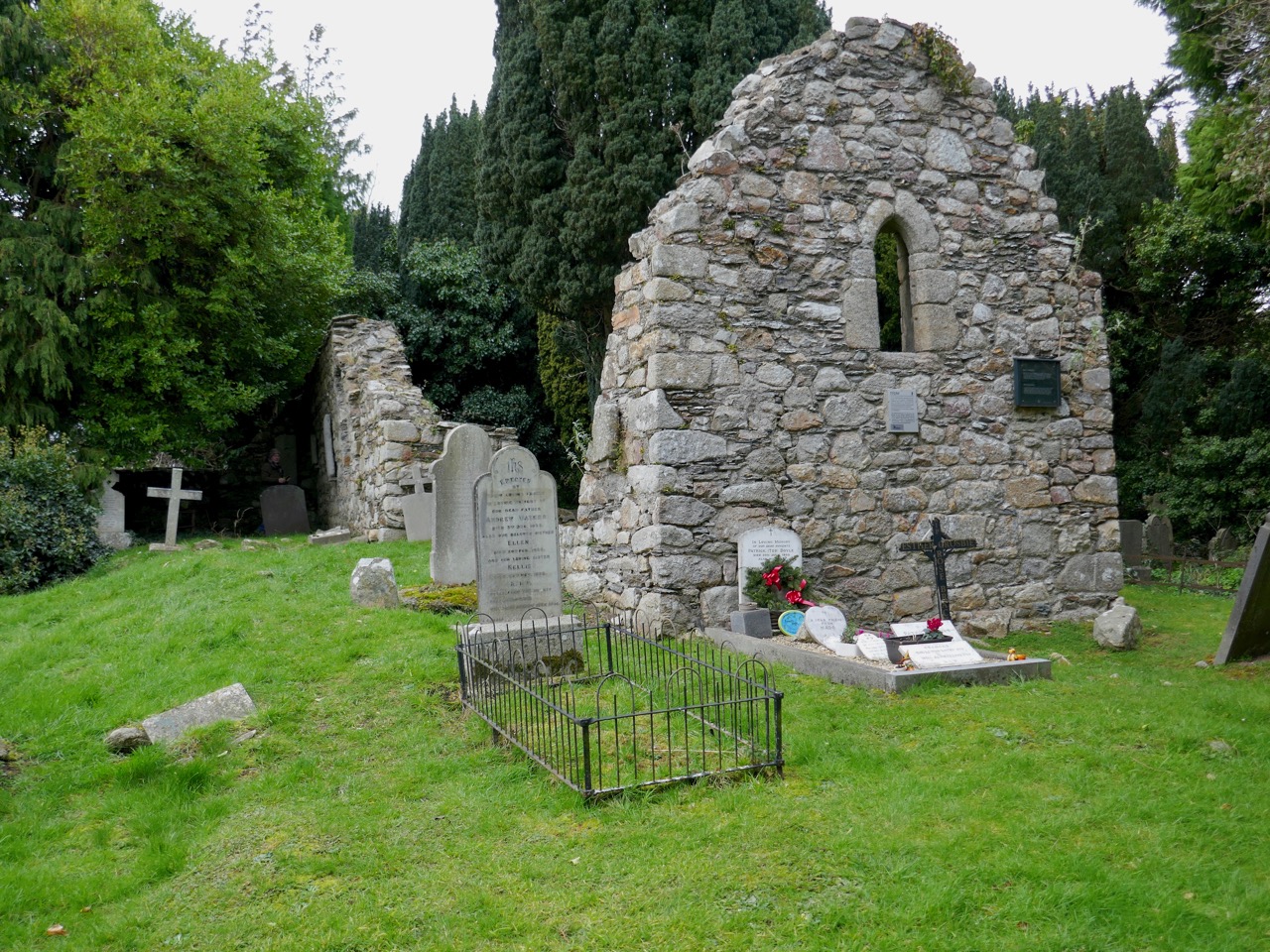
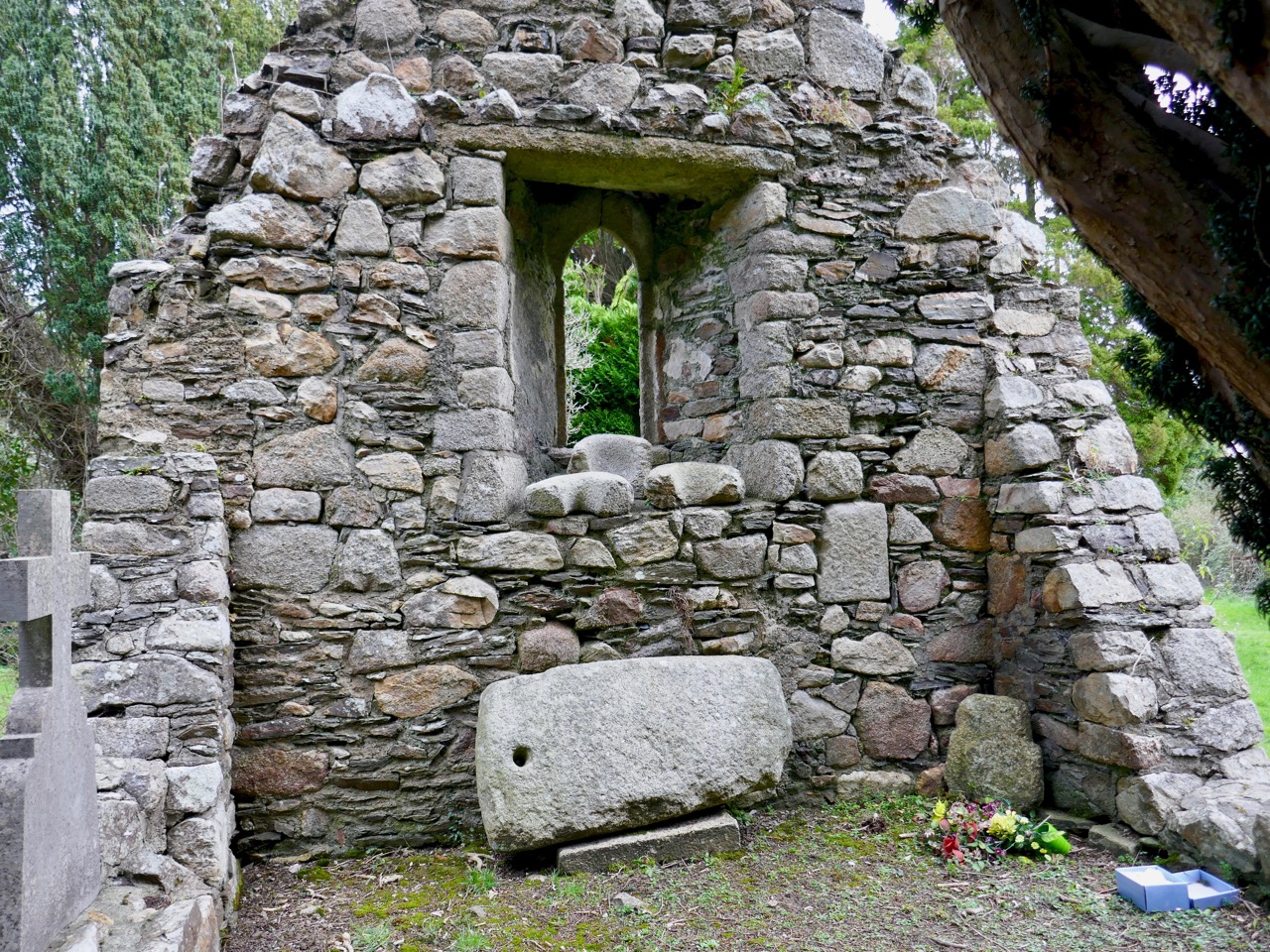
Top – Rathmichael Church with its round tower and Viking graves was established on an ancient Rath or fort, in fact one of the largest in the locality: you can see the probable circular outline of the fort in this extract from the National Monuments Service Archaeological Survey Database; middle – ruins of the medieval church at Rathmichael and, lower – fragments of Bullaun Stones at the church site

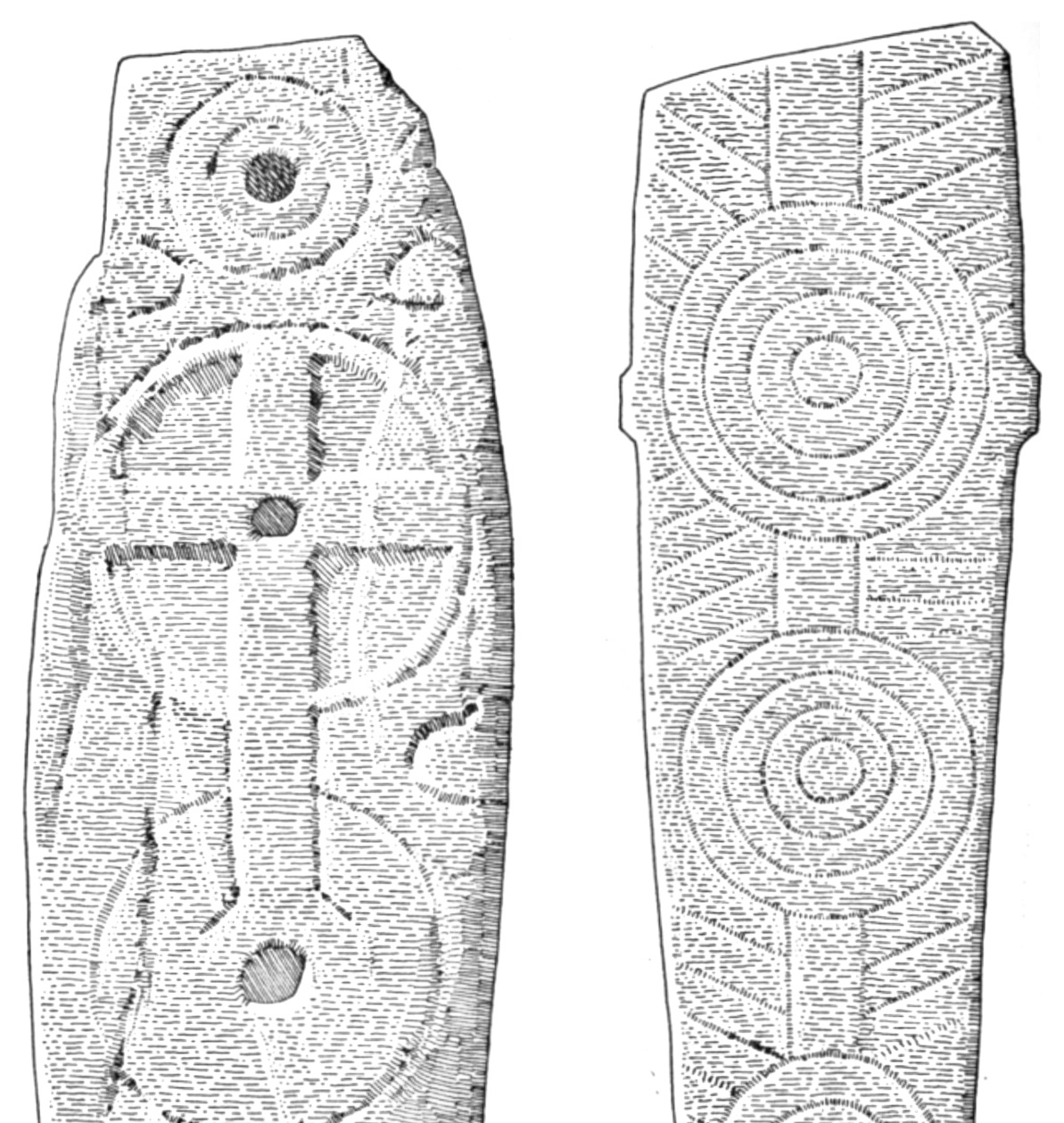
Other – probably related – inscribed slabs from the wider area are recorded by Pádraig Ó hÉailidhe (below): Dalkey Castle Heritage Centre displays one of the finest of them all (left), while the Tully Slab (right) is assumed to have come from another remote church ruin close by – however I cannot find any record of its current whereabouts. If anyone can throw light on this, please let us know.

Dalkey and Tully grave slabs – drawn by Pádraig Ó hÉailidhe, 1950s

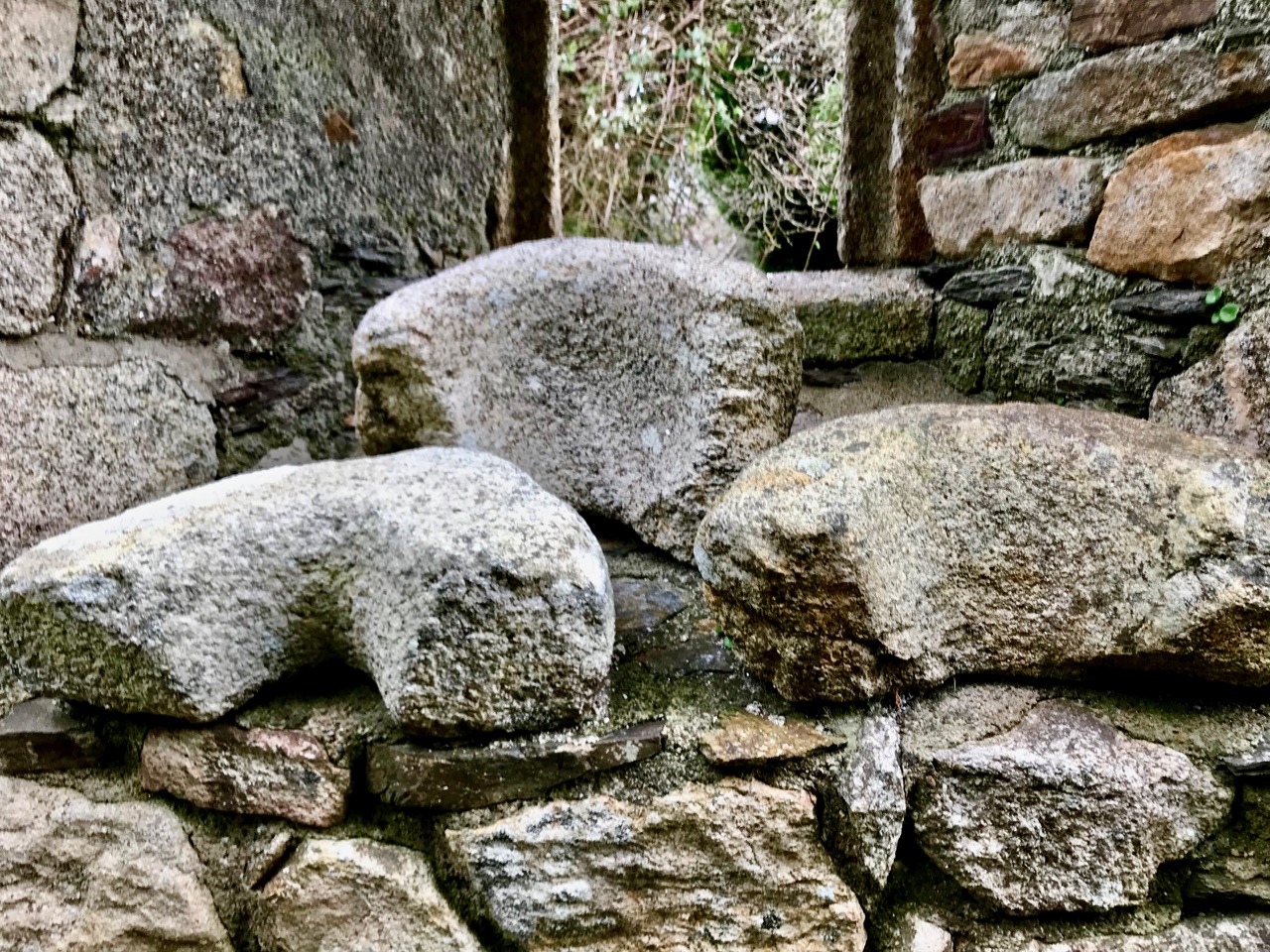
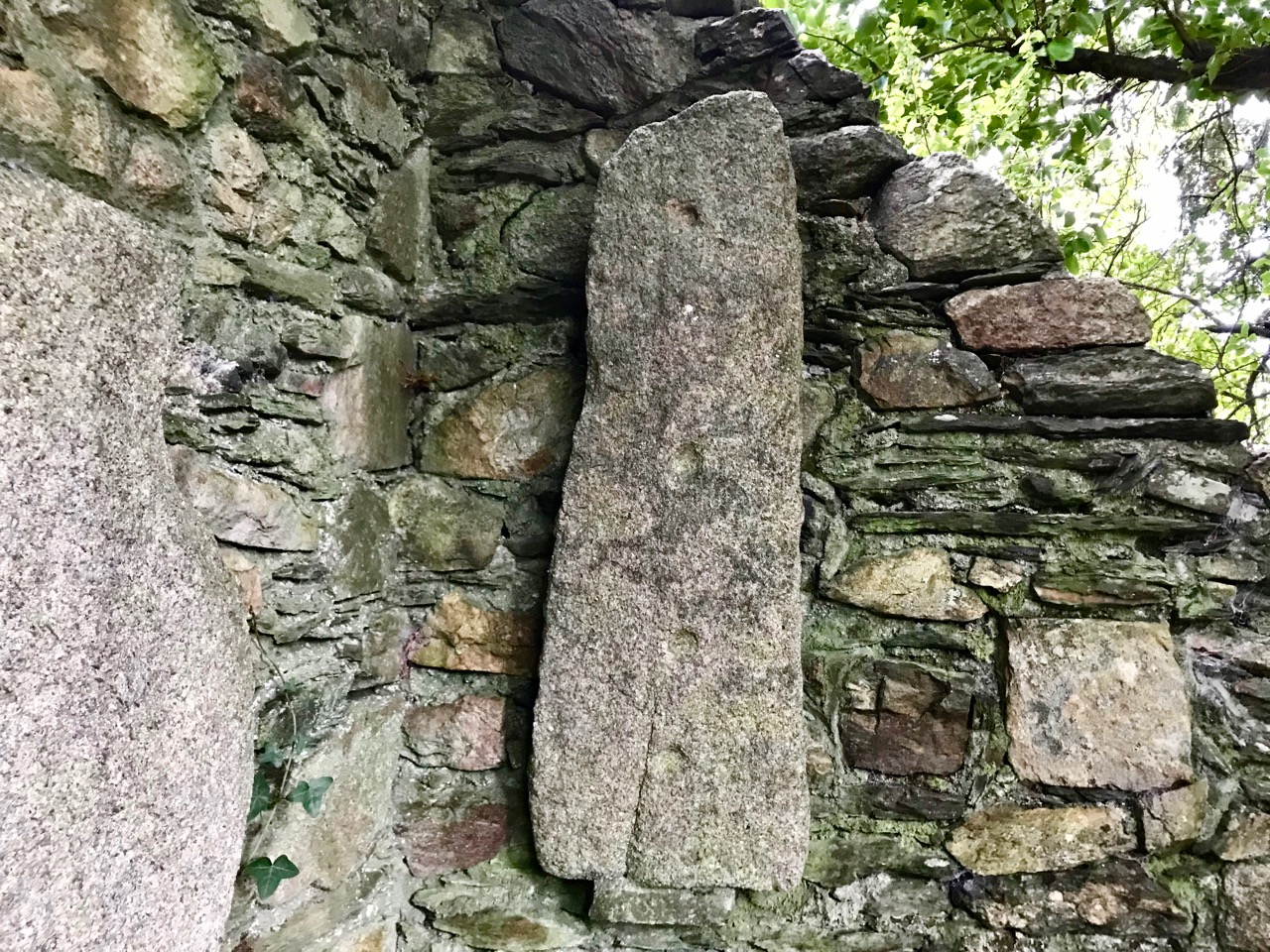
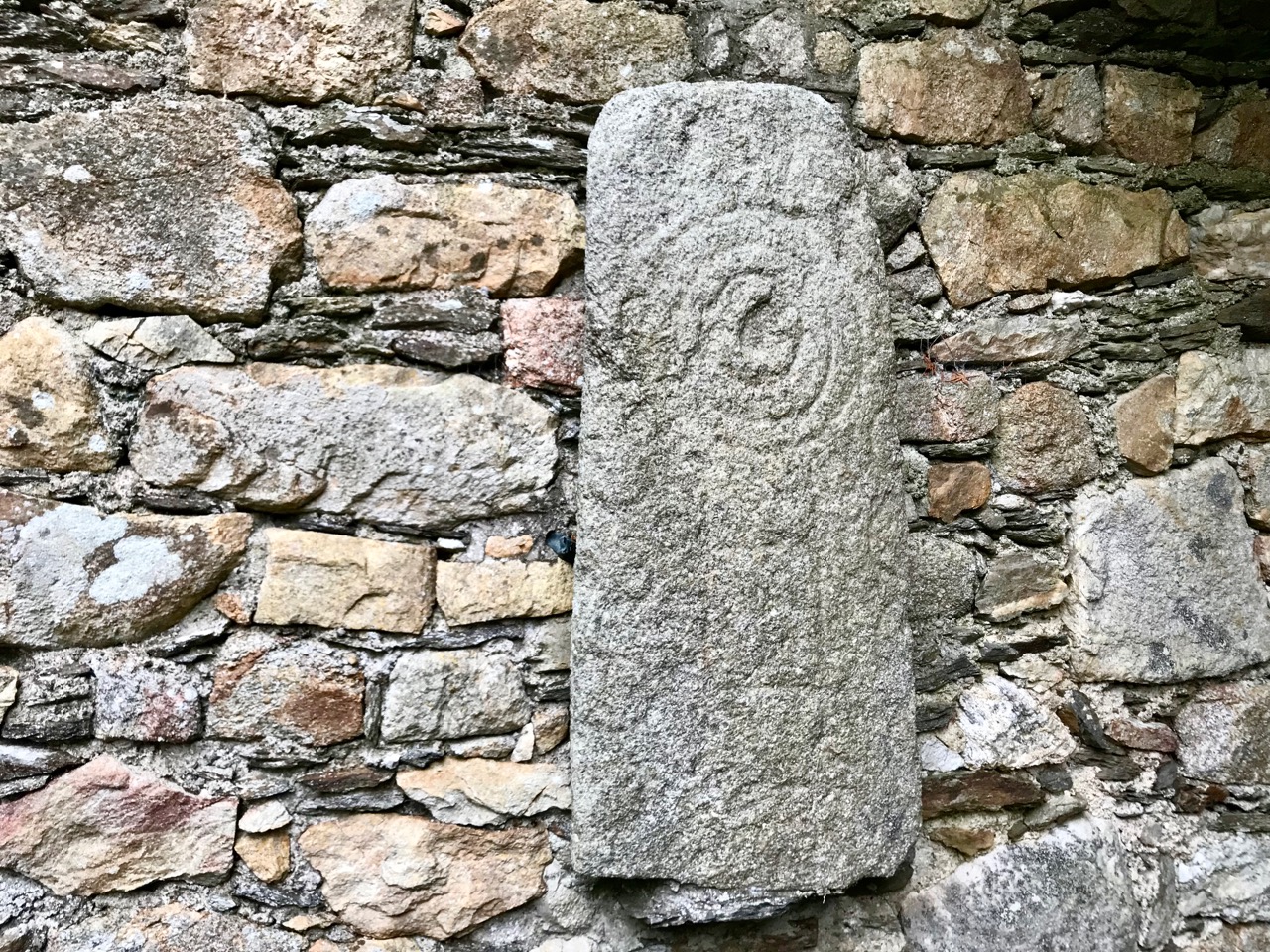
I have used the drawings by Ó hÉailidhe because they are so clear: we visited the Rathmichael site this week and were struck by how faded much of the inscription seems to be. It could be that we were not seeing the carvings in a good, clear light. Worryingly, it may also be that the stones are suffering from accelerated weathering (much as our unprotected medieval high crosses appear to be) due to acid rain and pollution. You can see for yourselves by comparing the drawings above with our own photographs, a selection of which form the tailpiece of this post.

Nicola Gordon Bowe, 1948 – 2018

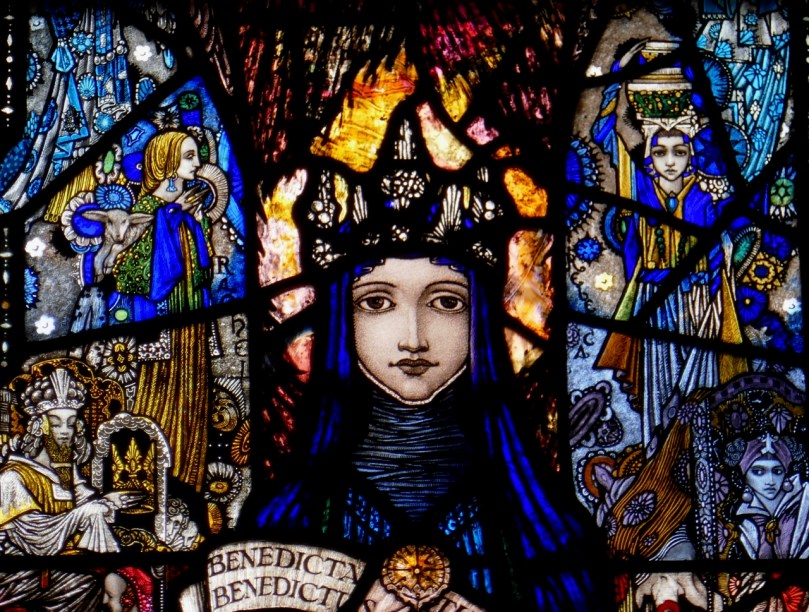
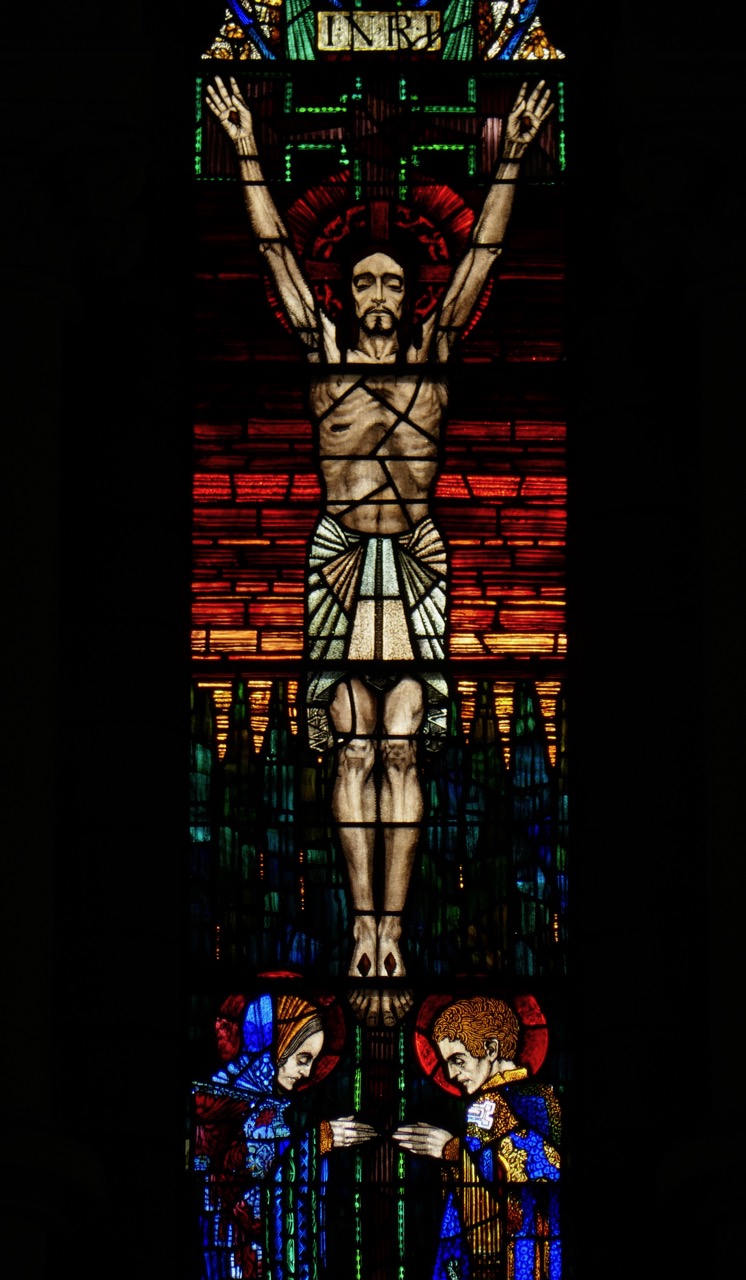
Harry Clarke’s The Coronation of the Virgin, from his Terenure windows. Nicole Gordon Bowe revealed him to the world.

The Irish art world sustained a terrible loss earlier this year with the death of Nicola Gordon Bowe, or Nikki, as she was universally known to her friends. In a very small way, I feel immensely grateful to have been counted among those friends. Although we only met once, we carried on a happy correspondence and were to have seen each other again this summer. But there are probably a thousand people like me, who have lovely memories of this wonderful woman, because Nikki had that rare gift of making each individual feel seen and heard and encouraged.

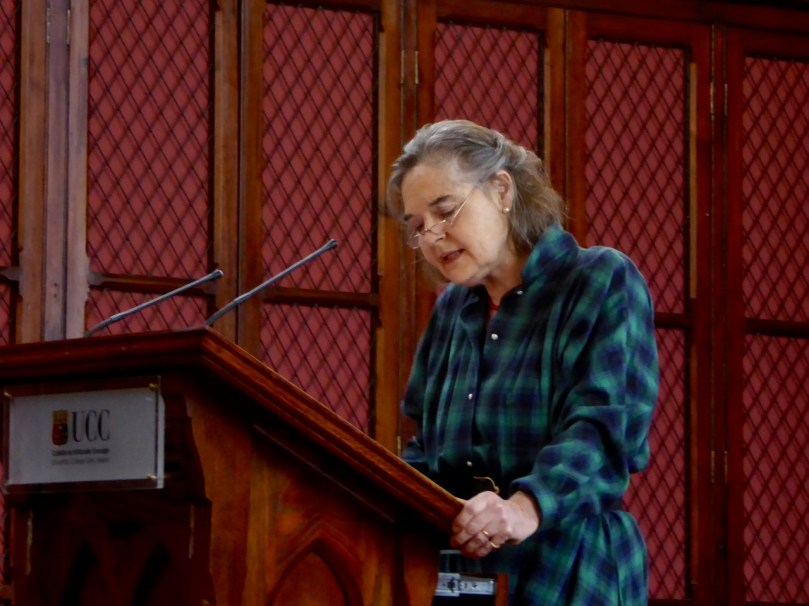
Nikki at the day-long symposium on the Honan Chapel, in Cork. Obviously in pain, she nevertheless gave a brilliant summary of Harry Clarke’s famous windows

Reading comments on various obit pages, from a generation of students, colleagues and friends, clear themes emerge of formidable scholarship, wide-ranging erudition, and passion for her subject. She was, as Alistair Rowan who spoke at her memorial service emphasised, the world expert on the Irish Arts and Crafts movement and on Irish stained glass.

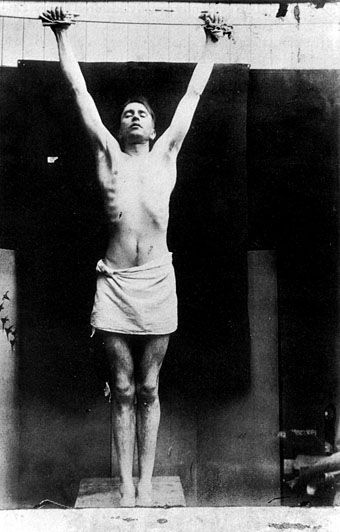
In her book, The Life and Work of Harry Clarke, Nikki traced Clarke’s influences and training. He often used himself as a model – in this instance for the crucified Christ in the Terenure windows

But the other theme was that of friendship, of a wonderful sense of humour and a ready smile, of her encouragement to junior researchers, her collaboration, nationally and internationally with other scholars in her field, and the boundless generosity with which she shared her knowledge.

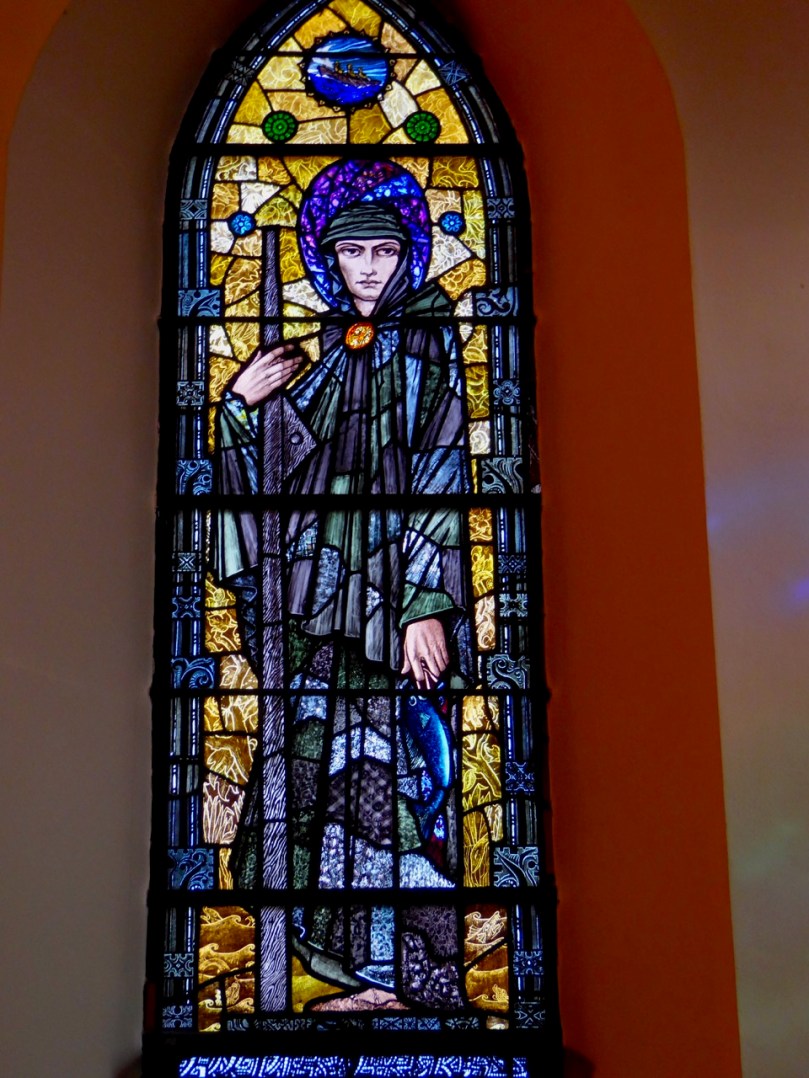
St Brendan, Nikki pointed out (as true for this window in Tullamore as for the Honan windows she was discussing) does not look like the kind of muscular saint that could navigate the Atlantic. ‘Effete’ was the word she used.

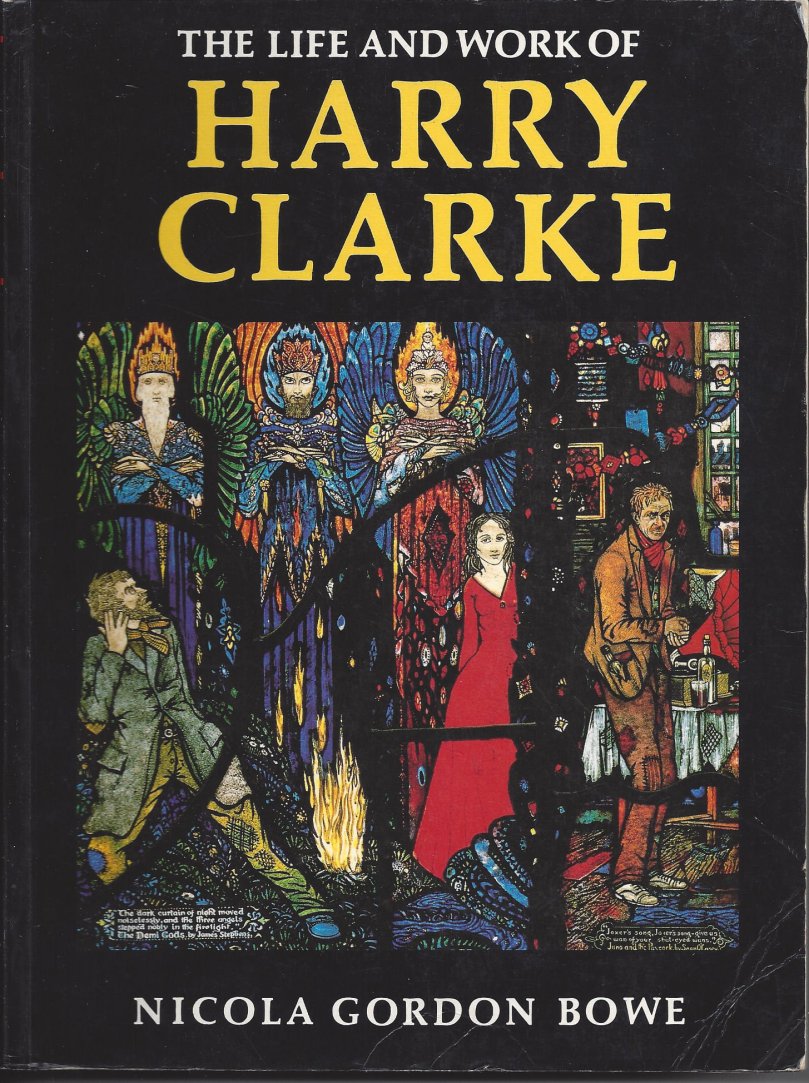
Nikki’s book on Harry Clarke has been my bible for all the posts I have written about this genius of Irish stained glass. Last year her second magnum opus was published, on the life and work of Wilhelmina Geddes. I haven’t read it yet – a future pleasure – but it was widely considered the finest Irish art book of the year, perhaps the finest book of the year.

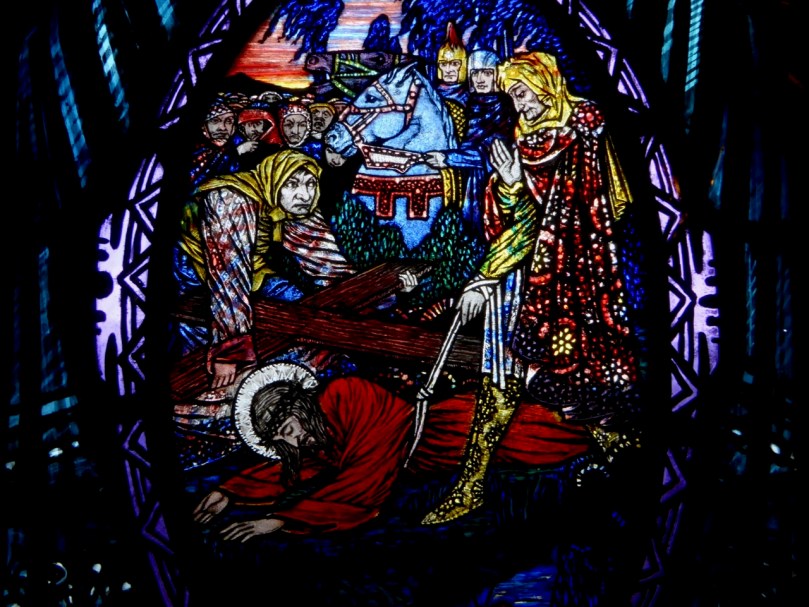
Jesus Falls for the Third Time: one of the medallions that form the Stations of the Cross in Lough Derg. Nikki’s research indicated that these were mostly executed by his apprentices during a period of illness, although  they were designed by him.

She also wrote for the Irish Arts Review, the Dublin Review of Books and contributed essays to edited collections – the busy life of an established and disciplined scholar. At the time of her death she was working on what was to be a definitive study of the Irish Arts and Crafts Movement.

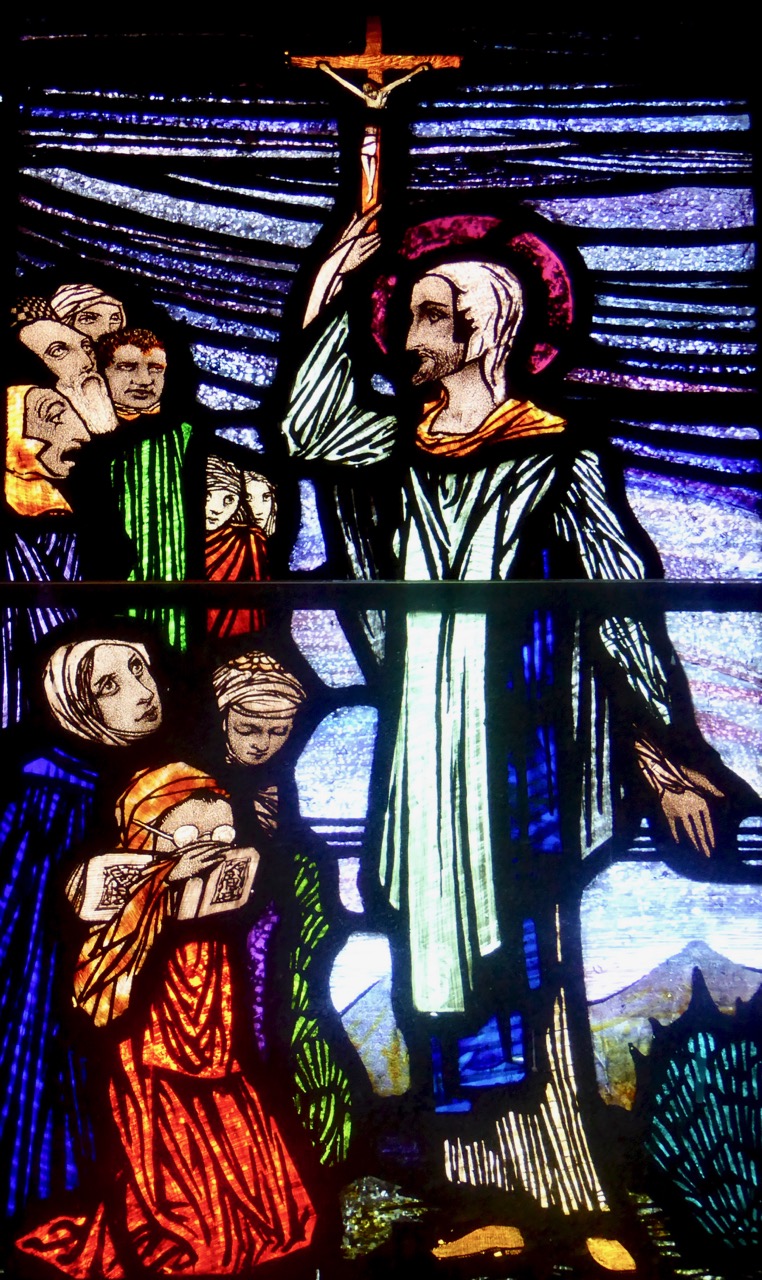
St Fechin, from the Ballinrobe windows: Harry Clarke loved to populate his scenes with a host of figures – now who is that small one with the glasses?

Nicola Gordon Bowe, more than any other person, was responsible for rescuing Irish Arts and Crafts from obscurity and establishing the reputation as artists of its major practitioners, none more so than Harry Clarke. She was impatient of those who dismissed stained glass as mere craft and who failed to see how the medium of glass both compounded the difficulty and enhanced the impact of the work of Harry Clarke and others. In the newly refurbished and finally open National Gallery of Ireland there is now a Stained Glass Room full of breathtaking pieces – it is no stretch to say that we can thank Nikki for that.

The Song of the Mad Prince, an exquisite small panel in the new National Gallery Stained Glass Room

I have chosen to illustrate this post with photographs of Harry Clarke windows and details, as a tribute to Nikki. She was his great and ardent champion and now the world knows what a true legacy of masterpieces we have been left by him. Nikki’s legacy is also secure – her works will be consulted for generations to come, and her memory kept warm by all who were privileged to know her.

From the Eve of St Agnes, in the Dublin City (Hugh Lane) Gallery

For obituaries, see here and here and here. Rest in peace, Nikki.

The Annunciation Angel from the Terenure Annunciation window

Become a Citizen Scientist!

The National Biodiversity Data Centre, which is also known as Ireland’s Citizen Science Portal, is asking us to record certain spring flowers that we see. This is not a task, it’s a pleasure! What could be more delightful than wandering down a country boreen, stopping to admire the flowers (like the Cuckooflowers above, seen near Bantry) and in about a minute, sending off a record to the Data Centre?

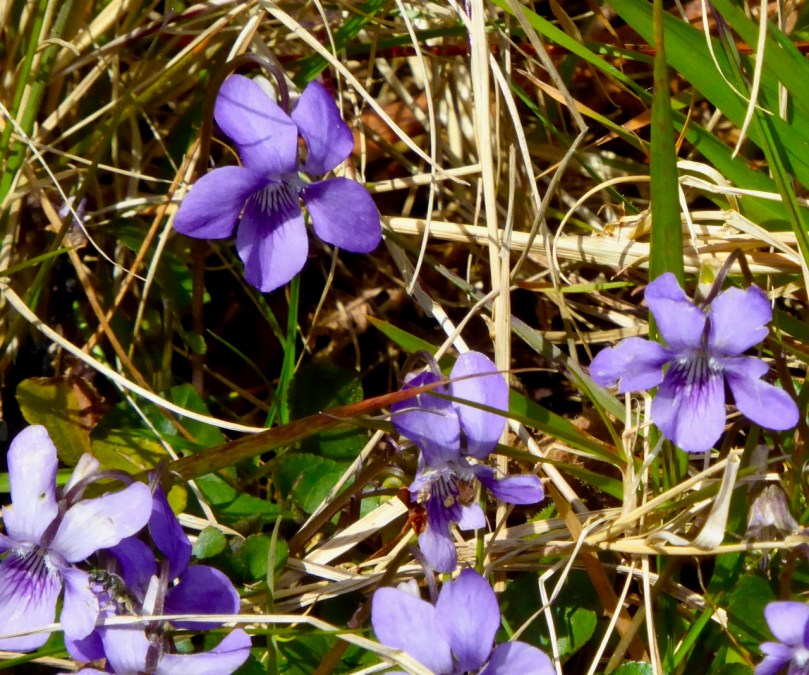
Common Dog-violets, Greenmount, near Ballydehob

Yes, they have made it that easy, with the most amazing little app. I’ll explain how to use it below, but first – why record spring flowers at all? Here’s what the NBDC says about that:

All recording is valuable as it contributes to furthering plant conservation in Ireland. Most plant recording takes place later in the summer. This project is particularly important as it encourages records of early-flowering species that can otherwise be lacking in data. Many of the spring flowering plants are very distinctive, making it a good way for those new to recording to get involved.

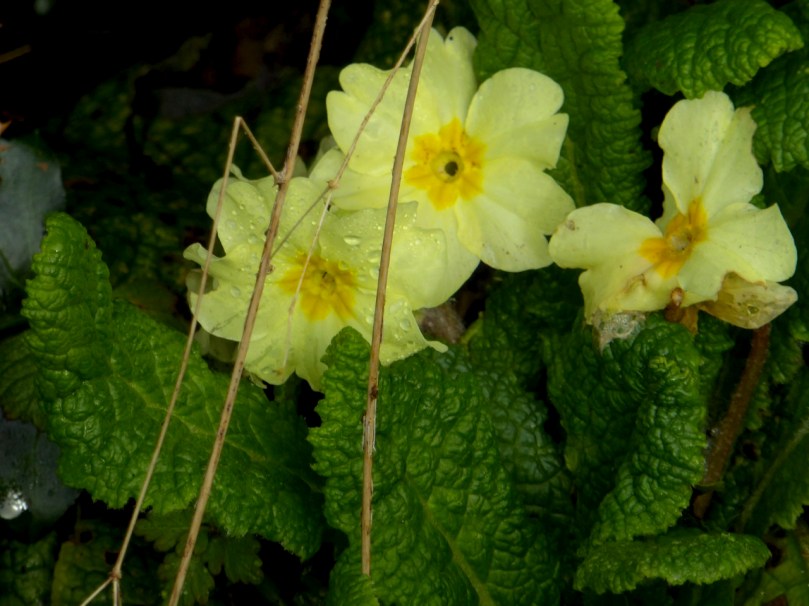
Primroses, Rossbrin

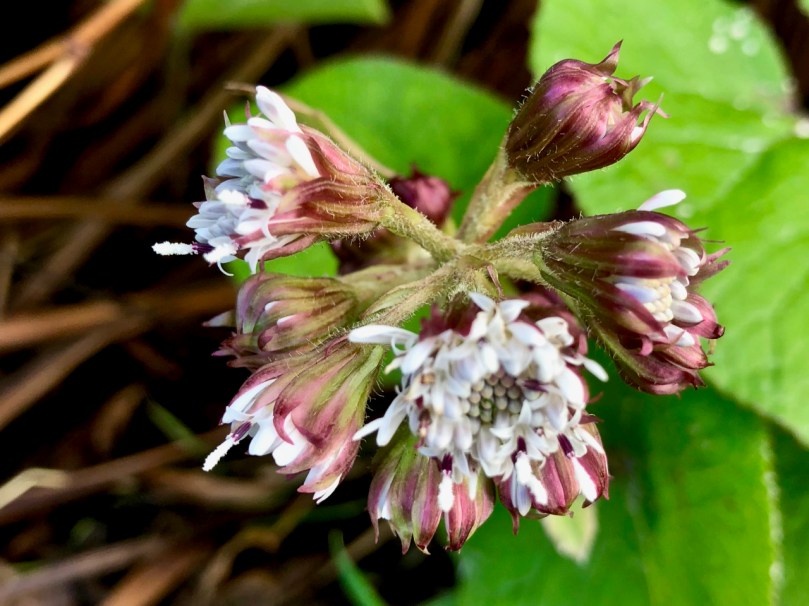
Most (but not all) of the flowers selected for this Spring Flowering Plant Project are common and can be found extensively around West Cork and elsewhere in Ireland. Here’s the list: 1. Bluebell 2. Common Dog-violet 3. Cowslip 4. Cuckooflower 5. Early Dog-violet 6. Early-purple Orchid 7. Lesser Celandine 8. Lords-and-Ladies 9. Primrose 10. Ramsons/Wild garlic 11. Toothwort 12. Winter Heliotrope 13. Wood Anemone 14. Wood-sorrel.

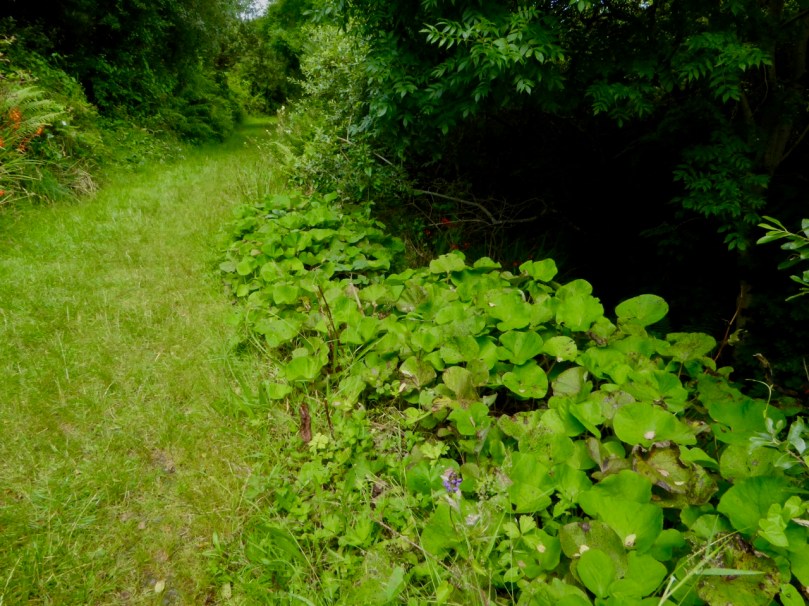
Winter Heliotrope is an invasive species and a common sight along roads and railway tracks. Here it has colonised the Butter Road

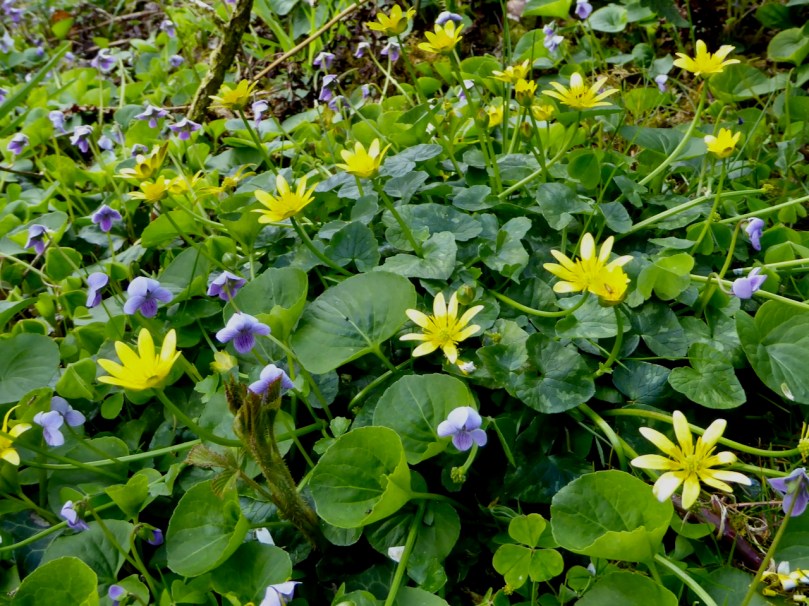
The Winter Heliotrope has been blooming since December, and I’ve already seen my first Primrose. But the real spring blooming time is yet to come, in March and April, and into May. That’s when our hedgerows will come alive with Common Dog-violets and Lesser Celandine, and the Cuckooflowers will suddenly appear in the fields.

We saw these beautiful Lesser Celandine consorting with March Violets in the Magic Forest

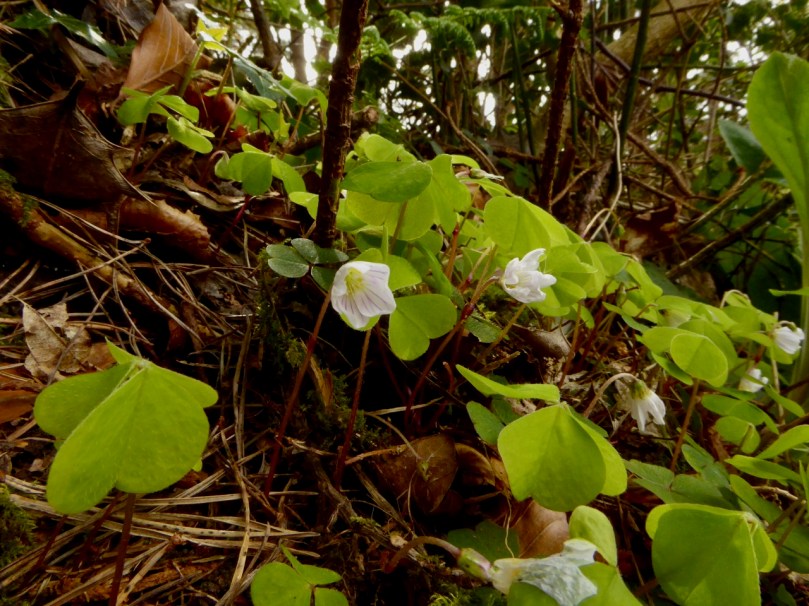
A venture into the woods will reward you with Wood Sorrel and Wood Anemone, and the ultimate spring experience – a carpet of bluebells. A trip to the Beara Peninsula early last April provided an opportunity to wander up the River Path at Gleninchaquin, surely one of the most picturesque spots in all of Ireland. Not only was it a gorgeous warm spring day, but the path wound its way through clumps of Wood Anemone and Wood Sorrel.

The Wood Sorrel leaves are like large shamrocks, while the flower has a sweet little white head veined with pink

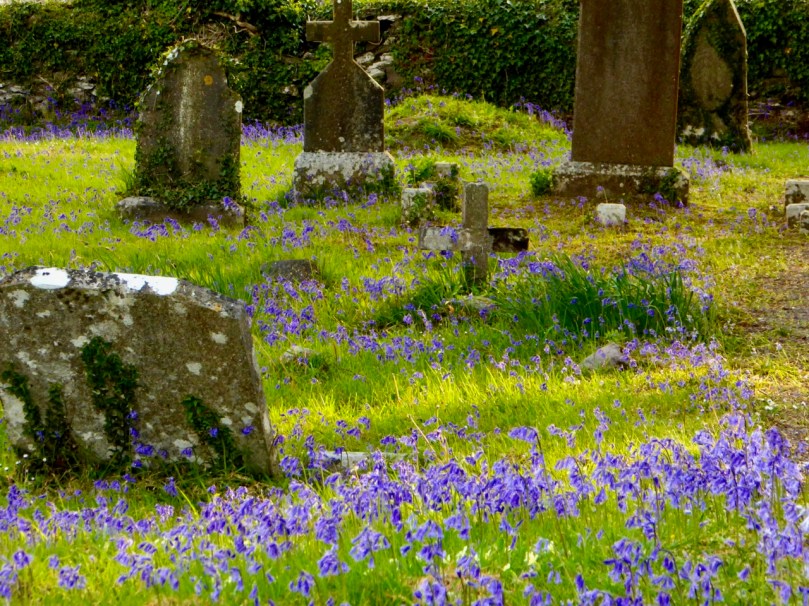
Returning through Kenmare we stopped by an old graveyard just outside the town, to find the entire area covered in bluebells. The other place to look out for bluebells is, perhaps surprisingly, in recently burned patches. It’s the only upside to a lot of the burning that goes on around here. The bulbs, like those of many flowers, are able to lie dormant underground for many years until the right conditions allow them to germinate.

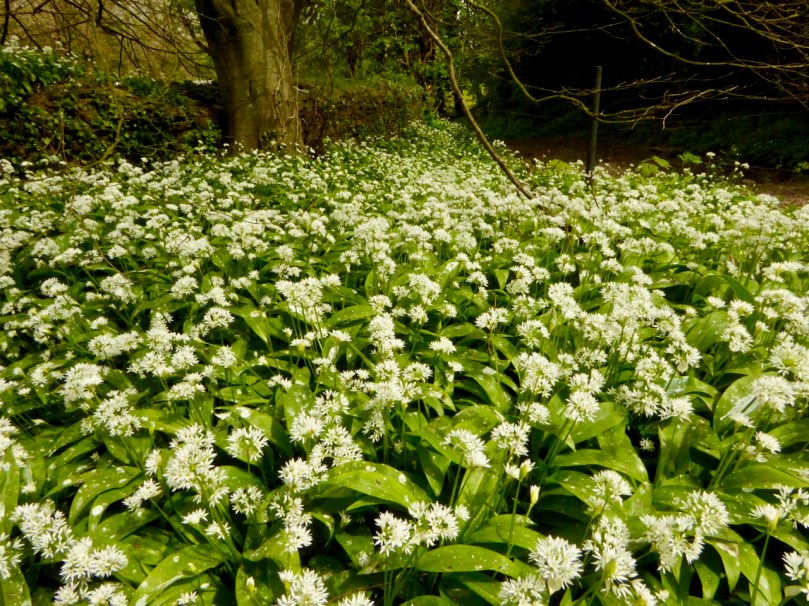
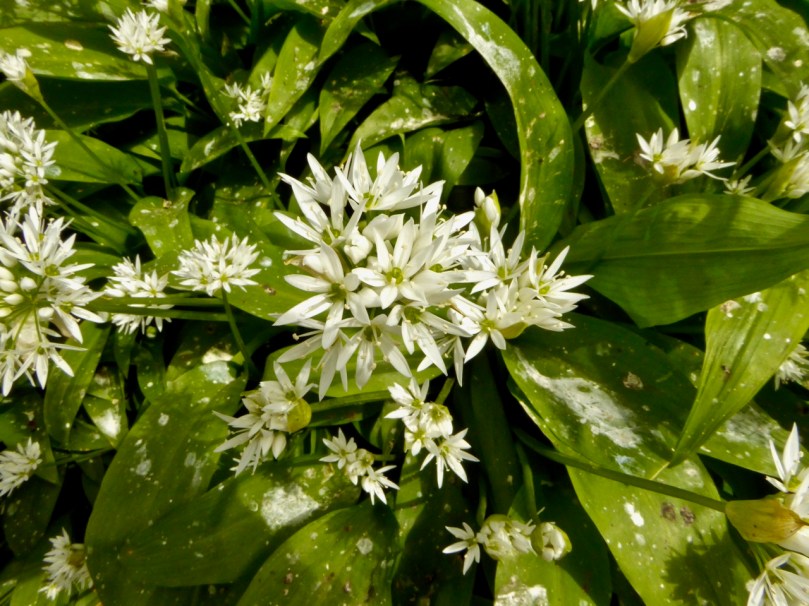
There’s always lots of Wild Garlic around, but the NBDC are asking us to record the native plant, also known as Ramsons, and NOT the ubiquitous Three-cornered Garlic that looks a little like white Bluebells. Ramsons are a little harder to find, although there is a magnificent stand of them near here. Unfortunately, it’s on a bad bend on a busy road, and also under an active rookery. When I finally managed to pull in safely last year, it was to discover that every plant was covered in rook droppings. There went my plans for Wild Garlic Pesto.

The Ramsons stand at New Court – and a close up of the effects of being located under a rookery

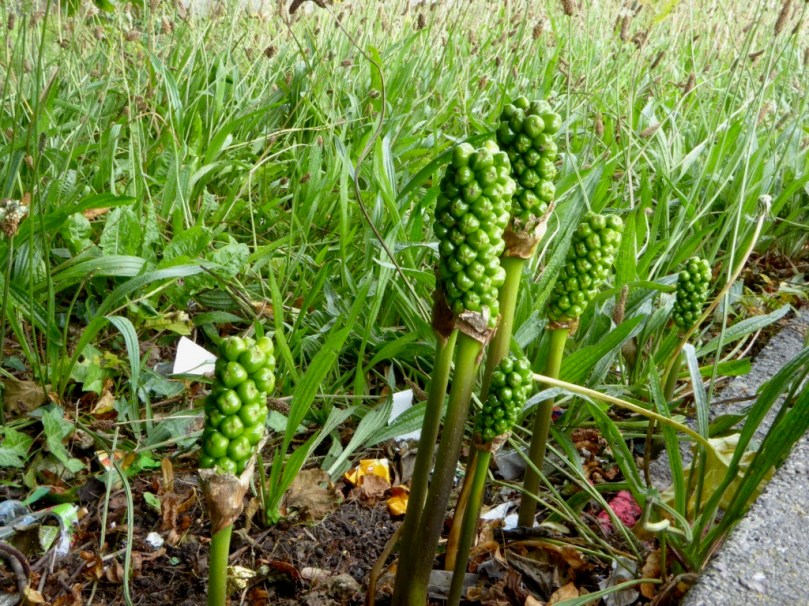
While I have lots of photographs of orchids, I have never seen the Early Purple Orchid. However, they have been spotted around Crookhaven, so that’s one of my goals for this year. I want to try to find some Lords-and-Ladies in their spring phase as well – the only photos I have are from the Caol Stream project I did last year, and they already have their green, highly poisonous spikes, which turn red later.

While the Common Dog-violet is, well, common, the Early Dog Violet is rare. I may have spotted one last year on the Sheep’s Head, but I didn’t get good enough photographs of it then to make a positive ID. If you’re unsure, always try to get shots of the leaves, or the basal rosette, and the context (hedgebank? stream bed? grassy field? disturbed ground?) – all this will help you when you download your photographs and look through your resources.

What I think is an Early Dog-violet, found on the Sheep’s Head. I wonder if I can find it again, as I need to verify this by taking better photographs

And speaking of resources – here are my go-to sites and books:

  1. Wildflowers of Ireland: Zöe Devlin’s book is the perfect companion for a walk – small enough to pack around and very easy to use, as it’s organised by colour and number of petals. Her website is likewise excellent and easy to navigate.
  2. Irish Wildflowers – if you can’t find it in Wildflowers of Ireland try this site. The information isn’t as expansive, but it’s good on Cork species and it’s searchable in a variety of ways.
  3. A Beginner’s Guide to Irish Wild Flowers – a handy little reference book that slips in the pocket. It’s published by the wonderful Sherkin Island Marine Station, and is organised by family groups. For such a tiny book it is packed with information (by John Akeroyd) and excellent photographs (by Robbie Murphy). If you can’t find it in a book shop, you can order it through the Marine Station.

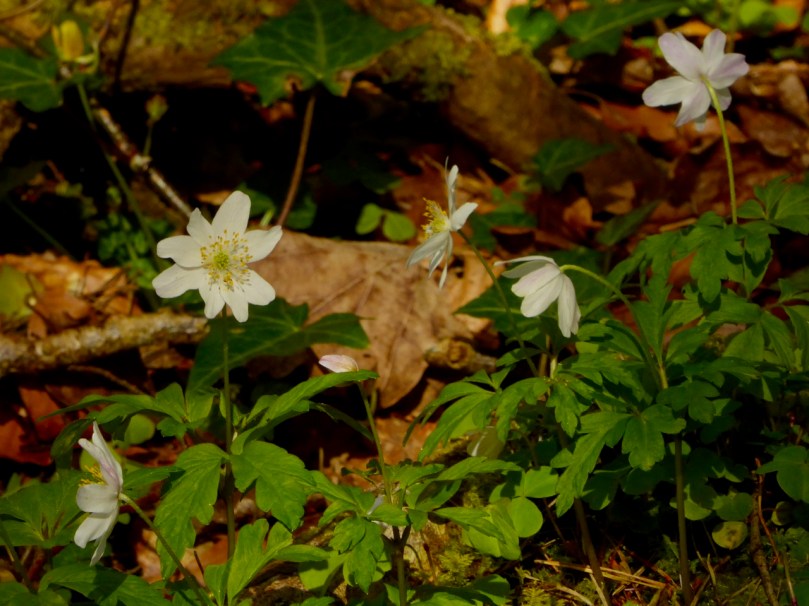
Wood Anemone – a delicate beauty

Now – you want to get recording, so here’s what to do. Go to the App Store or Google Play and search for the free app ‘Biodiversity Data Capture.’ You will find a very clean and simple interface which exists for one purpose, to make it incredibly easy to record a sighting. The whole process of recording one flower takes about a minute!

First, find your flower! Make sure your Location Services is ON. Open the app, and in the app take a picture of the flower. While you are doing that, the app is busy establishing your location. From the Species Group, select Vascular Plants (last option). From the Species, select the flower. You can start to type the name and a list of near-spellings should come up. Site – type in the name of the place, for example, a townland or road. Select a habitat – whatever seems closest. Type in any comments you have, add your name and email address, and Save. Once that’s done, go back to My Sightings and hit the Upload button, or wait until you have several (or until you’re on WiFi) and hit Upload All.

Bluebells growing on a recently-burned hillside, where no Bluebells had been before

Don’t worry if you think you made a mistake. A real human checks all the records submitted (that’s why it’s important to include a photograph) and only includes verified records in the final selection. Now so – give it a go and tell me how you get along. And if you do, feel proud, because you will have joined the ranks of the Citizen Scientists of Ireland, all doing their bit to safeguard our precious biodiversity.

Finn McCool’s Causeway

In a recent post this year I said how much we liked to go off the beaten track and find Ireland’s gems hidden away among the narrow boreens of West Cork and elsewhere. But sometimes it’s also worth going to the better known hotspots around the country – and being prepared to regard them objectively in spite of the sometimes intrusive crowds that you might meet along the way.

Last summer our trip around the coast of Northern Ireland took us past the Giant’s Causeway in County Antrim. I had never been there before (Finola had) so I was keen to see what all the fuss is about. After all, I knew the causeway had been built by one of Ireland’s greatest heroes – Finn McCool – and that it once extended all the way to Scotland: the other end of it can be seen at Fingal’s Cave on the Scottish island of Staffa (Staffa is a Norse word meaning ‘Pillars’ and is named from the rock formations there): the Gaelic name for the cave is An Uaimh Bhinn, meaning ‘the melodious cave.’ It has been suggested that the name ‘Fingal’  is linked to the name ‘Finn McCool’ possibly after an 18th century Scots poet, James Macpherson, wrote an epic poem loosely based around the Finn story. Later, the composer Felix Mendelssohn visited the cave and celebrated it in his Hebrides Overture. It’s worth looking at this Youtube video of the piece as it is well illustrated with dramatic views of the Scottish end of things:

Before leaving Scotland – and this atmospheric music – I was intrigued to find mention of a tradition that the Staffa cave is fully illuminated by the sun on only one day of the year: on or around the 16th of December (quite close to the winter solstice), and the teller of this tale will point out that it was exactly on that day – 16 December – in 1830 that Mendelssohn completed his overture . . .

Ireland’s Giant’s Causeway has been a popular tourist destination for as long as there has been tourism in Ireland. I hadn’t realised that it had been served by a dedicated tramway since the 1880s (the photo above dates from that time). The line, running from the mainline railway at Bushmills, was the world’s first to be powered by hydro-electricity – fed by a generating station at Walkmill Falls near Bushmills via 104 horsepower 78 kW Alcott water turbines providing 250 volts at 100 amps. Sadly, the line closed down in 1949 but has been revamped over the final 3.2 km of the original tramway during the main tourist season, carrying its first passengers at Easter 2002.

Another modern development is the tourism and visitor centre, which opened in 2012: the previous building was burned down in 2000. As an architect (happily retired!) I always take an interest in large public buildings and their design. This one was very controversial when it was mooted, partly because there was concern about the way it was being commissioned – initially it was to have been privately financed and run. In the end funding was raised from the National Trust (who own the site), the Northern Ireland Tourist Board, the UK Heritage Lottery Fund and public donations. I think it is a successful building: it has gravitas while also being quite playful with the references to the hexagonal basalt formations of the Causeway. It has to achieve a difficult job: handling thousands of tourists (in 2016 there were 851,000!)  as efficiently as possible while providing a good informed experience.

Top – the Giant’s Causeway Visitor Centre has a well designed interactive information area. Above – Fare on offer at the Visitor Centre includes basalt column-shaped chips, and souvenir travel sweets!

The popularity of the causeway has ensured that it has been well recorded by artists, topographers and postcard publishers. Here are a few examples, beginning with one of our favourite antiquarians, George Victor Du Noyer.

Top to bottom – George Victor Du Noyer c1850; Thomas Rowlandson c1812; Susanna Drury, c1740; tourist postcard from 1907

The Giant’s Causeway was supposedly discovered by the Bishop of Derry in 1692, and announced to the world the following year when Sir Richard Bulkeley, a fellow of Trinity College Dublin, presented a paper on it to the Royal Society . . . I wonder if he mentioned Finn McCool? Just in case you don’t know this story yourself, here’s a good version of it, narrated by Tom Purves and beautifully accompanied on the Uillinn pipes:

We went fairly late in the season (October) and on a wet and windy day. It was a worthwhile visit and I do recommend it: the Antrim coastline is spectacular enough to warrant the journey, even if the causeway wasn’t there – but what a legend! It links one of Ireland’s best known heroes with the nearby Scottish coastline, and credits him with the creation of both Lough Neagh (Ireland’s largest inland mass of water) and the Isle of Man. Today it’s a Unesco World Heritage Site – in fact the only one in Northern Ireland.