Black Pudding

Breakfast at Budd's

Breakfast at Budd’s of Ballydehob – all local ingredients

When did black pudding assume foodie status?
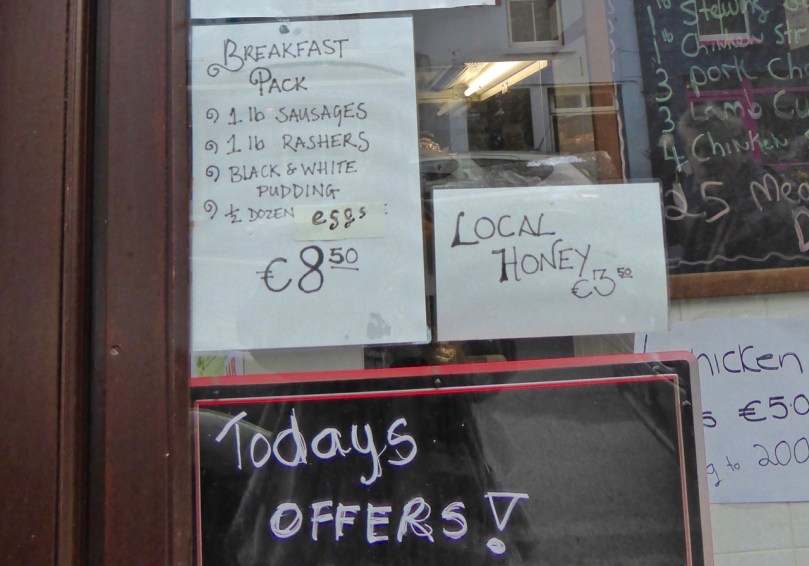
Breakfast Pack

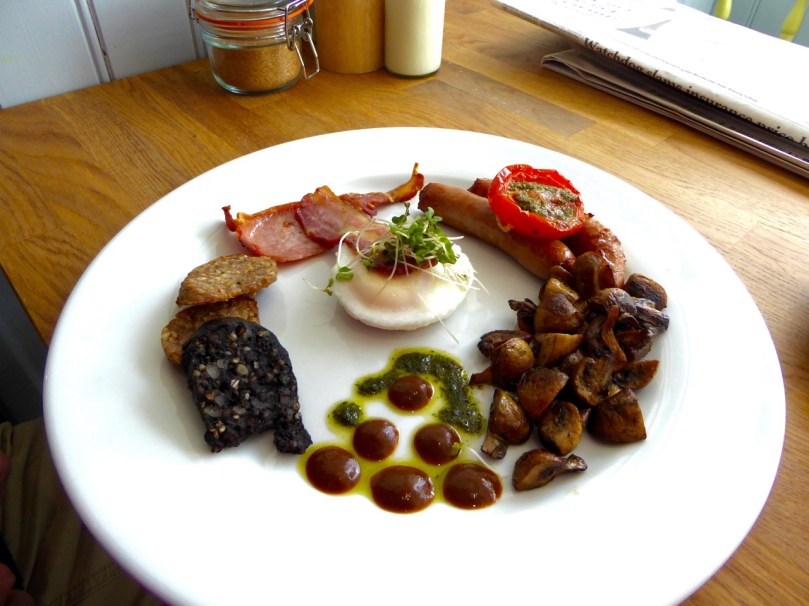
Black pudding (a blood sausage) was always a popular breakfast staple in Ireland – served in all decent bed-and-breakfasts on a ‘Full Irish’ plate along with white pudding, sausages, rashers and eggs, and sometimes tomatoes and mushrooms, accompanied by homemade brown soda bread. I never liked it – “Please, no black pudding on mine.”
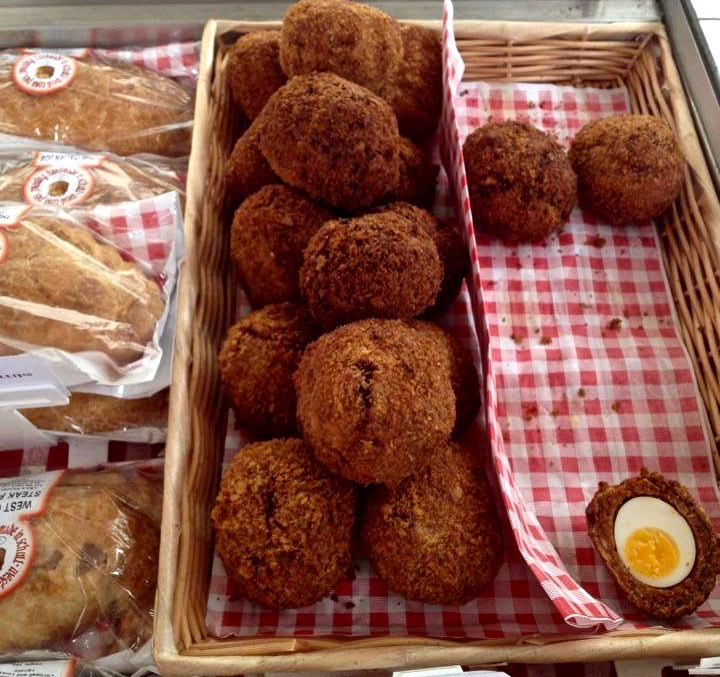
West Cork Pies' Black Pudding 'Brunch' Scotch Eggs, at the Skibbereen Market

West Cork Pies‘ Black Pudding ‘Brunch’ Scotch Eggs, at the Skibbereen Market

But somewhere in the last ten years black pudding has been transformed into the gourmet must-have ingredient du jour: added to scallops or crab, used to lend interest to staid sausage rolls and scotch eggs, served as canapés with the requisite goat’s cheese and caramelised onions.

The black pudding selection at Field's of Skibbereen

The black pudding selection at Field’s of Skibbereen

And it’s delicious! Artisan butchers and food producers all over the country have been developing their own recipes and flavours, although the basic ingredients (pig’s blood and oatmeal) have remained the same. Some credit Clonakilty Black Pudding with leading the charge. They use beef rather than pork and their exact formula is a closely guarded secret. Their website has lots of recipes and the history page features a video on how the pudding is made. This has become such a celebrated West Cork product that there has been talk of a Black Pudding Visitor Centre!

Clon web page

Nowadays, every supermarket meat section will sport an array of artisan black and white puddings. Here in West Cork we find local varieties such as McCarthy’s of Kanturk, Putóg De Róiste (an Irish-speaking black pudding from the Ballyvourney Gaeltacht), Hodgins of Michelstown, as well as Rudd’s from County Offaly, further afield. There are mass-produced varieties too, and supermarket chain generic puddings, all of which have their fans.

Avril Allshire at a function in Rosscarbery, handing around her black pudding swirls – our first taste of them; The Rosscarbery Recipes range of products on sale at Fields

My own favourite is made by Rosscarbery Recipes. This is totally attributable to Avril Allshire, the cheerful producer whom I have met on numerous occasions demonstrating ways to eat their black pudding or serving it up at events. She’s always up for a chat and she loves to share her enthusiasm and her recipes. She and husband Willy and two sons run Caherbeg Free Range pig farm (the Facebook page is full of adorable piggy pics), as well as the Rosscarbery Recipes food range and are totally committed to food quality, to provenance control, and to traditional curing methods that result in delicious pork products. They’ve even developed a gluten-free black pudding!

The Allshire Family with awards for their food products. Avril, William and the two boys are totally involved in all aspects of the business

The Allshire Family with awards for their food products. Avril, William and the two boys are totally involved in all aspects of the business

Avril’s Black Pudding Swirls have become my go-to appetiser recipe and I am sharing it at the end of the post, taken directly from her website but adapted for our non-West Cork readers.
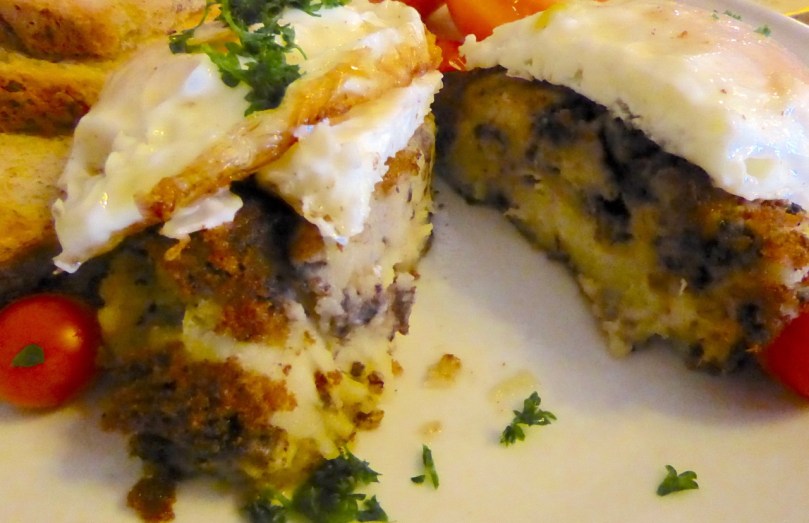
An Chístín Beag's black pudding potato cakes.

An Chístín Beag’s black pudding potato cakes

The other way I have come to love black pudding is in potato cakes. As served by the fabulous An Chístín Beag (The Little Kitchen) in Skibbereen, this is a way to start your day off right, especially if you’re planning a hike! According to Pauline, you simply add chopped up black pudding to mashed potato, shape it into cakes, and fry. There’s got to be more to it than that, I insist – egg? flour? But no, that’s it. I think it helps if you leave them in the fridge to chill and firm up a bit before you cook them.

The choir Christmas get-together at Rosie's Pub. My contribution was the black pudding swirls, recipe below.

The choir Christmas get-together at Rosie’s Pub. My contribution was the black pudding swirls, recipe below

What about you and black pudding? Love it? Hate it? Got a favourite? Figured out how to get hold of it outside Ireland or the UK?

Making the swirls

Making the swirls

Rosscarbery Recipes’ Black Pudding Swirls

By Avrill Allshire (additional notes by Roaringwater Journal)

Ingredients:

1 pack of Field’s Puff Pastry; (any ready-to-bake puff pastry will do, 500g or 1lb)

1 Rosscarbery Recipes Black Pudding; (Any good-quality black pudding can be substituted, 300g or 11oz)

1 large egg.

Method:

About an hour beforehand, take the puff pastry and the black pudding from the fridge and allow to come to room temperature.

Preheat the oven to 200°C/ 400°F/Gas Mark 6.

Whip the egg.

Roughly chop the black pudding and blitz in the food processor with half the whipped egg. If you don’t have a food processor, use a fork or wooden spoon. The idea is to get it to a spreadable consistency.

Dust your rolling surface with flour and roll the puff pastry into a large rectangle. Lay the Black Pudding mixture on the puff pastry. Spread it out evenly but not to the edge of one long side which should be brushed with a little of the whipped egg. Roll from the other side. Finish the roll by pressing gently onto the whipped egg end. Slice in 1cm slices and place on a sheet of greaseproof paper on a baking sheet. Brush each slice with the whipped egg.

Put in the oven and bake until a golden brown. This will take anywhere from 12 to 15 mins, so keep an eye on it.

Remove and allow to cool. Makes about 50 swirls.
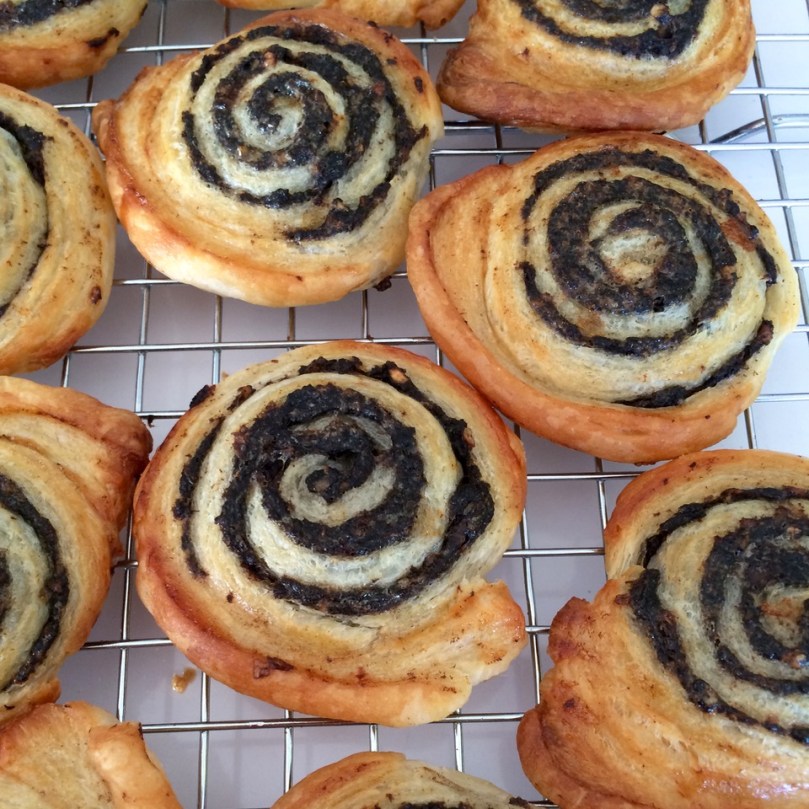
swirls finished

Yummers!
Shauna and Robert tasting

Rossa: The Skibbereen Years

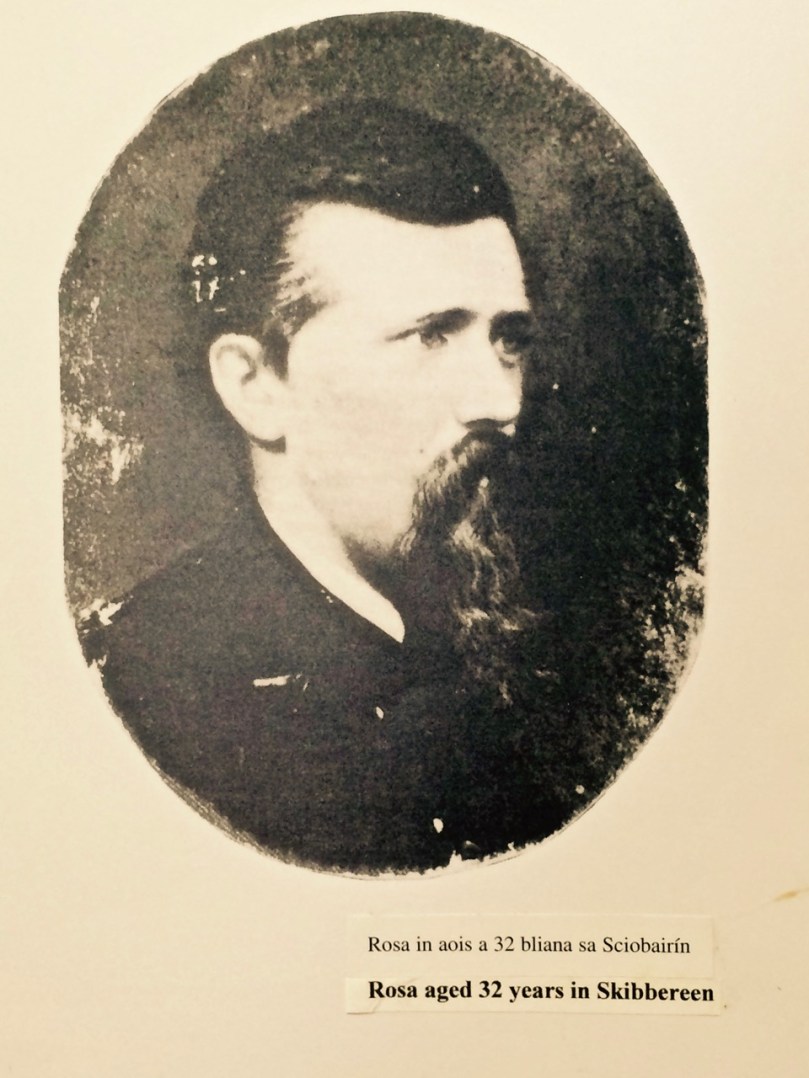
Rossa aged 32

This is the third post in a series about Jeremiah O’Donovan Rossa. In the first, March Back in Time, I introduced the man and described the thrilling re-enactment of the famous 1863 demonstration in Skibbereen. In the second, O’Donovan Rossa – the First Terrorist? I looked at his activities in America and the British bombing campaign he coordinated, as well as the influence of the Fenians in general on American and Canadian history. For more on the question of whether he can be considered a terrorist or a freedom-fighter, or both, I refer readers to the excellent research of Shane Kenna, author of Jeremiah O’Donovan Rossa, Unrepentant Fenian. In particular, Kenna’s  thoroughly researched article available on The Irish Story website, ‘One skilled scientist is worth an army’ – The Fenian Dynamite Campaign 1881-85 is a useful summary of the arguments.

The Skibbereen Heritage Centre is an incredible resource for local history and specialises in the Great Famine. Their Walking Trail and its associated app and book have been immensely helpful in preparing this post (and many others).

My aim on this post is to outline the events in Rossa’s young life that led to his radicalisation and, since much of that time was spent in Skibbereen, to see what traces remain in this West Cork town that can help us to understand the man.

2012-05-19 16.04.23

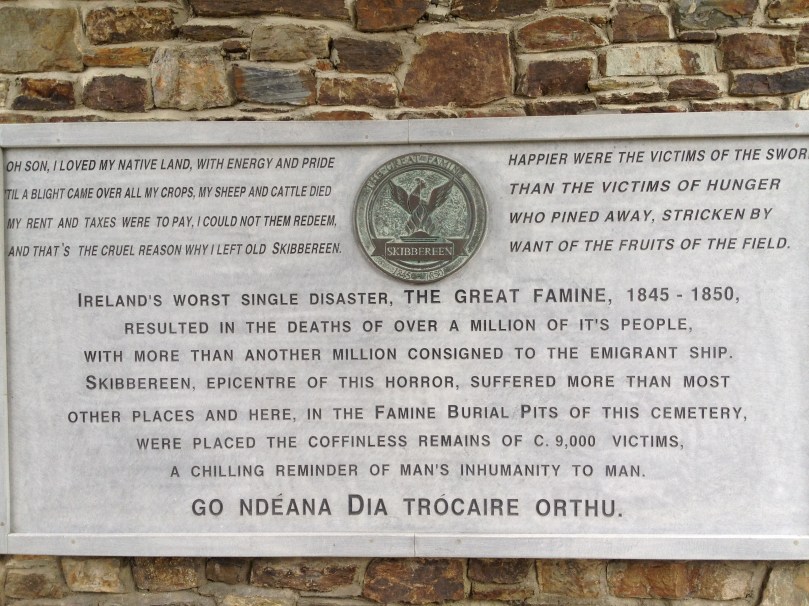
We have to start with the Great Famine of 1845 to 1850, although that’s a hard place to begin. It’s hard because it’s almost impossible to read about it without welling up with emotion and rage. The details are harrowing in the extreme and Skibbereen was the epicentre of the disaster. When Rossa arrived here, aged 16, to live with an aunt, he had witnessed his father die of famine fever after being forced to labour on one of the infamous Board of Works schemes. As was happening all around him, his widowed mother and his siblings were evicted from their home for non-payment of rent, and made the wrenching decision to emigrate. He had had a normal happy childhood and now everything was torn from him under the most appalling conditions.

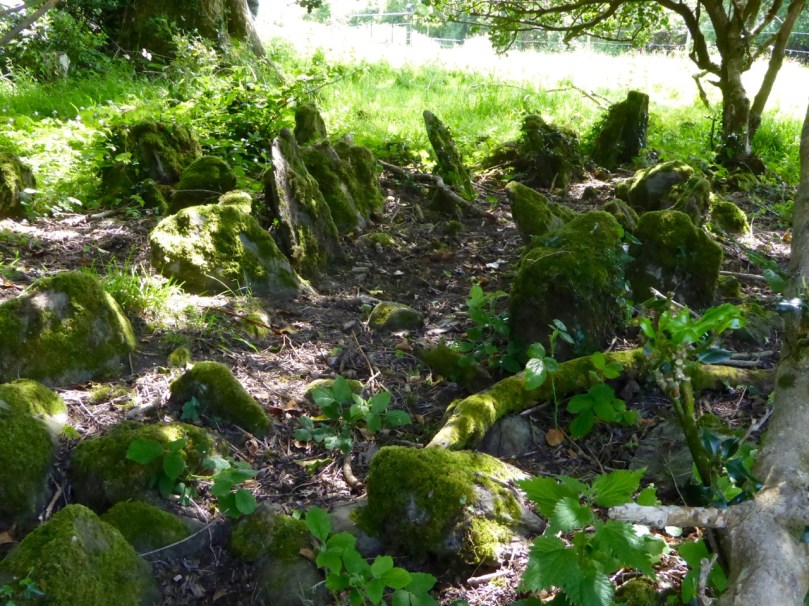
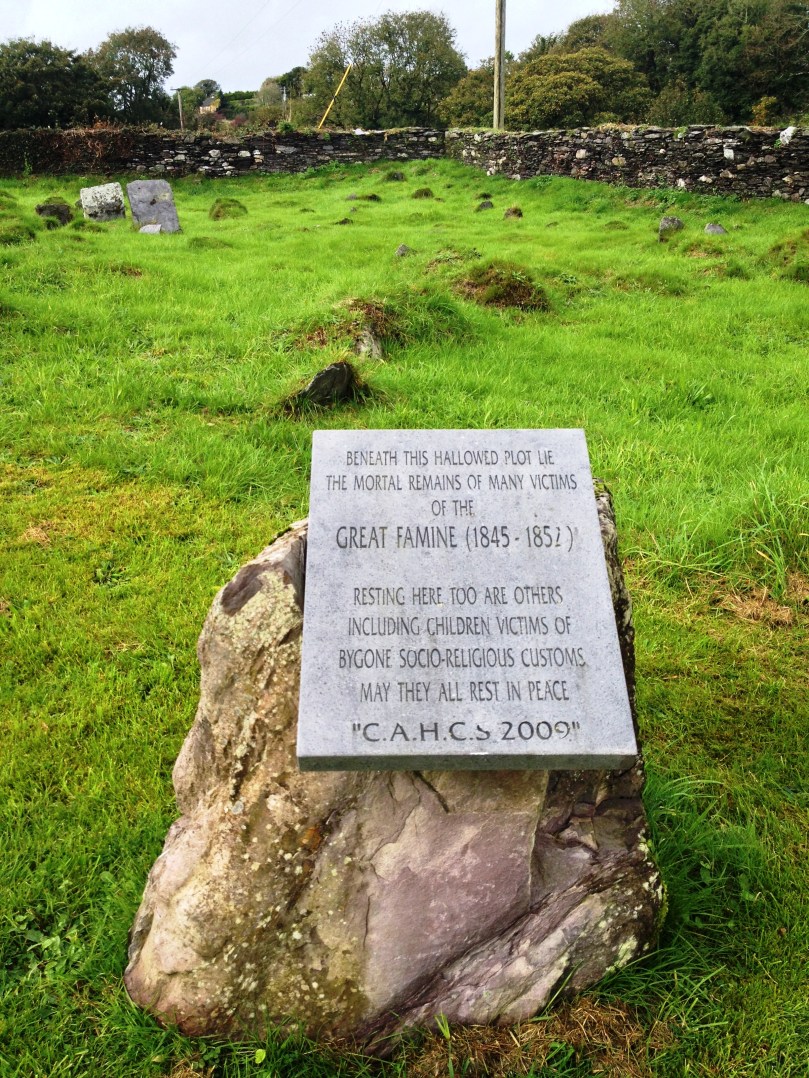
Cillín near Durrus

Famine graveyards full of mass burials and unmarked graves are scattered throughout West Cork, like this one near Durrus

In Skibbereen, in Black ’47, the 16 year old saw the worst of the Famine – the carts piled with bodies taking them every day to mass graves, the soup kitchens, the sickness and despair.

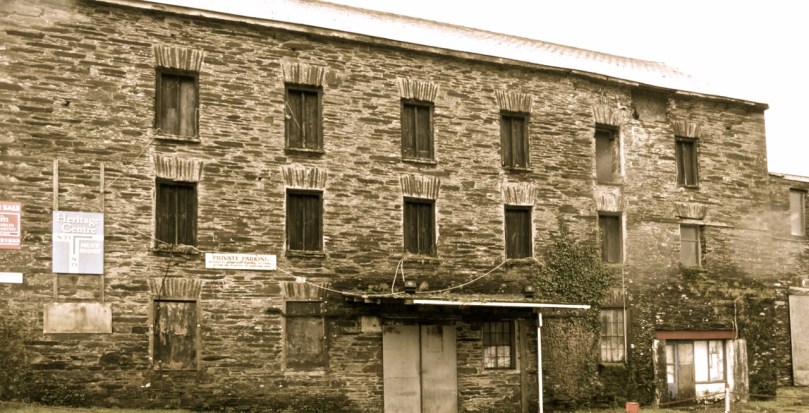
Famine soup Kitchen

This building in Skibbereen was used as a soup kitchen during the famine. Thousands of people were fed a watery soup that had little nutritional value but had the advantage of being cheap to make

Meanwhile he saw that tons of food was being exported from the surrounding countryside. He helped an old friend to bury his mother, Jillen Andy. Later, in prison, he would hold that memory and write a moving poem about the experience. It’s a long poem and it begins this way:

 ‘Come to the graveyard if you’re not afraid,
I’m going to dig my mother’s grave. She’s dead,
And I want someone that will bring the spade
For Andy’s out of home, and Charlie’s sick in bed.’

2013-10-20 13.44.38 HDR

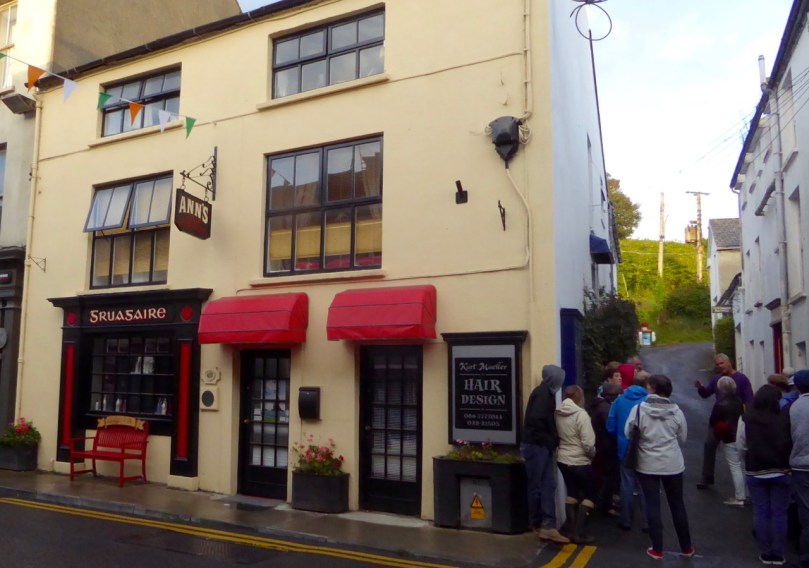
Rossa became a shopkeeper in Skibbereen while at the same time founding and organising the Phoenix National and Literary Society which, although supposedly a educational group, had the aim of liberating Ireland by force of arms. It eventually merged with the Irish Republican Brotherhood after Rossa formed an alliance with James Stephens. ‘Fenians’ was the general term applied to the IRB and other such nationalist organizations.

Phoenix Soc meeting place

Philip O’Regan of the Skibbereen Heritage Centre leads us on a walking tour. One of the places he points out is the meeting rooms above what is now a hairdressers, where Rossa and his fellow members of the Phoenix Society used to gather

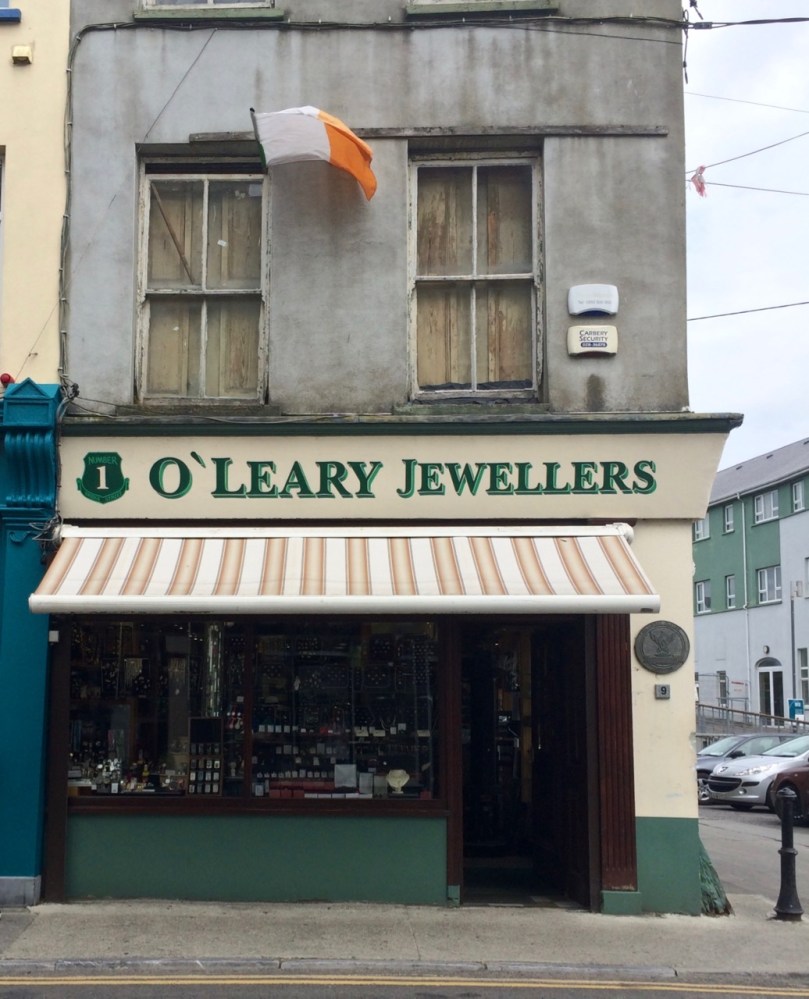
Business and politics didn’t mix well and life was a constant economic struggle. His store is still there, now a jewellers run by the genial Mr O’Leary.

Rossa shop

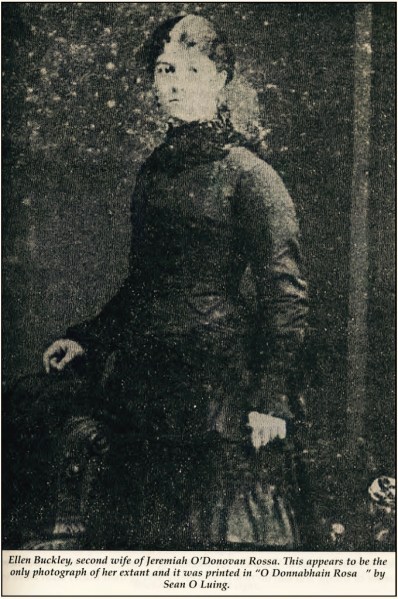
Rossa married a local woman, Honora Eager, and they had four sons, before her untimely death. I can find no image of Honora, known as Nanno, and can only imagine the devastation to the little family caused by her demise.

Ellen BuckleyThe following year he met another local woman, Ellen Buckley, who was only 18 at the time and who married him despite the fierce opposition of her parents. She was beautiful and well-educated – and strong willed, obviously. She took on the task of being a mother to his four sons and she bore another son, known as Flor Rossa. But then she also died, leaving Rossa devastated once more. He was in America when it happened and she was buried in Castlehaven graveyard. Her grave is marked with a large headstone – which bears no reference to Rossa, only to her parents. Flor was eventually buried there too, having died as a young man.

The remote and beautiful Castlehaven graveyard, final resting place of Rossa’s second wife, Ellen Buckley. Note that her gravestone makes no reference to Rossa.

annie-mays-bar-skibbereen-920x450

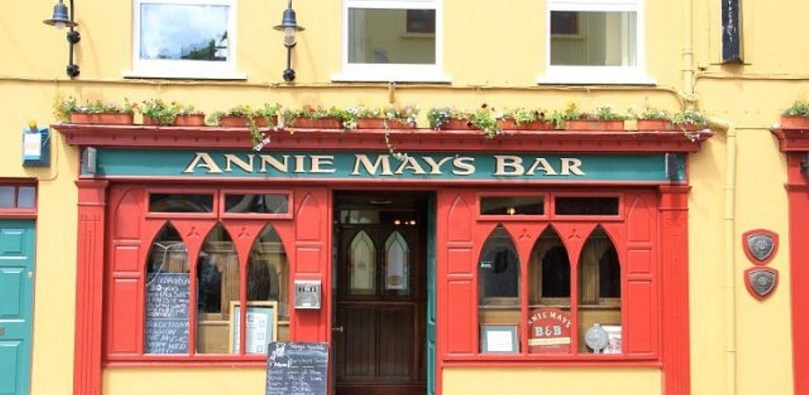
Members of the Buckley family still farm near Skibbereen and run Annie May’s bar and restaurant, a favourite with locals. Photo courtesy of Skibbereen.ie

Rossa’s third wife was Mary Jane Irwin from Clonakilty. Once again, she was young, well-educated, and married him despite the opposition of her parents.

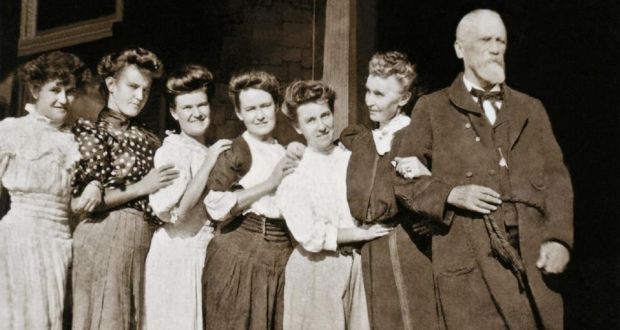
The young Mary Jane Irwin, and Mary Jane in her mourning dress at Rossa’s funeral. Still beautiful. She supported the family with her poetry readings and recitals while Rossa was in prison

She would go on to have thirteen children with Rossa and they would be married for over 50 years – by all accounts a successful and happy union. Their happiness was short-lived at first. Rossa spent several years under atrocious conditions in English prisons, while Mary Jane wrote poetry and speeches and travelled across America and Ireland raising money for the cause and supporting the family.

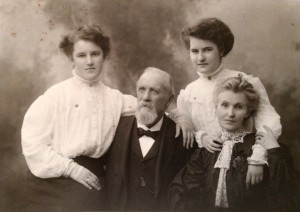
Rossa and daughters

Rossa, Mary Jane and their daughters.

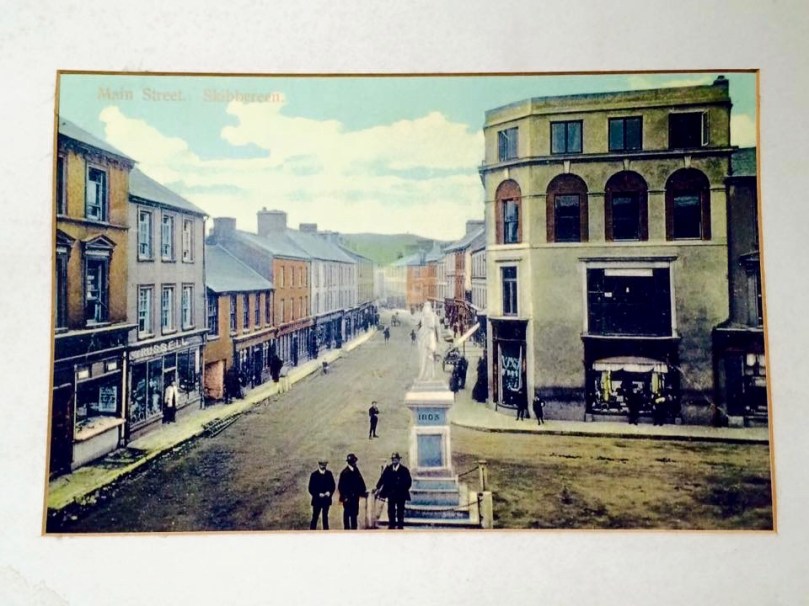
Shortly after his third marriage Rossa moved from Skibbereen and only returned once, in 1904. This was the occasion of the unveiling of the Maid of Erin statue: a fascinating monument that commemorated two failed uprisings against British rule, while Britain still ruled!

North St and Maid

The Maid of Erin statue was originally in the middle of the intersection but was disruptive of traffic so was moved closer to the town hall

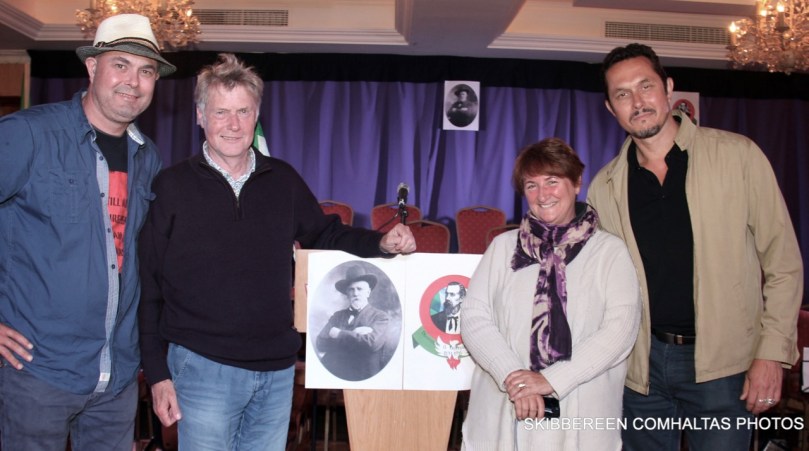
But the Rossa family connection to Skibbereen remains strong, and this summer we were delighted to meet two of his great-grandsons, Williams Rossa Cole and Ross Williams Cole, in town to record footage on the Rossa commemorations for a documentary they are making on the life of their great-grandfather. You can read more about them in this Examiner article. And take a look at the trailer for the documentary!

Rossa boys in Skibbereen

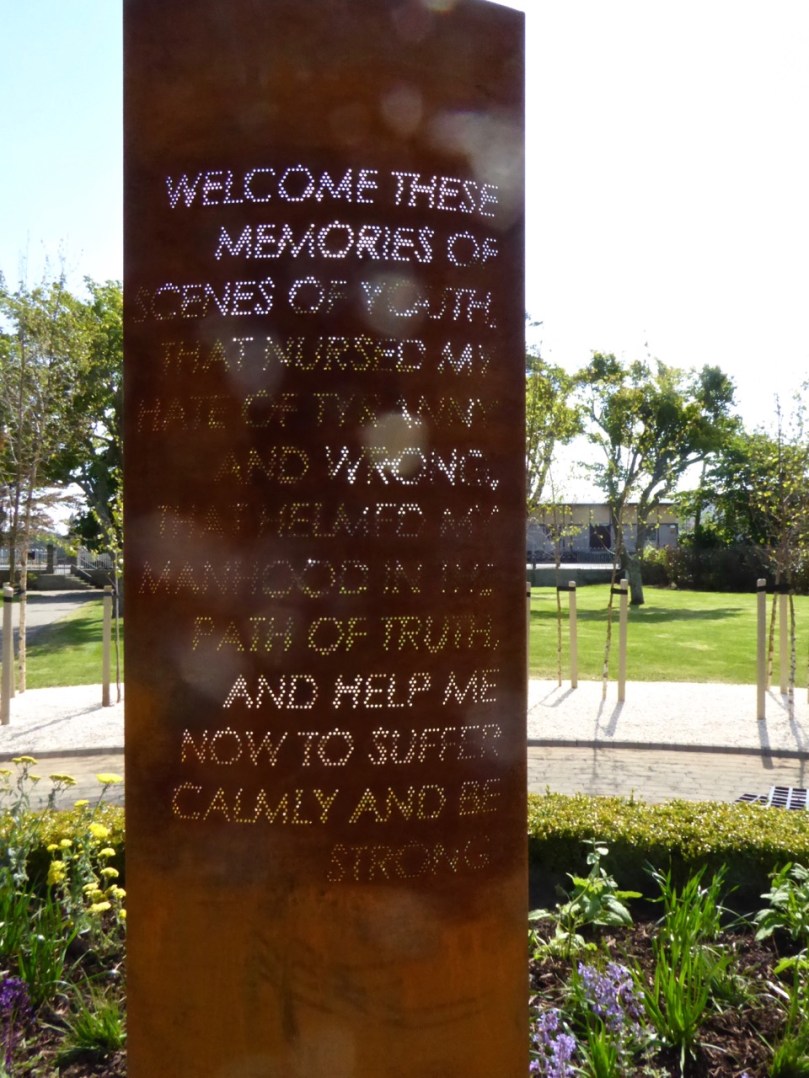
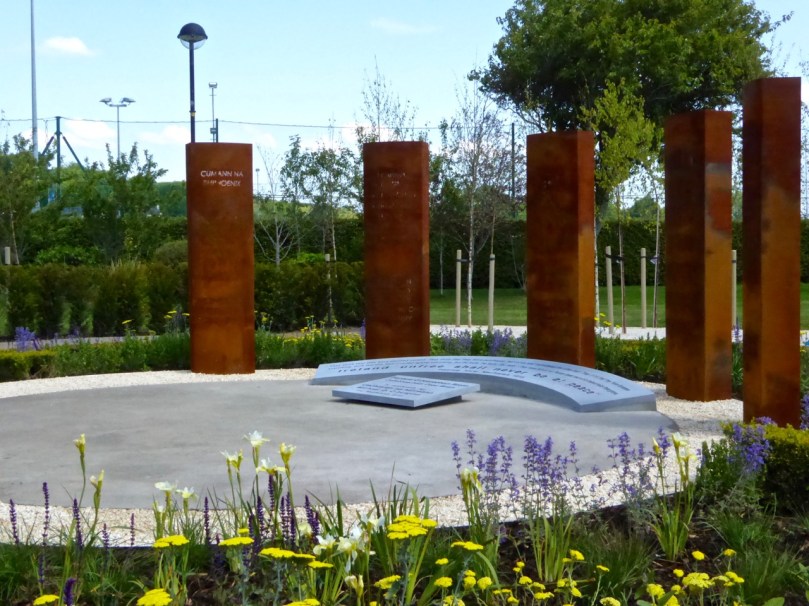
The final stop on any Rossa trail in Skibbereen has to be the park that is dedicated to him. Robert recorded the grand opening by Michael D Higgins, the President of Ireland. It’s a striking monument in stone and steel reflecting the unbending and steadfast commitment of Rossa to his own brand of patriotism, forged in tragedy and hardened in the crucible of prison.

Rossa Memorial

The steel columns have cut-outs of quotes and images silhouetted against the sky. Among these quotes are the poignant final words of Jillen Andy. The poem was composed in prison, not written but memorised because he had no paper. It was a talisman he held close to his heart for when his courage faltered: he conjured up again the image of the wasted body of Jillen, dead of famine sickness as a result of the egregious lack of compassion and mismanagement of resources by the British Parliament and it cemented his resolve once more.

How oft in dreams that burial scene appears,
Through death, eviction, prison, exile, home,
Through all the suns and moons of twenty years,
And oh! How short these years compared with years to come.
Some thing are strongly on the mind impressed
And other faintly imaged there, it seems;
And this is why, when reason sinks to rest.
Phases of life do show and shadow forth in dreams.
And this is why in dreams I see the face
Of Jillen Andy looking in my own,
The poet-hearted man, the pillow case,
The spotted handkerchief that softened the hard stone.
Welcome these memories of scenes of youth
That nursed my hate of tyranny and wrong,
That helmed my manhood in the path of truth,
And help me now to suffer and be strong.

The complete text of Jillen Andy is here.

Welcome these memories

Perhaps we can leave Rossa now to the judgement of history. And perhaps with one last image of him and Mary Jane in happier times. Rest in Peace, you Unrepentant Fenian.

Rossa MJ ans 2 daughters

The Booley

Bucolic

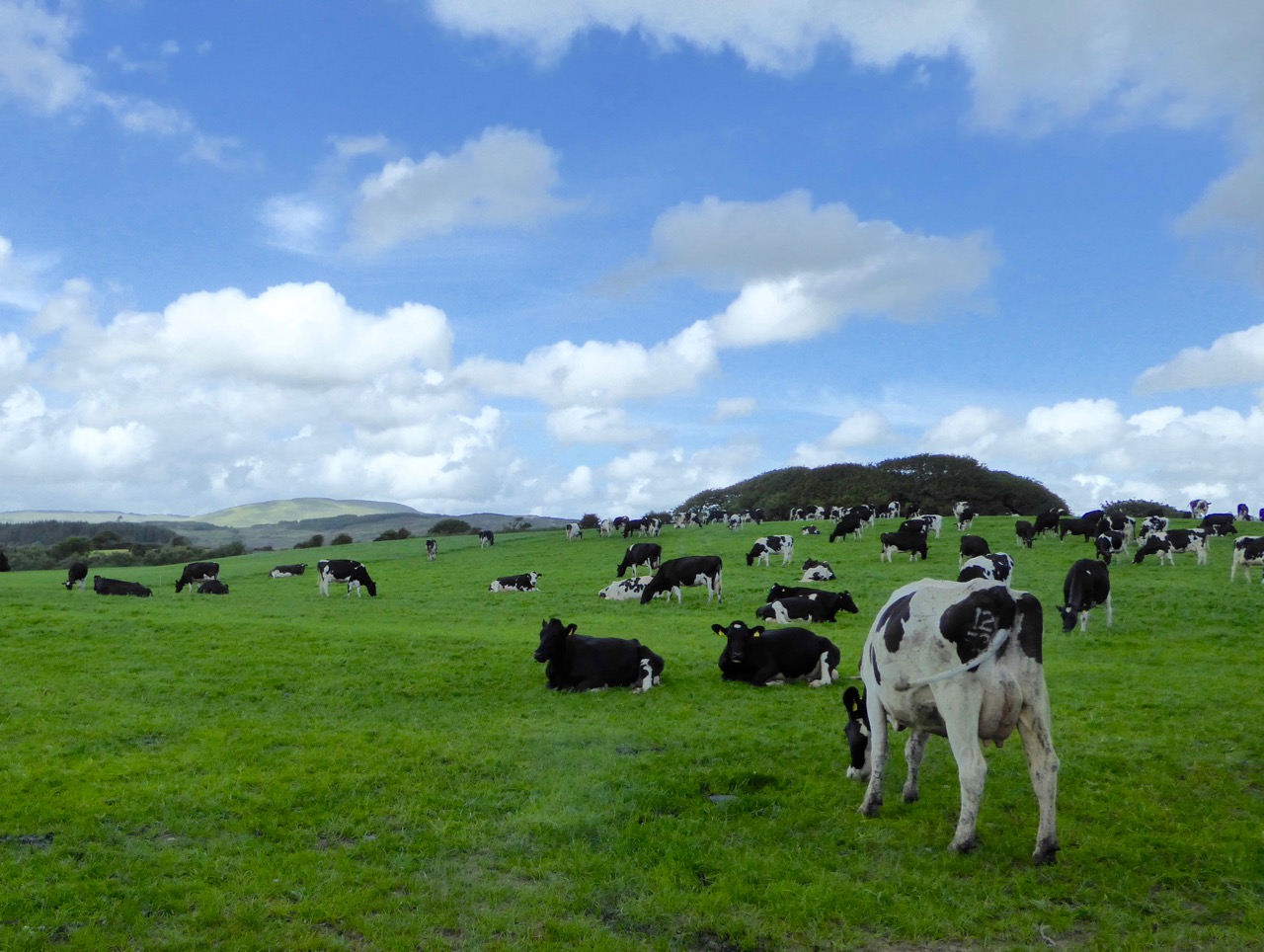
Booleying is an Irish term for transhumance – the agricultural tradition of taking cattle up to the high open lands to graze during the summer months.

booley farm

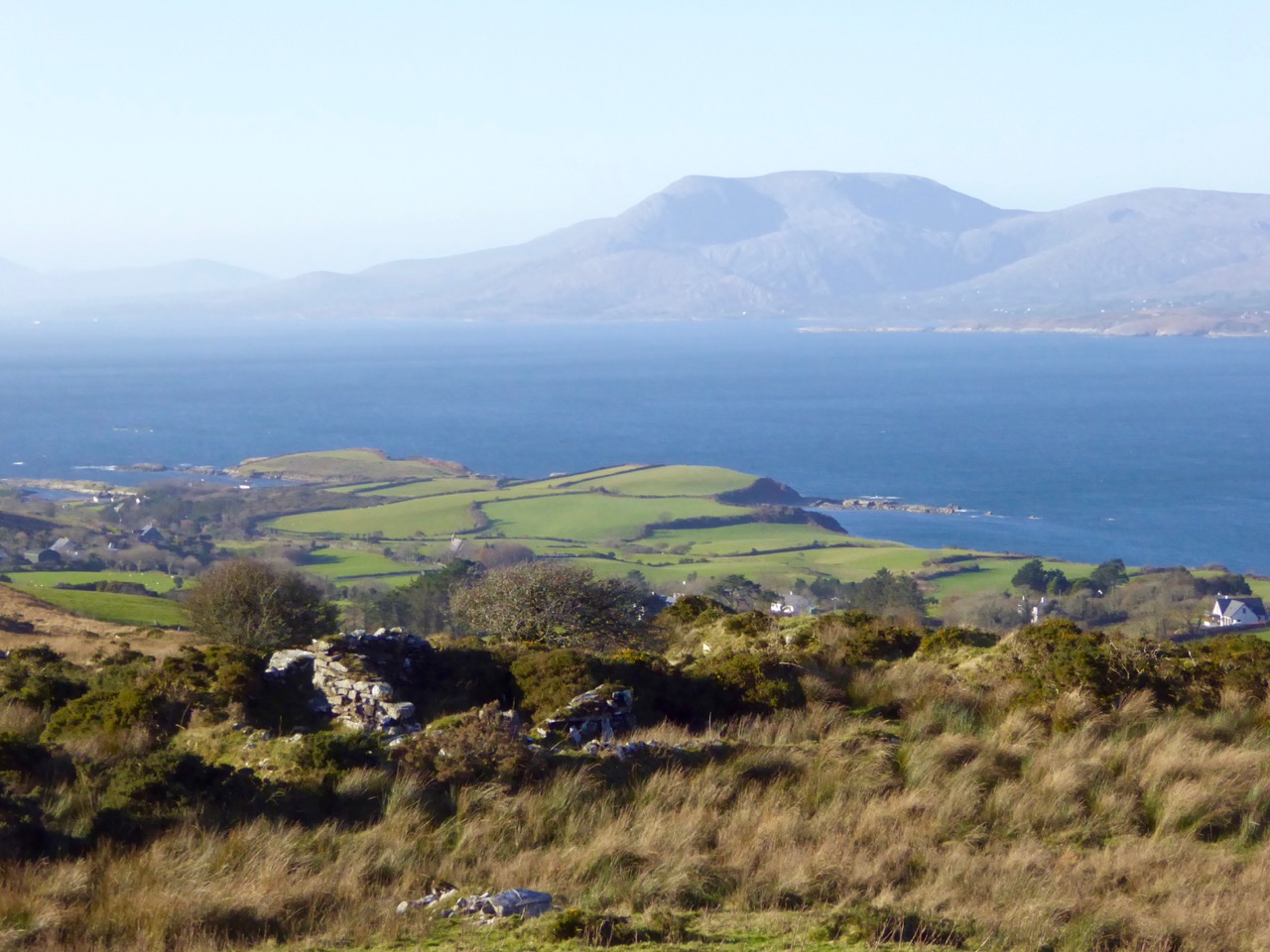
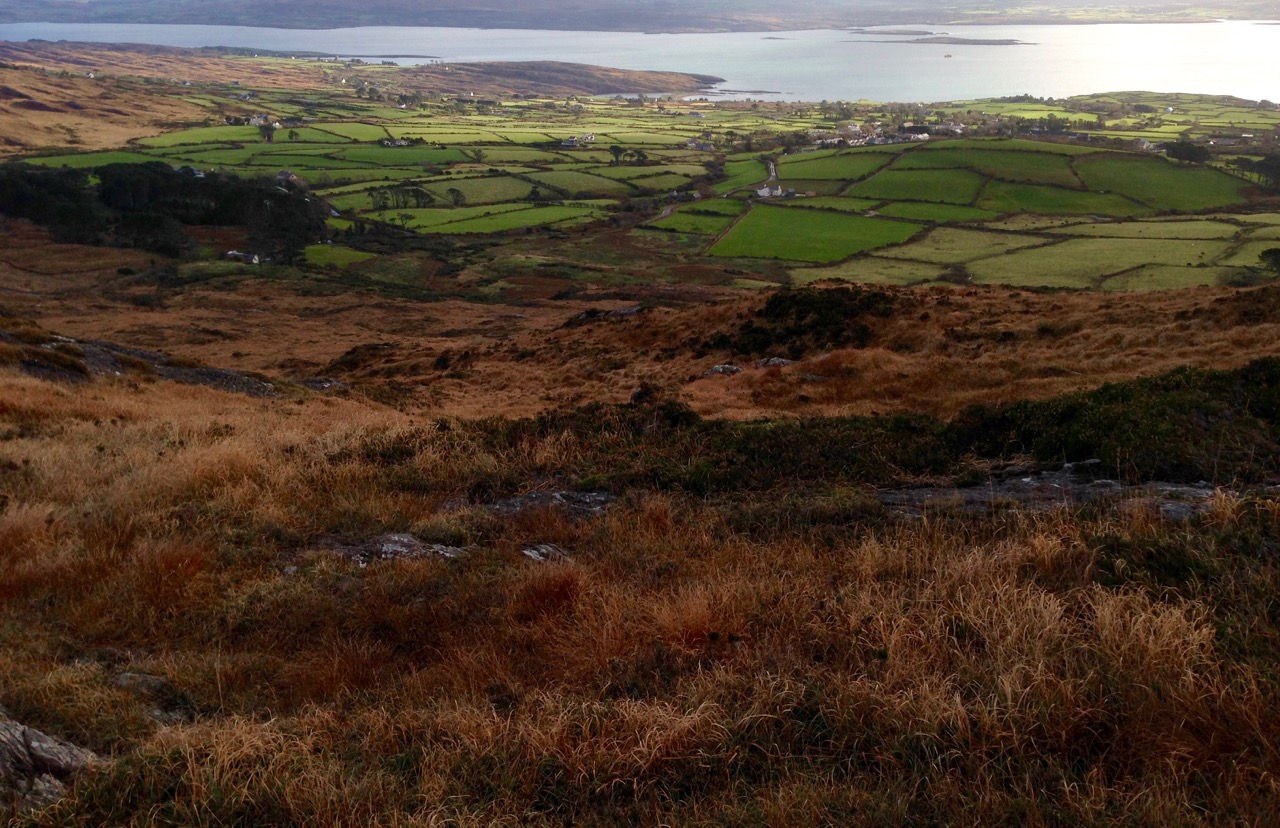
Booleying territory: on the upland moors of the Sheep’s Head the ruins of a simple cottage in a lonely glen tell of bygone farming practices

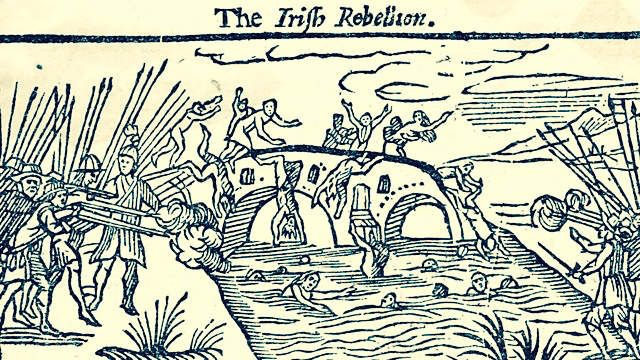
The English poet Edmund Spenser went to Ireland in 1580 and was given lands in County Cork that had been confiscated in the Munster Plantation. (His fellow colonialist Sir Walter Raleigh was also granted large areas of land, which he sold to Sir Richard Boyle who later became Earl of Cork and one of the richest men in the British Isles). In 1596 Spenser wrote a pamphlet – A View of the Present State of Ireland – based on his experiences. This piece is highly regarded as a historical source on 16th century Ireland although it refers somewhat inaccurately to booleying: …the Irish country people keep their cattle and live themselves the most part of the year in bollies, pasturing upon the mountains and wild waste plains, and removing to fresh lands as they had depastured the former… 

irish rebellion

16th century Ireland: the Munster Plantation

Our trusted commentator Kevin Danaher devotes a chapter in Irish Customs and Beliefs (Mercier Press 1964) to ‘The Summer Pastures’: …If you could take away the cattle from the fields around the house all during the summer and autumn, you could have more hay and a bit of winter pasture. Therefore you could keep more cattle and were a richer man. But where could you put the cattle in summer and autumn?

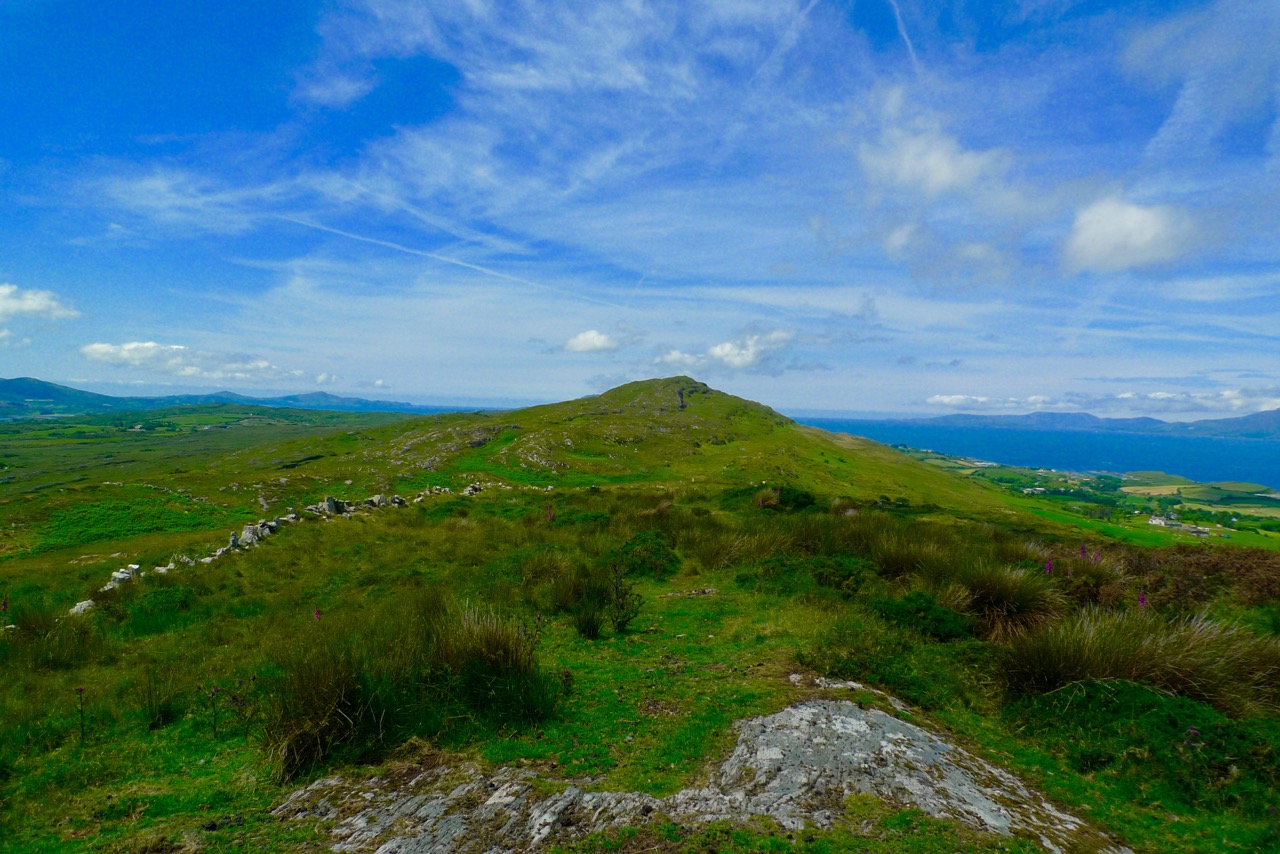
peak

Old walls on the Coomkeen ridge tell of early land divisions

(Danaher) …In Ireland there are big areas of the countryside which have some value during the better part of the year but none at all during the winter and spring. These are, of course, the mountains and moor lands. In the cold season they are barren and desolate, but when the milder part of the year comes they provide grazing which may be sparse but is very sweet. Our farming ancestors knew this and a system was worked out which gave the milch-cows the benefit of them. They were away in the mountains or the moors, far from the homestead over bad roads or no roads at all, so that the cattle could not be driven home for milking. Some of the family went and lived with the cows on the mountain. Some sort of dwelling was built there for them, they milked the cows morning and evening and made the butter which could be stored until the men from the home farm came for it once a week…

Varieties of simple shelters – ancient beehive style (left from George Walsh’s window in St Kentigern’s Church, Eyeries, on the Beara Peninsula and – top right – from Dingle, County Kerry – both were used by contemplative hermits but some booley huts were built in similar style) and, bottom right, an example of an Irish cabin

Of the booley houses – or huts – Danaher writes: Most of them were just rough copies of the kind of houses ordinarily used as dwellings, smaller and simpler but made of the same materials and by the same methods. Usually they had only one room, with a simple fireplace, often without any chimney, only a hole in the roof over the hearth… In fine weather their occupants could live out of doors all through the long period of daylight, coming in only to sleep or to cook food and eat it, and the buaile houses were used as sleeping-places only…

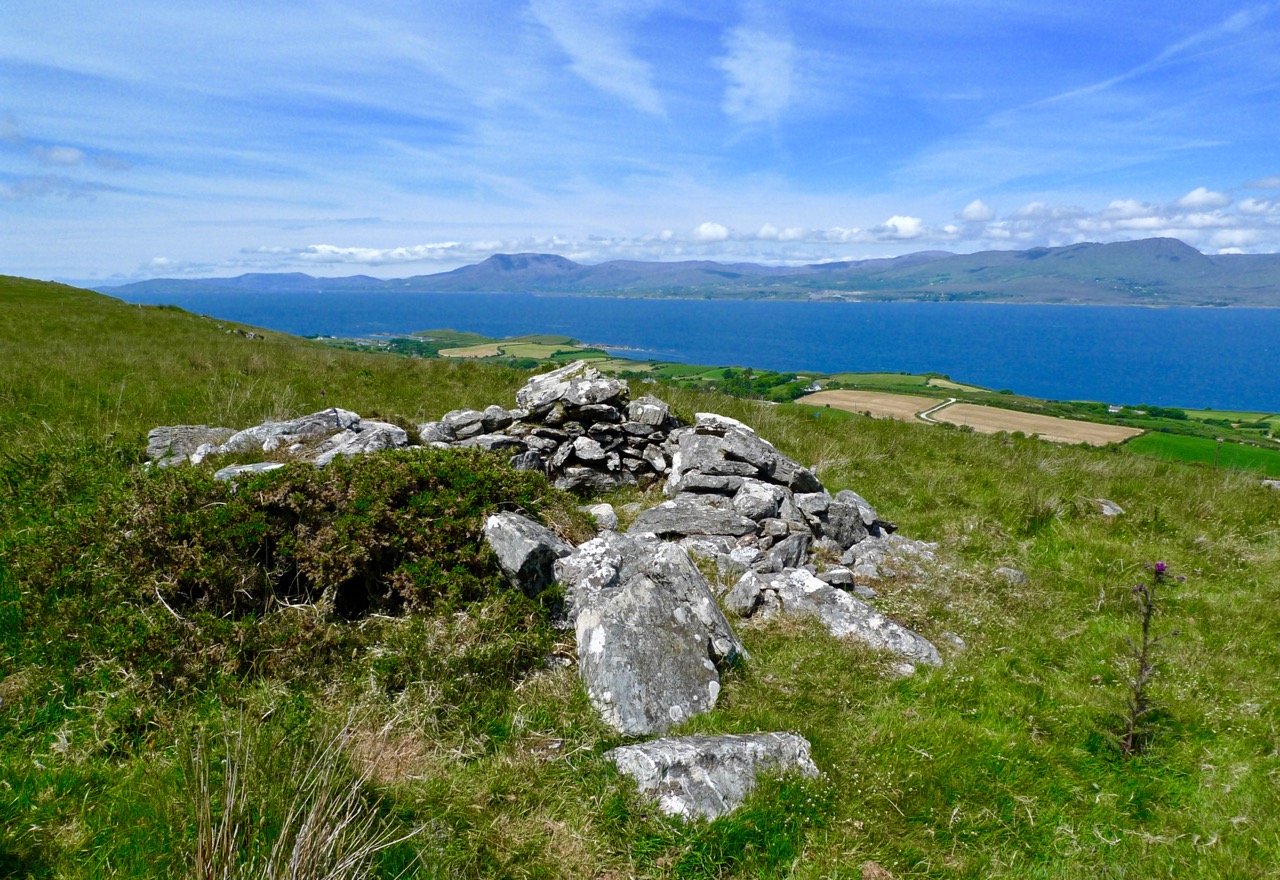
booley hut

This structure on the Sheep’s Head is recorded on the National Monuments Record as a Booley Hut

Farming practices have changed in the modern day and I am not aware that any booleying still happens – but the custom lives on in memory and in place names. The Irish word Buaile (pronounced bool-yeh), is translated as a feeding or milking place for cows – so it refers to the dairy as well as the summer pastures. There is a townland near us called Corravolley: that’s the anglicised name. Two roads lead there, and on each road is a signpost:

Do you notice the subtle difference in the Irish rendering of the name on these signs? One reads ‘An Chorrbhaile’ and the other ‘An Chorrbhuaile’. One letter is different in the second sign, but it makes all the difference in the way you might translate its meaning. An Chorrbhaile combines corr – round hill, pointed hill, hollow, pointed, conspicuous with baile – townland, town, homestead, but the alternative suffix buaile means cattle-fold, or summer-pasture. As Corravoley is way up in the hills it is very likely that it was the place of the booleying.

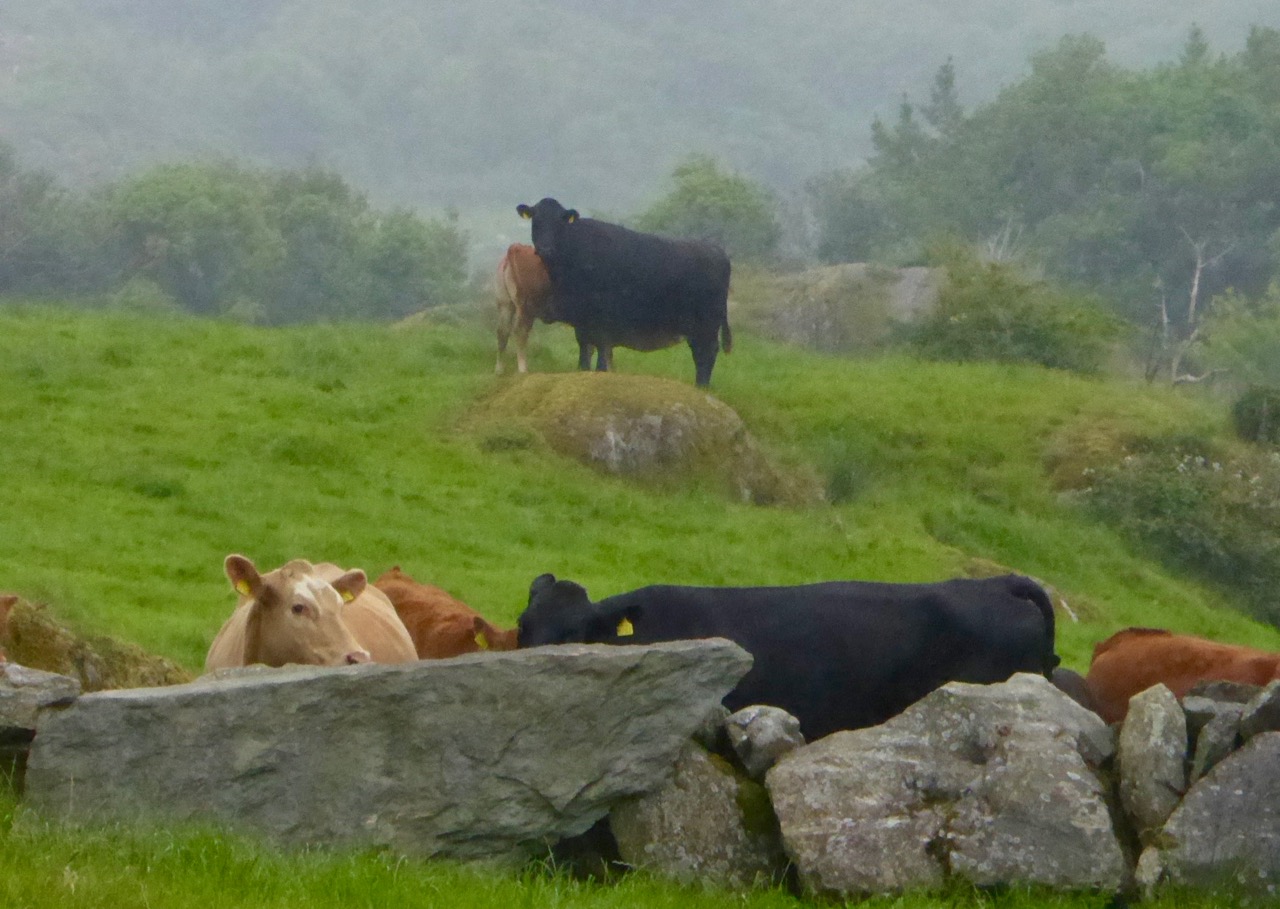
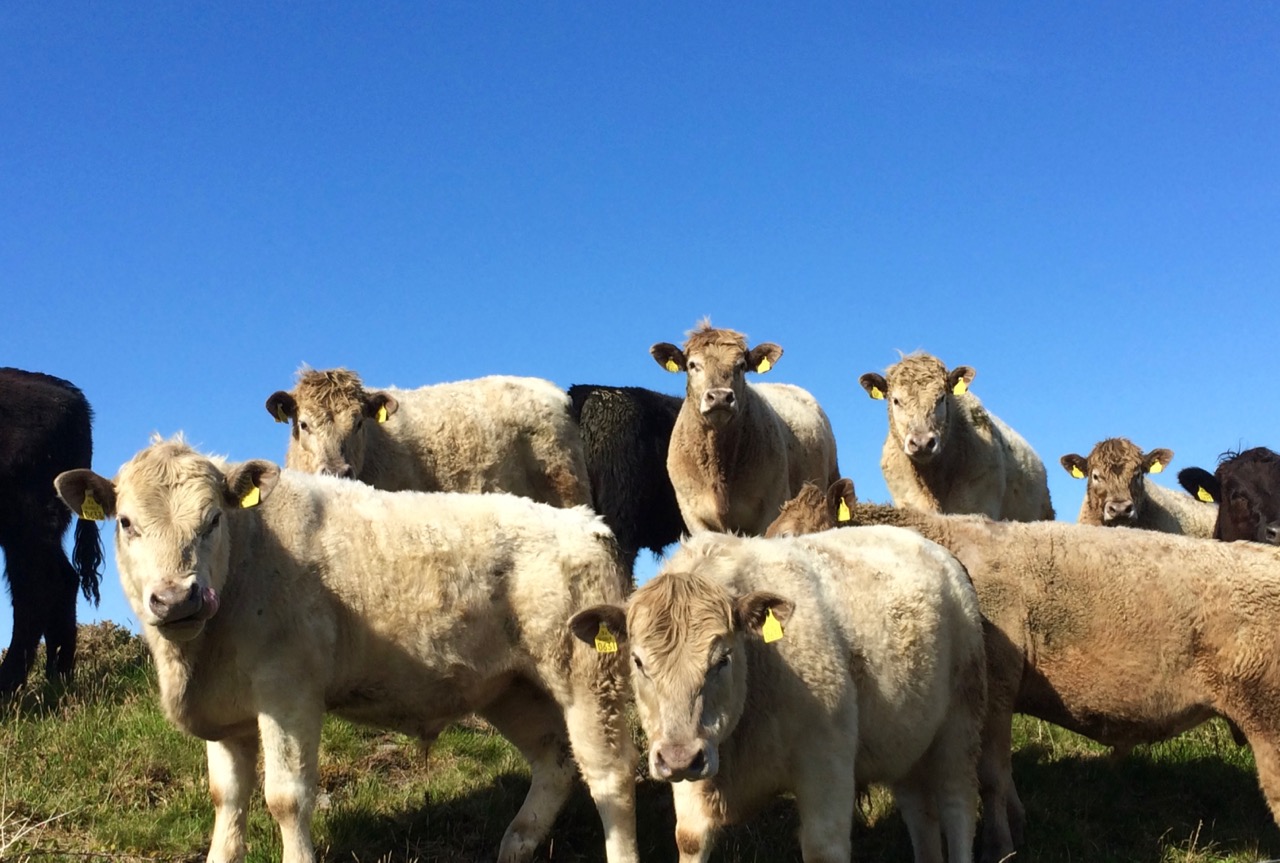
cattle in the wild

Other examples of Irish names which may have derived from the booley include Coill na Buailidh, Kilinaboley, Kilenabooley, Both Théith, Boheagh, Knocknaboley, Buaile h’Anraoi, and Cnoc an tSamhraidh (which actually translates as Summerhill – a place name associated with transhumance in Britain).

bullocks

In Scandinavia, transhumance is still practiced: there the common mountain or forest pasture used for transhumance in summer is called seter or bod / bua. The same term refers to a mountain cabin, which is used as a summer residence. In summer (usually late June), livestock is moved to a mountain farm, often quite distant from a home farm, in order to preserve meadows in valleys for producing hay. Livestock is typically tended for summer by girls and younger women, who also milk and make cheese. As autumn approaches and grazing becomes in short supply, livestock is returned to the home farm. Note the Norse word būð which sounds like ‘both’ as in ‘bothy’, and the use of that word in Scotland to mean a basic shelter on the high moors, unlocked and available for anyone to use free of charge.

from the uplands

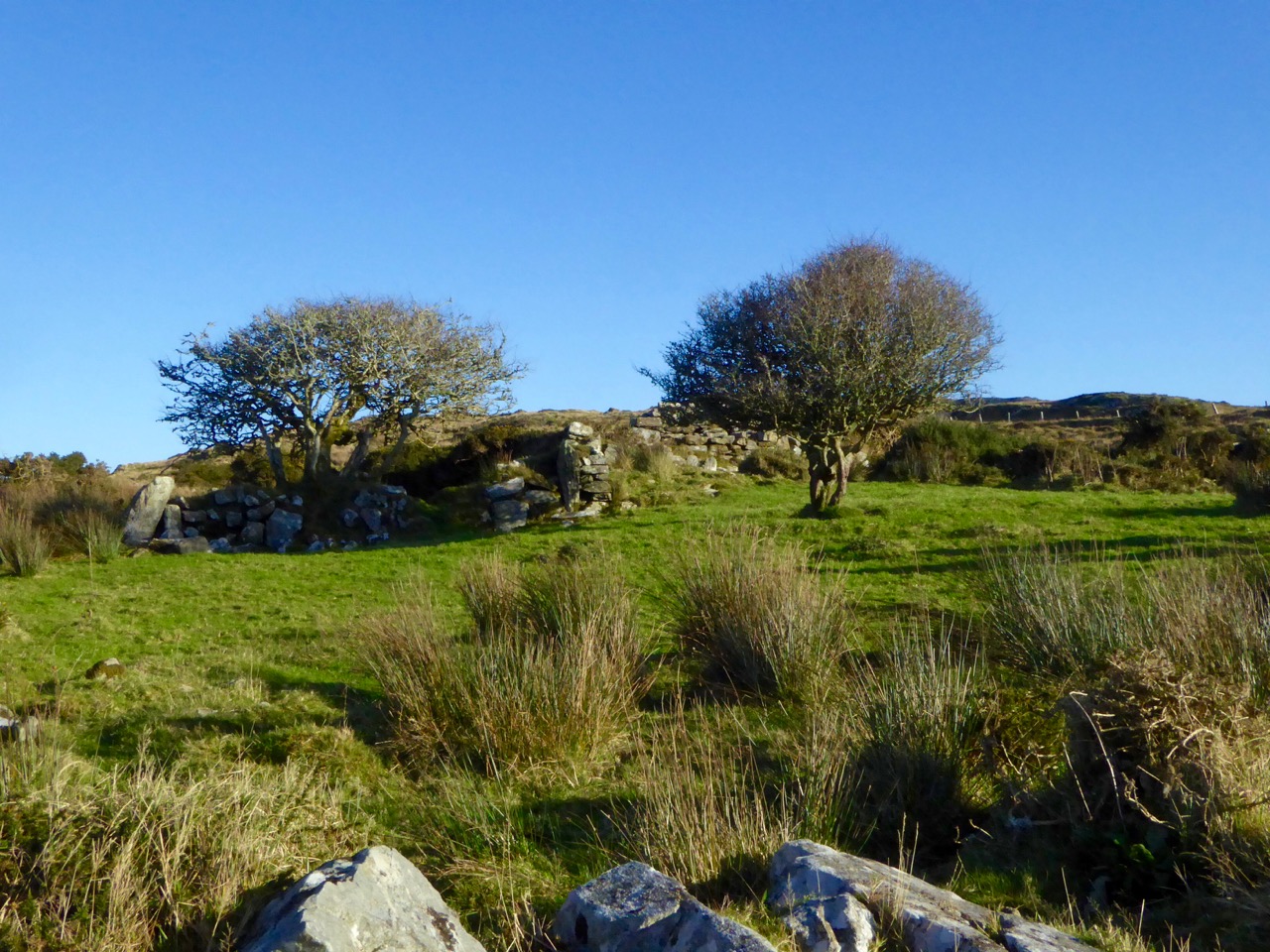
There is physical evidence of the booleying in Ireland. On the Coomkeen route of the Sheep’s Head Way we found a little glen high up on the mountain, a setting for a ruined small stone house which could well have been used by those herding the cattle on the summer pasturage in bygone days. It’s a beautiful sheltered site, guarded by two ancient thorn trees, and we could easily imagine – through our romantic 21st century vision – the hard but simple lifestyle invoked there.

booley thorns

Guardians of the Booley – two ancient thorn trees stand by the abandoned cottage

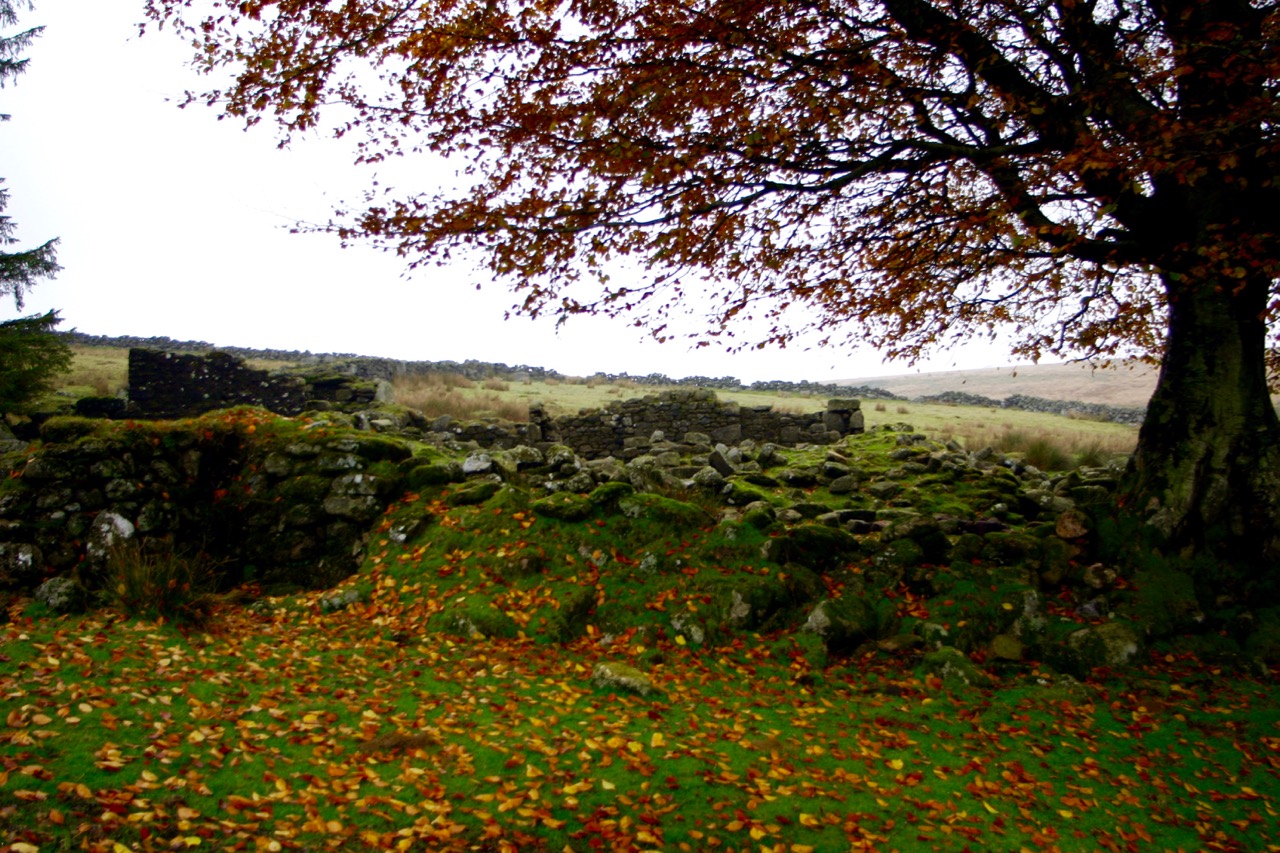
I feel particularly close connections to that way of life as my Dartmoor ancestors were transhumers. They kept a remote farm out on the moor uplands, well away from the nearest centre of civilisation. The enclosure had been established towards the end of the 18th century and involved the building of miles of stone boundary walls (which caused dissent among the commoners) and my forebears who lived there for a few generations were paid to run cattle from other farms on the pastures during the summer months. By the early 1900s the farm had been abandoned and nature has gradually taken over and created an attractive antiquity which I loved to wander over and recreate in my mind’s eye the scenes of family life: my maternal great-grandmother was one of fourteen children born on the farm in one generation.

teignhead today

Family home: Teignhead Farm on Dartmoor – used as a summer run for cattle, although it was  a permanent residence way off the beaten track for the large family of my forebears – an early 19th century print (top left), a photograph dated 1889 (top right) and the ruins of the house today (below)

Novelist Philip Robinson writes:

…The ghostly footprints of ancient sod walls still mark the sites where families once moved with their cattle up to uplands in county Antrim during the summer months (from May to October). They built temporary ‘booley’ huts to live in, usually beside a water burn or spring… The families that took their cattle to booley places on the Commons like Ardboley (High Booley), Carnbilly (Booley Cairn) or Milky Knowes had their home farms down on lower ground in clusters or villages called ‘clachans’. The arable land around each clachan was shared out between the group in a jigsaw of tiny plots and strips each year, and when the cattle returned before the 1st November, the field markers were torn down and the land around the clachans returned to common winter grazing. The homecoming to the clachan at harvest time was another great time of celebration and seasonal customs, closely tied up with Halloween bonfires and gatherings on 31st October.

on the move

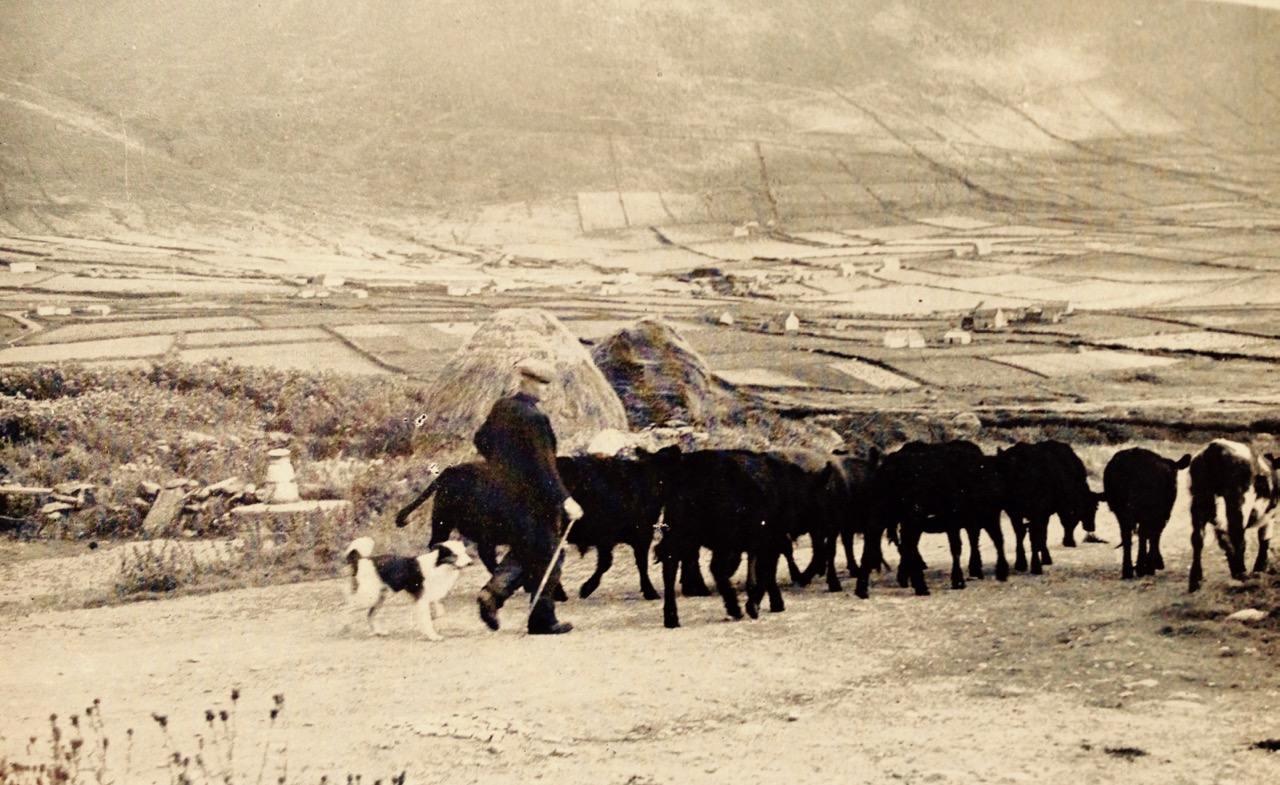
On the move – Kerry cattle (believed to be Ireland’s most ancient breed) from the collection of photographer Tomás Ó Muircheartaigh, who documented life in rural Ireland between the 1930s and the 1950s

We know that Booleying was an ancient practice as it is mentioned in the Brehon Laws – which takes it back at least to the time of St Patrick. Later, under the 14th century Statute of Kilkenny the Irish ...were forbidden to booley or pasture on those of the march lands belonging to the English; if they did so the English owner of the lands might impound the cattle as a distress for damage; but in doing so he was to keep the cattle together, so that they might be delivered up whole and uninjured to the Irish owner if he came to pay the damages… The historian, John O’Donovan (1806-1861) noted (in his Ordnance Survey Letters of 1838) that the people owned houses in two townlands, one of which was a booley. …It is a great habit among the people of the island to have two townlands and houses built on each where they remove occasionally with their cattle. The townlands are held under one lease and one of these farms is called a Bouley…

booley house

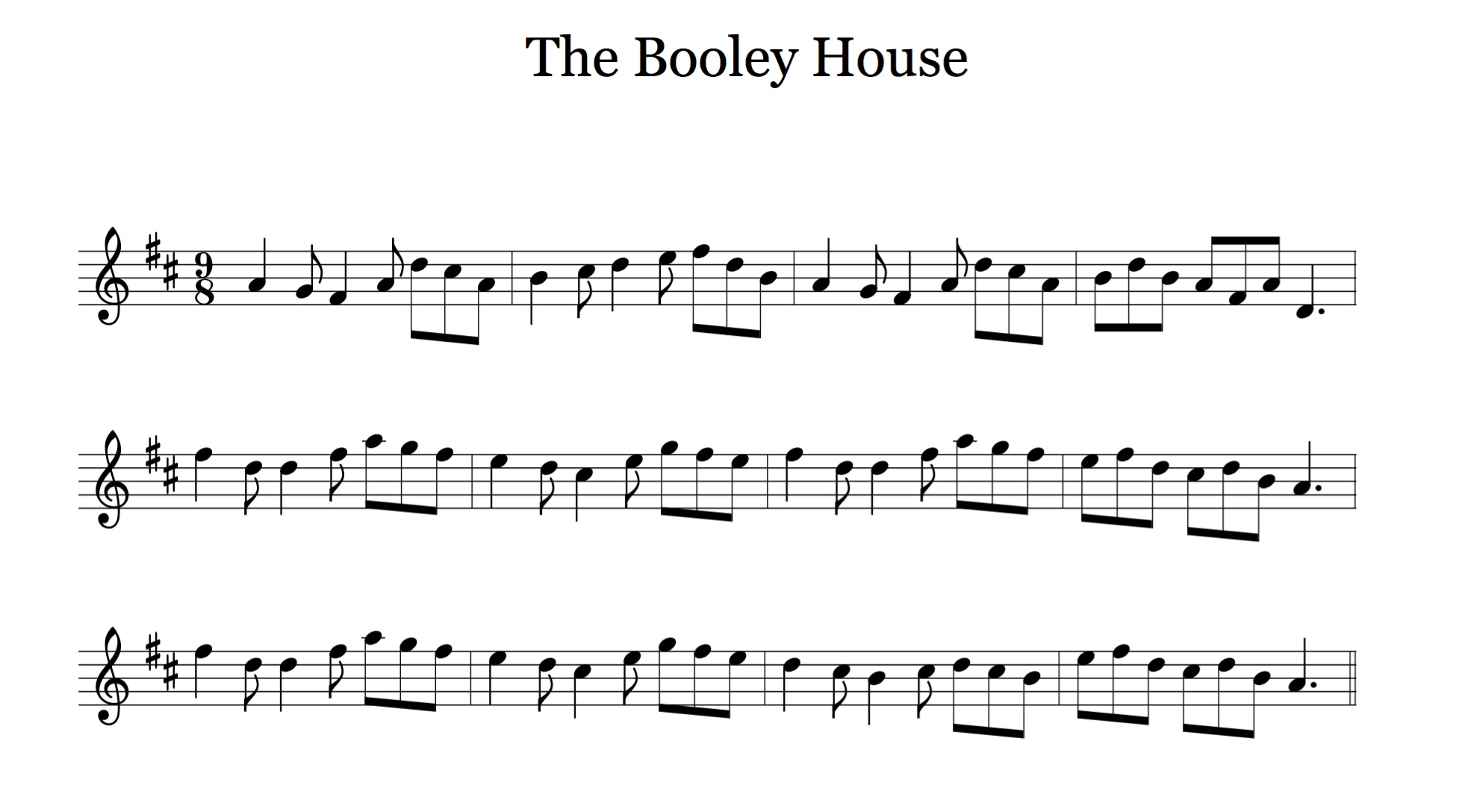
In Ireland The Booley is relegated to the tune books but there are those alive today who remember the tradition in their own families. Danaher relates: …old people tell of the buaile as a very happy place, full of song and laughter. On Sunday evenings the girls from several buailes would come together and the young men came up from the farms to be with them, and there was music and dancing and gaiety on hillsides that now hear only the bleat of the sheep and the cry of the grouse and the curlew…

boley fair poster


The Melodeon

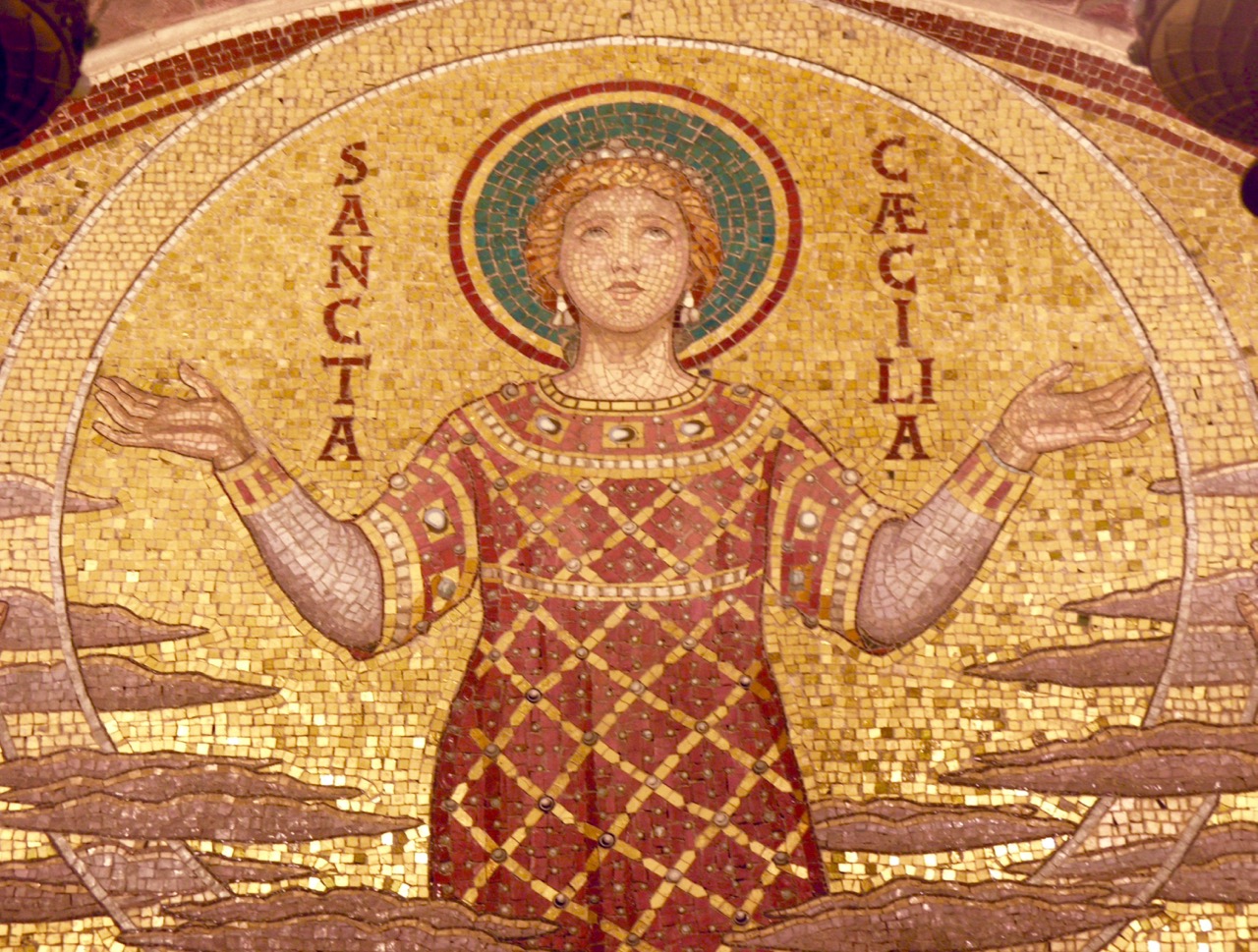
A personal perspective – by Robert – to celebrate St Cecilia, the Patron Saint of music, on her day: 22nd November

Girl with Melodeon

…My father played the melodeon
Outside at our gate;
There were stars in the morning east
And they danced to his music.

Across the wild bogs his melodeon called
To Lennons and Callans.
As I pulled on my trousers in a hurry
I knew some strange thing had happened.

Outside the cow‑house my mother
Made the music of milking;
The light of her stable‑lamp was a star
And the frost of Bethlehem made it twinkle.

A water‑hen screeched in the bog,
Mass‑going feet
Crunched the wafer‑ice on the pot‑holes,
Somebody wistfully twisted the bellows wheel.

My child poet picked out the letters
On the grey stone,
In silver the wonder of a Christmas townland,
The winking glitter of a frosty dawn.

Cassiopeia was over
Cassidy’s hanging hill,
I looked and three whin bushes rode across
The horizon — The Three Wise Kings.

An old man passing said:
“Can’t he make it talk” —
The melodeon. I hid in the doorway
And tightened the belt of my box‑pleated coat.

I nicked six nicks on the door’post
With my penknife’s big blade—
There was a little one for cutting tobacco,
And I was six Christmases of age.

My father played the melodeon,
My mother milked the cows,
And I had a prayer like a white rose pinned
On the Virgin Mary’s blouse.

from A Childhood Christmas by Patrick Kavanagh 1943; the photo of the girl is from the collection of Tomás Ó Muircheartaigh, who documented life in rural Ireland between the 1930s and the 1950s
Traditional musicians playing ‘squeeze boxes’ – top: Fred Pearce from Norfolk and Johnny Connolly from Connemara, both playing ‘The Melodeon’ – a single row instrument, while below: Jackie Daly from the Sliabh Luachra area (Cork / Kerry borders) and Joe Burke from Galway play the Irish Button Accordion

I have been playing the melodeon for well over 50 years: I should be a lot better at it than I am… My father didn’t play it: I didn’t even know that melodeons existed until I saw a secondhand one on sale in my local music shop when I was a teenager. I was fascinated by the look of it – it beckoned me; it was ten pounds, and in those days I earned seven shillings and sixpence a week from my paper round. Eventually I had saved enough to buy it, took it home and scratched my head over it.

Spot the difference: Robert then (playing a one-row melodeon) and now (playing a two-row button accordion – photo by Peter Clarke)

There’s a logic to playing a melodeon, but it’s not an immediately obvious one. Perhaps I’d better explain that a melodeon is one sort of accordion, and the definition varies depending what country you are in. I was in England then, and the term ‘melodeon’ there covers pretty well everything that has a button keyboard, bellows, and produces different notes when you move the bellows in or out; it doesn’t refer to a ‘piano accordion’ where the keyboard has – well – piano keys, and the movement of the bellows in either direction doesn’t make any difference to the notes.

Dermot Byrne and Steve Cooney

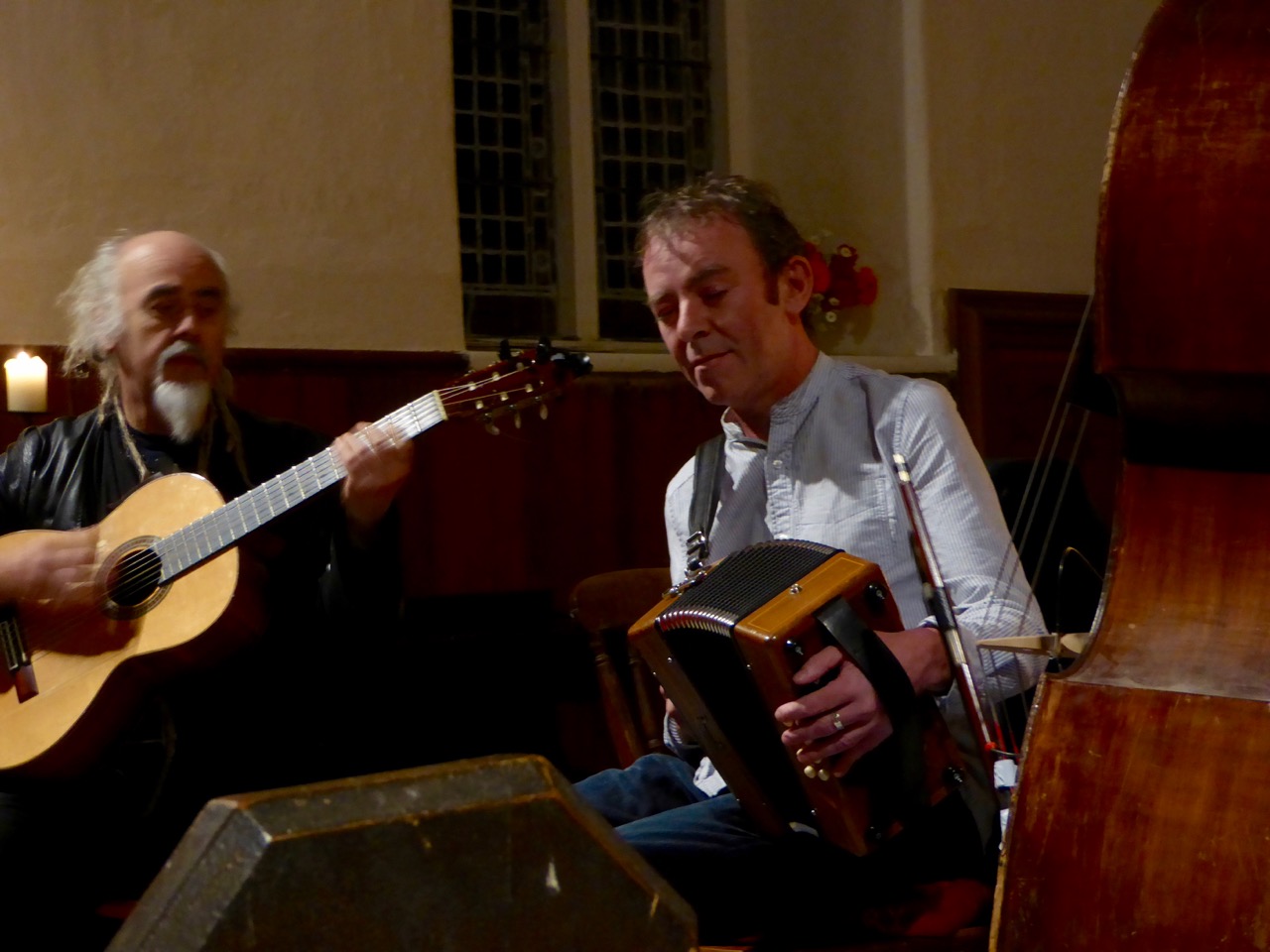
Expert Irish button accordionist Dermot Byrne, accompanied by Steve Cooney at a recent Baltimore Fiddle Fair event here in West Cork: Dermot is playing a rarely seen Briggs diatonic instrument

Now I am in Ireland and the term ‘melodeon’ only refers to an instrument with a single row of buttons on the keyboard; anything with more than one row is known as a ‘diatonic button accordion’, and you will probably most often come across the latter when listening to traditional music here, although nothing is ever simple, and there are a number of Irish players (including many really good ones) who play instruments with a single row of buttons.

Sharon Shannon

Sharon Shannon from Corofin, Co Clare has taken Irish button accordion playing to a different level: her concerts often include magical lighting effects and state-of-the-art electronic accompaniments

By chance, that first instrument that I saved up for had only one row, so it would be a ‘melodeon’ in both England and Ireland. I now tend to play mainly instruments with two rows, and I can’t stop calling them ‘melodeons’ even though that’s incongruous to players here.

Kerryman Seamus Begley – noted Irish accordion player and entertainer; in the right hand picture he is joined by concertina maestro Noel Hill at last year’s Corofin Festival, Co Clare

In an earlier post – The Clare Trumpet – I talked about concertinas, and the invention of those instruments by Charles Wheatstone in England, getting on for two hundred years ago. He took out a patent in 1829. In the same year Cyrill Demian – an Armenian organ and piano maker – filed a patent in Vienna for an ‘accordion’ which was exactly the same as today’s melodeon:

…In a box 7 to 9 inches long, 3½ inches wide and 2 inches high, feathers of metal plates are fixed… with bellows… even an amateur of music can play the loveliest and most moving chords of 3, 4 and 5 voices with very little practice… Each claves or key of this instrument allows two different chords to be heard, as many keys are fixed to it, double as many chords can be heard, pulling the bellows a key gives one chord, while pushing the bellows gives the same key a second chord…  many well known arias, melodies and marches, etc. may be performed similar to the harmony of 3, 4 and 5 voices, with satisfaction of all anticipations of delicacy and vastly amazing comfort in increasing and decreasing sound volume… it is easy and comfortable to carry and should be a welcome invention for travellers and parties visiting individuals of both sexes, especially as it can be played without the help of anybody…

martin connolly

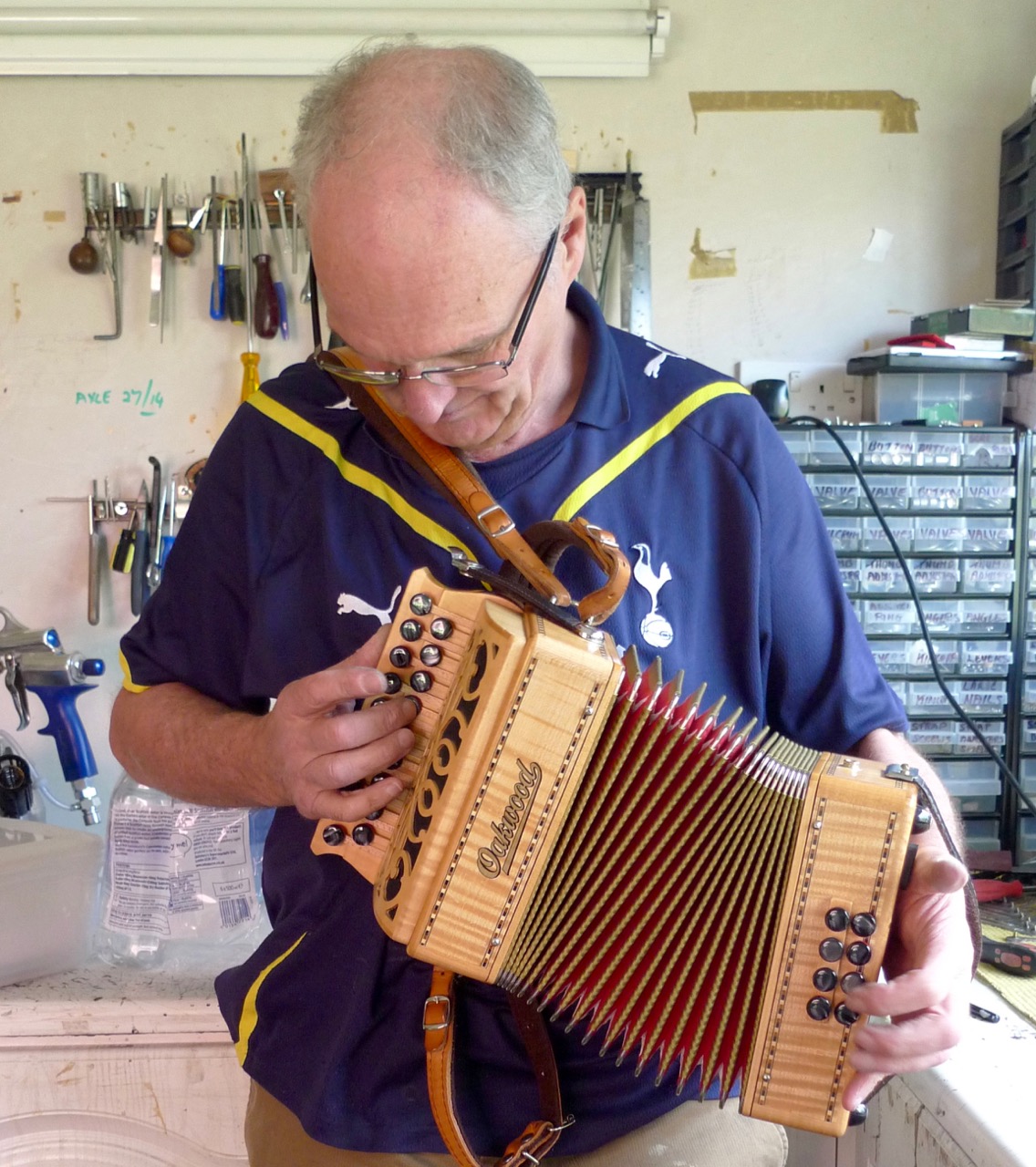
Excellent accordion maker and mechanic Martin Connolly of Ennis tests out Robert’s Oakwood 

That’s true: the ‘squeeze box’ is one of those instruments which you have to learn to play just by doing it. Of course, you can get books of instructions – and you can get experienced players to help you get started – but in the end it comes down to instinct – and a lot of practice, preferably out of earshot of anyone else. You can pick up the diatonic system inexpensively by picking out tunes on a mouth-organ – which is a melodeon without the buttons or bellows!

Concertinas / melodeons / button and piano accordions are different instruments but all share certain characteristics including the means of producing a note through a vibrating ‘free reed’ – a small metal leaf held at one end in a frame. A bellows pushes or pulls air through the frame and the reed vibrates, producing a musical note. The size and weight of the frame and leaf governs the pitch of the note. The quality of metal used for the vibrating reed – its density, flexibility  and tempering – determines the overall sound quality of the instrument. The best instruments use hand made reeds.

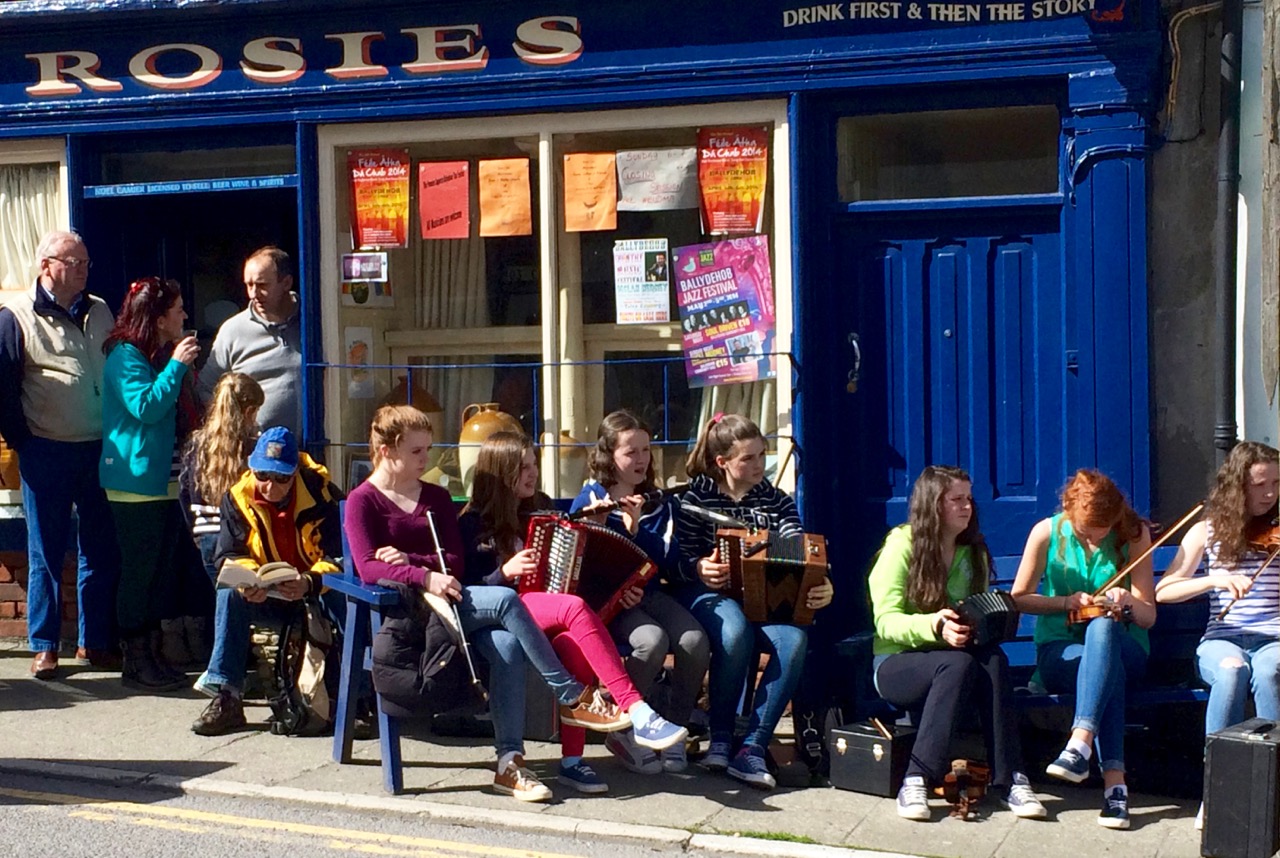
Outside Rosies

Squeeze boxes in evidence in this recital from young members of Comhaltas Ceoltóirí Éireann outside Rosie’s, Ballydehob, during the Trad Festival

Enough of the technicalities! What matters is the music that can be got out of an instrument. I like the push-pull (bisonoric) squeeze boxes because you have to move the bellows so much to get the changing notes. This adds dynamics to the music: movement and rhythm. As so much of traditional music is used for dancing, this is a definite advantage – there is already ‘dancing’ in the music itself.

800px-Bourrée_d'Auvergne

There are so many really good traditional music players in Ireland: you will know that because of our reports on the festivals we go to. Who are the best players today of melodeons and diatonic accordions? You have to decide that yourself by going out and listening to as many as you can. Or, second best, you can stay at home and use the internet – Youtube is a seemingly endless resource. There’s also The Session, which is a very good site for finding tunes and discussions on music and musicians. I also recommend ITMA – the Irish Traditional Music Archive – an invaluable free resource of information including thousands of sound recordings, videos, images and manuscript collections all related to the music tradition here in Ireland.

post-436-1116811091

If you’re twisting my arm as to who are my melodeon ‘heroes’, I’ll reel off a list of players I would (and do) go out of my way to listen to: Johnny Connolly, Bobby Gardiner, Jackie Daly, Joe Burke, Seamus Begley, Dermot Byrne, Sharon Shannon… However, I seldom have to go far because they all seem to come, sooner or later (and often frequently) to our little corner of the world here in West Cork.

OLYMPUS DIGITAL CAMERA

Hail Cecilia!

O’Donovan Rossa – the First Terrorist?

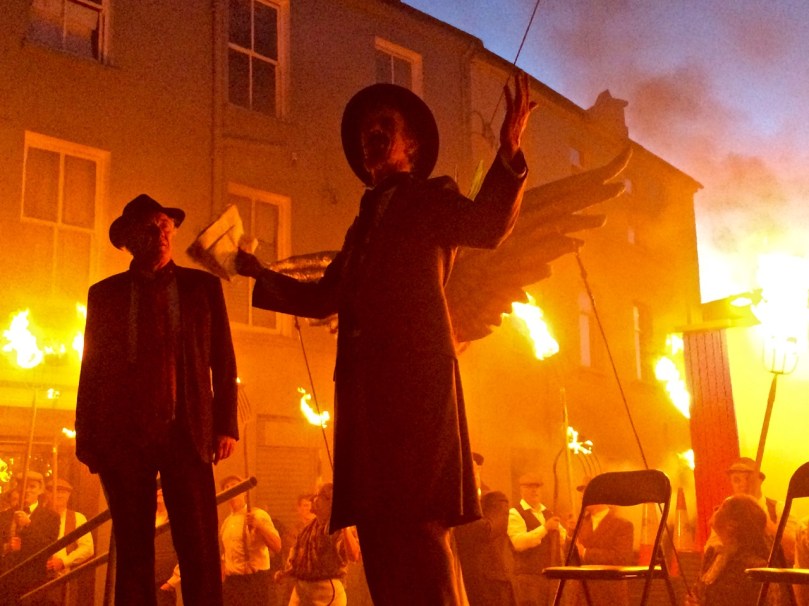
Fiery Rossa

The world was shocked this week by appalling acts of terror. Terrorism is rightly and universally condemned in modern Ireland – and yet this year we celebrated the centenary of the death of a man whom many, including his fellow patriots, denounced as a terrorist in his lifetime while others hailed as a hero.

Our American and Canadian readers might be surprised at how relevant his story is to their own countries.

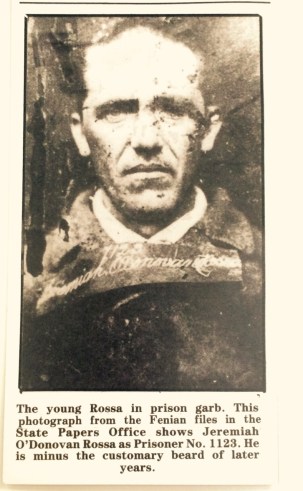
Rossa Prisoner

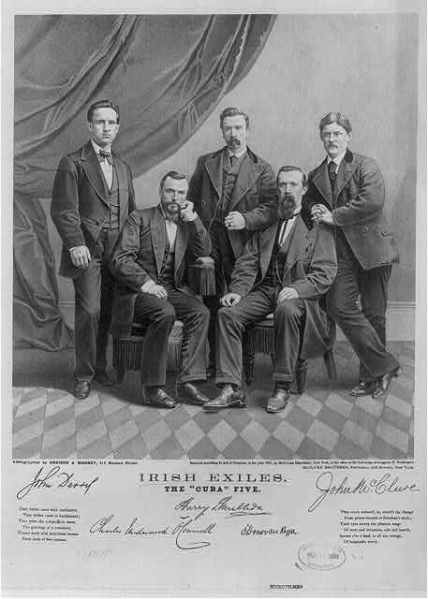
I write of course of Jeremiah O’Donovan Rossa of Skibbereen, the ‘Unrepentant Fenian’, whose state burial in 1915 was the occasion of a fiery speech by Patrick Pearse that is commonly seen as a catalyst to the 1916 Rising. In March Back in Time I introduced him and wrote about the awful background that turned him into a revolutionary – the death of his father from famine fever and his family’s eviction and departure from Ireland. To the end he refused to call the cataclysmic events of 1845 to 1850 a famine: there was no shortage of food, he pointed out, just a shortage of humanity. It fired in him a lifelong hatred of British rule which hardened through terrible treatment in prison and which he brought with him to exile in America, where he and his fellow Fenians were accorded a hero’s welcome.

The Cuba Five were so named for the ship that brought them to America. Courtsey Library of Congress

The Cuba Five were so named for the ship that brought them to America. Courtsey Library of Congress

The Fenian brotherhood Rossa joined in America in 1870 had organised several raids on Canadian communities during the 1860s and early 70s. All were unsuccessful, but resulted in loss of life and a worsening of relationships between Canada and America, seen as harbouring and tolerating Fenian activity. The raids involved hundreds of Fenians, many of them battle-hardened veterans of the American Civil War. (For more on the Irish in the American Civil War – the numbers and the stories will amaze you – see Damian Shiels’ meticulously researched blog and website.)

According to this article on the Fenian Raids:

Ironically, though they did nothing to advance the cause of Irish independence, the 1866 Fenian raids and the inept efforts of the Canadian militia to repulse them helped to galvanize support for the Confederation of Canada in 1867. Some historians have argued that the affair tipped the final votes of reluctant Maritime provinces in favour of the collective security of nationhood, making Ridgeway the “battle that made Canada.”

Fenian Raid on Canada

The Battle of Ridgeway, courtesy Library of Congess

Embracing this militaristic approach, Rossa became as notorious an extremist in America as in Ireland. He founded a newspaper, The United Irishman, to propagate his views and raise funds for his infamous skirmishing fund. This fund, in fact, was to pay for a bombing campaign carried out in Britain from 1881 to 1885, causing injuries and deaths (to civilians, including children) – and real terror.

One of the exhibits in Skibbereen this summer consisted of newpaper clippings from American newspapers about Rossa, amply testifying to his notoriety. The top right clipping consists of snippets about Well Known People – Rossa is listed alongside William Morris, Geronimo and the Csar Of Russia

In many ways O’Donovan Rossa encapsulates a central dissonance at the heart of Irish History: he was a passionate patriot who believed in armed struggle, while many of his contemporaries espoused a pacifist (see Michael Davitt as a prime example – he referred to Rossa as O’Donovan Assa) or parliamentary approach and saw Rossa’s campaign of violence as undermining their objectives. Now, in 21st Century Ireland, we are faced with the dilemma of how to deal with historical figures who are both important markers in the struggle for independence and echoes of a violent past many no longer wish to glorify.

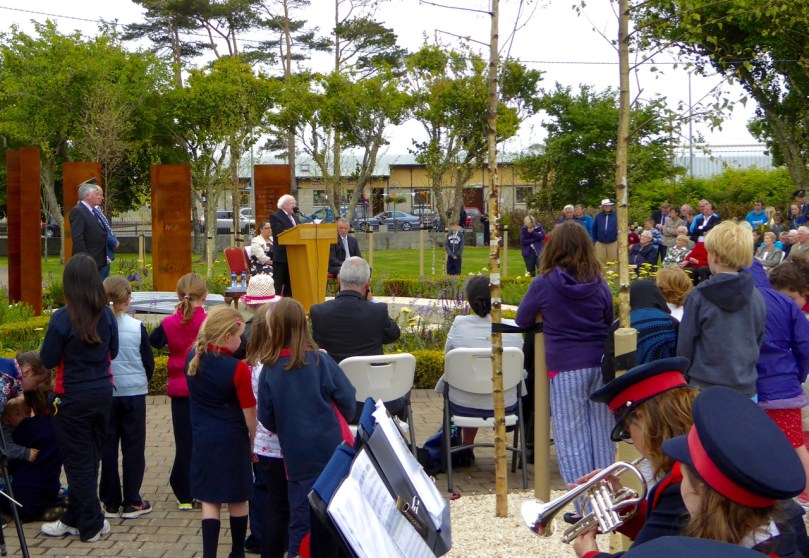
The President of Ireland, Michael D Higgins opened O'Donovan Rossa Park in Skibbereen

The President of Ireland, Michael D Higgins opened O’Donovan Rossa Park in Skibbereen

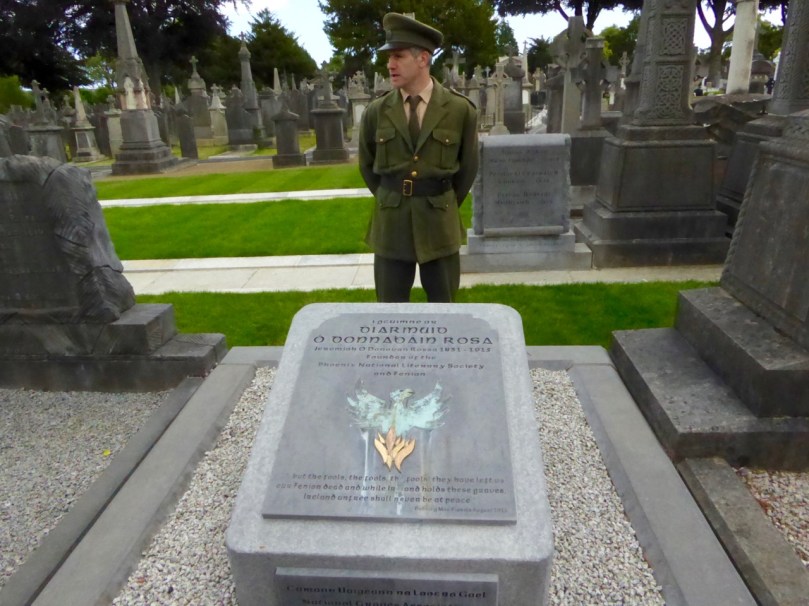
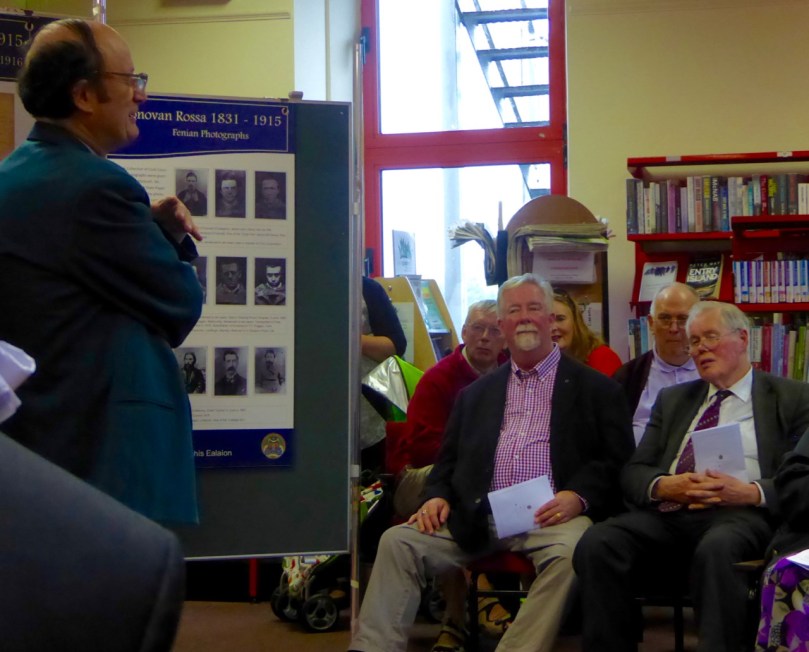
In Skibbereen this summer Rossa was celebrated in several ways. We attended not just the March, but a play, two exhibitions, a lecture, and the grand opening of a refurbished park in Rossa’s honour by Michael D Higgins, the President of Ireland. In Dublin his 1915 state funeral and graveside oration were given a full scale re-enactment, attended by the President, the Prime Minister (Taoiseach) and many dignitaries.

We toured Glasnevin Cemetary on Dublin this summer. The tour included a re-enactment of Patric Pearse's oration at the grave of O'Donovan Rossa

We toured Glasnevin Cemetary on Dublin this summer. The tour included a recital of Patrick Pearse’s oration at the grave of O’Donovan Rossa

To give you a flavour for how Rossa is revered as a hero watch this YouTube clip – the ultra-nationalist ballad features Pathé News footage of the actual funeral.

But not everyone felt that it was appropriate for the Irish government to underwrite such commemorations. This was expressed well by the historian, Carla King writing to the Irish Times. She summed up thus:

…while O’Donovan Rossa is a figure for whom we can feel some pity, his philosophy, with its commitment to mindless and counter-productive violence, launched a tradition of which we should be ashamed.

Another historian, Marie Coleman wrote:

It was unclear whether the focus of the event was Rossa himself or the significance of the funeral as signifying the rejuvenation of republicanism as a precursor to the Easter Rising. If the former, the State’s endorsement of an archaic form of irredentist Irish nationalism will sit uncomfortably with many in 21st-century Ireland and with unionist opinion in Northern Ireland.

Another exhibition opening - this one at the Skibbereen Library

Another exhibition opening – this one at the Skibbereen Library

Like many Irish people growing up in the 50s and 60s I was brought up on stories of the epic Fight for Irish Freedom, although in my family’s case it was also complicated by ancestry on both sides of the divide. In that narrative, Rossa was one in a long line of heroic freedom fighters. To dig a little deeper still into the story of O’Donovan Rossa, I went looking for signs of the man himself around Skibbereen and found them in some surprising places.  My next post will relate to Rossa’s time in Skibbereen and the legacy he left in this West Cork town.

Our New Navigation Page

sailing day 1We now have over 250 posts, dating back to 2012, and it’s getting harder to find older information on Roaringwater Journal. Help was urgently needed, so your dedicated bloggers have pulled a few all nighters (OK not really – we’re too old for that) and produced – TA DAH! – a Navigation page.

Click on the Menu button (the left one in the header photo)  and click on Navigation. This brings you to our new Table of Contents. We’ve created four divisions, the first three about West Cork: PLACES TO SEE; THINGS TO DO (including child-friendly stuff); and ABOUT WEST CORK. The last division is ABOUT IRELAND. Each one has subdivisions and numerous post links.

Take a browse and tell us what you think. Suggestions for improvements are welcome. Now that we’ve set it up, we can keep this page updated as we go along.

Happy travels!

Happy travels!