When we could still walk within the boundary of our own county – and in company – we went with our friends Peter and Amanda in the footsteps of a saint! The walk from Drimoleague to the Top of The Rock – and beyond – is one which has been on our ‘to do’ list for a long time, not least because the first person to do it was our own Saint Finnbarr, founder (in 606AD) and patron saint of Cork city. The motto of University College, Cork is Ionad Bairre Sgoil na Mumhan which means ‘Where Finbarr taught let Munster learn’.
Finbarr is also famous for establishing a monastic site at Gougane Barra in the sixth century, and today you can follow St Finnbarr’s Way all the way from the Top of The Rock to that magical lake in the mountains where you can find an oratory and chapel dedicated to the saint: the full walk is 37km. Our own walk was a mere 3.5km but rewarding nevertheless.
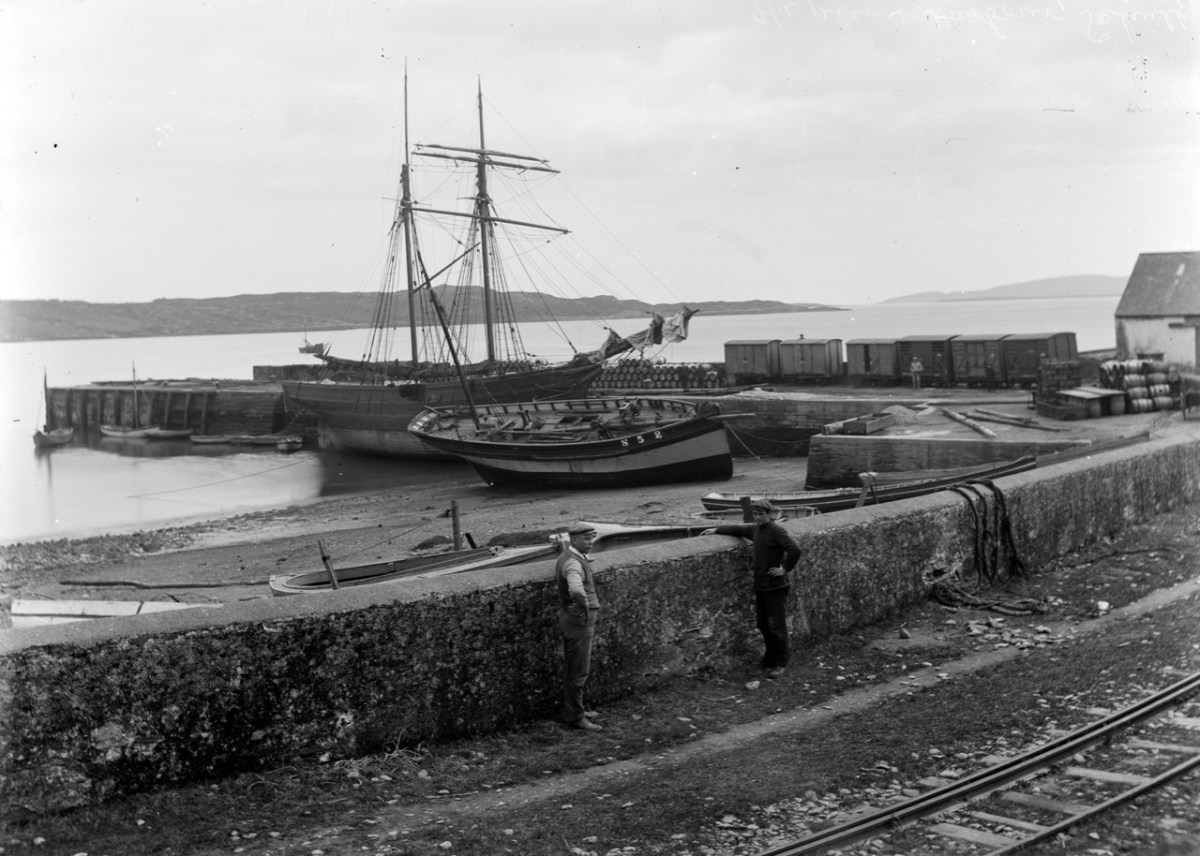
Our walk started at the former Drimoleague railway station. The line opened in 1877, connecting Dunmanway with Skibbereen, and subsequently extension lines went in all directions: to Cork, Bantry, Bandon, Courtmacsherry and – via our own narrow gauge line – from Skibbereen through Ballydehob to Schull. Sadly, all lines coming south west out of Cork have closed, some of the routes surviving until the 1960s. The picture below, dating from 1898, shows the track at Schull Harbour, the most south westerly point on any railway line in Ireland.
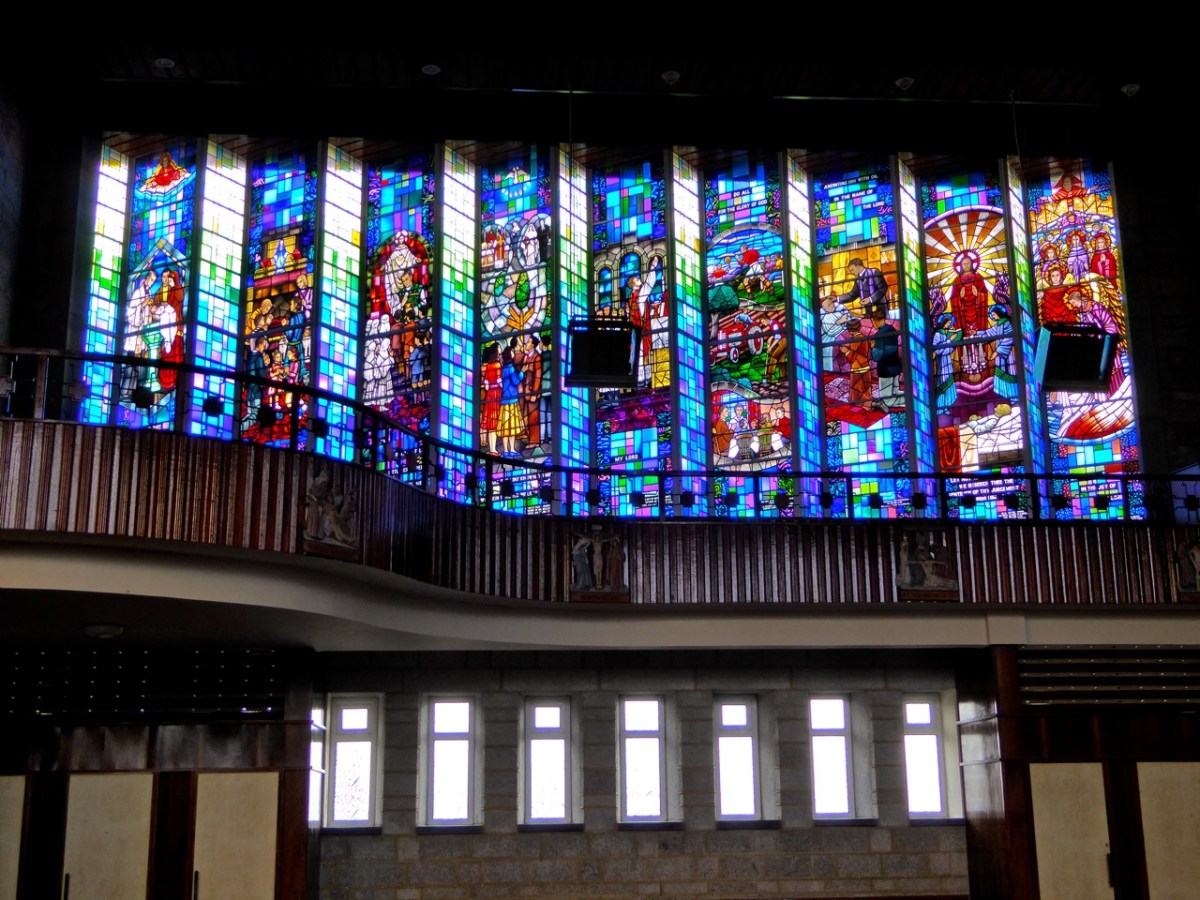
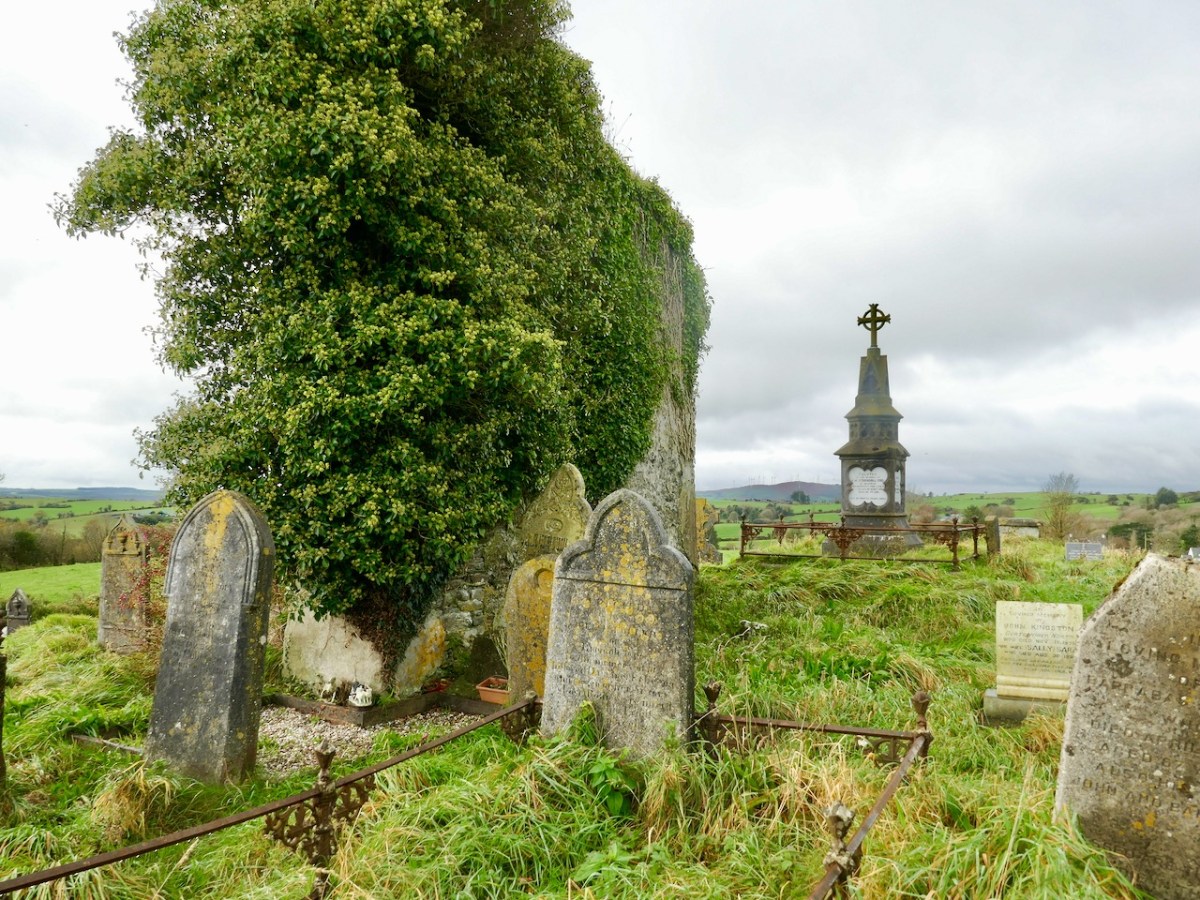
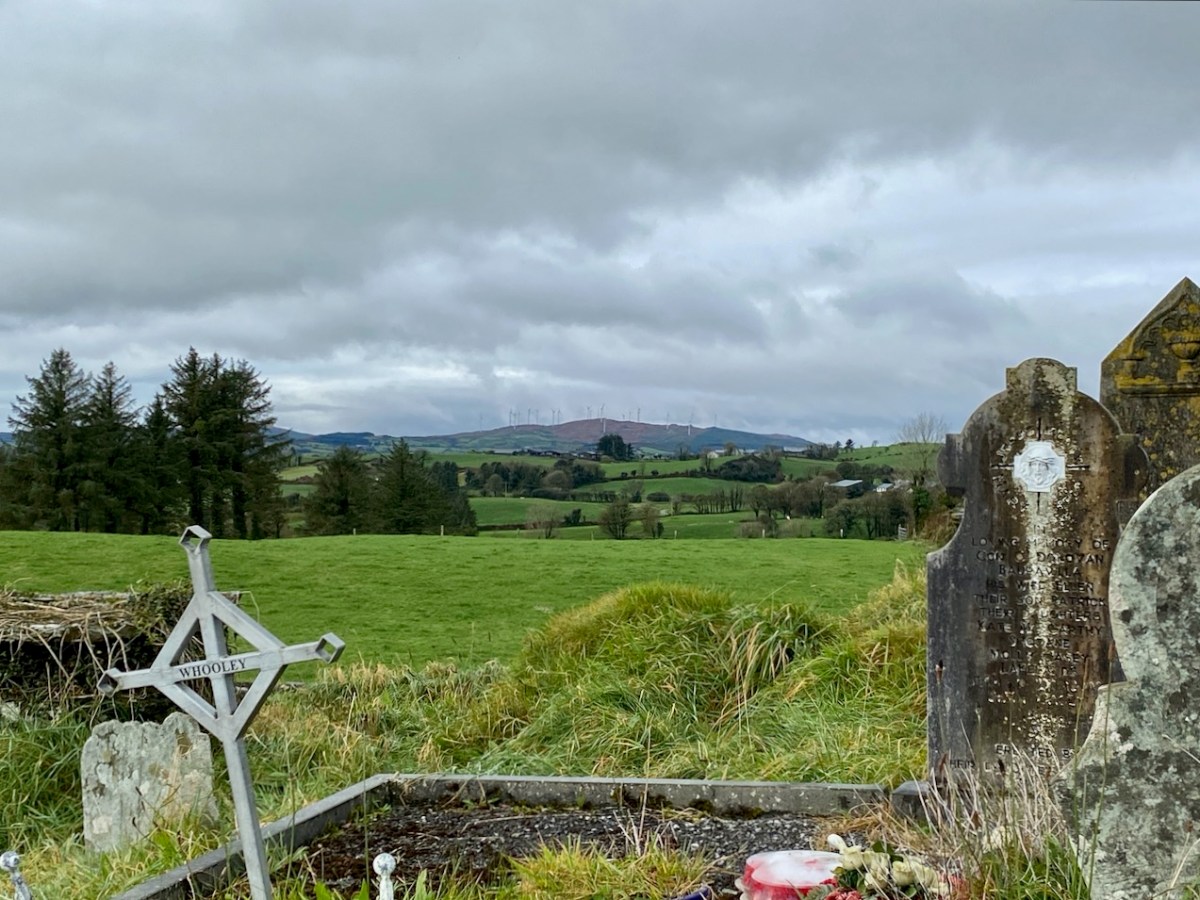
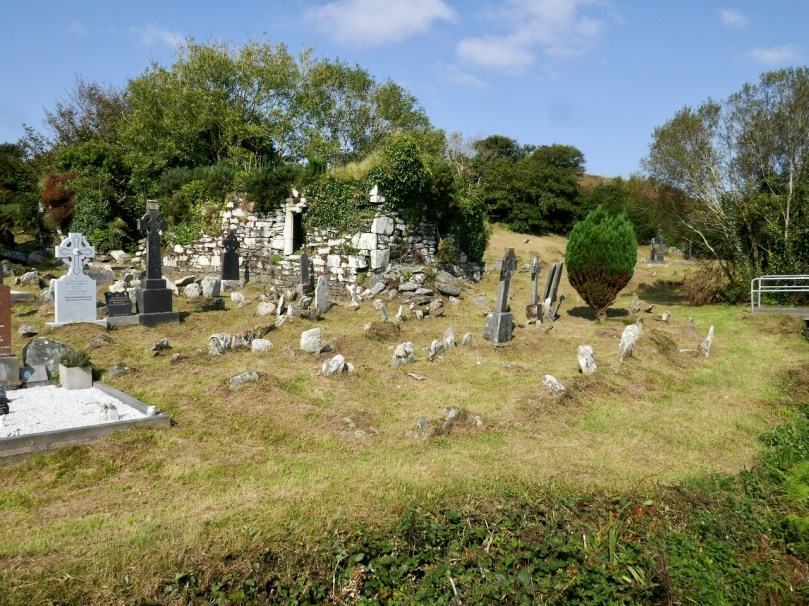
Leaving the old station at Drimoleague the path follows the road going north past the architecturally intriguing All Saint’s church, built in 1956. Finola has written about the building and its unusual stained glass (above) – it’s well worth a look inside. Beyond the modern church is the ruins of an ancient one, surrounded by a burial ground which is full of history (below):
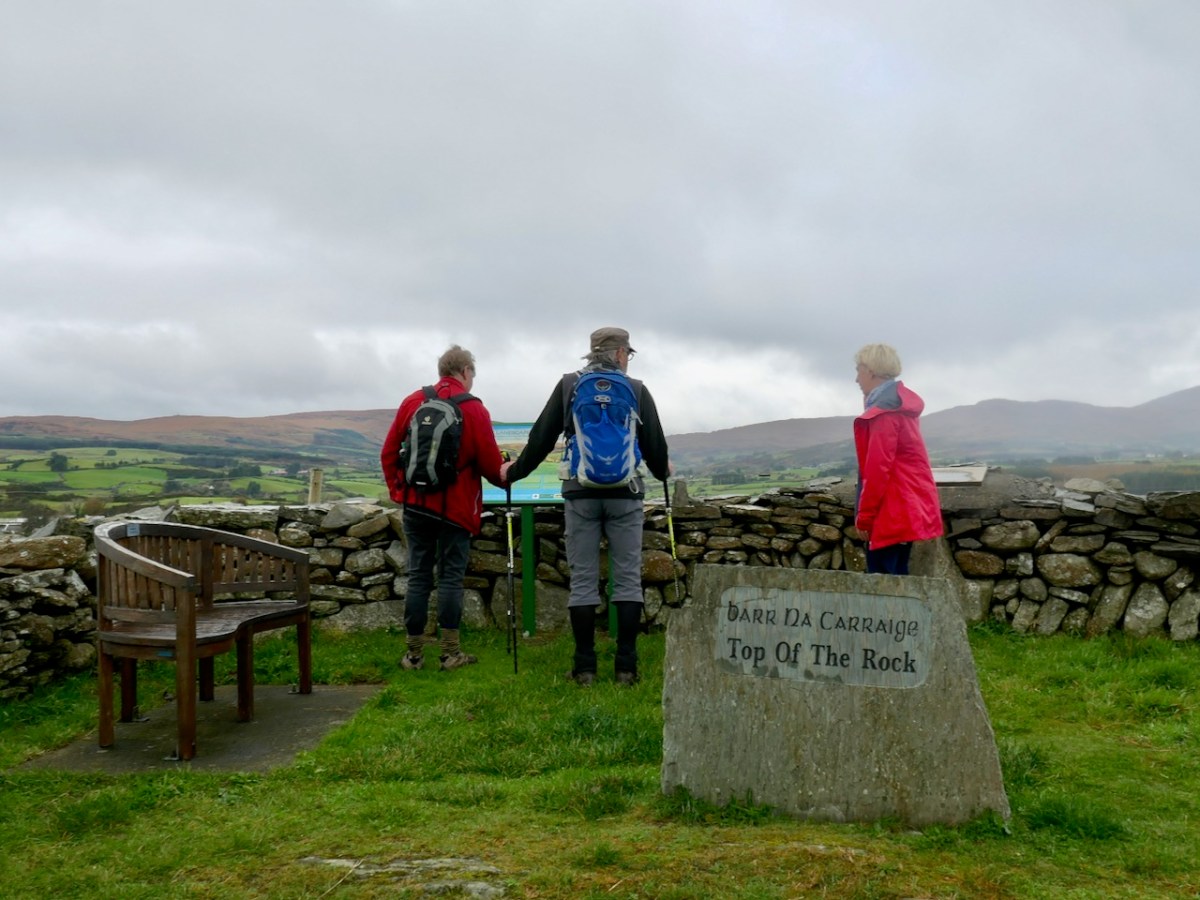
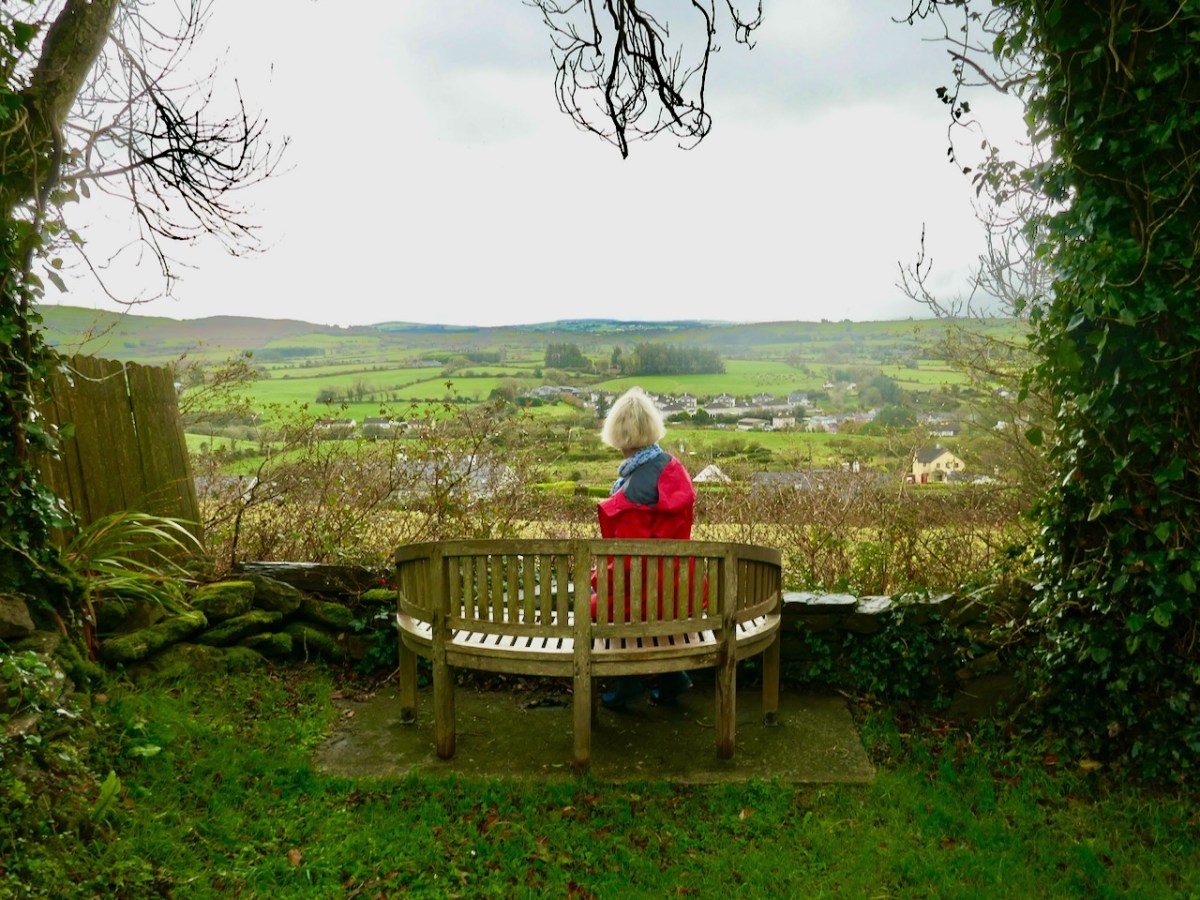
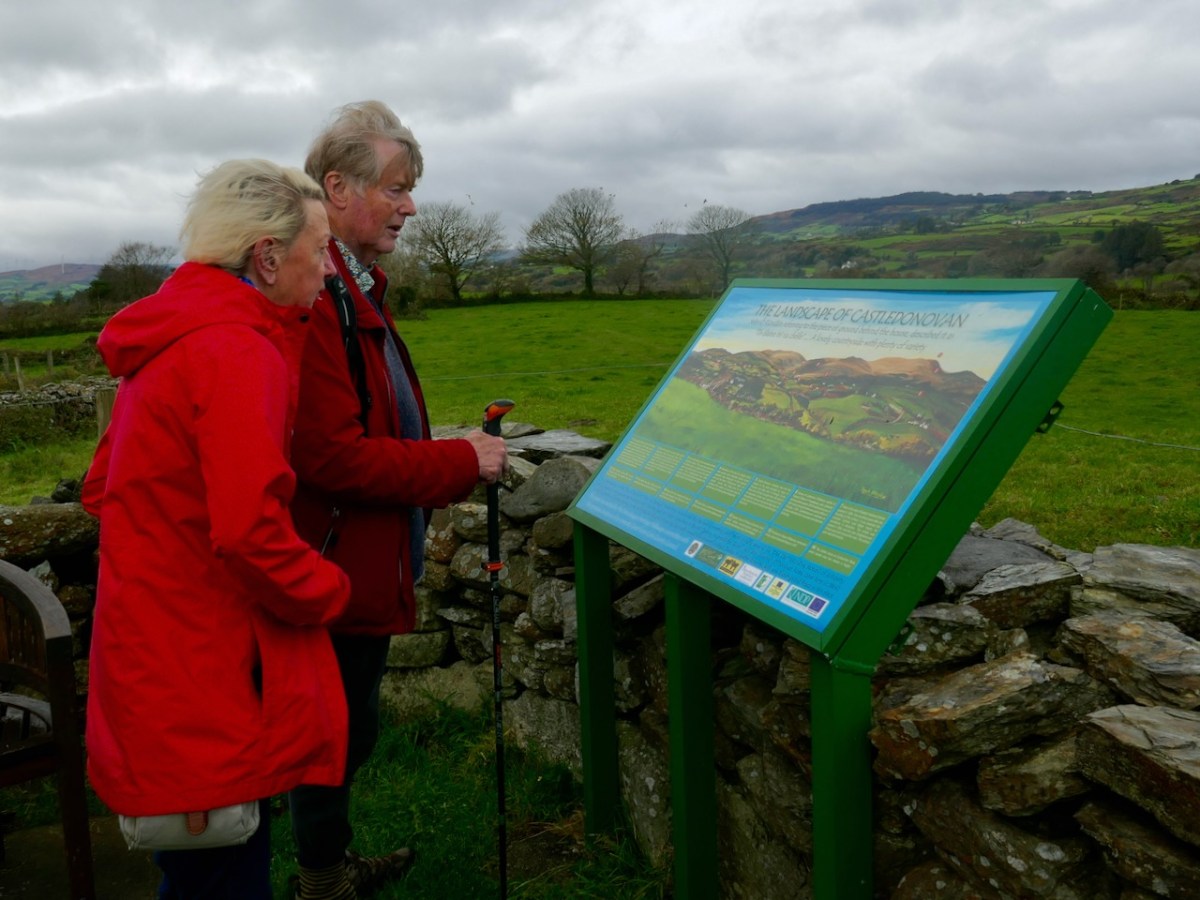
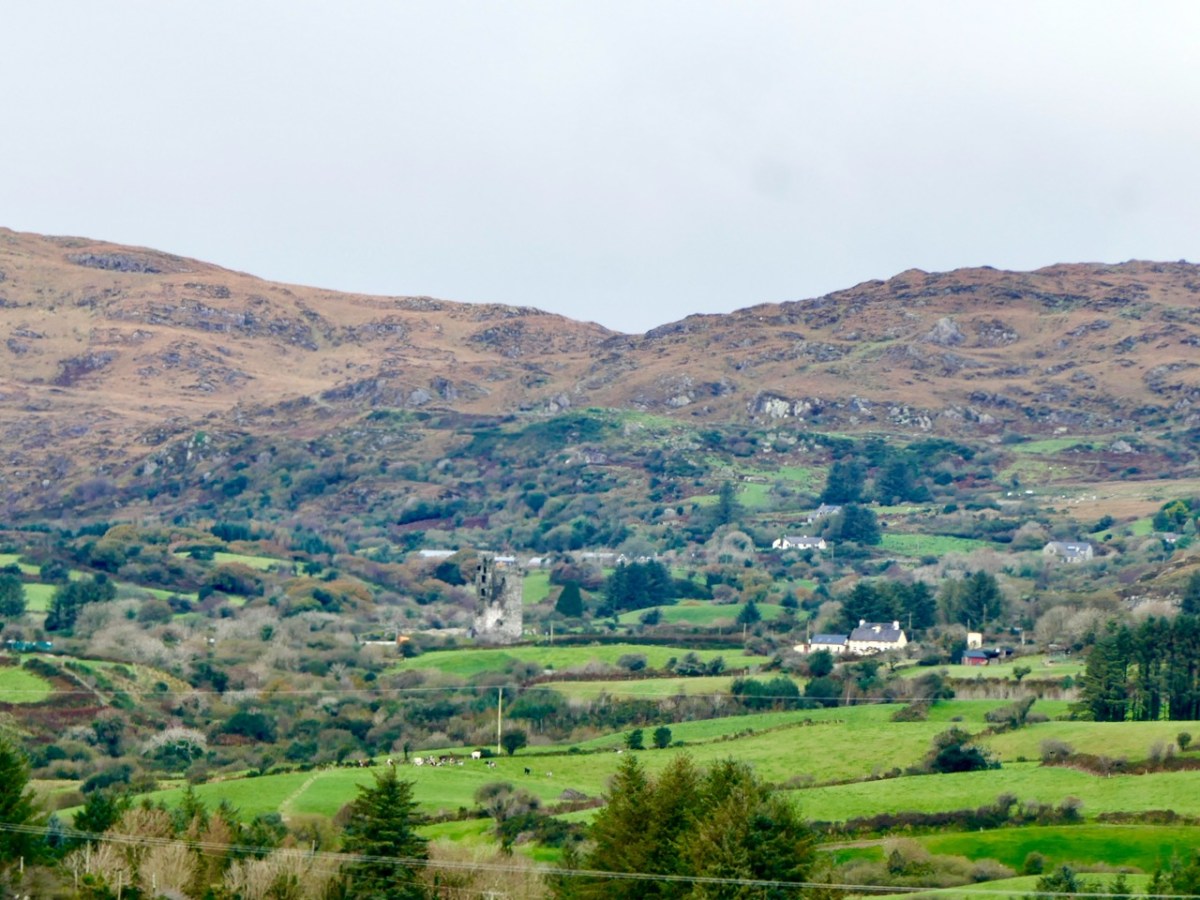
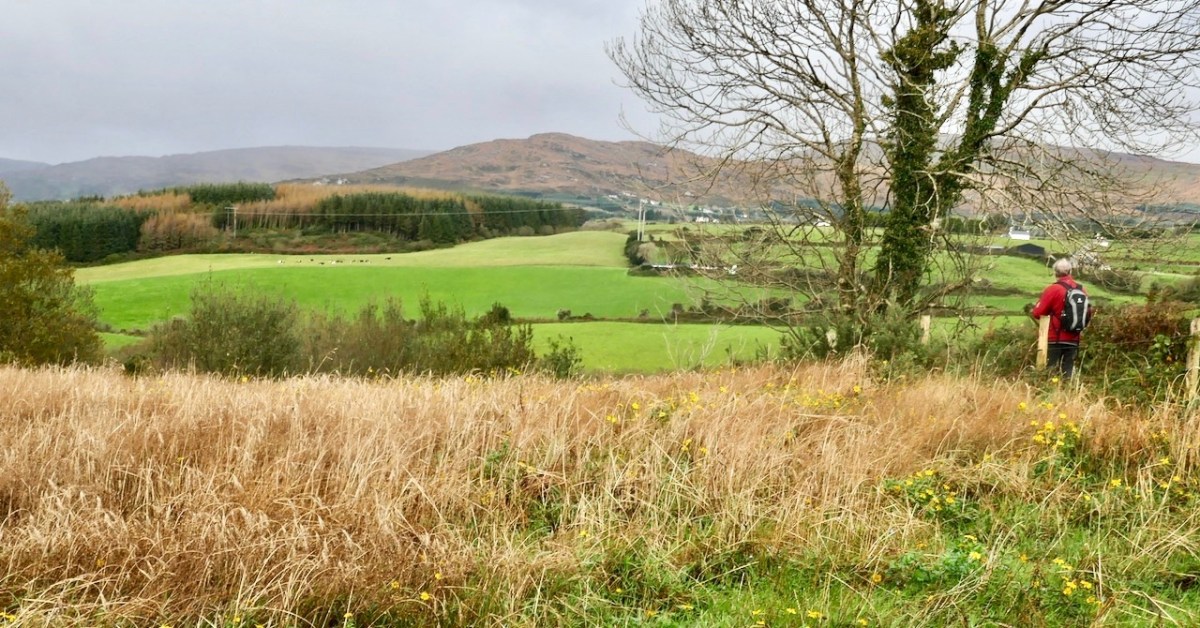
After a steep climb we reached our highest point: Barr na Carraige – which translates literally as Top of the Rock. Evidently the first settlement of Drimoleague was established up here and only moved downhill to be more convenient when the railway arrived. At the ‘Top’ we were fortunate to meet David Ross (below) who owns the farm and ‘Pod Park’ here, and has also masterminded the establishment of these walking routes. Great chat was had, and David suggested our best routes for the day as storms had affected some pathways: work is in hand to restore these. We couldn’t leave the ‘Top’ until we had fully appreciated the long views across to Castle Donovan: our own way then headed downwards and along the Ilen River.
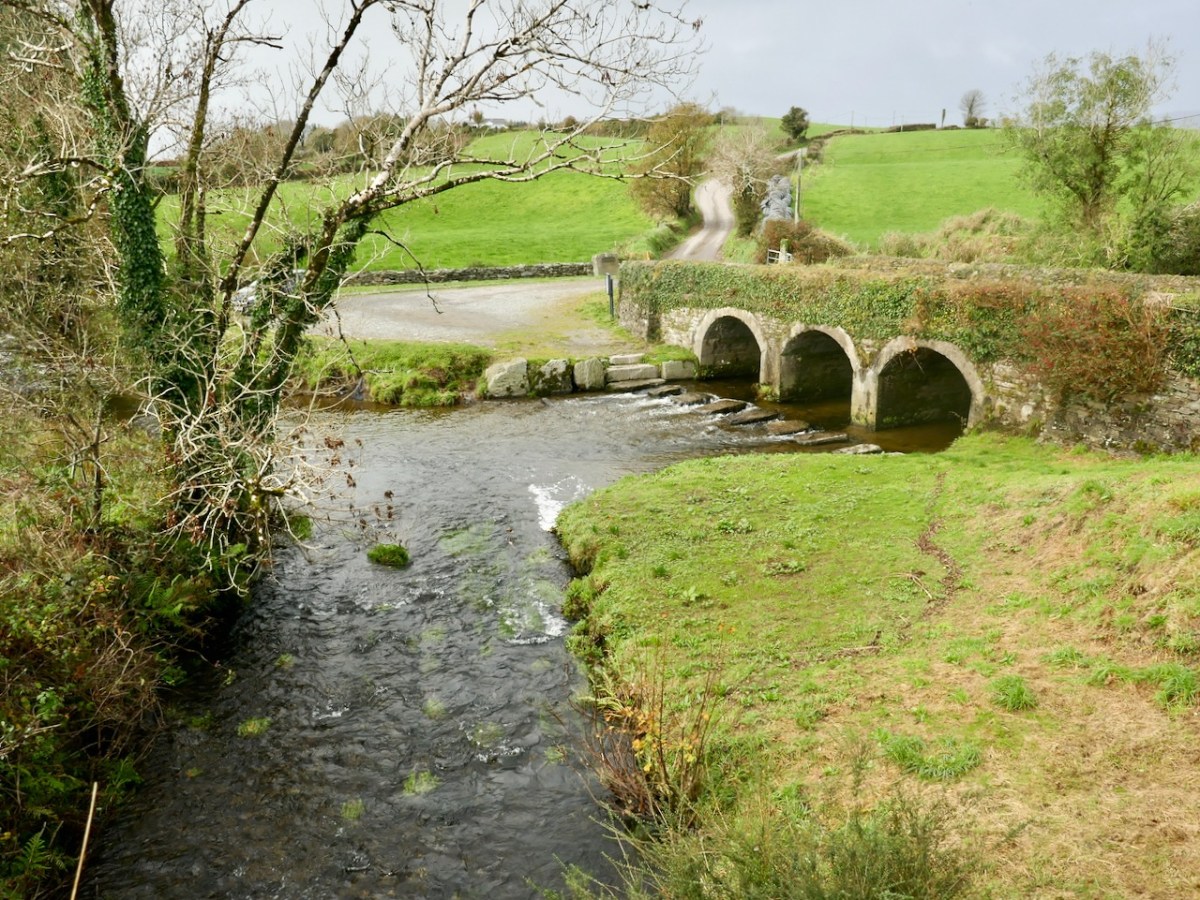
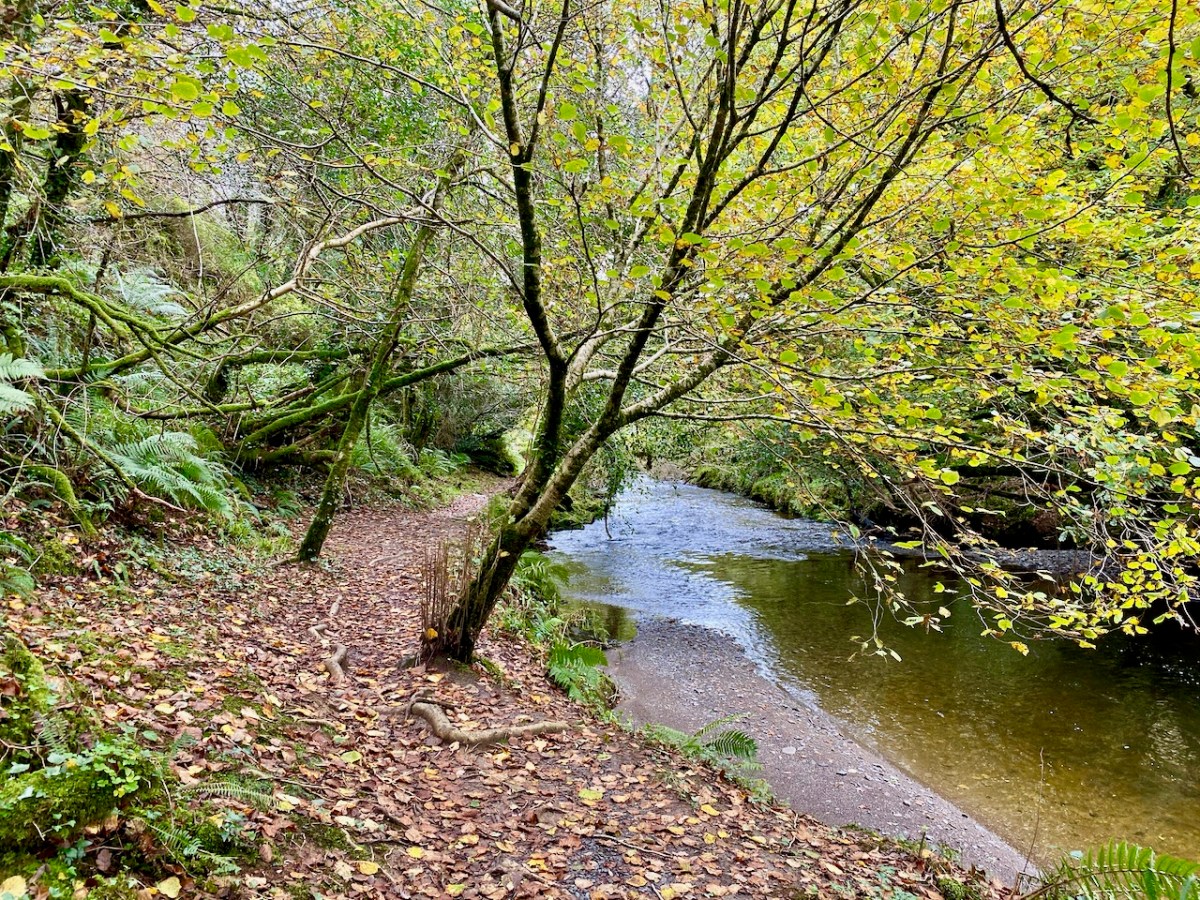
Descending from Top of the Rock we were mainly ‘off-road’ on dedicated footpaths. We first met the Ilen River at Ahanfunsion Bridge, a place which has seen a lot of action historically. The name means ‘Bridge of the Ash Trees’. There was a battle here in ancient times and it is said that the victors planted trees at the ford to commemorate the event. The bridge was built originally in 1830 but was blown up in the War of Independence and subsequently reconstructed. It’s a great spot for a picnic and everyone has a good time crossing the stepping stones, hopefully while keeping their feet dry.
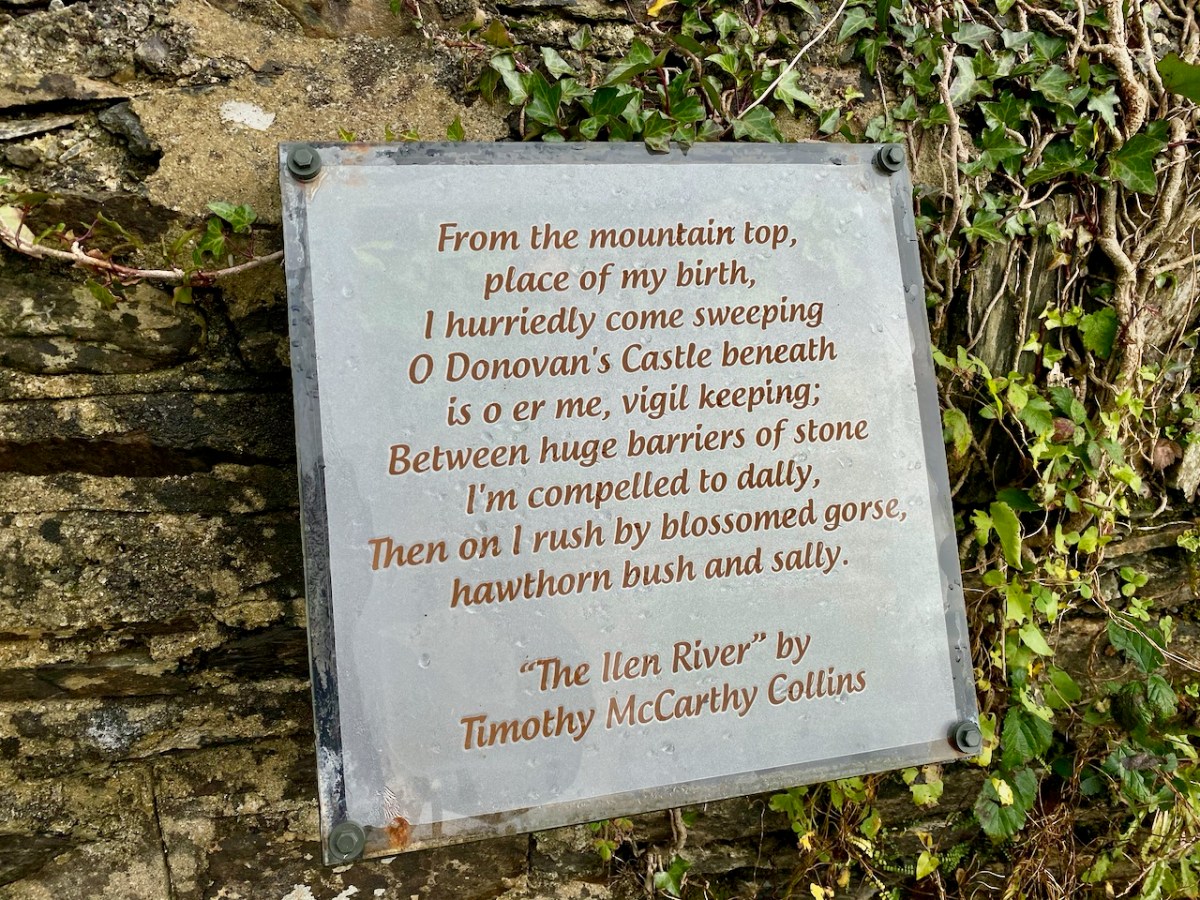
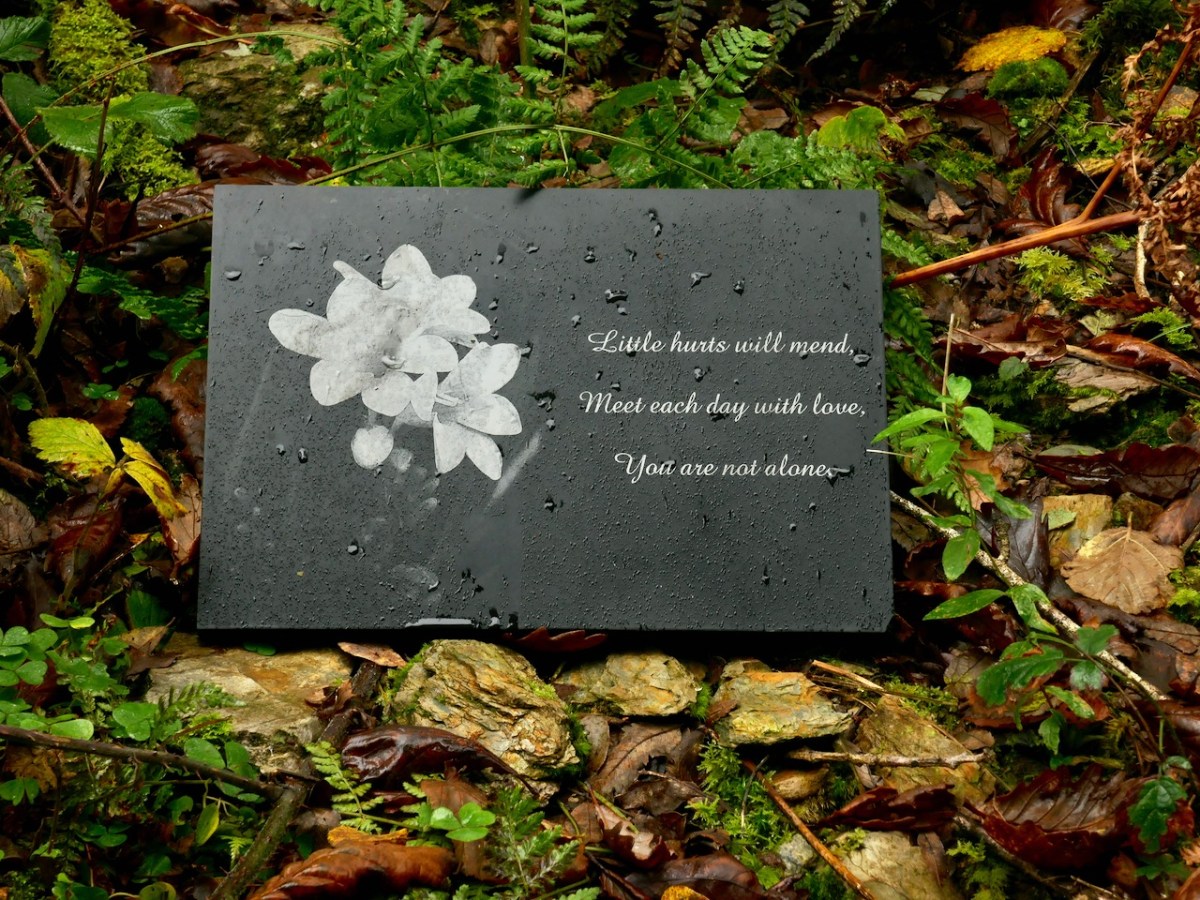
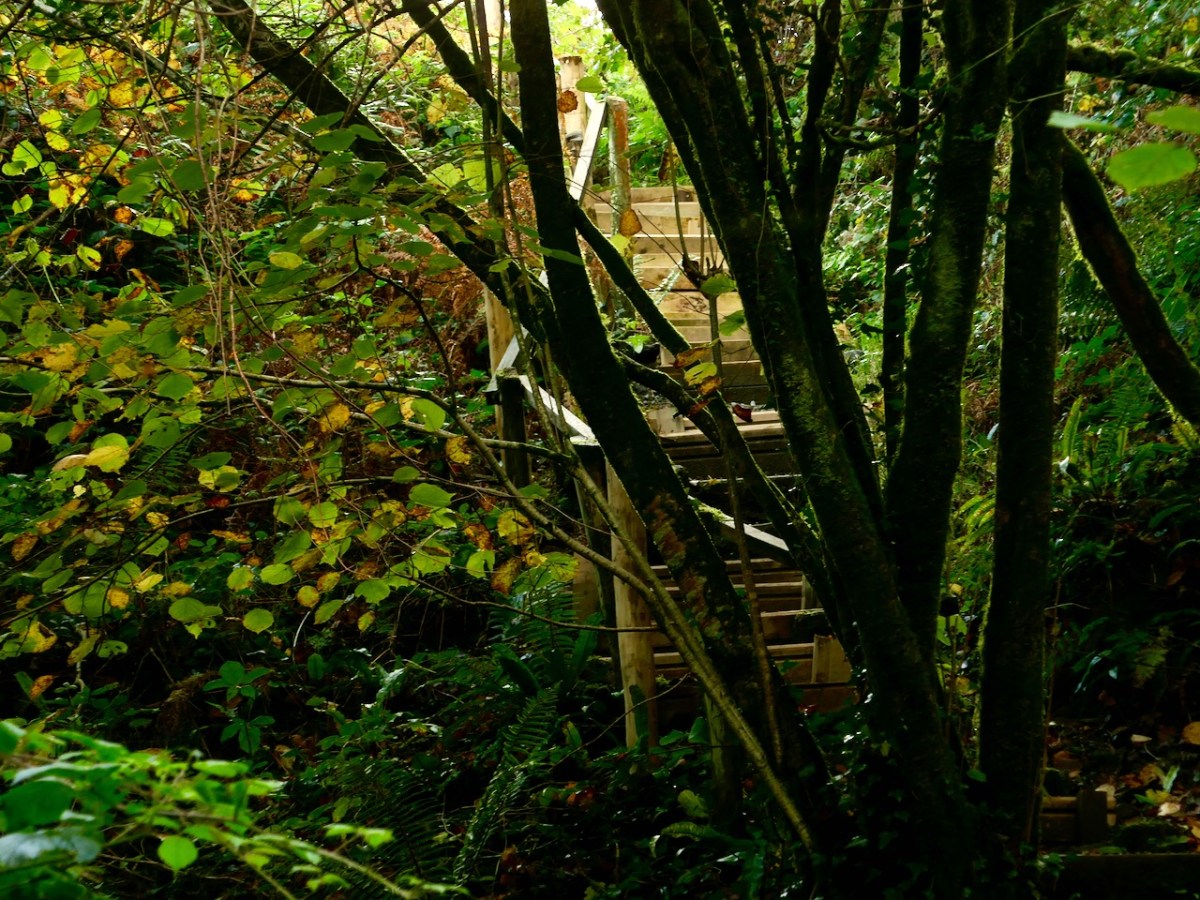
David and his team have worked hard to create and maintain these paths. They have also embellished them with discrete but apposite plaques which include local information and poetry. The work has also involved bridging the river in places to maintain a continuous footpath. We have to commend and appreciate the work they have done and the legacy they are leaving to future generations.
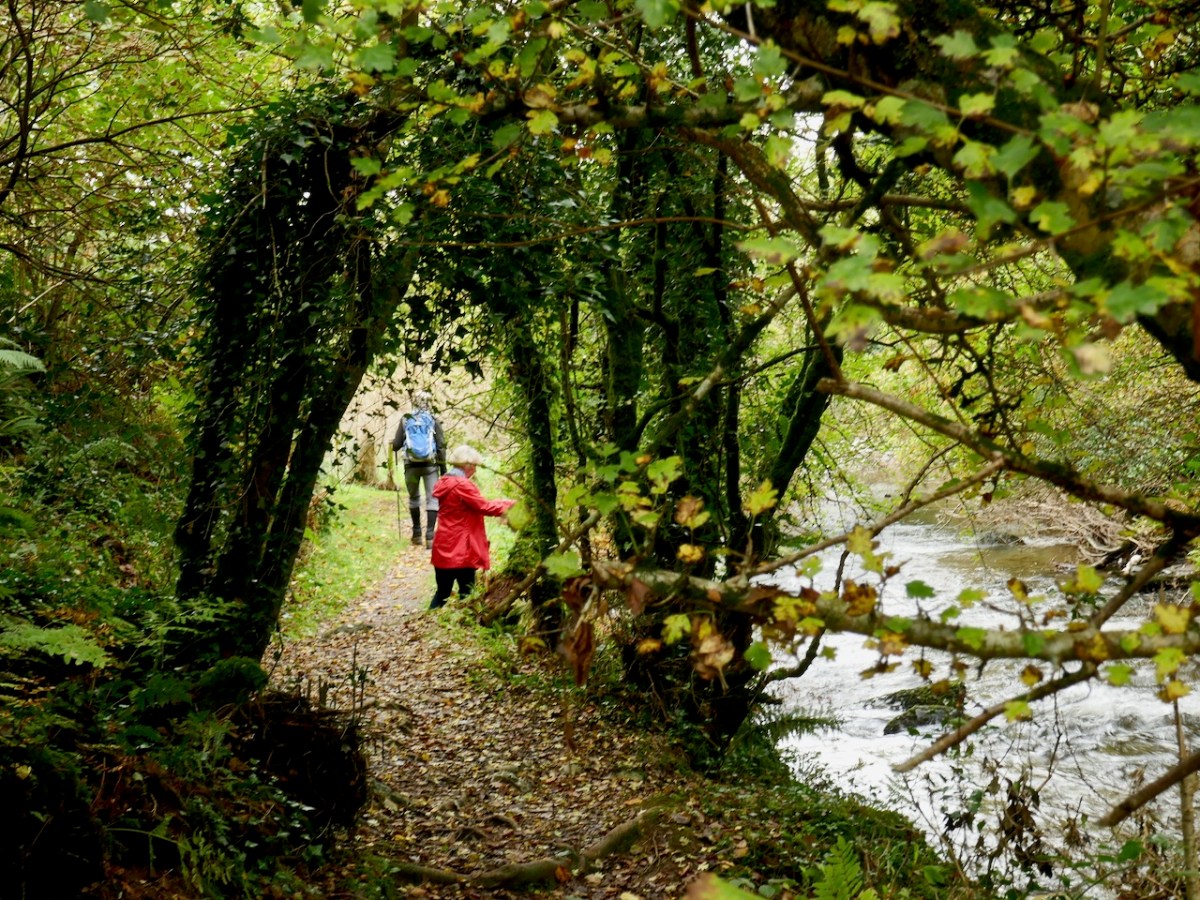
The river walk is truly beautiful, and the wooded valley is quite unusual terrain for West Cork, which is more often high, craggy and dramatic. Wildlife and wildflowers abound, in season. All too soon we came to the boreen which would take us back to our starting point. We are determined to return and follow the network of pathways further when our current restrictions are lifted. We promise we will report back!
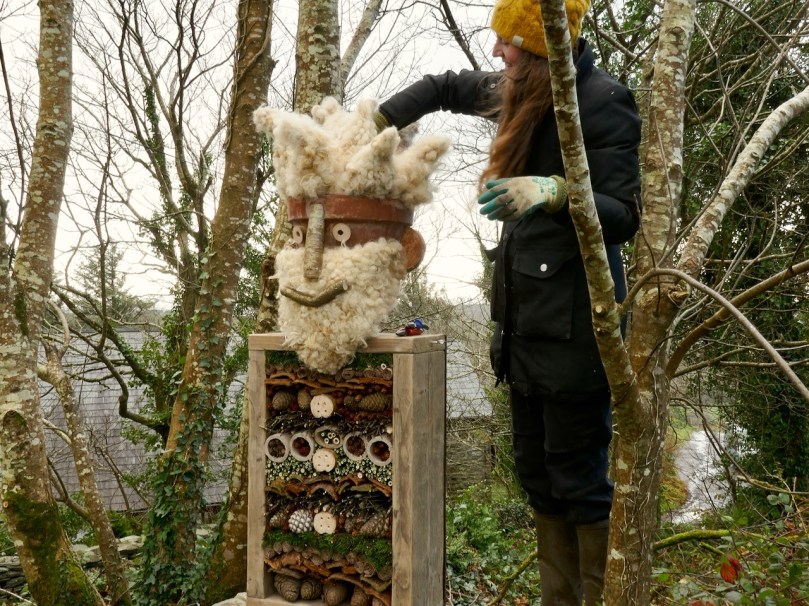
Will we need a reminder in years to come of the lockdown we are living through now? If so, he arrived this week – Finbarr, the Bug Hotel and Lockdown Mascot.
We wanted to call him Finbarr. Regular readers will know I have a soft spot for Finbarrs – see this post about Finbarr the Pheasant, and this one about St Finbarr and his serpent. He’s Cork’s Patron Saint, after all, and associated with so many Cork places and stories. The name Fionn Barr means fair head, so of course my request was for a figure with lots of blond hair.
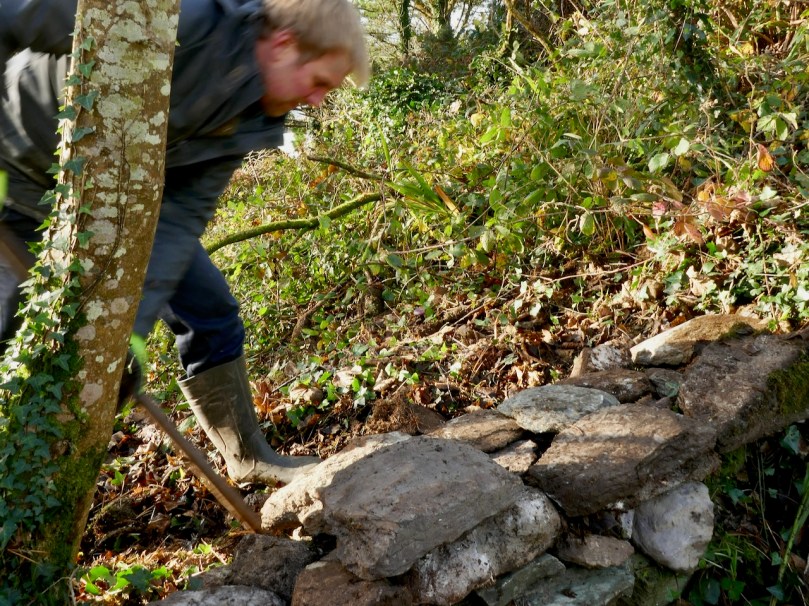
Kloë and Adam arrived this week to instal Finbarr. They are classed as essential workers and we were all mindful of socially distancing as I photographed the process. It was quite a job, involving digging a hole through unforgiving rocky ground for a large stake to secure him from the back, then building up the wall to support him from underneath.
Finbarr’s body is filled with insect-attracting spaces and materials, arranged to create a colourful centrepiece, with buttons down the front. Once his body was in place and secure, Kloë attached the arms and legs, which had been pre-organised as a series of rounds each drilled with various sizes of holes for different insect.
His hair is his crowning glory! It’s made of fleece (it took two and a half fleeces!) which birds will discover in time and use as nesting material. Kloë left us a repair kit of fleece to fill in the gaps as he becomes a little threadbare over time.
We chose a site right beside the road so everyone who passes can wave at Finbarr. We hope especially that kids will like him. It’s also one of the few relatively sheltered spots on our land, and that’s important when the winter storms hit.
So if you’re in the neighbourhood, swing by and say hello to Finbarr.
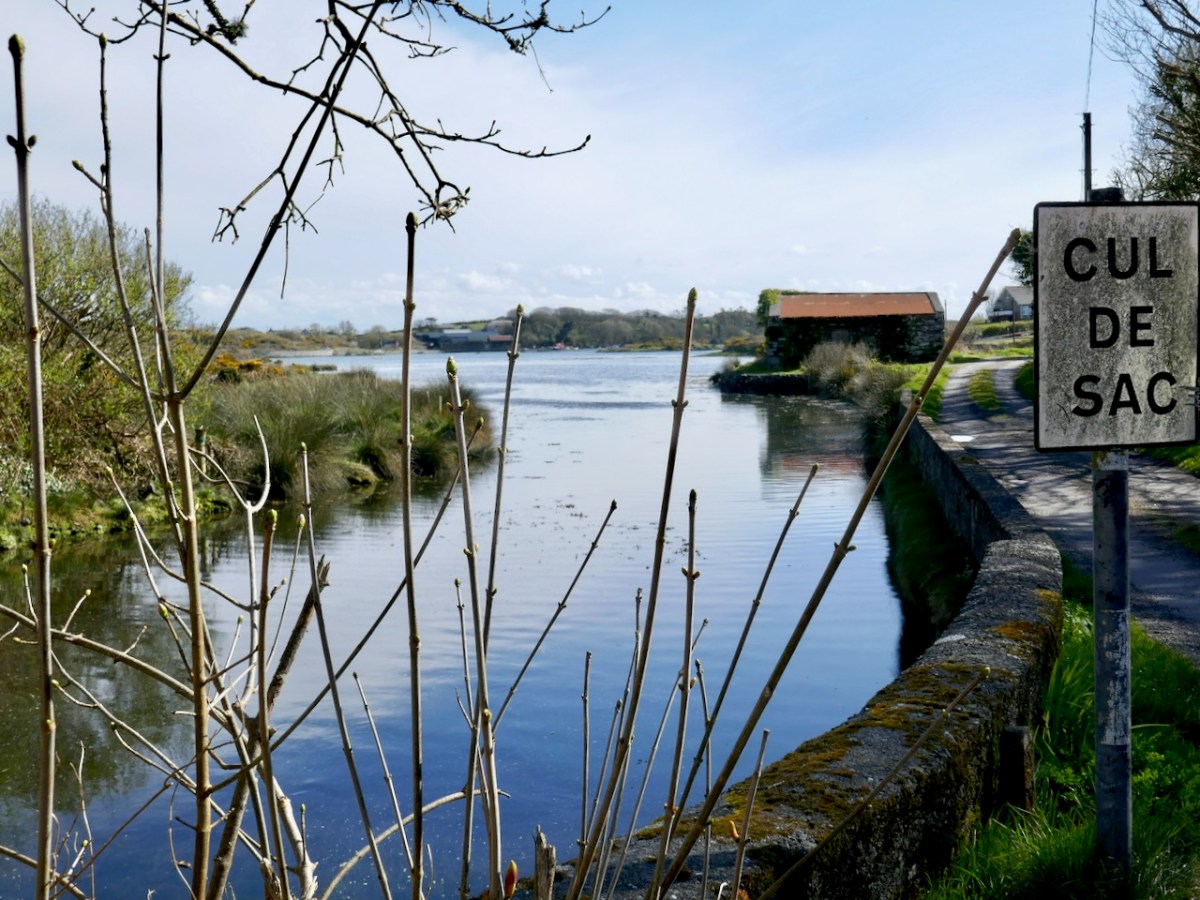
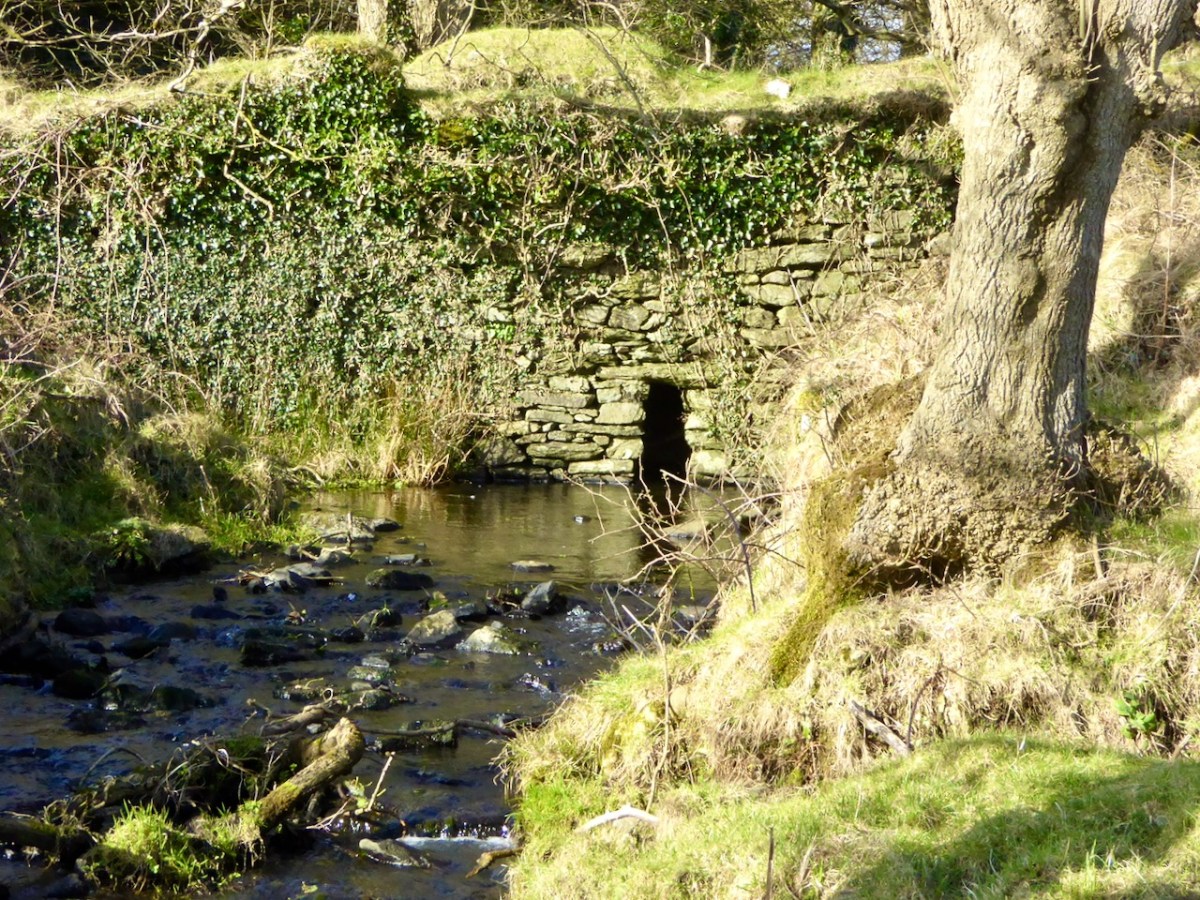
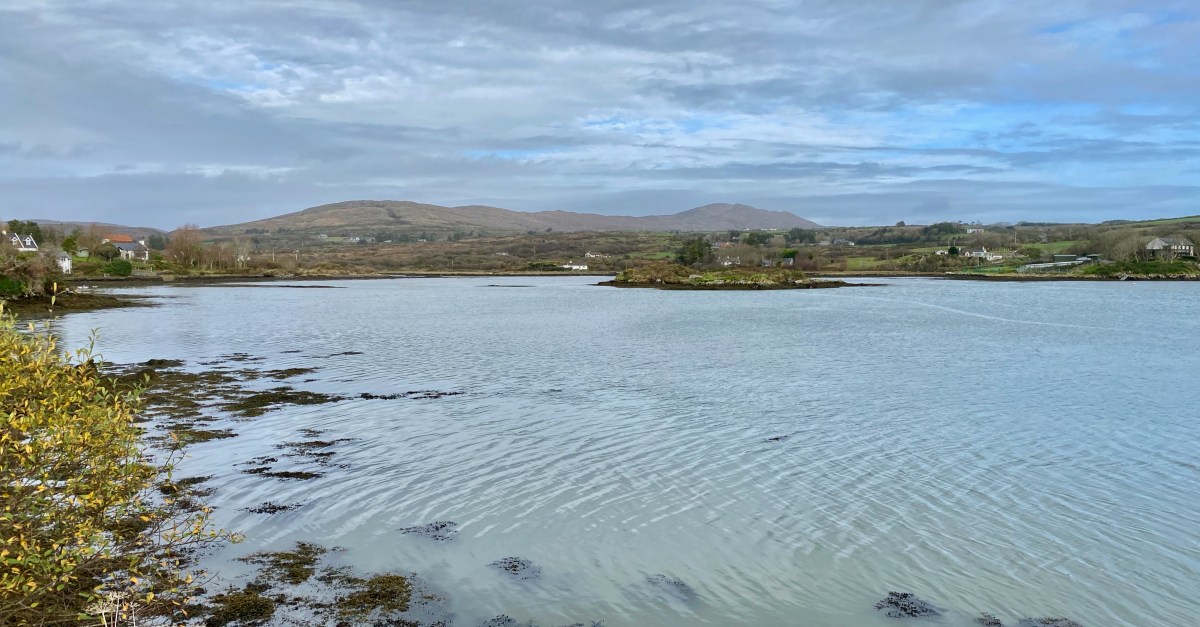
For our latest Mizen Magic post, we look in detail at an area we have skipped through previously: it deserves to be more thoroughly explored as it’s rich in history but is also, literally, a backwater which rests in a time-warp. Whenever we reconnoitre the shores of Croagh Bay, I’m always taken back to the sixteenth and seventeenth centuries and to the pirates, knights and Earls who made their own little empires in this now remote district. I should probably add that I can’t find an origin or meaning for the name Croagh. But I do know that it is pronounced locally as Crew. It’s even spelt Crewe on some maps (but – late edit – have a look at the enlightening comment by ‘Tash’ at the end of this post). The following image shows a clapper bridge – possibly quite ancient: a modern concrete parapet has been placed over the much earlier stonework:
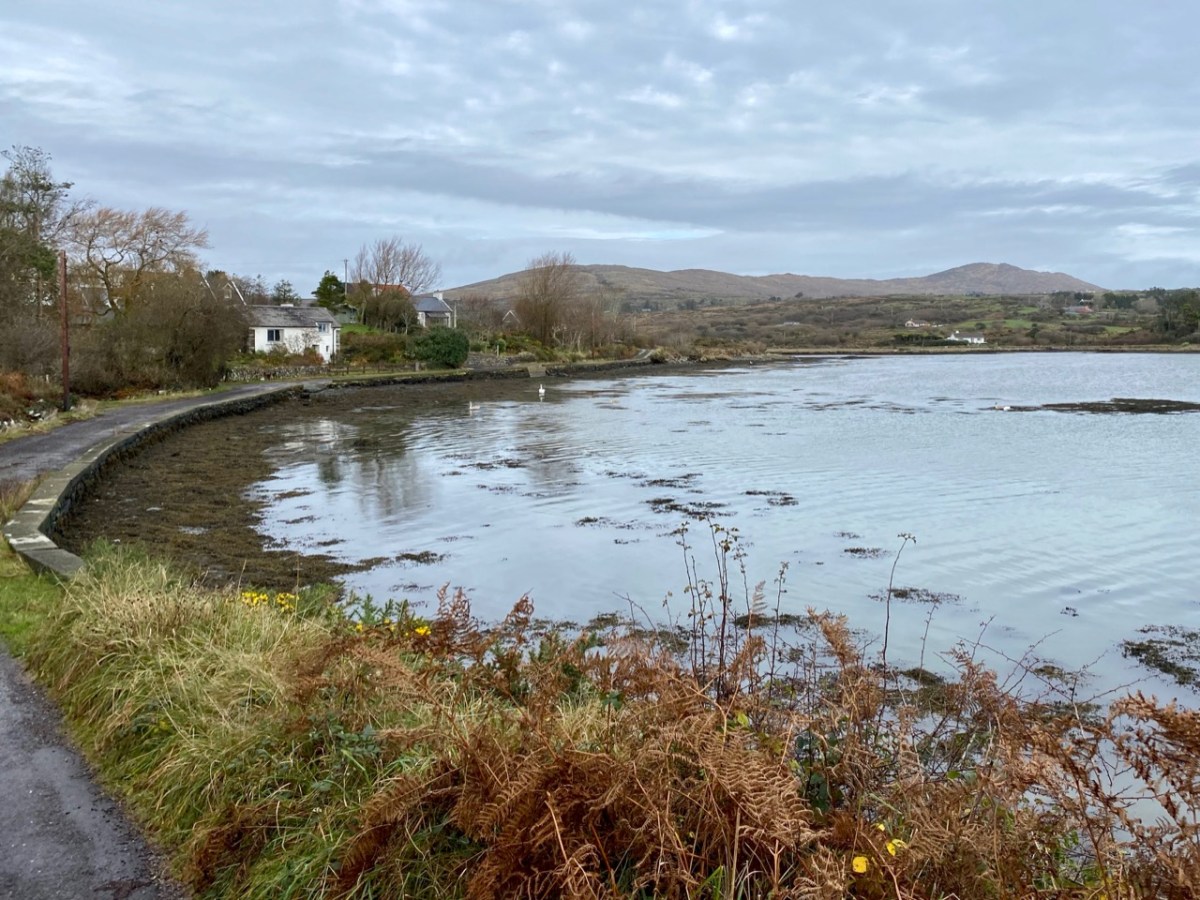
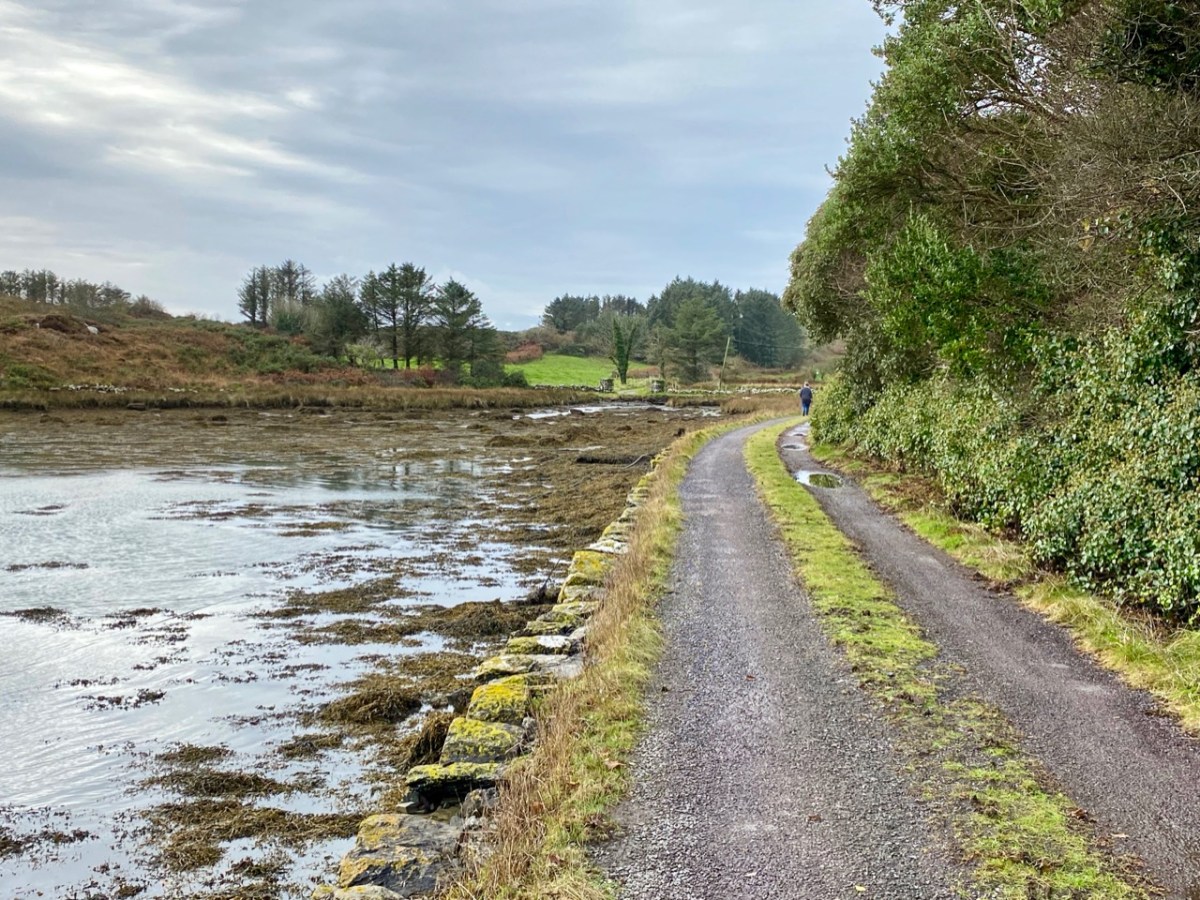
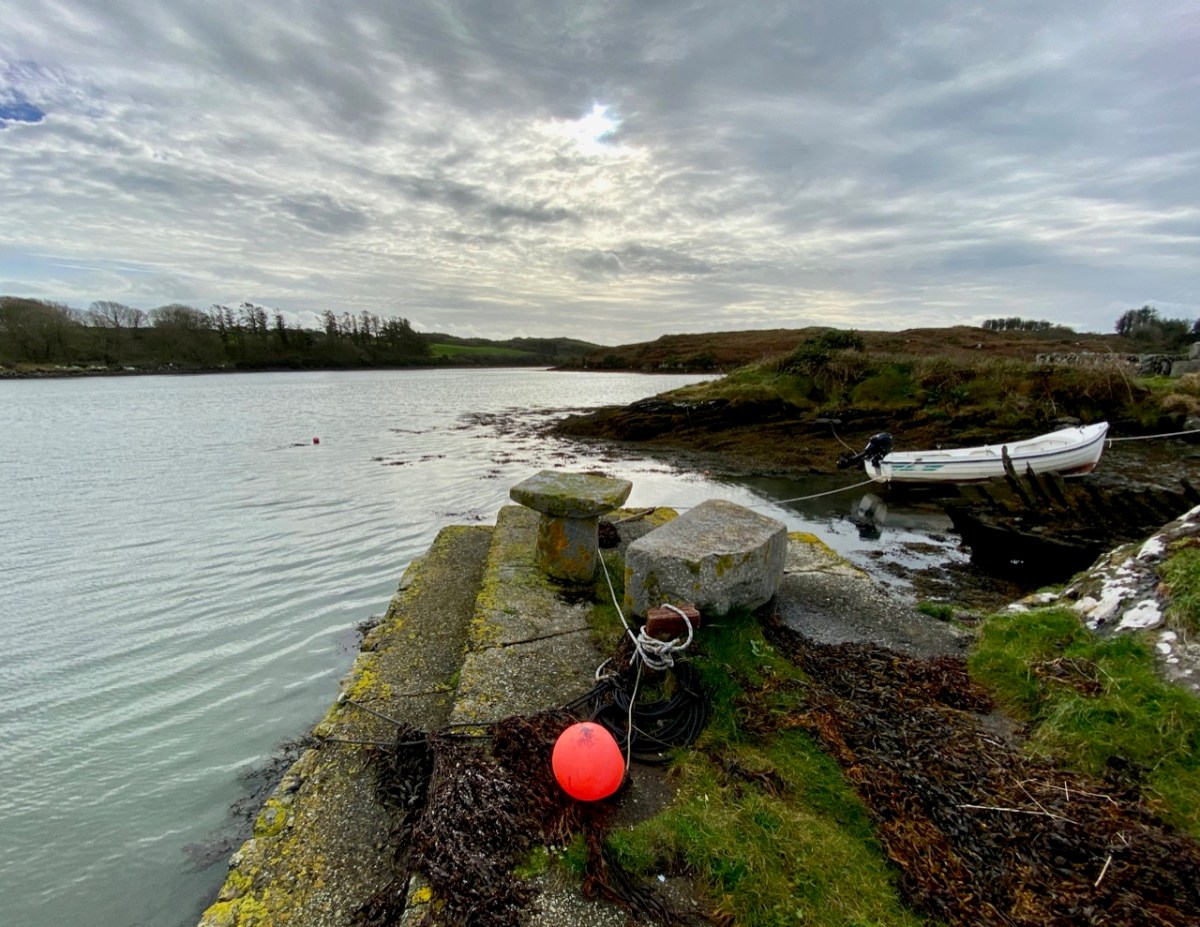
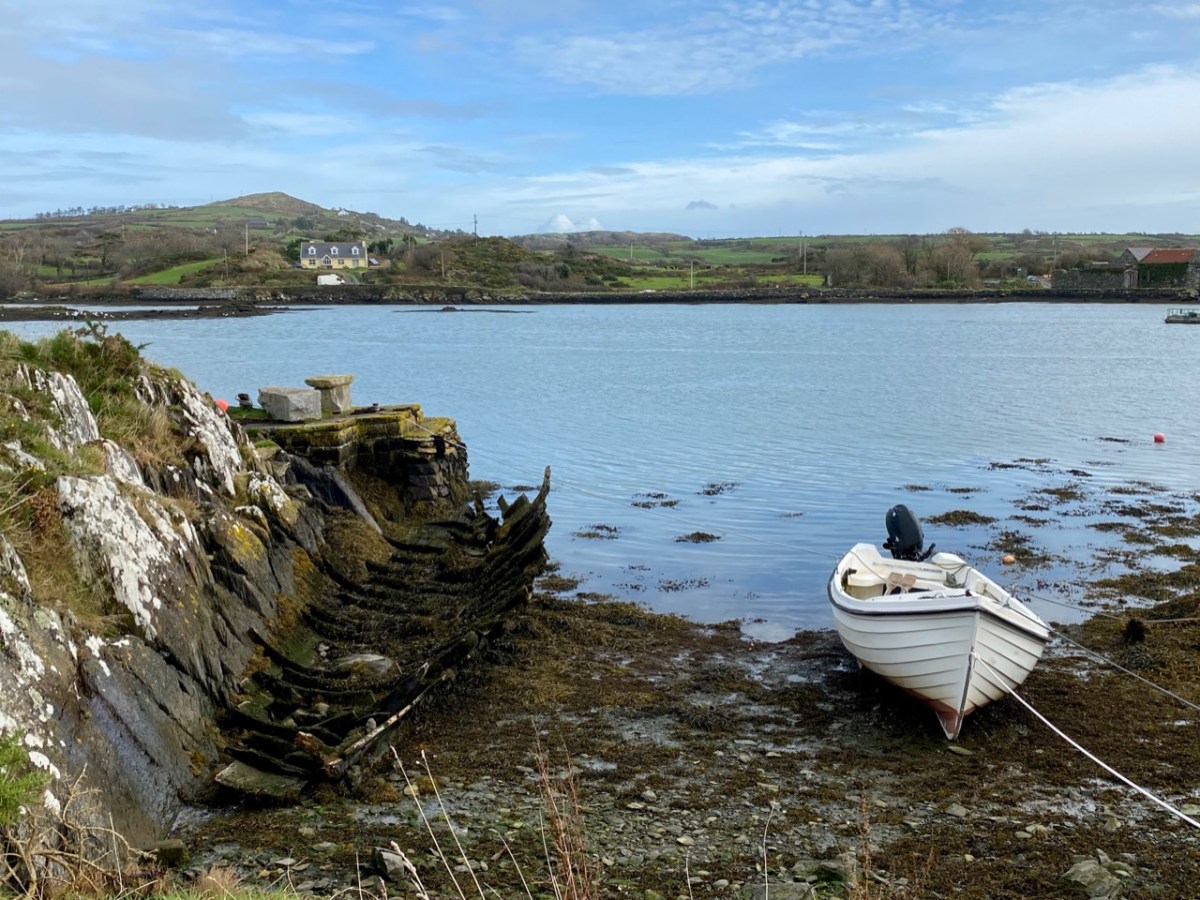
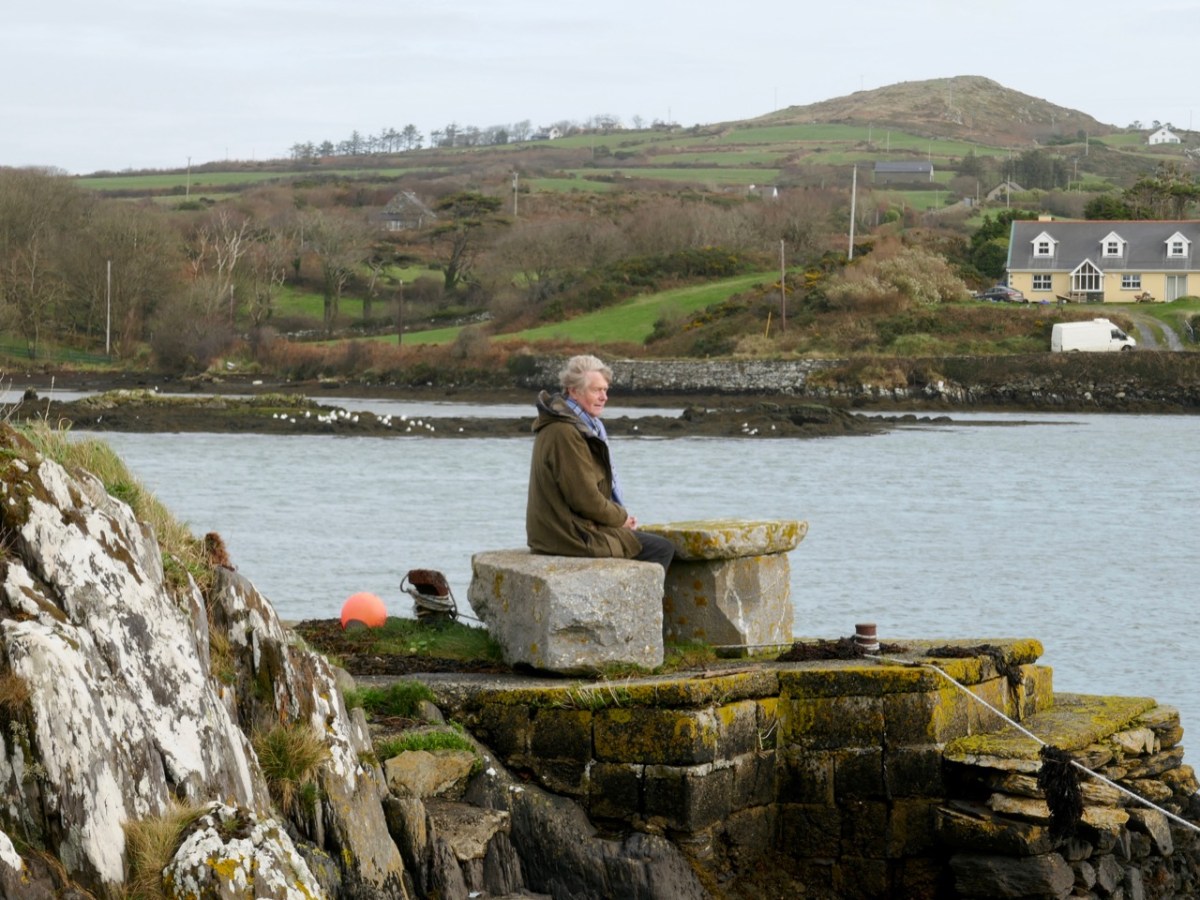
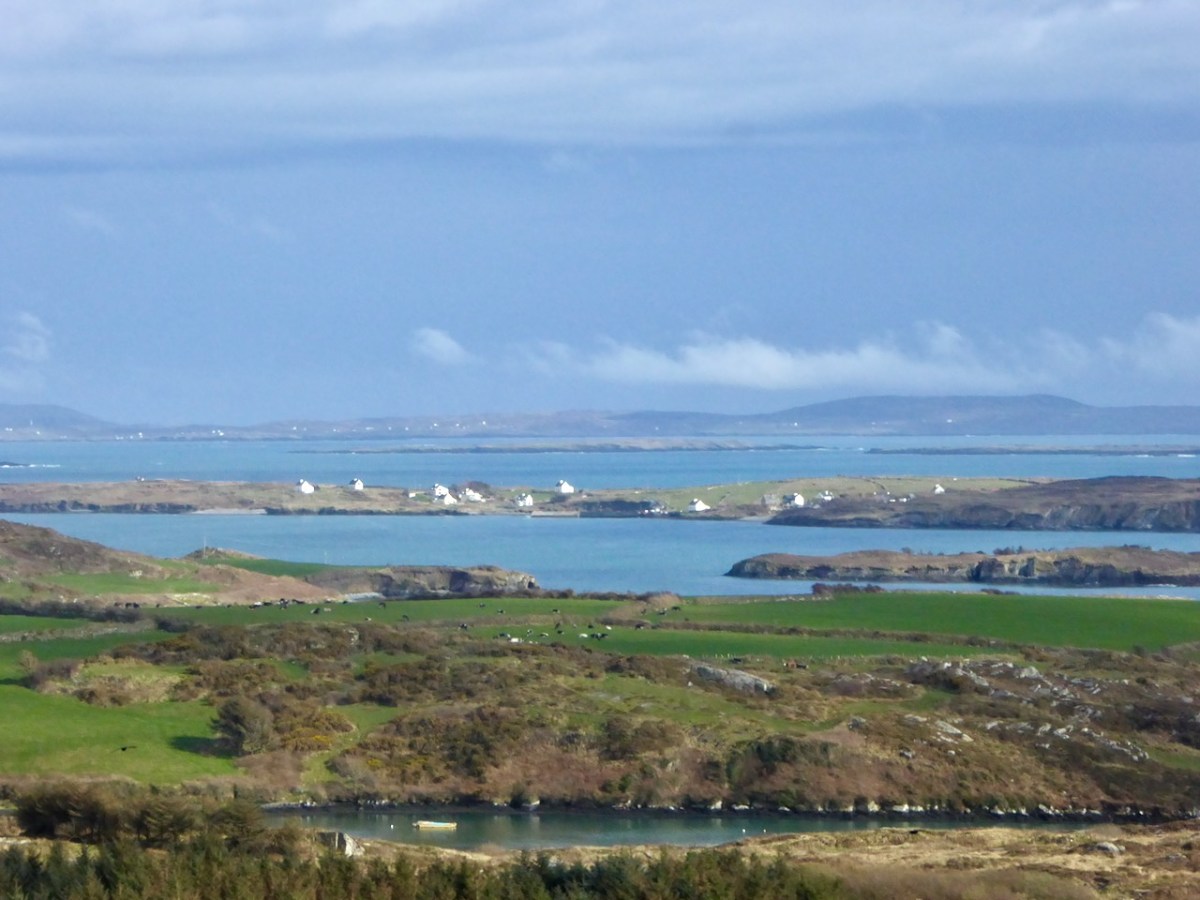
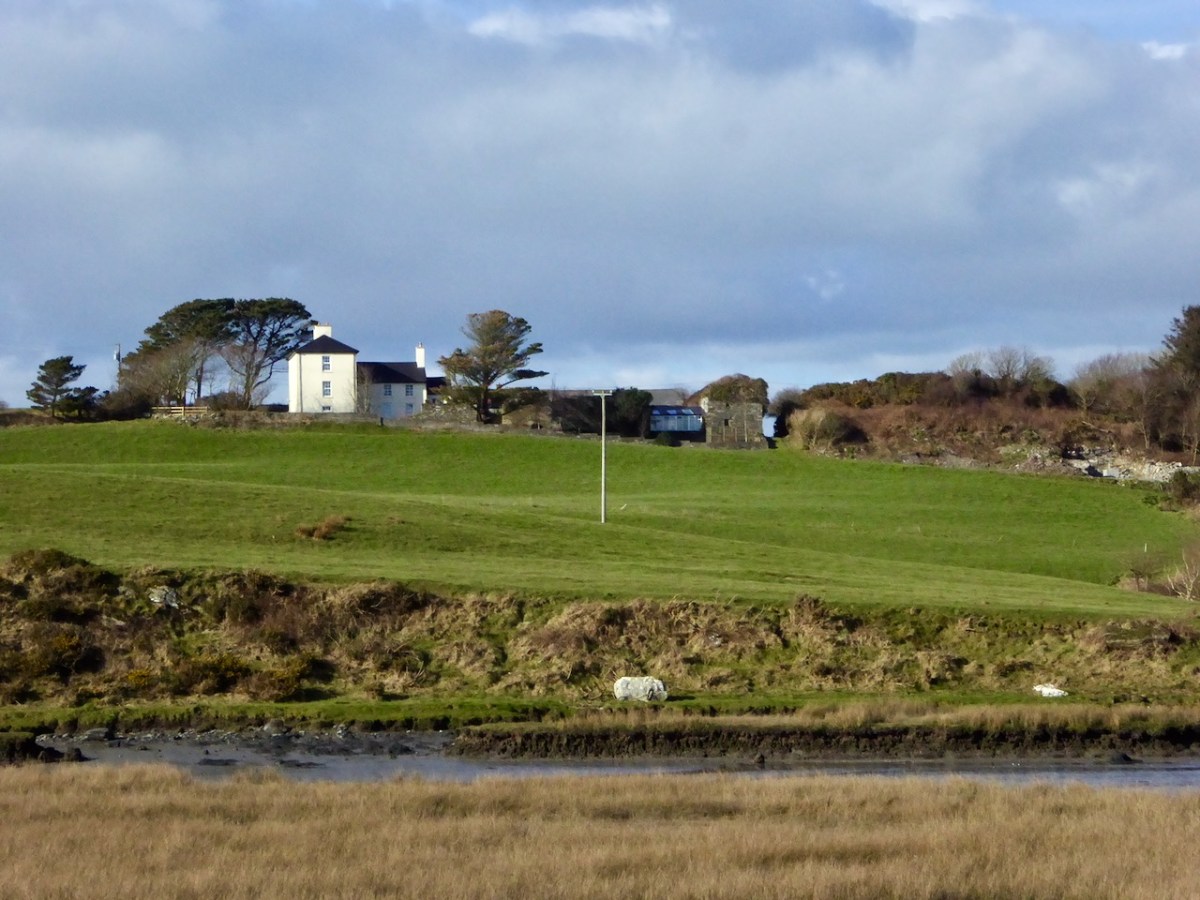
The header image and the one above are both taken at the same place – the head of the tidal section of the Croagh River, in the townland of Lowertown, not too far west of Schull. It’s rewarding to walk on the boreen that follows the north shore of the river. You will admire some very fine residences and come across tiny quays that have doubtless faithfully served many generations of West Cork families, and which are still in use. Behind you the rugged peak of Mount Gabriel will always be in sight – a familiar local landmark.
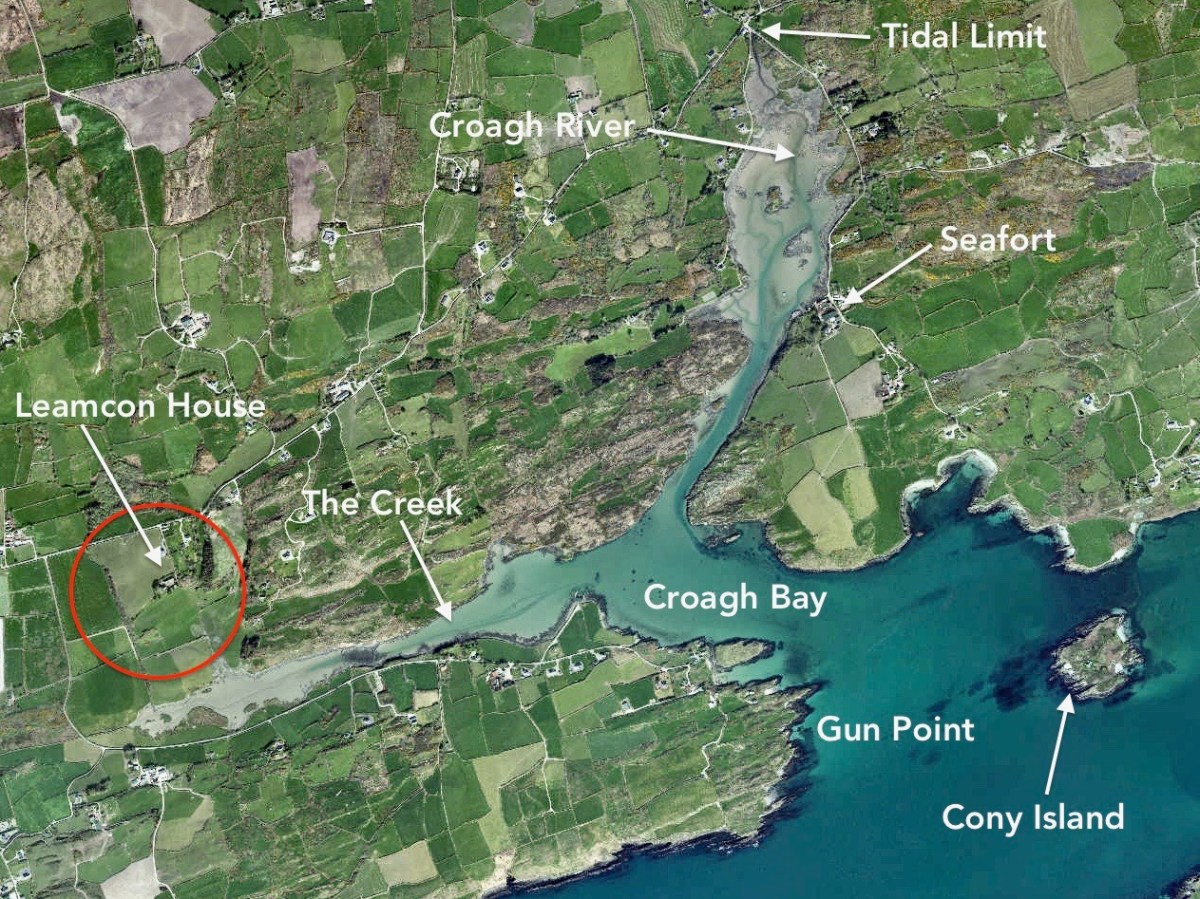
The Croagh River is only one of the waterways that you will explore today. The boreen comes to an end but the inlet itself continues out to Long Island Sound, Roaringwater Bay and the mighty Atlantic. Before that, however, there is another which demands attention: The Creek – which goes west towards the settlement of Leamcon.
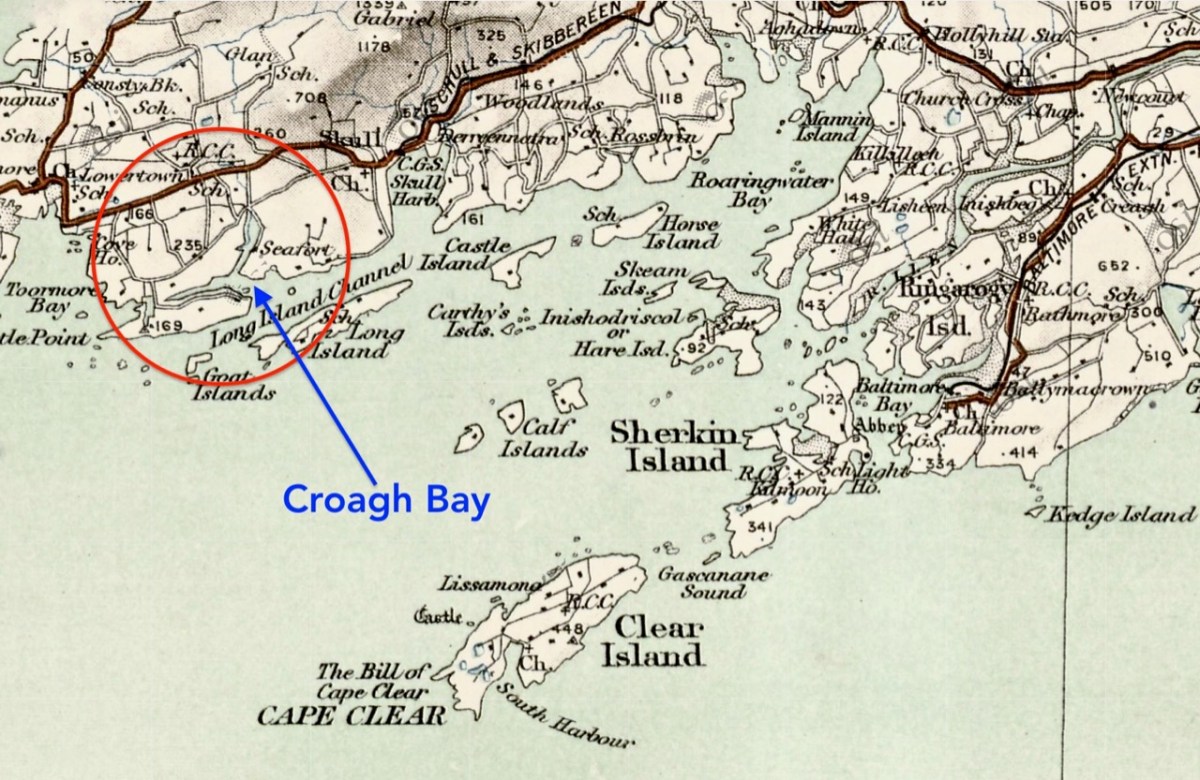
Upper – an overview of the area covered by this post; centre – looking out over the Croagh River towards Long Island with the high ground above Baltimore in the far distance; lower – Croagh Bay is in the centre with Long Island beyond and Cony Island to the left
The aerial view gives a very good idea of why this particular location was so strategically important: the river estuary and the creek are both hidden out of sight of the main seafaring routes of Long Island Sound and beyond. They are, therefore, perfect safe havens for pirates, smugglers, and those who want to profit from such activities. One well-known profiteer we have encountered before in this Journal is William Hull, described in the High Court of Admiralty papers as ‘a notorious harboro of pirates and receavor of theire goodes’ who nevertheless managed to retain an official post as Deputy Vice Admiral of Munster. In cahoots with Richard Boyle – First Earl of Cork – Hull developed links with privateers and pirates, and hosted a whole fleet of vessels within the hidden inlets of Croagh Bay and Leamcon: the shallow waters were ideal for careening vessels and Hull’s empire allegedly included victualling stations, fish palaces, ale houses and brothels. All this was focussed on the townland of Leamcon which Hull leased initially from the O’Mahony Gaelic overlords. Although Hull’s own castle is now long vanished, we can find traces of his endeavours marked on the early OS maps.
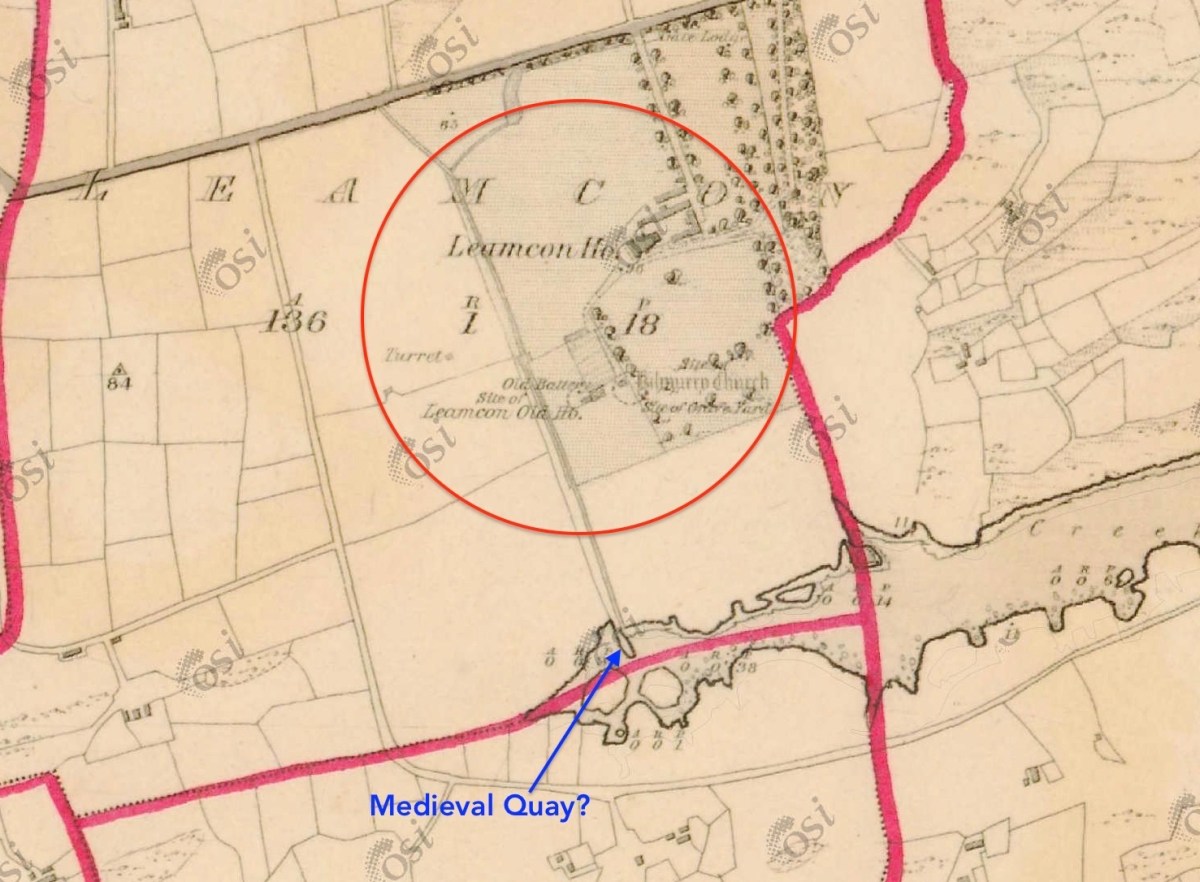
The early 6″ map locates ‘Turret’, ‘Old Battery’ and ‘Site of Leamcon Old House’ within the environs of the present Leamcon House, to the north of the furthest limit of The Creek. Interestingly, there is also what looks like a quay on the water directly below the estate: all these potential antiquities could reasonably date from Hull’s time.
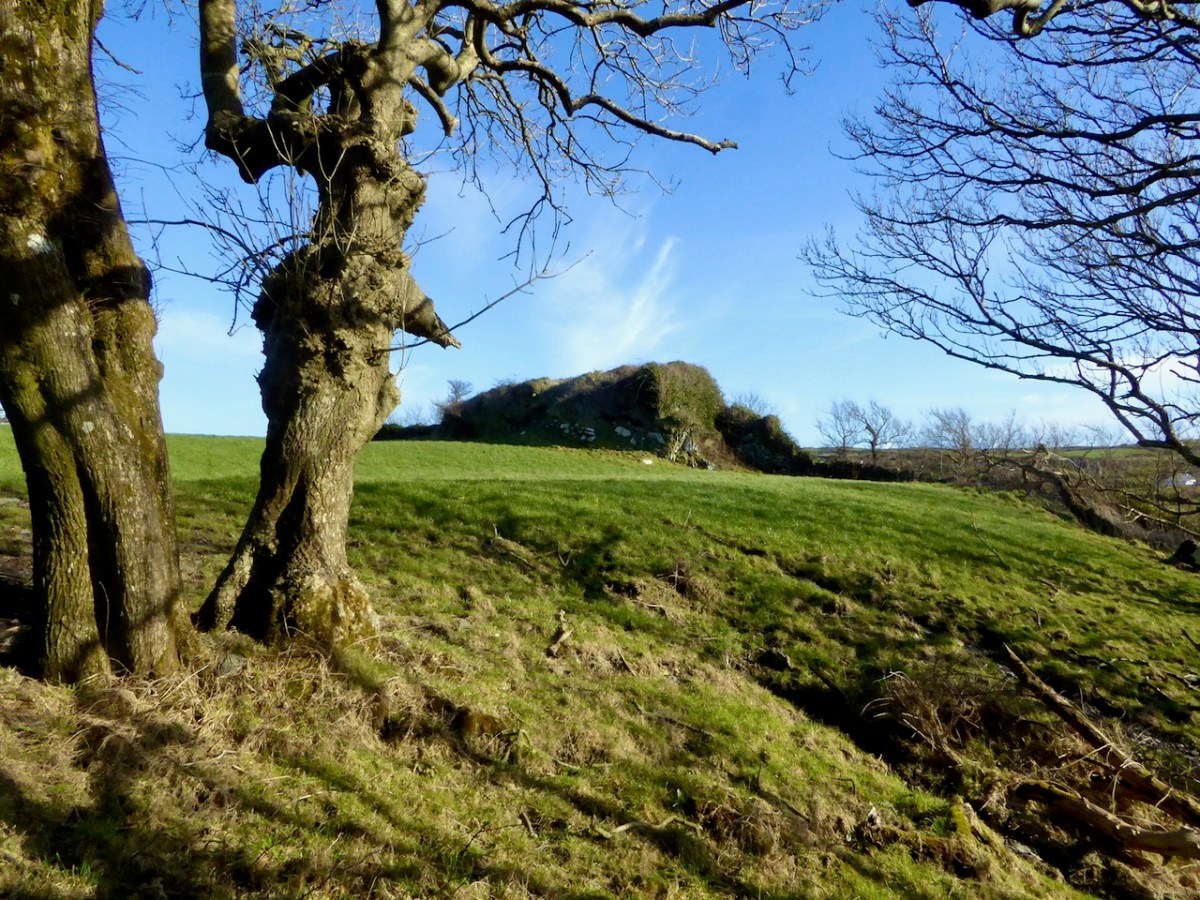
The ‘Battery’, the site of an old wharf and an ancient stone gulley may date from the time of William Hull’s occupation of the townland of Leamcon, which came to an end in 1641, when the O’Mahony’s moved to regain their former holdings. Below is Leamcon House today, looking down to the waters of The Creek. The extensive stone wall on the right hand side of the image is said to incorporate the remnants of a fish palace – another enterprise of William Hull and Richard Boyle:
Centre – extract from the 1612 map (see more on this here), showing Leamcon and Croagh Bay; lower – locating the Bay in relation to the islands of West Cork, from a later 6″ OS map
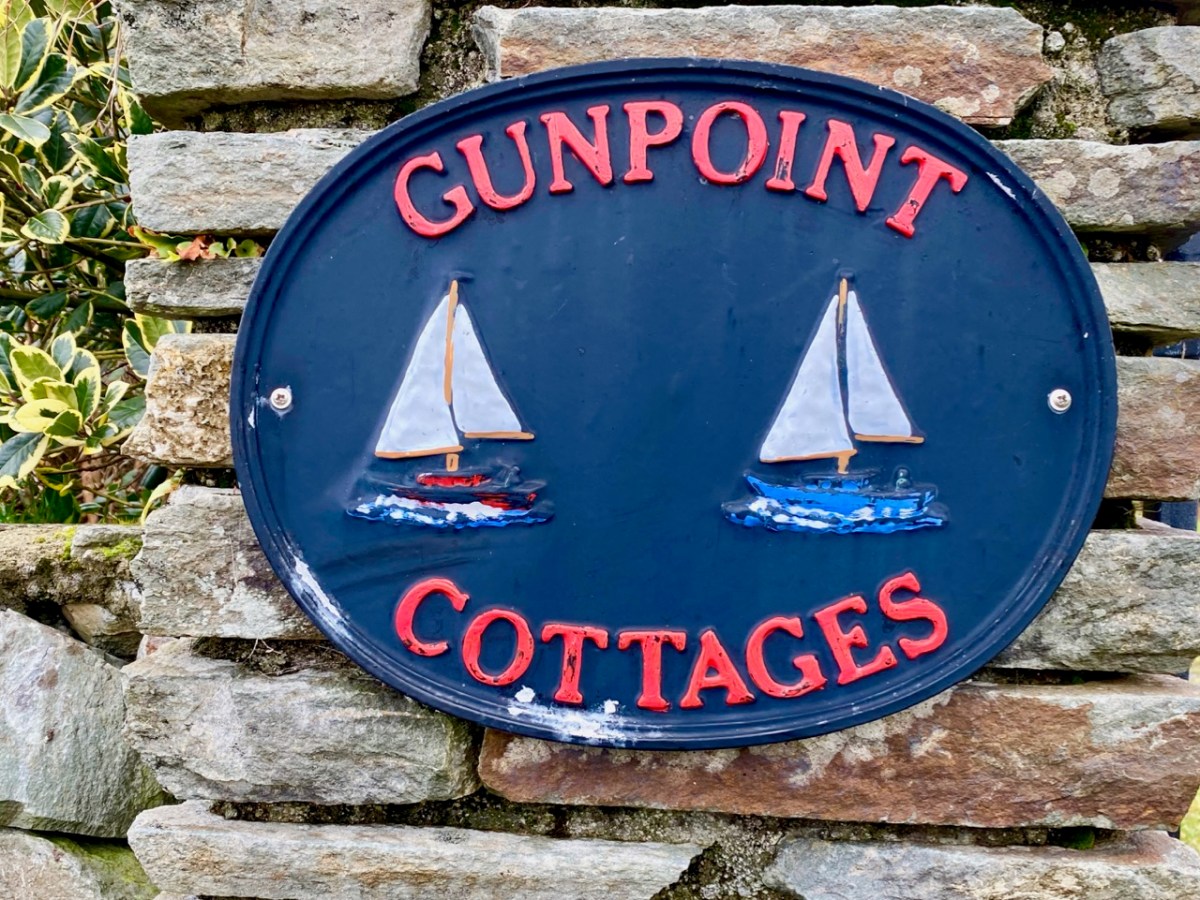
Before we complete our tour of Croagh Bay we have to travel east along the Croagh peninsula, where we find the intriguingly named Gun Point. There is no sign of a gun there today, nor any record of where the name might have originated. It could be, of course, that in Hull’s time the entrance to these important inlets was guarded.
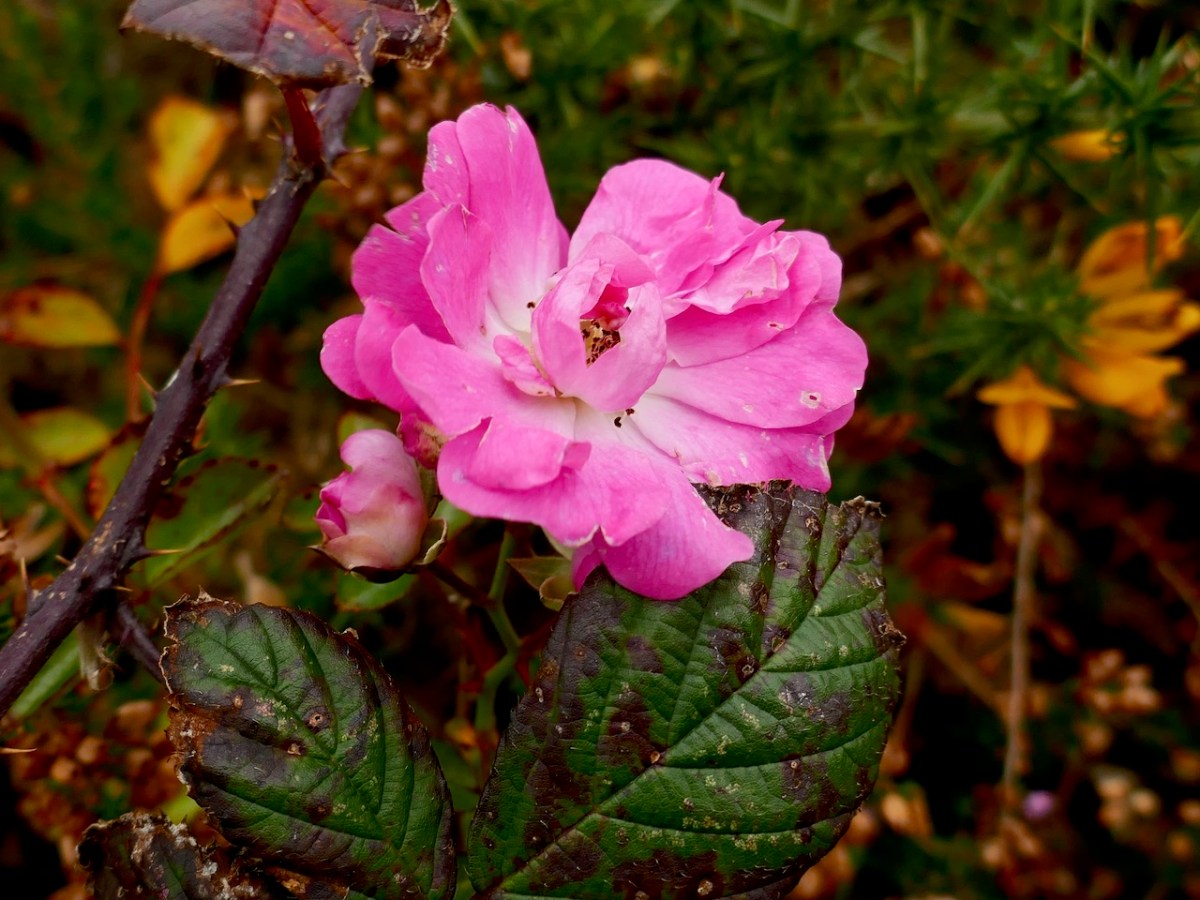
We were pleased to find a briar still in bloom, but were also intrigued by this gate, above, at the very tip of Gun Point. It was singing to us! The wind which, by late afternoon, had become a bit of a gale, was picked up by the hollow metal rails and created for us a Port na bPucai – ‘song of the spirits’. We recorded it as best we could and then handed it over to our musical friend Paul Hadland. He in turn passed it on to his brother Tony – an electronics wizard, who presented us with the following rendition of our Harmonic Gate. Many thanks, Hadlands!
For the technically minded amongst you, here is Tony’s account of how he processed our recording:
. . . I first of all manually edited out the worst of the very short but irritating wind noise elements. I then traced the frequency band where the music was and applied the Apple AU Bandpass filter, centred on 400 HZ. I trimmed off the ragged beginning, faded out the end, and normalised the volume to -10db. To get rid of more of the background noise I then applied the Acon DeNoise 2 adaptive filter, using its default broadband music setting. The result is the attached file Gate Harmonics . . .
Over the course of a marathon seven posts, I wrote about the Rev William Allen Fisher, revered by his kin and congregation as the energetic and saintly saviour of hundreds of famished souls during the Great Hunger, and reviled by his Catholic clerical counterparts as one of the worst examples of a Protestant Clergyman who bought conversions with food and employment. Balanced precariously on the fence of fairness, I concluded that he was both a Saint and a Souper, conflating, as he did, the imperative to feed the body with his mission to save souls.
Paul Farmiloe’s lovely sketch of Fisher’s church, Teampall na mBocht in Toormore
It is difficult to overstate, from this remove, how normal his kind of evangelical Protestantism was for the time in which he lived and worked. Ultimately, though, he was on the losing end of history. Not only did the Protestant Crusade, of which he was an enthusiastic proponent, fail to convert broad masses of ‘Papists’ but the burgeoning social and economic power of the Catholic Church ensured that those individuals who had converted to the Church of Ireland felt the full might of episcopal condemnation. Indeed, to be accused of being a Souper remains to this day one of the worst insults that can be said to an Irish person.
In this church-dominated narrative, which all of us were fed in school in the 50s and 60s (betraying my age there – and I am in that blurry photo above), there was no room for allowing that a conversion to the Church of Ireland could possibly be through genuine conviction or a change of heart. No, such conversions – or perversions as they were labelled at the time – came as a result of taking advantage of people driven mad with hunger. Knowing as we did that Catholicism was the one true faith, how could we accept that anyone in their right mind could abandon it? It’s always been interesting to me, by the way, that at the same time as we were taught to excoriate those who converted away from their own faith, we were happily offering up our pennies to fill the collection boxes that every school had for Ireland’s extensive Missions Programs, in which Irish priests and nuns (including members of my own family) spread out across the world with the intent of wresting souls away from other religions.
In the second half of the 1930s the Folklore Commission collected stories and local traditions from over 50,000 schoolchildren in Ireland (like the boys in the 1930s classroom above) – now all available online. I was curious whether stories of the Rev Fisher had persisted in local memory and I turned to this collection to look, specifically to the schools in the vicinity of Toormore. And yes – here it all was, occasionally in remarkable specificity, still very much alive ninety years after the events had taken place.
Mary O’Sullivan from Toormore National School contributed this detailed piece:
The only landlord that any of the old people around here heard tell of were Mr Baylie and Mr Fisher. Although a Protestant, he was a very good man, and all his tenants were catholics, in fact the Catholic curate of the parish was living in a cottage on his lands – where Mr Hogan now resides. All his tenants were living in peace and comfort until he was forced to sell all his property to the church body, one of whose agents was a minister named Mr Fisher.
The first act that he did was to issue notices that any catholic that did not pay the running half gale within a month would be evicted. All the catholics paid, and the next notice issued intimated that any catholic that did not go to church on the following Sunday would be evicted.
Some of the catholics remained steadfast, but as Fisher had the law in his own hands he had no trouble in evicting all those who he knew had the best of the lands. Those farms he divided into smaller lots, and gave to those whom he got to go to church.
There were two catholic schools in Toormore at that time, one for boys and the other for girls. These were closed so that the children should go to the Altar Protestant school. As the time went on the people got poorer as a result of evictions, and Mr Fisher keeping constantly going amongst the poor people with his charity and prayers he got some of them to go to church to save themselves from starvation. But others endured the greatest privation and kept the faith. Some of these that were evicted were given houses by their old landlord Mr Baylie.
Mr Fisher was supposed to have contracted what was called a slow fever, he was taken from the Altar to Dublin where he died.
I found that last paragraph interesting as I know that Fisher is on the same headstone (below) as his brother in Mount Jerome Cemetery in Dublin but had been unable to find any account until now as to why he would not have been buried in his own churchyard in Goleen. I also need to point out that there is no evidence, or accusations in contemporary accounts, that Fisher evicted tenants or used eviction or a threat of eviction to force conversions. Finally, if anyone knows what a ‘running half gale’ refers to, do let us know as I have been unable to track down the term.
Eileen O’Driscoll, also of Toormore, had this version
The famine years lasted from 1845 to 1847. In this district the people had plenty of corn but they had to export it to England to pay the rent and the potato crop failed. The potato was their principal food for breakfast dinner and supper. Lots of them died of hunger and the fever came all over the county and swept them in hundreds. There were men hired for carrying them to the nearest burial ground which was Kilhangil. They had a special car for that purpose. They called it a bogey car. This man carried nine or ten at the time and dug a big hole and covered them over without any coffin. There was then a relief sent from England to all Parish priests and ministers. In this parish the the minister took hold of the clothes that were sent and some of the poor Catholics died of hunger before they would take anything from the Protestants and others took the clothes and turned Protestant. Mr Fisher was the minister of this parish and also the landlord of Toormore and Gorttyowen. He got the clothes and distributed them to anyone that went to the Protestant church on Sunday. Many Catholics availed of this offer and they were called “soupers or turncoats” The Bishop became angry and he sent a very strict priest to the parish. His name was Fr. Holland. He gave very harsh sermons to the people and we are told that when Mr Fisher got up on Monday mornings he found lots of clothes outside his door. A lot of the people still kept on getting the clothes. Fr. Holland said that he would curse the people that went to the protestant church. He got permission from the bishop to do so. One Sunday as he was speaking in Ballinaskeagh Church a man stood up and said he would go in spite of any Bishop to what churches he like himself. The man died before the end of that day, and his son was killed by his own horse within a week. This frightened the people and it forbade a great number from attending the Protestant Church any more There was one man in Toormore that went to the Protestant Church but he also went to Mass before going there. Mr. Fisher found this out. He met him one day and asked him why he was going to Mass and also going to Church He said he was going to Mass to save his soul and that he was going the Church for to save his body Mr. Fisher bought Mr. Bailey’s property which was Toormore, Gorttyowen, and the Altar. He evicted all the Catholic out of Gorttyowen Toormore but left those that remained souper in their holdings and they are known as Toormore soupers.
There is so much to unpack here. In this version of the story the main inducement to convert is the provision of clothing, rather than food. In Saints and Soupers Part 6 I related that Bishop Delany of Cork had sent the firebrand Fr John James Murphy (AKA The Black Eagle of the North) to sort out the situation and he had succeeded in winning back (or browbeating) many of the converts. There was indeed a Father Timothy Holland in Goleen, but it was several years after the Famine, from 1863 to 1867, and his fierceness and effectiveness has obviously lived on in folk memory and become intertwined with that of Fr Murphy. (Perhaps it was Fr Holland who lined up all the newly married parishioners and married them again in case they hadn’t been ‘properly’ married the first time – see the comments at the end of Part 7.)
The story of the man who asserted his independence of choice only to be struck down, along with his son, is a trope of many Irish stories, often revolving around the wilful destruction of a fairy fort or a holy well. Finally, Kilhangil, nowadays a particularly beautiful and peaceful spot (below), may be familiar to you from the post Mizen Magic 19: Church of the Angels
A pithy entry from Mary Lucey of Ballyrizard relates information from her father, Tim.
Mr Fisher was landlord of Toormore. He was a very bad man and he hated the Catholic Religion. All Catholics who would not become Protestants were evicted. Most of them kept the faith but some turned Protestants for the sake of keeping their land.
Once again, eviction takes centre stage, this time as the outcome of refusing to turn Protestant. Hating the Catholic Religion is equated with being a very bad man.
Kathleen McCarthy from Lowertown School (that’s Lowertown townland, above) wrote about many aspects of the Famine, including this section on Fisher.
The famine times were from the beginning of eighteen forty seven to the end of eighteen forty eight. The conditions of the Catholics was terrible at that time. Their potatoes were destroyed with the blight, and they had to sell their wheat to pay the rent. In this district three quarters of the people died with hunger.
The English sent yellow meal to the Protestant minister in Toormore to distribute among the people but it was the Protestants who got the most of it. Any Catholic who would turn a Protestant would go to the minister’s house every day and they would get a bowl of soup to drink and meal to take home. Nearly every Catholic in Toormore turned Protestant in that time and their descendants are there today, Protestants and bearing Catholic names. Toormore is known as “the land of soupers” on account of the number of people that turned Protestant for a bowl of soup. There lived one man in Toormore called John Barry and he had seven children. Six of the children died with starvation and he would not go to Fisher for anything for them.
This is the first account we have of Taking the Soup, and the labelling of Toormore as ‘the Land of the Soupers’. The story of the man who would rather let his children starve to death than take the soup is a familiar one. While these John Barrys were held up, in our history lessons, as a model of steadfastness and an exemplar of Catholicism, I remember being horrified that any father would act in this way. Perhaps it’s one of the thousand little cuts that eventually ushered me out of the church.
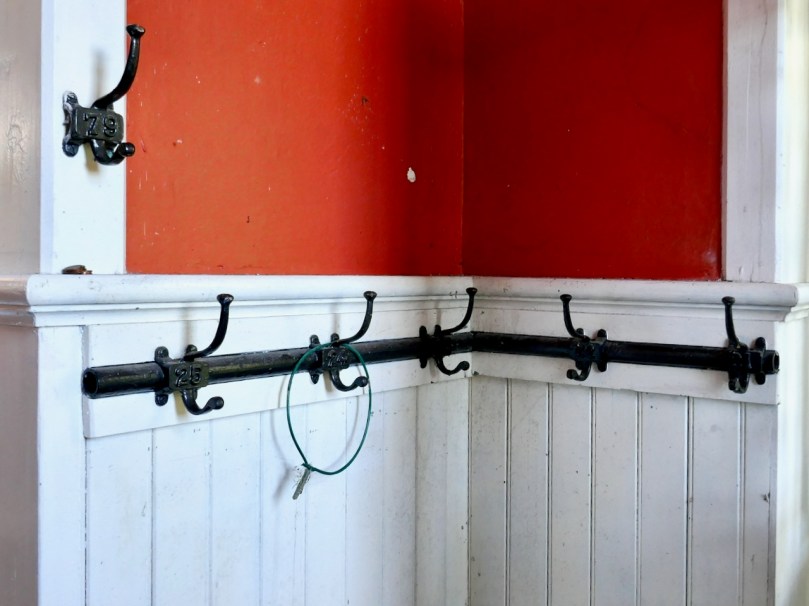
A cloakroom in a traditional schoolhouse
Annie Donovan collected information from Jeremiah Donovan of Gunpoint who was 97 when he was interviewed. There is a long and detailed description of the conditions and burial practices during the Famine, and it includes this short piece:
The Catholics were starving with the hunger and Fisher who lived in Toormore at that time gave meal and soup to any Catholics that would go to him. Nearly every person in Toormore went to him for the soup and yellow meal, and they turned Protestants also. They were called “Soupers” and the village of Toormore was called “The village of the Soupers” since and their descendants are still living in Toormoor with Catholic names.
This is a particularly interesting account, since Jeremiah would have lived through some of the events he relates, as a young boy. There is also the same reference as in Kathleen McCarthy’s essay to ‘Protestants with Catholic names’ – a poignant reminder that in Ireland one’s last name is often a pointer to one’s religious affiliation.
Peter Clarke’s beautiful sketch of the church that Fisher built at Toormore, also called the Altar Church and Teampall na mBocht (Church of the Poor)
A long but anonymous entry from Gloun School (on the slopes of Mount Gabriel – the old school house at the end of this post is associated) goes into great detail about various aspects of the Famine, mainly centring on evil landlords, and contains this:
At the time of the famine, some Catholics turned Protestants. They became perverts to get soup which the Protestants minister gave out. The name of the minister of Toormore was Mr. Fisher.
Some of the “soupers” were William O Donovan and John O Donovan both natives of Toormore. William O Donovan’s daughter, Mrs Coughlan, still lives in Corthna. John Donovan’s grandson is a shop-keeper in Schull, whose name is Joseph Woods. Another man who was a “souper” was Joseph Daly, a native of Toormore. He afterwards became a minister. Before he became a “souper” he was so holy it was said that he could walk upon the waters. He tried to do it once, before a crowd but he sank. He also answered Mass in Ballinashker Chapel barefoot once. His son lives in Schull. Ever since Toormore is sometimes called “the land of the soupers” and the Protestant Church is called ” Teampall na mboct” which means”the Church of the poor”.
I think this piece, more than any other, is illustrative both of the long memory of these events and of the classroom ethos of devout Catholicism in which this child writes – an atmosphere in which it has been normalised to name and shame the ‘Soupers’ and their descendants several generations on. This is divisive sectarianism at its most abhorrent, and it’s just as important to understand this, as it is to chuckle at the funny verses and old folktales that the children also write about.
The old school house at Lissacaha near Gloun
There’s more, but I think this gives you a flavour. Rev William Fisher has left a complex legacy. Some of it springs from his own actions – we haven’t exonerated him from bigotry and over-enthusiastic proselytising (another possible future post, in the light of new information). But it’s also based in the narrow, blinkered, self-righteous Catholicism that encouraged the condemnation of neighbour by neighbour, in the name of religion. It would be good to think we’ve moved beyond that now, in Ireland.
Missing West Cork? Live here and love it? Always wanted to visit? Colum Cronin sent us this charming song some time ago and this is the perfect time to enjoy his wonderful voice with the images his song evokes. Wherever you are, stay safe and well, and sit back and enjoy.
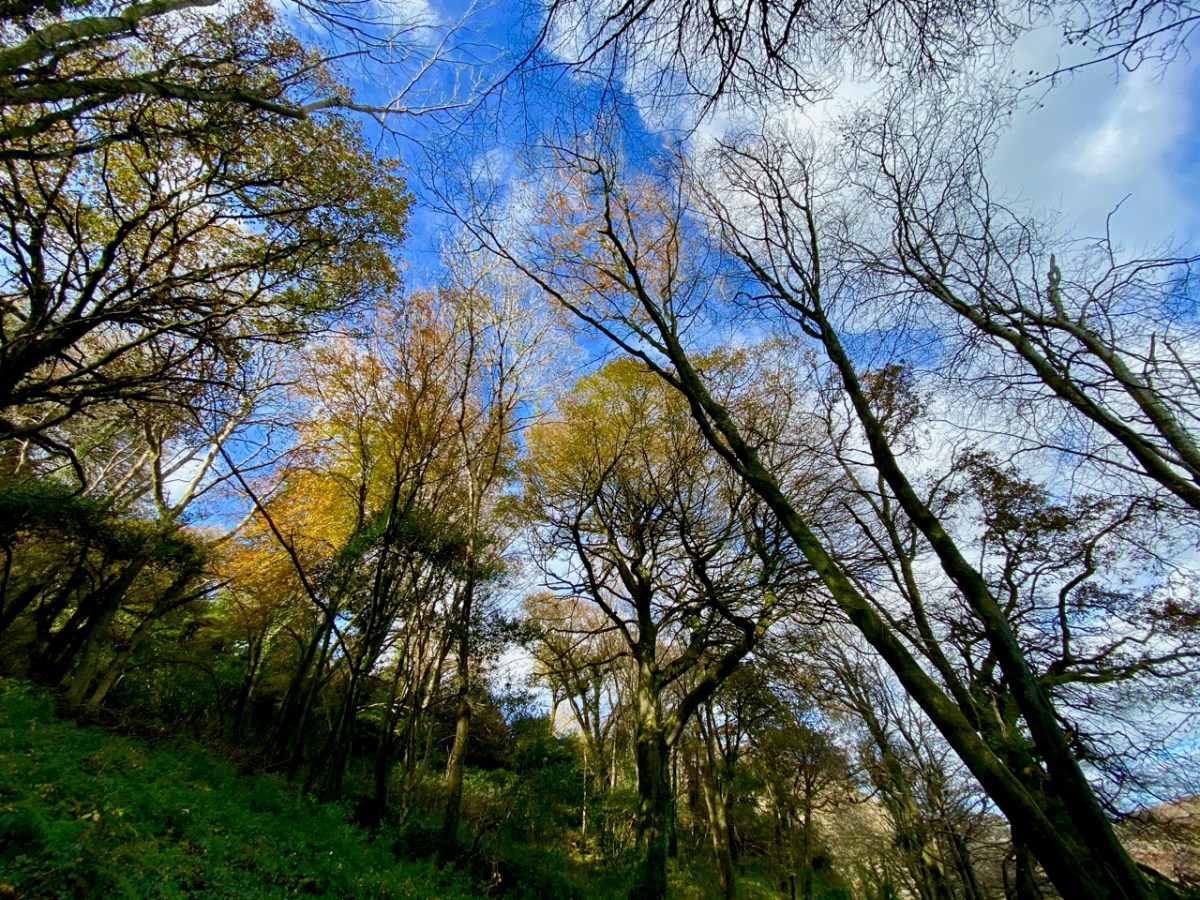
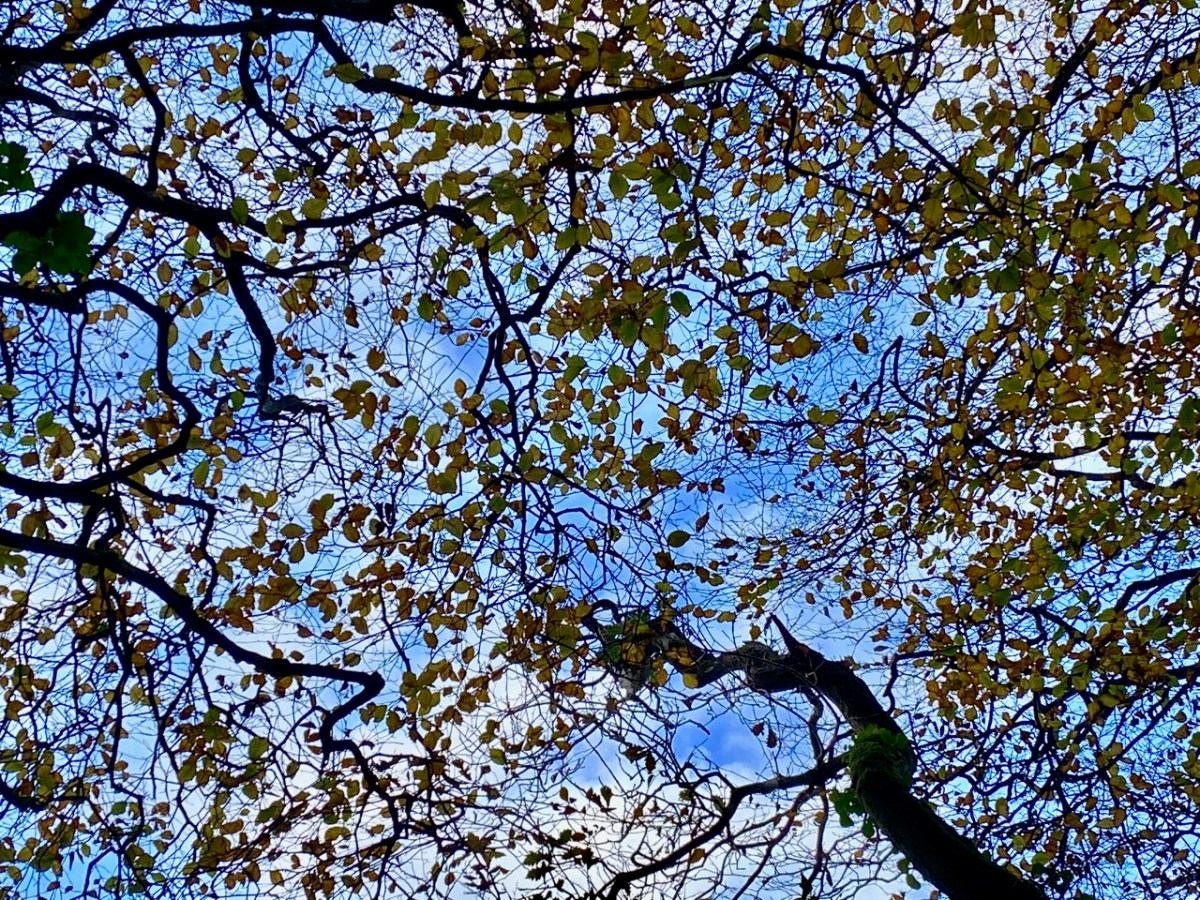
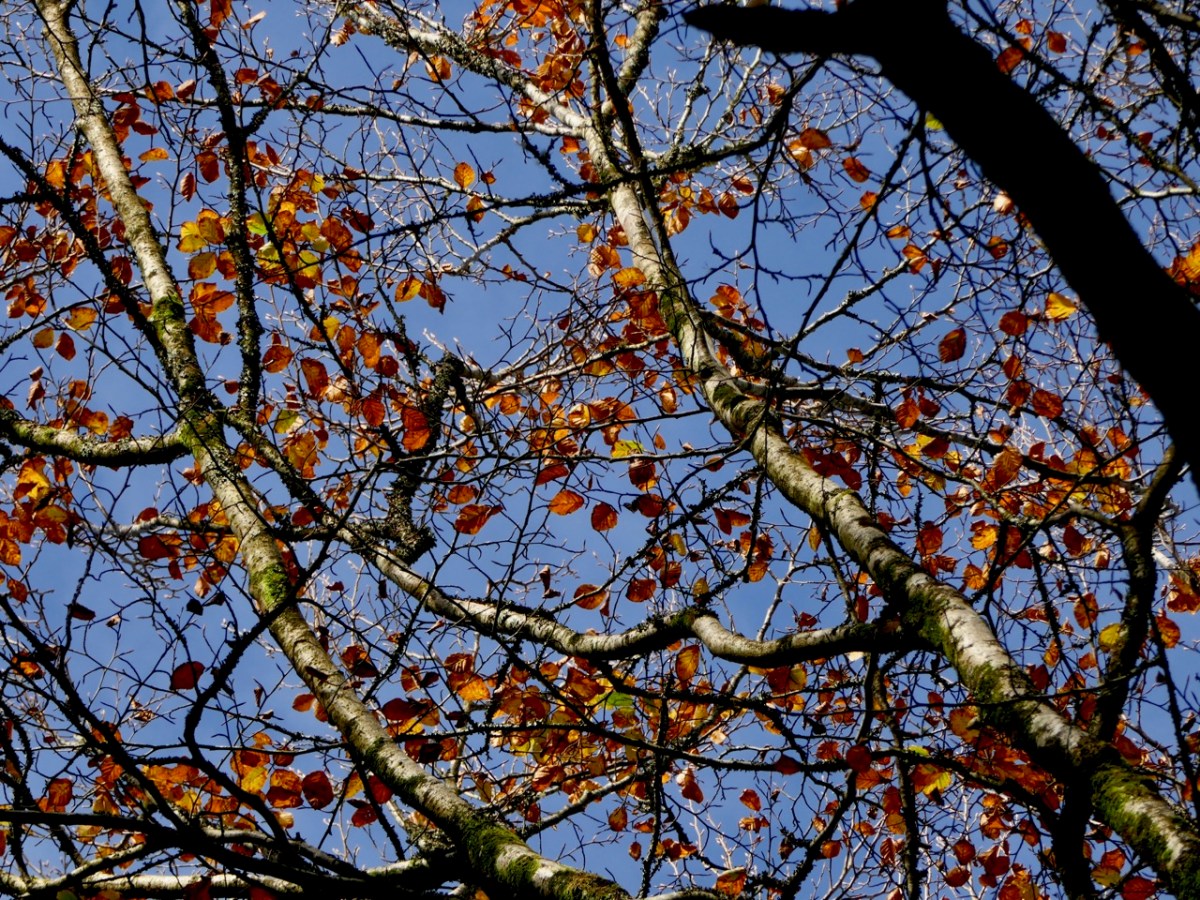
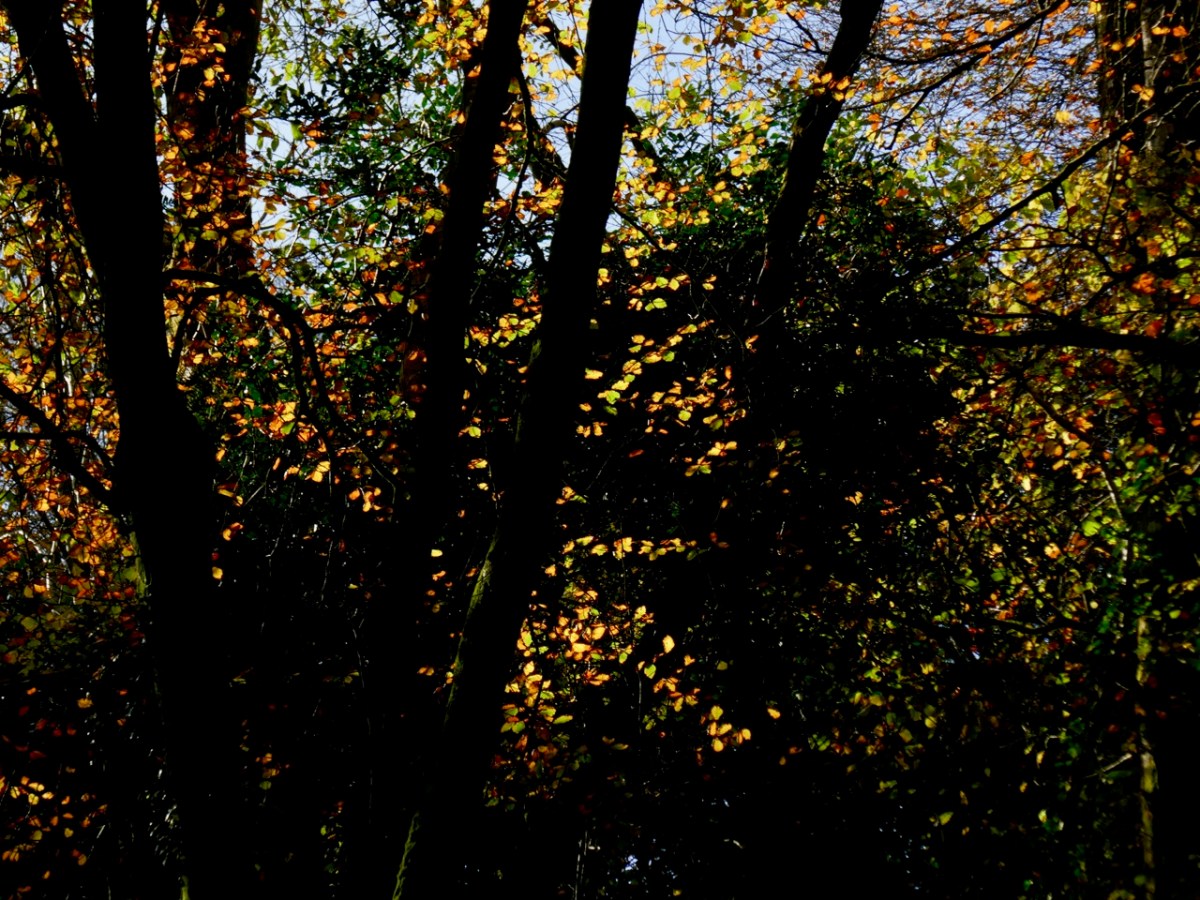
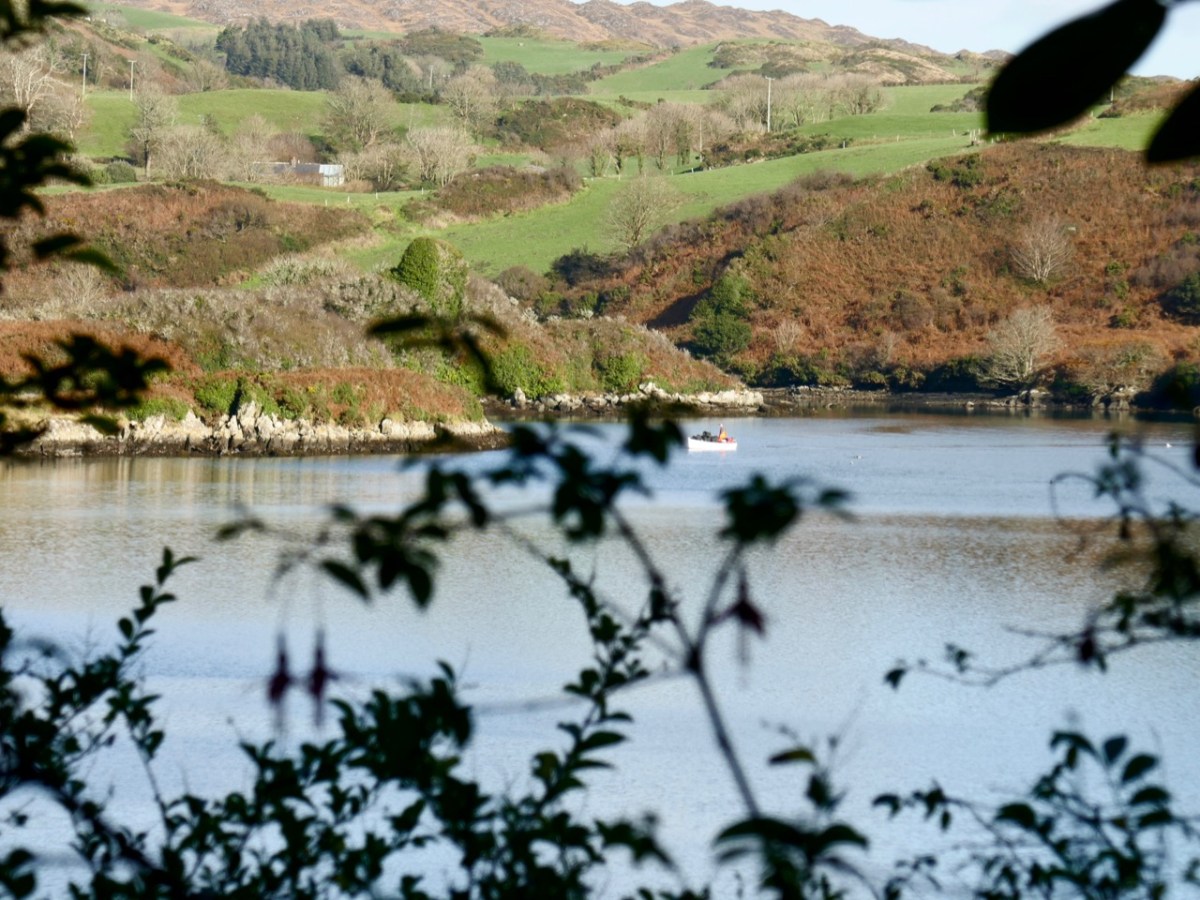
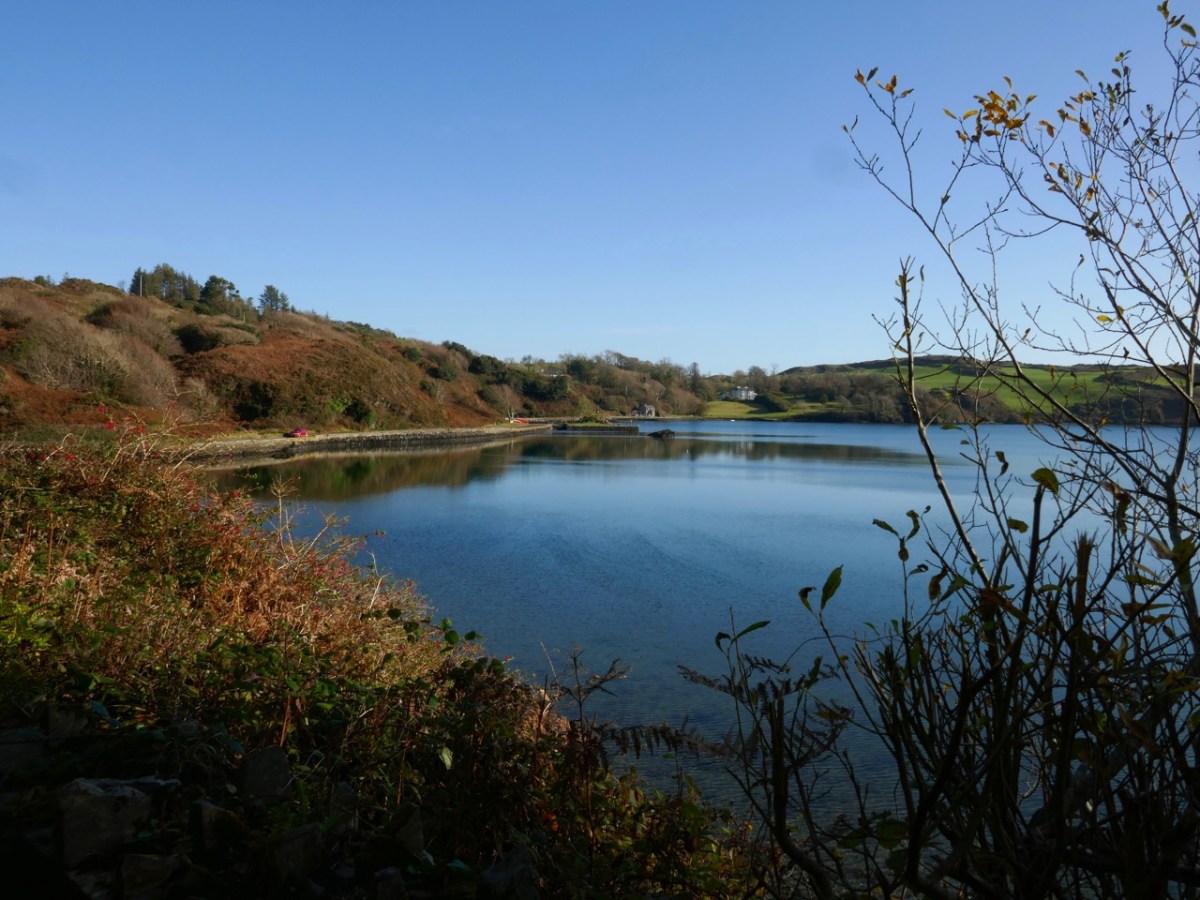
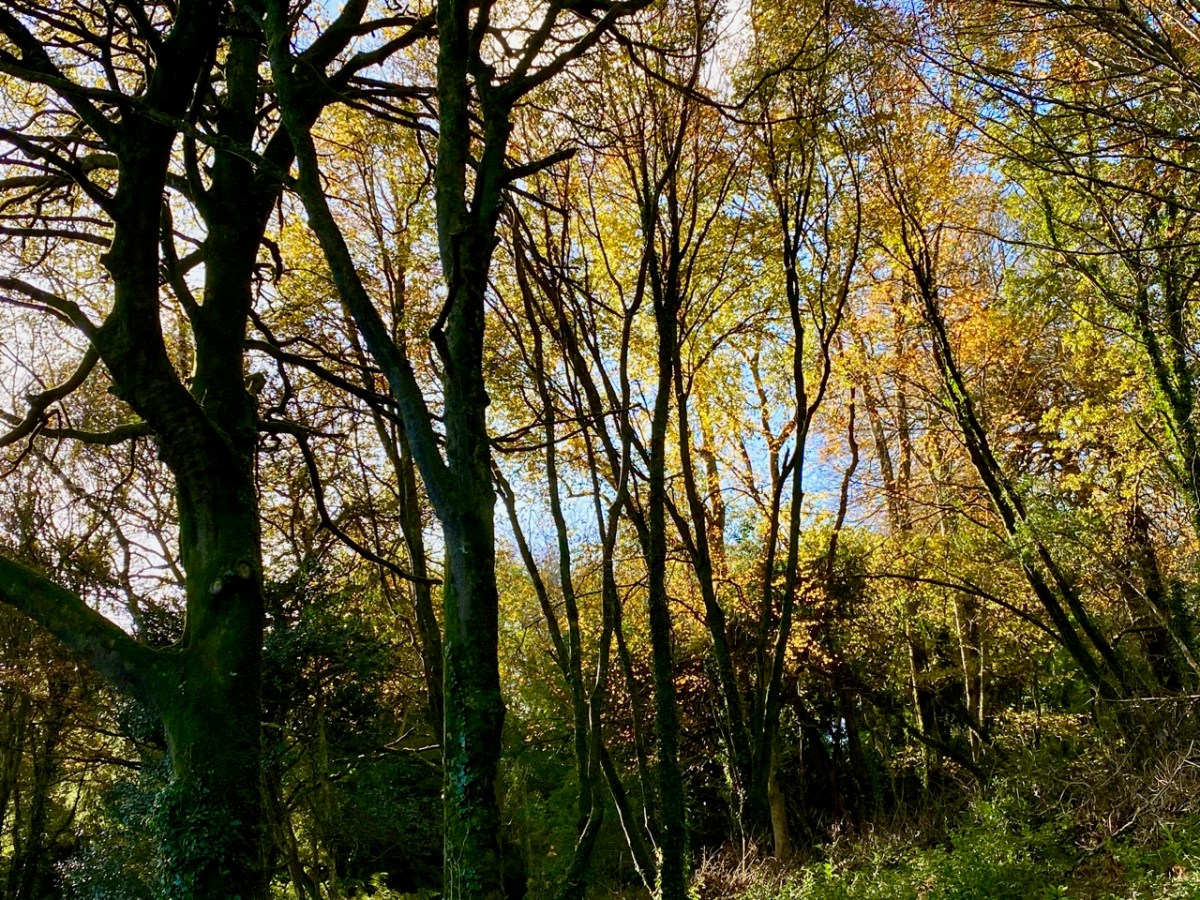
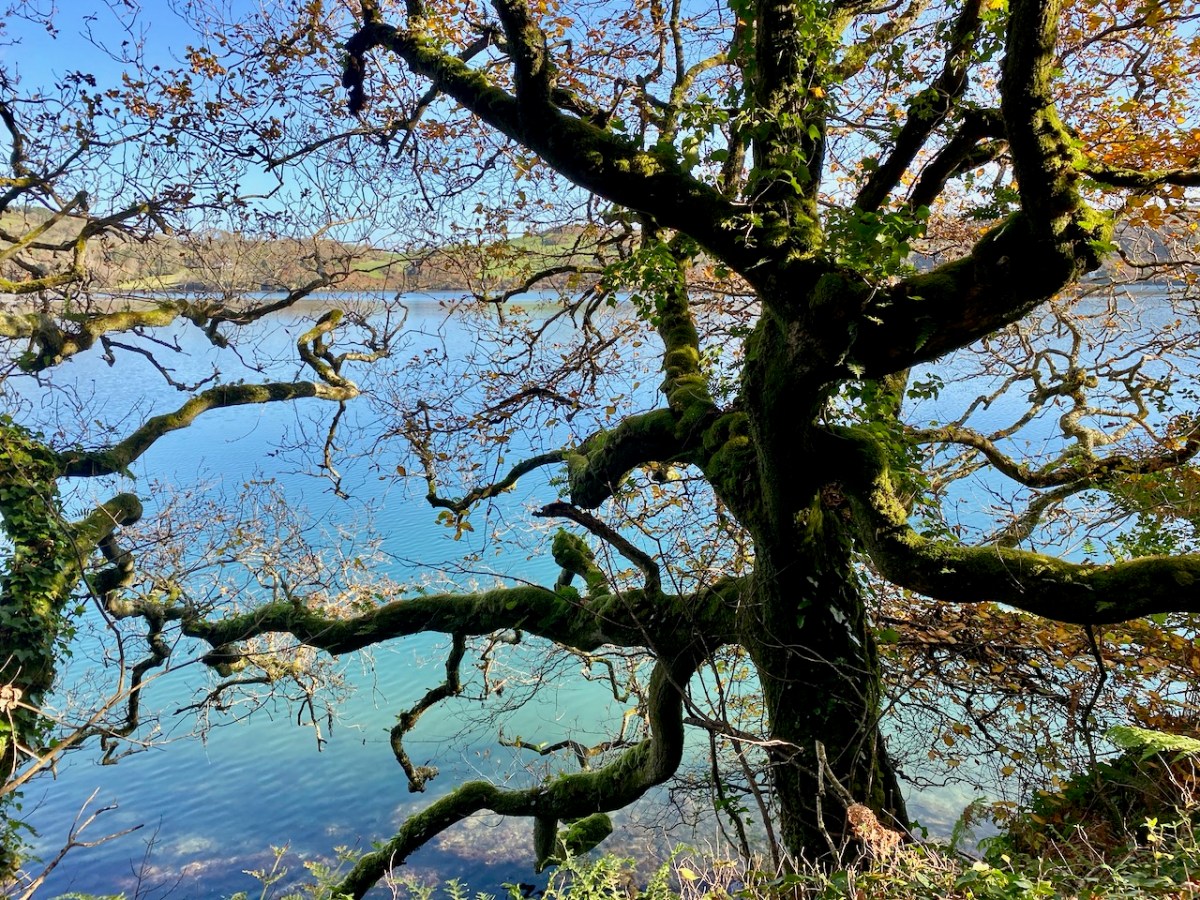
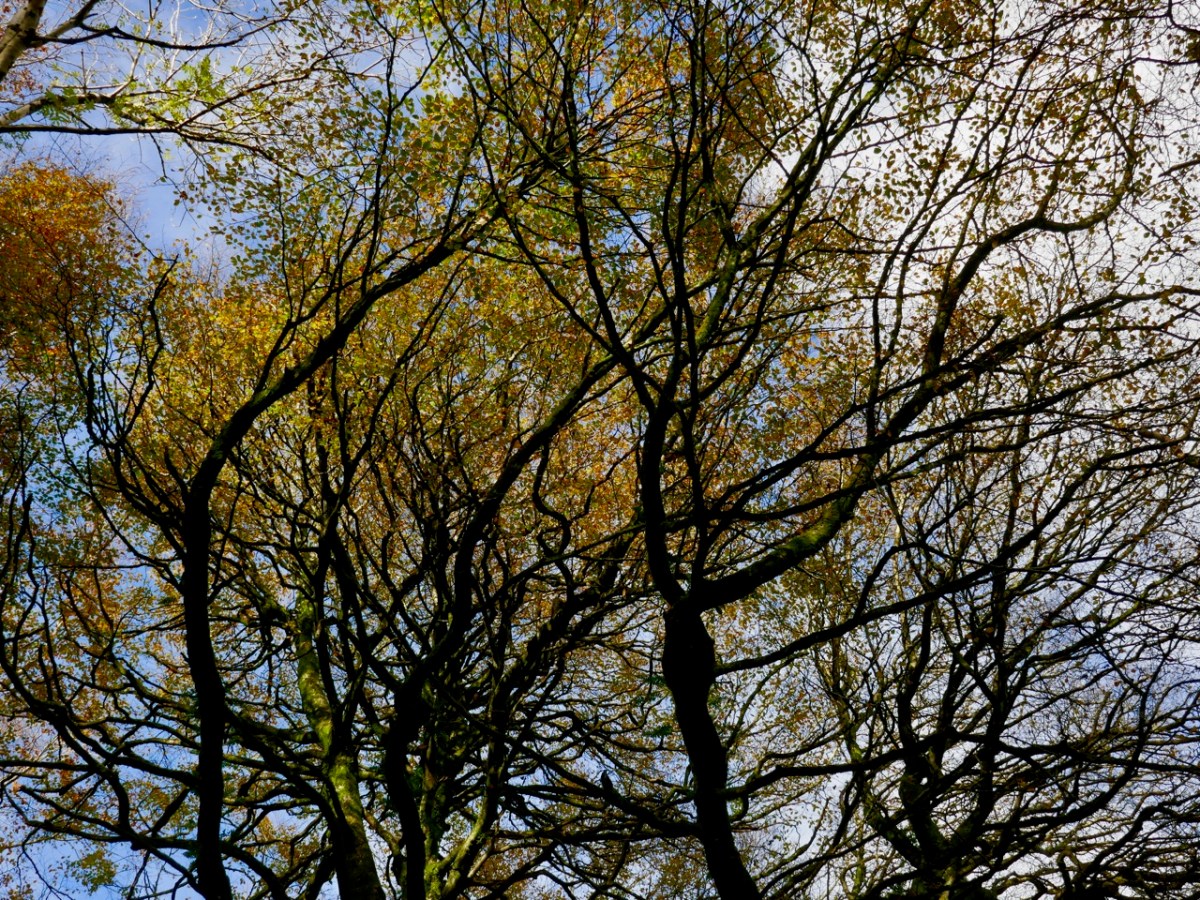
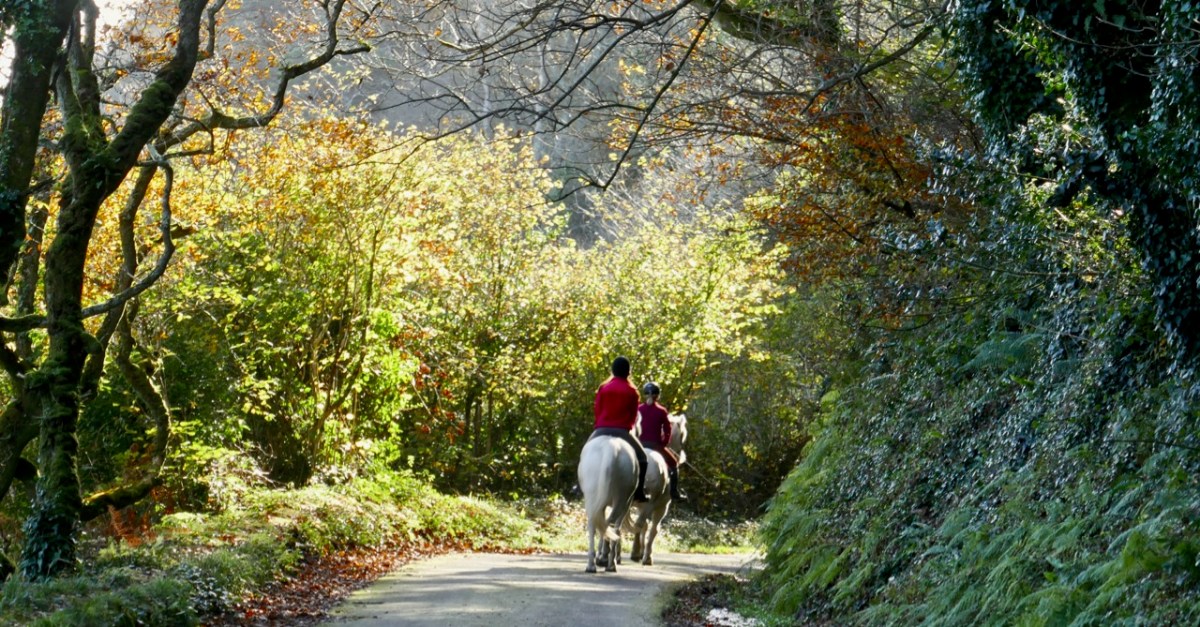
Wild West Cork: a rugged landscape of mountains, a myriad patchwork of pastures; inlets, coves, spruce plantations and an archipelago of mostly unwooded offshore islands. Where are the deciduous trees? This is what we ask ourselves when autumn comes and we want to see the changing colours; the wistful season of autumn at its best. The answer, for us, is Lough Hyne!
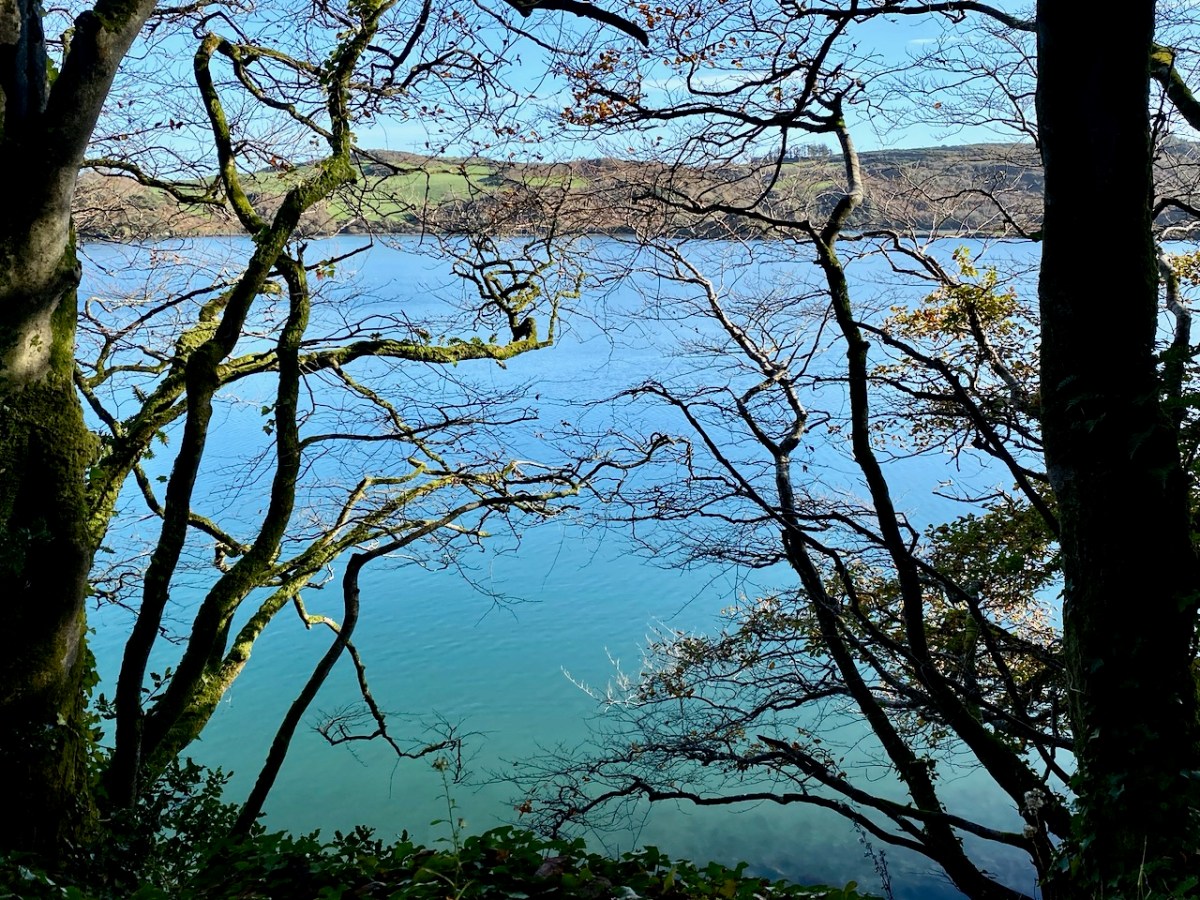
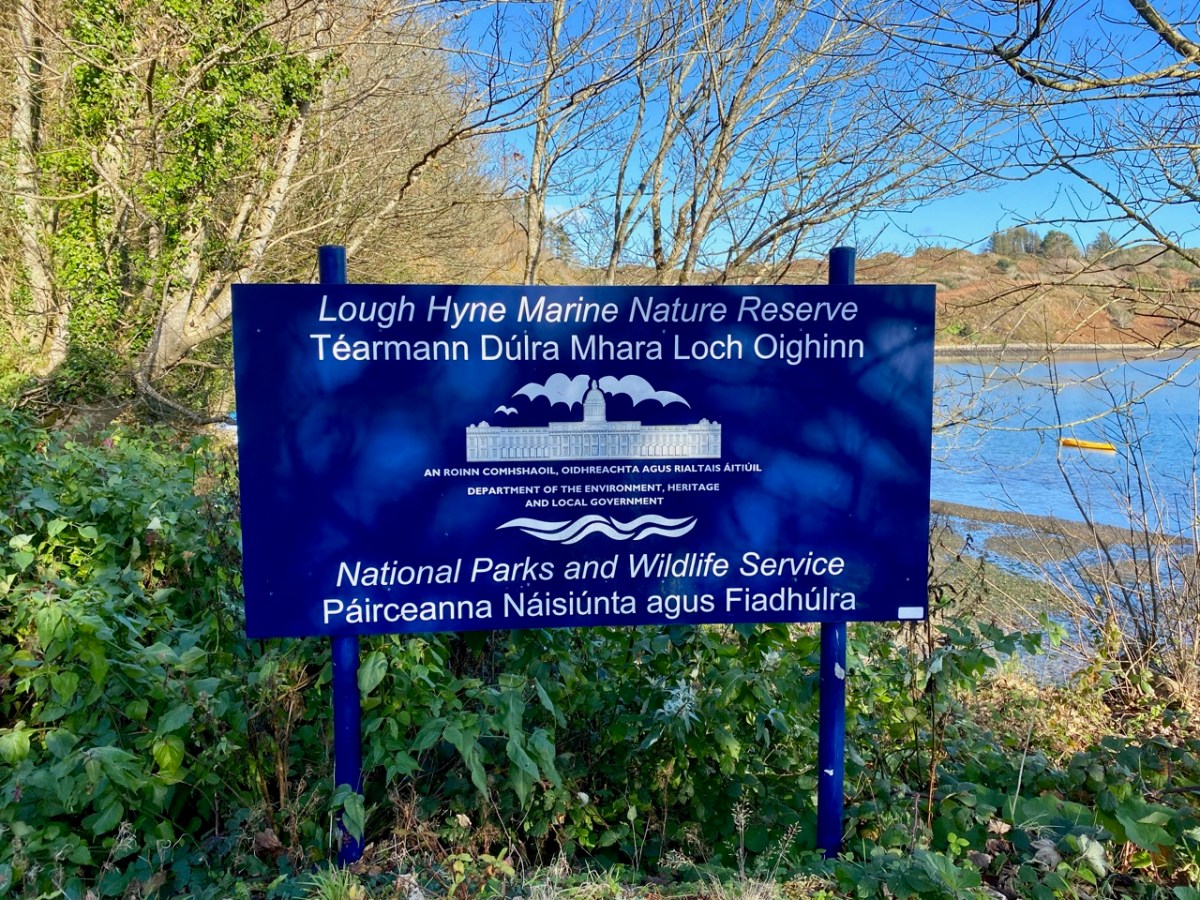
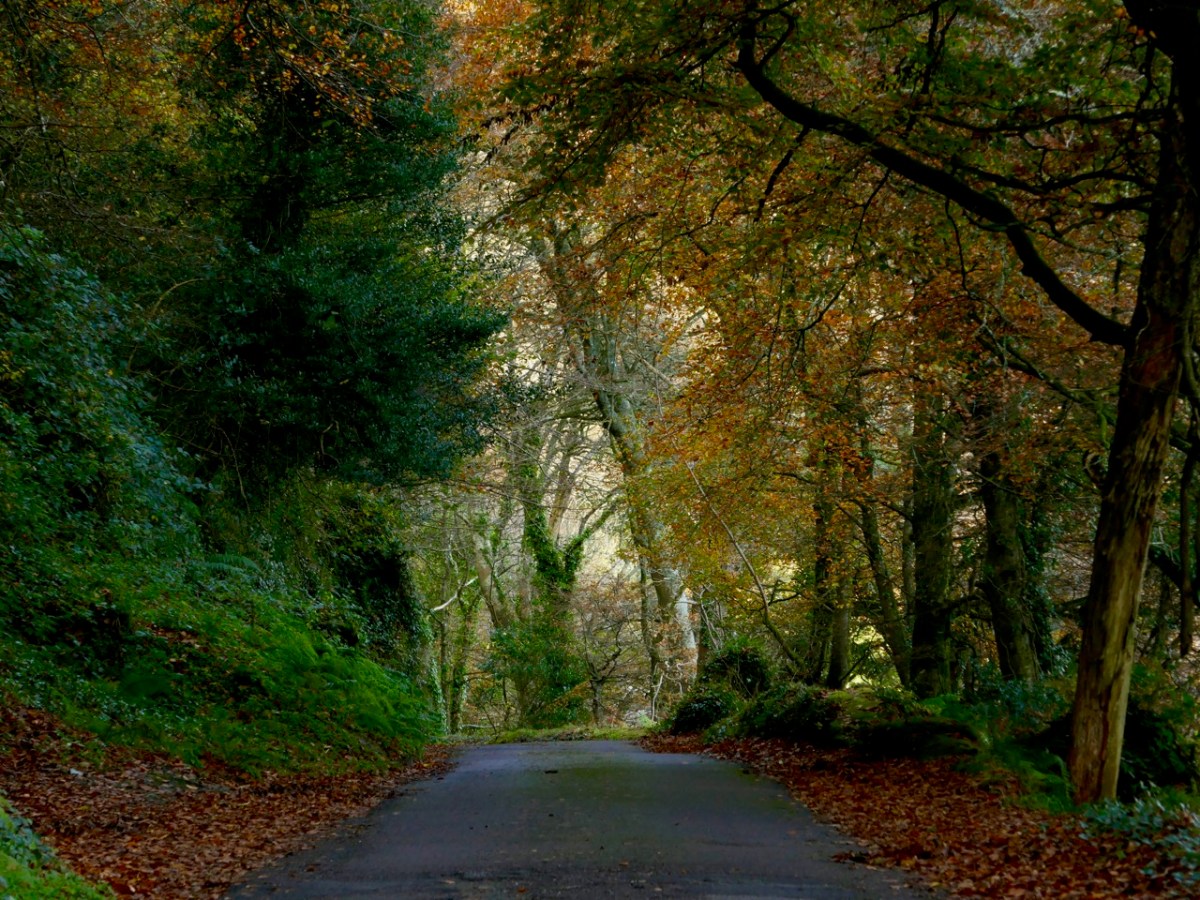
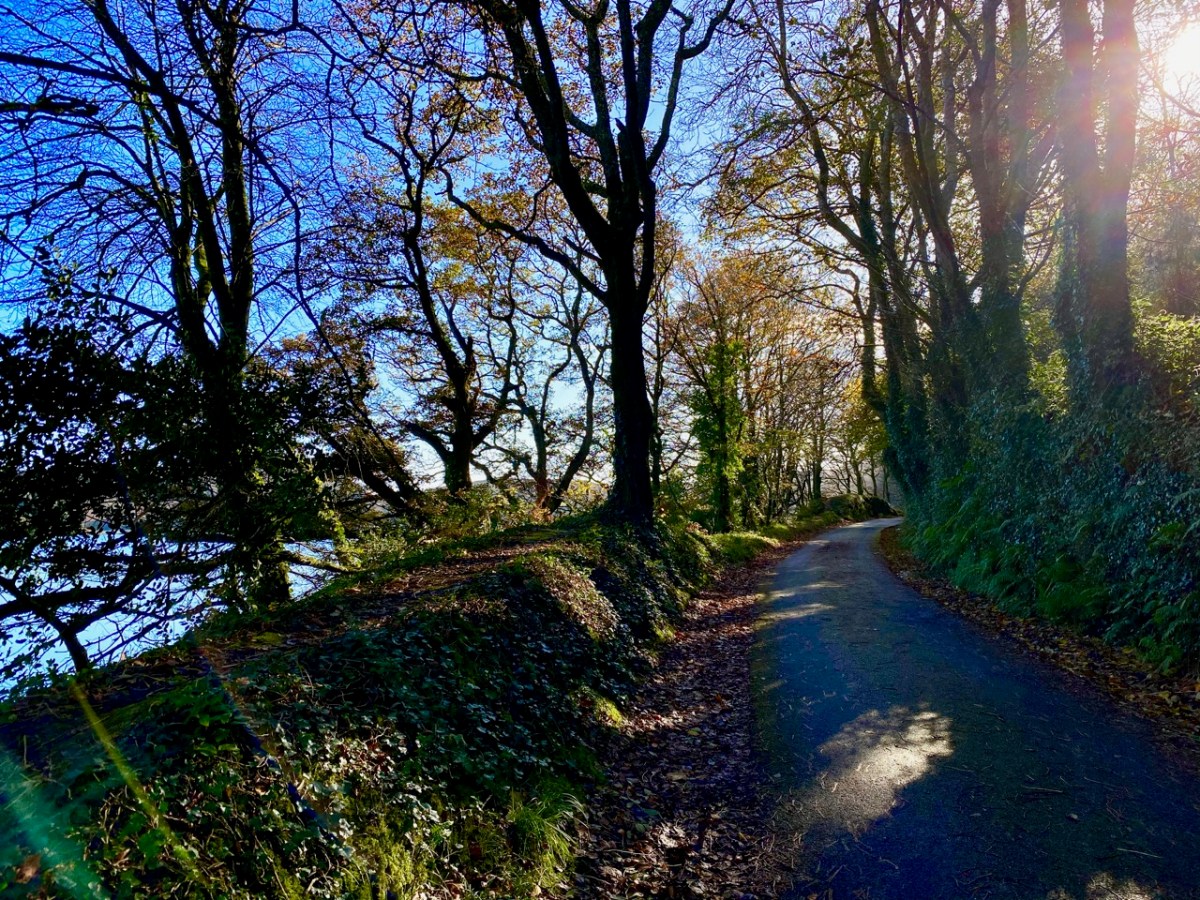
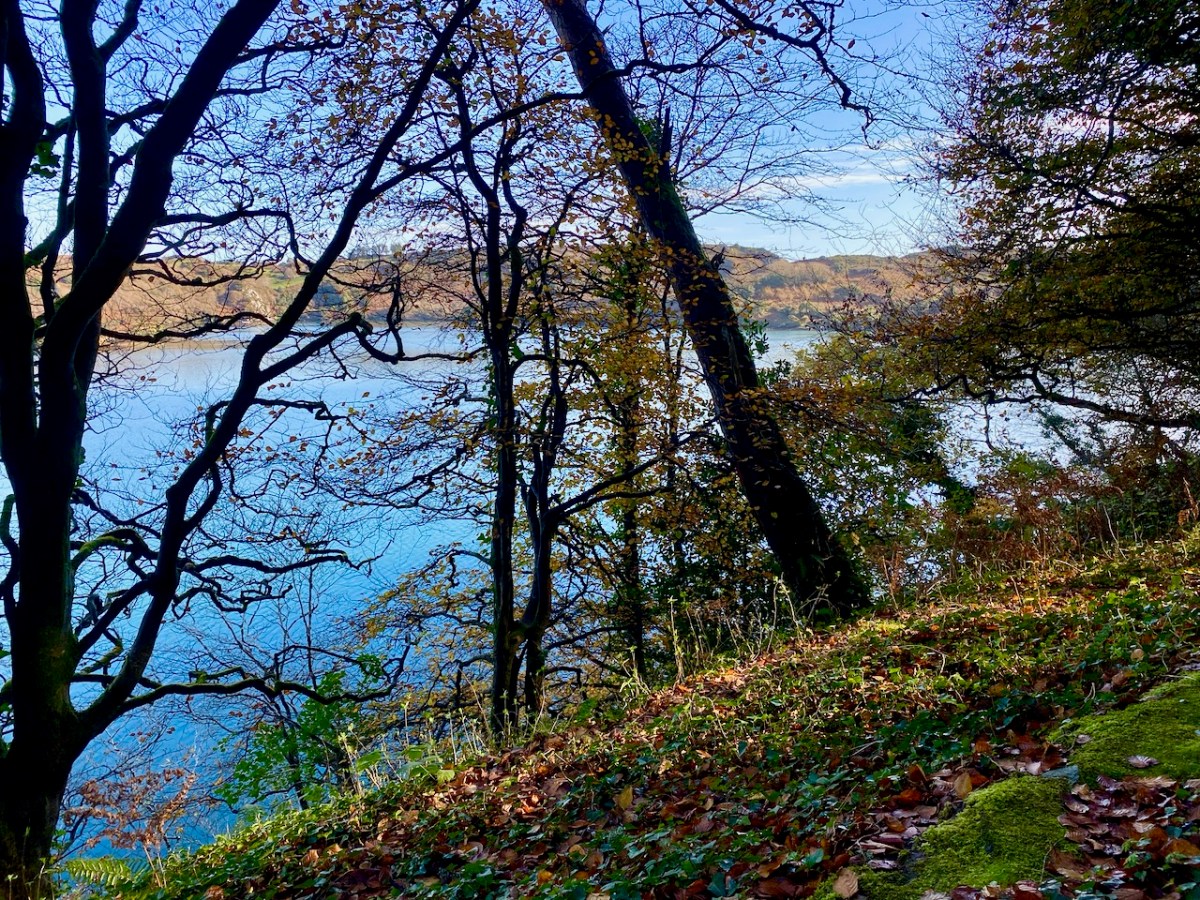
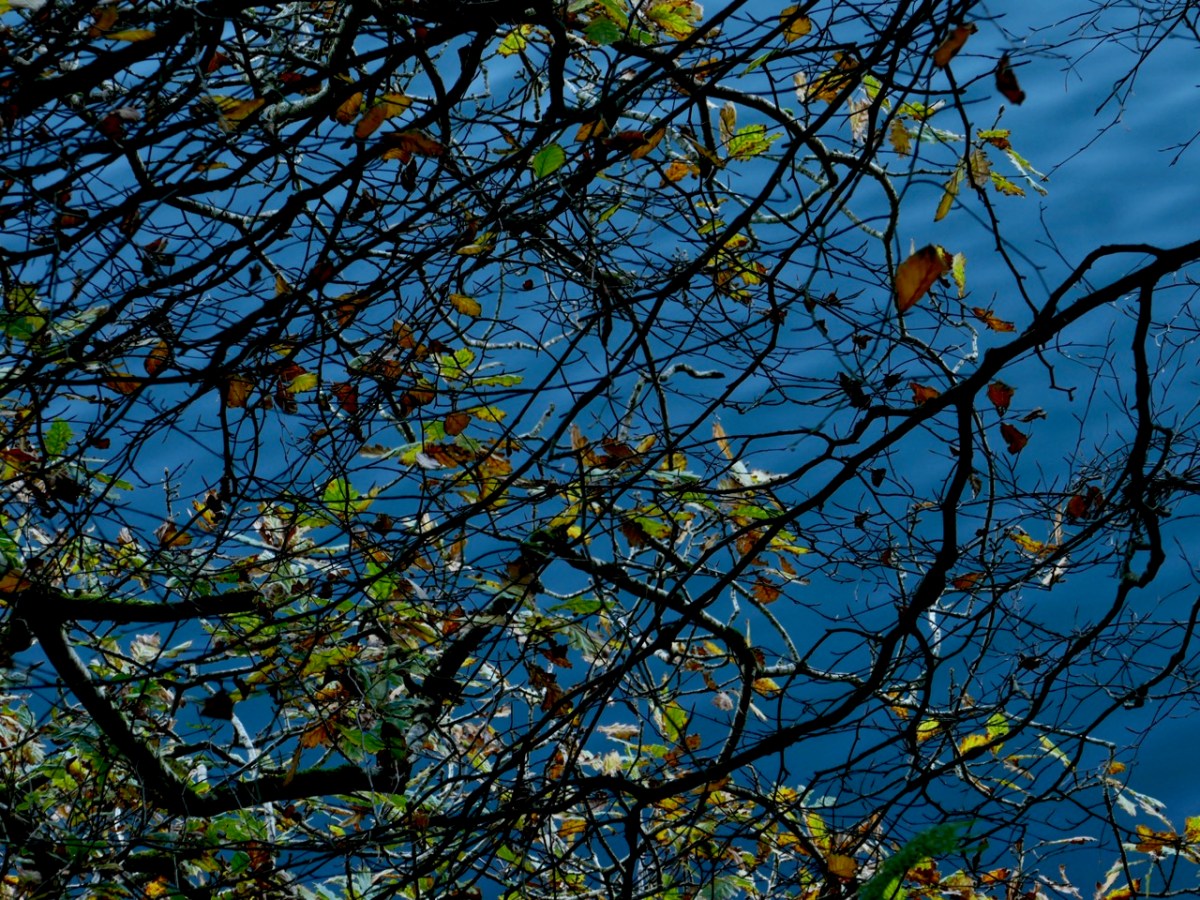
It’s just a skip and a jump to this tucked-away corner of our world. Once there, we are in a unique environment. It is Ireland’s first Marine Nature Reserve – international recognition for the ecology of this special place where not only the (salt) water is important both above and underneath the lake’s surface, but the immediate surroundings are hopefully sacrosanct for all time. These environs include woodlands which are just at this moment on the threshold of turning gold: we know gales are on the way which will tear and disperse them as winter sets in. Here’s a little tour of the paths on the edge of the water, featuring – above all – colour and texture: a feast for our eyes!
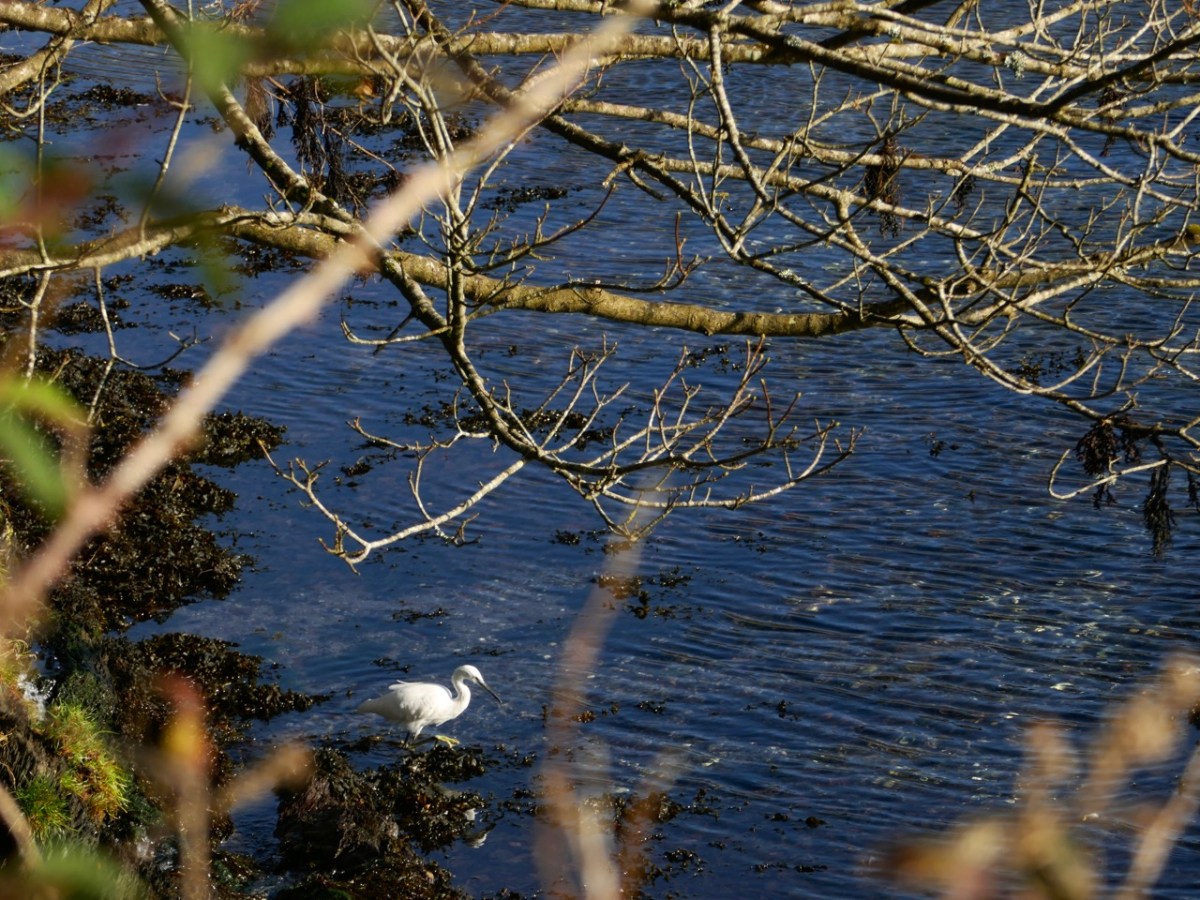
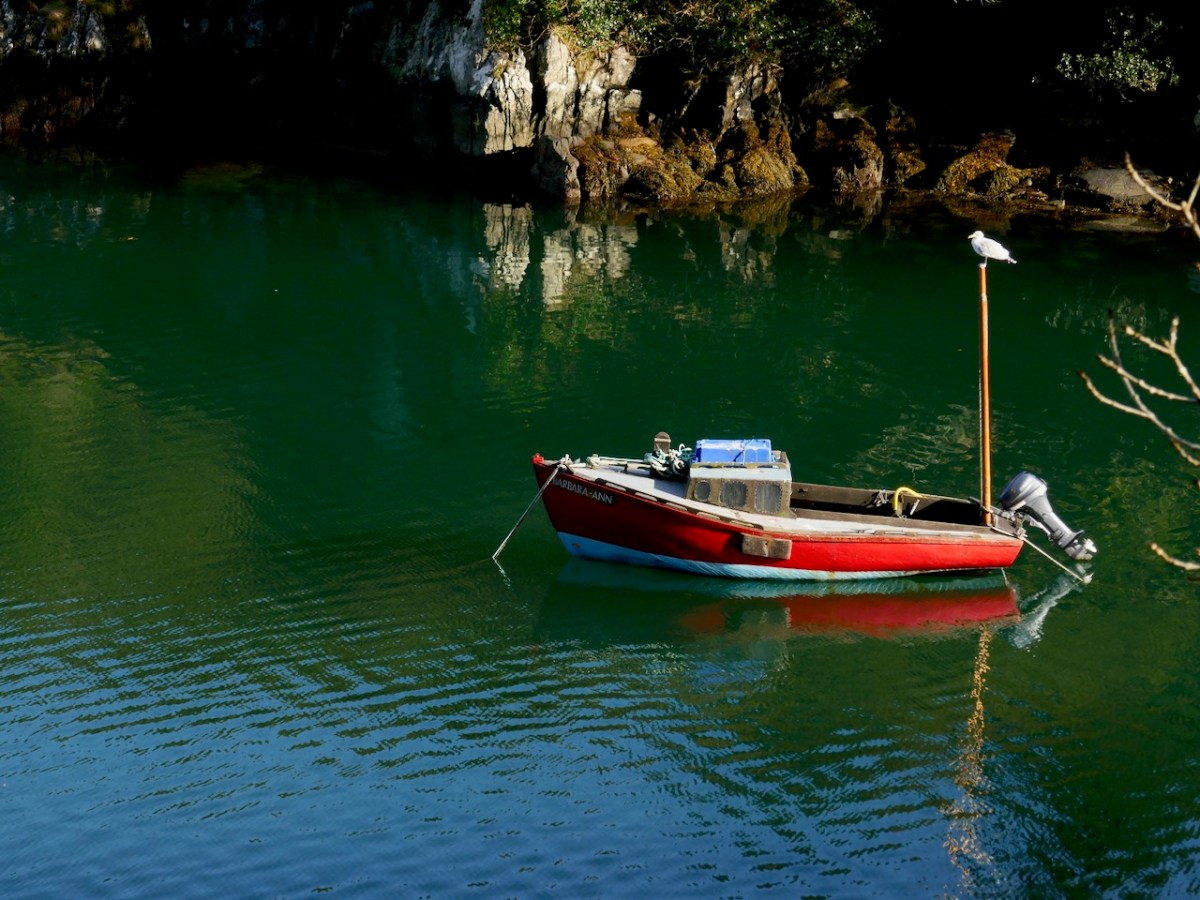
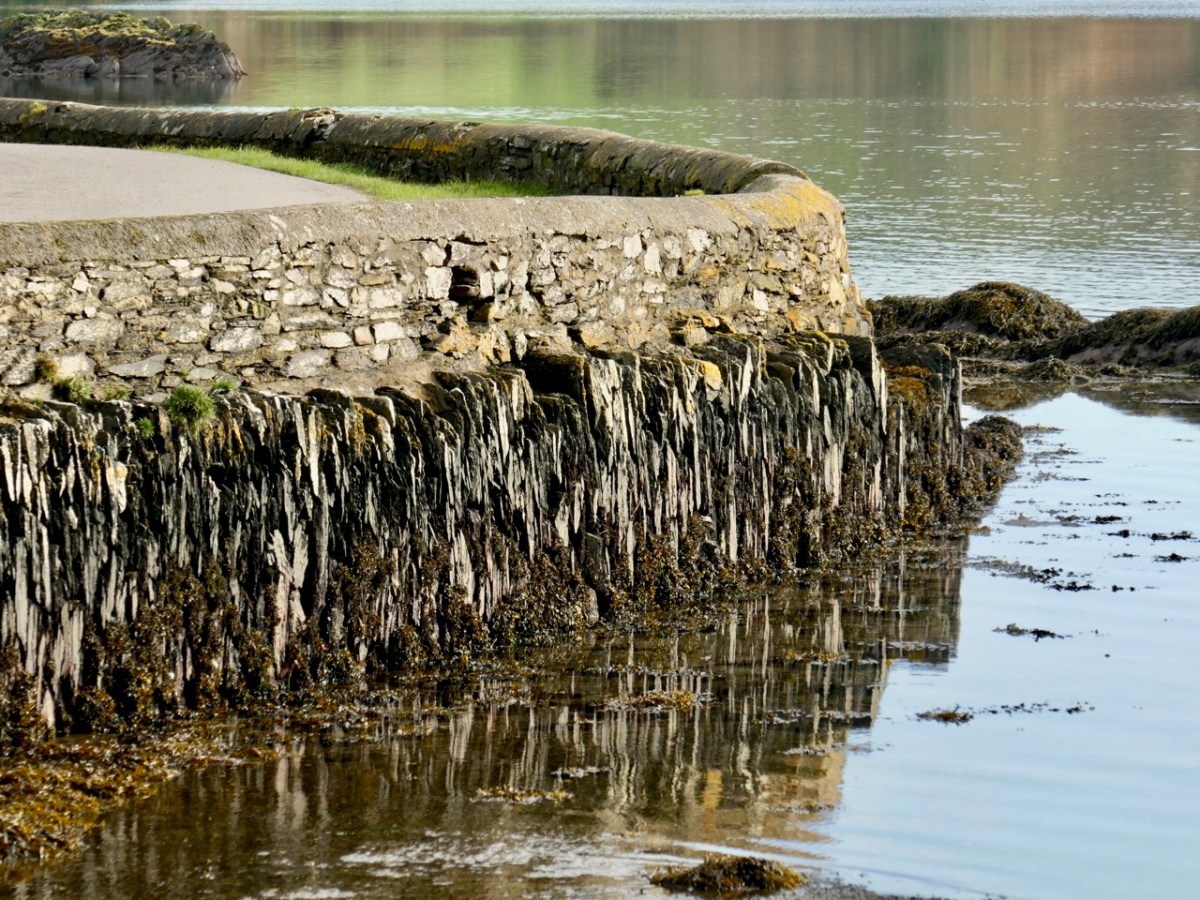
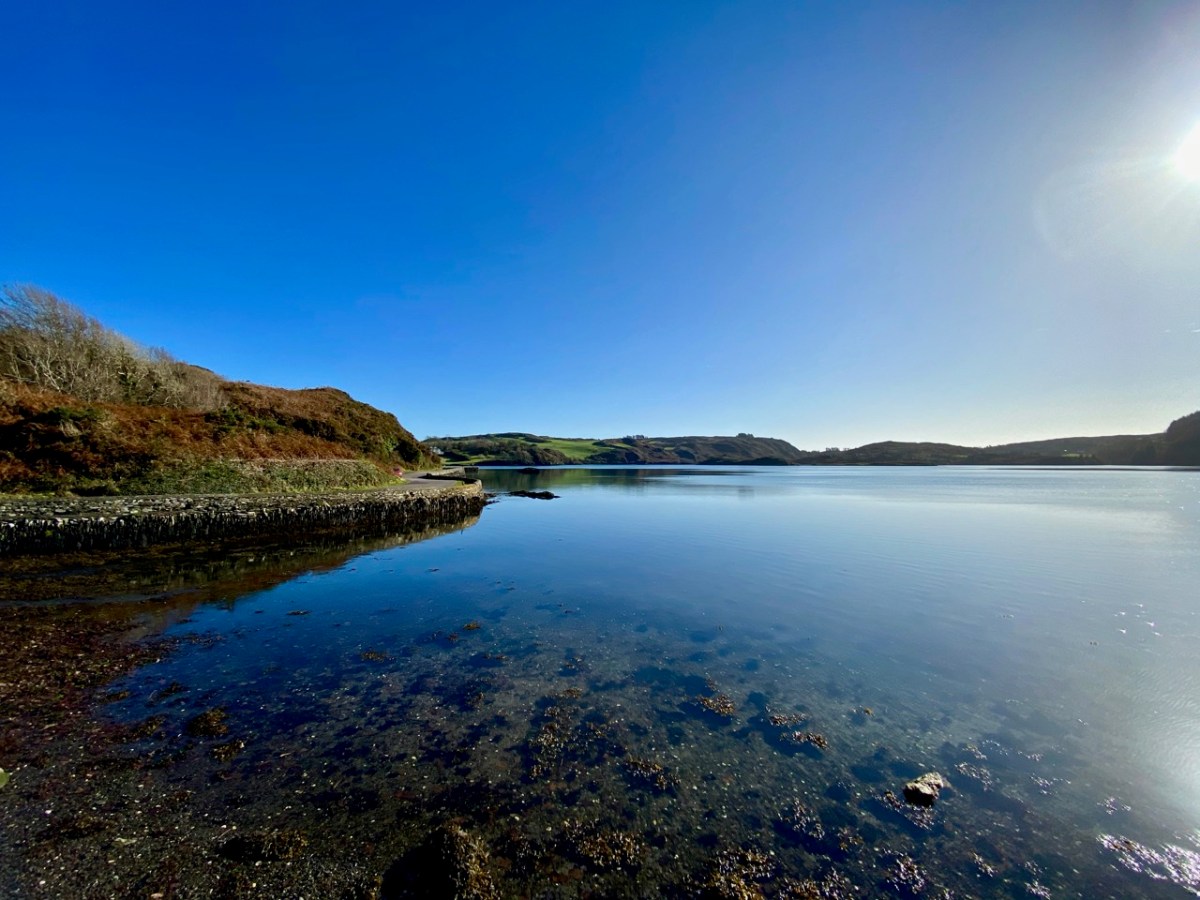
While the leaves are our main focus, everything else is worth a pause. The colour of the lake itself, certainly the wildlife it supports, but also the juxtaposition of boats, stone walls, shadows and sky are all brought to life by the early November sun.
I can’t resist quoting William Makepeace Thackeray’s description of his travels through ‘The City of Skibbereen’ to Lough Hyne, which we find in his Irish Sketch Book, published in 1843. Thackeray, the English writer best known for Vanity Fair and Barry Lyndon, spent four months travelling around much of the country and – although he appeared to enjoy himself – he didn’t have many good words to say about Ireland or the Irish . . .
THAT light four-inside, four-horse coach, the “Skibbereen Perseverance,” brought me fifty-two miles to-day, for the sum of three-and-sixpence, through a district which is, as usual, somewhat difficult to describe. A bright road winding up a hill; on it a country cart, with its load, stretching a huge shadow; emerald pastures and silver rivers in the foreground ; a noble sweep of hills rising up from them, and contrasting their magnificent purple with the green; in the extreme distance the clear cold outline of some far-off mountains, and the white clouds tumbled about in the blue sky overhead.
* * *
Of all the wonderful things to be seen in Skibbereen, Dan’s pantry is the most sublime: every article within is a makeshift, and has been ingeniously perverted from its original destination. Here lie bread, blacking, fresh butter, tallow-candles, dirty knives — all in the same cigar-box with snuff, milk, cold bacon, brown-sugar, broken teacups and bits of soap. No pen can describe that establishment, as no imagination could have conceived it. But – lo! – the sky has cleared after a furious fall of rain — and a car is waiting to carry us to Loughine . . .
Thackeray – Irish Sketch Book 1842
ALTHOUGH the description of Loughine can make but a poor figure in a book, the ride thither is well worth the traveller’s short labour. You pass by one of the cabin-streets out of the town into a country which for a mile is rich with grain, though bare of trees; then through a boggy bleak district, from which you enter into a sort of sea of rocks, with patches of herbage here and there. Before the traveller, almost all the way, is a huge pile of purple mountain, on which, as one comes nearer, one perceives numberless waves and breaks, as you see small waves on a billow in the sea; then clambering up a hill, we look down upon a bright green flat of land, with the lake beyond it, girt round by grey melancholy hills.
* * *
The water may be a mile in extent; a cabin tops the mountain here and there; gentlemen have erected one or two anchorite pleasure-houses on the banks, as cheerful as a summer-house would be on a bleak plain. I felt not sorry to have seen this lonely lake, and still happier to leave it. There it lies with crags all round it, in the midst of desolate flatlands: it escapes somewhere to the sea; its waters are salt: half-a-dozen boats lie here and there upon its banks, and we saw a small crew of boys splashing about and swimming in it, laughing and yelling. It seemed a shame to disturb the silence so . . .
THACKERAY – IRISH SKETCH BOOK 1842
Thackeray’s Irish Sketch book is something we will return to in this journal, as it provides an unusual and, sometimes, surprising perspective on pre-Famine Ireland. But I can’t agree with him on Lough Hyne: grey melancholy hills . . . in the midst of desolate flatlands . . . Clearly, he cannot have visited on an autumnal day, and neither was he favoured by the sun. Perhaps there is a poetic justice there, somehow: we embrace everything that Ireland – and West Cork – has to offer; possibly his acute and carping scrutiny of the detail removes from him the more rewarding overview? For us, Lough Hyne was idyllic!
Welcome to the UCD Library Cultural Heritage Collections blog. Discover and explore the historical treasures housed within our Archives, Special Collections, National Folklore Collection and Digital Library
























 Roaringwater Journal