Field Trip – with Jack Roberts

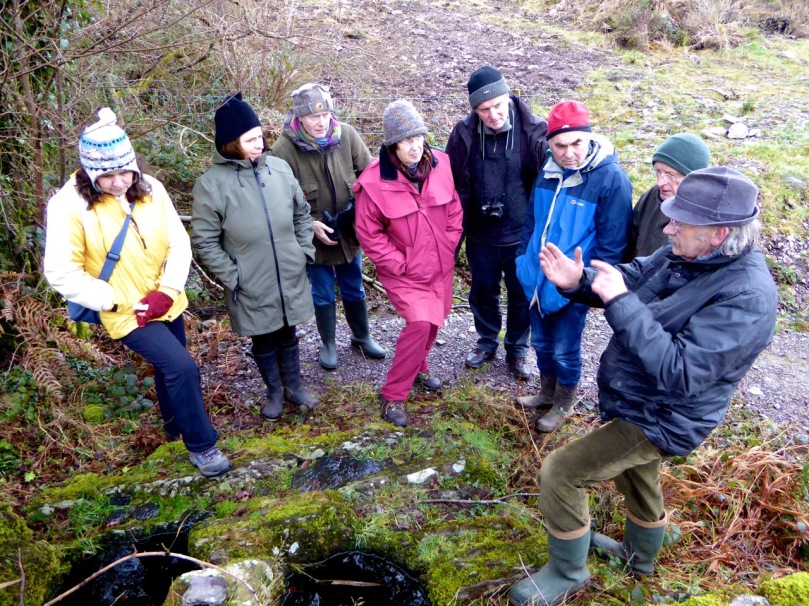
Jack Roberts expounds on holy wells

Jack Roberts expounds on holy wells

Anybody interested in exploring West Cork will have copies of Jack Robert’s books in their libraries. We have several but until this weekend we hadn’t really known the man himself. We were fortunate to be invited along on a field trip organised by old friends of his, on the occasion of one of his visits to West Cork.

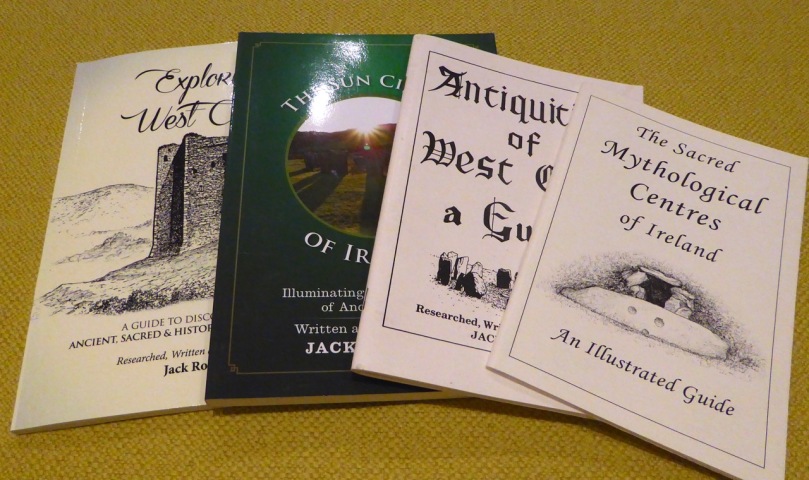
Some of Jack's books

Some of Jack’s books

Jack arrived from England in 1975 as a fisherman. As he describes it, he was immediately intrigued with the landscape and the deep sense of history he saw all around him. He worked with Martin Brennan at Newgrange and Loughcrew, learning about the ancient monuments and observing first hand the astronomical alignments of passage graves and stone circles. Eventually returning to West Cork, he started to write guides to the ancient and spiritual sites of the area, illustrating them with his own charming and highly accurate pen and ink drawings. Well researched, delightfully succinct and displaying his vast knowledge of the area, these guides came to be prized possessions of those who purchased them. They’re still available, from Jack’s website, from Whyte Books in Schull and other bookstores, and on Amazon.

Jack lives in Galway now and has branched out. His latest book, The Sun Circles of Ireland, covers the whole country, as does his research into Sheela-na-Gigs. He makes jewellery based on prehistoric, Celtic and Early Christian motifs and has a stall in the Galway market.

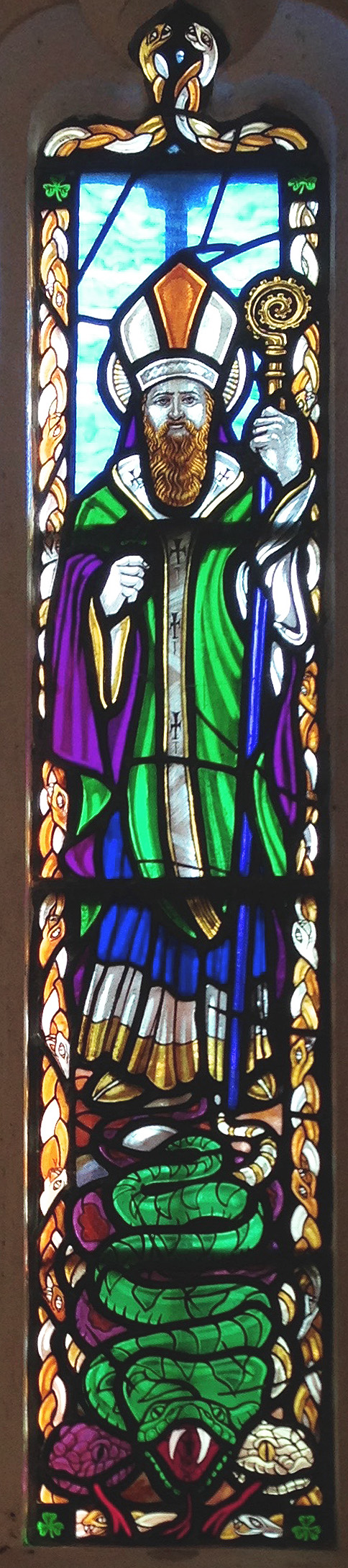
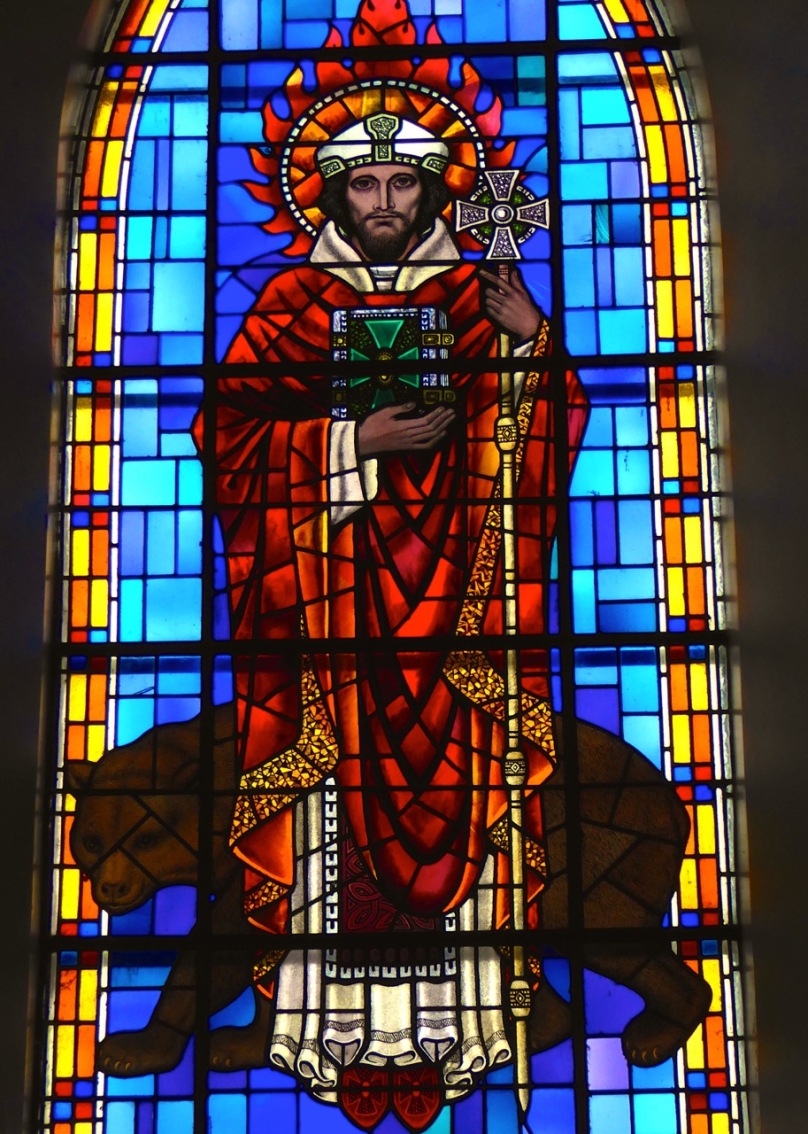
Our field trip took us into parts of West Cork unfamiliar to Robert and me, to visit a wide variety of monuments. In Inchigeelagh we stopped to examine a strange stone built into a grotto in the grounds of the Catholic church. Listed under Rock Art in the National Monuments site inventory, it is an anomalous piece of carving that is as mysterious as it is interesting. Of course Robert and I can never resist a peek inside churches, and this one contained some very fine stained glass. Lots of lovely windows but my favourite was this one of St Columbanus, an early Irish missionary who founded monastic houses throughout Europe. One of his miracles was to tame a bear – and somehow he ended up as the patron saint of motorcyclists! 

Saint Columbanus

Saint Columbanus

A couple of holy wells followed, the first dedicated to St Lachtan had two stone bowls and a large concrete cross. The second was the complete opposite – a quiet little spot in a wood with a simple bullaun stone (more about bullaun stones in a future post), white quartz pebbles, and two cups to use for drinking. It was part of an ancient monastic site of which little remains.

We stopped to walk over an old clapper bridge, recently restored, and tramped through a field to where a standing stone loomed over us, standing guard in the landscape, and ended the day with a visit to a cross slab.

Restored clapper bridge

Restored clapper bridge

The next day Jack came to us for lunch followed by a trip to the Derreennaclogh and the Ballybane West rock art sites. At Derreennaclogh Gary, the discoverer of this spectacular site, showed us the lines of ancient field fences he is tracing through the bog. 

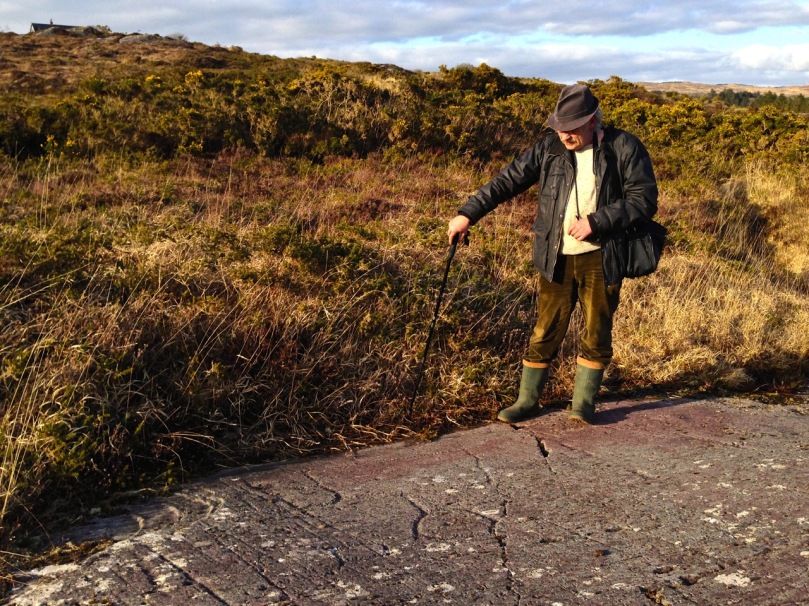
While Derreennaclogh was new to Jack, he had visited the Ballybane site many times and had cleared away scrub there, to reveal hitherto hidden carvings. We were particularly interested to hear this, as my drawings of the site, done in the early 70s, were missing some of the motifs that are now obvious and we had long wondered why.

Jack shows us where he cleared away the undergrowth

Jack shows us where he cleared away the undergrowth

It’s always a treat to put a face to a well-known name and with Jack it was a rare privilege. We enjoyed very much continuing our education into the wonders of West Cork, through his eyes. We highly recommend his books to anyone who wants to do the same.

Jack Roberts, author, artist, and one man encyclopedia of West Cork

Jack Roberts, author, artist, and one man encyclopedia of West Cork

Future Archaeologists at Work

Kilcoe National School Fourth Class - archaeologists of the future!

Kilcoe National School Fourth Class – archaeologists of the future!

A joint post by Robert and Finola, with additional photographs by Kilcoe National School.

Out of the blue this week came a message though the Roaringwater Journal Facebook page: The pupils of 4th class in Kilcoe NS have completed a history project for Discover Cork: Schools Heritage Project, on Archaeology in their local area. Their model and project book are on display tomorrow Tuesday January 20th from 2-3pm in the school hall. They invite you to come and see their work as you already do so much wonderful research on the area.

Delighted, we headed off to the school and were quite bowled over by what we saw. The students had been on field trips to several different types of monuments – a standing stone, a stone pair, a holy well, a cairn, a fulacht fia, a cillín and a ringfort. They had recorded their visits, their questions, and what they learned about each site. The formal archaeology was of interest to them, but also the stories and traditions about each site. They interviewed elderly community members and landowners and looked up the records for their area from the National Folklore Commission.

Once they had gathered all their notes and photographs they constructed a model showing each of the sites, a scrapbook of their records and drawings, another one showing what they had learned about the prehistoric way of life in West Cork, and a large photograph album charting their progress through the whole project.

Impressive as the work was that the children had put into this project, even more striking was their bubbling enthusiasm for what they had done and learned. Each table was manned by one or more of the students, ready to chat with us, show us the model or the photos, and explain everything. And how articulate and open and bright they were! Smiling and cheerful, but also earnest about their subject and falling over each other to add bits of information. It was totally captivating.

They had hiked up to a cairn – a large and mysterious feature on top of a prominent hill. It was said that you could see 15 churches from it. However, the cairn is now surrounded by tall trees as a result of a forestry plantation and therefore there is no longer any view from it. Local people had protested the plantation at the time, concerned that this cairn and its views should be preserved intact, but had lost the battle. In this write-up, I was touched to see a a photograph of my old friend, Bernard O’Regan, the local amateur archaeologist who, 40 years ago, had taken me to see several of the rock art panels in West Cork.

Visiting the Holy Well

Visiting the Holy Well

What a great project these children undertook – hats off to their teacher and the supportive community. The future for conservation and archaeology in West Cork is in safe hands! A huge thank you to Kilcoe National School for the invitation, and to their official photographer for sharing with us the superb photographs of the field trips.

Lough Hyne Holy Wells

sea shell Local tradition (and there is no better source of knowledge!) has it that you can relieve any eye problems with the waters from  Tobarín Súl – one of the holy wells close by Lough Hyne. The name is Irish for Little Well of the Eyes and, if proof were needed of the efficacy of the cure, you will find hanging from the branches of the trees around the well white canes and spectacles presumably left behind by modern day pilgrims who are no longer in need of them after visiting the well.

There is no doubt that Tobarín Súl and its near neighbour – Skour Well – are actively visited: offerings abound. Most commonly, rags and ribbons adorn the surroundings of a well. According to Anna Rackard (Fish Stone Water – Holy Wells of Ireland, Atrium 2001):

…Traditionally, rags were used to wash the afflicted part of the body with water from the well and were then tied to the tree or bush. As the rag deteriorated, the pain faded away. In some parts of Ireland, when the rag is tied to the tree, the tree itself ‘takes on’ the pilgrim’s pain…

The Eye Well decorated

The Eye Well decorated

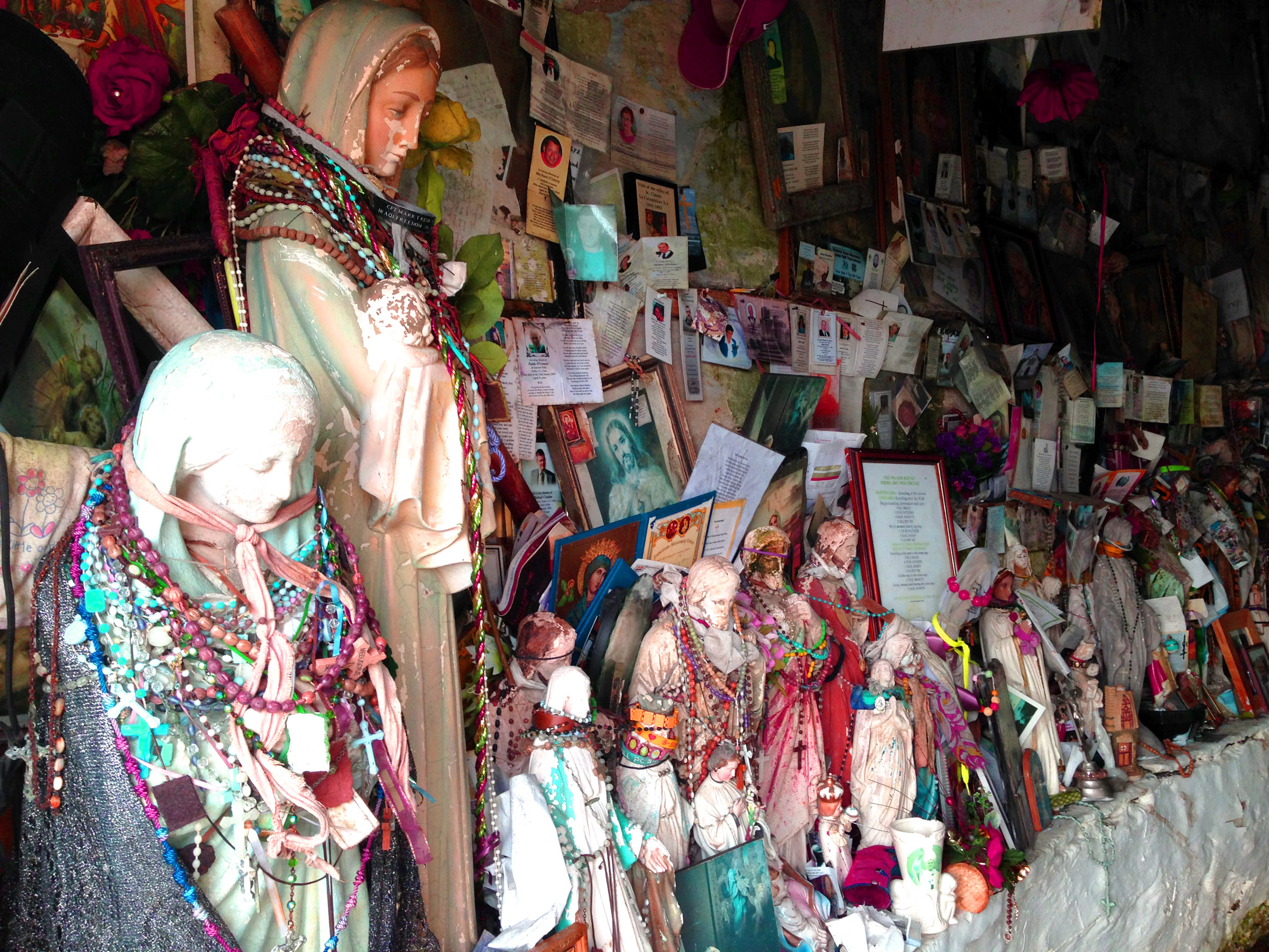
Tobarín Súl is set beside a narrow lane which winds up Knockomagh Hill in the townland of Highfield, to the north of Lough Hyne. The Skour Well is a little way further up the same hill. Nobody seems to know the origin of the name: one suggestion is that the word Skour comes from the Irish ‘sceabhar’ meaning ‘slope’ or ‘slant’, indicating its position on the side of a hill. Whatever the origin, it’s another colourful well, also adorned but with a more religious flavour – rosary beads, candles and statuettes.

Christian iconography at Skour Well

Christian iconography at Skour Well

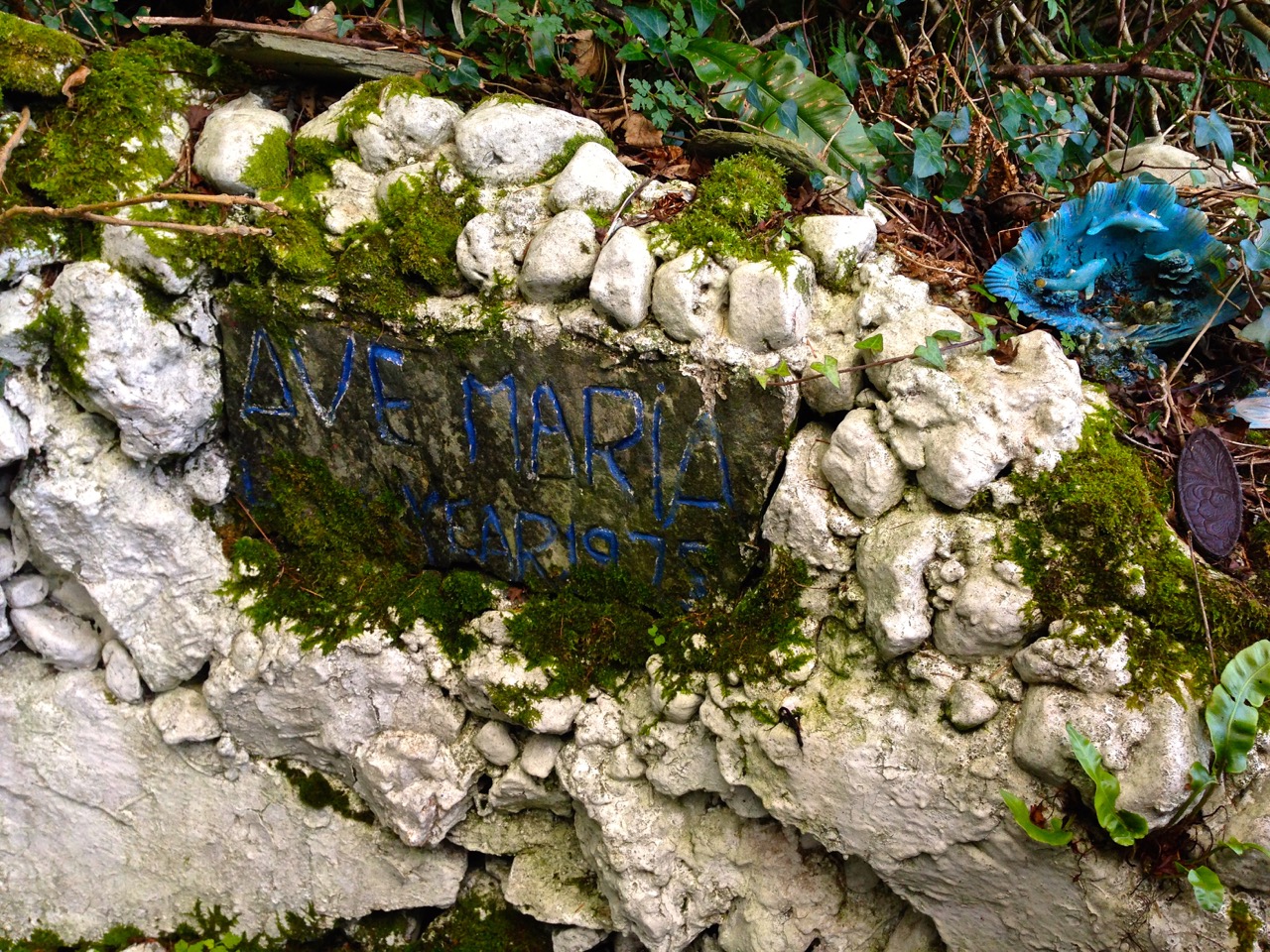
Some sources suggest that this well is dedicated to St Brigit, but I think that is a confusion with two more holy wells which are reputed to be close beside an ancient ruined church dedicated to her on the south side of the lake. Skour Well, however, is clearly devoted to Mary and ’rounds’ are performed here: it’s said that pilgrims drop white pebbles into the water on completing each circuit. On May Eve the local priest conducts a mass at the roadside here.

Inscription at Skour Well

Inscription at Skour Well

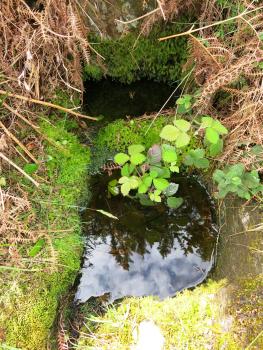
White pebbles in Skour Well

White pebbles in Skour Well

So here we have a fascinating meeting of beliefs: two wells almost side by side, one seemingly an ancient centre for traditional cures and the other a Christian site. Both are powerful places.

Lough Hyne

Lough Hyne

We have mentioned the lake itself in previous posts. We have yet to visit St Brigit’s little church to try and find the other wells (the Archaeological Survey database says they are no longer visible) but we must look for the place where St Brigit knelt and left imprints of her knees in the rock!

St Brigit knelt here!

St Brigit knelt here!

Amanda found St Brigid’s knee prints“…The forecast being good I decided an adventure was needed. We headed out for Lough Hyne – I had read that there was an ancient church, holy well and cross slab in the vicinity. It looked do-able on the map. We parked and set forth. Quite a long walk down a small road skirting the lough, so green and leafy with sheer rocky sides dripping with moisture. We got to where the smaller road should have been leading onto a peninsula jutting out onto the lake but it seemed to go onto private land and there were big gates. Suddenly a woman came out to check her post and I was over there like a flash. Once she’d got over her amazement that anyone should know about this obscure church she was very helpful. The whole headland was her land and it was brimming with interesting things. She gave us firm instructions and allowed us to venture forth. The boreen down was long and green and so beautiful – full of the most amazing variety of wildflowers – primroses, buebells, anemones, violets, Irish spurge. We found the church – teeny, roofless with a beautiful arched doorway. Her husband was buried close by – his epitaph had him down as a philosopher. Her instructions to the holy well were exact – climb up onto a stone and approach on your knees, – for safety rather than holy reasons I imagined, but maybe not. A teeny, two pooled well with lovely fresh water – and the knee prints of St Brigid on each side! Really. I tested. Perfect fit…” (taken from Amanda’s Blipfoto description) Amanda mentions the cross slab – there’s a story about this in Brigid: Goddess, Druidess and Saint by Brian Wright – The History Press 2009:

…There are traditions from many parts of Ireland and Britain of stones that return to their original spot when moved and an example of such a ‘homing stone’ involves St Brigid’s Church, Lough Hyne, Co Cork. There, about 150ft north east of the church is a piece of a broken pillar about 18 x 15in bearing an incised cross. One Day this was carried away by a fisherman who took it to his house, but the very next morning he found it had gone and it was discovered back in its original spot. The fisherman drowned shortly after and everyone knew he had been punished for daring to remove this holy stone…

Homing stone? The ancient cross by St Brigid's Church

Homing stone? The ancient cross by St Brigid’s Church

March Miscellany

shovel

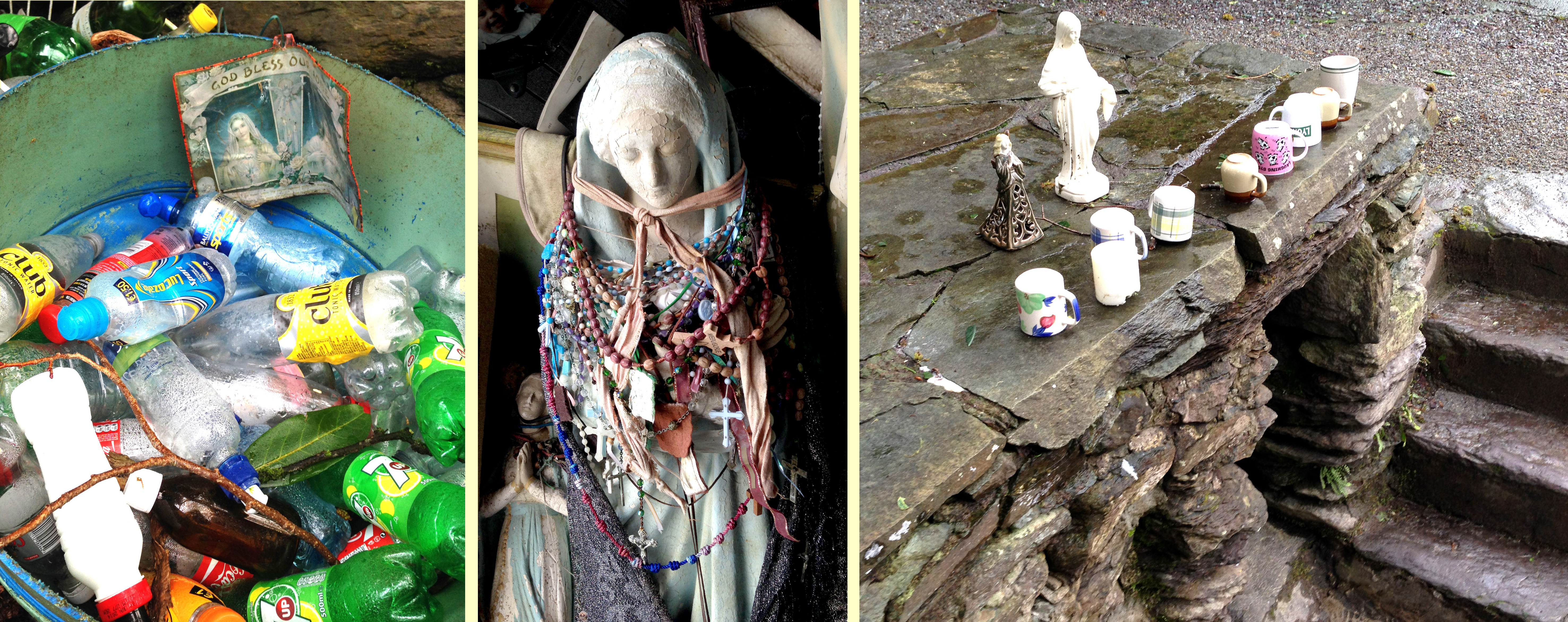
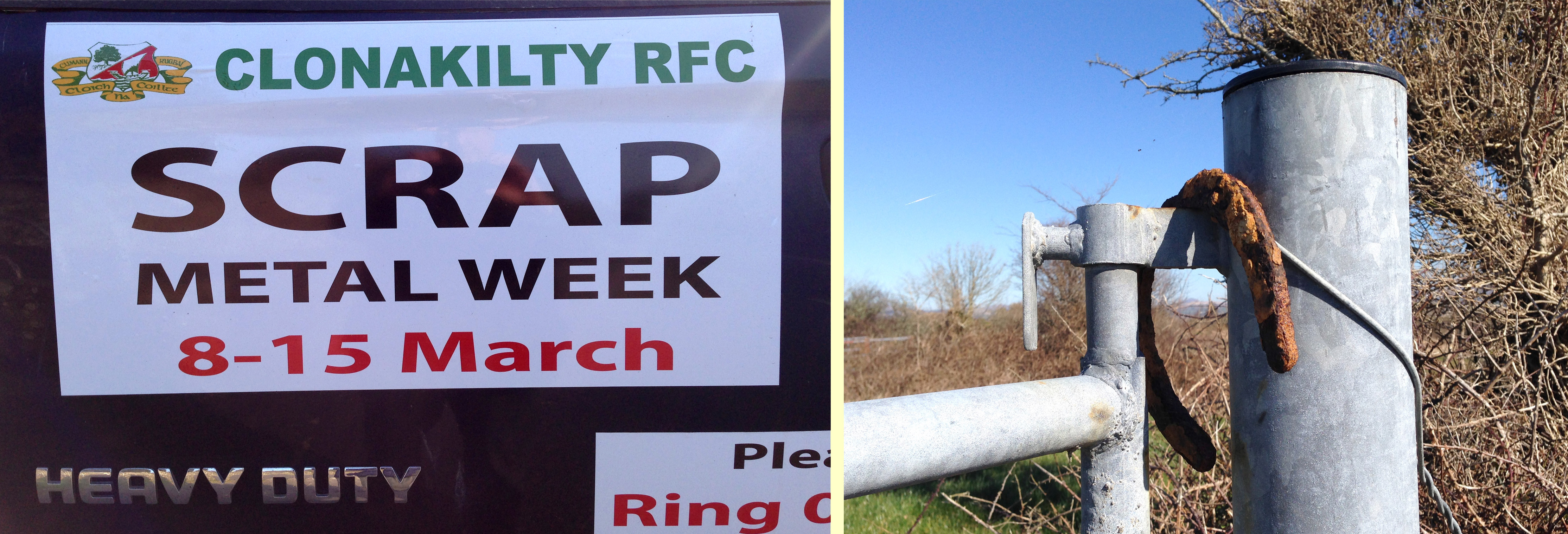
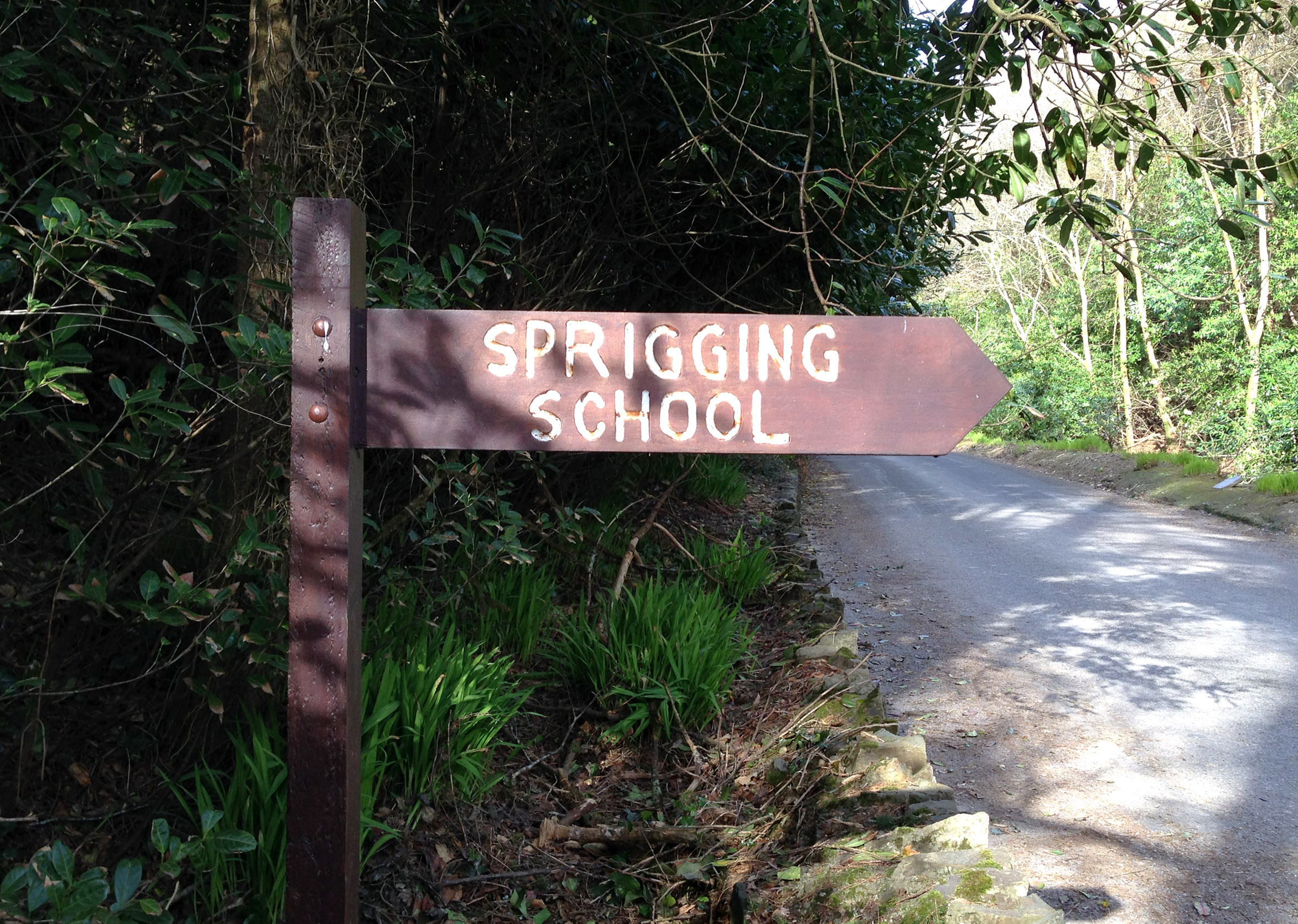
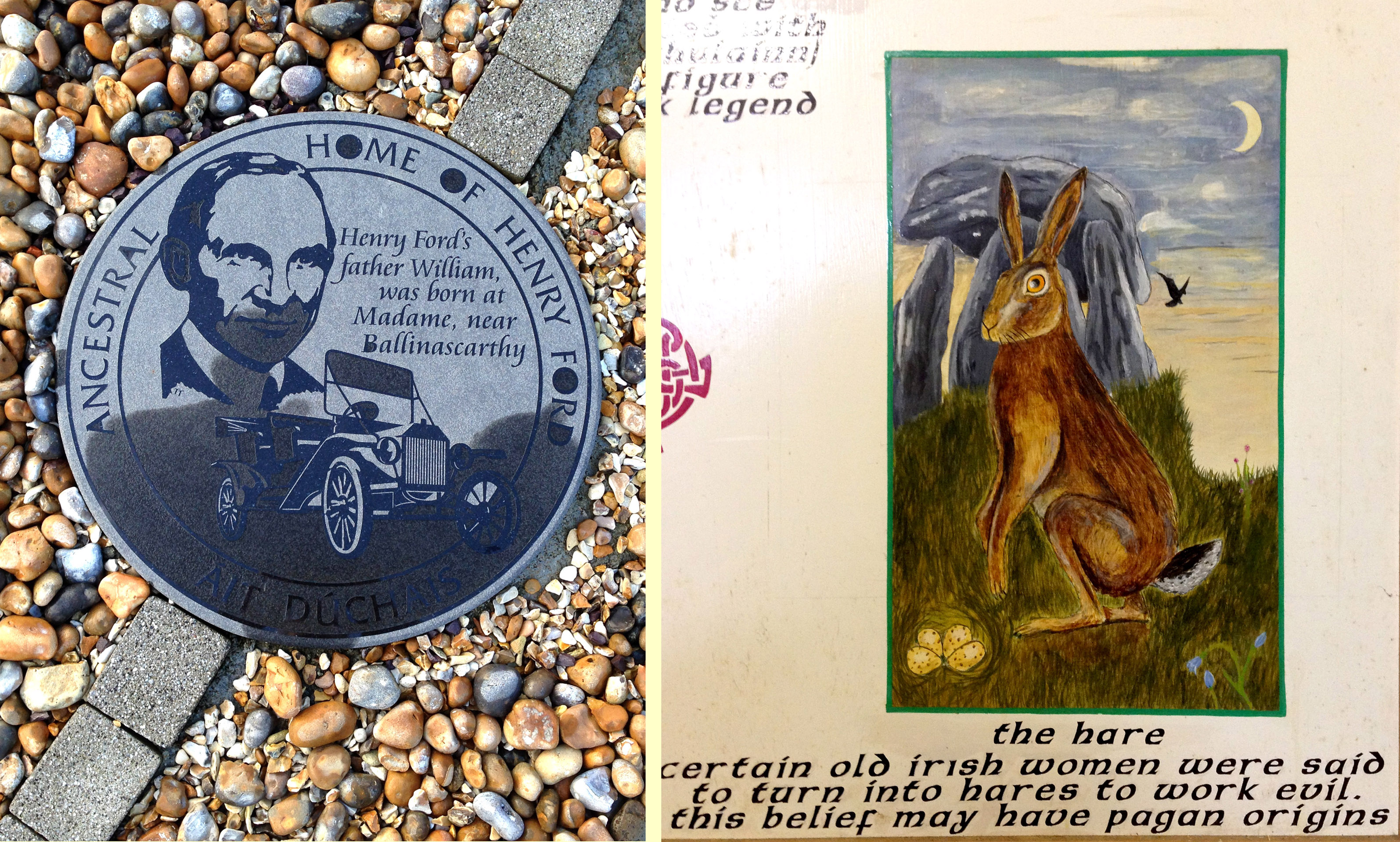
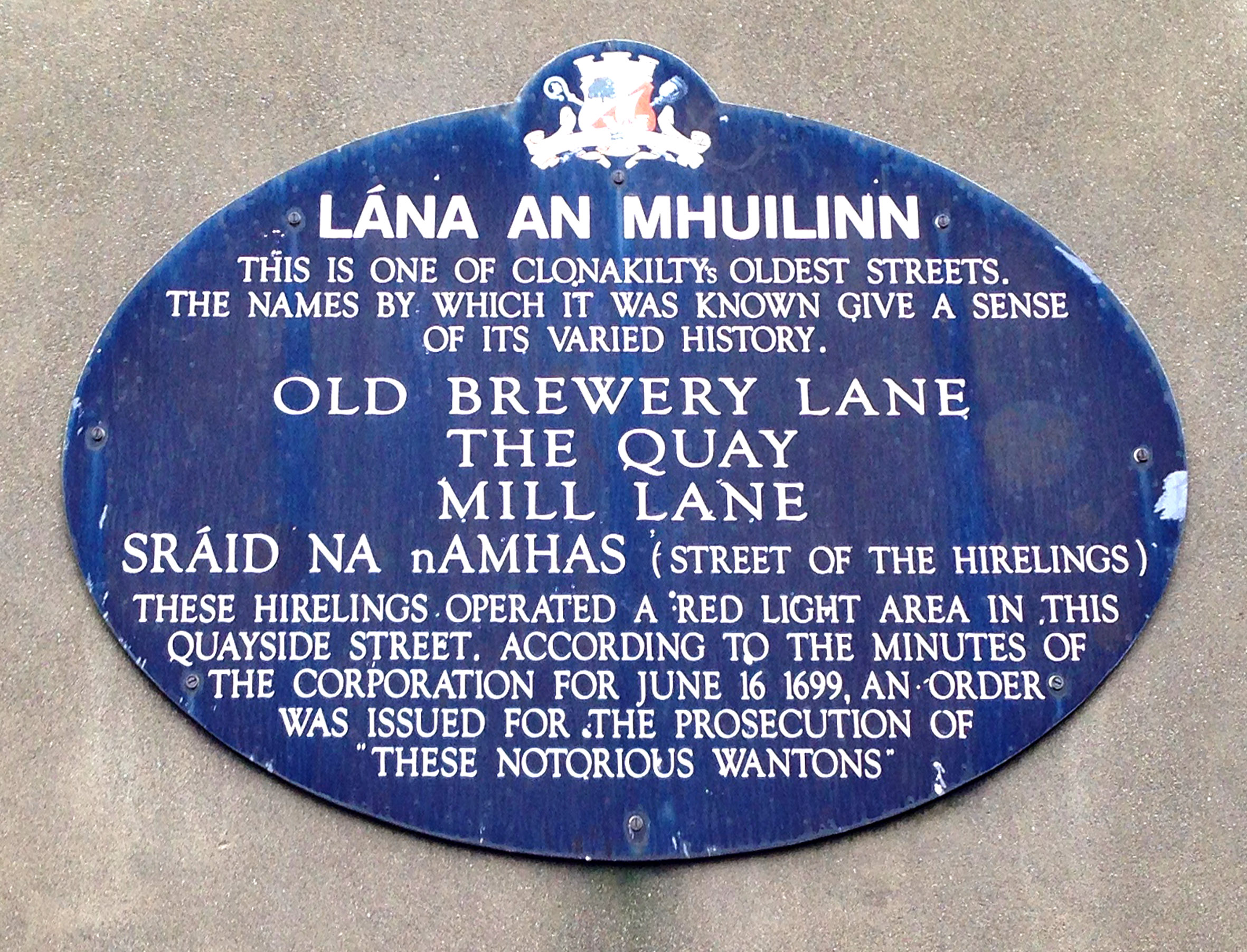
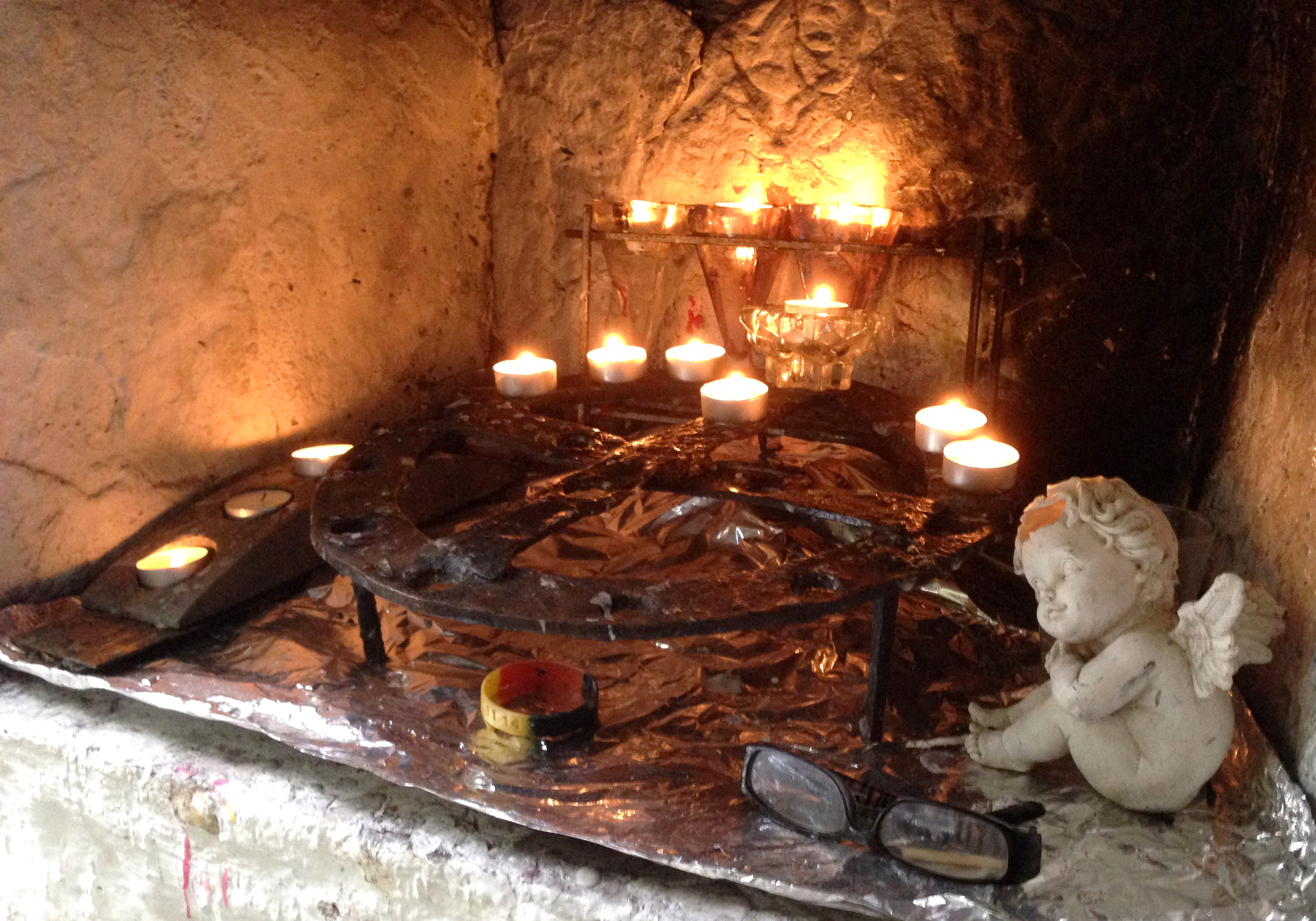
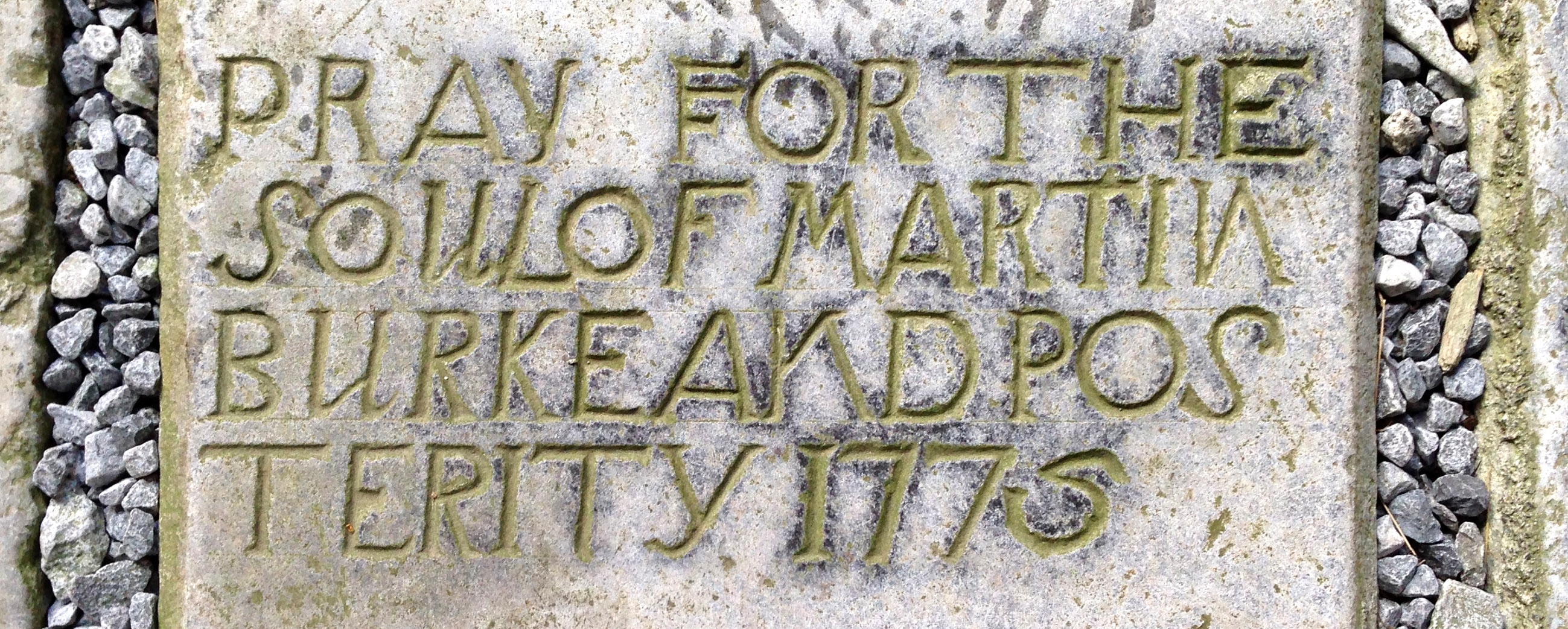
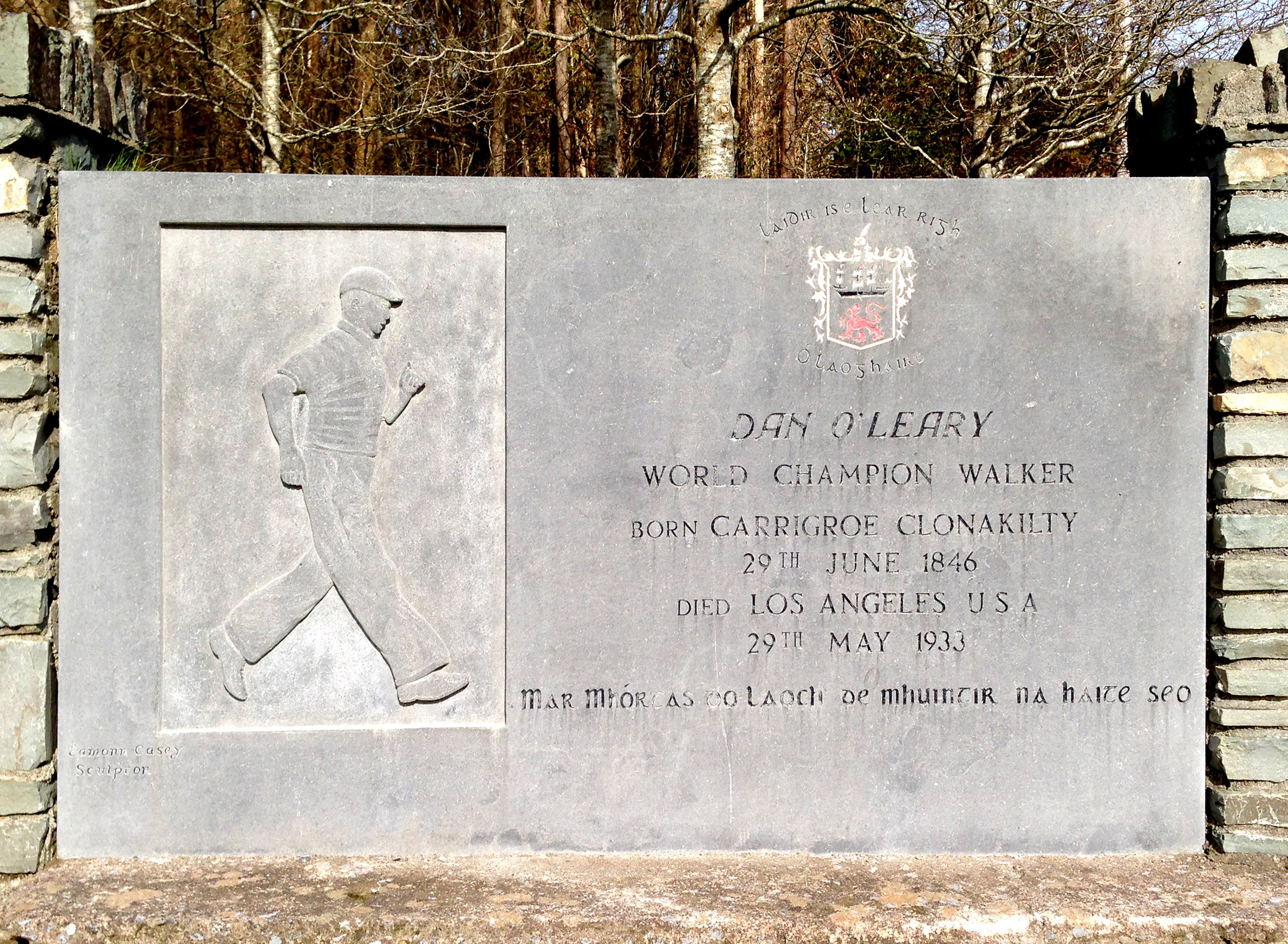
Another selection of Irish ‘normalities’ which have caught my English eye over the last few months (the previous selection is here). They have amused me, surprised me and sometimes baffled me. I have the greatest respect for their ‘Irishness’ – a unique outlook on life and culture from a small island which has made a big mark on the world. Mostly the images need no commentary but I have provided a little information for the curious at the end of the post.

them jobs

holy water

scrap

sprigging

ford hare

red light

shrine

luckyhouse

posterity

till he comes

walker

walking

offerings

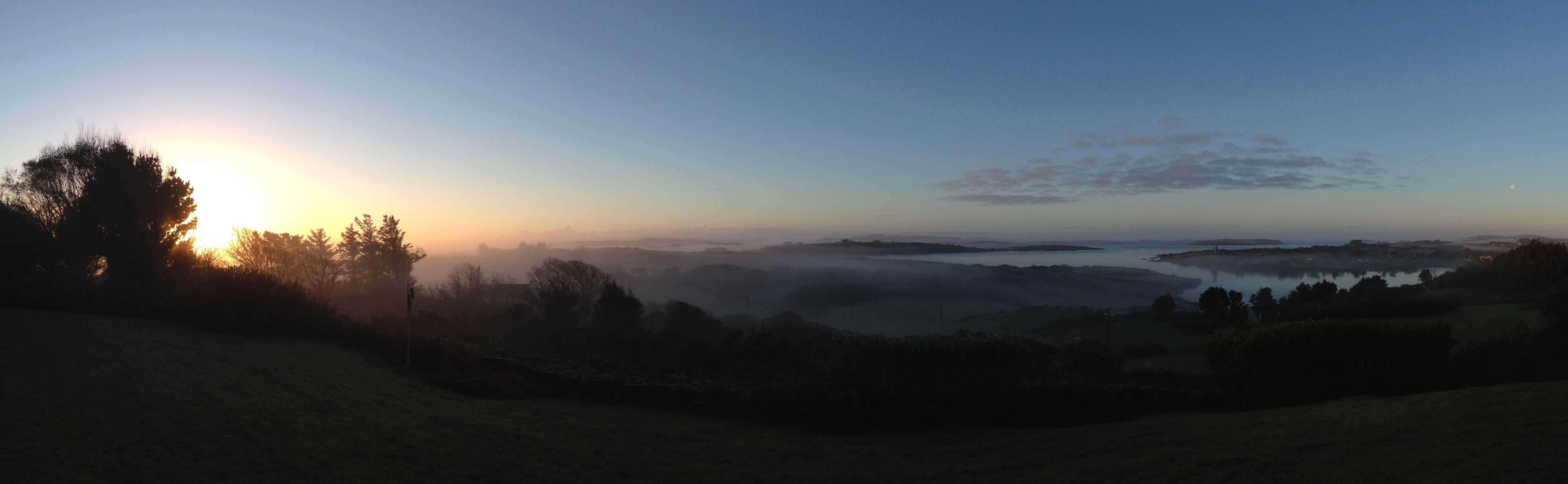
Most of the images are from our own neighbourhood, but the spectacular wells and shrines – including the one above (to St Brigid) were seen on our trip to Clare. Can’t resist just one more image: it’s the view we enjoy every day from Nead an Iolair, constantly changing and always arresting.

panorama