Outlook: Unsettled!

Exactly ten years ago I wrote a Roaringwater Journal post titled Outlook: Changeable! It was about the weather and – interestingly – things haven’t changed much in that respect over a decade. So I thought it was worth a re-run, with some adaptations. The new title, for a start – Outlook: Unsettled! – is apt, perhaps, for the whole world we are living in today and not just the weather. The year 2014 produced the fiercest storm – Darwin – that many in West Cork (and beyond) had experienced in their lifetimes. Certainly we had property damage, felled trees and powerlines, and were without electricity, phone and internet for very many days.
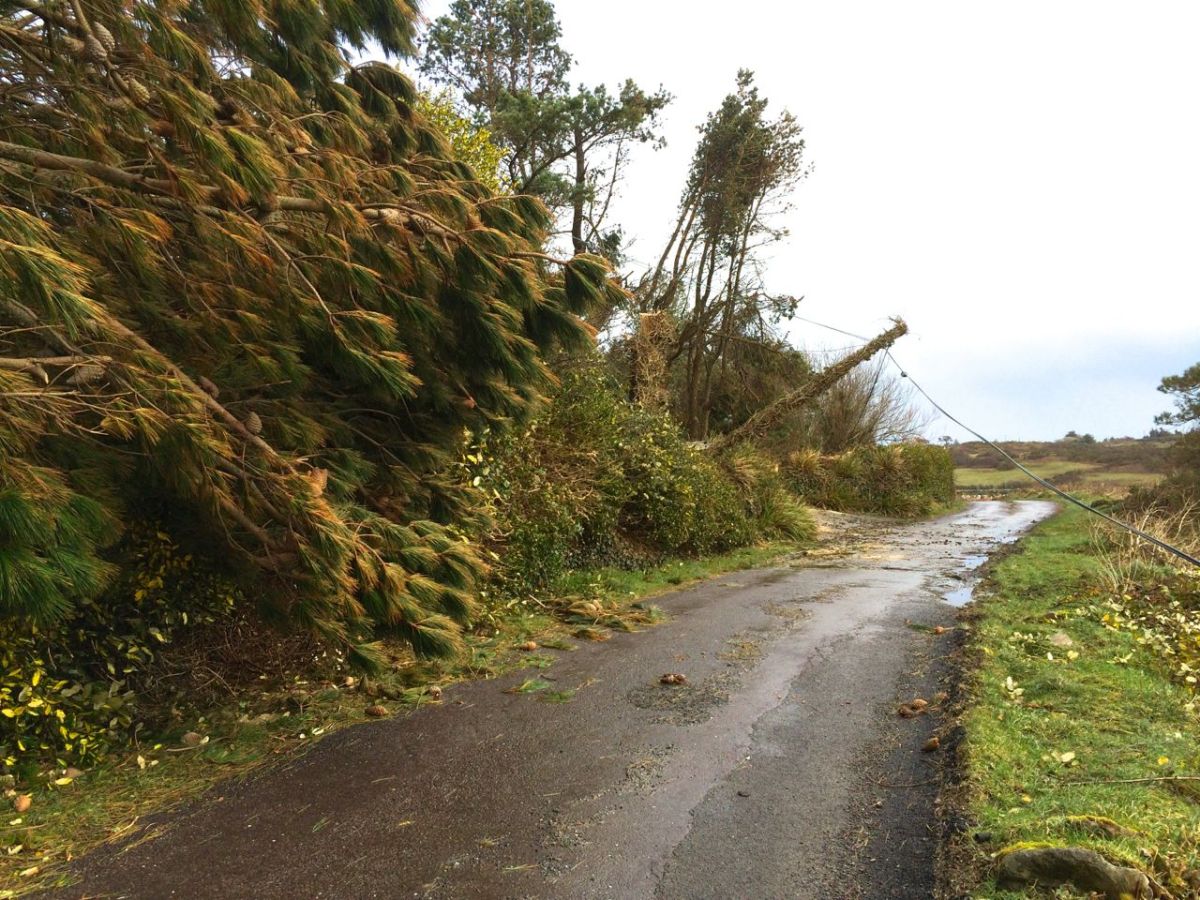
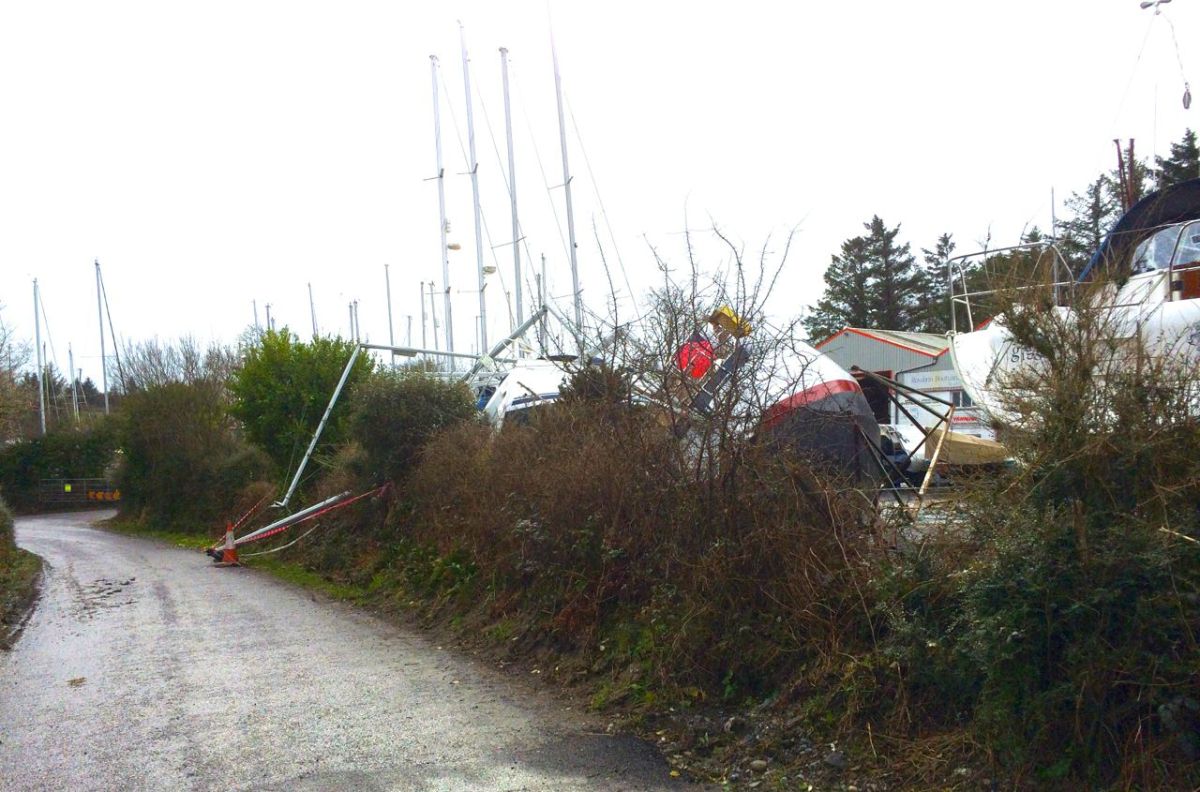
Examples of the damage caused by Darwin in 2014: neighbouring cables felled (upper) and boats toppled from their keel blocks in Rossbrin Boatyard

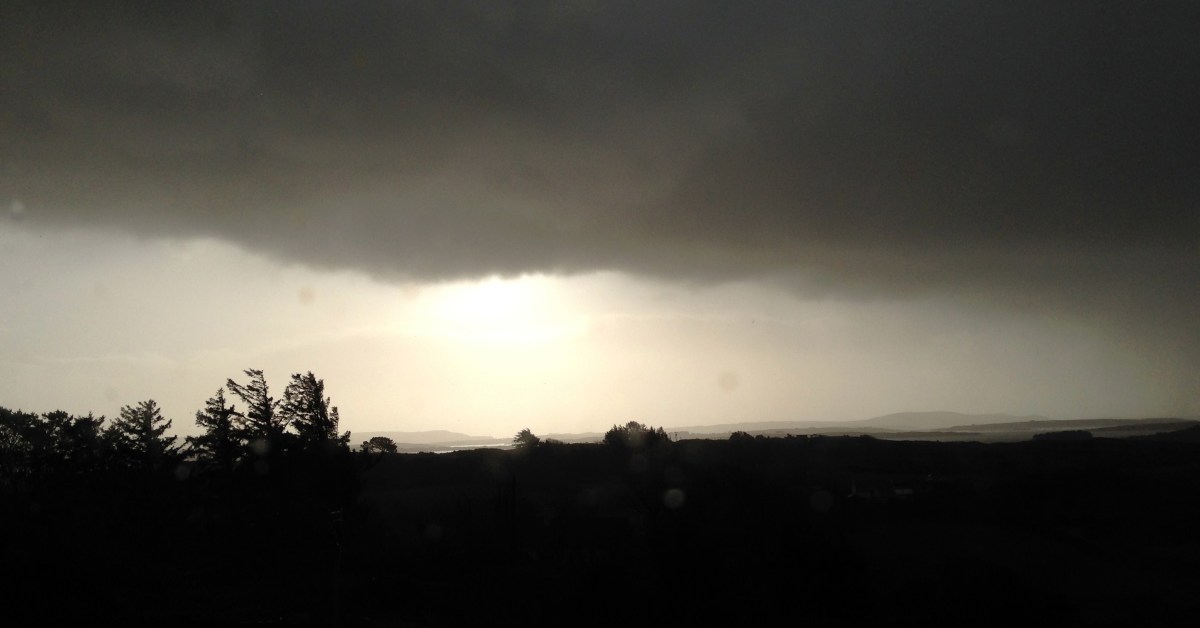
From January 2014: …One of my favourite expressions about the weather was learned from an elderly gentleman who had lived all his life in Hampshire, England. …Tis black over Will’s Mother’s… This would have described very well the scenes around us in Nead an Iolair when we awoke this morning. As an Englishman I would be expected to talk about the weather all the time; Irish people are not far behind in this, probably because there is such a variety of weather – even in a single day – that it demands to be described. …Is iomaí athrú a chuireann lá Márta dhe… means: …There is a lot of weather in a March day… This might just as well refer to a January day, or a day in any month in our experience. To illustrate this we decided to try a time lapse video, using an iPhone and a tripod. We had to shoot it through the window, hence the reflections – just as well because during the process we had torrential hail to add to the variety. So this is a thirty minute session of Irish weather coming in to Roaringwater Bay compressed to thirty seconds, each frame being shot a second apart:

By asking around the locality I have compiled some Irish expressions for weather. These are ones that I particularly like:

A snipe won’t stand in the morning… (meaning expect icy weather)

It’s a hure of a day… (meaning it’s a hure of a day – Finola has her own version here)

 Bad aul’ day isn’t it?

And – very occasionally – The Sun does be splittin’ the stones

Coming back to 2024 It’s worth delving into the archives of the The Schools’ Folklore Collection: the following entries were written down in the 1930s and provide an insight into weather-lore from the time:

“…When the sheep go under the wall there is a sign of rain.
When the curlew begins to whistle there is a sign of rain.
When the cricket begins to sing there is a sign of rain.
There is a sign of rain when the hills look near.
When the dust is flying off the road there is a sign of rain.
When the river is roaring there is a sign of rain.
When the fire is blue there is a sign of rain.
When the clouds are running in the sky there is a sign of rain.
When the smoke from the chimney is going up straight there is a sign of rain.
When the sky is red in the morning it is a sign of a wet day.
When there are a lot of clouds in the sky it is a sign of rain.
When there is a rainbow in the morning it is a sign of a rain.
The South wind brings most rain in this district. A red sky is a sign of a storm.
Black clouds are a sign of rain.
When the swallows are flying it is a sign of rain.
When the dog is eating grass it is a sign of rain.

When rain is expected the cat lies near the fire.
The crows lie on the walls when rain is expected.
The nearer the ring is to the moon the farther the rain is from us.
The farther the ring is from the moon the nearer the rain is to us.
When the lake is rough it is a sign of rain.
When the water-fall roars it is a sign of rain.
When the soot is falling it is a sign of rain.
When the cricket comes into the house it is a sign of rain.

If a robin comes in very near the door of the house its the sign of bad weather.
If crows fly in flocks together and are always cawing its the sign of rain.
The South and South West winds are the most that bring rain.
If the ducks quack loudly and the cricket sings sharply its the sign of rain.
A ring around the moon at night is the sign of rain…”

All these sayings have been collected by informants Willie Noone, John Monoghan and Michael Halloran, Co Mayo. It’s instructive that they are only about rain.
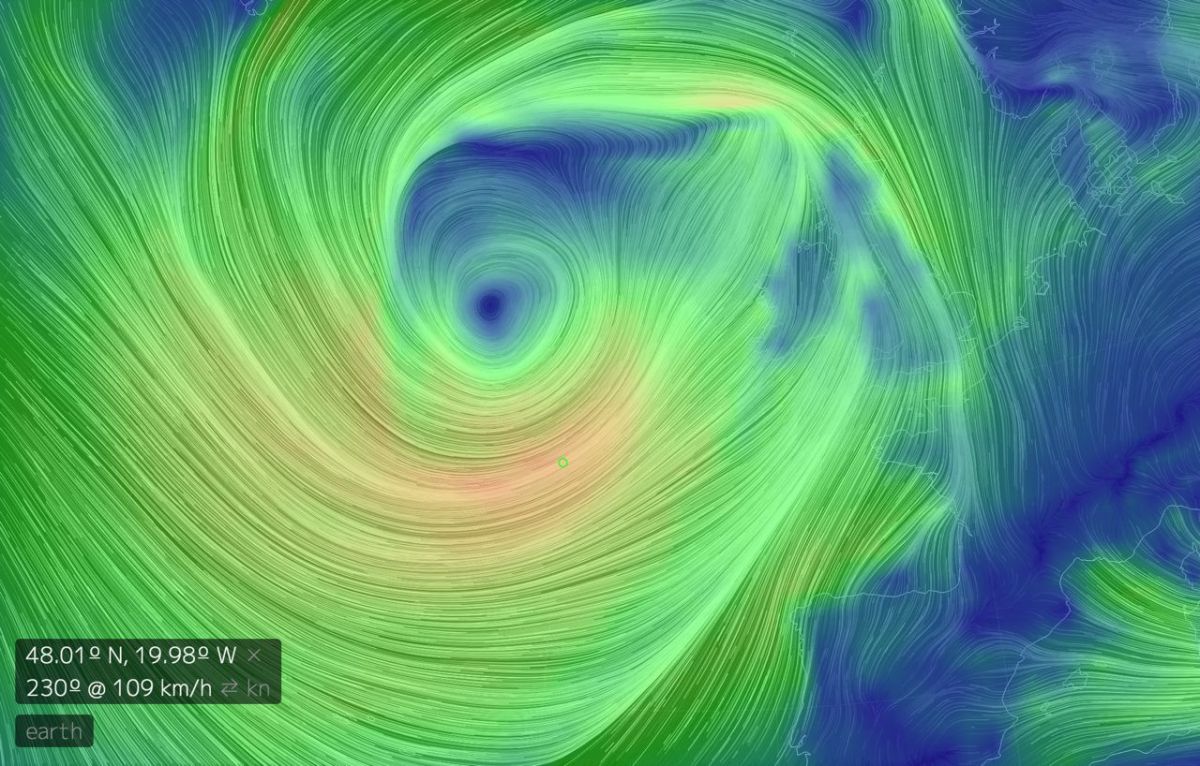
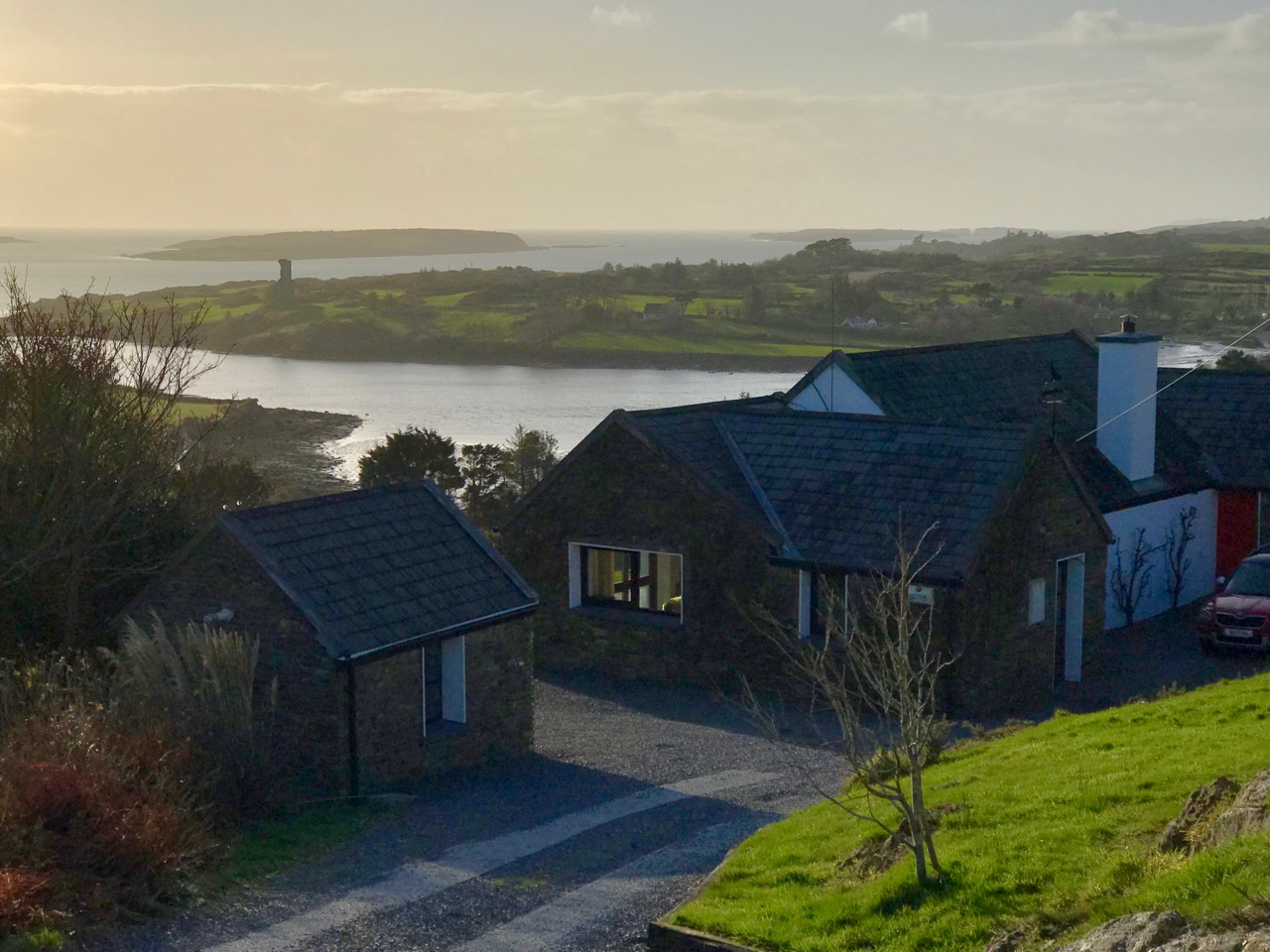
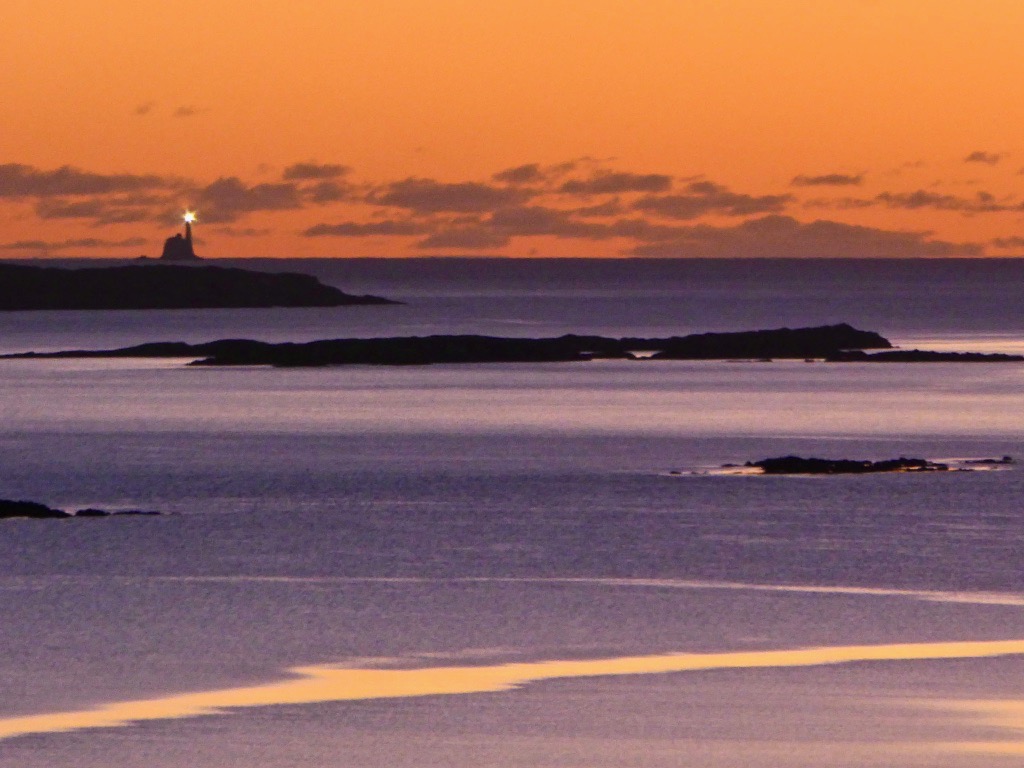
This is a record of the Earth Wind Map from early January, 2014. It’s centred over Ireland. Only 109 km/h is recorded. That’s classified as “Violent Storm” and just a few km/h short of a hurricane. Storm Darwin hit wind speeds of 177 km/h. That was a record for the time, but it’s worth noting that the greatest wind speed ever measured (so far) in Ireland was 191 km/h at Fastnet Lighthouse, County Cork on 16 October 2017. That’s just across the water from us here at Nead an Iolair! Here it is seen from our house (by Finola) on a happily calm day…
Rossbrin Calendar

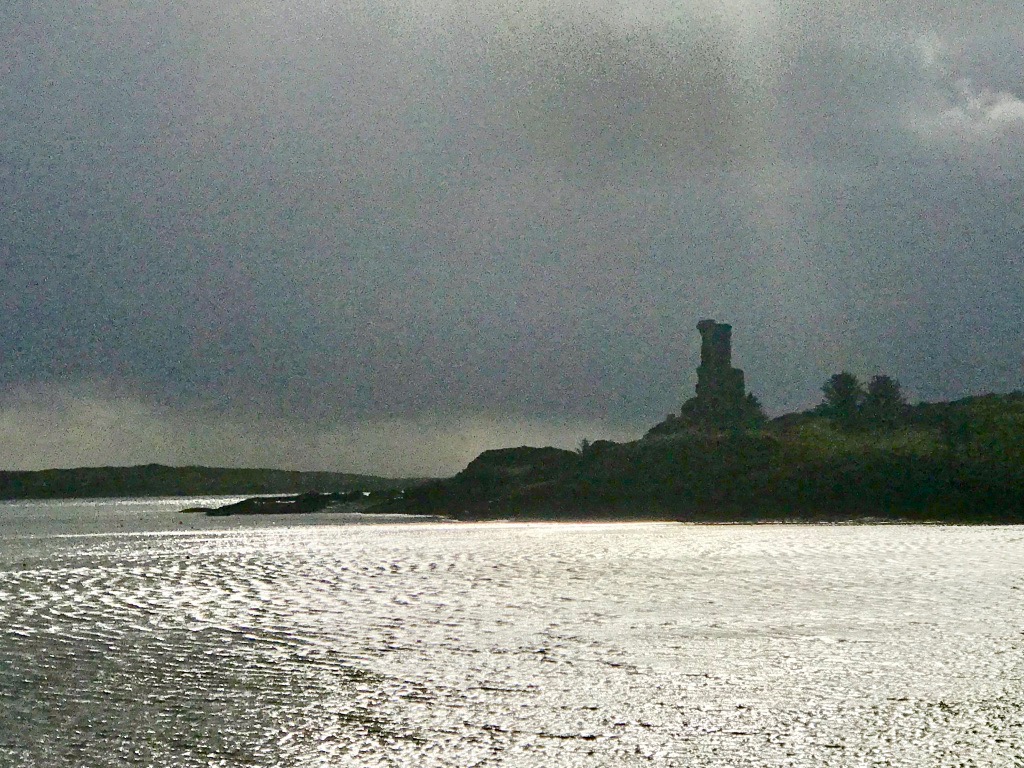
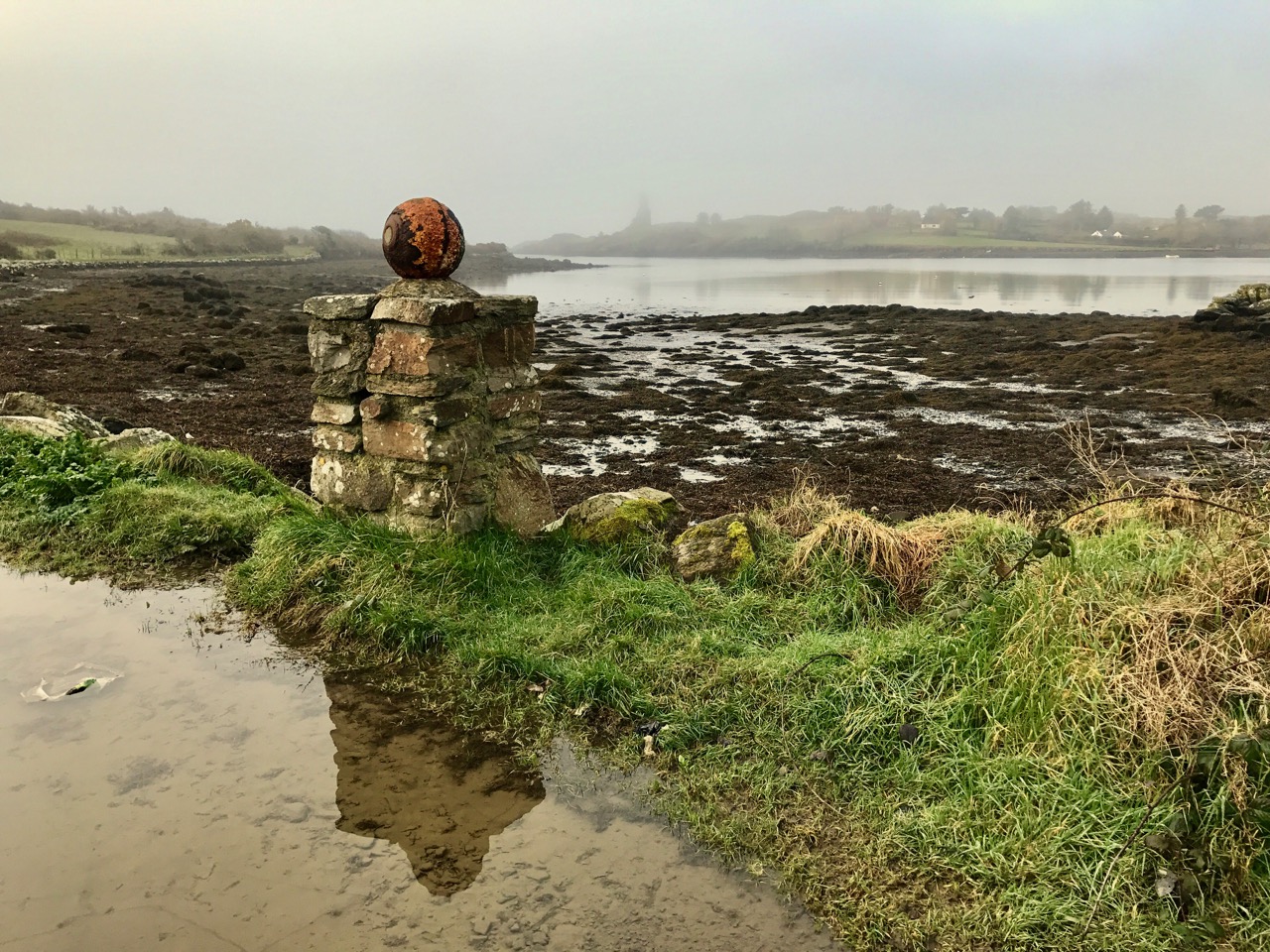
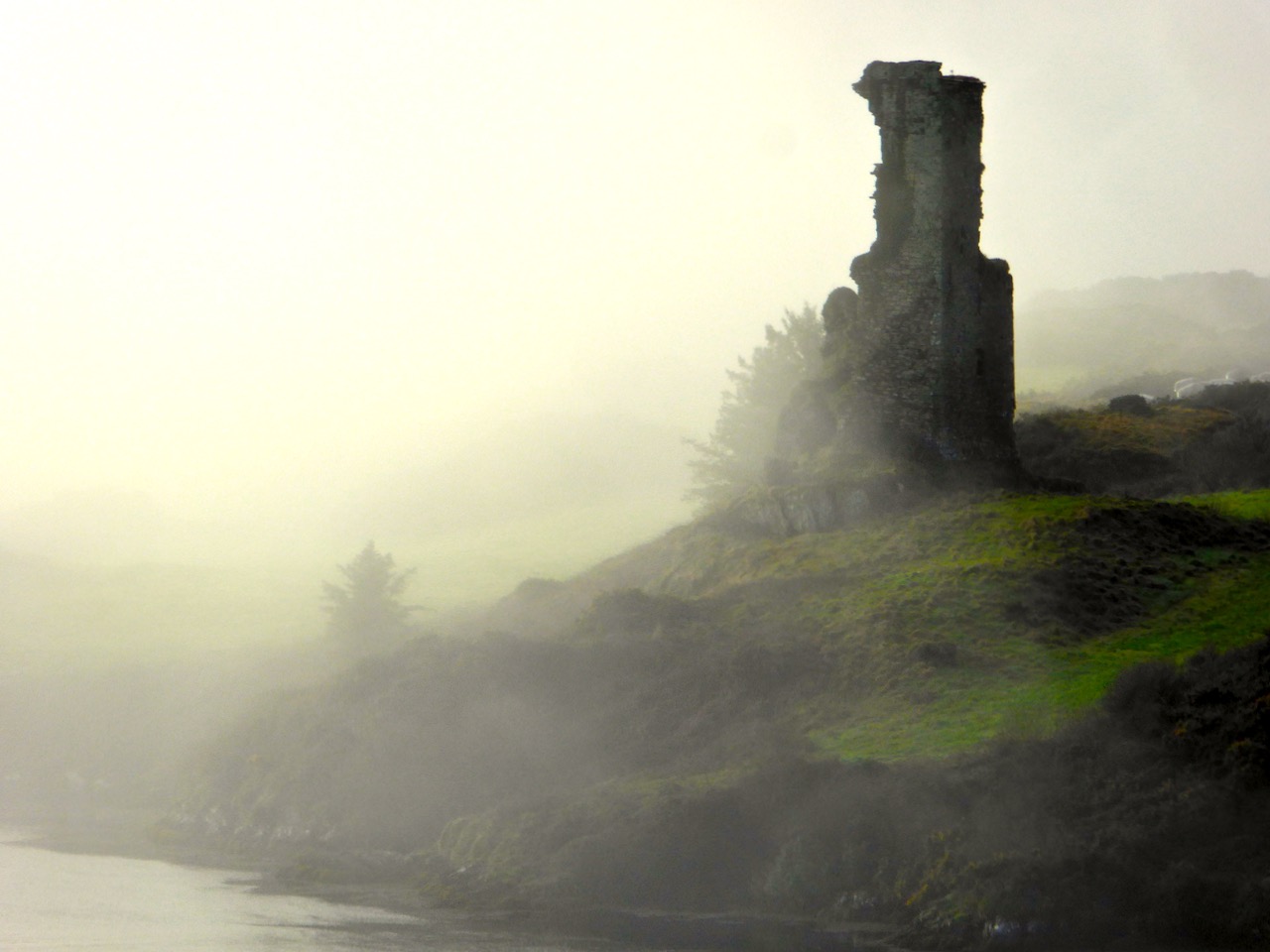
We know Rossbrin Cove intimately – more so than any other part of West cork. That’s because it’s right on our doorstep, and there is seldom a day when we don’t walk or drive along the Cove; and, even if we fail to get out, the views from our windows at Nead an Iolair will always be looking down on the Cove and its castle. I conceived the idea of sorting through all our pictures and selecting a ‘calendar’ of Rossbrin, taking us consecutively through the months of the year so that we can follow the seasons and the changes that every day brings. That’s Rossbrin Castle above, a view taken in January – which can often be atmospherically misty. But the picture below was also taken in that month, when we explored an abandoned house in the environs of Rossbrin: just as atmospheric in its own way – and bursting with a story to tell . . . But we’ll never know it.

Low tide at Rossbrin, taken from the pier and looking towards the boatyard – an important aspect of the Cove as the winter laying-up and maintenance of pleasure boats brings all-year-round life to the area and provides a livelihood. The picture above was taken in February, on a good clear day. In the middle distance you can just make out a wrecked boat uncovered by the receding water: this is the ‘Flying Foam’ – still rather enigmatic – which I wrote about a little while ago. We expect our strongest gales in February, and the picture below was taken when storm clouds began to gather.

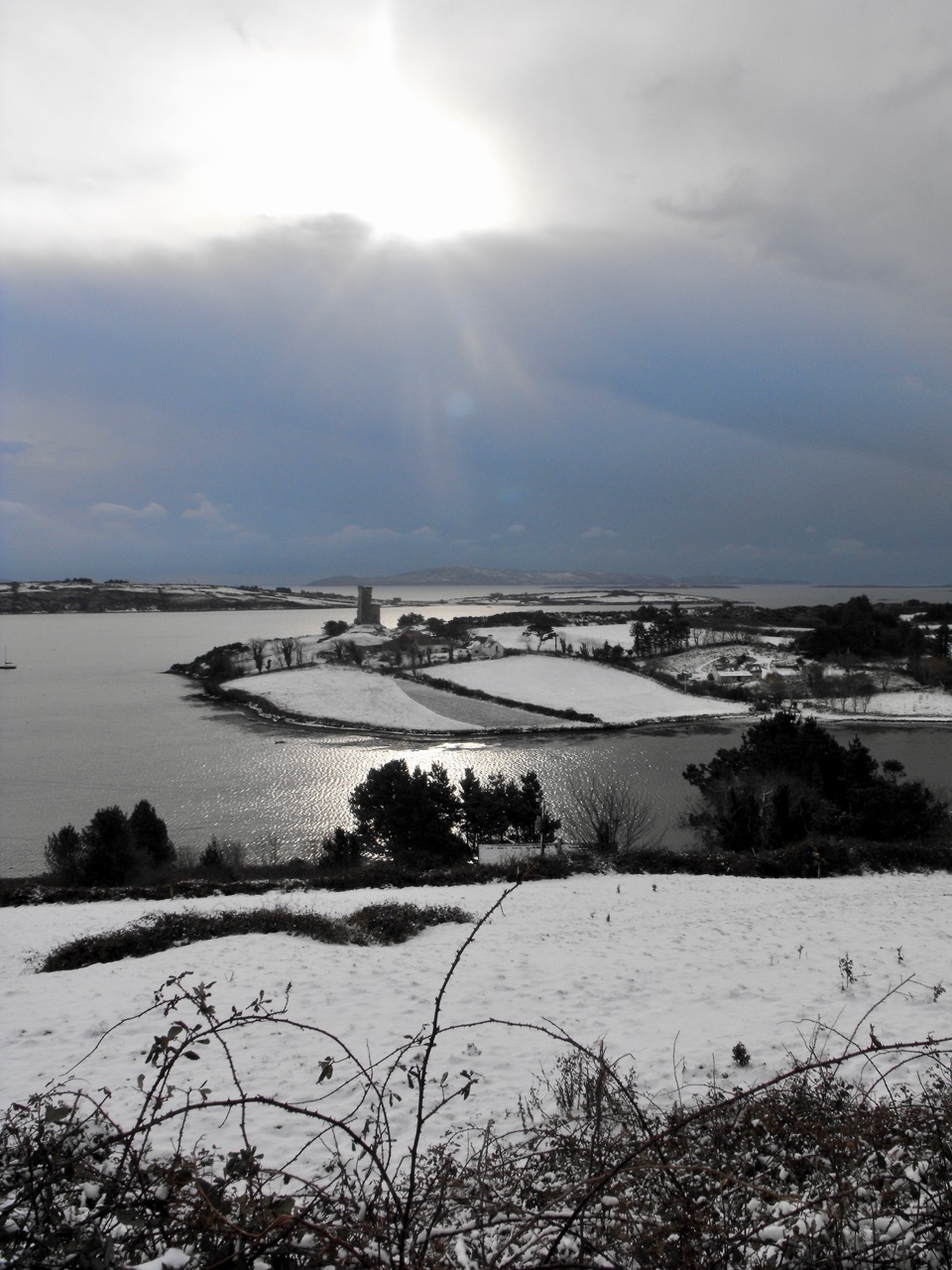
March can also be a month when the weather is inclement (above), but we had a surprise in 2018 when snow covered the land around us (below) – a climatic event seldom experienced in Roaringwater Bay, which is more usually kept mild by the Gulf Stream. That’s Castle Island beyond the Cove – once inhabited (and with its own castle which you can see in the picture) but now just used to run sheep and cattle.

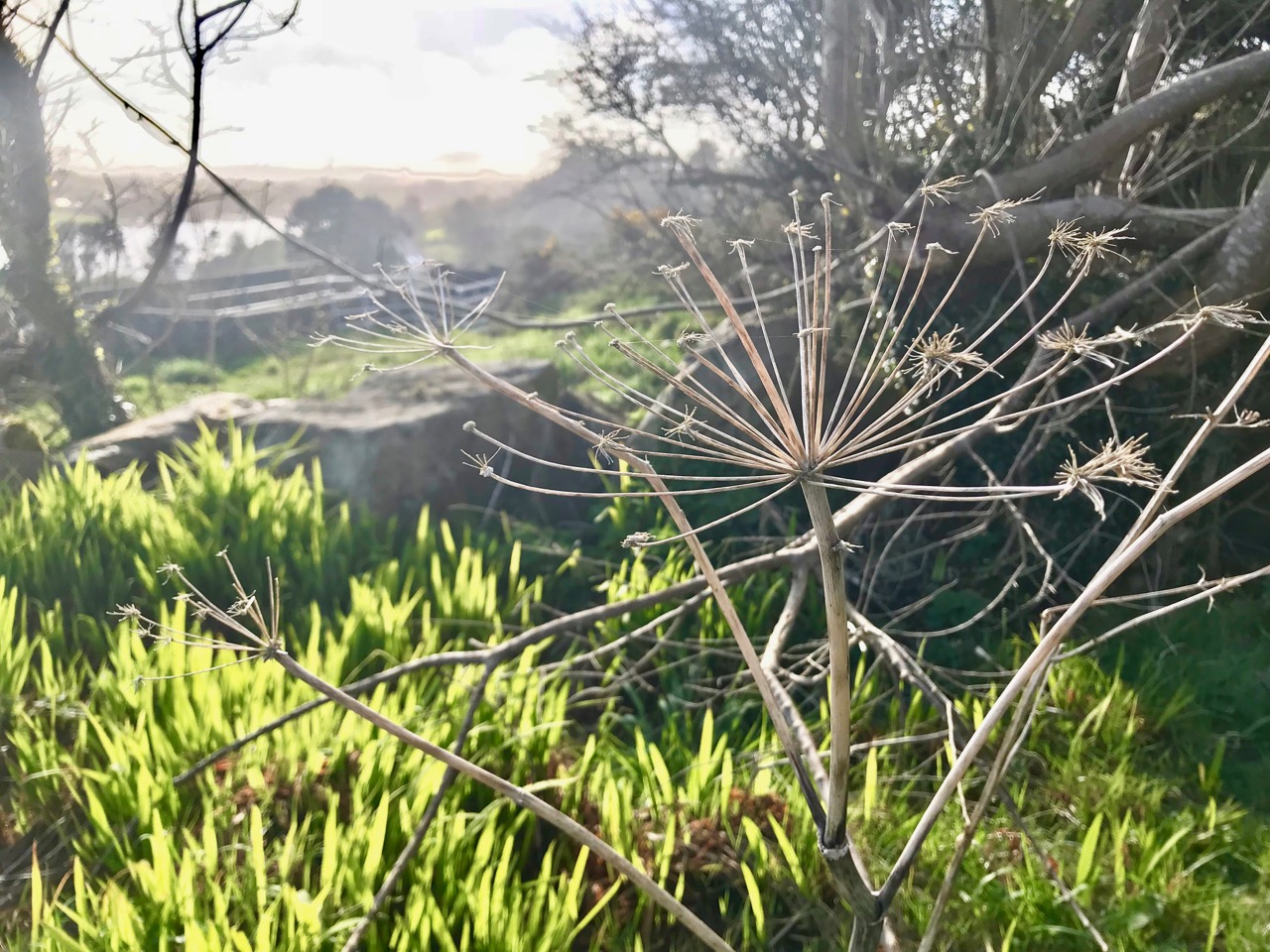
You can see how quickly the weather changes in West Cork: Rossbrin Castle Farm is enjoying blue sea and skies in April, and the gorse is in bloom, showing that love is in season! In the detail below, at the edge of the Cove and also in April, we can see the new spring growth beginning to overtake last year’s seed-heads.

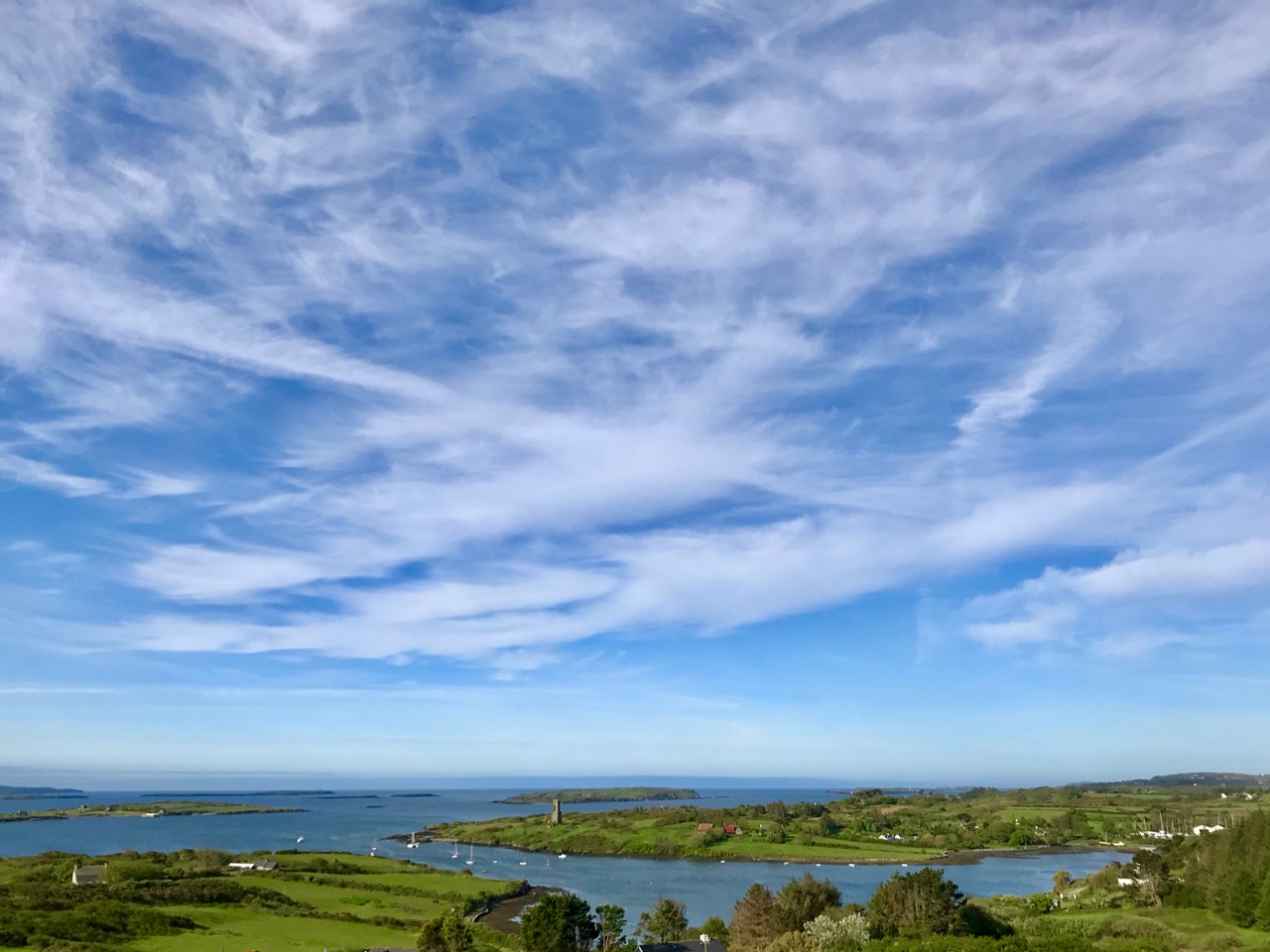
By the time May arrives, boats are already being taken out of winter storage and are anchored in the Cove. We get fabulous skyscapes perched up here above Rossbrin, and these mares’ tails herald windy weather ahead.

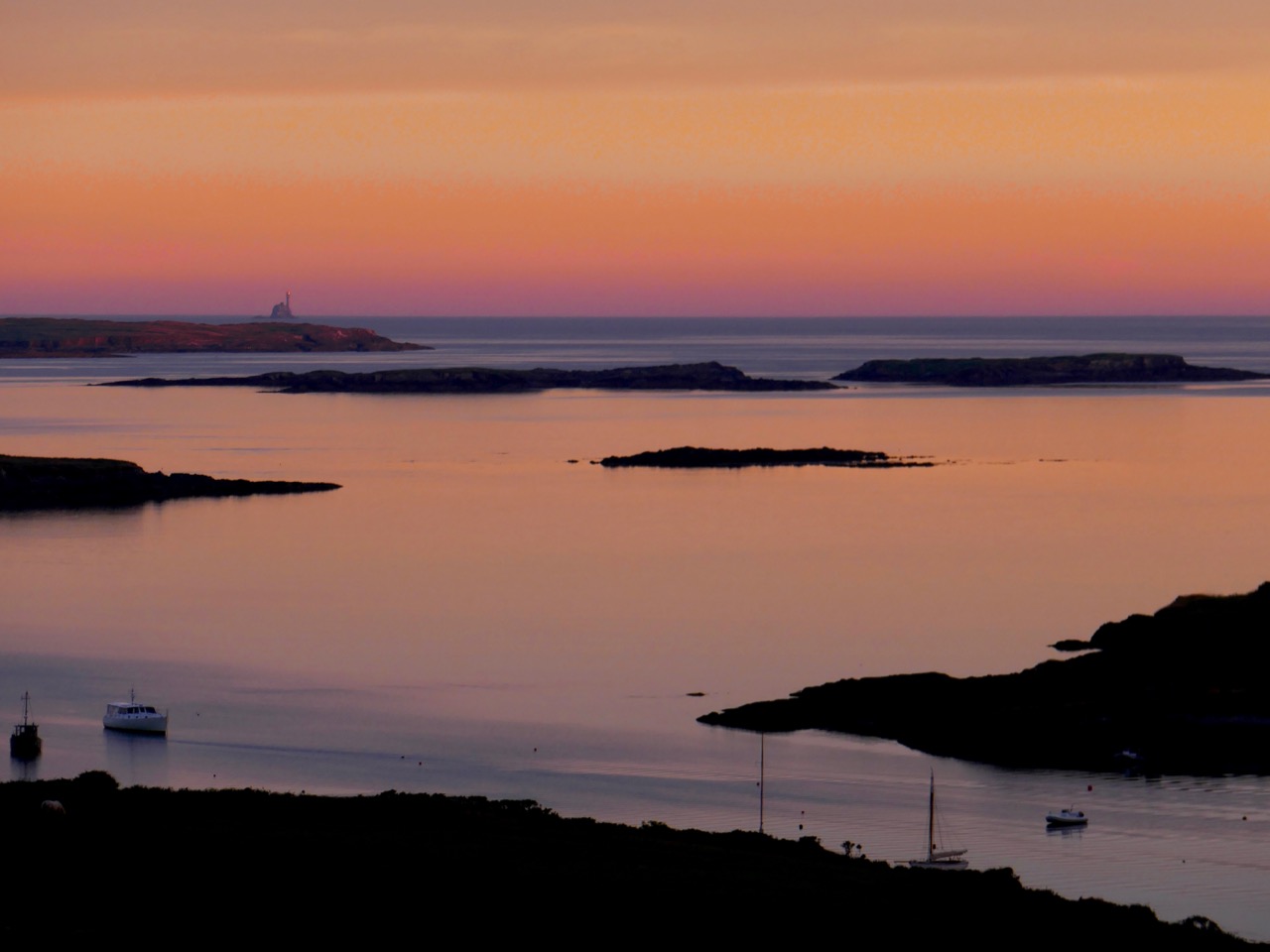
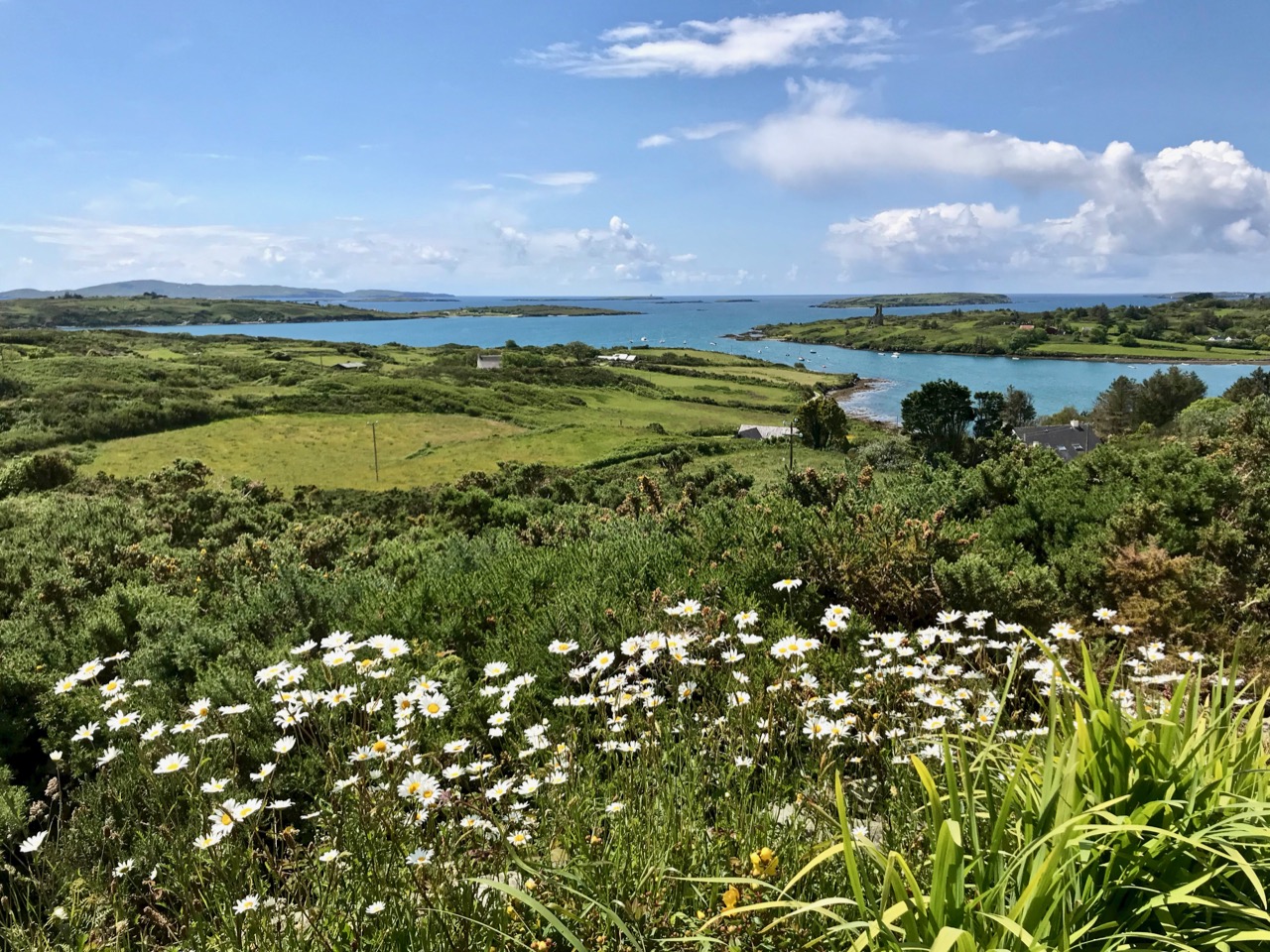
This is one of my favourite pictures – taken by Finola from Nead an Iolair in June. Late evening sun paints the sky and sea in almost implausible colours – although the photo has not been doctored. The whole effect beautifully outlines the Fastnet Rock lighthouse on the horizon with some of Carbery’s Hundred Isles silhouetted as if floating; Rossbrin is in the foreground. By day you can see that wildflowers are abundant this month (below).

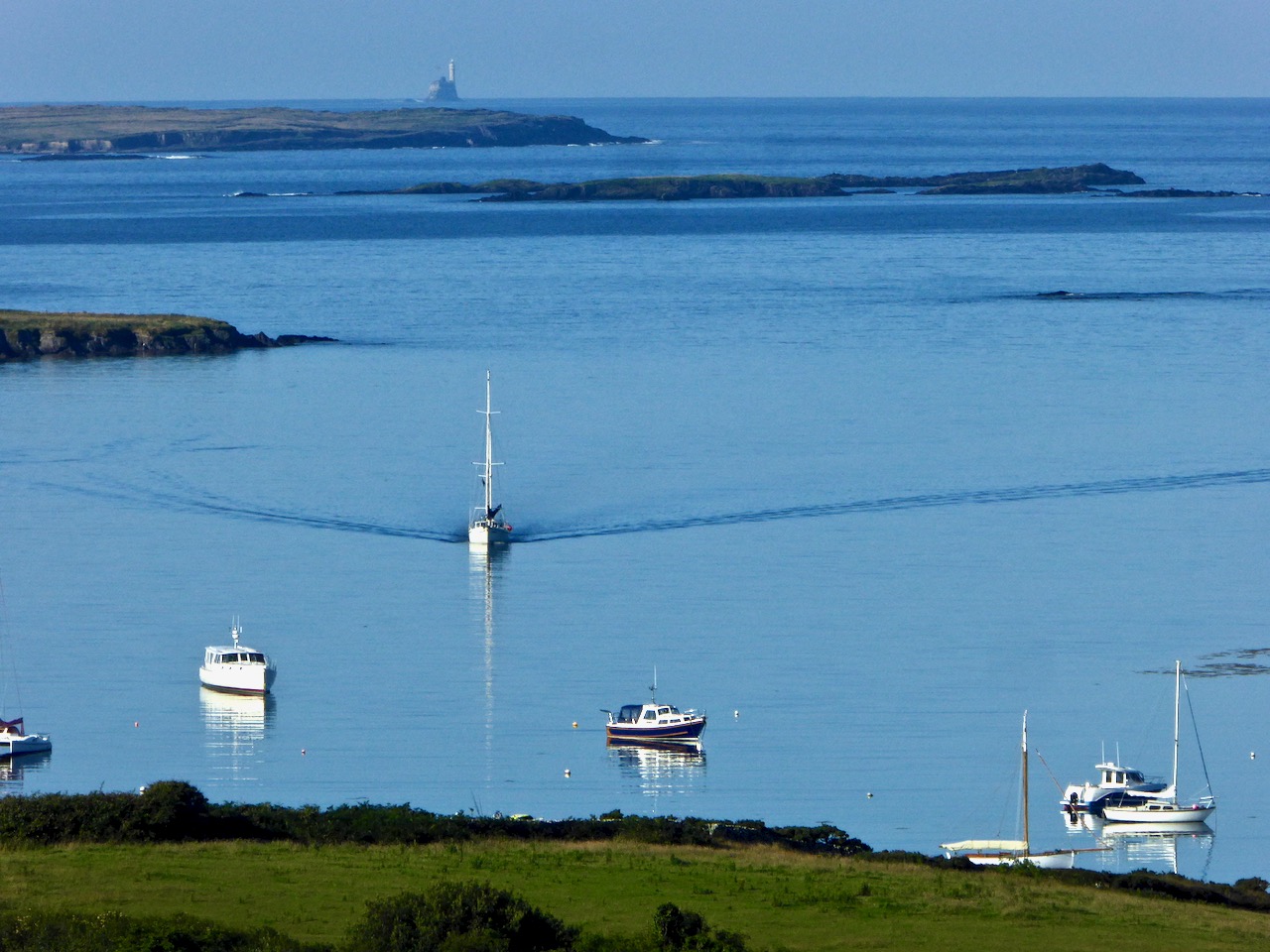
The sea in July is at its bluest. Here is Roaringwater Bay out beyond the shelter of Rossbrin on a calm day. There is hardly a ripple on the surface, except for the elegant wake of the yacht motoring in.

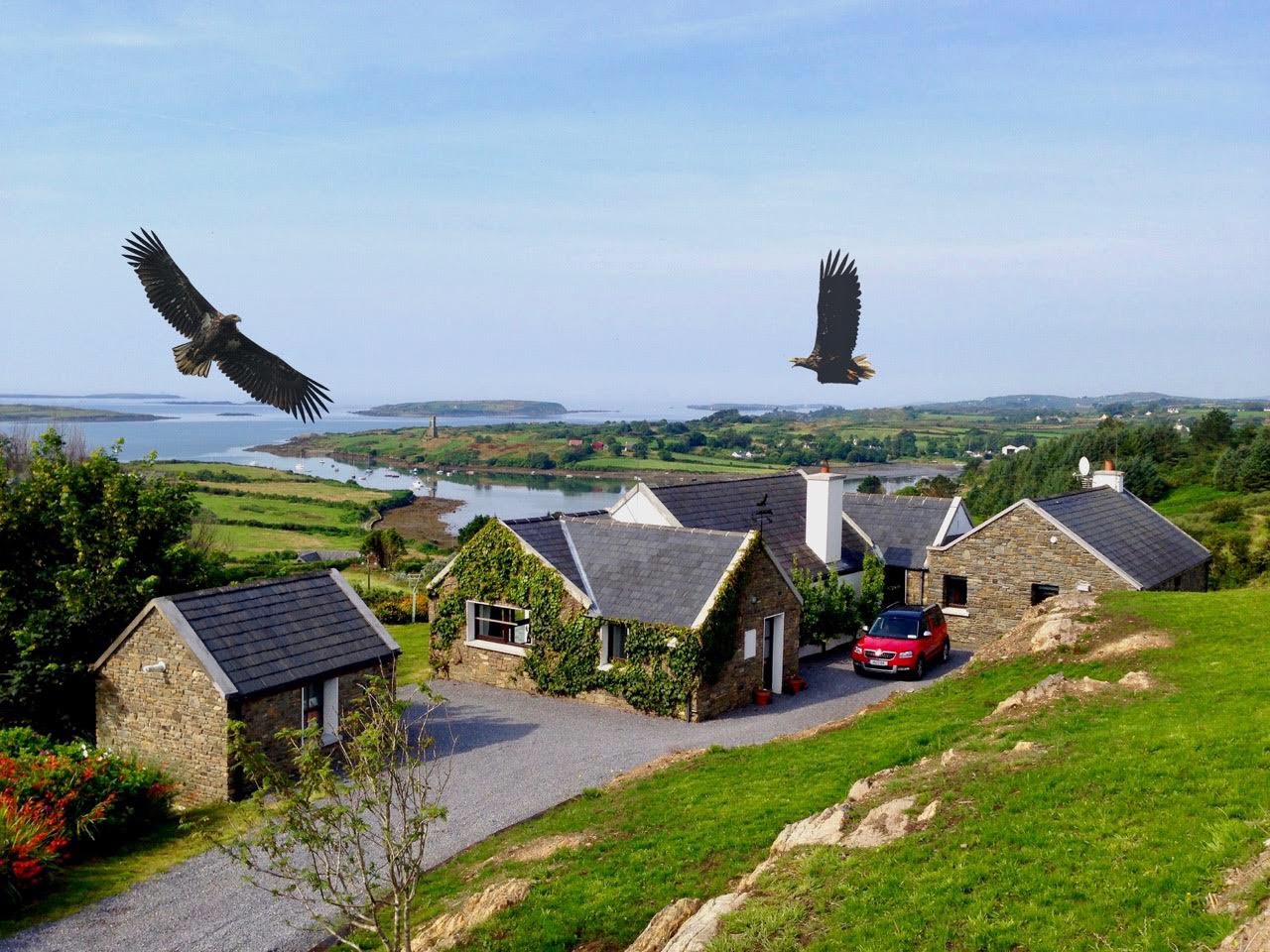
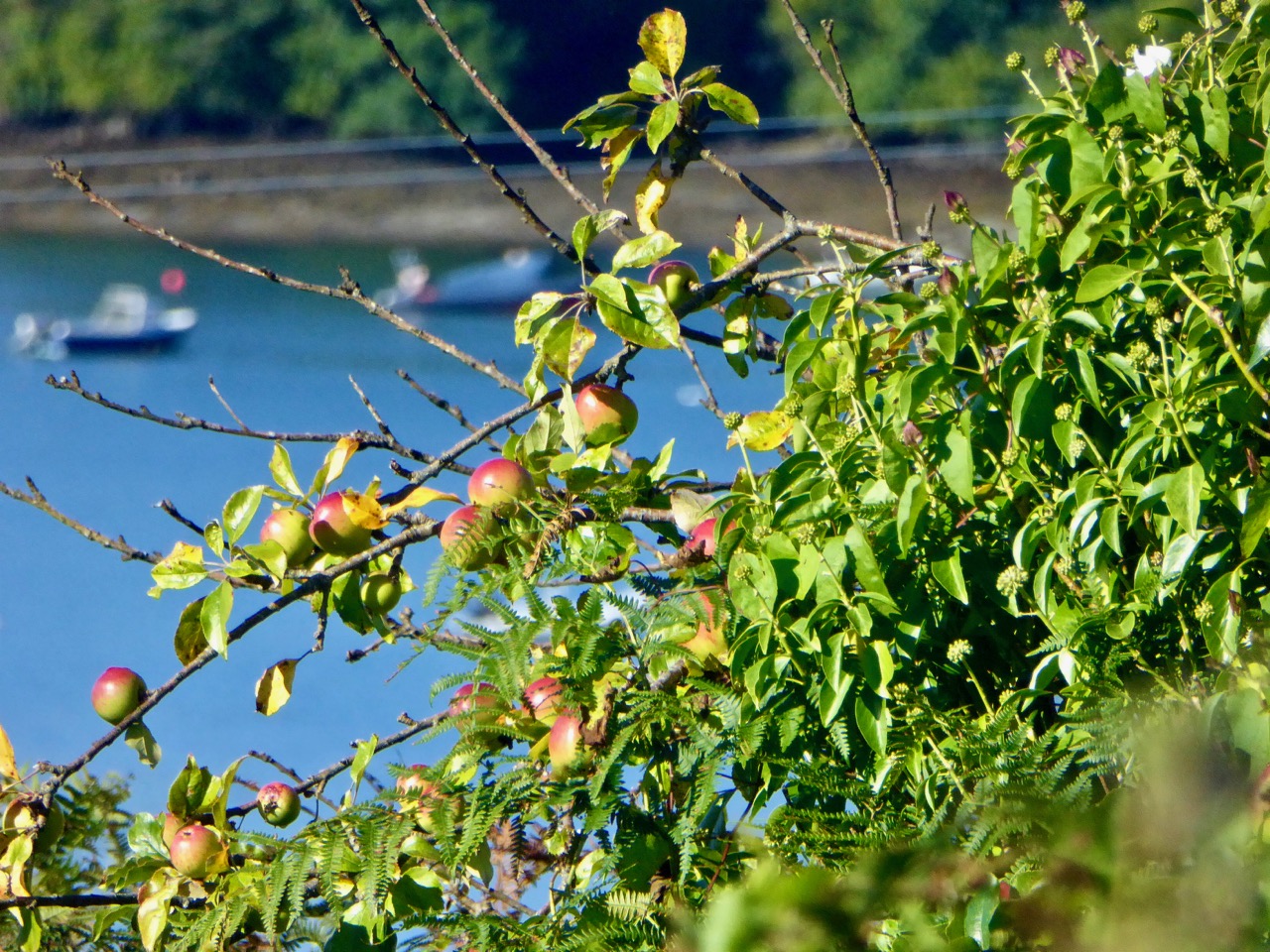
Nead an Iolair – our house – taken in August. You can see that Rossbrin Cove is central to our view out over the Islands. The name of the house means ‘Nest of the Eagle’, and the birds have obligingly flapped their way into the photo, courtesy of Photoshop. White-tailed Sea Eagles do survive in Kerry – not too far away – and they have occasionally been seen in West Cork. Once they were common across the west of Ireland. Below is another August picture – a wild apple tree close to the shore of Rossbrin.

I couldn’t resist adding this picture to the August tally (above): it’s an abandoned post box set into the wall of the old Rossbrin School, now closed. The school building survives as a private house and retains some of the architectural features of its previous use.

This magnificent machine is a remote-controlled boat-lift and was photographed on the large slipway which is at the western end of the Cove, last September. The Cove is a natural harbour and has been used as a resource for sheltering fishing boats and providing facilities for fish processing since medieval times. This post outlines how ‘fish palaces’ worked: there was at least one here in Rossbrin.

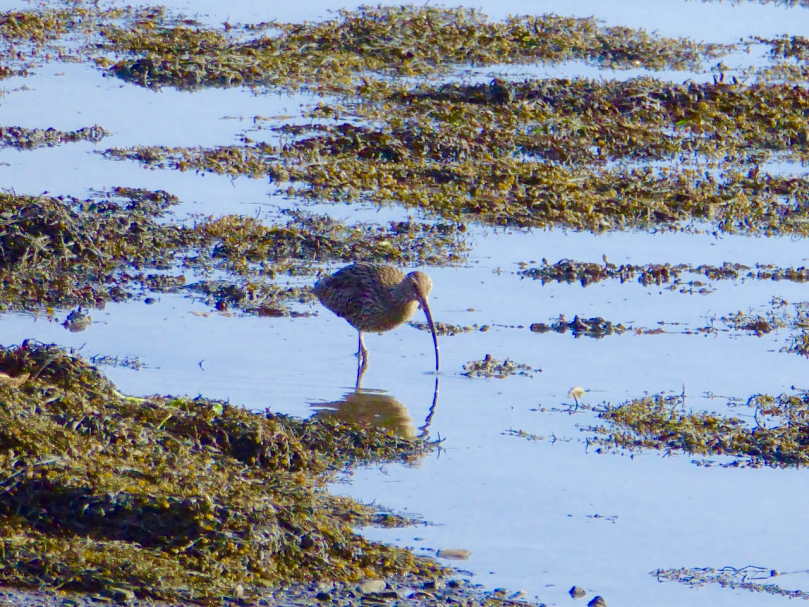
By October most of the boats have been taken off their moorings (above), and the weather changes again. We sometimes have the first of the winter storms this month, although it can equally be benign. Autumn brings with it dramatic skies and sunsets – and a feeling of melancholy, because the holiday houses down by the water are empty and shuttered for the onset of winter. But the weather can continue to surprise and November sunshine (below) can be as warming as any other time of year. It’s a good time for us to watch out for the wading birds – such as the curlews – who come in close to shore and forage on the mud flats.

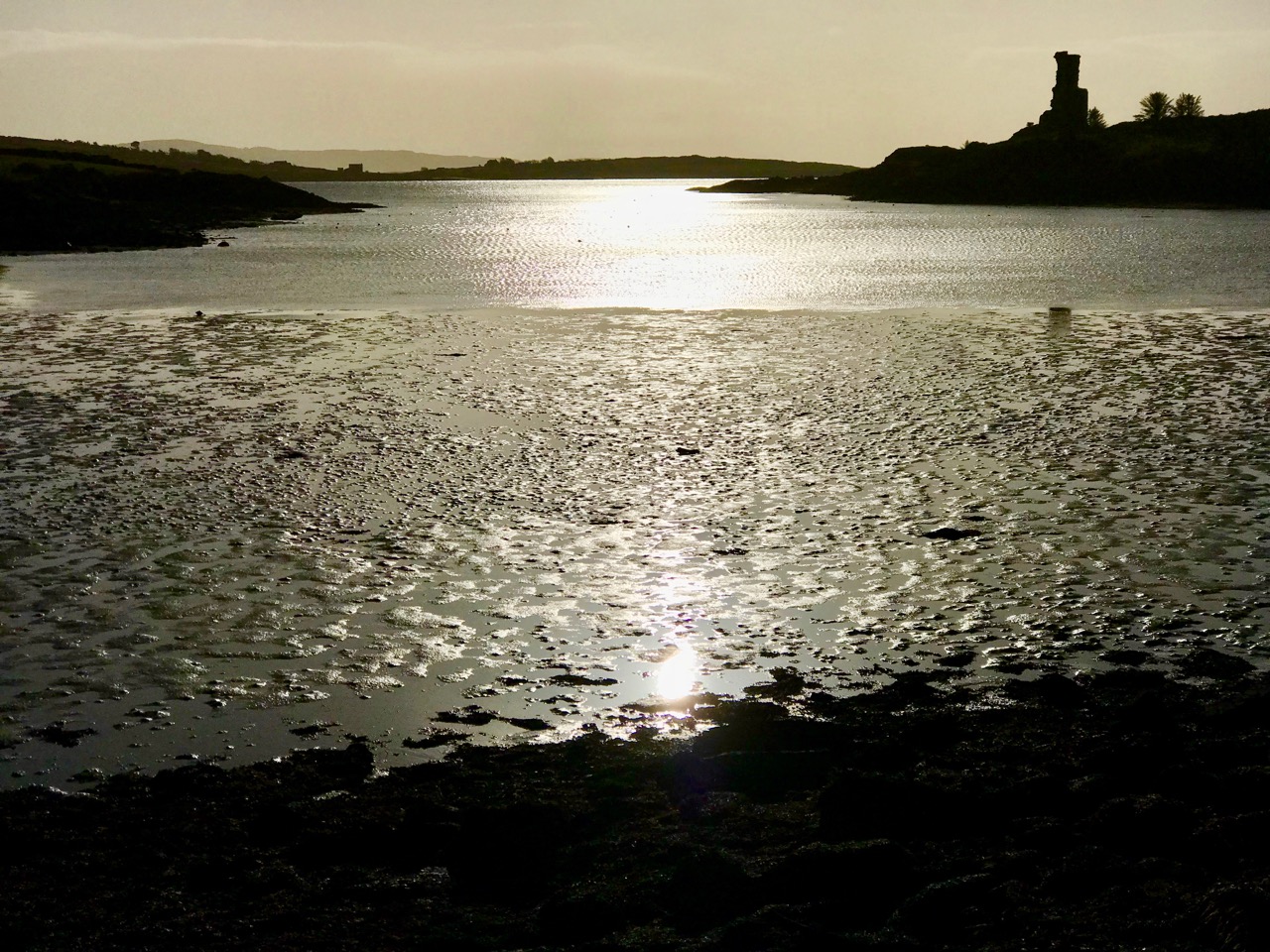
And so we come to the end of the year in Rossbrin. This has been a fairly random selection of images, picked out because each was taken in a particular month. We know how fortunate we are to live in this rich and constantly changing environment. Not only are we surrounded by nature, but the immediate history is alive with stories – of Fineen O’Mahony, the Scholar Prince of Rossbrin, who lived at Rossbrin Castle in the 15th century and surrounded himself with a university of monks and scribes and made a fortune out of fishing dues – and of Sir William Hull and the Great Earl of Cork who exploited Rossbrin in the 17th century, also for fish. Now we look down on a sparsely populated townland and the bay beyond it: it’s a most beautiful place to know and to live in. For December I have chosen a classic view of the castle with a wintry sky and late sun creating patterns on the half-tide.

December in Rossbrin

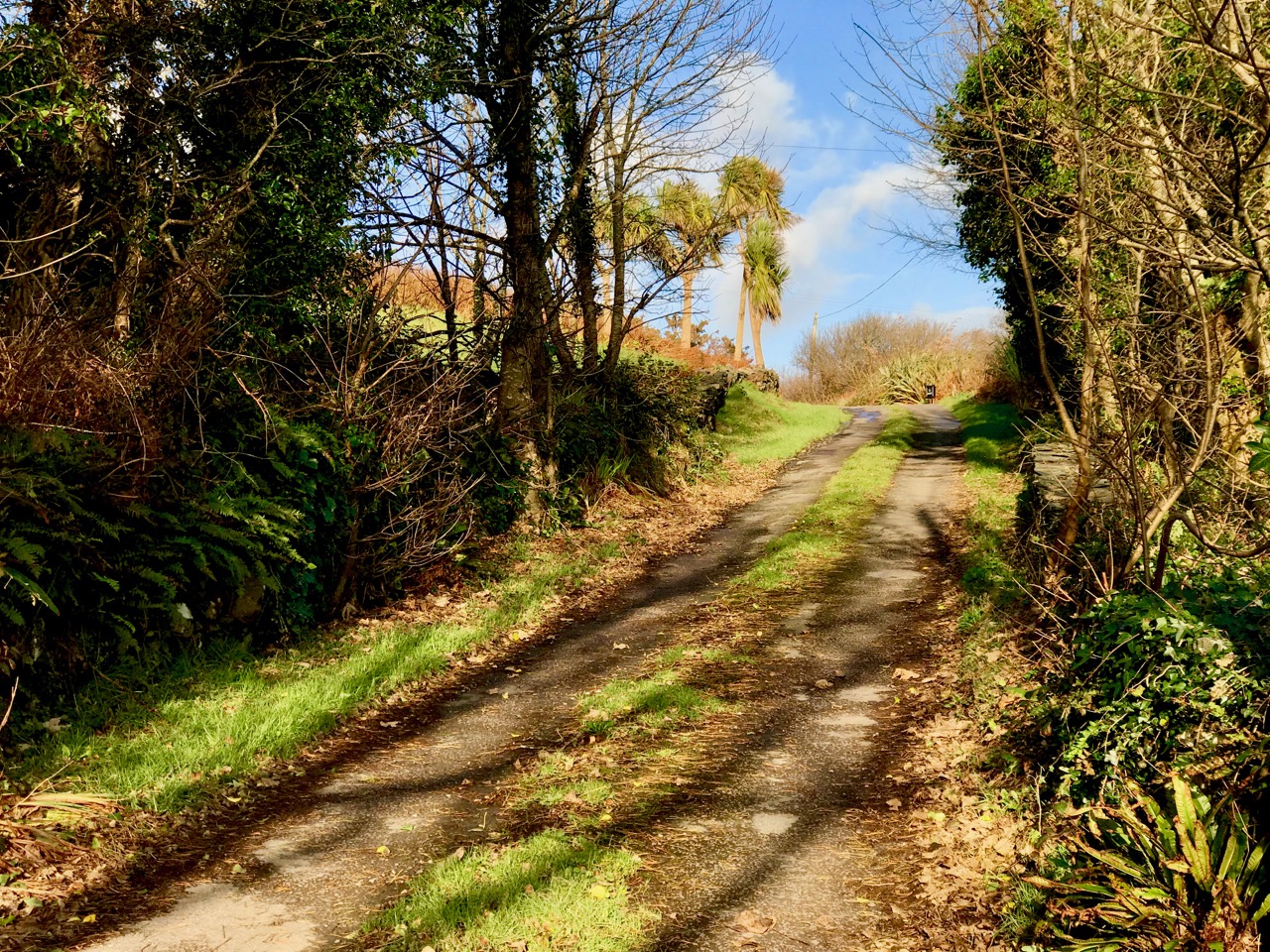
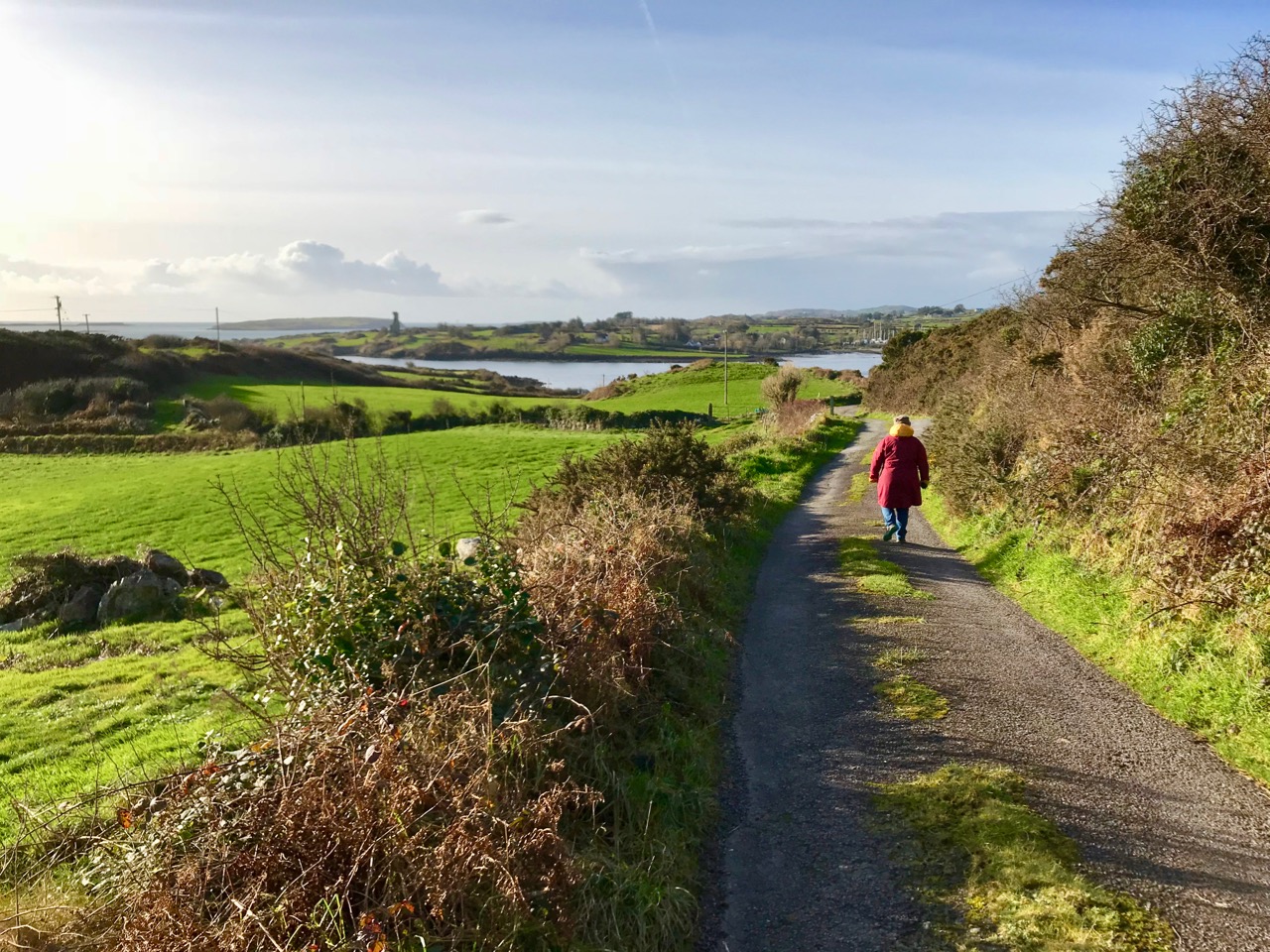
In the past year I have returned to Rossbrin again and again in my posts. That’s not surprising, as it’s just a short and always rewarding walk down our Beautiful boreens:

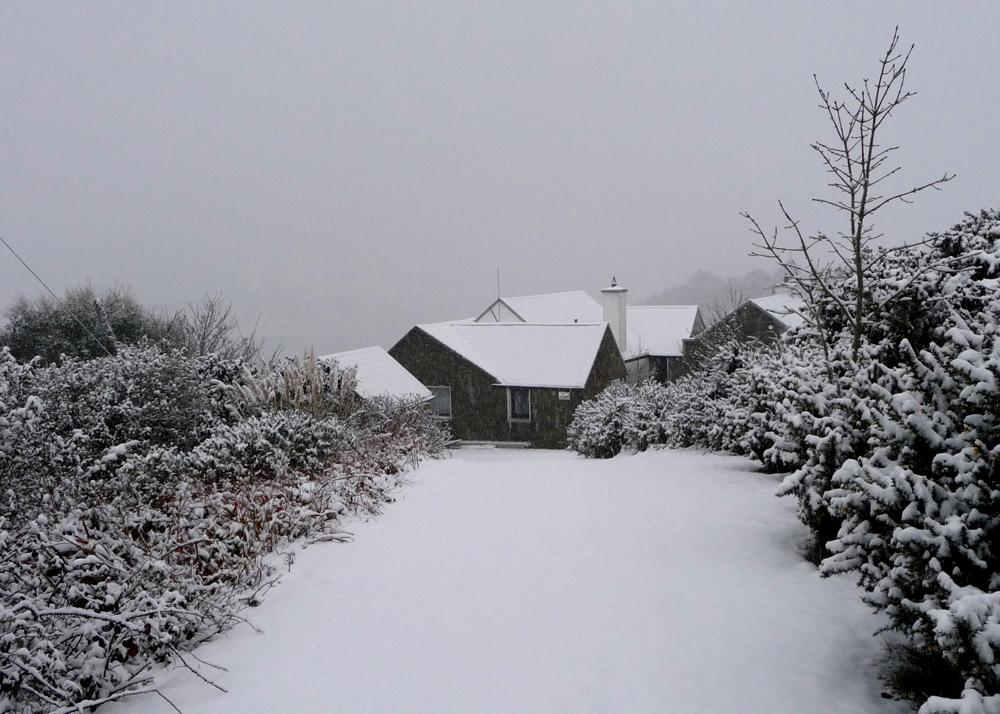
It’s December, and we can expect anything in the way of weather. This is the mildest corner of Ireland: further north and east of us today, spanning Cavan, Donegal and Wicklow, heavy snow is falling and temperatures are forecast to drop to minus 8 degrees C in the coming hours. The last real bit of snow in West Cork came along seven years ago but we weren’t here, then, to see it (image below of Nead an Iolair in 2010 courtesy of our neighbours Dietrich and Hildegard Eckardt with, below it, today’s view of the Cove seen from the house):

Whatever the weather, our cove has something to offer – and every day is guaranteed to bring a mixture. When the sun is out we can bask in it as if it was the middle of summer, but it’s just as likely that there will be a stiff and invigorating breeze to accompany our bracing walks.

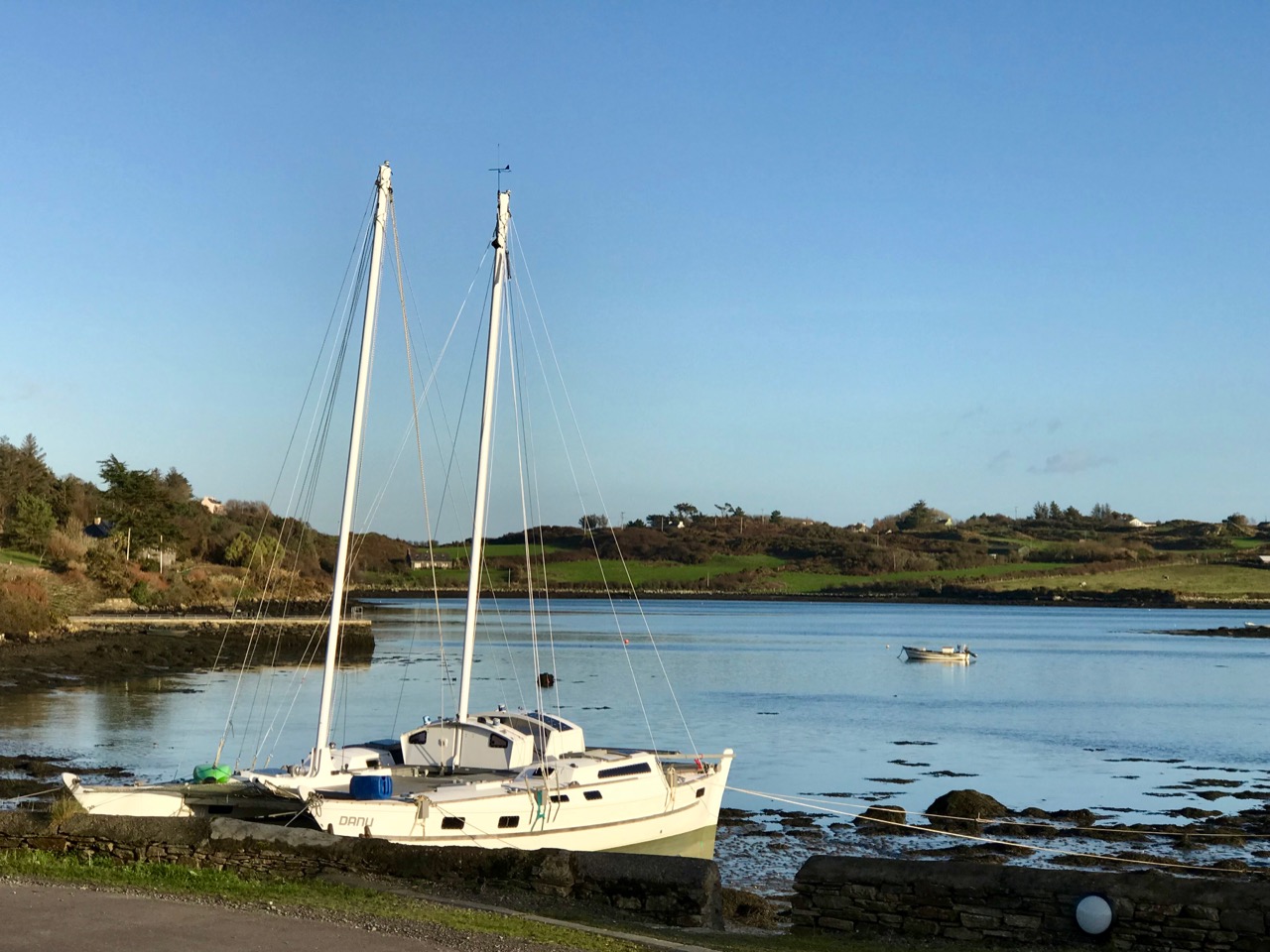
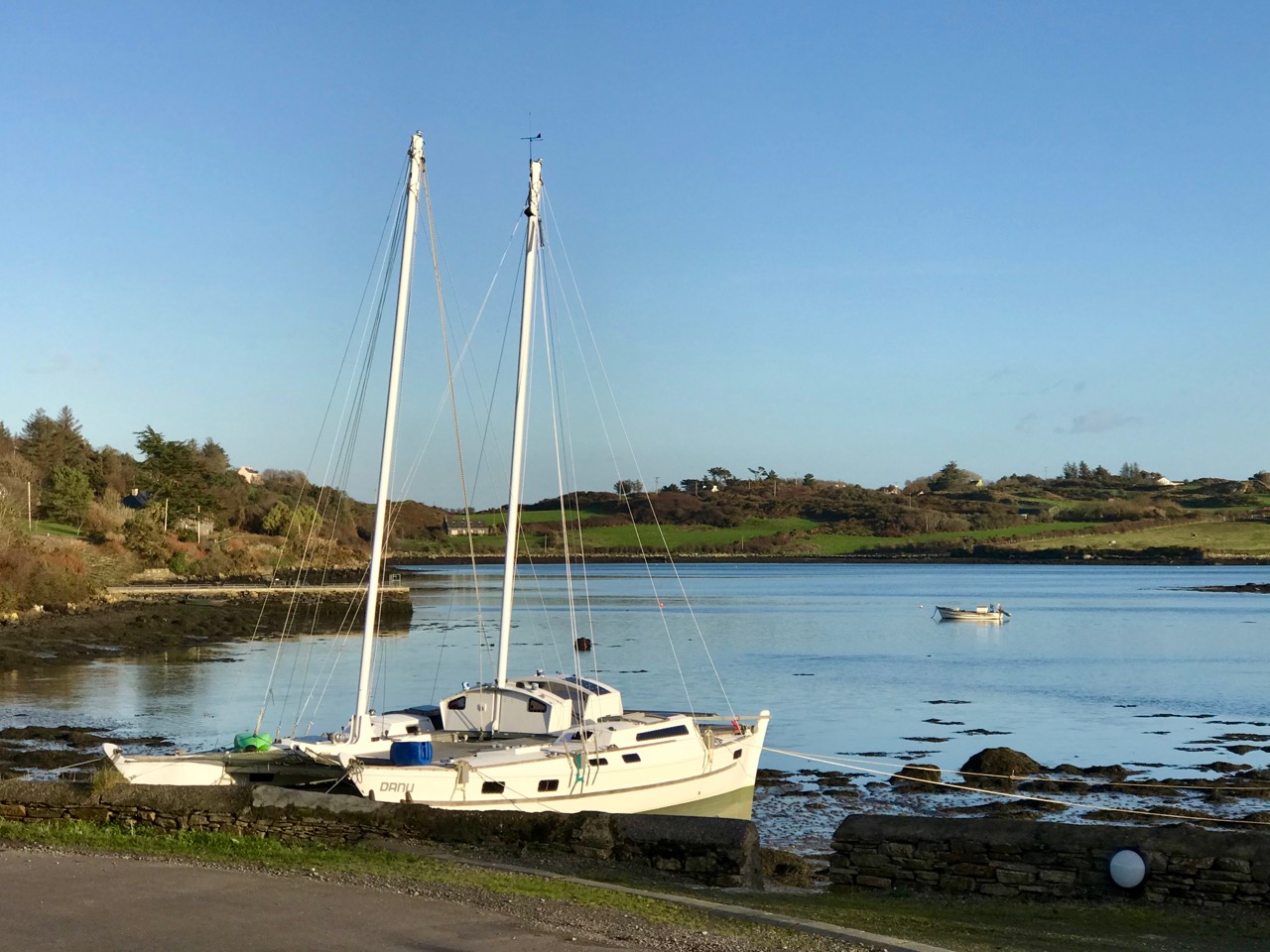
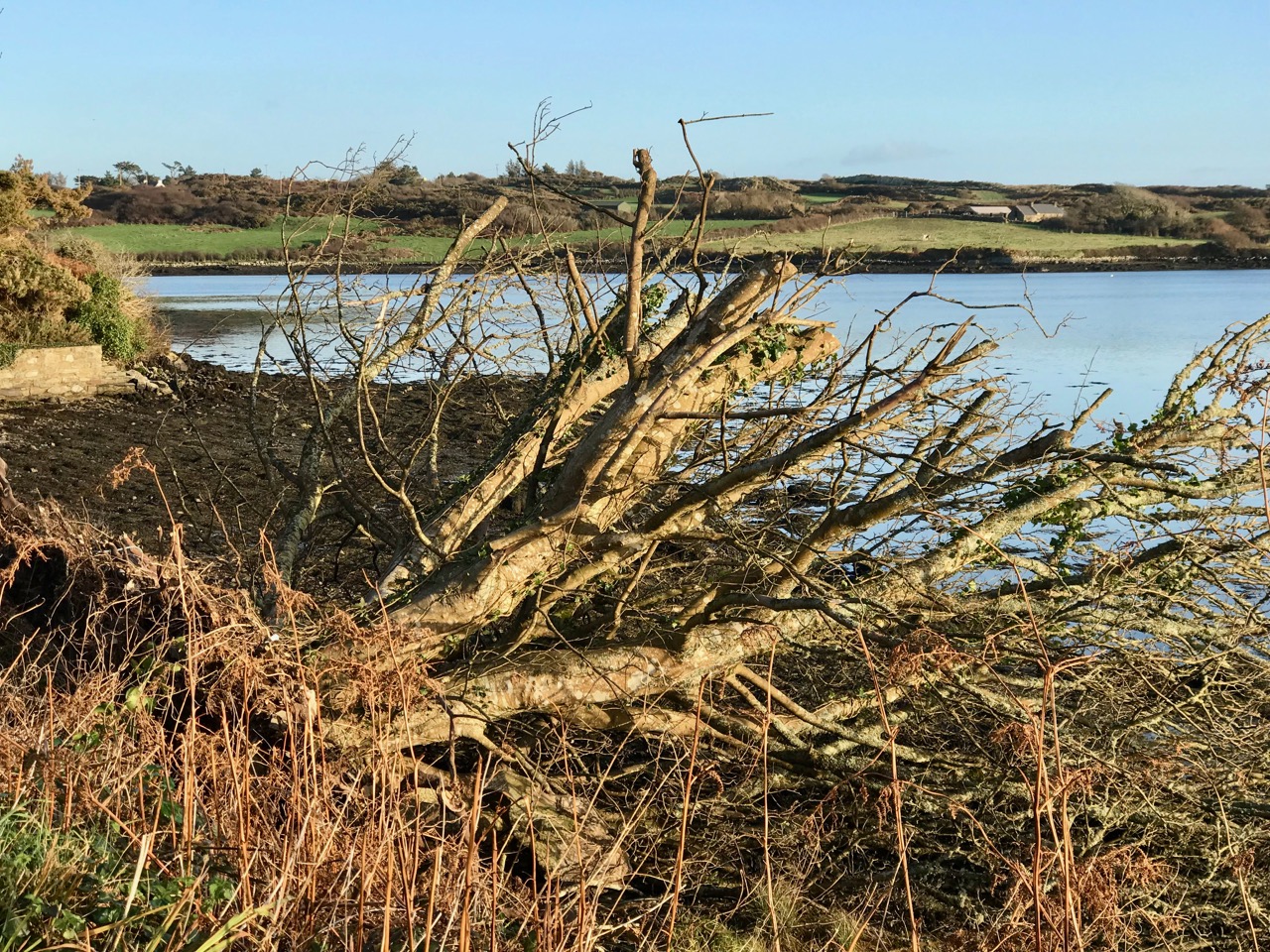
Above – reminders of summer pleasures to come as we wind down to the year’s end in Rossbrin: Andre’s catamaran – Danu – which he built himself, rides out the winter storms on a wet mooring in the Cove. The first of those storms – Ophelia – hit us last month, and there is a fair bit of wind damage still to be seen:

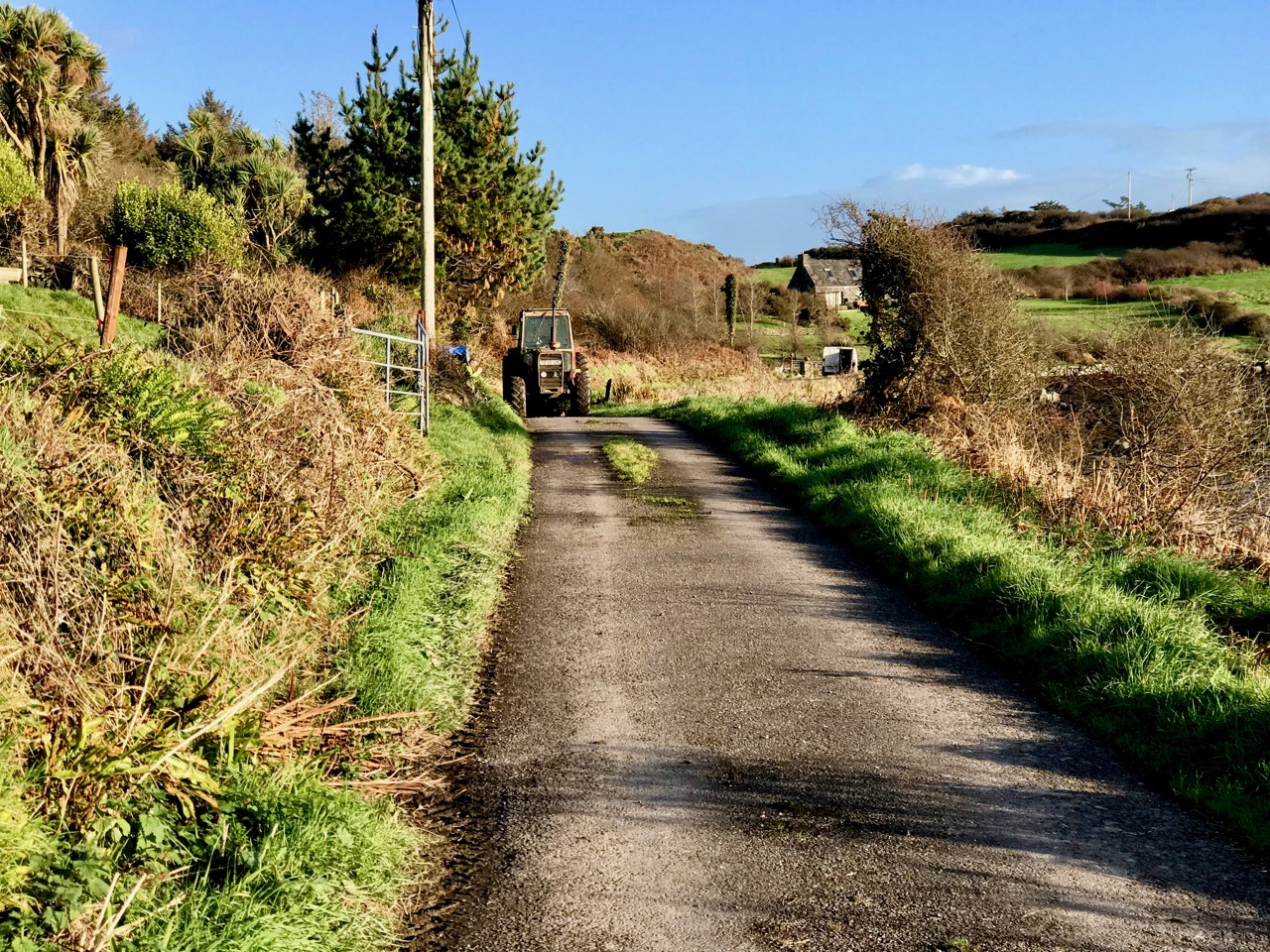
Traffic jam in Rossbrin!

Often, I will start out on the downhill walk with my head buzzing from the inexplicable madness of the outside world: British ethnocentricity, North American absurdity and worldwide chaos. Within minutes these concerns are receding, and when I reach the waterside I am overtaken by the immersive experience of natural things all around me and I find the solace of constancy: not much changes here. This little townland of Rossbrin is above and away from that buzzing, reeking world. It is a far saner place.

Since publishing this post we have received a communication from our good neighbour Julian, who lives down on the Cove, including some excellent photographs of the winter of 2010. Here’s one of them – thank you, Julian…

Cove in the snow 2010