St. Brandanus: A 14th Century Graphic Novel. Part 3

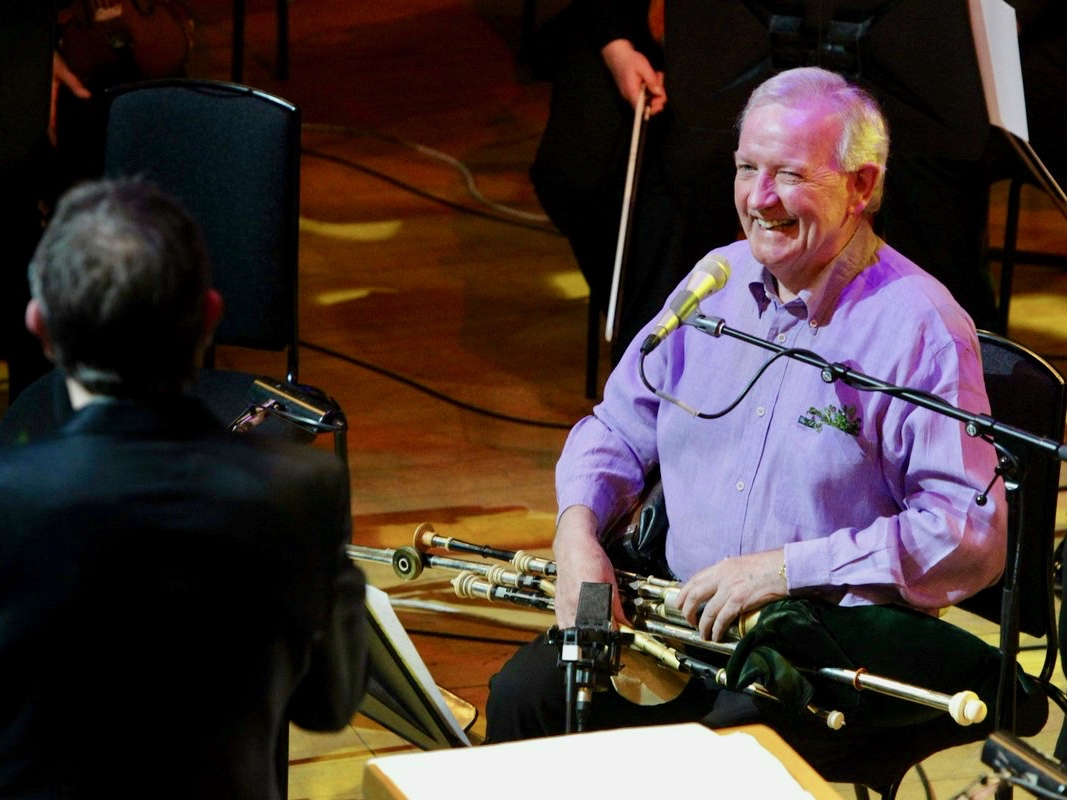
Finally getting back to good old St Brendan and his voyage. (You can catch up on Part 1 and Part 2 if you haven’t read them already.) While writing this post I have been listening to one of my all time favourite pieces of music – The Brendan Voyage by Sean Davey, with the great Liam O’Flynn on the uillinn pipes. Robert wrote about the thrilling experience we had at the National Concert Hall where we attended a memorial concert for Liam O’Flynn which featured the whole Brendan Voyage, with Mark Redmond on the pipes. That post, Piper to the End, has several links to extracts from the Brendan voyage, but I will just post one movement here, and because I am half Canadian it has to be the Newfoundland Suite. Turn the volume up.

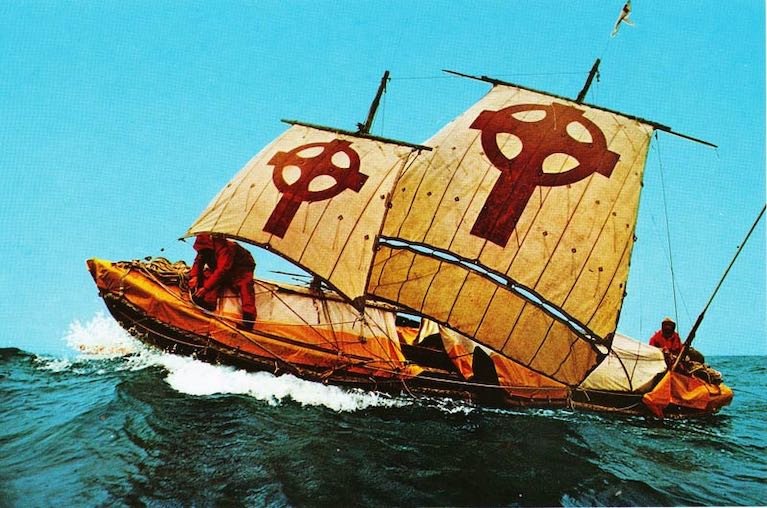
This music was written to celebrate the extraordinary journey taken by the late Tim Severin, tracing St Brendan’s voyage across the Atlantic. You can read the book (it’s a great read) or watch the documentary – I found part 1 and Part 2 online. Tim was an incredible explorer – the Brendan Voyage was one of many epic adventures he undertook to trace the footsteps of early voyageurs and travellers – you can read much more about him at his website, from which this photo, and the lead photo above, was taken, with thanks.
OK – back to S Brandanus and the 1360 graphic novel that illustrated his adventures for a medieval audience. For my final series of images from the book, I am using the translation this time of the great Irish scholar, John J O’Meara. In 1976 he translated the Navigatio into English, published by the Dolmen Press. He explains in his Introduction:

. . .within a hundred years of his death there already existed a primitive account in Latin of Brendan’s quest for that happy land [the Land of Promise]. This account was ecclesiastical in general character, but influenced the creation of the secular, heroic Voyage of Bran, written in Irish, which goes back to the late 600’s or early 700’s.The Latin Voyage of St Brendan, which is here translated, was written in Ireland perhaps as early as 800.
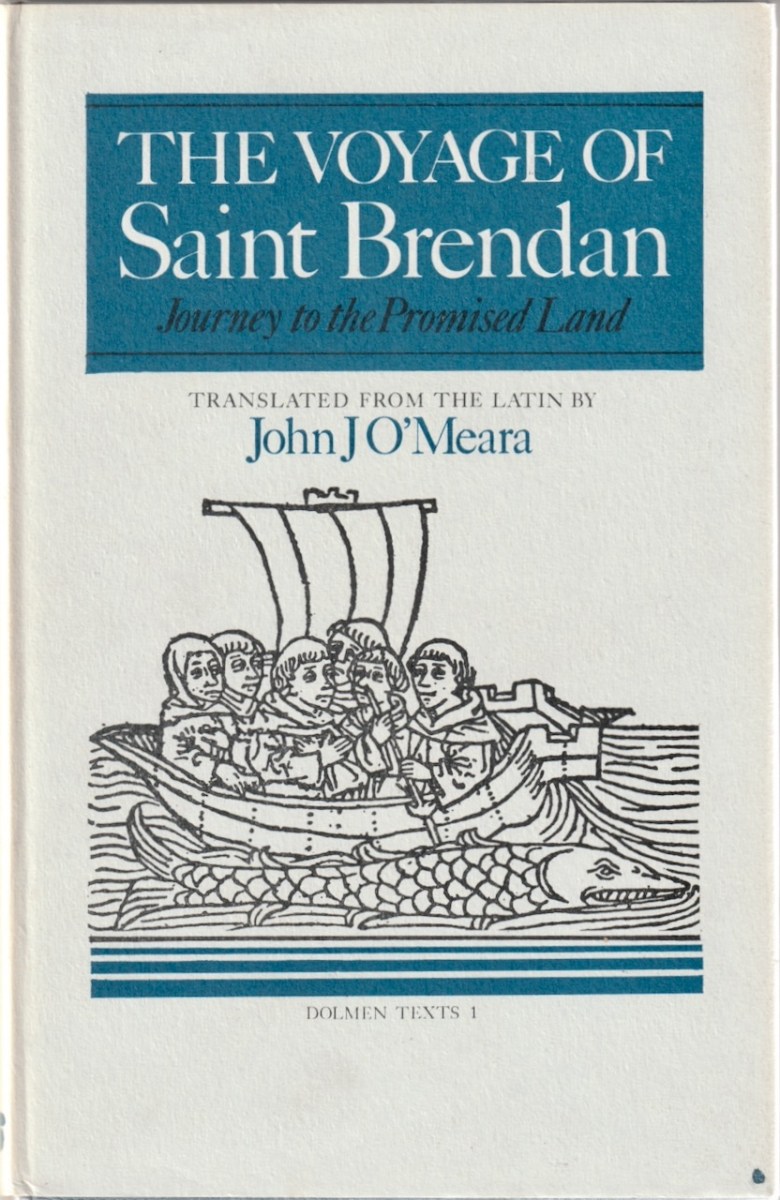
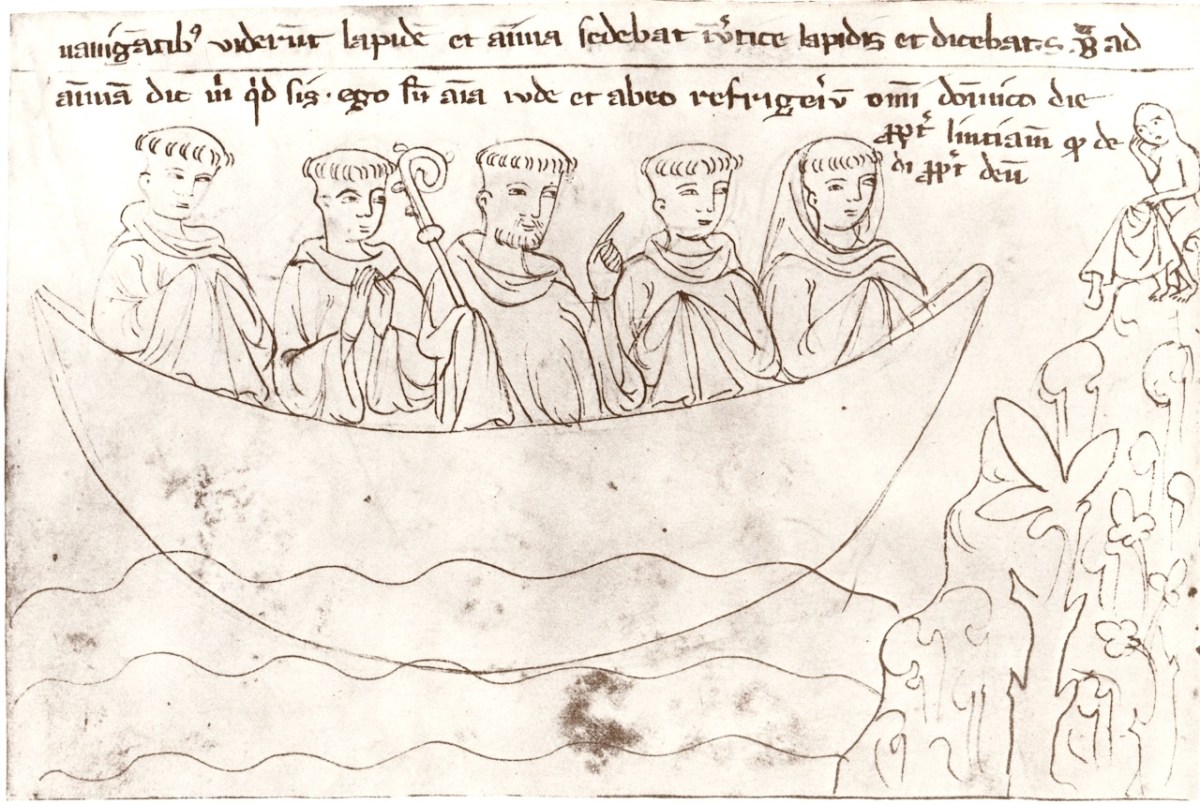
O’Meara illustrated his book with woodcuts from Sankt Brandans Seefahrt, printed by Anton Sorg at Augsburg in 1476. As you can see, they are different in character from our manuscript, being woodcuts for one thing, rather than pen and ink drawings. For example, the illustration on the cover is of the famous incident with the whale, covered in Part 2 of this series, while the illustration below is of the Unhappy Judas on a rock in the sea. Contrast it with the same scene from S Brandanus, below the first quote.
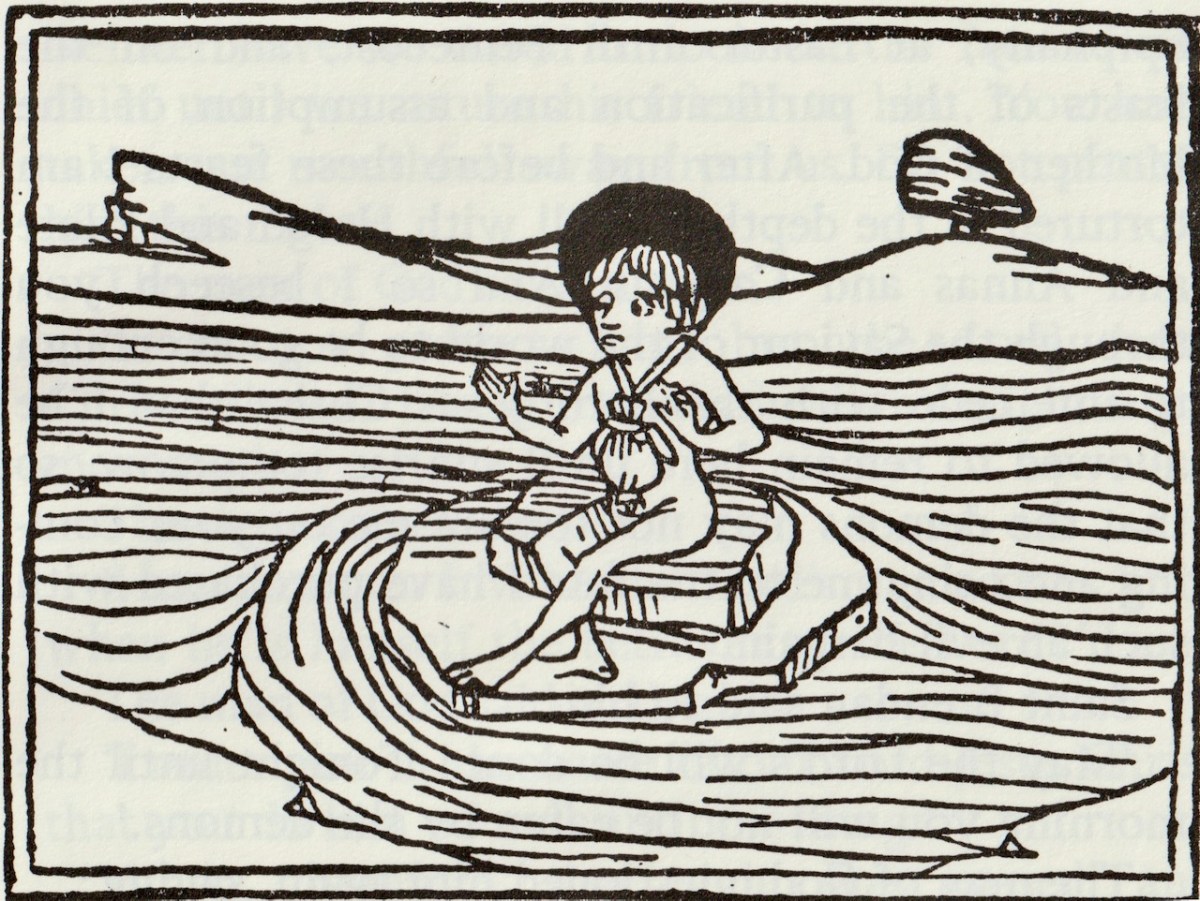
Nevertheless, O’Meara’s translation and the S Brandanus illustrations correspond perfectly, indicating that both were based on the same text. I am using the story of Brendan’s meeting with the Unhappy Judas. Regular readers will remember that I wrote about this once before, in my post Harry Clarke, Brendan, Judas – and Matthew Arnold. While the stories are the same, Arnold’s poem ends with Judas disappearing, while the story from the Voyage carries on. Here goes.

When Saint Brendan had sailed towards the south for seven days, there appeared to them in the sea the outline as it were of a man sitting on a rock with a cloth suspended between two small fork-shaped supports about a cloak’s lengths in front of him. The object was being tossed about by the waves just like a little boat in a whirlwind. Some of the brothers said it was a bird, others a boat. . .

Blessed Brendan questioned him as to who he was, or for what fault he was sent here, or what he deserved to justify the imposition of such penance?

The man replied: “I am unhappy Judas, the most evil trader ever. I am not here in accordance with my desert but because of the ineffable mercy of Jesus Christ. This place is not reckoned as punishment but as an indulgence of the Saviour in honour of the Lord’s resurrection.. . . 
When I am sitting here I feel as if I were in a paradise of delights in contrast with my fear of the torments that lie before me this evening. For I burn, like a lump of molten lead in a pot, day and night, in the centre of the mountain that you have seen. . . .

But here I have a place of refreshment every Sunday from evening to evening, after Christmas until the epiphany, at Easter until Pentecost, and on the feast of the purification and assumption of the Mother of God. After and before these feasts I am tortured in the depths of hell with Herod and Pilate and Annas and Caiphas. And so I beseech you through the Saviour of the world to be good enough to intercede with the Lord Jesus Christ that I be allowed to remain here until sunrise tomorrow, so that the demons may not torture me on your coming and bring me to the fate I have purchased with such an evil bargain.

Saint Brendan said to him, May the Lord’s will be done! Tonight until the morning you will not be eaten by the Demons. 

The man of God questioned him again saying what is the meaning of this cloth? 

The other replied I gave this cloth to a leper when I was procurator for the Lord. But it was not mine to give. It belonged to the Lord and the Brothers. And so it gives me no relief but rather it does me hurt. Likewise the iron forks on which it hangs I gave to the priests of the temple to hold up cooking pots. With the rock on which I sit I filled a trench in the public road to support the feet of those passing by, before I was a disciple of the Lord.

The story continues, with the demons coming to take Judas back to hell, upon which Brendan forbids them to do so. The following morning, when they come to fetch Judas, 
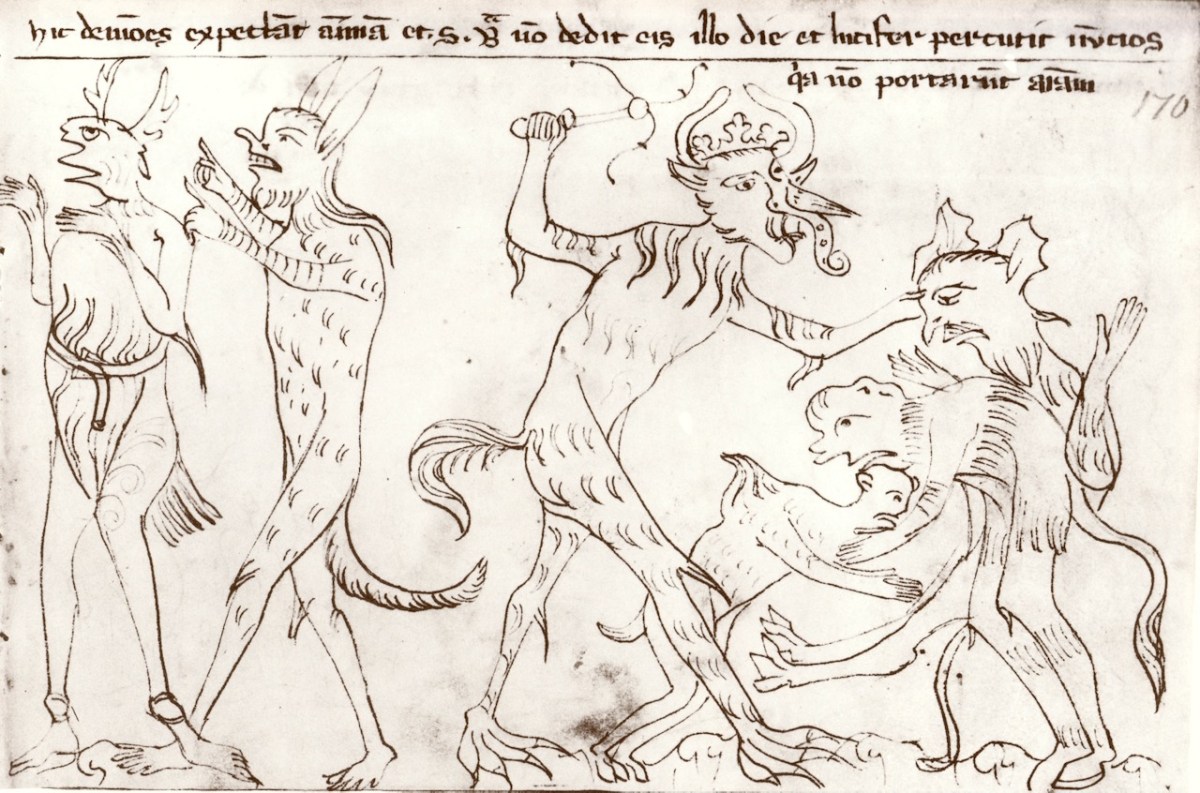
. . . an infinite number of Demons was seen to cover the face of the ocean emitting dire sounds and saying ‘Man of God, we curse your coming as well as your going, since our chief whipped us last night with terrible scourges because we did not bring to him that accursed prisoner.

They tell him that Judas will suffer double punishment for the next six days because of this, but this also Brendan forbids, in the name of God, saying: 

I am his servant and whatever I order, I order in his name. My service lies in those matters which he has assigned to me.

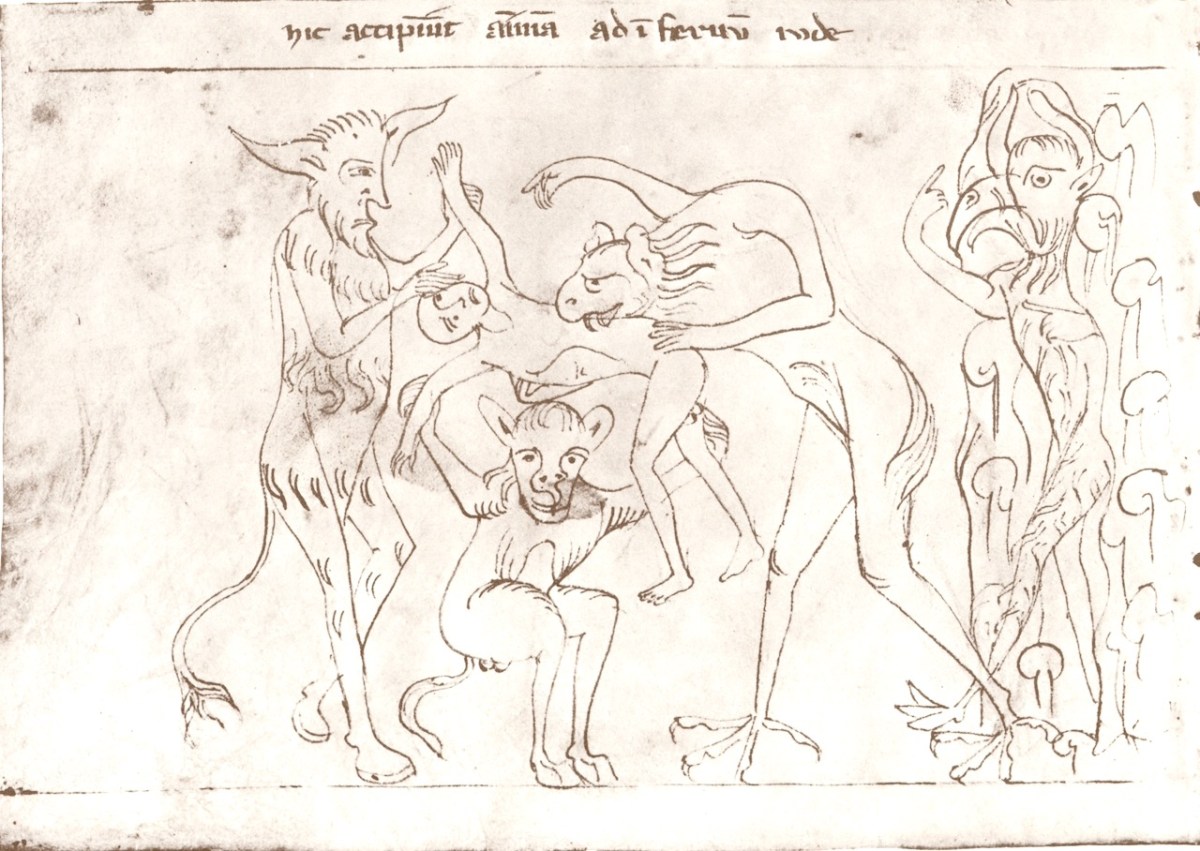
The Demons followed him until Judas could no longer be seen. They then returned and lifted up the unhappy soul among them with great force and howling.
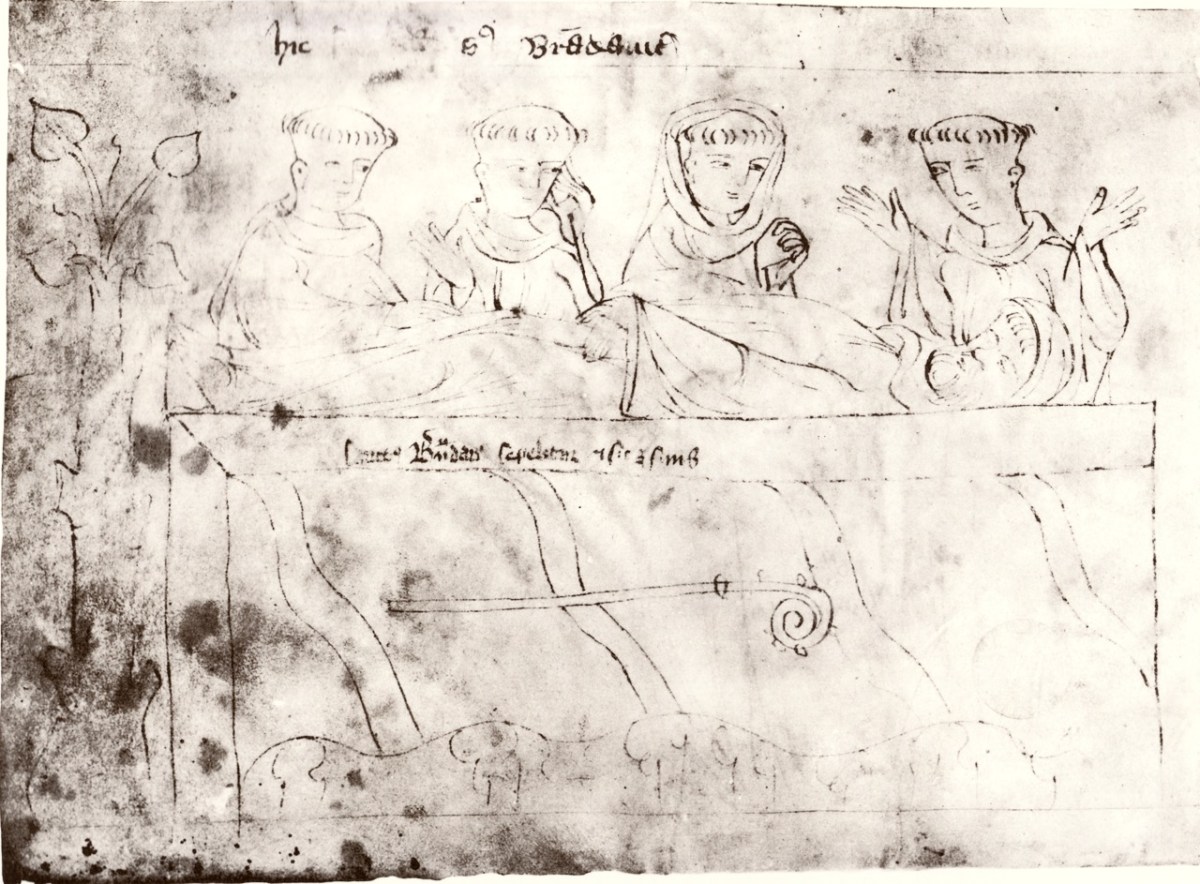
Eventually the voyage ends and Brendan returned home, relating everything that had happened on the voyage and saying that his own time had now come to an end. His dying and death are given less than half a page – an unseemly short few words to bring the voyage to a close.
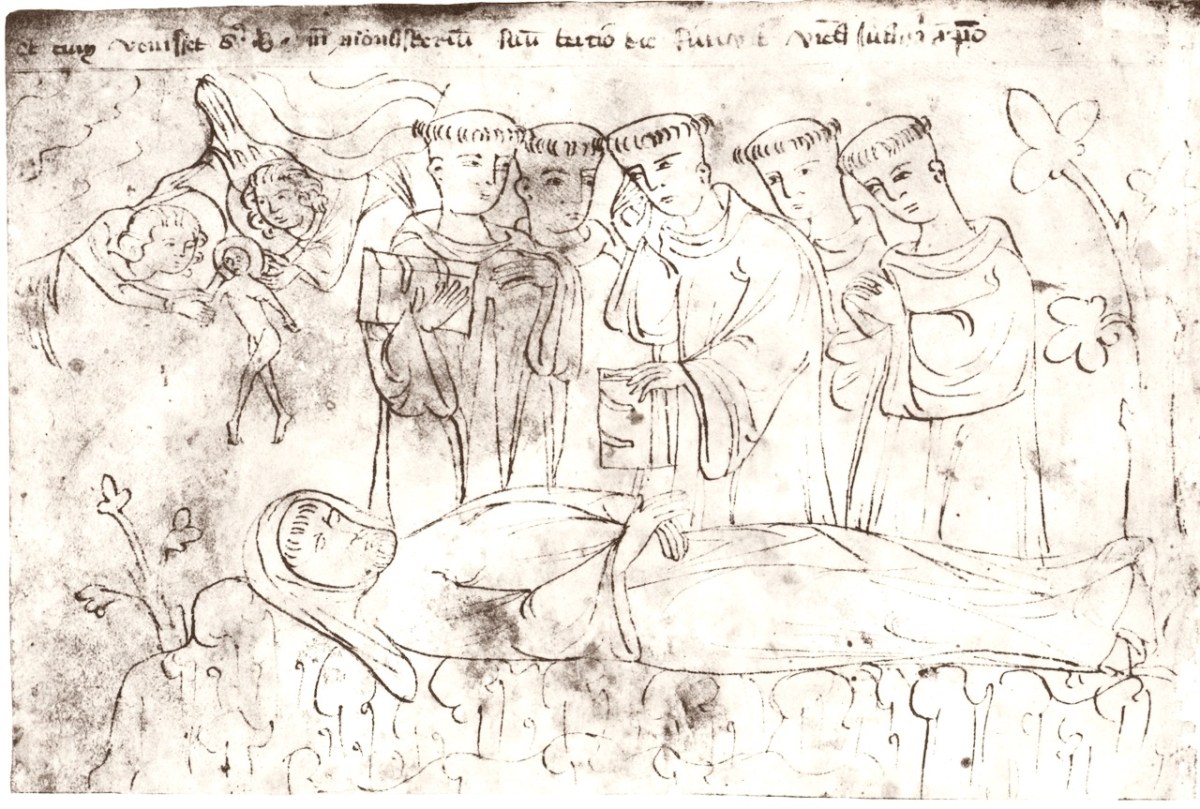
For when he had made all arrangements for after his death, and a short time had intervened, fortified by the divine sacraments, he migrated from among the hands of his disciples in glory to the Lord, to whom is honour and glory from generation to generation. Amen. End.
Prehistoric West Cork

What’s your favourite thing to do in West Cork? Ours is to pull on our boots and go on a field trip – often archaeological. To encourage you to enjoy the wealth of prehistoric sites West Cork has to offer, I’ve made a slideshow. It’s a fairly random selection of sites, but they are all prehistoric and all visitable. The music is Sliabh na mBan by the incomparable Liam O’Flynn, from the album The Piper’s Call.

For more information on any of the sites, type its name in the search function at the top of the page. We’ve written about all of them at one time or another. Then pull on those boots!

The Darling Buds of March

We’ve had a long cold winter and it’s raining, misty and downright bleak outside as I write this. But there have been bursts of sunshine here and there and when I can catch those moments I am out with my camera to see what I can find in the trees and the grass. The land is waking up. This video is a compilation of what I’ve seen in the last week, in my own garden and along the boreens around me.

The music is by the incomparable Liam O’Flynn: Joyce’s Tune, from his album The Given Note, used with permission.

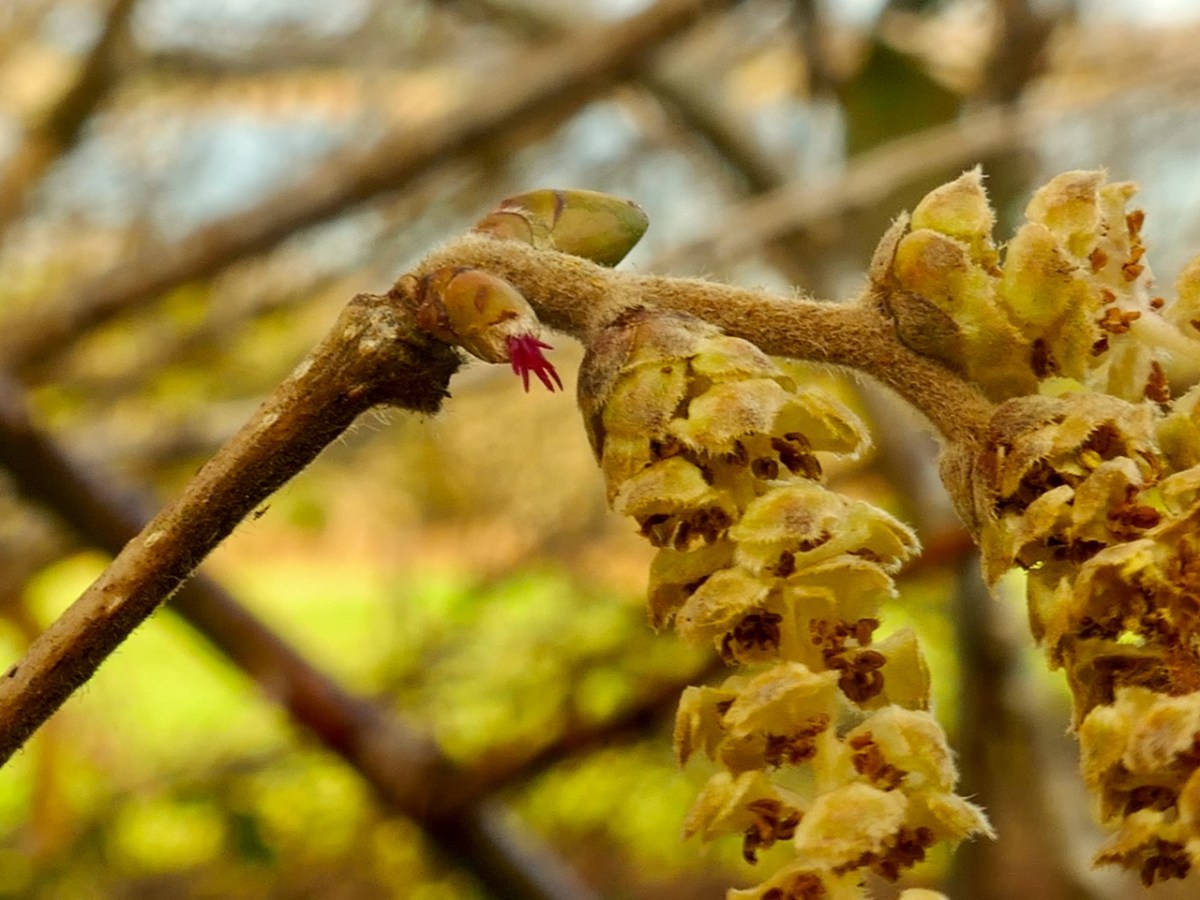
Here’s what I saw – all native and all typical of our West Cork flora. Hazel trees produce both male catkins – easy to see –  and tiny red female flowers – very difficult to see and easy to overlook, but very pretty little pincushions when you see them.

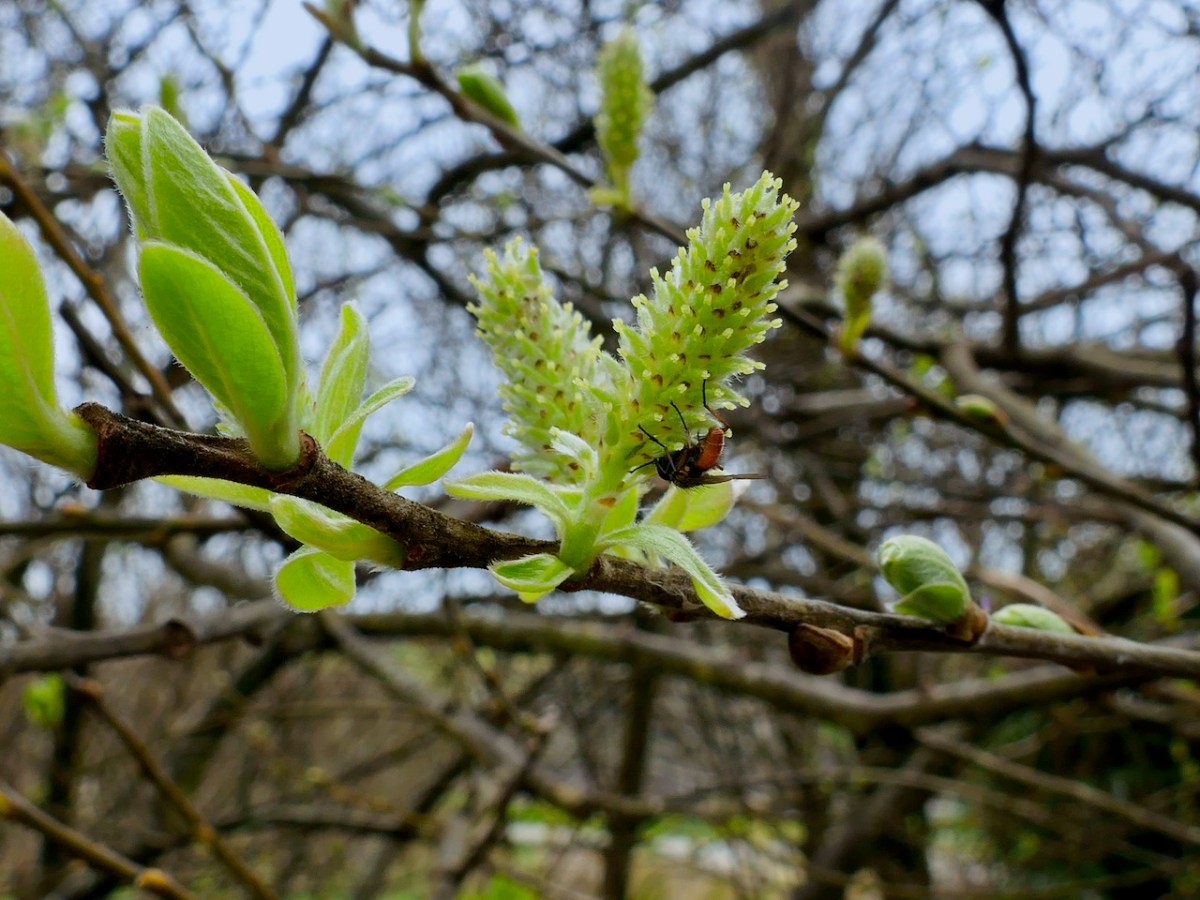
Willow trees, on the other hand are either female or male and depend on wind and insect to pollinate one from the other. The male trees are the ones who produce the cute little pussy willows, which explode into yellow flower heads as they mature.

I only have a female tree, with its own distinctive catkin-like spiky flowers. Fortunately, as you’ll see in the video, when I was photographing it, it was visited by a Great Tit and a White-tailed Bumble Bee, all helping (along with the breezy weather) with the pollination.

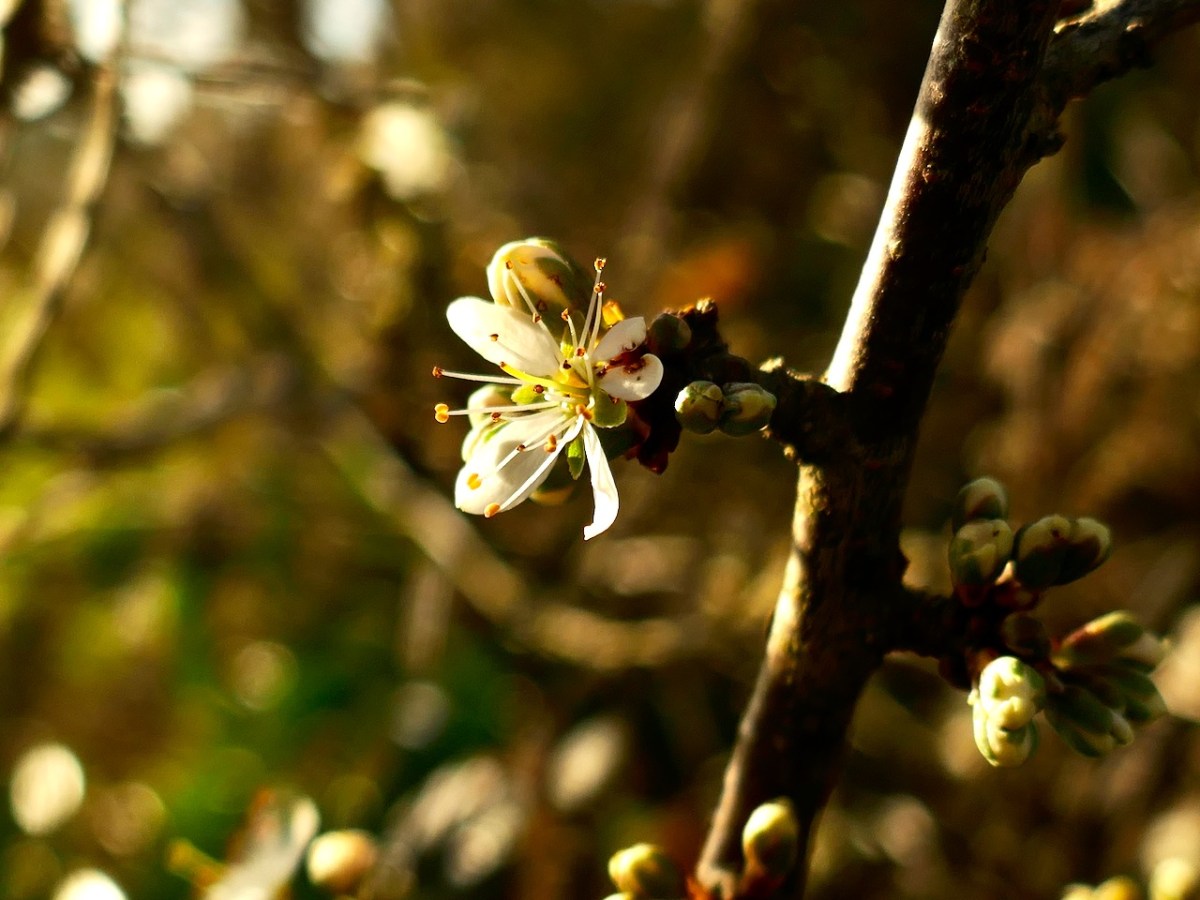
The blackthorn trees are one of our true harbingers of spring – the flowers emerge before the leaves, looking bright and beautiful against the dark bark.

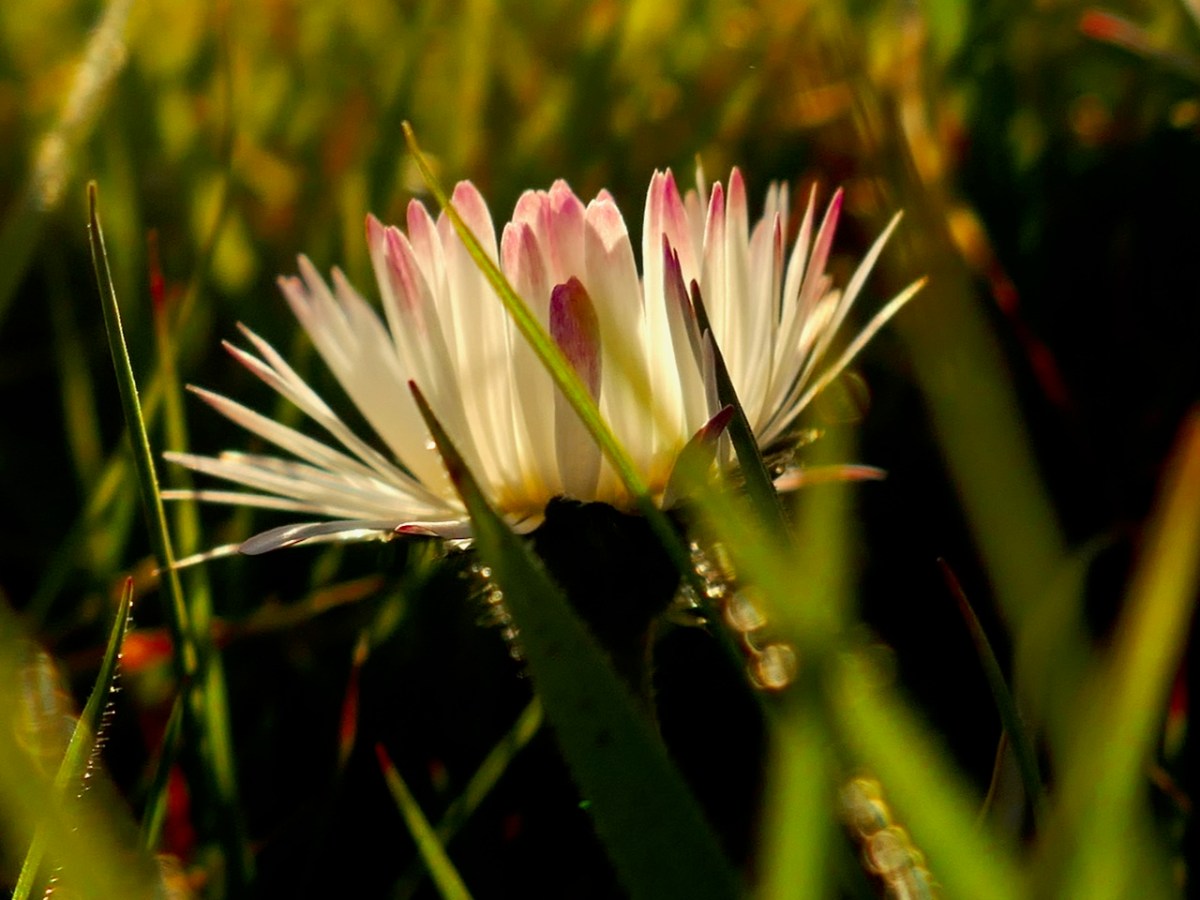
Some Staghorn moss is followed by two Dandelions and then some Lawn Daisies, Dandelions come early in West Cork and don’t last long – they are soon replaced by Cat’s-ear in my lawn. The daisies are a constant delight all summer long.

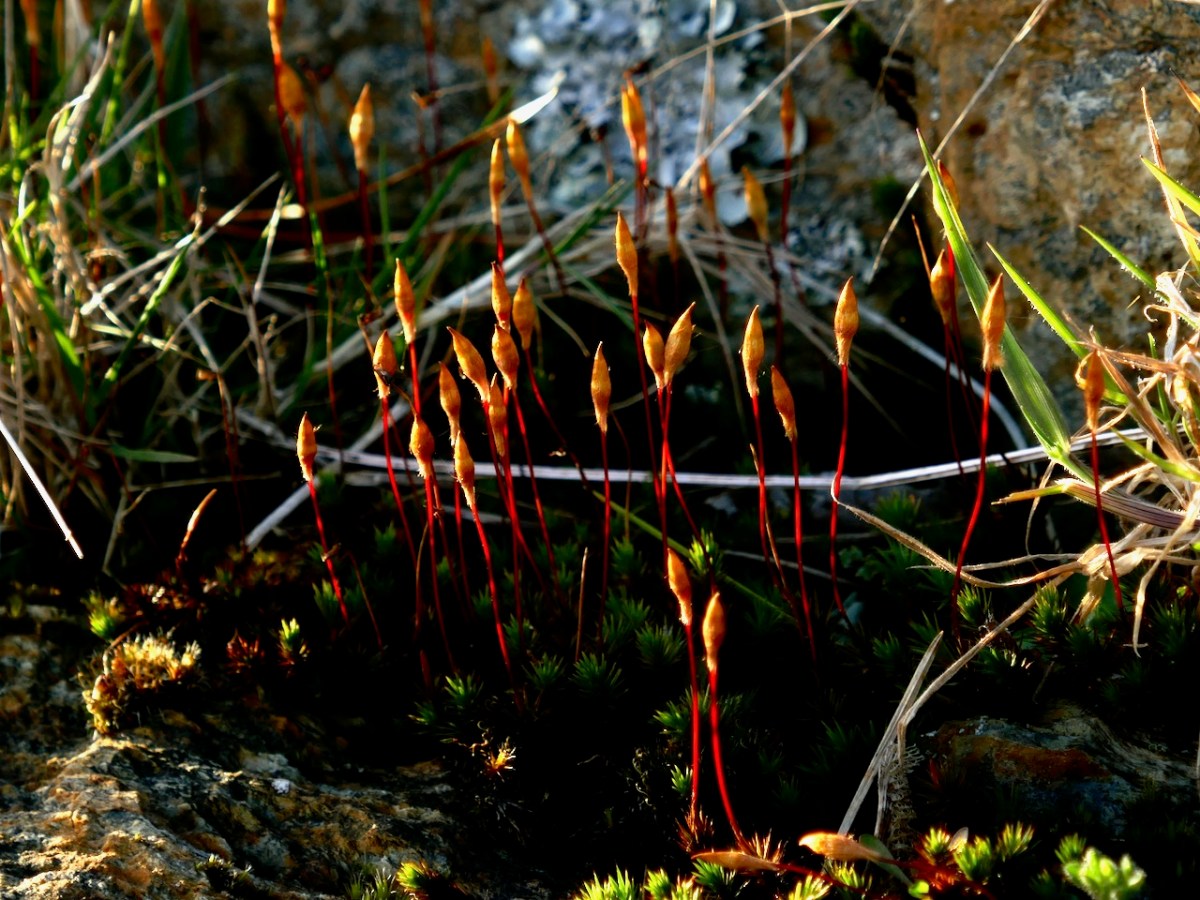
Another early spring wildflower is Common Dog-violet. This one really rewards getting up close. See my lead photo for this one. Finally, a couple of shots of Herb Robert emerging from a stone wall, followed by photos of Juniper Haircap Moss, which has established a little colony in the crevices of the rocks that line my driveway. The spore capsules sit atop tiny bright red stems. That’s my lead photo for this post, and the shot below.

Mizen Magic 27: Toor

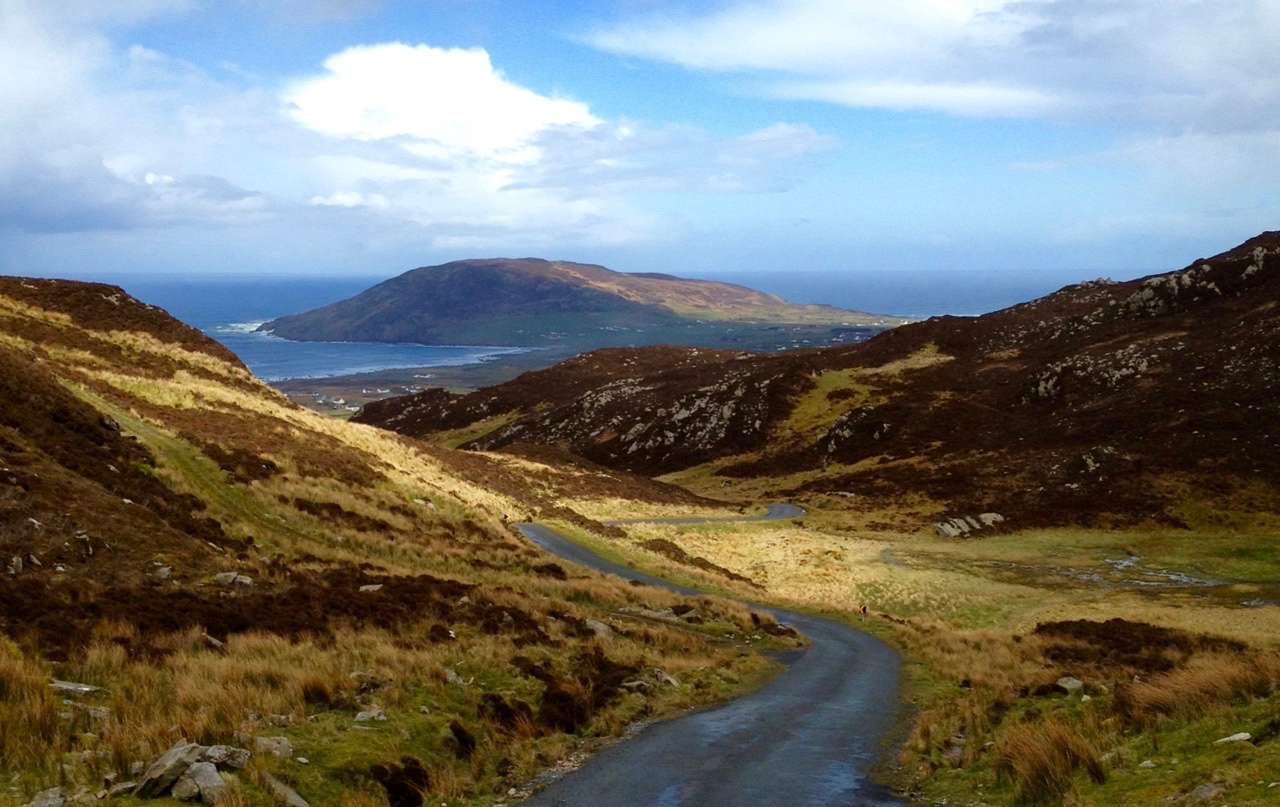
Tucked away in the north west corner of the Mizen, with access from one meandering boreen, is the townland of Toor. It’s one of our favourite places and we wanted to share it with you, as it was on a visit earlier this week. 

For more on this townland and the surrounding area, see Robert’s post, Mizen Mountains 1 – the Hill of the Foxes. We have borrowed Liam O’Flynn’s transcendent music for this slideshow with gratitude and permission. The Album, The Given Note, is available here. Robert has written about Liam O’Flynn in his post Piper to the End – A Tribute to Liam O’Flynn.

Of course, I can’t resist including some wildflowers, all typical of late August in West Cork. In order, they are Goldenrod and Heather, Montbretia (non-native), Rock Sea-Spurrey, Thrift (no longer blooming), Davil’s-bit Scabious and Knapweed.

Piper to the End – A Tribute to Liam O’Flynn

In March this year (2018) Liam O’Flynn passed away. He was a giant in Irish traditional music: a master of the Uilleann pipes – probably the most difficult instrument in the world to play – but also, surely, the most beautiful. We were fortunate to secure tickets for the Memorial Concert to Liam, held in Dublin’s National Concert Hall last Sunday. I would give anything to re-live that experience, as often as possible. We were overwhelmed by the insights which were presented by musicians who had worked with him – and dumbstruck by the astonishing and inspiring performance which took up the second half of the concert: The Brendan Voyage, composed in 1980 by Shaun Davey for the pipes and full orchestra, and written for – and with the collaboration of – Liam O’Flynn. In all, a most fitting tribute to a Maestro – pictured above in 2015 with the RTE Symphony Orchestra (courtesy RTE).

For anyone unfamiliar with this piece of music, here is  the second movement – The Brendan Theme – from a live performance in Cork City Hall. It’s a good introduction to the (then) novel concept of combining the sounds of pipes and orchestra: the full suite (42 minutes) is  available to stream, download, or as a CD. It’s a work with memorable tunes and expansive orchestration: it could only have been written in the twentieth century, yet it is thoroughly approachable and is sure to bring any audience to its feet at the end. As a former tuned percussionist, I envied the rousing finales given to the timpani and cymbal section!

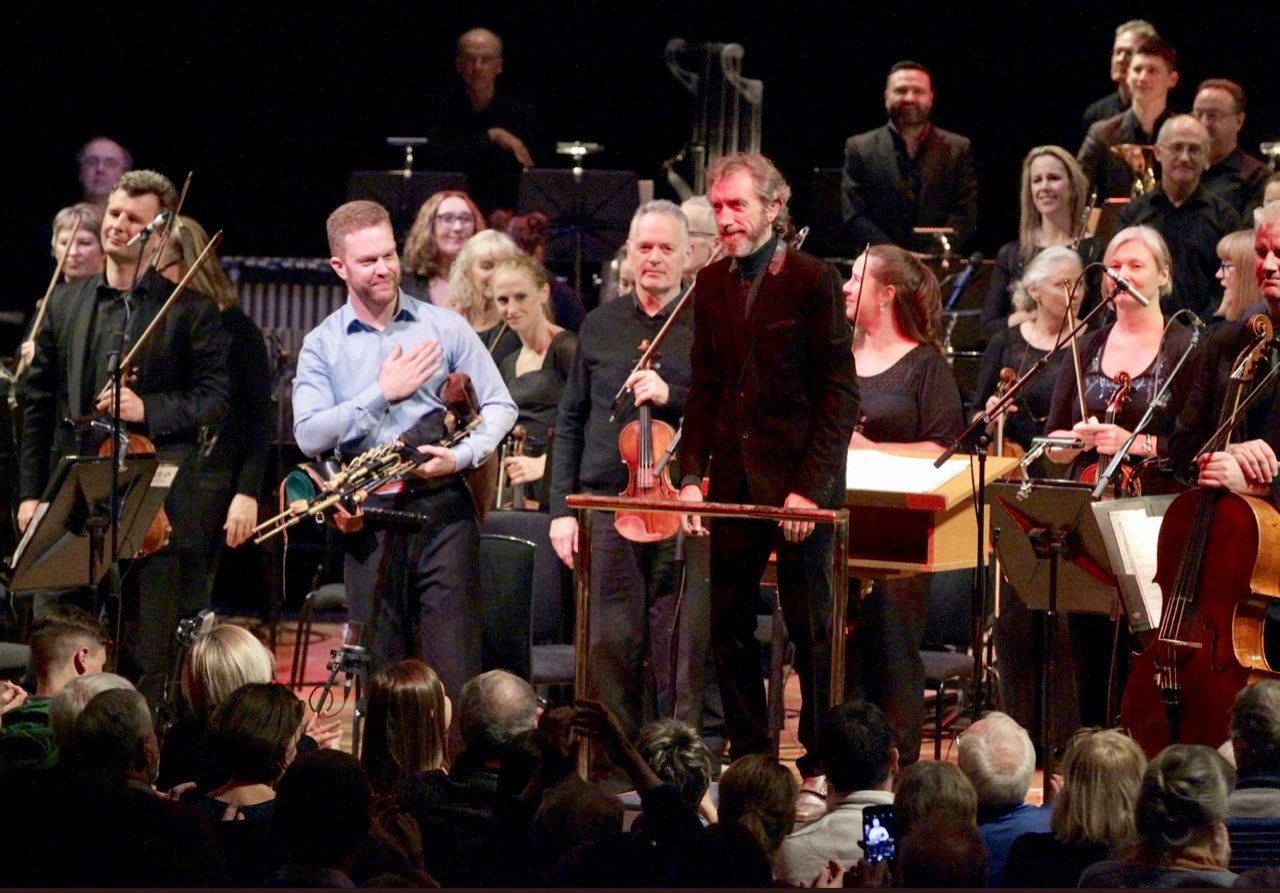
You can’t beat the atmosphere of a sold-out live performance in a full-sized concert hall such as this one in Dublin. We were fortunate in being seated only a couple of metres back from – and with a full view of – the soloist who, for this occasion, was Mark Redmond, a young piper from Gorey who has already established his reputation as a top-class musician. It would be hard for anyone to have to follow in the footsteps of Liam O’Flynn, but the rapturous ovations given to Mark – and the fabulous RTE National Symphony Orchestra conducted with such panache by David Brophy – proved that the ancient tradition of Uilleann piping is being ably advanced by our upcoming generations. (Photo above of Mark, David and the Orchestra taking a bow last Sunday courtesy Mark Redmond via Twitter).

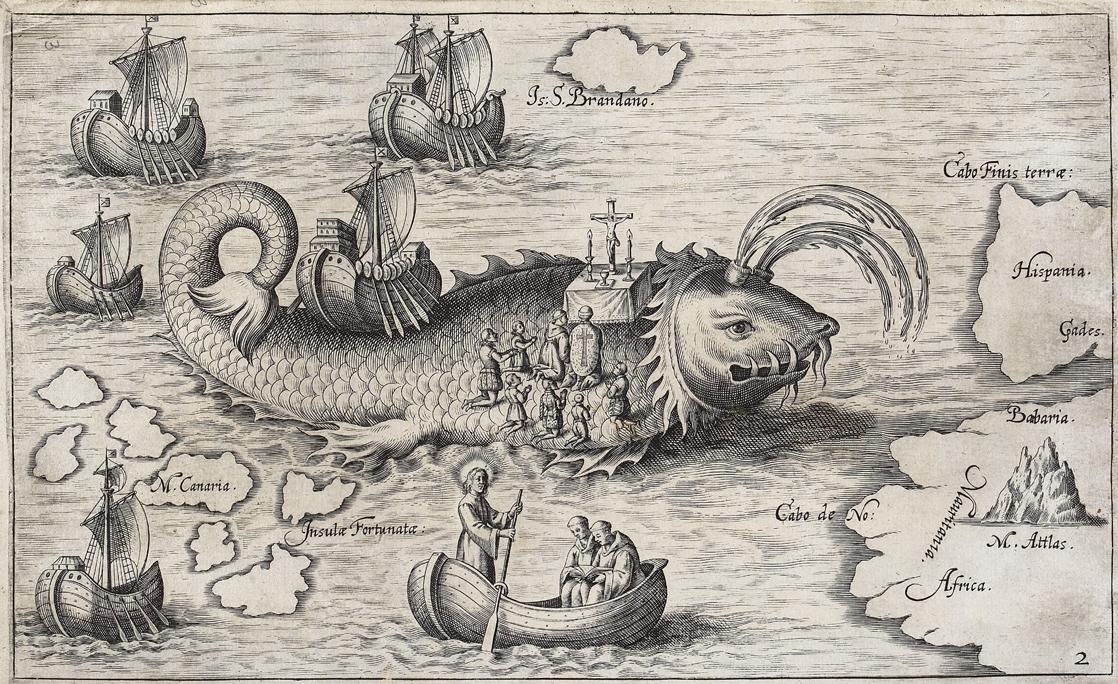
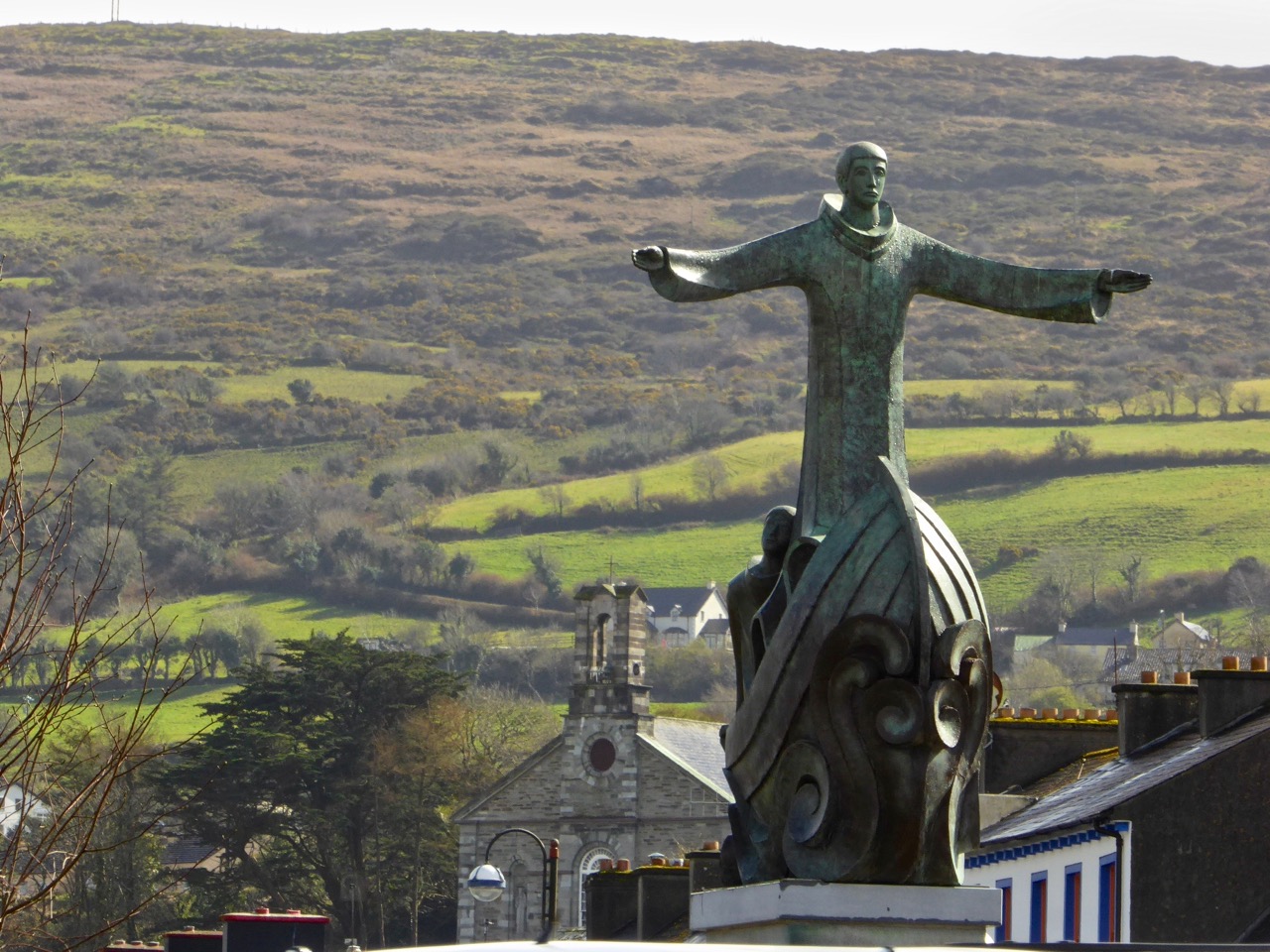
The piece of music is ‘a story within a story’ – it is inspired by Saint Brendan, born in Fenit, Kerry in AD 484 who, with a group of monks set off in the sixth century in search of The Blessed Isles (Paradise). Stories of their many adventures have been recorded and illustrated down the centuries – including the one above which shows the monks landing on an ‘island’ to celebrate mass: the island is actually a giant sea-monster named Jascon! Brendan and his companions crossed the Atlantic, arriving in what we today call Newfoundland – long before the exploits of Columbus. What’s more, they returned safely seven years later to tell the tale. Brendan The Navigator is buried outside the Cathedral of Clonfert, Co Galway, as we have noted in one of our previous posts. And here’s another post about him. But we must not forget that Brendan has West Cork connections too: an elegant modern statue of him is situated in Bantry, looking out over the Bay.

Shaun Davey’s composition, however, is more a response to a modern reconstruction of Saint Brendan’s travels, rather than the original stories. In 1976, explorer, historian and writer Tim Severin set out to test the historical truth behind the stories of Brendan, and built a replica of Brendan’s currach. According to Wikipedia . . . using traditional tools and methods, the 11m, two-masted boat was constructed from Irish ash and oak, hand-lashed together with nearly 3km of leather thong, wrapped with 49 traditionally tanned ox hides, and sealed with wool grease . . . Severin and his crew set sail from Fenit, Co Kerry, and reached the coast of Labrador a year later. Severin’s book describing the expedition, The Brendan Voyage, became an international best seller. Shaun Davey based his music on Severin’s accounts of the journey, and the Uilleann pipes are given the part of the boat itself – both boat and instrument rely heavily on leather. The Irish word Uilleann means ‘elbow’ and the driving force of the instrument is a leather bag which is kept under pressure using one elbow, and is fed from a bellows on the other; the hands and wrists are kept fully occupied playing chanter, drones and regulators. When I listen to this music, my ears hear the water flowing under the leather hull of Severin’s (and Brendan’s) fragile craft. Here’s a good example: the movement titled Water Under the Keel – describing the journey through the Minch channel between the Outer Hebrides and the west coast of Scotland:

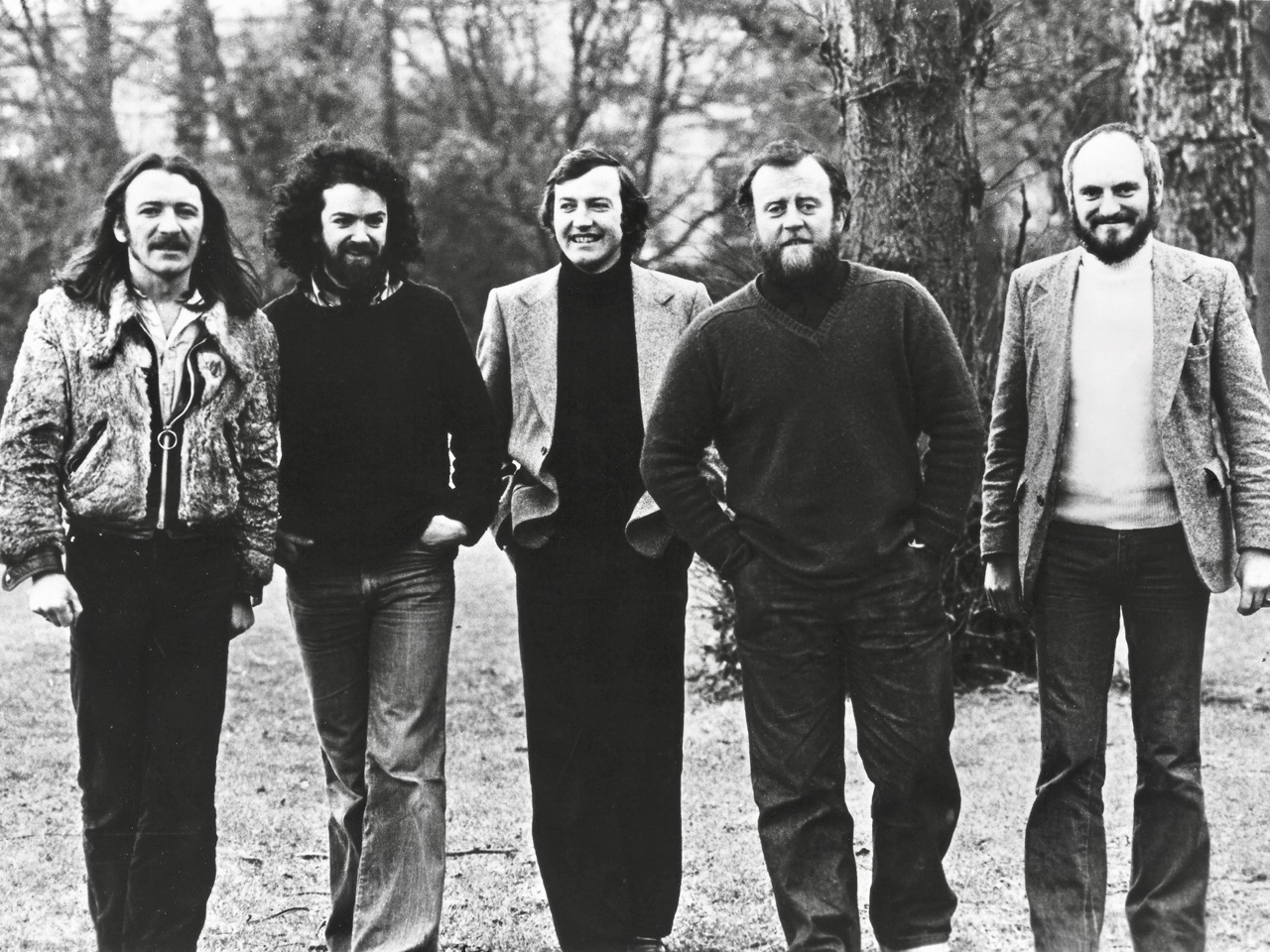
In 1972, Liam O’Flynn joined with Christy Moore, Dónal Lunny and Andy Irvine to found a seminal Irish traditional group – Planxty. Incarnations of that group – with additional players – have travelled the well-worn roads over the years, and on Sunday the remaining three original members, together with Matt Molloy, played for us – and brought on waves of nostalgia. The photo from the 70s, below (courtesy of Tara Music), shows them together: Liam O’Flynn is in the centre. Underneath is some footage from Planxty in their prime.

We were treated to other reminders of Liam’s achievements, including a performance of music he was commissioned to write for the inauguration of the Republic of Ireland’s 8th President, Mary McAleese on 11 November 1997. Here’s An Droichead (The Bridge) with Liam and guitarist Mark Knopfler: McAleese stated that the theme of her Presidency was ‘Building Bridges’.

It’s impossible to put into words the level of exhilaration we felt throughout the memorial concert last weekend. I hope that, at the very least, I may today have sparked some interest in the music of the Maestro, Liam O’Flynn (for those not already in the know) – and in the thrill of Shaun Davey’s mighty concert piece The Brendan Voyage. Here’s a last extract from that work, with Mark Redmond playing. It’s part of the climactic movement ‘Labrador’ – the pipes bring in a variation of the main theme to celebrate the boat’s arrival in the New World and the end of the voyage.

When I leave this world behind me
To another I will go
If there are no pipes in heaven
I’ll be going down below

If friends in time be severed
Someday we will meet again
I’ll return to leave you never
Be a piper to the end

This has been a day to die for
Now the day has almost gone
Up above a choir of seabirds
Turns to face the setting sun

Now the evening dawn is calling
And all the hills are burning red
And before the night comes falling
Clouds are lined with golden thread

We watched the fires together
Shared our quarters for a while
Walked the dusty roads together
Came so many miles

This has been a day to die on
Now the day is almost done
Here the pipes will lay beside me
Silent will the battle drum

If friends in time be severed
Someday here we will meet again
I return to leave you never
Be a piper to the end

(Piper to the End – a song by Mark Knopfler)

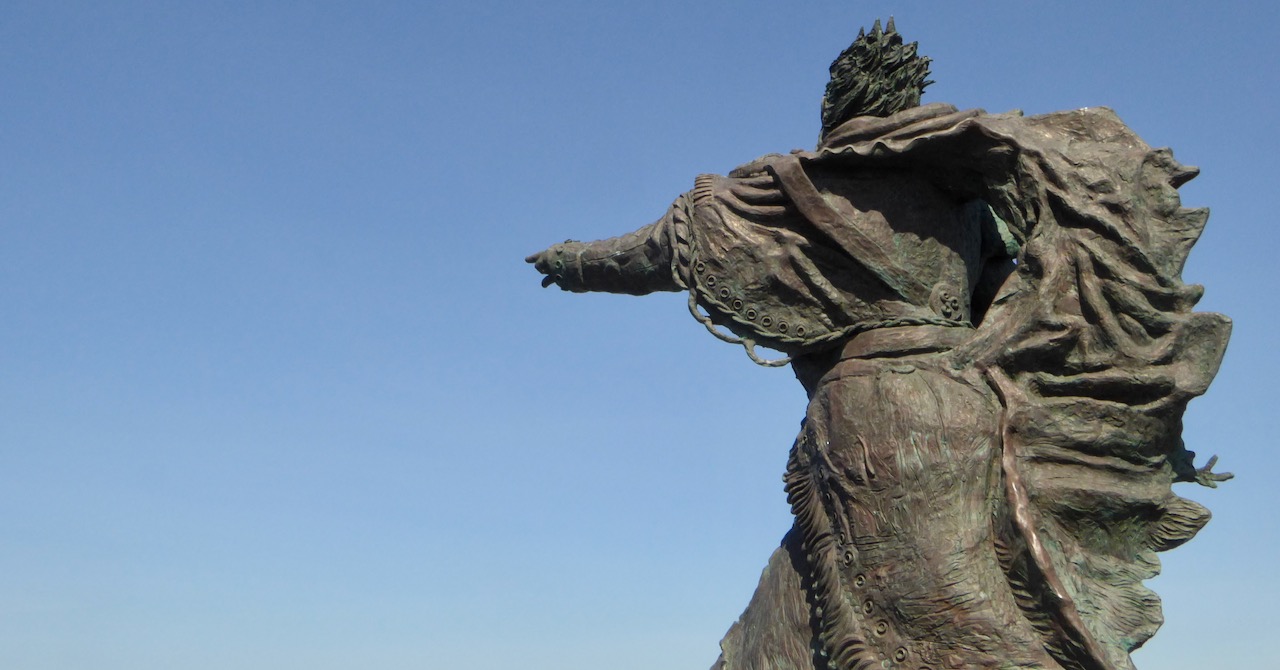
Lastly, Saint Brendan the Navigator is celebrated in his birthplace of Fenit, Co Kerry where he looks out eternally over the ocean which he and his companions conquered in their small, hide covered curragh.

Atlantic Winter

Dingle Beach

When St Brendan of Clonfert set out to discover America in 512 he and his fellow monks had to face the enormity of the Atlantic Ocean in tiny boats built out of wood and oxhides, sealed with animal fat. Up here in Nead an Iolair our view out to the islands of Roaringwater Bay and beyond is dominated by that same ocean and – sometimes – we feel just as small. This year the winter gales have started early, and spates of fierce westerlies have been throwing the Atlantic straight at our windows. The tiles rattle alarmingly while we are tucked up in bed at night. At these times I think of the Saint and what he had to face. But, like Brendan, we always survive the storms, and often wake up in the morning to a calm, clear day – except that you can hear the constant ‘roaring’ of the open sea out over the bay.

celebrating massOn their way to the New World – Saint Brendan and his companions take advantage of a passing Atlantic denizen to celebrate Mass…

The Atlantic has shaped Ireland. The sea is omnipresent: poets have written about it, storytellers have woven tales around it, and composers have tried to capture its spirit in music. Here’s a small section from the impressive ‘Brendan Voyage’ written by Shaun Davey for orchestra and Uillinn pipes – it’s the haunting second movement, played by Liam O’Flynn with the Irish National Youth Orchestra, at a performance in Cork City Hall. It makes me think of the wonderful sunrise on that calm day after the storm…

Brendan Voyage

Long Island Beacon

Brow Head

Mizen Head

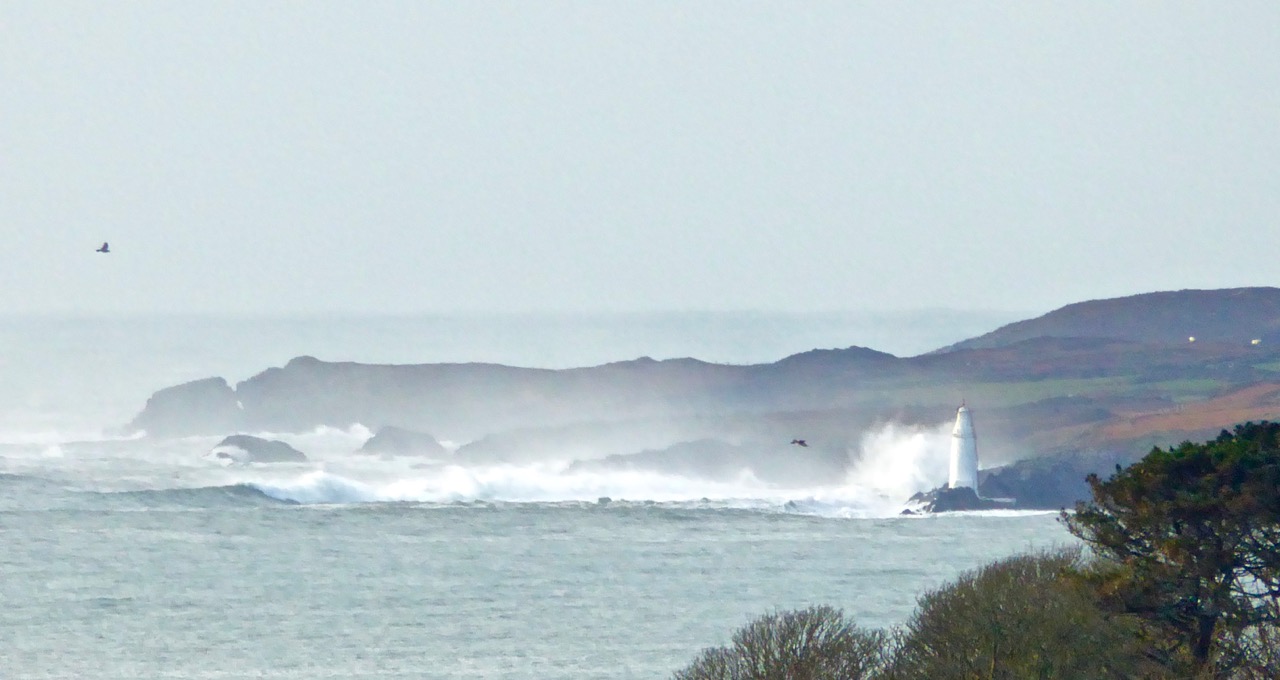
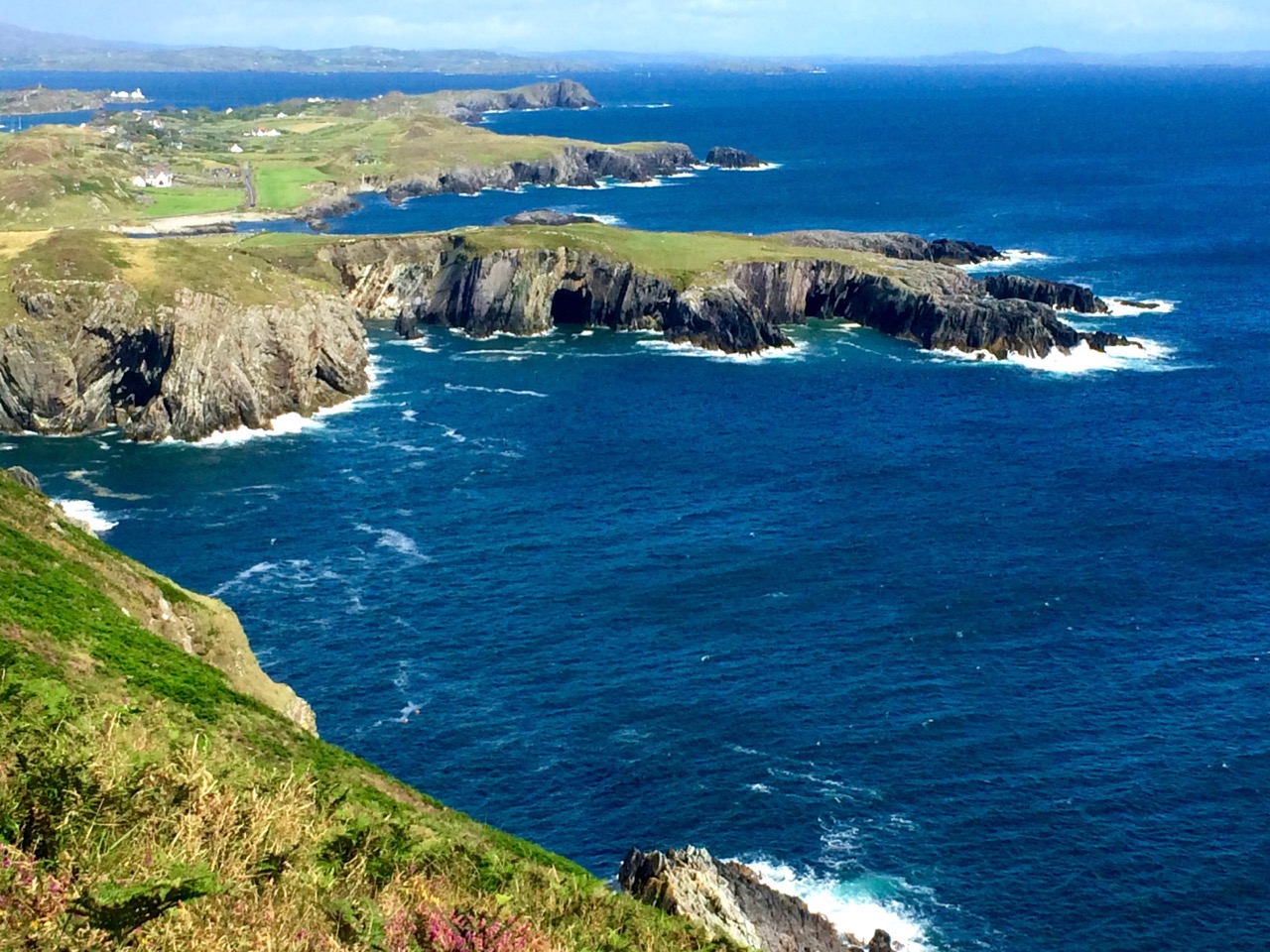
Our own Atlantic: telescopic view of a storm battering Long Island, taken from our garden at Nead an Iolair (top), Brow Head, near Crookhaven (centre), and the impressive land and seascape at Mizen Head – Ireland’s most south-westerly point (lower picture). At the head of this page you can see the huge rollers that come into Dingle Bay, Co Kerry

Dogger, Rockall, Malin, Irish Sea:
Green, swift upsurges, North Atlantic flux
Conjured by that strong gale-warning voice,
Collapse into a sibilant penumbra.
Midnight and closedown. Sirens of the tundra,
Of eel-road, seal-road, keel-road, whale-road, raise
Their wind-compounded keen behind the baize
And drive the trawlers to the lee of Wicklow.
L’Etoile, Le Guillemot, La Belle Hélène
Nursed their bright names this morning in the bay
That toiled like mortar. It was marvellous
And actual, I said out loud, “A haven,”
The word deepening, clearing, like the sky
Elsewhere on Minches, Cromarty, The Faroes.

Glanmore Sonnets VII, taken from Field Work by Seamus Heaney, published by Faber and Faber Ltd

Seamus Heaney was deeply affected by the seascape of his native Ireland. Anyone who works on or beside the sea is aware of the resonant names from the Shipping Forecasts, and the poet has used those names here to introduce his word-picture of the elemental Atlantic.

Near Malin Head 2

On the Beara

Donegal Beach

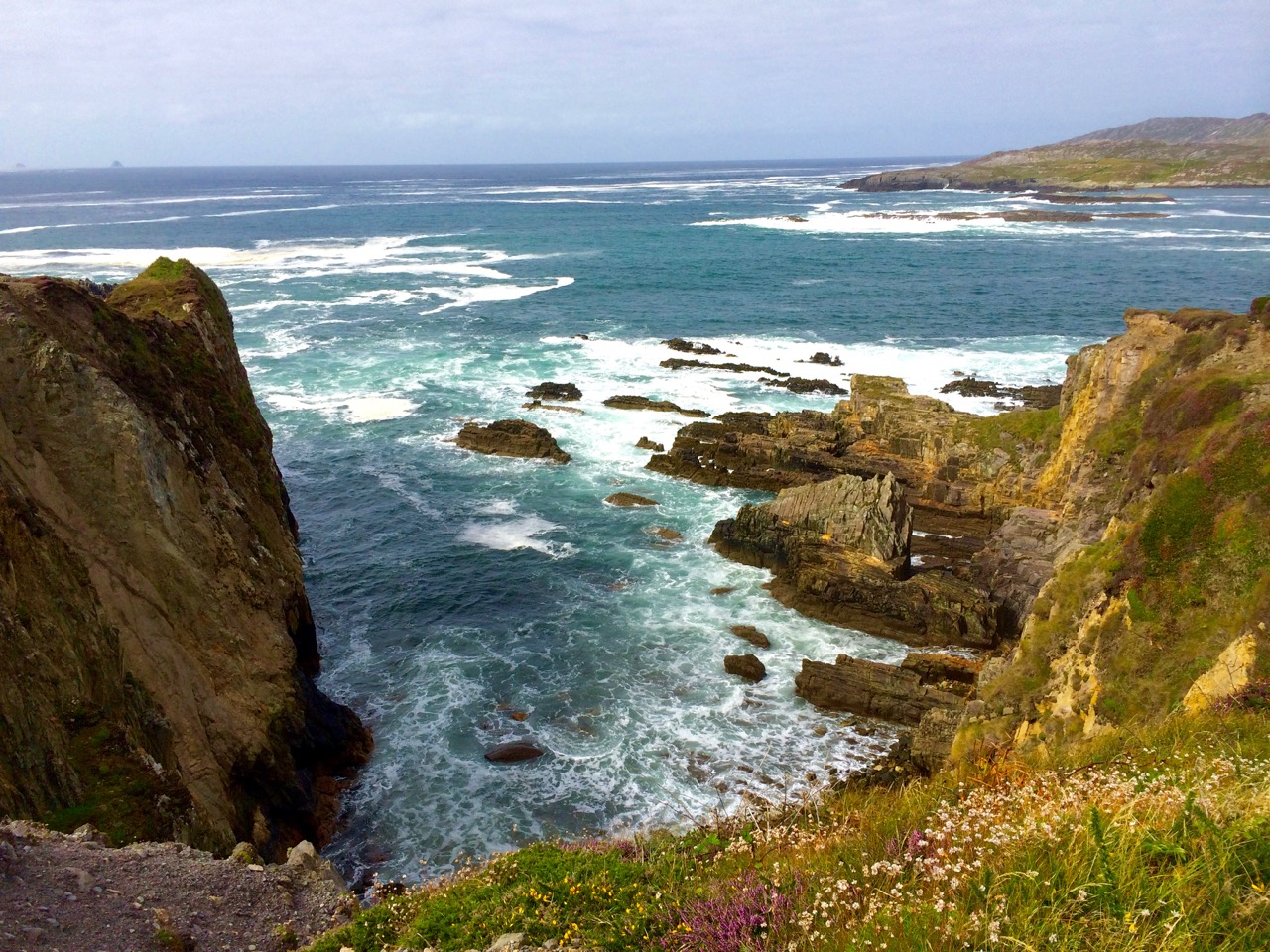
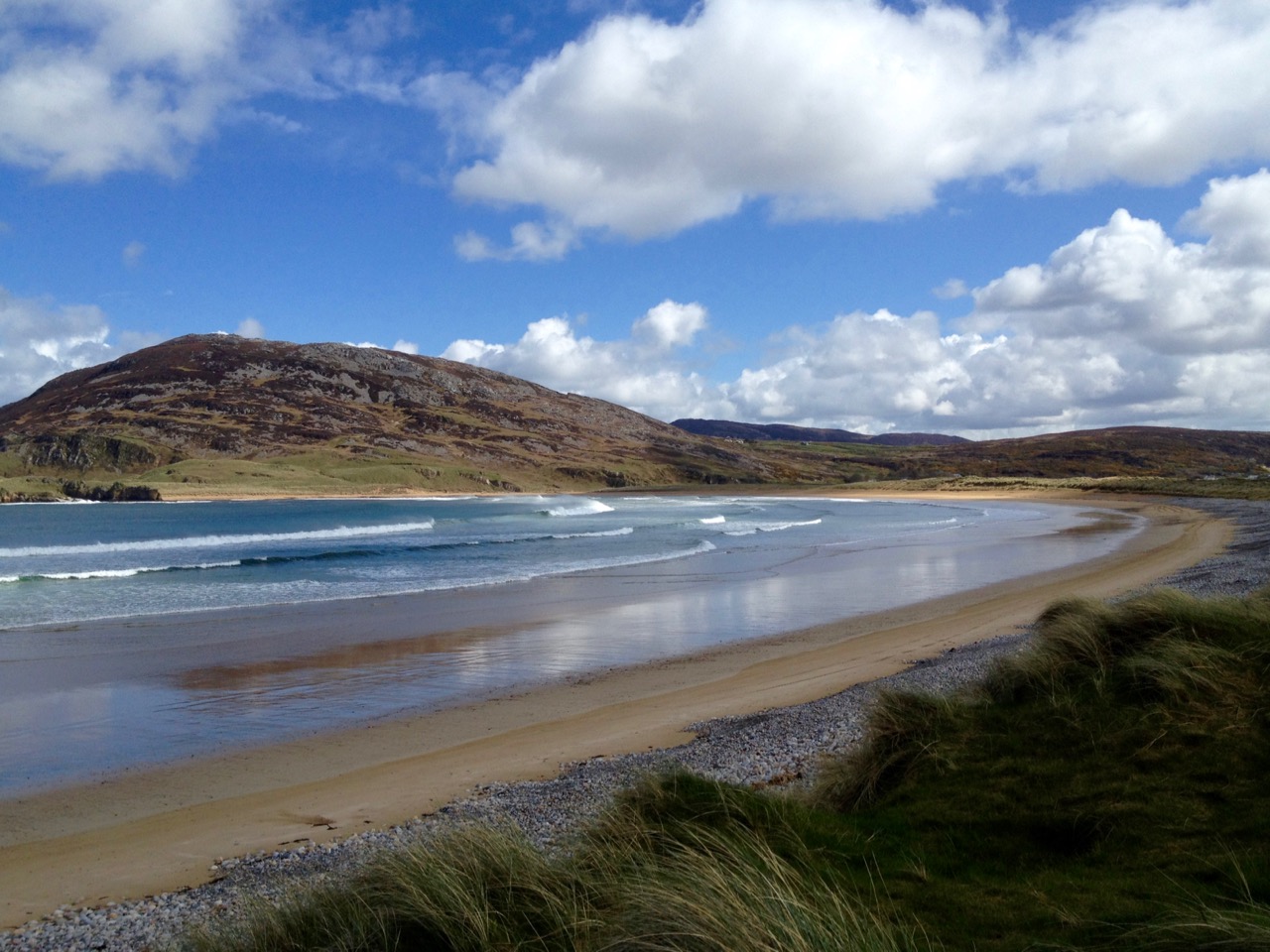
Atlantic contrasts from Mizen to Malin: near Malin Head – Ireland’s most northerly point (top), off the Beara (centre) and a beach in Donegal (lower)

A later traveller over the Atlantic waters was Chistopher Columbus in the 15th century. On the way he looked out for St Brendan’s Isle, a spectral island situated in the North Atlantic somewhere off the coast of Africa. It appeared on numerous maps in Columbus’ time, often referred to as La isla de SamborombónThe first mention of the island was in the ninth-century Latin text Navigatio Sancti Brendani Abatis (Voyage of Saint Brendan the Abbot), from whence it became firmly implanted into Irish mythology. St Brendan took a little party of monks to the island to say Mass: when they returned after a few days to the rest of the flotilla, they were told that they had been away for a year! The phantom island was seen on and off by mariners for years until in 1723 a priest performed the rite of exorcism towards it during one of its apparitions behind low cloud… You can see St Brendan’s Isle for yourselves, above the wonderful giant fish in the second picture down.

Dingle Peninsula

Coast Road

Dingle peninsula (top), and Coast Road in Donegal (lower)

I was pleased to find this Irish Times video made by Peter Cox when he was fundraising for his book Atlantic Light: spectacular photographs of the coastline on Ireland’s Wild Atlantic Way. The excellent aerial views in this film are all taken by a drone… Look out for places you will have seen in our blogs!

atlantic video

We are privileged that the Atlantic Ocean is the abiding but ever-changing feature in our daily lives. It must affect us in unknown ways: I do know that, wherever I go in this world, I will – like Saint Brendan – always be drawn back here to our wonderful safe haven…

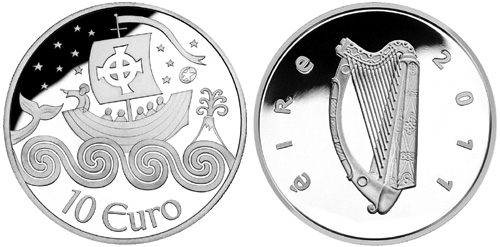
St-Brendan-Coin1