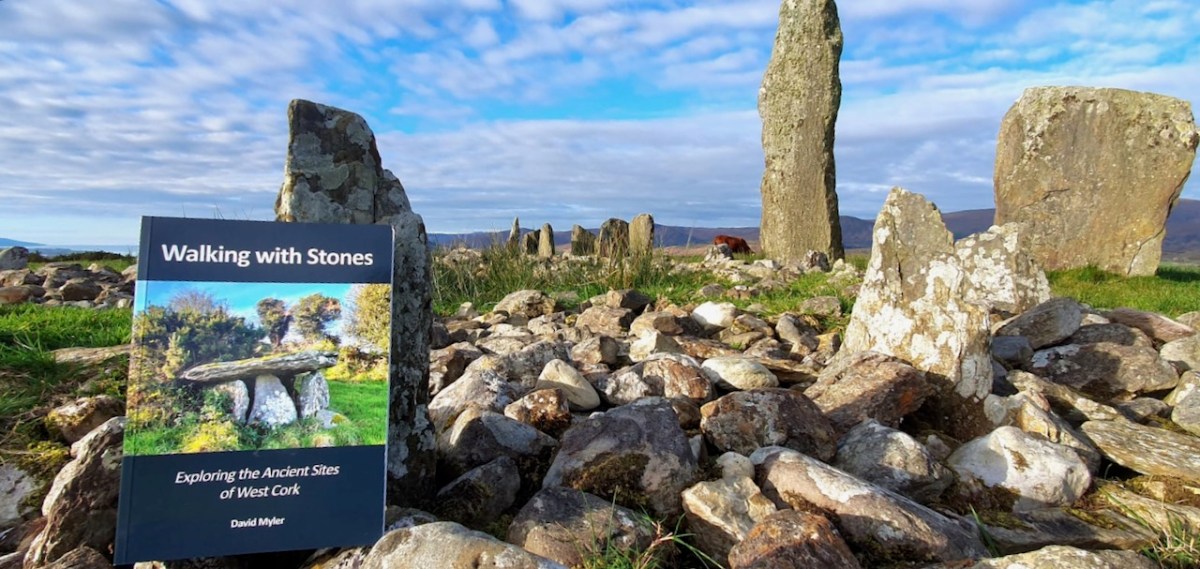
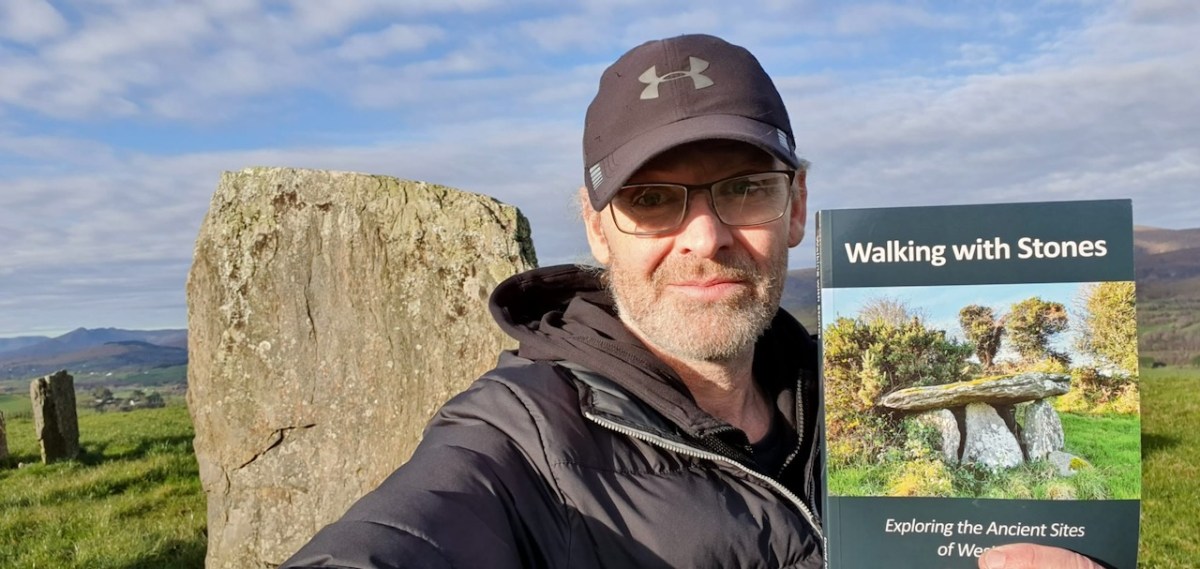
If you live in West Cork, or if you love to visit it, your Christmas present dilemma is solved! Here comes Walking With Stones, the new book on West Cork archaeological sites written by David Myler.
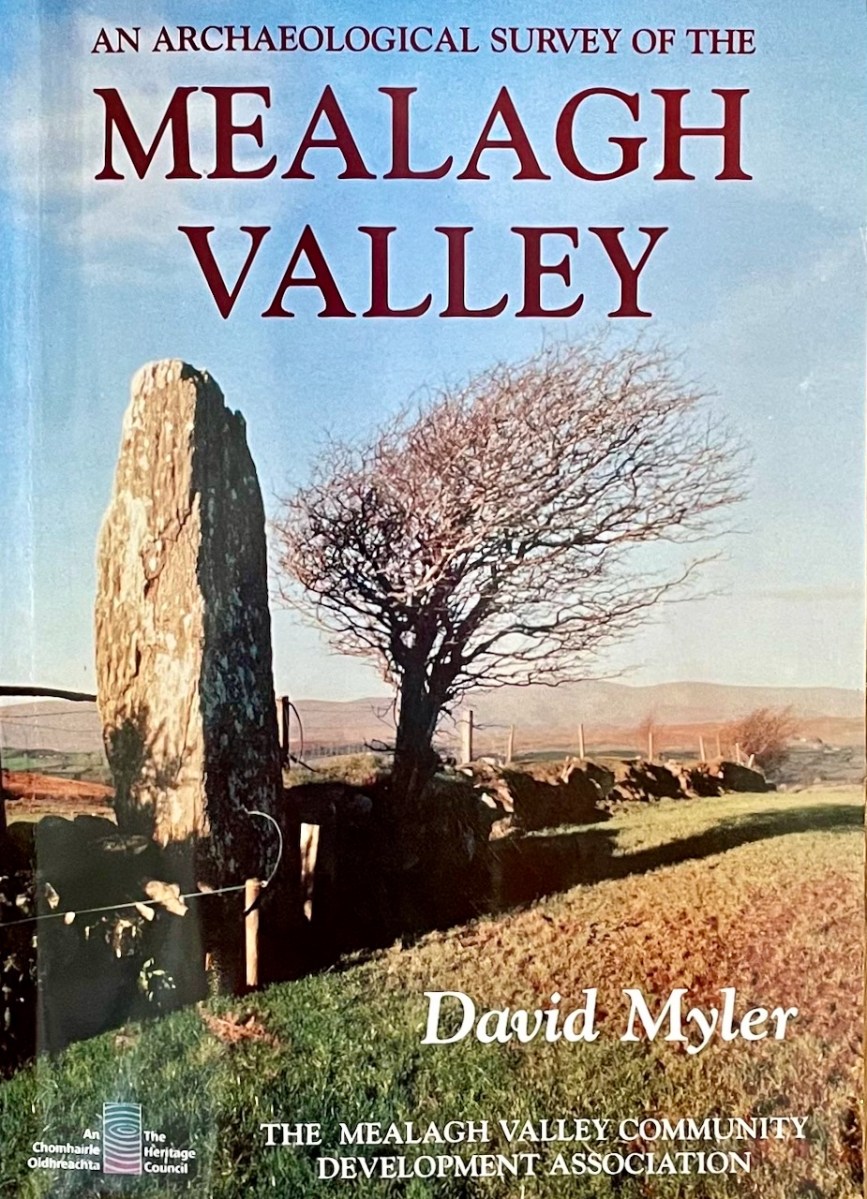
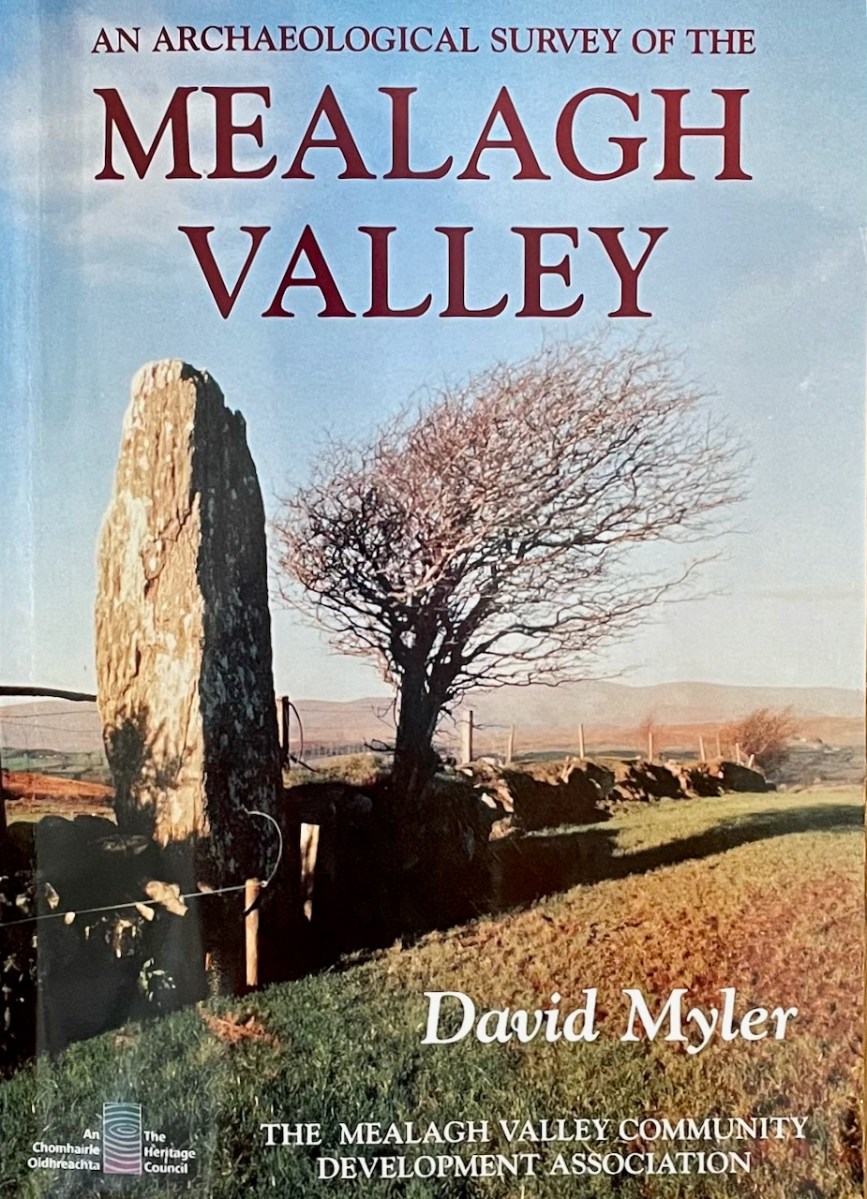
David has been sharing his passion for West Cork antiquities in an online Facebook Page/blog which he called Walking with Stones. But even before that, he wrote An Archaeological Survey of the Mealagh Valley – a book we have had on our bookshelves for years and turned to often.
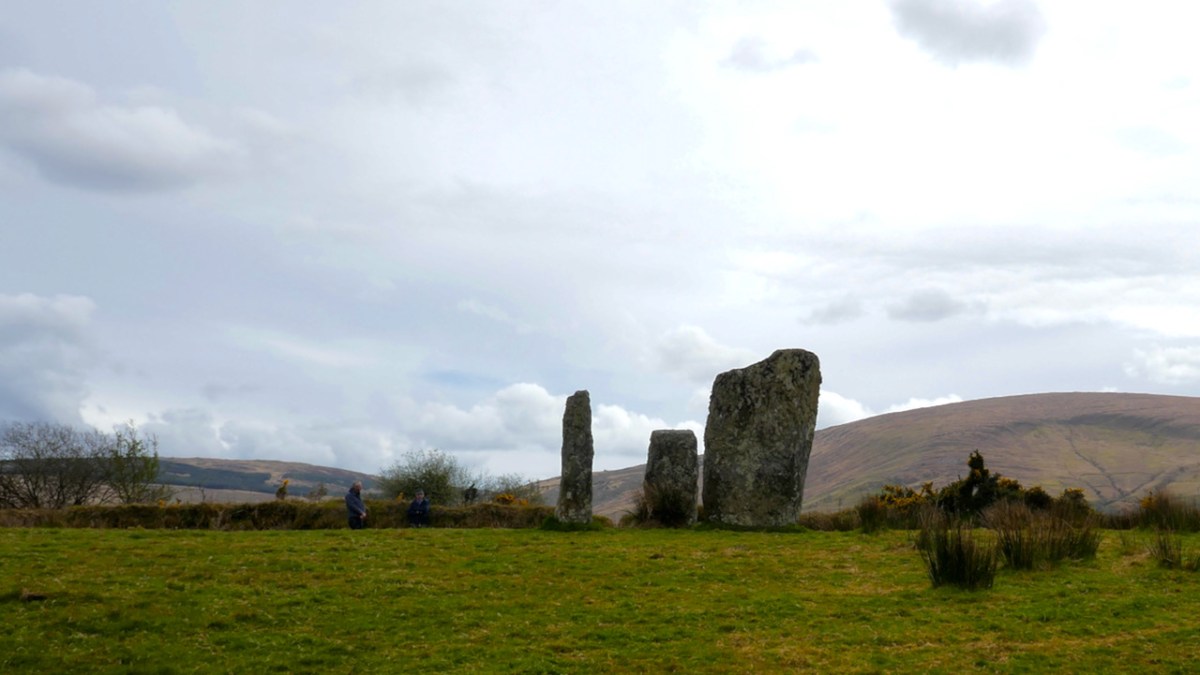
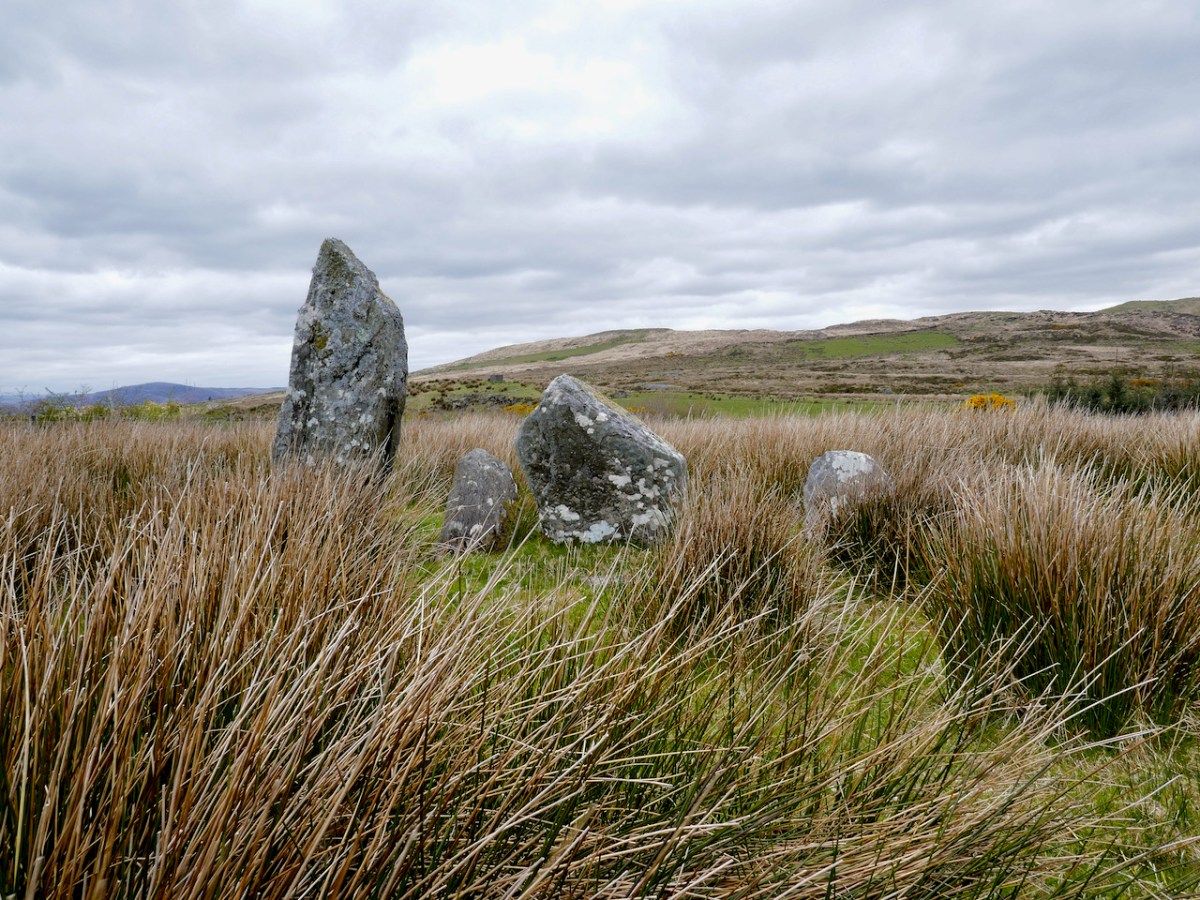
Once we saw Walking With Stones pop up on our Facebook feed, we knew we had found a fellow traveller. We had to meet – and meet we did, along the way discovering many shared interests and even a relative in common. Our first meeting was a field trip where David showed us this stunning stone row in the Mealagh Valley.
On that same trip we saw my first ever Four-Poster Monument – they are very rare, with only four in West Cork – as well as a spectacularly-sited wedge tomb that David had discovered.
David’s book is a very welcome addition to our bookshelf. Perhaps I should declare right away that he asked me to write the Introduction and I was delighted to do so. Now that I finally have my own copy, I am thrilled to be associated with it, in this small way.
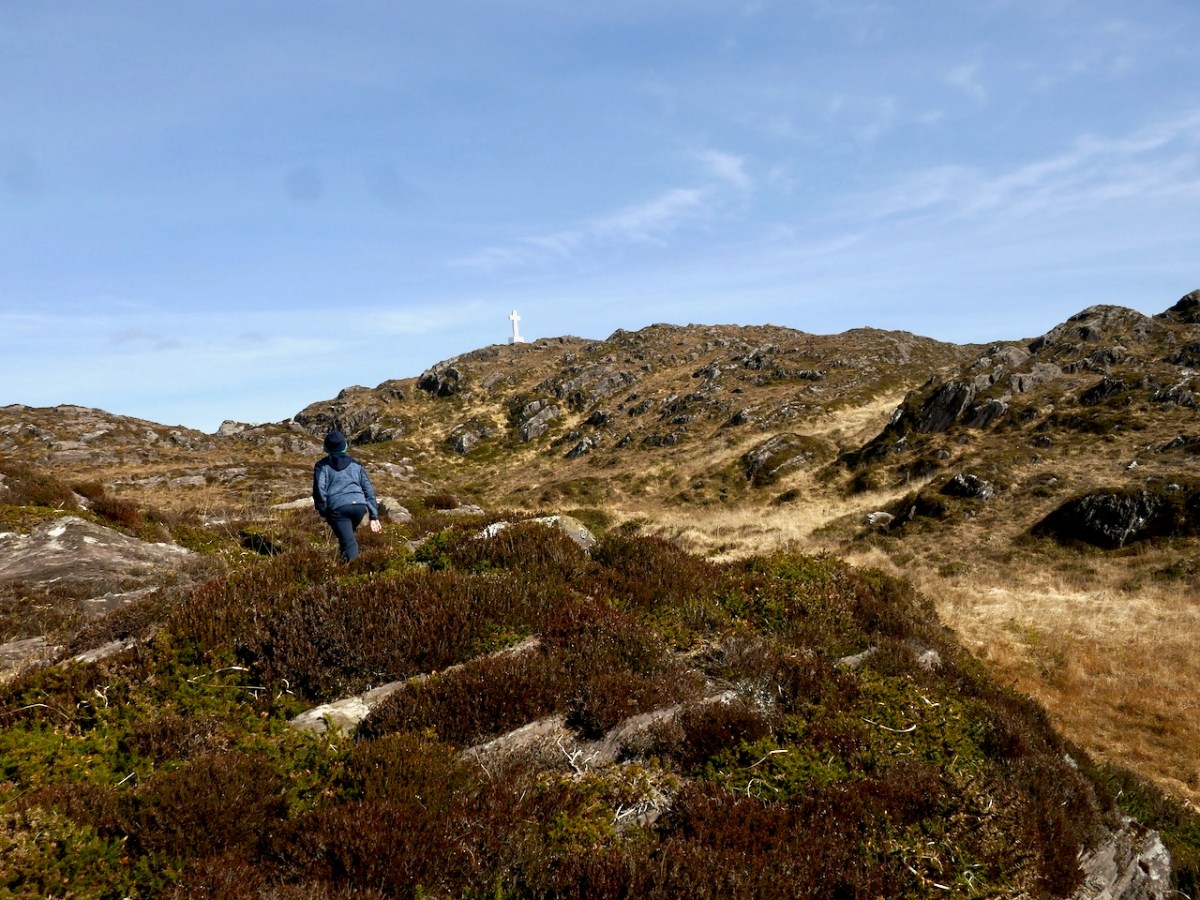
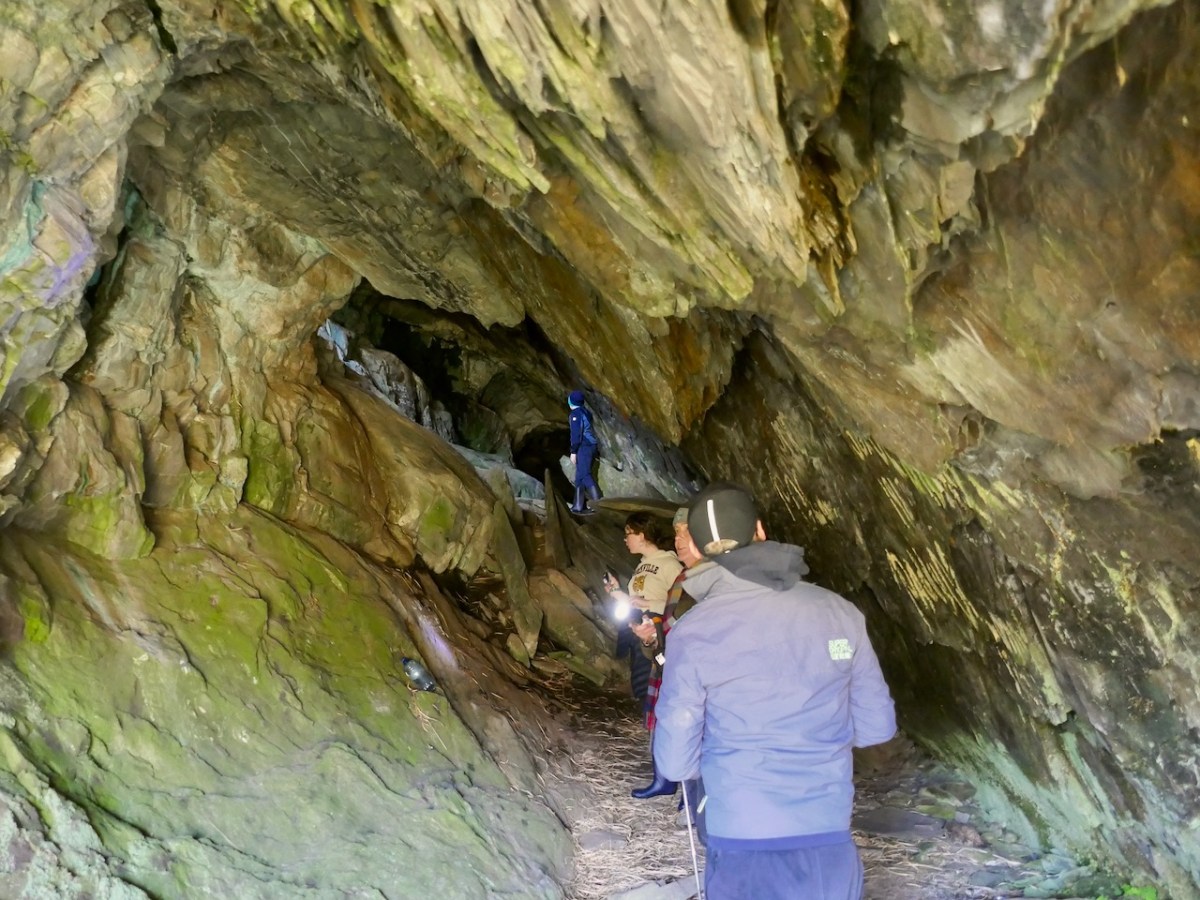
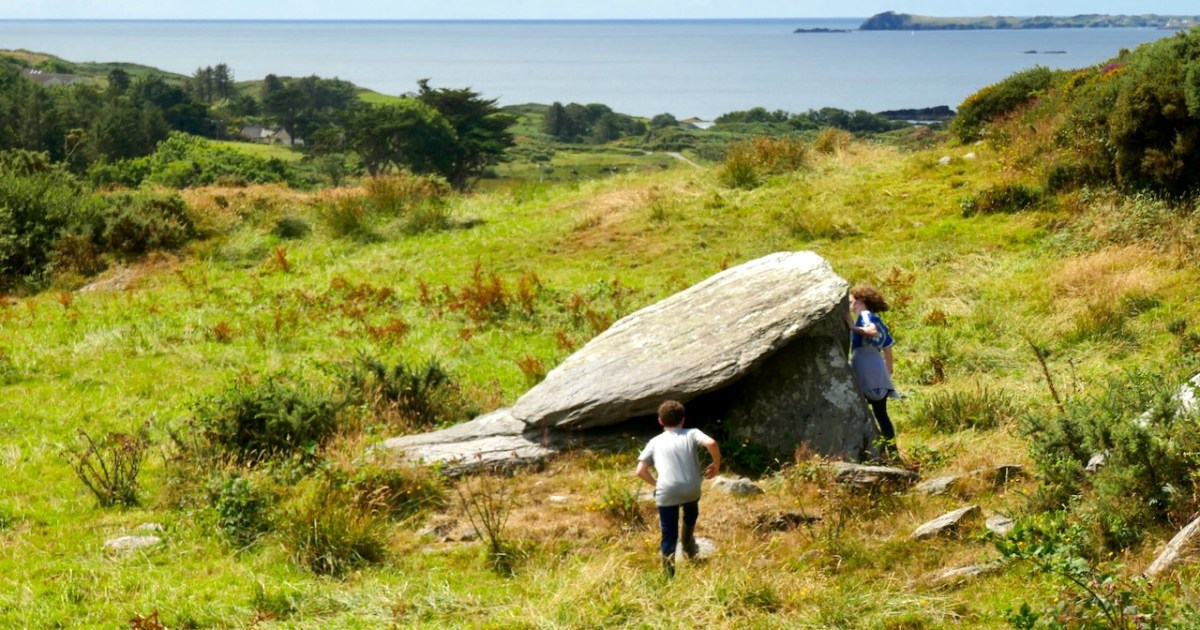
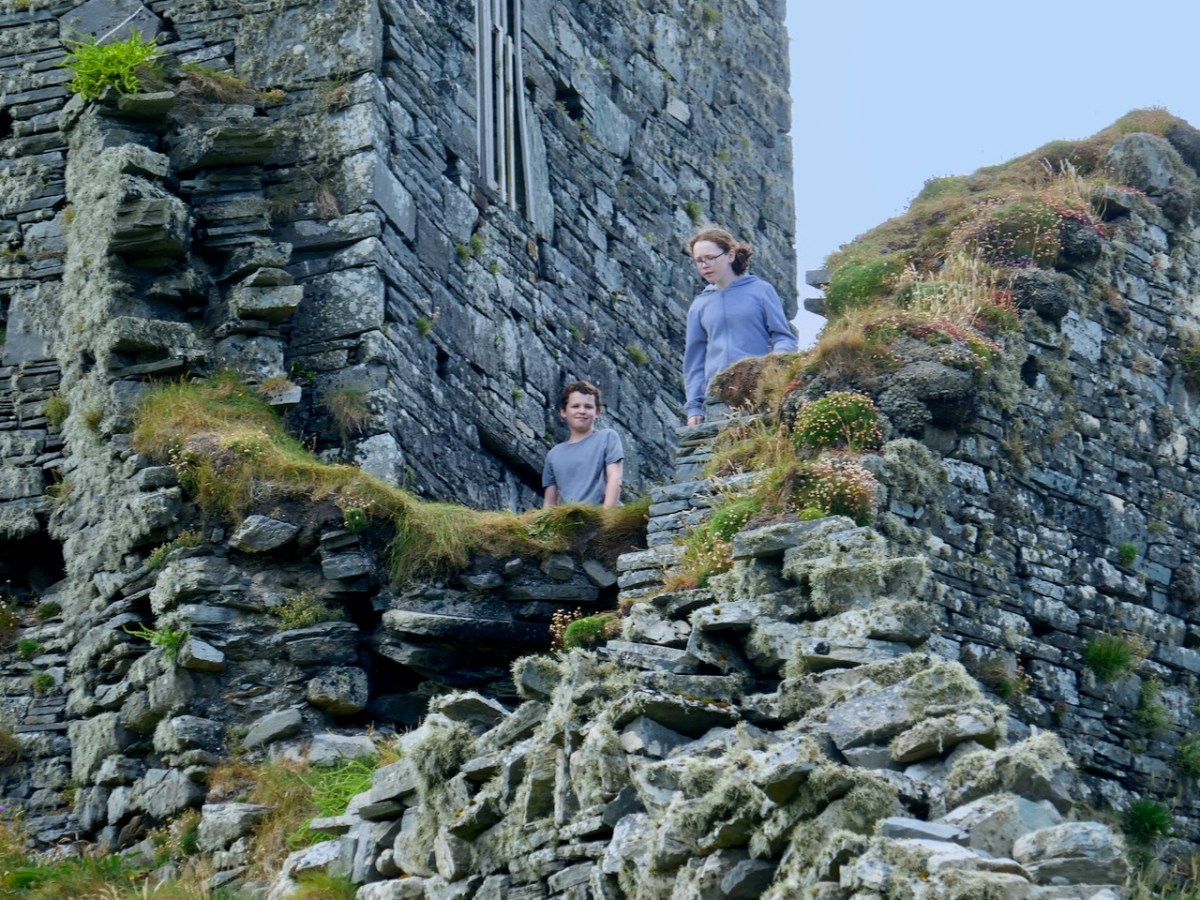
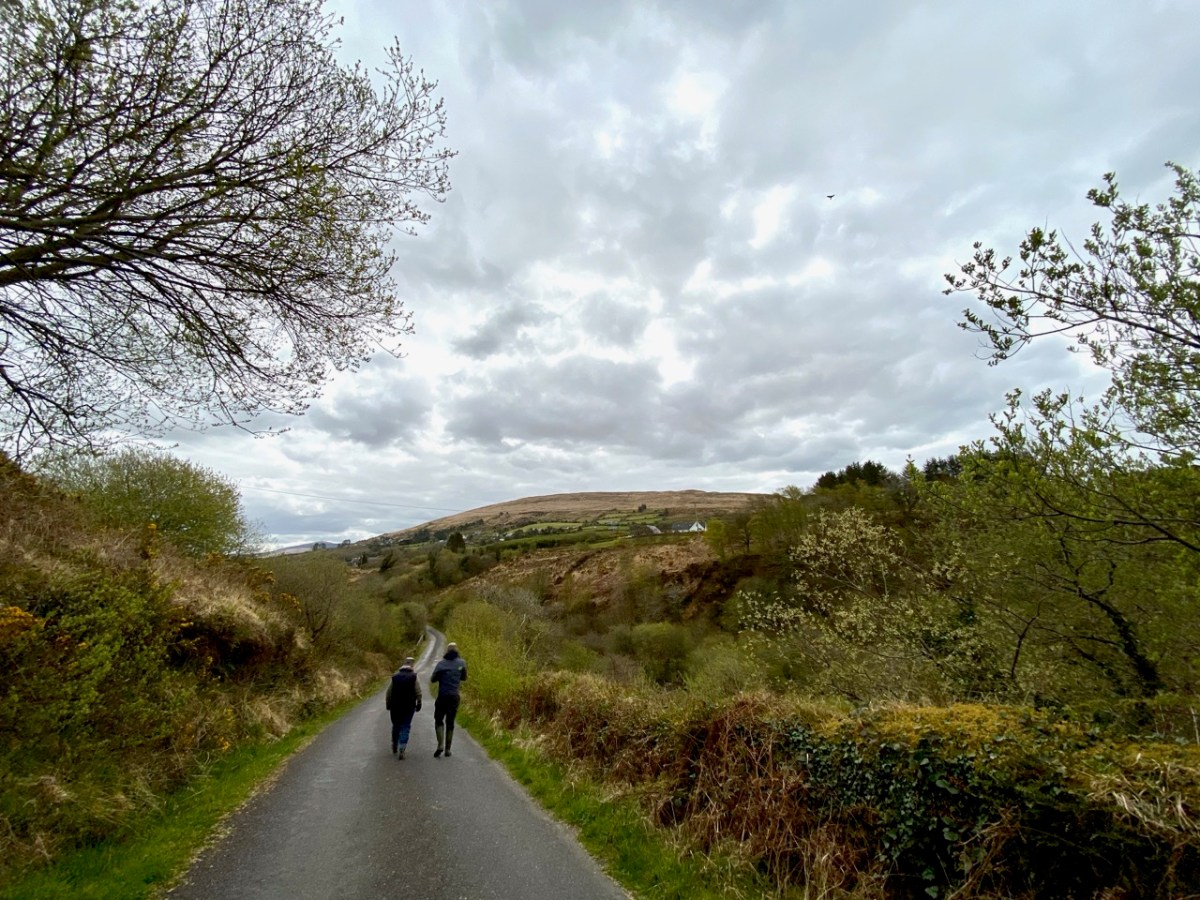
David’s favourite companions on his walks are his kids and one of the real strengths of this book is the sense that all these places can be enjoyed with family. Having young people along, with their curiosity, their need to really explore, and their chatter, brightens any walk. Just make sure you go equipped with food and bandaids. What follows are a few photos of joint field trips we have taken with them.
The only comparable book we can think of is Jack Roberts’ Exploring West Cork, first published in the 1980s and updated and re-published a couple of times. We treasure all of Jack’s books, especially for their marvellous black-and-white drawings, as accurate as they are charming.
While Jack tried to be fairly comprehensive in his coverage, David’s selection is personal – this does not pretend to be a gazetteer, but a guide and companion. Many of the sites have been chosen because they are accessible and can be enjoyed as part of a good walk through the countryside. Restricting the number of sites also allows David to write more about each one and use his own photographs to illustrate important features.
The best place to have David’s book is in your car, your bicycle carrier, or your backpack. You can buy it online here or here. Look out for it in local bookstores, if you live in West Cork – David is doing the legwork now of getting copies to them.
Congratulations, David! Given that you work full time and have a family to look after, this is an amazing accomplishment and one we are all grateful for.
The Mealagh Valley (locals pronounce it Maylock) runs from Bantry Bay to the Maughanaclea (Maw-na-clay) hills and through this valley the Mealagh River flows from north east to south west. Along the valley are found numerous ancient monuments, evidence of occupation from the earliest times. David Myler, some years ago, with support from other local people, undertook to survey all the archaeological sites in the area and the result was this book. Sorry – it’s out of print and we are glad we managed to pick up a copy several years ago.
David and I have been in virtual touch for quite a while through social media, promising to meet up and explore when we got a chance – and that finally happened on Friday! Along the way we discovered family connections, so it was no wonder I felt an instant kinship when we met – we bonded over archaeology and shared family stories. David, a Dubliner originally, has been living here for decades and in that time has taken courses in archaeology and developed a passion for the heritage of this – his territory.
It was a joy to be taken on a field trip by the man who has, literally, written the book about the archaeology of the Mealagh Valley. It’s only the first of many, I hope, since we really only got to sample a few of the sites this time – although, as you will see, the places he took us were pretty spectacular!
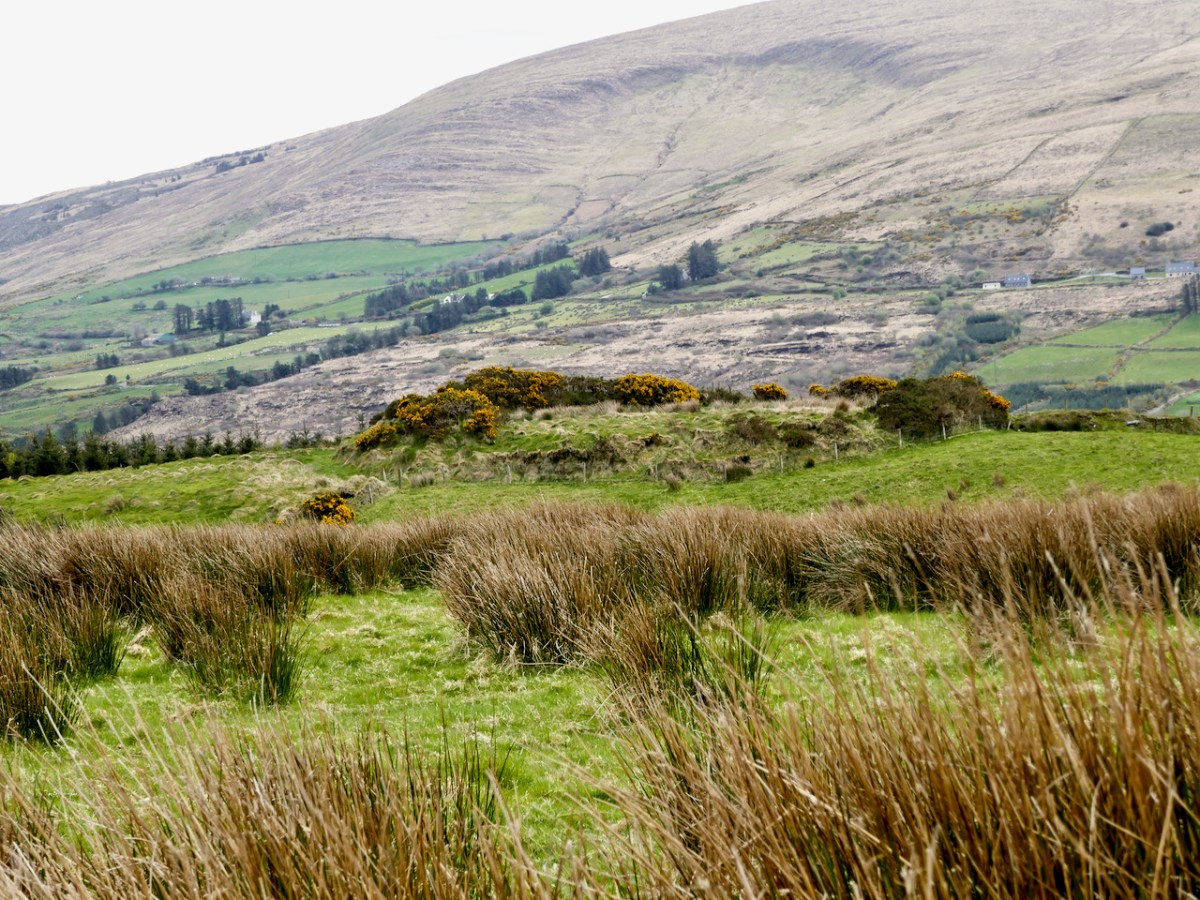
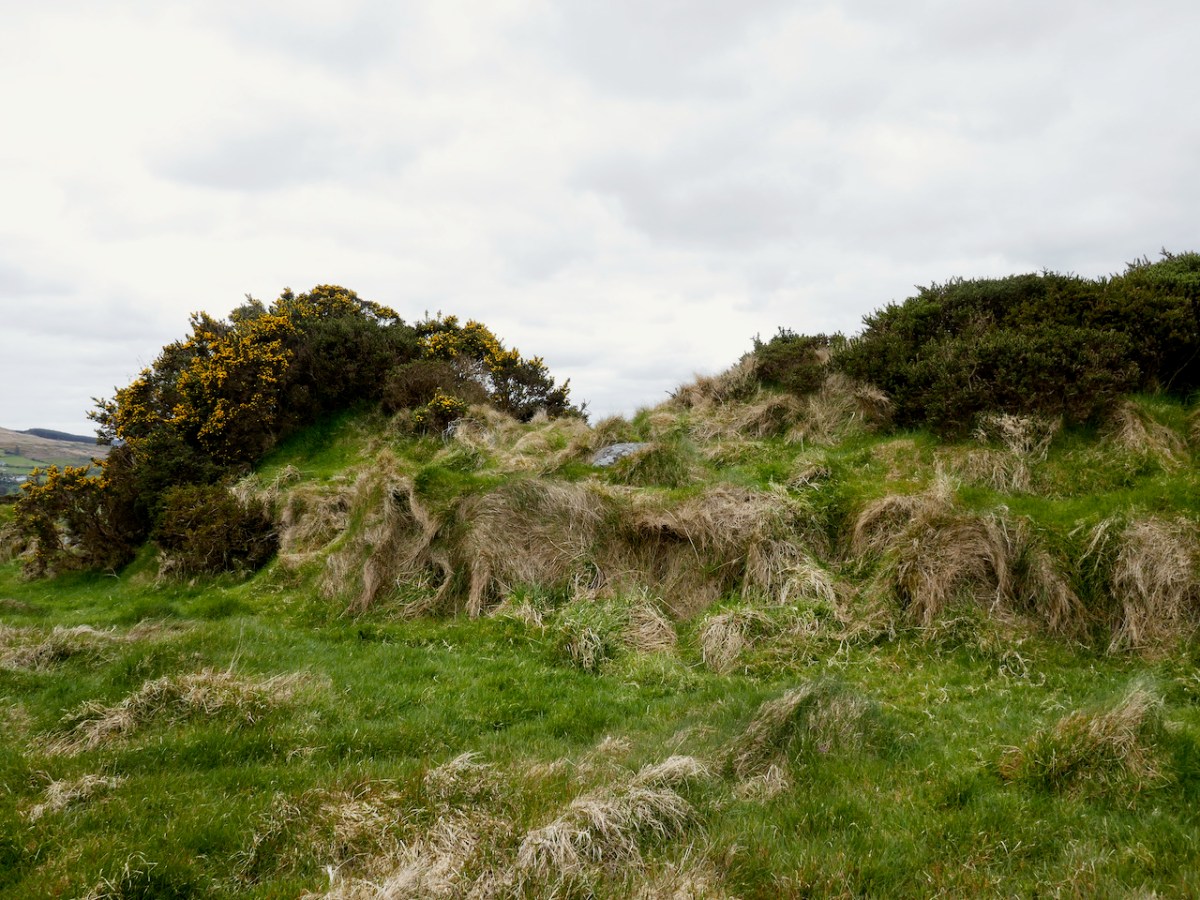
David had secured all the permissions we needed to visit the sites on private land. We started out in the townland of Ardrah (Árd Rath – high fort) with a ring fort (above) commanding panoramic views of the surrounding countryside. A ring fort (also called a rath, lios, dún, or cashel if made of stone) was the dwelling of a high-status individual in early medieval Ireland and examples like this probably date to 500 AD to 1,000 AD. The banks had traces of stone here and there so may well have been faced with stone, and the interior had been levelled.
There would have been a house and perhaps other buildings inside, and a wooden pallisade fence on top of the surrounding bank. There’s a good summary of what we know about ring forts in this engaging website about Irish mythology – I especially enjoy the writer’s comments on the use of ‘fairy fort’ to describe these structures.
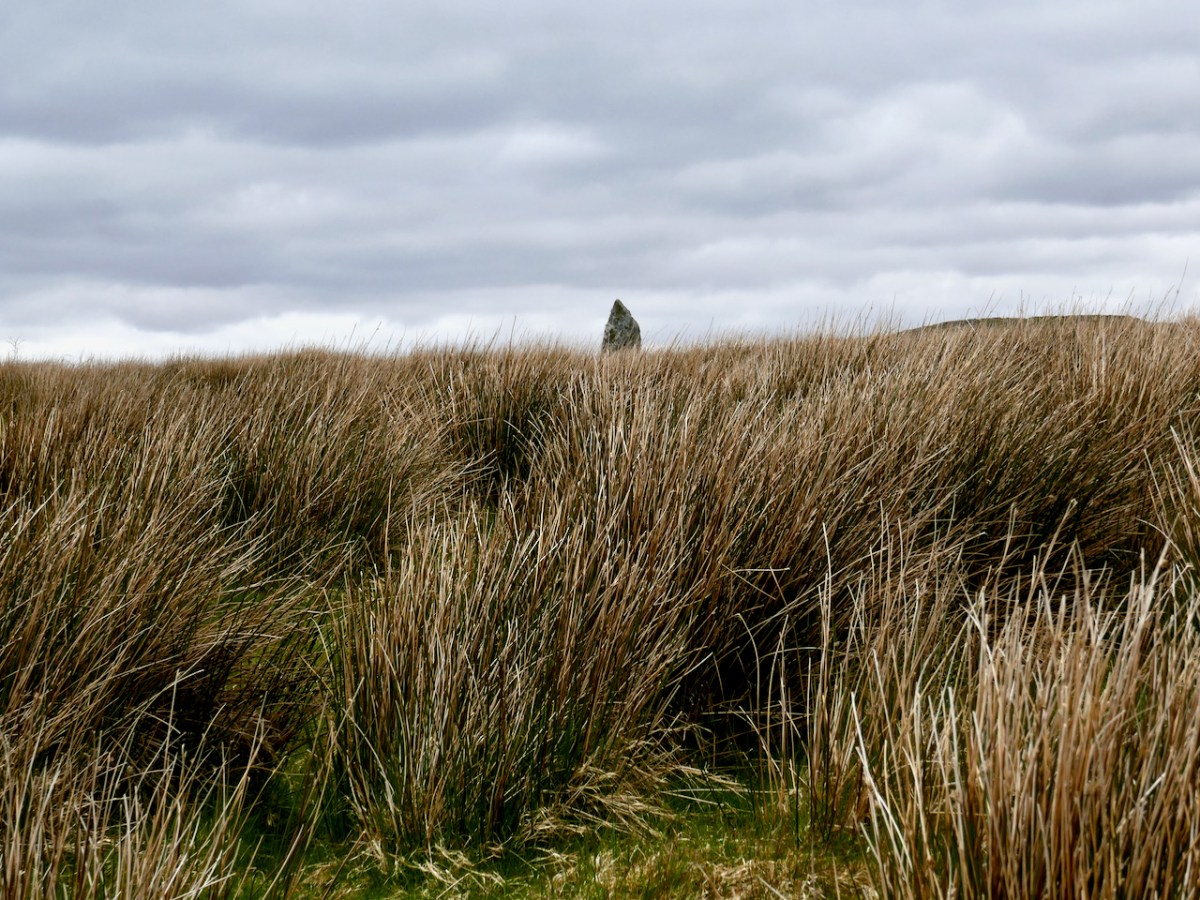
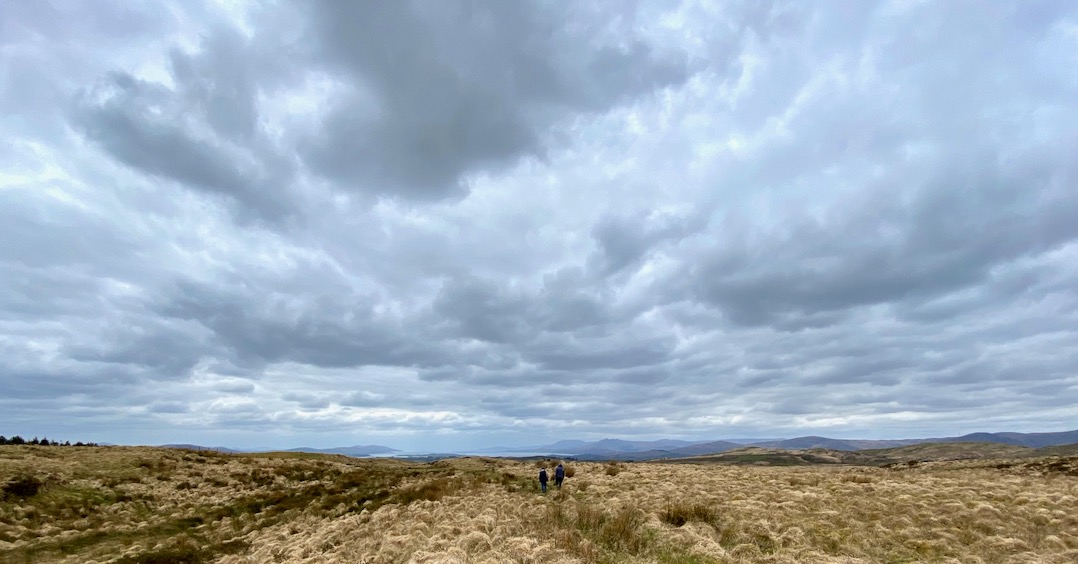
From there we climbed a couple of fences – the first of several fence-climbing incidents during the day and thanks to David for sacrificing his jacket to save us from the barbed wire – and trekked uphill. The monument started to reveal itself as we got higher – at first I thought it was a standing stone.
No – a stone pair?
What, there’s more?
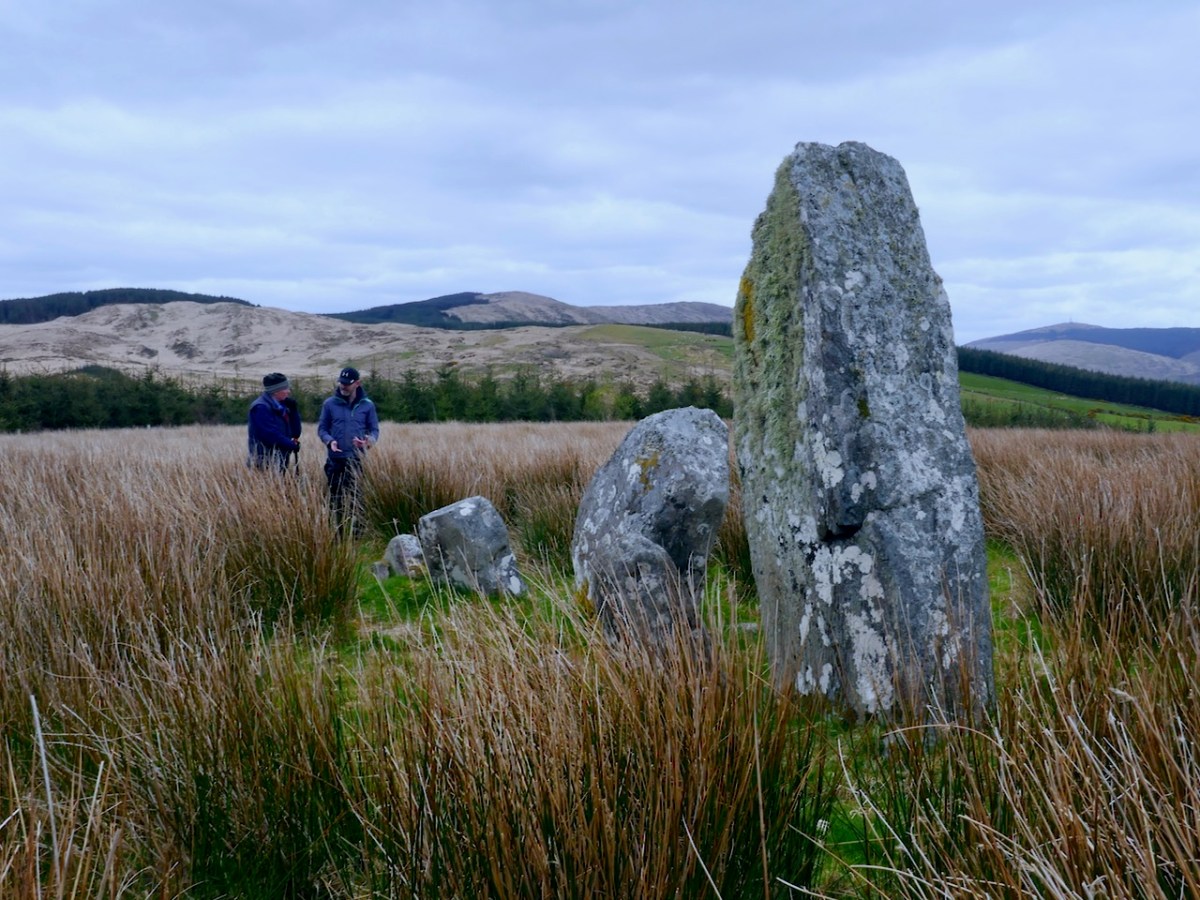
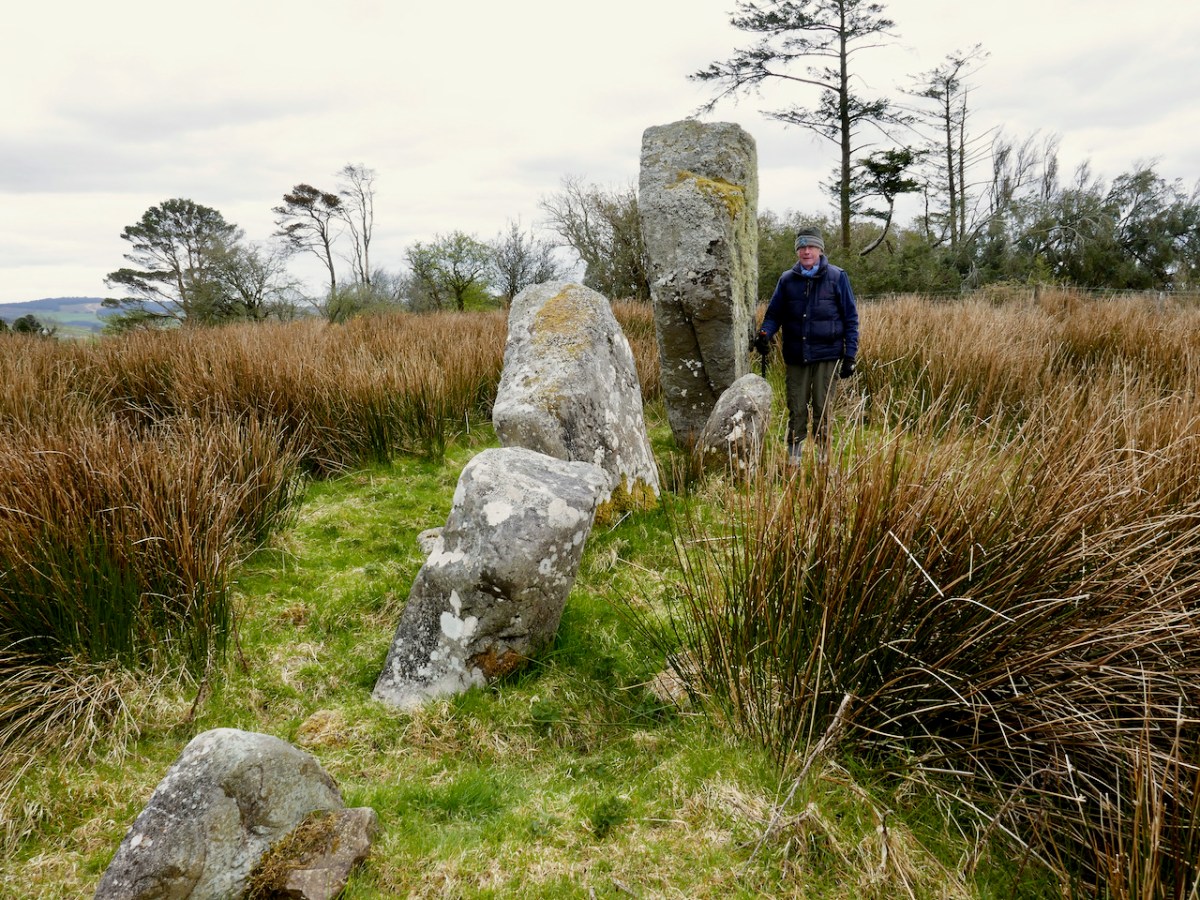
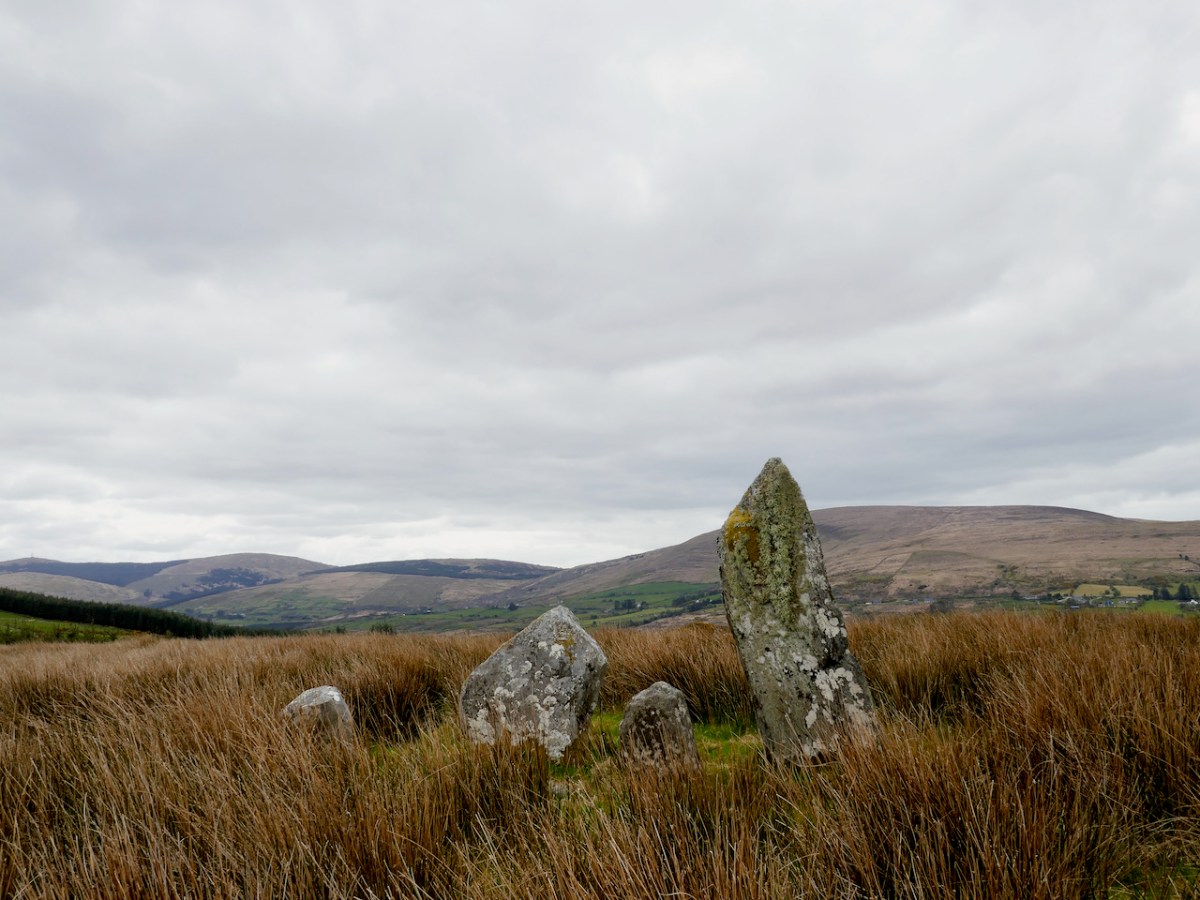
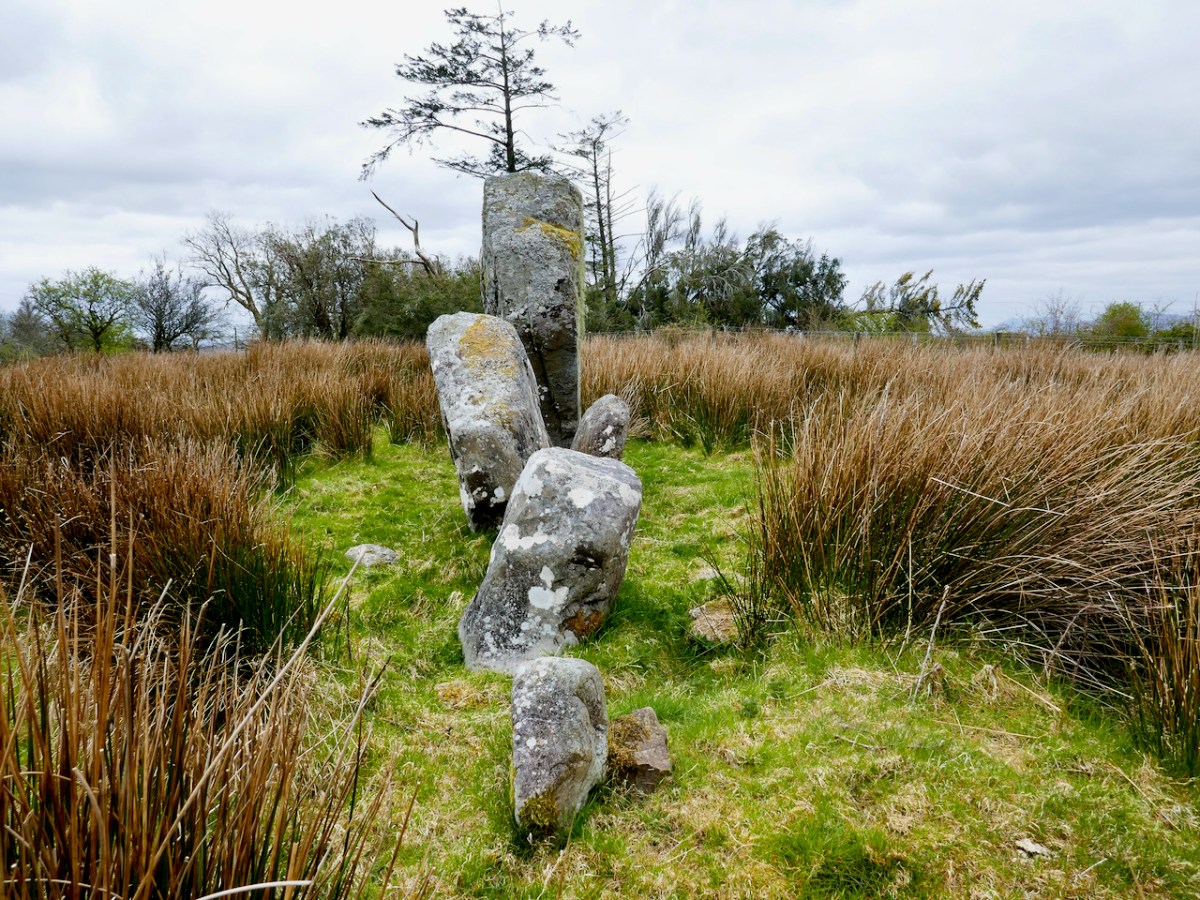
This is the Ardrah stone row, consisting of fours stones aligned ENE/WSW, a common alignment for stone pairs and rows. Take a quick trip over to Standing Stone Pairs: A Visit to Foherlagh for more about this kind of monument. You will see that this one is pretty typical – it has an orientation to the south west, consists of stones that could be interpreted as ‘male’ and ‘female’ and the stones rise in height towards the SW. The southernmost stone is enormous – Robert is providing the scale.
But wait, I hear you say – I see five stones, not four! And you are right. there are five stones, whereas originally there had been only four, and all the records state that this row consists of four stones. The photograph in David’s book, which dates to 1998, clearly shows four.
So – where did the fifth, and smallest, stone come from? It’s a head-scratcher and all we can do is point to the presence of the nearby fairy fort and speculate that the Other Crowd are messing with us.
And then it was on to the piece of prehistory that David discovered in the course of his survey. I should explain here that much of what the Mealagh Valley group was documenting was already known, since the whole county had been surveyed in the 1980s. But what the County Survey lists and what a local group like this looks at, will differ – for example, this group was interested in folklore and local stories about the monuments they visited and about items of interest beyond the remit of the county survey. Moreover, because they are local themselves, they are likely to be contacted if anyone spots an unusual rock or such like, and can be on the spot to examine new ‘finds’. Finally, a project like this generates appreciation and pride in, and a sense of ownership of, one’s heritage, and thus, hopefully, less likelihood of monuments being damaged.
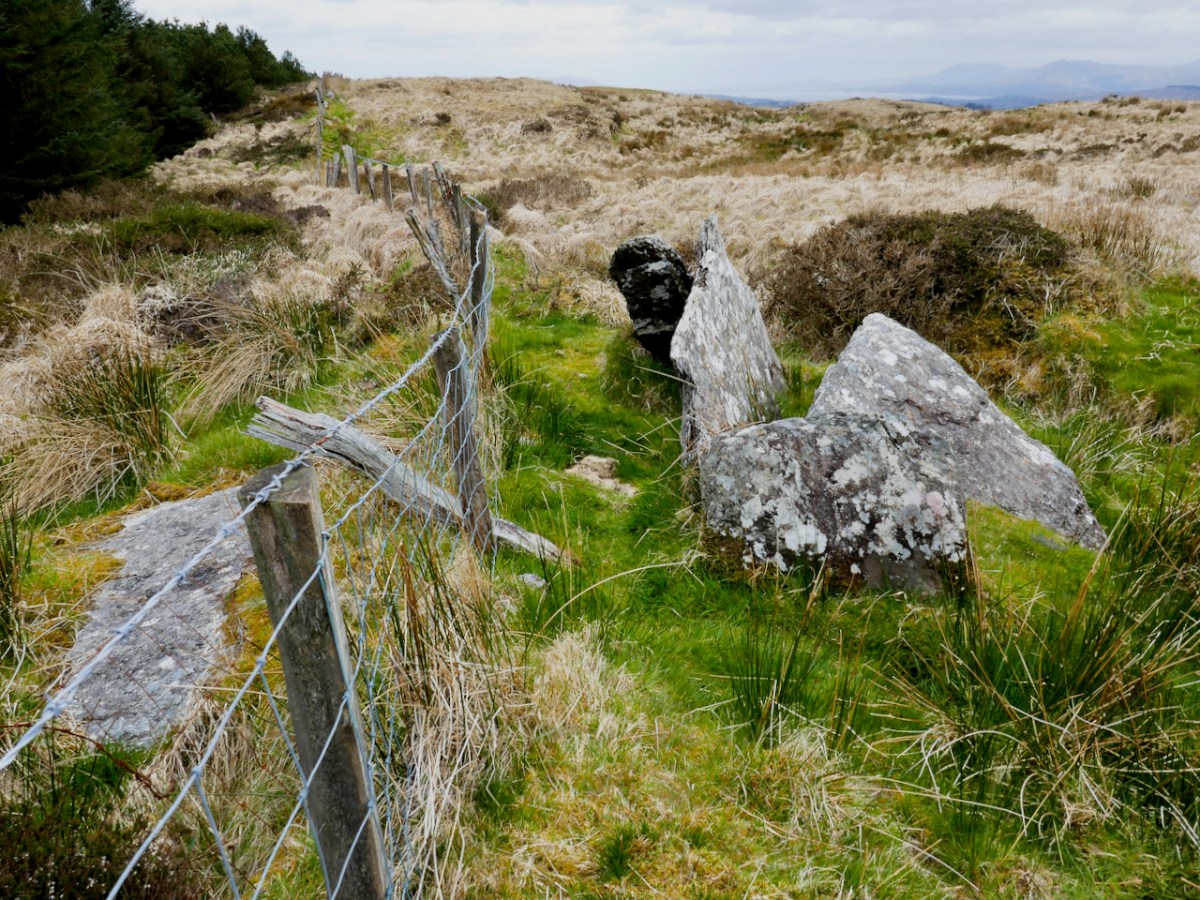
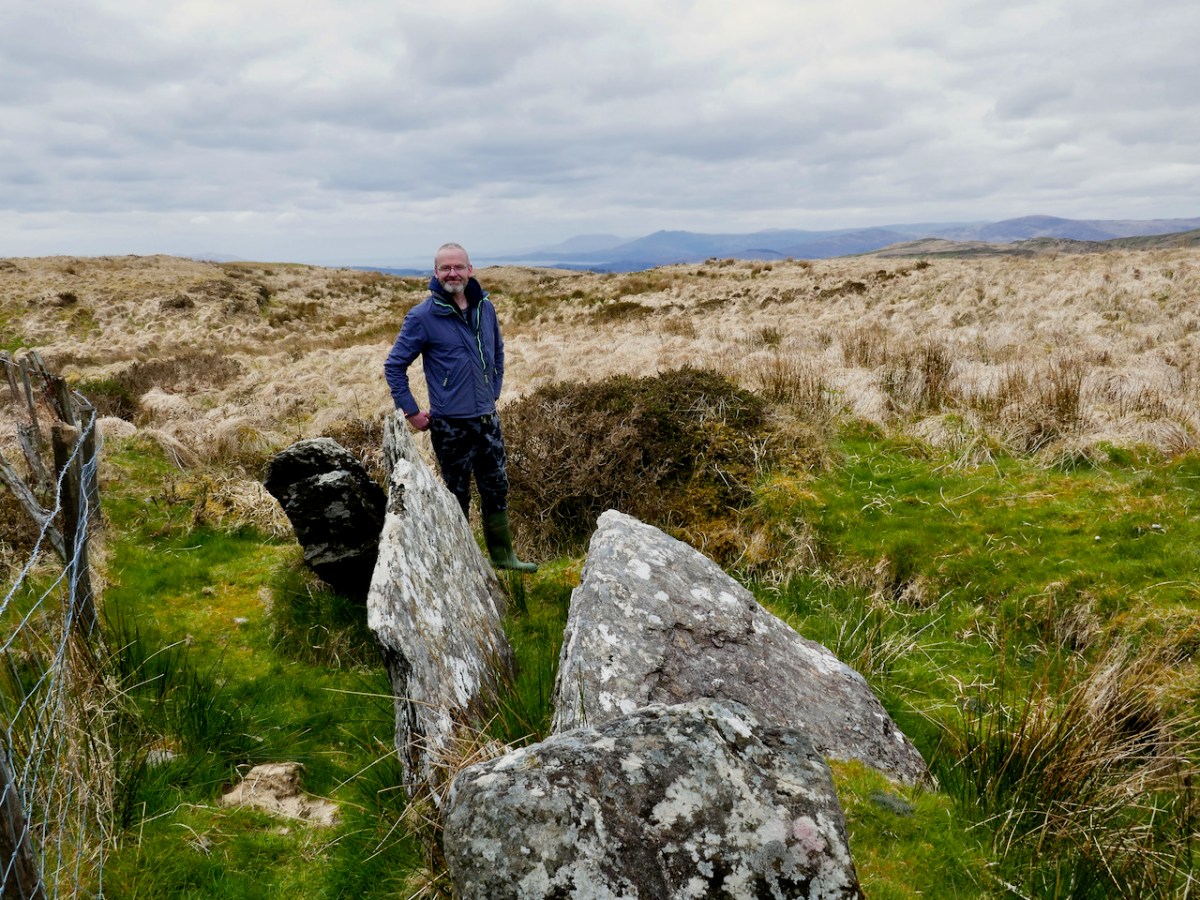
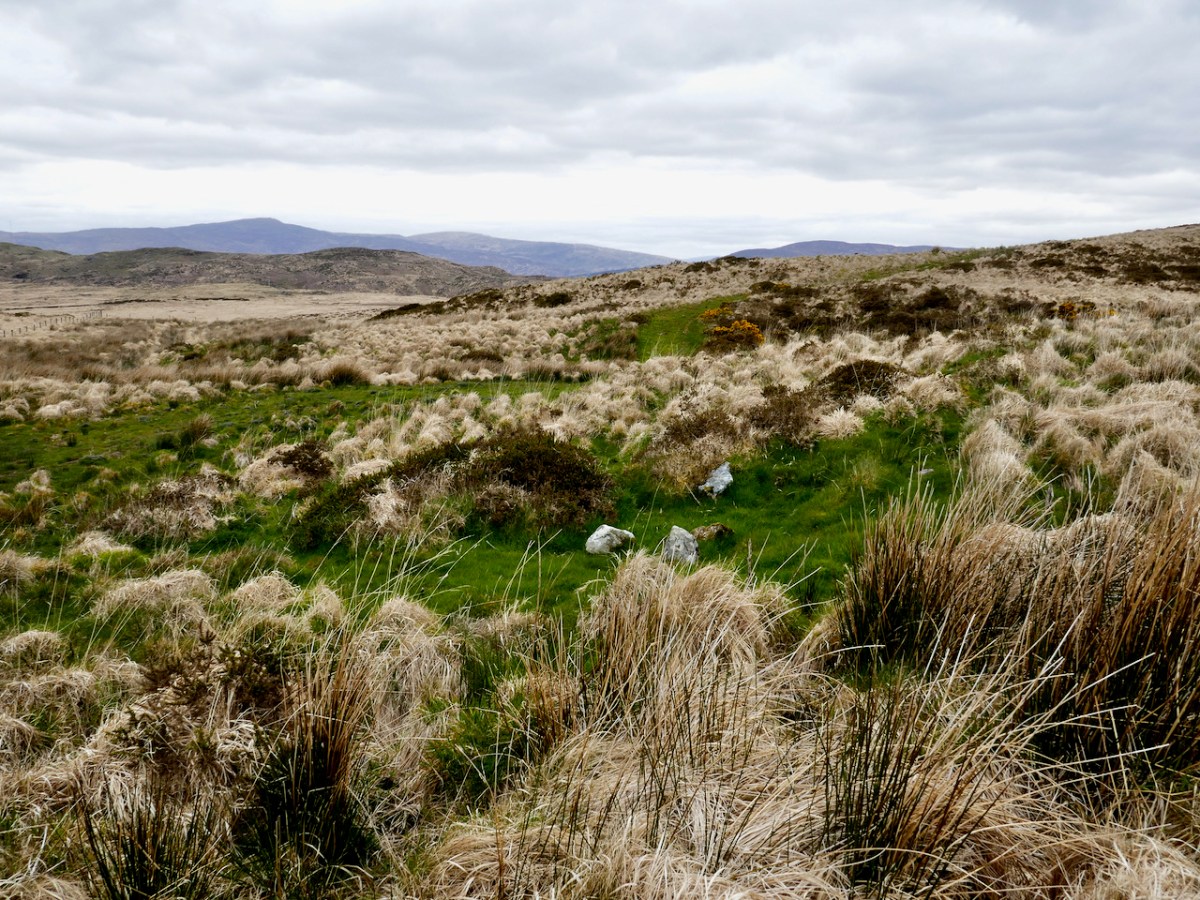
David had been alerted by a farmer to a ‘funny pile of stones’ on the boundaries of the townlands of Ardrah and Gortnacowly (Gort na Camhlaigh – field of the ruins), an area that had been impacted by forestry activity. It’s quite high up and the views are immense. As we walked up, it sent shivers down our spines as David related how he hunted around for what had been described to him, almost giving up, and finally stumbling upon the mangled remains of what he instantly recognised as a Bronze Age wedge tomb.
A digger clearing out a drainage ditch had inflicted damage but most of the stones were still lying around. One side of the tomb, and the back stone, were in situ. That’s probably the capstone, or one of them, on the other side of the fence.
As an archaeologist, it’s actually quite rare in Ireland to discover a previously unrecorded monument – having done so once or twice I know what a thrill it is. David’s wedge tomb is a classic of its type – see my post Wedge Tombs: Last of the Megaliths for more about them. That’s David above, showing us how to make sense of the stones, both those in situ and those which have been disturbed. He was able to ascertain that the workings in the area had turned up quartz pebbles – a feature of several West Cork wedge tombs.
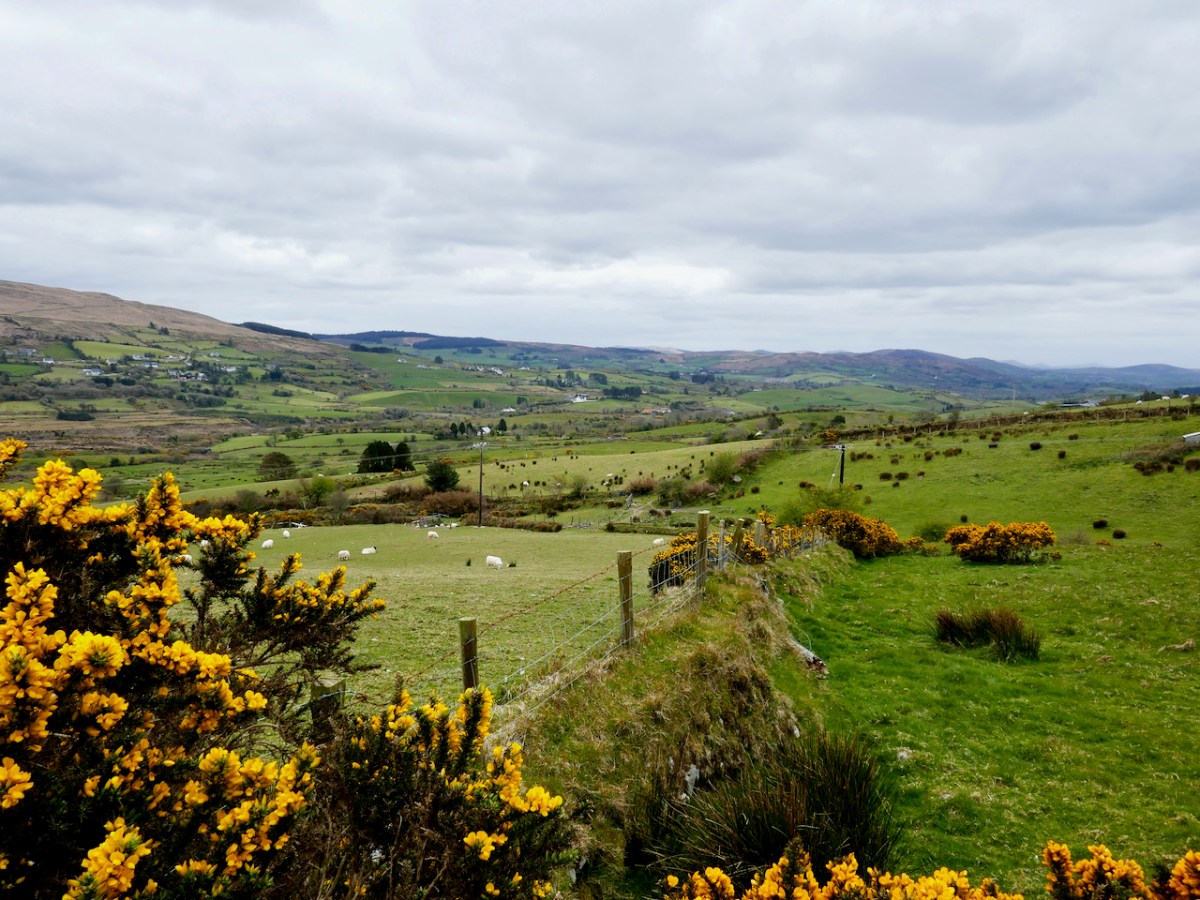
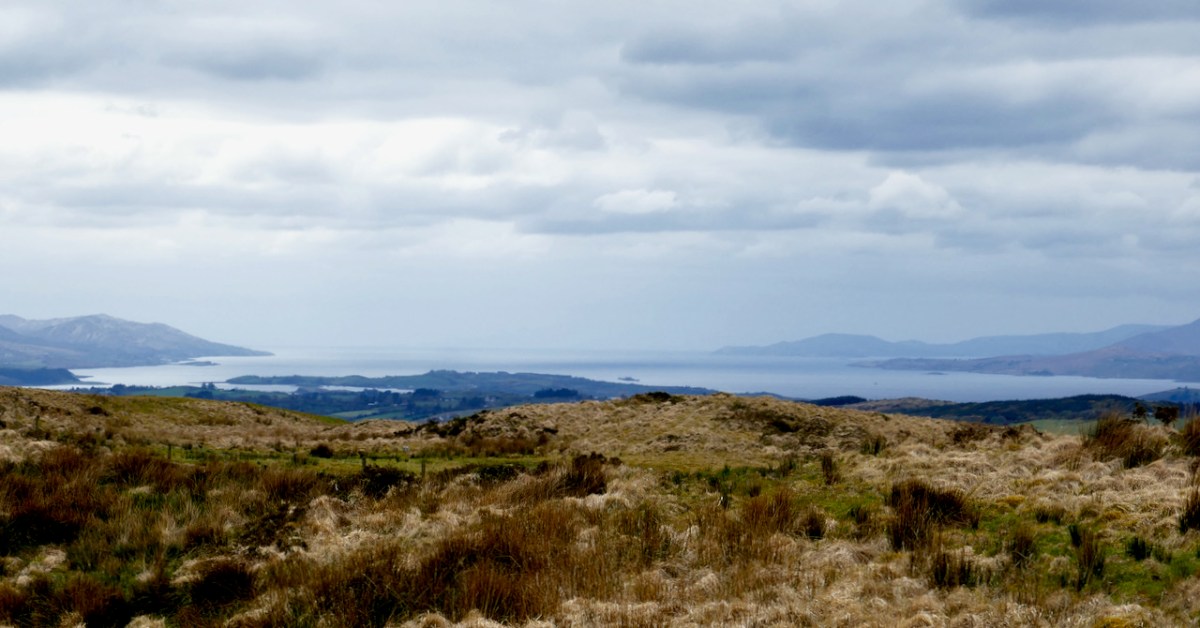
This one was, as expected, oriented towards the setting sun – but that doesn’t begin to describe the incredible sweep of the view from this point – the whole of Bantry Bay lay before us, with the Beara on one side and Sheep’s Head on the other.
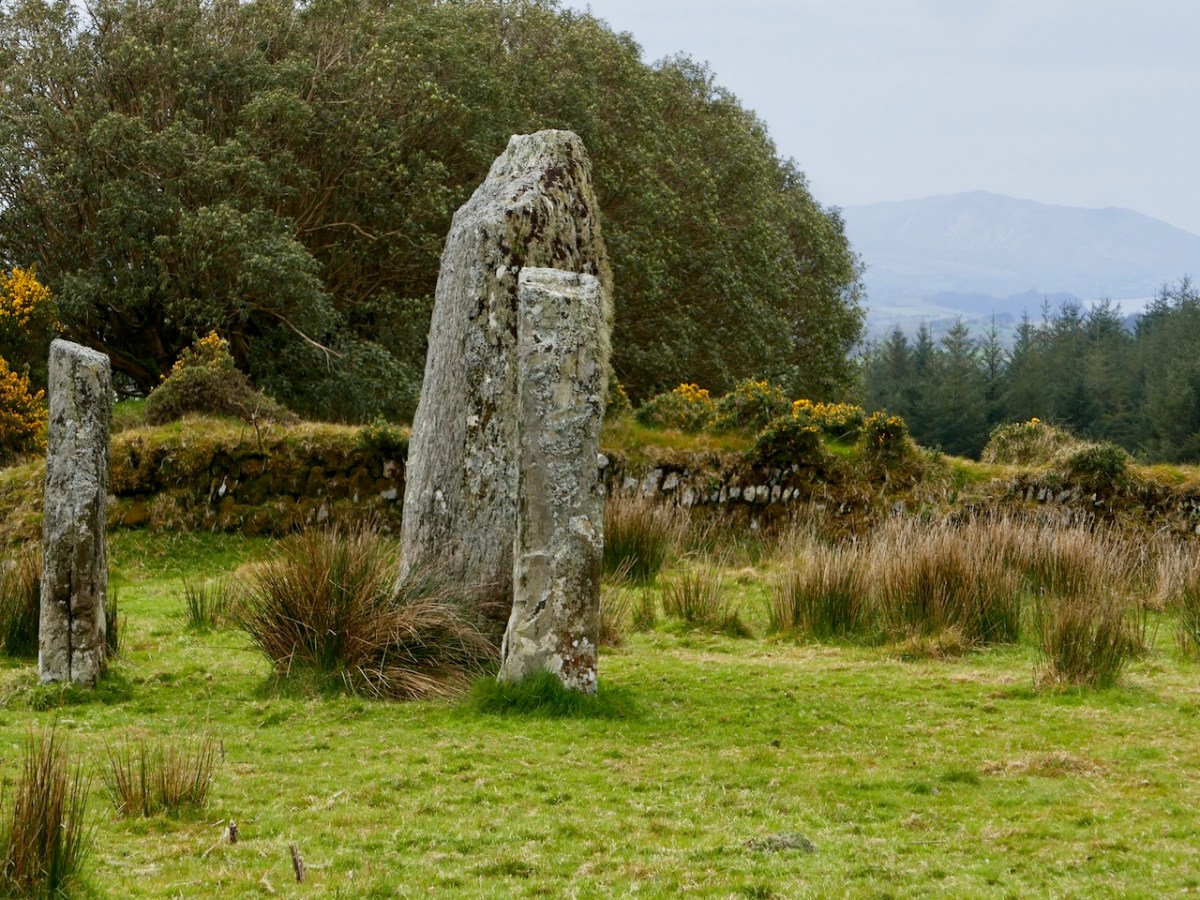
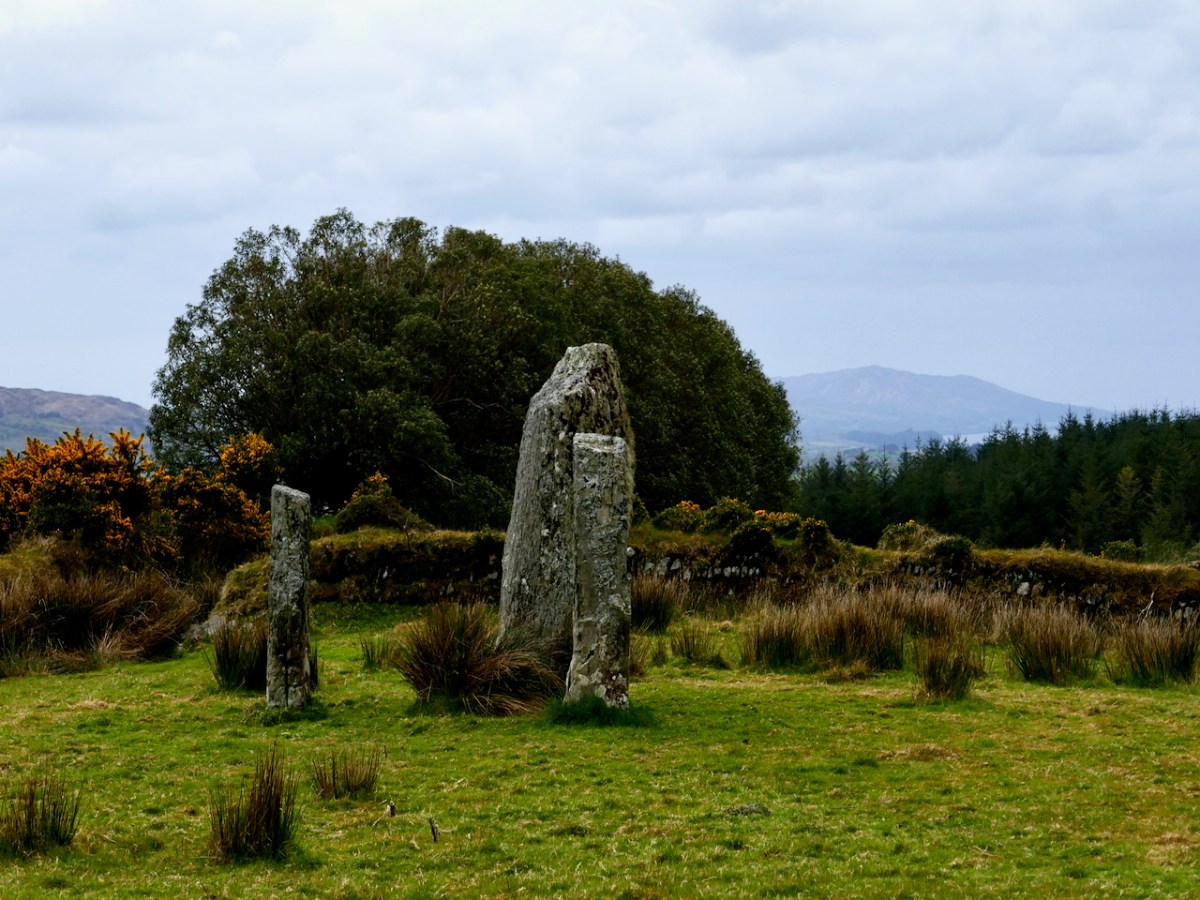
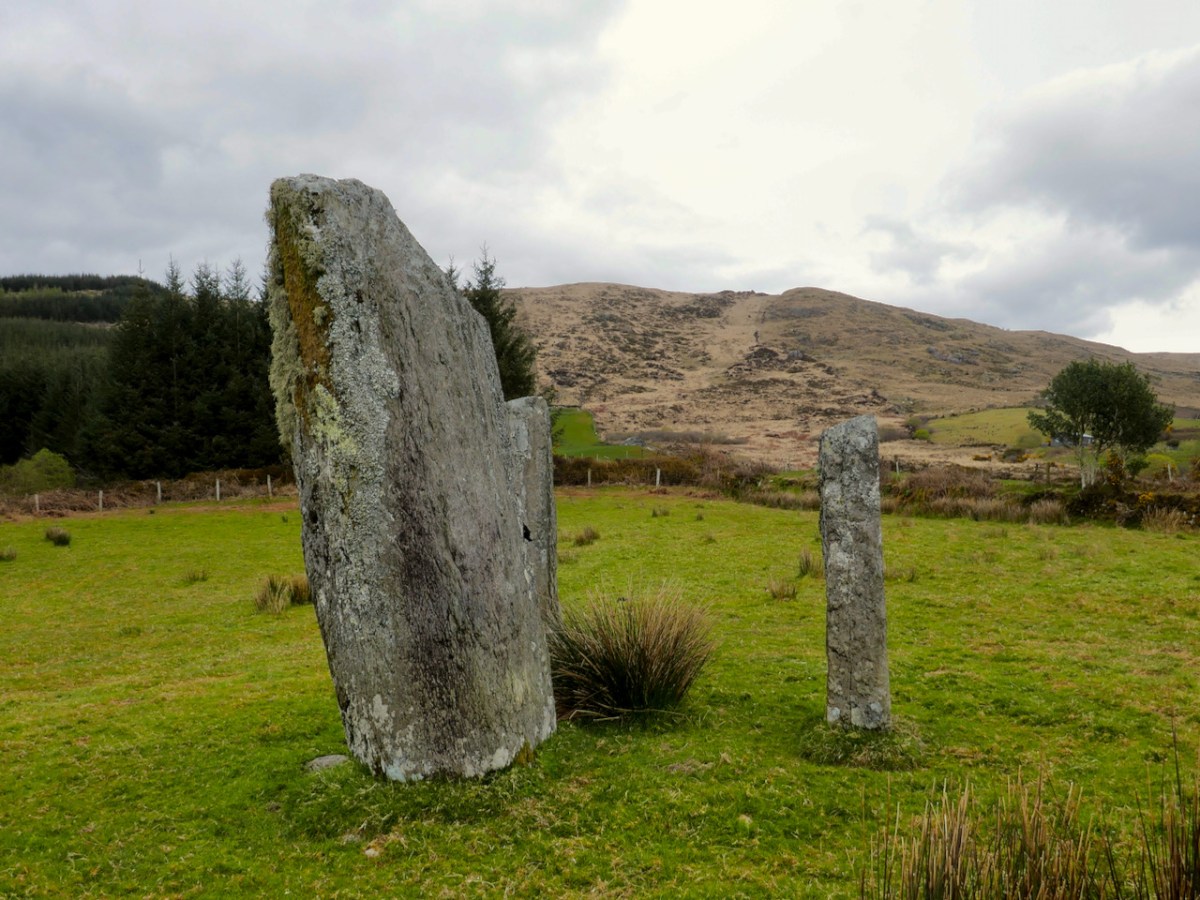
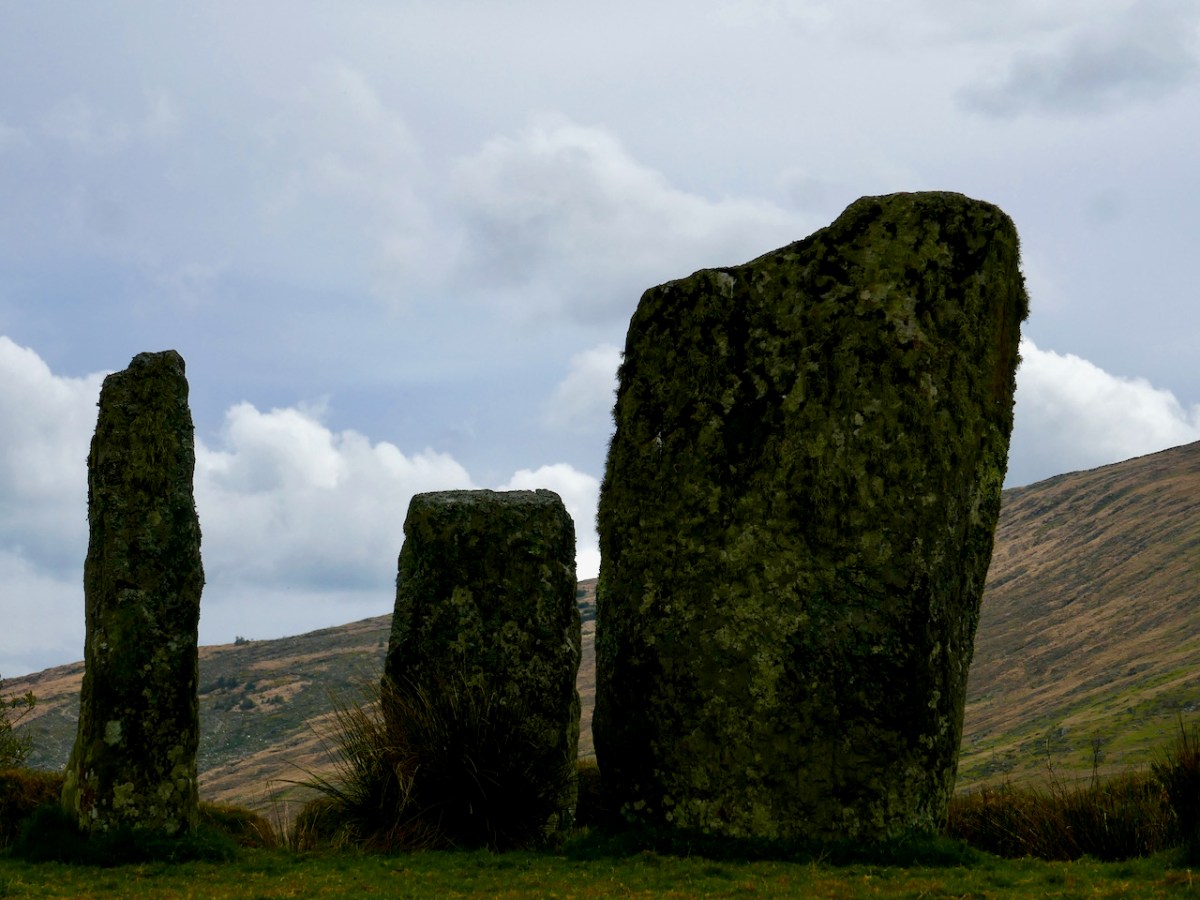
Our final visit of the day was to a type of monument I had never seen before – a ‘Four Poster’. That’s it, above, and note that there is a distant view of the sea, ten kilometres away, from it.
Only five four posters have been recorded in Ireland, one in Wexford, one in Kerry and the other four in West Cork. Here’s what the National Monuments site has to say about them: An arrangement of four upright stones standing at the corners of an irregular quadrilateral. The stones are usually graded in height with the tallest stone at either the south-west or north-east corner. Their closest counterparts are to be found in northern England and Scotland. These monuments are closely related to stone circles in date and function though they are much less numerous. These are dated to the Bronze Age (c. 2400-500 BC).
There are, in fact, only three stones remaining here. The largest stone is massive and of course there are all kind of alignment possibilities with arrangements like this. The closest counterpart to these four posters are to be found in Northern England and Scotland. There have been no excavations at four posters in Ireland but those few which have been dug in Britain yielded a Bronze Age range of dates.
We saw some other things along the way – a booley (above), a hedge school, a mass rock – and Robert wants to write in the future about one particular site, so I won’t deal with it here. The day was cold and crisp – but you hardly notice little things like freezing hands with a landscape like this to wander around in.
What a great day! Thank you, David, for being our tour guide and friend and we look forward to returning the favour soon.
Welcome to the UCD Library Cultural Heritage Collections blog. Discover and explore the historical treasures housed within our Archives, Special Collections, National Folklore Collection and Digital Library




 Roaringwater Journal