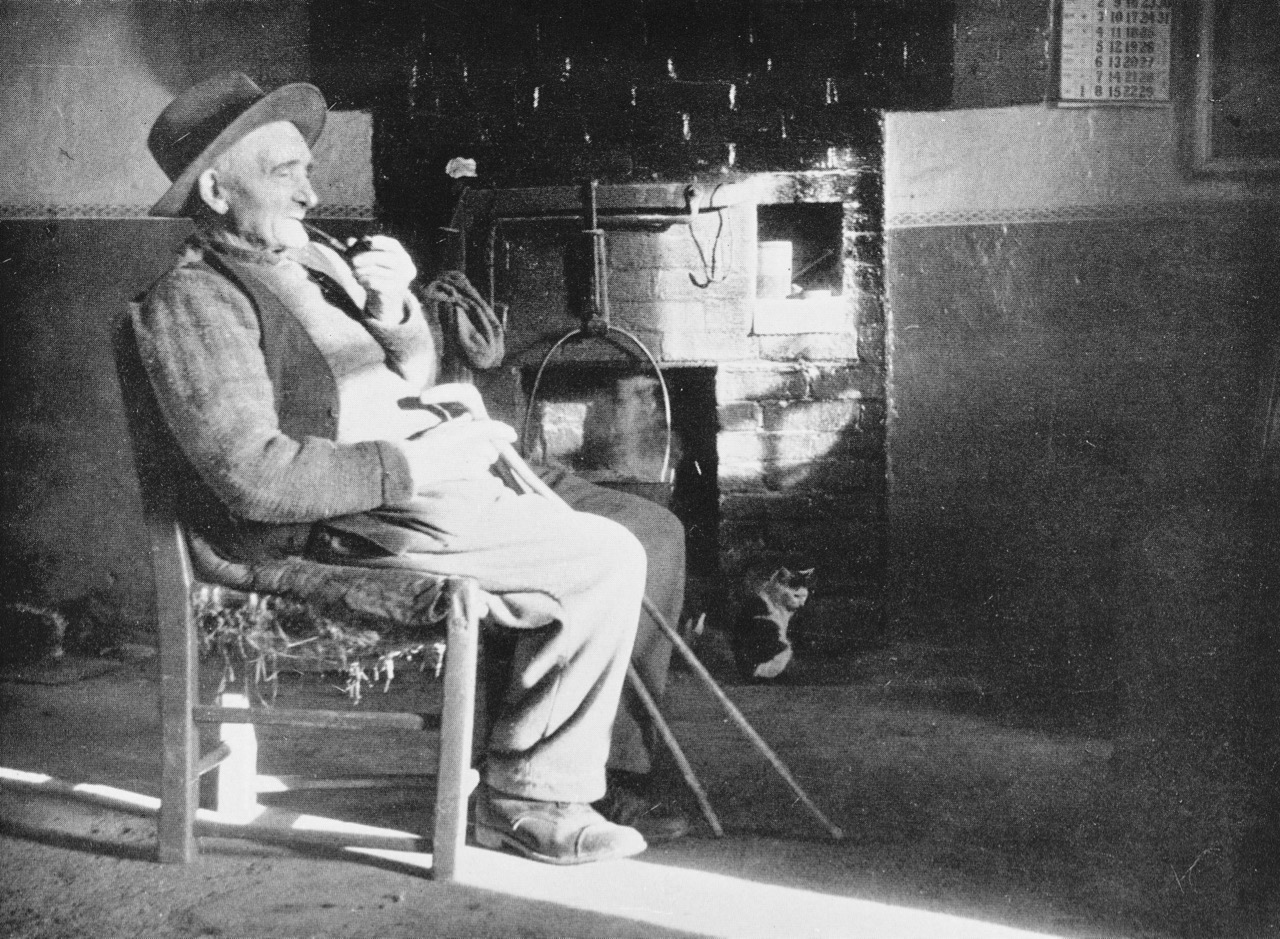
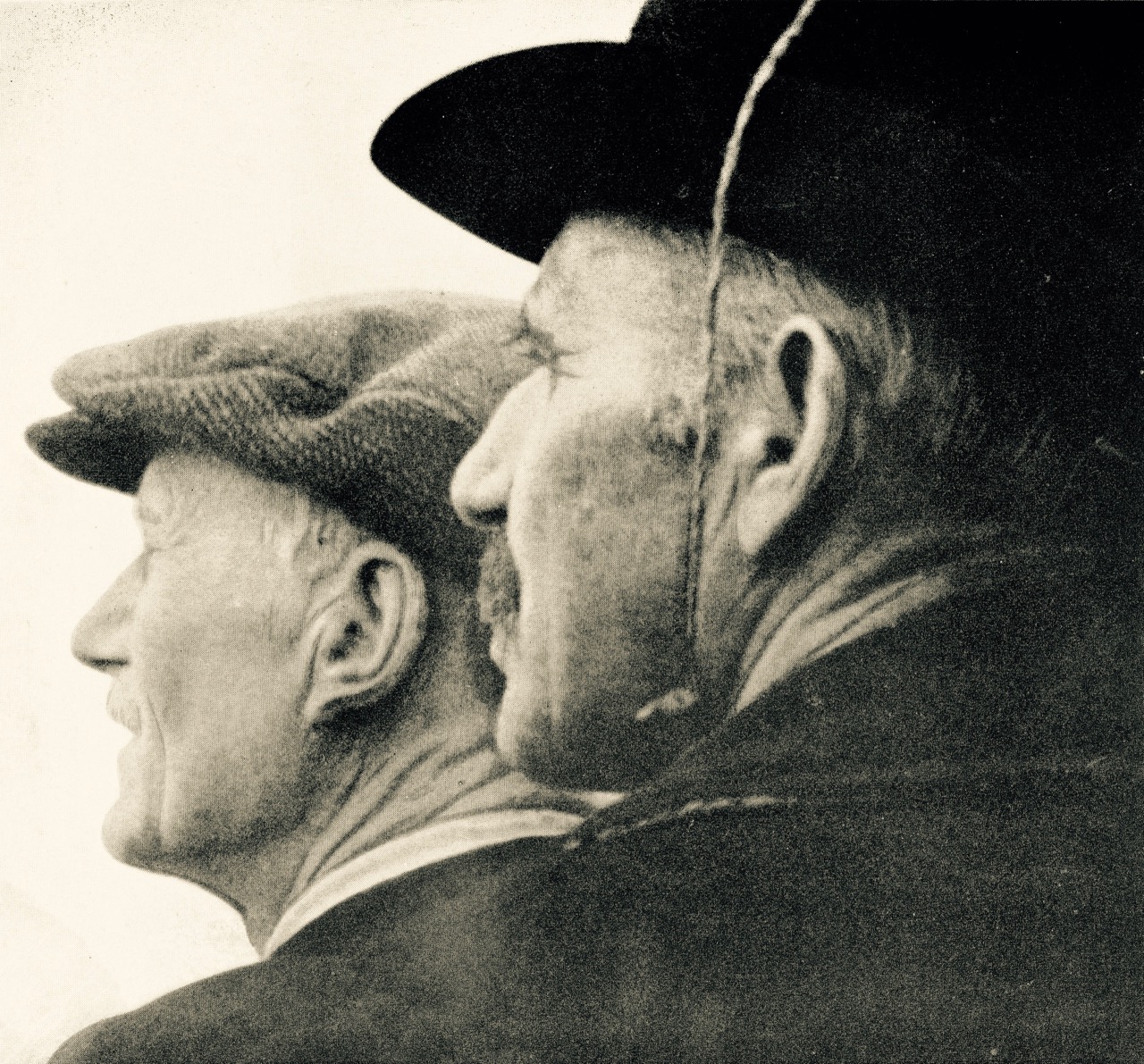
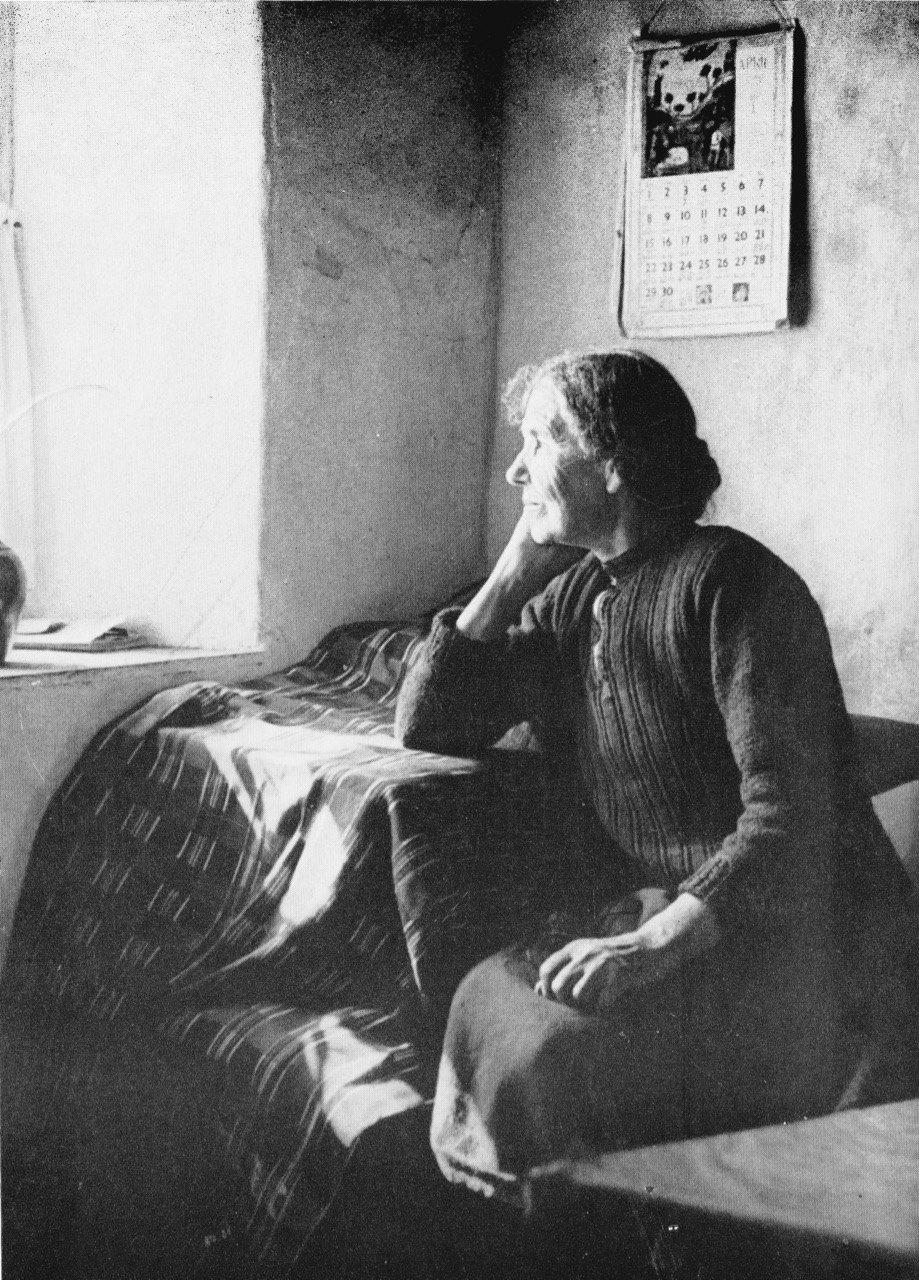
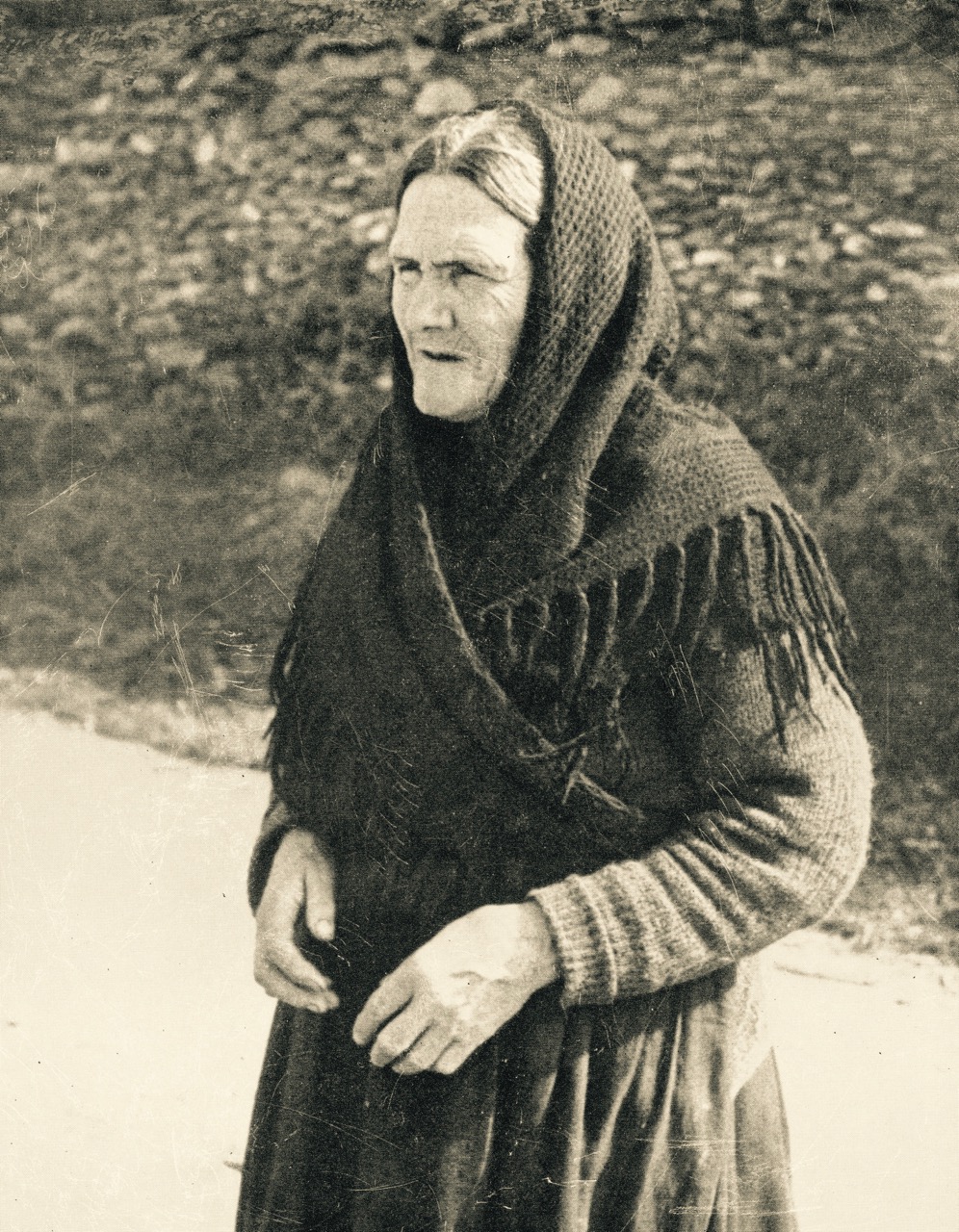
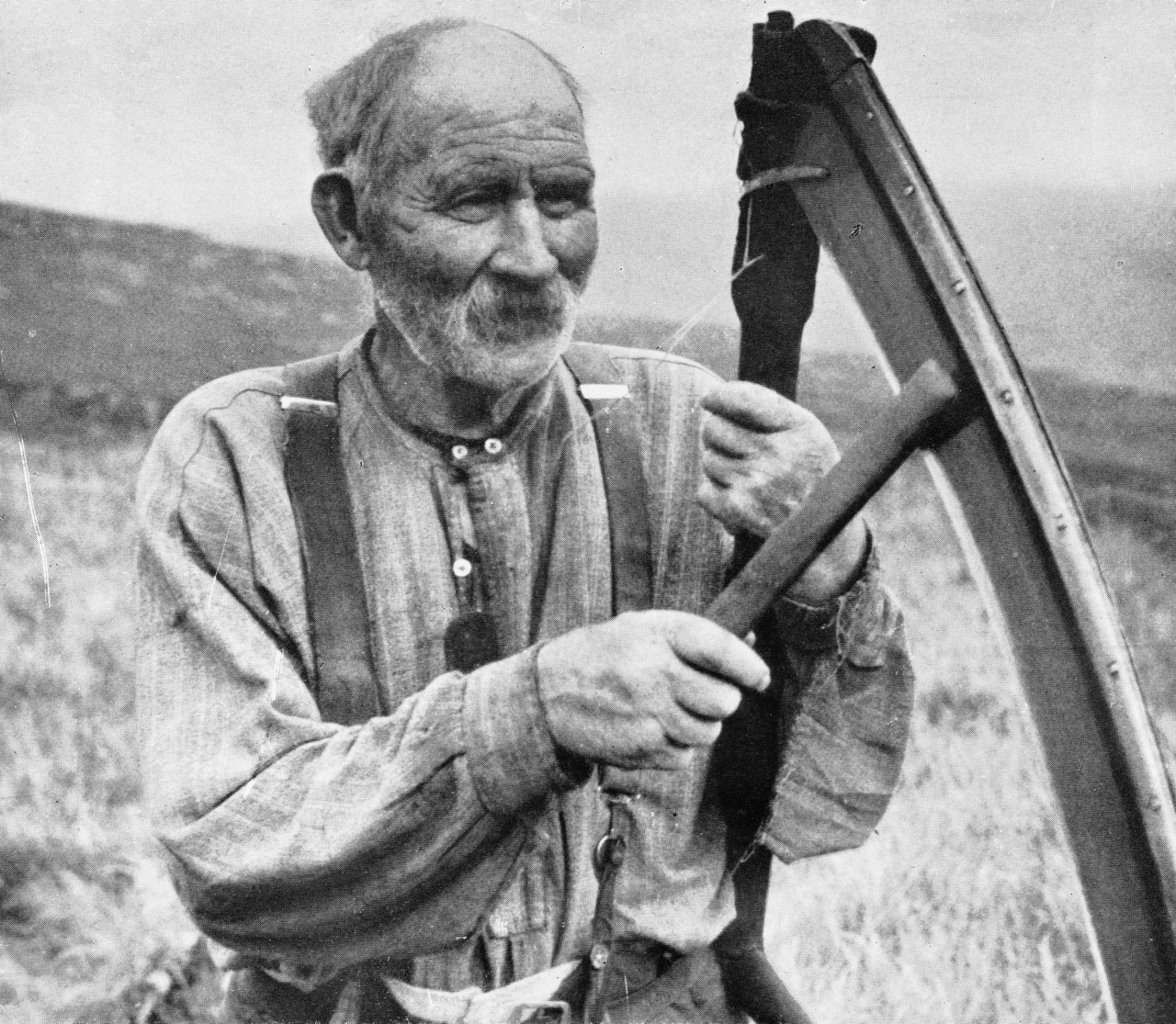
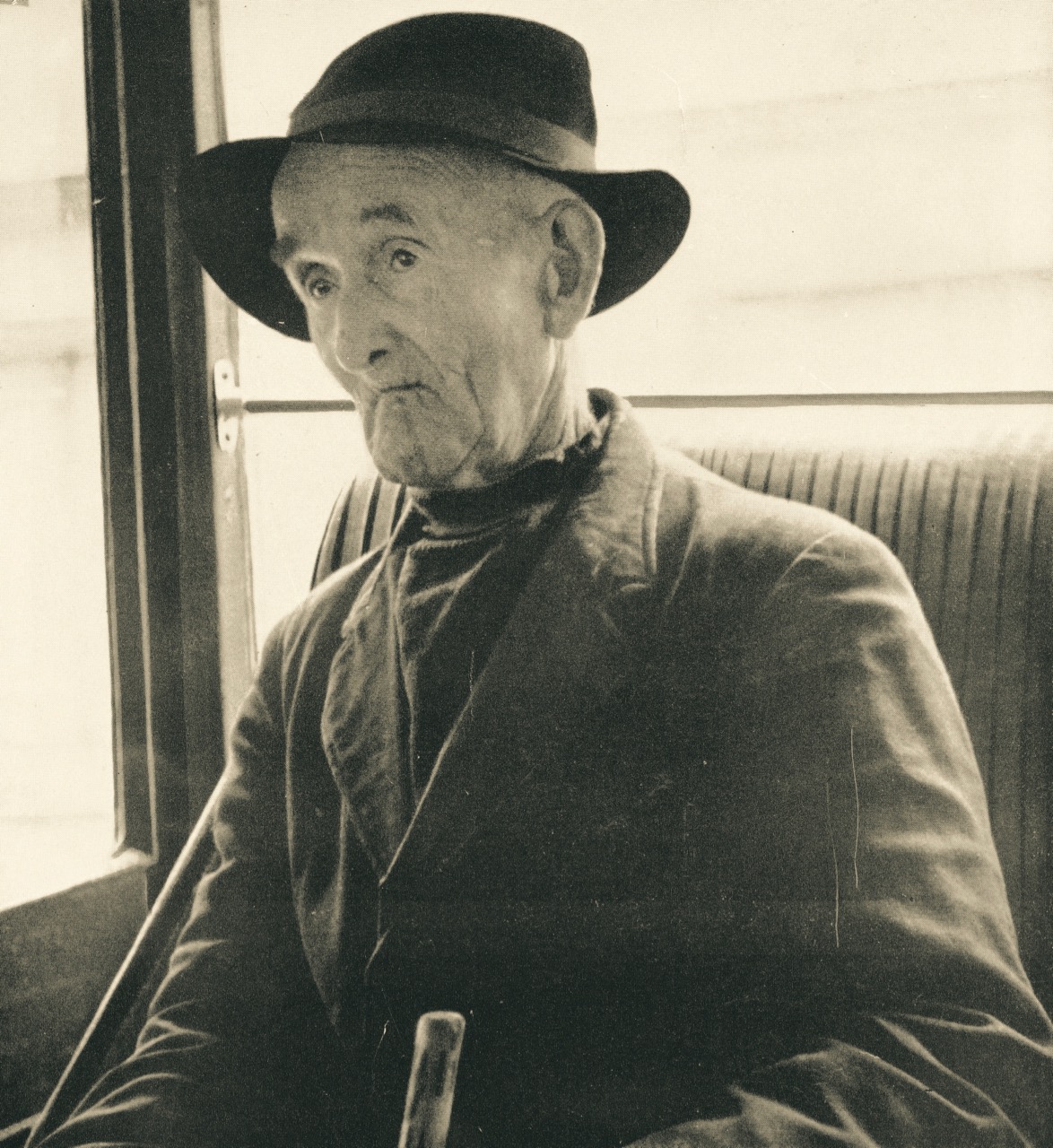
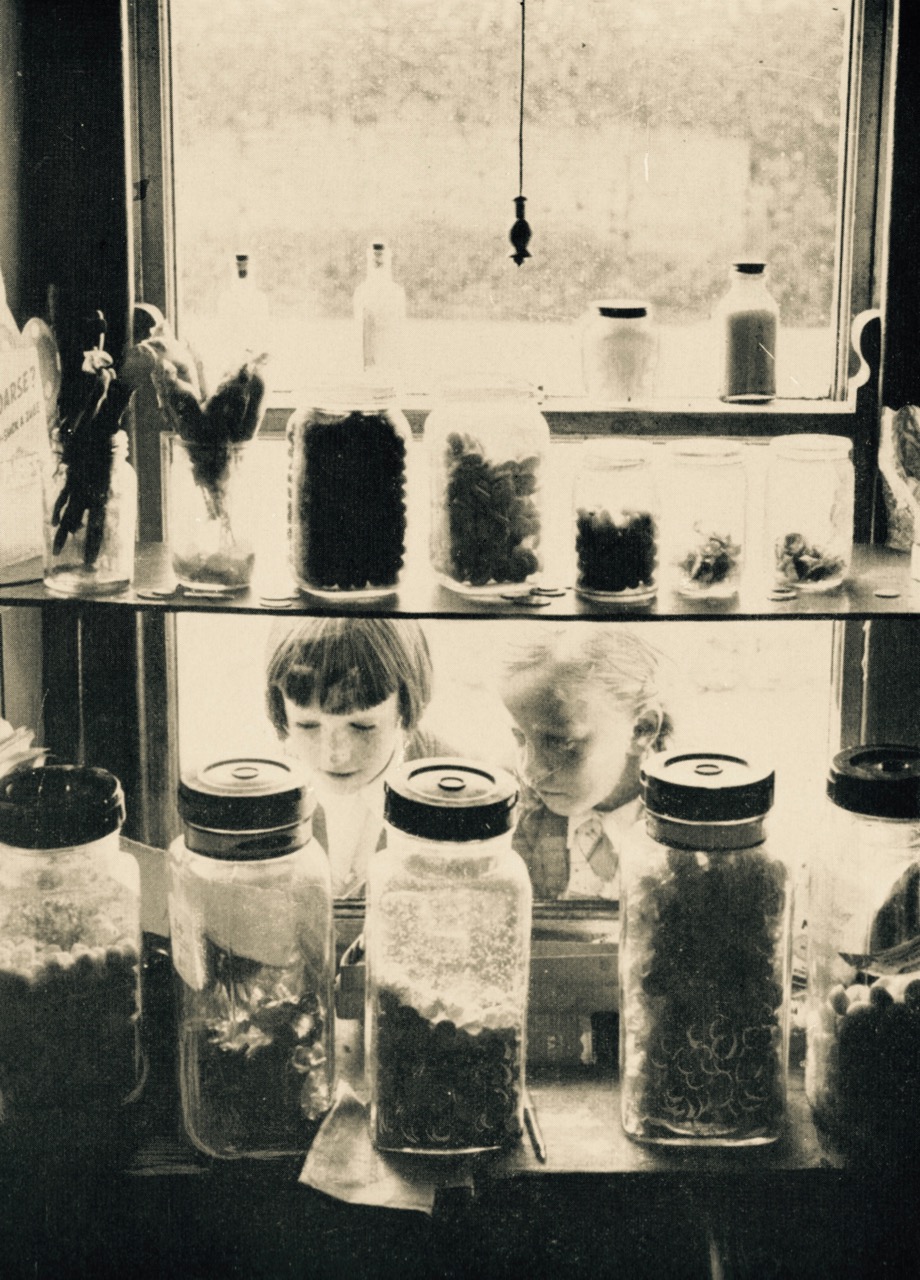
Old photographs are irresistible. The collection of Tomás Ó Muircheartaigh who travelled and photographed the west of Ireland during the 1930s, 40s and 50s is an invaluable documentary of the times in which he lived. Ó Muircheartaigh’s pictures record rural life and – most impressively – the people who lived it. This is a post, mainly of portraits, taken from a book of his work published posthumously in 1970, and now hard to find.
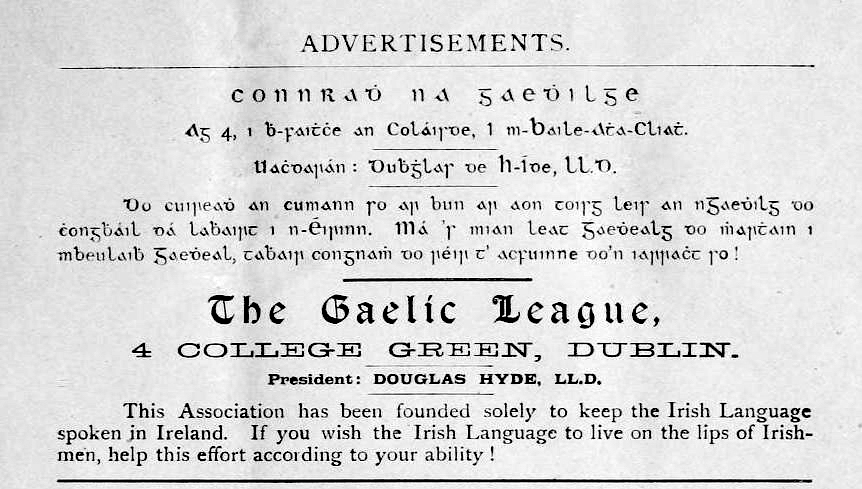
Tomás was President of Conradh na Gaelige (The Gaelic League) between 1955 and 1959, and his photographs appeared on the cover of many editions of the League’s monthly magazine.
The portraits, sadly, do not record the names of the subjects nor – often – their localities. We only know, on the whole, that his travels were centred on west Kerry and the Blasket Islands. The images, however, are powerfully evocative and time and place are, perhaps, irrelevant.
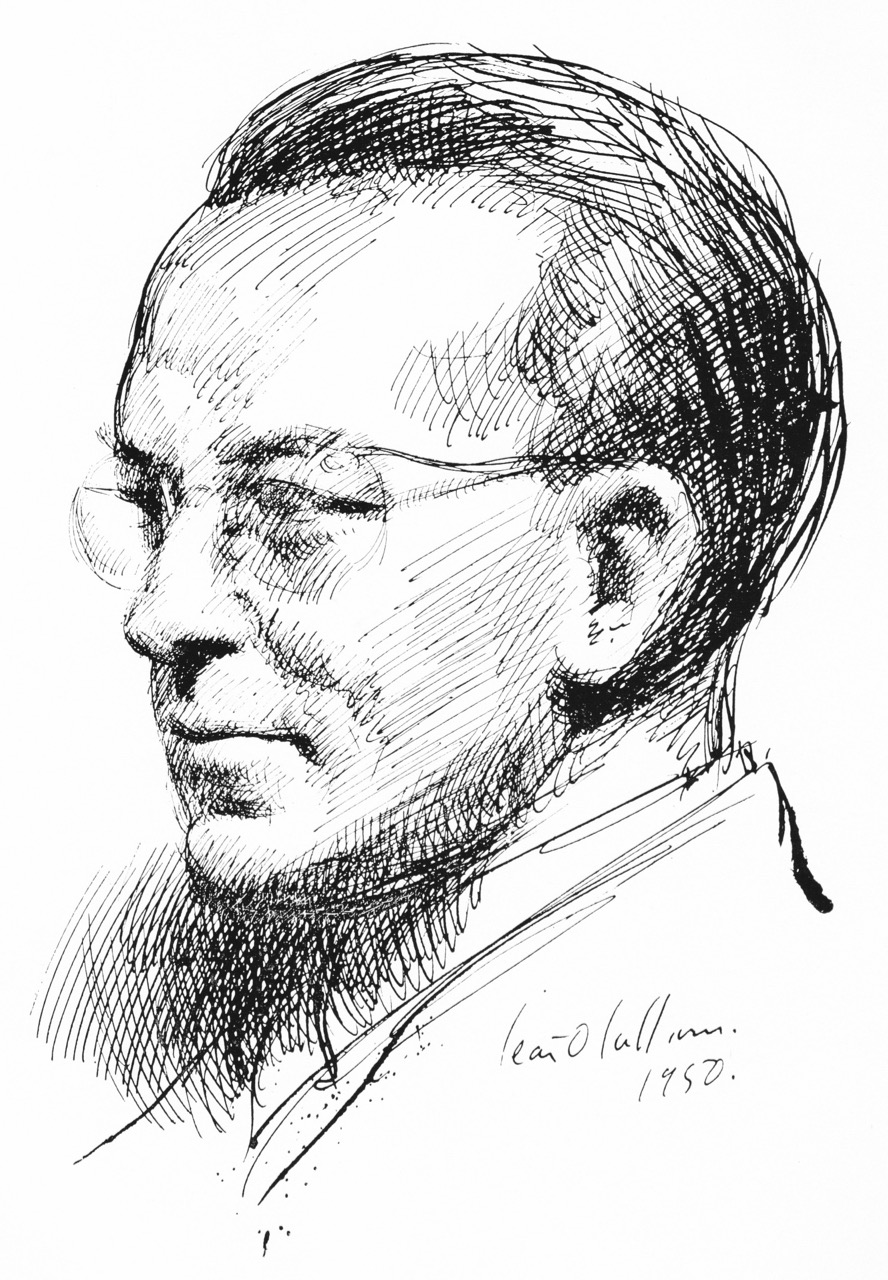
Tomás Ó Muircheartaigh 1907 – 1967, sketched by Sean O’Sullivan:
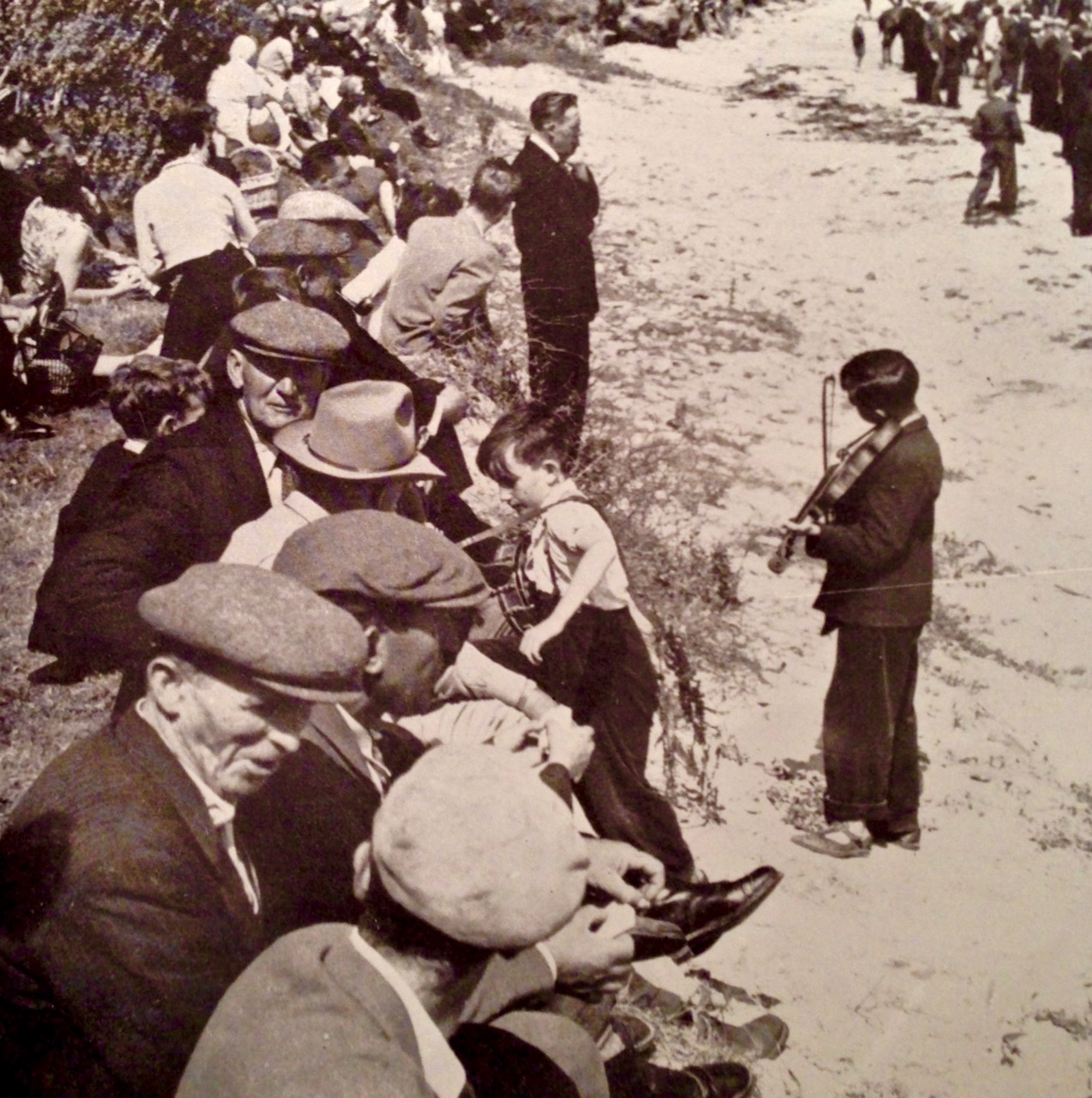
Two young musicians – from the collection of Tomás Ó Muircheartaigh, who documented life in rural Ireland between the 1930s and the 1950s. We do not know at what outdoor gathering this atmospheric picture was taken, but perhaps there is a polka or a slide being played there…
Way back in the last century (it was the nineteen seventies actually) I first came to Ireland in pursuit of traditional music. I found it a-plenty. At that time, the music of the Sliabh Luachra was very much in vogue: local sessions and Fleadh Ceols were full of polkas and slides…
Classic recordings of traditional music collected from the Sliabh Luachra during the sixties and seventies: The Star above the Garter is published by Claddagh, while the others are from the Topic Record catalogue
My post last week came to you from the City of Shrone, which is within this area, in the border country of Cork, Kerry and Limerick. The strong surviving music traditions here have an unmistakeable character – fast and lively. I was reminded of that tradition this week when I came to the wonderful Fiddle Fair in Baltimore and listened to Tony O’Connell from the Sliabh Luachra in recital with Brid Harper, a highly regarded Donegal fiddler. They are an excellent duo – here’s a little taster from that concert (Kerry Slides):
As an aspiring concertina player myself I was bowled over by Tony’s playing, especially of the quintessential Kerry slides. But what is a slide you might ask? And how do you tell a slide from a jig?
Saturday’s recital in Saint Matthew’s Church, Baltimore: Brid Harper and Tony O’Connell playing Kerry Slides
Here’s some help, extracted from discussion boards, specifically on the subject of slides and jigs:
…Uninitiated listeners and even some tune-book editors have mistaken slides as hornpipes, single jigs, polkas, or double jigs, since slides share various traits with each. Once you know a few, you realise they are distinct from any of those…
…Note that slides are peculiar to the Southwest of Ireland, and some are directly related to double jigs, single jigs, or hornpipes played elsewhere in Ireland. Musicians quite familiar with slides are generally unfamiliar with single jigs, and some otherwise respectable authorities on the slide have rashly pronounced that single jigs “are the same as slides.” We can have some sympathy with that by understanding that these musicians simply use the term “single jig” to mean “slide,” and are apparently unaware of the existence of the distinctive “single jig” rhythm in Irish music. Over the course of the 20th century the customary notation for slides shifted from 6/8 to 12/8, which I think is an improvement in accuracy…
Both these statements (from irishtune.info) tell us about the confusion between jigs and slides, but they don’t tell us exactly how you define either of them. Let’s try this, from the same source, regarding slides:
…The tempo is rather quick, often in the 150 bpm range, if you were to count each heavy-light pair as a beat. But in practice each beat of a slide (counting around 75 bpm now) gets two pulses, which is either a heavy-light pair (very close to an accurate “quarter note, eighth note” distribution) or a quite even triplet – not a jig pattern. Thus if all four group-halves in a bar were triplets – which is uncommon – you’d have a twelve-note bar. The ratio of heavy-light pairs to triplets in a slide is slightly in favour of the pairs, which again clearly distinguishes them from double jigs. Most slides break the pattern once or twice in a tune by delaying the strong note for a bar’s second group until that group’s second half, creating a cross-rhythm with respect to the foot taps. Other unique characteristics of slides are not necessary additional information for identifying them – only for playing them…!
I’ve puzzled over this (and other advice) for some time: I sort of understand it, but I think it’s impossible to describe a rhythm in words… However, I was pleased to find this mnemonic for slides by the poet Ciaran Carson – it says it all:
“blah dithery dump a doodle scattery idle fortunoodle”
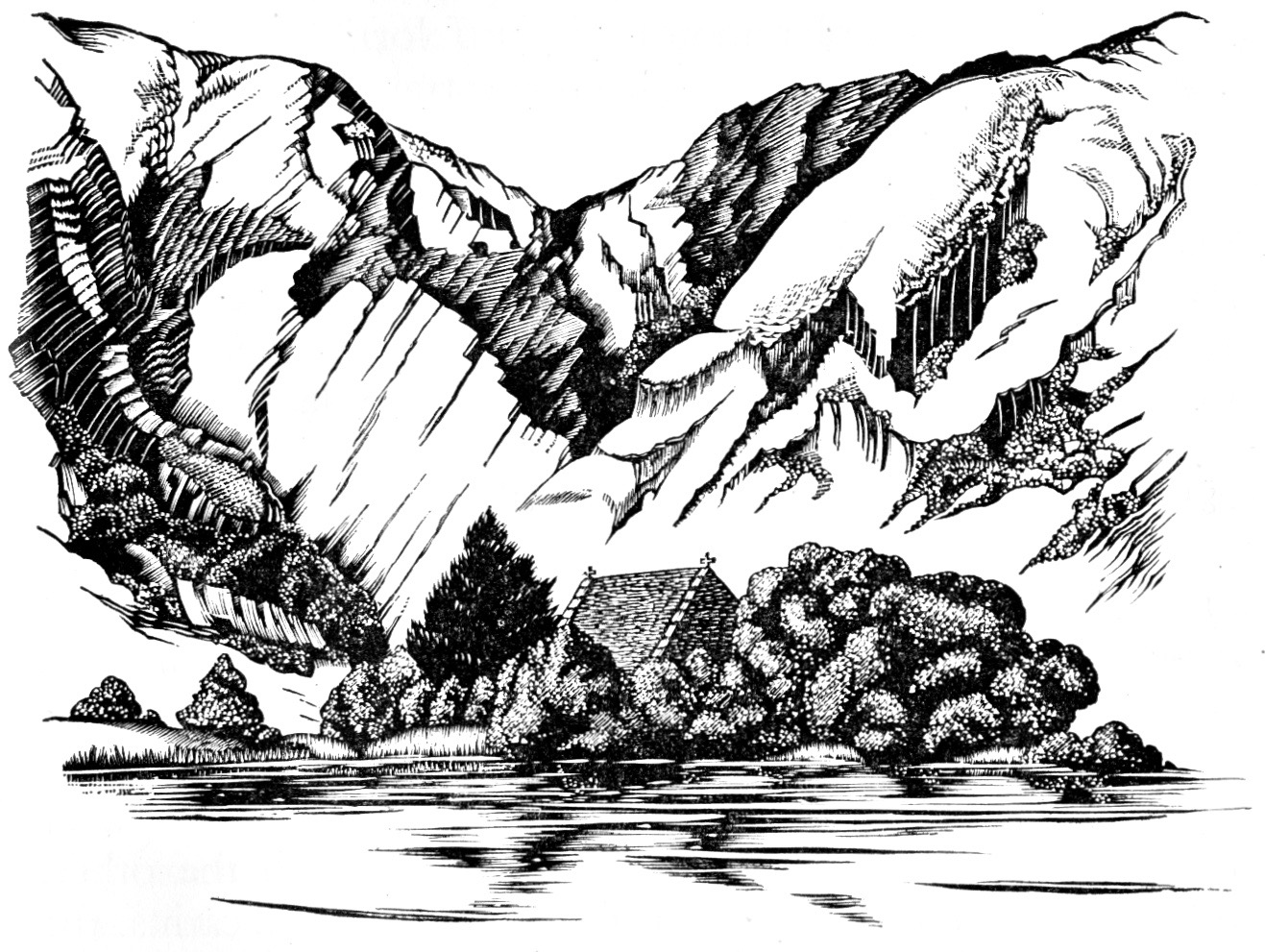
An evocative engraving of Gougane Barra, in the Sliabh Luachra, by artist and writer Robert Gibbings, taken from Lovely is the Lee, J M Dent, 1945
How about polkas and reels? Polkas, in particular, are popular in the Sliabh Luachra tradition:
…The polka is one of the most popular traditional folk dances in Ireland, particularly in Sliabh Luachra. Many of the figures of Irish set dances are danced to polkas. Introduced to Ireland in the late 19th century, there are today hundreds of Irish polka tunes, which are most frequently played on the fiddle or button accordion. The Irish polka is dance music form in 2/4, typically 32 bars in length and subdivided into four parts, each 8 bars in length and played AABB.Irish polkas are typically played fast, at over 130 bpm, usually with an off-beat accent… (Also from irishtune.info)
Reels are probably the most popular tune type within the Irish traditional dance music tradition:
…Reel music is notated in simple meter, either as 2/2 or 4/4. All reels have the same structure, consisting largely of quaver (eighth note) movement with an accent on the first and third beats of the bar…
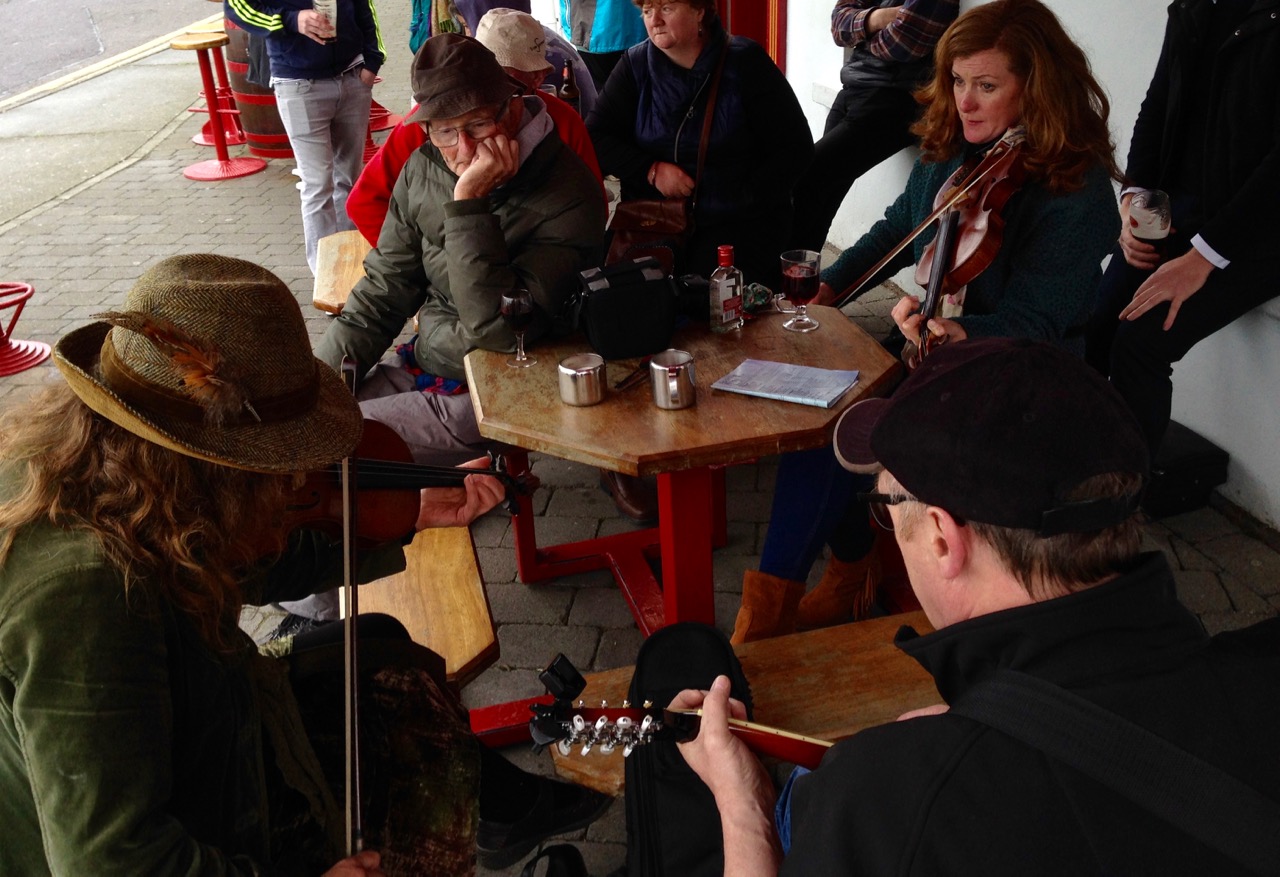
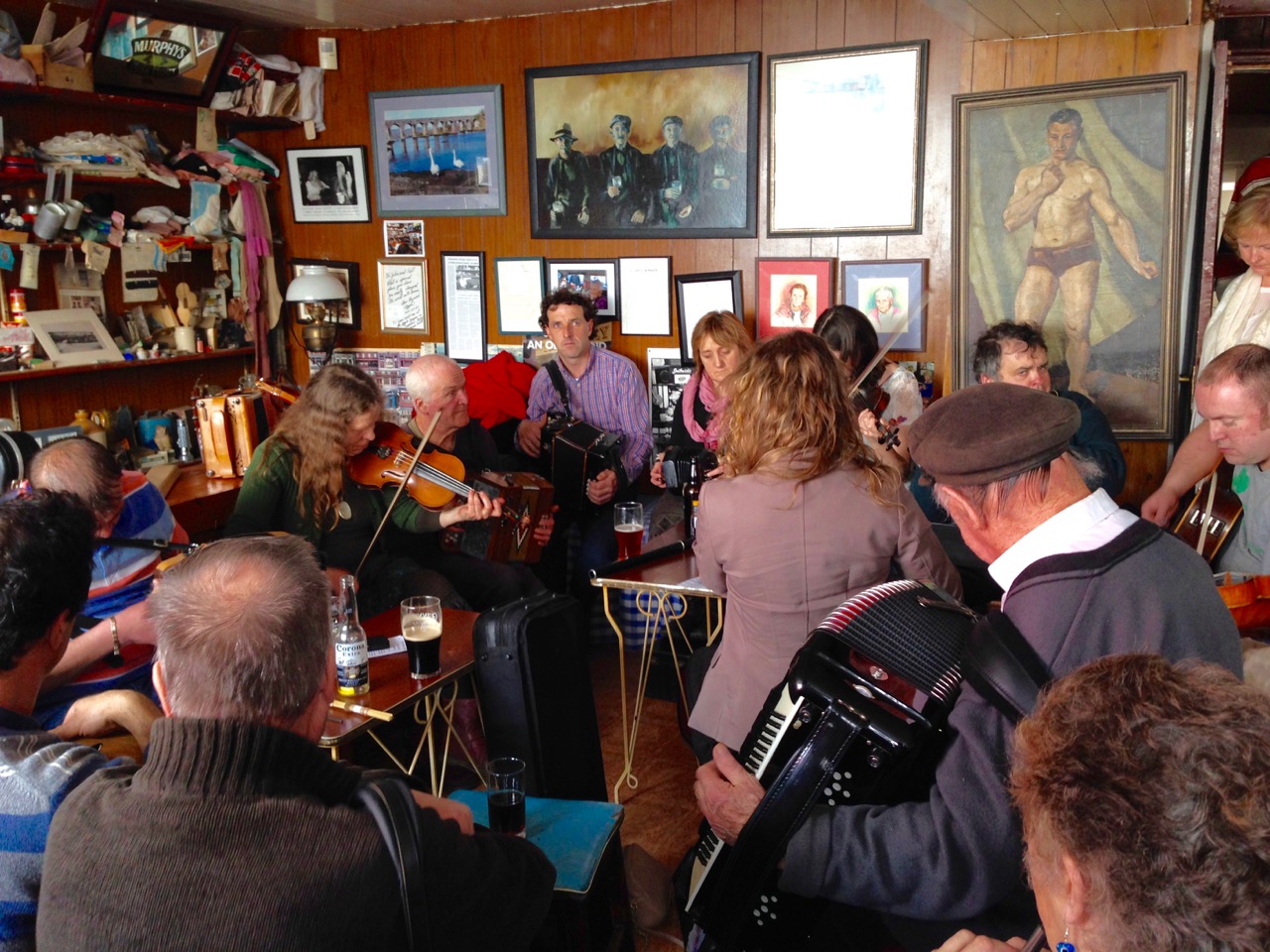
At the Baltimore Fiddle Fair, informal sessions are essential interludes
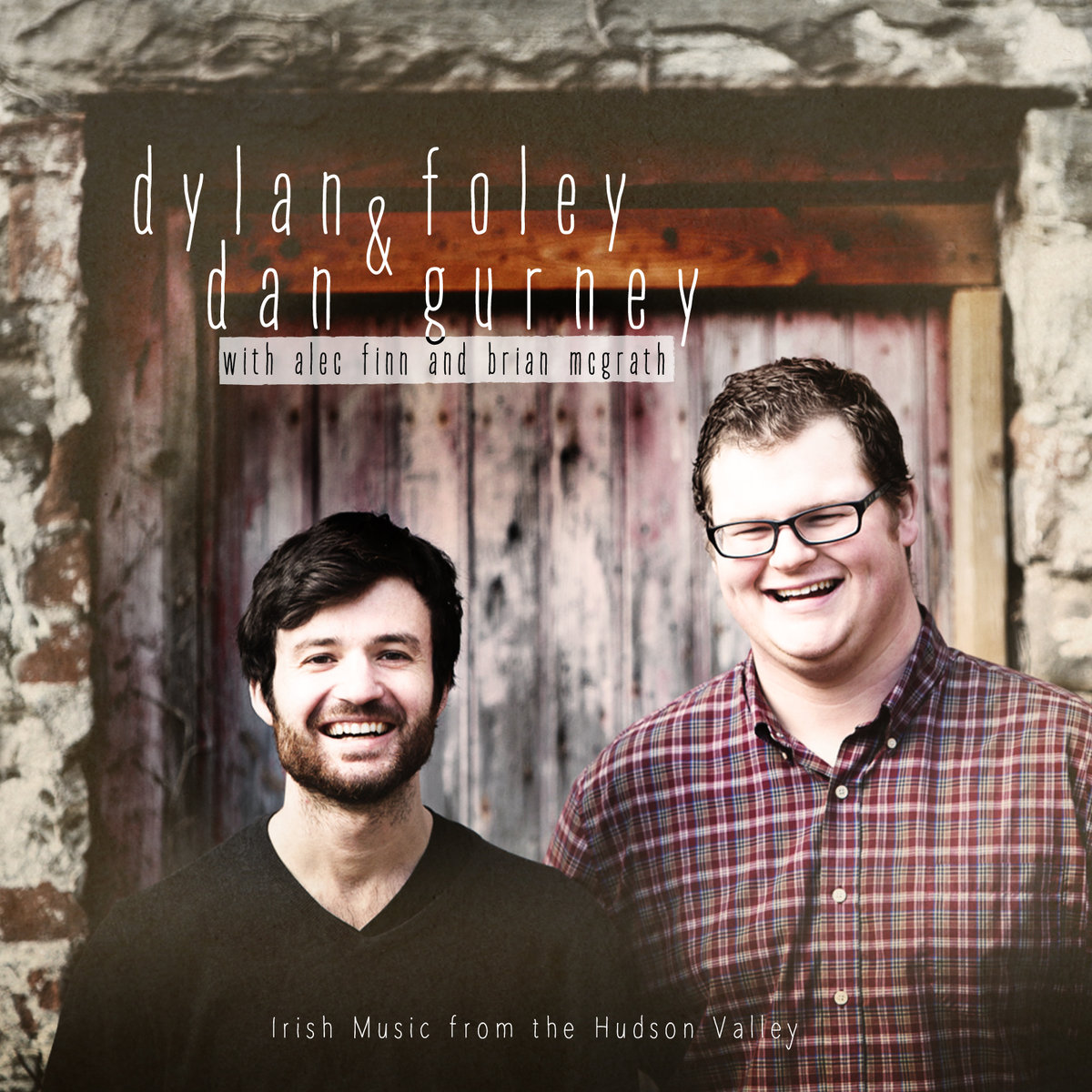
Definitions are all very well and these can only be generalisations. In the end it’s what is being played – and what you hear – that counts. For me, the music in Ireland is like history: it’s built into the landscape and the psyche. Irish people are survivors and have travelled all over the world and back. So has the music! This was emphasised today when we had another excellent recital in the church by Dylan Foley and Dan Gurney, fiddle and accordion.
They both come from the Southern Catskill Mountains in New York State. Much of the Irish music they play was learnt directly from Father Charlie Coen who emigrated to the United States from the village of Woodford in County Galway in 1955, bringing the music traditions from East Galway with him. Here’s an excellent example of the music travelling across the world and back again: Fr Coen played The Moving Cloud reel on his concertina, but his instrument had some buttons missing so he adapted it, and the adapted tune is what we heard Foley and Gurney playing in the church today. Listen first to another Fiddle Fair maestro, Noel Hill playing the reel from his 1988 album The Irish Concertina:
Now the same reel which has travelled from Ireland to Baltimore via the Catskill Mountains:
I hope you can hear those ‘odd’ notes! But there’s nothing so right or so wrong in Irish music: the grand finale for us today was a memorable concert with French Canadian fiddler Pierre Schryer, Donegal box player Dermot Byrne and Australian born guitarist Steve Cooney. They played music with an Irish bias but harvested from many traditions. It left us breathless…
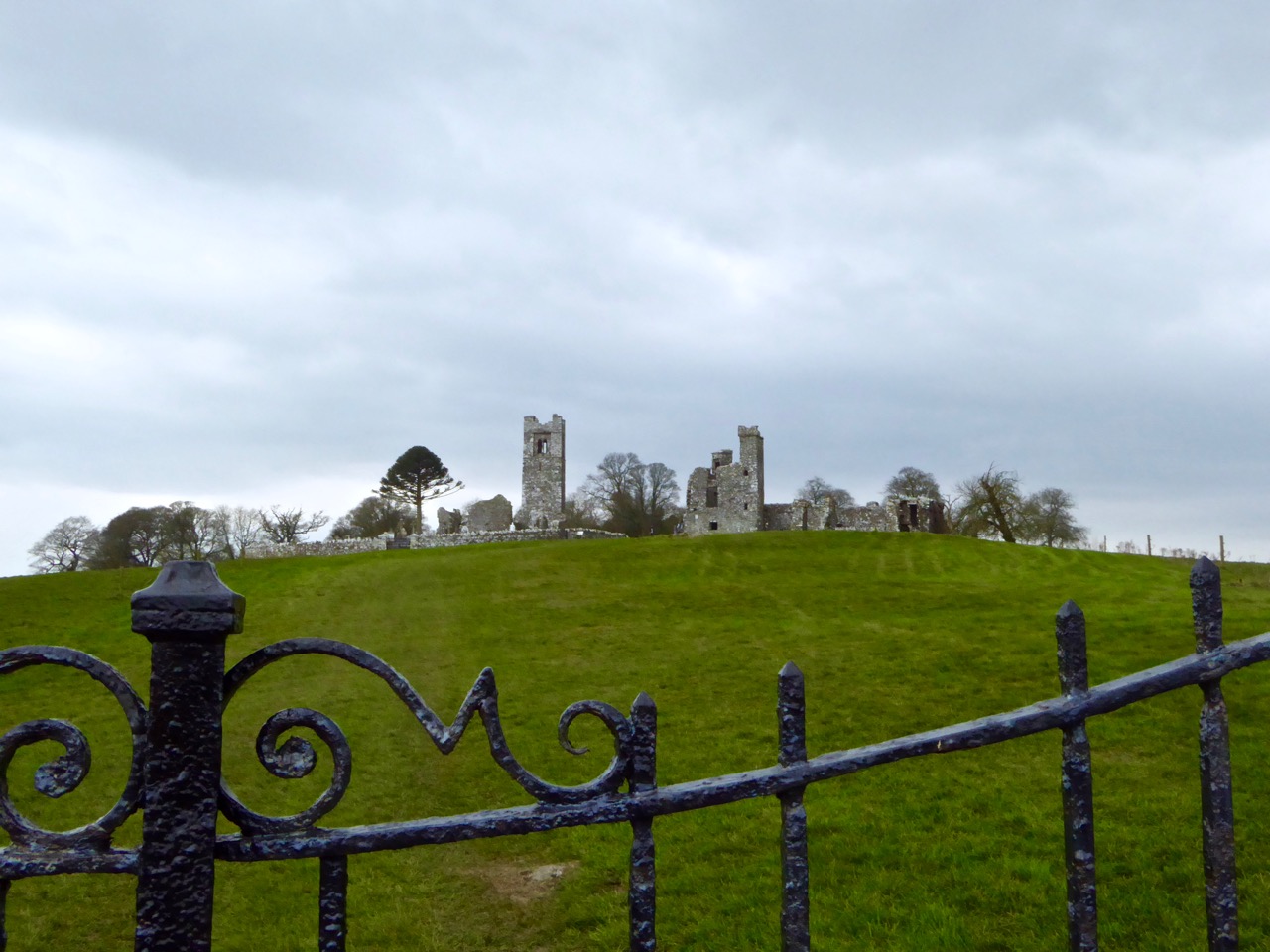
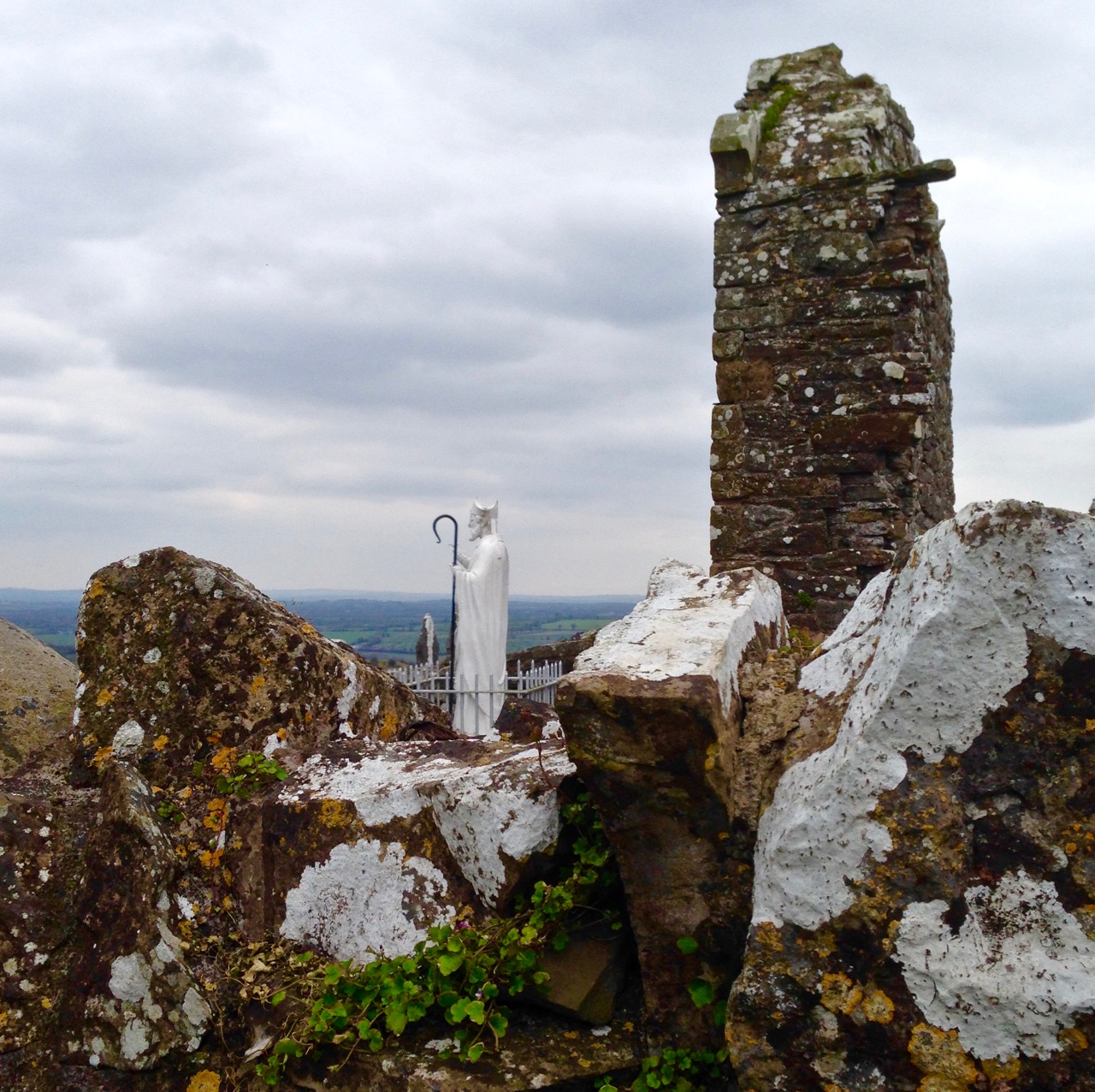
Our travels took us to the Hill of Slane. On its summit overlooking the River Boyne a depleted Saint Patrick (he’s lost his hands) looks forever out to the east, facing towards the mound of Millmount at Drogheda, about 15 kilometres away according to our Crow. Millmount is reputed to be the site of an ancient passage grave – and the burial place of Amhairgin mac Míled, who was regarded as the originator of the arts of song, poetry and music. The very first Irish poem The Song of Amhairgin was recited by him as he entered Ireland from the River Boyne, below the mound. Here’s a version of it translated (from the original Irish) by Lisa Gerrard:
I am the wind on the sea I am the stormy wave I am the sound of the ocean I am the bull with seven horns I am the hawk on the cliff-face I am the sun’s tear I am the beautiful flower I am the boar on the rampage I am the salmon in the pool I am the lake on the plain I am the defiant sword I am the spear charging to battle I am the god who put fire in your head
Who made the trails through stone mountains? Who knows the age of the moon? Who knows where the setting sun rests? Who took the cattle from the house of the Warcrow? Who pleases the Warcrow’s cattle? What bull, what god created the mountains’ skyline? The cutting word – the cold word?
The Saint lit the Pascal Fire on the Hill of Slane soon after his mission in Ireland began (the flame is still lit at Easter). That seems to me a symbolic action: a challenge issued, perhaps to the pagan traditions that had gone on for generations before the new religion arrived. Patrick’s fire-raising activities are also a comparatively recent addition to the lore of the hill: according to the Metrical Dindsenchas – combining poems from the Book of the Dun Cow, the Book of Leinster, the Rennes Manuscript, the Book of Ballymote, the Great Book of Lecan and the Yellow Book of Lecan – all sources well over a thousand years old and themselves most likely compiled from the timeless oral traditions of the Bards – Slane is the burial place of an ancient king:
…Slaine, whence the name? Not hard to say. Slaine, king of the Fir Bolg, and their judge, by him was its wood cleared from the Brugh. Afterwards, he died at Druim Fuar, which is called Dumha Slaine, and was buried there: and from him the hill is named Slaine. Hence it was said: Here died Slaine, lord of troops: over him the mighty mound is reared: so the name of Slaine was given to the hill, where he met his death in that chief abode….
(Translated by Edward J Gwynn in 1903)
The ‘mighty mound’ must surely be the enigmatic earthworks hidden in the trees to the west of the abbey and college ruins: these are variously described as a barrow or a motte.
Top: medieval profile; Above left: ‘Creature of Slane’ decorating the walls of the old college, and Above right: the tower of the monastery which dates from the 16th century
Mostly what we see today on the summit here is medieval: the hill remained a centre of religion and learning for many centuries after St Patrick. A friary church was established on the site of an earlier monastery in 1512: it was abandoned in 1723. Beside it is a medieval college, probably also 16th century. The stonework here includes some extraordinary carvings, sadly much dilapidated.
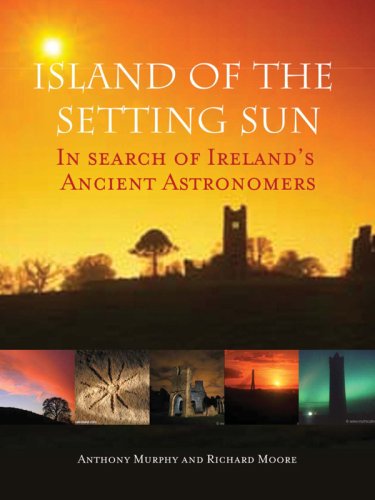
I musn’t shy away from another tradition associated with Slane Hill: the authors of this book make a convincing case for an alignment right across Ireland that takes in several historically important sites:
…The Millmount-Croagh Patrick alignment stretches over 135 miles from the east coast of Ireland to the west, and has significant St Patrick associations … we found that the line from Millmount to Slane westwards travels all the way to Croagh Patrick, perfectly intersecting the little chapel on the summit of The Reek with breathtaking accuracy. Significantly, this line skirts the hills of Loughcrew on its way, and also travels directly through Cruachan Aí, one of the largest archaeological complexes in the whole world, with 200 monuments located in a 10-mile radius. Croagh Patrick, known in prehistoric times as Cruachan Aigle, is the place where, according to legend, Patrick banished the serpents from Ireland…
If nothing else, the theory at least demonstrates that St Patrick’s influence stretches the length and breadth of the country: witness his statue looking out from the Hill of Slane and another looking across from the lower slopes of The Reek!
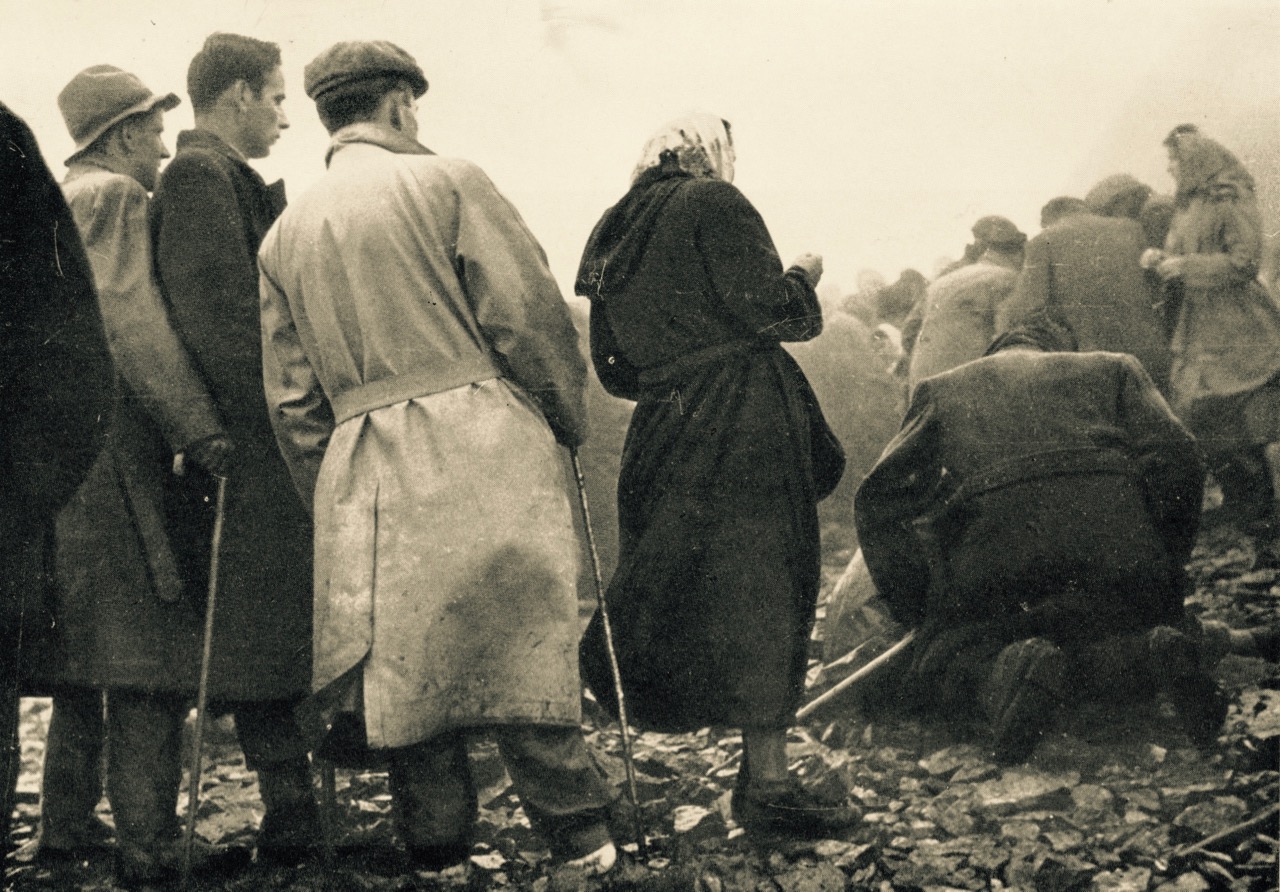
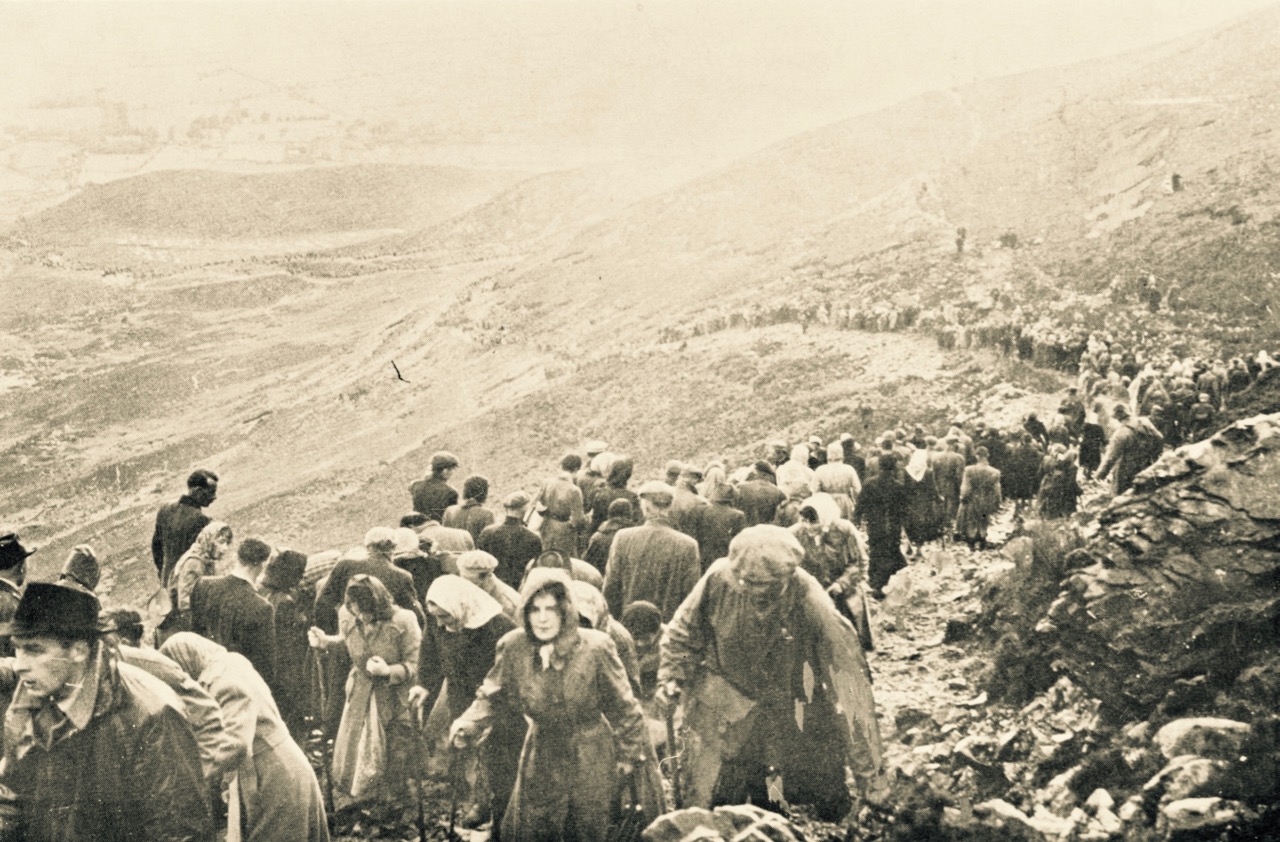
Pilgrimage for St Patrick on The Reek: Photos from the collection of Tomás Ó Muircheartaigh, who documented life in rural Ireland between the 1930s and the 1950s
St Patrick (his day was last week), Easter (this weekend), the Boyne neolithic monuments, Irish poetry, ancient kings and their battles, a little bit of astro-archaeology, the commemoration of the 1916 uprising in Dublin, the fight for Irish freedom… All seem to have joggled along beside each other in our recent explorations. Somehow they fit together and define an Irish-ness which is all-encompassing but not overwhelming. History is dancing all around us: alive and relevant.
Images: we take them so much for granted, because it’s easy for us to go out with a camera or phone and capture a place, an event or our friends and family. I’m sure we have now all got hard disks, memory sticks or ‘clouds’ full of hundreds of pictures – perhaps far too many for us to appreciate individually.
Here are some images of Ireland, both old and new. The old ones are taken fromthe collection of Tomás Ó Muircheartaigh, who documented life in rural Ireland between the 1930s and the 1950s – that’s between sixty and eighty-something years ago. I was fortunate enough to pick up a copy of his book of photographs when it first came out: now it’s ‘rare as hen’s teeth’*… The new ones are taken locally by my favourite contemporary photographer – Finola.
The thing about a photograph is that you know it is an actual moment, a fraction of time, which has been captured and held forever. A painting is not the same – it can be very beautiful and emotional, but it is always a fantasy: it’s the artist that has made it live in the way that she or he chooses. Ó Muircheartaigh’s photographs affect me emotionally: they depict places and, more importantly, people that were once real – living landscapes, personalities… There’s a lot of nostalgia surrounding them because they show us the world – Ireland – as we want to think of it: halcyon, idyllically happy, peaceful, carefree. All the photos in Ó Muircheartaigh’s book picture this blissful state: that’s because he saw rural Ireland in that light, or because he wanted his audience to view it that way. In his work we never see hardship, rural deprivation, illness or pain – and we are completely unaware that there could be a terrible world war raging just over the waters.
Precious moments: how special that through the expert wielding of a camera lens Tomás Ó Muircheartaigh could use a negative to create a positive world! We can still do that: Finola’s photographs capture, digitally (and beautifully), a different world – our own modern Ireland – but also record the essence and enduring appeal of this place which we are pleased to call home. It’s all about the focus…
Not many of Tomás Ó Muircheartaigh’s photographs carry captions to indicate where they were taken. We know his travels encompassed the west coast, particularly the Aran Islands, Kerry, Galway and Mayo. We don’t know exactly where these three views are from (anyone who does, please comment) but it’s interesting that the wonderful portrait of four drinkers, above, has been turned into a painting now hanging on the walls of Levis’ Corner Bar – one of our local hostelries – in Ballydehob! Finola’s photos are all taken on our own Mizen Peninsula
*Birds did once have teeth – up until about 80 million years ago. Occasionally today, but very rarely, a ‘throwback’ bird is hatched with teeth!
Today is Oiche Fhéile Bhríde – St Brigid’s Eve. The Saint’s festival – tomorrow – marks the beginning of Spring: we will feel the lengthening of the days, and we have to be alert for so many portents.
Firstly – Hedgehogs. Watch out for your Hedgehogs: to see one is a good weather sign, for on Brigid’s Eve the Hedgehog comes out of the hole in which he has spent the winter, eyes up the weather and, if he likes the look of it, starts his foraging. If he goes straight back in again, then you’ll know that the storms will continue! This is according to Kevin Danaher, a frequent contributor on our seasonal folklore. The wind direction on the eve of the festival ‘…betokens the prevailing wind during the coming year; the festival day should show signs of improving weather, although an exceptionally fine day is regarded as an omen of poor weather to come…’
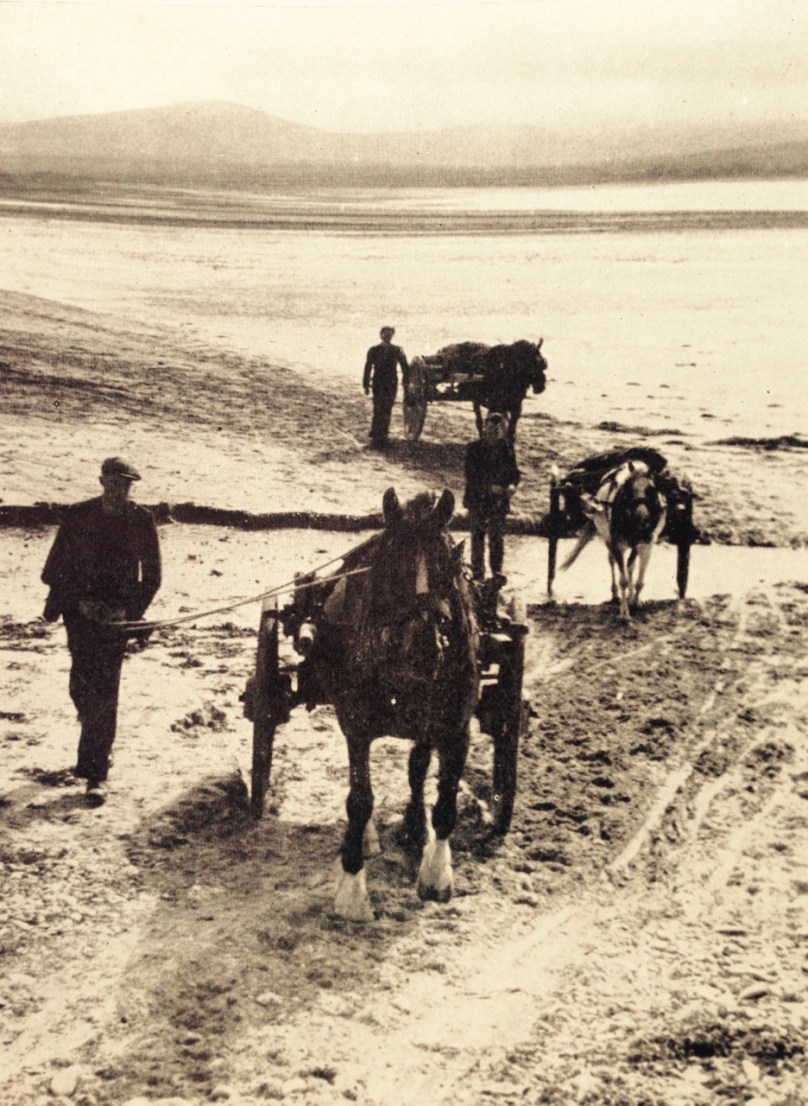
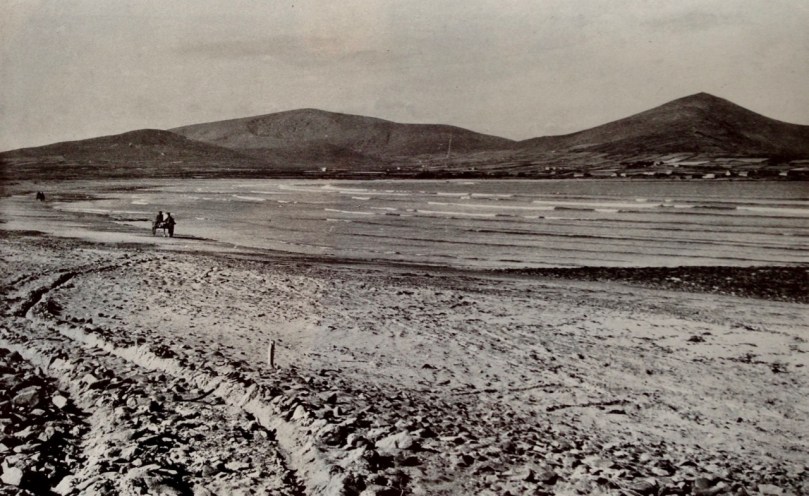
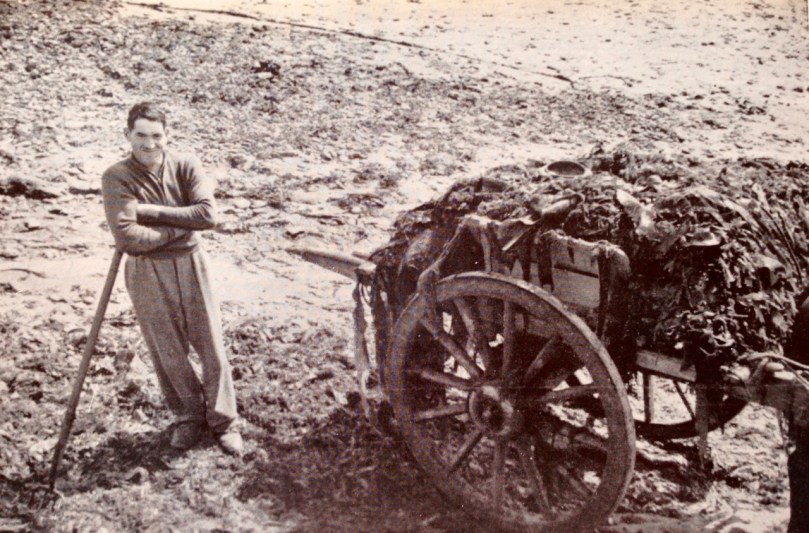
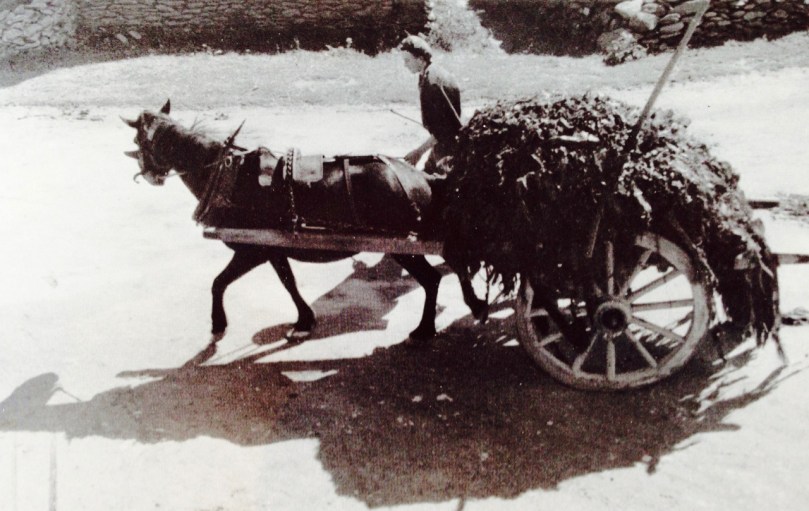
For those of us who live by the sea we have to be alert for Rabharta na Féile Bríde, the spring tide nearest to St Brigid’s day, as it is said to be the most significant one of the year – that’s when the difference between high and low tide is the greatest. Danaher, The Year in Ireland, Mercier Press 1972, notes: ‘…The people were quick to take the opportunity of cutting and gathering seaweed to fertilize the crops and of collecting shellfish and other shore produce. In a few places a live shellfish, such as a limpet or a periwinkle, was placed at each of the four corners of the house, to bring fishing luck and ensure plentiful shore gathering…’ But don’t forget that it’s not until Good Friday that you harvest the Mussels.
All the photographs in this post are from the collection of Tomás Ó Muircheartaigh, who documented life in rural Ireland between the 1930s and the 1950s – an invaluable pictorial record of the times
This is the day to make – and eat – your bairin-breac: ‘…On St Brigid’s Eve every farmer’s wife in Ireland makes a cake, the neighbours are invited, the madder of ale and the pipe go round, and the evening concludes with mirth and festivity…’ (Danaher). I’m holding out hopes that Finola will oblige and get out her delicious barm-brack recipe. Of course, the mirth and festivity will follow as she soaks the fruit in whisky! The Saint travels around the countryside on the eve of her festival, bestowing her blessing on the people and their livestock. We must be sure to leave out for her a piece of our cake: ‘…Often a sheaf of corn was put beside the cake, as refreshment for the Saint’s favourite white cow which accompanied her on her rounds. Others laid a bundle of straw or fresh rushes on the threshold, on which the Saint might kneel to bless the house…’ (Danaher).
Tonight we will hang a piece of red ribbon outside our door: ‘…One traditional story says that St Brigid wove the first cloth in Ireland and worked into it white healing threads which were said to have kept their healing power for centuries. In many places in Ireland it was customary to put a piece of silk ribbon, red being the preferred colour, outside the house on the Eve of St Brigid’s Day, much in the same way as articles of clothing or cloth left out on the saint’s eve would be endowed with St Brigid’s blessing when they became known as the Brat Bhríde (Brigid’s cloak). It was believed that St Brigid, when travelling around the country on the Eve of her Day, would see and touch the ribbon, so endowing it with her blessing and conferring on it some of her healing power. After this it was referred to as the ribín Bhríde…’ from Brigid: Goddess, Druidess and Saint Brian Wright, The History Press 2009. This reminds me very much of another saint – Gobnait – who also has a February festival. It’s going to be a busy month! To start it off it’s essential that we make our bogha Brídhe –St Brigid’s Cross.
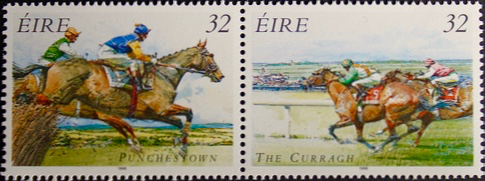
Romping home! Dirty Dick Murphy winning the Salthill Fiesta, Galway, in June 1977 (photograph Connacht Tribune)
In the All-Ireland Name Stakes we’ve always known that Murphy is the front runner. In fact it’s the most popular surname, significantly outnumbering the next in line: Kelly. This was the case in 1890 – when the Registrar General of Births, Marriages and Deaths, Robert Matheson, compiled the first comprehensive analysis of names for the whole of Ireland. Then, there were 62,600 Murphys and 55,900 Kellys in a population of 4.7 million. More recently the phone network company Eircom published A Survey of Irish Surnames 1992-97 compiled by Sean J Murphy from telephone directory records in the Republic and Northern Ireland (making it comparable to the 1890 study): this showed 70,900 Murphys and 59,800 Kellys in a total population of 5.3 million.
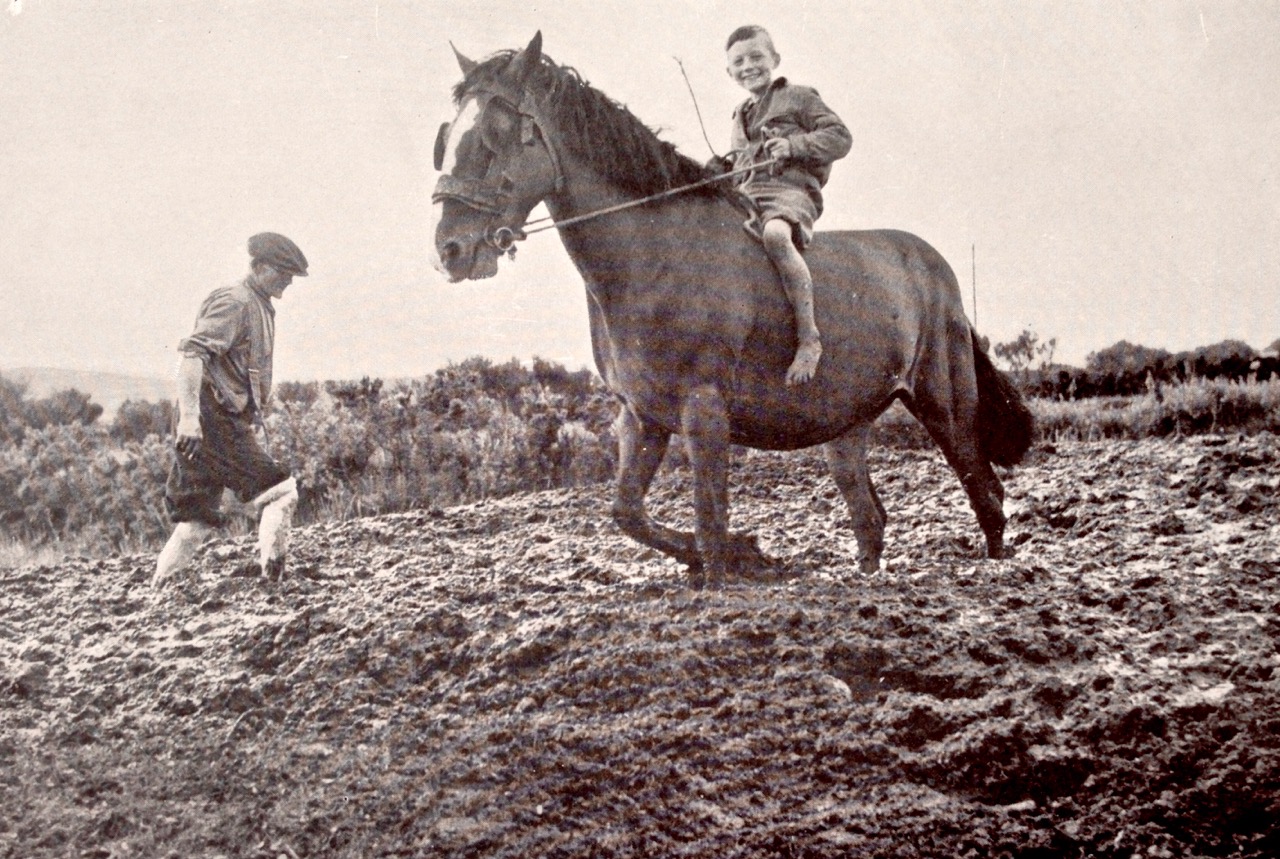
Runner-up! A Kelly, perhaps… from the collection of photographer Tomás Ó Muircheartaigh, who documented life in rural Ireland between the 1930s and the 1950s
So Murphy wins – by a margin. Let’s have look at the name: Ó Murchadha (or in modern Irish Ó Murchú) means ‘sea warrior’ (Irish Medieval History gives Murchú as ‘hound of the sea’). Most of the Murphys are evidently here in County Cork, with Counties Wexford and Kilkenny next up. There are O’Murphys – mainly confined to Ulster, where the family were part of the tribe claiming descent from Eoghan, son of Niall of the Nine Hostages, who was responsible for kidnapping St Patrick and bringing him to Ireland. Otherwise the Murphys usually trace their ancestry back to Diarmait Mac Murchadha – King of Uí Cheinnsealaig and King of Laigin (Leinster) who lived in the twelfth century and was himself descended from the High King Brian Boru through his father’s grandmother.
Key players in Murphy geneaology and Irish history: Brian Boru, Diarmait Mac Murchadha and Henry II
Diarmait Mac Murchadha was deprived of his titles by the then High King of Ireland, Ruaidrí Ua Conchobair, and asked the English King, Henry II, to help him retrieve them. In return, Mac Murchada pledged an oath of allegiance to Henry, who sent troops in support. As a further thanks for his reinstatement, Mac Murchada’s daughter Aoife was married to Richard de Clare, the second Earl of Pembroke, popularly known as ‘Strongbow‘. The result of all this was that the Normans came to Ireland – and stayed – and it’s all thanks to the Murphys!
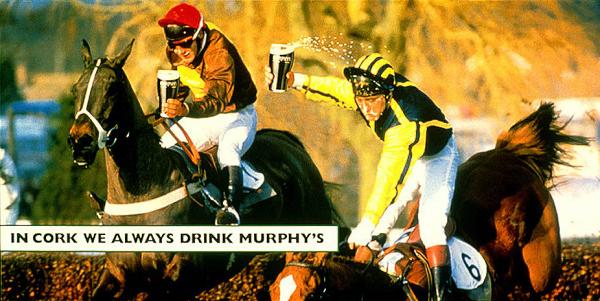
We mustn’t forget Murphy’s Irish Stout! (advertisement by BBH London)
Now let’s look at some famous Murphys. Father John Murphy – an Irish freedom fighter – is immortalised in the ballad Boolavogue. Fr John was born in 1753 and studied for the priesthood in Seville as this was the time of the Penal Laws when Catholics were persecuted in Ireland. He returned to his homeland in 1785 and there he was only known as ‘Mister Murphy’: Irish priests were not styled as ‘Father’ until the 1860s. John Murphy led a group of rebels against English forces in the 1798 uprising. He was captured, tortured and brutally executed at Tullow, Co Carlow. Here is a rendering of the beautiful elegy Boolavogue composed by Patrick Joseph McCall in 1898, the centenary of the Rebellion, played on the pipes by Davy Spillane, with Aly Bain on fiddle:
Boolavogue is a town in Co Wexford where the rebels secured their first victory before they were captured. Here are the words to the ballad:
At Boolavogue, as the sun was setting
O’er the bright May meadows of Shelmalier,
A rebel hand set the heather blazing
And brought the neighbours from far and near.
Then Father Murphy, from old Kilcormack,
Spurred up the rocks with a warning cry;
“Arm! Arm!” he cried, “For I’ve come to lead you,
For Ireland’s freedom we fight or die.”
He led us on against the coming soldiers,
And the cowardly Yeomen we put to flight;
‘Twas at the Harrow the boys of Wexford
Showed Booky’s Regiment how men could fight.
Look out for hirelings, King George of England,
Search ev’ry kingdom where breathes a slave,
For Father Murphy of the County Wexford
Sweeps o’er the land like a mighty wave.
We took Camolin and Enniscorthy,
And Wexford storming drove out our foes;
‘Twas at Sliabh Coillte our pikes were reeking
With the crimson stream of the beaten Yeos.
At Tubberneering and Ballyellis
Full many a Hessian lay in his gore;
Ah, Father Murphy, had aid come over
The green flag floated from shore to shore!
At Vinegar Hill, o’er the pleasant Slaney,
Our heroes vainly stood back to back,
And the Yeos at Tullow took Father Murphy
And burned his body upon the rack.
God grant you glory, brave Father Murphy
And open heaven to all your men;
The cause that called you may call tomorrow
In another fight for the Green again.
Two of my Murphy heroes are musicians: Denis Murphy (1912 – 1974) was a great fiddle player from the Sliabh Luachra area of Cork and Kerry. There were so many Murphy families in that area that Denis’s father Bill was always known as ‘Bill the Waiver’ because his people had been weavers of flax in olden times. I have Denis in my collection of Irish music cd’s but was never able to hear him playing live. I did meet my other hero, however, on my first visit to Ireland back in 1975. That’s Paddy Murphy (1913 – 1992), the renowned concertina player from Co Clare. I was privileged to be taken out to a private session in a remote townland somewhere north of Kilmihil. There, in a bar which seemed like someone’s front parlour, I heard Paddy play and talk of his family history and his very individual virtuoso style of playing an instrument which I have been trying to master for the last 50 years!
Noted traditional musicians: Denis Murphy (left) from the Sliabh Luachra and Paddy Murphy (right) from County Clare
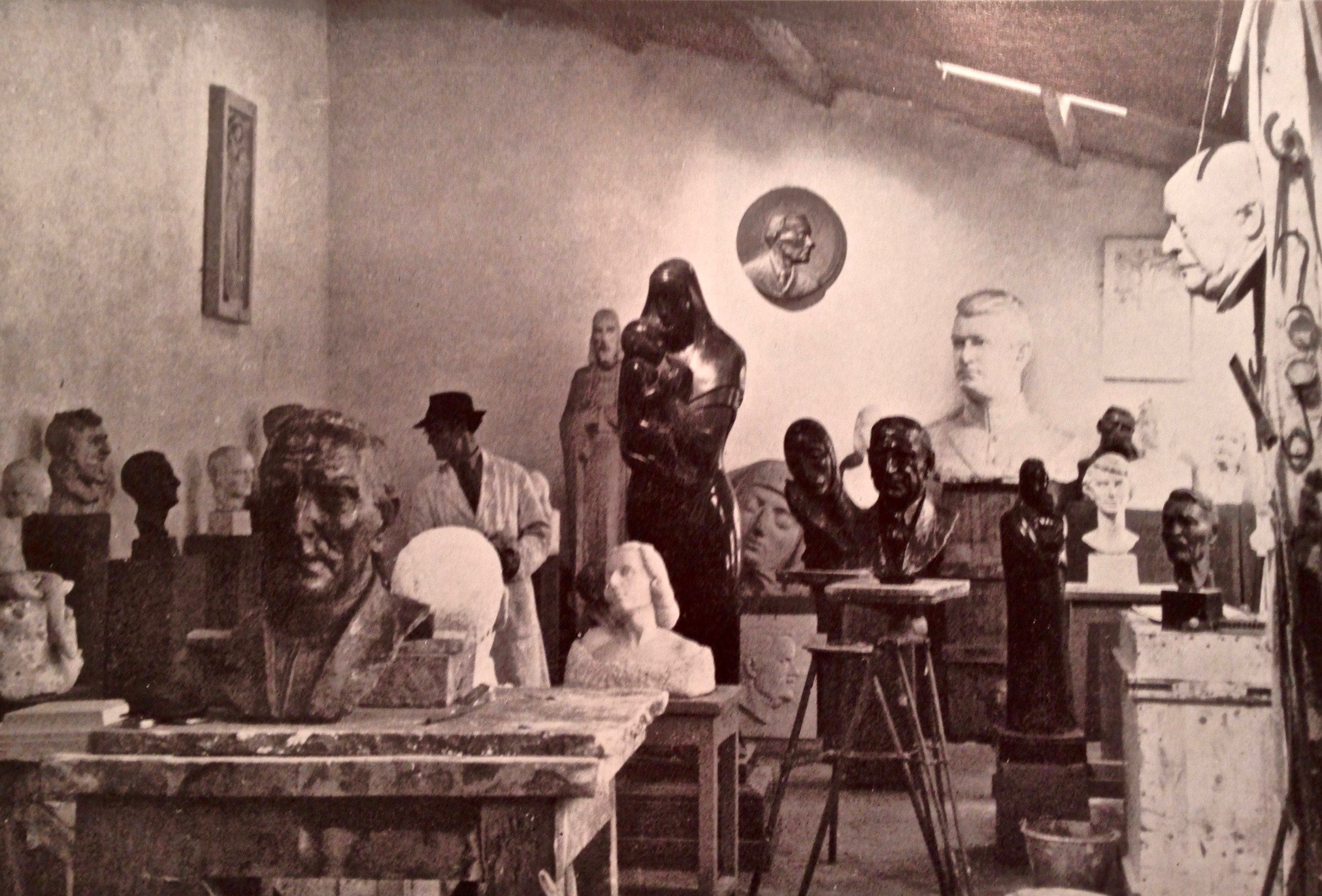
Next is someone we have met before, in our posts on Saint Gobnait and The Tailor and Ansty: that’s the sculptor Seamus Murphy (1907 – 1975). This Murphy, from Burnfort near Mallow, Co Cork, became Professor of Sculpture at the Royal Hibernian Academy. He is also known for his book, Stone Mad, which was published in 1950.
Seamus Murphy in his studio: pictures top and lower left are from the collection of photographer Tomás Ó Muircheartaigh, who documented life in rural Ireland between the 1930s and the 1950s
The last Murphy that I want to mention (and there could be so many) is, perhaps, an unexpected one – she is Marie-Louise O’Murphy, who lived from 1737 to 1814. Although she was born and died in France she was of Irish extraction: her grandfather Daniel, a former army officer, had left his home in Cork for Rouen, where he worked as a master shoe-maker. When just in her teens, the physical features of young Mlle O’Murphy were spotted by Giacomo Casanova, who recommended her to King Louis XV. As a result she became the King’s Petite maîtresse – little mistress (or, rather, one of them) and bore him a daughter. However, the King’s favourite, Madame de Pompadour, decided that Marie-Louise’s presence in the royal household was too challenging and she was sent off to the country to marry a nobleman – and also received a handsome dowry for life. Marie-Louise O’Murphy (who was given the name of Marie-Louise Morphy de Boisfailly – possibly to raise her status in Versailles) is familiar to us as the artist’s model for François Boucher’s Resting Girl, painted in 1751. The canvas is now in the Wallraf Richartz Museum, Cologne.
A colourful note on which to end our survey on the Murphys of Ireland (and beyond), perhaps. We apologise to all the thousands of Murphys who we have not mentioned, but we’d like to hear from any of them…
Welcome to the UCD Library Cultural Heritage Collections blog. Discover and explore the historical treasures housed within our Archives, Special Collections, National Folklore Collection and Digital Library

















 Roaringwater Journal