St. Brandanus: A 14th Century Graphic Novel. Part 2

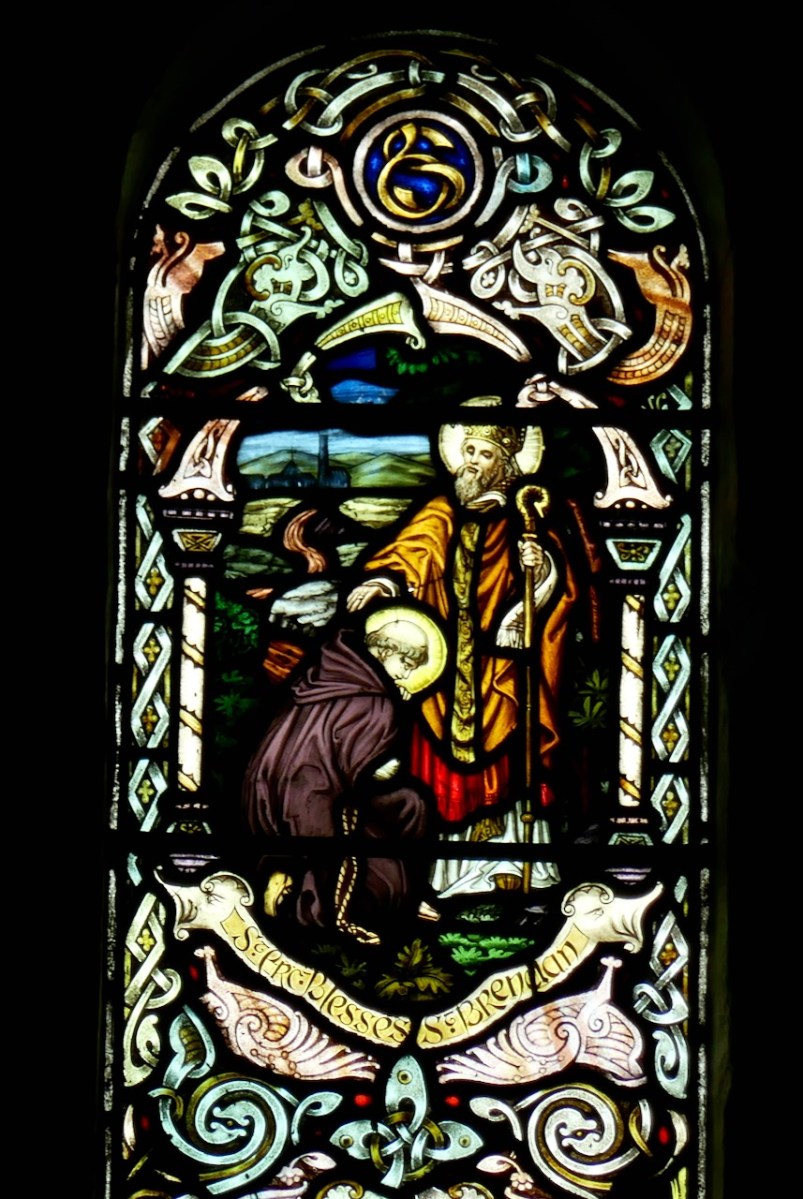
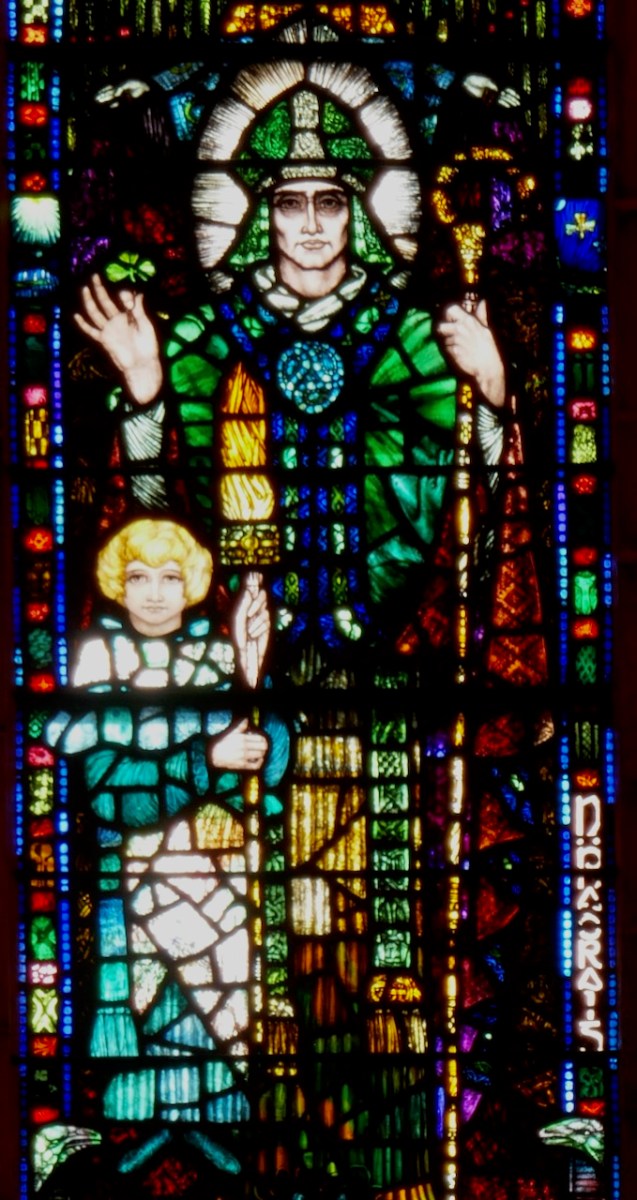
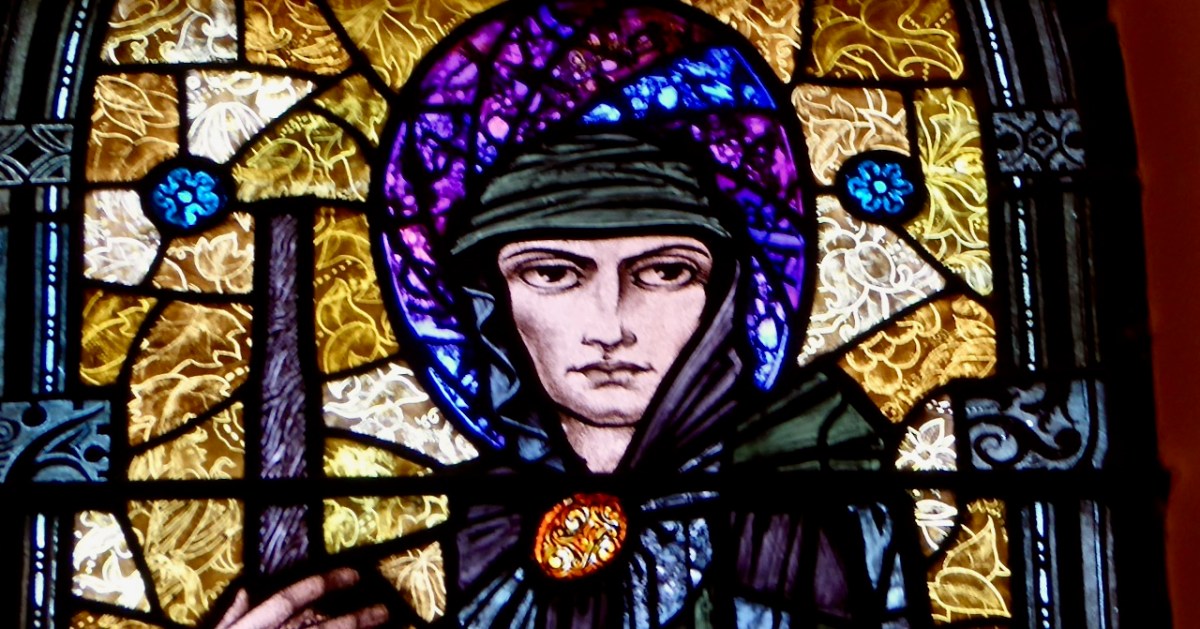
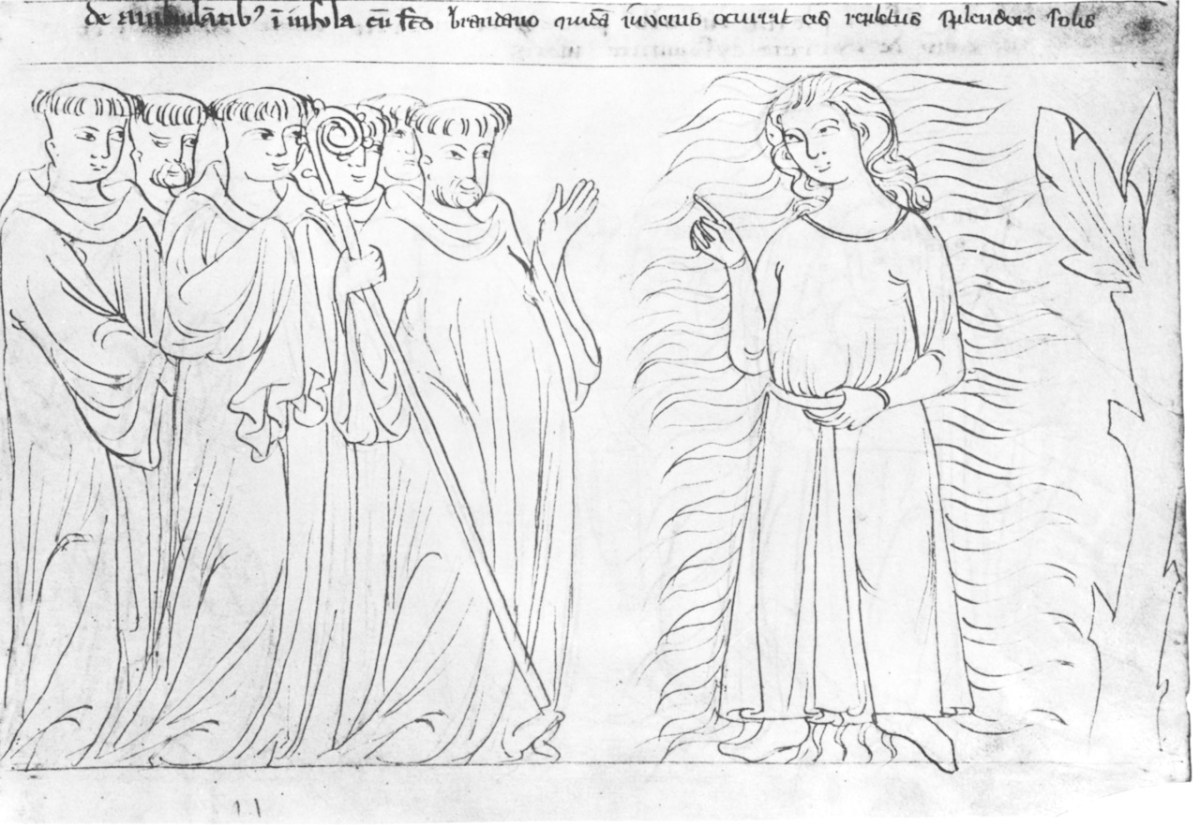
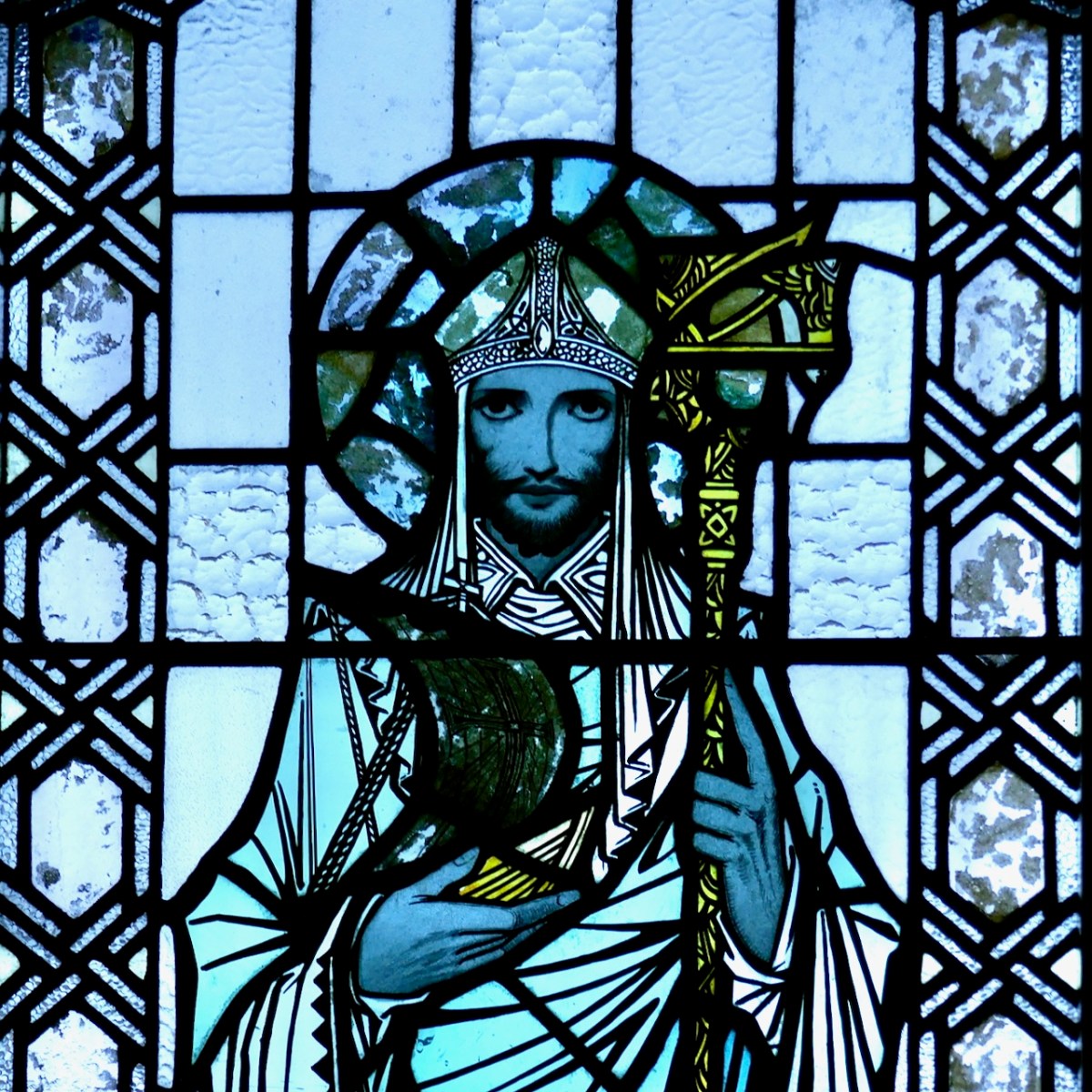
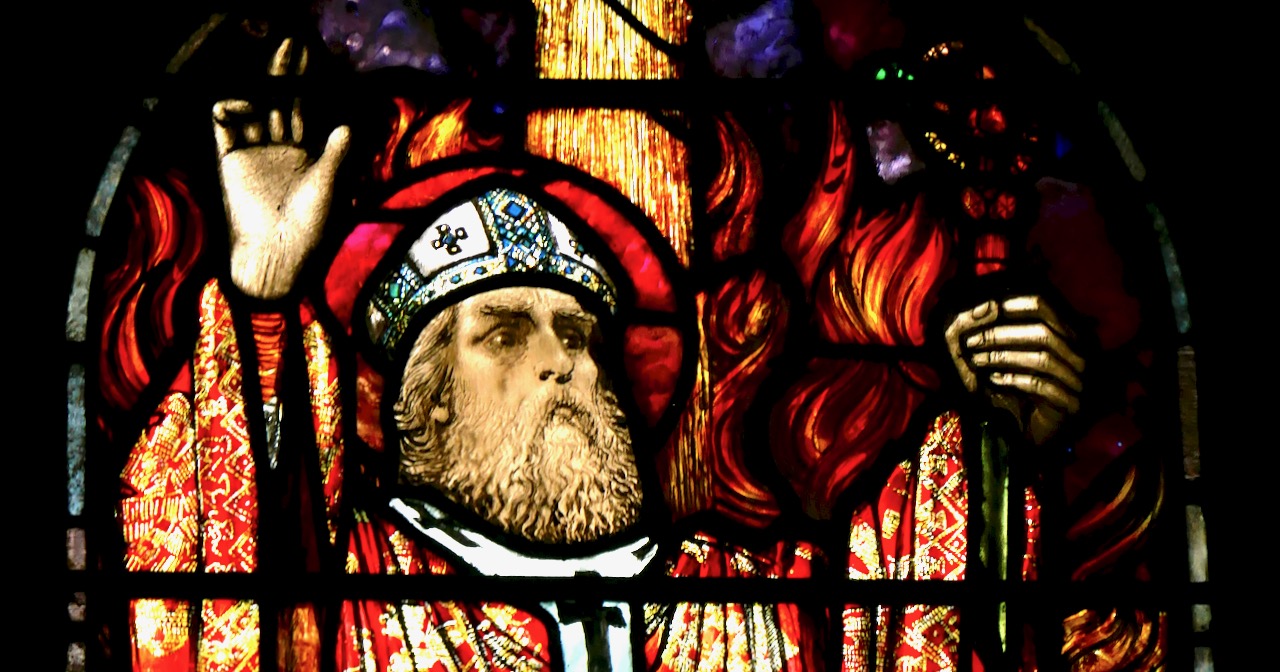
There are several versions of the Brendan story (that’s a Harry Clarke Brendan, above, from Tullamore), and some of the stories in one version might not be present in another. This particular version is told in a series of illustrations, each one captioned in what Biedermann calls “faulty monastic Latin.” It is contained in a much larger work, the Krumauer Bilder-Codex (or Illustrated Codex), and occurs at the end after many other stories of saints. A Codex, by the way, is a book, rather than a scroll. In the 14th century, vellum was used as the main writing material. The drawings are line drawings in pen and ink. They are simple, but in Biedermann’s opinion ‘joyful.’ I agree. Here’s one of the stories.
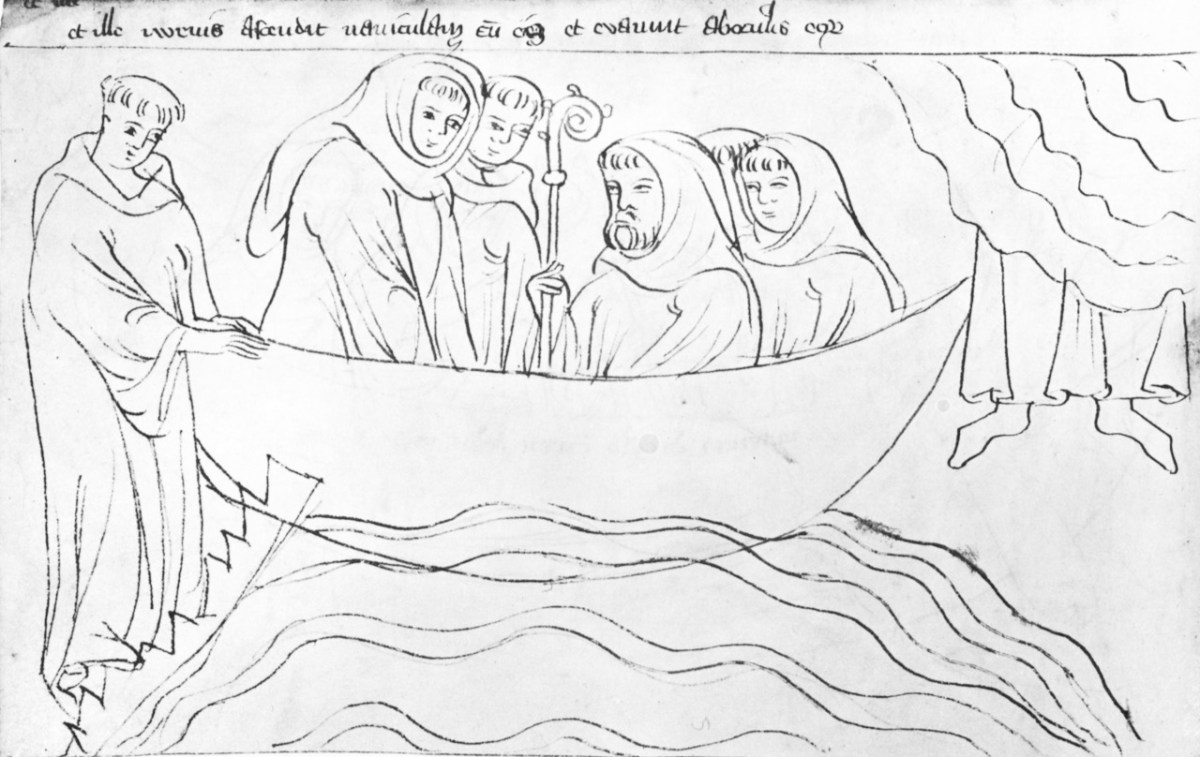
While they were walking on the island with Saint Brendan, a certain young man met them, filled with the radiance of the sun.

And that young man boarded the little ship with them and vanished from their sight.

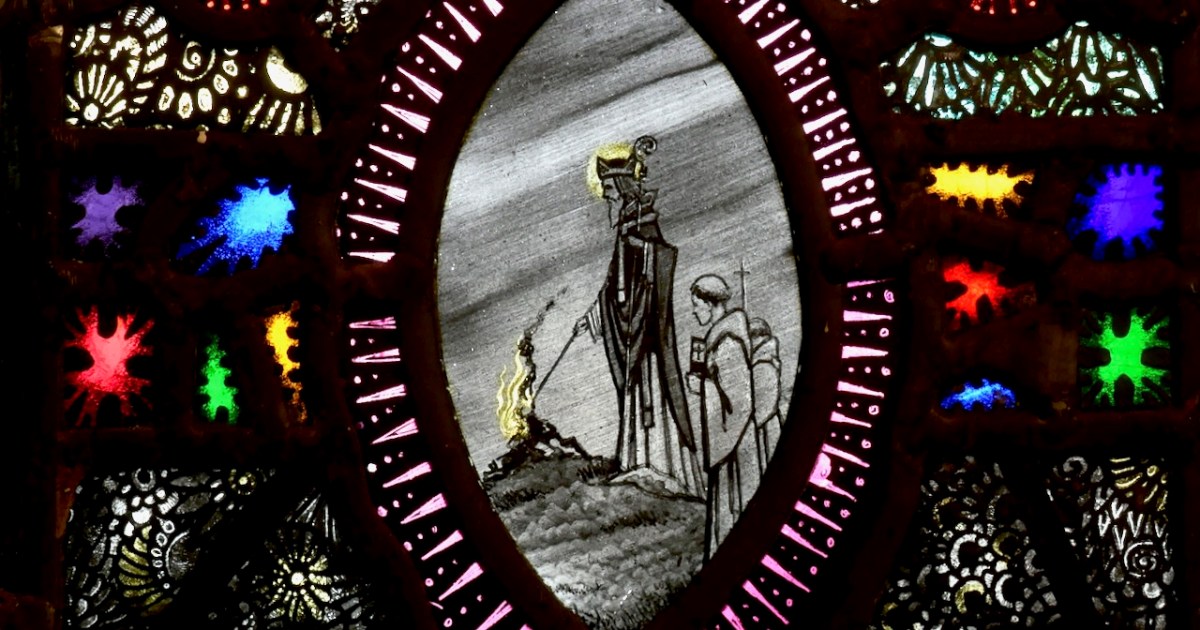
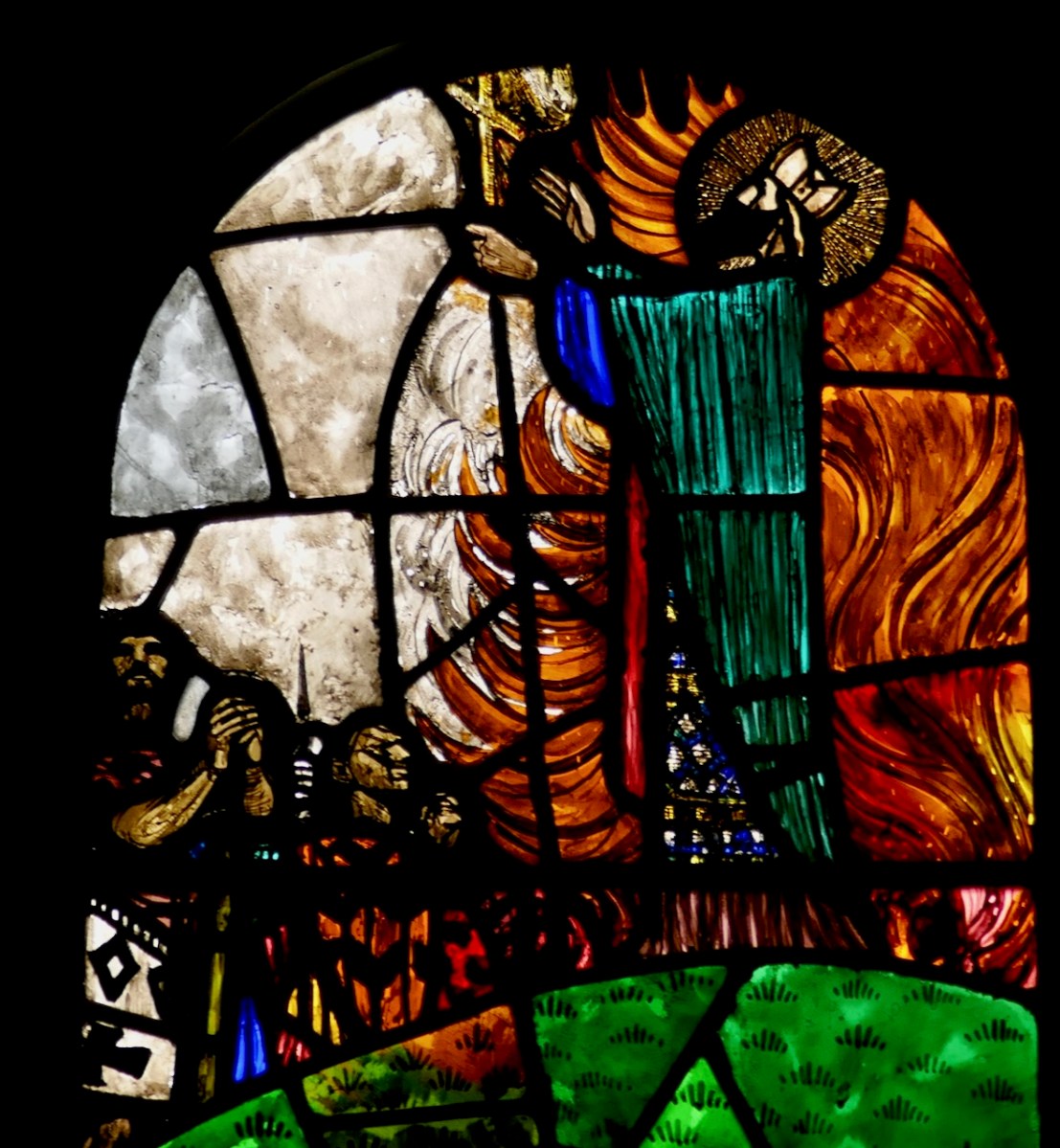
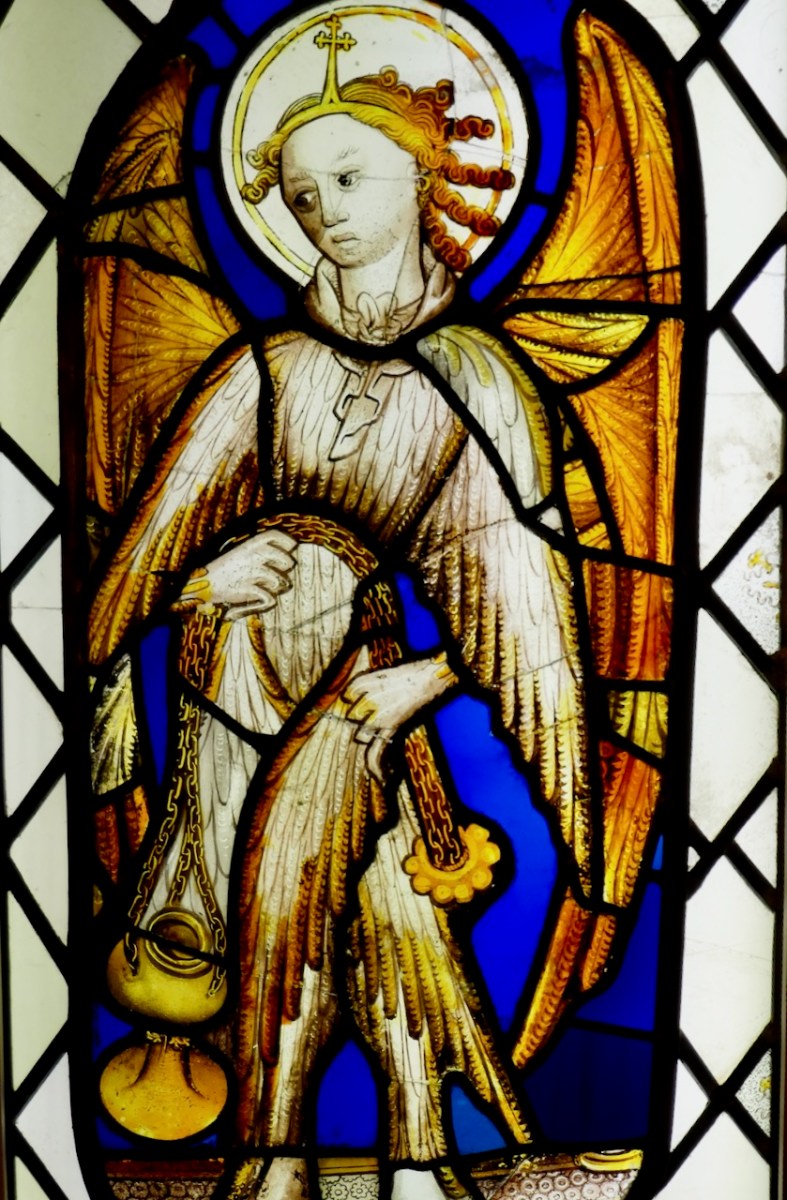
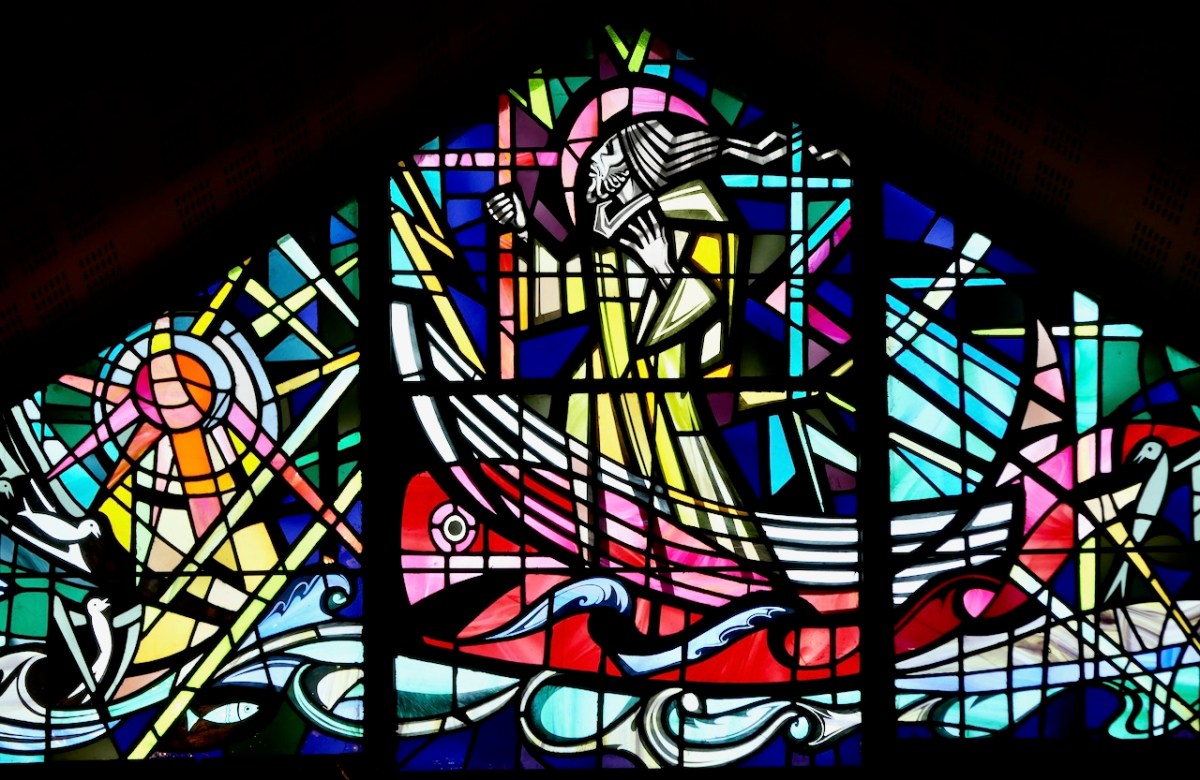
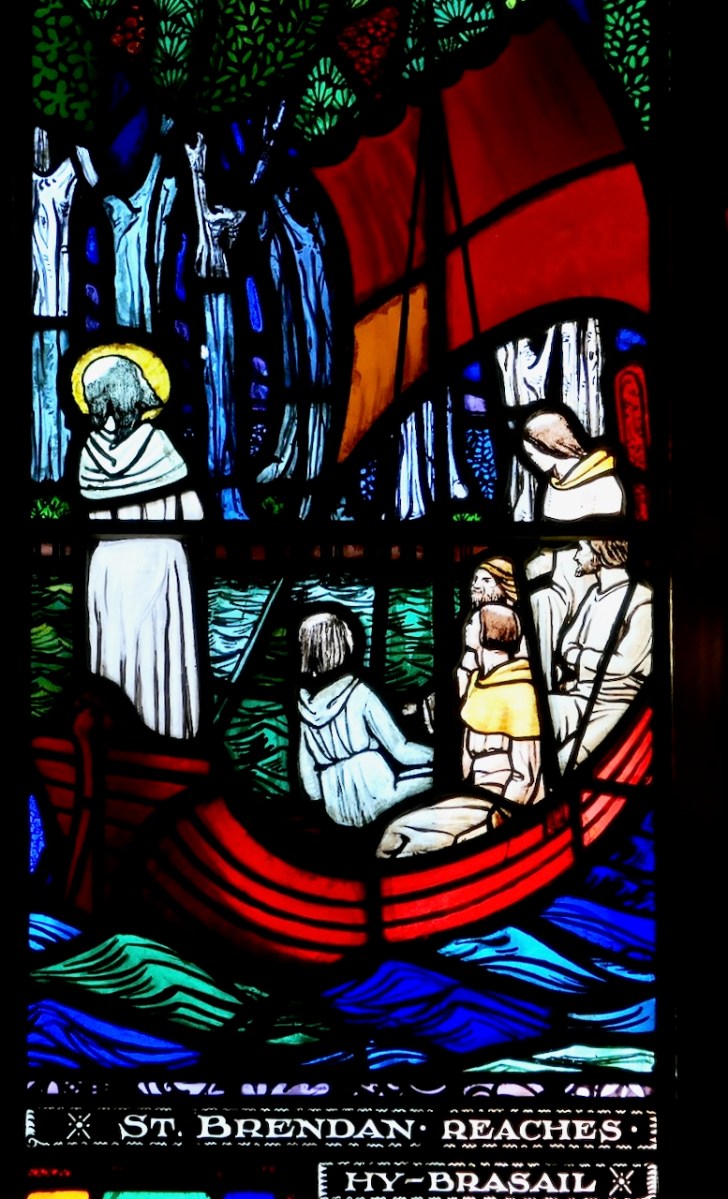
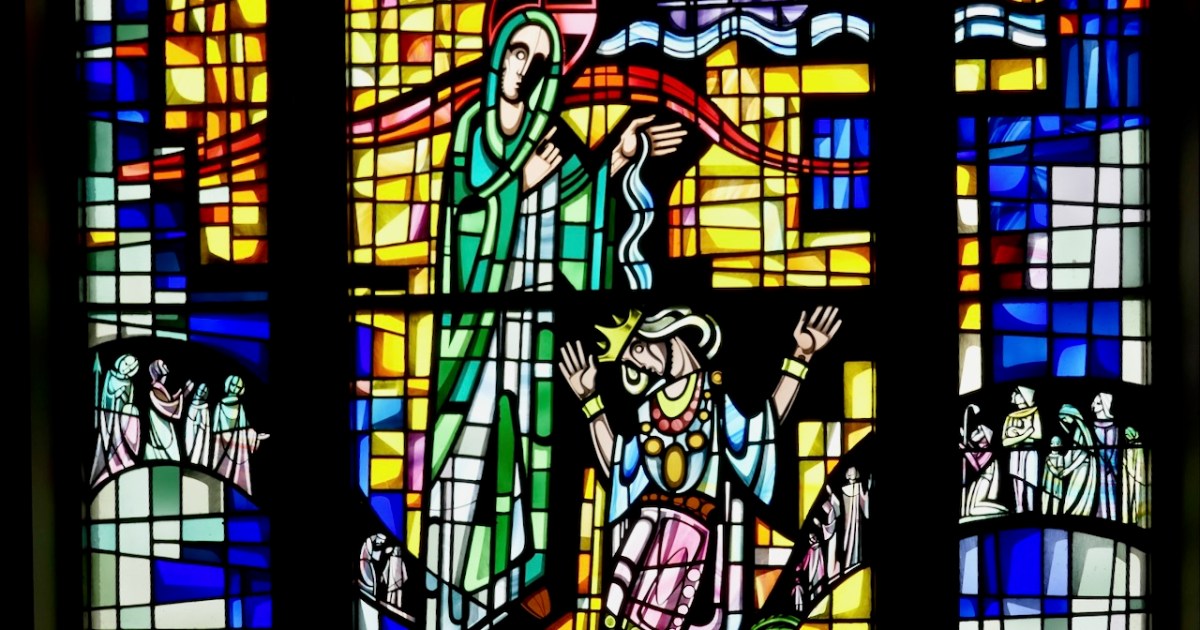
I love the way you see only his legs disappearing up into the clouds.  St Brendan, although happy to see the radiant youth in the first illustration, is looking a little grumpy in this one. “What did we do wrong, that he left us”, I can hear him say. You may note, by the way, that in some illustrations the monks are depicted in a curved shape, like Brendan in the first line drawing above. This convention, known as the S-curve, is also seen in medieval stained glass windows, such as this one from the Exeter Museum.

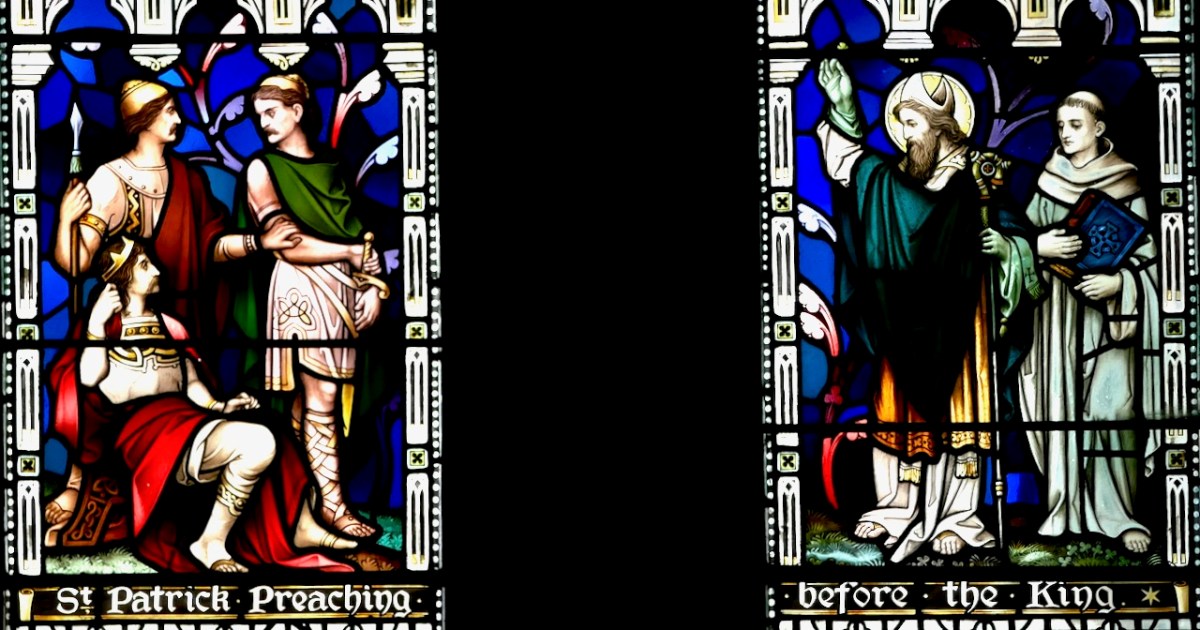
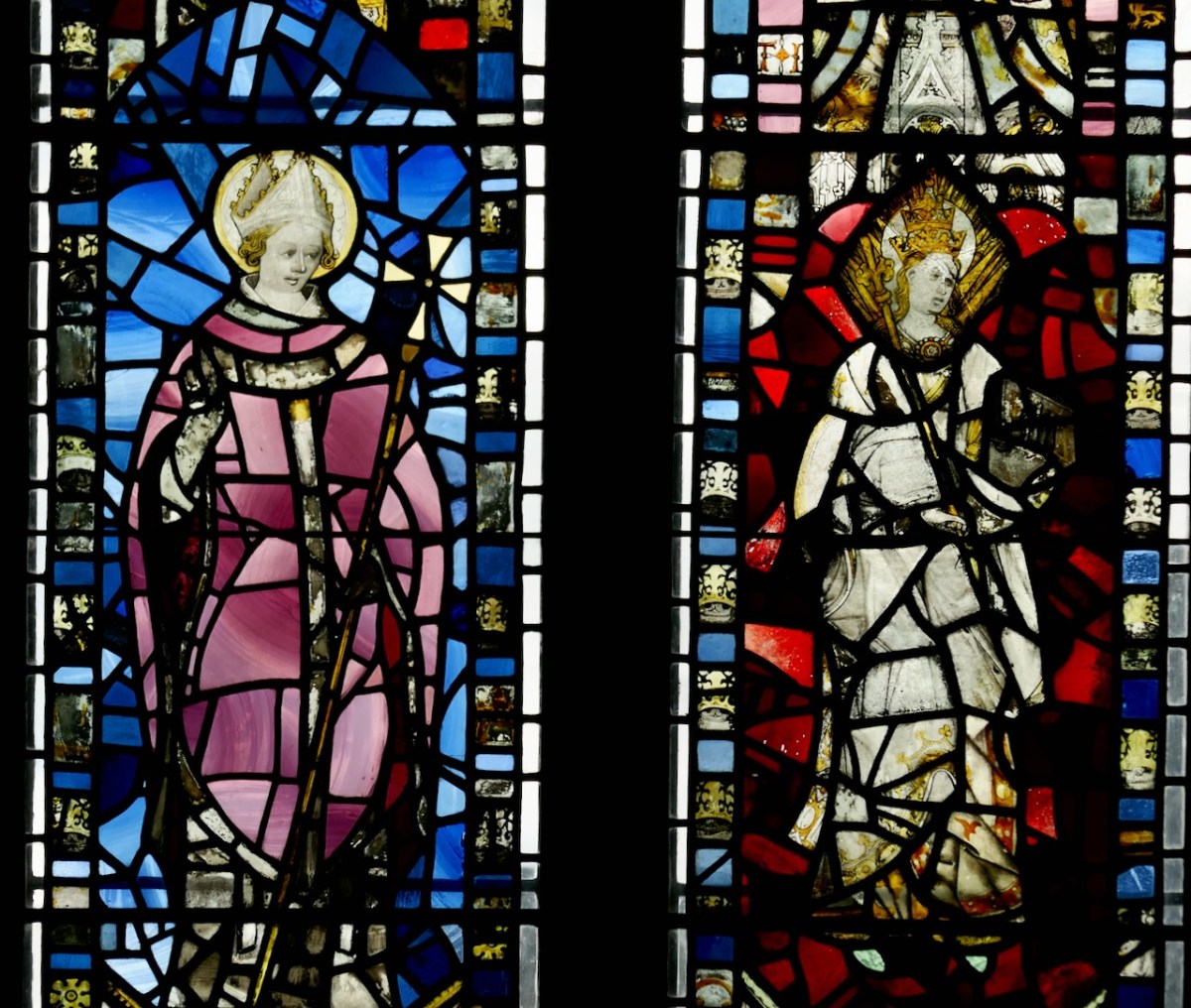
Here’s another one, from St Helen’s Church in York. This S-curve was a way of introducing some sense of movement into a figure of a saint or monk, and was a typically gothic element, perhaps an attempt to make the figure less rigid.

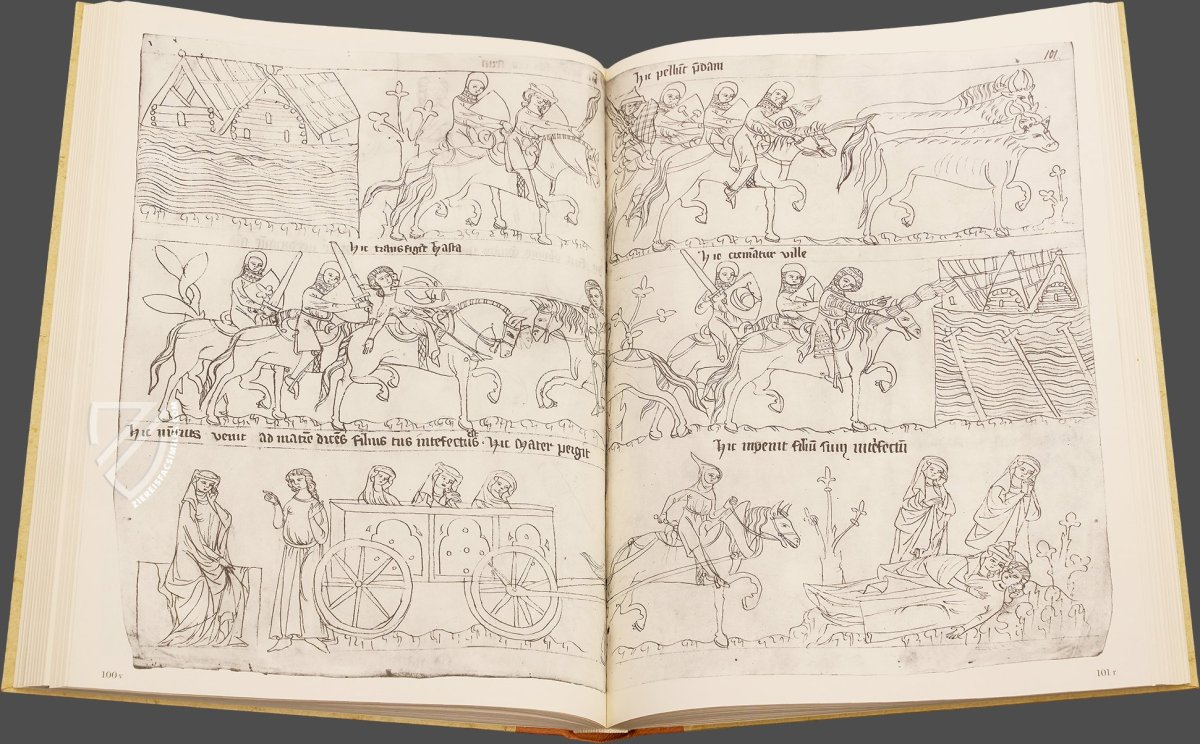
The illustrations are laid out on facing pages, so you read top left, top right, bottom left, bottom right. Although the Brendan story has four illustrations per two-page spread, most of the stories in the Krumauer Bildercodex have six, or occupy three horizontal spaces instead of two. Here’s an image of a typical lay-out, although I don’t know what story is being told in it.

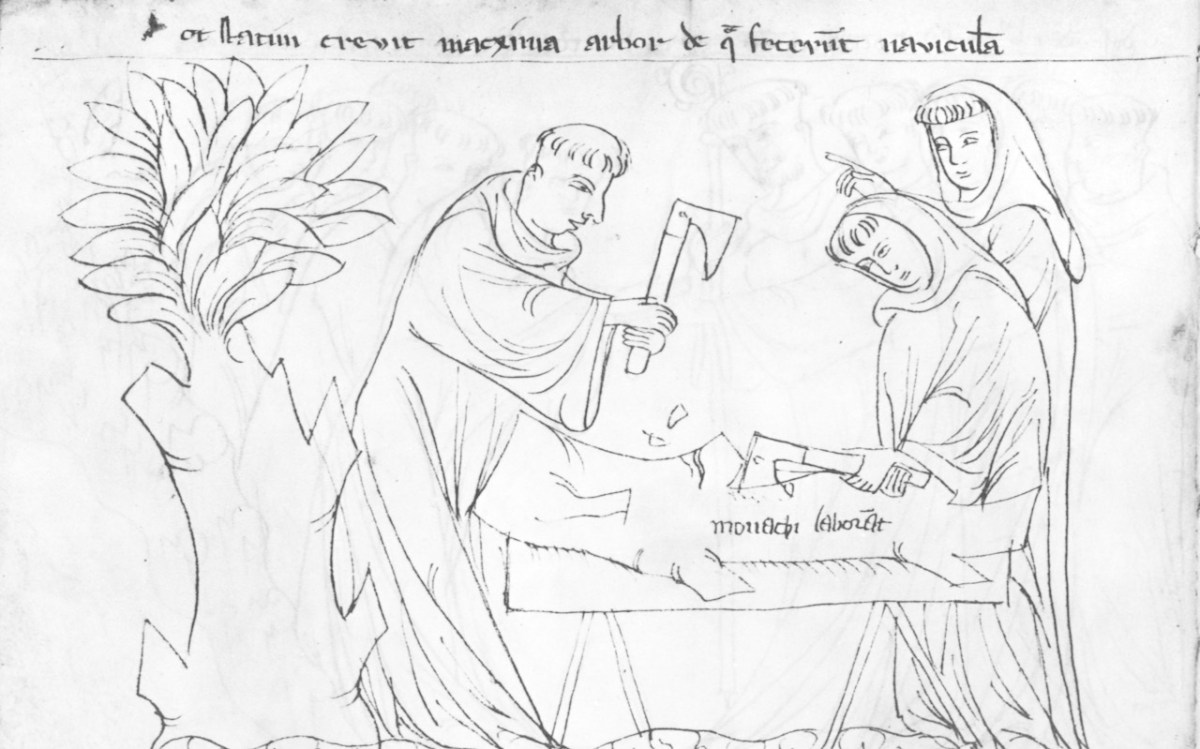
At some point there is a need for a new boat. No problem – Brendan sticks his staff in the ground and immediately a tree springs up. The monks set to work on it and in no time have carved out a boat.

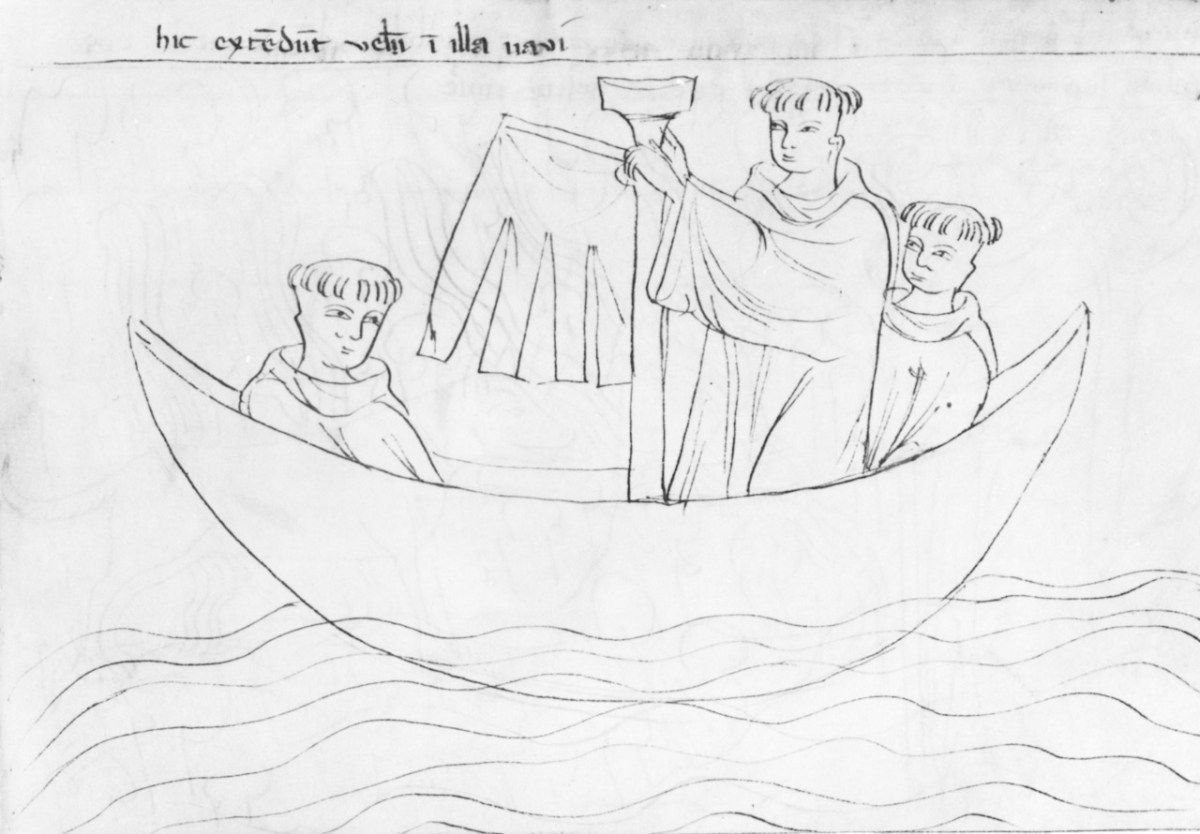
In the next illustration they are at sea and raising a sail. Aha – I hear you cry, but now there are only three of them. And what kind of sail is that? And also – surely they were in an Irish curragh – what about all the hides? Alas – the Codex provides no answers to our urgent questions, although the story-teller who used the illustrations as he narrated to an eager audience may have done all that. We don’t know who commissioned the Krumauer Bildercodex, although since a production like this was time-consuming and expensive, it may have been a noble patron or a monastery. 

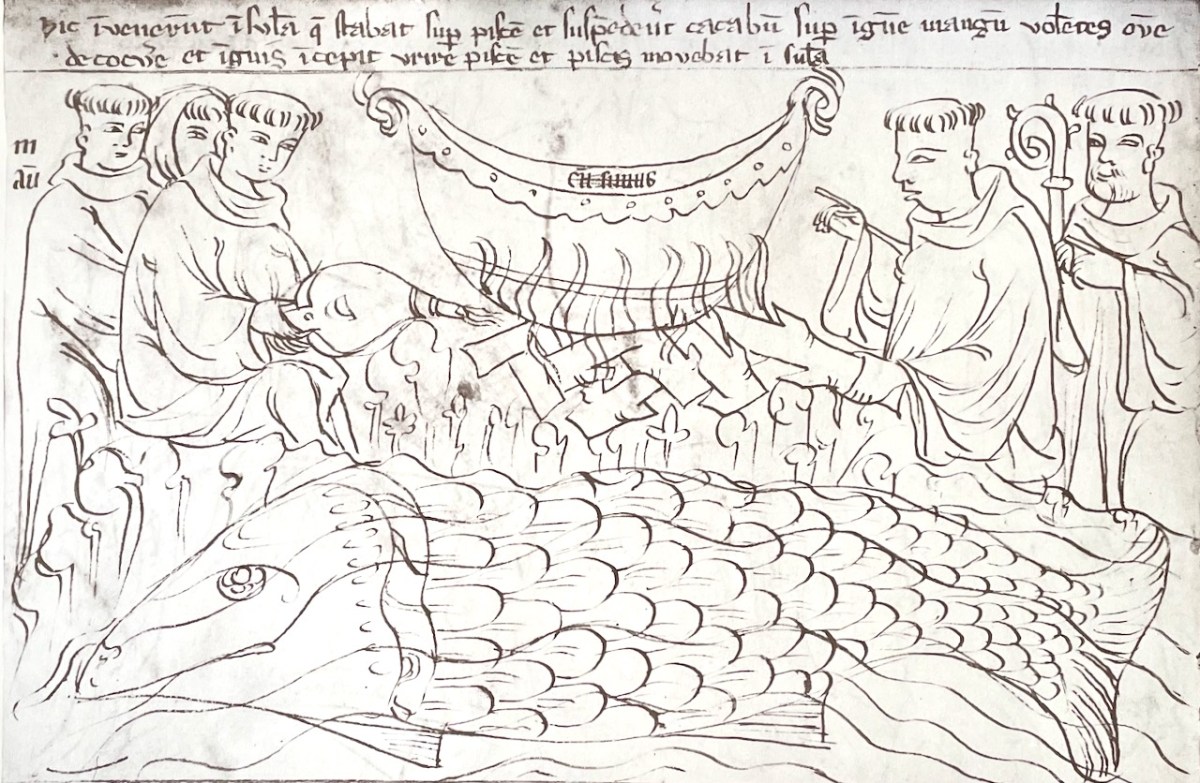
One of the most famous of the Brendan stories is that of the giant fish, sometimes called Jasconius, and often referred to as a whale. 

The caption reads: Here they found an island which stood upon a fish, and they hung a pot over a great fire, wanting to boil a sheep, and the fire began to burn the fish, and the fish moved the island. 

Here is Whitley Stokes’ translation of the story from the Book of Lismore

Now after the Easter had come the great sea-beast raised his shoulder on high over the storm and over the wave-voice of the sea, so that it was level, firm land, like a field equally smooth, equally high. And they go forth upon that land and there they celebrate the Easter, even one day and two nights.

After they had gone on board their vessels, the whale straightway plunged under the sea. And it was in that wise they used to celebrate the Easter, to the end of seven years, on the back of the whale, as Cundedan said :

Brenainn loved lasting devotion

According to synod and company :

Seven years on the back of the whale :

Hard was the rule of devotion.

For when the Easter of every year was at hand the whale would heave up his back, so that it was dry and solid land.

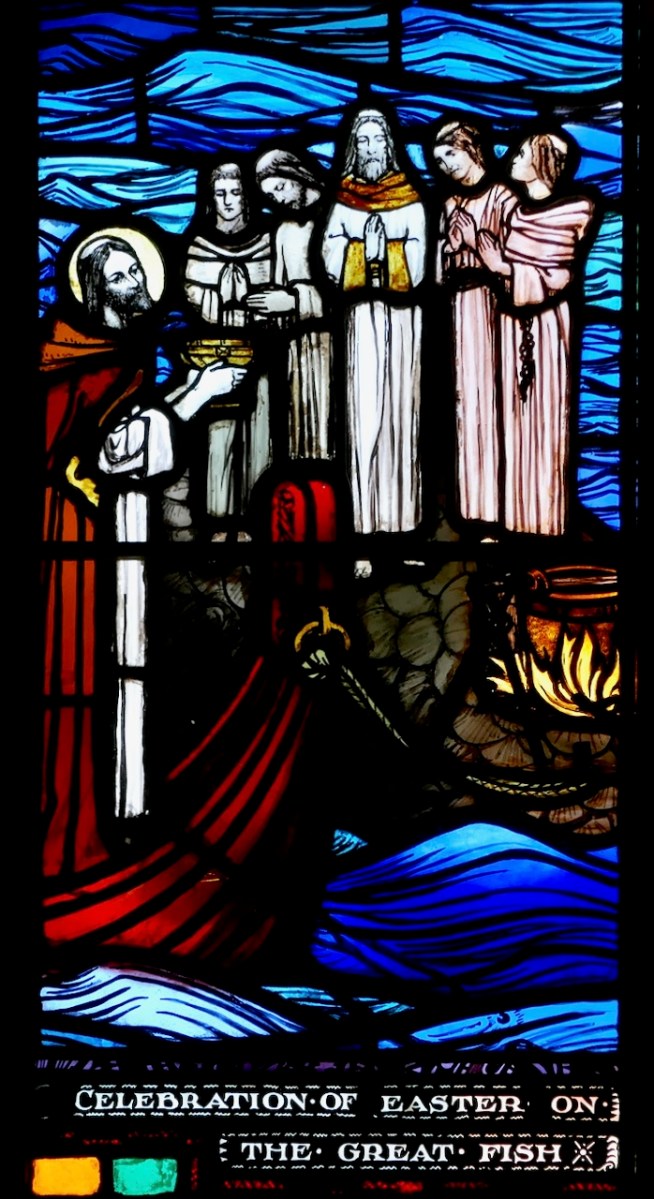
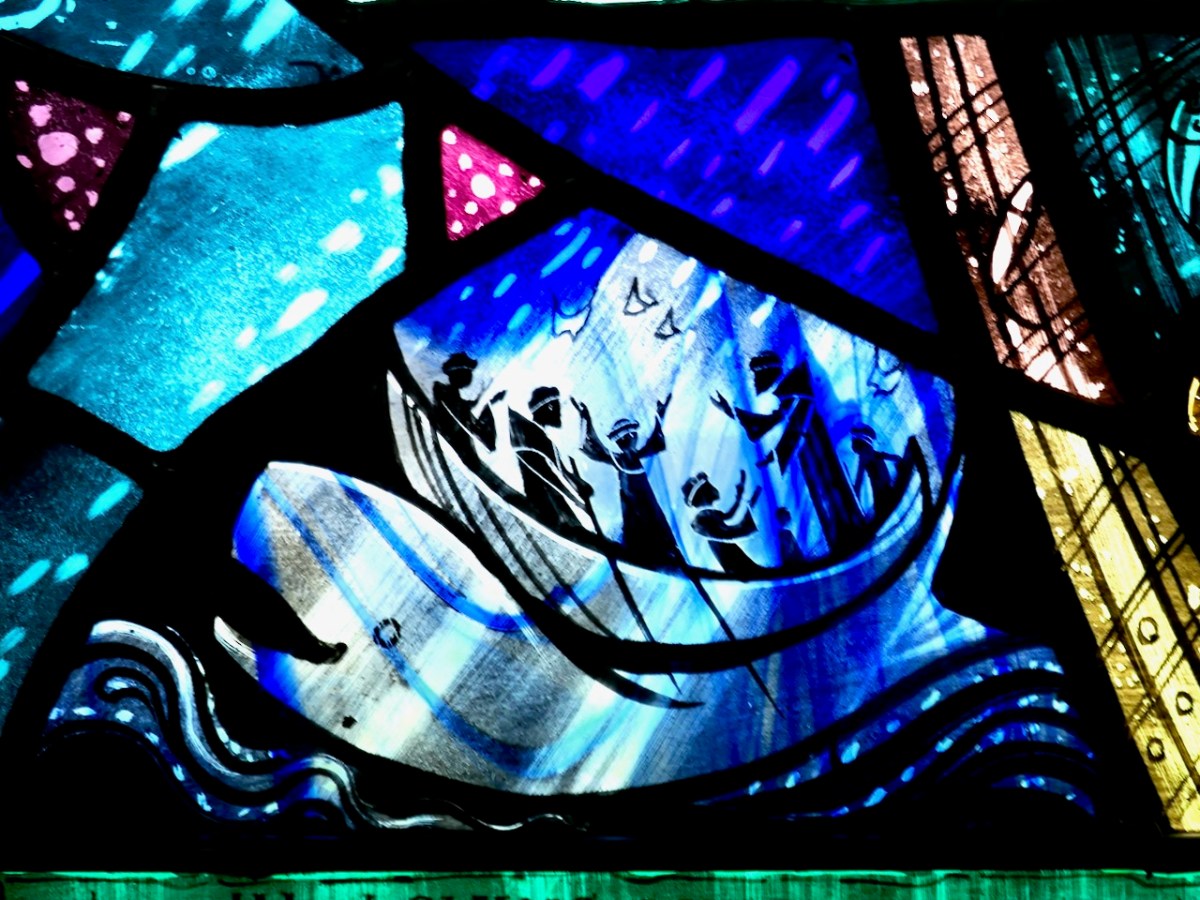
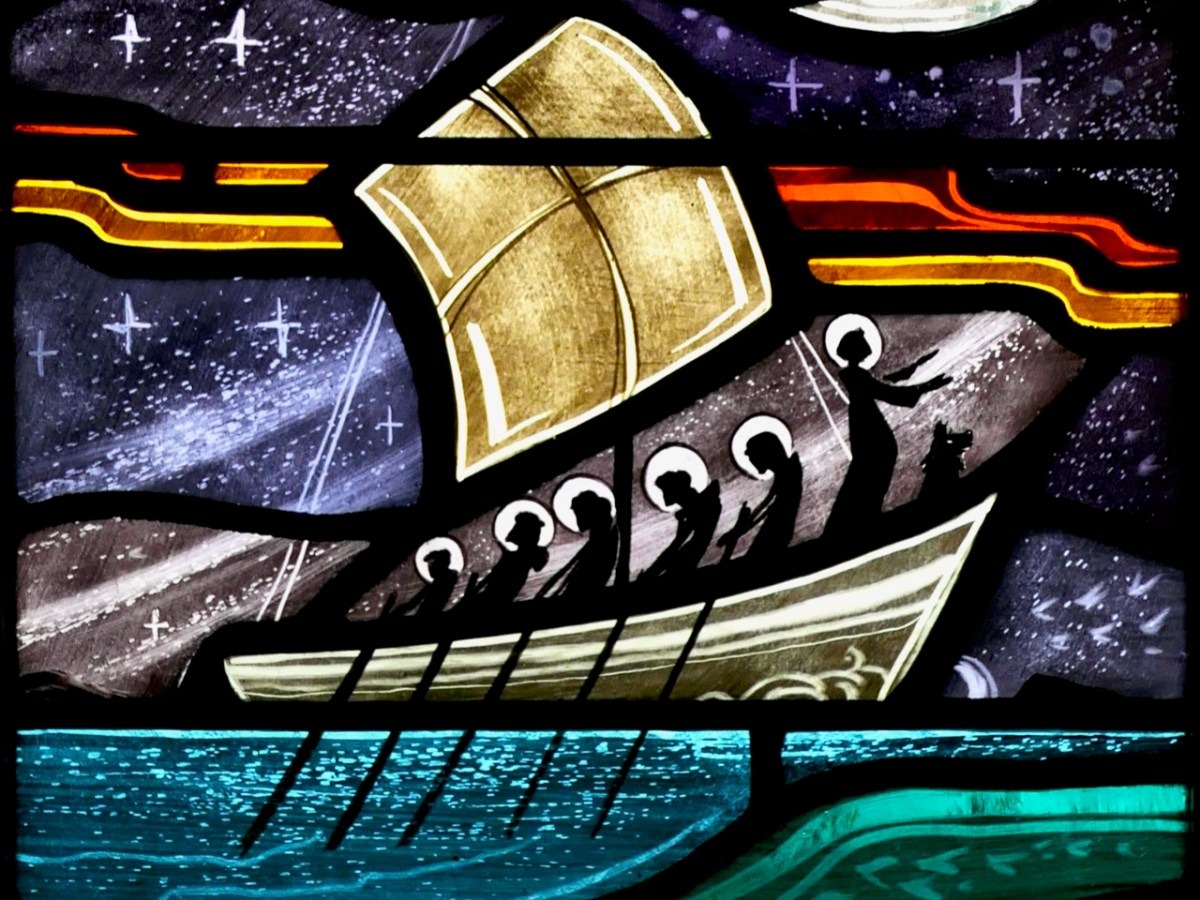
Since this is one of the most celebrated of the Brendan legends, it is not surprising that it is the story we see most often depicted in stained glass windows. Above is a beauty by Ethel Rhind of An Túr Gloine, in St Brendan’s College in Killarney. And of course, below, one by George Walsh, this one from St Brendan’s Church, the Glen, in Cork.

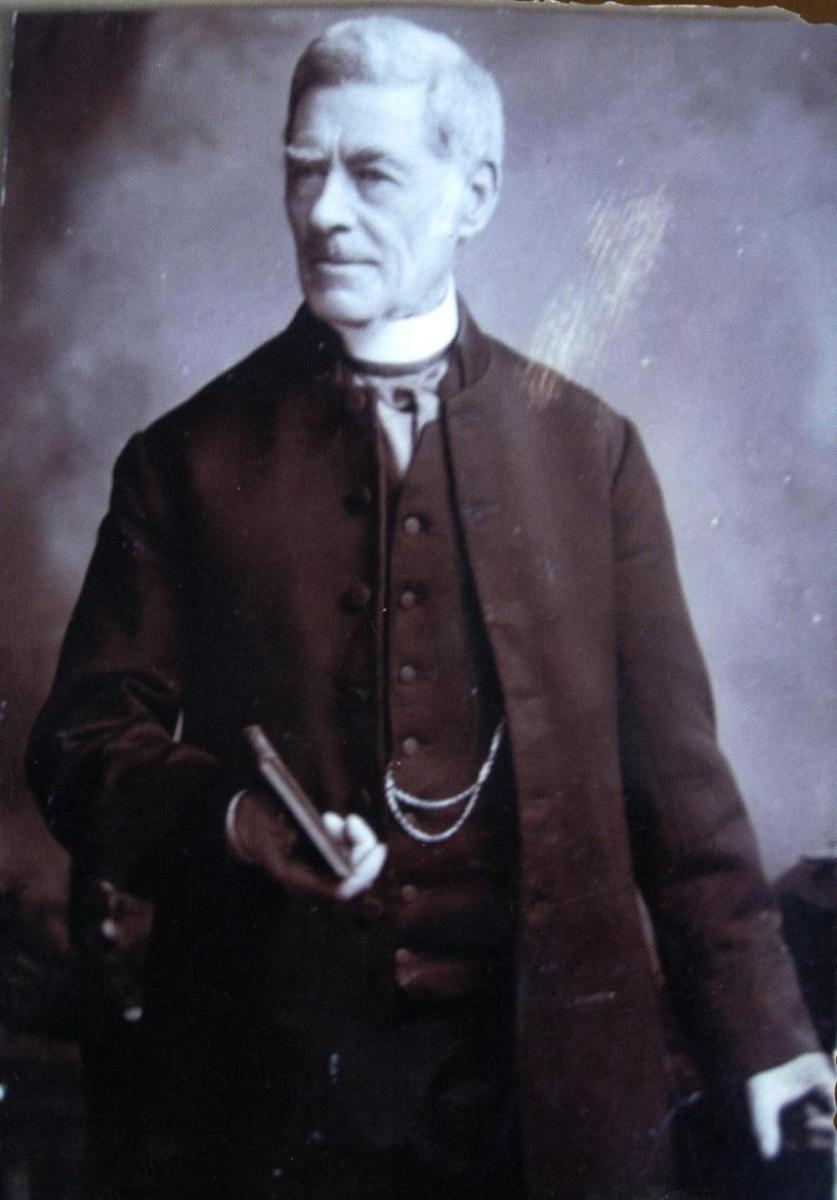
I will conclude this post with five illustrations for the story of the Golden Bridle, called the Silver Bit in the account I am using. This version is from the esteemed Canon O’Hanlon, (below) from his Life of St Brendan, in Volume 5 of his Lives of the Irish Saints (available online at https://archive.org/).

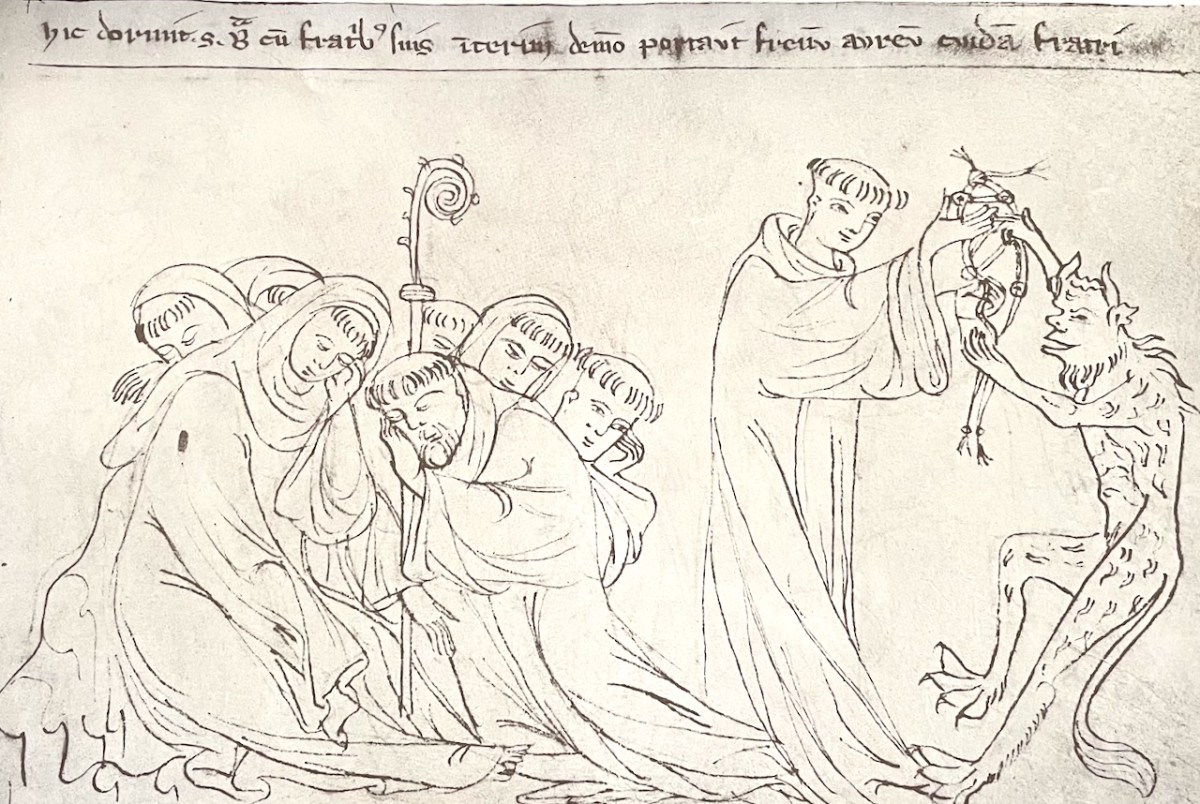
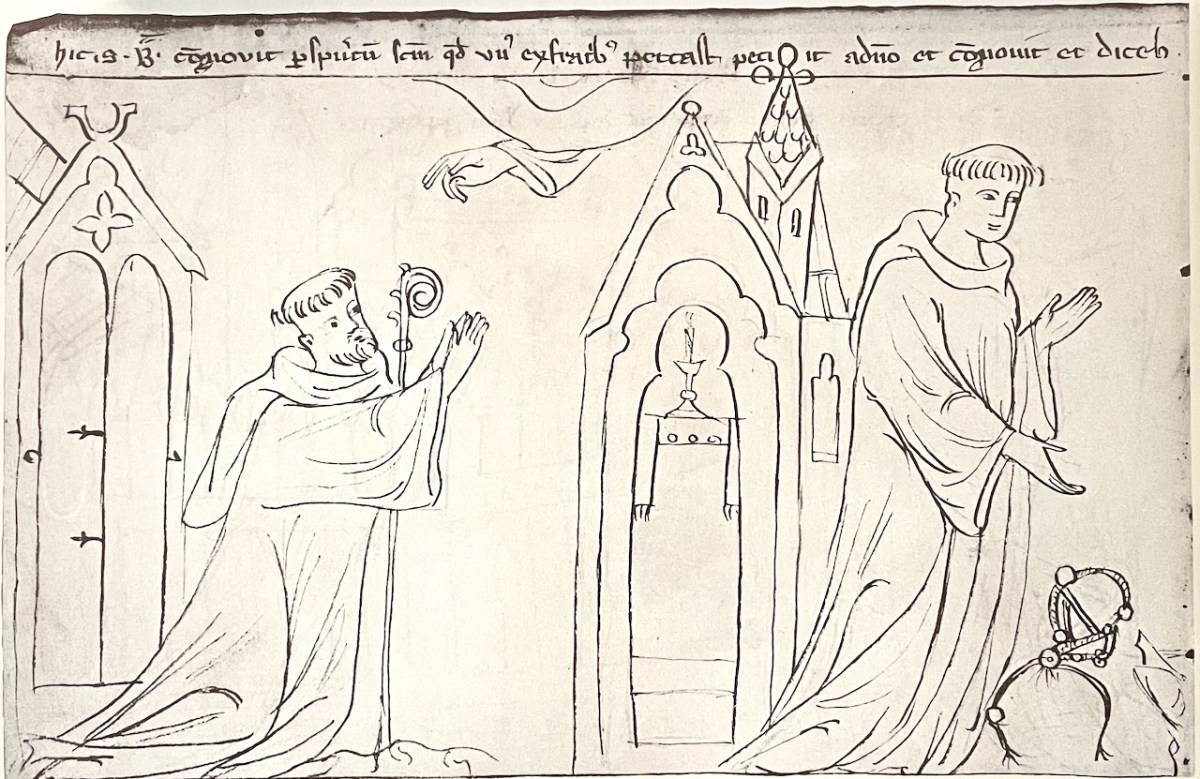
It is obvious, since the illustrations track so closely, that O’Hanlon was using the same translation as the Bilder-Codex. But I should warn you that in his translation the demon is cast in the form of a black child, an ‘Ethiop,’ as it is in other versions too. In the Codex it is simply referred to as a demon and depicted as a horned beast with a tail.

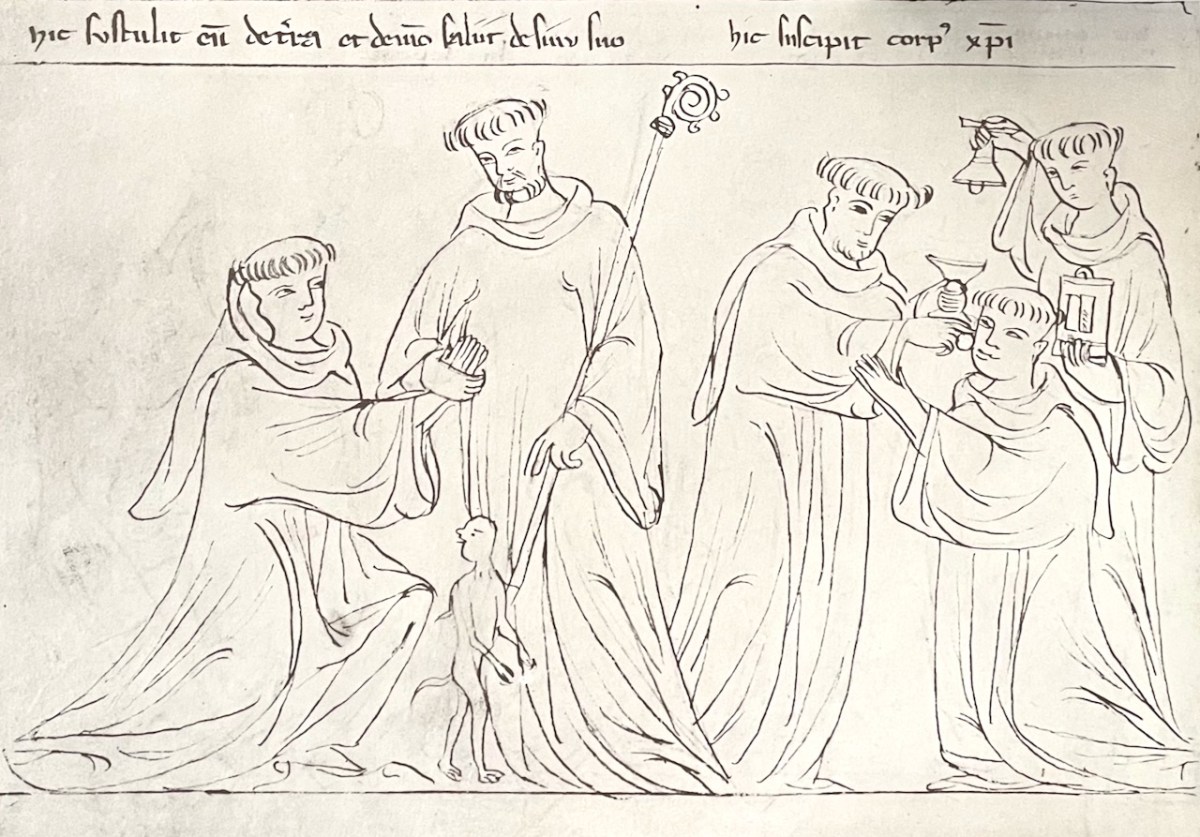
But, while they slept, Brendan saw a child, black as an Ethiop, holding a bit, and playing before the unfortunate brother, in whose eyes he made it glitter. The saint arose, and he passed that night in prayer till day. When morning dawned, the monks rose as usual, to give praise to the Almighty, and afterwards to regain their ship. Once more, the table was found furnished, as on the day preceding; and thus, for three days and for three nights, the Lord prepared food for his servants. There, too, for three whole days, by the Divine will, they rested on that isle. 

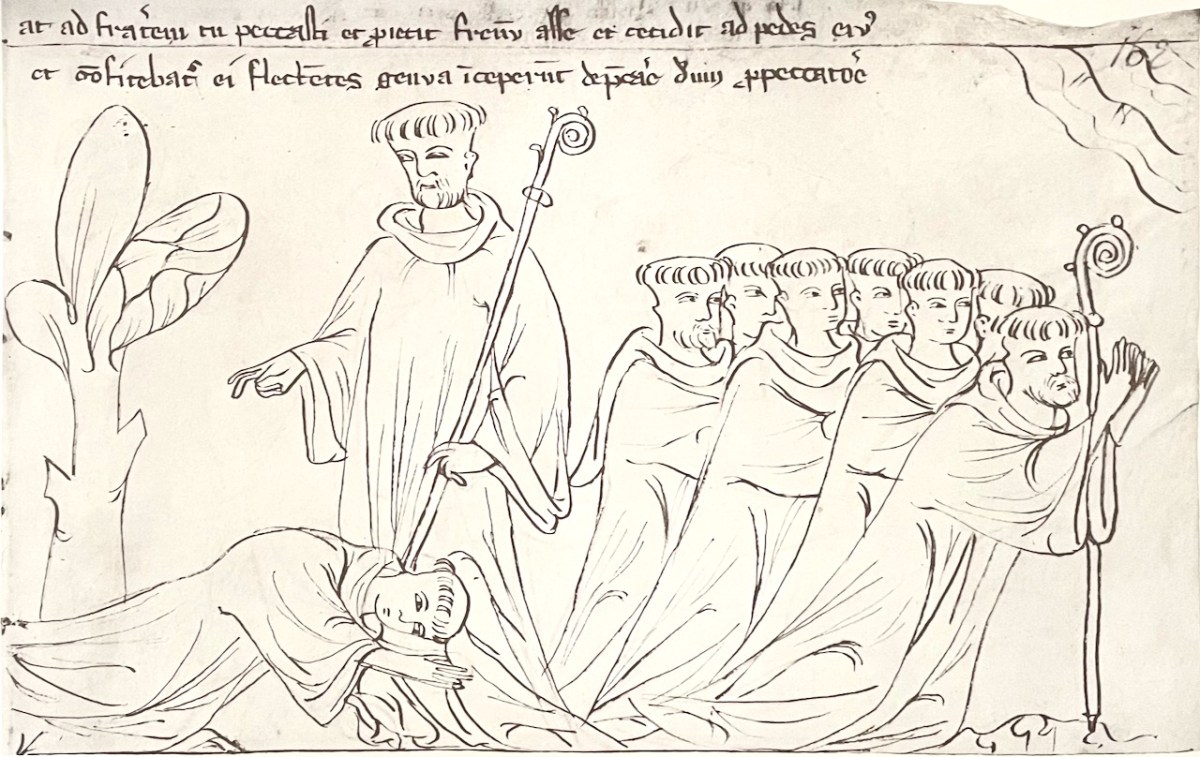
Then they returned to their ship, when Brendan said: ” See, brethren, doth not one of you carry off something from here?” “God forbid,” they replied, “that a robbery should dishonour our voyage.” “Then,” said St. Brendan, “behold, our brother, whom I warned yestereve, has now in his robe a silver bit, that the devil gave him this night.” The brother instantly flung that bit en the ground. . .


. . . and fell at the feet of the man of God, crying: “Father, I have sinned: pardon! pray for the salvation of my soul.” And, at the same moment, all fell down to pray for their brother’s salvation. 

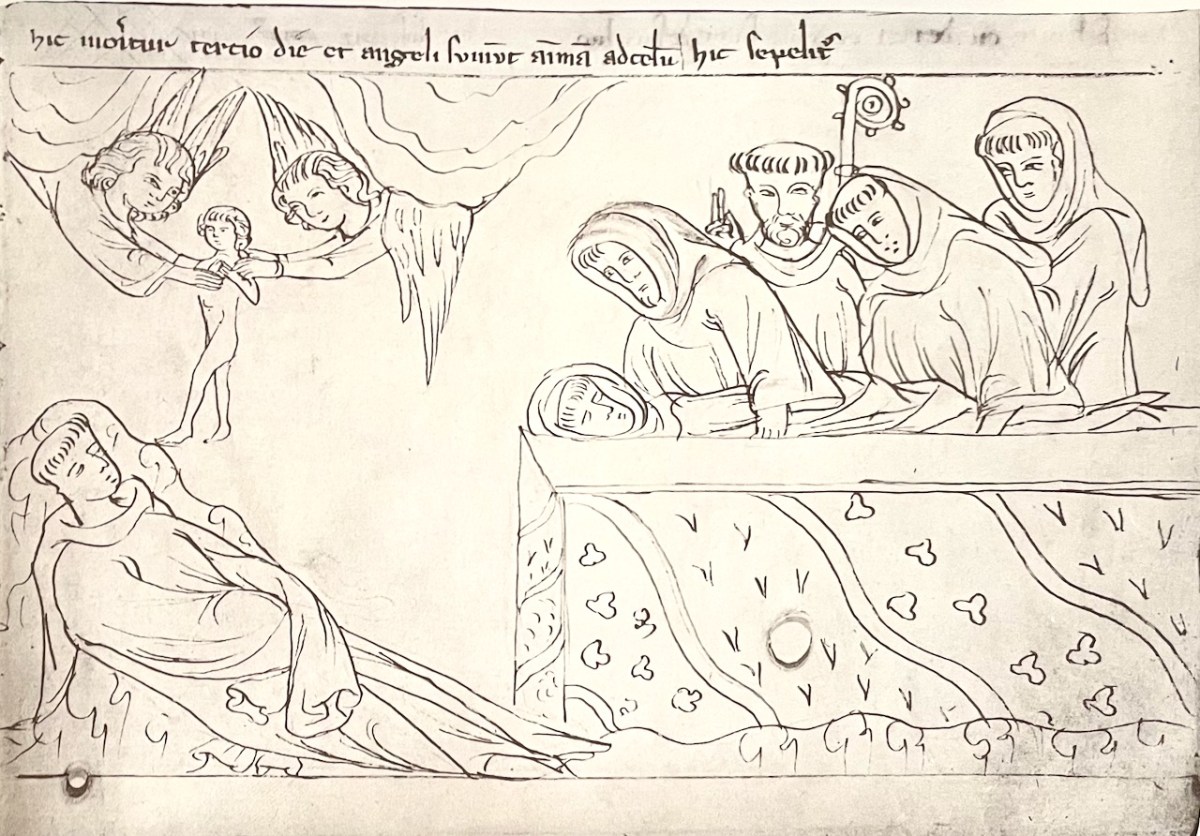
Rising up, they saw the wretched Ethiop escape from the guilty man’s bosom, howling and crying : “Why drive me, O man of God, from my abode, where for seven years I have dwelt, and thus expel me from my inheritance. Brendan immediately turned to the brother, and said: “Receive promptly the Body and Blood of Christ, for thy soul is about t leave thy body, and this is the place of thy burial. But, thy brother, who came with you from the monastery, shall find his place of sepulture in hell.” Whereupon, that penitent monk received Holy Eucharist . . .

. . . and his soul departed; but, it was received by Angels, in the sight of the other monks. His body was then buried. Also, St. Brendan had ordered the expulsed demon, in God’s name, to hurt no person, until the Day of General Judgment.

There’s more of course, and I am undecided whether to continue next time or come back to it later. I’ll sleep on it, and dream of the Land of Promise and of picnicking on the back of a whale.

Part 1 is here.

St. Brandanus: A 14th Century Graphic Novel. Part 1

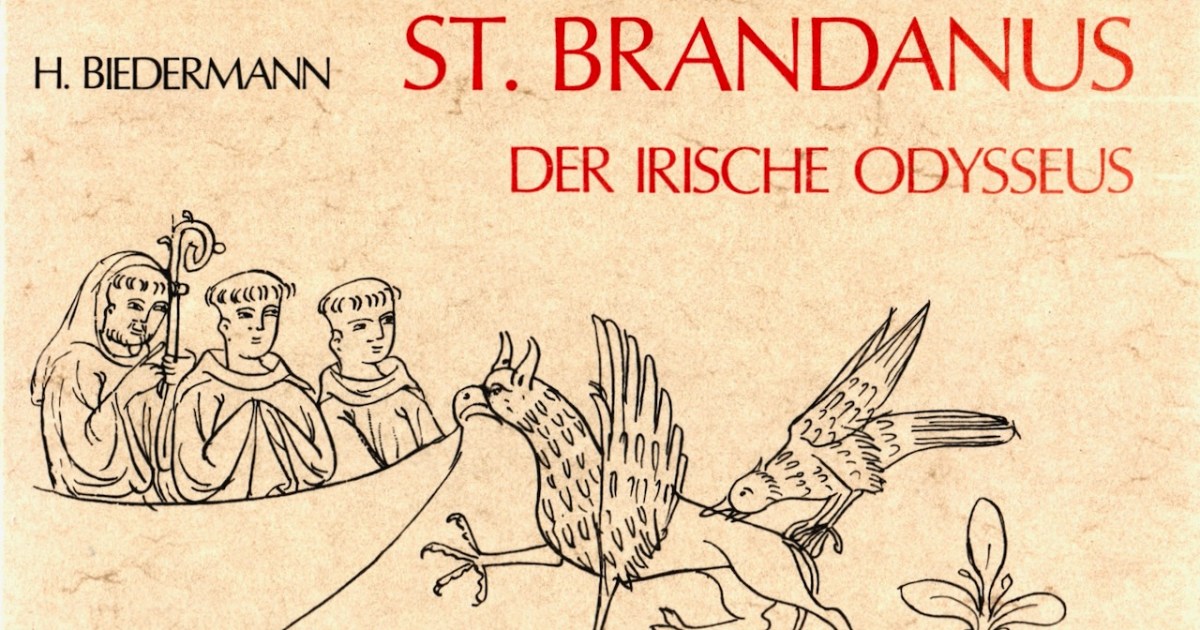
I am fond of telling people (because I read it somewhere) that the Voyage of St Brendan the Navigator was a “medieval best seller.” But I have just acquired a book (above) that made me look more closely at that claim. And yes, it’s a true statement, and my book is part of a sprawling tradition of stories about our own beloved St Brendan, that were written across medieval Europe in many languages over several centuries.

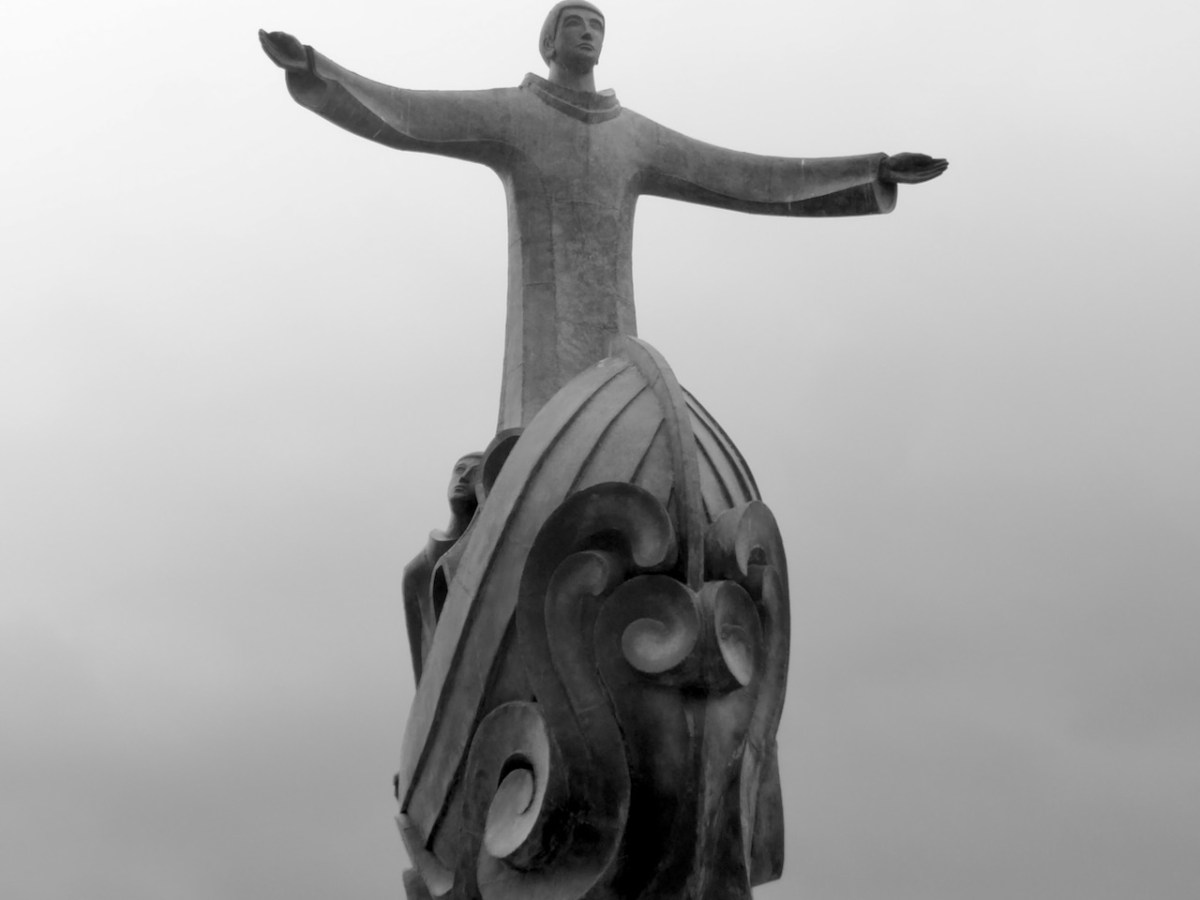
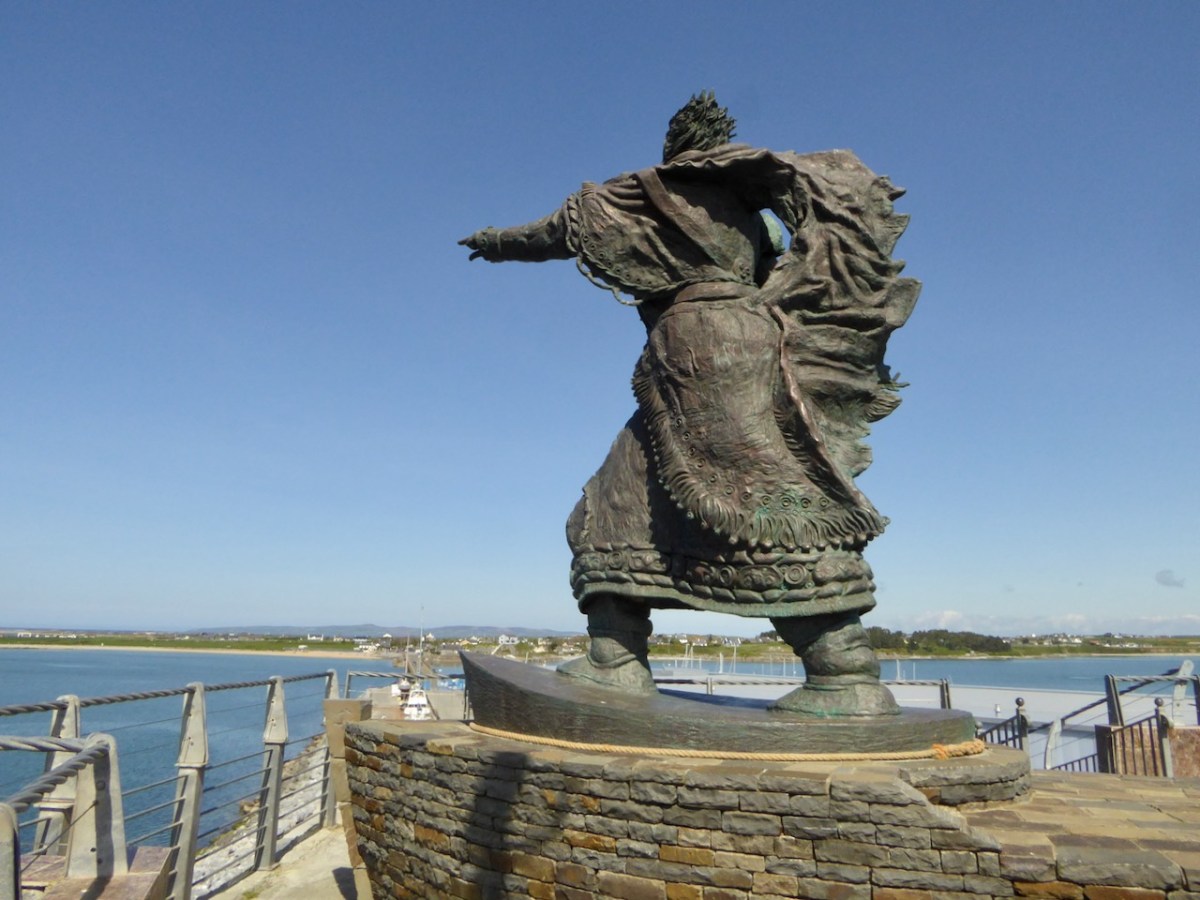
This statue of Brendan dominates the town of Bantry. It’s by Ian and Imogen Stuart

I’m mainly illustrating this post with images of St Brendan in stained glass or other art forms. Since he’s one of our favourite Irish saints here, this isn’t hard. But the next post will be illustrated by images from the book, St Brandanus: Der Irische Odysseus. This post is mainly background about St Brendan and his legendary journey.

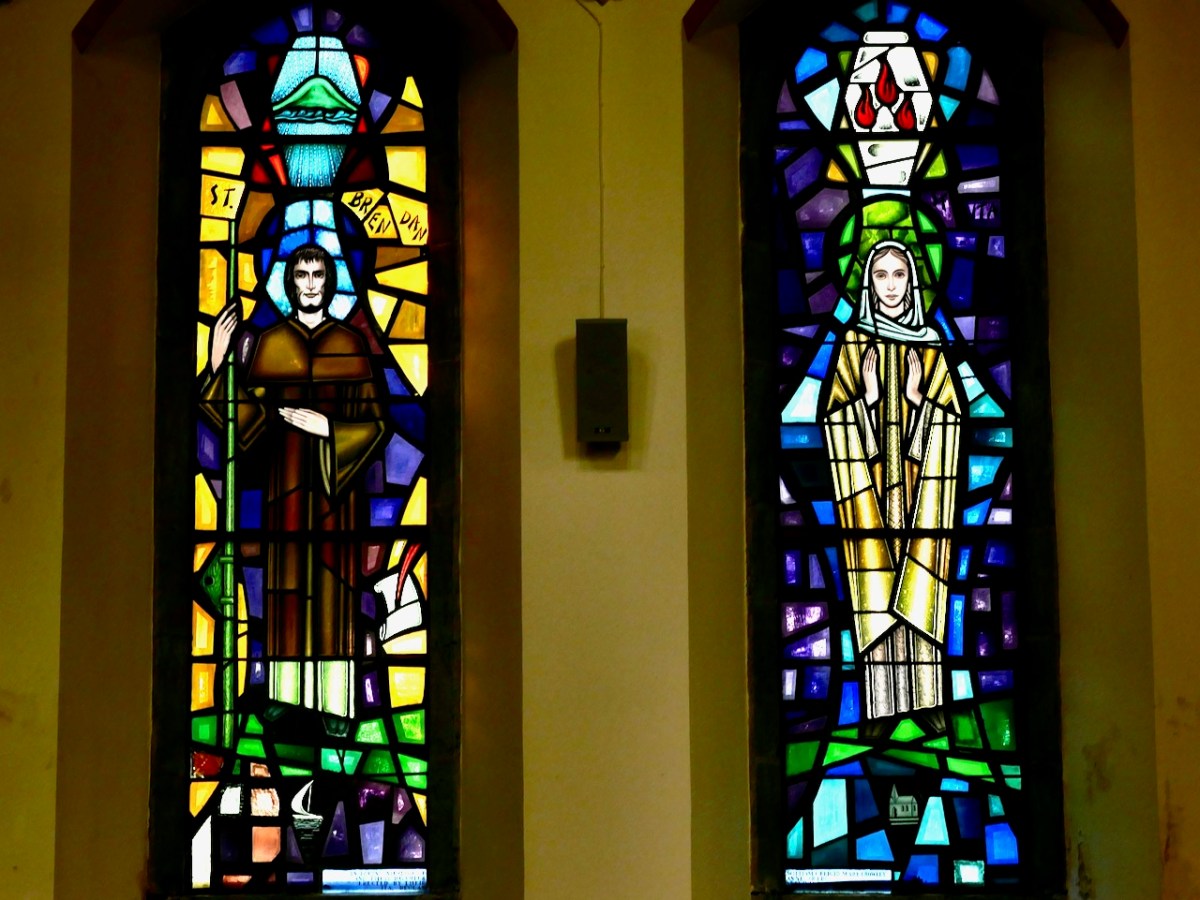
Willy Earley’s Brendan, St Brendan’s College, Killarney

Brendan’s Navigatio is perhaps best understood as one manifestation of the deep well of mythology that many of our stories have come from. St Brendan sets out from Ireland with several companions (the number changes from version to version) and journeys over the sea for several years. Along the way he encounters wonderful islands, strange creatures, demons and whales, colonies of feathered men and beautiful women. Many miracles keep him and his companions alive and moving onwards towards the Land of Promise.

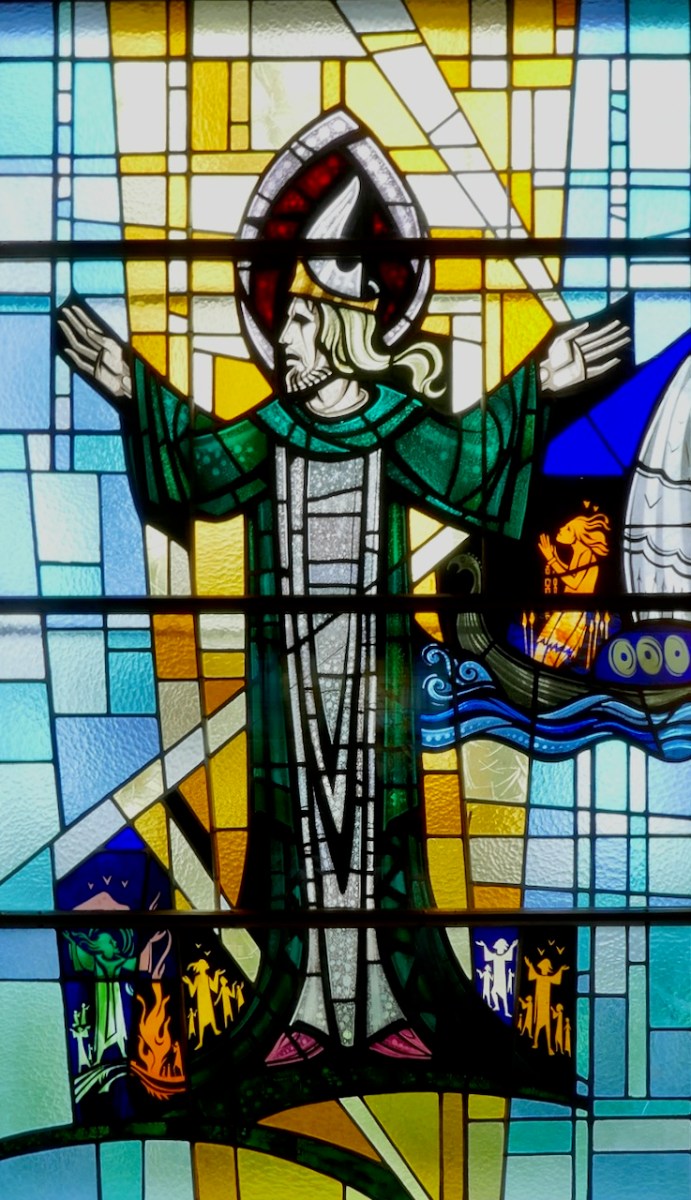
This window by Ethel Rhind of An Túr Gloine is also in St Brendan’s College in Killarney

This great Irish tradition of seafaring pilgrimage is called Immram and is part of a wider-world mythological treasury that includes Sinbad the Sailor and Odysseus, as well as some other Irish saints. Brendan’s tale is based on a pre-Christian legend called Immram Brain (the full text of which can be read here). Here’s a good summary, courtesy of (unlikely as it seems) the University of Texas in Austin.

The text relates how a mysterious woman appearing in the fort of the protagonist, Bran son of Febal, tells him about a magic apple-tree on the island of Emain Ablach, a terrestrial paradise far away to the west of Ireland and abode of the sea-god Manannán mac Lir, which she describes as a place Without sorrow, without grief, without death, without any sickness, without debility from wounds.

Subsequently, Bran sets out to find this island with three times nine companions: on their way they encounter the sea-god, who directs them to an island inhabited by laughing people, after which they reach a different island inhabited exclusively by women. There, Bran and his retinue spend many blissful years, not noticing the passing of time. When finally Nechtan, one of Bran’s companions, is overcome by homesickness, they decide to return to Ireland but are warned by the queen of the island not to set foot on Irish soil. Upon their arrival, Nechtan disregards the warning and immediately crumbles to dust, as they had spent so many years on the magic island that they were well past their dying age; Bran on the contrary remains on the boat and, after telling their adventures to some onlookers on the shore, sets out again for new adventures.

Readers who are familiar with Irish mythology will immediately recognise the similarity of Nechtan’s story to that of the famed warrior Oisín, who goes to live with the beautiful Niamh of the Golden Hair in TIr na nÓg (the Land of Youth), and to whom the same fate befalls when he returns to Ireland. 

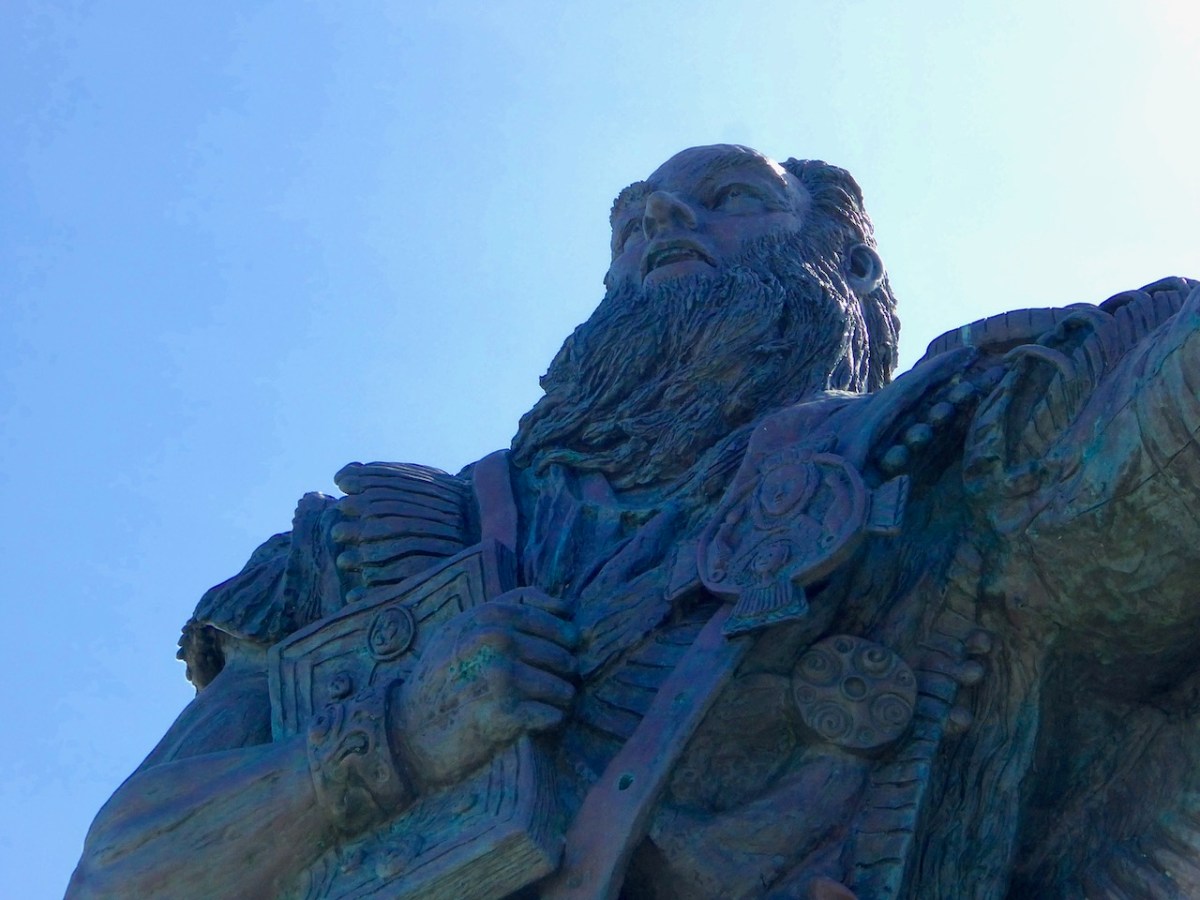
The muscular statue of a mature Brendan in Fenit, Co Kerry, which is the work of Tadgh O’Donoghue. Below is another image of this wonderful work

But to get back to Brendan – the story of his voyage became the principle Immram of the Middle Ages. Originally written in Latin as early as the 9th century, by the 12th century, it was one of the most popular medieval legends, with versions in many languages: French, Italian, English, Dutch, German, Irish, Welsh, and more. In fact, more than a hundred manuscript versions survive. That does not include the Life of Brendan from the Book of Lismore, compiled in the 1480s, and wonderfully translated by Whitley Stokes, even though that Life contains the voyage within it.

Just to give you a flavour of Stokes’ language, here a little extract from the Life:

So Brenainn, son of Finnlug, sailed then over the wave-voice of the strong-maned sea, and over the storm of the green-sided waves, and over the mouths of the marvellous, awful, bitter ocean, where they saw the multitude of the furious red-mouthed monsters, with abundance of the great sea-whales. And they found beautiful marvellous islands, and yet they tarried not therein.

Brendan and his foster-mother, St Ita. In Killorglin, by George Stephen Walsh

The thing about all these manuscript versions of Brendan’s Navigatio is that none except a couple is illustrated. My recent acquisition (thank you, Innana Rare Books!) is a book about one of only two fully illustrated versions, although isolated illustrations crop up here and there. The book was published in 1980 and is a work of scholarship by Hans Biedermann. Biedermann was a highly respected Austrian academic and an expert on symbolism and mythology. A professor at the University of Graz, he died in 1990, aged only 60. This is the only photograph of him I have been able to find.

This means, of course, that the book is in German, and no English translation exists. I turned to my favourite AI tool, Perplexity, to help me with the translations and it provided me with a page-by-page summary. 

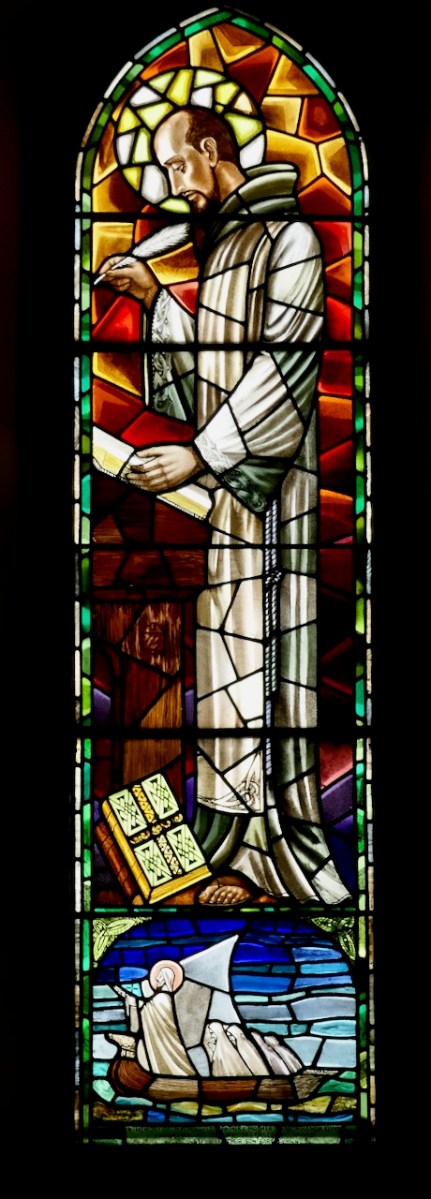
This window is in KIllorglin and is by James Cox. It emphasises the scholarly monk in the main panel, leaving the seafarer to the predella

A digression – I am as concerned as you all are about the use and mis-use of AI. For the purpose of this project I used Perplexity as an AI-powered search engine, translator and research assistant, asking it to fact-check items for me, and to dig deeper into sources and references. Because the book is in German, and some of the sources I consulted are in European libraries, I couldn’t have done it without this kind of help. Perplexity also ‘fixed up’ the photograph of Hans Biedermann above, from the tiny fuzzy image which was all I could find online. The writing, however, is all my own – don’t worry, none of this was written by a chatbot.

A detail from a George Walsh window

I am also painfully aware that I am many words in and I haven’t actually shown you what the book is all about. It contains facsimile reproductions of 62 plates from the Krumauer Bildercodex, Codex 370, which is a manuscript kept at the Austrian National Library. The plates illustrate the voyage of St Brendan. There is a minimum of text, in the form of captions in Latin in Gothic script. It is, in essence a graphic novel – and it dates to 1360!

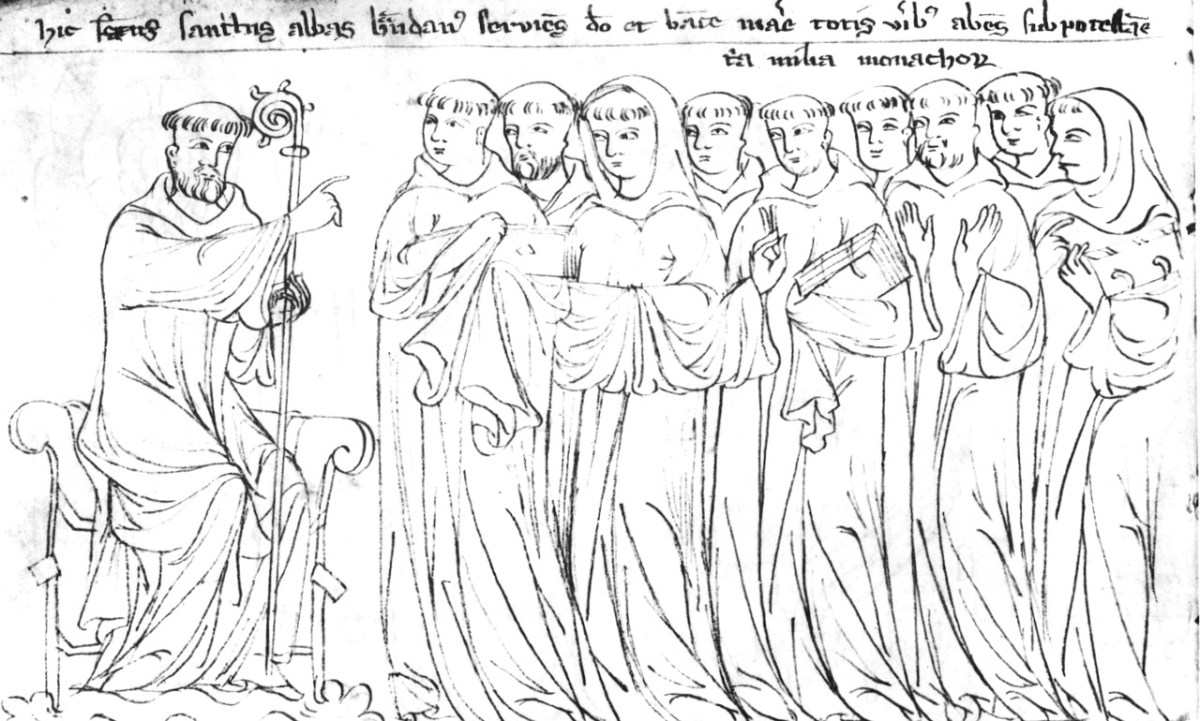
Caption reads: Here the holy abbot Brendan, serving God and the blessed Mary with all his strength, had under him nearly three thousand monks

Next week we will get into the illustrations and look at what may have been the origins and the purpose of the manuscript. They are all pen and ink line drawings – above and below is a foretaste.

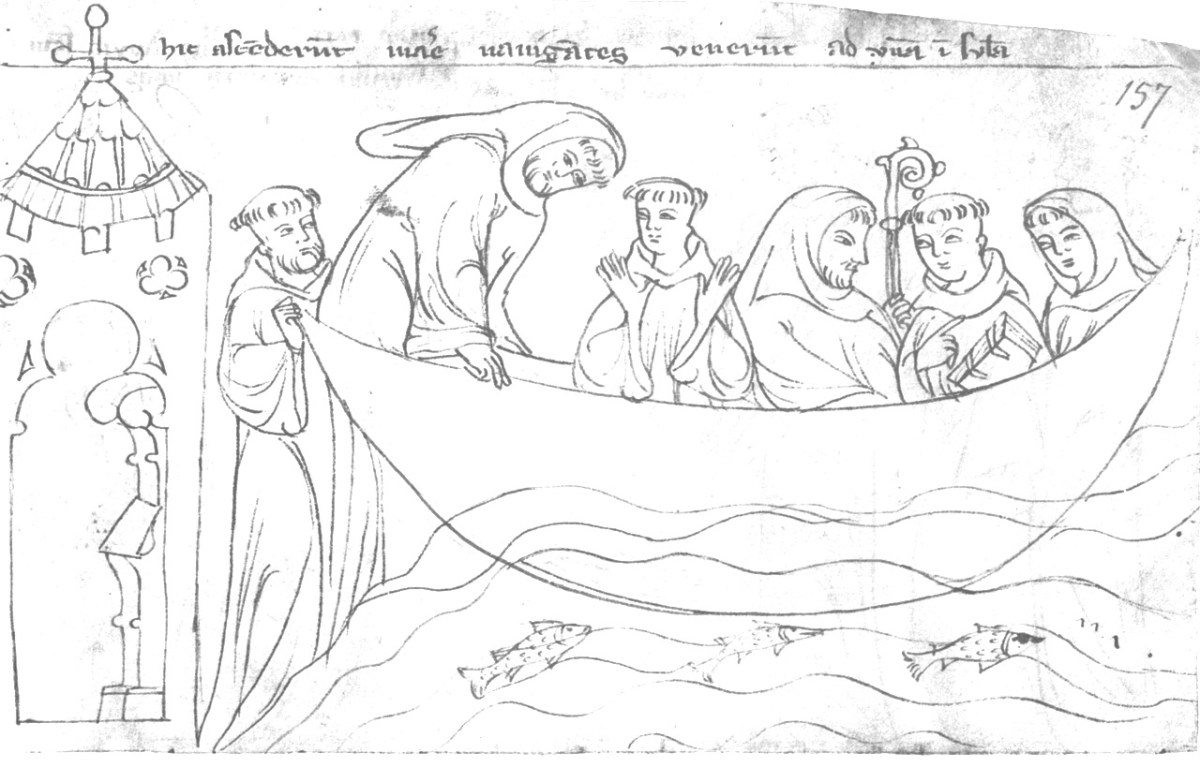
Caption reads: Here they set out upon the sea, sailing, and came to an island.

Part 2 is here

Darerca – A Neglected Saint

Ireland is ‘The Land of Saints’. The Catholic Online website lists 331 of them, but some get much better treatment than others. Last week we celebrated St Patrick – the news was full of it, as it always is on 17 March. Yet, just five days after Patrick’s Day – on 22 March – I was at a schoriacht and asked the assembled crowd who was the Saint for that day: nobody knew. It was the day for St Darerca and she is, unfairly, much neglected, especially since she is St Patrick’s sister. In order to redress the balance I have put together everything I can find on the story of St Darerca, and – because she has never been pictured (as far as I can tell) – I have illustrated it with some general Irish Saintly connections.

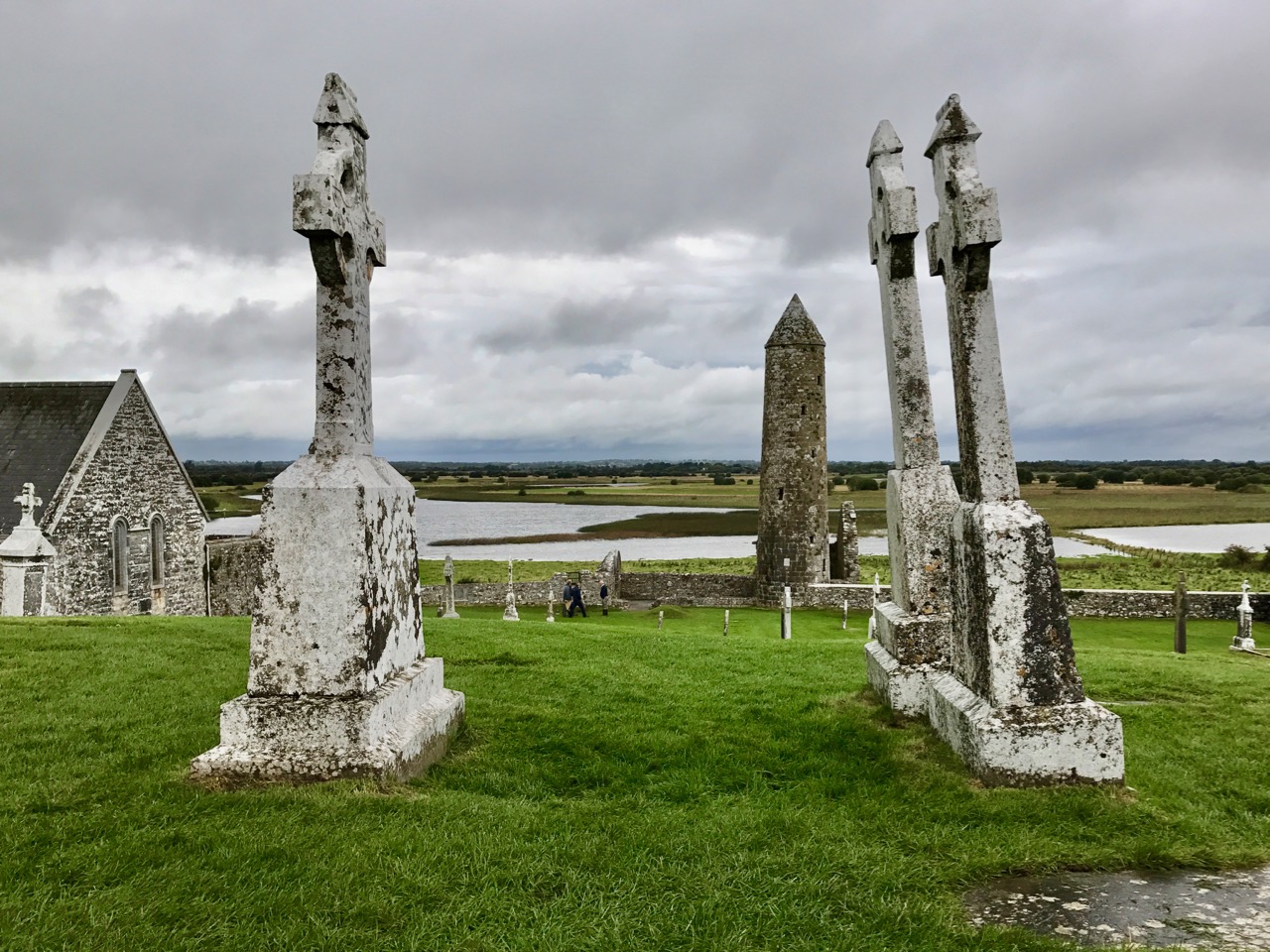
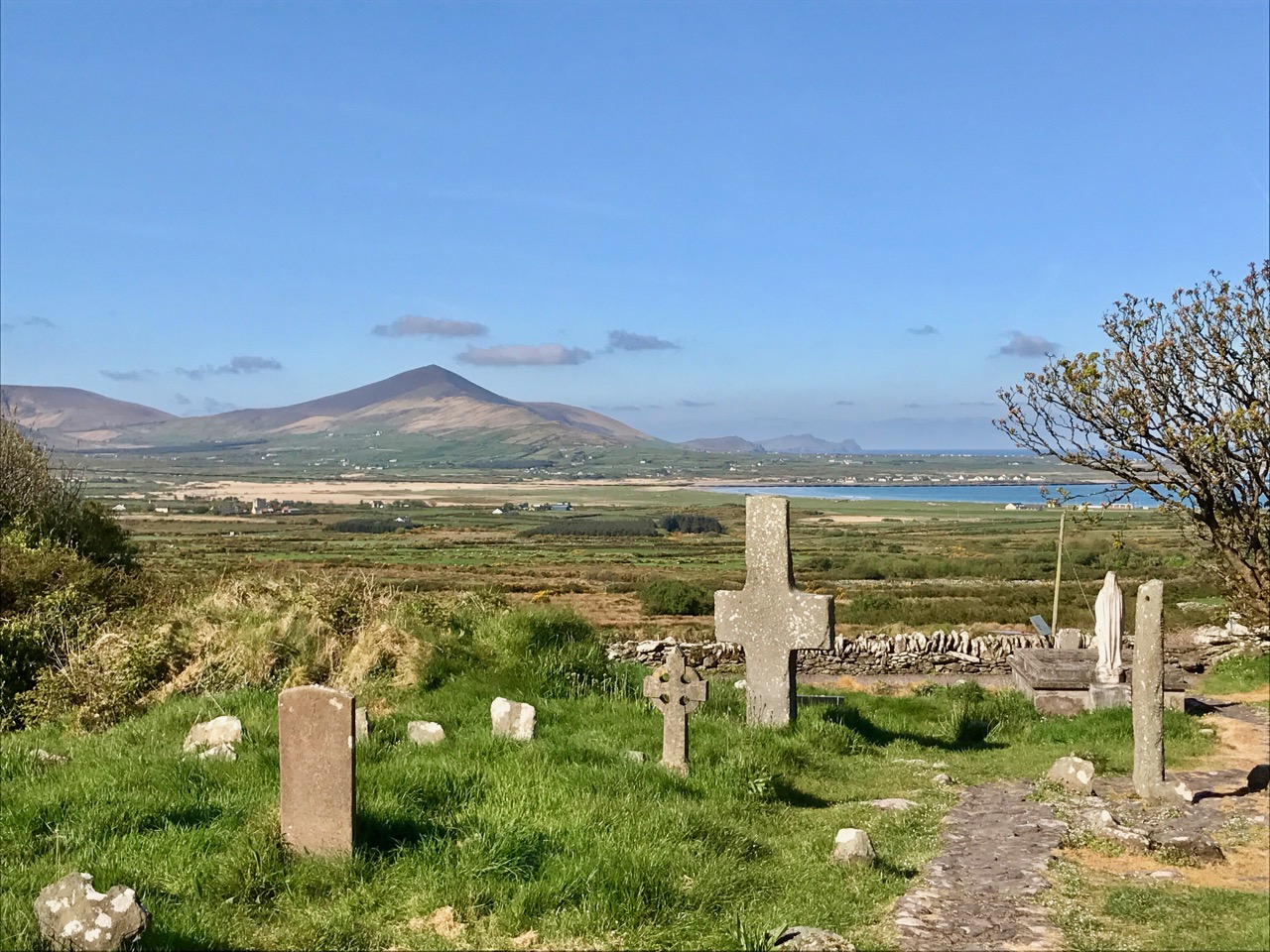
Land of the Saints: header picture – Clonmacnoise, Co Offaly – Ireland’s holy centre, and one of the oldest and most important early Christian settlements in Europe. Above – the beautifully located Kilmalkedar monastic site in Kerry has long associations with Saint Brendan the Navigator

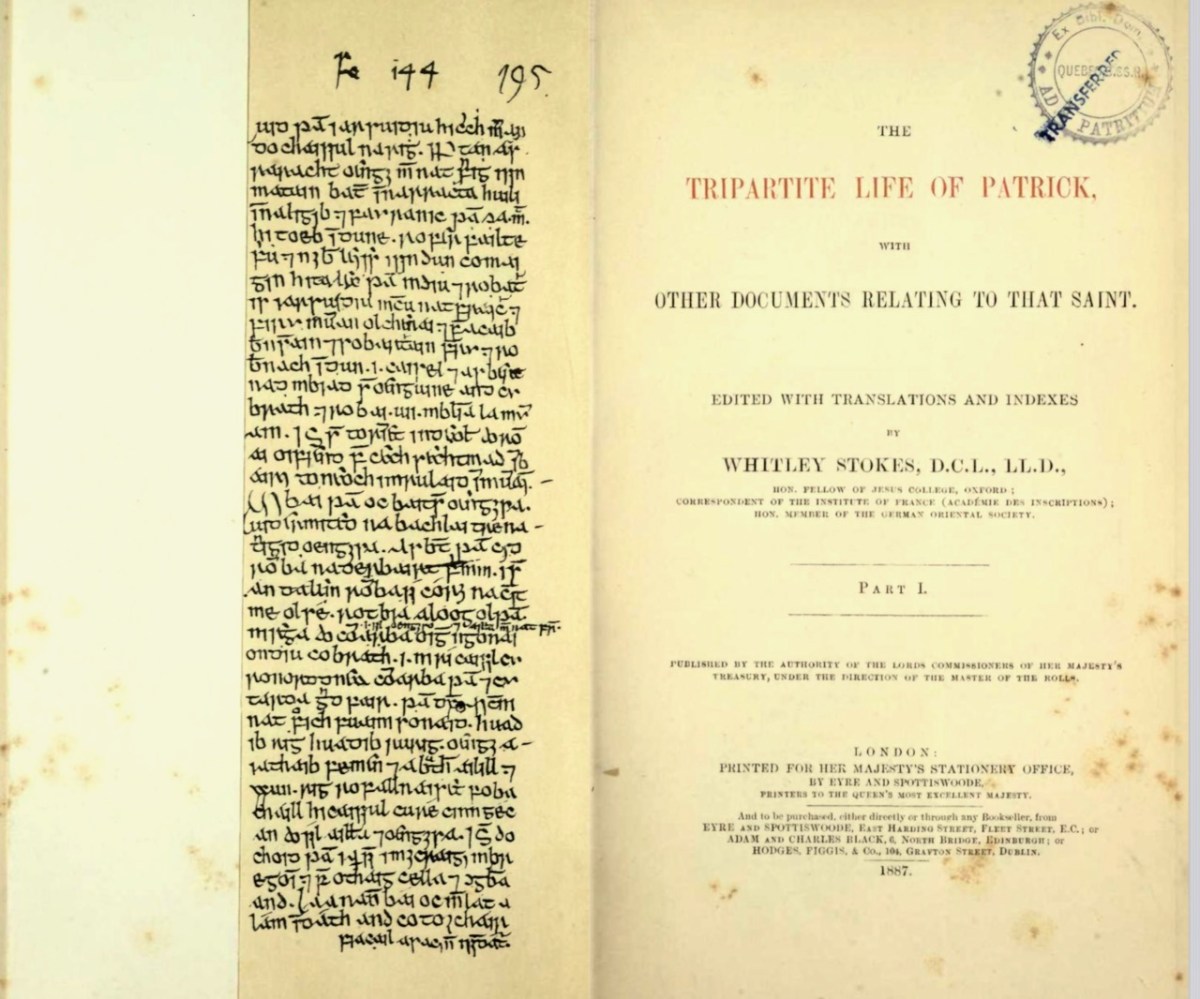
St Darerca is first mentioned in the Vita tripartita Sancti Patricii (Tripartite Life of Saint Patrick), which some scholars believe was written in the sixth century – within a century of St Patrick’s death (possibly in 493 at the age of 120). In the Tripartite Life, we read that St Patrick had two sisters, and that when he came to Bredach in County Derry for an ordination, . . . he found there three deacons, who were sons of his sister Darerca . . . These deacons were eventually ordained bishops and became St Reat, St Nenn, and St Aedh, the . . . sons of Conis and Darerca, Patrick’s sister . . . 

Upper – St Patrick’s Bell; lower – inscription on another 10th century bell – both now in the National Museum, Dublin

In his own Confessio, St Patrick makes no mention of his sisters. The Confessio begins:

. . . My name is Patrick. I am a sinner, a simple country person, and the least of all believers. I am looked down upon by many . . .

But it’s a very brief account of his life, and hardly qualifies as an autobioigraphy.

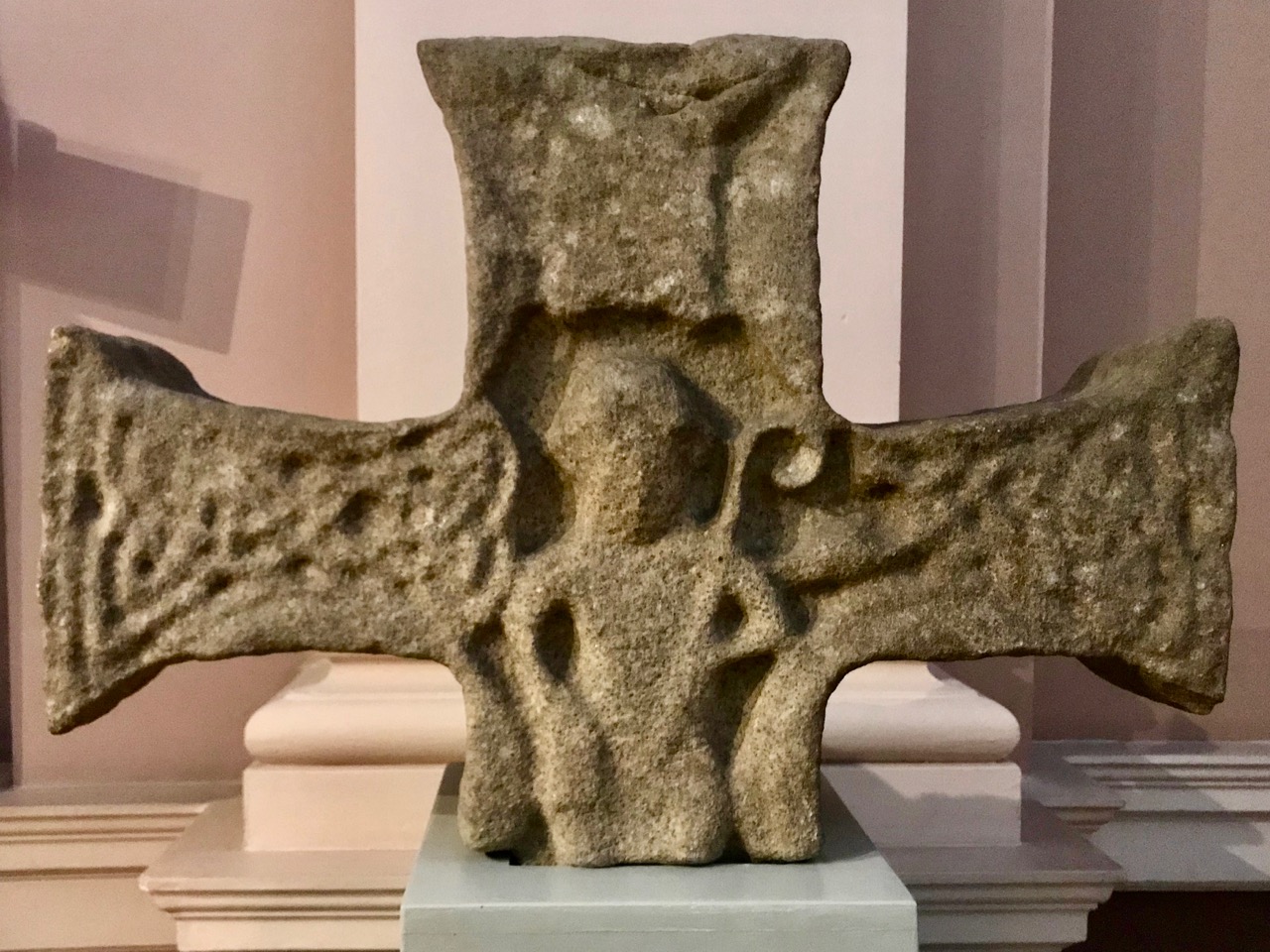
Medieval cross head, in the National Museum, Dublin

One version of the Tripartite Life suggests that both sisters were kidnapped from Britain along with St Patrick and returned to Ireland with him when he set out on his missions. A 17th century Irish hagiographer, John Colgan, collected fragments of information pertaining to Darerca . . . from Irish tradition . . . He asserted that St Darerca may have had as many as seventeen sons between two husbands, and that all of them became bishops. He also states that, according to tradition,  many of these became saints:

. . . By Darerca’s first husband, Restitutus the Lombard, she bore St Sechnall of Dunshaughlin; St Nectan of Killunche, and of Fennor (near Slane); of St Auxilius of Killossey (near Naas, County Kildare); of St Diarmaid of Druim-corcortri, in addition to five other children. By her second husband Conis the Briton, she bore St Reat, St Nenn, and St Aedh; ancient Irish authors also attributed her motherhood to St Crummin of Lecua, St Miduu, St Carantoc, and St Maceaith . . .

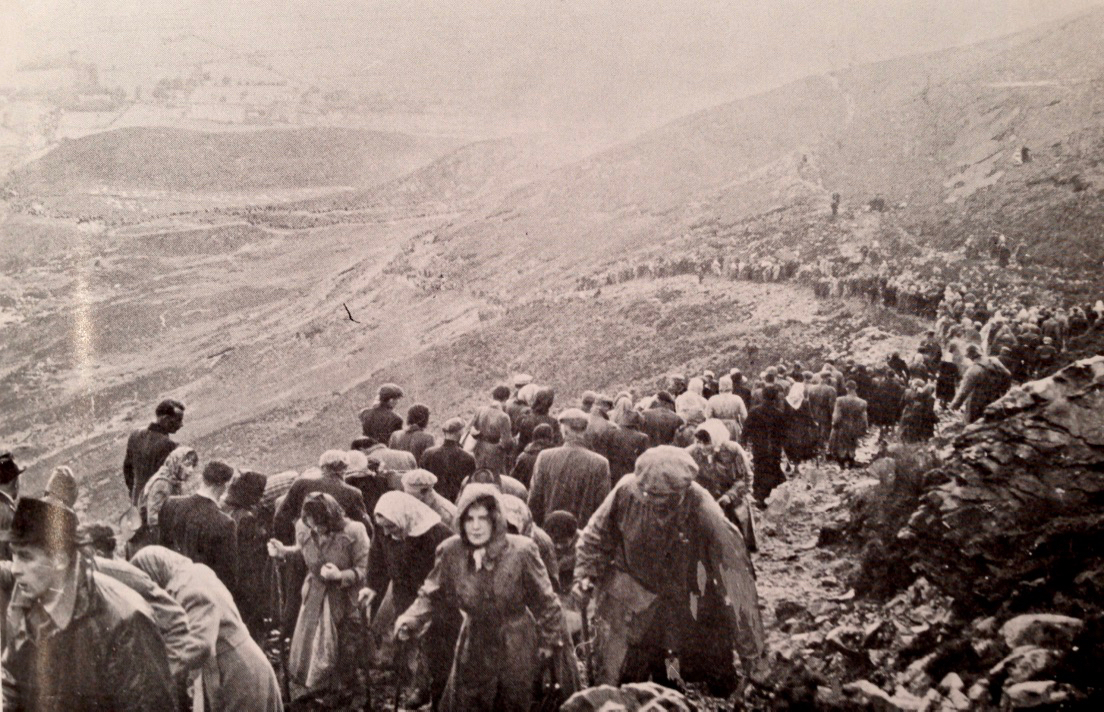
A 1950s photograph from Tomás Ó Muircheartaigh showing the annual pilgrimage to the summit of St Patrick’s holy mountain in Co Mayo, Croagh Patrick

St Darerca’s second husband, Conis, was said by some to be the King of the Bretons, although others only suggest that, by him, she gave birth to Gradlon the Great, who became King of Brittany. It’s really surprising (and a shame) that we don’t know more about Darerca: perhaps she has just always been overshadowed by her famous brother. As well as – perhaps – seventeen sons, she is supposed to have had four daughters, all of whom were also connected with the spread of Christianity in Ireland. Only two are named: St Eiche of Kilglass and St Lalloc of Senlis.

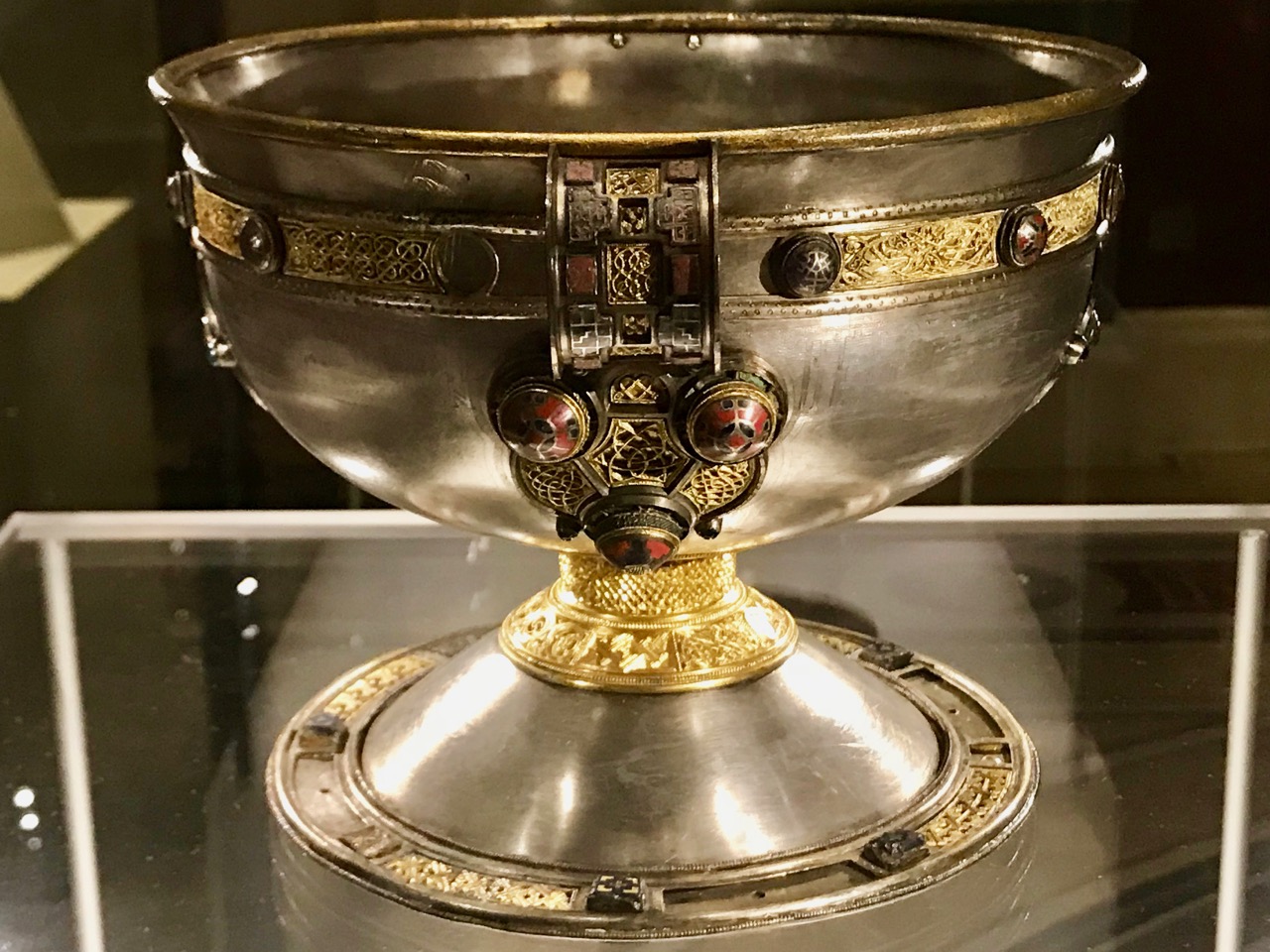
The Ardagh Chalice, National Museum, Dublin

There is a reference to Darerca as having another name: Moninna, said to have founded a convent at Killeevy, Co Armagh which was second in importance only to that at Kildare. A curious story is told to account for the change of her name to Moninna. The Irish commentary is translated into English by Whitley Stokes:

. . . Darerca was her name at first. But a certain dumb poet fasted with her, and the first thing he said after being miraculously cured of his dumbness was minnin. Hence the nun was called Mo-ninde, and the poet himself Nine Ecis . . .

Moninna studied theology, established convents in Ireland, Scotland and England and travelled to Rome. Perhaps most interestingly she is also known by the name Liamain, and there is a connection with an ancient stone on the island of Inchagoill in Lough Corrib. The ‘Pillar Stone’ on that island is known as Lugnaedon Pillar, a piece of Silurian grit stone, about two feet high with an incised cross on the north side, and two such crosses on each of the other sides. The inscription on the stone translates as . . . The stone of Lugnaedon, son of Limenueh . . . or Liamain. The pillar is said to originate in the 6th century, and would therefore be the oldest Christian inscribed stone in Ireland.

Two photographs of the 6th century Lugnaedon Pillar on Inchagoill Island. It is also known as the Rudder Stone because of its shape

The Benedictines say that Darerca’s name is derived from the Irish Diar-Sheare which means ‘constant and firm love’. And, finally, a piece of local folklore say that St Darerca blessed a poor man’s beer barrel so that it provided an endless supply of beer ever after!

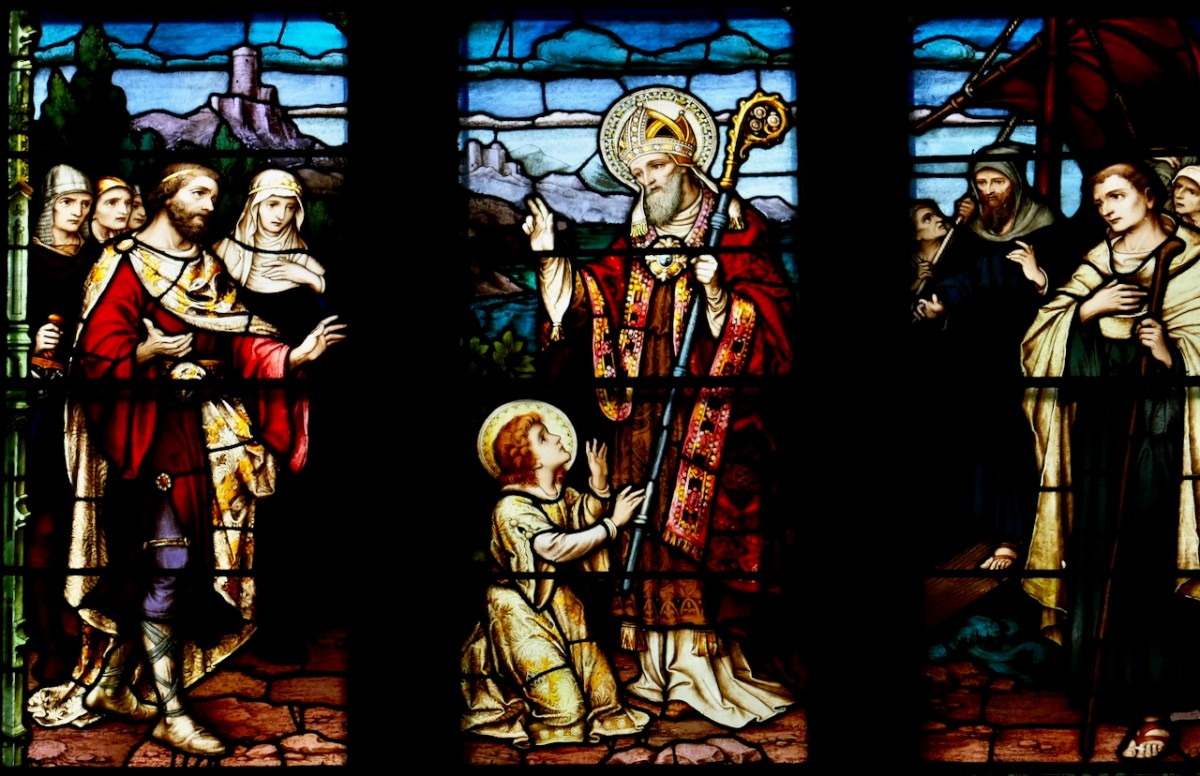
Lives of the Saints – a detail from a stained glass window by George Walsh in St Kentigern’s Church, Eyries

So there you have it – scraps gleaned from many sources, some of which are not named – from which we can piece together an incomplete picture of an Irish saint who may well have done as much in her day for Christianity in Ireland as her famed brother. How about giving Patrick a rest next year and, instead, celebrating the day of St Darerca?

The White Hound of Brigown

Saint Fanahan is venerated in Mitchelstown, Co Cork. A holy well, a college, a couple of medieval churches and lots of Mitchelstown boys, all bear his name. What’s incontrovertible, then, is that he is the patron saint of Mitchelstown. Or is it? He’s also know as St Fionnchú of Bangor (pronounced Finn Coo, meaning white or fair hound). Same guy. He succeeded the Abbot of Bangor, Comgall, but departed subsequently to end up near Mitchelstown.

Fanahan well from bridge

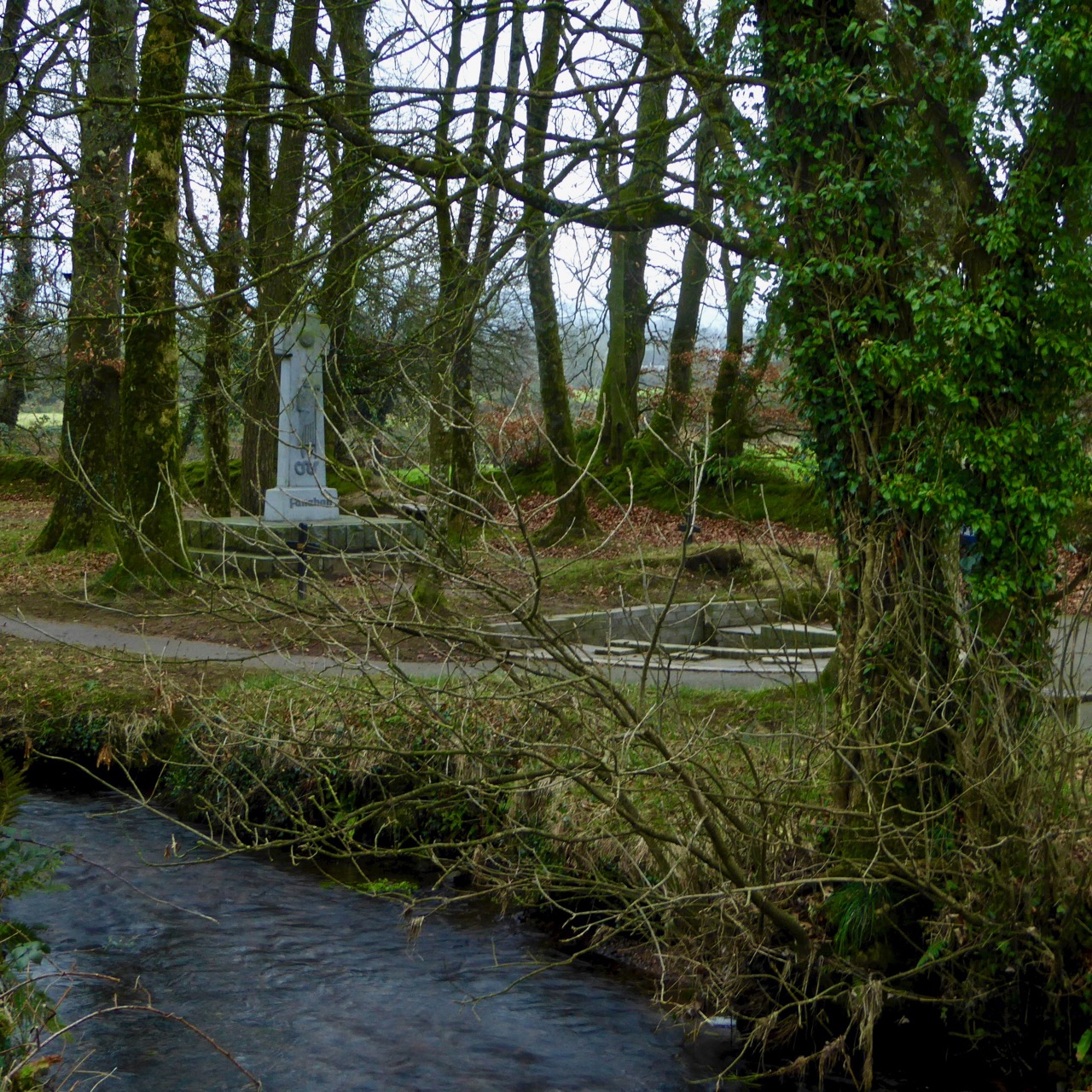
St Fanahan’s Well

But wait – he is also the patron saint of Blow-Ins! At least, that’s what a local man told us when we visited Fanahan’s holy well. Apparently, Fanahan came from the North of Ireland but eventually settled at Brigown near Mitchelstown in Cork. He wasn’t a local, so why not? We blow-ins deserve a patron saint, don’t we? He’s also probably the most muscular saint I’ve ever come across! He was a warrior-monk, famed for both his holiness and his strength in battle. No gentle, man of peace here!

Book of Lismore

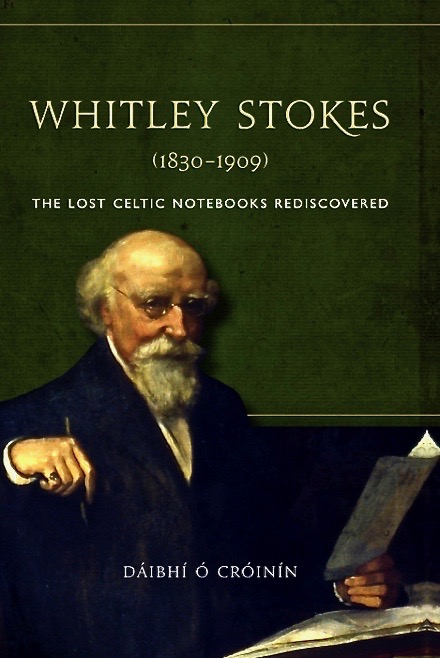
How do we know about these early Irish saints? In Fanahan/Fionnchú’s case, we can rely on a Whitley Stokes bookcomplete Life, recorded in The Book of Lismore, a 15th century collection of hagiographies and histories. Take a look at this video to learn more about The Book of Lismore. We are fortunate that there are translations – the one I am using today was done by Whitley Stokes in 1890 and is available online. Stokes, a distinguished scholar whose work is still vital, uses a kind of high Victorian language that manages to be a noble translation of the original Old Irish. 

You might perhaps want to make a cup of tea at this point – this is going to take a little while – Fanahan/Fionnchú’s is quite a story. Ready now?

Even in the womb, Fionnchú had extraordinary powers, once saving his mother’s life by causing a cloak of darkness to surround her. A great future was prophesied for him that

He will attack the valourous, He will overwhelm the guilty,

He will seek crowned kings, He will be the tree of Tara’s correction,

Who will benefit Liffey, And profit Leinster.

In his youth he was fostered by Comgall, the Abbot of Bangor. Fionnchú performed several miracles while he lived with Comgall: So these are Findchua’s three miracles after he came to Bangor, to wit, making flagstones of the horses of the king of Ulaid; and raising the earth around the king to his knees; and burning his tutor’s cowl by the fury of his anger

Fanahan White Hound

The white hound, Cusson Sculpture in Mitchelstown

Fionnchú then spends seven years as Abbot of Bangor. After spending the seven years Fionnchú is expelled from Bangor and from the whole of Ulaid [Ulster] because of the scarcity of land. Then Findchua comes from Ulaid, from the north, till he came, through the urging of an angel, to the men of Munster and to their king, even to Cathal, son of Aed, to Cashel; and the king gives him a welcome and ordains to him his choice of land in Munster. Said Findchua: Tis not permitted to me to have land save in the place in which my bell will answer me without the help of any man. Said Cathal : Search Munster till thy bell answers thee, and the place in which thou shalt set up, thou shalt have without contention with thee.

Fanahan cross back

After many vicissitudes Fionnchú and his band finally settle down in the place where his bell answers him. His enclosure is arranged, and his houses are covered, and his households are allotted to the nine other townlands which the king of Munster had in residence.

The King of Déise’s son comes to see him and Findchua gave him, as a soul-friend’s jewel, his own place in heaven. So then there came to him seven master-smiths who dwelt near him, and they made for him seven iron sickles whereon he might abide to the end of seven years, so that he might get a place in heaven; for he had given his original place to the king of the Deisi. He blesses the smiths of that place, and left them continually the gift of handiwork, provided that they should perform or begin it in that place, and palm of masters to them. The smiths ask him to give their name to the place in reward of their work, that is, Bri Gobann (Smiths Hill). Fionnchú spends seven years hanging on his sickles, unable to touch the ground.

Fanahan head

Fanahan, from the Ken Thompson Sculpture at the holy well

He did get one break when he marched off to battle to save the armies of Niall of the Nine Hostages, who were being attacked by marauders. In Fionnchú’s rage sparks of blazing fire burst forth out of his teeth destroying all before him. Returning to Brigown, Fionnchú resumes hanging from his sickles. He also spends the first night with any new corpse brought to be buried at Brigown, emerging in the morning, and allows his body to be eaten by beetles. All these mortifications of the flesh cause his fame for holiness to spread far and wide.

Fanahan Garda Station

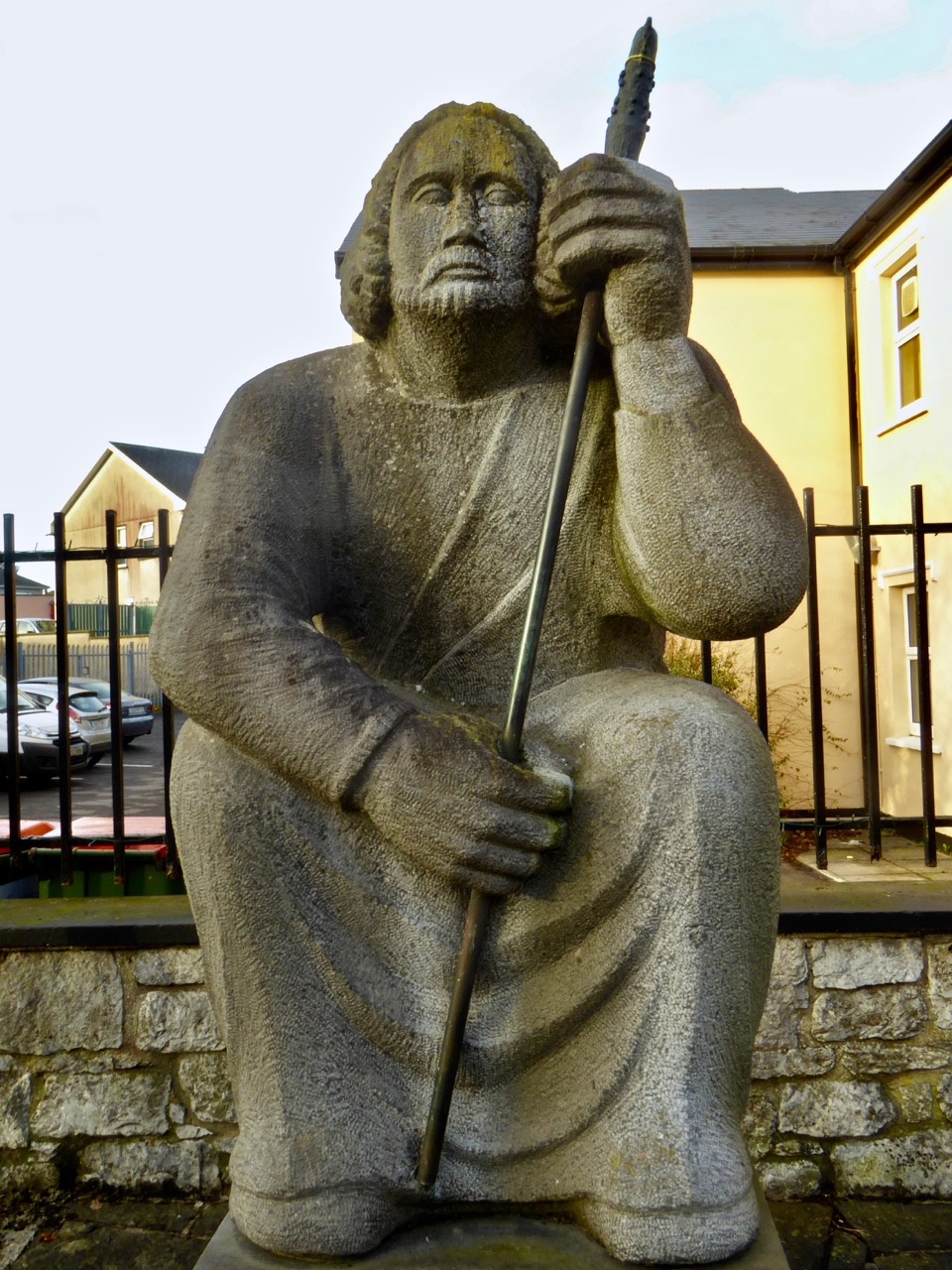
The Fanahan sculpture in Mitchelstown is by renowned artist Cliodhna Cussons

He performs various other miracles, including breast feeding a baby, Finntan, the son of Nuada, King of Leinster. Eventually, he goes off to battle for that king too. After that, the King of Ulster invades Munster (his wife wants the Munster kingship for her sons, and was not to be gainsaid, apparently) and the King of Munster, Cathal, sent for Fionnchú (no rest for the wicked!) because he promised me that, whenever stress of war should be on me, he would come with me to battle to help me, having with him the Cennchathach, even his own crozier.

Head at Fanahan well

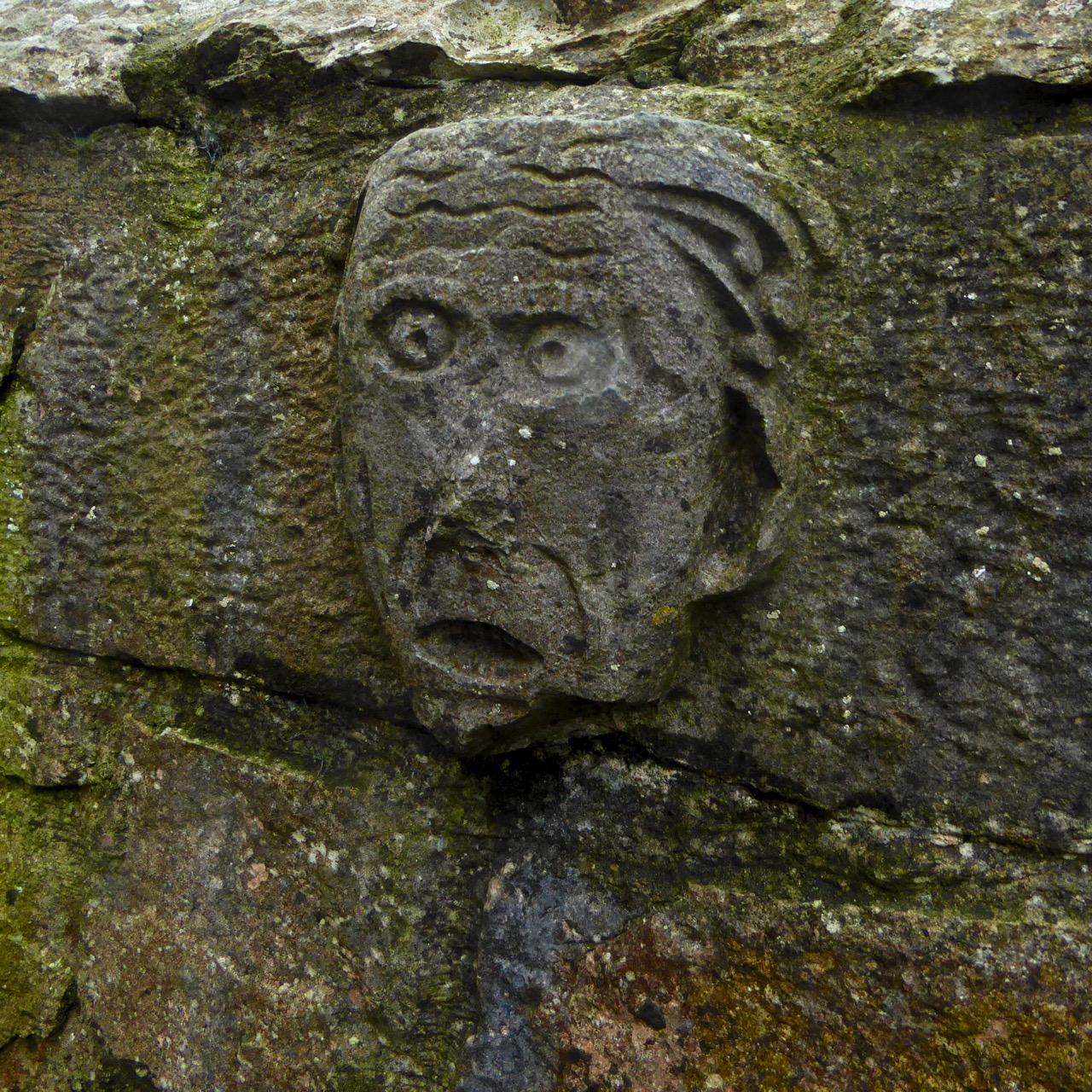
This head has been inserted into a wall at the holy well. He looks like a victim of the Head Battler

The Cennchathach (head battler) was duly deployed in a great battle. The Ulster men roared and bellowed like stags in heat, and charge from the top of the hill. The cleric seeks the slope beyond them and leaves the hill to them. The Ulaid bent down eagerly to deliver the battle. When Findchua perceived that, he took them in that position and allowed them not to rise up beyond their knees, and breaks the battle upon them against the height. Therefore Findchua left the Munstermen, from that time forward till Doomsday, to defeat foreigners and every host besides when charging down a height; and verily this is fulfilled. [Note to self – must let the Munster Rugby team know this vital information.]

Brigown Church

The old abbey at Brigown is associated with Fanahan. A round tower once stood here but eventually burned down

Having performed several miracles, and been merciful to the remaining Ulster men, Fionnchú returned once more to Brigown. However, his peace was short lived as, you guessed it, ‘foreigners’ started to make life very difficult in Connaught, so of course, they sent for Fionnchú. Then through the mighty powers of the cleric a terrible heat seizes the foreigners there, in the midst of their camp, from the iron posts that stood all around the camp, so that on the morrow there was found of them nought save their bones and their remains amidst their camp, and showers of their weapons near them. Wherefore Cuil Cnamrois (Recess of Bone-wood) is the name of the place from that to this.

Well fund

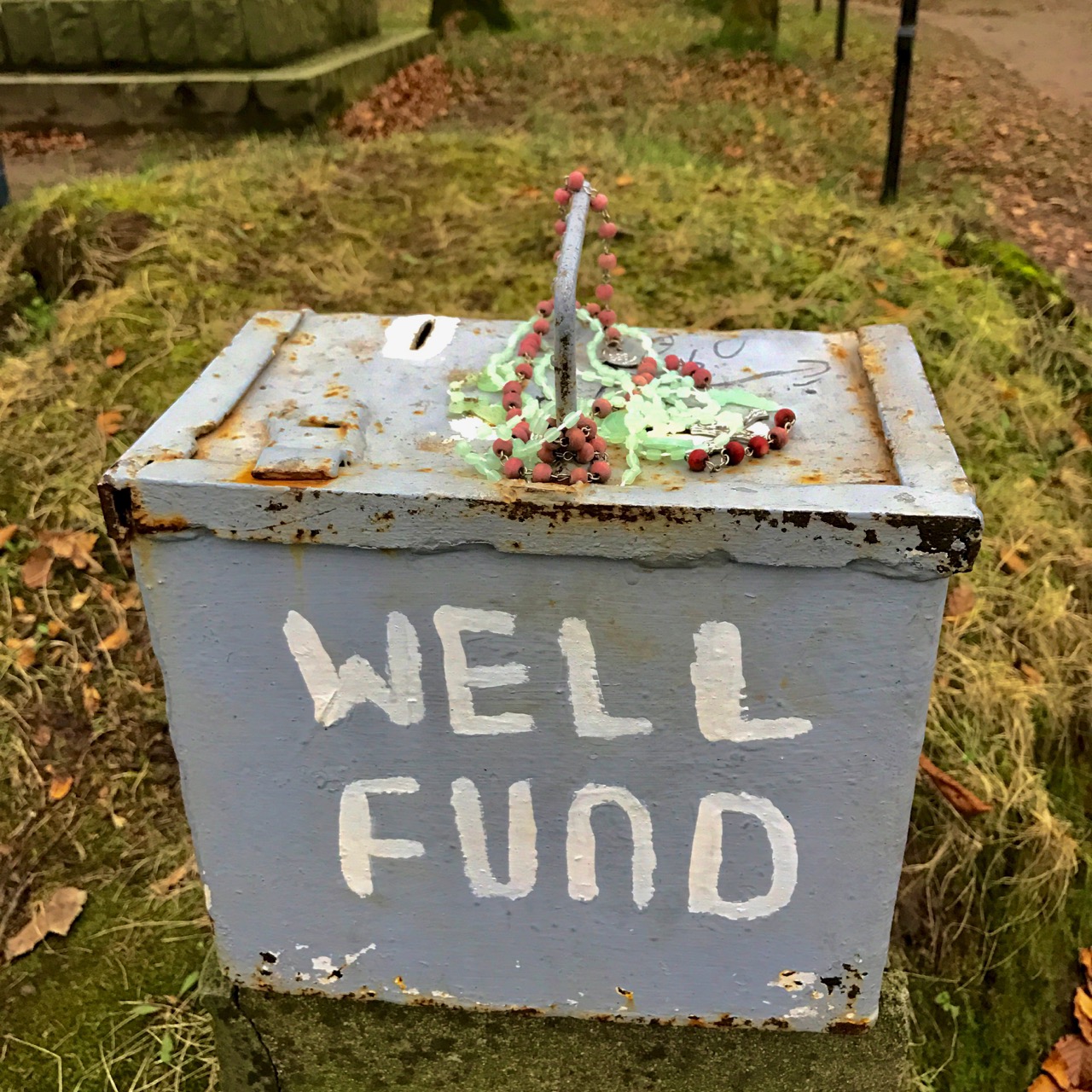
Although the tributes were supposed to last forever, nowadays a polite sign asks for donation for the upkeep of the well

After each of these battles, Fionnchú receives tributes and rewards (milch cows crop up a lot, as do boars and cattle), so that the wealth of his settlement grew. Several other battles are recounted. During one, …the howling and rending of a hound possessed him in his valour on that day. Although no heroes save himself alone were fighting the battle, the foes would have been routed before him, for he cut off the foreigners equally with his weapons and his teeth. Wherefore the name Findchu clave to him, that is, like a cú (hound) on that day was he.

Finally, weary of warfare, he undertakes a pilgrimage to Rome where he spent a year doing penance. We are told nothing further about his life, except that it is recorded elsewhere that he died about 660AD.

eel

The eel, Cusson’s sculpture

A note at the end of this account of his life says The friar O Buagachain wrote this Life out of the Book of Monasterboice. A further note elsewhere says it was actually written in the Friary at Timoleague.

Fanahan's Causeway

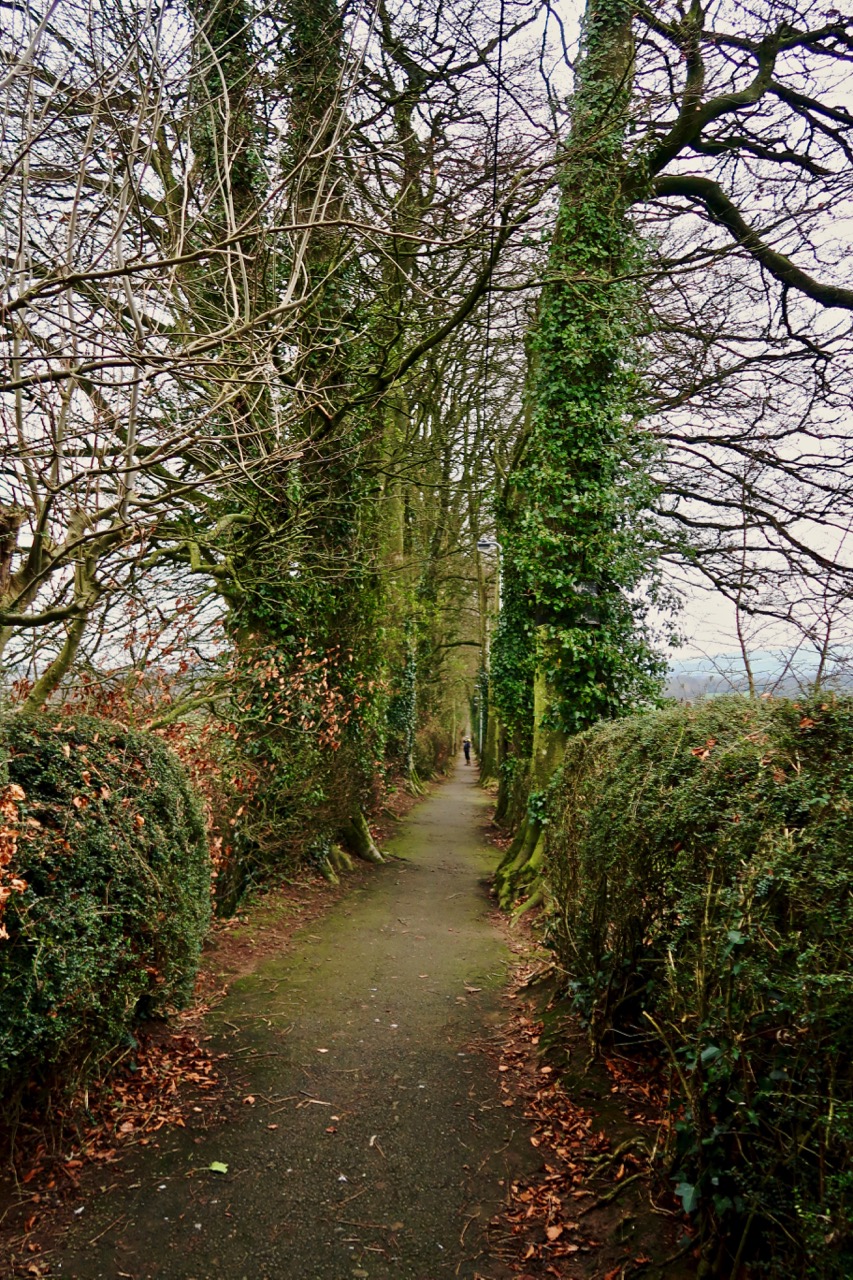
A unique 700m dead straight, raised causeway leads to the holy well. This unusual feature may be medieval in date.

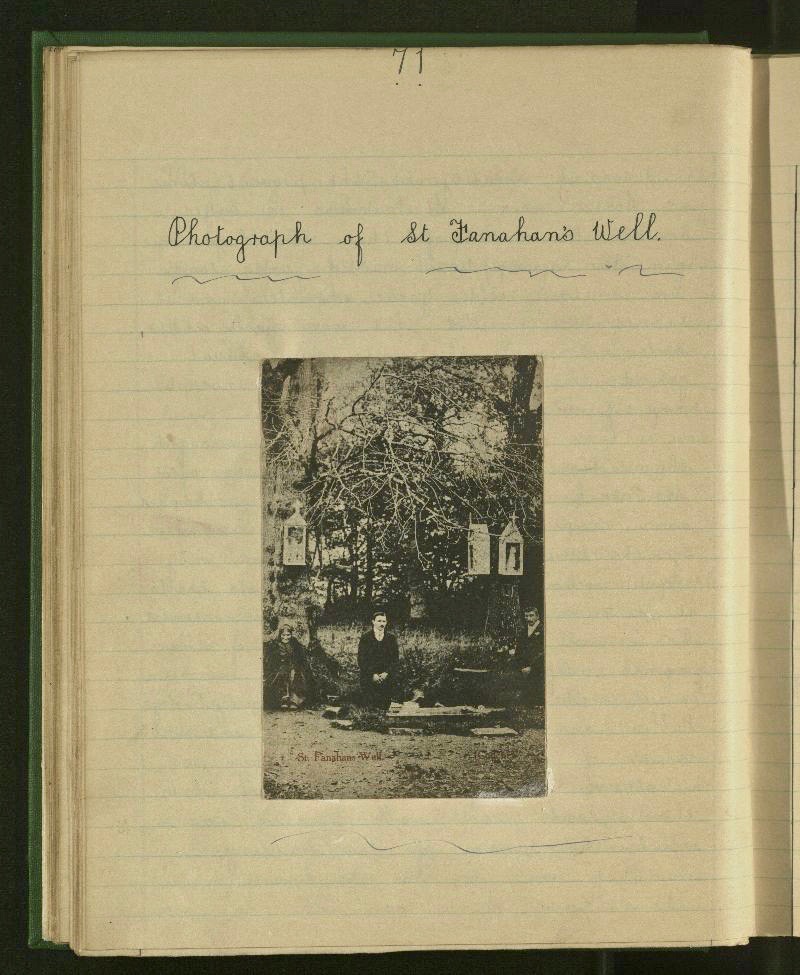
Many legends grew up about Fionnchú in time, while the name itself transformed into Fanahan, still a popular boy’s name in this area. His feast day is November 25, and it is marked by a Novena (nine days of prayer) before and after that day, when pilgrims visit the well and do the rounds. Because this is a dark time of year, and people come after work, a benefactor has installed lights along the causeway which get turned on for this period. Besides the story of the eel, the well is associated with cures – at one point there were crutches hanging beside the well. The Dúchas Schools Project has recorded some details of the well from the 1930s – even a photograph.

Dúchas photo Fanahan well

Some writers have pointed out the similarities of Fionnchú’s deeds to those of Cúchulainn, the great hero of the early Irish sagas. Like Fionnchú, Cúchulainn is named for a hound, and like him he performs legendary feats of strength in battle. Some have even pointed out the crucifixion analogy of his time hanging from the sickles, not to mention the implications of his nights in the otherworld with the corpses and his return from the dead.

Fanahan cross

Ken Thompson is the same sculpture who carved the marvellous Air India memorial on the Sheep’s Head

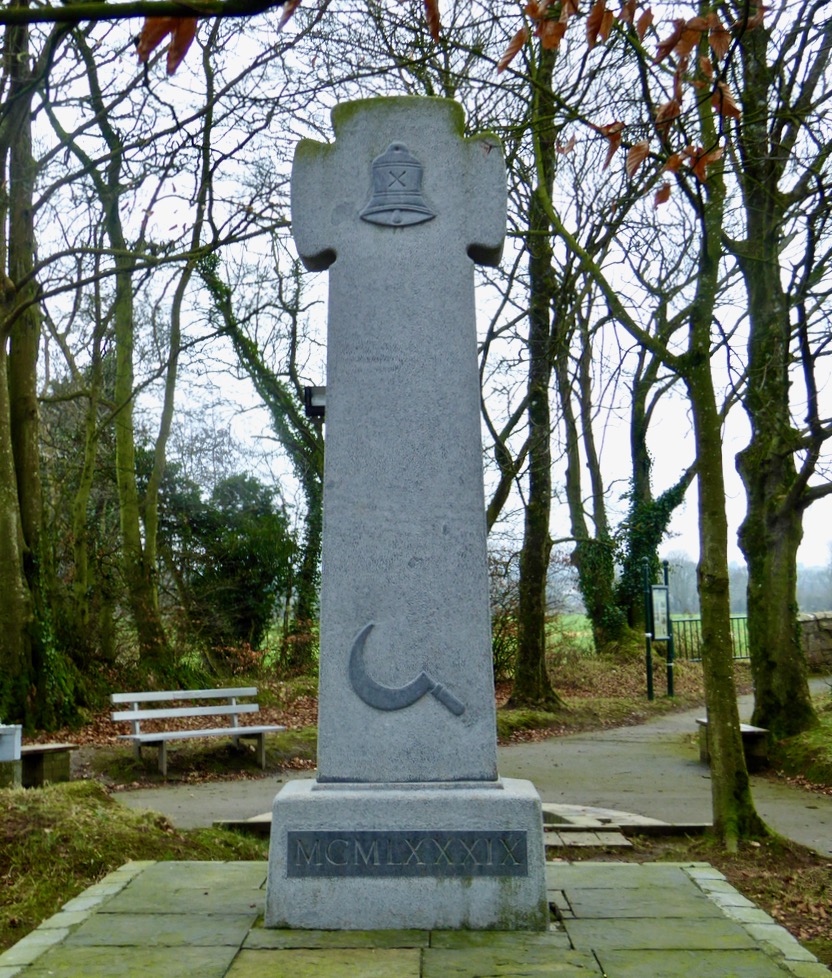
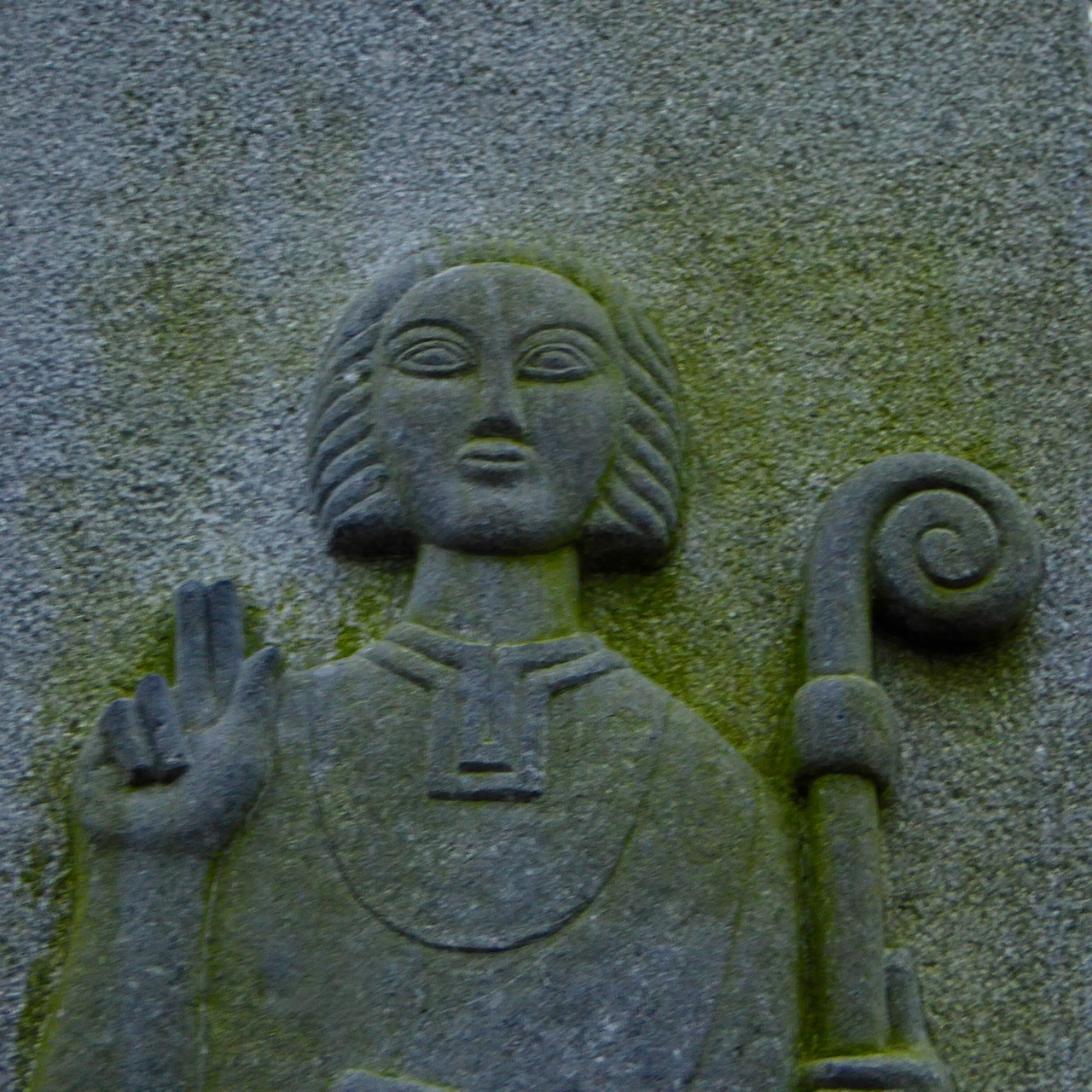
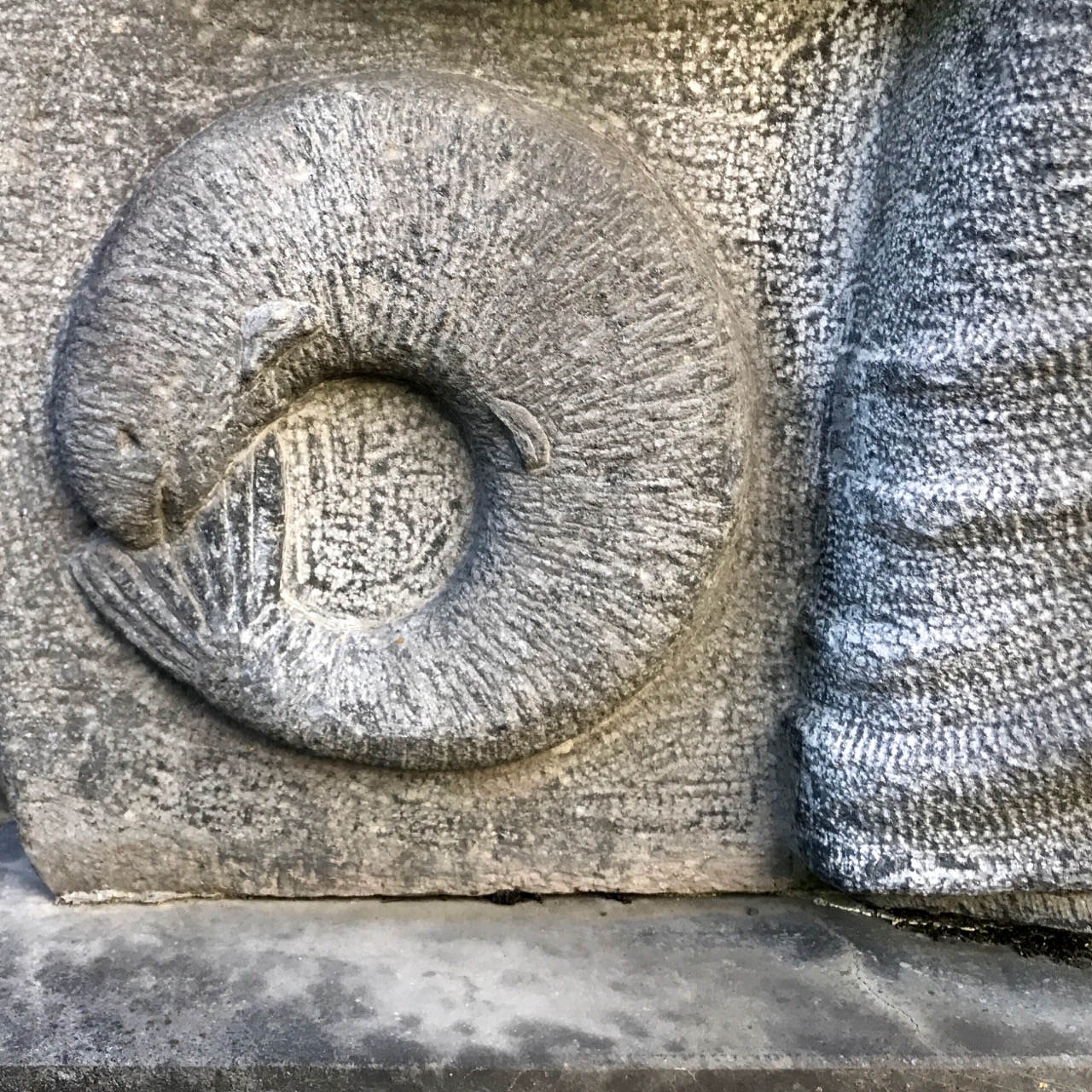
I think the sculptors capture him differently. Ken Thompson emphasises the holy man of the well, with the eel (sighting an eel is a common feature of holy wells – great good luck attends it) at his feet and his crozier held as any bishop would hold it. But he also suspends him on a cross and gives him a sword. He places (the surprisingly soviet-looking) sickle on the back of the sculpture, along with the bell that rang when he finally came to Brigown. Coming over the little bridge into the glade of the holy well, it’s a beautiful but interestingly ambiguous image that presents itself.

Cusson’s piece is all warrior and places him at the end of his life, perhaps contemplating in sorrow all the mayhem he has been part of. His crozier is between both hands, looking more like the Head Battler than a symbolic crook. It’s modelled on the medieval croziers in the National Museum, such as the one from Lismore. The White Hound (Fionn Cú) is one one side, the eel on the other. The figure is massive and solid, the gaze is faraway, the features grim. Every inch a warrior-monk.