West Cork in Photographs – Your Favourites, Part 2

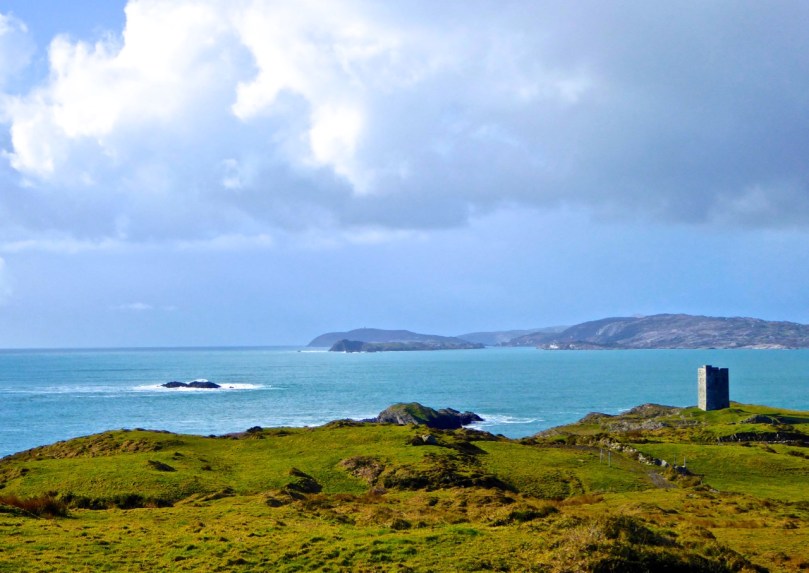
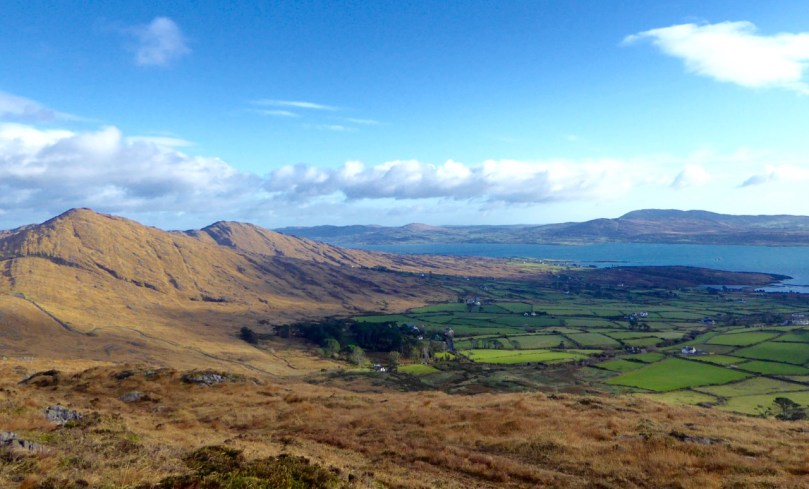
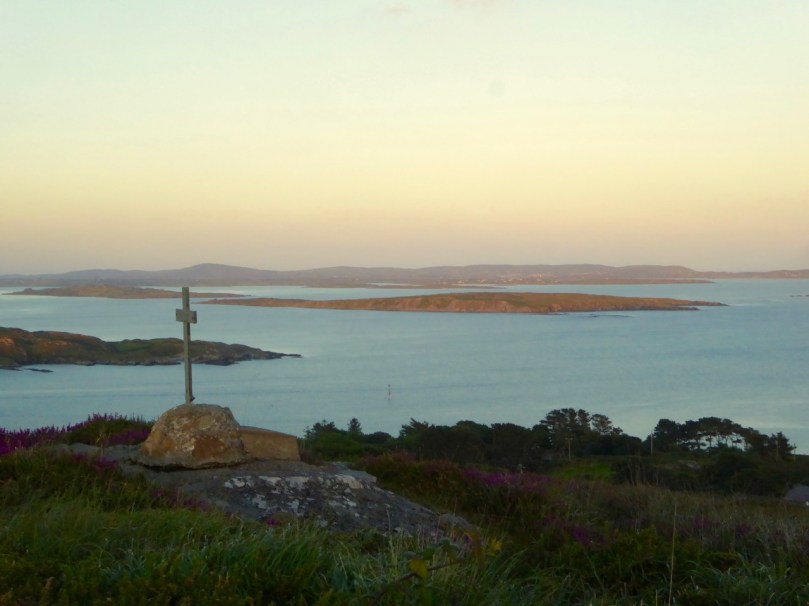
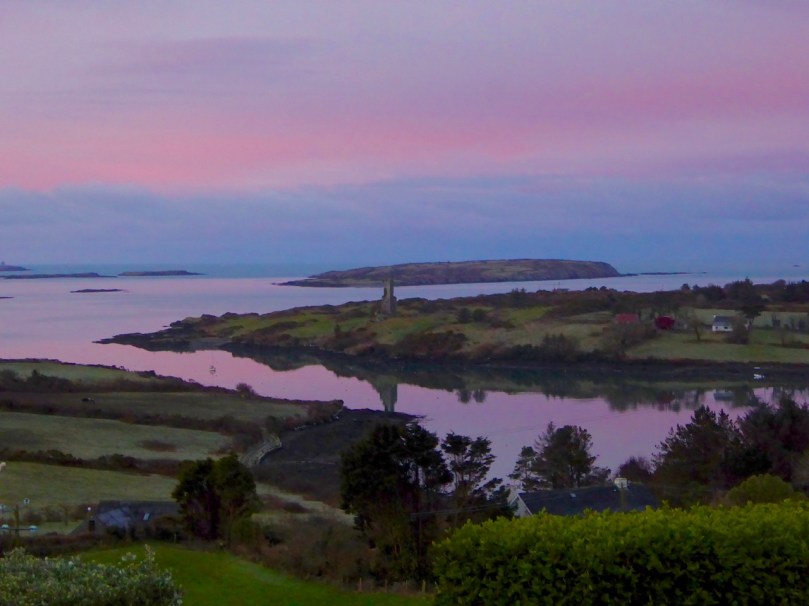
Courtmacsherry Bay

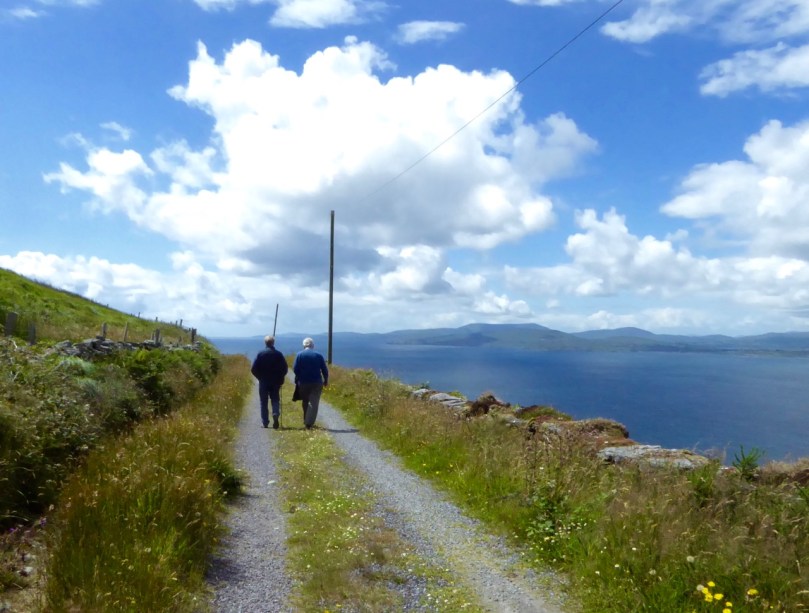
A winter walk in Courtmacsherry Bay

Part 2 of your (and our!) favourite West Cork photographs of 2016. If you’re not here already, as they say in West Cork – Where else would you want to be?

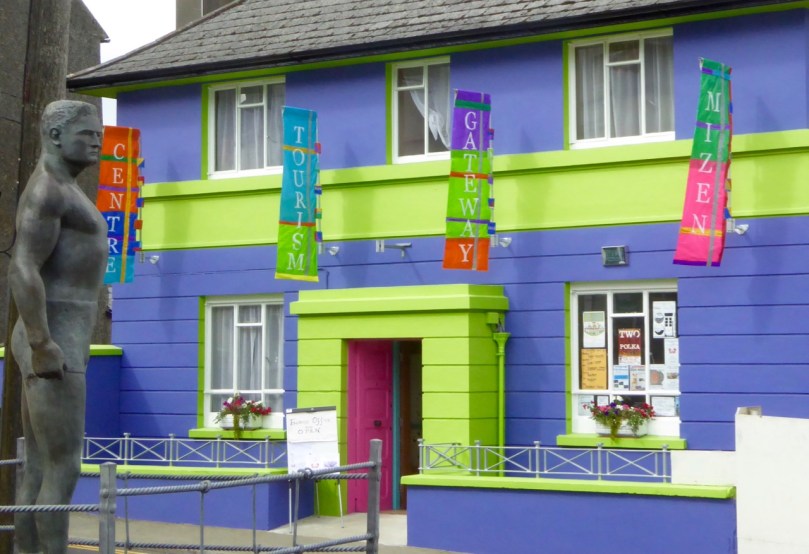
Banners up

The new Ballydehob Tourist Information Centre

Castle in the mist

Kilcoe Castle in the mist

Colours of West Cork

Toormore – the colours of West Cork

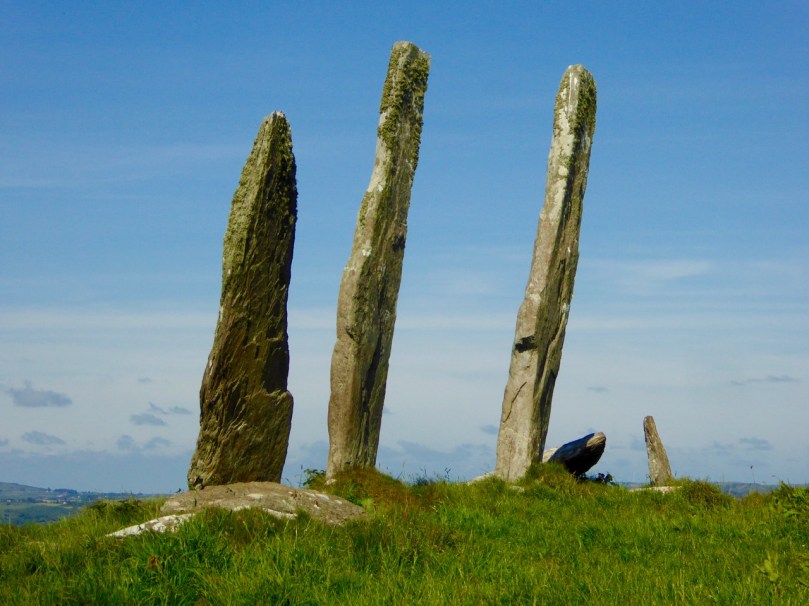
The Fingers

The Fingers, Gurranes, near Castletownshend

Summer in Goleen

Summer in Goleen

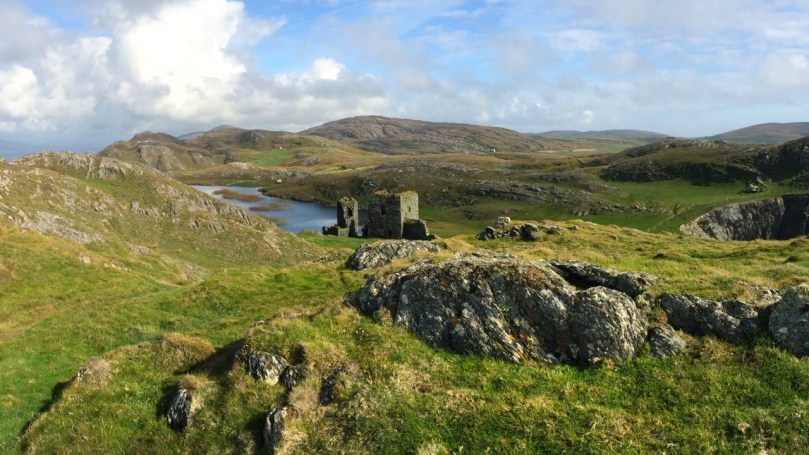
Three Castles

Three Castle Head

Black Castle

Black Castle, south of Lowertown

Mizen North Colours

North Side of the Mizen

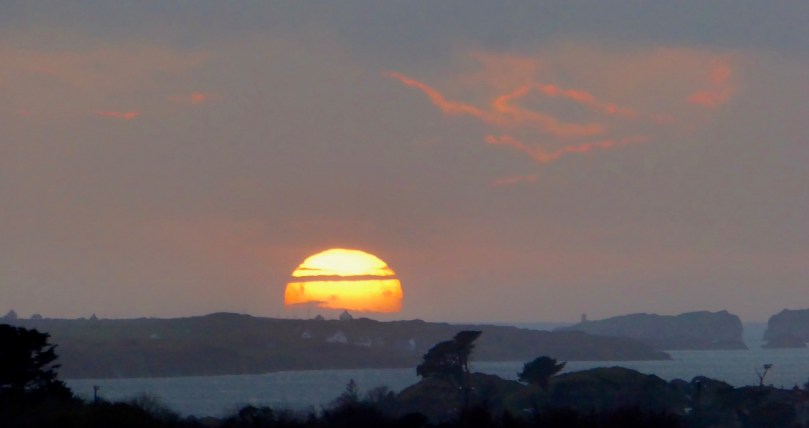
Sun sets over Long Island

The sun goes down over Long Island

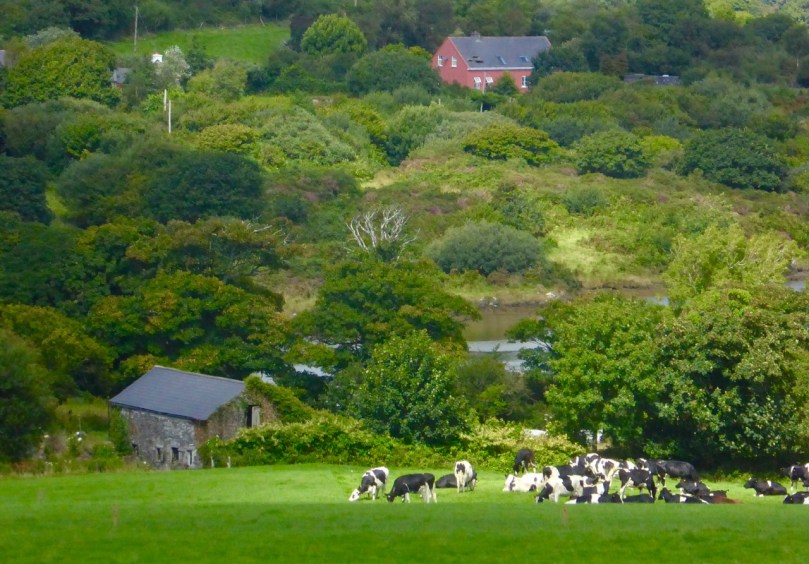
And an extra – one of my own favourites from this year. No drama – just a quiet sunlit meadow, an old stone barn and a colourful house. My West Cork.

Eugene and Margaret'sIn case you missed it, here’s a link to Part 1 of this two part exploration of West Cork in photographs.


West Cork in Photographs – Your Favourites, Part 1

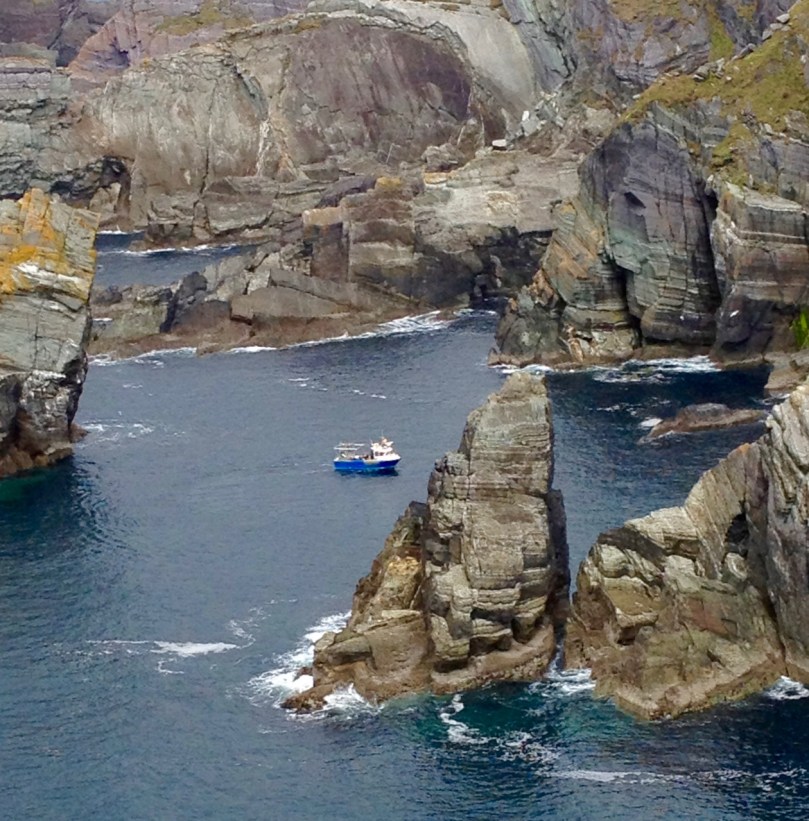
Navigating Mizen Head

A fishing boat navigates the rocks of Mizen Head

Our Roaringwater Journal Facebook Page features lots of our photographs of West Cork – two or three every week – and we know by the views and the ‘likes’ the ones that capture your imagination. It’s become a tradition here with us at the end of the year to go through them all and show you the top choices. Think of it as our Christmas present to you, our wonderful readers – nothing to read, just images of our gorgeous part of the world to drool over. Of course, we have our own favourites too, even if they didn’t get as many likes as others did, so we sneaked a few of those in here two. This is the first of two posts – the next one in a few days.

Sheeps Head November Day

Sheep’s Head

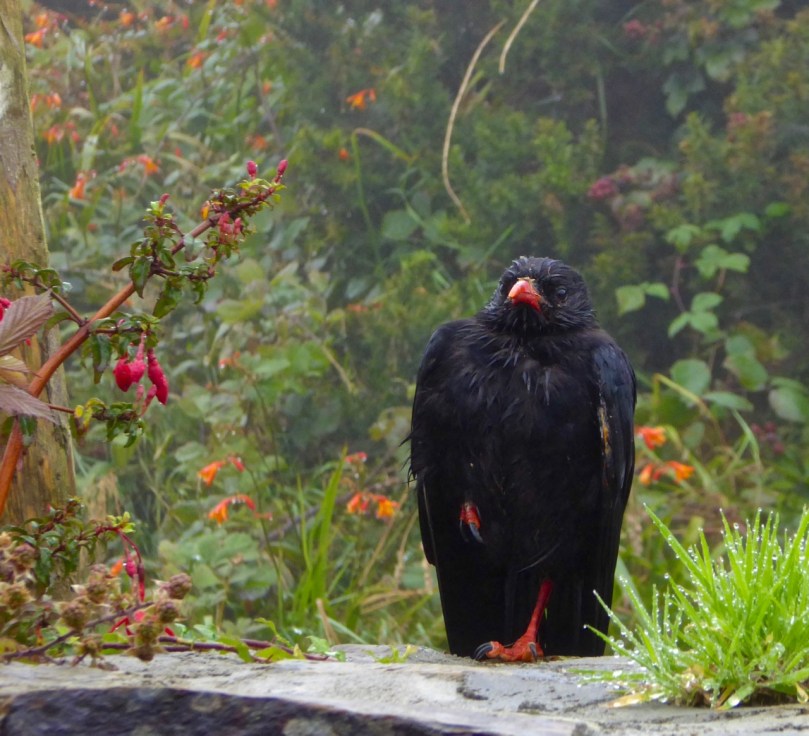
Chough by the Gate

Chough in the rain

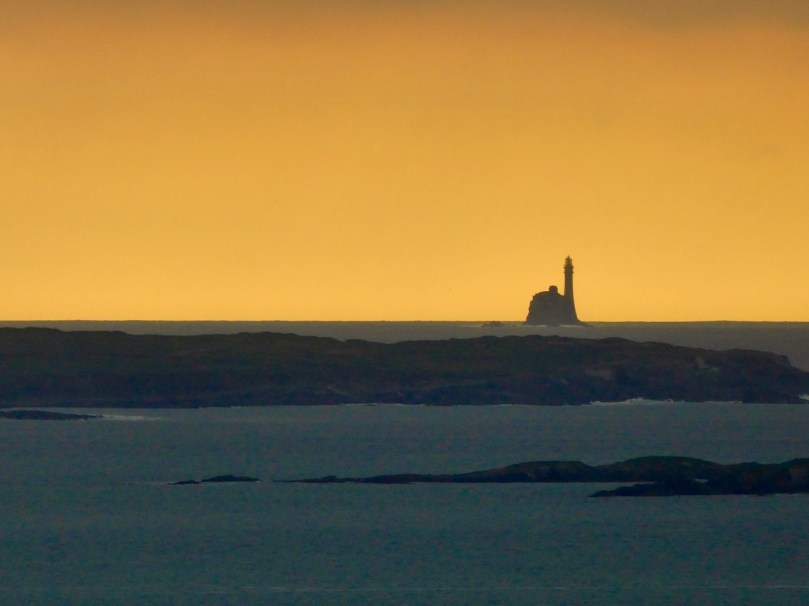
Fastnet in the sunset

Fastnet Lighthouse at sunset

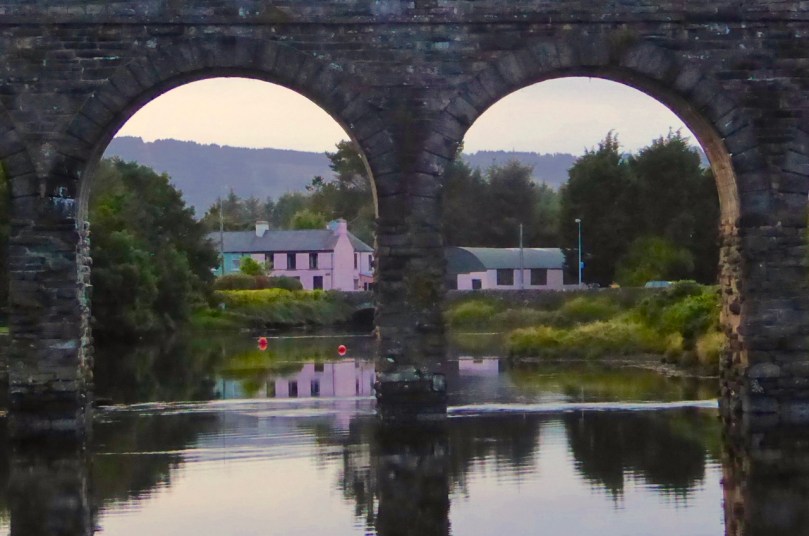
2 0f the 12

Two of the arches of Ballydehob’s famous Twelve Arch Bridge

Roaringwater Bay from Sailors' Hill

Roaringwater Bay from Sailor’s Hill above Schull

Gougane Oratory 2

Gougane Barra in the autumn

To the Mass Rock, Sheeps Head

Walking to the Mass Rock, Sheep’s Head

Kealkill 2

The archaeological complex at Kealkill – a five stone circle, a standing stone pair and a radial cairn

Rossbrin Dawn

Rossbrin Cove dawn

The next batch (Part 2) is now up. Enjoy!

Drombeg Solstice Celebration

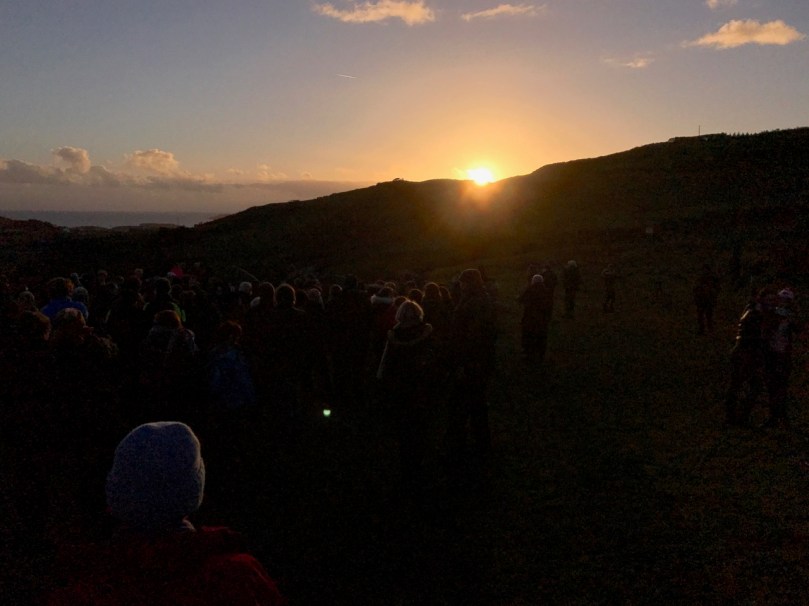
Setting

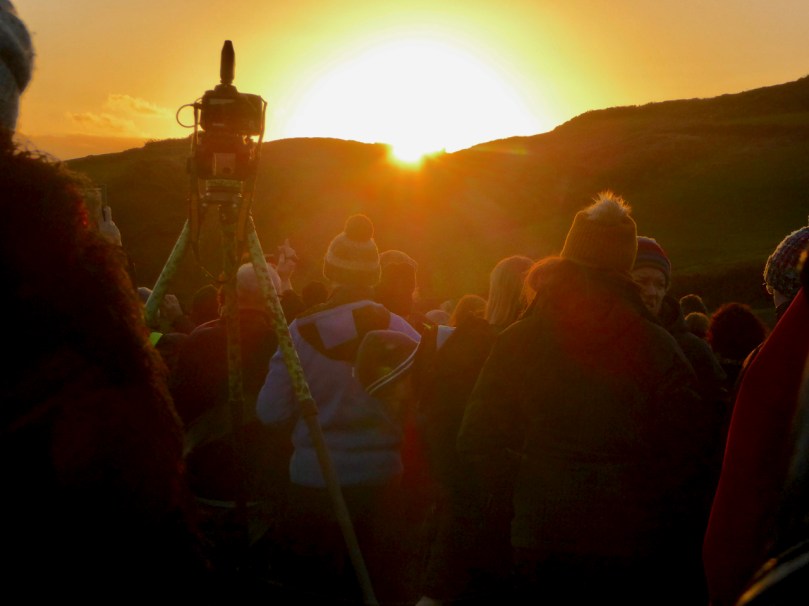
At sunset on the winter solstice the sun sets over the recumbent stone at Drombeg Stone Circle, near Glandore in West Cork. That is – if you stand looking between the two portal stones, you will see the sun set in a notch in the opposite hill and over the recumbent stone which is diametrically across from the two portal stones.

approaching 2 RH

For a full explanation of what I’m talking about here and for more about how and why stone circles were constructed, see our post Ancient Calendars. And take a look at Shadows and Stone in Action for our record of the same phenomenon, except at the autumn equinox, down the road at Bohonagh Stone Circle.

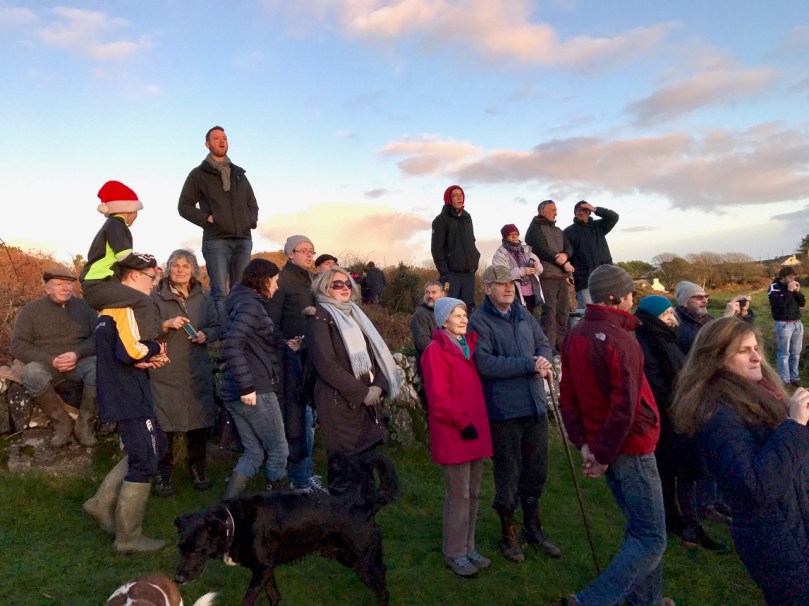
Watching

This solstice was the first opportunity Robert and I had to see the Drombeg phenomenon and what an evening we had for it – clear skies and a glowing sun. What’s lovely about this every year is that local people turn out to witness the solstice sunset at a stone circle designed by Bronze Age people perhaps three or four thousand years ago and still functioning the same way millennia later. It’s our West Cork Newgrange.

Meaden 2

Terrence Meaden (above) was there – a physicist and archaeologist, he’s been researching and writing about the calendrical aspects of Drombeg for several years now. Tirelessly visiting at all times of the year, his research compellingly illustrates how the builders planned the placement of the stones to maximise shadow-casting at the eight cardinal points of the calendar – solstices, equinoxes and cross-quarter days. While I don’t agree with a couple of his conclusions, he has done us all a service by encouraging us to look afresh at a monument we thought we knew.

Drummers

There was a lovely, community feeling to the hour we spent at Drombeg. People kept arriving and greeting one another in a sociable way. Kids ran around, a couple of drummers kept up a steady beat, and a group was holding a meditative circle that including some harmonious humming.

Final Moment

Anticipation mounted as the sun sank lower, there was a final good natured jockeying for position to get the best shots, and a collective sigh as the sun finally disappeared into the cleft.

Last Rays

It felt good to be part of something that West Cork people have been coming together to celebrate for thousands of years.

Your Favourite Posts of 2016

Horses at Caherdaniel

It’s that time of the year again! The wonders of technology enable us to know which of our posts have received the most views: we can see how many people clicked on each article although we don’t specifically know who you are! This is great for us, because we can get an idea of what you – our readers – like to see and this helps us when considering what to write in the future. Not that we necessarily always respond to the statistics, because sometimes we just think there are things that you need to know about, regardless of their potential popularity or otherwise!

Not in the ‘top ten’ – but through the year Finola has expanded – and passed on to you – her knowledge of the wildflowers that make the hedgerows and verges of West Cork so colourful (bee in fuschia, left), while Robert has used the Olympic year of 2016 to examine the history of some sporting events in Ireland (Tailteann Games 1924, right)

So, during this year, Finola and I have published exactly 100 articles for Roaringwater Journal: that’s almost one each every week. It’s fascinating for us to look back and see where we have been, what turns our interests have taken, and of course to see how well (or otherwise) our writing was received. Statistics are one thing, but it’s your comments that really inform us – so keep them coming…

From Outposts of Empire: memorials in St Barrahane’s Church, Castletownshend (left) and St Patrick’s Cathedral, Dublin (right)

Top of the board are two posts from Finola: one from the beginning of the year – Outposts of Empire, which researched and reviewed some of the monuments that are to be found in Protestant churches, cathedrals and graveyards in County Cork and Dublin. It’s a rich history of often only distantly remembered soldiers and battles. Why is this such a popular post? Perhaps because 2016 has been the focus for commemorations: the centenary of the Easter rising, and the fact that one hundred years ago many Irishmen were dying in the Great War. That has rather coloured the whole year in Ireland and Finola’s post – which also mentions some of the experiences of her own family – probably touches on many fertile memories.

Skibb men

How are ye keeping?

The next post in popularity dates only from last week: Finola’s latest humorous exploration of how people speak in West Cork – How are you keeping? This has become our top ‘viral hit’ on our Facebook page with thousands of views and 69 shares to date… Finola describes it as her ‘latest instalment of the How to Sound Like You’re From West Cork course’. The fifth of the series so far, it’s hilarious and has clearly captured the imaginations of our local readers.

key

Fourknocks, Boyne Valley: fetch the key and let yourself in…

To balance things out a bit the next two posts in popularity have come from Robert: Aweigh in Kerry – which delighted in the discovery of a boat-shaped house (pictured on the page header – an architectural gem) – and Fourknocks – the Little Giant, an account of a very unusual archaeological site in the Boyne Valley, north of Dublin. We were very taken by this site and its eccentricities: in order to gain access we had to collect the key (from a farm a mile away – and leaving a deposit of 20 euros) and let ourselves into the tomb which has some beautiful rock carvings.

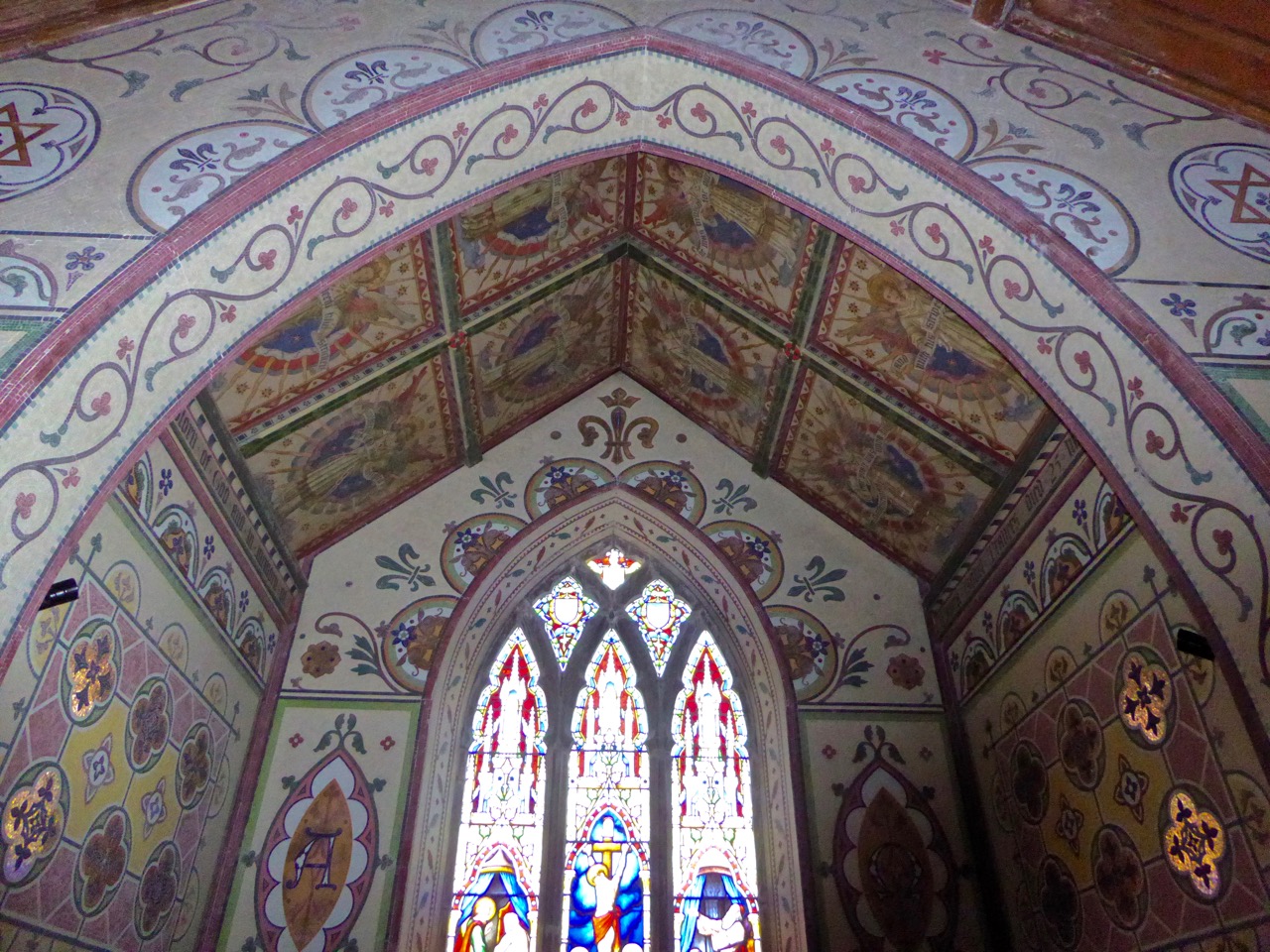
East Window and Apse

Magnificent mosaic work in the Church of the Ascension, Timoleague

Next up is Finola’s Mosaics and Maharajas – an exploration of a wonderful church in Timoleague with walls decorated in mosaic tiling. But there’s also a strange and poignant story which this church reveals to us (read the post)… And – what’s in a name? Well, perhaps the more bizarre – or seductive or beguiling – the title of a post is, the more hits it gets! Finola’s The Murdering Glen (a valley north of Bantry, again, with a story attached) certainly attracted a lot of attention.

On the walk

looking towards west

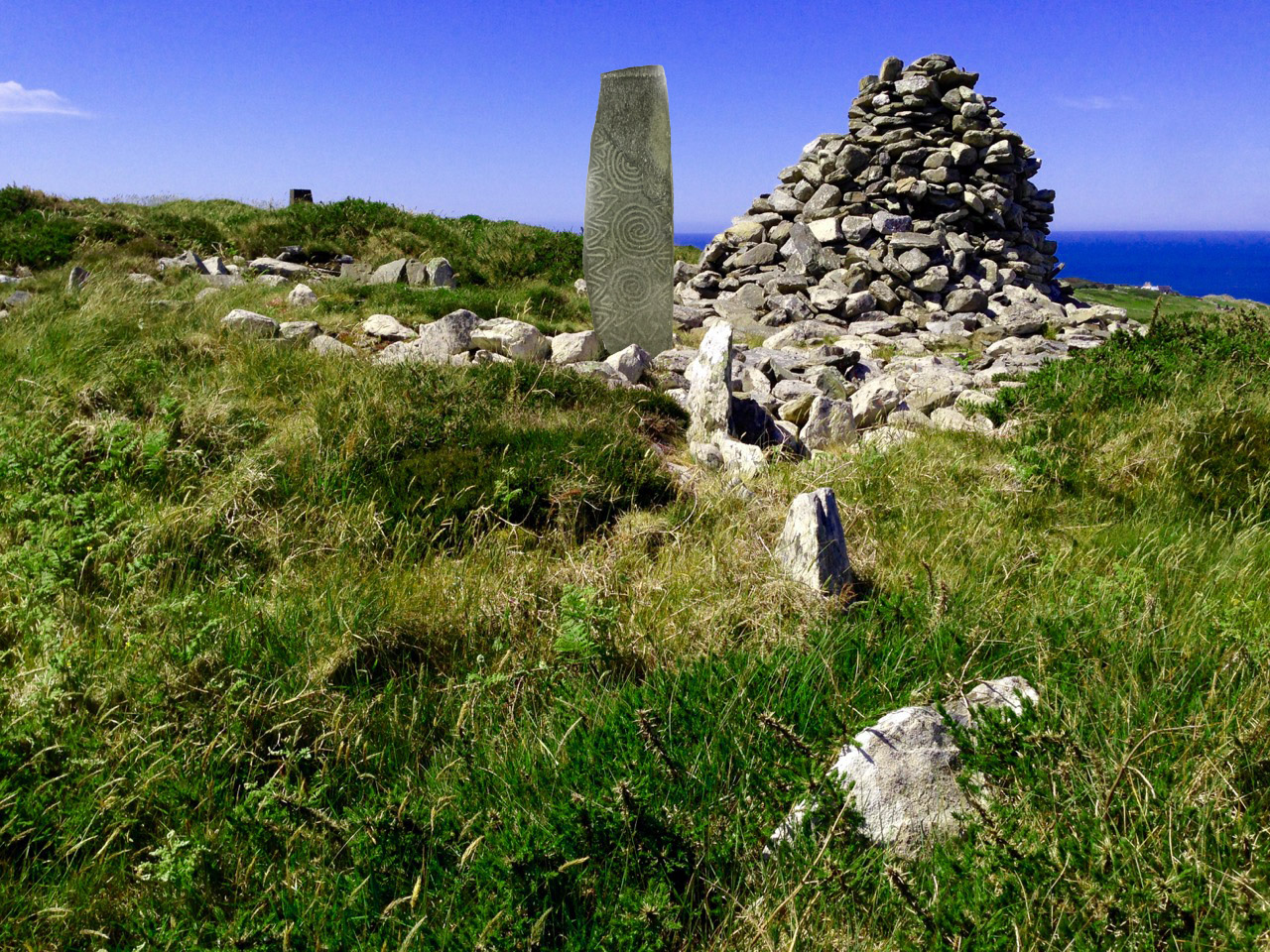
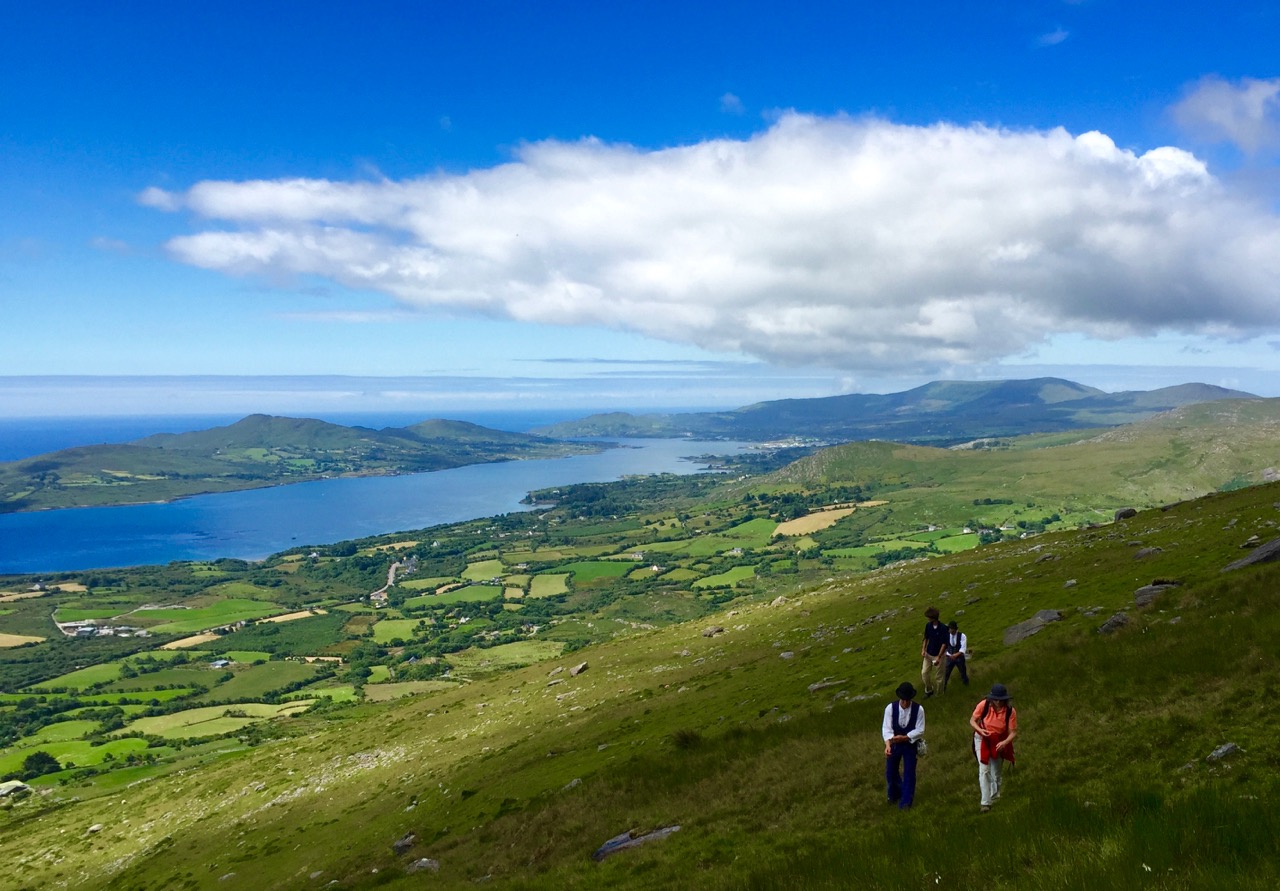
Upper picture – the murdering Glen; lower picture – Robert’s imagining of the Cape Clear Stone restored to its rightful place on the island…

Robert’s report on the passage tomb on the summit of Cape Clear – and the story of the carved stone that’s now in the Cork Public Museum comes next: Cape Clear – the Stone that Moved, closely followed by Finola’s post on the historic walled town of Youghal in East Cork: Youghal’s Walls. Then we had ‘Auf der Waltz” – The Journeymen, a popular piece about two German apprentice blacksmiths who passed through West Cork this summer as part of their three year travels through Europe gaining experience towards becoming masters of their trade. This was also written by Robert.

on hungry hill

The Journeymen exploring beautiful West Cork: Hungry Hill (photo by Dietrich Eckardt)

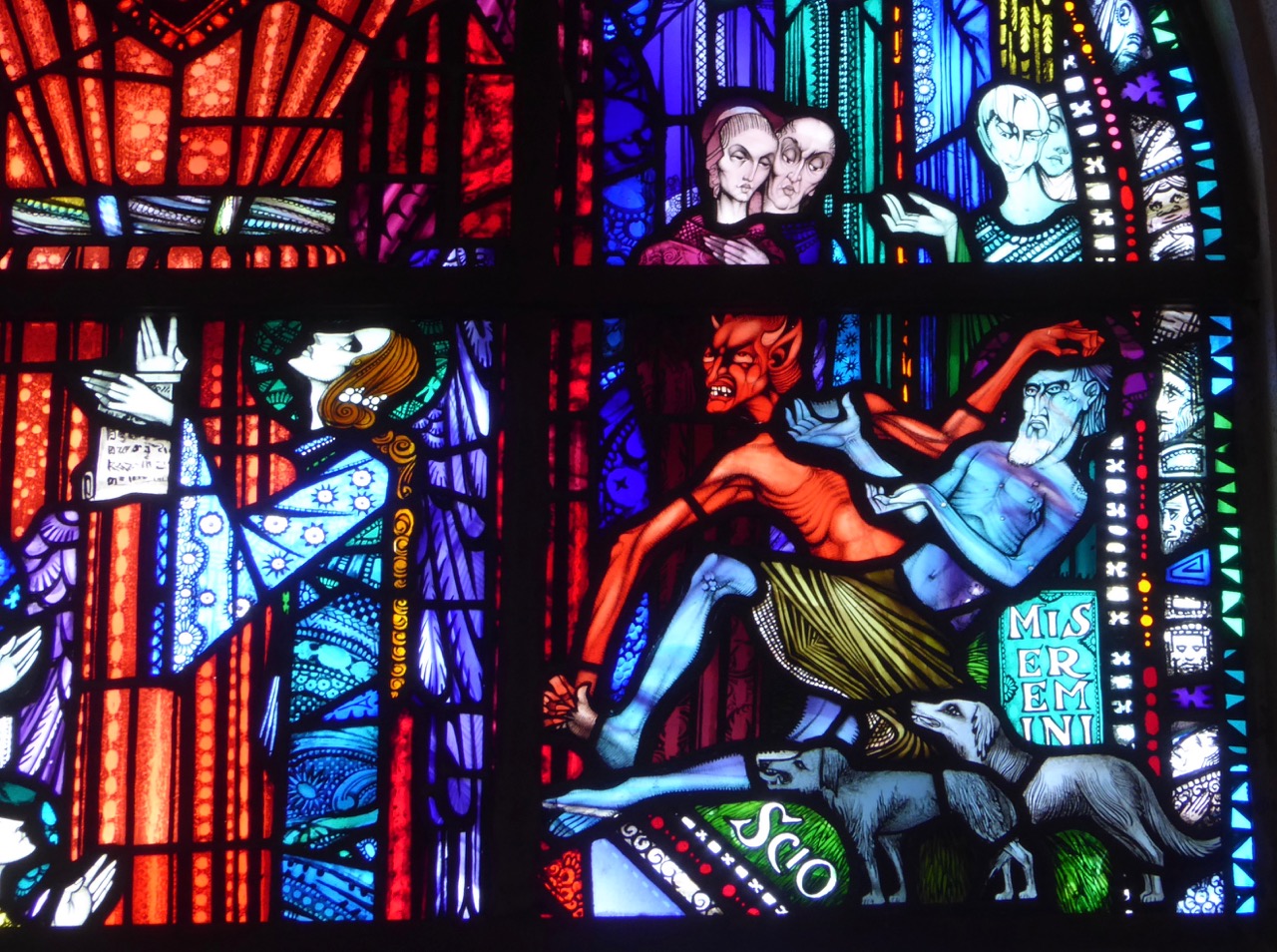
Rather than list all the other posts in some sort of ‘order of popularity’, let’s round up with our own favourites. Finola has been enthusiastically researching stained glass windows in churches – wherever we travel. Besides her continuing respect for Harry Clarke – probably Ireland’s finest artist in this medium – she has discovered the identity and work of artists who inherited his mantle when he passed away (far too young) in 1931. The Harry Clarke Studios continued on until 1973 and also produced some stunning work. Have a look at Discovering Richard King to appreciate just one of the artists who followed after Harry. Another of Finola’s great posts on this medium – The Christmas Story, One Window at a Time – appeared only two weeks ago.

HC Studio, Athlone

The spectacular stained glass work of Richard King, a small detail from Sts Peter and Paul’s Catholic Church in Athlone

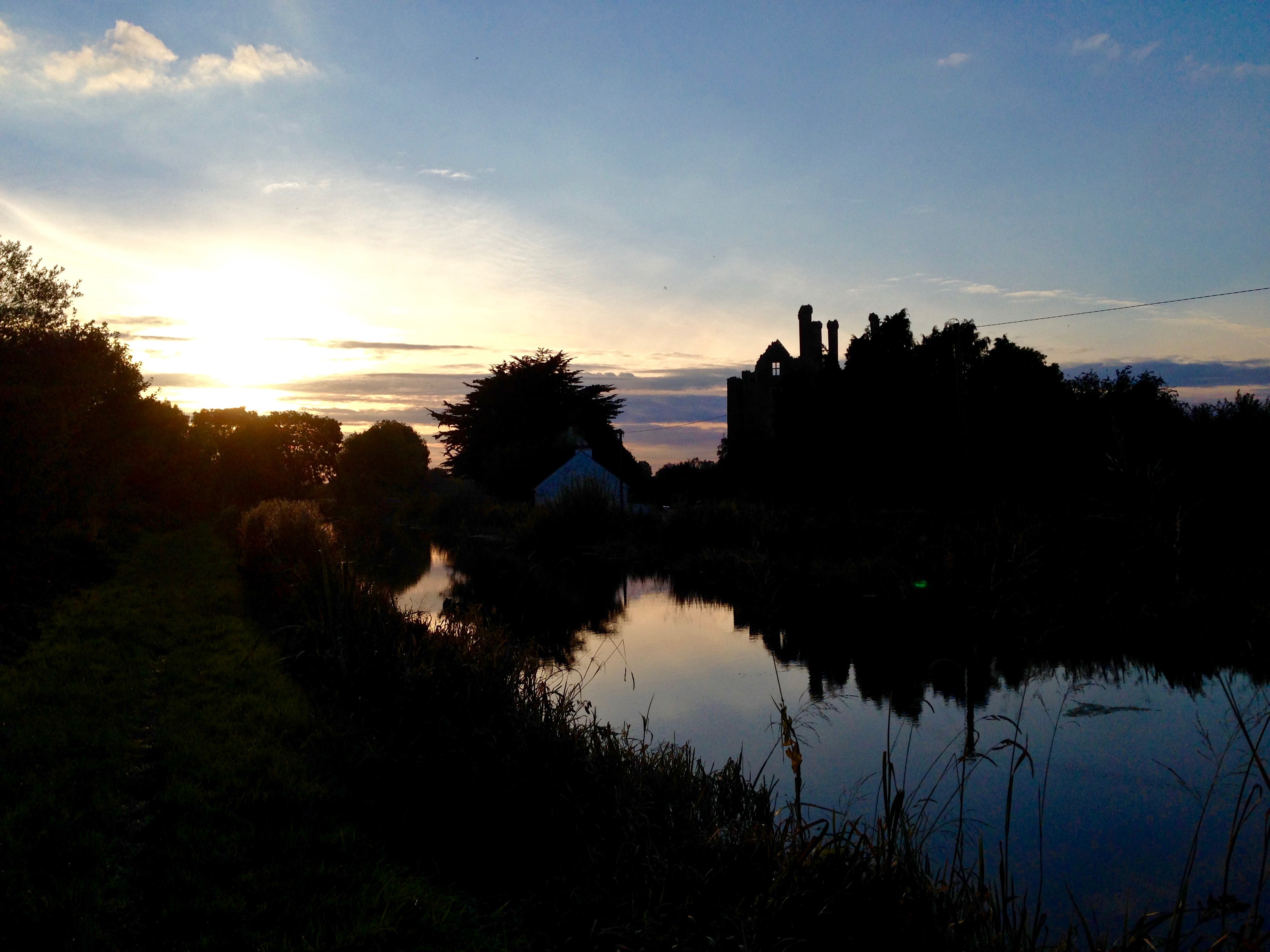
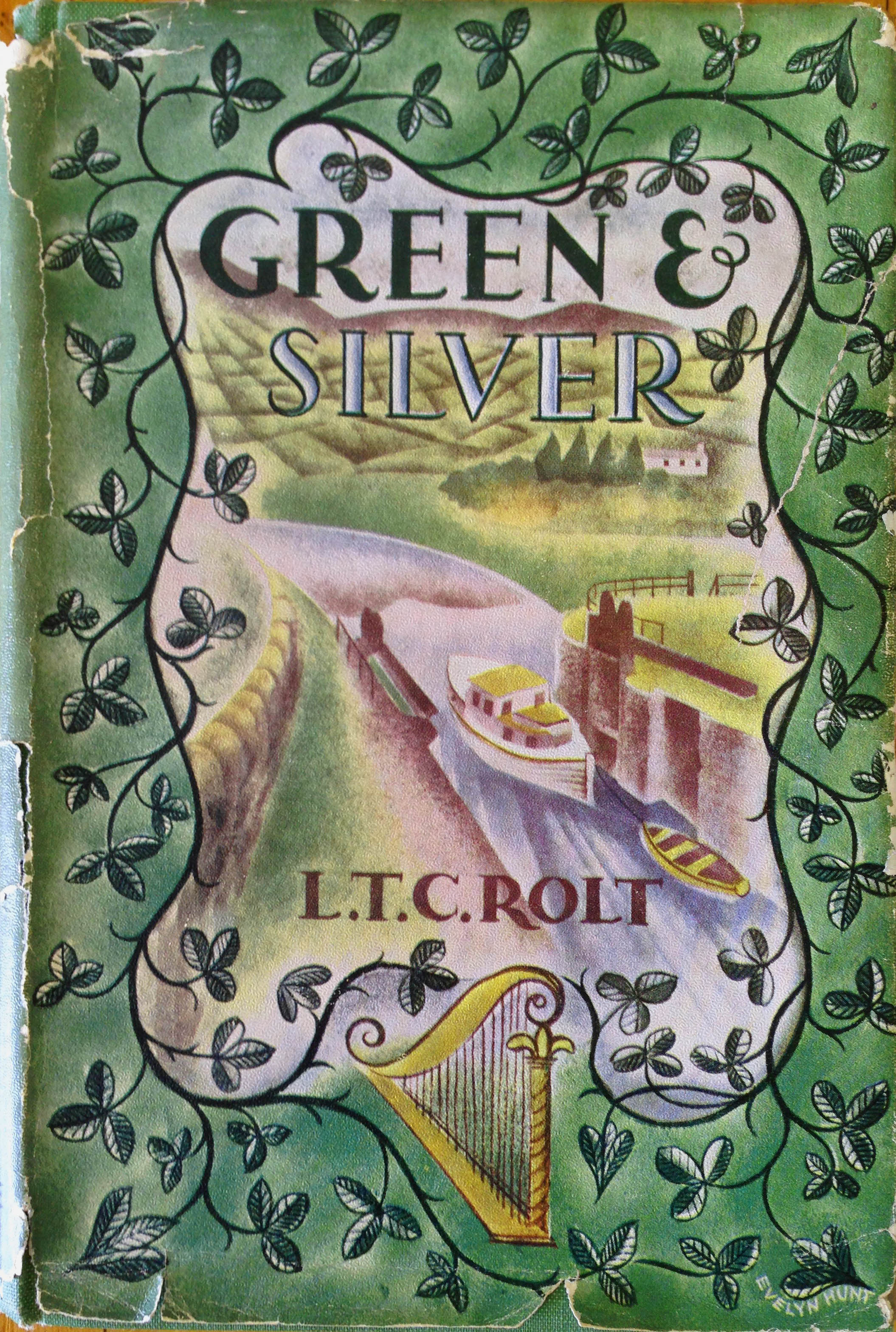
For myself, the subject that has engaged me most this year is my Travel by Water’ series: seven posts (so far) on the Irish Canals inspired by my review of Green & Silver – a book which I was given as a prize at school in 1963! We retraced the steps of L T C Rolt, the author of the book, and his wife Angela who took some very atmospheric photographs as they travelled around the Irish waterways in 1946 – exactly 70 years ago. To celebrate my own 70th birthday this year we attempted to replicate each of the photographs as closely as possible with present-day views of the same scenes. The venture has turned out to be a real social history of Ireland and the changes that have happened during that interval of time.

ballycowan sunset

Travel by Water – ghostly reflections beside the Grand Canal at Ballycowan

So thank you to all of you – our readers. Without you our work on Roaringwater Journal would have been pointless. With you – and with the value of your comments and discussions – we feel the whole exercise is well worthwhile – so, please, let us know your own personal favourites… We certainly intend to keep the Journal going for a few years yet! Don’t forget, there is a full index in the Navigation Page – here. And, I’m sure you all know by now, anything highlighted in blue is a link to something else: either another one of our posts in the Journal, or to another relevant source of information on the subject. Good hunting!

cover

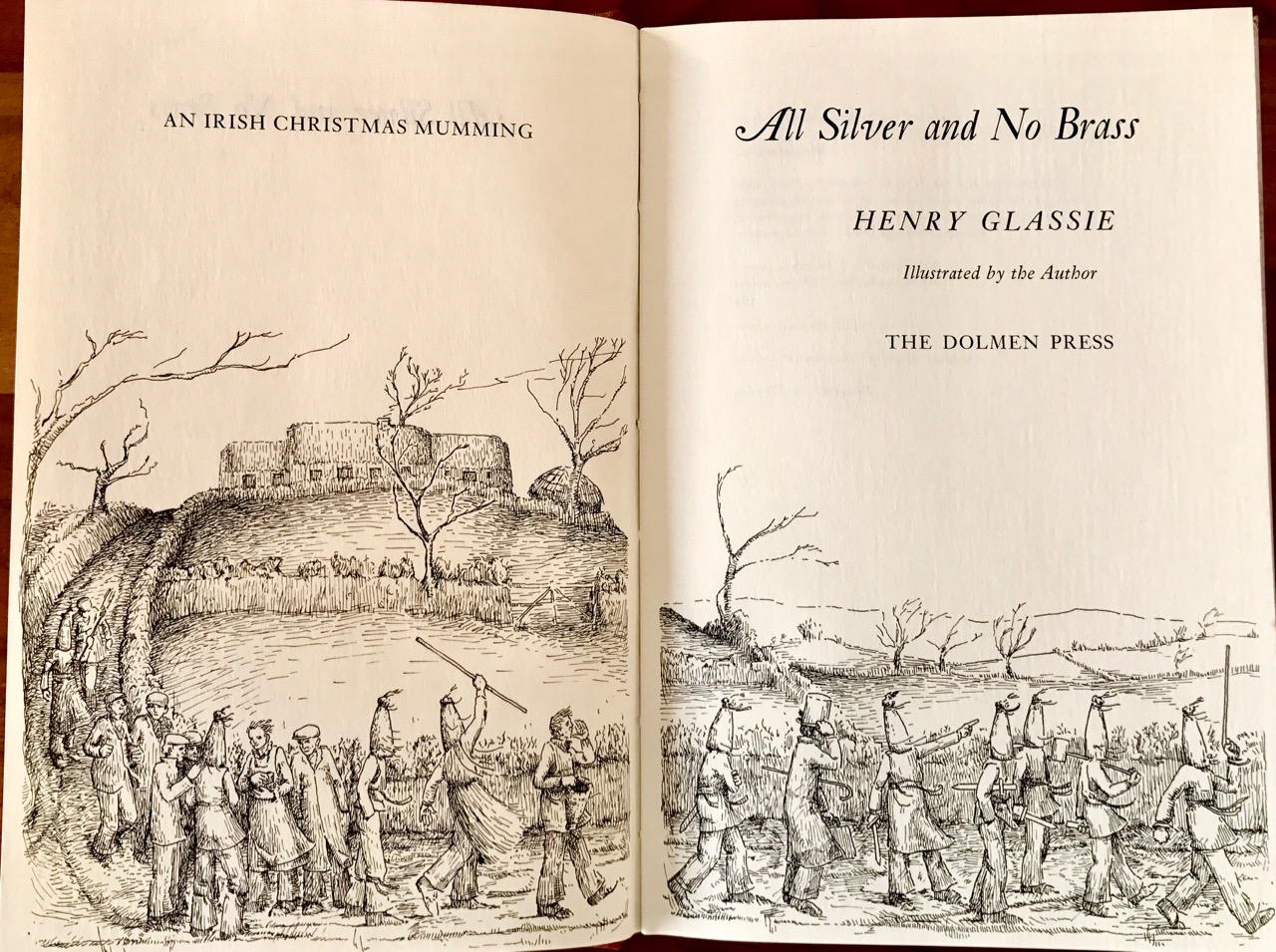
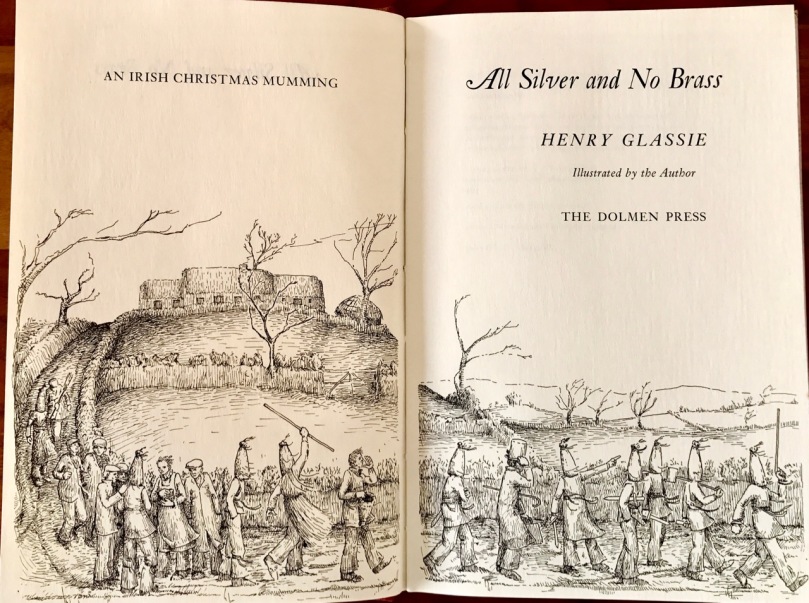
All Silver and No Brass

title page full

Henry Glassie’s book has been sitting on my shelves for 40 years, waiting to be dusted off and revisited. As a Mummer myself, I eagerly searched out any book on this then neglected subject, and was pleased to find this volume which concentrated on the Mumming tradition in Northern Ireland. It is written and illustrated by Henry Glassie, a Professor of Folklore at Indiana University Bloomington, and is the product of an extended field trip to County Fermanagh in the early 1970s.

Henry Glassie – born 1941 – has written many books about life and traditions in Ireland. His first was All Silver and no Brass, published by The Dolmen Press in 1976

…Winter nights in Ireland are black and long. A sharp wet wind often rises through them. Midwinter is a time to sit by the fire, safe in the family’s circle, waiting for the days to lengthen and warm. It is no time for venturing out into cold darkness. The ground is hard, the winds bitter. But for two and a half centuries, and possibly for many years before them, young men braved the chilly lanes, rambling as mummers from house to house, brightening country kitchens at Christmas with a comical drama. Their play, compact, poetical, and musical, introduced an antic crew and carried one character through death and resurrection…

(From the Preface to All Silver and no Brass by Henry Glassie)
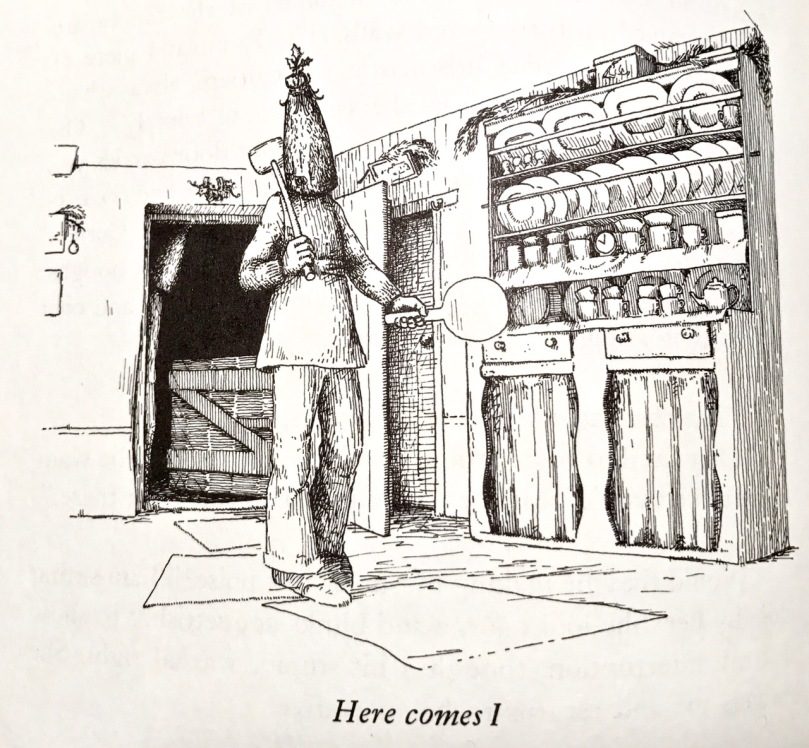
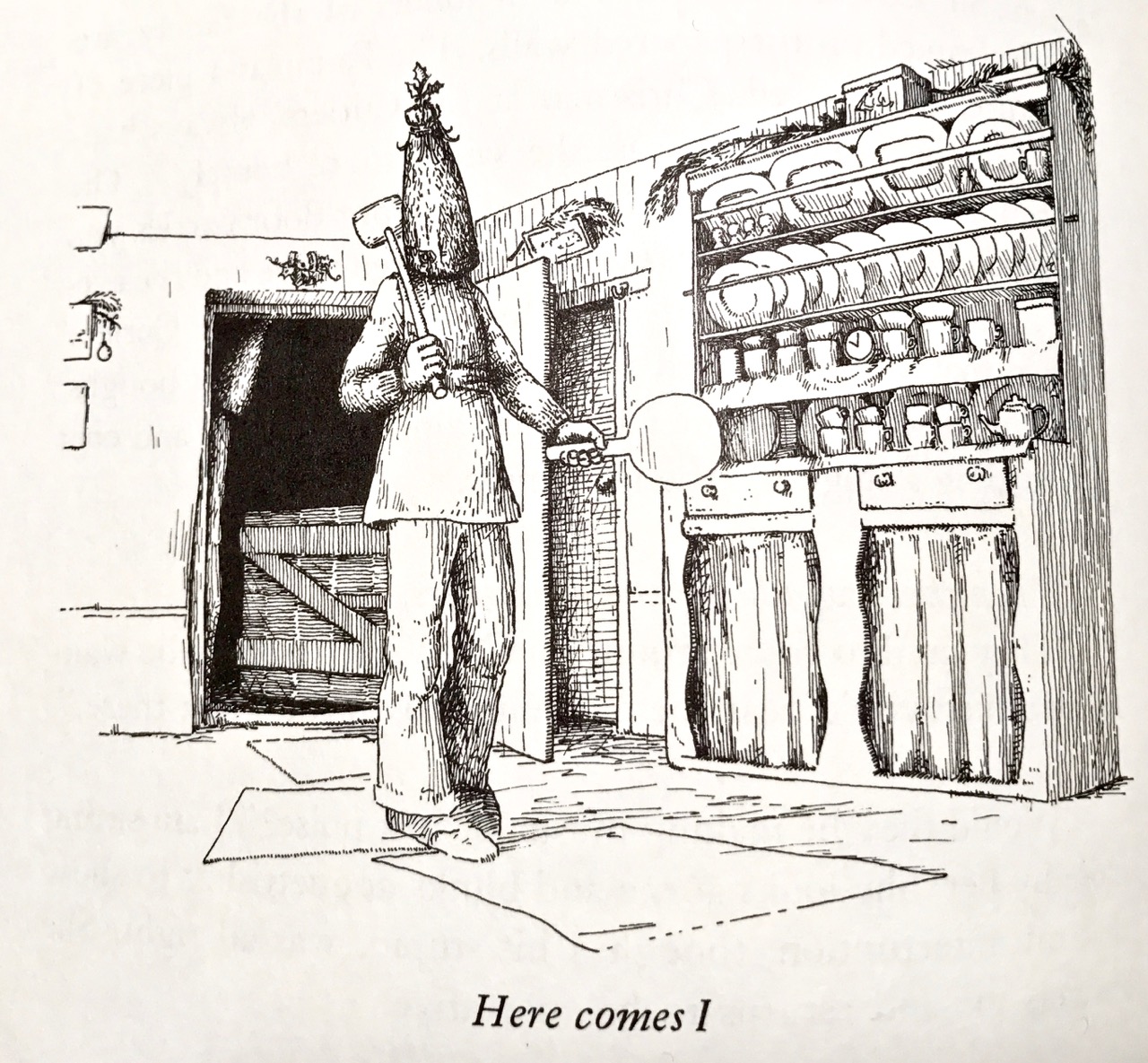
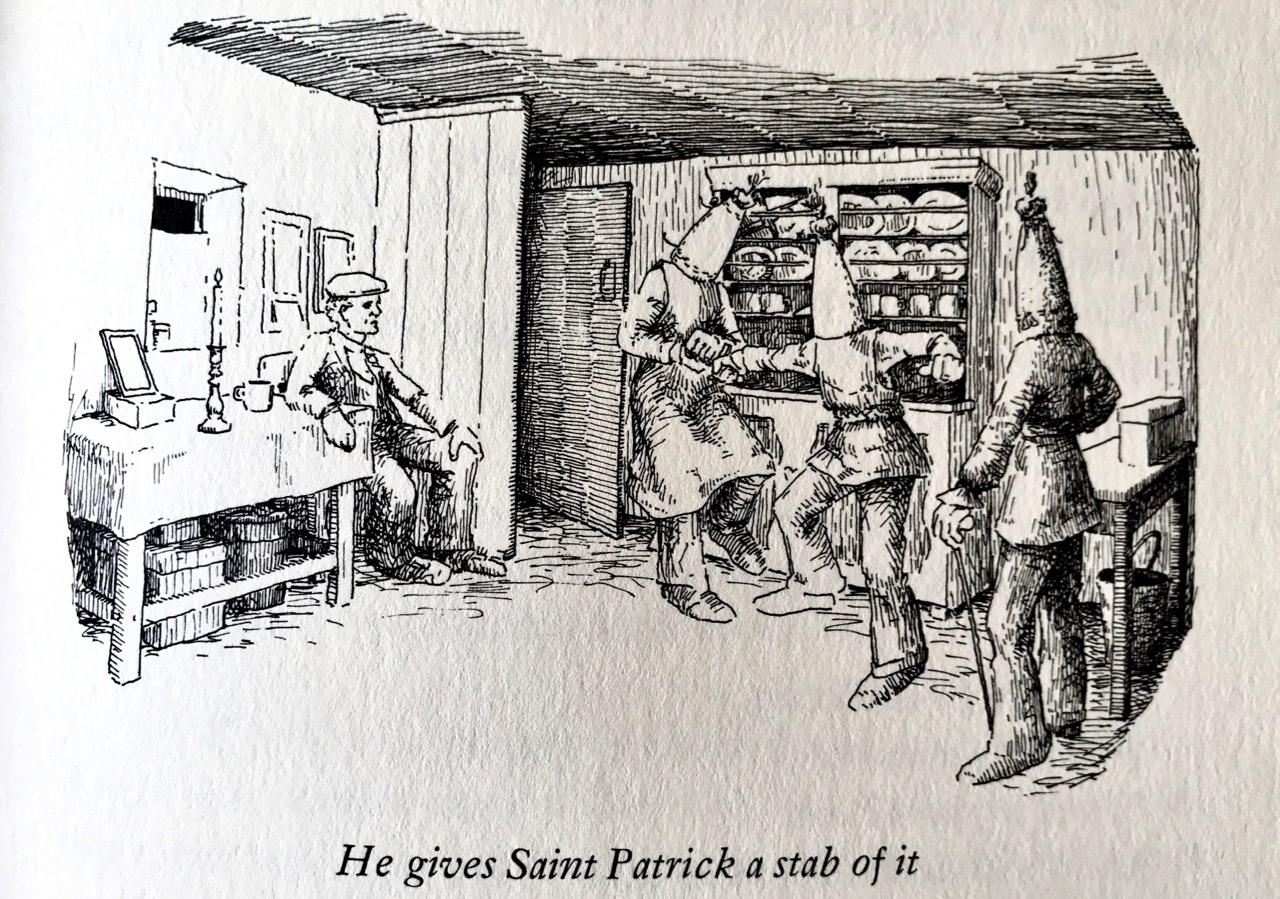
here comes I

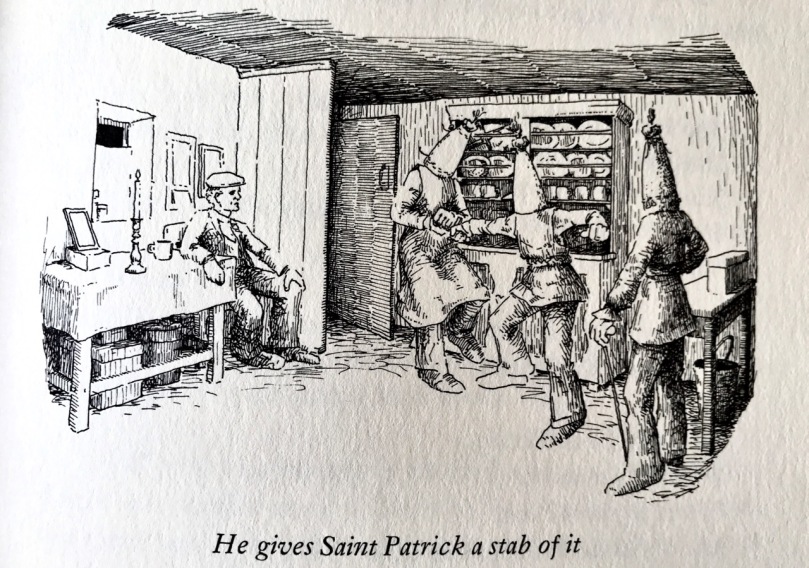
saint patrick

Glassie stayed in Ireland during the Troubles, and deliberately chose a community that was close to the upheavals of those days.

…Mumming was neither my project nor my goal. My project was the creation of an existentially grounded ethnography of people in trouble… We settled next to the barbed-wire bound barracks in the southwest Ulster town of Enniskillen, in the County Fermanagh, about twelve miles north and east of the burning border. I began quickly, luxuriously conducting my study on foot. I came to know every dog, bog, path and field in a small area south of the town, lying west of Upper Lough Erne, its waters as bright, its isles as green as promised in the old ballad of the Inniskilling Dragoon…

Enniskillen, from a photograph dated 1900, and Henry Glassie’s illustration of the mummers ‘Doin the Town’ as remembered in the 1970s

I like the way the book is set out. One section transcribes a number of conversations that Glassie has with people who remembered – and had been involved with – the mumming tradition.

…Most of the kitchens at the centers of those white houses were opened willingly, generously to me. My Americanness set me outside the local social categories, so I got on well with people of opposed political and religious persuasions. More of the people were Catholics than Protestants, more were men than women, more were old than young. Almost all had made courageous adaptations within the terrors that frame our lives. That was what interested me most: how daily life passed sanely, even artfully, despite armored cars hurtling down the country lanes, despite bombs that cracked the air and rattled the windows. I had forgotten all about mumming. Then one evening Mrs Cutler and I were chatting about Christmas and she mentioned the mummers’ arrival as the season’s high point. Suddenly excited, I asked if any of the play’s performers were still alive, and she listed people I knew well. All of them were men in their sixties and seventies who had begun to stand out in my thinking as exceptionally energetic, outgoing, and articulate. From that time on, I asked many questions about the drama, its performance, meaning, and purpose. I learned that the memory of mumming is cherished…
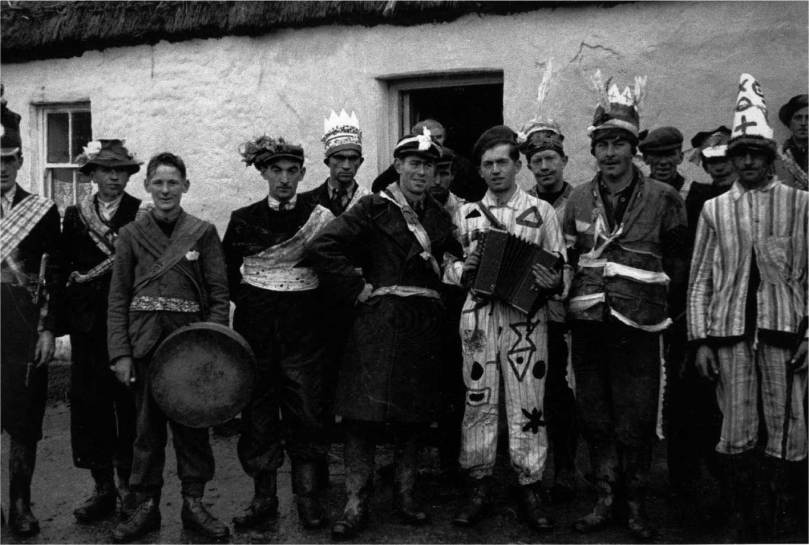
wren-boys

Upper picture – Wrenboys from Athea, Co Limerick, 1946 and below – ‘Mummers hunting the wren’ in Macroom, Co Cork, around 1950

Glassie talks at length to two brothers, Peter and Joseph Flanagan, who have very clear memories of taking part in the mumming.

“…We’d just take every house that we faced, whether we’d be admitted or not. We’d just take every house that we’d face. Of course, there was people on the other hand that wouldn’t admit them because it might frighten the youngsters, you see, or cause some confusion. That’s the way. That’s the way it goes now. So, You all stood at the door and…”

He twists and rapidly knocks five times on the table.

“…’who’s there?’

“…’Captain Mummer. Any admission?’ Yes, aye, or no: that was the way. ‘Any admittance for Captain Mummer and his men?’

“and if the person was pleased to admit you, well, they’d open the door. Throw it wide open for you.

“And Captain Mummer walked in.”

Peter moves quickly from his seat and down the kitchen. His heavy boots sound sharp on the floor. He closes the front door behind him, raps on it thrice, and re-enters. He strides ten feet into the kitchen and stands to deliver his lines, turning his torso to project to the audience assembled in a semi circle that runs from the front table past the hearth to the back table. Joe and I are fixed upon him…

“Here comes I, Captain Mummer and all me men.

Room, room, gallant room, gimmee room to rhyme,

Till I show you some diversion round these Christmas times.

Act of young, and act of age, the like of this were never acted on a stage.

If you don’t believe in what I say, enter in Beelzebub and he will clear the way.”

Frowning, Peter returns to his stool. It has been years since he has thought of the rhymes. “Let me see now,” he says, and sits repeating the speeches of Beelzebub and Prince George under his breath. Joe picks up the large turf out of the fire with the tongs and sets them at the front of the hearth. He sweeps the thick ashes off the iron to his side with a besom, places new turf against the backstone, and arranges the old coals next to them. The smoke and glow increase as the new turf ignite. Joe, too, went mumming, but he went out less often than Peter and cannot remember the part he played. He sits back as Peter starts in again…

Henry Glassie’s drawing of ‘how a mummer’s hat is made’ together with two examples from more recent times

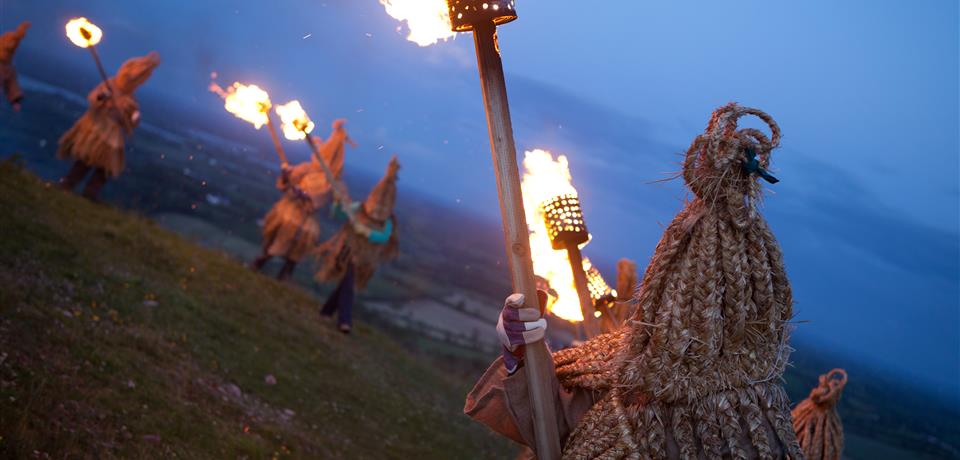
Glassie’s writing goes on to describe the recollections of the play from those who undertook the performances. It is an invaluable record: his informants have now passed away. They would probably be surprised to know that their plays have not been lost: a new generation is performing in the north – and elsewhere on the island of Ireland. They would be even more surprised, perhaps, to learn that their own play breathes again: there is a Mummers Centre in Derrylin and the Aughakillymaude Community Mummers (Aughakillymaude translates as the wooden field of the wild dog) perform regularly in the area around Christmas time once more, while at other times they travel across Europe keeping the spirit of mumming in Ireland very much alive:
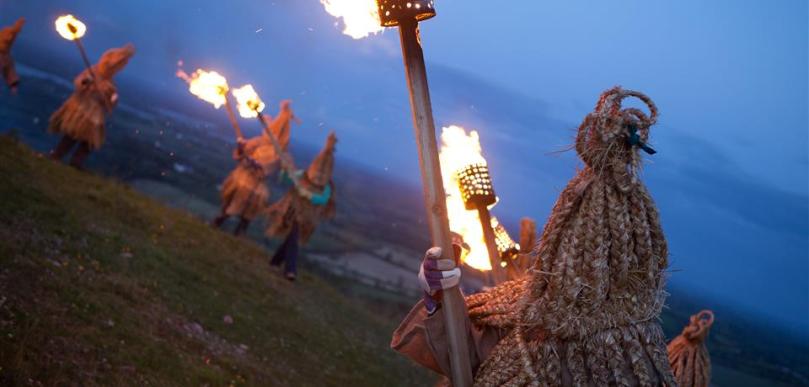
aughakillymaude-mummers

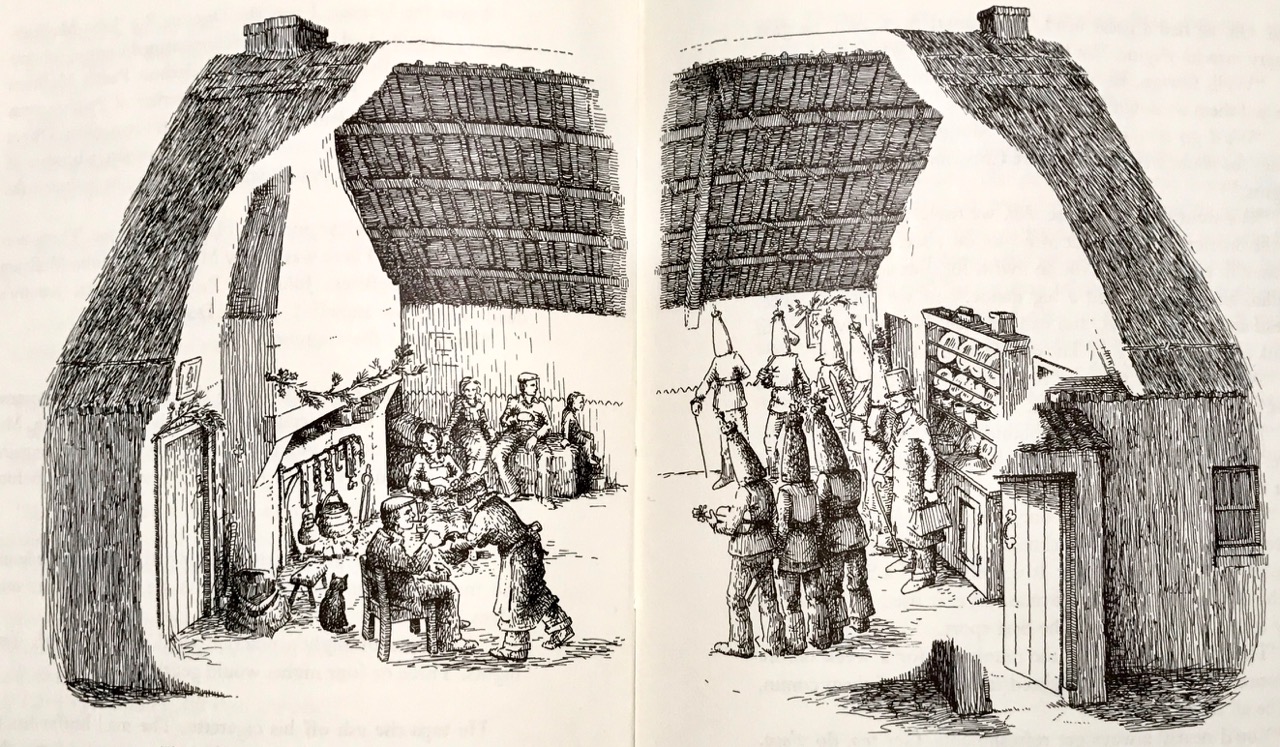
Aughakillymaude Community Mummers in full cry (above)  and (below) Henry Glassie’s reconstruction of the performance before the hearth
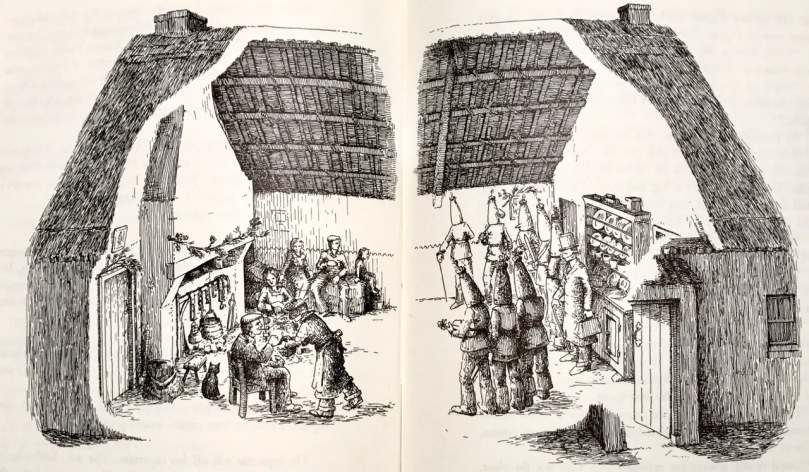
the performance


How Are You Keeping?

Mind yourself, now

That’s how people greet each other in West Cork. Lovely, isn’t it? And when we say goodbye we always add Mind yourself. Mind yourself – it’s like being told to be careful, to look after yourself, and not to forget to take time to have a cup of tea and a nice sit down occasionally, all rolled up in one.

Directions 1

It’s been a while since I’ve written a post on how to speak like you’re Irish (scroll to the end to see a list of the previous posts) but I’ve been keeping notes all along, so here is my latest primer so that you can feel like you’re getting the hang of West Cork Speak.

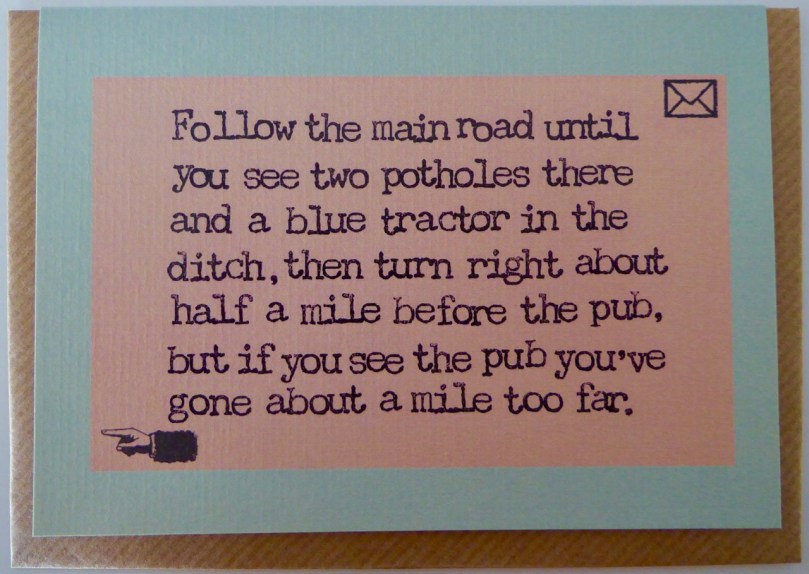
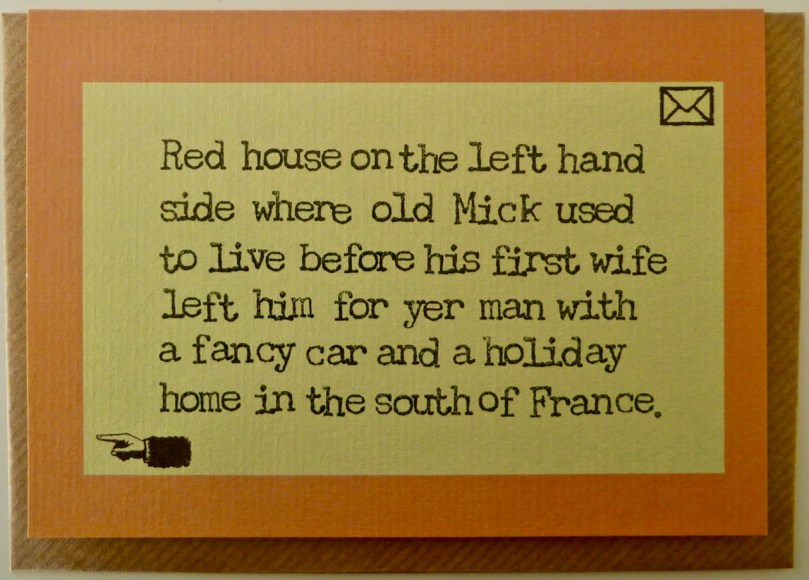
Besides my own images, I’m illustrating this post with cards from Conker Tree Studio. Justyna, from Poland but now living in Ireland, has designed a line of cards and magnets with directions and phrases that she has come to, er, appreciate in the everyday talk around her. Look out for her cards anywhere you go in Ireland, or buy them online.

Directions 4

Directions 3Sure it is!

Sure can be used on its own, but it’s more usually heard in combination with other words in phrases that convey an endless variety of responses useful in almost every circumstance. Take Ah, sure, j’know – use it to express sympathy, along with an exquisite understanding of the circumstances being related. Ah, sure, look is similar although it’s pronounced with a more world-weary air and perhaps without the underlying implied slight cynicism of Ah sure j’know.

Sure, we can't complain

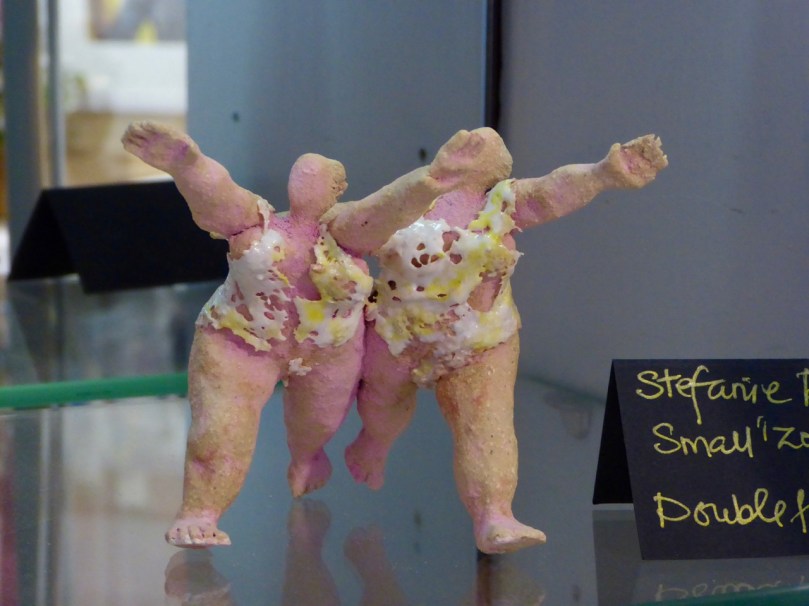
Ceramics by Stefanie Dinkelbach, at Etain Hickey Collections (or here)

The auld arthritis is killing me but isn’t it a grand day?  Sure, we can’t complain. 

I bought it off a farmer and it runs great. But I just discovered it has no seat belts. Ah sure, what harm. 
I paid my water bill, like an eejit, and now I hear the lads who didn’t pay won’t get penalised.  Ah sure, j’know. 

I was hoping to get the silage cut today but would you look at the rain, ’tis coming down in sheets. Ah sure, look.   

Sure aren't we all having a grand time?

Sure, aren’t we all having a grand time?

Don’t be bold!

Around children, it’s good to tune in to the specialised vocabulary adults use for their behaviour. Being bold has nothing to do with bravery – to be bold is to misbehave. If a child is being annoyingly but not nastily bold, he might be just acting the maggot. Or she might be a bit giddy. In any case, the proper response of any right-thinking adult in the vicinity is to give out to them. Giving out means rebuking or reprimanding. The other thing adults like to do with children (and other adults) is to put manners on them. This is a very handy phrase that can be used in all kinds of ways.

No acting the maggot

Nobody’s acting the maggot here!

Sinead, stop acting the maggot. Ah, Mammy, don’t be always giving out to me.

The eldest was put into Miss O’Brien’s class this year.   She’s strict out – that’ll put manners on him.

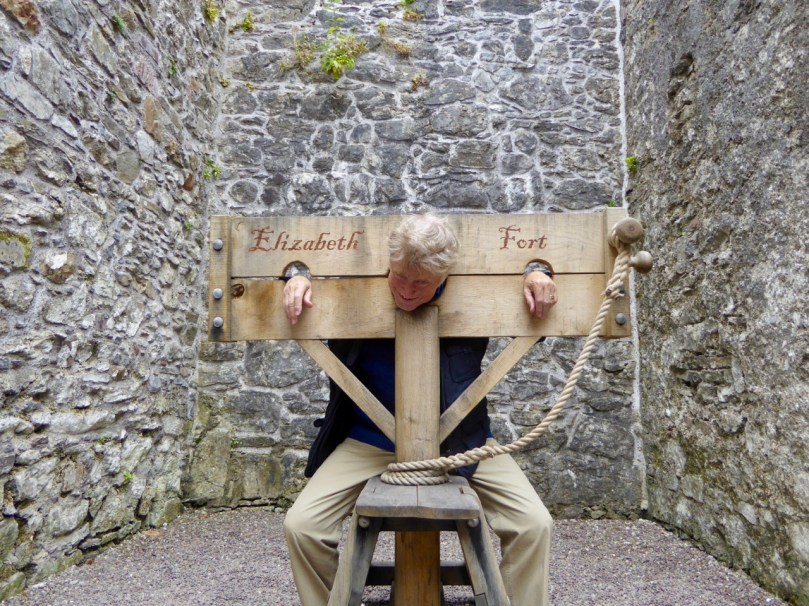
In the stocks

That’ll put manners on him (Elizabeth Fort, Cork City)

Assent and agreement.

Perhaps because it’s considered bad form to say no (even if that’s what you mean) we have developed a plethora of ways to say yes. No bother is a universal favourite, but perfect has lately been making significant inroads. Y’know yerself, however, is the ultimate form of both eliciting and delivering concurrence.

I think the clutch has gone but I need it desperately for tomorrow.  No bother.

I’ll have the Full Irish, but no meat, extra mushrooms, gluten-free toast, a large cappuccino…no wait, I’ve changed my mind, add the black pudding back in and change the cappuccino to a soya latte. Perfect!

Breakfast at Budd's

The full Irish at Budds of Ballydehob – all local ingredients

They’ll all be down for Christmas, there’ll be nine of them including the grandchildren all wanting mince pies and home made scones and mountains of mashed potatoes, but y’know yerself, like…

How are you? Ah sure, y’know yourself.

So now – off you go and do a biteen of practice. You know yourself, like, that it’ll take a while before you can make a good fisht of it, like Justyna from Poland. But if you don’t get around to it, no bother. Life is busy, in fairness. Mind yerself, now.

Ah sure, all in their own time

This is the fifth in a series. Previous posts:

West Cork Speak: Lessons 1 and 2

West Cork Speak: Lessons 3 and 4

West Cork Speak: Lessons 5 to 7

You’re Grand

Skibb men

How are ye keeping?