No Wrens Were Harmed in the Making of this Post!

Wran Hunting has featured before in Roaringwater Journal: that’s the way that St Stephen’s Day – 26 December – has been celebrated for generations in ‘Celtic’ parts of western Europe, specifically Ireland and The Isle of Man, but also in Cornwall – where it’s now only a memory – Brittany, Wales and Scotland. ‘The Wran’ is a very strong surviving tradition here, especially on the west side of the country. The Dingle Gaeltacht is the place to go if you want to see all the action (click on the bottom right of the window to turn on the sound):

In our own Ballyedhob community ‘The Wran’ is not forgotten. In fact you can even find a poem written about it in the Duchas folklore records. This was recorded in the 1930s by John Levis, aged 32, who took it down from Jeremiah Driscoll, aged 64 years. Jeremiah had been a Wren Boy in Ballydehob. Here’s the poem:

Come all you ladies and gentlemen,

For tis here we come with our famous wran

With a heart full of cheering for every man

To rise up a booze before the year is gone.


Mr O’Leary we came to see,

With our wran so weak and feeble,

The wran is poor and we can’t feed him,

So we hope your honour will relieve him.


We’ve hunted our wran three miles and more

We’ve hunted this wran all around Glandore

Through hedges and ditches and fields so green,

And such fine sport was never seen.


As we copied our wran again

Which caused our wran-boys for to sing,
She stood erect and wagged her tail,
And swore she’d send our boys to jail.


As we went up through Leaca Bhuidhe

We met our wran upon a tree,

Up with a cubit and gave him a fall,

And we’ve brought him here to visit you all.


This the wran you may plainly see,

She is well mounted on a holly tree,

With a bunch of ribbons by his side

And the Ballydehob boys to be his guide.


The wran, the wran, the king of all birds,

St Stephen’s day he was caught in the furze,

Although he is little, his family is great,

So rise up landlady and fill us a treat.


And if you fill it of the best,

We hope in Heaven your soul will rest,

But if you fill it of the small,

It won’t agree with our boys at all.


To Mr O’Leary and his wife

We wish them both a happy life,

With their pockets full of money, and their cellars full of beer,
We now wish a merry Christmas and a happy New Year.


And now, our song is ended, we have no more to say,

We hope you’re not offended for coming here today,

For coming here this morning we think it is not wrong,

So give us our answer and let us all be gone.
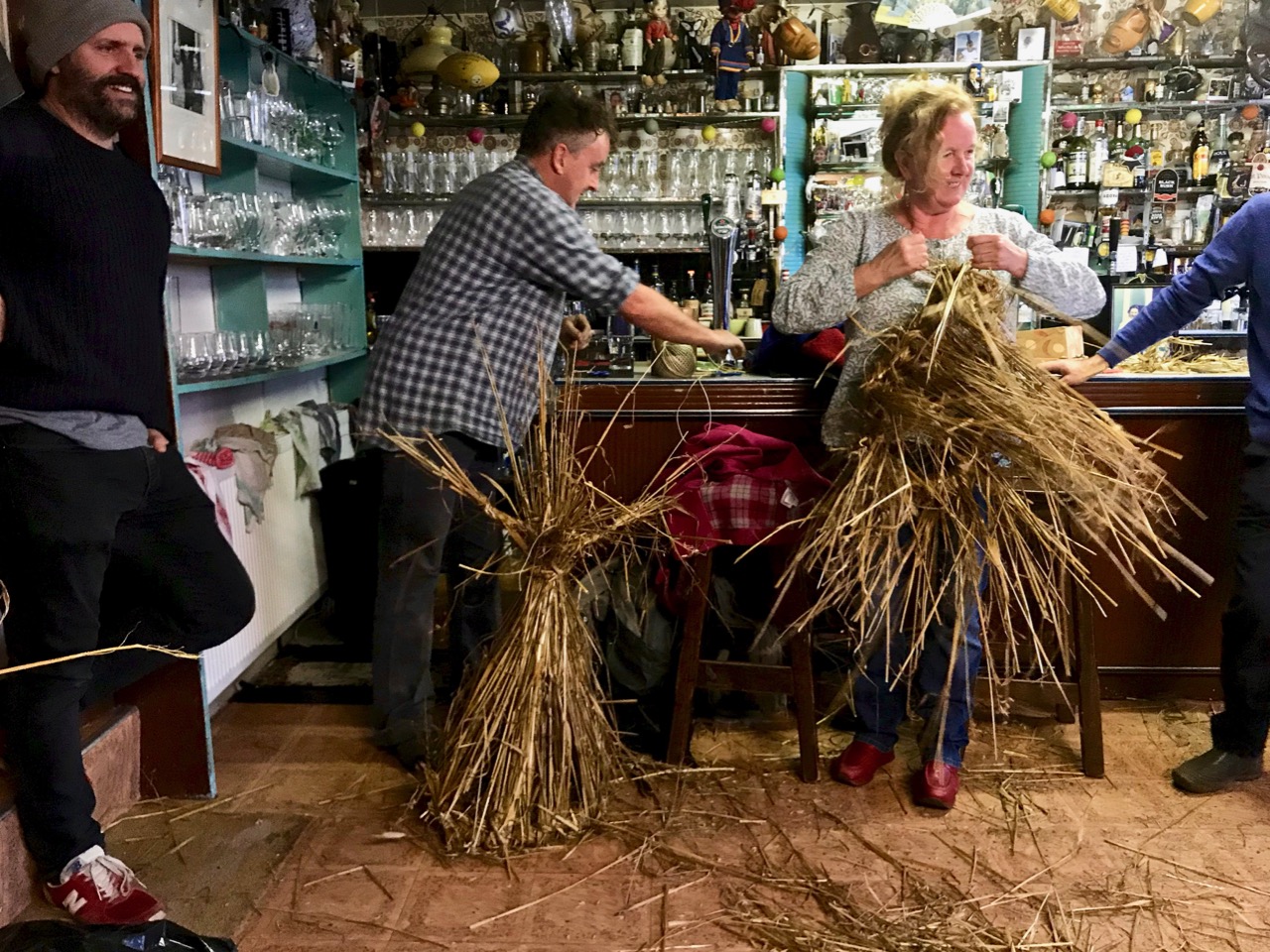
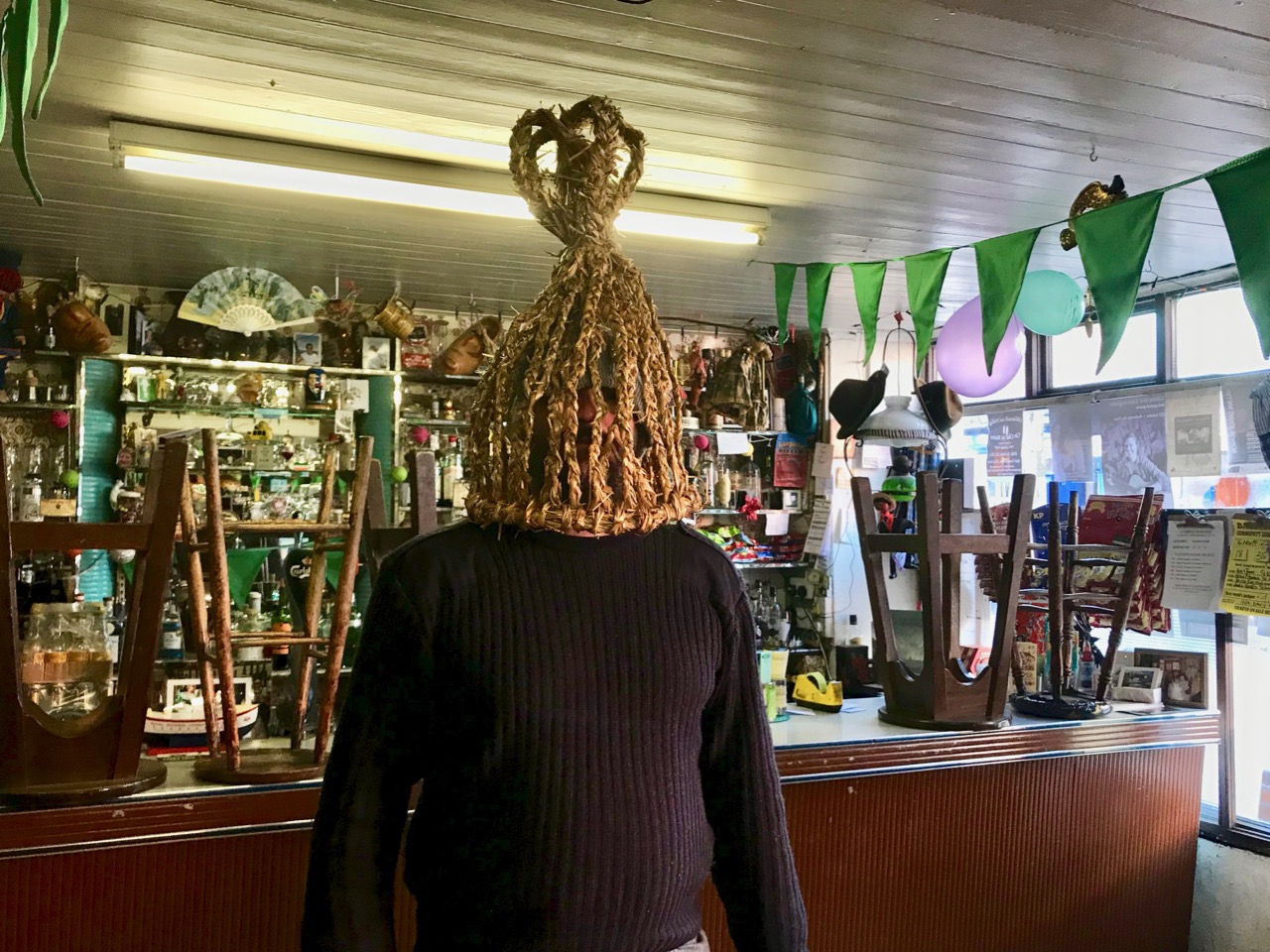
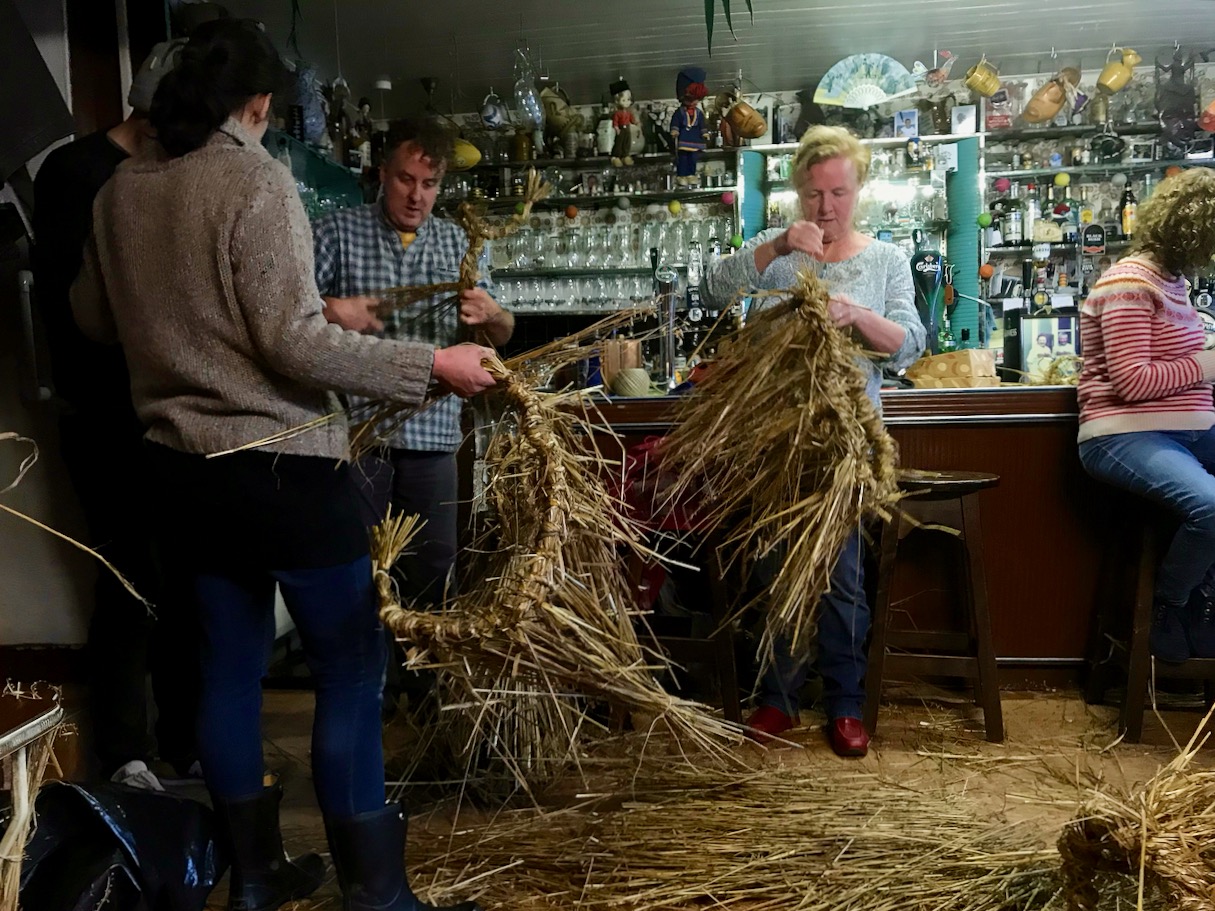
By good fortune there’s ‘Mr O’Leary’ above! He’s the landlord of Levis’ Corner House Bar in Ballydehob – which is the subject of Finola’s post today. He’s on the left in the upper picture, looking on at the Wran Workshop which he allowed to take over his pub yesterday. Basically that involved covering the whole place in straw out of which, magically, appeared a whole lot of wonderfully crafted Wran masks. Joe is wearing a fine example in the lower picture.
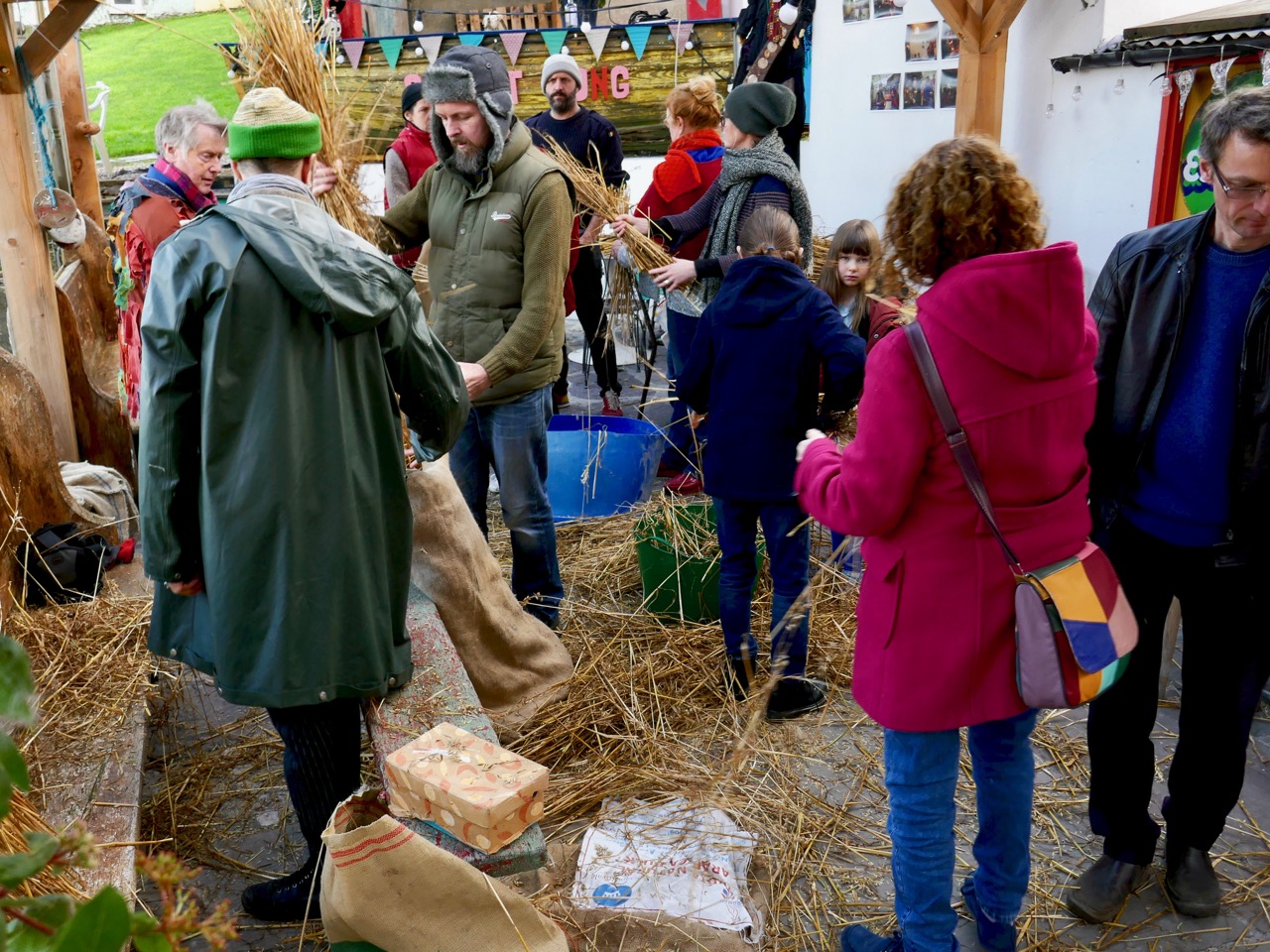
The afternoon started outside, in Levis’ garden, where we were all given guidance on preparing the straw. We had to strip away the leaves and any heads which had been left behind, and produce bunches suitable to be plaited and then turned into ropes which would form the basis of the  hats or ‘masks’ traditionally worn to disguise the wren hunters.
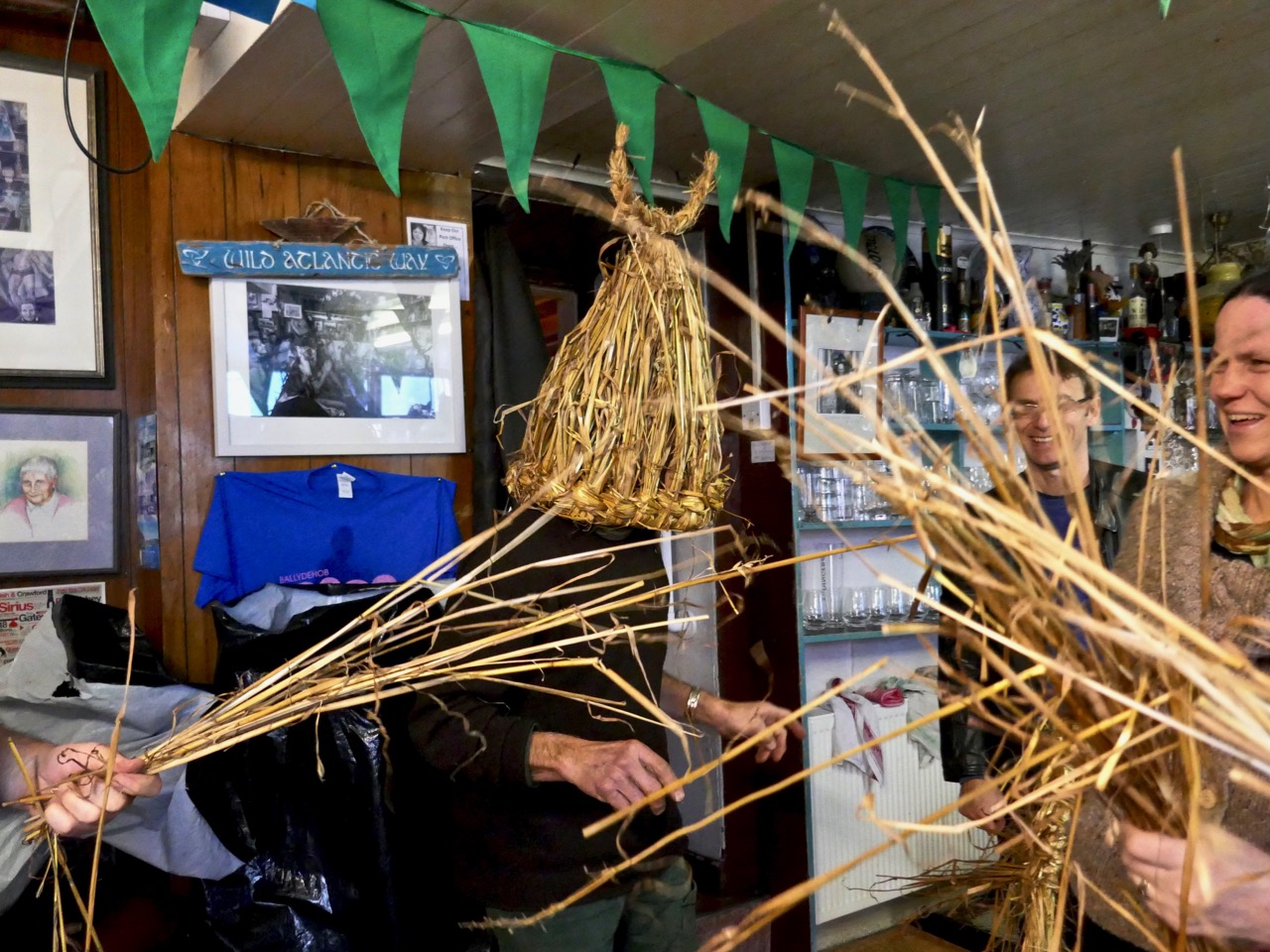
On the right here you can just catch a glimpse of workshop maestro Sonia Caldwell, inspecting another fine mask. Sonia is determined that Ballydehob will embrace the Wran tradition (vestiges of which have appeared on the streets over the years) and re-energise it in the way that only this West Cork village’s vibrant community knows how. I can just imagine that in a couple of years’ time people will be flocking to see ‘The Wran’ in the same way that they flock to the Jazz Festival and all the other festivals and events that happen annually here.
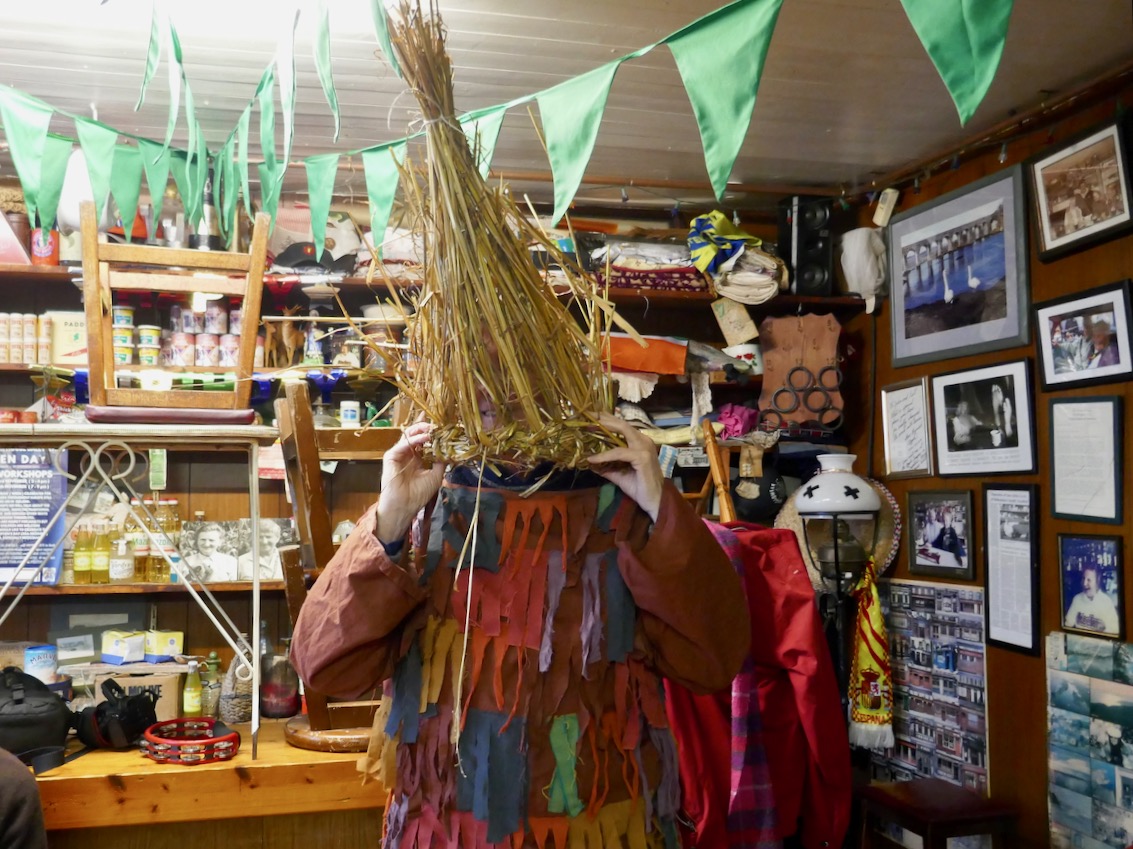
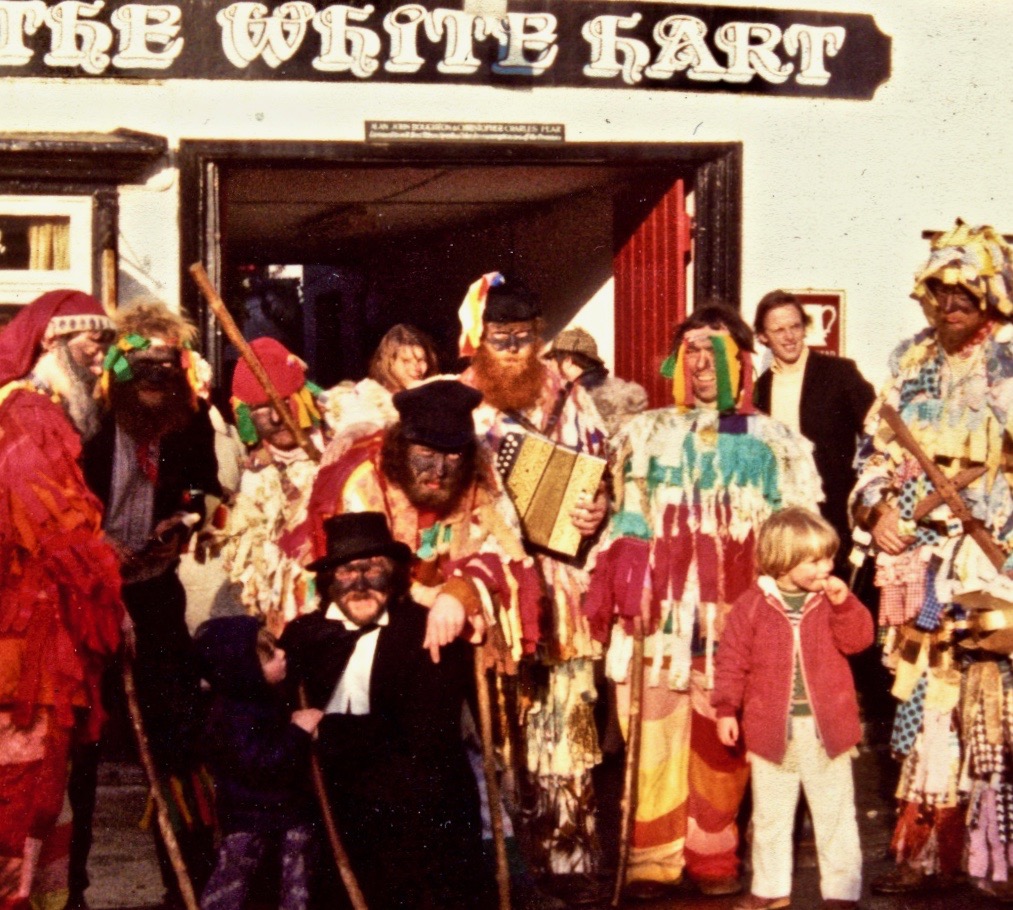
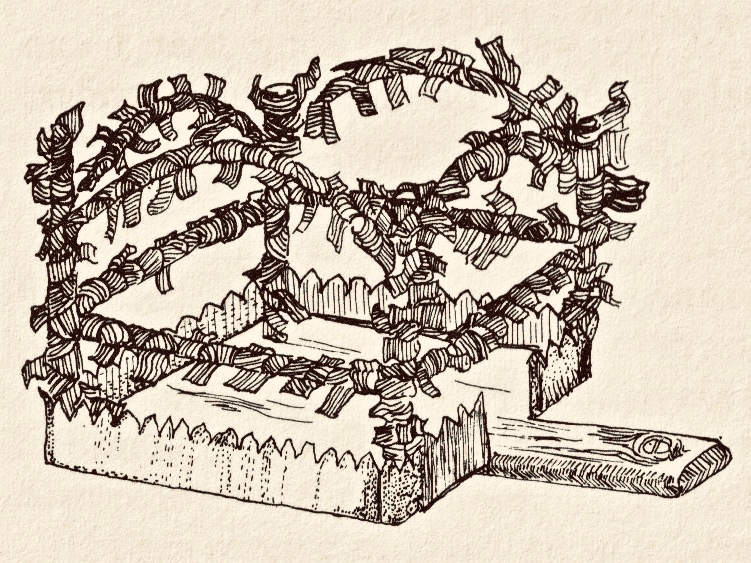
Finola and I were at the workshop, and there I am with work in progress on the straw mask which we made (upper picture). You’ll notice that I’m wearing ‘tatters’: I’ve had these for years, and I used to don them for our own mumming tradition in Devon which also happened on 26 December (that’s me with the squeezebox mumming in the 1970s! – lower picture). Over there we called St Stephen’s ‘Boxing Day’ because that was when ‘Christmas boxes’ were given to the postman, the milkman and anyone else who provided their services through the year. Interestingly, Kevin Danaher mentions the ‘Wran box’ which was taken around the houses by the wrenners (or Wran Boys) and used to collect money ‘for the Wran’. This illustration of a Wren box from County Galway is from Danaher’s book The Year in Ireland:
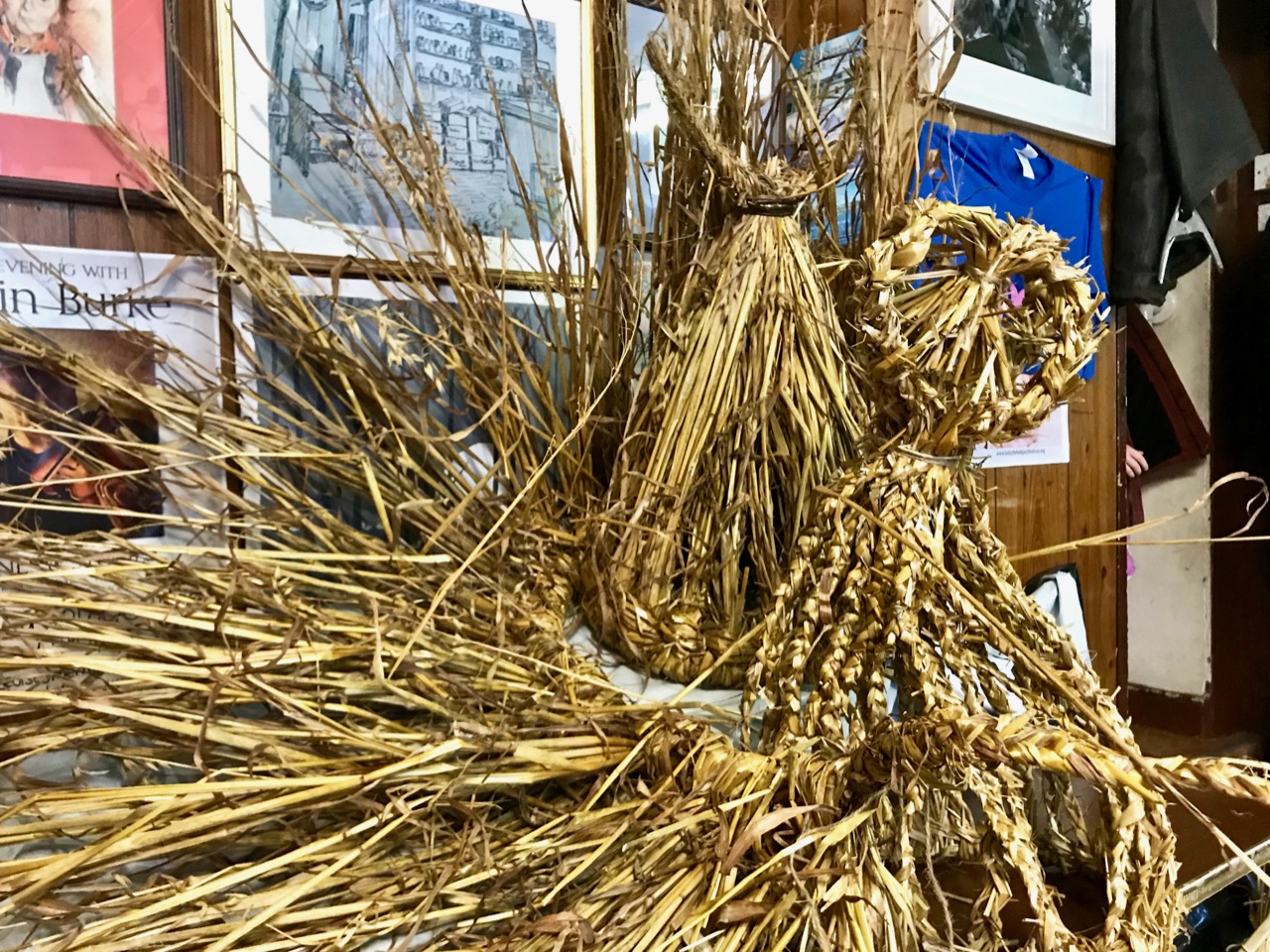
The workshop in Levis’ was very well attended, and there is clearly great enthusiasm for reviving this custom. Sonia collected the straw at the annual Thrashing in Ballydehob – which is a traditional harvest celebration. It’s not easy to find the right straw for making the masks nowadays: anything that has been through a combine harvester has been flattened and will not survive the plaiting.
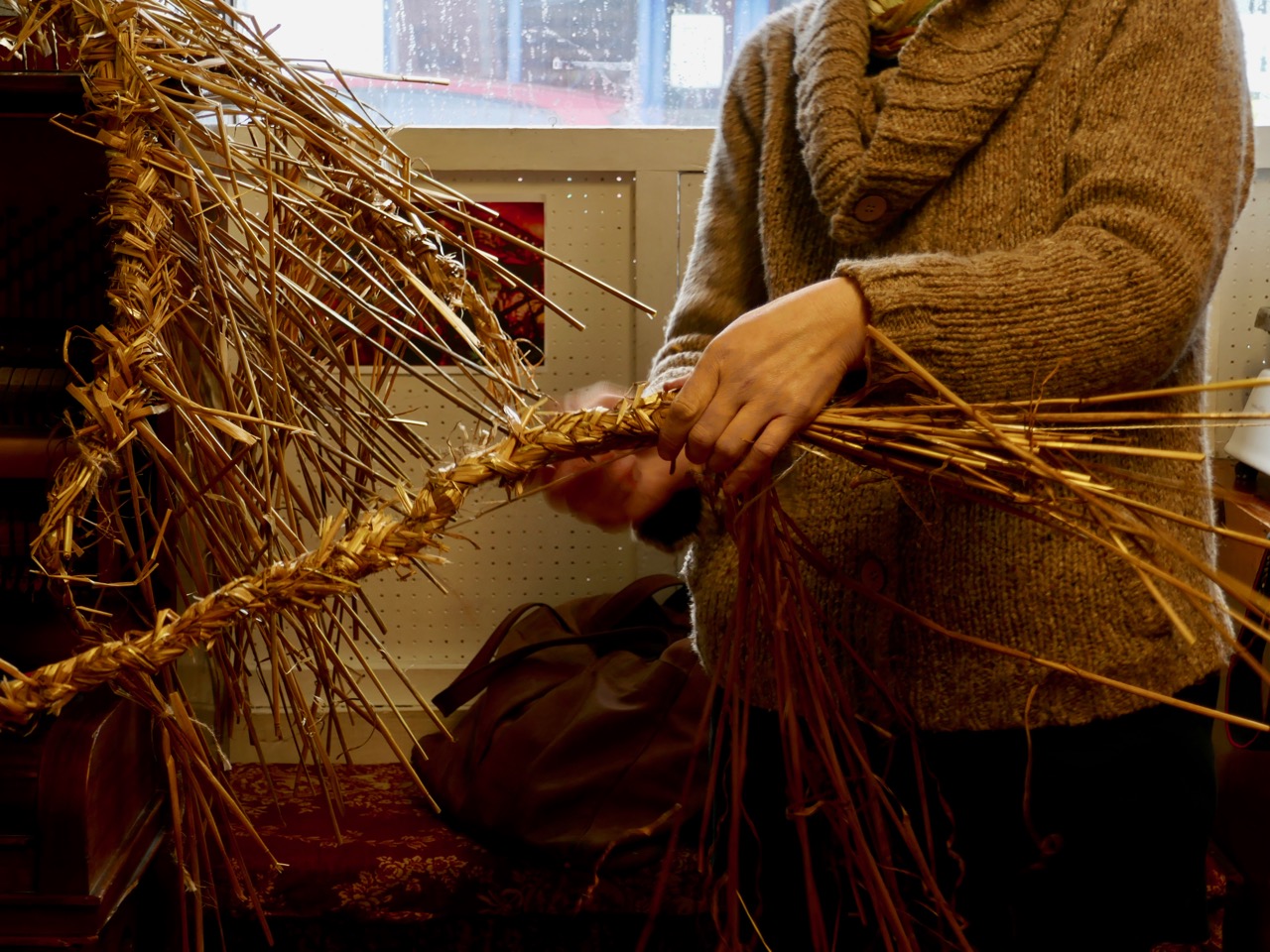
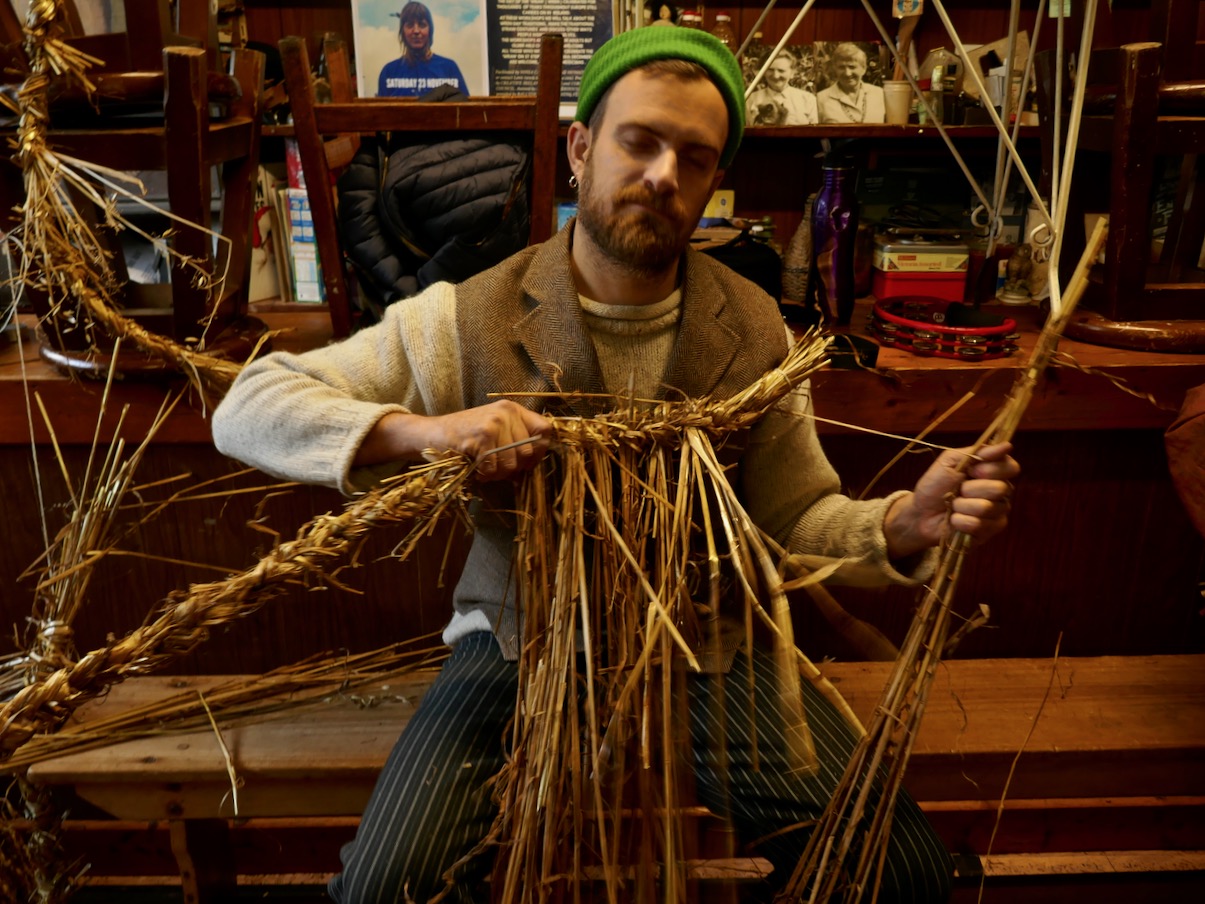
It’s a complex process, but the group coped well in acquiring the new skills under Sonia’s tutelage. You can see for yourself how successful the day had been in the last picture below. The making – every year – has always been part of the tradition where it’s still practised today. Sometimes the straw masks (which are only one part of the ‘disguise’) are destroyed after Stephen’s. In some of the Dingle traditions they are ritually burned on the following St Patrick’s Day.
Sonia is holding a further workshop – also at Levis’ Corner Bar – next Thursday 28 November at 7pm. It’s free to attend: please come and join in: you’ll learn more about the history of The Wran, and there’s likely to be some music too! And then on Stephen’s Day itself it’s out into the boreens and byways of Ballydehob to look for a wren . . . Don’t worry – the days are long gone when our (almost) smallest bird would lose its life: it’s a token hunt, the point of which is the disguising, the visiting around the streets, and the celebrations afterwards, which will extend late into the night!
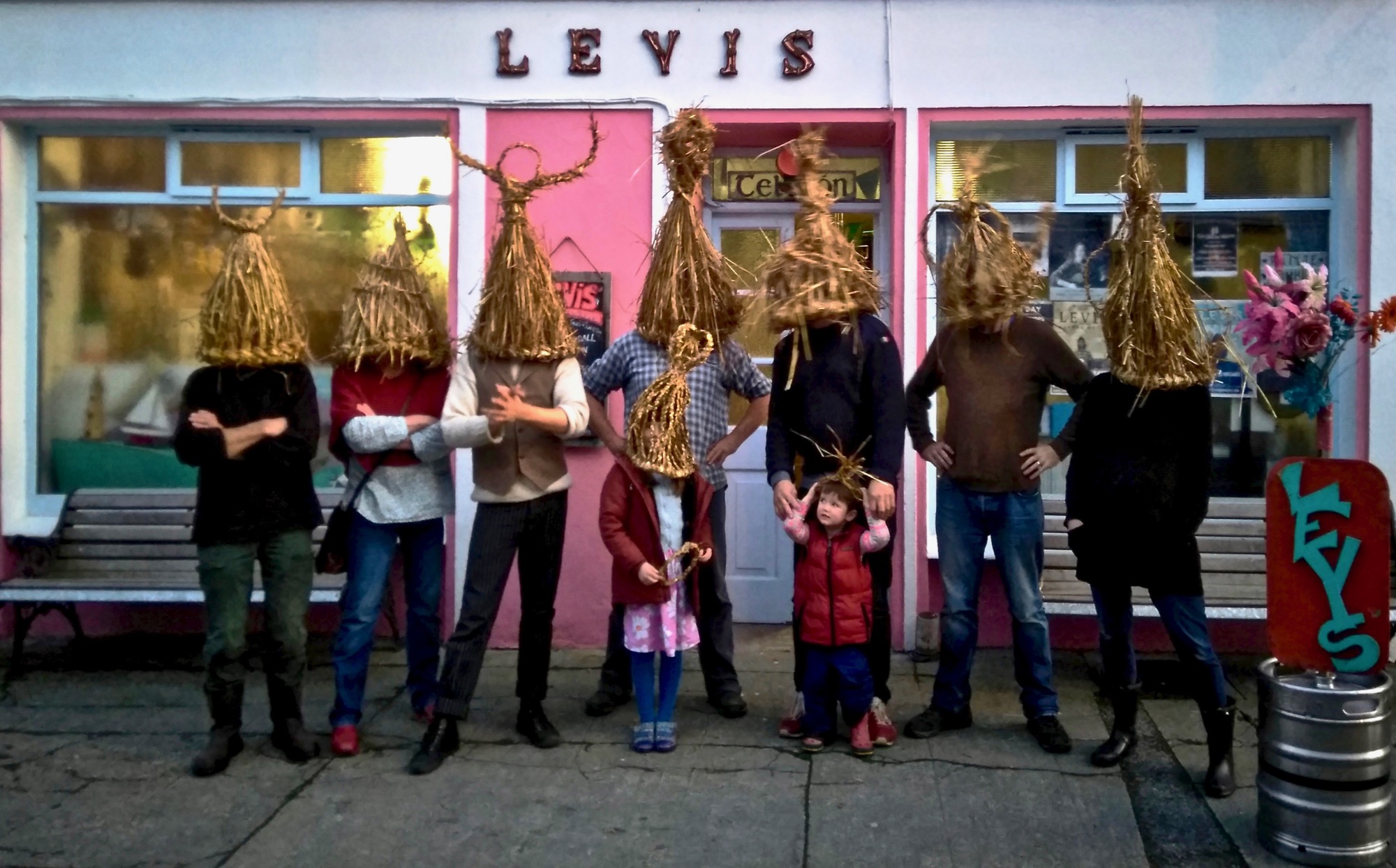
Many thanks to Pól Ó Colmáin for providing this wonderful photograph of the results of the workshop!
Levis’s of Ballydehob: Behind the Shop Counter

It’s a storied kinda place – everyone who has ever been to Ballydehob knows it and everyone has something to tell you about that time when . . .

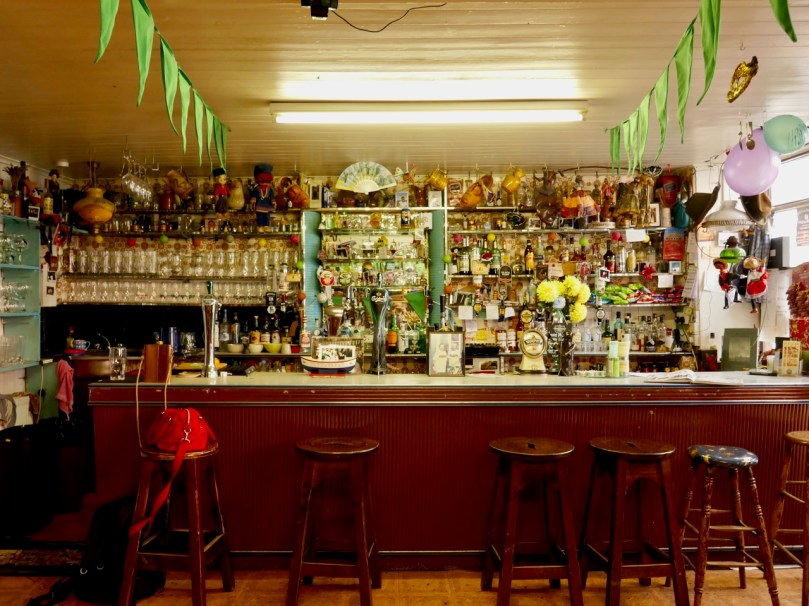
It was run by two sister, the famous Nell and Julia Levis, as a shop and a pub. The shop was on one side and the pub on the other – a familiar layout in rural Ireland.

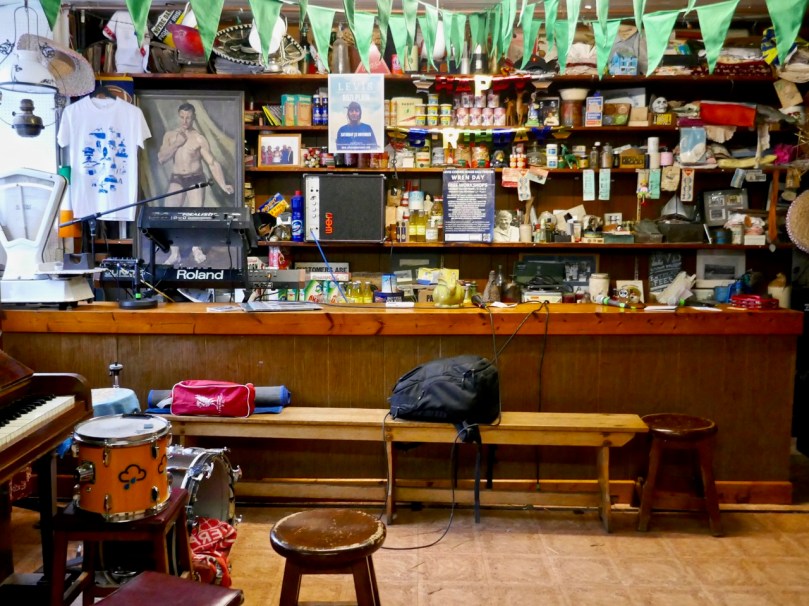
The shop side is all set up for a music gig in the upper photo

For a wonderful introduction to Levis’s I heartily recommend the documentary Keeping the Doors Open, one of the RTE Docs on One series, this one by Leanne O’Donnell. Made in 2014 it tells the story of the passing of Nell and Julia’s banner to the next generation, Joe and Caroline, who have re-invented it as the unlikeliest of music venues. Unlikely, because it still looks exactly as it did in Nell and Julia’s day. But highly successful – just take a look at its list of awards and browse the upcoming acts.

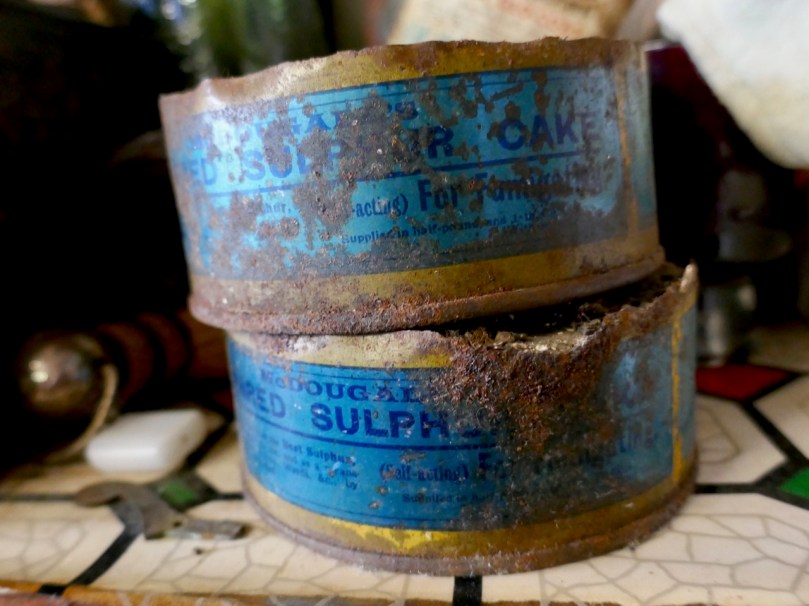
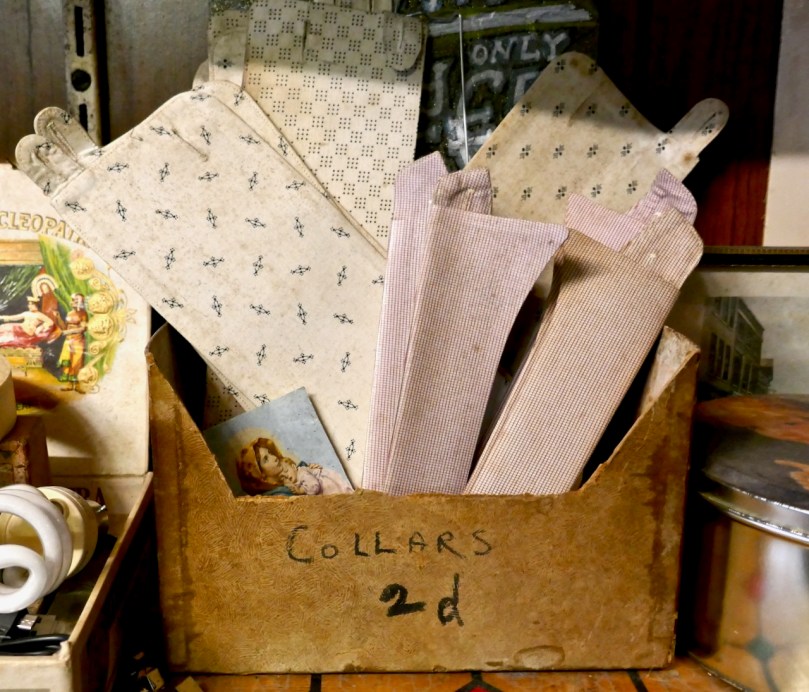
Sulphur Cake – what on earth . . .?

And those acts take place behind the counter and in front of the old grocery shelves. It’s surprisingly effective – a juxtaposition of old and new, of the domestic and the artistic. Try driving through Ballydehob on the night of a gig, with people spilling out into the street and others arriving in the hopes of somehow squirming into the already packed pub. Amazingly, they usually succeed. 

In the last couple of years the grocery side stars again! Every Wednesday local producers arrive with their vegetables, breads and juices and the place comes alive once more as a mini farmer’s market. You have to get there early!
And of course it’s still very much a village pub, where locals and visitors can go for a drink and the chat of an evening. And occasionally it does a stint as a workshop – see Robert’s post today on making ‘Wran’ hats. Nothing on the shelves in the grocery side is for sale any more. Most of reached its ‘best before’ date over 20 years ago, if not longer.

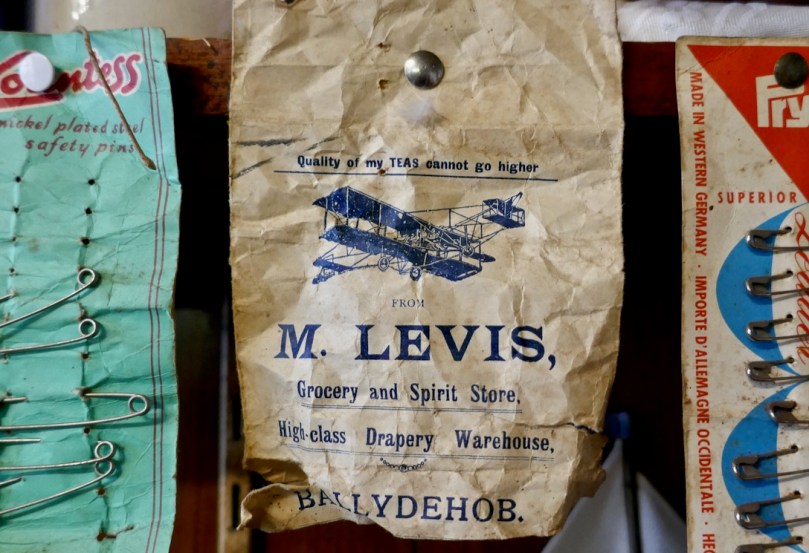
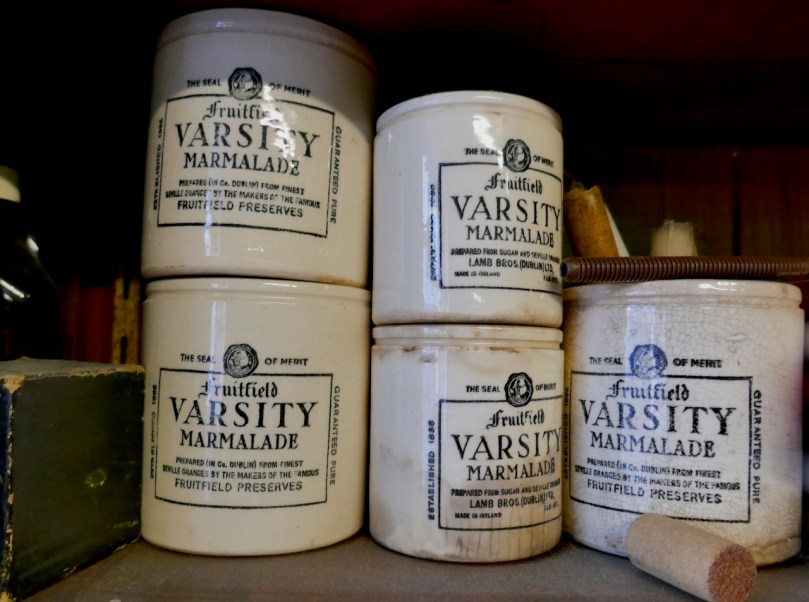
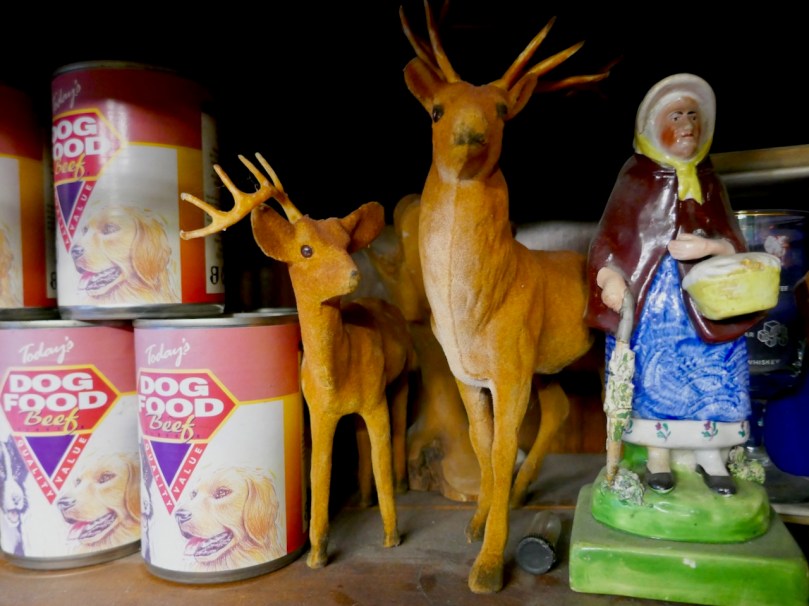
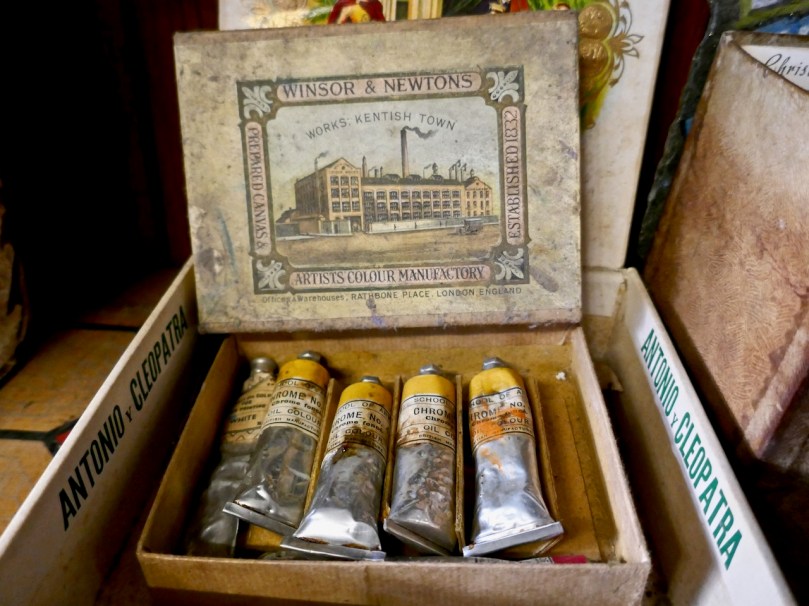
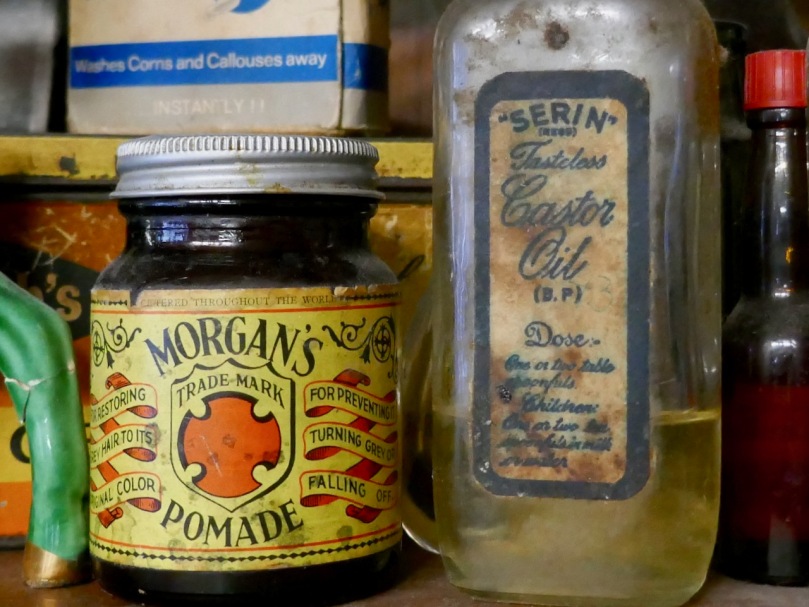
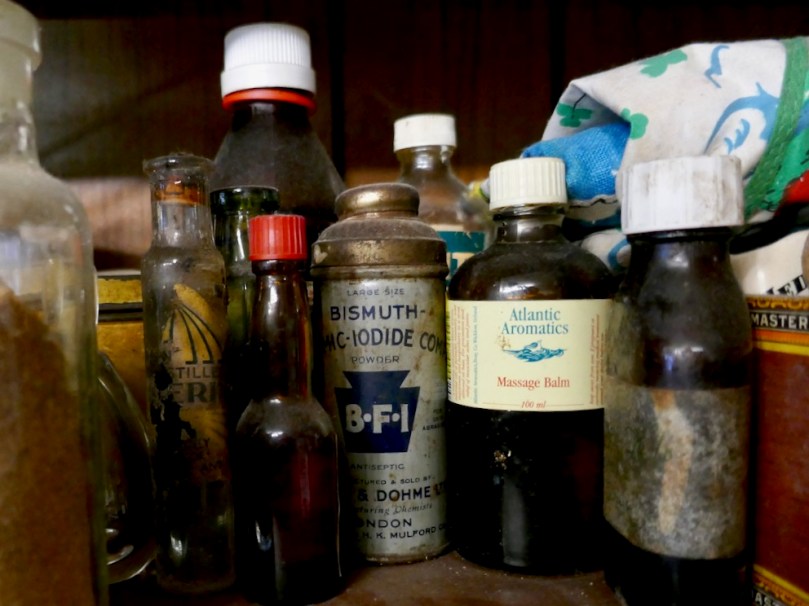
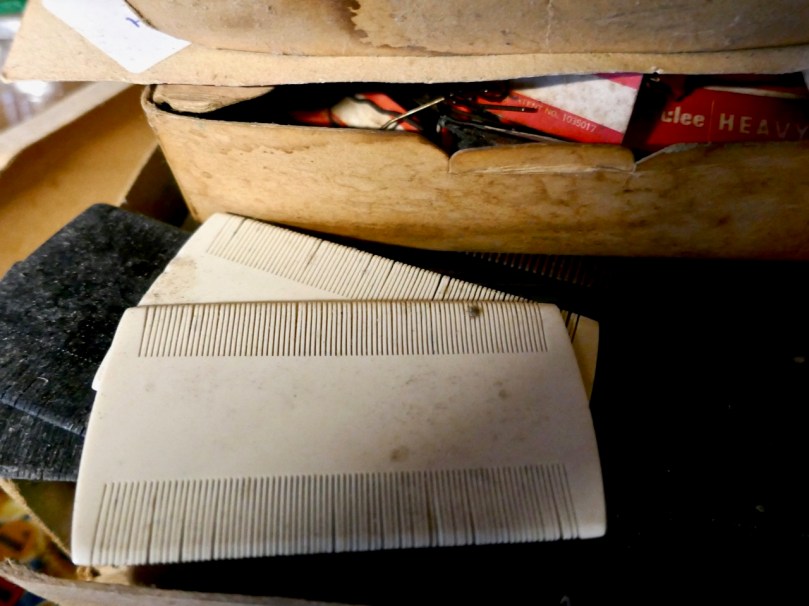
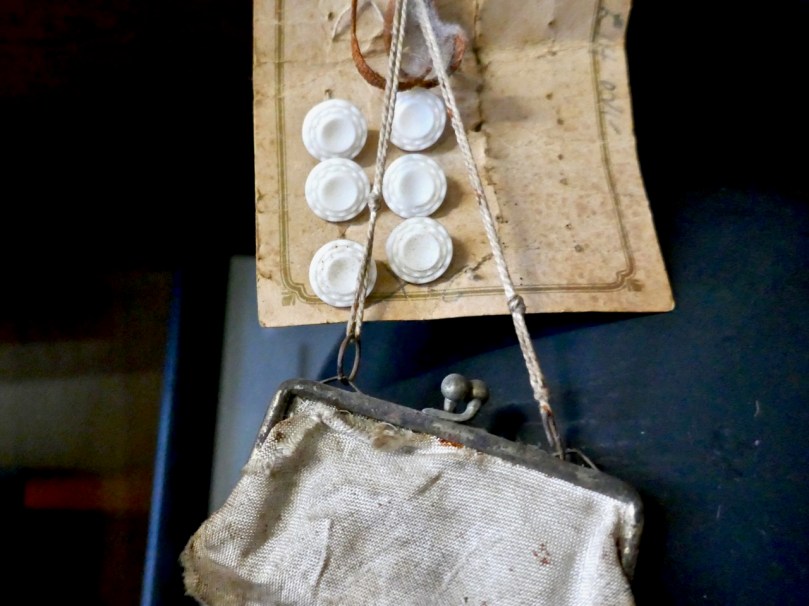
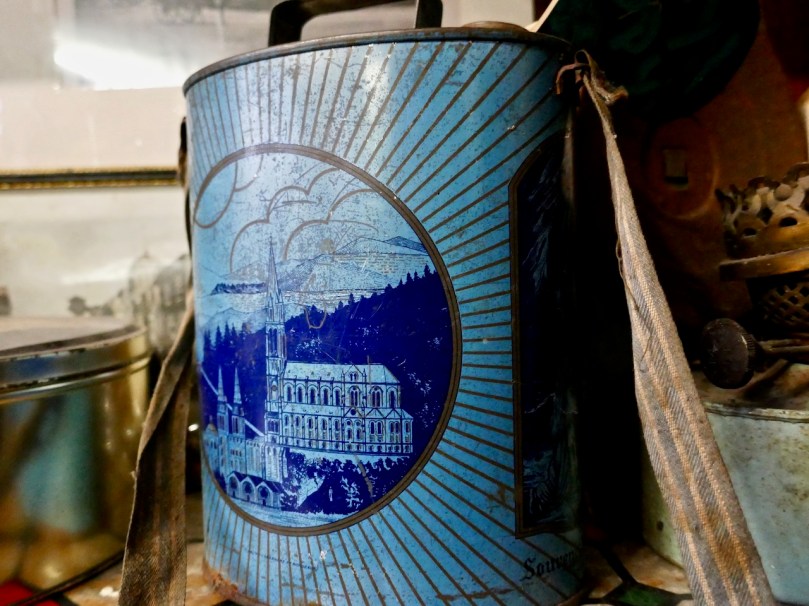
Joe (Nell and Julia’s grand-nephew) allowed me some time on my own over the last couple of days to take a good look at the shelves on the grocery side and this post is a photo-homage to those shelves. They represent only a section of what’s there, gently resting under layers of dust and memory.

Need some basic groceries? Some cleaning supplies or sewing notions? How about tobacco or sweets? And because Ballydehob was a haven for artists (and we have our own Arts Museum to prove it) you might run out of oils or pastels at the wrong moment.

All that medicinal stuff our mothers used to dose us with – Syrup of Figs, anybody? Looks like that kind of thing was in demand in Ballydehob. And if all else failed, well there was always an appeal to Lourdes.

We all love a bit of nostalgia, don’t we? What do you see that you remember from childhood? What stories do these images conjure up for you?

And when are you coming over for a pint?


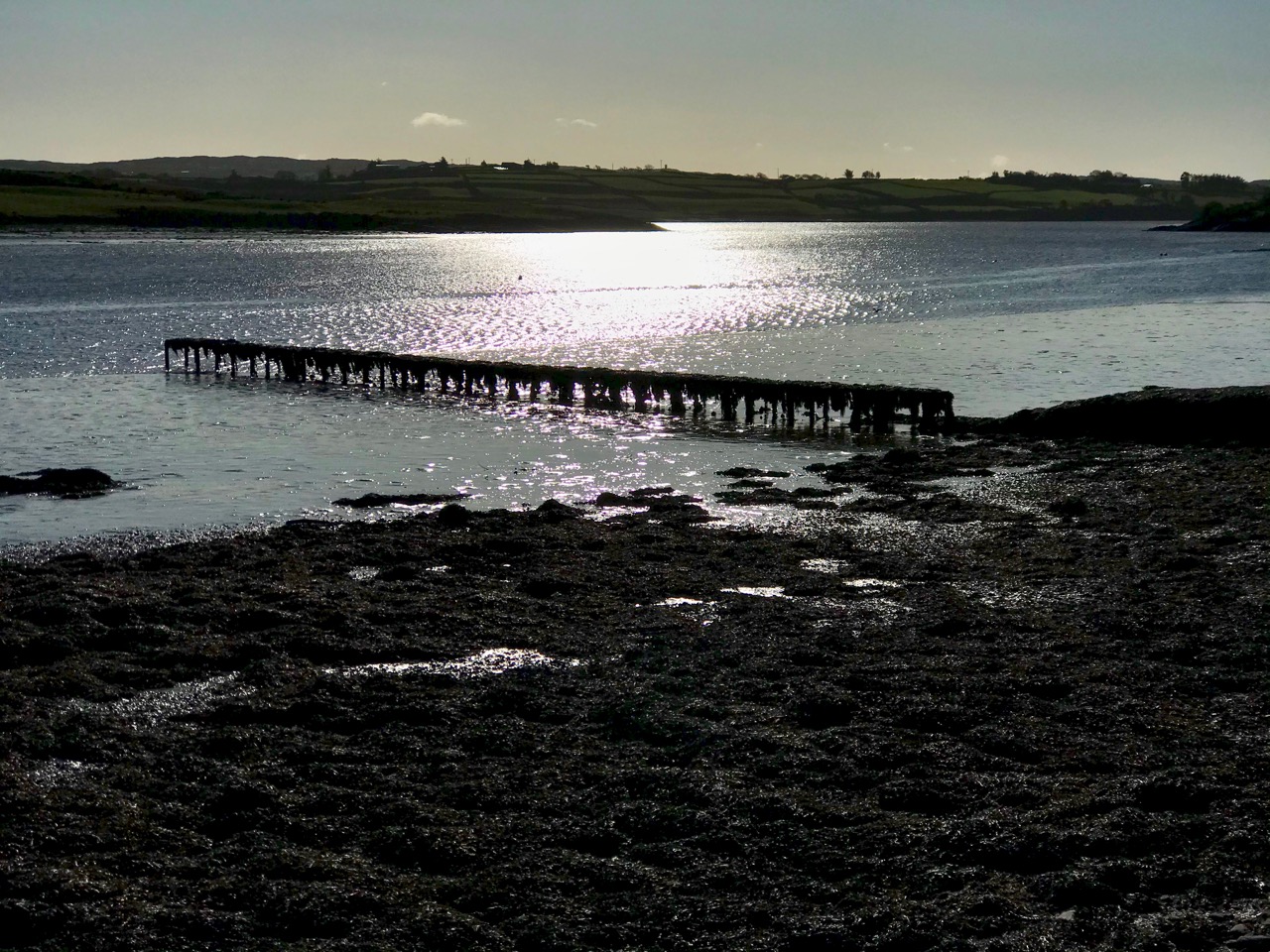
We are on Twitter!

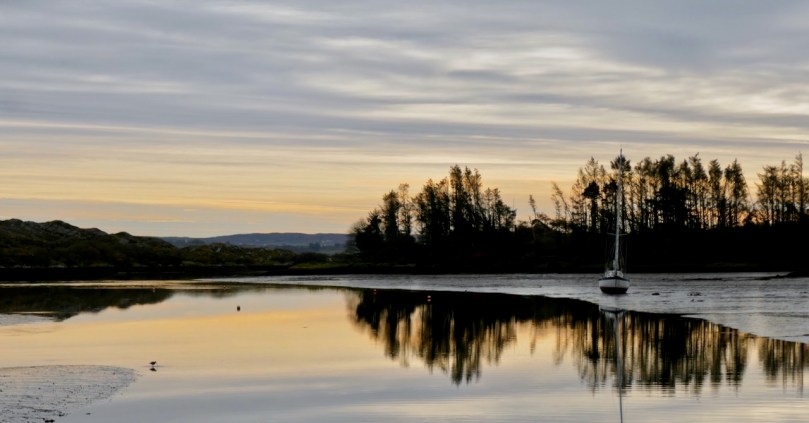
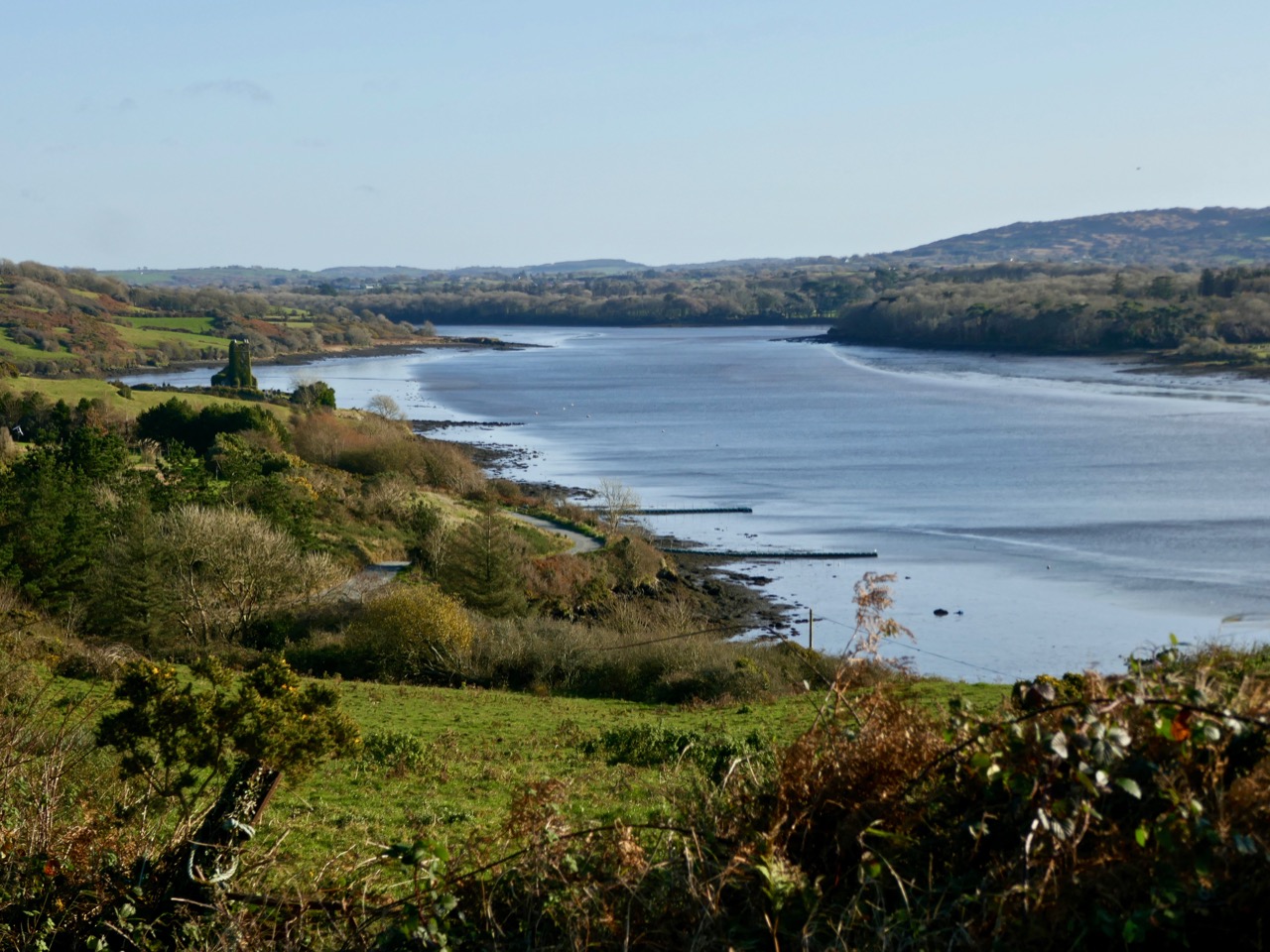
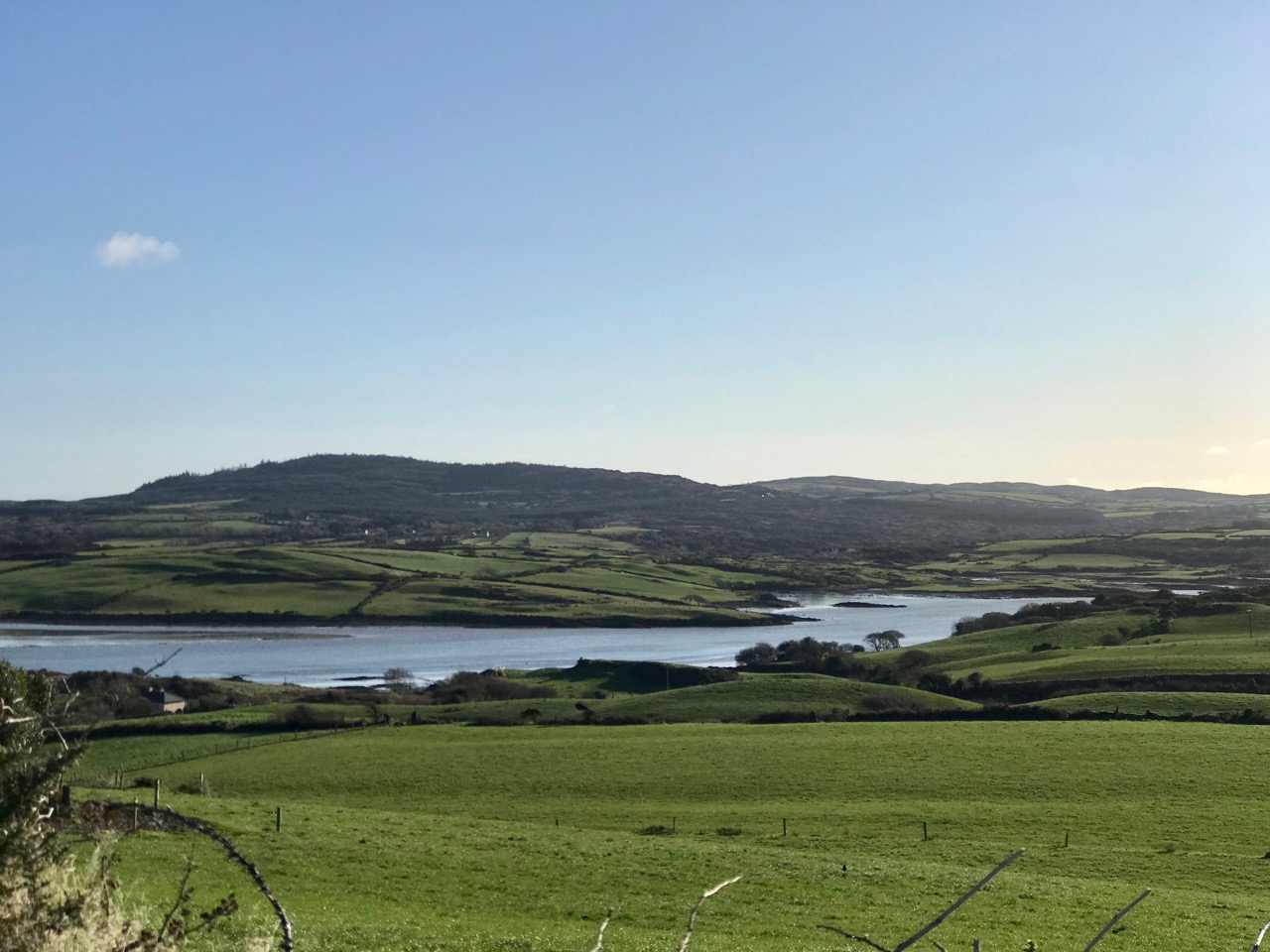
You wouldn’t want to do anything too hastily, like. We’ve only been blogging since 2012 –  beavering away, week after week, to let you all in on the epic stories and fabled landscape of West Cork (that’s Ballydehob Bay above, taken today). That’s seven years, 665 posts, four thousand regular followers, four hundred thousand visitors and about three quarters of a million views. About a third of you come from Ireland, two sizeable chunks of you from the USA and the UK, then Canada and after that it’s the United Nations of Readers. There’s a couple of African countries where we have yet to find a reader – and Greenland. Come on, Greenland!

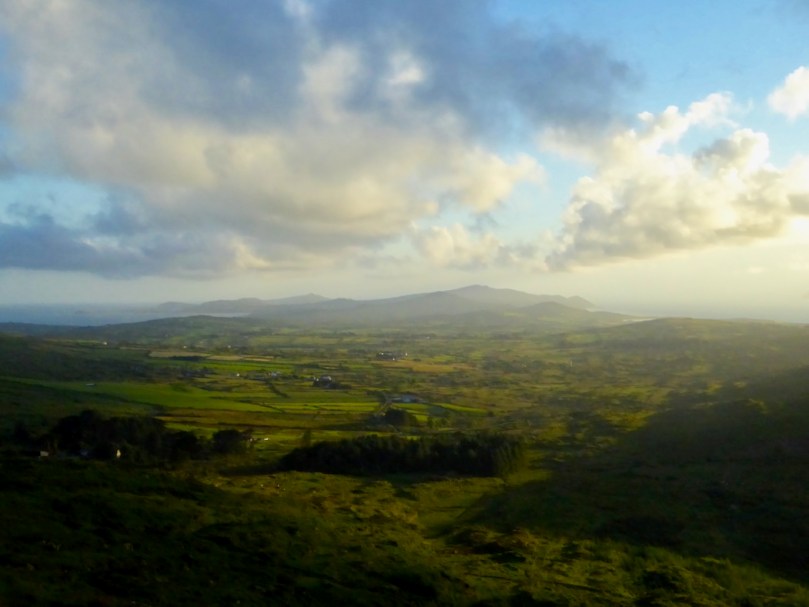
Our beat – the Mizen Peninsula, from the top of Mount Gabriel

We’ve been called “West Cork’s premier Arts and Culture blog” and “…The wonderful literary and visually rich website . . . is a treasure, a sort of 21st century Robert Lloyd Praeger, online…” We’ve had letters and comments from all over the world, some of which have led us down all kind of interesting avenues for further research. It’s been humbling and exhilarating and we are grateful for all your support.

You can expect lots of archaeology – still working on more posts about stone circles, like this one at Ardgroom on the Beara

In all that time, we’ve operated across two platforms. First our blogging platform, WordPress, and second, Facebook, which we joined in Sept 2014. Both are marvellous, user-friendly (well, most of the time) services that have allowed us to connect to our readers and promote both our blog and West Cork. As a couple of retired professionals with average techie skills, that’s been a godsend.

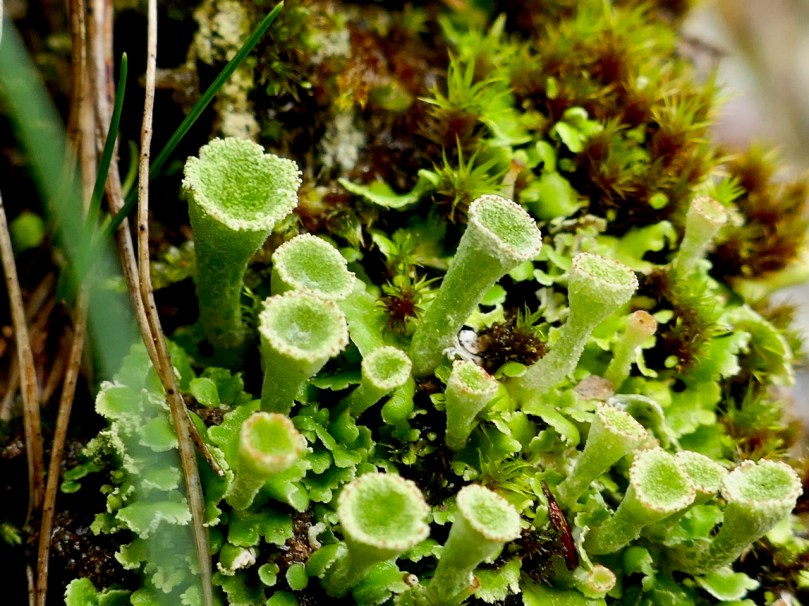
From the Big Picture to something hard to see with the naked eye – these tiny Pixie Cup lichen are growing in our own garden

And now we are venturing from the Blogosphere to the Twitterverse. We’ve set up a Roaringwater Journal Twitter account, with the handle @RoaringwaterJ. We’ve tweeted a few recent favourite posts just to get us started, and will be tweeting all our new posts as they are published, and maybe the odd photograph or two as well.

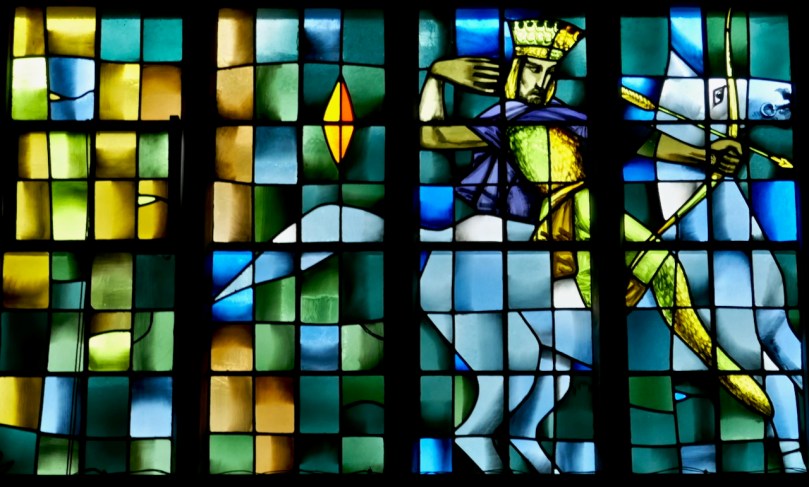
We’re planning to look in depth at the wonderful Murphy Devitt stained glass windows in Cork soon. Here’s one of the Horsemen of the Apocalypse from a MD window in Newbridge College

Don’t worry, Facebook Friends – we are staying on Facebook too. But if you have a Twitter account, please do drop by @Roaringwaterj and hit that Follow button. It’s taken us 7 years to get here, after all.

Walking West Cork – Another of the Fastnet Trails

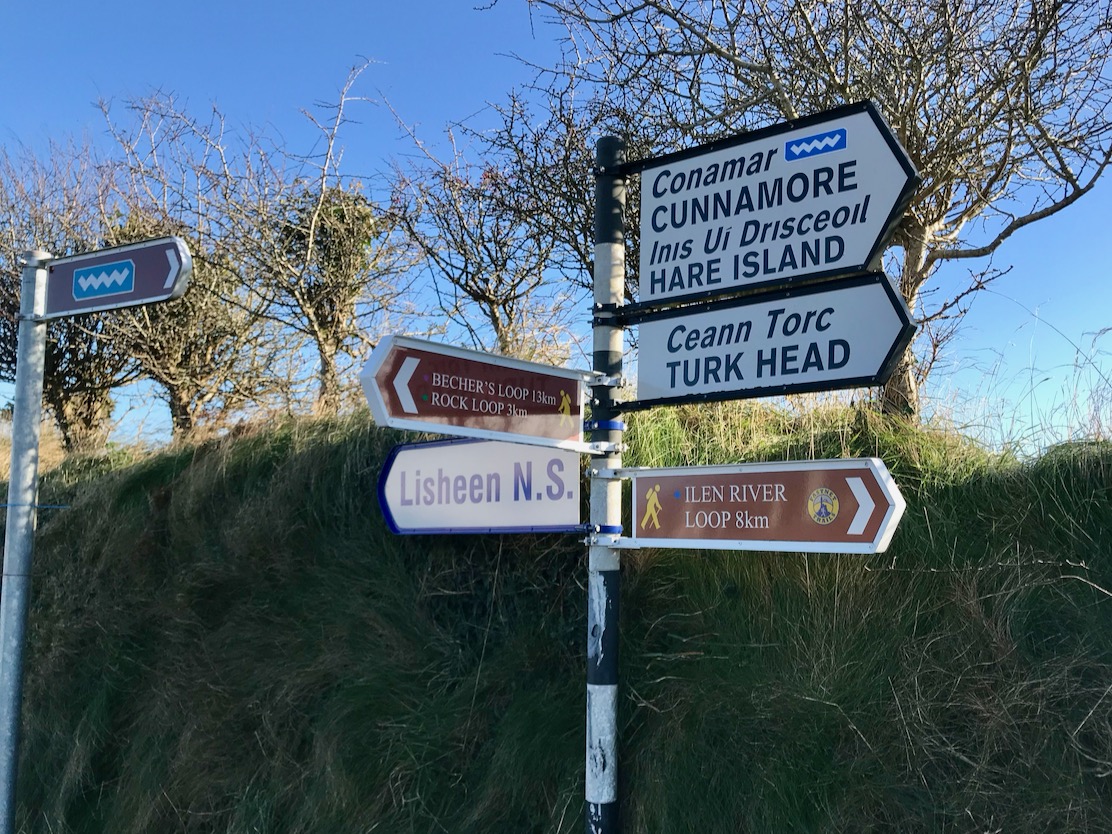
We’re well into November, yet clear, dry days abound and we are drawn out into the lanes of West Cork. There are so many to choose from, and all are quiet, although we will always find someone to share a chat along the way. Yesterday we donned our boots and followed another of the Fastnet Trails – the Ilen River Loop. In fact, the boots were unnecessary as the whole route is on virtually deserted paved roads. If that sounds unexciting, let me tell you it isn’t: wherever you go in West Cork you won’t be short of sweeping green landscapes, broad views – mostly over mountain or water – and fragments of engrossing history jumping out to meet you.

We started at the Lisheen trail head and covered the 8 kilometers in a bit over two hours. This did include some dawdling and chatting: in Ireland the latter is unavoidable, and applies to everyone you meet. With us were friends Amanda and Peter, and you’ll find Peter’s Hikelines account of the expedition here: his watercolour illustrations can only be described as ‘exquisite’.

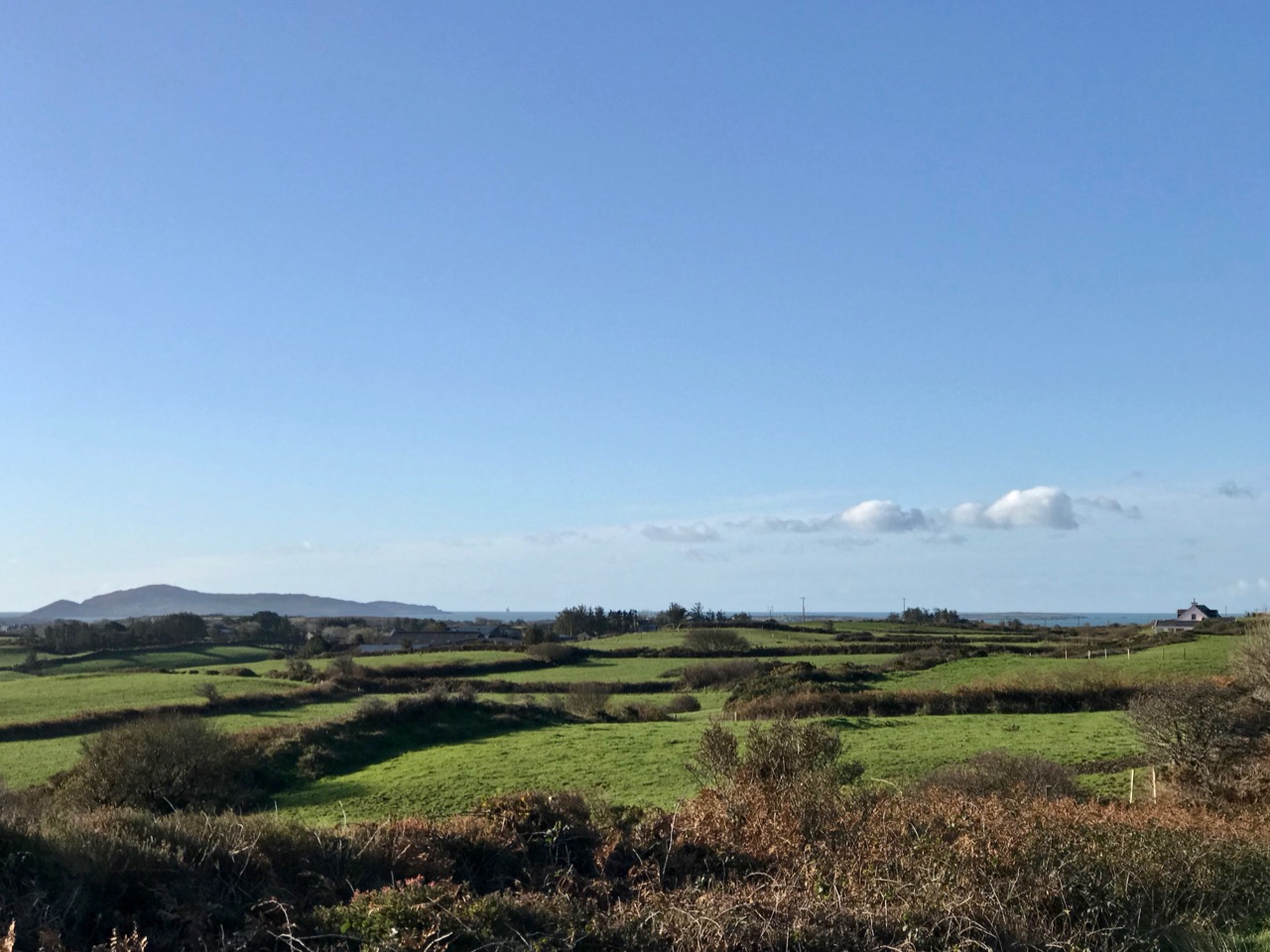
Look carefully (above) at the line of sea on the horizon: just visible is the unmistakeable silhouette of the Fastnet Lighthouse, justifying this route as a part of the Fastnet Trails network. It’s a wonderful asset for locals and visitors. You could simply drive along these routes, of course, but you just won’t get to see the details and appreciate the beauty. On foot you can pause at every turn and on every brow to properly take in the delectable countryside. And the network of trails is expanding – new routes are being developed at the west end of the Mizen: here’s another of Peter’s posts.

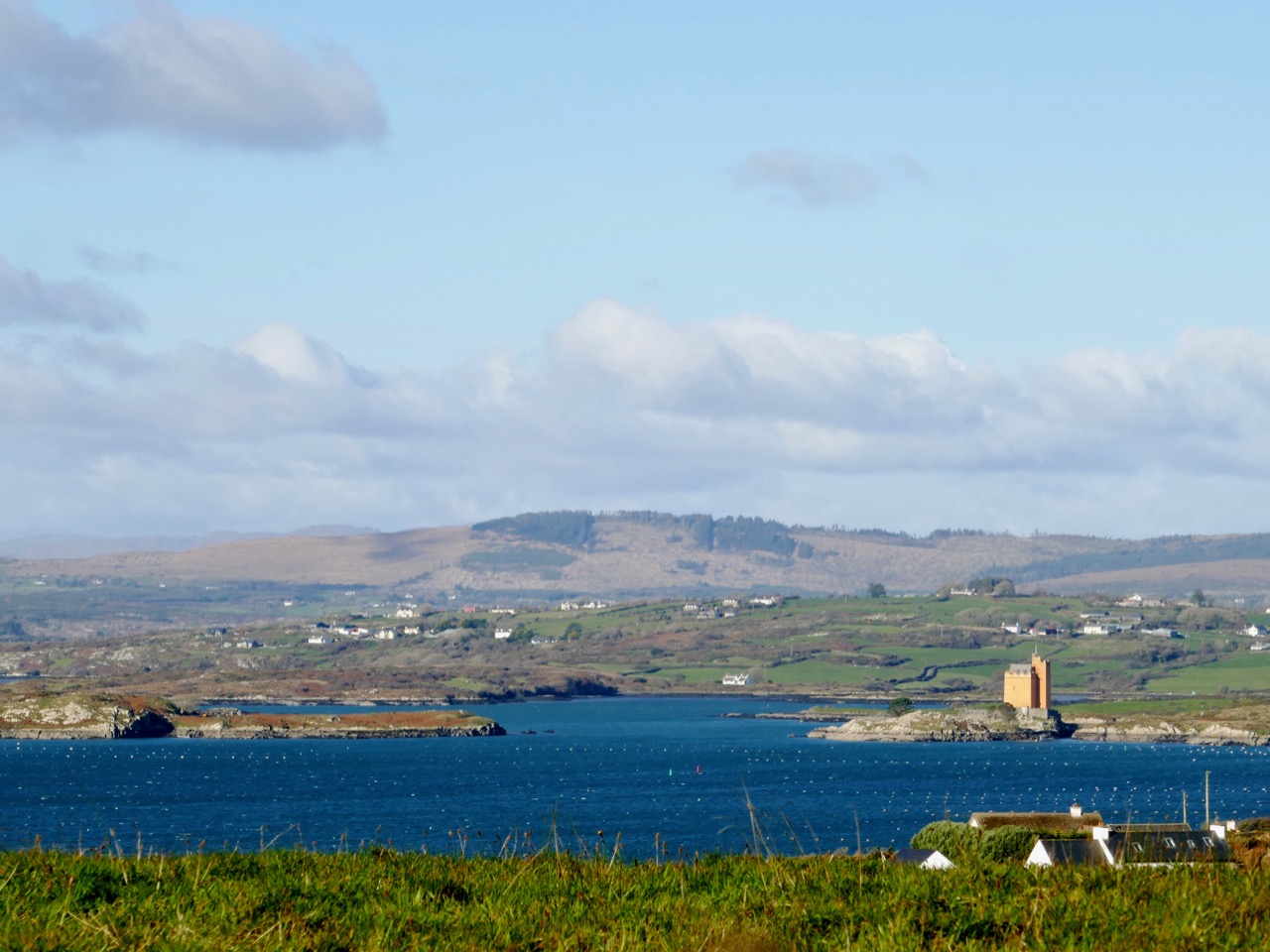
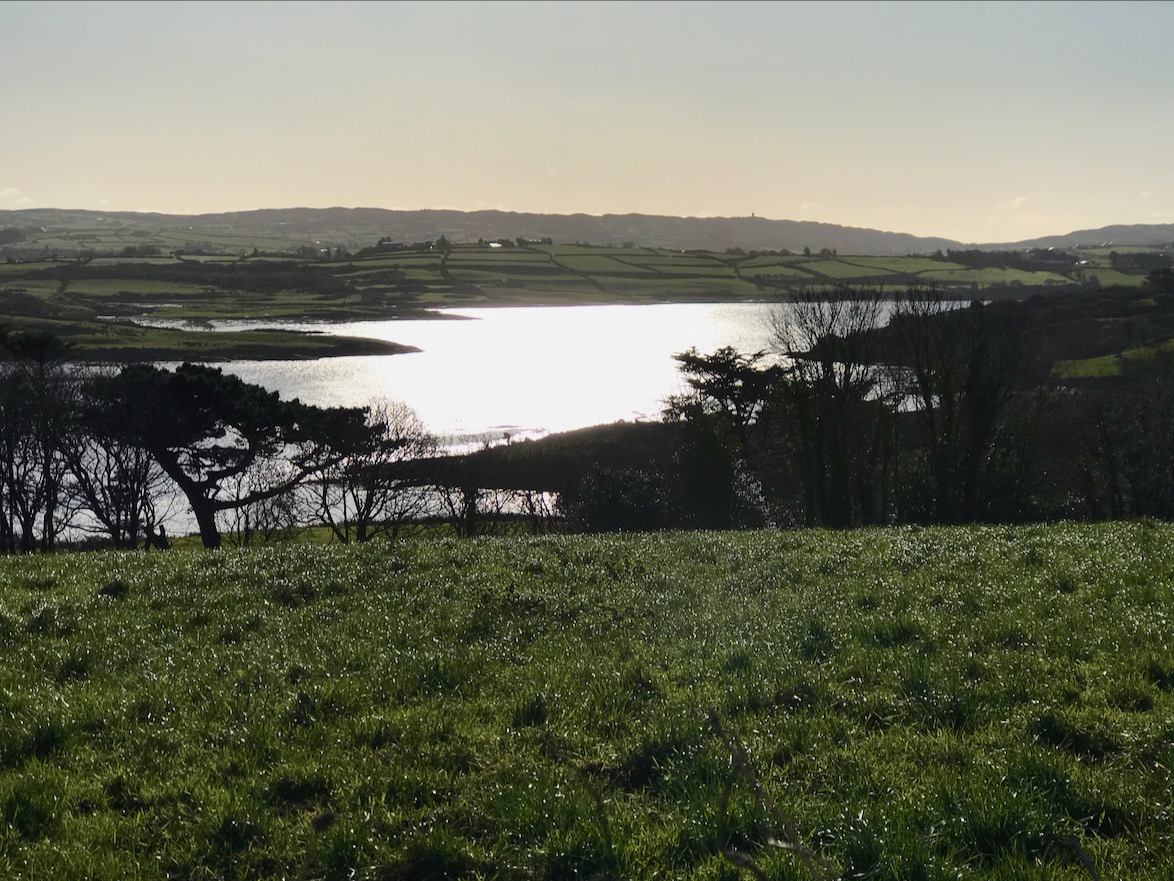
There are views to the north as well, looking into Ballydehob Bay which Jeremy Irons’ ochre coloured Kilcoe Castle dominates. Above the water can be seen the islands of Roaringwater Bay and the ridges of the Mizen and Sheep’s Head, and even the high peaks of the Beara Peninsula beyond. But we must focus on the subject of this trail, which is the broad estuary of the Ilen River as it winds inland, feeding into the woods and pastures of West Cork, narrowing but remaining tidal right up to Skibbereen: schooners used once to berth on the five quays serving that town.

All along the coastline and river estuaries in West Cork are reminders of how important transport by water once was. Dozens of quays are still here, in good working order – there was a drive to revive and restore the more significant ones some years back. Also there are traces of more ancient ones which are slowly decaying into nature. All were put there to serve the isolated rural communities in the days when boreens were only narrow tracks, often impassable in the winter months. But on these western peninsulas no-one is more than a few miles from navigable water – and those quays were an invaluable asset.

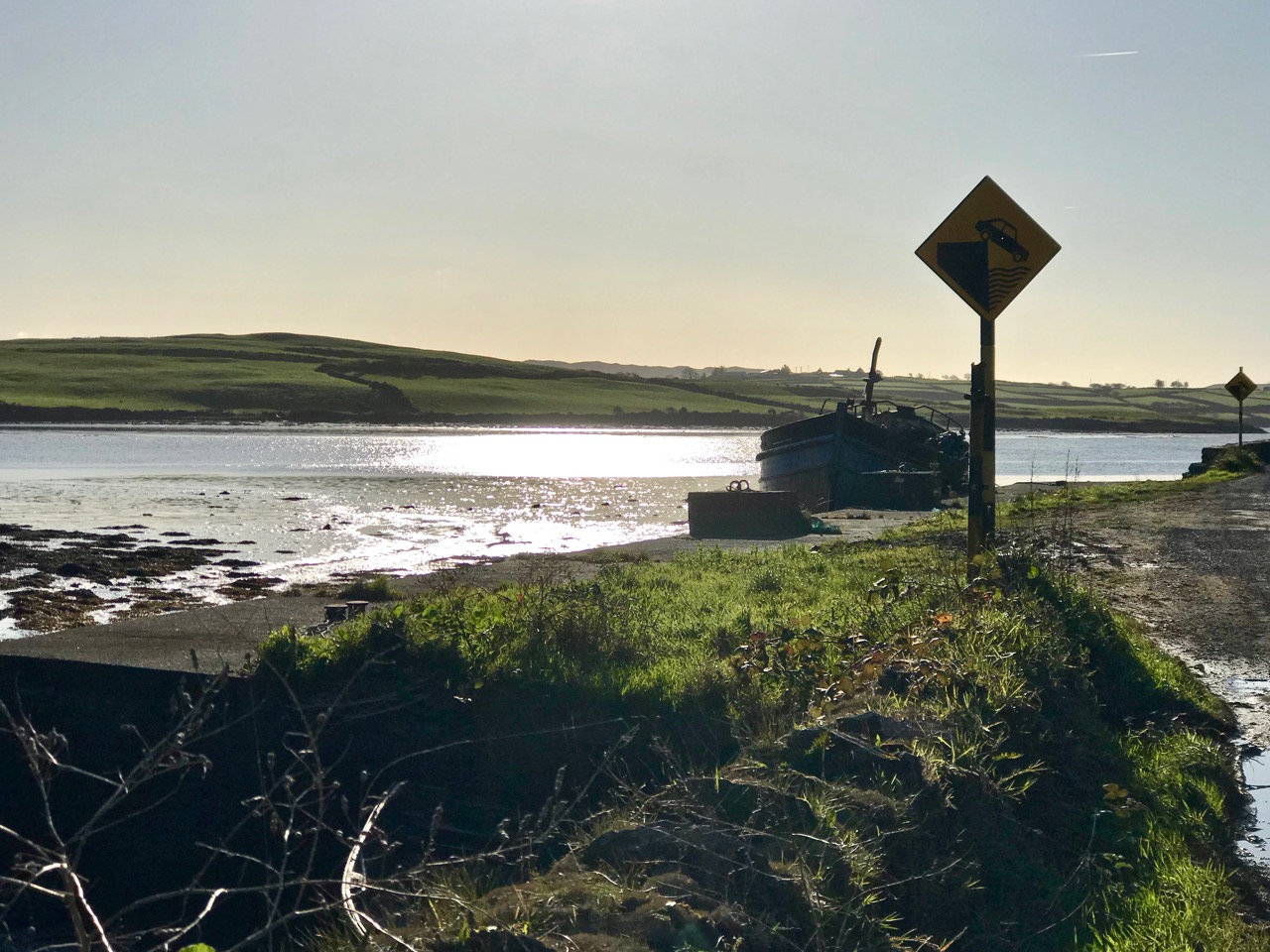
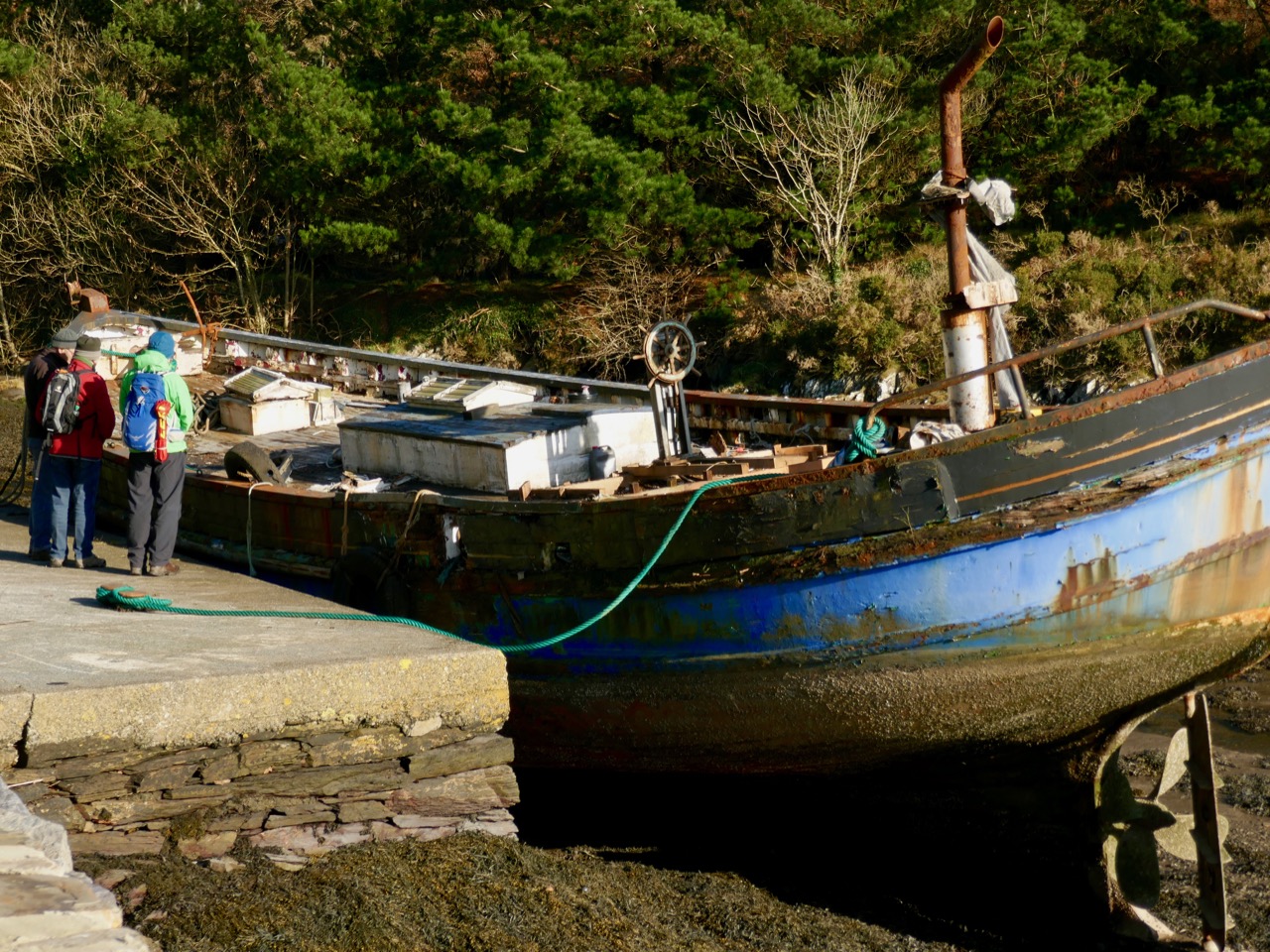
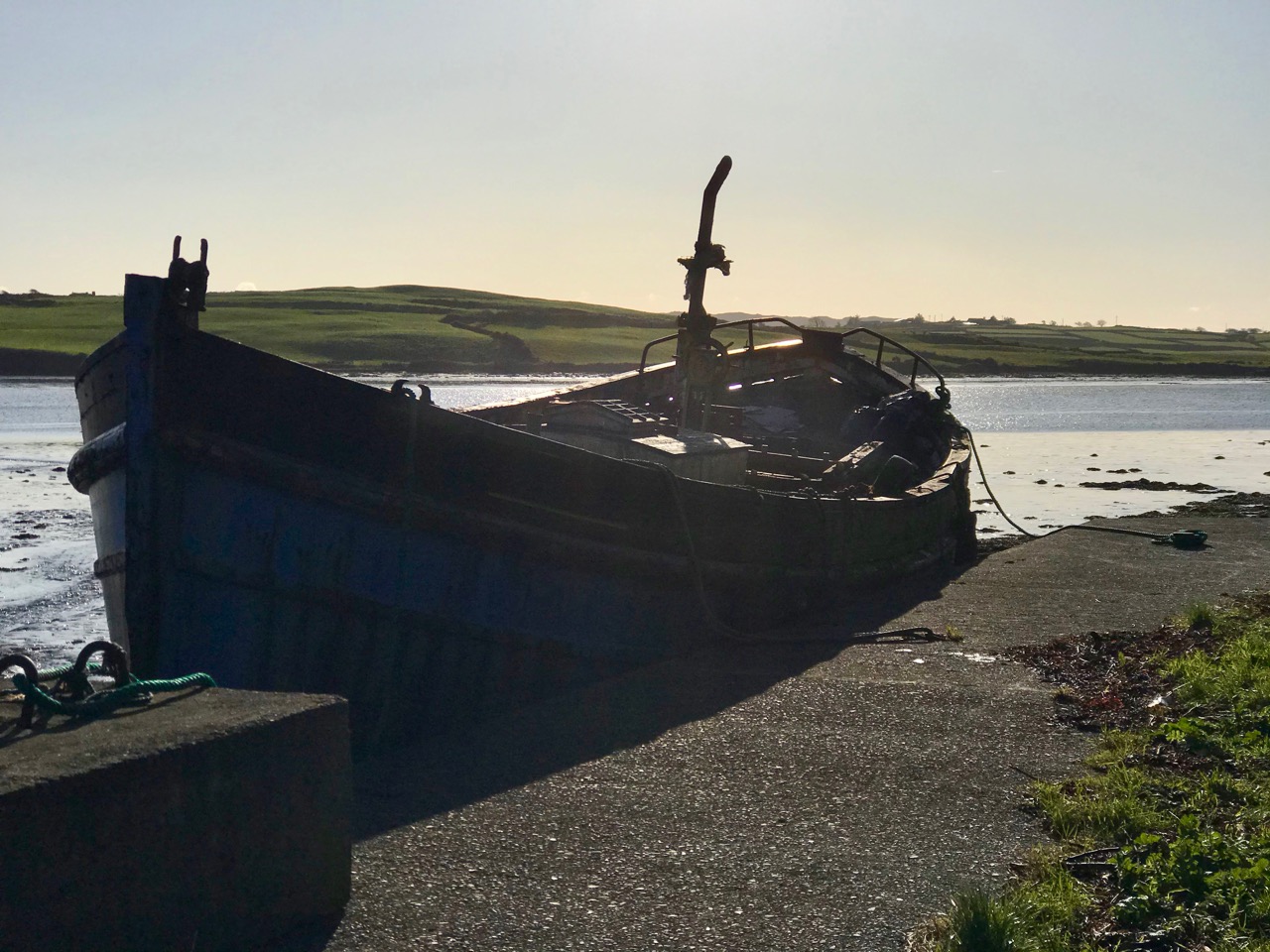
Our route passed right beside the Glebe Quay, where we came across the hull of an old fishing boat and – by chance – one of its former owners! Here we are, ‘at the chat’, above. This became a long ‘chat’ – as I was most intrigued to find out why this large vessel was sitting here in a deteriorating state – but we had to cut it short in the end as we were getting cold standing still! Our informant was Mike Williams, who Finola and I have met before: he lives on the shore of the Ilen River and has been involved in boats and boatbuilding for much of his life. He bought this former herring ring-netter some years ago with the intention of restoring her, but sold the vessel on to another enthusiast. The project did not succeed, however, and now the boat is on its way to the marine scrap yard – a sad but inevitable fate for many retired wooden craft.

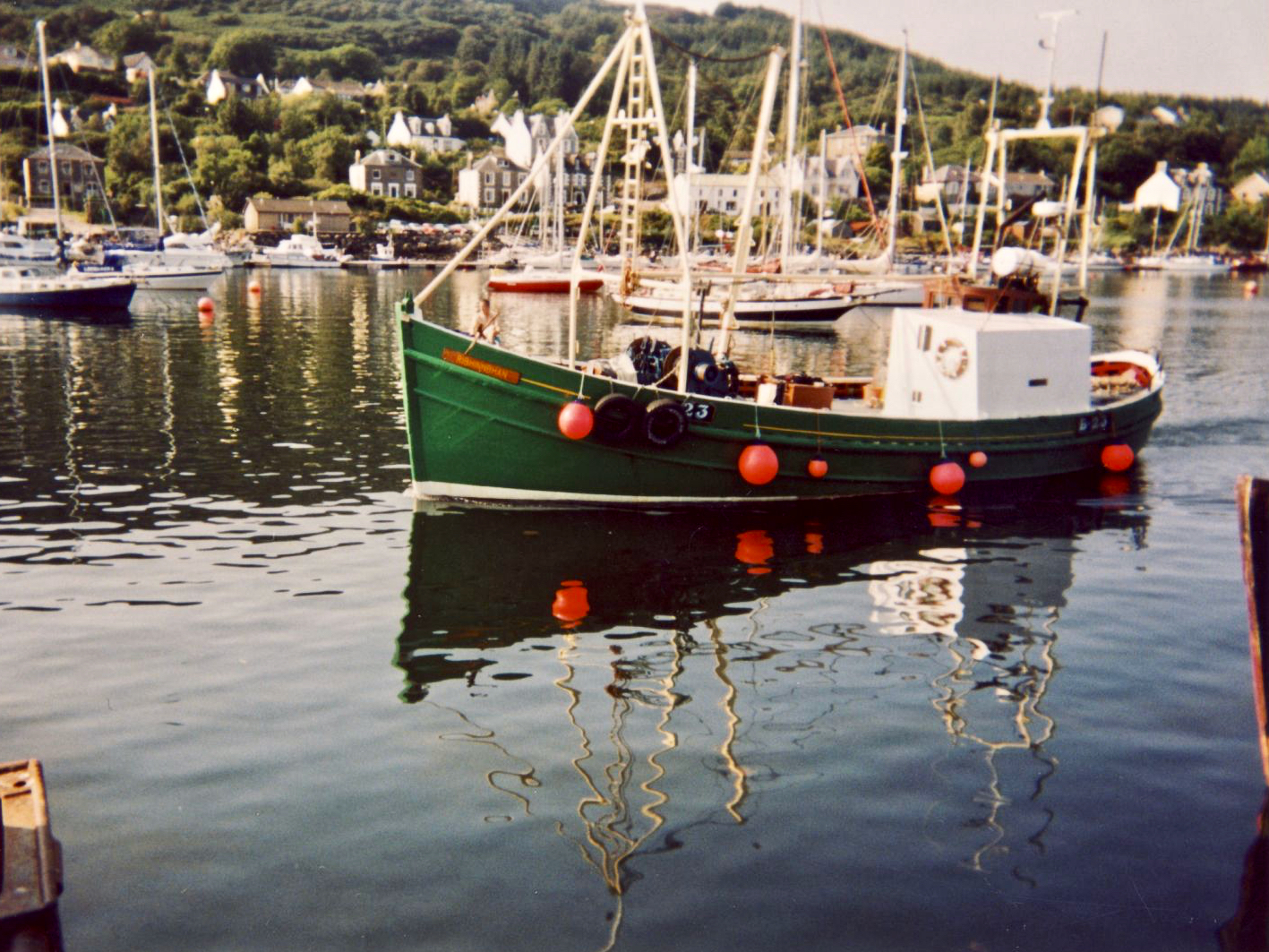
I did a bit of internet delving and was pleased to turn up some historical information on this boat, which Mike told us was named Ribhinn Bhan. Ribhinn comes from the old Irish word rhigan meaning ‘maiden’, while bhan in Irish means ‘white’. This vessel started life with the name Ribhinn Donn – ‘brown-haired maiden’, and was built in Scotland by Nobles of Girvan in 1966. She was first registered in Scalpay Isle – Sgalpaigh na Hearadh in Gaelic, one of the Outer Hebrides, close to Harris – and carried the number SY 371. She was renamed in 1973 and reregistered as B23 in 1989. She arrived in Tarbert, Co Kerry, Ireland in 2004, and Mike bought her in 2006. I’m including these two not-so-good quality photos of Ribhinn Bhan, which I traced, for historical interest: the first is the vessel in Tarbert, and the second  follows her to West Cork; she is on the right, here, in the boatyard at Oldcourt, on the Ilen River, in 2007.

Moving on from the Ribhinn Bhan our path followed the line of the estuary, rising up to higher ground before turning back towards the trail head at Lisheen. There were many more sweeping views to be enjoyed, and the delight of being immersed in the simple ambience of rural life in West Cork, with all its unremarkable yet irresistibly attractive details. 

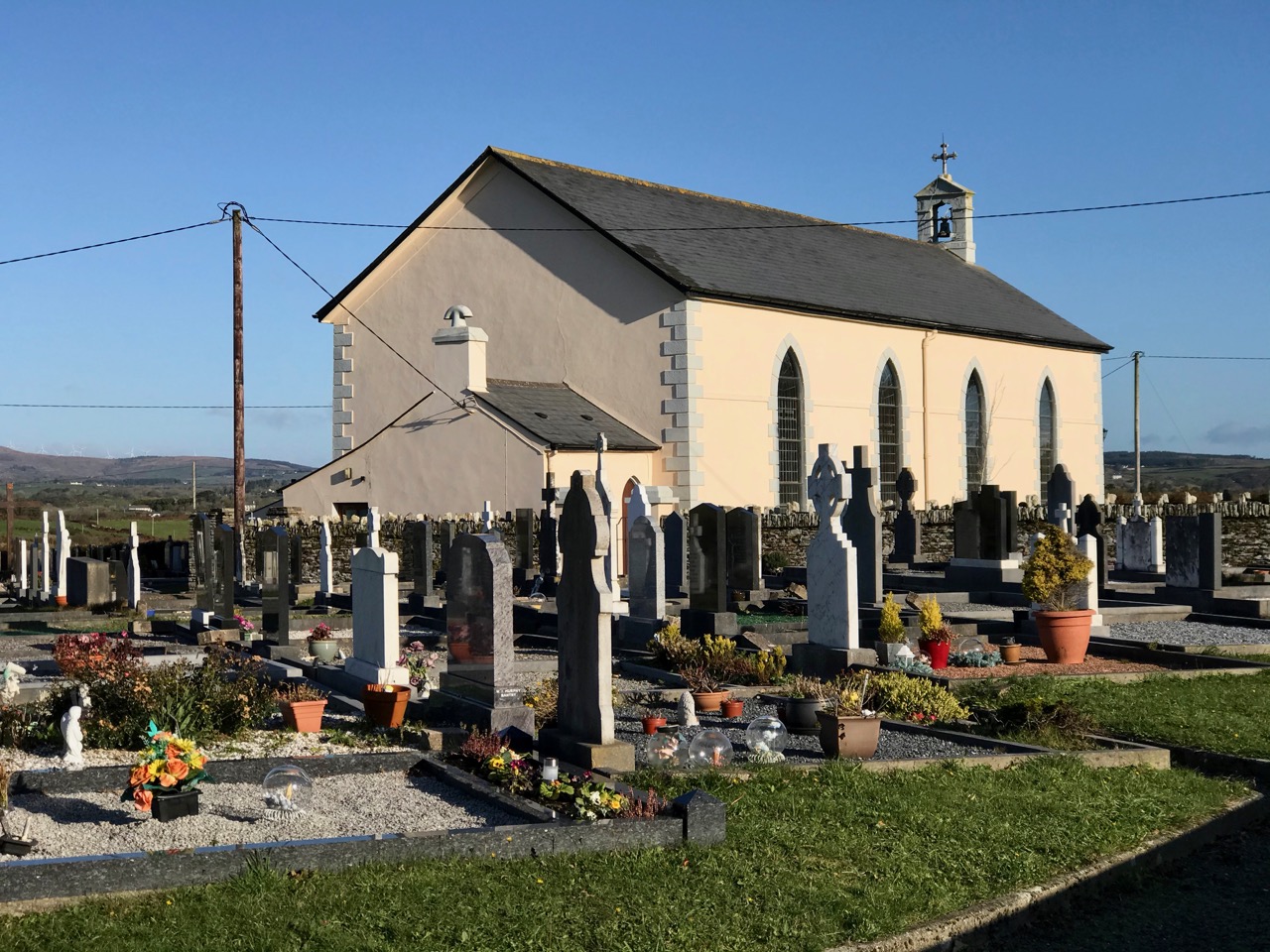
We passed the quite remote but still running Minihan’s Bar – an ideal refreshment point on summer evenings – but not open for us on this November afternoon. The also remote seeming Saint Comghall’s Church, built in 1832, marked the return to the trail head and the end of our walk. It was a most satisfying expedition on a remarkably golden late autumnal day.

Up-to-date information on all the Fastnet Trails – including this one – can be found on this website. Our Roaringwater Journal has also written up a few more of them. Give them a try, if you haven’t already done so . . . Enjoy!

That He Might Better Rest

In my time browsing and photographing stained glass windows I have come across many WWI memorial windows in Protestant churches, but only three in Catholic churches – an extraordinary ratio, given that over two hundred thousand Irish men fought in that war, with Catholics far outnumbering Protestant Irish soldiers (simply because they represented a far greater portion of the population). It is estimated that thirty five thousand Irish soldiers died in that conflict. 

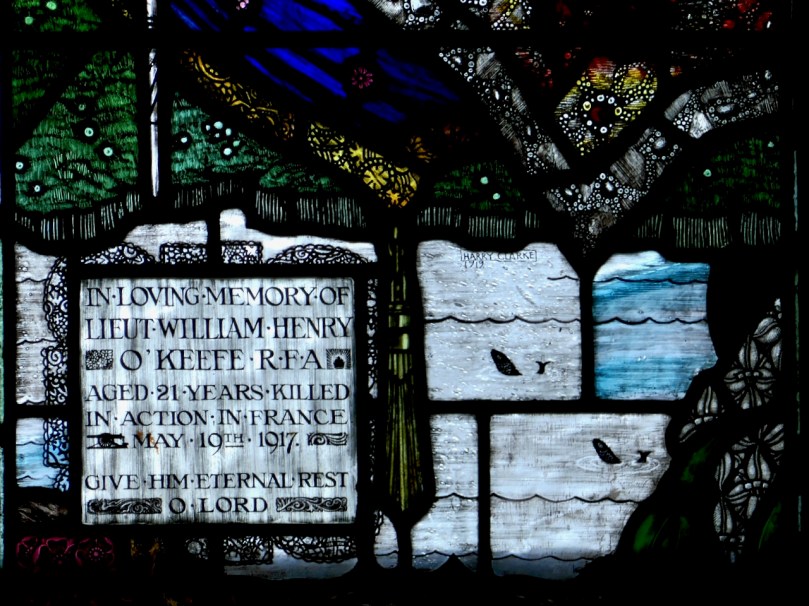
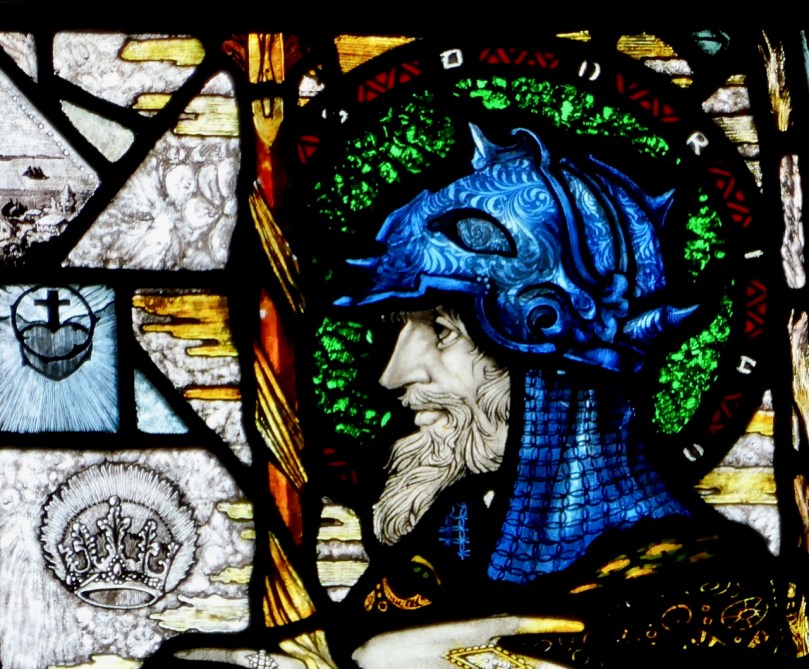
The O’Keefe War Memorial window in the Church of the Assumption, Wexford town, by Harry Clarke (above, and detail top image) 

There are many reasons for the lack of memorials in Catholic churches – for example, the vast majority of Irish soldiers in the British Army came from poor families who could not have afforded such a memorial. But also it has to do with the collective amnesia we developed about our participation in British wars. As I wrote in Outposts of Empire, returning soldiers came back to a new Ireland, one in which nationalist aspirations dominated, and many young Catholic men preferred not to speak about their British Army service.

A figure, possibly St Anthony, in the top tracery light of the O’Keefe window

But the three windows I have seen are beautiful and interesting, using some different icons from so many Church of Ireland windows, which tend to feature Michael the Archangel defeating the dragon or a knight in armour fighting “The Good Fight” with regimental standards and lists of engagements in the bottom panel.

St Aidan of Ferns

I have started with everyone’s favourite, Harry Clarke, who designed and executed this window in the Church of the Assumption in Wexford town. The fallen soldier was 21 year old Lieut Henry O’Keefe and Harry travelled to Wexford in Sept of 1918 to meet his mother and discuss the window, which was installed the following year.

St Adrian, Patron Saint of Soldiers

The design is classic Harry Clarke. Serenely floating high on the left panel is the Madonna and child, clothed in an elaborate and bejewelled blue gown which extend across to the second panel where two saints have come to pay homage. The image of the Madonna evokes the bond between mother and child, while the two saints are carefully chosen: St Adrian is the patron saint of soldiers and St Aidan of Ferns represents Wexford. Above, in a tracery light, a monk, possibly St Anthony, gazes out in an attitude of prayer.

The O’Keefes were a prominent Wexford merchant family and their coat of arms is shown in one panel. Numerous tiny details – a ship, leaping fish, crucifixion images, a tiny image of the Church of the Assumption itself, as well as Harry’s ubiquitous floral ornamentation, fill every section. The overall result is highly emotive. I can imagine the O’Keefe family visiting often and finding comfort in the beauty and compassion of the imagery.

Harry Clarke designed two WWI memorial windows simultaneously and they are completely different. Above is the cartoon for the O’Keefe window and, on the left, for a window, Angel of Hope and Peace, for the Holy Trinity Church of Ireland in Killiney, Co Dublin

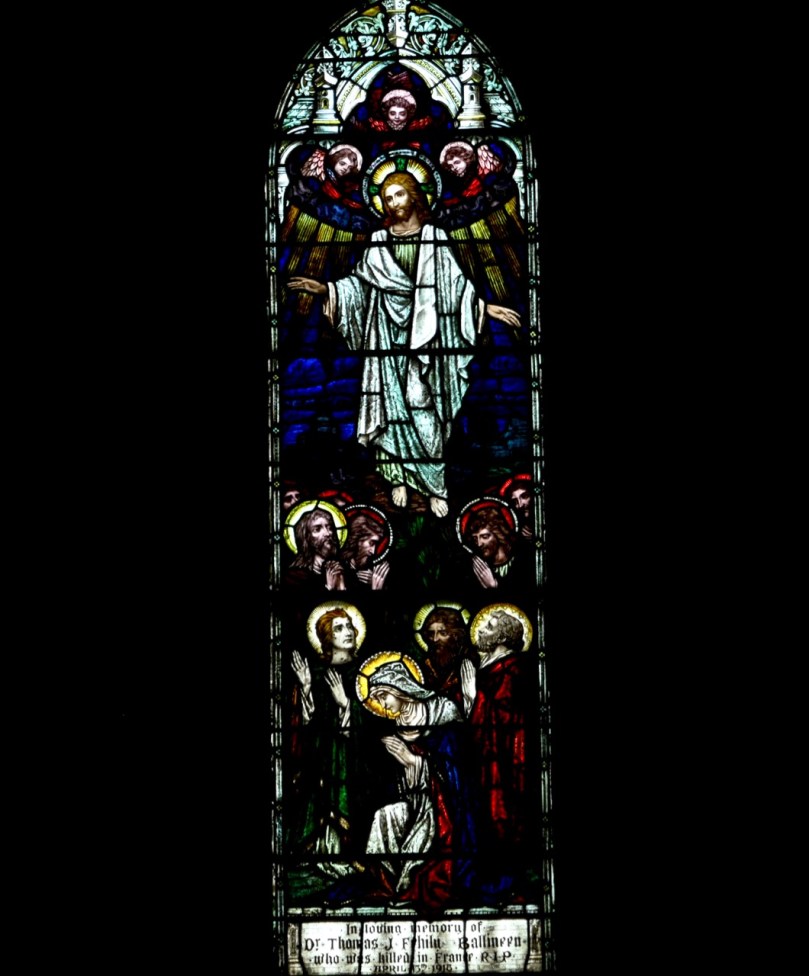
Our second example is from the West Cork Church of the Immaculate Conception in Enniskeane. Probably by Watsons of Youghal, this window is a memorial to Dr Thomas J Fehily, a native of the parish who qualified and practised medicine for many years before enlisting.

Local historian, Anne Lynch has given a good account of his life in a Southern Star article. She writes, Ballineen was a long way from the action when World War I started in the summer of 1914. However, two local brothers, both medical doctors, saw the war as an opportunity to utilise their medical skills. In doing so, it cost one brother his life, while for the other, it was the start of an illustrious career in the British Empire. The doctors were the Fehily brothers.

This is an Ascension window and at first I was puzzled by this choice for a war memorial window but as I thought about it, it became clear – Jesus ascends to heaven having sacrificed his life for his fellow man, while his sorrowing mother weeps below.

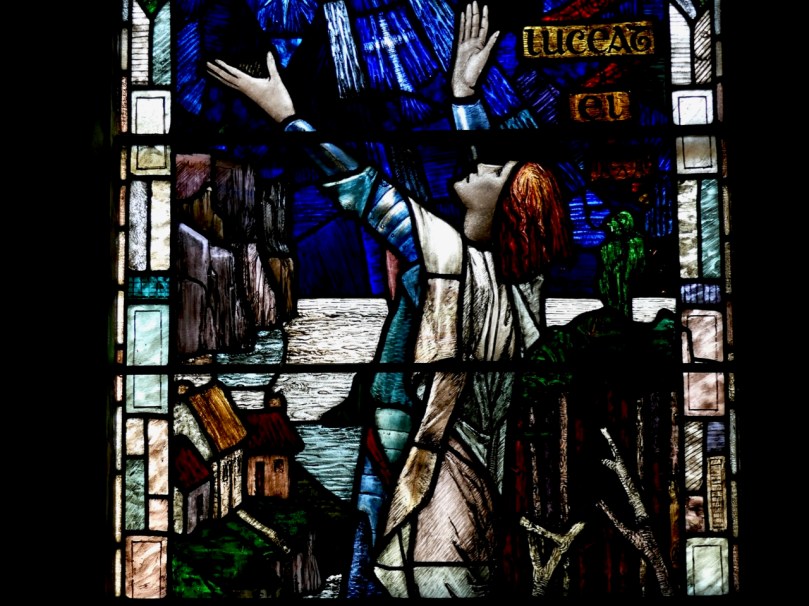
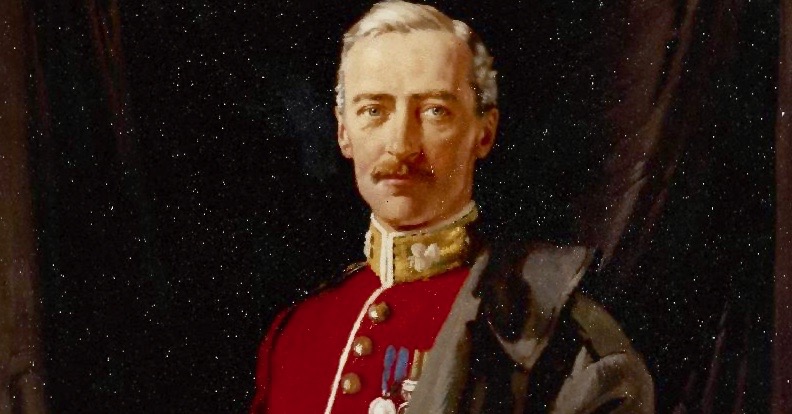
The final window is in the neo-Romanesque church of Spiddal in Co Galway and is dedicated to the memory of George Henry Morris, a hero of the war, and second son of Lord Morris.  A painting of George Henry by William Orpen ends this post.

There is an affecting account of a visit to his grave by his grandson Redmond Morris with his own children, where they even manage to take a photograph in the very spot that George himself was last photographed. By all accounts a brilliant man and a highly respected officer, George died within two weeks of arriving in France. Read more about him on his Wikipedia page and note that he was the father of Lord Kilanin, for many years the esteemed President of the International Olympics Committee.

The window is by Catherine O’Brien, one of the artists of An Tur Gloine.  See this post about Loughrea Cathedral for more about this design co-op: Edward Martyn was also involved with the design and furbishment of this Spiddal church. O’Brien has depicted a golden-haired figure reaching upwards to a divine light, with the words lux perpetua luceat ei – Let Perpetual Light Shine Upon Them. The figure is a rider (denoted by his spurs only) and a riderless horse is seen at the bottom right. The location in Connemara is captured with thatched cottages and sea cliffs.

One of our most famous War Dead was the poet, Francis Ledwidge. His poem, A Soldier’s Grave, has given me my title, and I will leave it here now in honour of the many brave Irish men who gave their lives in WWI.

Then in the lull of midnight, gentle arms
Lifted him slowly down the slopes of death
Lest he should hear again the mad alarms
Of battle, dying moans, and painful breath.

And where the earth was soft for flowers we made
A grave for him that he might better rest.
So, Spring shall come and leave its sweet arrayed,
And there the lark shall turn her dewy nest.

George Henry Morris, painted by William Orpen

Bloodshed and Fenny Poppers – the Legacy of Martinmas

If the wind is in the south-west at Martinmas (10 November), it keeps there till after Candlemas (2 February) . . .

I’m writing about St Martin again! I’ve already put up posts about this character and his fascinating legacy over the past few years. He can take another – after all, we celebrate St Patrick year after year and that’s ok, because this is Ireland . . . But St Martin never set foot in Ireland (as far as we know) although he is well remembered in many Irish traditions, including that piece of weather-lore above. And here – as elsewhere in Europe – there’s a phenomenon known as St Martin’s Summer, or Martin’s Little Summer, which describes an unseasonable spell of warm weather, sunshine and clear blue skies that occurs around about now, in mid-November. In fact today – Martinmas or St Martin’s eve – has dawned warm and clear.

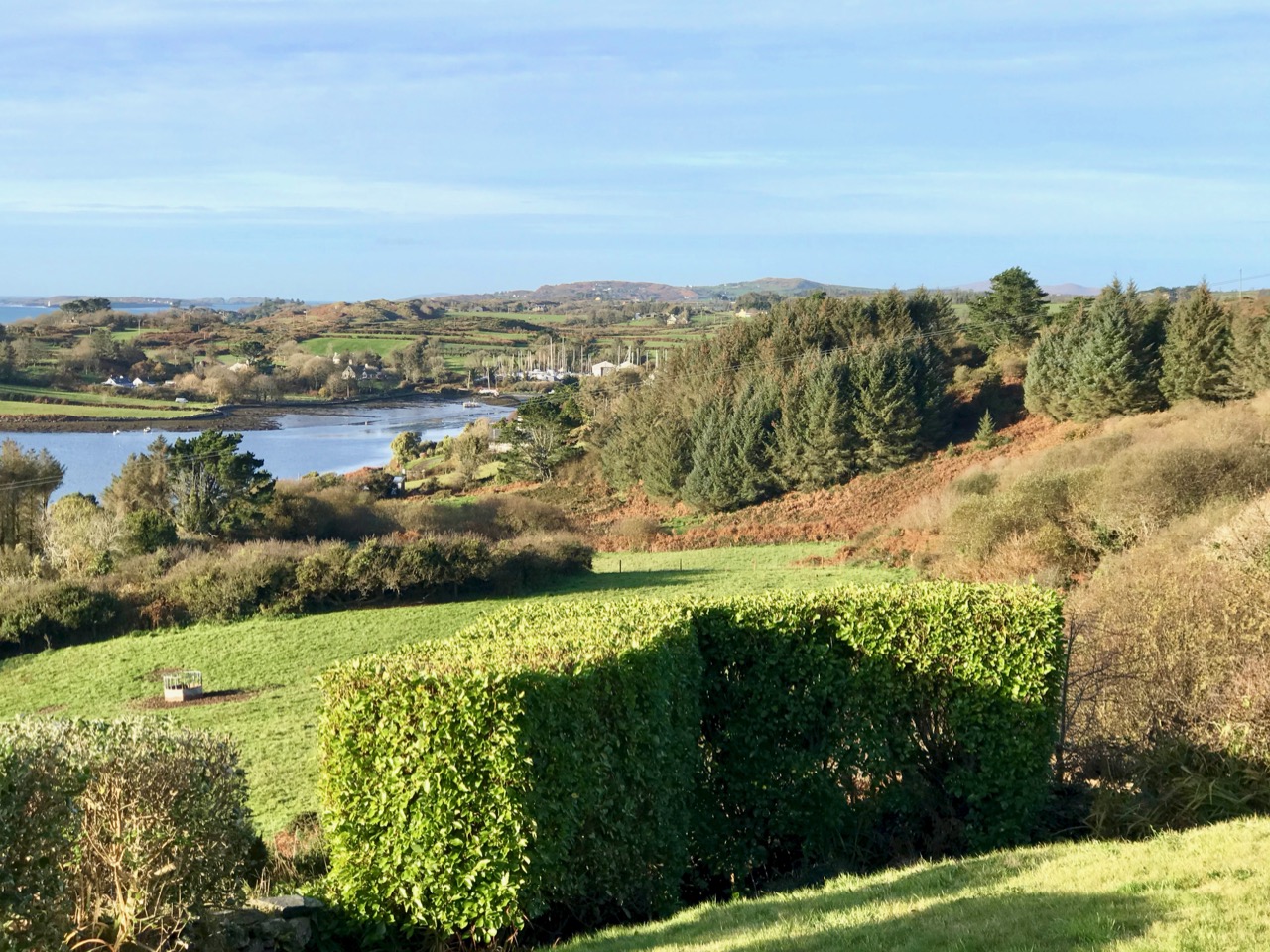
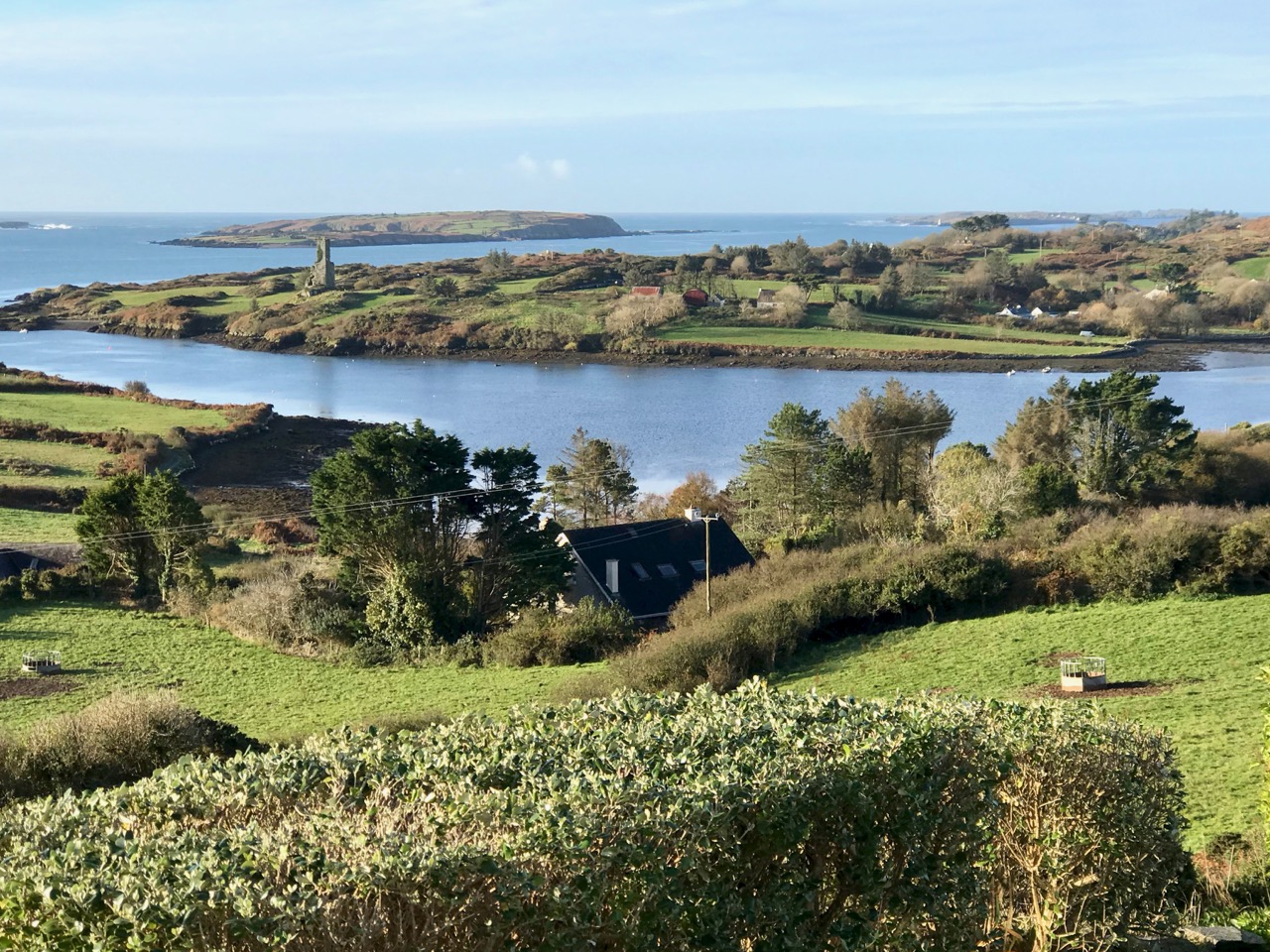
Header and above – looking across Rossbrin Cove from the garden of Nead an Iolair early this morning – St Martin’s Eve – conforming with the tradition of ‘Little Summer’ associated with the saint

The English poet John Clare (1793 – 1864) – sometimes called the peasants’ poet – wrote a very long poem about  St Martin’s Eve: I’ll quote some verses as we go along. It’s worth noting that Clare was a great champion of traditional rural life, and was known as “. . . the greatest labouring-class poet . . . No one has ever written more powerfully of nature, of a rural childhood, and of the alienated and unstable self . . .” That’s according to his biographer Jonathan Bate. Although some of his work was well received in his lifetime, he was unable to make enough to keep him, his wife and seven children – and his alcohol consumption – on an even keel. He suffered from ‘strange delusions’ and spent the last twenty seven years of his life in asylums where, nevertheless, he continued to write.

Now that the year grows wearisome with age 

& days grow short & nights excessive long

No outdoor sports the village hinds engage                                                                                Still is the meadow romp and harvest song                                                                               That wont to echo from each merry throng

At dinner hours beneath high spreading tree

Rude winds hath done the landscape mickle wrong

That nature in her mirth did ill foresee                                                                                       Who clingeth now to hope like shipwrecked folk at sea . . .


(John Clare, St Martin’s Eve, 1823)

Here’s St Martin, looking every inch a medieval knight – although in fact he lived in the fourth century. He was St Patrick’s uncle – possibly accounting for his popularity in Ireland. In this Italian representation he is shown cutting his cloak in two and giving half to a beggar: the act that has made him famous. He was a Roman soldier but gave up that calling to be consecrated as Bishop of Caesarodunum (Tours) in 371. Although he lived a long life, he is said to have died a martyr by being thrown into a mill stream where he was crushed by the wheel. He achieved acclaim as the patron saint of soldiers, but also managed to become the patron saint of conscientious objectors!

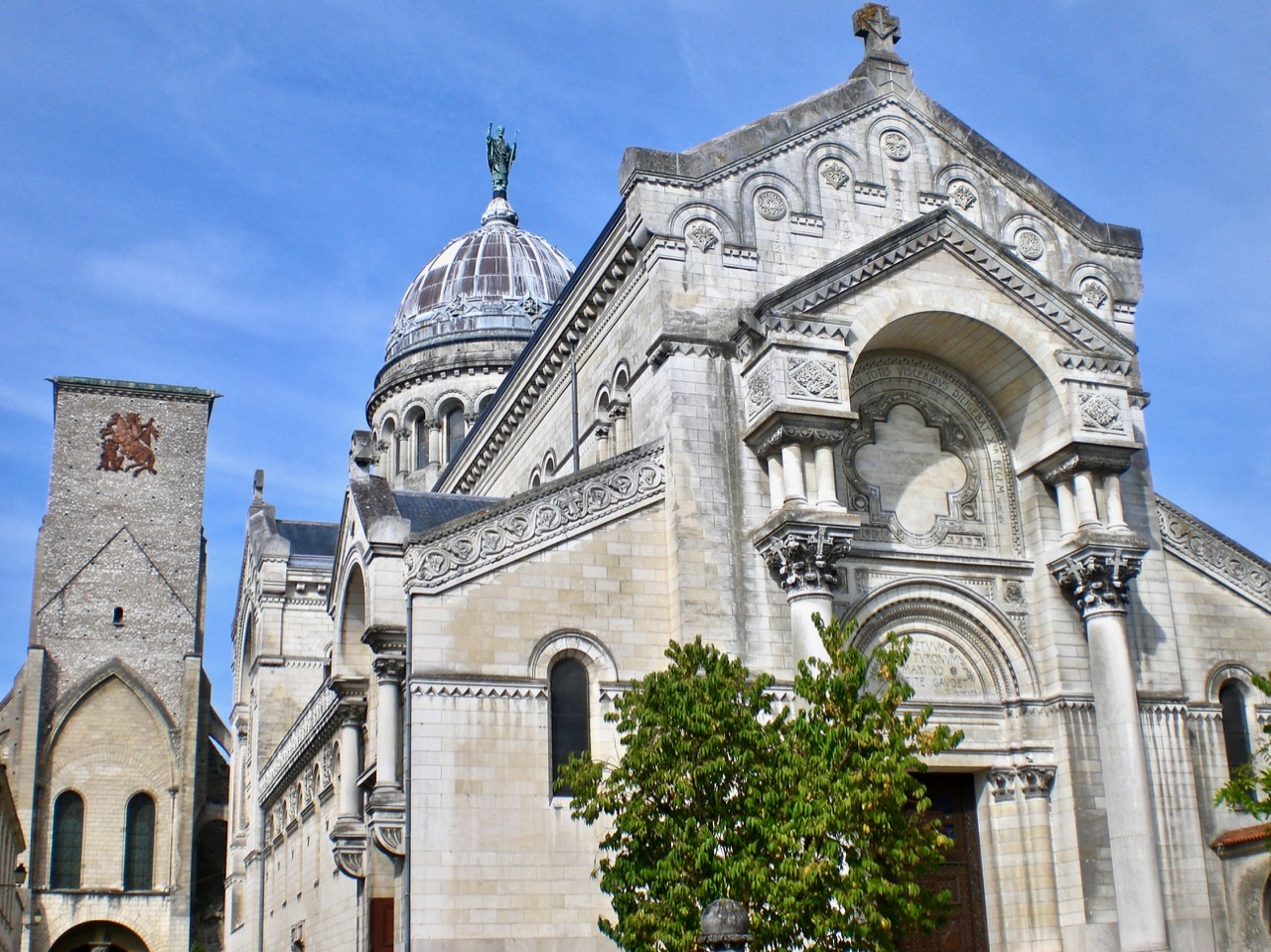
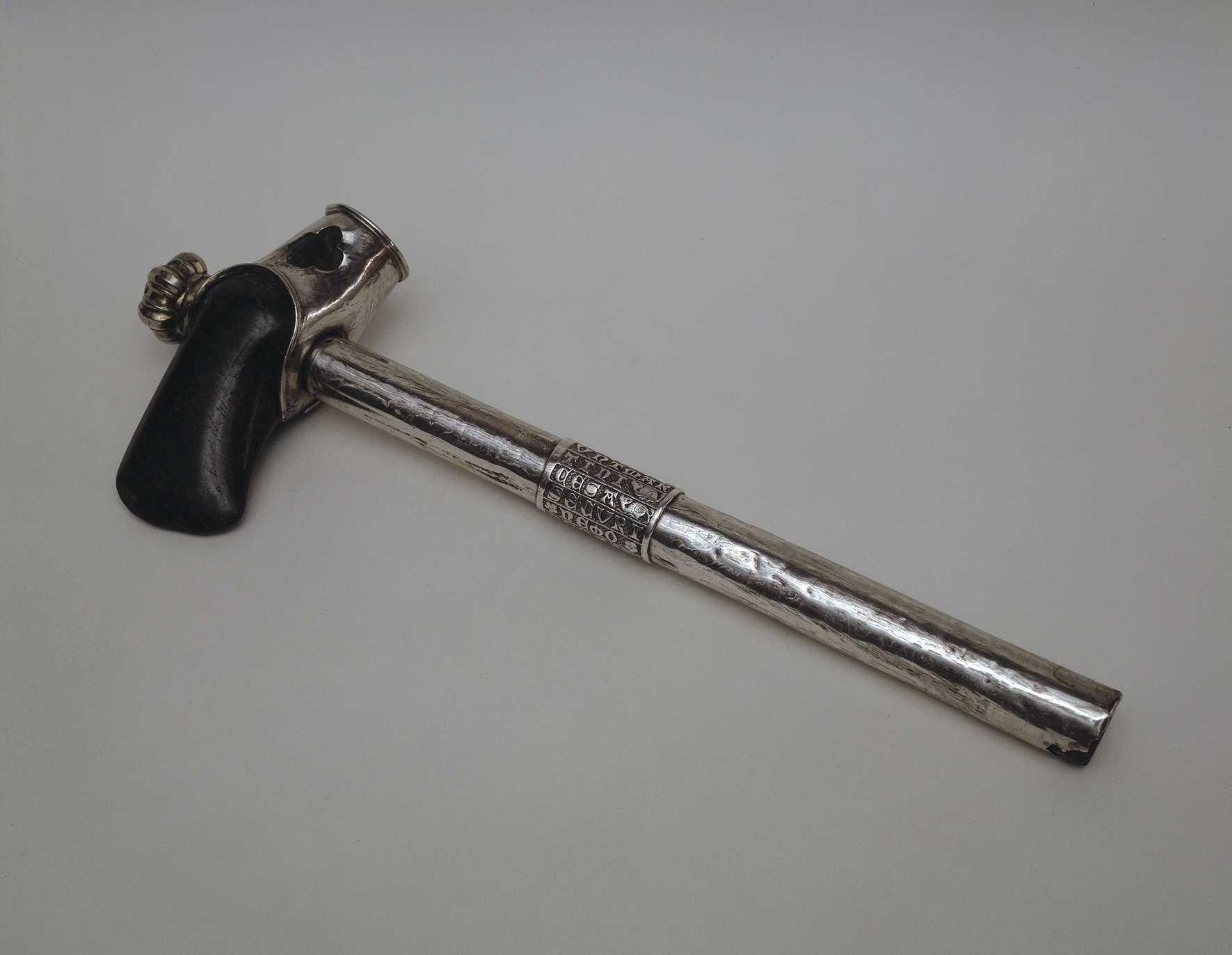
The Basilica at Tours, France (above). St Martin served as Bishop here from 371 – but reluctantly. It is said that he tried to hide from those who wanted to install him as Bishop, but his hiding place was given away by the cackling of geese – which have been associated with the saint ever since. Other stories tell how the saint destroyed pagan temples and cut down sacred trees: in one instance, the pagans agreed to fell their sacred fir tree, if Martin would stand directly in its path. He did so, and it miraculously missed him. There’s a relic in the St Catherine’s Convent Museum of Religious Art in Ultrecht, the Netherlands, which claims to be a hammer which St Martin used to fell pagan sites including sacred trees.  Archaeological analysis has shown it was probably made in the 13th or 14th century from a late Bronze Age stone axe dating from c 1,000 – 700 BC. The handle contains a Latin text saying Ydola vanurunt Martini cesa securi nemo deos credat qui sic fuerant ruicuri (‘the pagan statues fall down, hit by St Martin’s axe. Let nobody believe that those are gods, who so easily fall down’). Here it is:

Beside the fire large apples lay to roast

& in a high brown pitcher creaming ale

Was warming seasoned with a nutmeg toast

The merry group of gossips to regale

Around her feet the glad cat curled her tail

Listening the crickets song with half shut eyes

While in the chimney top loud roared the gale

Its blustering howl of outdoor symphonies

That round the cottage hearth bade happier moods arise . . .


(John Clare, St Martin’s Eve, 1823)

It seems a little incongruous, perhaps, to come from a world of basilicas and silver hammers to ancient folk-customs in rural Ireland, but not so long ago Martinmas was greatly celebrated here. Kevin Danaher quotes Mason’s Parochial Survey:

On the eve of St Martin (who is one of the greatest saints in their calendar) in November every family of a village kills an animal of some kind or other; those who are rich kill a cow or a sheep, others a goose or a turkey; while those who are poor, and cannot procure an animal of greater value, kill a hen or a cock and sprinkle the threshold with the blood, and do the same in the four corners of the house; and this ceremonious performance is done to exclude every kind of evil spirit from the dwelling where this sacrifice is made, till the return of the same day in the following year . . .

Danaher also mentions a writer, Amhlaoibh Ó Súilleabháin, commenting in 1830 from County Kilkenny:

The eleventh day, St Martin’s Day. No miller sets a wheel in motion today, no more than a spinning woman would set a spinning wheel going, nor does the farmer put his plough team to plough . . .

The tradition undoubtedly refers back to St Martin’s death from being ‘ground by a mill wheel’. Significantly, there are numerous entries in the Dúchas Folklore Collection, dating from the 1930s, which show that these customs were still remembered and – on occasion – practised:

One of many examples from the Dúchas Folklore Collections which remember the importance of Martinmas customs

Martin King used kill a fowl every St Martin’s night in honour of St Martin. One year Martin forgot it and when he awoke in the morning the floor from his bedroom to the kitchen was covered with blood. Martin washed out the floor, but when he awoke again the following morning the floor was covered with blood again. This went on for three nights. Martin was very troubled about it so he told his story to an old woman that lived near him. The old woman told him it was because he had not killed something in honour of St Martin. Every year after that till he died Martin killed a hen or something in honour of St Martin . . .


(Eileen Donegan, Knockane, Listowel – collected for Dúchas 1935)

Another from Co Kerry:

St Martin’s day is held on the 11th of November. It is held as a feast day in honour of St Martin. The night before St Martin’s day people kill a goose or a chicken or some other kind of fowl, and they draw the blood and dip a piece of flax in it. They keep the piece of flax because it is said to be a cure for a pain in one’s side.


St Martin was a saint who was ground in a mill for his faith.


In olden times the mills used not work on that day The women in olden times used not work. No one would turn a wheel not even of a car.


(Mrs Walsh, aged 90 years – Tullamore, Co Kerry – collected for Dúchas)

The next piece is particularly interesting as it mentions St Martin’s association with a white horse:

It is a custom in Ireland to kill a cock on Saint Martin’s Night.


There was a man who emigrated to America. On St Martin’s night he was very sad. He was telling his friends that he would like to be home in Ireland, because if he were home he would kill a cock in honour of St. Martin.


He went outside and he went down the street. He met a man on a beautiful white horse. The man asked him would he like to go home. He said he was just wishing to be at home. He told him to get up on the horse. He did so and the next place he found himself was at his own door in Ireland.


The man told him to come out at a certain hour. He killed the cock and came out at the hour that he was told to do so. The man was waiting for him at the door. He got up on the horse and rode away. It was said that it was St Martin who brought him home.


(Maura Keating, aged 82 years, Passage East, Co Waterford)

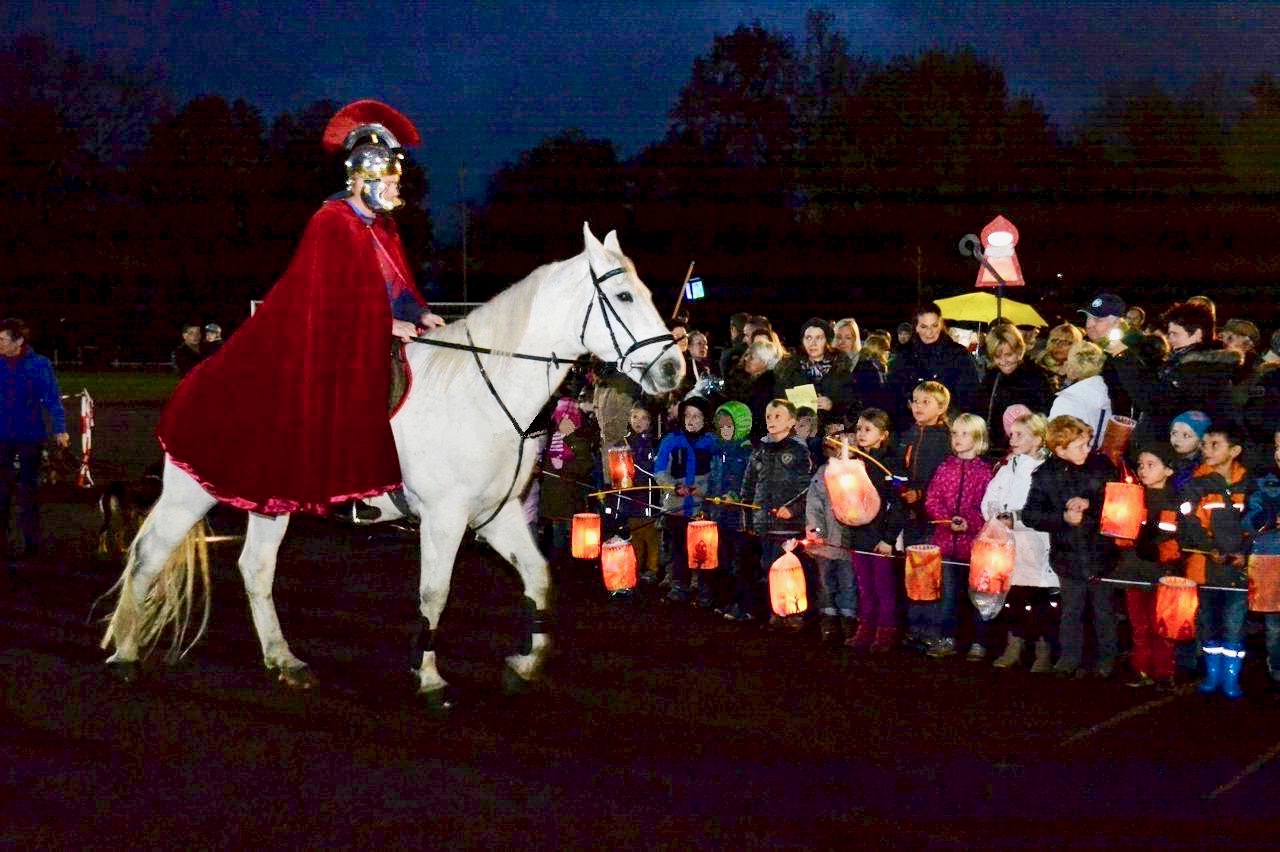
St Martin’s Eve celebrations are still observed all over Europe. This is a festival in Italy, where children carrying lanterns watch out for the saint arriving on his white charger

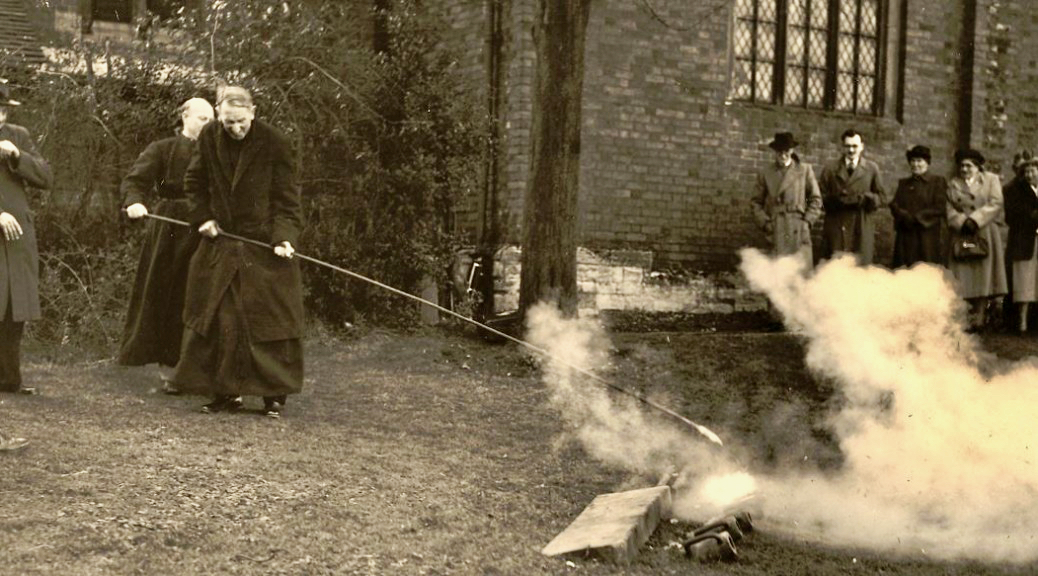
What about Fenny Poppers? I hear you ask . . . Well, we have to go across to Northamptonshire, in England, for this surviving – and most curious – custom. St Martin’s Church, Fenny Stratford is to this day the scene of an event which has no apparent origin, nor any particular purpose. I won’t try to offer you an explanation – just to point out that it happens every Martinmas come hell or high water. Here’s a somewhat eccentric account of the event from a Movietone News snippet c 1950:

That’s probably enough about St Martin and his special day to last you another year. The subject is by no means exhausted!