West Cork Villages and Towns – Bantry

. . . The town is situated at the northern extremity of the bay to which it gives its name, in a small valley encircled by lofty mountains, which attracting the clouds in their passage over the Atlantic, involve it in almost continual rains. The streets are indifferently paved, and not lighted; the inhabitants are supplied with water from numerous springs. The approaches are steep and incommodious, and are lined with cabins of very inferior description. Little improvement has been made in the town, except by the erection of some very extensive stores by Mr O’Connell and Mr Corkery, merchants of the place, and the enlargement of the principal hotel, which now affords ample accommodation to the numerous tourists who, during the summer season, frequent the place on their way to Glengariff and the lakes . . .

Lewis Topographical Dictionary of Ireland 1837

. . . This bay was known to the ancients by the name of Inber Sceine. It is a noble sheet of water, landlocked by beautiful mountains. The scenery is picturesque, bold, and grand, and equals, if it yet not surpass, the best to be found in these kingdoms . . .


Early Irish History and Antiquities and the History of West Cork
W O’Halloran 1916

Bantry . . . a miserable poor place, hardly worth the name of a town, consisting of seven or eight small houses, and some mean little cottages . . .

Jacobite army officer and author John Stevens, 1689

Well, here we have some contrasting descriptions of the town of Bantry, the earliest (above) dating from over 330 years ago! That one is a bit unfair, in truth, as it seems to be almost an ‘aside’ within Stevens’ ill-tempered account of his own involvement in the Williamite War (1689 – 1691). Bantry was a landing place for the Jacobite army which then marched through Cork and engaged in the Battles of the Boyne and Aughrim, and the Siege of Limerick (which is celebrated to this day in a traditional country dance!). None of this needs to detain us further from pursuing our contemporary account of Bantry town.
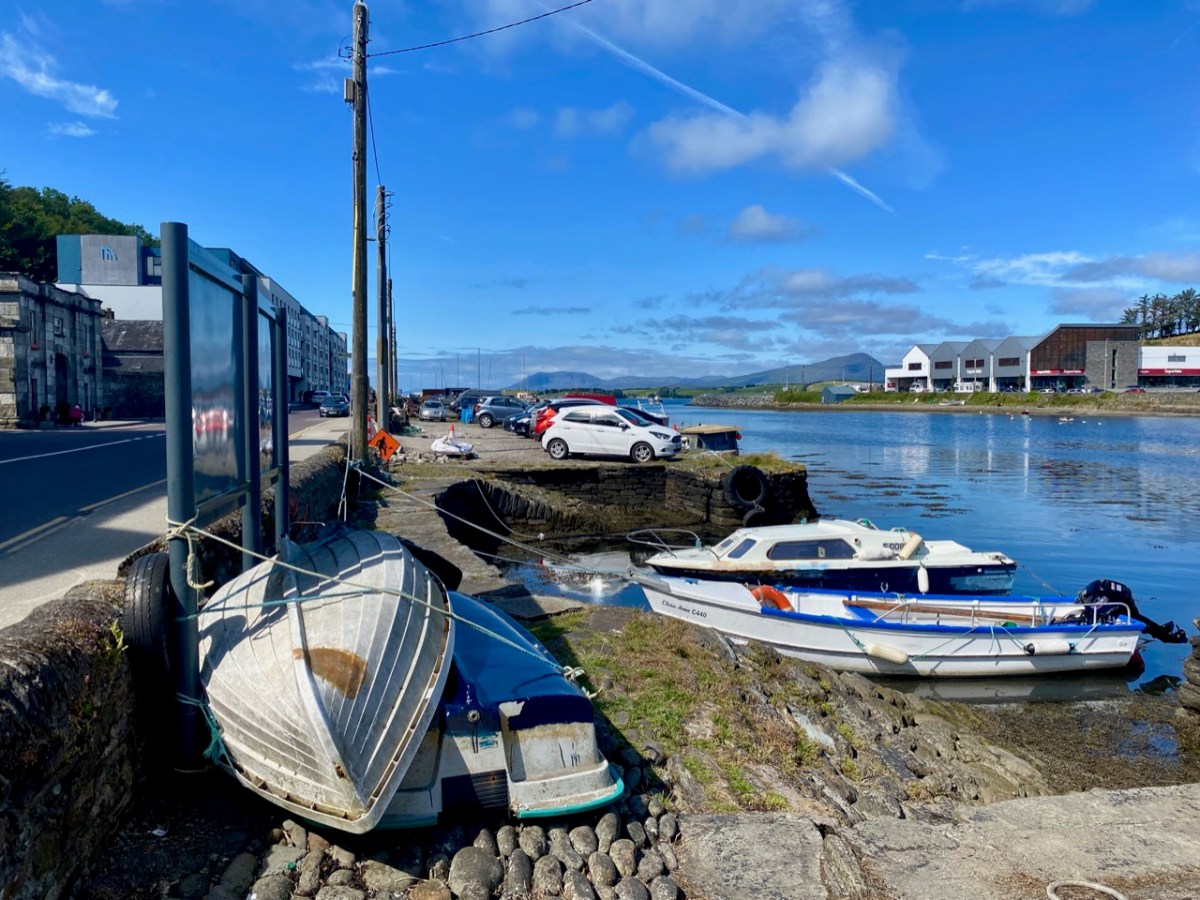
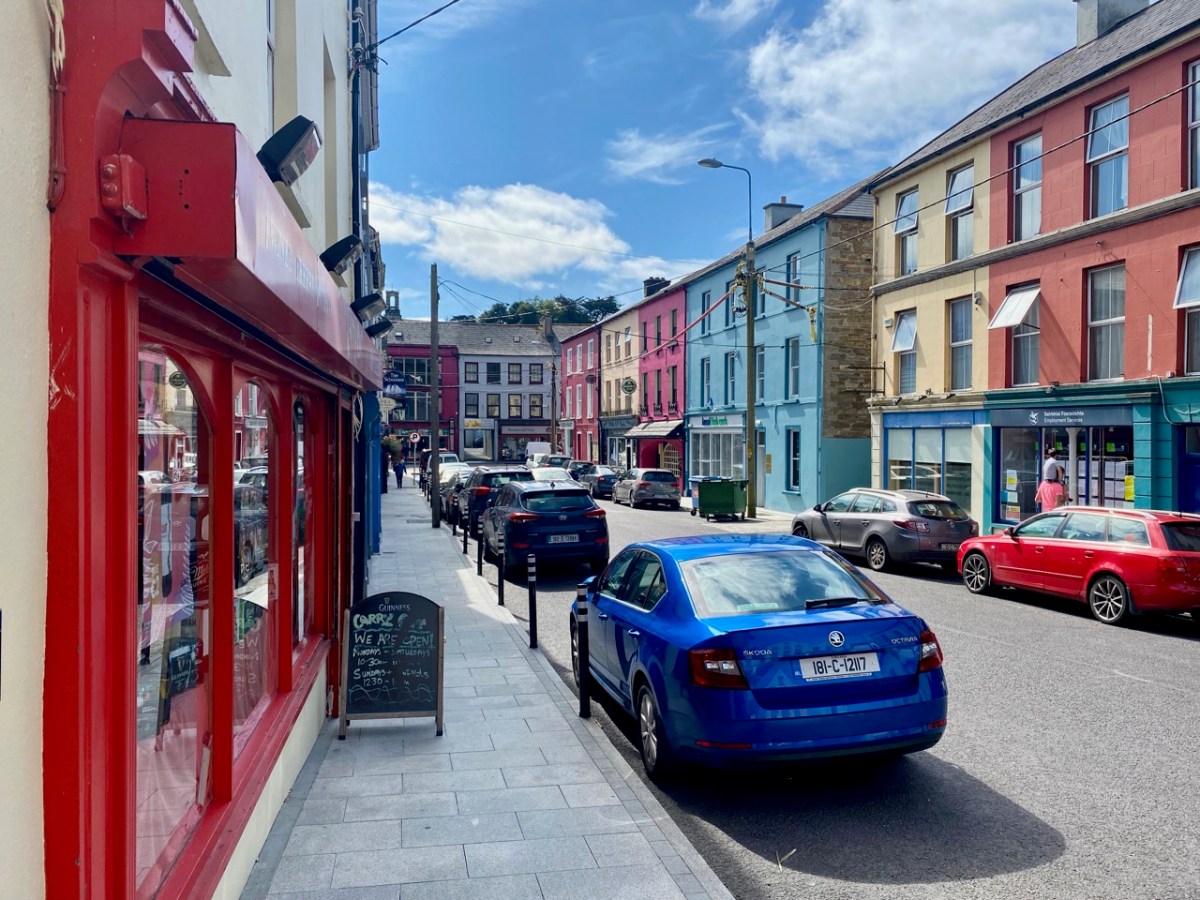
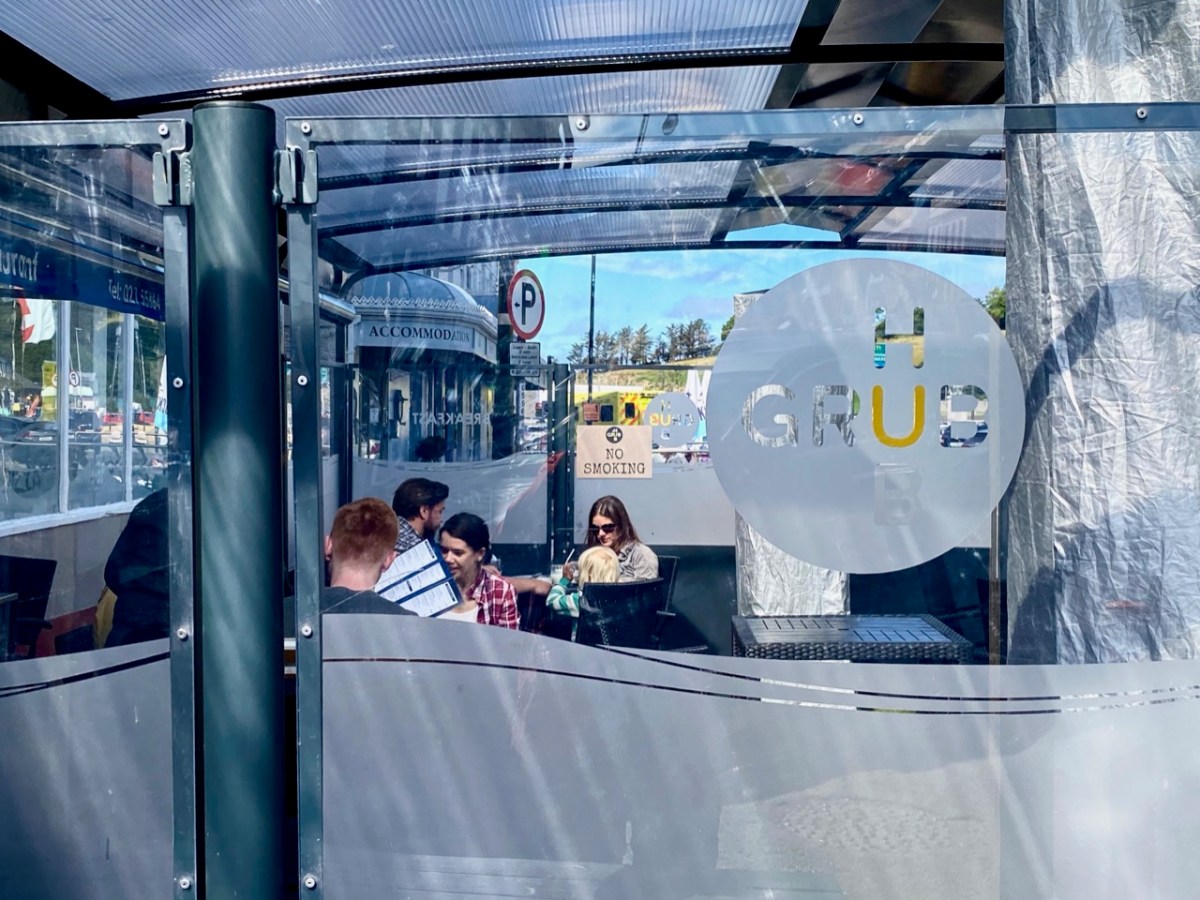
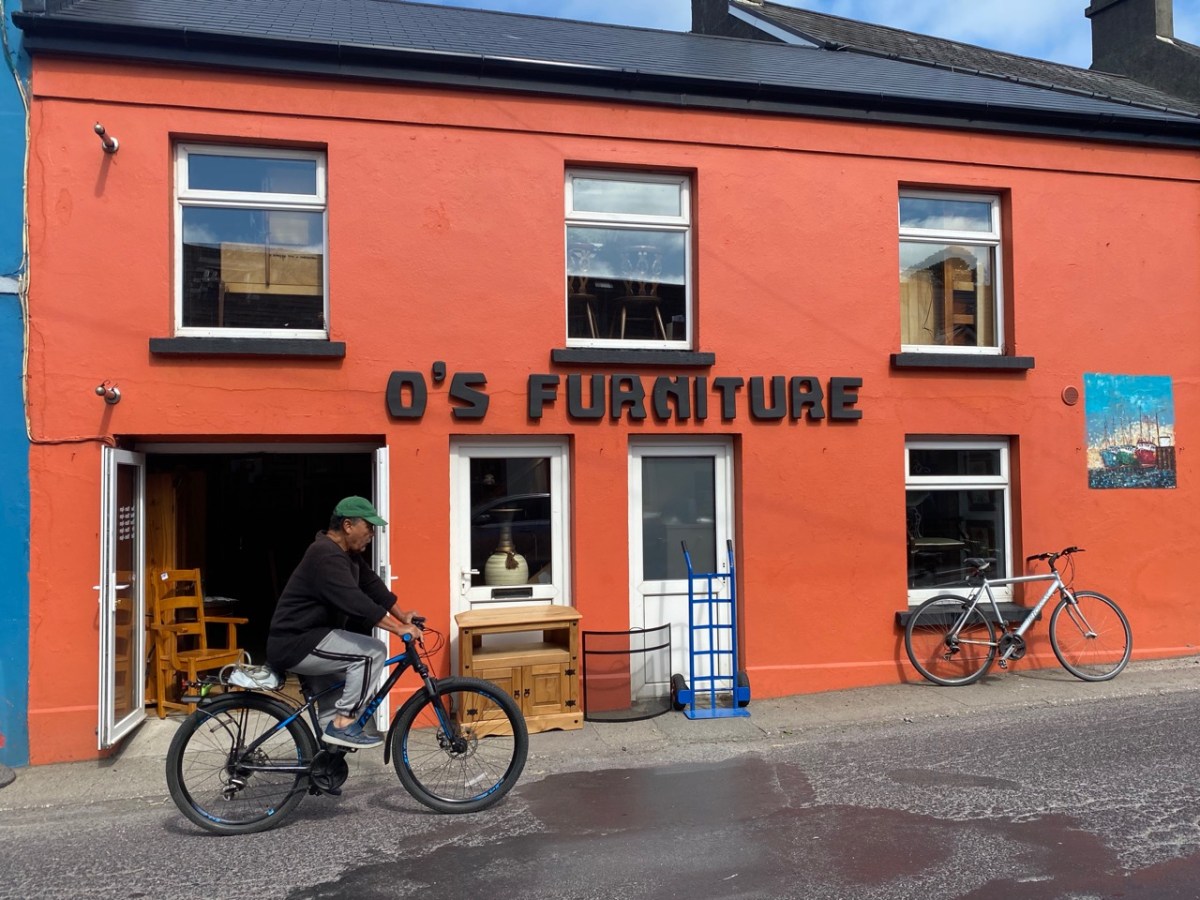
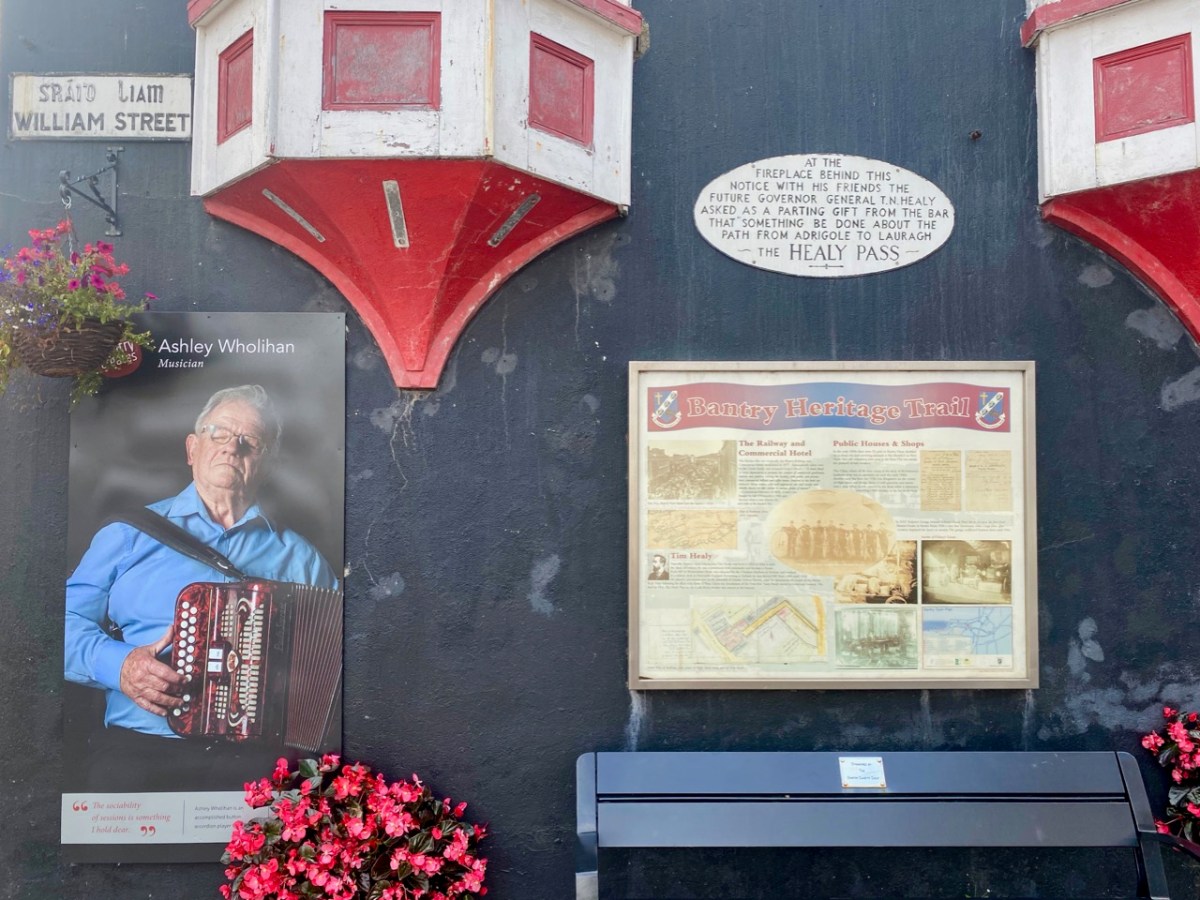
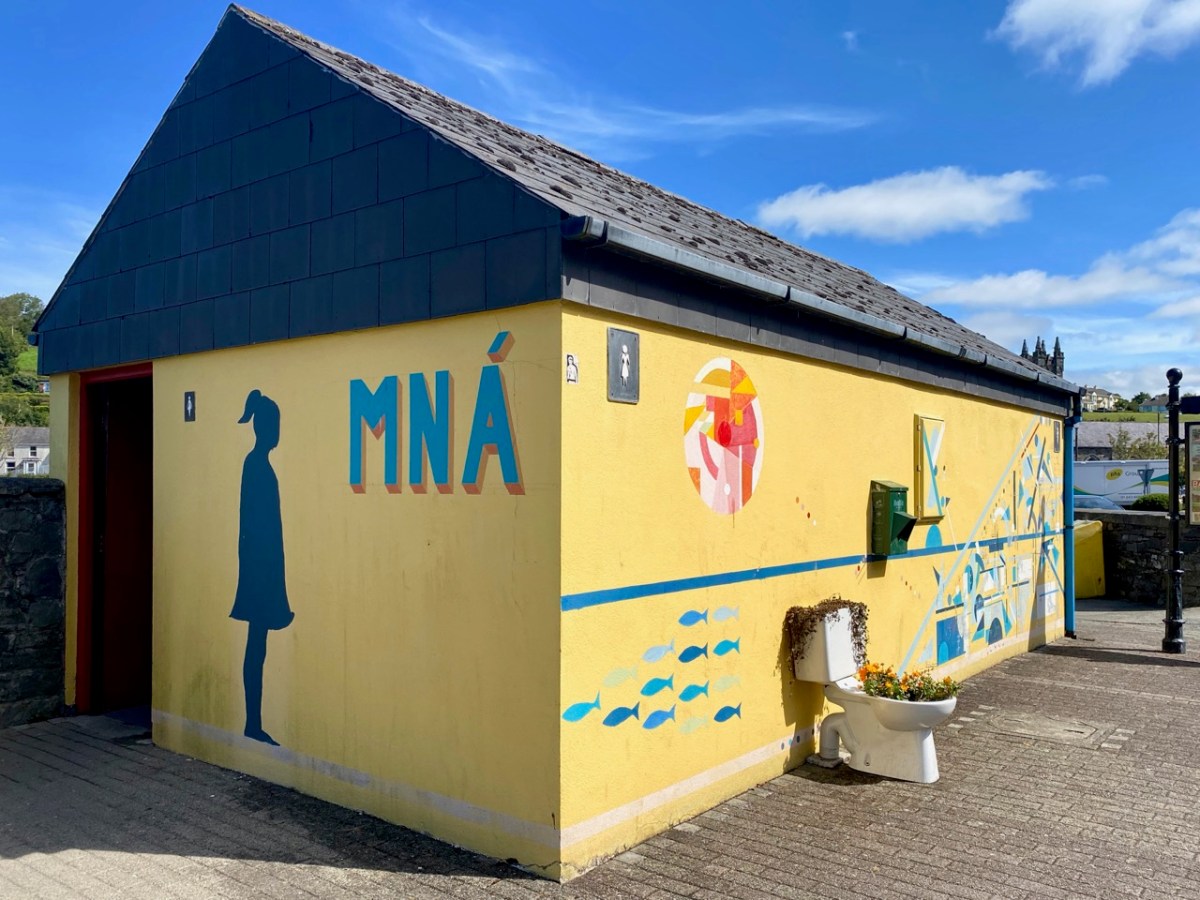
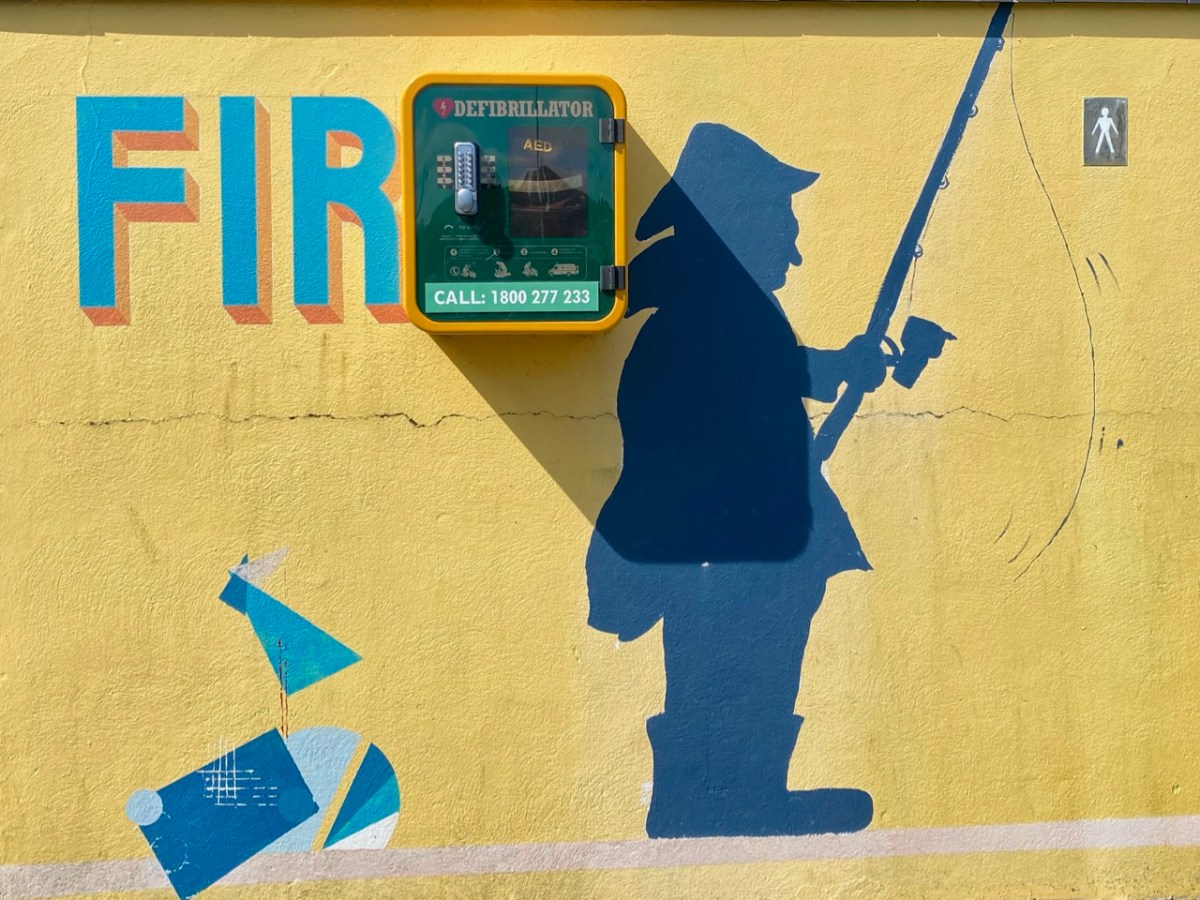
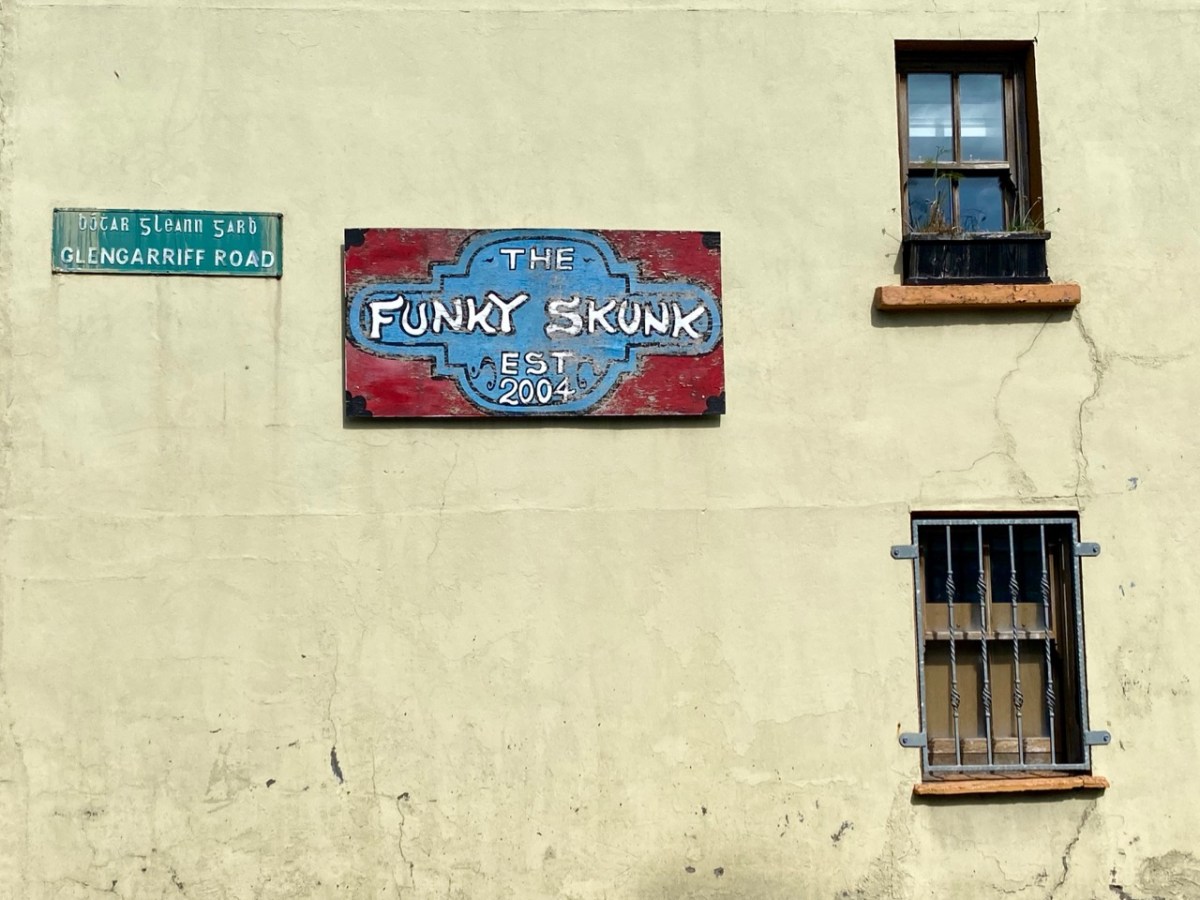
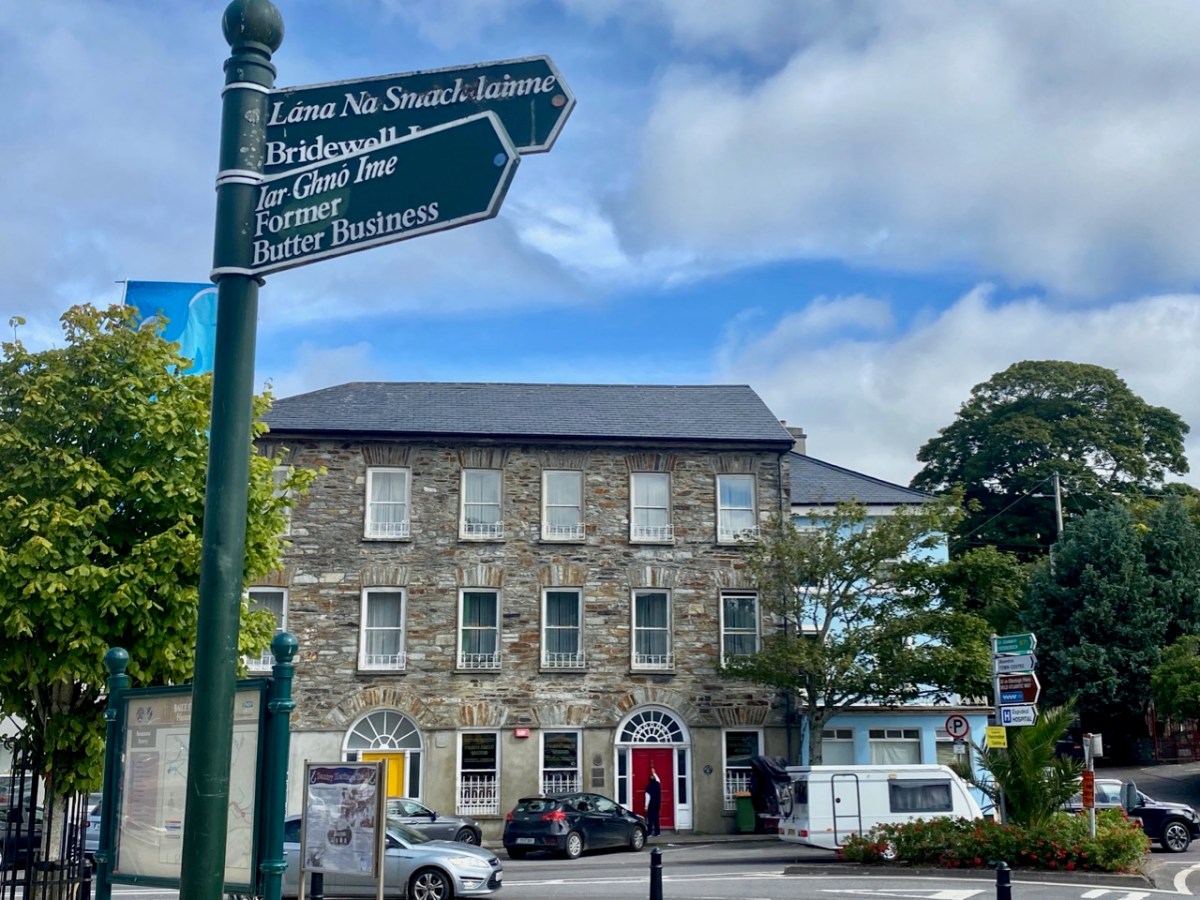
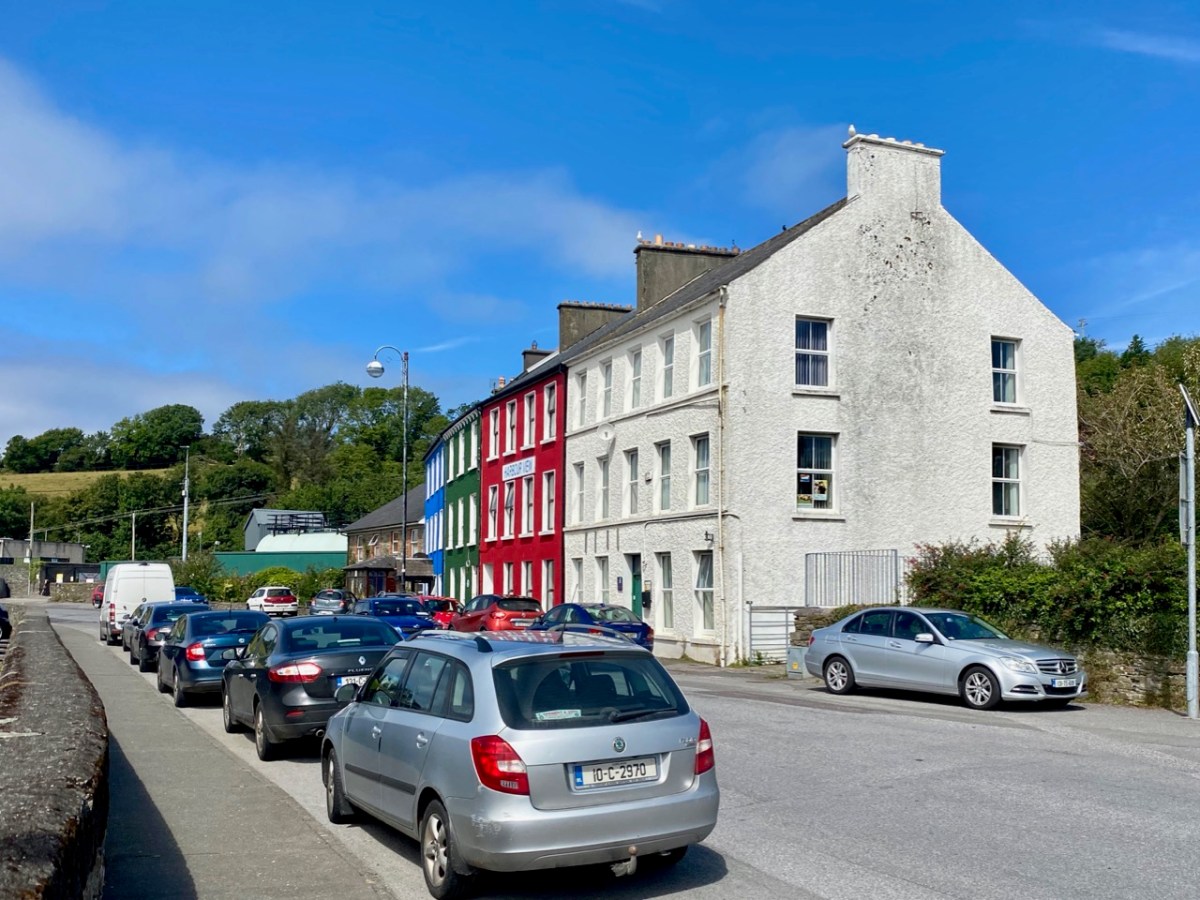
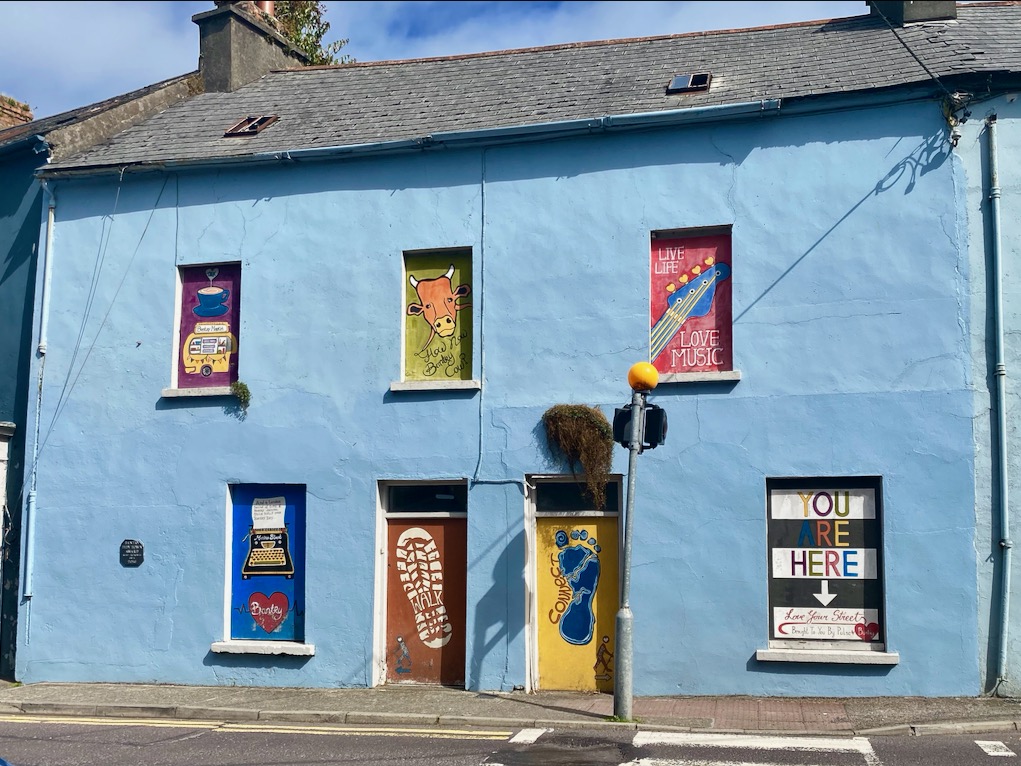
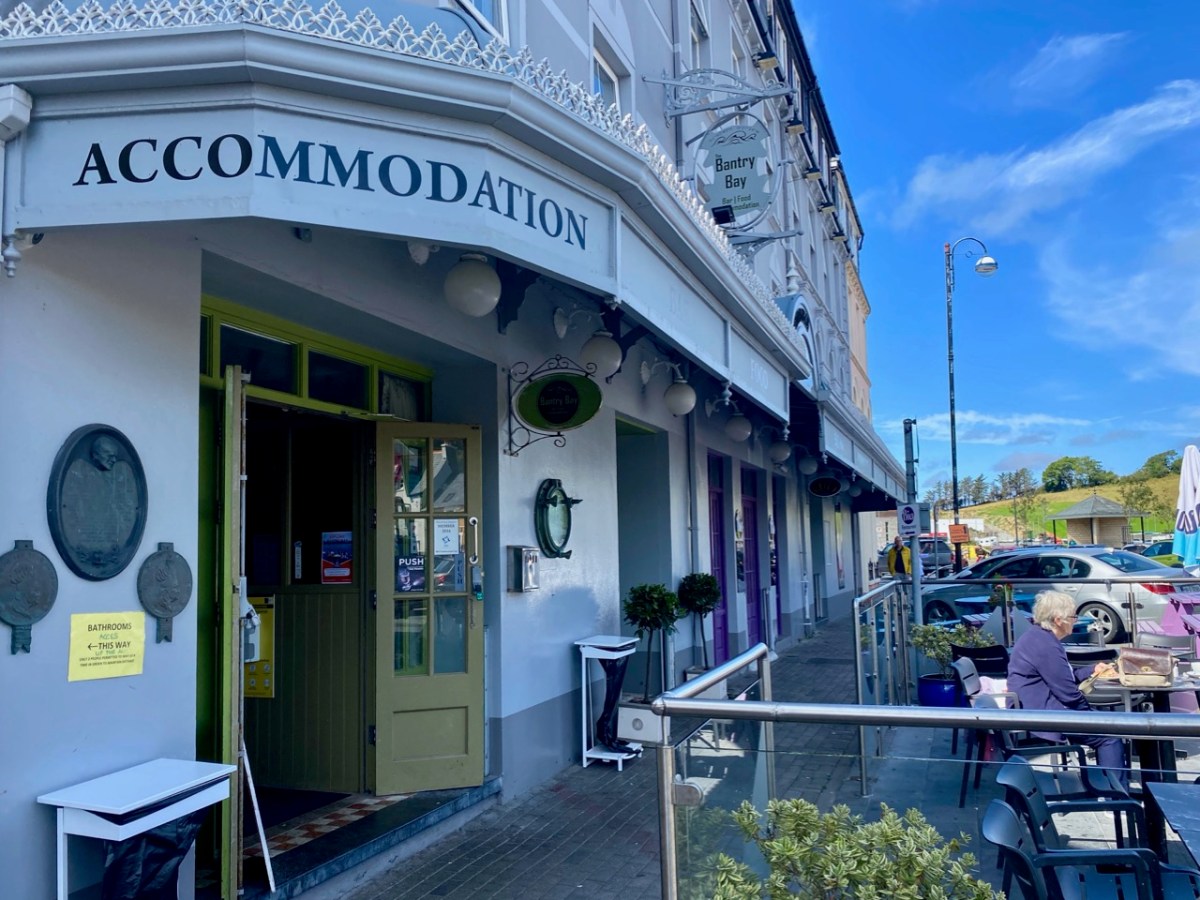
Bantry in the time of Covid . . . As with our exploration of Schull, the first in this series, we capture a moment in time: all the photographs are taken in one summer’s day, and show the norms of daily life. We deliberately did not choose Market Day (every Friday throughout the year), as on that day the population of the place appears to double in size. This is an average weekday and it is busy enough, with holiday makers swelling the ranks and helping to populate the many outdoor facilities.

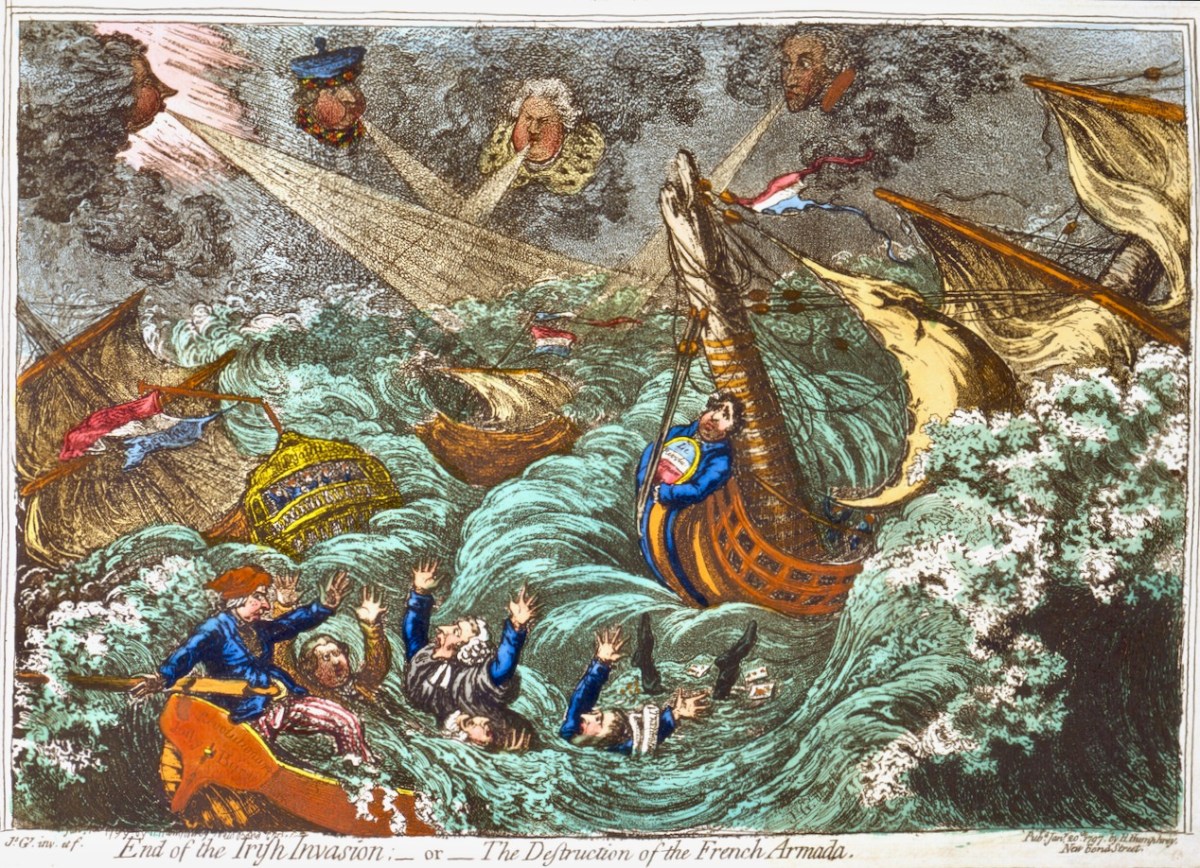
Bantry has made its mark in the history of Ireland’s independence. An attempted landing by the French Fleet in Bantry Bay on 22 December 1796 was partly precipitated by Theobald Wolfe Tone – one of the founding members of the United Irishmen. The mission was unsuccessful due to severe gales. A political cartoon of the time (below) satirises the venture:

. . . On the French expedition to Bantry Bay, at the end of 1796: Pitt, Dundas, Grenville, and Windham are the four winds which blow up the storm to destroy the invaders. FFox, as the carved figure at the head of the Revolution, is represented as influencing the United Irishmen. The crew of the jolly-boat are Sheridan, Liberty Hall, Erskine, M A Taylor, and Thelwall, who, it is insinuated, were all approvers, at least, of the Irish rebellion . . .

Historical and Descriptive Account of the Caricatures of James Gillray, 1851
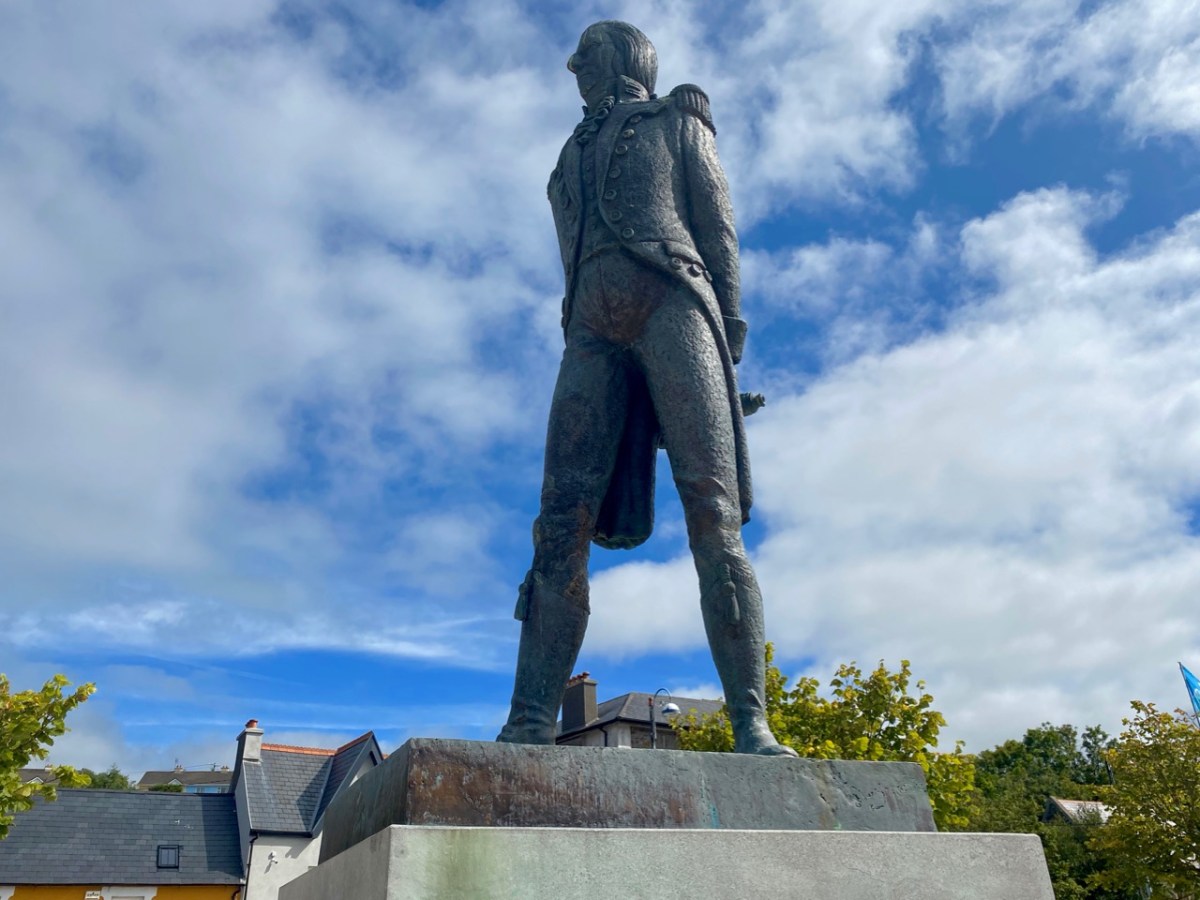
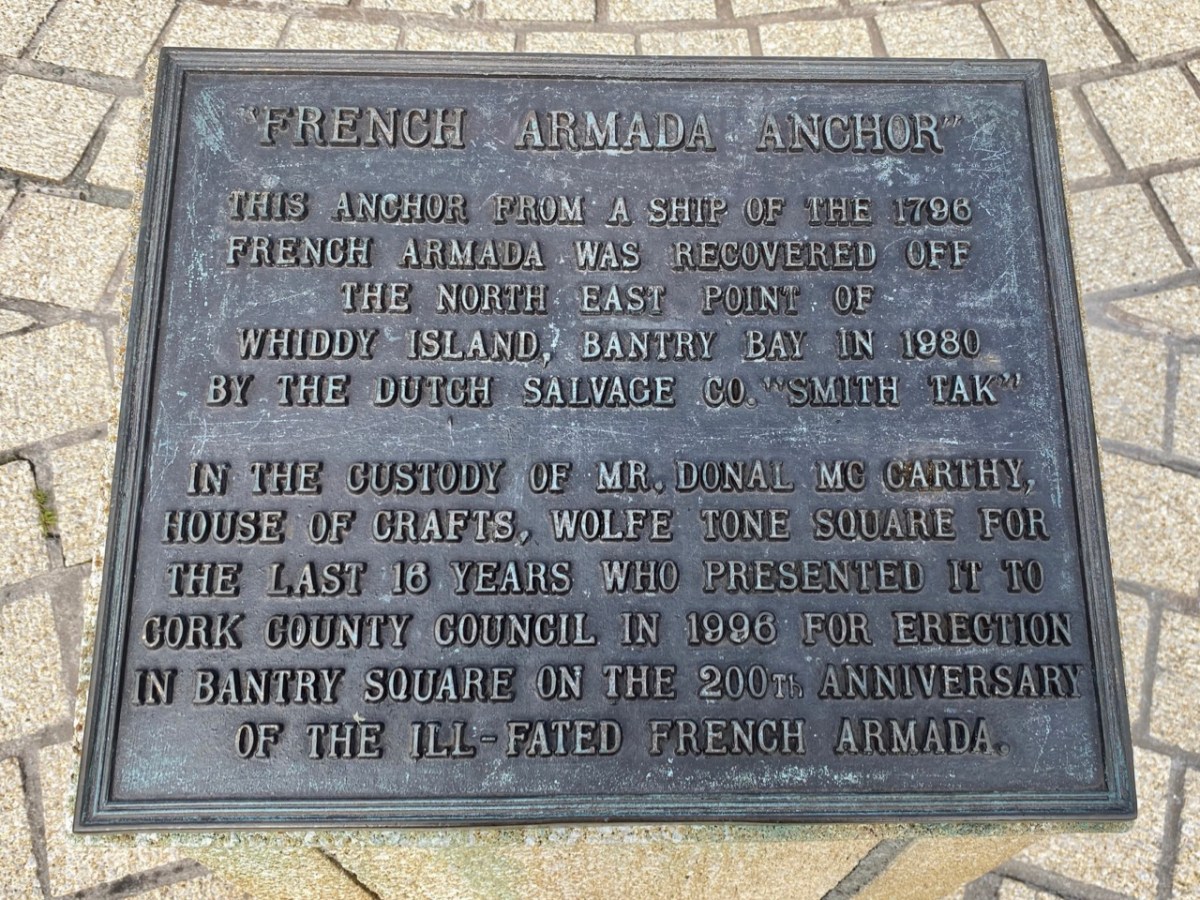
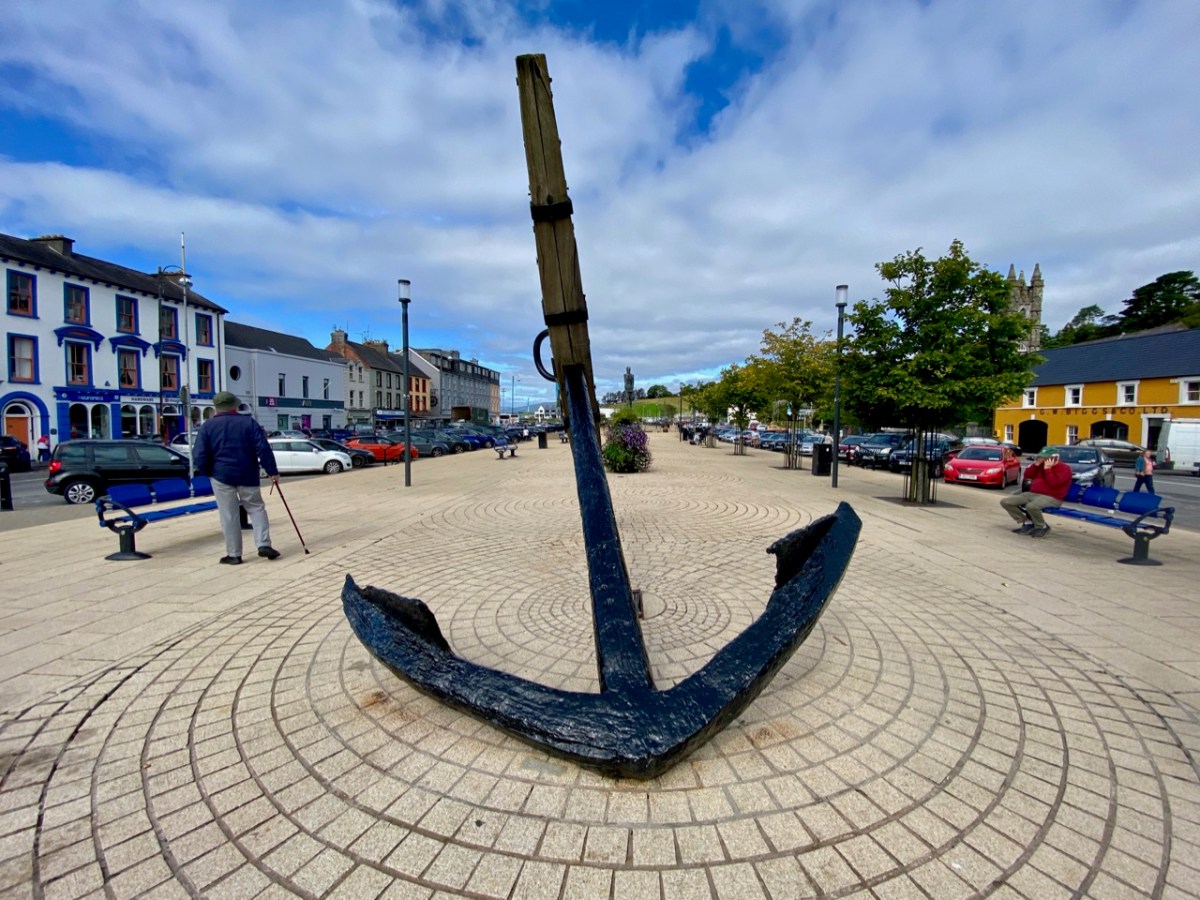
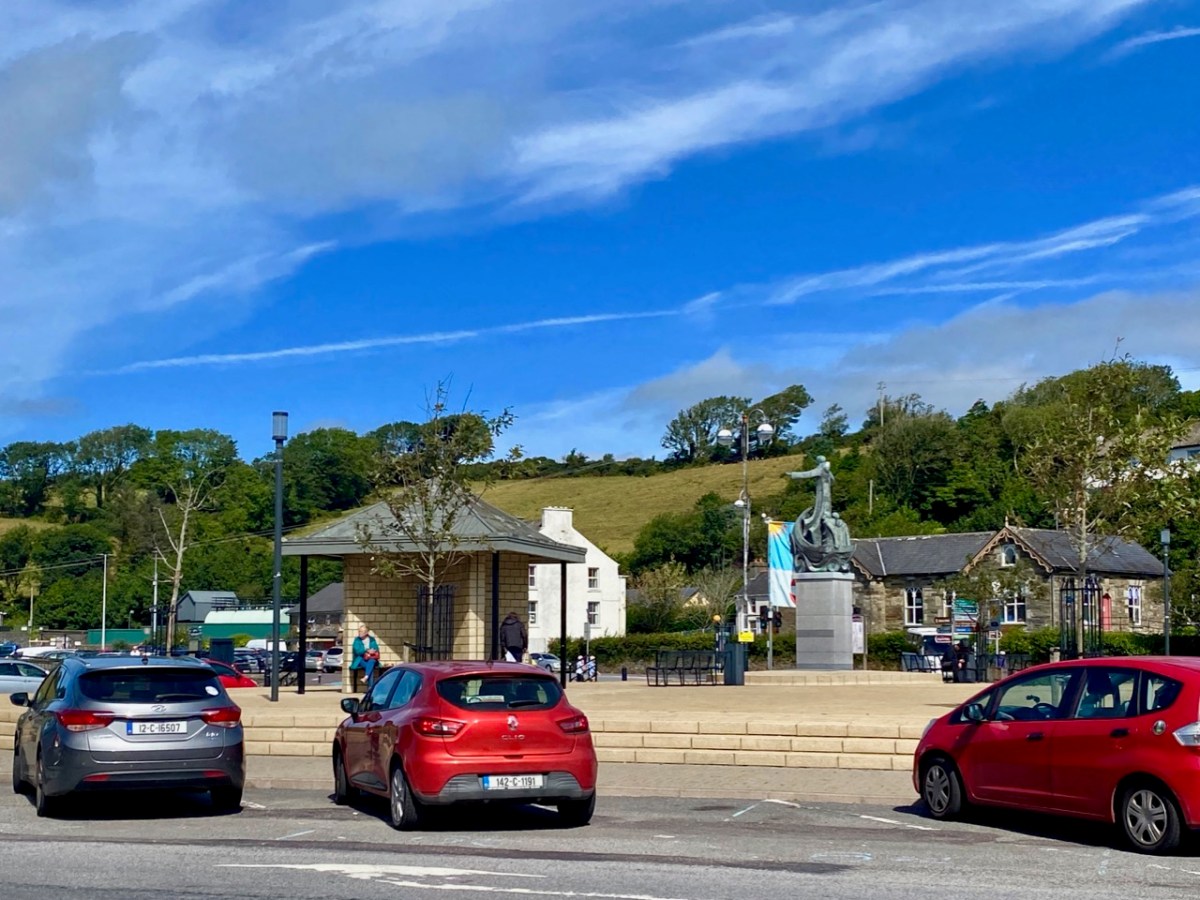
Wolfe Tone’s statue looks down over the square which bears his name in Bantry today: it was sculpted by Jeanne Rynhart in 2000. Close by is an anchor from the ‘French Armada’ found off Whiddy Island. The square was known formerly as Egerton Square – named after a descendant of the Earls of Bantry (have a look at this post). In 1899 the Irish Nationalist MP James Gilhooly oversaw the renaming. Also on the present-day square (much of which is on reclaimed land) is the notable statue of Saint Brendan by Imogen Stuart.
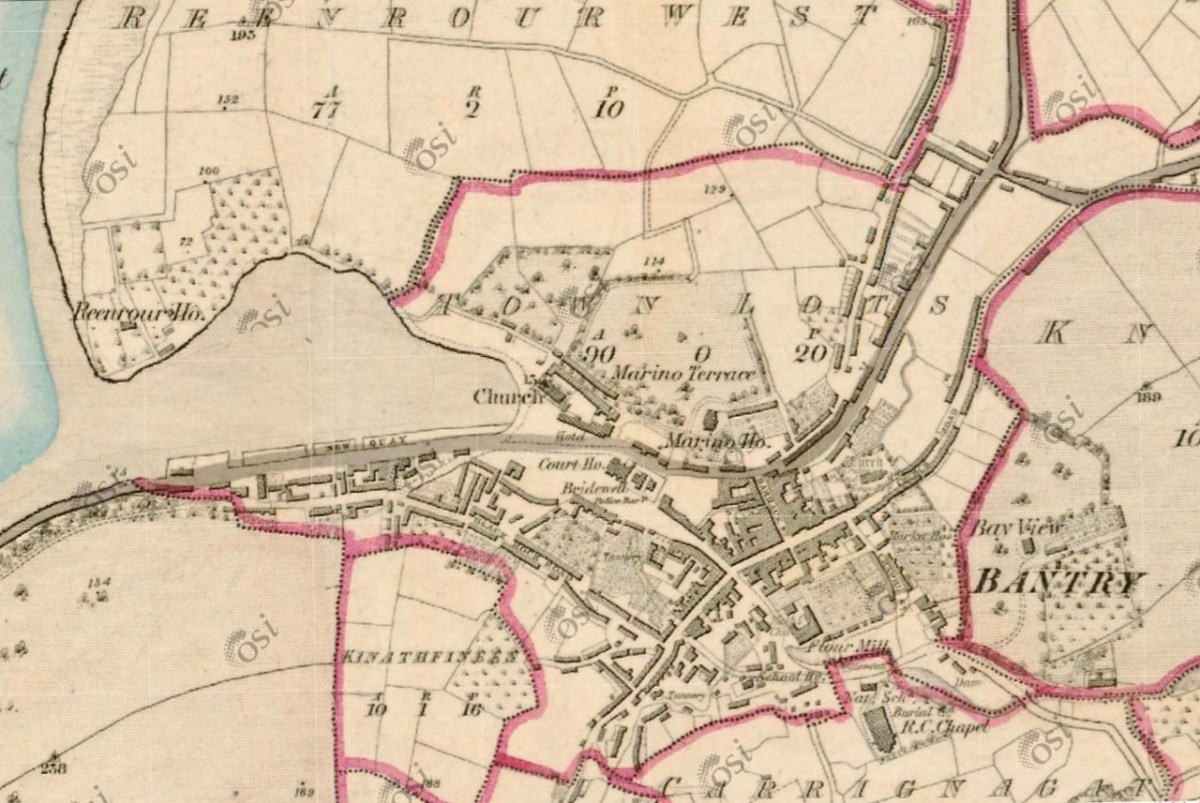
The aerial image, above, shows how the town has evolved along the original river valley. Comparing this view with the earliest 6″ OS map – dating from around 1840 (below – upper) – and the 25″ OS edition c1900 (below, lower), you can see clearly how the Square has encroached on the original natural harbour. You can also see that the terminus of the Cork, Bandon and South Coast Railway was carried on an extended pier to the west, enabling goods to be shipped in and out of the town. Interestingly, prior to the railway’s arrival in 1892, and continuing into the early 20th century, there was a regular steamship service from Bantry to Castletownbere on the Beara Peninsula. This also served Glengarriff and Adrigole.
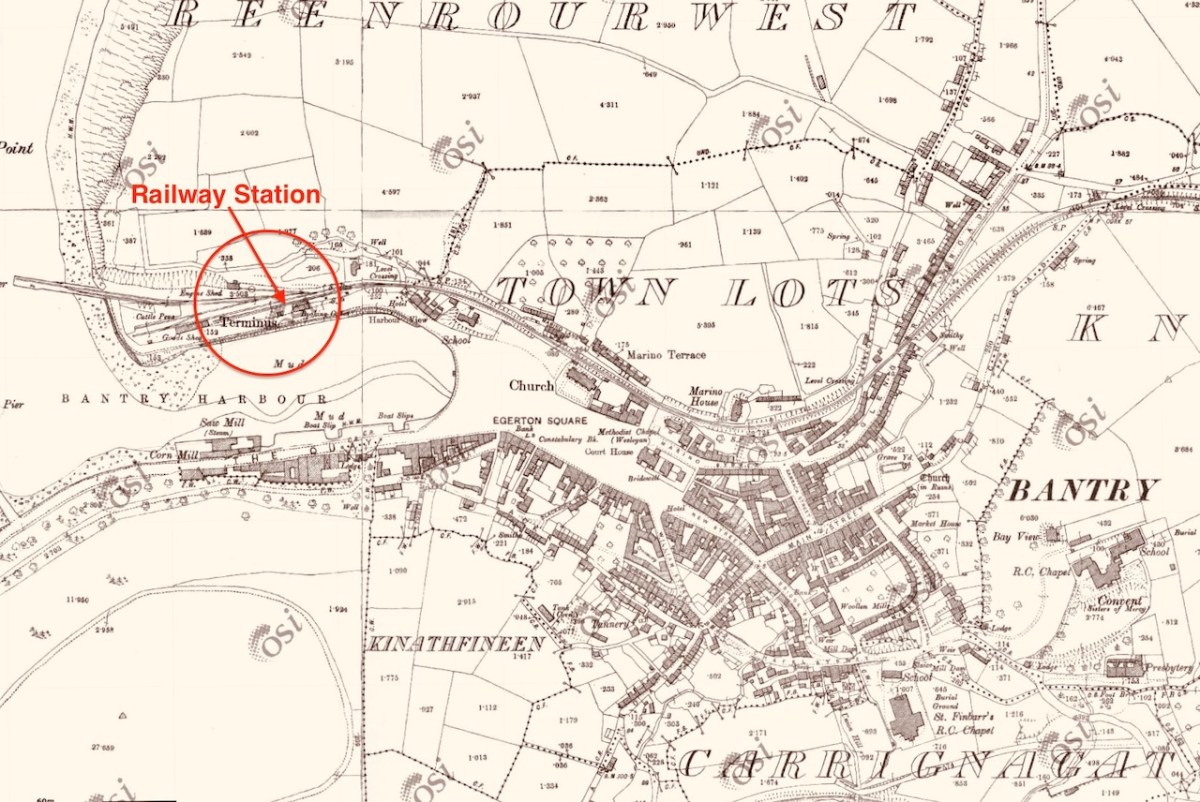
In spite of local opposition the railway was closed on 1 April 1961, and the station building was demolished. We do fortunately still have some vestiges of the line clearly visible in the town.

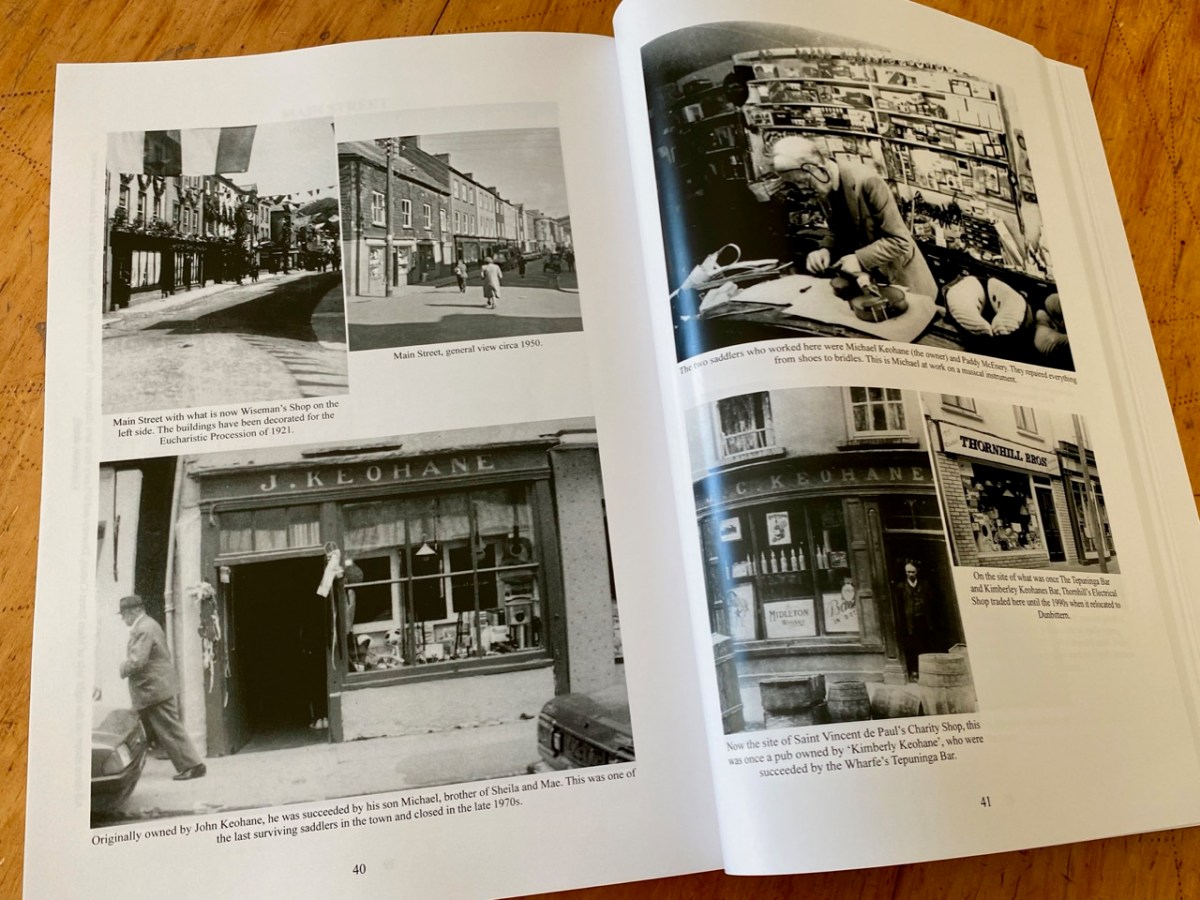
I have only touched on the briefest aspects of the history of this significant West Cork town. There is considerably more recorded in a recent opus compiled by distinguished historian and international scholar Colum Hourihane, who hales from Bantry. We were recently at the launch of his latest book Bantry Through the Centuries, Bantry Historical Press, 2021 and were treated to an illustrated talk, given by the author. Colum is at pains to point out that this is not a general history of Bantry, but that its core is the streets of the town” . . . It’s an effort to understand how the town developed over the centuries in relation to its people . . . “ The book is a first-class resource: a 490-page review of local lore and garnered knowledge illustrated with almost 140 additional pages of historic photographs. This must surely be the most comprehensive volume ever published on this town.
Let’s finish with some more of the photos taken on our day’s exploration: an attempt to capture the essence of this significant West Cork settlement. I hope it will encourage you to visit, if you don’t already know it.
You can read much more about Bantry in Roaringwater Journal. Here are just a few links:
The Golden Hour

Masters of Tradition Festival

Ireland’s First Inhabitants

Dunmanus Castle 1: The Cliff-Edge Fort

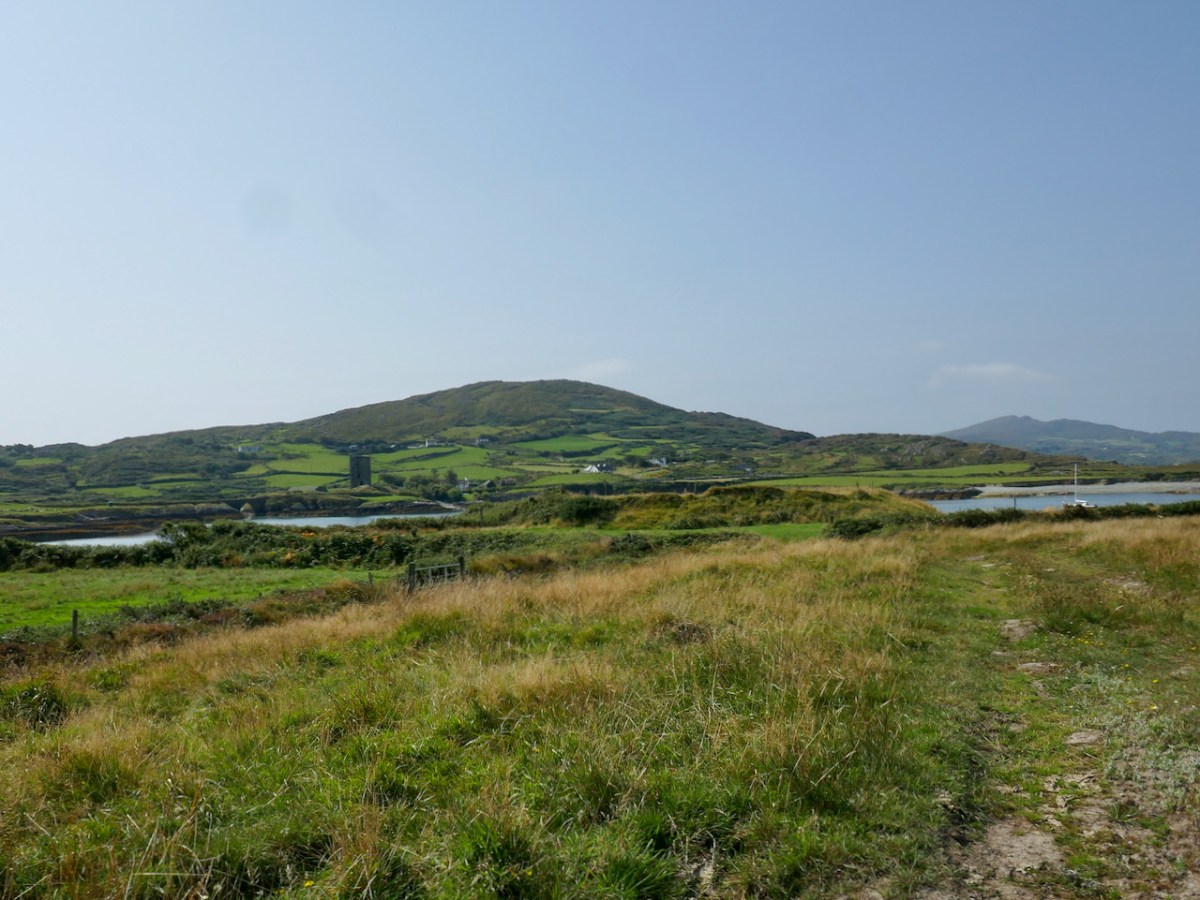
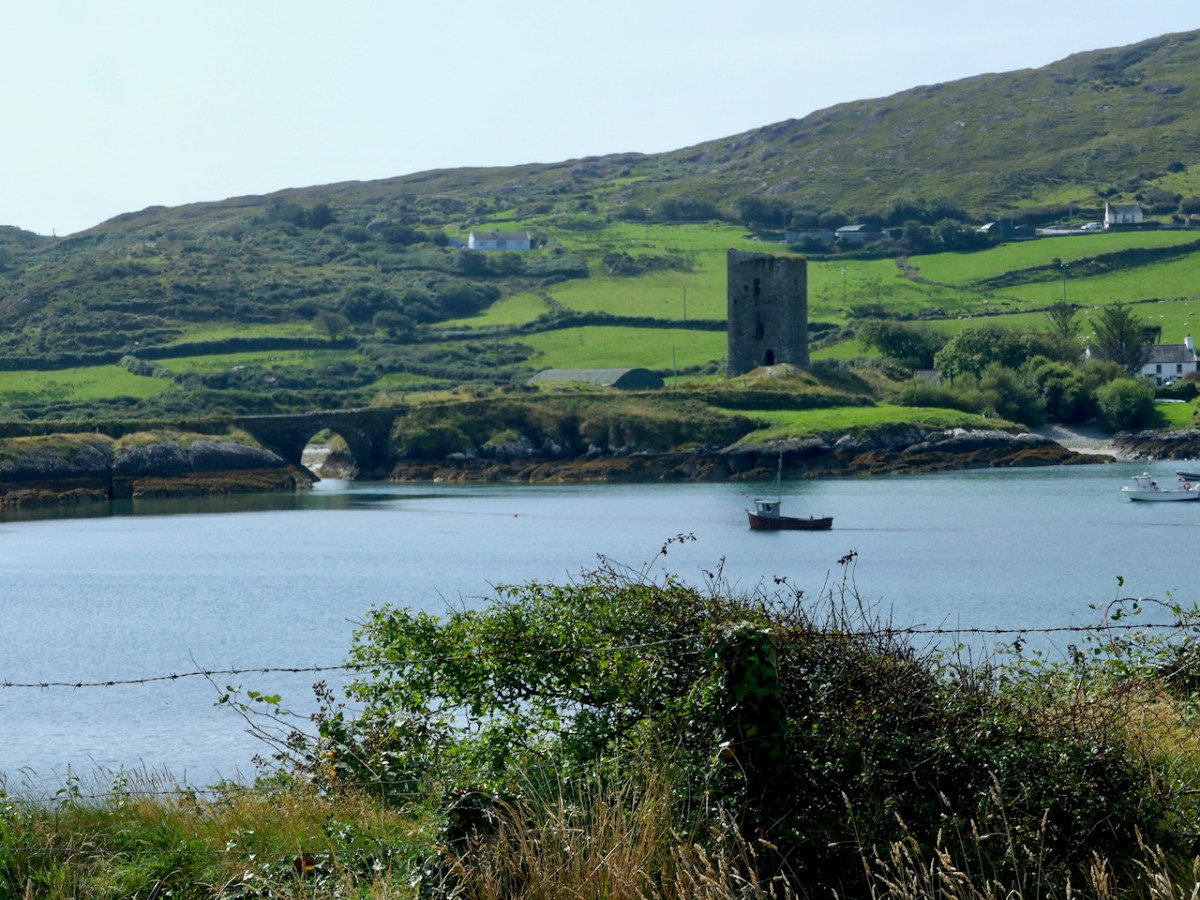
There is a strong local tradition on the Mizen, or Ivaha as I prefer to call it, that Dunmanus Castle is not the original. No – the first site for Donagh Mór O’Mahony’s Castle, the stories say, was in Knockeens, across Dunmanus Harbour from the present site. We set out to investigate.

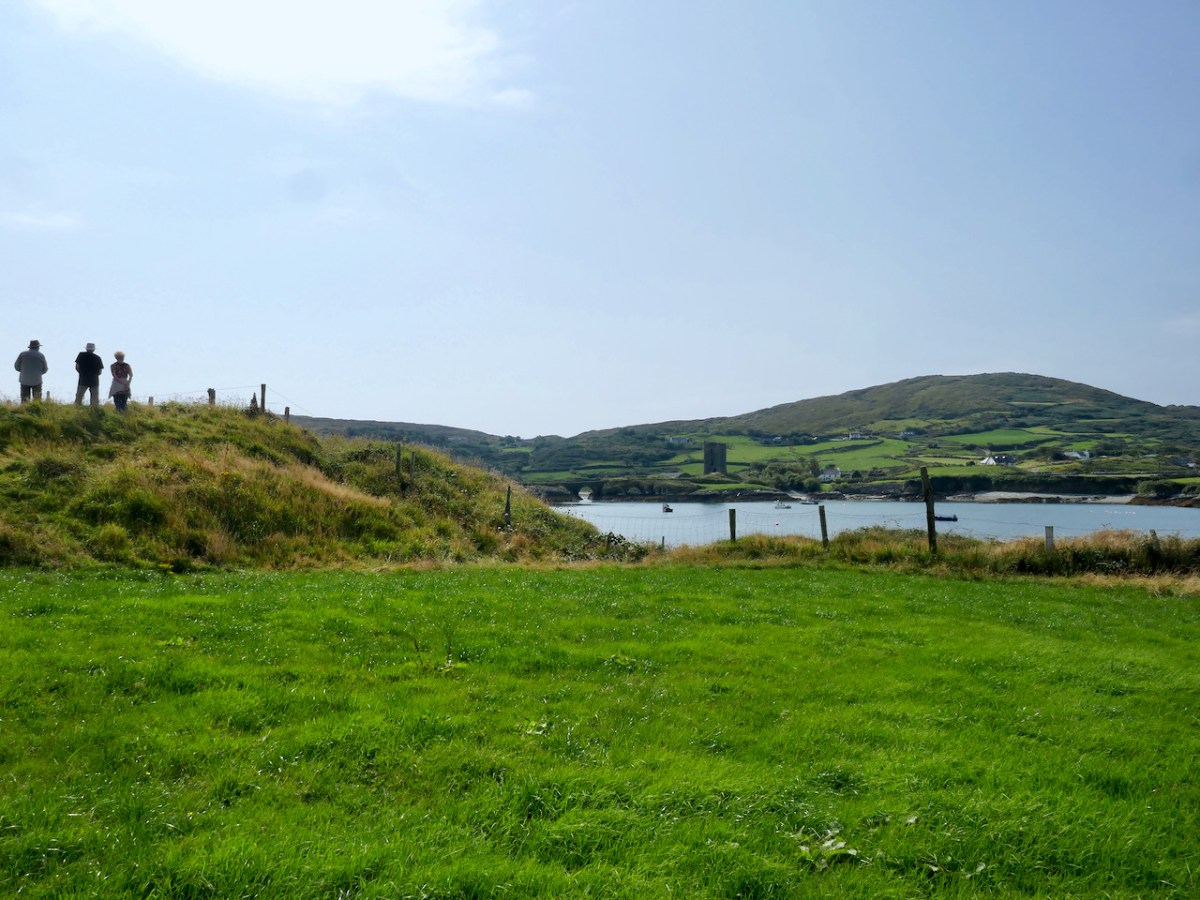
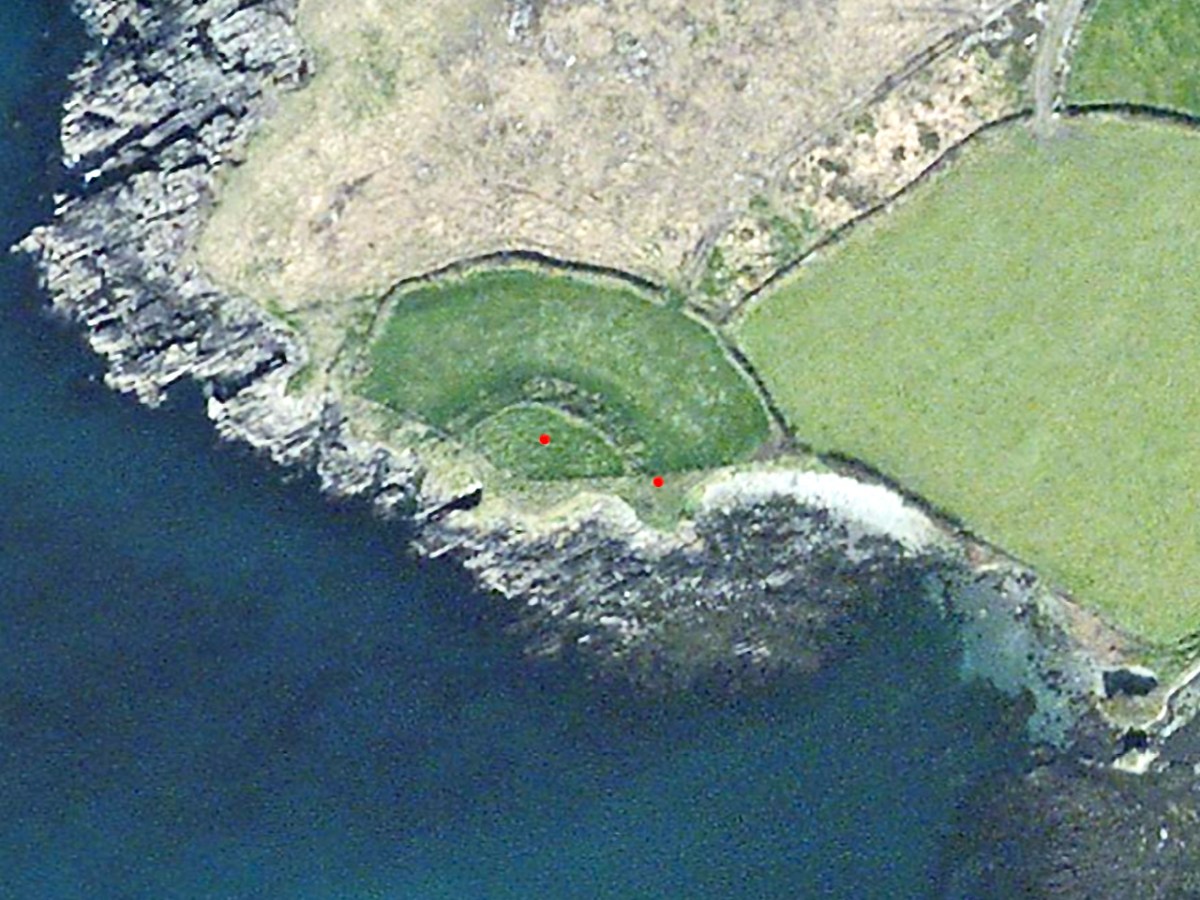
This is the site, directly across the bay from Dunmanus Castle, and it’s what is labelled in the National Monuments records as a Cliff-Edge Fort. According to their definition that’s A penannular enclosure which utilises a cliff-edge to form one or more sides as an enclosing element. They date from the late Bronze Age up to the medieval period (c. 1800 BC – 16th century AD).

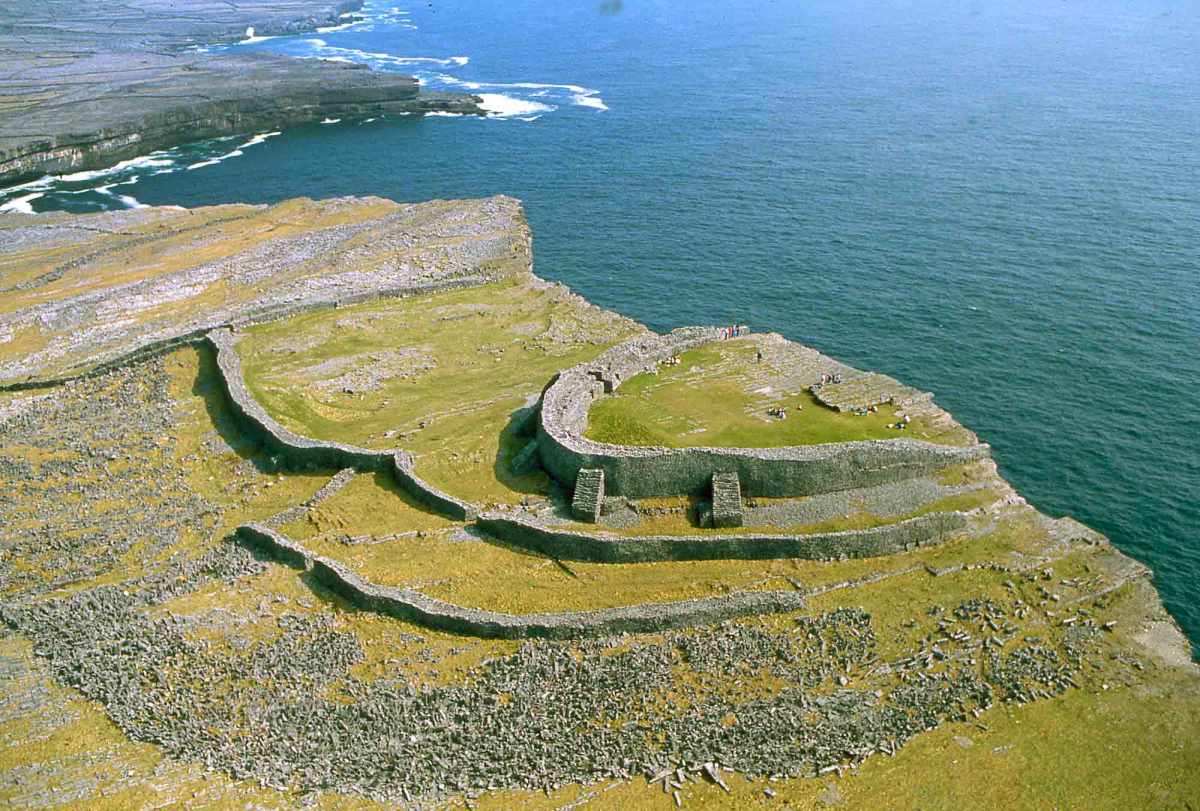
Perhaps the best known cliff-edge fort in Ireland is Dun Aonghasa on the Aran Islands (above) – it’s certainly the most spectacular. (Photo courtesy of Heritage Ireland) There are 20 examples of cliff-edge forts in Cork, of which only 6 are coastal, the rest are on ridges or steep slopes above rivers.

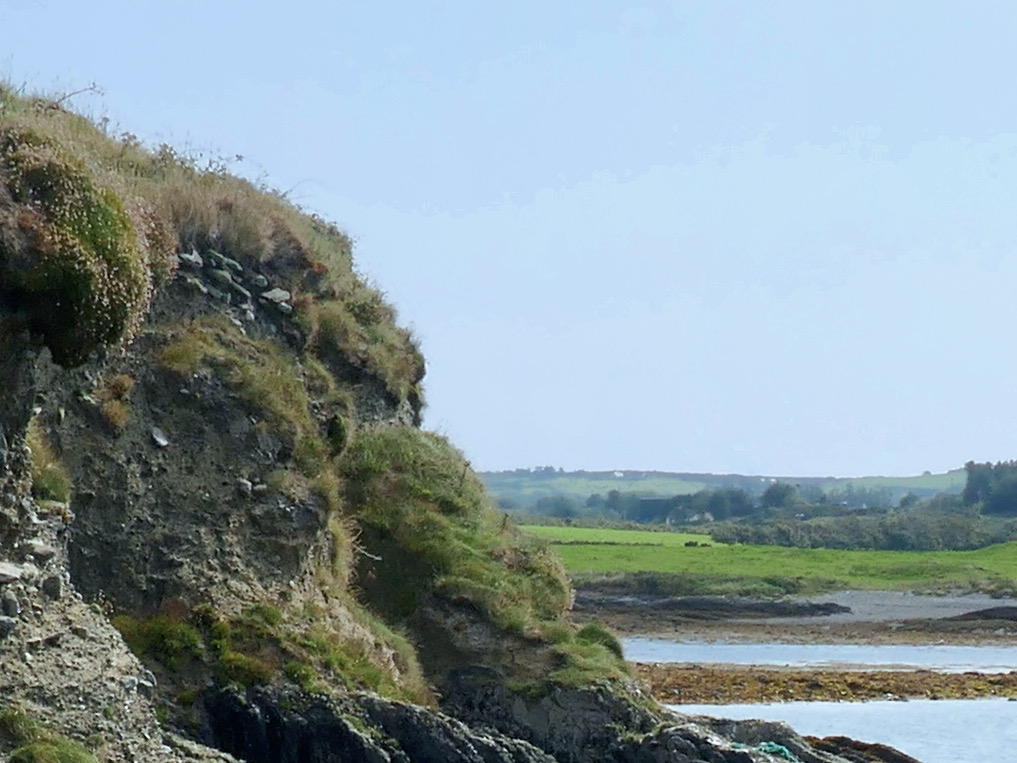
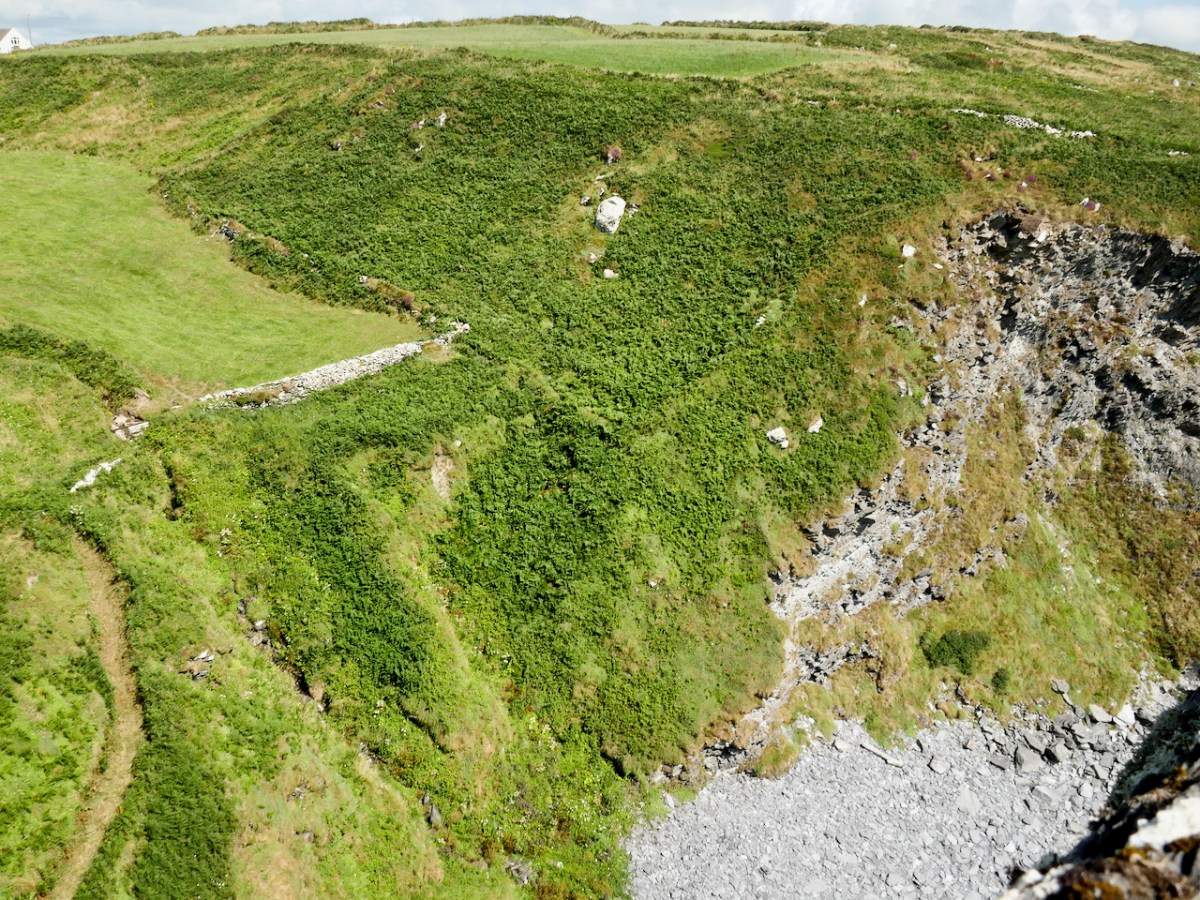
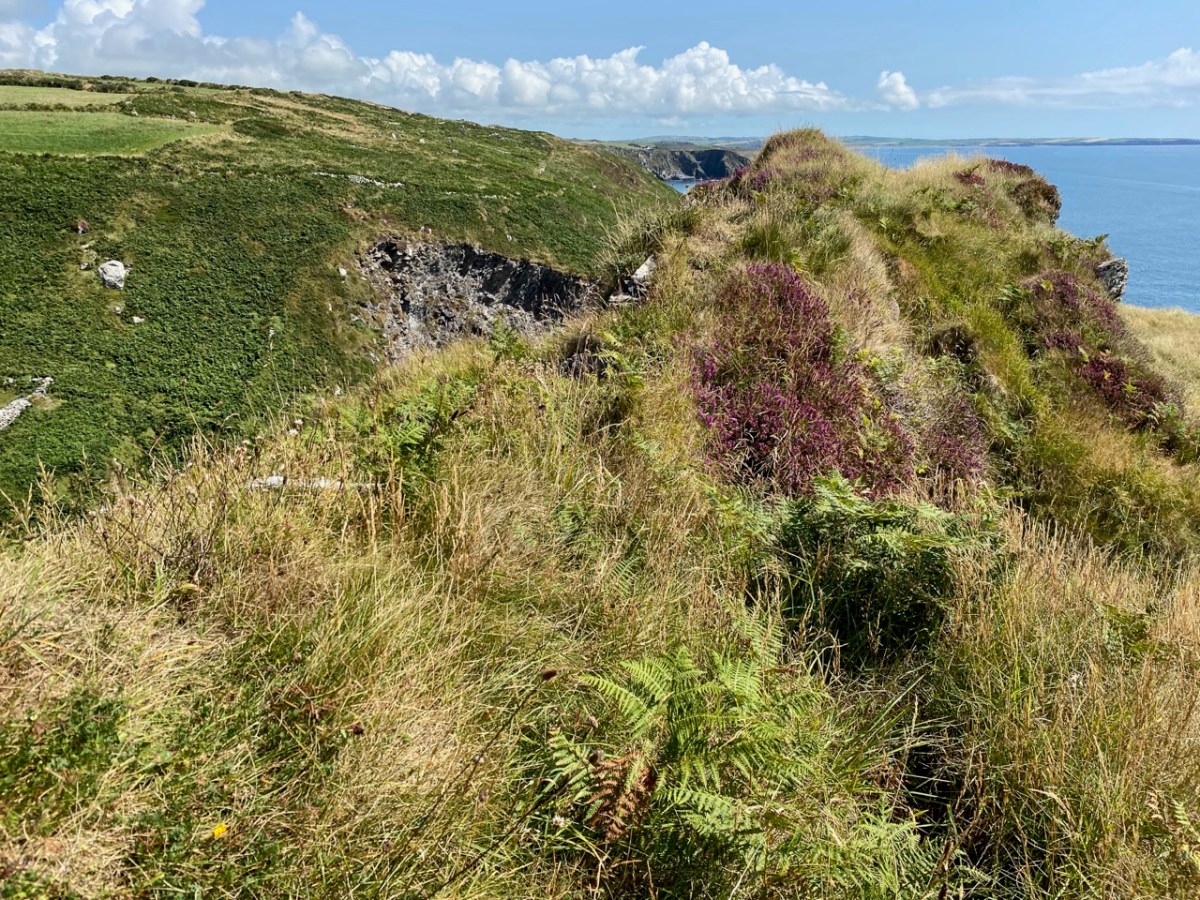
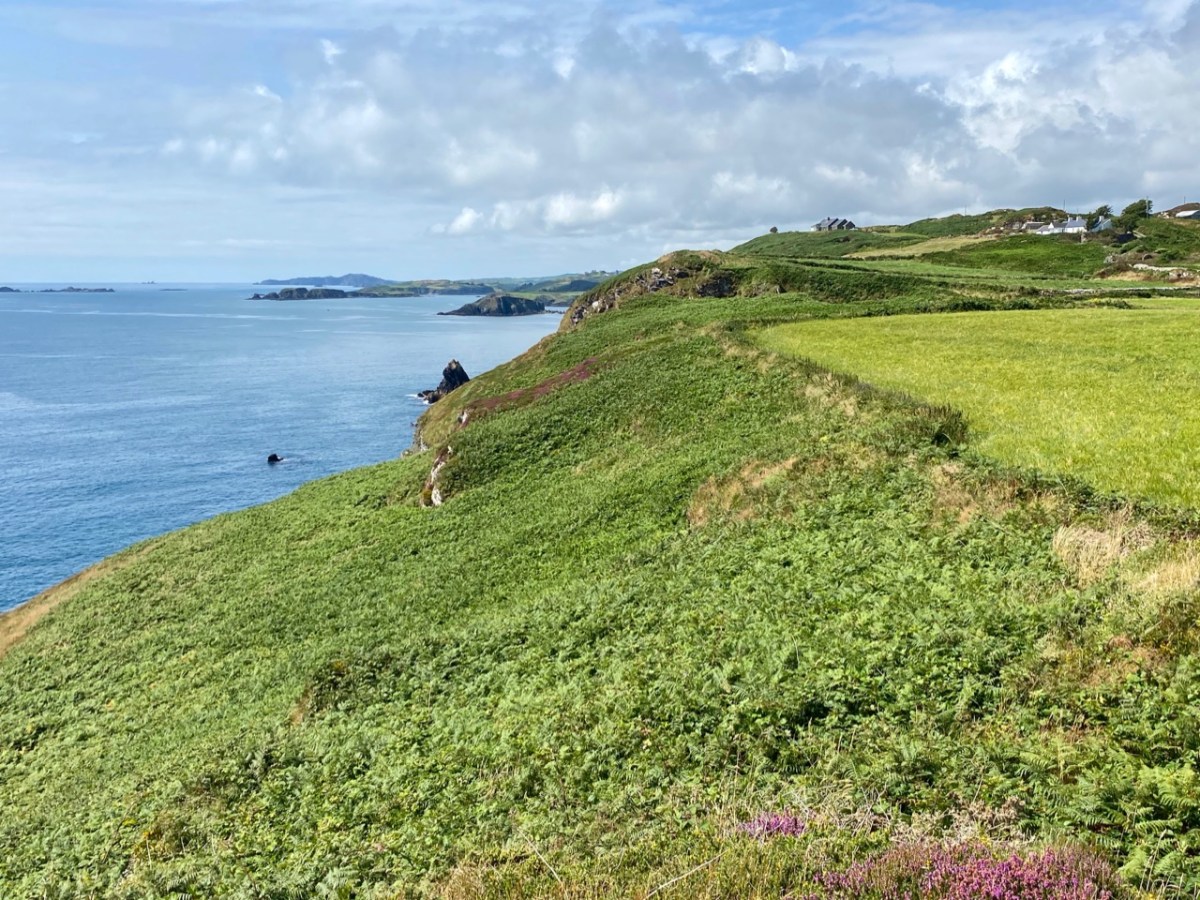
The problem is that some of these may genuinely be a specific type of fortification that uses the cliff-edge as an impregnable barrier – as promontory forts do, for example. Some of them, however, and this may apply to Knockeens, may have been circular ring forts, built on prominent locations to command views of land and sea, but which may have been eroded by sea-action until what is left is clinging on to the edge of a cliff. In the photo above, you can see the obvious erosion at Knockeens. Instead of a circular ring fort, what remains looks D-shaped.

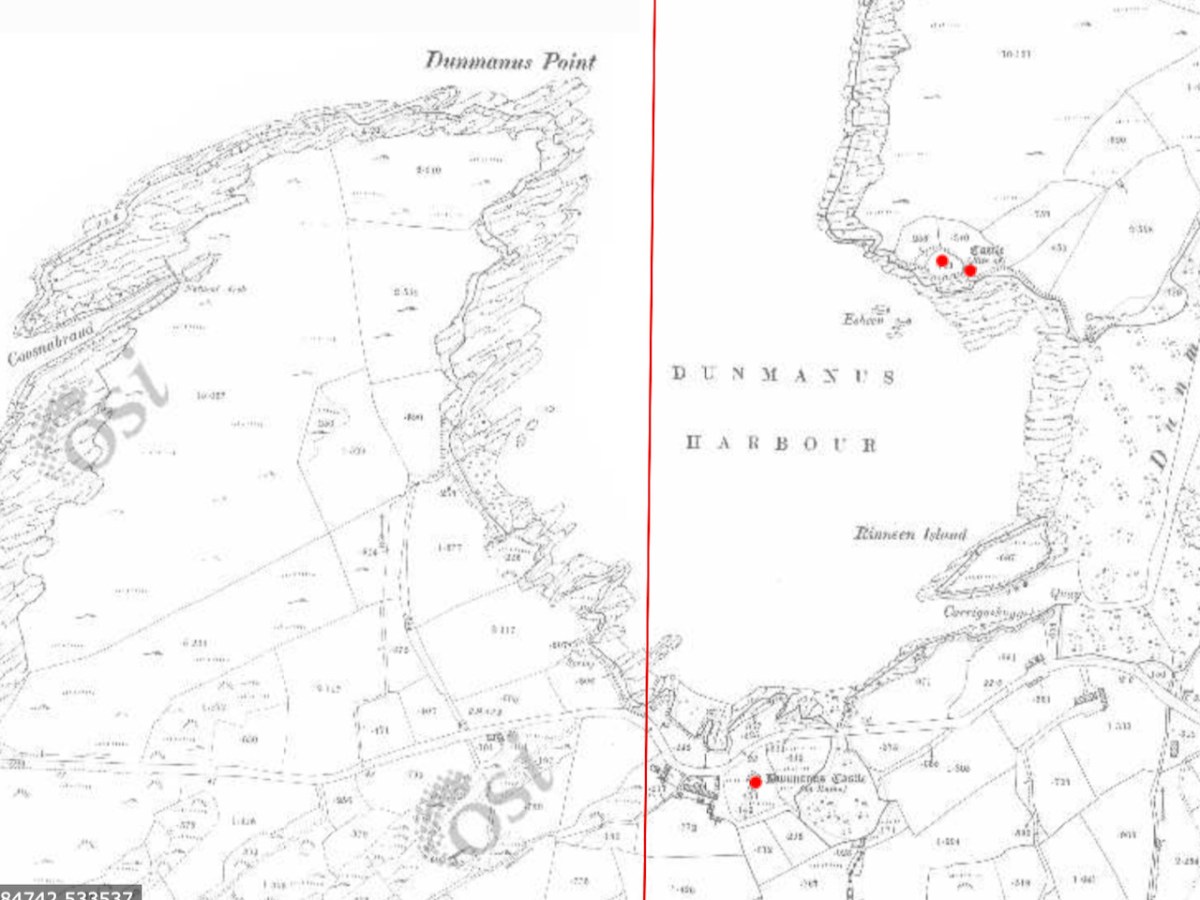
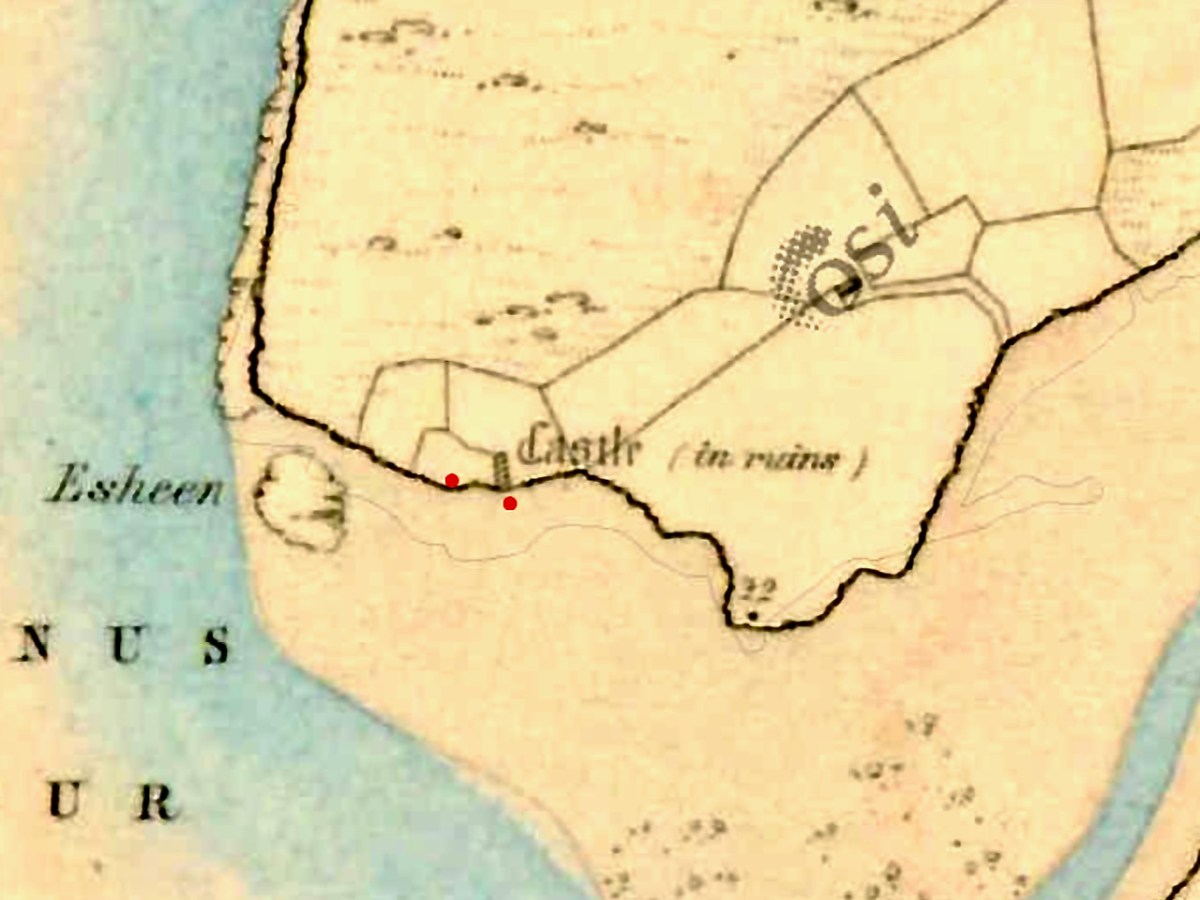
In the 25″ OS map, done in the late 1800s, the site shows ‘Castle in Ruins’

There is plenty of evidence that the Irish clan chieftains built their castles on the sites of their former strongholds – ring forts, cashels and promontory forts (see my post on Three Castle Head, for example). If there was indeed a castle at Knockeens, there is not much evidence of it now, although there are tell-tale signs of some kind of masonry construction.

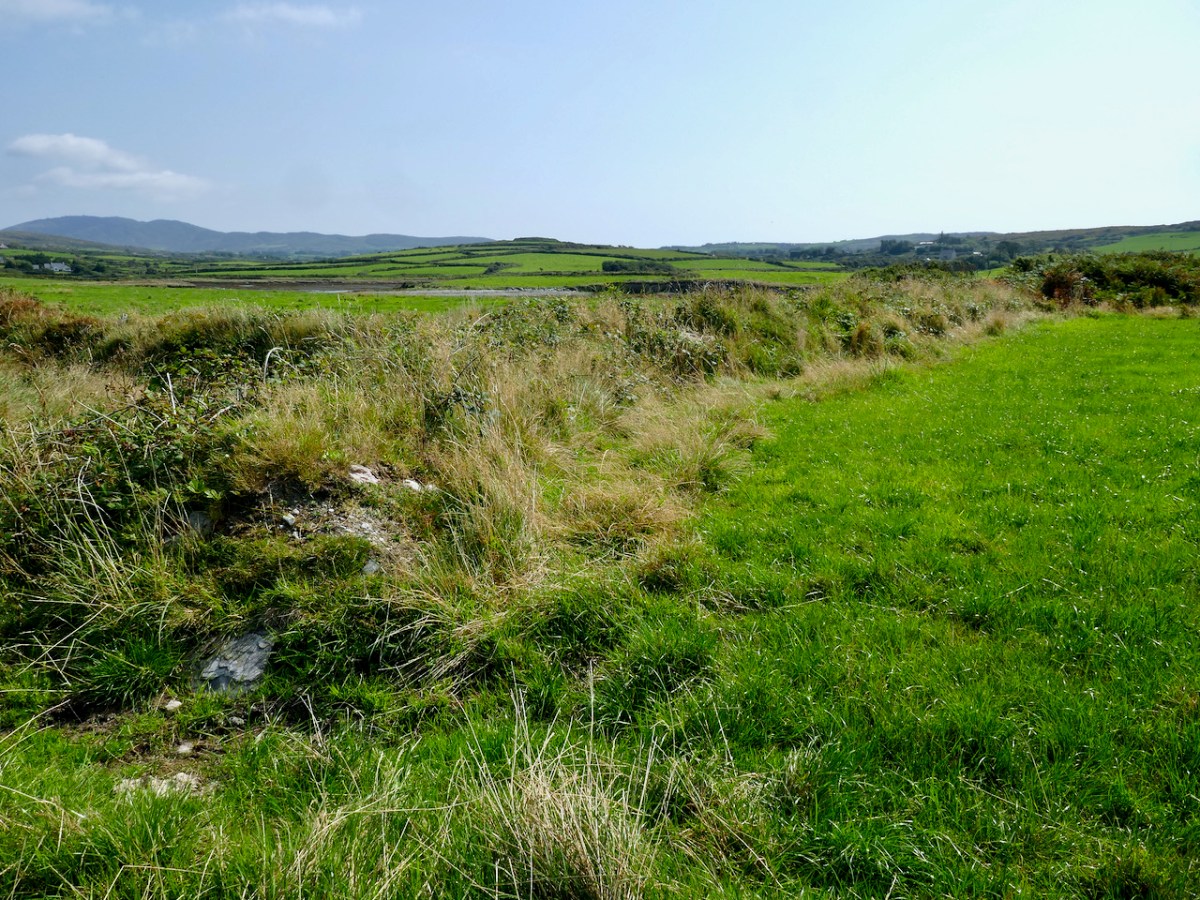
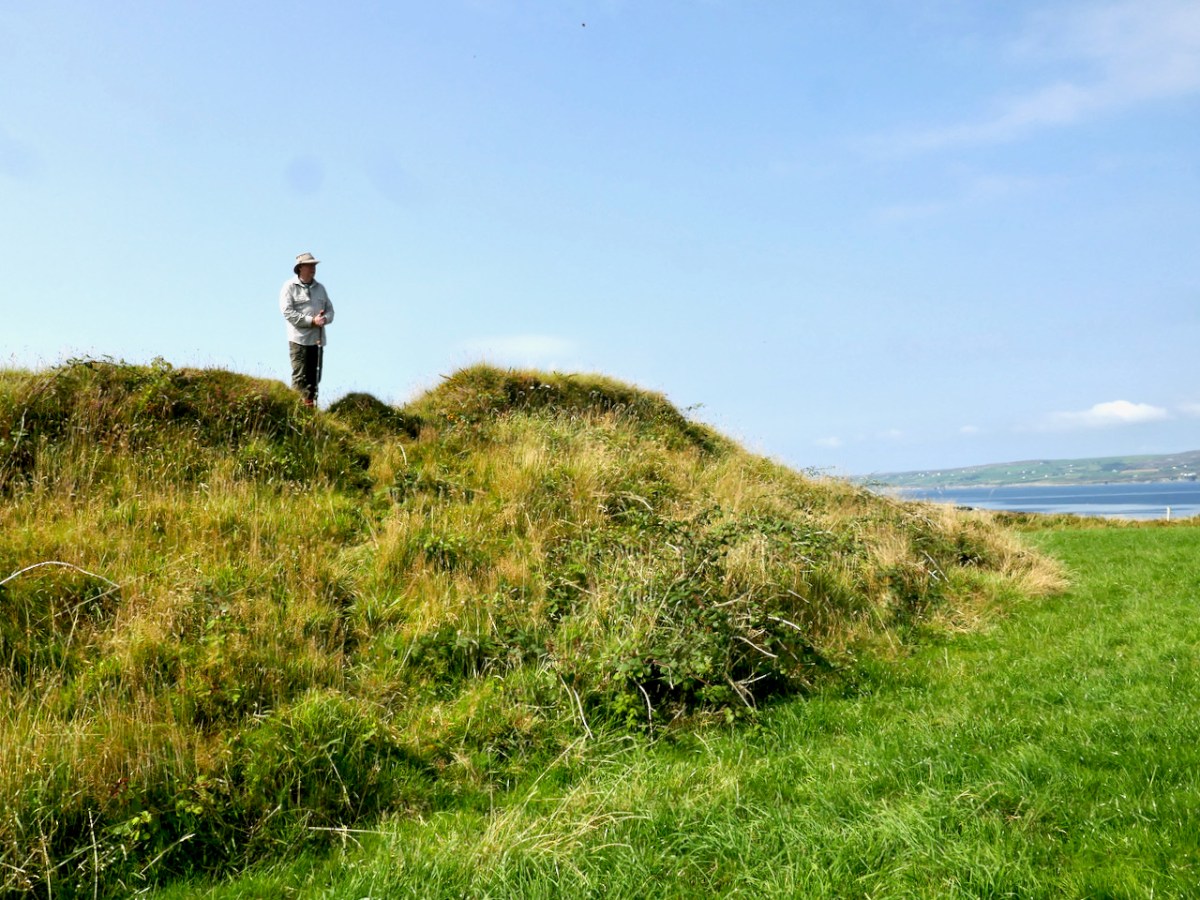
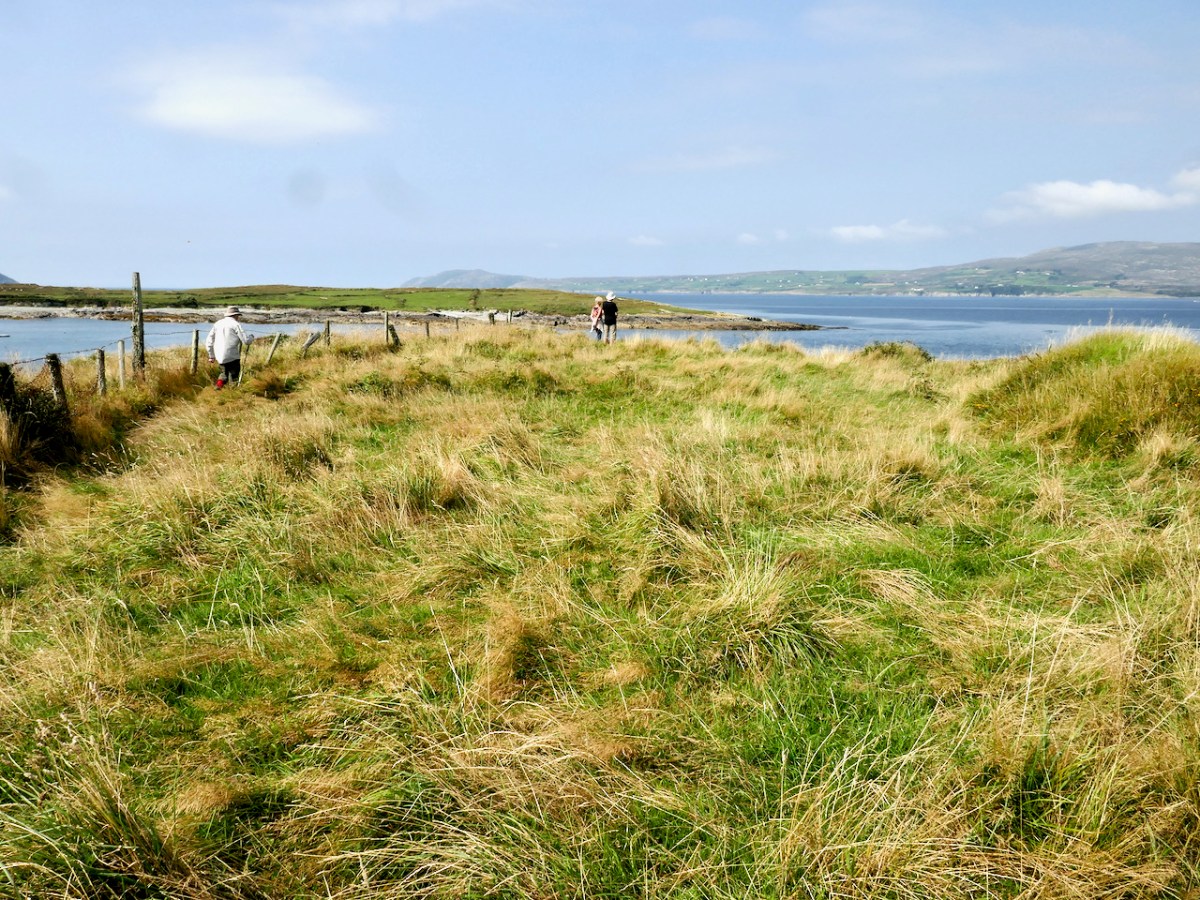
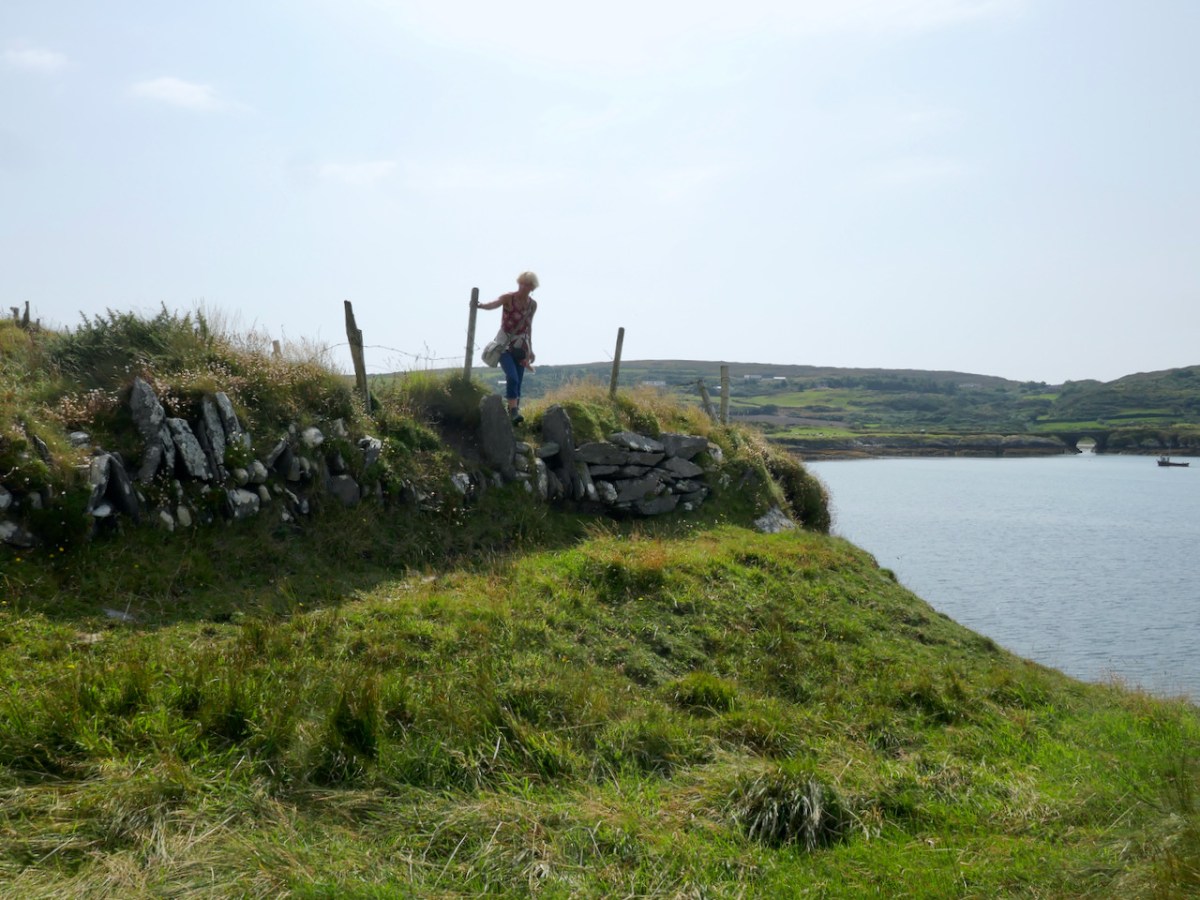
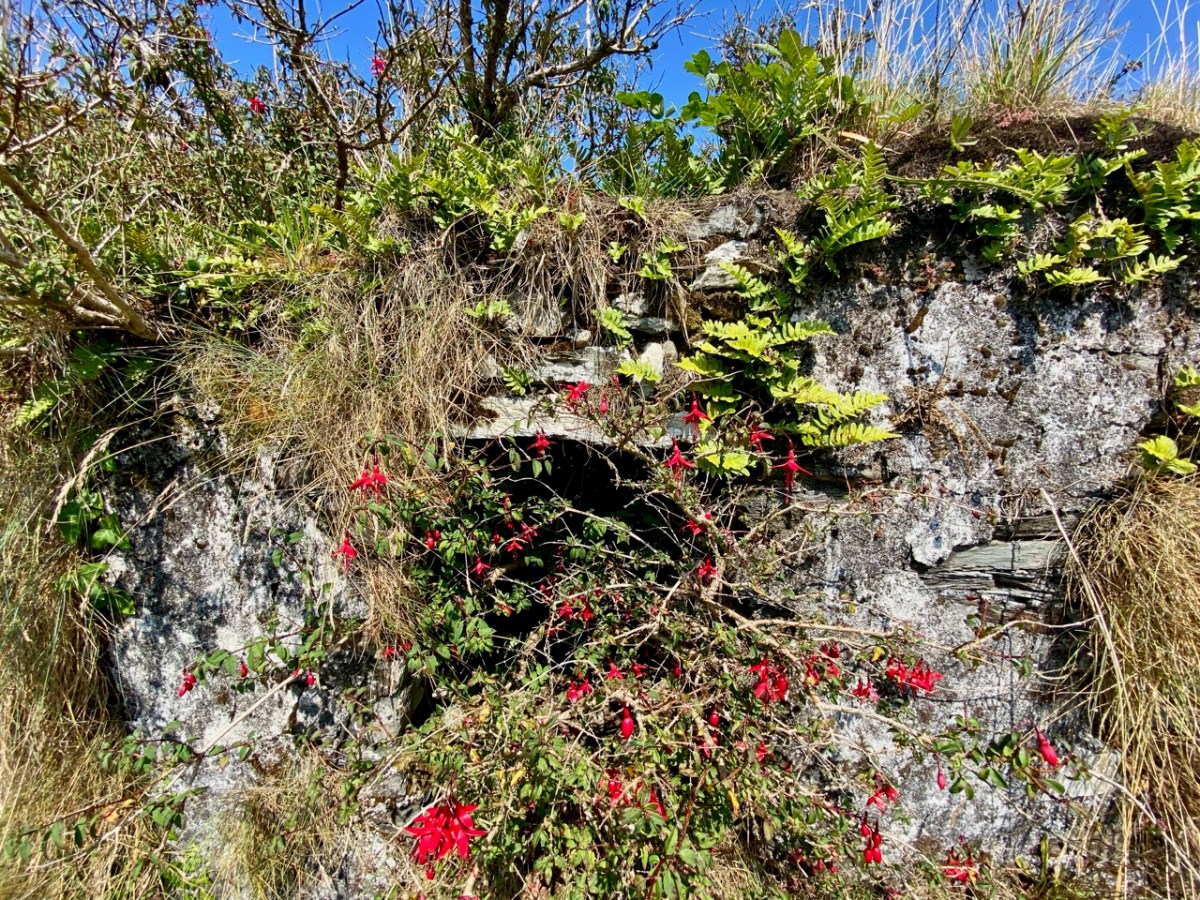
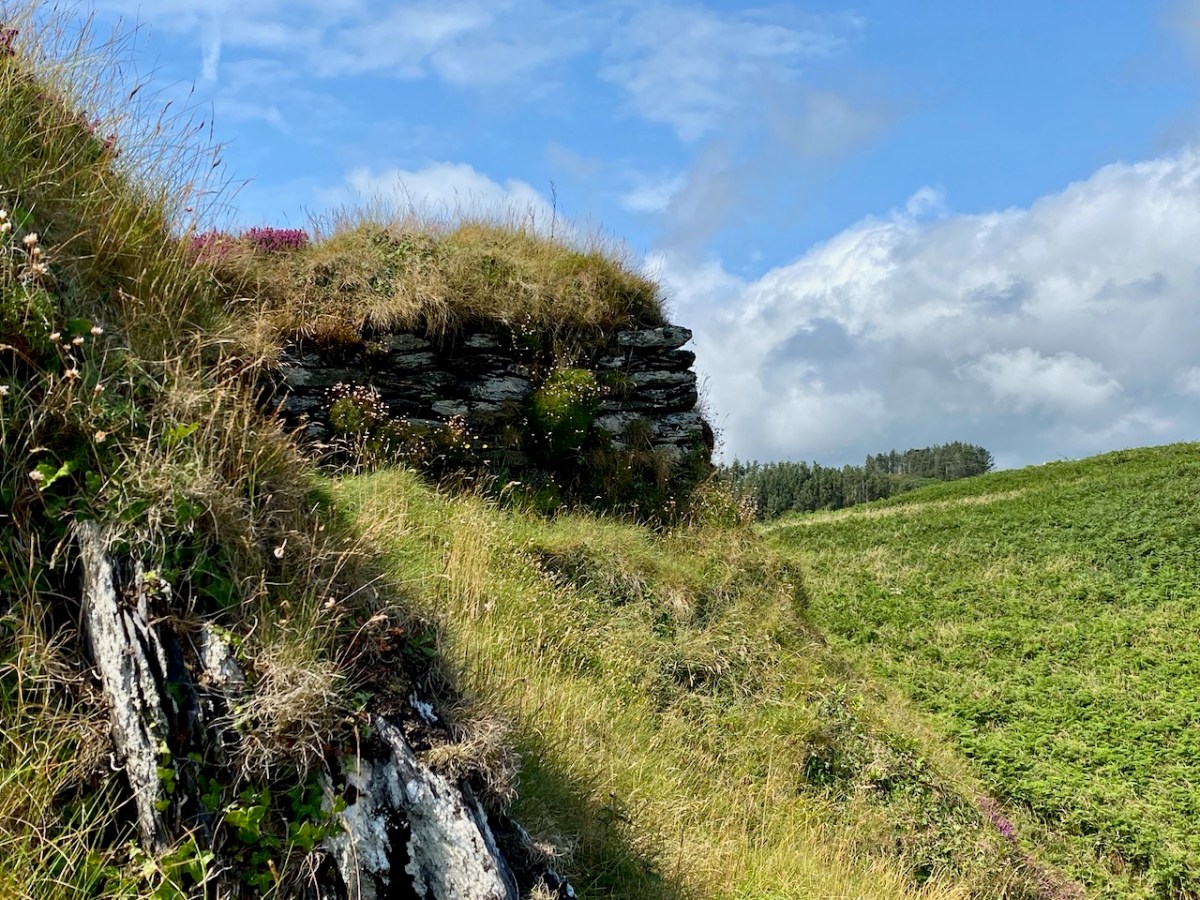
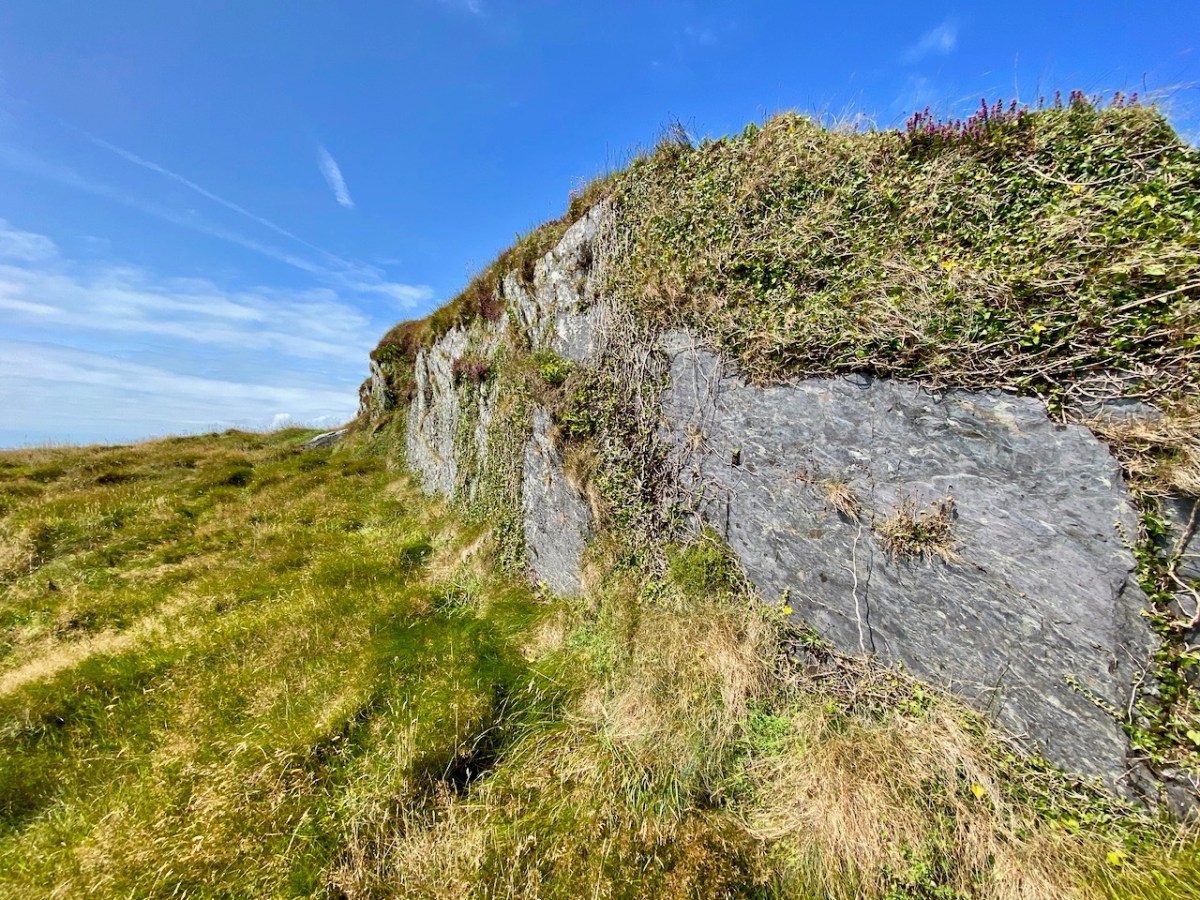
But whatever Knockeens was – a cliff-edge fort or a ring fort – it’s unusual and impressive. It consists now of a raised platform of earth, probably originally circular, and an outer wall (above). There may have been a radial wall once (see the map below), but it has been ploughed out and is no longer visible on the surface, although it shows up faintly in aerial photographs. There may have been a fosse, or ditch around the outer wall also – slight traces of this also remain.

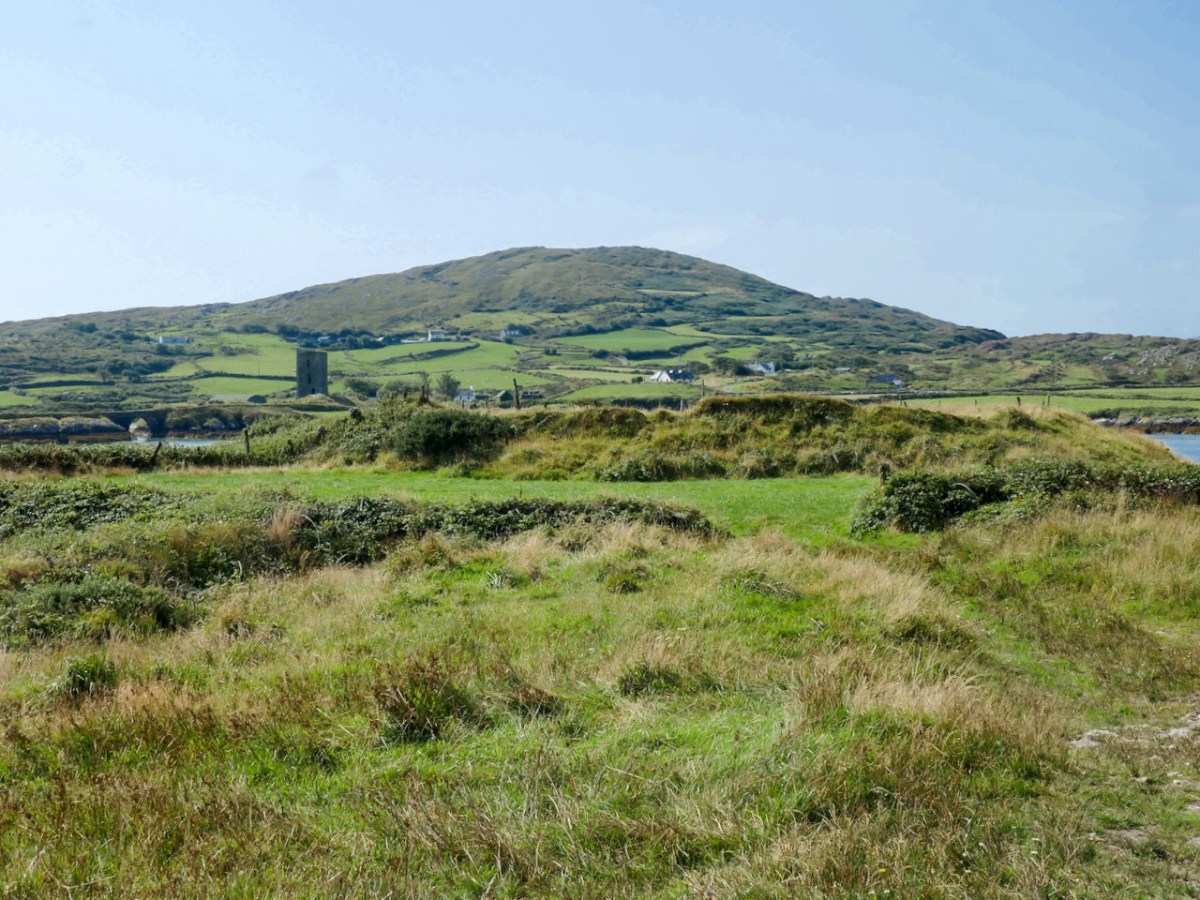
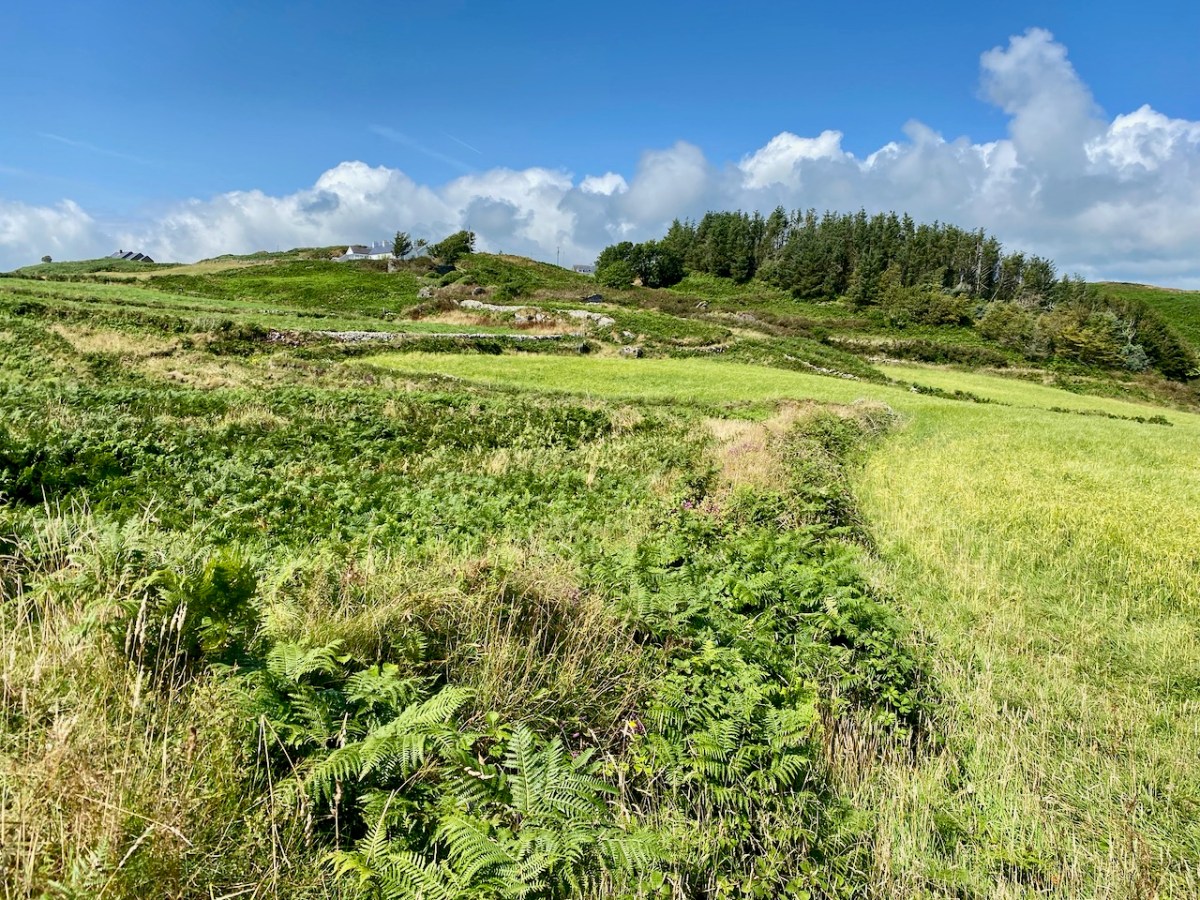
The raised platform is an imposing spectacle. We approached it from the landward side and were unprepared for how tall it is. The interior sits high above the surrounding land – an extraordinary feat of engineering and one which could only be accomplished by a chieftain with the ability to command the labour of many people. 

If indeed most of it has been swept away by the sea, it is now, of course, only a portion of what it once was. It certainly accomplished several objectives: commanding the entrance to the sheltered harbour, allowing visibility up Dunmanus Bay, and being a dominating force on the landscape – in other words a high-status statement residence and fortification. 

The outer wall appears to have been stone-built or stone-lined (see image below), and it, or the raised platform may have had a palisade around the top – these were common in ring forts. 

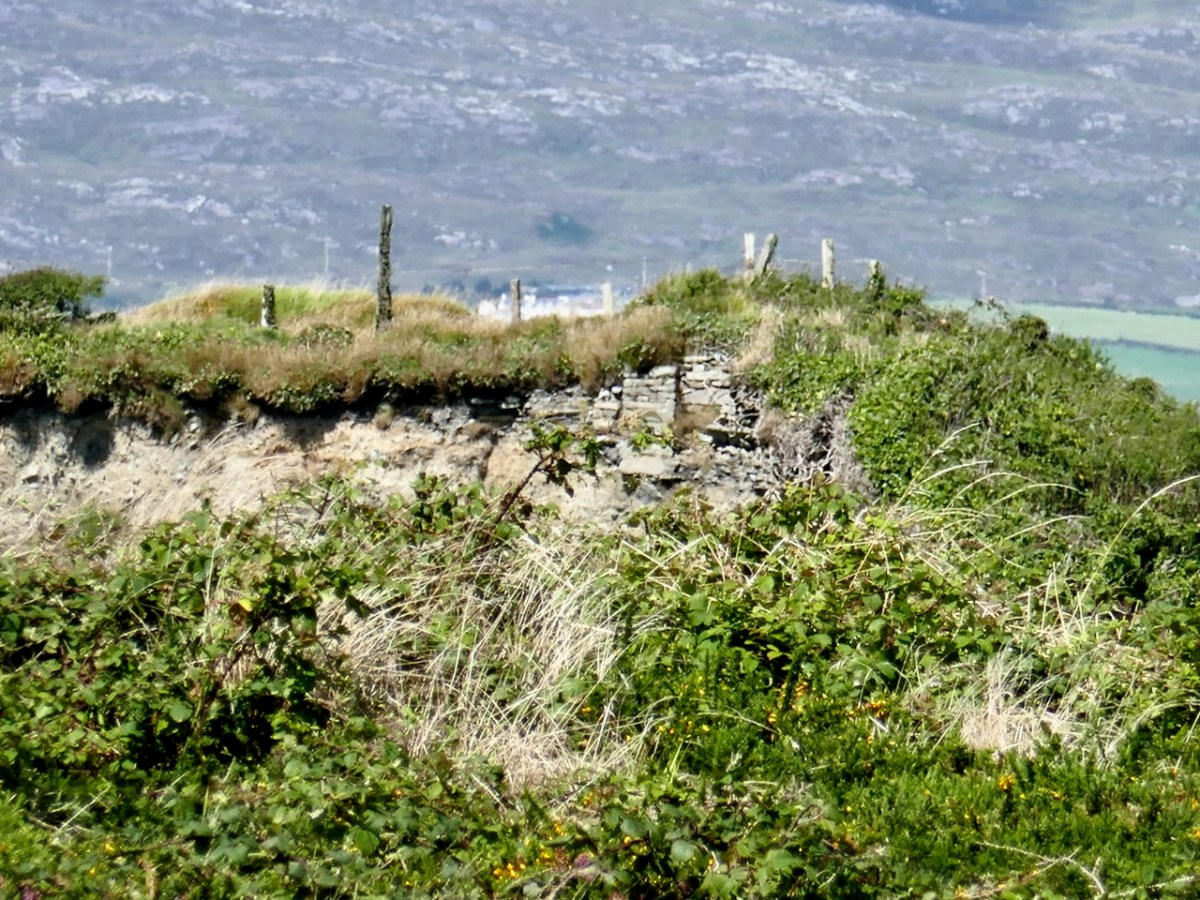
Although we could not find a way to get at it from the stony beach below the cliff edge, we could just about make out, from Dunmanus Pier across the bay, a cross-section of stone wall where the platform meets the cliff. In one of the older maps, this is marked as a “Castle in Ruins” although all that is shown is a portion of wall. So there may well be a solid basis for the belief that this was the original site of Dunmanus Castle. 

Michael Healy tells it this way:
It is related locally that before he finally decided on Dunmanus as a site for his castle, Donagh Mór O’Mahony, early in the 15th century, had selected a site on the other side of the inlet and had set his men to work. While they were working a stranger came by and said that they should not build a castle in that place as the sea would come and wash it away. They did not see him again but the project was abandoned and Dunmanus was built on its present site.

The Castles of County Cork,

Michael J Carroll in repeats the assertion that this was intended as the site of the castle but introduces a nuance:

The workmen  noted, however, that the heavy winter seas rose up over the site. The project was abandoned and the stones removed for use in Dunmanus.

The Castles and Fortified Houses of West Cork,

I said at the beginning that there is a ‘strong local tradition’ that this was the original site. What we have learned to do in these cases is go to the Dúchas Folklore Collection, for the stories collected by schoolchildren in the 1930s – and there it was, written by an anonymous students in Kilcomane School (possibly Bridie Kennedy of Lissacaha). Here’s what she wrote:

When O’Mahoney was building his castles he had one for each of his sons. When he was building Dunmanus castle it was in the Knockeen’s side he laid the foundation. There is a part of it still remaining. It goes by the name of the old castle. A half fool one day was passing by and he saw them at work. He told O’Mahoney it was a foolish place to build a castle, that the swells of the ocean and the river from the mountain would eat the foundation from it.

O’Mahoney then asked him where would he build it and the fool showed him a rock at the opposite side of the river called the mount. Then O’Mahoney considered himself and found he had a mistake made, so he took the fool’s advice and built the biggest castle of all the rest on the mount.

https://www.duchas.ie/en/cbes/4921594/4882831/5147738

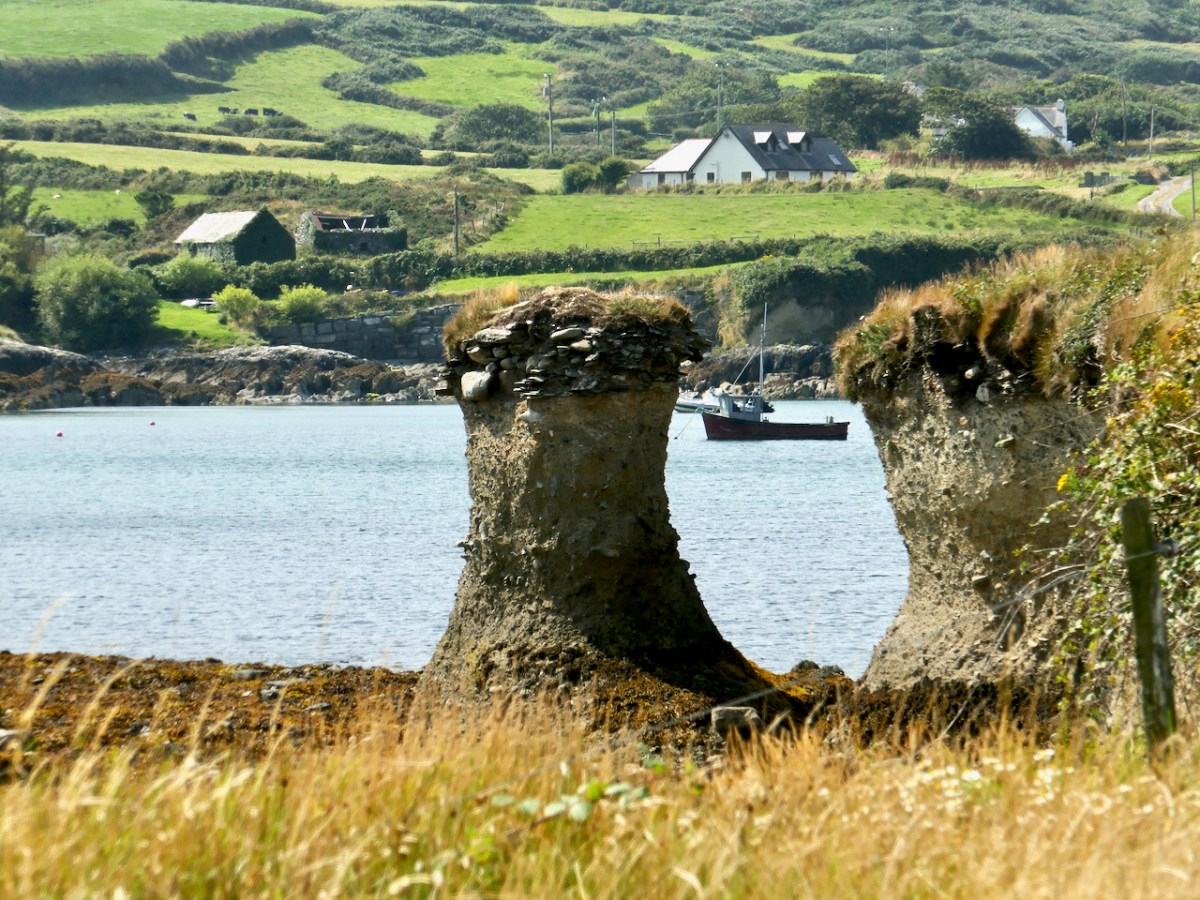
The sea stack above shows clear evidence of the amount of erosion that has happened over the centuries as well some kind of stone construction at the top level of the stack.

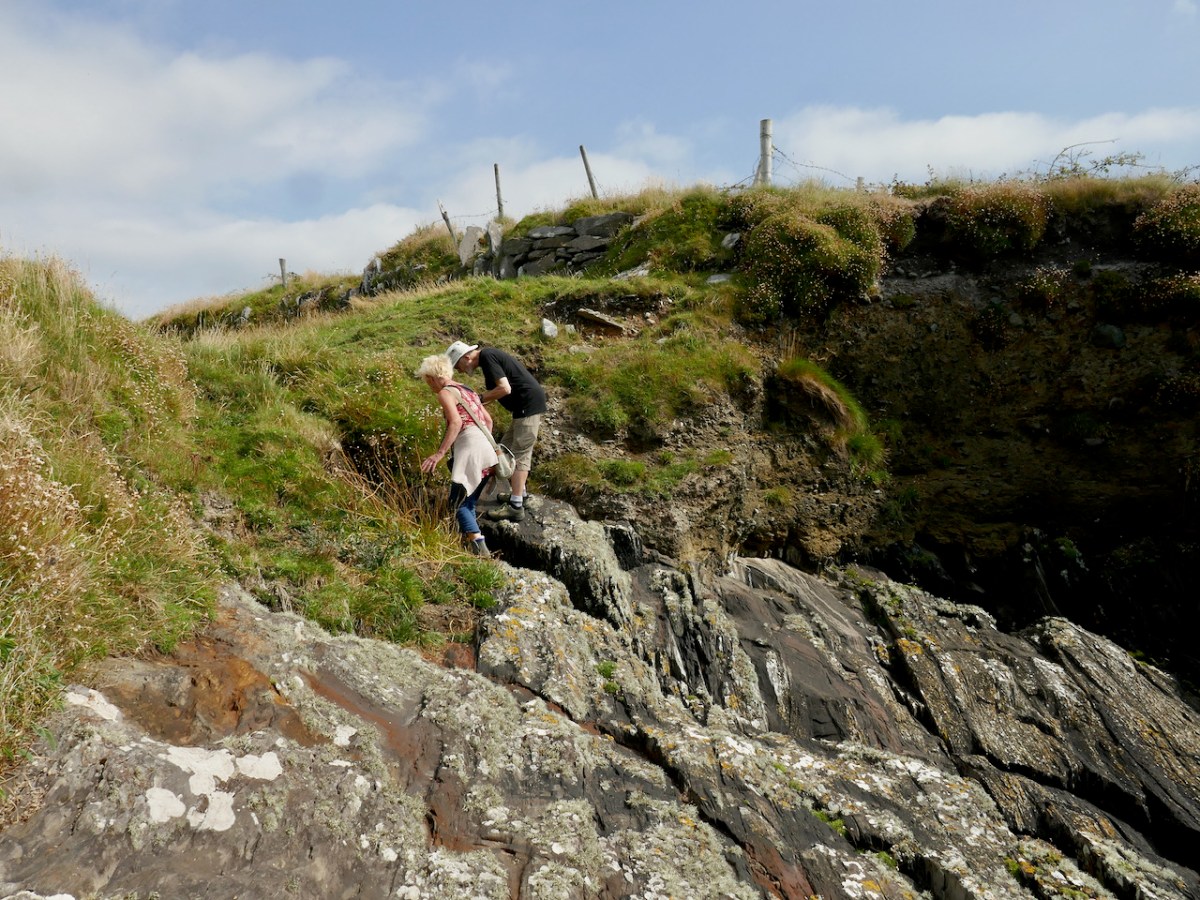
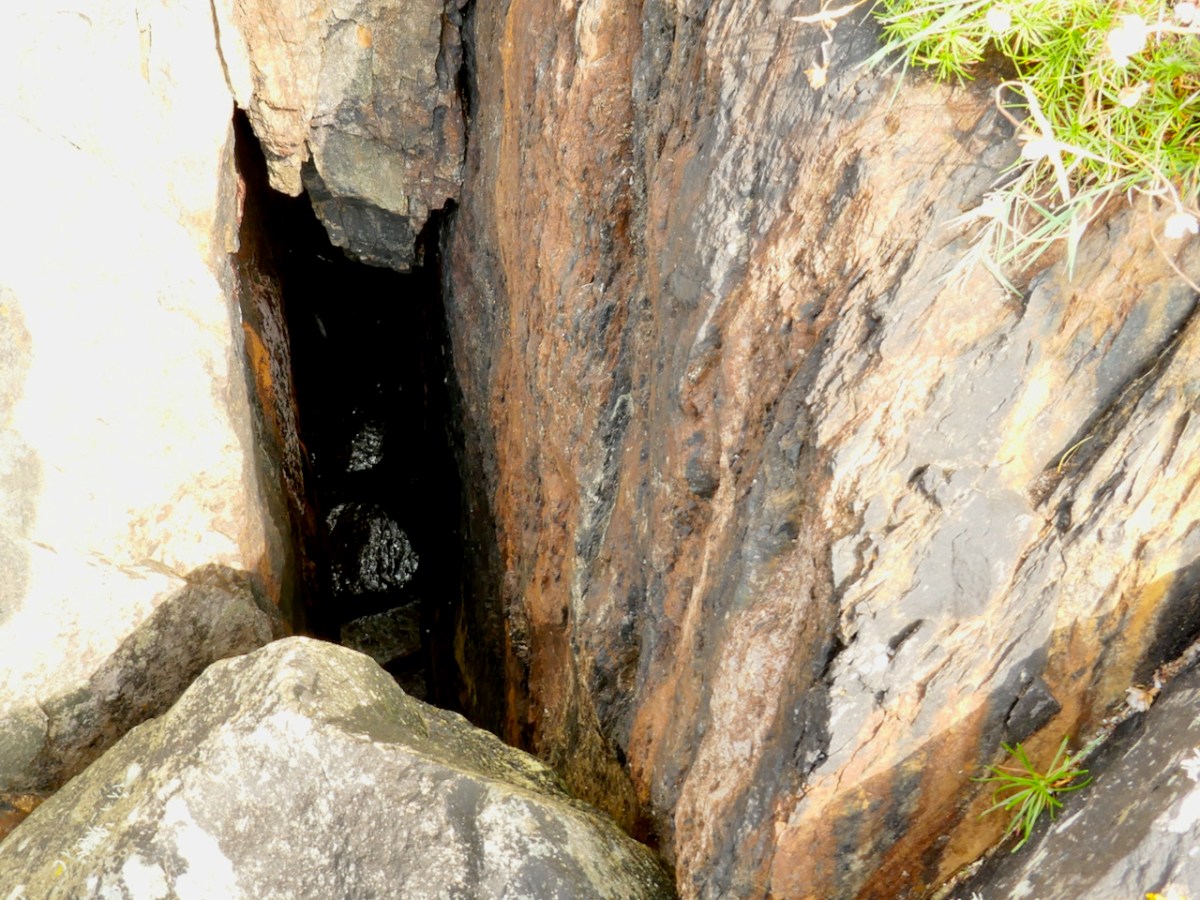
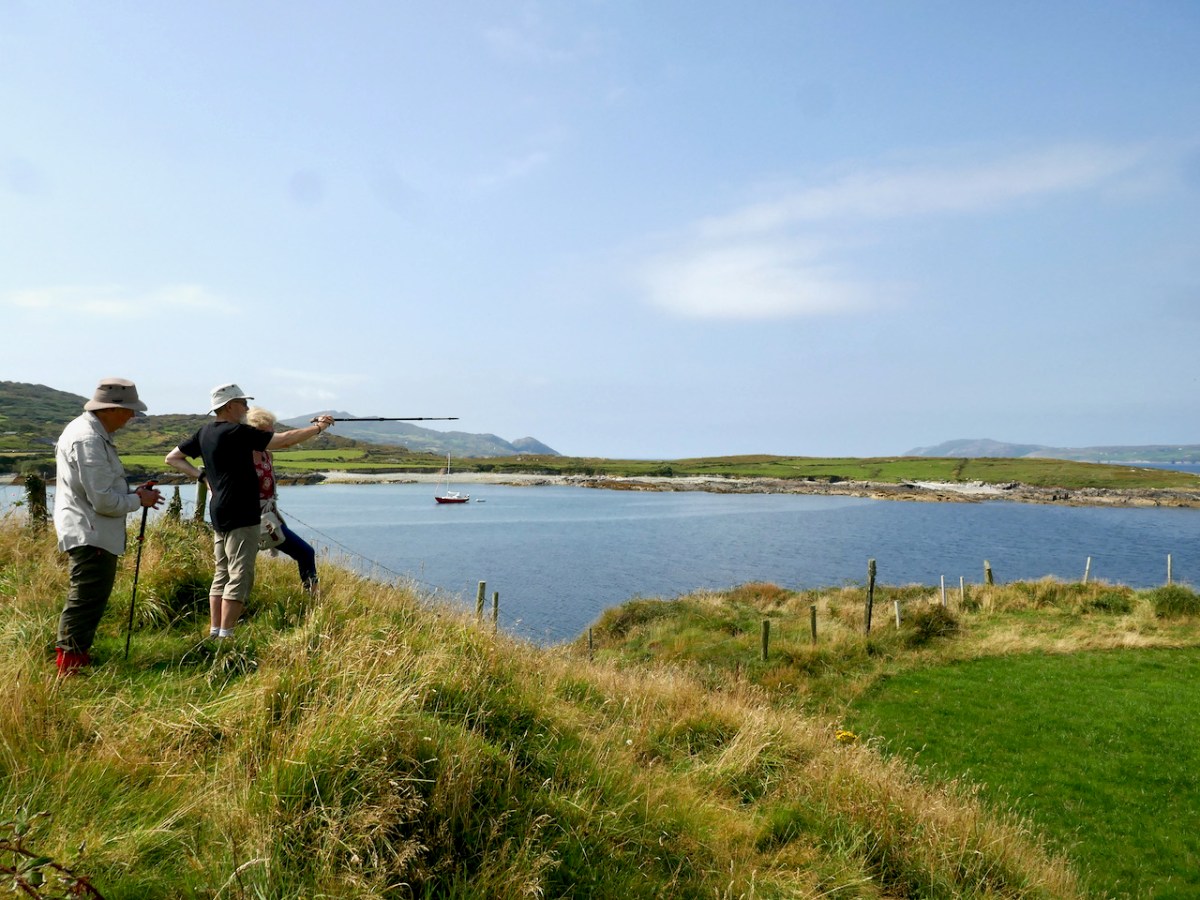
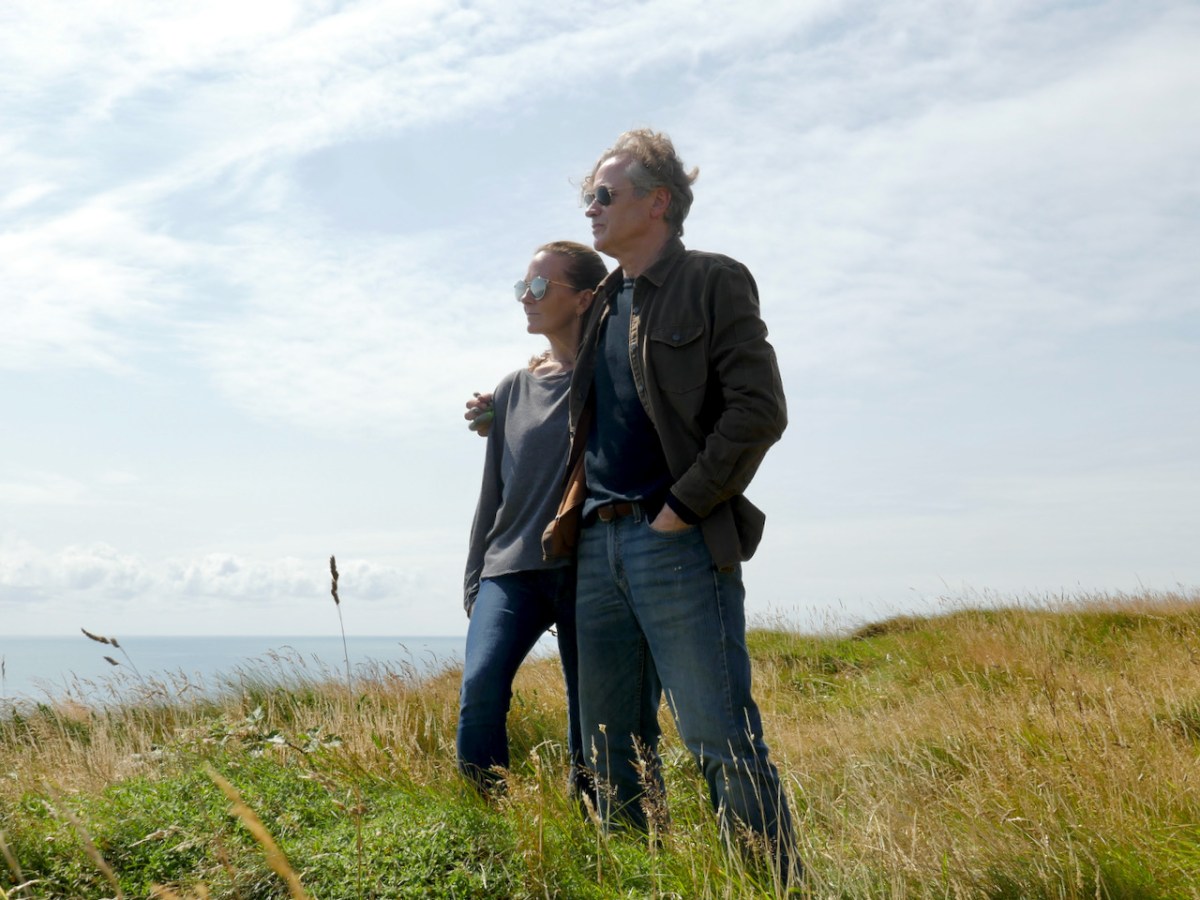
What are Amanda and Peter looking at? It’s a blow hole! Further evidence of how the sea can rage against this cliff.

So there you go – O’Mahony took the advice and built his castle where we see it today – the subject of a future post.

Please note that this site is on private land, used for cattle, and we were granted access by the kind permission of the owner. Our grateful thanks to him.

Fresh From Sea and Land

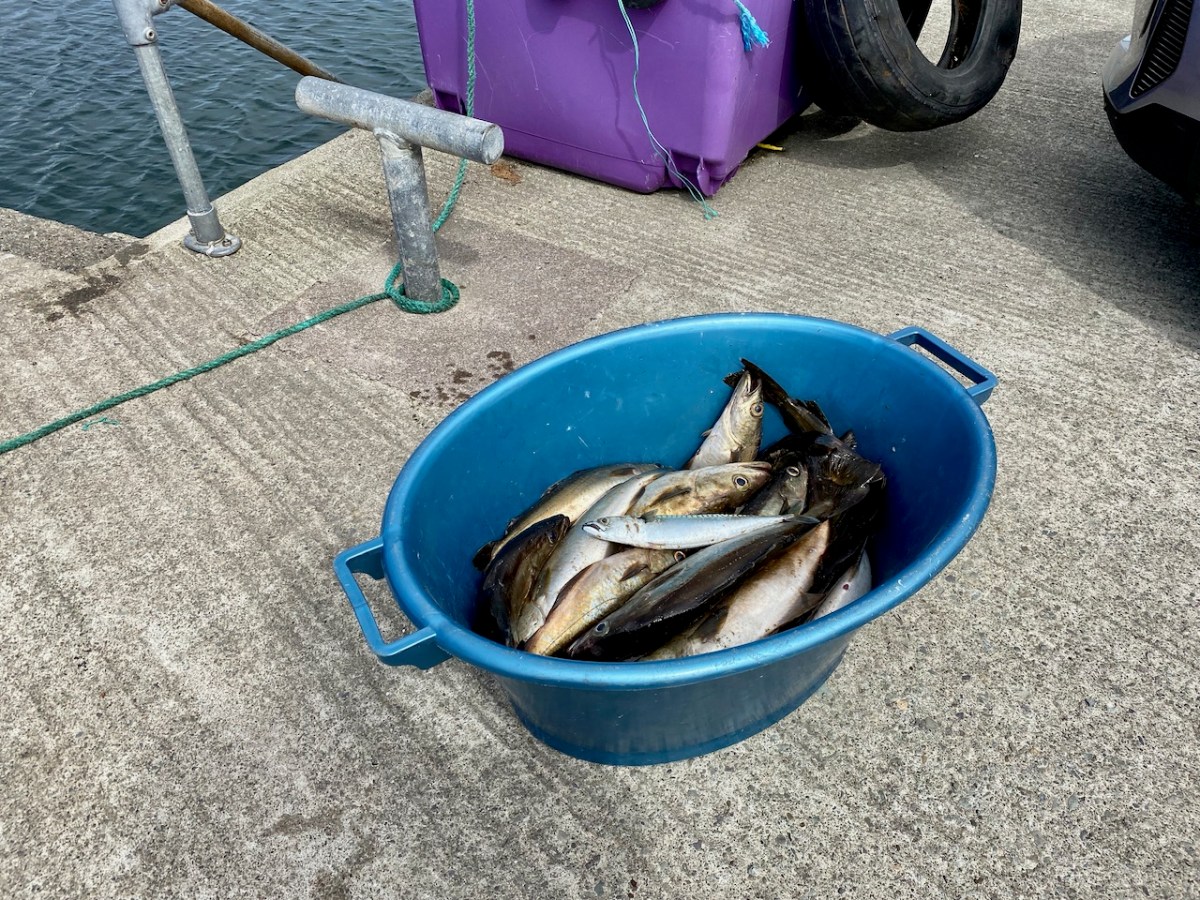
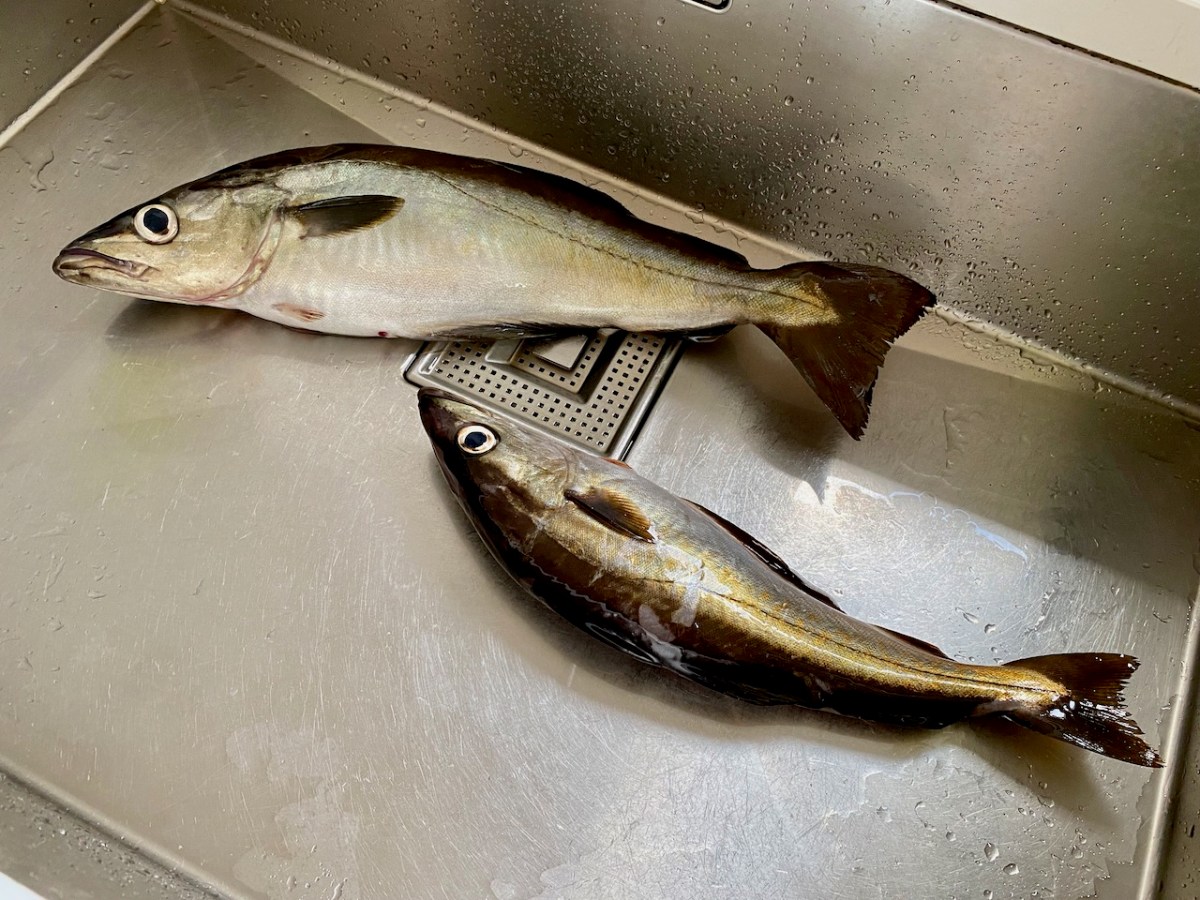
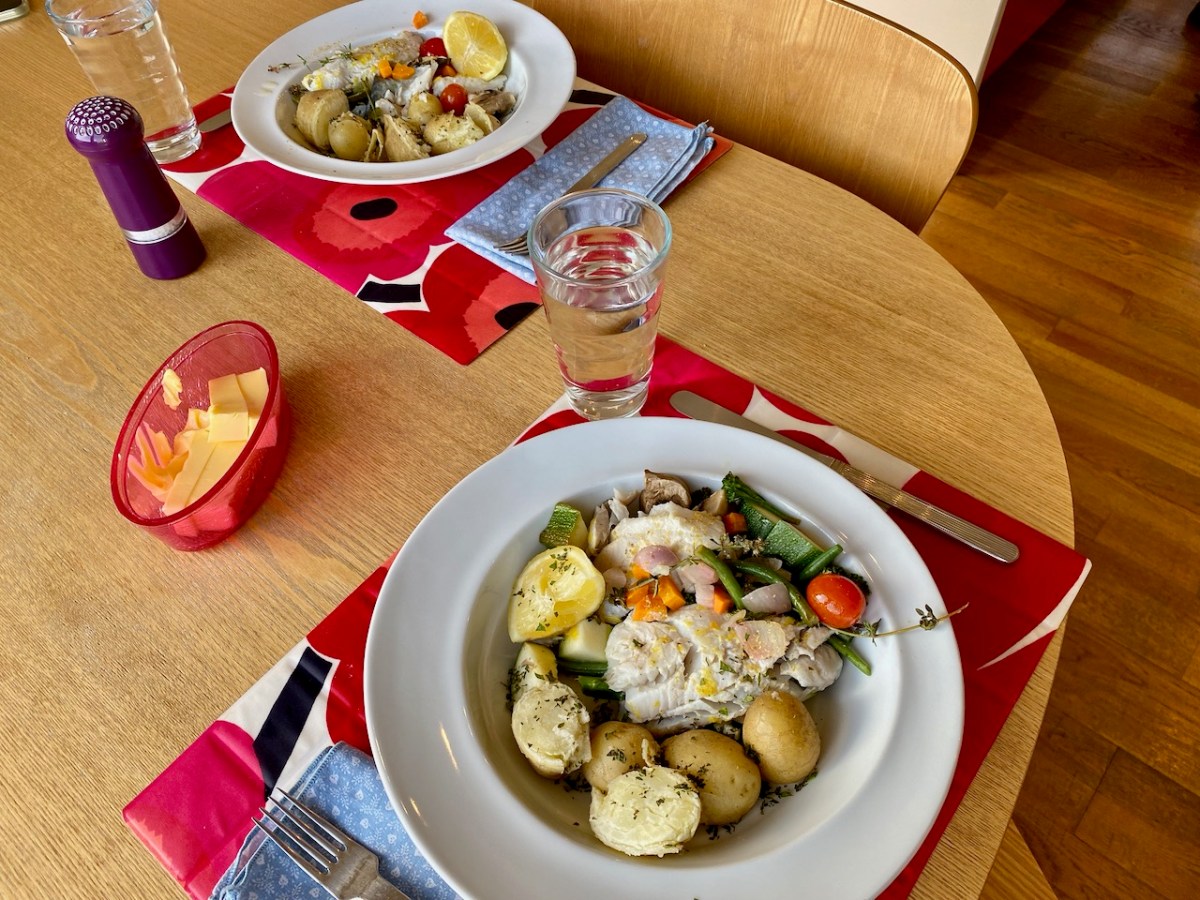
Would you like some pollock? It was a friendly fisherman on a West Cork pier we happened to stop on. He had just landed with some friends and family and they had caught a lot of fish, mostly pollock. They couldn’t eat them all, Billy said, just help yourself. A little overcome with such generosity, we selected two lovely fish, and asked for his advice on how to cook them.

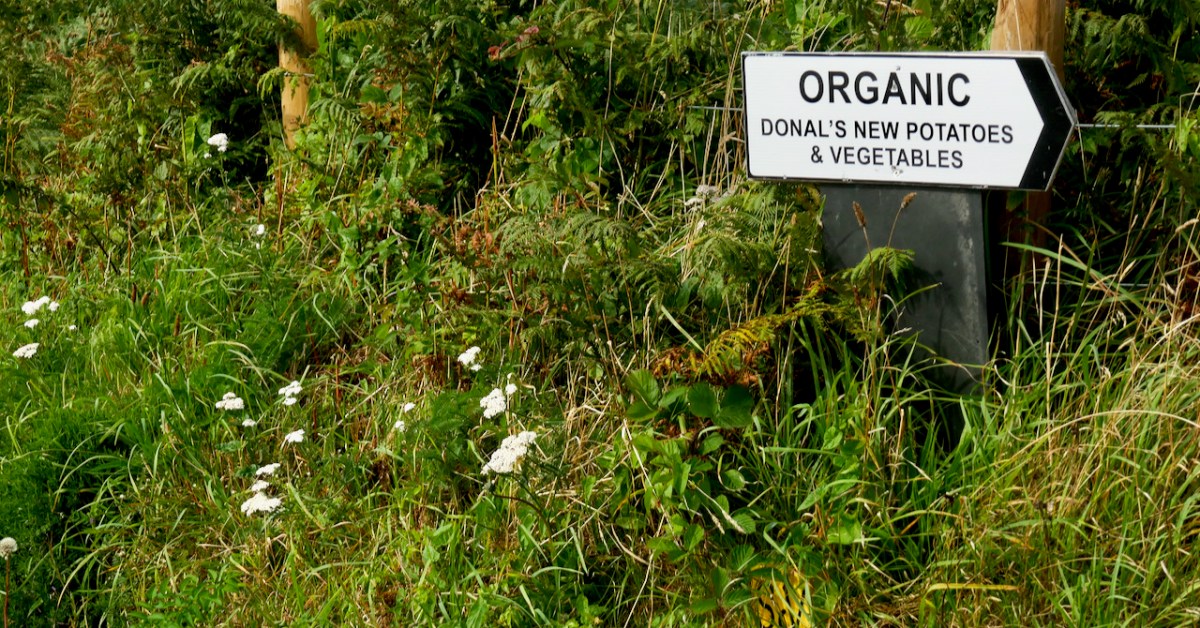
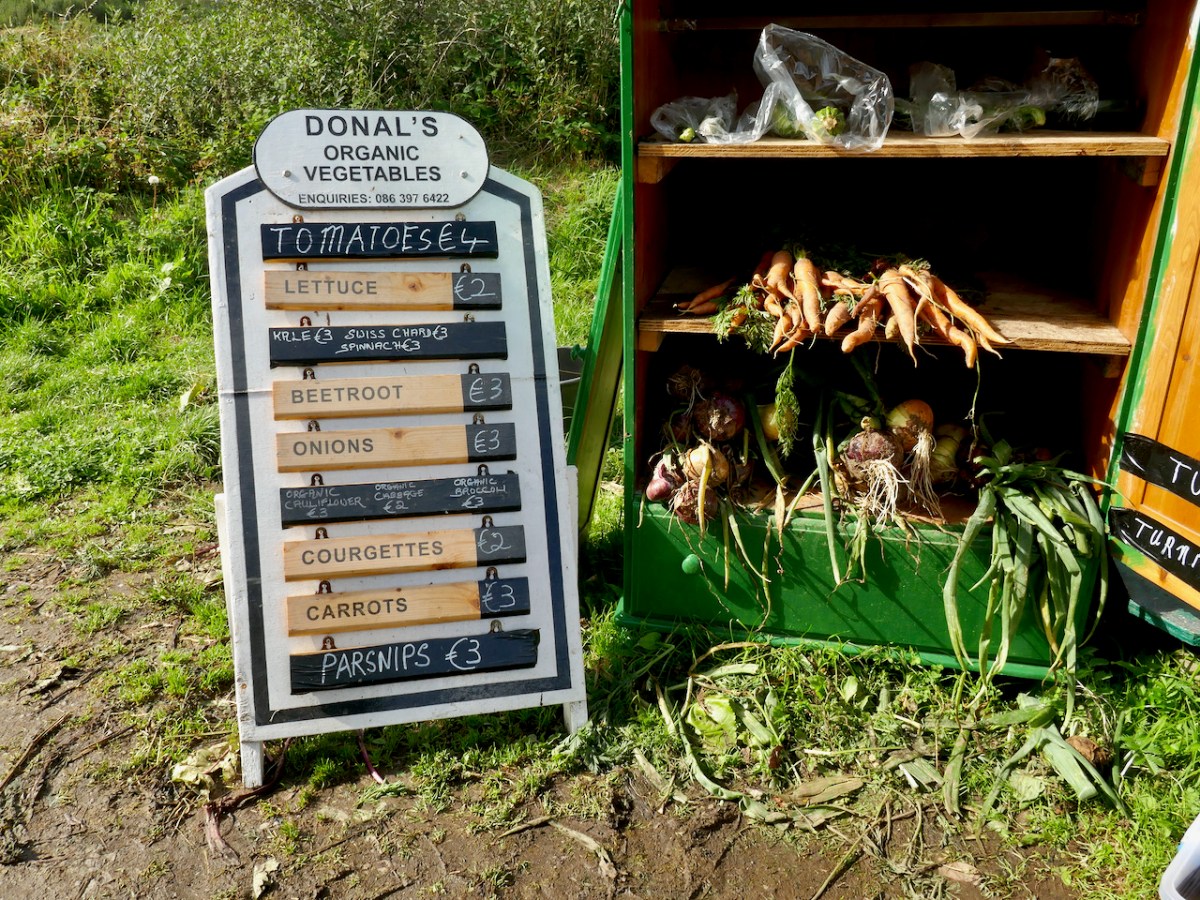
Just keep it simple, was his advice, with some dry potatoes and cream. Dry, it turned out, was his term for floury potatoes, and we knew just where to get those. Our neighbour, Donal, keeps a fresh vegetable stall nearby. He digs up or cuts the vegetables in the morning, and puts them in a little stall he built himself. You have to get there early if you want the pick of the crop.

Donal’s new potatoes are legendary. I was chatting with a friend who lives nearby recently and we were talking about the best way to lose the Covid weight. It’s all about the carbs, I said – pasta, rice, flour, sugar, potatoes … A look of horror came over her face. “But not Donal’s new potatoes!” We agreed that they couldn’t possibly be anything but healthy and whatever list of Bad Carbs we made, Donal’s New Potatoes could not be on it.

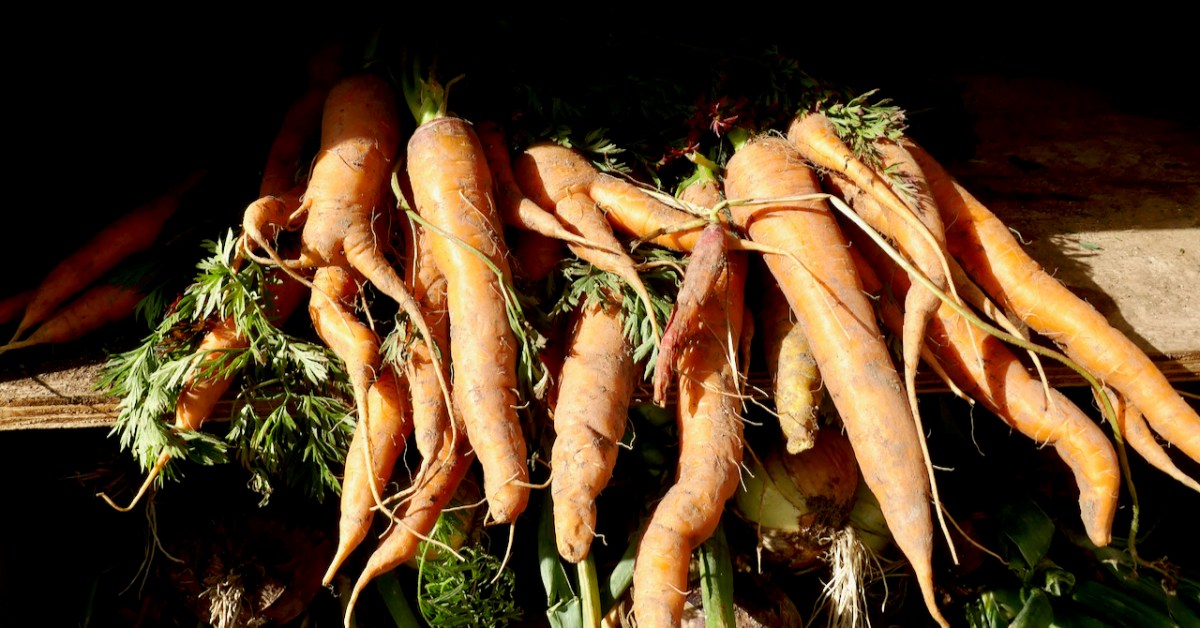
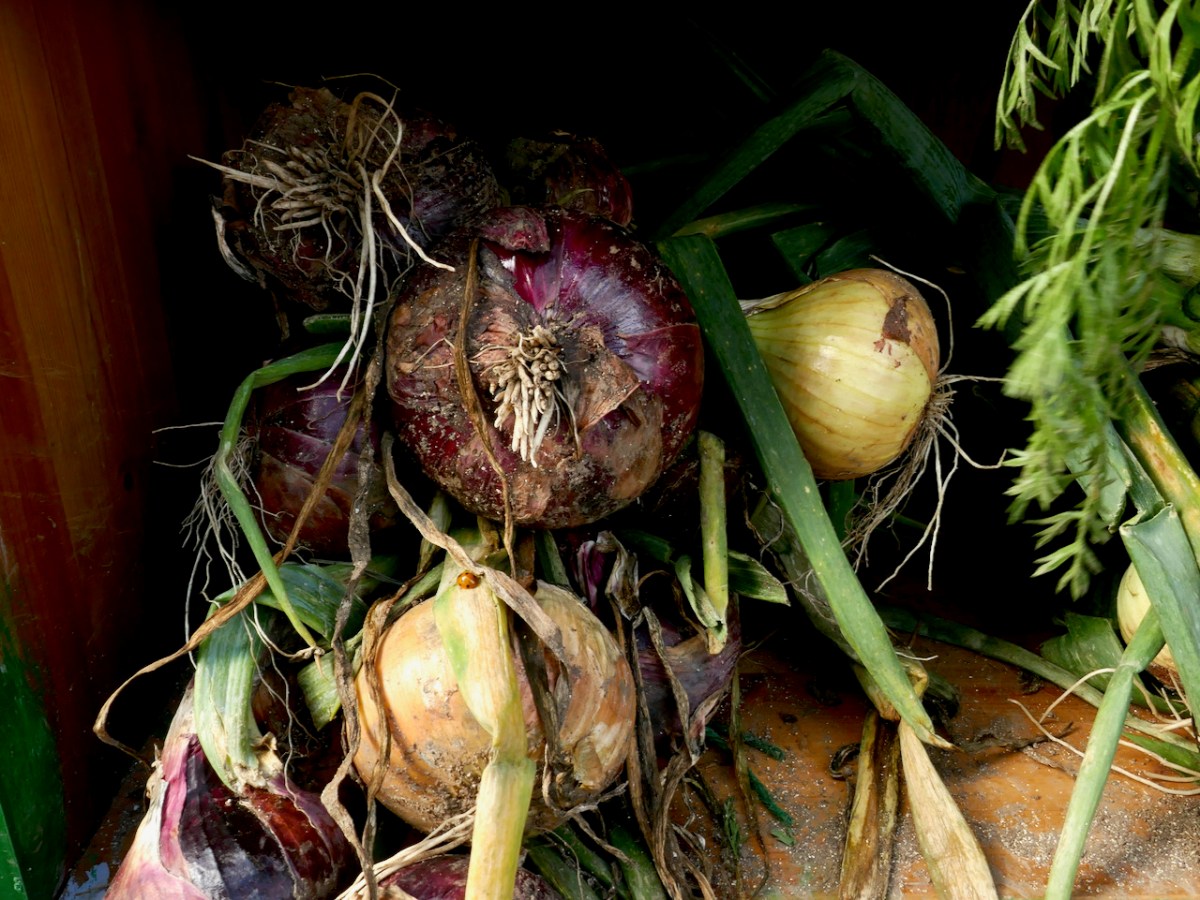
So on the way home from the pier, we dropped by the stall for the potatoes. While I was at it I picked up some carrots, courgettes (Zucchini to this ex-Canadian) and onions. 

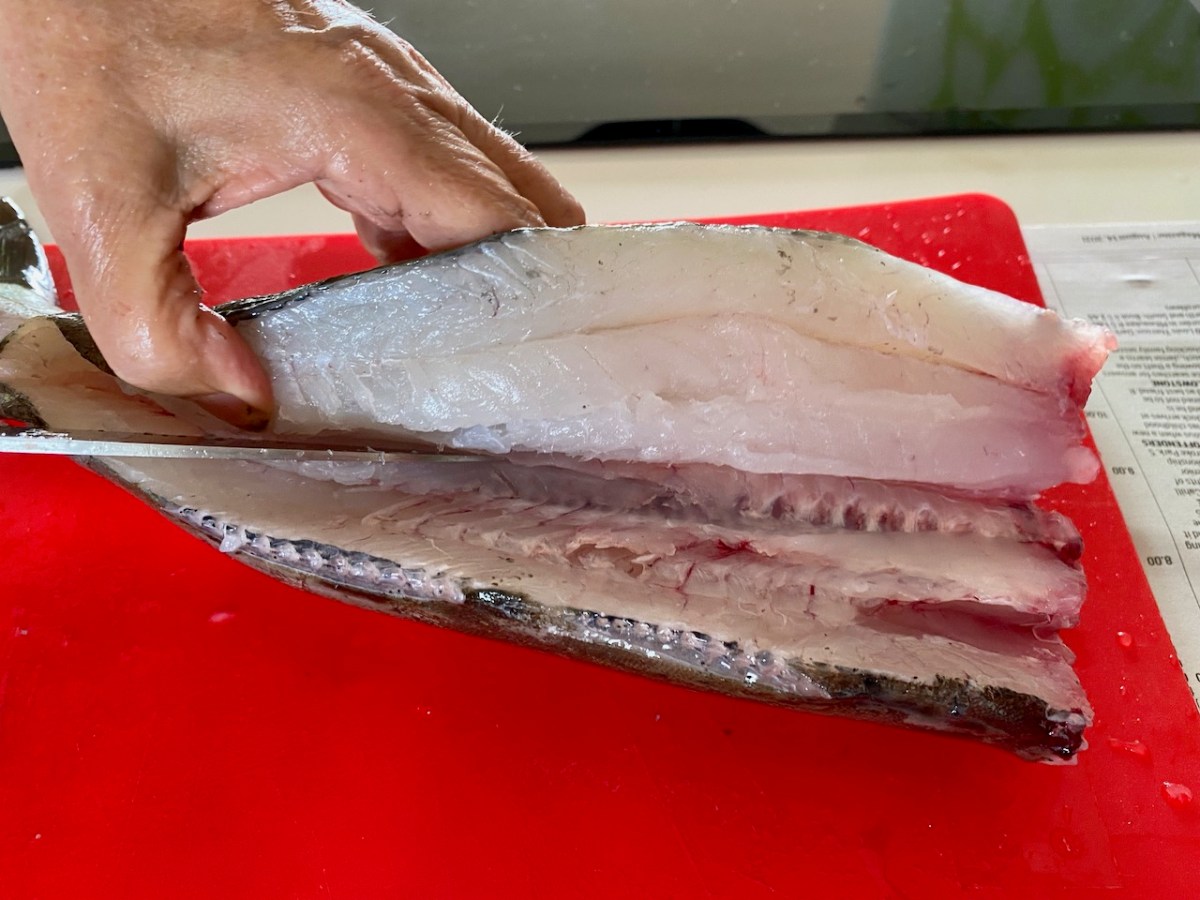
I don’t know about you, but I have never actually gutted, cleaned and filleted a fish before. In fact, I have been awestruck by the expertise of the women at the fish stall in the Skibbereen market and their skill with that long, thin-bladed filleting knife. Where to start? YouTube, of course!

So with the computer propped up beside me, and Robert sharpening the knife and encouraging me every step of the messy way, I managed it. I will spare you most of the gory details and include this one that actually looks like I know what I am doing.

Although I probably left good meat behind, at last I had a lovely set of fillets, free of bones. 

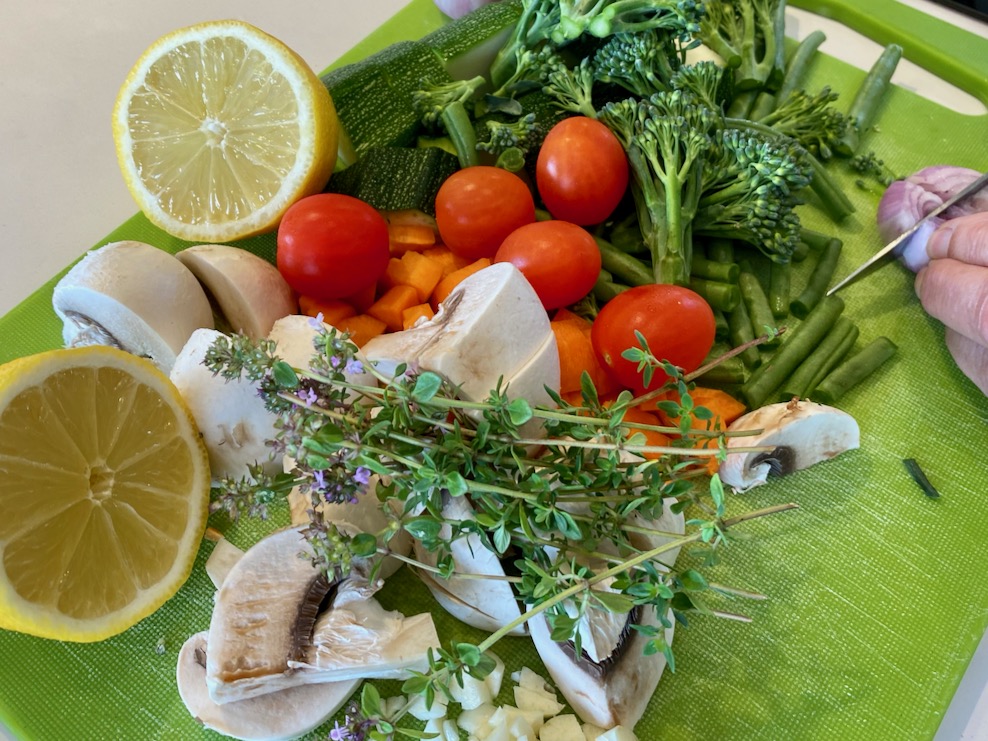
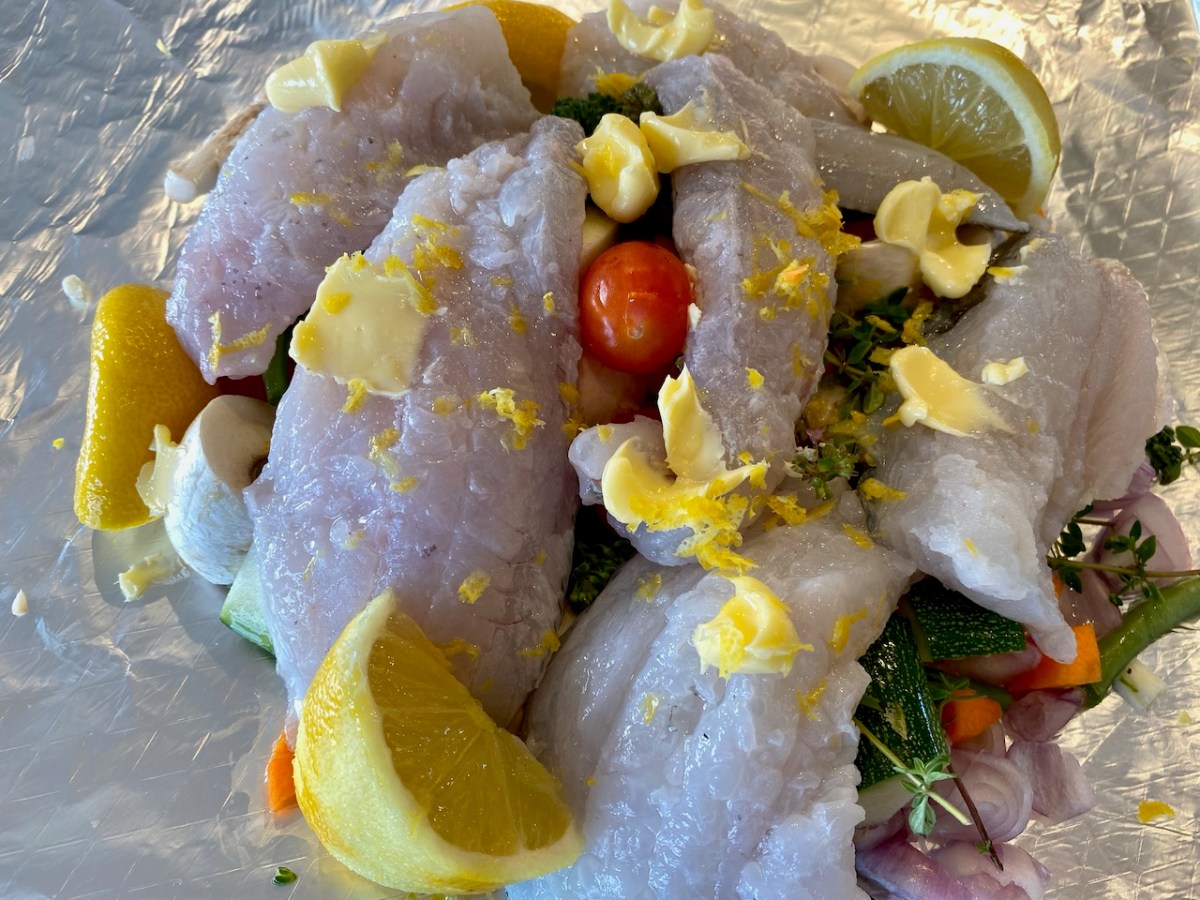
After that, it was a question of cutting some vegetable into small pieces – I used carrots, shallots, broccoli, green beans, mushrooms, cherry tomatoes, and garlic. 

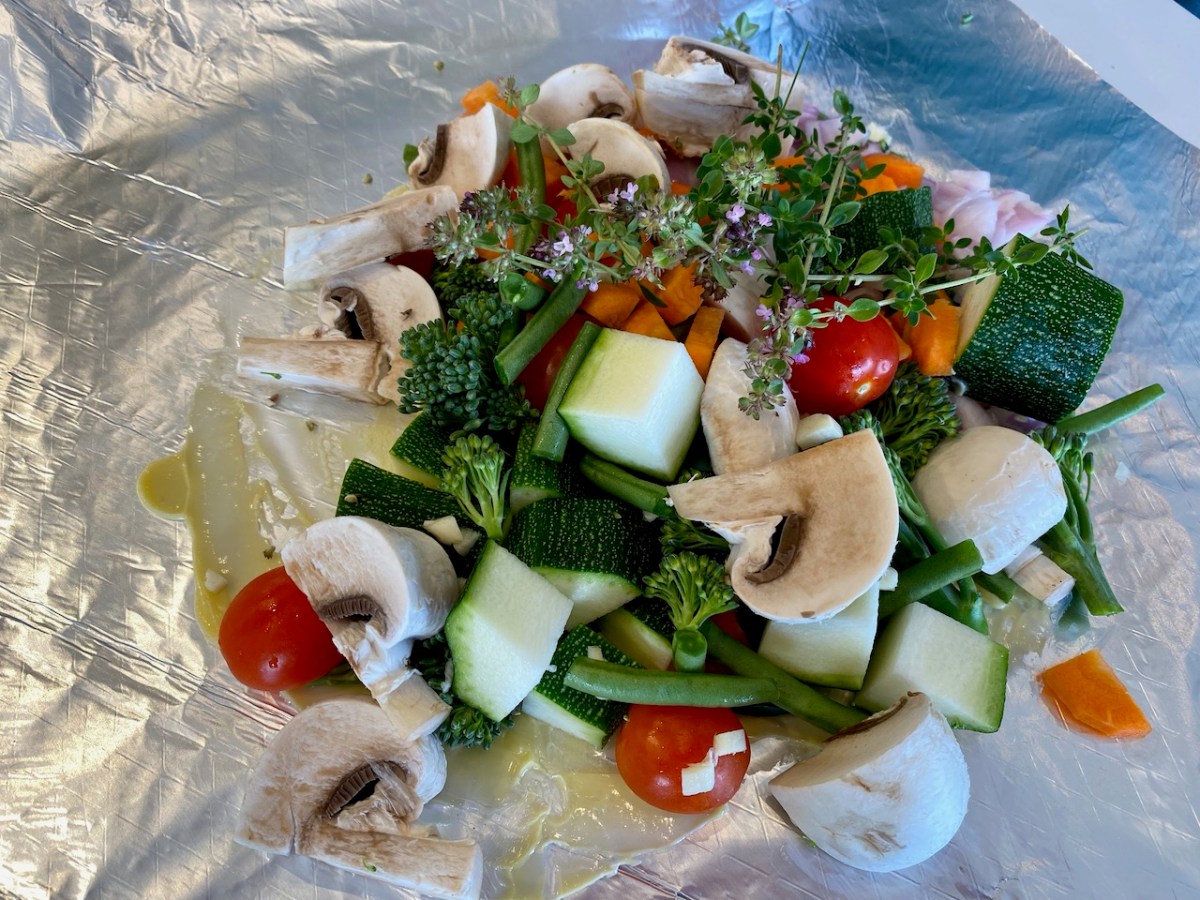
I piled them all onto a big sheet of buttered tinfoil, along with herbs from my little herb patch, and then laid the fillets on top. 

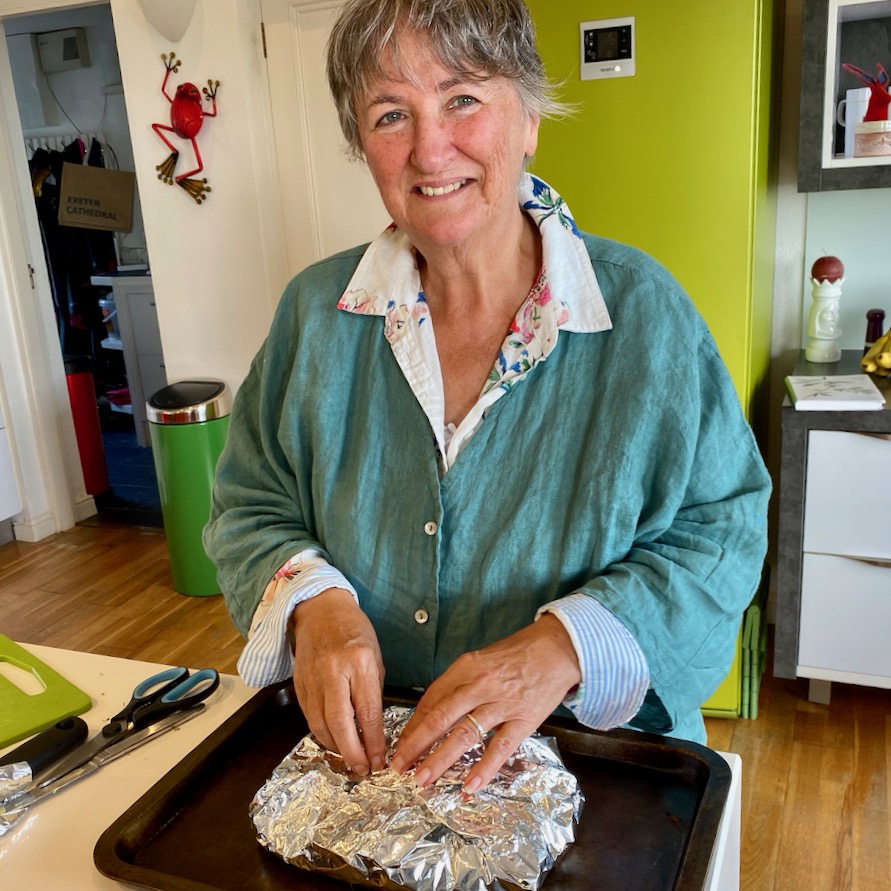
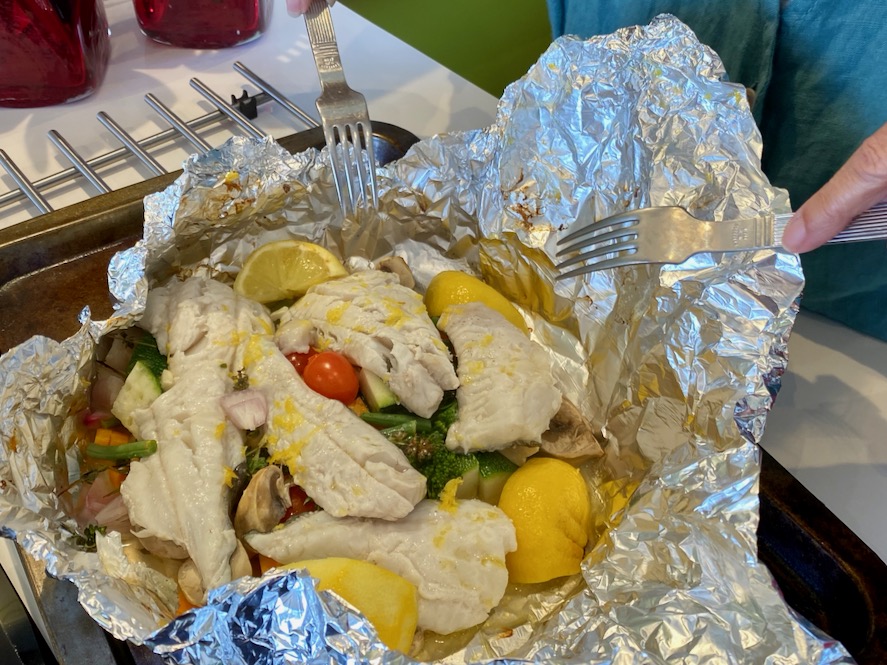
I poured lots of lemon juice over it all, along with zest, and dotted everything with more butter. Then I wrapped it up, and into the oven it went at 190C for 20 minutes.

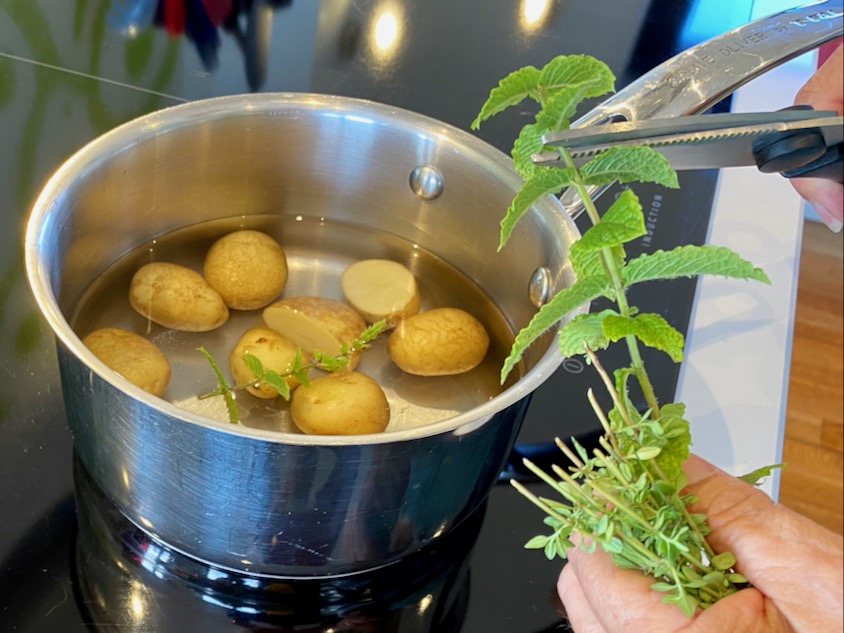
The potatoes were simply boiled with some mint from my garden. I chopped more mint to scatter on top once they were cooked.

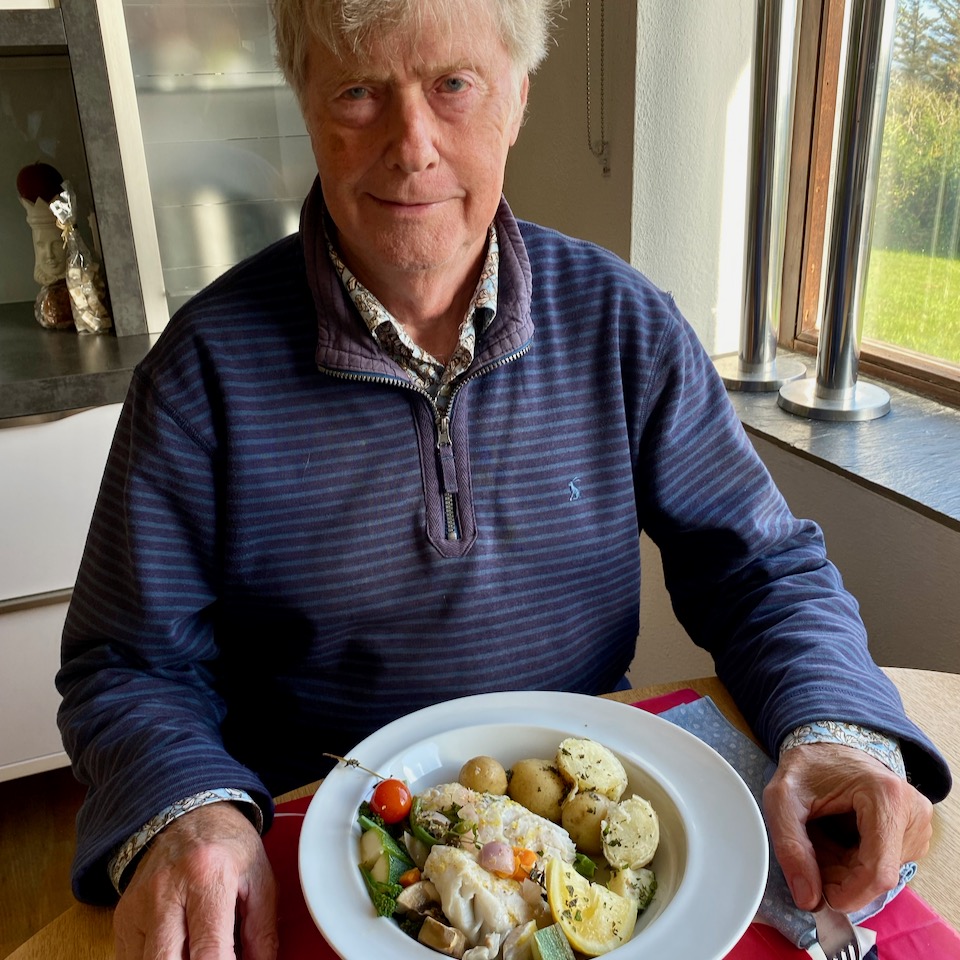
The results? Delicious!

In West Cork we have access to a lot of very fresh food and we eat well. There are markets in all the towns and villages near us (see this post from a few years ago), and Neighbourfood does a great job of keeping us going all year round. 

But there’s something extra special in a meal like this – straight from the ocean or the ground and onto a plate with very little intervention. 

Mmmmmm…

Seaweed and Sealing Wax

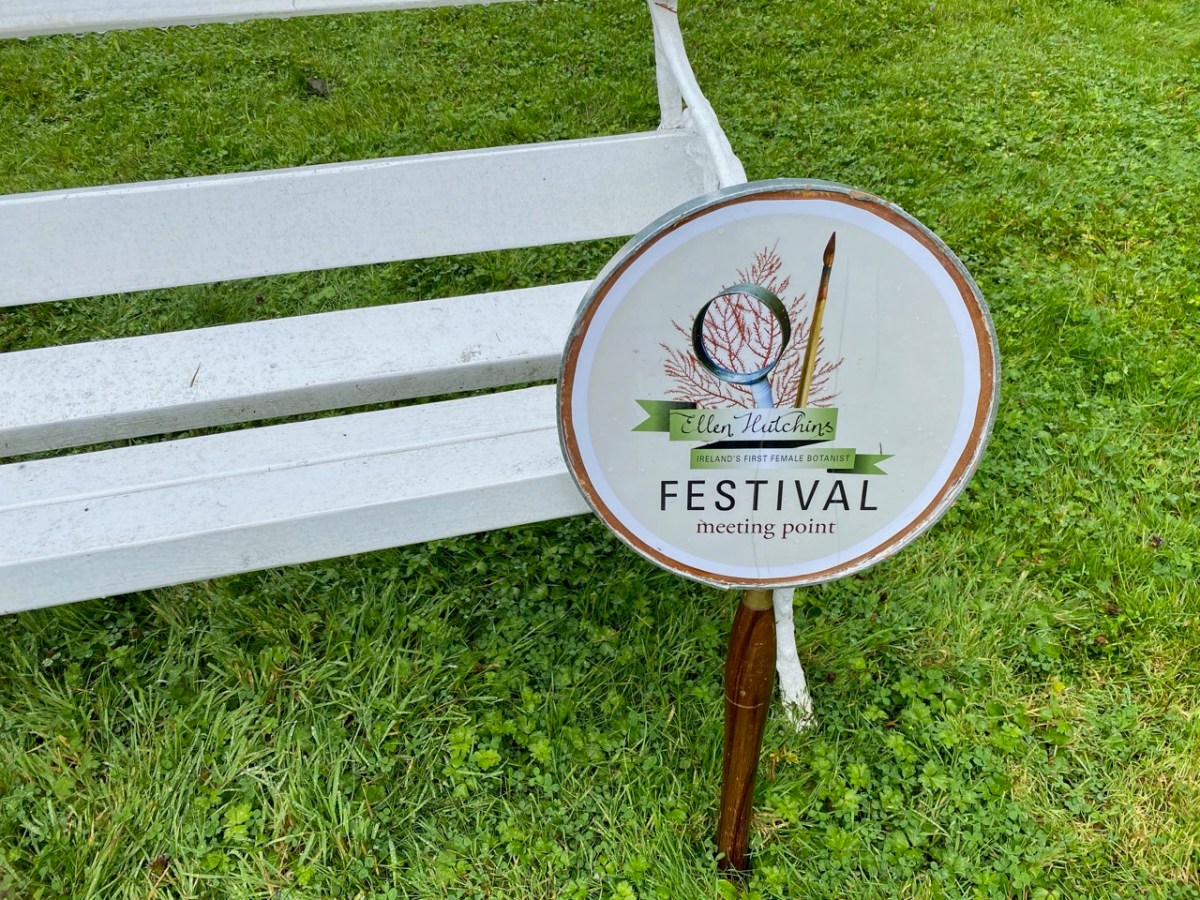
Finola has been involved in the Ellen Hutchins Festival since it began in 2015 – the 200th anniversary of the death of Ireland’s first female botanist. This year she was asked to help organise and MC an outdoor event, and has had a very busy time – together with her collaborators – leading up to this. On the day – last Friday – I went along to see the culmination of their hard work, and I thought I would share the experience with you.

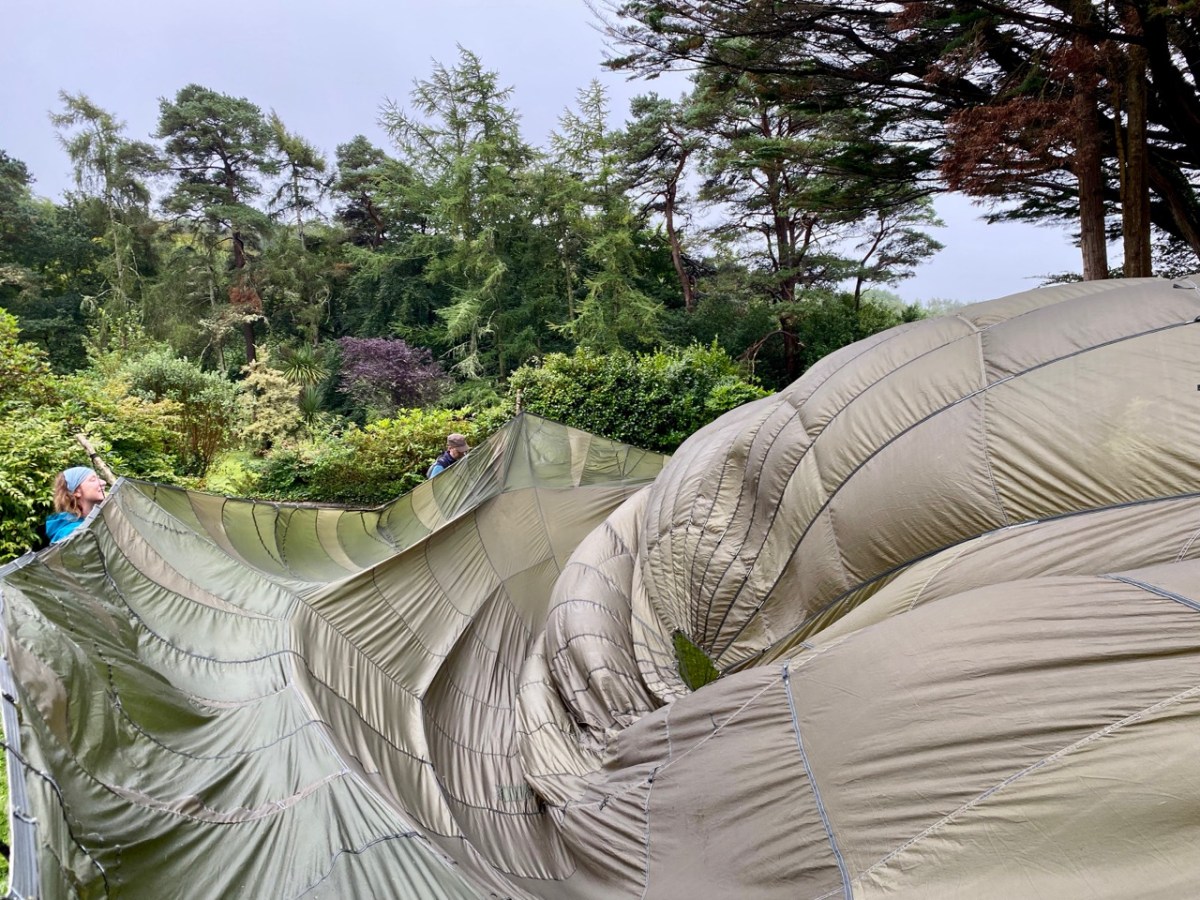
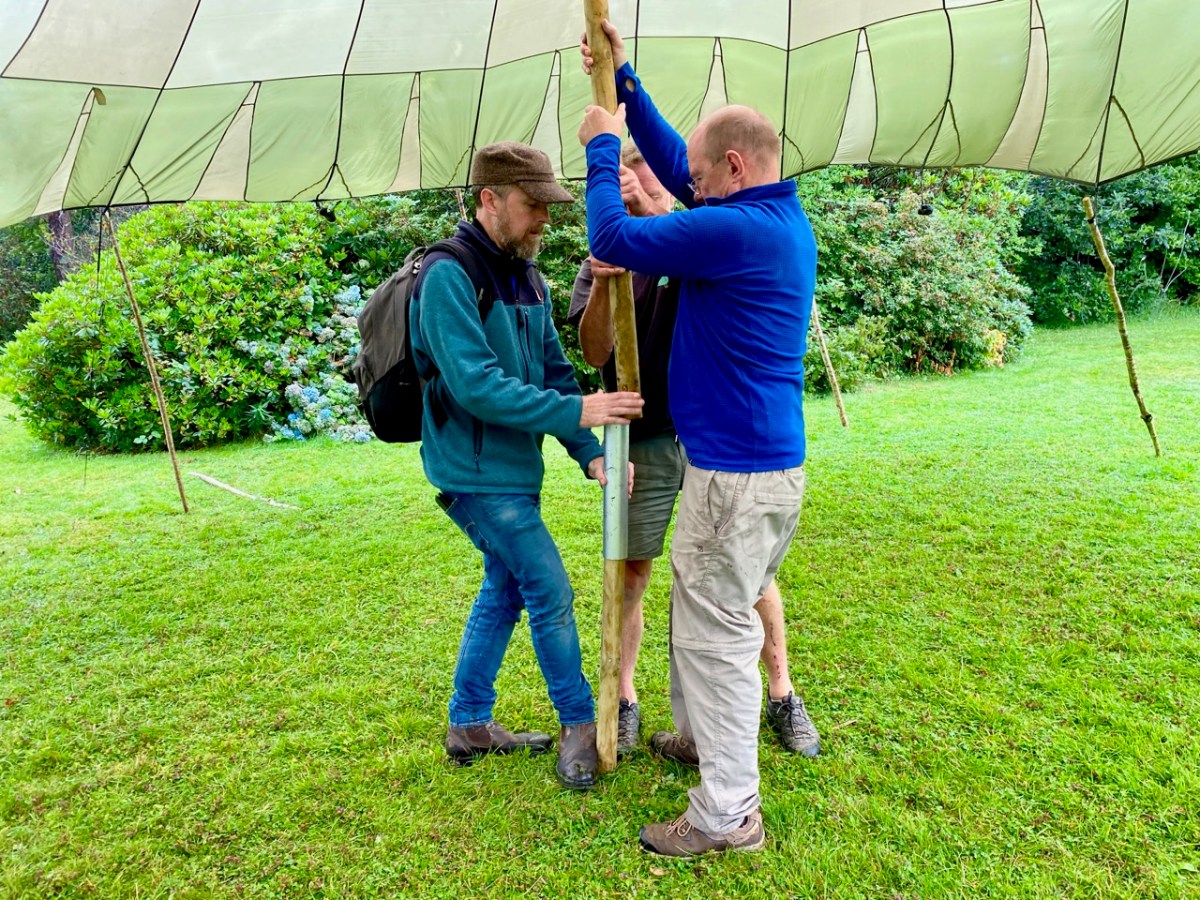
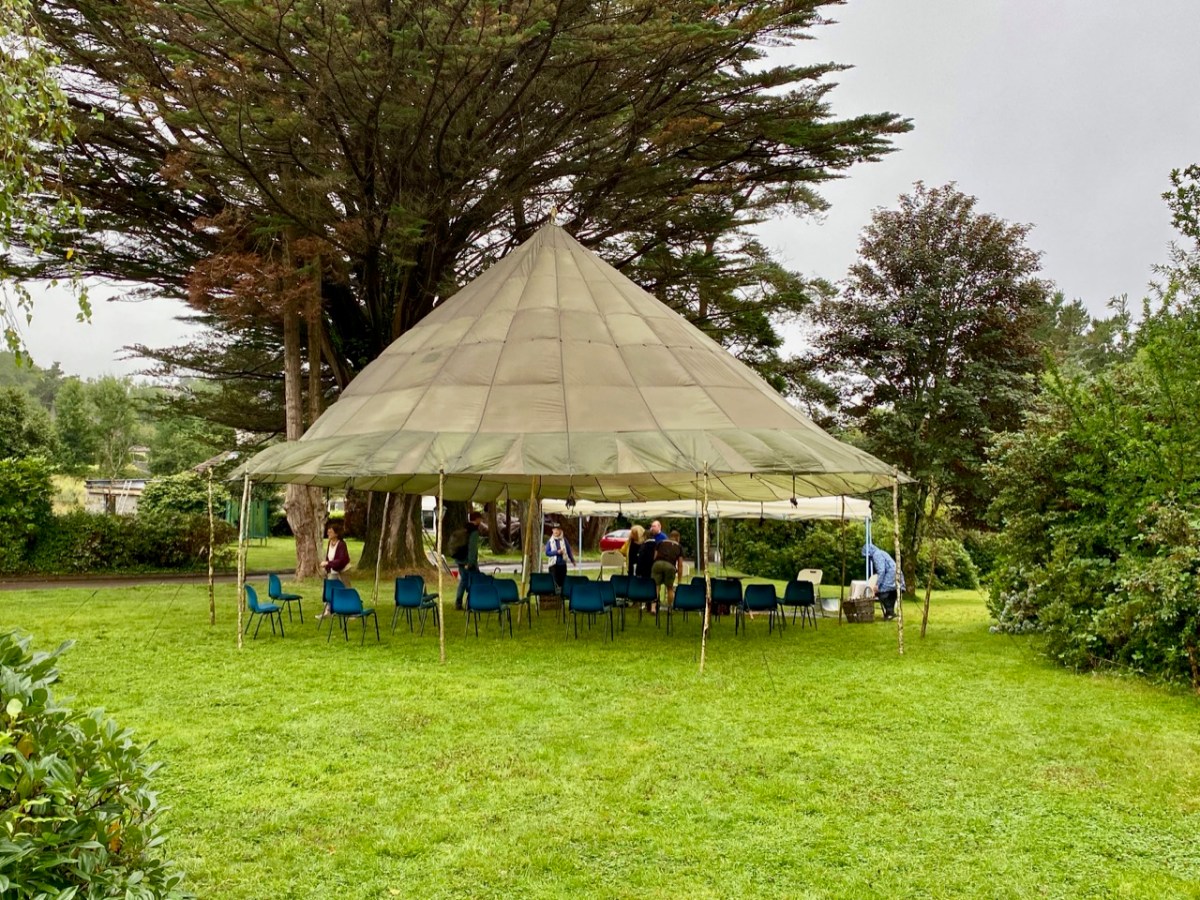
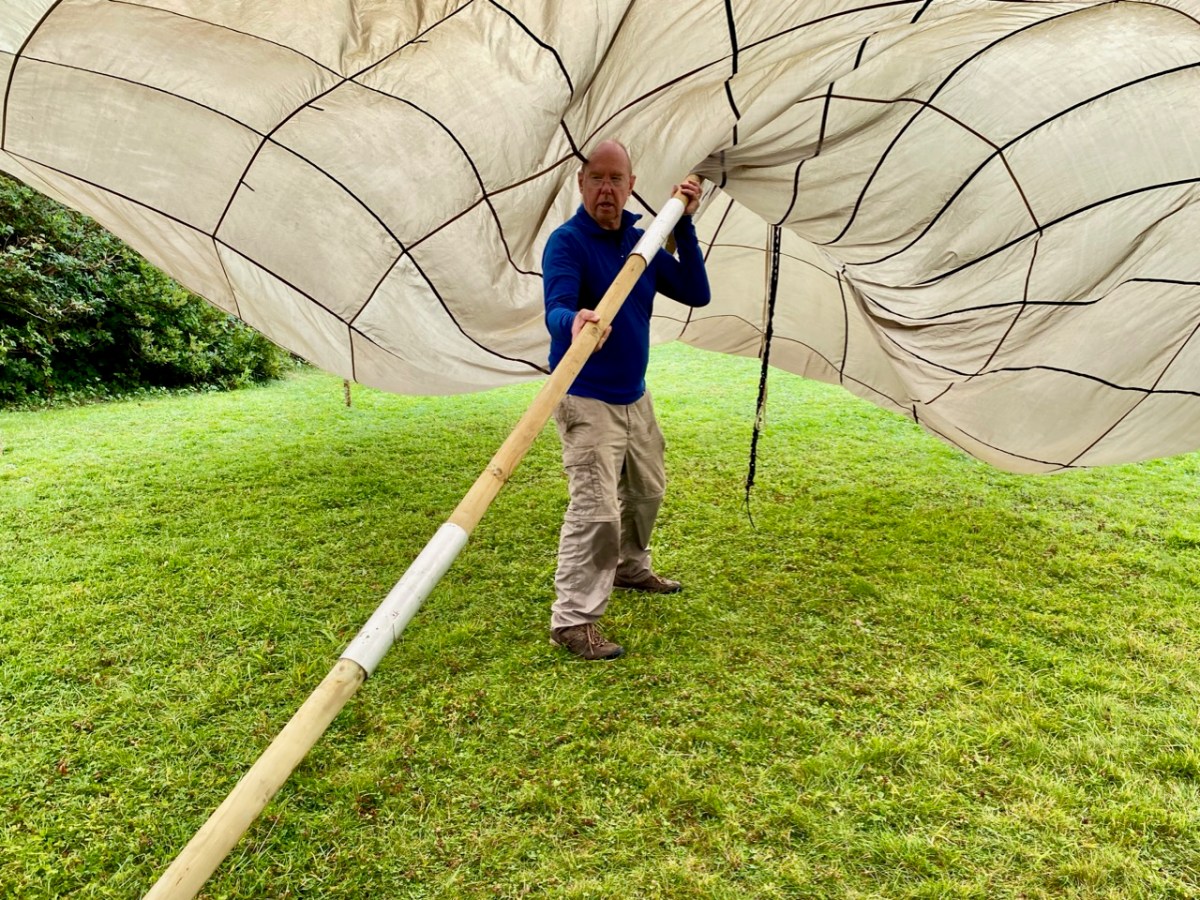
The weather forecast for that day was atrocious! Heavy rain and thunderstorms were predicted for the duration, and we set out for Ballylickey with some trepidation. However, as is often the case in West Cork, the weather forecasters were confounded. Nevertheless, the Festival team had prepared for all eventualities and we arrived in time to contribute to the setting up of a shelter made from a silk parachute and a number of wooden poles. The transformation of an empty area of lawn in the gardens of Seaview House Hotel into an impressive performance space in a very short time was quite remarkable – and a visual treat – as the swirling mass of silk was tamed by our team, directed by Seán Maskey.

Watching (and, indeed, participating) in this constructional triumph, I was taken back to the days when I lived in Cornwall and followed the escapades of two theatre groups there: Kneehigh Theatre and Footsbarn. Both started out as small troupes of travelling players who took their performance spaces with them and incorporated the action of creating and erecting their transitory auditoria into their shows: all part of the visual entertainment. Both those groups have evolved and travelled far away from their roots, but the evanescent nature of their early shows has stayed with me, to be pleasantly awakened by the happenings at Ballylickey.
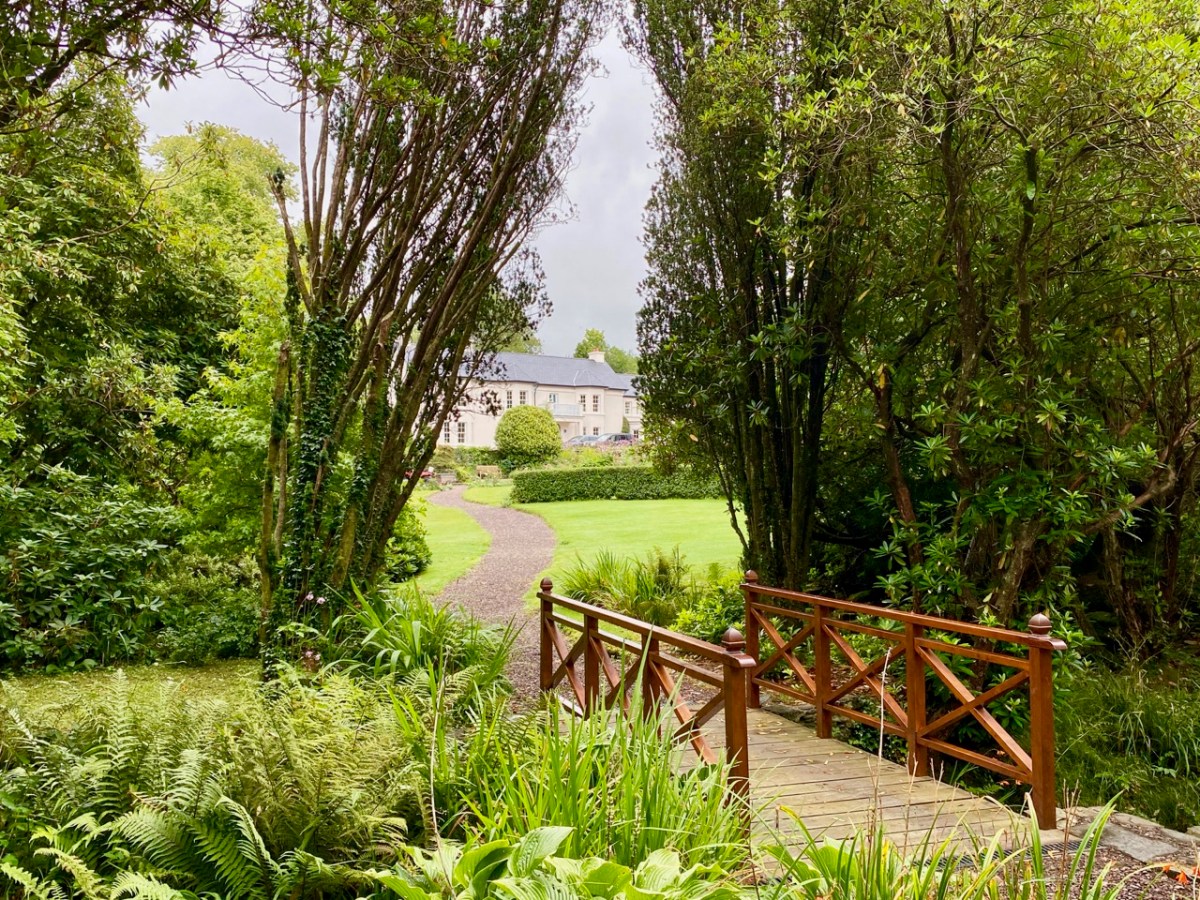
To see where Ballylickey fits in to the story of Ellen Hutchins, have a look at Finola’s post from 2015. Ellen was born in 1785 in Ballylickey House and lived much of her short life there. Seaview House – now the Hotel – was built partly in the grounds of the Hutchins family home, so it is a fitting venue for Festival events, as we know that we are following her own footsteps as she became interested in the world of plants and seaweeds which she discovered all around her as she was growing up.

. . . Ellen was a pioneering botanist who specialised in a difficult branch of botany, that of the non-flowering plants or cryptogams. She discovered many plants new to science and made a significant contribution to the understanding of these plants. She was highly respected by her fellow botanists and many named plants after her in recognition of her scientific achievements.In addition to being an outstanding scientist, Ellen was also a talented botanical artist. Botanical drawings serve science in a very important way . . .

Ellenhutchins.com

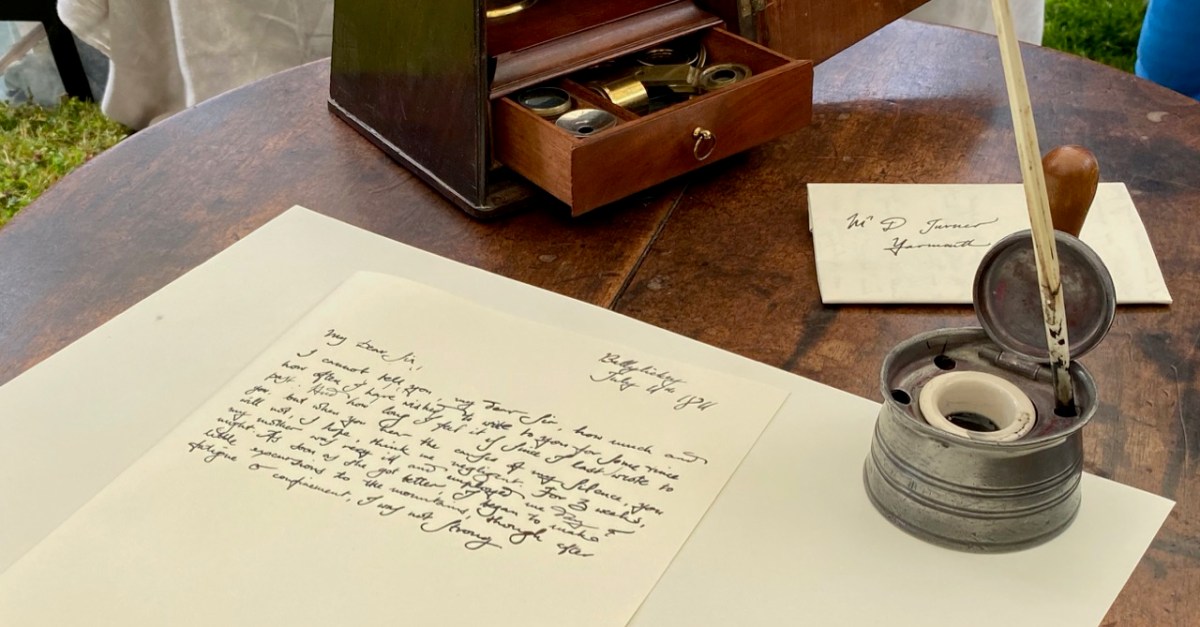
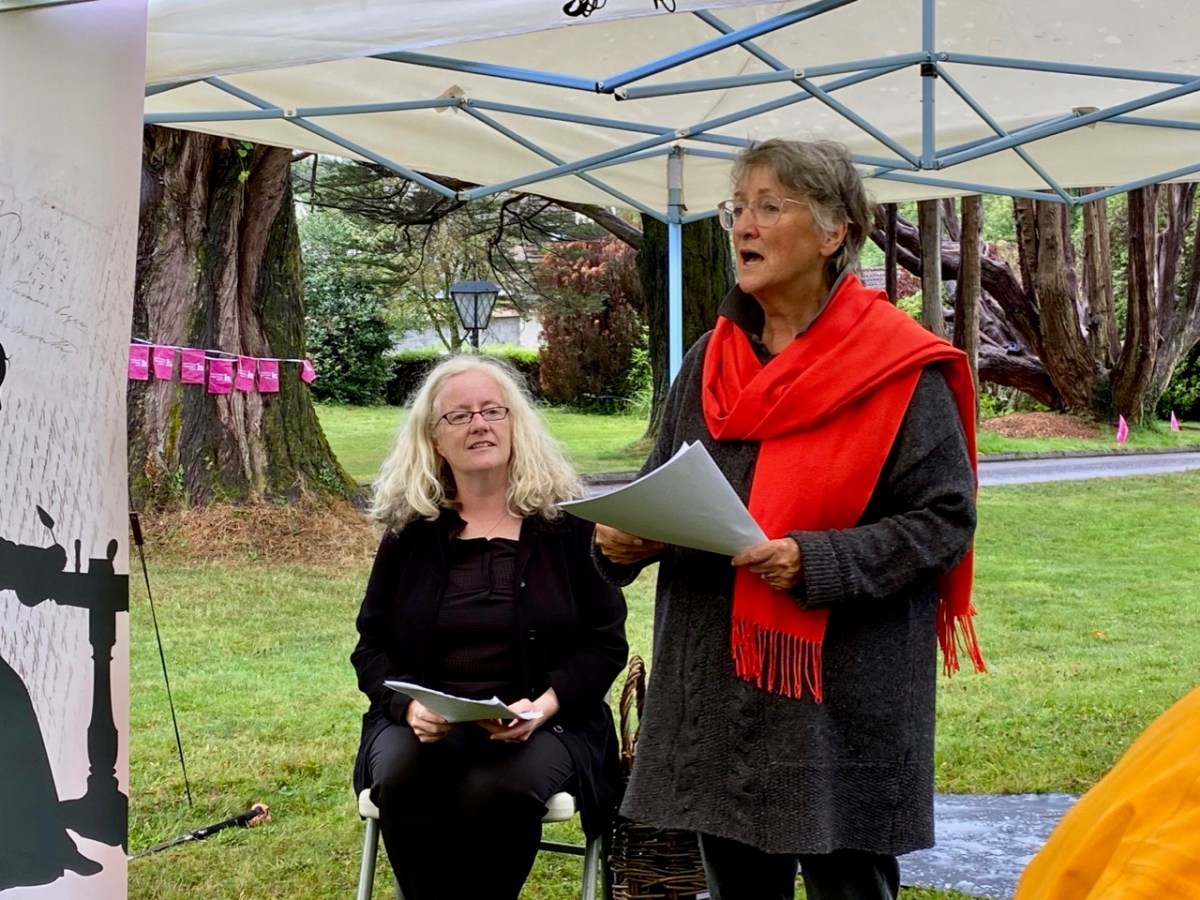
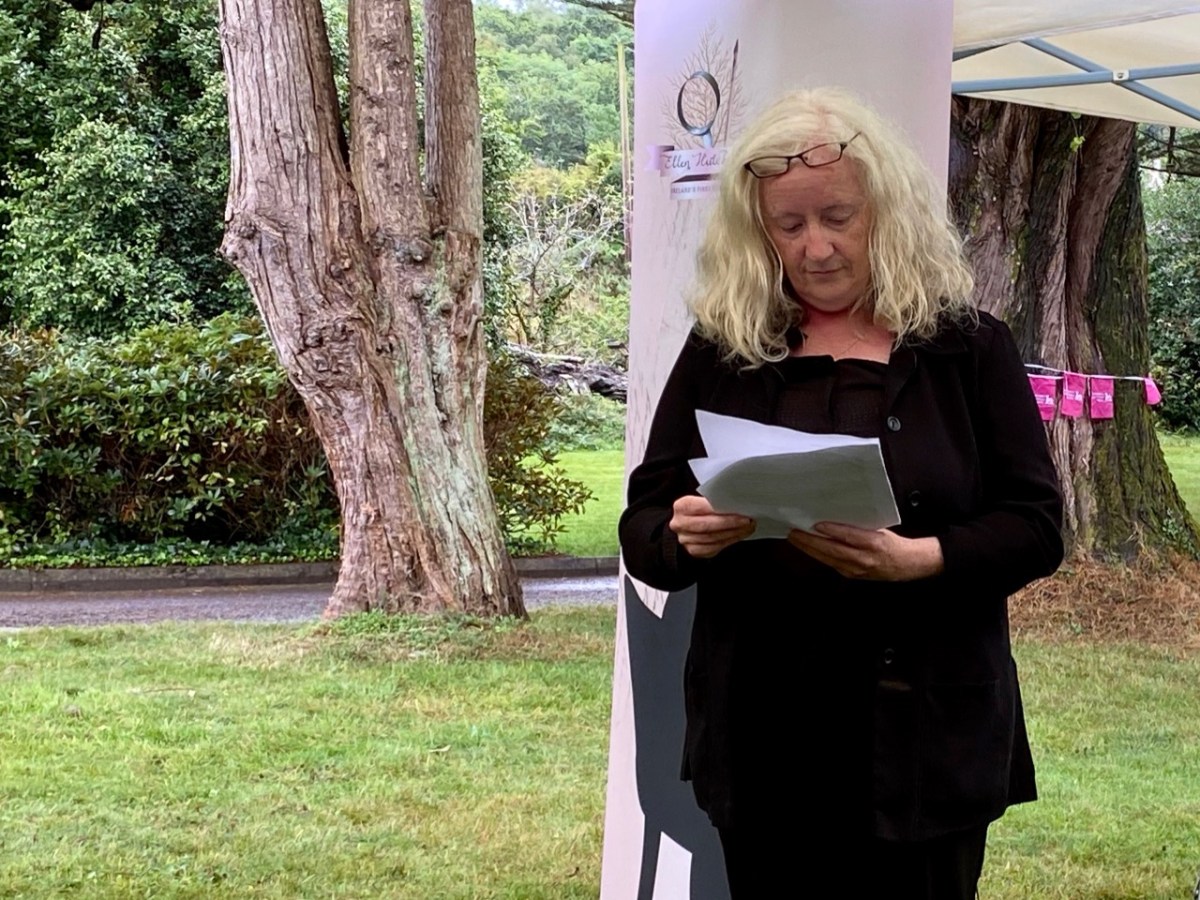
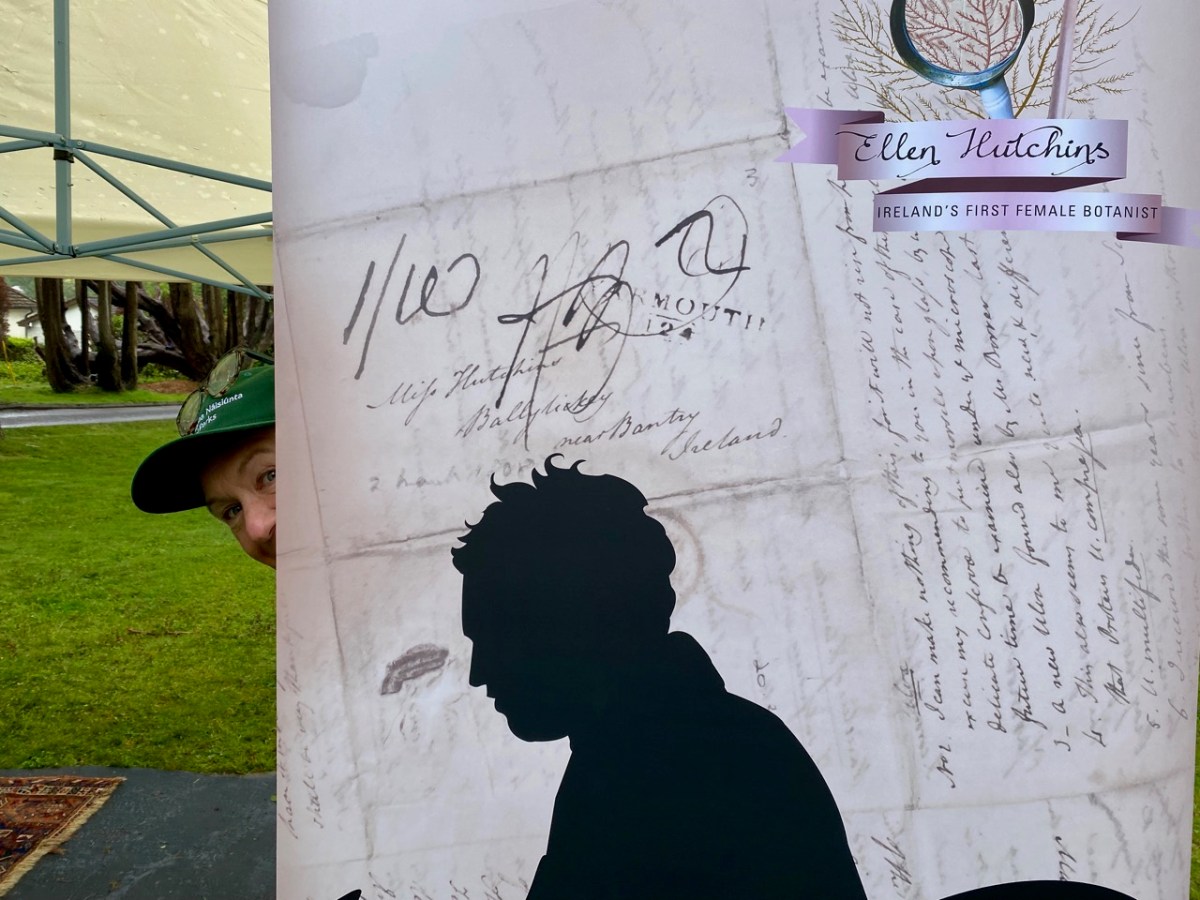
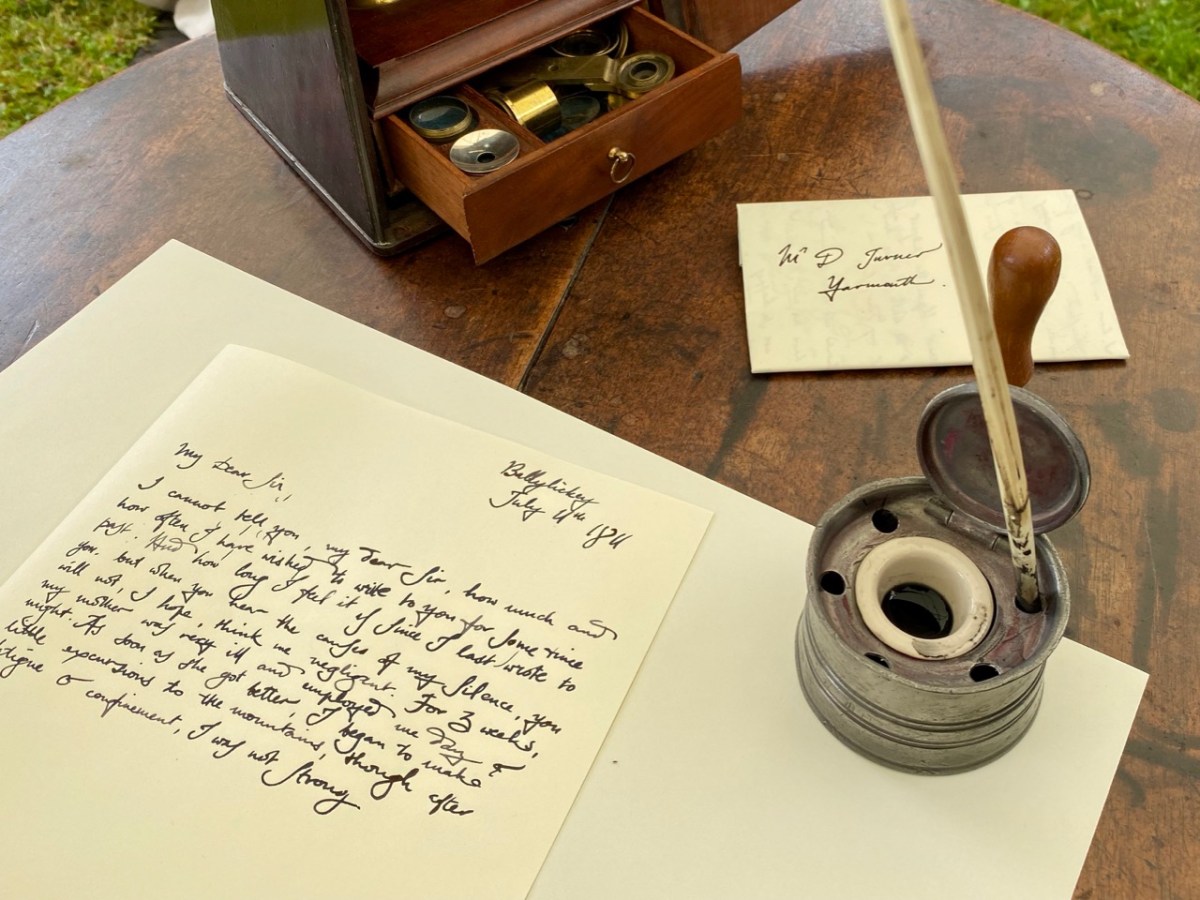
That’s Finola (above) introducing the subject of the day: the correspondence that passed between Ellen and Dawson Turner of Yarmouth, Norfolk, who had become a recognised authority on botany in early 19th century Britain, even though this was always a leisure pursuit: professionally he worked for his father, who was head of Gurney and Turner’s Yarmouth Bank and took over his role on his death. Dawson wrote numerous books on plants and got to know the leading botanists of the day, including Ellen. Amazingly, one hundred and twenty letters between her and Dawson survive. Those from Dawson Turner to Ellen are held by the Royal Botanic Gardens, Kew, and those from Ellen to Turner are at Trinity College Cambridge. Friday’s event was a reading of a selection of these letters. On Finola’s right, above, is Karen Minihan, an actor and drama director who lives in Schull: she read the letters from Ellen. Moreover, it was she who selected and organised the extracts – which were the heart of the performance.

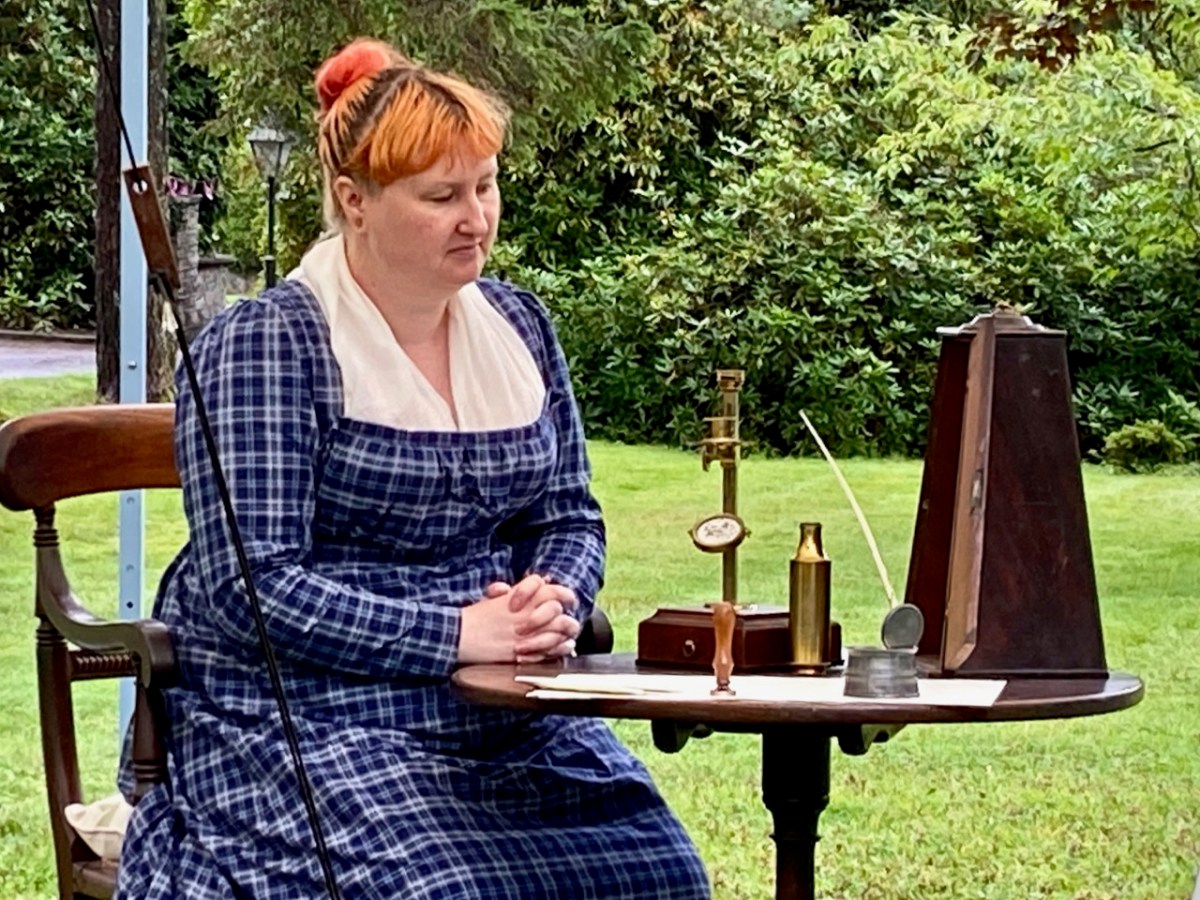
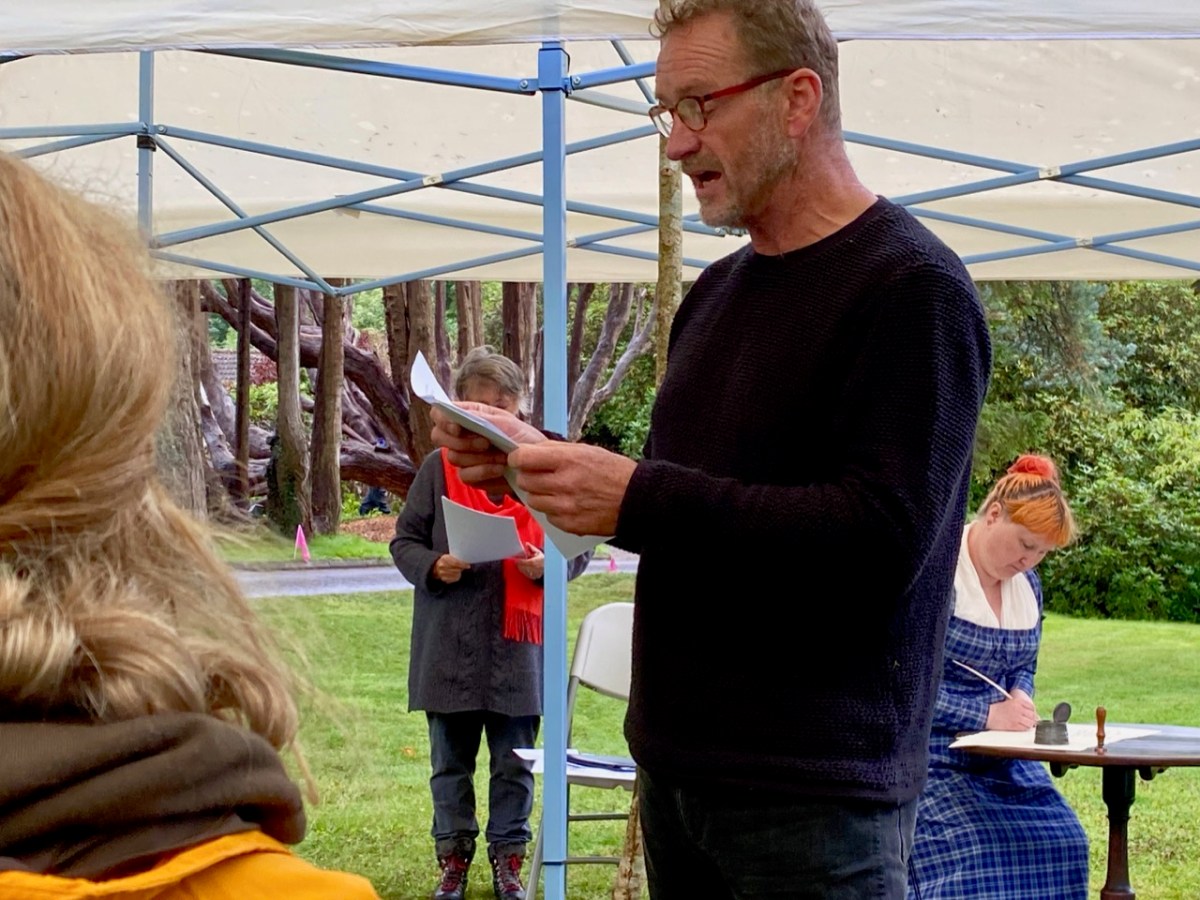
Above are the two other performers: on the right is Mark O’Mahony from Cappaghglass – he is a part-time actor, and here he reads the letters from Dawson. On his right is Carrie O’Flynn. She is a historic re-enactor and researcher: she appeared as Ellen, in authentic period dress, and provided really illuminating interpolations between letter-readings, informing us about the act of letter-writing itself in the early 1800s – the ink and quill pens; the postal service; Ellen’s probable appearance and dress (there are no surviving portraits of her) and the difficulties which Ellen would have had to face in pursuing here chosen interests, especially as she was herself quite frail and was for many years the carer of her own mother. Her achievements in the light of all this are truly remarkable, and Carrie succeeded in bringing this out with her contributions. Below she shows us the brass microscope that Ellen used – an essential item of equipment for her work.

As the reading of the letters progressed it became gradually obvious that a deep friendship was developing between the two botanists, and the language reflected this. Particularly telling (and this was drawn out in the selection of the letters) was the way the missives were framed as time went on. From a simple, almost curt formality in the earliest, we begin to read how their shared interests extended beyond the botanical; they exchange newly discovered poetry; Dawson tells Ellen that he has named his newly-born daughter after her; they imagine how they would like to meet each other and walk their favourite landscapes together. Each sends the other packages containing examples of the plants and seaweeds that preoccupy them, and their greetings at the top and tail of every page become increasingly warmer. We, the audience, open our imaginations as to how a happy fulfilment could ever metamorphose – West Cork and Norfolk are as far apart as any two place could be in early 19th century Britain. Poignantly, we learn that they never met: Ellen – always in poor health – died in 1815 at the age of twenty nine. We can only imagine that Dawson, remote in Norfolk, was desolate.

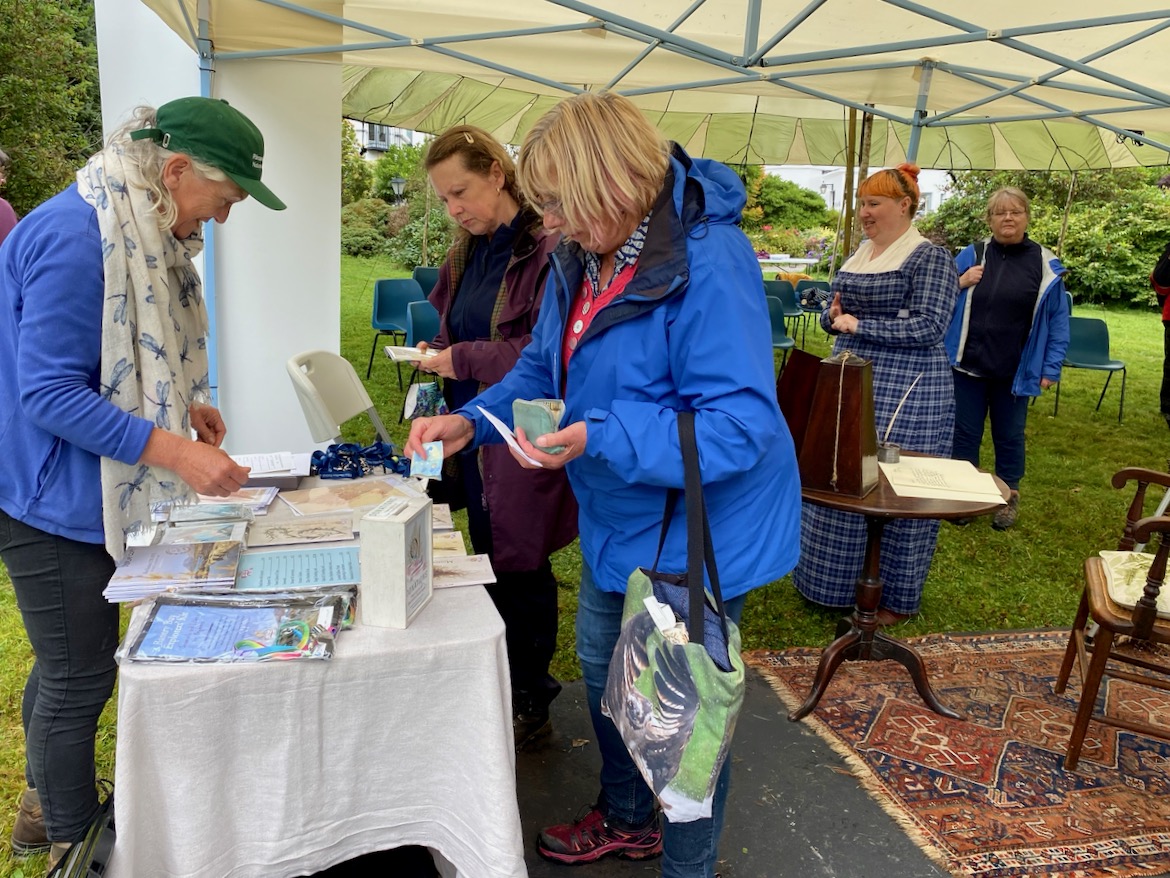
Important to our day – apart from the presenters and actors – were Madeline Hutchins (above – showing us some of Ellen’s drawings of seaweed), great great grand-niece and a co-founder of the Festival; and – behind the scenes but essential – the team, including Clare Heardman, co-founder of the Festival and a Conservation Ranger at the National Parks and Wildlife Service. Here’s Clare in action setting everything up – and running the Festival shop:

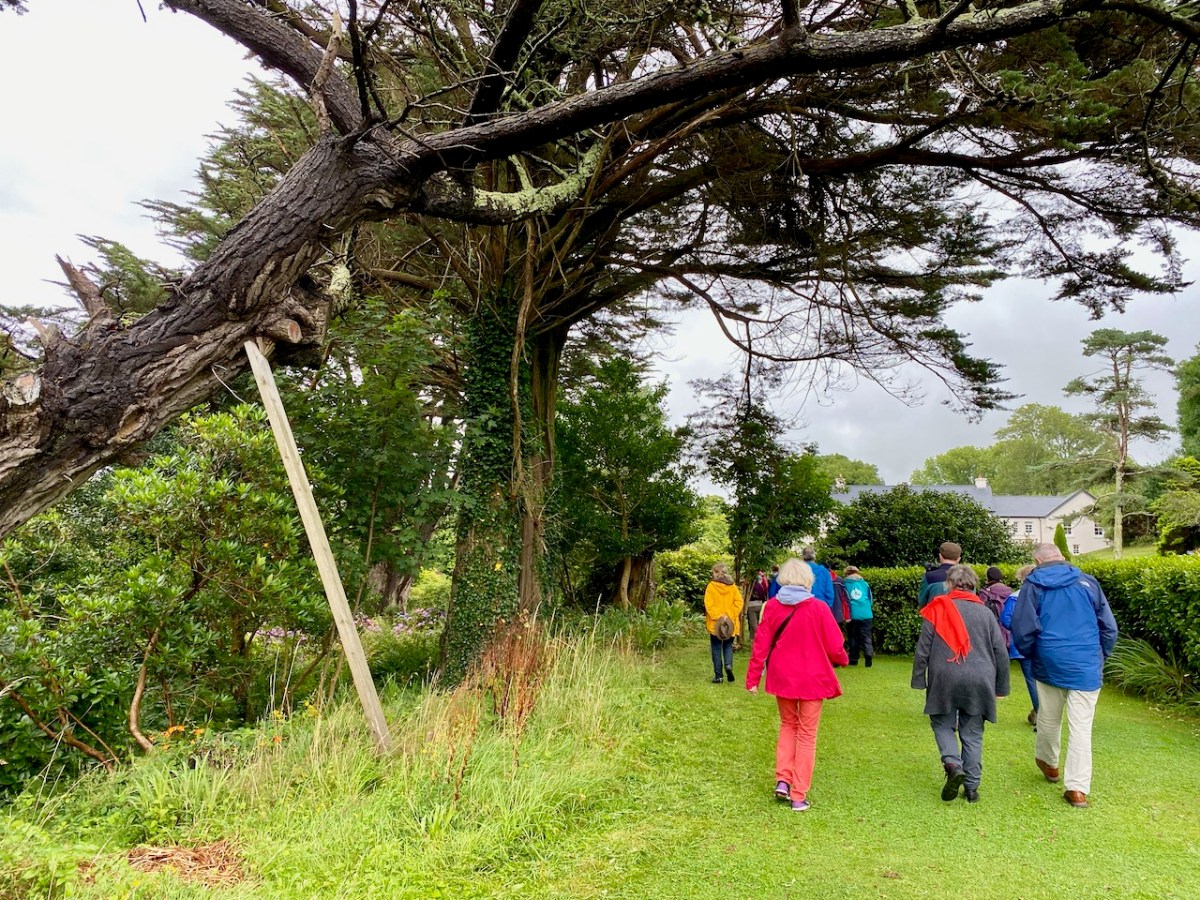
We had a further treat in store for us after the show: we were taken on a guided tour of some of the environments which Ellen would have known and explored during her life at Ballylickey. This felt really special, and brought us close, again, to the extraordinary young woman whose short but productive life we now celebrate here in West Cork.

Please note that Ballylickey House today is private property, and visitors should not seek access. There is plenty of the natural environment that Ellen would have been familiar with around Ballylickey and on the shores of Bantry Bay – well worth an exploration. And this link to the Ellen Hutchins Audio Trail is invaluable, especially to anyone who was not able to be at Friday’s event.

Particular thanks, of course, to all who participated – and attended – the event. It was a great success! Thank you to the weather Gods. And many thanks to Seaview House Hotel for providing the venue

An Evanescent Signal Tower – Glandore Head

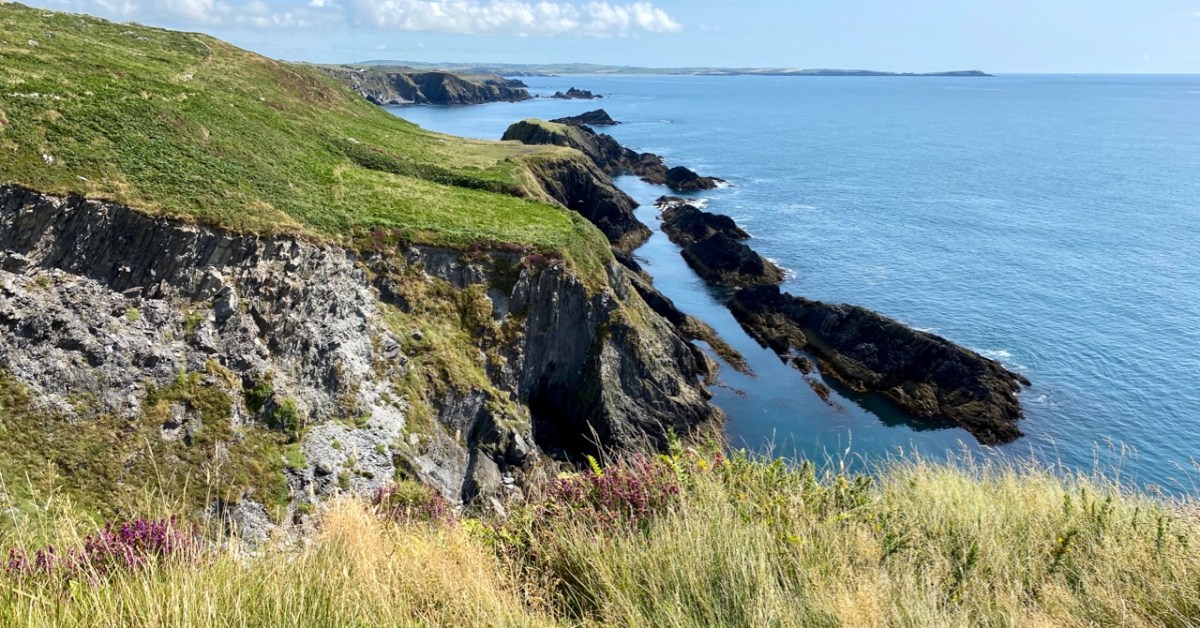
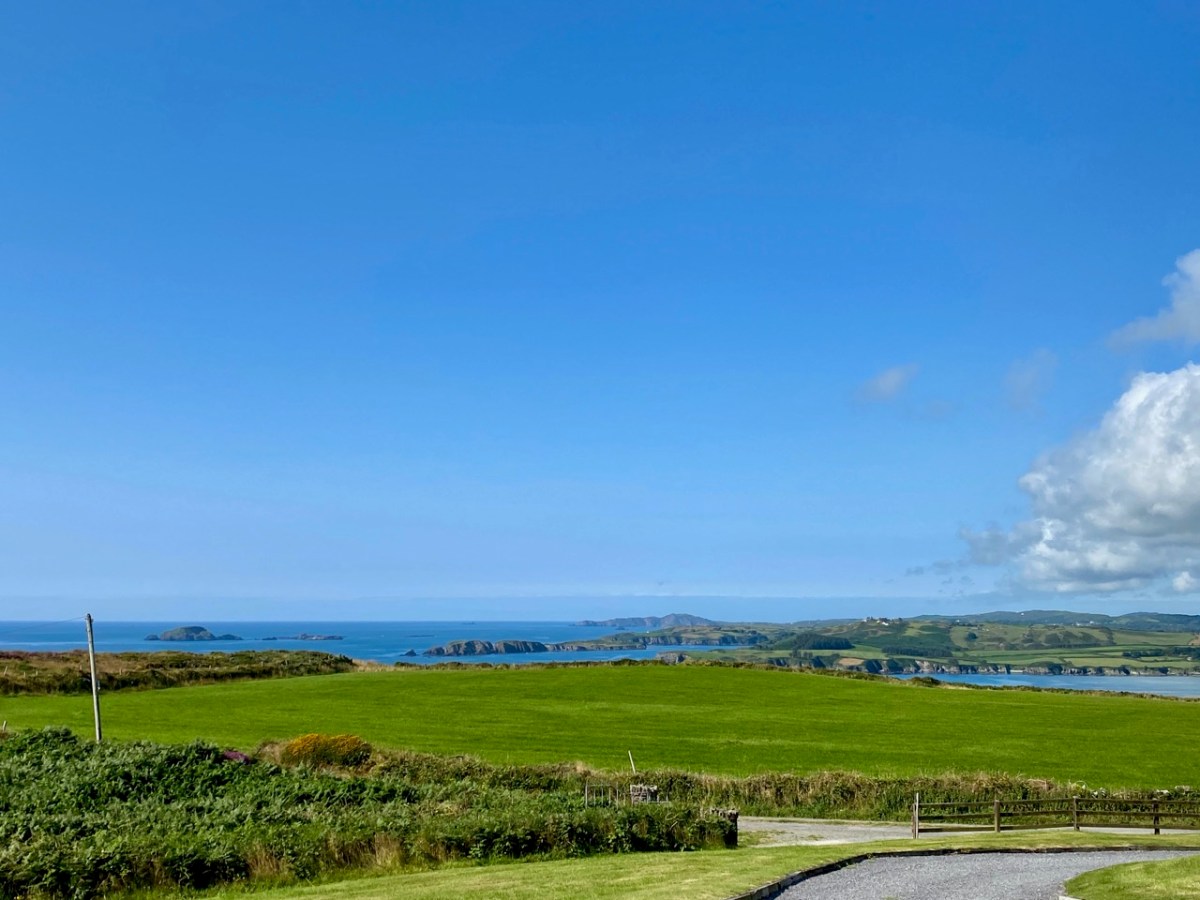
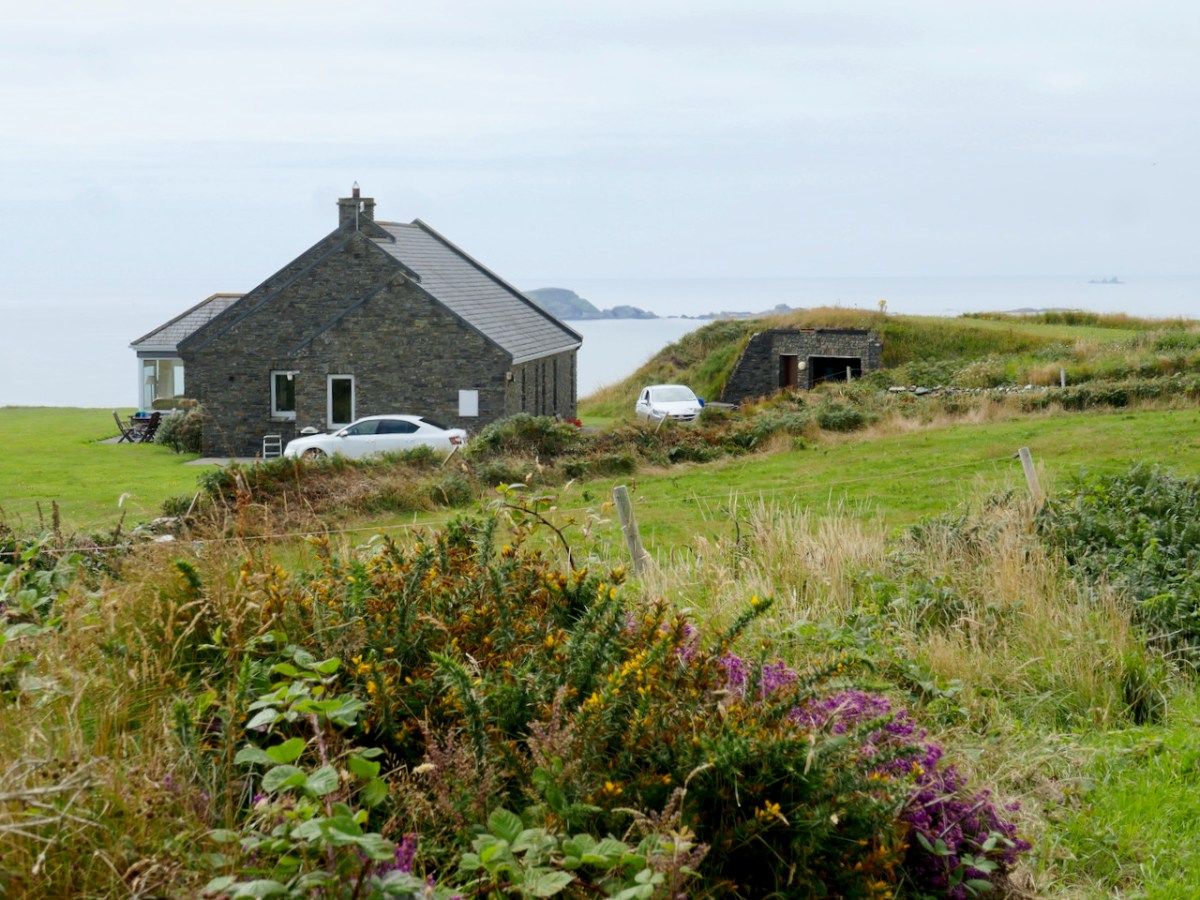
This is a bit of an epilogue to my Signal Success in Irish Engineering series (although that is not yet complete!). Here is the site of a Napoleonic-era Signal Tower in West Cork – but the tower itself has completely vanished! It’s no 28 on the map which accompanies Bill Clements’ book – Billy Pitt Had Them Built – Napoleonic Towers in Ireland (The Holliwell Press 2013) and it is given the name Glandore Head. We recently visited friends who have a house in the townland of Reenogrena, which is south-east of the village of Glandore and its extensive natural harbour. The topography of the area is soul-stirring – that’s probably an understatement: look at the view of the coastline there, above, and the distant views both west and east, below.

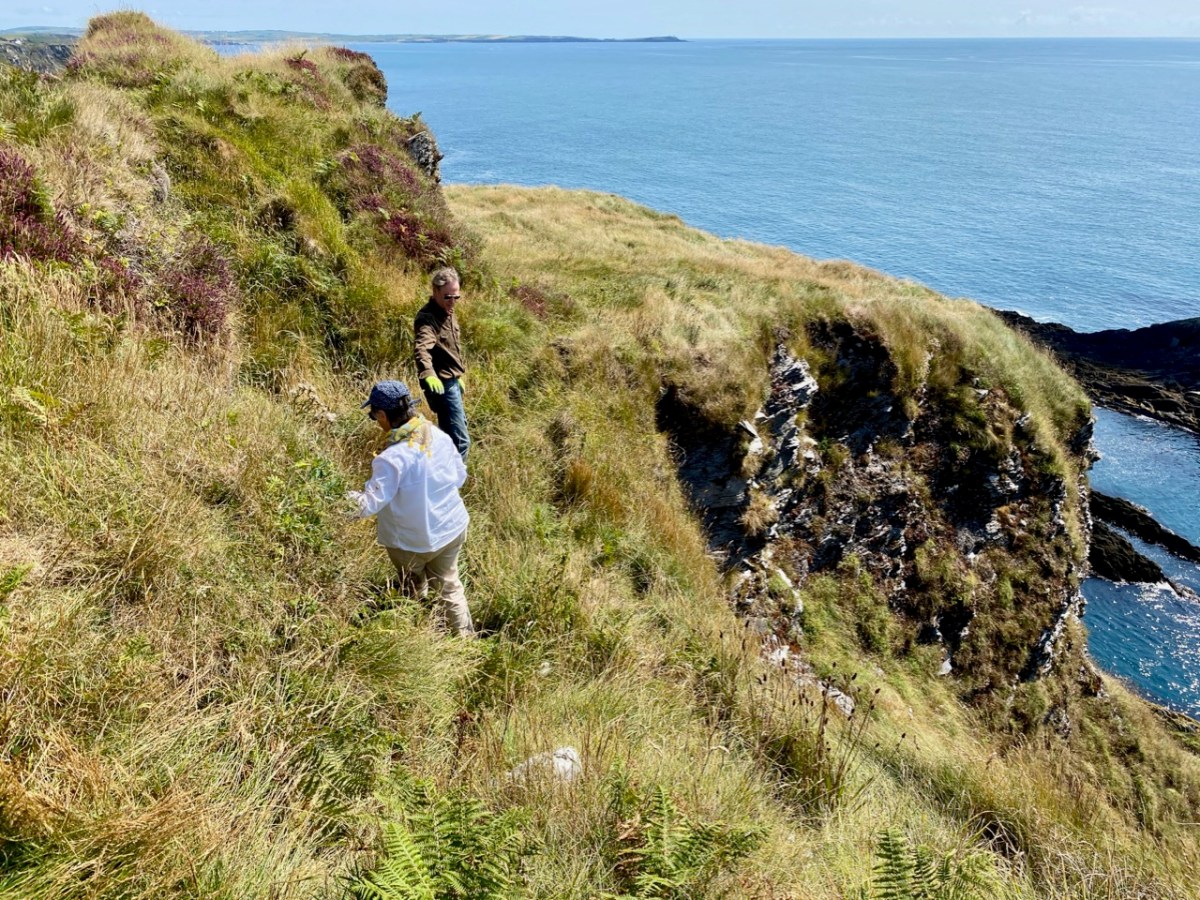
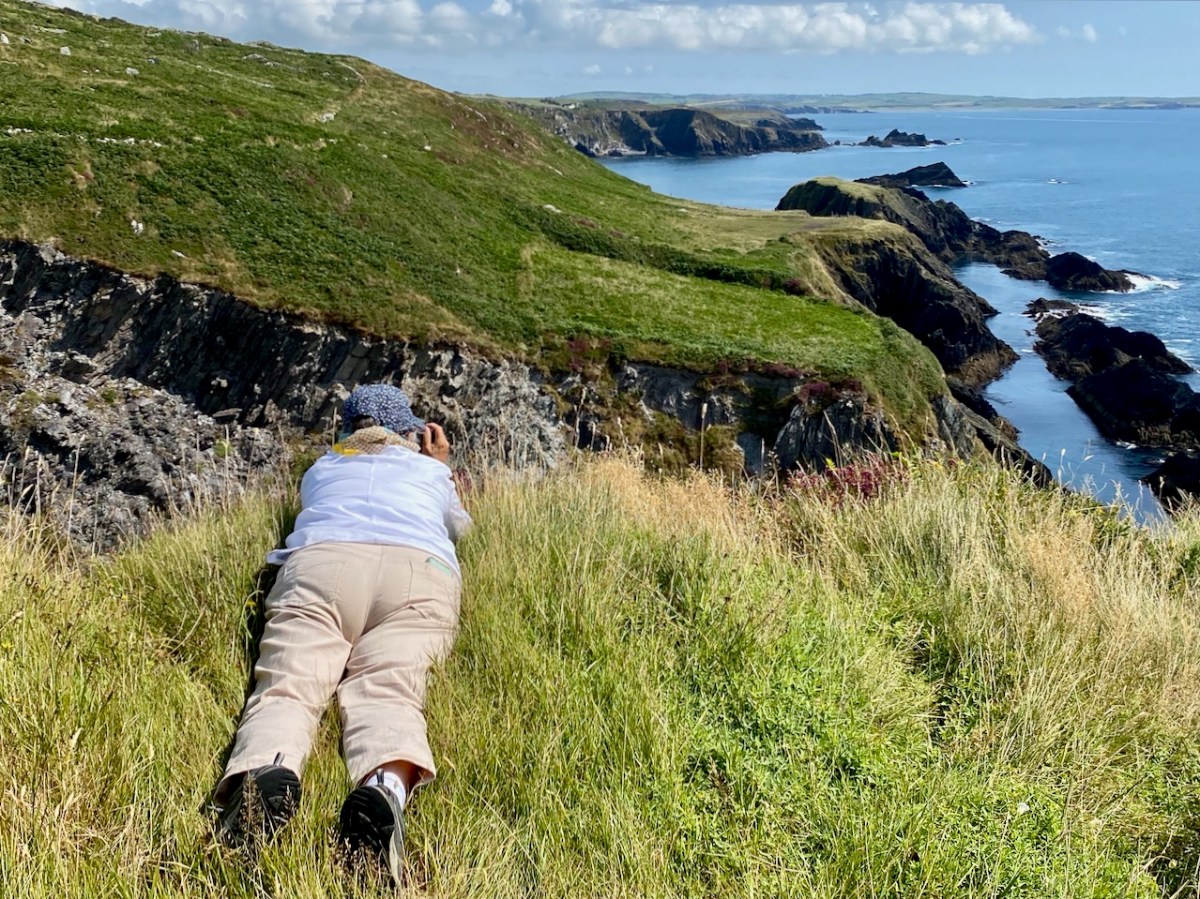
We were fortunate with the day we had. The benign weather gave us a possibly false sense of security as we explored a wild, riven coastline. We could well imagine how exposed we might feel there in one of West Cork’s severe storms: our climate-changing extremes are becoming ever more prevalent. But on this occasion we were confident enough to venture to the very edges of the land, always conscious that humans had settled in these remote places many generations before us.

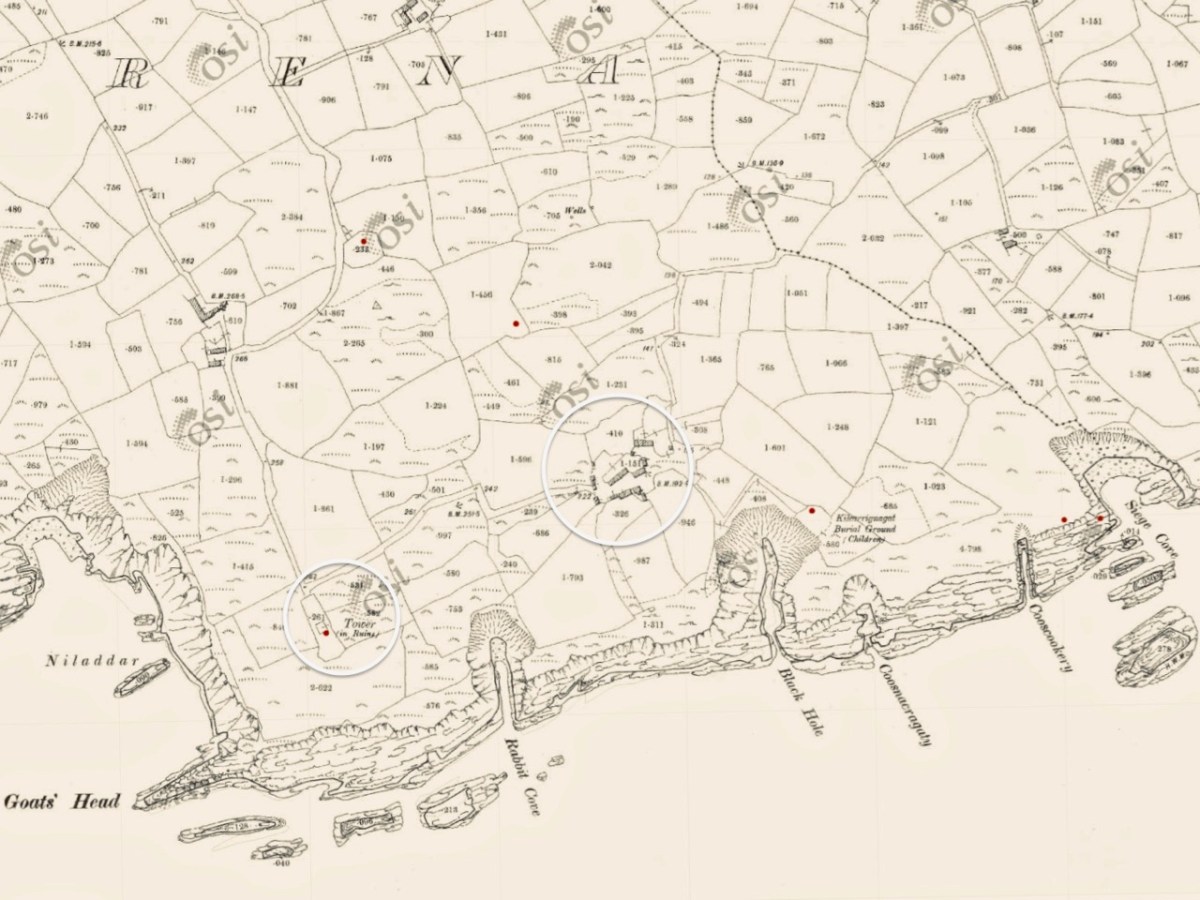
There is nothing left of the signal tower at Glandore Head, which would have been constructed between 1801 and 1804. The site has now been taken over by a recently built house which enjoys the excellent views in all directions. In the picture below it seems that the tower was located in the area of the earth-sheltered garage. We know more or less where it was because it appears on the earliest Ordnance Survey maps from around 1840. Even by then the structure itself had lost its original function, as the threat of Napoleonic invasion had passed, but it is labelled as a ‘Telegraph’. On the later 25″ map – dating from the late 1800s – the site is marked as ‘Tower in ruins’.

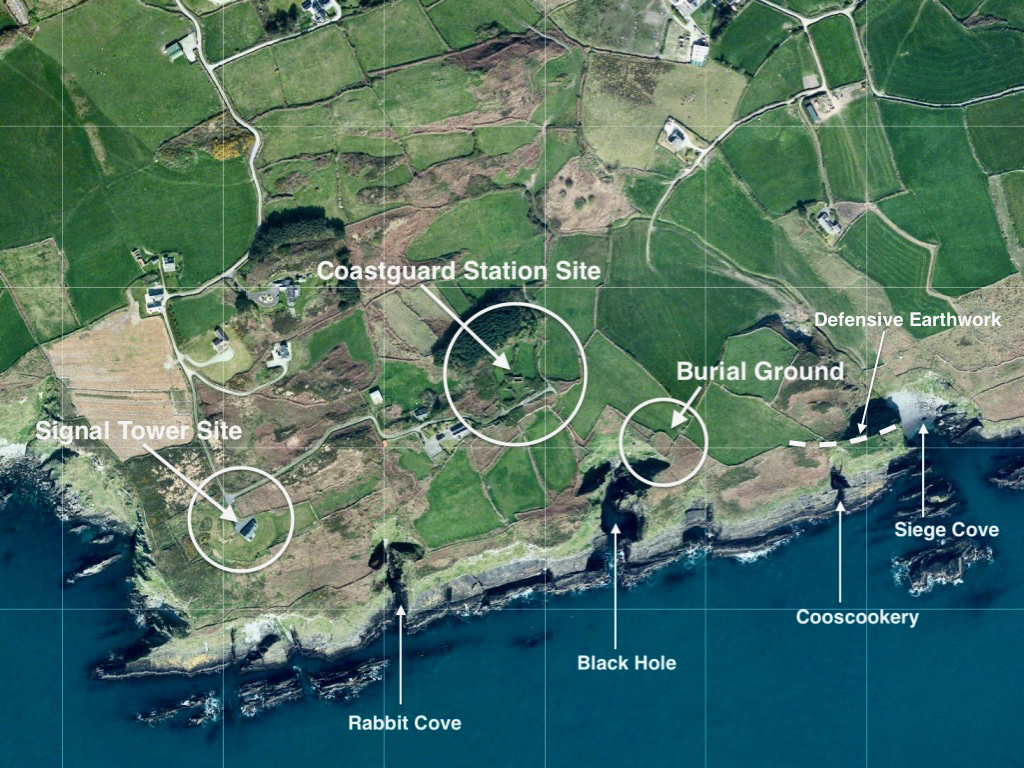
Centre – the earliest 6″ OS map; lower – the later – and far more detailed – 25″ OS map. It’s interesting to compare the two versions. The accuracy of the later map in terms of topographical detail and humanly constructed features – buildings, trackways etc is very noticeable. Below is the contemporary aerial view. 50 years separate the two OS maps, while the satellite image is 100 years later again.

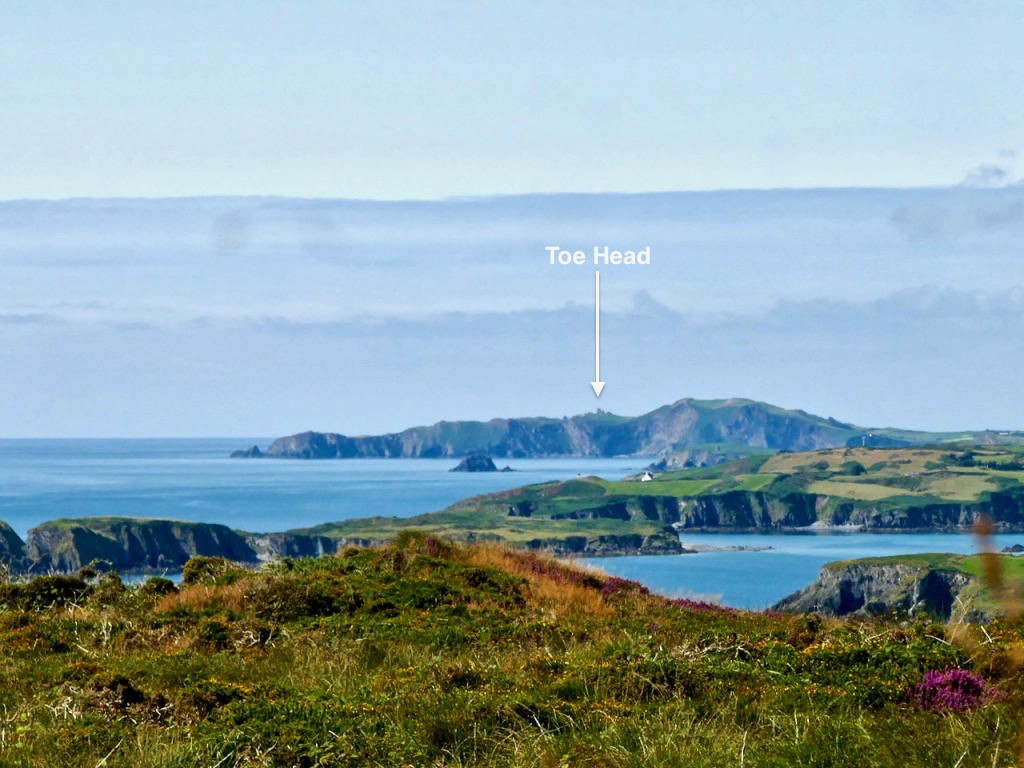
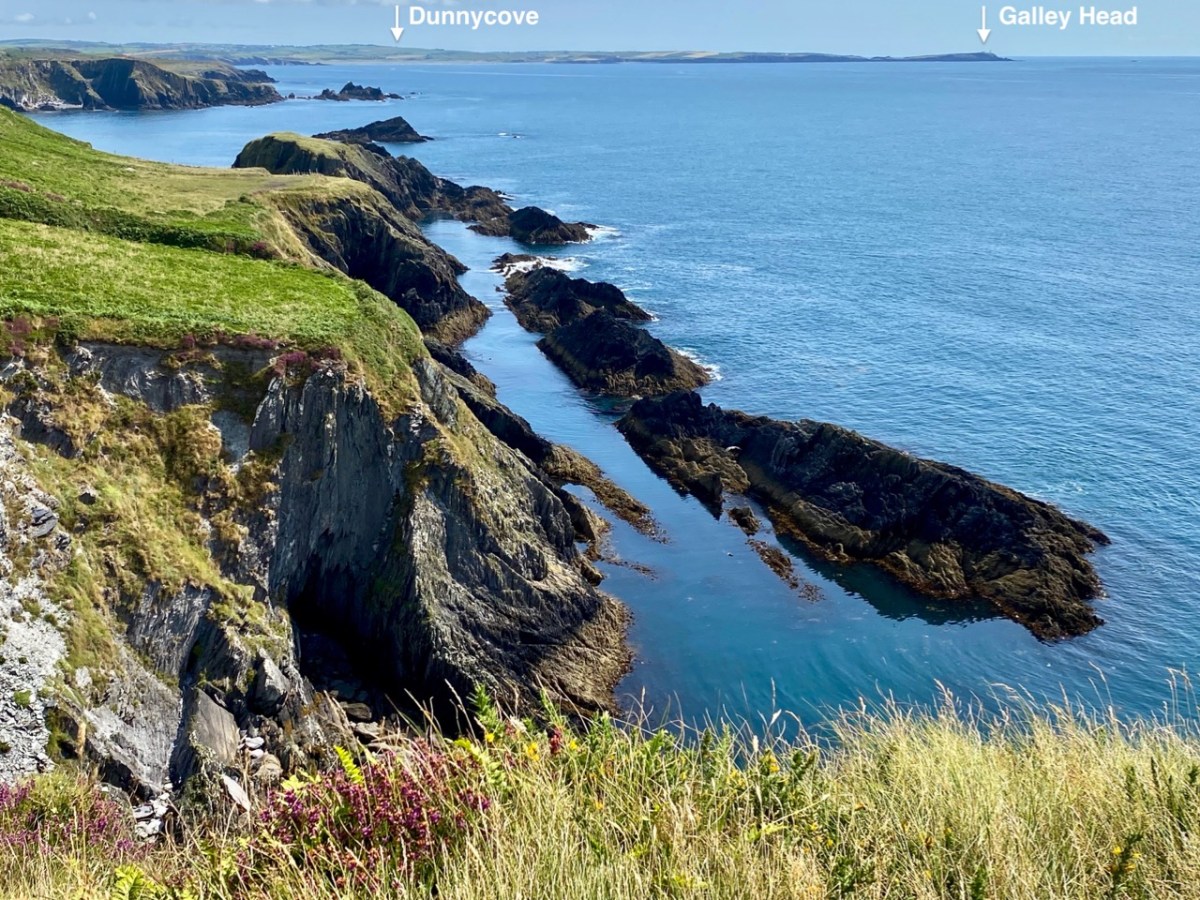
The reason why I like to examine and compare the mapped information is my interest in reading the history of a place through its landscape, and this particular vignette of West Cork is a prime example of the process. Firstly, the signal tower location was chosen because of visibility to other significant places on the coastline which are in view: the towers at Toe Head to the west and Galley Head (Dunnycove) to the east (below).

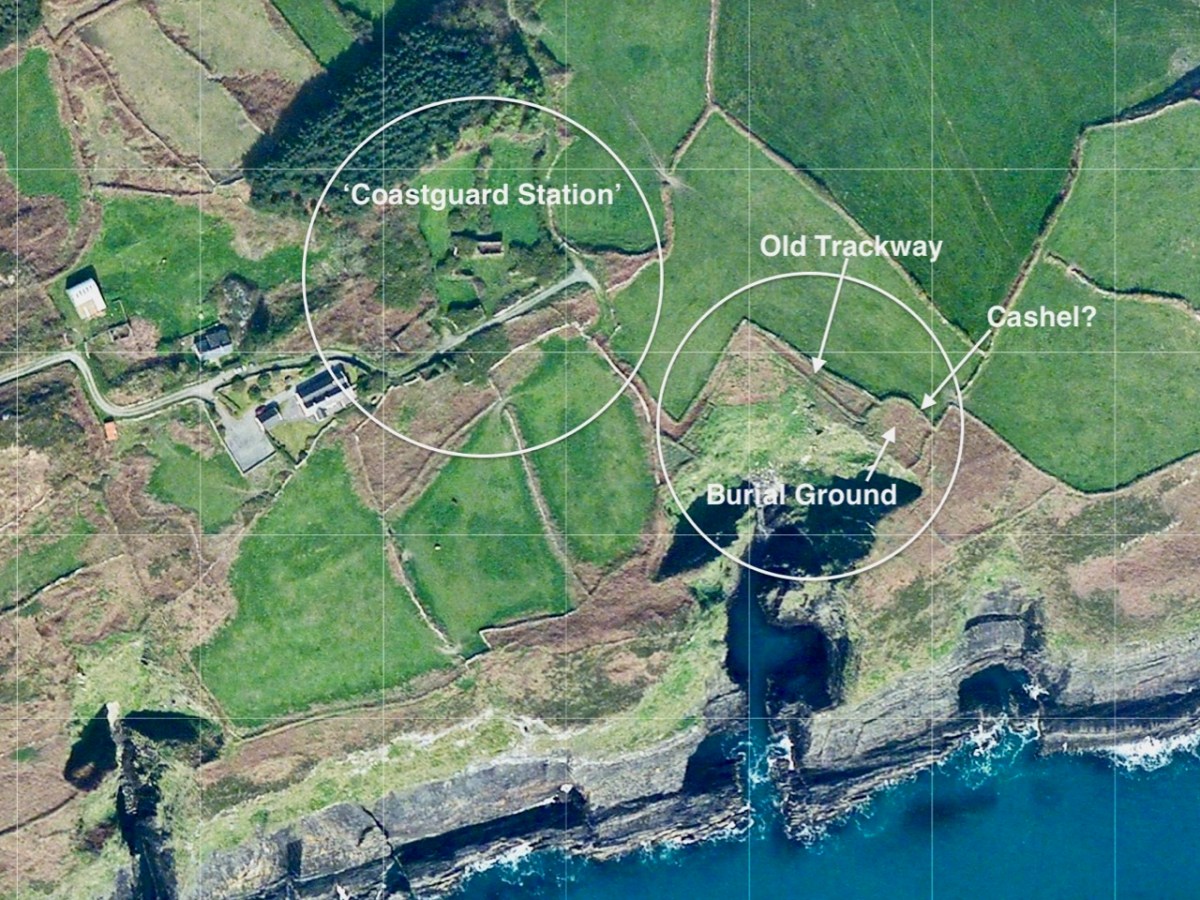
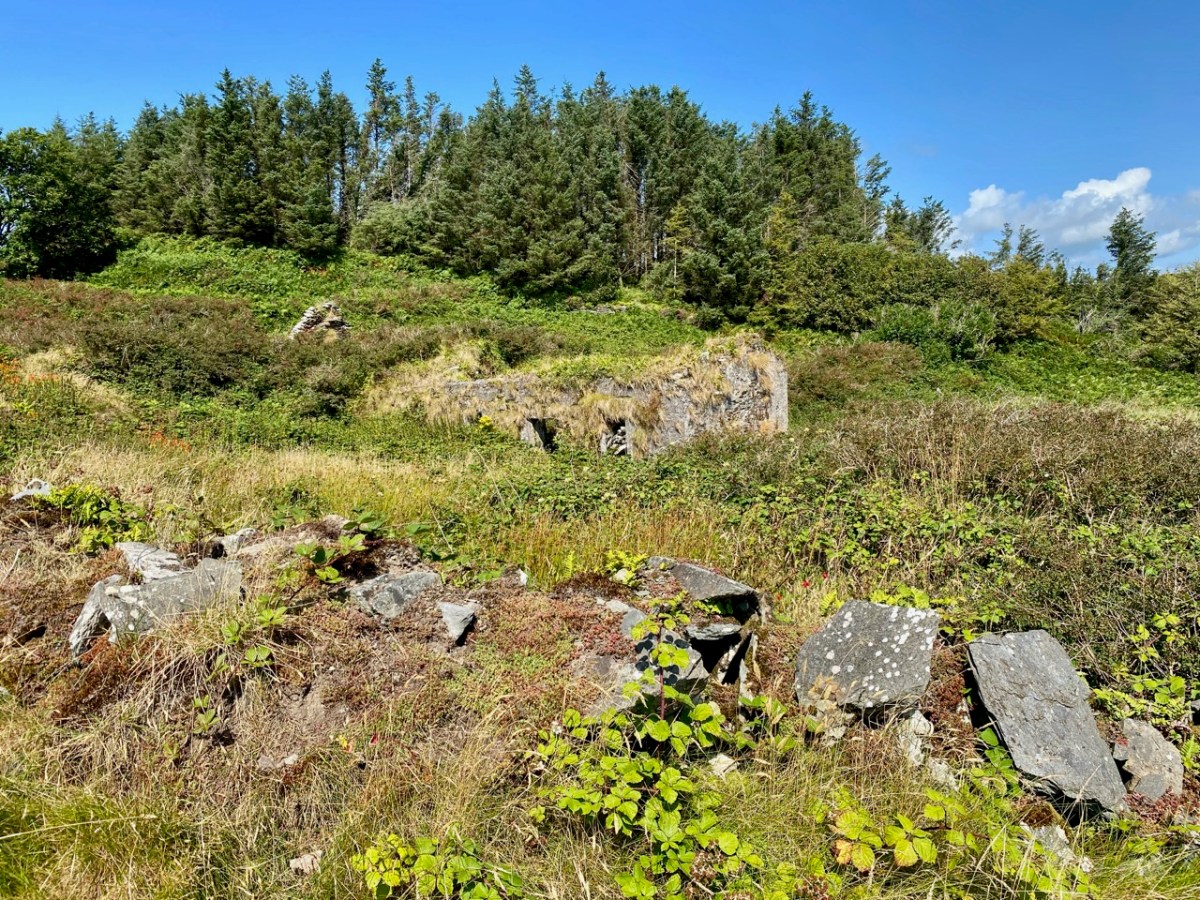
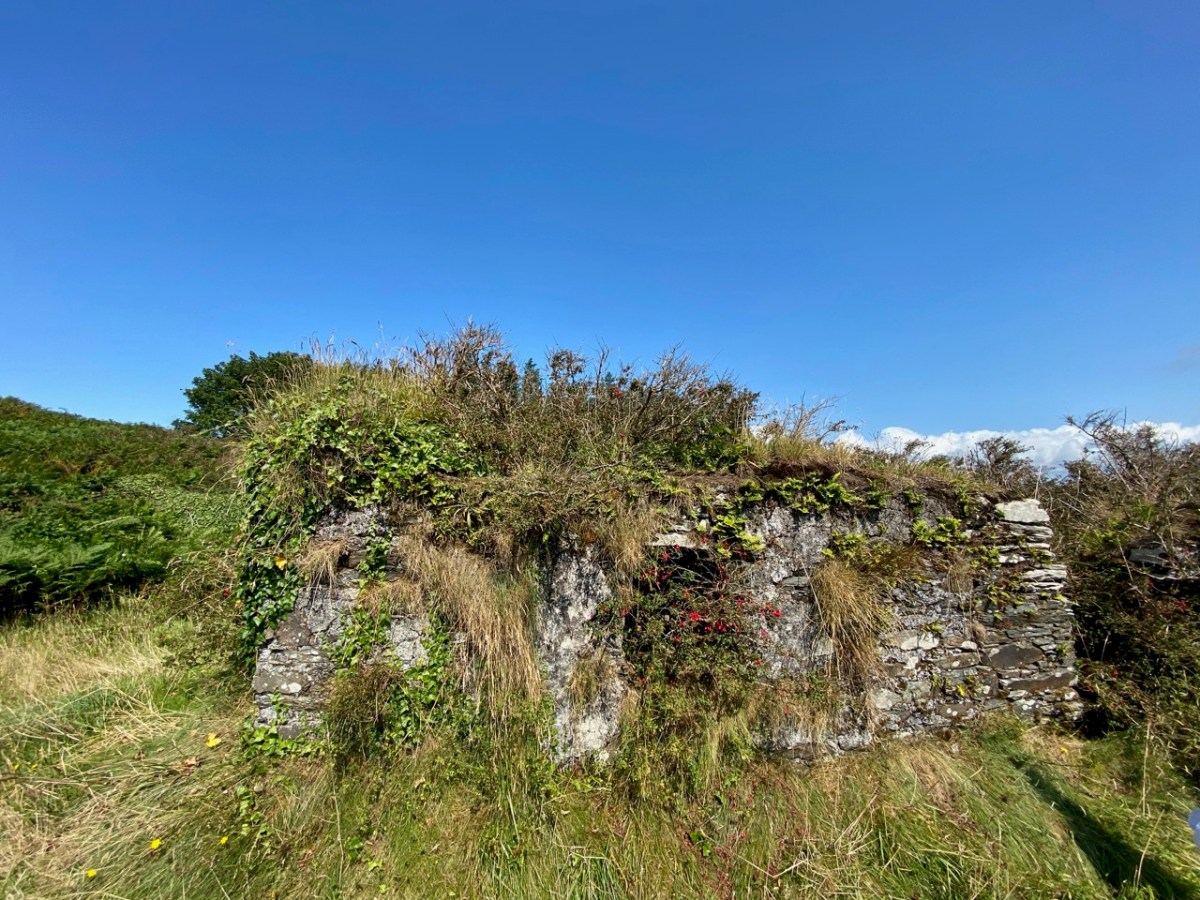
Next, look at the ‘Coastguard Station’ site. This is marked on the c1840 OS map, but not on the later 25″ map. But that later map does show a number of buildings on that site. As you can see from the aerial view, there are only the remnants of buildings now. Also the older map shows no roadway or track accessing the ‘Coastguard Station’ – it could only be reached by crossing fields. Here’s a closer look at this group of ruined buildings today, followed by some of our photos.

While it is likely that there are old coastguard buildings amongst these ruins, it seemed to us equally possible that we were also looking at the earlier remains of a settlement – cottages and cabins. Records of the area are scant. There’s nothing we found – apart from the OS maps – to give any further light on what we were scrutinising. Surprisingly, very little information is available on the early years of the Irish Coast Guard service, other than its establishment as the Water Guard, or ‘Preventative Boat Service’ in 1809, initially under Navy control but from 1822 part of the Board of Customs. From this we might assume that its purpose was to intercept smuggling operations, rather than to give any assistance to seafarers. Incidentally, it is important to note that in Ireland the name has always been two words: Coast Guard.

It’s easy to see that this hostile coastline – which would not be benign to small fishing boats – would nevertheless attract subversive landings. The only nearby access to the water is Siege Cove, to the east of the Coast Guard site. The upper photo depicts the curiously named Cooscookery inlet – not a good landing point, while the lower is Siege Cove – itself a difficult climb to the fields from sea level. The names of the topographical features would be a good study in themselves – and might reveal some hidden history: Coosnacragaty, Black Hole, Rabbit Cove, and Niladdar. The small burial ground is known as Kilcarrignagat (it means the ‘church at the rock of the cat’). That’s the overgrown trackway leading to it, below. It is of particular interest – partly because you wonder what communities it served, but also because it seems to have been established in a previously existing ring-fort or cashel.

Further yet to the east, and directly above Siege Cove, are the distinct remains of a defensive structure, partly taking in natural outcrops but also built up with stone. This is likely to be indications of the first habitation in this area – perhaps a thousand years ago. There seems to be at least one promontory fort here, and Finola will take up that subject in this locality in future posts (she has already tackled examples elsewhere). It seems to me that this whole coastal region would be worthy of a detailed archaeological study – UCC take note! Meanwhile, we can only express our gratitude to friends Michael and Jane for introducing us to the many wonders of their own territory.

Addendum: After I had published this post I discovered an excellent photograph of Siege Cove and the coastline in this area taken from the sea. I cannot find a contact for the photographer. I do know his name is Tim, and that he publishes an occasional diary of his journeys in a boat (an Ilur based, I believe, In Glandore). I hope he won’t mind me publishing this and including a link to his website.

West Cork Creates 2021

I never fail to come away on a high from this annual exhibition, and this year just confirmed that all over again! It is packed with swoon-worthy pieces, like Paddy McCormack‘s Whale Rider seat, above.

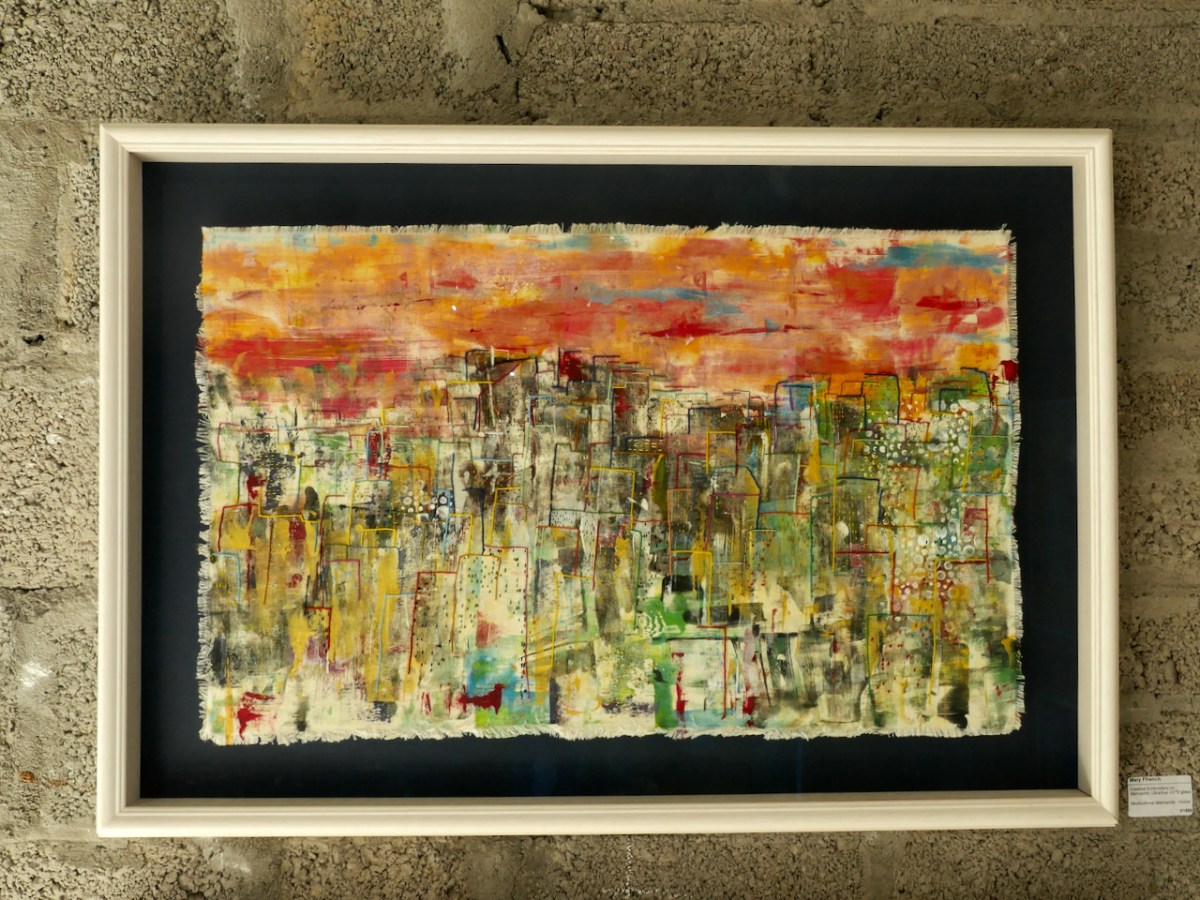
Mary Ffrench, Embroidery on Monoprint

The divide between ‘art’ and ‘craft’, although useful in some ways, can pigeonhole work that does not fall neatly into one category or the other. This annual juried exhibition gloriously transcends any artificial dividing lines and instead celebrates all that is best in the West Cork visual arts scene.

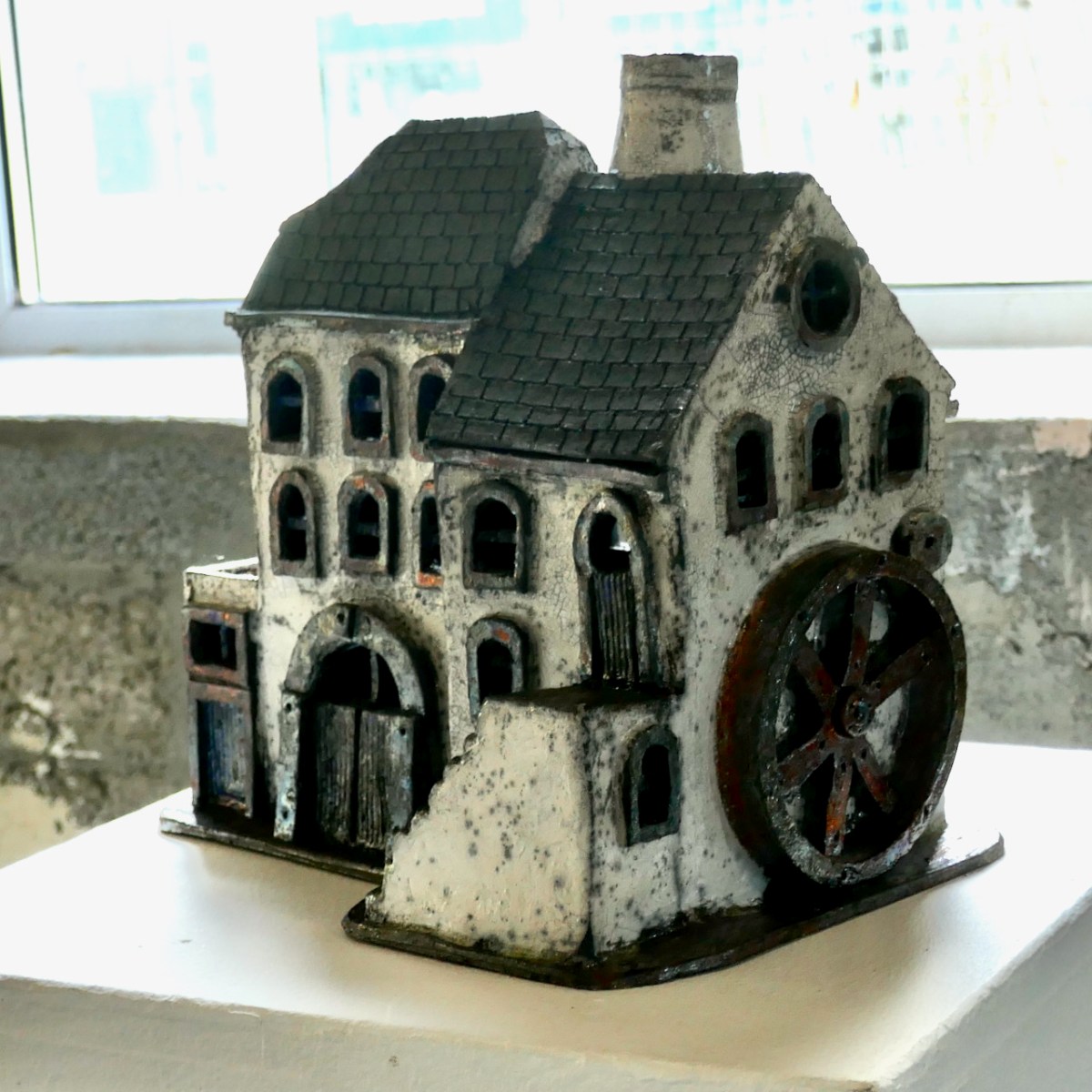
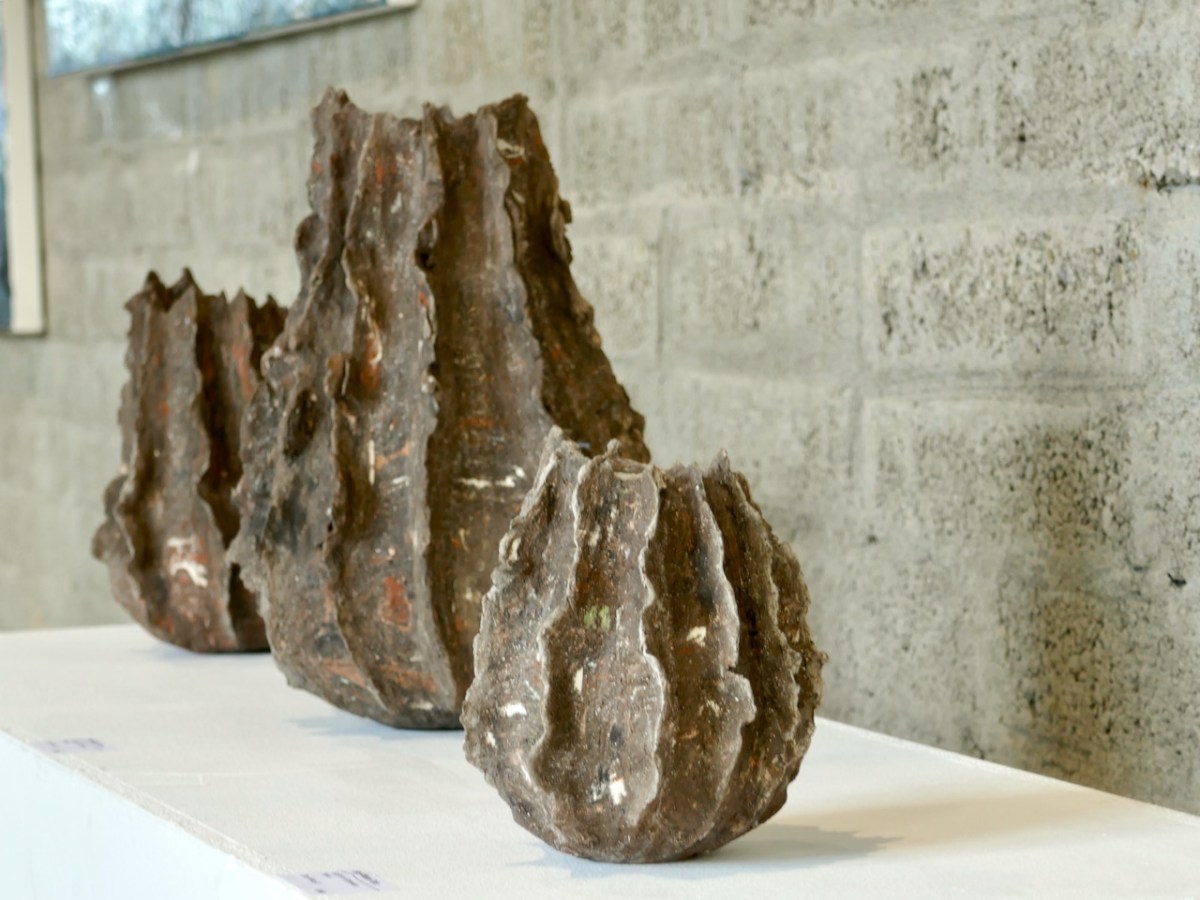
Brendan Ryan, Raku, The Old Mill; Bernadette Tuite, Sculptural Stoneware, Brow Head

Take a look at the website for bios of and statements by each of the artists. There’s a dizzying variety of approaches, materials and visions, but all are responding this year to the theme of Home Ground – and it’s not hard to relate, as we have all become so much more aware of our own patch of ground, and have taken to exploring all that it has to offer.

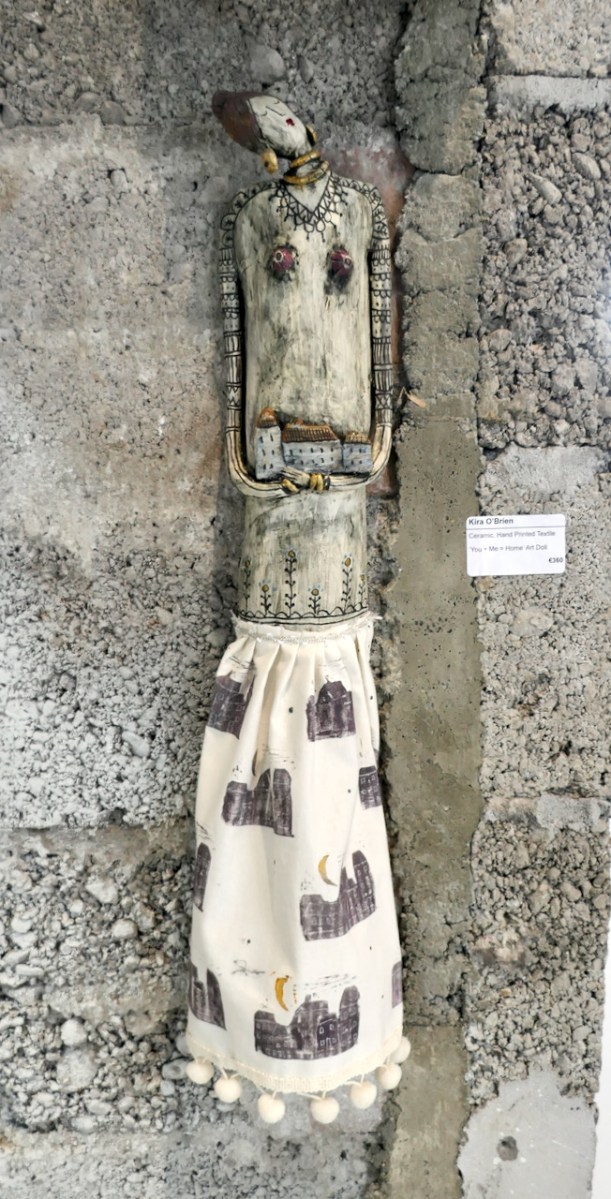
Greenwood chair by Alison Ospina with fabric by Mary Palmer (and in the background large jugs by Etain Hickey and Jim Turner; Kira O’Brien and her ceramic and hand-printed fabric piece ‘You+Me=Home’

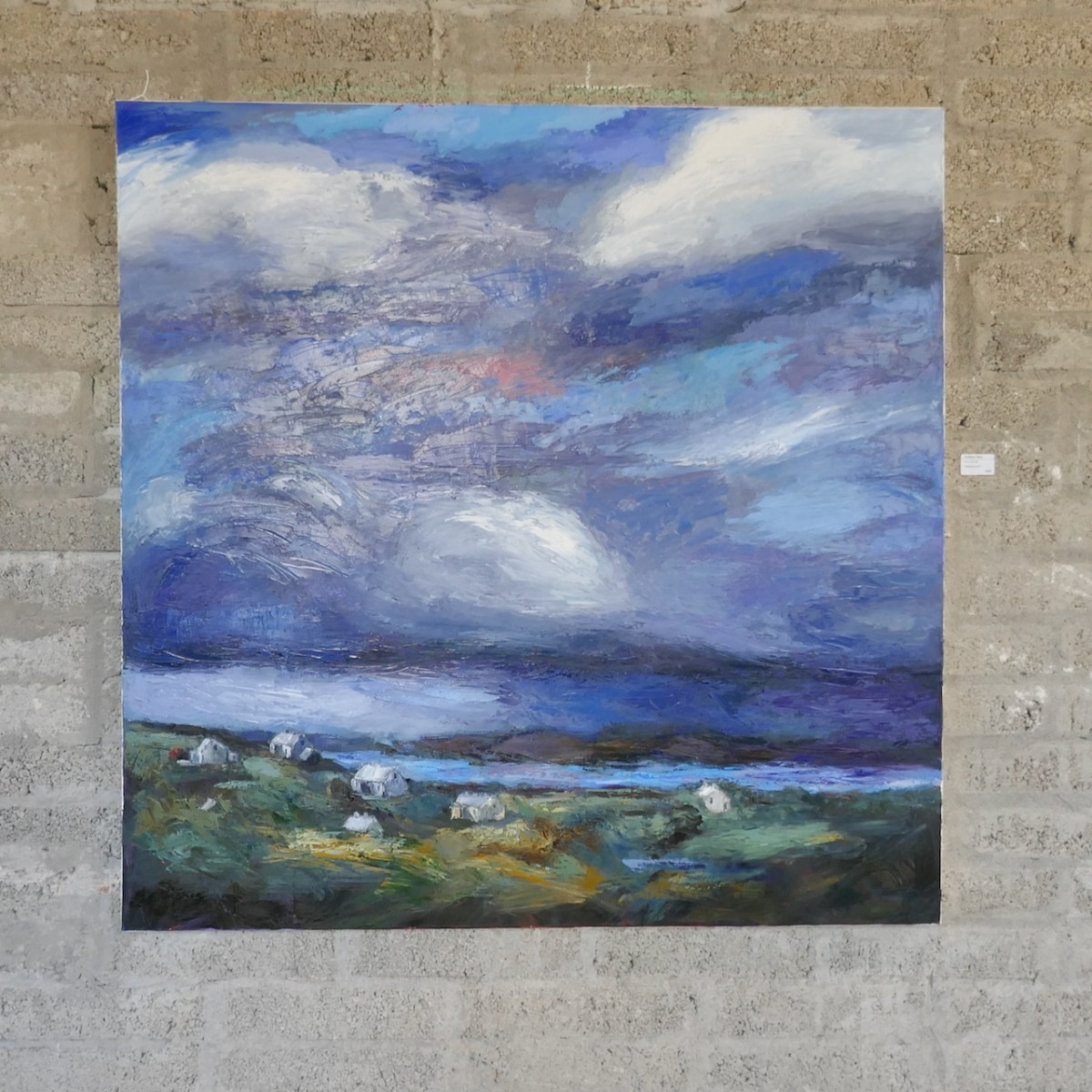
It’s all for sale, too, with some very keen prices, so if you are looking to bring home a piece of West Cork, this is the place for you. The most lustworthy painting in the exhibition, to judge from the reaction of everyone who comes in the door, is Christine Thery’s Vanishing Island (below), a large oil painting of her beloved Heir Island.

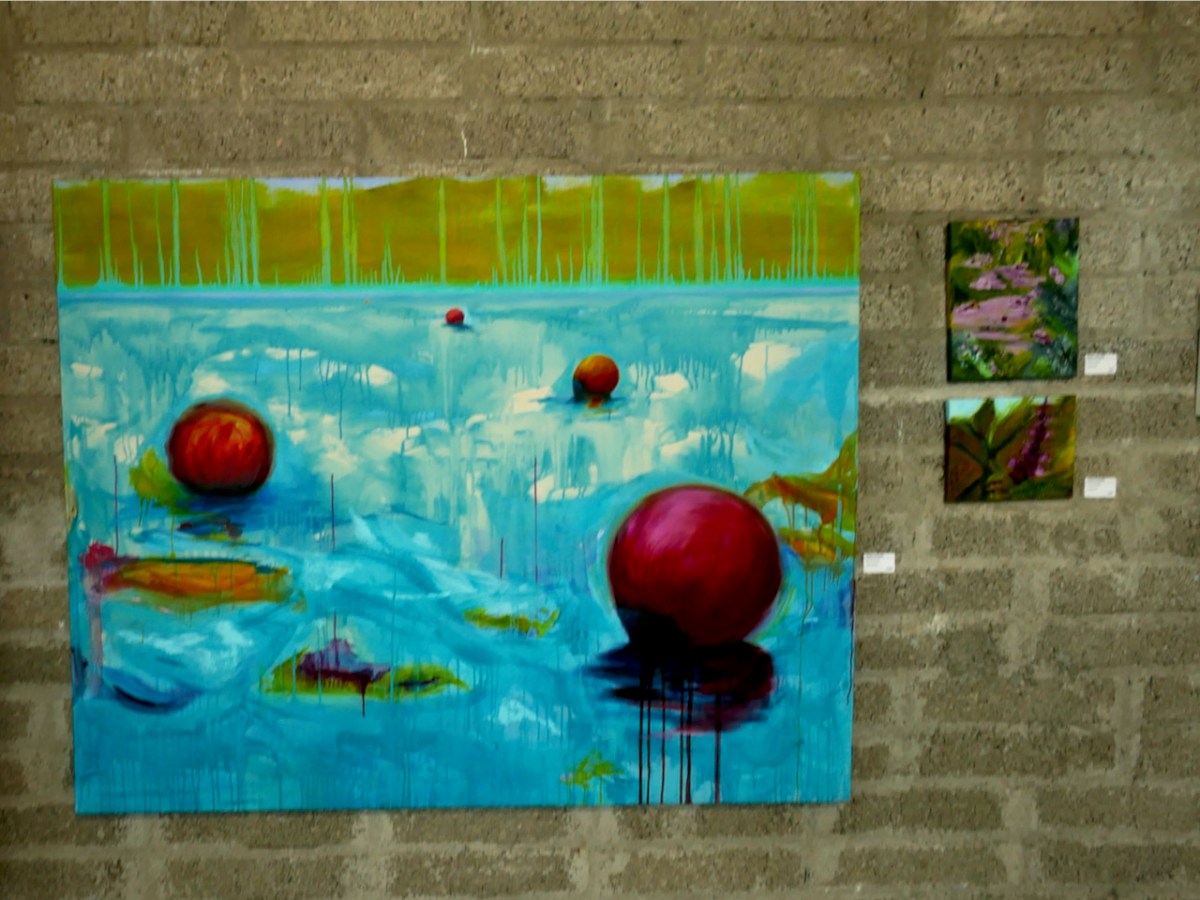
Helen O’Keefe’s terroir is another Island – Long Island – and she captures the sometimes nostalgic emptiness of it all in her paintings, although the large one below shows her responsiveness to its vibrant colours as well.

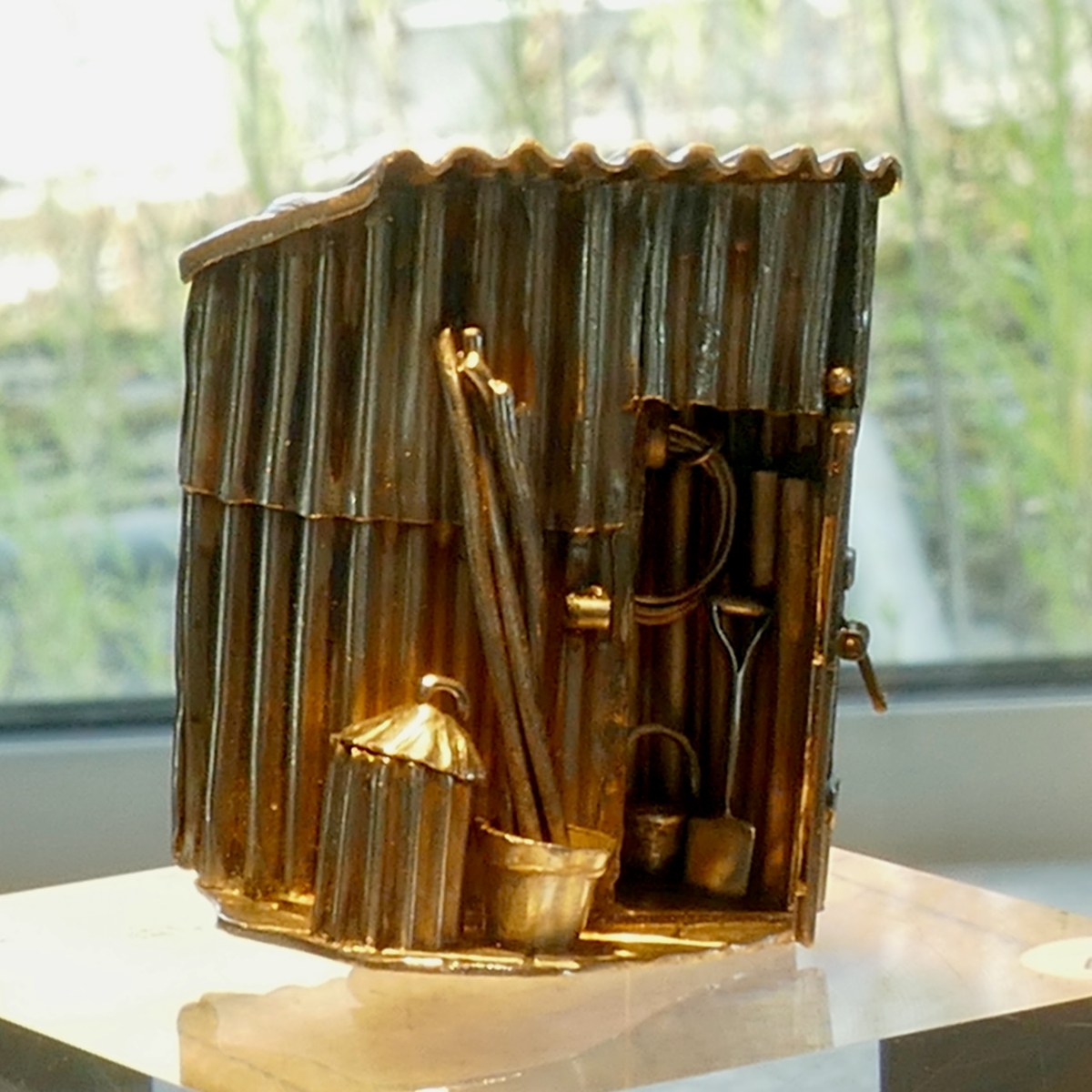
Lots of jewellery too – Here is one of Michael Duerdon’s gorgeous brooches – Garden Shed. (If a particular person out there is wondering what to get me for Christmas…just saying.)

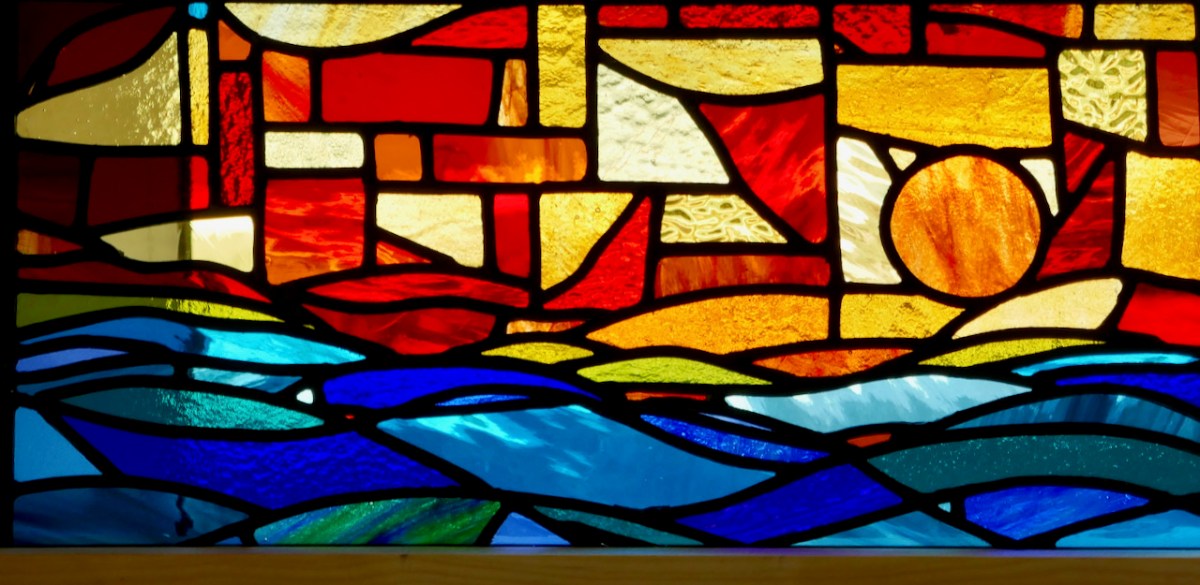
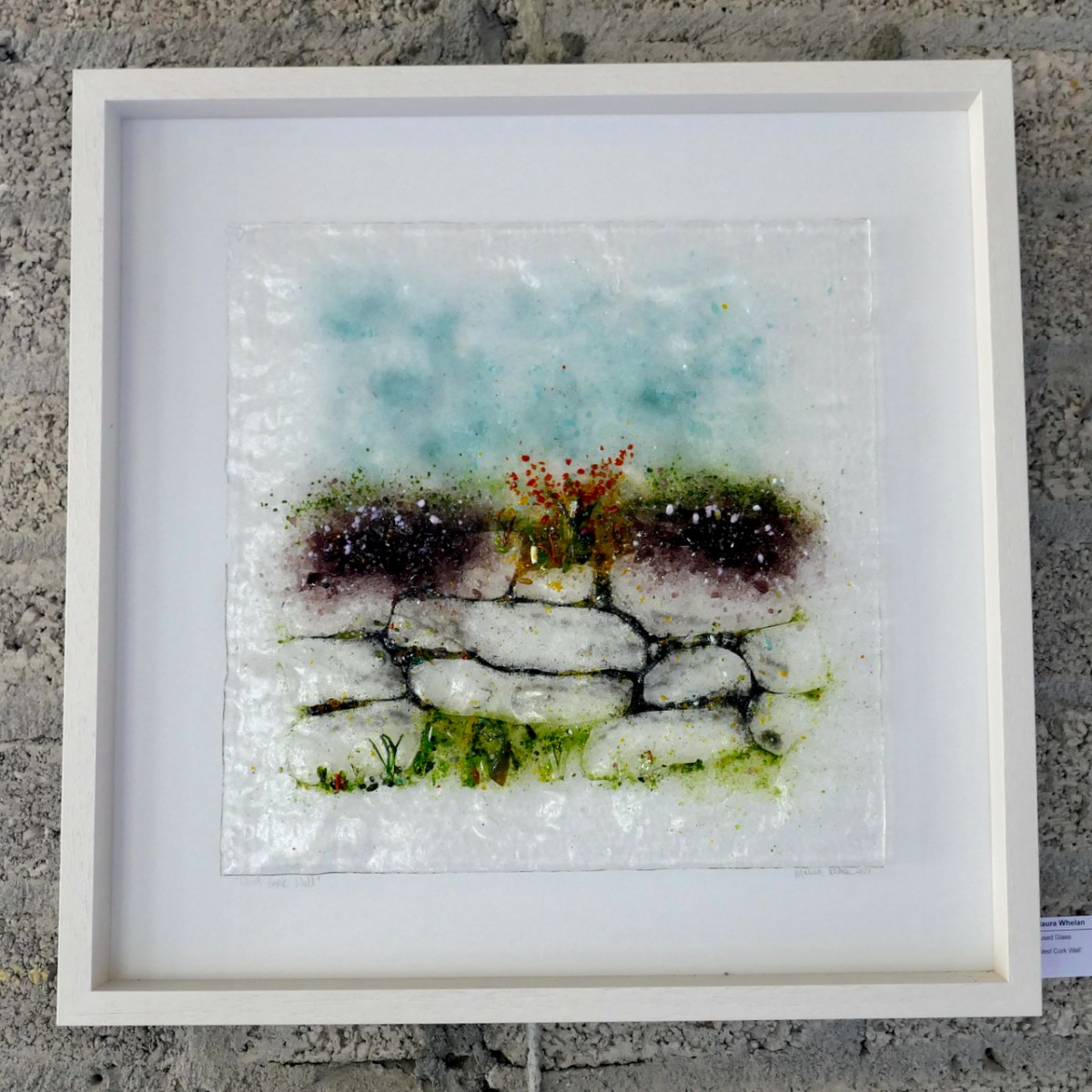
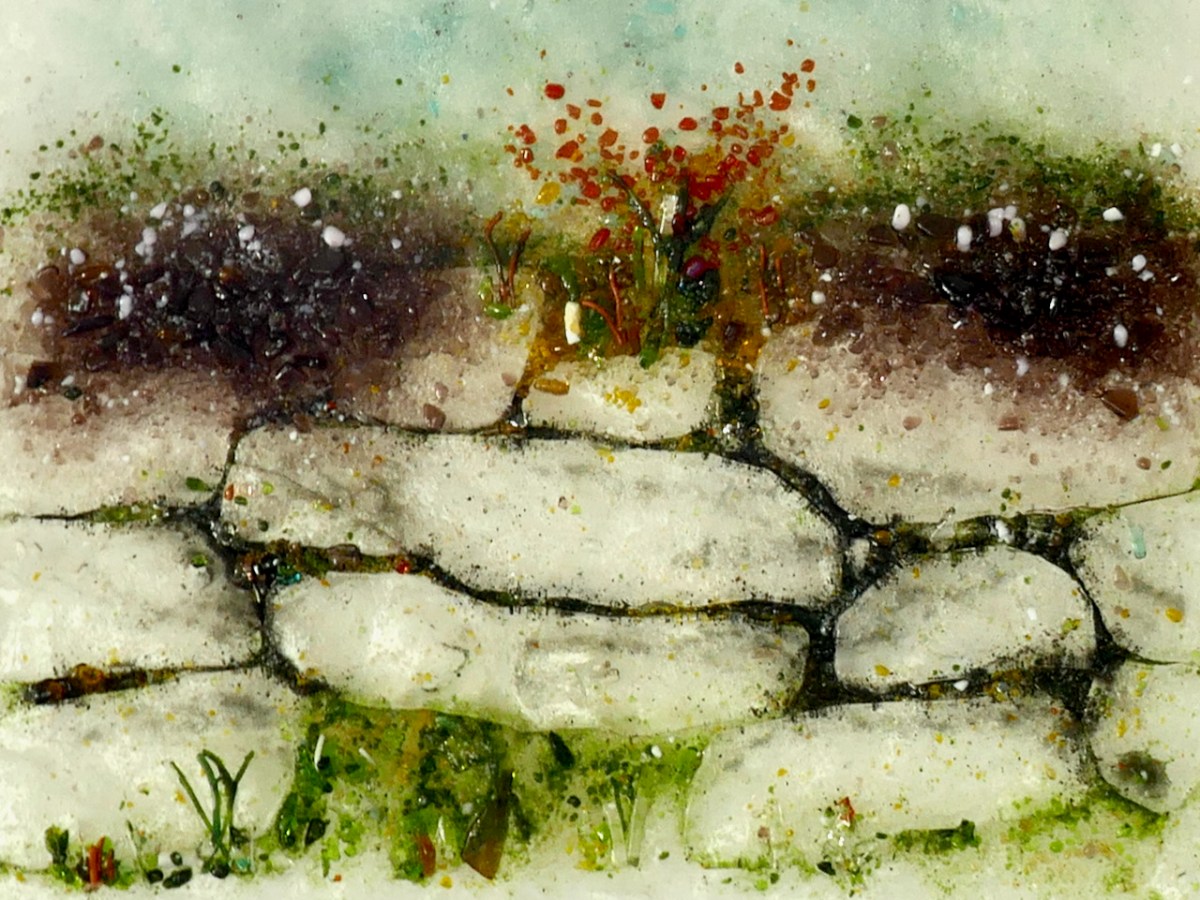
And glass! As someone who studies and writes about stained glass, I was delighted to see such a variety of glass this year, from classical stained glass, to fused creations.

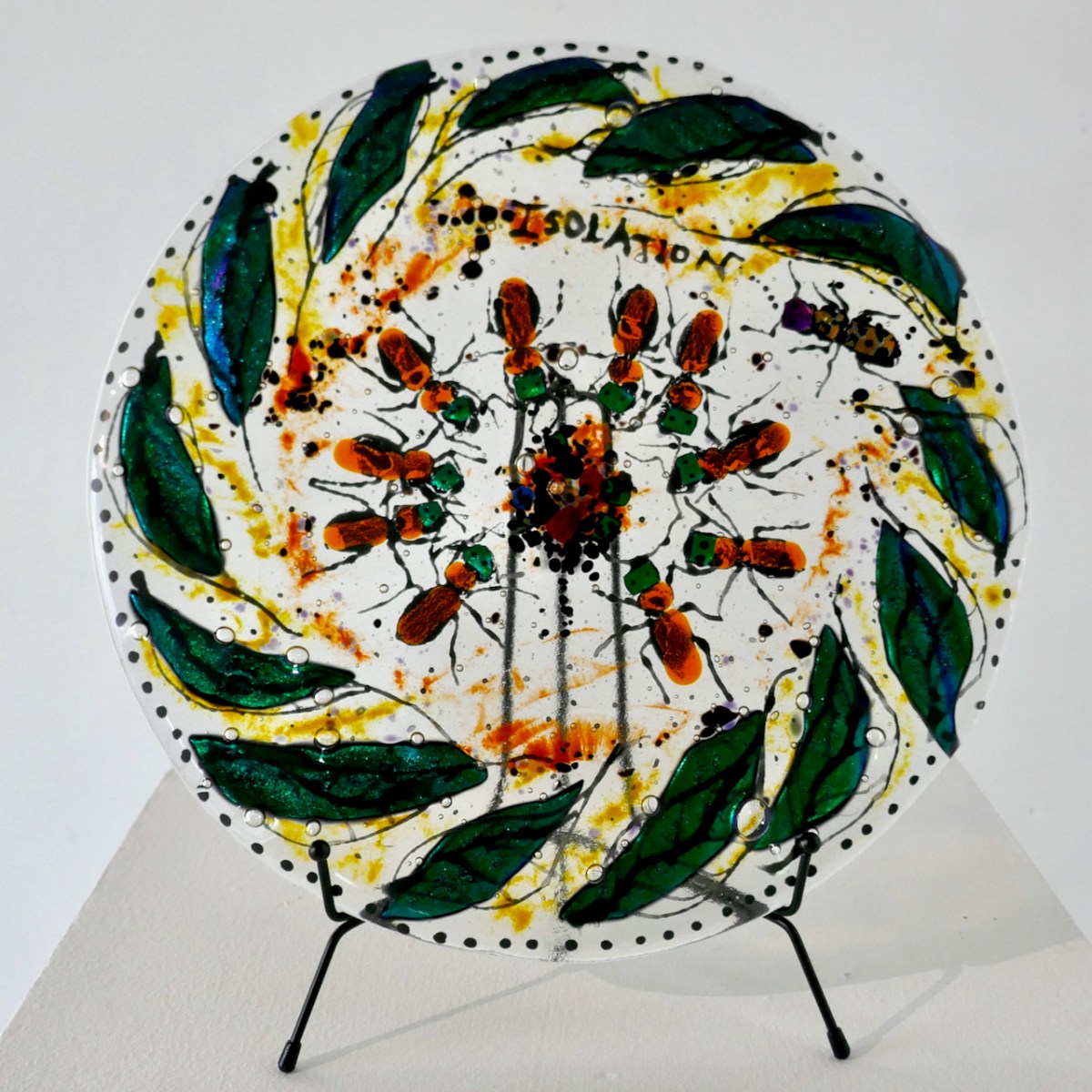
In descending order: Deirdre Buckley Cairns stained glass inspired by the Calf Islands; Angela Brady’s witty ‘Ant Colony’; A vibrant kiln-fired plate from Trish Goodbody; Maura Whelan’s West Cork Wall, and a detail from that piece

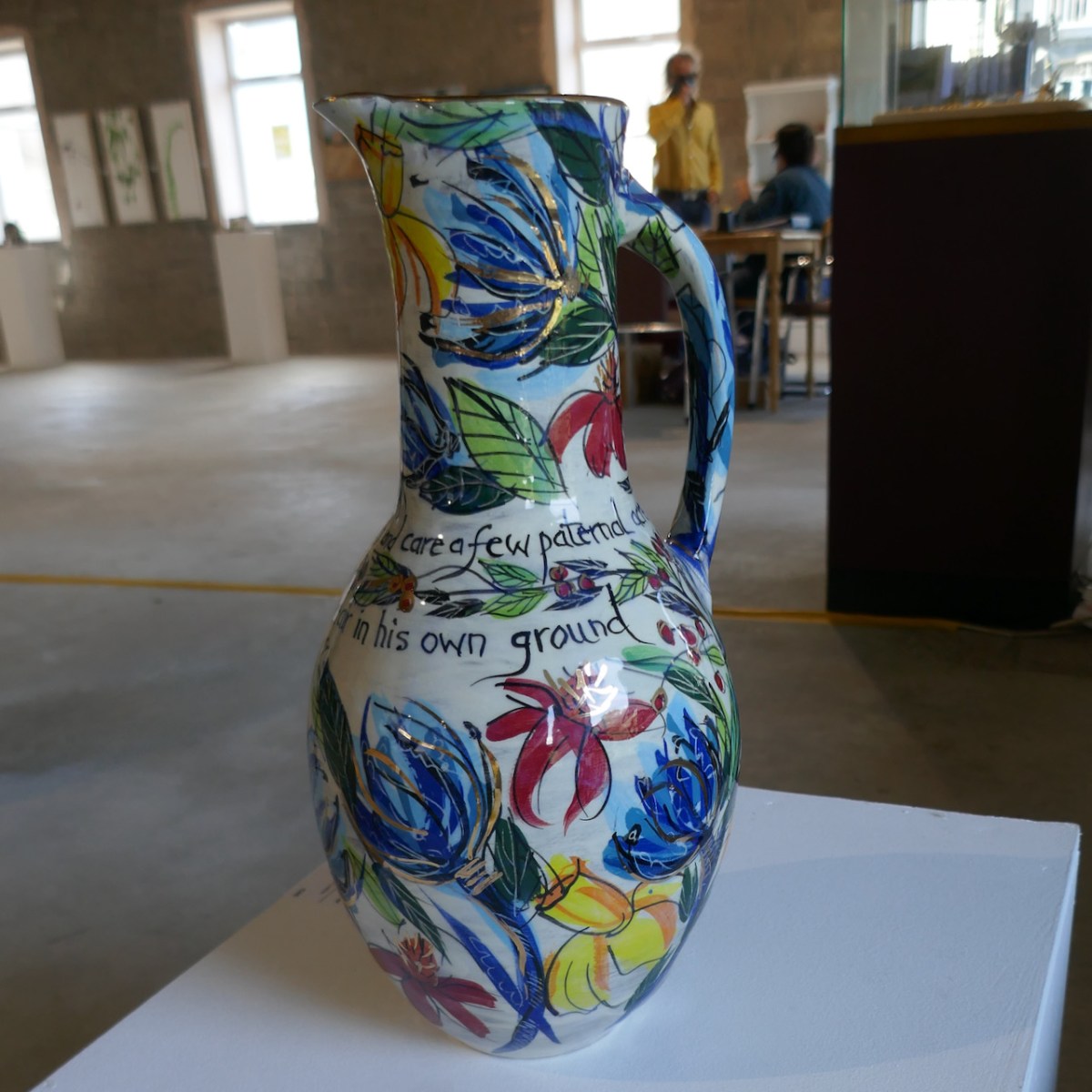
Jim Turner and Etain Hickey each have their own ceramics in this show, but they have also collaborated on several items, including beautifully decorated large jugs (above, upper). Etain has been inspired by her lockdown walks this year to produce a set of wall plates in glowing reds and blues, all angles and arcs, illustrating the agricultural life around her (above, lower).

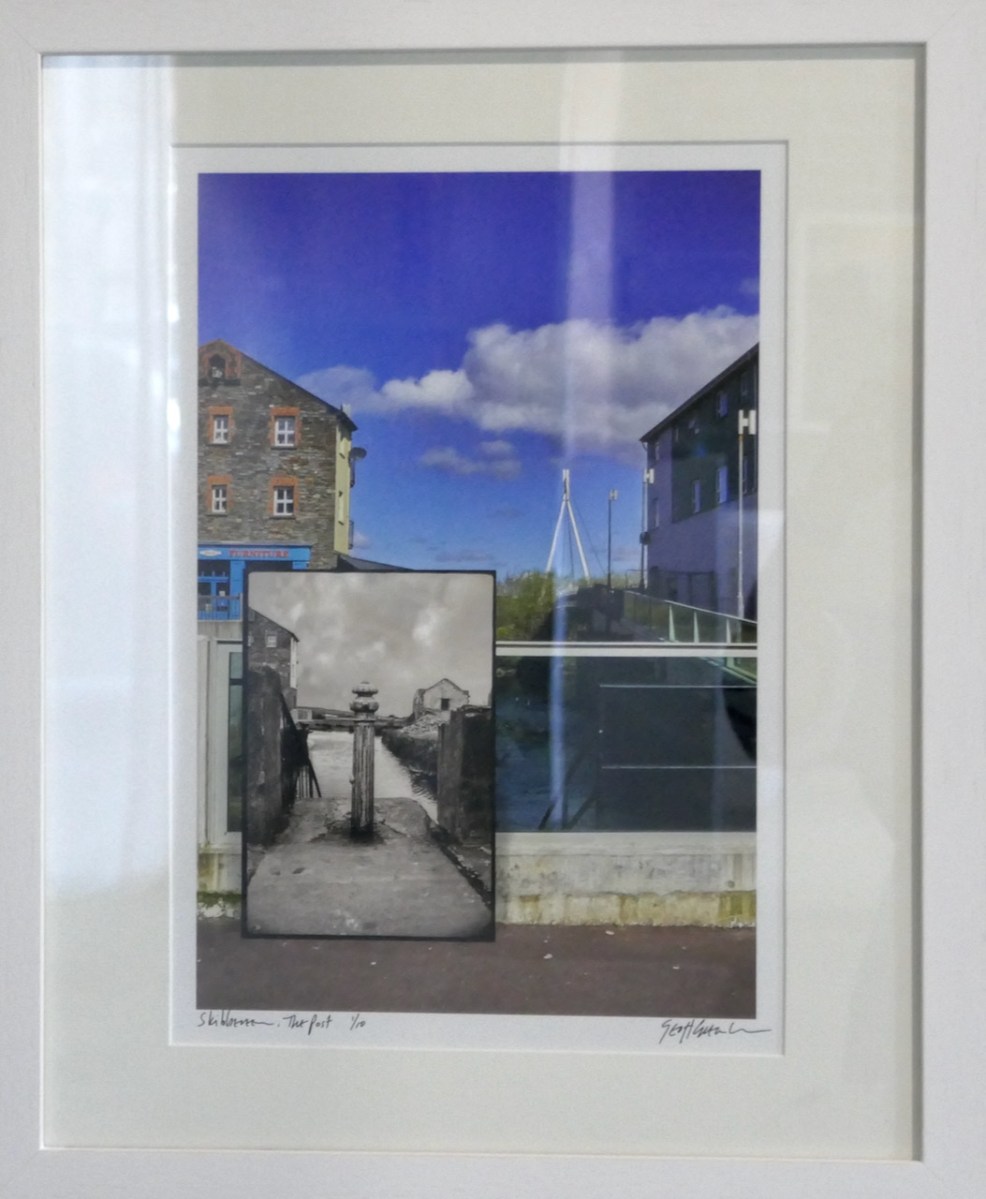
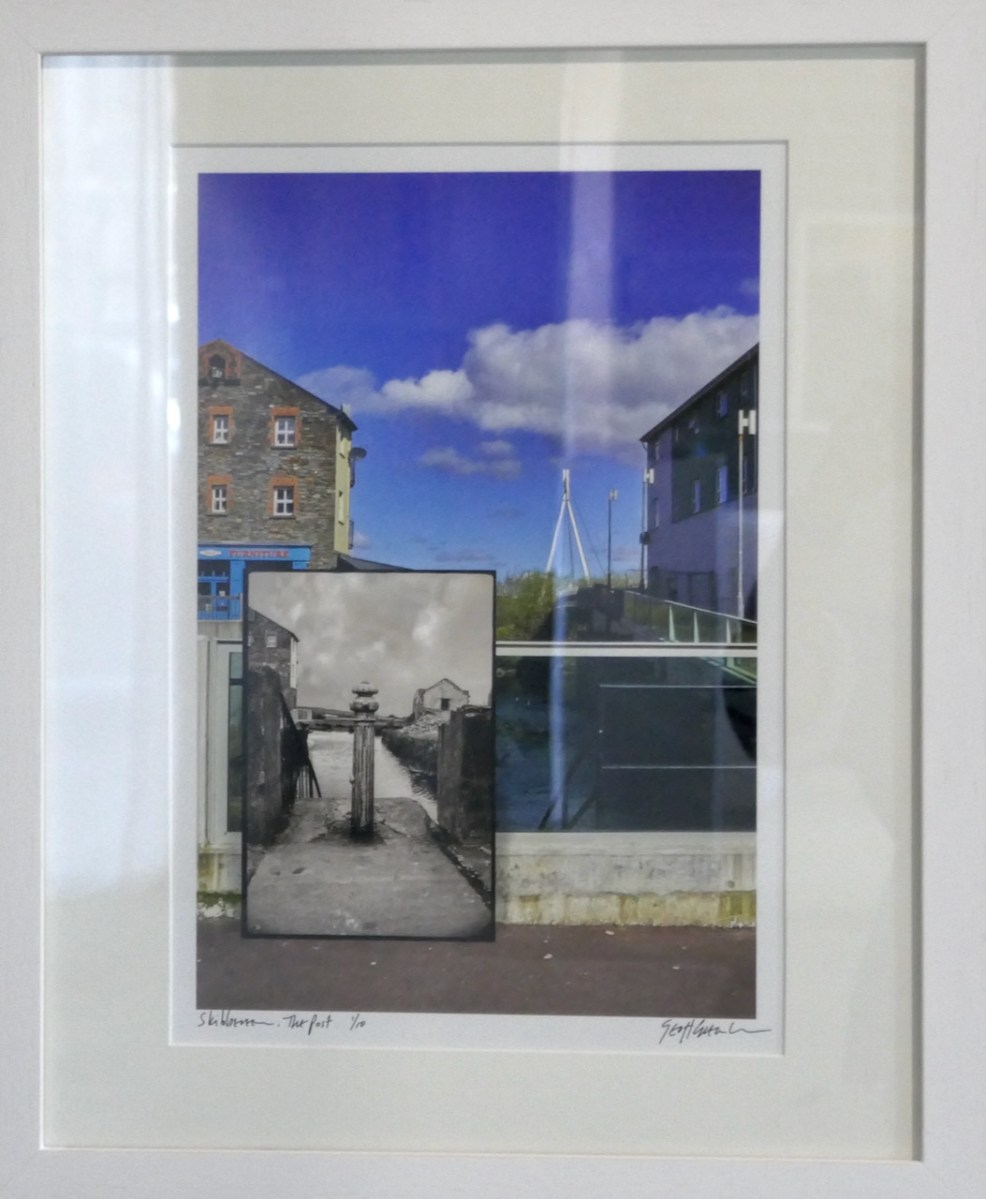
Geoff Greenham is one of my favourite local photographers and I love his approach to the theme this year – juxtaposing the old and new in his series on Skibbereen. Below is ‘Bollard’. Although the exhibition space, in the O’Driscoll building by the River, is superb for exhibiting, it’s not great for photography, so my apologies to Geoff and others for the reflections in some of my images.

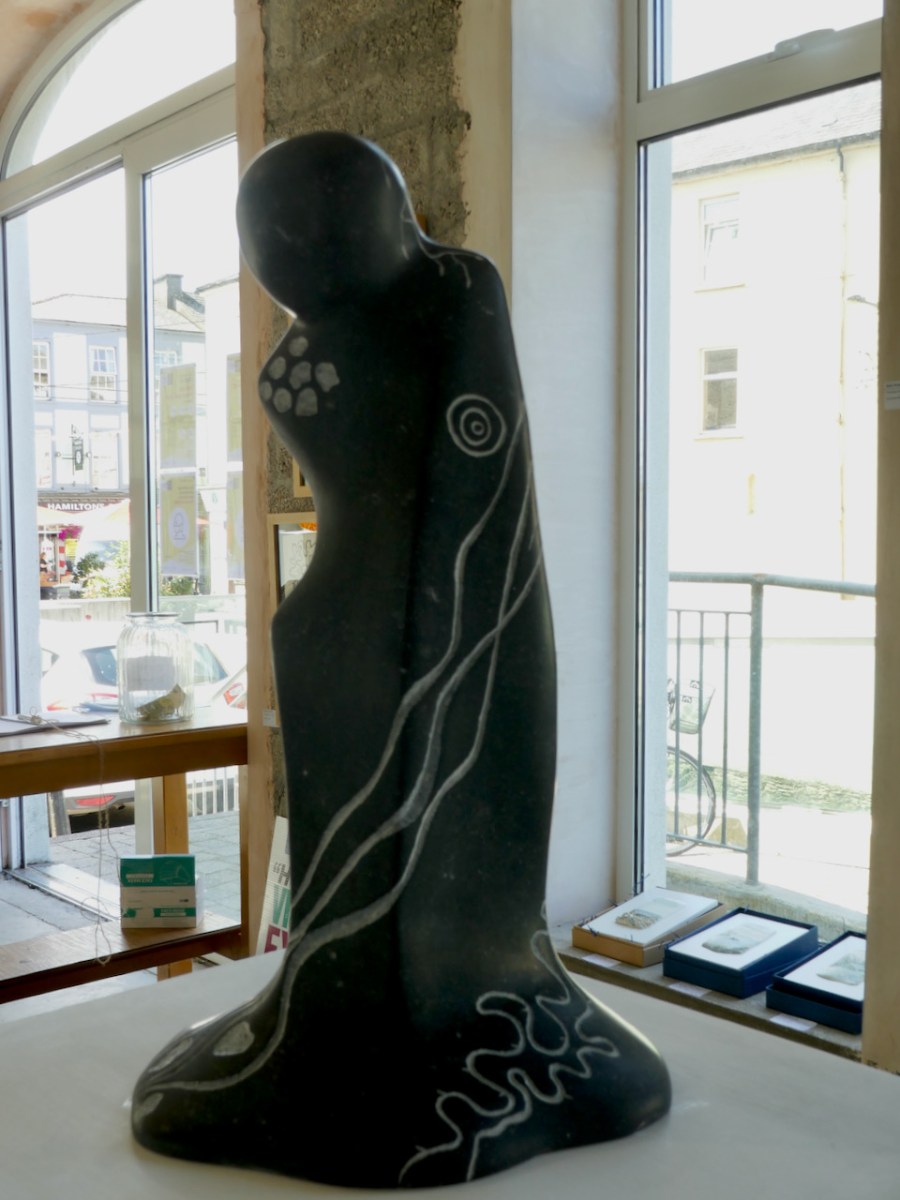
Geoff Greenham and Sonia Caldwell were standouts for me last year, when West Cork Creates was solely online, so I will finish with Sonia’s sculpture in this year’s show – another one of her thoughtful, brooding figures which showcases her mastery of technique.

I have only shown a tiny fraction of what’s in the Exhibition. It’s on for another two weeks, until the 28th, so make sure you get there!