Jazz Age Architecture

colours inside

Did you know that in Cork city you can visit a very fine example of Art Deco architecture? A building, moreover, that was designed by a pupil and former employee of Frank Loyd Wright? It’s the Catholic Church at Turner’s Cross, Christ the King: by good chance today – 20 November – is The Feast of Christ the King, so what better day to take you on a tour of this remarkable structure that is deserving of a wider audience? It was Pope Pius XI who instituted this feast day for the Roman Catholic Church in 1925; today it’s celebrated also by the Anglican and Lutheran community and many other Protestant churches.

Left – the architect, Francis Barry Byrne of Chicago, with his design model; right – an aerial photograph of the Christ the King Church, Turner’s Cross, Cork, 1933

St Finbarr’s South Church, Dunbar Street, the oldest Catholic church still in use in Cork City, was built in 1766 and enlarged in 1809 but by the early years of the twentieth century was inadequate to serve the increasing population. A new church building was planned in the mid 1920s to remedy this, and the brief was that it should have a seating capacity of 1200 with room for a further 700 standing. This was going to be a large building, and the design would have to address issues of acoustics, lighting and the engagement of all the congregation with the enactment of the sacrements. Perhaps it was for that reason that its commissioner – Rev Daniel Cohalan DD, Bishop of Cork – looked beyond Ireland’s shores for an architect who might have suitable experience in the field. The Bishop also eschewed architects in Ireland and the UK because he apparently felt the costs of their services and their buildings were too high: the available budget for this project was only £30,000, and only 20,000 of that was for the building itself. The American architect Francis Barry Byrne was his choice. Byrne (whose mother Mary Barry Delaney had family roots in Co Wexford) had worked for Frank Lloyd Wright in Chicago before setting up his own practice in the same city. He had already completed a number of church projects and had written about modern church design.

Two of the architect’s drawings of 1928: entrance elevation (left) and floor plan (right)

Byrne put forward a plan which went against convention by creating a single wide space for church and sanctuary, bringing the altar closer to the larger part of the congregation. He also suggested brick and timber as suitable materials. The architect visited Ireland only once – to view the proposed site – and never saw the completed building, although he is said to have considered it the most successful of his church designs. A local supervising architect, James Rupert Boyd Barrett, was appointed to see the job through on site.

head of statue

profile silhouette

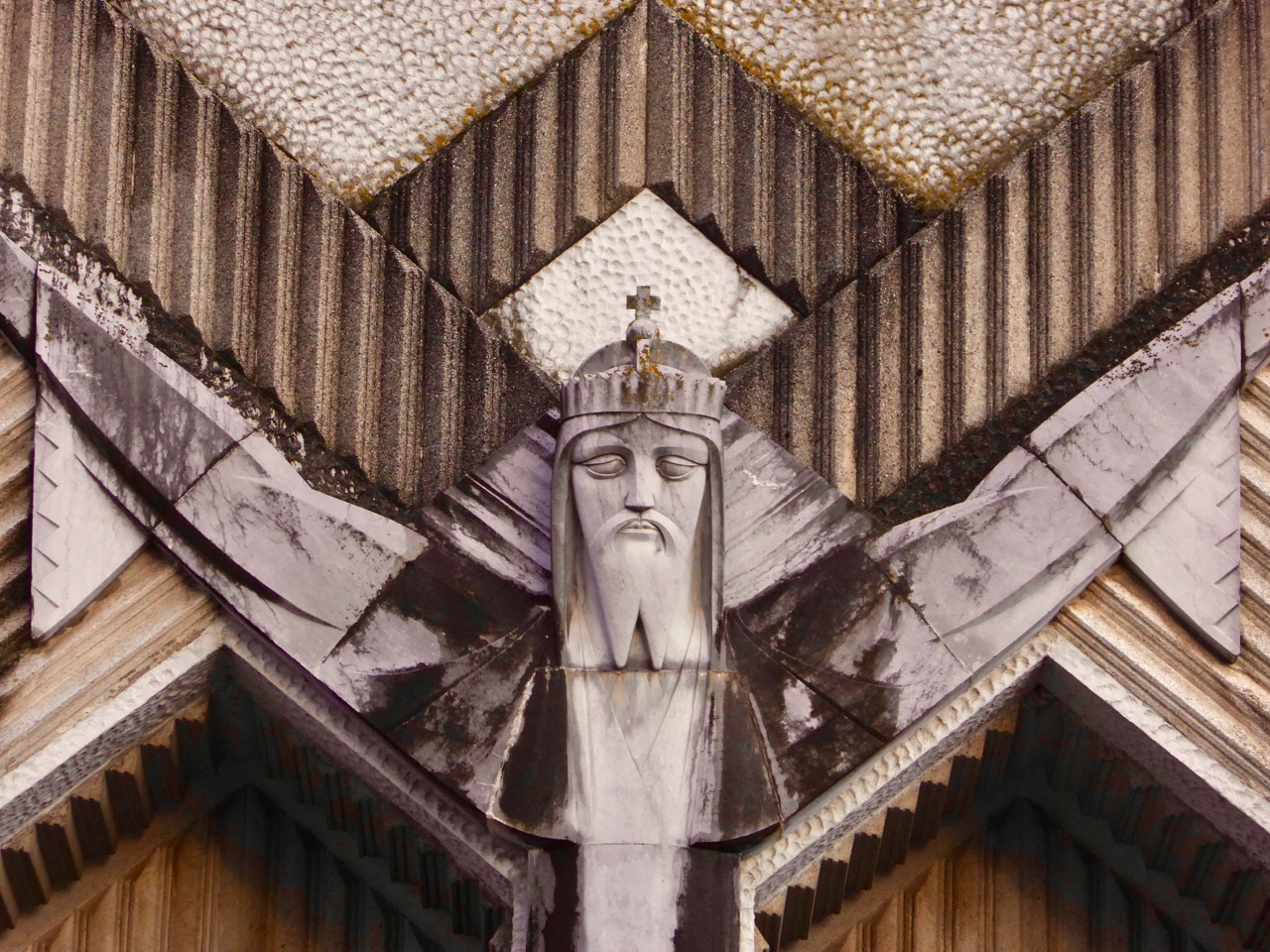
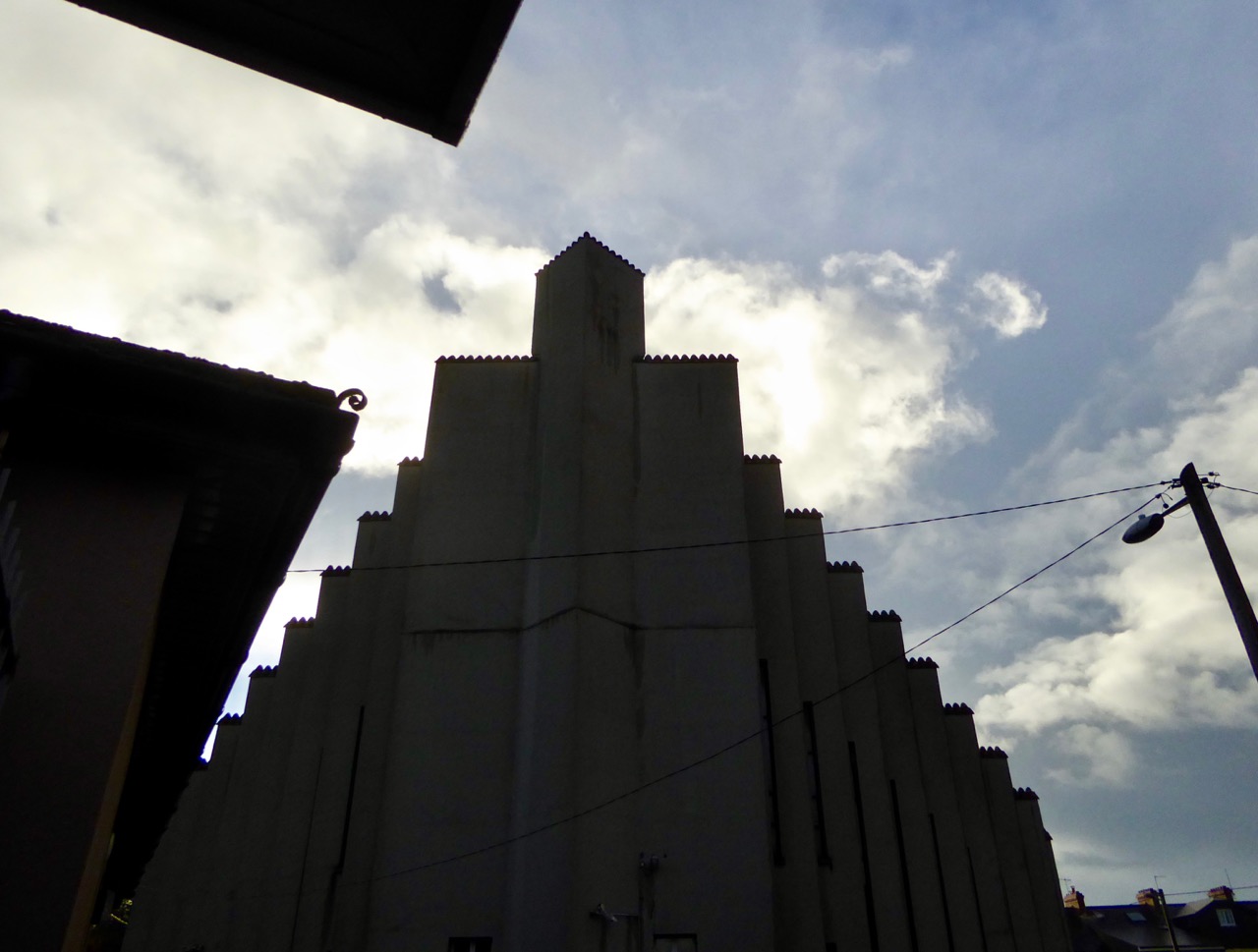
Upper pictures – the entrance, showing the statue of Christ the King: this was designed by Chicago sculptor John Storrs and executed locally by Cork sculptor John Maguire based on plaster models shipped to Cork. Lower –  the rugged profile of the church building

Like many another architectural project, costs began to escalate from day one. Poor ground conditions meant that the foundations had to be driven significantly deeper. Barrett suggested that costs could be recuperated if cast concrete could be used instead of brick for the main structure: conventional masonry is labour intensive and therefore carries relatively high costs. The suggestion was taken up and proved successful – the building was contained within its budget: in fact it came in slightly below. Byrne was impressed with the idea of using reinforced concrete (hitherto an engineering technique) and developed it through all his future church projects. Cork’s new church was, therefore, revolutionary in this aspect alone.

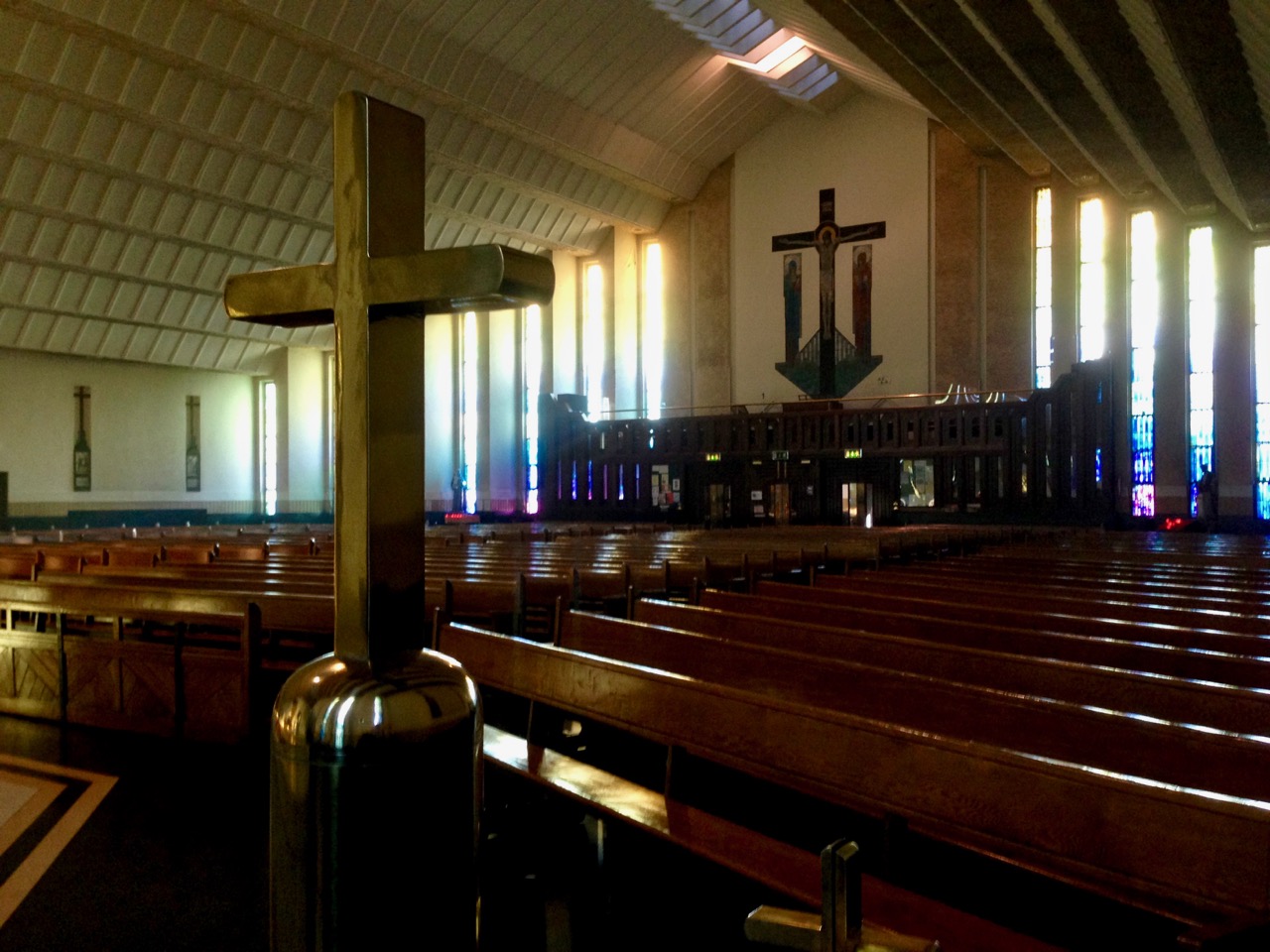
Left – the interior design, making use of Art Deco elements including chevrons: note the continuous central glazed rooflight. Right, a window detail

Building work commenced in 1928, shortly after the Pope had instituted the new Feast Day: it thus seemed very appropriate to dedicate the church to Christ the King.
looking to altar

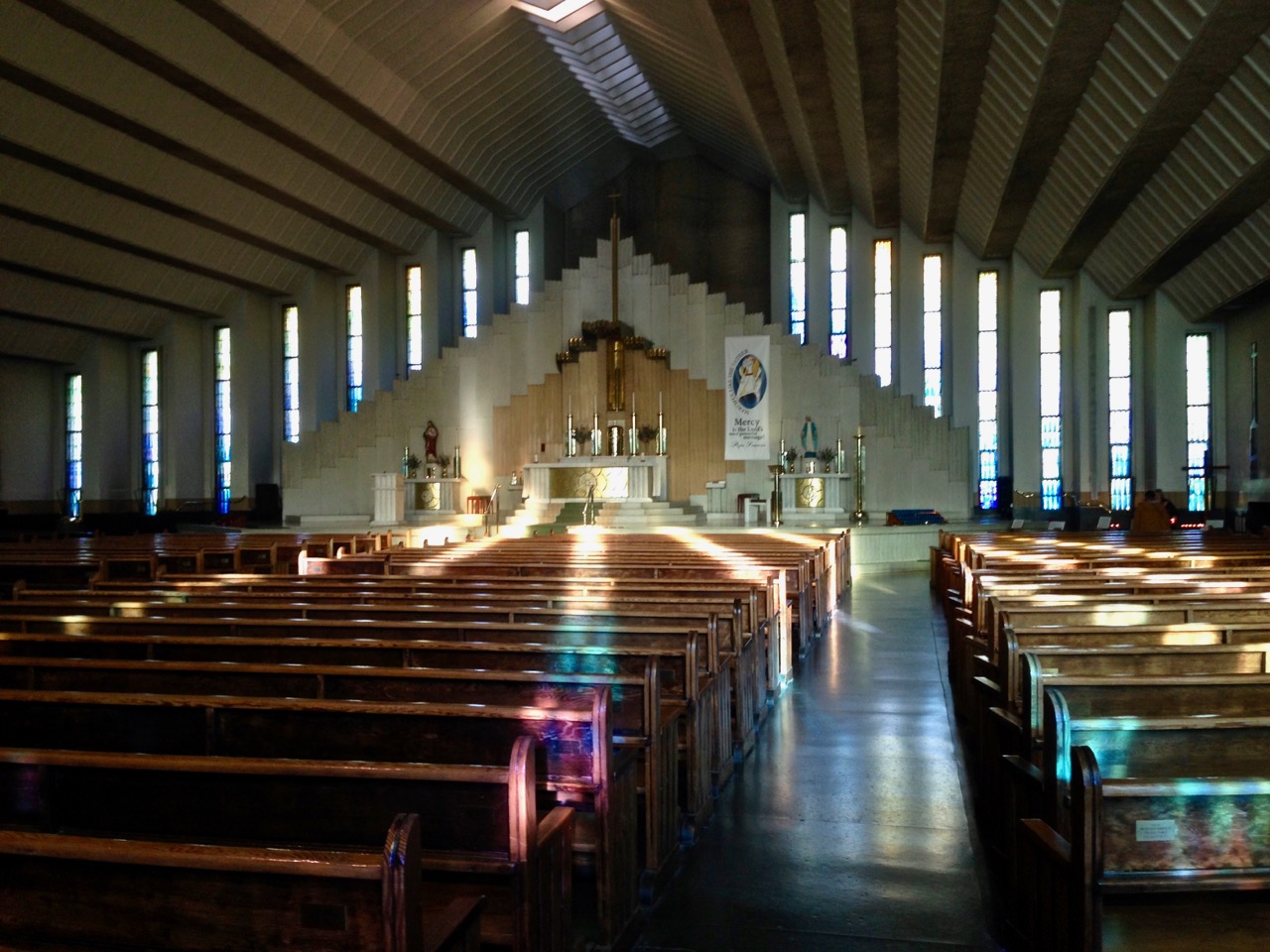
The main body of the church – an inclusive space where the entire congregation is relatively close to the altars

Visually the church is startling. Its concrete walls are finished externally in hand thrown adobe style render: this, and the large red-pantiled roof, certainly call to mind an overgrown Spanish or Californian mission chapel – somewhat unexpected in the Cork suburbs. Naturally (like many another architectural project) it excited much criticism and – indeed – cynicism: it still does this to unwary passers-by, but the Parish has grown to accept and (largely) appreciate its very particular character.

west end

Detailing of the church fittings is integral to the overall design concept: the brass font is striking

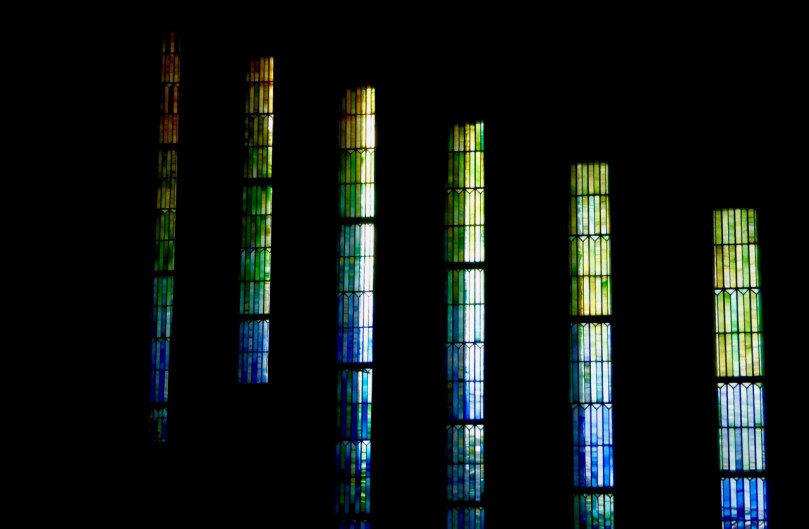
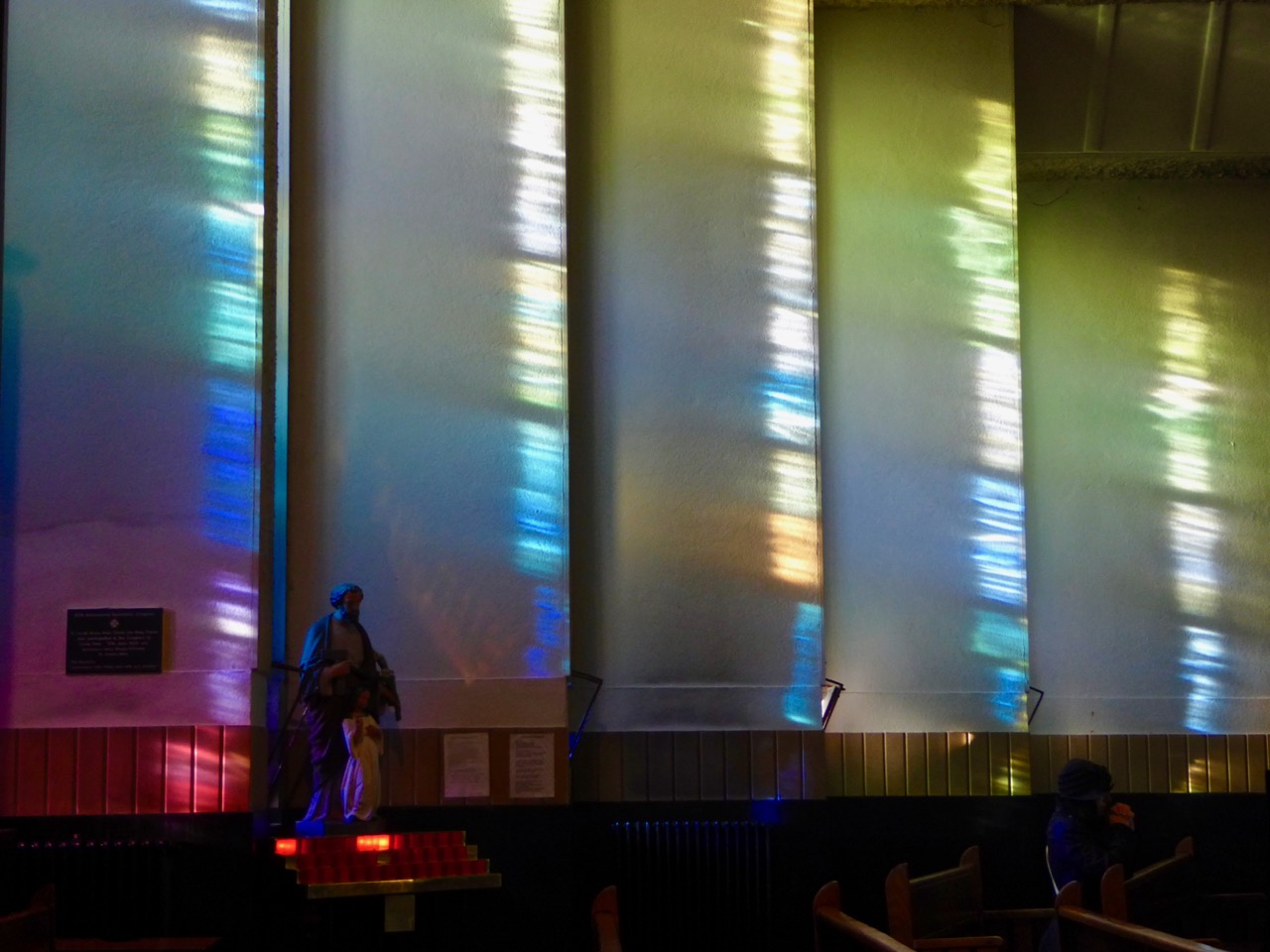
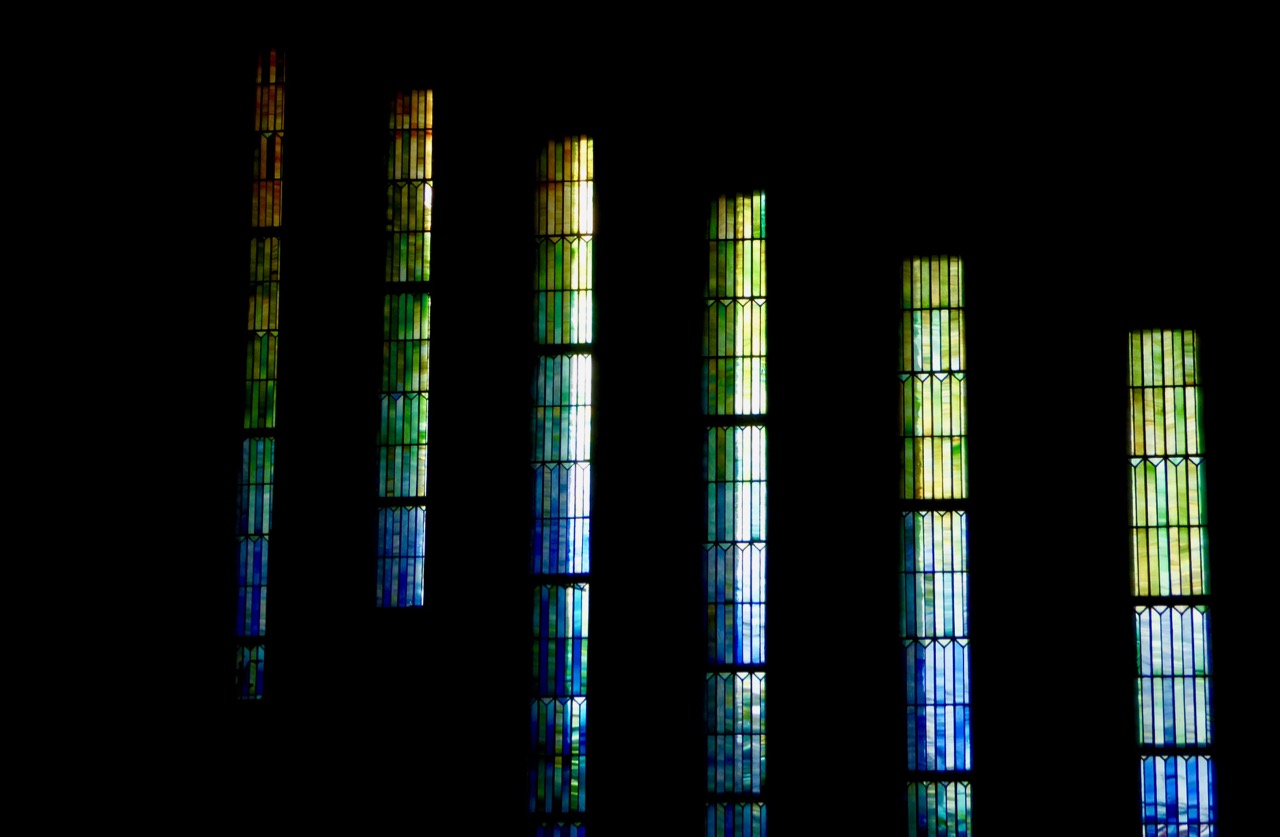
Any connoisseur of building history will recognise that this church is very much of its time, particularly when regarding the detailing and the internal elements. It is a true, undiluted example of the Art Deco movement and has an integrity which has been carried through its shape, its spaces and its fittings. There is no compromise, and – in my opinion – it works well for that reason. The architect’s vision has been adhered to throughout, in every feature: the abstract coloured glass windows, the inlaid terrazzo floors, the marble work of altars and ritual furnishings, the brasswork of font, stoups and ironmongery. Apparently Byrne’s wife, Annette Cremin Byrne (who worked with him in his practice) was responsible for much of the interior artwork. 

all glassMore interior details in terrazzo, brass and timber, and a fuller view of a bank of windows
For me the building is successful and attractive. I want to spend time in it; I want to experience it in use. It’s not just that it’s unusual (for Cork – and Ireland – although there are other good examples of Art Deco here), but it works. It satisfied the client’s brief, it was built on budget, and it provided innovation in the way the building’s users related to each other. So good was it in this aspect that it set the scene for other modern Catholic churches in the US and Europe (but not in Ireland).

The careful detailing extends throughout the building. External finishes include stepped plinths, adobe rendered concrete walls, pantiled roof, worked downpipes and drainage outlets

Comprehensive information can be found on this excellent website. When you have the chance, do go and visit the Church of Christ the King, Turner’s Cross in the city of Cork. You’ve missed the Feast Day for this year but it’s always open – as a church should be. The building will welcome you in.

Poster from Cork Tourism Illustrations by Hurrah Hurrah
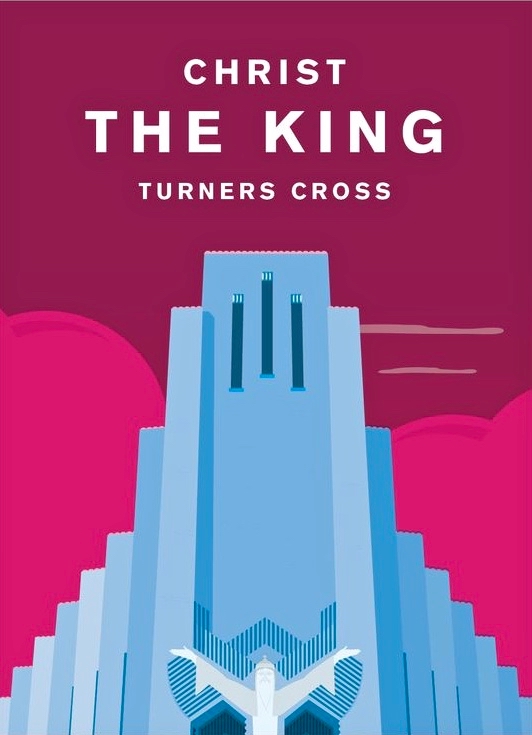
poster cropped

The Town of Luan’s Ford

o'ferrall fry place

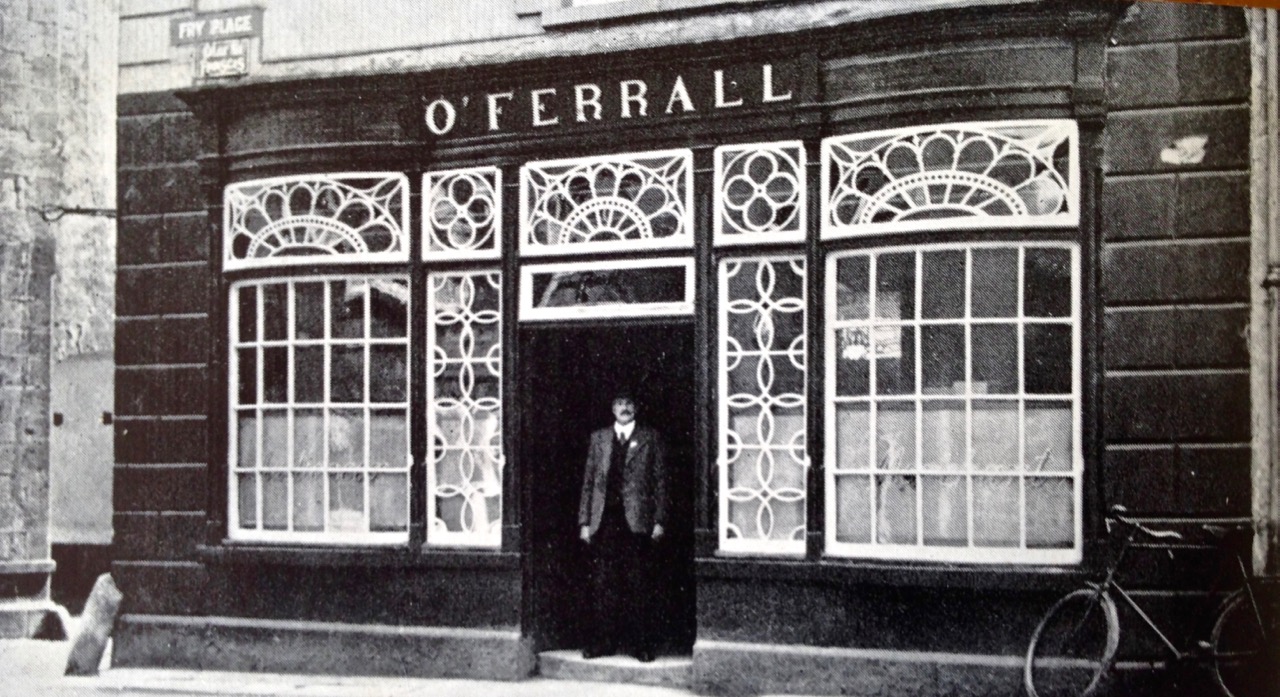
…One of the shops we visited was O’Ferrall’s, whose frontage dates from the days when shop-fitting was not merely a business but an art, as the picture we took of it, with ‘himself’ in the doorway, clearly reveals. Old Mr O’Ferrall was a tall gaunt figure. His hawk-like features had an aristocratic cast which was somehow enhanced by a long coat of archaic cut and a high stand-up collar. He had, we discovered, a great sense of the past, and as we sat together in the confined space of the small wooden cubicle to which, as in most Irish bars, women must retire in order to drink with propriety, he talked of the history of Athlone. Like that of most Irish towns, it has been stormy… (Green & Silver L T C Rolt 1946)
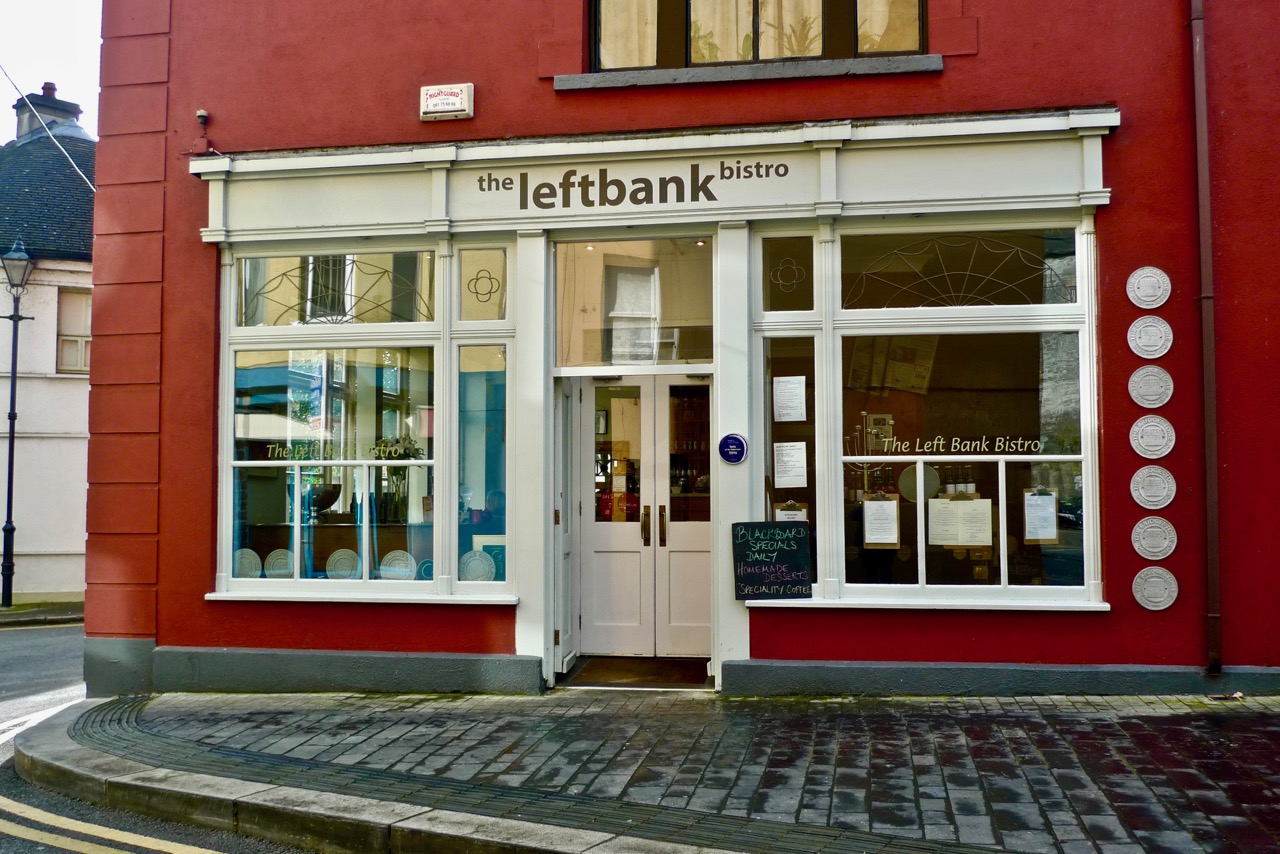
fry place bistro 2016

Top picture – Angela Rolts’ photograph of O’Ferrall’s shop and bar, Fry Place, Athlone – taken in June 1946 just before the Rolts embarked on their journey around the Irish waterways which they describe and illustrate in their book Green & Silver. Lower picture – the same view, Fry Place, Athlone – taken in 2016 – now a highly regarded bistro. The new shop frontage pays due respect to its predecessor in terms of overall proportion and despite the loss of the ornate bow windows. It’s interesting, too, that – seventy years on – the premises is still a local meeting place and purveyor of good food and drink

This is the fifth instalment of the Travel By Water series… When we retraced the steps of Tom and Angela Rolt – seventy years after they made their voyage of discovery around the Irish canals and waterways – we visited the town of Athlone for the first time. We were impressed enough to determine that we would return for a more detailed exploration of this midlands settlement, historically a strategically important crossing point of the Shannon – a formidable barrier intersected with her great lakes – the largest river in Britain and Ireland.

17th-century-bridge

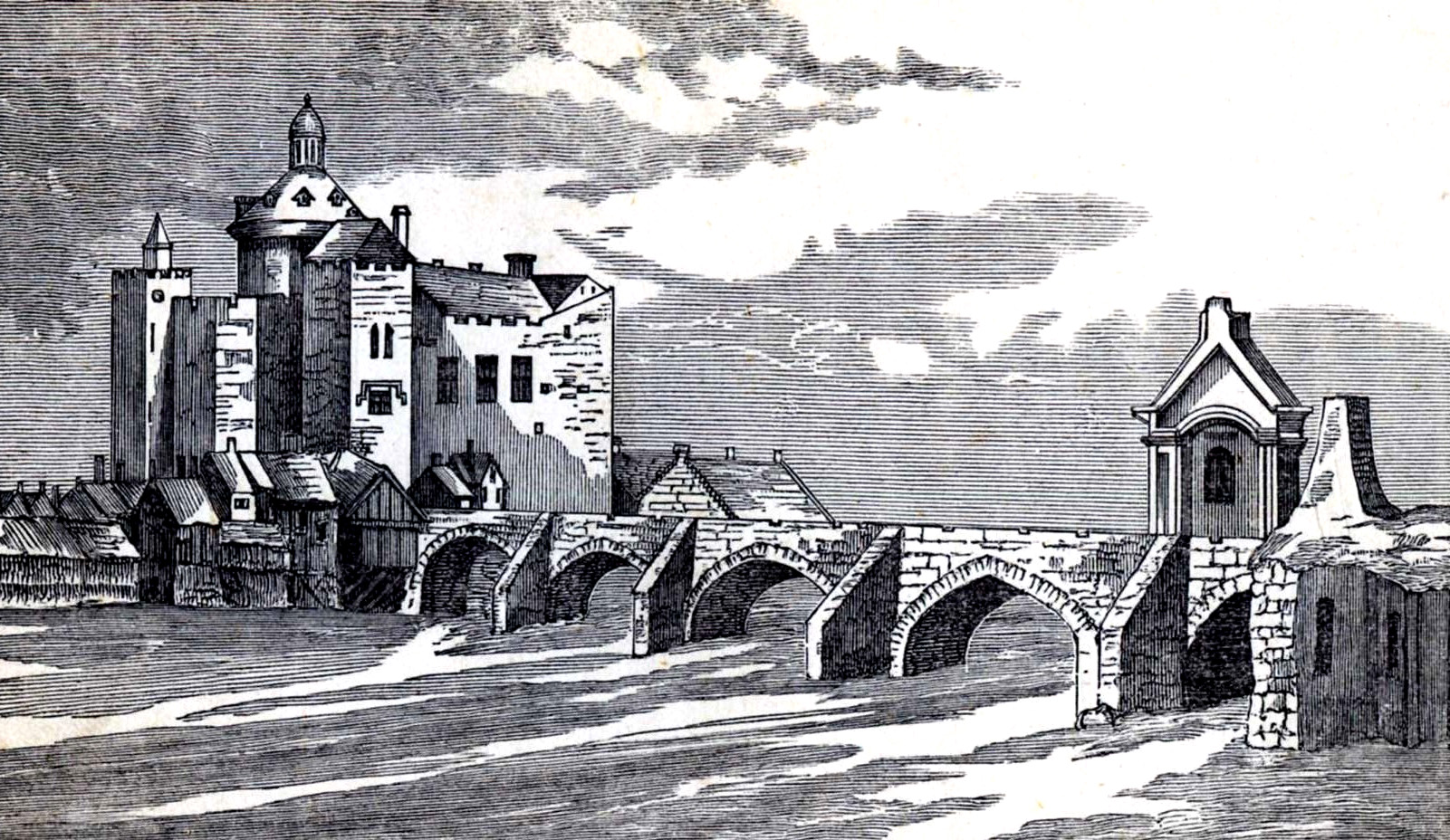
At one time (some histories say as early as the Bronze Age) this river crossing just below Lough Ree would have been a wide ford – Luan’s Ford. In the 11th century, Tairrdelbach Ua Conchobar, King of Connacht, had built a wooden bridge which survived, with various restorations, until 1566, when the first stone bridge was constructed (depicted above in a print now in the Aidan Heavey Public Library, Athlone). It could well be this medieval bridge that is commemorated in the ceilidh dance The Bridge of Athlone. The present bridge was opened in 1844.

Athlone Bridge

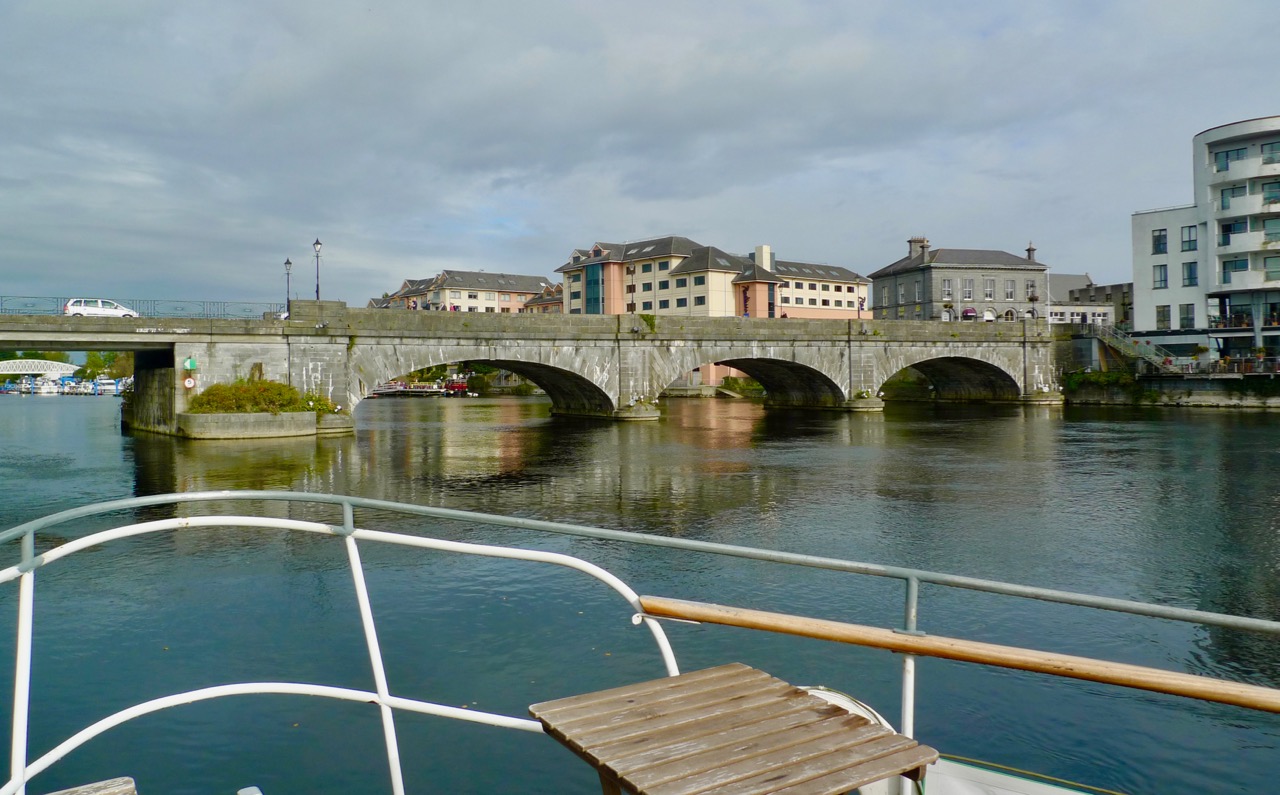
Athlone’s Victorian bridge today. Note the flat ‘navigation arch’ on the left (west side of the river): this replaces an earlier movable section of the bridge which allowed taller boats to pass through

The Shannon Navigation is now managed by the cross border authority Waterways Ireland. This body also manages the navigable canals, rivers and lakes throughout the island of Ireland, and does a very good job of it. Such an undertaking would probably have never been foreseen by the Rolts 70 years ago when some of the canals had been derelict for many years, and others were in poor condition. The Rolts’ borrowed boat Le Coq was based in Athlone and was probably the last craft to fully circumnavigate the circular route encompassing the Royal Canal, the Shannon and the Grand Canal in the 20th century: the Royal Canal fell into disuse shortly after the Rolts’ journey and was formally closed in 1961. Today the Royal Canal is completely restored to navigation (it was reopened in 2010).

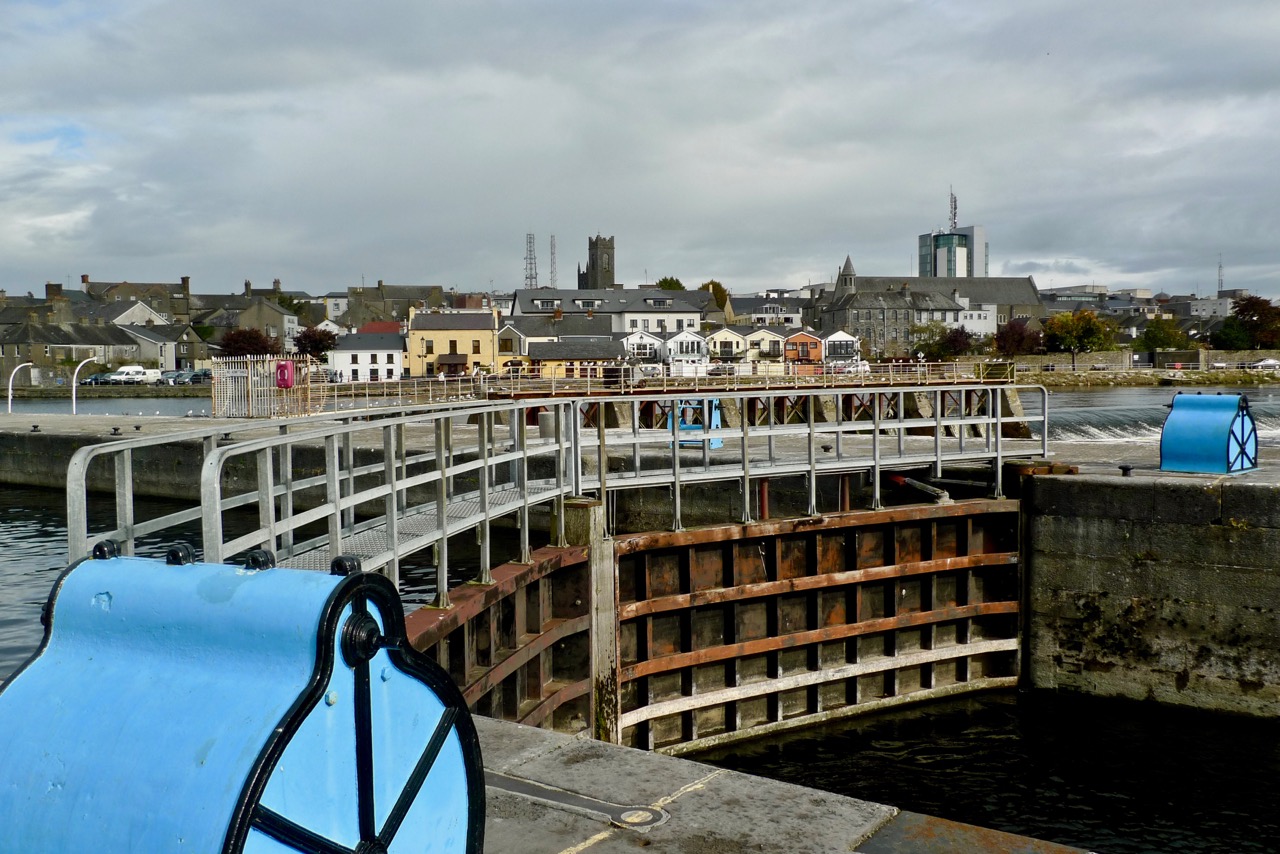
the lock athlone

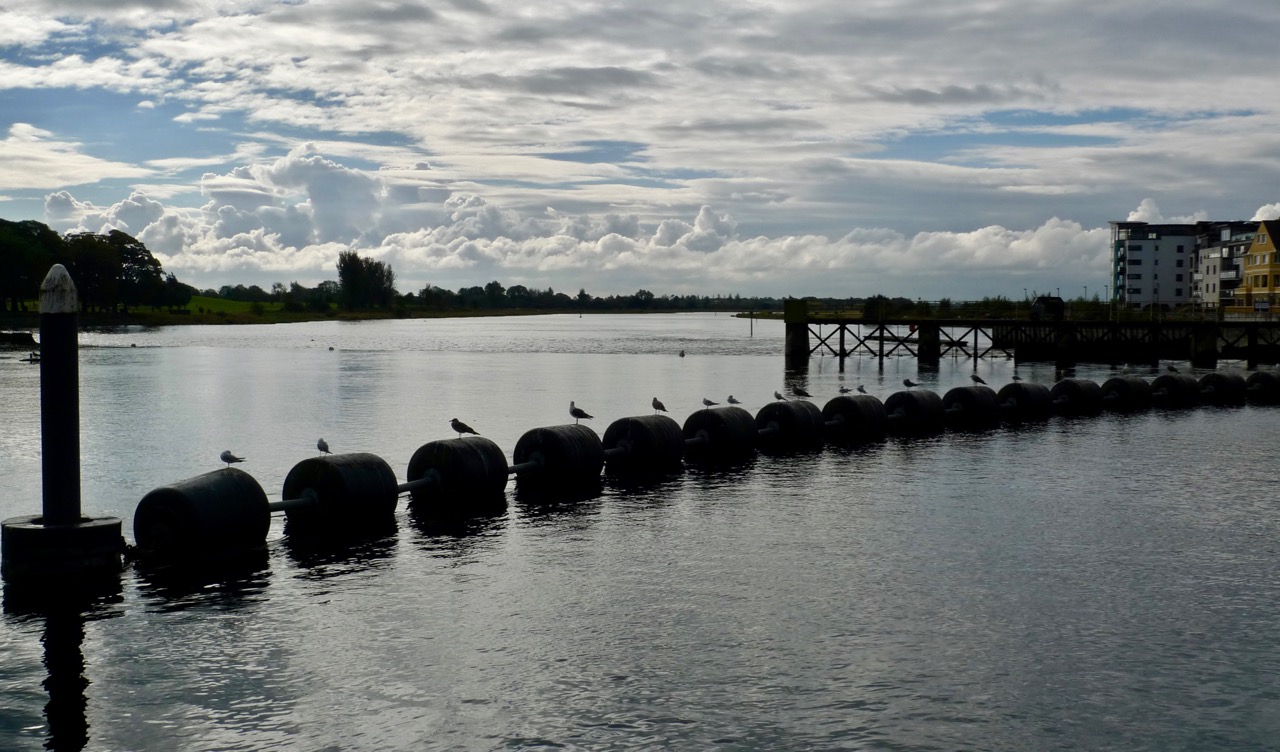
birds on weir

Upper picture – Athlone Lock today – some of the original Victorian lock machinery has been retained and is in working order although the main operations are electrically powered. Middle picture – upstream of Athlone the river widens dramatically as it approaches Lough Ree. Lower pictures – distinctive livery of the lock machinery in Athlone: note the commemoration of Thomas Rhodes, the engineer of the navigation improvements

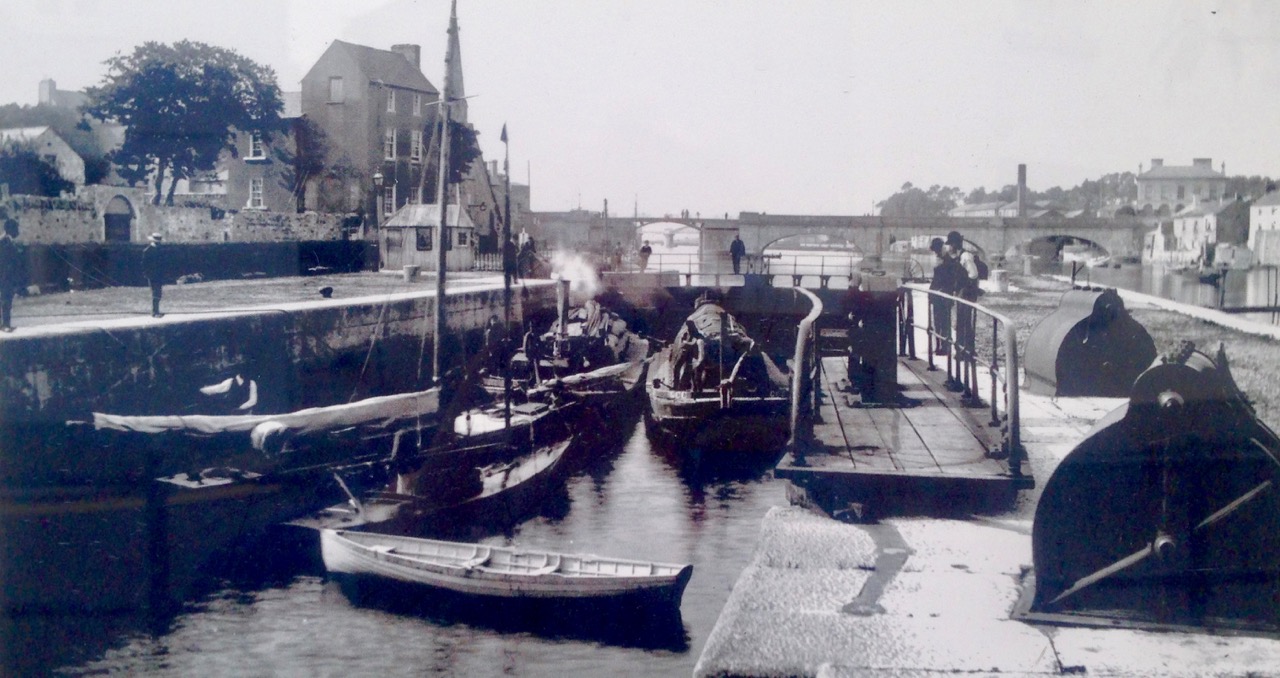
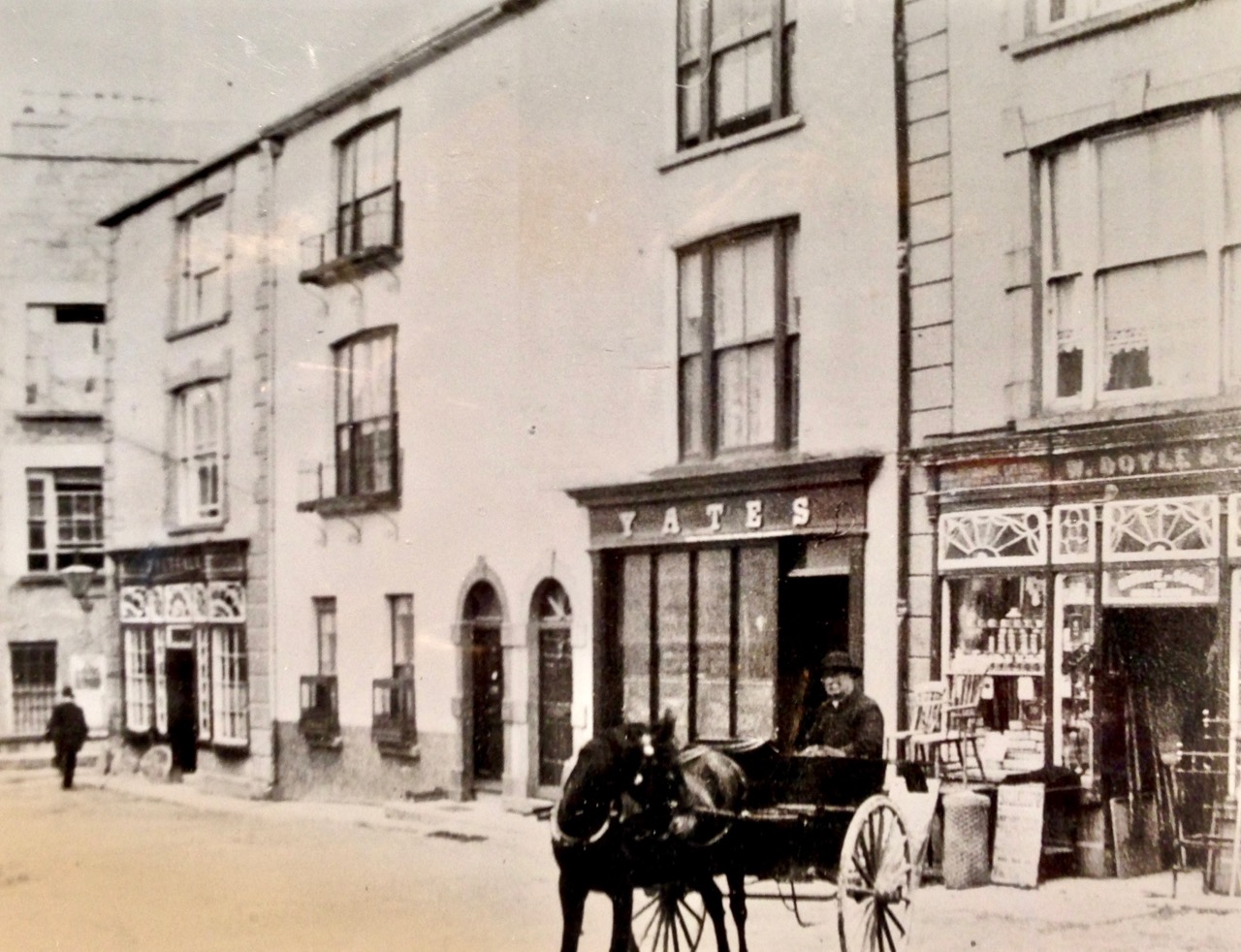
We were fortunate to find some early photographs of Athlone and the river: these significantly predate the time of the Rolts’ journey but are worth showing for historical interest.

lock in use athlone

athlone fry place

Upper picture – probably early 20th century – the lock at Athlone: note the commercial craft in the lock, one of them a steamer, and the lifting span on the bridge in the distance. Lower picture – Fry Place, Athlone, courtesy of The Leftbank Bistro: this probably dates from the late Victorian period and shows O’Ferrall’s on the left (see above) and a matching shopfront to the right

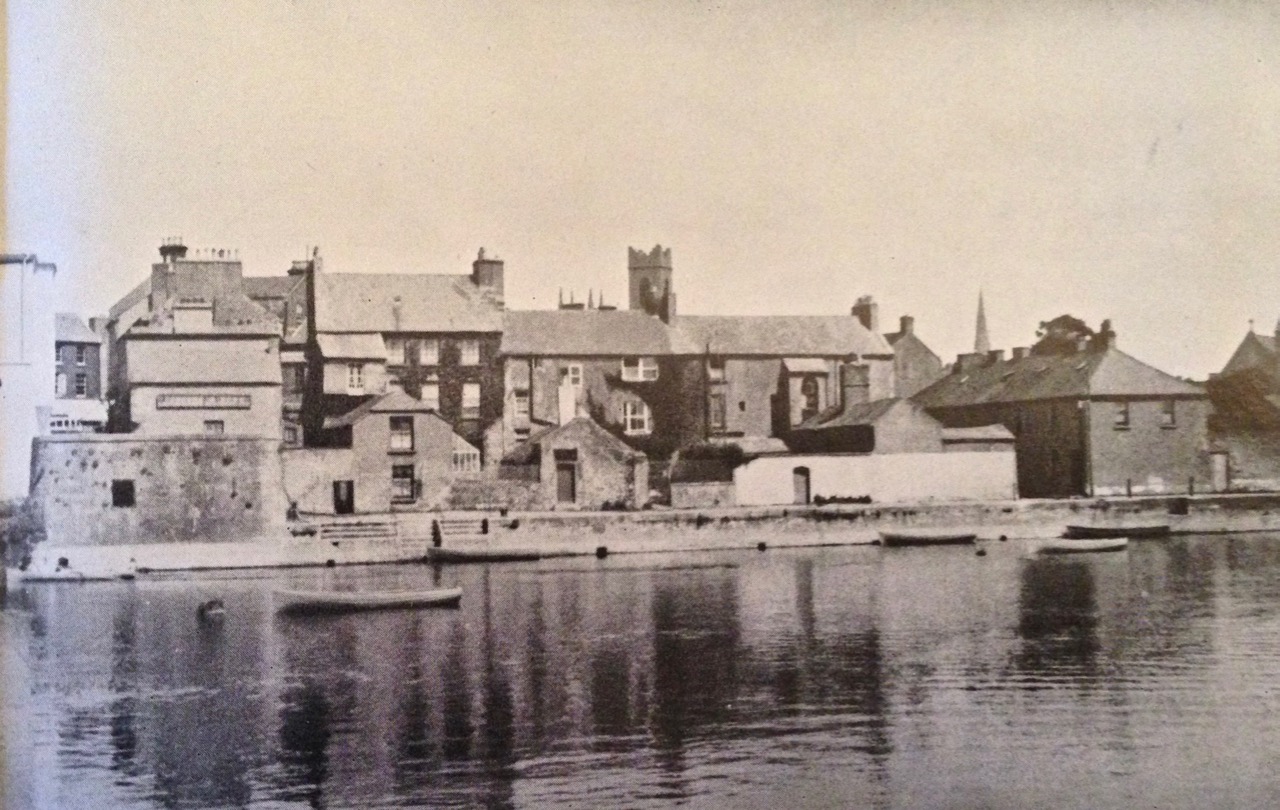
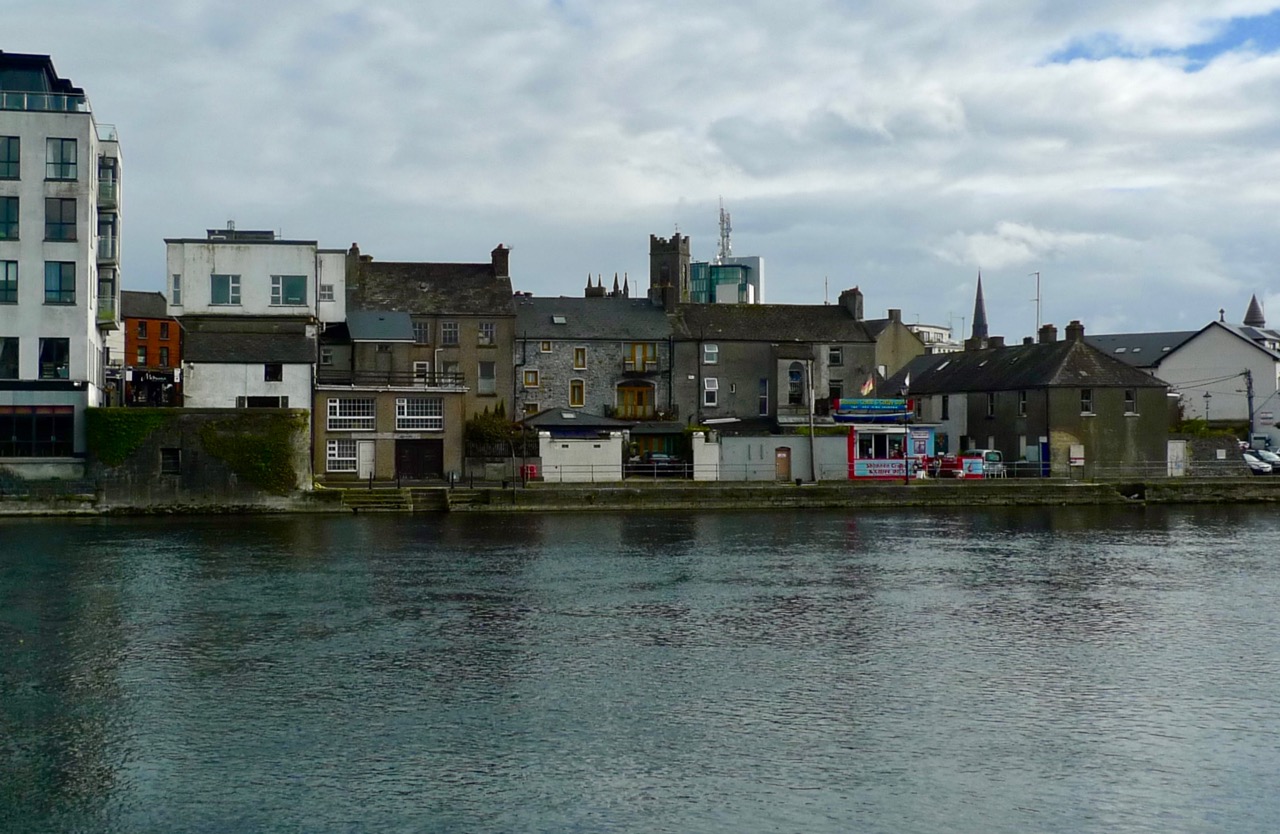
Compare Angela Rolt’s photograph of Athlone’s waterfront in 1946 (below) with my 2016 picture underneath it. Architecturally there is very little change to the buildings she recorded. Obviously, there has been considerable alteration to the town elsewhere in the last 70 years but the river itself has remained a constant.

Waterfront Athlone

Athlone Waterfront

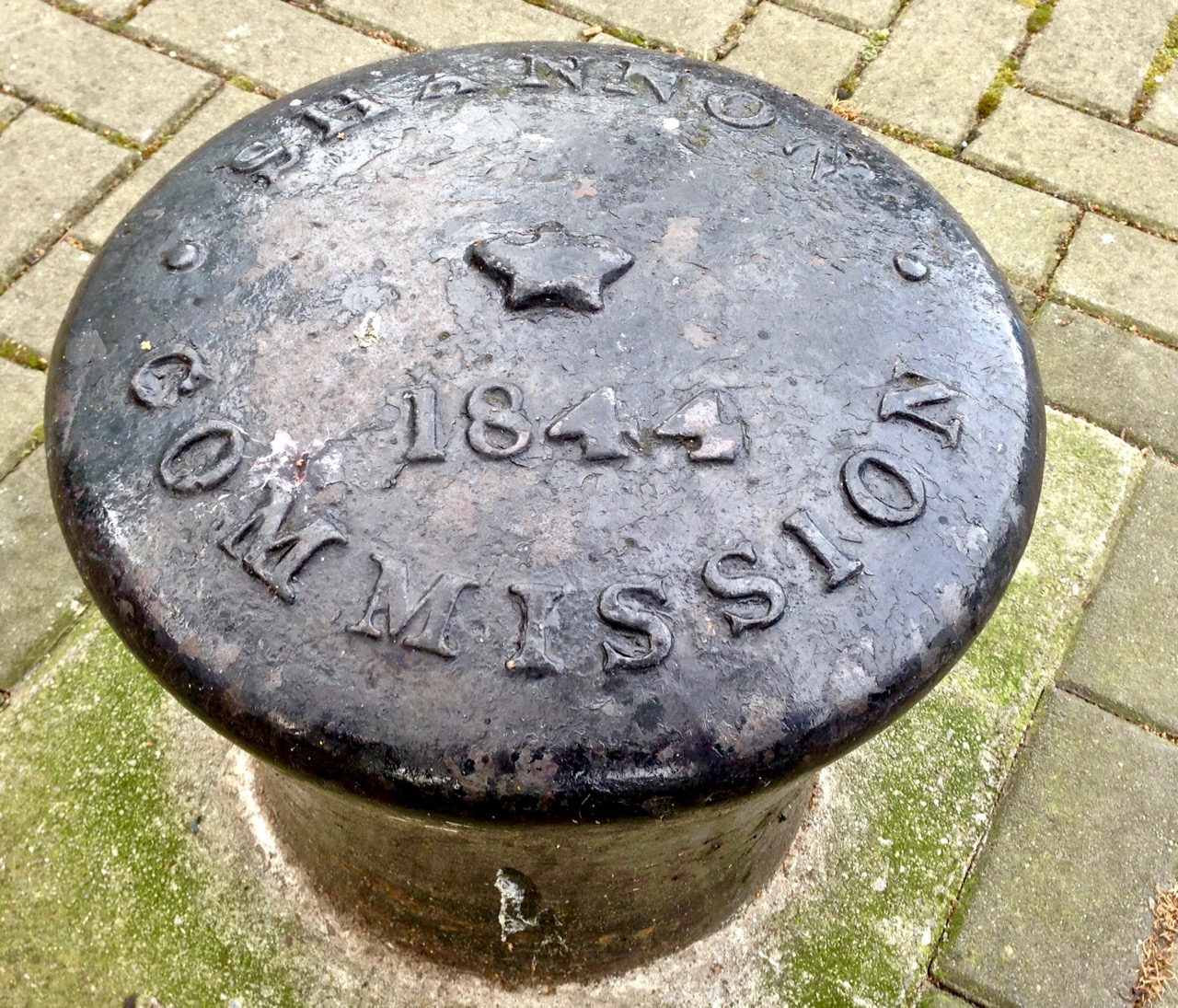
shannon commission

Travel by Water

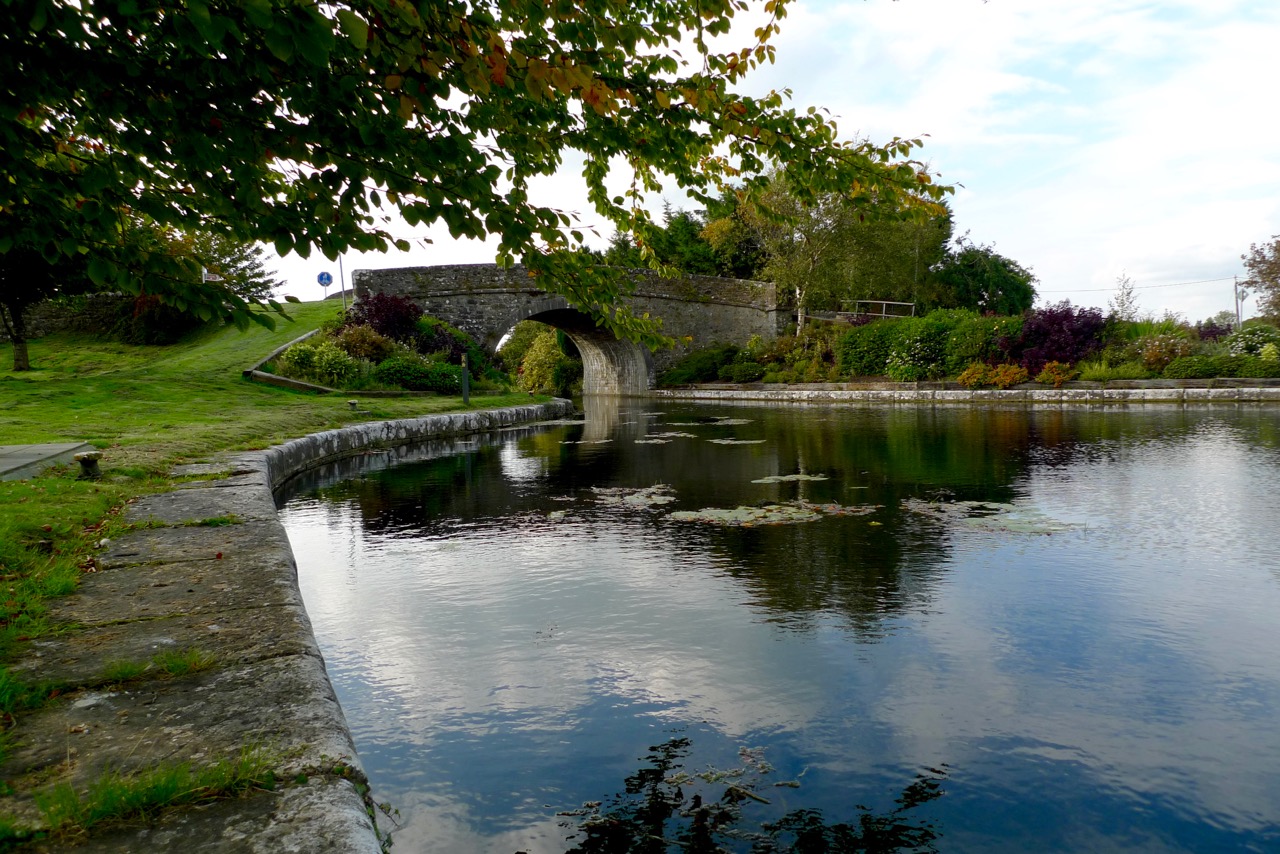
Ballynacarrigy Bridge

We have been on a voyage of discovery – or, perhaps, rediscovery. You remember that recently I reviewed a book which I received as a school prize in 1963: Green & Silver by L T C Rolt? That was a book about travelling by water through some of the canals and rivers of Ireland. The book was published in 1949 but I found out that the journey was undertaken in 1946 – exactly 70 years ago and, also, the year in which I was born. Tom Rolt was a good travel writer and a good observer, and the book is full of descriptions of the places and people that he and his wife Angela came across: it’s a valuable social document and it is rather significant that three score years and ten have passed since they completed their explorations.

Tom Rolt (left) and Angela and Tom Rolt (right) aboard Le Coq, the boat with which they set sail from Athlone to circumnavigate the inland waterways of Ireland between June and September 1946. The photos are taken on the Grand Canal

Back in my more youthful days I also travelled by water, but around the English canal system, a journey of nearly 2,000 miles, taking several months. I also wrote a book after the journey: Canals and their Architecture. Tom Rolt was to have written the introduction to that book but he was unable to, because of illness. As a tribute to him, and to mark his journey through Ireland, Finola and I have been retracing his steps. We should have travelled by water, too, but that would have impinged overmuch on our busy lives here in West Cork. Instead, we covered in a couple of weeks by car what Tom and Angela had taken three months to achieve. Their’s were difficult times, too, immediately after The Emergency when fuel was virtually unobtainable.

navigable waterways

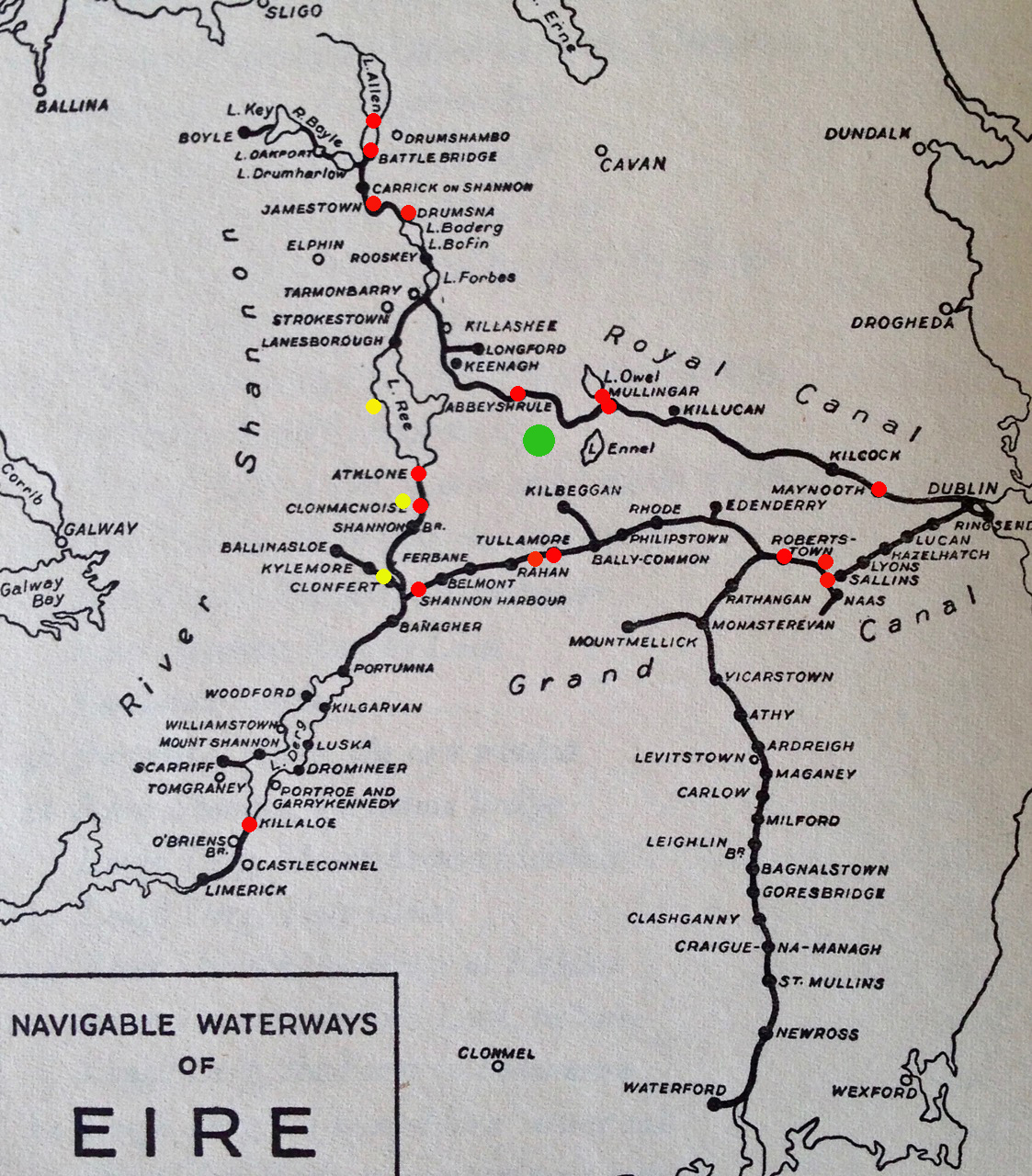
Map of the journey taken from Green & Silver. We have marked on it the sites which we wanted to visit, either because Angela had photographed them or because there was a ‘story’ about the place in the book

Angela Rolt recorded the journey in her own way – through the lens of her camera. Her wonderfully evocative monochrome photographs illustrate Green and Silver, and provided a goal for each leg of our own travels. Armed with the book and digital scans of all her pictures we set out to retrace the watery steps of Le Coq – the little boat which the Rolts borrowed – and take a new photograph at every place they visited. The aim was to set up each photograph of 2016 to exactly match those of 1946 and, through the lens, to record the differences that have taken place in Ireland during all those years. Of course, there is much more to this exercise than the photos: Rolt’s book contains many stories, of people and places not necessarily illustrated but well described, so we also looked out for those: would anyone today have any memories of the people talked about in the book? And would the descriptions of the places that the waterways served in those days ring true in the present?

harbour town

Tullamore 2016

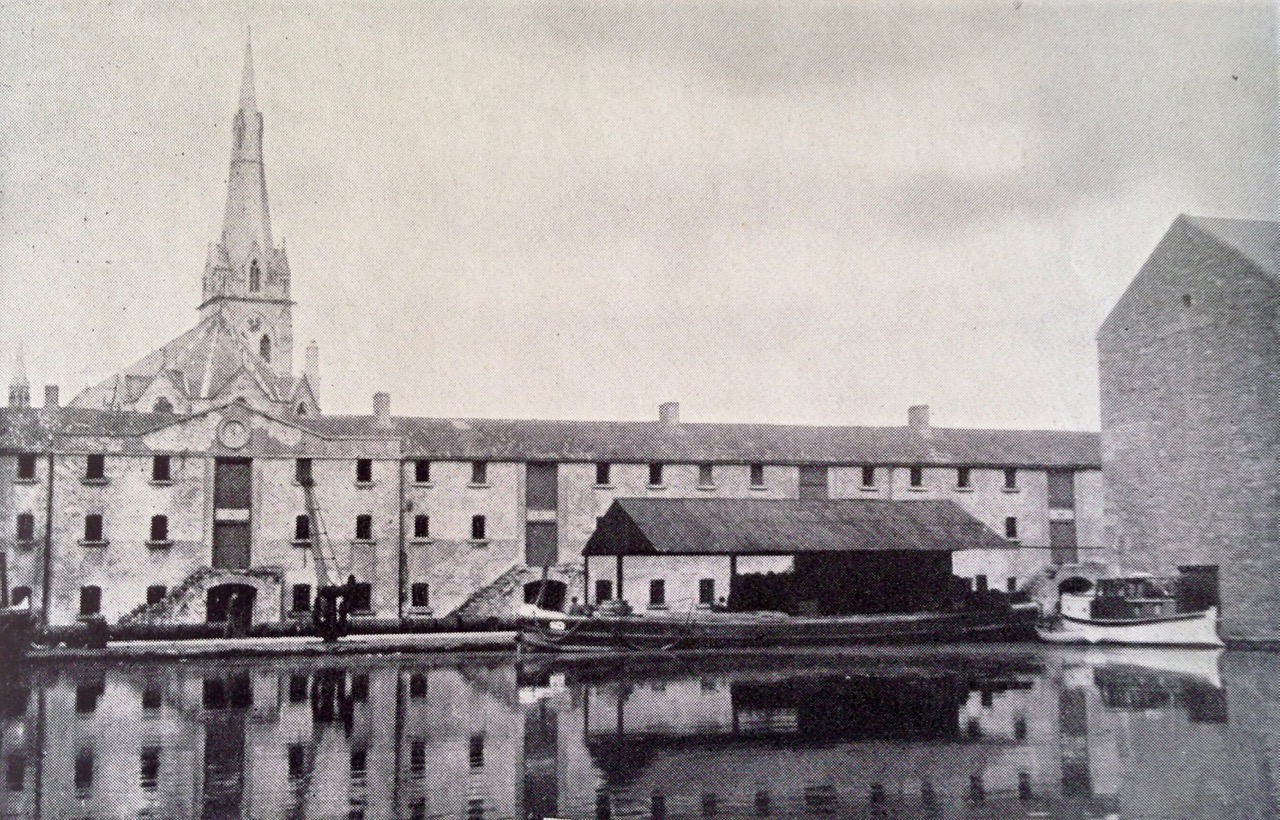
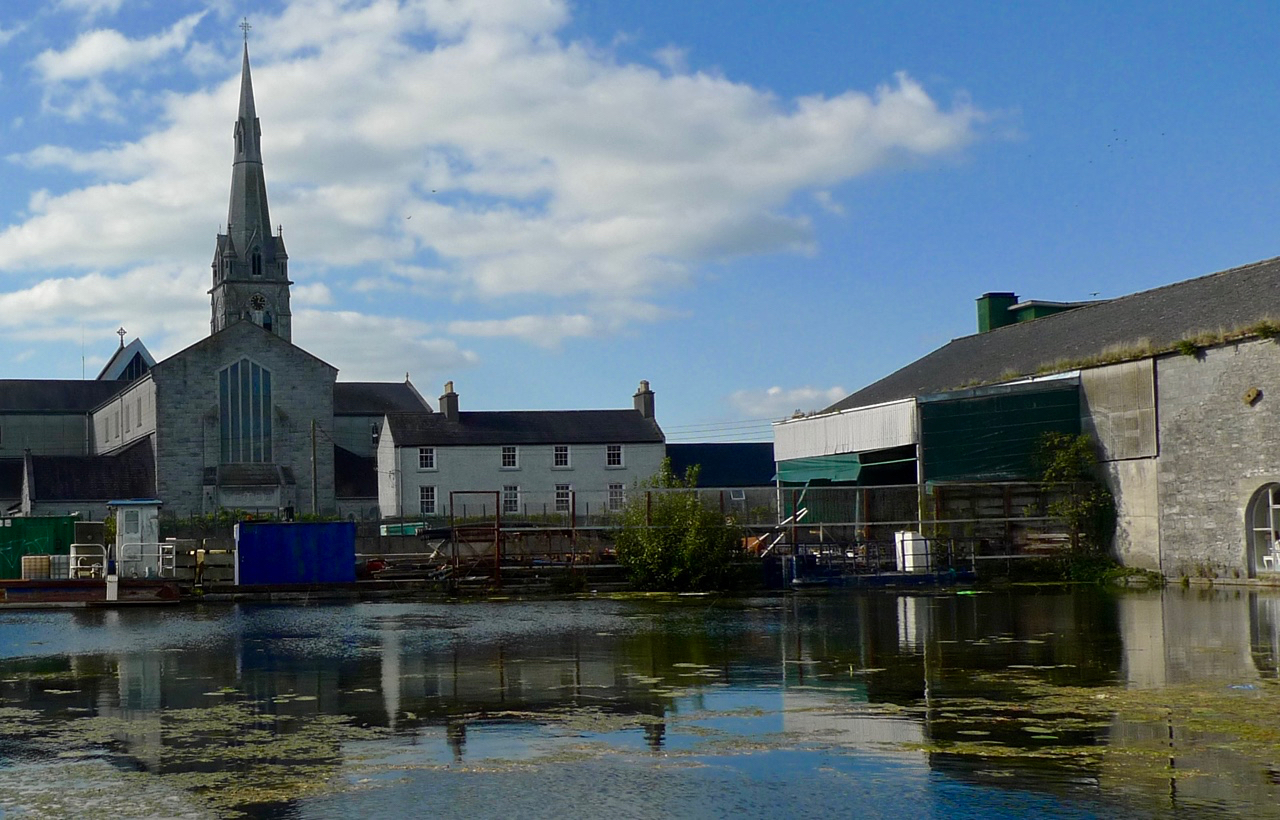
Just one example of our efforts to retrace the steps of the Rolts and record a changing Ireland. Upper photograph – taken by Angela Rolt in 1946 at Tullamore Harbour, Grand Canal. Lower photograph – taken by Robert at the same site. Although the canal harbour itself is intact today – it is an administrative centre for Waterways Ireland – there have been some significant changes. The fine three storeyed warehouses which faced on to the canal 70 years ago have gone, demolished in the 1960s. The Church of the Assumption beyond the harbour was destroyed by fire in 1983 and has since been rebuilt to a modern design except for the tower, which survived the fire

This project will take a little time to fully document. It might occupy a few blog posts! This one is by way of introduction. One thing that struck me most forcefully is the change which the waterways of Ireland have undergone in seventy years. Now all the navigable waterways of Ireland are administered by a single cross-border authority – Uiscebhealaí Éireann (Waterways Ireland); some of the canals which were derelict or near-derelict in 1946 have been fully restored, and many are equipped with modern electric lock gear – something which the Rolts could never have envisaged in their time. However, the volatile economic situations which Ireland has been subjected to in the late twentieth century, and into the twenty-first, have also had their effects, and we found this reflected in some of the stories which we followed during our travels.

Shannon Erne Waterway

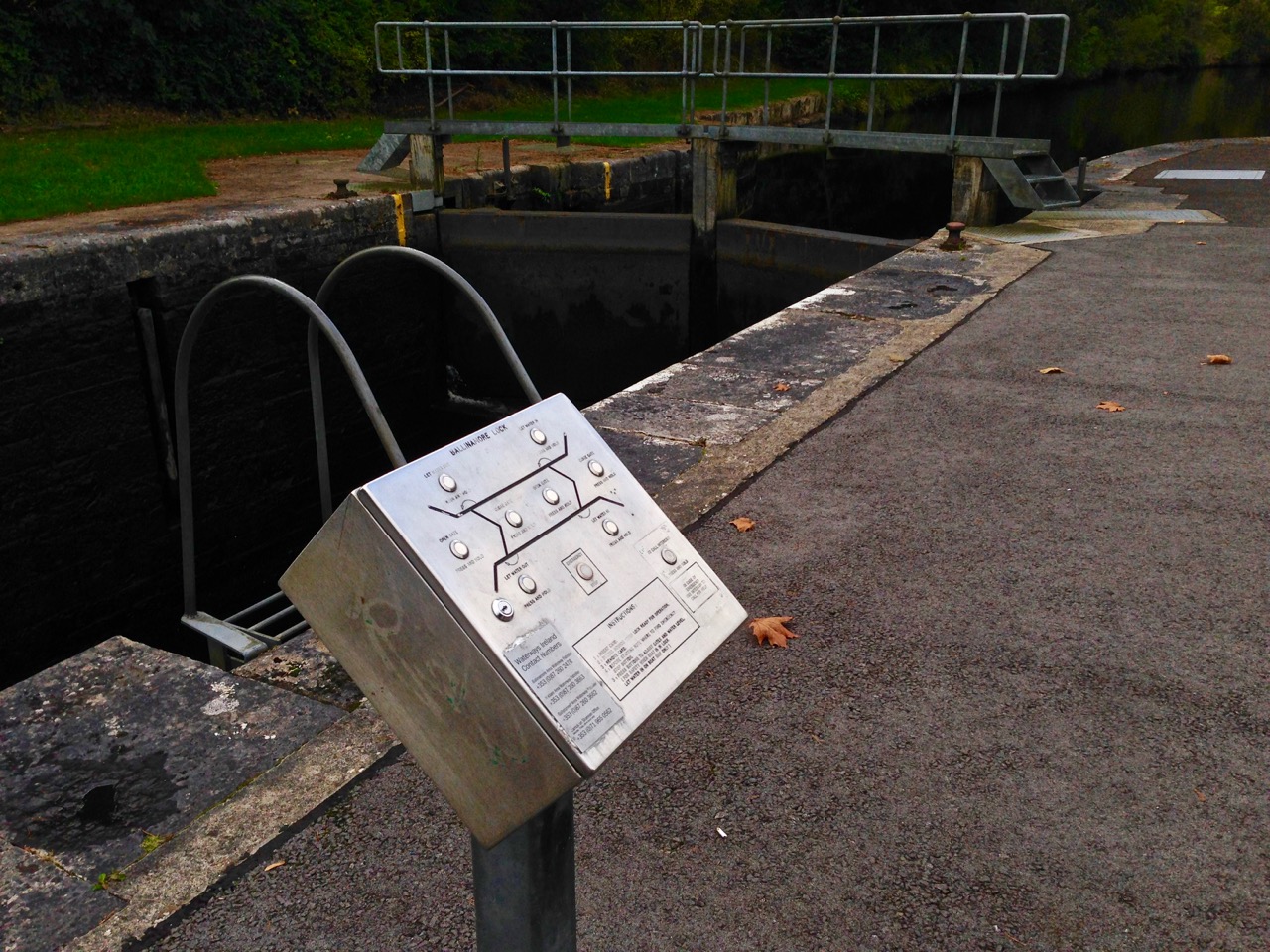
The restored Shannon-Erne navigation links waterways between the Republic of Ireland and Northern Ireland. The 63km canal was constructed originally in the mid nineteenth century but became moribund by 1865. The navigation was reopened in 1994. All sixteen new modern locks are operated electronically by hydraulics: boaters are issued with a key which activates the control panels (above)

Another surprise for me was the quality of the engineering and the scale of the undertakings which Ireland displays on its system of navigations. These were massive construction projects in their day, but they nonetheless manage still to convey a sense of respect for their settings, an appropriateness of all materials used, and a constant appreciation of human scale. The architecture of Ireland’s canals is truly vernacular, something I hope to demonstrate during these explorations.

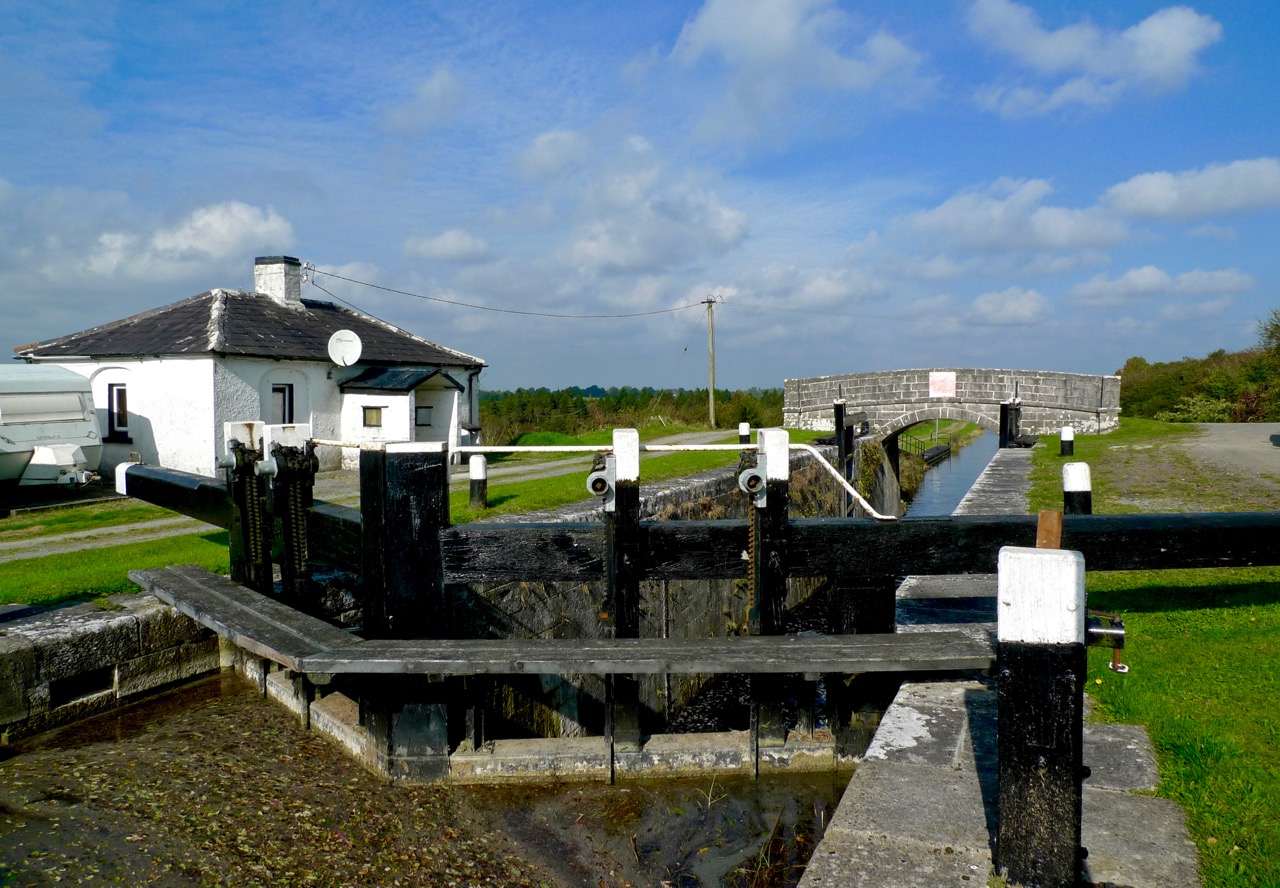
Mullawornia Lock

Mullawornia Lock, Lock 40, Royal Canal, County Longford. The lock-keeper’s house is an unspoilt example of a vernacular architecture which can be seen across Ireland’s canals

To be continued…

Into the Heartland

Elphin Windmill

Because we live on it, sometimes we get carried away by the notion that The Wild Atlantic Way represents the best that Ireland has to offer. A recent trip to the midlands – the Heartland of Ireland – convinced us (if we needed it) that there is no part of Ireland that isn’t beautiful and full of fascinating things to do and see. (Like the Elphin Windmill, Co Roscommon, above.)

Parked at Coolnahay

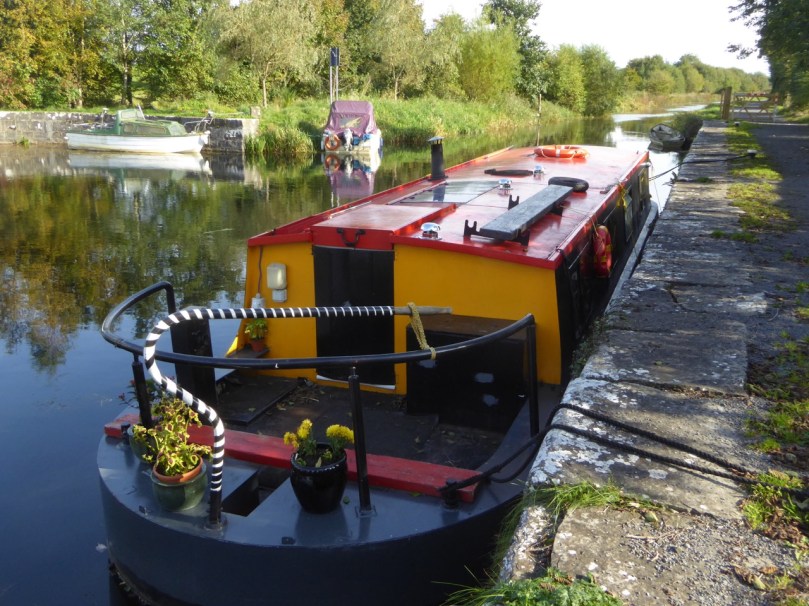
We spent a lot of time along rivers and canals! 

Robert explains the background and purpose of our trip in his post, Travel by Water. I knew very little about canals before I met Robert and it’s been eye-opening to learn about the history and the sheer extent of Ireland’s inland waterways. We spent a lot of time exploring the canals – walking and driving – and enjoyed it all tremendously.

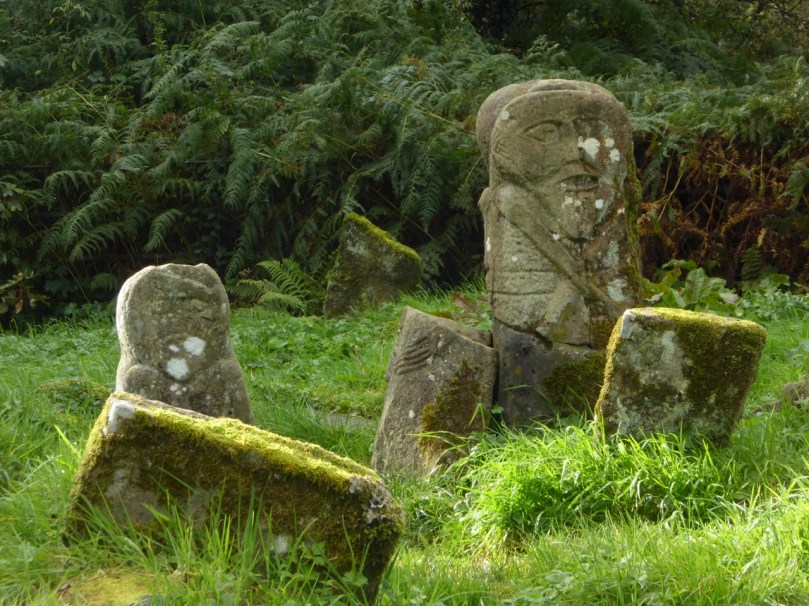
Boa Island figures

Boa Island on Lough Erne, Co Fermanagh, is home to these mysterious carved figures. Lower left: heads on a medieval church in Kilmallock, Co Limerick. Lower right: a contemporary sculpture celebrates the mythical Finn McCool, in Keshcarrigan, Co Leitrim

But wherever we went there were always other places luring me away – tower houses and fortified houses, churches and graveyards, friendly villages and colourful houses, stained glass windows and prehistoric sites. We drove along roads where we counted ring forts in every field. We explored ancient graveyards and we found a Holy Tree. We visited two sites we posted about last week, the Corlea Iron Age Trackway, and the Hill of Uisneach.

Holy Chestnut

The Holy Tree. A local man we met called it a ‘holy show’ and it certainly had some very questionable items mixed in with the statues and offerings

It’s autumn now, and, while we do experience a change of colour here in West Cork, it’s really in the midlands that the colours of the deciduous trees can overwhelm the senses. They were just starting to turn. I’m strongly tempted to head back in another couple of weeks for the full experience.

Birr Castle Gardens 2

These photographs were all taken at Birr Castle Gardens. Birr Castle (Co Offaly) was one of the most interesting and beautiful places we visited, home of the famous telescope and beautifully maintained

We visited thirteen of Ireland’s 32 counties on this trip – and never came close to the sea or the Wild Atlantic Way. Instead, everywhere we went we saw notices for the latest iteration of the Tourist Board’s marketing scheme. This one is called Ireland’s Ancient East, and appears to take in every county that isn’t on the Atlantic seaboard. A good resource, if you’re considering a trip like this, is Neil Jackman’s guidebook, Ireland’s Ancient East – we kept it by us and found it invaluable.

Grange Stone Circle, Lough Gur

Grange Stone Circle, the largest in Ireland, is one of a complex of monuments at Lough Gur, Co Limerick

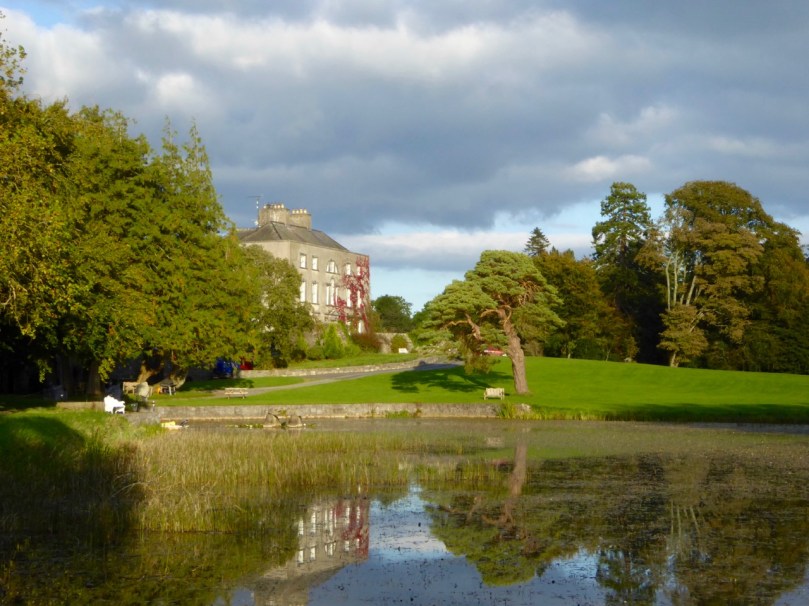
Our headquarters for the biggest chunk of our time away was the incomparable Mearescourt House near Mullingar, Co Westmeath. George and his team made us welcome and comfortable, there were glorious grounds to wander around and animals to meet, and delicious breakfasts that left us feeling full for the rest of the day.

Mearescourt House

Mearescourt House – highly recommended!

When tourists are interviewed about their holidays in Ireland they praise the scenery, the food, the music – but most of all, they say, it’s the people who make it so enjoyable. We agree! Everywhere we went we ended up in conversation, as you do here, with local people delighted to help out with information, share old stories, invite us to the sessions, tell us where to go for a nice dinner, or point out places off the beaten track (and then rescue us later when we got lost).

Claire and Paddy Crinnegan, Coolnahay

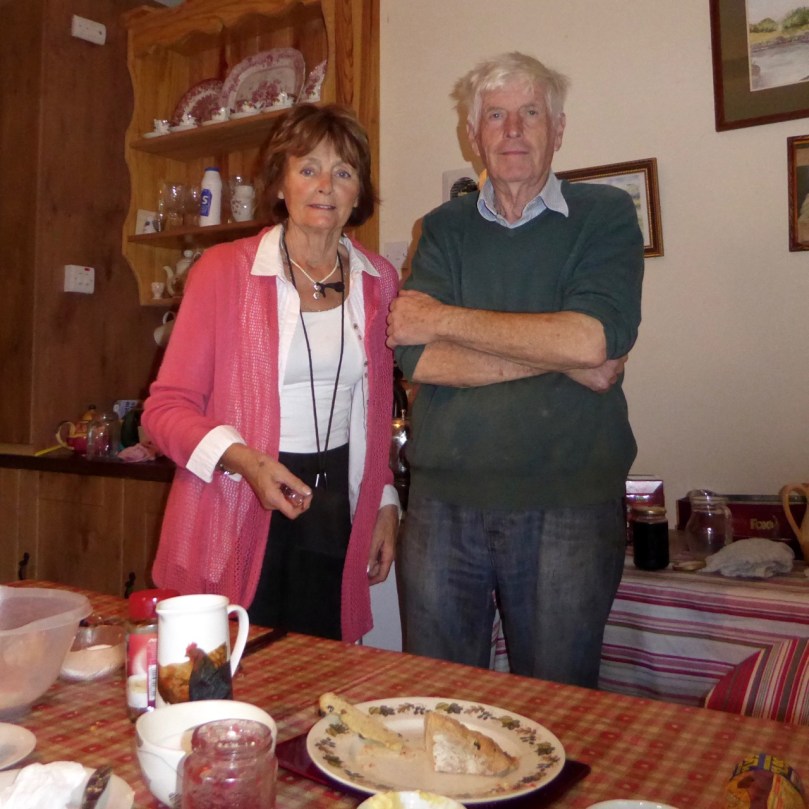
Paddy and Claire Crinnegan maintain the canal lock at Coolnahay on the Royal Canal. in Co Westmeath They made us tea, fed us Claire’s delicious currenty bread, told us about the trad concert that evening, loaned us a book, and related stories of growing up at the lock, where Claire’s father was the lock keeper.

Future posts will go into more depth on some of what we saw and experienced on this trip. This one is just an introduction, to share some of our impressions and drop some hints about what might be upcoming.

Clonfert Doorway

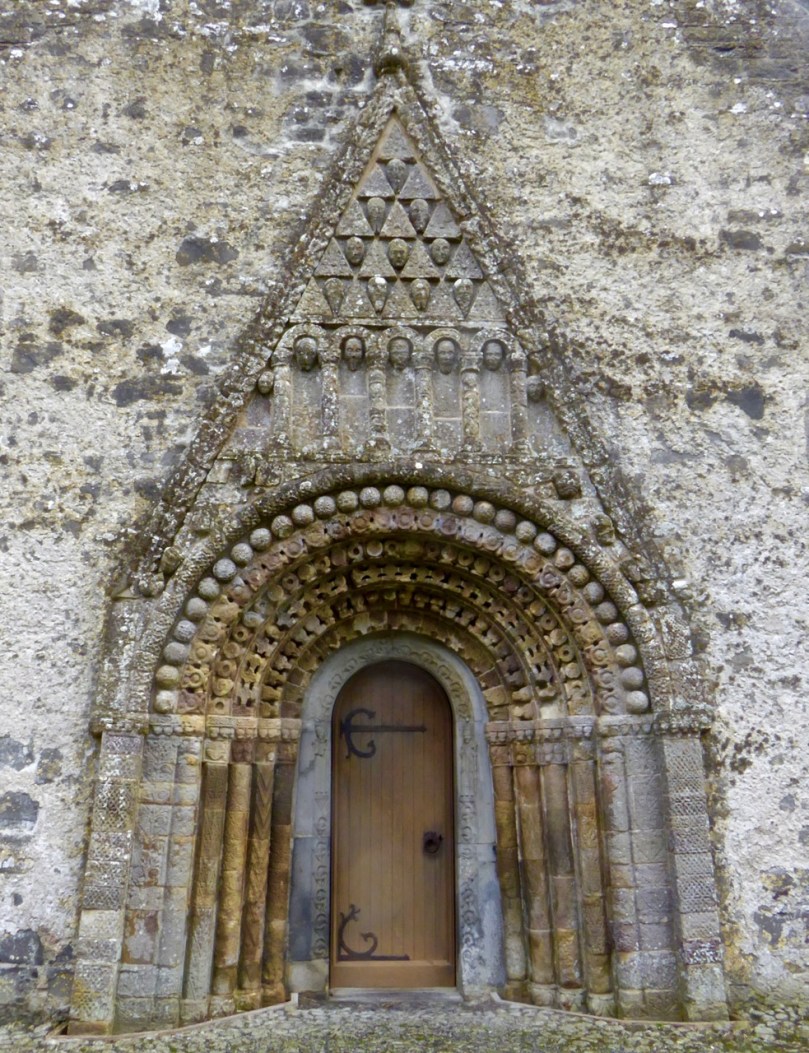
Clonfert Cathedrall (Co Galway) has the most beautiful Romanesque doorway I have ever seen
Along the canals and rivers, flora and fauna
Top left: in case you might get too happy with yourself; top right: the imposing gates to Portumna Castle, Co Galway, a 17th century house now owned and managed by the Office of Public Works; Bottom left: I peeped inside the priest’s section of a confession box and observed how he maintains an efficient count of time spent on each confession; bottom right; we disturb the rooks at Ballycowan Castle, Co Offaly

HC Studio, Athlone

Athlone Cathedral (Co Westmeath) has a gorgeous set of enormous windows from the Harry Clarke Studios – this is a detail from just one of them.

Can you detect a future post or two?

The Golden Hour at Bantry House

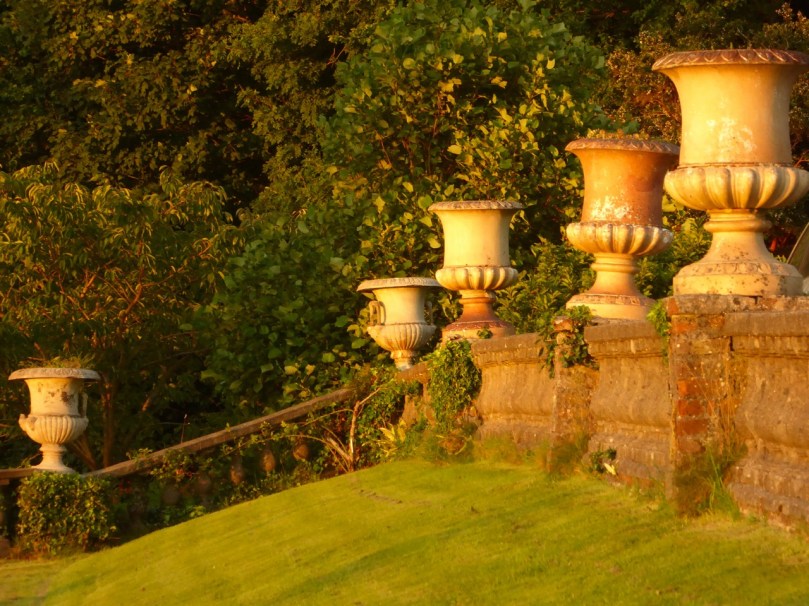
Urns

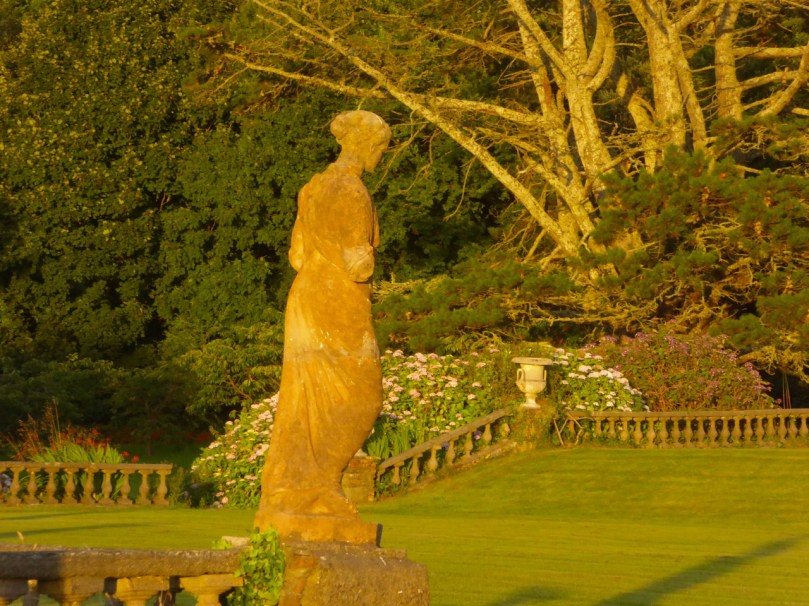
You know that amazing quality of light just after sunrise and before sunset?  Well, photographers call it the Golden Hour (or Magic Hour), when the light takes on particular hues and becomes softer and more diffuse. There are scientific explanations, of course, but for most of us, we just know it when we see it.

Long Shadow

The low sun produces a golden glow and anything lit by it takes on those same reddish and amber hues. The harsh midday sun, which results in glaring highlights and deep shadows, is replaced by  gentler and longer shadows. Everything looks warmer, more romantic.

Roses

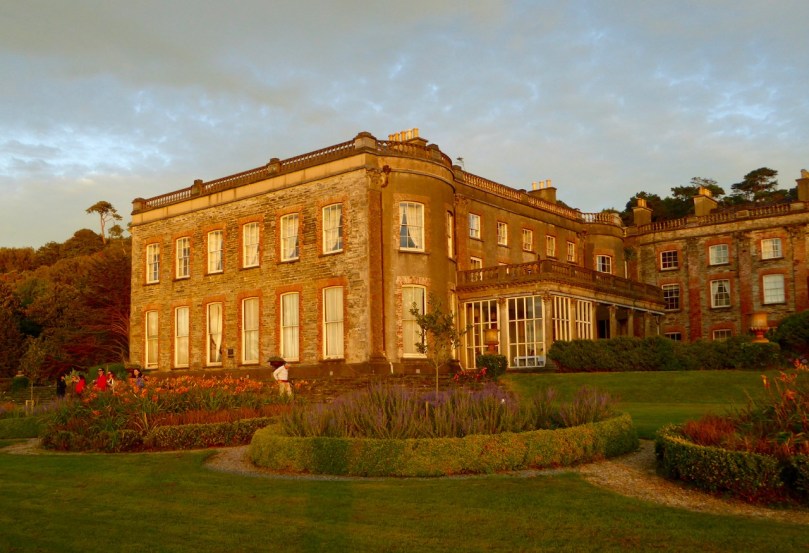
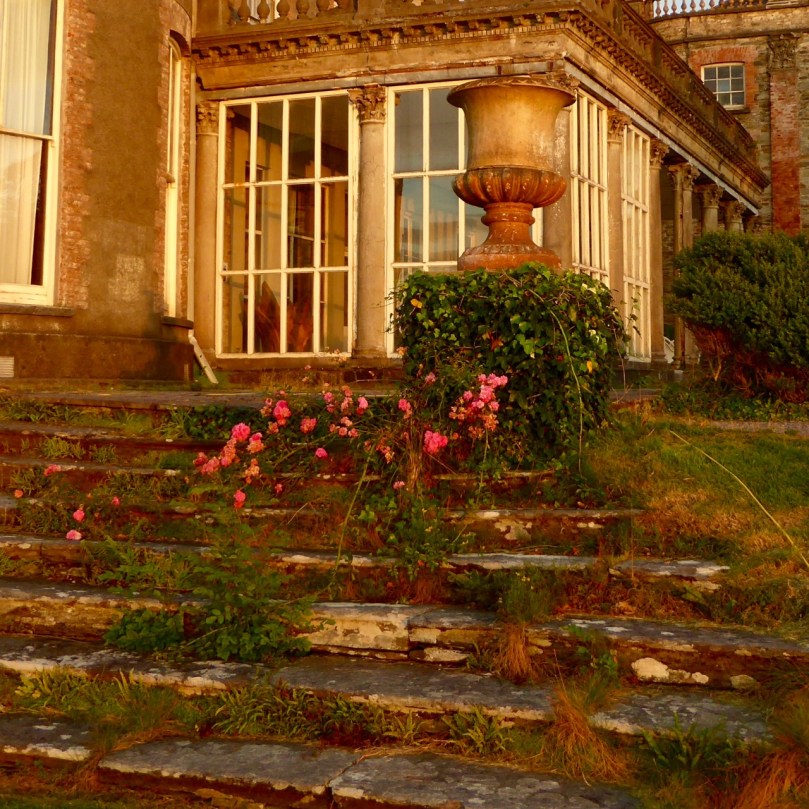
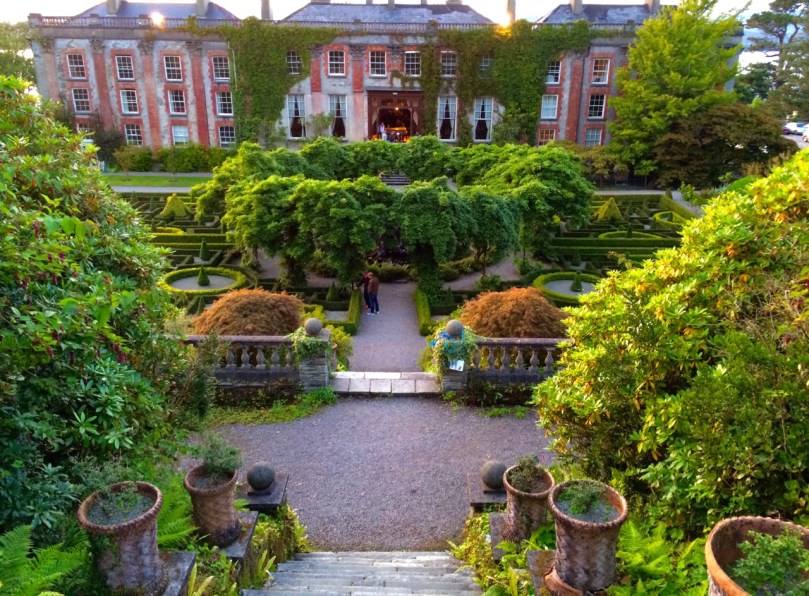
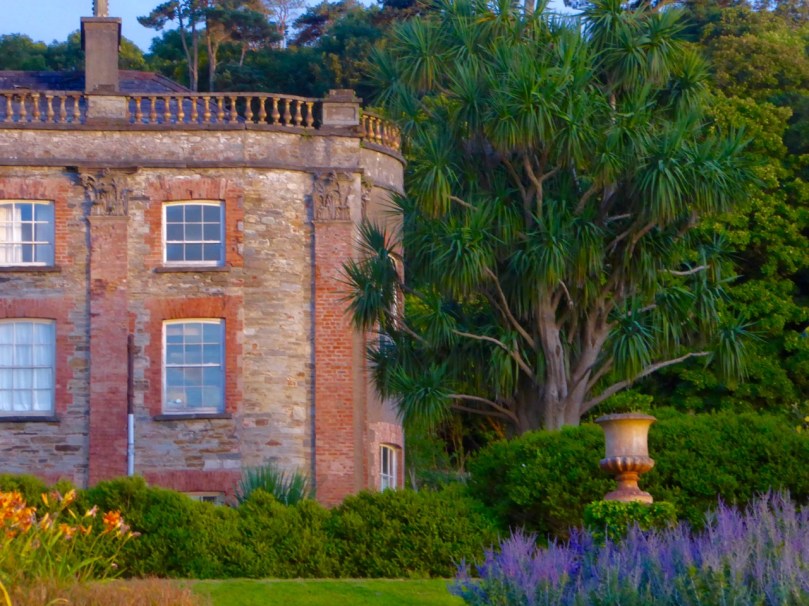
The perfect place to see this in West Cork is Bantry House. Because it faces due west, it is bathed in the low evening light. The construction materials, stone and brick, are warm-toned to begin with, but in the twilight hour they take on a mellow blush that is particularly entrancing. The sunsets over Bantry Bay, needless to say, are spectacular.

Ready for Zorro

Waiting for Zorro

We  had the perfect opportunity to observe this on several occasions. We attended a performance of Zorro on the lawn in August, and we usually take in several of the concerts at the Masters of Tradition Festival each year.

Back of the House

This photograph was taken during an interval at a Masters of Tradition Concert: the Library, at the back of the house, is the concert hall

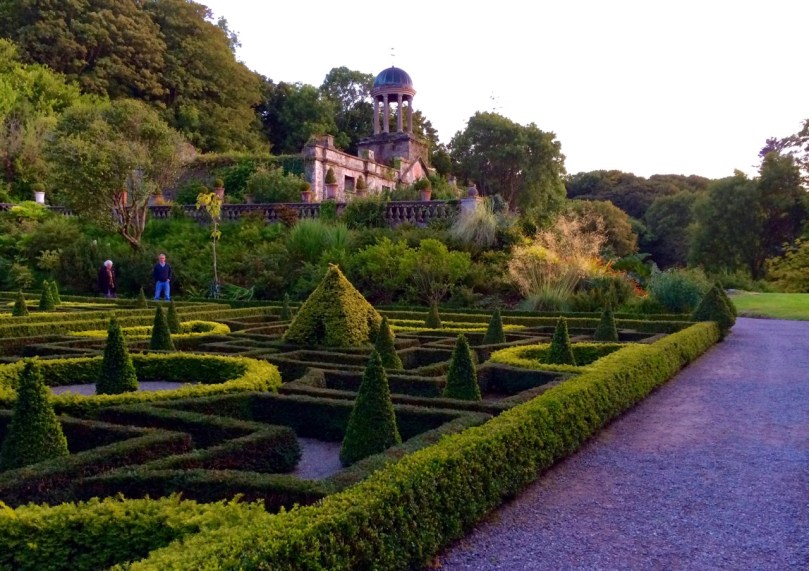
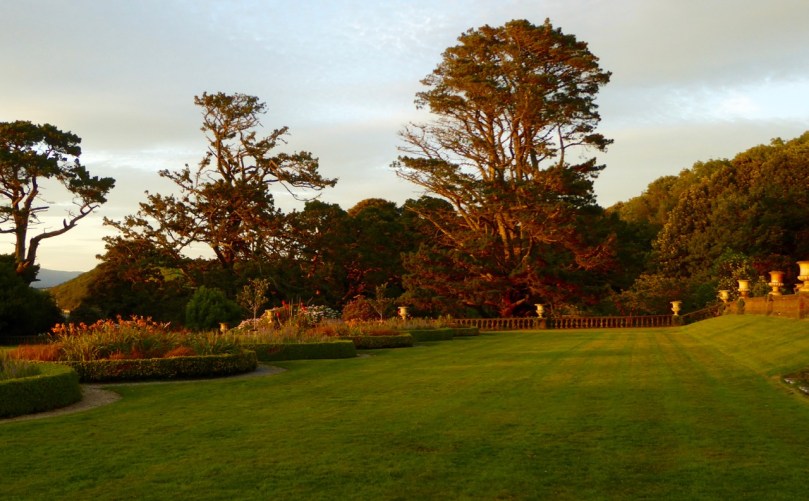
Bantry House dates from the 18th century. The gardens were laid out in the second half of the 19th century in the formal continental style, with parterres, stepped lawns and avenues of statuary. The Second Earl was a great traveller and came back from his grand tour with ideas and artefacts to make the best use of the elevated site.

Up the steps

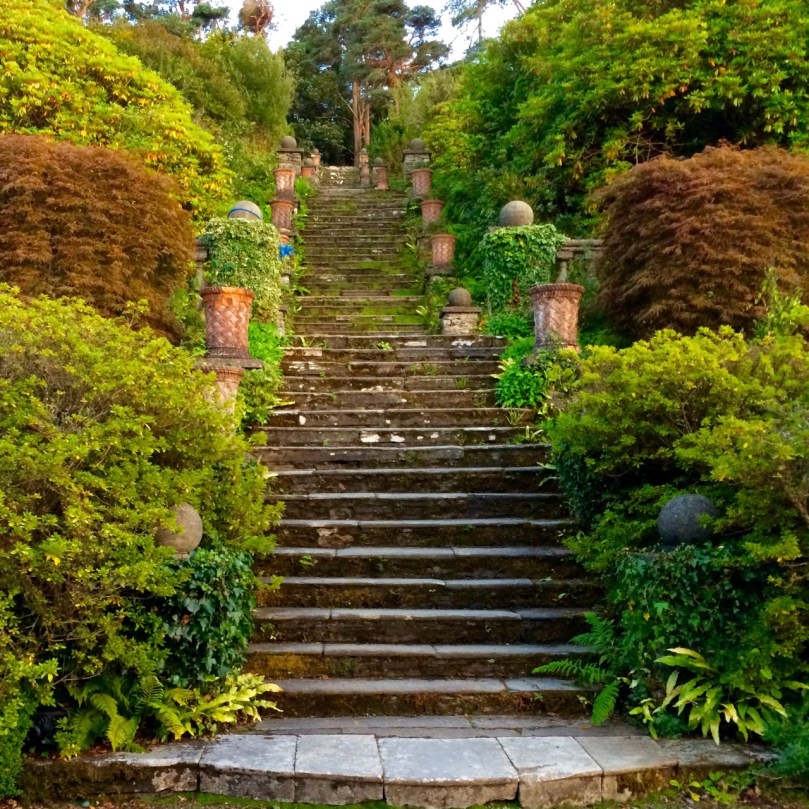
Rear Garden and StableIt  was he who added the stable yards with the cupolas, and laid out the gardens, including the hundred steps. All of this was somewhat at variance with the prevailing fashions in garden design at the time, which favoured more naturalistic settings with sweeping lawns dotted with groves of trees. However, it suited the restricted site and its formality has stood the test of time.

Statuesque

Restored Stable BlockA visit to the gardens at Bantry House is a wonderful experience. It’s open from March to October but the gates close at 5, so if you want to experience the Golden Hour, you’ll have to attend an evening event. Fortunately, these are abundant in the summer, as it’s a favourite venue for festivals and concerts.

Palms and HouseDuring the break, stroll about and just, well, bask. 

Trees and Flowers

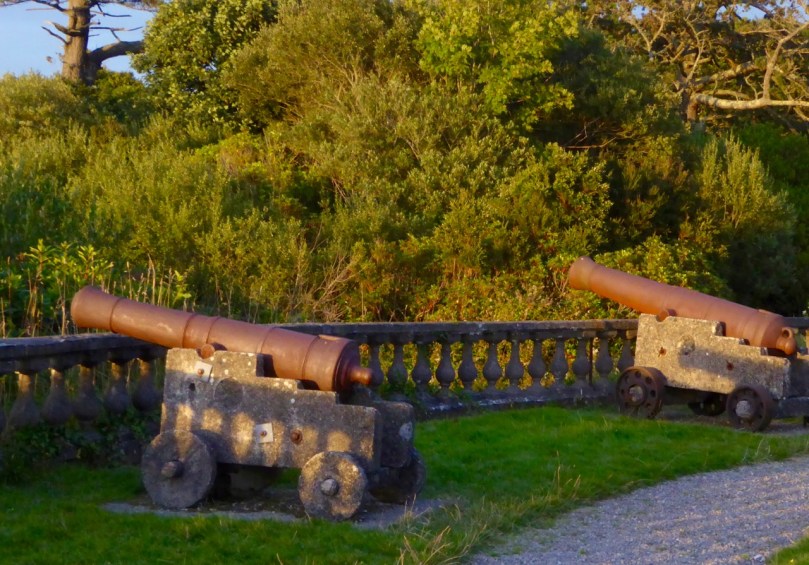
Canons

And don’t forget to admire the sunset itself.

Sunset over the Bay

‘Auf der Walz’ – The Journeymen

on the summit

I am always happy to find longstanding customs and traditions still going strong, especially when they are as relevant today as they have been over countless generations. This summer we chanced upon two strangers from Germany who passed through Ballydehob. They were journeymen blacksmiths: lads who had completed their apprenticeships at home and were now ‘Auf der Walz’ (on the road) – gaining experience in the wider world.

inese-journeymen

Here are the two Journeymen who travelled the west of Ireland’captured’ by photographer Inese MJ – she came across them in her local supermarket! I am very grateful to Inese for allowing me to use her excellent photograph which comes from her own blog, here.

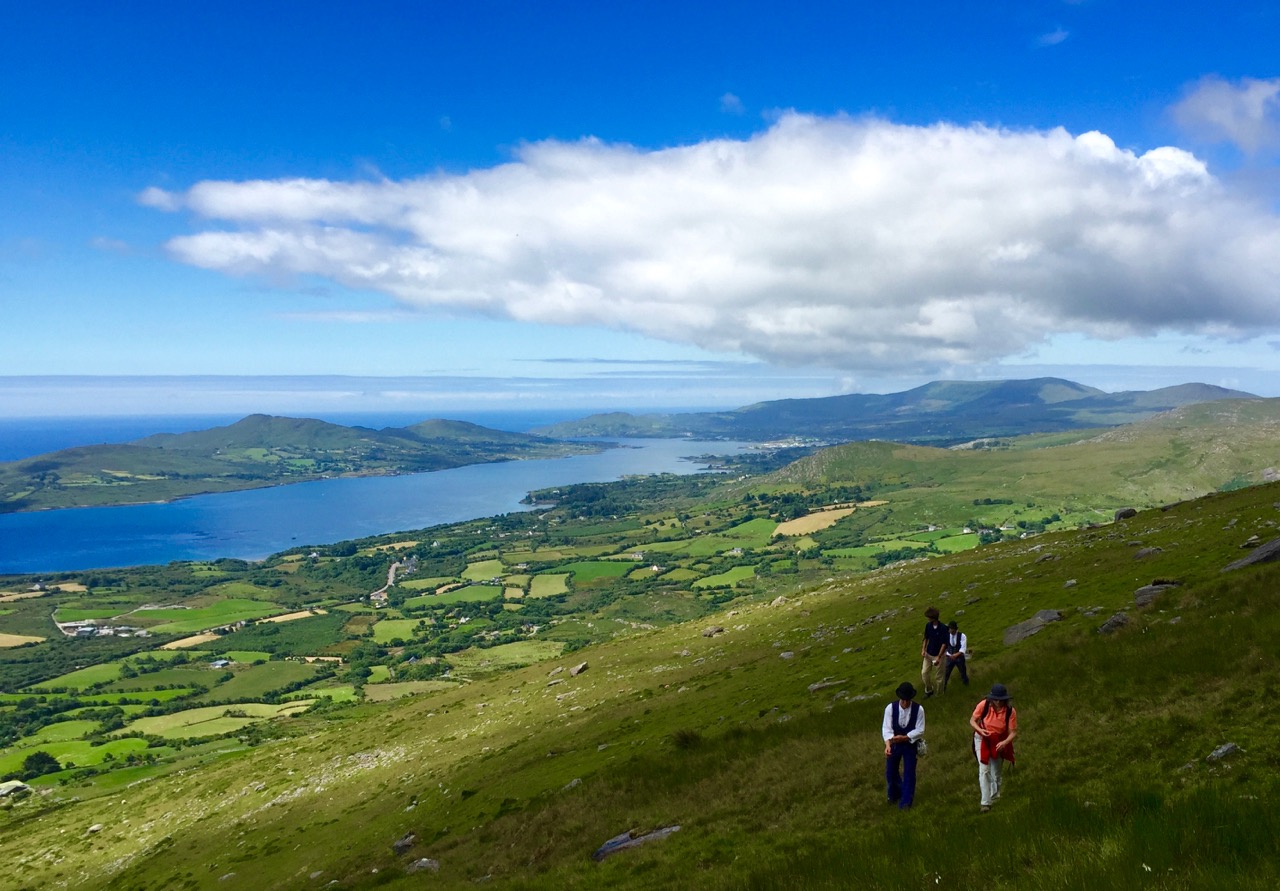
The tradition of the Journeyman Brotherhood is centuries old, originating in the Craftsmen Guilds of Europe during the Middle Ages and it is still practiced. In the past every young craftsperson who aspired to be a Master was, following his apprenticeship, required to leave home and not return for three years and a day. They had to stay at least 50 km away, but the journeys of the more adventurous candidates involved crossing oceans and continents. Simon and Benjamin – seen in the top picture after an exploratory climb to the summit of Hungry Hill on the Beara Peninsula – are from Munich and Frankfurt. They are wearing the uniform of their trade, known as the Kluft: this is how they are required to dress during their travels. The number of buttons on their waistcoats show the number of hours in a day they expect to work – in this case eight. When they leave home they have only a token sum of money each, and they must return with the same sum, no more. The purpose of the journey is not to seek their fortune, but to improve their knowledge and skills and give them a rich life experience, preparing them for becoming masters of their craft. It is a prerequisite that Journeymen cannot set out unless they are unmarried, childless and debt-free.

Left – a typical Charlottenburger used to carry the Journeyman’s possessions. Right – group of three in Germany looking for their preferred mode of transport

Other traditions which have to be observed by the true Journeymen include carrying only the most basic possessions with them: clothes to work in and the tools of their trade. These are wrapped in a small blanket, 80 cm square, known as a Charlottenburger. They also often carry a crooked walking stick, called a Stenz, which they have made themselves. Mobile phones are not allowed! Notably, Journeymen usually have gold bracelets and earrings: these may be pawned or sold, but only in cases of dire emergency… I learned that the earring tradition refers back to a time when each apprentice had a nail hammered through his earlobe to mark that he had reached the stage of his apprenticeship which allowed him to go out into the world and remain a stranger until he had completed his journey. Some sources suggest that the term Journeyman comes from the French Journée, meaning ‘journey’ – but this is not correct. Journée means ‘day’ in modern French, but its medieval root is the latin diurnata, which in fact means ‘a day’s work’ or ‘a day’s travel’.

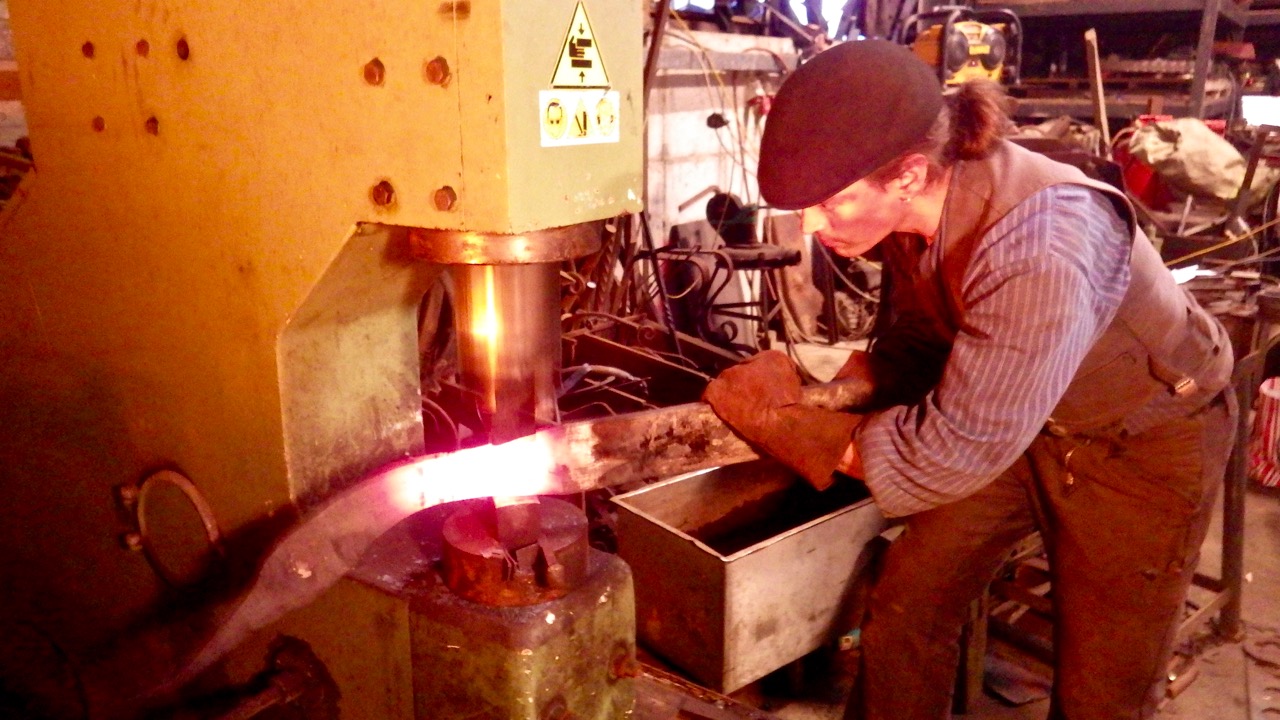
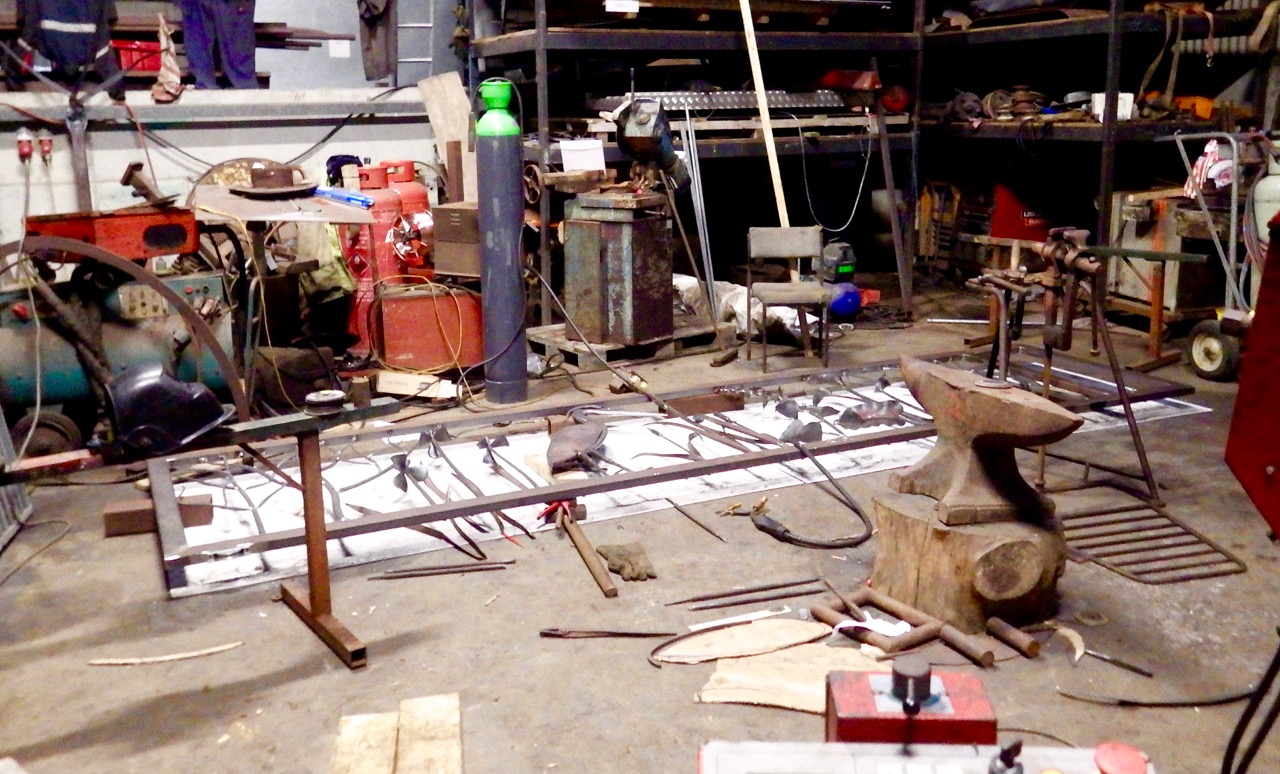
Journeymen surrounded by the tools of their trade in the forge at Lowertown

Simon and Benjamin were fortunate that in Ballydehob they bumped into our neighbour Dietrich: although he and Hildegard have lived here for much of their working lives they were brought up in Germany and were aware of the Journeyman tradition. They immediately found a project for the two young blacksmiths: constructing a new gate for their entrance. John Joe Bowen of the local forge at Lowertown was very helpful in allowing a space in his workshops for the boys to set to work.

blank canvas

The process. Top – blank canvas: laying the full-size design out on the workshop floor. Above – learning from real life: how to fabricate a metal foxglove

We followed reports of the gate-making process with great interest, but were not allowed to see the completed design until the ‘official unveiling’. Dietrich and Hildegard recorded the various stages and have most kindly allowed me to use their photographs of the construction process (and the hike up Hungry Hill) reproduced here.

hammering

making the heron

From design to reality. Top left – Hildegard supervising the assembly and – top right – her design concept drawings. Above – a metal heron takes shape

The gate is a masterpiece. Made in West Cork, it reflects the environment of the place. It’s elegant, and unique. Although it appears complex, it is very understated: I think Dietrich and Hildegard have perfectly summed up the zeitgeist of our own time here in our small townland. Its inspiration is in nature, yet it is a technologically up-to-date piece of fine engineering.

piecing it together

on the floor

sanding the gate

dietrich, journeymen and gate

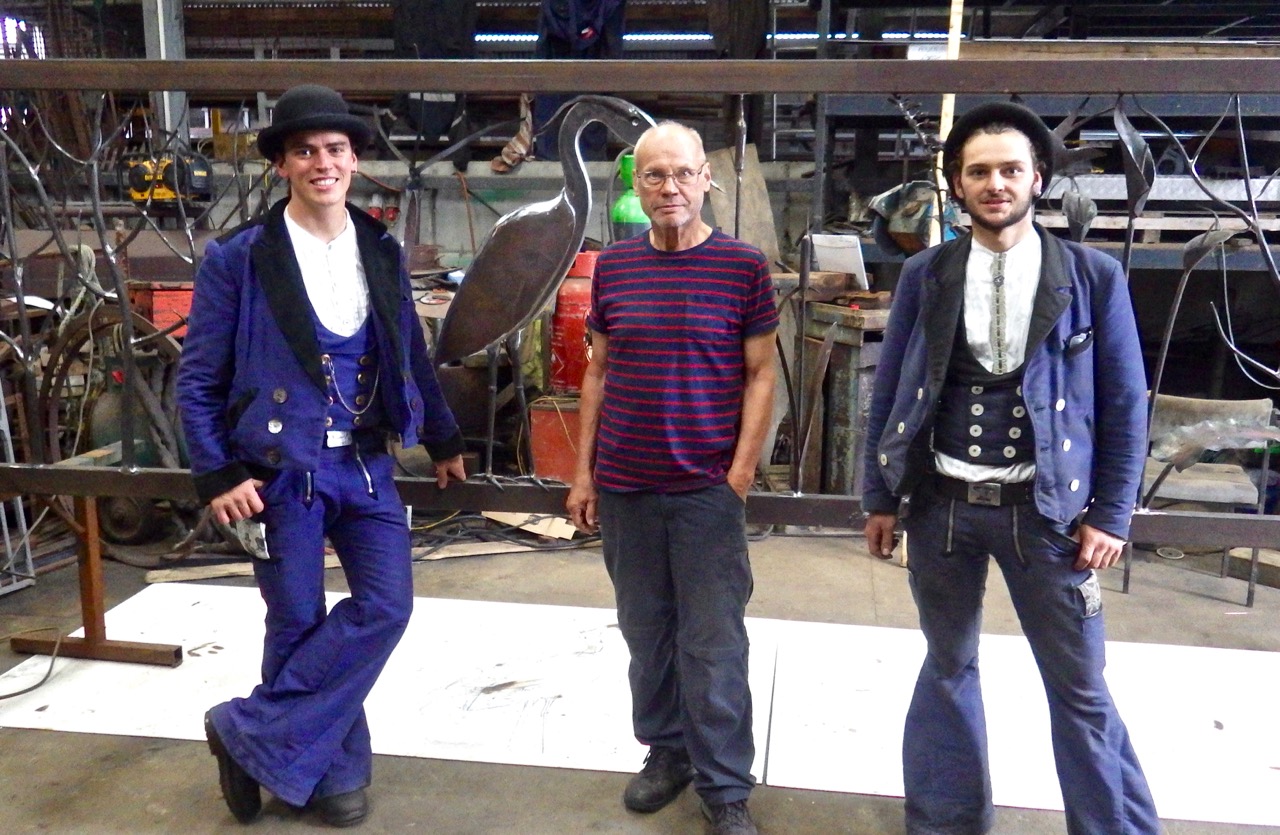
The construction process, and Dietrich and ‘The Boys’

We were privileged to be at the ‘launch party’. I have never been to a formal gate opening before! Dietrich cut the ribbon and then revealed the finished product to our eager eyes. This work must surely have been the highlight of the travels of these Journeyman from afar: they learned so much about observation and the translation of ideas into practical form.

the gate

Benjamin and Simon were not at the ‘launch’; they were already far away, continuing with their travels and their education. But they must carry with them good memories of the West of Ireland. Good luck to them both!

on hungry hill

Experiencing beautiful West Cork – the Beara Peninsula, summer 2016