Kilcoe Medieval Church – Revealed!

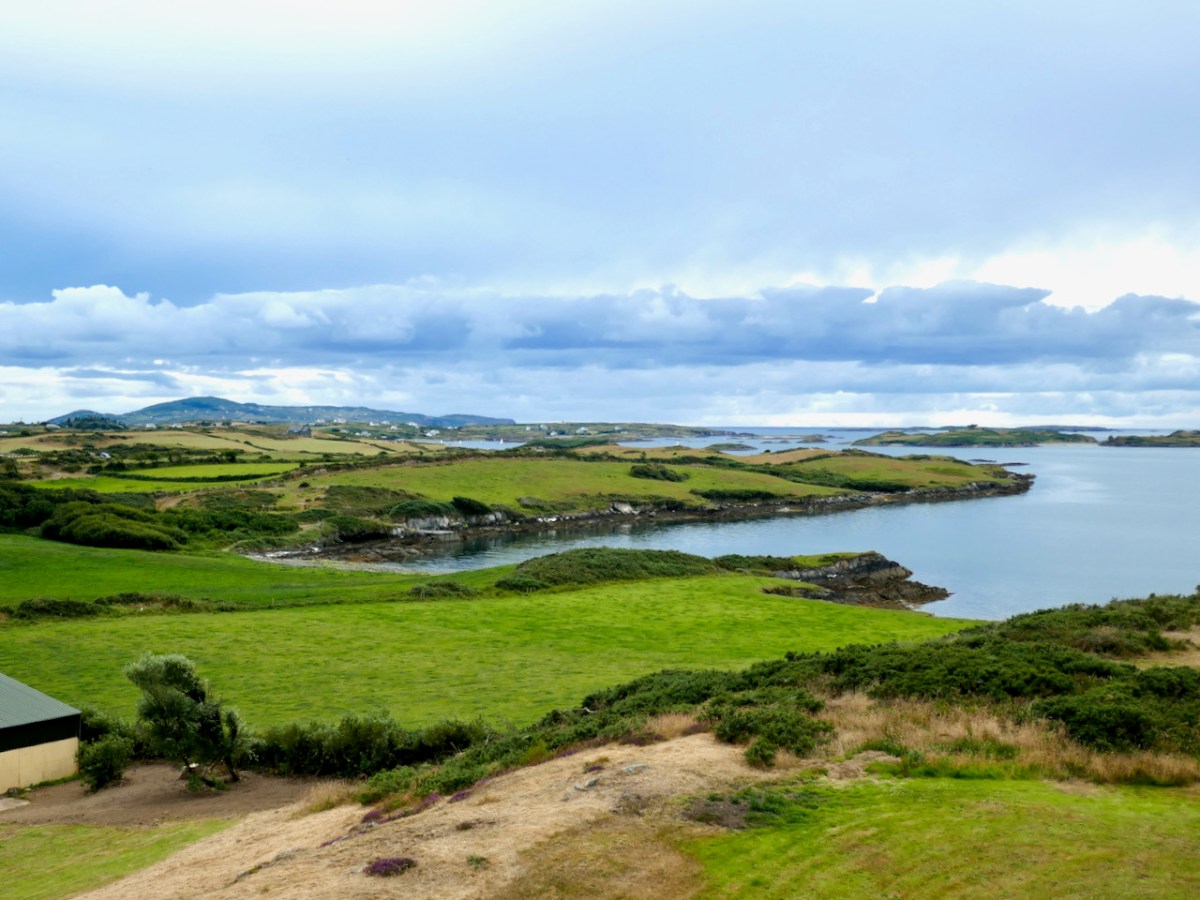
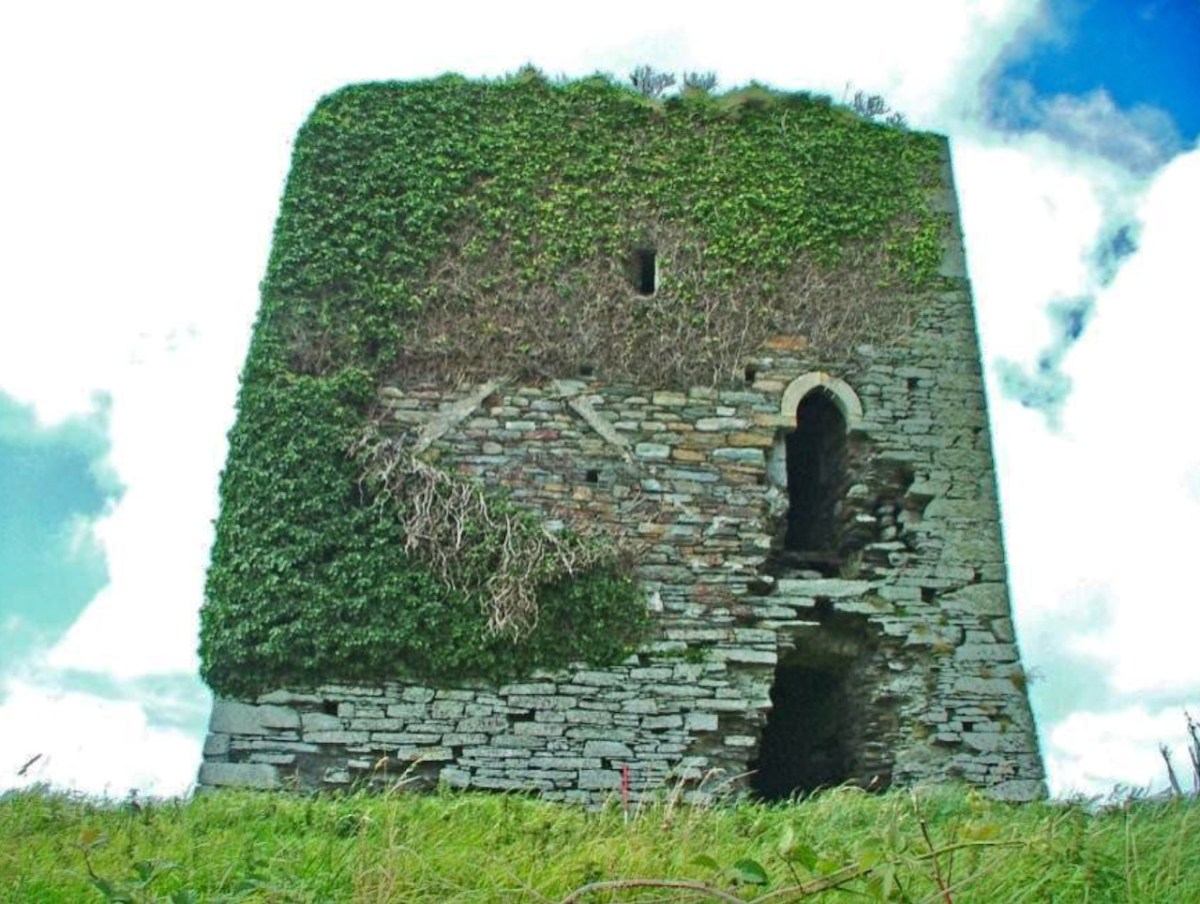
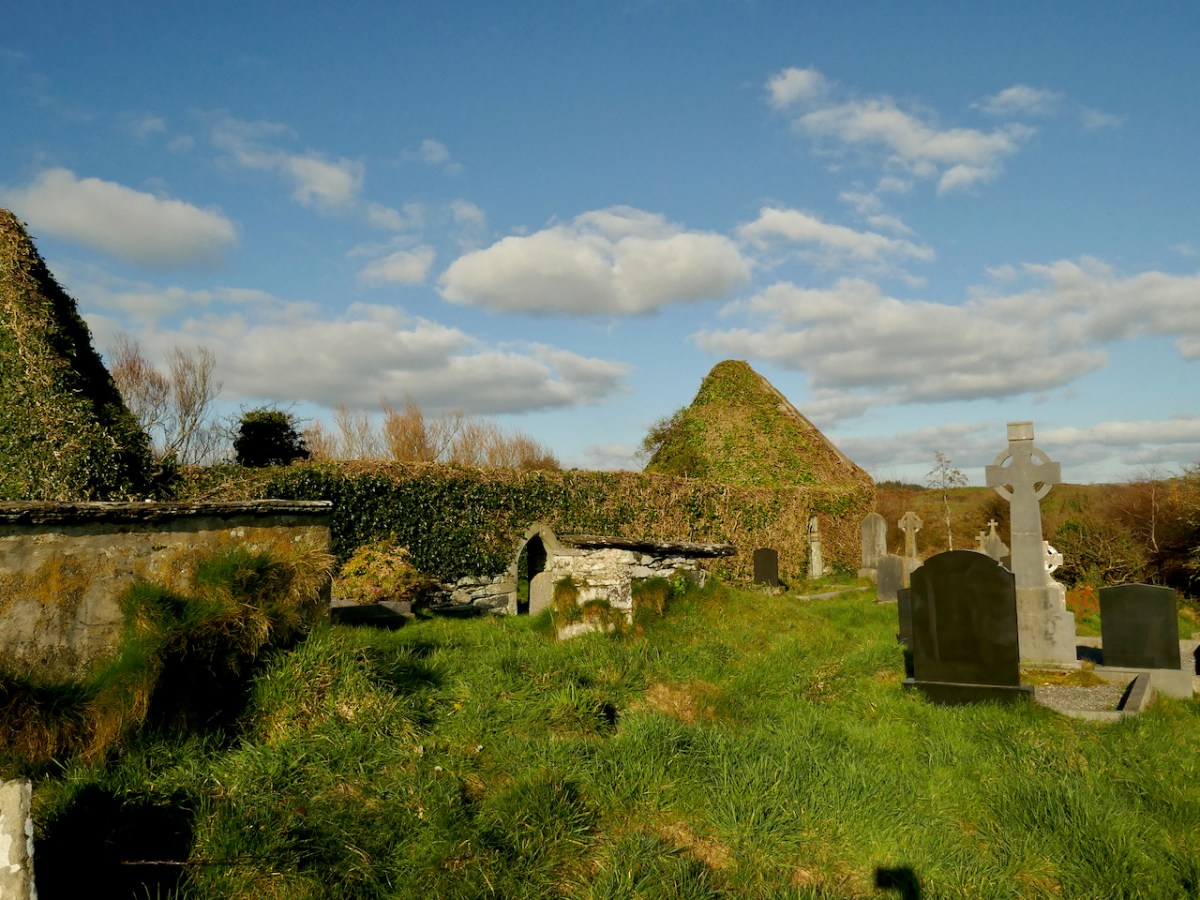
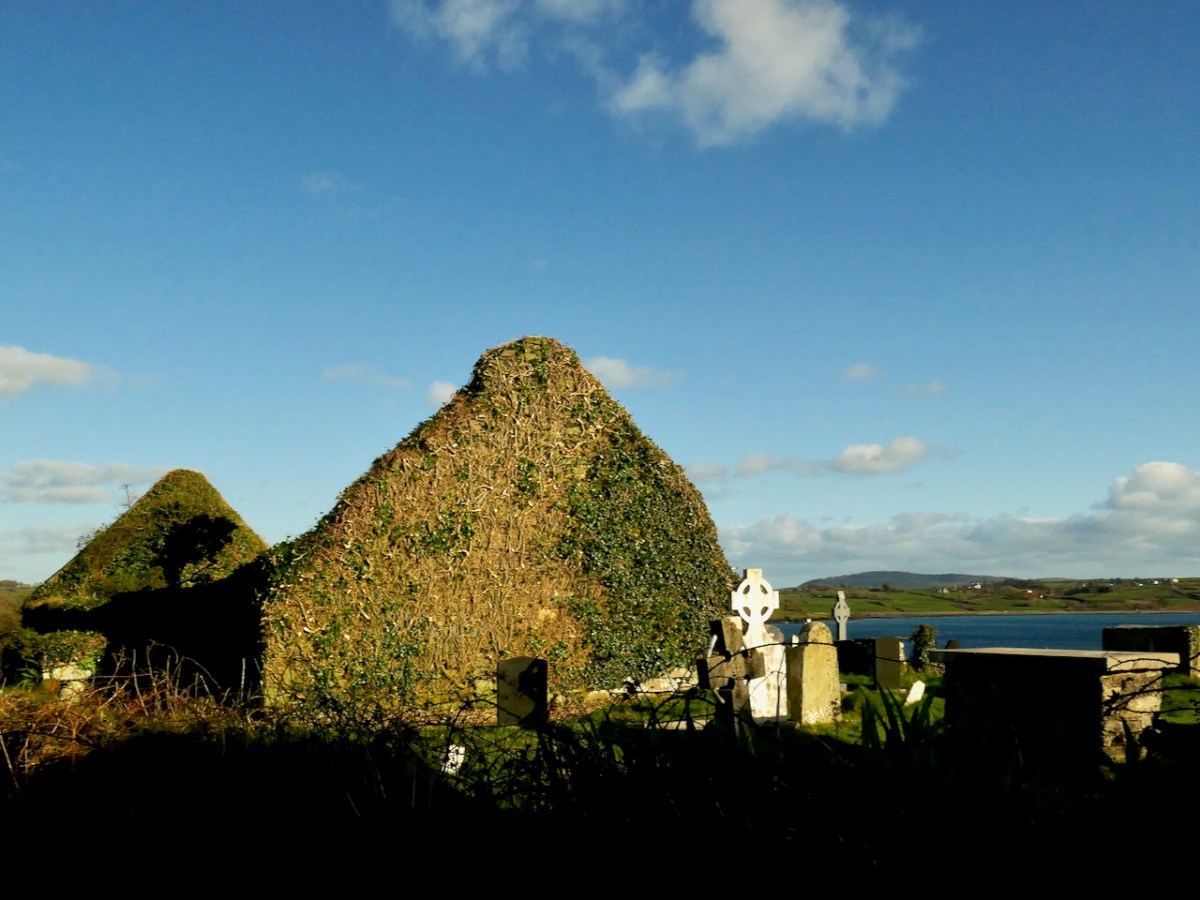
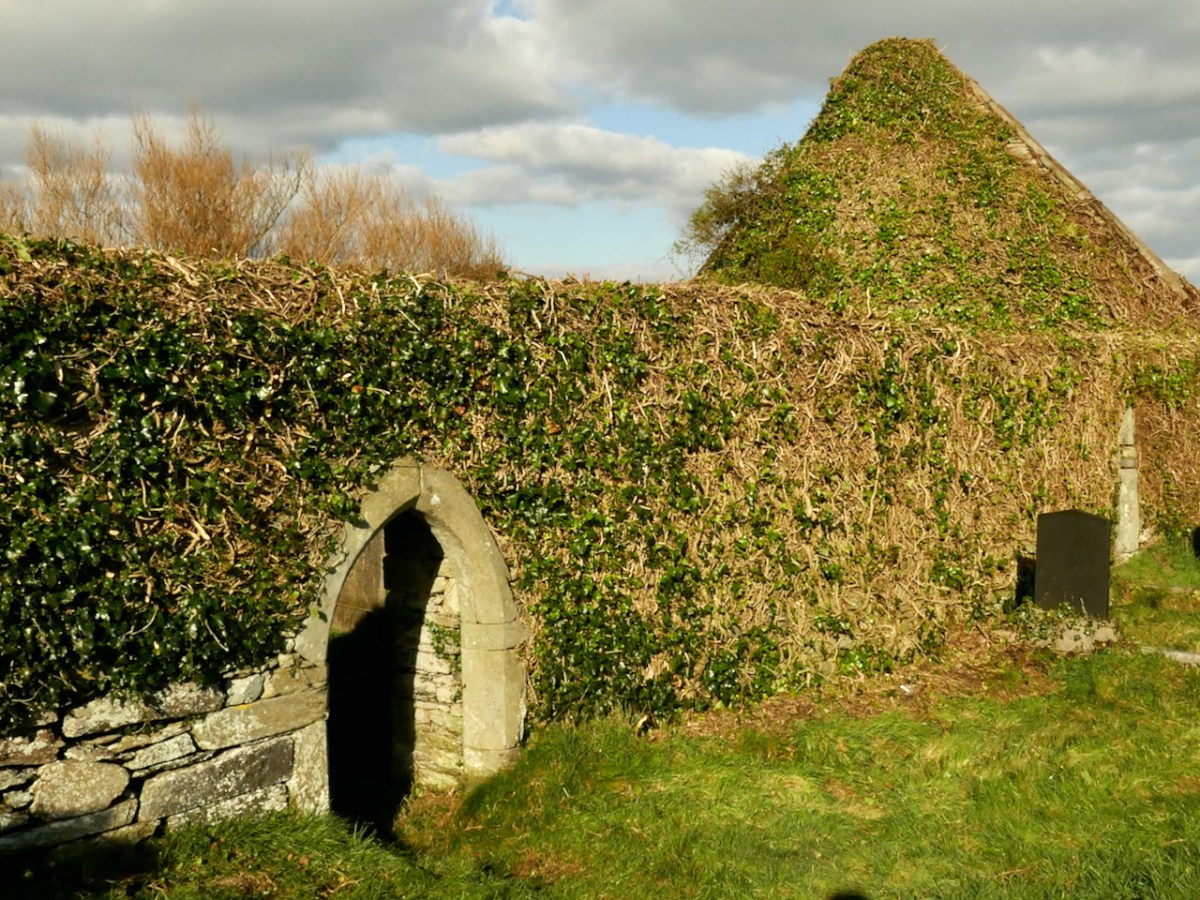
This beautiful medieval church sits on the shores of Roaringwater Bay, close to Kilcoe Castle. It was in danger of destruction by ivy but is being rescued – more on that in a minute. This (below) is what it looked like up to recently.
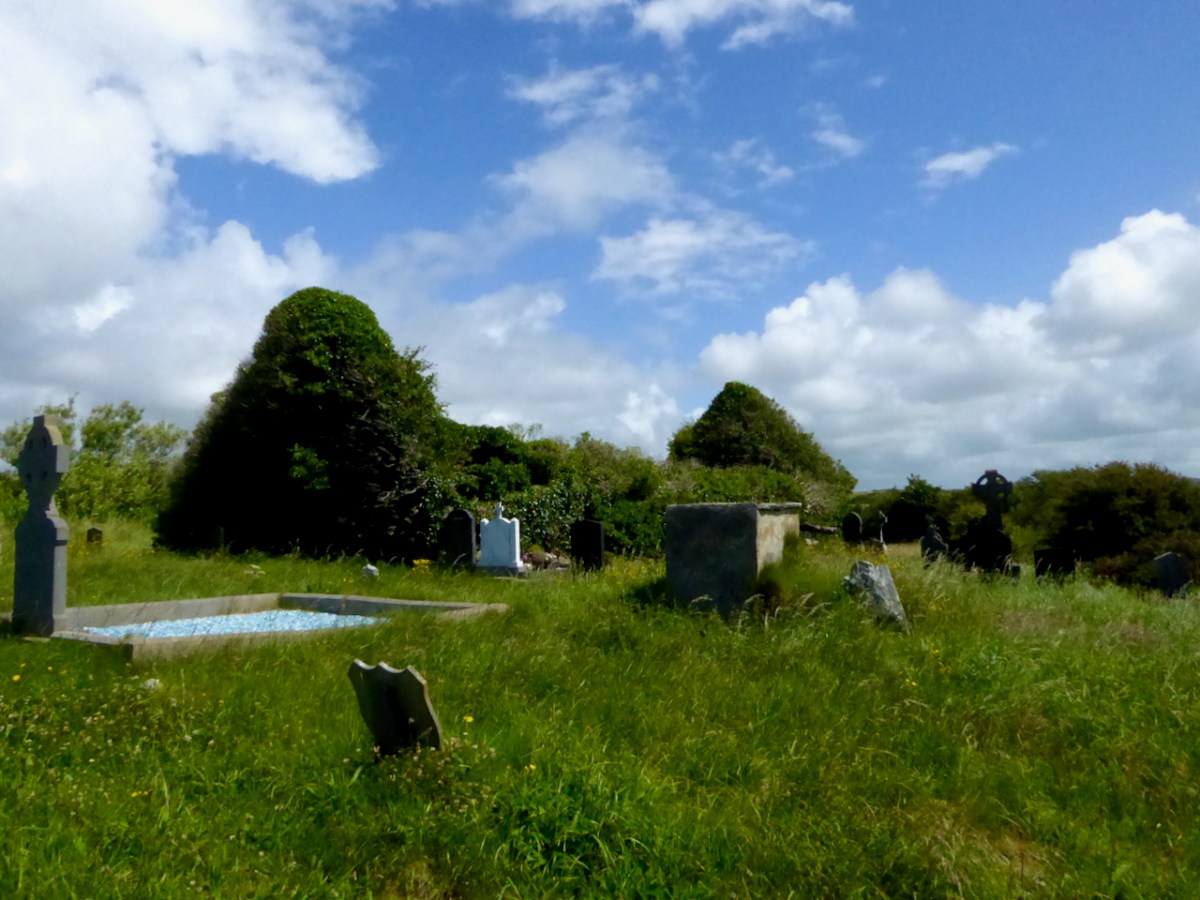
Kilcoe is the Church of Cóch – but who was St Cóch? For information we turn, as always, to what has become the bible for anyone interested in Irish Saints, the magnificent A Dictionary of Irish Saints by Pádraig Ó Riain. According to Ó Riain, the great St Ciarán (of Cape Clear and also of Seirkieran in Ossory), always spent Christmas here, with his foster mother, Cóch. Little is known of Cóch, except that she was of the people of the Corca Laoighdhe, with whom Ciarán also had a close association. She may have given her name also to Kilcock in Kildare. Her feast day is June 29th.
If the church was indeed founded by St Cóch, then there must have been a centre of worship here from very early Christian times, since typically a church grew up around the relics of a venerated and holy man or woman. Whatever the form of the original church, nothing survives of it now. Take a look at my post Mizen Magic 23: Croagh Cove, for what might have been there in, say, the 6th to the 10th centuries. 
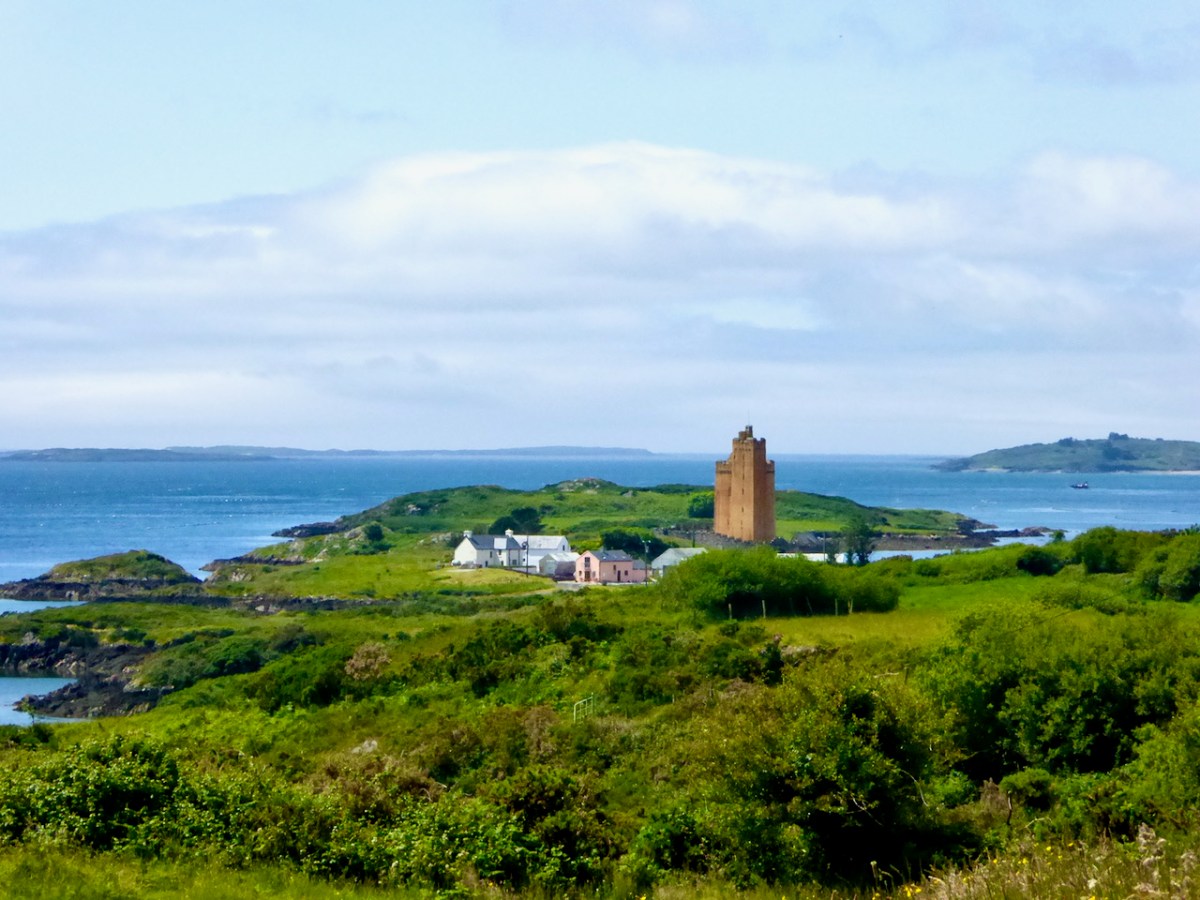
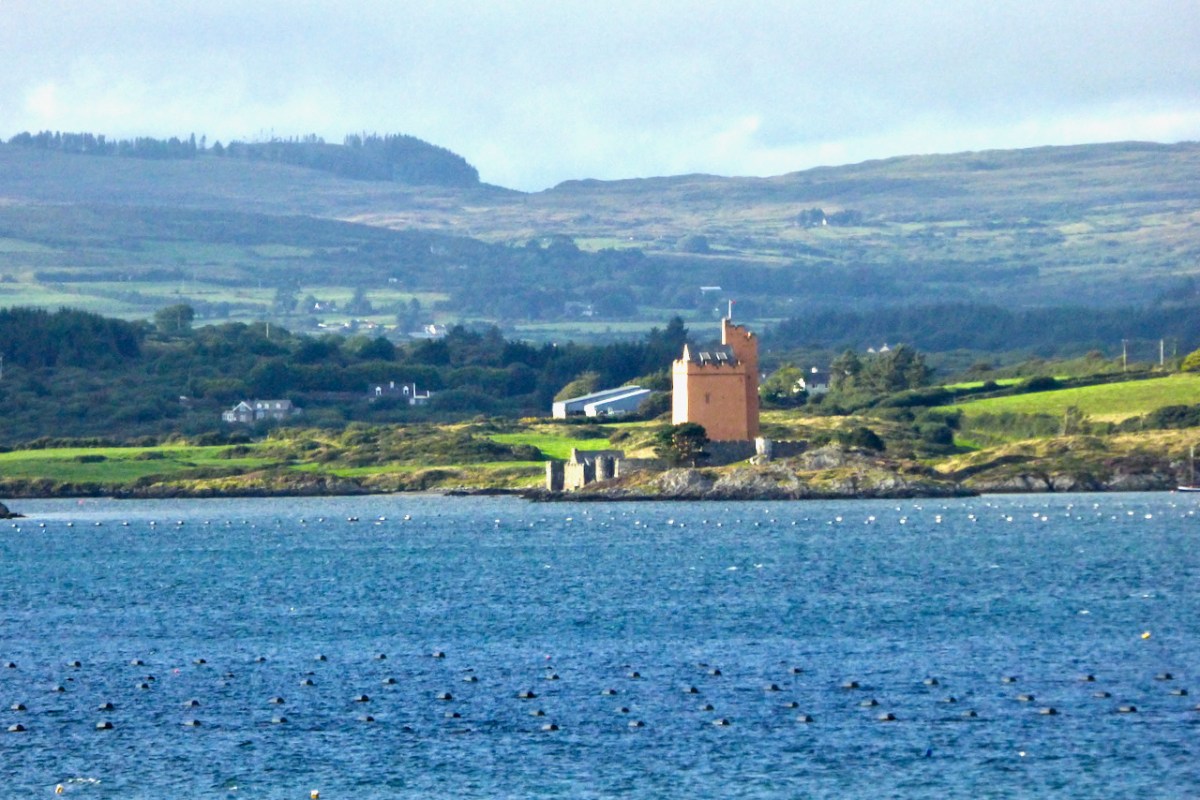
Note also the proximity of the Church to Kilcoe Castle – a stronghold of the McCarthys, now magnificently restored by Jeremy Irons. It was normal for lords and chiefs to have ecclesiastical foundations close by, on land they had ceded for that purpose. The monks made sure that the lord’s soul would be saved by ceaselessly praying for him, and his endowment of the monastery or church gained him many indulgences, shortening his time in Purgatory.
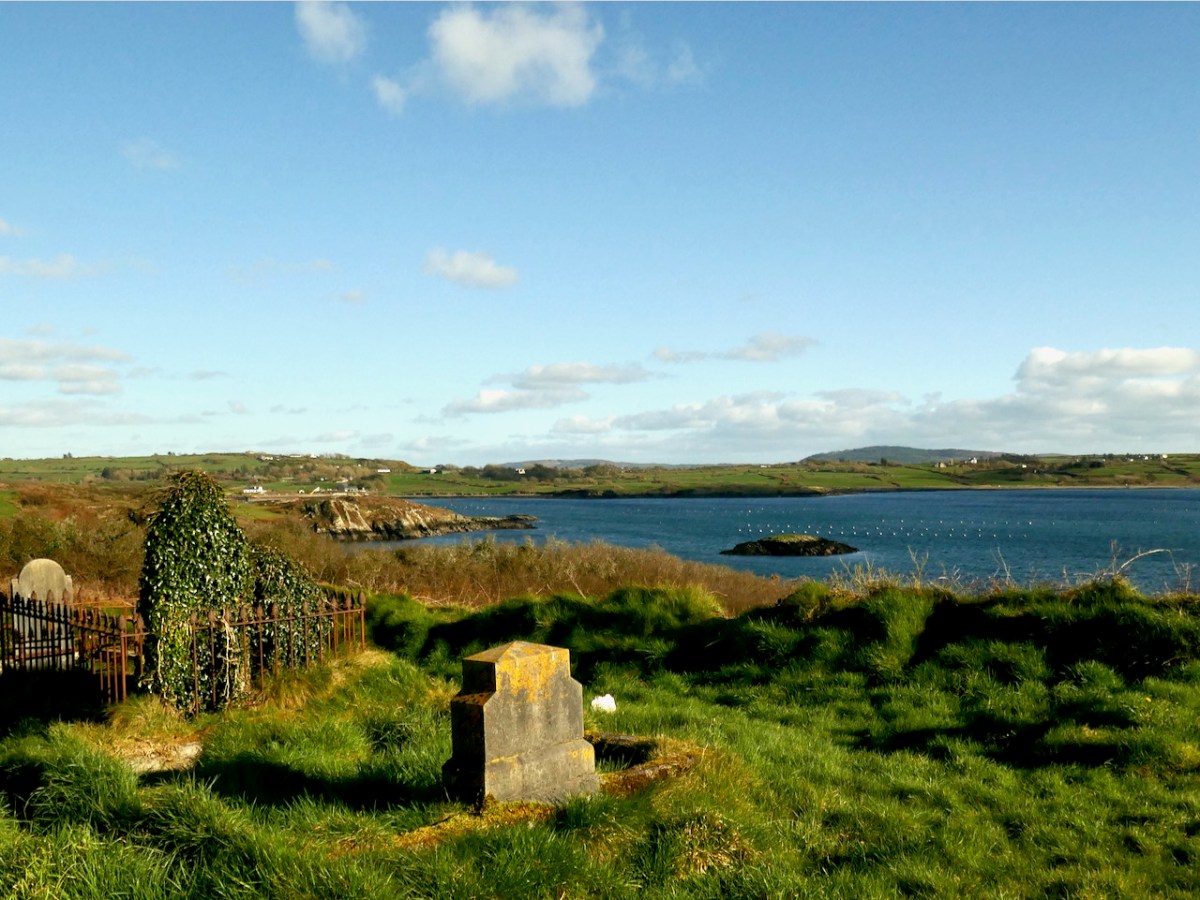
Around the core of the original church was a burial ground, with burials placed on a hierarchical basis closer to or farther from the church. The bones or relics of the founding saint were often under or immediately beside the church, with the most coveted spots going to high-ranking individuals.* The association of ancient churches with burial grounds continued through the ages. Only in more recent times have modern cemeteries been established on new ground not associated with churches.
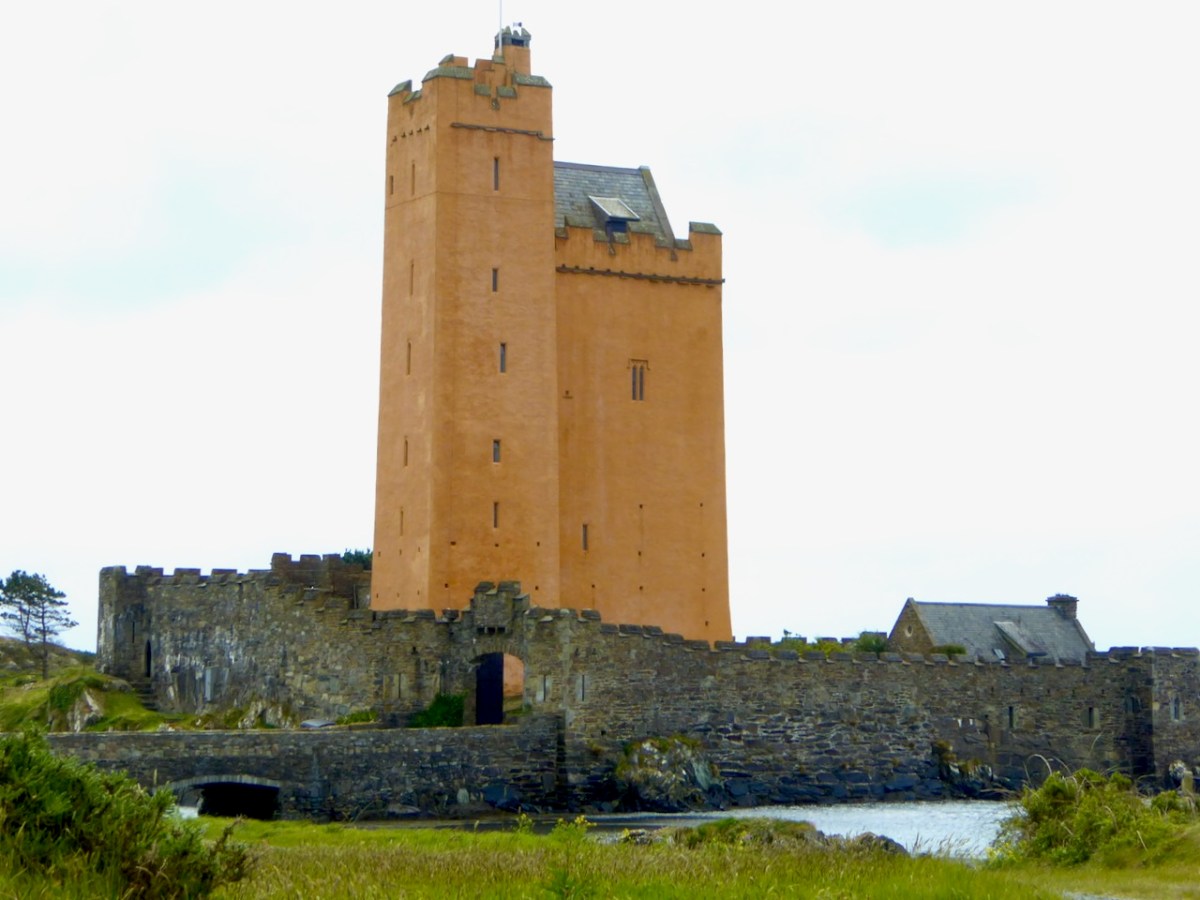
The Parish system did not evolve until the 12th century and parish churches were often simply an evolution of the older monastic church, occupying the same ground and with a continuation of the burial practice. What we see now at Kilcoe is a parish church, and although it may be based on a much older site, the architectural remains are solidly gothic, and probably 15th century – the same style of architecture we see in Kilcoe Castle. We can imagine the head of the McCarthy family of Kilcoe Castle crossing the drawbridge to hear mass or confess his sins in the little church under his patronage.
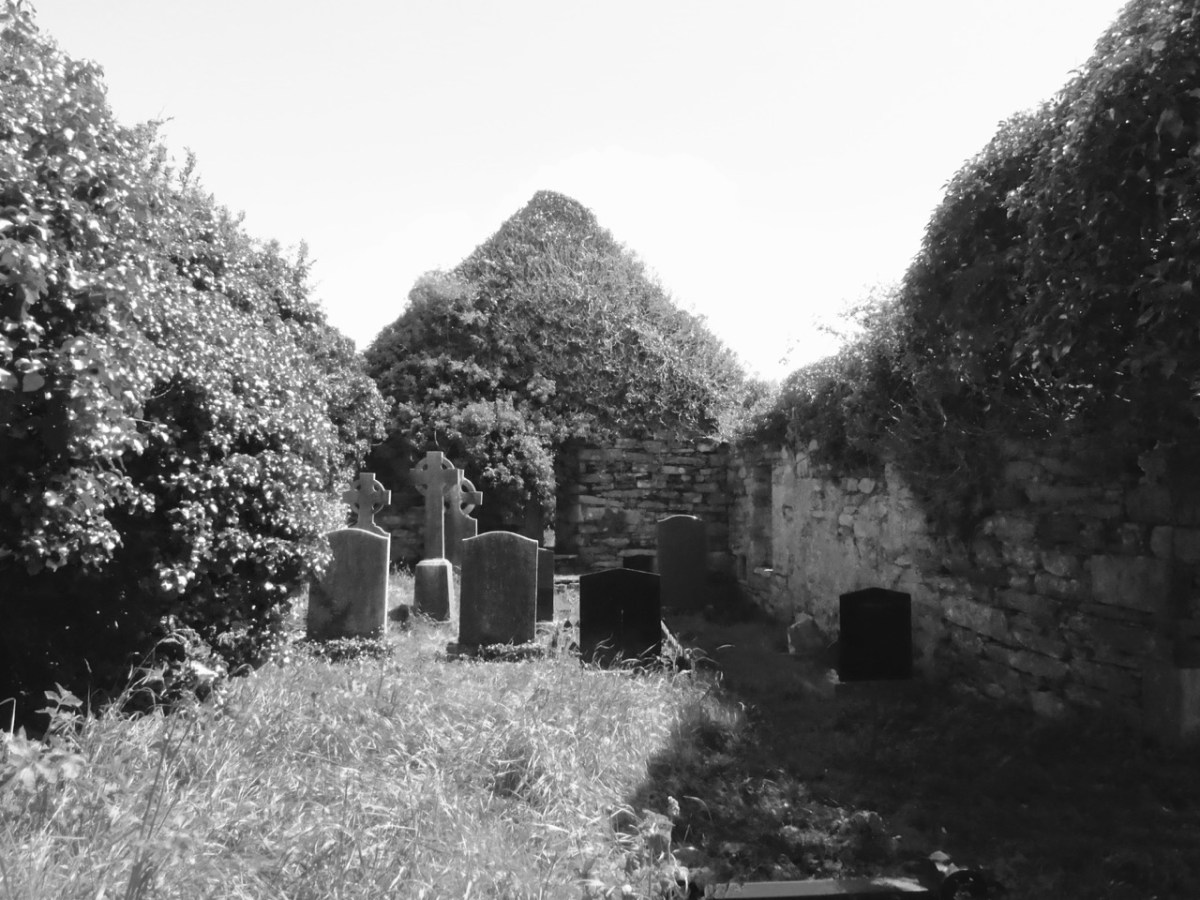
In recent years, the church has become more and more buried in ivy. You can see the condition of the exterior in the second photograph of this post, and of the interior of it (above) in a post I did way back in 2015, A Tale of Four Churches. Worried by the deteriorating condition a group of local people raised funds through Go Fund Me  for an assessment by a conservation engineer. That report is a detailed survey of every aspect of the church and makes numerous recommendations for remediation. From the report:

The church is in fair condition with its walls and main architectural features largely intact. However, the substantial ivy canopy and embedded ivy stems are damaging the masonry and, without intervention, there is likely to be significant loss of historic fabric in the short to medium term.

The ivy canopy on all walls should be reduced immediately by cutting back the ivy to the wall face. This should be preceded by an ecological assessment which may impact the timing and scope of the vegetation control measures (unless advised otherwise by the ecologist, cutting back of vegetation should be carried out between September 1st and February 28th). The ivy should not be treated with herbicide or removed unless conservation work can be carried out shortly after treatment and removal.

Kilcoe Church Condition Report
John Kelly (conservation accredited engineer)
David Kelly Partnership. Oct 2022**
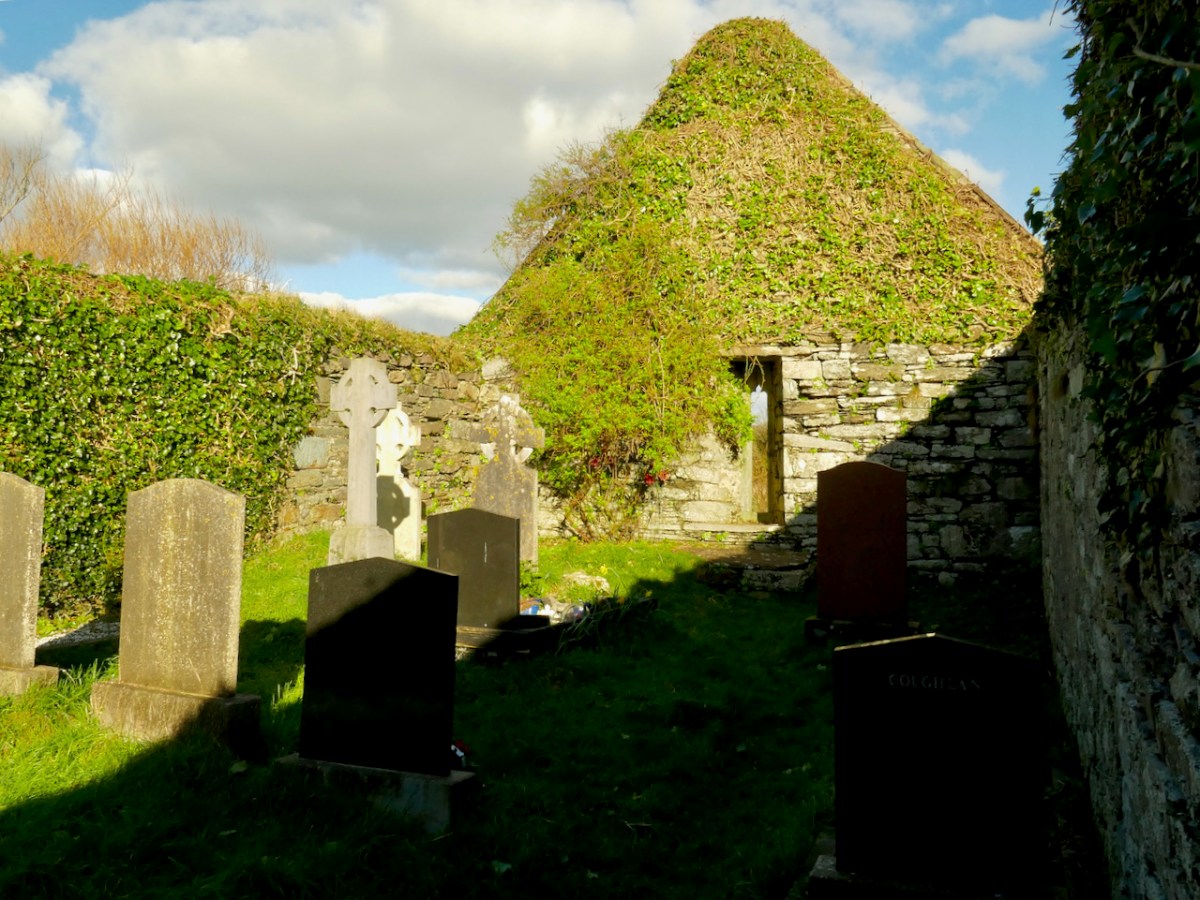
When we visited yesterday we were thrilled to see that this work is underway, following best practice as advised by the conservation report. Although we are not sure of the details, it appears that the church itself is in private ownership, and that the landowner may be the one who has undertaken this work at their own expense. (Happy to receive further correction or confirmation of this, in order to direct appreciation appropriately.) 
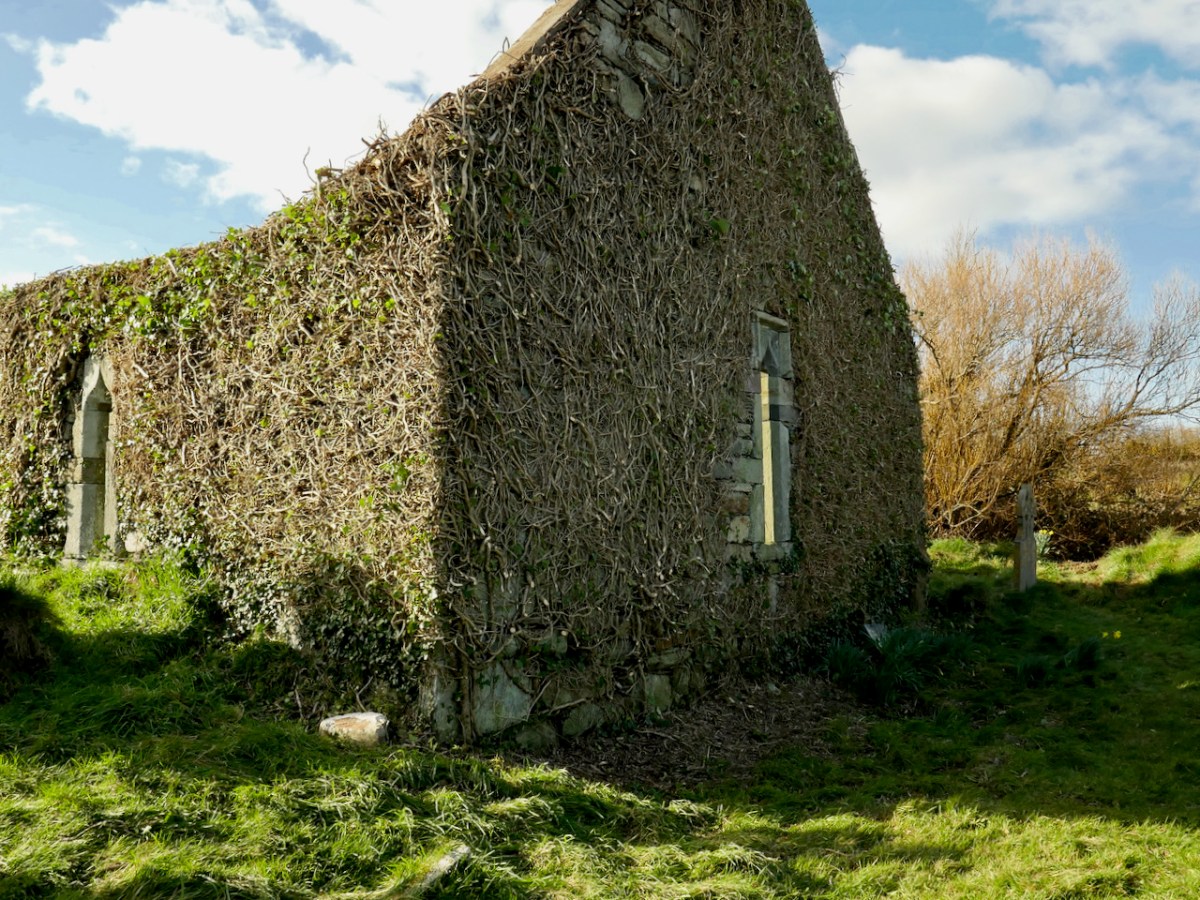
And – now that this work is underway, the church is rising like a phoenix and once again it is possible to see the major features of this fine and important  piece of our heritage.
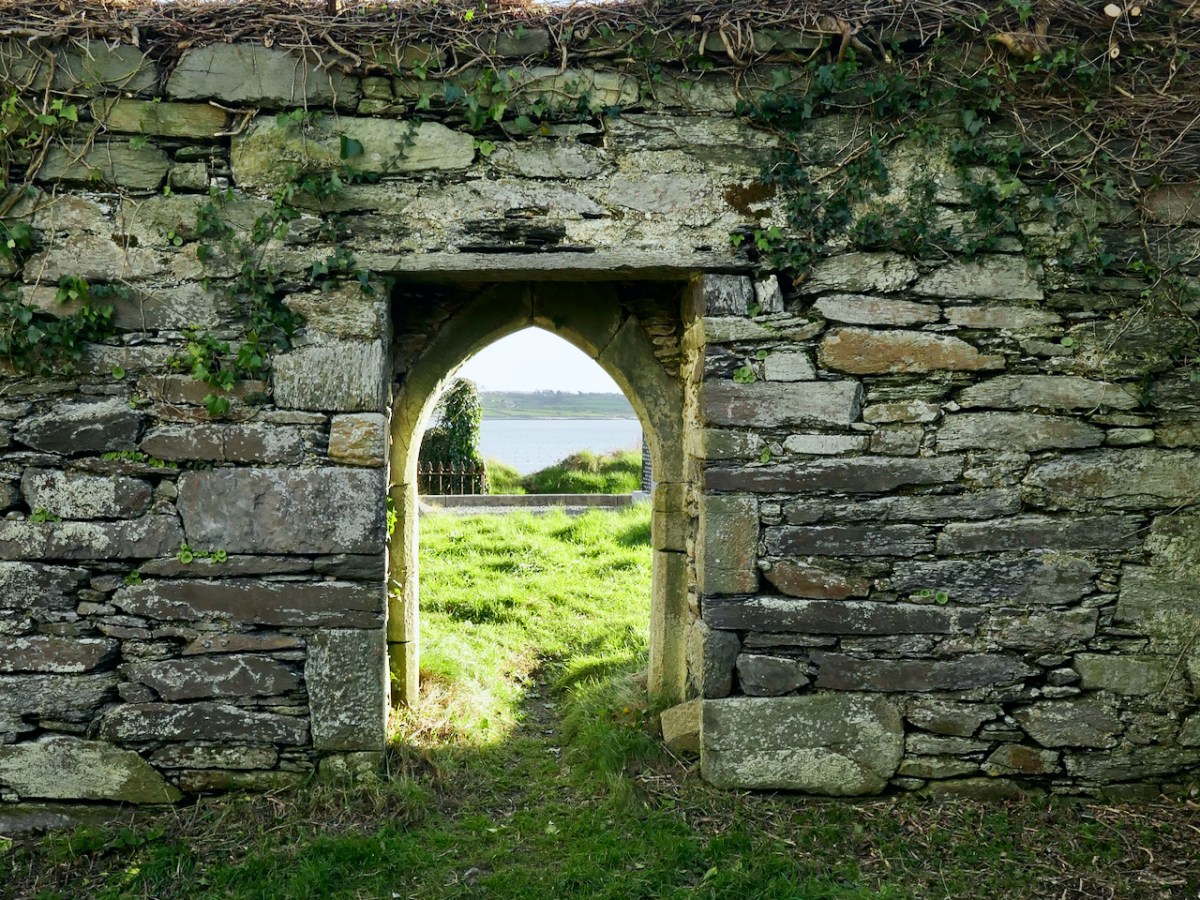
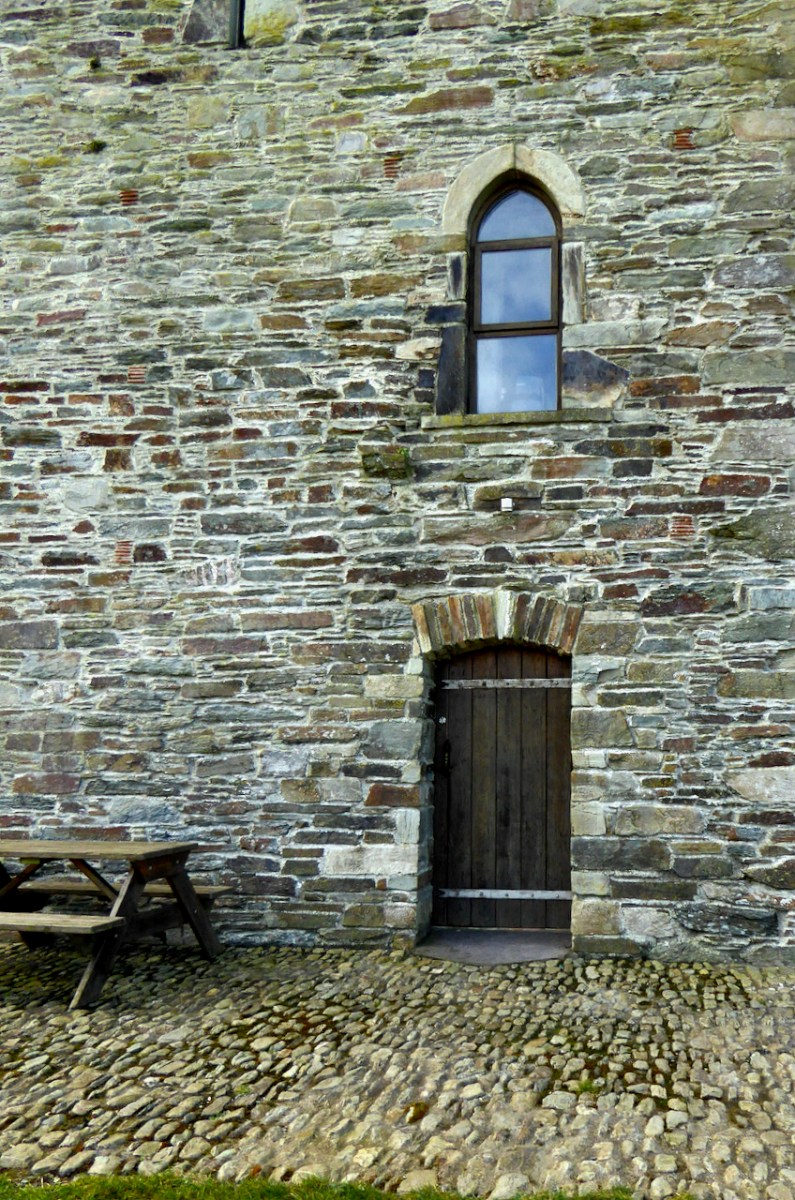
The church is a simple rectangle. The chancel, containing the remains of an altar table, is at the east end, and there is one doorway in the south wall. While this entrance, when viewed from inside, is a straight opening with a plain lintel, from the outside it is totally different – finely carved stone provides a graceful arched surround.
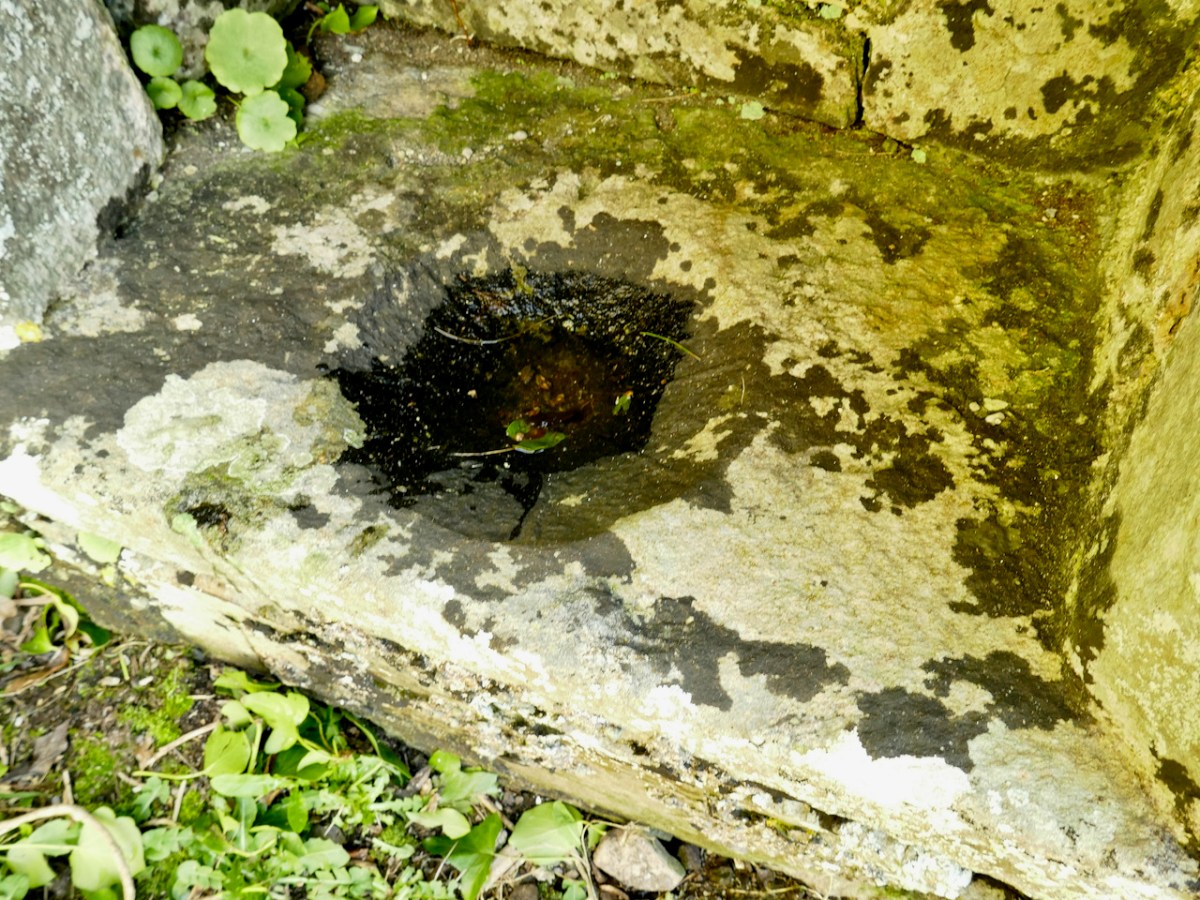
Two ‘basins’ are set into the walls, as are  two stone ‘cabinets.’  The basin on the south wall is a piscina, in which vessels were washed, and has a carved bowl, although it is hard to make out under under a cover of dark lichen.
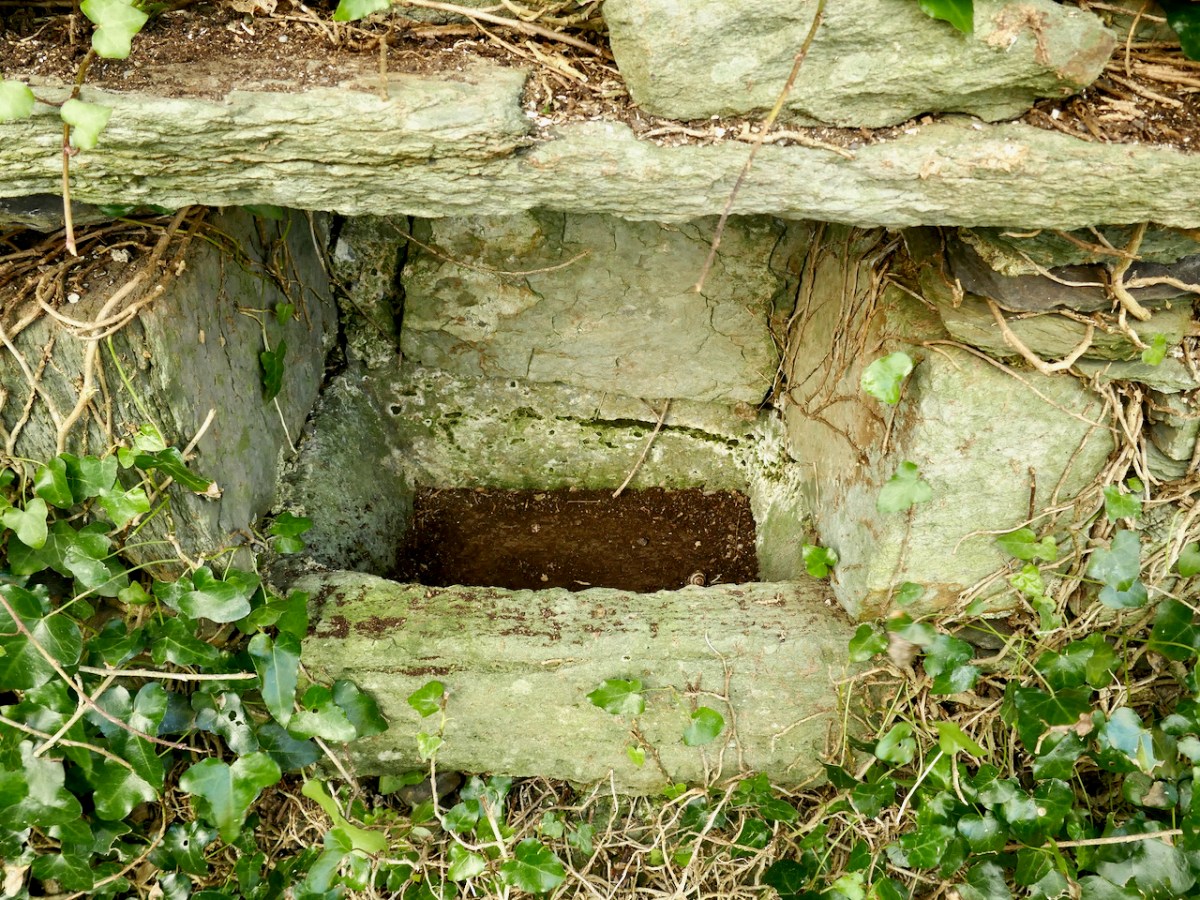
The basin in the north wall is more visible now that some of the ivy has been cut back. It may have been a baptismal font.
There are two fine gothic windows, tall and slim, with carved ogival heads. The window is the south wall is now visible inside and out. It seems to have an asymmetrical splay, designed to let more light in. For a similar window – and indeed for more on what this church may have looked like – go to my post Mizen Magic 19: Church of the Angels.
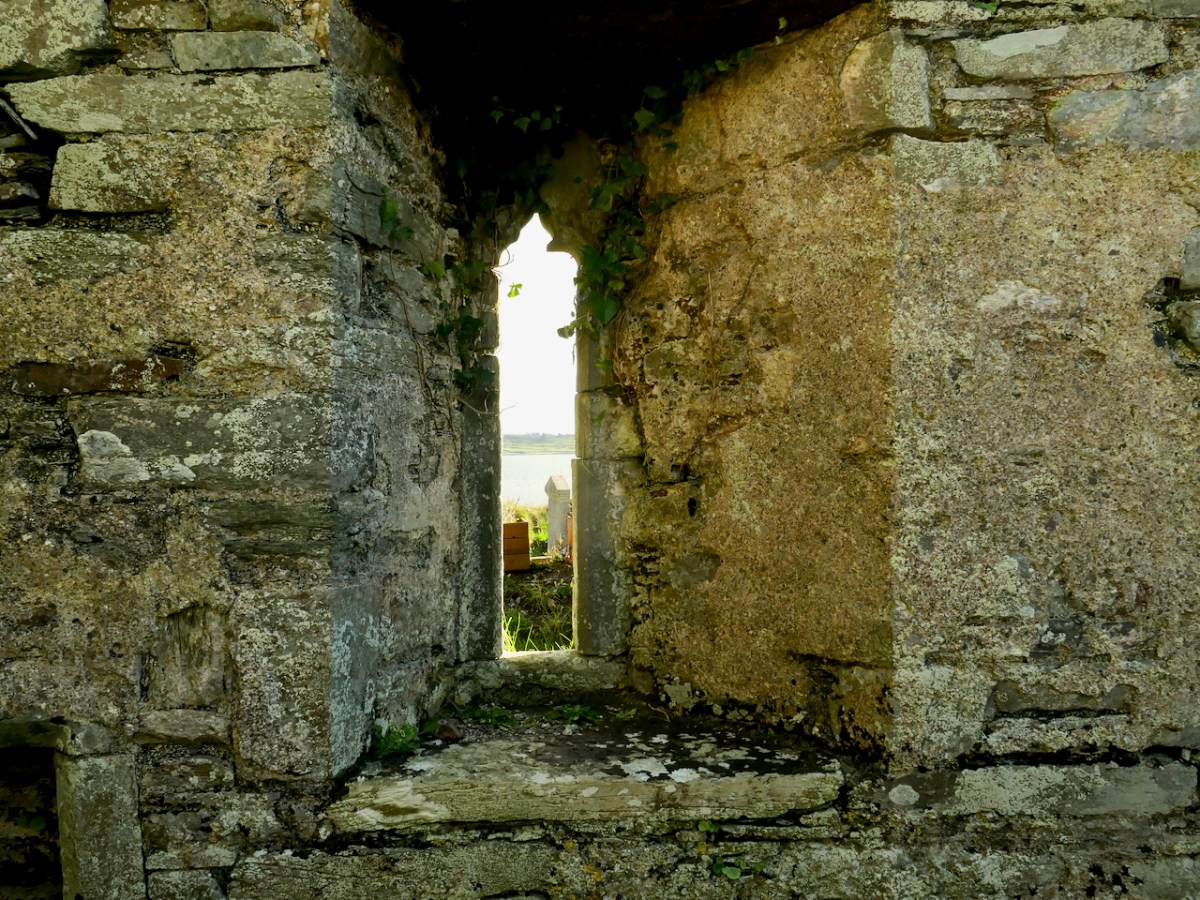
The window at the east end, behind the altar, was particularly worrying, as ivy was threatening to get between the cracks and break it apart. It looks so much better now, and on the outside the hood mouldings can once again be admired.
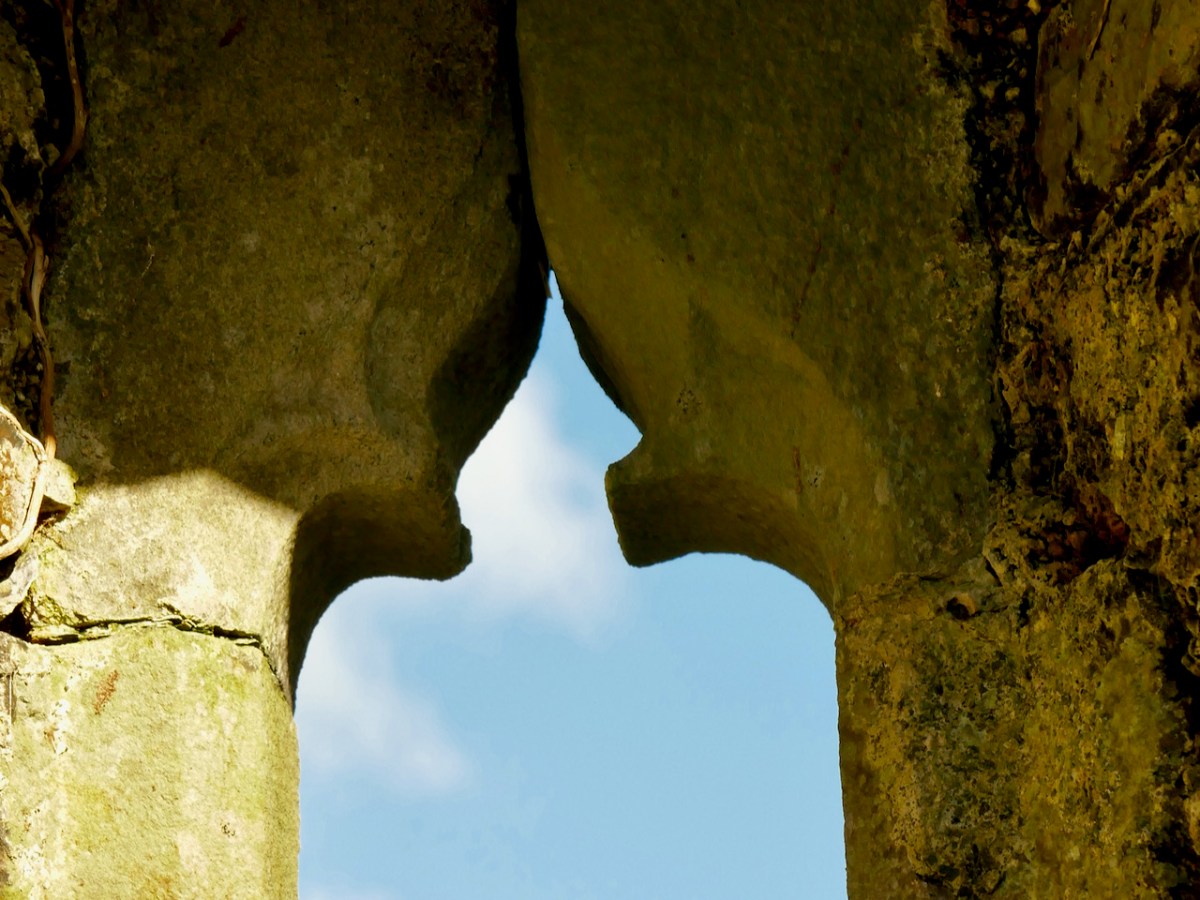
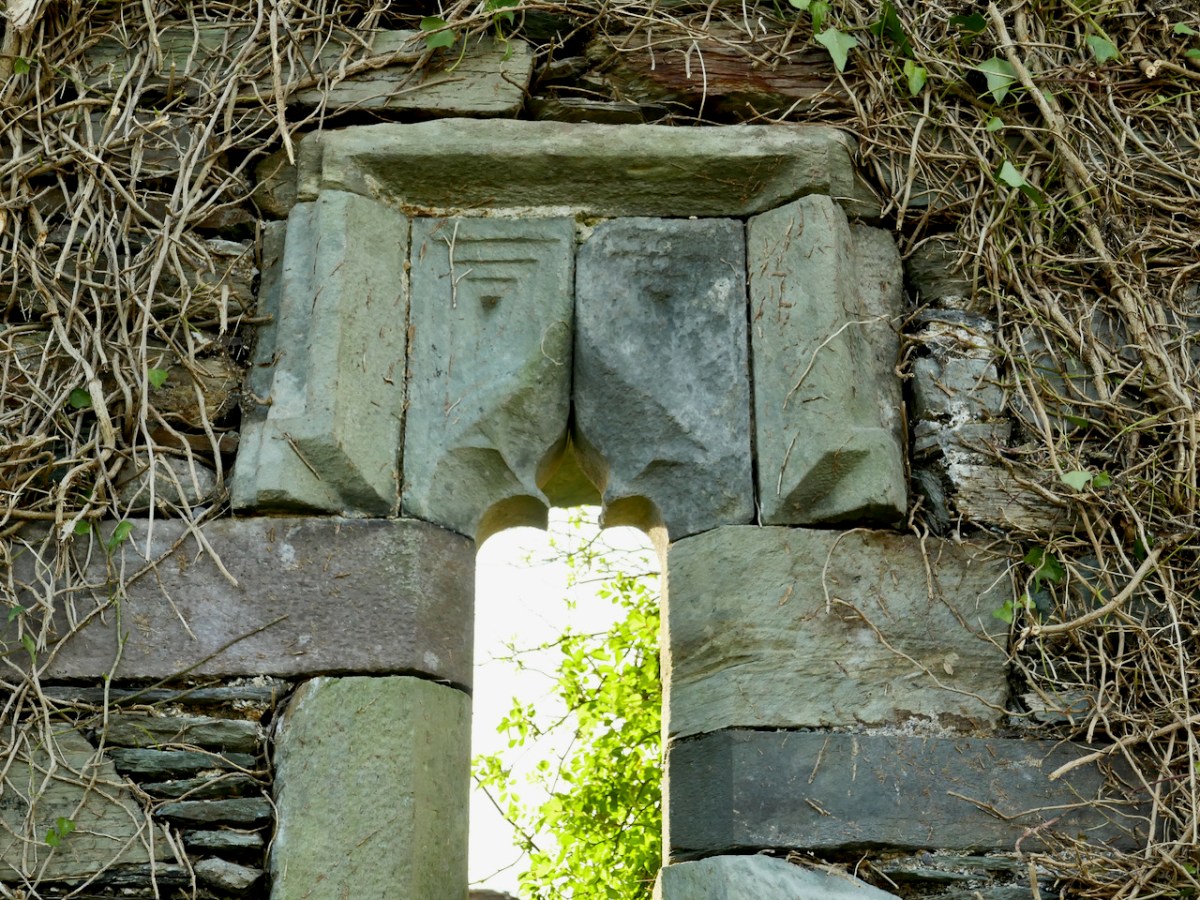
The north wall of the church, outside, is a good place to see how the ivy has been carefully clipped. There’s an old chest tomb here which incorporates what might be the top of another gothic window – further exploration of this tomb is recommended in the report.
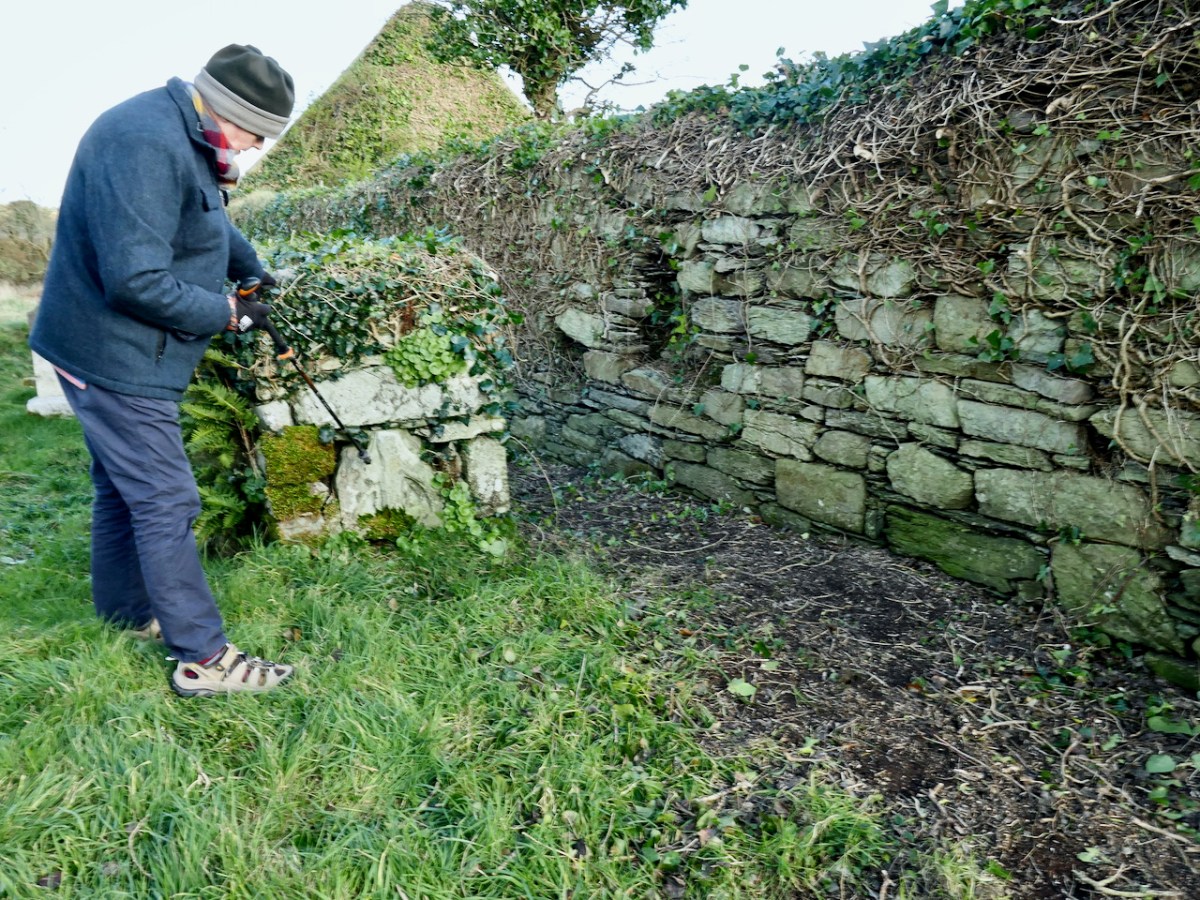
There is much more work to be done on Kilcoe Church, but what has happened so far is terrific and very encouraging. Compare the photo below with the second one in the post. They were taken from about the same place – and look at the difference! On behalf of all of us in West Cork, huge appreciation must go to everyone involved in the efforts to preserve it for posterity.
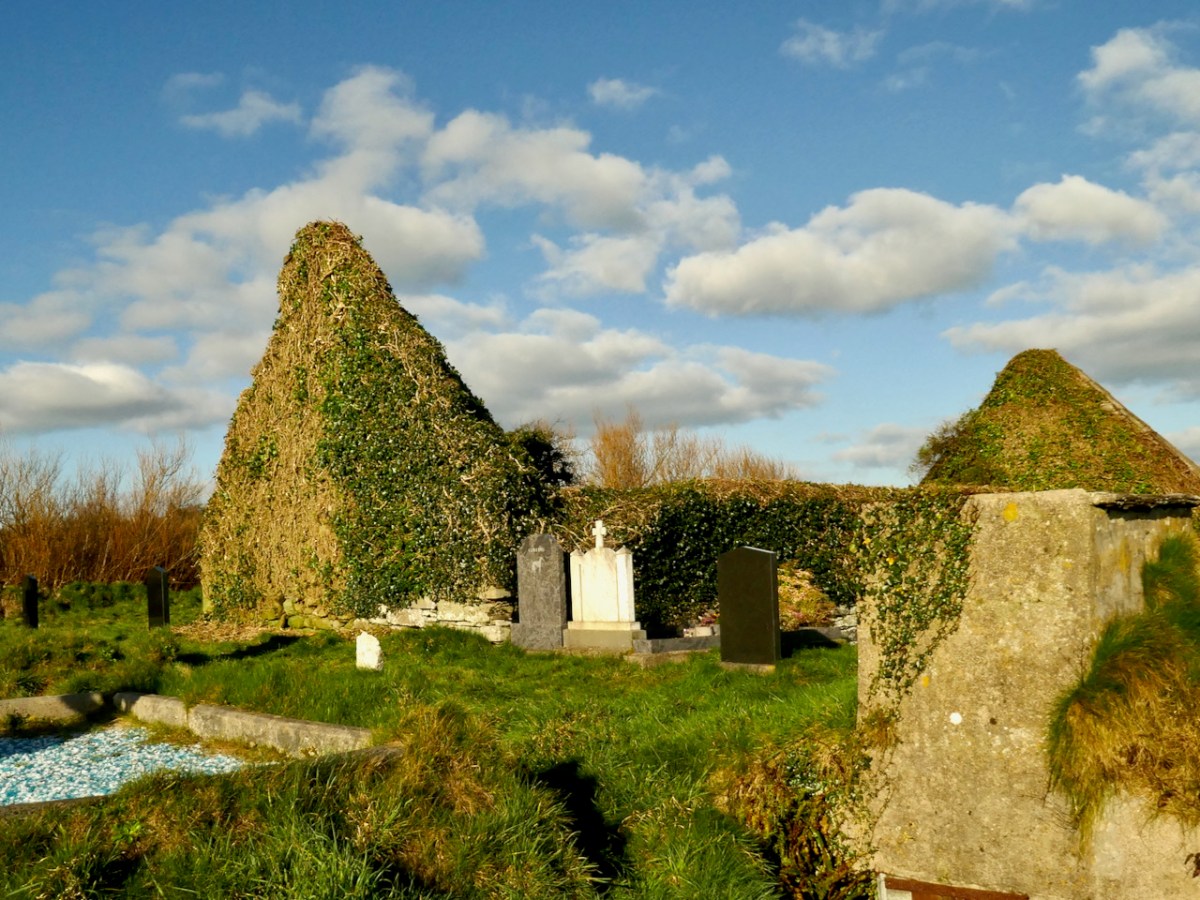
One last comment is that this church is a listed National Monument, so future work needs to be done in consultation with them.

*Churches in the Irish Landscape, AD 400 to 1100 by Tomás Ó Carragáin

**Many thanks to Isobel Towse and to Brigid O’Brien of Fastnet Trails for their leadership in raising funds to commission the report
The Twelve Arches of Ballydehob

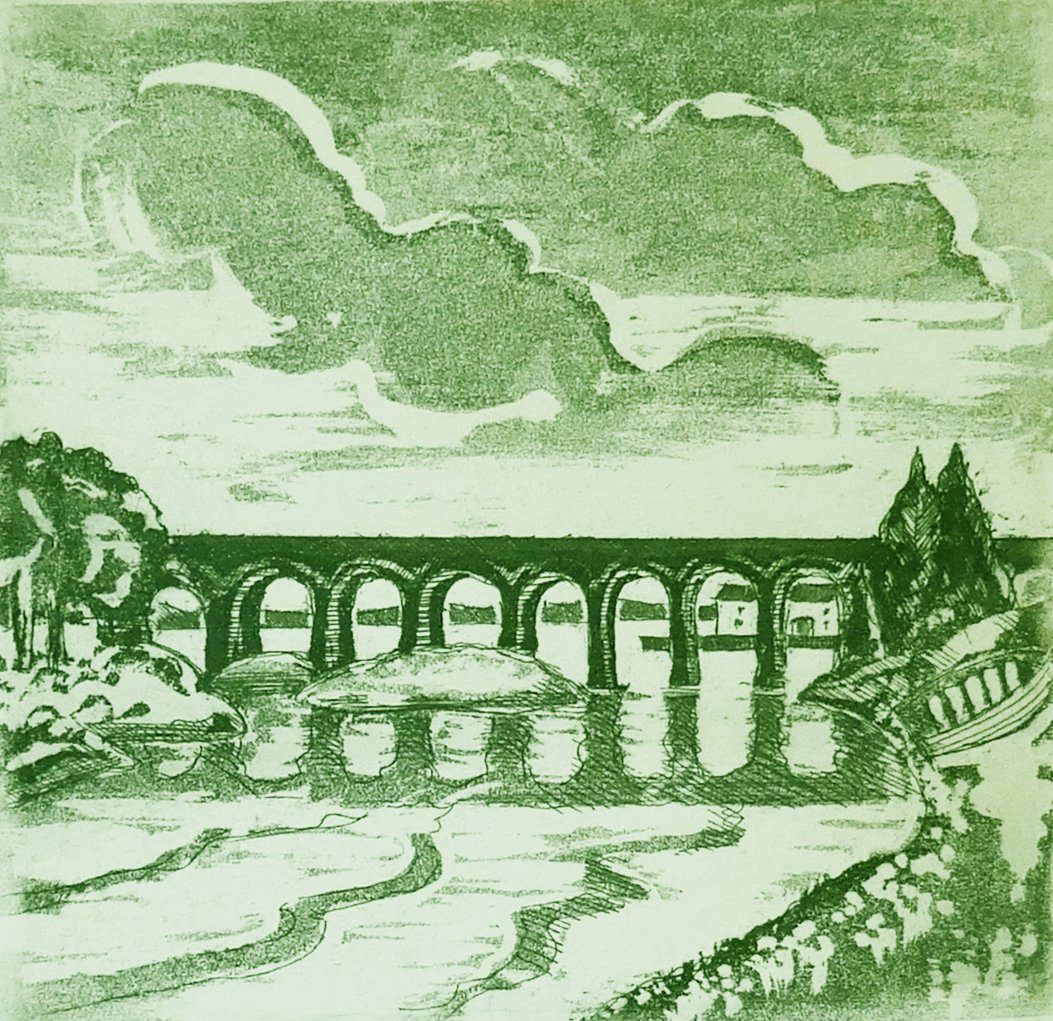
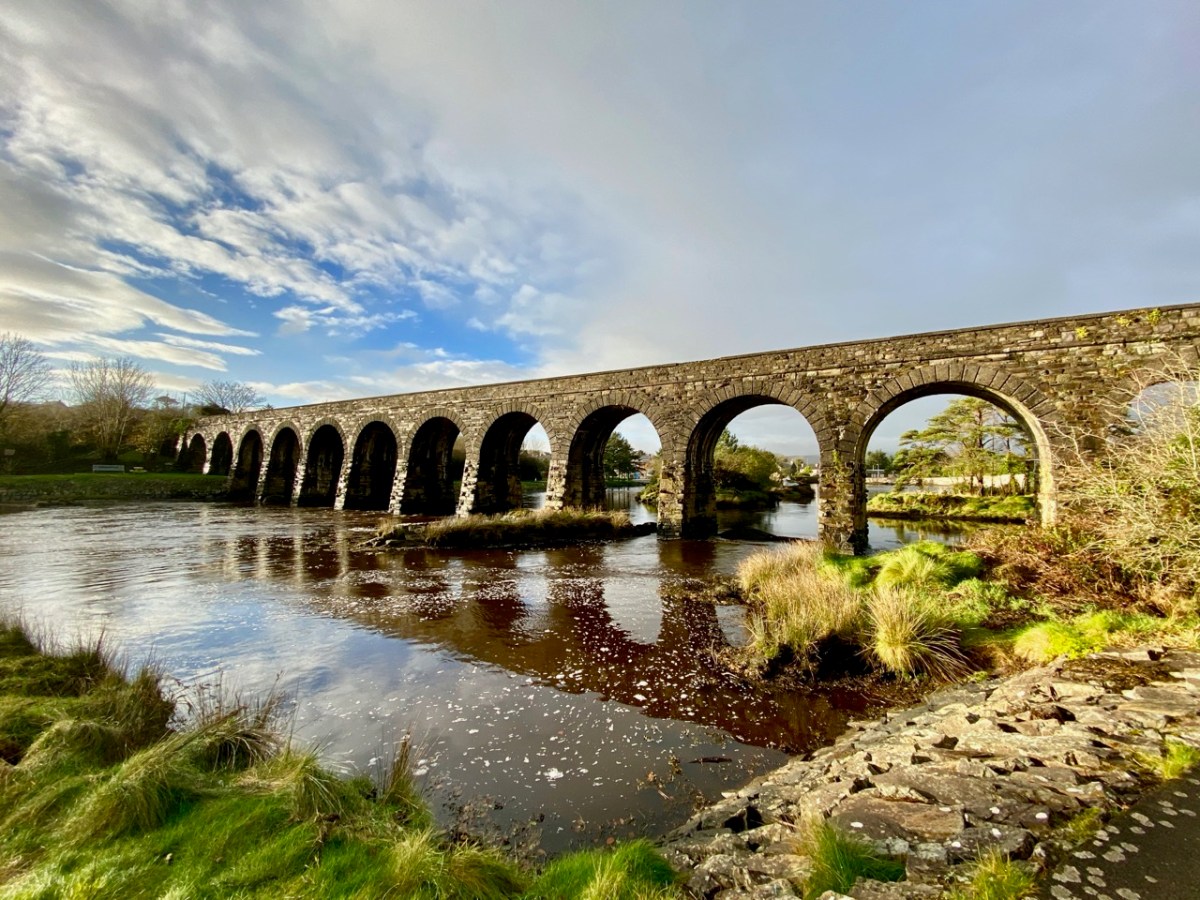
As we are approaching the traditional Twelve Days of Christmas I thought it fitting to give you Twelve views of Ballydehob’s iconic viaduct. Our West Cork village of Ballydehob has many claims to fame. It has been the centre of a great Irish art movement in the mid-twentieth century (have a look at this site). But earlier – between 1886 and 1947 – it was an important stop on the Schull & Skibbereen Tramway. This was a three-foot gauge railway line which must have been a great wonder to those who witnessed it in its heyday. There are fragments of it still to be seen, but its most monumental structure remains with us: the twelve-arched viaduct at Ballydehob.

Above: Brian Lalor was one of the creatives who settled in Ballydehob back in the artists’ heyday (he is still here today). The railway viaduct was a great source of visual inspiration to him and to his artist colleagues.

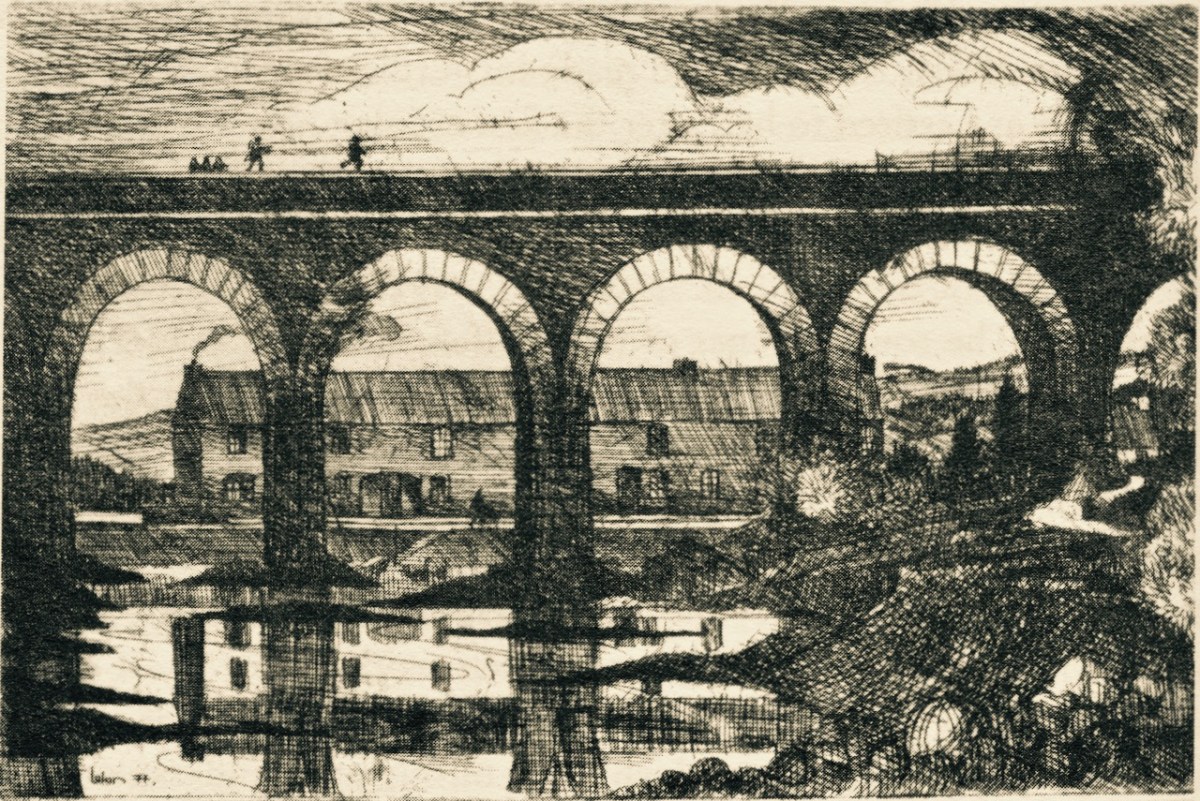
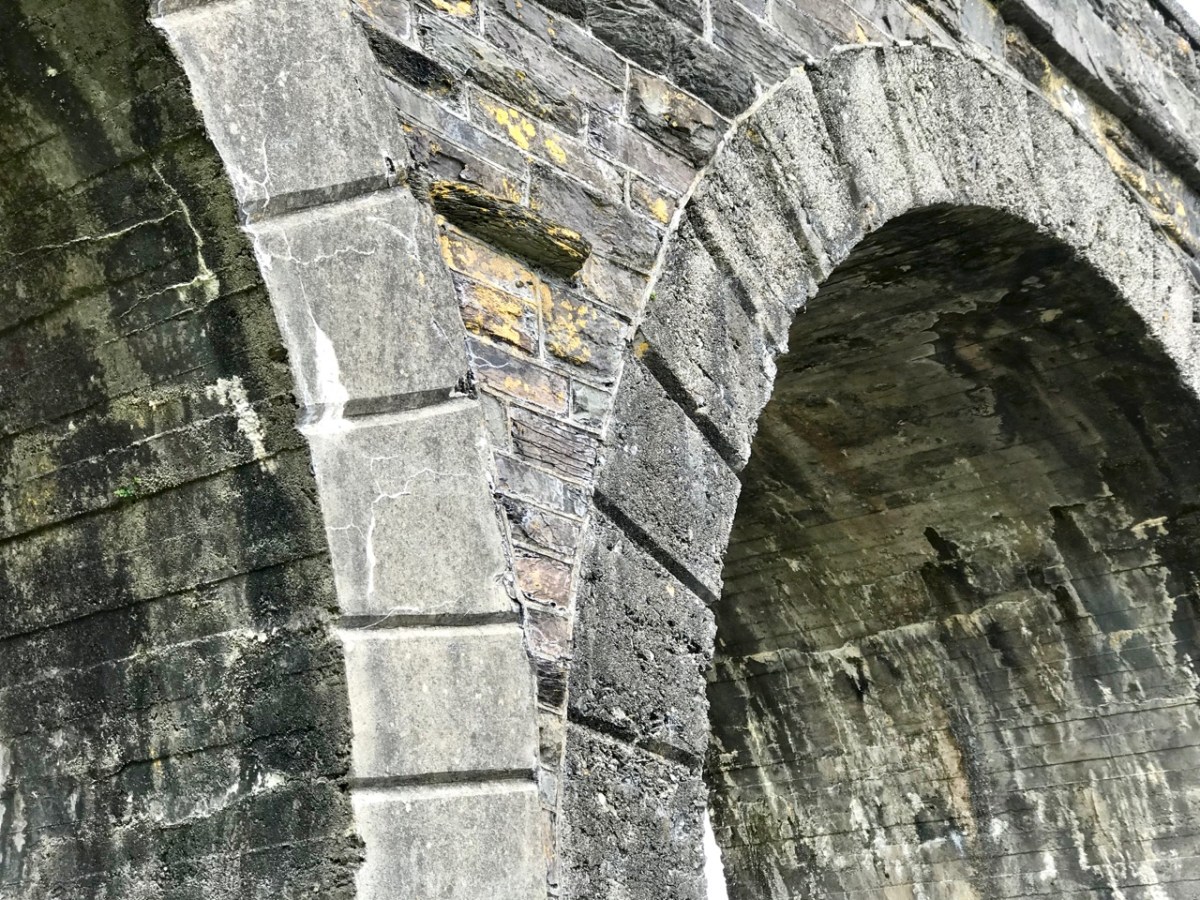
Here (above) is another Lalor work depicting the viaduct (many thanks, Brian). Behind the arches in this print you can see the former commercial buildings on the wharf, now converted to private use. At first glance you might think what a fine masonry structure this is. In fact, most of it is mass concrete. Look at the close-up view of the arches below: they are cast and faced in concrete, albeit the arch-stones are made to look like masonry. Only the facing infills and the parapets are actually of stone. This is quite an innovative construction for its time. Barring earthquake it’s certain to endure.

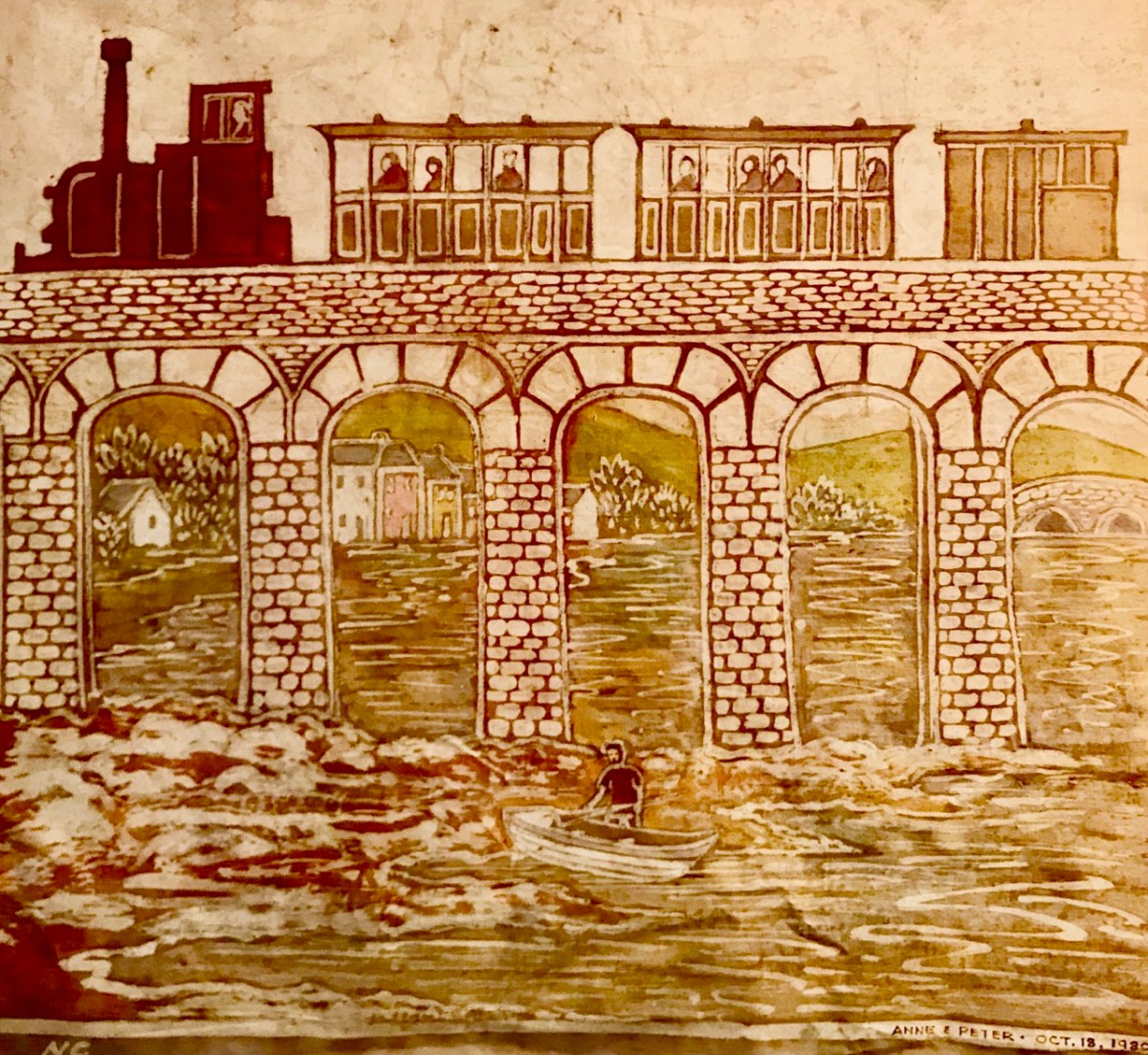
I was not surprised to find how often images of this engineering feat have inspired artists and others working in creative fields. Here’s a particularly fine example from the days of the artist settlement around the village in the mid-twentieth century (below): this one is a batik by Nora Golden.

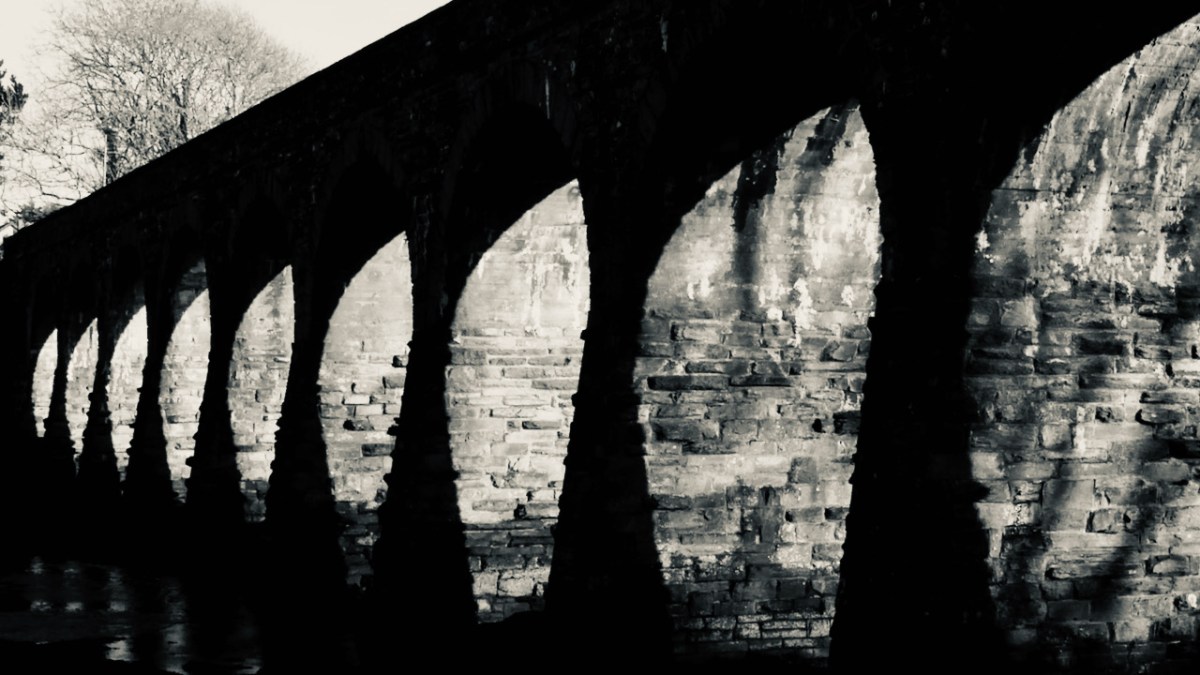
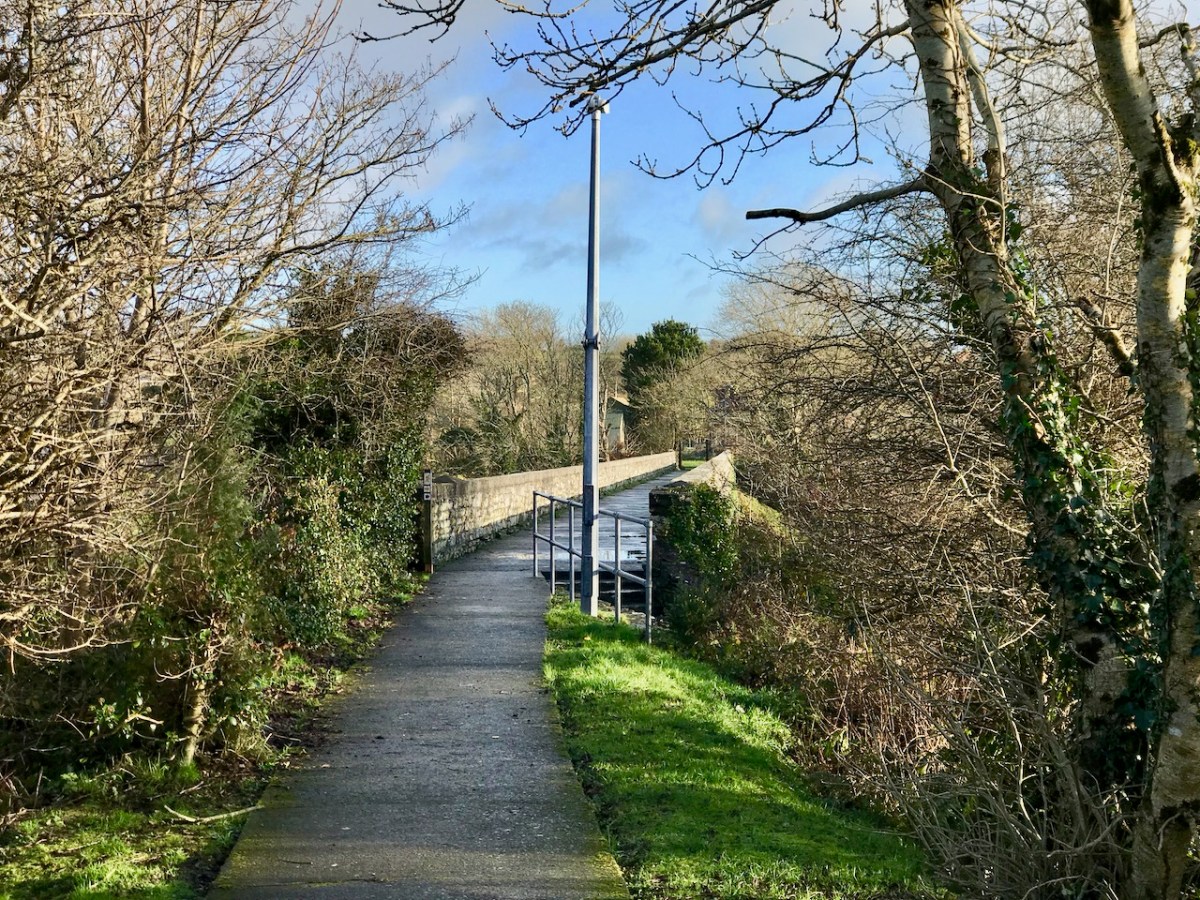
I really like this moody photograph by Finola: it demonstrates the elemental nature which repetition and shadow gives to the scene. (Below): we have to see the way over the top, now a public footpath. The railway was a single track narrow-gauge at this point.

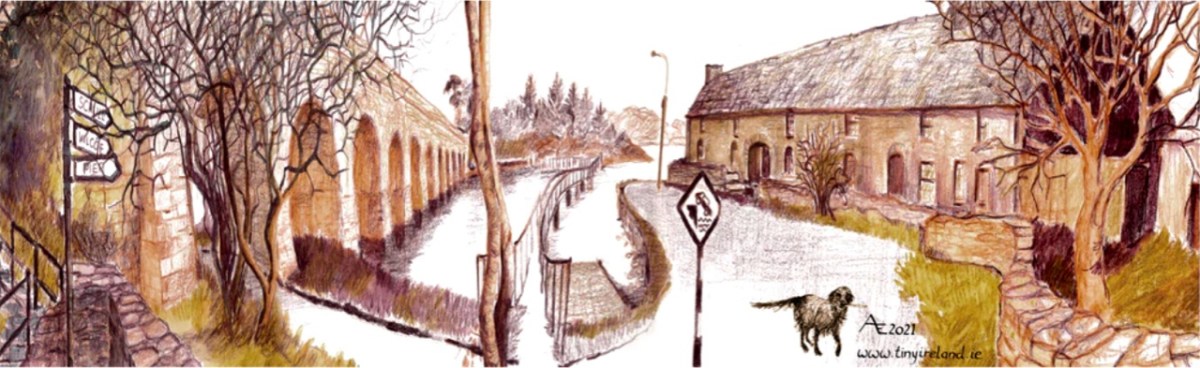
The ‘Tiny Ireland’ creator – Anke – has sketched this wonderful caricature of our wharf area, showing the 12-arched bridge in context. Finola has written about Anke. You can buy your own piece of Tiny Ireland through her website, here.

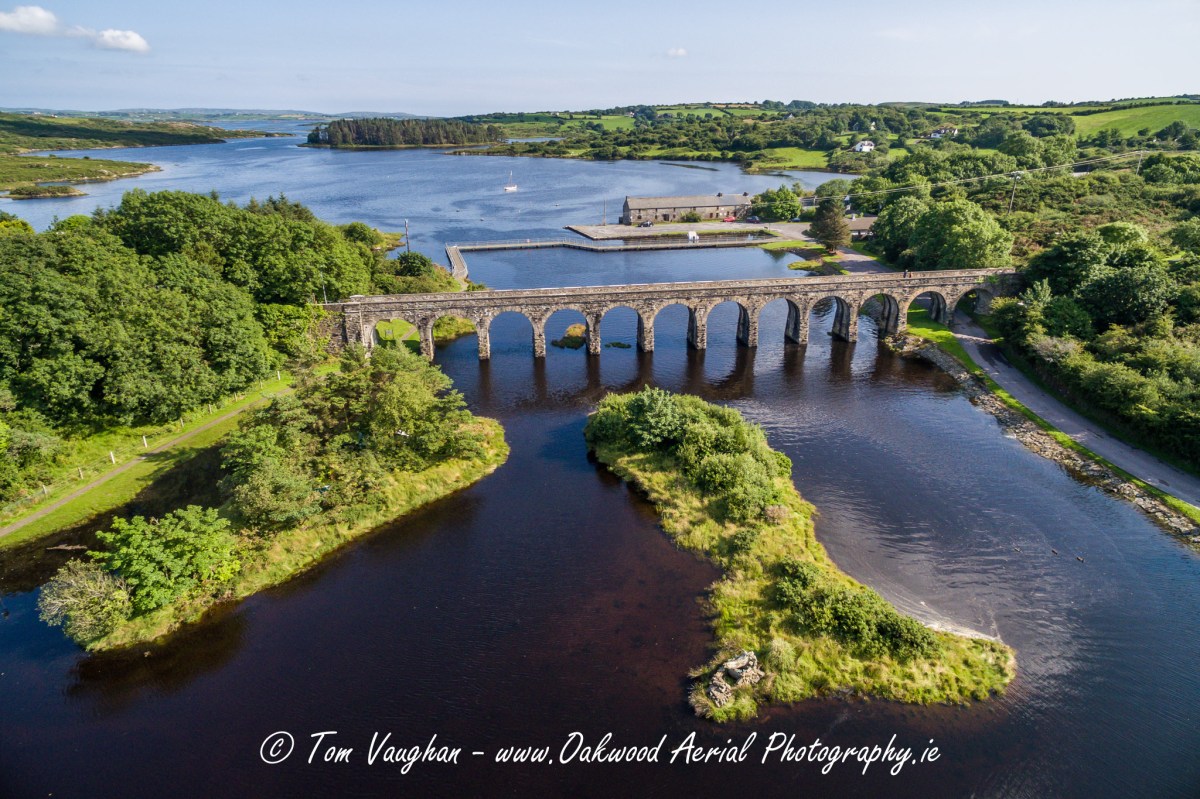
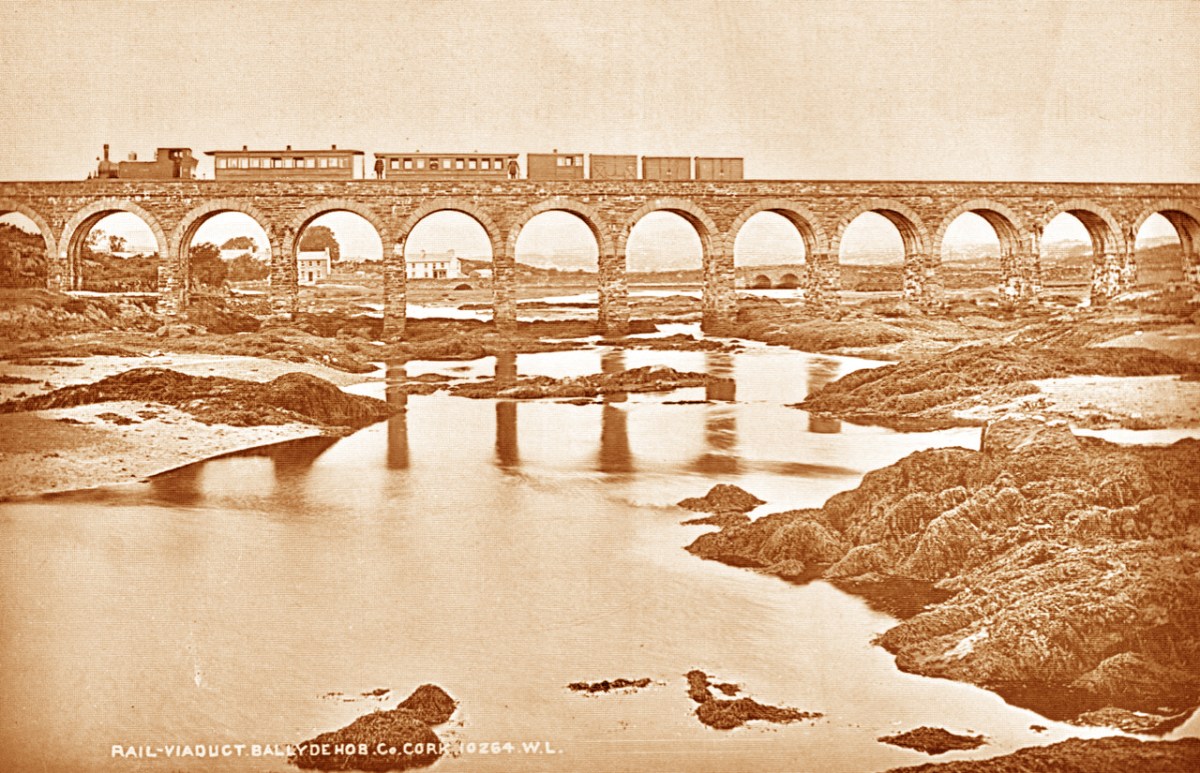
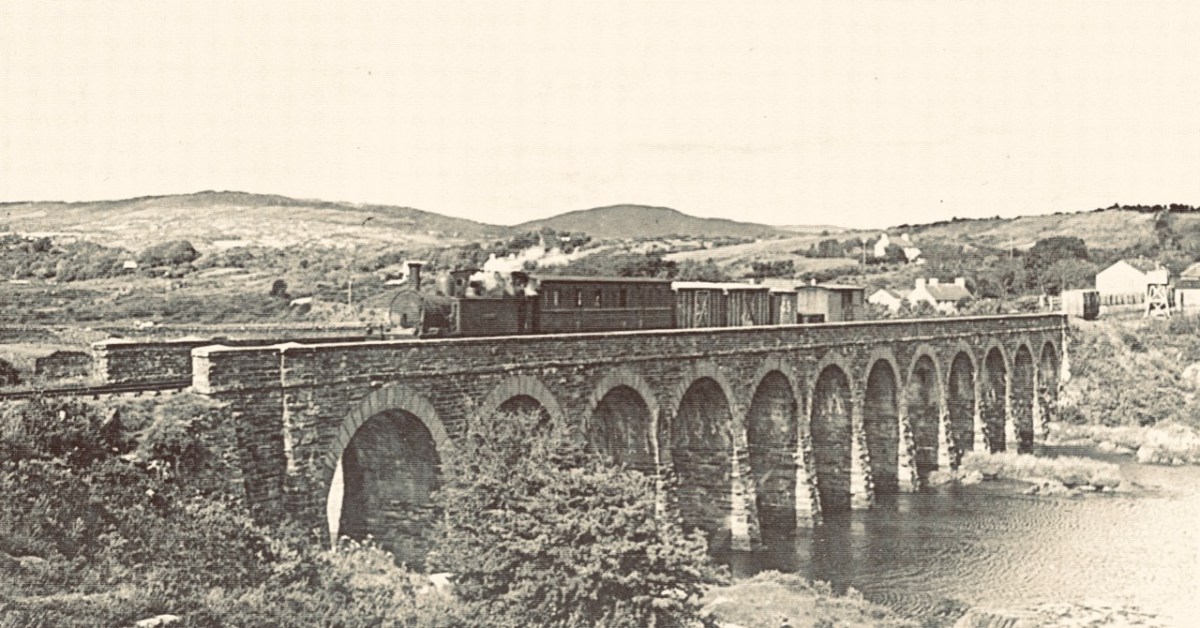
How better to look at the bridge in context than this view from Aerial Photographer Tom Vaughan. Thank you, Tom, for allowing us to use this magnificent image. Here’s the link to his own website. You will find excellent gifts for the connoisseur here. The last of our ‘Twelve Arches’ (for now) has to show us the bridge in its rightful use. I think this postcard – from the Lawrence Archive -dates from the early 1900s. I can’t resist quoting the caption for the rail buffs among you!

. . . A Schull-bound train has stopped especially for the photographer: this is Ballydehob viaduct looking north. The train comprises GABRIEL, bogie coaches Nos 5 and &, brake vans Nos 31, 32 and 38 . . .

The Schull & Skibbereen Railway – James I C Boyd – Oakwood Press 1999

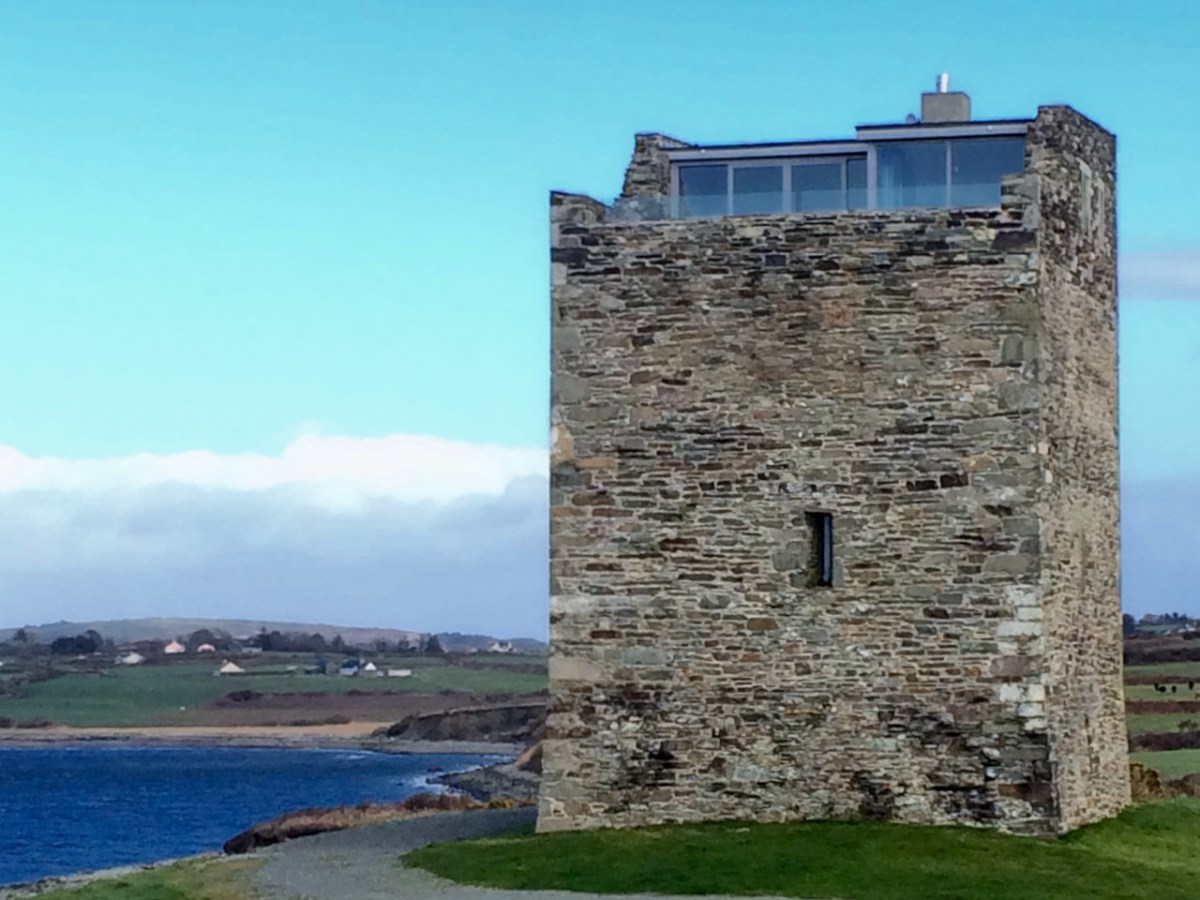
Rincolisky Castle – A Loving Restoration

There are so many ruined castles in West Cork that it’s important we celebrate the ones that have been saved, and the people who have done the saving.

I’ve written about two of them already, Kilcoe (Kilcoe Castle – A Magnificent Reconstruction) and Black Castle or Leamcon. There is also Baltimore Castle, restored by the McCarthy Family and open to the public. I’ve also done some primers on what castles are all about. If you’re new to this, check out Tower House Tutorial, Part 1, Tower House Tutorial, Part 2 and Illustrating the Tower Houses.

Rincolisky, also known as Whitehall (the name of the townland in which it stands) was a castle of the O’Driscoll Clan – the fierce, sea-going, fabulously wealthy family whose seats of power were in Baltimore (Dún na Séad, or Castle of the Jewels) and Cape Clear (Dún an Óir, or Castle of Gold). 

The siting is interesting. It is in clear view of Kilcoe Castle, built by the McCarthys probably to keep an eye on the O’Driscolls and the O’Mahonys, and Rossbrin Castle would also have been visible battlement-to-battlement. Here’s what Samuel has to say about that in his Tower Houses of West Cork;

The tower house seems to have been located to defend the isthmus between Cunnamore and the mainland; the isthmus would ease the defence of herds of cattle and it is possible that some form of occupation may have existed before the construction of the tower house. The defensive strength of the site seems to have have been deliberately enhanced by the quarrying required for the tower house’s construction. The scarp faces eastward, perhaps because attack from this direction was expected.

Samuel, Mark Wycliffe. The Tower Houses of West Cork

The name Rincolisky comes from the Irish Rinn Cuil-Uisce, or Point of the Backwater. It appears to be 15th century, as are many of the castles in this region, and there is one documentary mention of the year 1495 as the year in which is was built. After the Battle of Kinsale and the subsequent subduing of all the West Cork clans, it passed into the ownership of Sir Walter Coppinger, along with the lands, which apparently included a ‘town’ of which no trace now remains. The Coppingers remained in possession throughout the tumultuous 17th century after which time is passed to their relatives, the Townsends. At some point in the 18th century the Townsends abandoned the draughty old tower house in favour of a more comfortable manor house (like the ones described here), styled Whitehall. They may have used stone from the castle (the upper floors) or the bawn walls in its construction. This would explain the total absence above ground of traces of the bawn. 

At this point, Rincolisky fell into disuse and became, as is the fate of so many West Cork castles, a convenient place for a local farmer to keep cattle (below, photo by Margaret McCarthy). And so it remained for a couple of centuries, until it found the champion it needed and deserved. 

Stephanie Jaax loved this area and spent summers here with her parents who owned the castle. She was determined to bring it back to life and what a daunting proposition that was! Stephanie was also set on doing it properly and this involved getting all the required surveys and assessments done by archaeologists and working to conservation and historical standards at all times. To see how well she has succeeded, take a look at this video, which shows not only the castle, but the surrounding area.

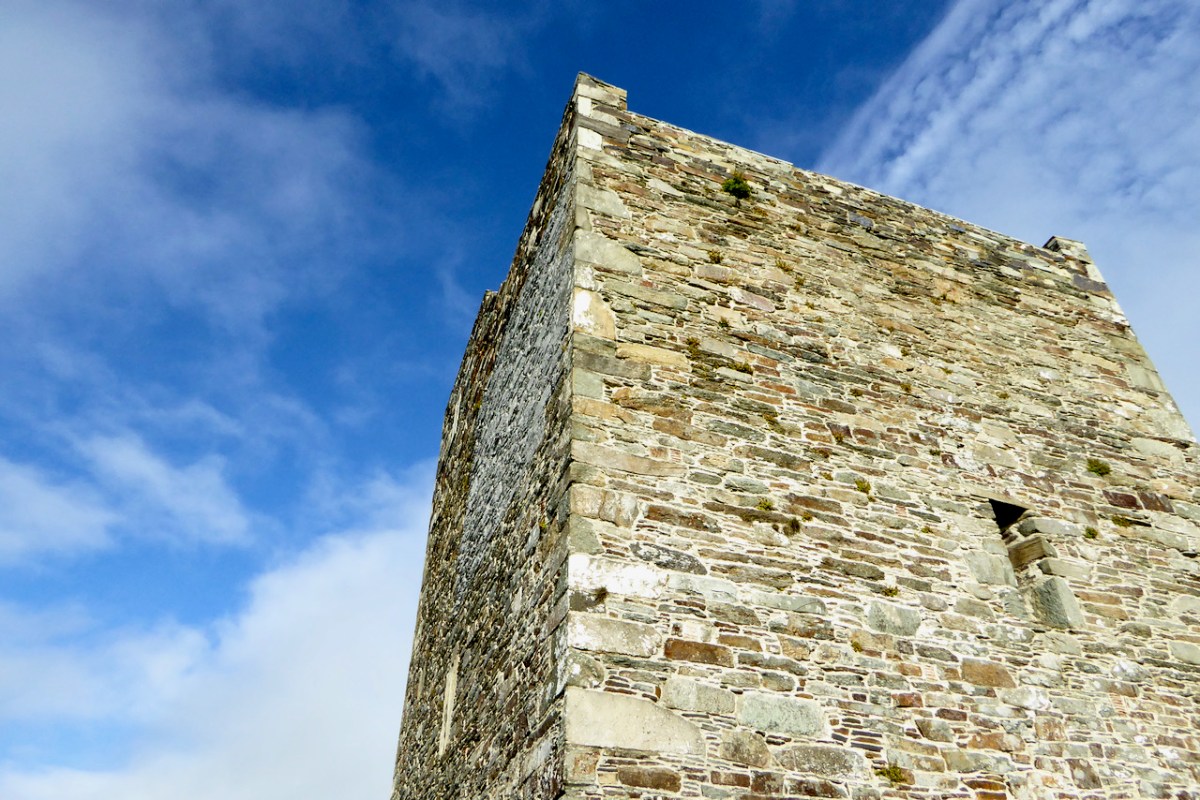
Rincolisky is one of the Raised Entry Castles of West Cork. Similar to Ardintenant and to Black Castle. Black Castle (or Leamcon) has the same layout, in fact, with the raised entry directly above the ground entry.

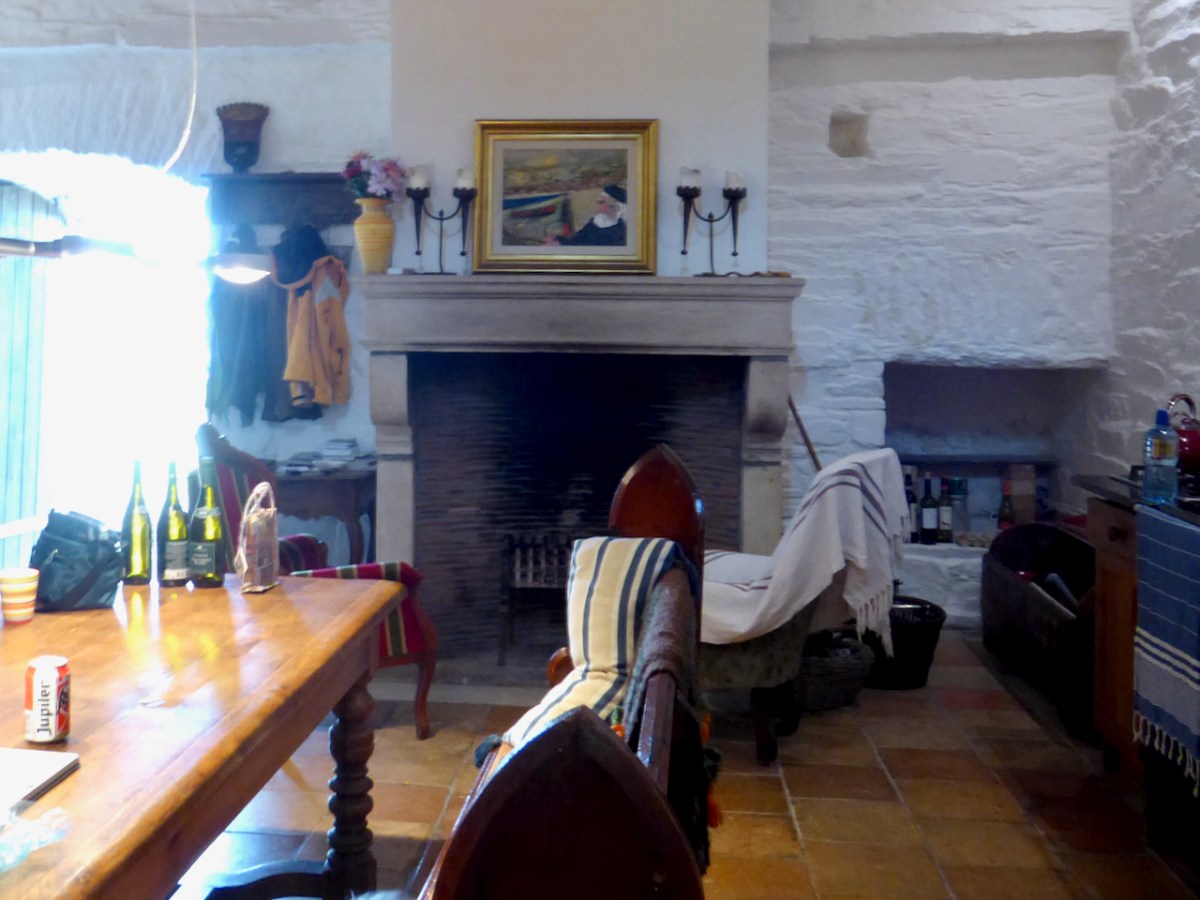
Rincolisky Castle offers a wonderful opportunity to observe how three spaces could be accommodated beneath the vault. 

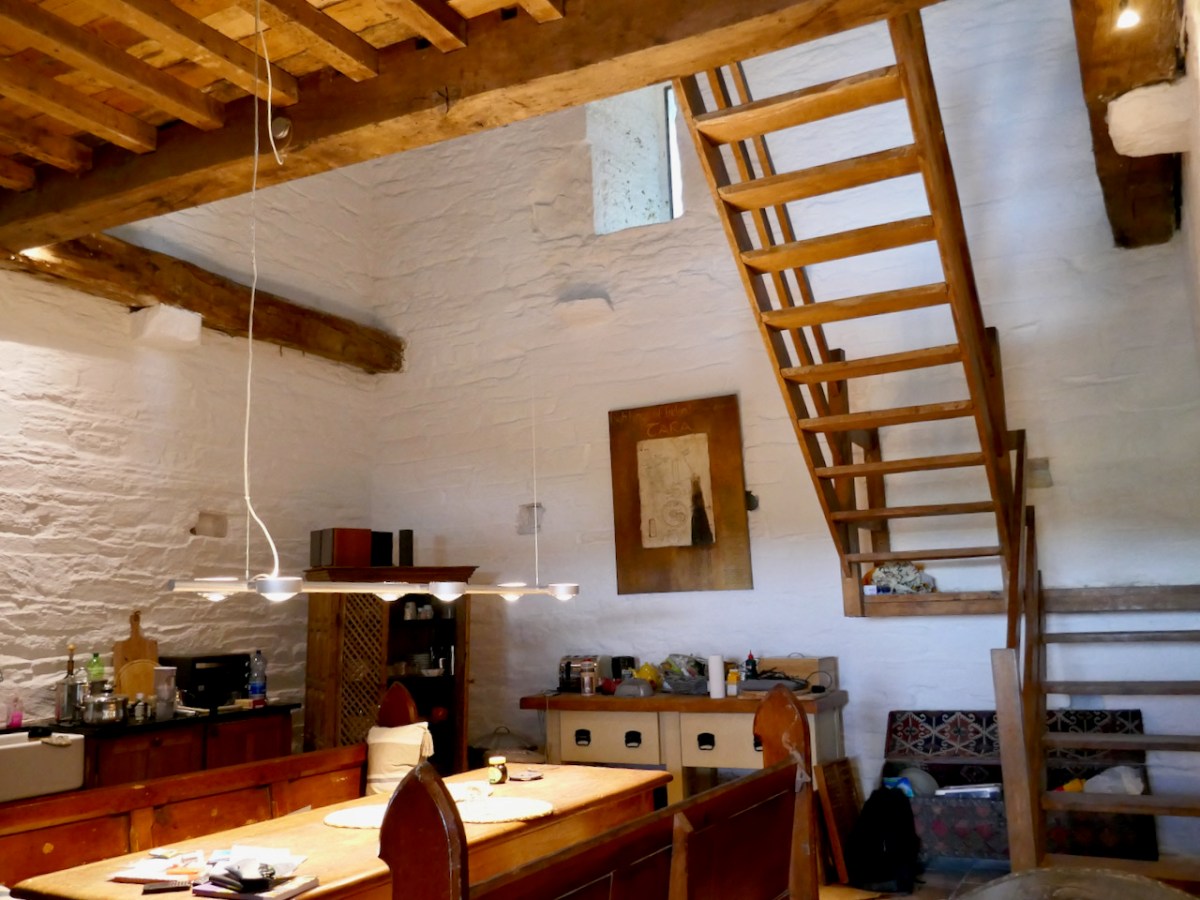
The main kitchen/dining area at Rincolisky is on the ground floor (unlike at Leamcon where it is on the top floor). Originally this area may have been used for storage and it was self-contained – that is, there would have been no access to any other floor from this level.

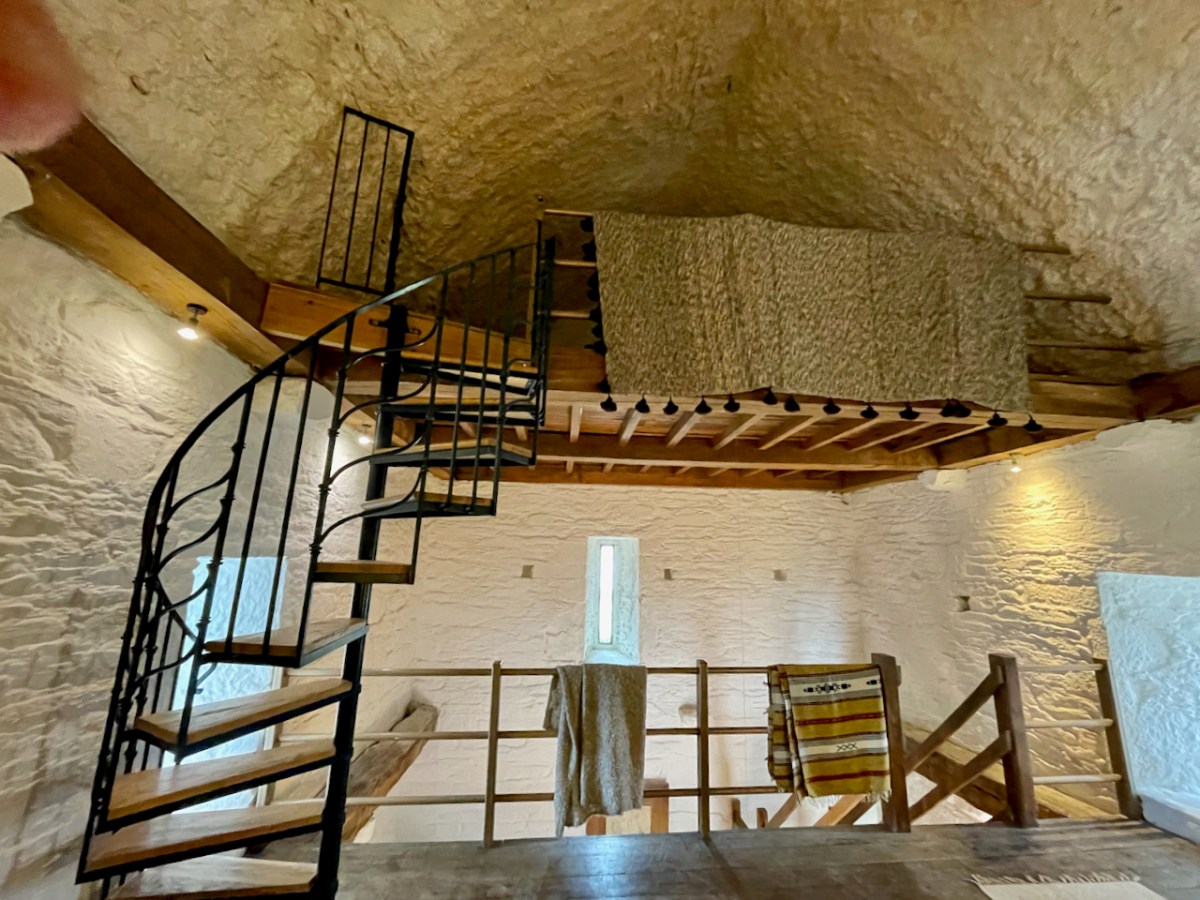
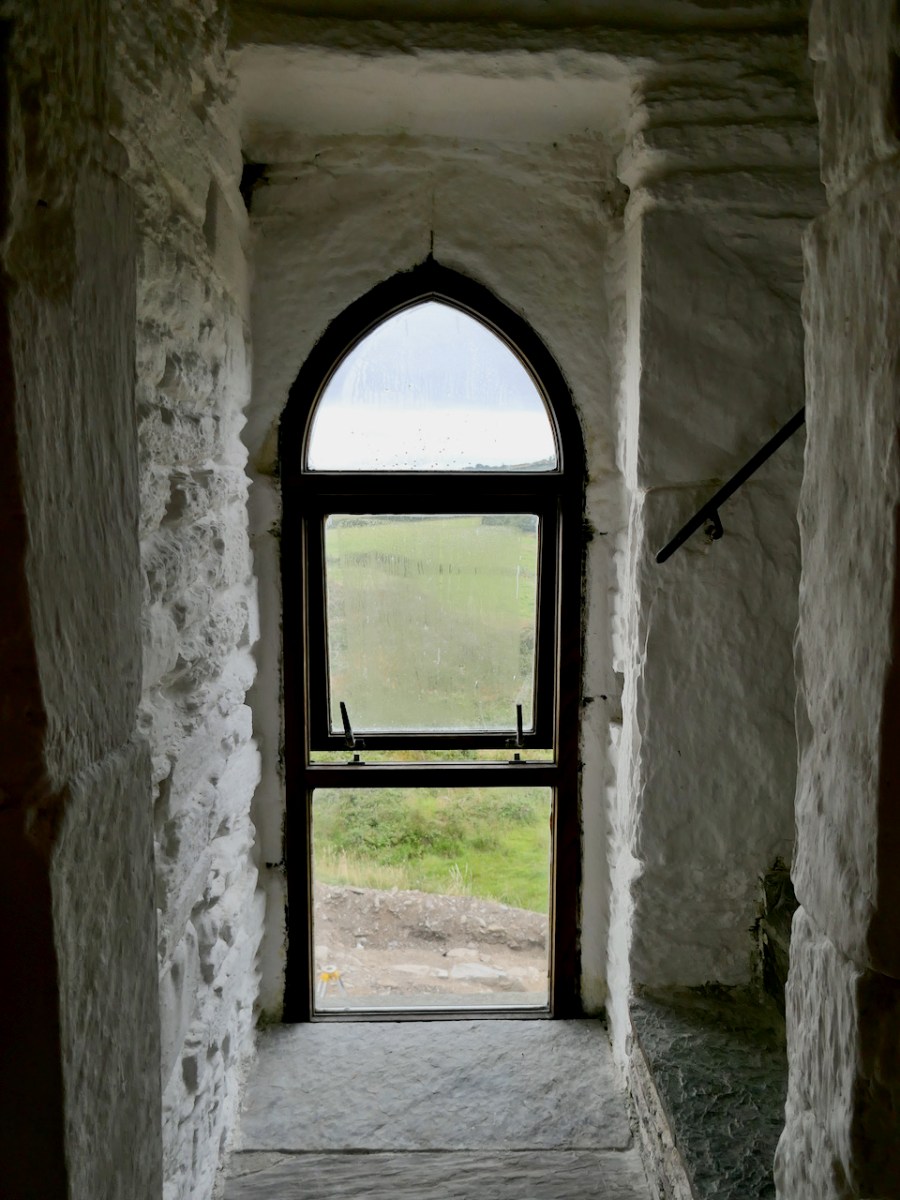
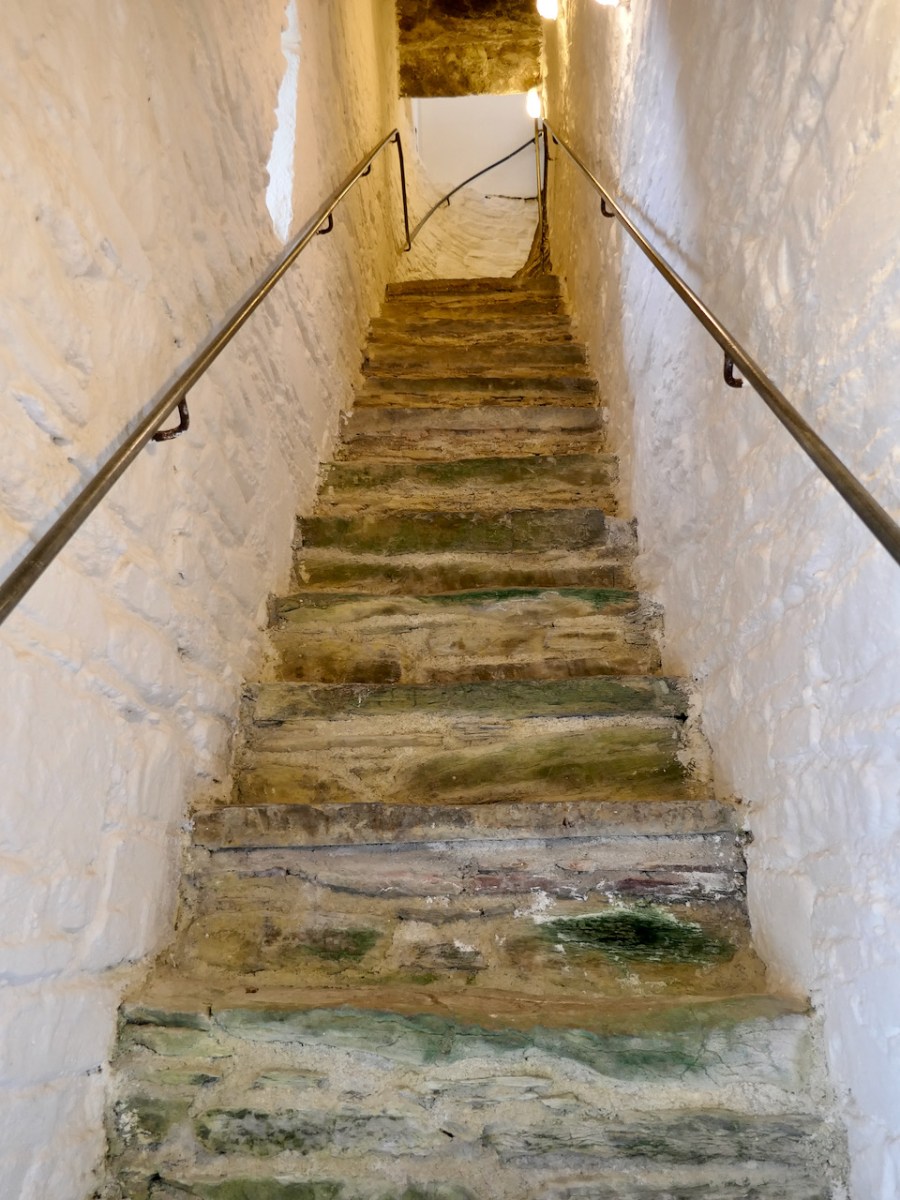
Now, however, a wooden stairway leads to the second story, a wooden floor laid on the joists which were stretched between the joist stones in the walls (see Dunmanus Castle for examples of this. From this floor, a spiral stairway leads up to the final floor under the vault, used now as a sleeping space. One surprising things is that the areas under the vault are not as dark as I imagined they would be. given so few, and such small, windows. Partly this is because of the whitewashed lime render which really helps to brighten up the interior, and partly it is the result of clever and subtle lighting.

Access to the second floor in the 15th century would in fact have been from the outside. The raised entry, now repurposed as a window but originally a door, was what separated the public from the private areas of the castle. Ascending the outside steps to the raised entry, you would go straight ahead into the second floor, or turn left to ascend the steep stone stairs to the storeys above the vault.

The second floor may have been used as a public space where the chief met with others and carried out the business of the clan lands. But see also further down – it was possible this kind of business was conducted in an adjacent ‘hall.’

The private areas of the castle – the home of the chief and his family – were accessed by ascending the steep mural staircase which then turned into a spiral staircase within the corner of the castle.  Nowadays this brings you to the final floor of the castle, used for sleeping, living and bathing. But originally this would have led up to two more stories and access to the wall walk and roof. 

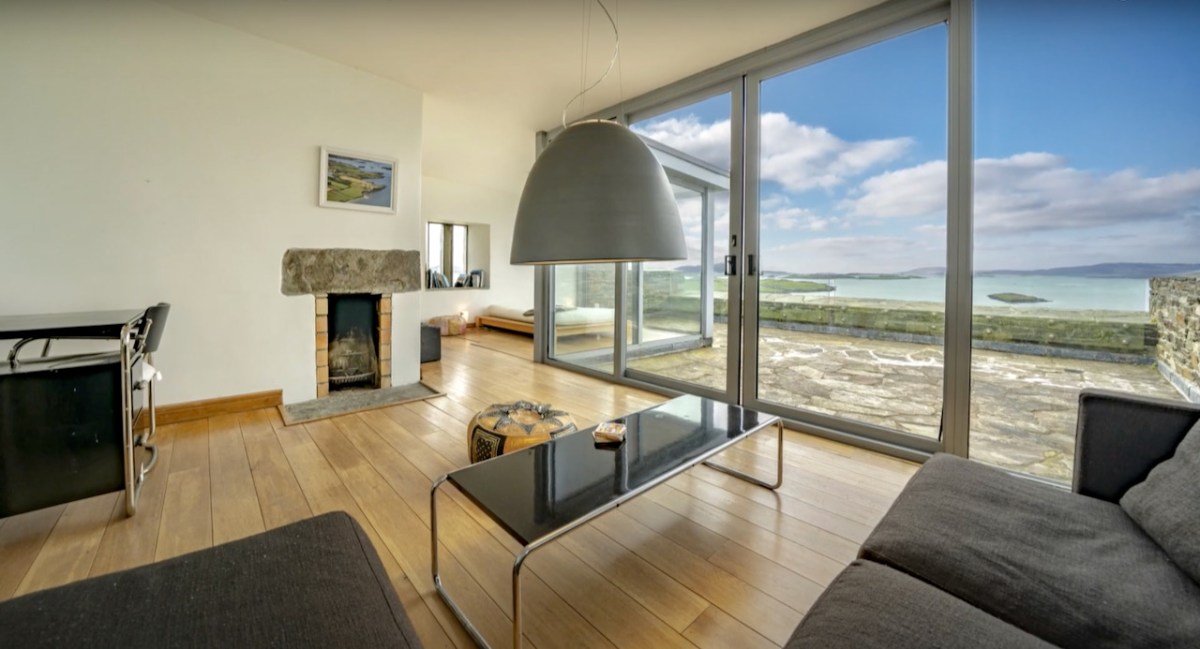
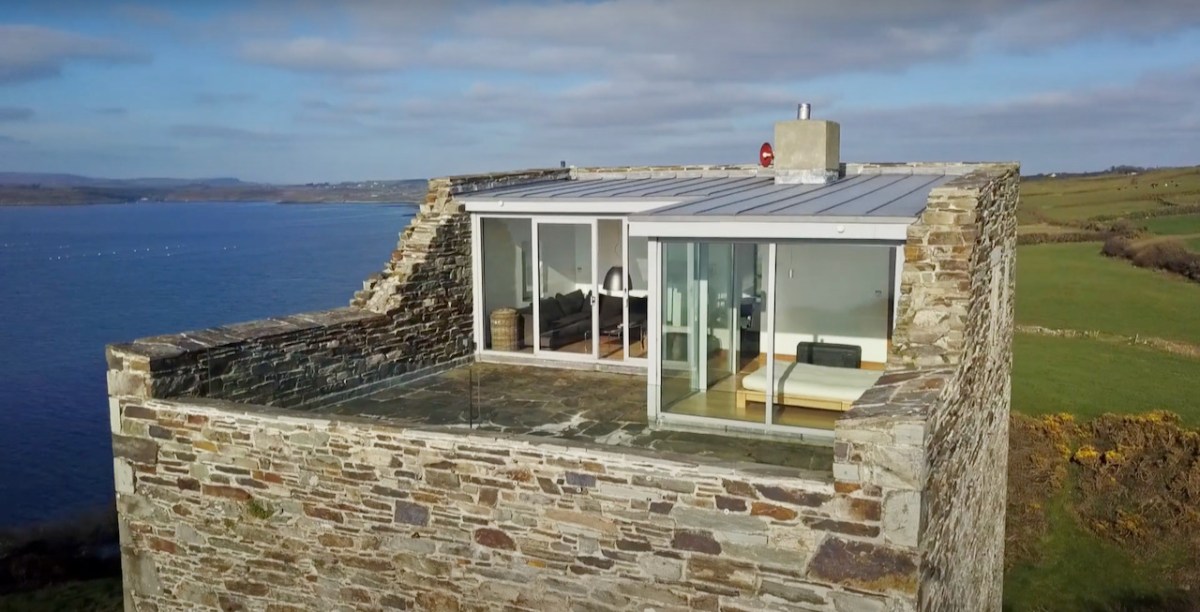
The current top floor is beautifully done – with a bedroom, bathroom and living room. The crowing glory is a sunny terrace with stunning views across the sea and surrounding countryside.

Throughout all her renovations, Stephanie has employed archaeologists to carefully excavate and uncover all the original features and has followed best practice as provided by Cork County Council Planning Department and heritage experts.

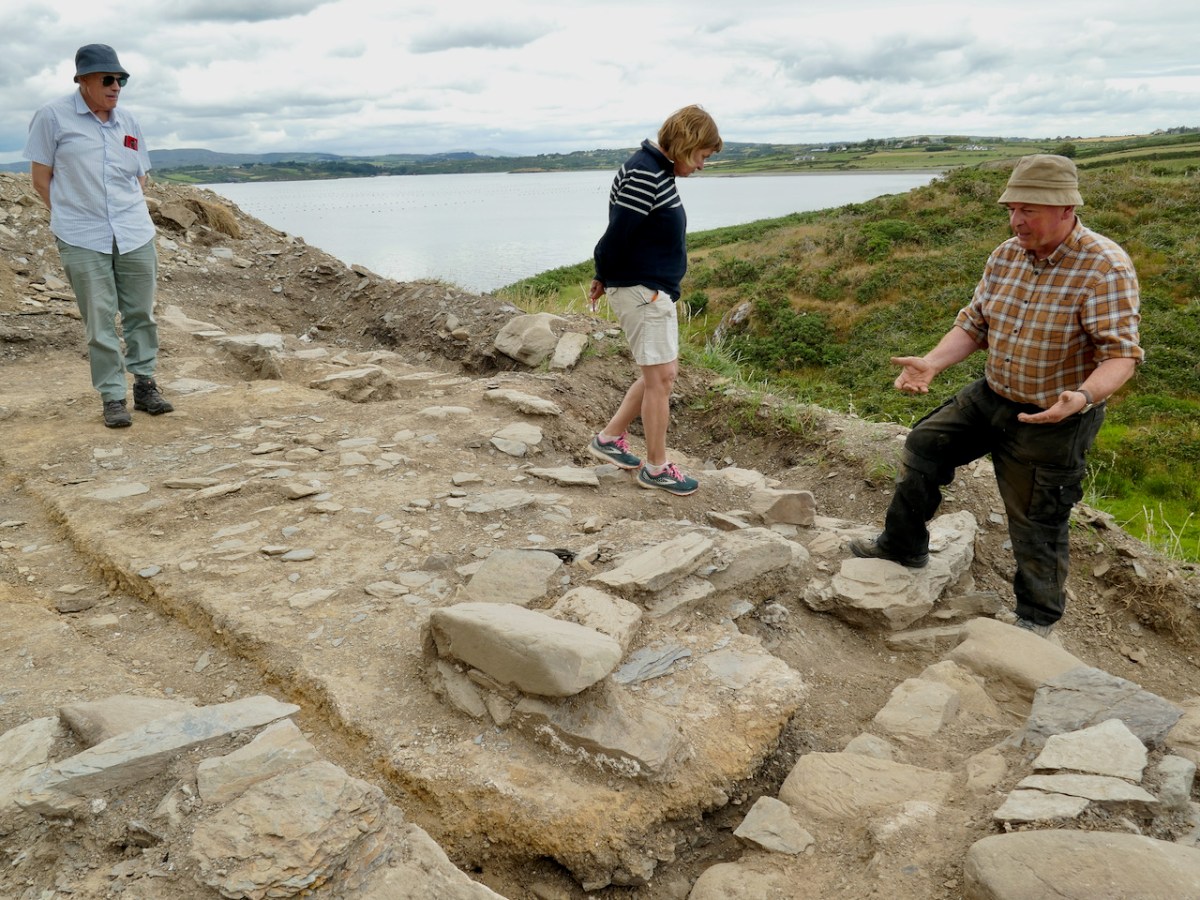
The photograph above is of three distinguished medievalists – from the left Con Manning, Margaret McCarthy and Eamonn Cotter – pondering over the most recent excavation.

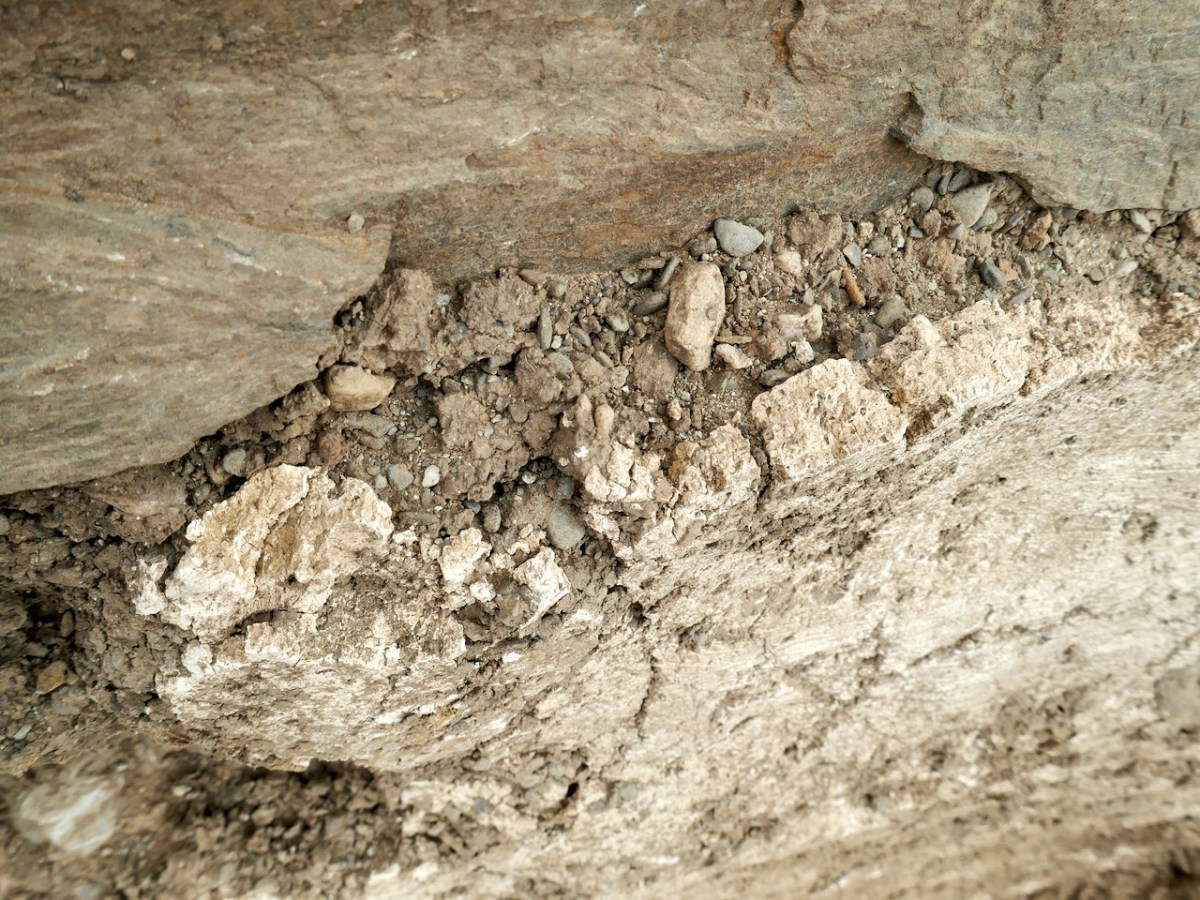
This, of course, has severely limited what she was able to do and how she had to do it, and made it more expensive. This process continues, as the area around the entrance was excavated this summer by Eamonn Cotter to try to establish what lay immediately outside the ground-level and raised entries. His finding have turned up the original lime render (Above) which would have coated the entire building (leading to the name White Hall), traces of the original bawn wall (found also in the previous excavations) and a complex series of structures which were built, and collapsed, over time. 

These structures incorporated what may have been a bread oven and it seems the buildings were attached to the castle, as evidence by traces of a gable wall, now no longer visible. Eamonn posits that the first building may have been a ‘hall’. In his report he says.
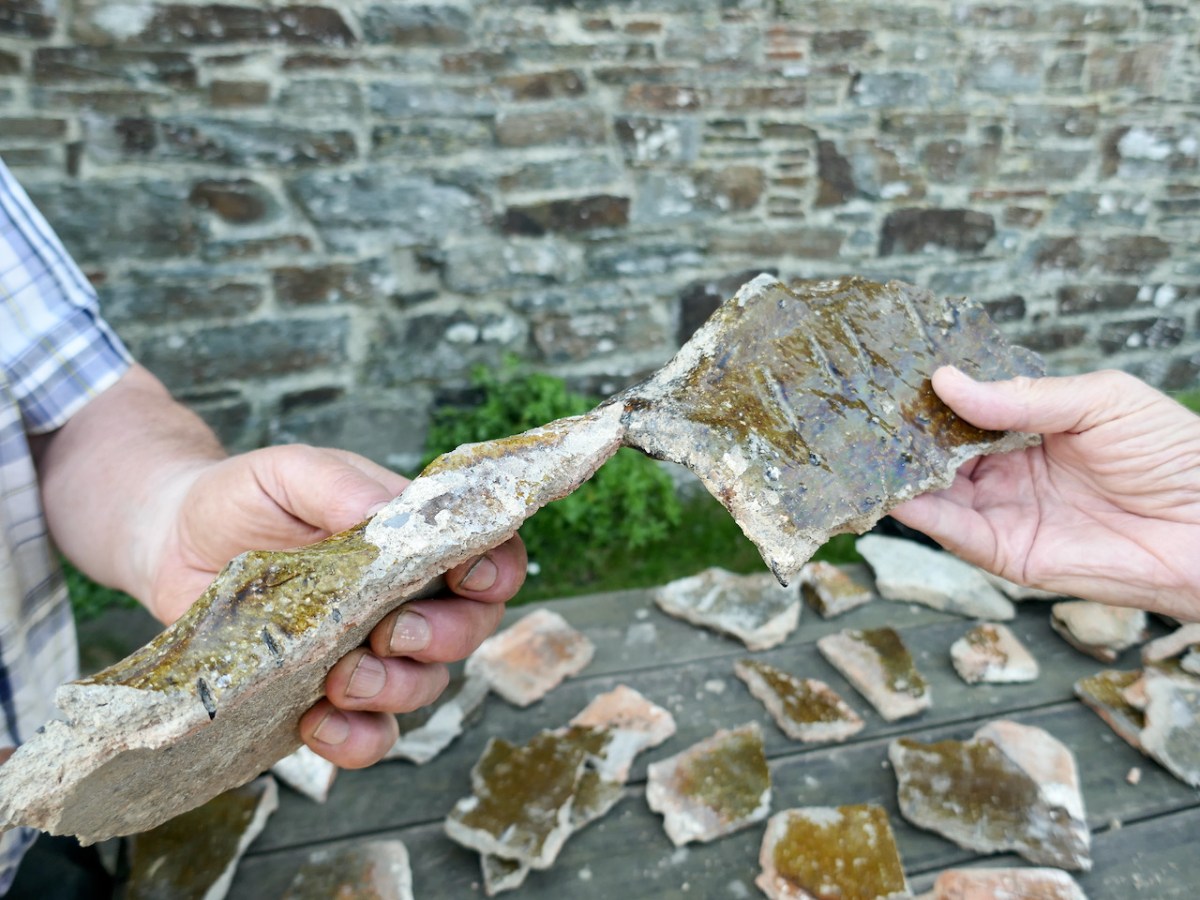
At some point in the 17th century the building was roofed with local slate and imported North Devon ridge tile. . .

It is well established from historical sources and from excavations that many, if not all, tower houses had ground-floor buildings attached or adjacent to them, buildings generally identified as halls. . . The building uncovered at Rincolisky may be interpreted as such a hall. Its roof, with imported glazed ridge tile, would certainly suggest it was a high status building. Its location, immediately adjacent to the castle and tucked into a corner of the bawn, is replicated in other tower houses. . . 

Halls were for the conduct of business and meetings. This hall was replaced by another building during the 17th or 18th century, but this building has left no clear evidence of its purpose or longevity.

When we see Rincolisky now, it sits alone and isolated. It is hard to imagine that it was a bustling place, surrounded by an enclosed bawn, with other buildings inside the bawn and even attached to the castle, while a nearby ‘town’ carried on all the business of medieval trade. What is not hard to imagine is that, without Stephanie’s dedication, care and attention to detail, this castle would have ended, as so many others have, crumbling into an unrecoverable state. All of us owe her our appreciation and gratitude for salvaging and lovingly restoring such an important part of our heritage.

And what about you? Ever had a hankering to stay in a castle? Rincolisky is available to rent – so why not give it a go? Check out the listing on VRBO and read Stephanie’s own description of the thoughtful way she approached both the reconstruction and the furnishing of the castle.

St Michael’s Dun Laoghaire

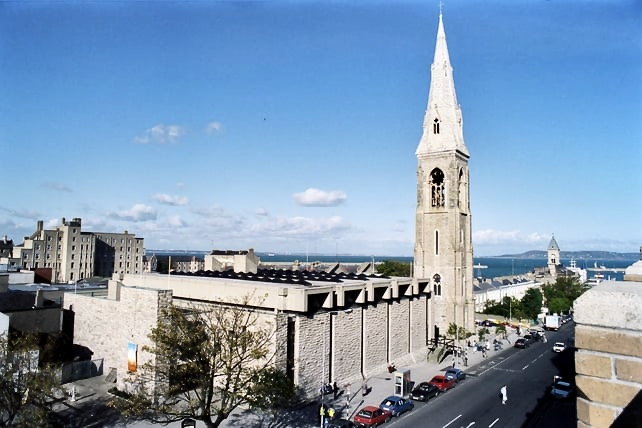
Irish artists of the mid-20th century had one patron who sustained them above all others – the Catholic Church. Actually, this was probably due to the discerning taste of modernist architects, who wanted the best for their new churches. Nevertheless, the art was commissioned and paid for by churches and their congregations, and the great advantage of this is that this artistic output is in public spaces for all of us still to enjoy. A superb example (there are many) is St Michael’s church in Dun Laoghaire. I remember when St Michael’s burned down, in 1965 – a huge shock to the people of Dun Laoghaire who lost a magnificent neo-Gothic example of the work of J J McCarthy. Take a look at what it looked like.

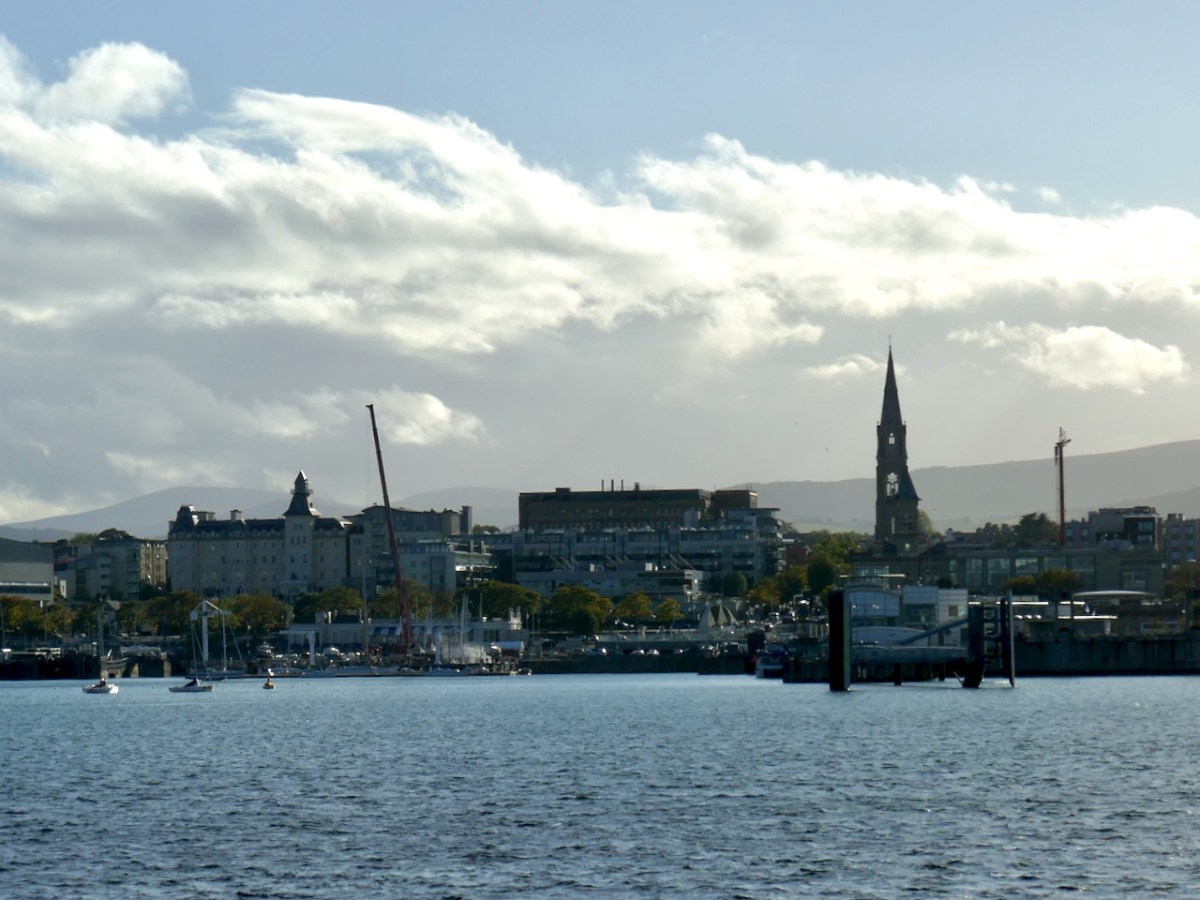
The architect Pierce McKenna was immediately commissioned to build a temporary church – I can find no illustration of this church, but in Irish Church Architecture, Peter Hurley describes it as very advanced for its time…a single story structure 84 feet square with a centre  raised clerestory lantern…and the sanctuary completely surrounded by the congregation. All that was possible to save from the old church was the tower and spire, which still dominates the skyline of Dun Laoghaire (above).

By 1973 this had been replaced by the new church, designed by McKenna, with Sean Rothery and Naois O’Dowd. Responding to changes in the liturgy dictated by Vatican II, the sanctuary of the new church was also in the centre of the church, surrounded by the congregation. The design was strikingly modern for its day – Hurley calls it a strong uncompromising statement. The image above is courtesy of RTE.

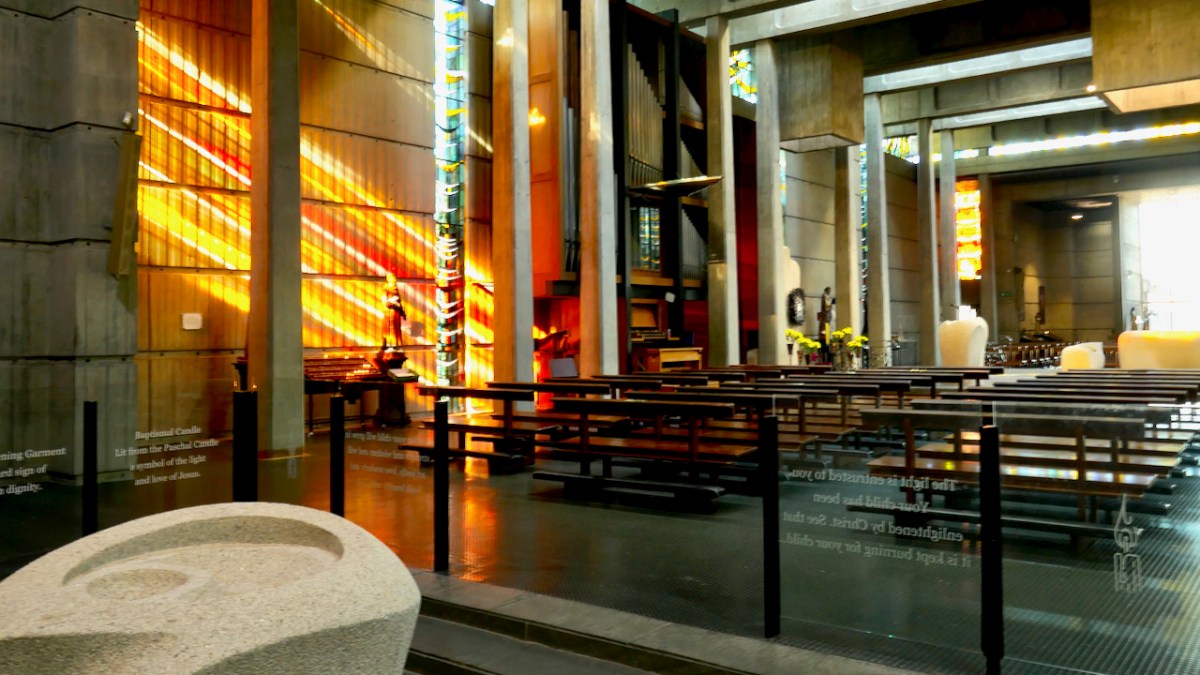
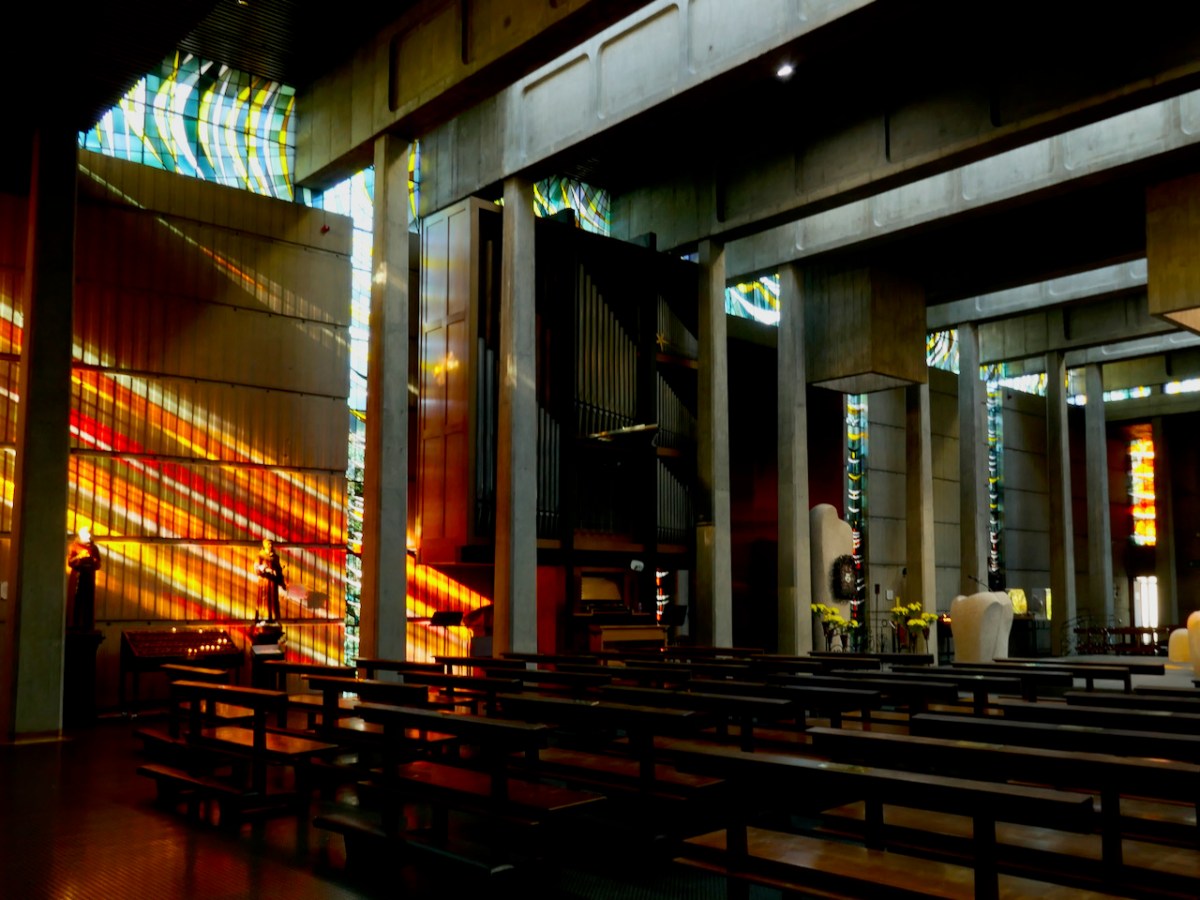
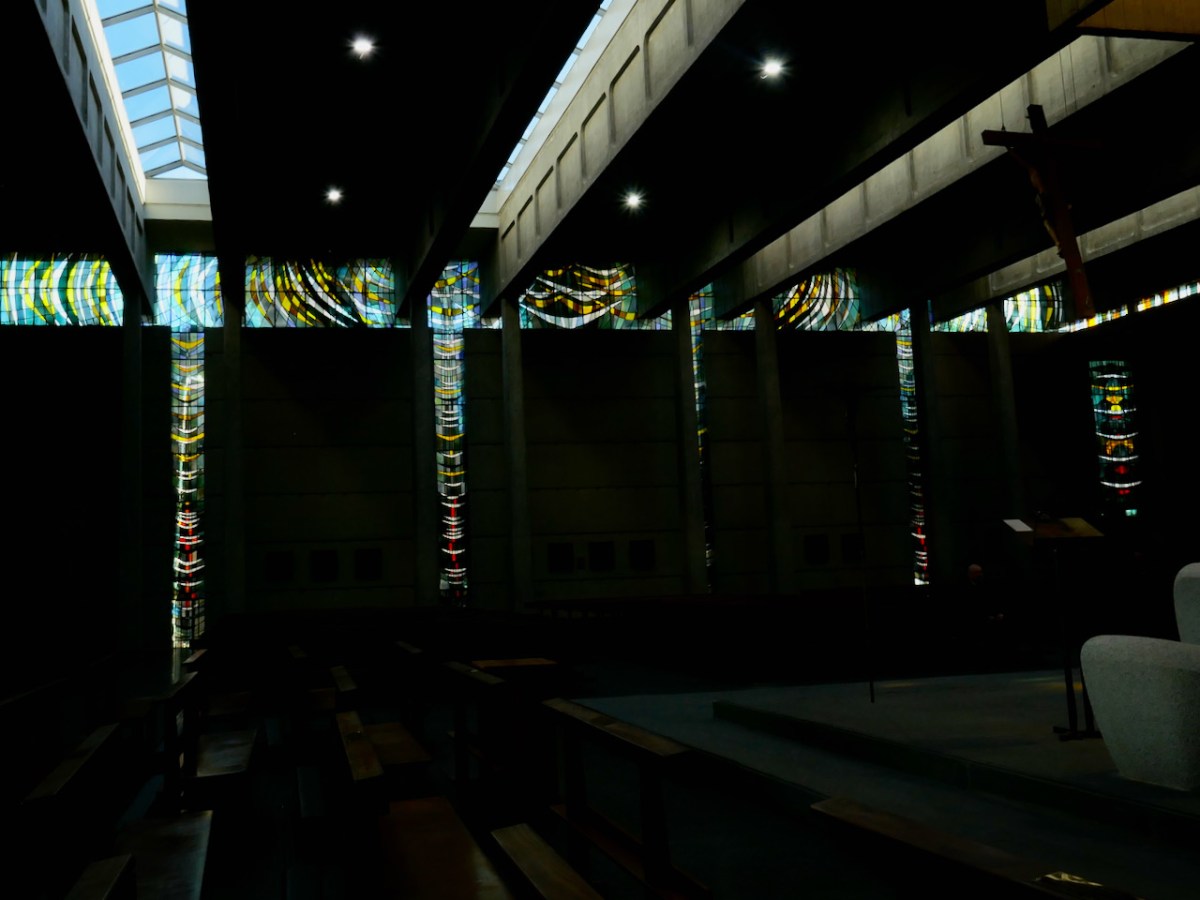
Constructed entirely of concrete, the interior is lit by tall slender windows and a glazed clerestory that separates the walls from the ceiling, as well as by long triangular roof lights. Earlier this year I visited Coventry Cathedral (also dedicated to St Michael), and I was immediately struck by similarities.

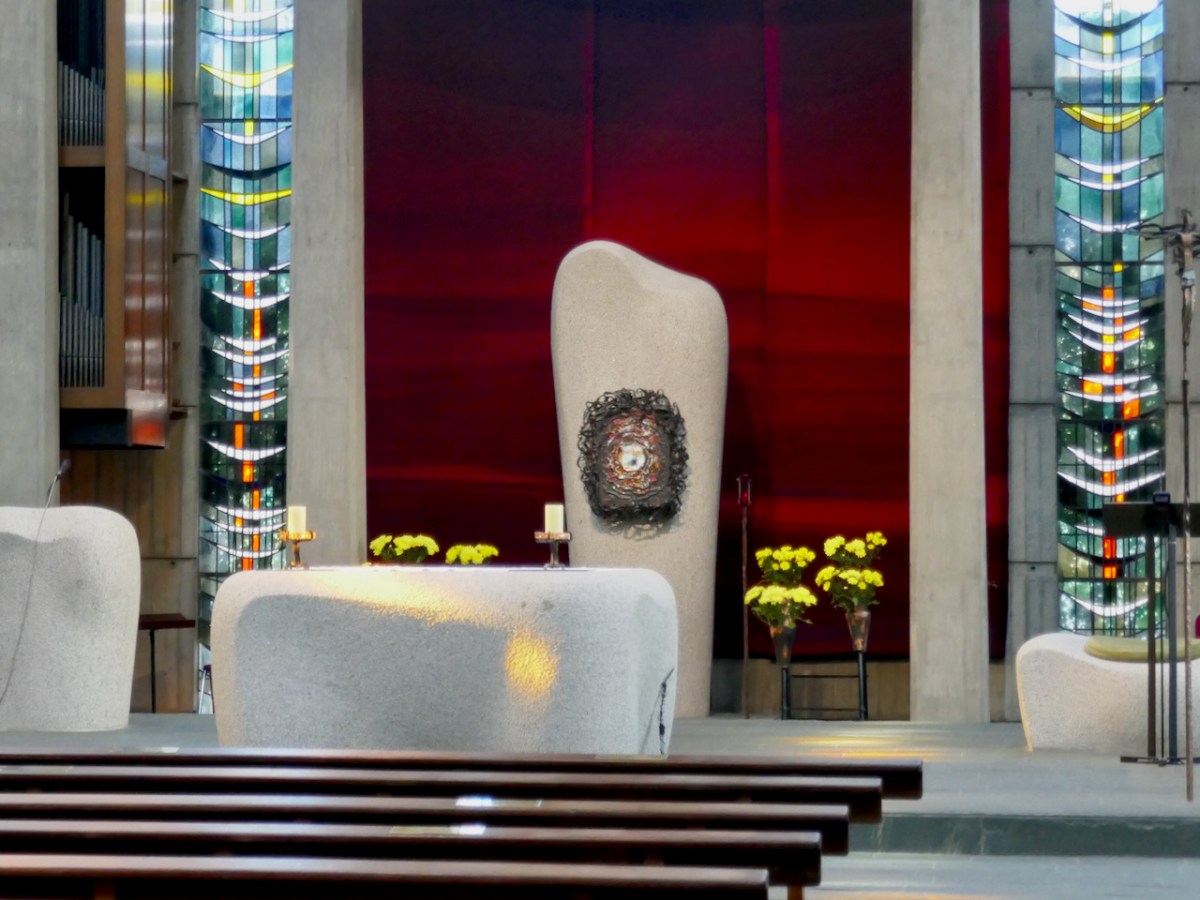
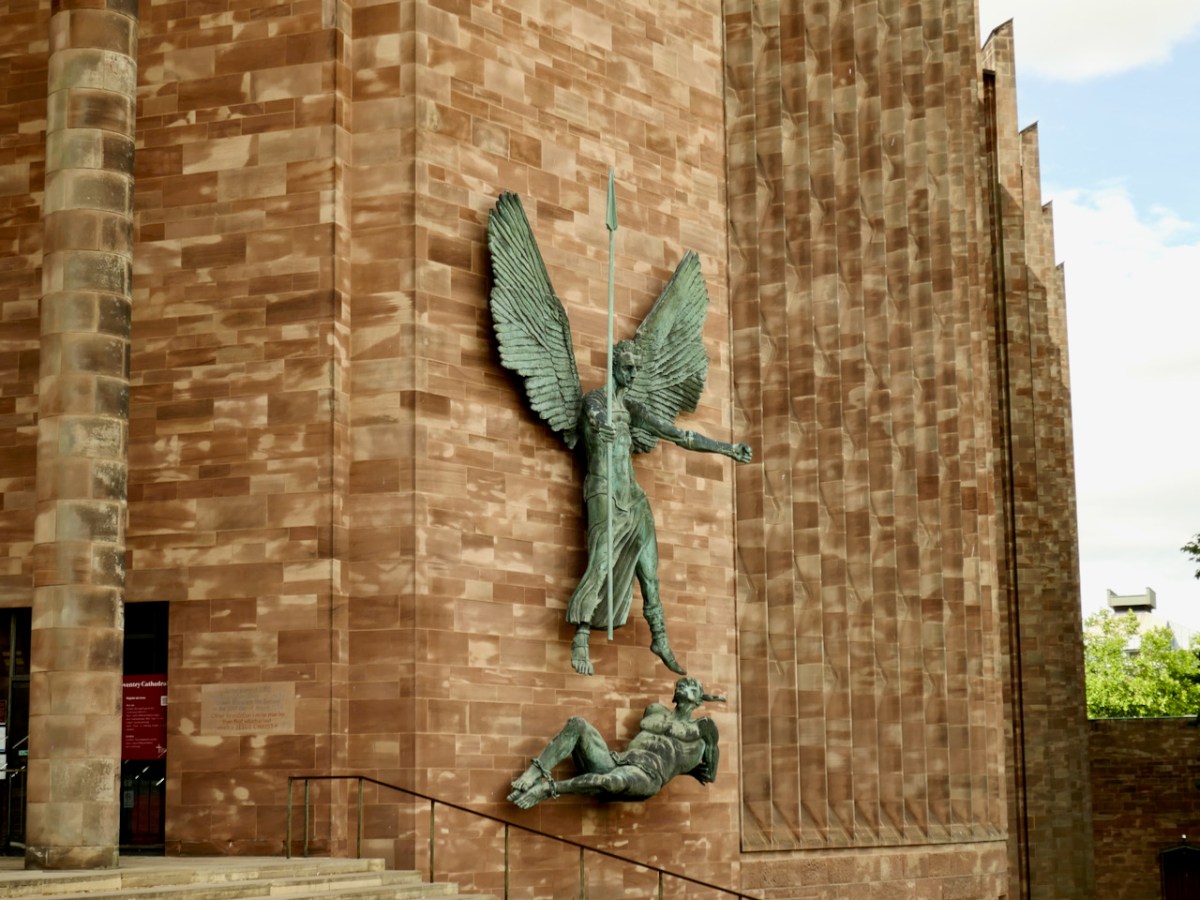
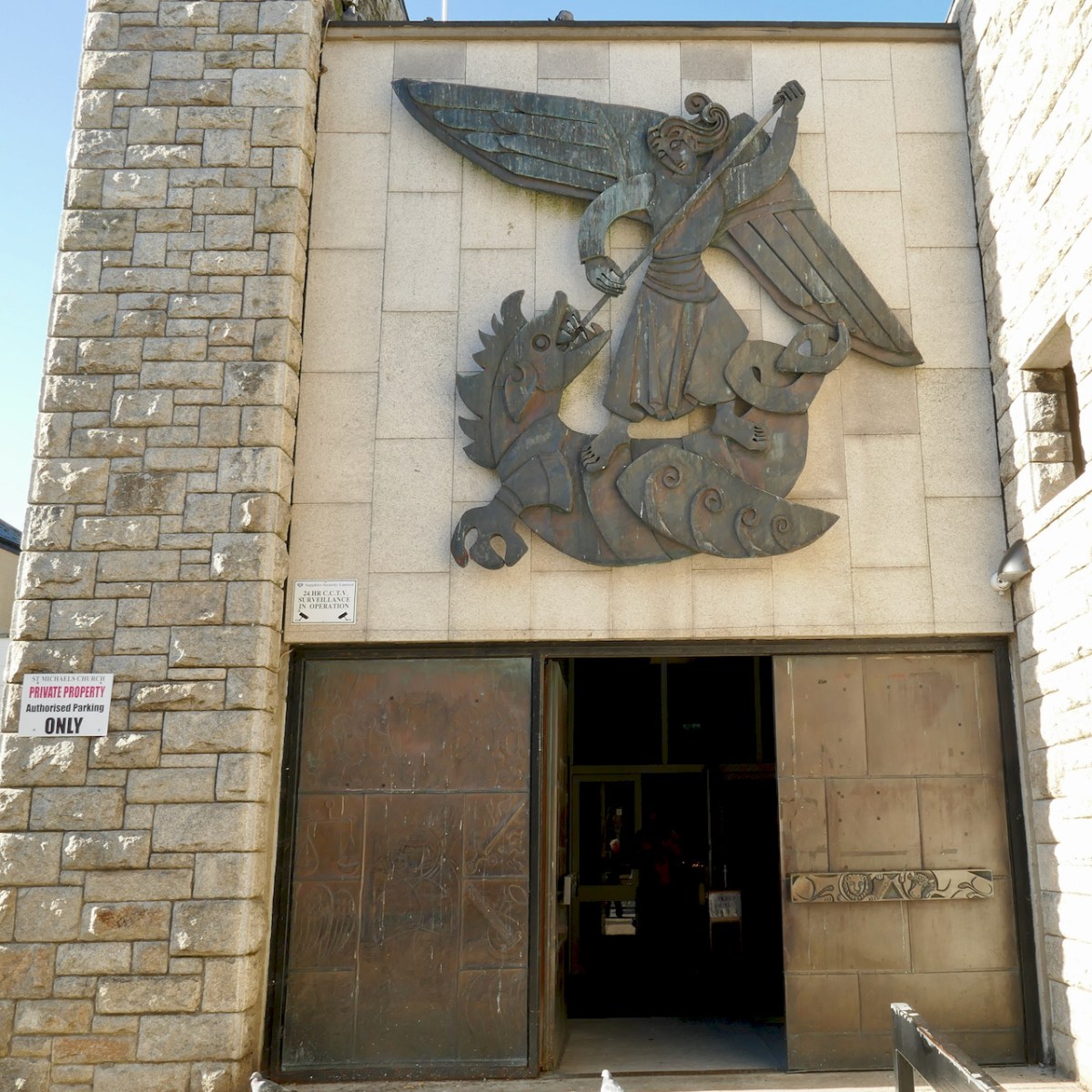
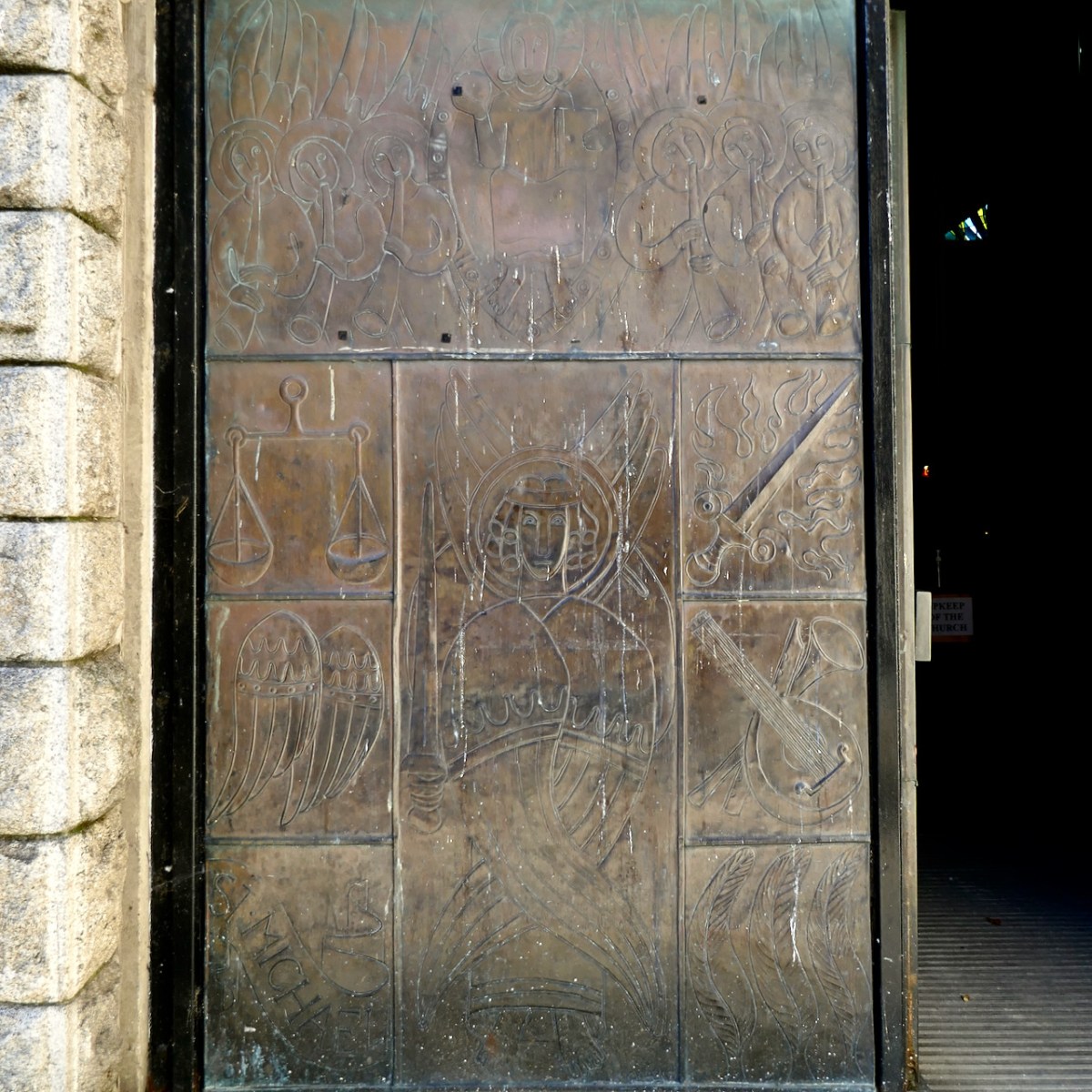
Like Coventry, the stained glass is in soaring, floor-to-ceiling windows between slender columns; there is a large tapestry behind the altar (above, in this case non-figurative); and a bronze casting of St Michael defeating the dragon is mounted outside, above the man entrance. Immediately below is the Coventry St Michael, and below that, the DunLaoghaire version.

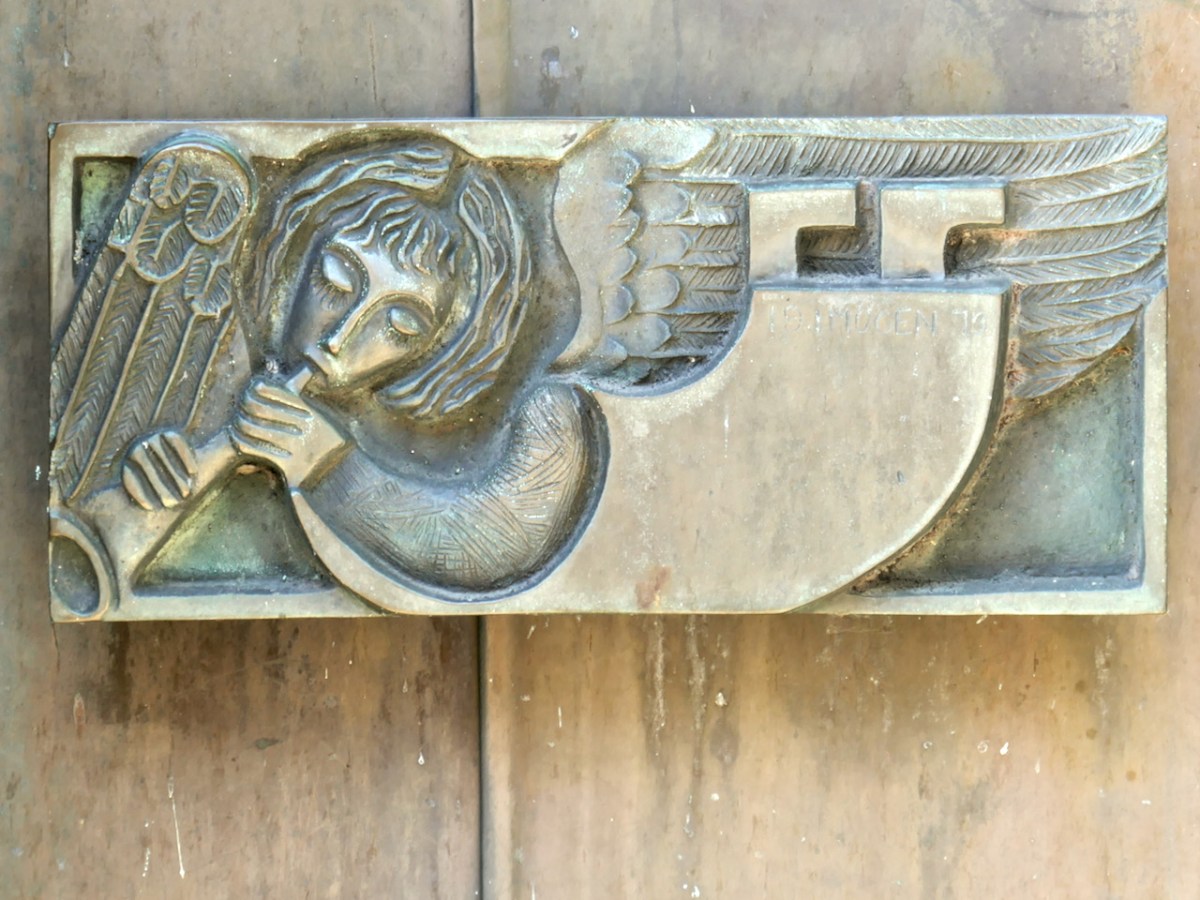
The sculpture, doors and handles are the work of Imogen Stuart. They combine a completely modern aesthetic with images influenced by the Book of Kells. 

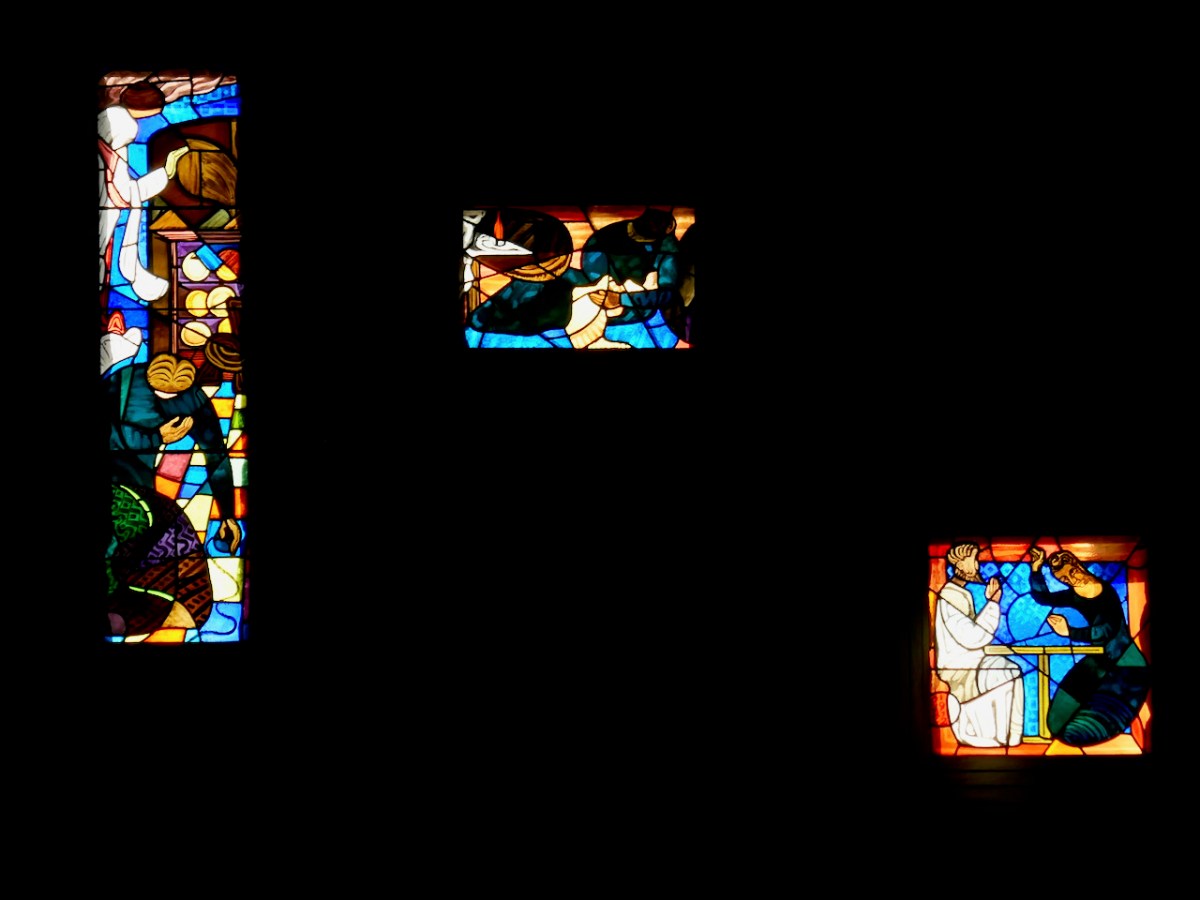
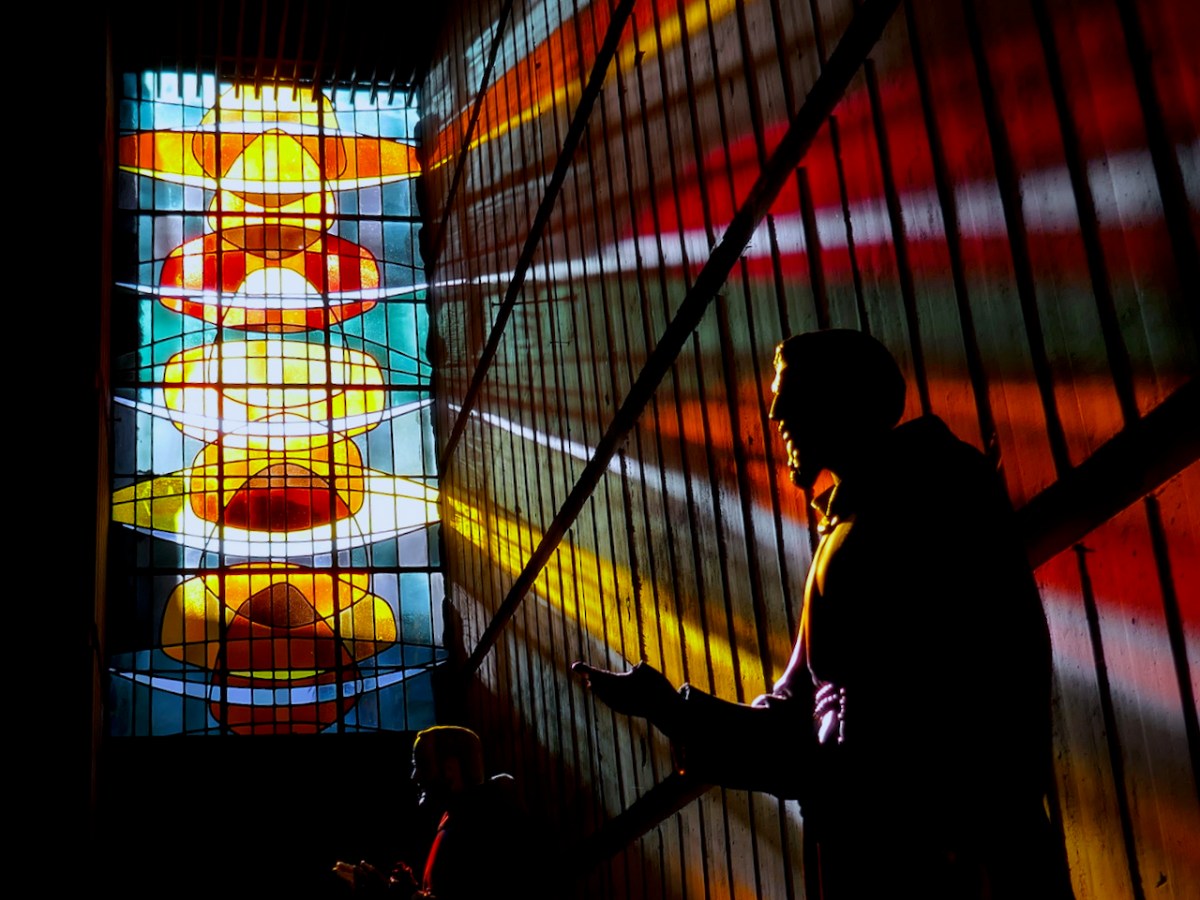
Inside, all the large glass is by the Murphy Devitt Studios. For more on this group, see my posts Murphy Devitt in Cork (links to Parts 2 and 3 are at the end of the post). As I said then about Johnny Murphy, Rosin Dowd Murphy and Des Devitt, Together they set about doing something entirely new and different in stained glass in Ireland, bringing with them their art training, their modern aesthetic sensibilities, and their deep knowledge of and commitment to their craft.

You can see all this in St Michael’s – their ability to design and execute on a grand scale, their use of symbolic colour and shape to lead the eye upwards, their contrasting of warm and cool colours to vary the light in the church. 

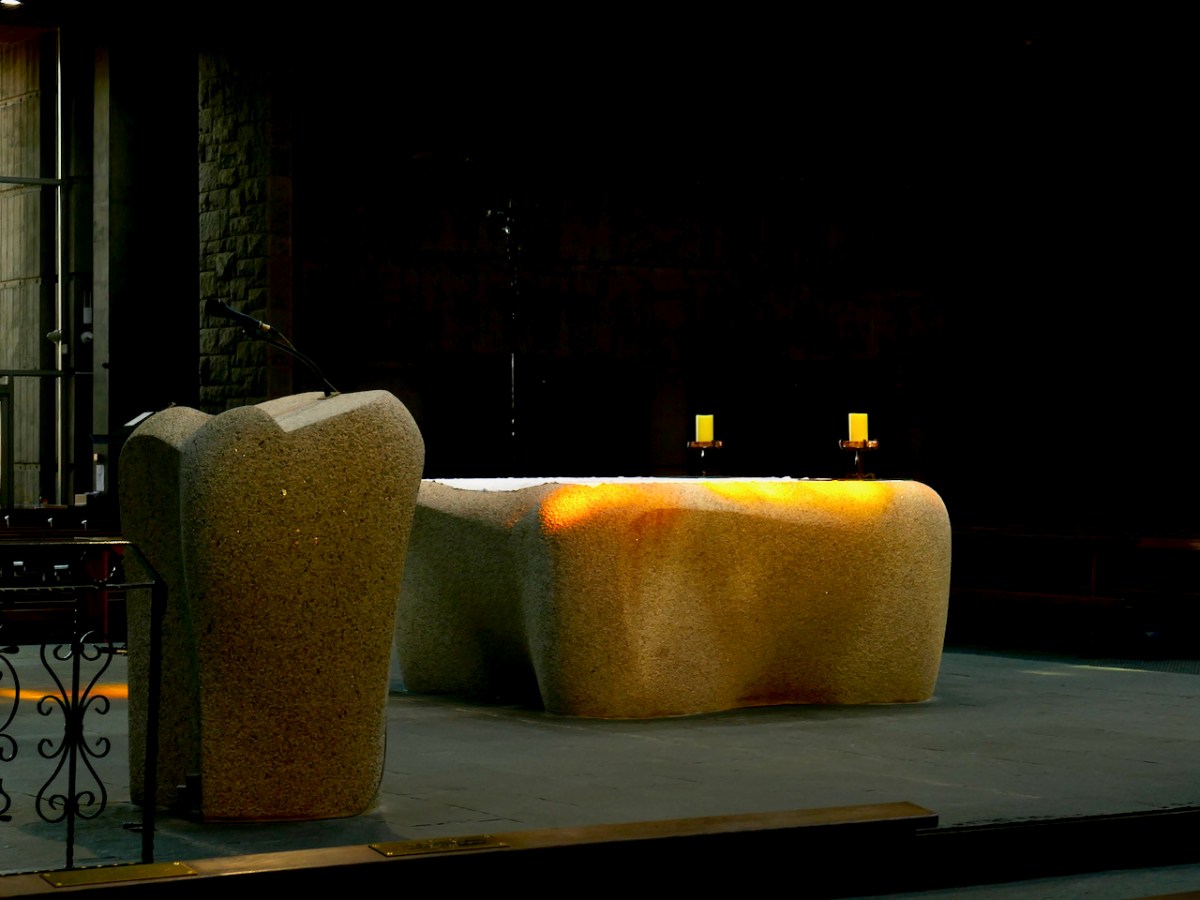
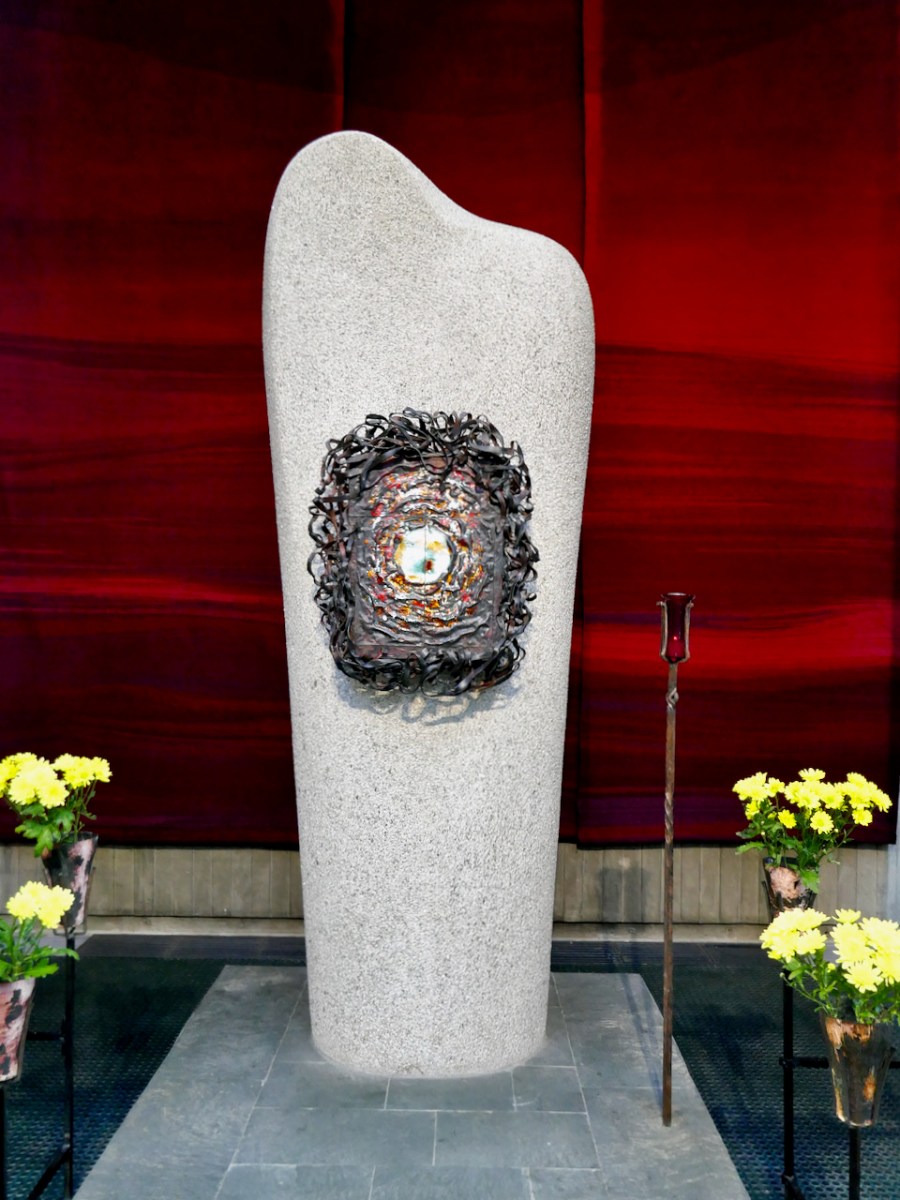
Michael Biggs was the leading stone sculptor of the time and the church furnishings are a testament to his skills and vision. Sinuous (Hurley uses the word sensuous) and monumental granite blocks are shaped as a baptismal font, altar, lectern and tabernacle column.

The extraordinary tabernacle is (I think) bronze and enamel and is the work of Richard Enda King, who also made the crucifix.

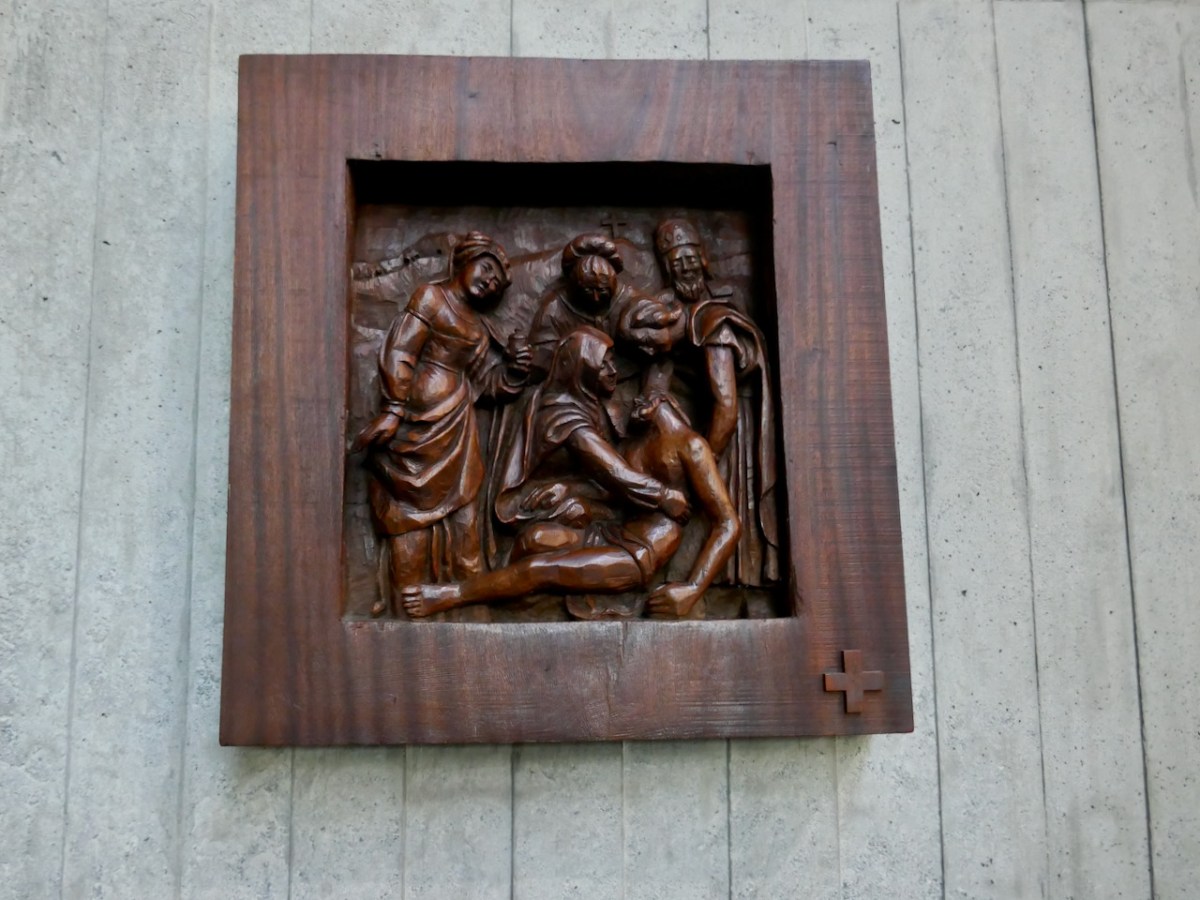
Patrick Pye has contributed several stained glass windows, while Yvonne Jammet carved the wooden stations.

This church is a triumph of modernist Irish architecture: austere but filled with light, reverential yet a feast for the senses, liturgically correct yet daringly innovative. It’s also an accessible gallery of important Irish art. Go visit if you can.

Sun’s Out! A Further Look at The Beara

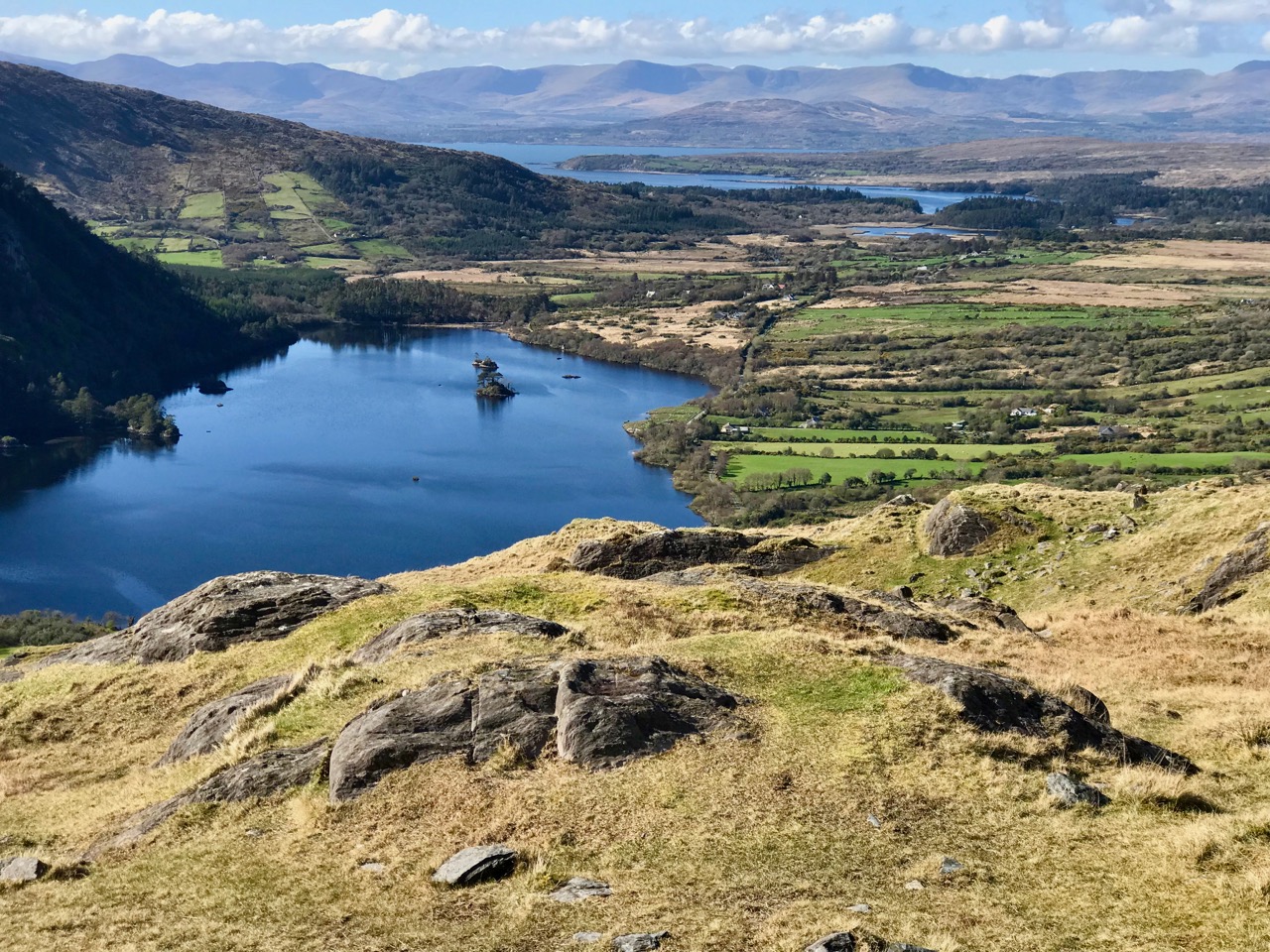
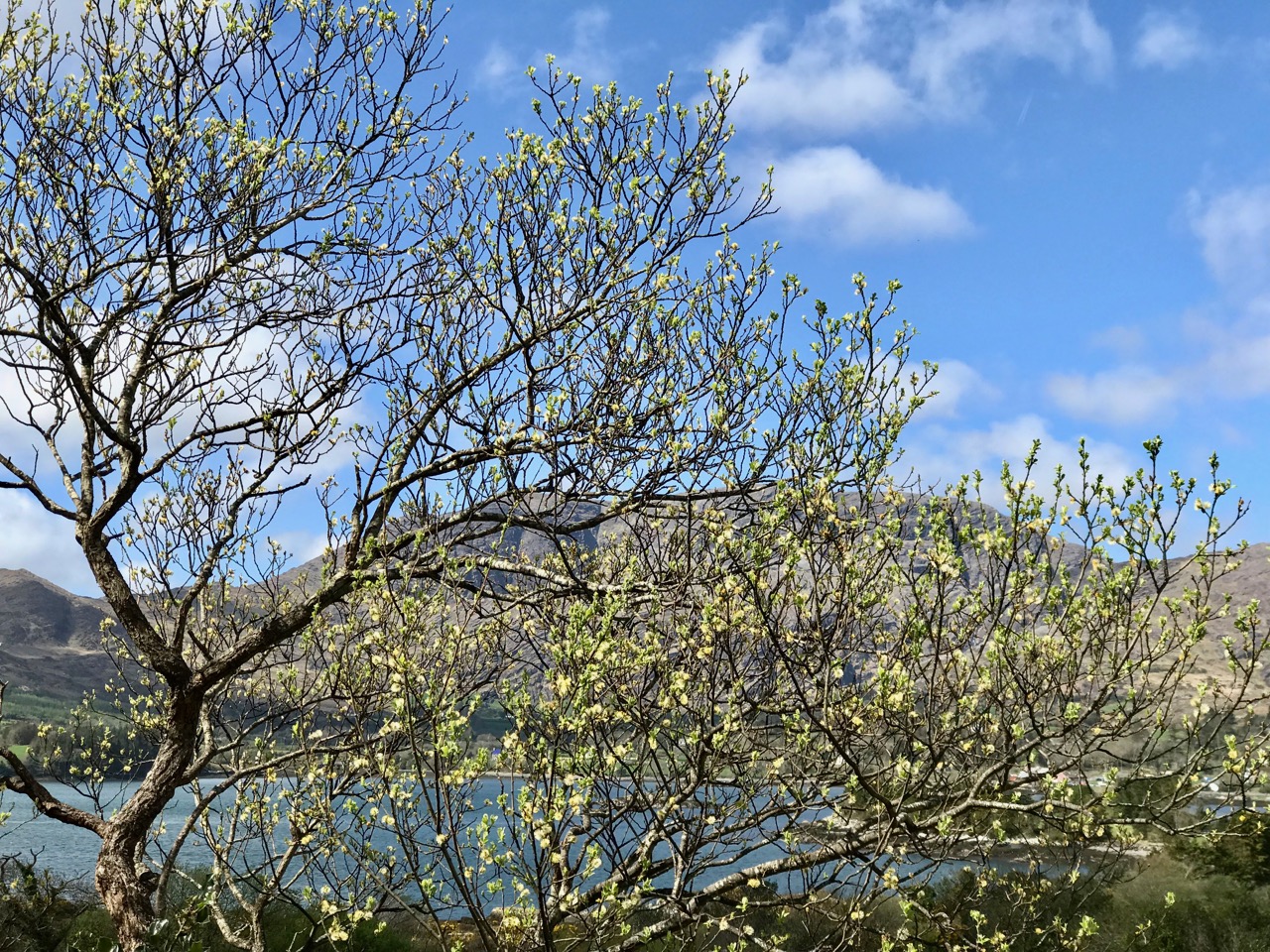
A few years ago, on one April day after a bleak, harsh winter that had gales, hurricanes, blizzards and unceasing bitter east winds thrown at us – the sun came out! We were out too, and headed up to the Beara Peninsula to see if we could remember what sun-soaked landscapes felt like… They felt great!

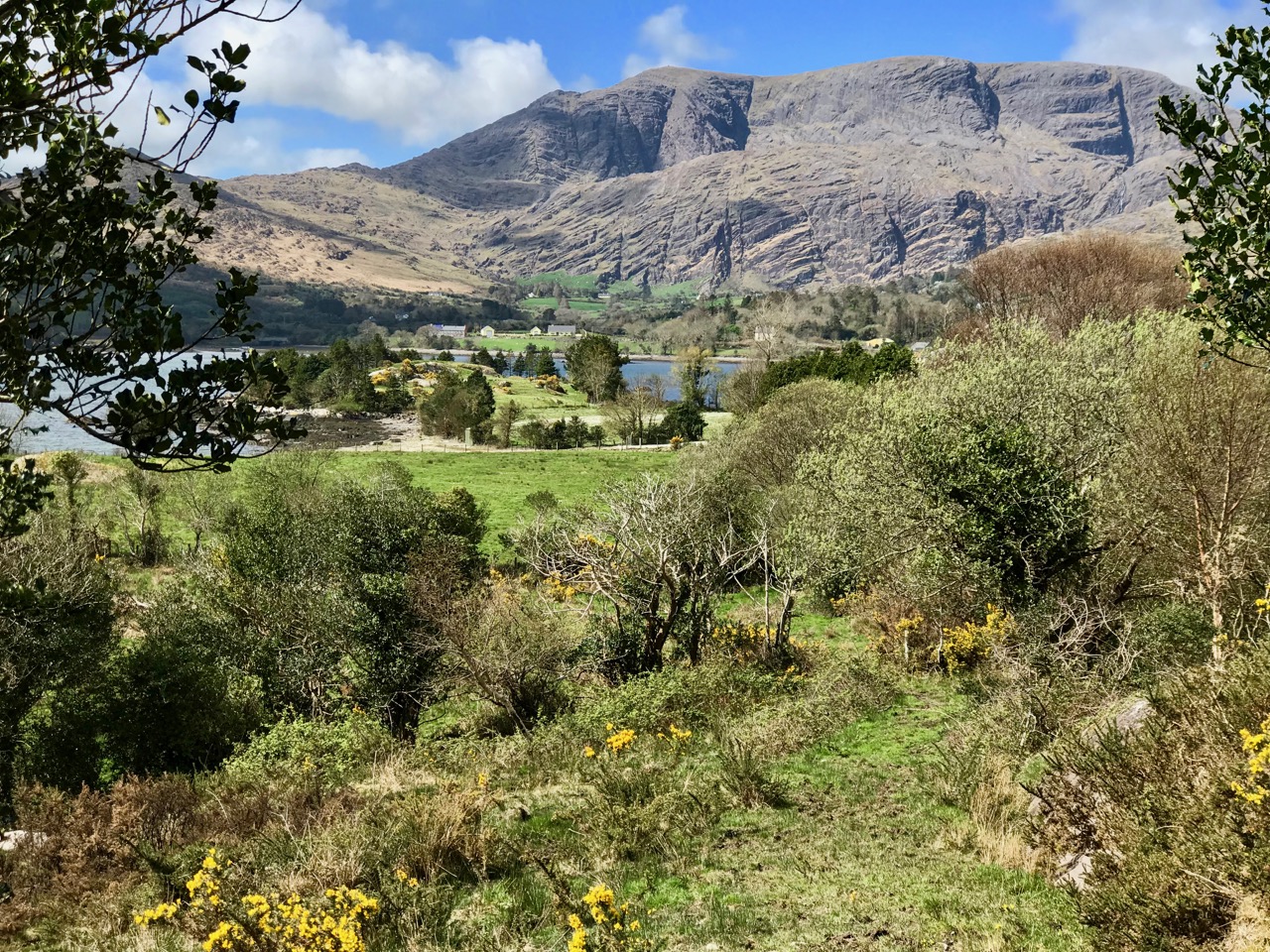
Header – the glories of Cork and Kerry combine on the spectacular Beara; top photograph – finally, after a long,harsh winter, we see the spring blossoms appearing; middle – a wayside shrine on the road out from Glengariff; bottom – Hungry Hill dominates the views as we head west on the peninsula

You will remember our previous visits to the Beara: there are not enough superlatives for what it has to offer in the way of stunning scenery and colour. None of these photographs have been enhanced – what you see is exactly what we saw on the day – and it’s what you will see, too, if you choose aright (although even on dull days we always find plenty to interest us).

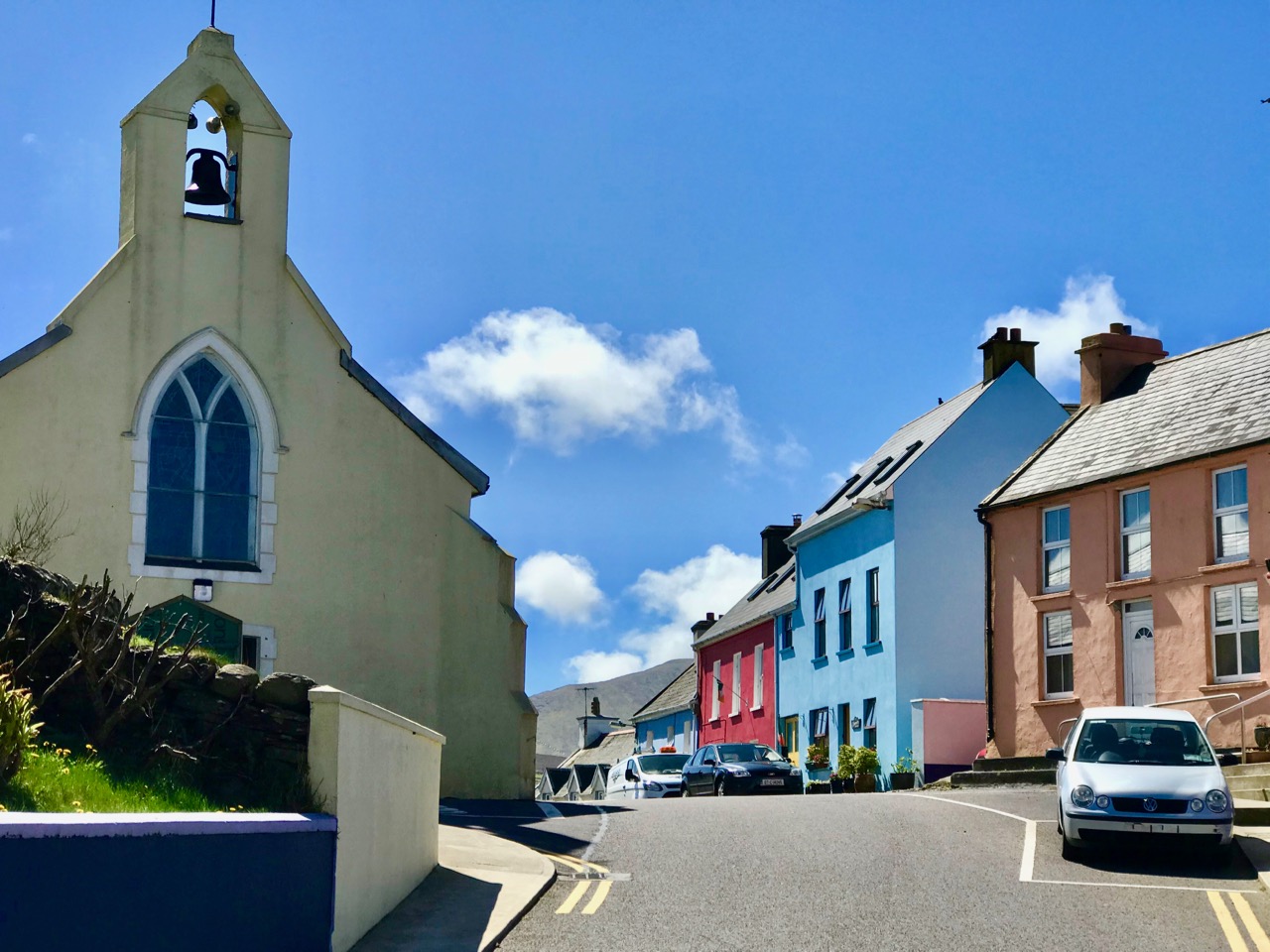
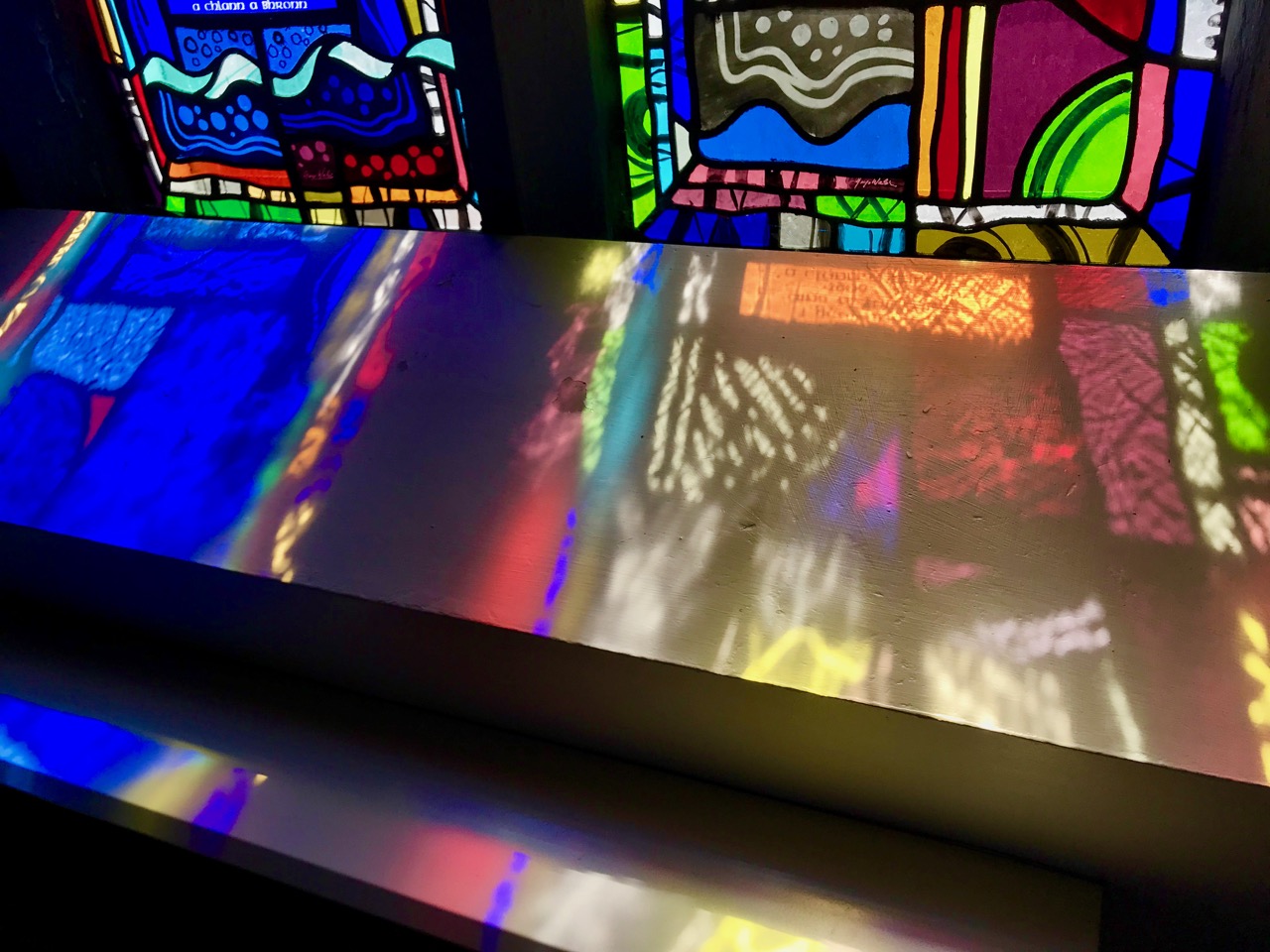
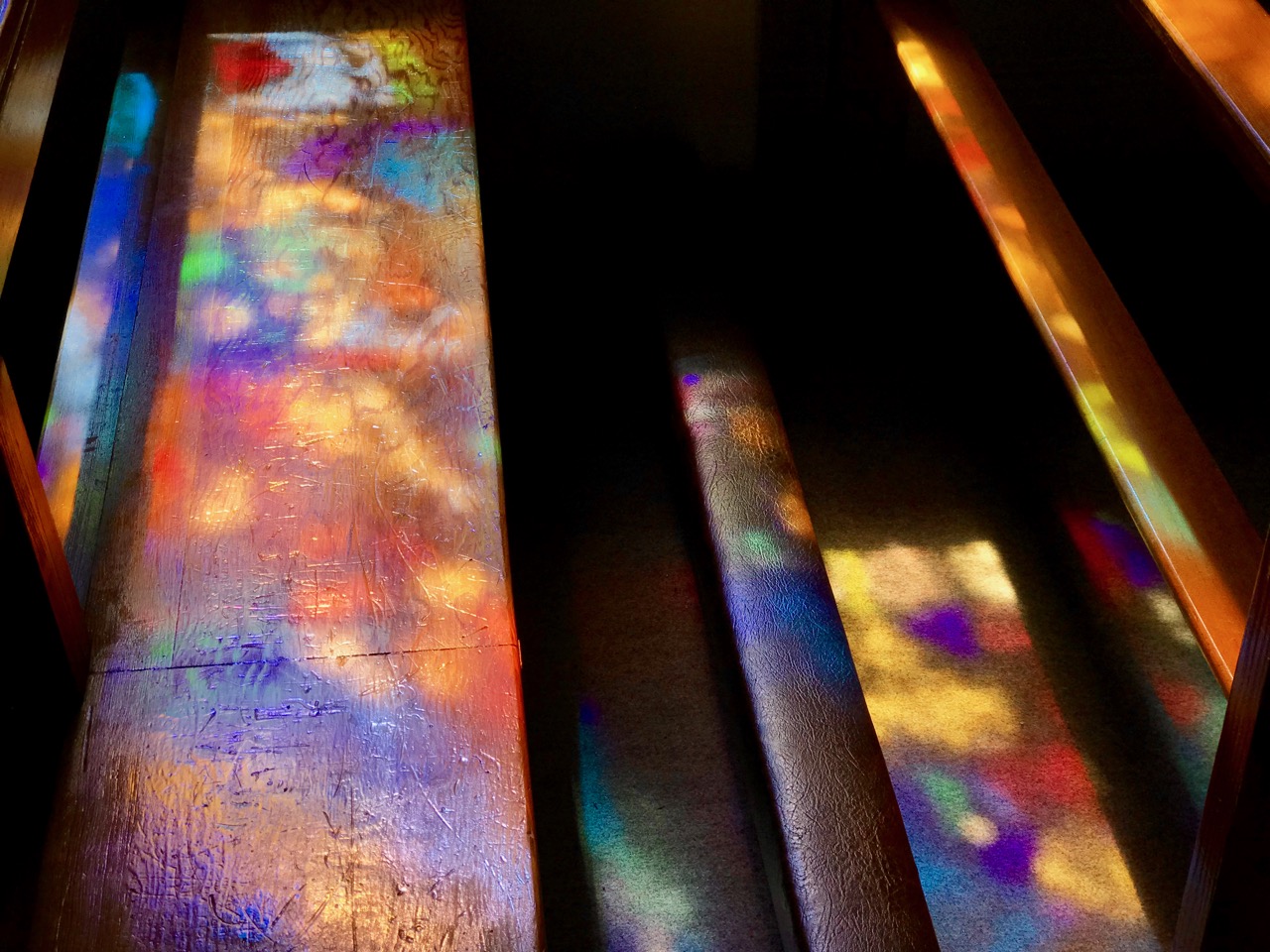
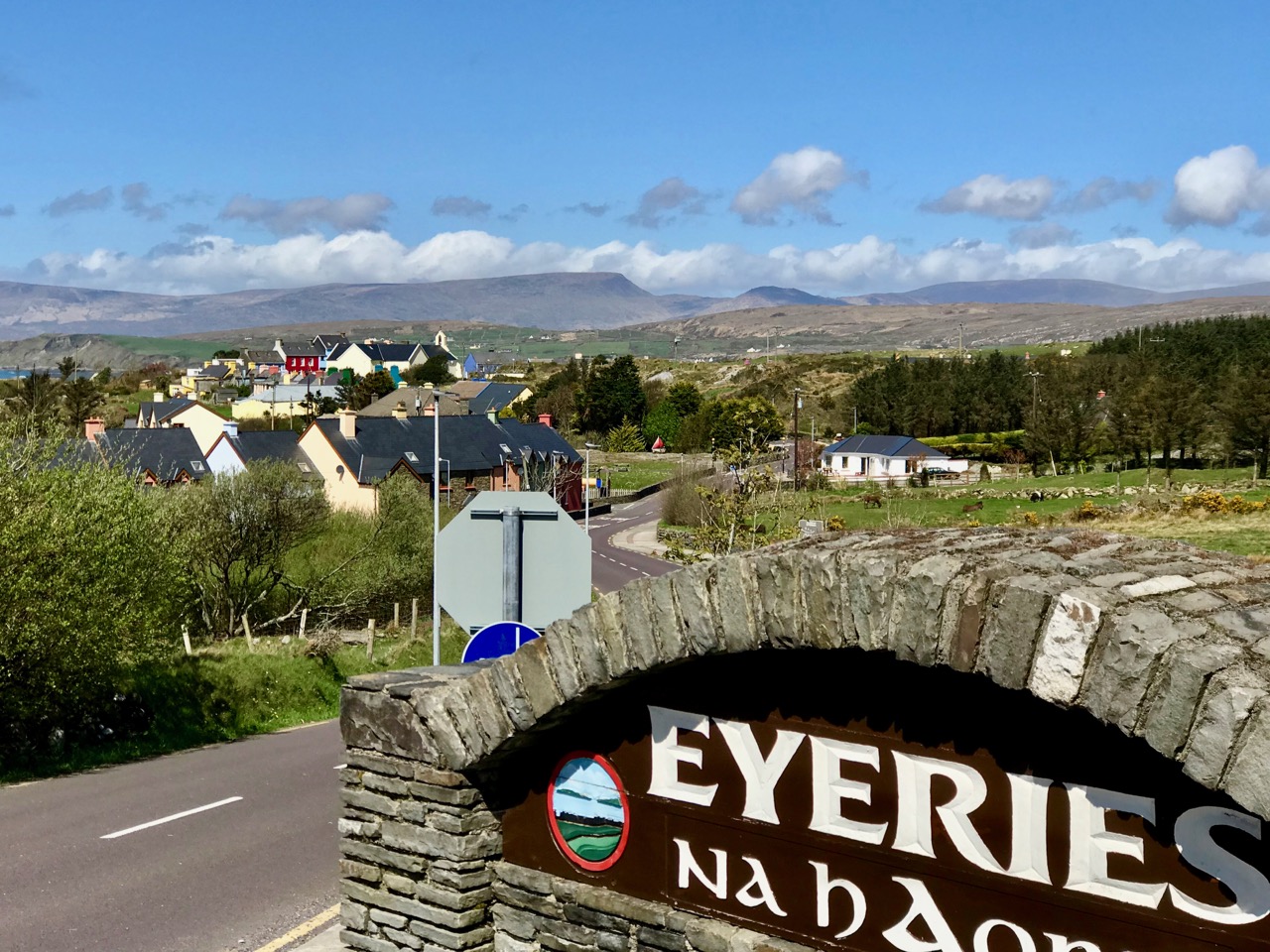
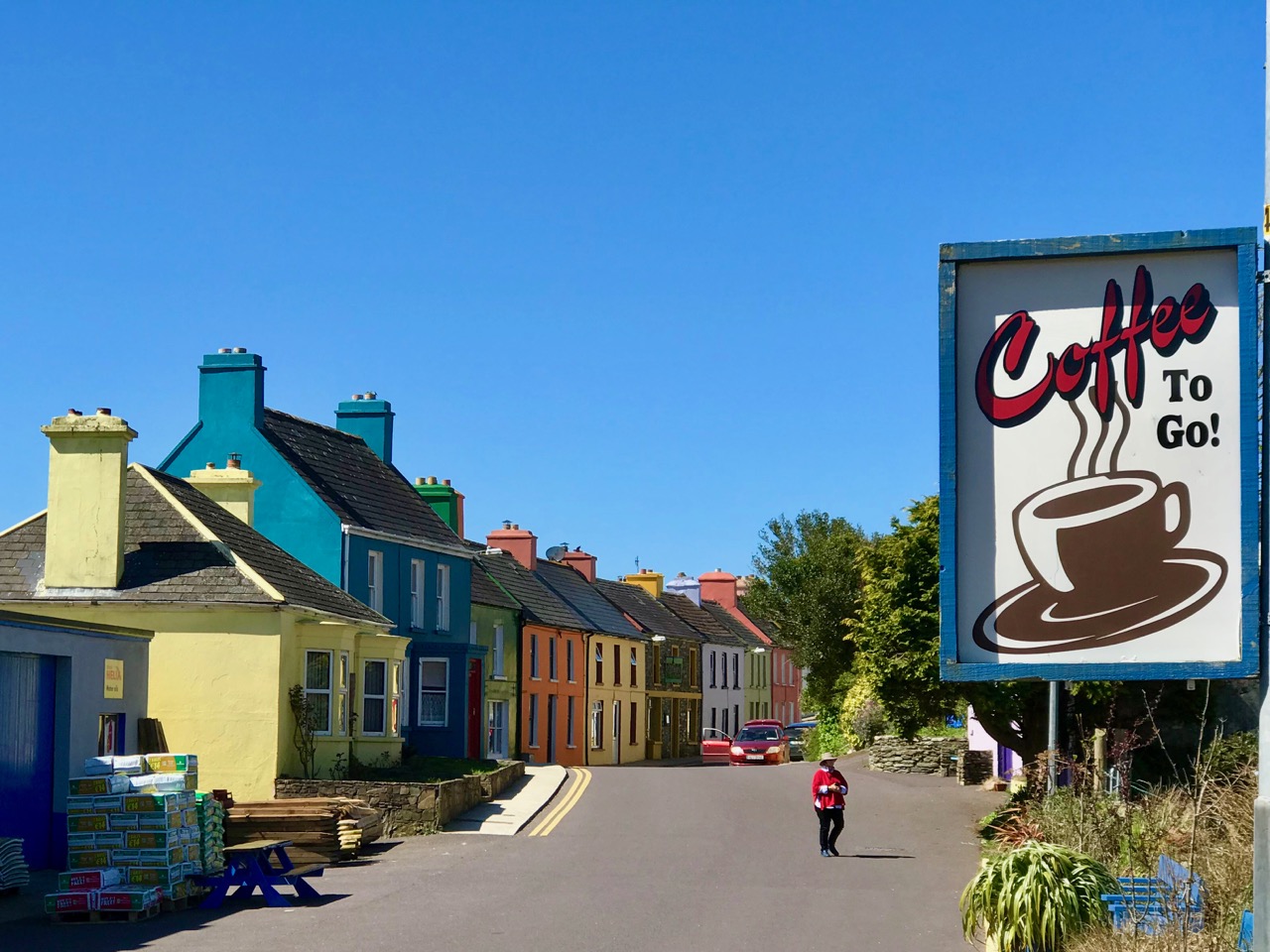
Top photograph – St Kentigern’s Church is in the centre of one of Ireland’s most colourful villages; middle – the sunlight plays games with the beautiful windows by glass artist George Walsh; bottom – light from the windows dances on the pews

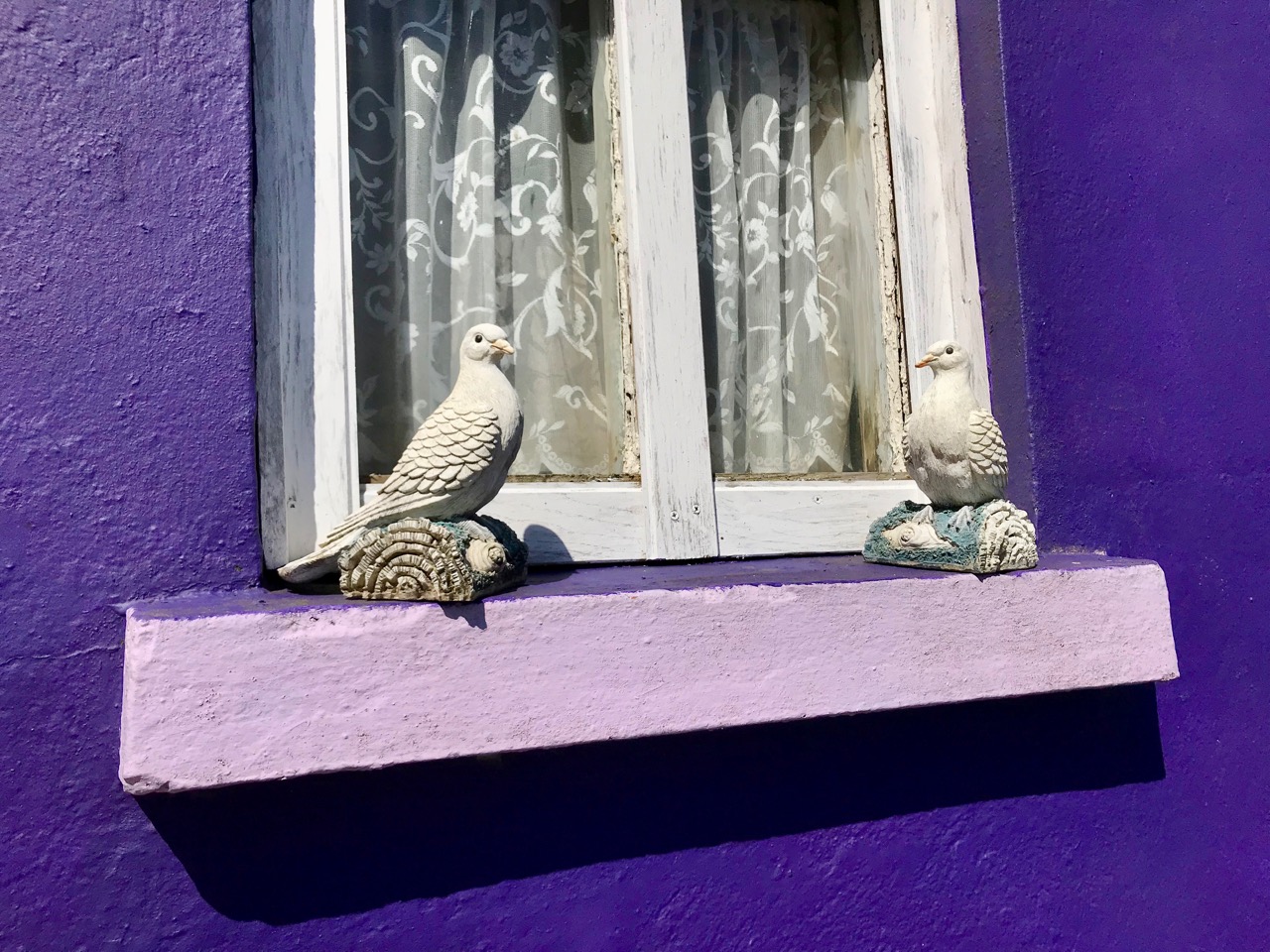
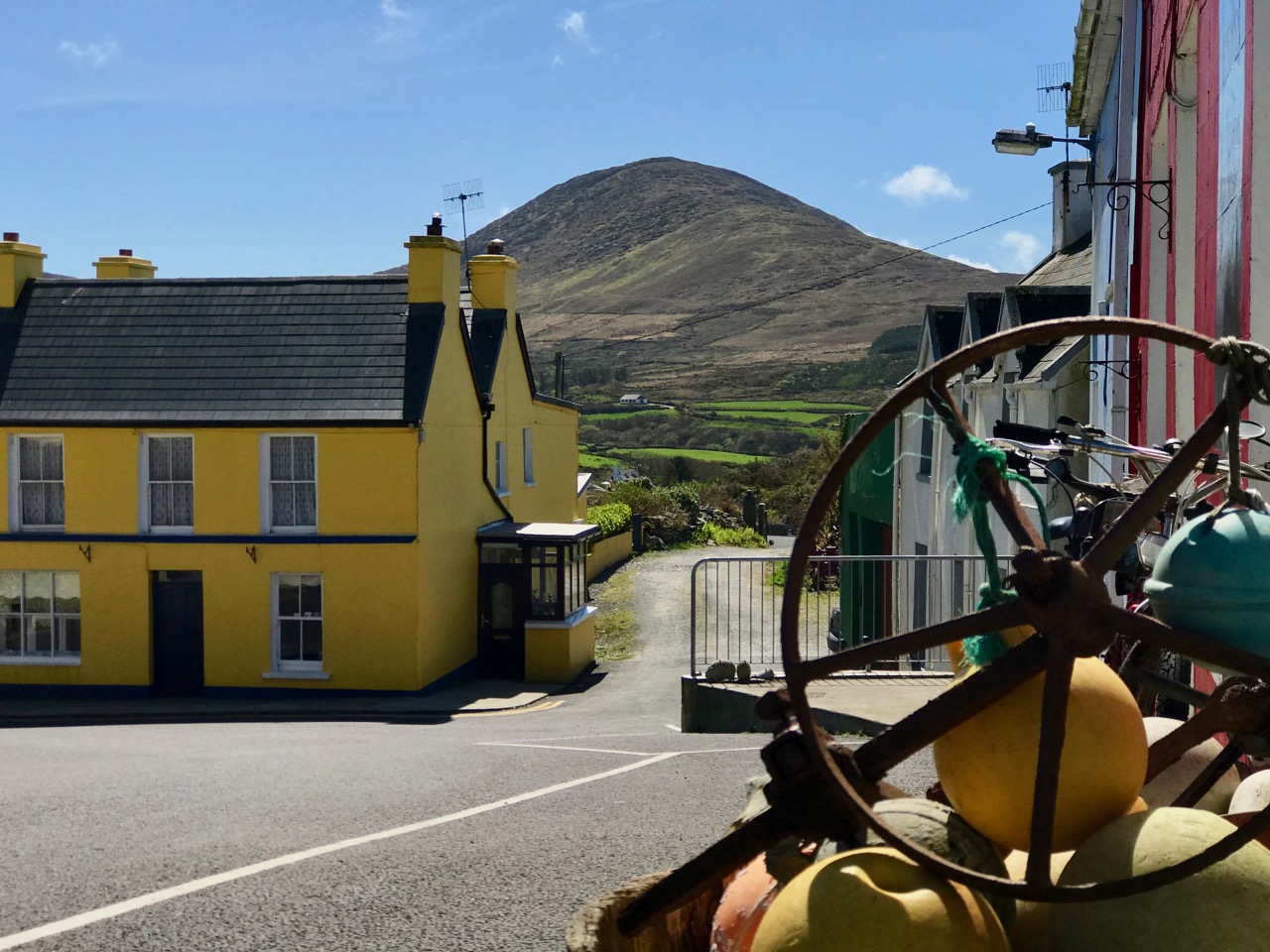
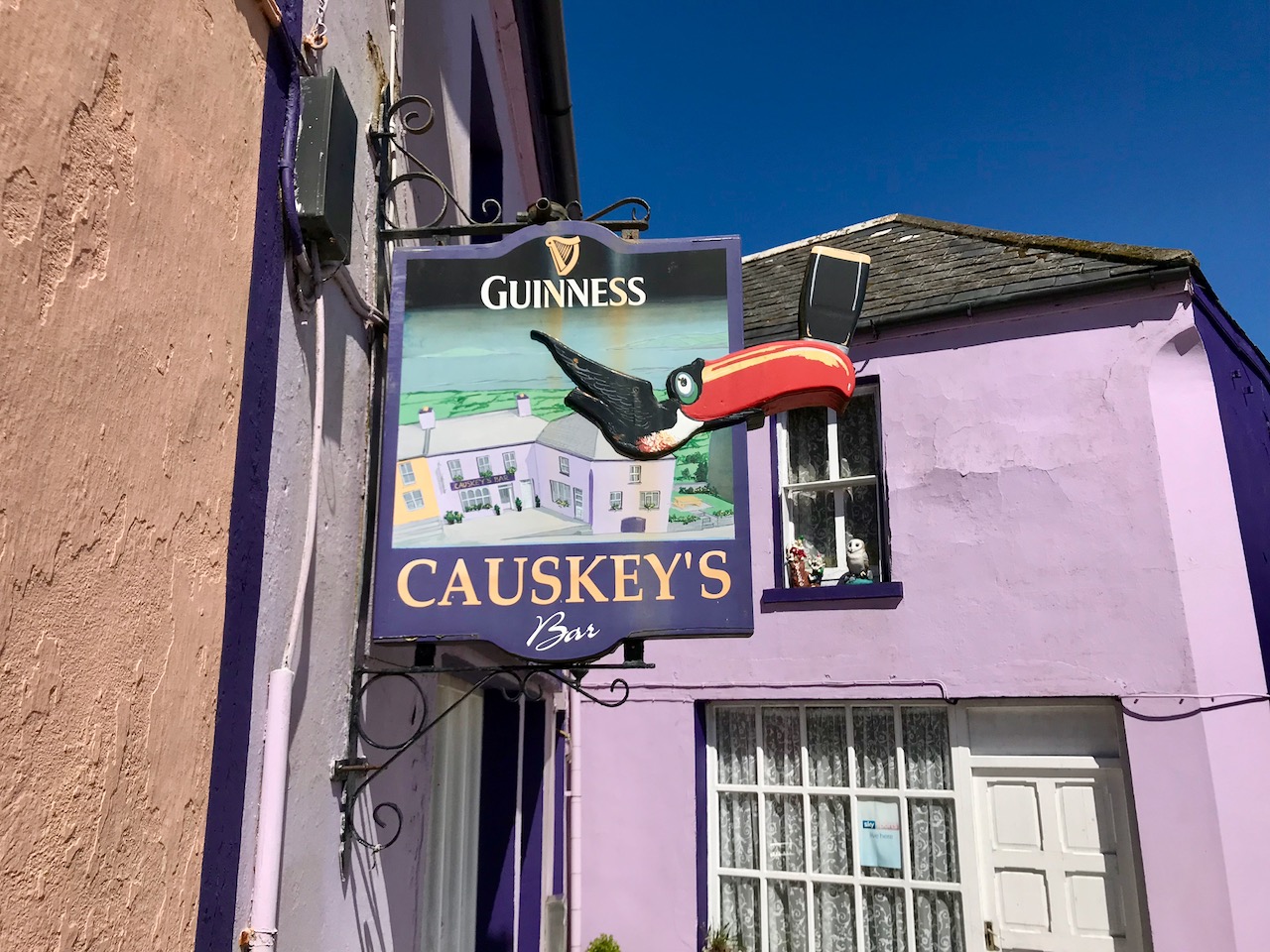
We knew where we were going: Finola was keen to revisit the little Catholic church of St Kentigern in Eyeries, which has a fine collection of windows by George Walsh: it’s a gem – and at its best for the quality of the light enhancing it on the day. I wanted to see the settlement itself in the early spring sunlight as it’s one of the most colourful places in the whole of Ireland! Neither of us was disappointed.

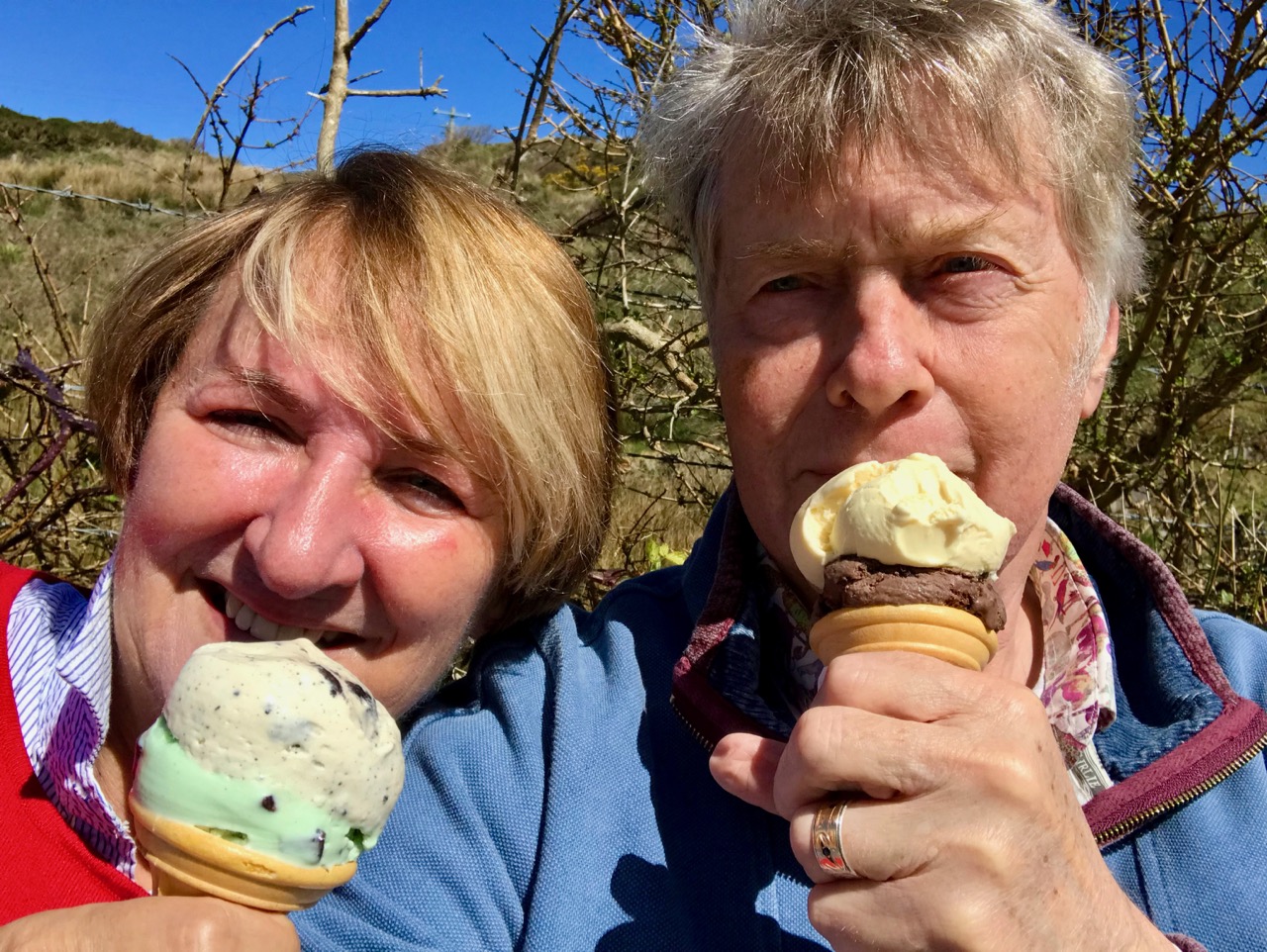
Just a taster of the treats in store in Eyeries: on a beautiful spring day there was hardly a soul around, but we were still able to find an ice cream in O’Sullivan’s!

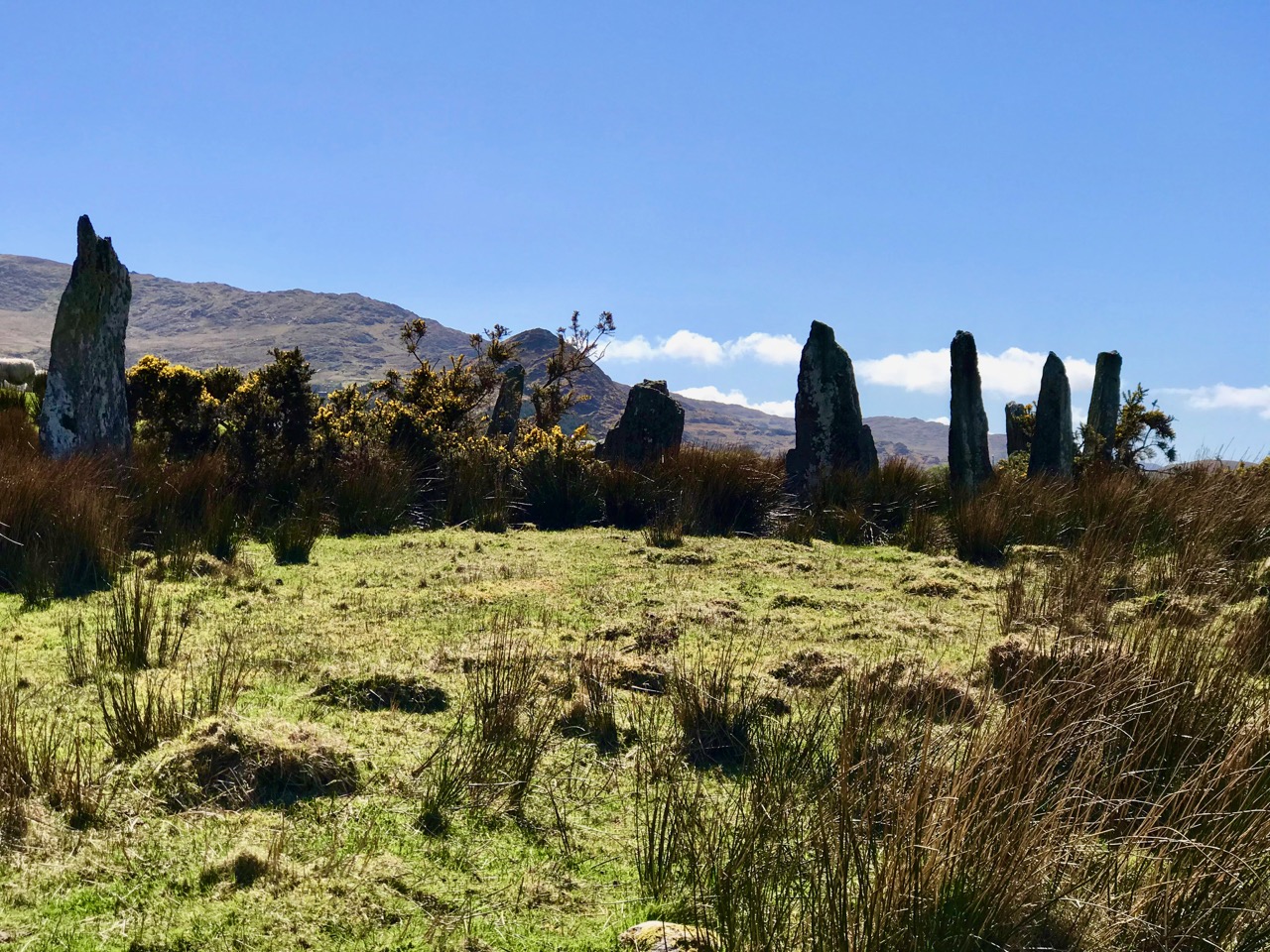
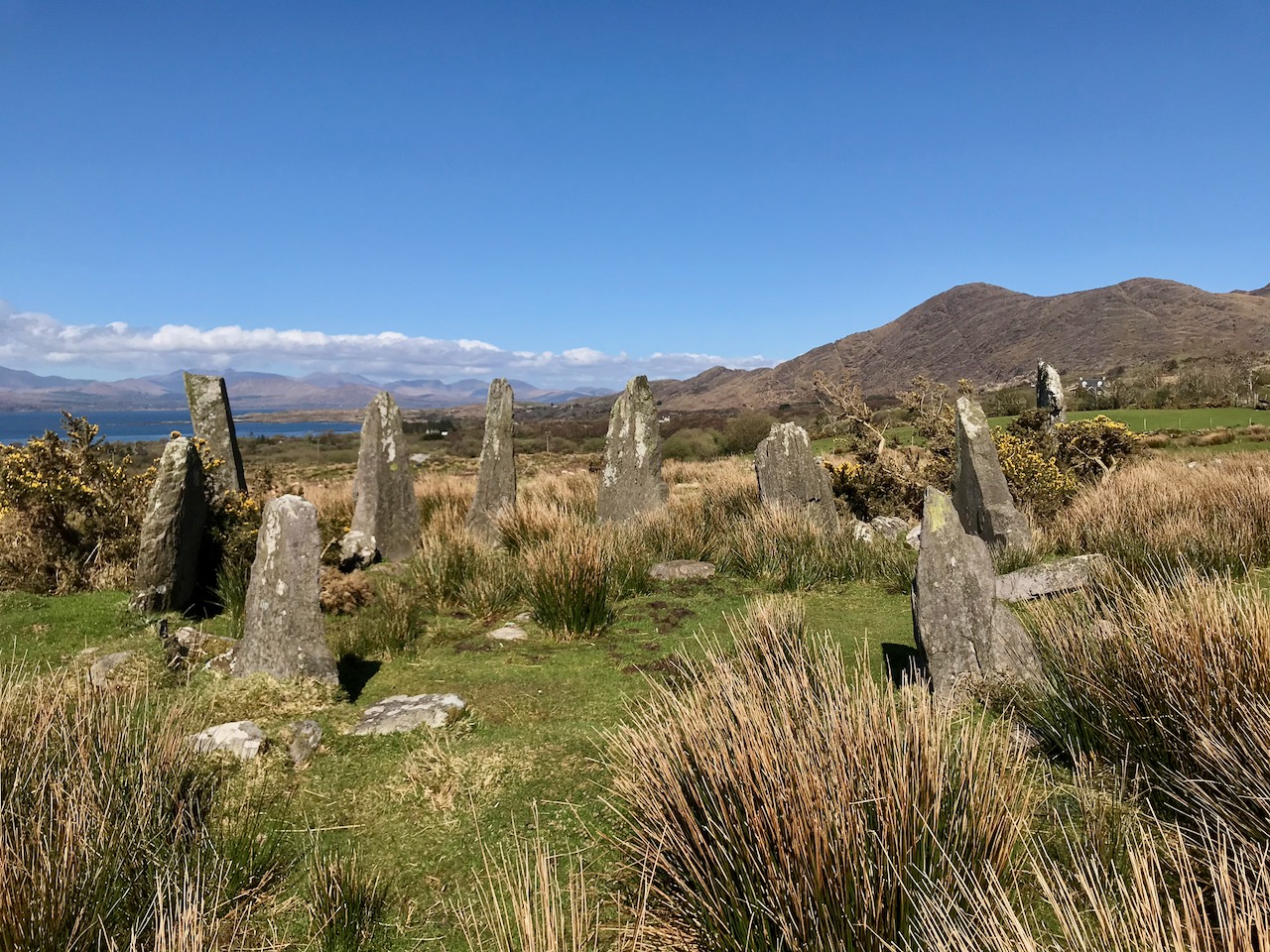
Our second objective was to travel into the hills and find Ardgroom Outward stone circle. The trail involves farm gates, stiles and a lot of mud – but the 9 stone circle (named locally ‘Canfea’) is a fine, almost intact monument with wide vistas to mountain and sea. The impressive outlier stone is 3.2m in height.

The magnificent Ardgroom Outward (or ‘Canfea’) stone circle is accessible via a marked, boggy path: the vistas from the site make the journey worthwhile. Finola is dwarfed by the huge outlier!

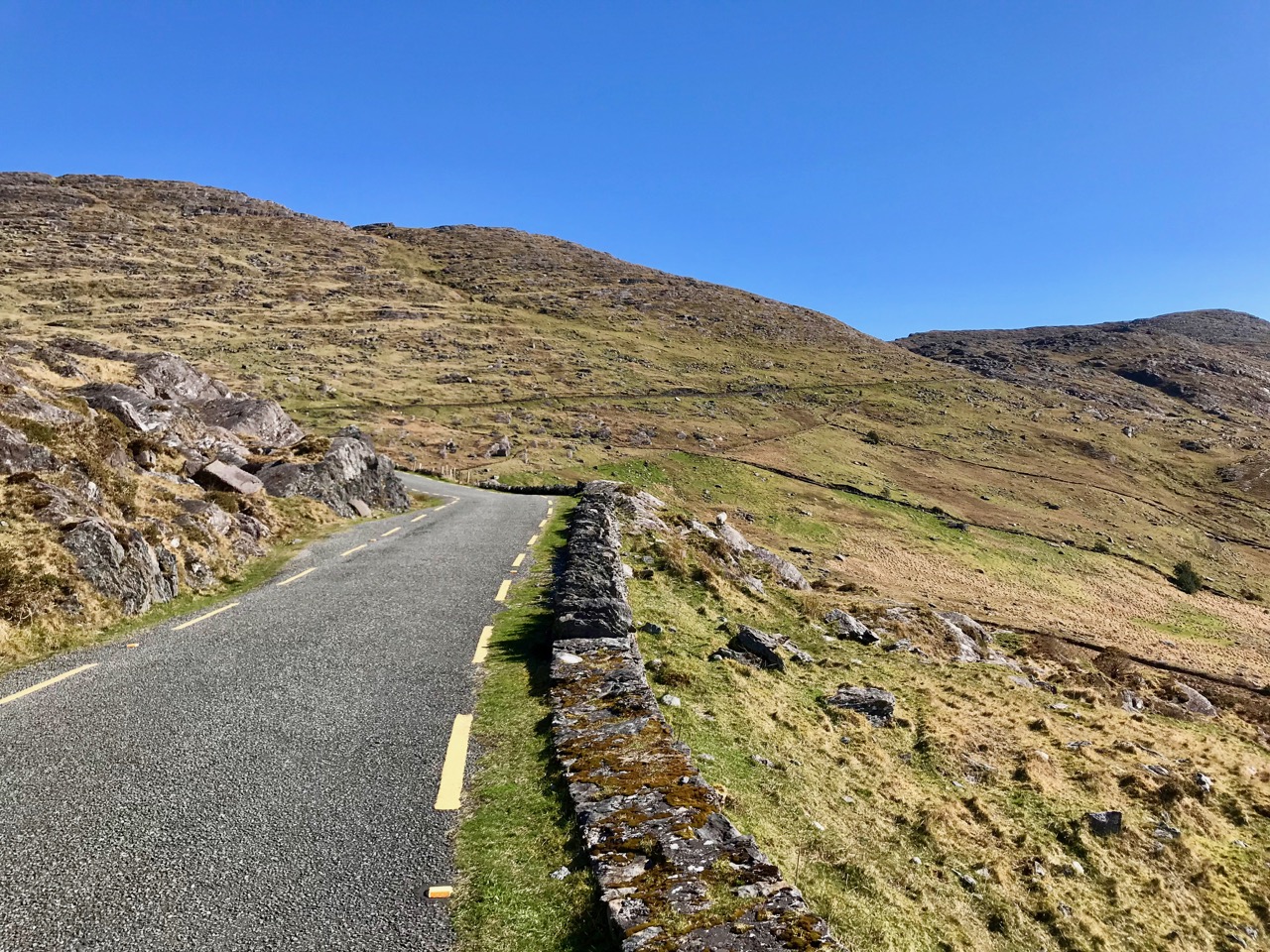
It’s barely a skip up to Eyeries from Nead an Iolair, so we had to carry on around the peninsula and take in the almost surreal views of oceans, lakes and mountains before dipping into Kerry and then heading over the top back into Cork county and down the Healy Pass – surely one of Ireland’s most spectacular road trips.

Returning home – with the evening sun setting gloriously over Roaringwater Bay – we reflected that there can’t be many places in the world where a single day can offer such a feast to satisfy all the senses.

Time Warp Revisited

This is an update of a post that originally appeared here 7 years ago. We find as time goes by that we need to go back and fix broken links, insert newer ones, update information, and make sure the photographs are still faithful to what’s on the ground. This is a revised and updated version of what I wrote at that time

It was the early 1960s and I was sitting in class in my convent school while Mother Francisca explained the purpose of our education and gave us a glimpse of our futures. “What we want for you, girls,” she said, “is to be Good Wives or Nuns.” This week, I landed back in that classroom with a bang. Did I visit my old school? No – I strayed into a time warp. In doing so I rediscovered part of my heritage I had almost forgotten and I met a brilliant young scholar who helped me access those dim memories again.

Stained Glass Wall in All Saints Church, Drimoleague
All Saints, Drimoleague - 1950s modernist architecture

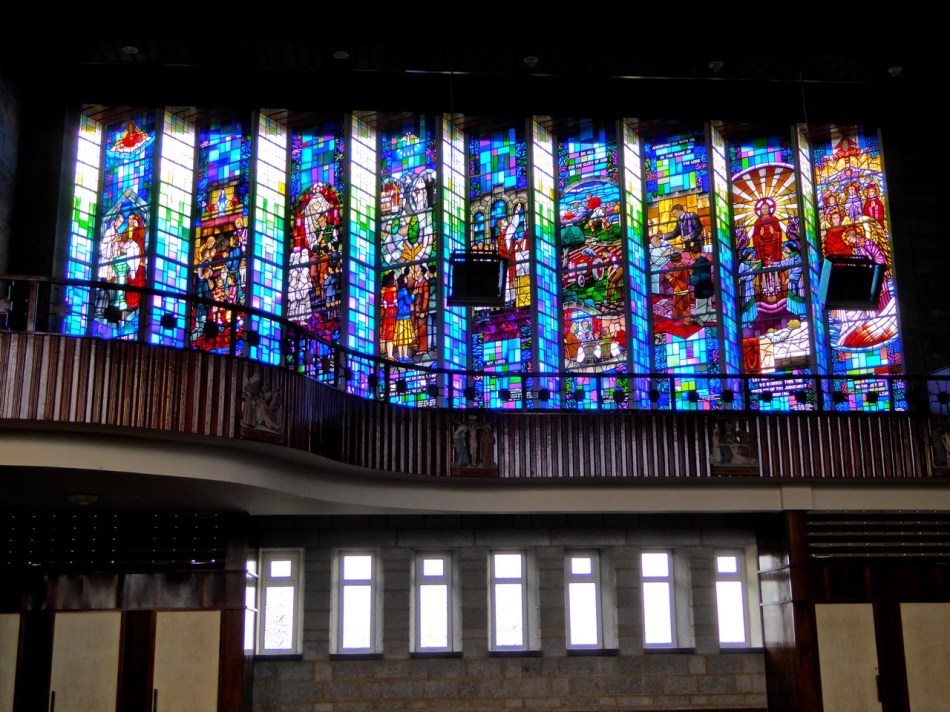
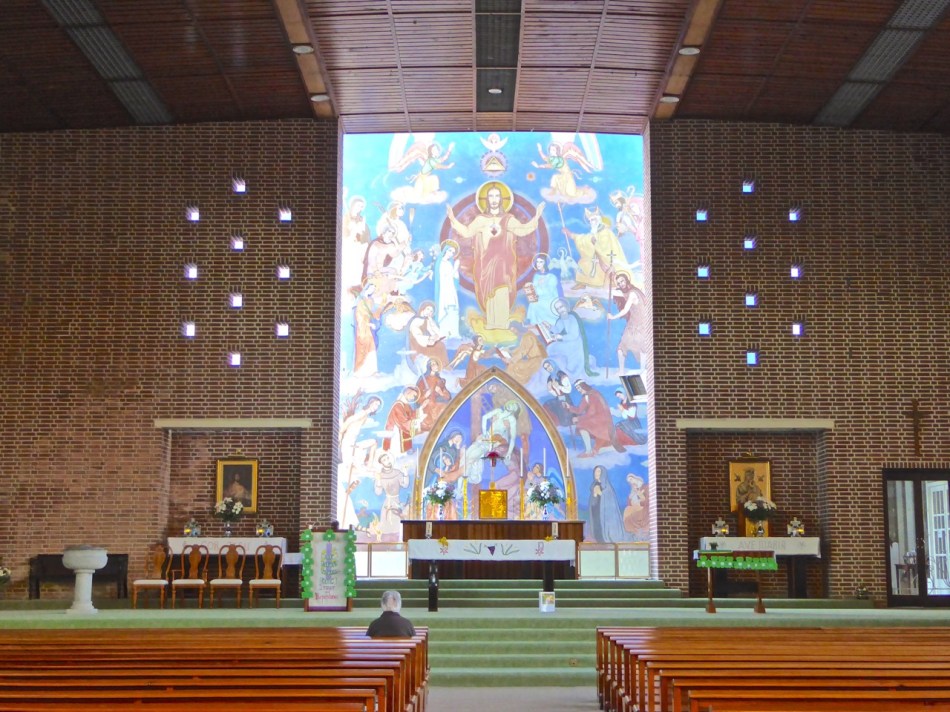
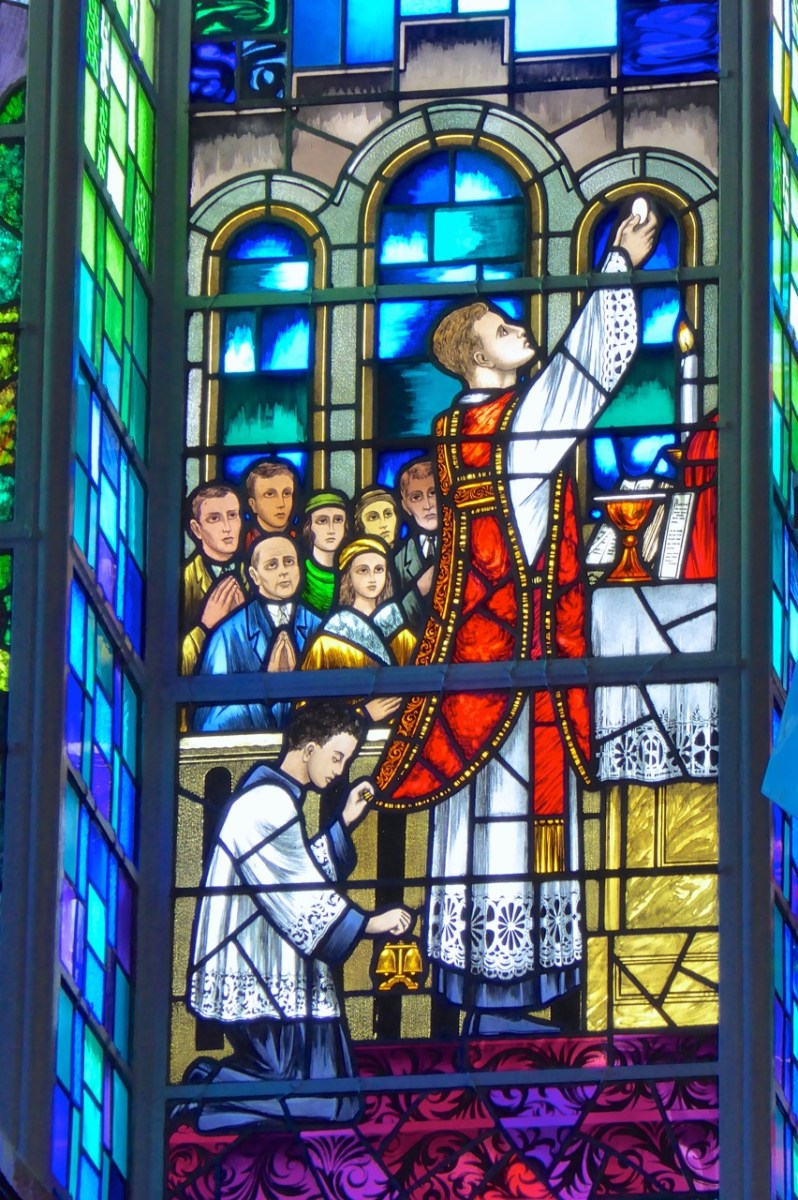
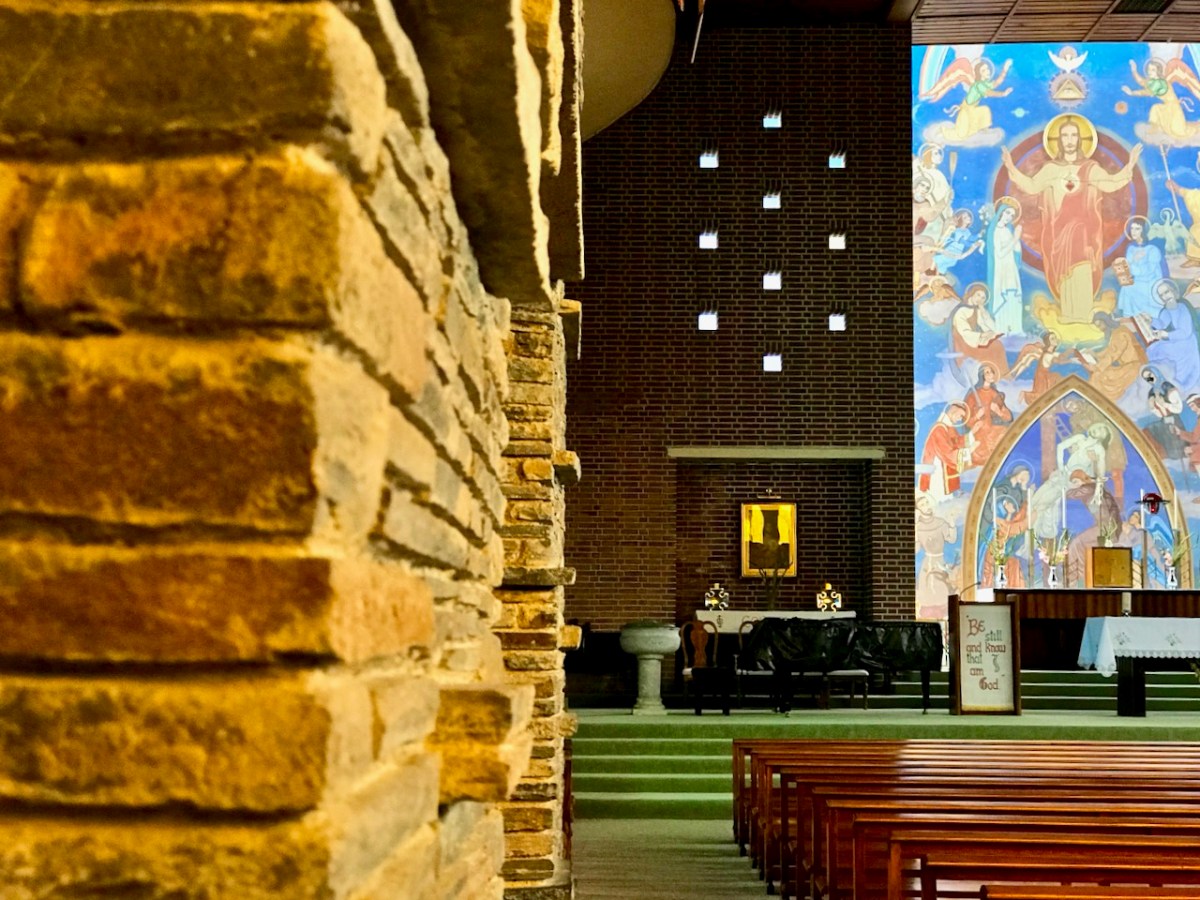
All Saints Catholic Church in Drimoleague is one of the most extraordinary buildings in West Cork. First of all, it’s a fine example of mid-century modern architecture (and there aren’t a lot of those in West Cork) and an engineering triumph. Built in the 1950s of concrete and limestone, its cavernous interior has no need for pillars: nothing intrudes between worshippers and altar. It’s like stepping into an enormous, curiously bright, almost empty box. Secondly, it has extraordinary artwork in the form of a giant mural behind the altar and a panel of stained glass windows above the balcony on the south wall. It was the stained glass that stopped me in my tracks.

All Saints, the interior

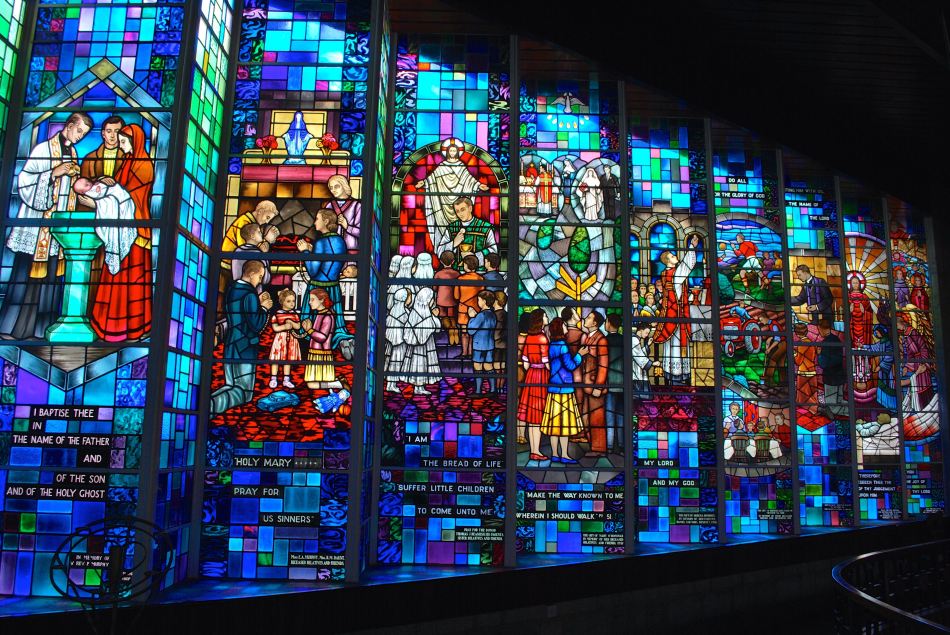
The glass is laid out in a series of frames that takes the viewer from birth to death – no, beyond death, to heaven. The church was built in the 1950s and each frame represents the values of rural Catholic Ireland of that time. In a strange way it reminded me of a High Cross, in that the illustrations that we see on High Crosses were meant to tell a story – a biblical one in that case – and to instruct the viewer in the tenets of the religion. The purpose of this wall of glass was also educational – to provide a primer to mass-goers on the aspirations and actions that should guide their lives.

The Stained Glass panel, image © Richard James Butler
Here’s a better photograph of the panels, courtesy of the brilliant researcher – Richard Butler, now Director of Research at Mary Immaculate College in Limerick.

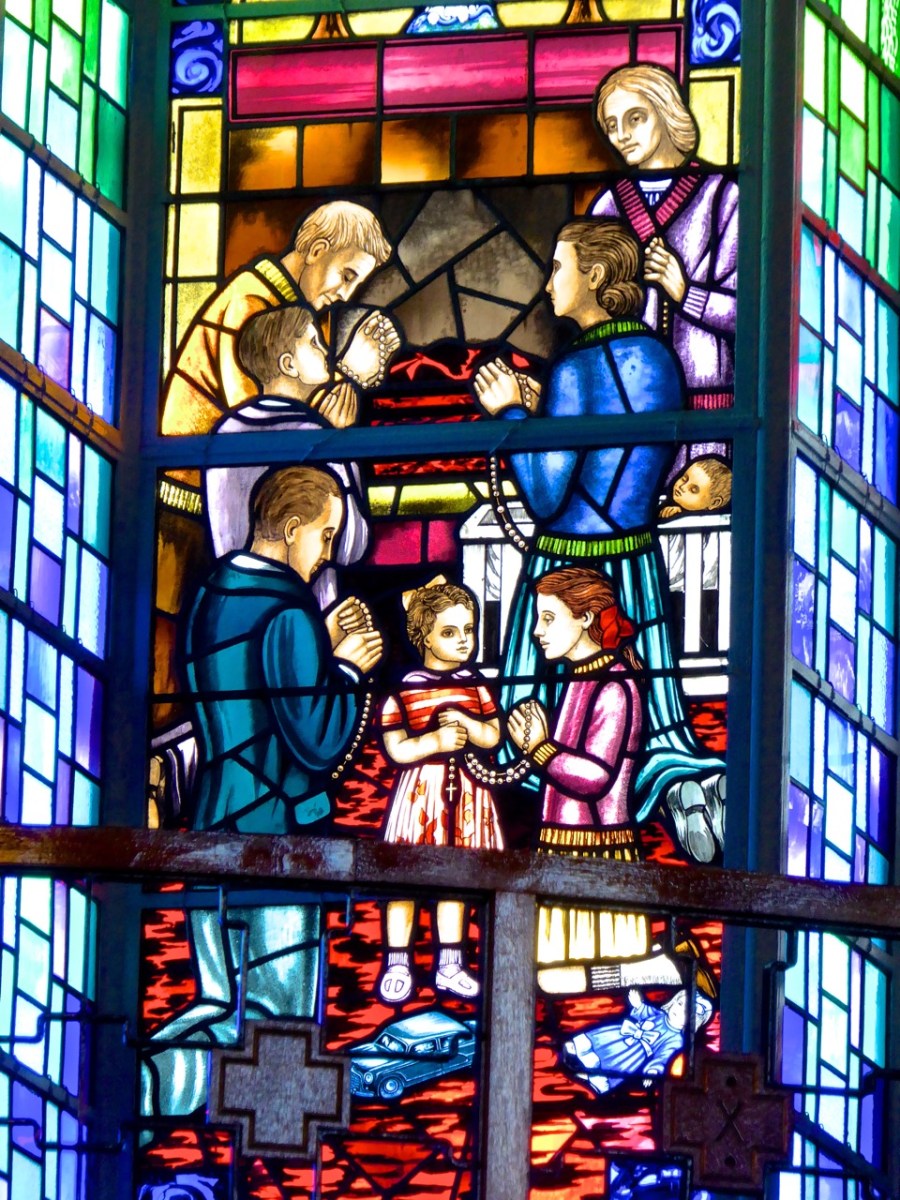
My parents, imbued with the message that the family that prays together stays together, developed an intermittent enthusiasm for saying the rosary. We would gather in the kitchen after dinner, each with our beads, and kneeling on the hard tiles we would tell off the Sorrowful or the Glorious Mysteries. The second frame shows just such a family, and I particularly love the toys on the floor and the statue of Mary on the mantlepiece. There’s a grandmother and a baby in a cot, and a little girl being inducted into the Mysteries by her older sister.

The next frame shows First Communion, with the girls in miniature bride outfits (as they are to this day) and the boys in their Communion suits with the short trousers and knee socks that all boys wore at that time. When my godson in Dublin made his First Communion I heard a lot about the process and I found that apart from the length of the boy’s trousers not a lot had changed in 60 years.
First Communion

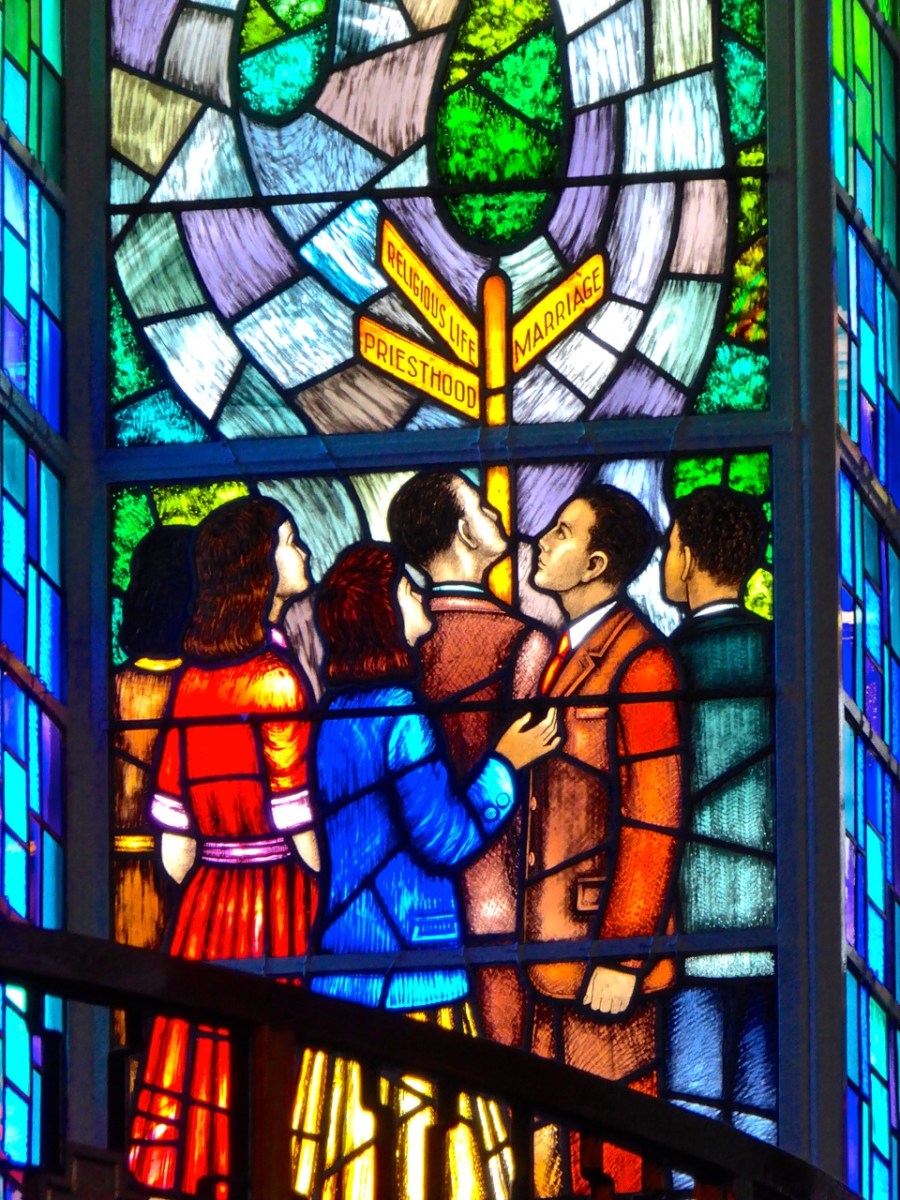
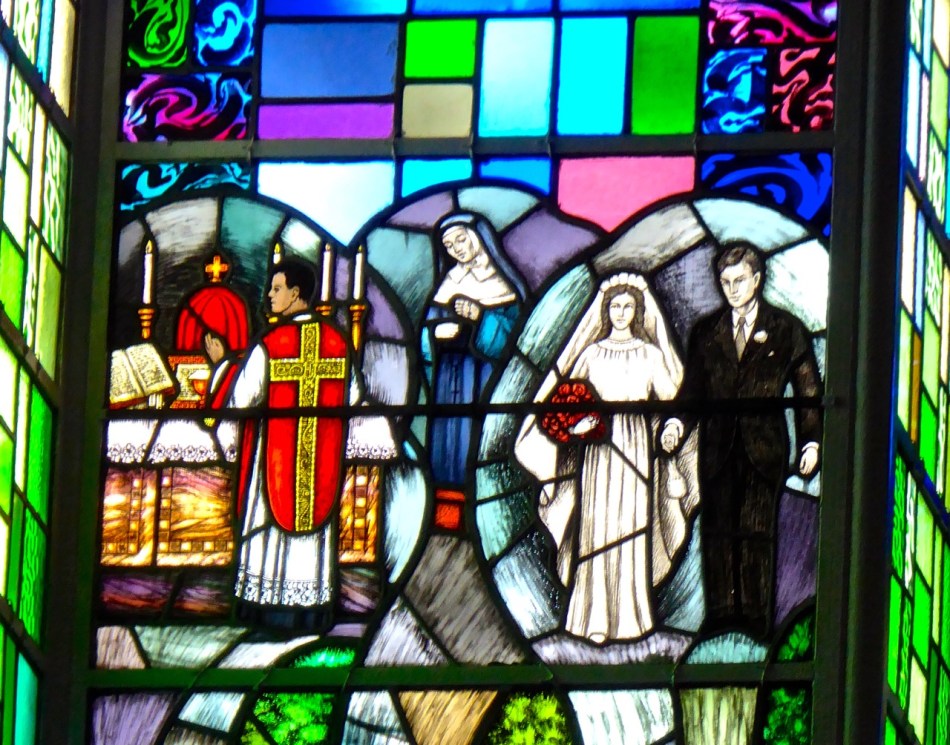
The one that brought me back to Mother Francisca shows earnest young men and women gazing at a directional sign which shows them their choices – marriage or the religious life. That was it! To hammer home the point the top of the panel shows a wedding, a priest and a nun. I’m casting my mind over the group of girls I went to school with – we didn’t produce any nuns and while most of us married I can’t think of a single one who hasn’t worked – we count among us an ambassador, teachers and principals, a town planner, an artist, a college dean, office administrators, a medical doctor, an international expert on child protection, a veterinary nurse, a parliamentary reporter, a lawyer…the list goes on. But none of this was discussed at school: we had no career guidance, no aptitude tests, no encouragement of any kind to think of ourselves as people who would work for a living. What’s curious is that we developed those careers in the complete absence of any kind of conscious preparation for them at the secondary school level.

Choices
Choices made

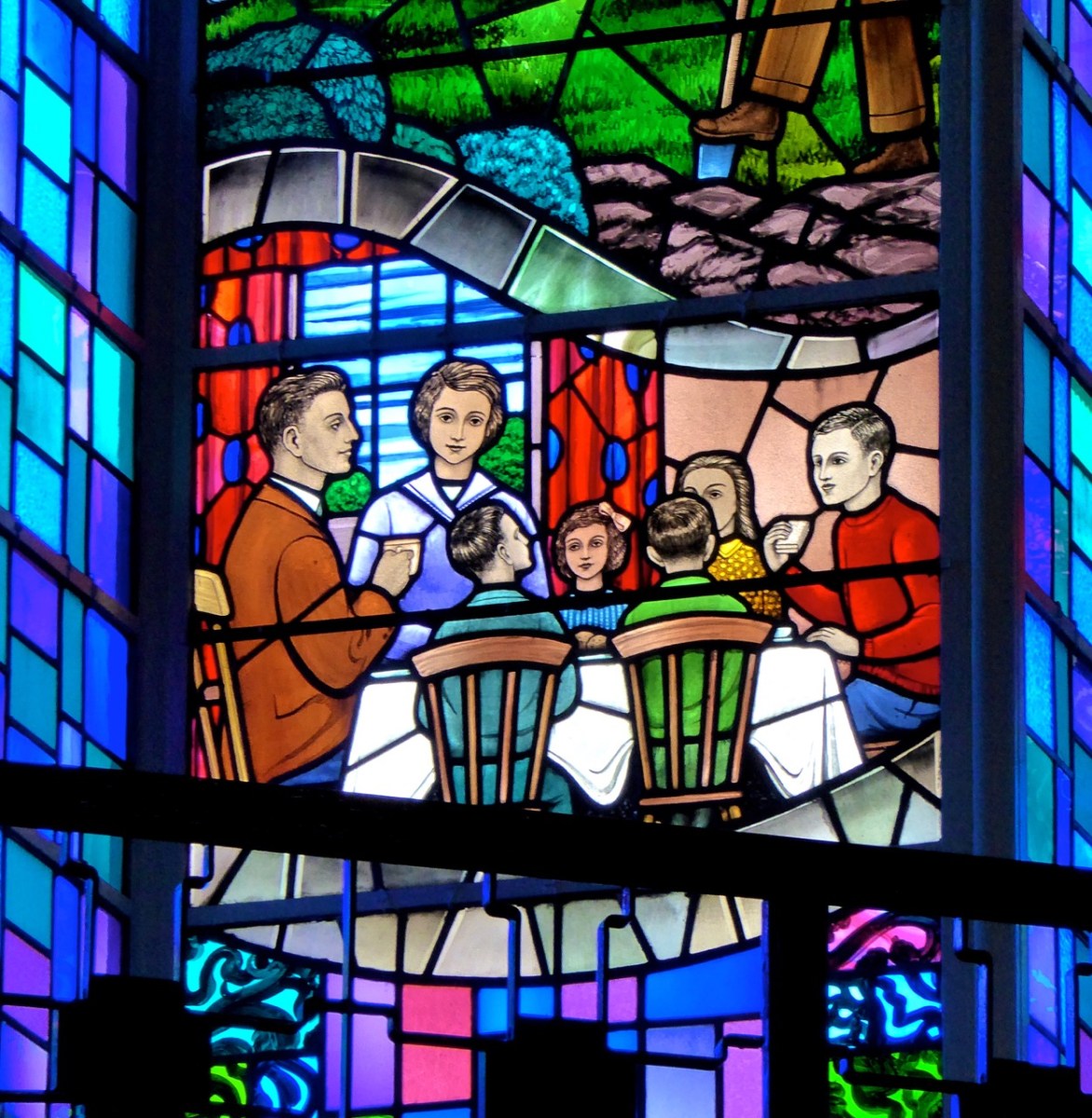
The sixth frame might be my favourite. It’s the ‘work, rest and play’ lesson. At the bottom of the frame a happy family sits around the tea table. Above them men work on the fields and on top those men are playing Gaelic football while their wives sit on a bench on the sidelines and chat to each other. Men were to head the family, work and play hard, and women were to provide the supportive role. I doubt if anyone foresaw when that glass was designed in the 1950s that in the next century two Irish rugby squads – the men AND the women – would bring home the Six Nations Cup for Ireland.

The last three frames deal with end of life, including Last Rights, death, and reception into heaven – the reward for living the exemplary life presented in the stained glass wall.

Last Rites

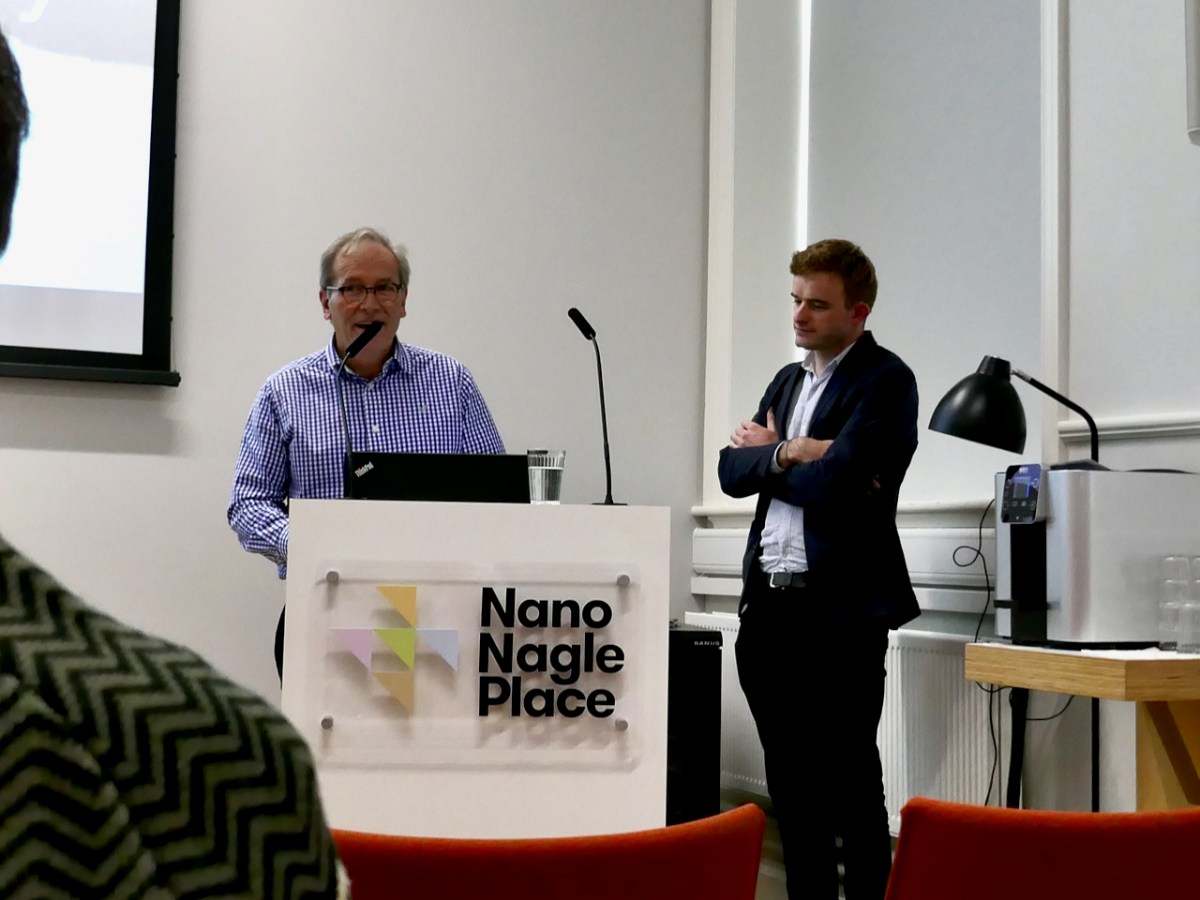
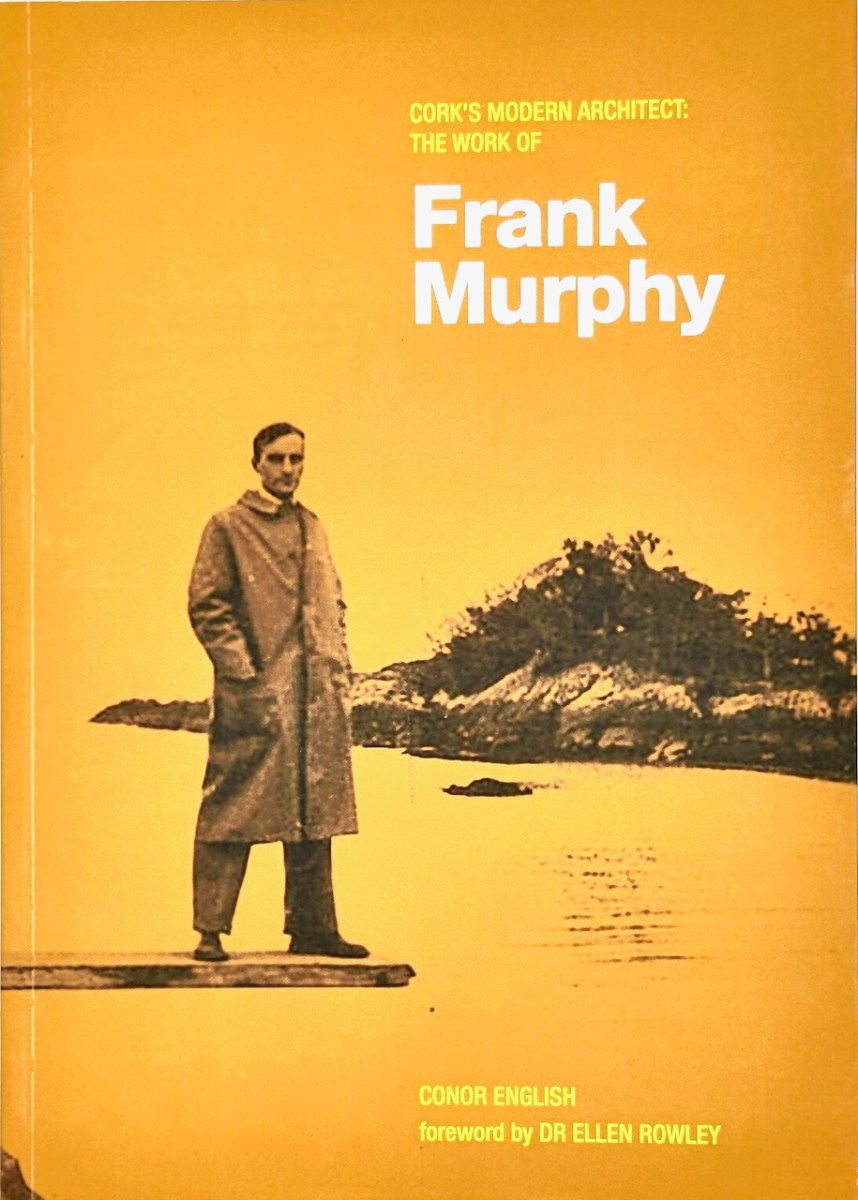
If you grew up like I did in 1950s Ireland, or if you are interested in the art and architecture or the social history of this period, the Church of All Saints in Drimoleague tells a fascinating story. In 2015 when I originally wrote this post there was little information available about it. Now I know that the church was designed by Frank Murphy, ‘Cork’s Modern Architect’, thanks to the sterling work by yet another brilliant young scholar, the architect Conor English. We attended Conor’s talk about Murphy at Nano Nagle place some years ago (that’s him on the right, along with Peter Murphy, Frank’s son) . You can read more about Frank Murphy and his achievements in this article.

My research revealed that one other person was as struck as I was by this church, although in a more scholarly way. Richard Butler is a gifted young historian from Bantry who completed a doctorate at the University of Cambridge. At the time I wrote this blog post, Richard was teaching at Leicester University, but is now the Director of Research at Mary Immaculate College in Limerick. We first heard him speak at the Bantry Historical Society on the subject of the courthouses of West Cork – a topic we had no idea could be as interesting until we heard his erudite and engaging presentation. Now, he has written the definitive book on Irish Courthouses.

At that time, he had written a paper, All Saints, Drimoleague, and Catholic visual culture under Bishop Cornelius Lucey in Cork, 1952-9, for the Journal of the Cork Historical and Archaeological Society*. He was very generous in sharing his findings with a fellow enthusiast. His paper (and a subsequent one with more information**) deals with the Catholic ethos within which that era of church construction operated, with the role of the local community in commissioning such an unusual edifice, with the enormous mural, and with the windows. It was only after communicating with Richard that I learned that the windows were the work of the Harry Clarke Studios*** and how unusual they were for their day in not being concerned solely with images of saints, the life of Christ, or Mary.

Devotion in 1950s West Cork

Richard’s paper not only details the commissioning of the windows, but the extraordinary interventions made by Bishop Lucey to dictate the content and form of the figures in them. It’s a fascinating read.

We have discovered, to our surprise, that not everyone is as enamoured of the Drimoleague Church as we are – the word ‘factory’ has been bandied about. Personally, I think Drimoleague should take great pride in having such an outstanding and unique building, by such a distinguished architect. There’s more to the story – all to be read in Richard’s papers.

*Richard Butler, ‘All Saints, Drimoleague, and Catholic visual culture under Bishop Cornelius Lucey in Cork, 1952-9’, Journal of the Cork Historical and Archaeological Society 120 (2015), pp. 79-97.

**Richard Butler, ‘All Saints, Drimoleague: clarifications and new discoveries’, Journal of the Cork Historical and Archaeological Society 121 (2016), pp. 141-43.

***For a discussion of the difference between Harry Clarke windows and Harry Clarke Studio windows, see my quiz on this topic and the answers.