The Wild One

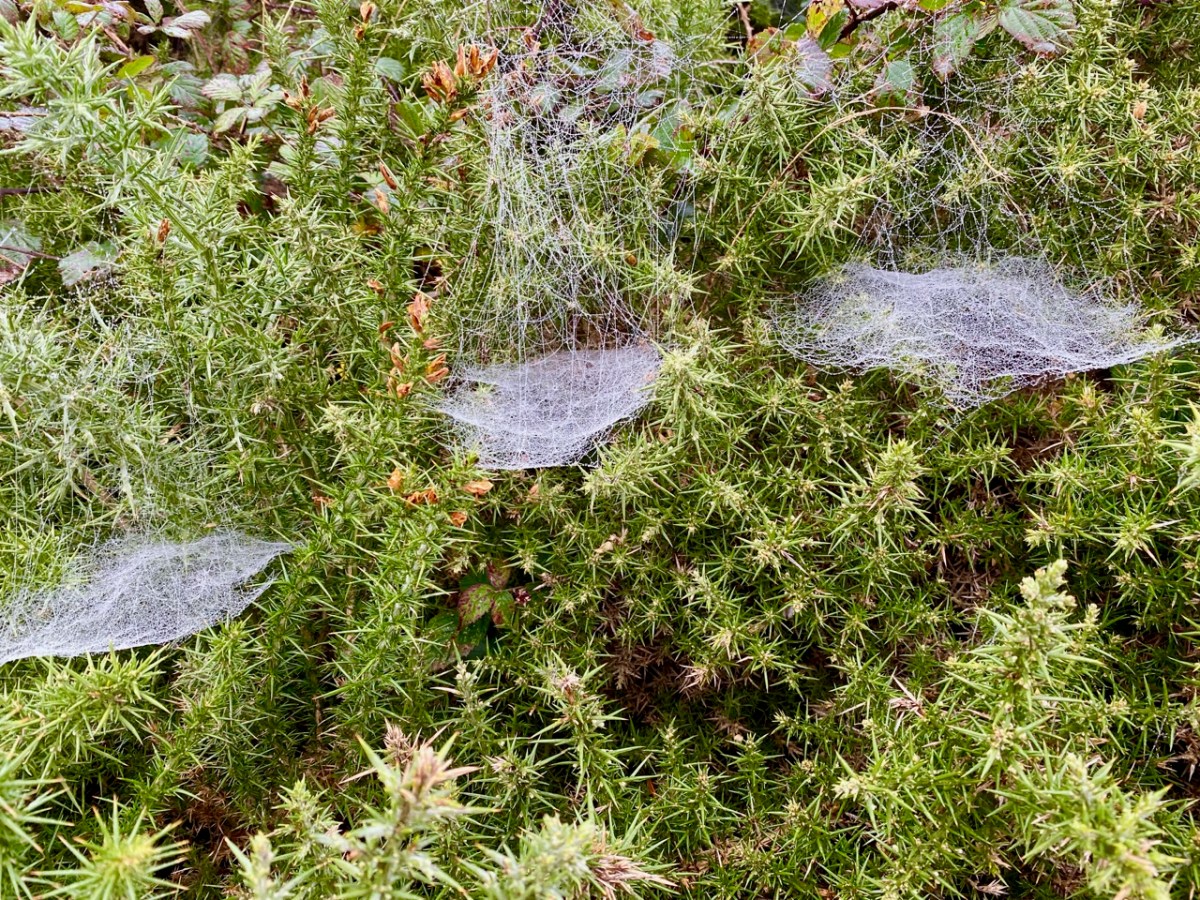
We are past November Dark – traditionally a ‘low’ time of the year when the effects of the approaching cold months begin to displace autumnal skies and spectacular sunsets: the term traditionally refers to the appearance of the new moon of the month (which happened this year on the 4th), but is probably inspired by the preceding nights when no moon is visible. For us at the moment, on the shores of Roaringwater Bay, the dark time is emphasised by a constant pervading mist which clings and covers everything in films of moisture, especially the myriad cobwebs on the gorse bushes which surround us. Gone – for now – are our fine views out across to the islands, and there is a feeling of being marooned and suspended in a lifeless grey tract which encompasses sea and sky.
November Dark has brought with it tragedy to our garden. In explanation, I should first paint the idyllic picture of what we like to call our ‘peaceable kingdom’. For many years we have considered this domain a haven. Do you remember our fox – Ferdia – who was a constant companion to us in the first few years here at Nead an Iolair? He visited on a daily basis – often waking us by barking outside our bedroom window at dawn, and presided over a mixed community of birds and animals who share our territory – without any conflict.
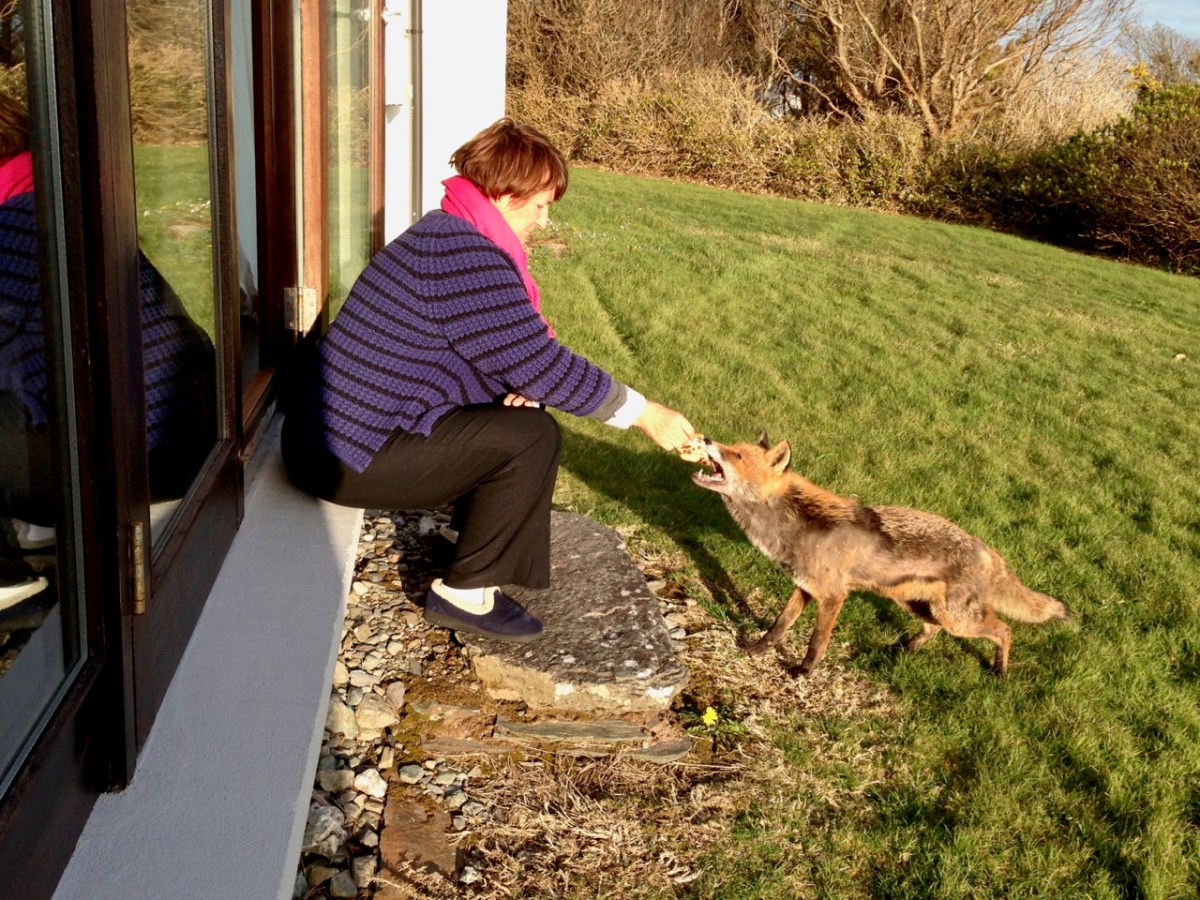
Ferdia was happy enough to co-exist with the bird and pheasant families, the rats and mice, and the occasional cat that dropped in. I have a memory of fox and cat sitting side by side on our terrace, clearly having a conversation with each other: I would like to have eavesdropped, but whatever mutual language they share was not available to me! Ferdia vanished from our garden a few years back – gone to his happy hunting grounds no doubt; but the pheasants have remained with us through much of the decade we have been here.

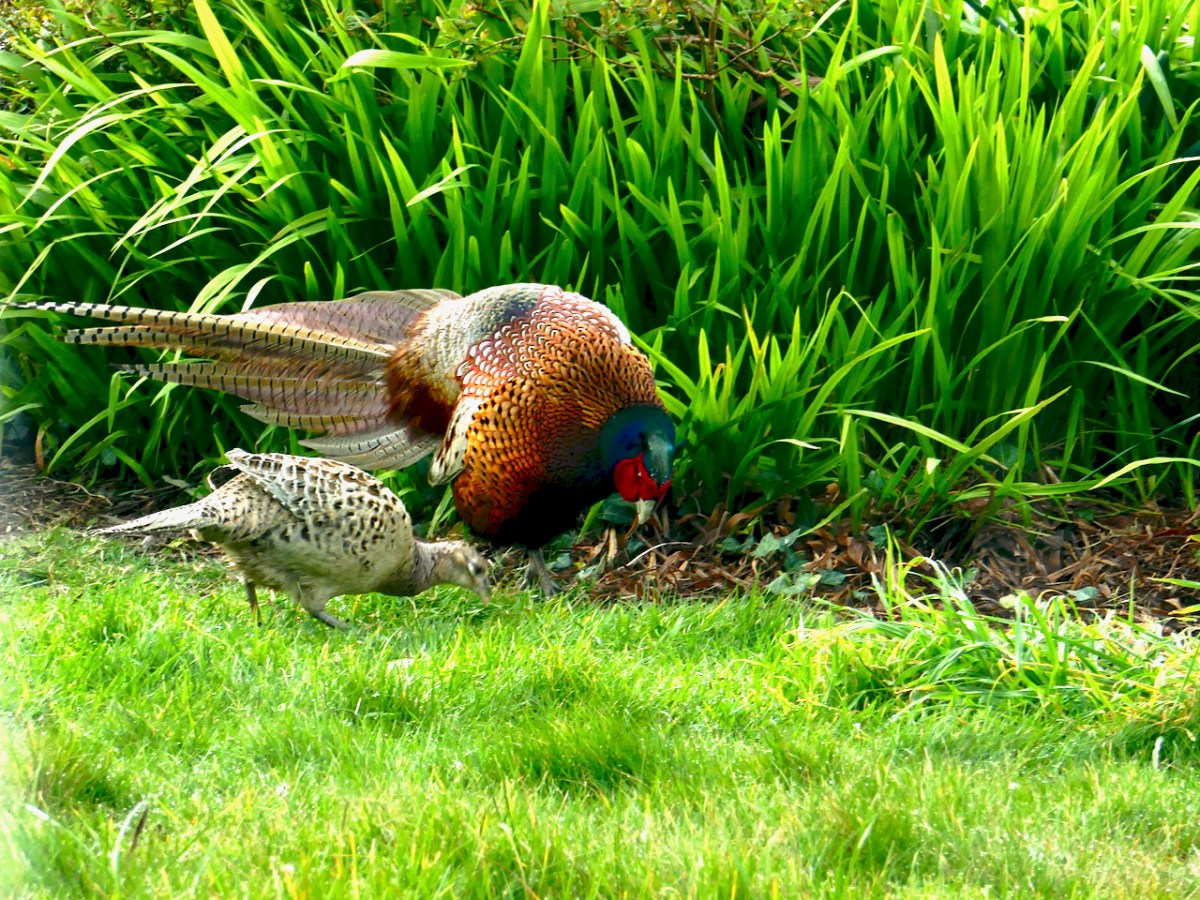
In the upper picture Finnbarr and his young wife, Fidelma, patrol our garden some five years ago. The lower picture was taken just before the start of the Pandemic, in March 2019. The couple have been a daily feature of life outside Nead an Iolair. They always appreciated feeding time, when they got a share of the seeds I put out on our patch for the many bird visitors, small and large. The picture below taken during the summer of last year shows a family group: pheasant chicks have been seen but rarely.
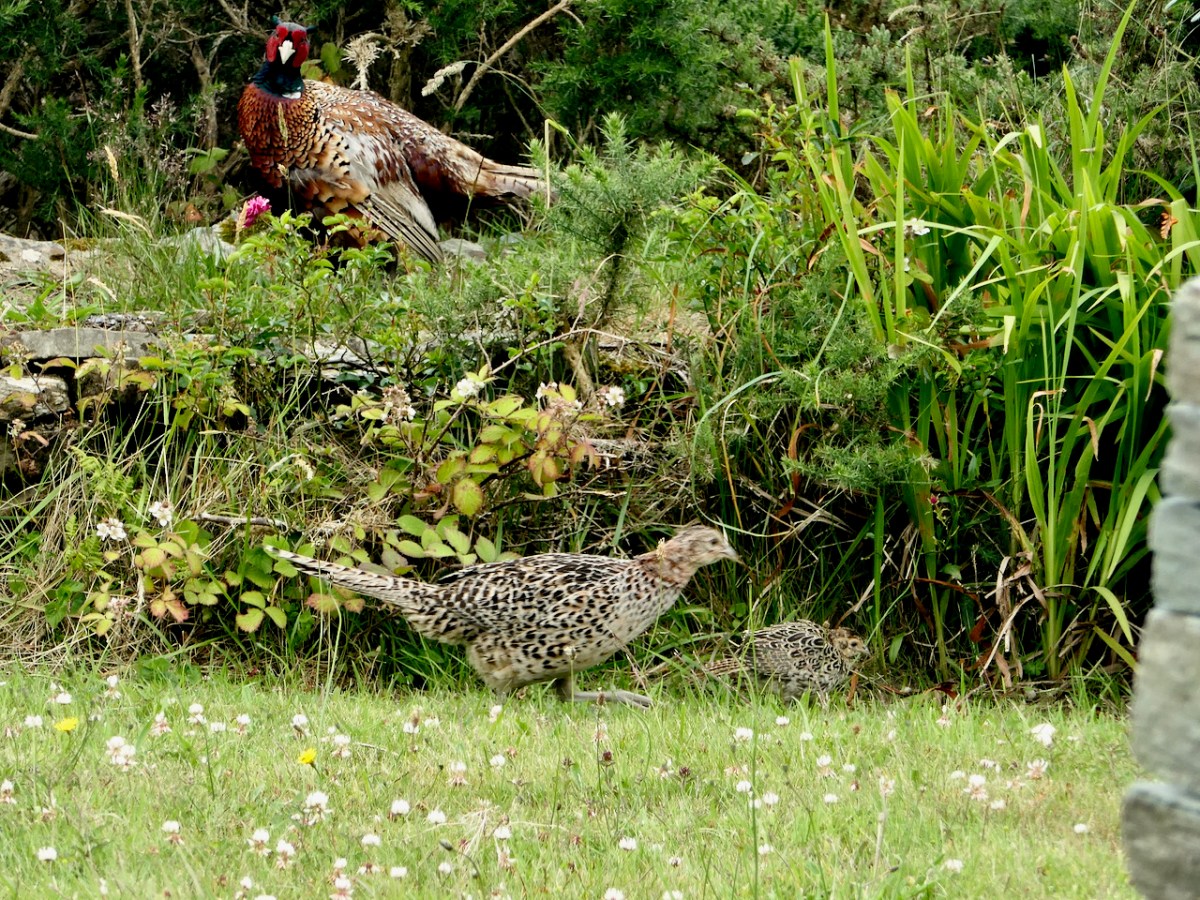
The idyll abruptly ended yesterday, when a bomb hit the garden – in the form of a small but fierce force of nature: only inches long but terrifying. I glanced out of the window where, minutes before, the two pheasants had been foraging as usual along the stone boundary wall. I was shocked to see Fidelma lying on her back, wings flapping, being dragged along the ground: there was a commotion among the small birds and Finnbarr had vanished. At first I could not see the attacker, but as I rushed outside I caught a glimpse of brown fur with a hint of white and black. My first thought – a rat! – could not have been borne out: we have lived side by side with rat families for years: they only ever appear to share the bird food, and are never aggressive.
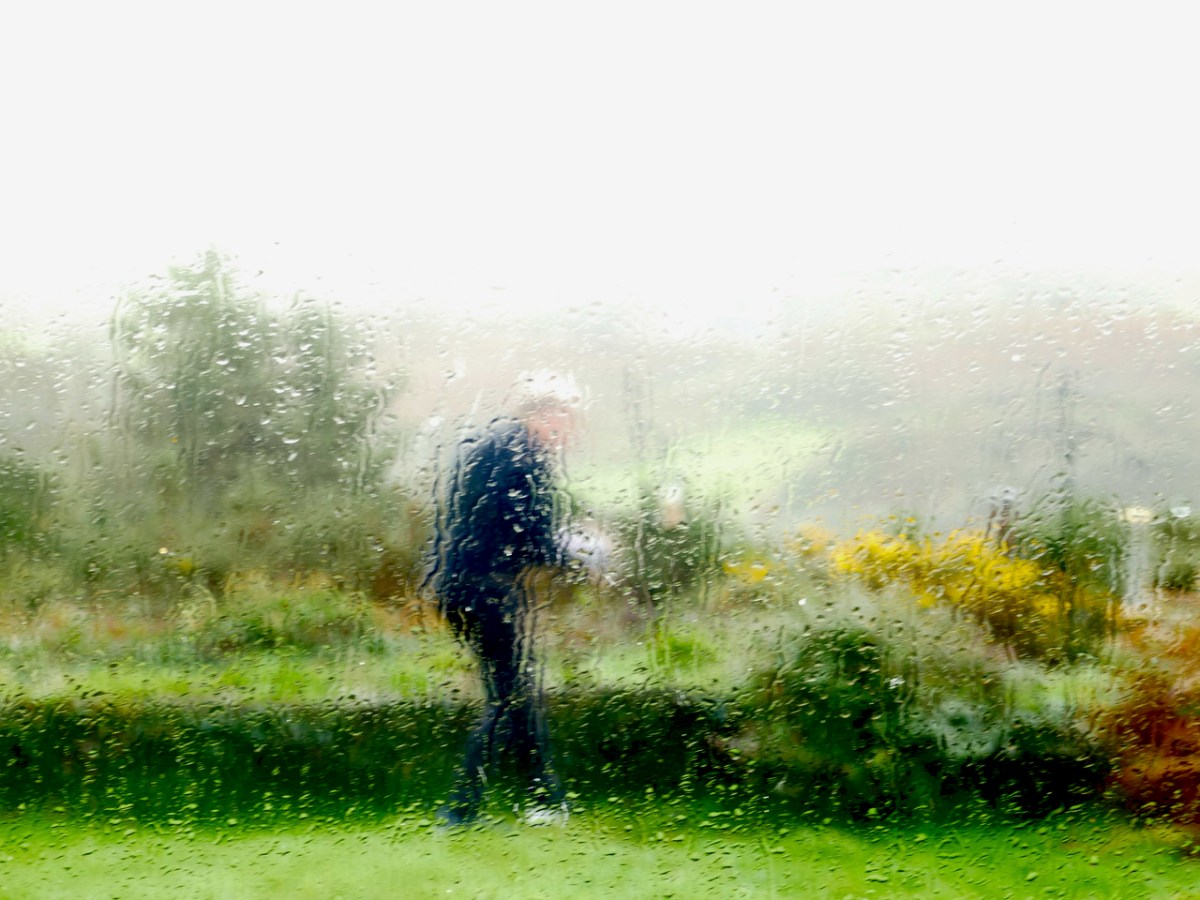
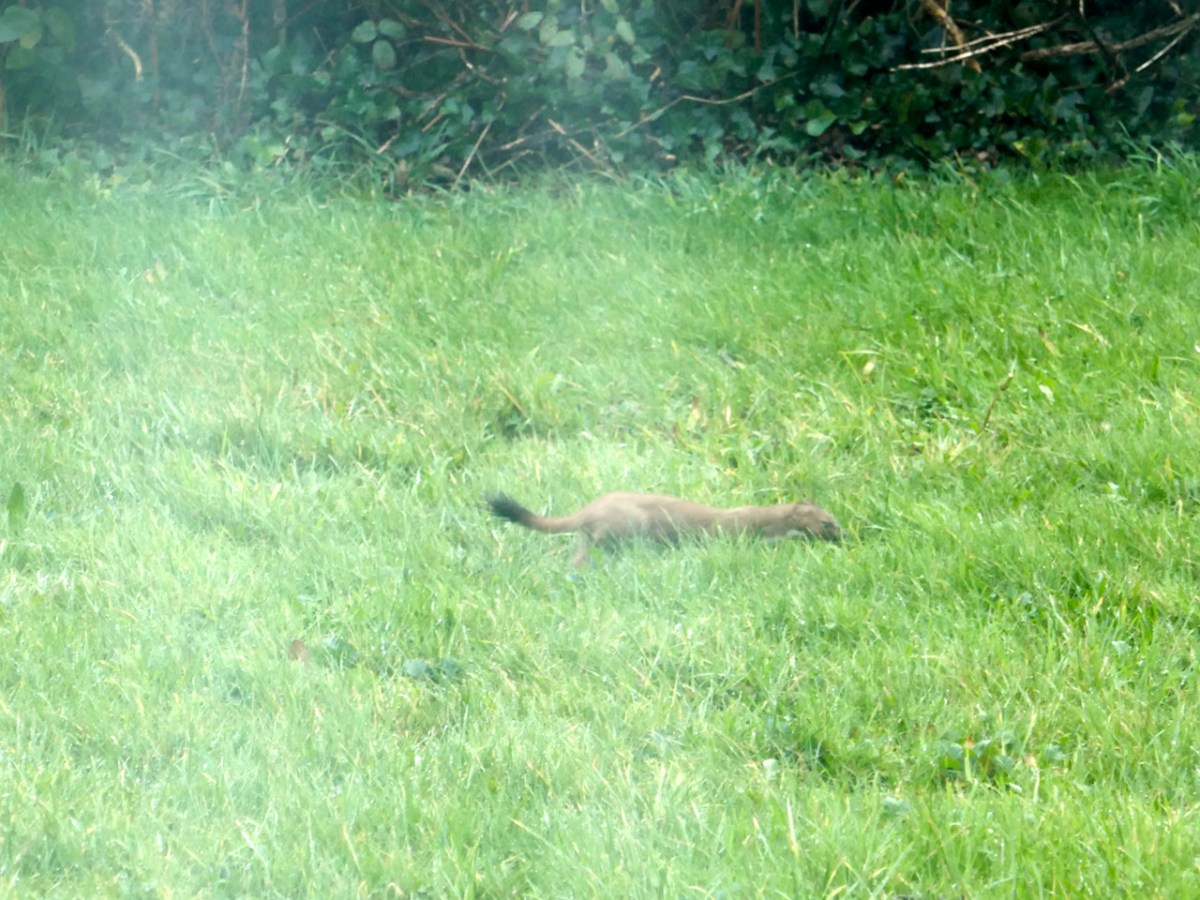
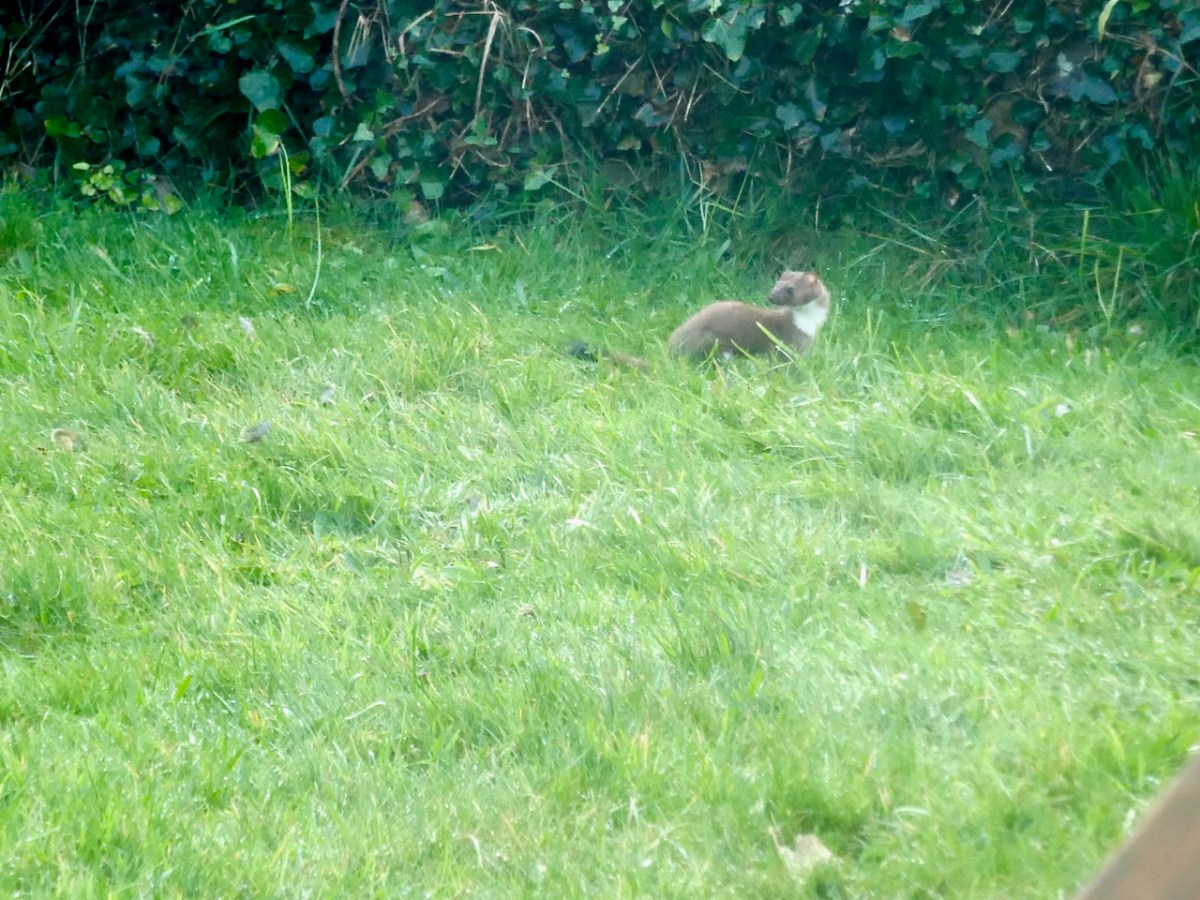
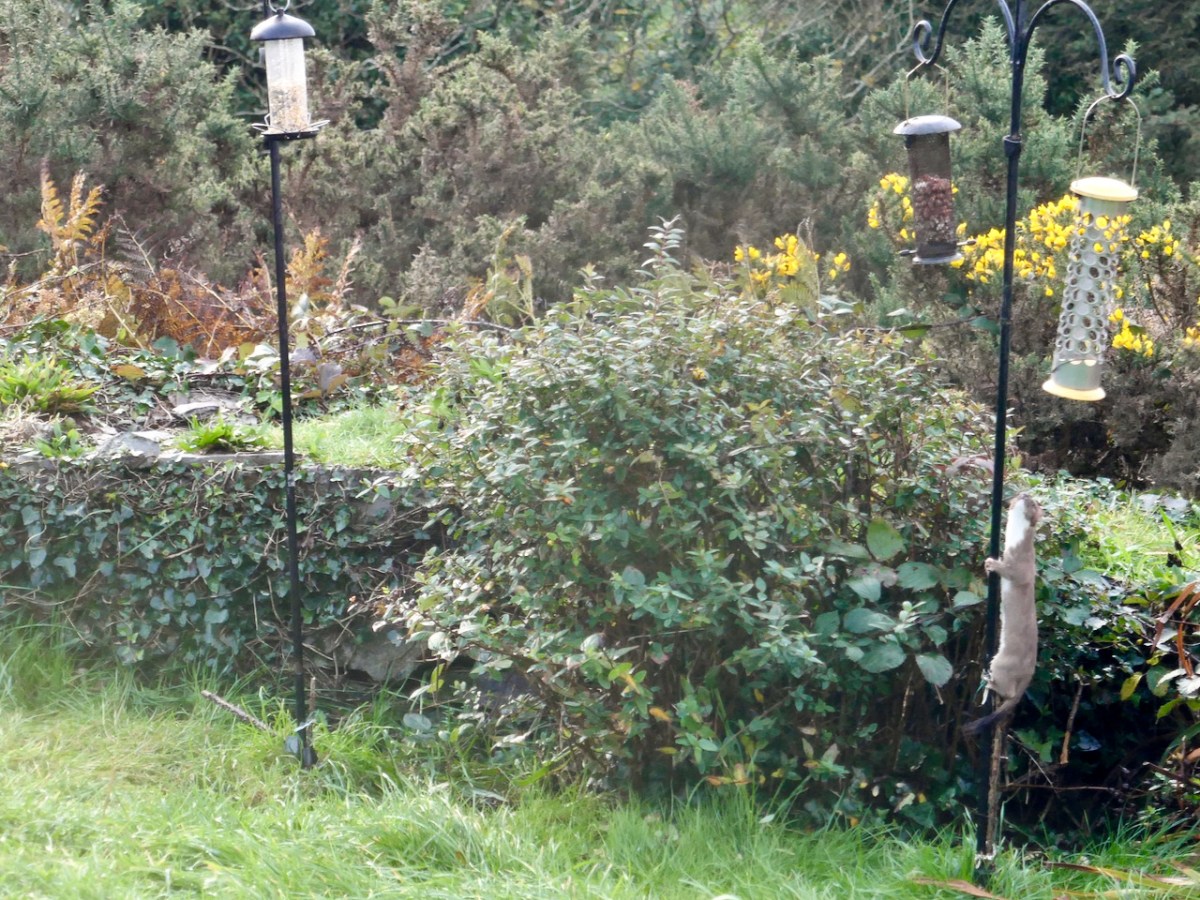
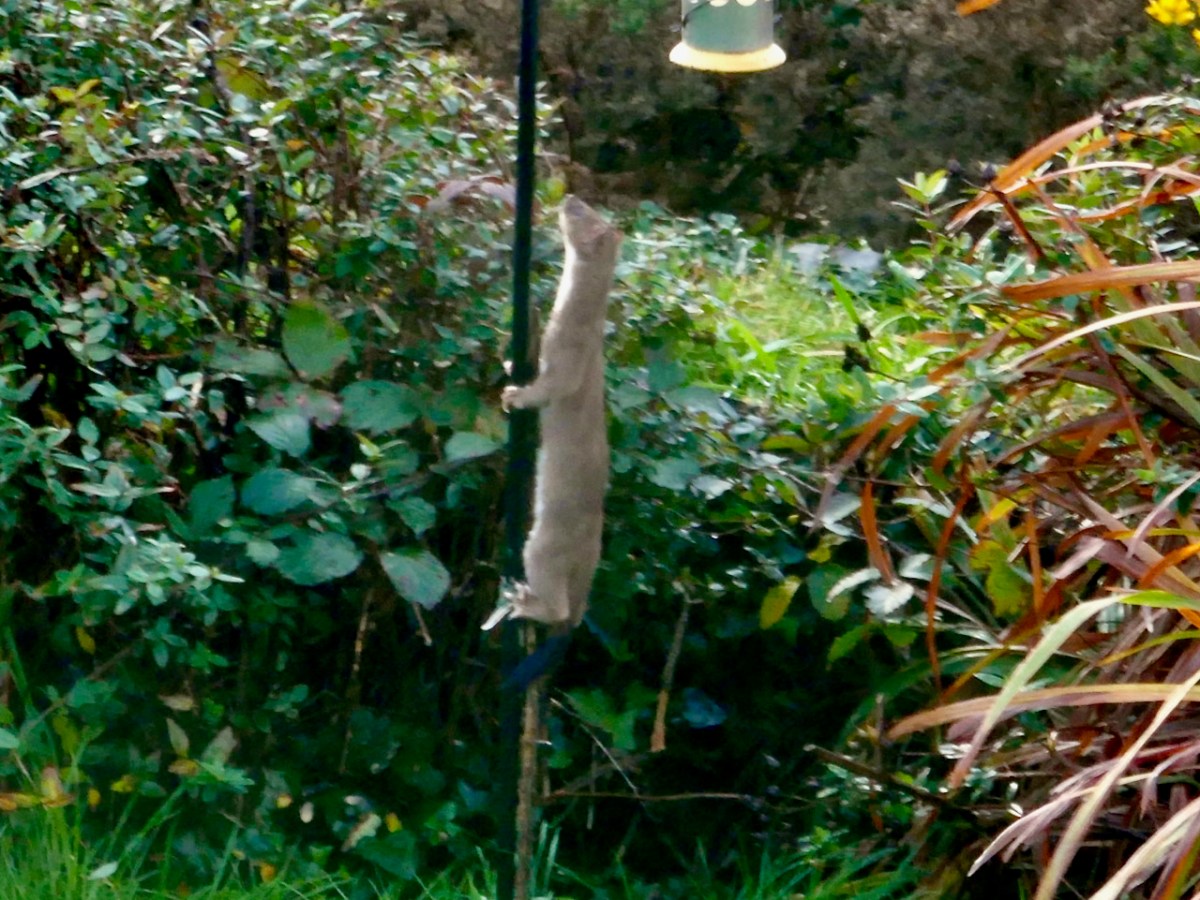
You can see the conditions that prevailed on this worst of days from Finola’s picture (top), taken from indoors through the windows. And – below that – the brazen culprit, who danced around the garden at breakneck speed, very ready to threaten me if I made a wrong move! It was our first sighting here on our land of an Irish Stoat. Having now read the books, I know in hindsight what a shocking phenomenon had hit us. Although fearing the worst, I quickly removed Fidelma to an indoor refuge and then watched the rampaging of this fur powerball traversing our territory at lightning speed; leaping from walls, trees and bushes and aiming for any likely food source.

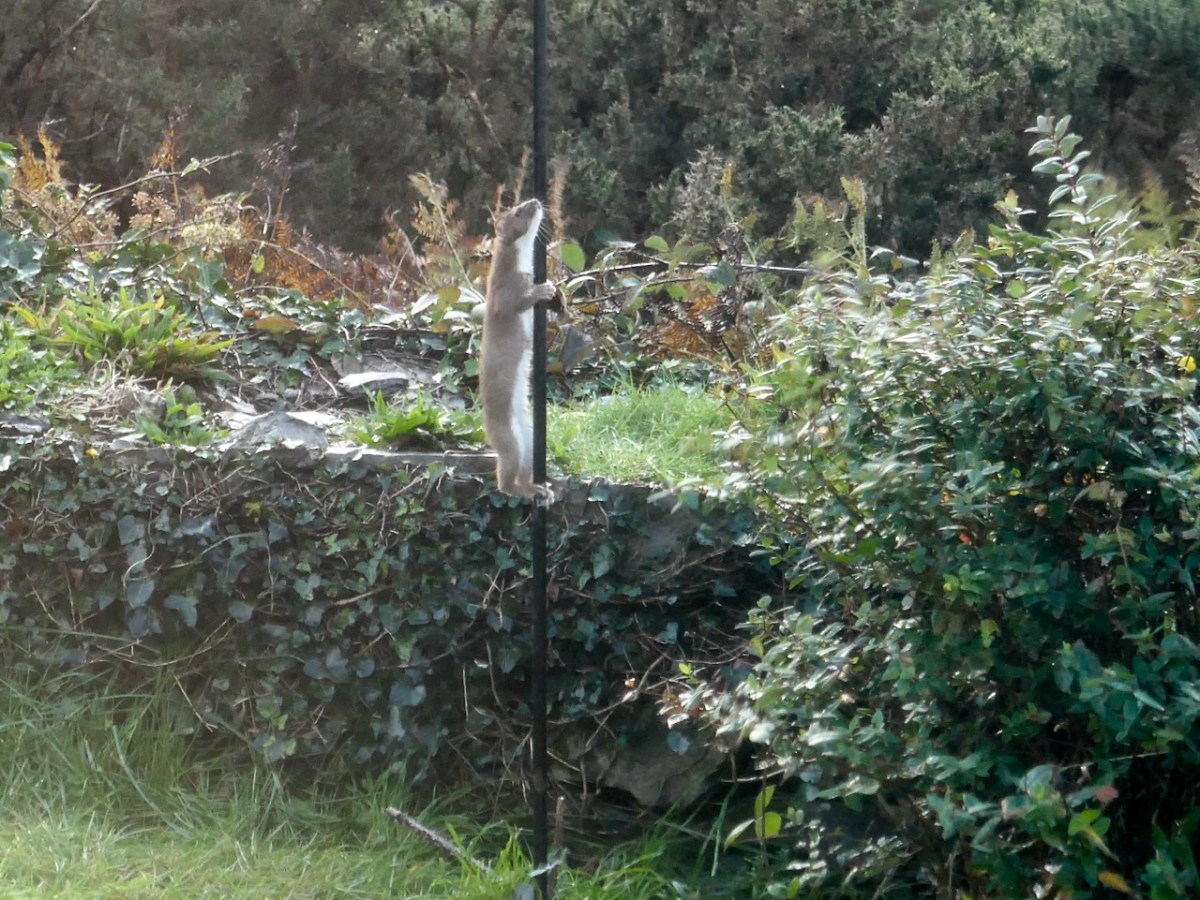
Finola has done her best to clarify the images in the photos she rapidly took through streaming wet glass (above) on this appalling day. The weather did not in any way impede the progress of the animal which circumscribed our whole acre, it seemed, in record time.

. . . The Stoat is often called the Weasel in Ireland, but although the weasel (Mustela nivalis) is very similar in appearance to the stoat, it is not native to Ireland and has never been introduced here. In Ireland the stoat or ‘weasel’ was regarded as a very intelligent animal, but also vengeful. For example, since they were believed to understand human speech, if a stoat was encountered the correct thing to do was to greet them politely. In County Clare the custom was to raise one’s hat in greeting, or even to bow. The person who insulted them, on the other hand, or pelted them with stones, could expect to lose all their chickens before too long. Deliberately killing a stoat was most unwise, since it caused all the deceased animal’s relations to descend on the house of the culprit and attack with great savagery . . .

Ireland’s Animals – Myth legends and Folklore, Niall Mc Coitir, The Collins Press, Cork 2010

The Duchas Schools Folklore Collection – gathered in the 1930s – has numerous entries referring to the stoat. Above is an example from Co Carlow. When I was sifting through these, I was struck by the fact that similar stories about stoats are repeated over and over again, but from different parts of Ireland. I could write a volume based on these accounts, but will choose only a few:

. . . One time there was a girl who was very fond of going to the seaside. One day she went to the seaside and lay down and fell asleep. Ten weasels went down her throat. So she awoke when the last one was going down. She went to the doctor and the doctor said she would need to undergo an operation and then she would die. One day she was going to the shop and her granny knew all about cures. So she went into the granny. Her granny told her to get two pounds of salt and eat all the salt and go to the seaside and drink no water and keep her mouth open and the weasels would have to come out for a drink. So this she did. The weasels came out for a drink. The girl counted them. There were ten in it and the girl came home cured . . .

William O’Donnell, Cabra Glebe, Co Donegal

. . . One day long ago two men went to cut the meadow with scythes. They cut away for a while until they came to a weasel’s nest where there were four young weasels out of the nest and left them near by on the ground. After a while the mother of the weasels came home and found her young on the ground and was very angry, She hesitated for a moment and then understood what the men had done. Now the men had had a can of milk with them for a drink which they left near the weasel’s nest, the old weasel saw the can and went to see what in it. When she saw what was in it she spat into it because a weasel’s spit is poison. When the men saw this they were terrified and put back the young weasels into the nest, and the old weasel was pleased and went back and upset the can and spilt the milk from fear the men would drink of it and be poisoned . . .

James Gormley Senior, Aged 82, Commeen, Co Roscommon

Note that the term ‘Weasels’ is used far more often in these accounts than ‘Stoats’. There can only be the one animal, however, as there have never been true ‘weasels’ in Ireland. The story above, from Co Roscommon, is the most common of all ‘weasel’ tales in Ireland, and variants of it have been recorded from all parts.

. . . Many years ago an old woman lived by herself. There was a nest of weasels under the hearth in the house in which she lived and every day the old woman fed them until they became quite tame. When the young weasels were reared they went off but the old one remained in the hearth. One day the woman was sitting by the fire when the old weasel came out and sat with her. The weasel was continually looking up the chimney and at last the woman said “What the dickens are you looking at?” and at the same time looking up herself. She saw a little bag hanging in the chimney and took it down. To her surprise and joy she found it was full of gold. This was the weasel’s reward for her kindness to her and her family . . .

Mrs L Millett, Fiddaun Lower, Inistioge, Co Kilkenny

. . . The Swarm or Drove of Weasels: the following story or rather fact come from a reliable source to wit a teacher in Ballyshannon. In the end of August or about that time some distance outside Ballyshannon a great whistling was heard as if a number of little birds and a mighty drove of Weasels was seen heading for the mountains. An old man said that he heard that weasels used make for the mountains during the Grouse Season. The Priests housekeeper saw or heard of the same thing in Antrim . . .

J Clarke, Navan, Co Meath

. . . Some time about forty years ago there were children playing on the side of a hill and they saw a few weasels. They started to run and cry. They looked round and saw thousands coming after them. Only they got away the weasels would have devoured them . . .


Written by Kathleen McKenna Bragan, Co Monoghan 25th November 1938

I couldn’t resist that little foray into weasel stories from the Folklore Collection. There are many many more pages full of them! Interestingly, stoats are a fully protected species in Ireland. If stoats are proving a problem, by killing chicks or other domestic animals, you must solve the problem by using good fencing; it is illegal to kill a stoat.

A possible reason for the attention which stoats attract in folklore is the fact that they can change colour, which adds a sense of the supernatural to them. In countries which have harsh winters the coat of the stoat becomes white in those months, offering a level of protection in the open landscape. The fur from the white – or ‘winter’ – stoat we call ermine, and the white fur is considered so precious that only royalty or nobility traditionally wear it. In the drawing above, the white stoat is wearing a cloak on which are printed the symbols of the flag of Brittany (below), which was an independent kingdom in medieval times. The white background represents the ermine fur, and the black markings are said to be based on the black tip of the tail which the animal retains, even in the winter.
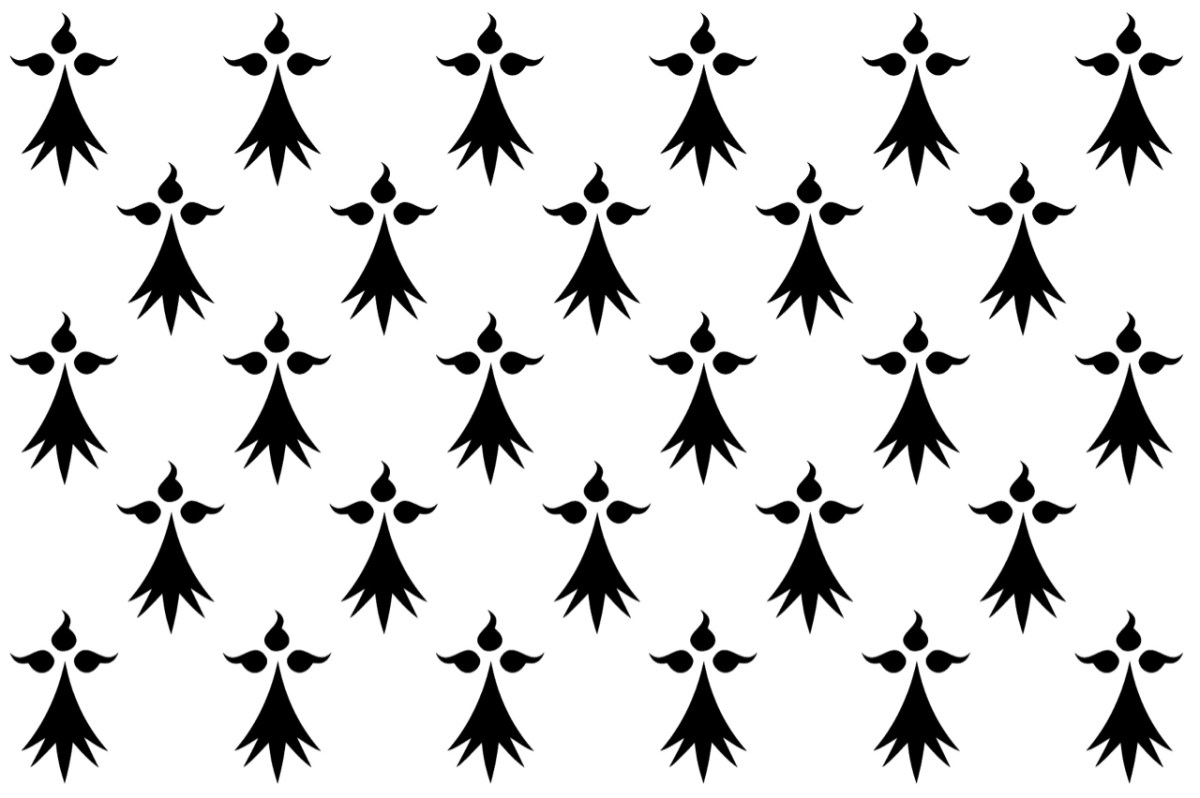
Here (above) is another example of the Breton ermine representation: a finely worked silver antique brooch. In Ireland, the species of stoat which has evolved – Mustela erminea hibernica – does not usually turn white in winter, although examples have been noted. The animal is said to have been resident in Ireland from the post-glacial period and, in the present day, the population numbers are unknown: it is not a threatened species.

In spite of our attempts to care for Fidelma, she did not survive. Sadly, I decided to let Nature have her way and laid the body close to a fox-track above the house. Later, I noticed an assembly of corvids gathered in the area. When I returned there in the evening all traces had gone – just a few scattered feathers told the tale.
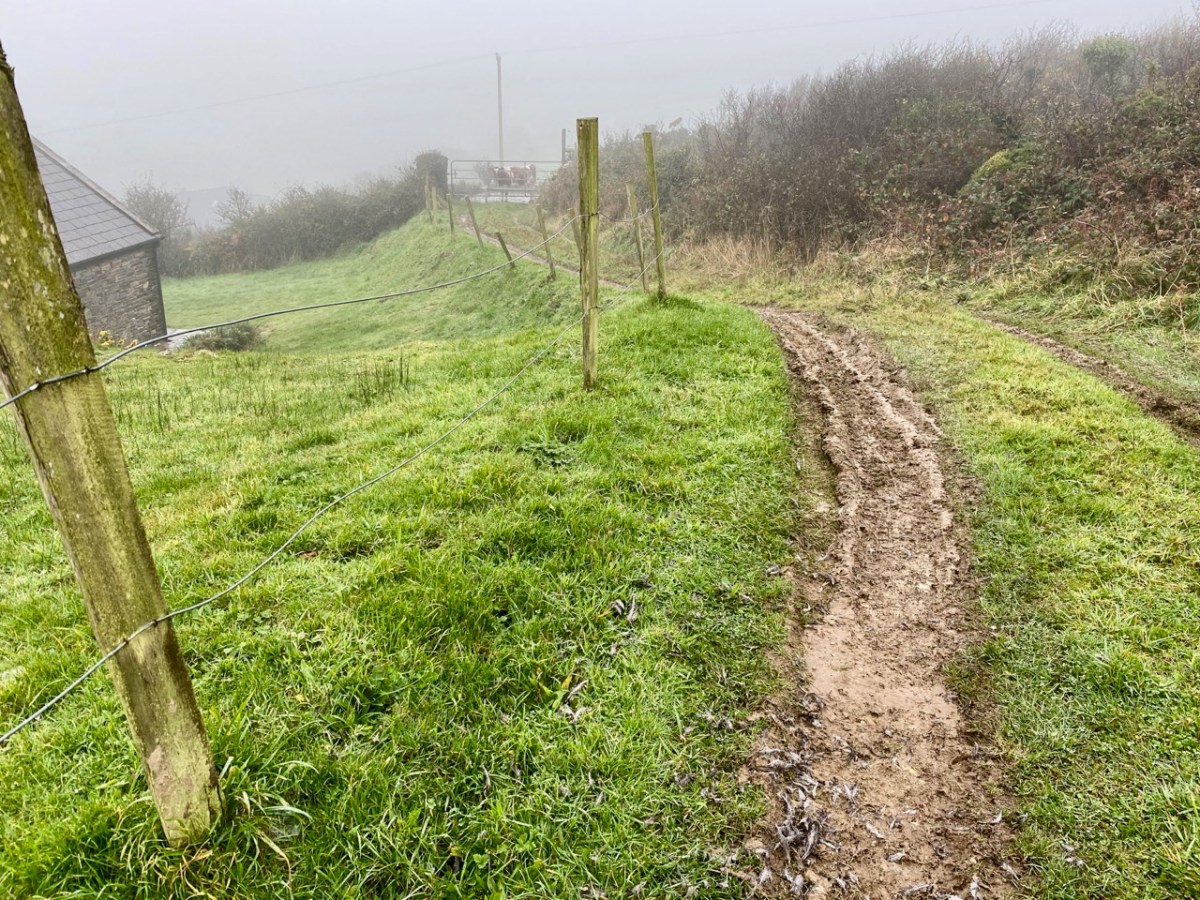
This morning, Finnbarr was absent from the garden. I did catch a glimpse of him wandering the distant pastures – forlorn and bereft. At least, those are the feelings my human soul projects onto him. He will find another mate, of course, and we hope they will continue to share our little bit of paradise. We will keep a lookout for unwelcome visitors, but we will always have to pay our respects to the ‘weasels’. If our stoat does return we will have to honour him with an Irish name: I am inclining towards Fiáinín – which means Little Wild One.

Lady with an Ermine, painted 1489–1491 by Leonardo da Vinci. The subject is said to be Cecilia Gallerani, the mistress of Leonardo’s Milanese employer, Ludovico Sforza. The Ermine is symbolic, rather than realistic – in fact it is pictured much larger than in real life. It has been suggested that the ermine in classical literature relates to pregnancy, sometimes as an animal that protected pregnant women. Around the time of the painting’s creation, Cecilia was known to be pregnant with Ludovico’s illegitimate son.
Off the M8 – Ballysaggartmore

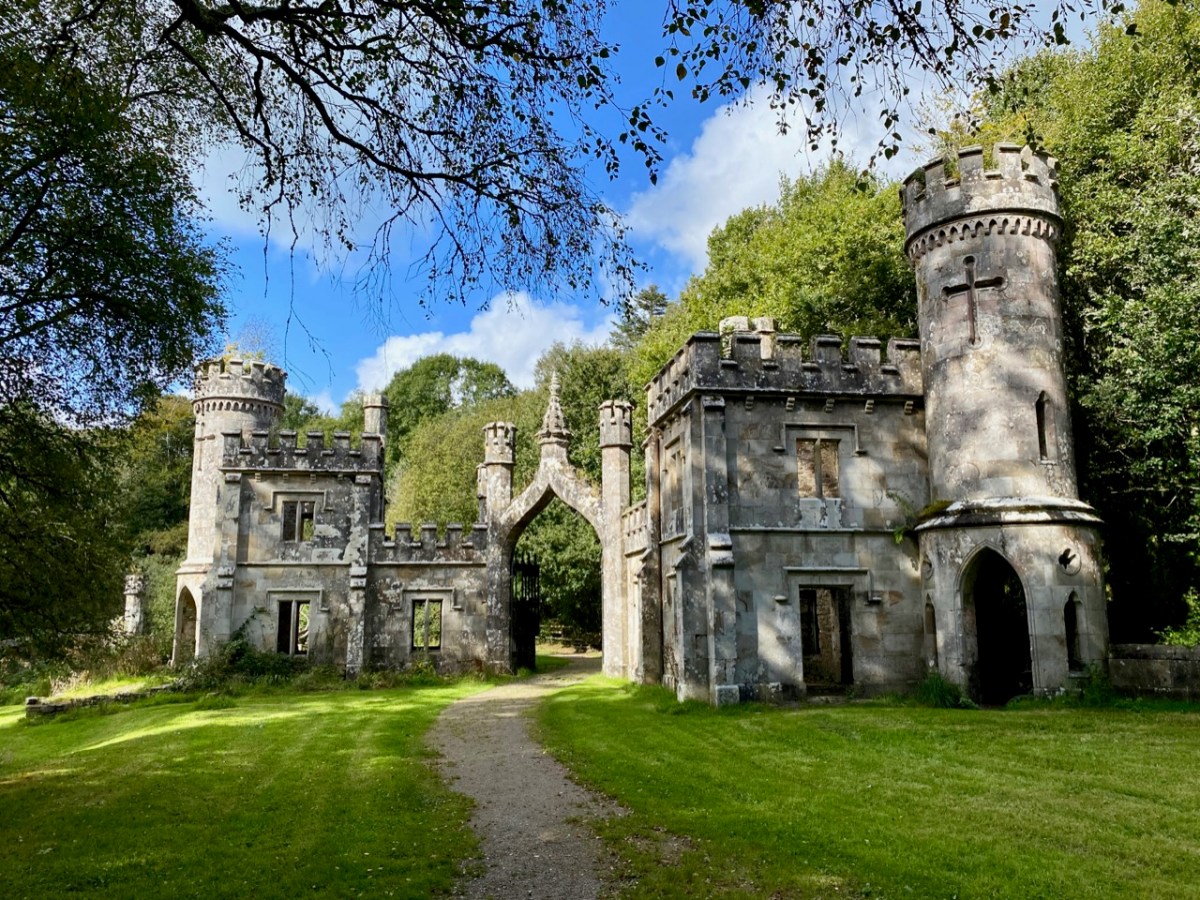
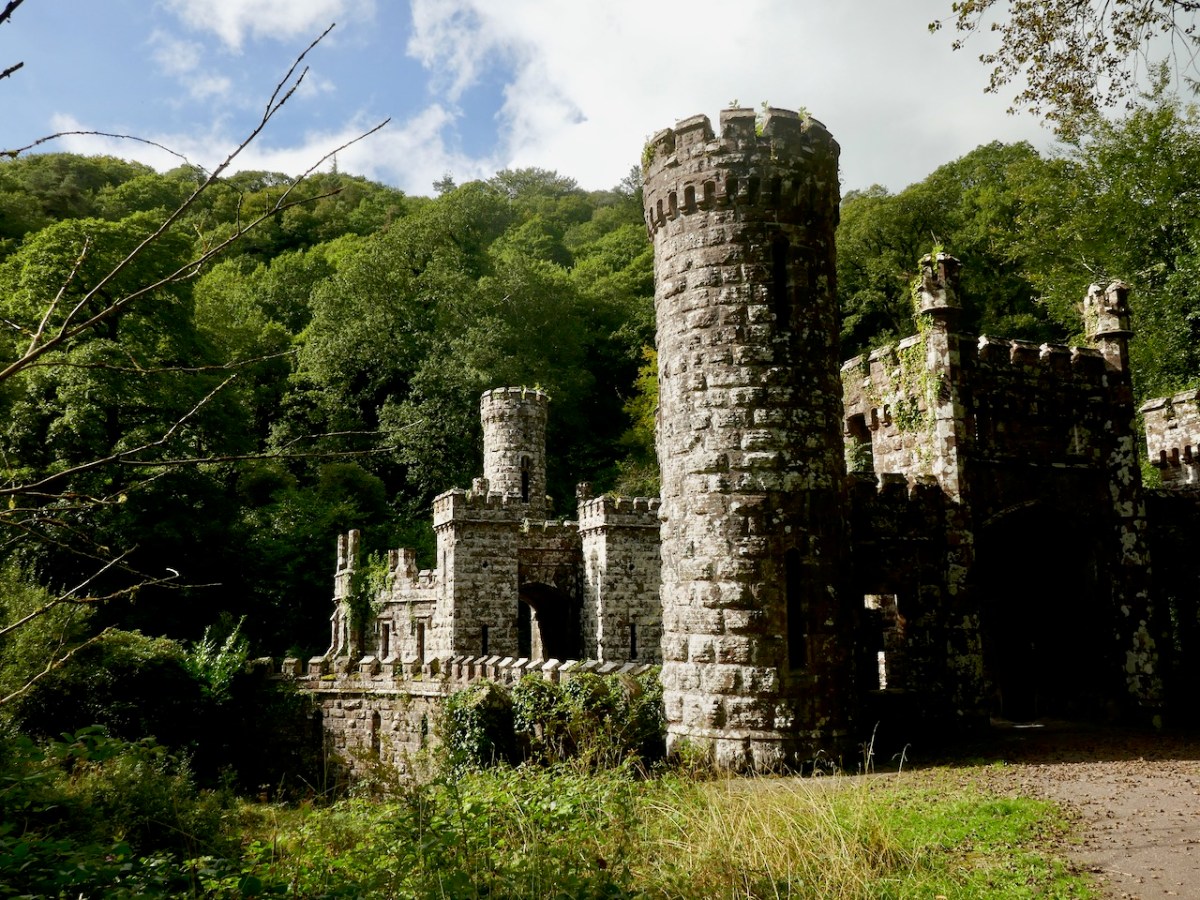
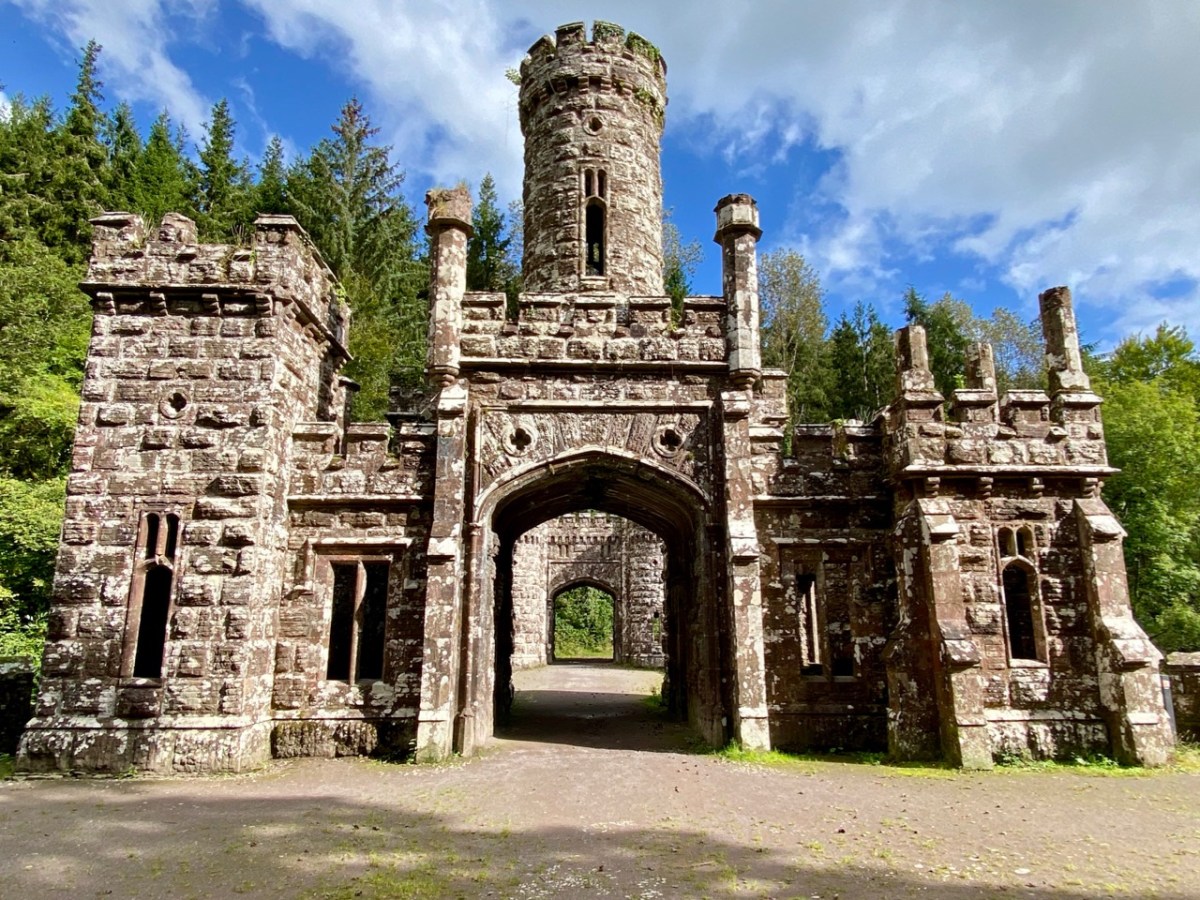
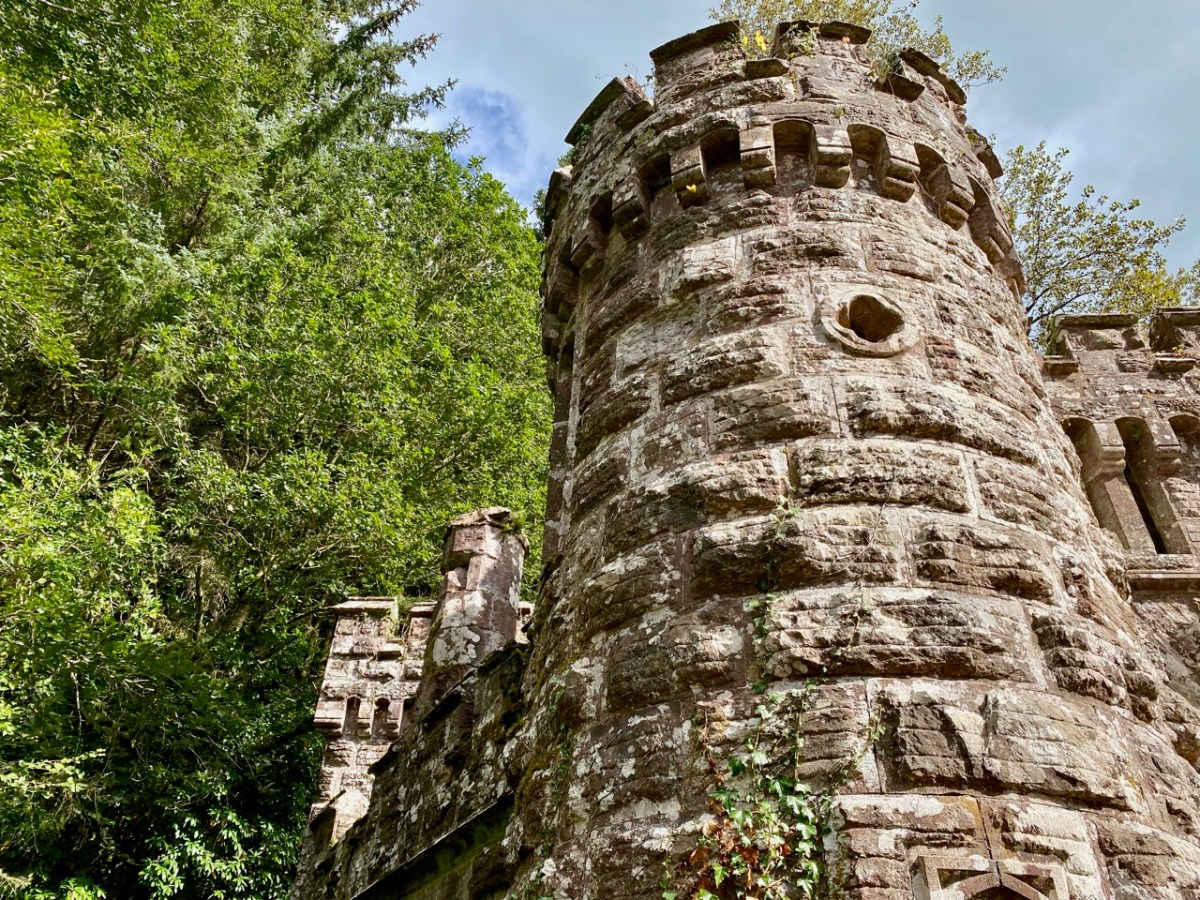
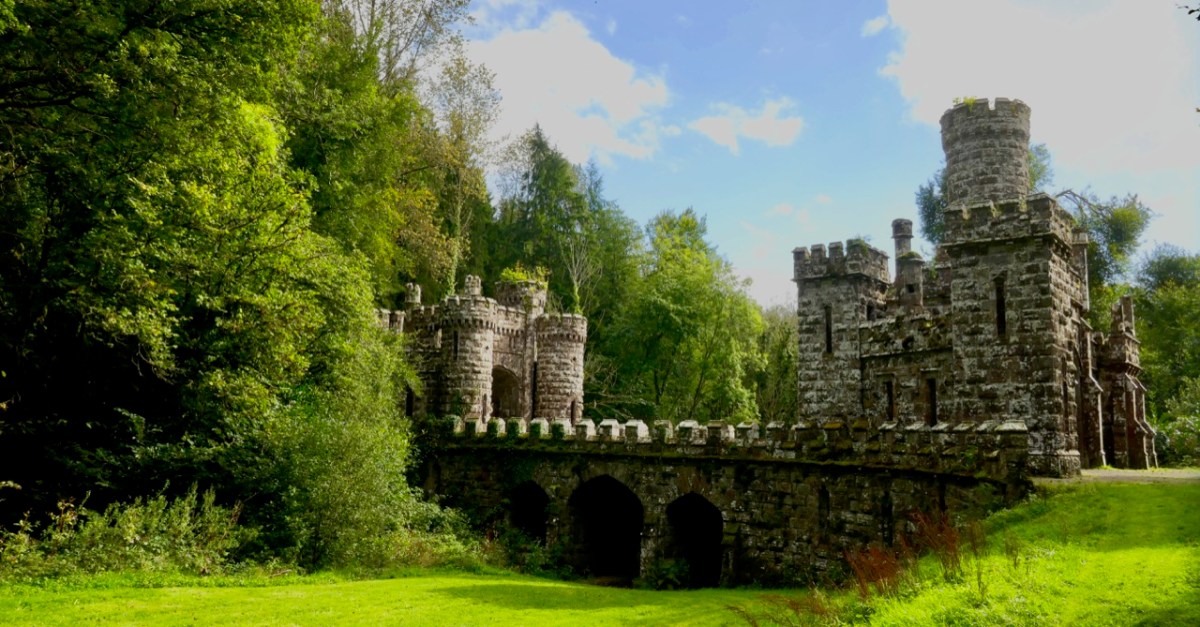
This post might also have been called A Monument to Imprudence because of the story which it encompasses. But, first and foremost, it is a bit of an architectural wonder, and certainly worth the deviation from the motorway if you are travelling between Cork County and Dublin. It will add only 20 minutes to your journey – plus however long you decide to spend walking the publicly accessible woodland to discover the nineteenth-century extravagances of Arthur Kiely, Esq. Leaving the M8 motorway at Fermoy, head east towards Lismore on the R666: you will reach a car park and trailhead for Ballysaggartmore on the left within half an hour. After your visit, find the R668 heading north and rejoin the M8 at Cahir.

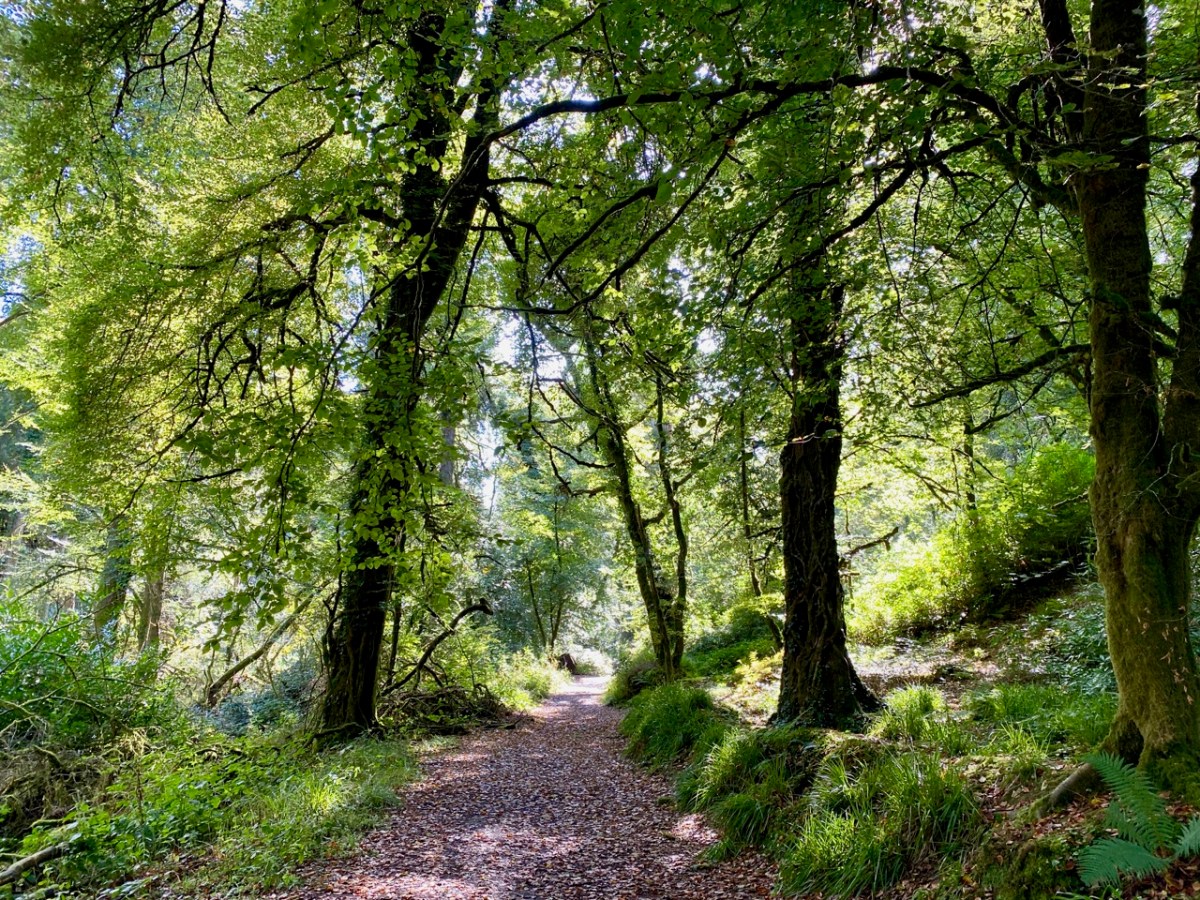
We felt we were capturing the last of the summer as we embarked on the beautiful sunlit trails on the first day of October in this Covid laden year. We were convinced that a week or so later we would be feeling the first cool winds of autumn and undoubtedly be noticing the changing hues in the ash, beech and oak tracts of the Ballysaggartmore Demense. The name in Irish – Baile na Sagart – means ‘Priests’ Town’. I cannot find out which priest is being remembered here, but – as you will see – there is some local lore which mentions a priest – and also Kiely, the unpopular local landlord.

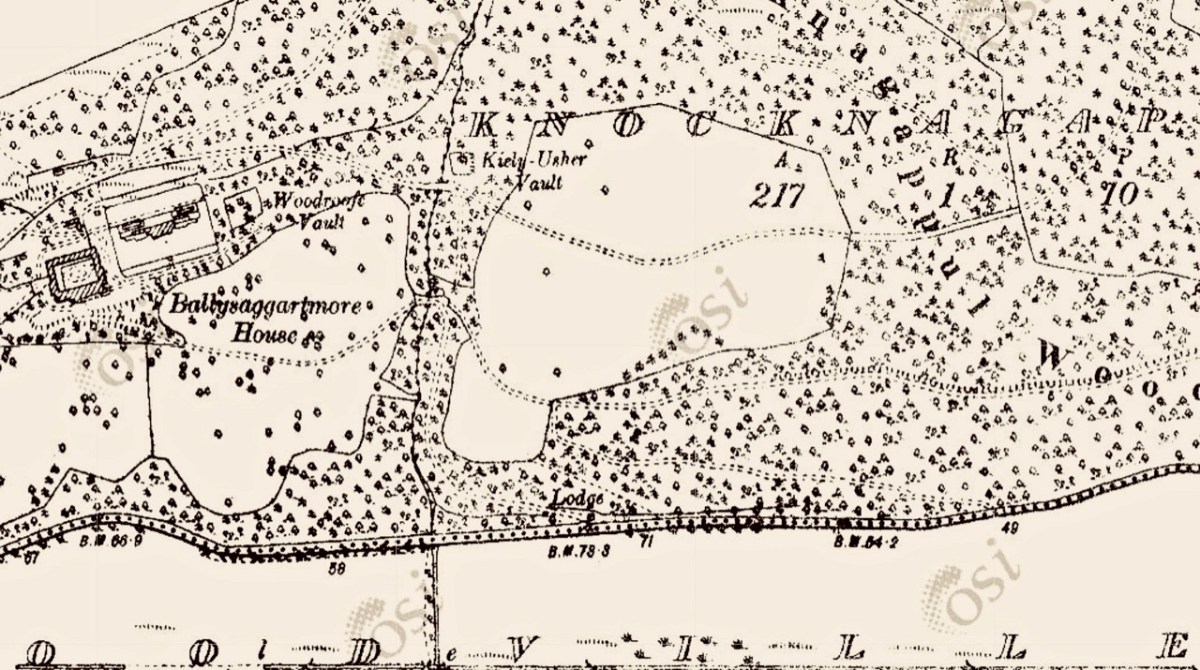
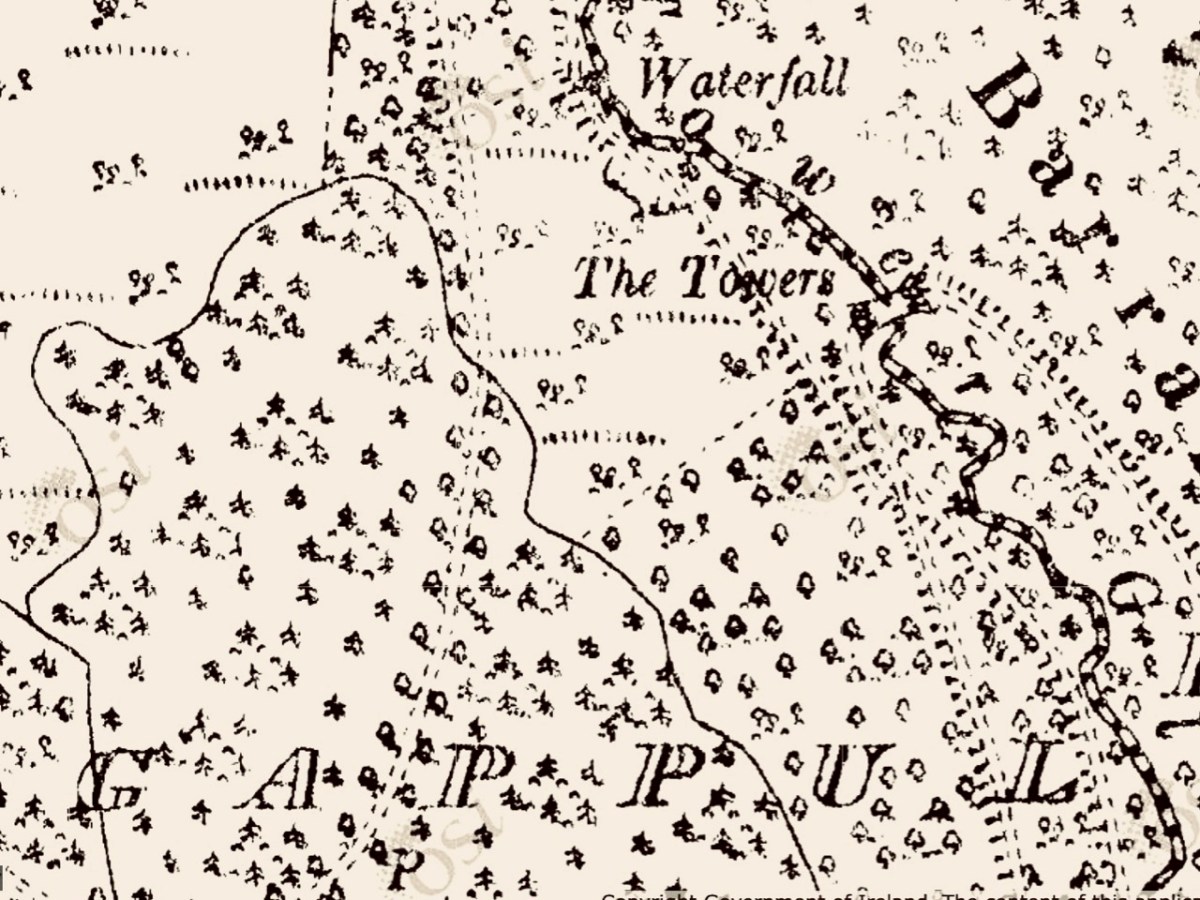
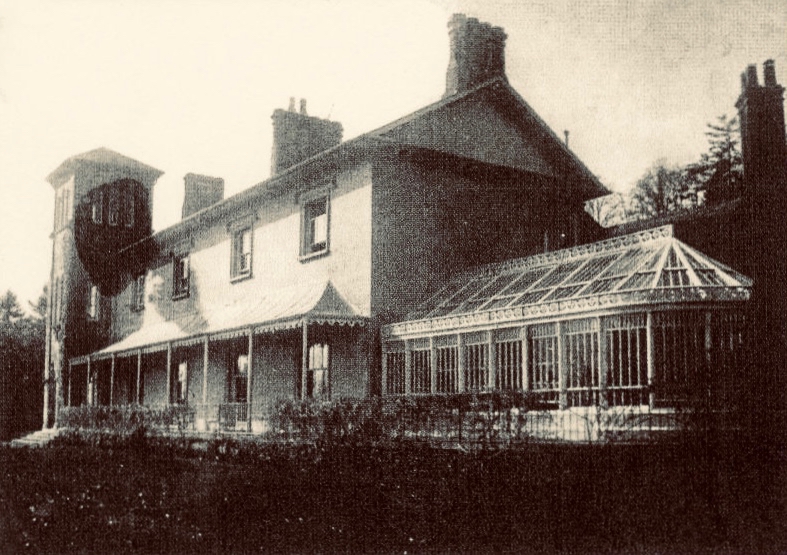
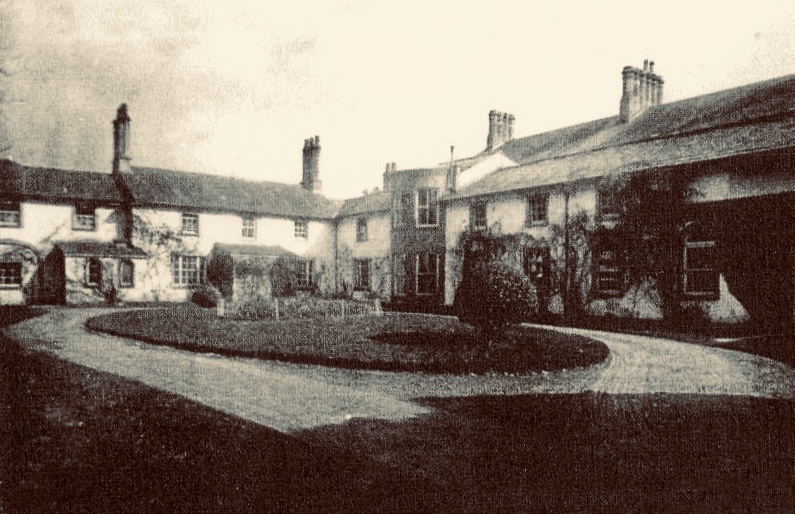
These extracts from the c1840 first edition 6″ Ordnance Survey maps show parts of the Ballysaggartmore Demense. In the upper plan, a house can be seen, probably newly built at the time of the survey. Nothing remains of it now, but some photographs exist, dating from 1904.

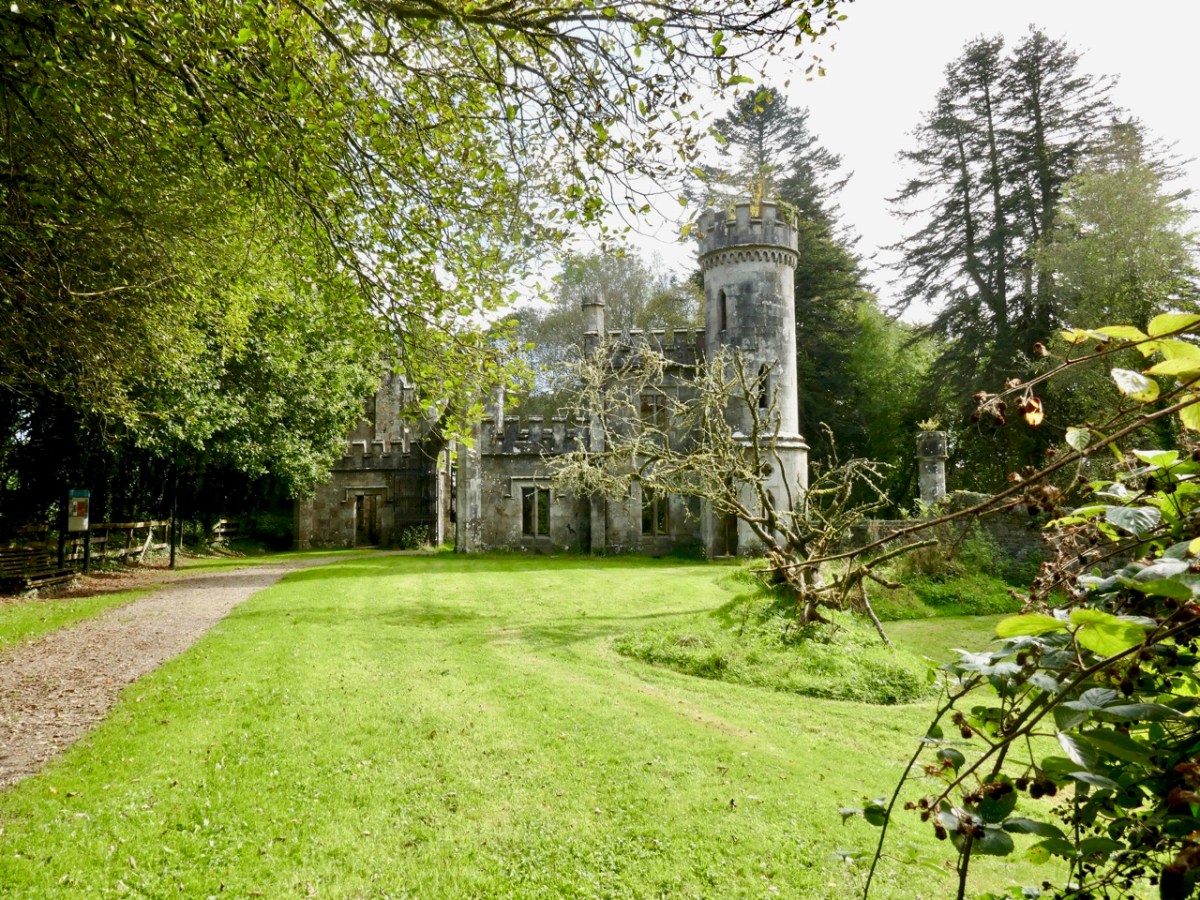
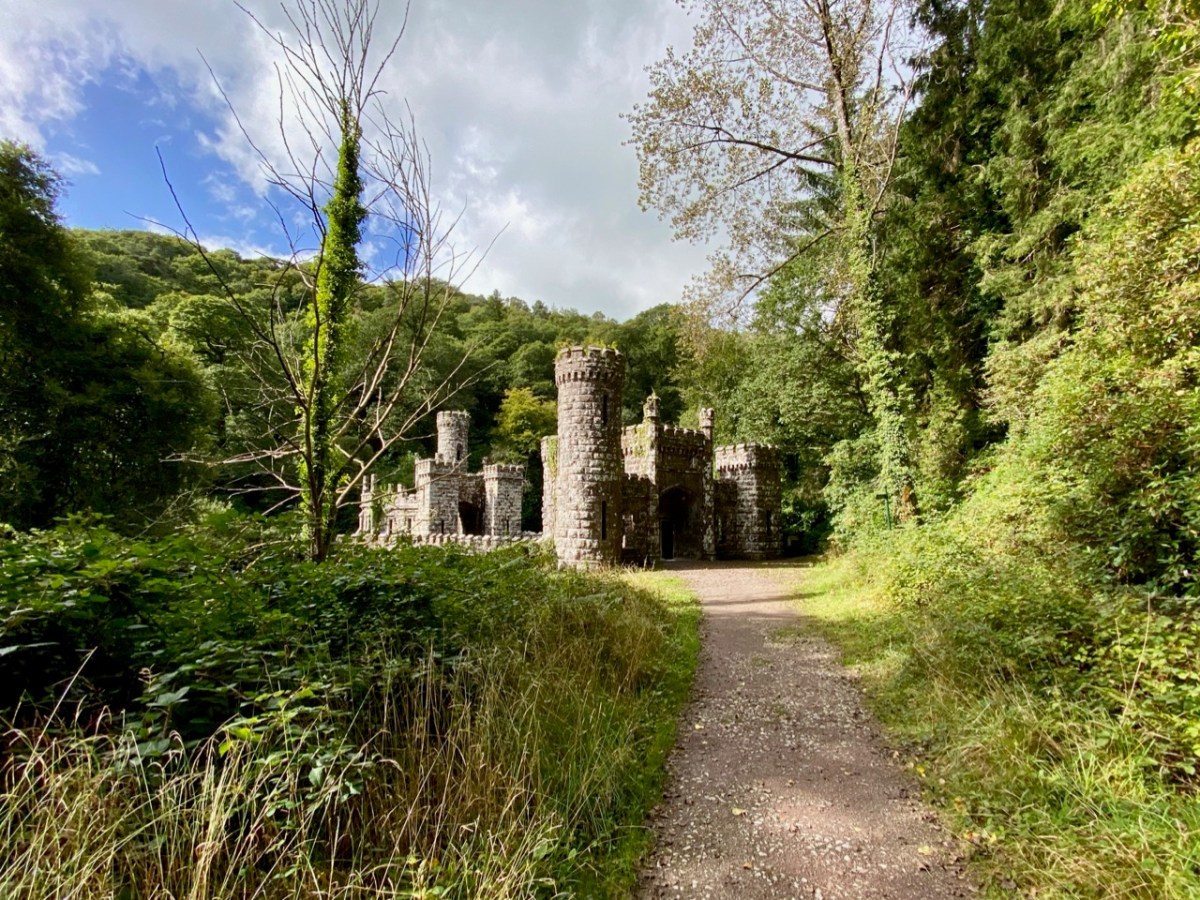
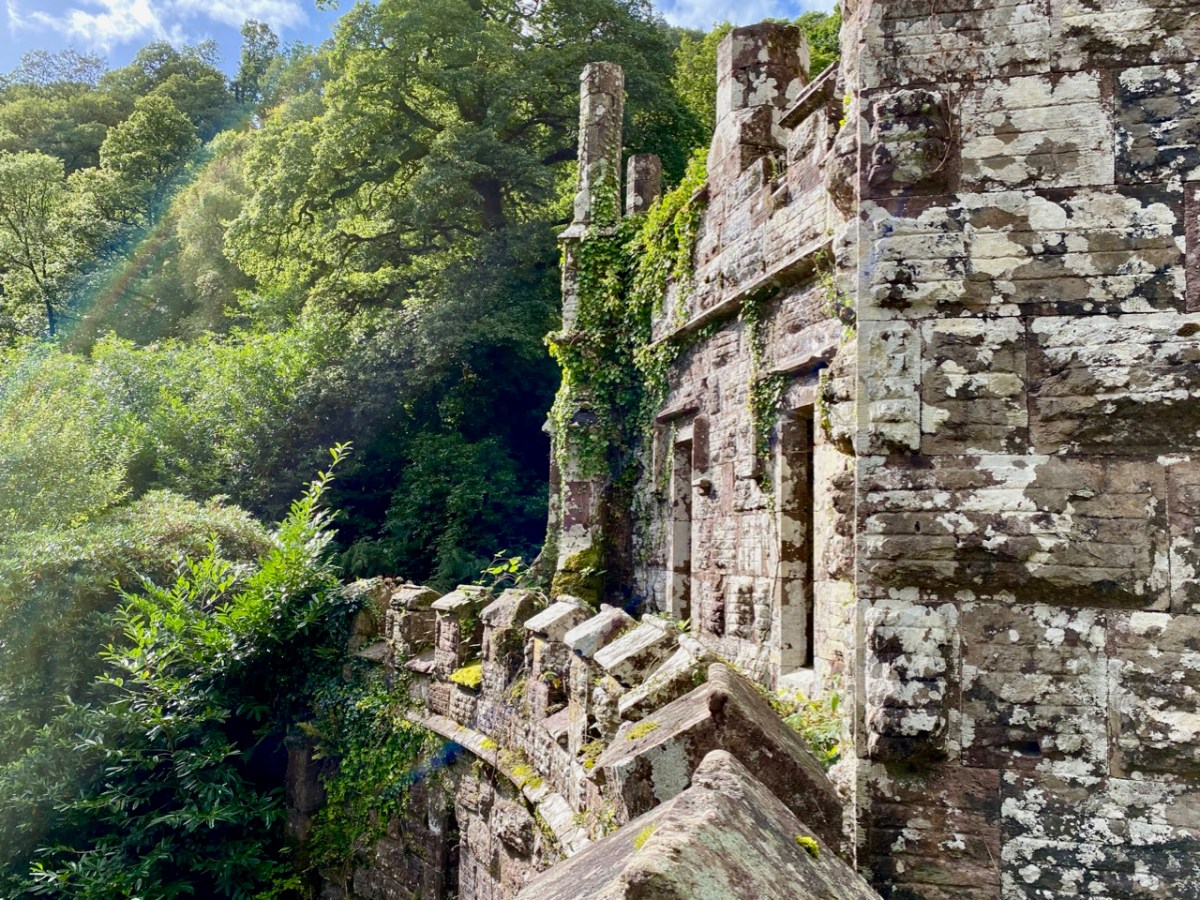
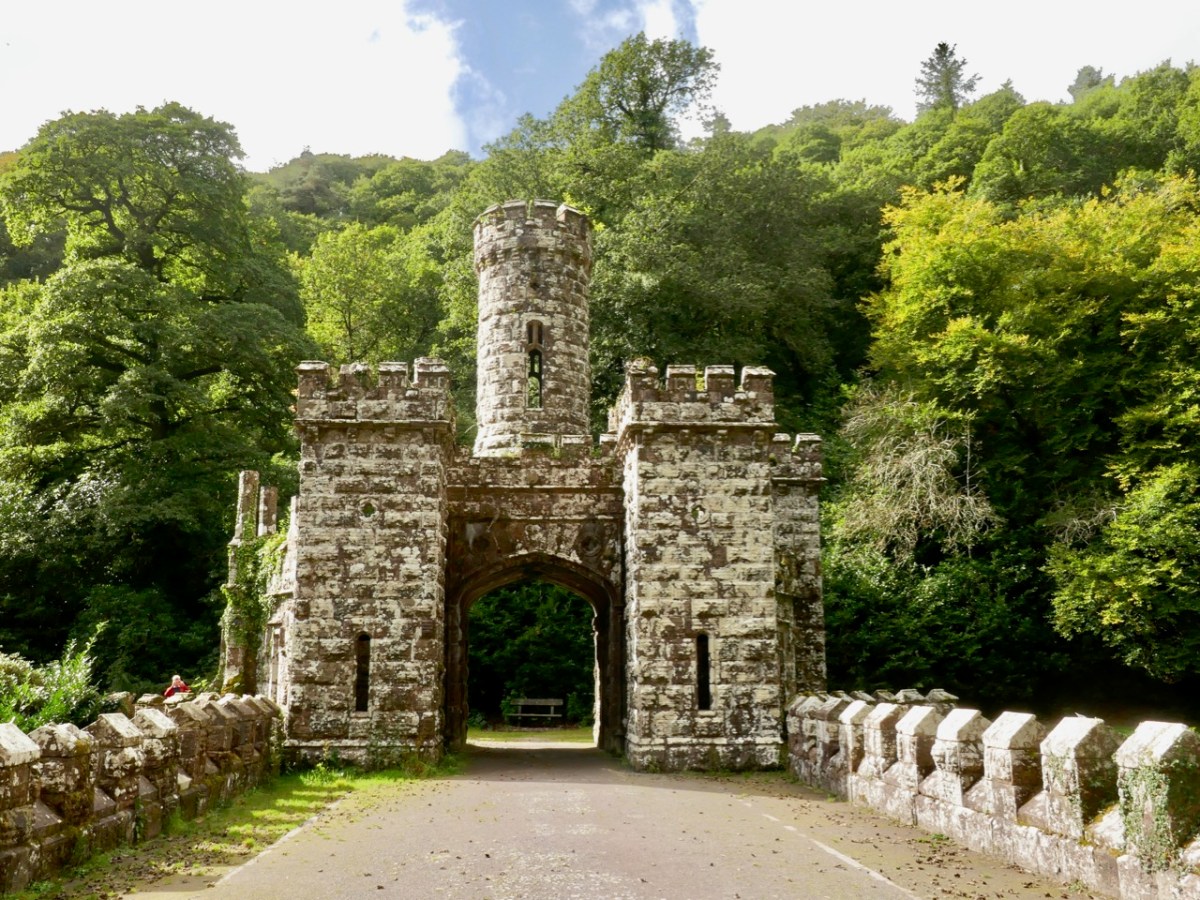
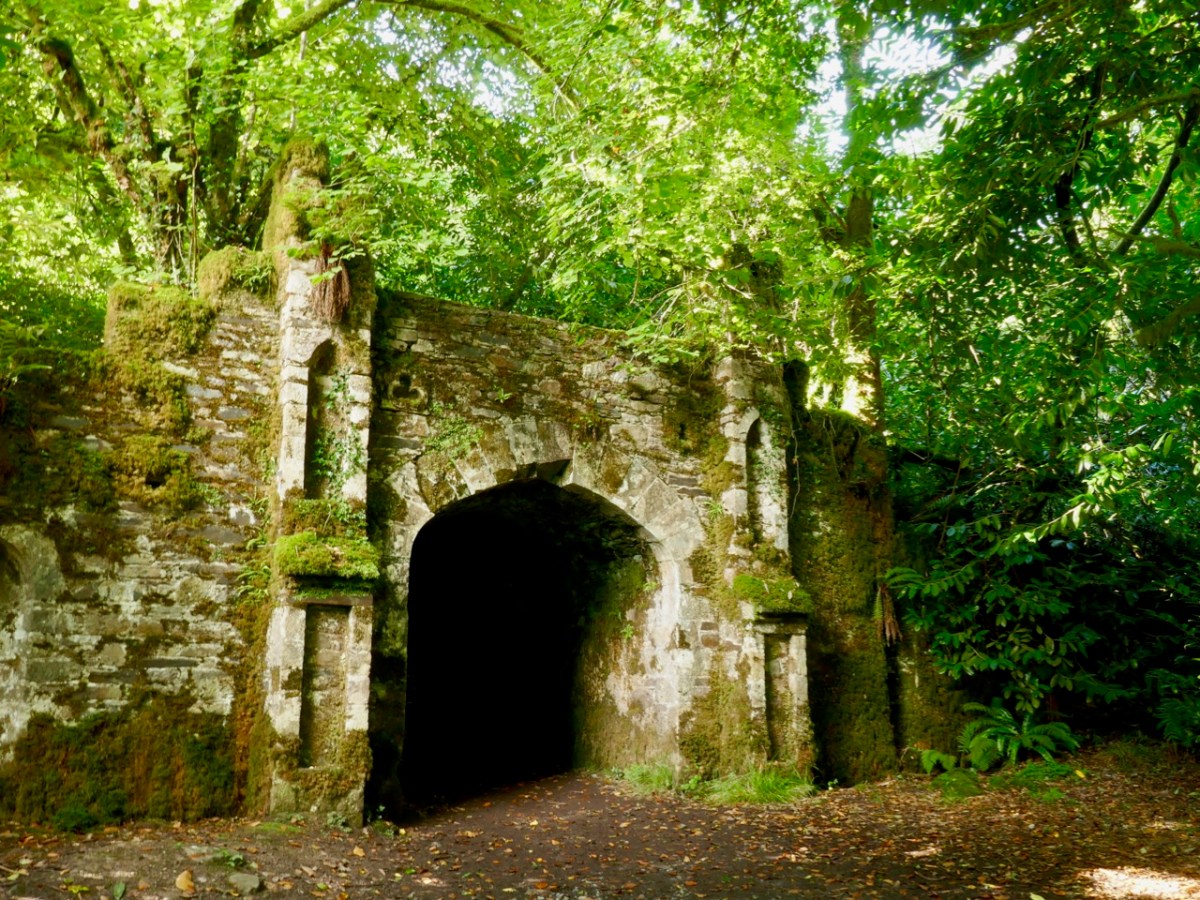
It’s time to piece together what can be found on the history of the place and its people. The first Kiely – John – purchased some 8,500 acres of land here in the late 1700s. He had two sons. On the senior John’s death in 1808 the elder brother – also John – inherited good lands at Strancally, on the Blackwater River, and proceeded to build an imposing castle there. The younger son – Arthur – had to make do with the less propitious lands around Ballysaggartmore, and built the modest house pictured above, but apparently harboured notions to match John Junior’s aspirations, embarking on a grand design to upgrade the property, starting with a splendid carriage drive and gatehouse which survives today near the beginning of our walk in the woods.

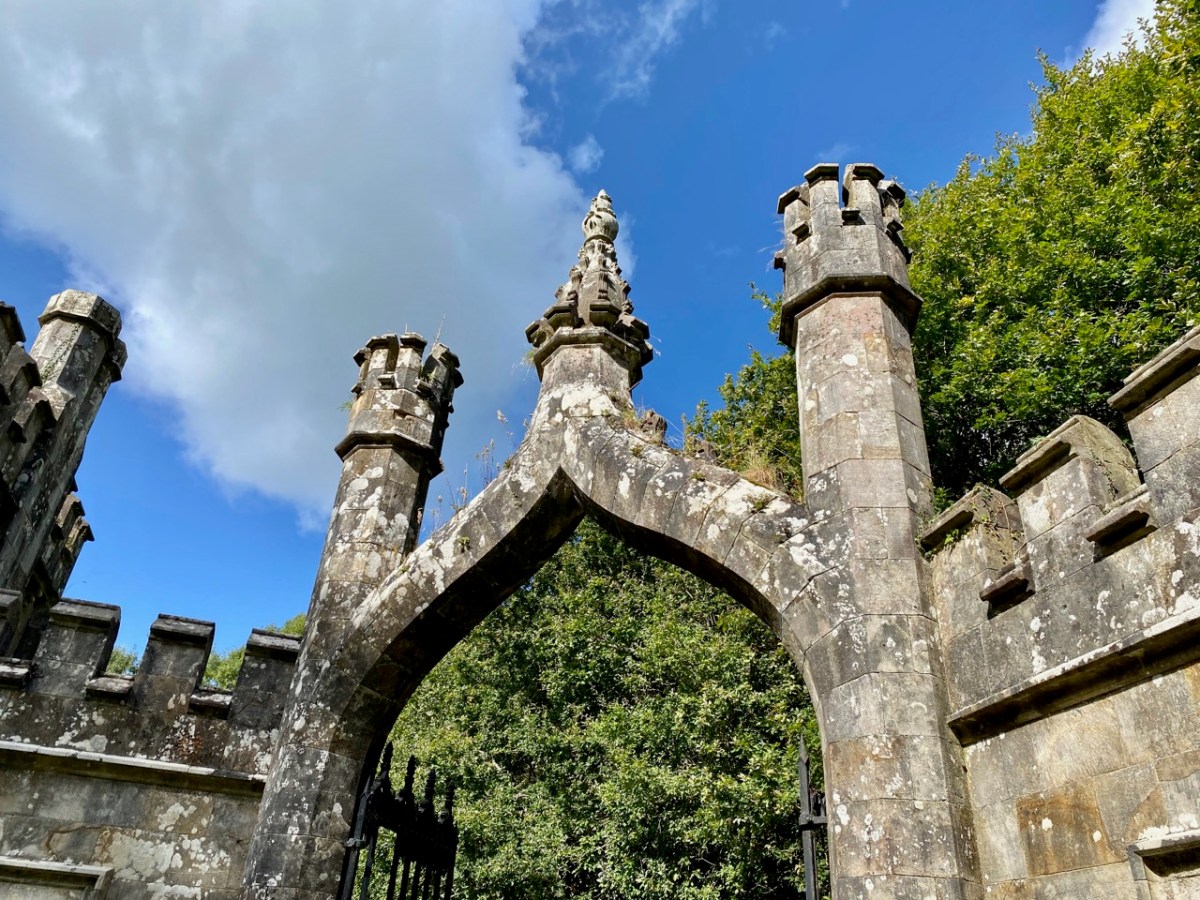
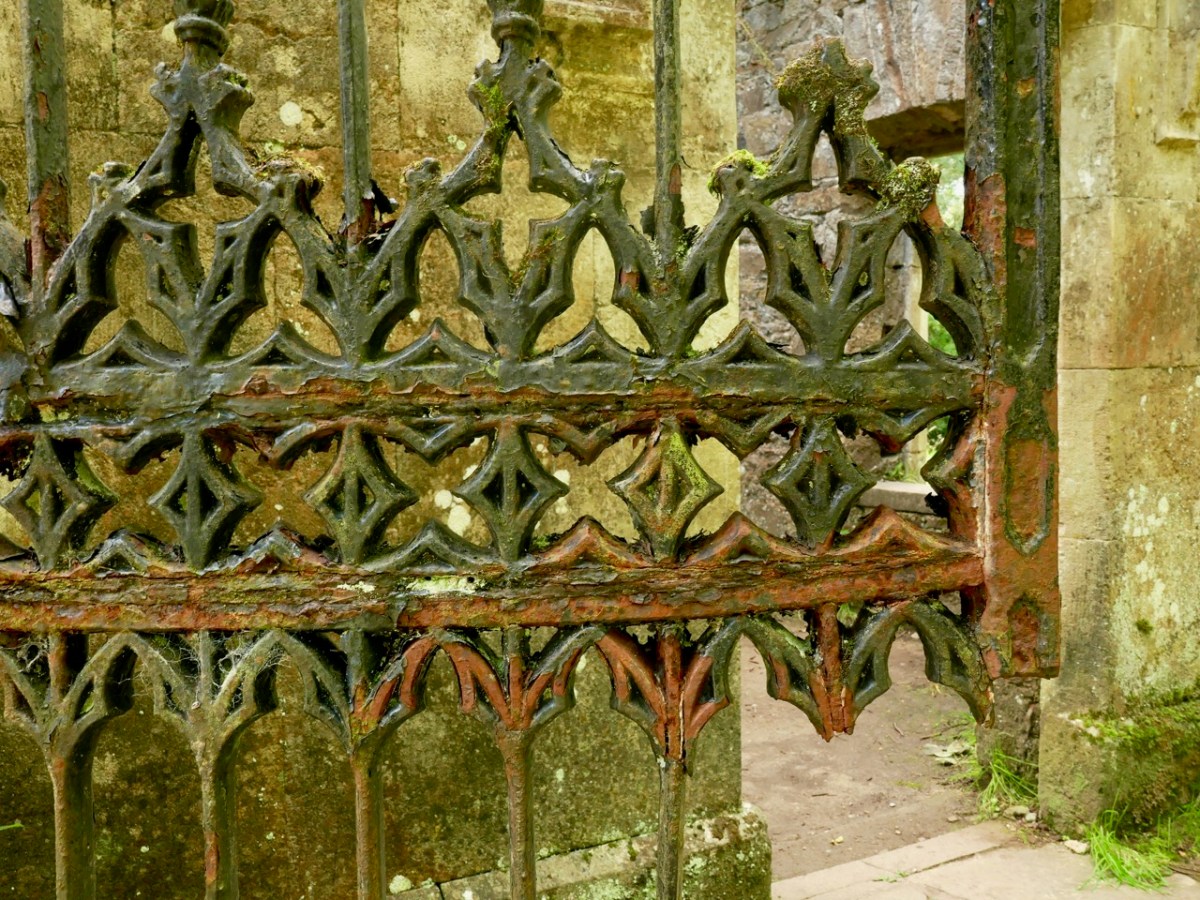
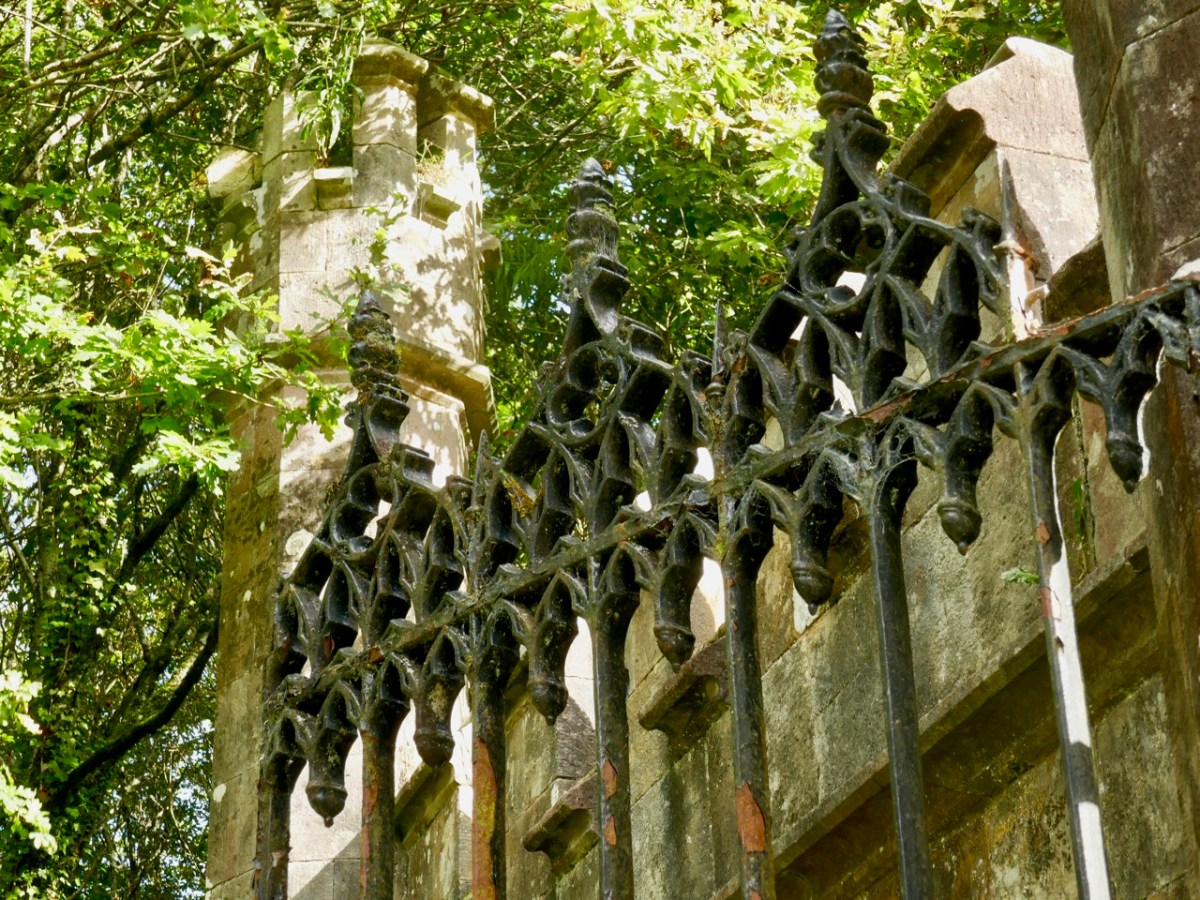
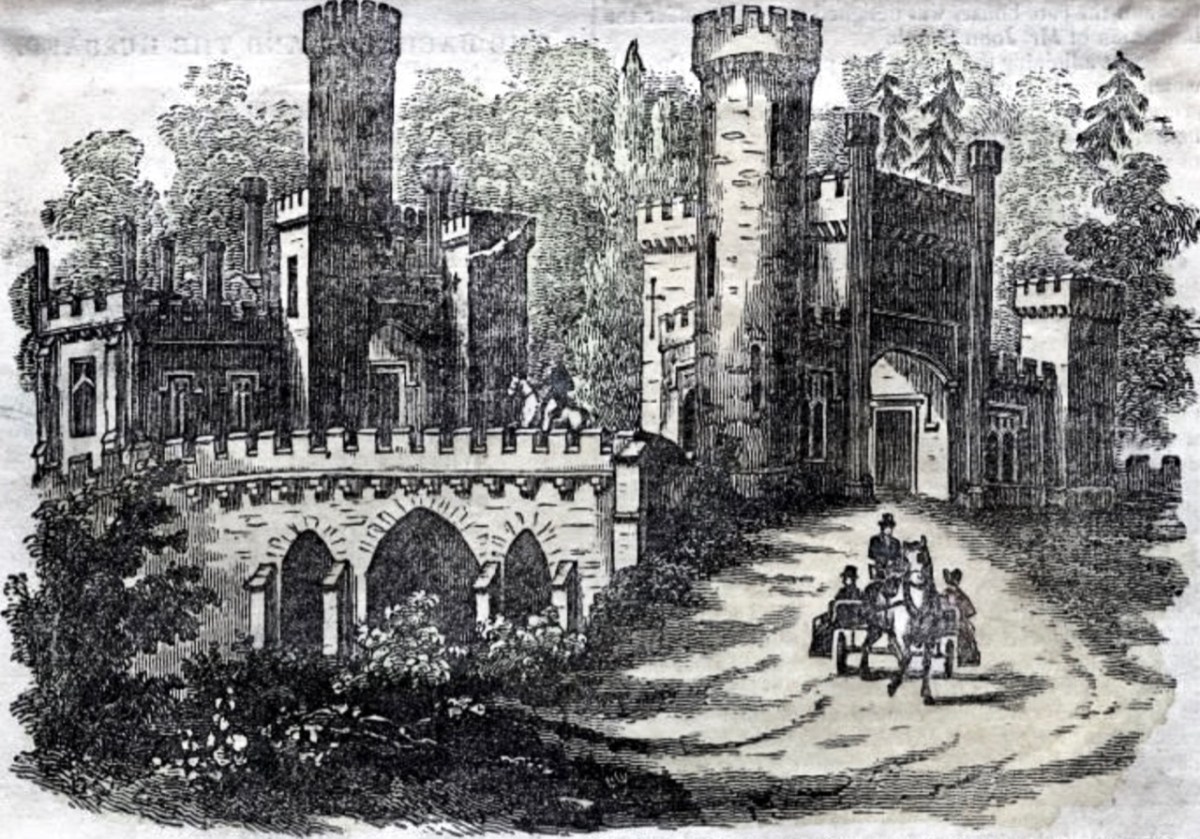
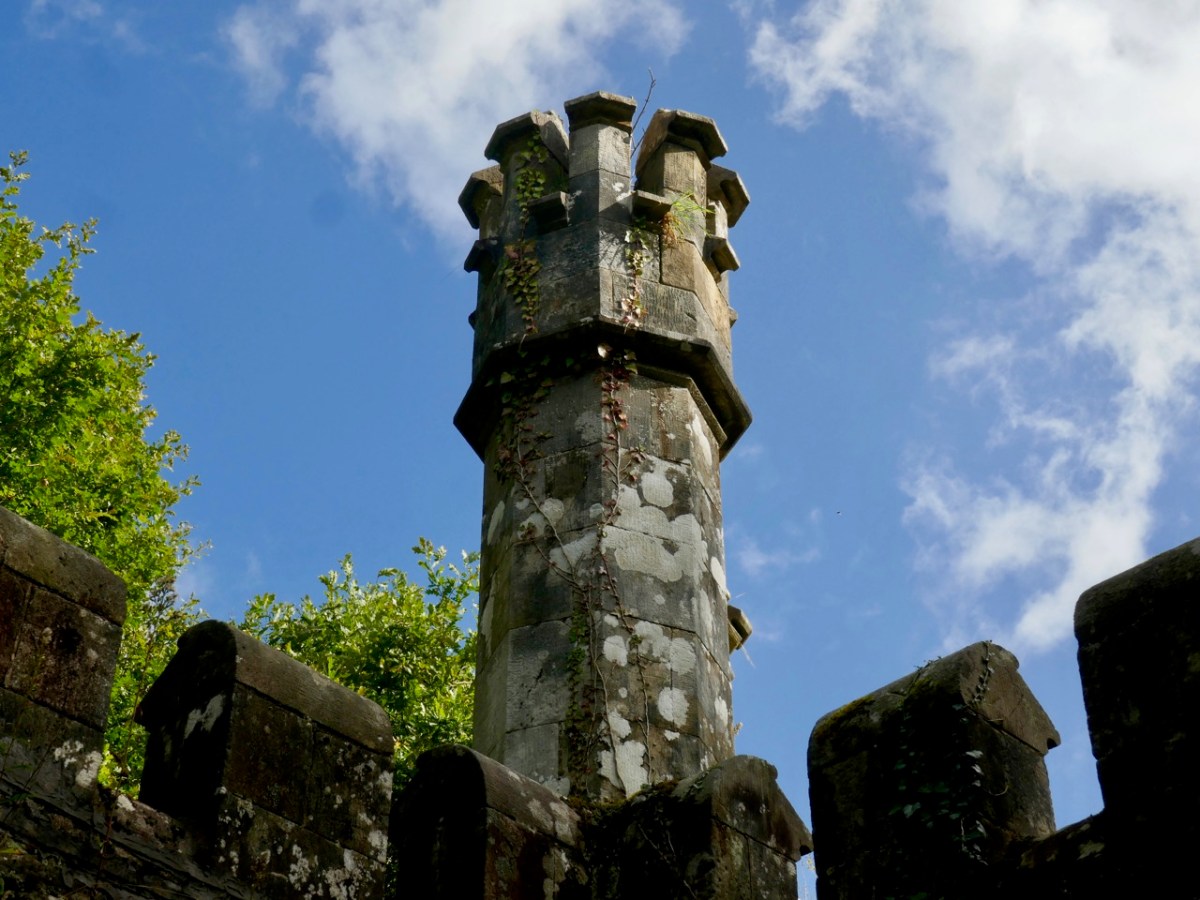
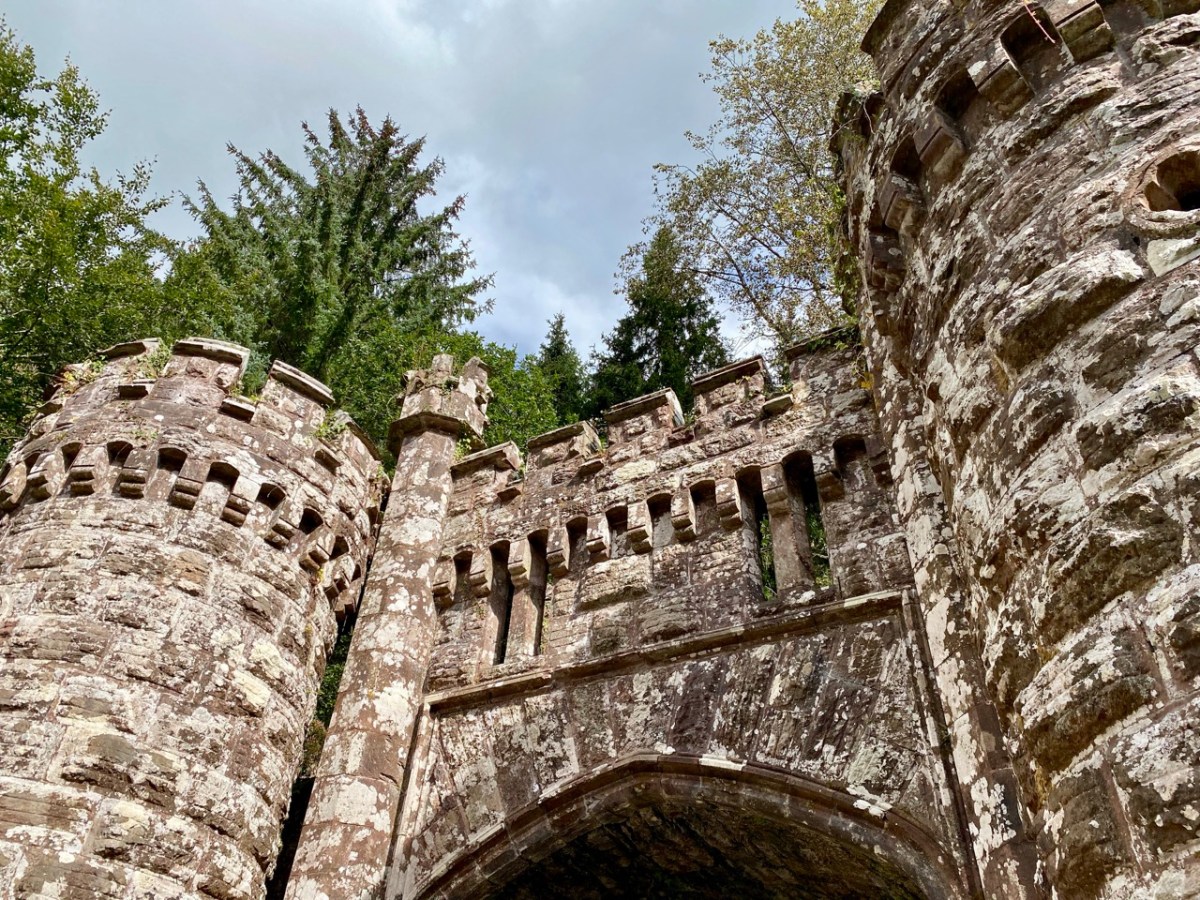
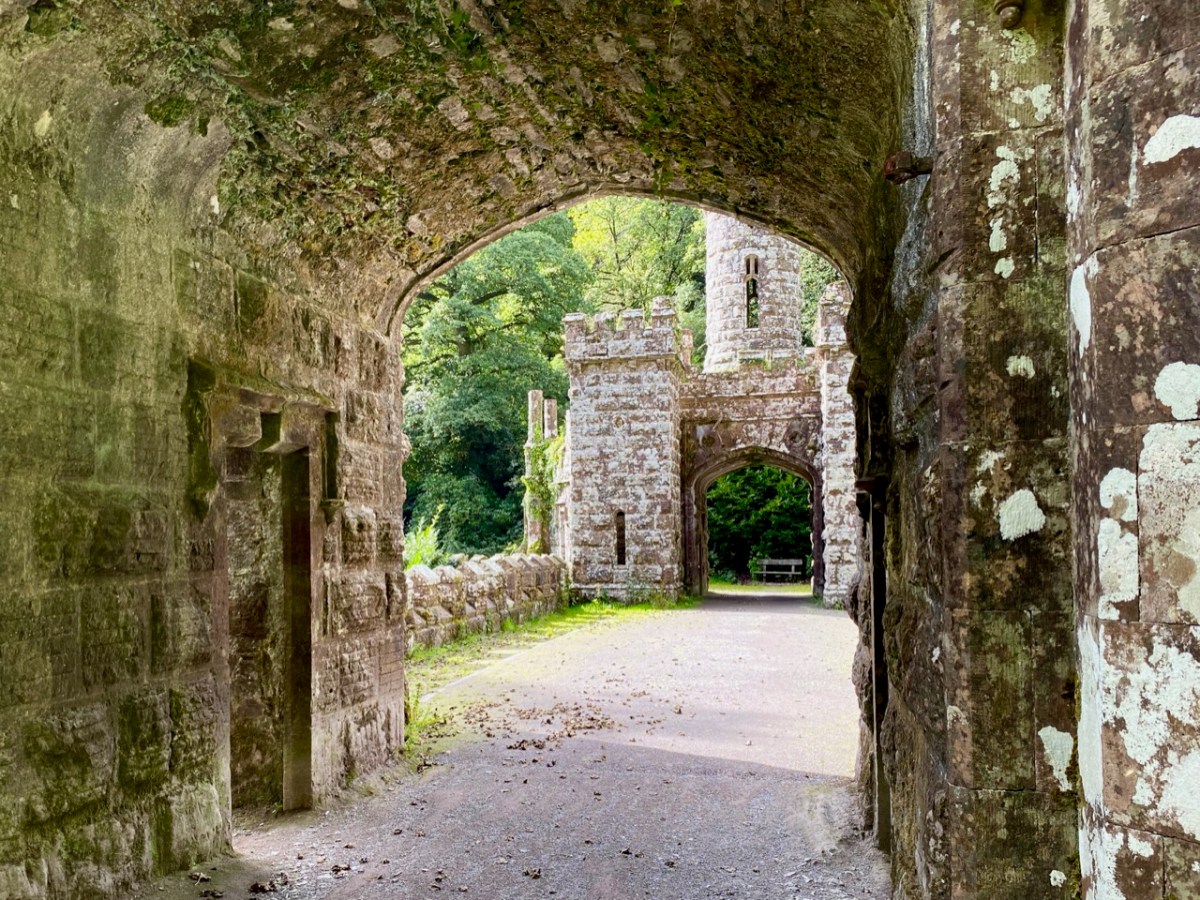
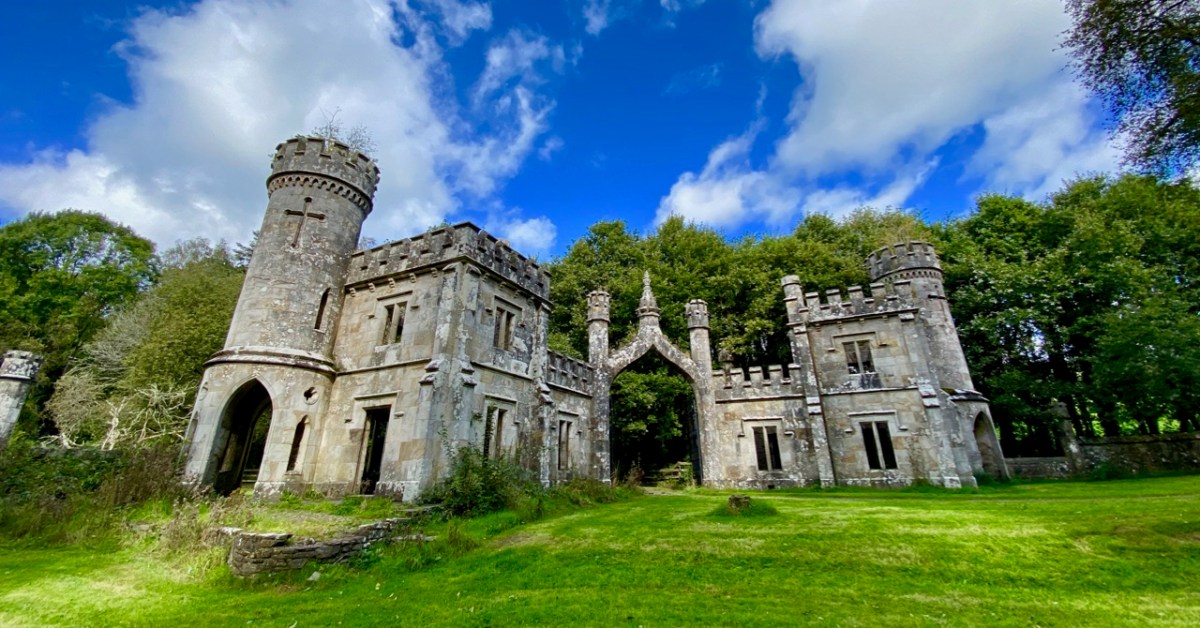
. . . Sir, Permit me through the medium of the Dublin Penny Journal an opportunity of giving the public a brief description of the situation and scenery of Ballysaggartmore, the much improved residence of Arthur Keiley, Esq, situate one mile west of Lismore, on the north side of the river Blackwater. The porter’s lodge at the entrance to the avenue is composed of cut mountain granite or free stone, of a whitish colour, variegated with a brownish strata, which gives the whole a rich and pleasing appearance; it consists of a double rectangular building, in the castellated style, flanked by a round tower at either end, through which is a passage and carriage-way of twelve feet in the centre, over which is a perpendicular pointed arch, enriched with crockets and terminated with a finial; the buildings at either side of the gateway, although similar, form a variety in themselves; and the situation is so disposed as not to be seen until very near the approach; the gate is composed of wrought and cast iron; and is, I will venture to assert, the most perfect gothic structure formed principally of wrought iron, in the kingdom. It was executed by a native mechanic, and cost about one hundred and fifty pounds . . .

Dublin Penny Journal, December 1834

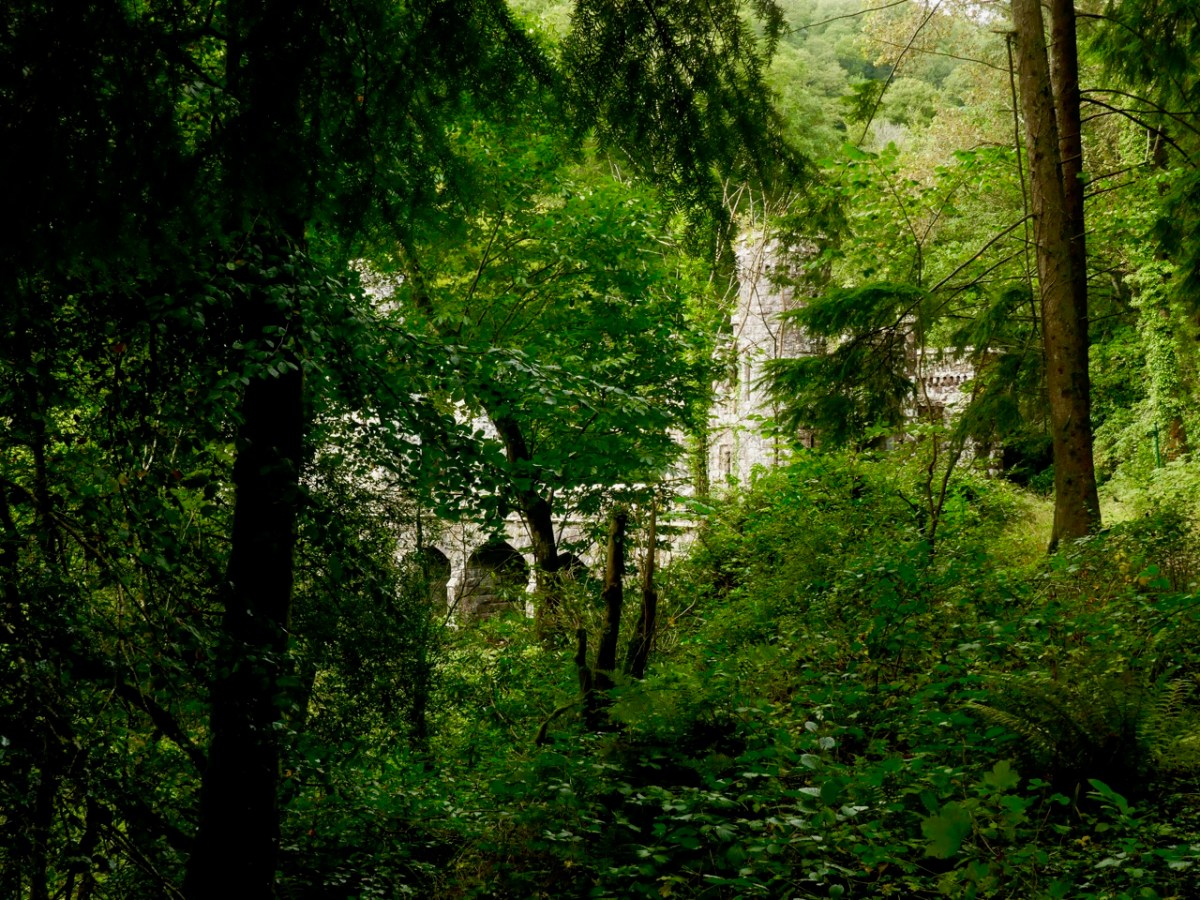
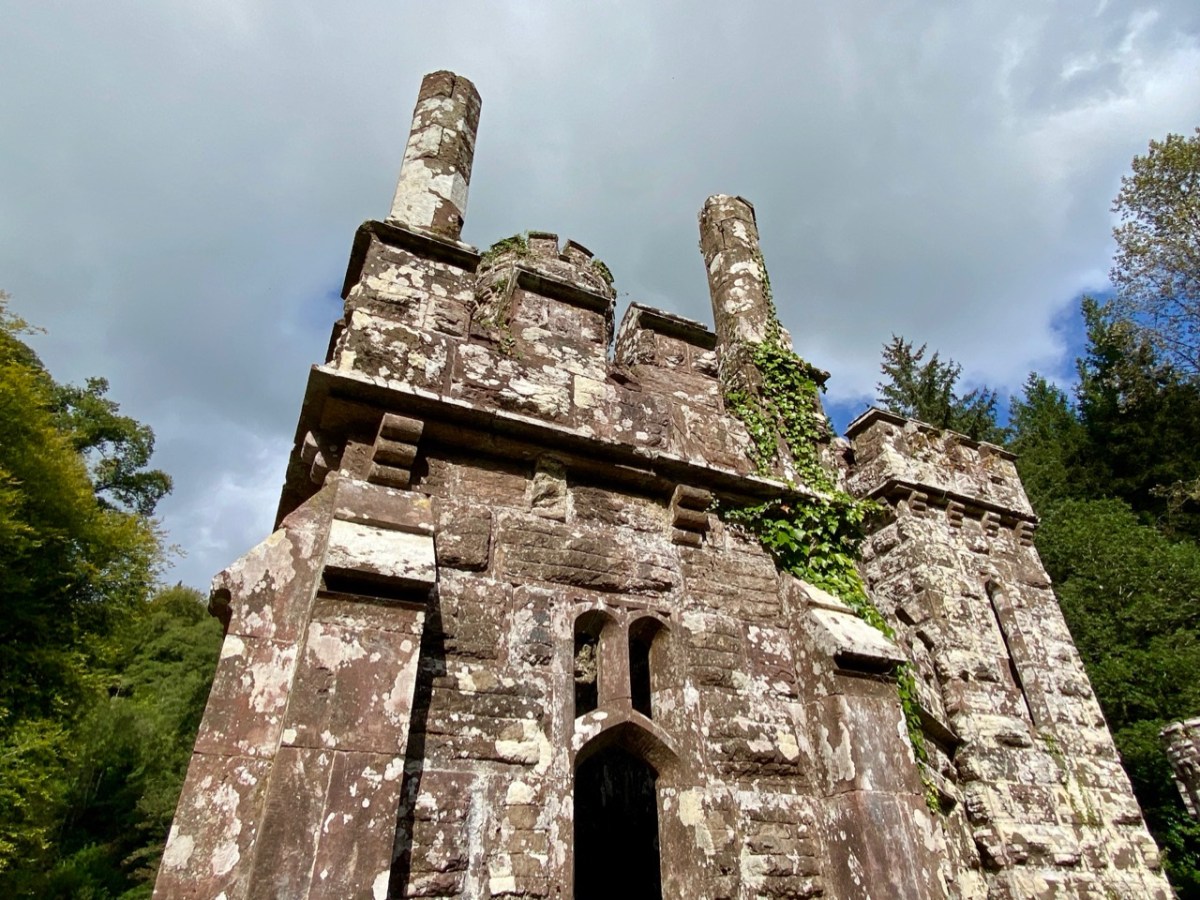
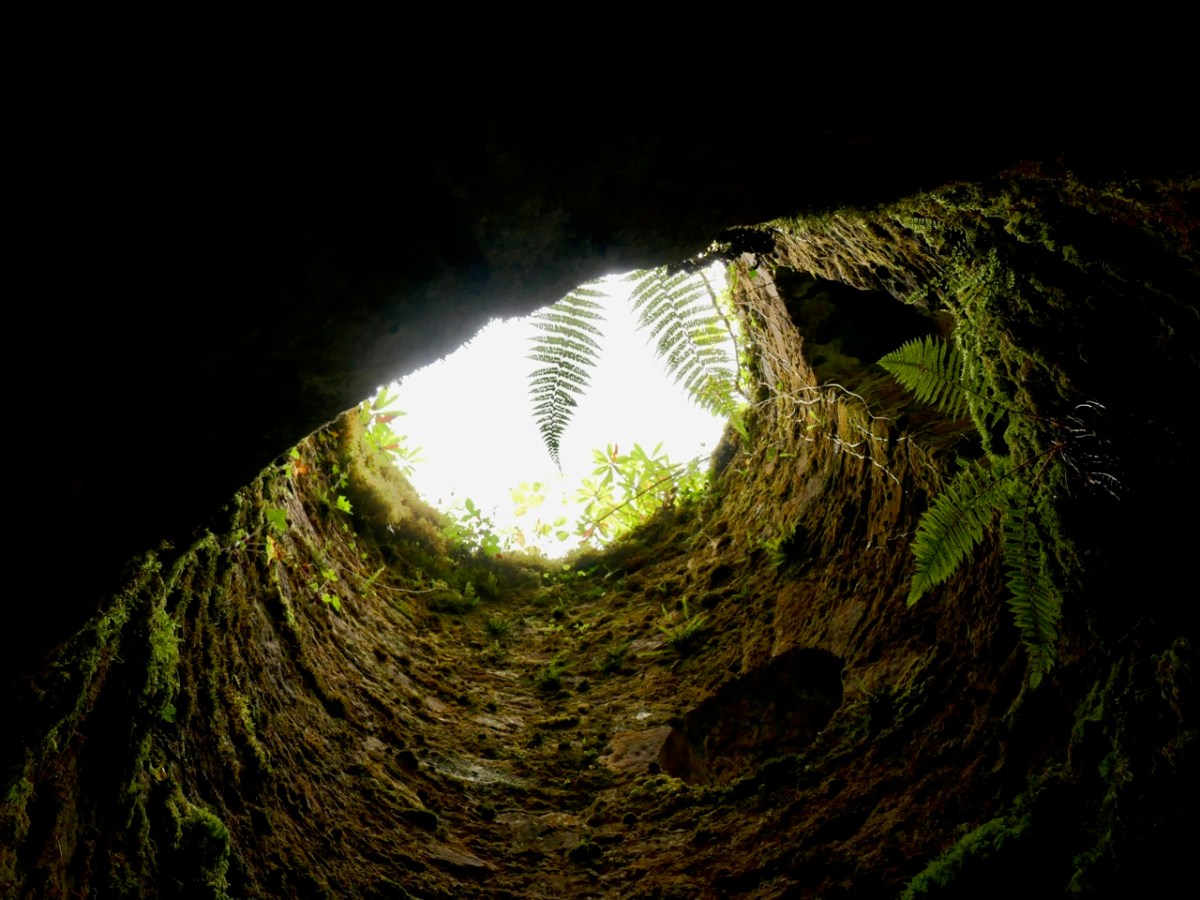
The ambitions of Arthur Kiely knew no bounds. Egged on by his wife, jealous of her in-law’s estate at Strancally, he continued the carriage drive (today a further part of the picturesque walking trail) towards a humble stream which had to be crossed in order to reach the vicinity of the house which was to be upgraded to – or replaced by – something of suitable substance. The stream could easily have been culverted but no! Only an ornate neo-Gothic three-arched bridge with gate-houses at either end and surmounted by towers and pinnacles would do: a prelude, presumably, to the architectural magnificence that was being planned beyond.

At the same time as directing the building project, Arthur decided that a change of name would be advantageous. Something double-barrelled was called for, and he chose to add Ussher, a family name derived from ancestors on his mother’s side. Arthur Kiely-Ussher certainly has a ring to it. Arthur’s ambitious wife was born Elizabeth Martin of Ross House, Co Galway. Always on the look-out for a West Cork connection, I can tell you that the author Violet Martin was a great-niece of Elizabeth. Violet lived in Castletownshend and famously collaborated with Edith Somerville.

The gate-lodge and ‘Towers’ of Ballysaggartmore are remarkable survivors, and represent the sum total of Arthur’s striving to equal his brother’s show of opulence. After the extraordinary towered bridge the carriage drive peters out, and one assumes the money also dissipated. Kiely-Ussher attempted to revive the fortunes of his estate but this centred on evicting tenants in time of scarcity, which only resulted in the lands becoming less productive. The family lived through the famine but were considered notoriously bad landlords. In the 1850s Ballysaggartmore Demense was virtually bankrupt: the house was sold in 1861 and Arthur himself died shortly afterwards.

Like many another bad landlord, Arthur Kiely-Ussher has entered into folklore. It’s worth reading this lengthy entry from the Duchas Schools Folklore Collection – a superb tale of just retribution being visited on the memory of – not one – but three ghastly incarnations of a man who probably wished to be well remembered, but failed catastrophically.

. , . In Ballysagart there lived three landlords named Ussher Kiely. The three of them were brothers and they were all called Ussher. They were terrible tyrants and they evicted people every time they got the chance, and allowed no one near their land. Of the many stories told about their cruelty here is one: On Ussher’s land there is a Spring well. A very old, goodliving woman lived near the place. One day she had no water. The nearest place she could get water was the well, which was in a field behind her house, but Ussher allowed no one near the land. The neighbours always brought her a churn of water from the Blackwater, but this day she had no one to get it for her. As the Blackwater (which was two miles away) was too far for her to walk, she thought there would be no harm in going to the well for once. When she was bending down to fill her gallon in the well she heard a shout behind her; “Get away from that well and get off my land you cursed wretch. How dare a dying old hag like you interfere with my water or dirty my land with those rotten feet of yours”. It was the eldest Ussher and he made her throw back the water and he threatened to beat her if she did not get off his land immediately. She obeyed and when she was out of his sight she knelt down and cursed him saying “O God, may the brothers of this man, Ussher, who hunted me away without a drop of water, be at his funeral before the year is out, and may he grow silly and his tongue hang out of his head so that he cannot offend you again”. Another woman cursed him saying “May you die in agony, you tyrant”. Before the year was out he grew silly, and he had to be sent to a home where he died in terrible agony. His body is still to be seen in Ballysaggart where his body is embalmed in glass. His mouth is to be seen wide open and his tongue is hanging out and is as black as soot. Another of the Ussher Kielys saw a man crossing his land. He brought out his gun and threatened to blow the man’s legs from under him. The man who was only going home said “Ussher Kiely, I was walking on this land before you and I’ll be walking on it after you, so why don’t you shoot me”. Ussher put away the gun and never used it again. A few days later he complained of pains and only lived two hours. He was embalmed in glass and laid by his elder brothers side. The third Ussher Kiely was worse than the others. Every night a man used to bring cattle on Ussher’s land to graze. Ussher heard of this and one night he lay in wait and without warning shot the man. When the people heard of the shooting they piled curses on Ussher. A few days passed since the shooting when a priest was walking on Usshers land. He was reading his ‘Office’ when he met Ussher. Ussher cursed him and called him every name he could think of as well as ordering him off the land. “All right”, said the priest, “I’ll go off the land, but mark my words, tyrants like you never live a long life”. Two hours later the last of the Kielys dropped dead. The three brothers are to be seen, embalmed in glass lying side by side in a small graveyard in Ballysagart . . . Mr Tom O’Donnel told me these stories – Tom Conway


Duchas Schools Folklore Collection, Volume 0637

If you would like to read in greater detail the fortunes and fall of Arthur Kiely-Ussher I commend you to the excellent account by The Irish Aesthete. The ‘modest’ house at Ballysaggartmore was burned down during the Irish Civil War, obliterating its physical history and committing its memories to fascinating folk recollection. We are fortunate, nevertheless, that we may freely wander a trail and reminisce on misfortune. And justice.
Dzogchen Beara

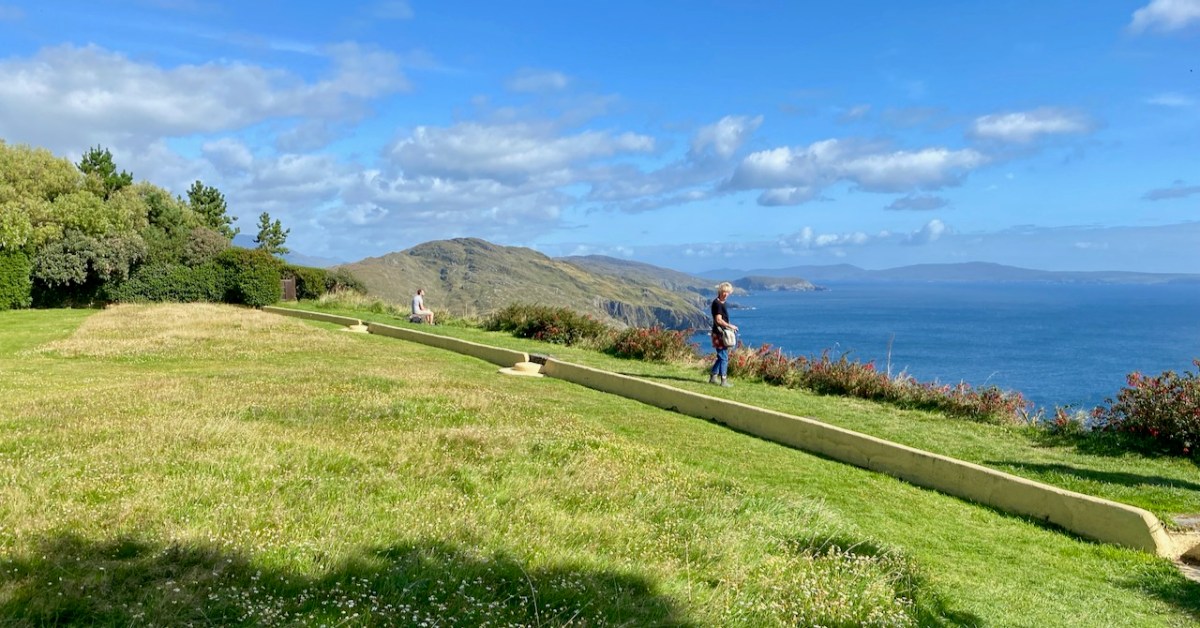
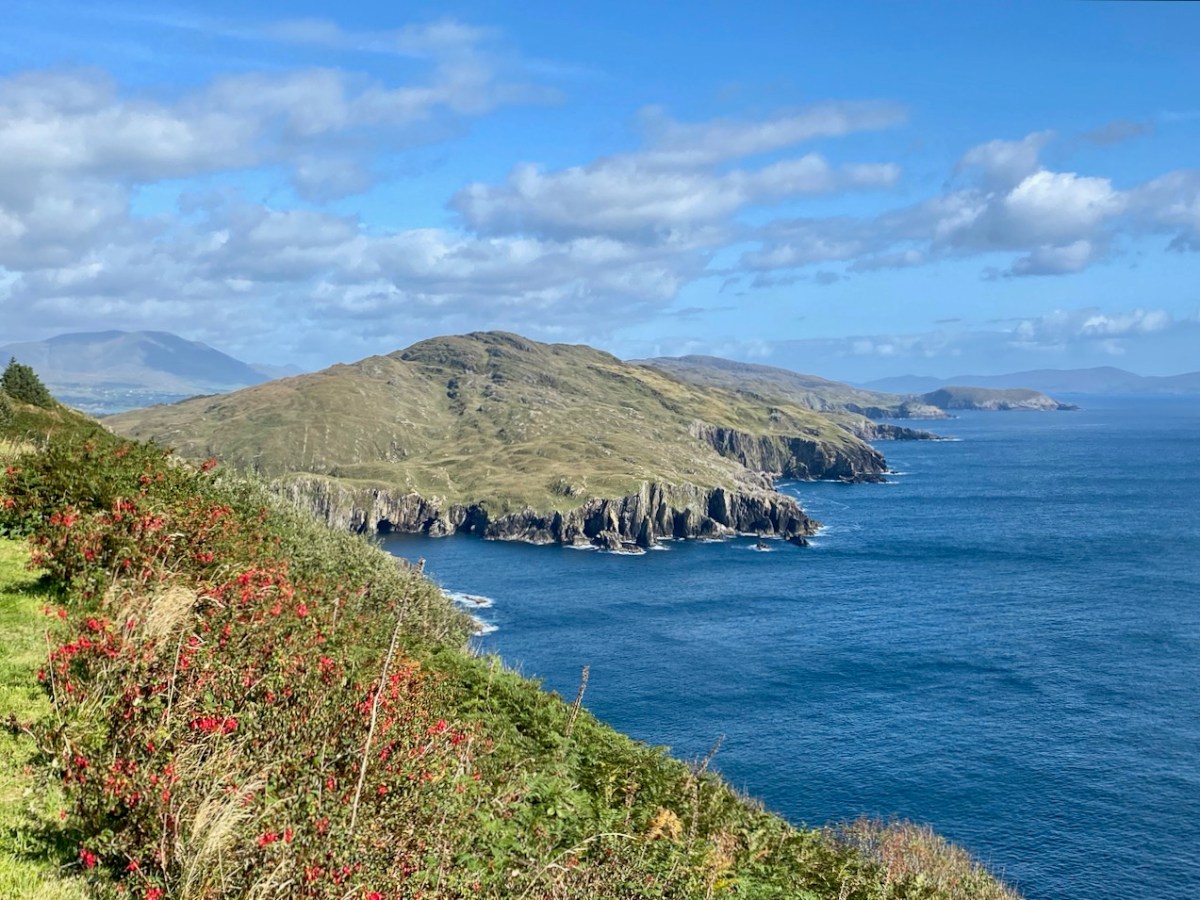
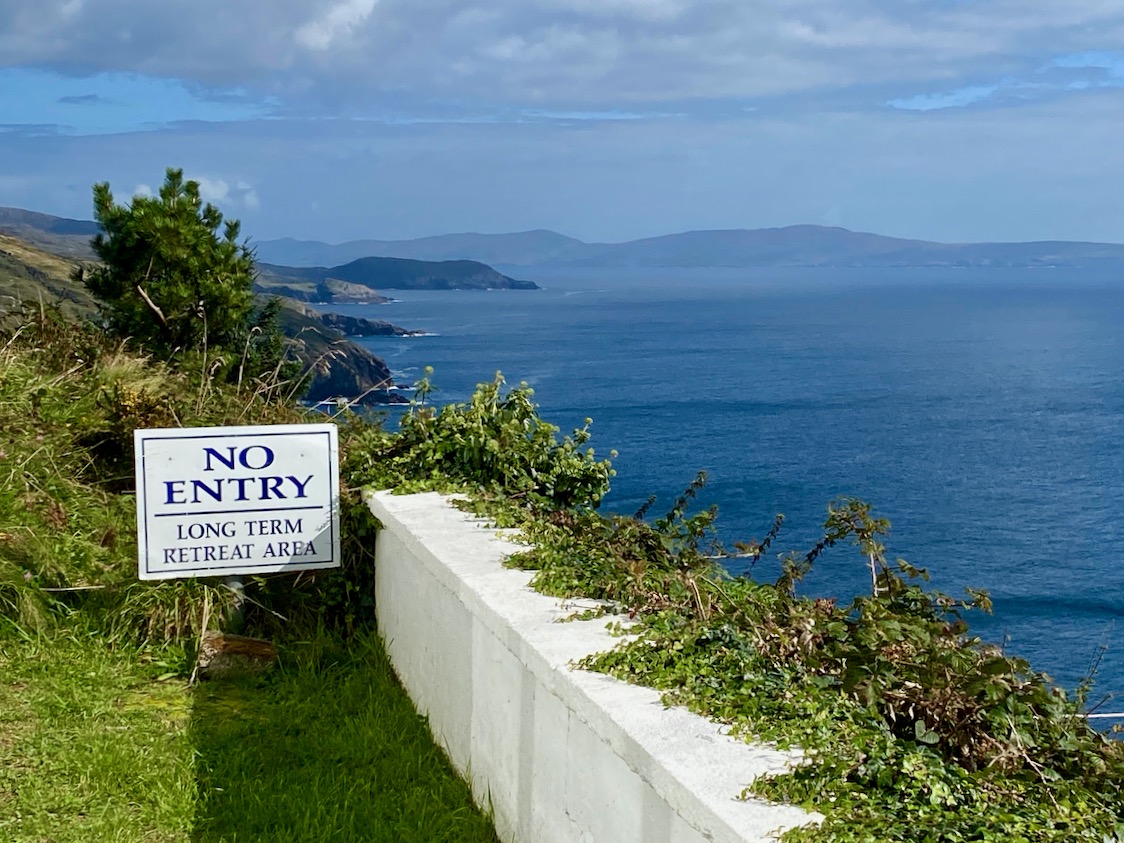
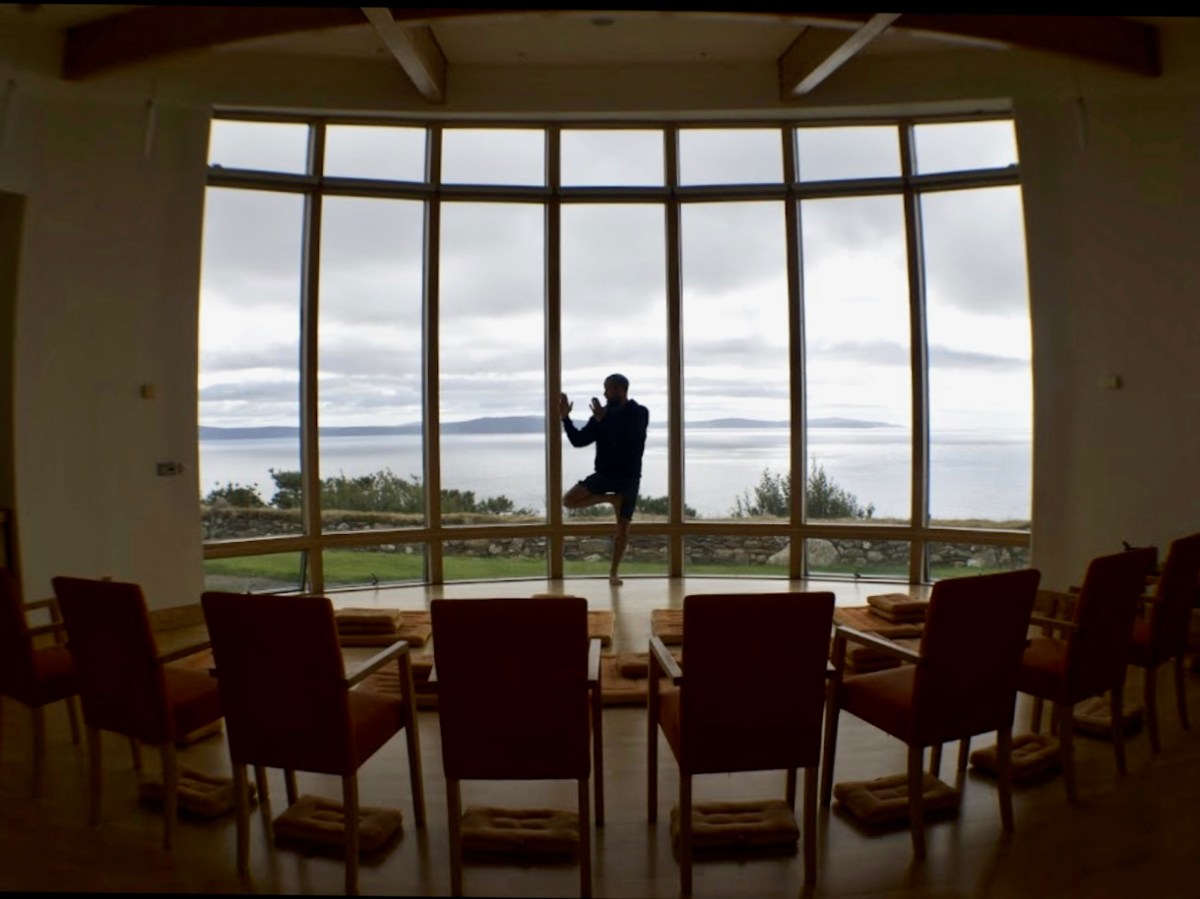
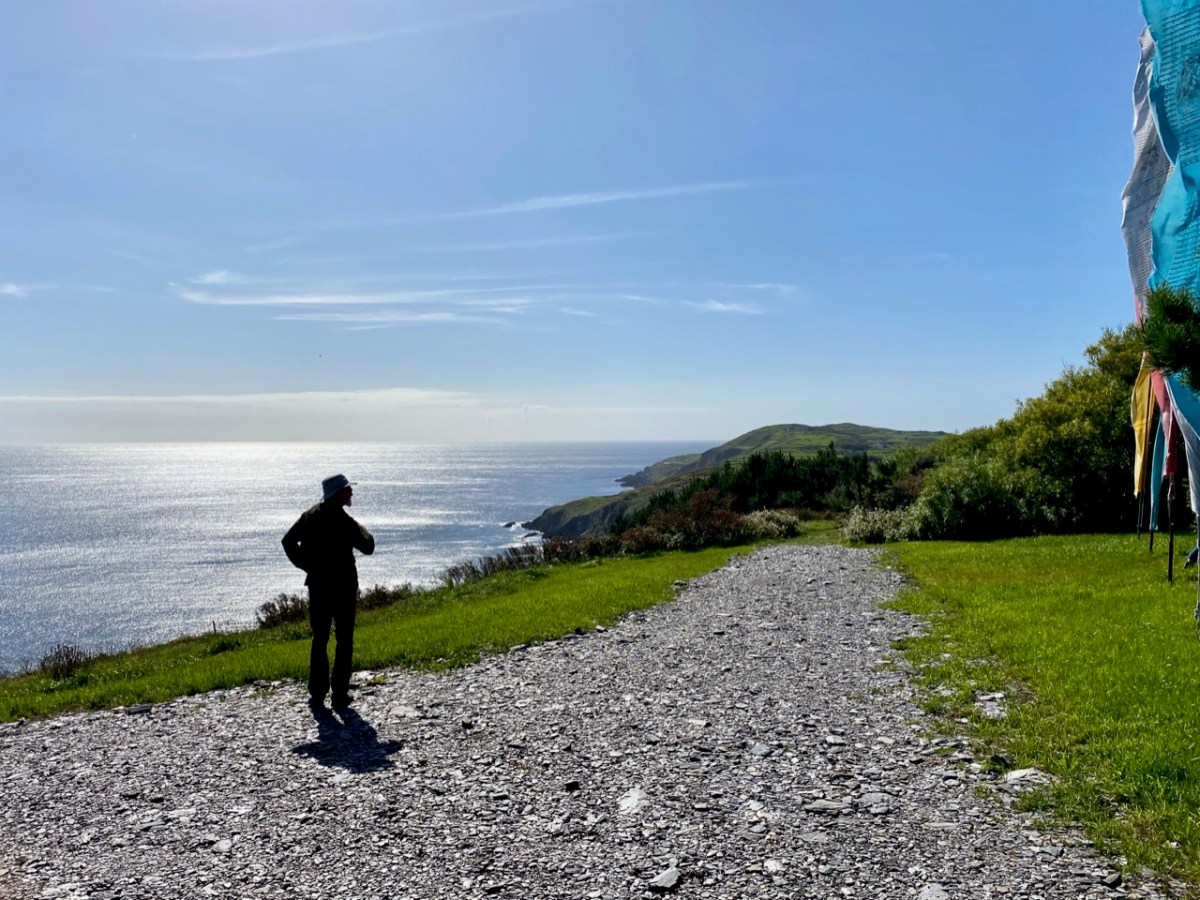
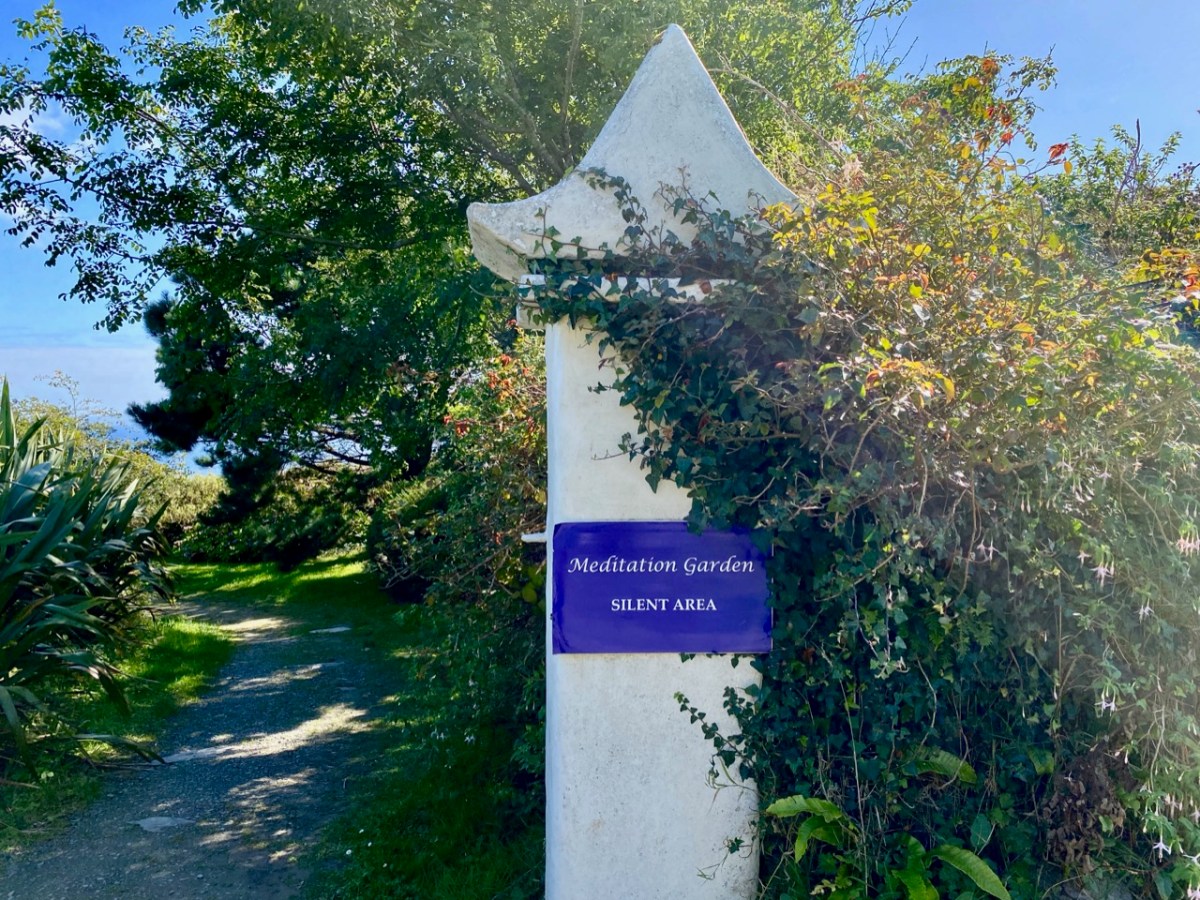
There is a centre of Buddhism on the Beara Peninsula: we visited it for the first time during the week. It is very beautifully situated on the coast south of Allihies. You only have to look at the photograph above, taken at the centre, to realise that the location is a very important aspect of the whole project.

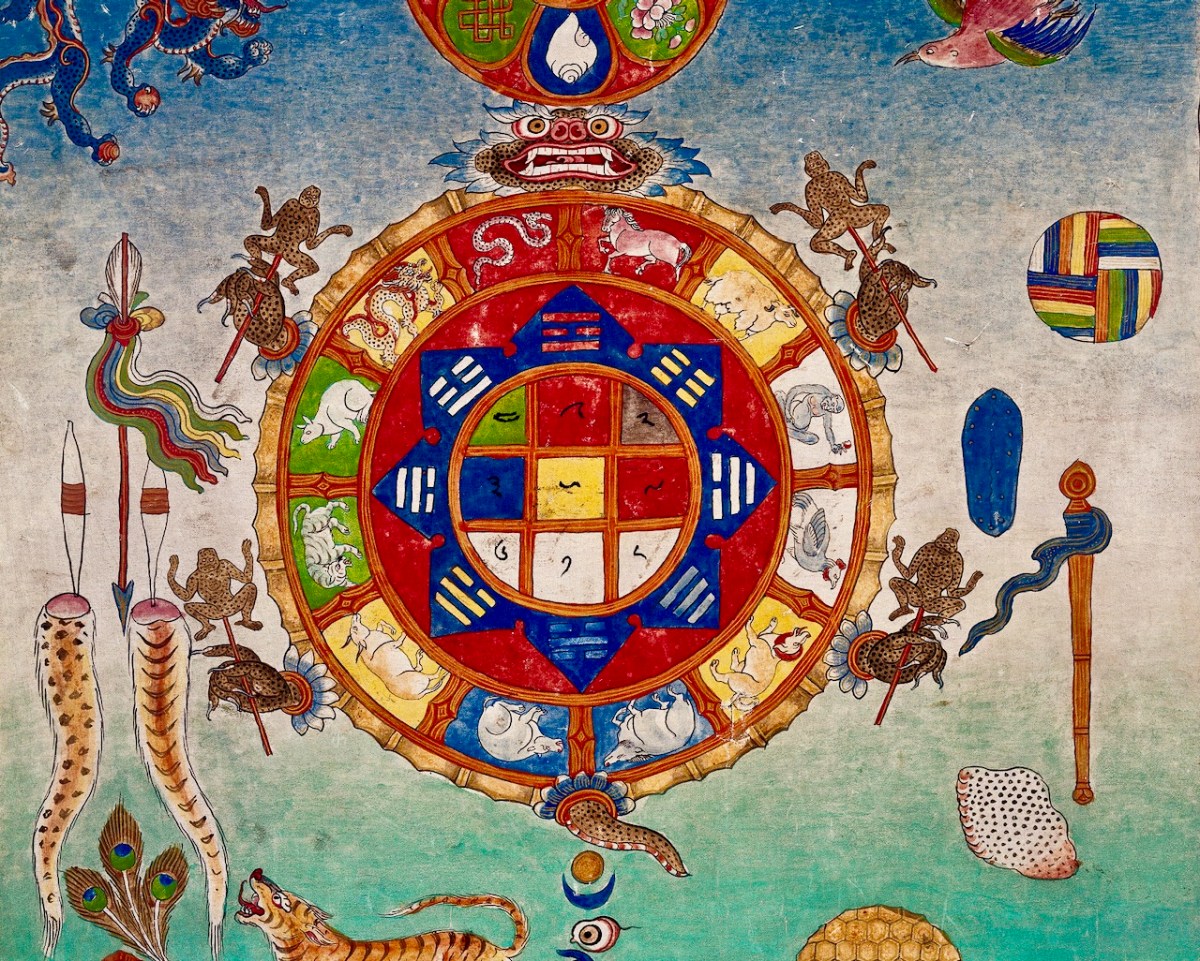
Sa Che or Tibetan Geomancy is the analysis of the earth — including water, space, air, light, trees, garden and home. The principles of Sa Che are to bring harmony and equilibrium, both in the natural environment and within the being, affording good health, wealth and enjoyment. These benefits flow on to our relationships and lifestyle

Pure Land Farms, California

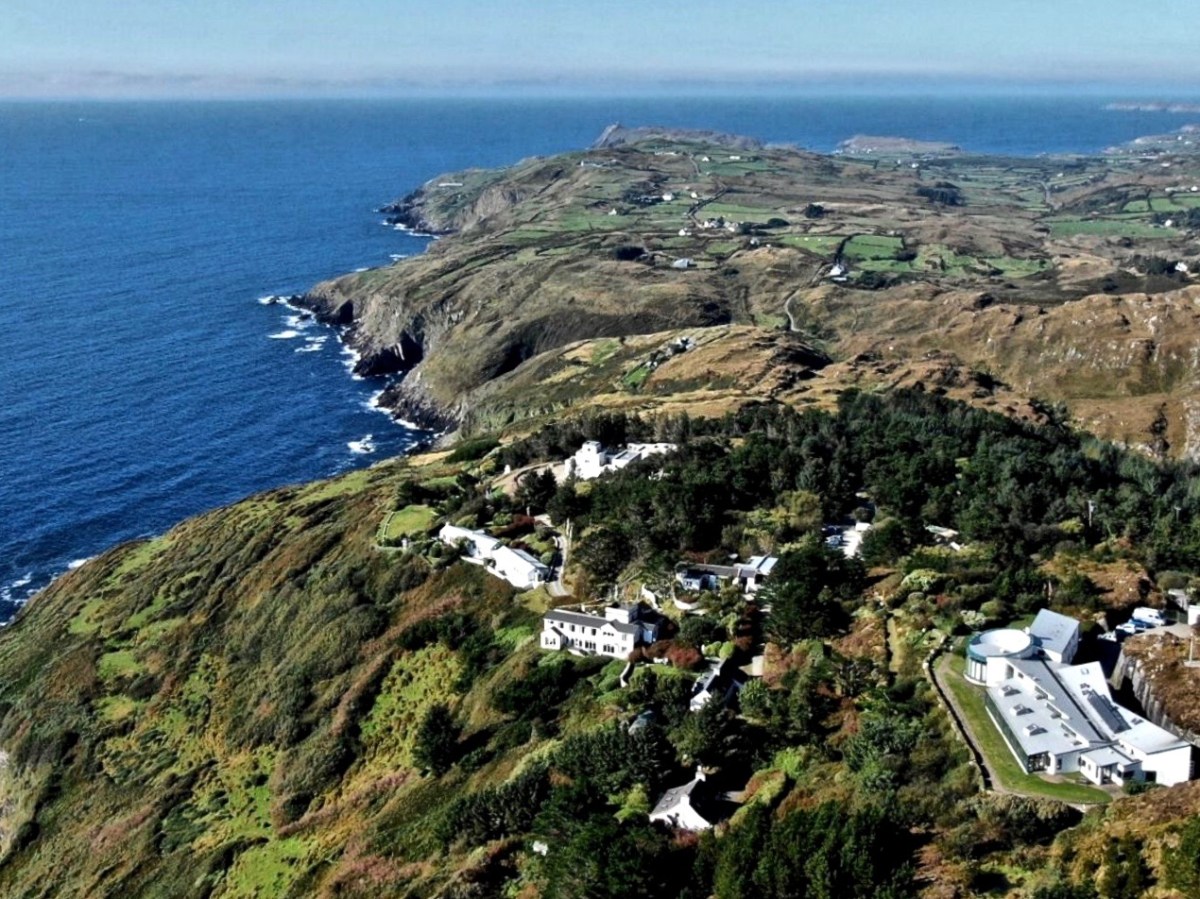
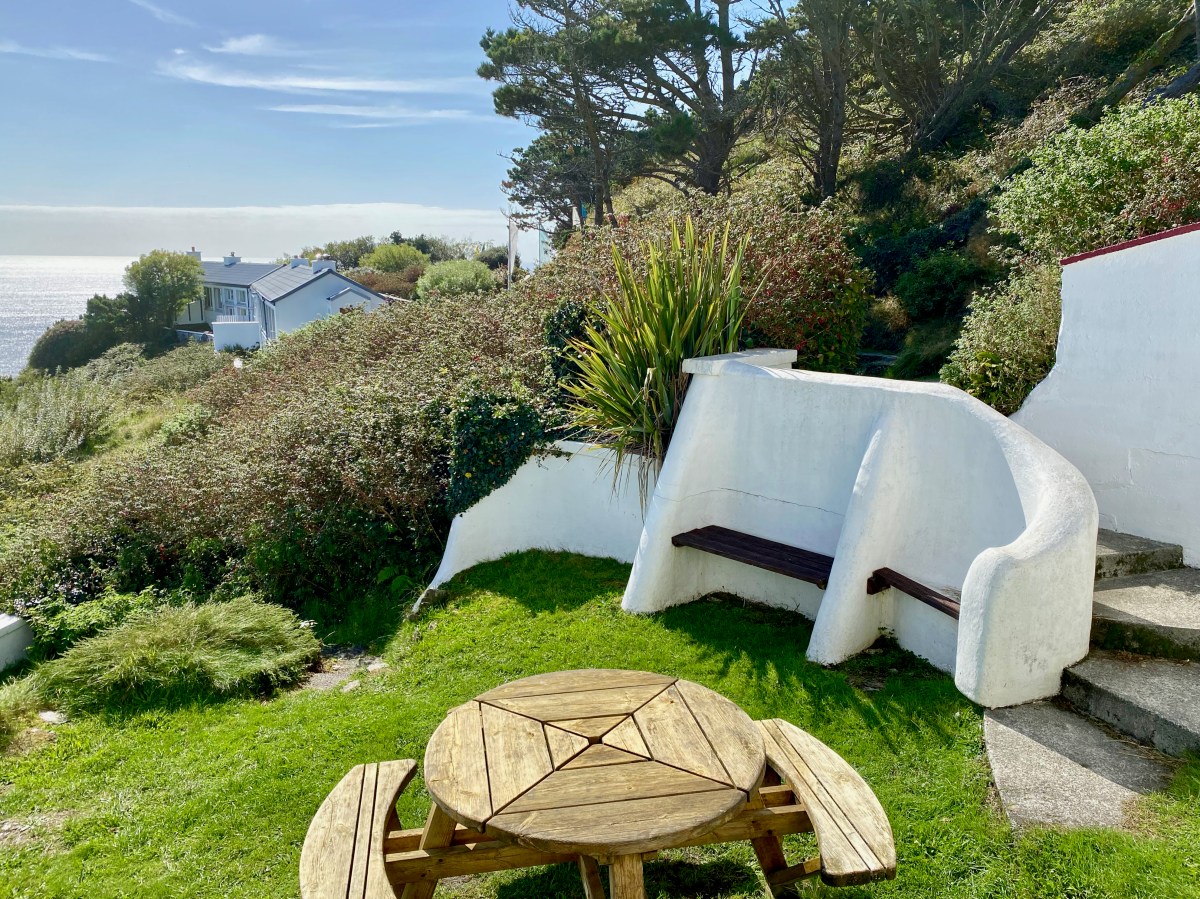
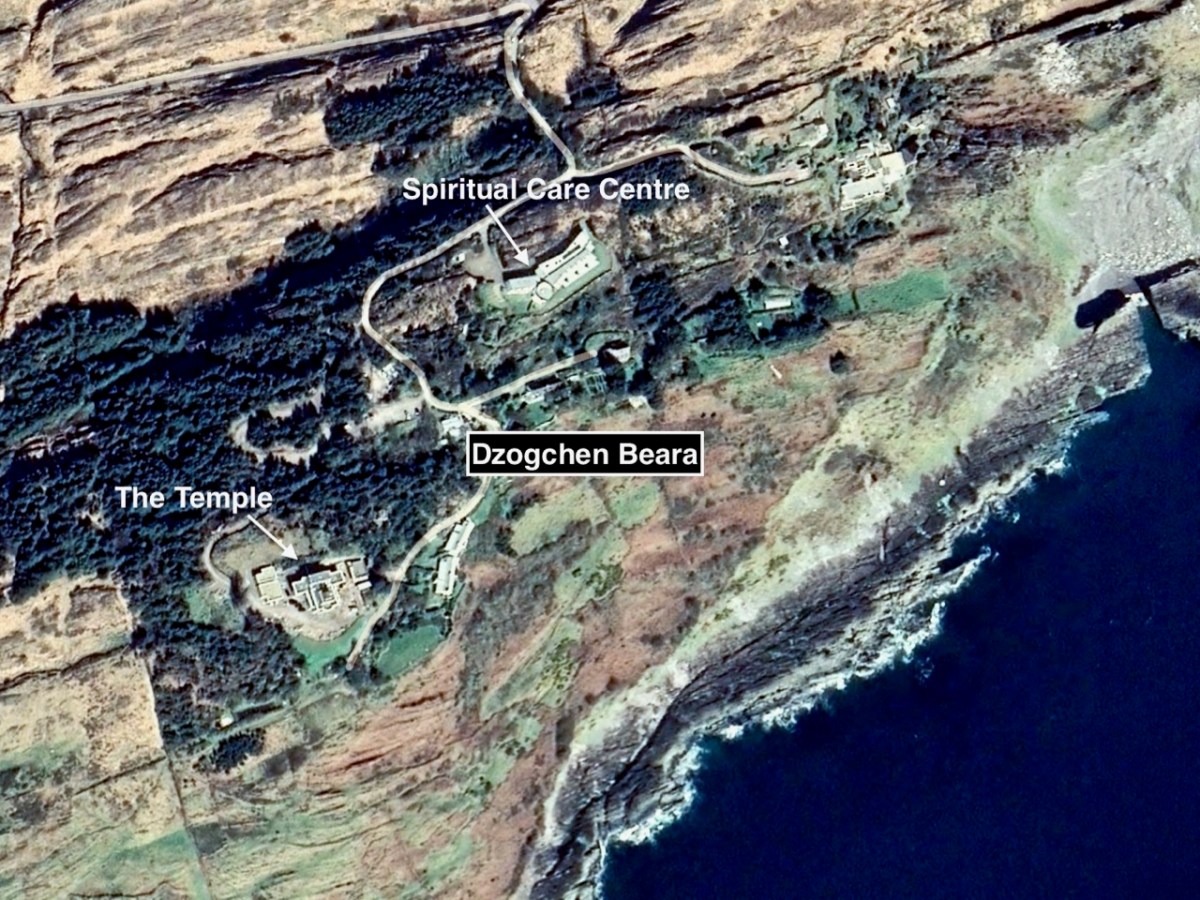
I am using the aerial view, above, courtesy of Dzogchen Beara Tibetan Buddhist Retreat Centre. All the buildings in the lower part of the picture are within the centre, which was founded by Sogyal Rinpoche in 1987. On the lower right is The Spiritual Care Centre – opened by Ireland’s President, Mary McAleese in 2007 – which provides a safe and supportive environment for people living with a life-altering illness, recovering from treatment, facing the end of their life or experiencing bereavement, as well as their families, loved ones and others who care for them. It’s a special, culturally significant place – and you can see how its siting takes the fullest advantage of the impressive scenery.

That’s a Tibetan geomancy chart, above (courtesy of The Wellcome Foundation). It is traditionally used to work out how and where you should build your house – or any important structure: as you can see there is a Zodiac at its heart. As an architectural student back in the 1960s I was fascinated by this concept – then popularly termed Feng Shui – we all were. Throughout my working life I was always seeking to justify my clients’ demands to build in a certain place or in a certain way; I wince, today, when I see the building processes we have here in Ireland – our countryside is ravaged, in my view, by the excavator and the rock-breaker carving out great flat platforms whereon are placed ‘anywhere style’ bungalows or houses, rather than structures which try to flow and blend into the uneven natural landscapes. But I’d better get off my high horse, I suppose. This Buddhist centre on the Beara is an excellent example of buildings ‘fitting in’ to their surroundings.

Anyone can visit the centre: it has an excellent cafe which enjoys the unparalleled views, for a start, but there are gardens and grounds to wander around, and many events which everyone can attend: keep an eye on the website.

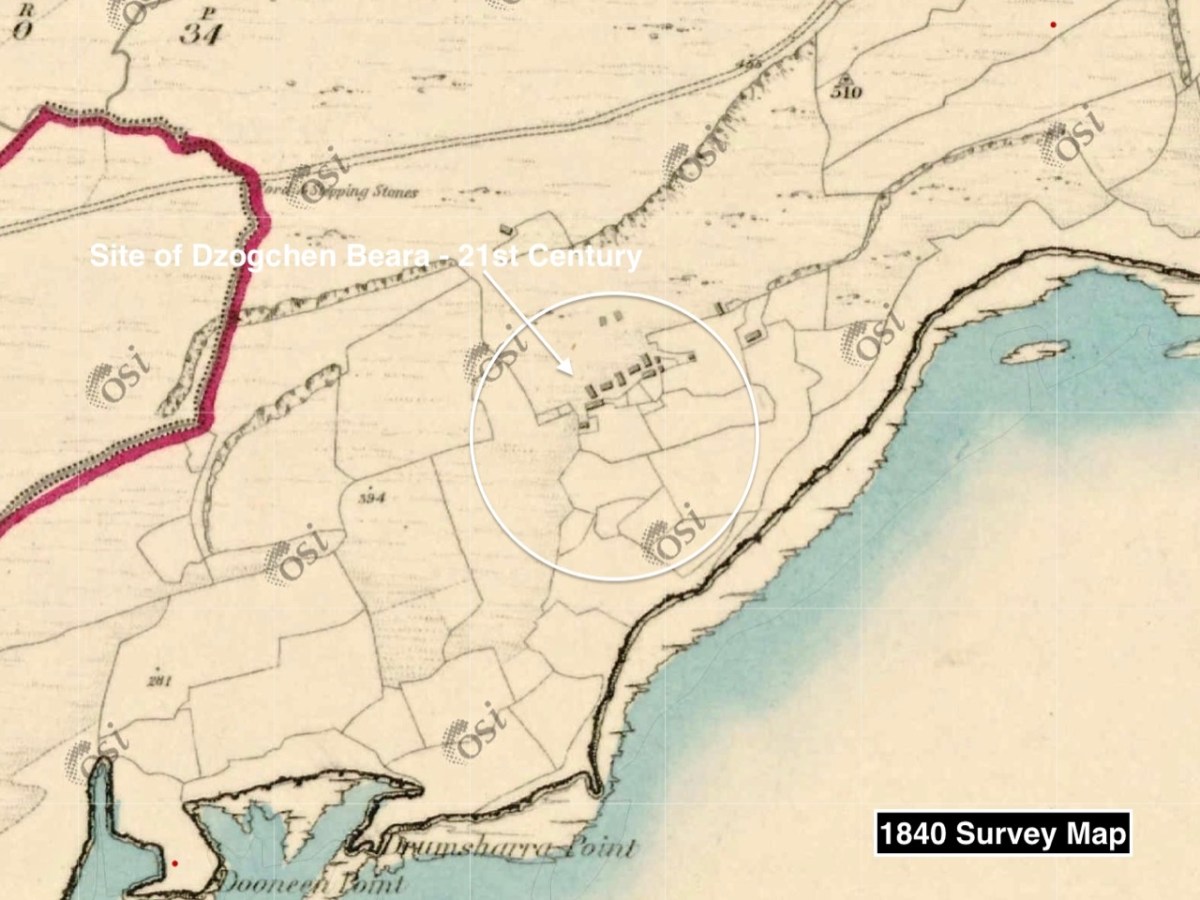
This shows one of the meditation rooms (courtesy of Dzogchen Beara Tibetan Buddhist Retreat Centre), with Pi Jun Taiwa in meditative posture. Below is a satellite image of the site showing its proximity to the coast and, below that, an extract from the 1840 OS map. I was intrigued to know what the buildings are that are shown occupying the site in those times. I have been unable to find the answer but wonder if they were connected to mining: the great copper-mining centre of Allihies is situated inland from here, but there are said to be ore-bearing lodes at Dooneen point, south-west of the new Centre.

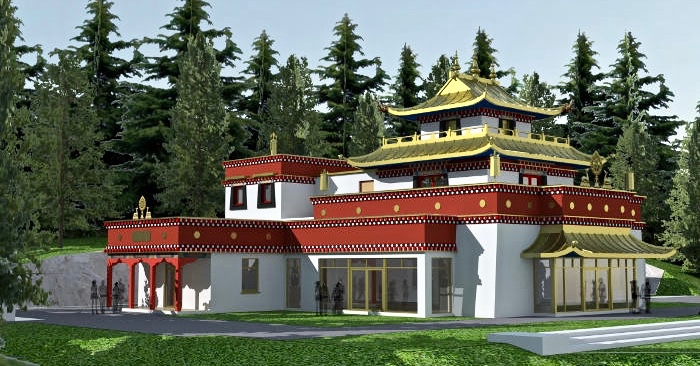
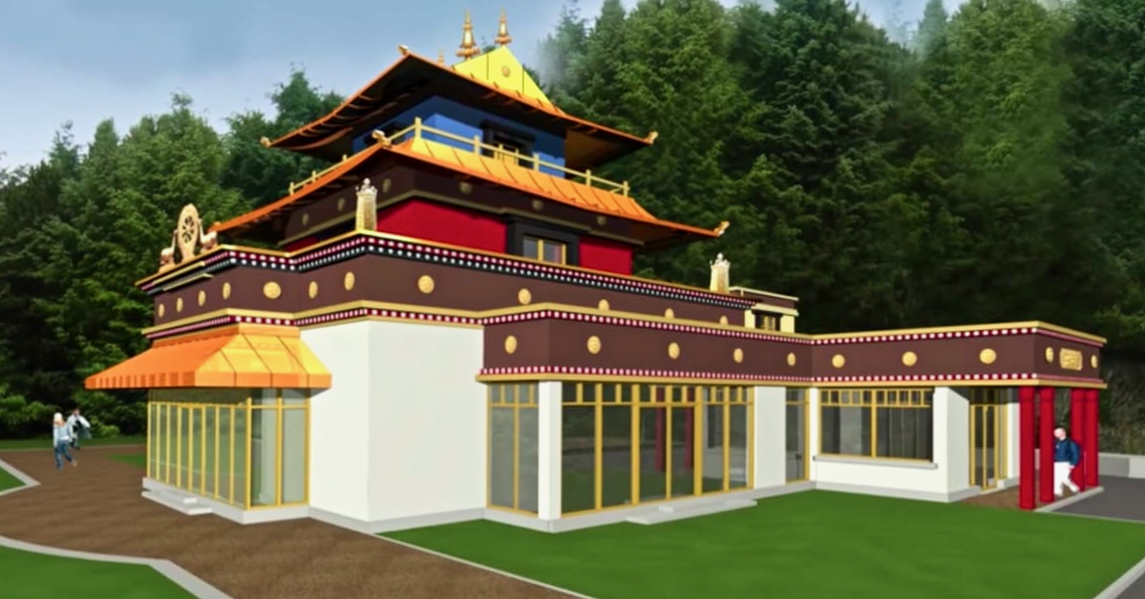
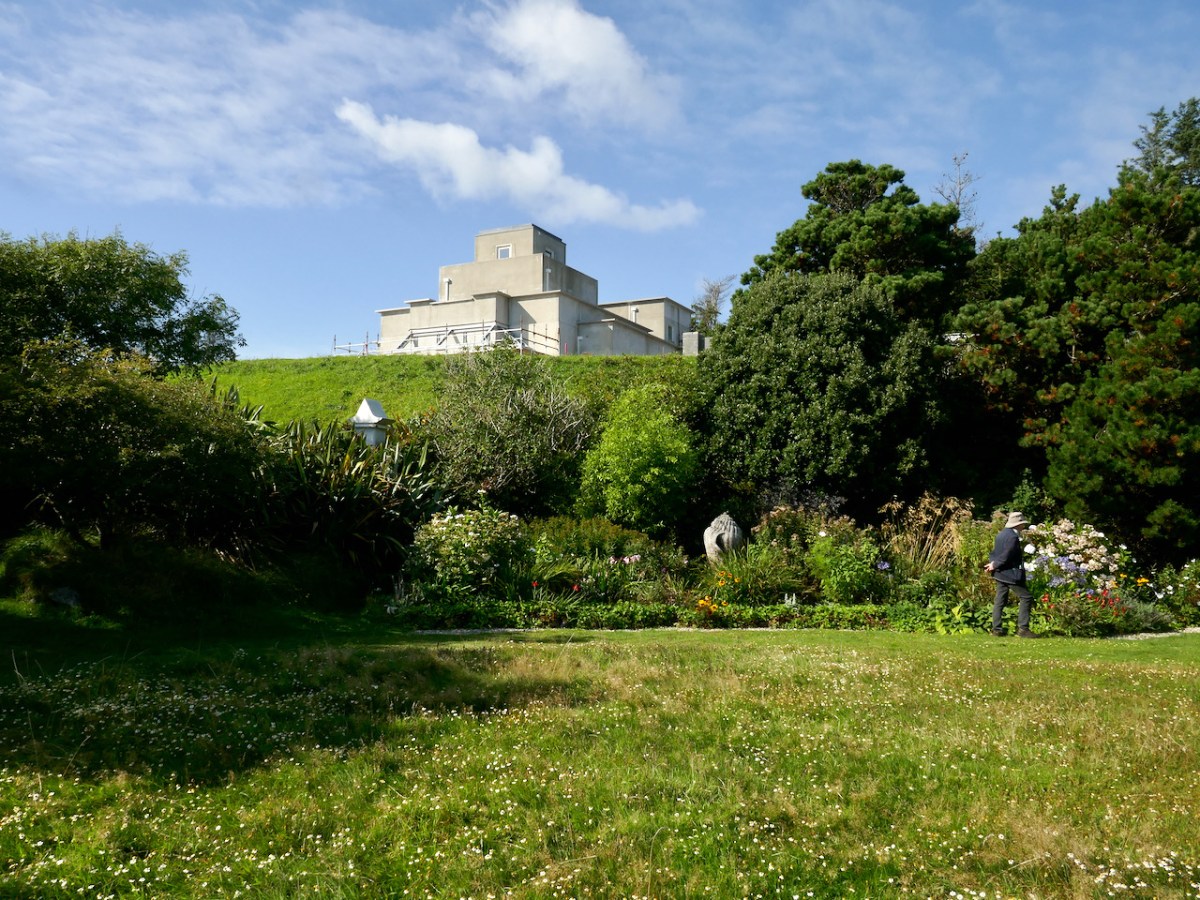
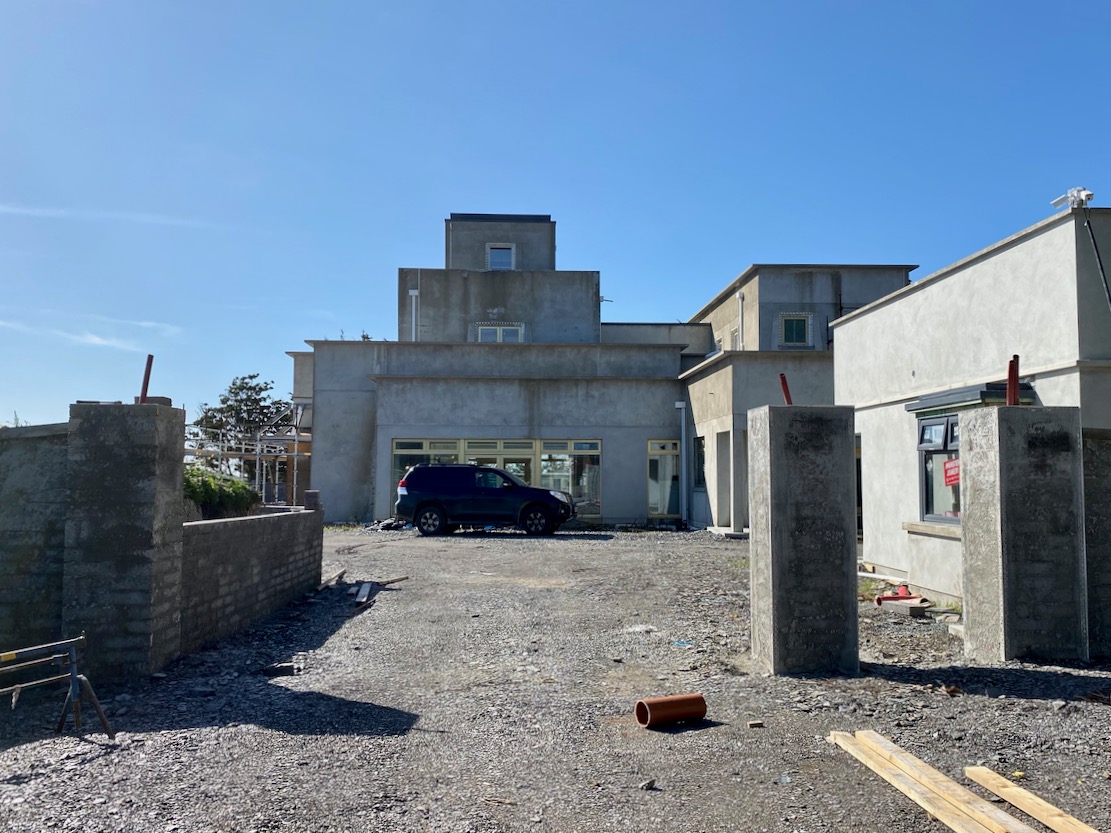
An exciting venture happening at Dzogchen Beara right now is the construction of the first Buddhist temple in Ireland! It’s a relatively long-term project – with progress held up by the Covid crisis. But we saw it under way and it promises to be an impressive modern building based in Tibetan tradition.
The site of the temple was consecrated in 2010 with a sacred fire ceremony. I was intrigued to read that the curving overhanging roofs are to be constructed from ‘Nordic Royal Copper’, a specially developed alloy containing zinc and aluminium: this should ensure that the copper retains its shining colour through all weathers: a traditional copper roof would become dulled and turn green after a few years. Instead, the roofs of this temple will shine like the ‘Beacon of Wisdom and Compassion’ that the architect imagined. At present, the building works are still very much in their unadorned basic form, but moving forward (below).
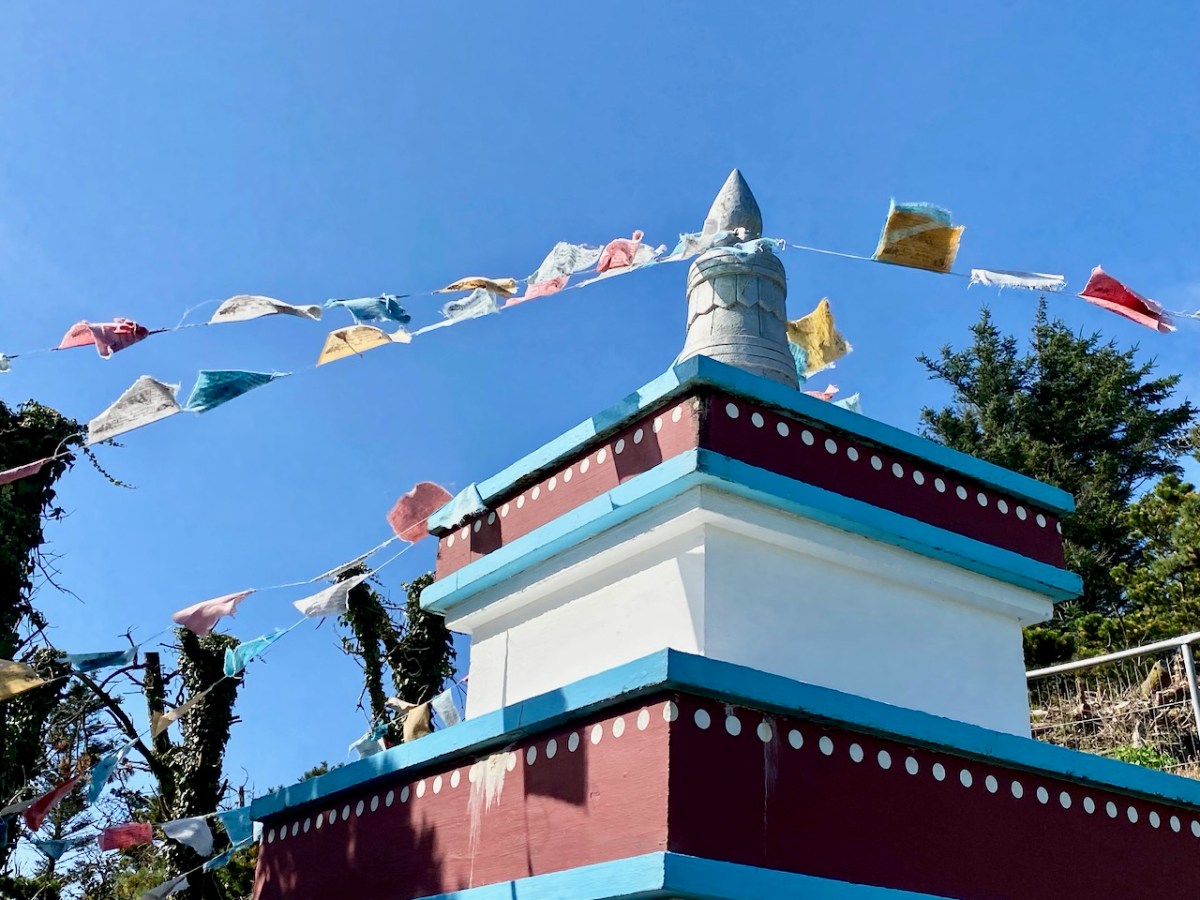
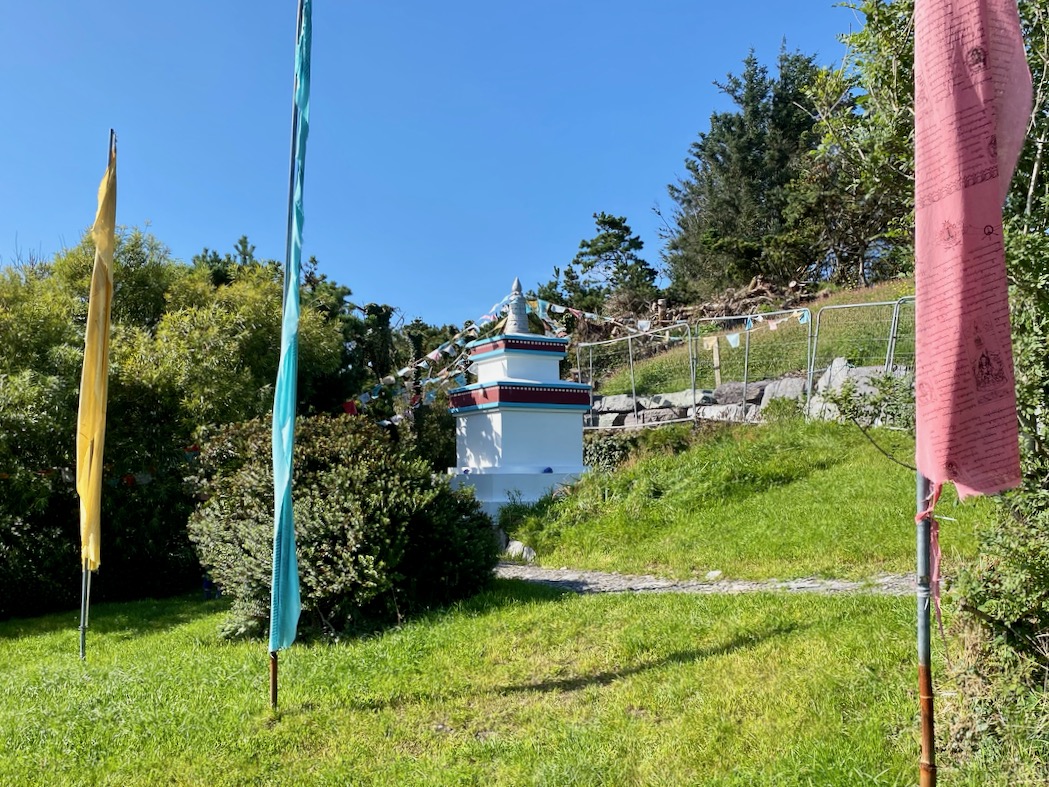
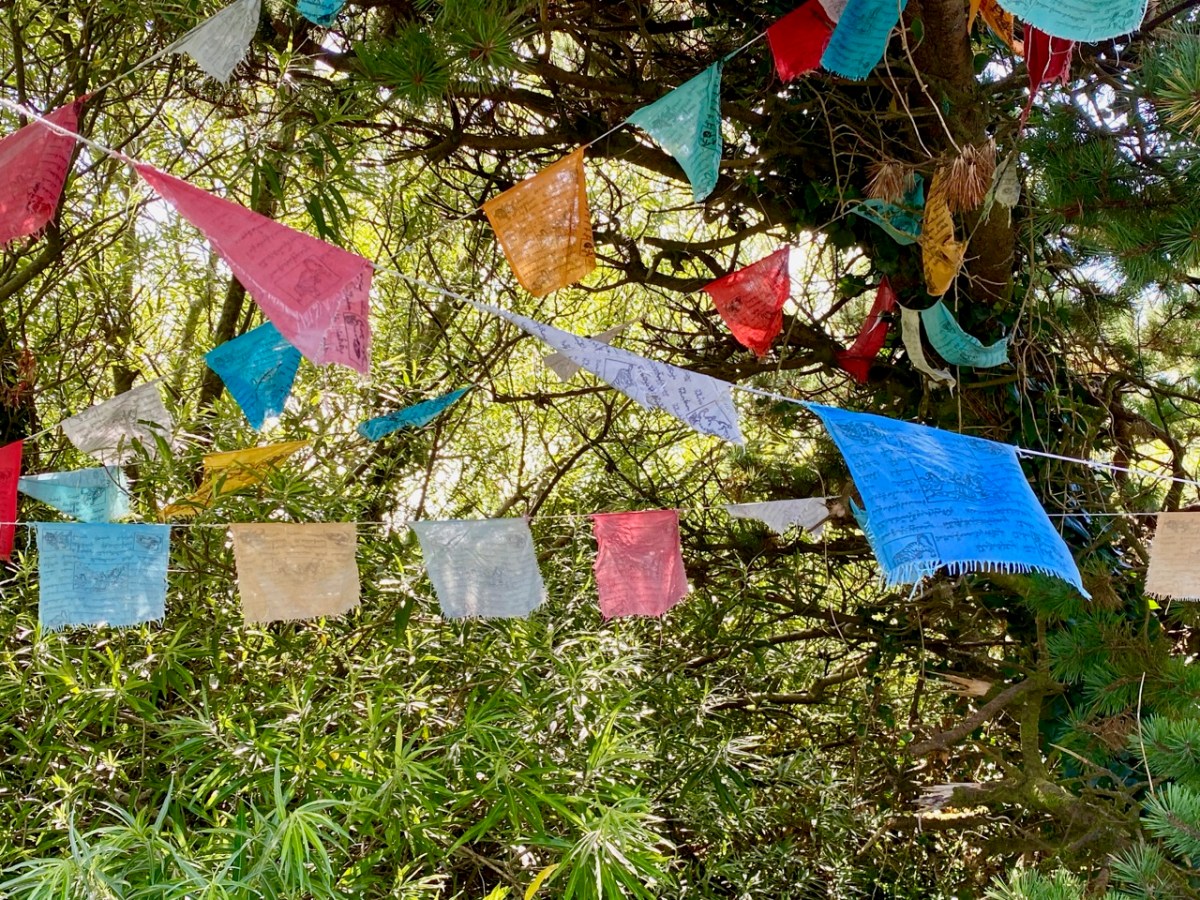
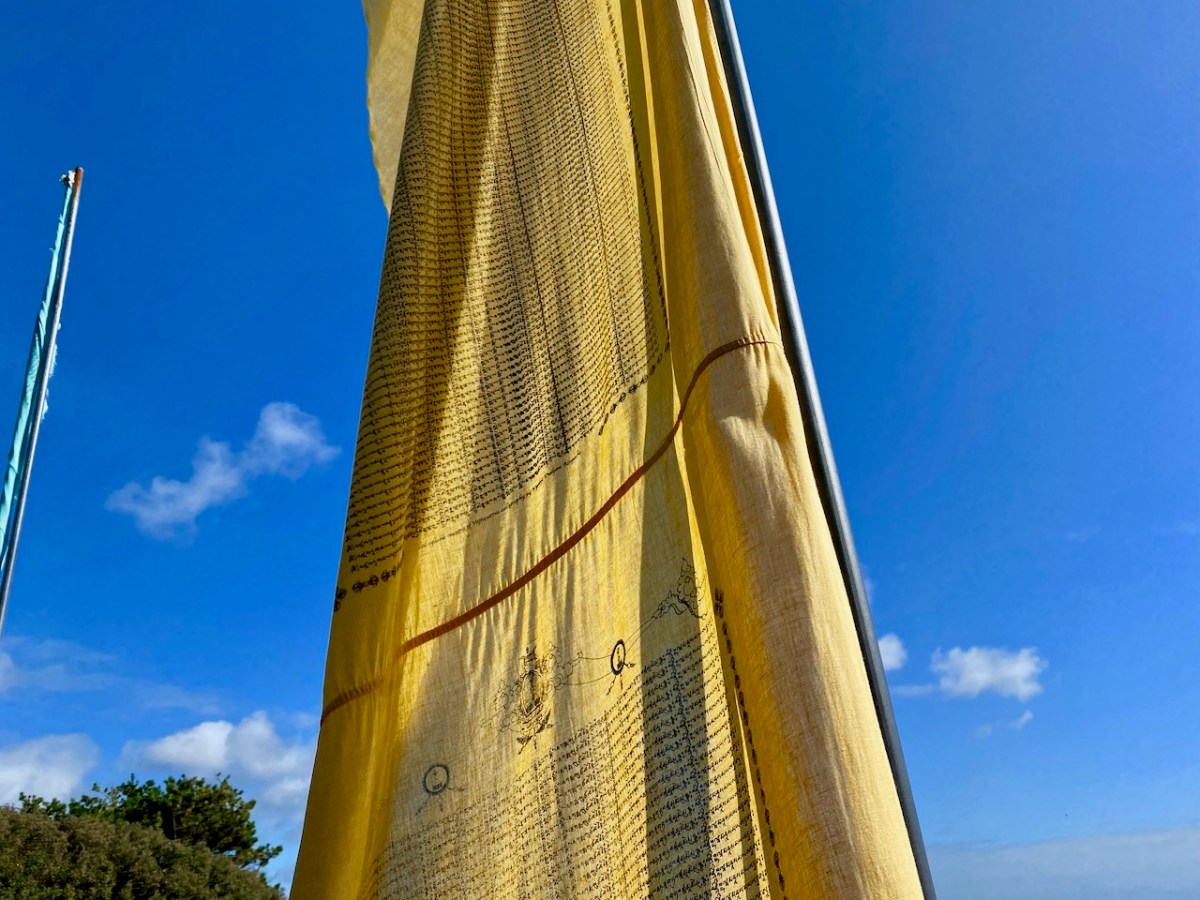
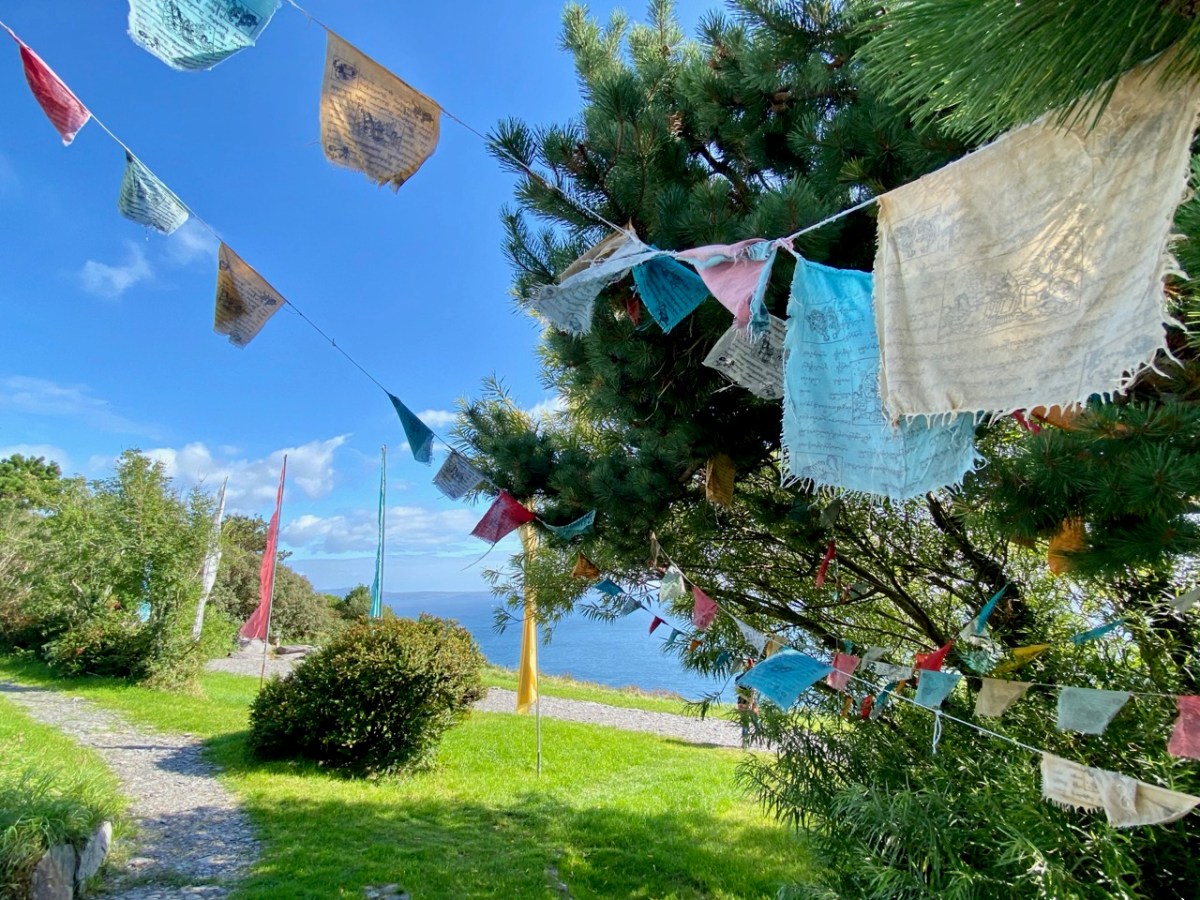
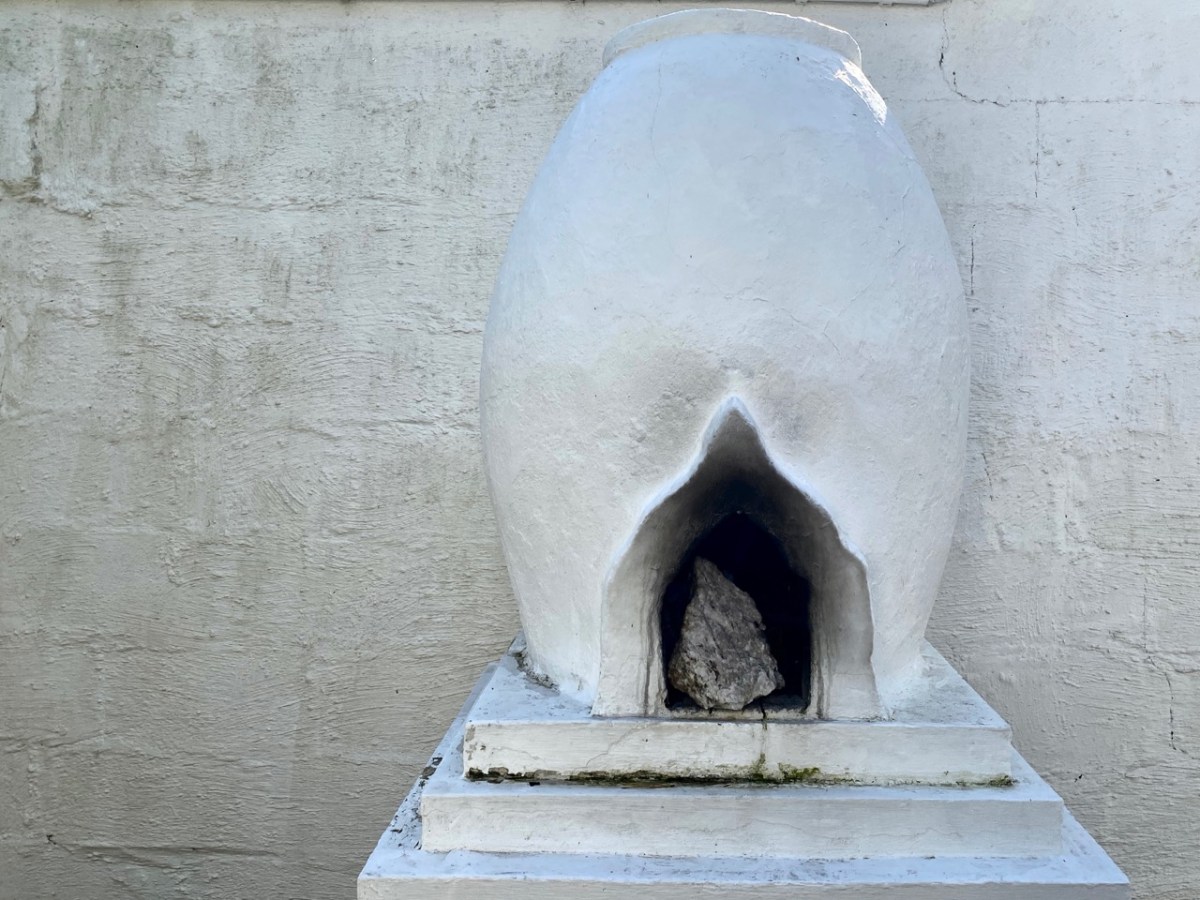
The Centre grounds already display a traditional ‘Stupa’. Originally, stupas stared out as sacred mounds or domes which were used to house the relics of the Buddha. Now they are symbolic structures which give special significance to their location, as here. They are always decorated with colourful prayer flags which serve to bless the surroundings. I can’t help seeing these flags in the same light as ‘rag trees’ often found by holy wells in Ireland. The processional way to the stupa is lined with tall prayer banners. And the whole stupa site also enjoys the wonderful views to the ocean.

The year continues to pour down on us glorious golden days – and we embrace them. Our journey to the Beara was memorable, and I have no doubt that we will be calling into the Dzogchen Centre on many future occasions: I certainly want to keep an architectural eye on the progress of the temple. By the way, an apt translation of Dzogchen is “great perfection”.

Pints and Pipes

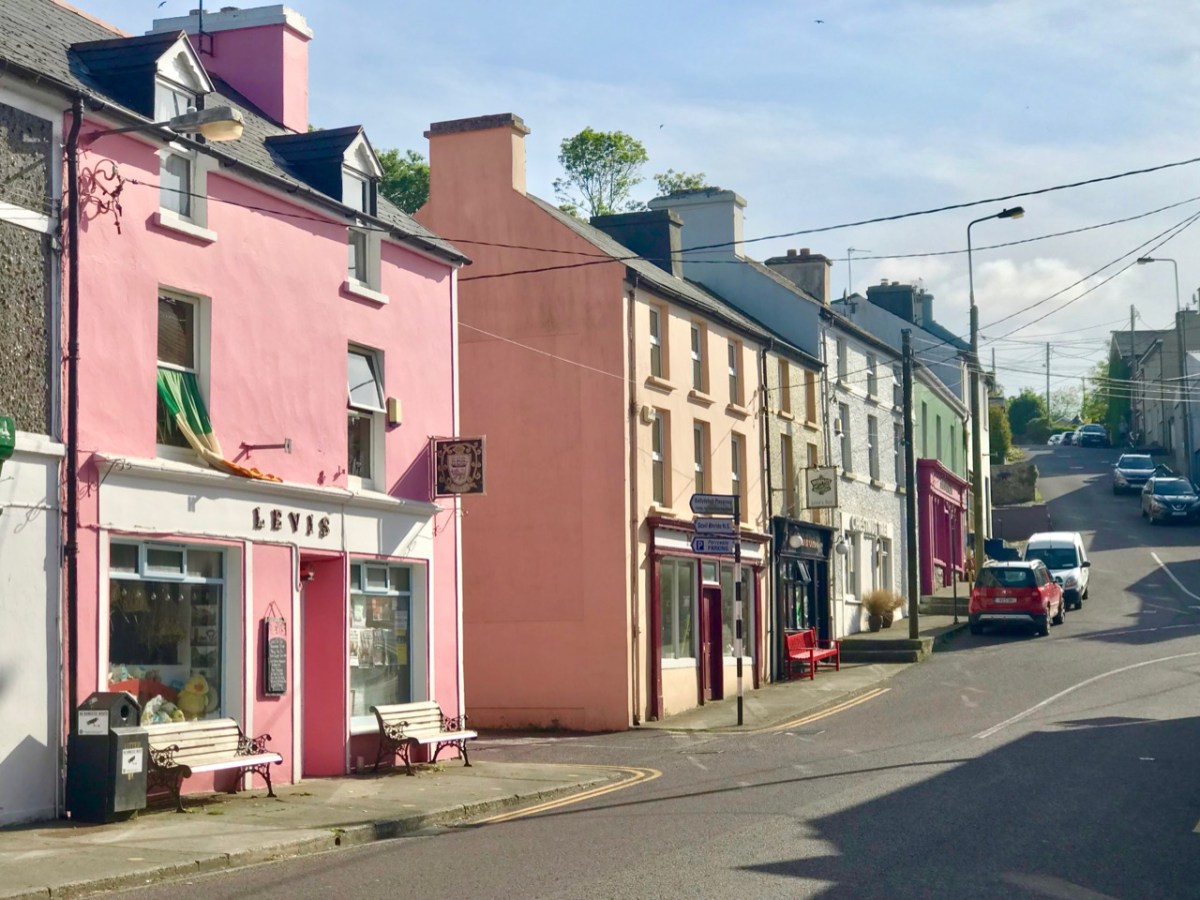
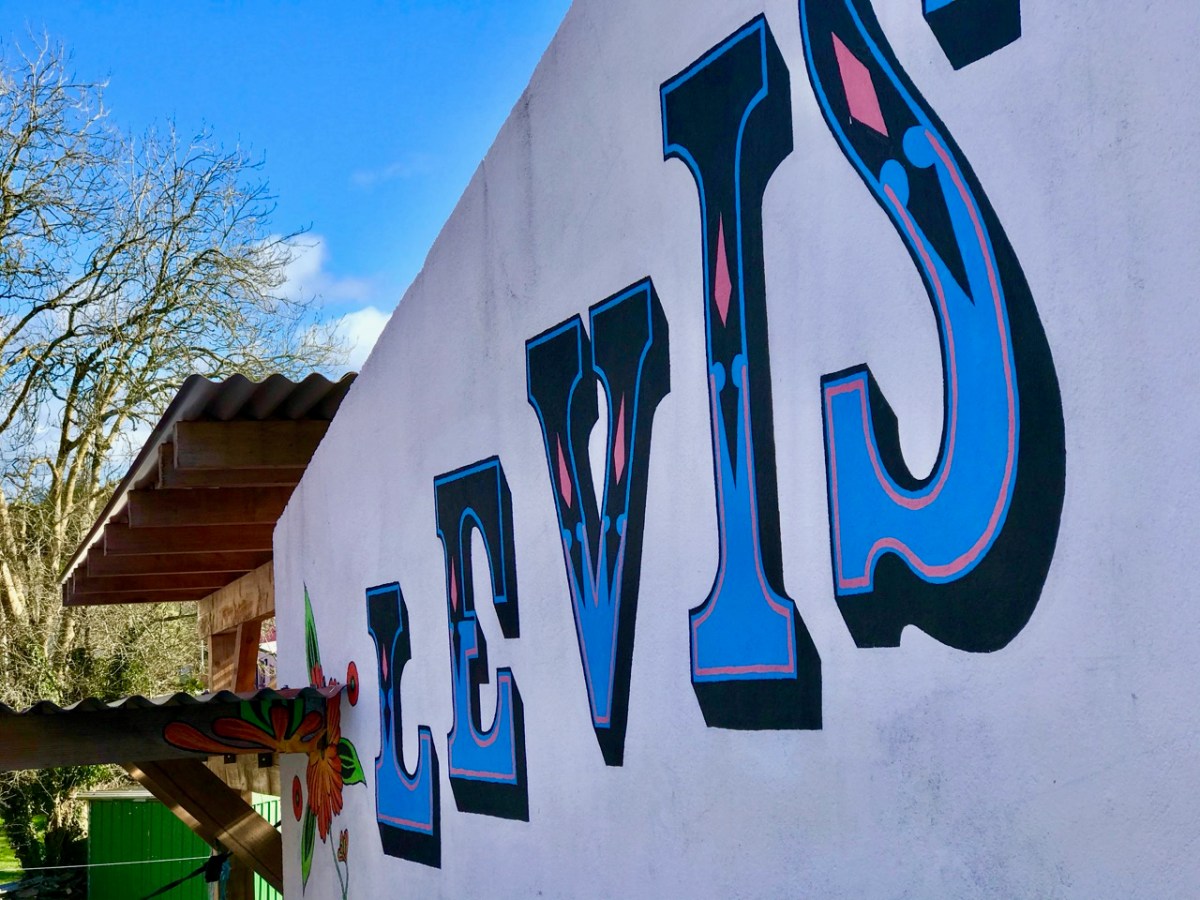
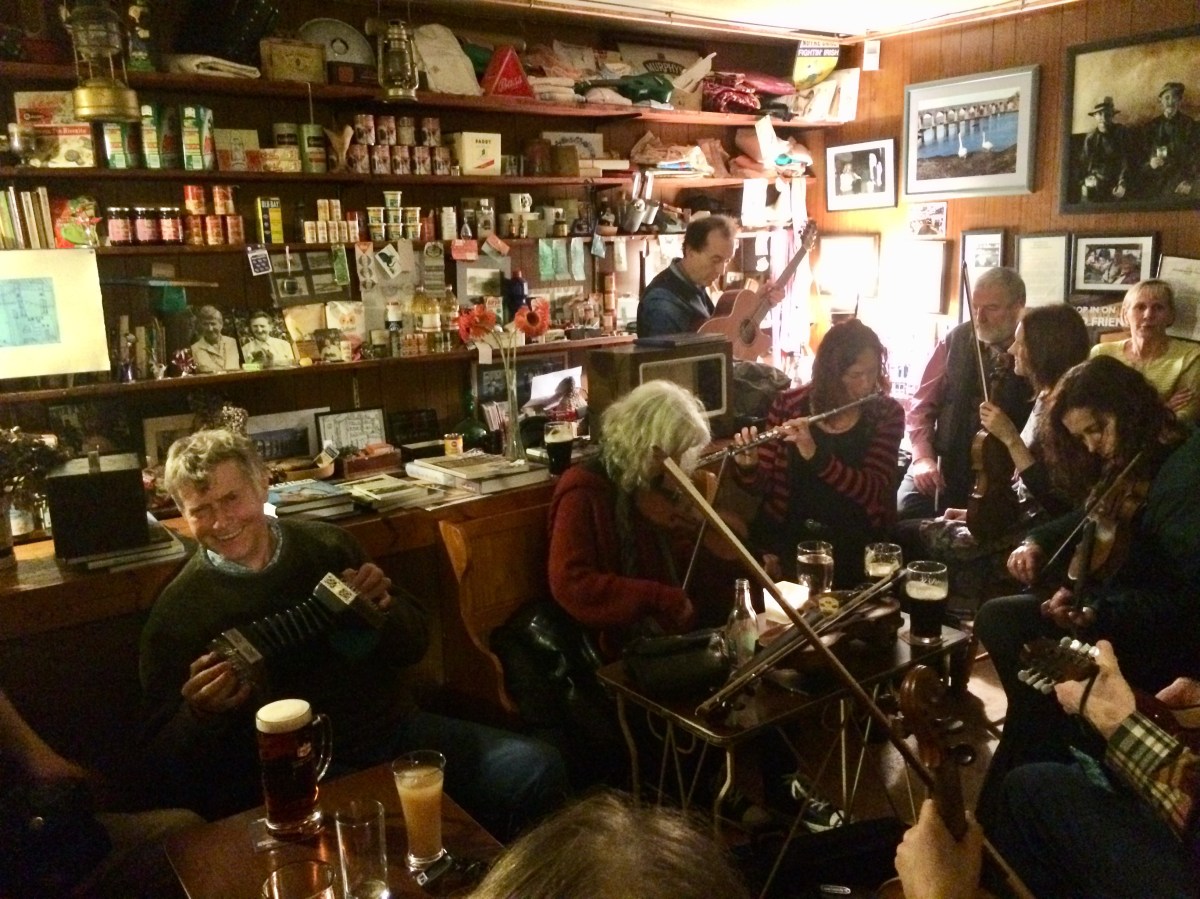
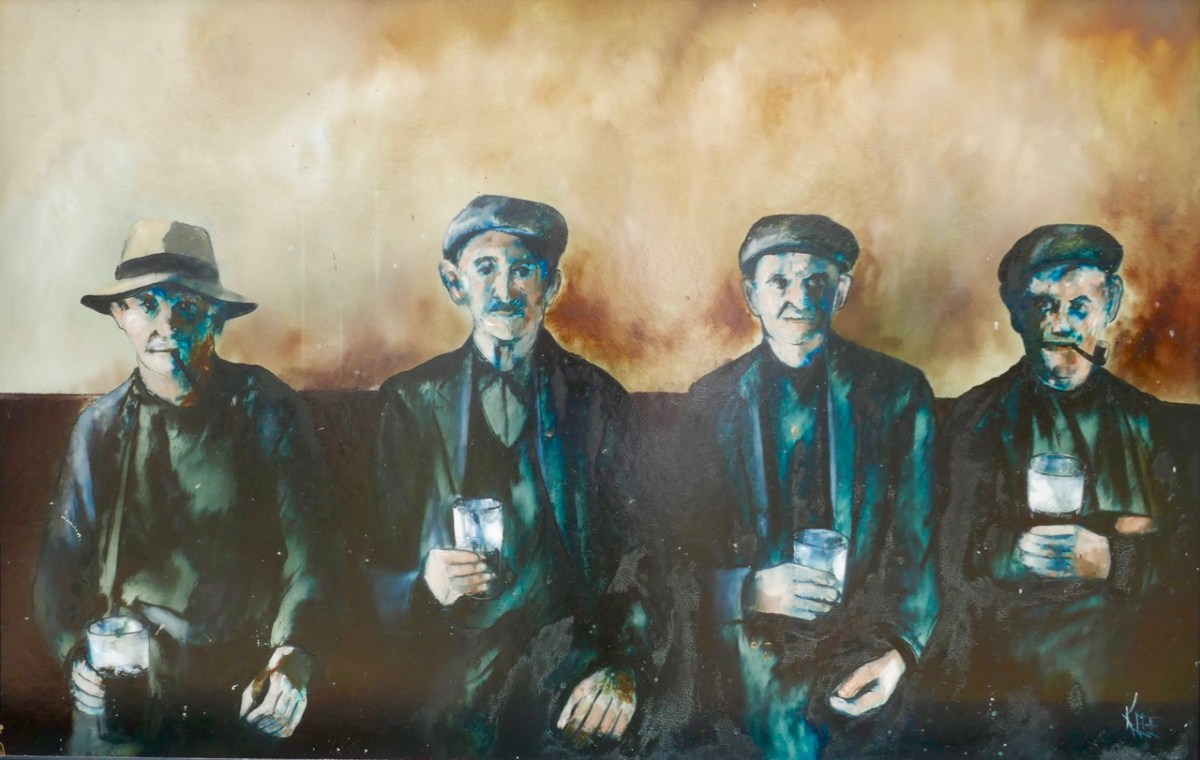
Today there is a story to tell, with lots of connections to the West of Ireland – and our own Ballydehob! That’s Levis’s Corner Bar, below, one of the village’s fine hostelries: try them all if you visit. Levis’s is known for its musical events but also for its traditional appearance inside. Look at the photo of the Irish music session (you’ll see me bottom left playing concertina) – that was taken a few years ago, before Covid; we are still waiting for those good times to return. On the wall behind the players you can catch a glimpse of a painting of men with pints and pipes.

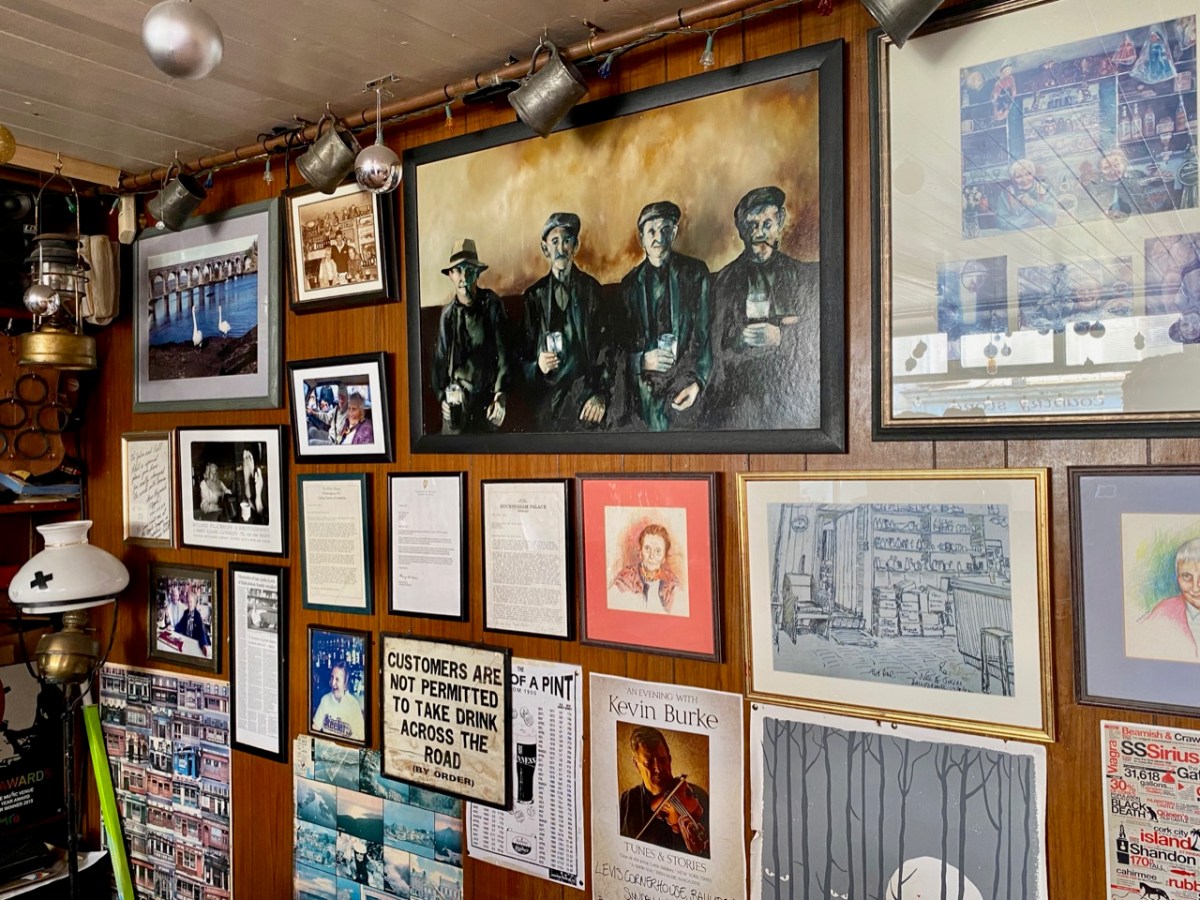
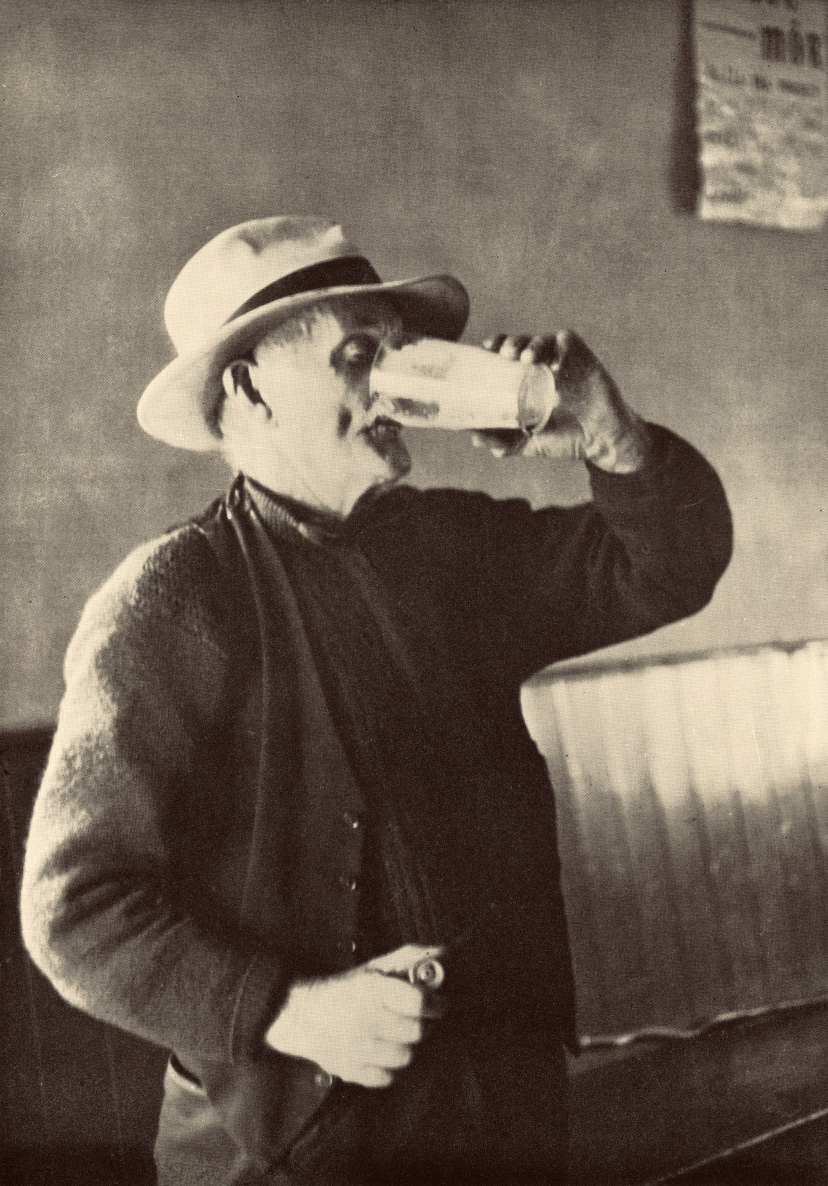
There’s a better view of the painting, above. When I first saw it – very many years ago now – I knew immediately that it was based on a photograph that had been taken by Tómás Ó Muicheartaigh – an Irish cultural hero who spent most of his life documenting traditional life, mainly in the western counties. He lived through the founding of the Irish Free State and was an enthusiastic proponent of the Irish language. This sketch portrait of him is by Seán O’Sullivan, a friend and compatriot:

Way back in the 1970s my then wife and I ran a small bookshop in a Devon market town, specialising in folklore and traditional life. It had a substantial section on Ireland, and Irish culture. We stocked a recently-published volume (1970) celebrating the work of Ó Muicheartaigh, and I very soon had to sell myself a copy, as it is a superb record of mainly rural life in Ireland during the early twentieth century. I have it to this day – of course.

There is the photograph in the book, above. It is captioned Piontí Agus Píopaí – Pints and Pipes, hence the title of this post. Below it is a photograph of two Aran Island fishermen relaxing on the rocks while waiting for the weather to improve before they set out to sea. But there is more – a list of the photographs with some expanded captions at the end of the book. The whole book is written in Irish so I have recruited Finola’s help in providing a transcription for the Pints and Pipes – here it is, in the original and then translated:

Piontí Agus Píopaí

Ceathrar pinsinéirí ag baint spraoi as lá an phinsin le píopa agus le pionta Pórtair. B’fhéidir nach mbeadh pionta go hAoine arís acu. A saol ar fad tugtha ar an bhfarraige acu seo. Féach, cé gur istigh ón ngaoth agus ón aimsir atá an ceathrar go bhfuill an cobhar ar píopa gach duine acu. Is mar chosaint are an ngaoth a bhíodh an cobhar agus chun tobac a spáráil, ach ní bhainfí an cobhar anuas den phíopa instigh ná amuigh

Pints and Pipes

Four pensioners enjoying pension day with pipes and pints of porter. They might not have another pint until Friday. They’ve spent their whole lives on the sea. Look, even though the four of them are inside, away from the wind and the weather, the cover is still on each of their pipes. The covers are to protect the tobacco from the wind and to make it last longer and they aren’t taken off inside nor out

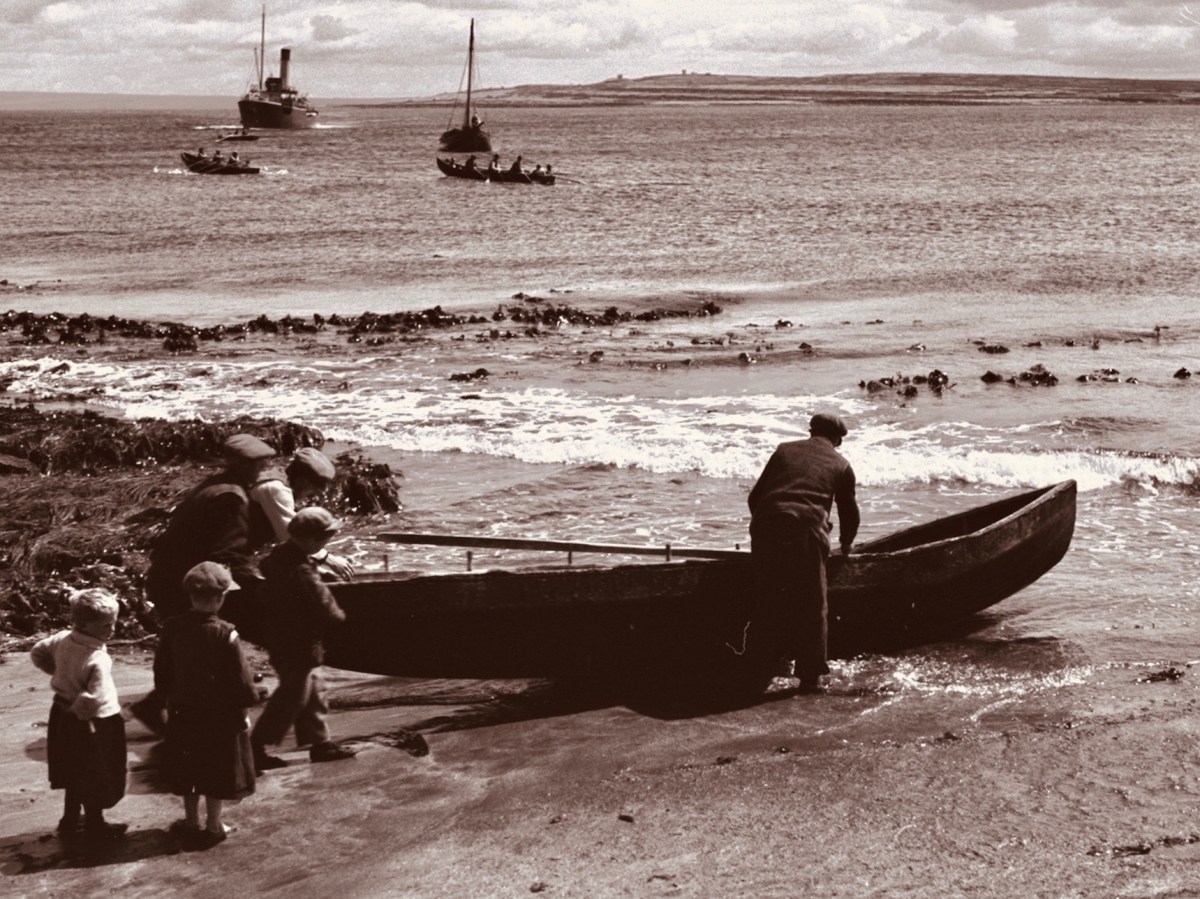
So, a fascinating piece of social history. Apart from conjecturing a date for the photo, I didn’t have much information to add when I first published it on Roaringwater Journal in February 2016. Because of the juxtaposition in the book, I guessed that the picture might have been taken around 1938, when Tómás is known to have visited and photographed the Aran Islands (and would have travelled through Kerry to get there). Here is one of his views of a Curragh being launched on Inis Meáin at this time (Dúchas):

I didn’t expect my story of Pints and Pipes to advance beyond this. But, last week, I received a message from a reader who had seen the photograph in Roaringwater Journal and was able to provide very significant additional information!

. . . My name is Joanne and I live in London. My dad found a photo on your website from a blog dated 14 Feb 2016 entitled Images – it is the Tomás Ó Muircheartaigh photograph of the 4 men drinking in a bar. My great-grandad is the man on the far left. It was great to find the photo as it is much better quality than the copy we have, unfortunately my nan had an original postcard but it was borrowed by a representative of Guinness many years ago and never returned! 

Joanne, September 2021

Joanne has proved to be a wonderful contact, and I am so grateful to her for providing information and allowing me to use it here. In summary:

. . . My great-grandad’s name was Seán Mac Gearailt but he was known as Skip.  He was from Baile Loisce in Kerry.  The photo was taken in a bar which was then called Johnny Frank’s in Baile na nGall (Ballydavid) but I think is now called Tigh TP.  I can see from the photos that have been digitalised Tomás Ó Muircheartaigh took a lot of photographs at Baile na nGall. Pints and Pipes isn’t in that digitalised collection . . .

. . . I gave my dad a call tonight and discussed the extract with him; he lived with his grandparents as a child in the late 1940’s/50’s and visited regularly so knows a lot about Skip. Dad remembers him collecting his pension on a Friday at Ballydavid and having a beer in Johnny Frank’s before going home to hand over the rest of the pension to his wife – so the extract in the book is correct on that. Skip was primarily a farmer but dad says he did go out fishing in a curragh at night. Dad remembers his nan being worried for him when he was out at sea. Dad doesn’t know the name of the other men in the photograph. Skip was friends with two Moriarty brothers (from Gallarus) – so dad thinks maybe the two men in the middle are them but he can’t know that for sure . . .

Joanne, September 2021

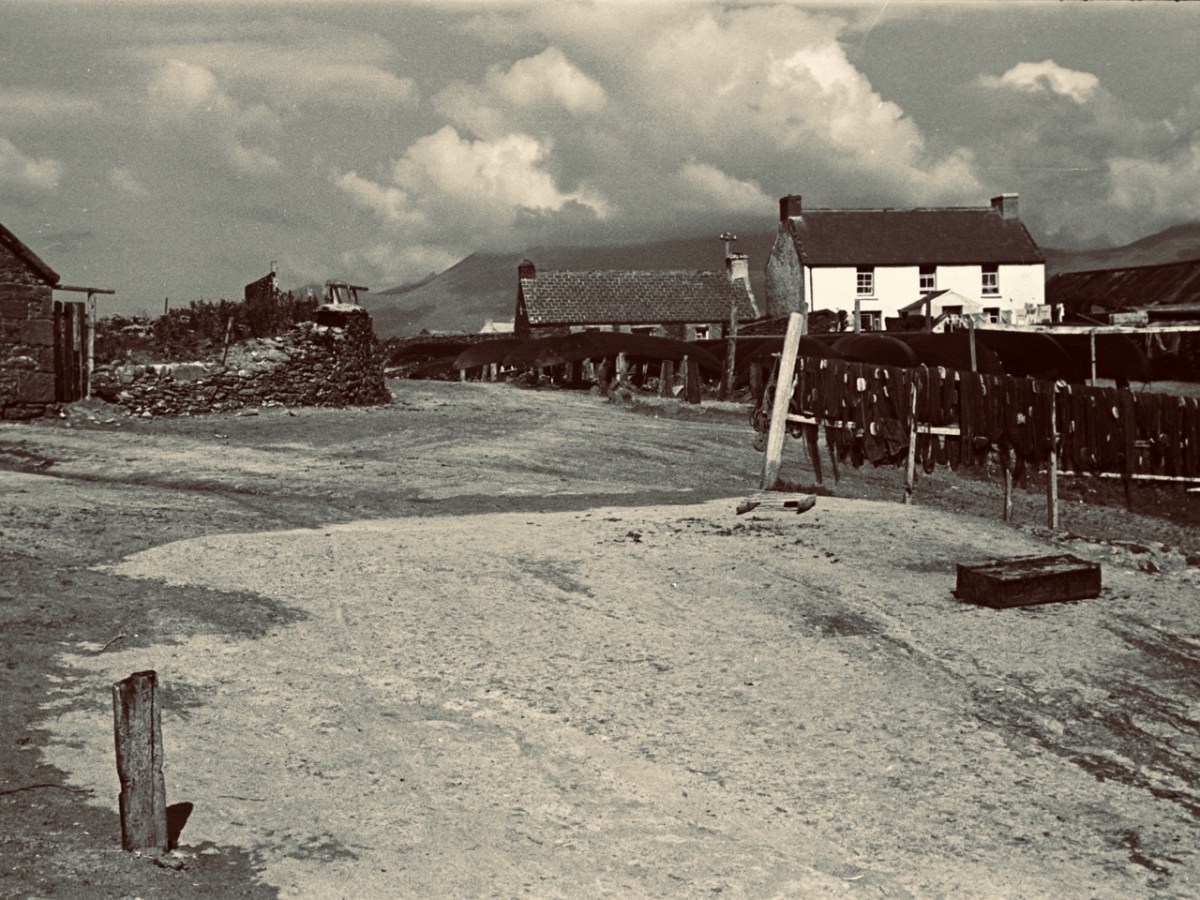
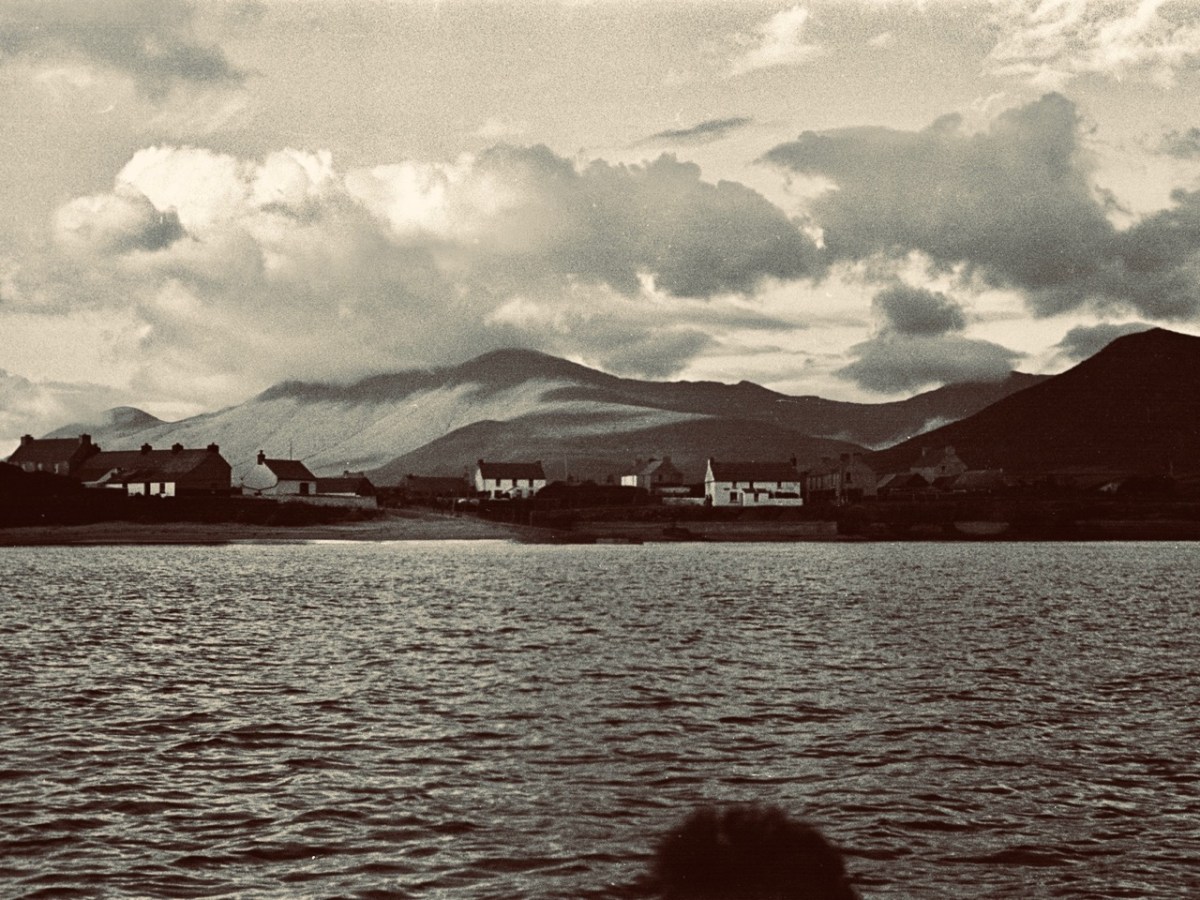
Wow! You can imagine how delighted I was to receive that information. But there’s more. I managed to find some early photos of Ballydavid (Baile na nGall in Irish), which is part of the Corca Dhuibhne Gaeltacht area. In fact we have been there – when we took the Irish language immersion course two years ago.
We didn’t photograph the Ballydavid bar, Johnny Frank’s at that time, but here (above) is a view of it from Wiki Commons. Also, to help set the scene, is a little piece online which features the bar, and weaves a tale…

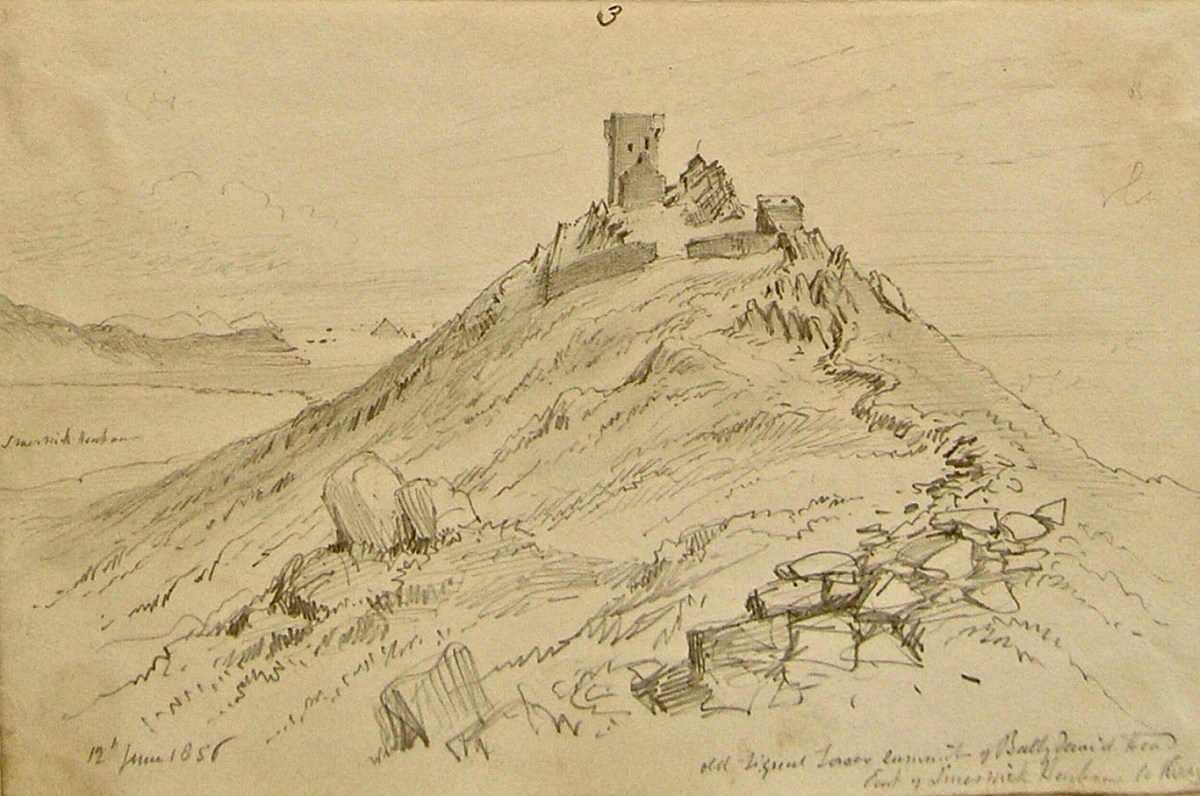
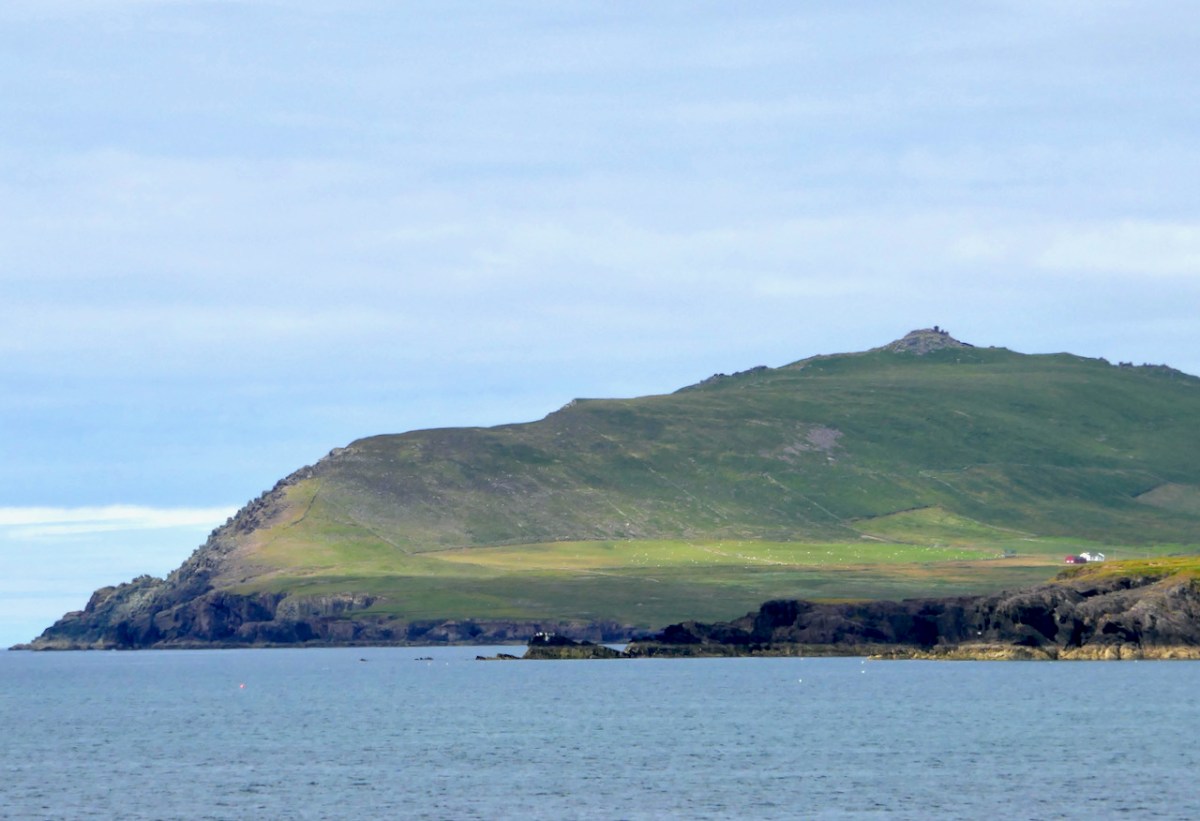
Regular readers will know my interest in the Napoleonic-era signal towers which dot the coast of Ireland, all built in the early years of the 19th century. There was one at Ballydavid Head, drawn (above) by George Victor Du Noyer as he passed by on one of his geological expeditions on 12 June 1856. We didn’t climb the Head when we visited, but we viewed it from a distance (below). The tower is now a ruin.

We have travelled far, far away from Ballydehob where, in some ways, the weaving of this tale began. We had better return. Here’s a reminder of that painted image of the ‘Pints and Pipes’ photograph in Levis’s Corner Bar. Compare it to the header photograph of this post.

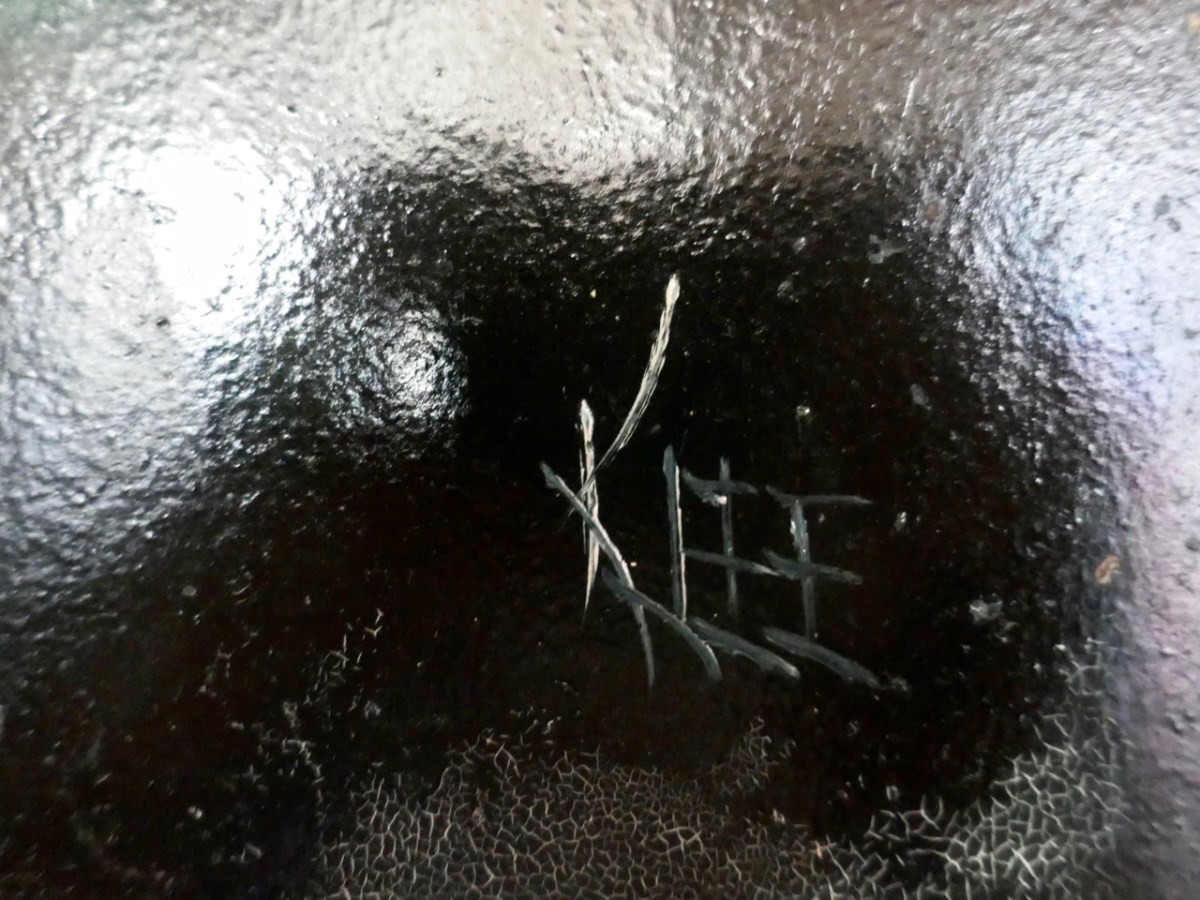
It is so obviously based on the Tómás Ó Muicheartaigh portrait, yet there are some differences. The pipes of the two men in the middle are missing! I can’t tell you why this is the case, but I can tell you now who produced the painting, as I was given a valuable link by Joe O’Leary, landlord of Levis’s (which his been in his family for some generations – but that is another story). The painting has a signature:

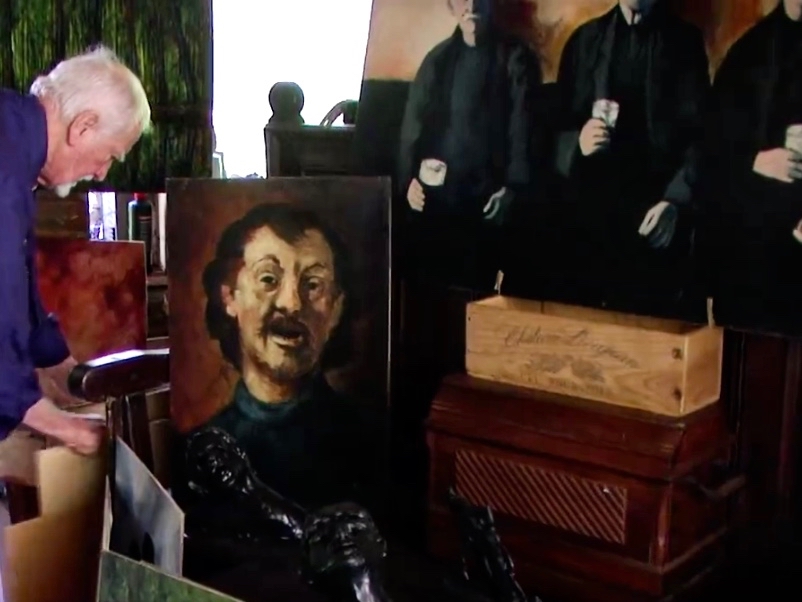
Paul Klee was, of course, a well known Swiss-born German artist who lived between 1879 and 1940: he had no connection whatsoever with Ireland! Nor did he have anything to do with this painting, which was in fact from the brush of Raymond Klee, born in Barry, South Wales, in 1925 but living out much of his later life in Bantry, West Cork, until his death there in 2013. During the 1950s and 60s he lived in the Montmatre artists’ quarter in Paris, and is said to have been a close friend of Pablo Picasso. There can be no doubt that the Levis’s painting is his work, as I came across a short video, taken late in his life, in his Ballylickey Gallery. I managed to ‘freeze’ the fast-moving film at this point:

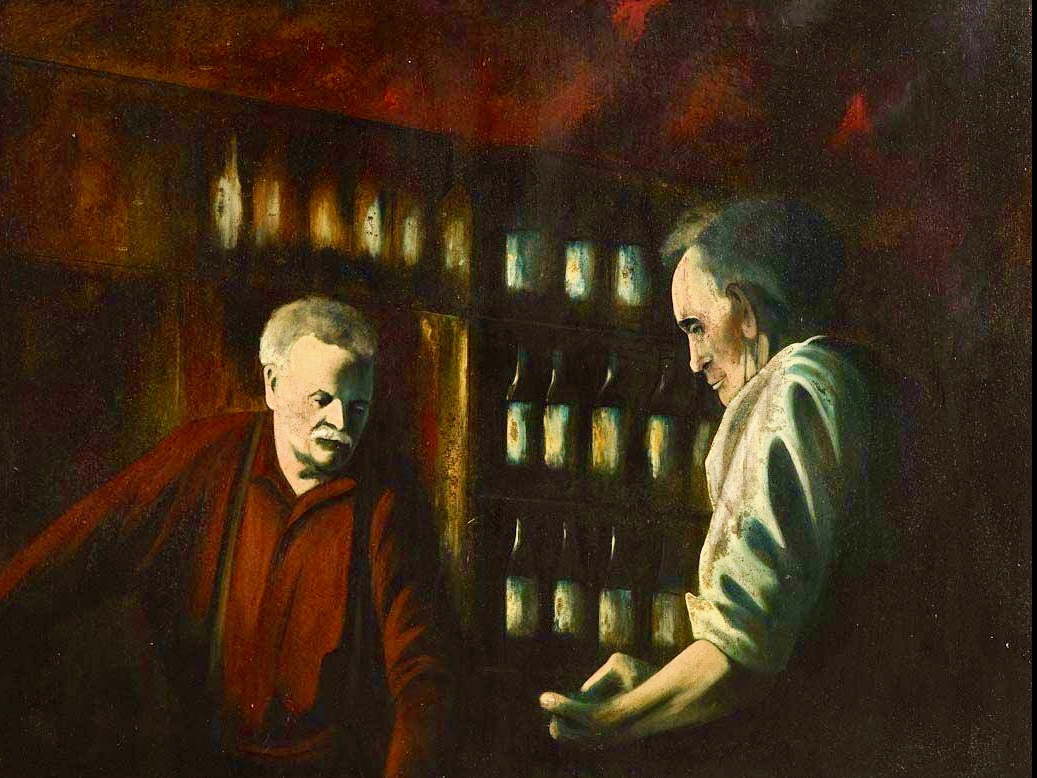
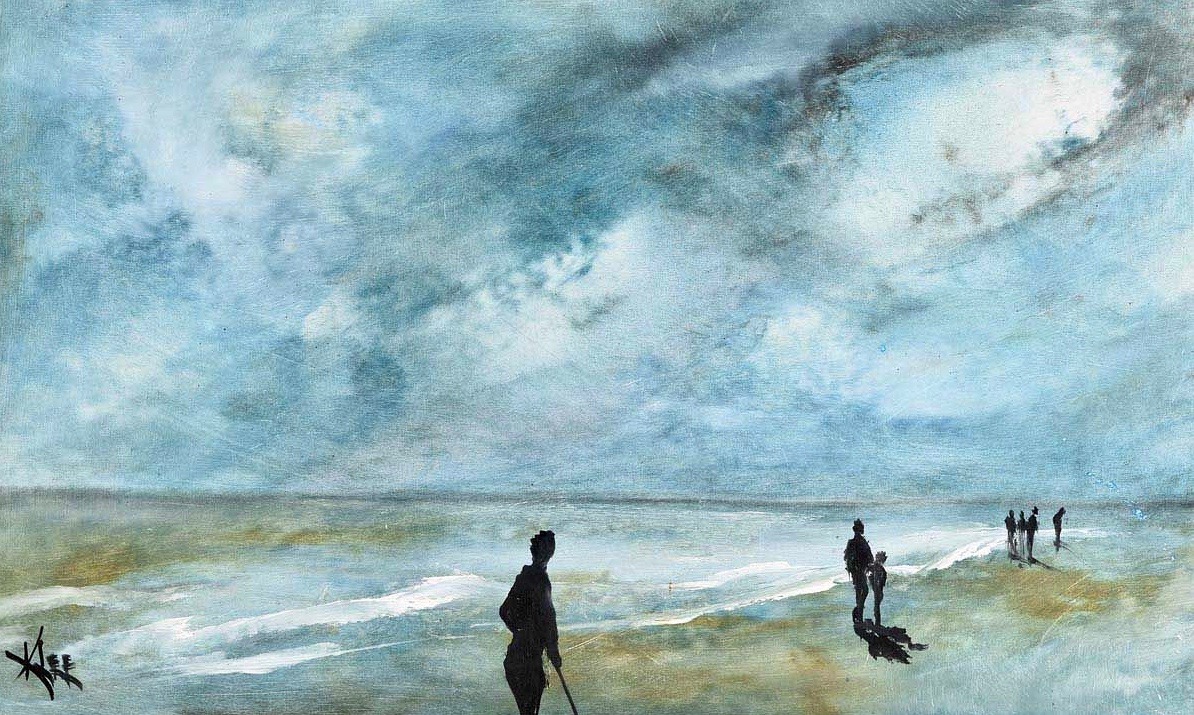
There, you can see the artist himself on the left, and over on the right is the partial image of a huge painting propped up: it’s another version of Pints and Pipes… I wonder what became of it? Or, indeed, of much of the large body of work which he left behind in Ballylickey? You will find examples on the internet, including several from the catalogues of art dealers. He doesn’t seem to have exhibited a particularly consistent style and – by repute – ‘churned out’ some of his works very quickly but – it has to be said – to a willing audience. During tours of the United States he would paint large canvases in front of a crowd – perhaps 200 spectators – and produce work which he immediately sold to the highest bidder in the room! I have selected a couple of images of paintings which might be of interest to my audience. The upper painting is titled The Local, while the lower one is Sky Over Inchydoney.

I must end my tale. Here is a little bonus, especially for my correspondent Joanne – and she won’t see this until she reads this post for the first time. We were leafing through the Tómás Ó Muicheartaigh book; it’s hard to put down – over 300 seminal photographs of Irish life. Finola’s eagle eye picked out one which I had never noticed before – and here it is: Seán Mac Gearailt, Joanne’s Great Grandfather, Skip. The caption underneath is apt. Many thanks, Joanne, for setting me on this journey…

GO mBEIRIMID BEO AR AN AM SEO ARÍS . . .

Thanks go to my very good friend Oliver Nares, who worked on the photographs of Pints and Pipes and Skip for me, and greatly improved their quality. Have look at his own site

Coomhola Country Revisited

Lines 1

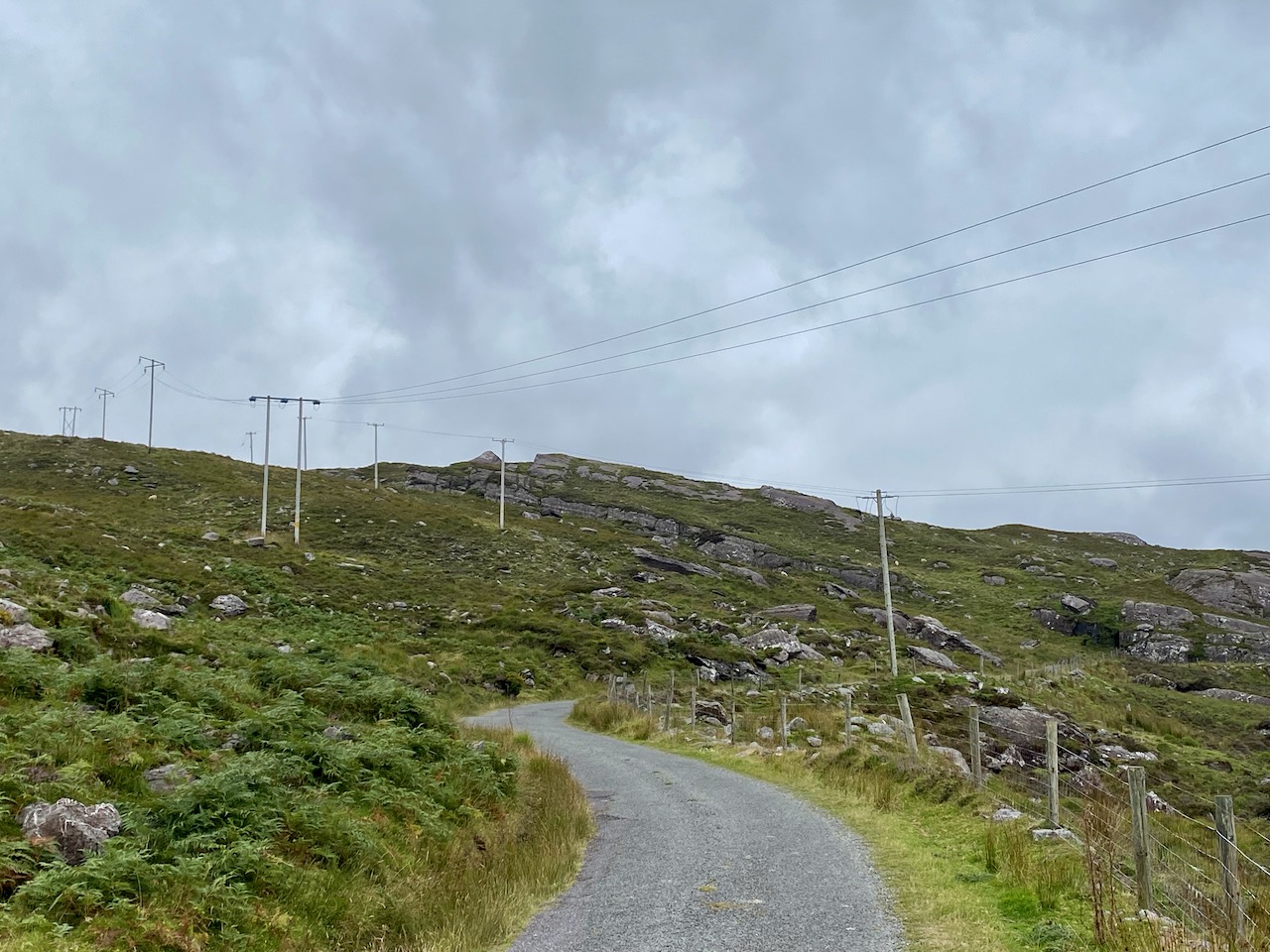
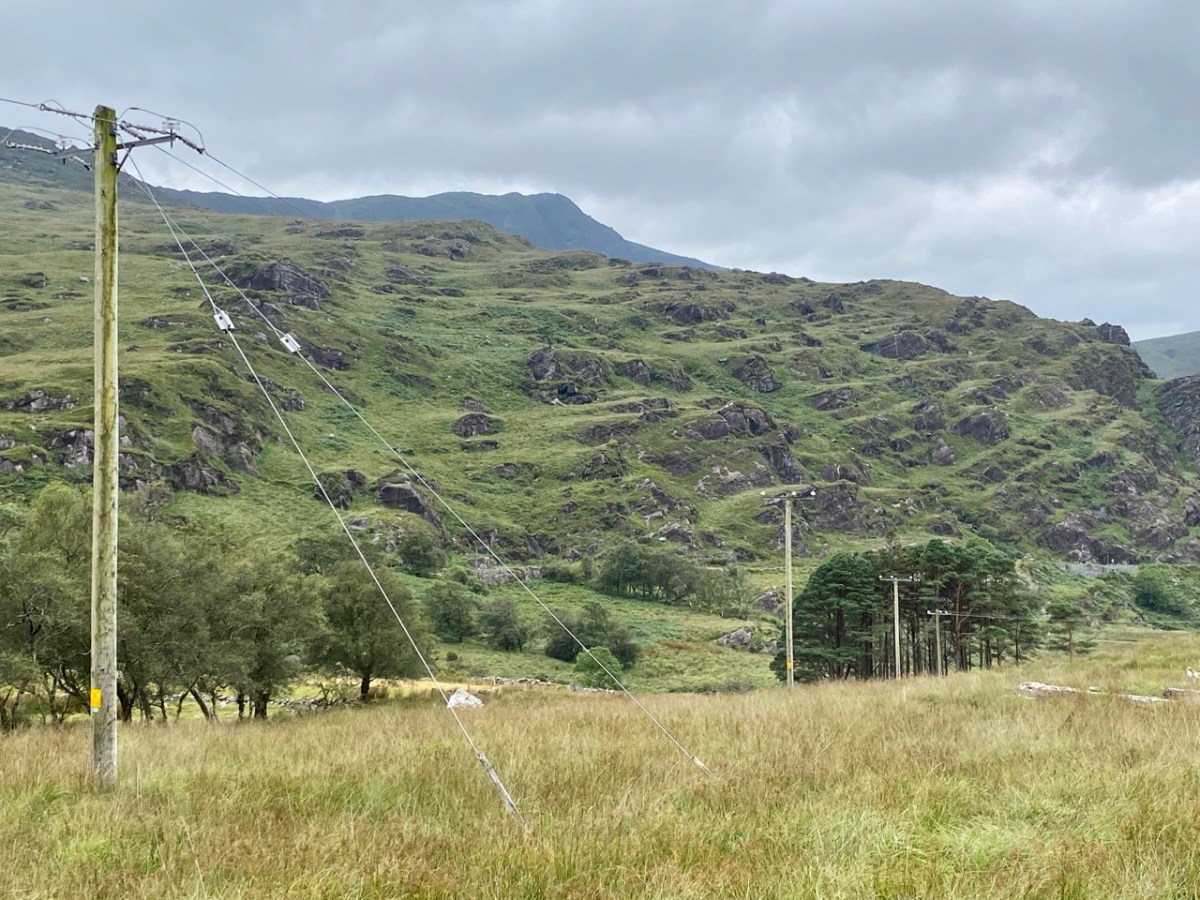
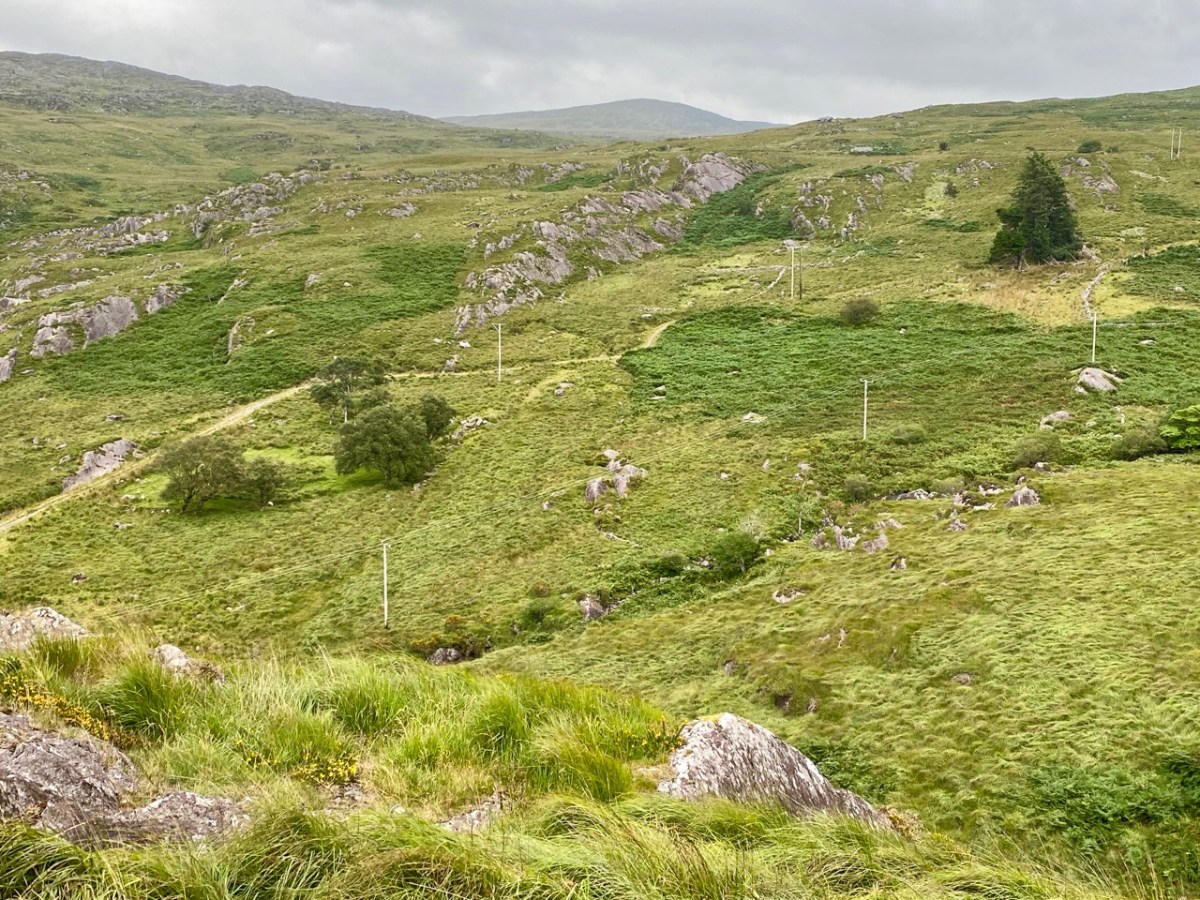
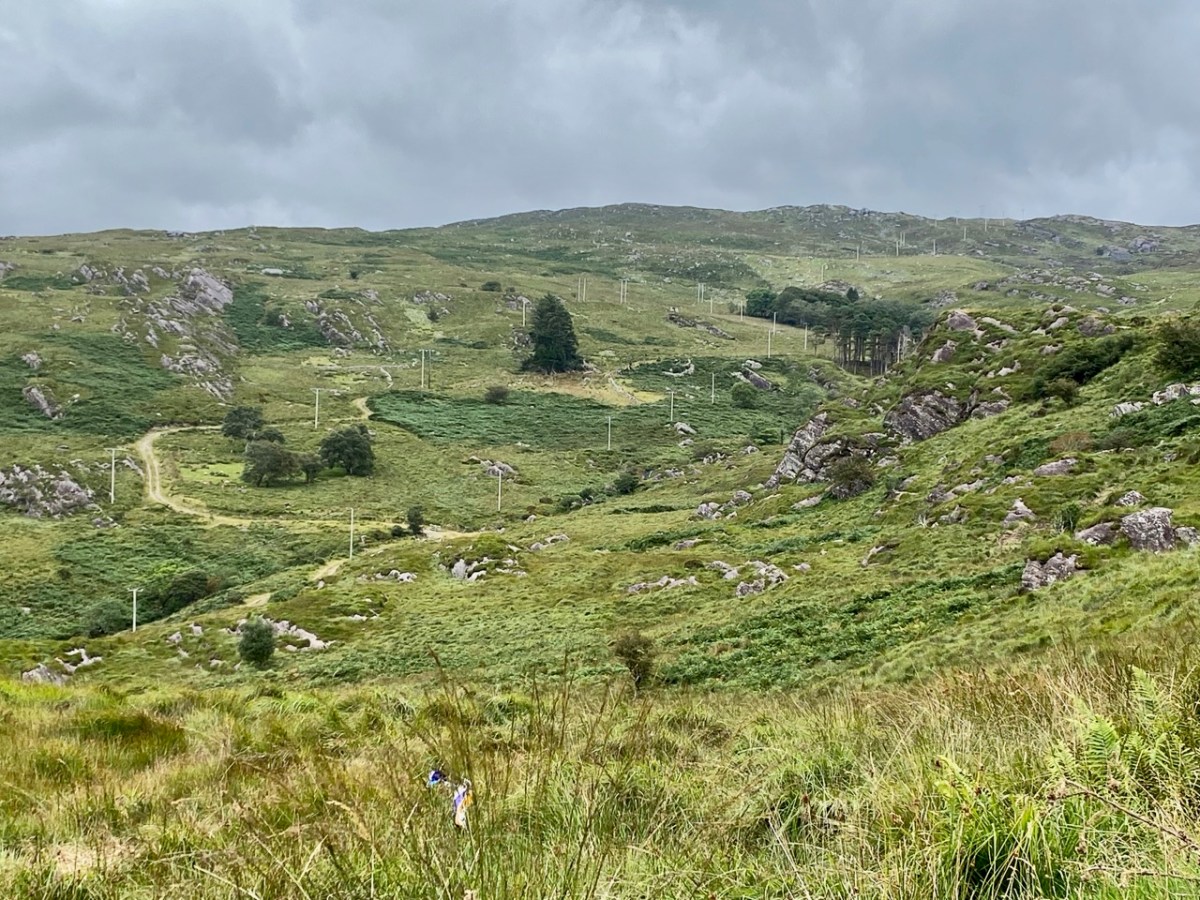
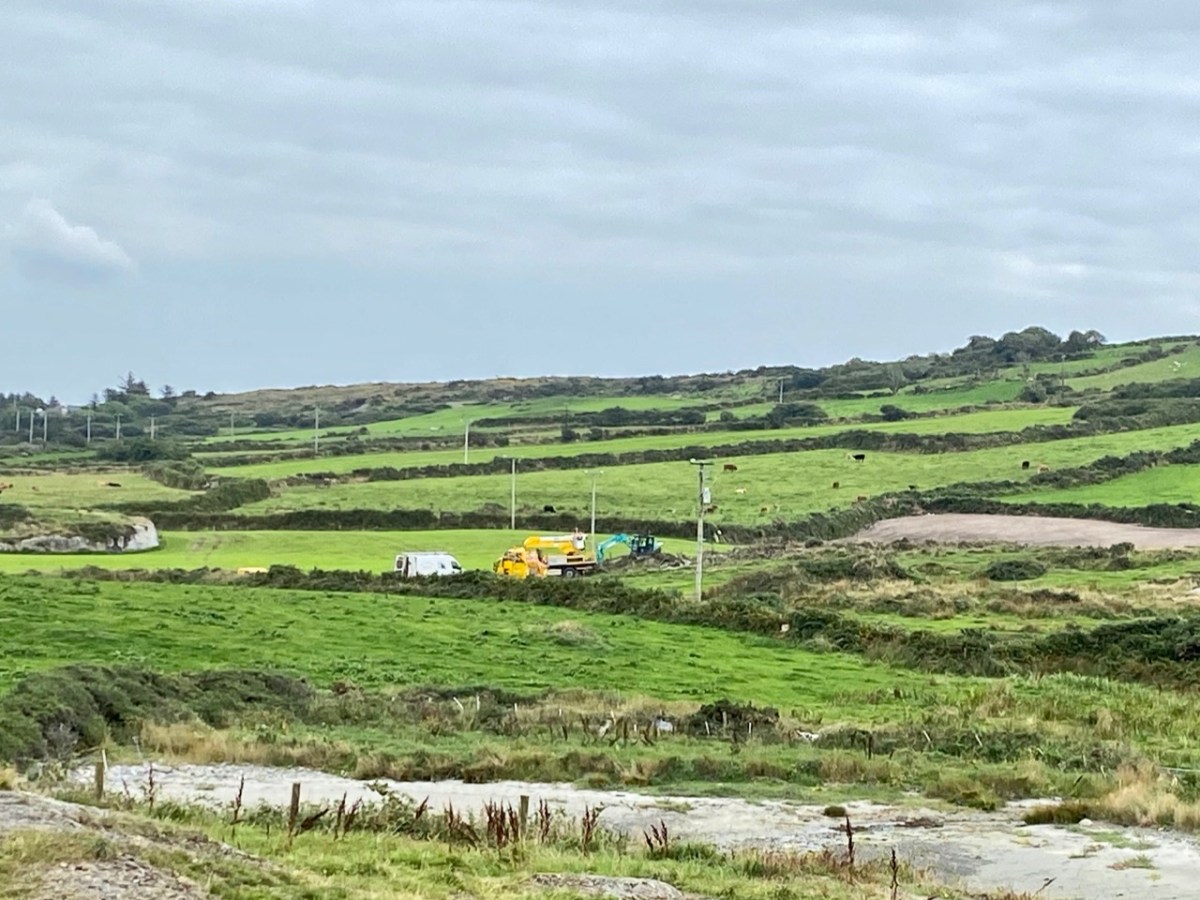
Here’s a post I published in June last year – only 15 months ago. Many of you will remember it. I’m repeating it in order to remind you of the beauty of this particularly remote corner of West Cork and Kerry. We travelled this byway again last week, and were surprised to notice how ‘raw’ the landscape seemed in places. This is partly because a new roadway has been made down through the valley to serve local property. But also I was struck by the number of power lines which go through the area.

These lines were part of a programme to improve and extend the Eirgrid of Ireland – the remit of the ESB.

The distribution system delivers electricity from the transmission system to 2.3 million customers in Ireland, operating at 110kV in the Dublin area, and at 38kV, 20kV, 10kV and low voltage (LV) nationwide. In serving Ireland’s large rural population, the network length per capita is four times the European average and overhead lines outnumber underground cables 6 : 1 . . .

ESB Networks IE

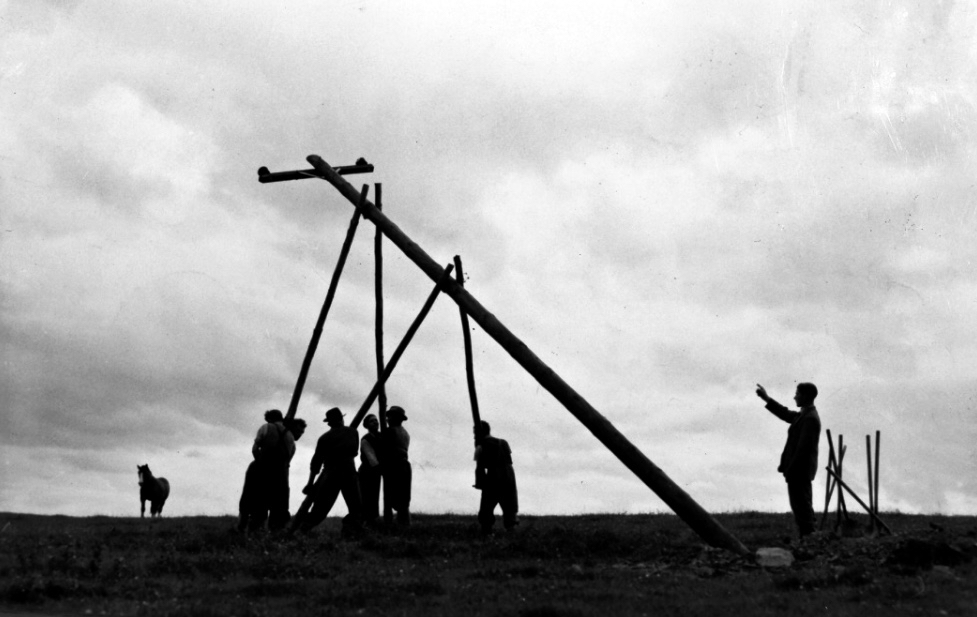
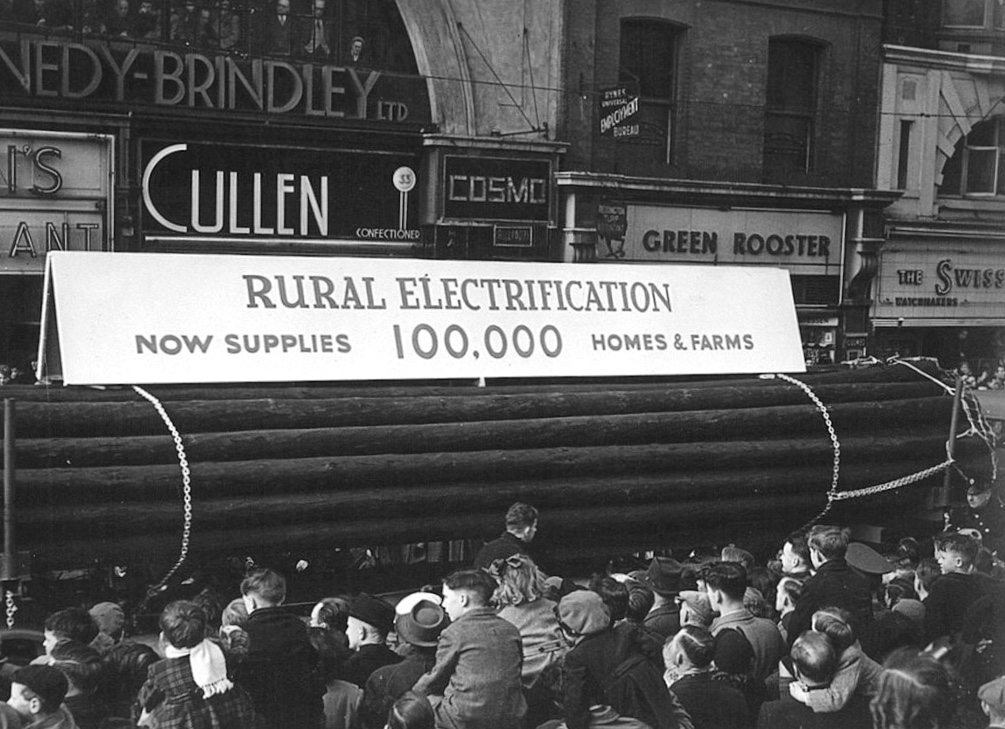
Statistics are remarkable: 2.1 million wooden poles and 150,000 km of overhead line have been used to date, along with 22,000 km of underground supply cable. Due to the Rural Electrification Scheme led by ESB, by the 1960s 80% of rural households had electricity in their homes. Now, most households are connected to the grid, and works are in progress to upgrade the system across the country. In the image below the very first pole is being erected in 1944, while under that is a photo of a PR event ten years later (both are from the ESB Archives).

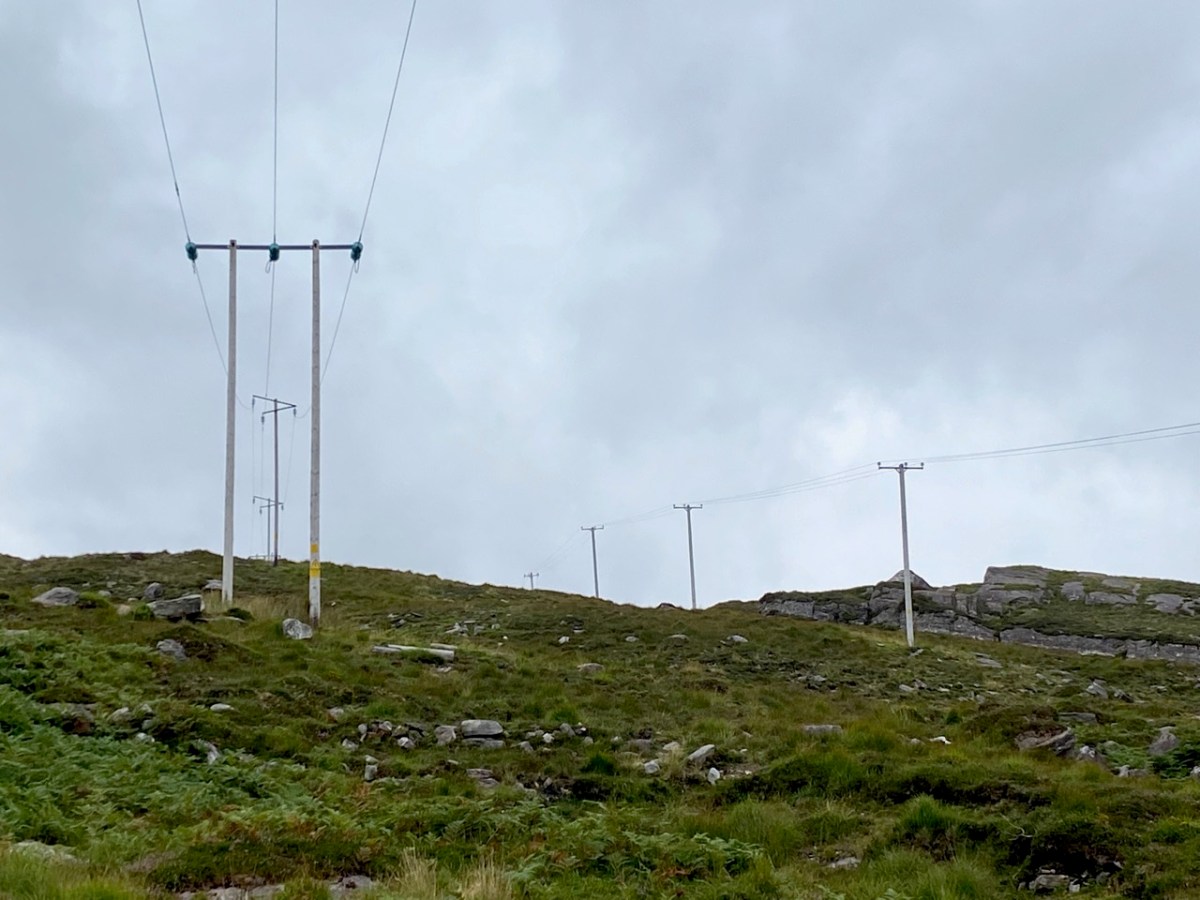
Emotions are mixed as we travel through this wild country and see how power lines can affect the rural areas, while obviously also providing essential services. We were surprised that so many lines – and poles – were required to get the supply over these particular hills. A correspondent has given us the full details (thank you Justin Cremin).

. . . The bigger line on the left is a 38kv line, it goes to Kikgarvan 38kv station and originates at Ballylickey 110kv station. This supplies all of the Beara peninsula with the Kilgarvan line as an alternative “just in case”. It was built in the 1950’s at a guess and would have primarily blasted by gelignite and the poles stood manually.The line on the right is called the Hydro line. It runs over the hill to Slaheny to a small hydro and originated in Bantry 38kv where it picks up another 3 small hydro stations along the way. This Borlin leg was stood in the very early 00’s/ very late 90’s . . .

We came across further grid improvement works currently in progress on a recent trip to the environs of Dunmanus Castle:

So here – to remind you – is the Coomhola and Borlin landscape as we discovered it, and recorded it, in our post of 2020:

As the Coomhola River tumbles from Borlin to the sea, gathering tributaries, it forms many pools amongst the riffles and glides. These pools, in summer, provide leafy shelters for salmon and trout. To anyone who has fished or walked the river, each pool has its own character, and each its own name . . .

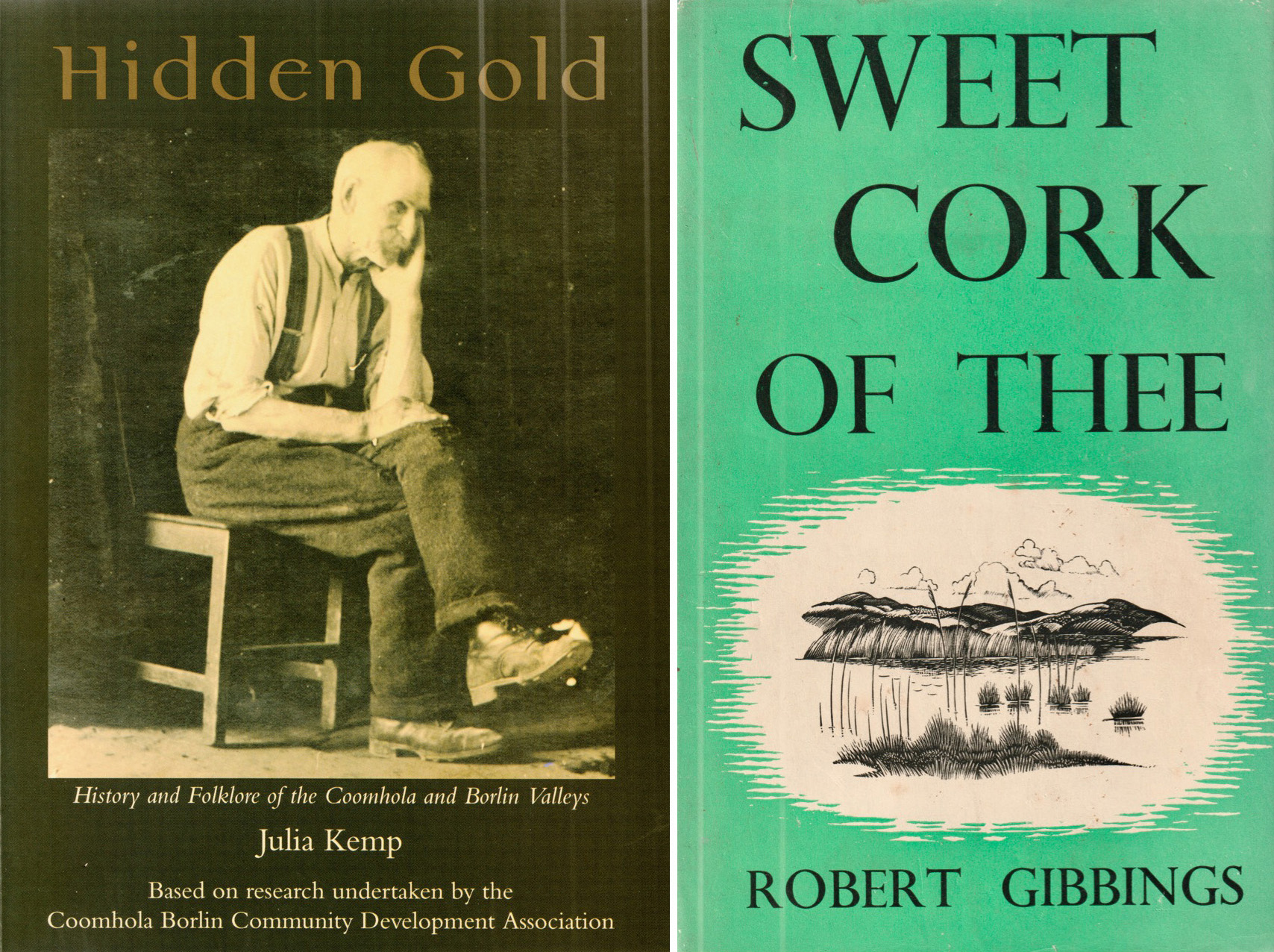
[From Hidden Gold, History and Folklore of the Coomhola and Borlin Valleys Julia Kemp: Coomhola Borlin Community Development Association 1998]

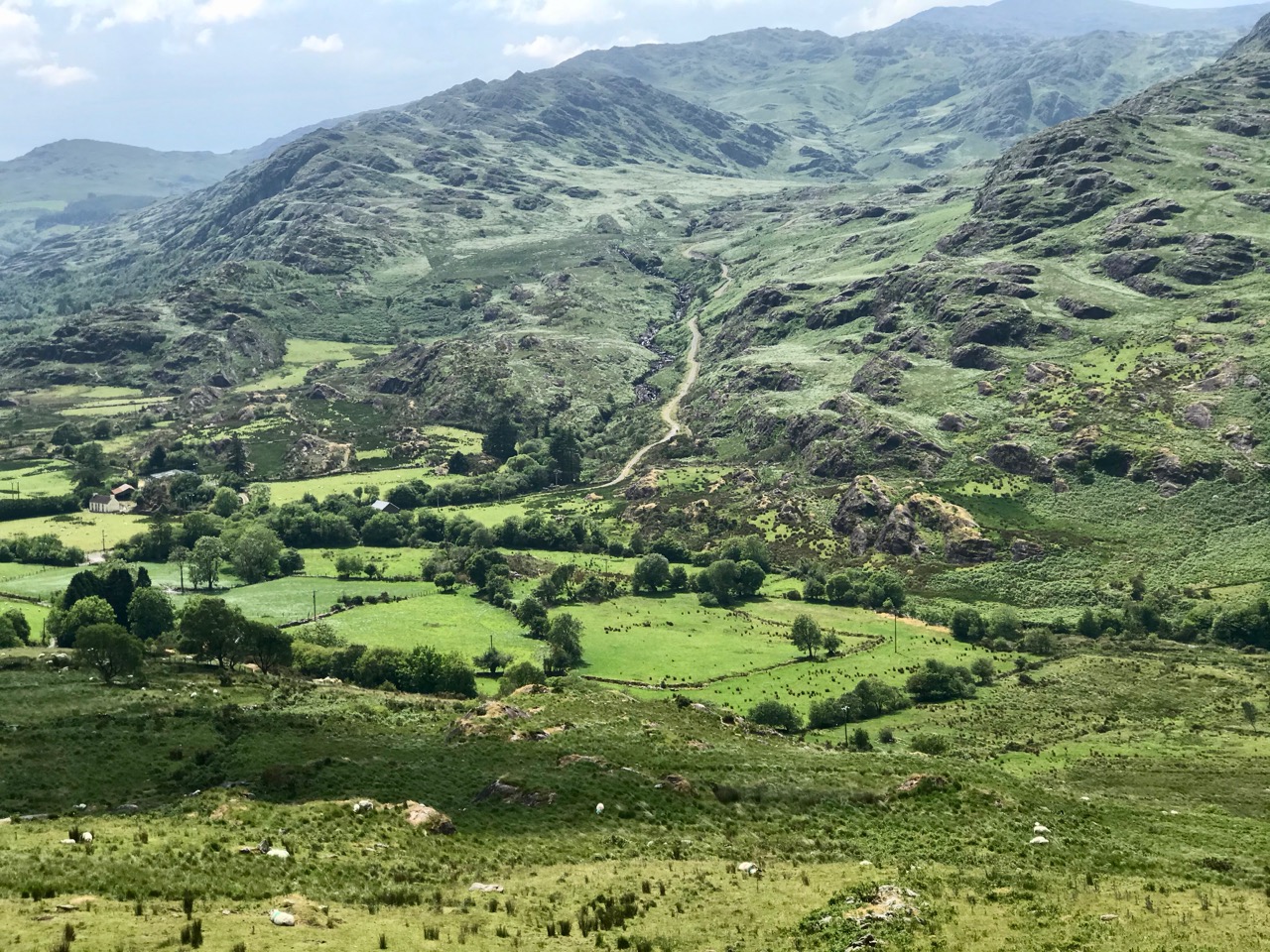
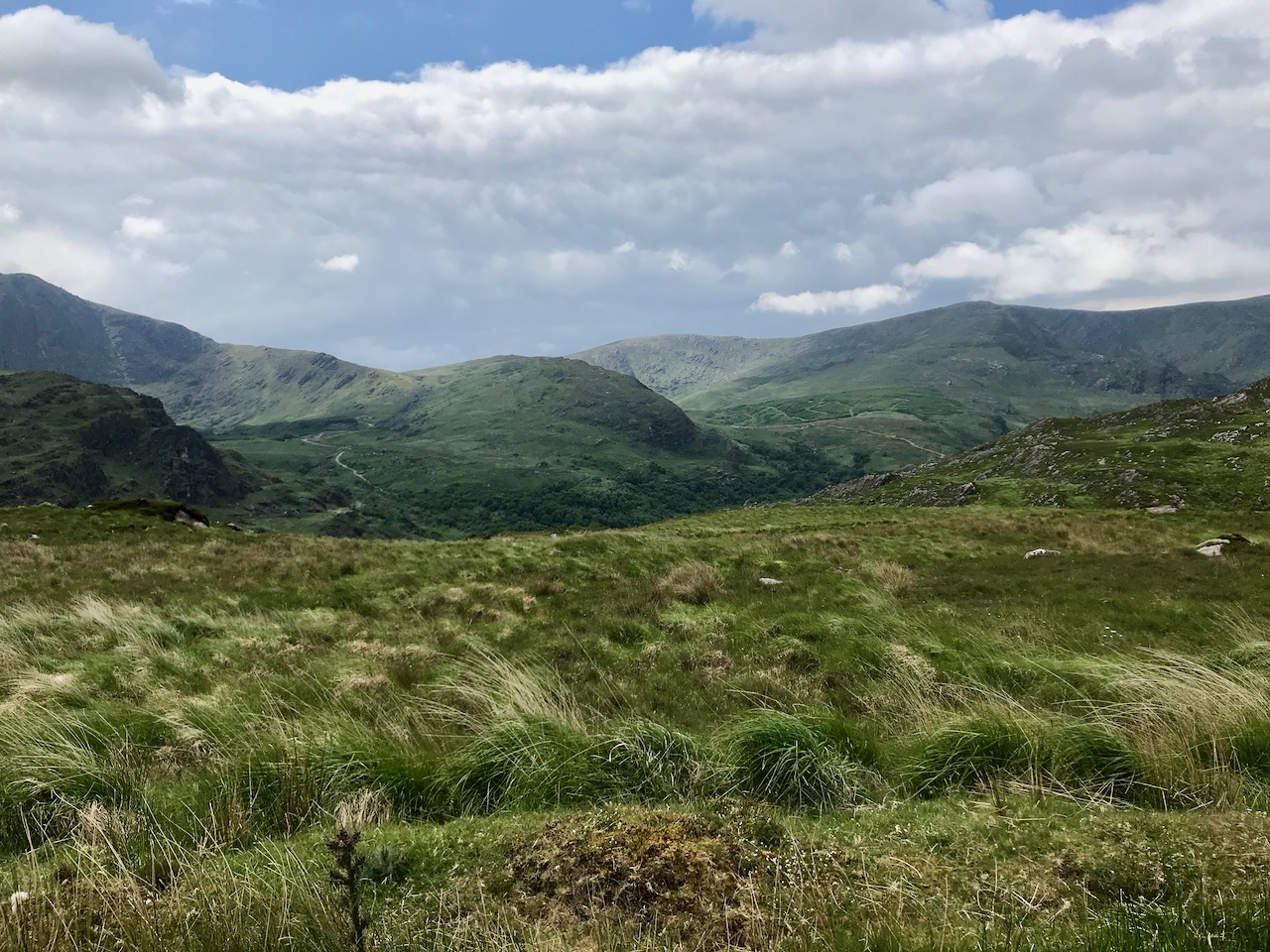
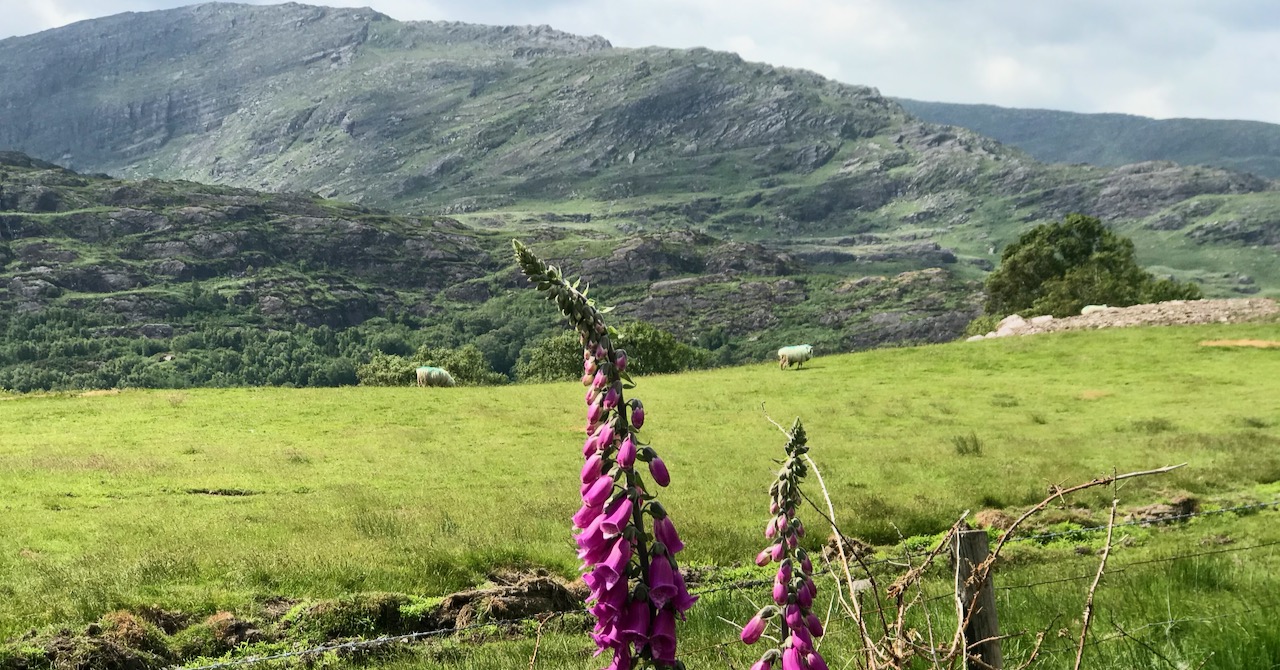
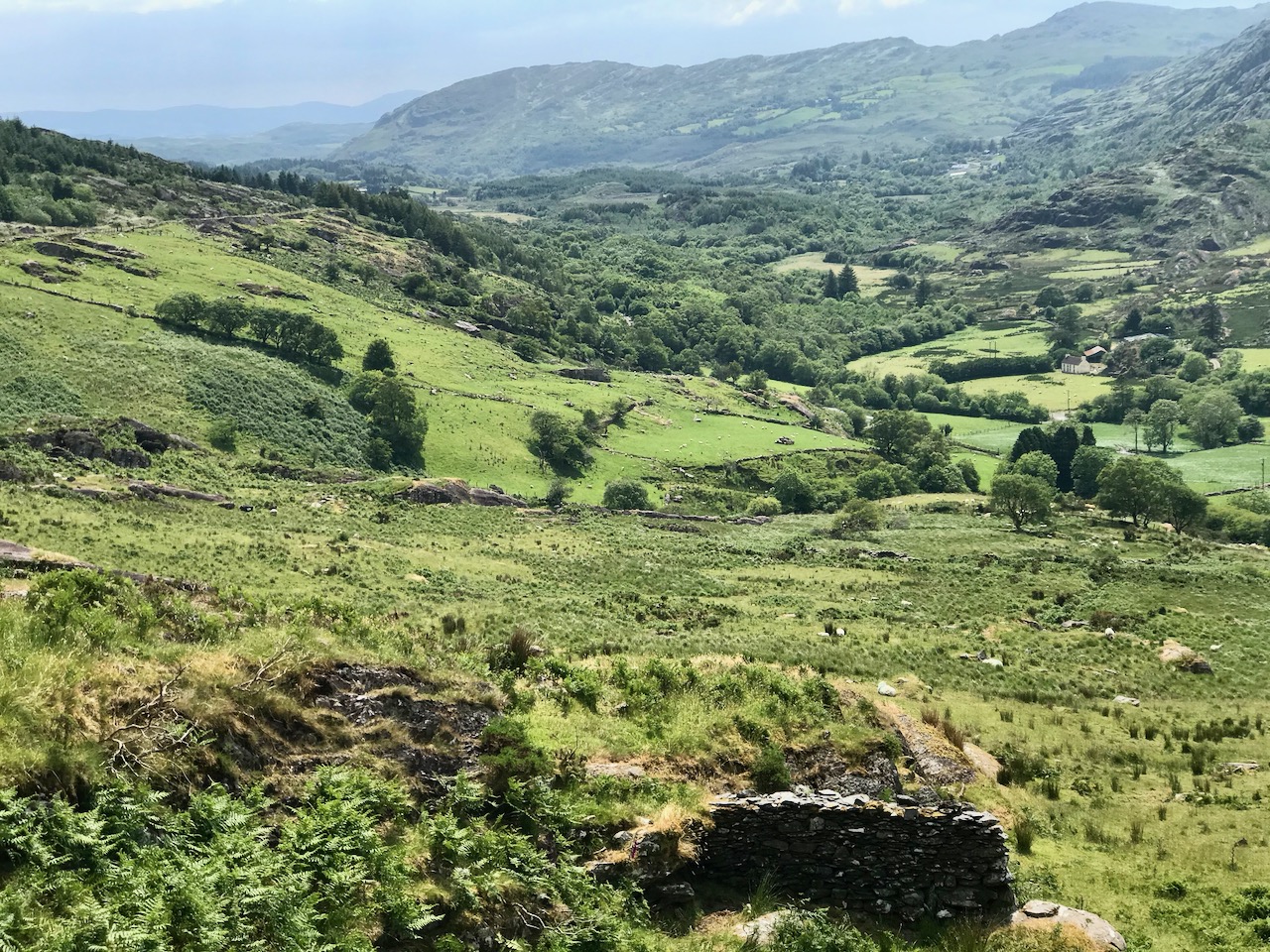
On the header is the spectacular view from Borlin, looking down the great glen where the Coomhola River finds its way through a country formed by glaciers in the Midlandian period, about 10,000 years ago. The rugged Shehy mountain range (Cnoic na Seithe in Irish, meaning Hills of the Animal Hides) with its peaks of Knockboy, Caoinkeen and Kinkeen provides some of the most dramatic scenery in West Cork, its scarred outcrops clearly showing the downward progress of the ice sheets. The contrast between the barren high land and the lush pastoral meadows laid out below evoke a beauty which is hard to match – anywhere in the world!

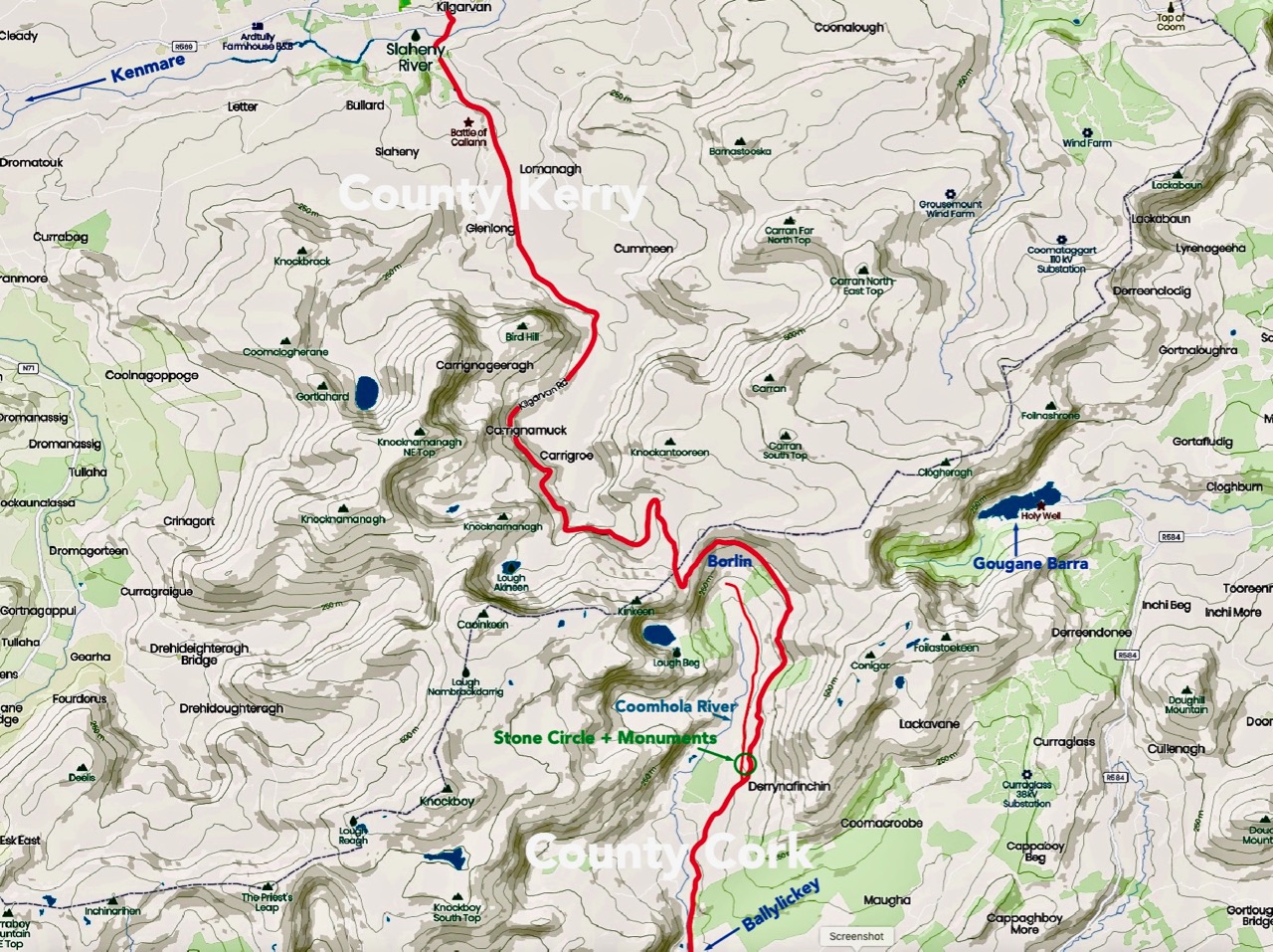
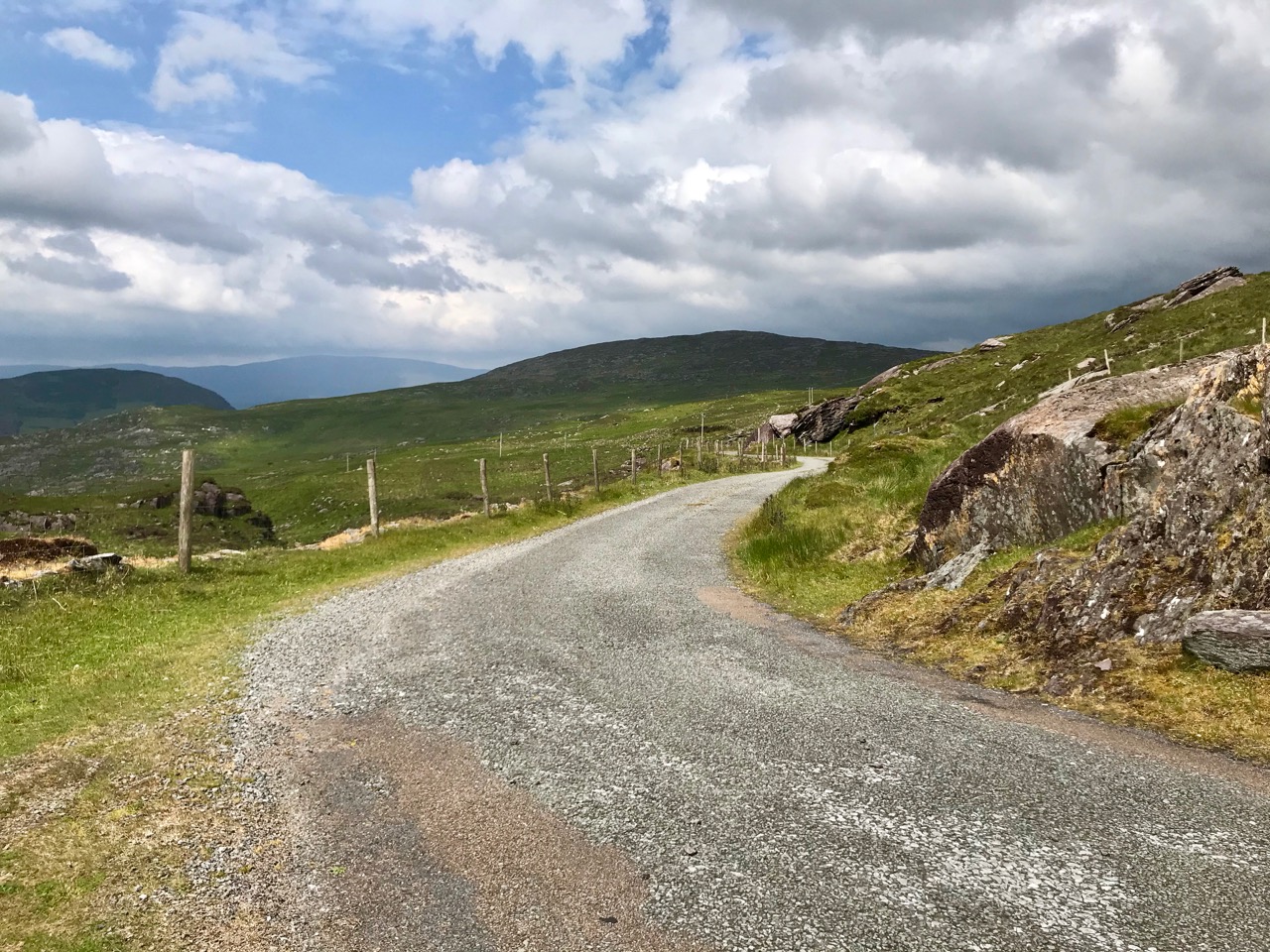
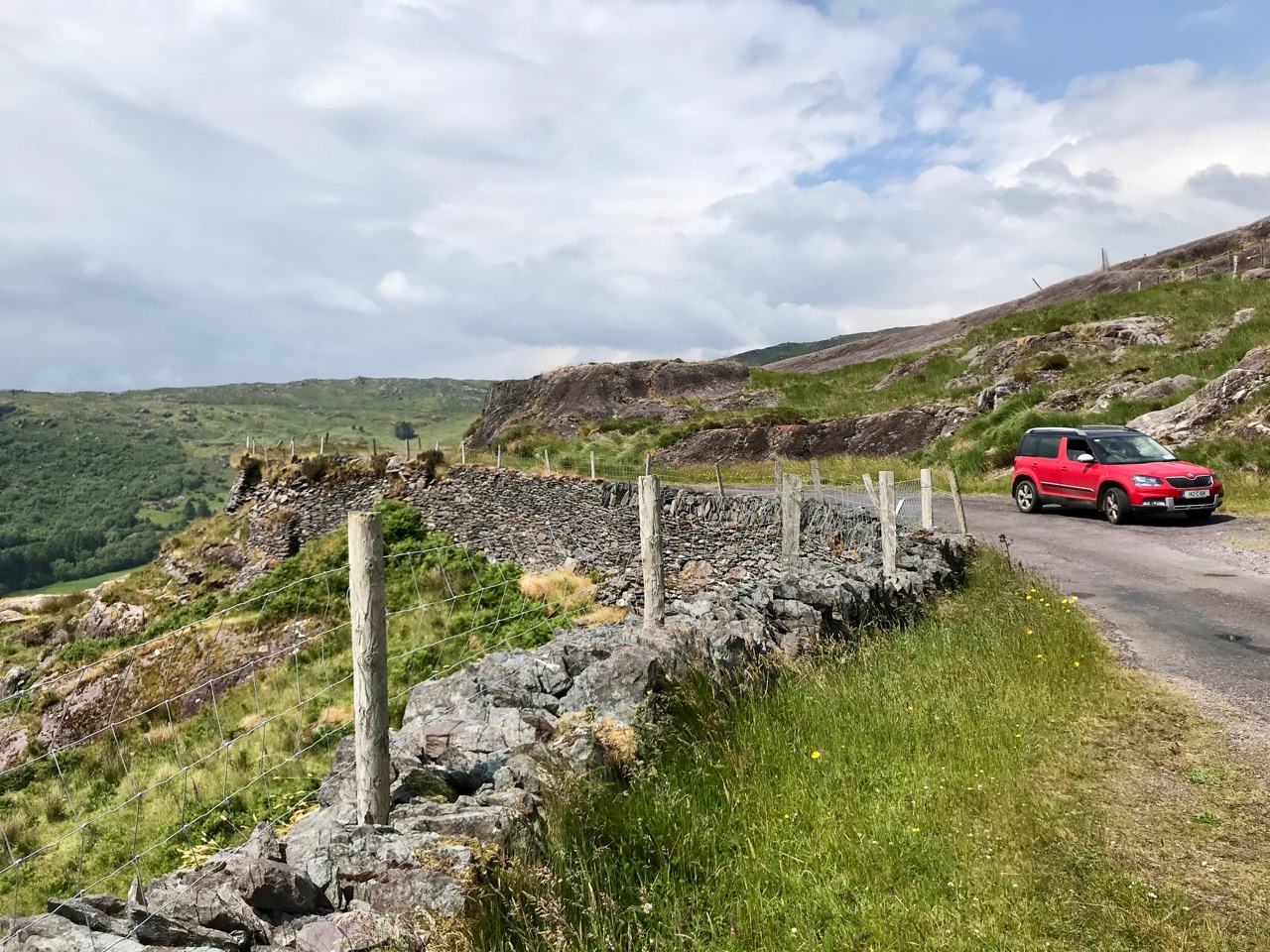
The Kilgarvan (Co Kerry) to Ballylickey (Co Cork) road is one of the unsung feats of Irish engineering. Until the middle of the nineteenth century it was no more than a system of ‘nearways’, providing rough, narrow access tracks to remote mountain dwellings and hard-won field systems. A famine improvement project c1846, involving metalling, a tunnel, cuttings and stone retaining walls, transformed it to the ‘through road’ which exists today – although it may seem to us no more than a boreen. It’s there for all to travel on, and will provide a breathtaking experience – but be aware that it could also deliver some hair-raising reversing episodes on the rare occasions when a vehicle is encountered coming the other way. The upper photo shows the road ‘clinging on’ to the face of a mountain outcrop, while the map gives a good idea of the circuitous route that the way takes to keep as far as possible to a level contour on its journey.

This is the country of St Finnbar. If you follow the County border east from the top of the Borlin Glen (off-road) you will very soon come to the site of his sixth century monastic settlement at Gougane Barra. This whole area was loved by the Cork born writer and illustrator Robert Gibbings, whose book Sweet Cork of Thee tells of a seven month sojourn in this mountainous region in 1949, beautifully illustrated by his woodcuts.

Mountain Road by Robert Gibbings, woodcut from Sweet Cork of Thee, published 1951

As we drove along the road beside the Inchigeelagh lakes, we could see moorhens gathering material for their nests among the taselled reeds and swans on islets, piling up dead rushes in readiness for their eggs. A corncrake was calling from a meadow. Celandines and kingcups outshone the gorse.

Mick said to me: ‘My father’s sister lived a mile to the north of us here. She married a man by the name of Scanlan. His mother came from Gougane and ’twas one evening when she was travelling west by the lake – there was no road there then, only a little bit of a track – she looked in the lake and what did she see but fields of corn and sheep and every sort of land and crop and stock. She was an old woman at the time and she knew well enough ’twas a kind of enchantment must be on the lake, so she says to herself, if I can keep an eye on it all and throw a bit of iron at it the spell will be broken. So she kept her eyes fixed on the fields and the cattle and the pigs and the hens, and all the time she was thinking where would she get a bit of iron. And the only bit she could think of was in the heel of her shoe. ‘Twould be worth it to throw in the shoe, says she. But when she went to unrip the lace wasn’t it tangled in a knot, and for the glint of a second she took her eye off the land. When she looked again ’twas all disappeared and the lake was there the same as ever.’

Our road turned south, through a wilderness of rock and bog and lilied pools . . .

[Robert Gibbings Sweet Cork of Thee, J M Dent & Sons 1951]

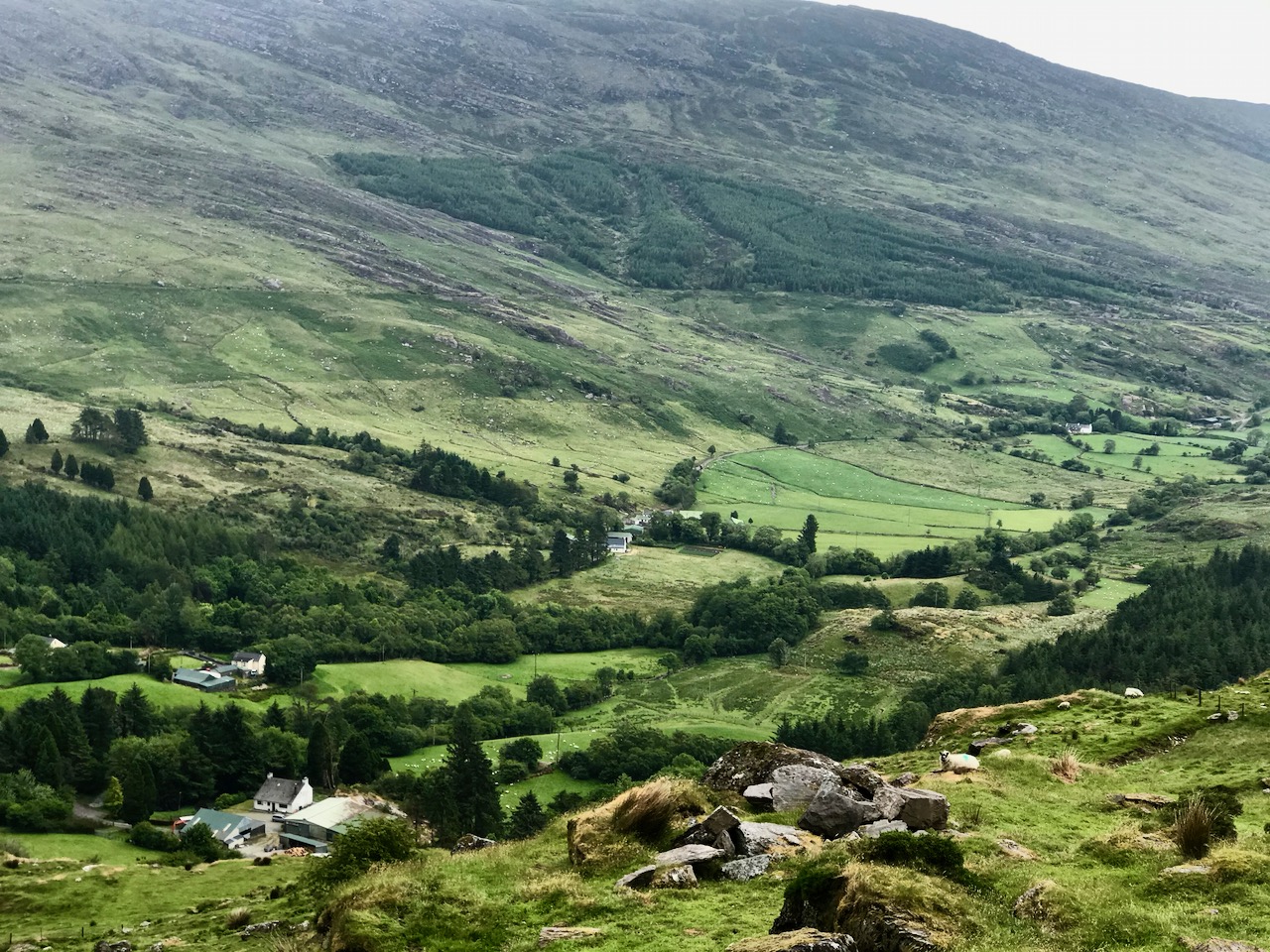
From the highest rim of Borlin Glen (upper picture), the Comhoola River valley is laid out below. Home to sheep and ravens, the scattered farmsteads emerge from rock and forest and provide a living – as they have for countless generations – to a hardy people.

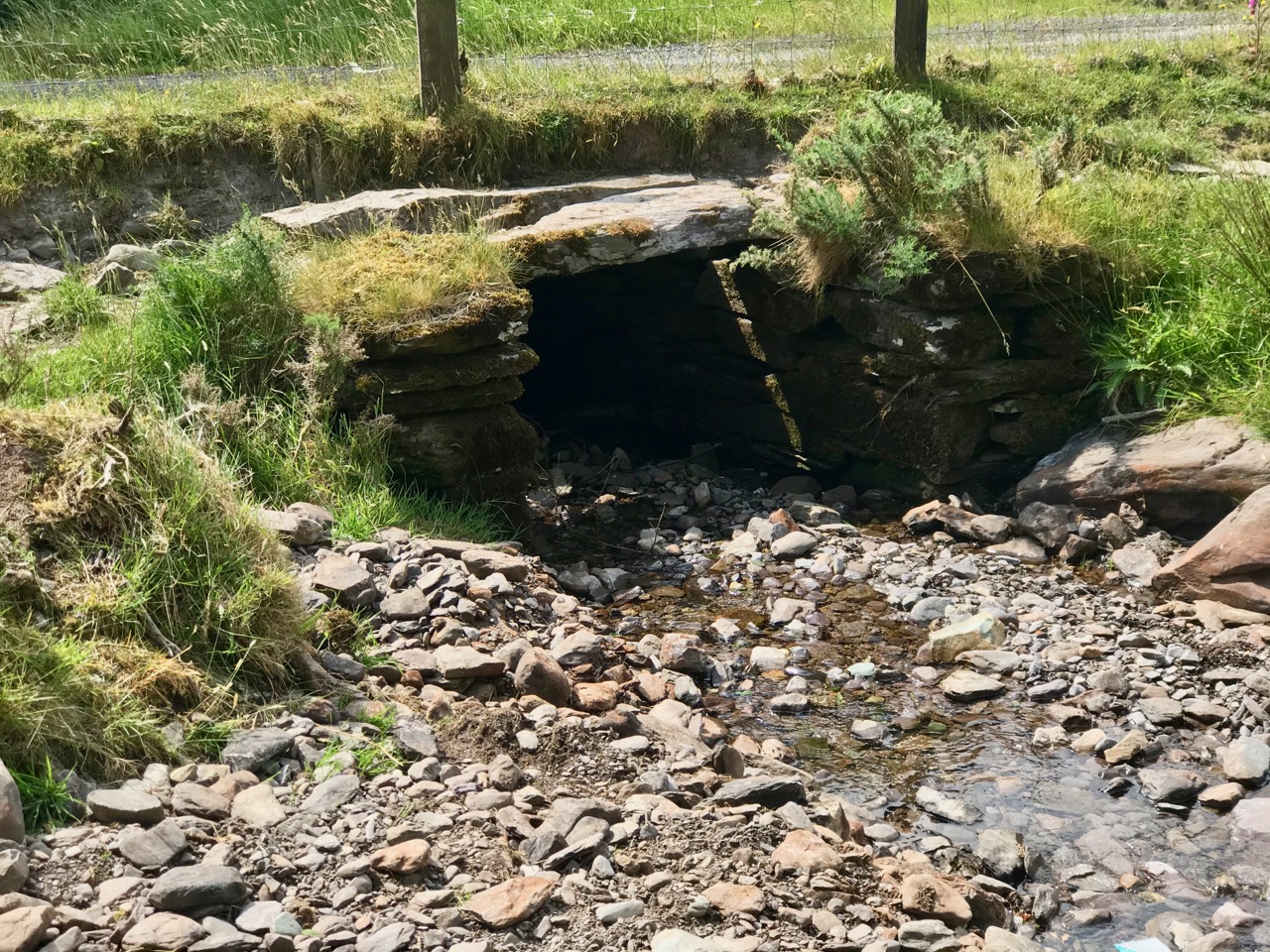
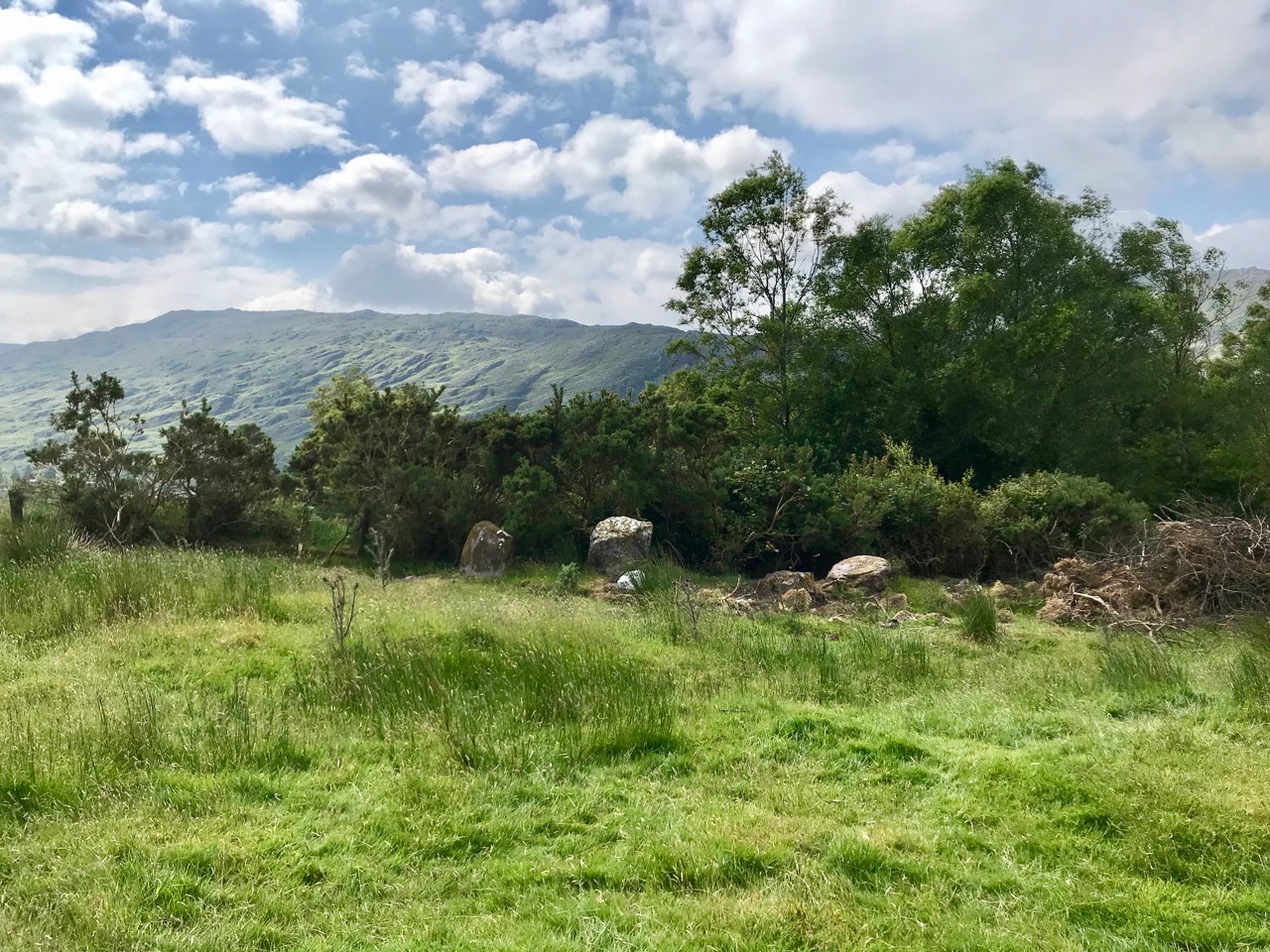
On the lush valley floor are signs of ancient activity and occupation. A stream flows through a meadow dotted with whitethorn trees (upper), while an old stone clapper bridge has been superseded by the modern boreen taking its way up to the Borlin Valley settlements (centre). Lower – a fascinating stone circle and mass rock site is interrupted by the field fence. Here, too, is a bullaun stone and cupmarked rock (below).

Let us give the last word to Johnny O’Driscoll from Snave, recorded by his grandson Sean O’Driscoll in the 1930s and featured in Julia Kemp’s Hidden Gold:

There is little gold in this area, but there is one place where it is said a crock of gold is buried. It is about a hundred yards from the Glaslough, between Coorycomade and Ardnatrush, about a mile and a half from Coomhola National School.

There is a bush growing at the exact location, and beneath the bush is a large stone which covers the hidden treasure. It belongs to a tiny dwarf, and anybody who visits the place at midnight can see this little creature on the bush above the gold.

People did go on one occasion in search of the gold, but they were unsuccessful. A little bright light is visible about midnight above the bush. I have seen it myself on several occasions . . .

West Cork Villages and Towns – Bantry

. . . The town is situated at the northern extremity of the bay to which it gives its name, in a small valley encircled by lofty mountains, which attracting the clouds in their passage over the Atlantic, involve it in almost continual rains. The streets are indifferently paved, and not lighted; the inhabitants are supplied with water from numerous springs. The approaches are steep and incommodious, and are lined with cabins of very inferior description. Little improvement has been made in the town, except by the erection of some very extensive stores by Mr O’Connell and Mr Corkery, merchants of the place, and the enlargement of the principal hotel, which now affords ample accommodation to the numerous tourists who, during the summer season, frequent the place on their way to Glengariff and the lakes . . .

Lewis Topographical Dictionary of Ireland 1837

. . . This bay was known to the ancients by the name of Inber Sceine. It is a noble sheet of water, landlocked by beautiful mountains. The scenery is picturesque, bold, and grand, and equals, if it yet not surpass, the best to be found in these kingdoms . . .


Early Irish History and Antiquities and the History of West Cork
W O’Halloran 1916

Bantry . . . a miserable poor place, hardly worth the name of a town, consisting of seven or eight small houses, and some mean little cottages . . .

Jacobite army officer and author John Stevens, 1689

Well, here we have some contrasting descriptions of the town of Bantry, the earliest (above) dating from over 330 years ago! That one is a bit unfair, in truth, as it seems to be almost an ‘aside’ within Stevens’ ill-tempered account of his own involvement in the Williamite War (1689 – 1691). Bantry was a landing place for the Jacobite army which then marched through Cork and engaged in the Battles of the Boyne and Aughrim, and the Siege of Limerick (which is celebrated to this day in a traditional country dance!). None of this needs to detain us further from pursuing our contemporary account of Bantry town.

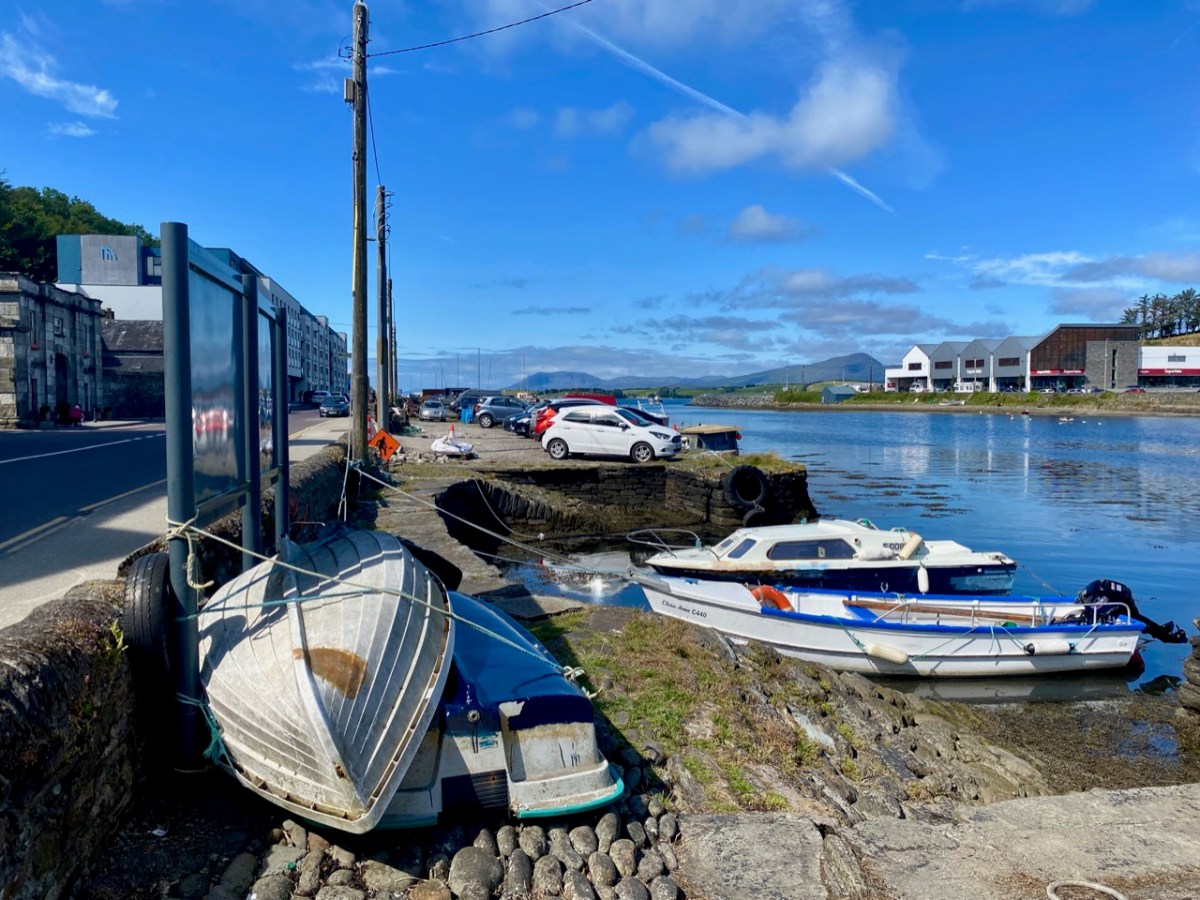
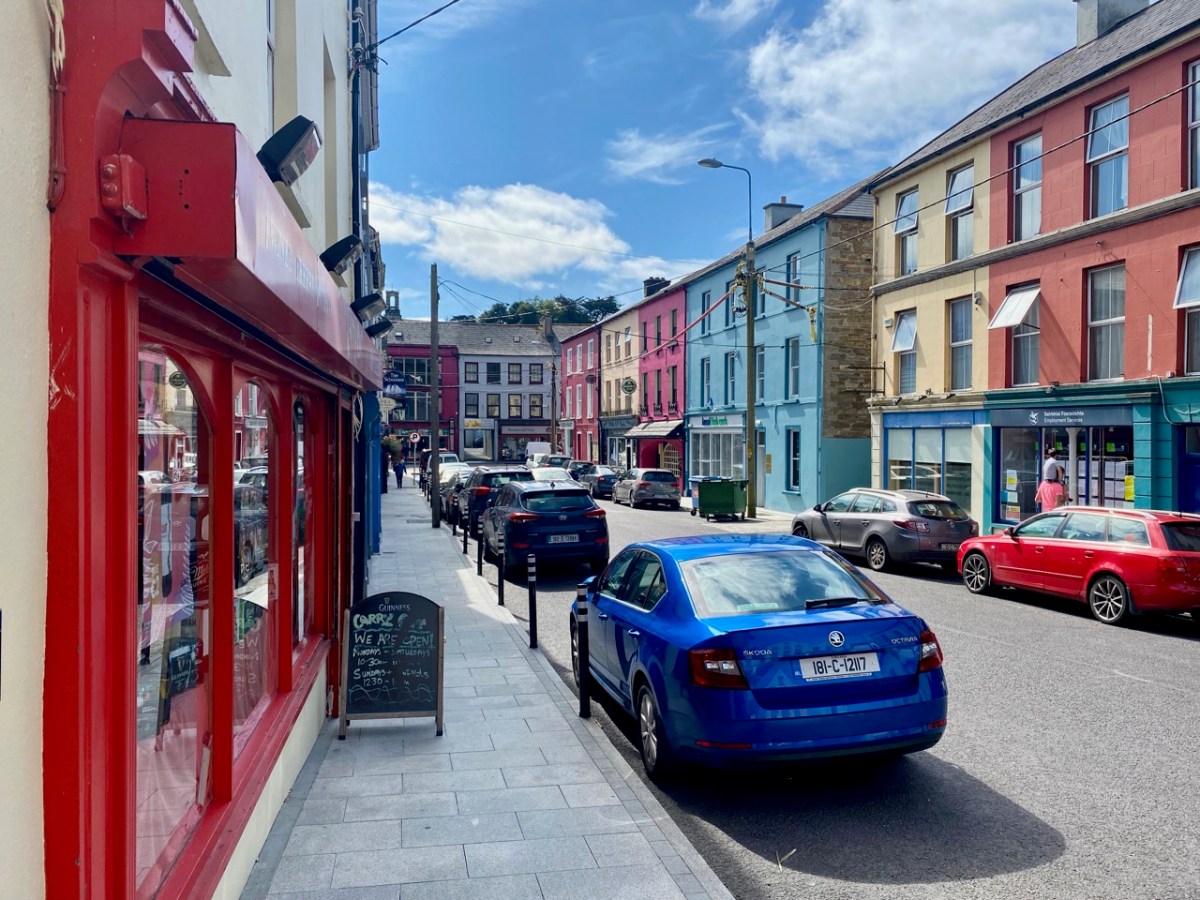
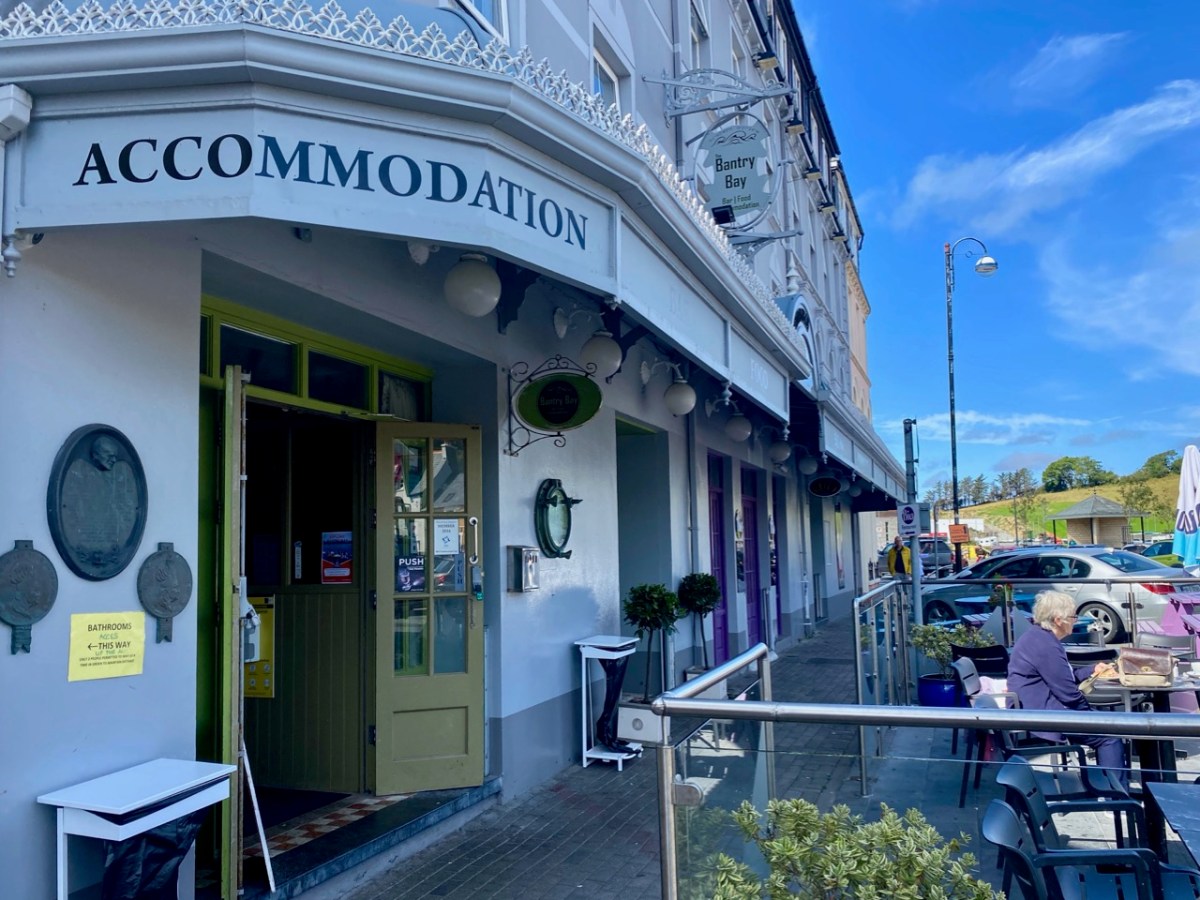
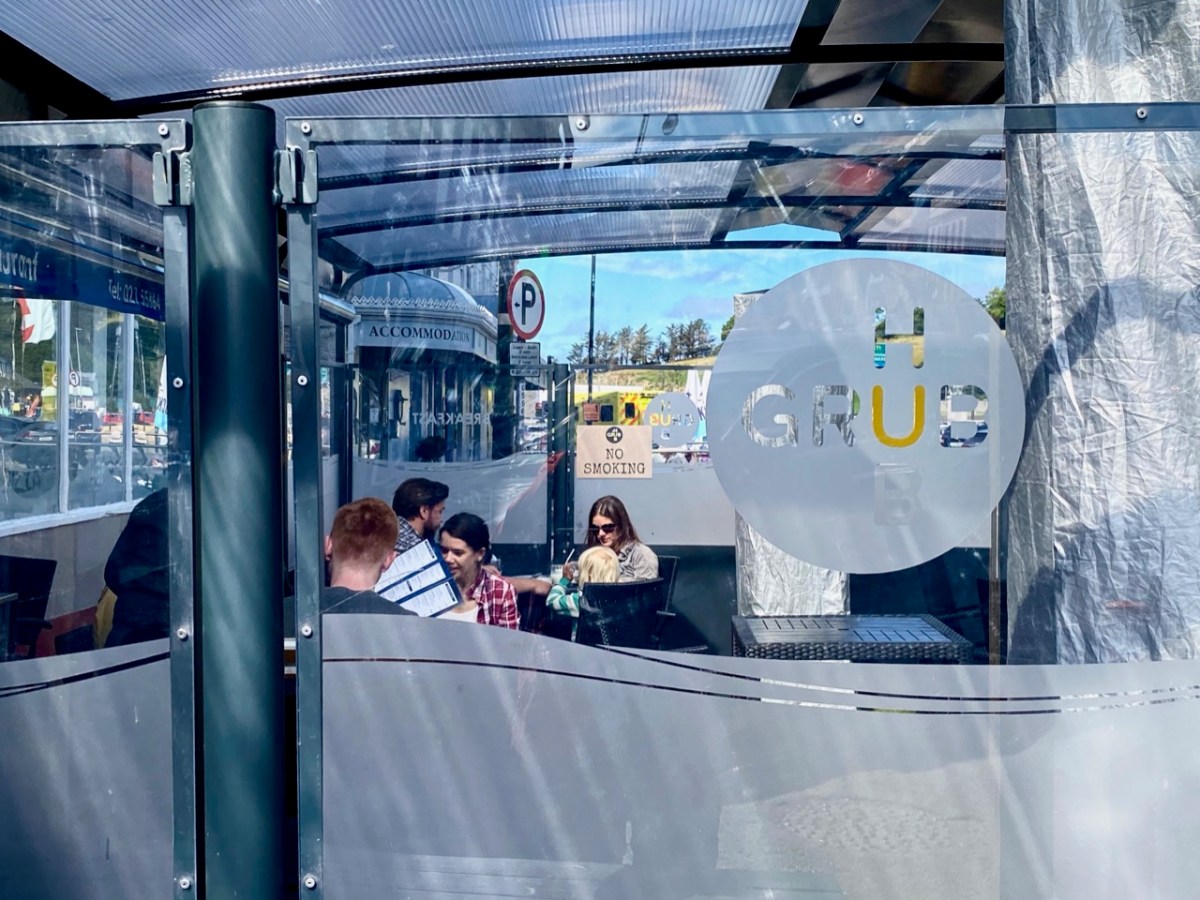
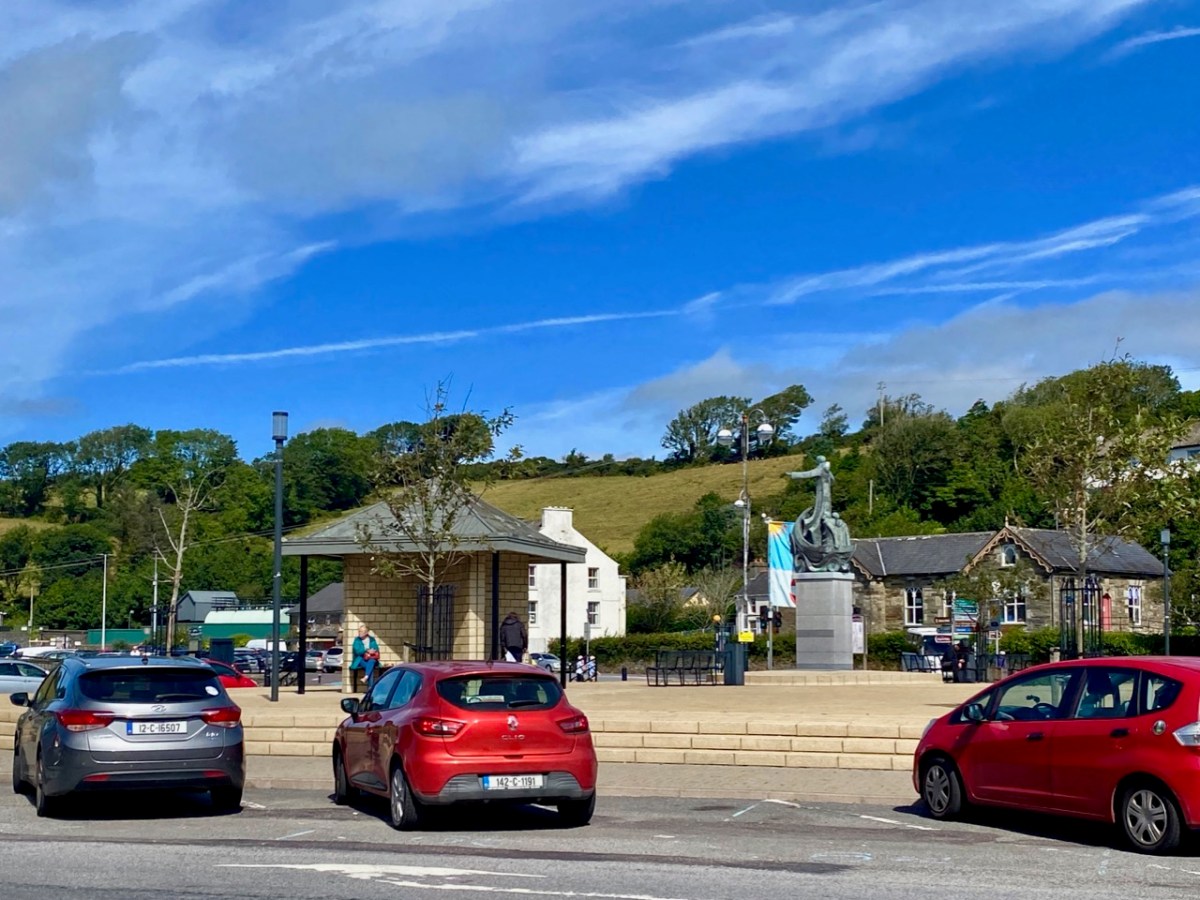
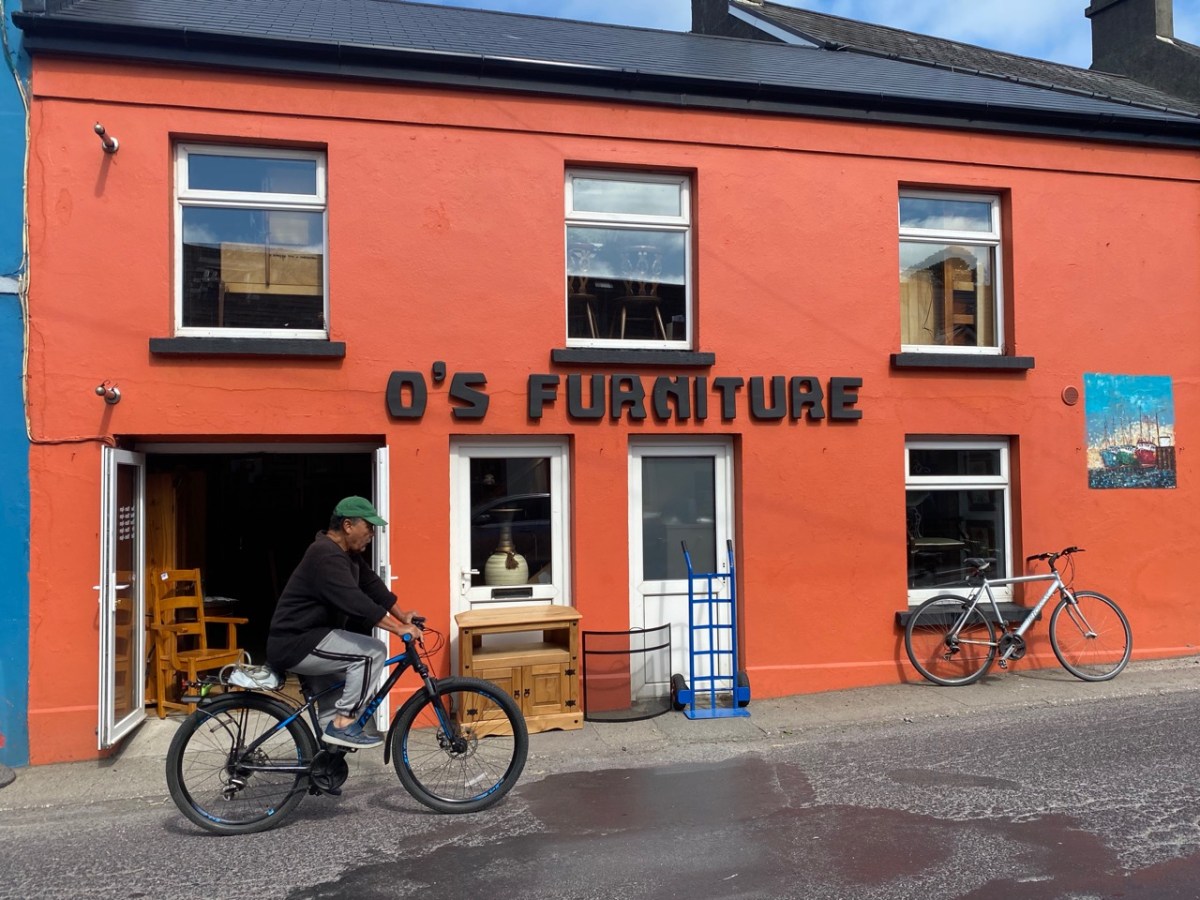
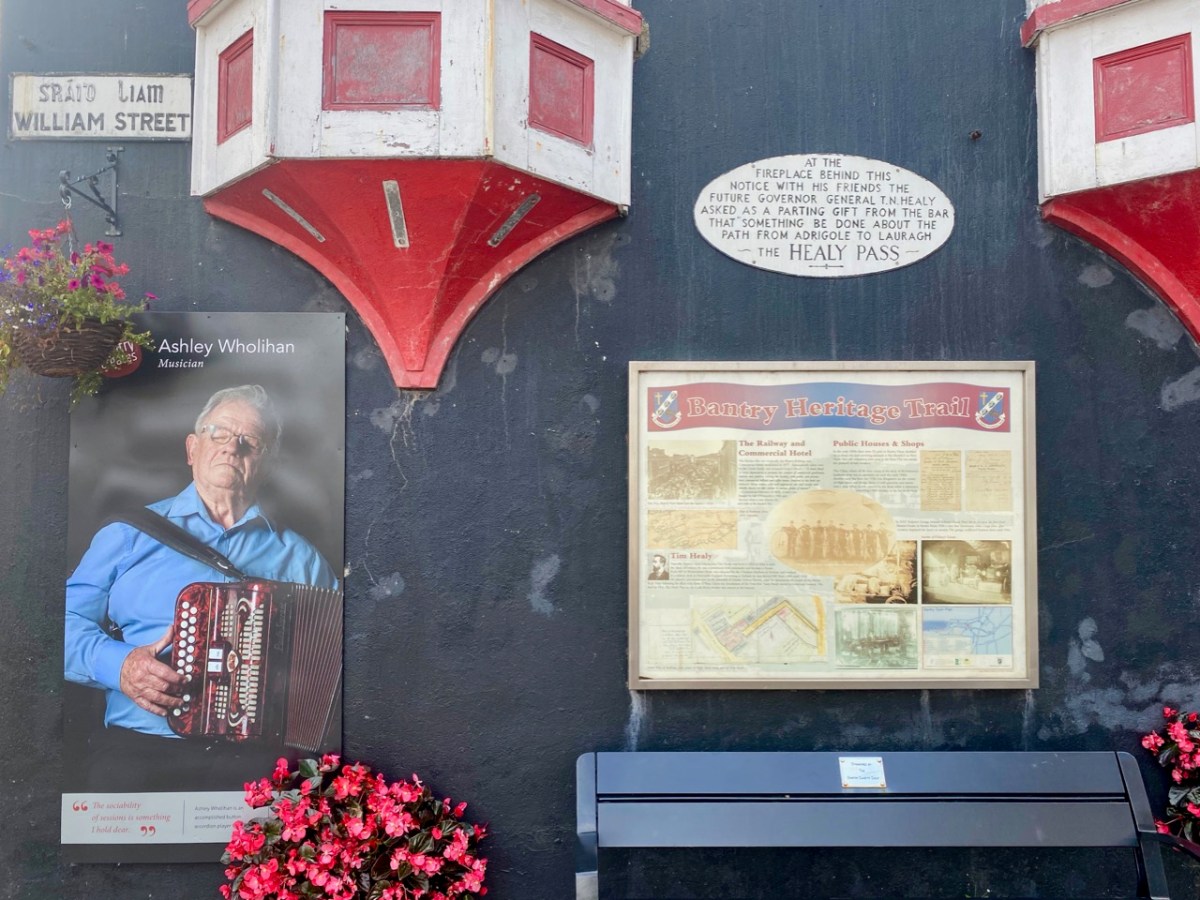
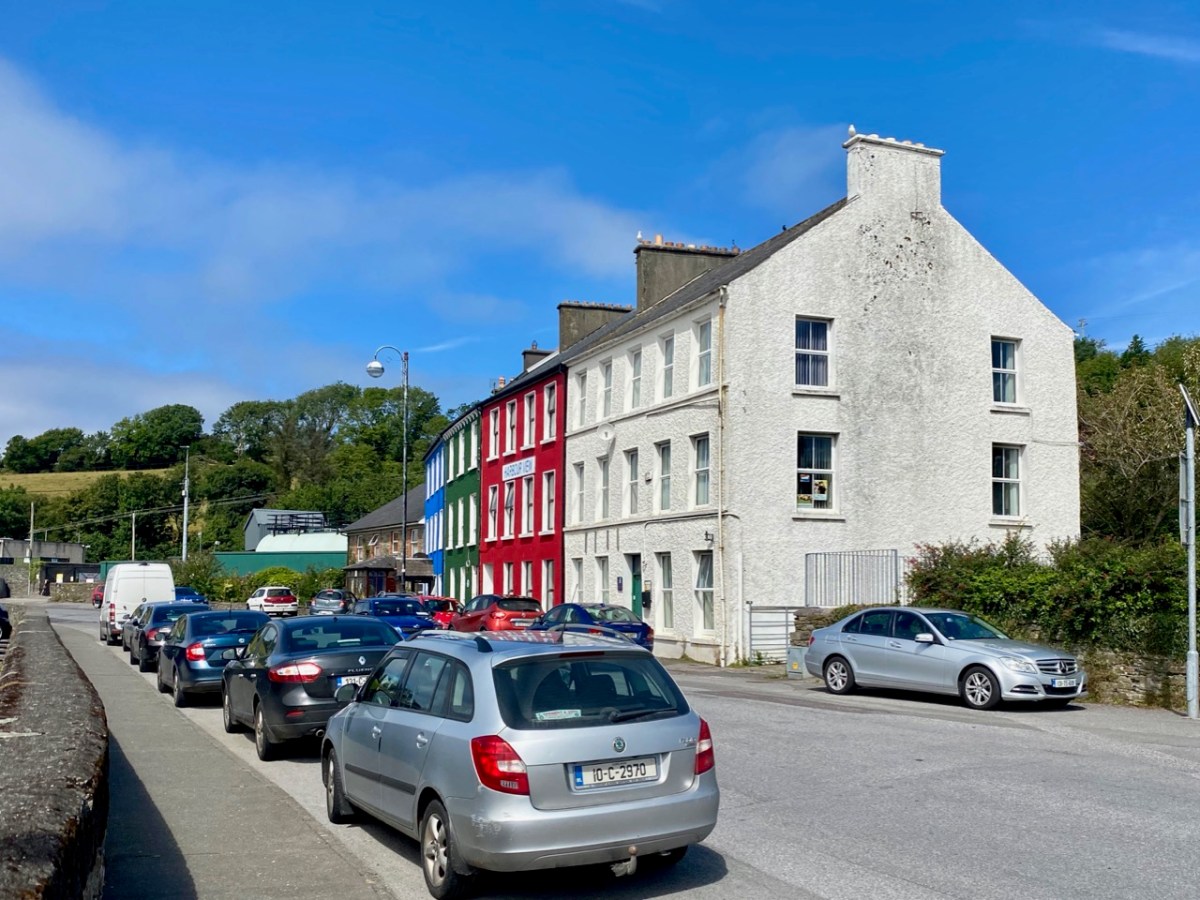
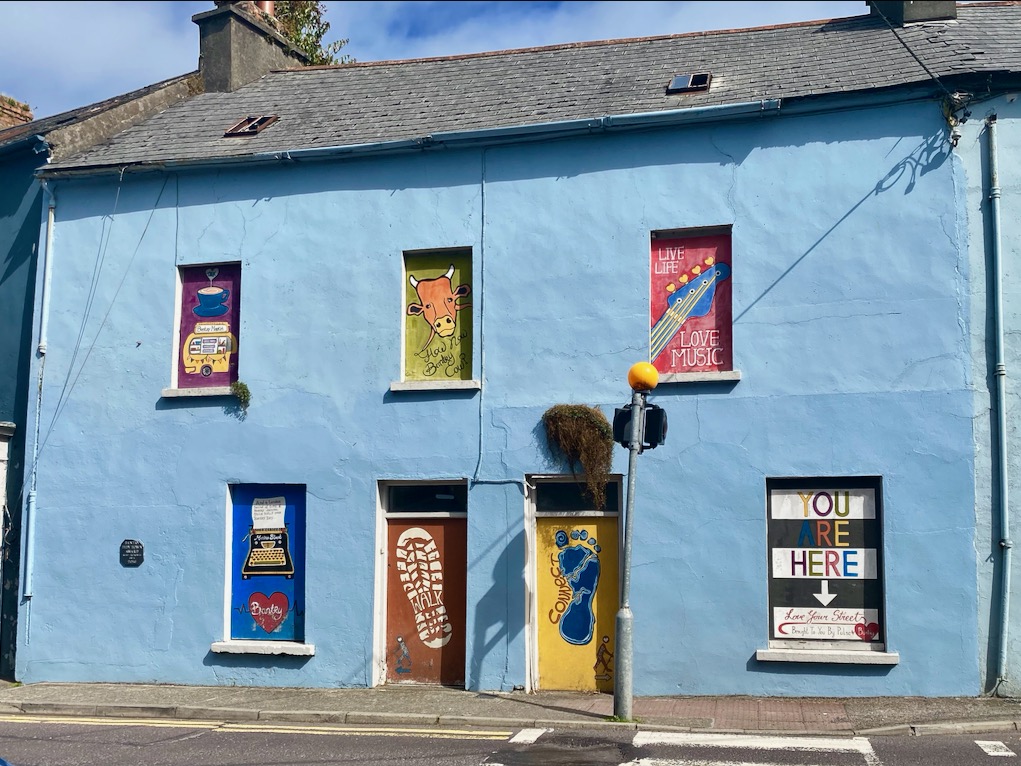
Bantry in the time of Covid . . . As with our exploration of Schull, the first in this series, we capture a moment in time: all the photographs are taken in one summer’s day, and show the norms of daily life. We deliberately did not choose Market Day (every Friday throughout the year), as on that day the population of the place appears to double in size. This is an average weekday and it is busy enough, with holiday makers swelling the ranks and helping to populate the many outdoor facilities.

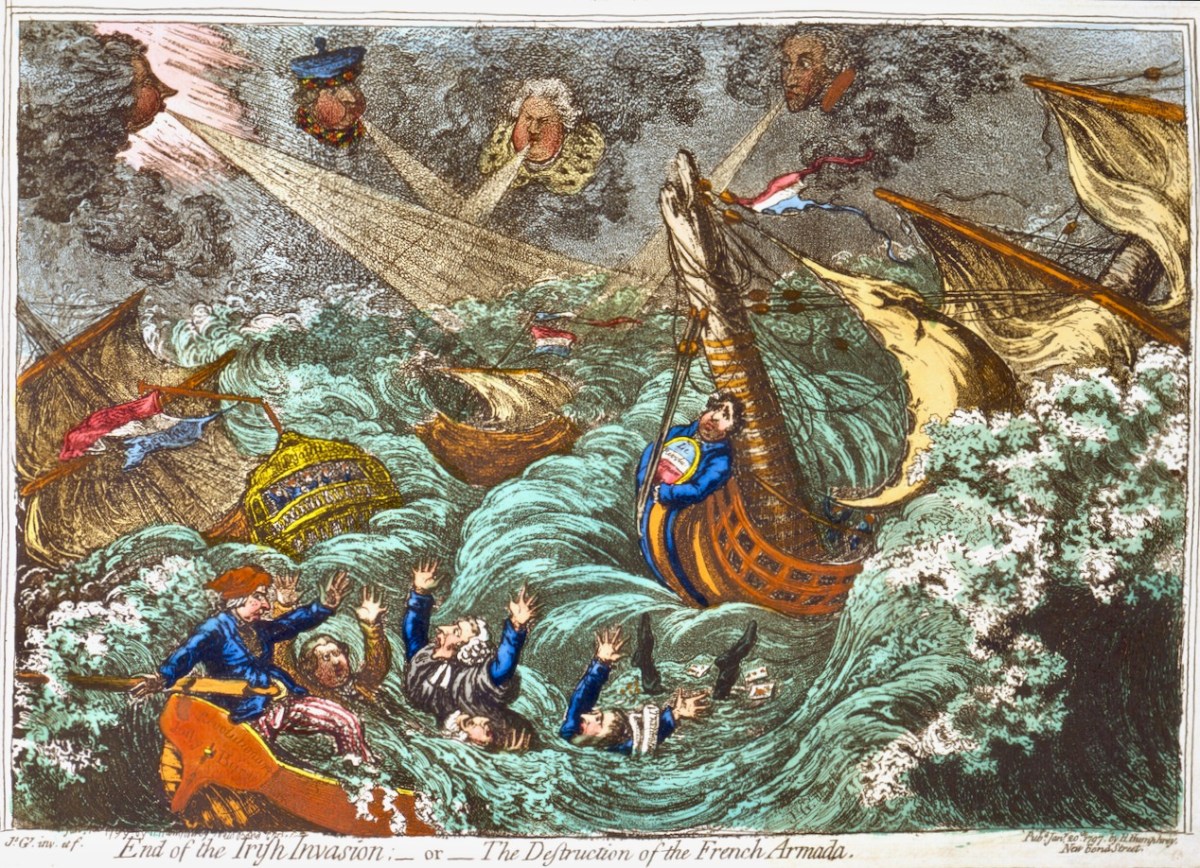
Bantry has made its mark in the history of Ireland’s independence. An attempted landing by the French Fleet in Bantry Bay on 22 December 1796 was partly precipitated by Theobald Wolfe Tone – one of the founding members of the United Irishmen. The mission was unsuccessful due to severe gales. A political cartoon of the time (below) satirises the venture:

. . . On the French expedition to Bantry Bay, at the end of 1796: Pitt, Dundas, Grenville, and Windham are the four winds which blow up the storm to destroy the invaders. FFox, as the carved figure at the head of the Revolution, is represented as influencing the United Irishmen. The crew of the jolly-boat are Sheridan, Liberty Hall, Erskine, M A Taylor, and Thelwall, who, it is insinuated, were all approvers, at least, of the Irish rebellion . . .

Historical and Descriptive Account of the Caricatures of James Gillray, 1851

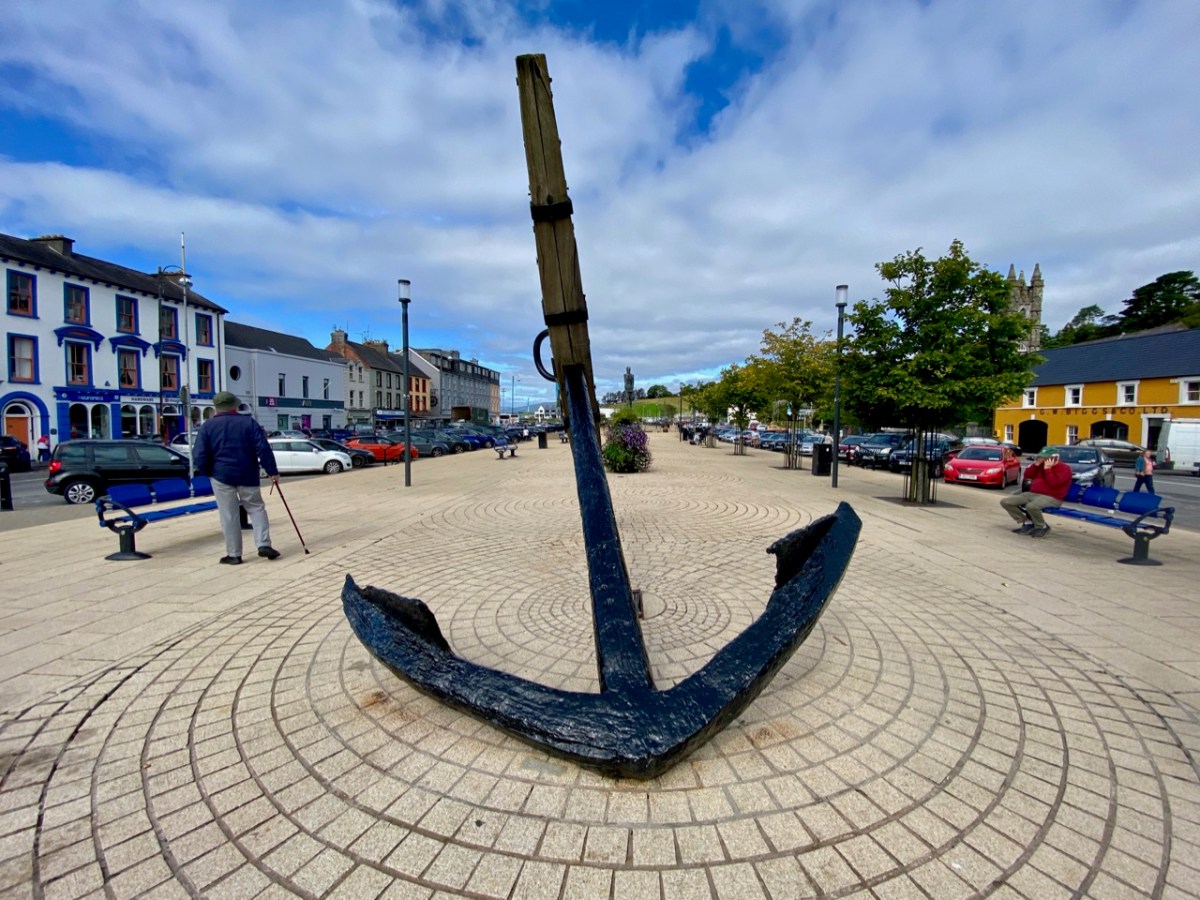
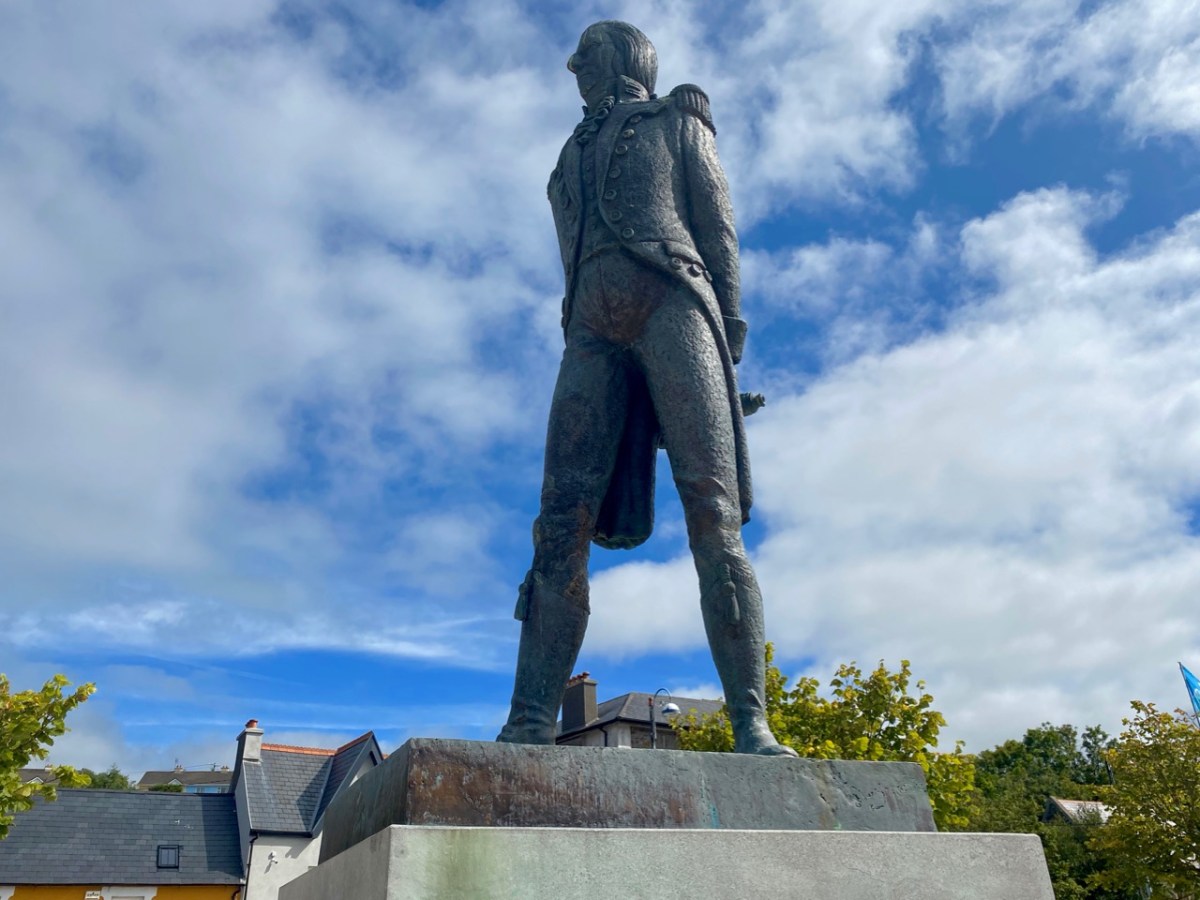
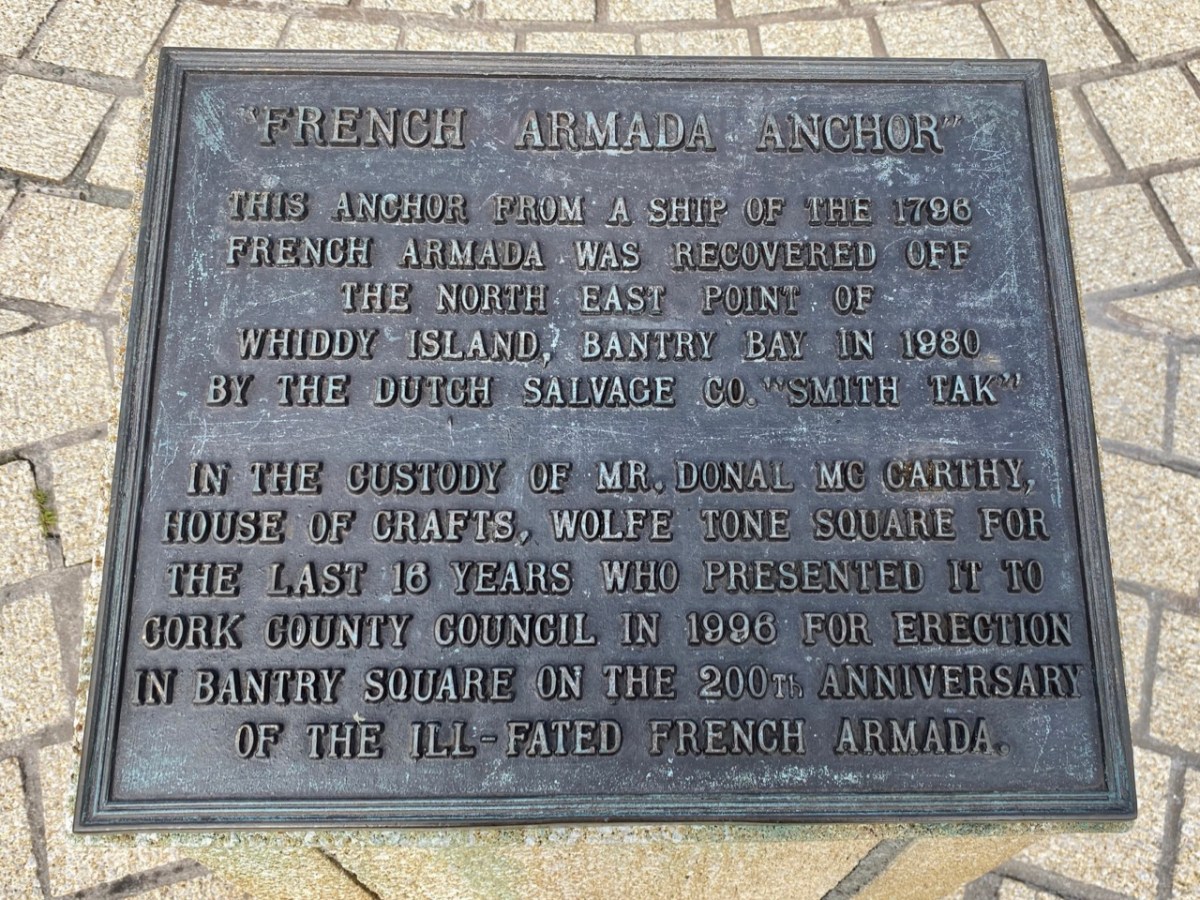
Wolfe Tone’s statue looks down over the square which bears his name in Bantry today: it was sculpted by Jeanne Rynhart in 2000. Close by is an anchor from the ‘French Armada’ found off Whiddy Island. The square was known formerly as Egerton Square – named after a descendant of the Earls of Bantry (have a look at this post). In 1899 the Irish Nationalist MP James Gilhooly oversaw the renaming. Also on the present-day square (much of which is on reclaimed land) is the notable statue of Saint Brendan by Imogen Stuart.

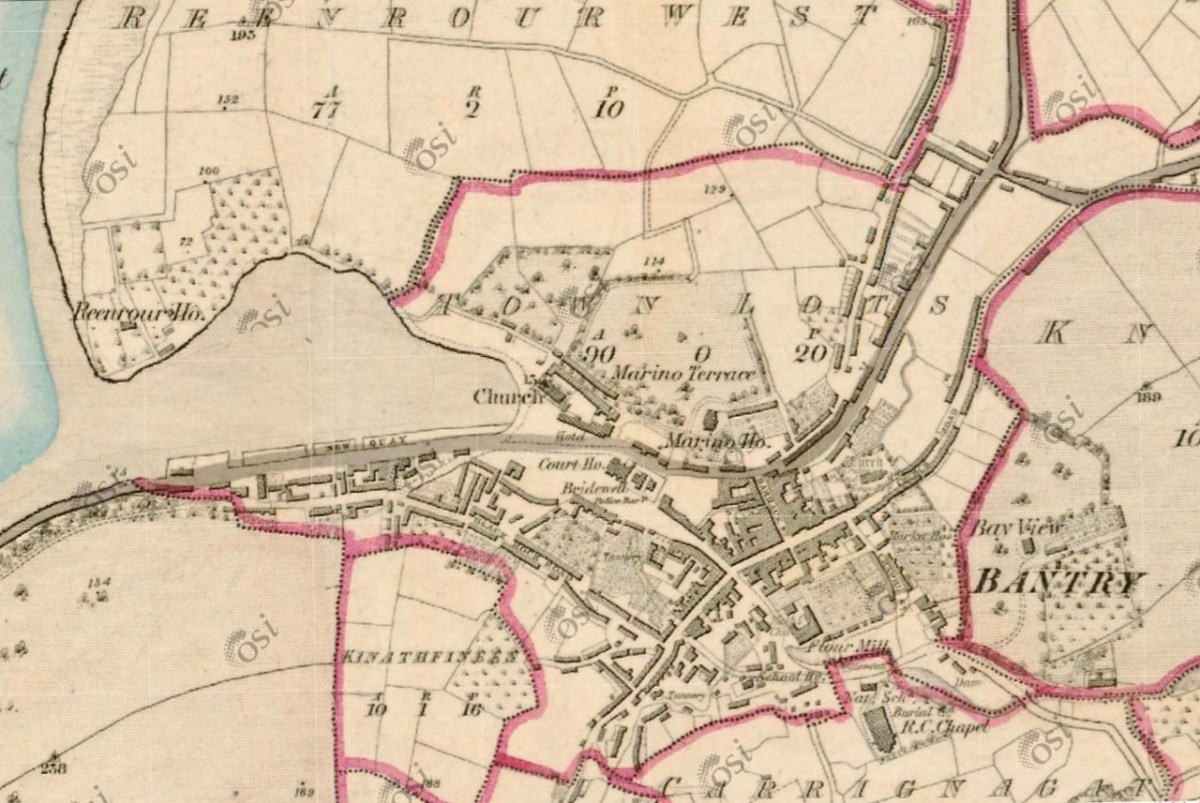
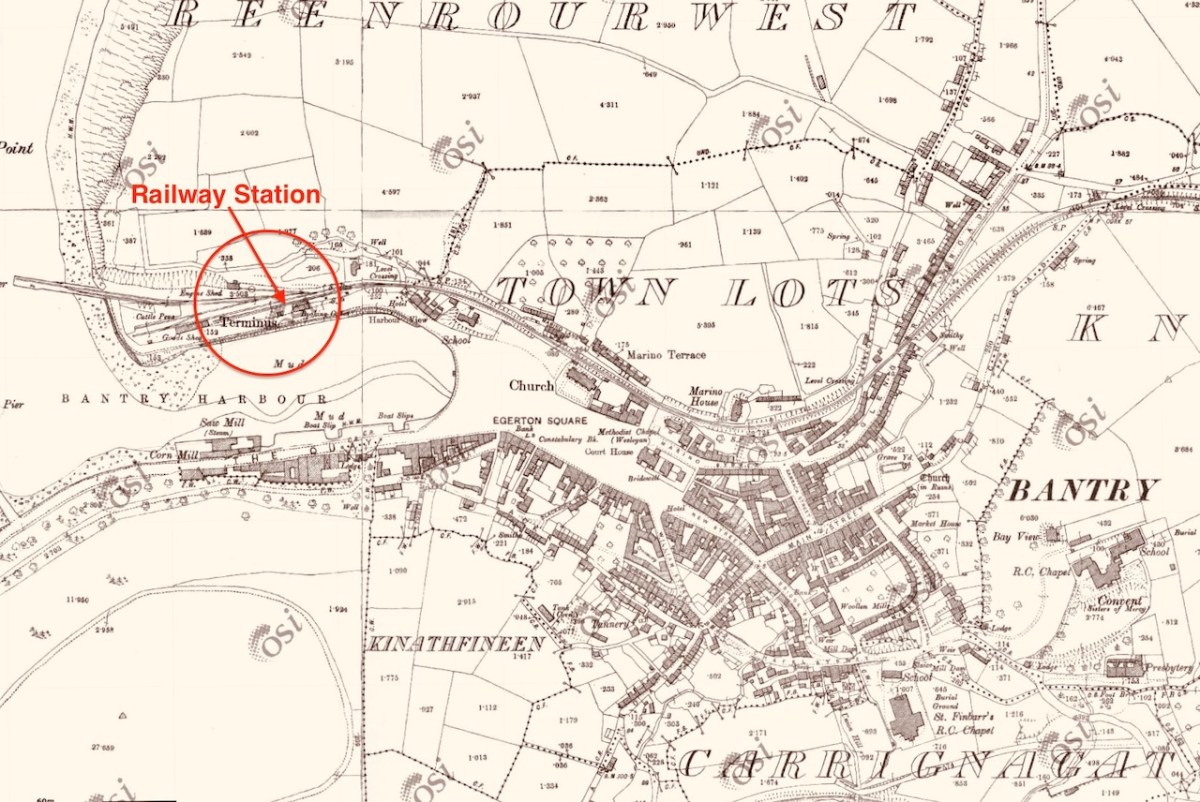
The aerial image, above, shows how the town has evolved along the original river valley. Comparing this view with the earliest 6″ OS map – dating from around 1840 (below – upper) – and the 25″ OS edition c1900 (below, lower), you can see clearly how the Square has encroached on the original natural harbour. You can also see that the terminus of the Cork, Bandon and South Coast Railway was carried on an extended pier to the west, enabling goods to be shipped in and out of the town. Interestingly, prior to the railway’s arrival in 1892, and continuing into the early 20th century, there was a regular steamship service from Bantry to Castletownbere on the Beara Peninsula. This also served Glengarriff and Adrigole.

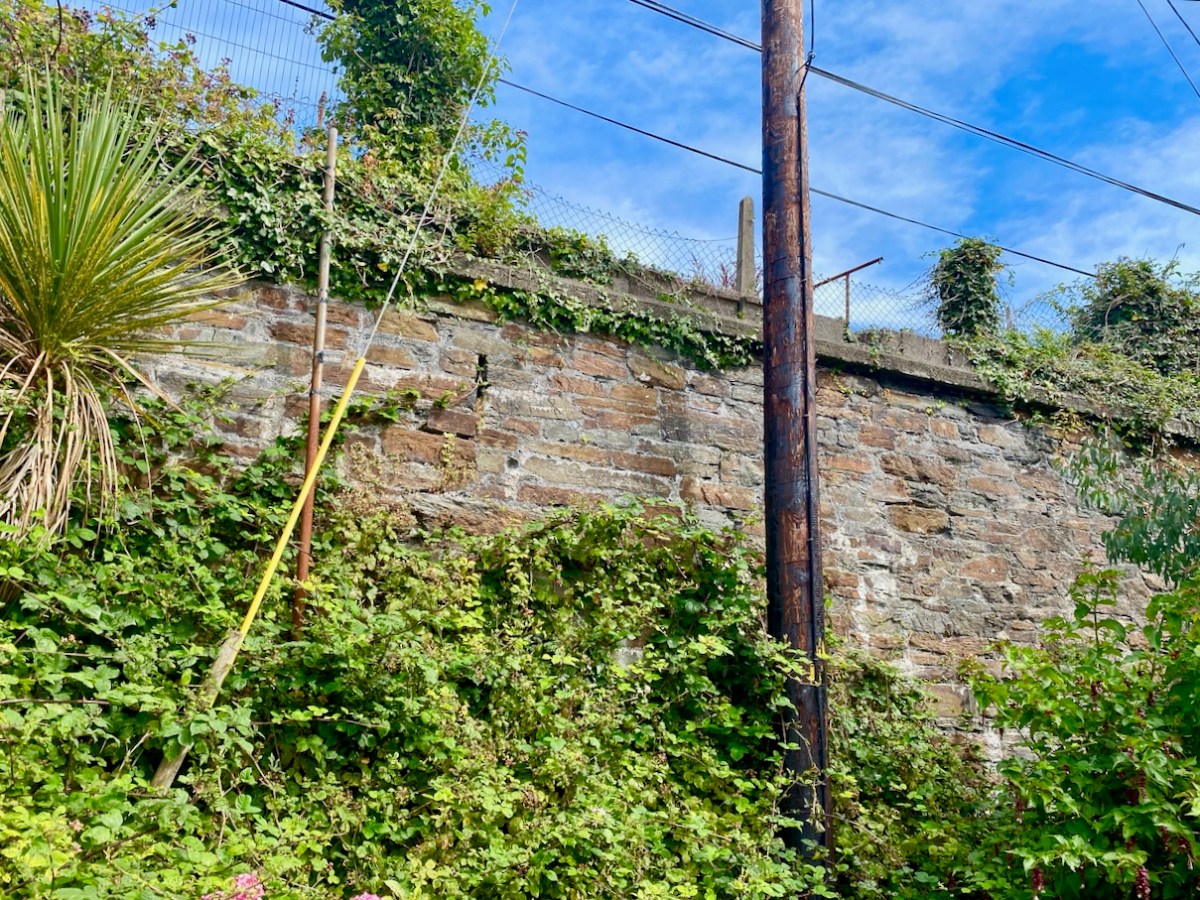
In spite of local opposition the railway was closed on 1 April 1961, and the station building was demolished. We do fortunately still have some vestiges of the line clearly visible in the town.

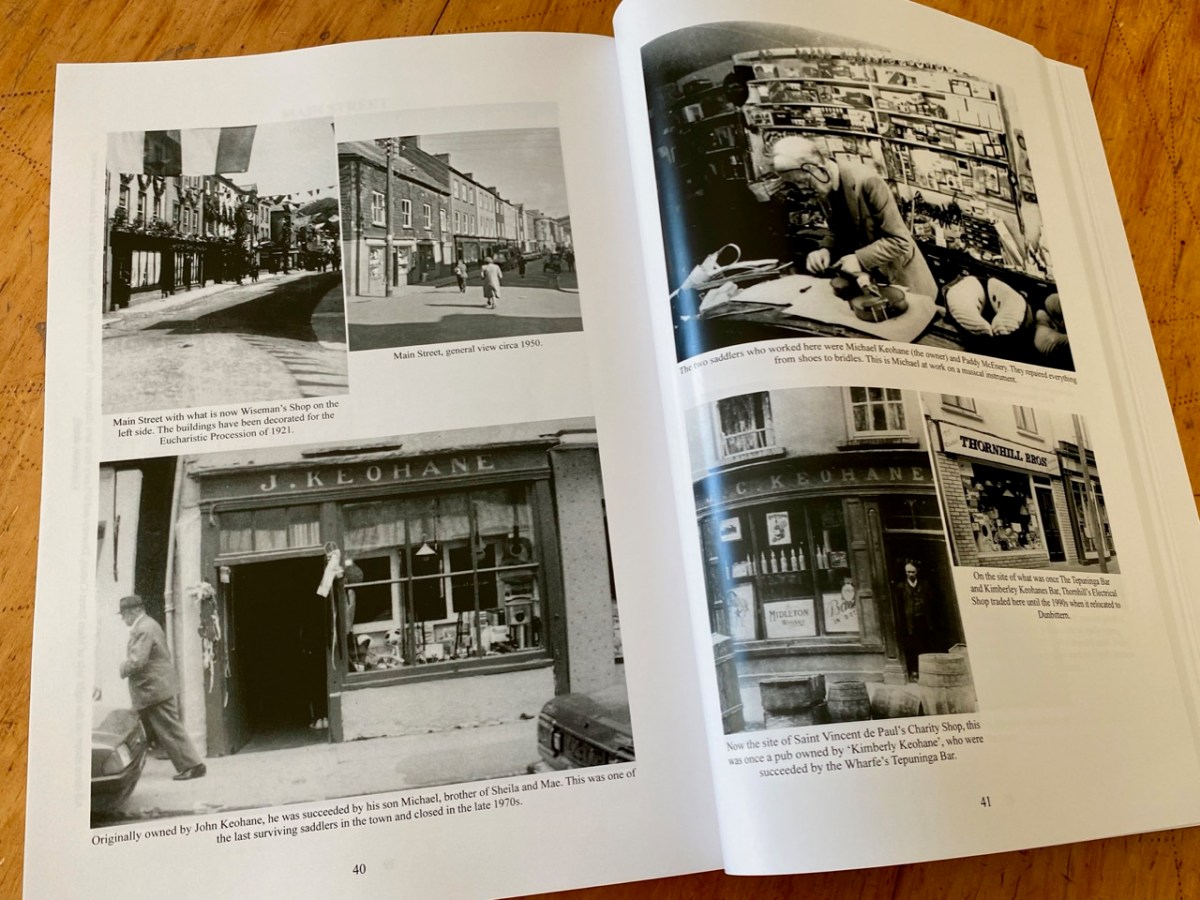
I have only touched on the briefest aspects of the history of this significant West Cork town. There is considerably more recorded in a recent opus compiled by distinguished historian and international scholar Colum Hourihane, who hales from Bantry. We were recently at the launch of his latest book Bantry Through the Centuries, Bantry Historical Press, 2021 and were treated to an illustrated talk, given by the author. Colum is at pains to point out that this is not a general history of Bantry, but that its core is the streets of the town” . . . It’s an effort to understand how the town developed over the centuries in relation to its people . . . “ The book is a first-class resource: a 490-page review of local lore and garnered knowledge illustrated with almost 140 additional pages of historic photographs. This must surely be the most comprehensive volume ever published on this town.

Let’s finish with some more of the photos taken on our day’s exploration: an attempt to capture the essence of this significant West Cork settlement. I hope it will encourage you to visit, if you don’t already know it.

You can read much more about Bantry in Roaringwater Journal. Here are just a few links:

The Golden Hour

Masters of Tradition Festival

Ireland’s First Inhabitants