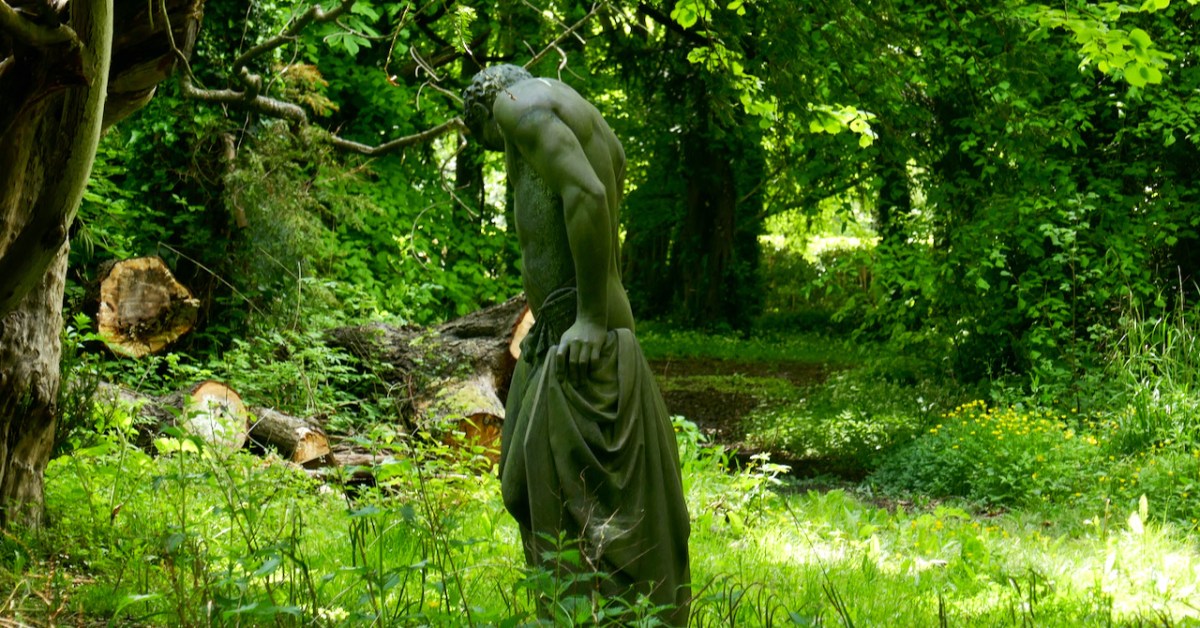
Killruddery: Nature and Nurture

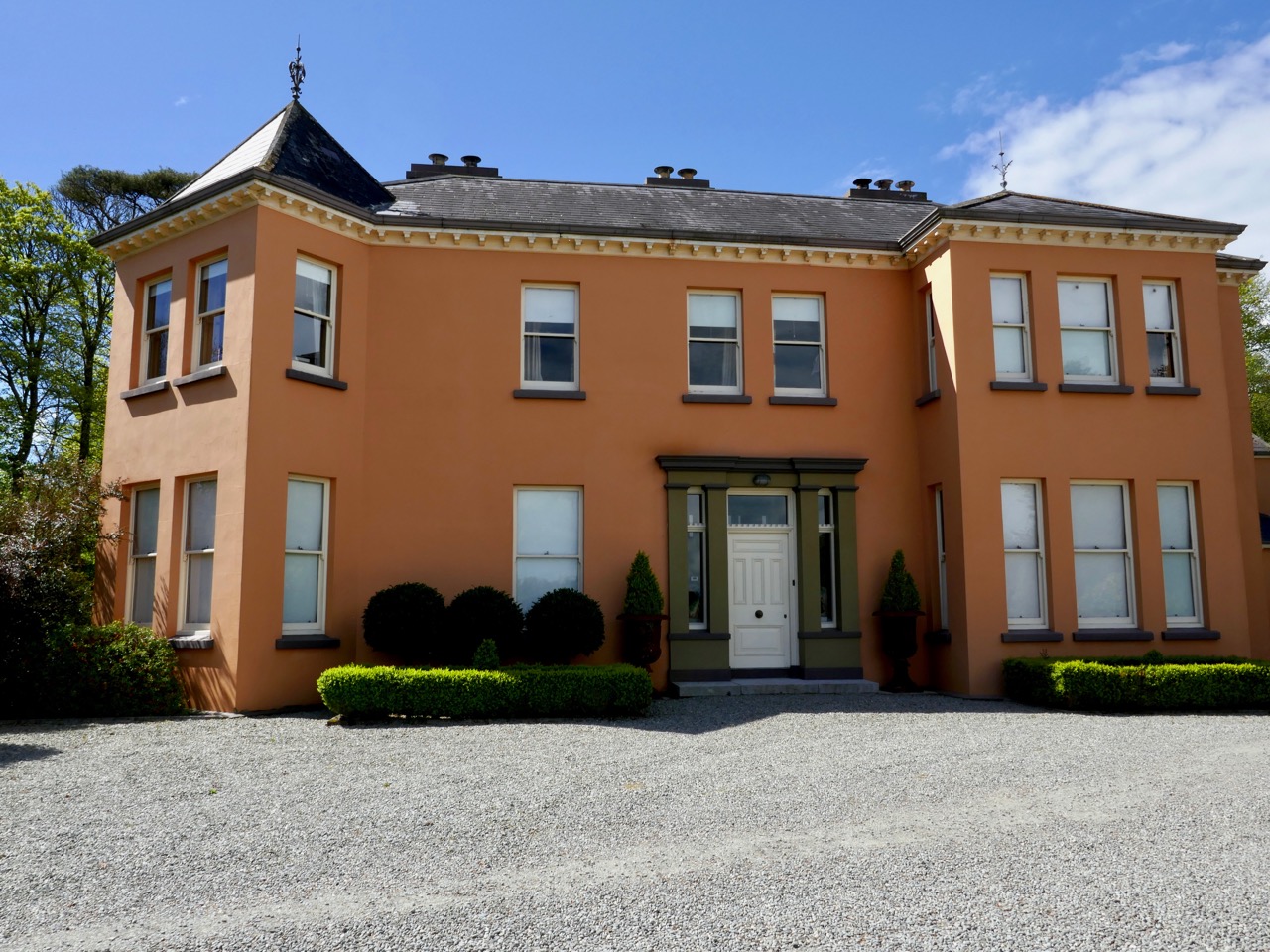
We’ve been visiting the wonderful gardens at Killruddery House, just outside Bray, and it’s been a tonic for the soul.
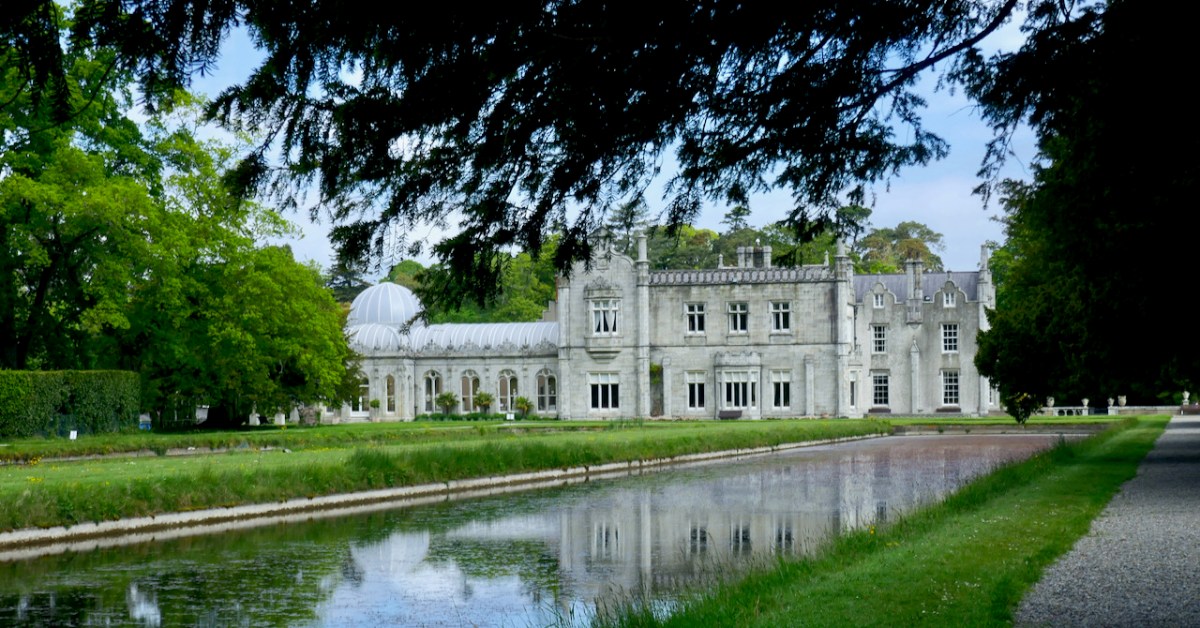
We talk a lot about managing for bio-diversity, but when you see it in action on this scale, it’s breathtaking. Killruddery is the ancestral home of the Earls of Meath and the house and gardens are open to the public during normal (non-Covid) times. They have just opened the gardens again and when we visited yesterday and today they were teeming with people – a deservedly popular destination for families. There’s lots of room, so the enormous lawns were dotted with picnic blankets, and the largest sandpit I have ever seen was full of delighted children.
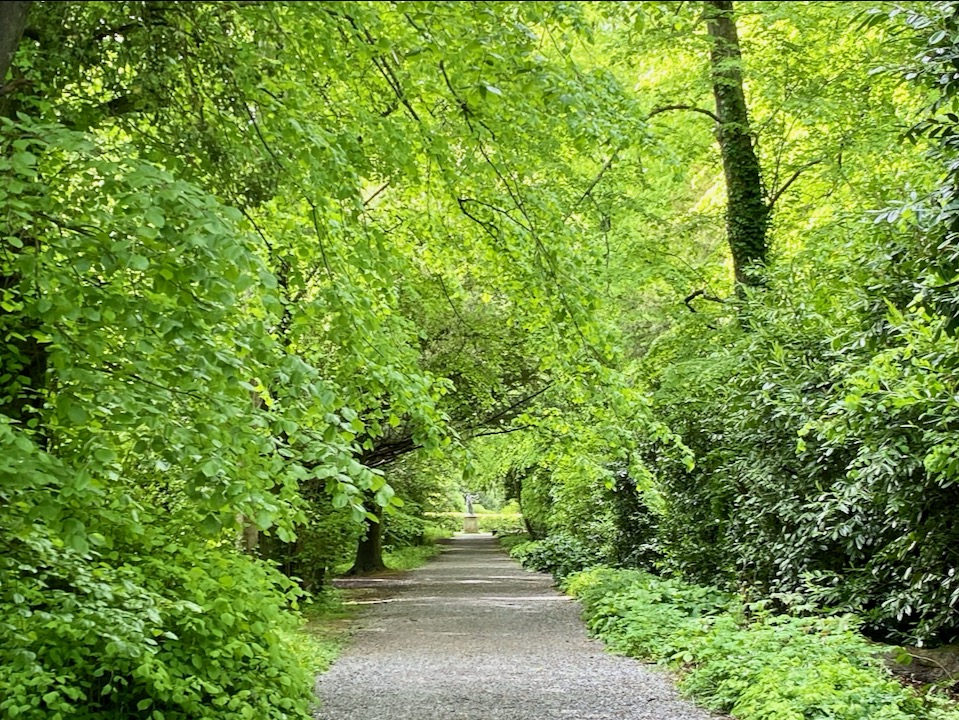
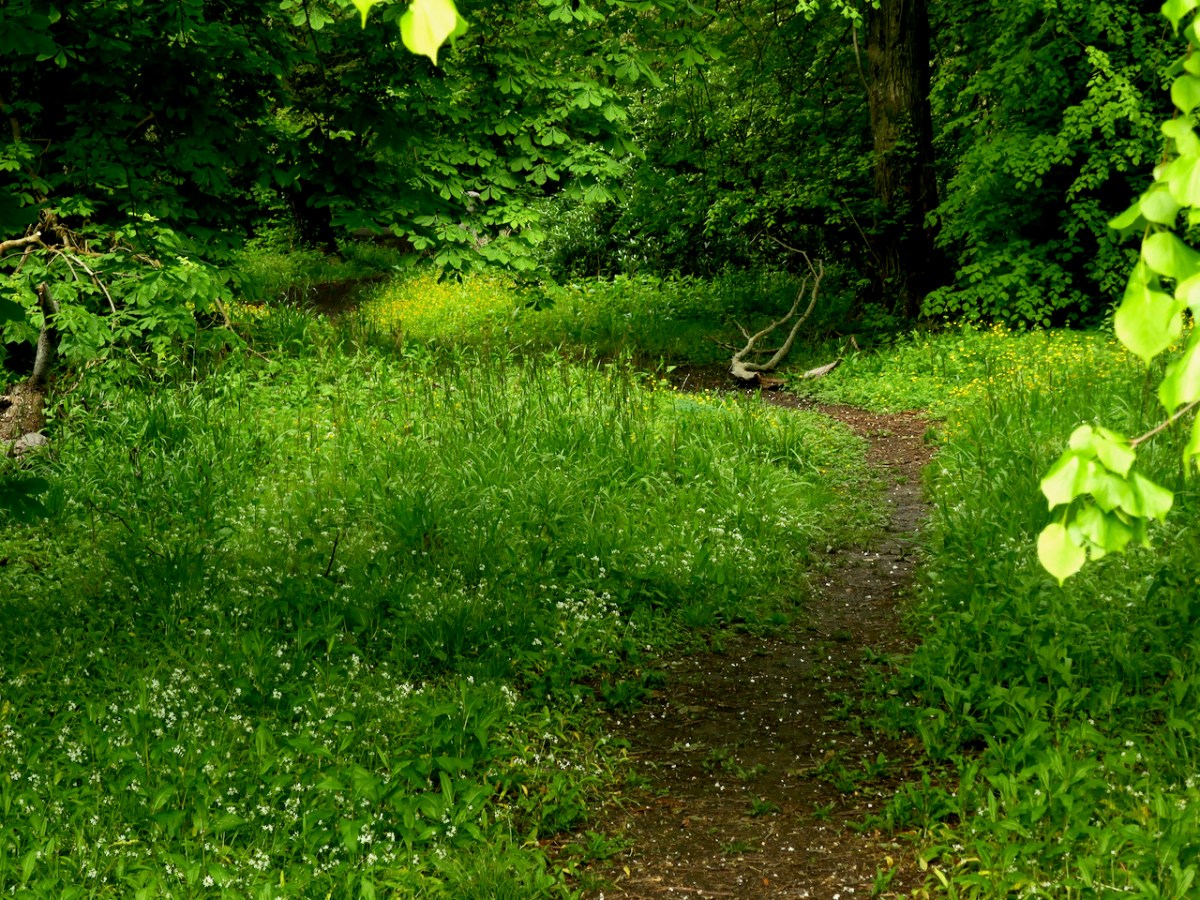
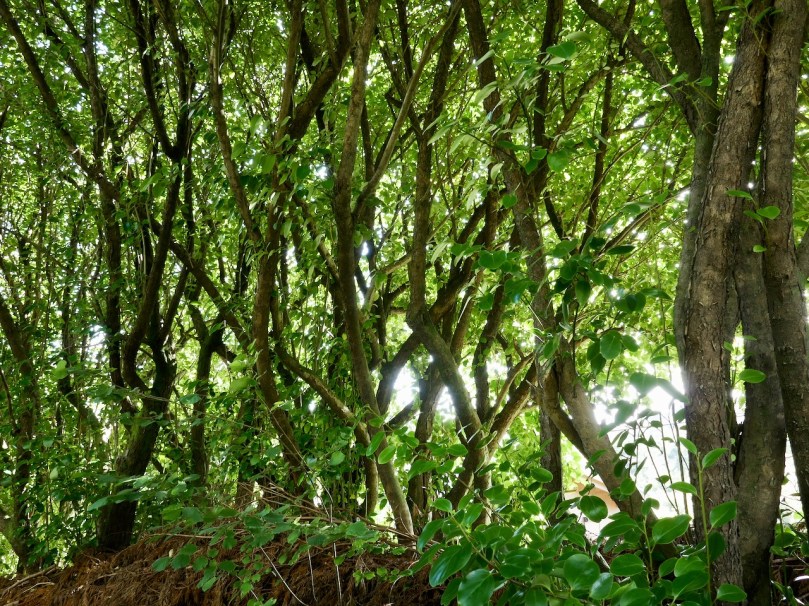
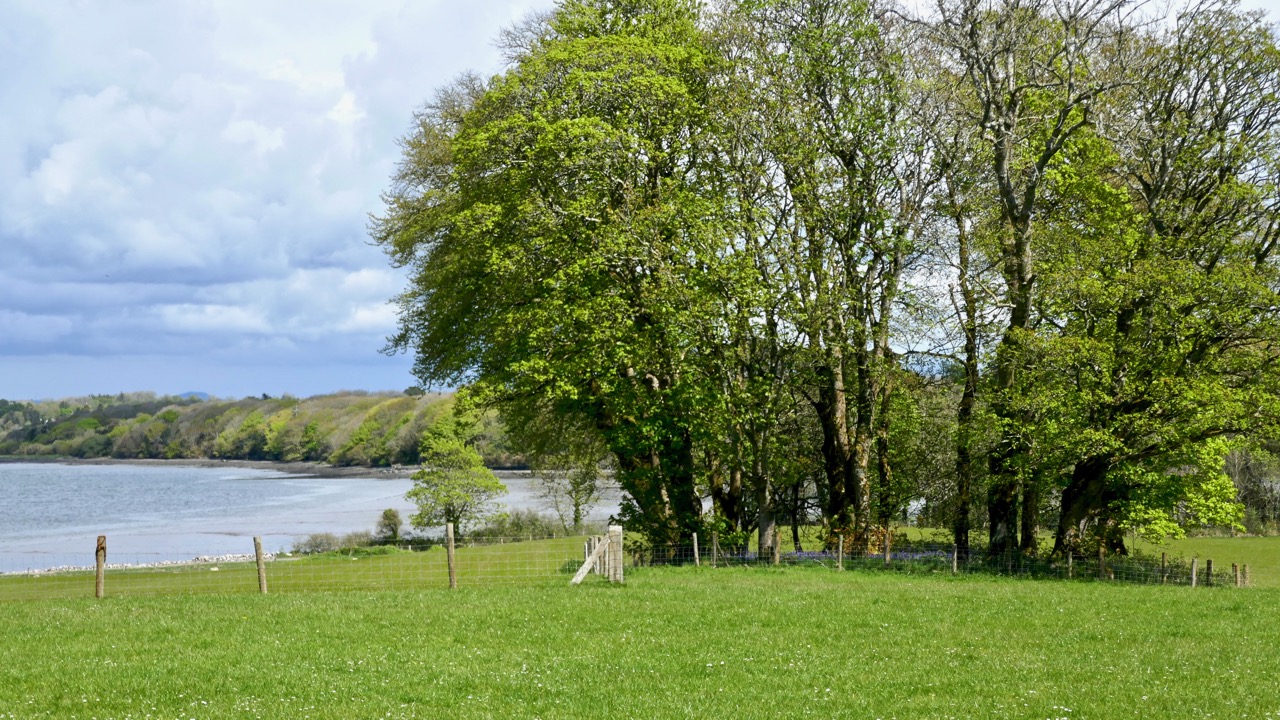
Despite the crowds, it is easy to stroll along the woodland paths and never meet another person. And it’s on those paths that the term Nature and Nurture came to me as an apt description. The Meaths are managing for bio-diversity and sustainability on a grand scale, and doing it magnificently, at the same time as providing a wonderful amenity for visitors.  
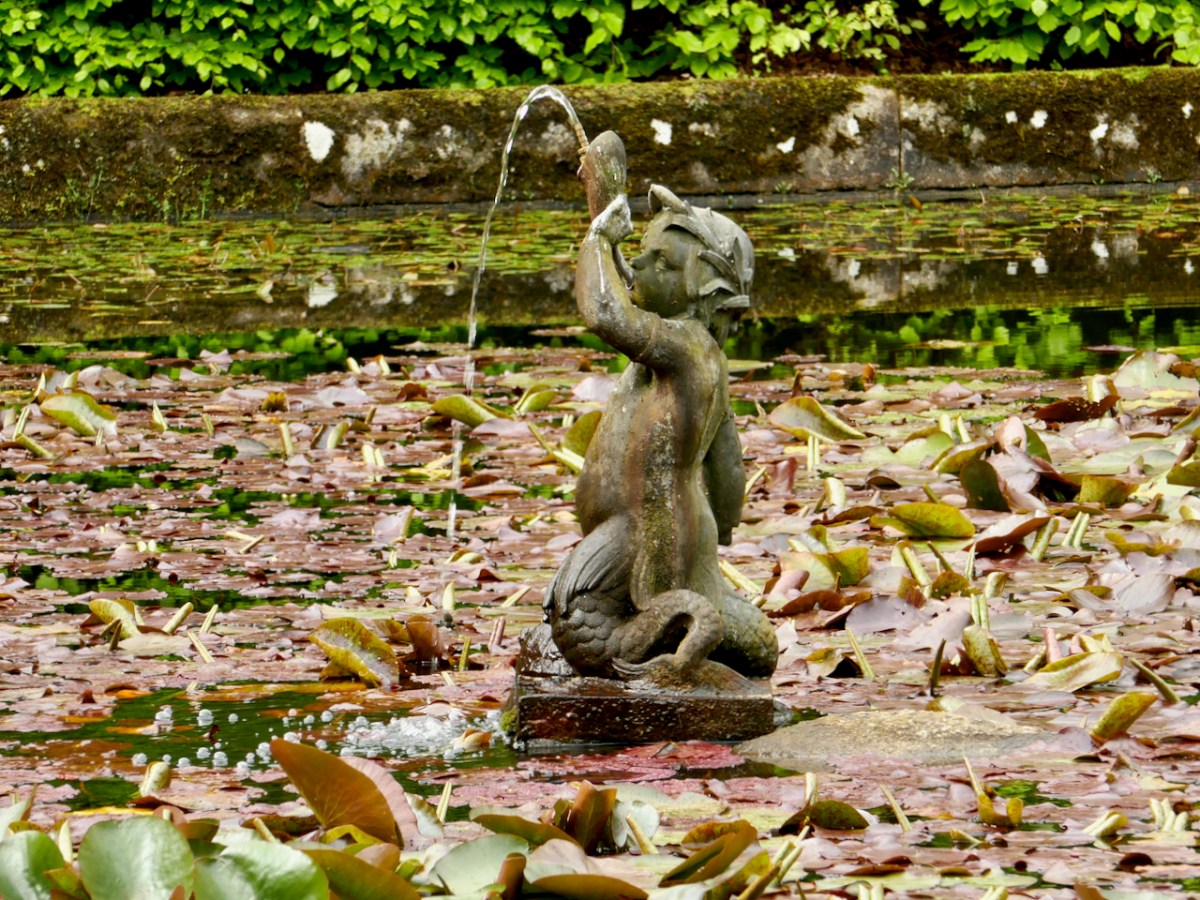
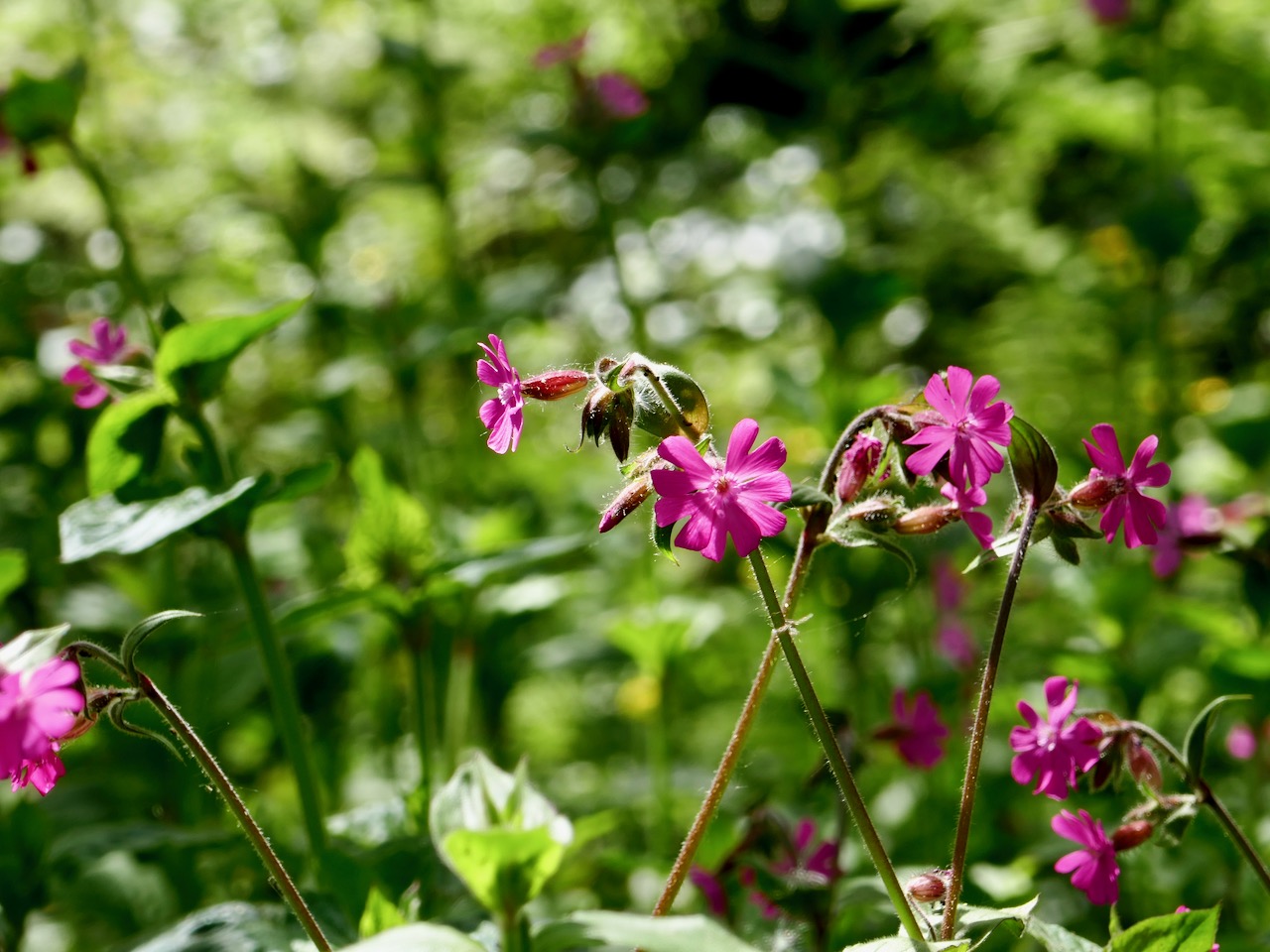
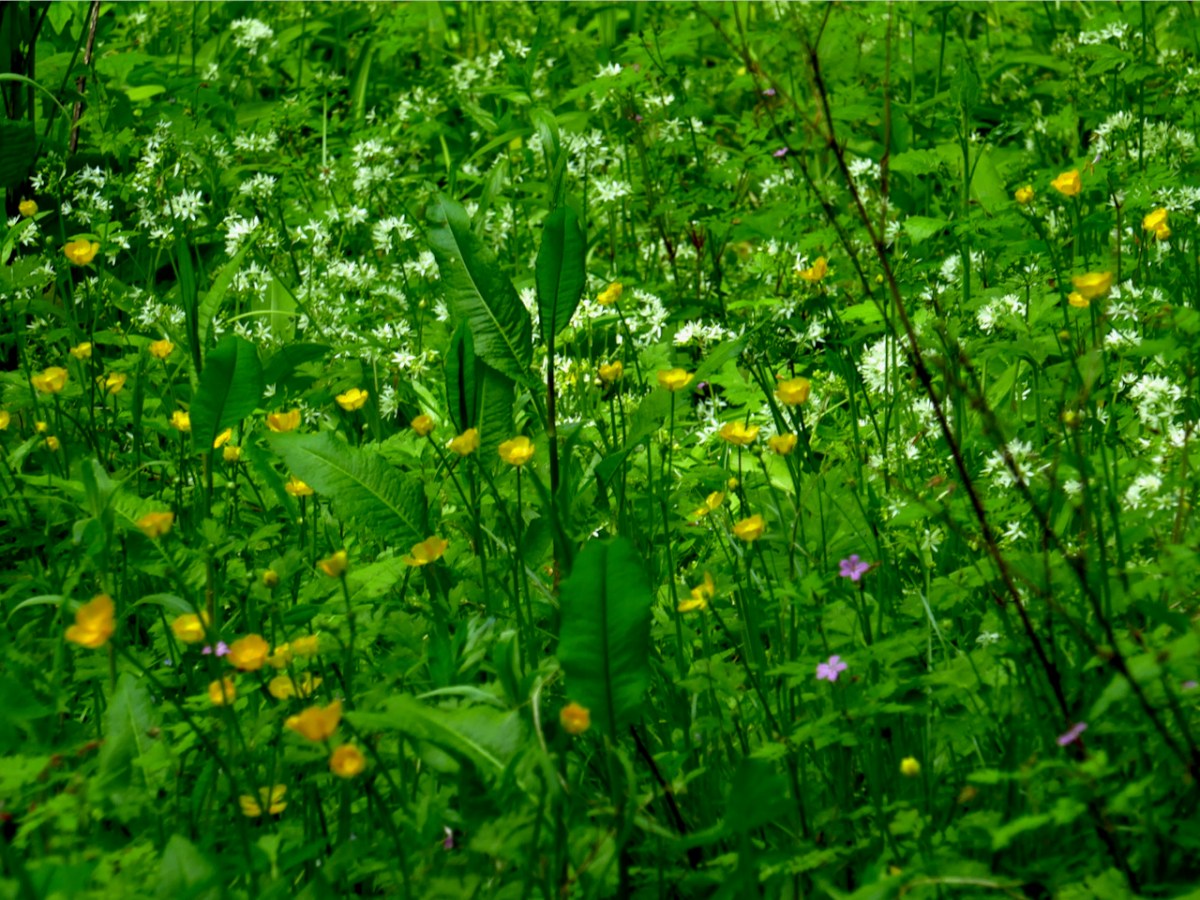
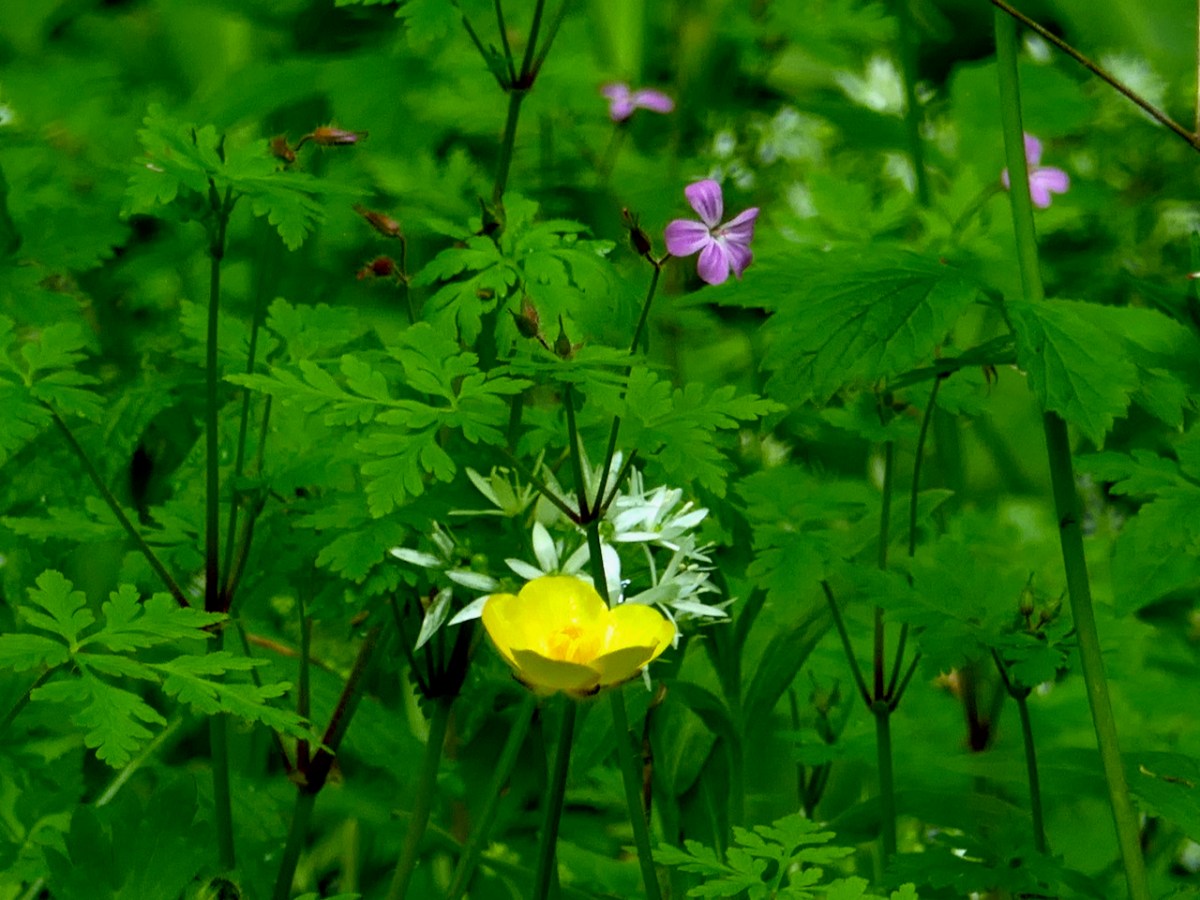
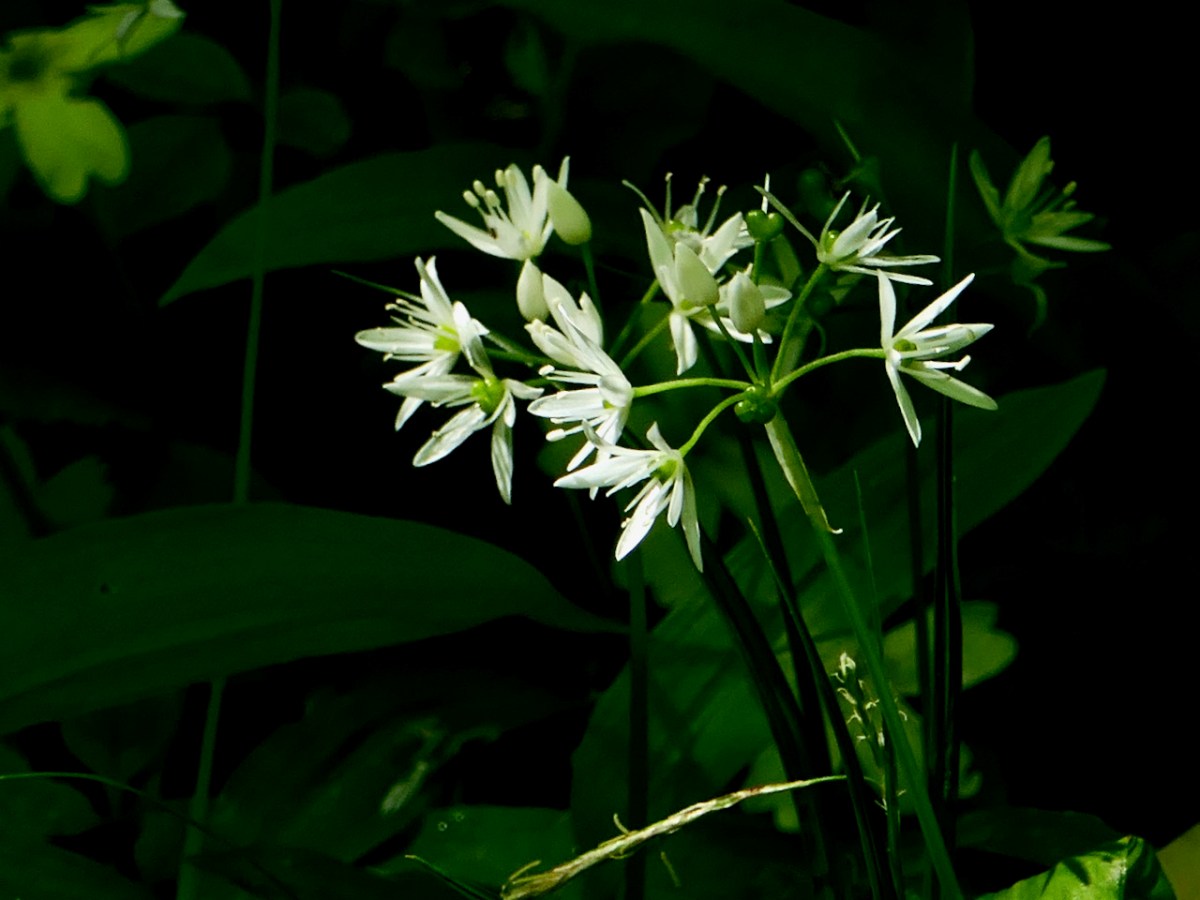
The mix of natural and designed landscape works so well that it all blends together and you wander seamlessly from the kind of open lawn with specimen trees that Capability Brown would have been proud of to deep woodland with a carpet of wildflowers. The smell of wild garlic, Ramsons, drifted over us as we strolled. That’s the white flower, below, mixed with buttercups and Herb Robert.
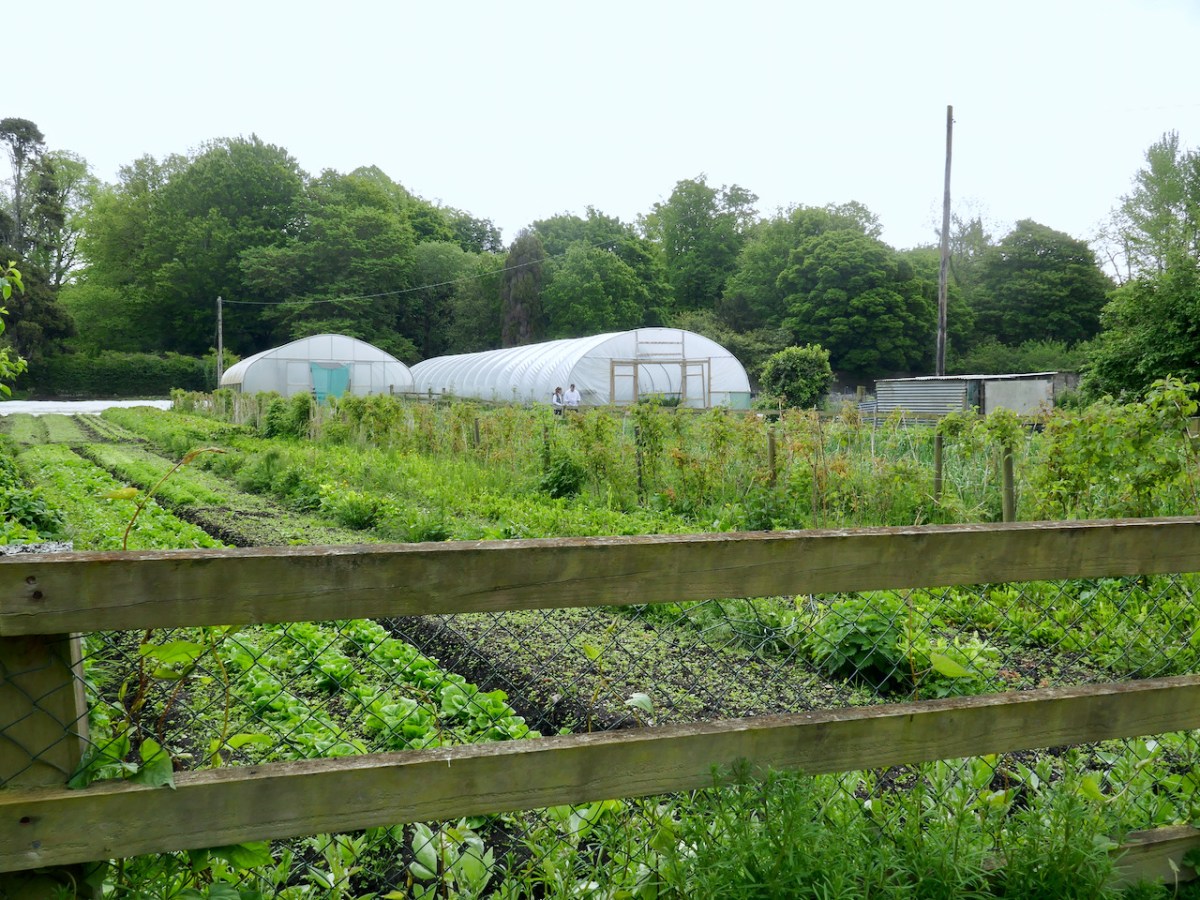
There is SO much to Killruddery – a kitchen garden that supplies their own chefs; the house itself, famous as a film and wedding venue and full of treasures and history; the farm shop and farmers market; the farm trails and children’s activities; a formal  parterre and sunken garden; a water clock – and I am only touching the surface. It will repay visit after visit. 
But our readers know that I can’t resist the wildflowers and on my two visits this week I mainly focussed on the woods, with occasional sorties into open spaces and long vistas.
Jack, the Earl of Meath, has been writing a nature diary – you can find it here – and it’s the work of a man passionate about preserving natural surroundings, and alarmed about our loss of habitat and species. I’ve been lucky enough to have had a tour of the gardens with Jack, and I can tell you that he knows the name, history and provenance of every tree and every shrub.
His son, Anthony and daughter-in-law, Fionnuala, are committed to an ethos of conservation, looking to the long term health of the land and the animals and plants that make it home.
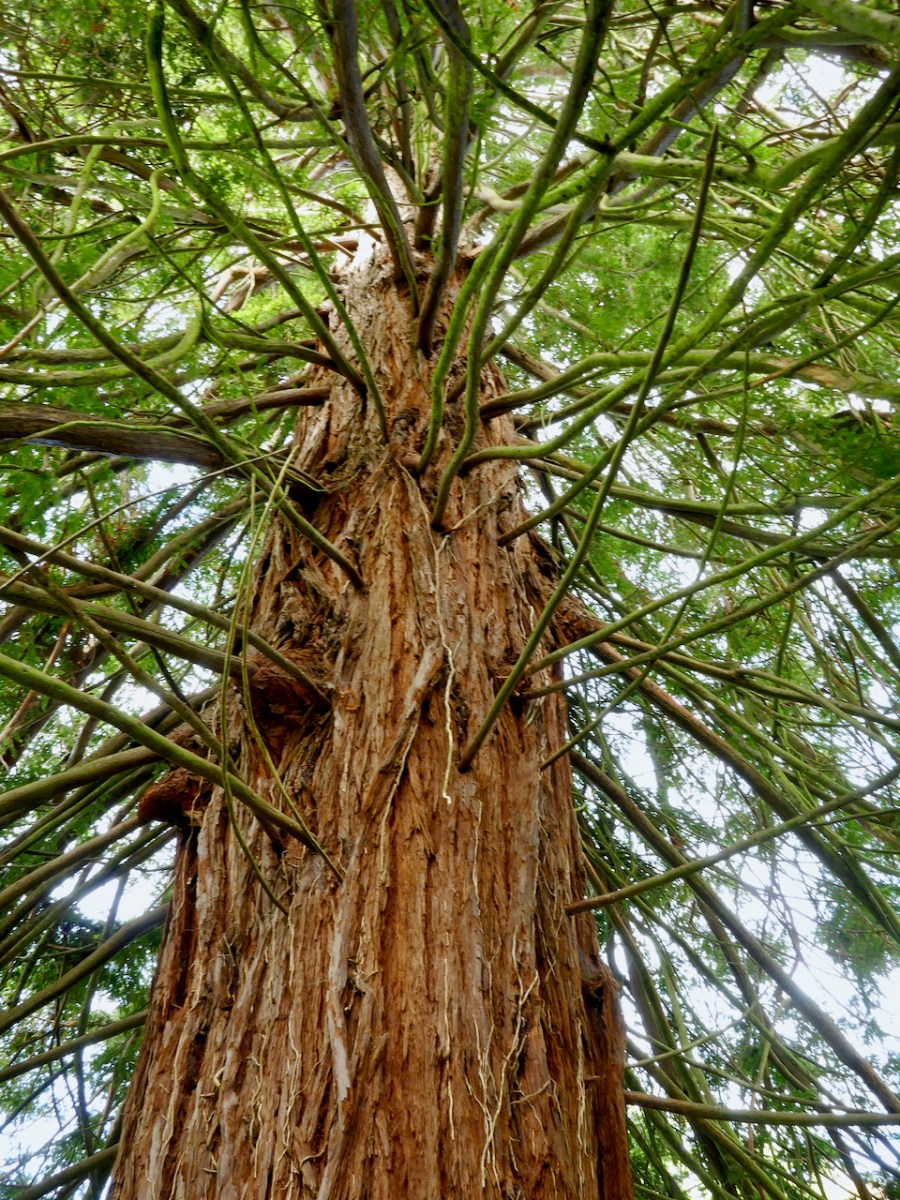
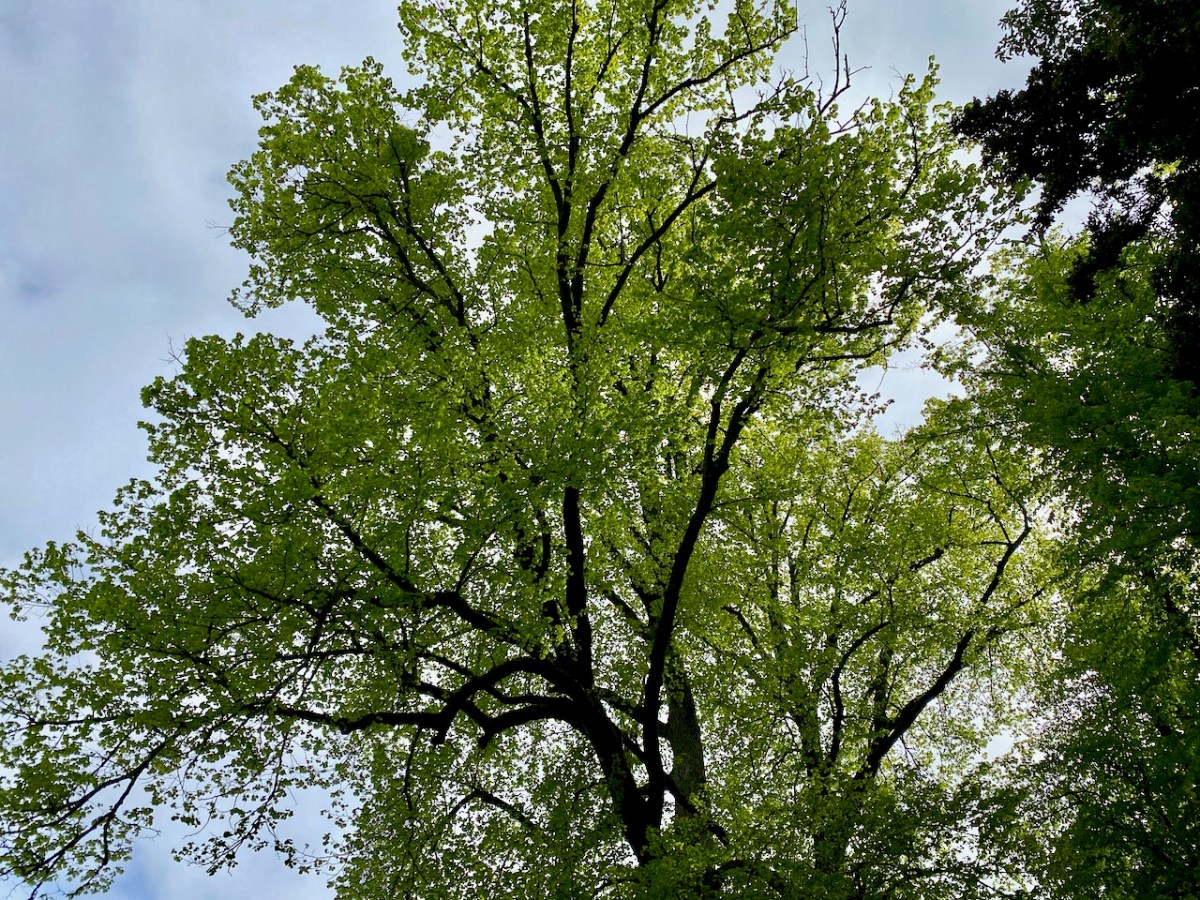
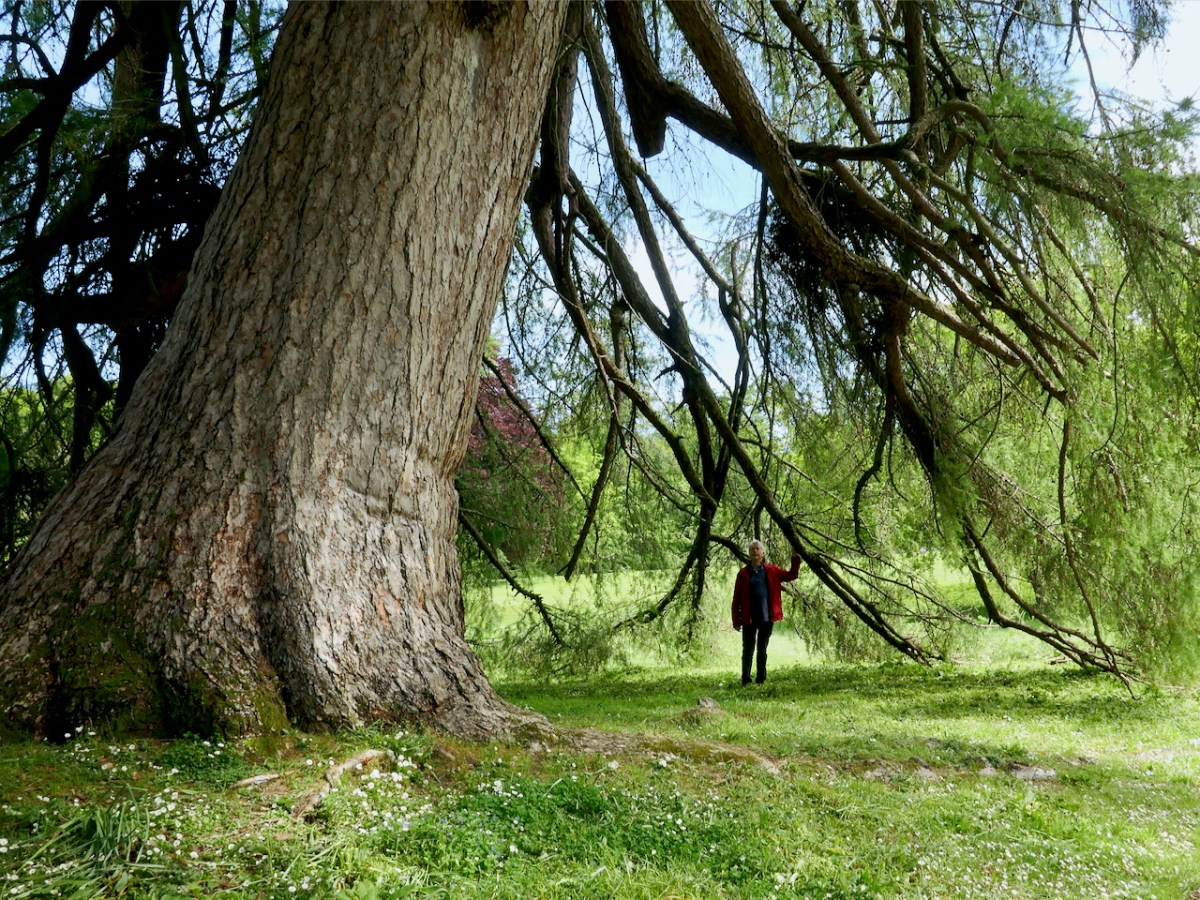
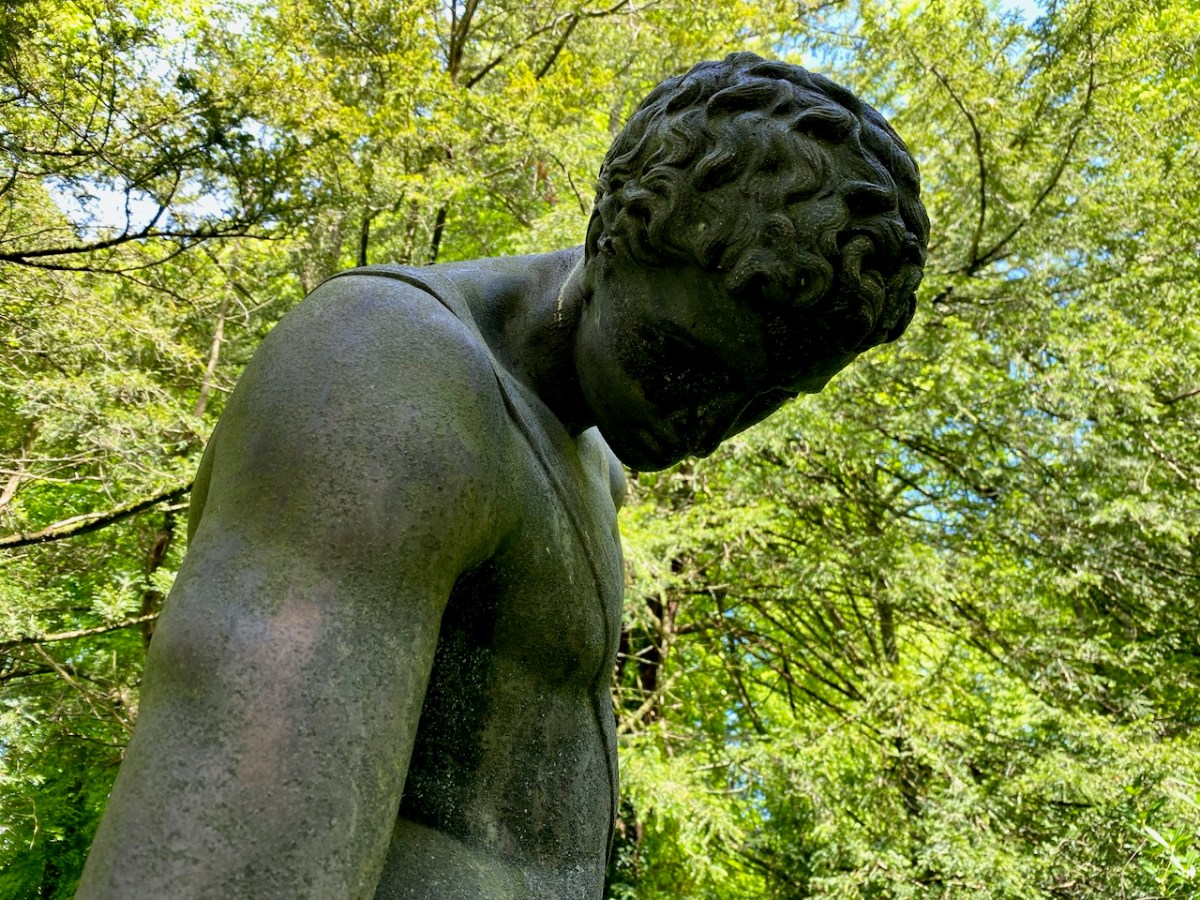
Almost uniquely in Ireland, this is a garden that has been established since the seventeenth century. It was underway by the 1680s and much of it was already in place by 1711. It’s difficult to imagine that there are taller trees anywhere else in Ireland! Each generation has planted and refreshed, changed and improved, always taking seriously their stewardship of the estate and nurturing the land. 
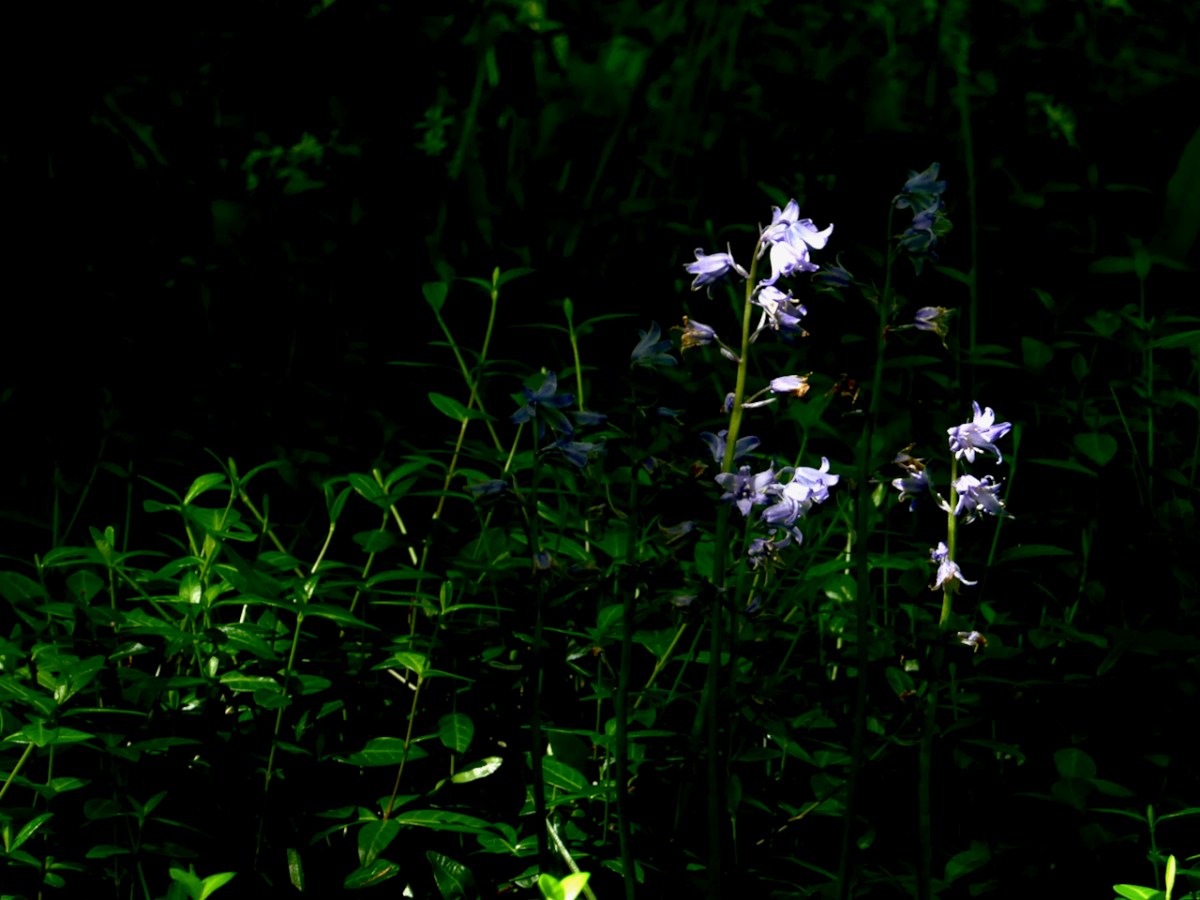
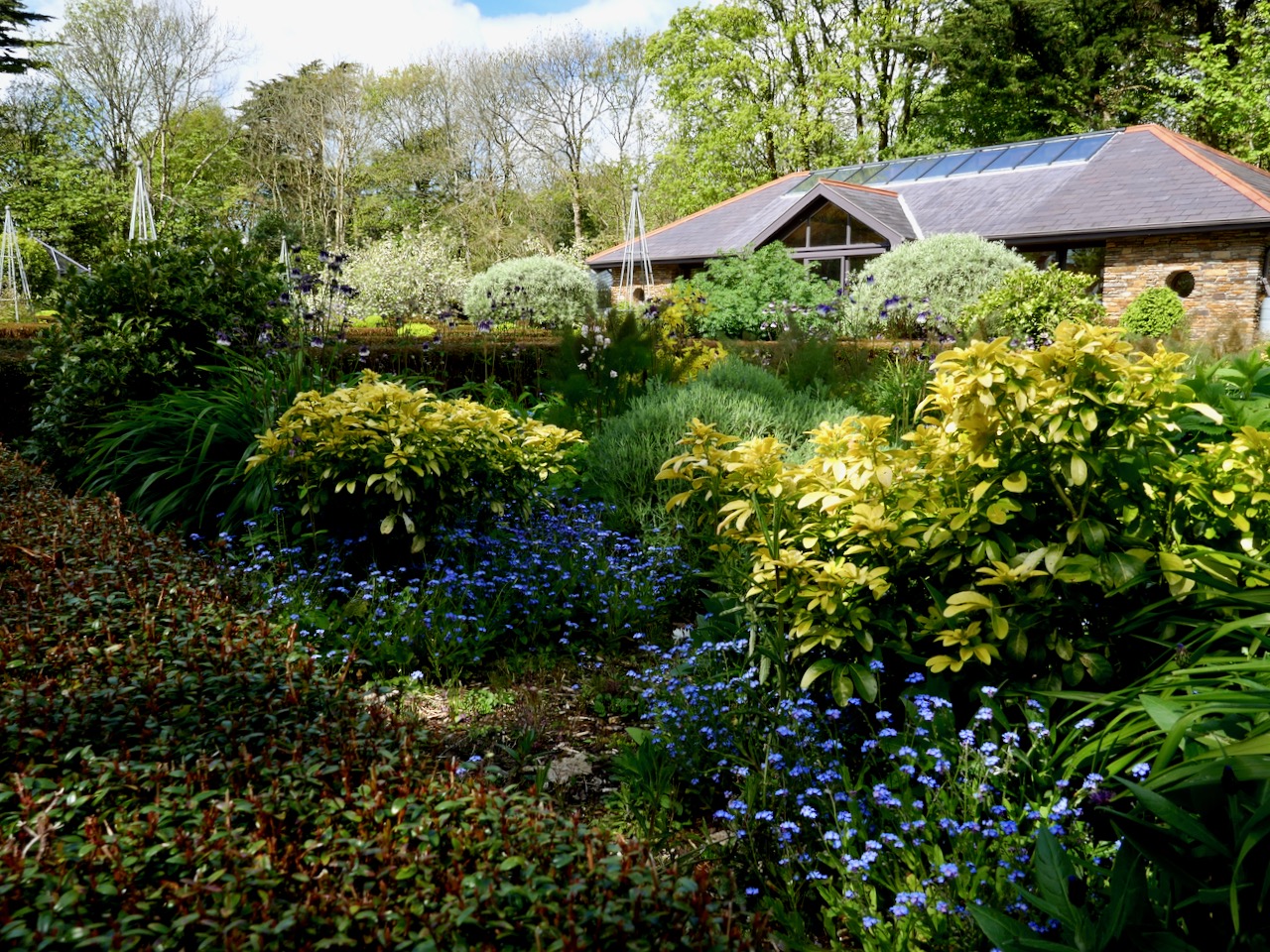
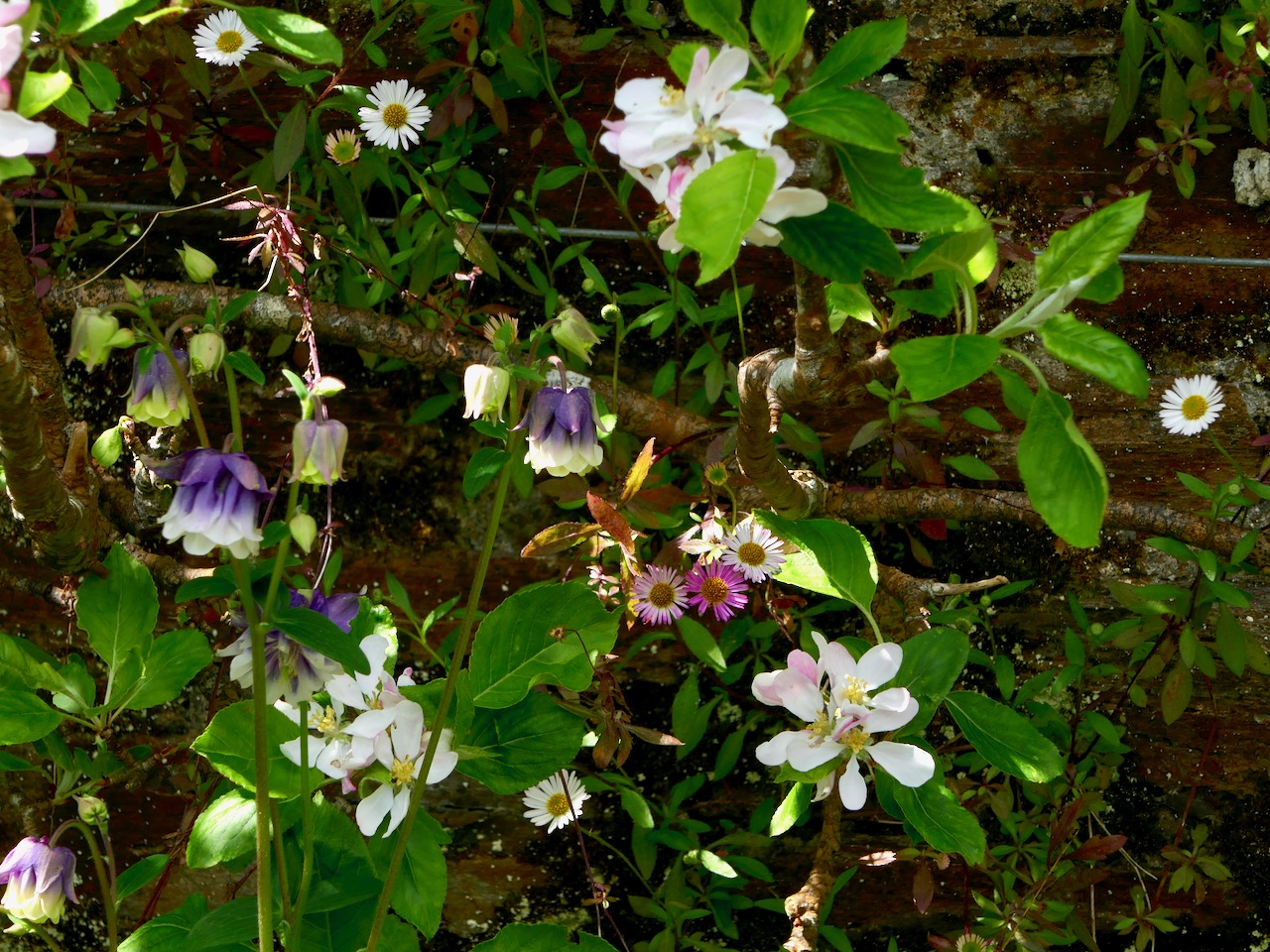
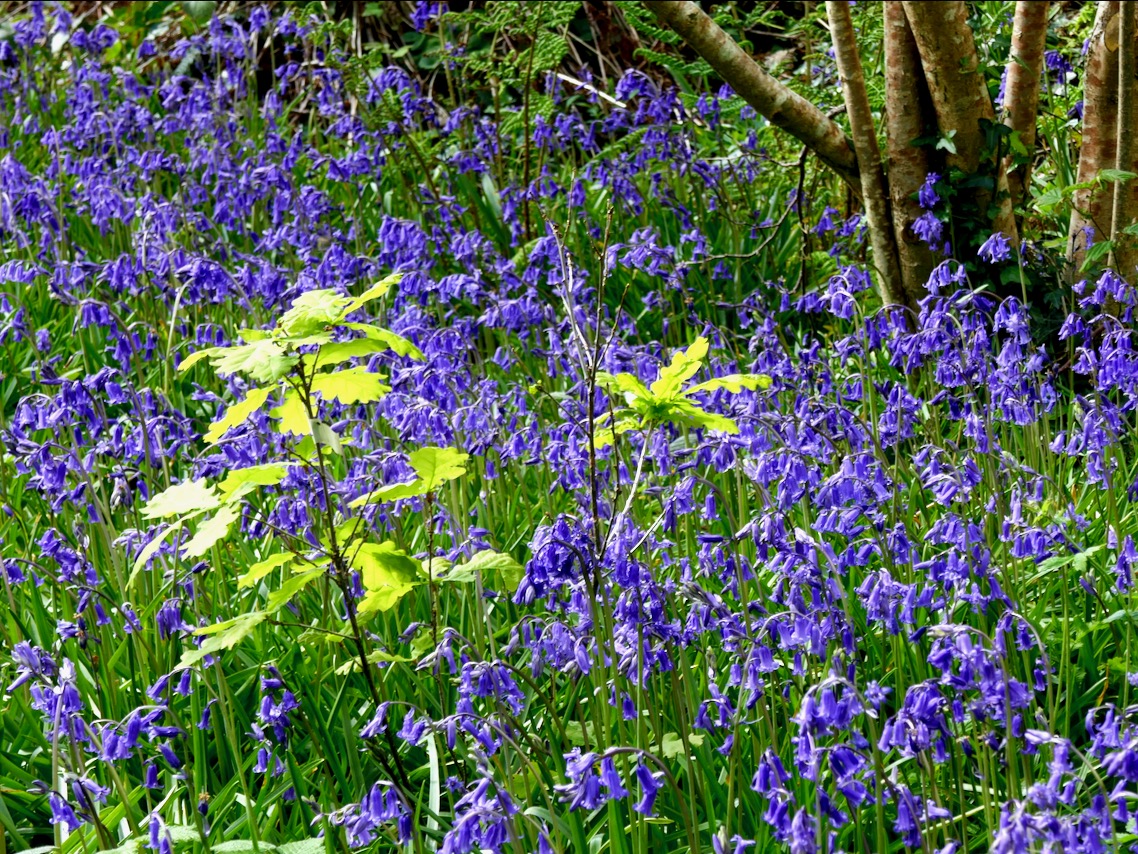
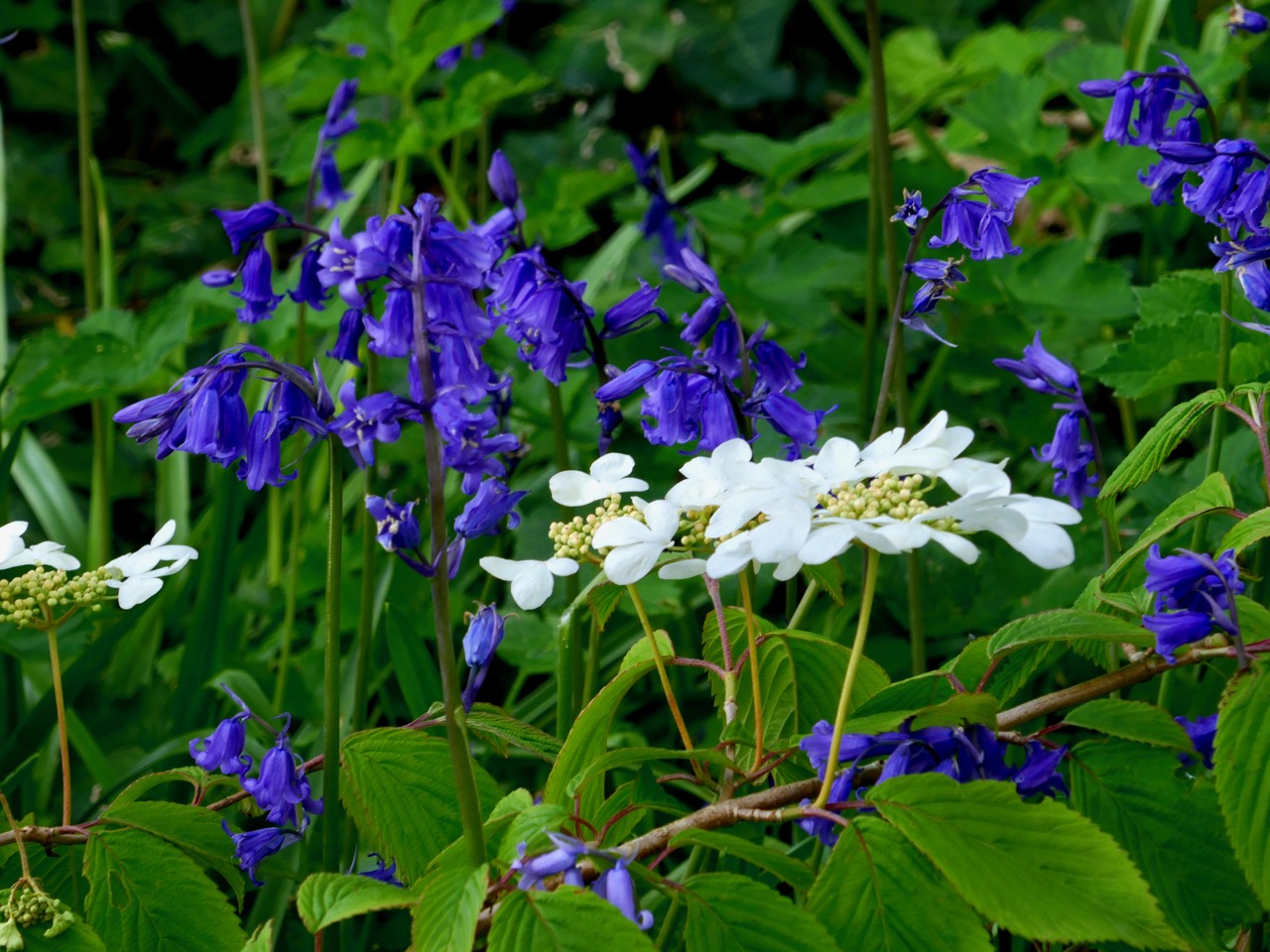
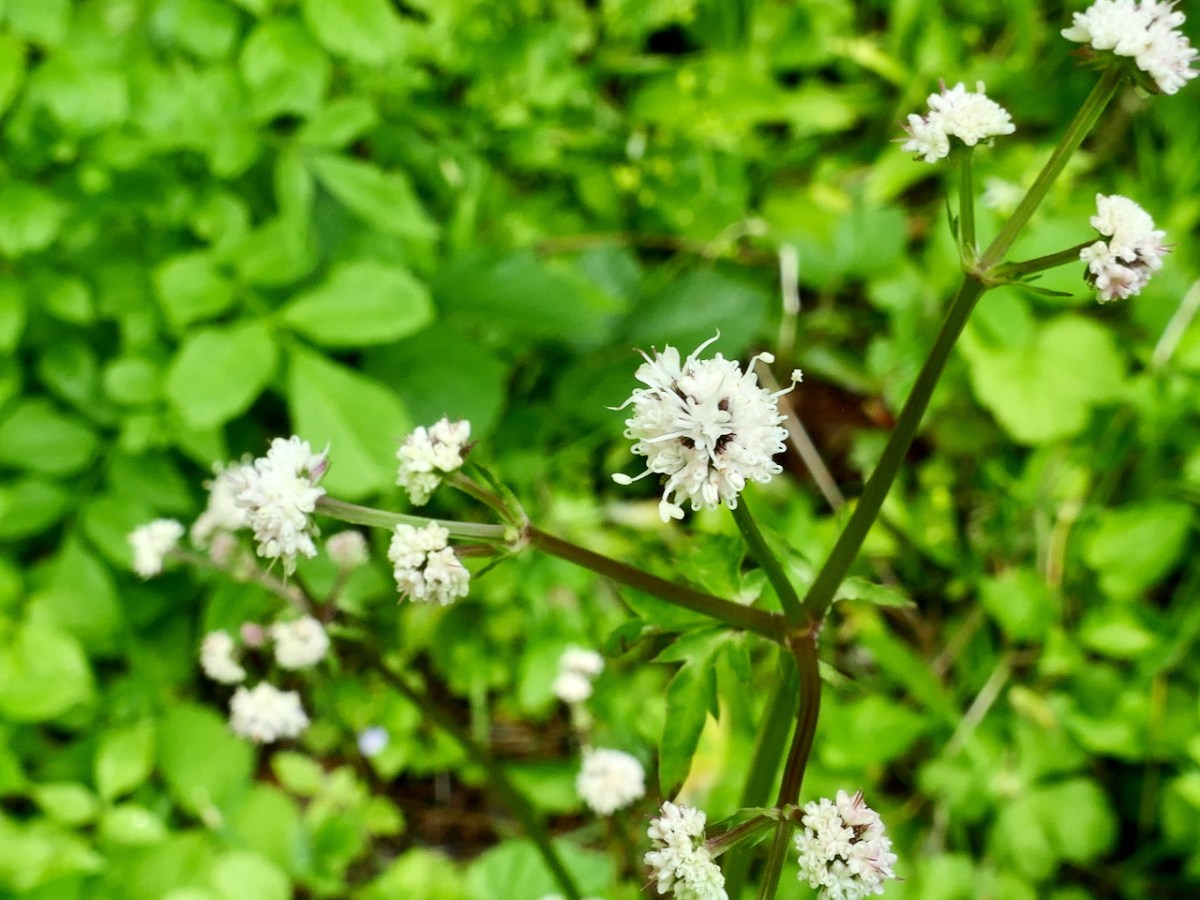
Robert has shared some photographs of the more formal part of the gardens today, while I have concentrated on the woodland. The last of the bluebells were still blooming (above) and I was lucky enough to stumble on some Sanicle (below) – although it’s common and widespread in Ireland you are most likely to find it under beech trees in woodland – not something that abounds in West Cork.
There’s something for everyone at Killruddery (including excellent coffee!) so do pay a visit if you happen to be anywhere near Bray.
Northside of the Beara

We have written previous posts in praise of the remarkable narrow, remote, and rarely explored byways or boreens that serve the north coasts of our own peninsula – the Mizen – and our neighbour – the Sheep’s Head. Driving them can be an exhilarating and, at times (particularly when you meet something coming the other way!), harrowing experience although always worthwhile because of the unparalleled land- and sea-scapes which are revealed at every turn.

A view from the boreen that skirts the Northside of our own Mizen Peninsula

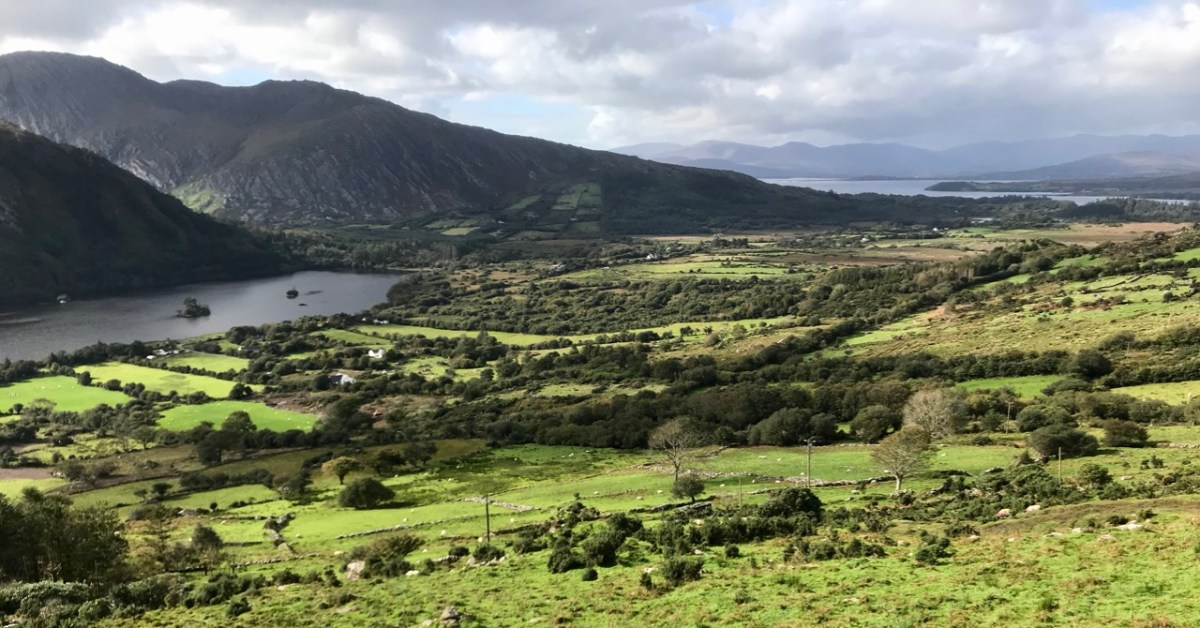
This week, however, we set out to explore a little corner of our land which we have, until now, neglected: the Northside of the Beara. Not too far away from us, the Beara Peninsula extends from West Cork into County Kerry and draws us like a magnet because of its dramatic scenery and inherent beauty in all weathers. Have a look at this post, for an overview of how sublime it is.

Looking towards the Northside: our route takes us through the Healy Pass and over the mountains

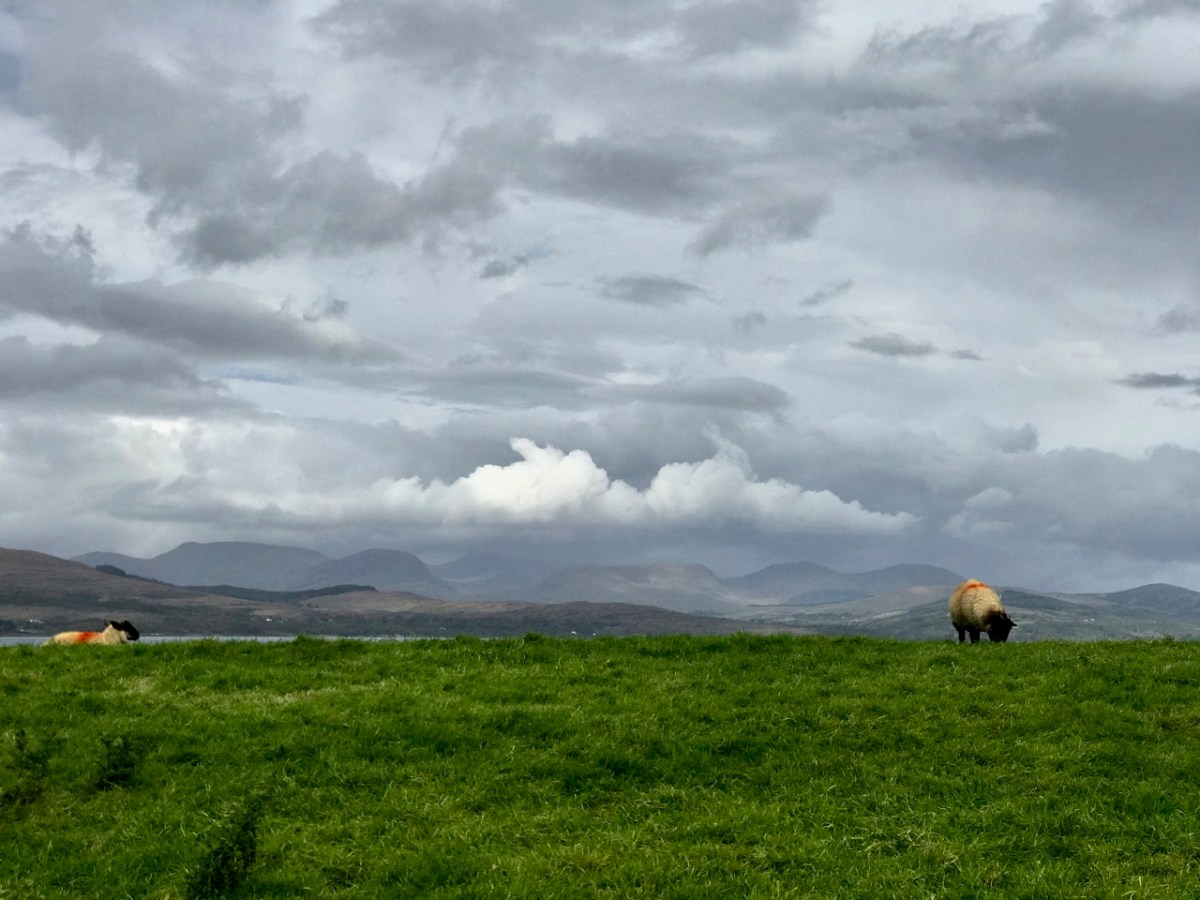
We headed out on the last day of September and were treated to a day of changing skies and theatrical light effects – the header picture, showing sheep on the Beara Northside, gives an example of the cloud atmospherics over the distant Ring of Kerry. We wanted to explore a corner which could easily be by-passed if you were travelling on the most direct routes through the peninsula.

Our first port of call took in the lakes at Cloonee. Finola was on the lookout for a very rare wildflower which has been seen around the shores but, after diligent searching, we concluded that we were too late in the season: we will have to return next year. That’s no hardship, of course.

Clonee Lakes – dramatic reflections and blue boats at rest

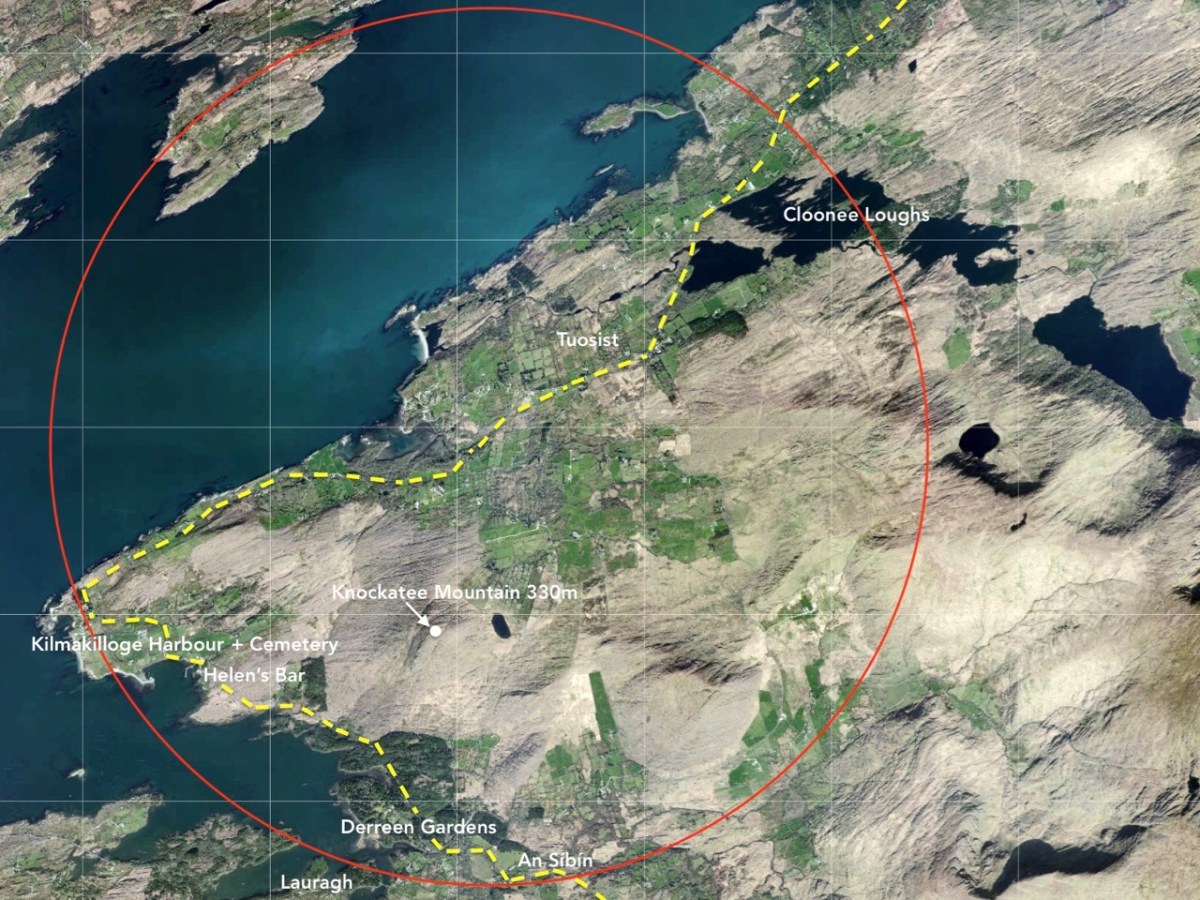
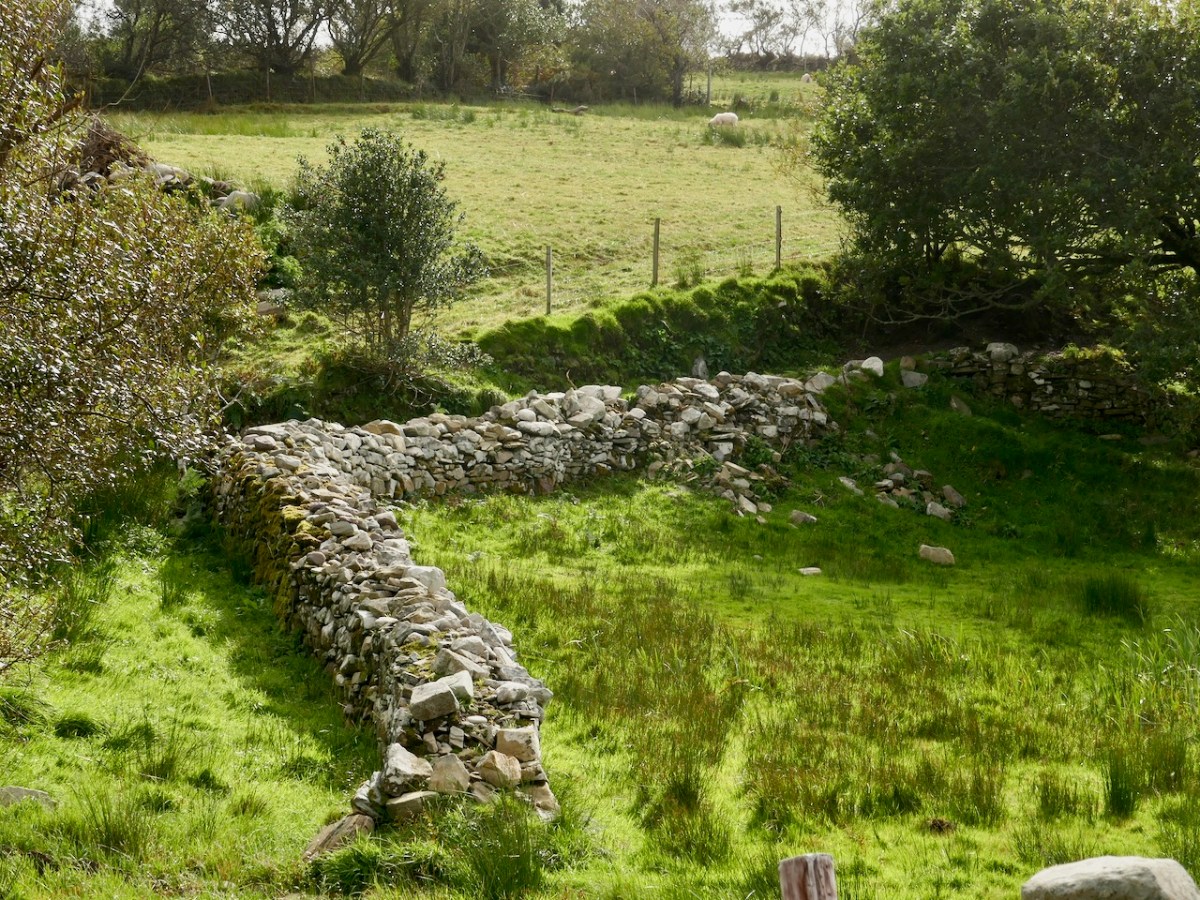
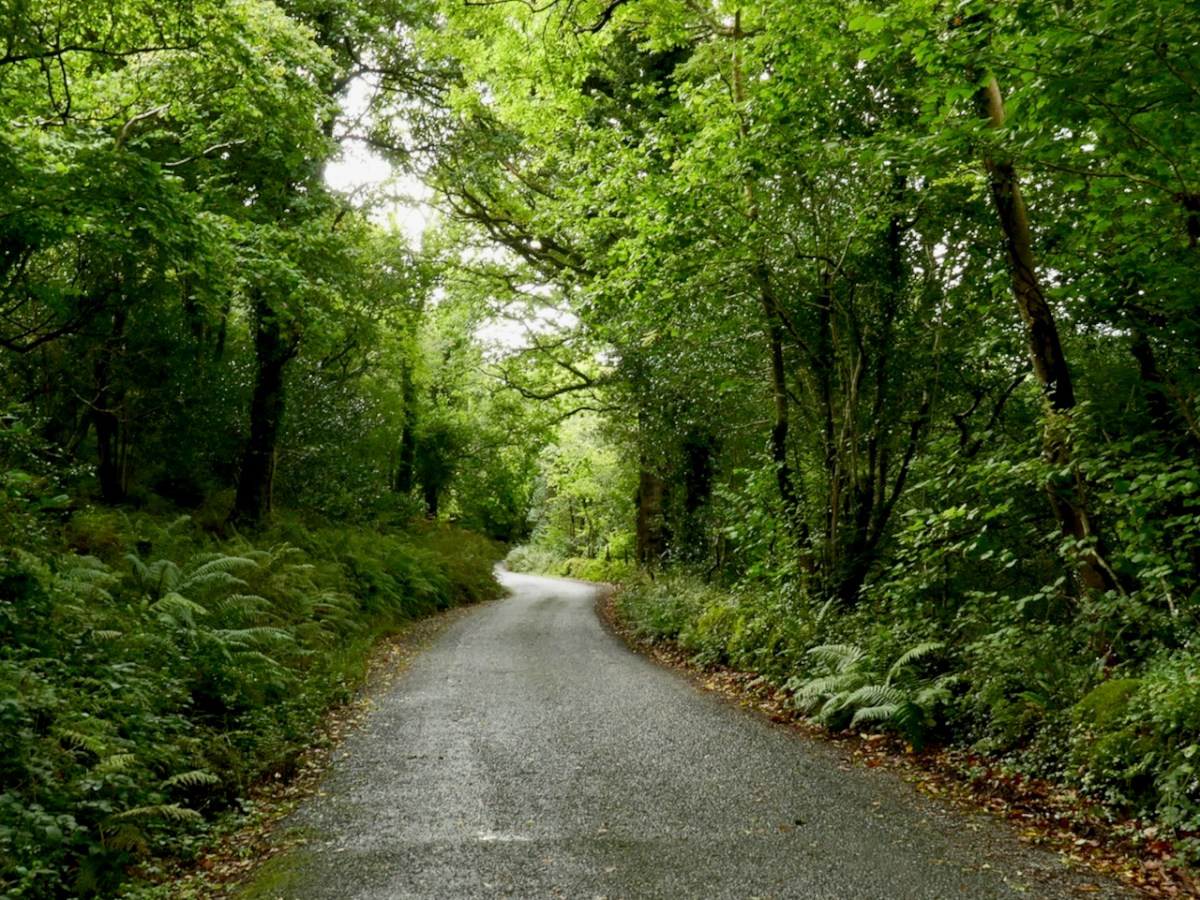
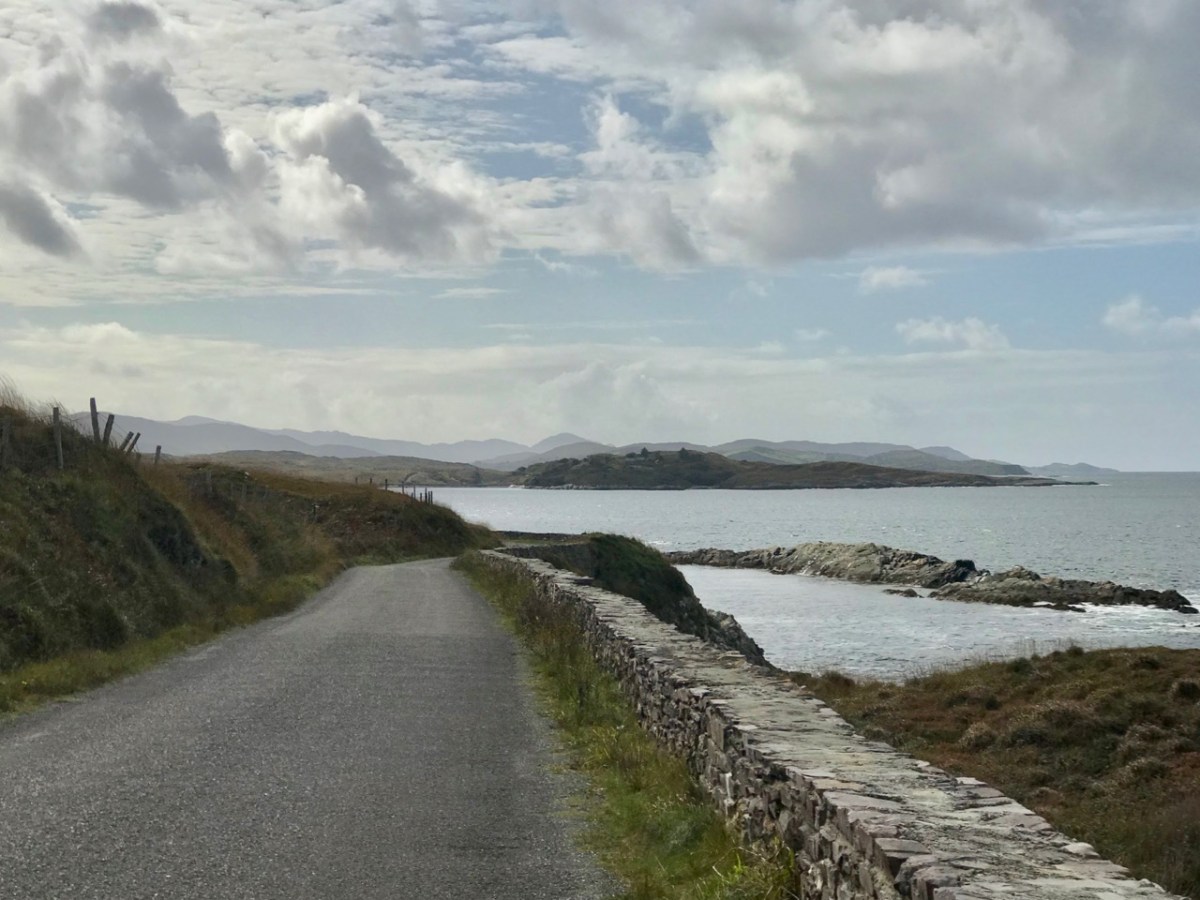
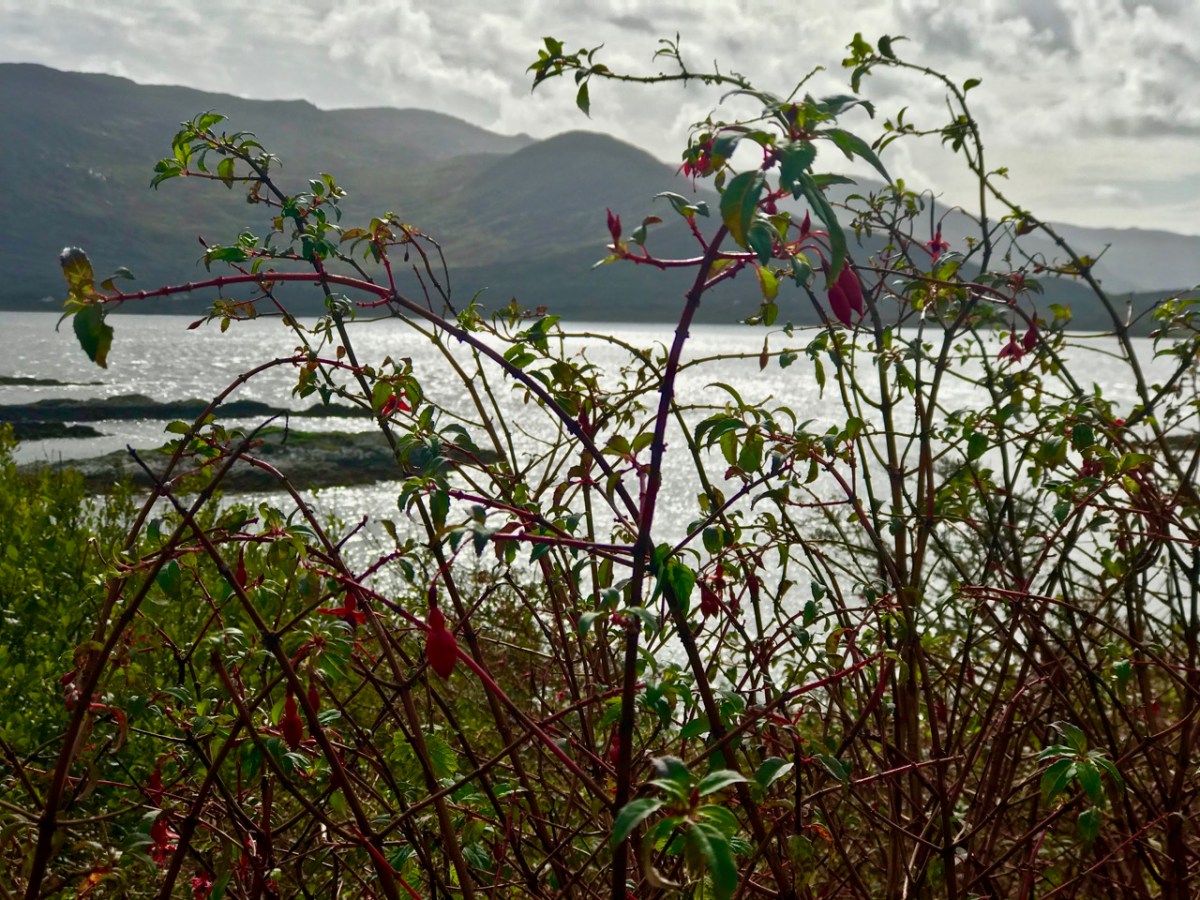
As you can see from the route map above, the terrain all around is wild and rugged. After the little settlement of Tousist the road runs mainly close to the coast and offers constant changes and contrasts. The wide panoramas across Kenmare Bay give way to small stony fields, some guarded from the prevailing weather by heavy-duty walls, then occasionally diving inland to briefly present an unexpected tree tunnel or tumbling stream. Always, the road is not far from an indented shoreline unpredictable in its many twists and turns.

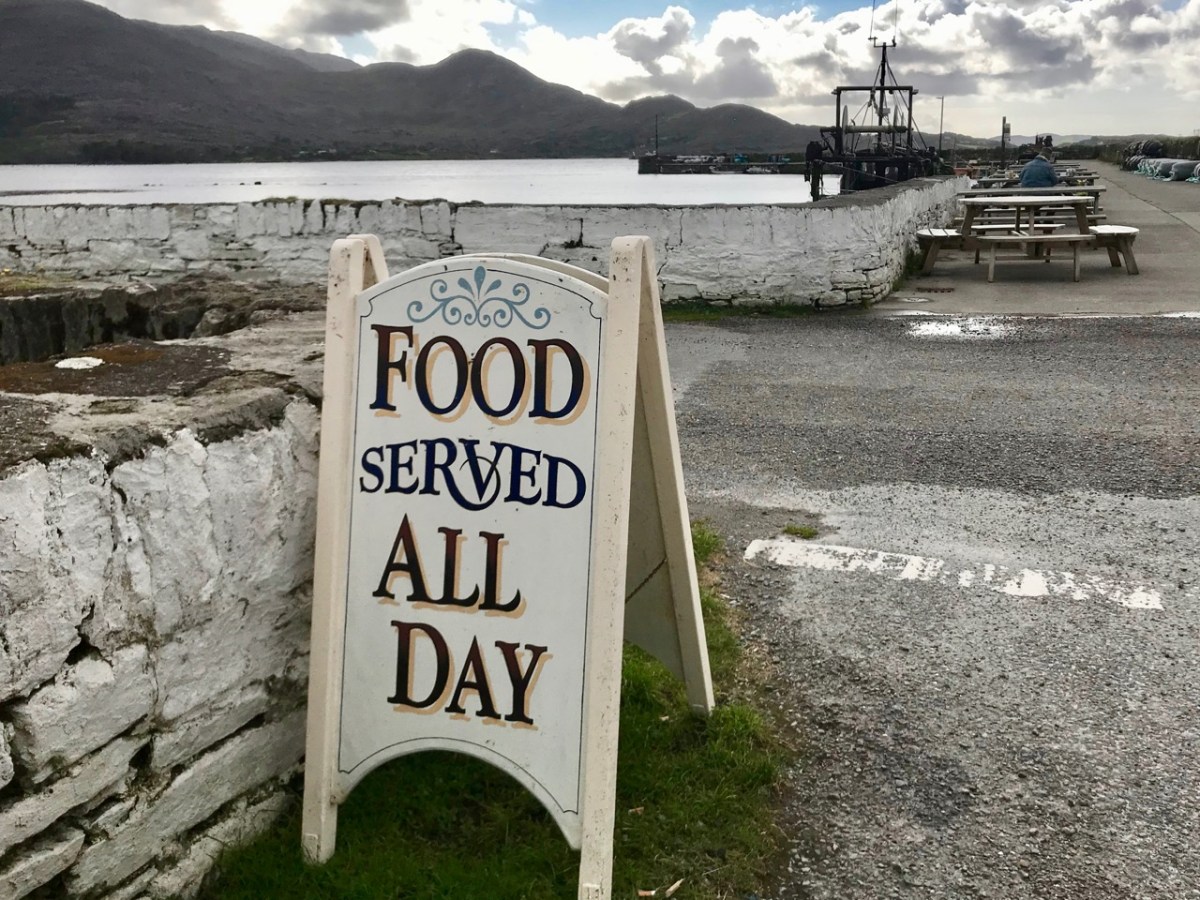
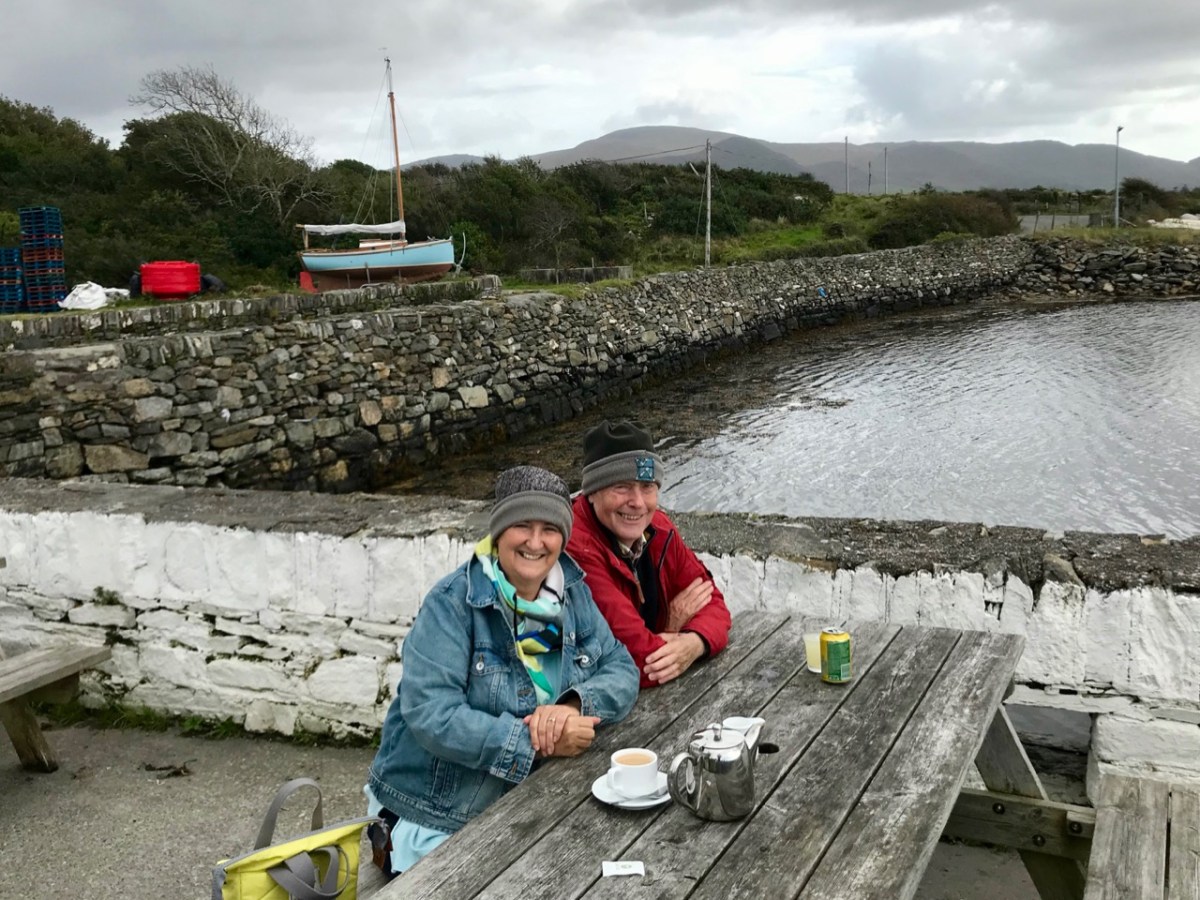
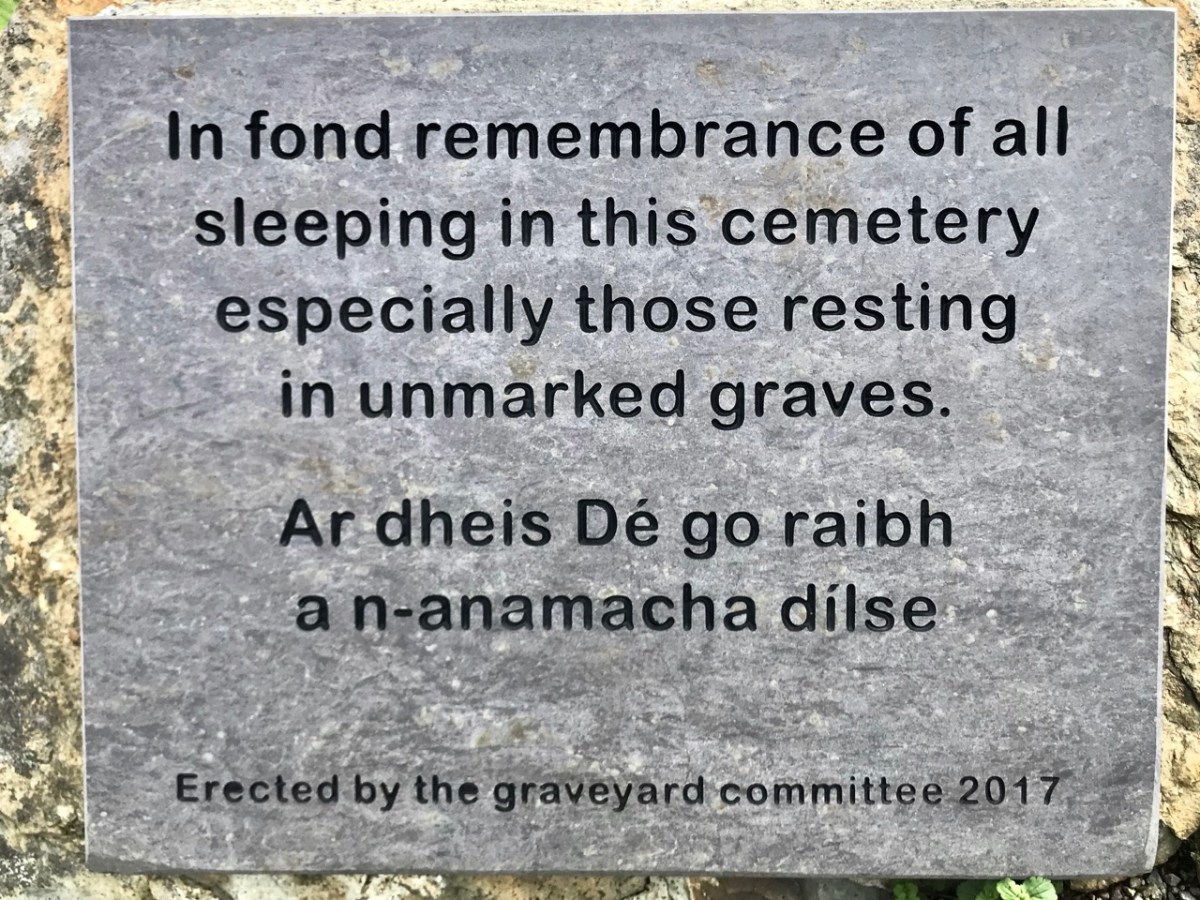
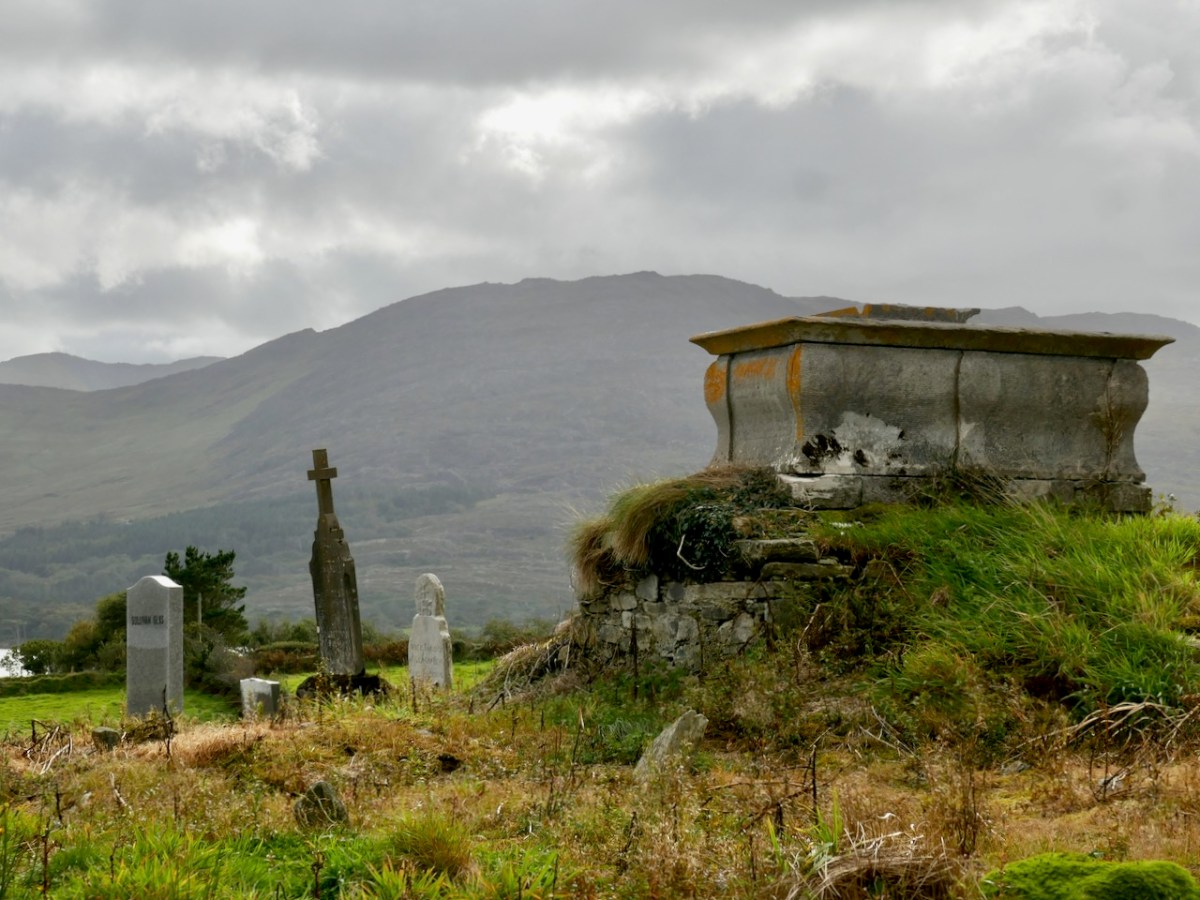
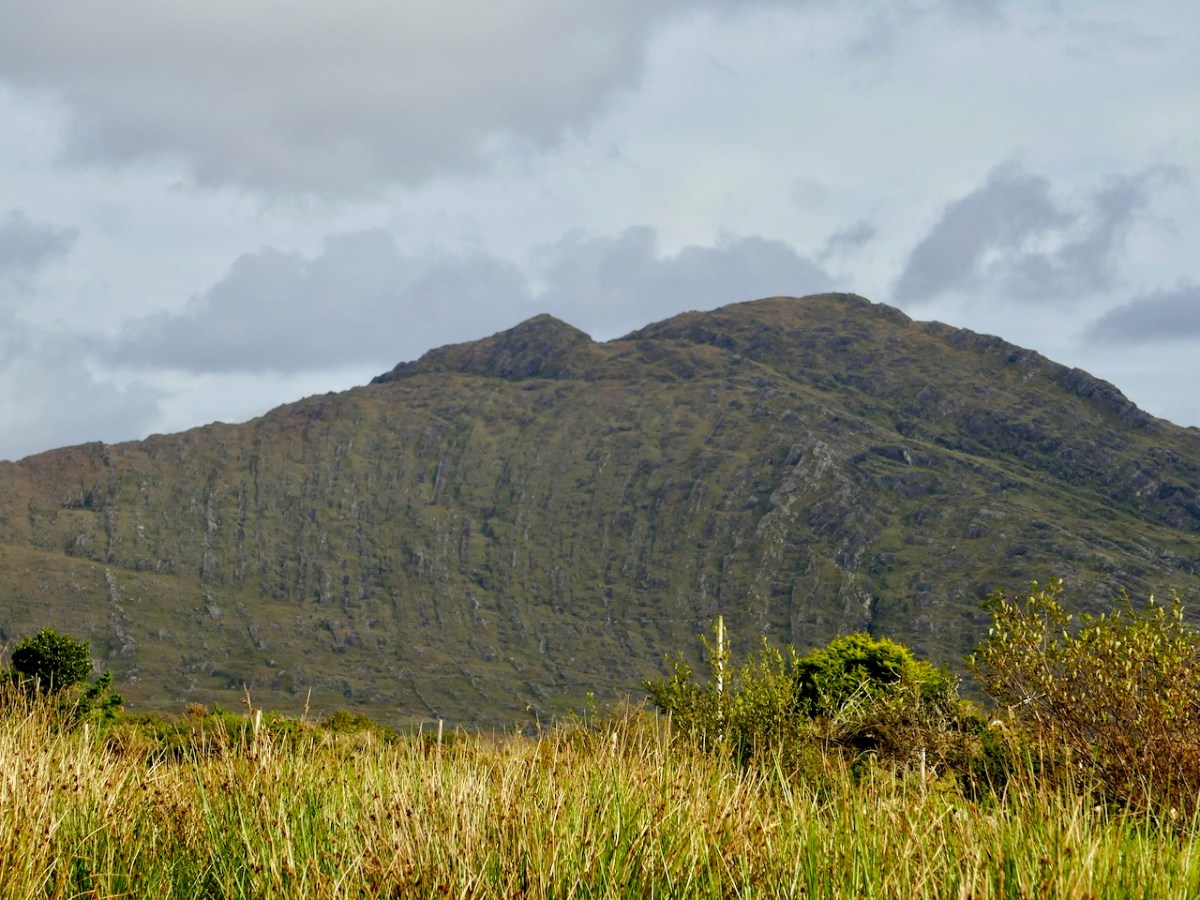
The edge of the land – in this part of the Beara at least – is more heavily populated than the Mizen or Sheep’s Head Northsides. The small townland of Kilmakilloge, in particular, offers a substantial harbour, a bar and cafe ‘serving food all day’ (Helen’s Bar), a large cemetery in which it is possible to glean the part played by this little settlement in the whole history of Ireland, and the slopes of a geological wonder – the 330 metre high Knockatee Mountain. Described as ‘…a small hill with a massive view…’, this green-grey sandstone and purple siltstone mass is a spectacular backdrop to the burial ground: we didn’t climb it on our day out but it is evidently well worth it for the vistas it provides! Another good reason for us to revisit the area.

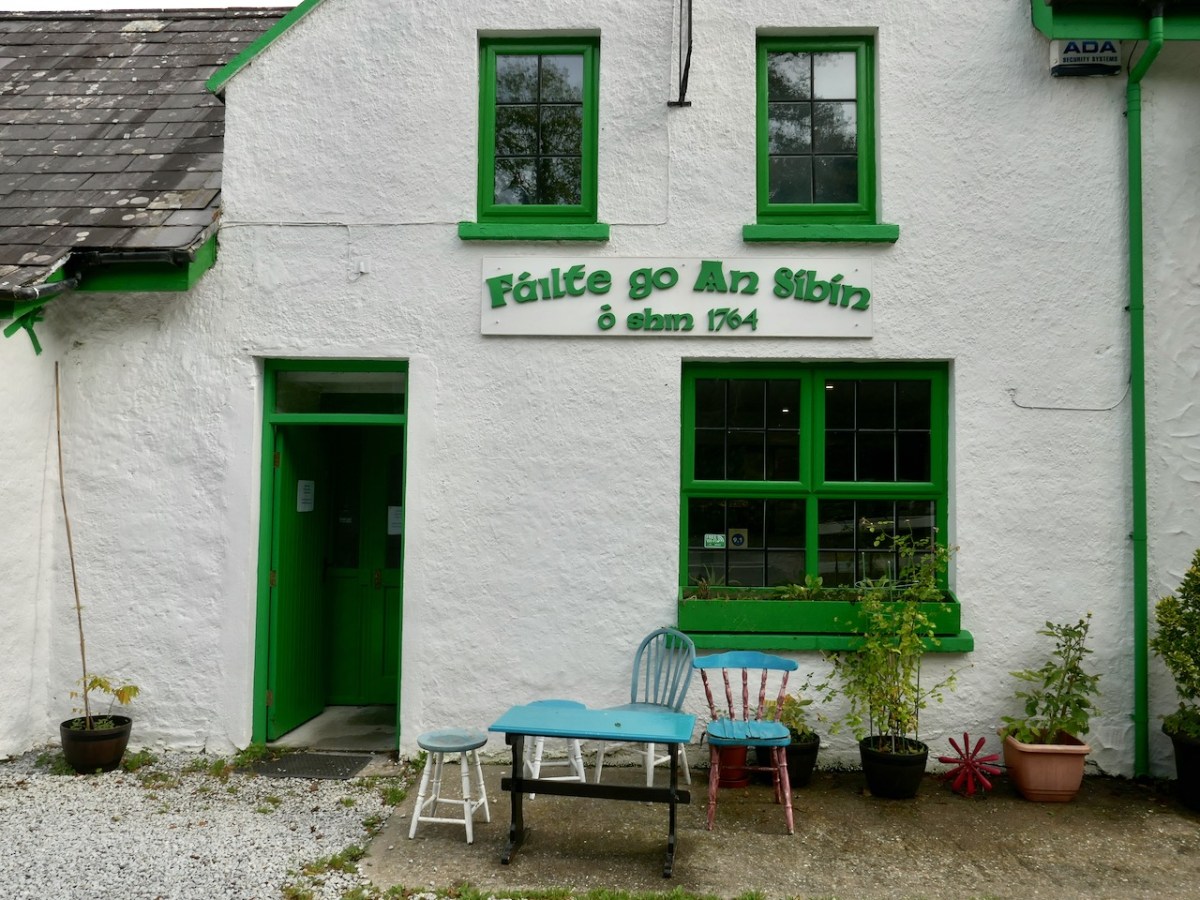
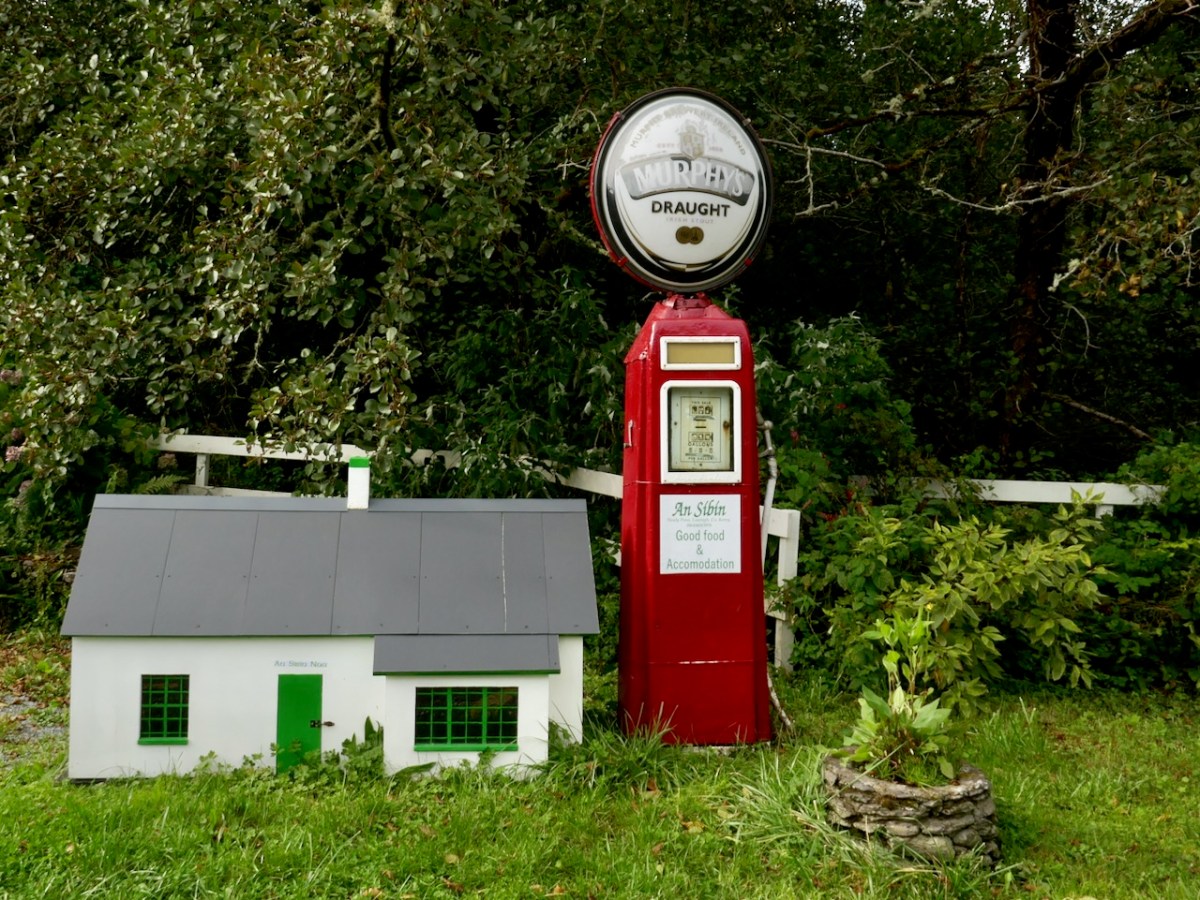
Approaching Derreen Gardens (you’ll find it described in this post), our excursion is close to the finishing line. The Beara is well supplied with hostelries, which seem to be surviving in spite of the Covid-19 difficulties, and one you shouldn’t miss is An Síbín, near Lauragh. I’m always amused by the old petrol pump there, which looks as though it should provide you with a fill-up of Murphy’s Draught! This is also the point where you have to decide which way to return home. In our case it was back over the beautiful Healy Pass: who wouldn’t want to look out again over those amazing views in all directions?

Friendly sheep have the right of way as we traverse the hairpins on the Healy Pass, heading back to the Mizen

It’s an easy day out for us – and we certainly can’t get enough of the Beara! If you have the chance, explore the Beara Northside yourselves!

Two Green Shoots

That’s what they call themselves but their real names are Kloë and Adam and they are the powerhouse team behind the Garden of Reimagination. You’ll find it just west of Glengarriff and not far from the Ewe Experience, the wonderful sculpture garden and all-round woodsy experience we’ve written about before. The Ewe is the work of Kloë’s parent, Sheena and Kurt. Put a note in your diary now for next year and make sure to plan a visit to both of these incredible gardens.

Kloë and Adam, both highly educated gardeners and conservationists, moved onto the property only three years ago and set about finding what was actually under several feet of moss, bracken and brambles. They had a strong suspicion they would find something special, because their neighbour, Jackie Cronin, now in his eighties, had told them stories about Mrs Hardstaff, who lived there in the 40s and who had been inspired by what she saw on nearby Garinish Island.

An Italianate terraced garden was what she had in mind, so Jackie and some friends were dispatched up the mountain to break out suitable rocks for the steps and paths, bringing them down on donkeys and levering them into place with iron bars. It took Adam two weeks of backbreaking digging and clearing to reveal all those stones steps. He also found little trickling ponds and lots of old plantings.

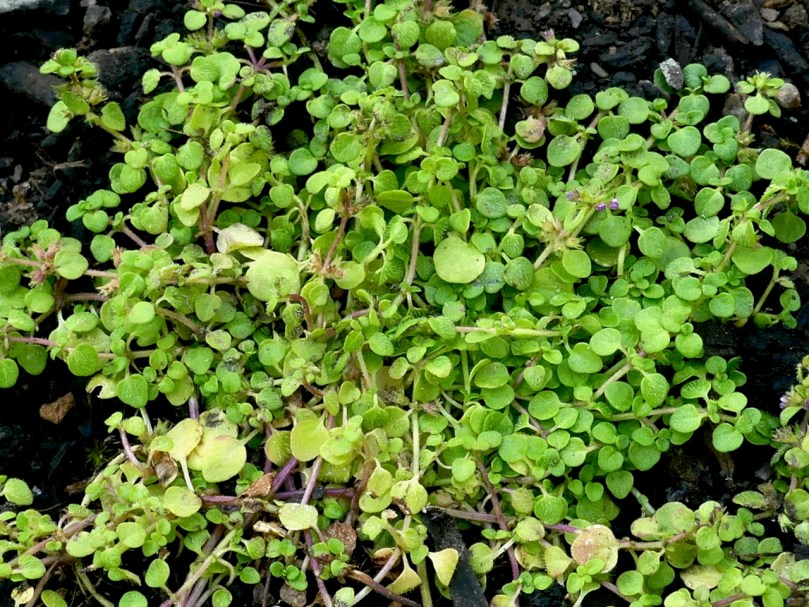
The Terrace, painstakingly constructed from stone slabs: many gardeners would declare war on the ‘weeds’ that pop up between the paving stones, but Kloë and Adam use these spaces to grow herbs. Here’s Kloë pointing to some special Alpine Mint that seems to have adapted well to this micro-environment

These Two Green Shoots, Kloë and Adam, have a philosophy rooted in a dedication to conservation and in their own passionate beliefs about gardening. Everything, they decided, should be edible, to the extent possible. So they have taken the underlying Italianate Terraces and added layers of edible plants. Some of these are familiar to us and some of them definitely aren’t!

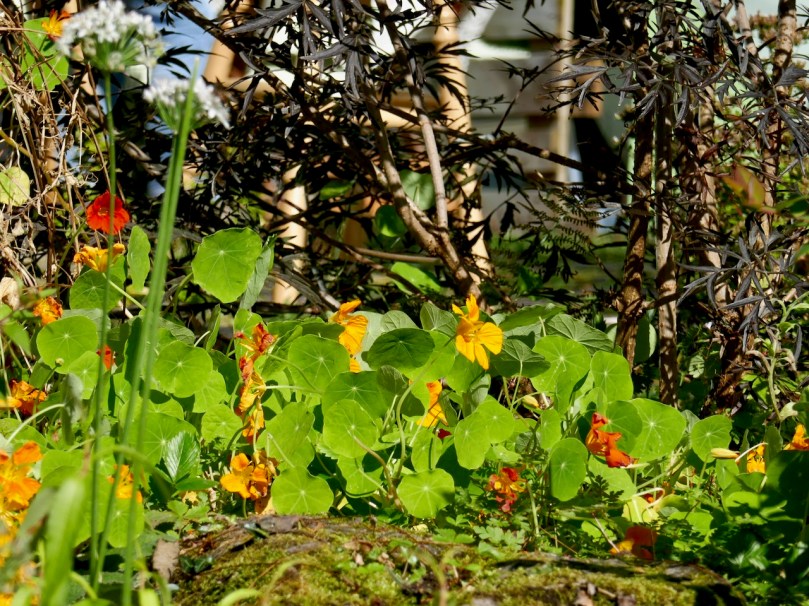
From the top: Nasturtiums and a miniature Fuchsia – very pretty but also edible

At the same time, they are conscious of their West Cork location and have tried to preserve as many of the native trees, shrubs and plants as possible, reflecting that sense of place that makes each garden a part of its particular environment. Everything grows so quickly here, says Adam, although getting enough light in can be a challenge.

From the top: Natural tracery filters light through the trees; a trellis constructed from materials to hand in the garden; Adam’s perennial wildflower patches, newly mown and raked as per best practice as described in One Acre – Three Years On

We attended their Open Day yesterday, a fundraiser for the Save Bantry Bay Kelp Forest campaign. Adam led us on a tour of the garden and then Kloë fed and watered us with cakes and muffins featuring botanical ingredients. We wore masks and kept social distancing in mind and there was a limit on numbers, so it all felt quite personalised and there was lots of time to ask questions.

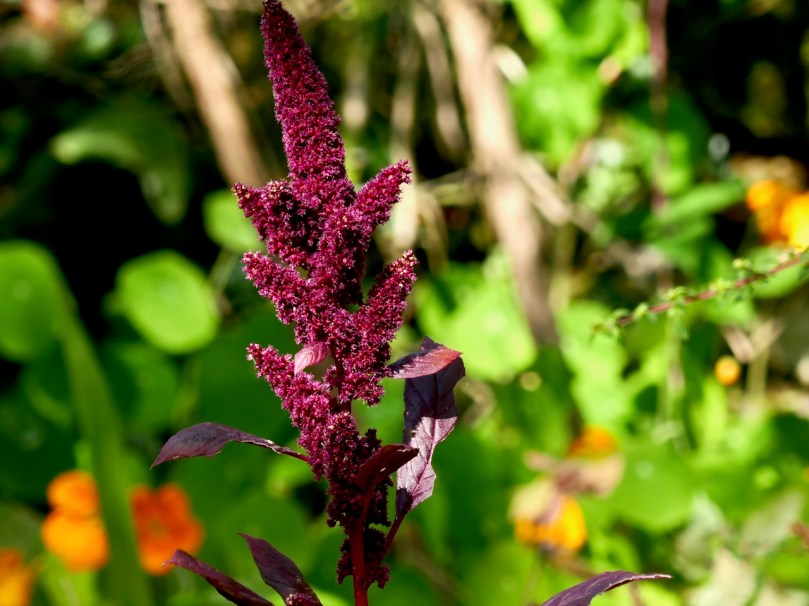
The sheer variety of edible plants is a revelation. Many of them of course, would have been familiar to our ancestors (anyone for nettle soup?) while others would have been used for ornamentation rather than grown for their nourishment value (nasturtiums, for example).

From the top: Comfrey is a familiar edible and medicinal plant, but the Prickly Ash was a surprise, especially when we learned the berries are what we know as Szechuan Peppers – a key ingredient of Chinese cooking

Adam talked us through many of the plants he grows, some for their leaves, some for their flowers and buds (day lilies – who knew!) and some for their berries or seeds. Some, indeed, for all three, like the Chilean Guava that grows in neat little shrubs and make a great topiary plant.

From the top: I’ve forgotten the name of this gorgeous plant but do remember it’s the seeds that are collected. Chilean Guava is one of the new favourites of top chefs – a delicious alternative to blueberries or cranberries

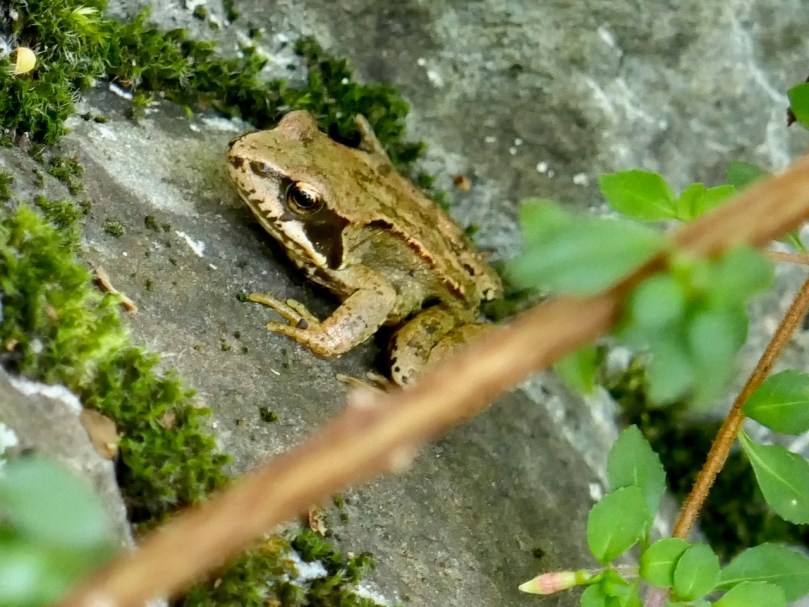
We are all conscious now of the need to feed and preserve our pollinators and Adam spoke frequently about plants in terms of their attractiveness to bees and butterflies. We certainly saw evidence of both – and another little critter as well (below).

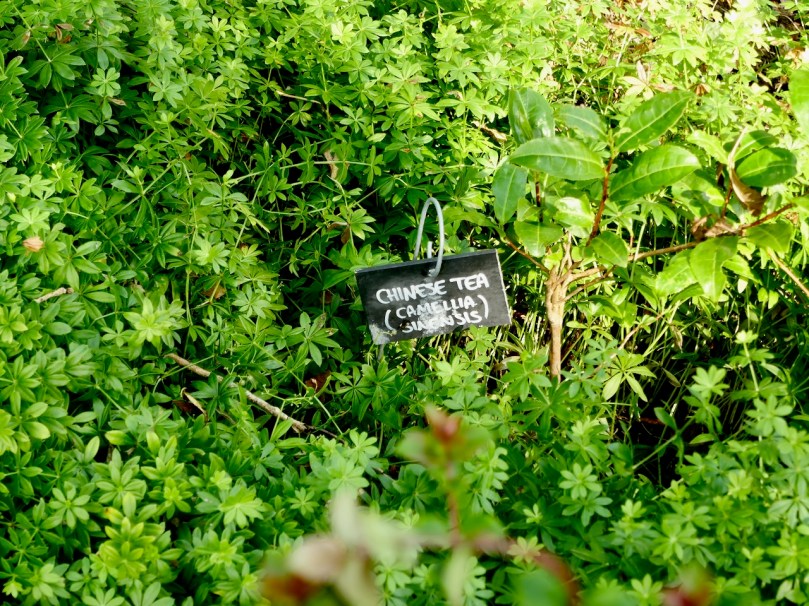
One of the surprises of the day was to find out how readily tea grows here – yes, tea, that most beloved of Irish beverages, and as Adam says, your good old Barry’s tea, nothing exotic. It’s a little tricky – apparently it hates being moved and will go off in a huff if you disturb it – but now they have the hang of it, it’s coming along nicely, although it probably won’t grow as tall as it does in Sri Lanka.

The tea is the tall plant with shiny leaves, and the prolific plant on the left is Woodruff 

Kloë has her mother’s artistic flair and there are nature-sculptures and special spaces off to the side all over the place. They have developed a B and B business as well, with attractive rooms in the house and a Botanical Tent in the Garden for anyone with a yen for the glamping experience.

The Garden of Reimagination is a work in progress, still very much under development. I look forward to returning many times, since it’s clear there is a long-term vision at work here and all kind of plans for the future. If you get the chance yourself – jump at it!

And Kloë – thank you – that tea is delicious!

One Acre – Three Years On

I’ve been documenting all the wildflowers on my acre in West Cork. I started three years ago with the first post, simply called One Acre and then updated it two years ago with One Acre – One Year On.

The only actual gardening I do is to maintain a herb bed. Apart from that, we get the grass cut and the hedges trimmed occasionally, and a great neighbourhood kid comes to do some very select ‘weeding’ where it’s absolutely necessary. I don’t really believe in the whole notion of ‘weeds’ but I reluctantly accept that we have to keep some areas clear.

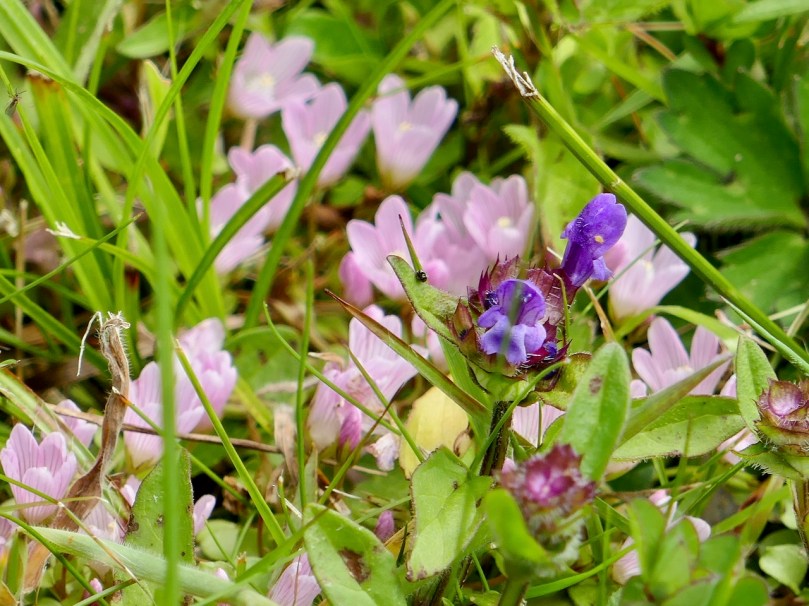
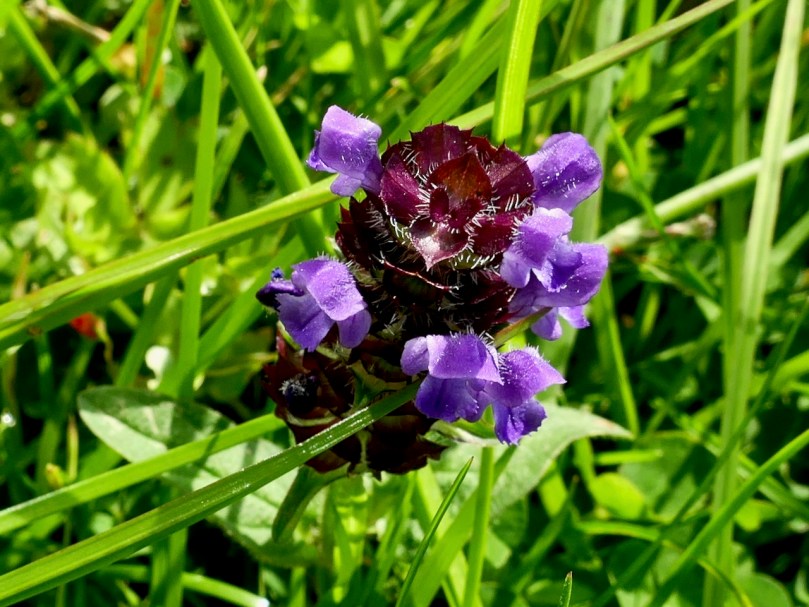
Growing in the lawn, from the top: Bird’s-foot Trefoil, Self-heal, White Clover; Bog Pimpernel and Self-heal; Heath Speedwell; the spectacular male flowers of Sheep’s Sorrel

Apart from that I have two approaches. The first is driven by my desire to keep the place as non-manicured as possible and Robert’s desire to have it looking reasonably tidy, or at least not abandoned. This approach is to cut the grass as seldom as I can get away with, leaving all the lawn flowers to flourish in between the cuts. I also leave the boreen/right of way above the house uncut all summer, as this is where the Chamomile (below) grows most abundantly and as it’s getting rarer in Ireland I feel privileged to have it.

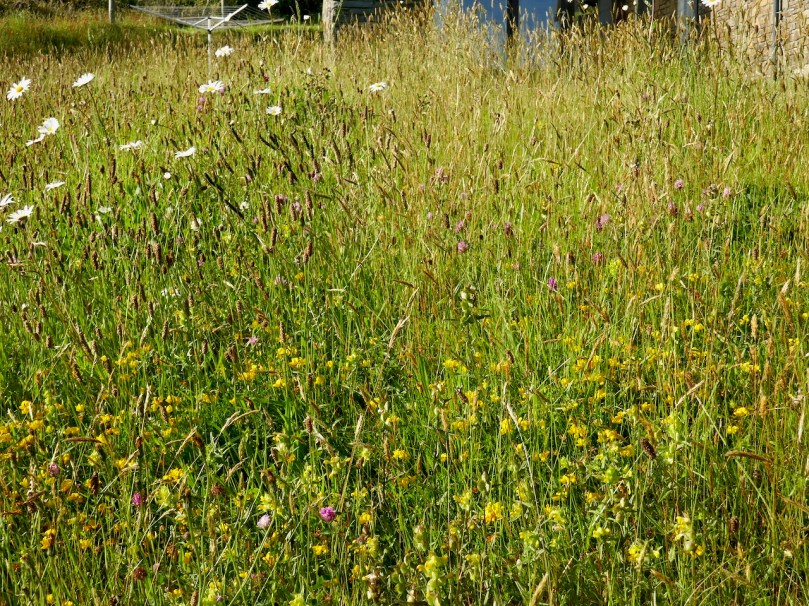
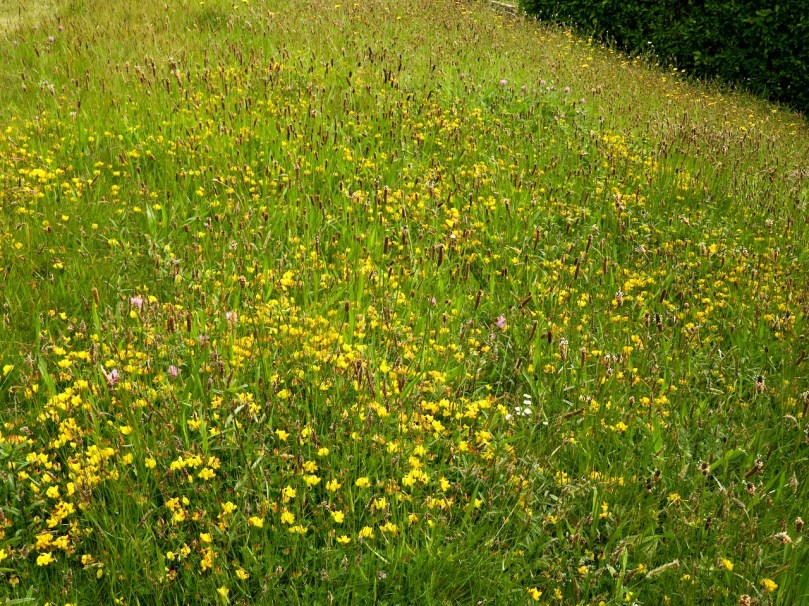
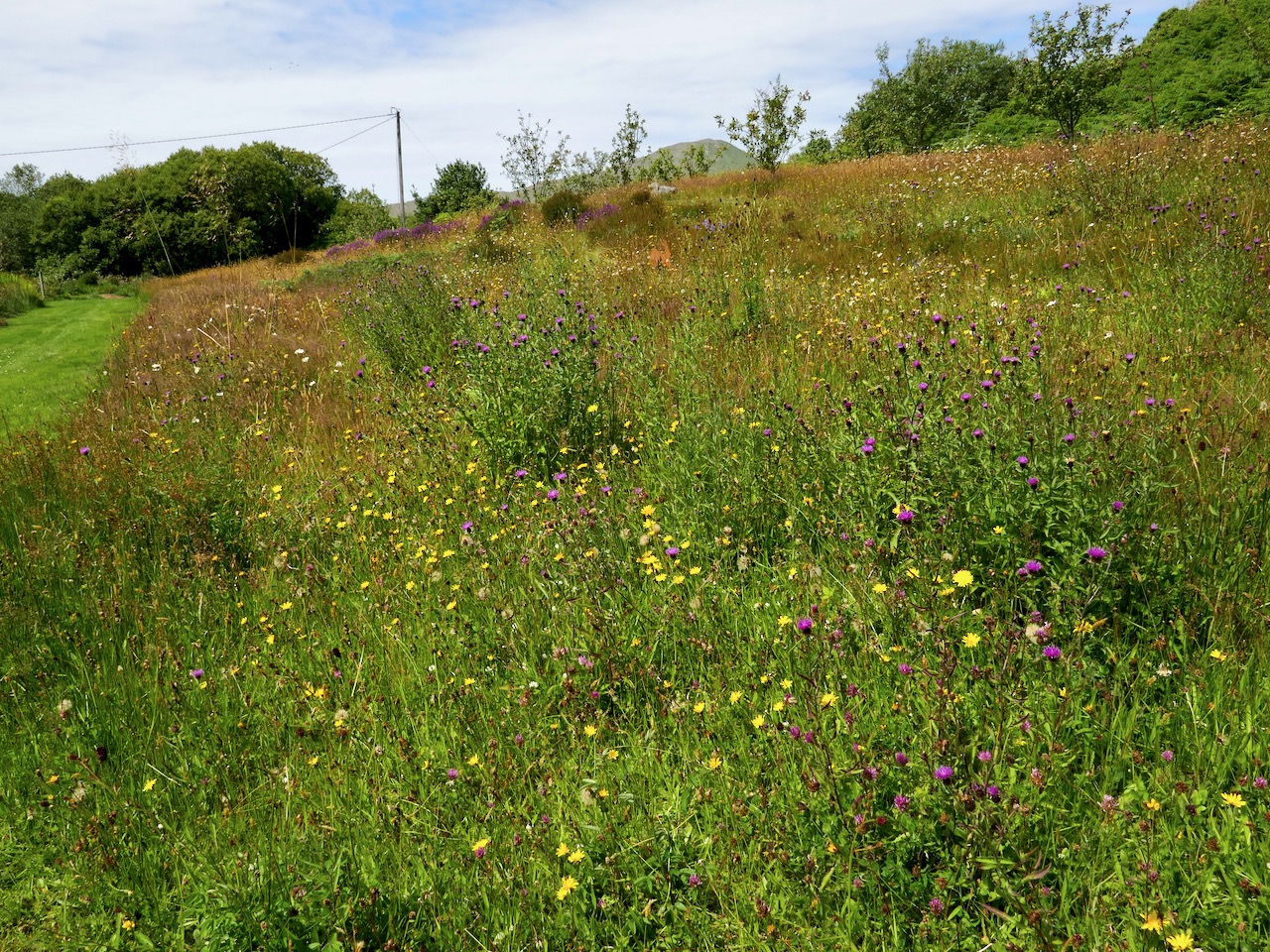
The second approach is to set aside part of the garden as a perennial wildflower meadow (below). In planning and maintaining this meadow I have followed best practise as laid out by various experts in creating pollinator-friendly spaces and I am delighted with the results.

I started with a grassy slope and simply didn’t cut it for the first summer. In the autumn I had it cut and thoroughly raked. This is an important step – if you leave the cutting in the grass it fertilises or enriches it, and what you want is soil that is as impoverished as possible.

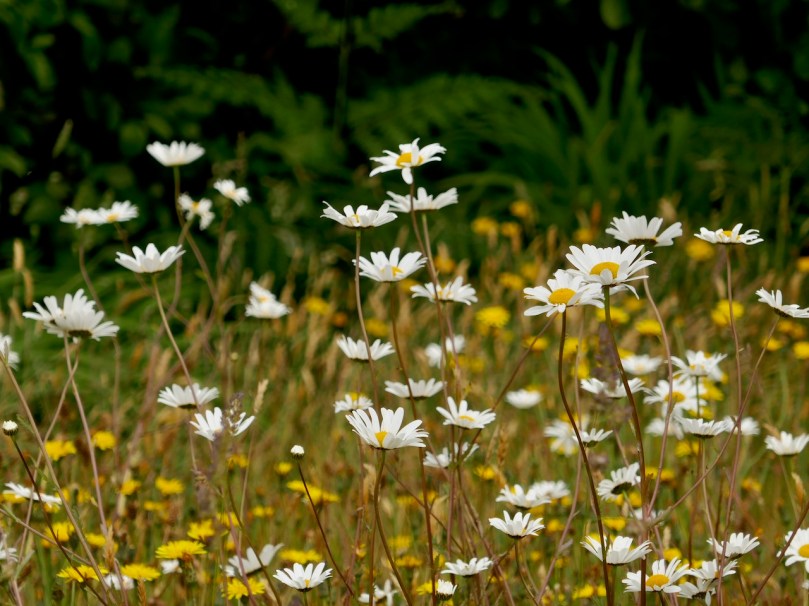
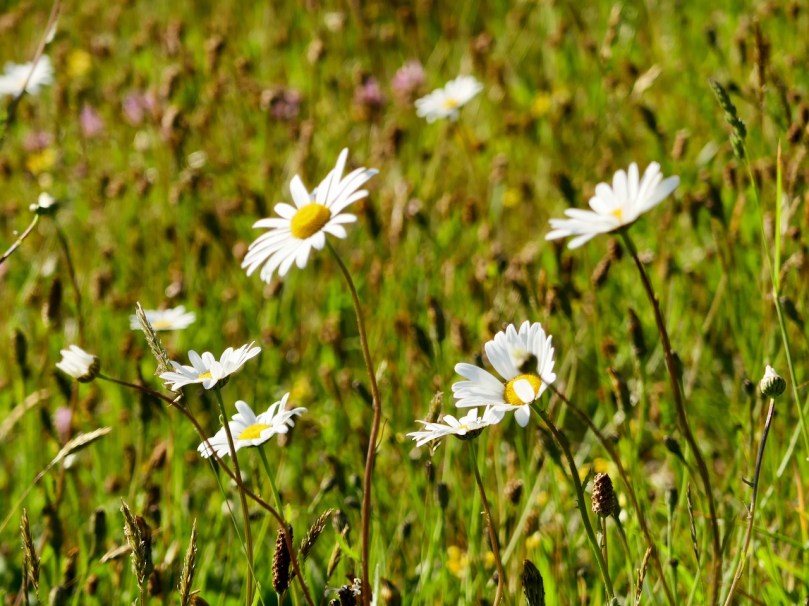
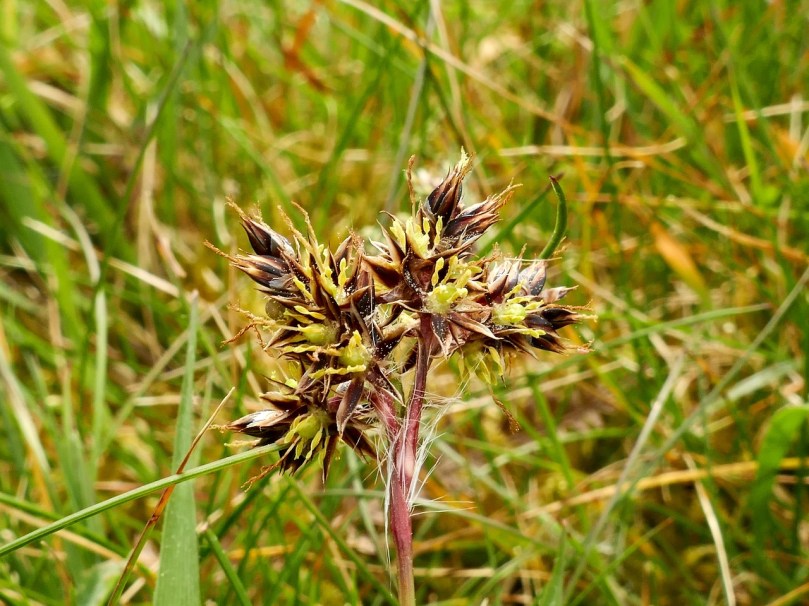
Above, from the top: Oxeye Daisy; Field Wood-rush; Cat’s-ear

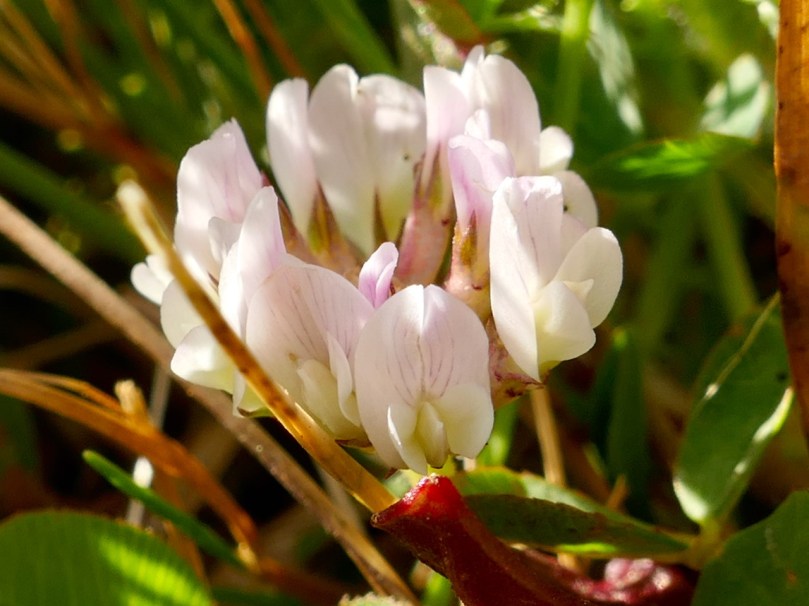
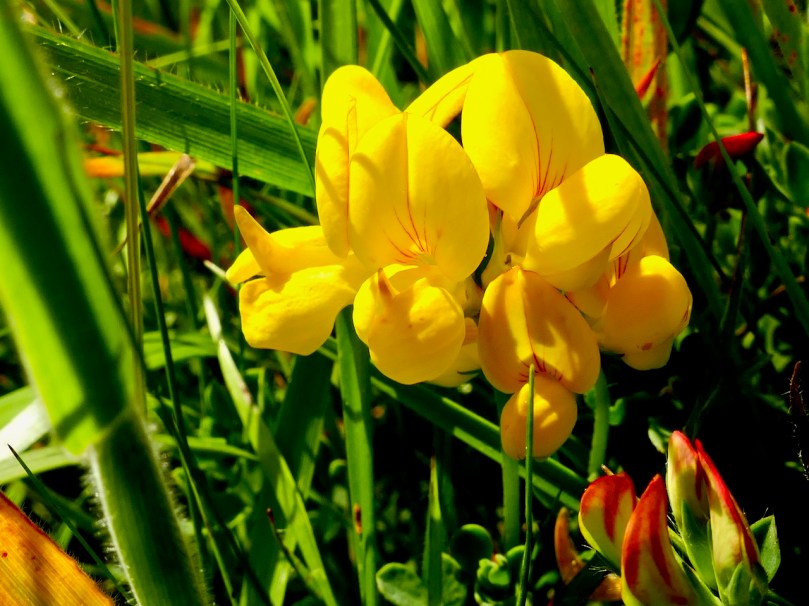
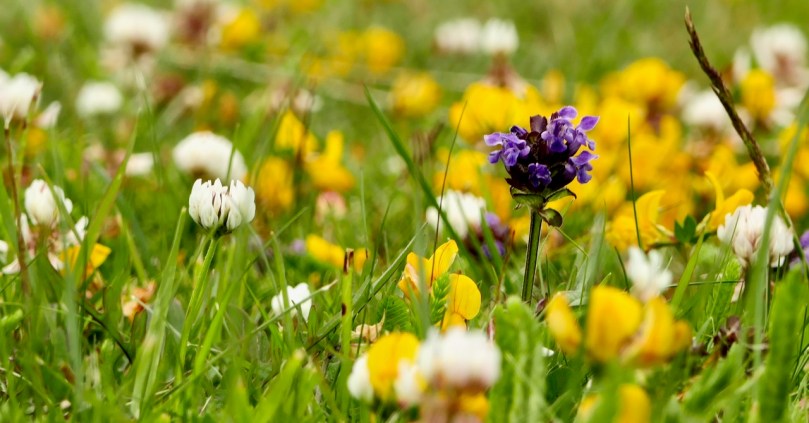
The following summer I just let it grow and it seemed to flourish with all sorts of grasses coming up, as well as Knapweed, Oxeye Daisies, thistles, Sheep’s-bit, Ribwort Plantain, White and Red Clover, Cat’s-ear, and lots of Bird’s-foot Trefoil.

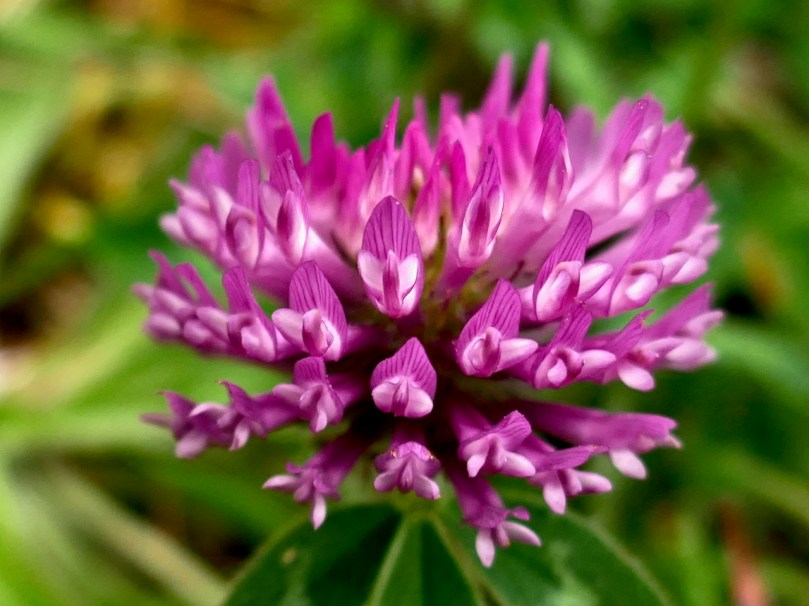
Above, from the top: Red Clover; White Clover; Bird’s-foot Trefoil; Sheep’s-bit; A Painted Lady Butterfly and a Bumblebee on Knapweed

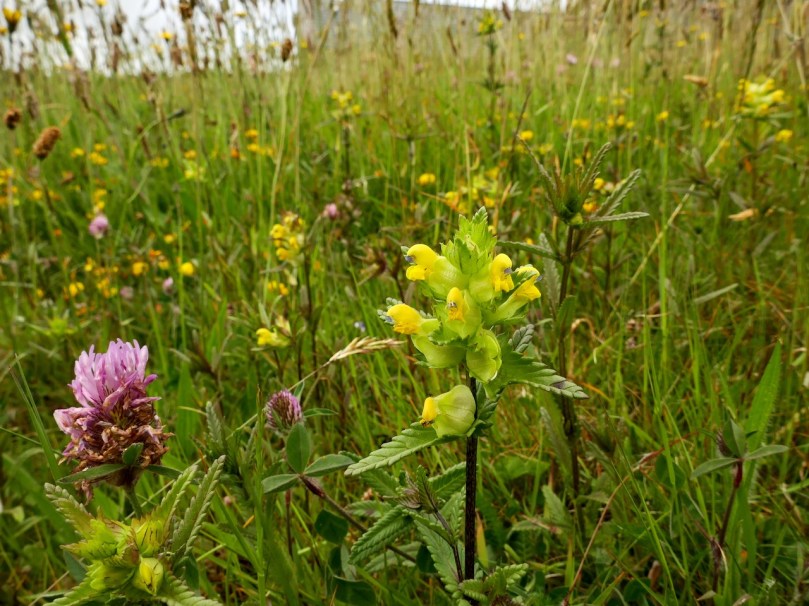
That autumn I had it cut and raked again but this time I introduced the only intervention that the meadow has received. Once the grass was cut and raked I broadcast Yellow Rattle seeds (bought from wildflowers.ie which guarantees to only sell native Irish seeds). Yellow Rattle (below) is a magical wildflower. It parasitises on the roots of the grasses, thinning them out and creating more bare patches where wild seeds can land and germinate. Although it does grow in the wild in West Cork it would be hard to find and harvest enough seed for my meadow.

We have lots of birds who visit our garden but I had never seen pigeons there until I sowed the Yellow Rattle. It was like a shout went out, and they descended in flocks, pecking away at all my precious seeds, with me inside banging on the windows or racing out to chase them away. I needn’t have worried too much – they left enough seeds to have a really good showing the following spring. They self-sow readily and I have now had two seasons of Yellow Rattle working away to reduce the tough grass roots.

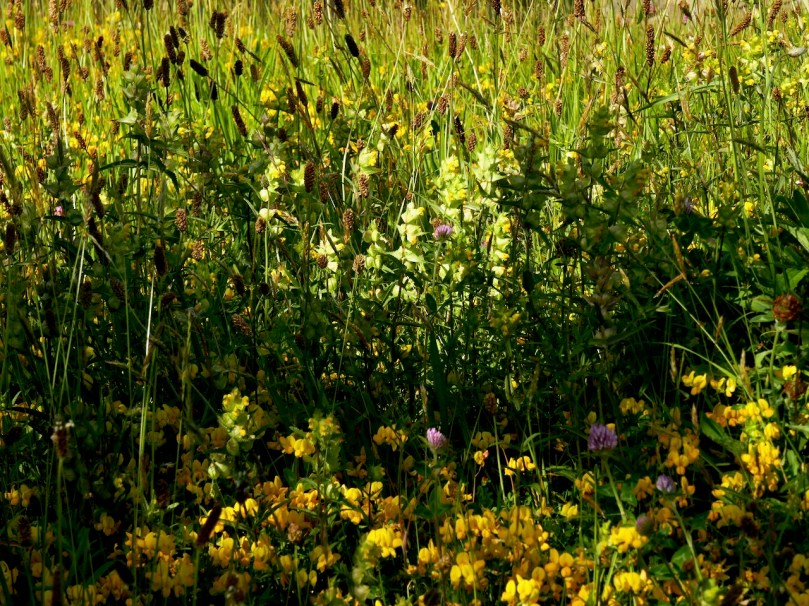
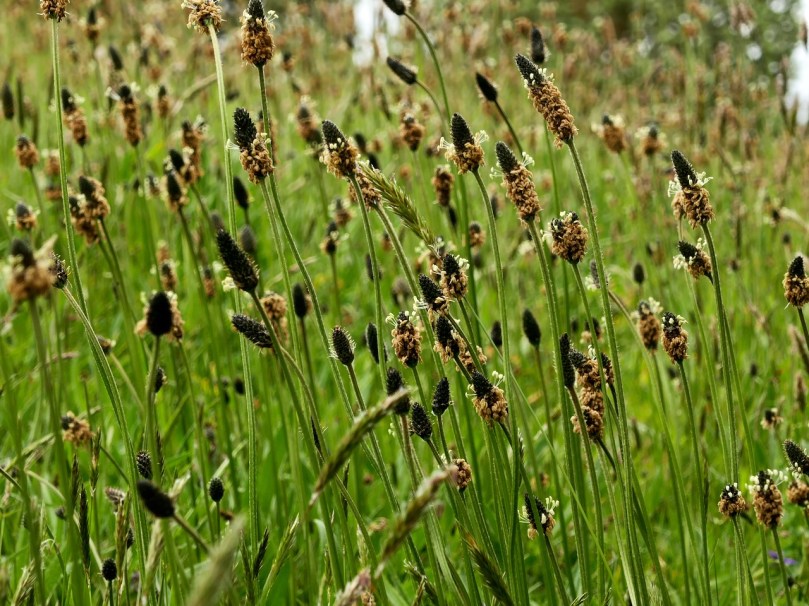
Above: I still have lots of grass, of course – an amazing variety – and a vast extent of Ribwort Plantain

I said above this was the only intervention I have made in the meadow, but now that I think of it I have also dug out some large dock plants as it does tend to take over. I have since read that this may have been the wrong things to do as its almost impossible to get all the roots.

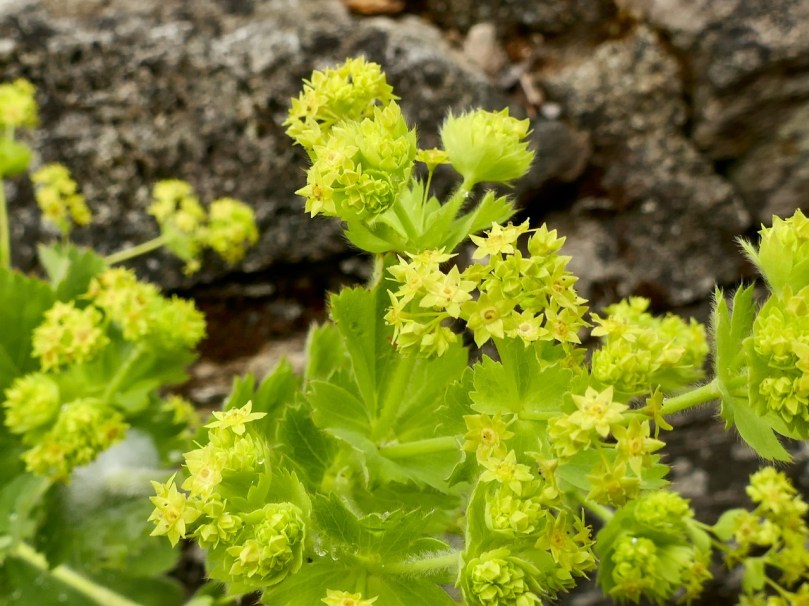
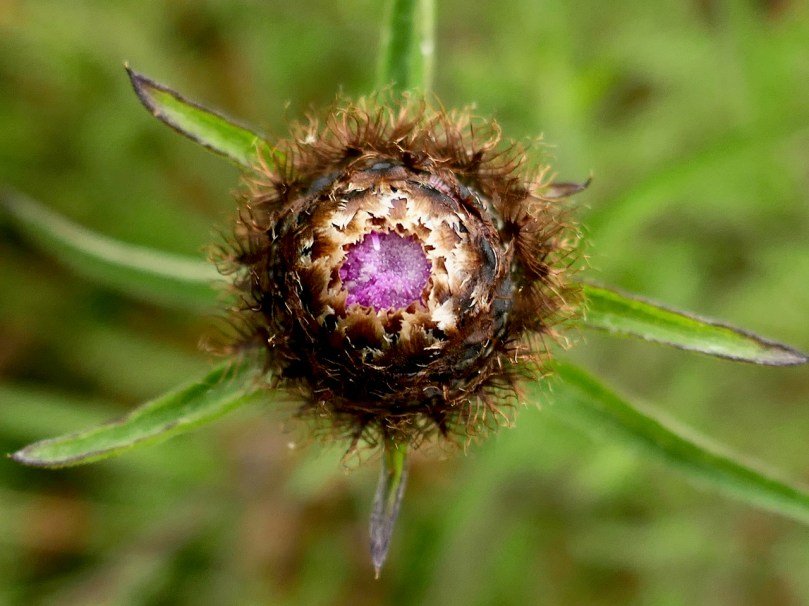
Above, from the top: Navelwort; Lady’s-mantle; Knapweed about to emerge; Common Ramping-fumitory; Common Milkwort

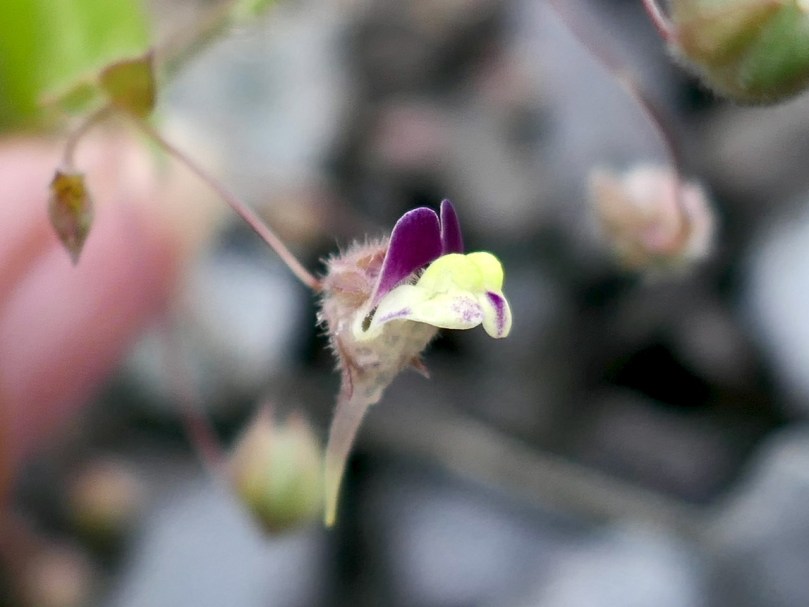
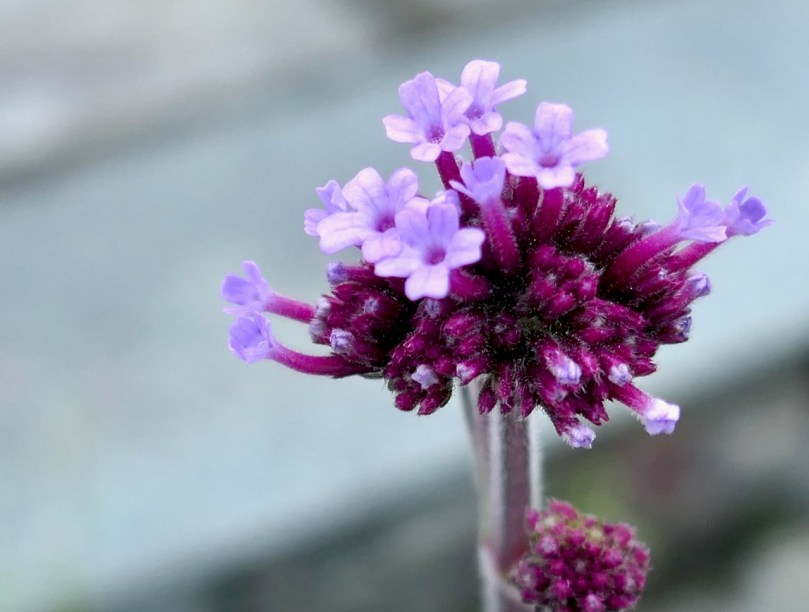
We have a gravel driveway, rock walls, a stone terrace with steps, and a small patch of trees and ivy and all provide habitat for wildflowers (above) that spring up unbidden from time to time, some welcome (like Corn Spurrey and the Sharp-leaved Fluellen which is an endangered species) and some not so welcome (like the Verbena bonariensis that is fast becoming a ‘possibly invasive’ species).

Above, from the top: Sharp-leaved Fluellen; Verbena bonariensis; Corn Spurrey

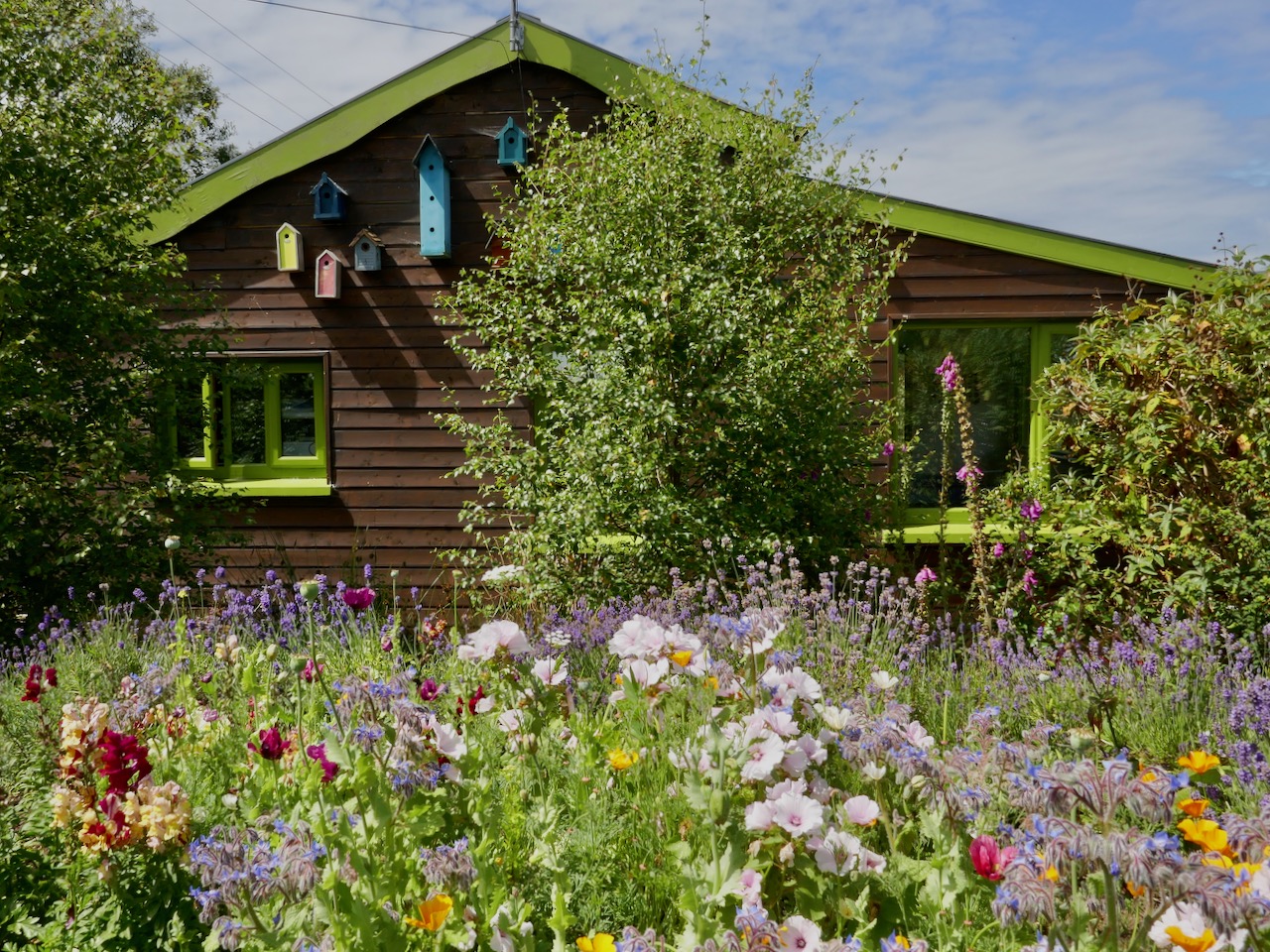
You’ve probably seen photographs of annual wildflower meadows (as opposed to my perennial meadow) full of brilliantly coloured poppies, cornflowers and corn marigolds. What they don’t tell you about these kinds of meadows is that firstly they are a lot of work and have to be re-done every year and secondly that you have to be really careful where you get the seeds as many companies sell imported mixes (marketed as ‘bee-bombs’, for example) which do not serve our native insects well and which have the potential for introducing invasive species. My friend Jack has done a brilliant job on his annual meadow, sowing only native seeds from Sandro Caffola at Wildflowers.ie and the results are spectacular (below).

It takes a bit of a mindset change to see beauty in a perennial wildflower meadow and an acre of land where wildflowers are prioritised. Accustomed as we are to equating a well-mown lawn with tidiness and good management, it might be difficult to look at an expanse of Daisies, Cat’s-ear and Autumn Hawkbit and Smooth Sowthistle (all of which look more or less like dandelions), Bird’s-foot Trefoil and Self-heal and not see ‘weeds’ and neglect.

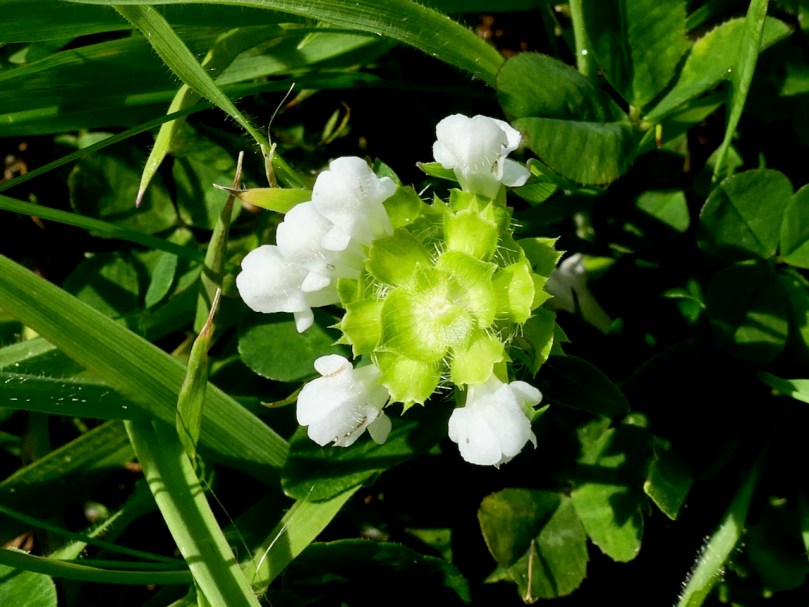
Above from the top: English Stonecrop; Self-heal; an uncommon white form of Self-heal

But that shift in our perspective? We all need to make it now, if we want to save our pollinators.

Sheep’s Head Oasis – the Heron Gallery

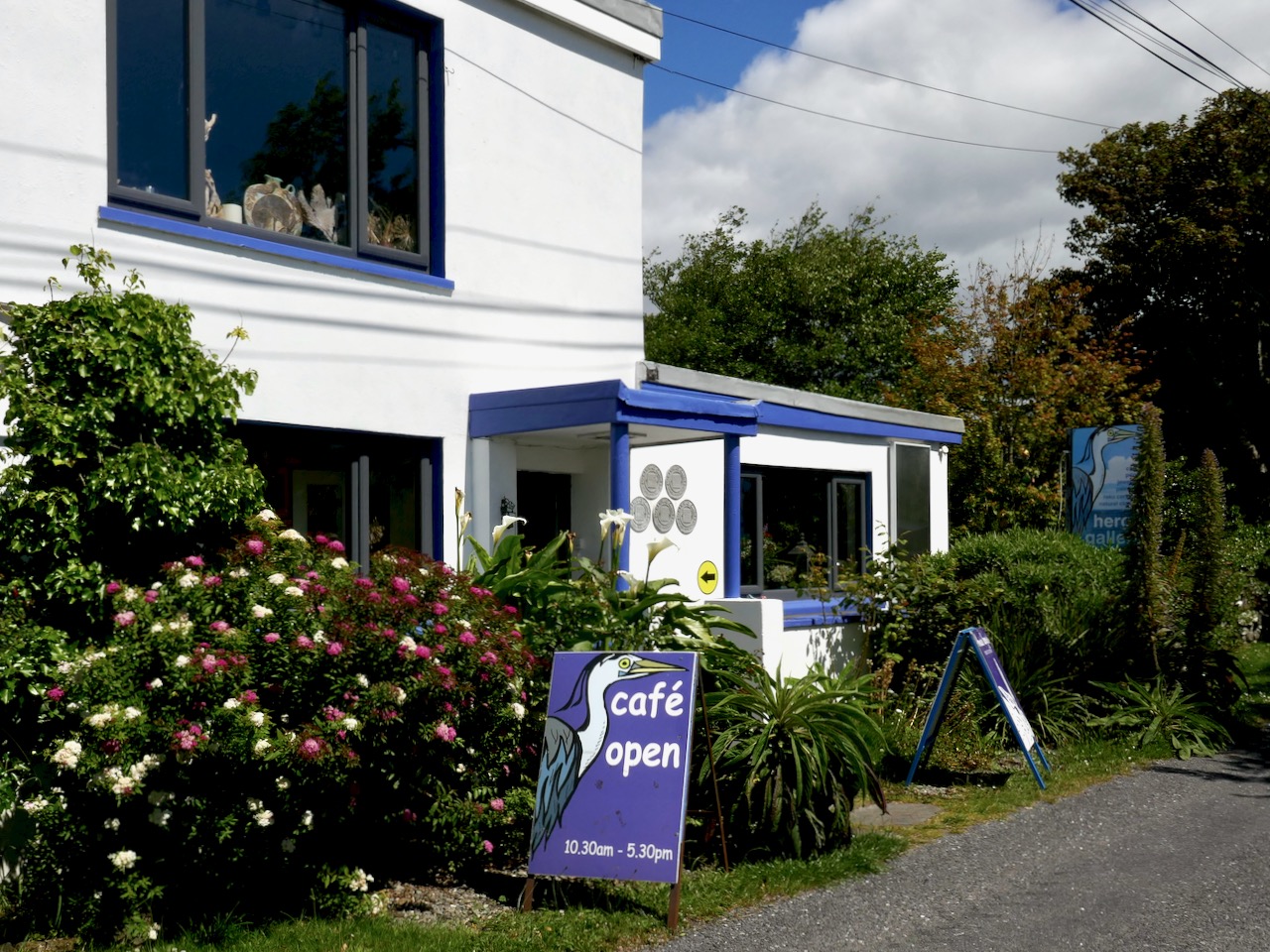
As West Cork slowly opens up again, we welcomed the news that the Heron Gallery in Ahakista was once again serving food in its wonderful garden setting. The only excuse we needed to head over to the Sheep’s Head!

This garden is one of those on the West Cork Garden Trail and most of them are opening now, late this year, of course. According to Trail President, Jean Perry, Like many of us, garden owners have had lots of time on their hands this year and the outcome is that gardens of the West Cork Garden Trail are to an exceptional standard and have never looked better!

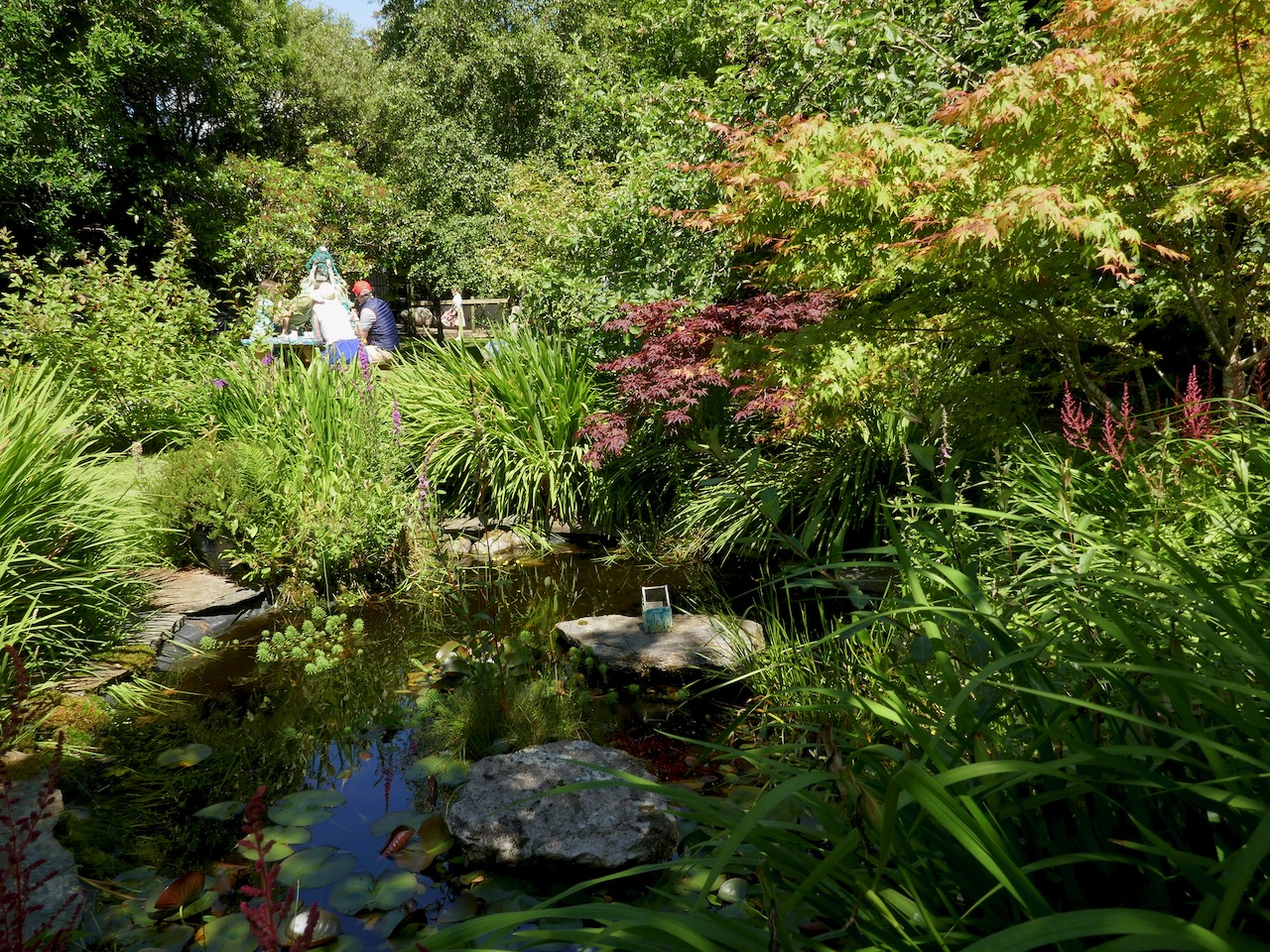
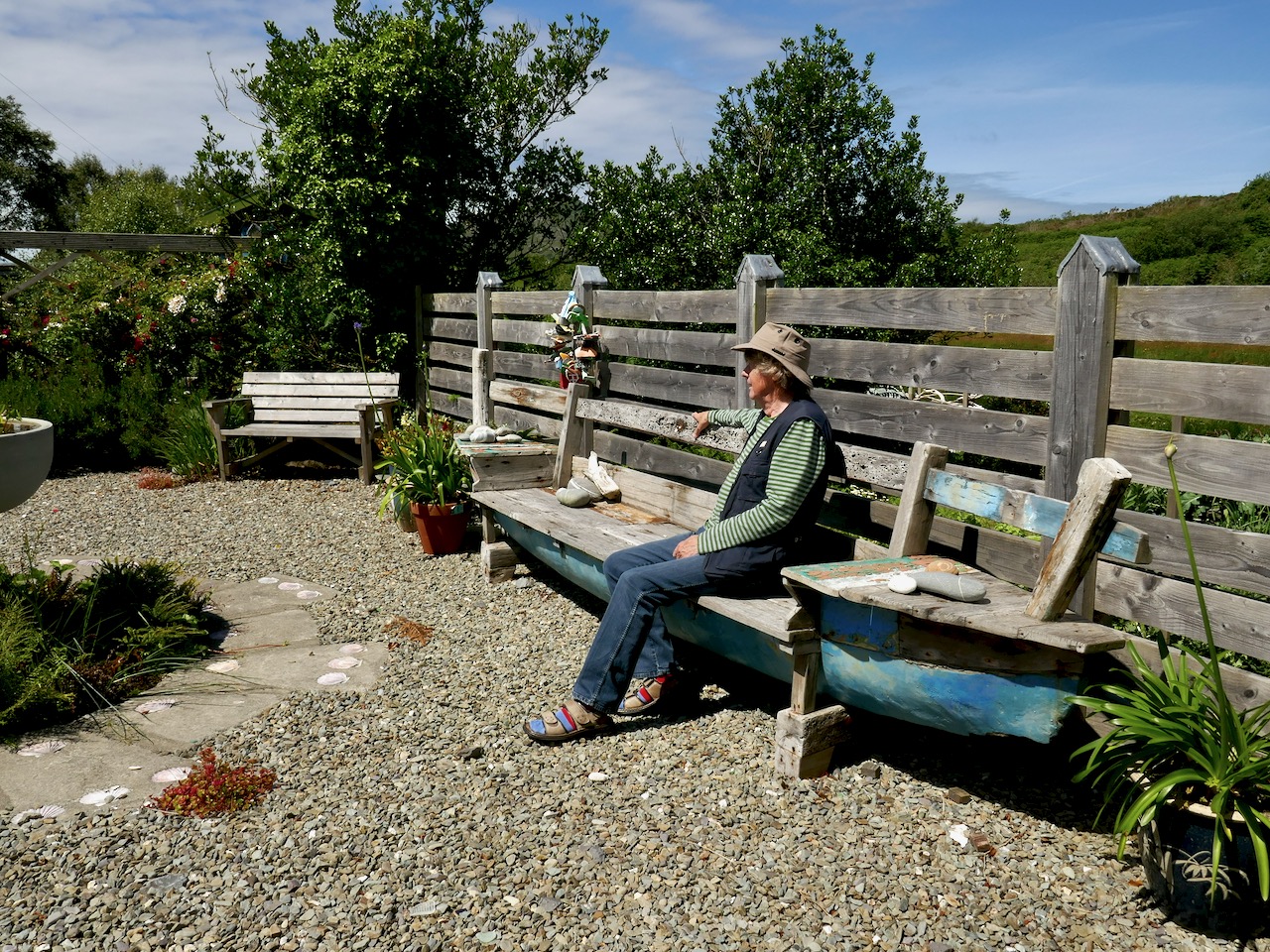
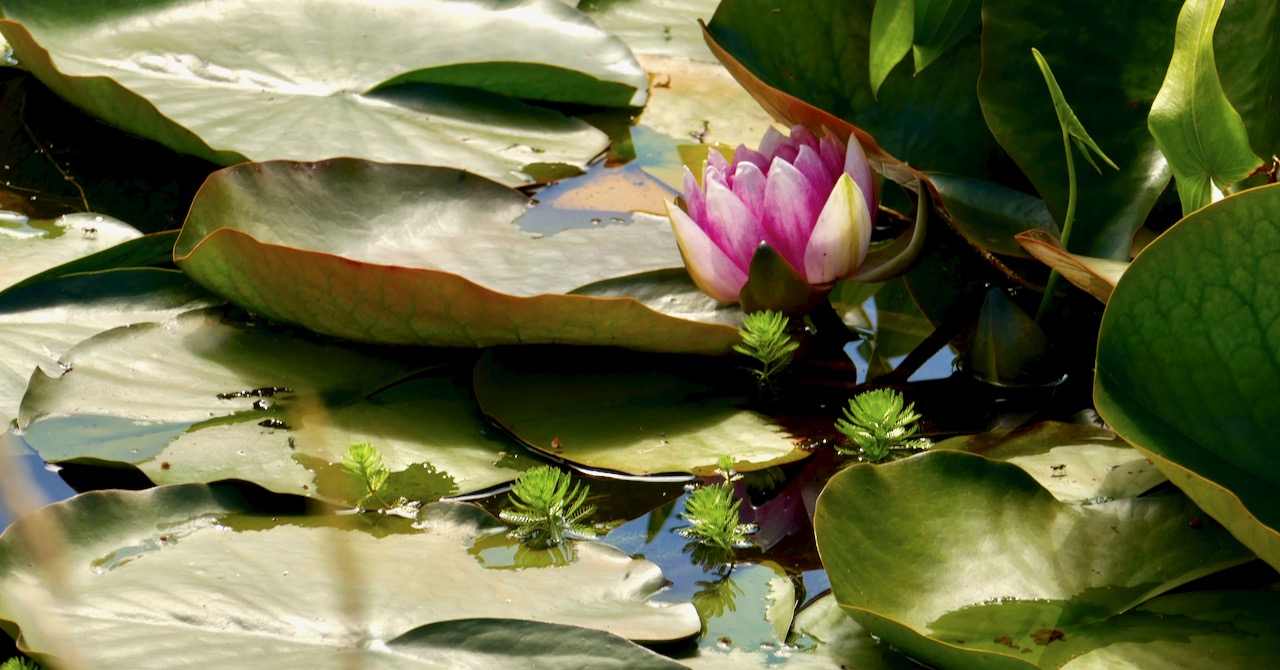
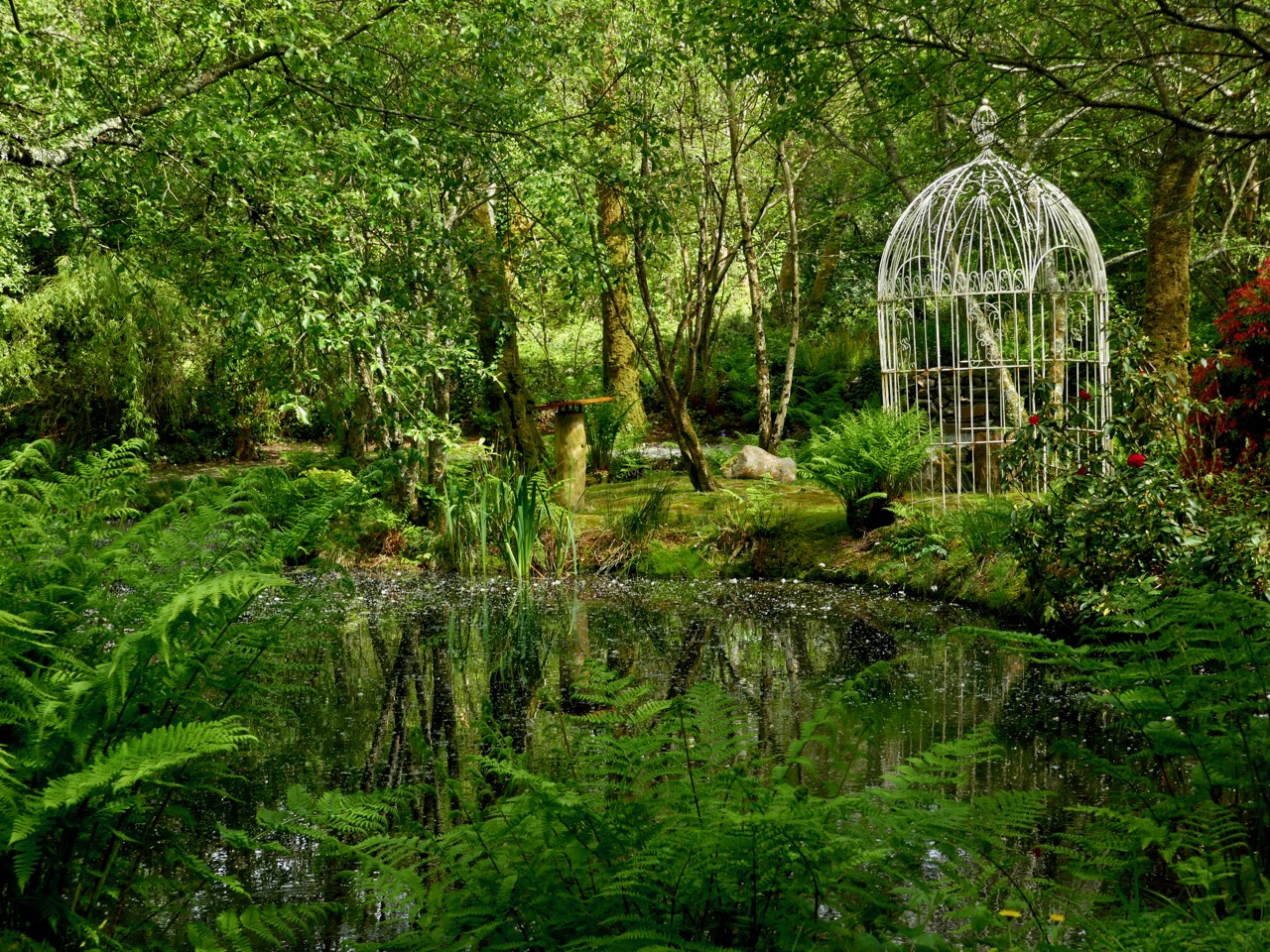
I can vouch for the truth of this as regards the Heron Gallery. There is nothing more delightful than to linger over one of their delicious lunches, or just a latte and cake, seated outside by the pond, and then to wander through the garden.
Annabel and Klaus have been working on this garden for about fifteen years. It was just a field when they took it over – that’s hard to imagine now. For Annabel, it is a haven and an inspiration. Take a look at her website and especially at her blog where she writes about the nature all around her and her latest projects. 

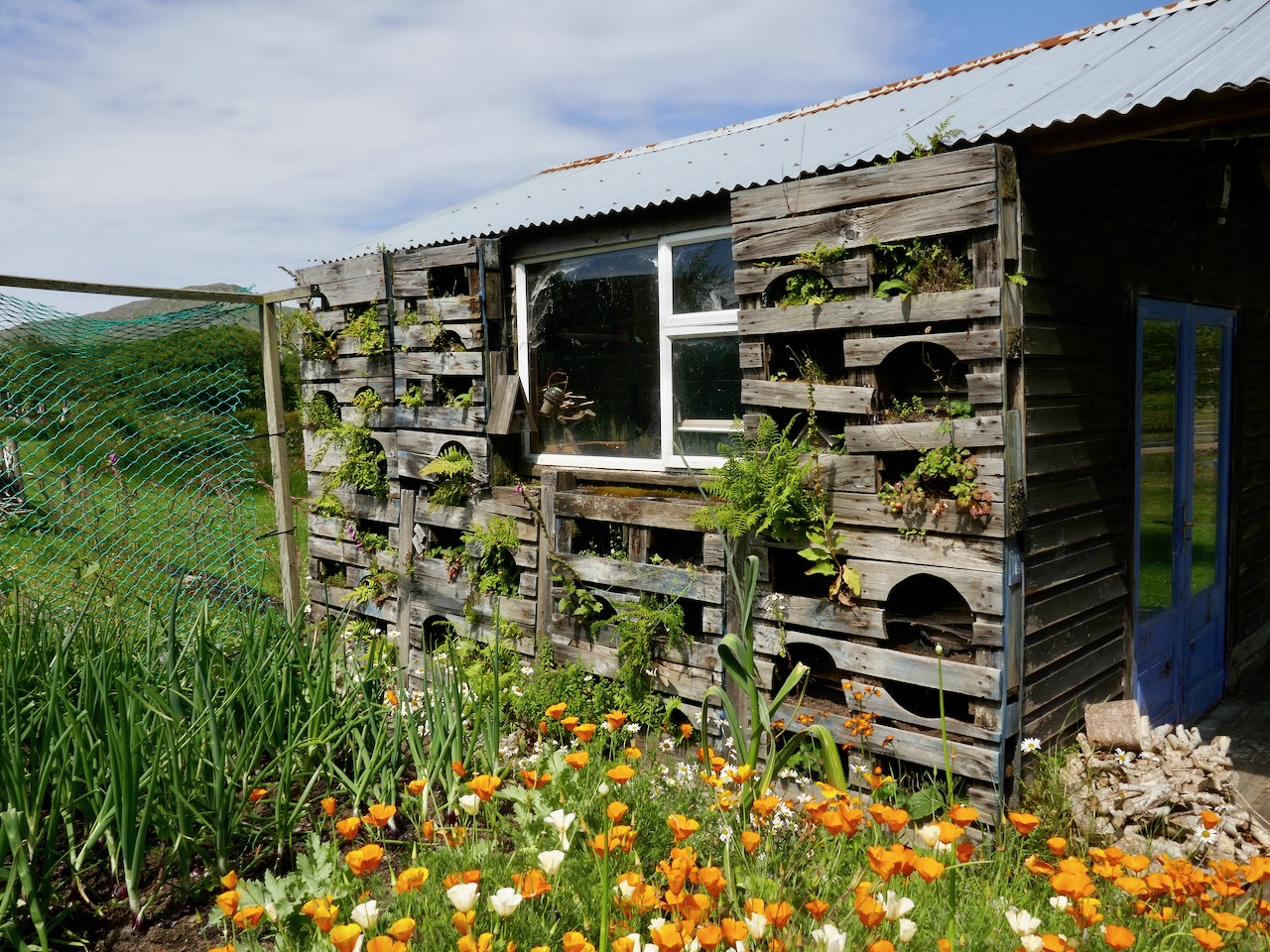
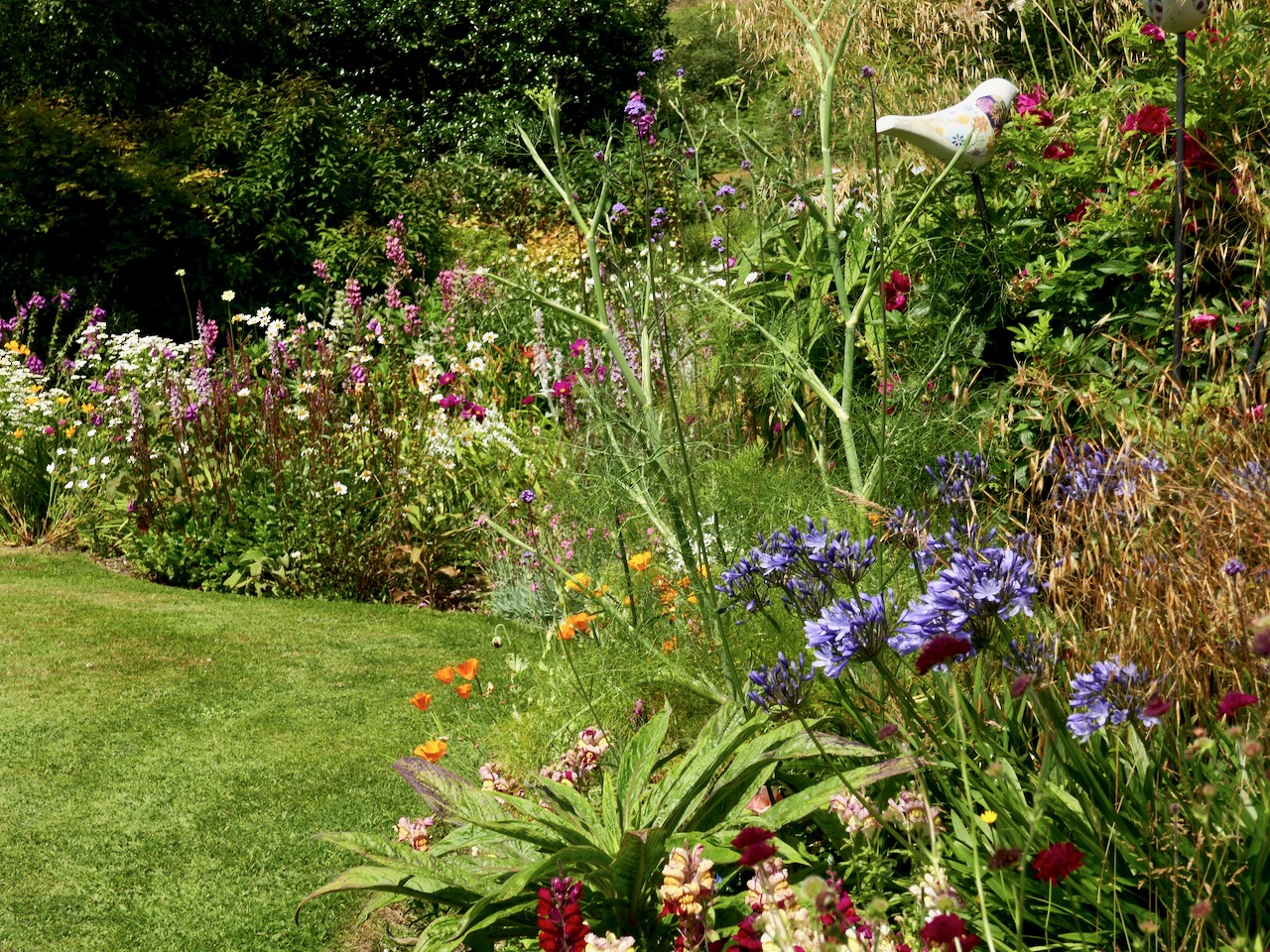
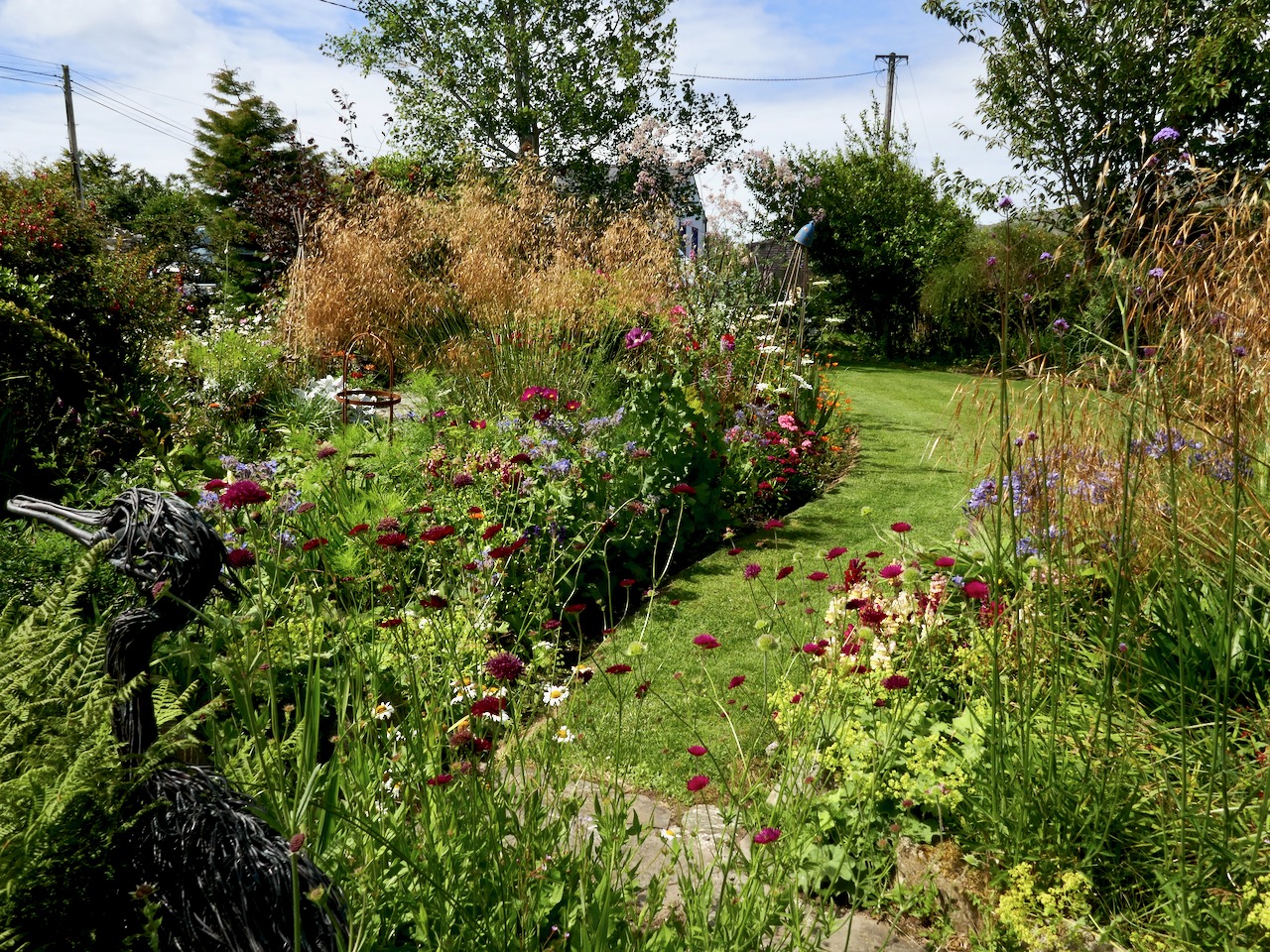
The garden is a paean of praise to both the natural and the cultivated. The traditional herbaceous borders are at their most colourful right now and feature clever little inserts of sculptures and objects of metal, pottery and wood.

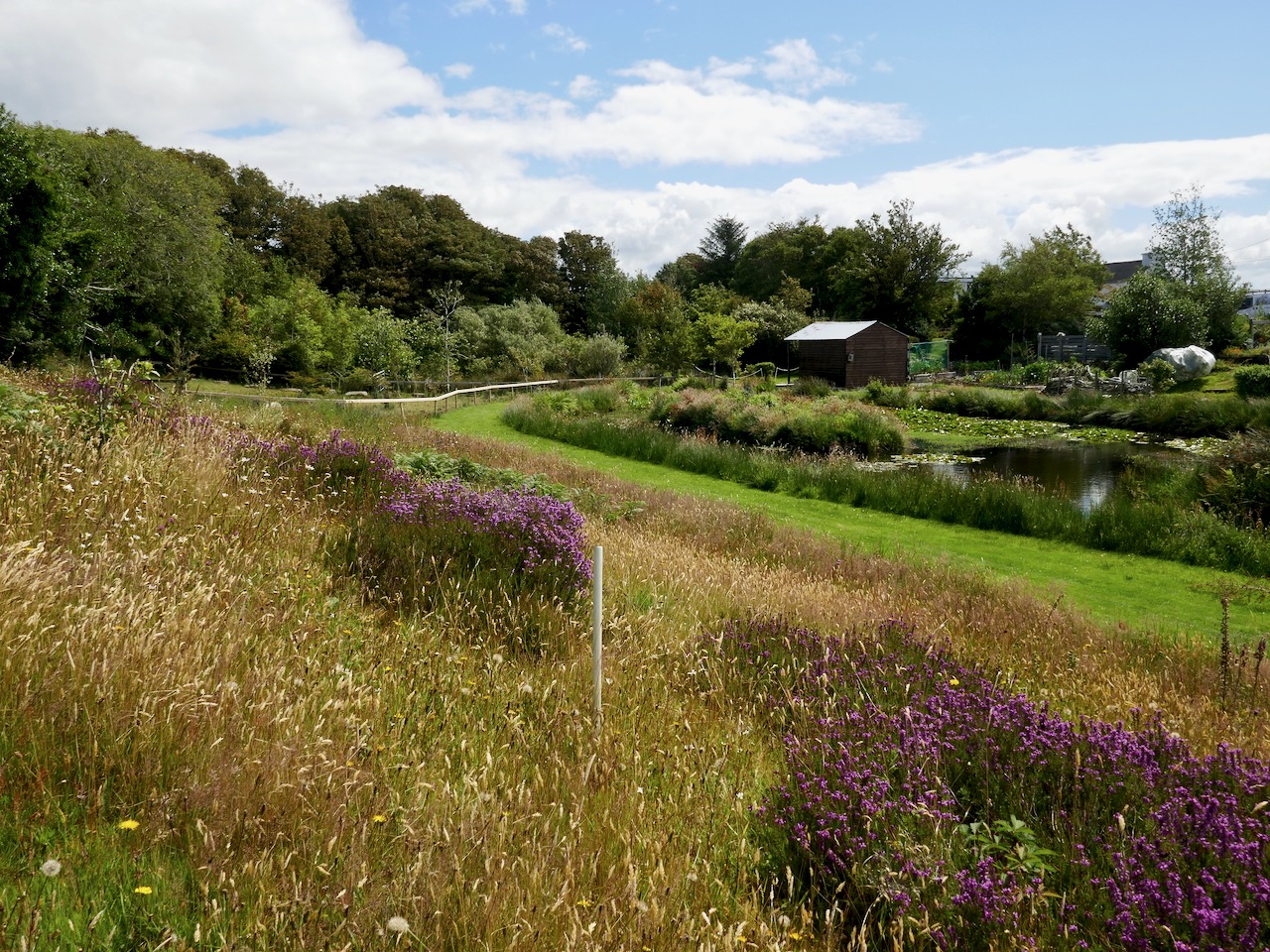
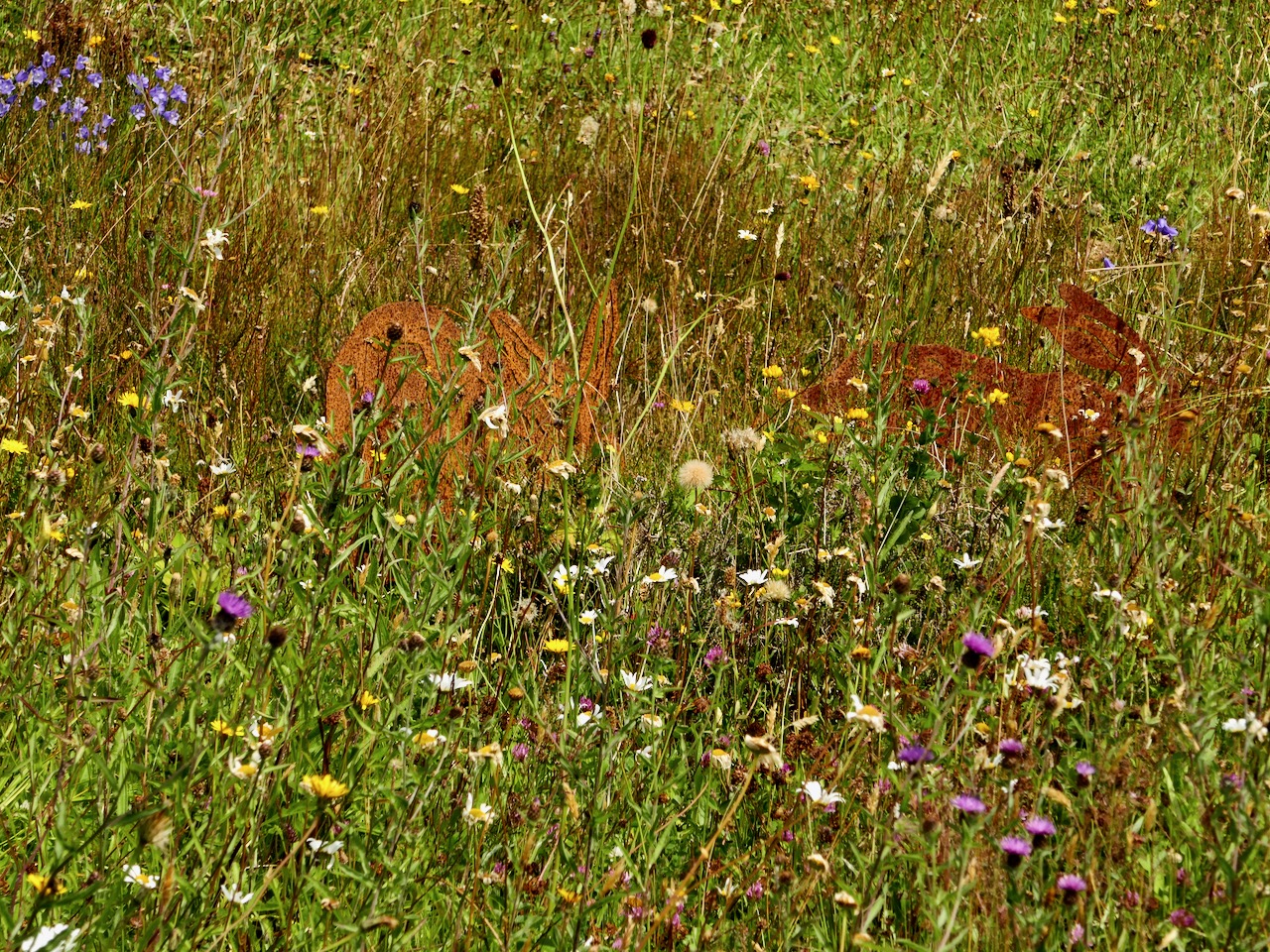
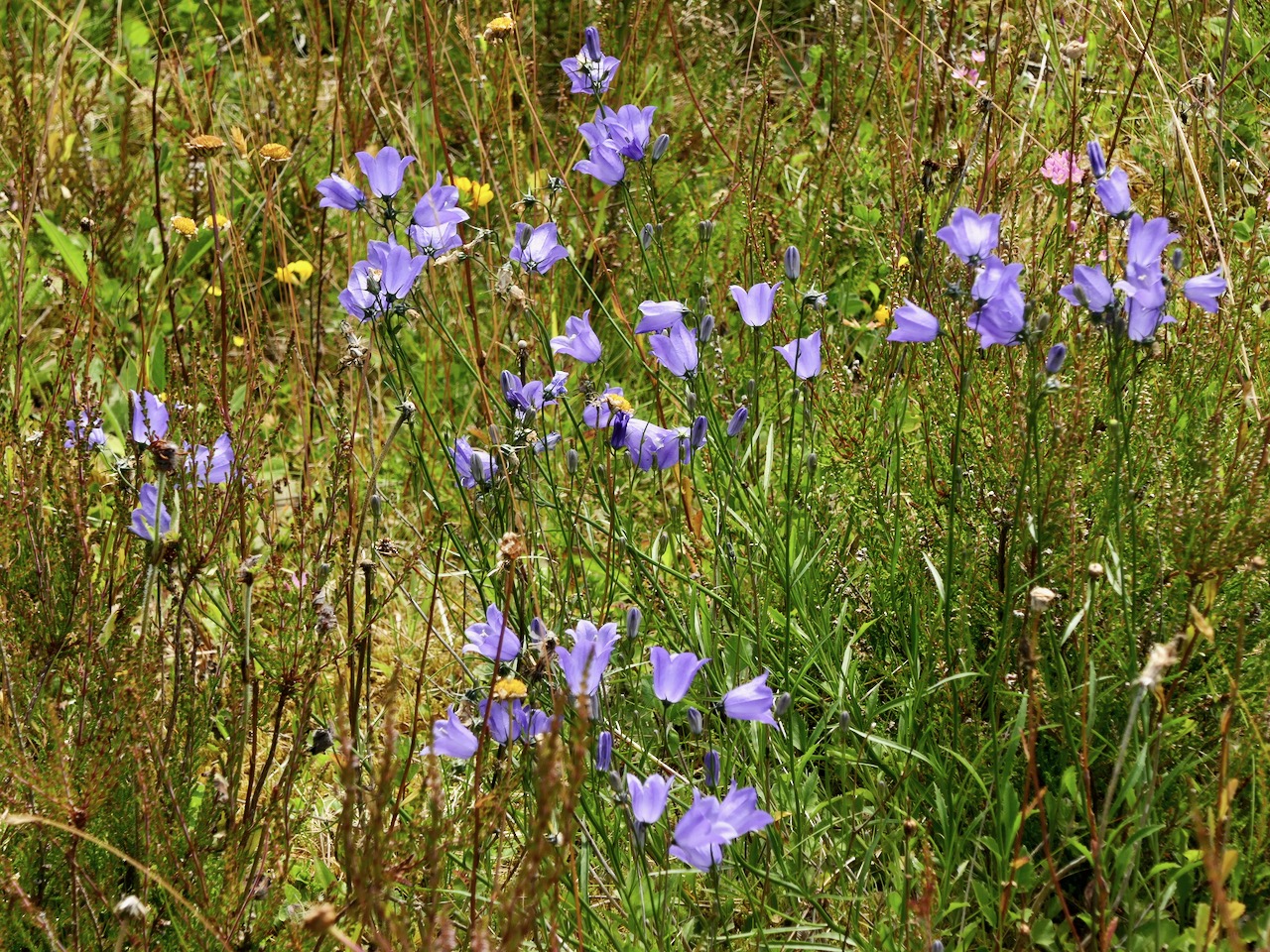
Wander through the more formal garden and you come to the wildflower meadow – all native plants, most of which have simply volunteered, although Annabel has also carefully introduced harebells and local orchids. I spent most of my time here, observing the mix of flowers and grasses.

By the time we left the cafe was busy with lunch service. This is a garden that adults and kids both love. The piggies are a universal favourite, but sharp little eyes will discover many hidden delights.

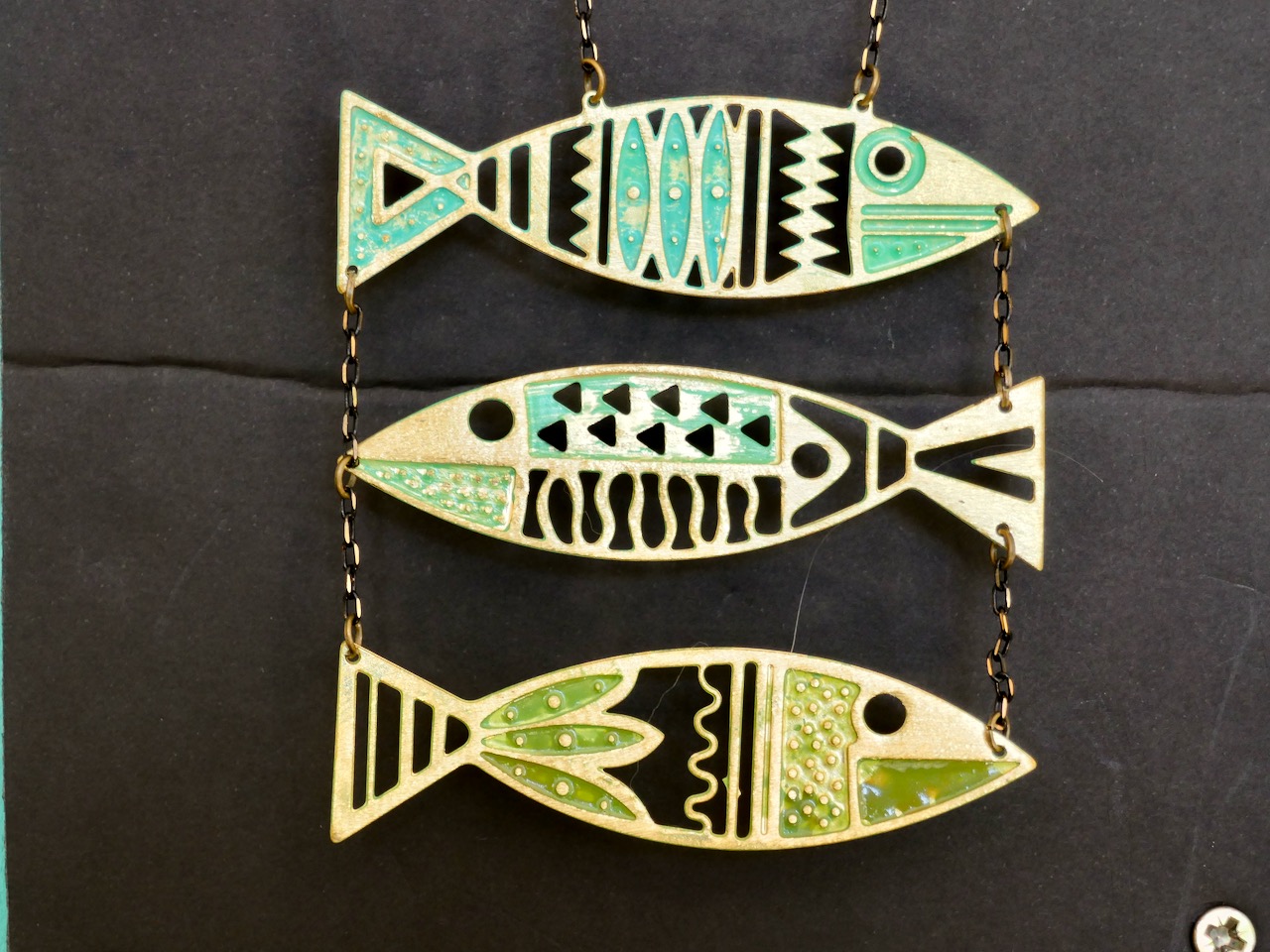
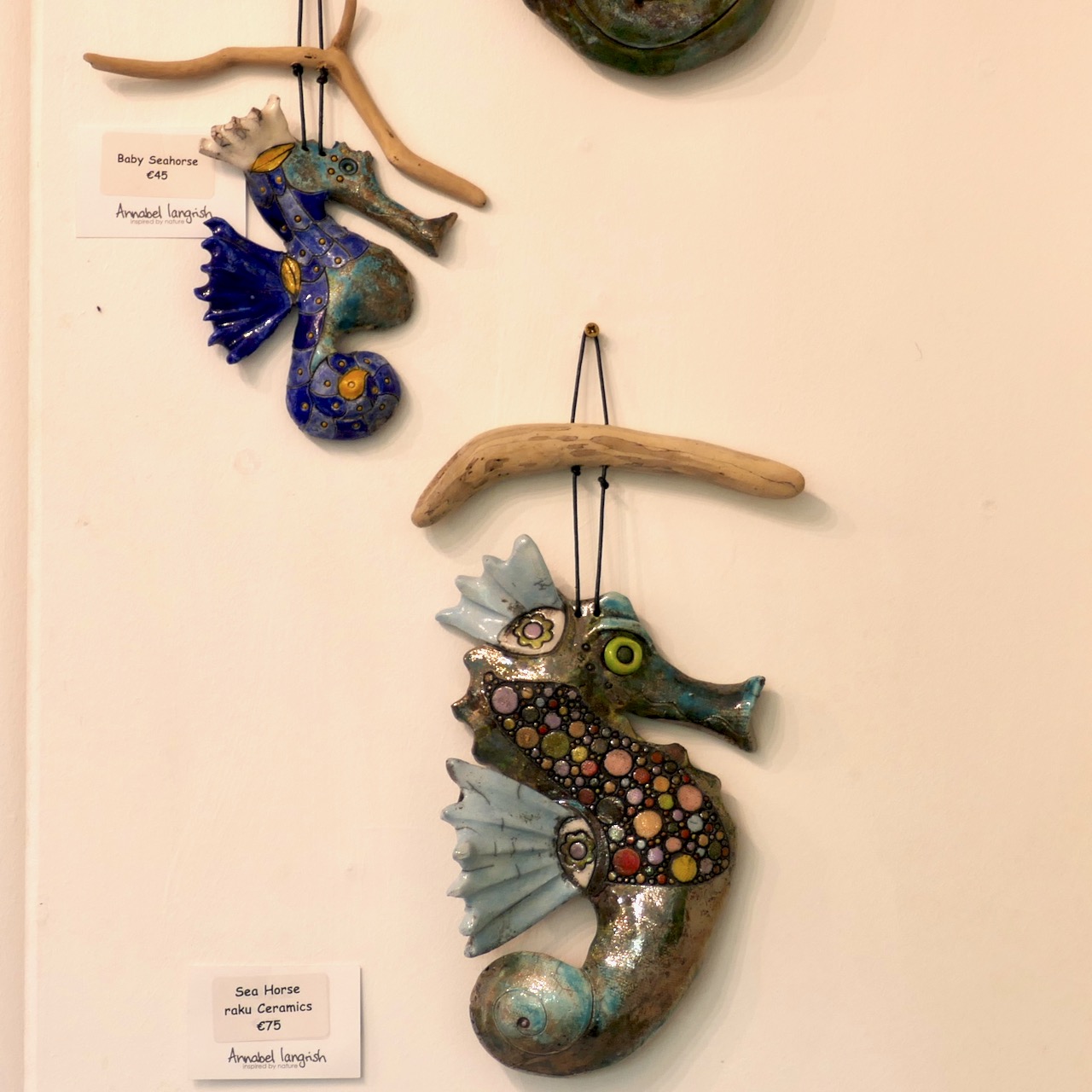
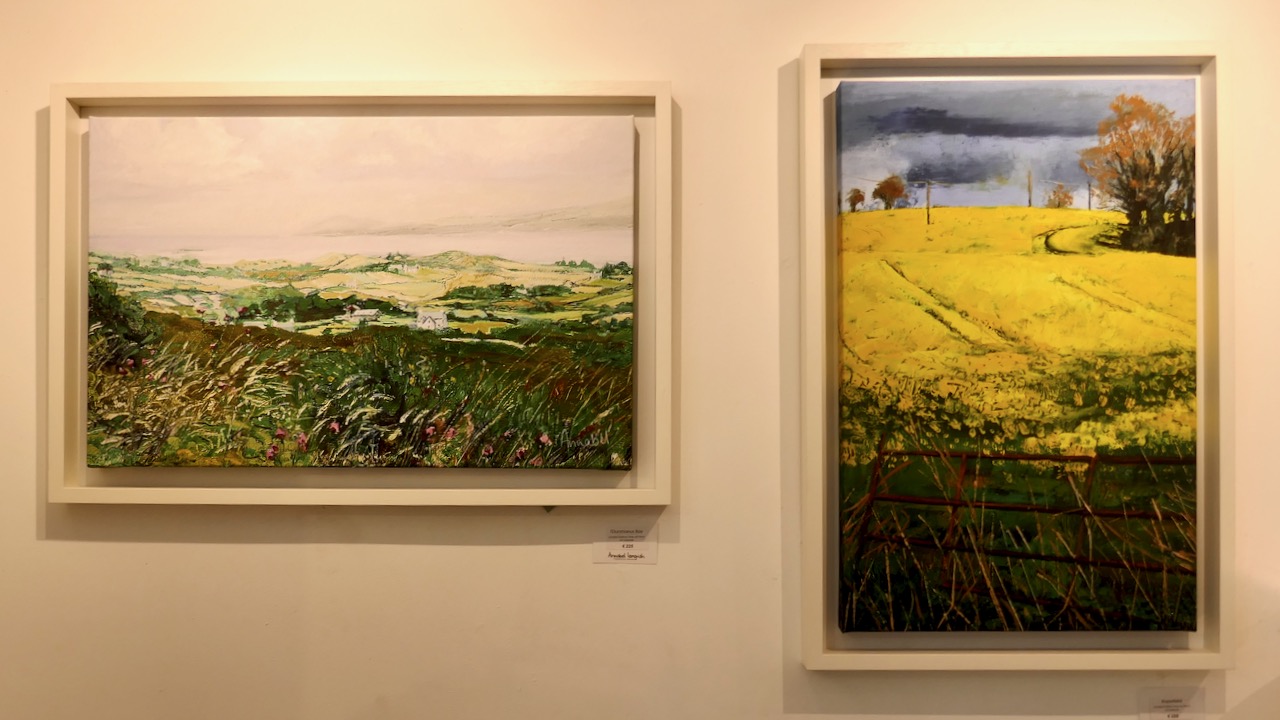
The gallery is devoted to Annabel’s art. She works in a staggering variety of media and sells her paintings and products all over Ireland, as well as in her own galleries, here and in Kenmare. 

Many thanks to Annabel Langrish and her team for creating this spectacular little oasis on the Sheep’s Head. It was just what we needed this week and we look forward to more visits over the summer.

Inish Beg Estate: Ancient Woods and New Discoveries

Craving a woodland walk, we took ourselves to Inish Beg this week – and found a lot more than bluebells!

This is a cillin, down beside the river. There are lots of stories associated with it

Inish Beg abounds in both the wild and the tame. That’s not such an easy balance to maintain and it’s a real tribute to the team on the ground that manages and nurtures the estate. Mostly, of course, it’s down to the vision and hard work of Paul and Georgiana Keane who bought the place in 1997 when it was crumbling and neglected. The house, Georgie told us, was close to collapse and had to be completely re-done – new roof, plumbing, electrics and a complete re-furbishment. It’s hard to believe now, when you see the beautiful place it has become.

Paul and Georgie run it now as a hotel and wedding venue and it is totally set up for it. In fact it must be one of the most romantic venues in Ireland, ideally situated on an island on the Ilen River, accessible by an old stone bridge. It was originally O’Driscoll territory, but owned by the McCarthy family. When James Morrogh inherited it from a McCarthy relative in the 1830s he changed the family name to McCarthy Morragh – such stipulations were not unusual then.
In the 1890s the family built the grand house, and it is this house that is associated with its most famous inhabitant, Kay Summersby. A noted beauty, she was Eisenhower’s secretary in London during the war, and may (or may not) have had an affair with him.

She describes her early life at Inish Beg thus:

Our home, Inish Beg, was a somewhat run-down estate on a small but lovely emerald island in a river in County Cork. Our favourite pastime (I had a brother and three sisters) was to sail down that river four miles, to the Atlantic. There was a succession of governesses, hunts, spatting parents, riding in the fields and along the long avenue fringed with old trees . . . the usual pattern of life in that obsolete world.

The ‘usual pattern’ for some, perhaps – to me it sounds like a life of breathtaking privilege. However, like many such estates, it became difficult to sustain and by time the Keanes took it over it desperately needed their infusion of enthusiasm and capital. And what a magnificent job they have done with not only the house but the grounds as well.

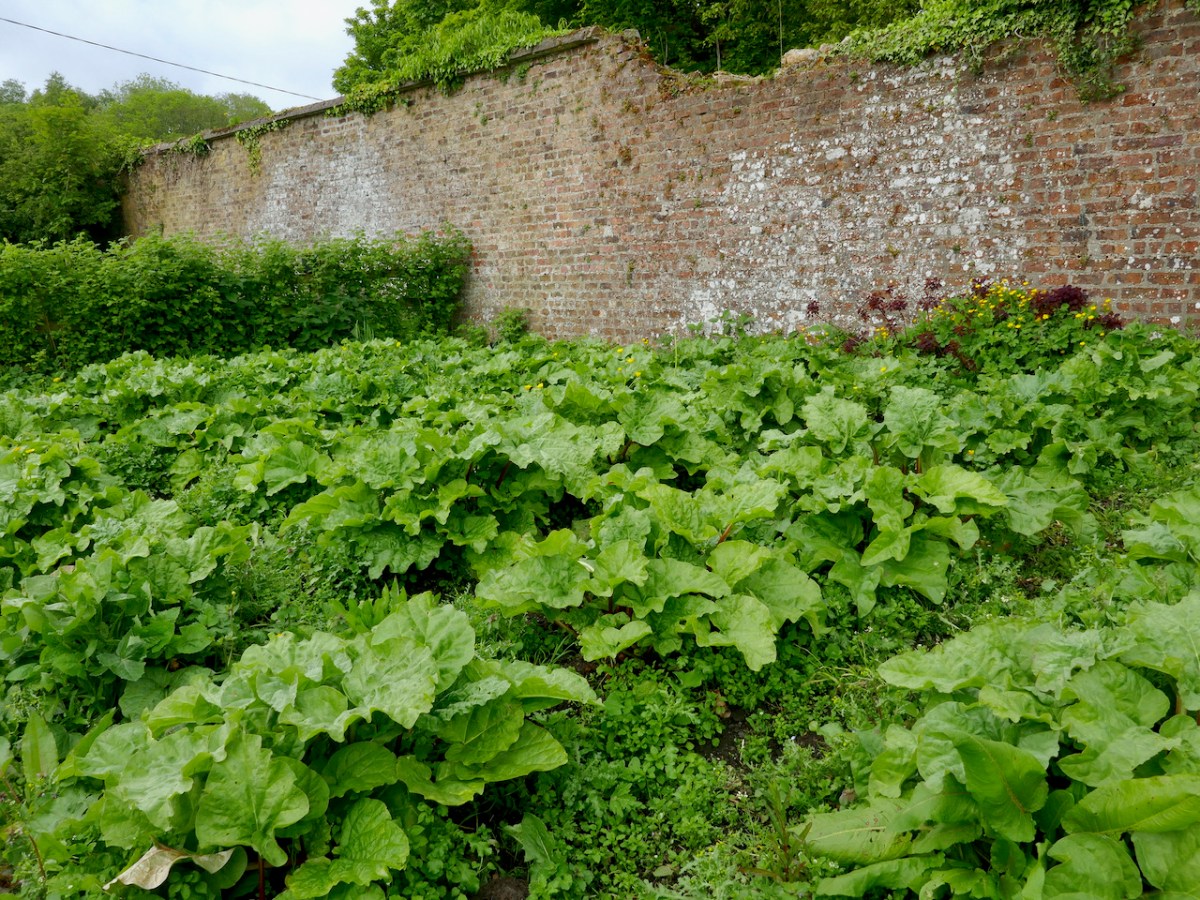
There’s a walled garden (above) that’s full of organic goodies for the estate kitchens, and also features an indoor swimming pool! Tony O’Mahony, the head gardener, practises an organic philosophy and does not feel the need to eliminate wildness from the garden, which results in a delightful mix of plant life.

But we were here mainly for the woodland walks and we were certainly not disappointed. You could spend several hours wandering the trails here and right now the undergrowth is glorious. Bluebells were in abundance along with every wildflower that contributes to that colourful spring carpet that is so dear to our senses.

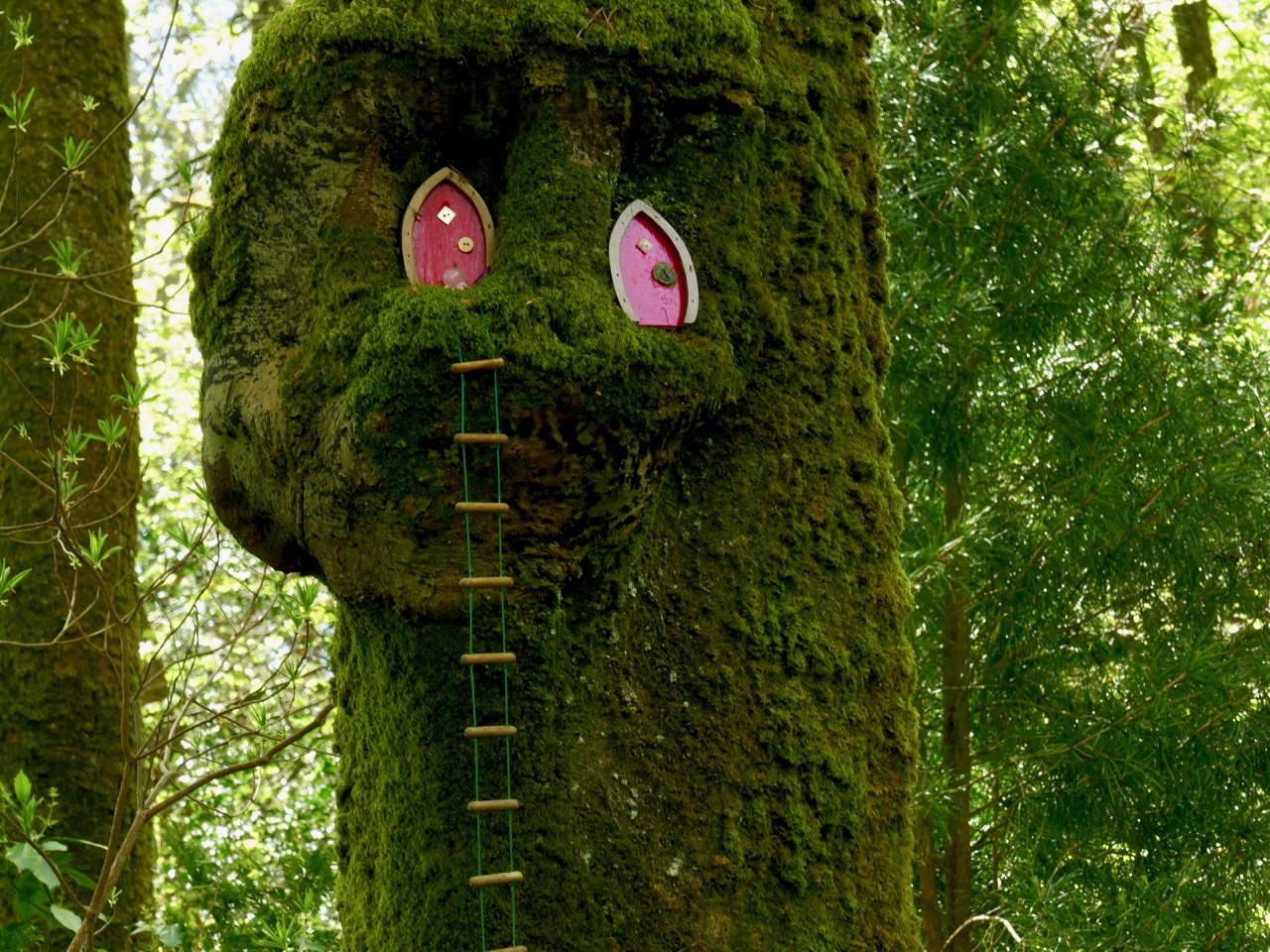
There are trails for the kids – pirates and a wildlife search are part of the system, as well as little fairy houses here and there.

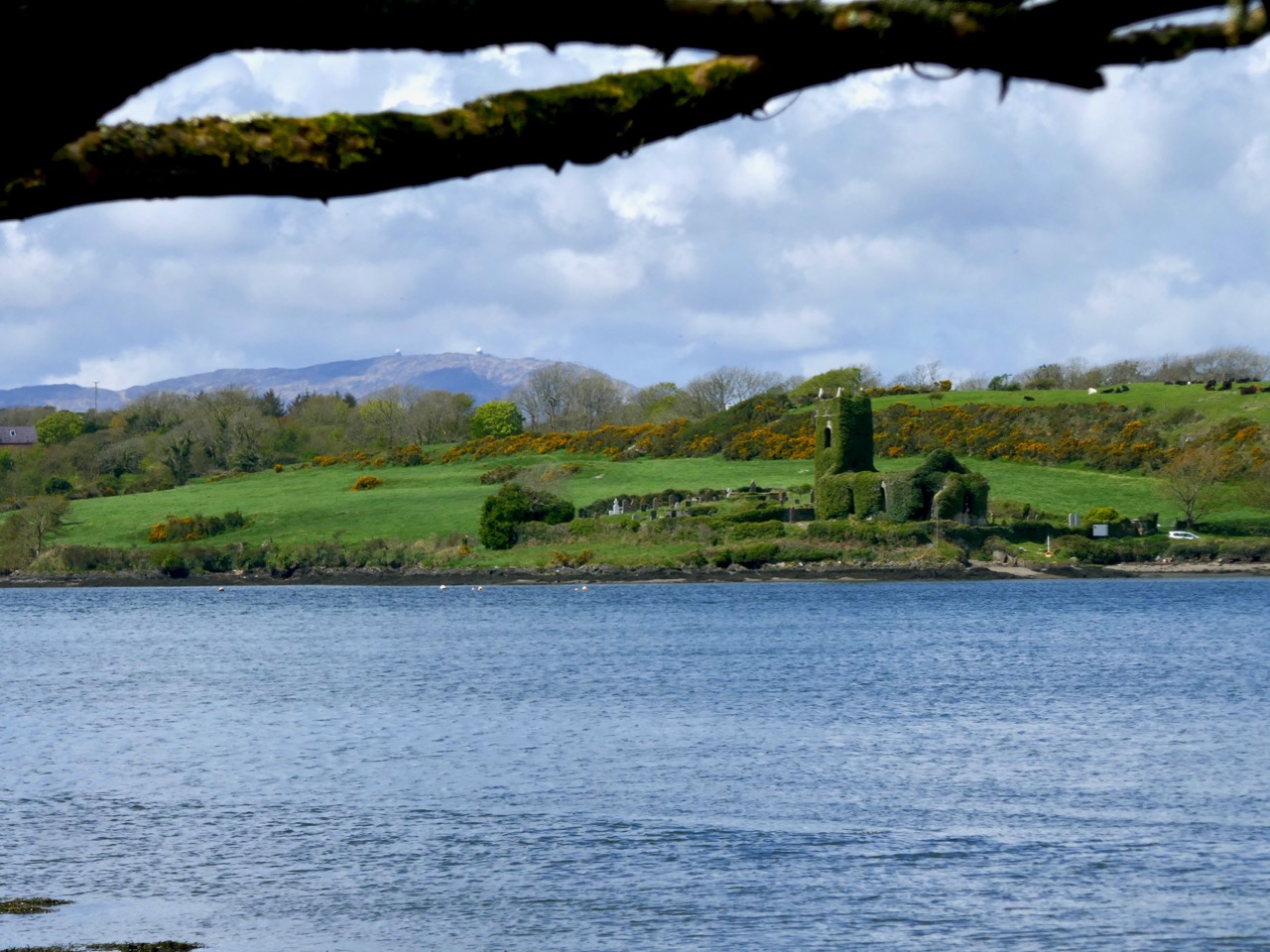
There are lovely views (above) across the Ilen to the ruined church at Aughadown – burial place of the Tonsons that I wrote about in New Court Bridge – a Hidden Wonder. Surprisingly, beyond the church, you can see Mount Gabriel. I mention this because of its significance with our next find – a previously unrecorded cupmarked stone!

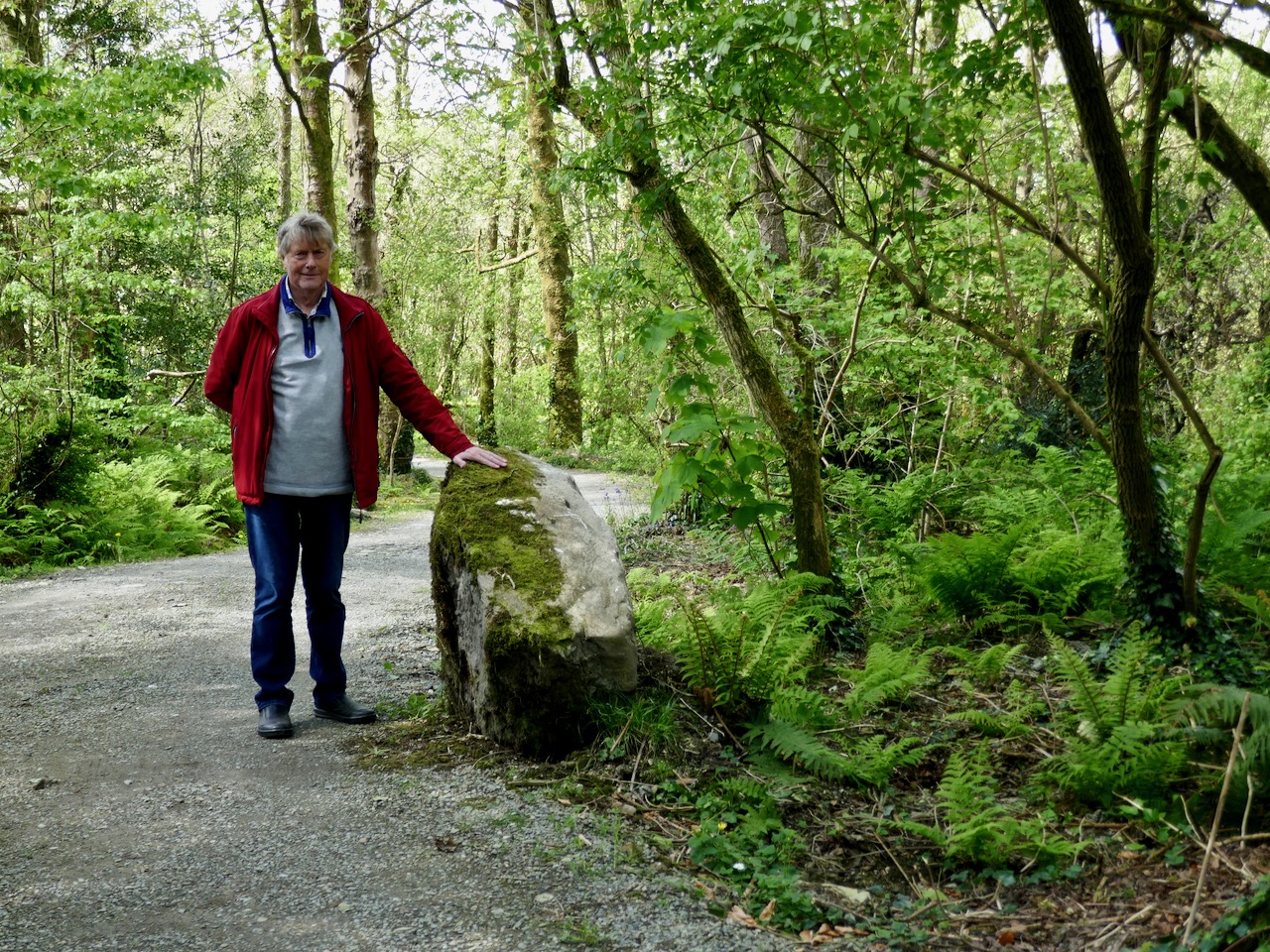
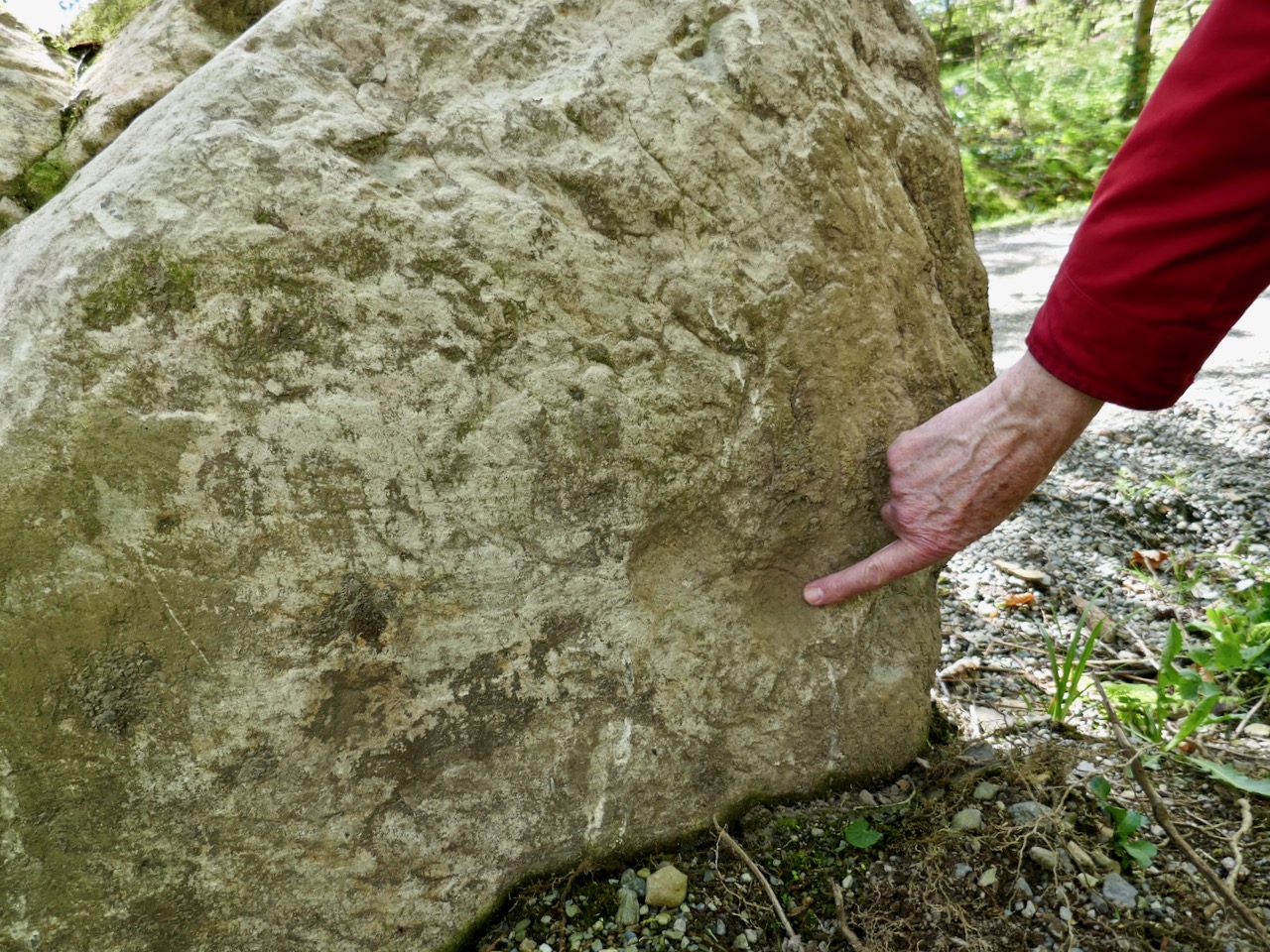
Regular readers know of our involvement with Prehistoric Rock Art – Neolithic or Bronze Age carvings on open air boulders and outcrops. The cupmark is the basic motif of all Irish Rock Art – a semi-spherical cup-shaped hollow (see more about Rock Art here and here and specifically about cupmarks here). Robert has an amazing eye for slight differences in rock surfaces and has developed a habit of examining every stone we come across for cupmarks. This time he struck gold! At least four cupmarks on the back of a stone along one of the trails.

We like to warn people that rock art can be a little underwhelming. I know these cupmarks don’t look like much, but they were probably carved several thousand years ago as part of a ritual we now know nothing about

The stone has been moved there from somewhere on the estate and the Keanes will try to track down where this was. It’s always important to see a rock like this in its context, of corse, but we are also curious to know if Mount Gabriel was visible from the location, as it is from so many of our West Cork Rock Art sites. We will be returning to do a proper record and see if we can add more information to the story before we send it in to be included in the National Monuments database.

There’s also a boulder burial on the estate, visible as you are leaving. It’s a pretty tumbledown affair, but still recognisable, and we found cupmarks on the capstone too. These may be already recorded, but we will let National Monuments know in case they aren’t.

Fabulous woodland walks, my fill of wildflowers, lovely vistas across the Ilen – and a new archaeological find. Too much excitement for one day!