Viking Traces

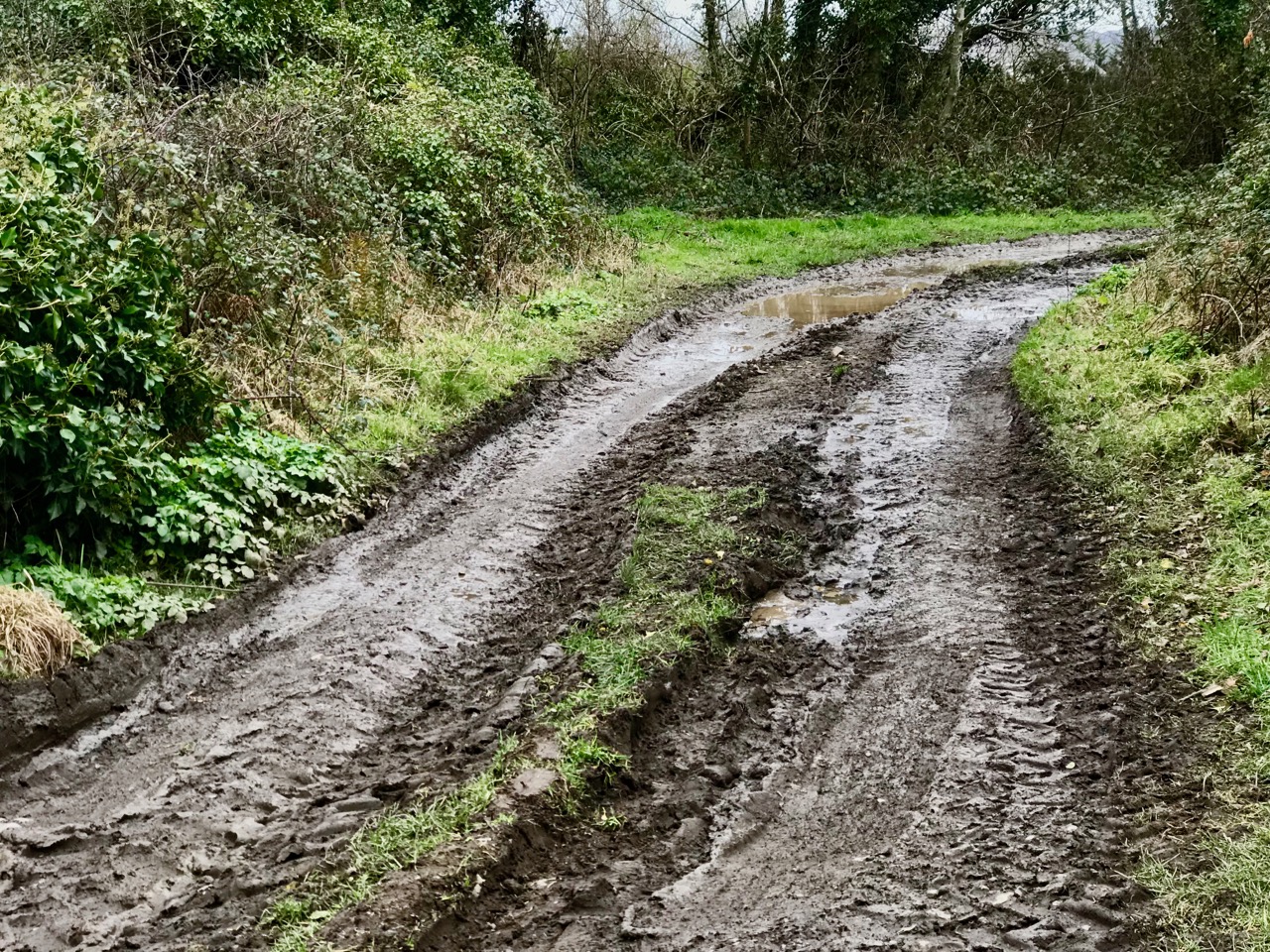
If you want to find some remote Irish history which is a long way off the beaten track, try the city of Dublin! Just a few minutes’ drive from the edge of this bustling metropolis (and down a long, rough and muddy farm track) is a collection of carved stones which have their roots in the time of the Vikings.
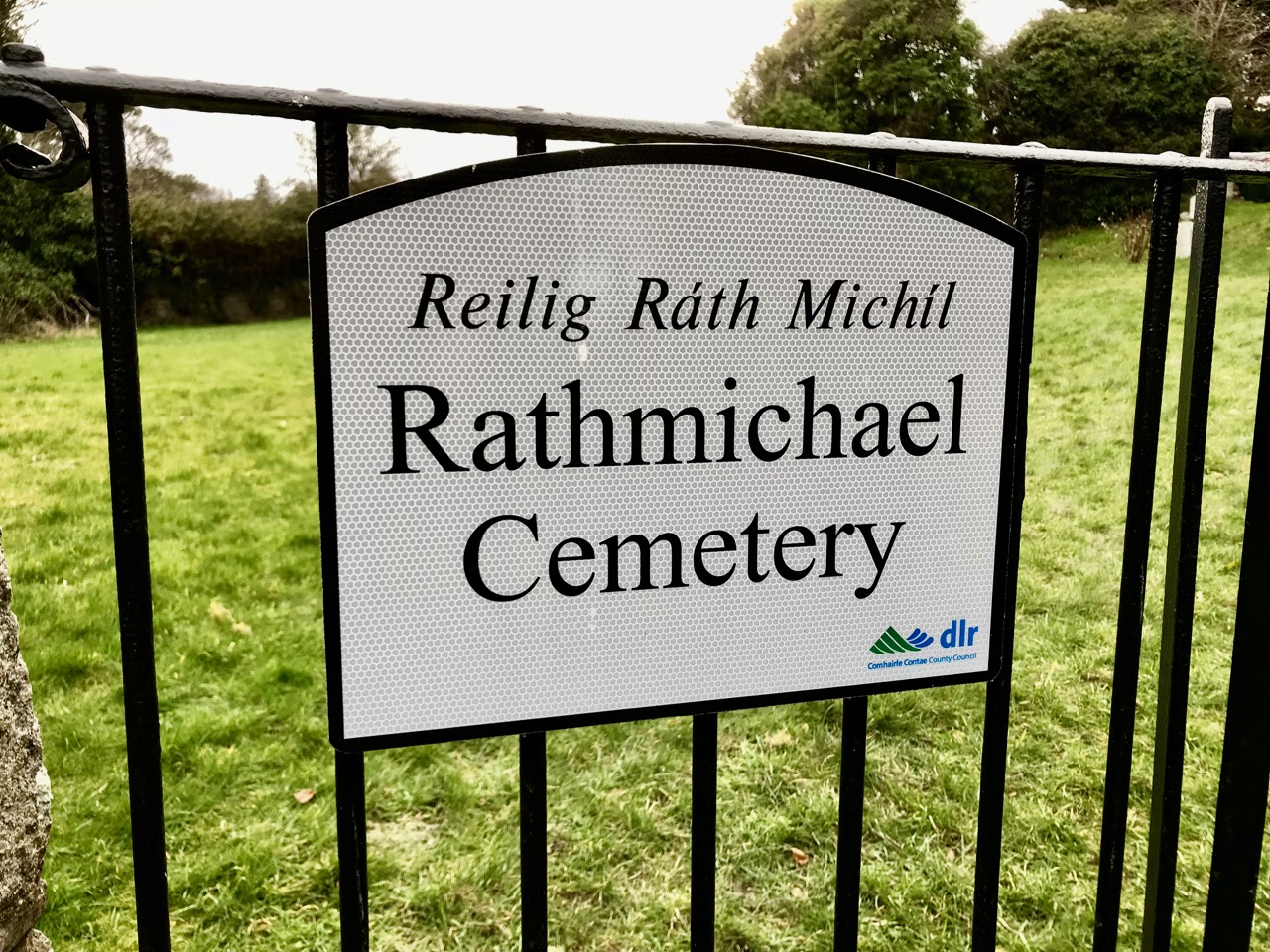
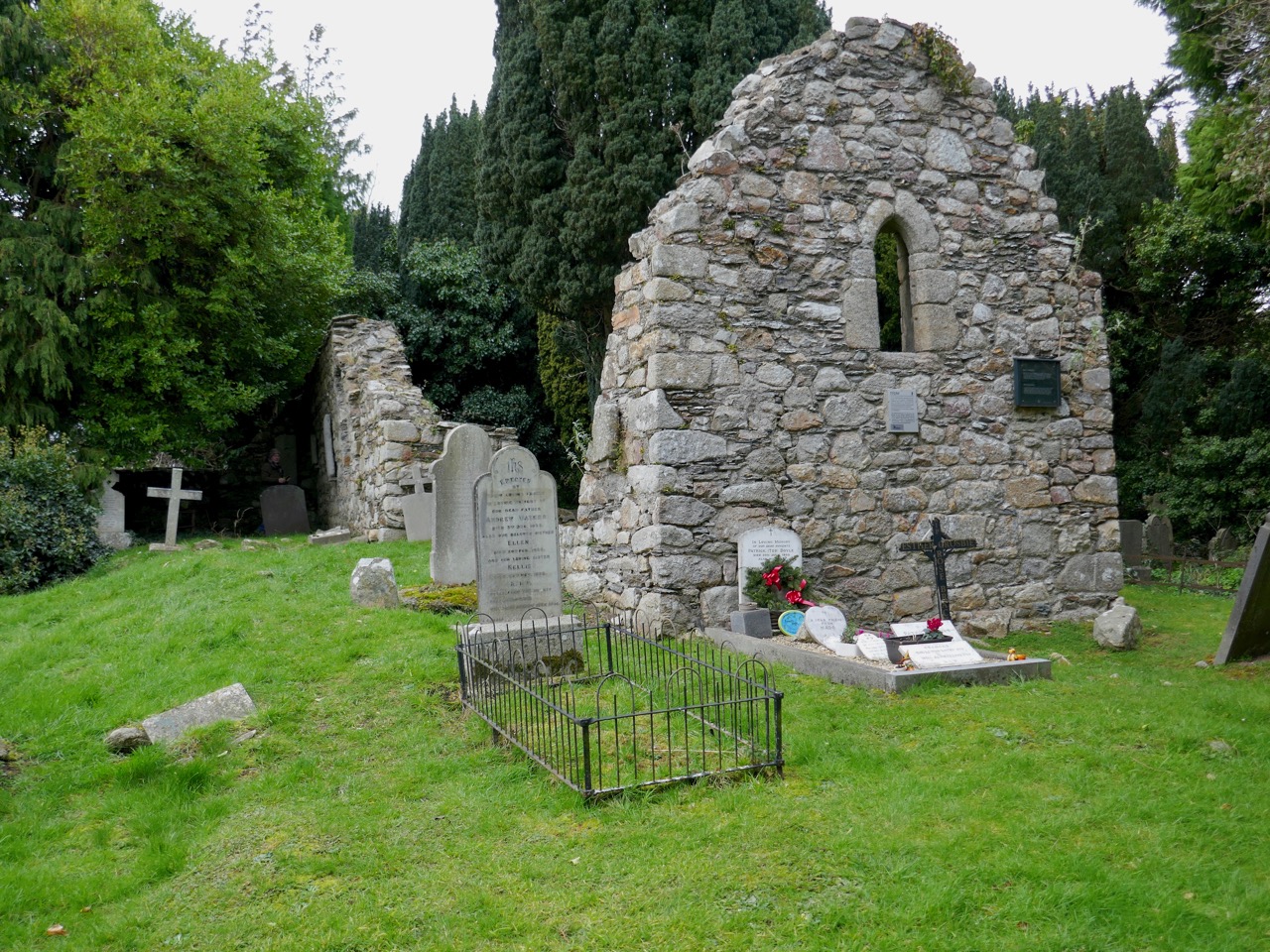
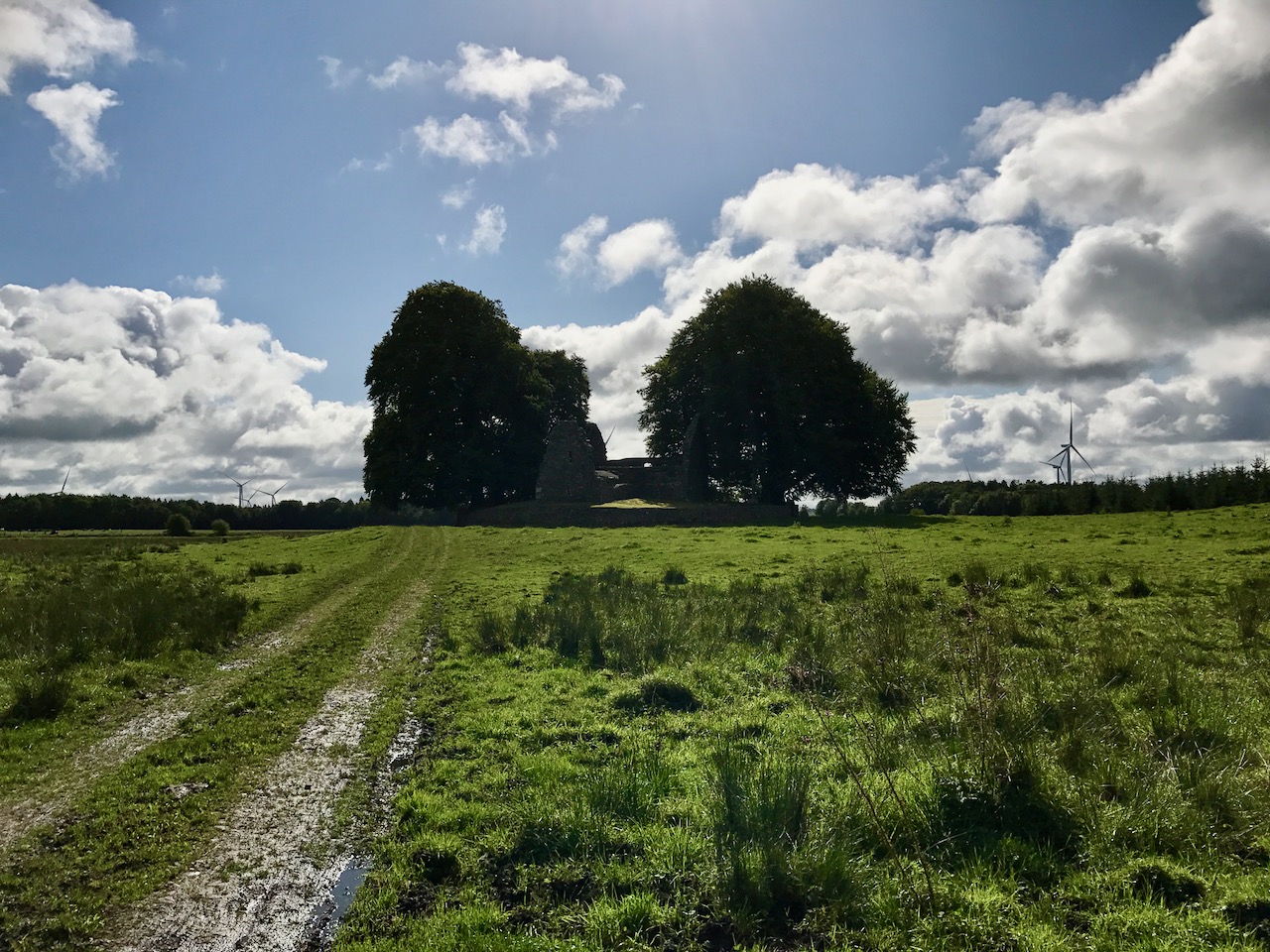
Here, in the barony of Rathdown, the remains of a small ruined church date from the twelfth century, but a monastic settlement was set up long before that by St Comgall of Bangor, who lived from 520 to about 600 AD. There is the stump of a round tower here, known locally as the Skull Hole, as bones from the surrounding graveyard were thrown in here. Some say, also, that it is actually the entrance to an underground tunnel going down to the coast: furthermore, a piper was once seen to enter the tunnel playing his pipes – but was never seen again!
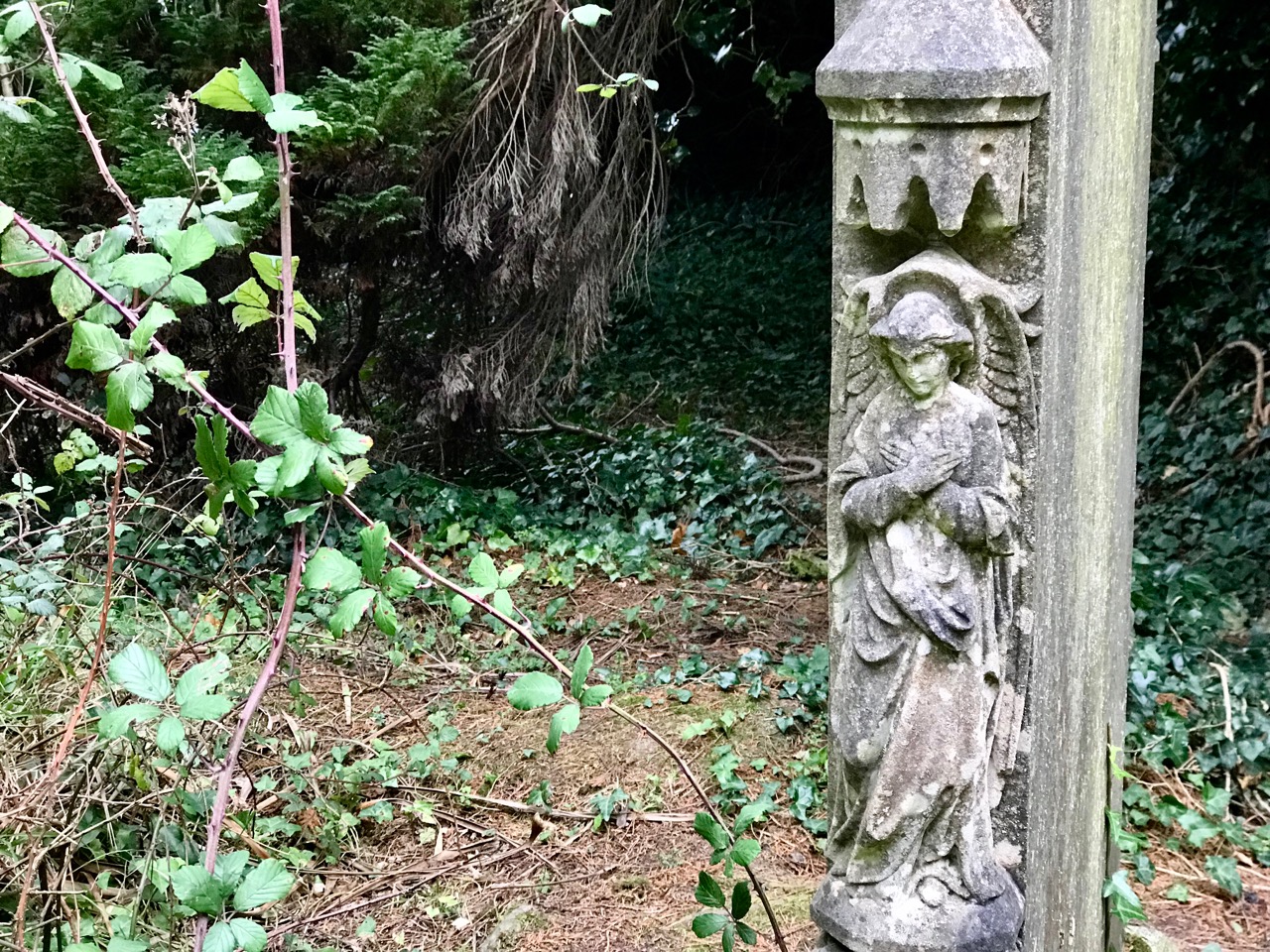
There is another piping tale connected with a nearby site: Puck’s Castle. A fairy piper is often seen jumping from rock to rock while also playing his pipes. We watched and listened, but in vain . . . Here are some of the noteworthy ‘modern’ gravestones in the cemetery at Rathmichael:
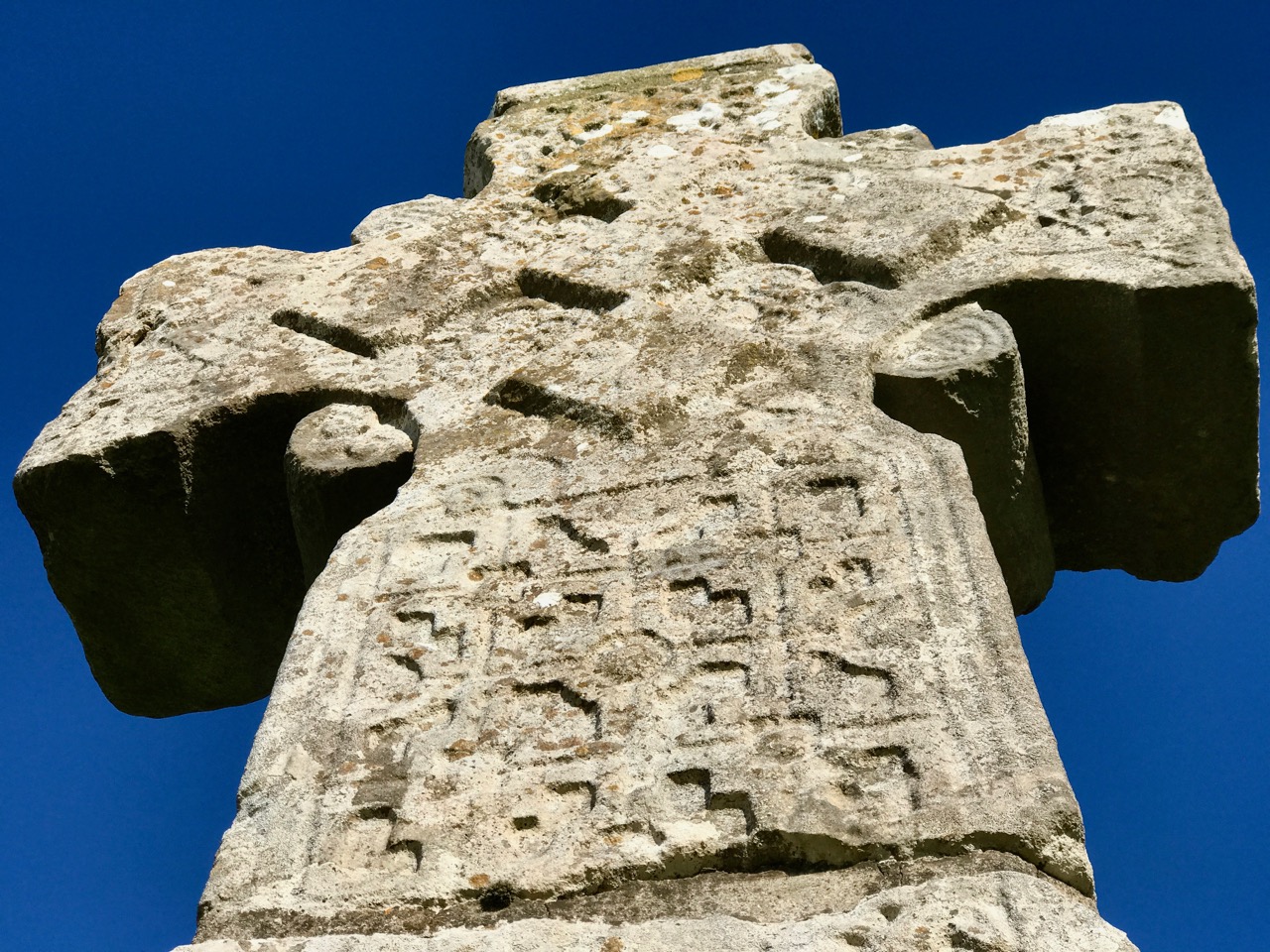
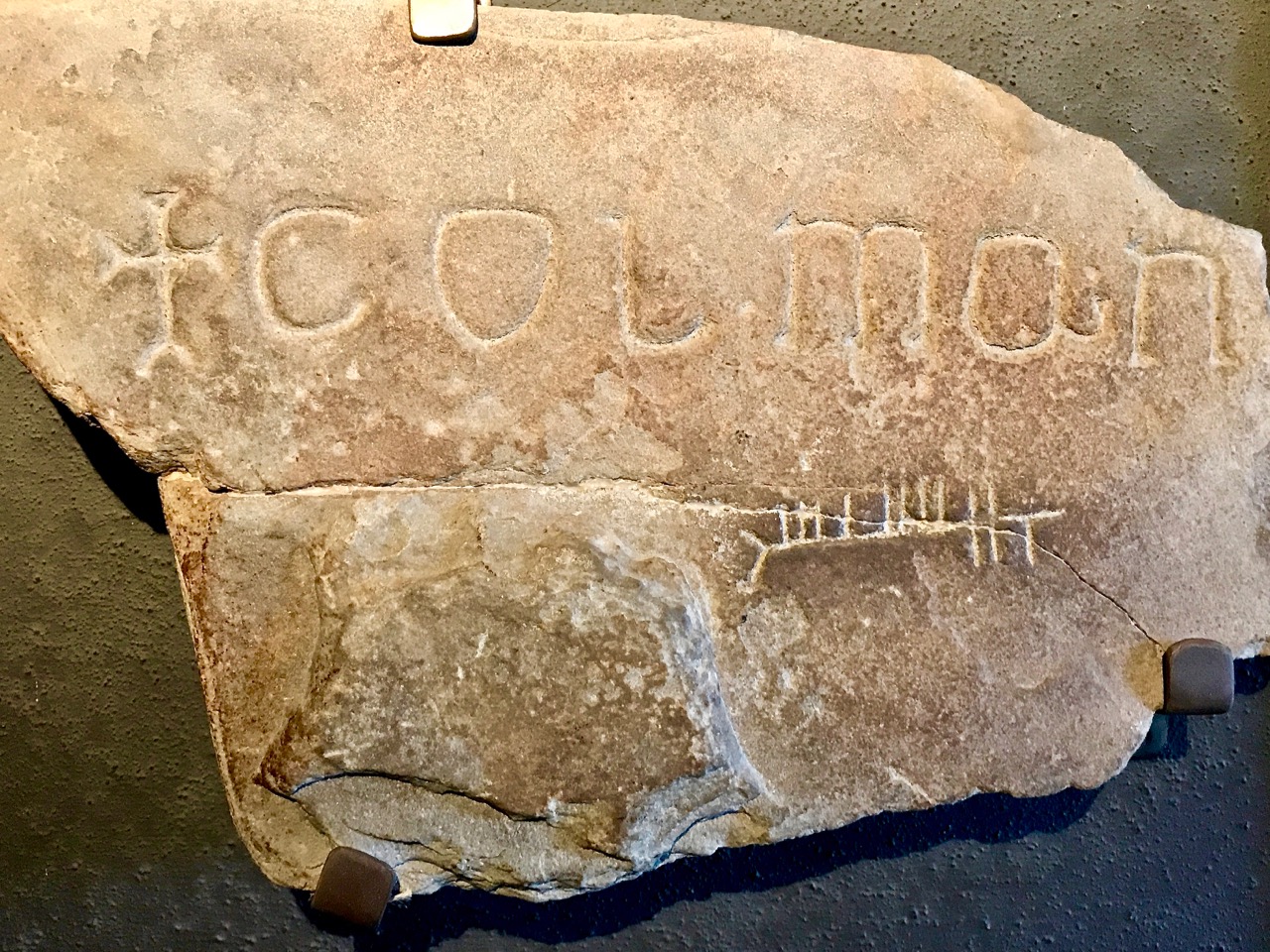
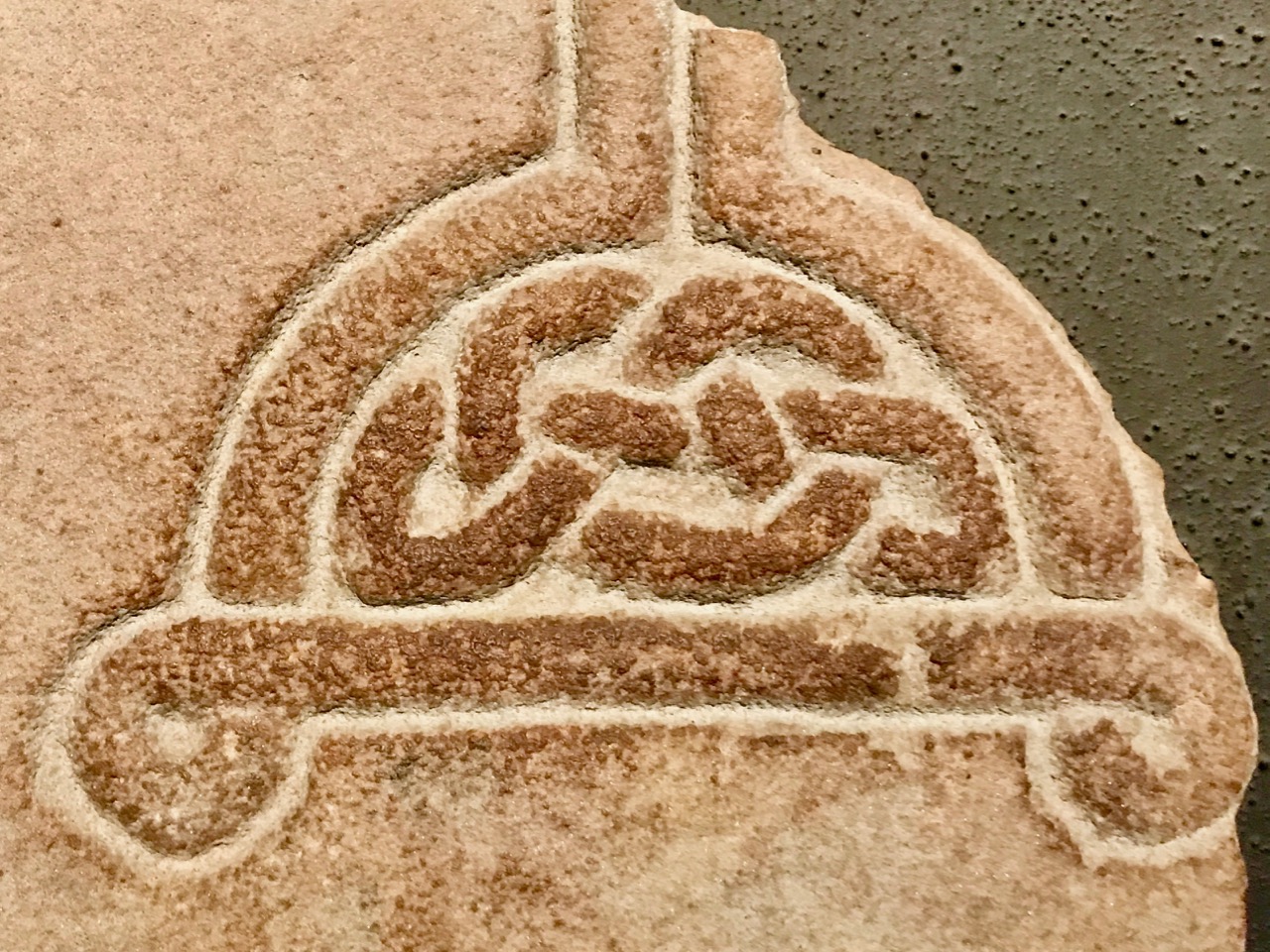
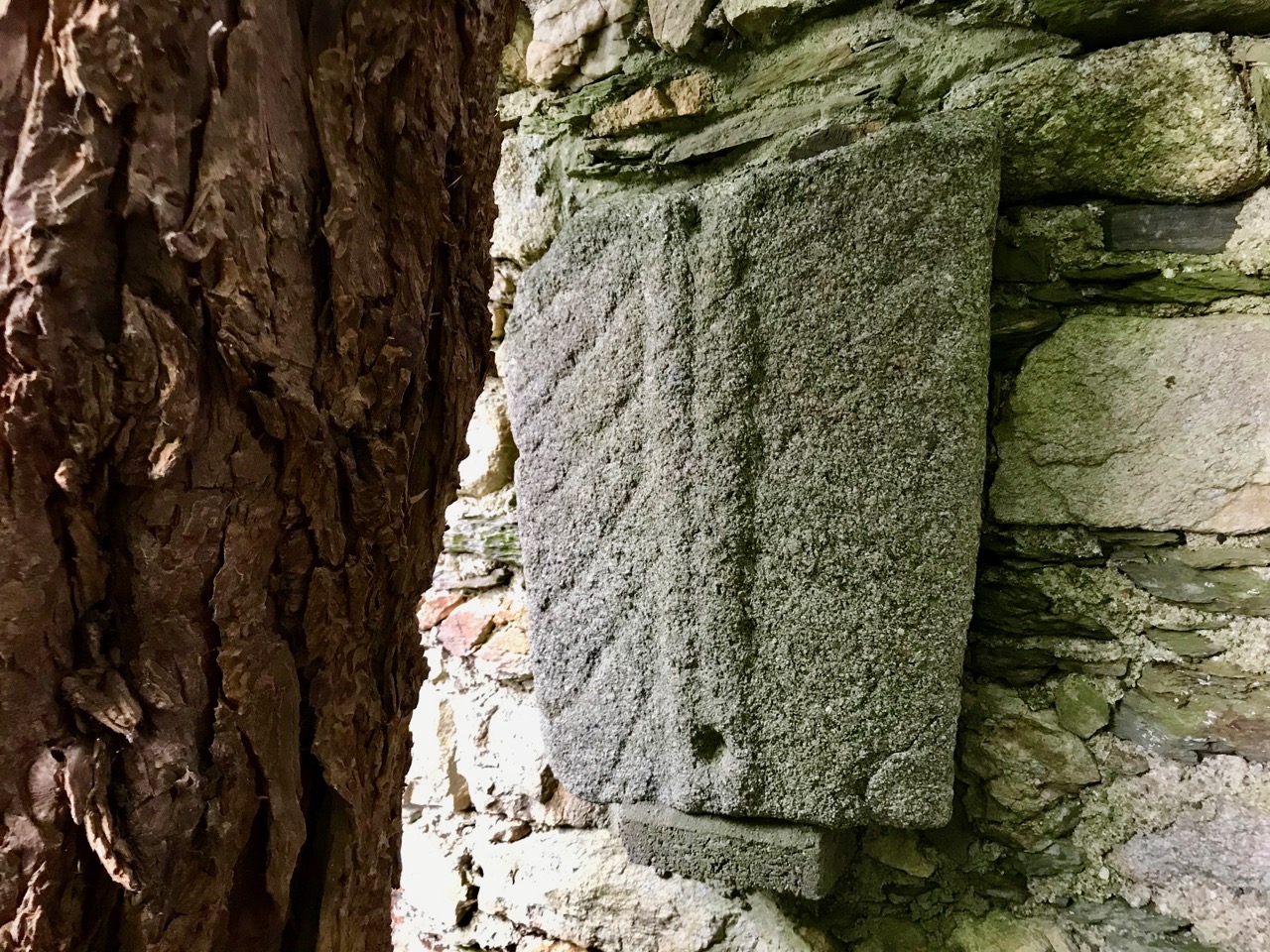
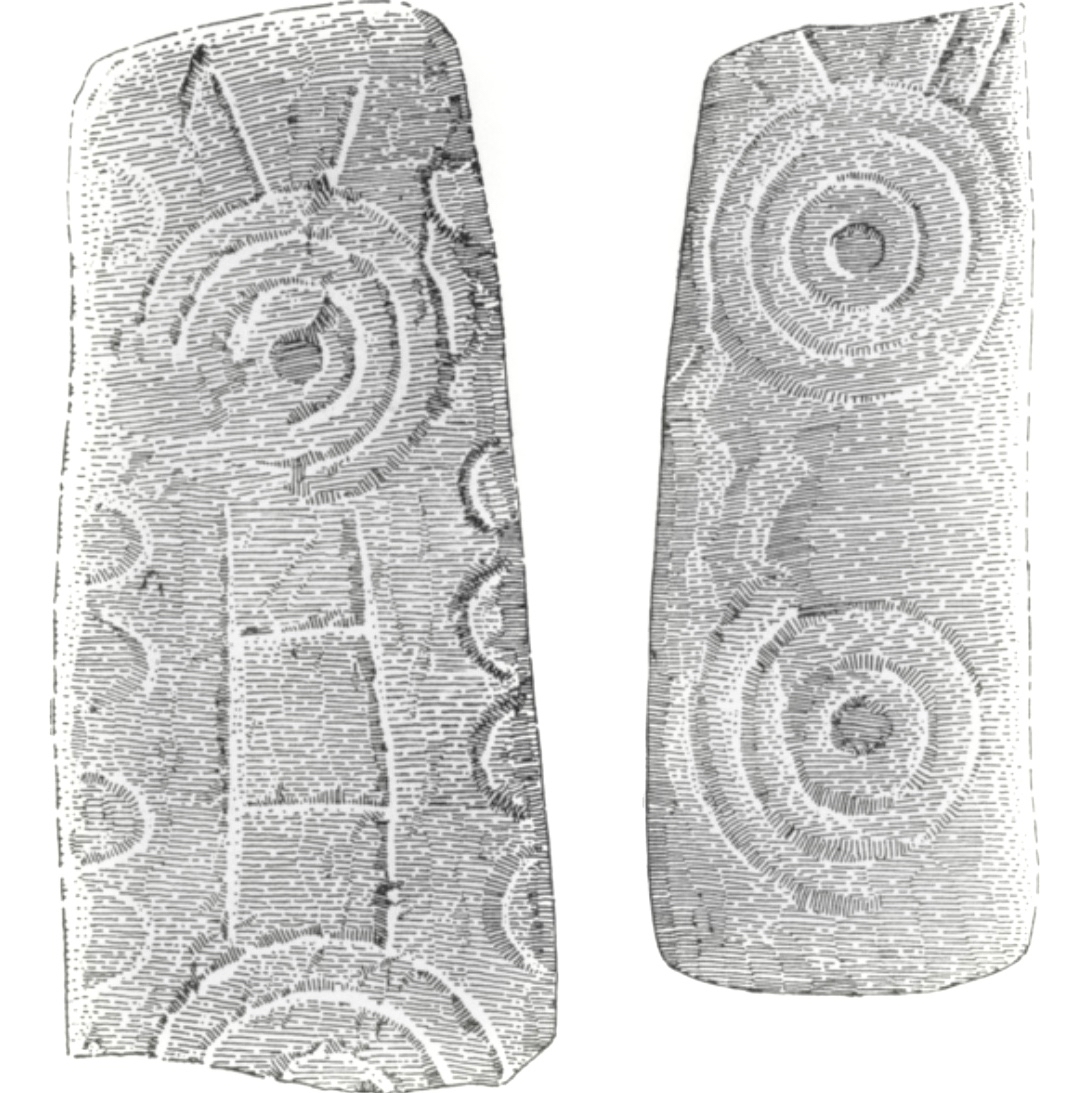
But the real treasure of the place are the carved stones which date from Viking times, and which are probably early Christian grave markers. They are generally known as The Rathdown Slabs. Some of these we would classify as ‘Cross Slabs’, even though, on some, the cup marks and concentric circles make us think of Prehistoric Rock Art. Well worn by time and weather we can still make out the various motifs – and we are fortunate to have good drawn records of these stones dating from a study carried out by Pádraig Ó hÉailidhe, a member of the Society of Antiquaries of Ireland, and published in volume 87 of the Journal of that Society in 1957.
Rathdown Slabs (top to bottom): 1 and 2; 8 and 9; 3 and 4 – as classified by P Ó hÉailidhe in his 1957 study

From around 850 AD we find mention of Norse names: Amláib (Olaf the White) arrived in Dublin in 853 and ruled jointly with Ímar (Norse Ívarr inn beinlausi – ‘Ivar the Boneless’). Amhláib was a Norwegian but Ímar may have been a Dane. Ímar is mentioned as ‘king of all the foreigners in Ireland’ at his death in 873. The grave slabs at Rathmichael probably date from the time when Viking settlements were established in the Dublin area, and – although we tend to think of the Vikings as plunderers of monasteries – it seems that they began to follow Christian practices once they settled in Ireland. 
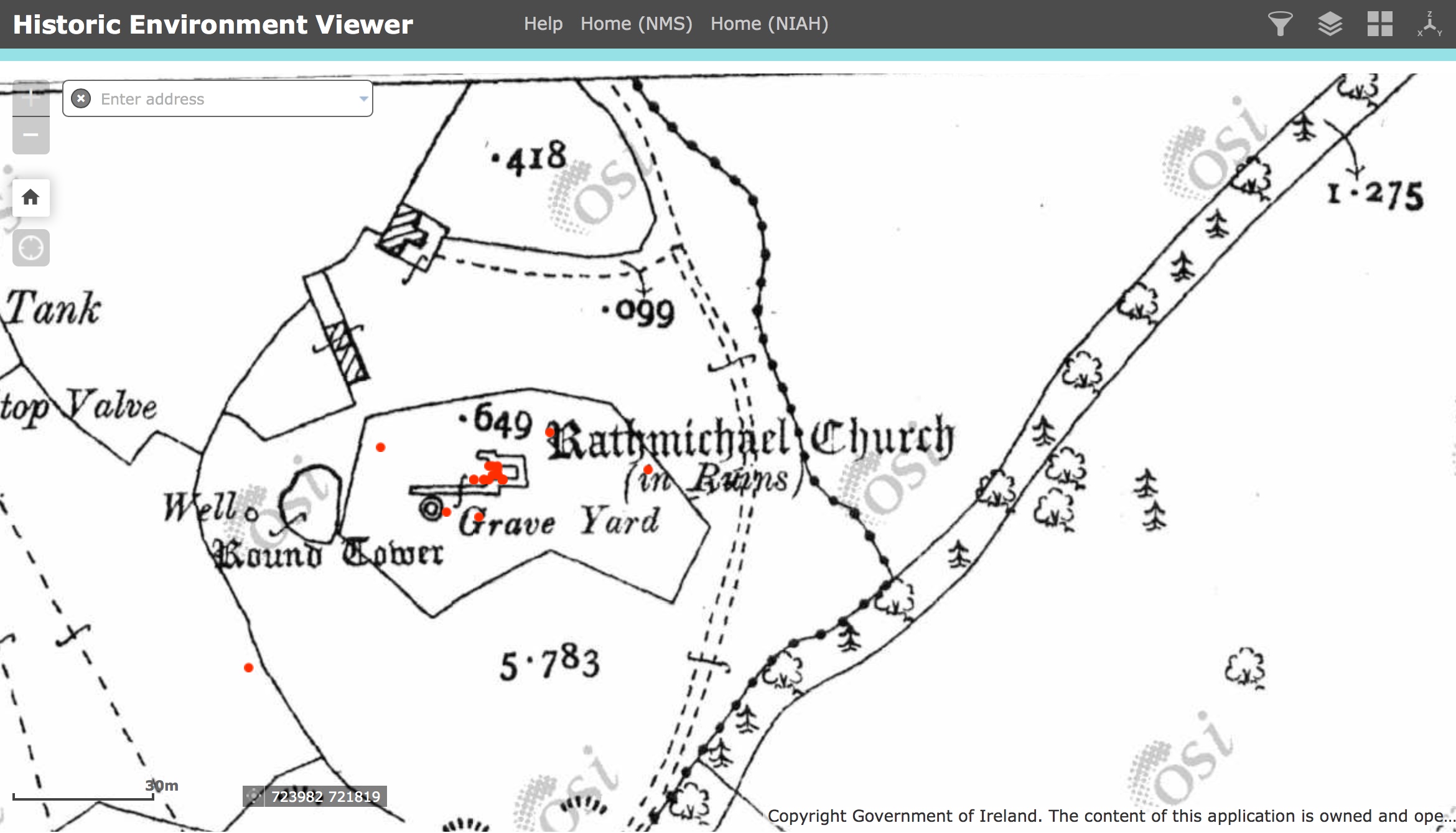
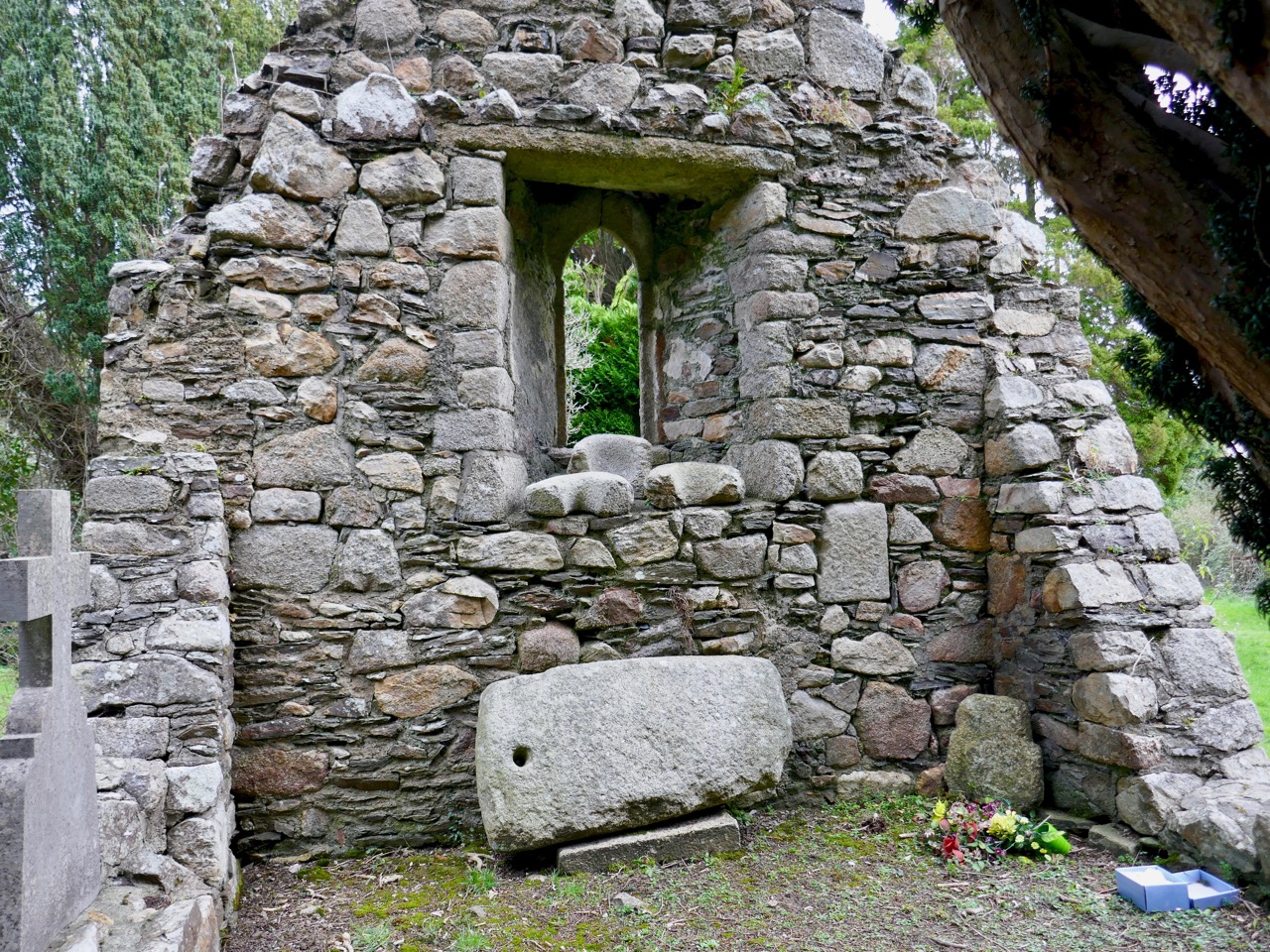
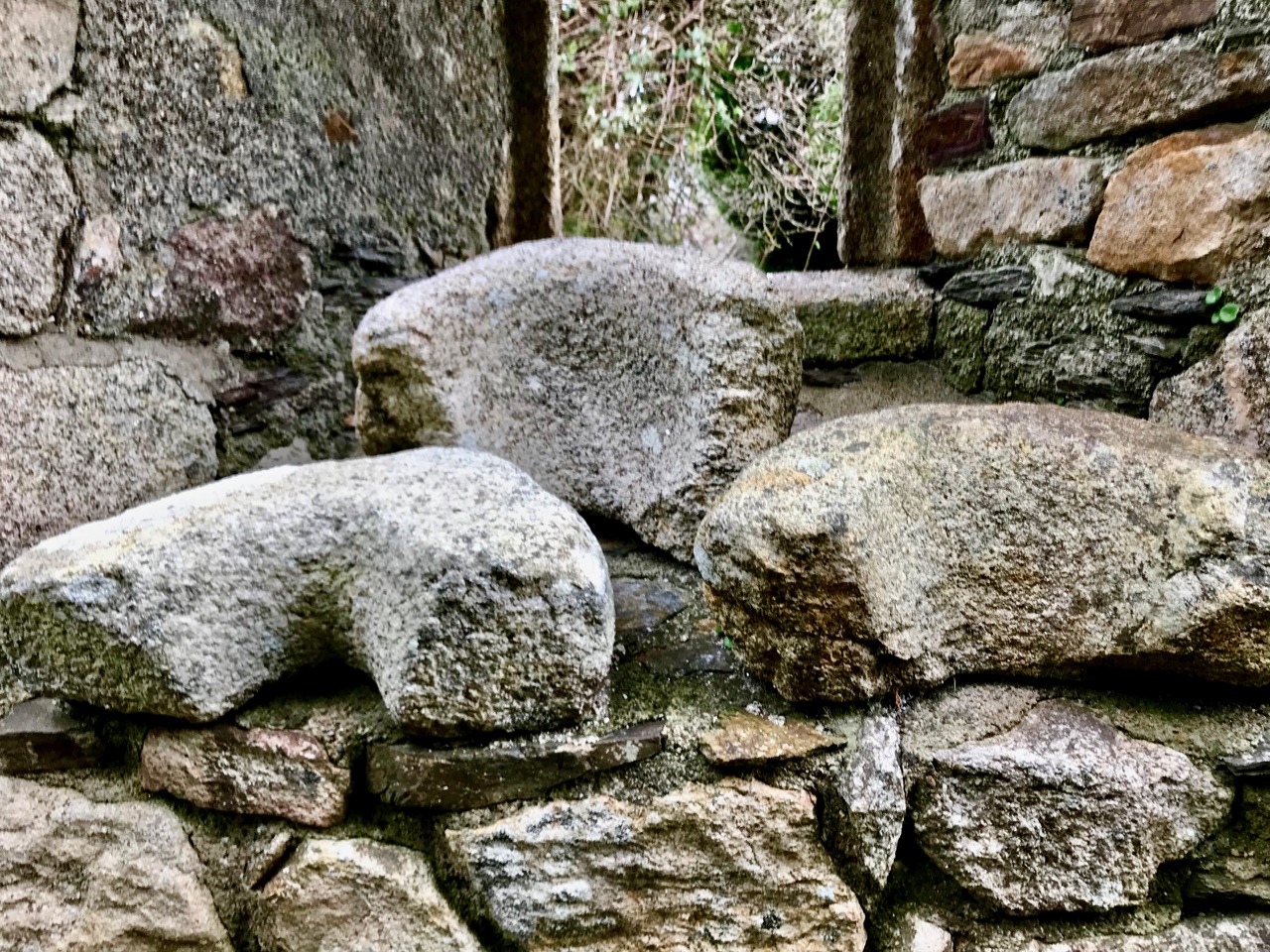
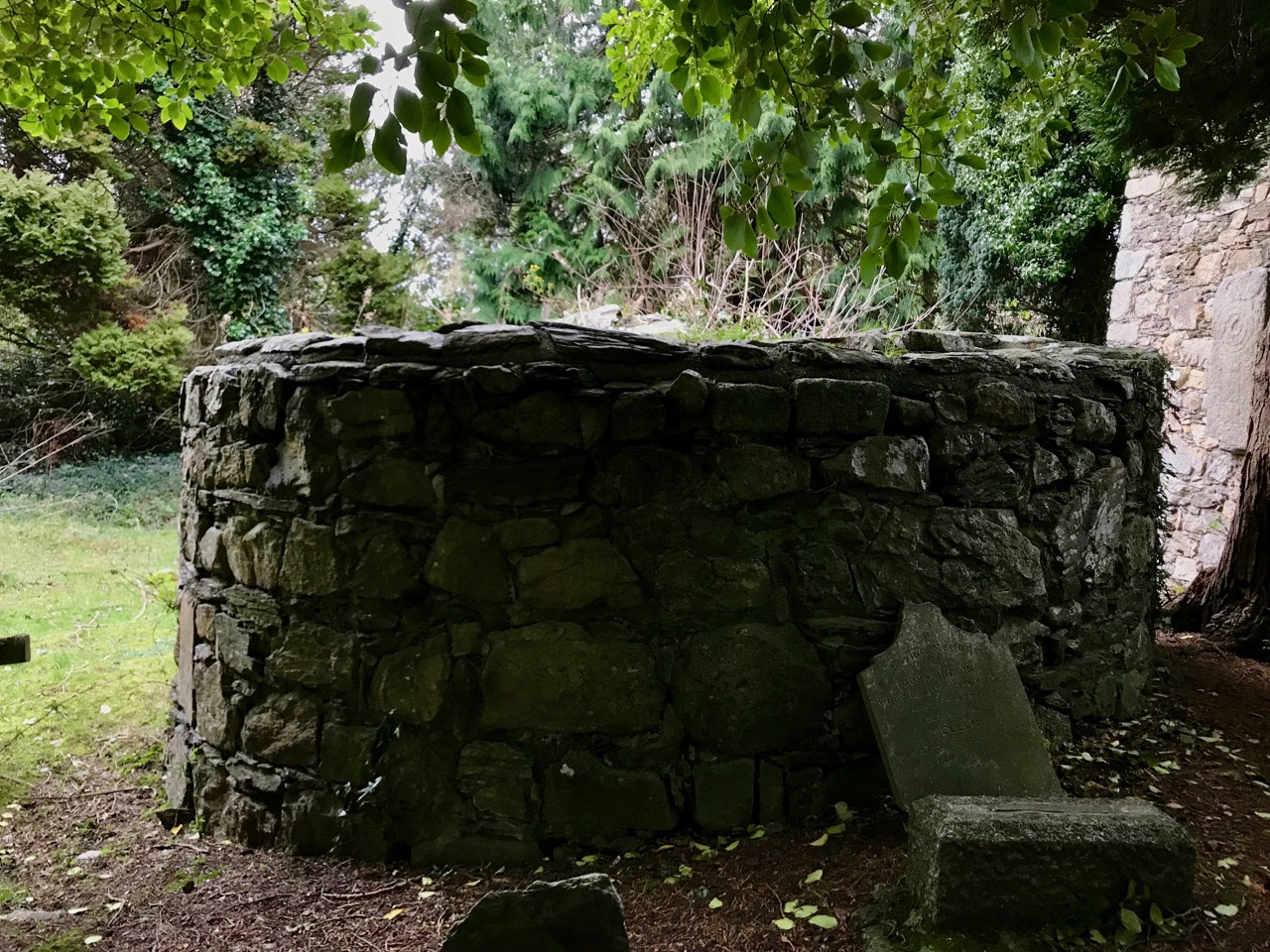
Top – Rathmichael Church with its round tower and Viking graves was established on an ancient Rath or fort, in fact one of the largest in the locality: you can see the probable circular outline of the fort in this extract from the National Monuments Service Archaeological Survey Database; middle – ruins of the medieval church at Rathmichael and, lower – fragments of Bullaun Stones at the church site

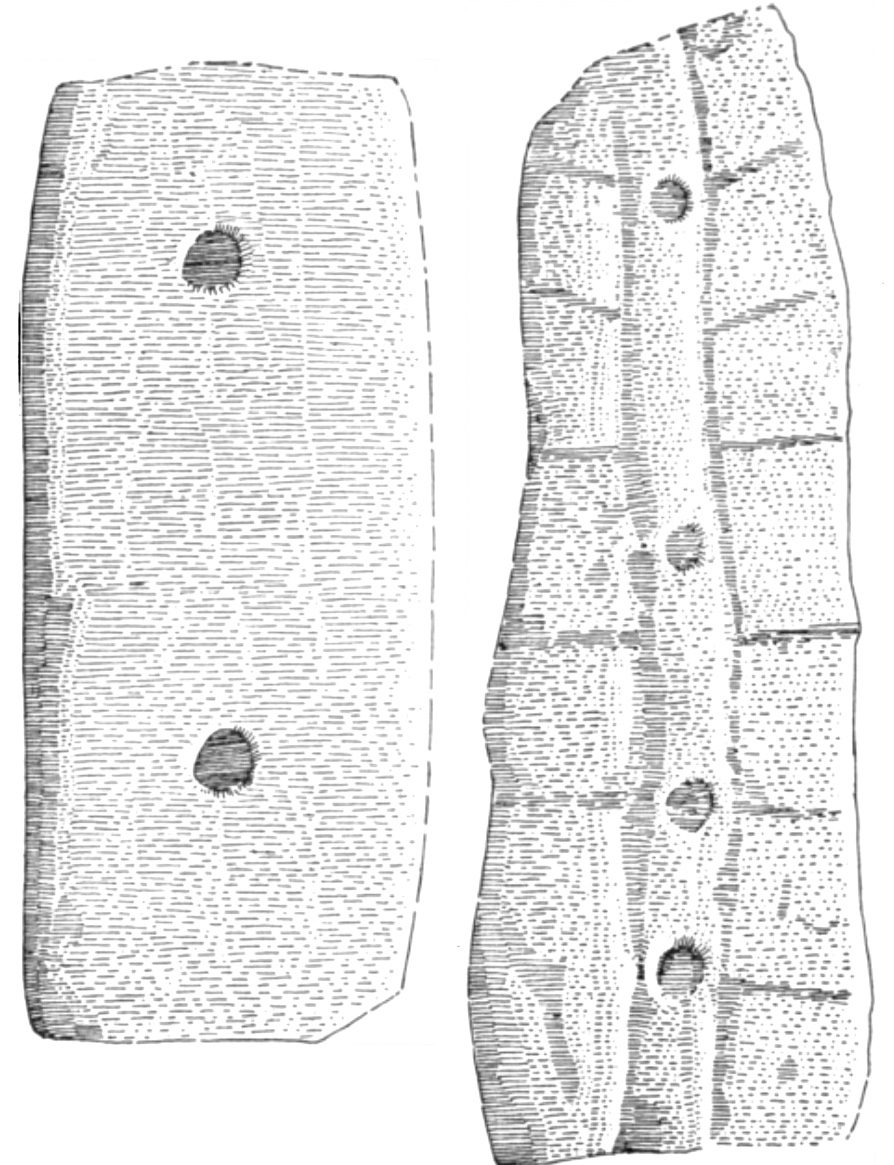
Other – probably related – inscribed slabs from the wider area are recorded by Pádraig Ó hÉailidhe (below): Dalkey Castle Heritage Centre displays one of the finest of them all (left), while the Tully Slab (right) is assumed to have come from another remote church ruin close by – however I cannot find any record of its current whereabouts. If anyone can throw light on this, please let us know.
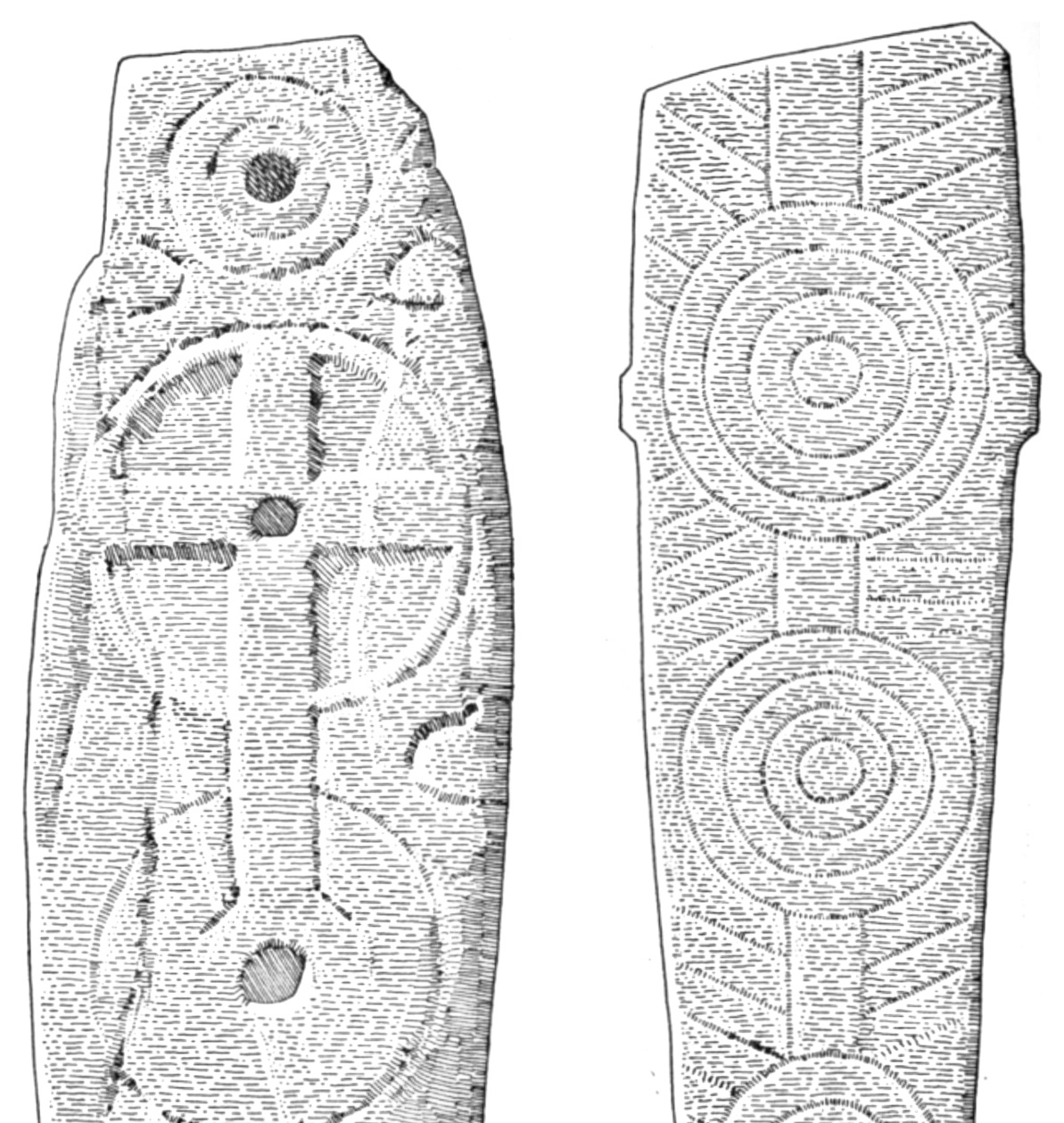
Dalkey and Tully grave slabs – drawn by Pádraig Ó hÉailidhe, 1950s

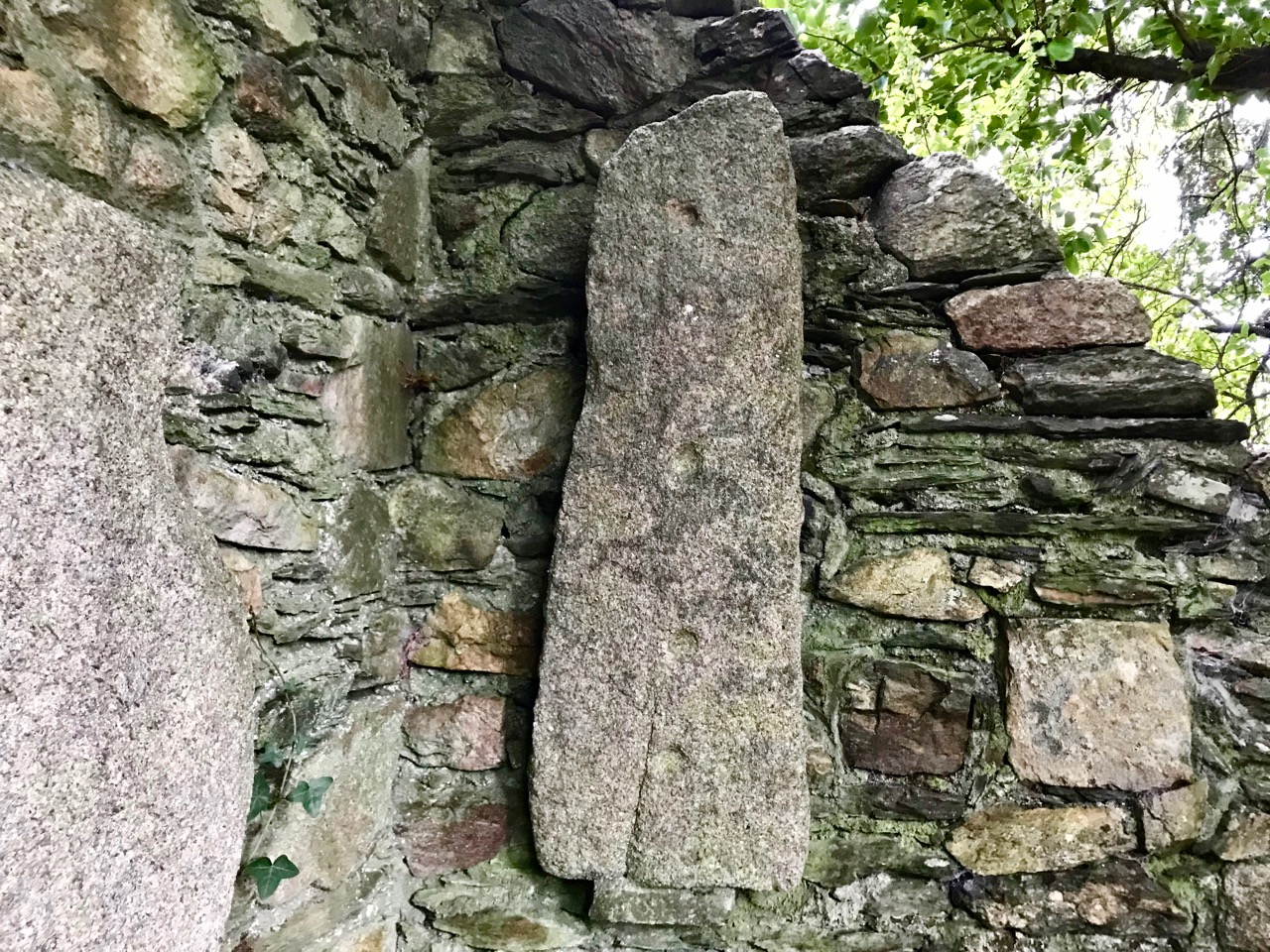
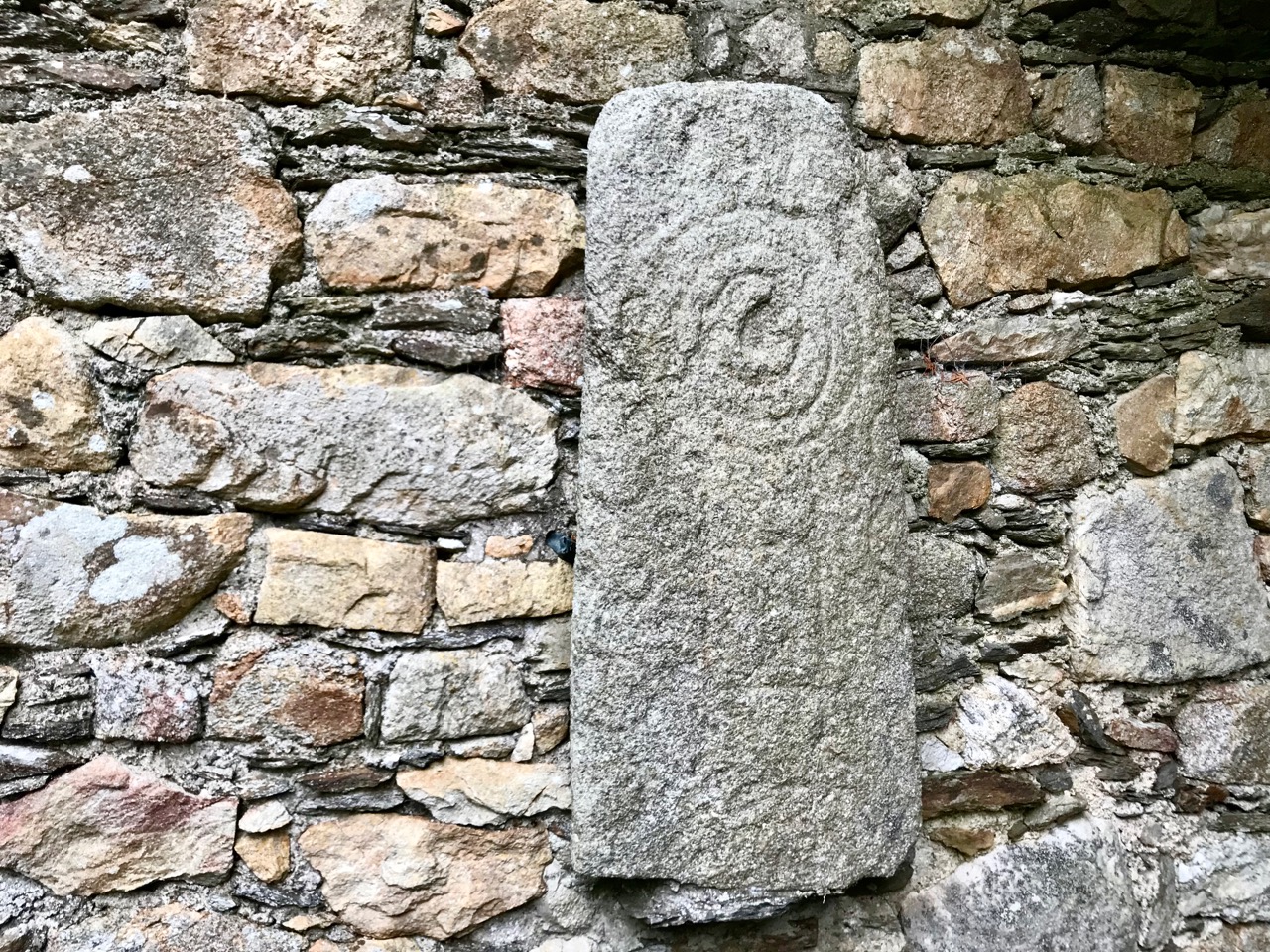
I have used the drawings by Ó hÉailidhe because they are so clear: we visited the Rathmichael site this week and were struck by how faded much of the inscription seems to be. It could be that we were not seeing the carvings in a good, clear light. Worryingly, it may also be that the stones are suffering from accelerated weathering (much as our unprotected medieval high crosses appear to be) due to acid rain and pollution. You can see for yourselves by comparing the drawings above with our own photographs, a selection of which form the tailpiece of this post.
Nicola Gordon Bowe, 1948 – 2018

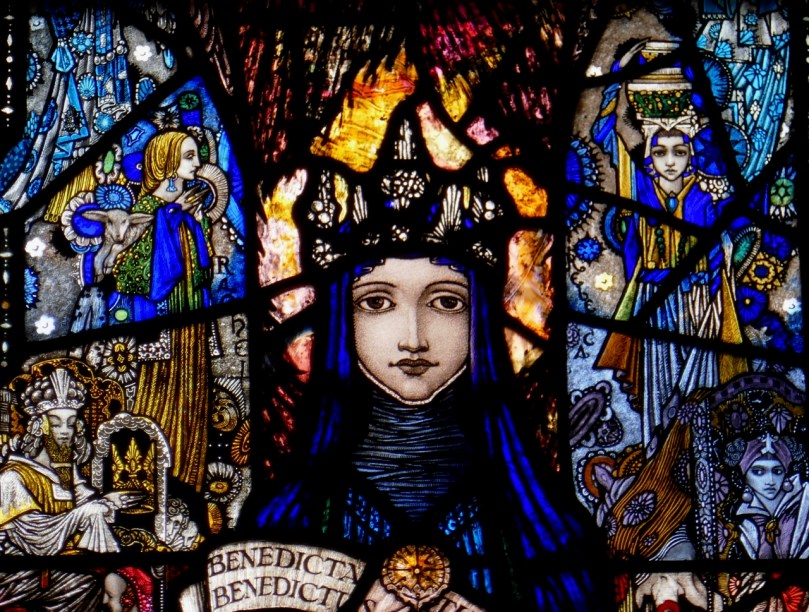
Harry Clarke’s The Coronation of the Virgin, from his Terenure windows. Nicole Gordon Bowe revealed him to the world.

The Irish art world sustained a terrible loss earlier this year with the death of Nicola Gordon Bowe, or Nikki, as she was universally known to her friends. In a very small way, I feel immensely grateful to have been counted among those friends. Although we only met once, we carried on a happy correspondence and were to have seen each other again this summer. But there are probably a thousand people like me, who have lovely memories of this wonderful woman, because Nikki had that rare gift of making each individual feel seen and heard and encouraged.

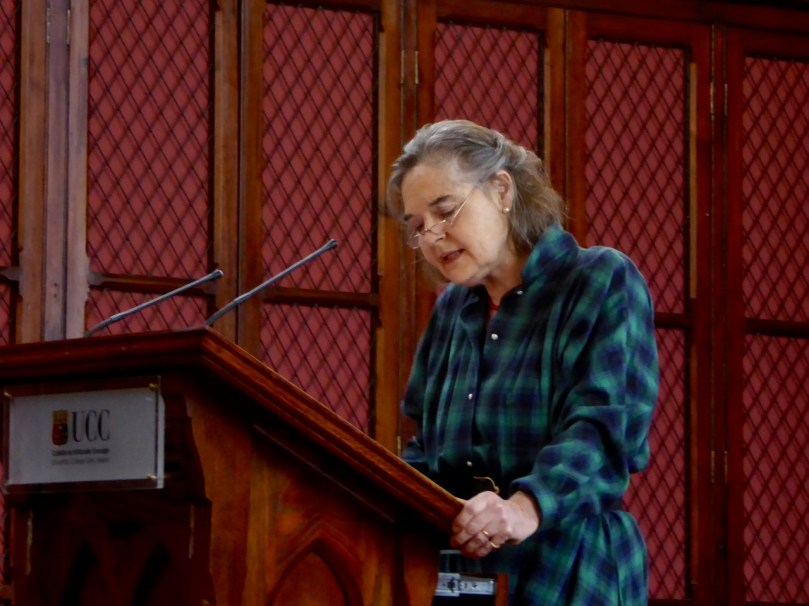
Nikki at the day-long symposium on the Honan Chapel, in Cork. Obviously in pain, she nevertheless gave a brilliant summary of Harry Clarke’s famous windows

Reading comments on various obit pages, from a generation of students, colleagues and friends, clear themes emerge of formidable scholarship, wide-ranging erudition, and passion for her subject. She was, as Alistair Rowan who spoke at her memorial service emphasised, the world expert on the Irish Arts and Crafts movement and on Irish stained glass.

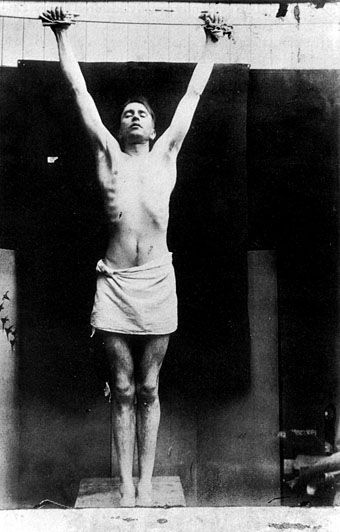
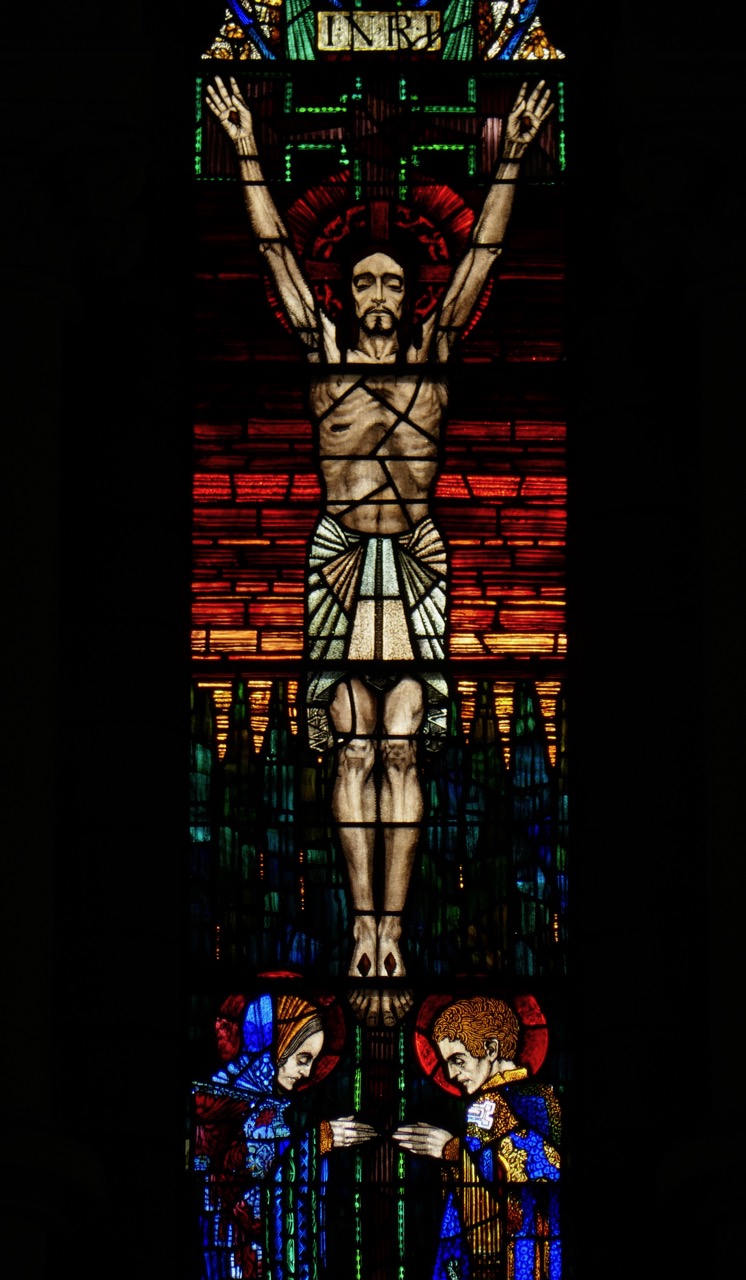
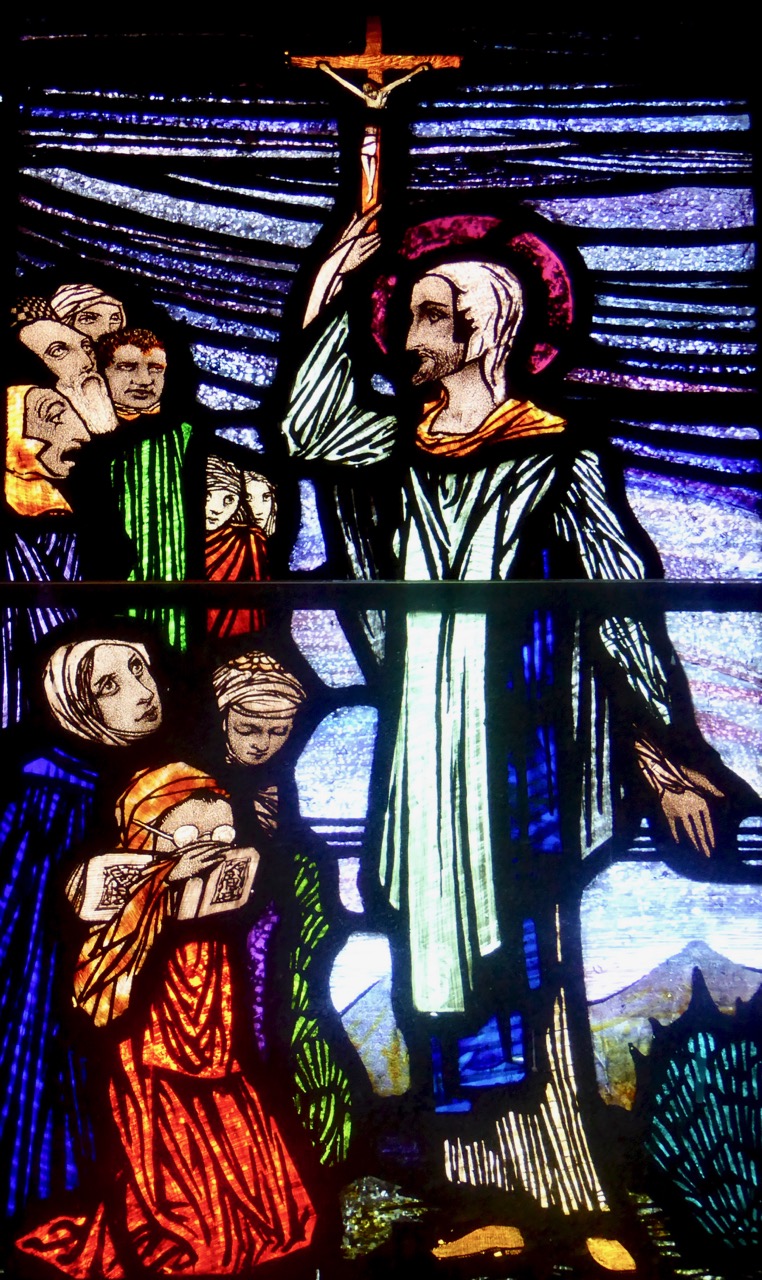
In her book, The Life and Work of Harry Clarke, Nikki traced Clarke’s influences and training. He often used himself as a model – in this instance for the crucified Christ in the Terenure windows

But the other theme was that of friendship, of a wonderful sense of humour and a ready smile, of her encouragement to junior researchers, her collaboration, nationally and internationally with other scholars in her field, and the boundless generosity with which she shared her knowledge.

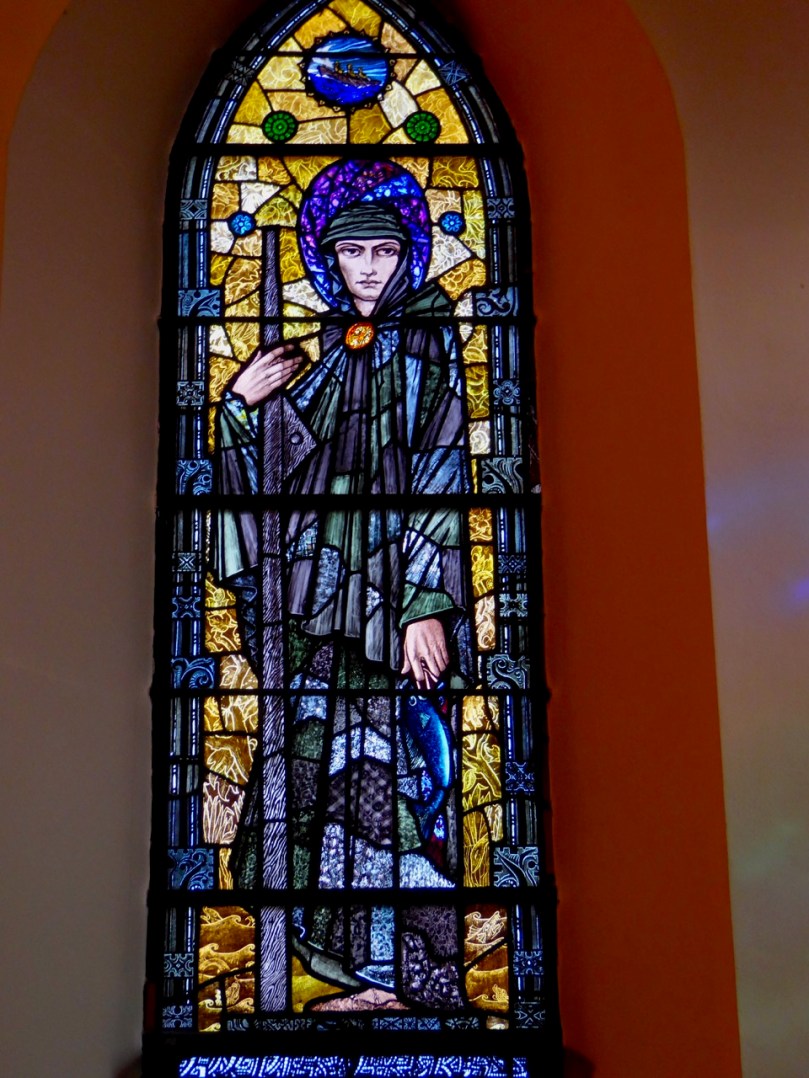
St Brendan, Nikki pointed out (as true for this window in Tullamore as for the Honan windows she was discussing) does not look like the kind of muscular saint that could navigate the Atlantic. ‘Effete’ was the word she used.

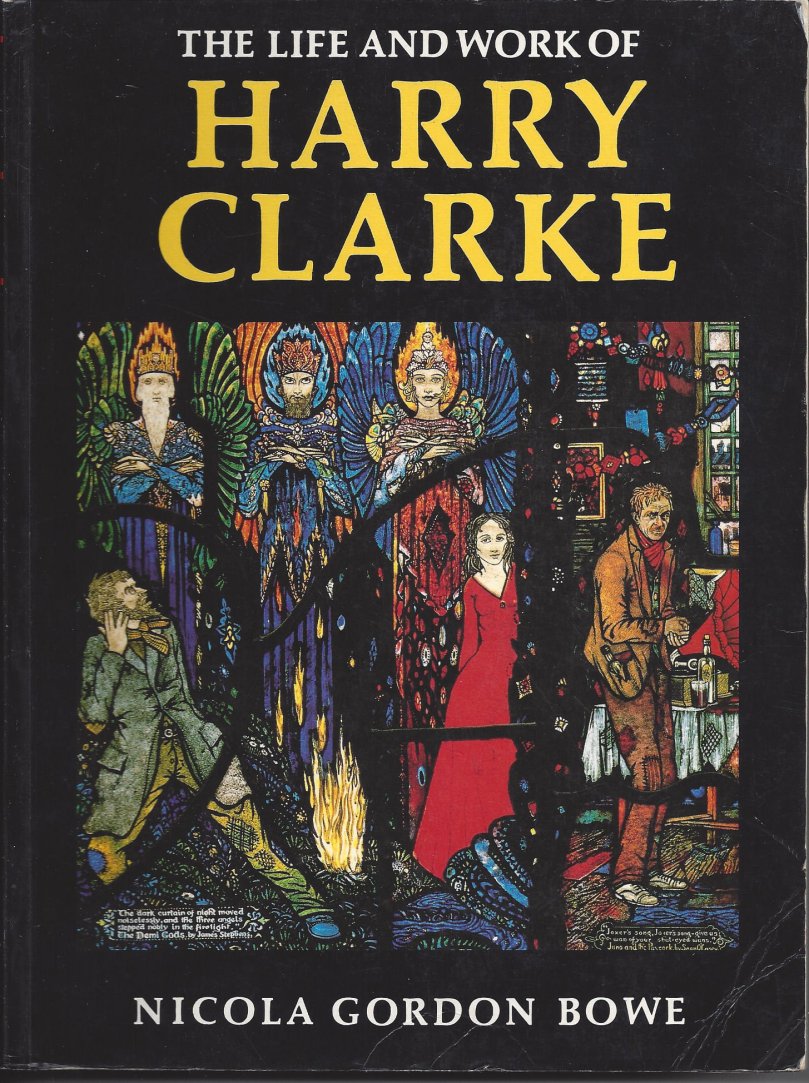
Nikki’s book on Harry Clarke has been my bible for all the posts I have written about this genius of Irish stained glass. Last year her second magnum opus was published, on the life and work of Wilhelmina Geddes. I haven’t read it yet – a future pleasure – but it was widely considered the finest Irish art book of the year, perhaps the finest book of the year.

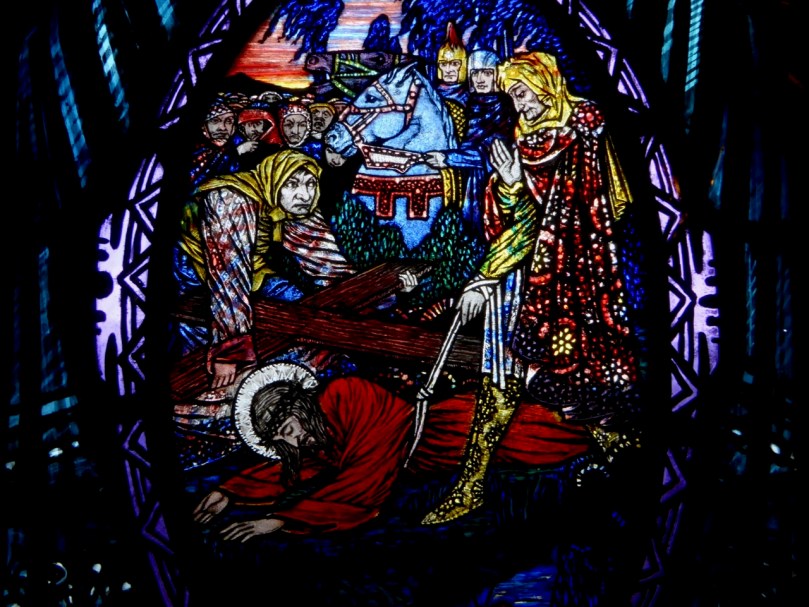
Jesus Falls for the Third Time: one of the medallions that form the Stations of the Cross in Lough Derg. Nikki’s research indicated that these were mostly executed by his apprentices during a period of illness, although  they were designed by him.

She also wrote for the Irish Arts Review, the Dublin Review of Books and contributed essays to edited collections – the busy life of an established and disciplined scholar. At the time of her death she was working on what was to be a definitive study of the Irish Arts and Crafts Movement.

St Fechin, from the Ballinrobe windows: Harry Clarke loved to populate his scenes with a host of figures – now who is that small one with the glasses?

Nicola Gordon Bowe, more than any other person, was responsible for rescuing Irish Arts and Crafts from obscurity and establishing the reputation as artists of its major practitioners, none more so than Harry Clarke. She was impatient of those who dismissed stained glass as mere craft and who failed to see how the medium of glass both compounded the difficulty and enhanced the impact of the work of Harry Clarke and others. In the newly refurbished and finally open National Gallery of Ireland there is now a Stained Glass Room full of breathtaking pieces – it is no stretch to say that we can thank Nikki for that.

The Song of the Mad Prince, an exquisite small panel in the new National Gallery Stained Glass Room

I have chosen to illustrate this post with photographs of Harry Clarke windows and details, as a tribute to Nikki. She was his great and ardent champion and now the world knows what a true legacy of masterpieces we have been left by him. Nikki’s legacy is also secure – her works will be consulted for generations to come, and her memory kept warm by all who were privileged to know her.

From the Eve of St Agnes, in the Dublin City (Hugh Lane) Gallery

For obituaries, see here and here and here. Rest in peace, Nikki.

The Annunciation Angel from the Terenure Annunciation window

Finn McCool’s Causeway

In a recent post this year I said how much we liked to go off the beaten track and find Ireland’s gems hidden away among the narrow boreens of West Cork and elsewhere. But sometimes it’s also worth going to the better known hotspots around the country – and being prepared to regard them objectively in spite of the sometimes intrusive crowds that you might meet along the way.

Last summer our trip around the coast of Northern Ireland took us past the Giant’s Causeway in County Antrim. I had never been there before (Finola had) so I was keen to see what all the fuss is about. After all, I knew the causeway had been built by one of Ireland’s greatest heroes – Finn McCool – and that it once extended all the way to Scotland: the other end of it can be seen at Fingal’s Cave on the Scottish island of Staffa (Staffa is a Norse word meaning ‘Pillars’ and is named from the rock formations there): the Gaelic name for the cave is An Uaimh Bhinn, meaning ‘the melodious cave.’ It has been suggested that the name ‘Fingal’  is linked to the name ‘Finn McCool’ possibly after an 18th century Scots poet, James Macpherson, wrote an epic poem loosely based around the Finn story. Later, the composer Felix Mendelssohn visited the cave and celebrated it in his Hebrides Overture. It’s worth looking at this Youtube video of the piece as it is well illustrated with dramatic views of the Scottish end of things:

Before leaving Scotland – and this atmospheric music – I was intrigued to find mention of a tradition that the Staffa cave is fully illuminated by the sun on only one day of the year: on or around the 16th of December (quite close to the winter solstice), and the teller of this tale will point out that it was exactly on that day – 16 December – in 1830 that Mendelssohn completed his overture . . .

Ireland’s Giant’s Causeway has been a popular tourist destination for as long as there has been tourism in Ireland. I hadn’t realised that it had been served by a dedicated tramway since the 1880s (the photo above dates from that time). The line, running from the mainline railway at Bushmills, was the world’s first to be powered by hydro-electricity – fed by a generating station at Walkmill Falls near Bushmills via 104 horsepower 78 kW Alcott water turbines providing 250 volts at 100 amps. Sadly, the line closed down in 1949 but has been revamped over the final 3.2 km of the original tramway during the main tourist season, carrying its first passengers at Easter 2002.

Another modern development is the tourism and visitor centre, which opened in 2012: the previous building was burned down in 2000. As an architect (happily retired!) I always take an interest in large public buildings and their design. This one was very controversial when it was mooted, partly because there was concern about the way it was being commissioned – initially it was to have been privately financed and run. In the end funding was raised from the National Trust (who own the site), the Northern Ireland Tourist Board, the UK Heritage Lottery Fund and public donations. I think it is a successful building: it has gravitas while also being quite playful with the references to the hexagonal basalt formations of the Causeway. It has to achieve a difficult job: handling thousands of tourists (in 2016 there were 851,000!)  as efficiently as possible while providing a good informed experience.

Top – the Giant’s Causeway Visitor Centre has a well designed interactive information area. Above – Fare on offer at the Visitor Centre includes basalt column-shaped chips, and souvenir travel sweets!

The popularity of the causeway has ensured that it has been well recorded by artists, topographers and postcard publishers. Here are a few examples, beginning with one of our favourite antiquarians, George Victor Du Noyer.

Top to bottom – George Victor Du Noyer c1850; Thomas Rowlandson c1812; Susanna Drury, c1740; tourist postcard from 1907

The Giant’s Causeway was supposedly discovered by the Bishop of Derry in 1692, and announced to the world the following year when Sir Richard Bulkeley, a fellow of Trinity College Dublin, presented a paper on it to the Royal Society . . . I wonder if he mentioned Finn McCool? Just in case you don’t know this story yourself, here’s a good version of it, narrated by Tom Purves and beautifully accompanied on the Uillinn pipes:

We went fairly late in the season (October) and on a wet and windy day. It was a worthwhile visit and I do recommend it: the Antrim coastline is spectacular enough to warrant the journey, even if the causeway wasn’t there – but what a legend! It links one of Ireland’s best known heroes with the nearby Scottish coastline, and credits him with the creation of both Lough Neagh (Ireland’s largest inland mass of water) and the Isle of Man. Today it’s a Unesco World Heritage Site – in fact the only one in Northern Ireland.

Fading Treasures

For me, Ireland’s greatest treasures are those that are shy of publicity. There’s nothing more rewarding than turning off the beaten track and negotiating a narrow boreen with a lush growth of grass down the middle and brambles scratching your car on either side to find – often by chance – a stunning piece of medieval architecture, perhaps just the fragments of a ruin in a field, but revealing the beauty of a decorated doorway or an ornately carved corbel. Always these items are discernible but fading. Their splendour – and the exquisite craftsmanship that created them – are manifest. But there’s a melancholy in these finds: you see them, and wonder at them, yet you ask: how many more generations will be able to appreciate these works of ancient hands?

A classic case study would be the medieval high crosses. There are a remarkable number of these still intact on the island of Ireland, and many more fragmentary remains. We go out of our way to search for all these traces in our travels: some of those we have visited to date can be found through this link. It’s such a rich archive, and there are many more to be written up.

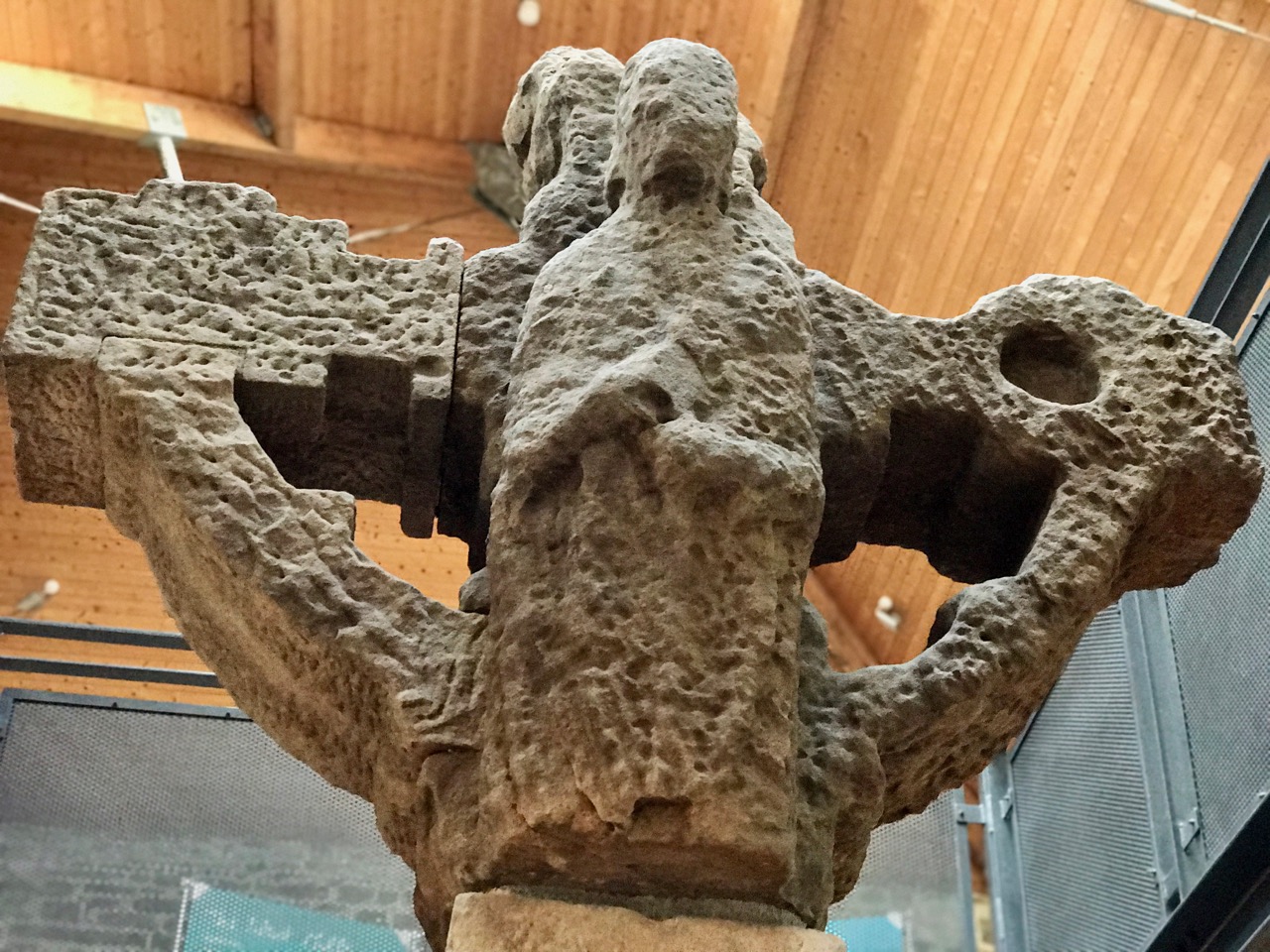
Above is St Cronan’s High Cross, Roscrea, Co Tipperary. As you can see, this example has been removed to an indoor location (Black Mills Heritage Centre), to protect it from further weather deterioration, although all the fine detail has been lost. In fact, this example has been assembled from sections of two different medieval crosses for purposes of display. I am an advocate of protecting these artefacts in this way, as acid rain and modern pollution seem to be accelerating the decay of the stone monuments. As in many cases with the protection measures, a high quality reproduction cross has been placed on the original site in the churchyard of St Cronan’s, just a few metres away. Have a look at my post on Monasterboice for a further discussion on the arguments for preservation of these monuments – and compare the condition of the as yet unprotected high crosses there with the wear and tear above.

While in Roscrea, you can take your own journey along a ‘secret track’ to find treasures. Visit Inis na mBeo (Island of the Living) at Monaincha, just a stone’s throw from the town: you are likely to be the only visitors there and can fully appreciate the solitude of the location while exploring a ruined Romanesque church and a reconstructed high cross (above). The monastic site was founded in the 6th century, and was then a true island, only accessible by boat; now you can walk to it. Not least of its attractions is the fact that you are immortal while you are there (so they say). Certainly, we came back alive, but I was concerned to read later that another tradition has it that when the now dry lough contained water, no woman or female animal could ever set foot in or cross it without dying instantly. (Below – looking along the remote trackway that takes you to the former Island of the Living at Monaincha).

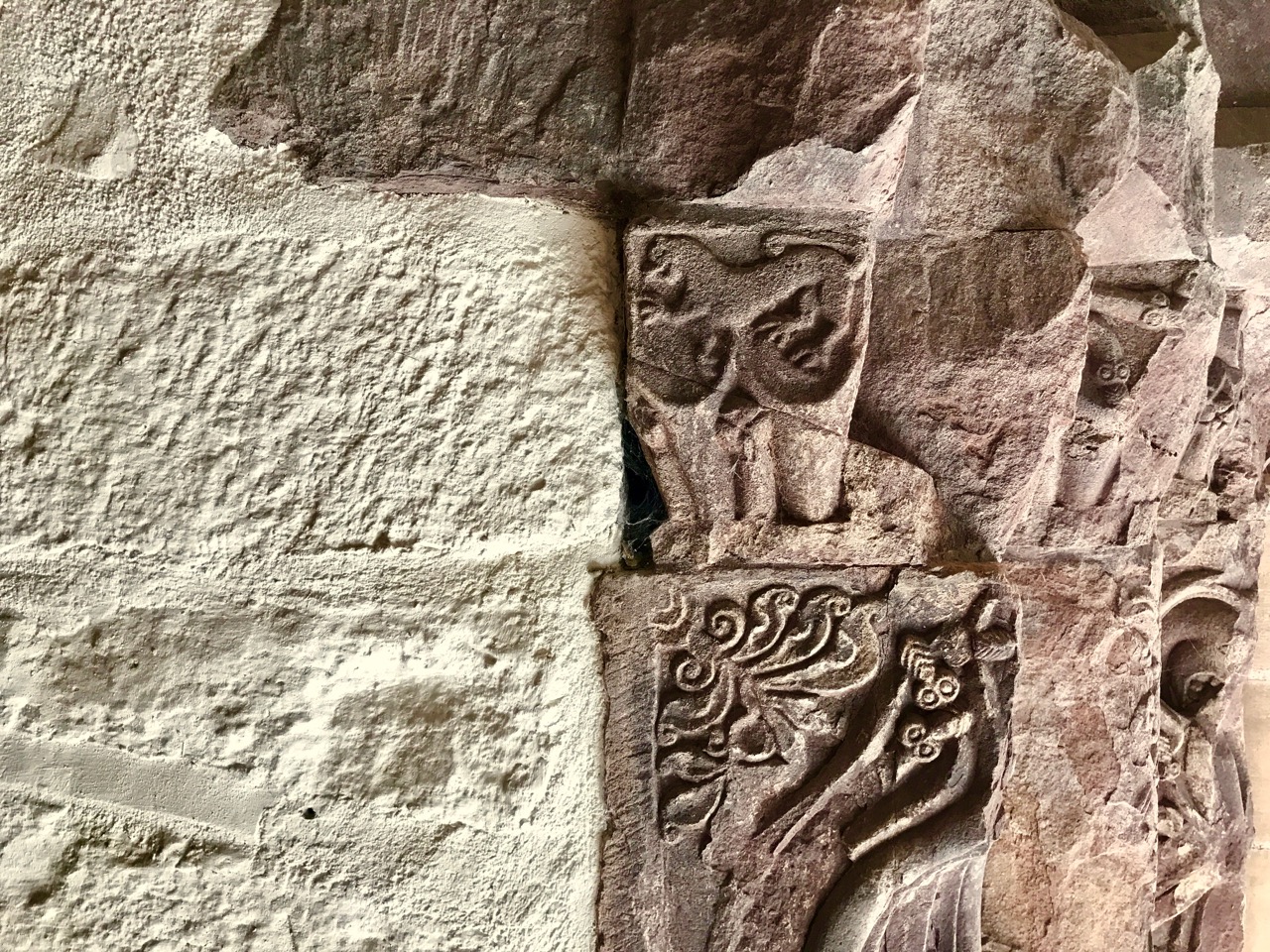
Another ‘rescued’ high cross can be found quietly located in the far less remote (but still a little unsung) Cathedral of St Flannan in Killaloe, Co Clare. Megalithic Ireland has a good account of the history of this cross, which can be seen in the images below (while the header picture at the top of this post shows exquisitely carved detailing from a Romanesque doorway in the same Cathedral):

. . . The High Cross in St Flannan’s Cathedral was moved to Killaloe from Kilfenora in 1821. Originally the cross stood on the highest point south of Kilfenora Cathedral, and became known as the cross on the hill. Dr Richard Mant who was appointed Bishop of Killaloe and Kilfenora in 1820, was appalled by the condition and lack of respect shown for the antiquities in Kilfenora. The cross, which had fallen in 1820, was sent to the Bishop the following year. He had it erected on the grounds of his residence Clarisford Palace. The cross was moved at a later date by a Bishop Ludlow and moved back within the Palace grounds in 1850. In 1934 the cross fell again and this time broke into three pieces. It was re-erected inside the cathedral and fixed against the west gable. In 1998 the cross was repaired and erected as a free standing cross. It stands over four metres high and bears a figure of christ in the centre of the head . . .

The White Cross of St Tola (images below) may not be on everyone’s list of things to see at Dysert O’Dea in Co Clare (you are more likely to be channelled to Corofin), but it’s easy to visit from the better known Romanesque monastery ruins: the ecclesiastical centre was founded by the saint in the 8th century. Cromwell’s forces destroyed the monastery and demolished the cross, but the cross was repaired by Michael O’Dea in 1683. The Synge family restored the cross again in 1871, and in 1960 it was temporarily dismantled and shipped to Barcelona for an exhibition on Irish art.

Clonmacnoise is likely to be on everyone’s list, and rightly so. It was one of Europe’s most important religious centres in medieval times. Ireland’s Ancient East website describes it thus:

. . . The whole of this early Christian site – including ruins of a cathedral, seven churches (10th–13th century), two round towers, high crosses and the largest collection of early Christian grave slabs in Western Europe – is a vast story in stone that keeps alive the spirit of Ireland as a Land of Saints and Scholars . . .

There are three conserved high crosses at Clonmacnoise – all are placed inside the visitor centre, while quality replicas are positioned on the original sites: this is a good exemplar of how to look after ancient stones and, while perhaps the seasonal crowds can be off-putting, I believe it’s the only answer for maintaining access to and displaying this valuable history. Ancient East mentions the important grave slab collection: after the high crosses (and, of course, Romanesque architecture) I feel these are the most beautiful representations of art and craftsmanship that connect us across the centuries to our remarkably focussed forebears.

These are just a few examples of the many grave slabs which are fortunately conserved at Clonmacnoise. But there are many more monuments that are less fortunate, albeit they may enjoy some sort of state care. There are just not enough resources to look after the huge historical heritage of Ireland: we can only hope that, in time, they will all be fully appreciated and that not too many treasures will fade away.

Robert Gibbings

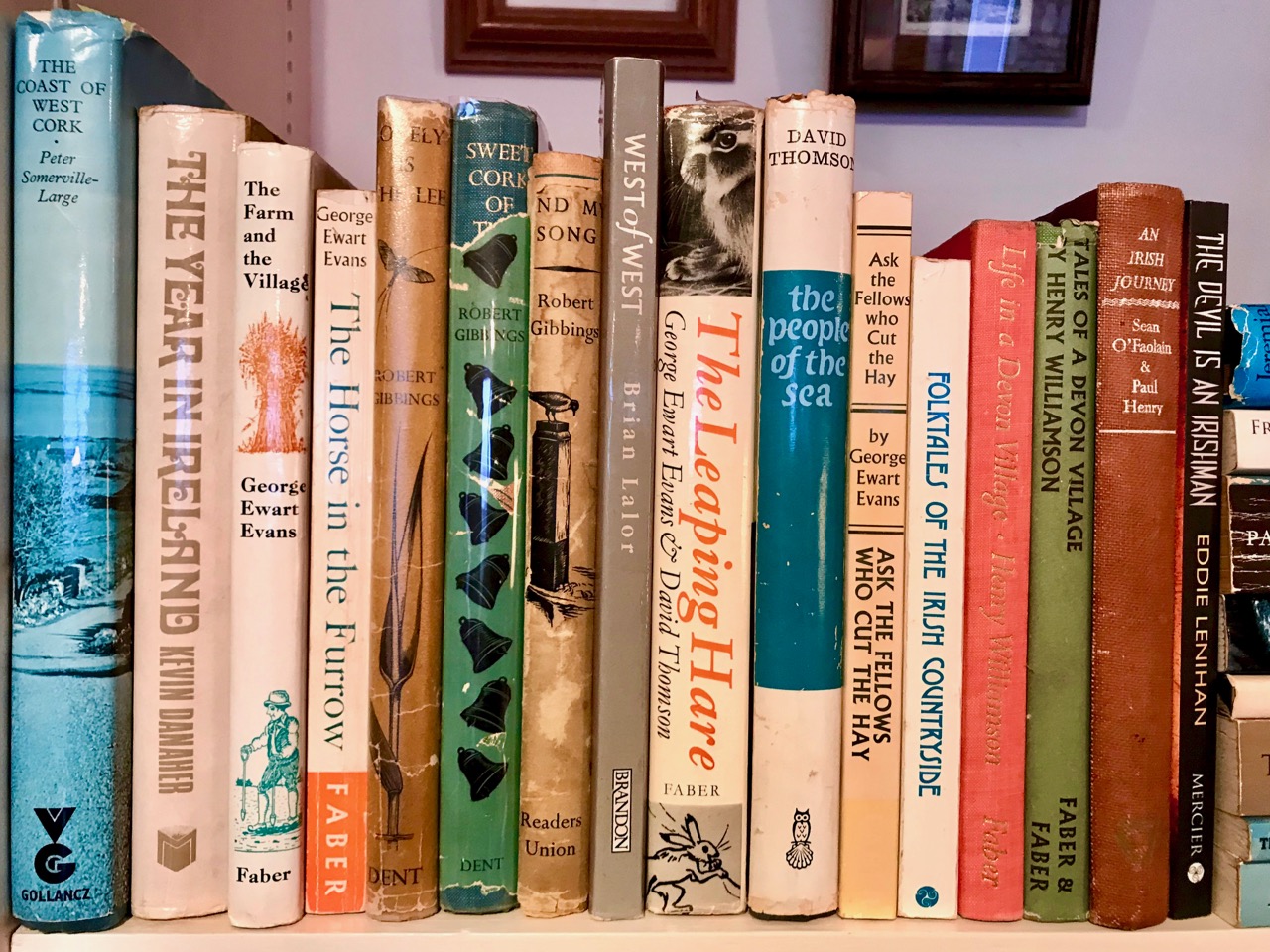
Our bookshelves in Nead an Iolair include some volumes which have travelled with me for the best part of fifty years. They include titles by George Ewart Evans, Henry Williamson, Brian Lalor, Peter Somerville-Large. Look carefully and you’ll also see some there by Robert Gibbings. Who is he?

A writer and illustrator, Gibbings was born in 1889 and died exactly sixty years ago, on 19 January 1958. He was a Cork man, raised in Kinsale, where his father became the Rector of St Multose Church. However, he was an inveterate traveller and lived most of his working life in England. Much of his work seems to exude ‘Englishness’ and – in an Irish Times article this week to mark the anniversary of his death, Alannah Hopkin writes:

People often forget that Gibbings was Irish. Brian Lalor, author of Ink-stained Hands, the definitive history of Irish print-making, was challenged by an English academic at a conference in Dublin in 2007, who refused to believe that Gibbings was Irish, as he had produced archetypal English landscapes. But his account of Gougane Barra, for example, confirms how deeply steeped in Irish myth and folklore Gibbings was.

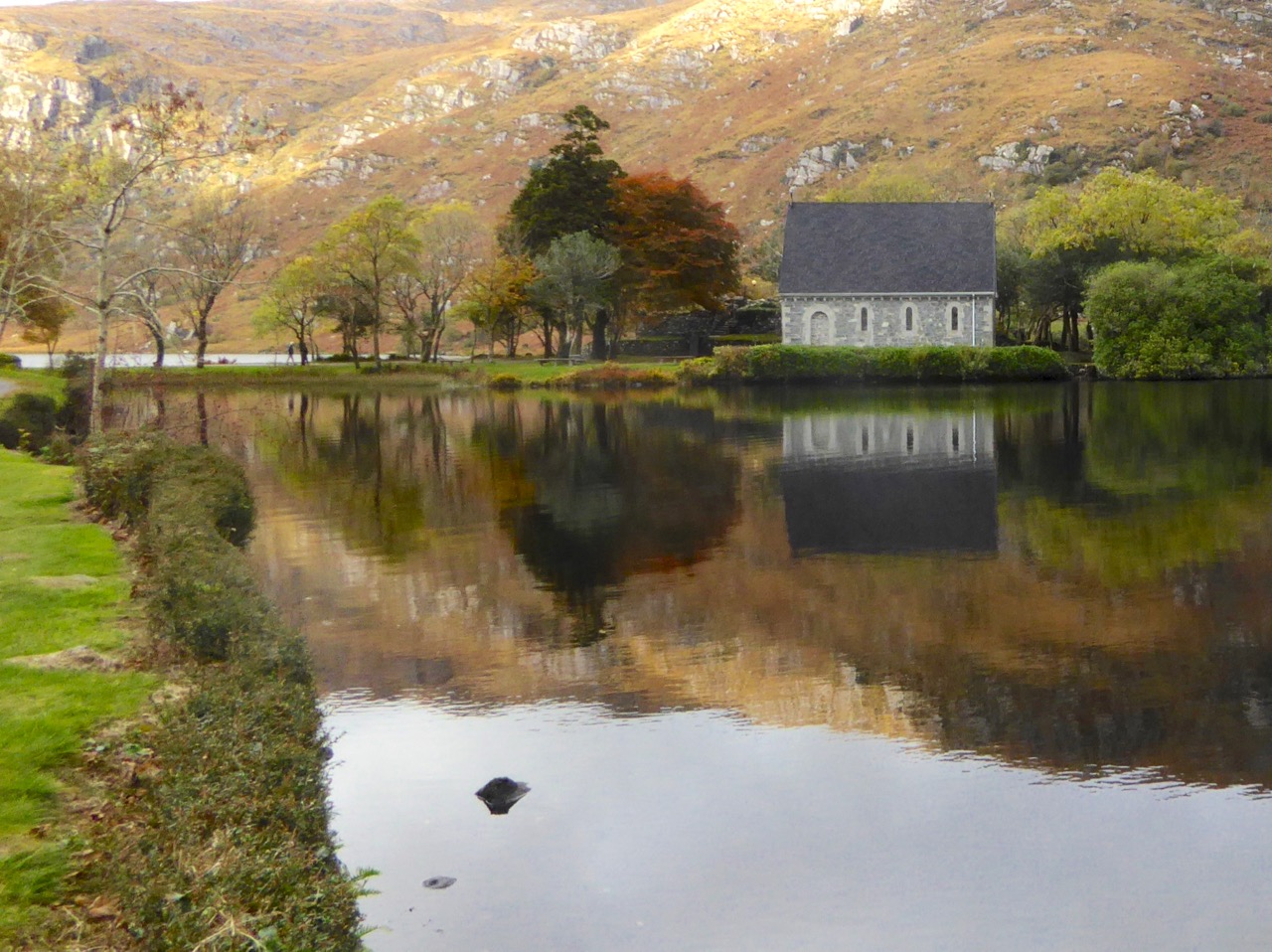
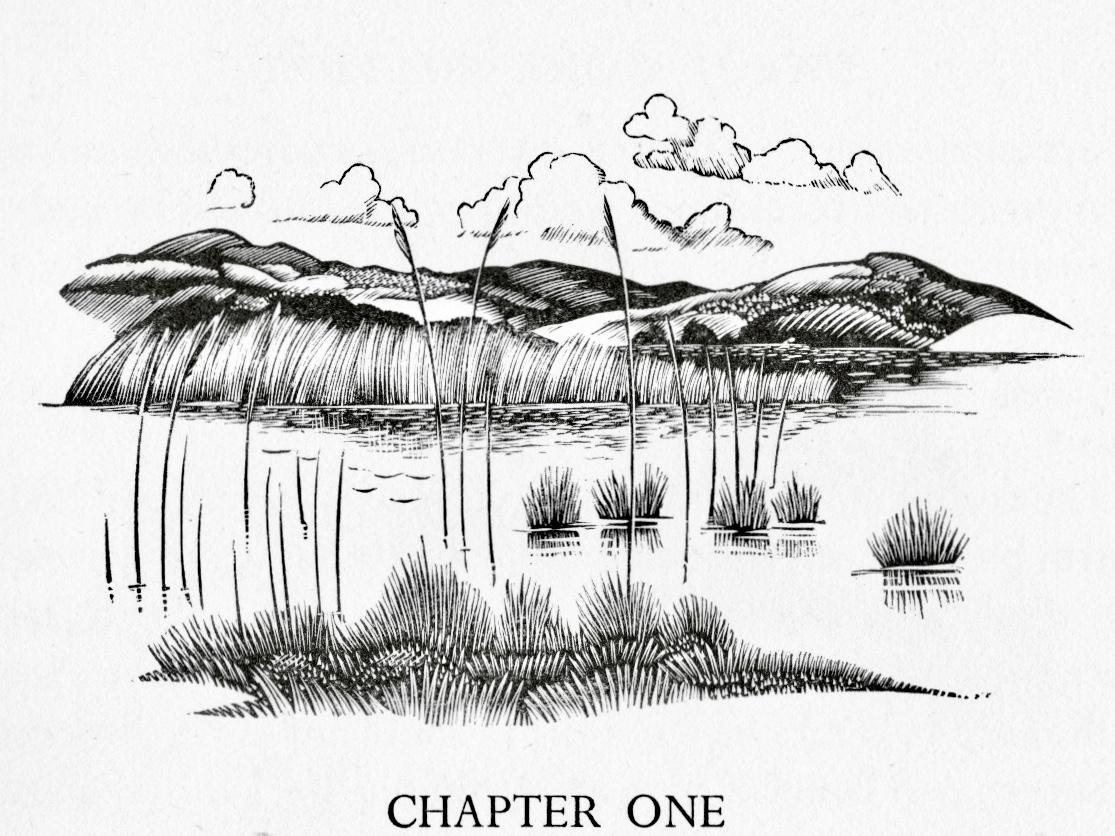
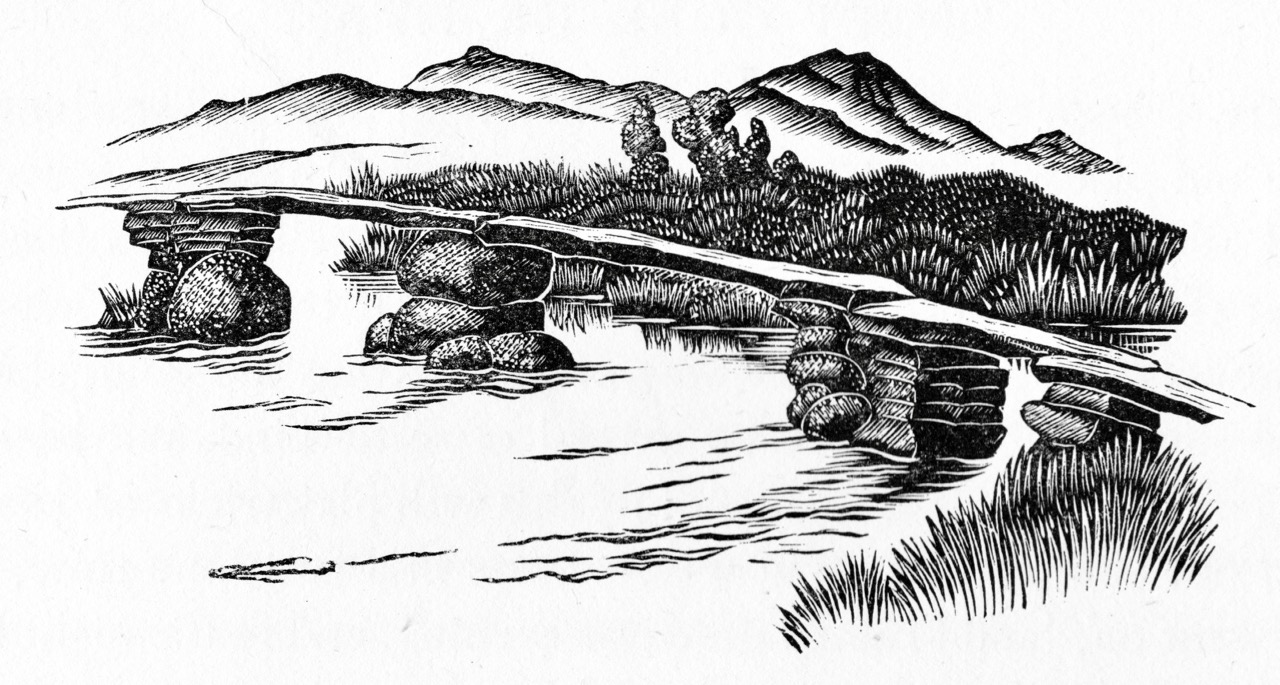
Gougane Barra in County Cork: upper image – the lake in the mountain. Centre – Robert Gibbings’ woodcut engraving of the lake which opens ‘Sweet Cork of Thee’ (1951). Lower image: a clapper bridge near Gougane – perhaps the same one which Finola illustrates in her post today

At the insistence of his parents, Gibbings studied medicine at UCC, although his ambition was to be an artist . . . writes Alannah Hopkin . . . While he enjoyed the scientific side of his studies, it soon became apparent that this big, soft-hearted man was unable to cope with the human suffering of his patients. His parents were apprehensive about his decision to be an artist, fearing, quite rightly, that it meant he would lead an unconventional life, looking at naked women, dressing untidily and consorting with social misfits . . . From 1911 he studied life drawing at the Slade in London. His contemporaries included Eric Gill, John Nash, David Jones and Mabel Annesley. He was advised to take wood-engraving classes; the technique perfectly suited his strong line and close observation of nature, which in this phase was lightly stylised.

Gibbing’s woodblock signature – used in the majority of his books – shows the tools of the wood engraver

The wood engravings of Robert Gibbings are exquisite: his eye is attuned to fine detail. His writing is also compelling: I suppose it reflects a nostalgia for past times and things gone, but it is also humorous and always tightly observant. He brings to life characters he has met in his travels.

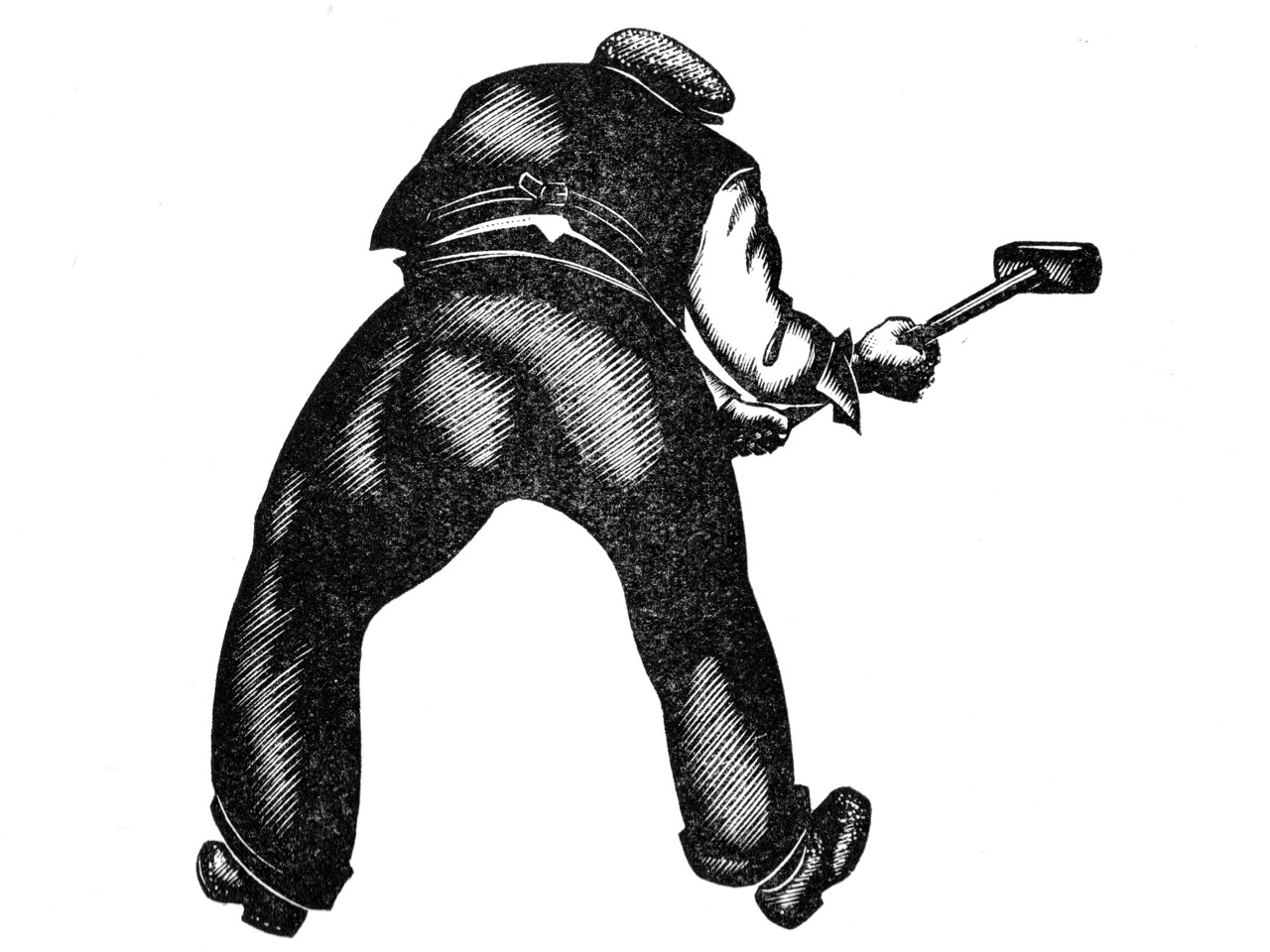
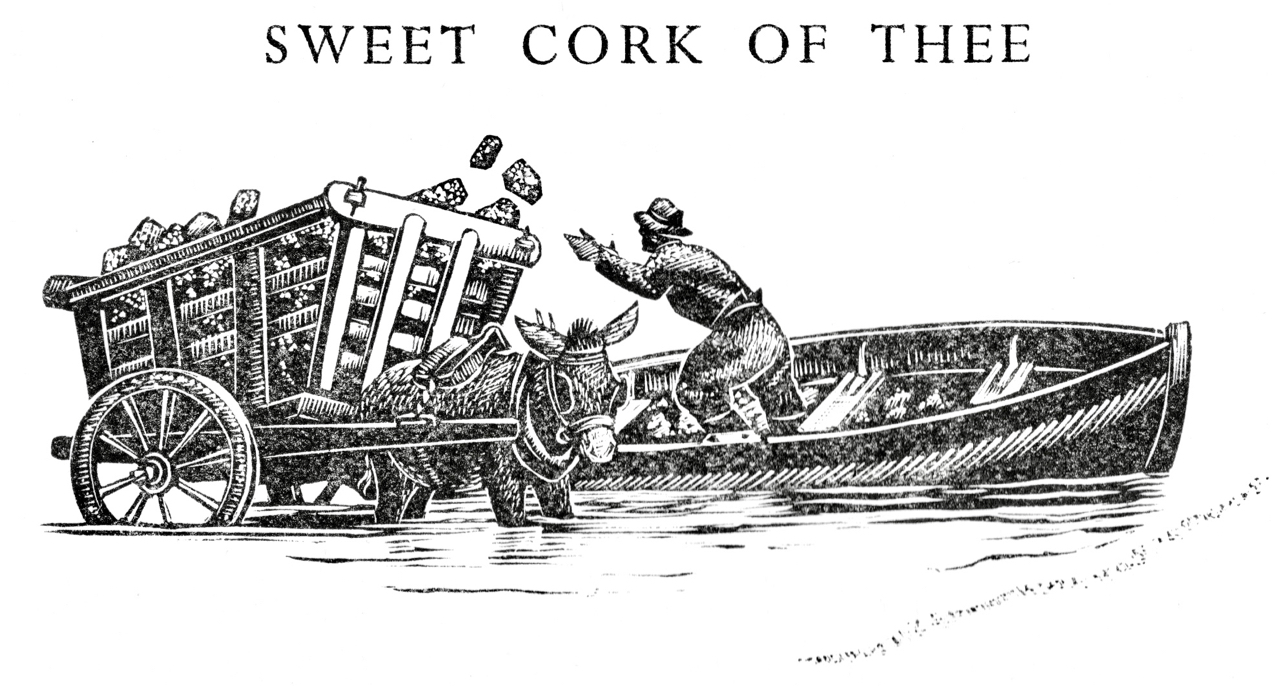
‘Paddy the Forge’ putting metal tyres on wagon wheels – from Sweet Cork of Thee

In the 1940s Gibbings attended the World Ploughing Contest, held for the first time in England, at Shillingford on Thames:

Bowler hats and highly polished riding boots had been the order of the day at the Arab Horse Show: here among the shires it was rubber-boots, corduroy caps, and hats of weathered tweed. ‘I think you’re Irish,’ said a man to me as I was admiring a pair of Pedigree Suffolks resplendent with brasses that told of former triumphs. ‘What gives me away?’ I asked. ‘The tilt of your hat,’ he said, ‘I can always tell an Irishman – he just sticks it on his head and forgets it. Look at some of these fellows – caps, hats, pulled up here, pushed down there – self-conscious all of them. Look at those two fellows in the pork-pie hats – I wouldn’t trust that one on the right, he wears his too straight, has to – it’s psychological.’ ‘Bishops wear their hats straight,’ I said. ‘Same idea,’ he answered. ‘Suggests the narrow path, only they keeps to it.’

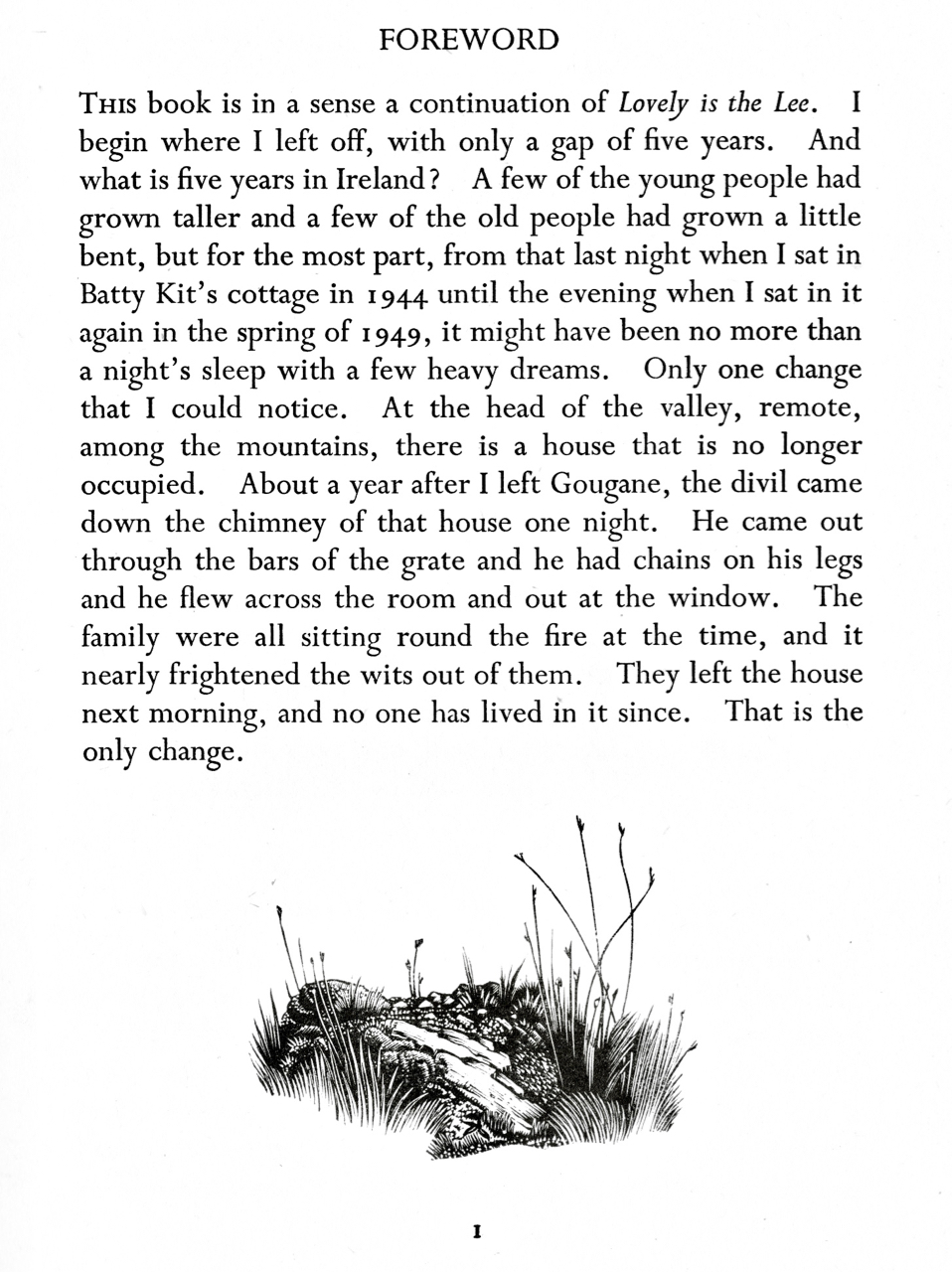
For Robert Gibbings, text and illustration were always of equal importance. Each page of his books is set out as an art work, to be enjoyed by the two senses of sight and feeling – the feeling engendered by his descriptive writing. Here is the Foreword to his second ‘Irish’ book – Sweet Cork of Thee:


The illustrated Foreword to Sweet Cork of Thee, the second of Gibbings’ books which describe his travels in the land of his birth

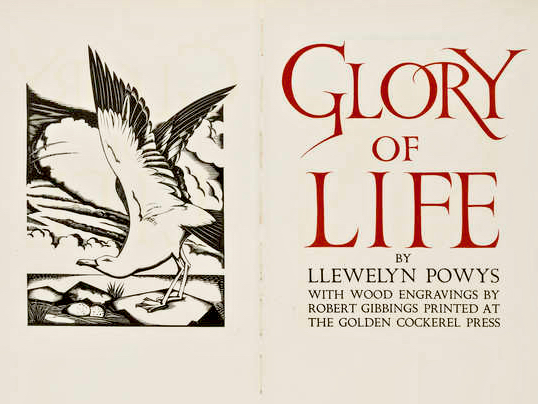
Throughout his life, Gibbings immersed himself in travelling and in art. His best known books are his ‘river’ books, beginning with ‘Sweet Thames Flow Softly’, published in 1940 and, at the end of his life, the sequel: ‘Till I End My Song’ completed in 1957: he died at the age of 68. The rivers he explored included the Thames, the Wye, the Seine and Cork’s River Lee. Between 1924 and 1933 he owned and ran the art-based Golden Cockerel Press. Founded in 1920, its earliest prospectus proclaimed:

This press is a co-operative society for the printing and publishing of books. It is co-operative in the strictest sense. Its members are their own craftsmen, and will produce their books themselves in their own communal workshops without recourse to paid and irresponsible labour.

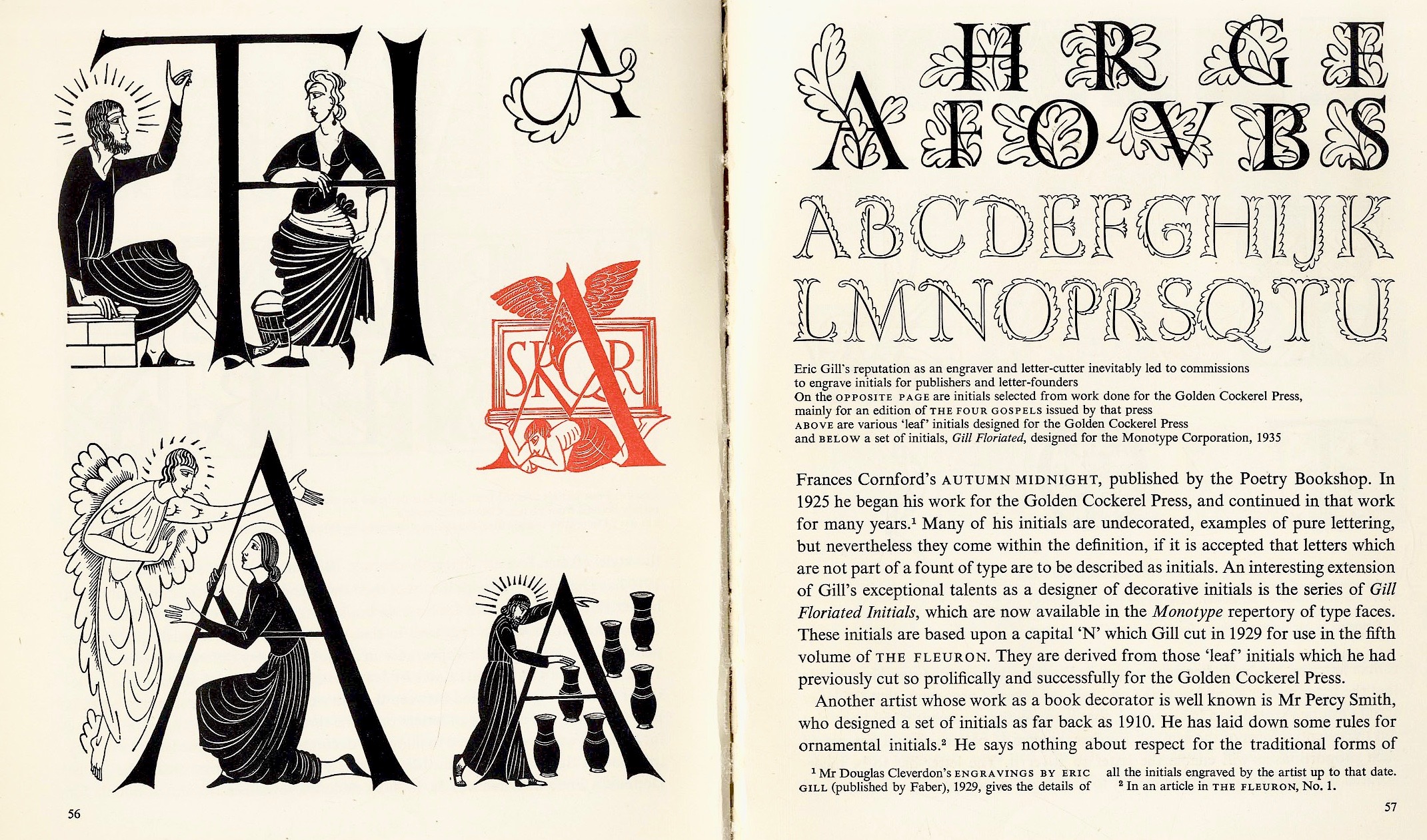
Work from the Golden Cockerel Press: typefaces by Eric Gill

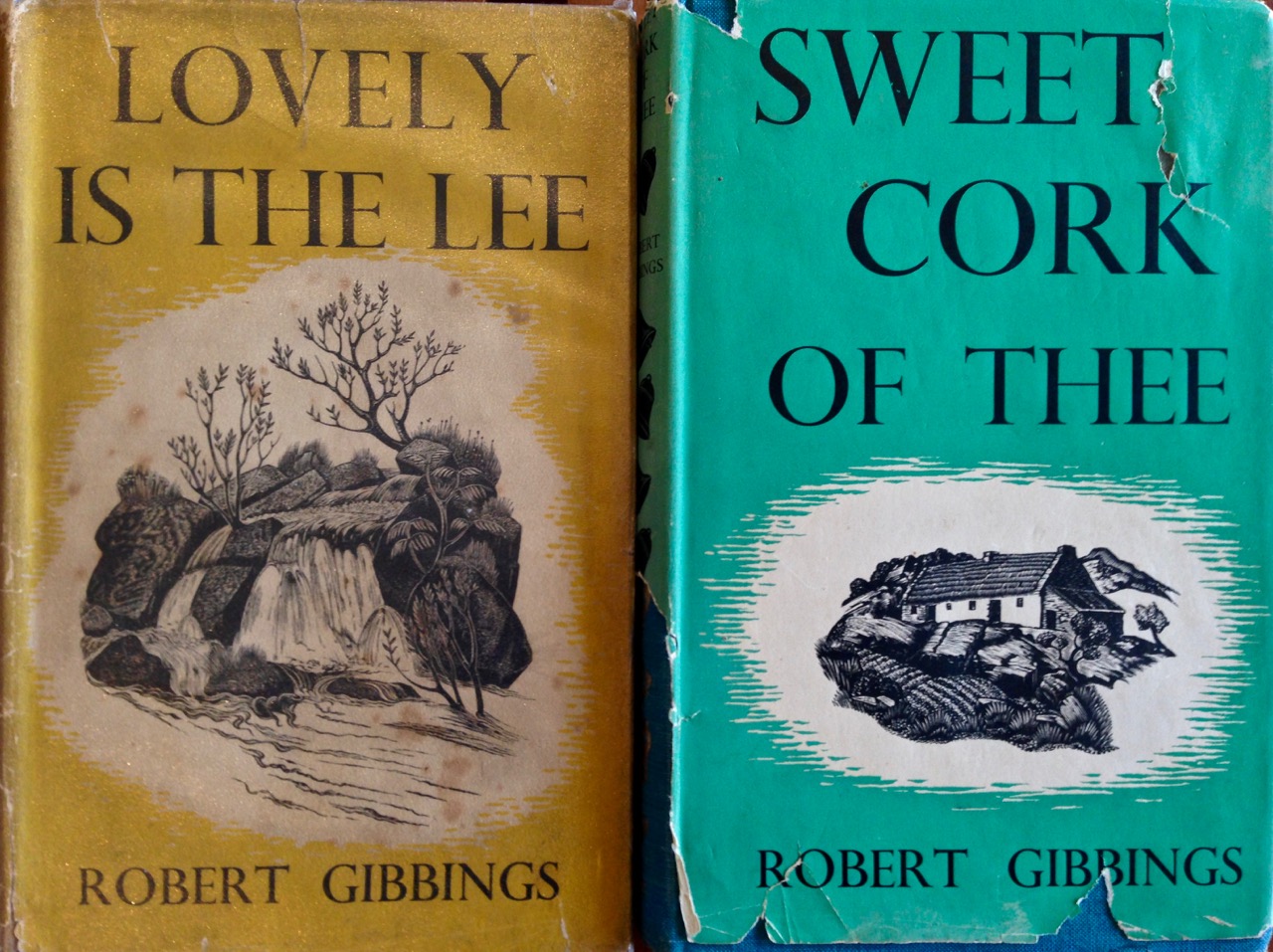
It is the two ‘River Lee’ books that will concern those interested in all things Irish. My copies (both first editions) were given to me by Danny who I first met when I moved to Devon in the 1970s. Danny was determined that I was going to fall in love with Ireland – and it didn’t take me very long! Eventually Danny – who hailed from Limerick but, like Gibbings, led a restless life during which he travelled the world – settled in Devon and then moved on to West Cork.

Danny gave me these books to encourage my interest in Ireland. At the time he told me that ‘these were all I needed’ to get to know his country. I think he was right!

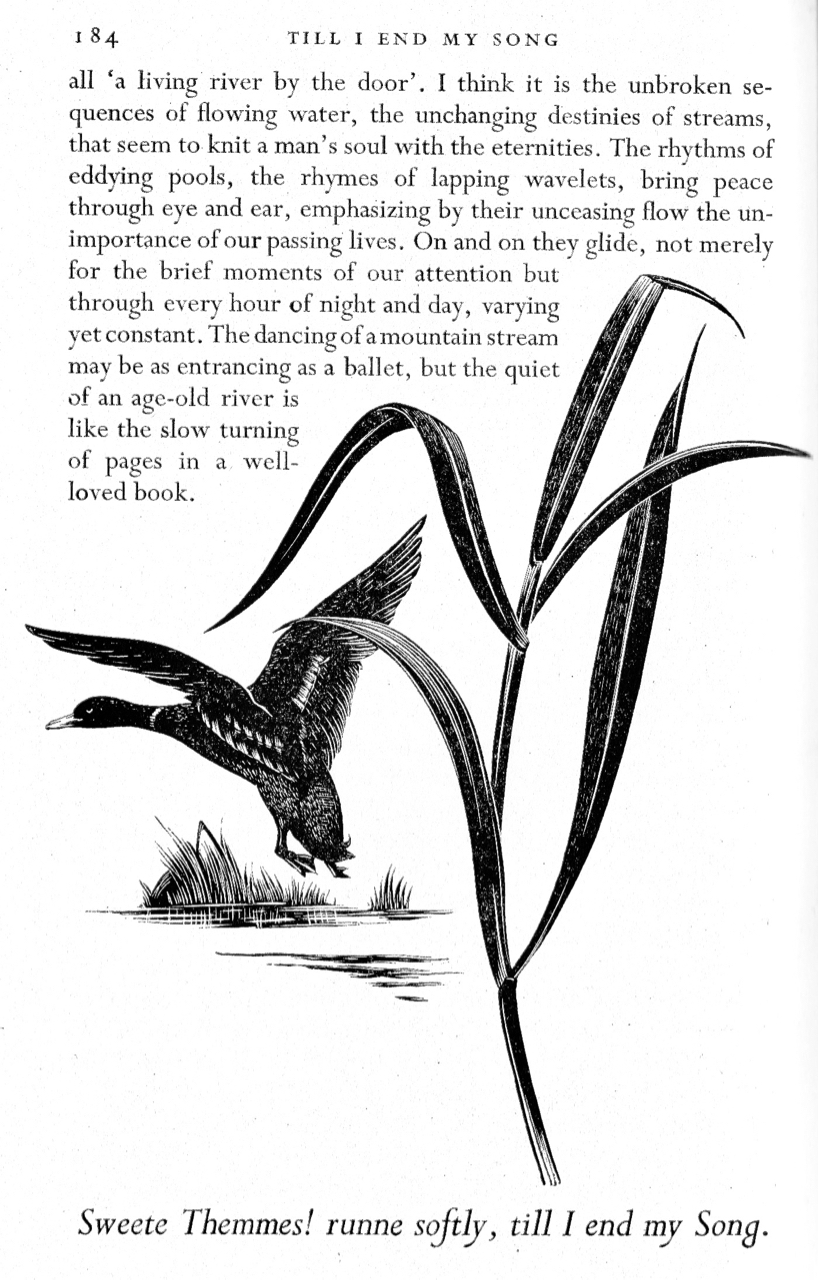
I encourage anyone who follows Ireland to read these books – and anyone who appreciates art to get to know the work of Robert Gibbings who died just fifty years ago. I will ‘play out’ the man by quoting these lines from his aptly titled ‘Till I End My Song’, and include an image of the last page of this, his final book.

Poets throughout the ages have sung of the peace of gently running streams. In the sacred writings a river is used constantly as a symbol of peace: ‘Then had thy peace been as a river’, ‘He leadeth me beside the still waters’. Throughout our own literature flows the timelesss tranquility of rivers. Spenser’s Prothalamion is borne on the waters of Sweete Themmes. The tortured mind of Swift longed for a river at his garden’s end. The gentler Stevenson wishes to all ‘a living river by the door’. I think it is the unbroken sequences of flowing water, the punching destiny of stream, that seem to knit a man’s soul with the eternities . . .

Ireland’s Newest Stained Glass Window

It’s in Tralee, in St John’s Church – and it’s breathtaking!

It isn’t often that new stained glass windows are installed in Irish churches. In fact, depressingly, many churches fall into disrepair from lack of use and the windows break (or are broken). Nowadays we are more likely to be losing stained glass than gaining it. So it’s a huge cause for celebration when a community commissions a new piece. Hats off to Tralee!

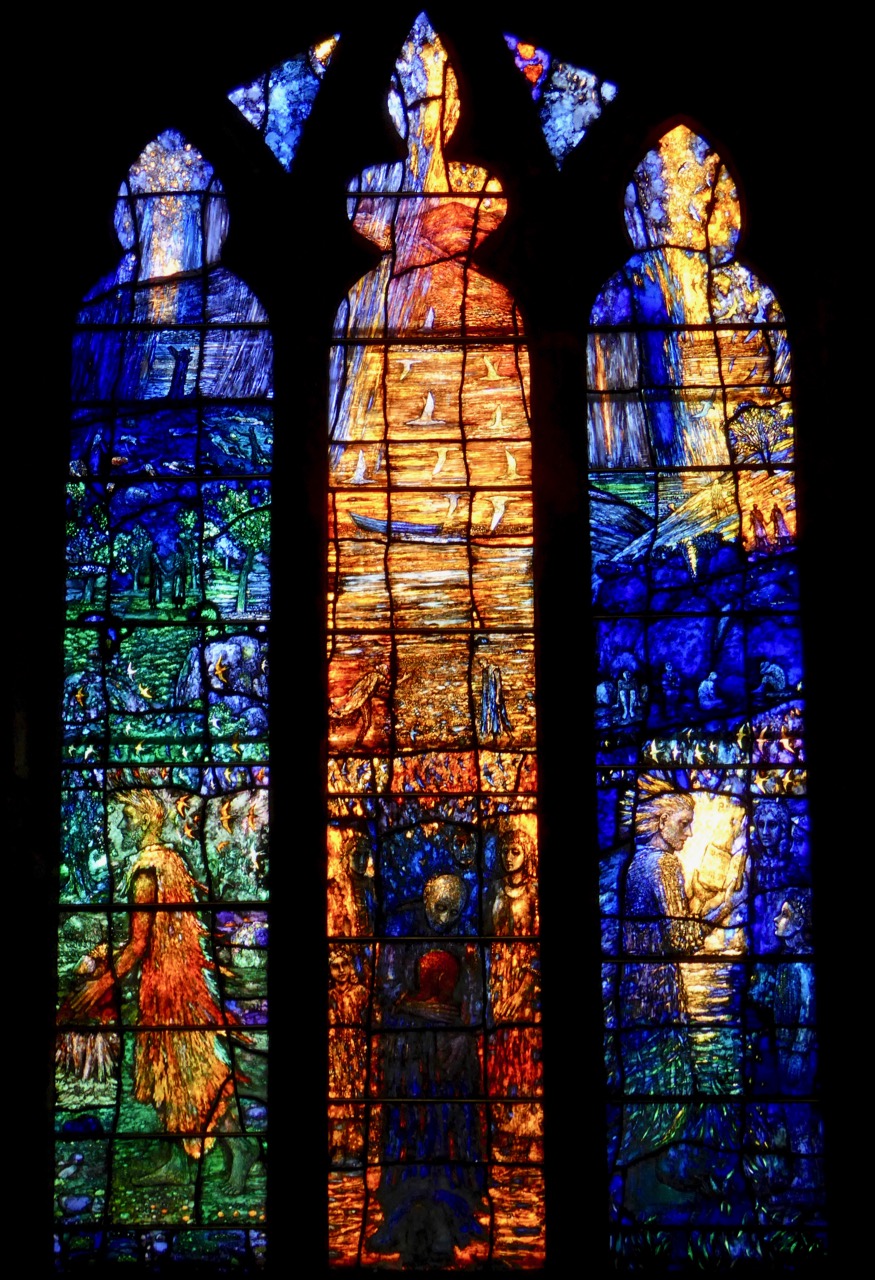
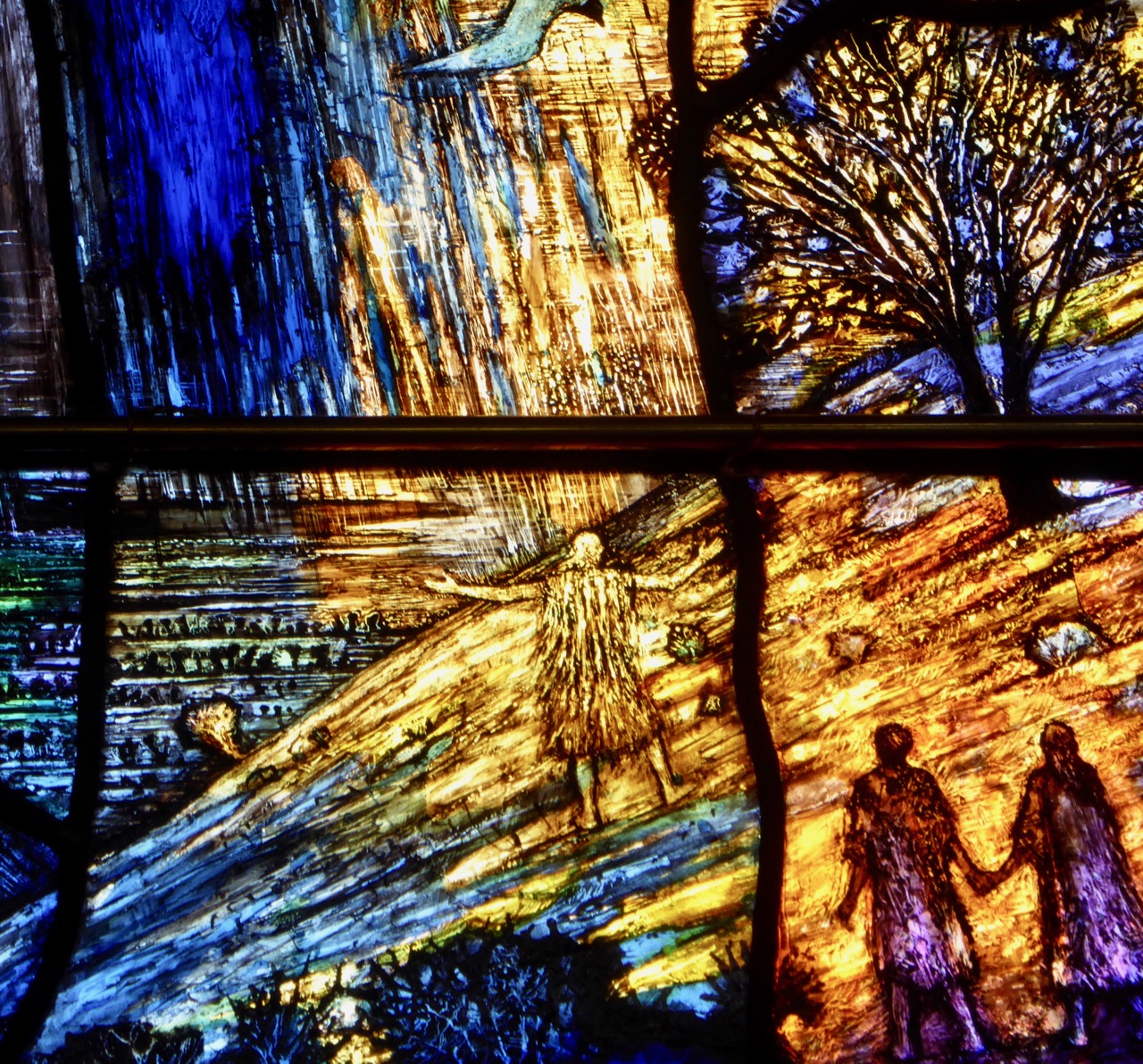
The Garden of Eden or an image of reconciliation: one of the window details

This window is out of the ordinary in many ways. Let’s start with who commissioned it, which leads us on to the theme. Although it’s installed in the Catholic church, it was a joint initiative of the Catholic and Church of Ireland congregations. There may be other windows that can claim that distinction, but I don’t know of them. (Readers?)

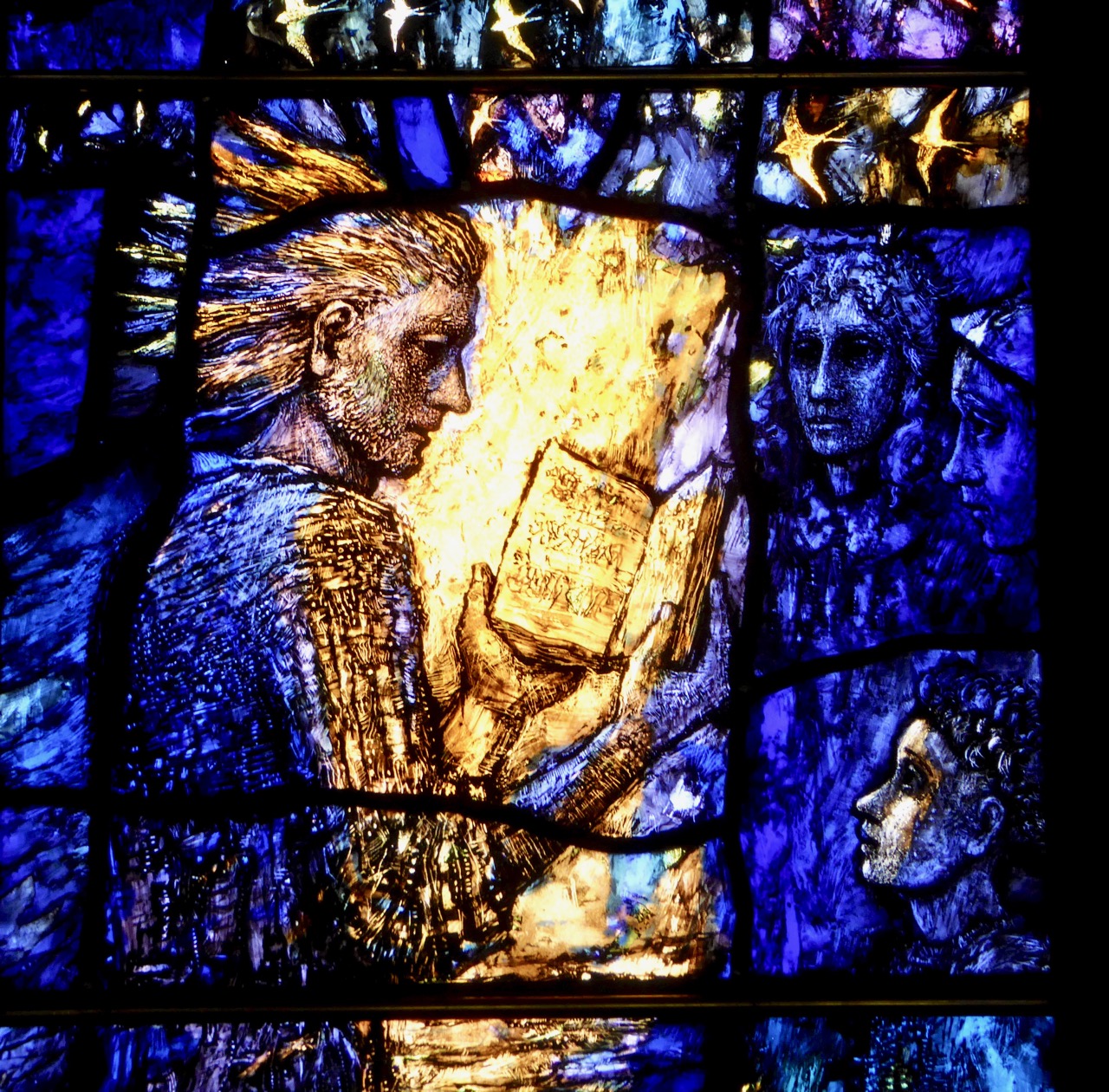
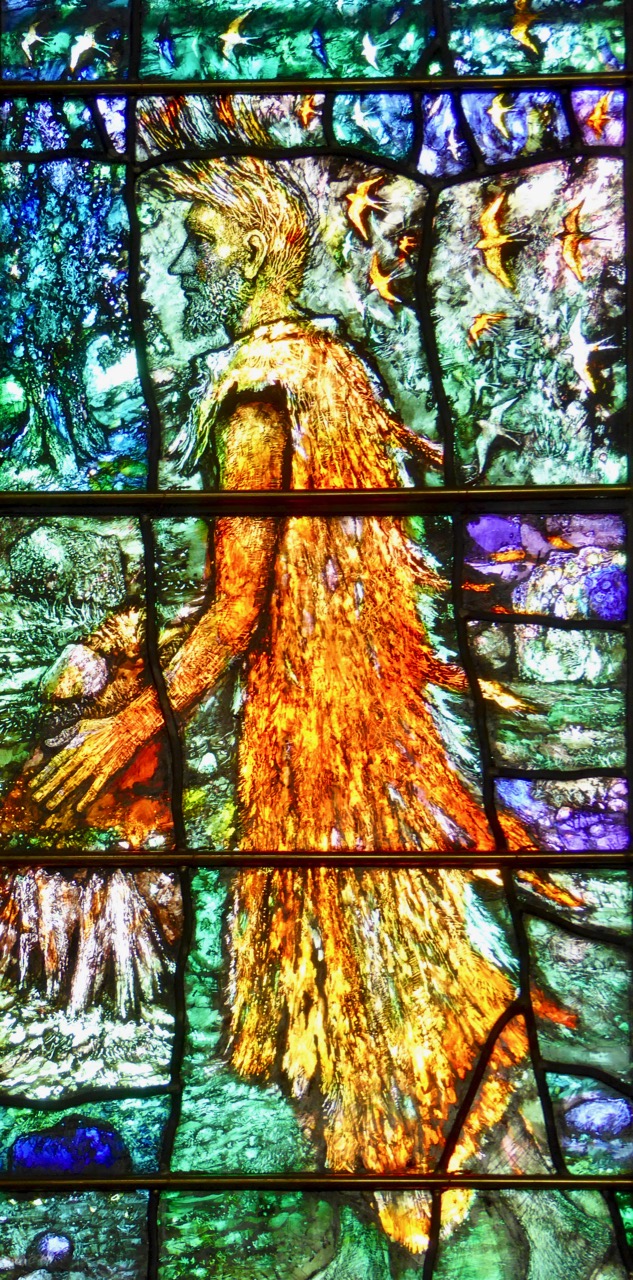
The theme is Reconciliation, and the central figure is the return of the prodigal son. The right panel is of Jesus reading from the Book of Isaiah and the left is of John the Baptist, patron saint of the church.

The father embraces his prodigal son

The Parable of the Prodigal Son is a natural choice to illustrate reconciliation, with the father embracing the son who has squandered his inheritance but returns home, contrite, to his family. Instead of punishing him (as his brother resentfully feels the father should do) his father embraces him, orders that the fatted calf be slain for a feast, and says, It was meet that we should make merry, and be glad: for this thy brother was dead, and is alive again; and was lost, and is found.

Jesus Reading from Isaiah is perhaps at one remove from a direct reference to reconciliation. It happened in Nazareth, his old home town, and he read at the behest of the elders. The passage is a beautiful one and points to ideas of love and healing, and perhaps to the real purpose of Christianity, no matter the denomination: he hath sent me to heal the brokenhearted, to preach deliverance to the captives, and recovering of sight to the blind, to set at liberty them that are bruised.

St John is the patron saint of the church 

Possibly my favourite image is that of John. Usually, he is shown in the act of baptising Jesus, but here he is, the ascetic in his coat of camel hair, very much as he described himself, as a voice crying in the wilderness.

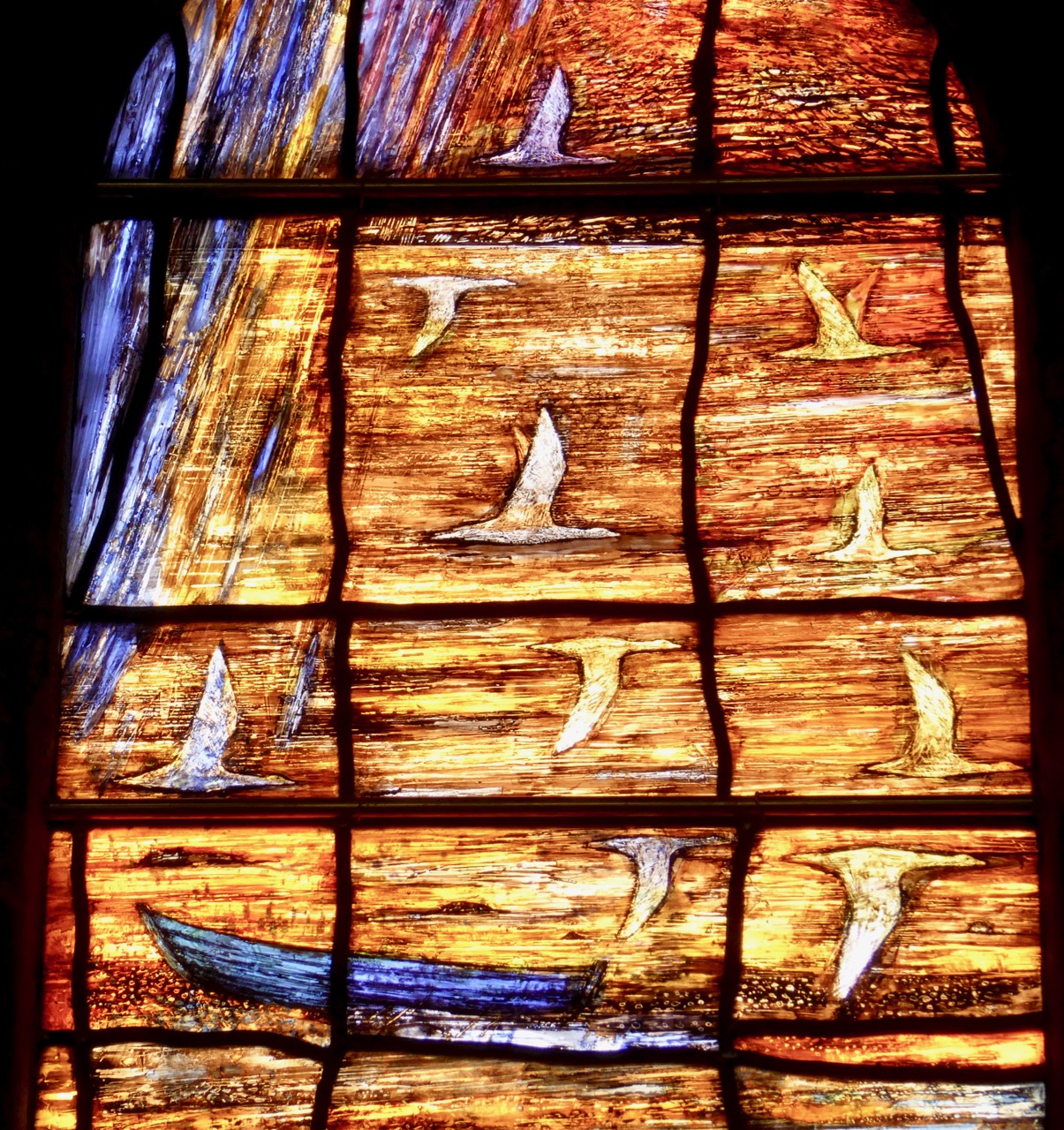
A myriad of tiny images fills the panels – figures holding hands (reconciliation), swallows (hope of spring, renewal), Tralee Bay, figures from Tralee history. . . there are even tiny names engraved where it is impossible to see them. Take a look at this video, where Tom Denny shows us some of those names.

Tom Denny? Yes – he’s the artist but the significance of that goes beyond the fact that he is one of Britain’s most eminent and respected stained glass artists, responsible for numerous windows in British churches. A browse of his website reveals the breadth and depth of his skill and the uniqueness of his style. The Tralee windows are typical – blazing with colour, filled with large and small figures and scenes that reveal themselves upon close inspection, rich and intricate, thoughtfully composed to draw the viewer into the subject of the panels.

Tralee Bay

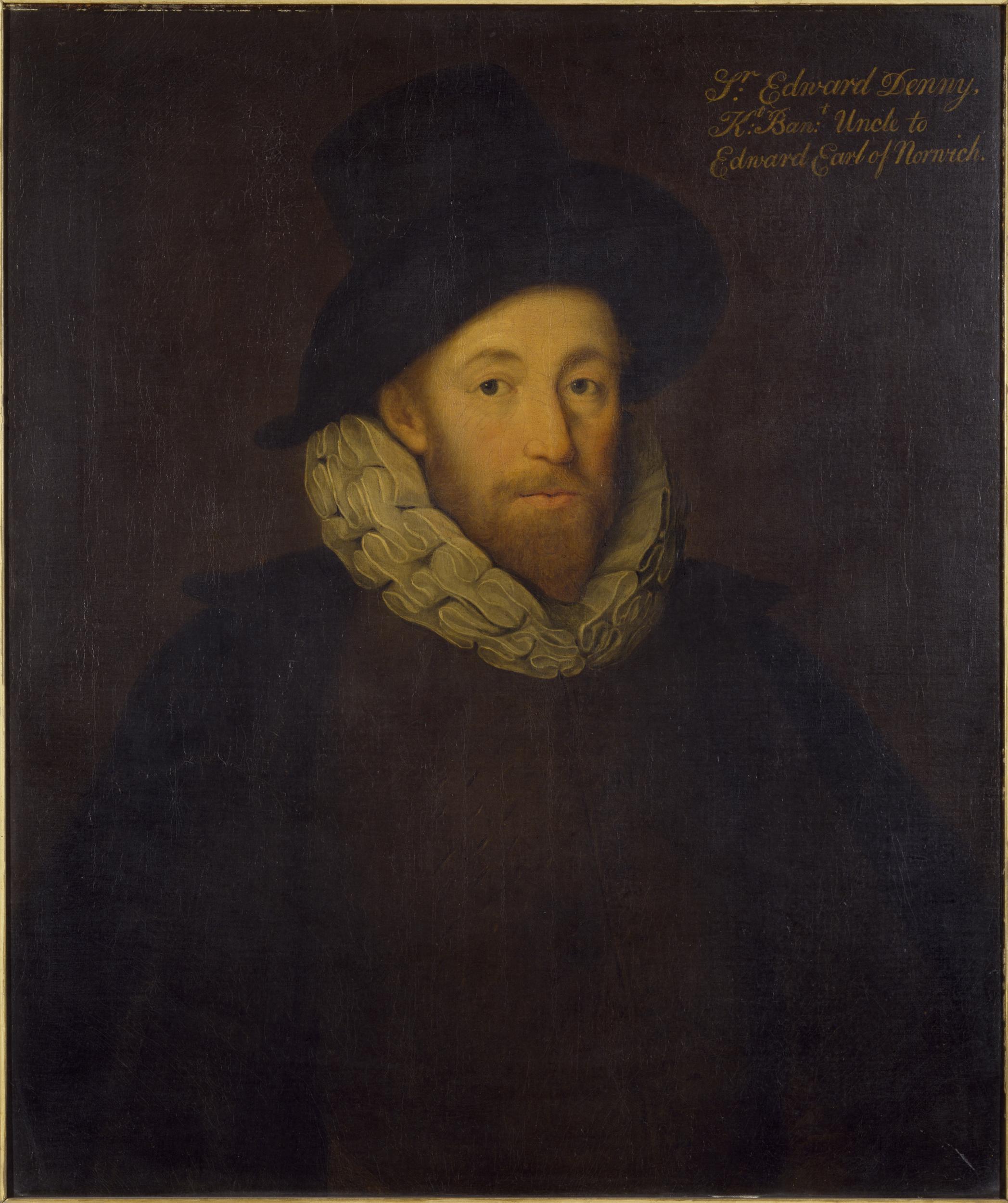
You see, the Denny’s came to Tralee as part of a British military expedition in the 1500s and the name is inextricably linked with the North Kerry area. Sir Edward Denny (1547 to 1599) was one of the architects and enforcers of the Plantation of Munster, and was rewarded with lands taken from the Earl of Desmond including Tralee Castle, a knighthood and the title of Governor of Kerry. Tom is a direct descendent. 

Sir Edward Denny. Image used with the permission of the Victoria and Albert Museum

The Denny’s stayed in Ireland for hundreds of years, branching out and acquiring land and estates. Eventually the family spent less time in Ireland and concentrated on their estates in Britain**. In Ireland, such a history as this is a complicated legacy, and Tom was eager to be part of the whole idea of a reconciliation window, donating his services to the project. Over twenty members of the Denny family came for the unveiling. This adds a rich and poignant dimension to the purpose of the window – reconciling the past with the present, and looking to the future. 

The father runs out to meet his returning son

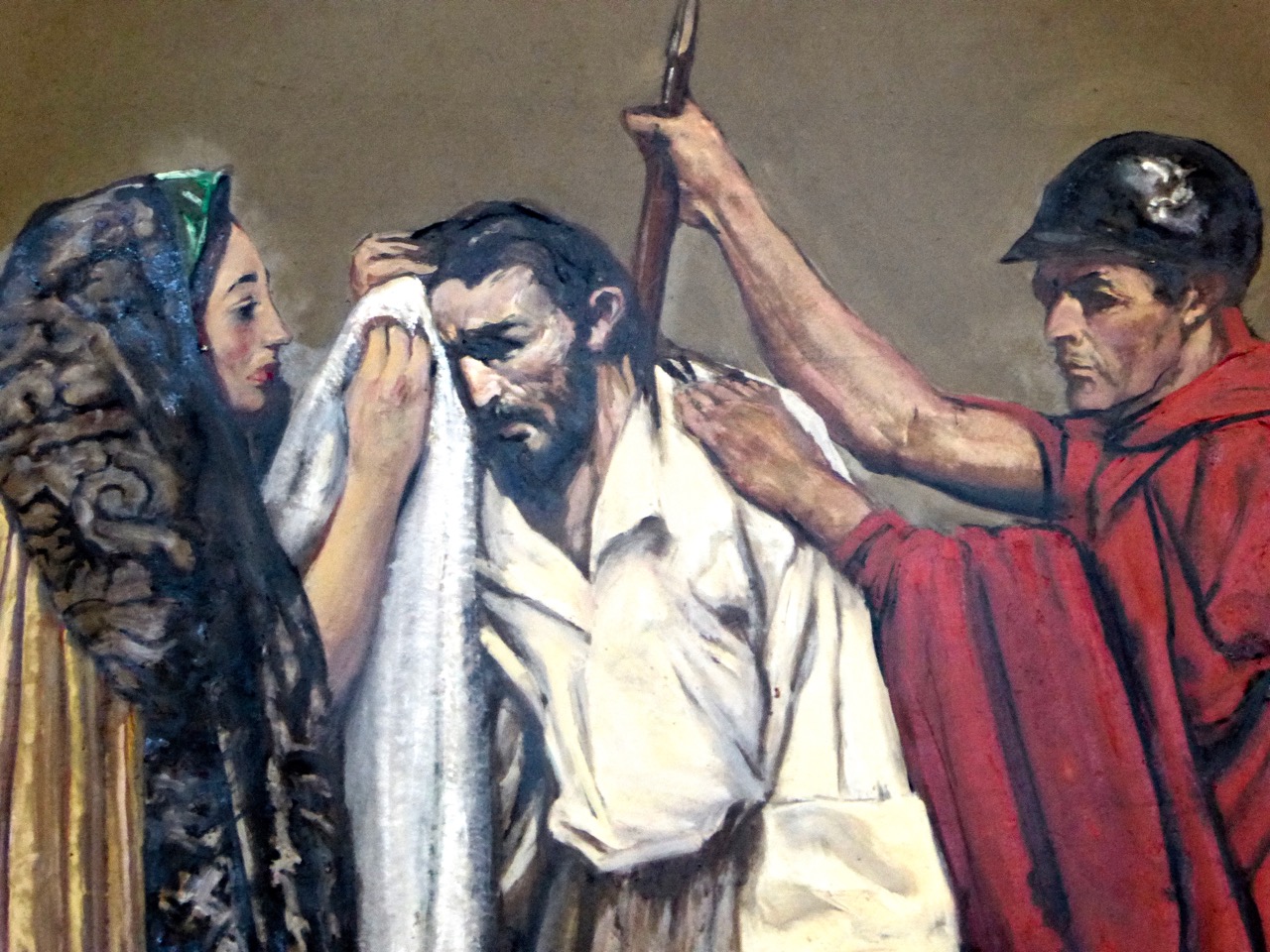
Finally, this magnificent work of art is only one of the many artistic delights of this Tralee church. They deserve a post of their own some day, but I will give you a sneak peek by telling you that the Stations of the Cross are by none other than the famous Irish artist, Sean Keating. Here’s a detail from just one of them.

My friend Eileen drew my attention to this new window.  So thank you, Eileen – as you can see I lost no time in making the trip to see it. I am SO glad I did.

**Edit: I got this wrong. There were no English estates. The Denny’s, along with many members of the Anglo-Irish landlord class, eventually lost their lands. In the case of Tom Denny’s grandfather, although he was a baronet he was also a clergyman,  living the life of an impoverished cleric dedicated to his church. The move to England was related to his church service. RTE has now screened their program on the window and it does a marvellous job of adding fascinating detail about the window and the history of the Dennys – mostly supplied by Tom himself.