As a retired couple we often get asked what we find to do all day. How do you spend your time? Perhaps there’s a subtle sub-text of ‘way out there in the wilds of West Cork.’ Well, it’s only half way through the month and we have had numerous experiences already in June, including many that revolve around art and music so I thought I would highlight them in this post to give you a flavour of the Wilds.
Robert has written extensively about the thriving art scene established first by the artists and hippies that made West Cork their home starting in the 60’s, a legacy that is celebrated in the Ballydehob Arts Museum. But it’s as true now as it was then and just in our small villages of Schull and Ballydehob we have been to several exhibitions over the last couple of weeks. I am always drawn to photography and I was bowled over in particular by three exhibitions.
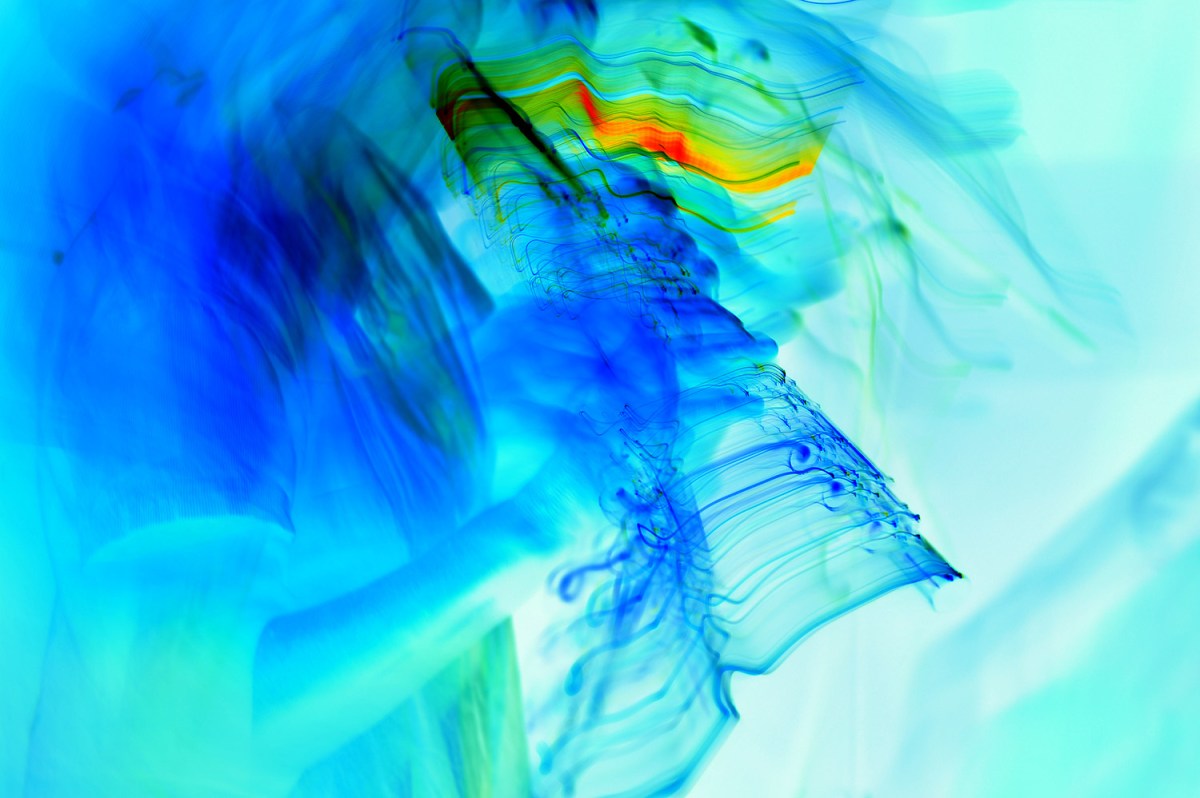
Oliver Nares is exhibiting at the moment in the Working Artists Studio in Ballydehob. The first three photographs in this post are his. The first two are Flutes and the one above is Tambourine. Oliver captures his images live and, as Pól Ó’Cólmán astutely noted at the opening, he photographs the music, not the musicians. Unbelievably, this is Oliver’s first ever exhibition – if the reaction is anything to go by, it won’t be his last!
Another exhibition that left me breathless was Richard Breathnach’s The Bog in the Bale at the Blue House Gallery. Everyone who comes to see this has the same reaction – what is this? An Oil Painting? An abstract? Richard’s photography, which included many many hours of lying in a bog waiting for just the right image, captures the reflections of a bog in those ubiquitous black plastic silage bales – the results are extraordinary and you can see more on his website.
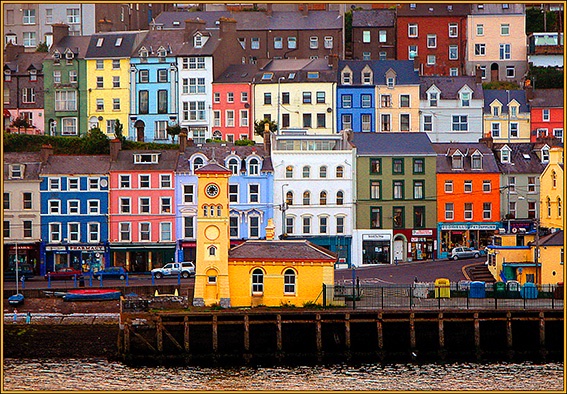
Meanwhile, the Aisling Gallery, situated over Rosie’s Pub in Ballydehob, has an exhibition focused on All Things Maritime. Chris O’Dell’s iconic image of Cobh (above), taken from the sea, is only one of several of his photographs, and the photographs of others, on display in this show. Chris is a distinguished cinematographer who has worked in television and cinema and is now recording his archive.
We went to Kenmare to see the new Butter Market Gallery, recently opened. (OK – that’s in Kerry, not West Cork, but sure it’s only the next parish over.) With a Modern Irish Sculpture show as its premier event, we weren’t disappointed!
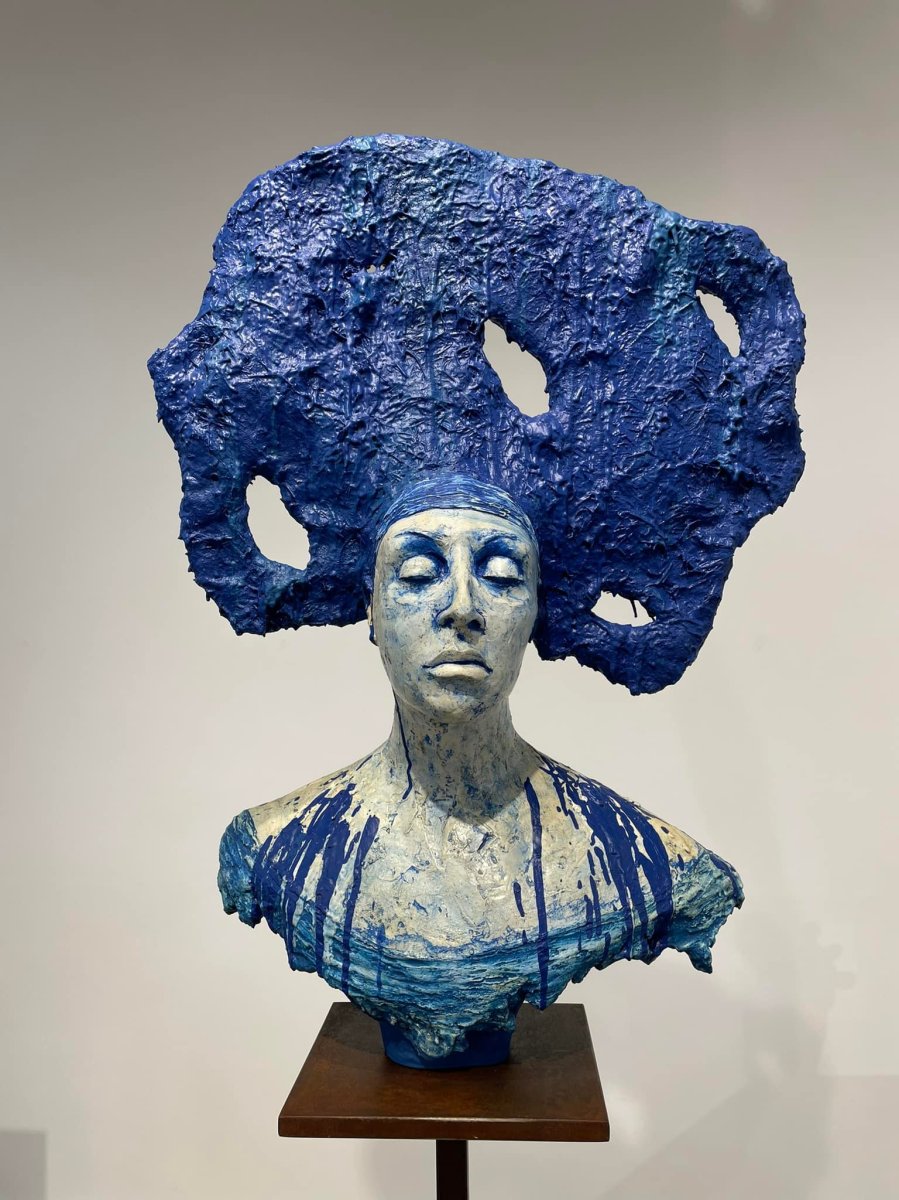
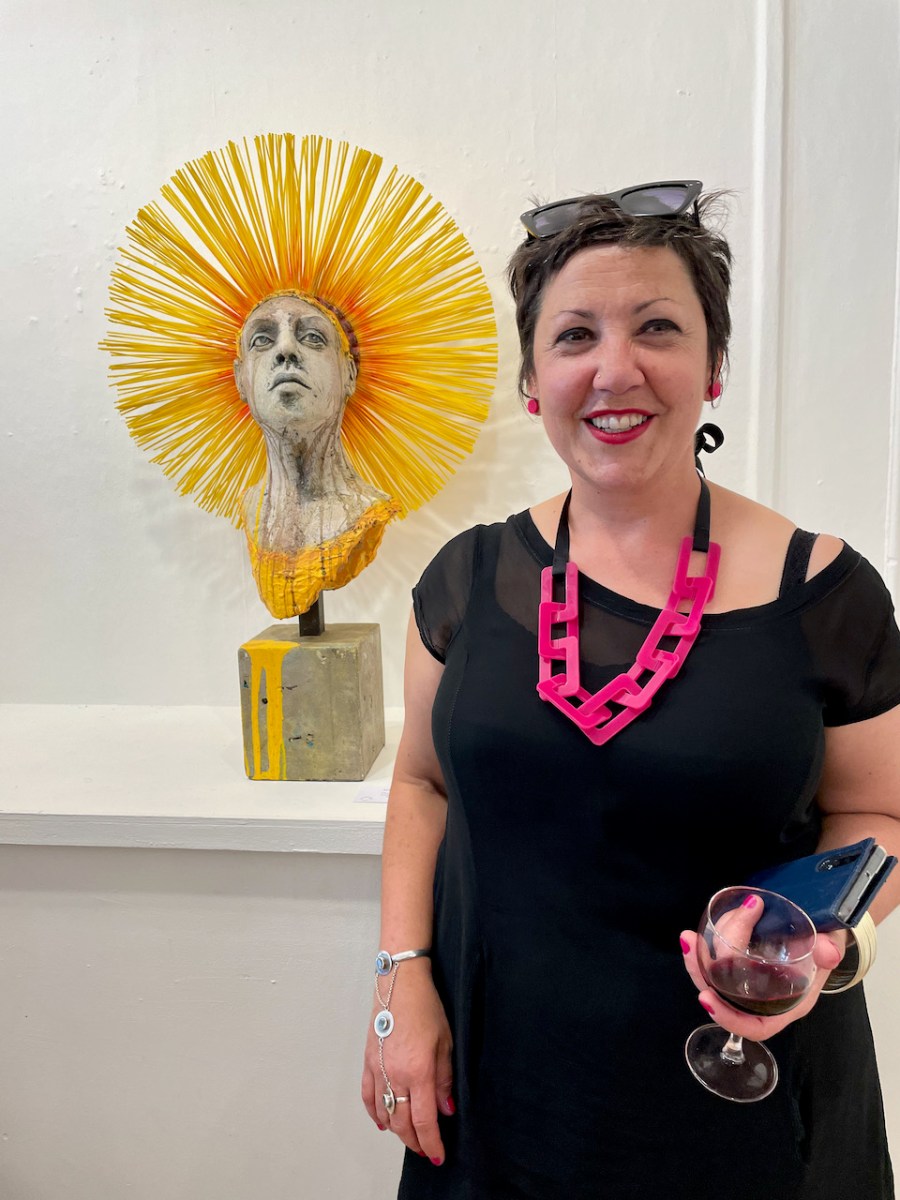
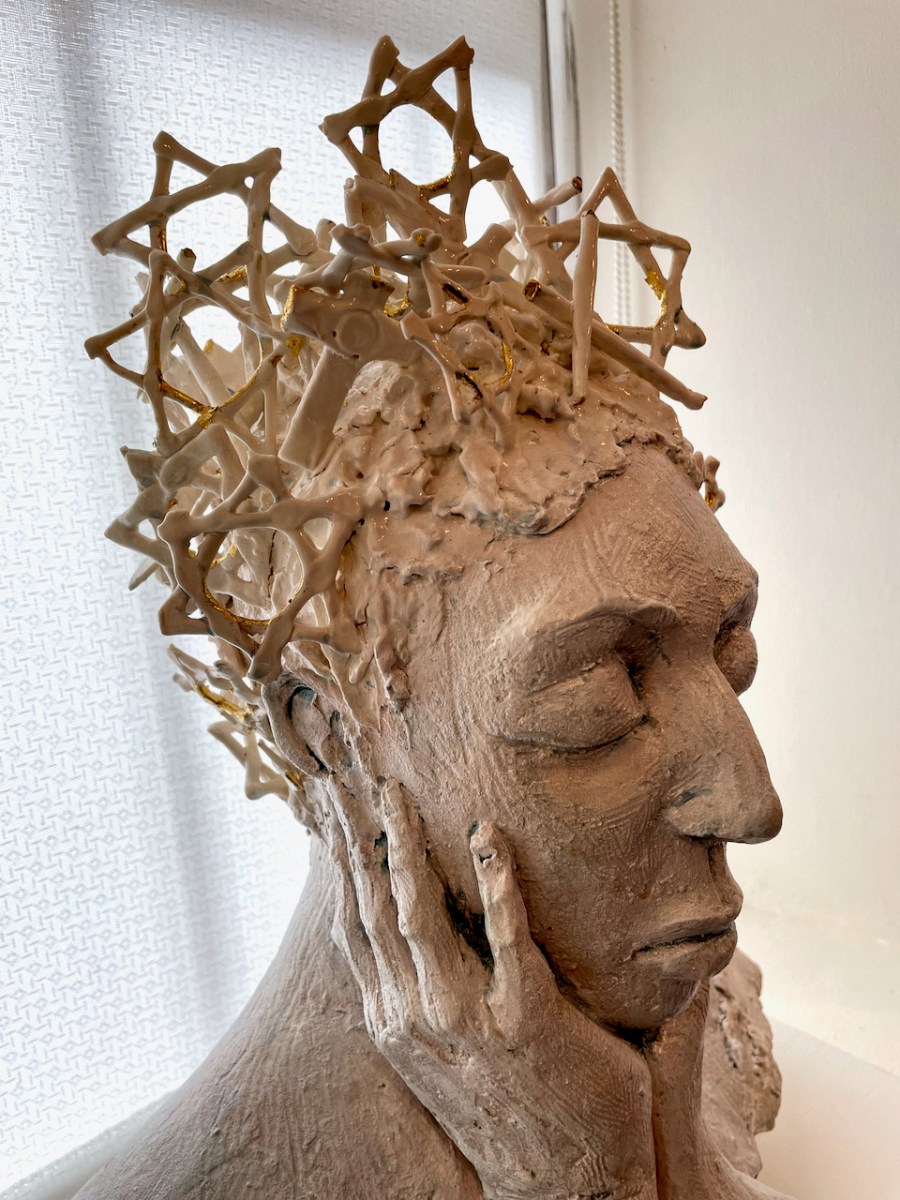
One of the standout artists in the Kenmare show for us was Ayelet Lalor – that’s her large piece above destined now for a hotel. Back in West Cork we were delighted that the Blue House Gallery in Schull devoted prime space in their latest show to her work. Titled A Life at Odds, Ayelet uses her iconic female heads to explore her own heritage and influences with an eclectic conglomeration of media including concrete, ceramics, cutlery, garden forks and industrial brooms! The results are both captivating and provocative.
On to the music – our regular Friday sessions have resumed in Ballydehob after two years. It’s always great fun for Robert to participate in these and even more so now as they are earlier in the evening (starting at 7 rather than at 9) so he’s full of beans as he heads off with his melodeon and concertina. His post last week had a clip of them all playing. The Fastnet Maritime and Folk Festival is on here at the moment, so the village is full of musicians, including Jackie Daly and Matt Cranitch, about whom Robert wrote in his post Learning from the Masters – check that out to see some of their playing. For now, a tiny clip of John and Uwe from one of the sessions on tin whistle and flute playing Carolan’s Draught.
A couple of days ago we went over to the Beara to meet up with our friend Susan Byron, of Ireland’s Hidden Gems and her group of American tourists. Among them was Bob, who played us over the Healy Pass.
Finally, for something completely different, we travelled to the Beara again today to hear the wonderful David Syme in one of his legendary Living Room Concerts. If you ever get a chance to do this, grab it! Here he is playing the Chopin Etude “Tristess”. This is his own recording on YouTube, and if you Google David Syme and choose video, you’ll get lots more that will give you a flavour of what we heard this afternoon.
Among the pyrotechnics of Chopin, Schubert, Brahms, Bach and Gershwin, David told us a moving story about his Ukrainian-Jewish grandmother and played us a gentle piece called Jewish Prayer for Healing by Debbie Friedman. I will leave you with a short clip from his performance.
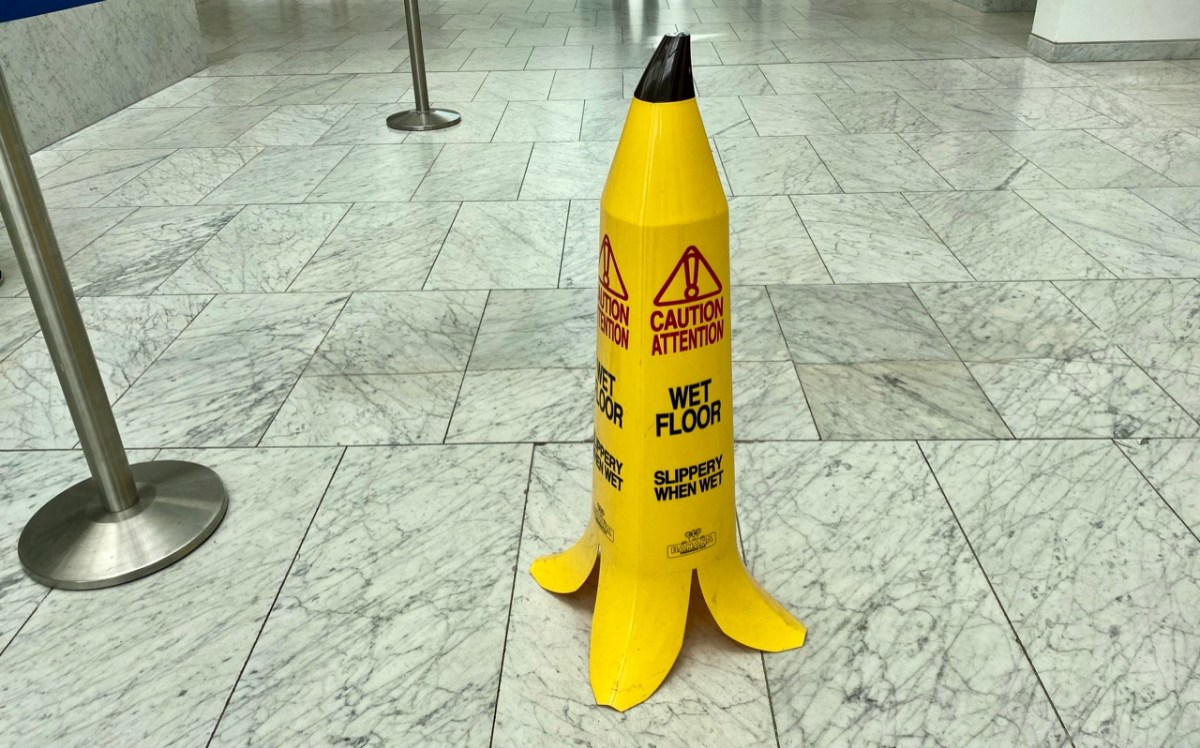
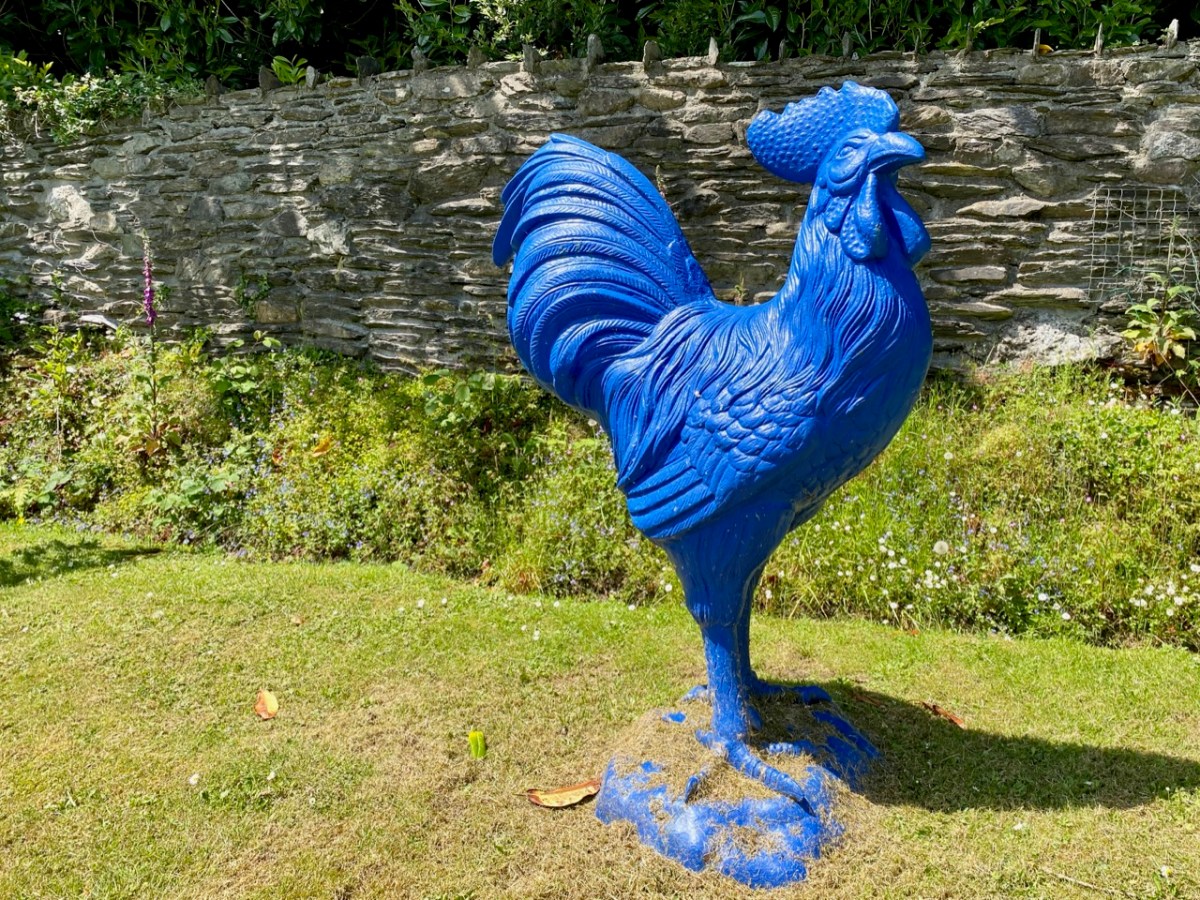
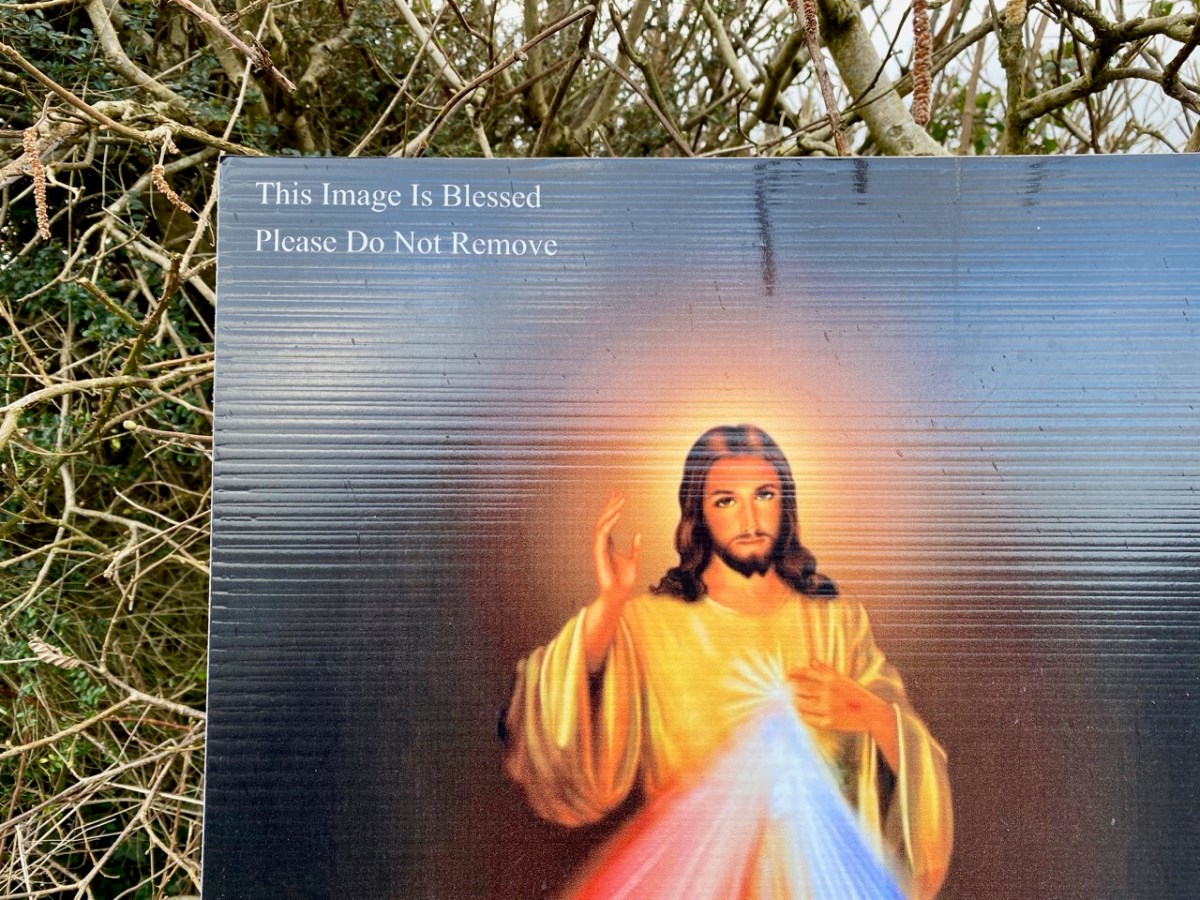
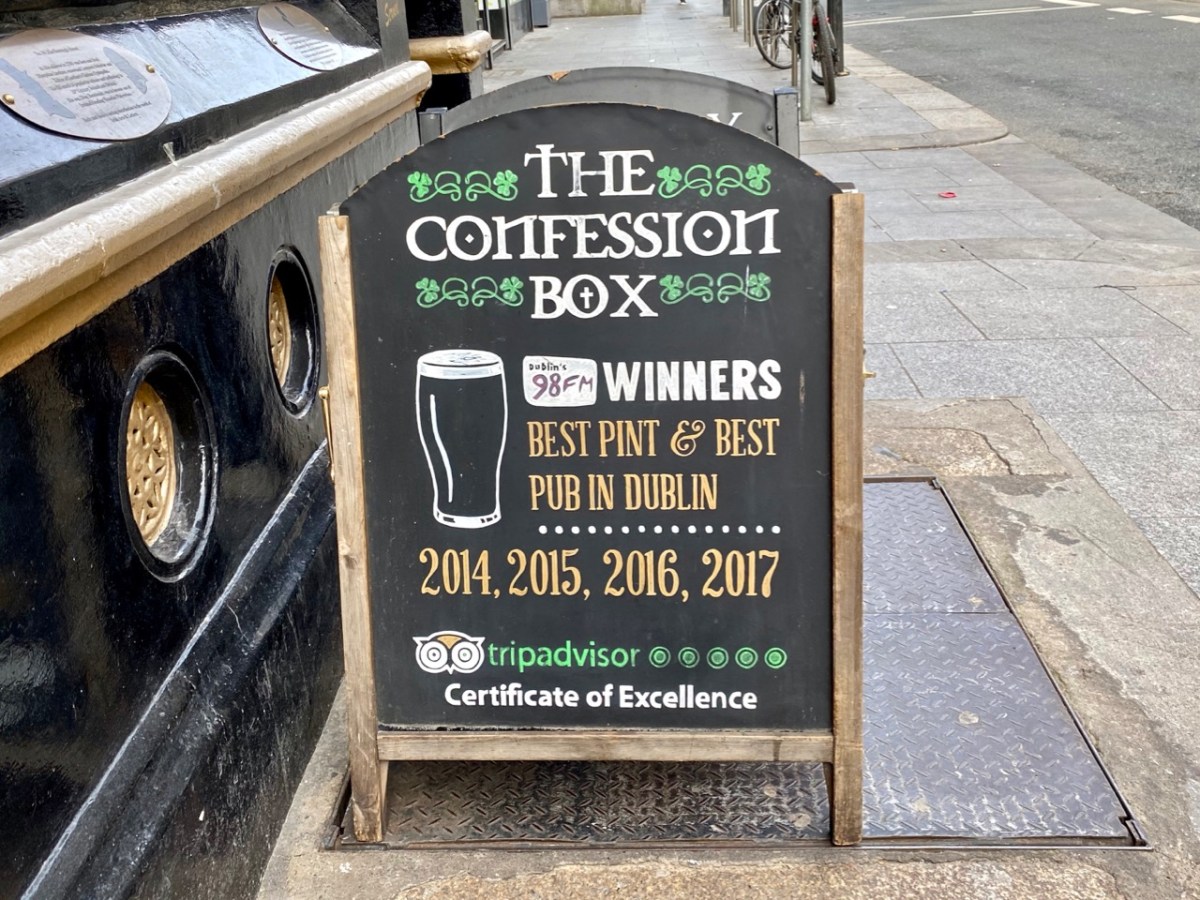
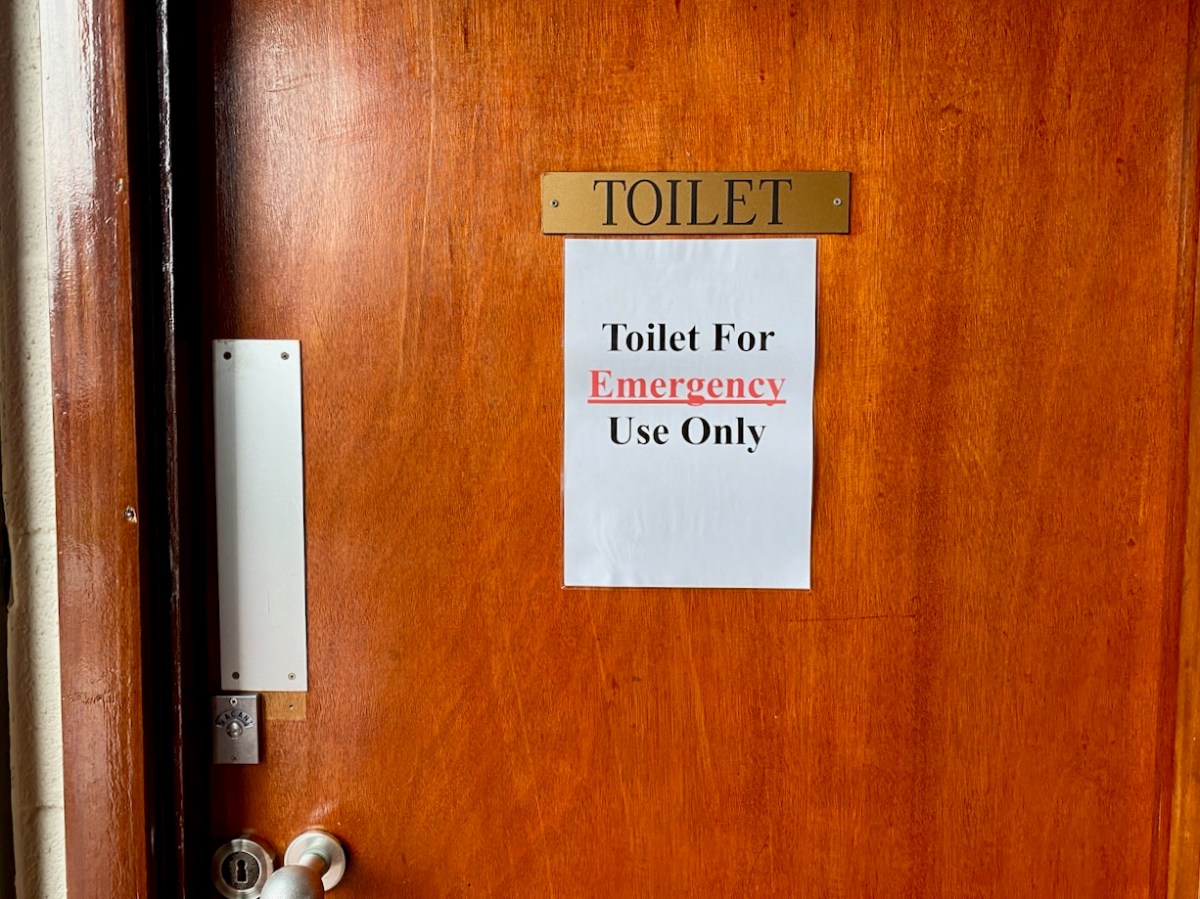
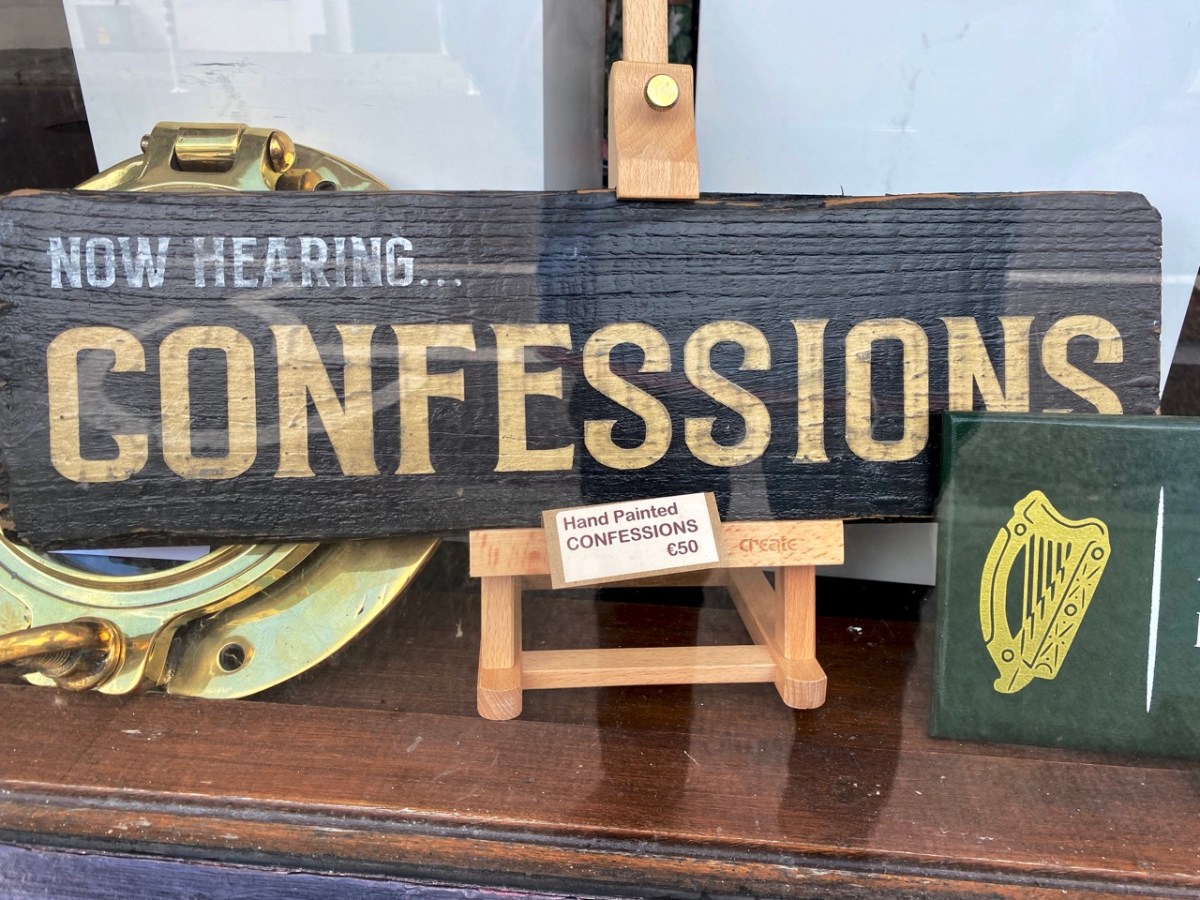
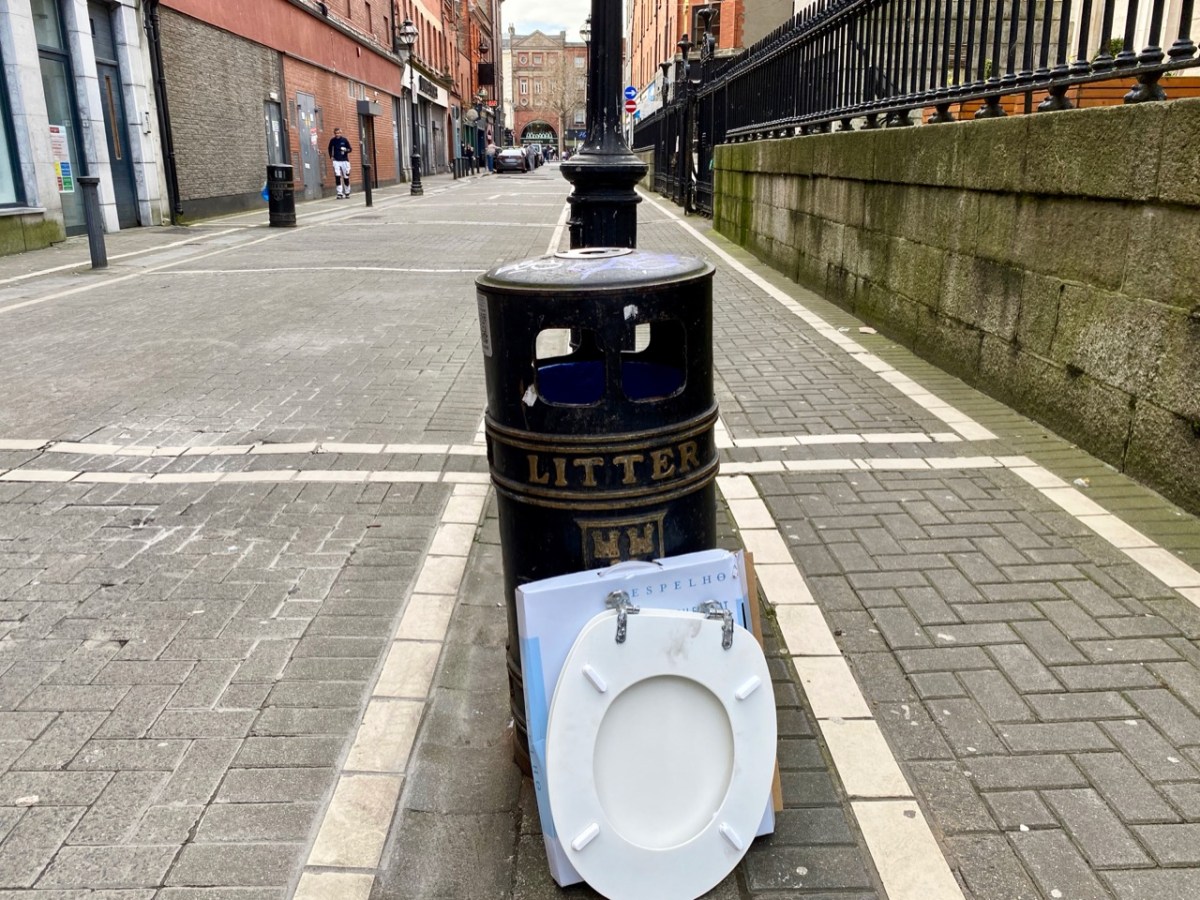
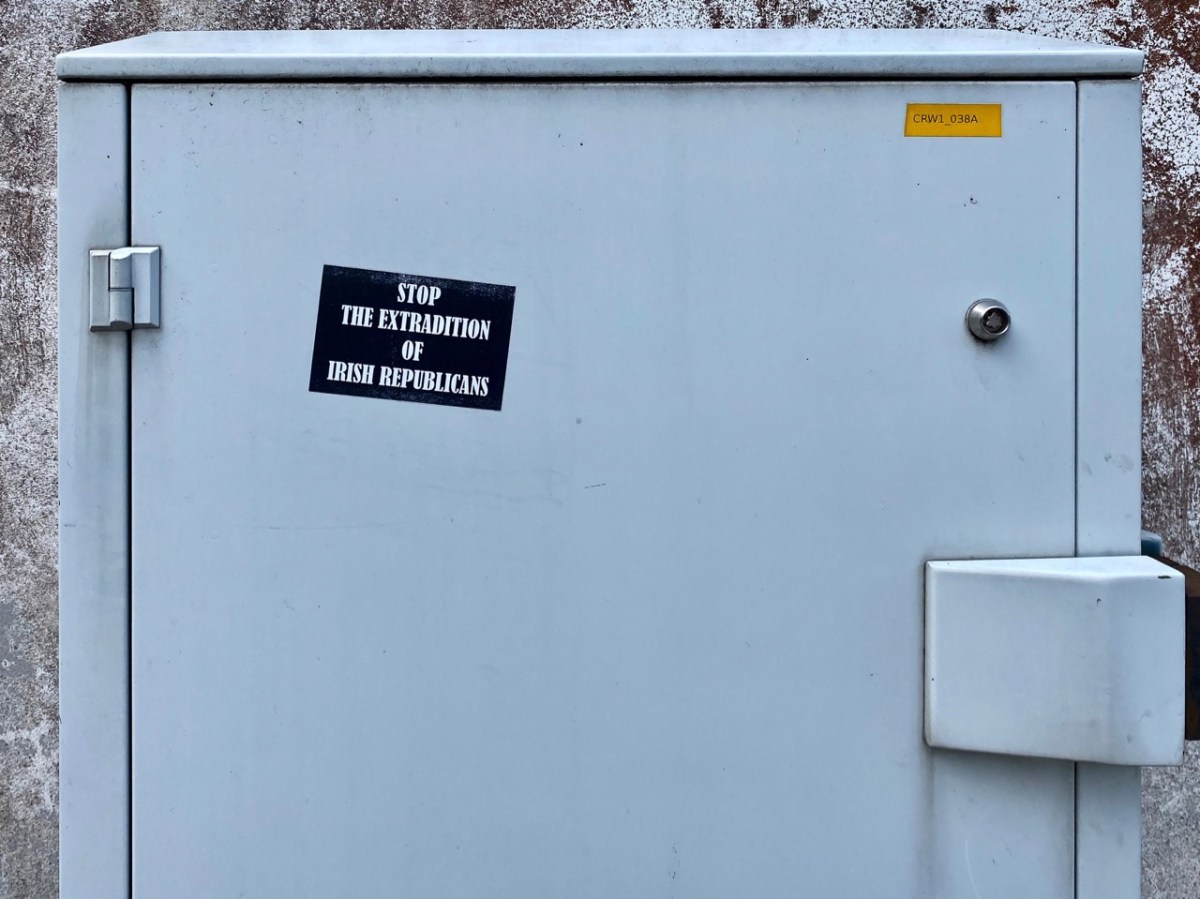
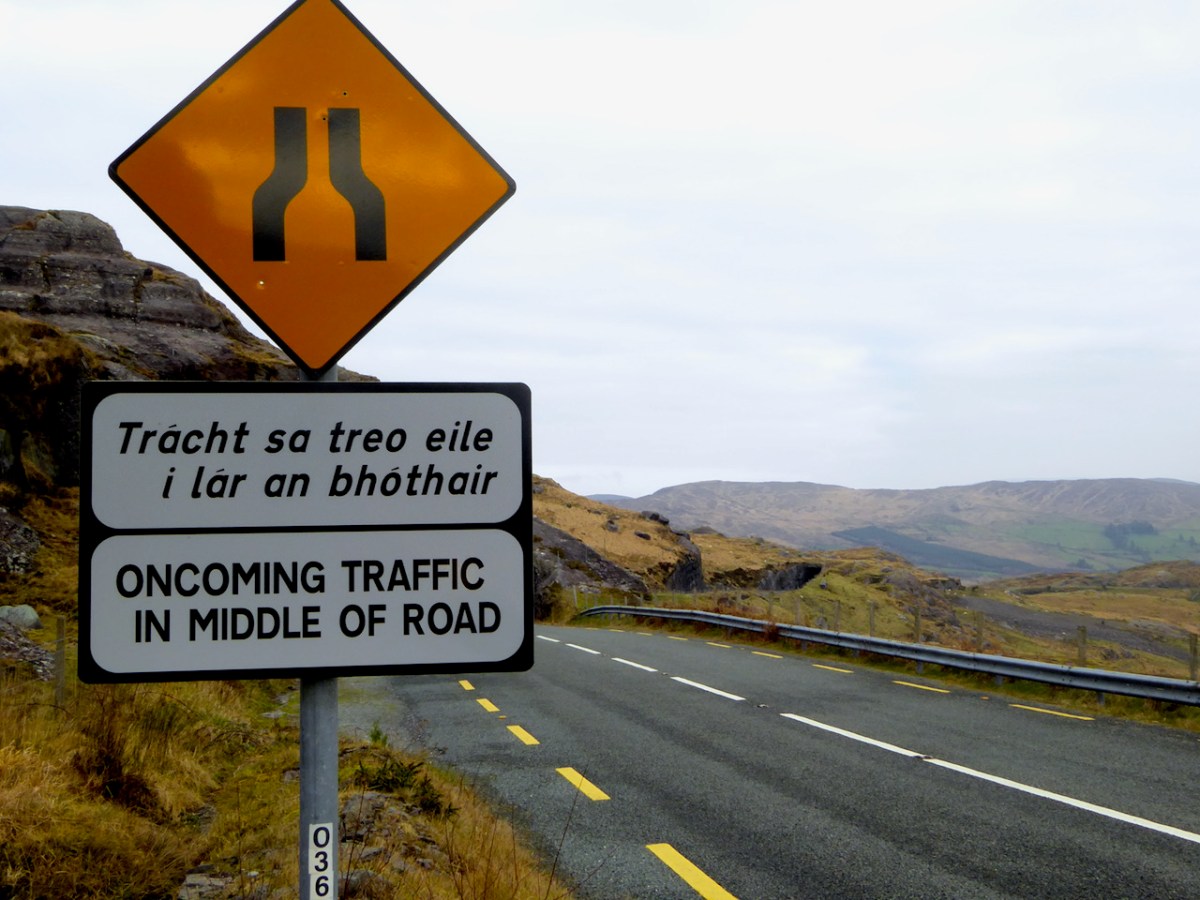
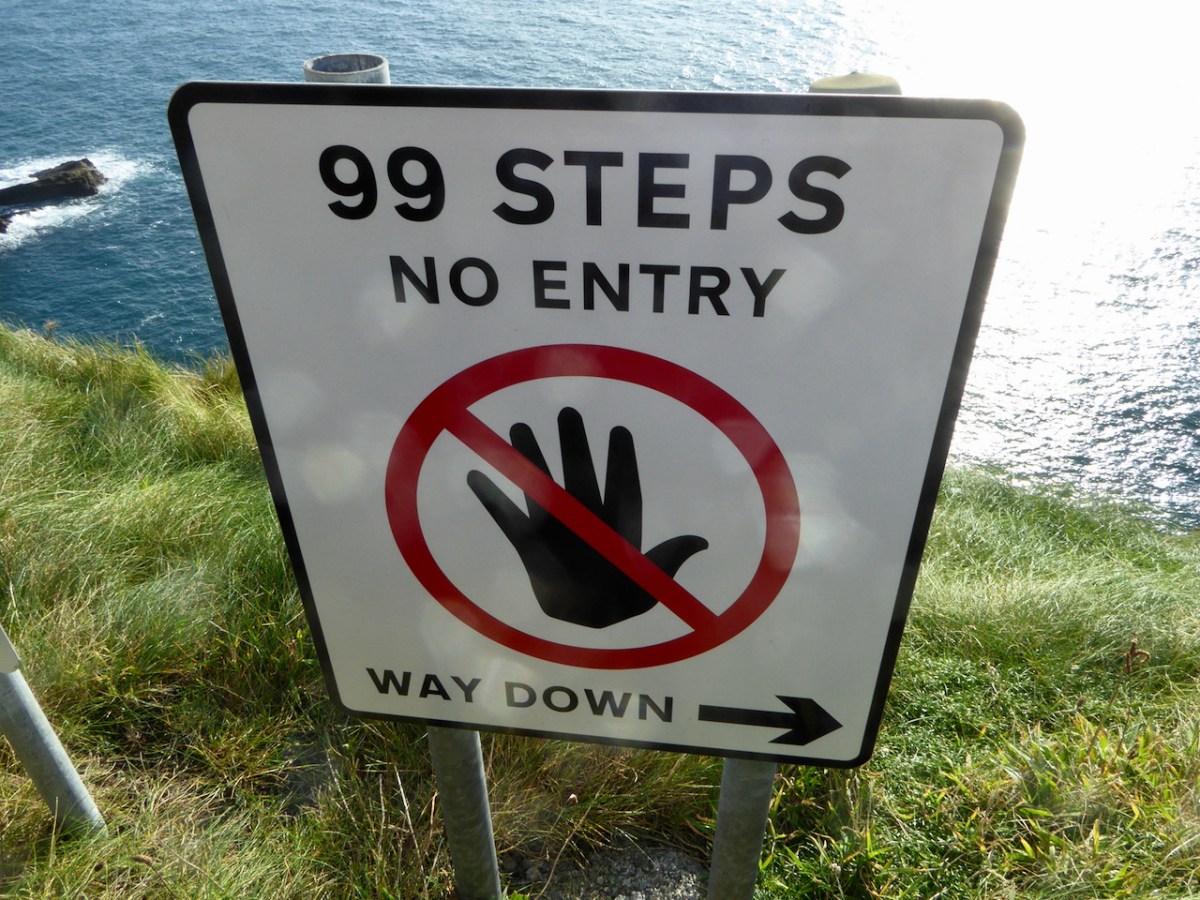
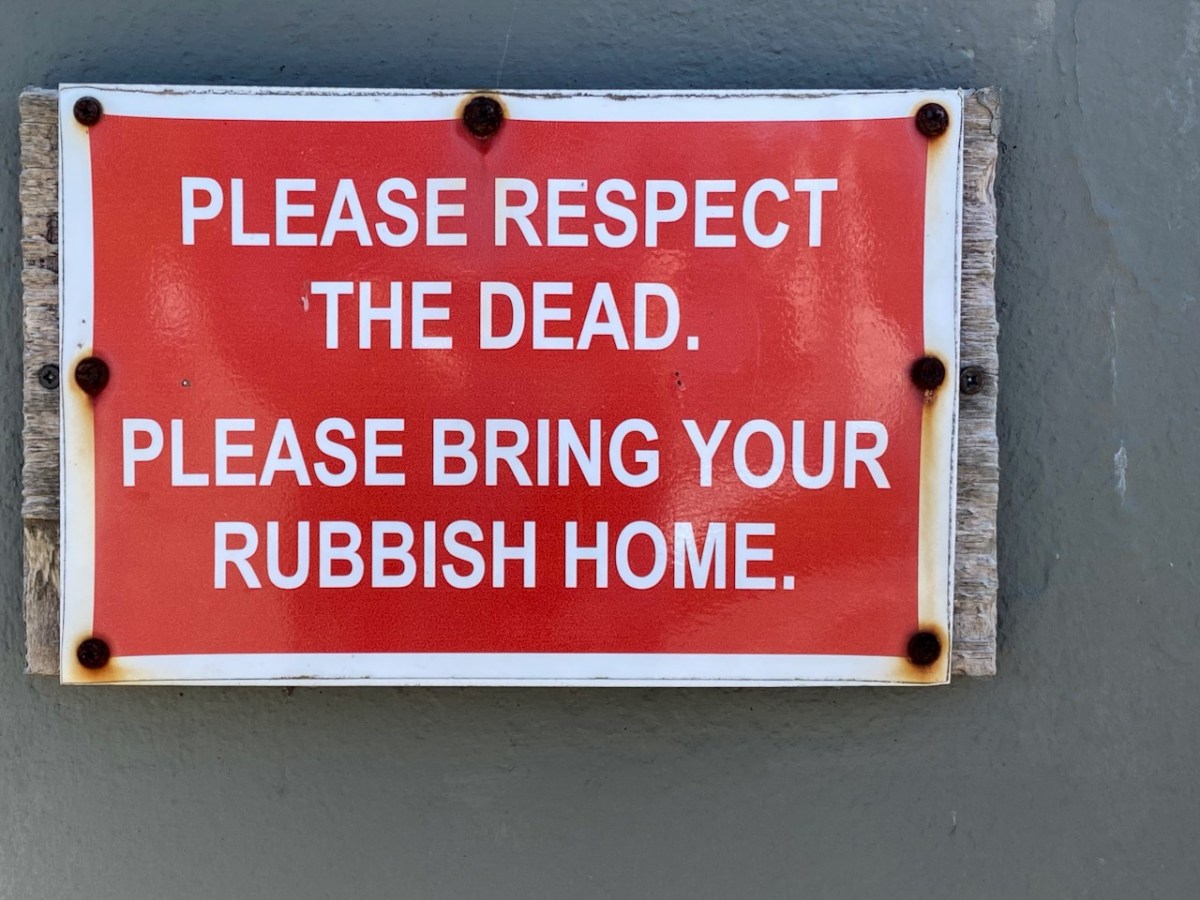
Another post about signs in Ireland: I ‘collect’ them and update them every few months. The slippery banana – above – is a classic and is to be found in the City Hall in Cork. Following it are a whole variety of examples with – hopefully – some touches of humour about them. Others have to be classified as eye-catching curiosities, including this magnificent bright blue cockerel.
Mostly, the signs just speak for themselves…
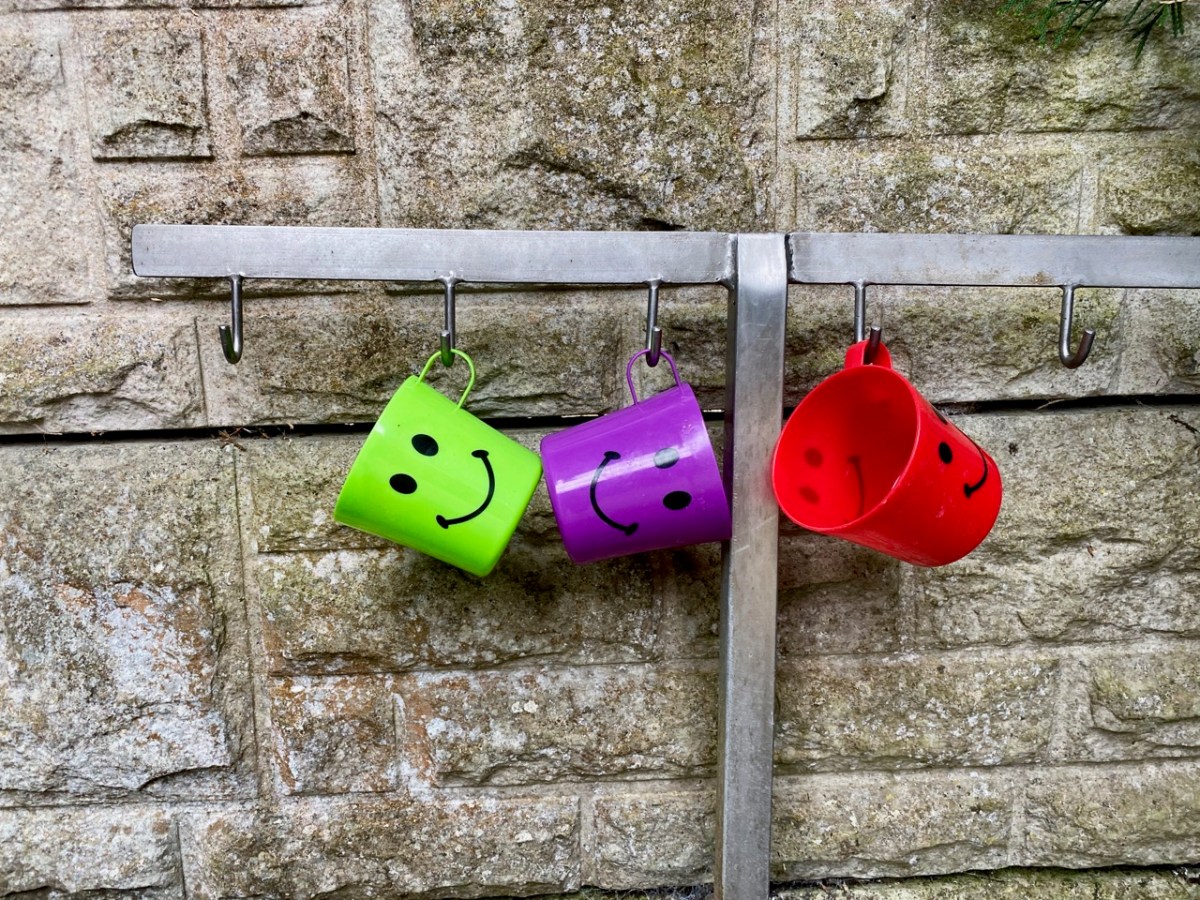
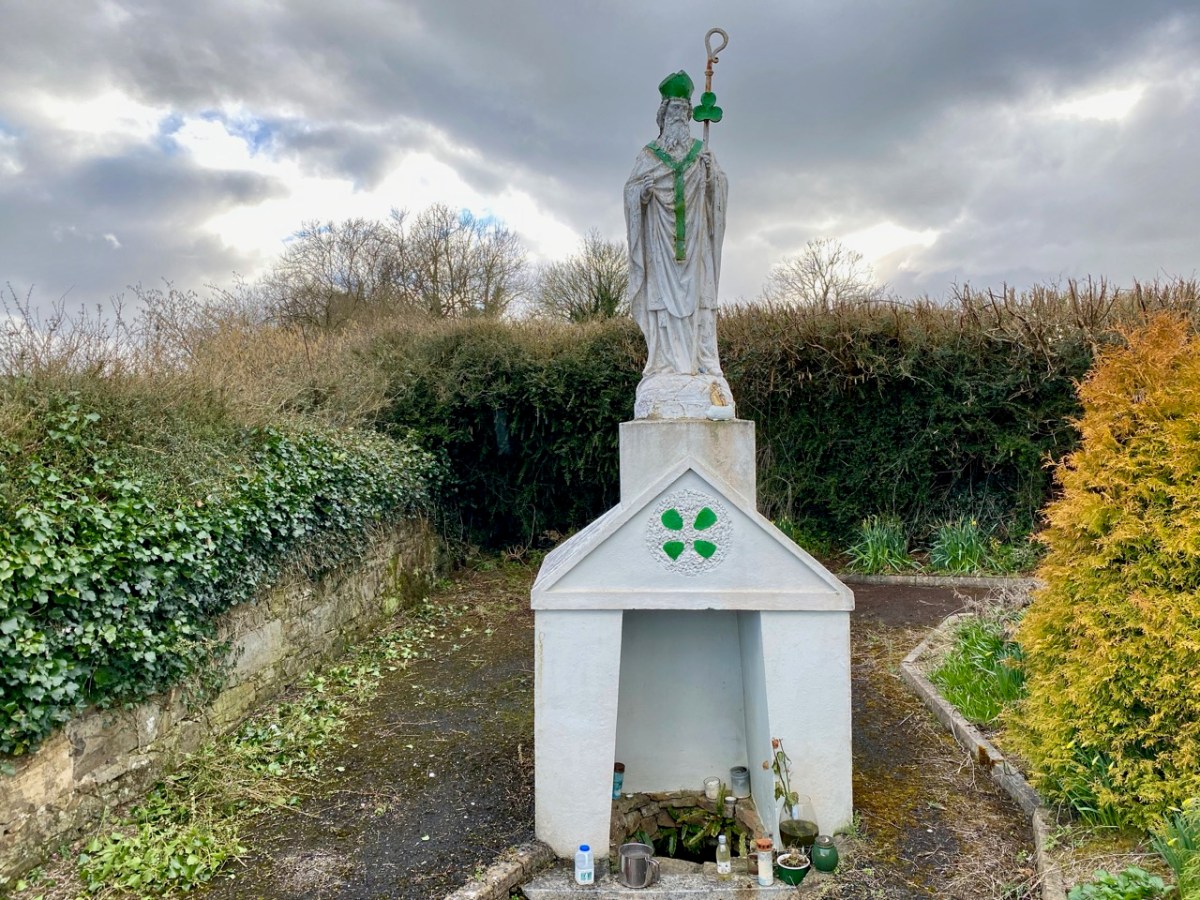
These cheerful cups can be found at a wayside Holy Well.
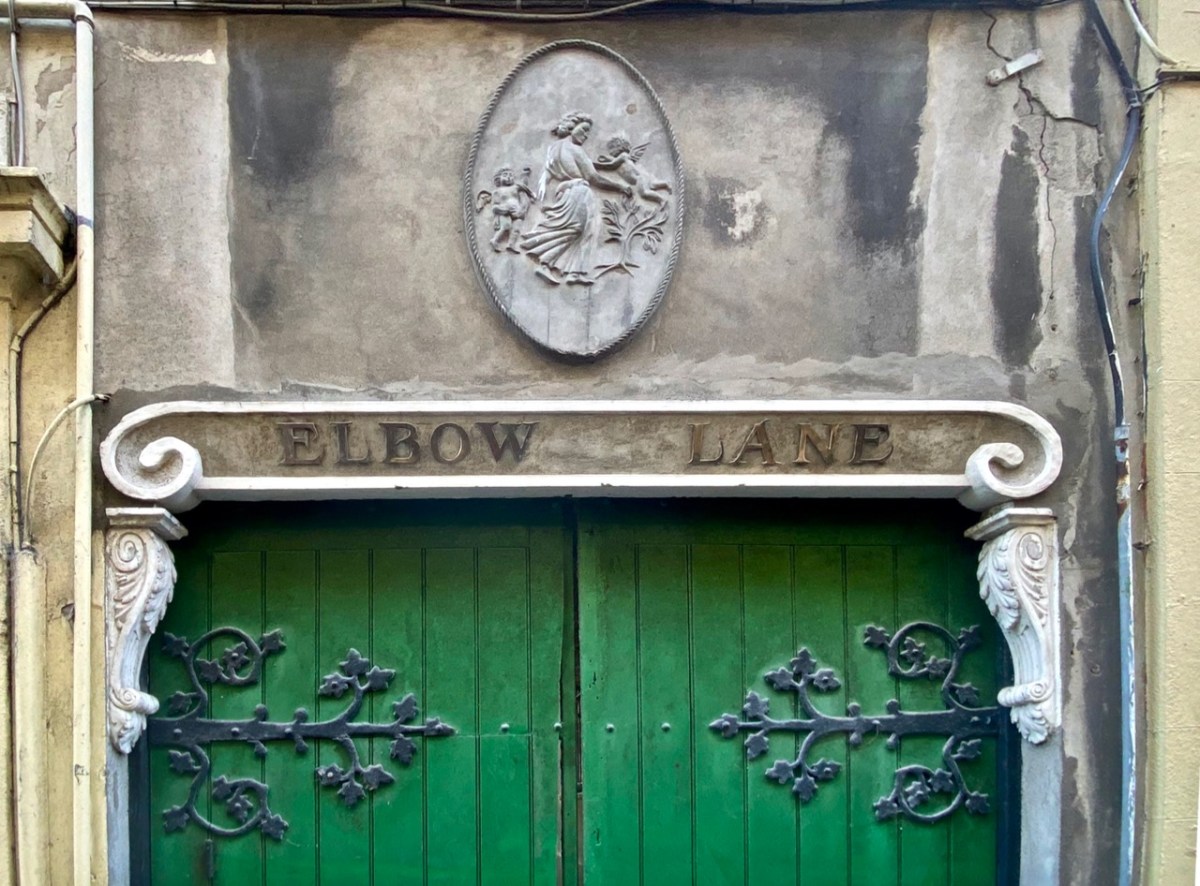
The gate above, also from Cork city, shows what architectural gems are waiting to be discovered on the streets. I was pleased – and puzzled – to come across the following:
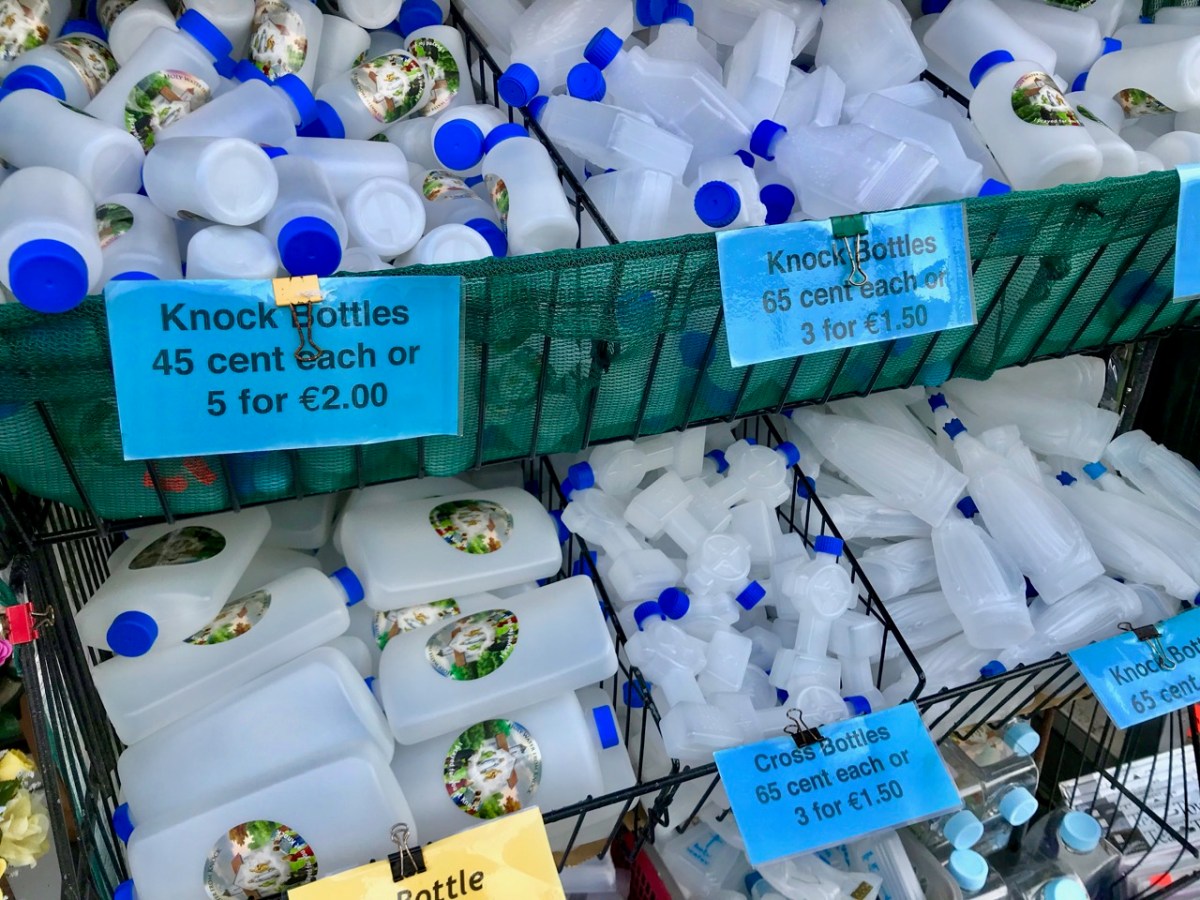
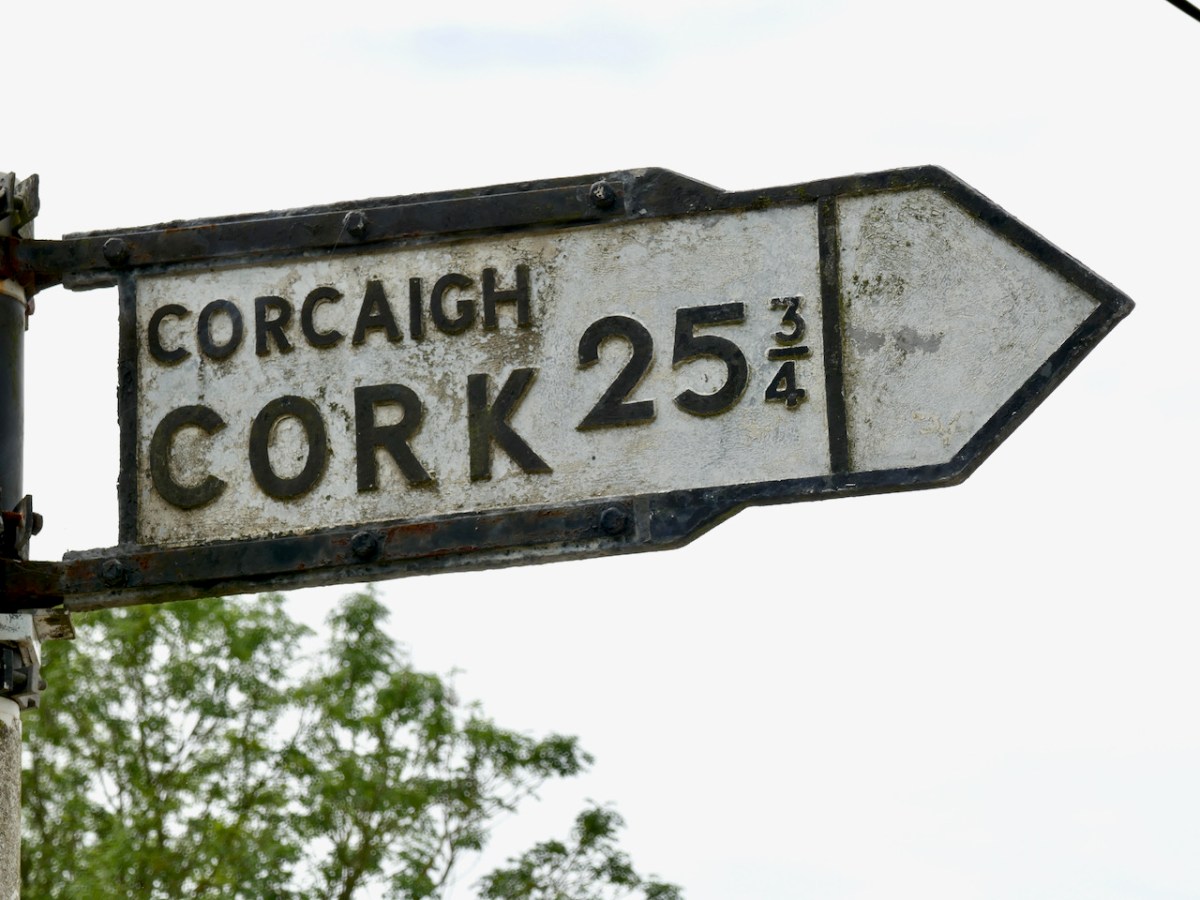
If you visit Knock (above) you can collect your own holy water. This is my report on the place. Here (below) is a curiosity – not far from our West Cork home: an old signpost marking the distance in miles. You might say it’s one that got away!
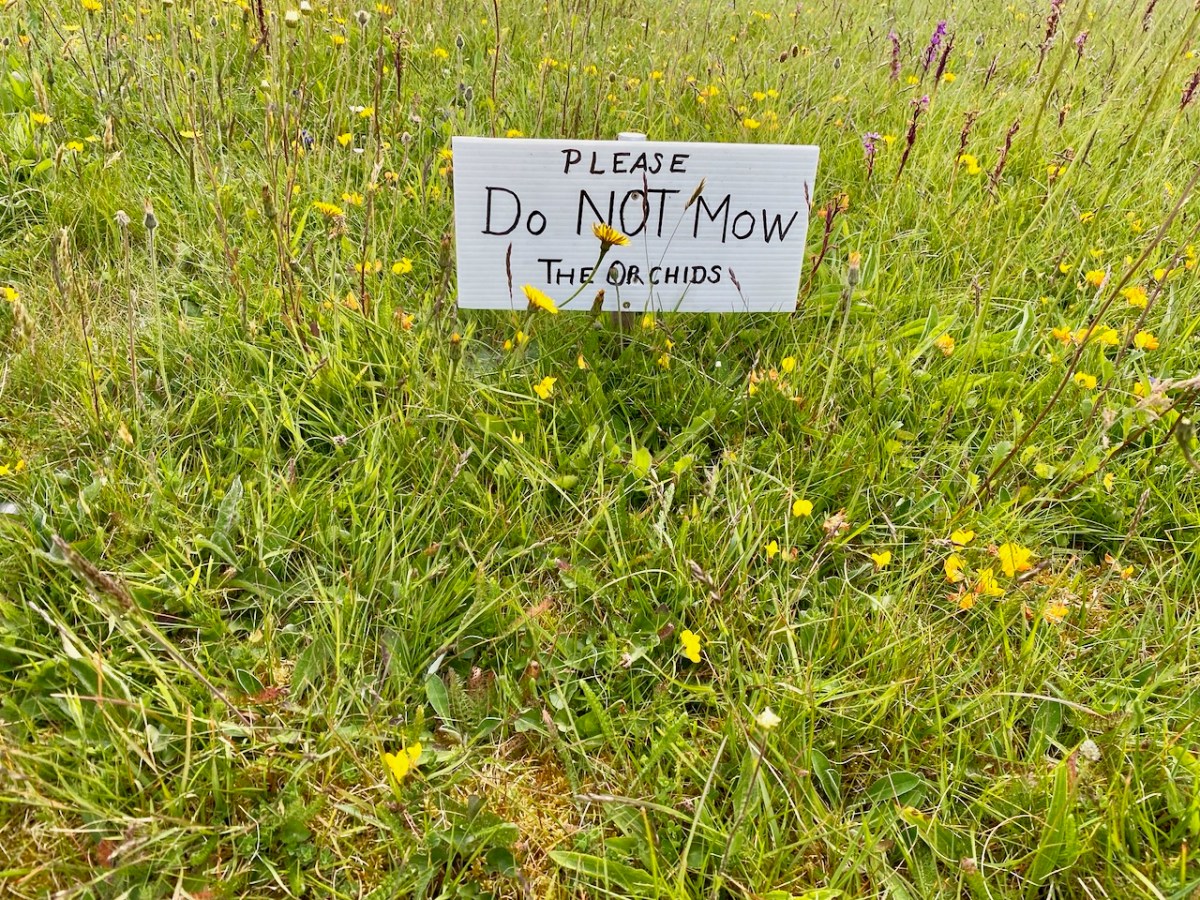
Quite right! The orchids at Toormore Church are spectacular, and have to be looked after.
A coded message from another world, perhaps?
Signs can be enigmatic here in Ireland. There’s usually a reasonable explanation for them, though.
There’s plenty more where these came from (in fact they come from all over Ireland). Keep a watch out yourselves!
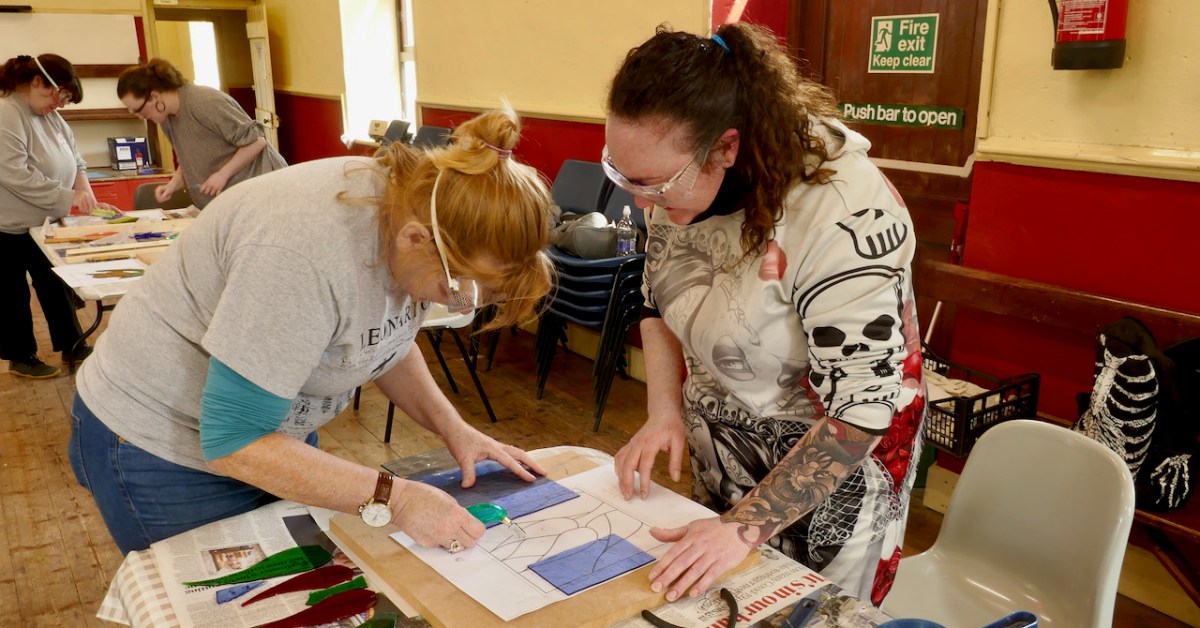
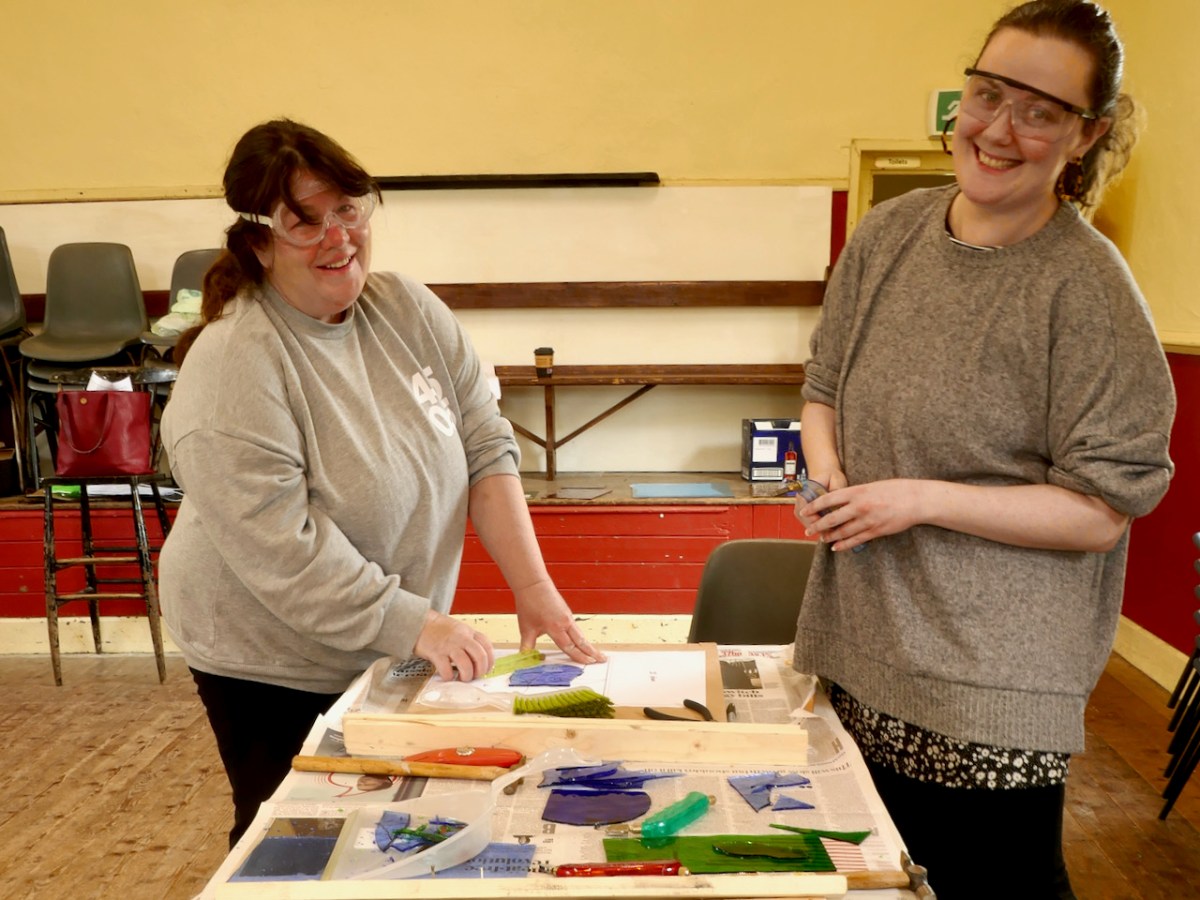
I write about stained glass all the time, but I have never tried my hand at classic leaded glass. Having enormously enjoyed my sortie into fused glass with the wonderful Angela Brady, I’ve been looking for an opportunity to have a similar experience with leaded glass. Luckily, we have in West Cork the equally wonderful Deirdre Buckley Cairns, an award-winning multi-talented artist who lives in Schull and who teaches stained glass. I signed up for a full day workshop.
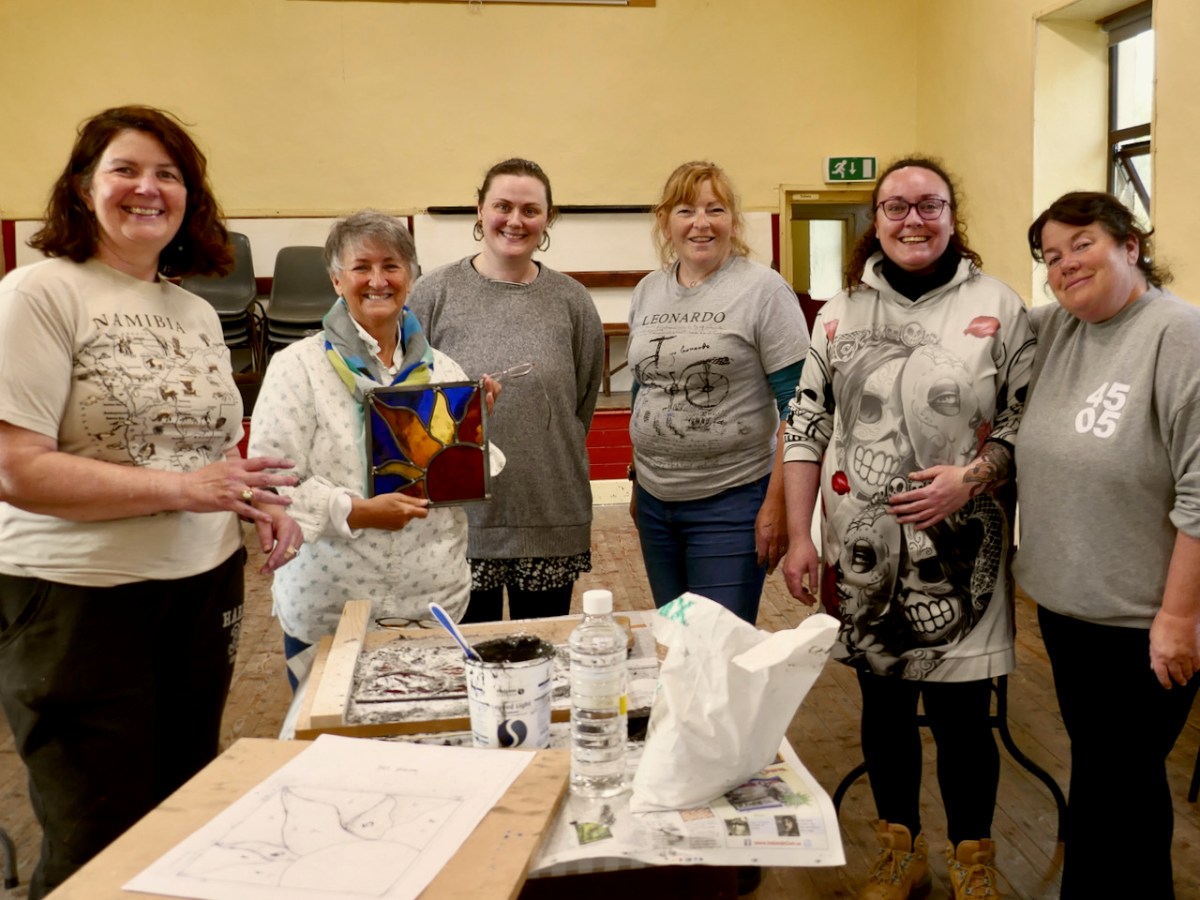
Deirdre is an experienced and excellent teacher. I’m in a good position to judge this as I ran a teacher education program for several years, so I know good technique when I see it. Deirdre was ultra-prepared, guided us through the day in well-calibrated steps, and was unfailingly positive and encouraging. We got there at 9 – Adrienne, Sarah, Susan, Louise and I – and she had everything laid out on each bench – all the tools and supplies we needed – and her own demo bench all set up.
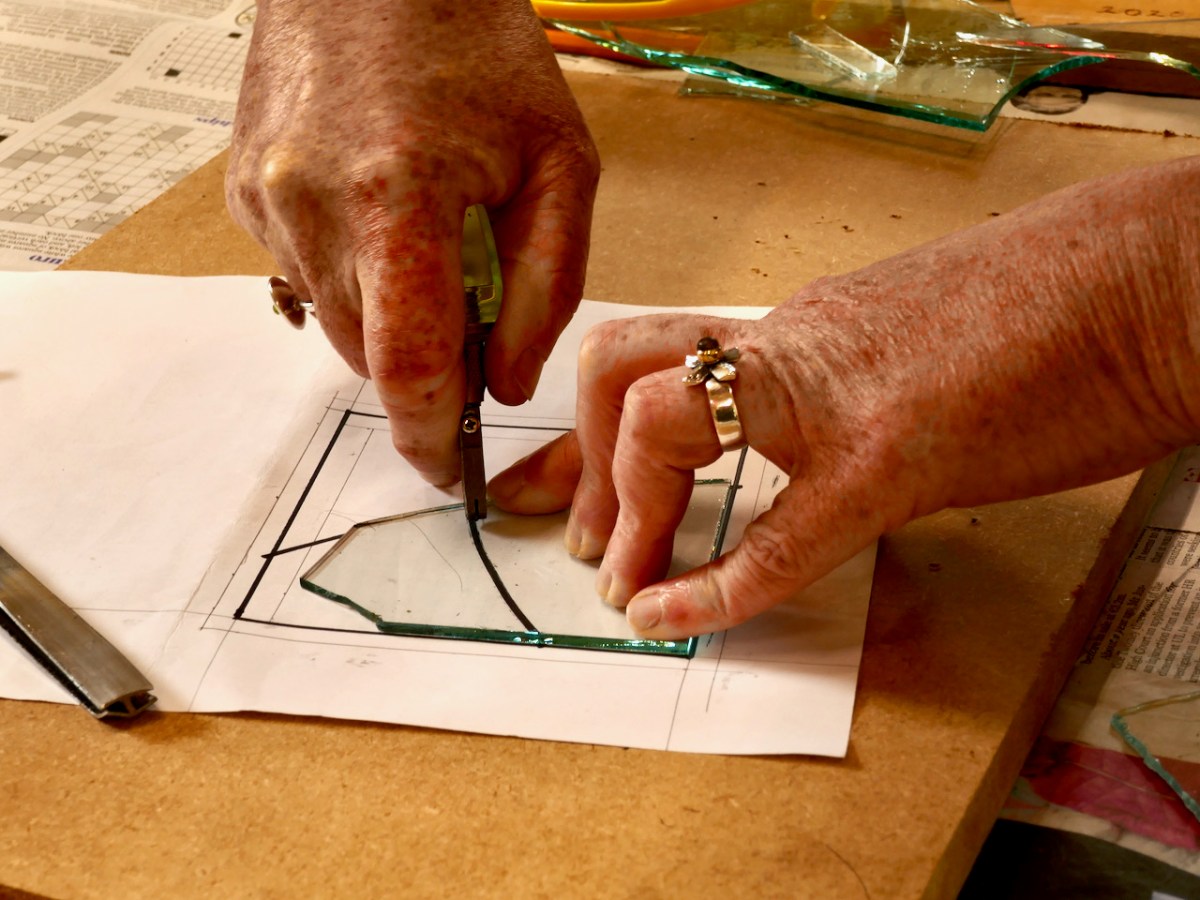
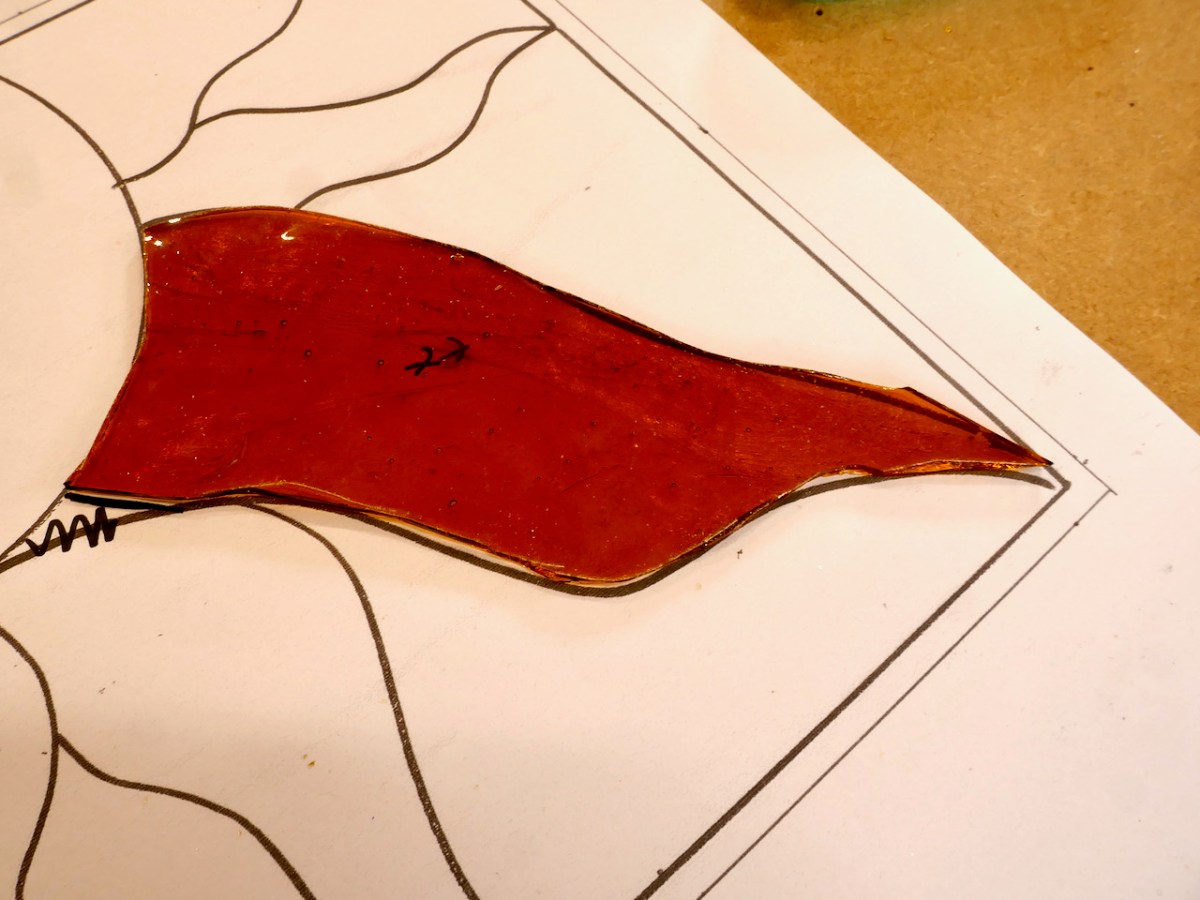
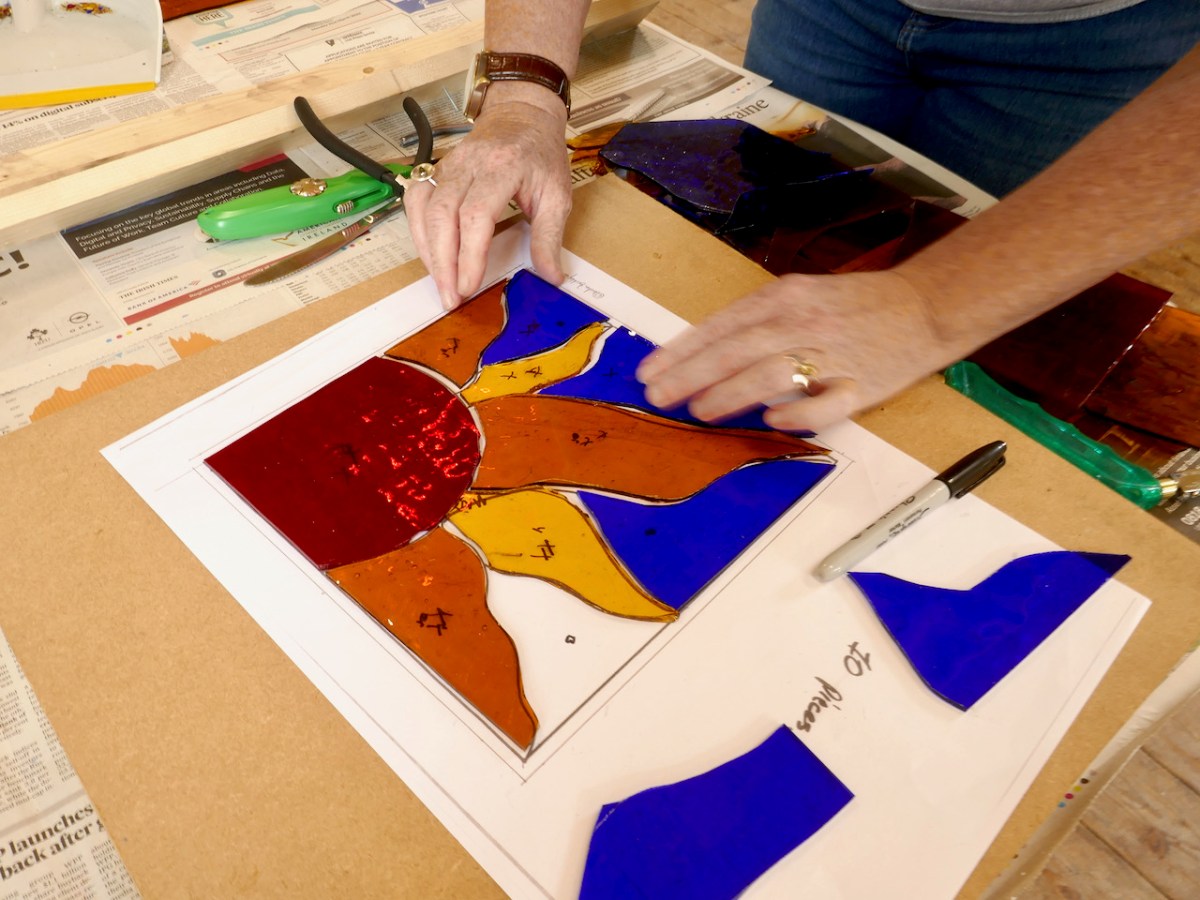
We each chose one of Deirdre’s designs that she has carefully worked out to be doable in a day and I must admit I went straight for the ten-piece design, which looked the least intimidating. Our class started with how to lay the glass properly over the design and how to cut the shapes.
This is where I ran into the first of many humbling fumblings – that nifty little glass cutter thingy is a lot harder to control than it seemed when Deirdre expertly guided it exactly over the felt marker line under the glass. It stops unexpectedly, it shoots off in the wrong direction, it leaves gaps – it’s a fiendish little instrument of the devil. It was the first of my many realisations throughout the day of how much time and practice it takes to develop into a skilful glass cutter.
By lunchtime – that’s three hours for ten pieces – I had my glass cut out. They looked a little rough around the edges, but at that point I hadn’t realised how much that lack of finesse would come back to bite me, so I was basking in a warm glow of accomplishment and ready to enjoy a break.
Susan seemed to have grasped the concept better – her pieces looked remarkably accomplished!
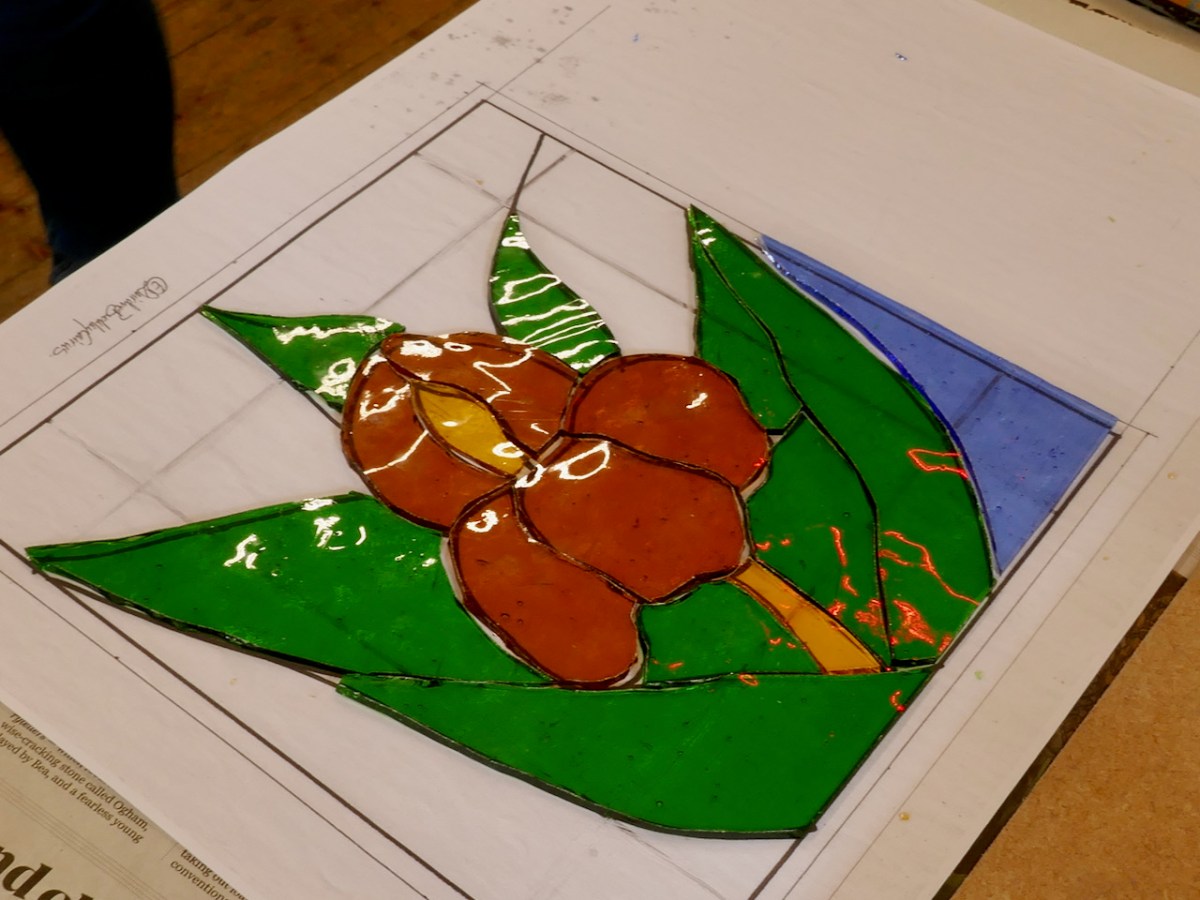
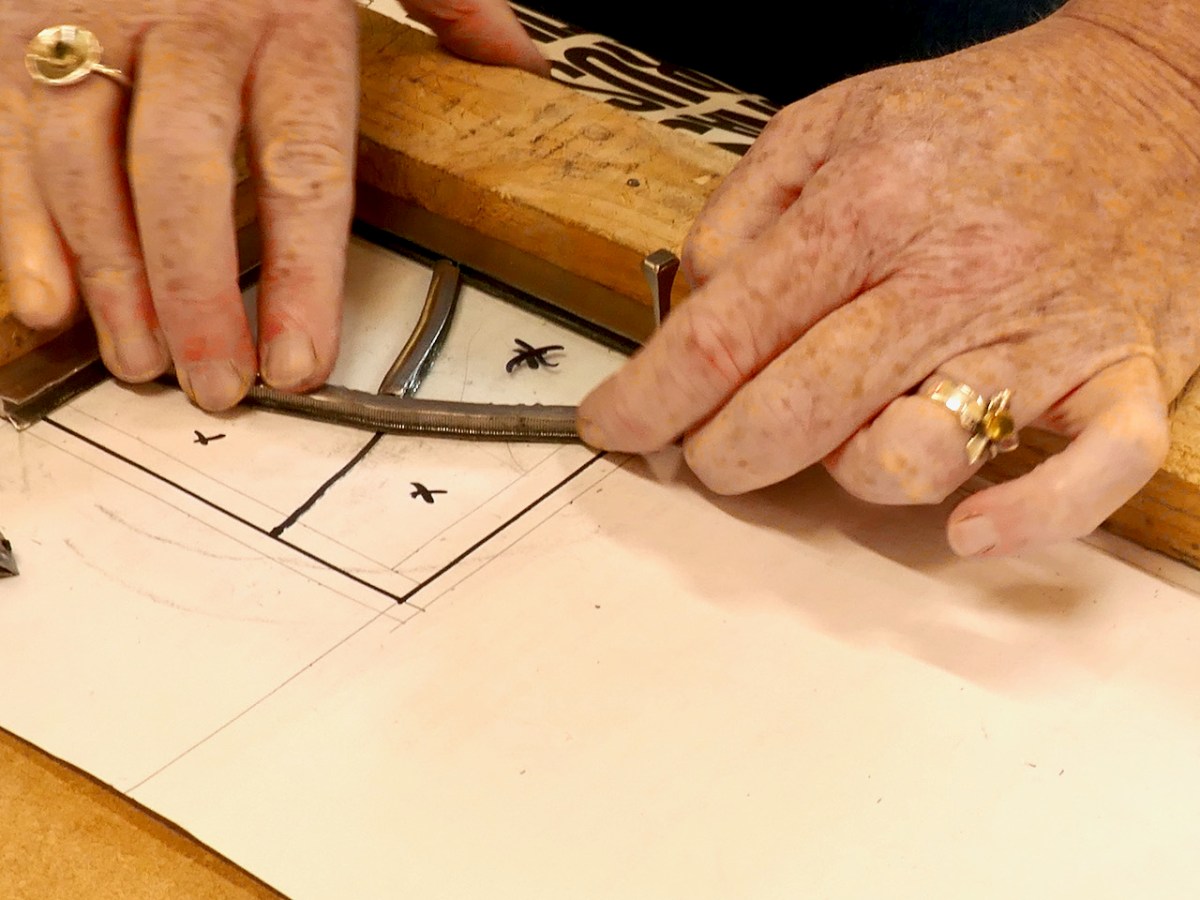
After lunch we had the demo on how to lead the glass together. Starting with two outside leads, Deirdre showed us how to measure, cut and shape the soft lead cames so that all the pieces of glass come together within the lead borders. Seemed straightforward enough – hah!
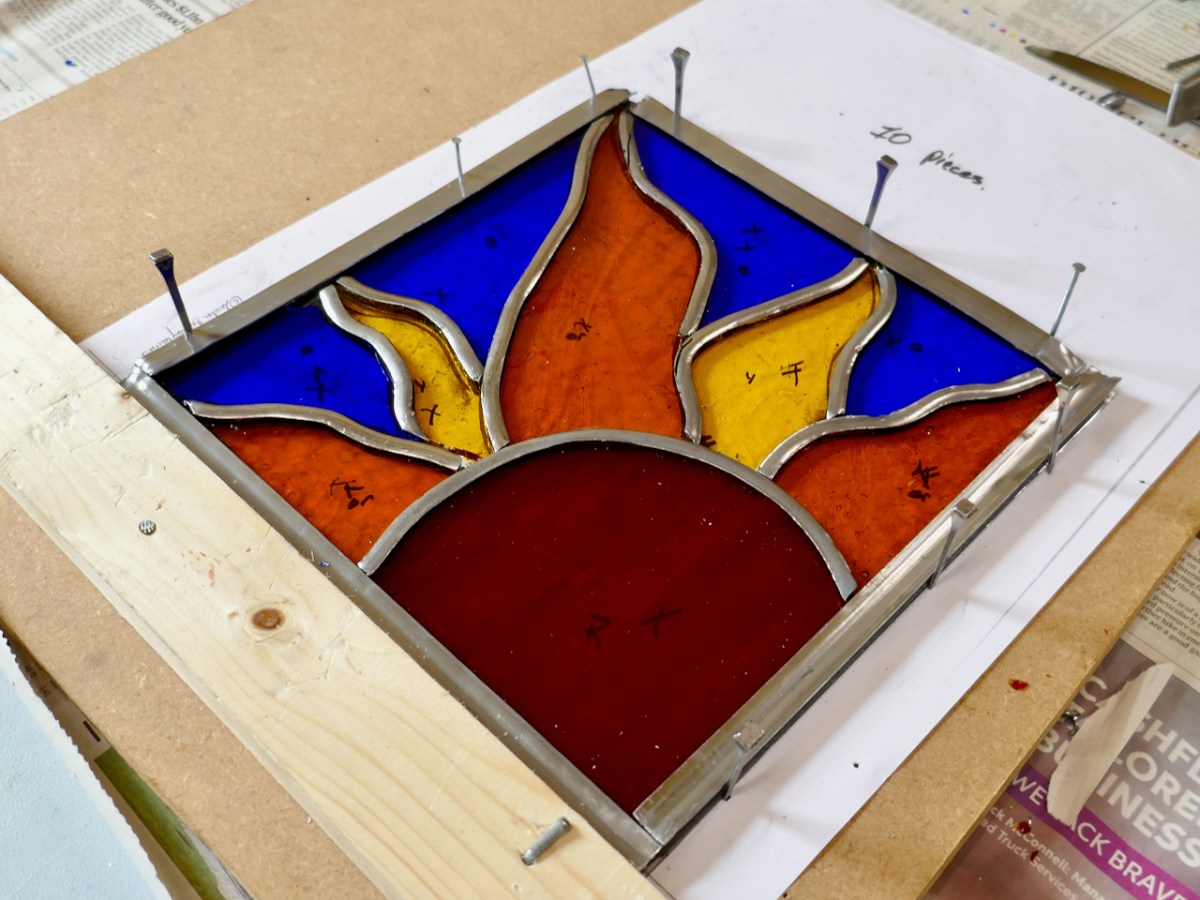
The first few pieces went fairly well, but then the lack of precision in my glass cutting started to become a problem, as I tried to jimmy and tuck pieces together. Deirdre showed me how to use the grozers (a kind of pliers) to nibble away incorrect edges. Well, nibble is the ideal – in my awkward hands the ‘nibbling’ seemed to create ever more jagged edges. Sometimes we had to use the grinder to try to sort out the final shape – as you can see below, my final piece was far too big for the space it had to fit.
Even though I got the glass more or less leaded in the end, nobody could pretend that it looks anything other than a very amateurish piece of work, with holes where there shouldn’t be holes and a crooked frame. Nevertheless, I was ecstatic to have managed to push and shove it, with lots of help from Deirdre, into a final square shape.
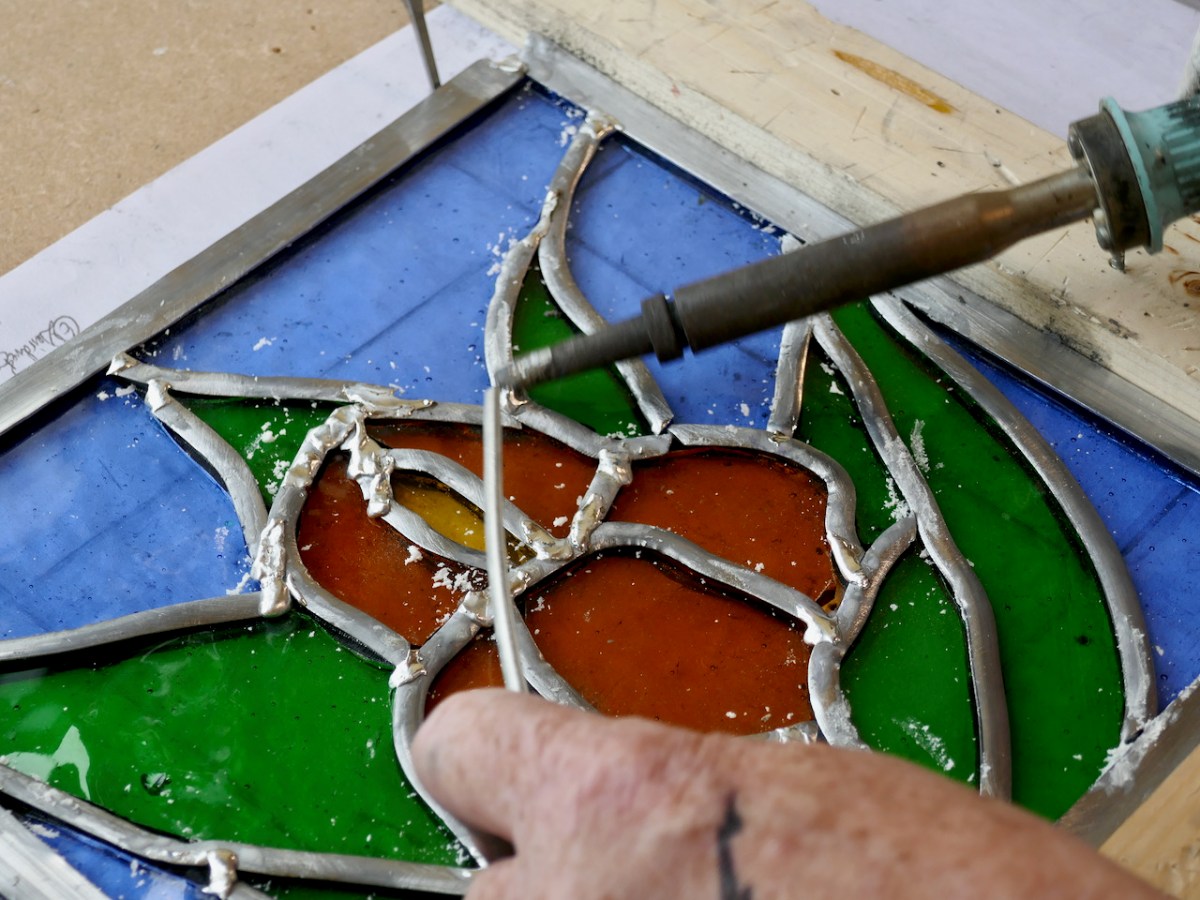
The next step was to secure all the joins with solder and I hate to say it but this was the most fun part. Or maybe I mean the least stressful. There’s something deeply satisfying about melting metal and watching it magically knit two pieces of lead together.
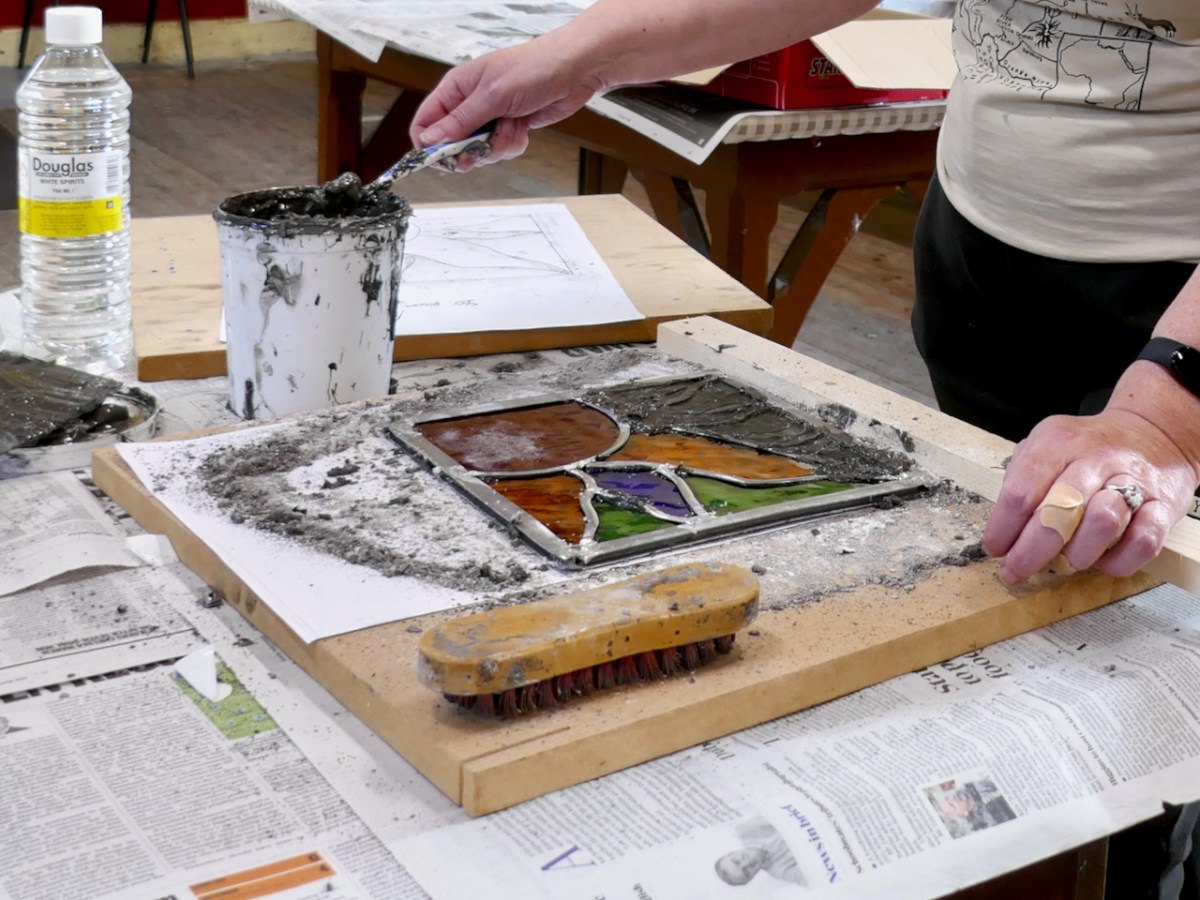
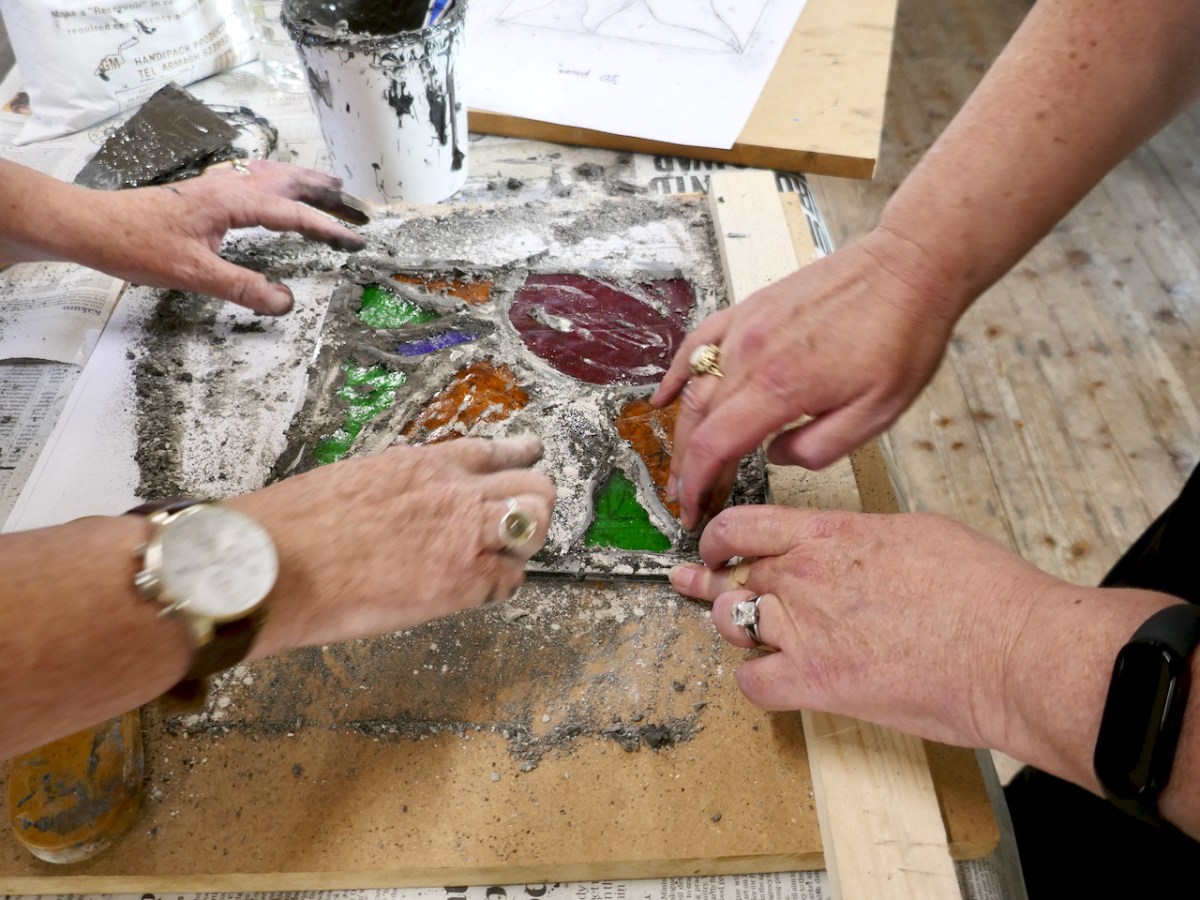
The final process was to cement the glass so that it was properly bedded to the lead cames, and not just rattling around inside them. This was a sloppy business, bringing out those inner children who love to play with mud.
Then came a dusting of plaster to dry the mud and a pushing of the mud/plaster mix into the corners and well under the cames. A final polish with stove blacking and we were done!
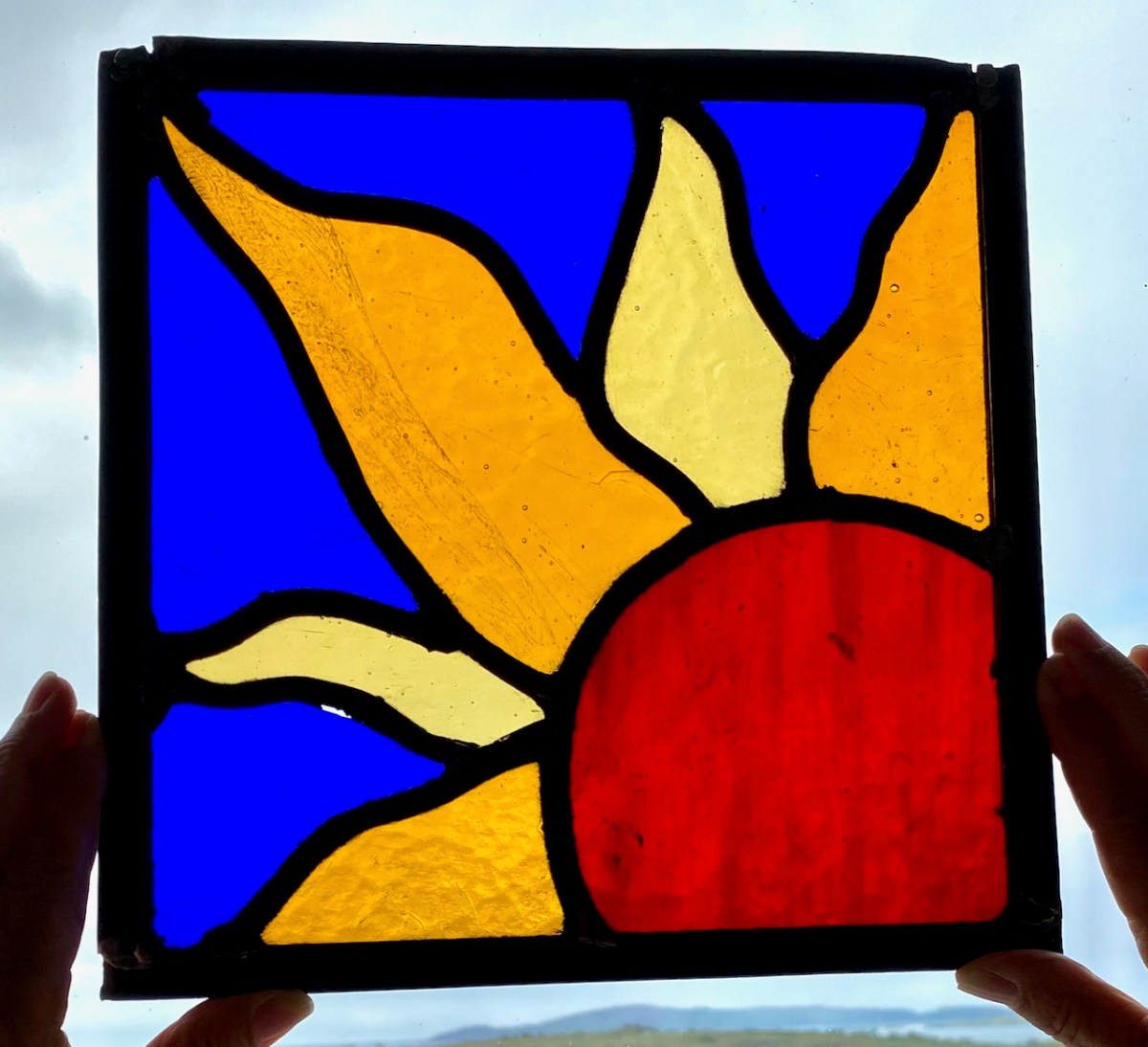
And I was wrecked! My back hurt and my wrists and shoulders ached. I had a little sun window to take home with me (don’t look closely!) – and I had learned SO much.
Mostly, that learning had to do with a whole new appreciation for the skill of making stained glass – how physical it was, how exacting, how long it must take to get truly proficient at it, how many steps were involved.
And of course, this is only the most basic part of making a stained glass window – we did no painting, etching, decorating of any kind. As I type this I have my Finola window to my right – each pane (and there are over a hundred in the window) is worked – painted, scratched, cut away. Some of the glass is flashed with the design cut or etched into it to reveal the colour underneath the coloured flash (thin top layer). Some is covered with thick black paint, through which the design has been etched. Glass has been carefully chosen for different properties – streakiness or bubbles or colour variation.
At the end of the day, I had accomplished my goal, which was just to gain a tiny insight into the most basic of the processes involved in the making of a stained glass window. The workshop was great fun – not least was finding all of us, a wonderfully compatible group, shouting along to some of Deirdre’s musical accompaniments.
It takes years, and true talent, to become a stained glass artist. I remain in awe of those who have mastered this difficult and remarkably beautiful art.
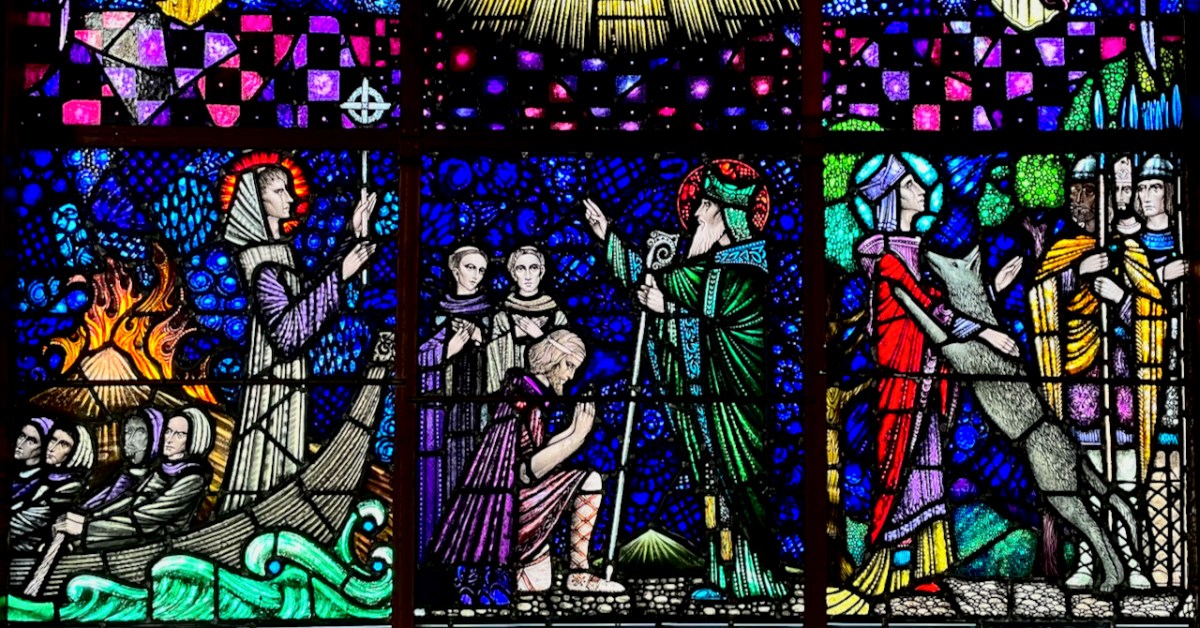
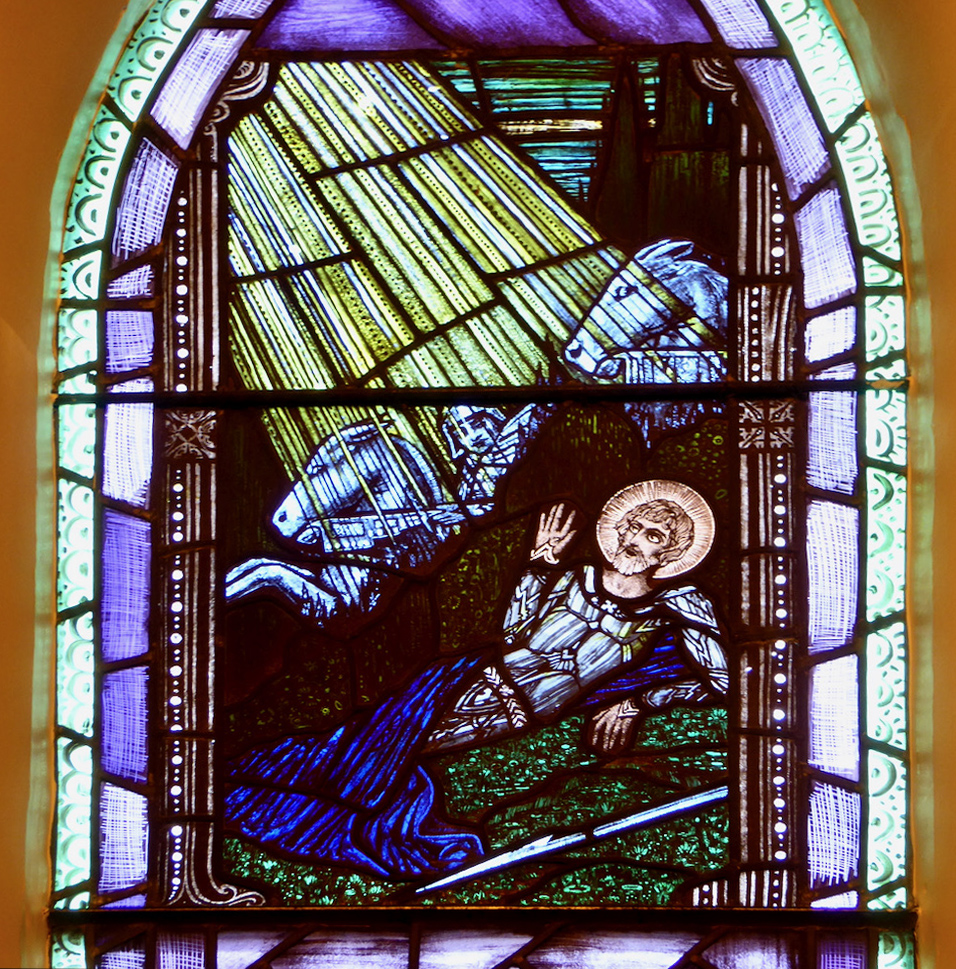
In the years before he died (in 1931), as he was ill and overburdened with commissions, Harry Clarke came to rely on a stable of brilliant young assistants in his studios. Austin Molloy, Kathleen Quigly, Millicent Girling, George Stephen Walsh, Philip Deegan, Richard King, William Dowling and others were all trained by Harry to execute his designs according to his exacting standards. This post is about the work of one of those artists, William Dowling.
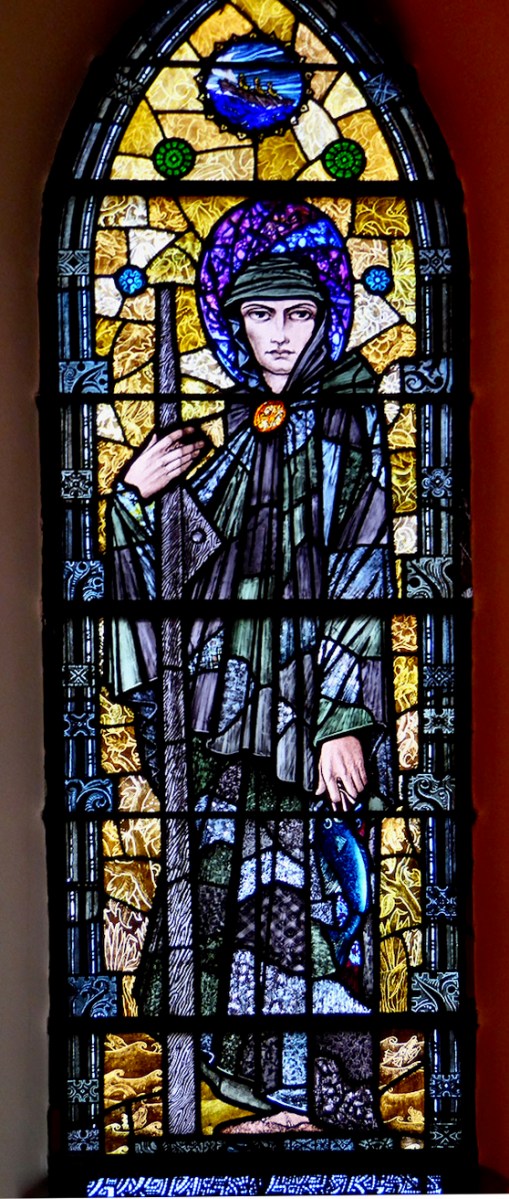
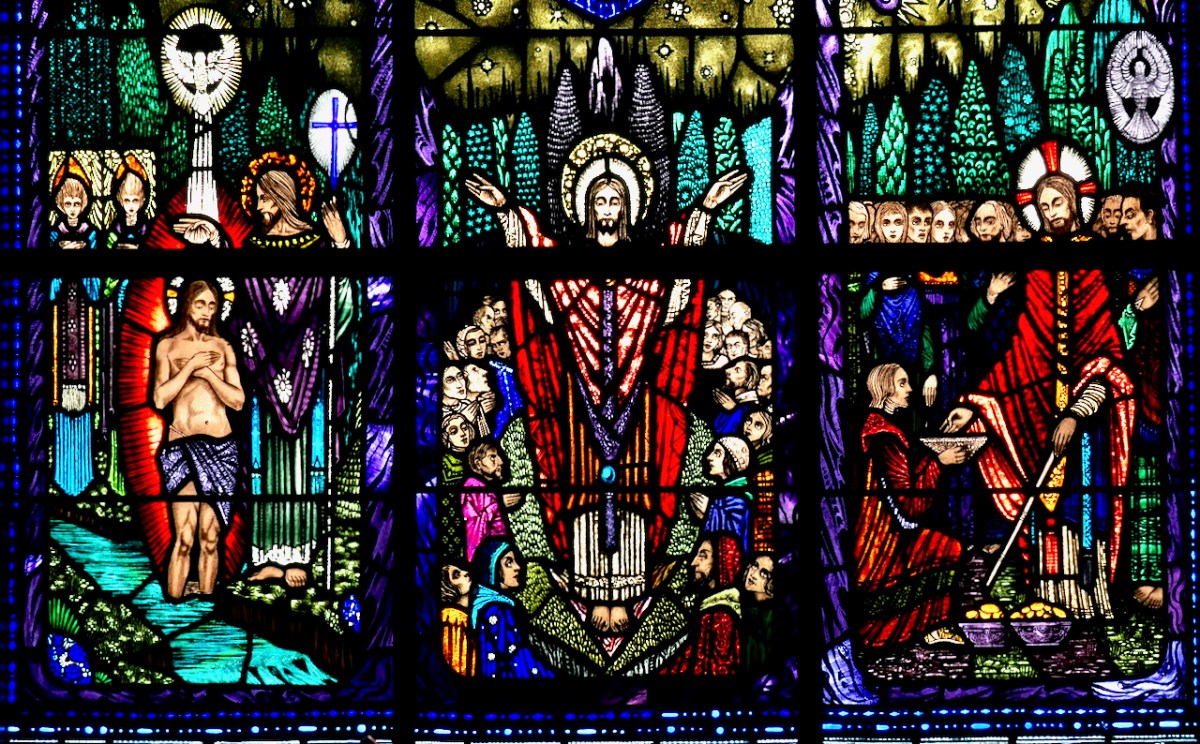
As I explained in my Harry Clarke Quiz post, according to Nicola Gordon Bowe’s classification scheme, a stained glass window can be labelled a Harry Clarke if it was designed and executed entirely by him, if it was designed and partially executed by him (A), or if it was designed by him and the execution was done under his close supervision (B). An excellent example of this is the Tullamore St Brendan window (above and below). This is one of Harry’s (B) windows: he designed it but it was executed by William Dowling in 1928 under Harry’s close supervision. Compare it to the St Brendan in my lead image, which was done by Dowling for Knockainey Church in Limerick in 1939.
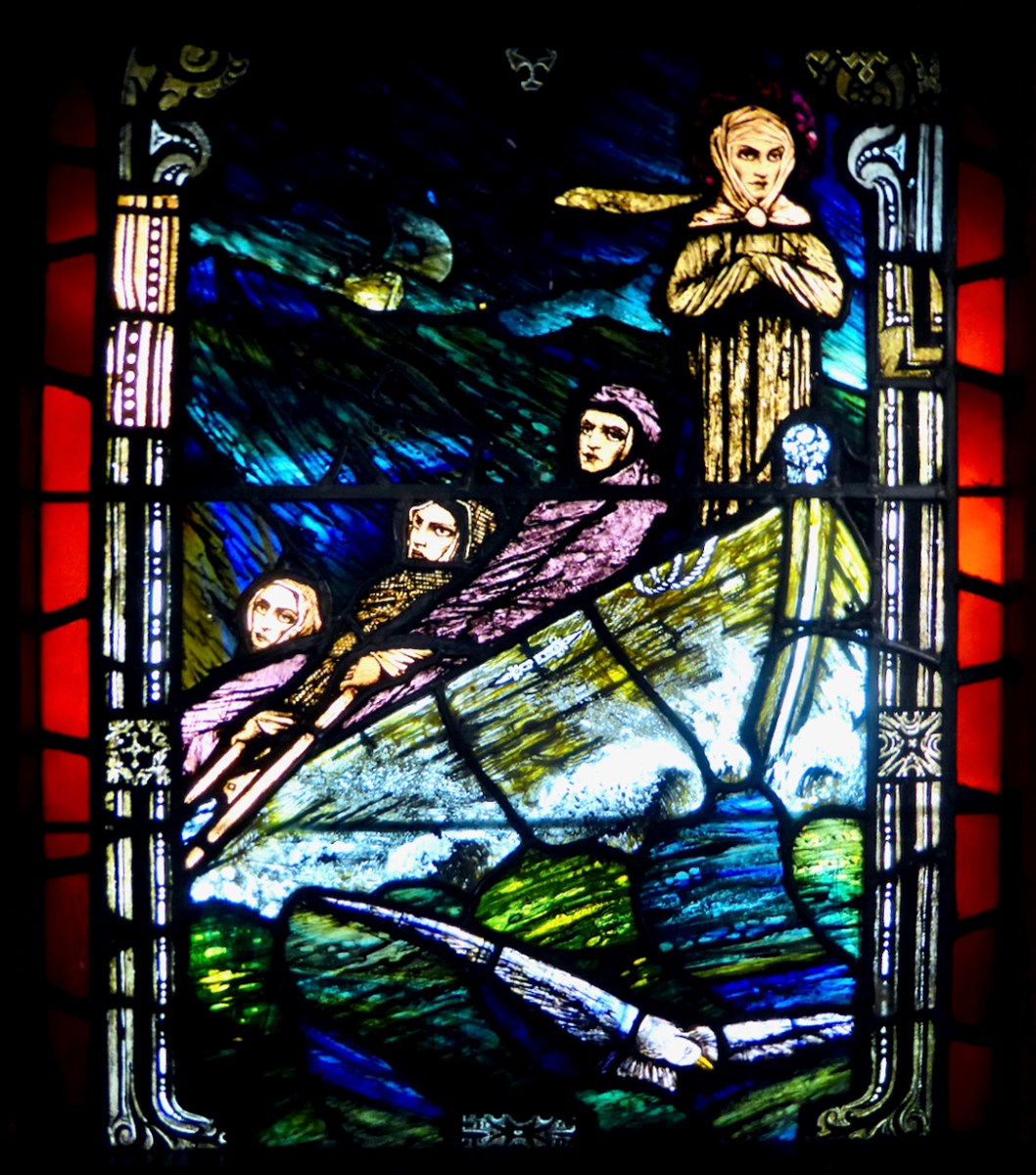
This is the predella (lowest panel) of the Tullamore Brendan window. When the window was relocated from Rathfarnham, the predella was separated from the main window and is now backlit, in a dark corner.
Harry researched his subjects extensively and ensured that anyone working on his windows did too. Paul Donnelly*, in his fascinating essay Legacy and Identity: Harry Clarke, William Dowling and the Harry Clarke Studios (in Harry Clarke and Artistic Visions of the New Irish State) tells how he sent his apprentice, William Dowling, off to the National Library to read all that was available on his subject when he was working on the Rathfarnham windows. He would come by every day to deliver encouragement – his assistants all adored him and although he was demanding he was also supportive and kind.
While the three Tullamore windows (originally in Rathfarnham) are credited to Harry Clarke, all the other windows in this post are credited to William Dowling
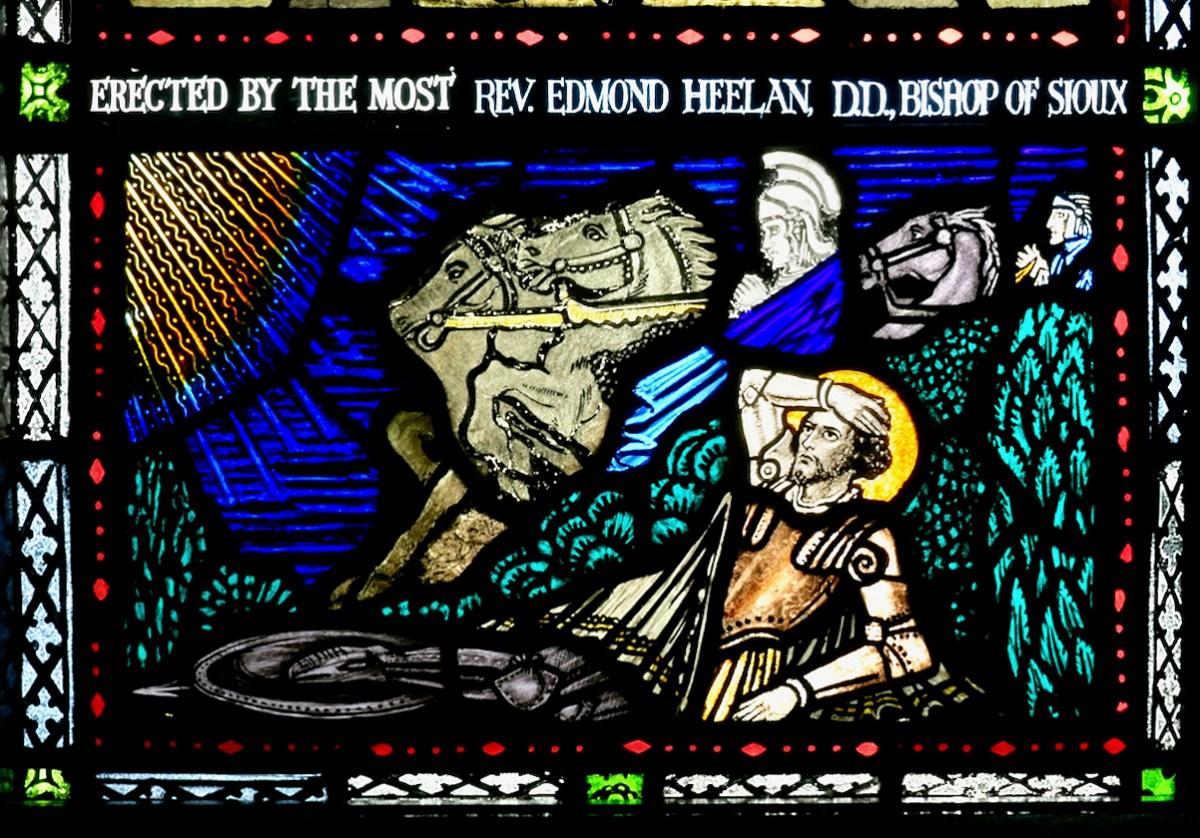
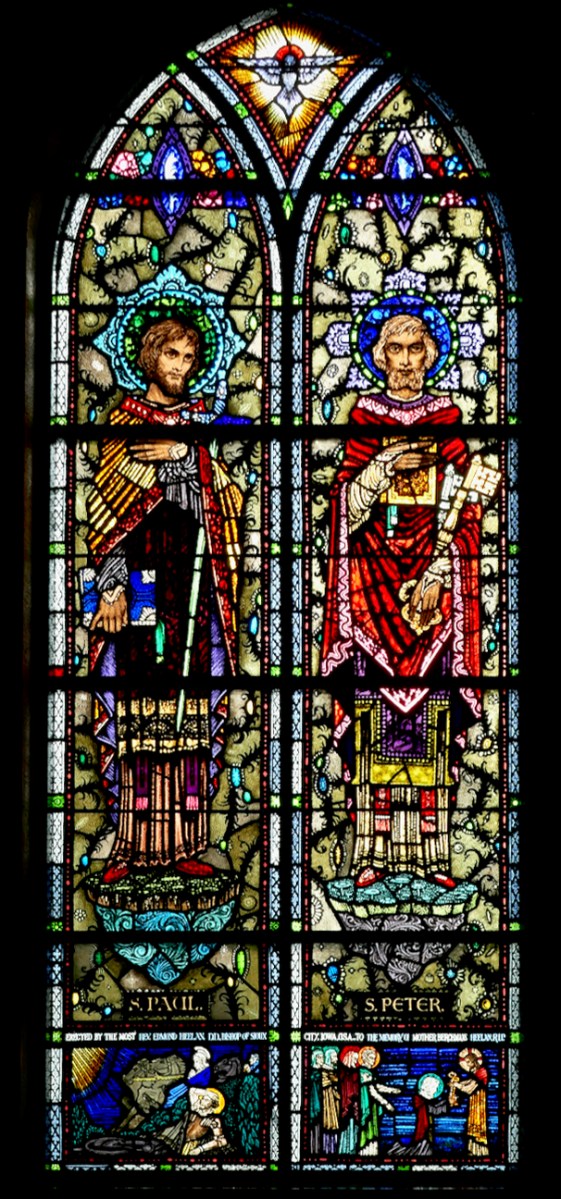
William (everyone called him Willie) Dowling was recommended to Harry by Austin Molloy, who was his teacher at the Dublin Metropolitan School of Art. Having himself worked with Harry, Molloy recognised the special talent that Willie brought to his painting, a talent that he felt would be well used at Harry’s studio. Willie probably worked on this one (above) too – it’s the predella of the St Paul window now in Tullamore. You can see that it is the inspiration for the predella of a St Paul window from Knockainey in Co Limerick (below), done in 1930 while Harry was in Davos. The full Peter and Paul window is below that one.
How right Molloy was! Not only did Harry come to rely on him greatly while still alive, but Willie was one of the group of artists (along with Richard King) who stayed on after Harry’s death in 1931, filling the many outstanding commissions still on the books and the new ones that continued to pour in. He eventually took over as manager when Richard King left in 1940, while continuing also as chief designer, and stayed until the Studio closed in the 1970s.
Peter and Paul from Knockainey Church in Limerick, dating to 1930
From the moment he arrived at the Studio in 1927 Dowling was committed to Harry’s style. As Paul Donnelly puts it,
Dowling worked with Clarke, learning the craft of making stained glass according to his standards and design aesthetic. He had the benefit of Harry Clarke’s direct instruction for more than a year before ill-health force Clarke to seek medical treatment in Switzerland.
. . .In his role as principal designer, Dowling was charged with delivering work which was derived from the distinctive artistic legacy left by Harry Clarke. Dowling wrote that the aim of Clarke Studios was to ‘avoid the mundane and commonplace. That was the ideal of Harry Clarke and one which we have done our very best to follow.’
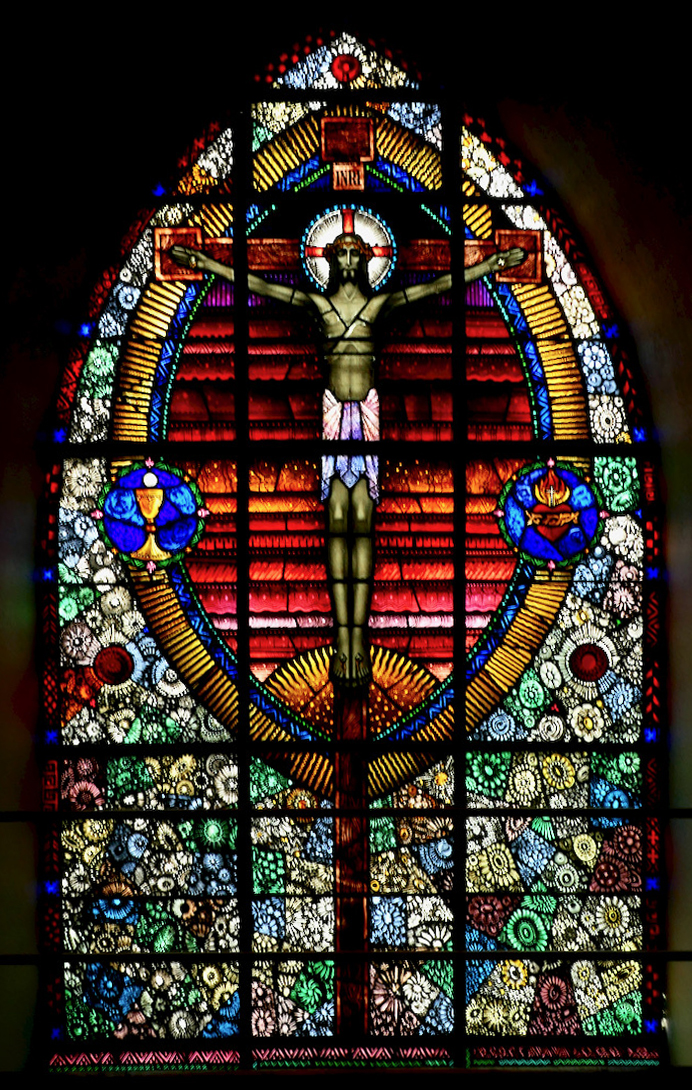
Christ Crucified, Patrickswell, Co Limerick, by William Dowling, 1943. This window is above the balcony and is a brilliant example of the mixture of figurative and non-figurative elements, specially designed for the space it occupies
After Harry’s death the demand for Clarke-style windows was relentless and the studios delivered. Well into the 40s they were still producing windows that, to the untrained eye, looked very like ‘a Harry Clarke.’ During that time, the quality of the glass, the art and the workmanship was superb and the busy studios were exporting their windows world-wide.
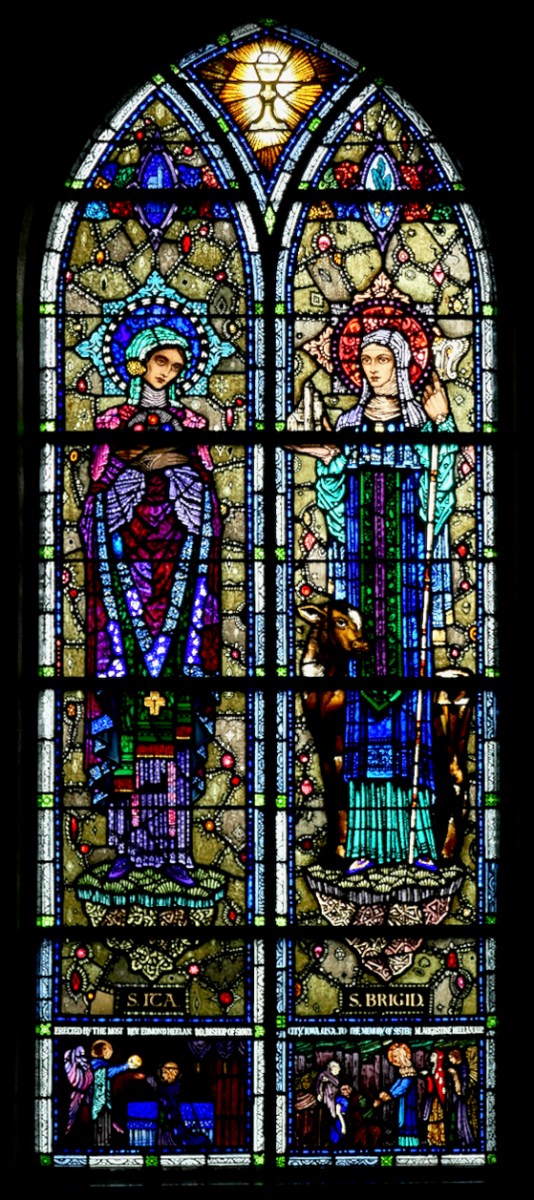
Ita and Brigid, Knockainey, 1930. The predella panels are below.
Then, and for many years to come, the Harry Clarke Studios did not allow individual artists to sign their work – all windows were signed Clarke or Clarke Studios. Strict adherence to the House Style and refusal to allow signatures, while understandable as marketing decisions, had several unfortunate consequences.
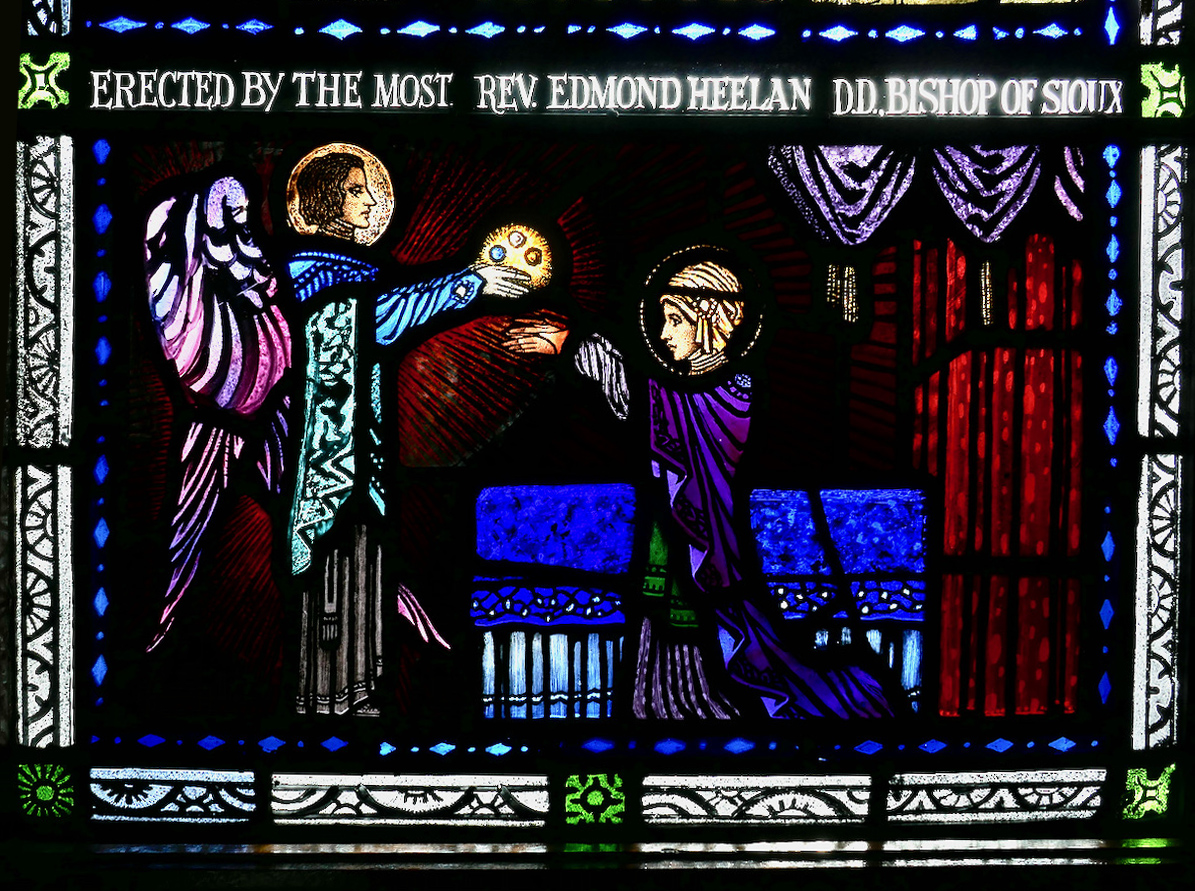
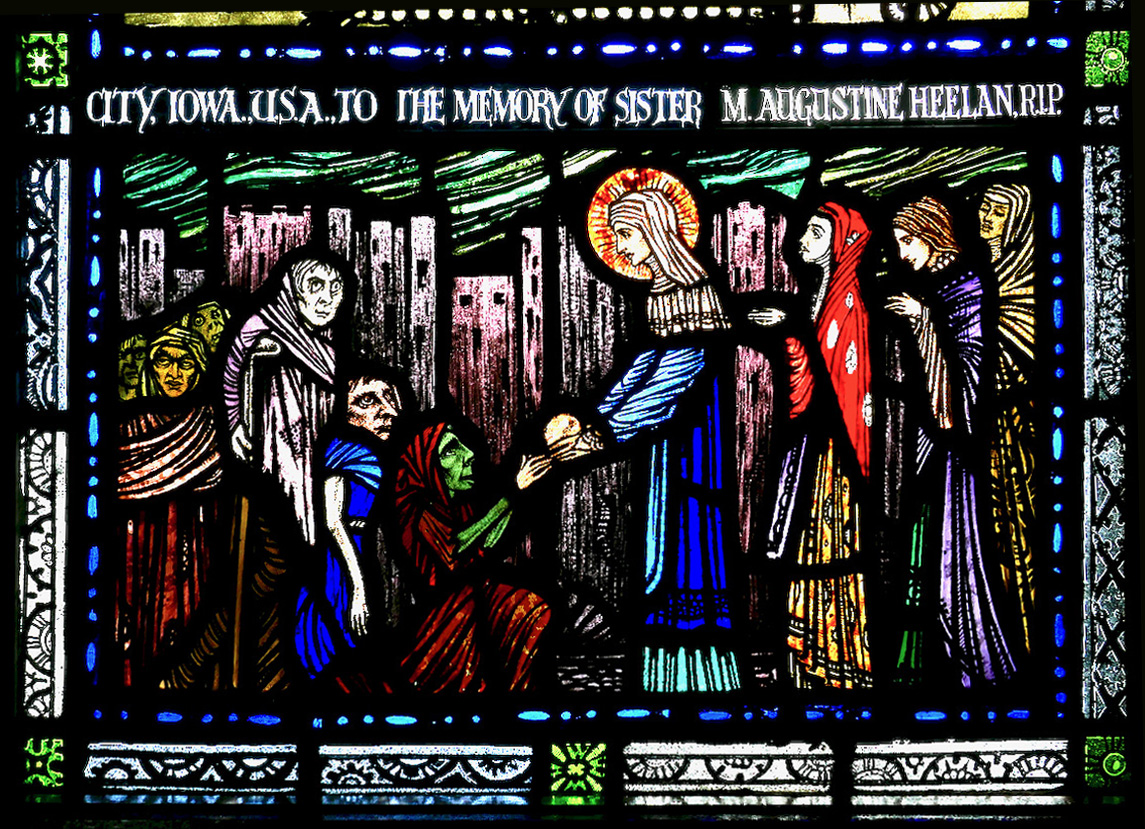
The predella panels from the Ita and Brigid windows. Upper: The vision of St Ita, in which an angel appeared to her in a dream, offering her three glowing gens, representing the Father, Son and Holy Spirit. Lower: St Brigid looking after the people of Kildare- the figures on the left are clearly inspired by, as Nicola Gordon Bowe puts it “Harry’s unique ability to depict the gruesome, macabre and palsied in an exquisite manner.”
First of all, it is difficult to identify individual artists with their work, and this includes Dowling himself. Herculean efforts, though, by Ruth Sheehy and Paul Donnelly have allowed us to acknowledge in some cases the work of Richard King, William Dowling, and occasionally others (such as Charles Simmonds and Terry Clarke, Harry’s nephew).
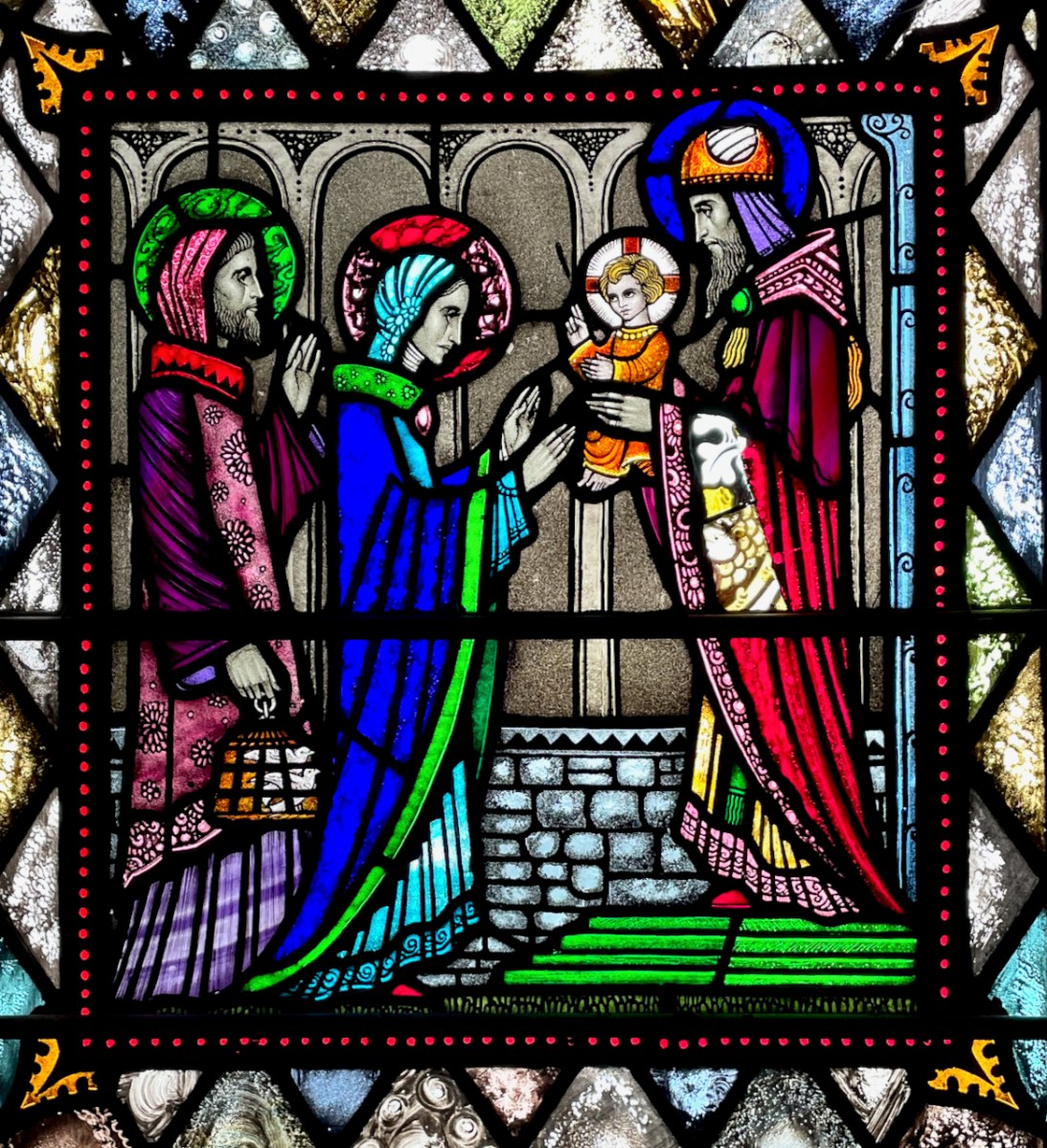
The Presentation, Patrickswell, 1943. By this time the style was becoming less ornate. This window might remind you of the Dowling windows Robert showed in his post about the Seamus Murphy church in Cork, which dated to 1945
Secondly, the lack of clarity caused by all windows being labelled simply Clarke Studios causes enormous confusion about what is a true Harry Clarke, versus a Harry Clarke Studio. See my Quiz posts (the Quiz and The Answers) for more on this. If I had a euro for every time I have seen a window falsely claiming to be a Harry Clarke, I would be wealthy by now. Conversely, those who buy stained glass panels labelled “Harry Clarke” when they are manifestly not by the master himself, might be poorer.
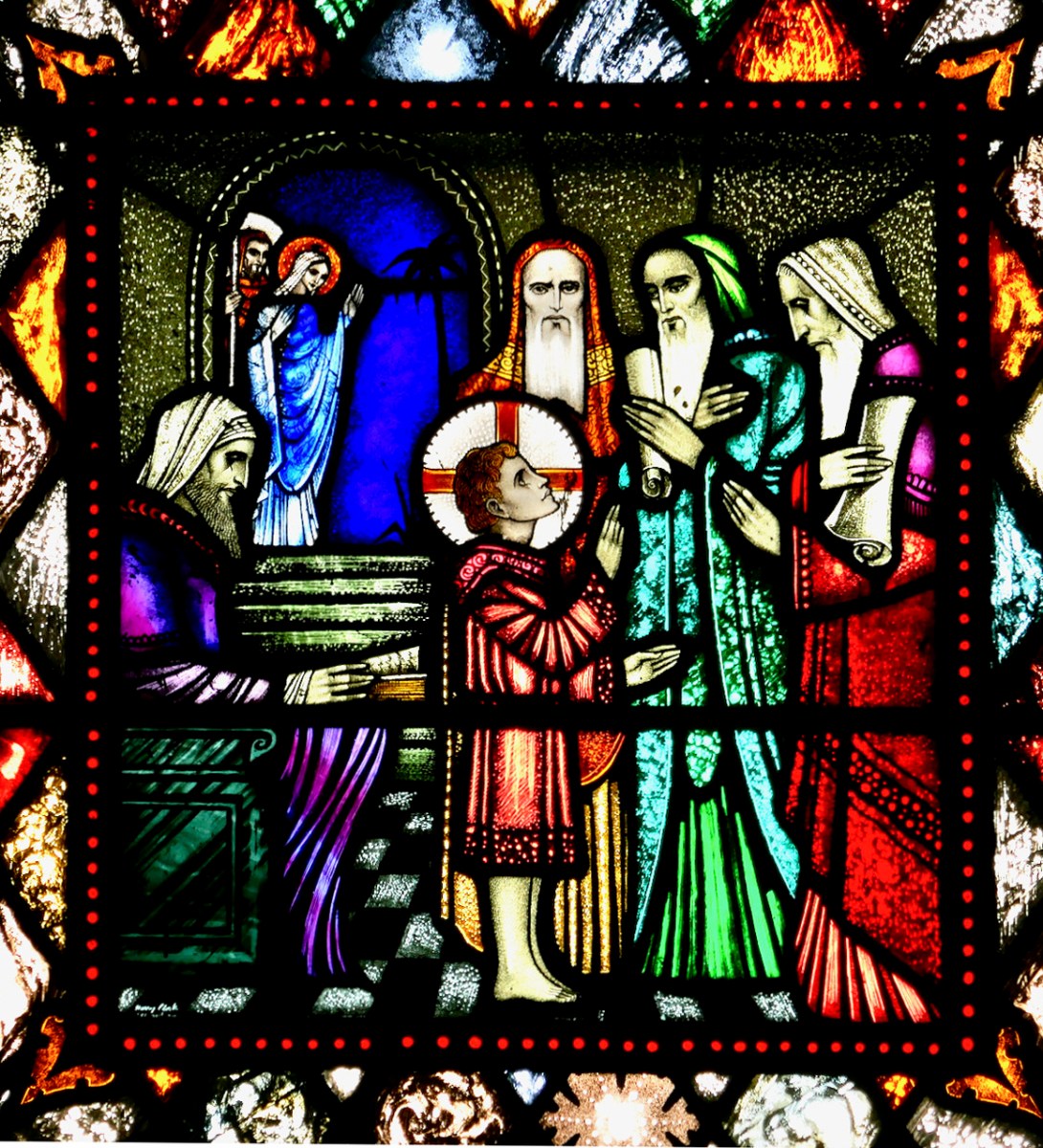
Jesus Found in the Temple (or Christ Among the Doctors), Patrickswell, 1943
Thirdly, the policy caused some artists, in frustration, to leave. While it is possible that they had other motivations as well, both Richard King and George Stephen Walsh left to go out on their own, eventually shaking off the constrictions of the house style to follow their own artistic visions under their own names.
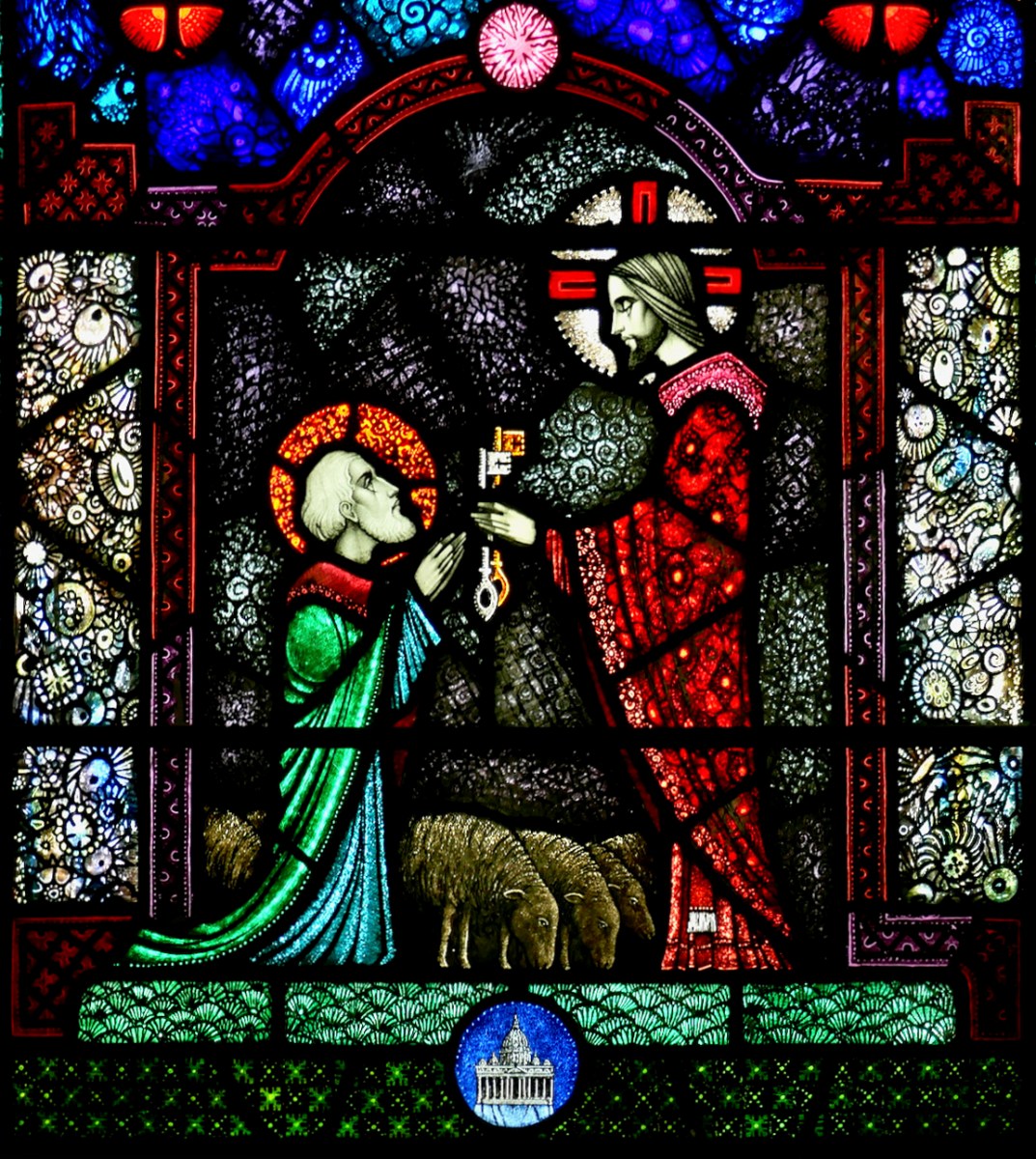
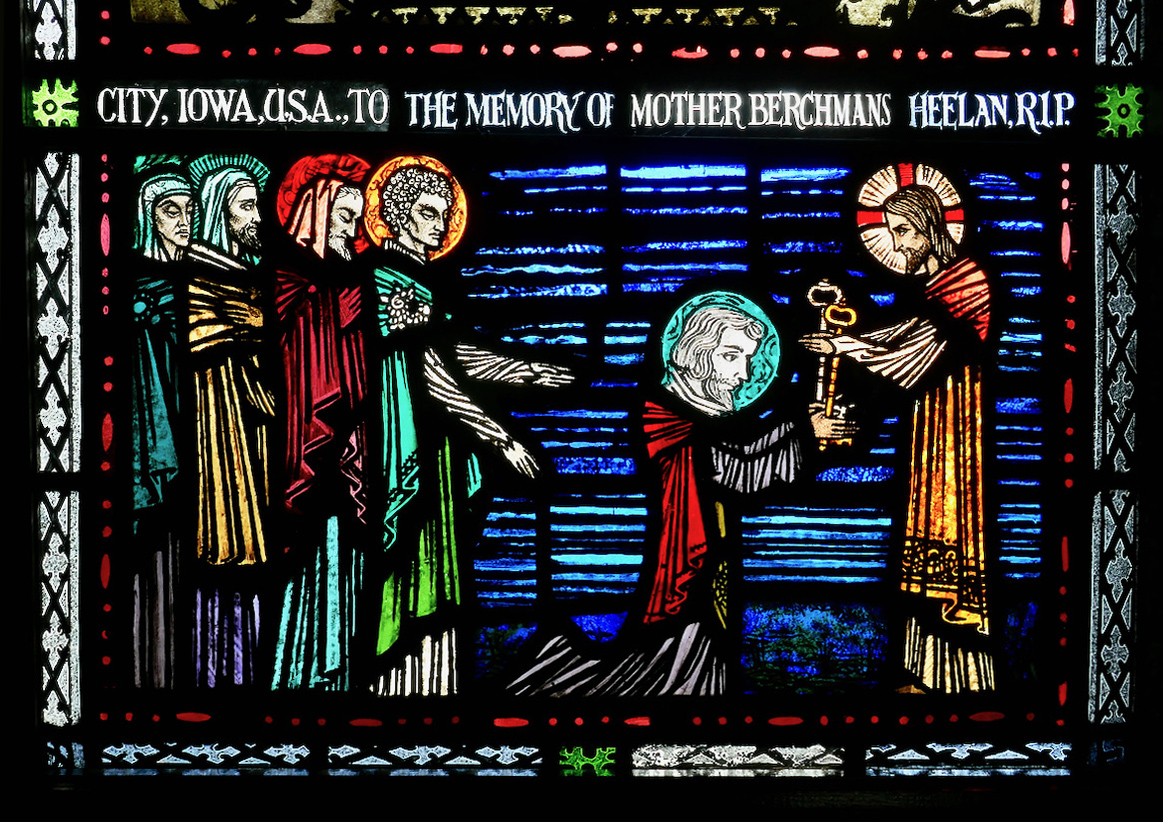
Two version of Peter receiving his keys. Upper from Patrickswell, 1940 and lower from Knockainey, 1930
Finally, all artists deserve credit for their work. William Dowling is a case in point – while he spent many years producing windows in the House Style, they were not simply imitations, copies or reproductions of Harry’s designs. Willie brought his own genius to each window and when you’ve seen several you begin to recognise his stamp – the way he does faces, for example, or how he loves cascading folds of drapery, or his clever juxtaposition of Harry’s dark ‘floral ornamentation’ device (known as FO’s by assistants, or even as Fried Onions) with bright figurative scenes, such as in the Patrickswell Crucifixion, further up.
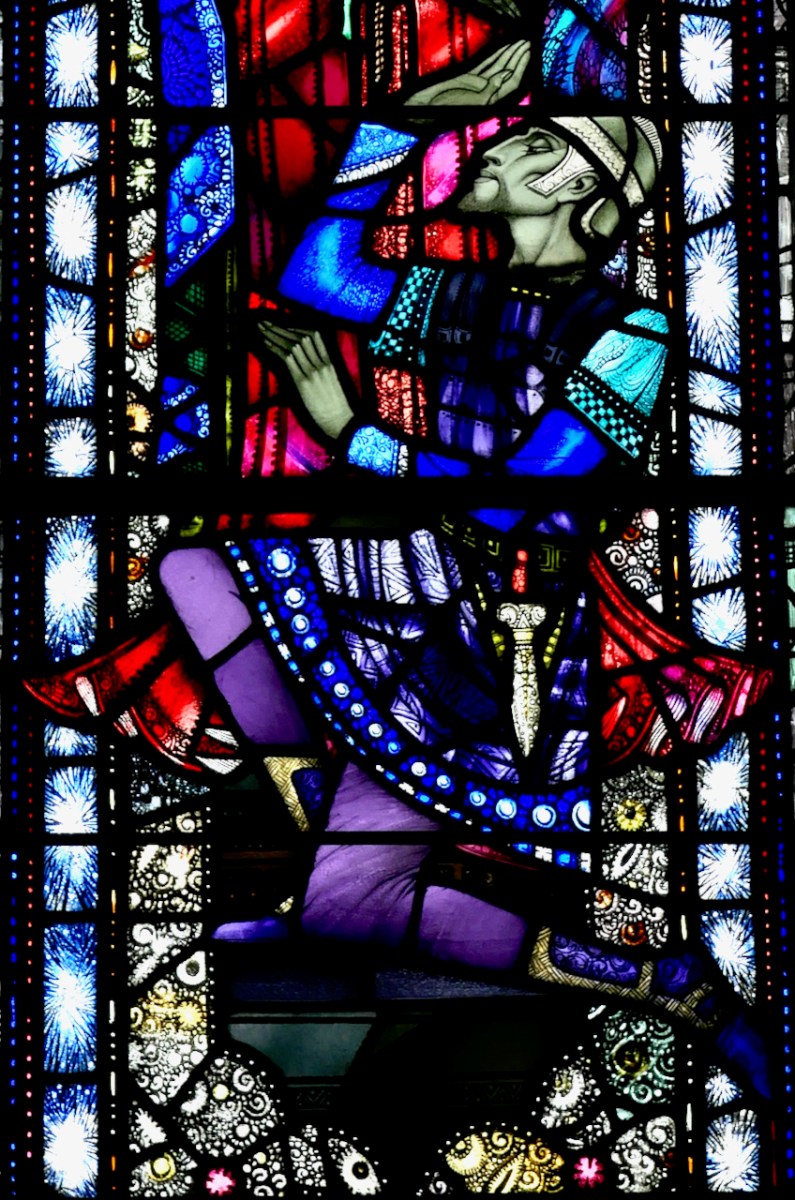
Above is a detail from one of Dowling’s Mysteries of the Rosary windows in the Dominican Convent in Wicklow, done in 1938. This is a mocking soldier from a Christ Condemned window and it comes from Dowling’s own artistic imagination, not from a Harry Clarke design
I recently visited two William Dowling Churches in Limerick, Patrickswell and Knockainey, and I have mainly used images from these two churches to illustrate this post, along with a few from the wonderful Mysteries of the Rosary windows by him in the Dominican Convent in Wicklow which date from 1938/39. The windows in Knockainey were done for an older church in the 30s and 40s and then relocated to the new church in 1973. While relocating windows is not always successful (Tullamore is a case in point), in this case the relocated windows (with two minor exceptions) create a startlingly beautiful interior, and an interesting counterpoint to their modern surrounds. The Patrickswell windows are original to the building, dating from 1940 to 1943, although an awkward balcony obscures some of them to the detriment of the overall effect. I, and my companions, were bowled over by these two churches – it felt like we were stepping inside a glowing gallery full of stunning artworks.
The predella from the large Christ the King window in Knockainey (1931) showing three scenes from the Life of Christ
Willie continued to manage the studios right until it closed in 1973. In the end, the Studio’s adherence to the House Style meant that its stained glass, once so in-demand, was seen as not really evolving with the times. Other artists with more modern aesthetics started to win commissions from architects looking to build contemporary churches that fitted post-Vatican II liturgical changes. Ironically, by the 60s and 70s Willie had started to design (and sign!) windows with a very different look to the House Style. His later output could form another post, but for now I wanted to concentrate on the early House Style period.
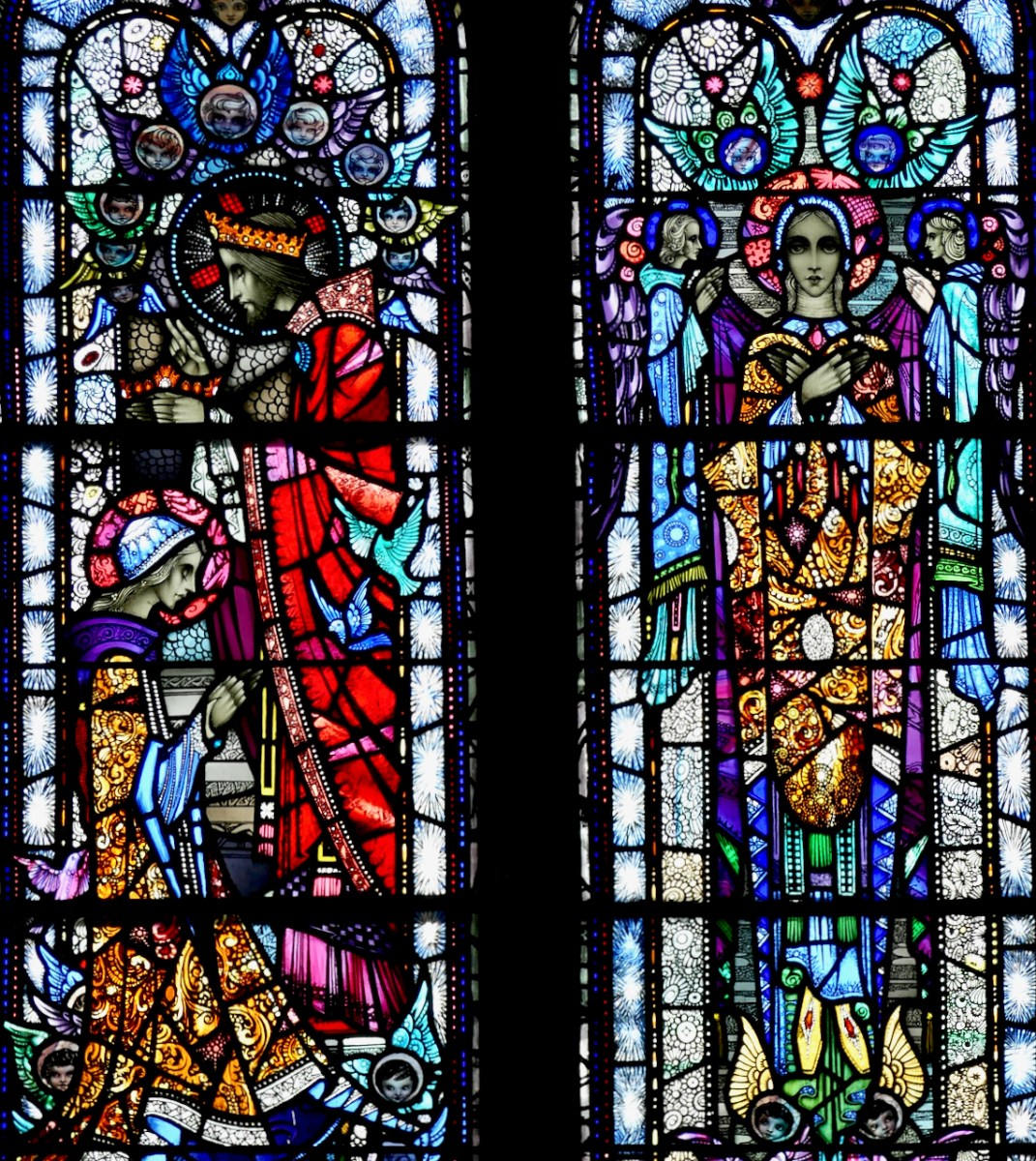
The 4th and 5th Glorious Mysteries from the Dominican Convent in Wicklow, The Crowning of Our Lady as Queen of Heaven and the Assumption. 1938/39
I want to finish with some personal memories of Willie Dowling. He lived until 1980 and he is remembered fondly by Etain and Veronique Clarke, Harry’s granddaughters. “He was a very lovely man,” Veronique told me, “Soft spoken and shy. Always dressed in his suit with a dressy wool coat and scarf. I believe he wore a fedora as well.” He was patient and kind (a bit like Harry) and he never minded them around the studio. Etain says “I remember going into the glass room with him – It was right by his office at the studios. He was pointing out to me how much antique glass was in there. French and German I remember particularly. Incredible colour, and textures. Handmade glass, so beautiful!” It was his dedication they both remembered, and how he helped their father, David, to keep the Studios running as long as possible.
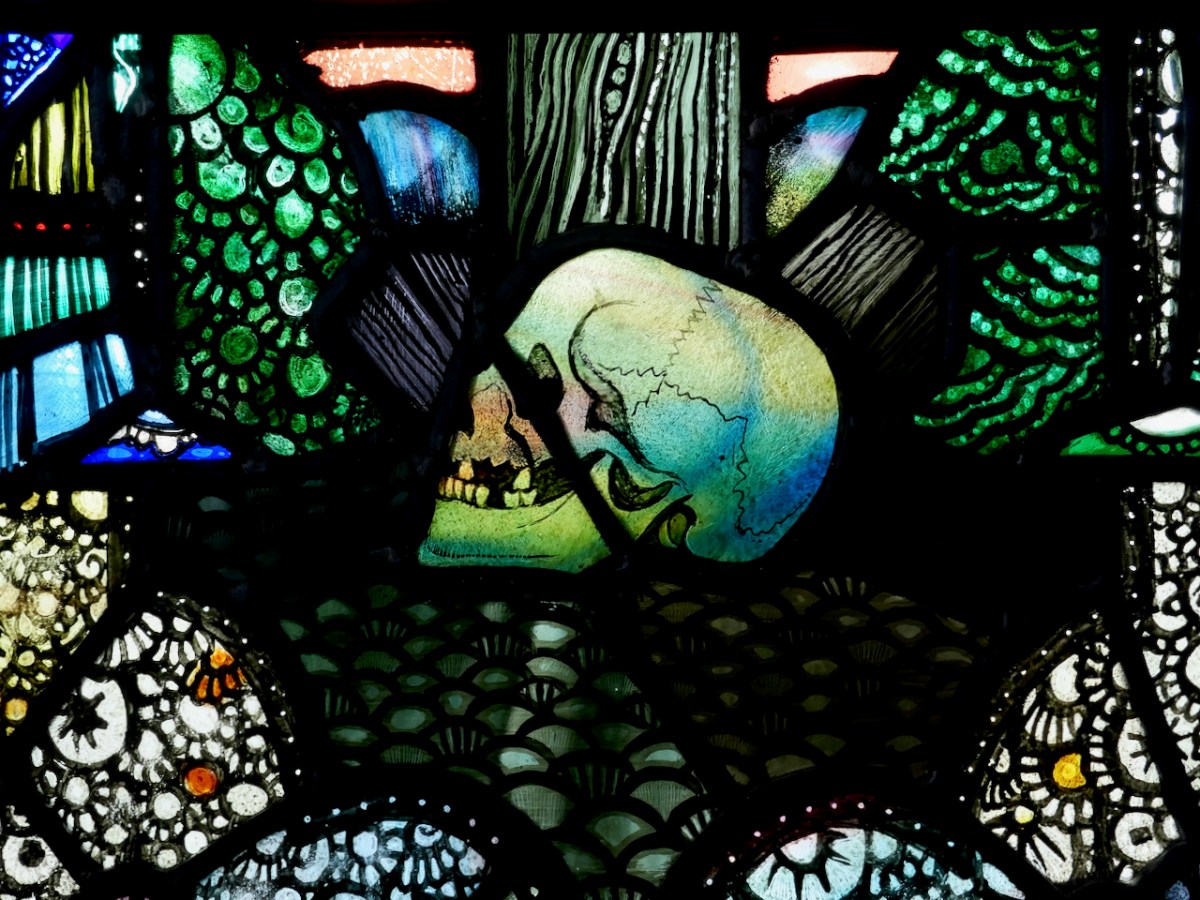
This is a tiny detail from a crucifixion window in Wicklow, showing Willie’s mastery of technique: achieving the multiple colours in the skull calls for extraordinary skill
* I am indebted to the scholarship of Paul Donnelly for this post. Paul has conducted in-depth investigation into the work of the Harry Clarke Studios and has identified many windows in the Gazetteer of Irish Stained Glass based on his research. Thank you, Paul for your erudition and generosity.
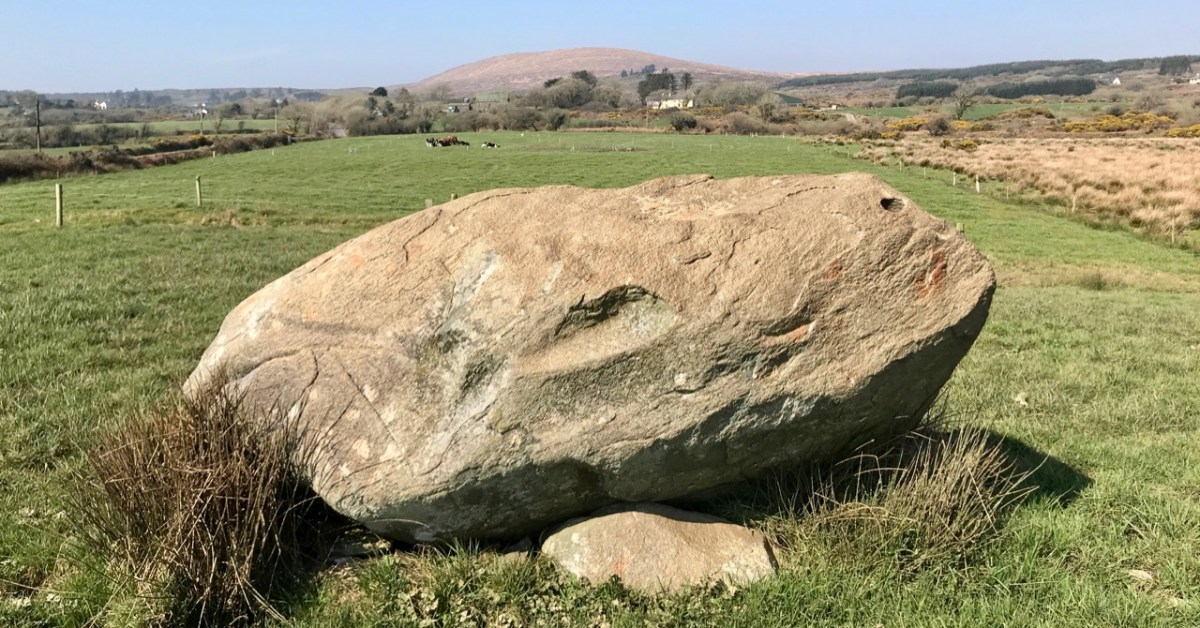
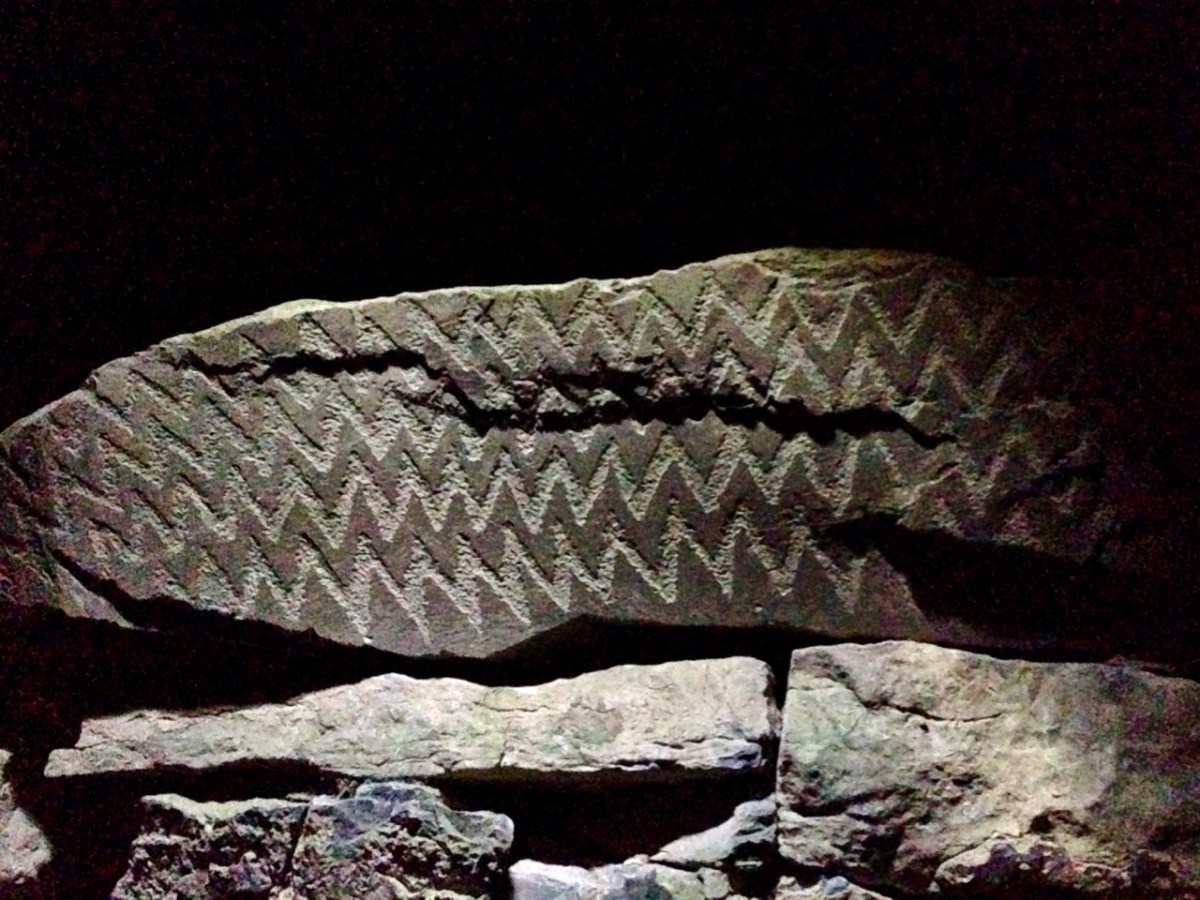
Over the years we have written a lot about stone. That’s not surprising, because our interests in Irish archaeology involve stones: standing stones, stone circles, rock art, gravestones . . . It’s what the surviving history of our earliest dwellers on this island is all about. So I thought it would be a good idea to sift through our Roaringwater Journal photographic library – which goes back a decade – and turn up some pictures and stories which I have never used before: all of them involving stones. That header pic, above, is a boulder burial at Rathruane, just outside our West Cork village of Ballydehob.
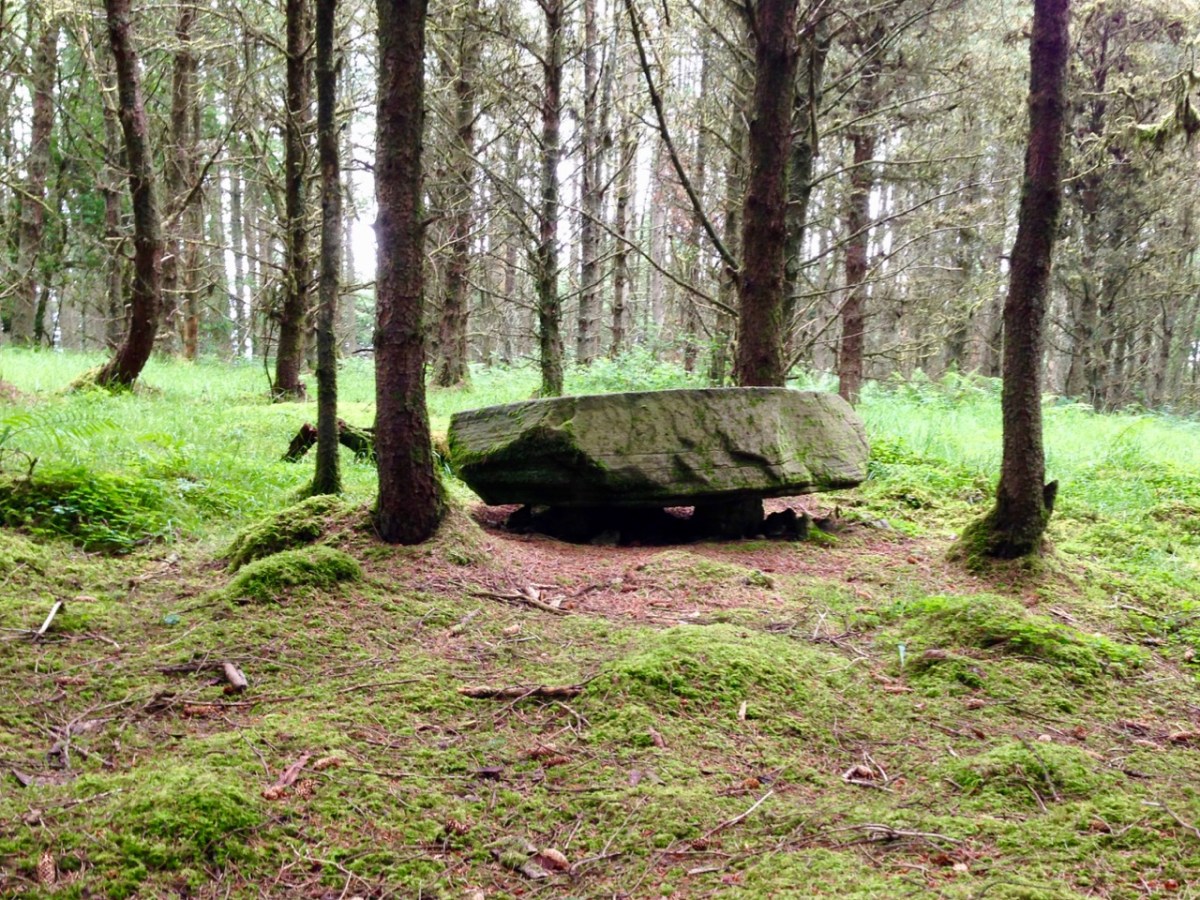
Here’s another boulder burial, a long way away in Co Cavan, now surrounded by trees which are probably relatively recent. Finola wrote about this monument type six years ago, and pointed out that they are not well named: when examined archaeologically, very few of these stones have been associated with buried human remains. They are said to have been positioned between 1,500 and 1,000 years BC, a time we refer to as the ‘Bronze Age’. So, by then, humans were already aware of the use of metal for tools, weapons and decorative adornments. But imagine the time before that – when people only had natural materials to hand – wood, vegetation and, of course – if you wanted to create something permanent – stone: we call these times Neolithic – and generally that covers the period of habitation of Ireland from 6,000 BC onwards.
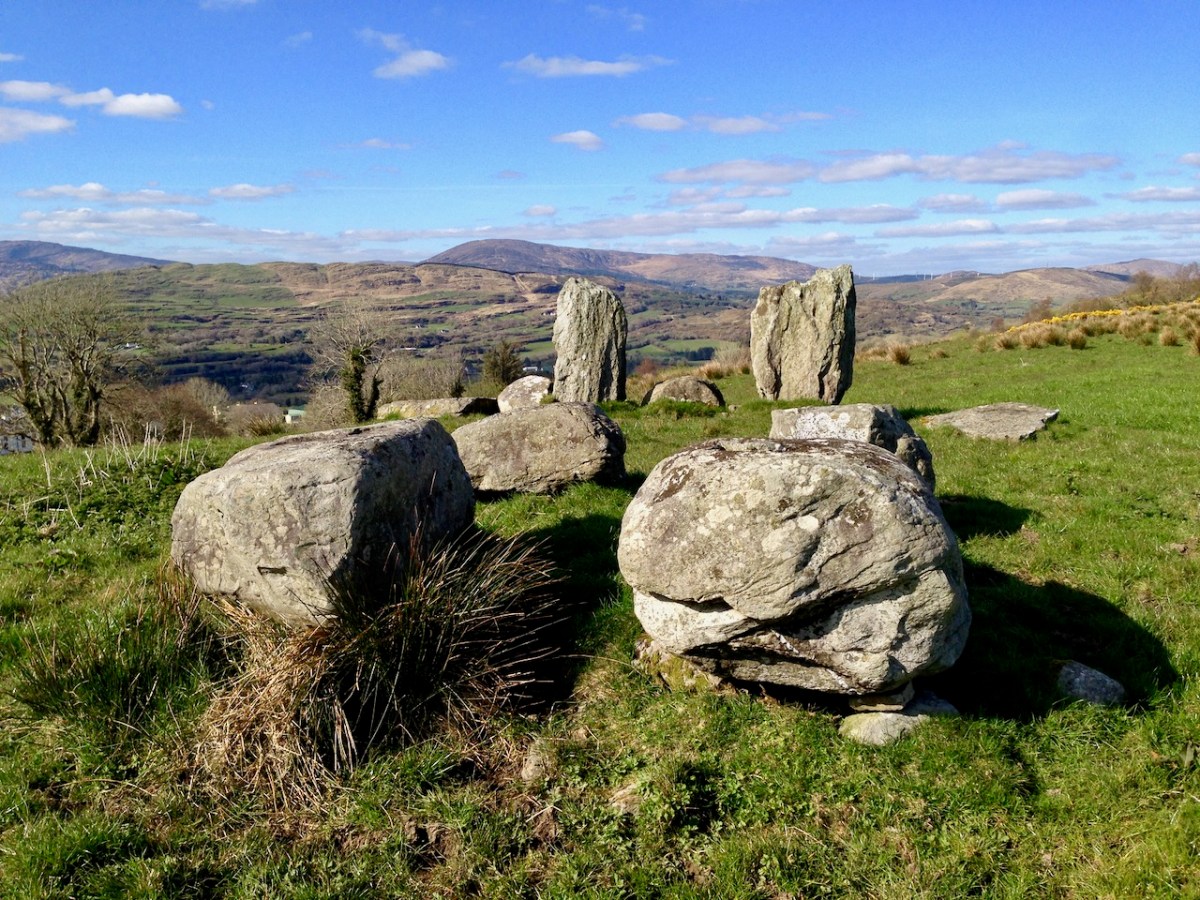
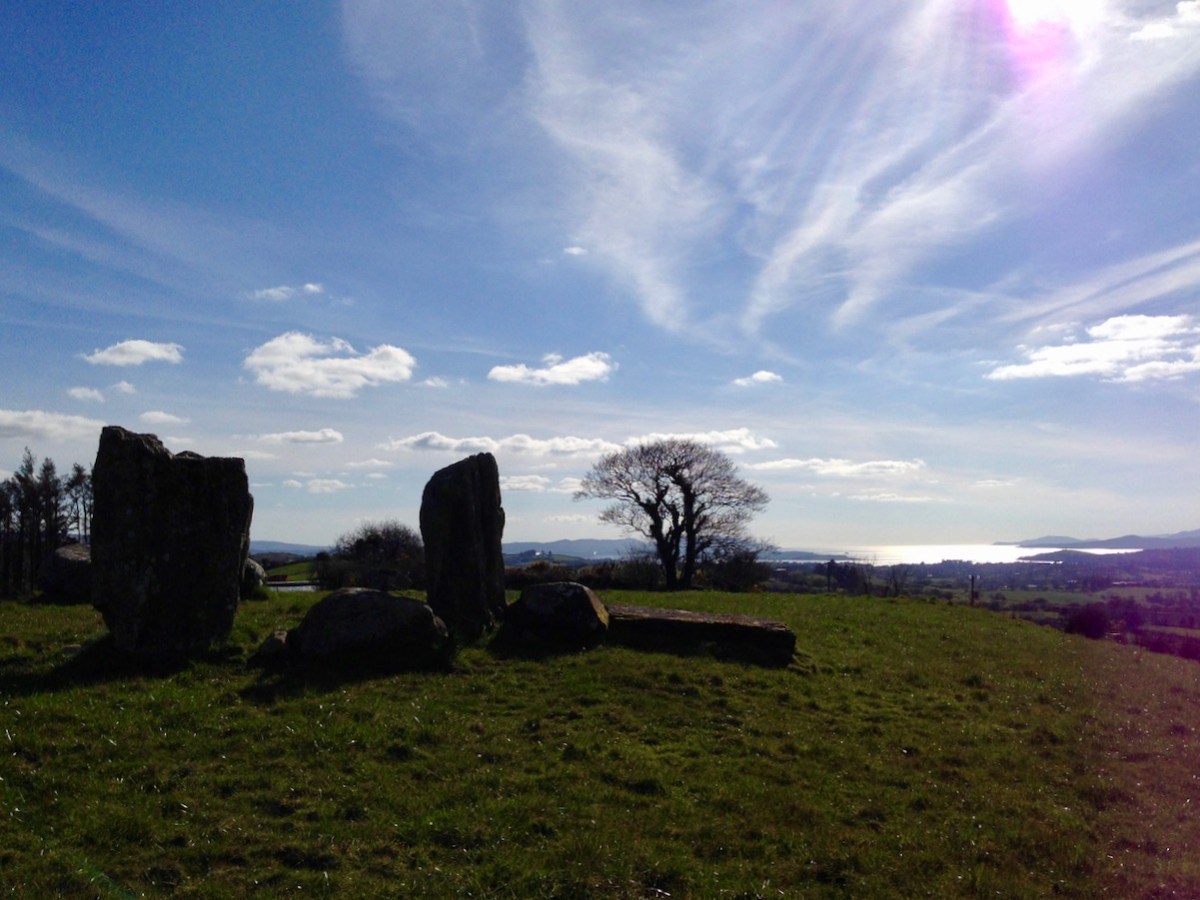
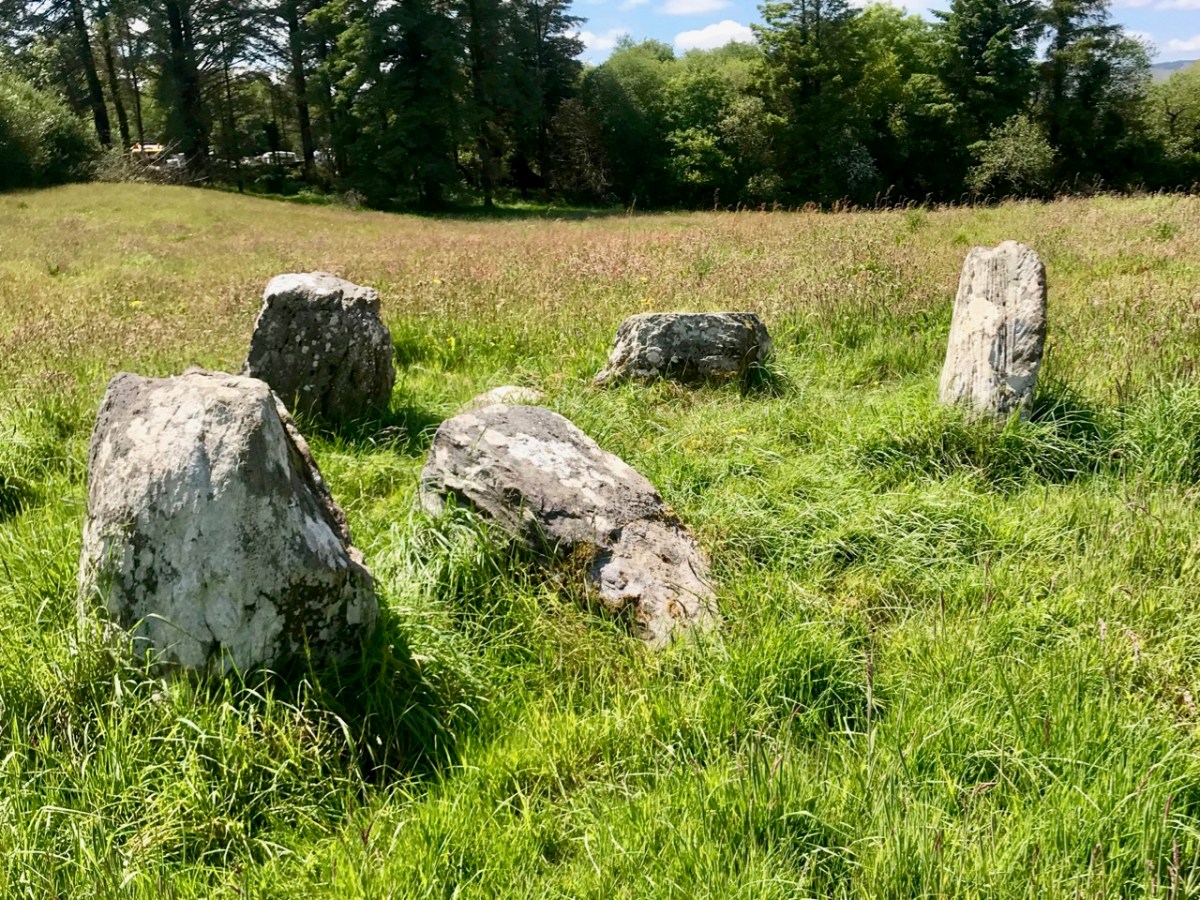
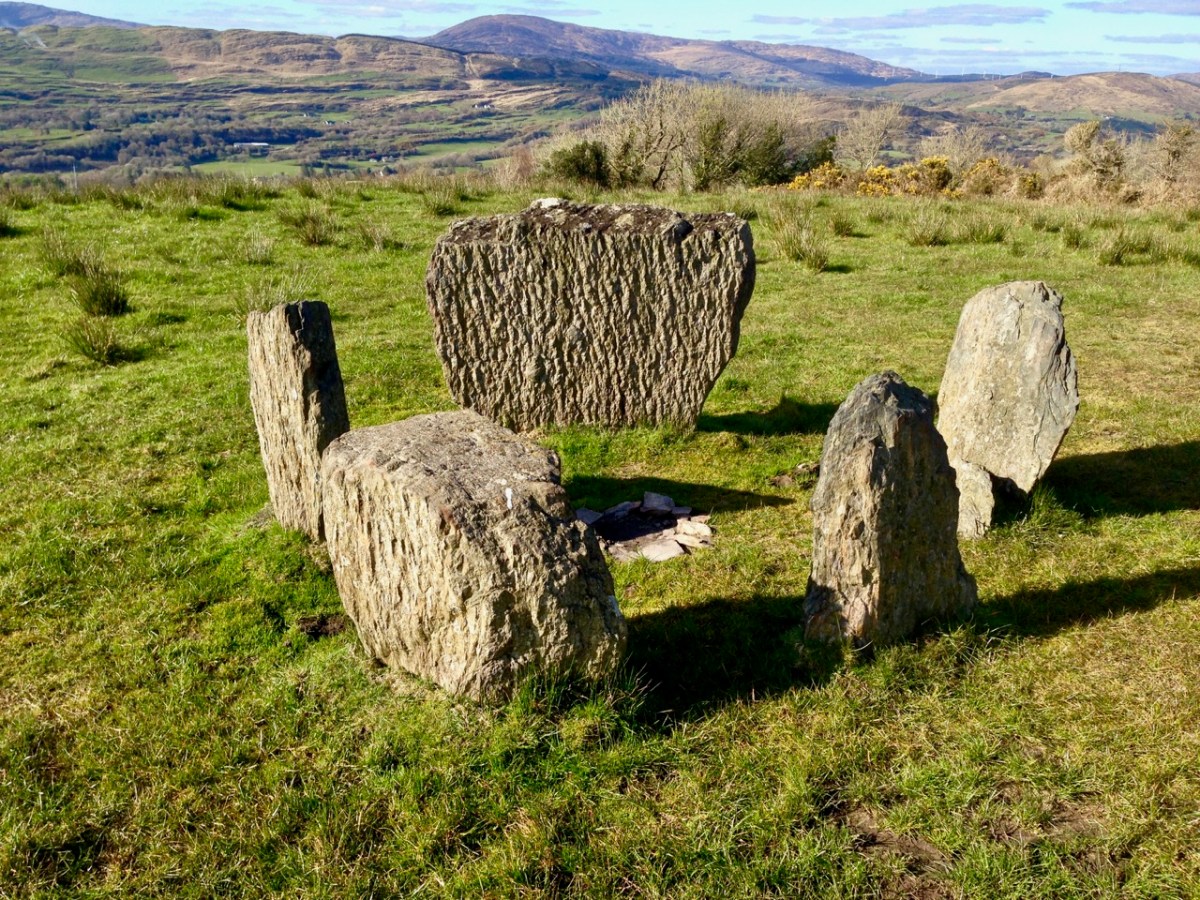
Here is another West Cork site: Breeny More, to the north of Bantry. There’s a whole lot of stones here including, unusually, four ‘boulder burials’ arranged in a square. There are also further stones in this grouping which were once part of a stone circle. The site is magnificently located, with distant views west across to Bantry Bay (below).
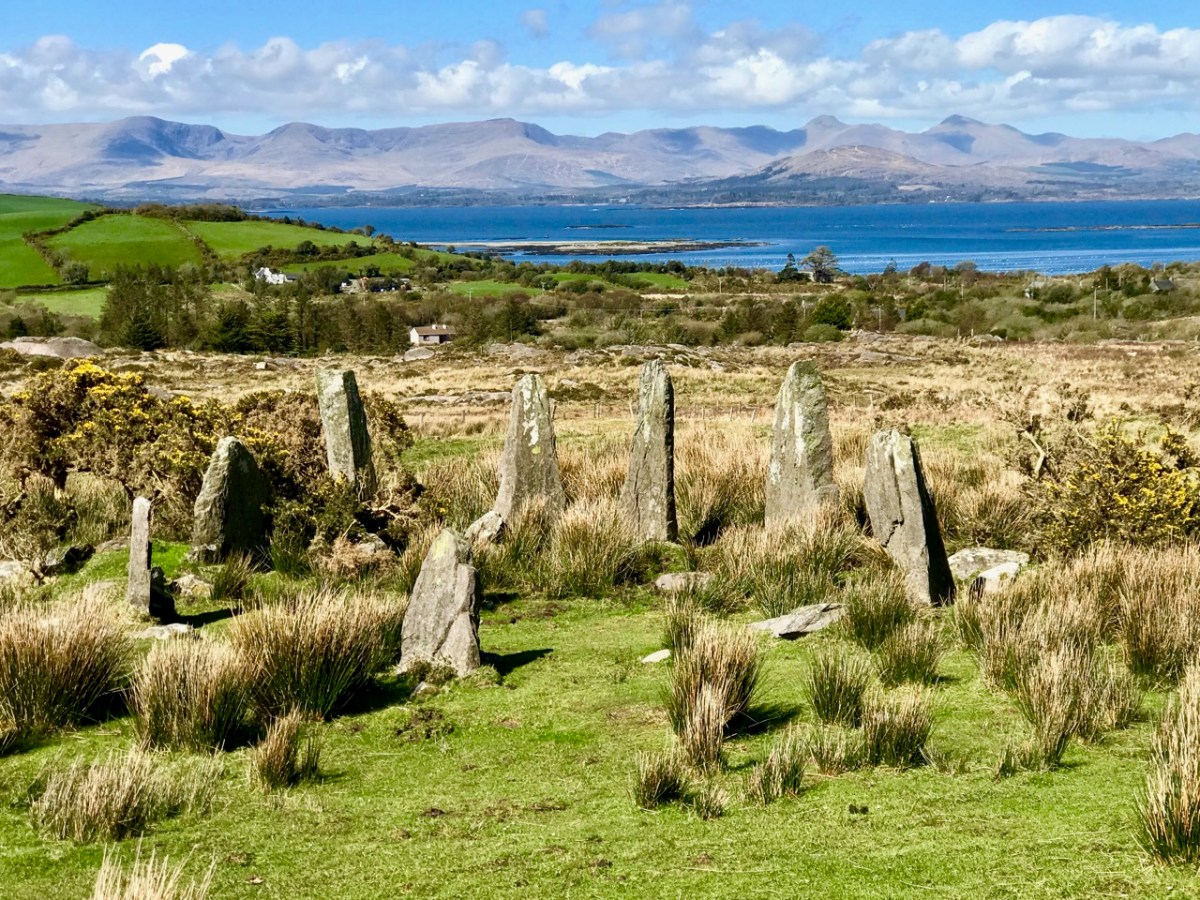
We are all familiar with groups of stonesarranged in a circle. Here is the ‘stone circle’ at Ardgroom, County Cork: it’s on the Beara Peninsula. As with the Boulder Burials, these monument types are generally thought to date from the Bronze Age.
These modestly sized ‘five stone’ stone circles are also in County Cork. The National monuments Survey of Ireland lists 53 ‘five stone’ circles in the county, while a further 41 ‘multiple stone’ circles are noted. There are also some anomalies which defy definition, such as ‘The Fingers’ at Knockdrum, West Cork, just outside Castletownshend:
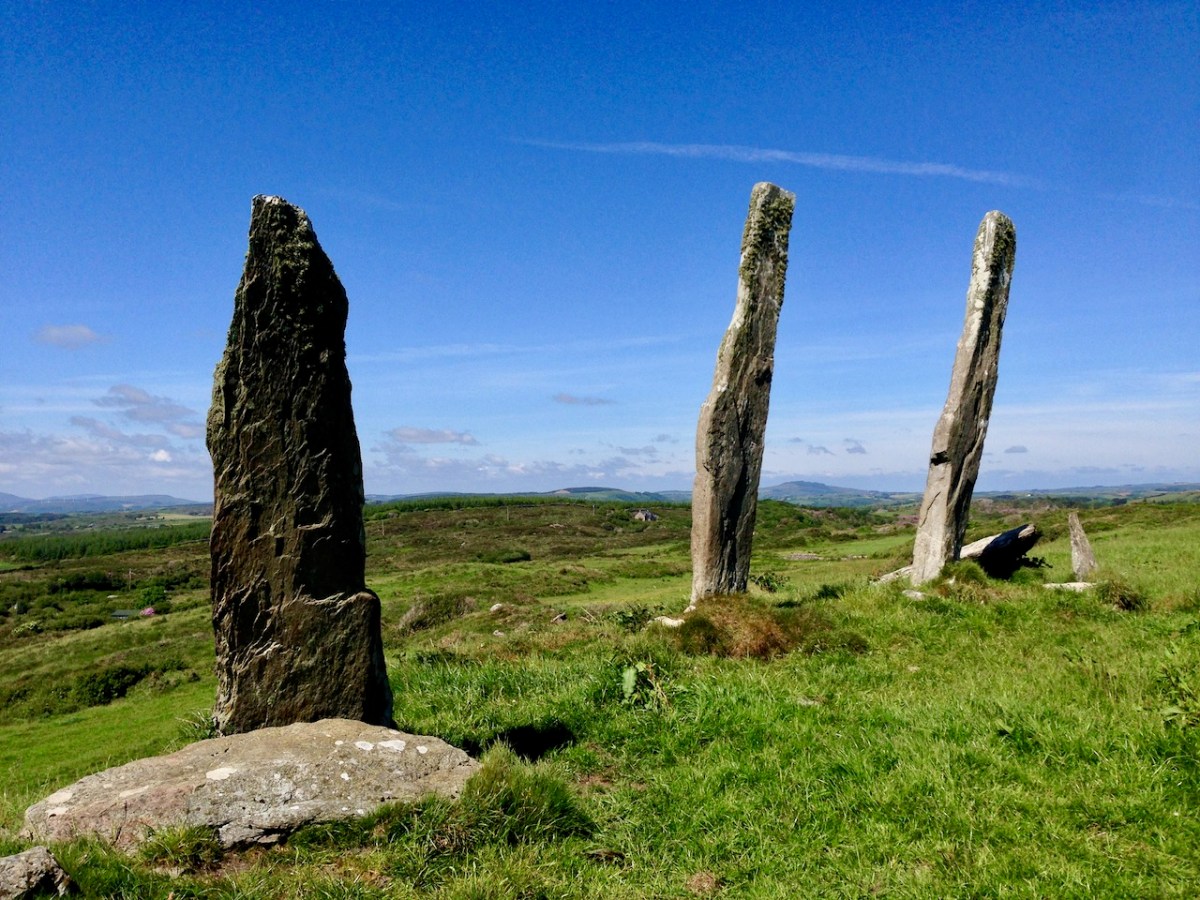
This appears to have been, originally, an alignment of five tall standing stones. One has fallen and broken, while the fifth is now missing. It is reasonable to assume, from the number of stone ‘monuments’ all around us in West Cork (and in many other parts of Ireland), that these sites were of great significance to the populations who constructed them. But we don’t know for sure why they are there – although theories abound.
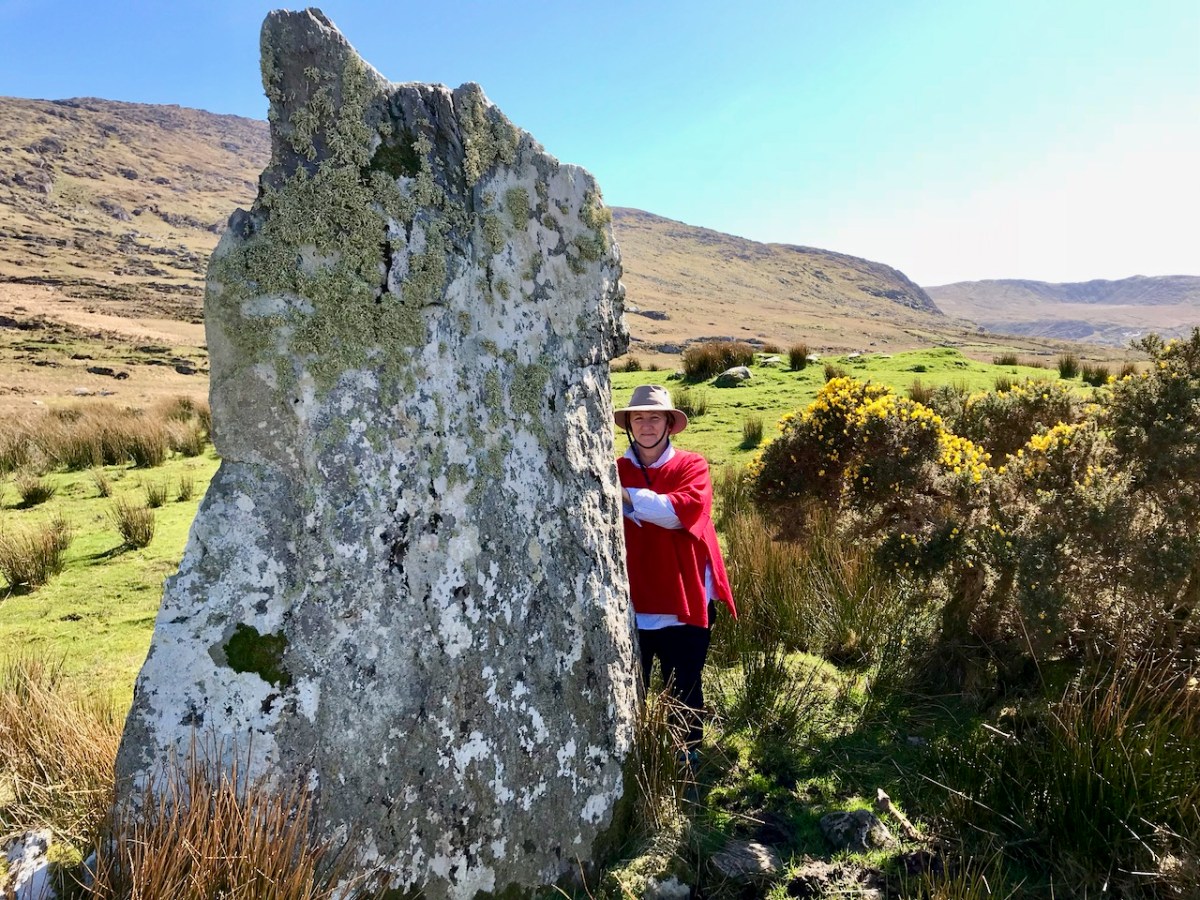
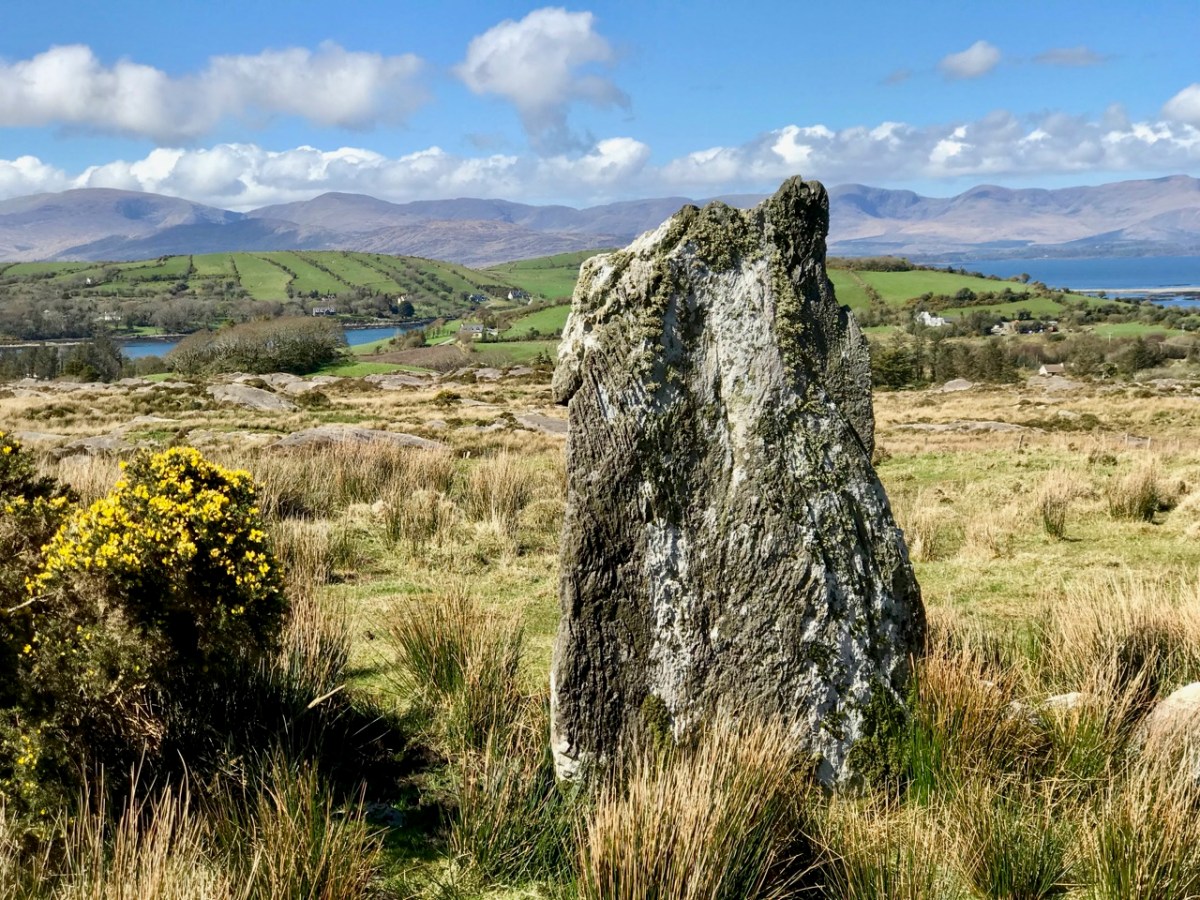
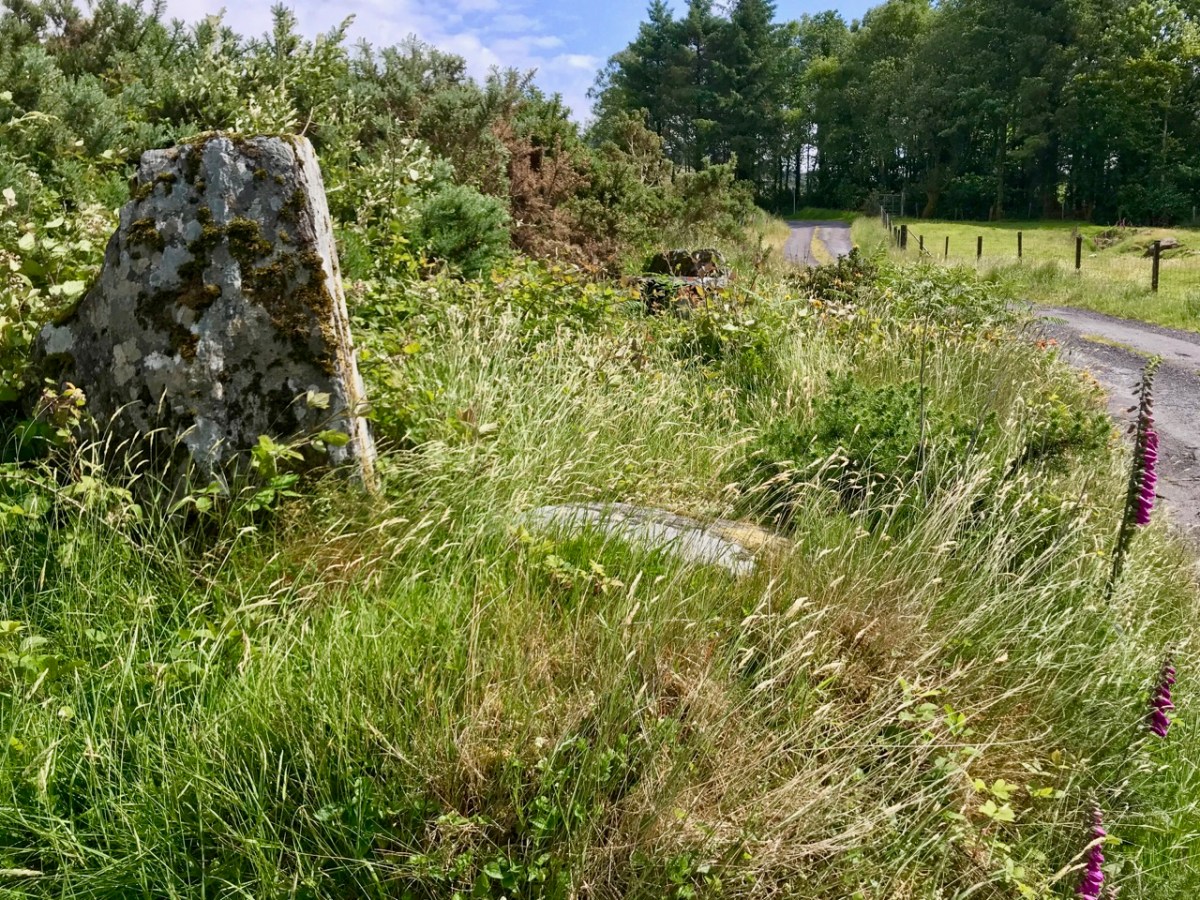
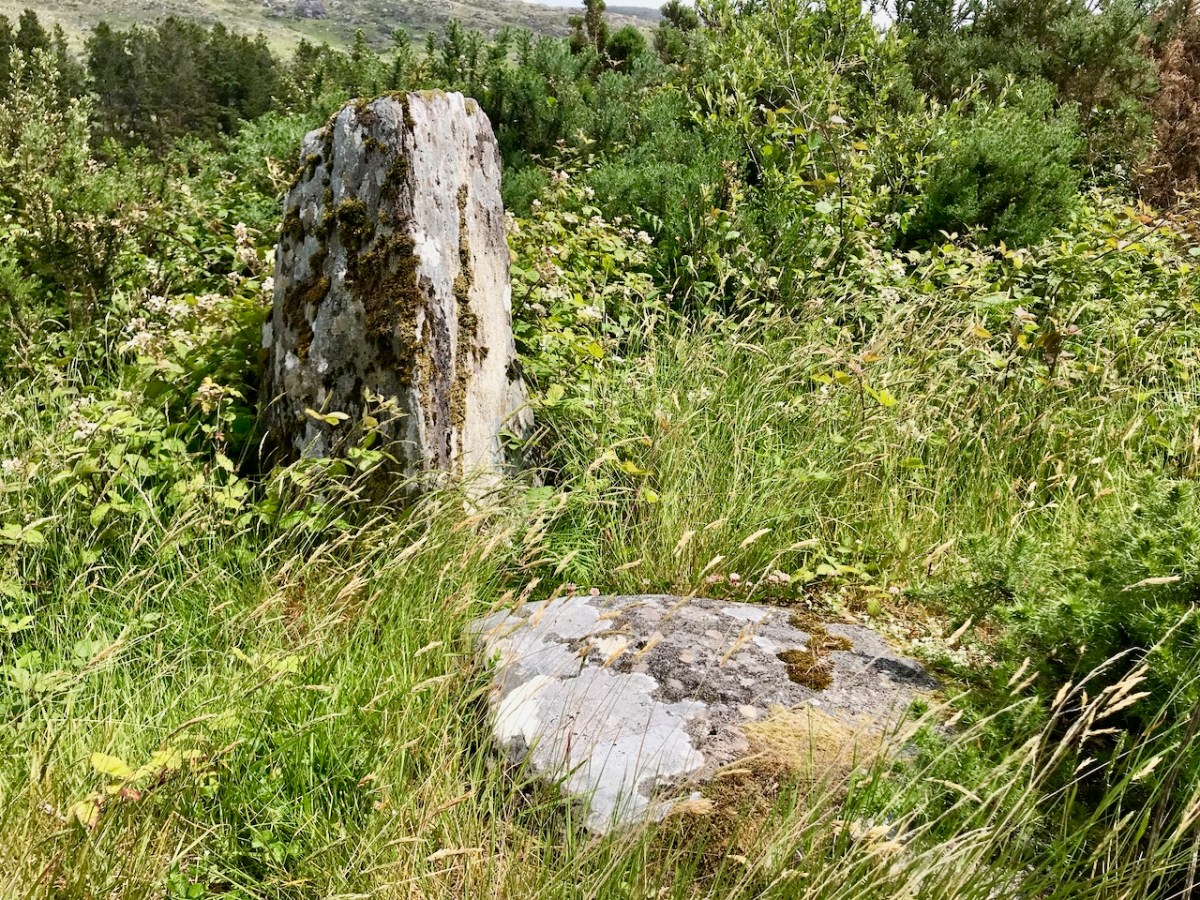
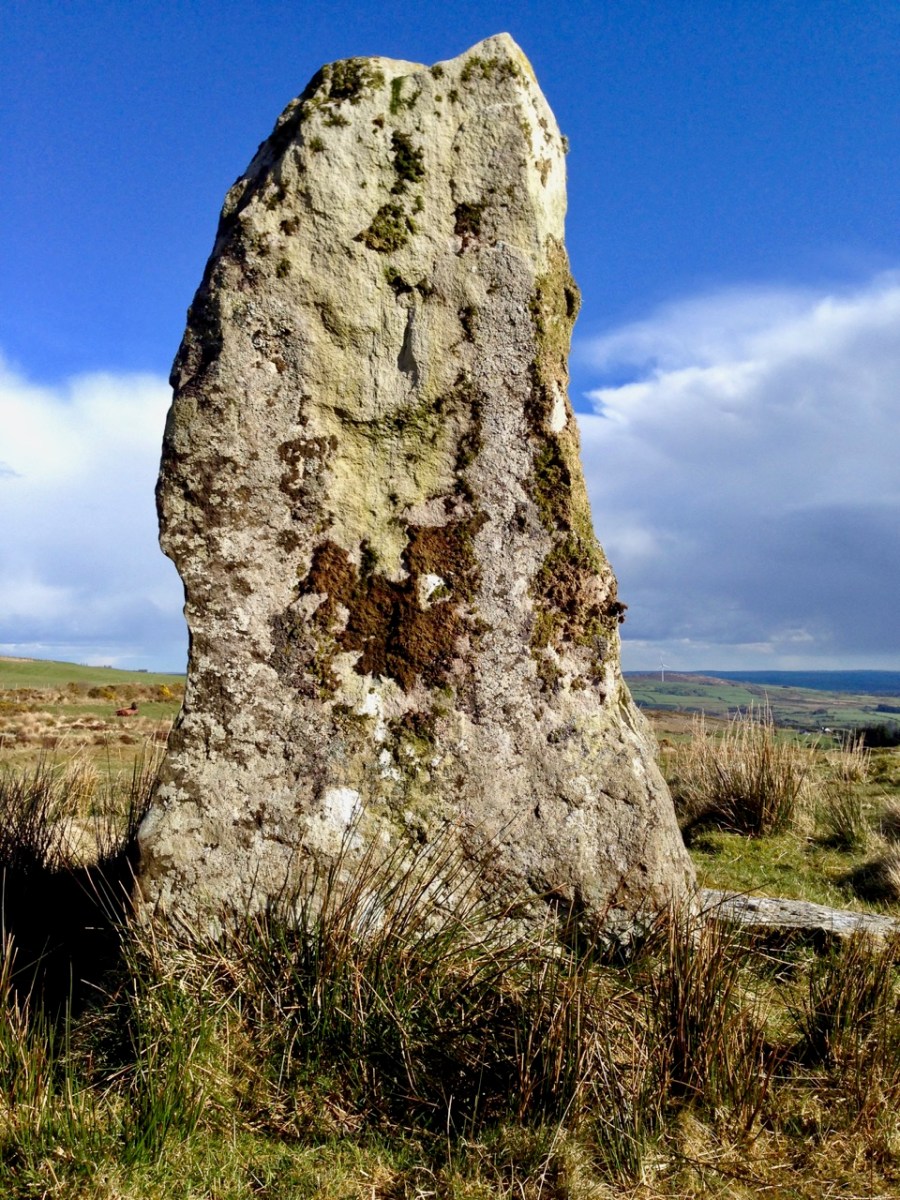
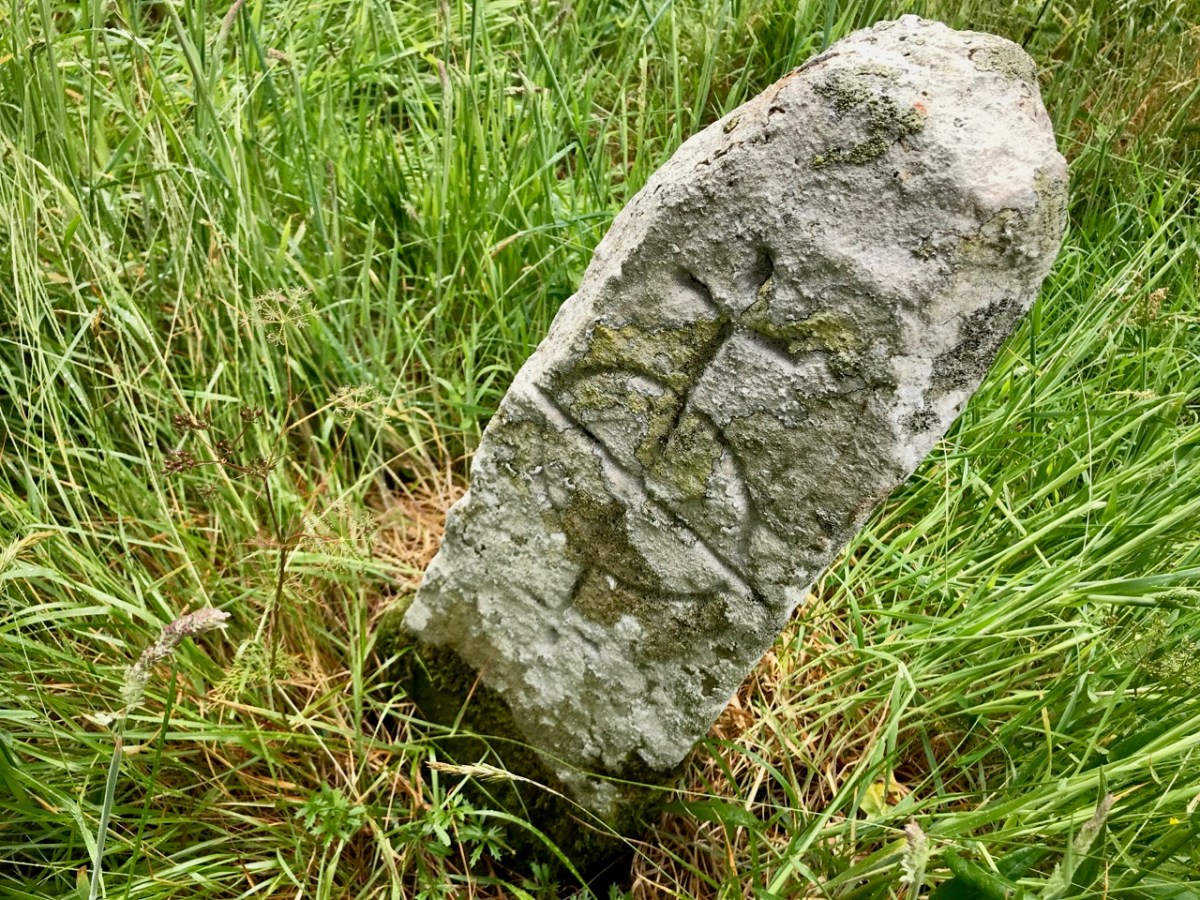
I am fascinated by the number of single standing stones we come across in our travels. It’s impossible to say how many there are in Ireland – probably thousands. And they can range in size from the large stones – above – in West Cork, to individual examples in moorland or fields, or on roadsides – below.
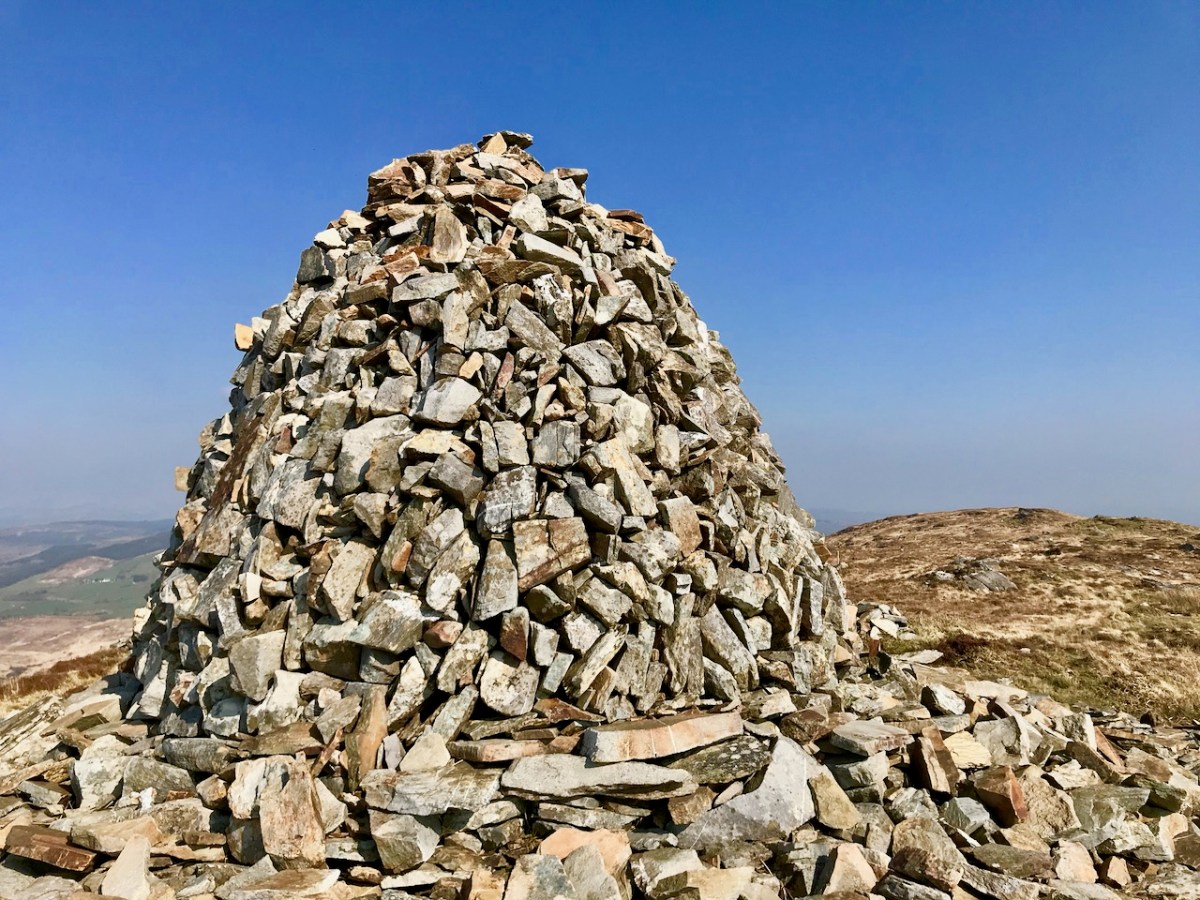
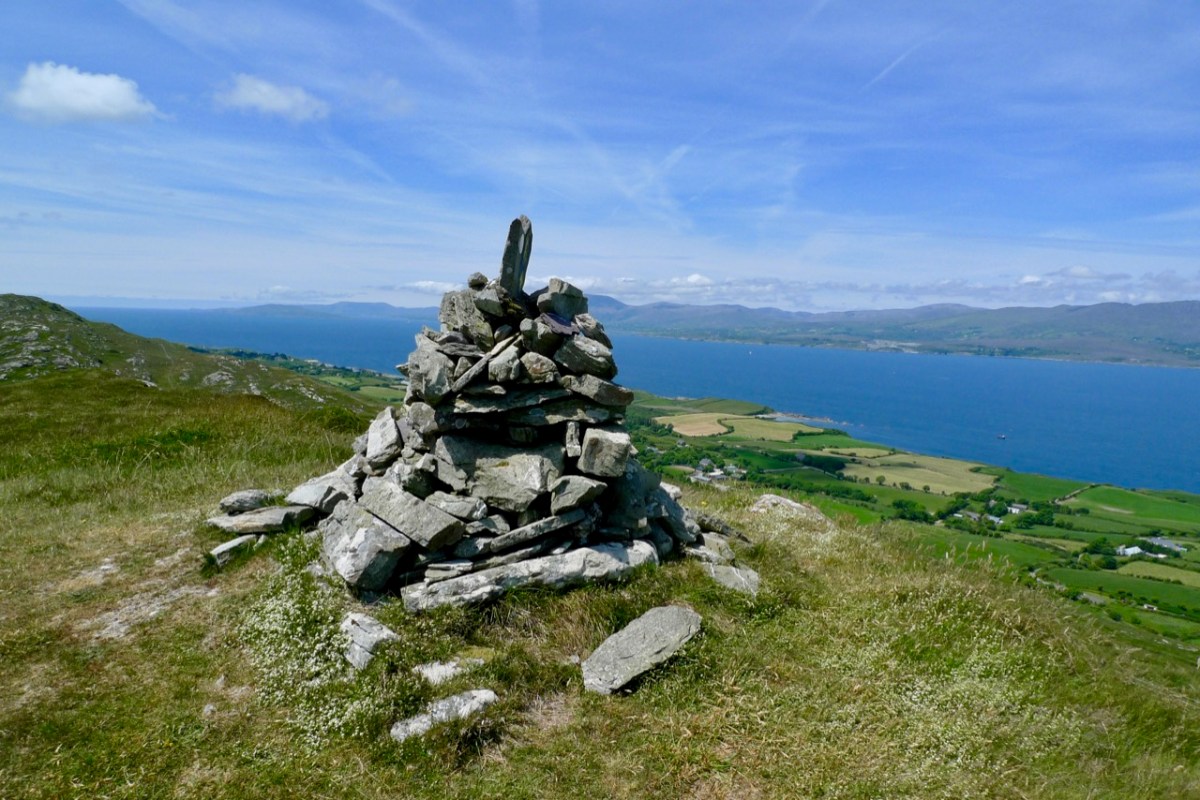
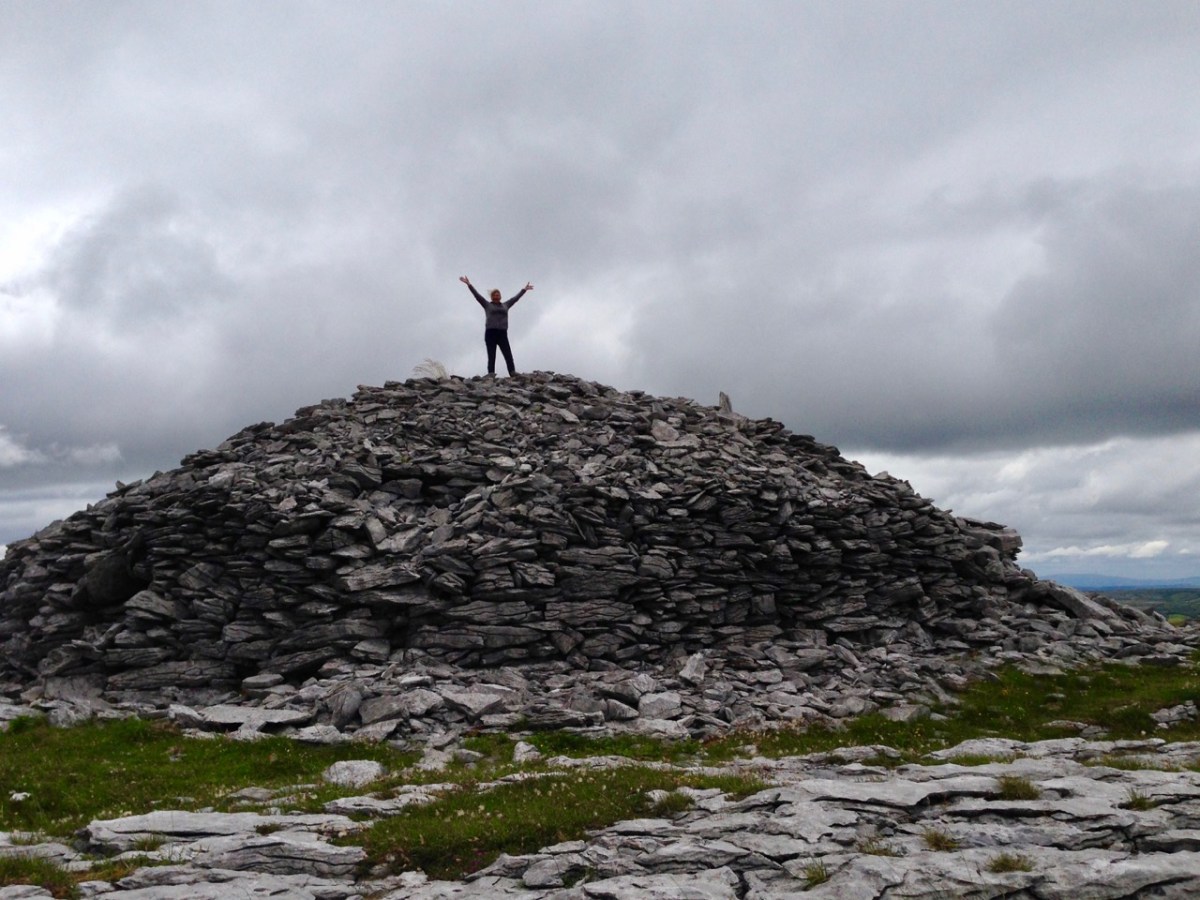
The Irish word ‘carn’ means a heap or pile of stones, Cairn monuments are mounds of stones, often marking the summit of a significant hill or mountain. They may or may not be ancient, and we have seen them change significantly over time. On Mount Corrin, not far from us in West Cork, there were two cairns only a few years ago. Now there is a single, significant cairn (top pic below): this implies a deliberate ‘re-ordering’ of what was there before. Regardless of their history, they can be visually impressive.
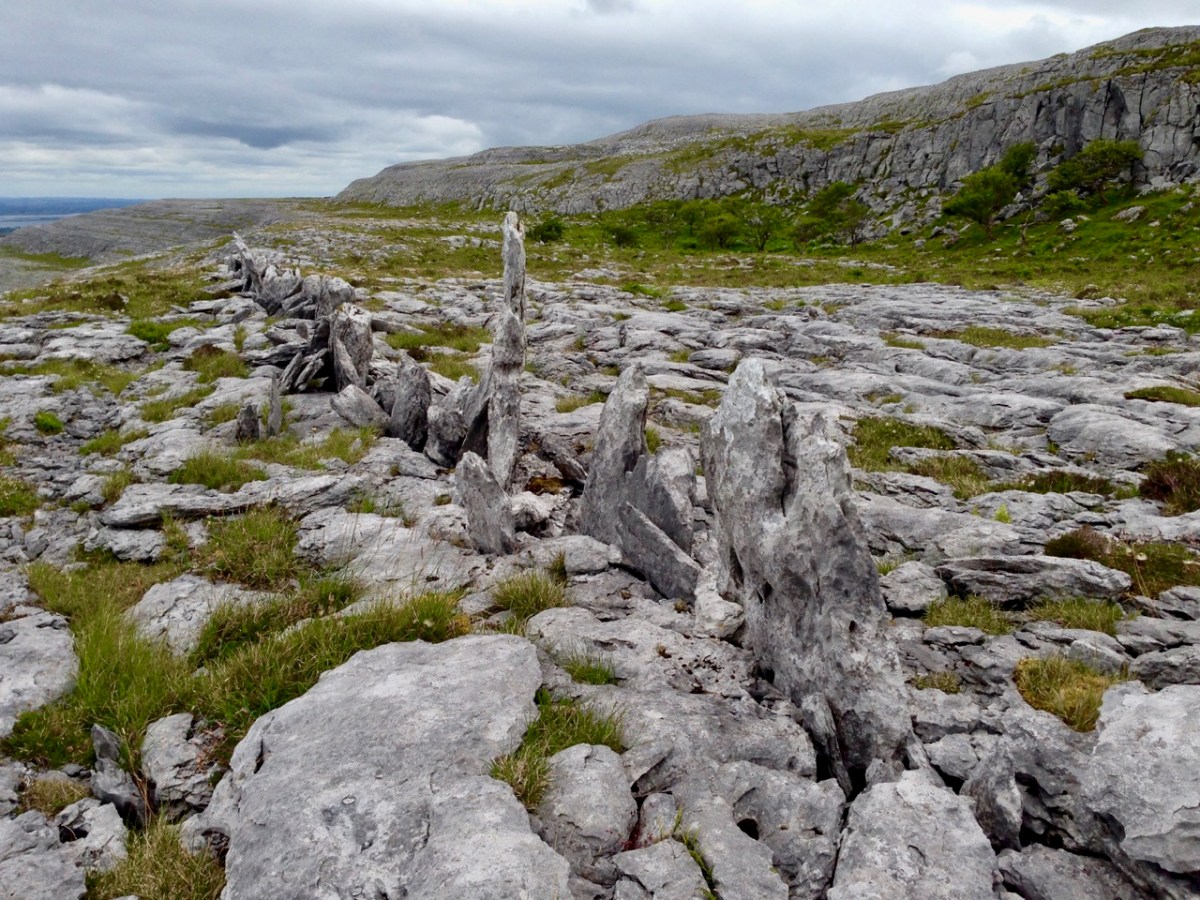
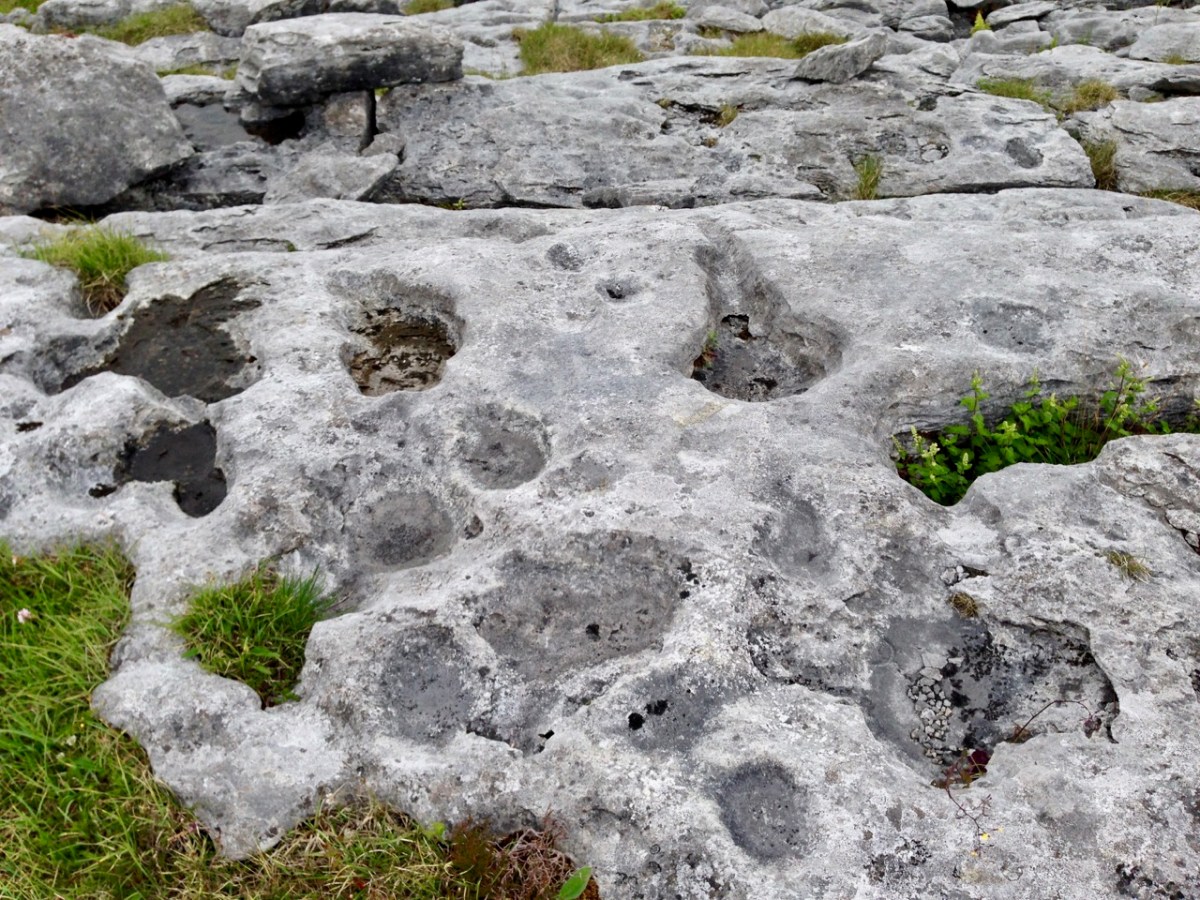
The centre pic above is a small cairn on a Sheep’s Head summit, while the enormous one above is in The Burren, County Clare. The Burren is an extraordinary landscape of exposed limestone. The limestone formed as sediments in a tropical sea which covered most of Ireland approximately 350 million years ago. Today, the Burren supports a remarkable assortment of wild flowers: over 70% of Ireland’s species of flowers are found there, among the ubiquitous stone surfaces.
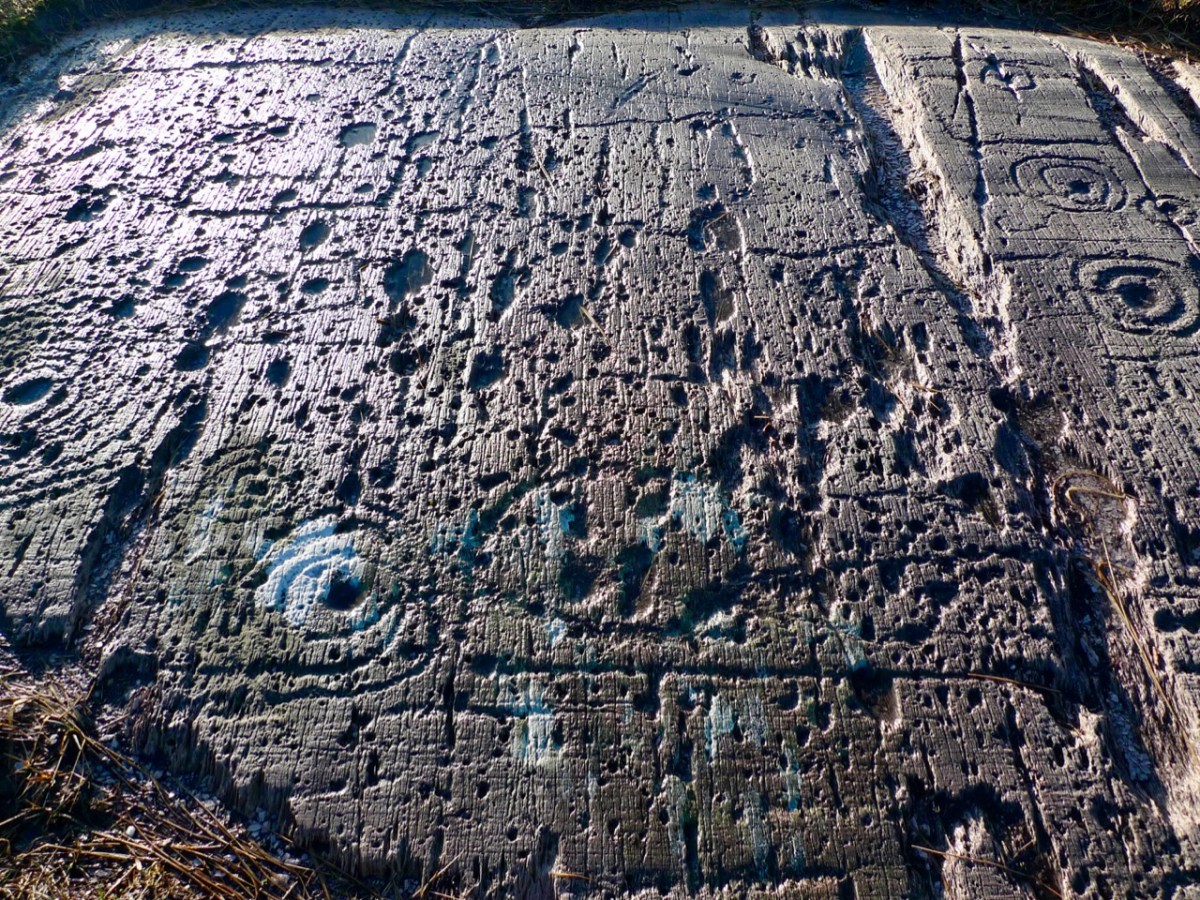
Ever since humans set foot on Irish soil, they have embraced the stones – both for practical uses such as shelter or enclosure, but also as a means of marking and communicating. Readers will be familiar with our particular interests in Prehistoric Rock Art:
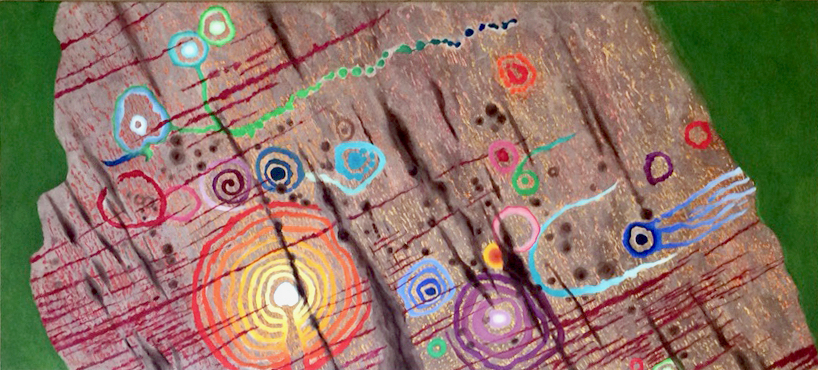
This is an important example of Ireland’s Rock Art, from West Cork, perhaps dating from 5,000 years ago: it was discovered in comparatively recent times. The painting is by Keith Payne, and is an interpretation of this same rock outcrop. We have no evidence that the carvings were ever coloured – or pigmented.
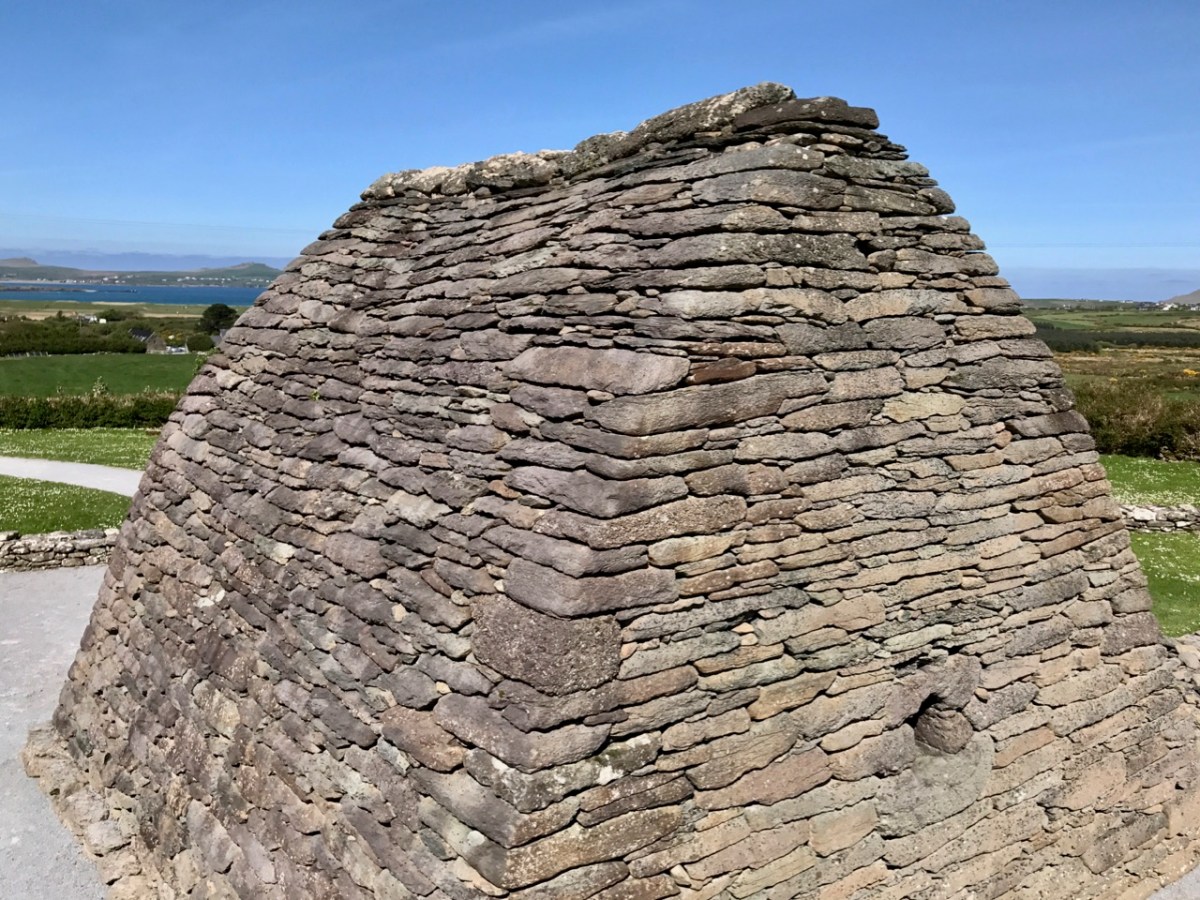
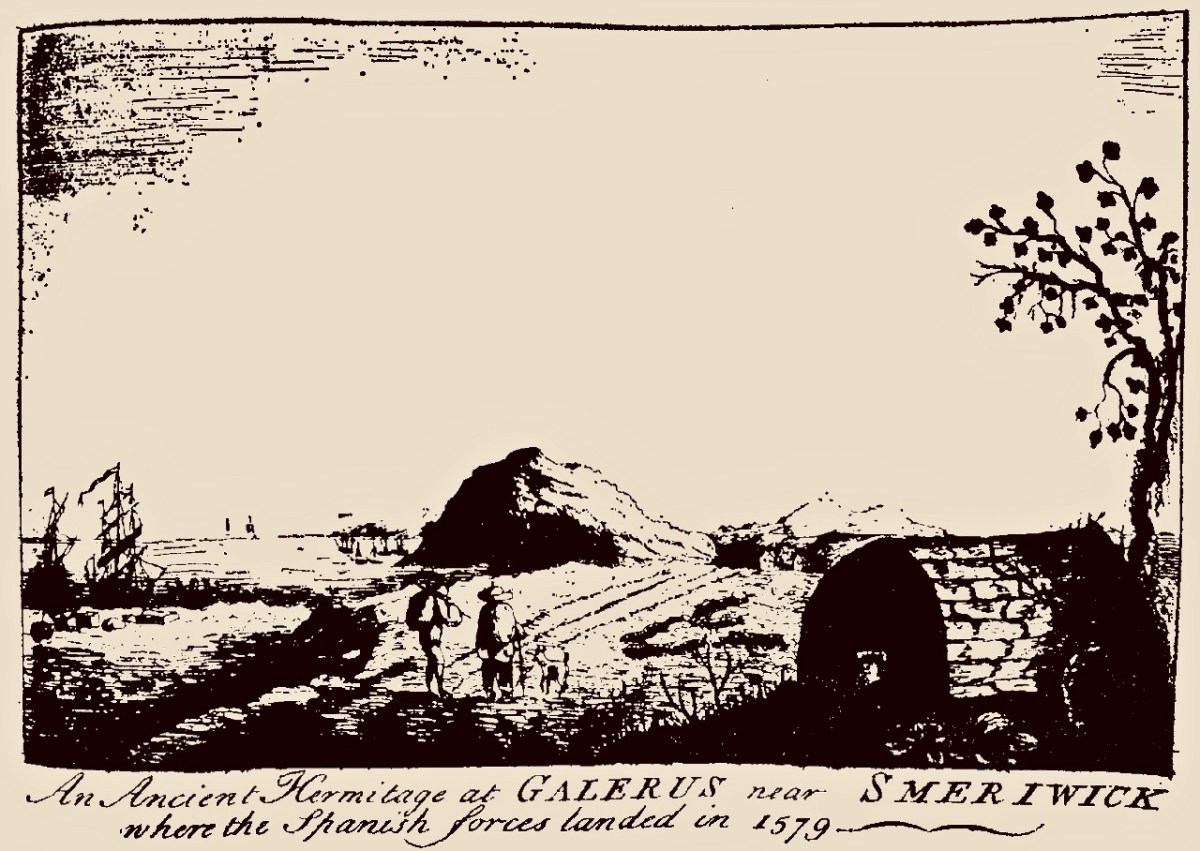
Today we are very familiar with the use of stone as a building material: this practice is likely to have been current since very early times. In Ireland we have many examples of ancient – but undateable – stone buildings. The ‘Oratory’ at Gallurus is a good example of a built enclosure (walls and roof) made entirely from stone. A present day view of it, top, shows this remarkably preserved structure; archaeologists and historians have long debated its age and likely use. The print above dates from 1756.
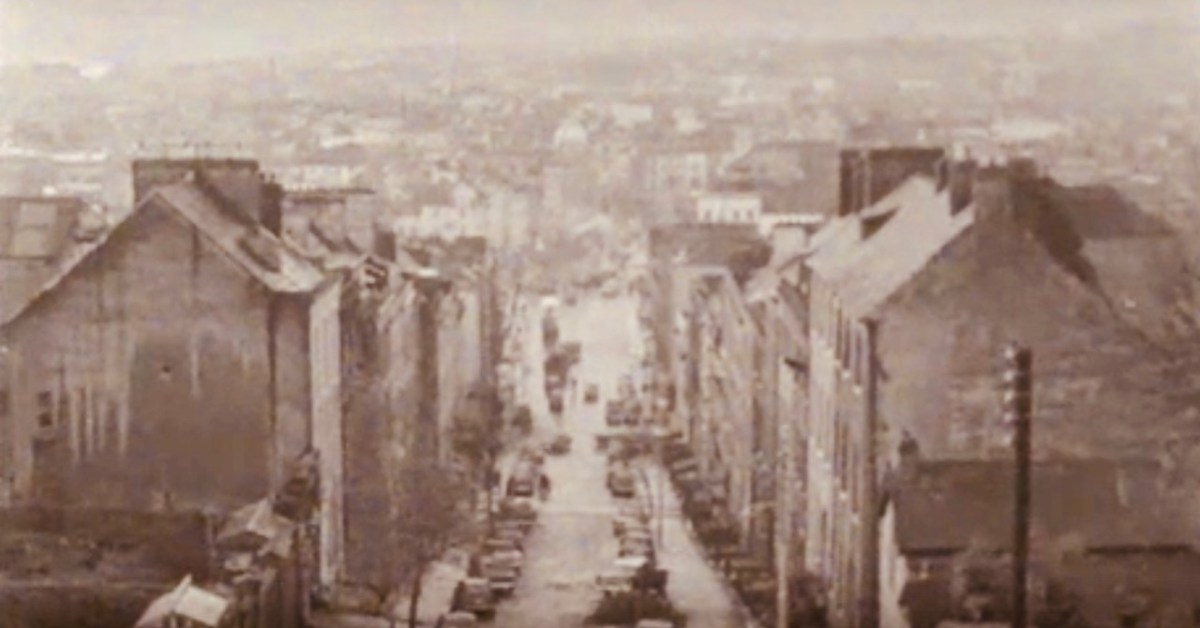
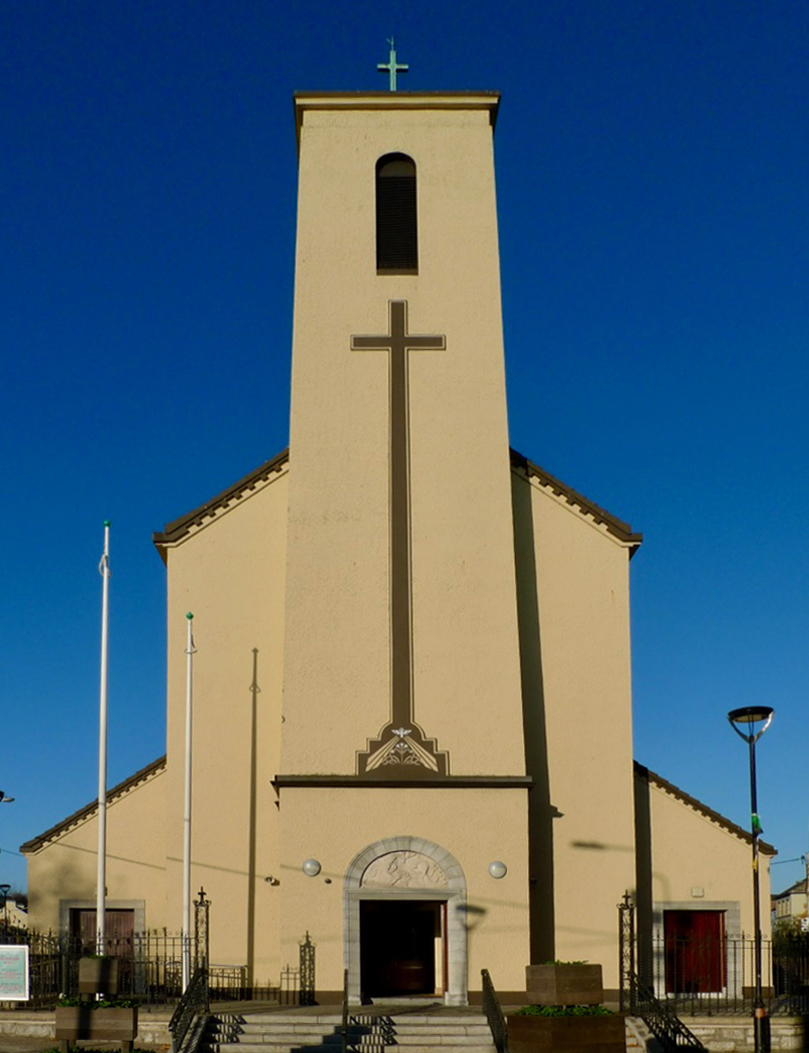
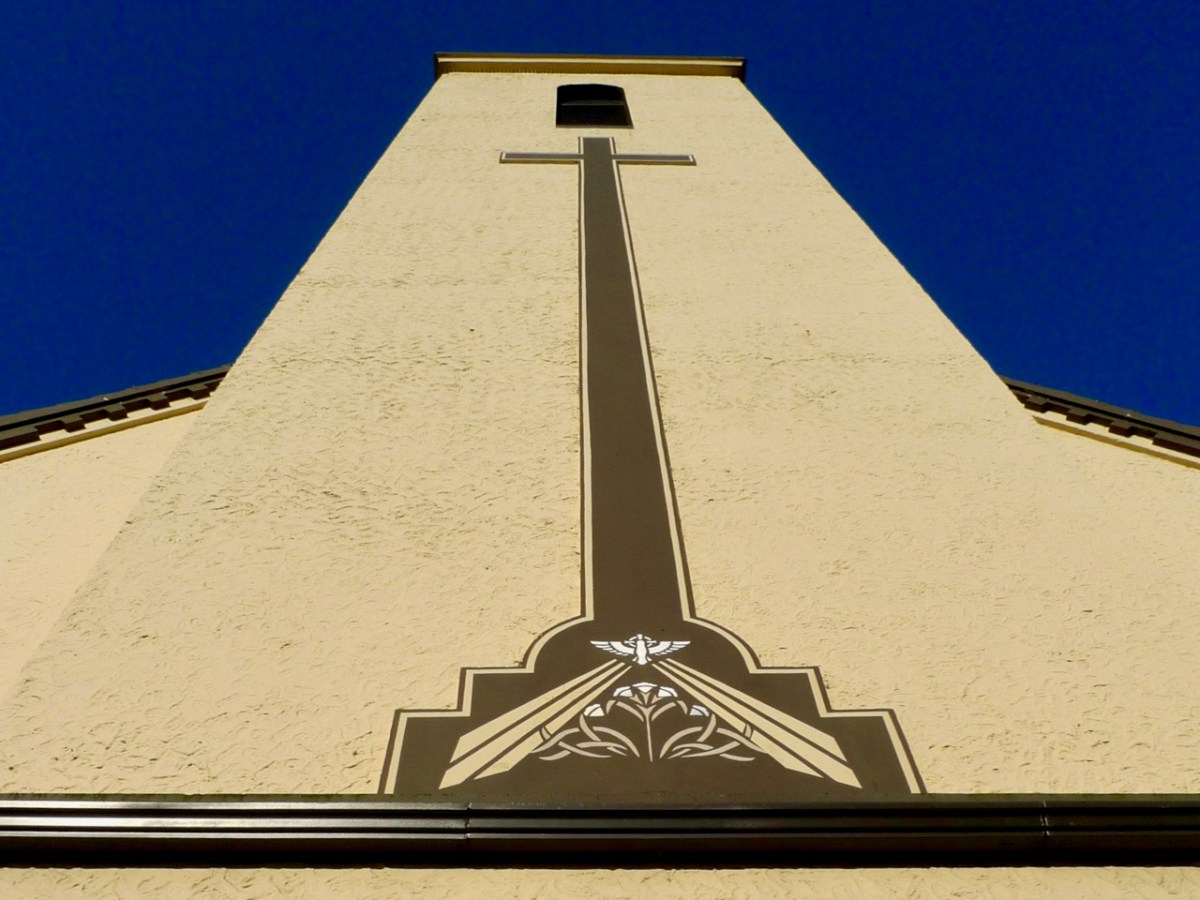
This is Cork city in the 1940s. The subject of today’s post is a Cork man – the sculptor Séamus Murphy. Born in 1907 near Mallow, Murphy took classes at the Crawford School of Art before apprenticing as a stone carver at O’Connell’s Stone Yard in Blackpool, a parish in the city, for seven years. Murphy and his work could occupy several posts, but today we concentrate on his only architectural building project, the Church of the Annunciation in Blackpool. Séamus Murphy can fairly claim to be the ‘sculptural designer’ of this building – as he conceived the way it would appear – while the architect Edmond Patrick O’Flynn most likely carried out the technical drawings and specifications.
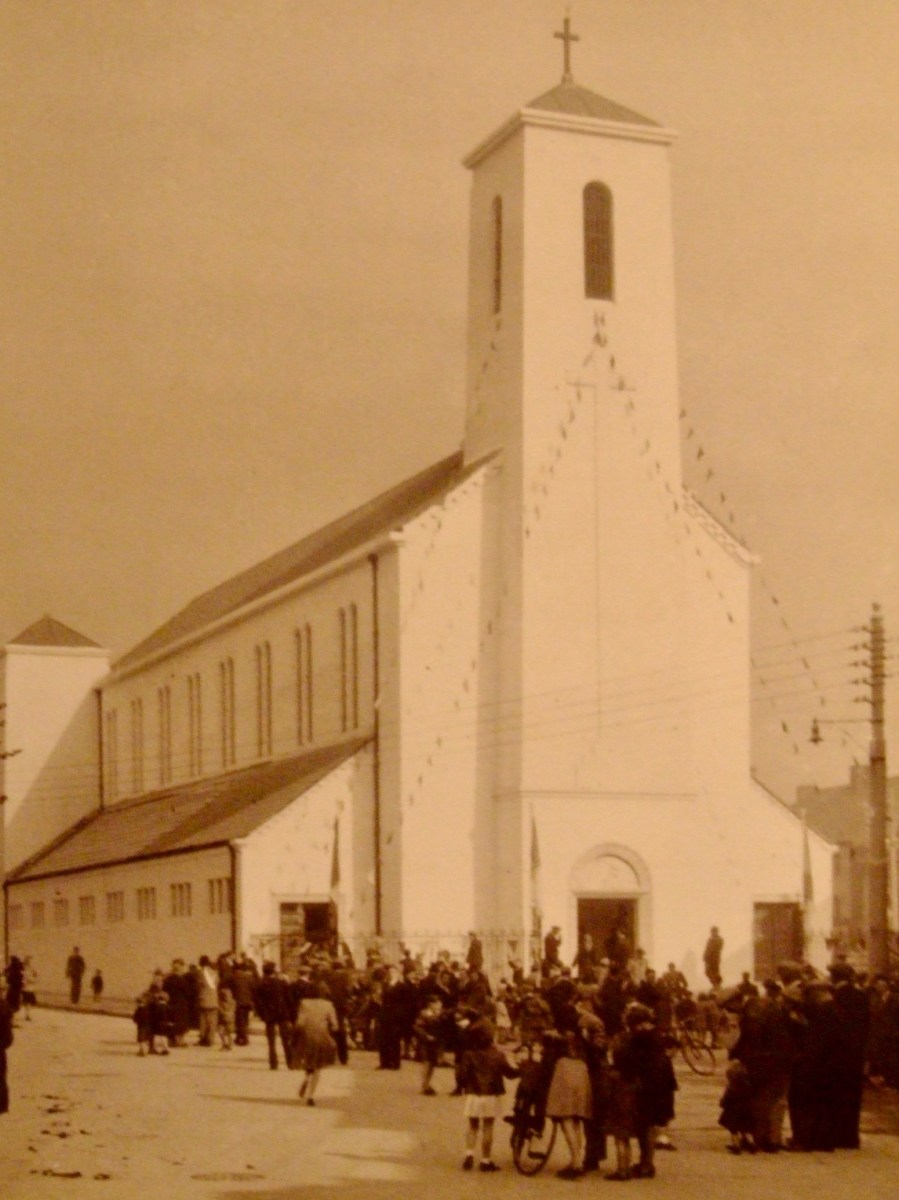
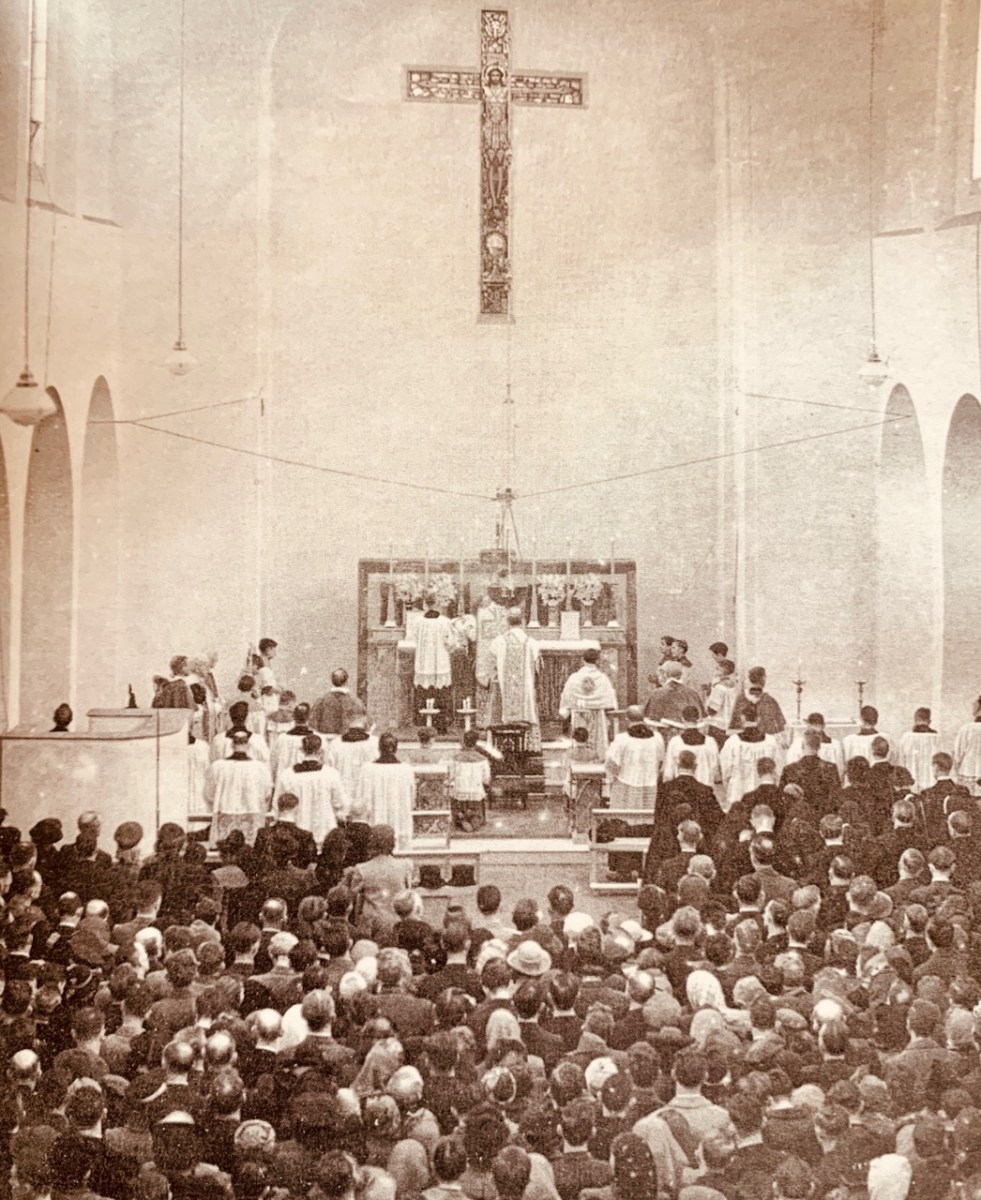
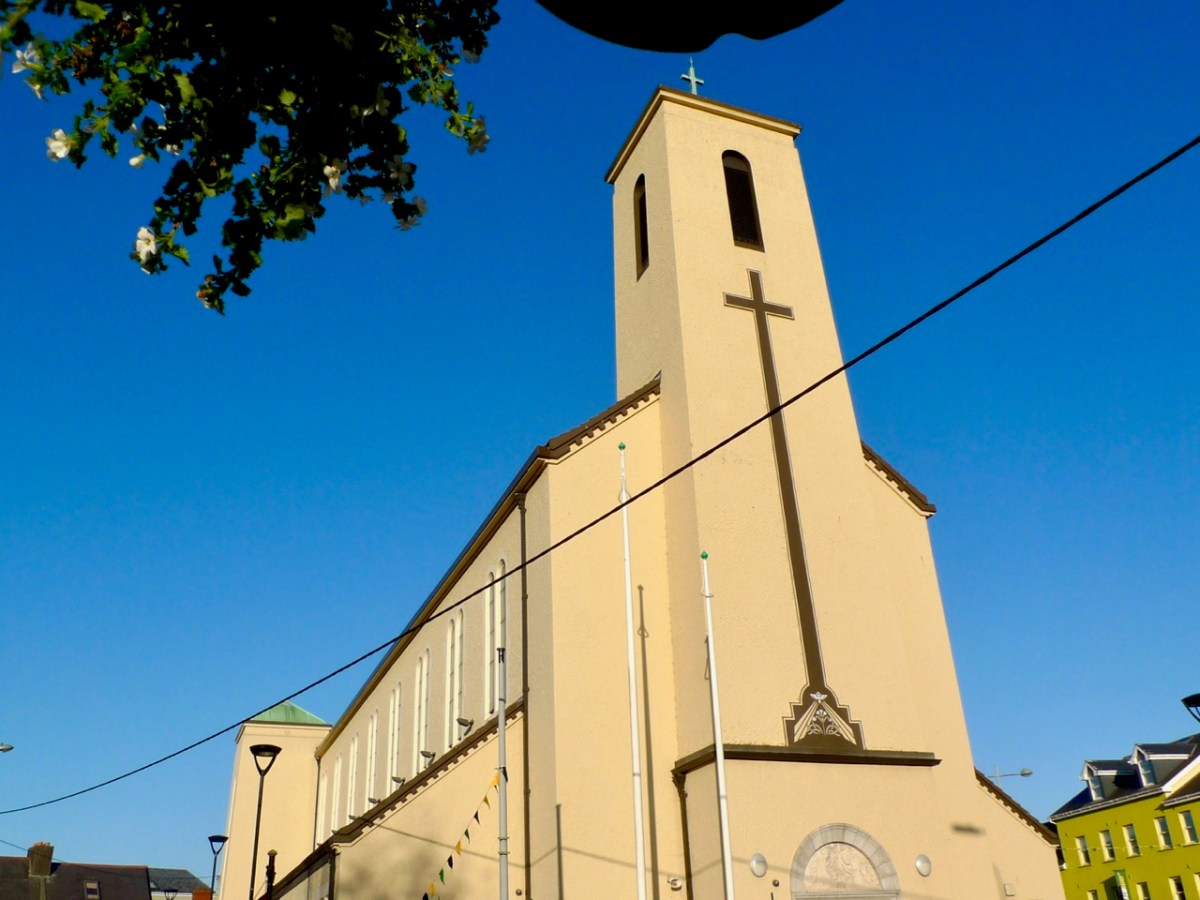
According to the Murphy family, Séamus found inspiration for Blackpool from pictures of churches in South America. In particular, the roughly textured render on the external walls is said to have derived from the adobe finish common in Spanish missionary churches there. The Cork church was commenced in January 1945, and the picture above (courtesy of Cork City Library) dates from around that time. The picture below – also courtesy Cork City Library – shows the dedication ceremony in the church on 7 October 1945.
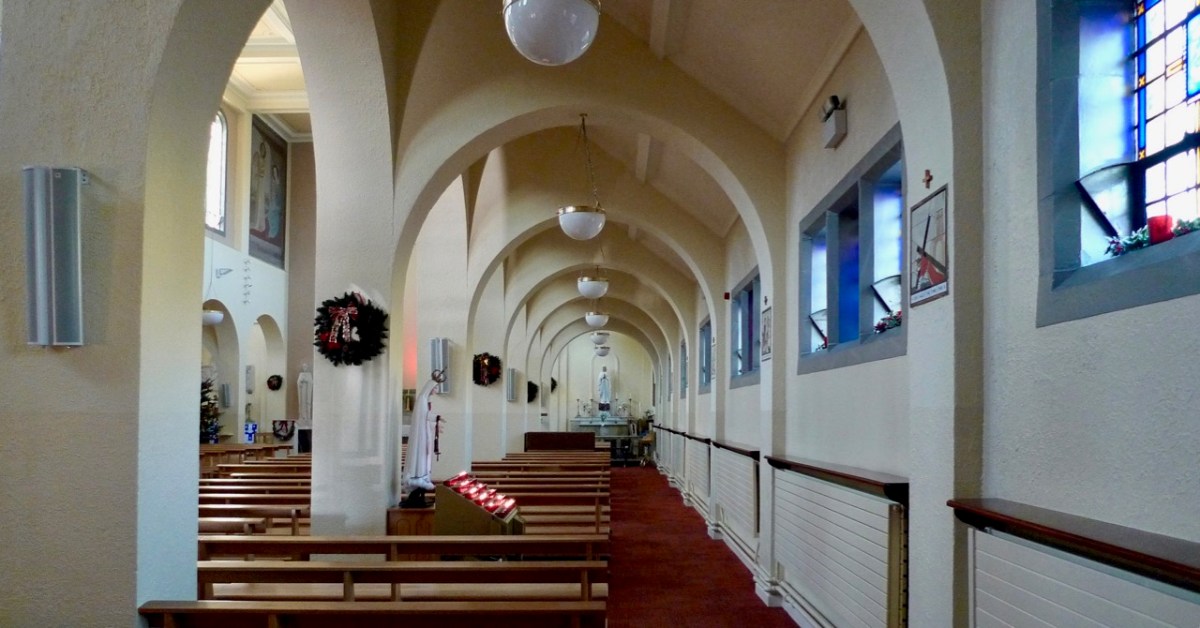
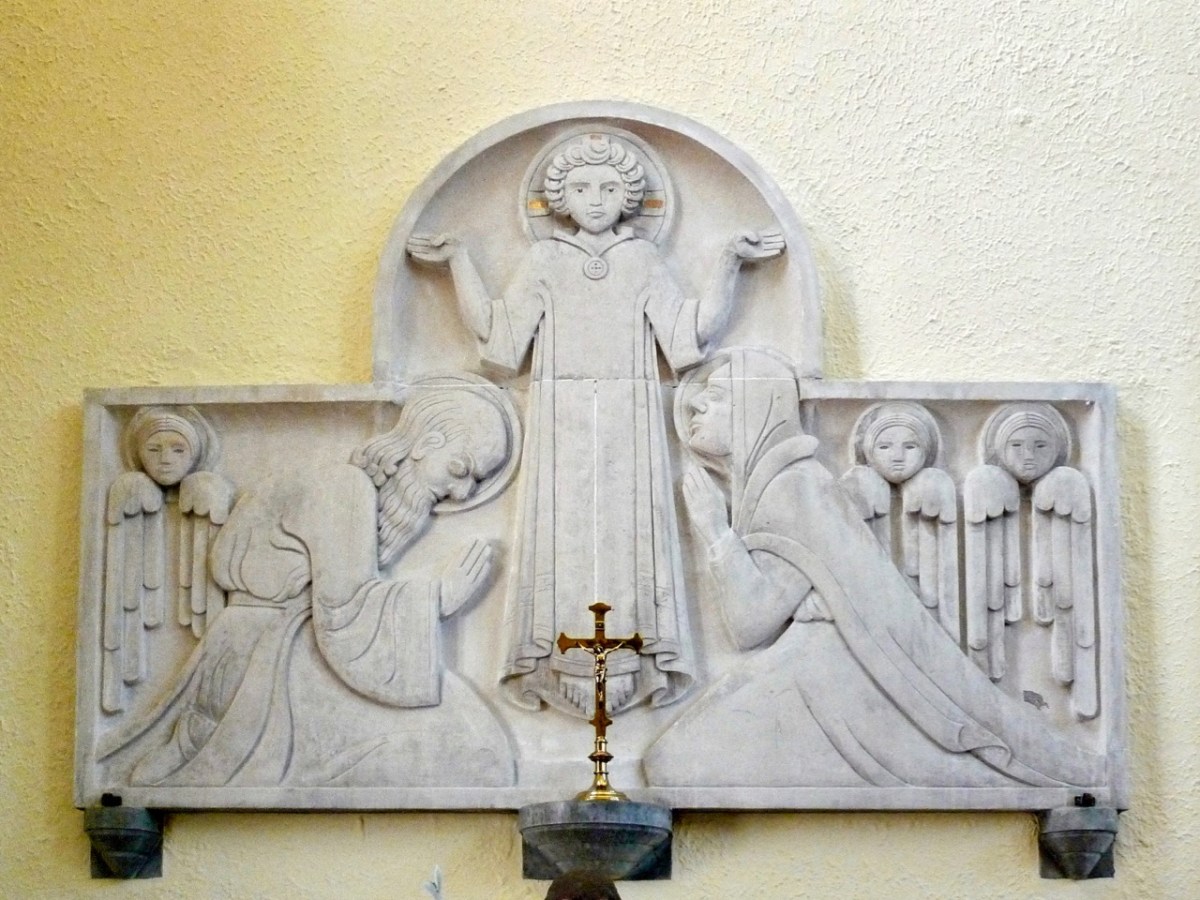
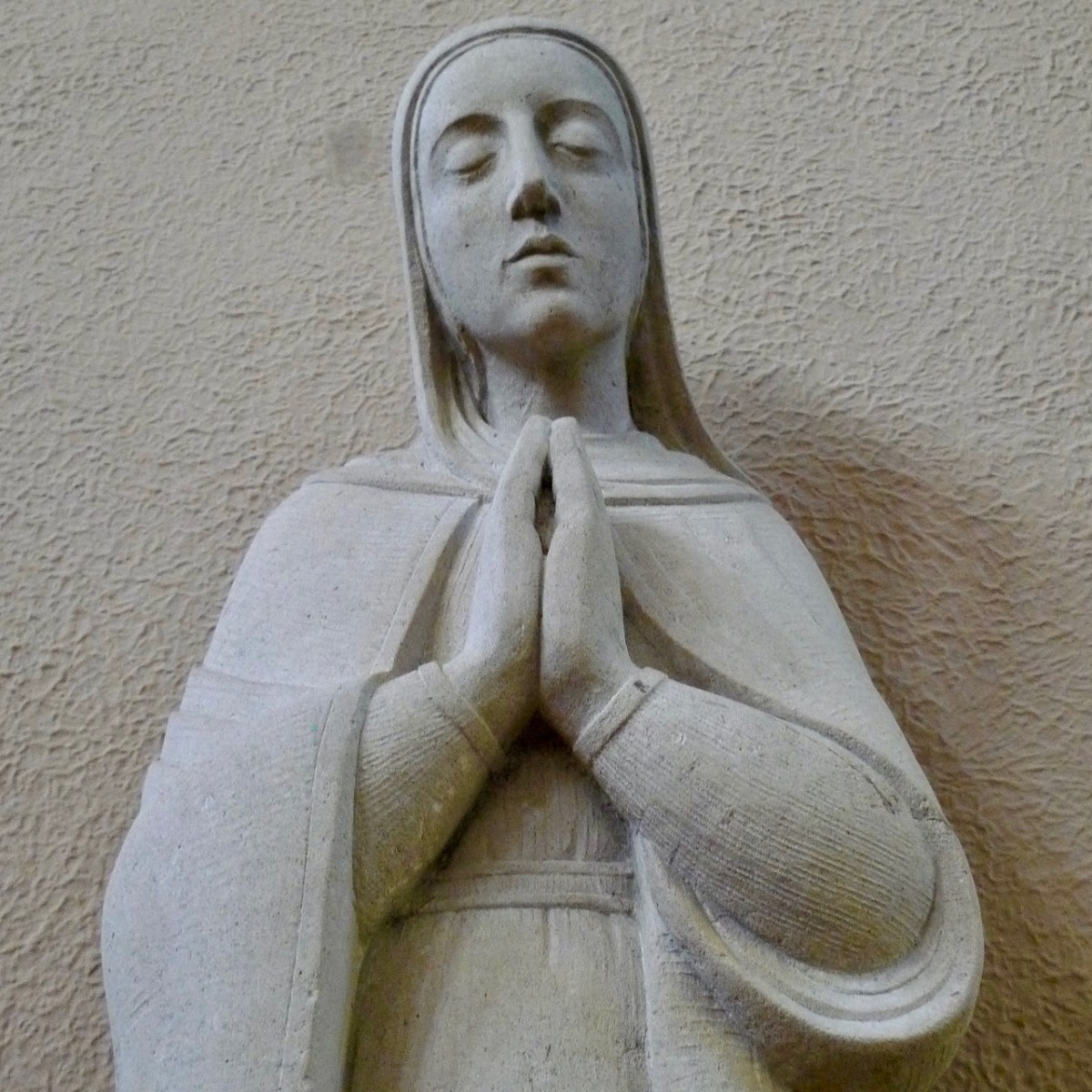
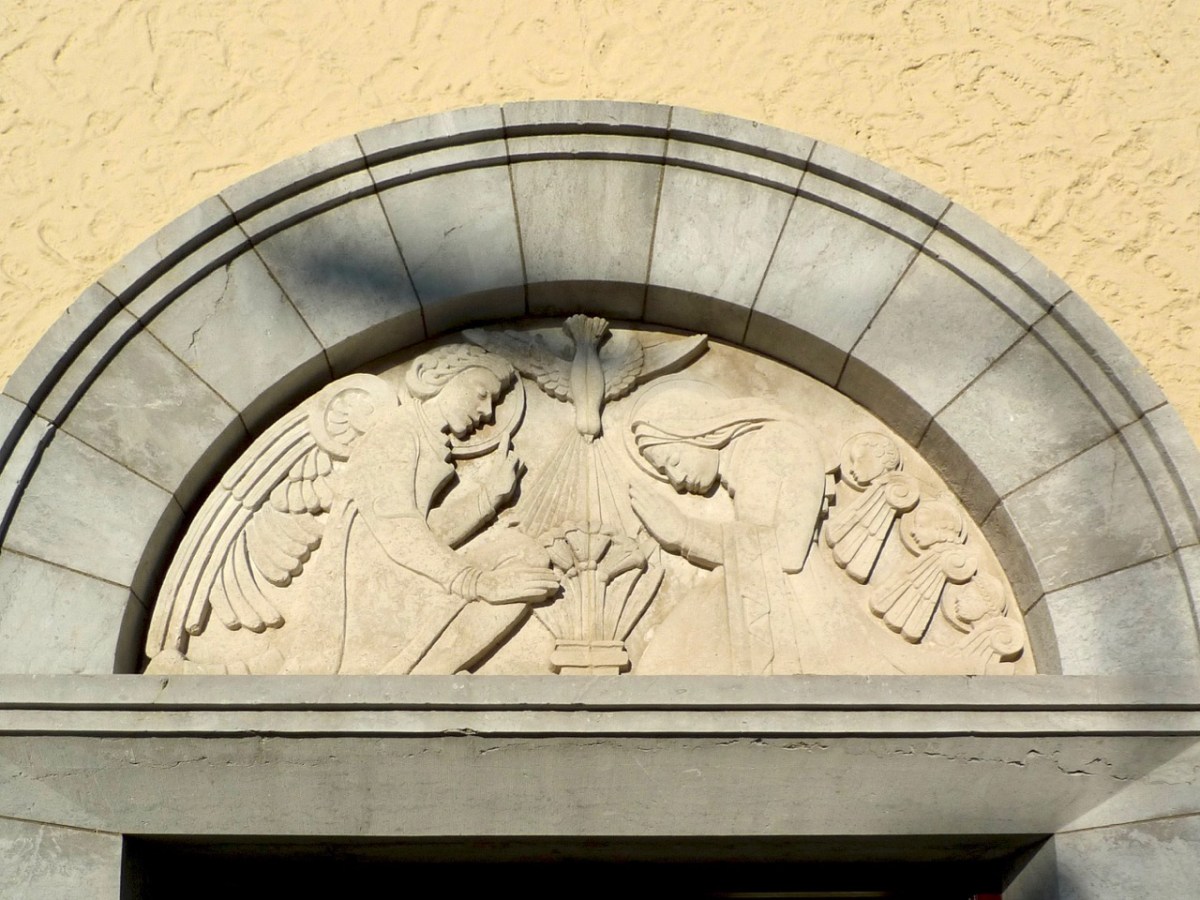
This picture of Séamus, above, is from the RTE archives. The Blackpool project is a good area of study, as the church shows the sculptor’s ability to conceive large, three-dimensional spaces as well as his skills in producing his own figurative and relief works, a number of which are used in the church furnishings: they are of polished Portland stone.
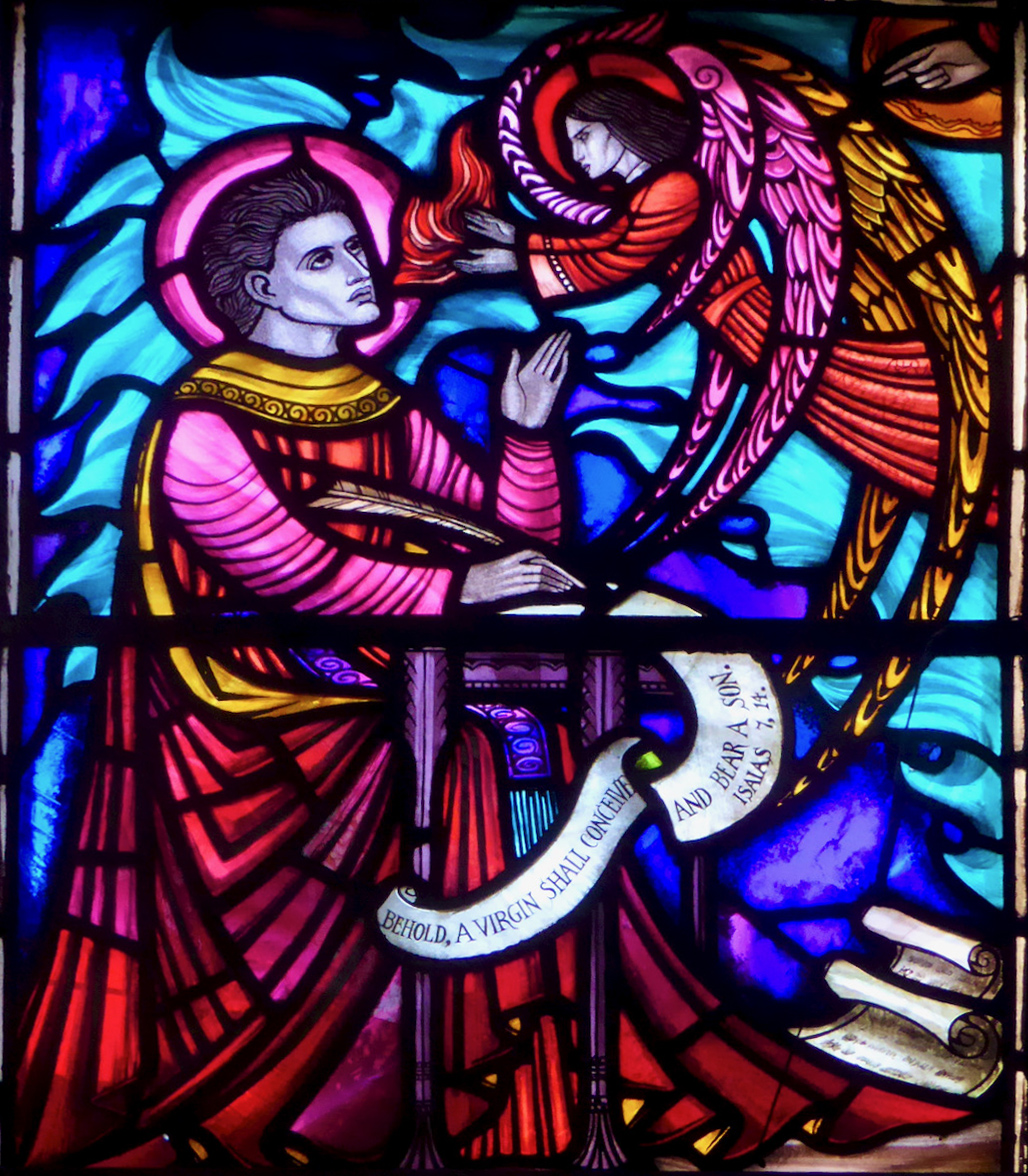
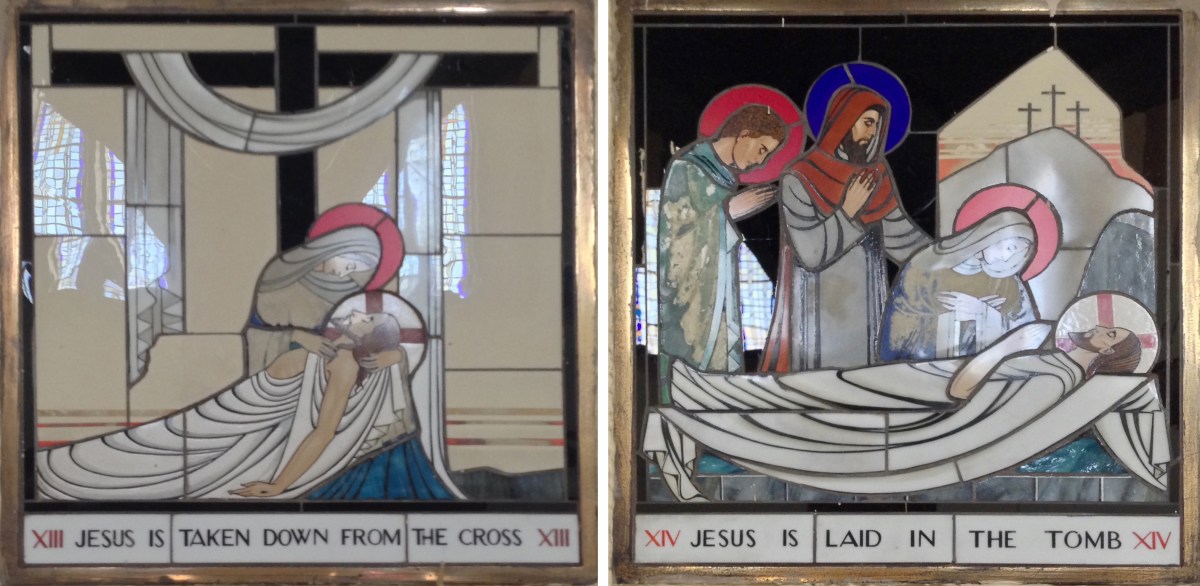
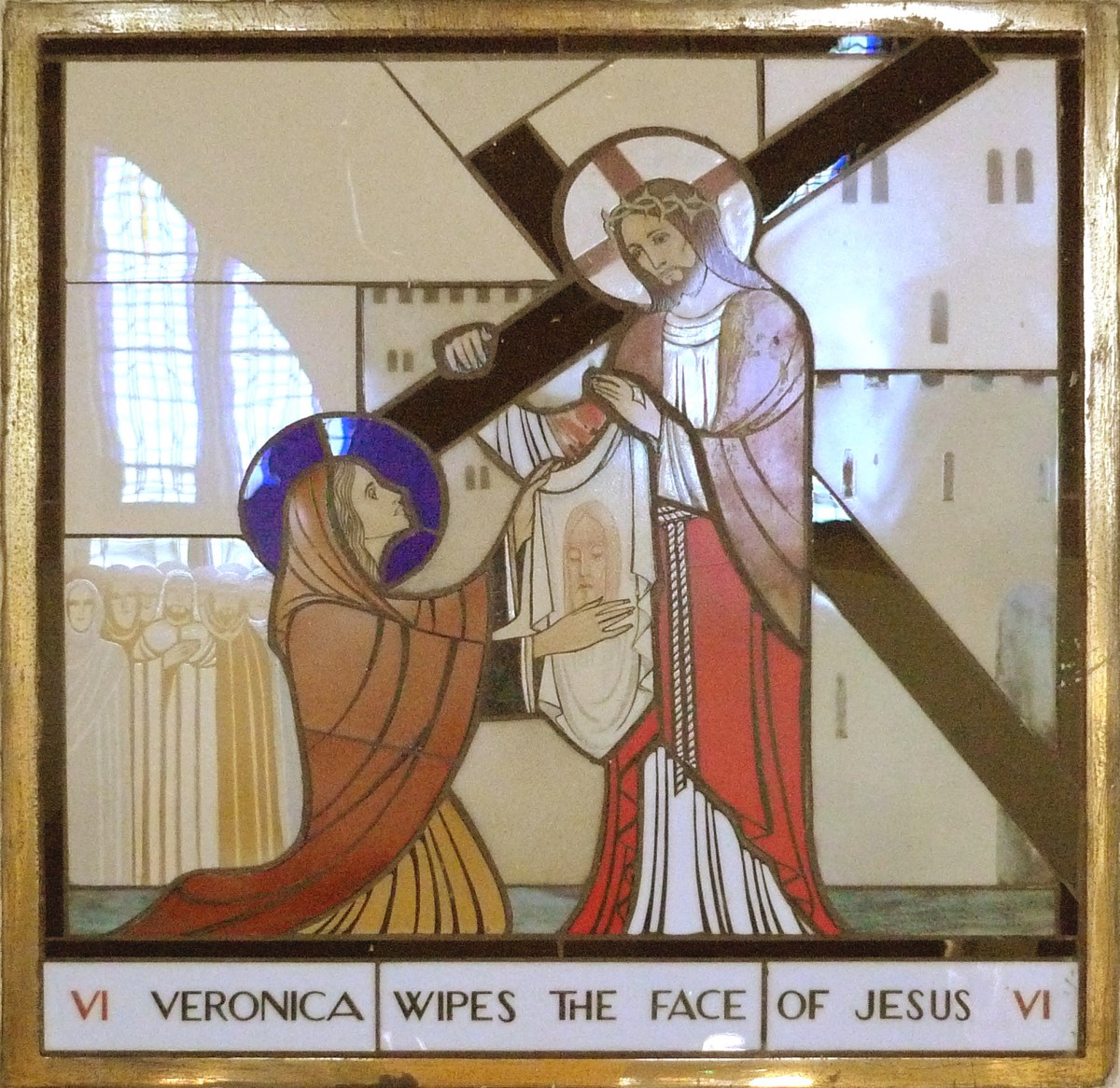
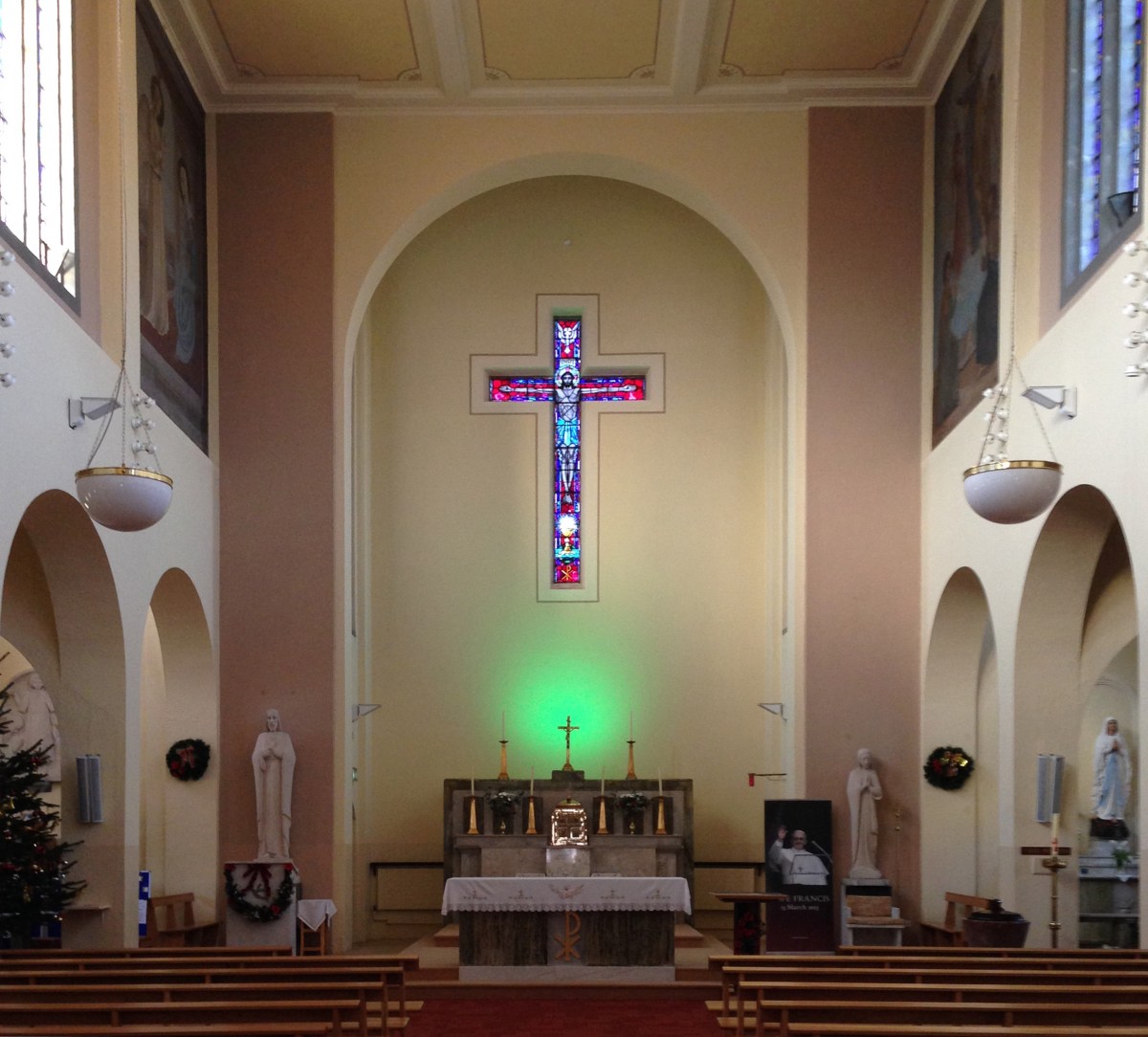
While the church is a valuable repository of Séamus Murphy’s design and carving skills, the work of many other contemporary artists can also be found in the building. The stained glass windows are from the Harry Clarke Studios, designed by William Dowling.
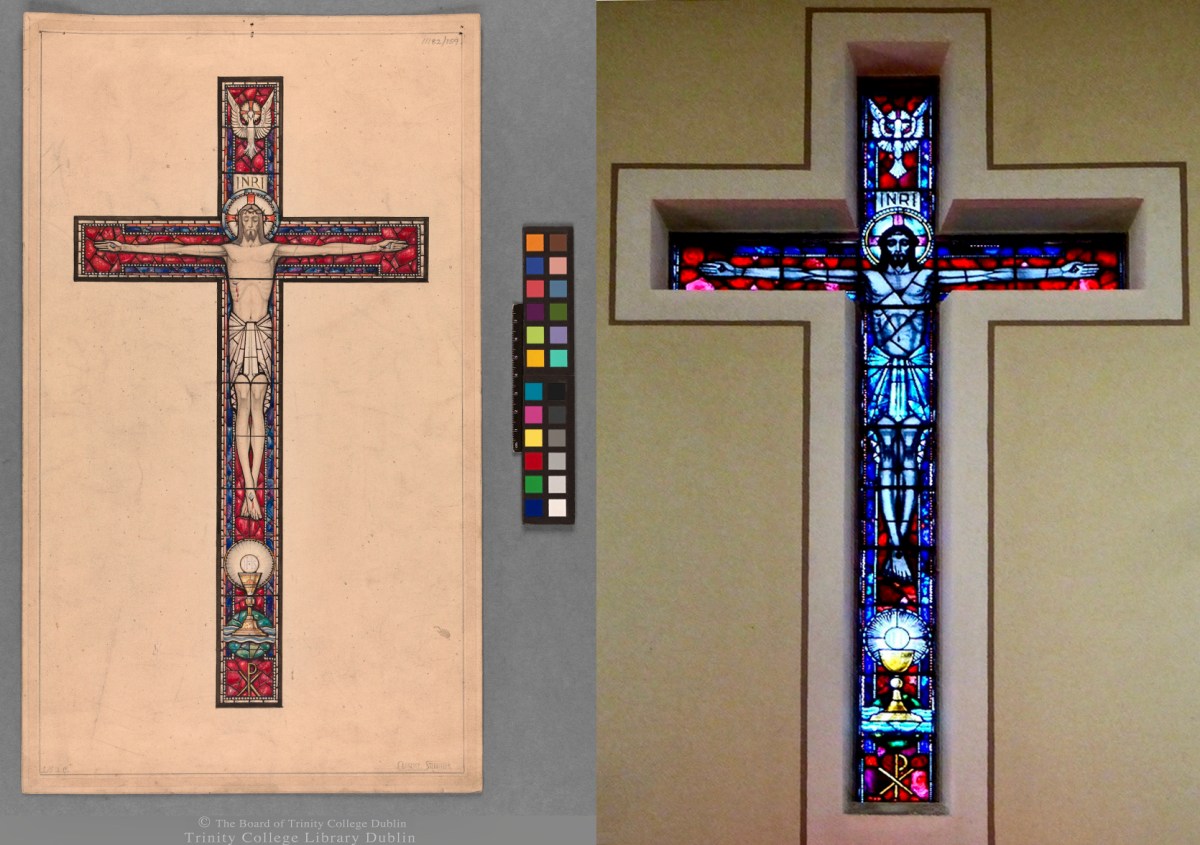
Particularly striking is the crucifix window at the east end. Above is the original cartoon (courtesy of Trinity College Library Dublin) by Dowling, side-by-side with an image of the window today. All the windows are of fine quality.
A full view of the east end of the church. The interior has changed very little over 77 years and is, therefore, a great tribute to Séamus Murphy and the the commissioning family of William Dwyer, then head of the nearby Sunbeam Wolsey factory. Dwyer funded the whole project as a memorial to his daughter Maeve who had sadly passed away in 1943.
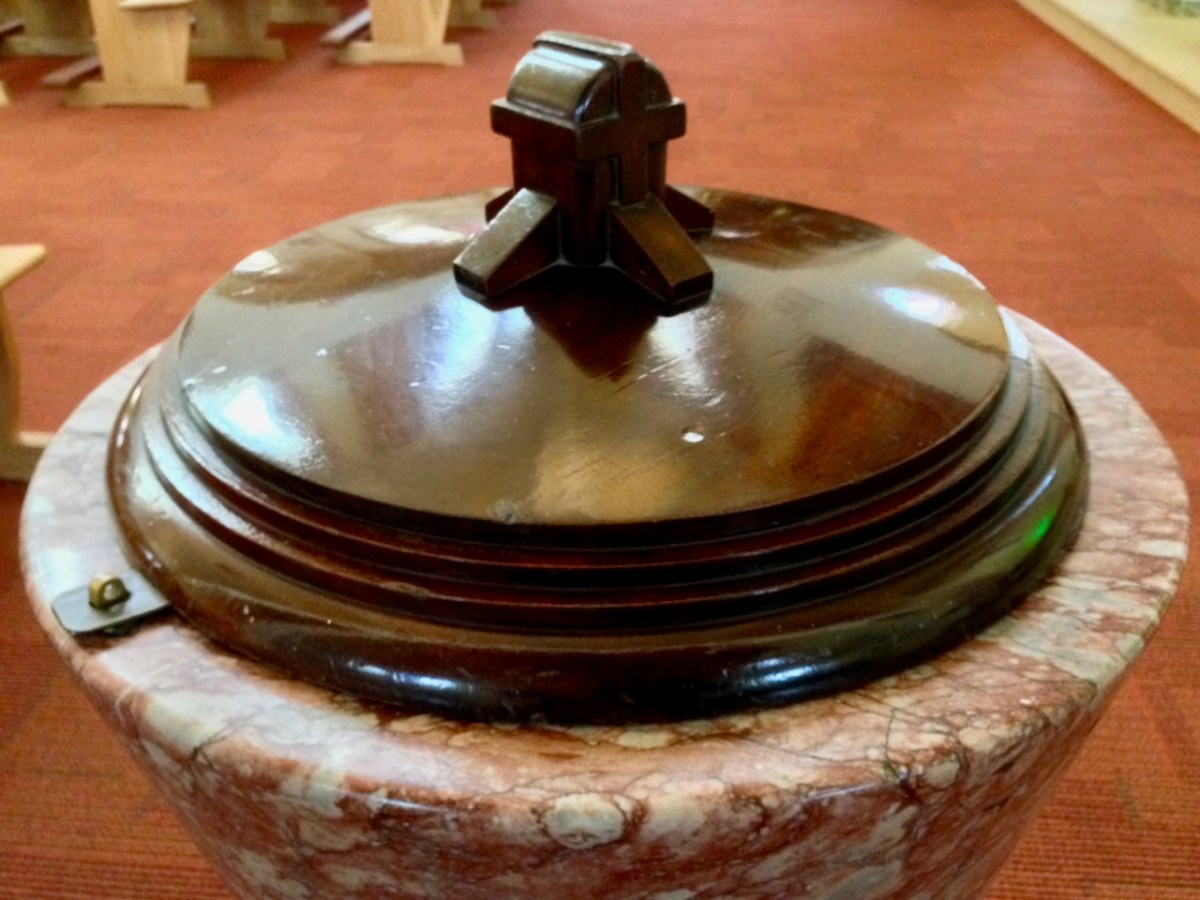
This fine font cover was carved by hand by Bart, a younger brother of Séamus.
Murphy’s Church of the Annunciation is certainly a landmark building – not just for Cork, but for the whole of Ireland. And Séamus himself must rank as one of the outstanding artists of the Free State. You will come across his distinctive work in many locations; I will be directing you to some of them in future posts.
Many thanks to Orla Murphy for giving me valuable insights on her father’s works
Welcome to the UCD Library Cultural Heritage Collections blog. Discover and explore the historical treasures housed within our Archives, Special Collections, National Folklore Collection and Digital Library











 Roaringwater Journal