Irish Artists and Stations of the Cross

Every Catholic Church in Ireland has a set of Stations of the Cross on the wall – fourteen focus points for devotion and reflection on the Way of the Cross. The Stations, as they are universally known in Ireland, come from a long tradition within the Catholic Church, often associated with St Francis, but also with the Via Dolorosa in Jerusalem, and the custom that Pilgrims had of retracing Jesus’ footsteps on the way to Calvary.
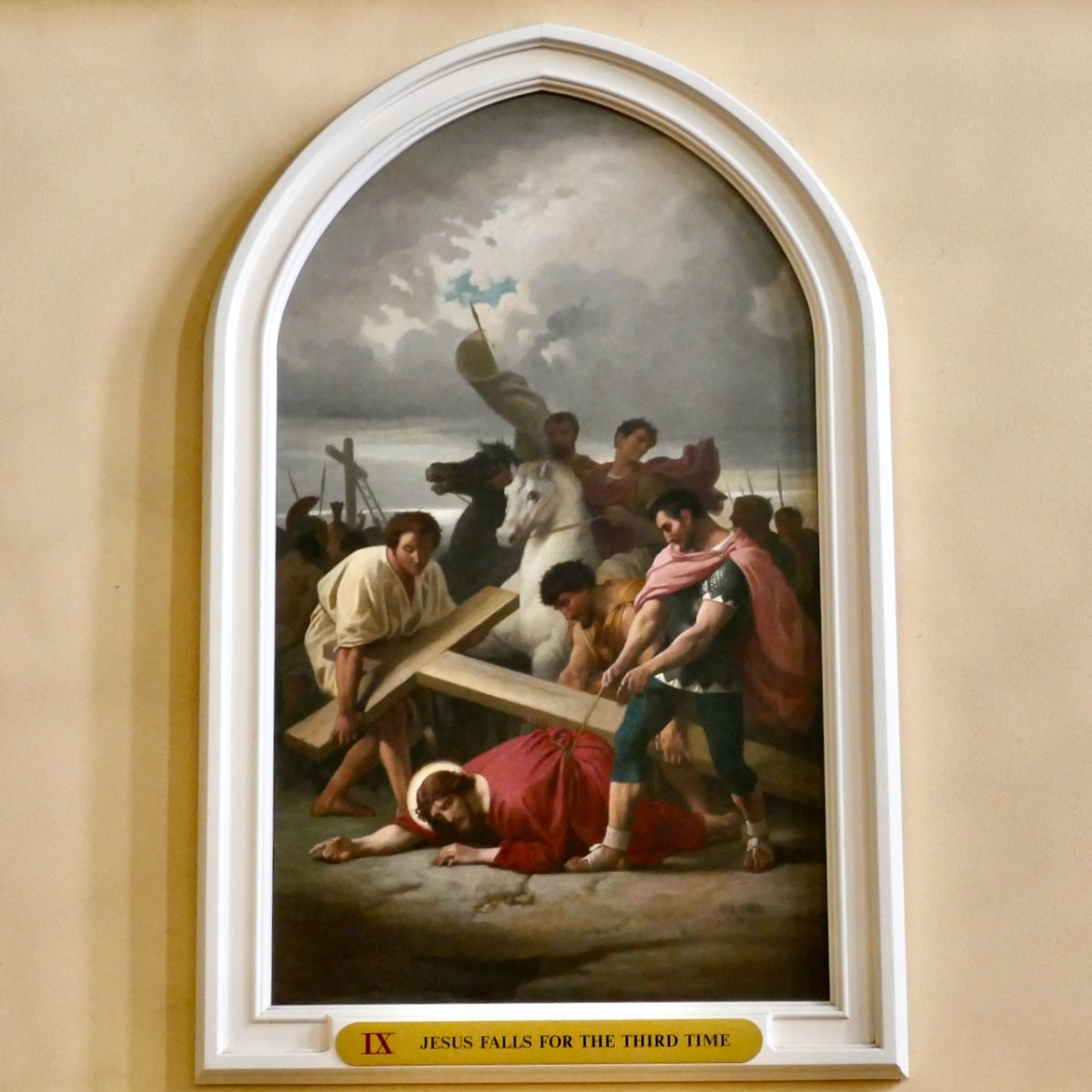
Most Stations appear to have been ordered from a catalogue and all look similar, painted in an Italianate Renaissance style and framed in wood. The image above, of one of the stations in a rural church in Cork, is typical.

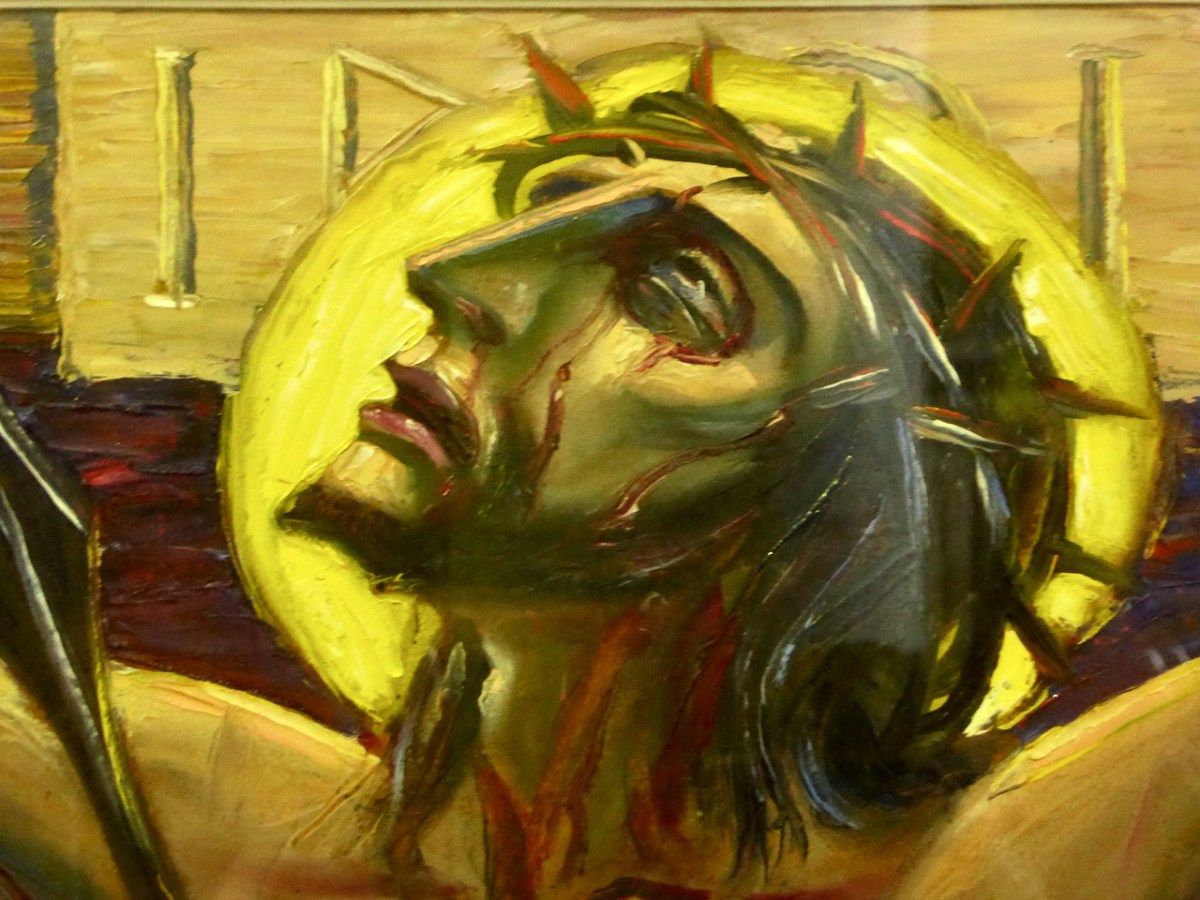
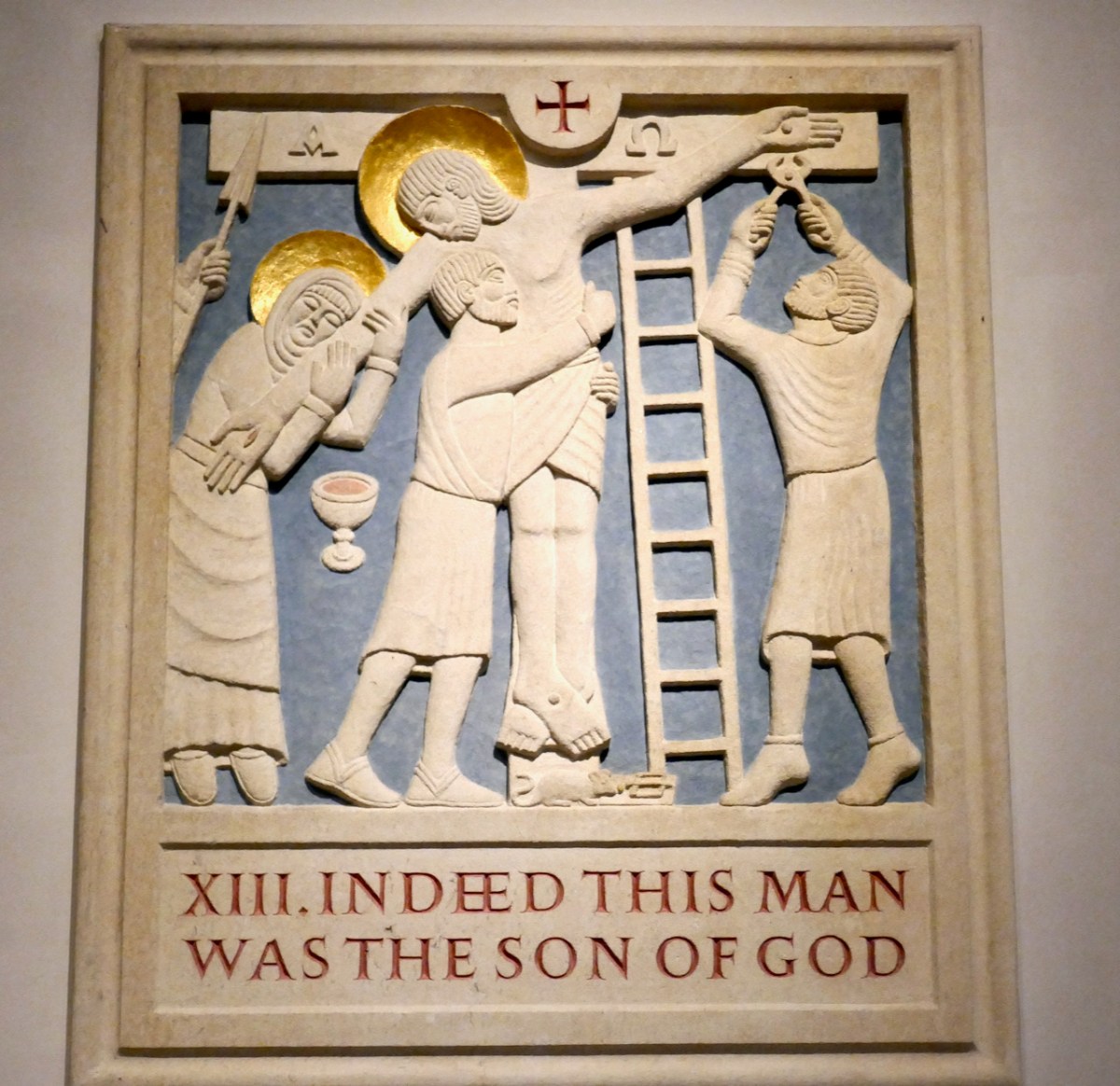
However, architects, priests, and parish committees sometimes took the bolder step of commissioning Stations from a contemporary artist. The lead image and the one above are both from sets of Stations by Richard King. The lead image is the Deposition (Christ taken down from the Cross) and is in a small church in Foilmore in Kerry, while that immediately above is from Swinford, Co Mayo, as is the one below – a painting that focuses ferociously on the suffering of the crucified Jesus.
This was an important source of income for artists from the beginning of the new Irish State. While we don’t often think of the Catholic Church as a patron of the arts, in practical terms it functioned as such for many painters and sculptors. In fact it is hardly an exaggeration to say that the church was the largest commissioner of contemporary art in Ireland during most of the twentieth century. 
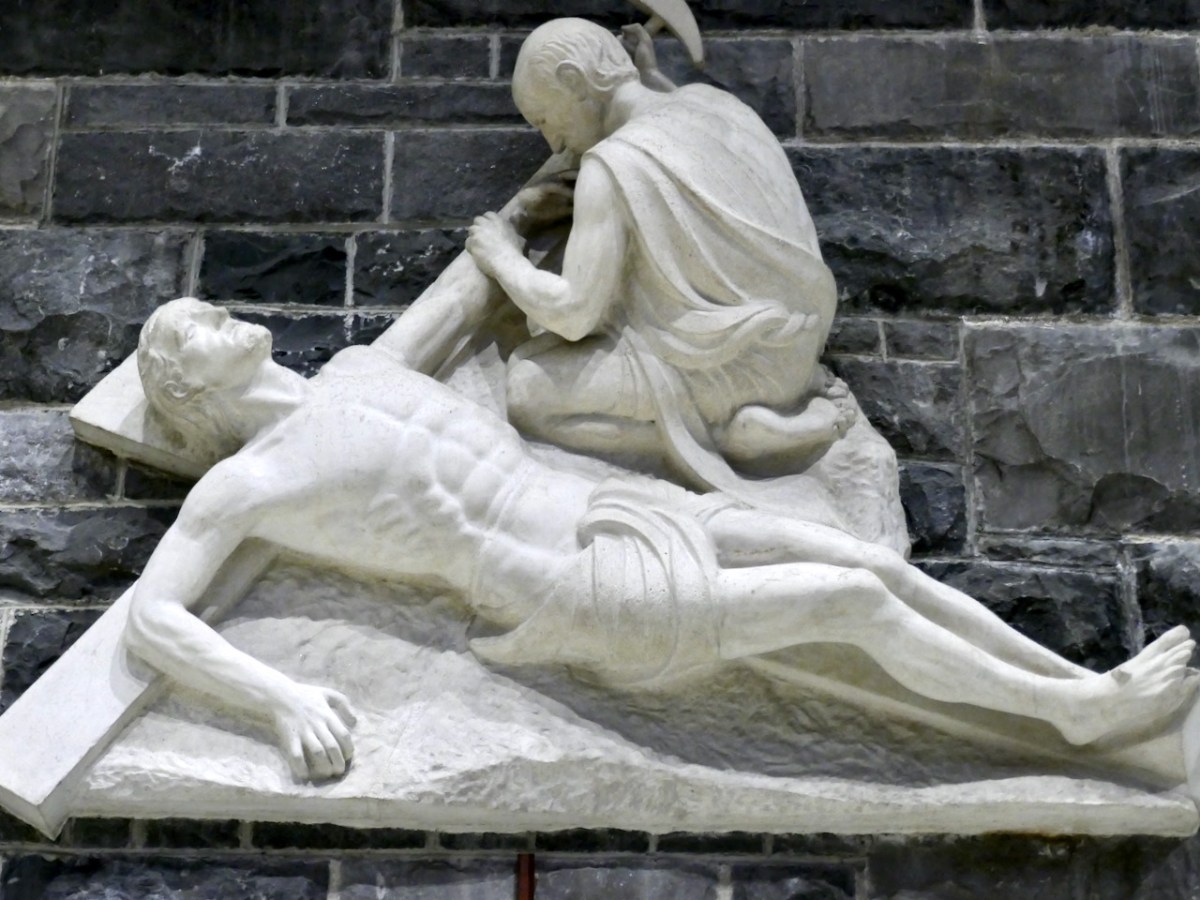
Galway Cathedral is a showcase for twentieth-century artists and all fourteen Stations were carved in portland stone by Gabriel Hayes. It took her eighteen years to complete them and she called them ‘the main work of my life.’

Certain architects – Liam McCormack, for example, or Richard Hurley – considered each aspect of their design and included specification for contemporary art. Some indeed, like Eamon Hedderman, worked closely with artists to plan a church holistically, incorporating the art into the integral fabric of the building. A magnificent example of this can be seen in the Church of the Irish Martyrs in Ballycane (Naas) where large-scale graphic stations designed by Michael Burke are surrounded by contemporary glass by George Walsh.
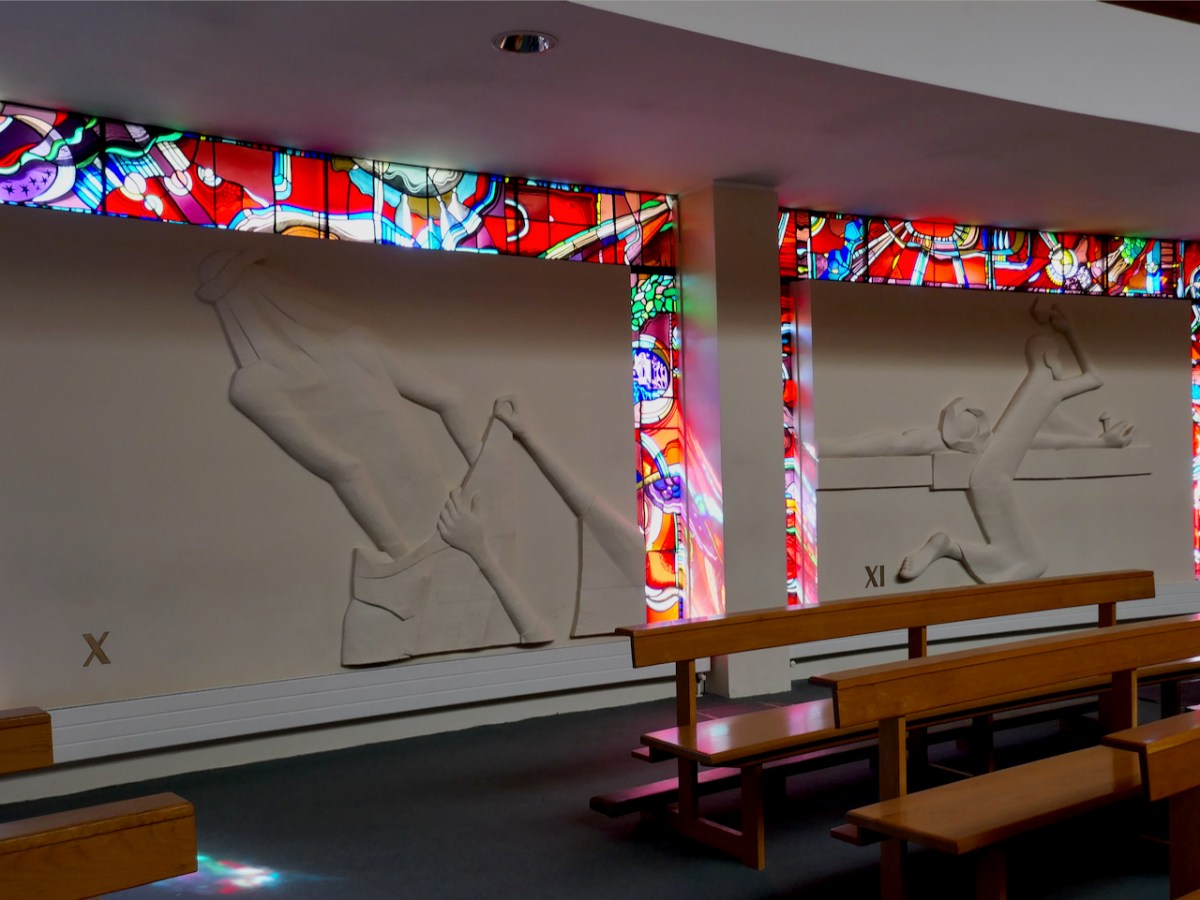
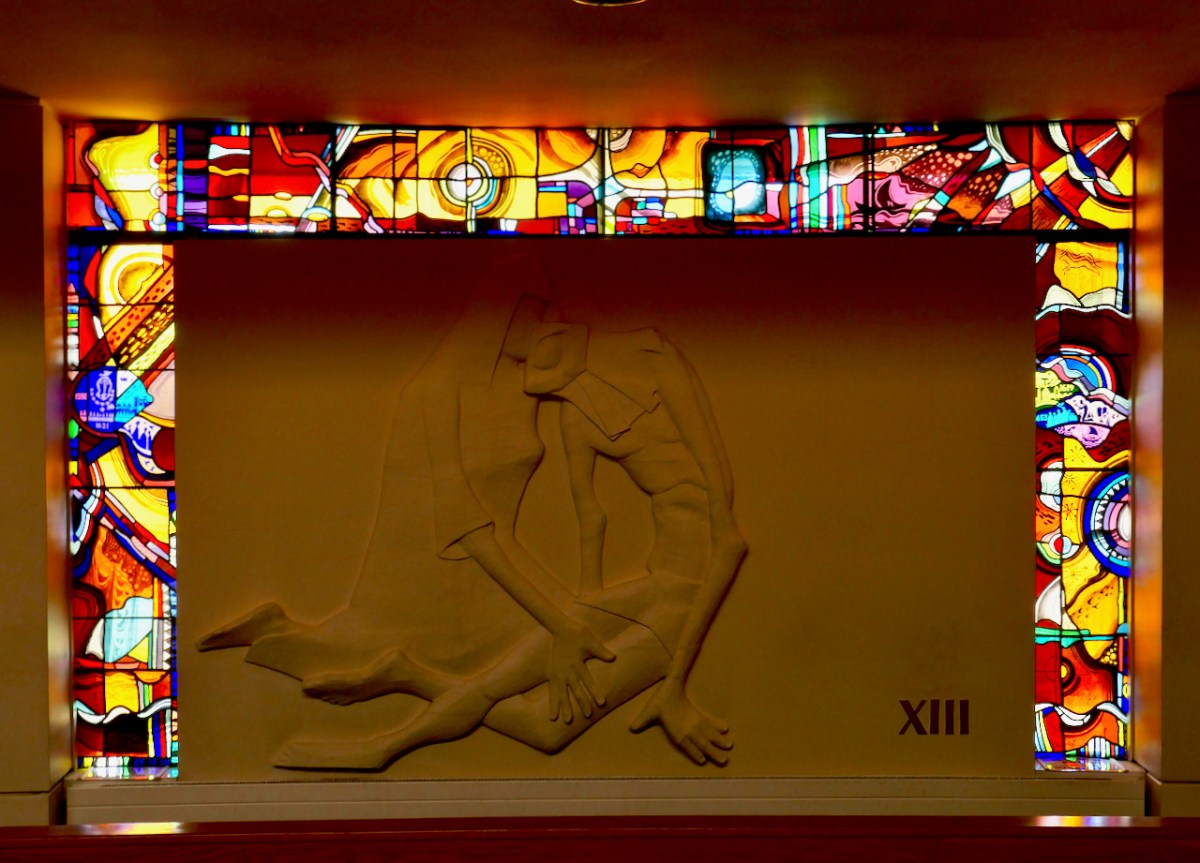
Many of the Irish artists familiar to us from the 20th century catalogues have contributed Stations to churches around the country – sometimes to the large cathedrals but often too to obscure country parishes where the priest (it was usually the priest) wanted something more than a standard imported set. Sean Keating‘s Stations for St John’s Church in Tralee (both images below) are arresting in their drama and strong character studies.
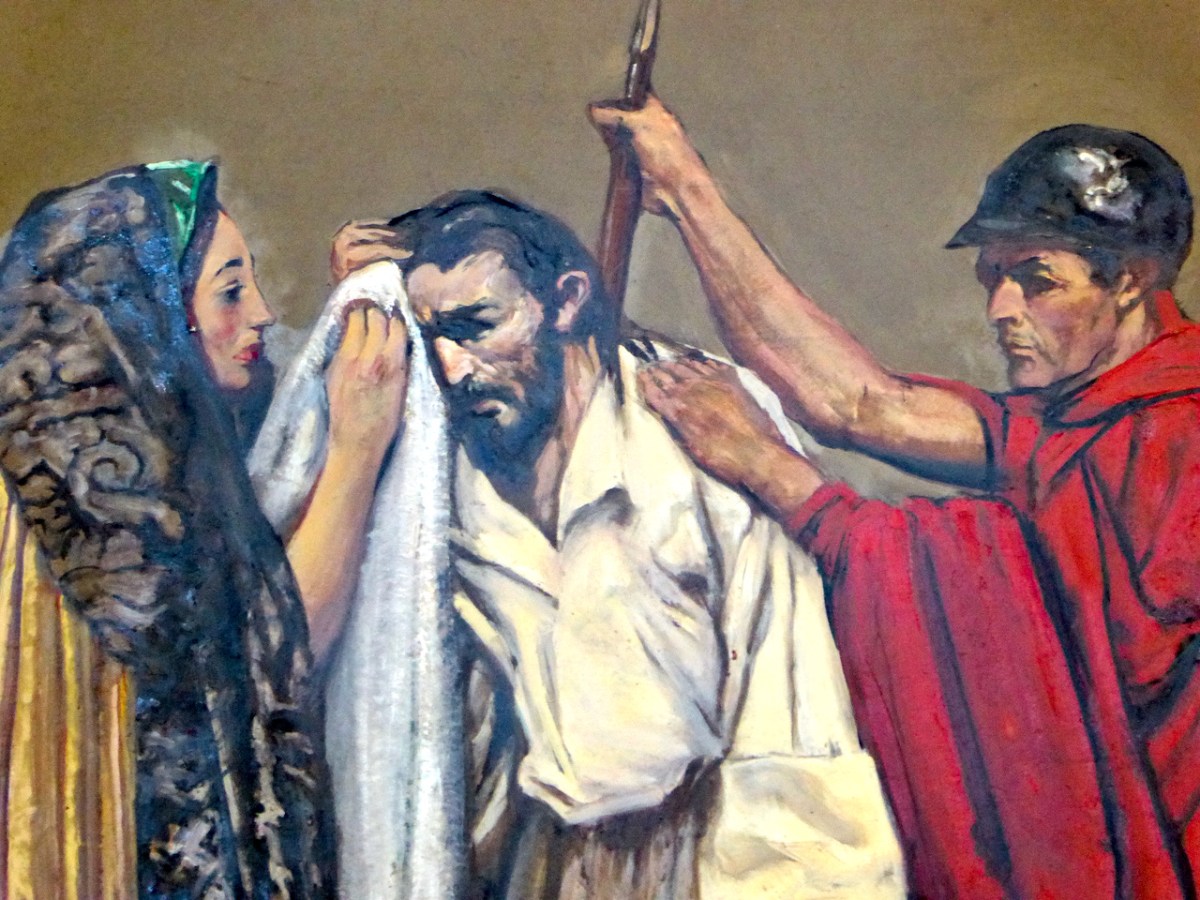
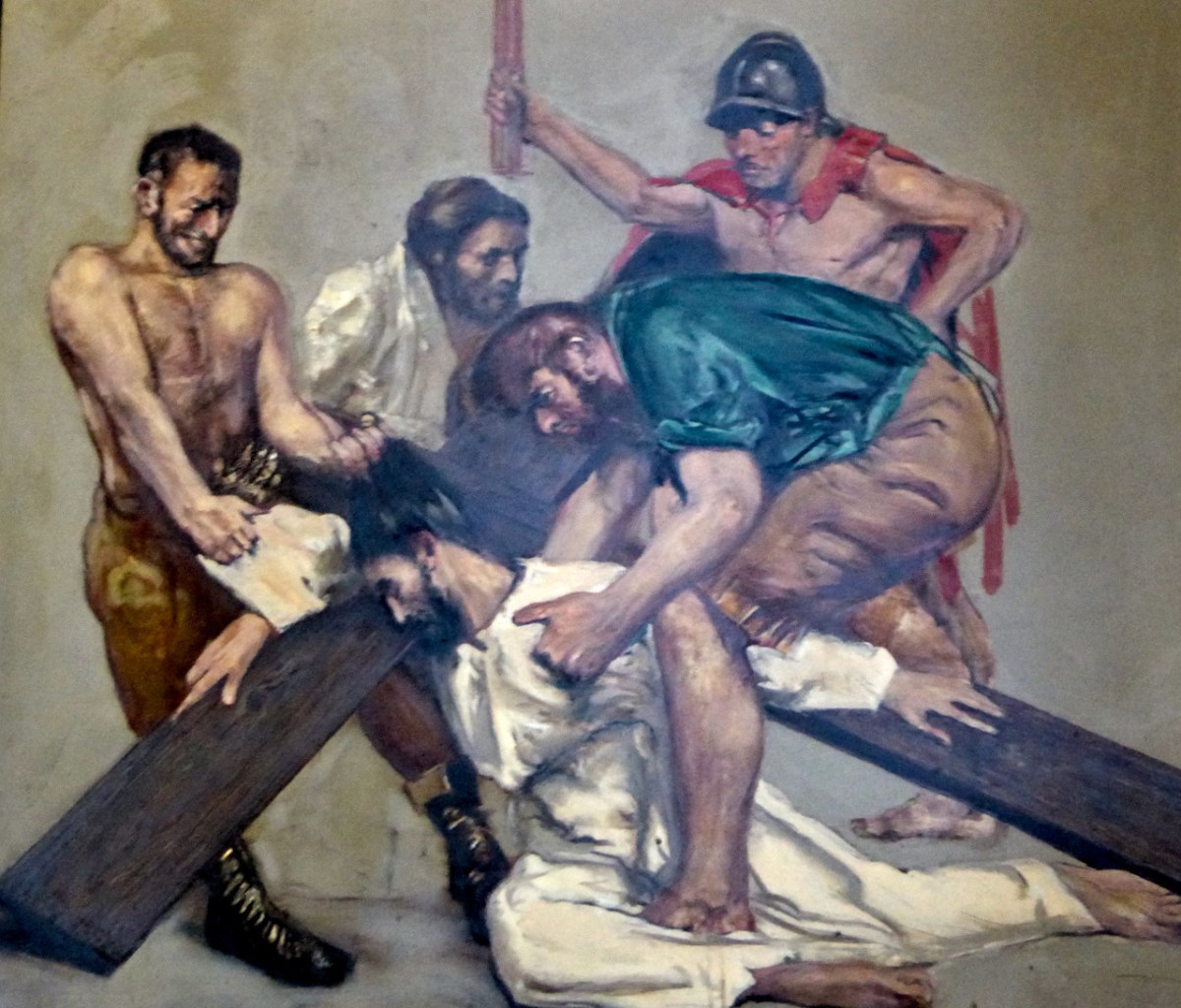
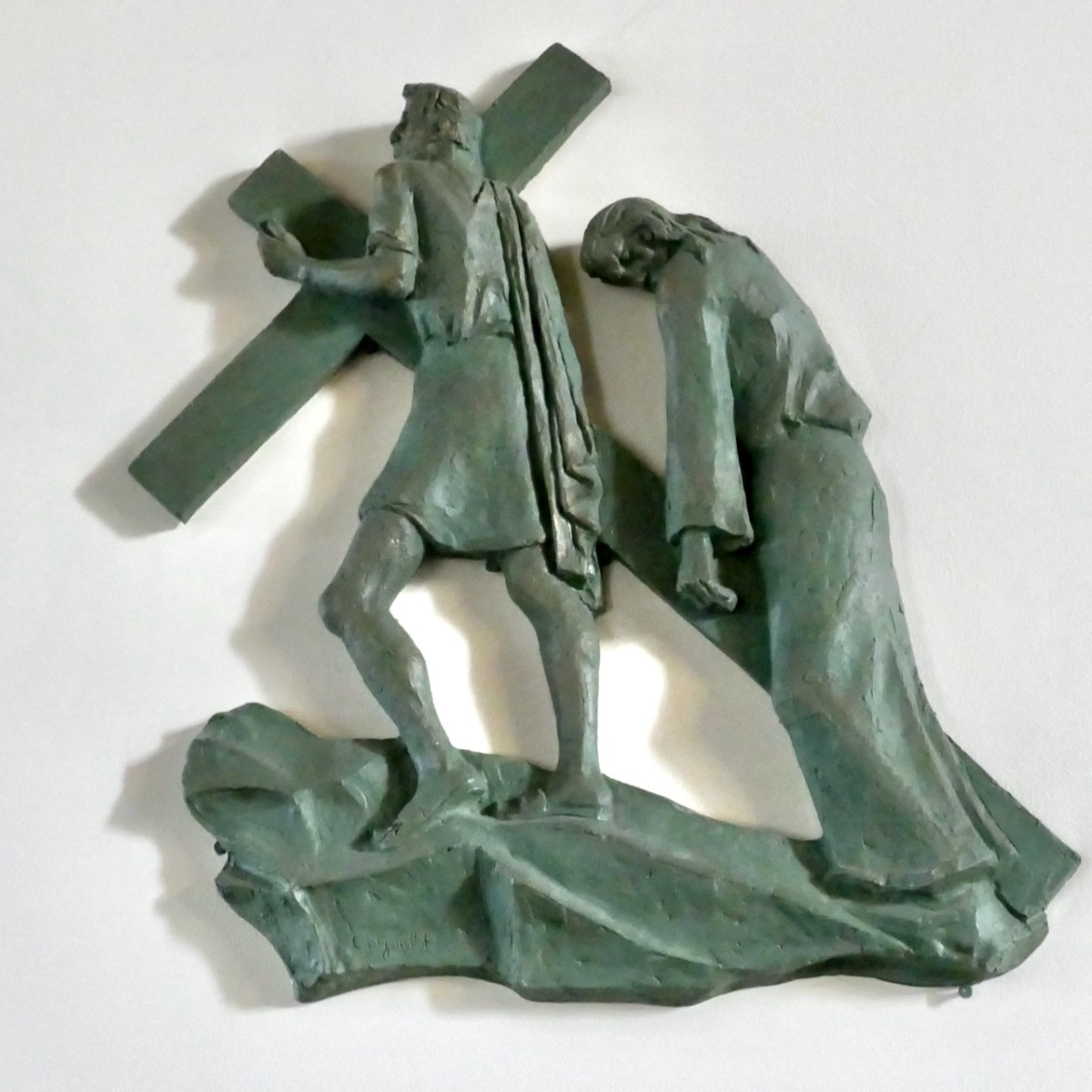
Stations come in many media and I have tried to show a variety in this post by well-known Irish artists. Bath stone was the medium of choice for Ken Thompson – the image below is of one of his stations for St Mel’s Cathedral in Longford. Below that is a Station from Ballywaltrim Church in Bray by the Breton/Irish Sculptor Yann Renard Goulet, although I am not sure what the material is.
Patrick Pye is more commonly associated with his stained glass windows for Irish churches, but his painted Stations for the Church of the Resurrection in Killarney (below) bring a quietly beautiful reflective focus to a contemporary interior.
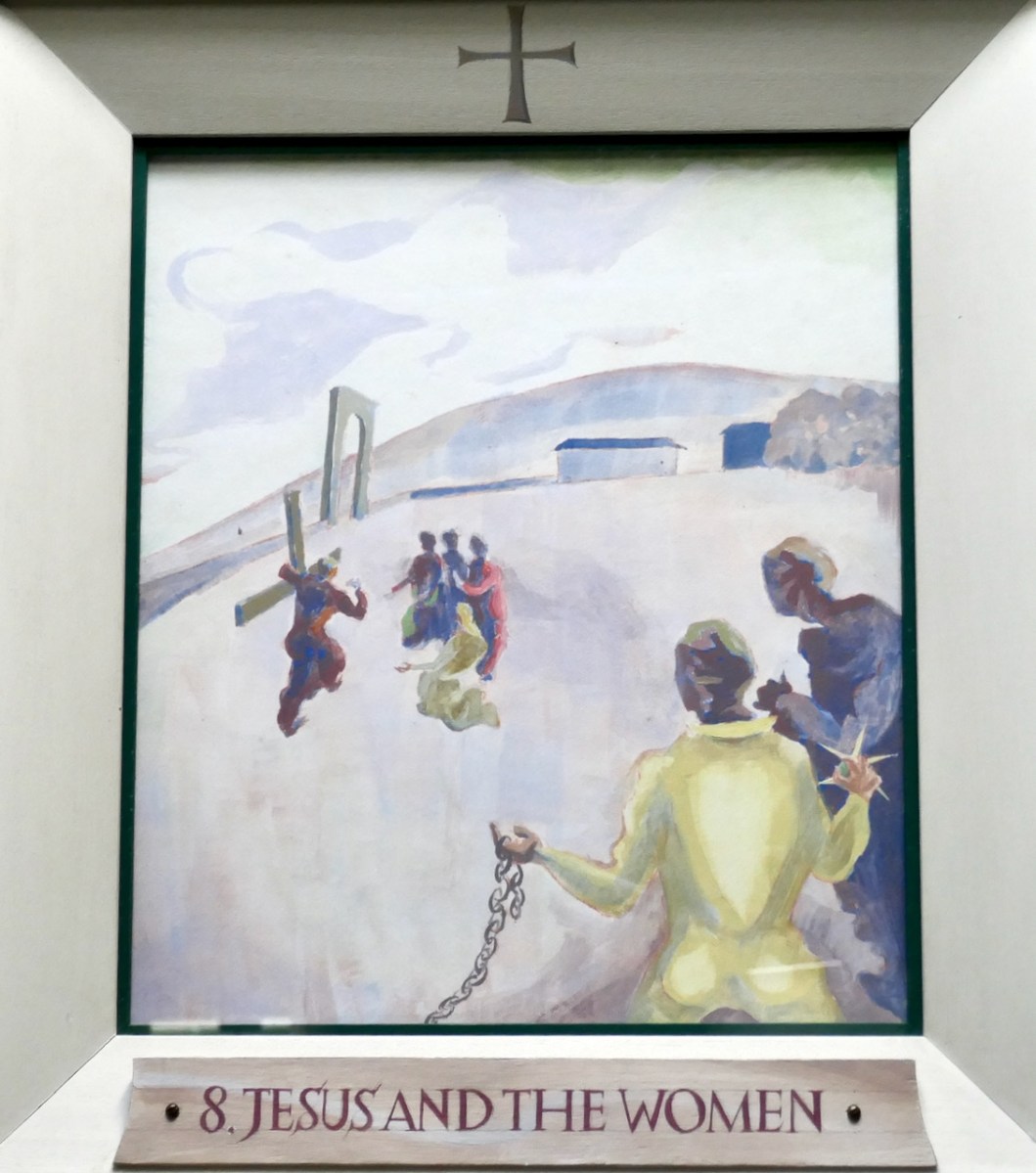
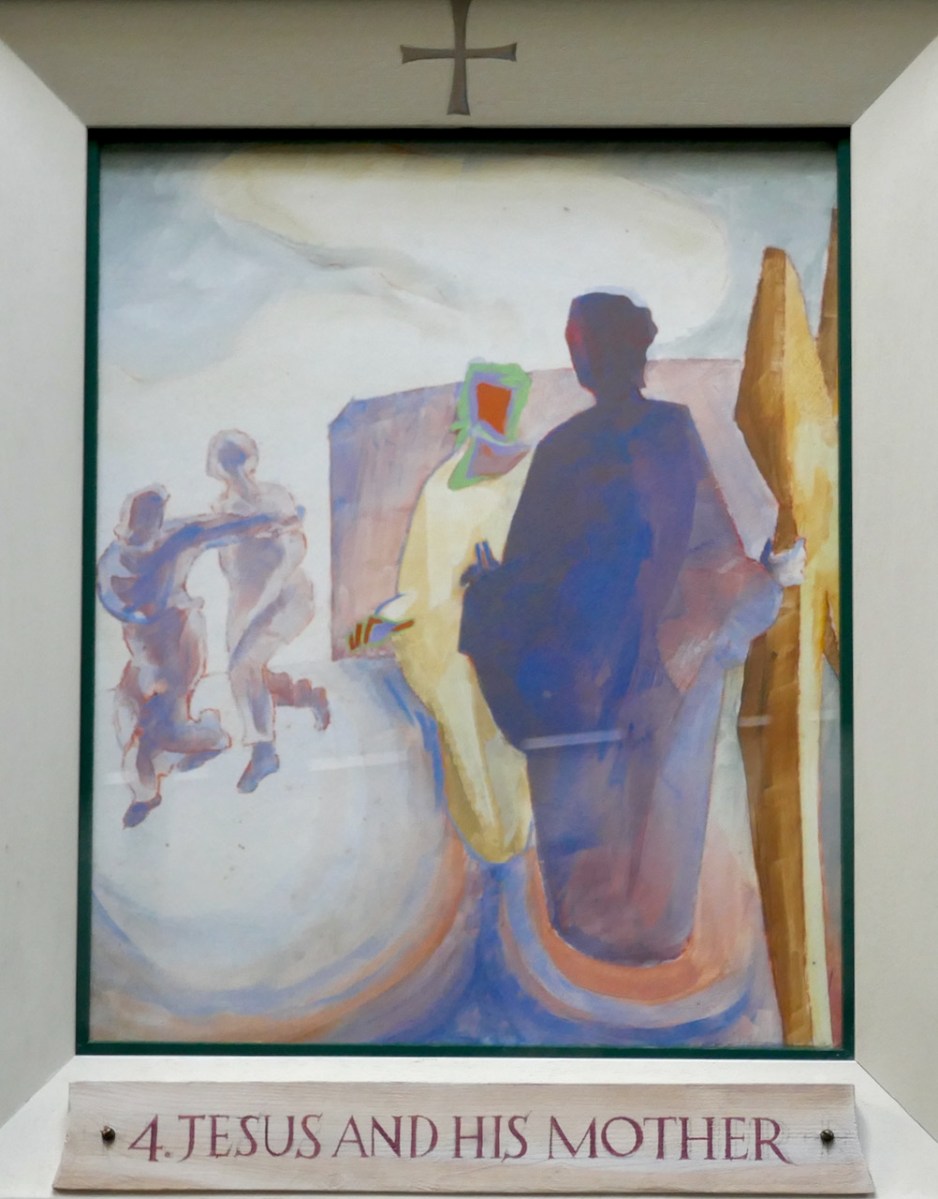
Sean O’Sullivan was known primarily as a portrait painter, but he also designed Stations, such as the ones below for the church in Newquay in Clare. Using only pencil and colour washes, he has produced powerfully emotive scenes (below).
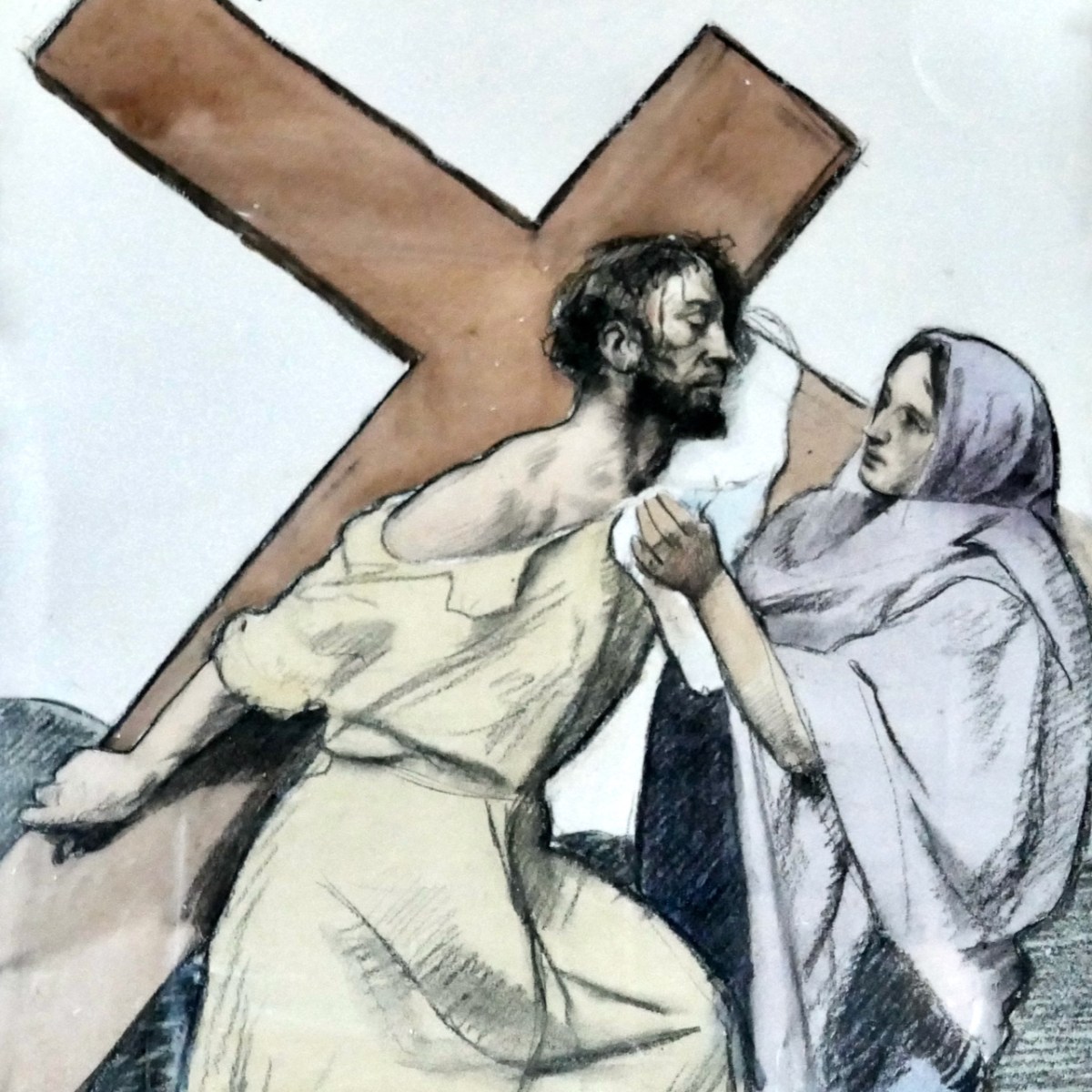
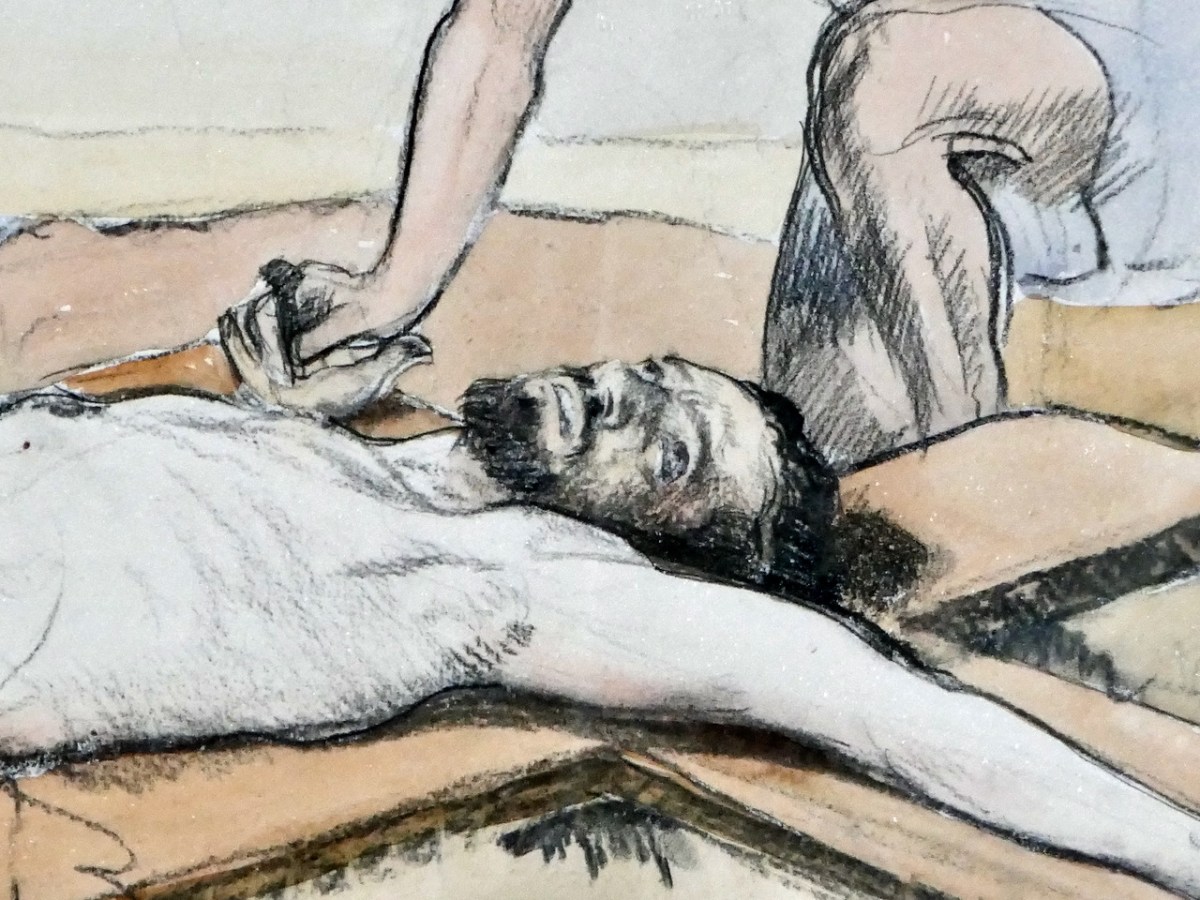
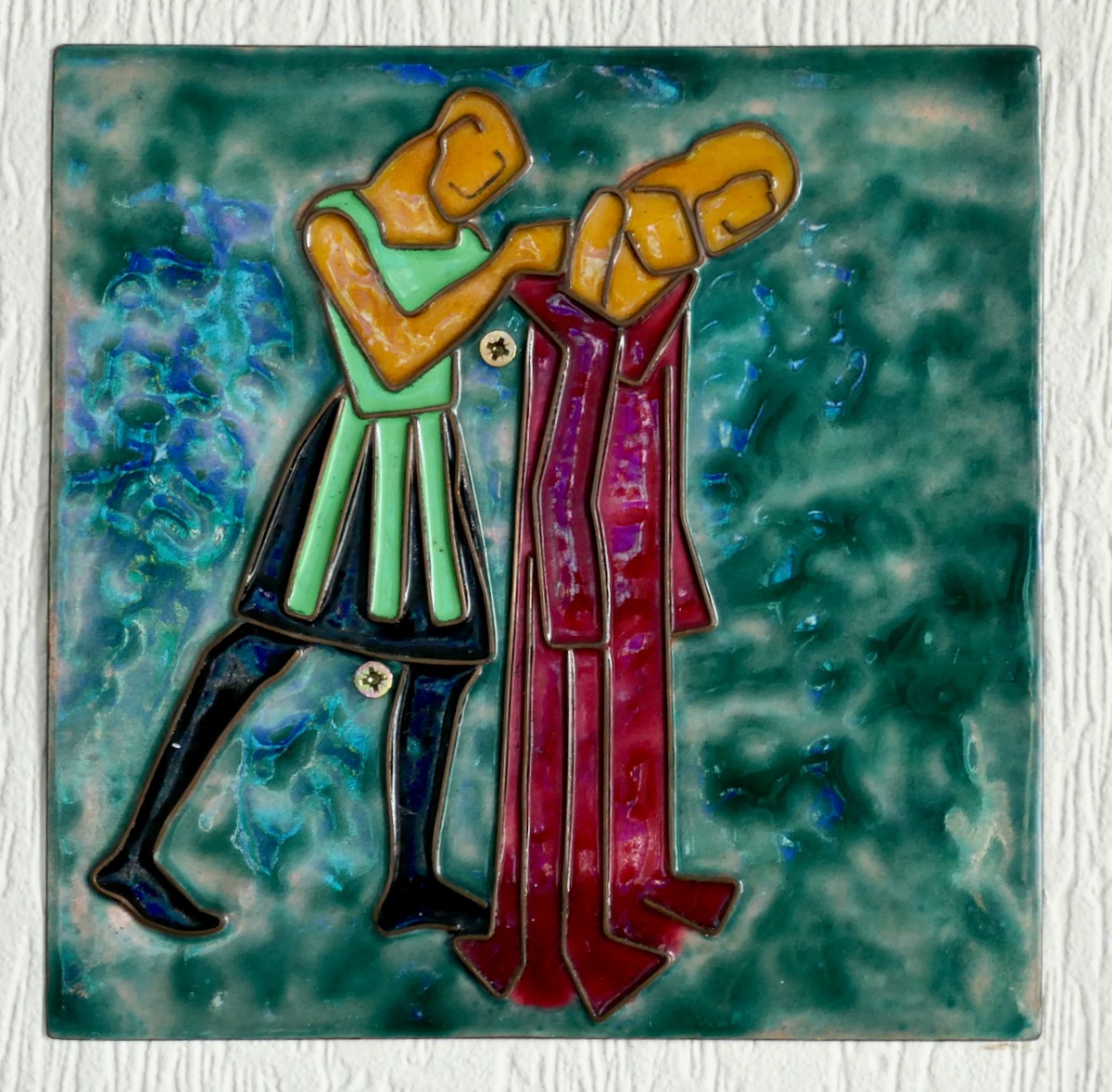
Stations, however, are often unsigned and so our old friend Anon is responsible for many. A future post will include some of his or hers. The enamel Station below, for example, may be by Nell Murphy, but I can’t confirm this, so Anon it is, for the moment.
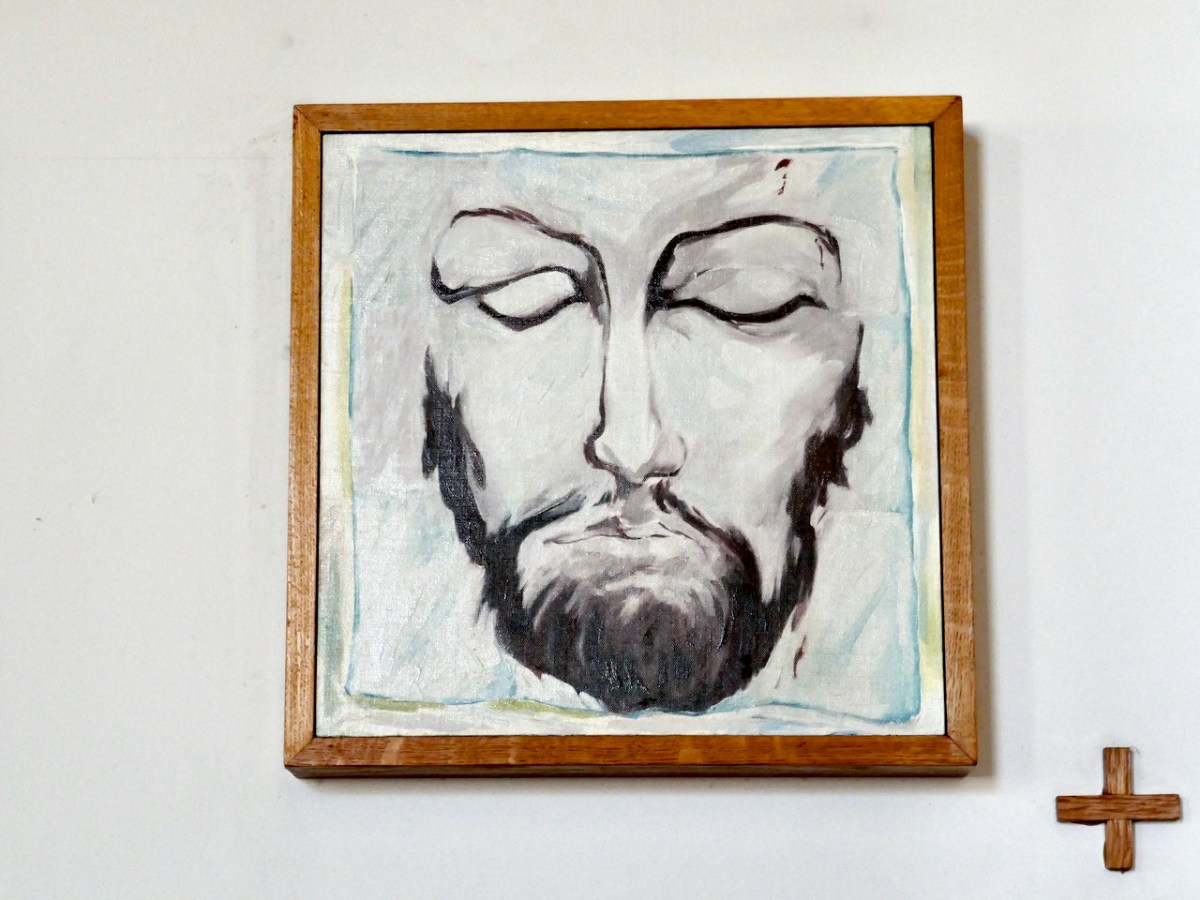
I am also planning a post on Stations done in stained glass – they are some really beautiful example, starting of course with Harry Clarke’s Lough Derg windows. But this post will start us off with some of the examples I have seen in churches around the country – let’s call it an Introduction to Irish Contemporary Stations. I’d love to hear from readers who have their own favourite set. And if anyone knows the artist responsible for the Stations in the Franciscan Church in Wexford (example below), do let me know!
The Táin, by Hutton and Campbell

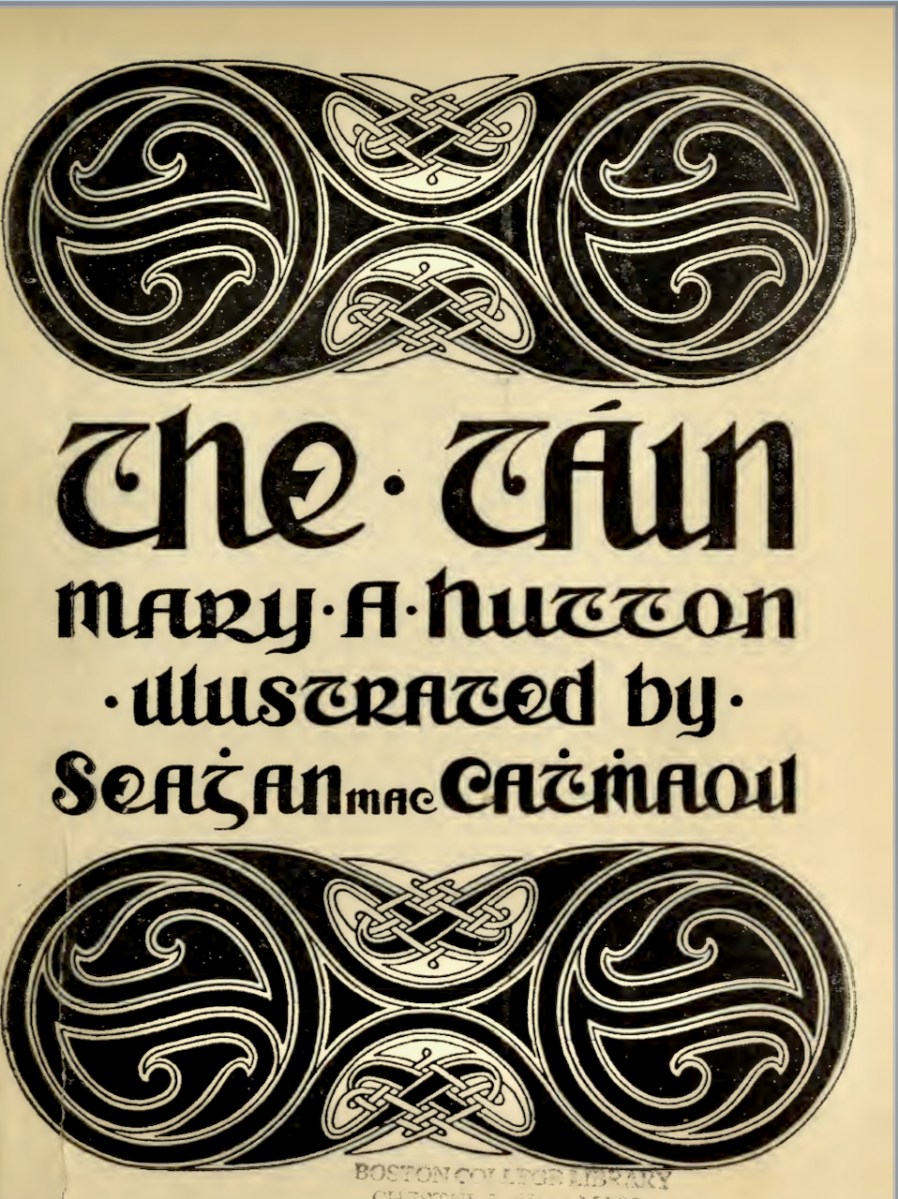
The Táin Bó Cúailnge (pronounced approximately tawn bow coolna), known in English as The Cattle Raid of Cooley, is one of the great Irish Sagas. There are many translations and illustrated versions, perhaps the most famous being that of Thomas Kinsella, illustrated by Louis LeBrocquy, published by the Dolmen Press in 1969. Almost forgotten now is the version by Mary Ann Hutton, illustrated by John Campbell – but it deserves to be remembered as one of the masterpieces of the Irish literary and artistic revival.

First of all, what is The Táin? It’s an epic tale, first written in the 7th century but preserved in various versions from the 11th to the 14th centuries with many modifications, additions and changes along the way. It tells the story of Queen Maeve, jealous of her husband’s white-horned bull, who determines to acquire the even more prestigious Brown Bull of Cooley from Ulster, ignoring the foretelling of a dreadful outcome should she proceed. The Ulstermen are rendered unable to fight by a curse, leaving the great warrior, Cuchulain, to fight alone – which, by the way, is no bother to him, especially once his warp-spasm, or battle-rage, comes on him. However, in the end he fights and kills his old friend and foster-brother, Ferdia. There’s a lot more to it, of course, and much of the tale is told by Fergus, who relates the whole story of Cuchulain as a youth and his many heroic deeds.

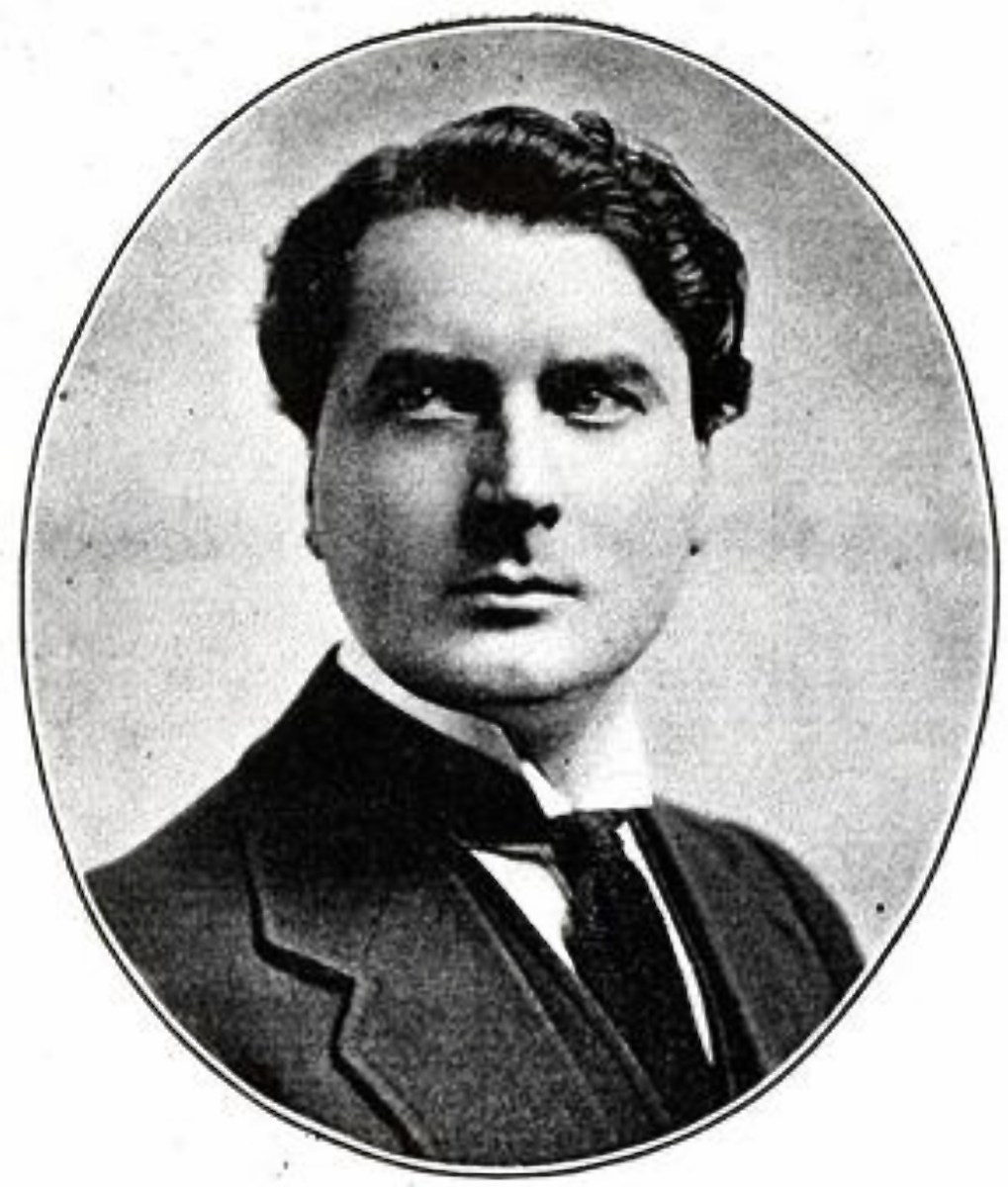
And what about the author and illustrator, neither of them now a household name, although justly acclaimed in their day? Mary Ann Hutton was born in England but had strong Irish connections and moved to Belfast when she married. She was highly educated, with an academic knowledge of Old and Middle Irish and became a fluent Irish speaker. She was an ardent supporter of Patrick Pearse and the Gaelic League and became a central figure in the Gaelic revival. Her version of The Táin was the result of ten years of intense scholarship. It is not a translation, but rather a rendition in blank verse of the story informed by her research into its various versions and iterations. She uses her own spellings as well – Maev and Cucullin, for example. I couldn’t find a photograph of Mary Ann, but here is the illustrator, below.

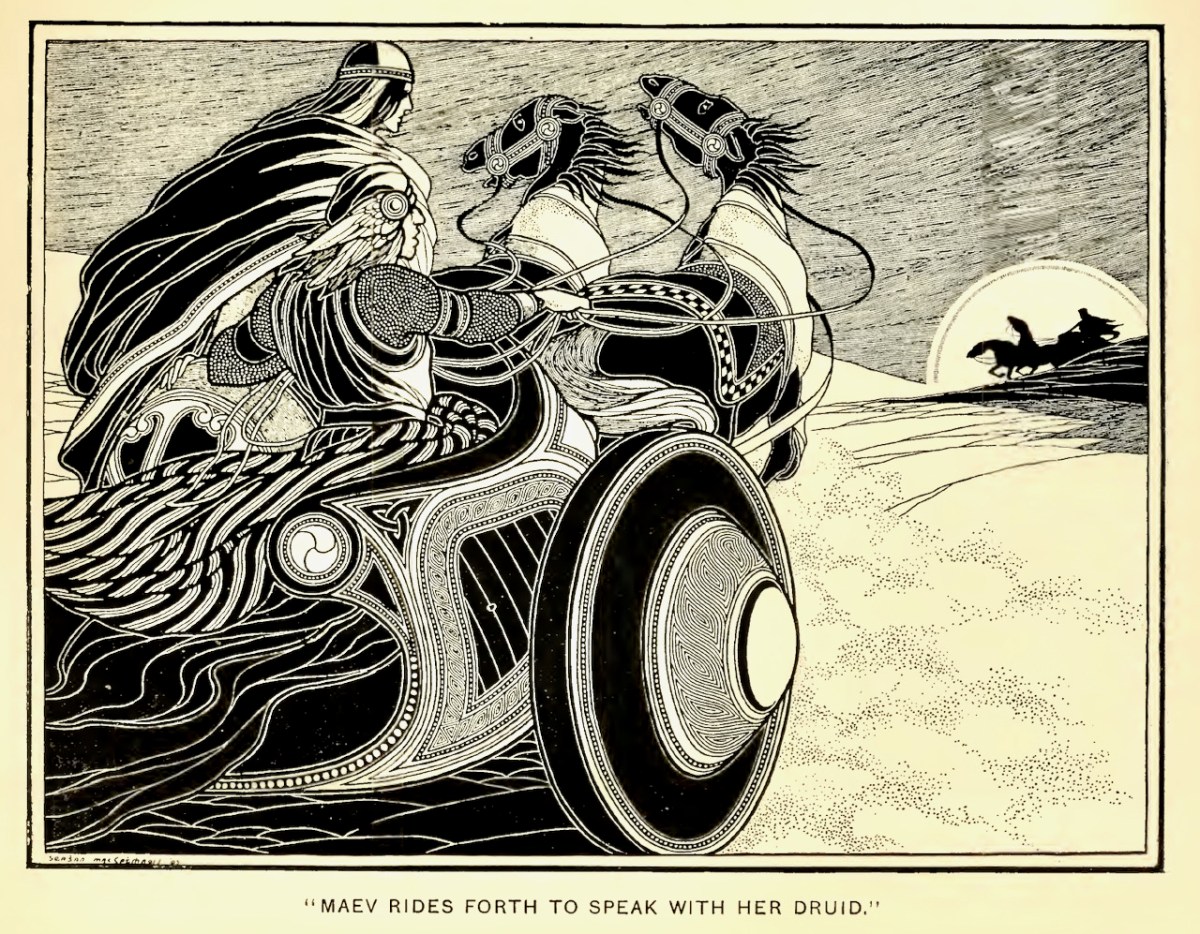
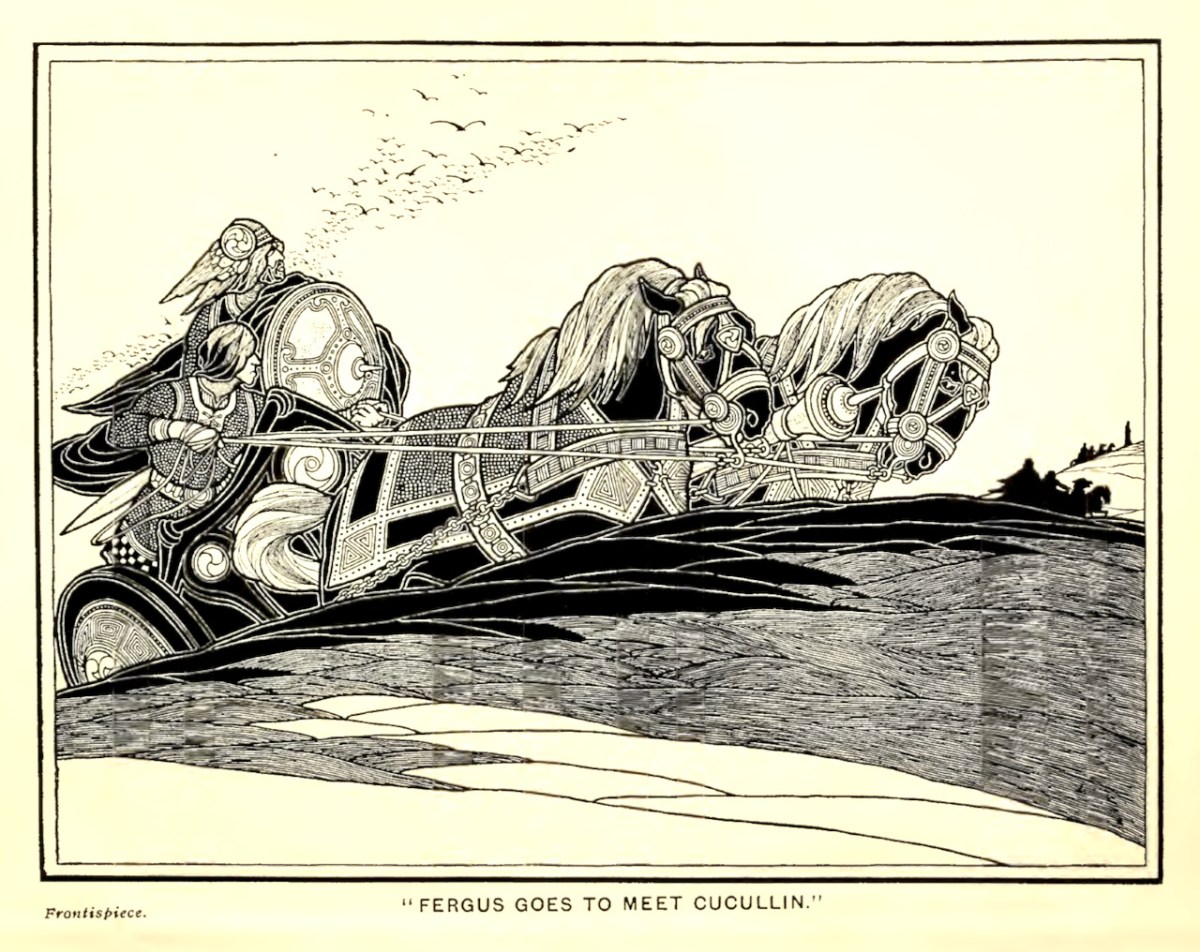
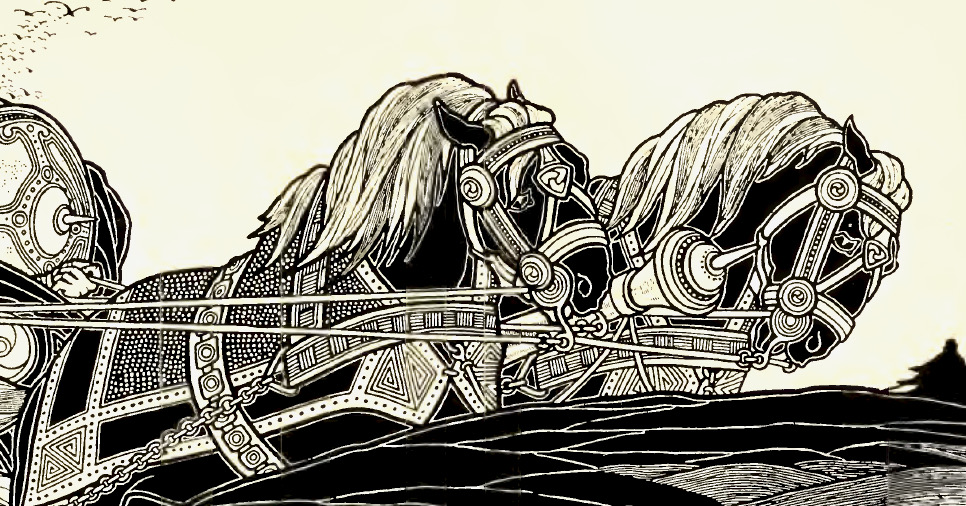
The illustrator was John Patrick Campbell, although in the spirit of the Gaelic Revival, he styled himself as Seaghan McCathmhaoil. There’s a wonderful biographical and appreciative sketch in the Irish Arts Review of 1998 by Paul Larmour* and that’s where I learned that he was also based in Belfast, that he produced illustrations for the first edition of Hutton’s Táin in 1907, but they were not used until the second edition, in 1924, and then only a selection of his illustrations were included. That’s a pity, because according to Larmour, Campbell’s illustrations for the Táin were ‘among his most impressive.’ They certainly capture the romantic spirit of the Celtic Revival period, and show his mastery of line drawing and strong black and white palette. Larmour says, This Irish epic poem conjuring up the ring of battle and the revelry of kings gave full scope to Campbell’s by now increasingly powerful expression and individuality, the drawings showing great strength of composition, dramatic power, and richness of decoration. 

I couldn’t agree more, so here are a few selections from the text (it’s available online at good old archive.org) along with Campbell/MacCathmhaoil’s illustrations. The illustration above, captioned Maev’s Second Meeting with Fergus, is from Larmour’s article and is one of those that was, inexplicably, not eventually used in the book.

And Fergus

Came from the grave where five times five score years

He had been hidden. And a beautiful

And rich appearance was upon that warrior.

Brown hair was on him ; and a hooded layna

With red inweaving of red gold. A bratt

Of bright grass-green was round him ; and he wore

A golden-hilted sword, and round-toed shoes

Wrought all of bronze. And when that warrior, Fergus,

Perceived the holy men of Erin nigh him,

It was his wish to stand, and standing, tell

The Táin he had to tell.

This was the time wherein Maev called and spake

Unto her charioteer, and bade him catch

Her steeds and yoke her chariot, so that straightway

She might repair to speak with her own Druid

And ask for prophecy and knowledge. “ Wait

One while, O Queen,” the charioteer made answer,

“ That I may three times wheel the chariot round

Sunwise, to win a sign of luck and fortune.”

He wheeled the chariot sunwise, and then Maev

Rode to her Druid. When she reached the Druid,

She asked for prophecy and knowledge.

I see a man youthful and very fair,

Who will perform great deeds, and win his fill

Of hurts and wounds in his smooth fine-fair skin.

Upon his brow, which is a meeting-place

For victories, the hero’s light flames high.

Amidst each eye the seven dragon-gems

Of a pure hero-champion flame and burn.

Plain to perceive, his intellect is keen.

A red hooked layna folds him. His fresh face

Is beautiful and noble. He observes

Towards women courtesy and modesty.

Though a mere stripling, blooming, dainty-cheeked,

He in the battle shows a dragon’s form.

His fairness and his valour now resemble

Cucullin of Mweerhevna ; and though, truly,

Who this Cucullin of green Moy Mweerhevna

May be I know not, yet this thing I know

These hosts by him will all be very red.

Four little swords for feats of special skill

He carries in each hand : he will attain

To plying these upon the hosts : the hosts

Will flee from him on every road and way.

When, in addition to his spear and sword,

He brings his dread Gae Bulg, he plants his feet

On every slope and hill. Two spears project

O’er his bright chariot-wheels : he rides to battle.

Fury distorts him, battle-fury changes

That form which hitherto I have perceived.

He is Cucullin son of Sooaltim,

Hound of the Forge : he wends unto a battle.

Your hosts, now whole, he will hack down and fell.

He will compel your slain thickly to lie.

Strong men will leave their heads with him. This I,

Fedelm the Prophetess, will not conceal.

Red blood shall drip from the white skins of heroes

Lasting and long the memory shall be

Bodies shall there be torn, women shall wail,

Through deeds of that renowned Hound of the Forge,

Whom now, O Queen, I see.

The Prophetess

Ended her prophecy : and Maev rode back

From seeking-out of prophecy and knowledge.

Said Laeg, “ here comes a chariot-rider towards us.”

“ Describe him, then, good Laeg,” Cucullin said;

And Laeg described him thus:

“ Larger,” said he,

Than is some heathy knoll, rising alone

From out a grassy level, seems to me

His noble chariot. Larger than the tree,

Reverenced and old, that stands upon the green

Of some king’s doon, appears to me the hair

That curls and waves in golden bright abundance

About that warrior’s head. A crimson fooan,

Fringed and embroidered, folds him round : a spike

Of graven gold secures it. In his hand

He holds a wide, red-flaming spear. A shield,

Carven, and compassed by a ridge of gold,

He has ; and a long sword-sheath, which for size

Is like the rudder of some kingly vessel,

Reposes on the huge and seated thighs

Of that great, haughty warrior, planted there

’Midst of his chariot.”

Then Cucullin cried :

“ Oh, welcome, ever welcome is the coming

Of that beloved guest ! I know that guest.
It is my guardian and my fosterer,

My gentle, noble Fergus, who comes there.”

Cucullin saw his weapon, red with blood,

Lying beside Faerdeeah ; and he said:

“ O my Faerdeeah, sorrowful the fate !

I, with my merciless weapon still unwashed :

Thou, pale in death upon a couch of gore.

Sad—what has come of our meeting here

I, wounded, sinking, covered with rough gore:

Thou, altogether dead ! Oh, dear to me

The friend to whom I have served a draught of blood!”

*John Campbell (1883-1962) An Artist Of The Irish Revival by Paul Larmour, 1998 Volume: 14, Pages: 62 – 73

Art/Nature – Incredible Residency Opportunity!

Are you an artist between 30 and 45? Are you inspired by the natural world? If the answer to both of those questions is YES, then here is an opportunity of a lifetime – a residency on a beautiful private estate in West Cork, surrounded by gardens, both wild and cultivated. If the answer is NO, but you know someone who might fit the bill – share the heck out of this post – the Foundation is hoping to receive applications from Ireland!

Ulrike Crespo was a loved and respected member of the West Cork artistic community and a friend and neighbour to us all in this little corner of it. That’s Ulli below in happier times, toasting the installation of a neighbour’s gate.

We were all saddened by her death in 2019 and wondered what would happen to the glorious garden she developed – Glenkeen. In fact, her Foundation, focused on artistic development and opportunities for young people (especially disadvantaged girls) has carried on her work, and one of their programs is this residency opportunity – “ArtNature/NatureArt”.

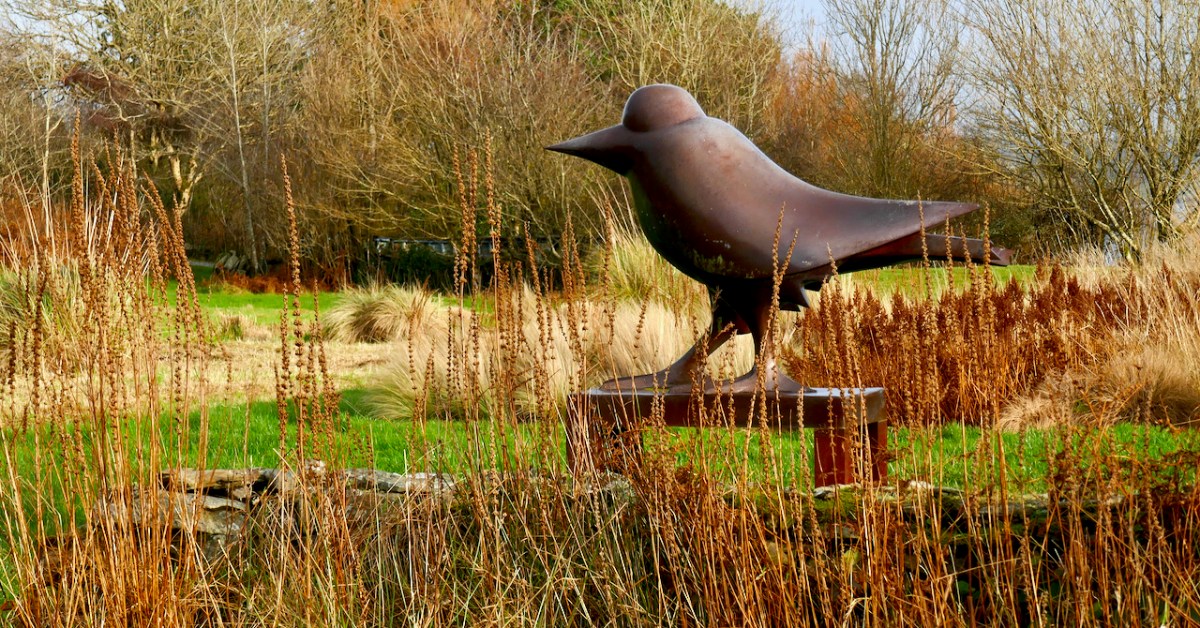
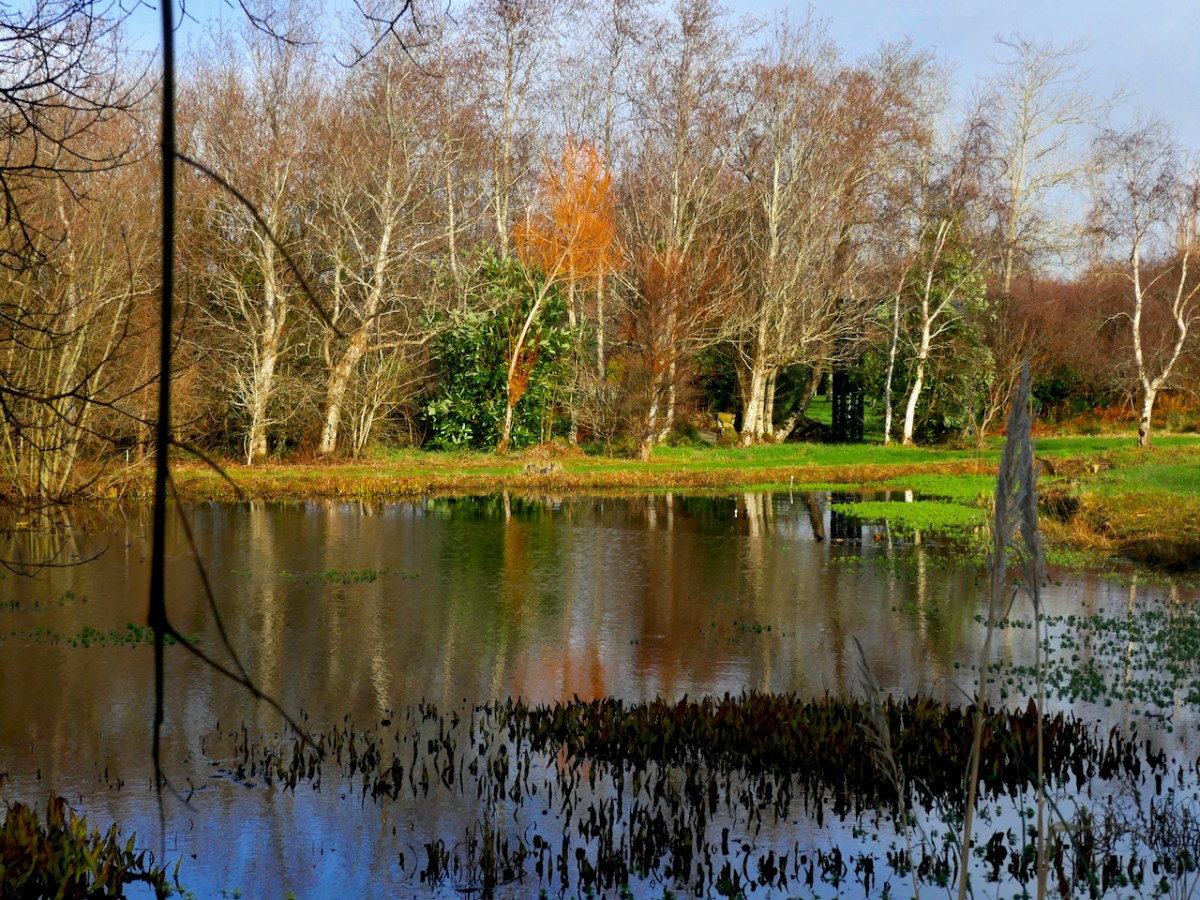
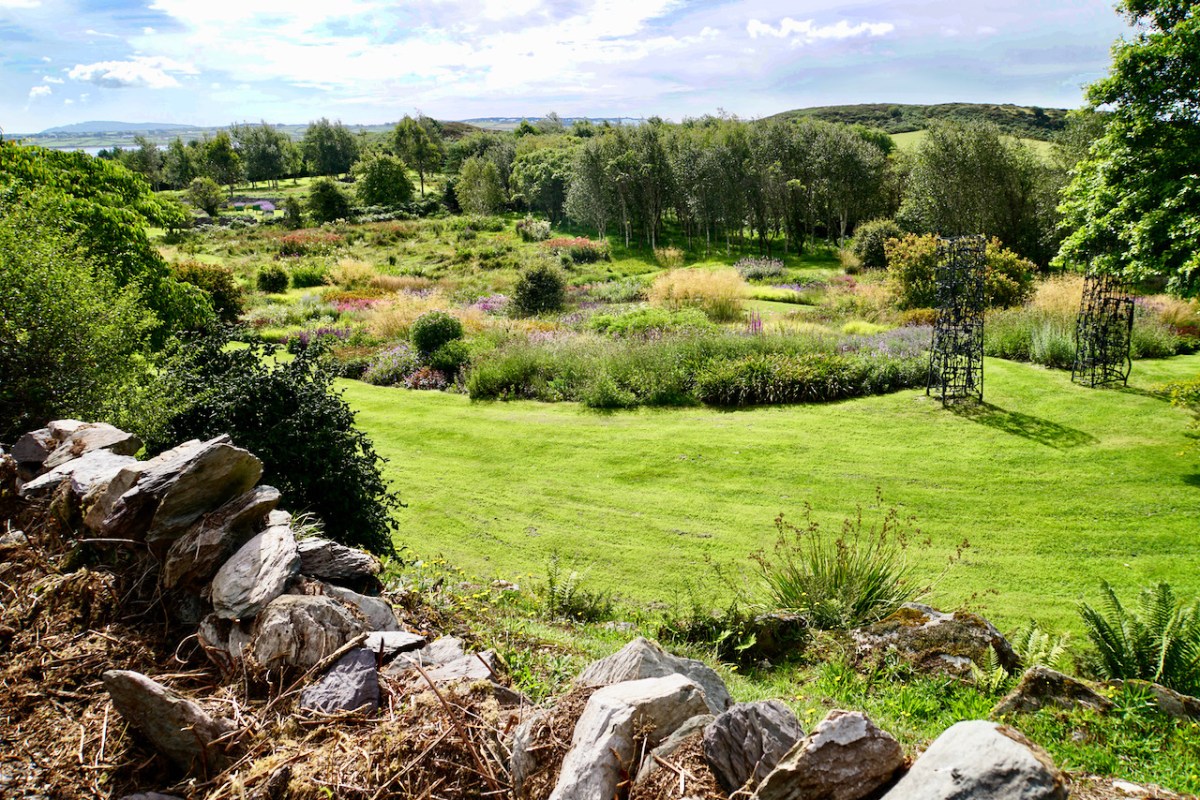
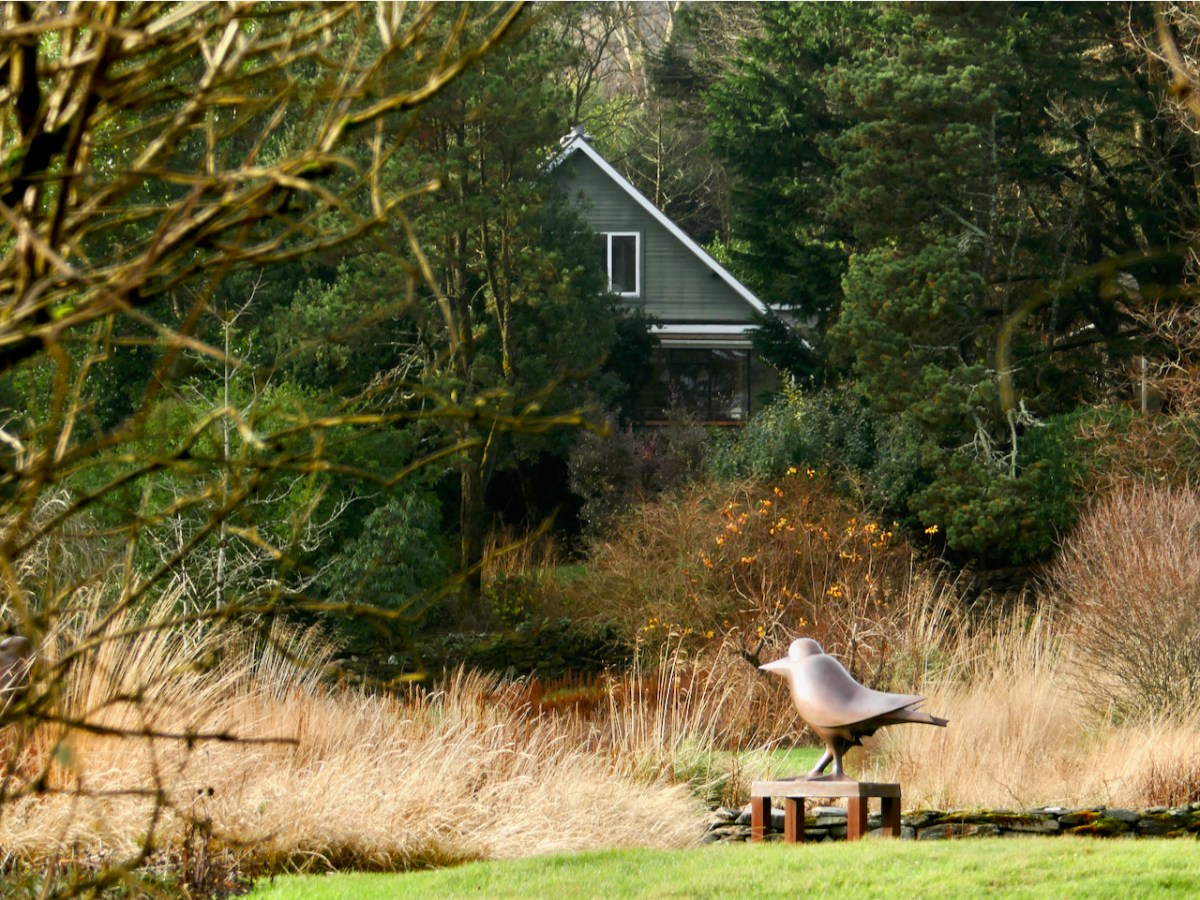
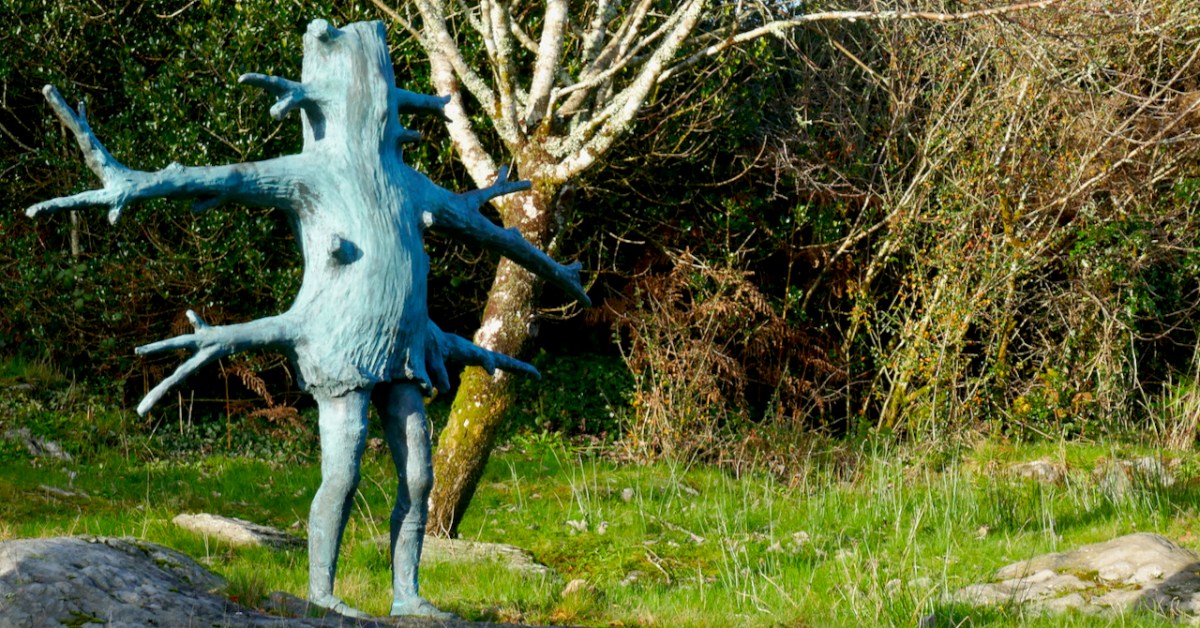
Glenkeen Gardens is a very special place, full of sculpture and with endless vistas across innovative plantings that mix natural and cultivated areas. Ulli loved this place – it inspired her own photography practice – an ethereal, intensely atmospheric approach to scenes from this nature. Take a look at one of her photobooks, Ephemere, for example, or Flowers or Twilight. Or See some of her landscape photography from her regular shows at the Blue House Gallery in Schull.

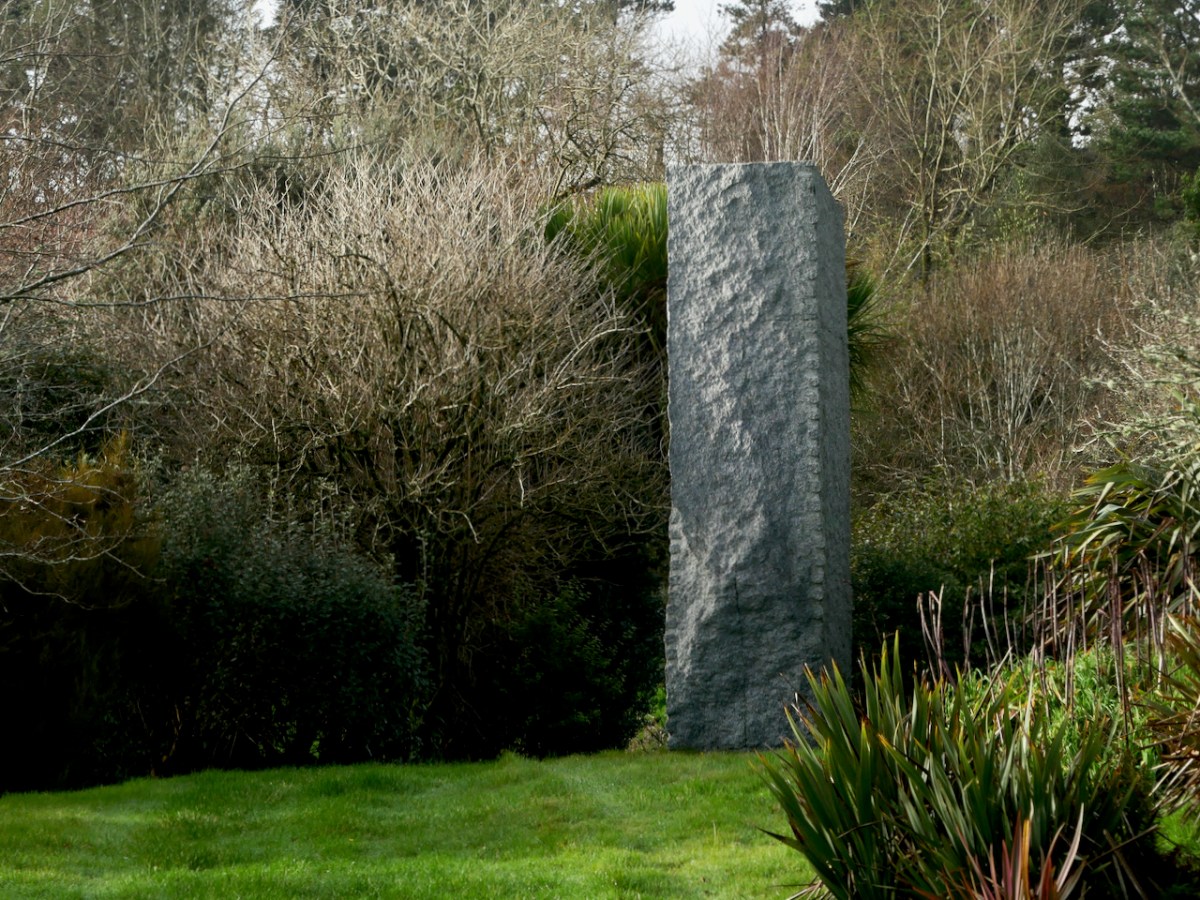
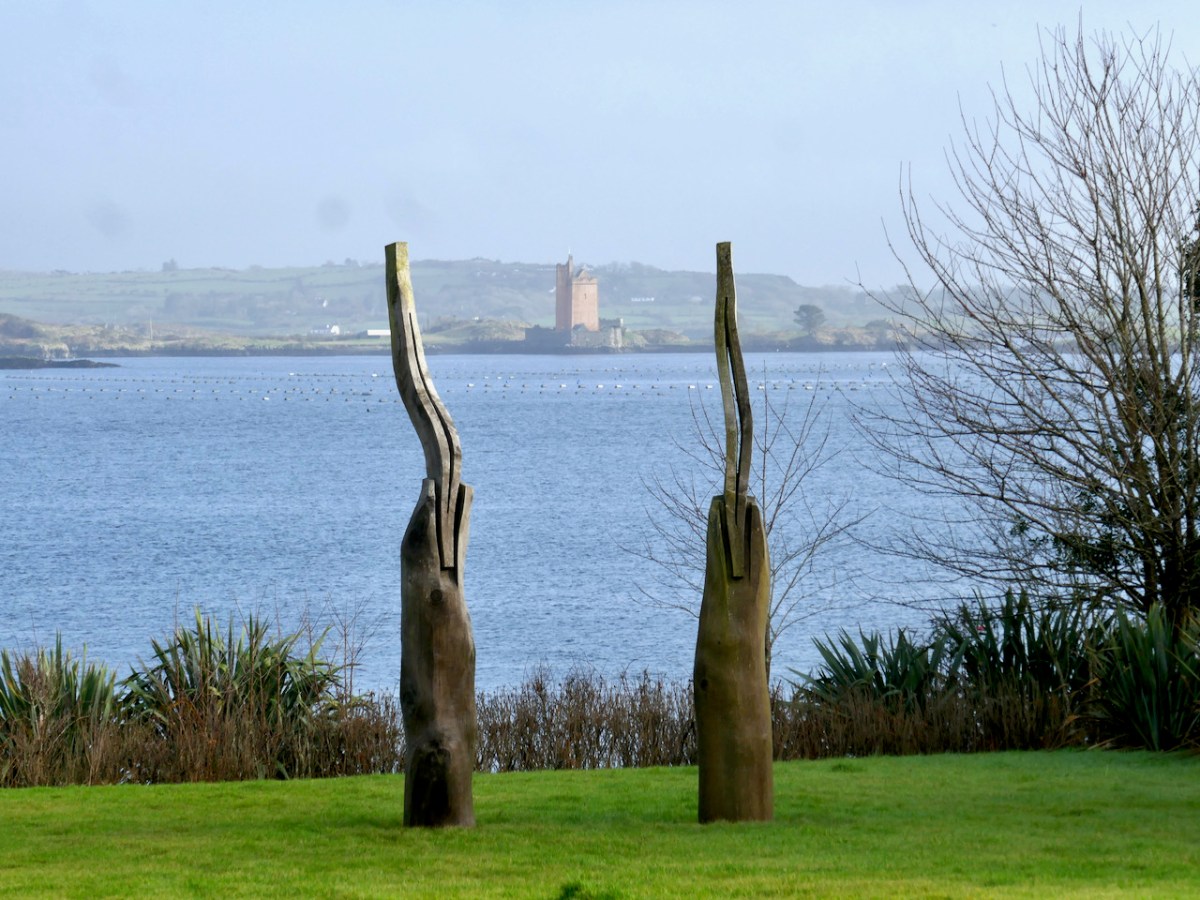
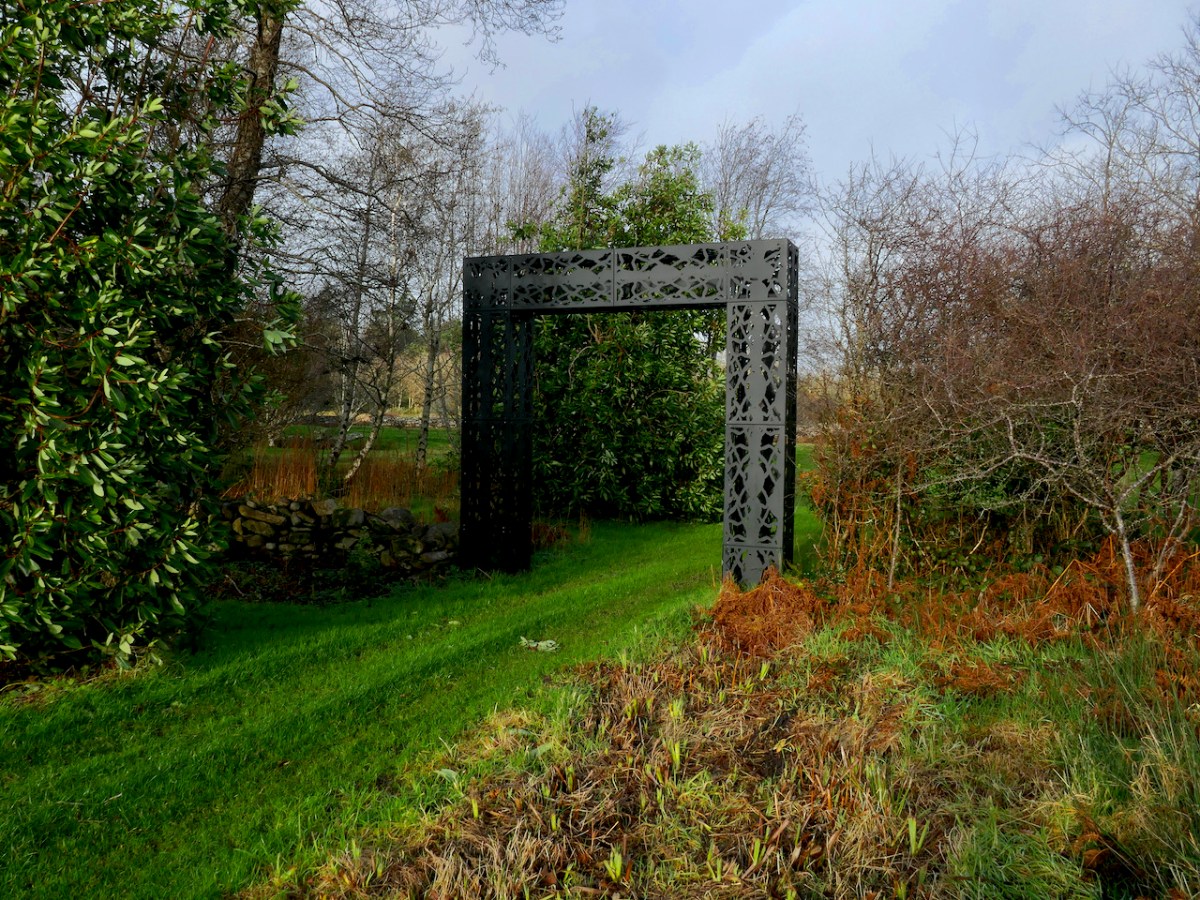
There’s a real contrast between Ulli’s photography – especially her soft-focus, gently waving, colourful flower images – and her choice of sculptures for the garden: many of those sculptures seem rectilinear and monumental, and many carry the impression of a portal to another world. 

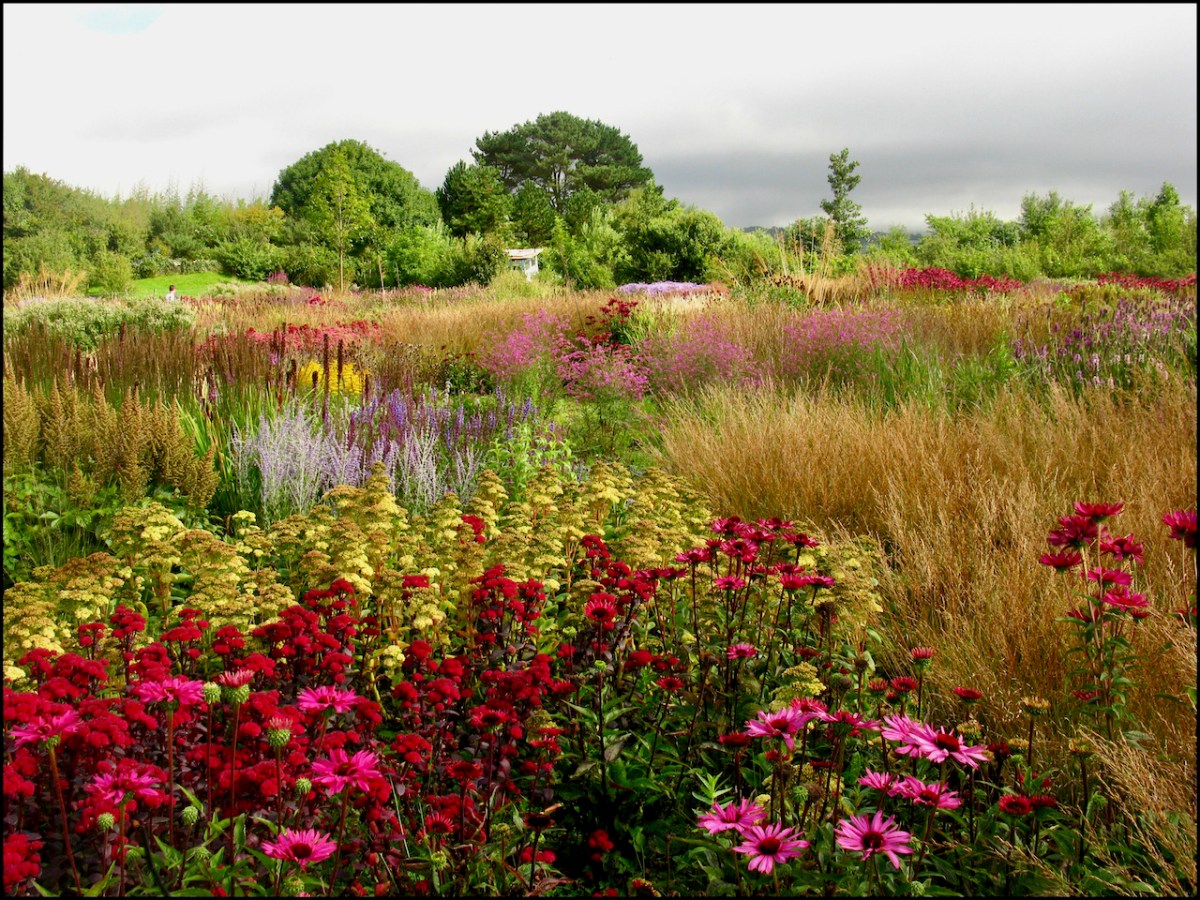
That portal may well represent the boundary between art and nature, the subject that fascinated Ulli always. Art in her garden is not just in the form of sculpture but in the form and arrangement of the beds and in the glorious summer plantings.

Both images above © Ulrike Crespo

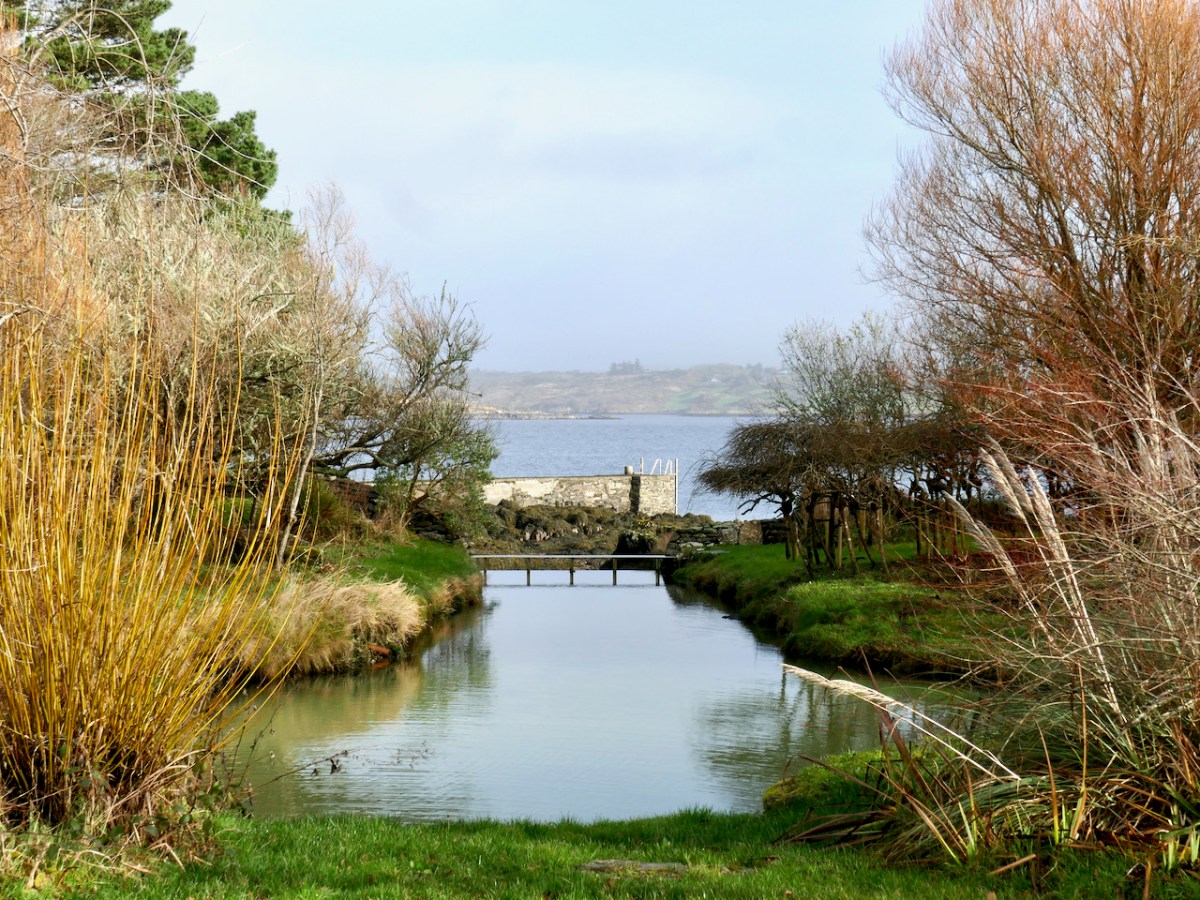
If the gardens can be seen as a blend of the two, other sections of the estate are pure nature. First of all, the estate is on the sea and the frontage is spectacular – giving on to Roaringwater Bay and full of marine life.

This image © Ulrike Crespo

And above it all is the Foilnamuck bog soak, about which I have written here and here. This part of the land has been left in a pristine state and is full of Orchids, Sundews, Bogbeans and Asphodels – a paradise for those of us interested in wild wet places.

The Foundation that is now carrying on Ulli’s work has established these residencies very much in the spirit of her own life’s interests. Here’s a quote from their website

The aim of the programme is to encourage the development of groups of young artists from Europe and Russia and raise the international profile of their work. The theme of art and nature comes from the location of the residency, the Glenkeen Garden estate. To explore this topic as extensively and as deeply as possible, the Crespo Foundation provides artists with a network of humanities scholars and scientists for interdisciplinary and transdisciplinary exchange. The intention is for Glenkeen Garden Residencies to give space, time and inspiration for close collaboration as a team, with the goal of producing innovative works that will then be shown in Frankfurt am Main and other European cities, as well as virtually to a broader public.

https://www.crespo-foundation.de/en/art-overview/artnature-natureart

All the details of the residencies and the requirements of the competition can be found on the website. The application deadline for the next one is January 30th, so no time to lose!

And for the rest of us – let’s just appreciate Ulrike Crespo’s incredible vision for this special corner of West Cork, and the enduring legacy she has left for us all. Each residency will result in exhibitions, so we will all, as time goes by, be able to share in the artistic outcomes from the chosen young artists. Robert and I look forward to this very much.

The Nativity in Stained Glass

Dear Readers – we know you aren’t all on Facebook, so this is for those of you who follow us on WordPress or other platforms. On our Facebook page, we’ve been running a series on The Nativity in Stained Glass in the lead up to Christmas, so here, in one post, are those photographs and text. All the windows are Irish and 20th century. Merry Christmas to you all!

This one is by George Walsh and it’s in Frankfield Grange Catholic Church in Cork. This scene is part of a larger window, the main scene depicting the Annunciation. More about George Walsh here.

Kevin Kelly was a long-time stained glass artist for Abbey Studios. He loved doing Nativity windows. This one is in Inchigeelagh, Co Cork and featured on a UNICEF Christmas Card. It’s worth taking a look at the detail – amazing for what’s quite a small window.

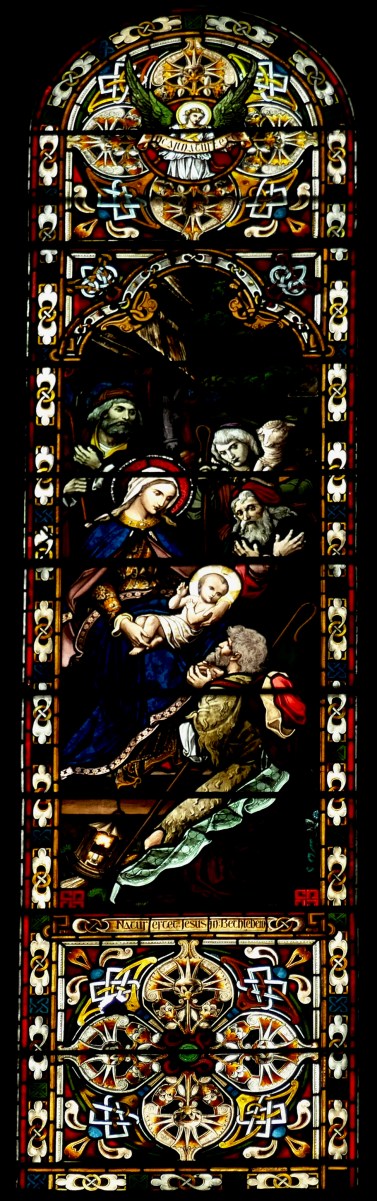
Our next Nativity in Stained Glass comes from St Carthage Catholic Church in Lismore and is the work of Watson’s of Youghal. While the figures are conventional, the ‘Celtic Revival’ decoration lifts this window far above the ordinary. Read more about Watsons and their mastery of this form, popular among Irish nationalists at the turn of the 20th century.

This beautiful Nativity window is in Mayfield, Cork, in the Church of Our Lady Crowned. The Murphy-Devitt Studios were a group of young, dedicated artist and designers, determined to bring something new to traditional stained glass. We think they succeeded magnificently.

This scene of the visit of the Magi is in Kilcoe Church of the Holy Rosary and is the work of Catherine O’Brien, the artist who worked longest in An Túr Gloine, the Arts and Crafts Stained Glass Co-operative founded by Sarah Purser and Edward Martyn to promote home-grown arts and craft in Ireland. This is a re-working of a previous window by O’Brien, proving that even Arts and Crafts practitioners were not above re-cycling.

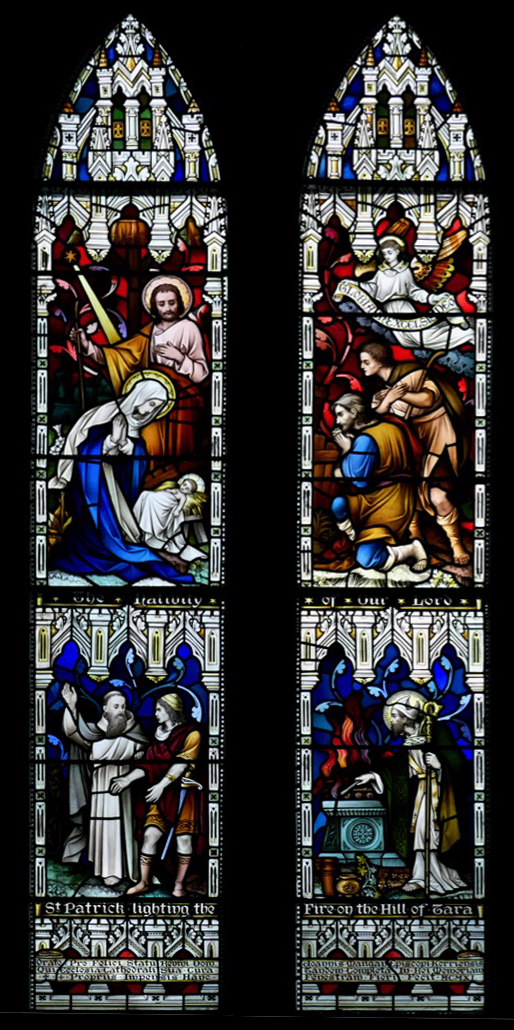
What does the Hill of Tara have to do with the Nativity?  In the Catholic Cathedral in Killarney are a whole set of windows that draw parallels between biblical scenes and Irish saints – all part of the push-pull between the Rome-centric internationalisation of the Irish church versus the desire of Irish congregations and clergy to see their own Irish and local saints depicted in their stained glass windows. In this case, the Nativity of Jesus is compared to the birth of Christianity in Ireland when St Patrick lit the Pascal Fire on the Hill of Slane (although the window says Tara, the story is that the high king saw the fire from the Hill of Tara). The windows are by Hardman, before they became Earleys.

The Dominican Convent in Wicklow town has a gorgeous series of windows – the Mysteries of the Rosary. They were done in the Harry Clarke Studios in 1938, several years after Harry’s death, but his influence is very evident. They were mostly designed and painted by William Dowling, but with much input from Richard King. To see if you know the difference between Harry Clarke and Harry Clarke Studios windows, take the quiz, or just cheat and go straight to the answers.

Patrick Pollen, although he grew up in England, made his stained glass career in Ireland. Having been bowled over by Evie Hone’s Eton windows he came to Dublin to work with her. Hone’s influence is readily apparent in these two panels, which form the predella (lowest section) of a window in St Michael’s church in Ballinasloe, Co Galway, dating to 1957. I haven’t written about Pollan (yet) but you can read about Evie Hone here.

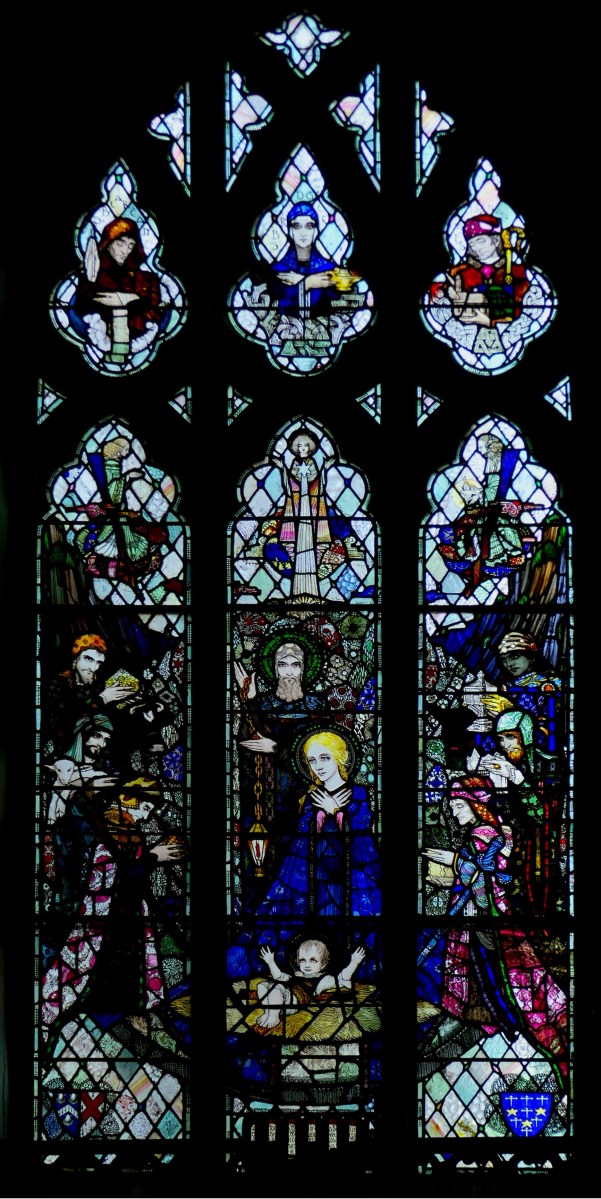
We’ve kept the best for last – the genius that is Harry Clarke. This is his Nativity Window, done in 1919 for Edith Somerville and her family, for the C of I Church of St Barrahane in Castletownshend, Co Cork. Lots more about Harry Clarke, Ireland’s greatest stained glass artist.

Revisiting BAM

BAM is the Ballydehob Arts Museum, and regular readers will know that this is a project which has involved us over the past few years. The Museum was curated to collect, conserve and celebrate the work of artists who came to West Cork and – particularly – Ballydehob during the second half of the twentieth century, some of them settling in the hills around the village and living a Bohemian lifestyle based around the principles of John Seymour’s seminal work Self Sufficiency published in 1973. At that time I was involved in running an eccentric small bookshop in rural Devon, and that book was our all-time best-seller!

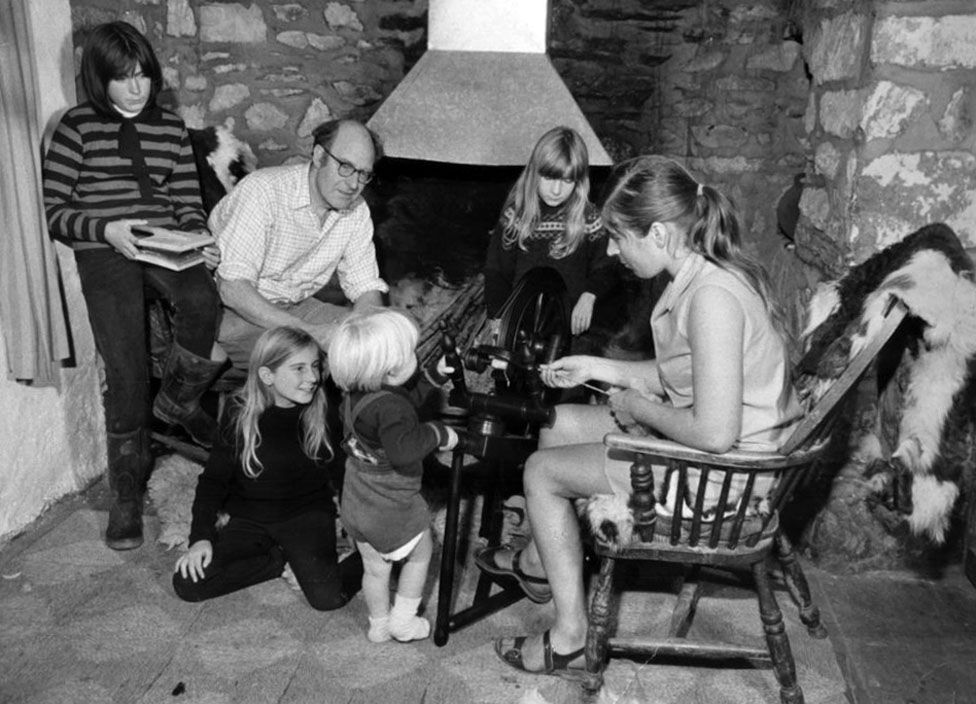
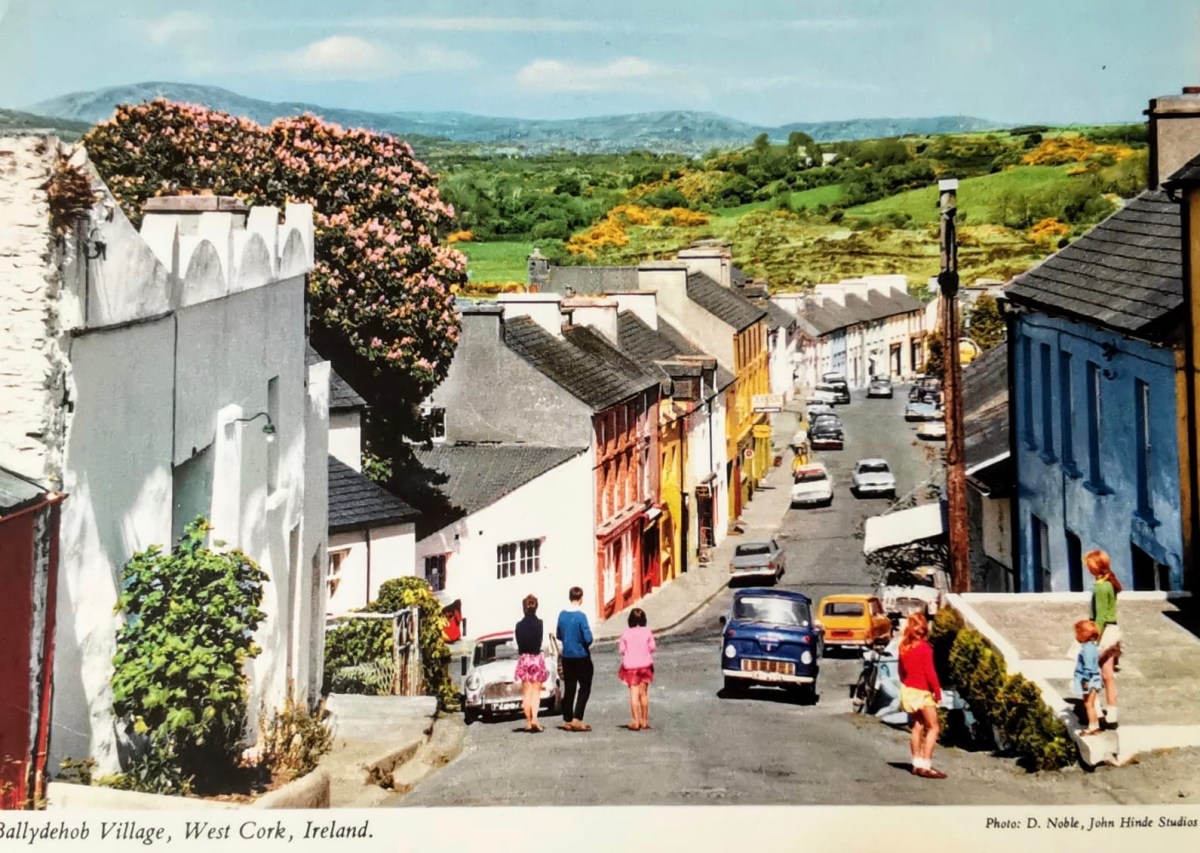
That’s John Seymour and his family in 1973, when the book was first published (upper picture) while the lower picture is a John Hinde postcard from around the same period showing Ballydehob. It looks a thriving, lively place with its coloured houses and shops, and I think those ‘Bohemians’ who are still with us today – and still have their homes in the village – would agree that it was in those days the centre of a very special world – of artists and craftspeople making a living and producing some exceptional work. Work that is being recognised, now, for its quality and unique character.

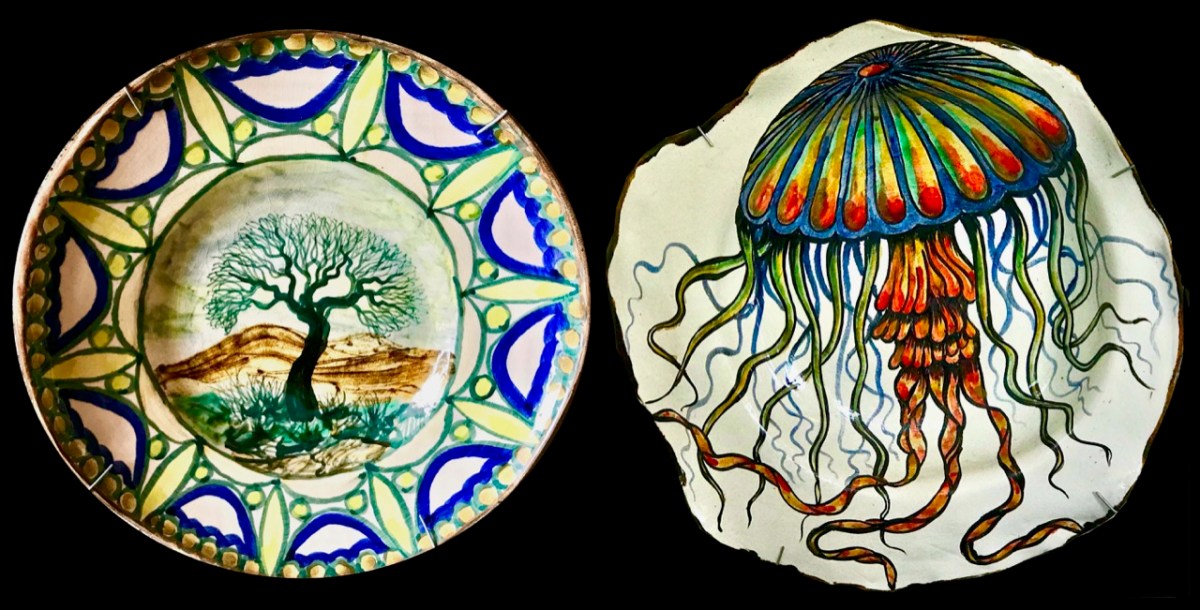
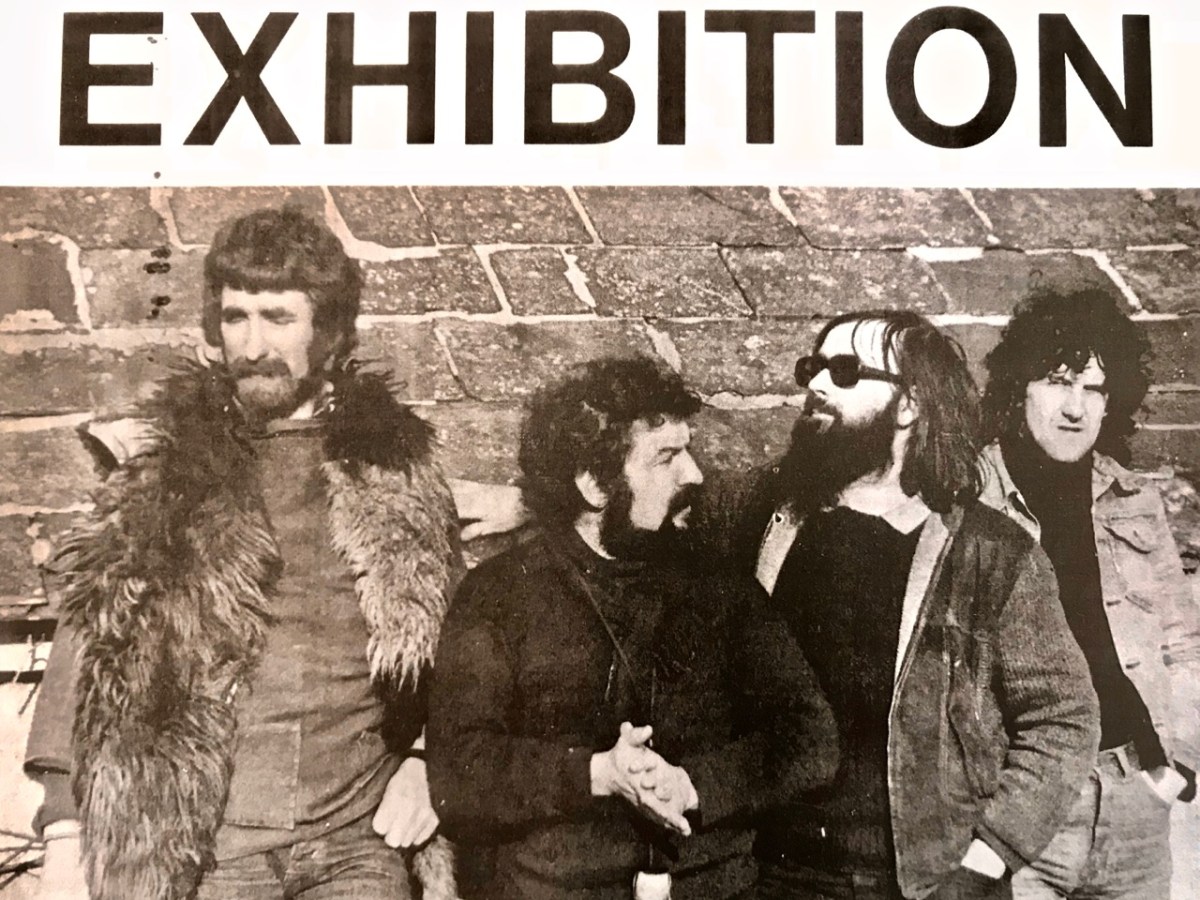
This is a wonderful photograph from the Museum archives: here you see four of the ‘Bohemians’ who were crucial to the Ballydehob project. On the left is John Verling – he and his wife Noelle produced the two plates on the header, Tree of Life and Jellyfish, and were central to the community, establishing their pottery at Gurteenakilla just outside Ballydehob in the early 1970s. John died in 2009, but Noelle still thrives in the area. Next is Pat Connor, still living and working – as an award winning ceramicist and sculptor – in West Cork. Beside him is Brian Lalor who, since those Bohemian days – has established a formidable reputation in Ireland as print-maker, artist and writer. Also, very relevant to this post, he is a co-founder and Curator of the Ballydehob Arts Museum! Fourth in line in the photo is watercolourist, David Chechovich, no longer with us. Here’s a photo from a couple of years ago showing Brian (left) with Leda May, another early arrival in Ballydehob and living and working right in the village to this day; also Pat Connor, and Carol James, who came over from England in 1974 and stayed on. They haven’t changed a bit, have they?

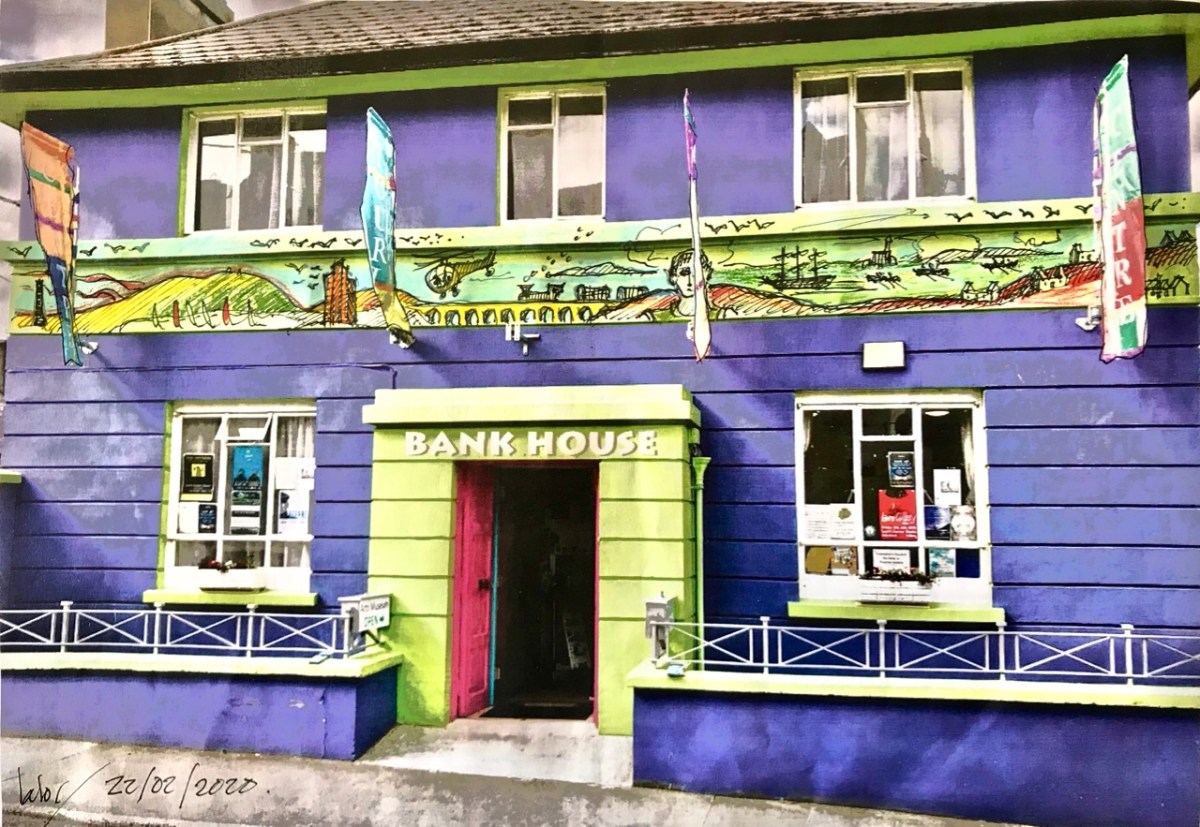
The Museum has a permanent home in Bank House, right in the centre of the village. As you might expect, it was once the local bank but – after closure – it was bought by the community and is currently finding fresh uses. This montage (above) is by Brian Lalor: he and I are imagining the building being livened up by a mural from Brian’s brush. Unfortunately, Covid has put a check on the Museum’s development over the last couple of years. But we are looking forward to getting things going again with a new exhibition for 2022. The photo below shows the Museum interior set up for the 2019 show.

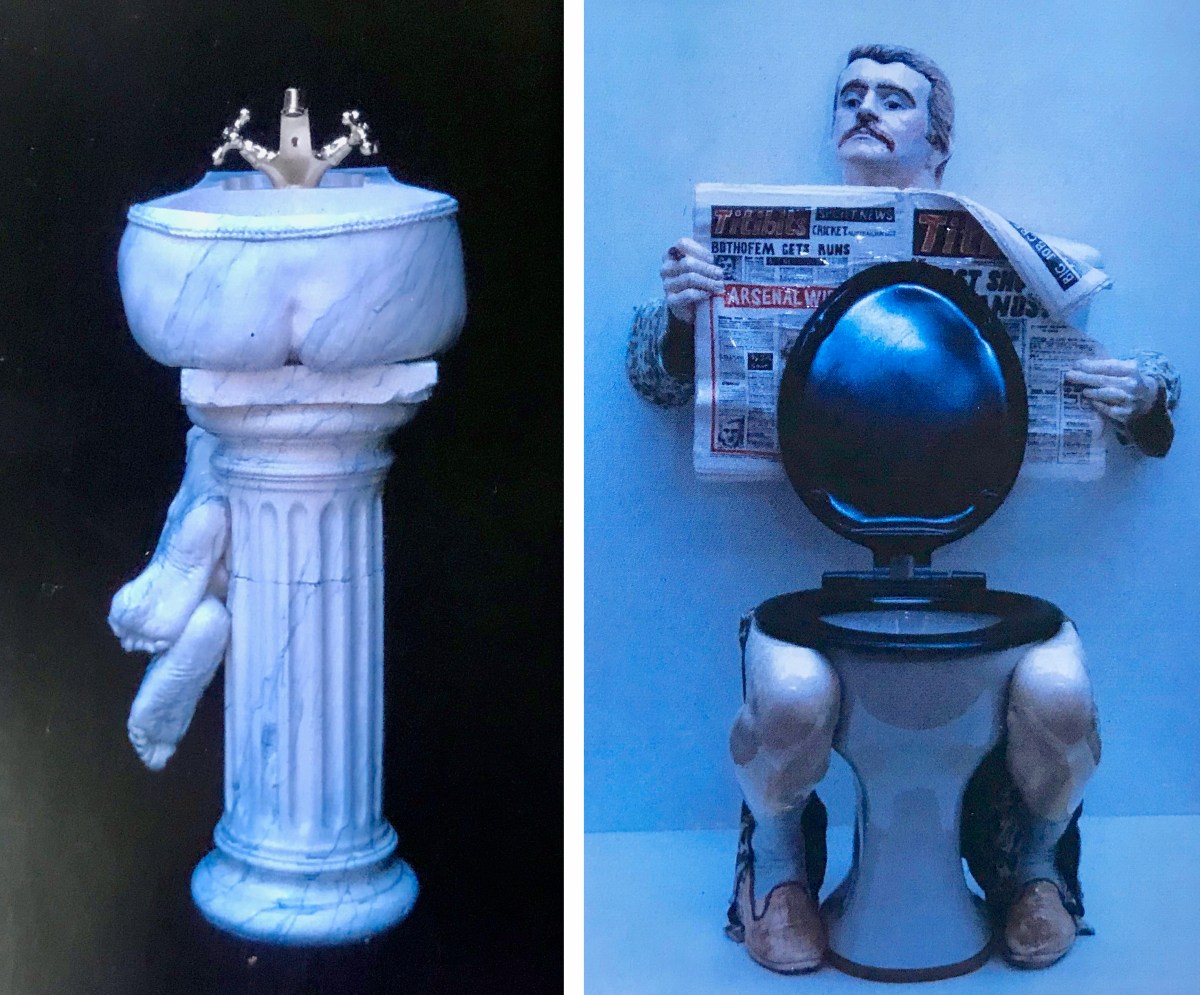
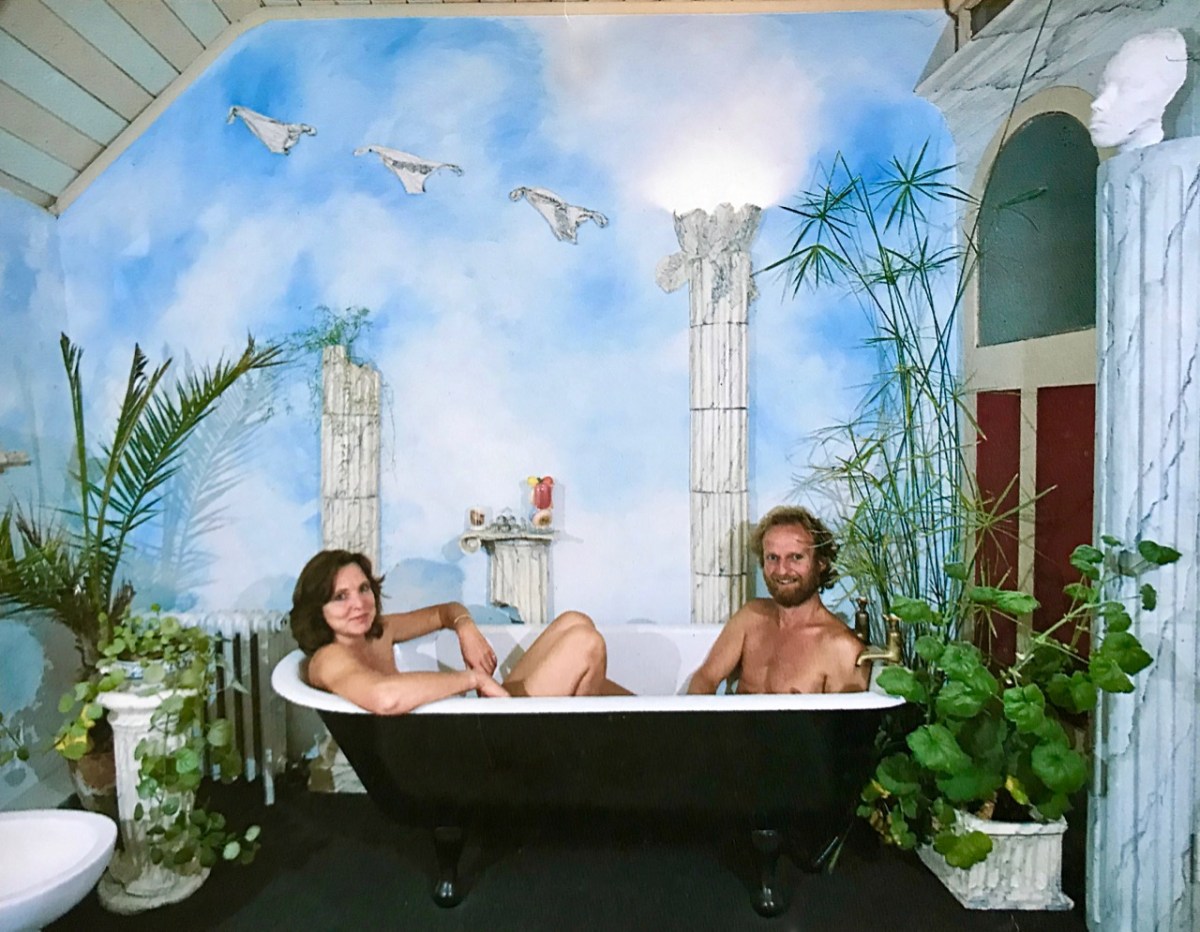
Here is an article – well worth reading – on the West Cork artists and our Museum (thank you, Peter , for pointing me to this). Mentioned in the article are the subjects of our next proposed exhibition, to be held in 2022, if all is well. They are Ian and Lynne Wright. They arrived in West Cork in 1973 and established their home, ceramics studio and an environmentally sound habitat at Kilnaclasha, Skibbereen. They are still there, although Ian spends much of his time on another environmental project in Tobago. Using the name Cors’ it’s Ceramics they experimented with body casting slipware and began to produce specialised one-off bathroom fittings – humorous and often erotic. They were hugely successful. Here’s a pictorial review of some of their work to give you a taster:

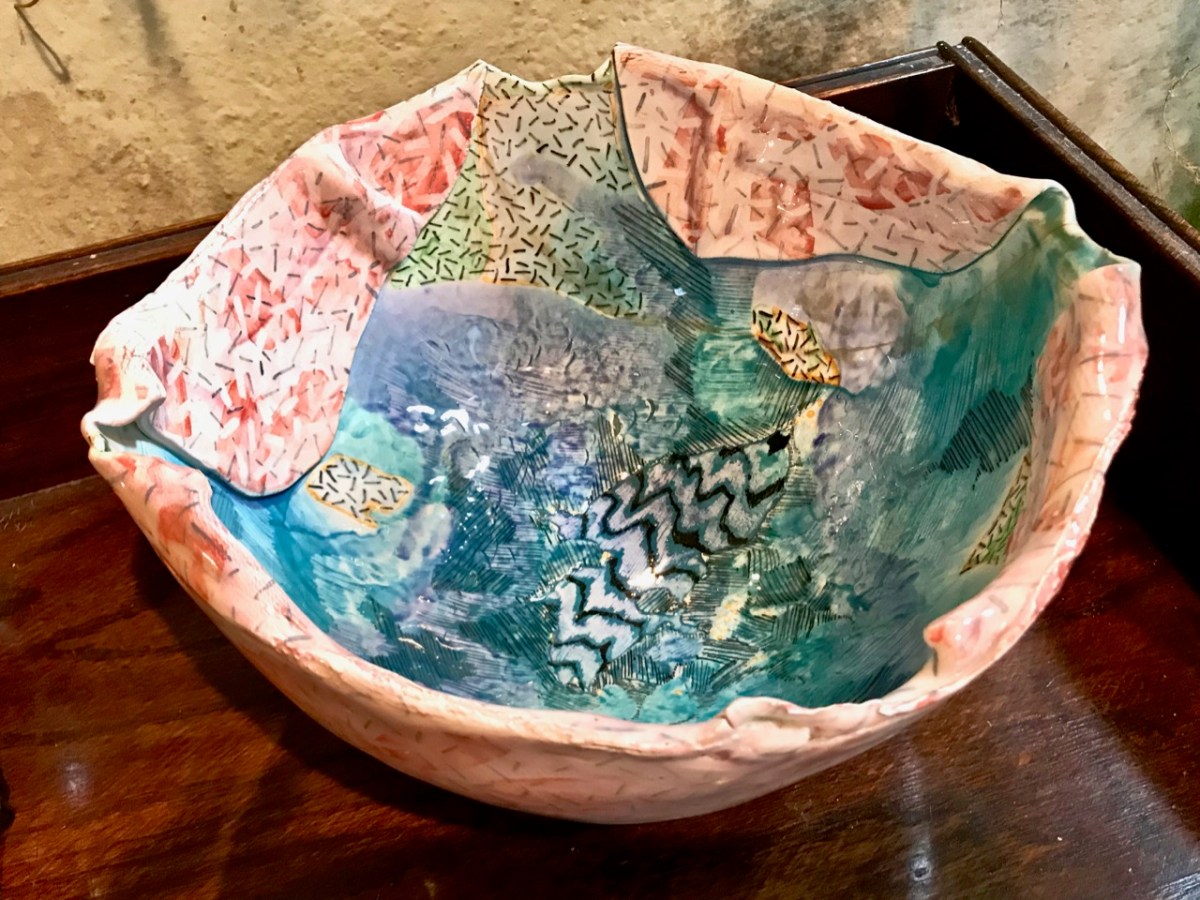
Ian and Lynne (above, from one of their bathroom product catalogues) gave up their ‘cheeky’ ceramics in 2002 but both are still producing; Lynne with large, colourful bowls and Ian with body casts (pics below). BAM hopes to show a significant selection of examples from their lifetime of work. It promises to be a spectacular exhibition: Roaringwater Journal will keep you up-to-date with progress.

You can find out more about the Ballydehob Arts Museum on the dedicated website, here

Frank, Jack and Eibhlín Dubh: The Lament for Art O’Leary

Caoineadh Áirt Úi Laoghaire (The Lament for Art O’Leary) is a classic work of Irish literature. Composed as a keen by his widow, Eibhlín Dubh Ní Chonail (Dark Eileen O’Connell, pronounced Eileen Duv), in the immediate aftermath of his death in 1773, it survived in oral tradition until it was finally collected from an aged professional keener in Millstreet and written down about 1800. Here are the opening lines in Irish followed by Frank O’Connor’s translation. (For those who would like to read the full text in Irish, you can find it here, with a translation by Thomas Kinsella.)

Mo ghrá go daingean tu!

Lá dá bhfaca thu

ag ceann tí an mhargaidh,

thug mo shúil aire dhuit,

thug mo chroí taitnearnh duit,

d’éalaíos óm charaid leat

i bhfad ó bhaile leat.

Keening was a women’s prerogative and tradition, and this keen is powerful and poetic, with long sonorous vowels, patterns of repetitive phrases, and all the devastated grief of a heartbroken woman. To get a sense of the pronunciation in Irish, the best reading I have come across is this one by Joanne Ryan.

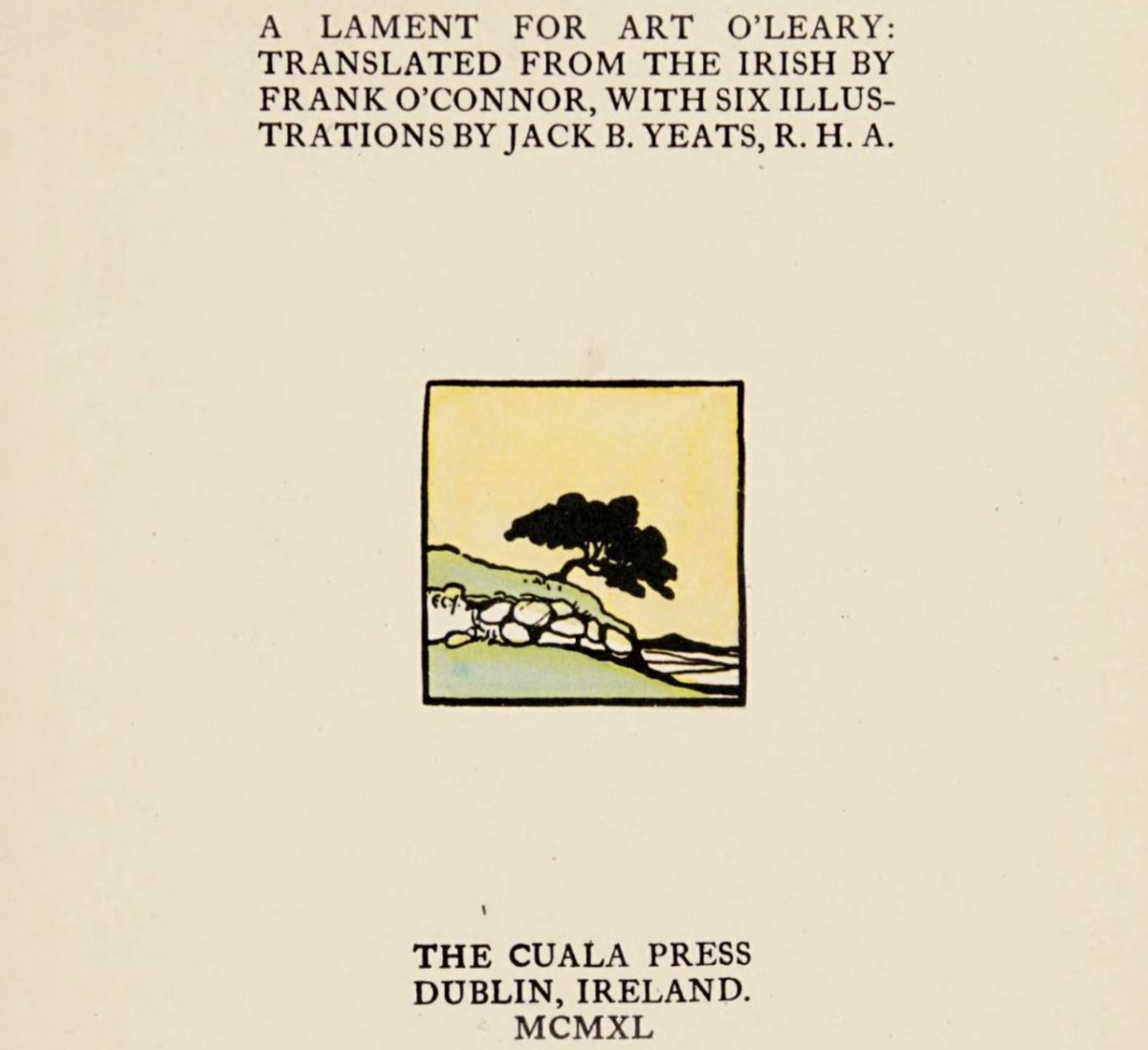
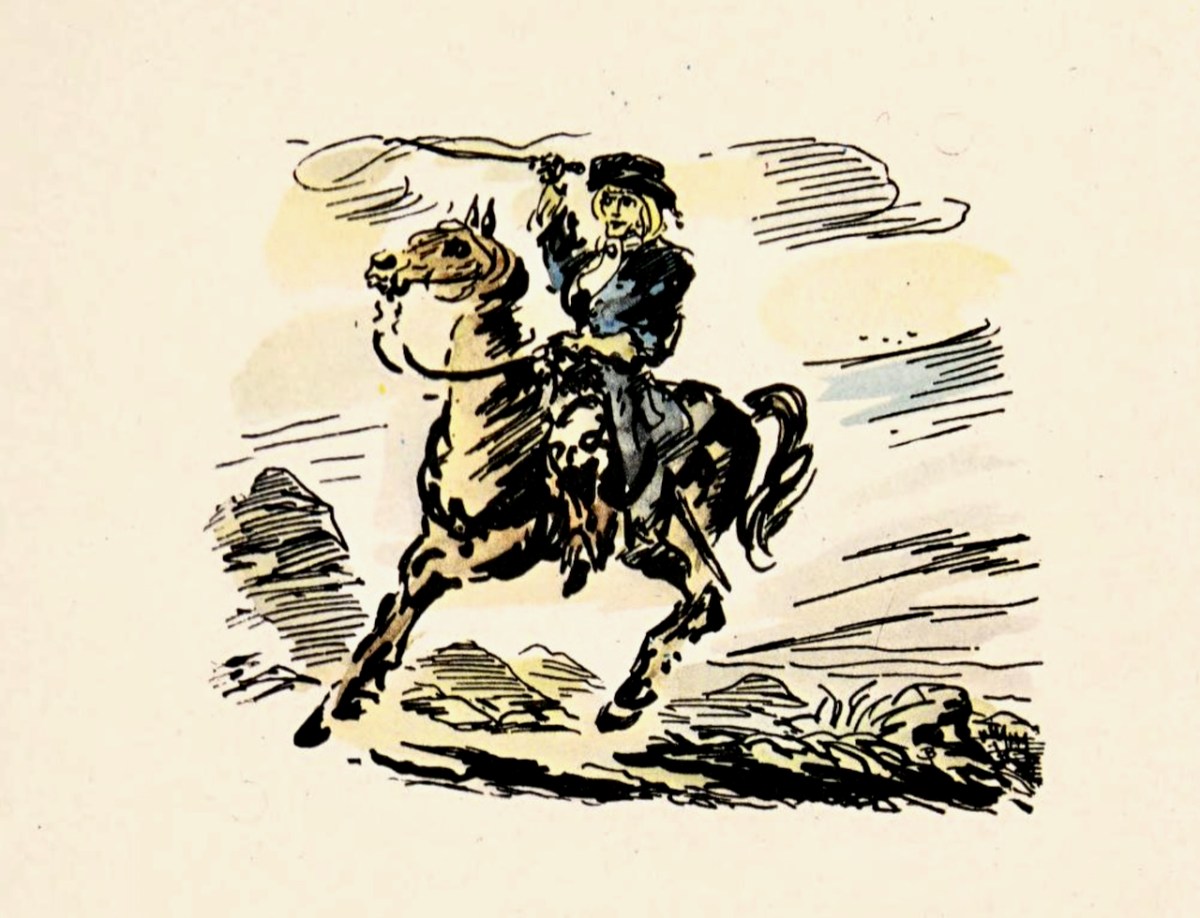
The Lament has been translated many times, including by Thomas Kinsella, Brendan Kennelly, Vona Groarke and Eilís Dillon. In 1940, the Cuala Press brought out a special limited edition of the poem, in a translation by Frank O’Connor and with illustrations by Jack B Yeats. The Cuala Press was run by Elizabeth (Lolly) Yeats, sister of Jack B and William B, and was a driving force in the proliferation of printed material, beautifully produced, related to the Irish literary and artistic revival. 

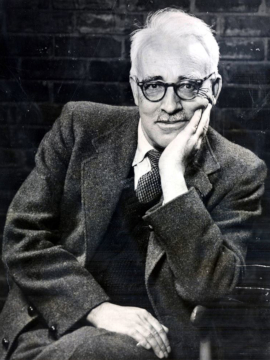
Frank O’Connor (above), although better known for his short stories, was a scholar of the Irish language and translated many poems into English. His version is magnificent, capturing Eibhlín Dubh’s passion and fierceness and the rhythm and cadence of her keen. 

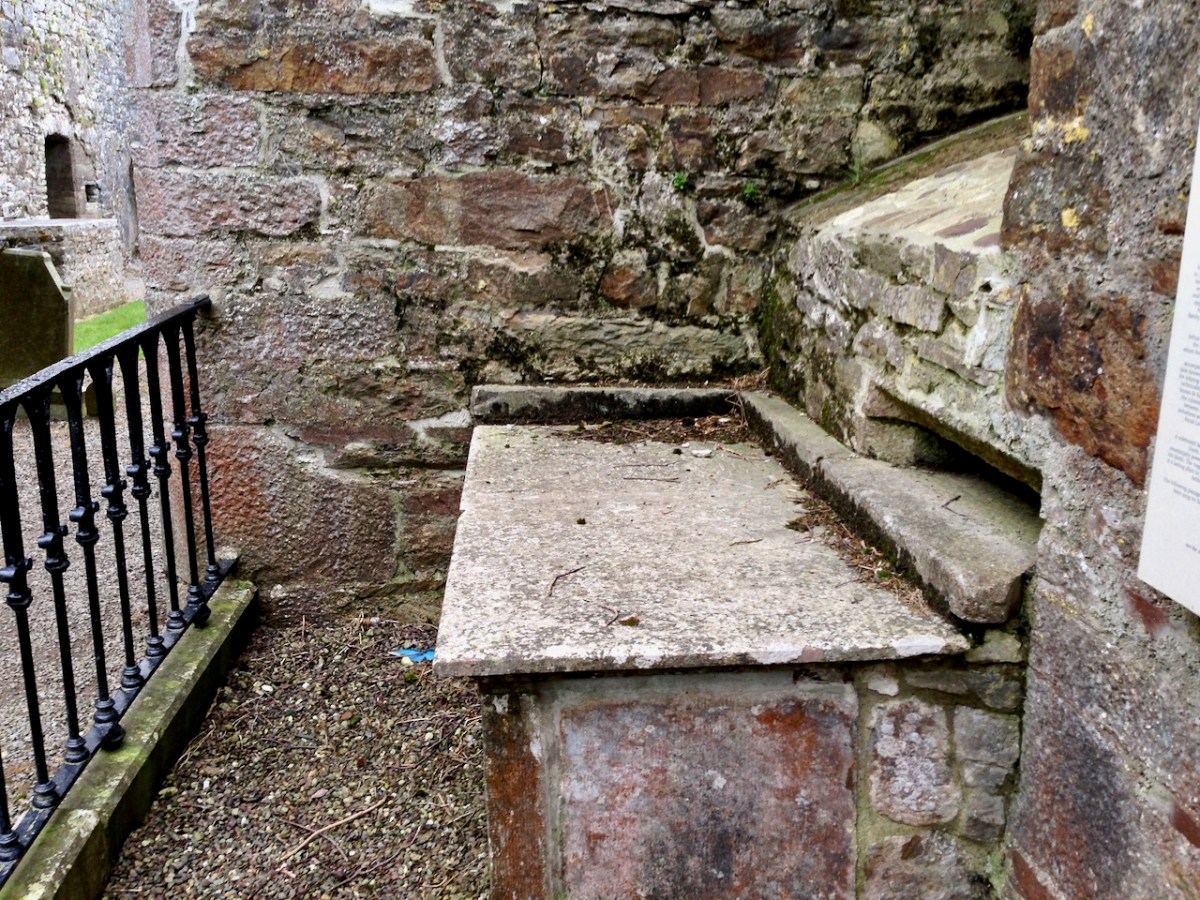
Art O’Leary was a handsome young cavalry officer in the army of Maria Theresa of Austria. He returned to Ireland upon his marriage to Eibhlín and they had two children. She was pregnant with a third (who did not survive) when he was shot dead by Abraham Morris, a local magistrate, when Art refused to sell Morris his horse for £5, as required by the Penal Laws. Art O’Leary is buried at Kilcrea Friary, above. His grave can be seen there (below).

The Lament lauds Art’s many virtues and paints a picture of him as brave and handsome, in the flower of his manhood.

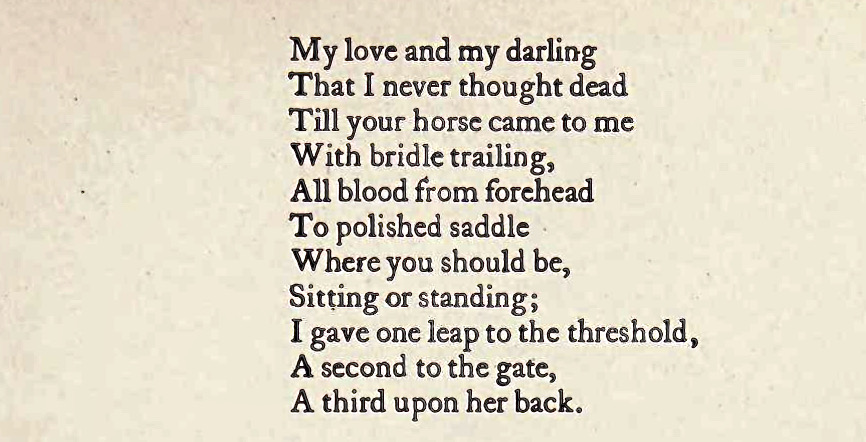
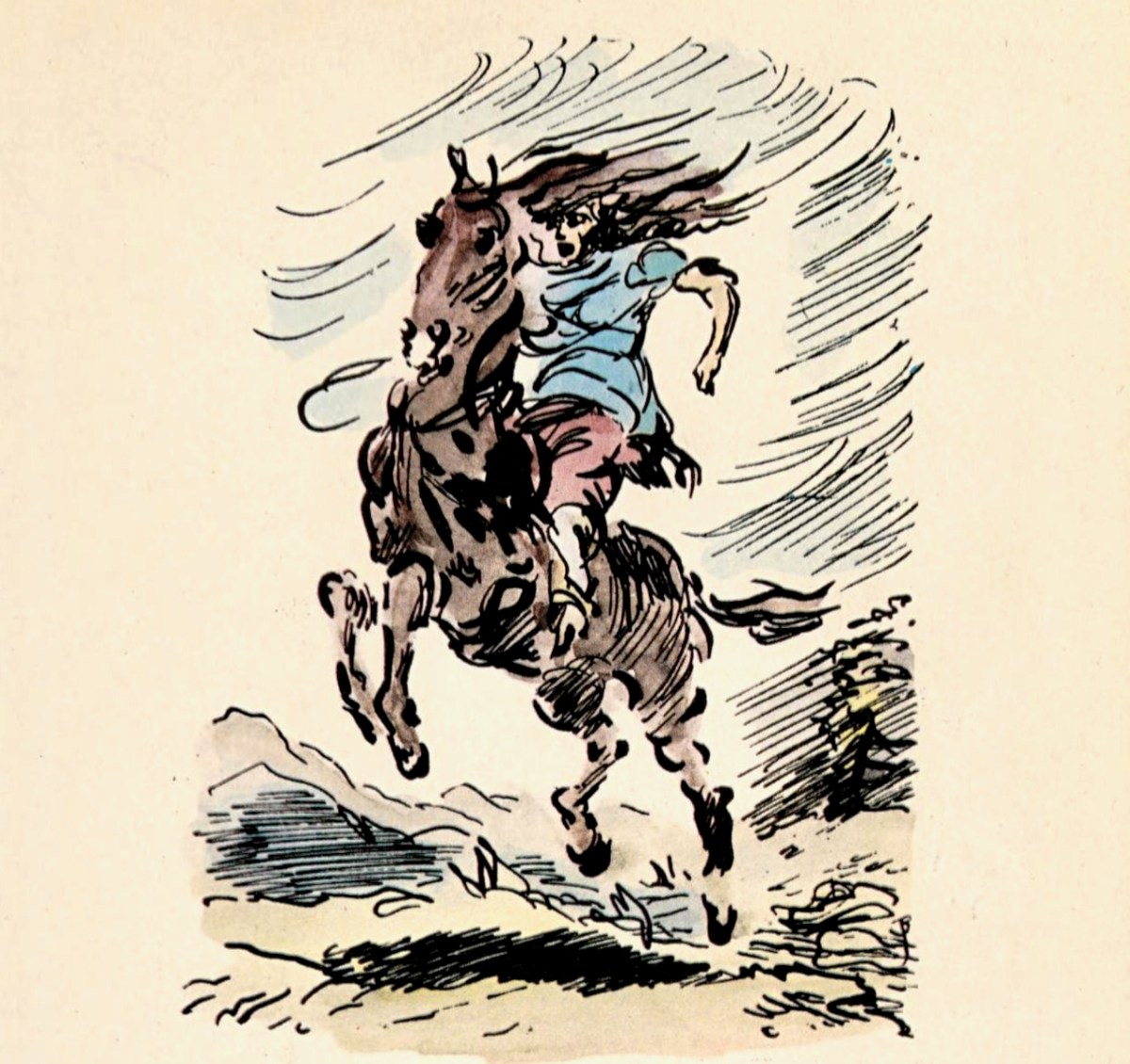
Eibhlín curses Morris, and tells how, when Art’s horse came home alone, she leapt into the saddle to search for him.

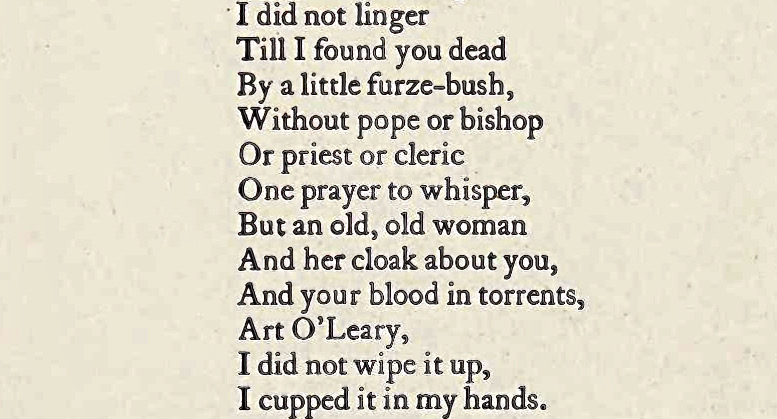
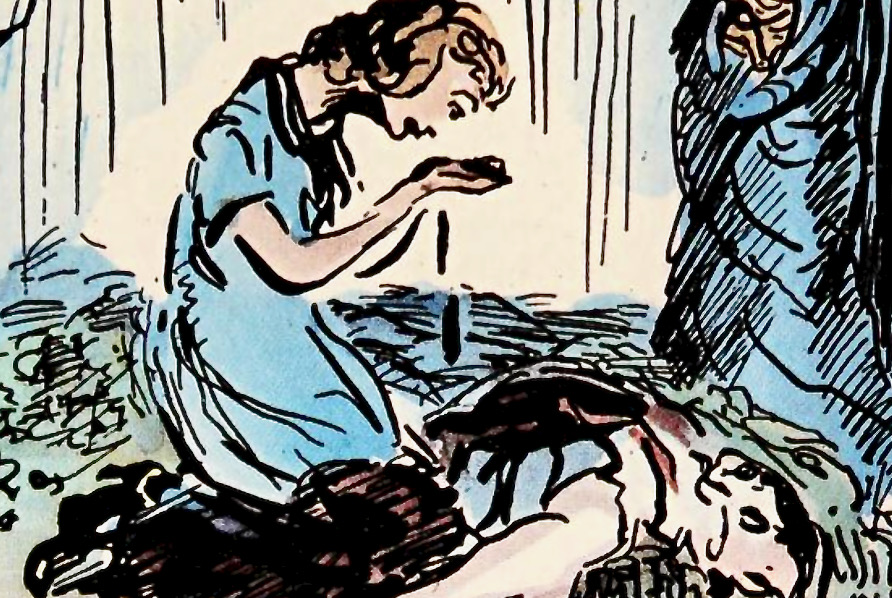
She found him lying dead in a pool of blood, which she cupped in her hands and drank.

Jack B Yeats’ illustrations have the same wild quality that we imagine was characteristic of Eibhlín Dubh – an untamed spirit who expressed the extremes of great joy and pride and deep anguish. They are pen and ink drawings, hand coloured at the Cuala Press with light washes in blues, yellows and browns for the limited edition. Very little of Yeats’ illustrative work is included in the current, must-see, exhibition of his paintings in the National Gallery, and I was very pleased indeed to find this book online as part of the Internet Archives digital library.