Possibly Over-Stimulated

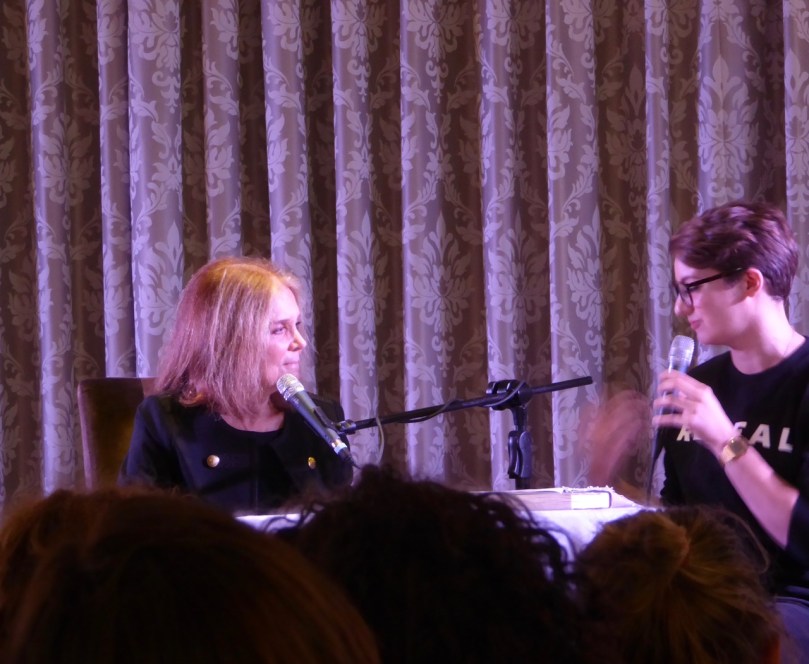
Gloria Steinem is an international icon. This week, we welcomed her to Bantry Literary Festival. Four hundred women, and a few men, rose spontaneously to our feet and clapped and cheered her entrance. First time I’ve seen a standing ovation before someone actually stepped on stage.

Gloria and

What followed was breathtaking – Gloria spoke, a little and beautifully, but mostly she listened as audience members asked questions and shared their own experiences as women in this country. People had come from far and wide to hear her and just to be there: people I admire and respect – Tara Flynn (see also You’re Grand) and Louise O’Neill. Lelia Doolan, for goodness sake, a Irish feminist icon in her own right. The conversations weren’t easy (misogyny, abortion, pornography, violence) and there certainly were dissenting and opposing viewpoints presented. But the atmosphere was respectful (if electric) and Gloria calmly dealt with each question in ways that were thoughtful and non-divisive. Two hours later, I think we all felt we had been present at a little bit of history.

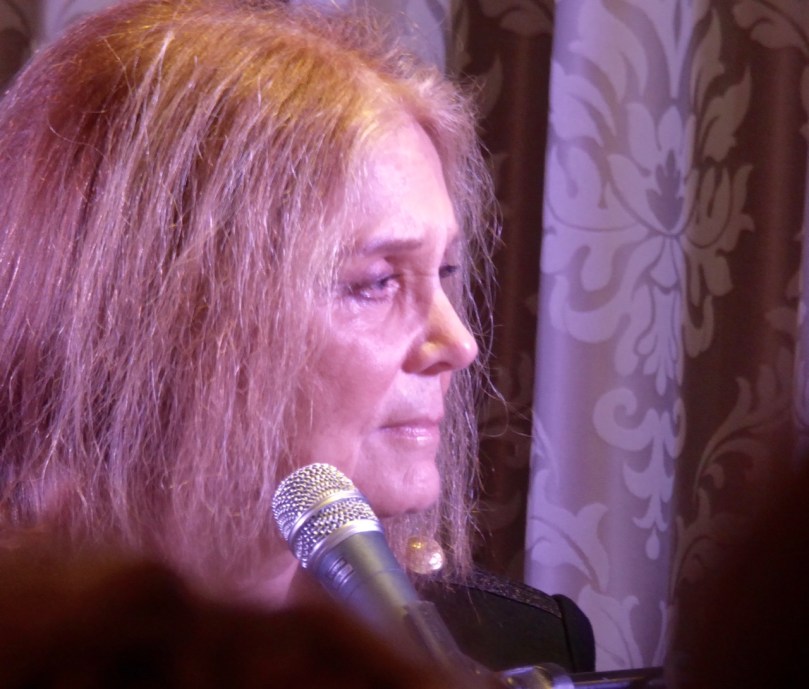
Gloria

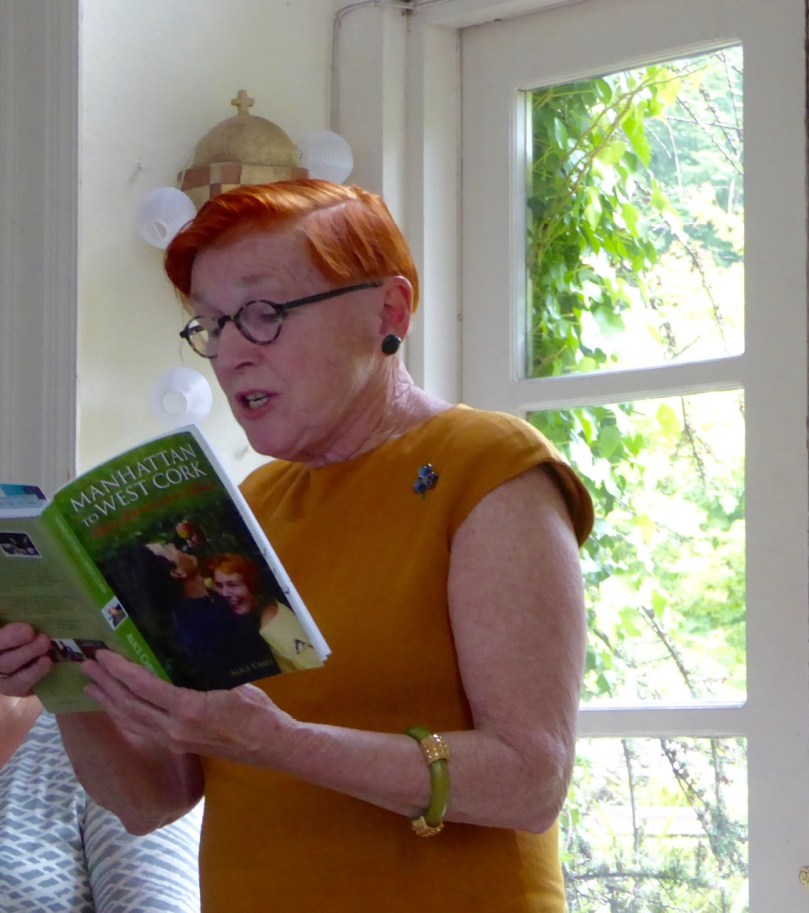
We attended other Literary Festival events and Robert is writing about one of them – the delightful evening with Seán Ó Sé. That evening formed a wonderful contrast to the talk by Alice Carey, a self-professed New York/Irishwoman, vivacious and stylish, but also moving in her descriptions of a childhood caught between two worlds.

Alice Carey

Alice Carey

And just as that Festival is ending, the Skibbereen Arts Festival is bursting upon the scene with a slew of gallery openings and a 60’s street party! Sometimes it’s hard to know where the dividing line is between business and the arts in Skibbereen. All the business people seem to support the arts and all the arts events seem to work well with the businesses. Shopfronts become display cases. Empty buildings are re-purposed as galleries and theatres. Employees and owners dress up and decorate. Everyone has fun.

Skibbereen shop windows. Hands up who remembers women wearing curlers all day in the 60s!

This Friday was a good example as Skibbereen went all out for a 1960s-themed street party of food and music, to celebrate the opening of the Skibbereen Arts Festival. I wrote about this festival a couple of years ago. As arts festivals go in Ireland, this one is only in its infancy, but it hit its stride right from the starting gate, with an eclectic mixture of art, theatre, music, spoken word, film, and events for children.

Robert used to have a van like that

This year we have tickets for all kinds of disparate events and may have to take a holiday when it’s all over! On Friday we attended three art show openings and then joined the throngs on Bridge Street to get into the 60s swing.

Angela Flowers Exhibition


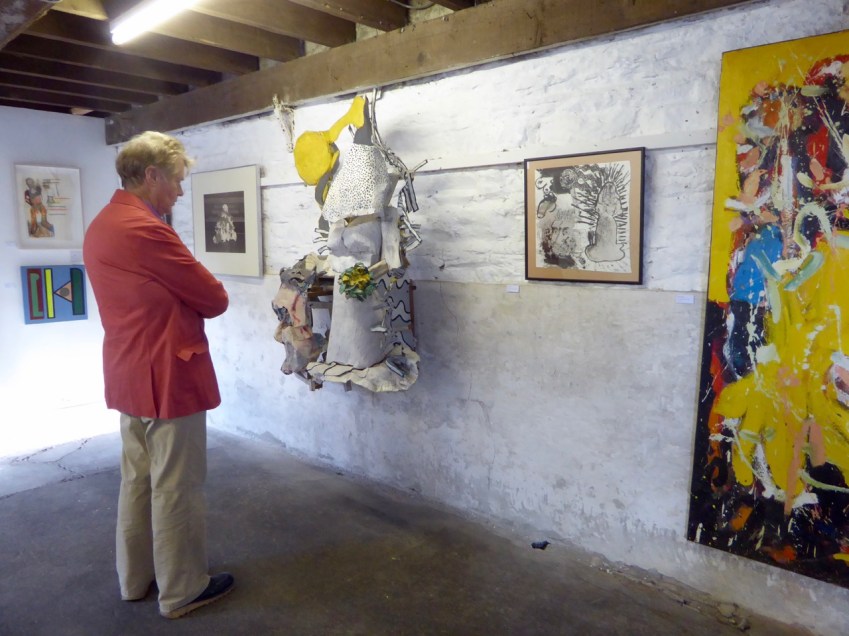
The old Bottling Plant makes an excellent gallery space, in this case for the Angela Flowers Collection

The first opening was extraordinary. Angela Flowers is one of Britain’s foremost gallery owners (she has two in London and one in New York), dealing with contemporary art. She has a house in West Cork and the pieces on display are from her own private collection. (Read more about Angela here and about her galleries here.) This is challenging stuff – no pretty paintings here, but compelling and engrossing. The exhibition was opened by Lord David Puttnam, the film producer and now digital champion and educator, who never misses an opportunity to support Skibbereen, where he lives full time.

Uillinn came next: the whole space was devoted to the work of John Kelly, a painter and sculpture with a studio in West Cork and an international reputation.

Yet a third art exhibition opened in an unused space down by the river – a huge L-shaped room perfect for such a purpose. This one was called Mór (‘Large’) and brought together the work of several artists who work in large scale. Huge canvasses and large sculptural pieces created an imposing and magisterial atmosphere.

Karen Hendy’s triptych (top) and Don Cronin’s piece titled ‘Windfall’

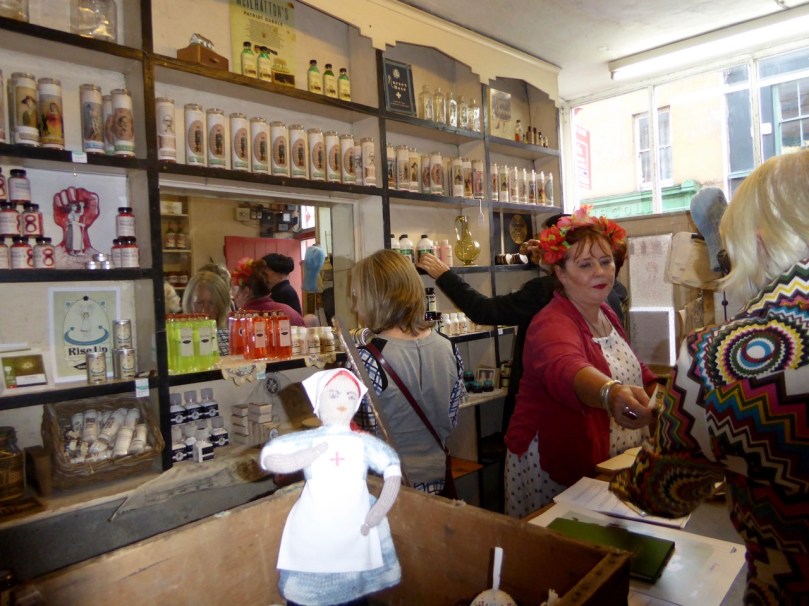
Then it was off to the opening of The Souvenir Shop by Rita Duffy. Robert and I have signed up for two ‘invigilation’ sessions at this quirky and unusual art installation, so I will write about it more at a future date, or post photos on our Facebook page.

Souvenir Shop

The Souvenir Shop

Before we staggered home, we joined the throngs of Skibbereen folk on Bridge Street for the 1960s party. The hippies were out in force!

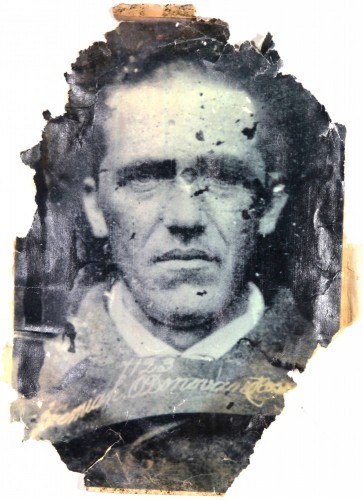
Finally, tonight, we attended a premier showing of the Film Rebel Rossa. Last year we met the two great-grandsons of Jeremiah O’Donovan Rossa in Skibbereen, here to attend various functions commemorating Rossa and to document them for a film they were making. Since I did extensive research on Rossa in preparation for a series of three posts (March Back in Time, O’Donovan Rossa – the First Terrorist? and Rossa: The Skibbereen Years), I was particularly interested in how the film turned out. They did a great job! Rebel Rossa turned out to be about Rossa, but also about family and about how governments celebrate such things versus how republican groups or local committees do it. Fascinating stuff and they are hopeful about getting a distribution deal.

Rebel Rossa

More, much more in the days to come. How am I going to cope? I came here to retire!

Hail the Mail

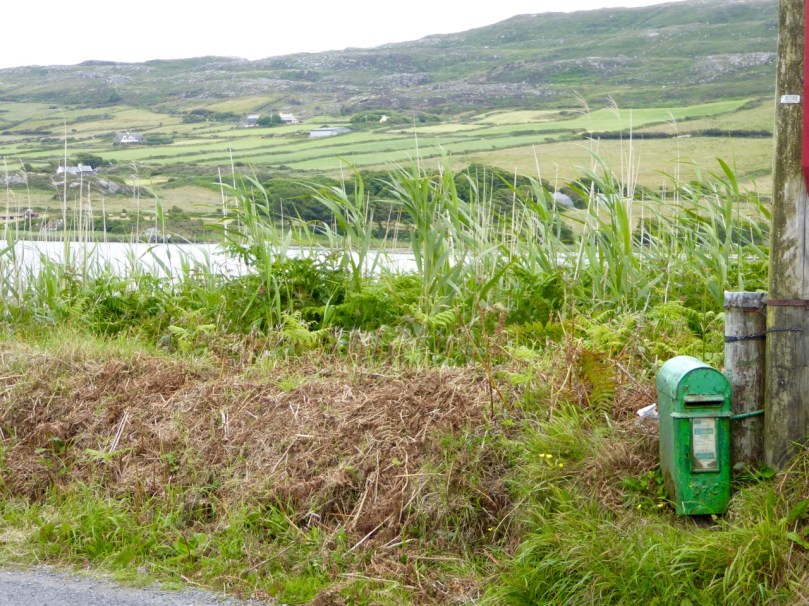
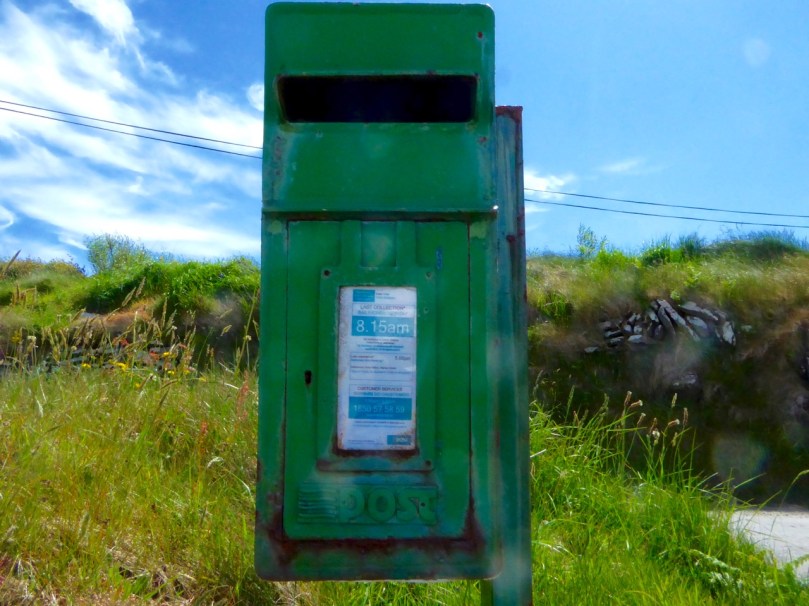
Rossbrin wall box

The first act of the Irish Free State after independence was to paint all the post boxes throughout the country green. It was a brilliant stroke – royal red replaced by emerald green in one of the most visible and ubiquitous symbols of national administration.

Penfold Skibb

The Penfold post box in Skibbereen, one of only a handful left in Ireland

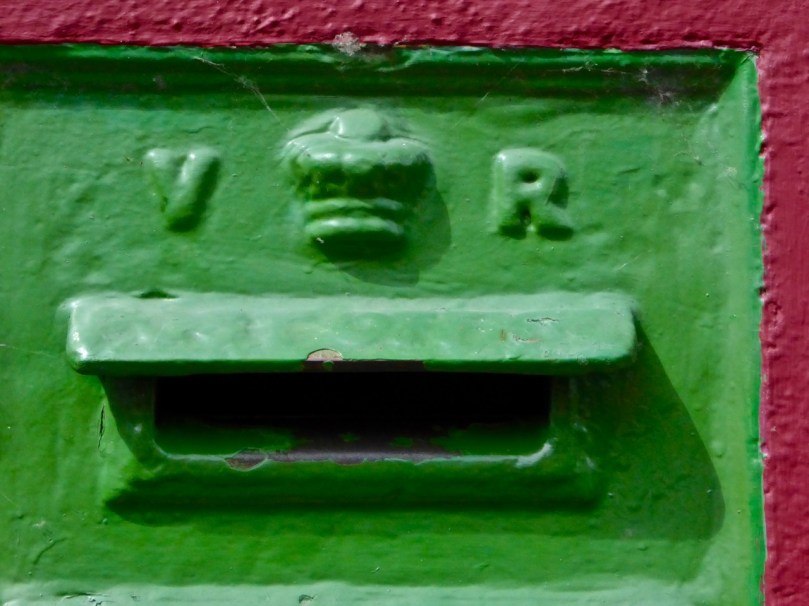
Ironically, the post boxes themselves did not change, so the royal insignias were simply over-painted by the new colour. The result was a charming mixture of tradition and adaptation that serves as an ongoing reminder of the history of Ireland and its institutions.

A commemorative sheet of stamps which are going on sale to mark 200 years since the birth of Anthony Trollope (Royal Mail/PA)

Special stamps issued by the Royal Mail in 2015 to celebrate the bicentenary of the birth of Anthony Trollope

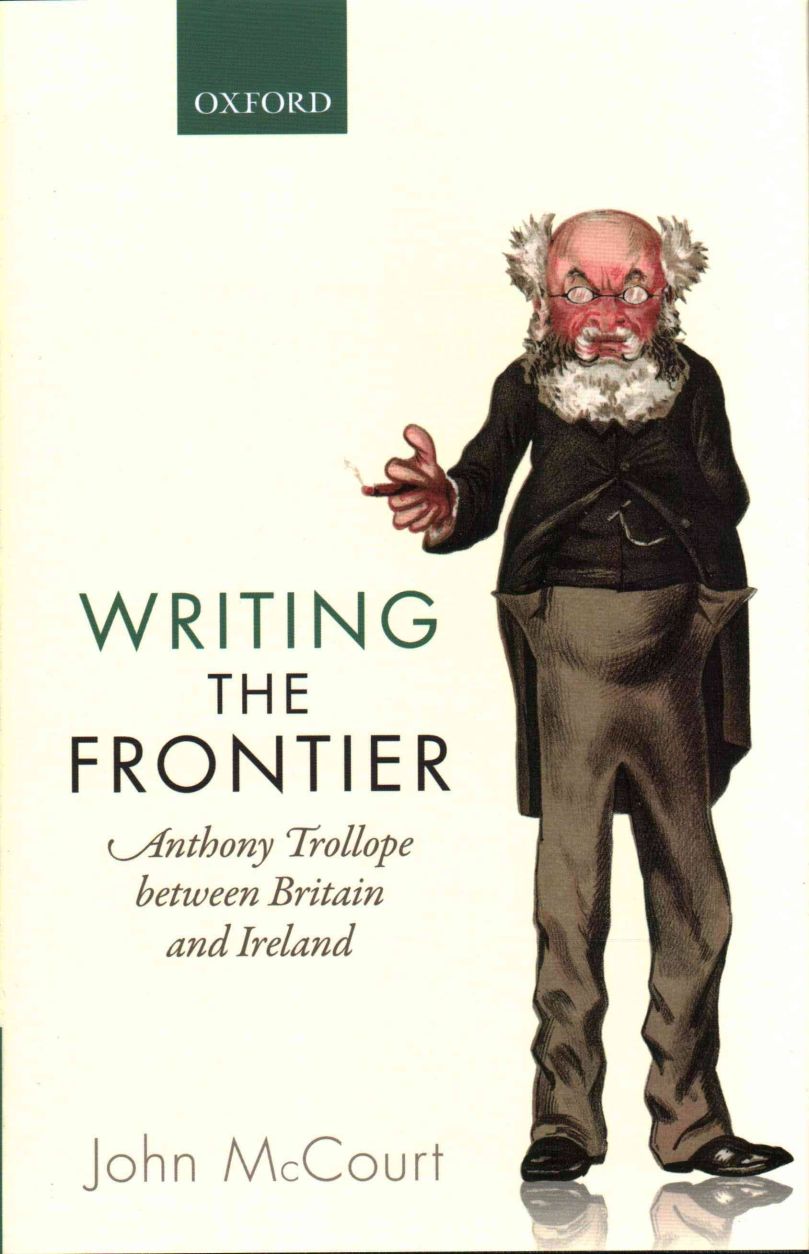
The first post boxes were introduced to Ireland in the 1850s by the novelist Anthony Trollope, then a Surveyor for the Post Office. Trollope was happy in Ireland and wrote several novels and stories set here, although they are not the works for which he is most remembered.

Trollope Book Cover

We don’t usually think of Anthony Trollope as an Irish novelist but he lived here for almost 20 years, spent working for the Post Office and writing

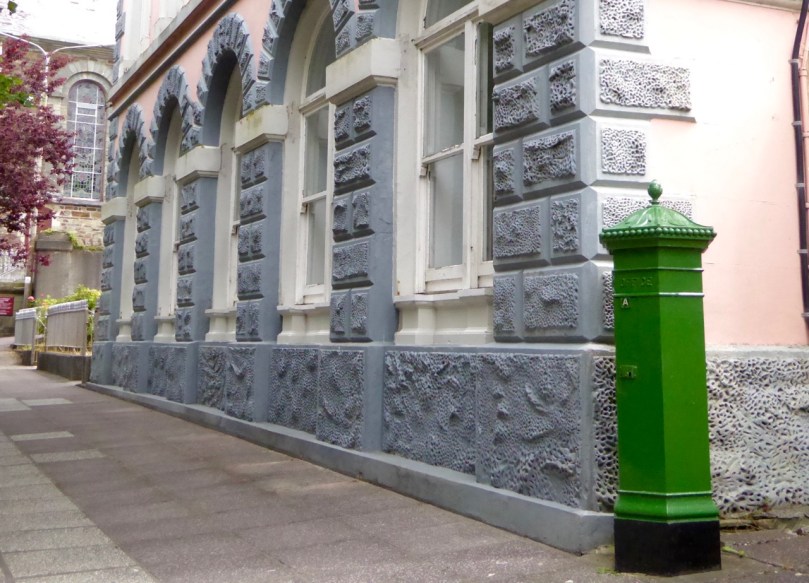
One of the earliest models for a free-standing post box came to be known as the Penfold, after its designer, J W Penfold. They were manufactured and deployed from 1866 to 1879 and very few have survived in Ireland to this day – only six are known and of these only three are still in operation. Skibbereen has one of those, and very fine it is: one hundred and fifty years old and still in daily use!

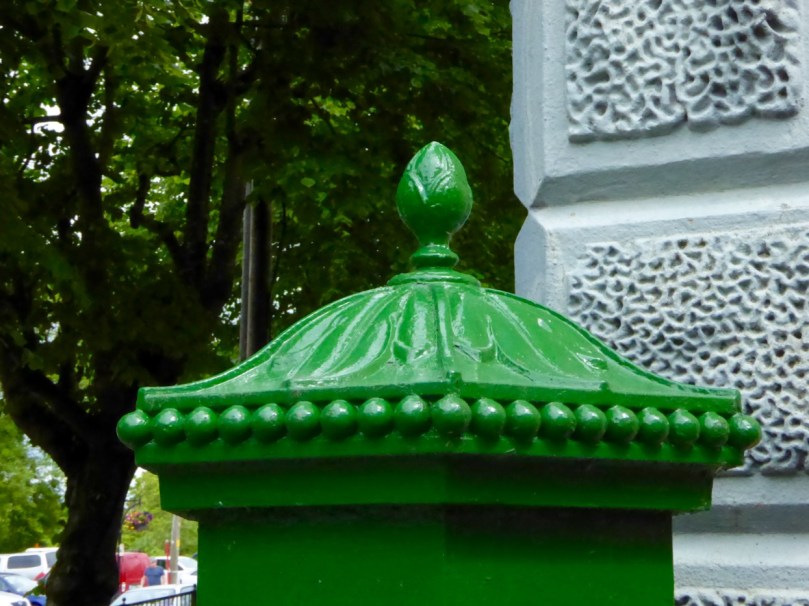
Penfold Acanthus Leaf

The hexagonal Penfold designed was apparently inspired by the Temple of the Winds in Athens (although the Temple is octagonal), with the addition of an acanthus leaf on the cap and a smart bud-shaped finial and beading.

BenQ Digital Camera

Photograph of the Temple of the Winds from Wikipedia

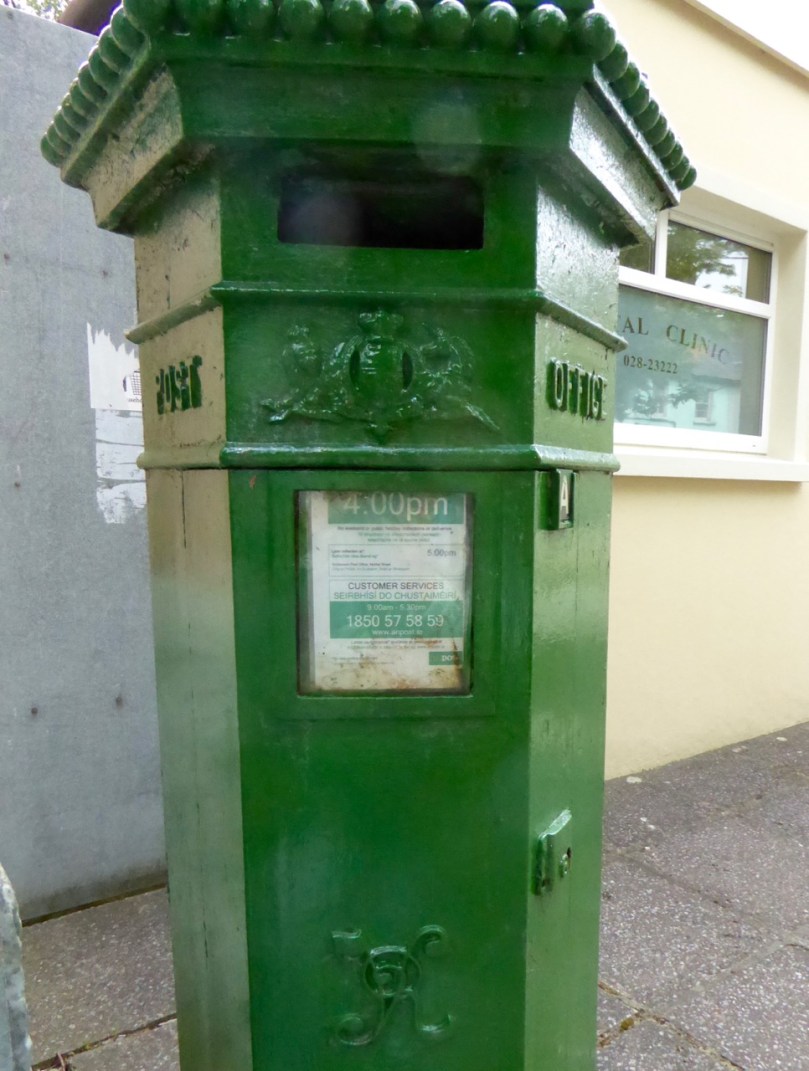
Our Skibbereen Penfold is in excellent condition: note the royal insignia and the entwined VR for Victoria Regina.

Penfold Skibb closer

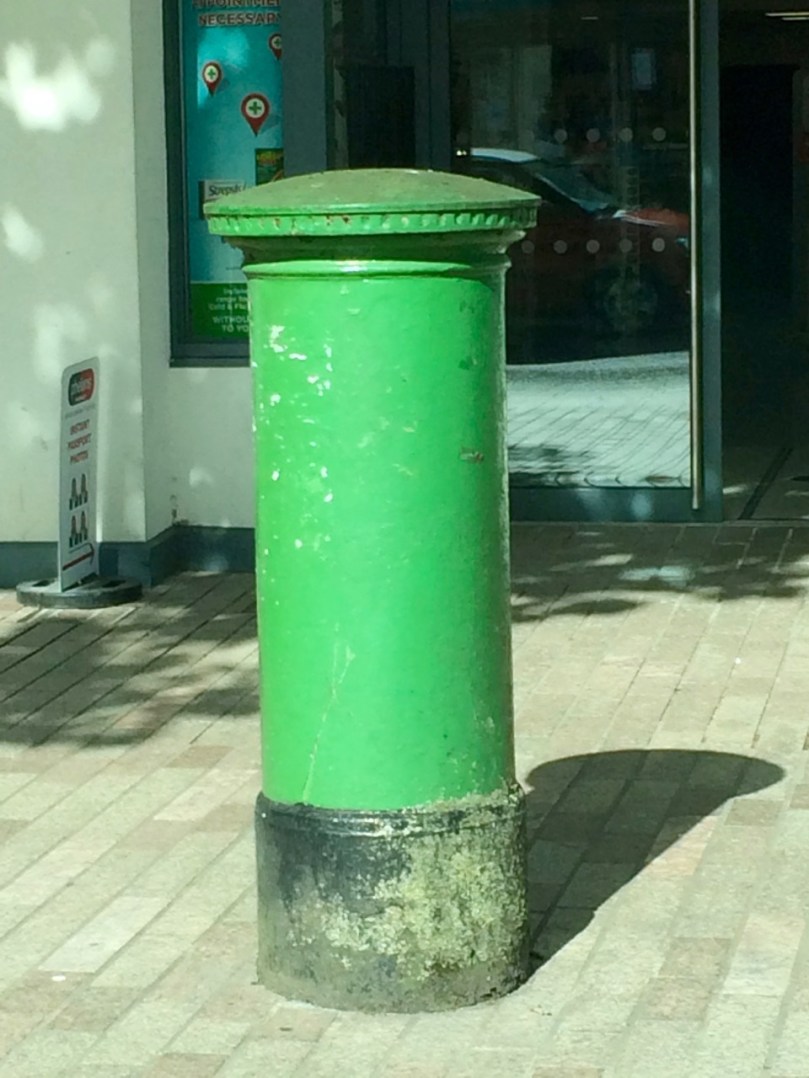
The Penfolds were replaced by round pillar boxes because there were too many complaints that the hexagonal design caused letters to stick. These cylindrical boxes can be seen everywhere in Ireland still, although mostly in towns and cities. The one below is on Grand Parade in Cork.

Cork Post box

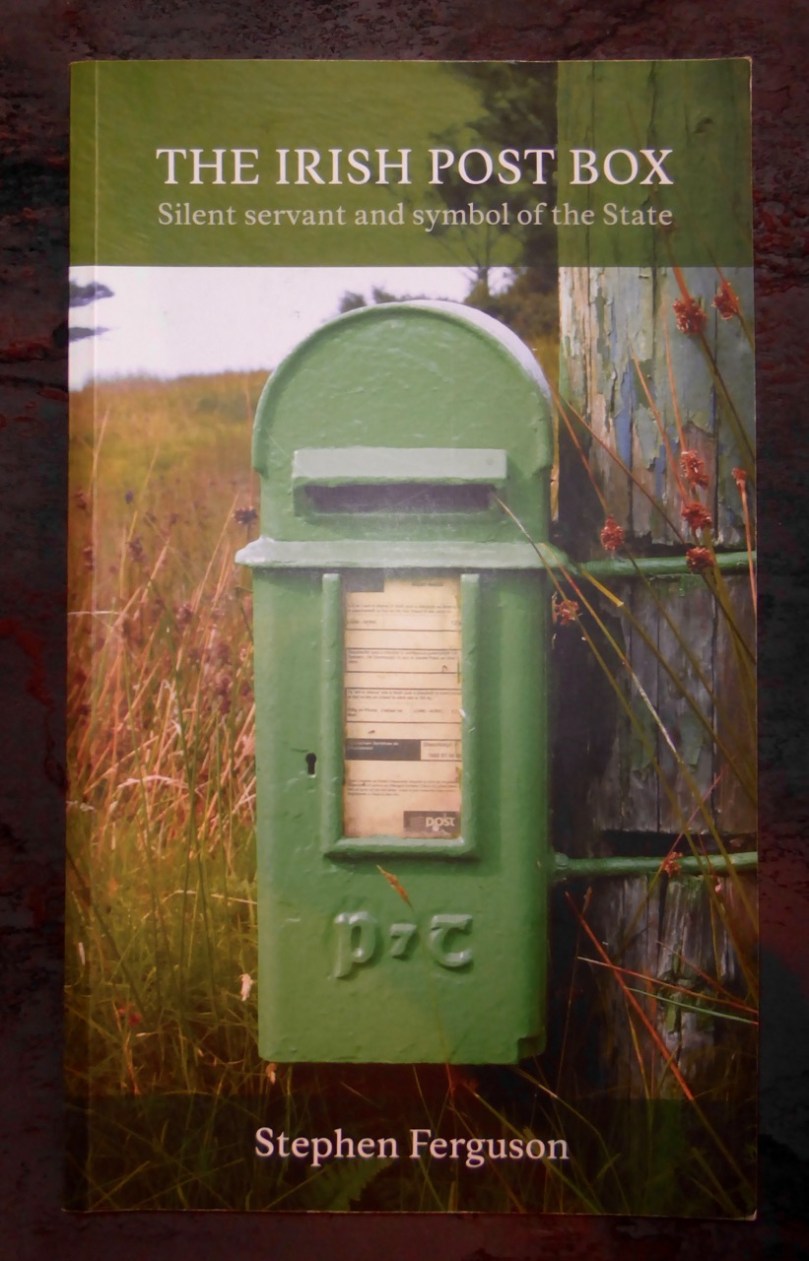
Ferguson post box book

In his book The Irish Post Box, which I gratefully acknowledge as the source of much of the information in this blog post, Stephen Ferguson describes the three main types of post boxes that have been developed for use in Ireland: pillar, wall and lamp. In rural areas, such as West Cork, wall and lamp boxes are the most common forms I have encountered.

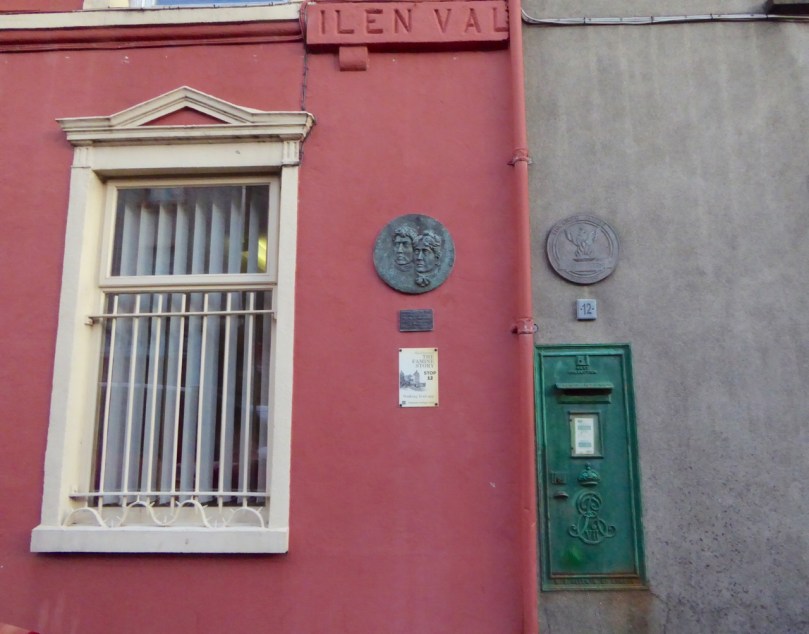
Skibb wall box

Here’s a representative wall box in Skibbereen. Interestingly, it’s part of a mini-complex of historical markers including the plaque to the Clerke sisters (see my posts From Skibbereen to the Moon Part 1 and Part 2 for more about these remarkable women and their family) and signs for the Skibbereen heritage walking trail, all mounted together on the wall of what was the main bank in Skibbereen during the Famine period.

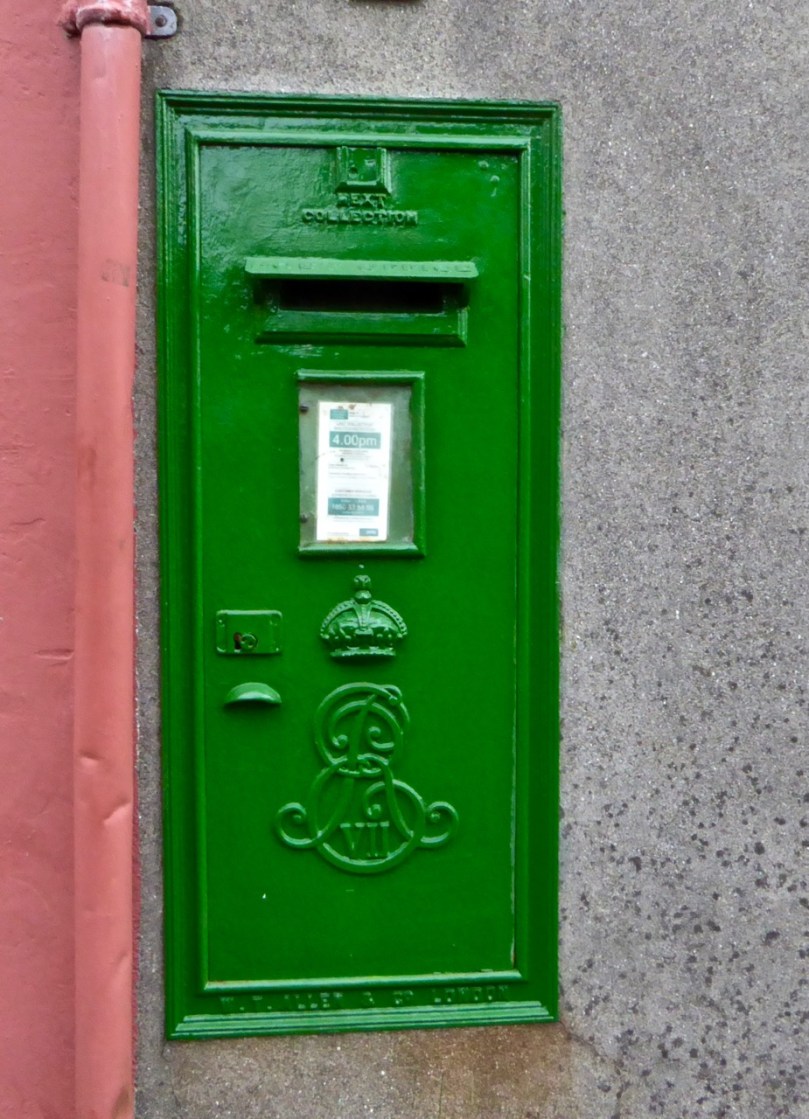
Skibb post box

The box was manufactured by W T Allen and Co of London and bears the ornately scrolled insignia  and crown of Edward the VII, which places it between 1901 to 1910.

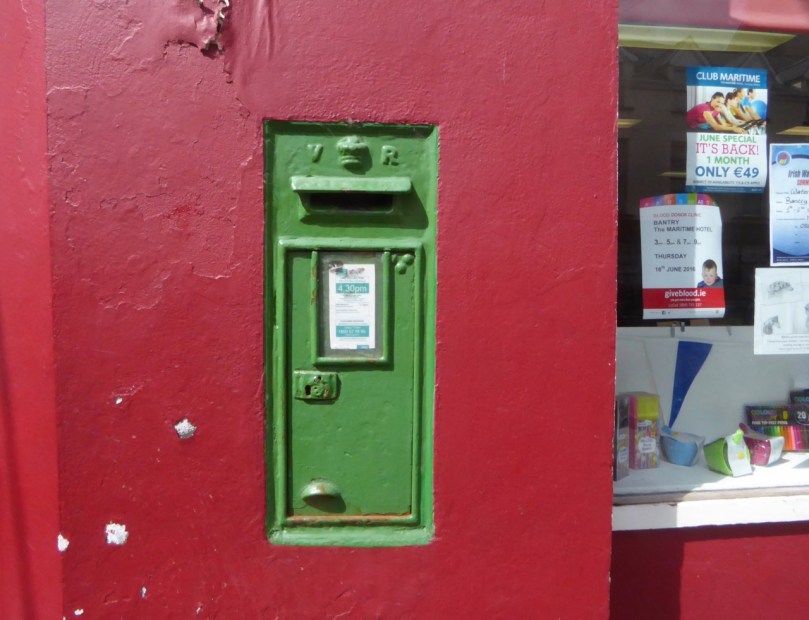
Bantry Wall Box

Here’s another nice one in Bantry, a Victorian one, although this time the VR lettering is simpler than on the Penfold. This one has been painted so often that the embossed POST OFFICE on the protective hood has almost disappeared under the layers.

Bantry Wall Box closer

Lamp boxes were designed for remote areas where a suitable wall might not be readily available. Ferguson explains: 

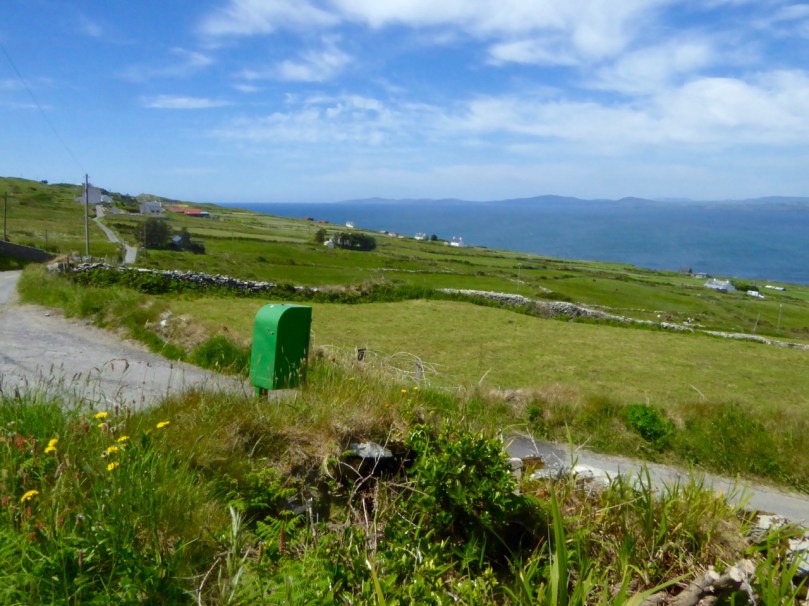
Lamp post boxes, based on a design used by the United States Postal Service, were first introduced in 1896 in London as a response to calls for more post boxes throughout the city. Affixed to a street lamp, the boxes were used at locations where the expense of a pillar or wall box could not be justified. In Ireland, however, they were often deployed in rural areas where, attached to a telegraph or specially erected pole by metal clips, they were very useful in extending postal collections to remote and sparsely populated regions. Tucked under hedges or used sometimes as a smaller version of a wall box, these post boxes were relatively cheap to make and easy to install and they symbolise…the extraordinary influence and reach of the Post Office as an institution at the height of its powers.

Post box near Barleycove

Driving or walking around rural Ireland, look out for ‘lamp’ boxes. Here’s one from the road near Barley Cove.

Pole Box near Barley Cove

Post_Box_P_T_SE_Washington_Street__Cork.A closer inspection reveals this one bears the P & T logo that was in use between 1939 and 1984, before it was replaced by the brand ‘An Post’. Sometimes the old royal initials were ground off the boxes, or sometimes the doors were replaced with new ones bearing the P&T lettering, but it seems that considerations of cost (always paramount with the careful Post Office) allowed many to simply remain in place as they were. In the early years of the new state, some were embossed with the Saorstát Éireann logo (even sharing the door with a VR insignia) but that practice was relatively short lived and I have found no examples to it yet in West Cork. The website Irish Postal History has this example from Washington Street in Cork.

Most scenic postbox

On Cape  Clear – the most scenic post box in Ireland?

If no lamp post or suitable pole existed, a simple stake was erected to which a box could be attached. Cape Clear Island didn’t get electricity until the 1970s, so this post box (above and below) must predate the advent of poles. The logo, however, is that of An Post, which was established as the new brand in 1984. Perhaps the poles were only erected island-wide after the submarine cable was laid in the 1990s.

Cape Clear post box closer

Not all mail boxes have been retained for active use – so what happens to them? Many simply remain in situ, as a picturesque reminder of times when we actually wrote to each other instead of texting or emailing. The one below at Rossbrin, near Ballydehob, was once attached to the wall outside the old schoolhouse. The first photograph at the start of today’s post shows its location.

Rossbring Wall box 3

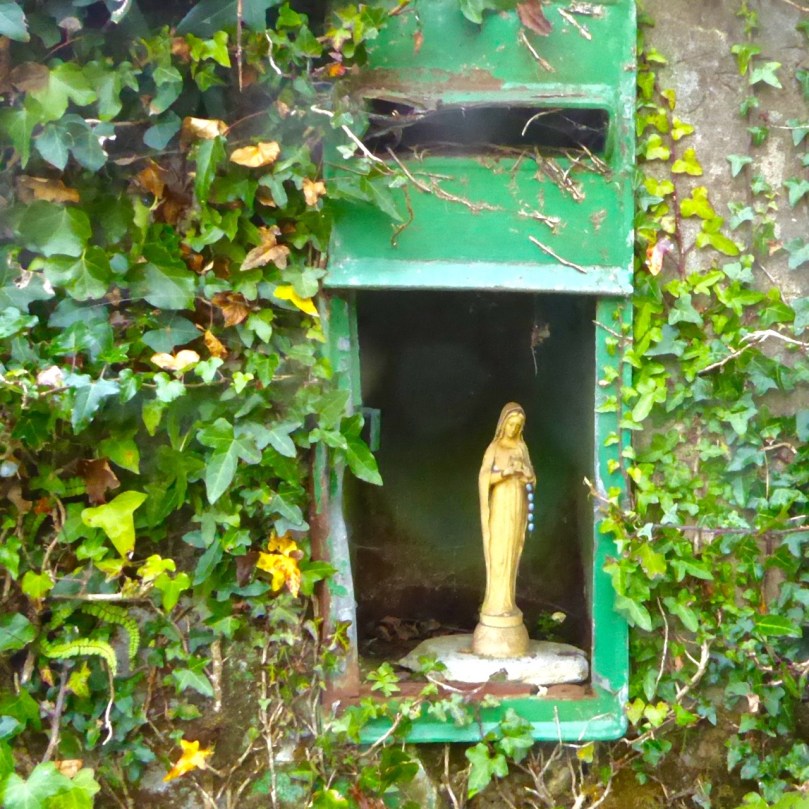
And this one, at Ahakista, has been repurposed as a wayside shrine.

repurposed

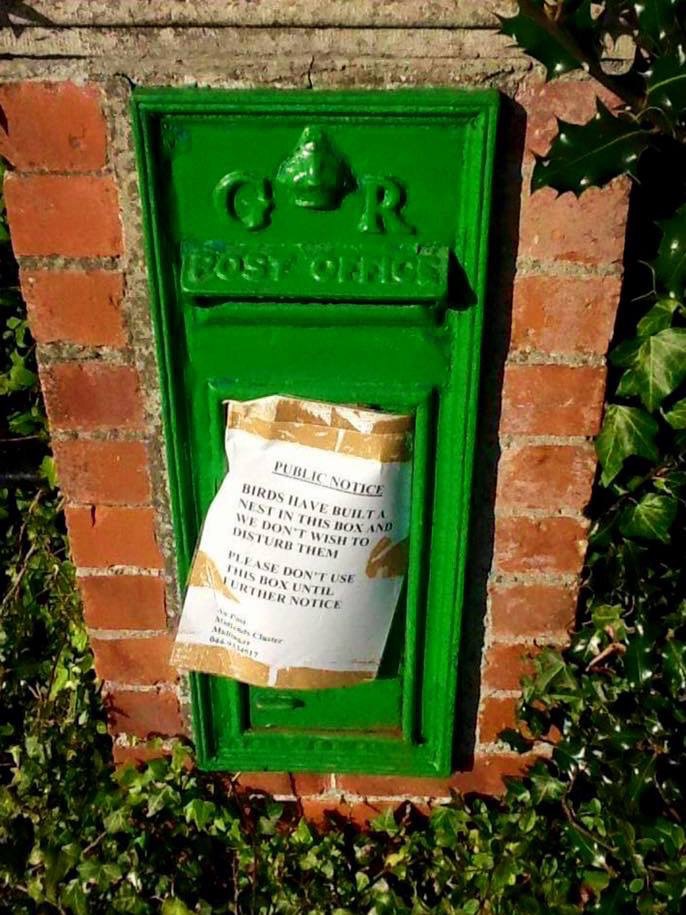
But even if it’s still in use, sometimes a mail boxes can’t be used for its real purpose, but has more important work to do! I don’t know where this last photograph was taken or whose work this is – it was widely circulated on the internet – but I would be happy to credit the photographer if I knew who it was. Delighted to have this also as an example of a post box from the reign of George V, 1910 to 1936.

Post box birds nest

Discovering Carrowmore

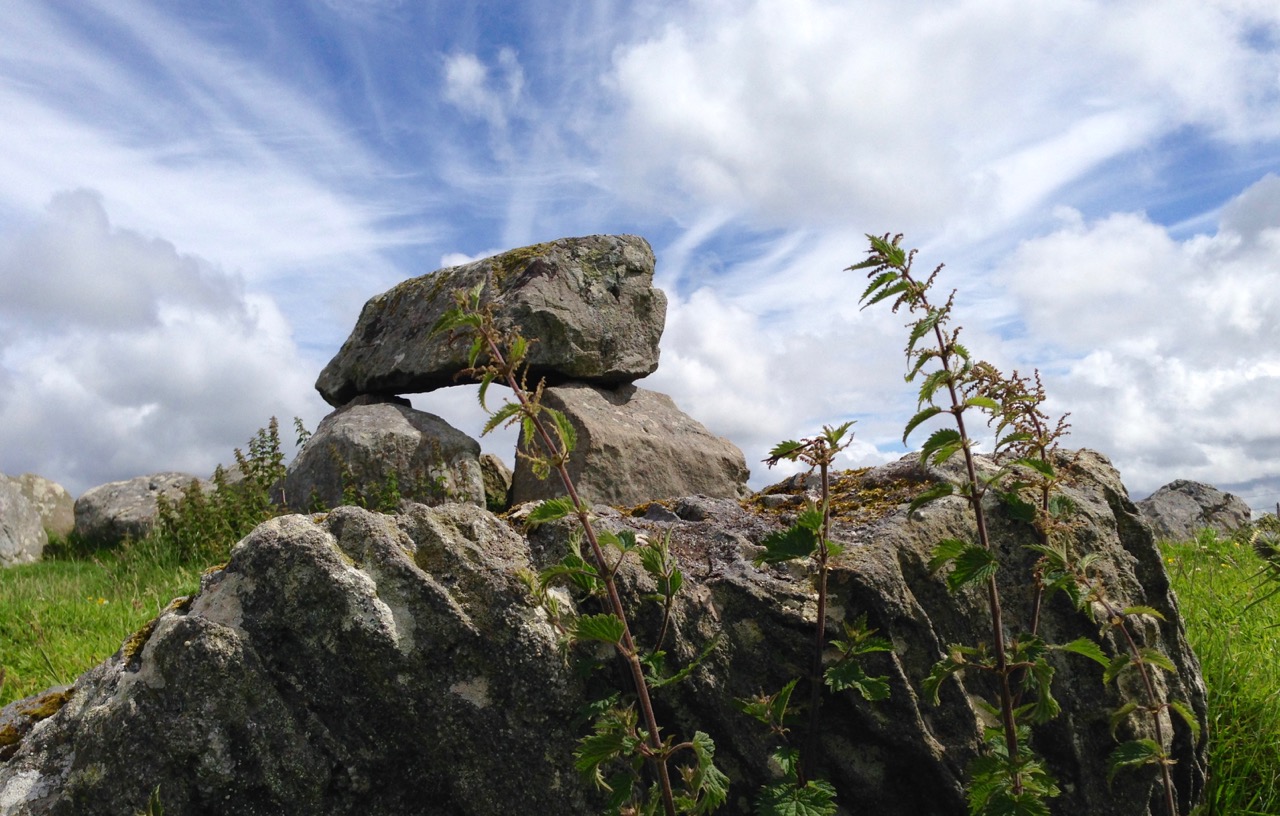
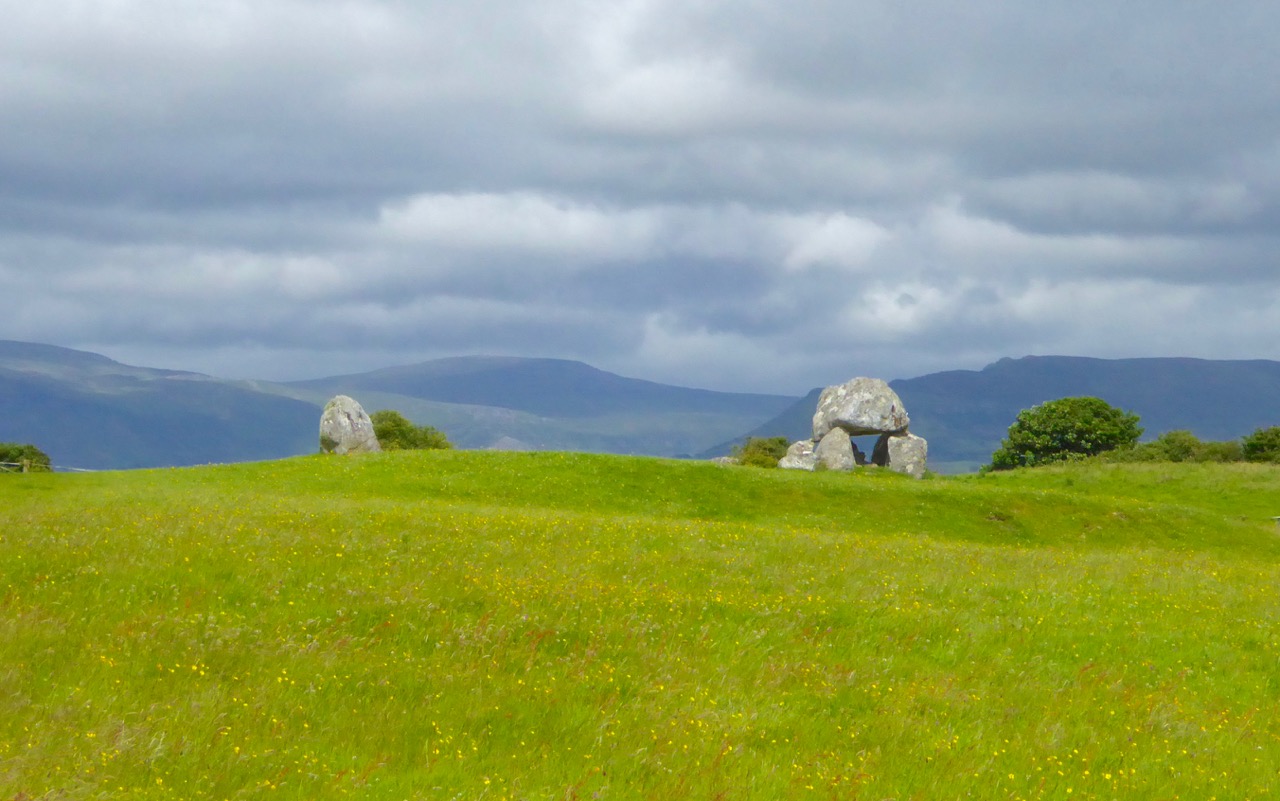
stone and sky

At the heart of the Coolrea peninsula in County Sligo lies one of the greatest megalithic complexes of ancient Ireland, An Cheathrú Mhór or Carrowmore as we call it today: the Irish name means ‘The Great Quarter’. Spread over a plateau of some 150 acres and centred on the high point of Listoghil are thirty recognisable tomb sites but it is suggested that there were once at least a hundred monuments here.

Carrowmore 1

The Carrowmore monuments that we know today cover over 150 acres: it’s likely that there is much more to this site which has been lost, or which remains to be recovered

The changing landscape has taken its toll: from the 18th century onwards land clearance and quarrying have damaged and obliterated many of the remains and even as recently as 1983 Sligo County Council sought to place a municipal landfill dump adjacent to the known sites. Fortunately a few alert local residents objected and took the case to the High Court in Dublin. Initially their objections were overruled but in 1989 an appeal to the Supreme Court was successful and the very important landscape context of Carrowmore has been saved, hopefully for all time. In that same year the state commenced purchase of a part of the site and has developed a sensitively planned visitor facility now run by the Office of Public Works. Since then more of the surrounding site has been purchased and is in public ownership.

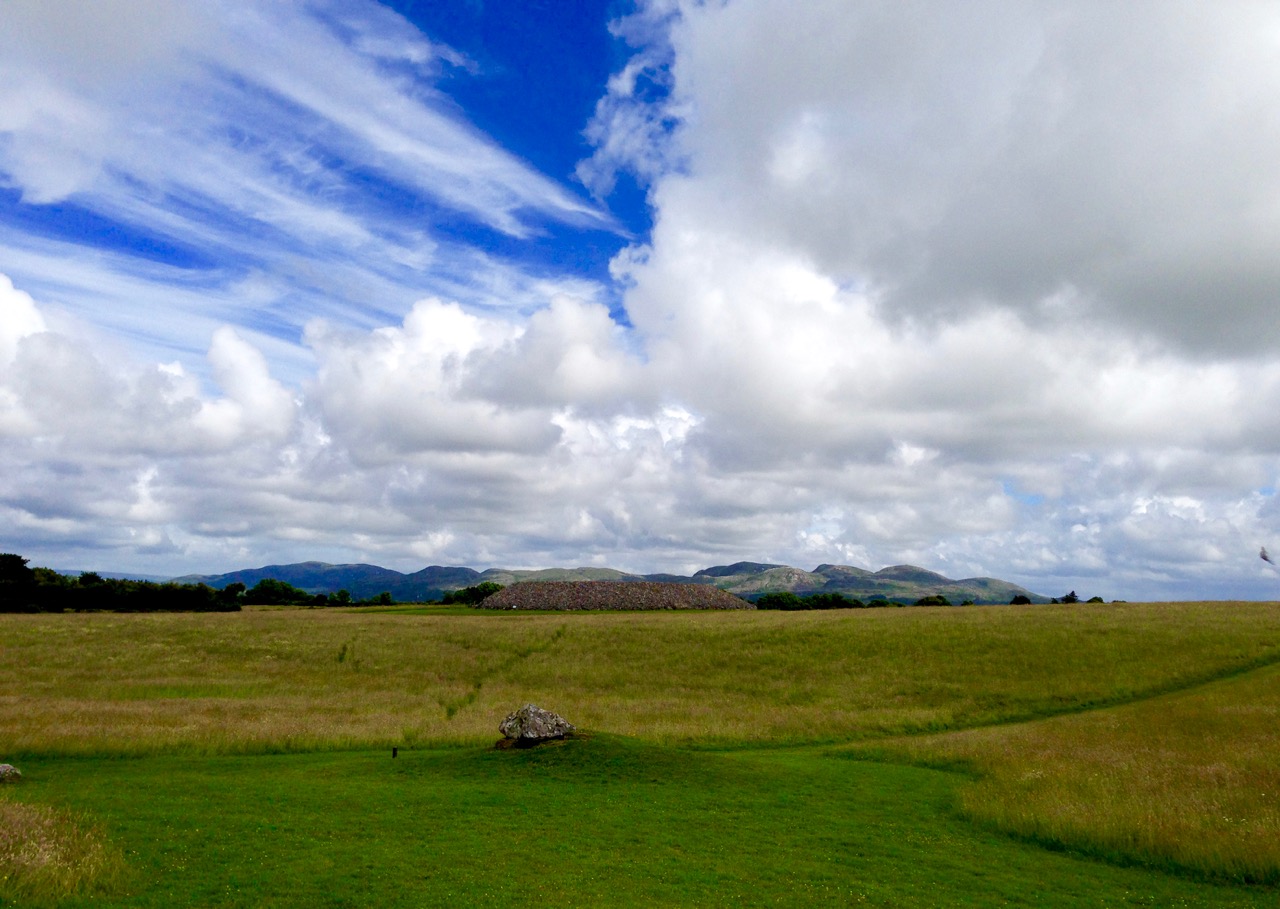
stone and skyscape

Carrowmore landscape: this view to the great central cairn on Listoghil shows the nature of the terrain and the context of the monuments which it is so important to preserve

It’s the integrity of the complex that is so special here. The monuments found at Carrowmore are called boulder circles, though several have central dolmens or rudimentary passages. Generally around 12 to 15 metres in diameter, the circles contain 30 to 40 boulders, usually of gneiss, the material of choice for the tombs. Sometimes an inner boulder circle is also present.They are considered to be an early type of chambered cairn, or passage grave, though in fact, they may be the ancestor of a few monument types. This is the view of local man Martin Byrne, historian, artist, musician and our tour guide for the day. He pointed out to us how the passage of each of the boulder groupings is oriented, not towards a solar or calendrical event but to Listoghil, where an enormous cairn encloses a box-like stone chamber with a large capstone.

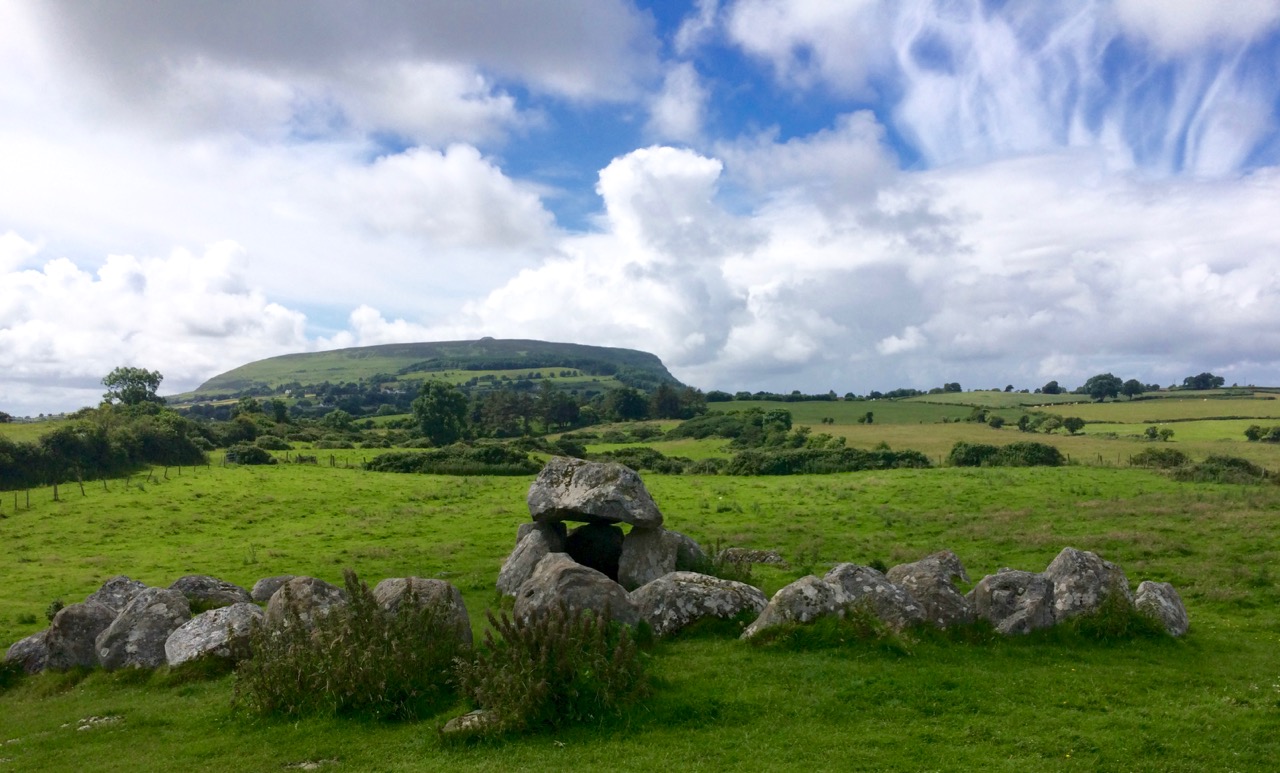
Monument, mountain and sky

One of the boulder circles at Carrowmore with its central chambered tomb. This view is looking away from Listoghil and towards another significant landscape feature, Knocknarea, which is topped by the cairn known as Queen Maeve’s Tomb, 6 km to the west. There are 6 more mountain-top cairns on the peaks of the Ox Mountains to the south. The central focus of the Carrowmore complex is the cairn on Listoghil, although this is not as dramatically visible as many of the surrounding cairns

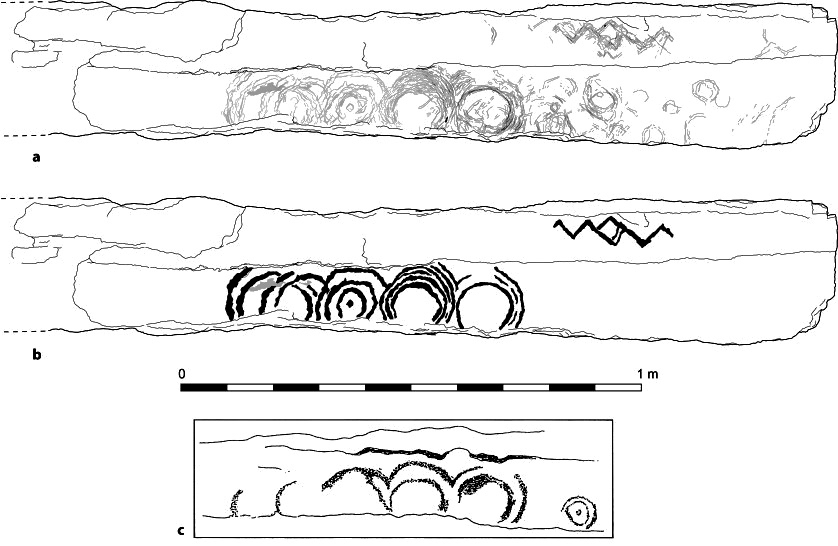
The chamber on Listoghil has been given a modern context, with the original cairn covering having been cut away to allow access. This chamber displays the only examples of rock art to be found so far within the Carrowmore complex. This is hard to see in normal lighting conditions, but successive observations have enabled these images to be made:

Listoghil carvings Guillaume Robin 1994

The formerly covered central chamber of the Listoghil cairn: top left is a photograph taken during excavations by Göran Burenhult in 1996-98 – this shows three boulders in front of the tomb which are said to have been an earlier Neolithic monument displaced by the tomb construction. Top right is the OPW interpretation board for the chamber and above are drawings of the rock art on the edge of the roof slab compiled by Guillaume Robin

It’s startling to discover that the Carrowmore complex could be over 6,000 years old: carbon dating from some of the finds has suggested this. If so, then it’s the earliest of the passage grave cemeteries in use in Ireland. Many cremated remains have been found over this site (spread over a long period of time), although unburnt human bones were also recovered in the Listoghil chamber. It could be speculated that the focal point of Listoghil must have been the resting place of a very important person – or dynasty; we will never know for sure. 

‘Accidental’ rock art and rock scribing noticed on monuments at Carrowmore: these boulders have natural markings on them but it is possible that the monument builders were attracted by these marks, which may themselves have inspired carvings

The Carrowmore complex has been visible enough historically to attract the attention of antiquarians – which is useful for later archaeologists, as some parts which are now lost have been historically recorded, albeit using methodology which would nowadays be considered inadequate. Gabriel Beranger, who was born in Rotterdam in 1725, settled in Dublin in 1760 and was a notable illustrator of antiquities in Ireland during a long lifetime; he visited and recorded Carrowmore. A local landlord, Roger Walker, carried out some excavations of the tombs in the 19th century but made no significant records; it is suggested that he was a treasure hunter. George Petrie surveyed the site and numbered the tombs in 1837 but it was another 50 years before archaeologist William Gregory Wood-Martin made the first methodically recorded excavations. William Wakeman produced some exquisite watercolour sketches in 1879. More recently Swedish archaeologist Göran Burenhult undertook detailed studies between 1977-1982 and 1994-1998 and this work included the excavation and subsequent reconstruction of the Listoghil cairn.

Upper Left: the work of Gabriel Beranger who visited the area in the 1700s – this shows Queen Maeve’s Tomb on Knocknarea. Upper right: William Wakeman’s watercolour of Tomb 4 in 1879 (Sligo County Library). Above: Listoghil chamber tomb today

Our guide Martin has studied the complexes at both Carrowmore and Carrowkeel (a future destination for us) for many years and is imbued with the archaeology and the landscape. He gently pointed us to the fact that relationships can perhaps be seen between the profiles of some of the boulders – particularly the capstones of the tombs – and the more distant landscape. I find this fascinating: I have always felt, as an architect, that there should be a conscious designed relationship between any building that is erected by human endeavour and the setting of that building within nature. Could these parallels that we might be seeing at Carrowmore be conscious?

Dolmen and Mountain

Rocks reflecting nature? Were the capstones chosen to specifically echo the landscape context? A debatable – and very subjective – notion…

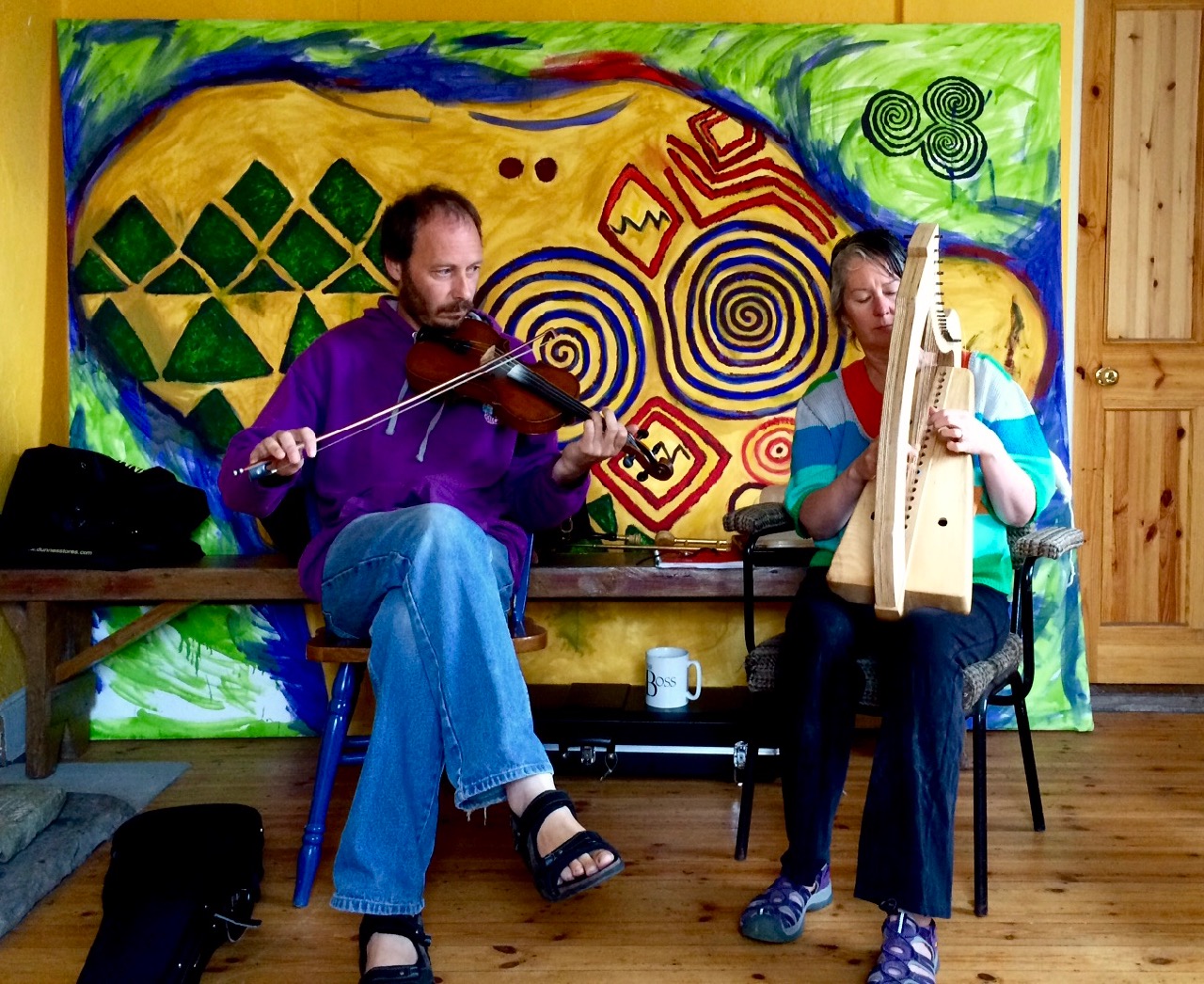
My day was made when I discovered that Martin was a musician – as is Margaret, and I joined them in their colourful house for a little session!

martin + margaret

A Bell for Bangor

Holg + Donagh 2

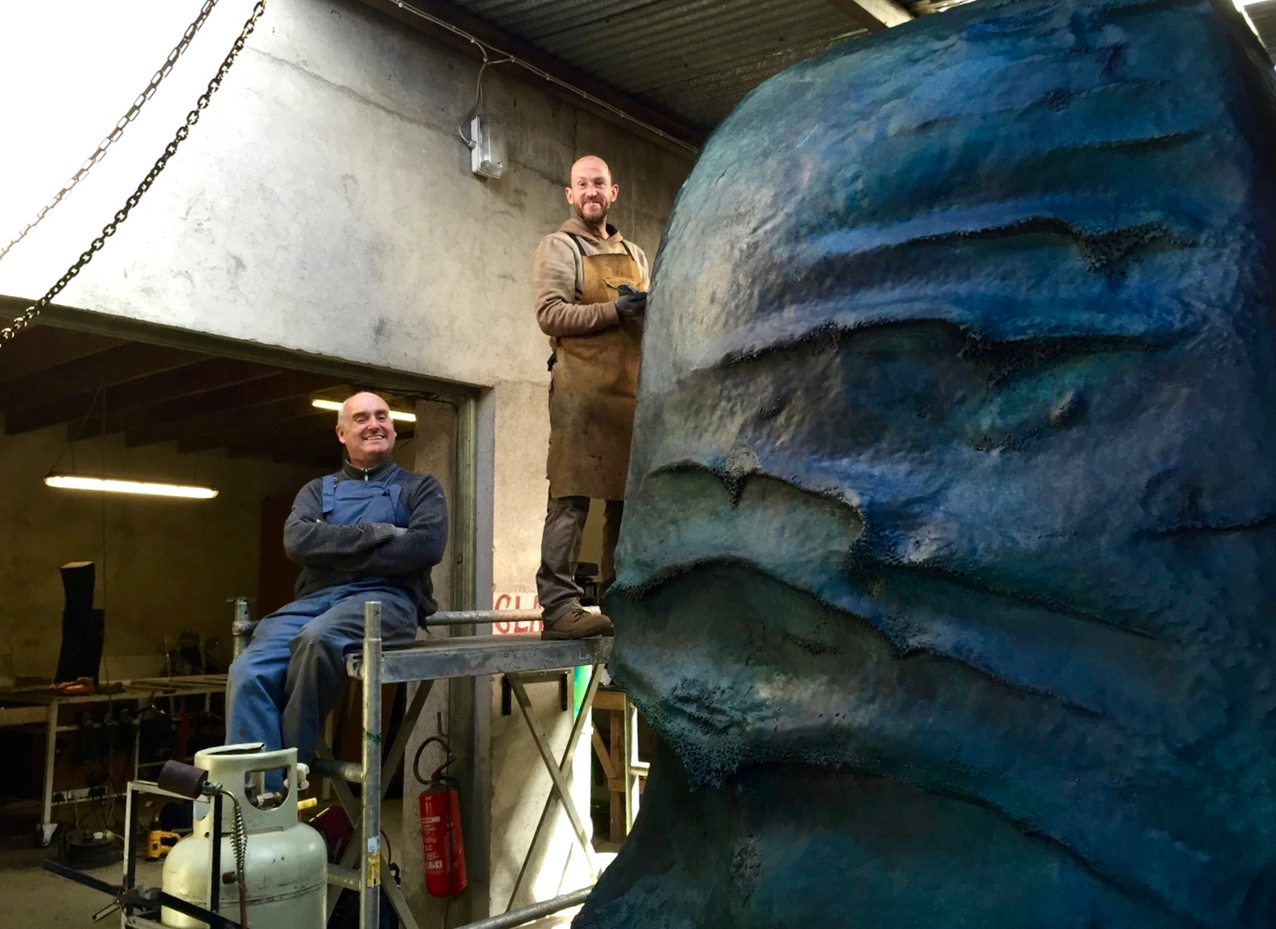
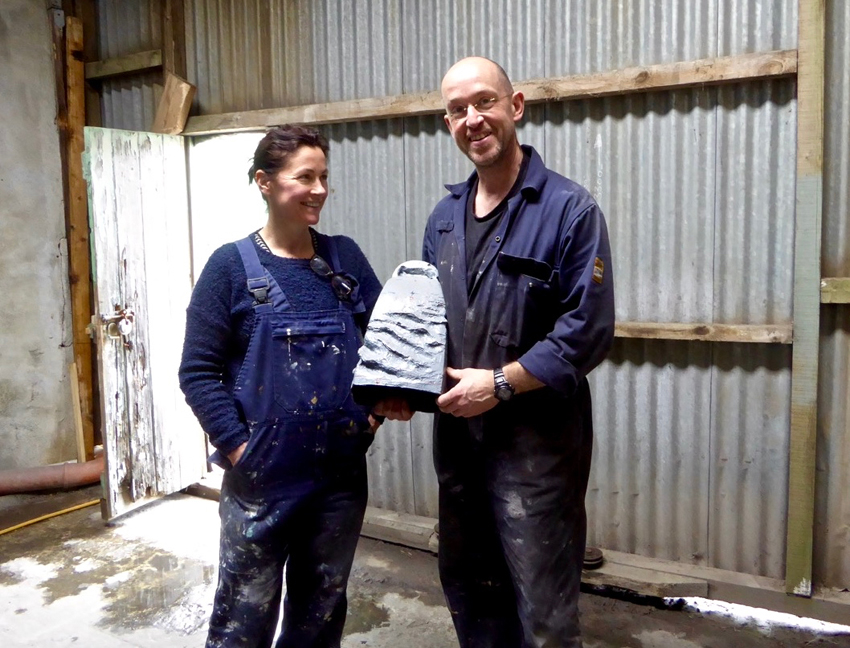
The man standing on the platform in the picture is Holger Lönze. You might remember him from Umha Aois, a post I put up last year about a group of artists and ‘experimental archaeologists’ who use Bronze Age metal working techniques to produce replicas of ancient tools, weapons and musical instruments. Holger – a sculptor – is a key member of that group: his workshop is in Schull and he has just completed a commission to make an enormous bell. You can see the project in progress on the right of the picture. On the left is Donagh Carey, another West Cork artist who worked on the casting.

Left: the original Bangor Bell – the inspiration for the new work – and, right: an early sketch design by Holger of the proposed bell sculpture

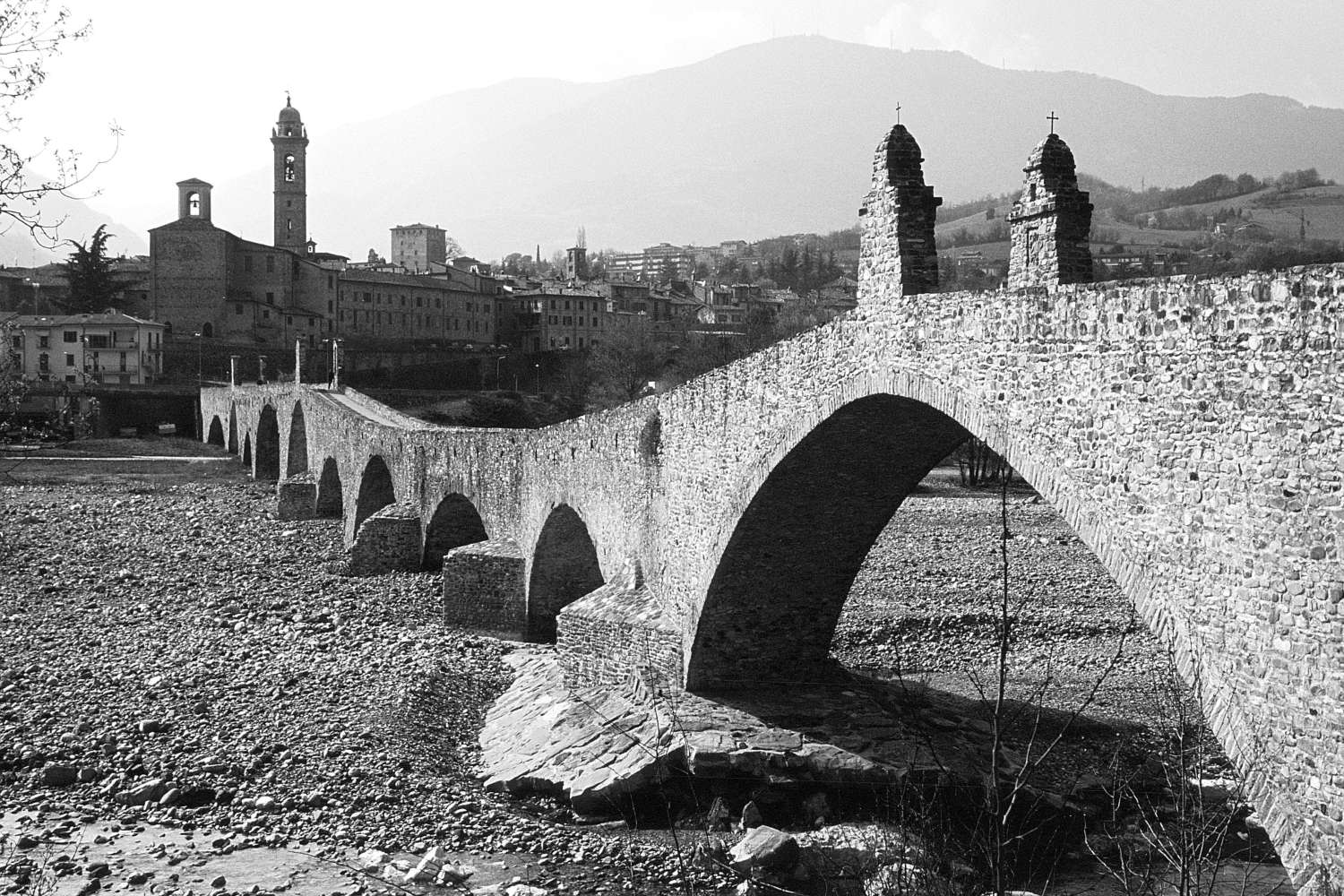
The story begins in the sixth century when Columbanus (the Latinised form of Columbán, meaning White Dove) was born in the Kingdom of Meath, now part of Leinster, Ireland, in 543. That’s about 50 years after the death (aged 120) of St Patrick. Patrick, of course, is the best known of the missionaries building up Christianity in Ireland, but he wasn’t Irish himself, having been born a Roman Briton. Columbanus was Irish, and he saw his mission as spreading Christianity from Ireland throughout the Continent of Europe. His mission was successful and St Columbanus is recognised in Europe as a founder of many monastic settlements during his travels in Gaul, Burgundy, the Alps and finally Italy where he established the great monastery at Bobbio, beside the River Trebbia. Columbanus died at Bobbio in 615 and his remains are buried in the crypt there.

Bobbio_bridge

The medieval bridge at Bobbio with St Columbanus’ great monastery beyond (photo by Herbert Ortner, Vienna, Austria)

There are great stories told about the life of Columbanus. When he walked in the woods, birds would land on his shoulders to be caressed, and squirrels ran down from the trees and nestled in the folds of his cowl. He is also said to have tamed a bear and trained it to pull the plough. Wolves would not harm him. He is usually depicted with a book and an Irish satchel, sometimes with sunbeams over his head. I’m not sure why but Columbanus is known as the patron saint of motorcyclists.

Saint Columbanus – left: depicted on a medieval fresco with book and sunbeams (note he is carrying a bell) and, right: sailing off to Europe with his companions

Getting back to West Cork and the bell: Columbanus travelled to Bangor, County Down – in the far north east of the island of Ireland – where he studied in the  Abbey until he was 40. A beautifully decorated bronze handbell was found near the Abbey by gravediggers in the 18th century; it is assumed to have been buried to keep it safe from Viking invaders in the 9th century. The Abbey is seen as the starting point for Columbanus’s missionary work in Europe and the bell (now in the North Down Museum) is associated with him, although unlikely to have been contemporary with his time there. Holger Lönze has always been fascinated by medieval bronze bells and has made replicas of many surviving examples. He cast a copy of the Bangor Abbey handbell using Medieval metalworking techniques in 2012, and the process is recorded in this video.

Holger’s full-sized replica of the Bangor Bell and (right) Holger in his studio explaining his techniques to Robert

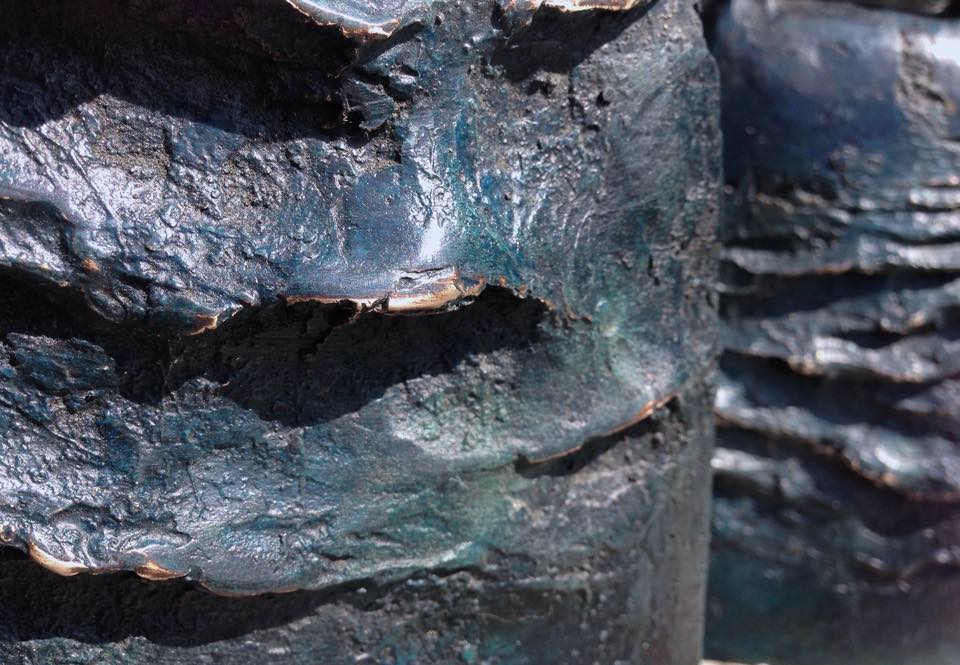
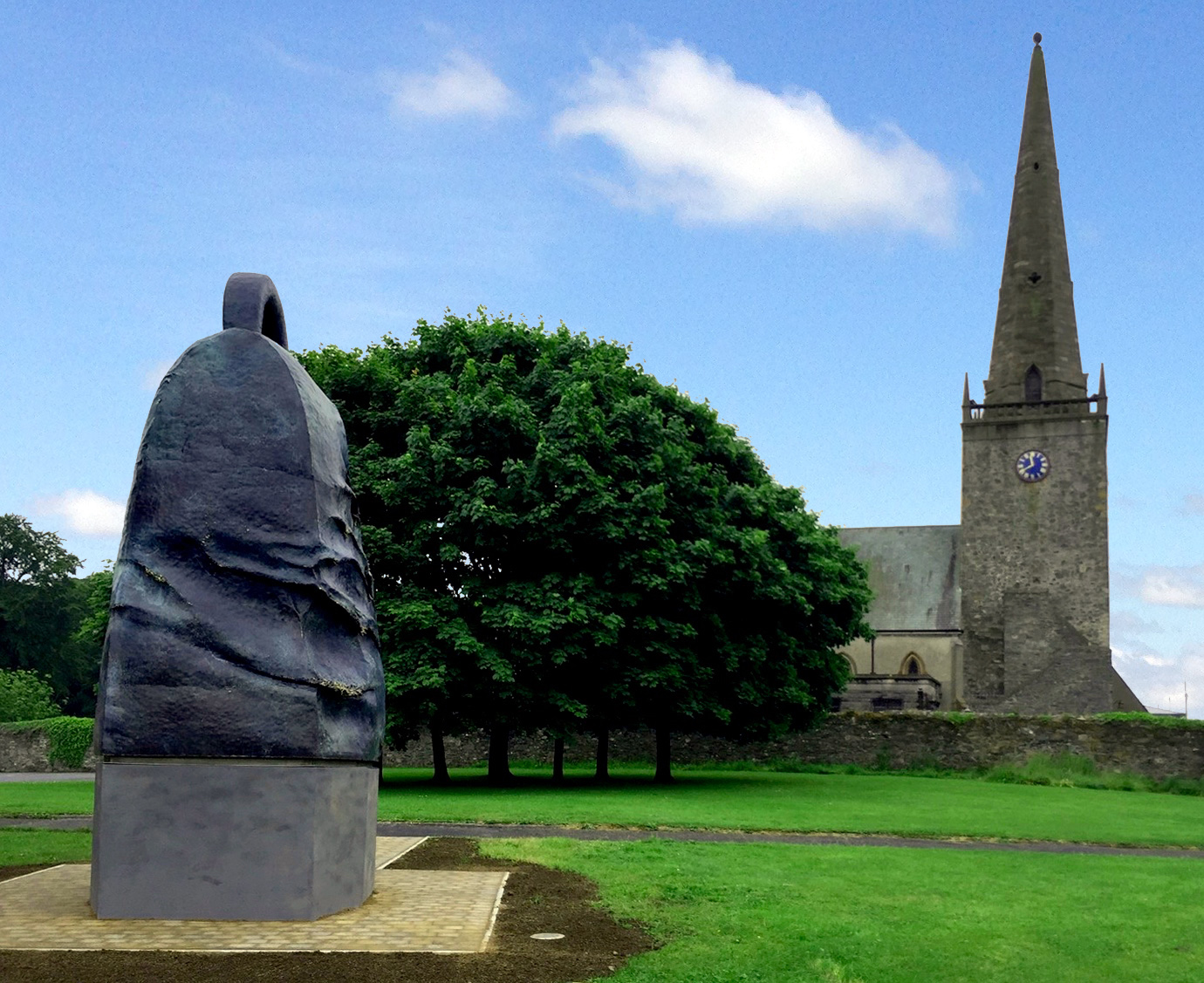
The new sculpture – titled Fluctus Angelorum (Wave of Angels) was commissioned by Ards and North Down Borough Council for Bangor Abbey  as one of a series of works inspired by the extraordinary achievements of Columbanus and his companions. Based on the proportions of the original bell, the surface of the sculpture is shaped like the surface of the ocean. The sea-blue patina and breaking waves are a metaphor for Columbanus’ remarkable sea voyage. The 4m high bell was fabricated in bronze plate in West Cork using the ancient repoussé process – by alternating annealing and hammering and finally welding. It took no less than 400,000 hammer blows to transform flat sheets of bronze into this piece of sculpture!

Bell surface

In the workshop: the surface of the 4m high bell reflects the surface of the ocean and (right) the inside of the great bell: it is mounted on a stone plinth and lit at night. Both bells and waves are striking metaphors to mark the Saint’s 1400 miles journey from Bangor to Bobbio – 1400 years ago

The medieval Bangor Bell didn’t have a clapper: it was carried around and hit with a hammer. Taking me back to my days as a percussionist, Holger allowed me to hit the giant bell… It made a mighty sound! From West Cork the bell travelled the whole length of Ireland, passing its 8th Century sister bells in Cashel, Co Meath and Bangor. It is now installed in the Abbey grounds and was formally unveiled on 13th June. The sculpture is not yet complete – Holger is making a number of smaller ‘satellite’ bells which will be set around it, but even on its own it is a most impressive sight: the largest bell ever made in Ireland.

holger with bell

Artist Karen Hendy and Holger Lönze showing the maquette for the bell project in Schull and, below, the bell in its setting at Bangor Abbey

bangor context

I’m often repeating the message but there is no doubt that West Cork is the most creative place I have ever lived! All manner of culture flourishes here and we are privileged to live in a community where we can readily meet and appreciate the work of so many artists; and we have excellent galleries to showcase this work – The Blue House Gallery in Schull (next door to Holger’s workshop), Uillinn in Skibbereen, Catherine Hammond‘s excellent gallery, now also in Skibbereen and The Aisling Gallery in Ballydehob. We are spoiled!

With many thanks to Holger for allowing me to use some of his own images of the work progressing…

Here Be Pirates!

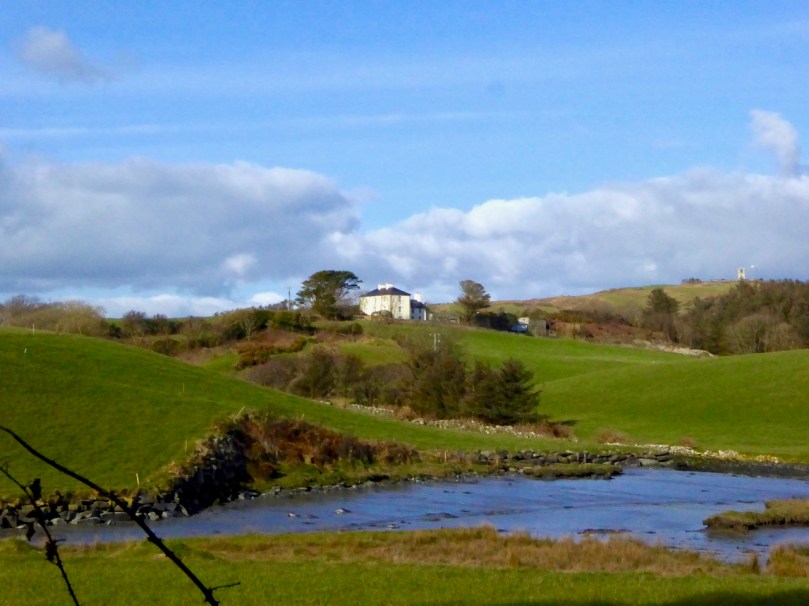
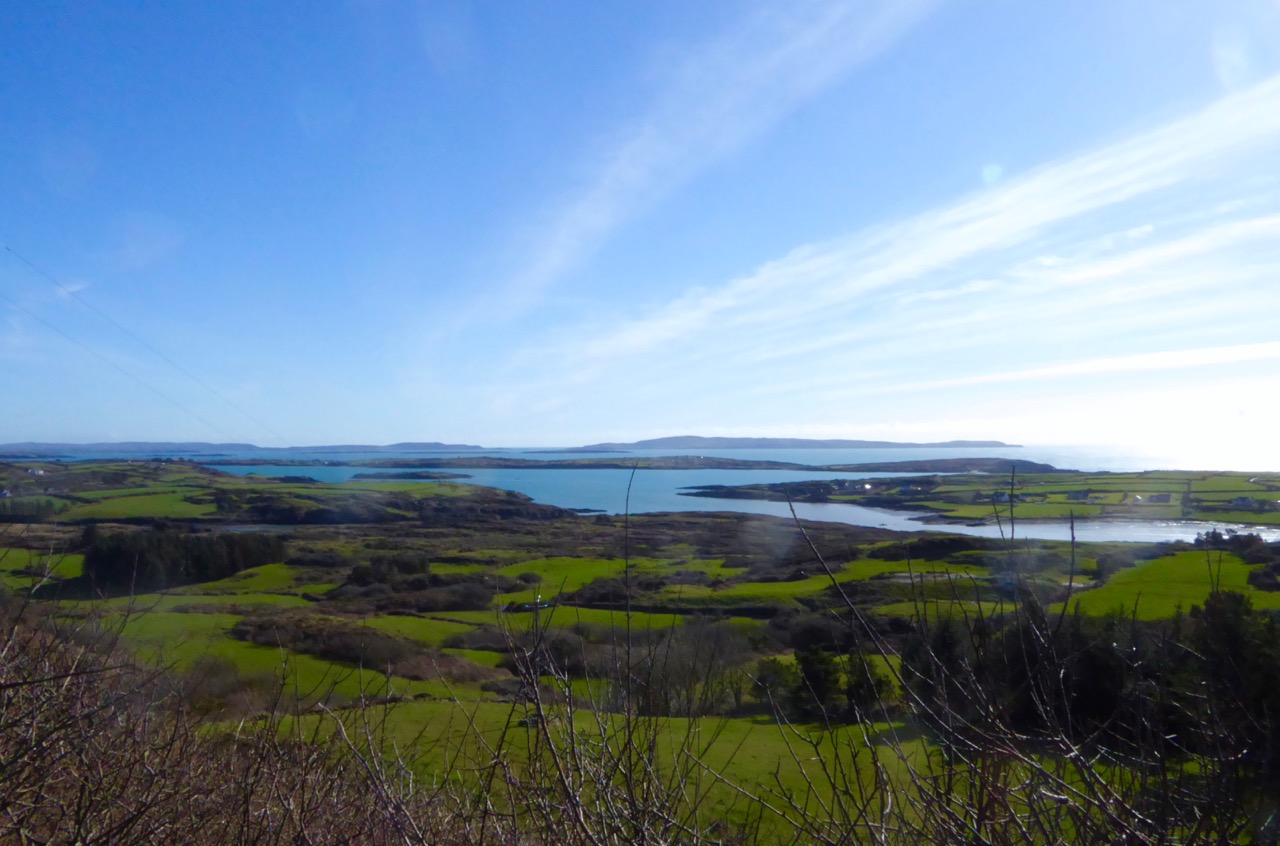
Crough Bay in the townland of Leamcon – one of the sheltered and hidden moorings which became known as a pirates’ nest in the late sixteenth and early seventeenth centuries. This is a view of part of the former estate of Sir William Hull who, as Vice Admiral of Munster, was charged with routing the pirates but in fact connived with them for his own financial gain

…Ireland may well be called the nursery and storehouse of pirates… wrote Sir Henry Mainwaring in a manuscript now in the British Museum (A Discourse of Pirates, on the suppression of piracy 1618). He had first-hand knowledge: this adventurer who was born in the time of Elizabeth spent most of his life at sea, survived the English Civil War – although on the losing side – and had been privateer, pirate and Royal Naval captain. He died at the age of 66 with his feet on dry land, although in poverty and exile in France.

map of baltimore

The Earl of Cork’s map of Baltimore,1628 –  following well-founded fears of ‘Turk’ raids he petitioned the Admiralty to fortify the coastal settlements. He was ignored and in 1631 the town was sacked and burned by Barbary pirates who carried away over 100 of the residents to the slave markets in Morroco

My possible ancestor Captain James Harris of Bristol died with his feet in the air: he was hanged at Wapping, in the estuary of the Thames, with 16 other pirates in December 1609. They had been captured in Baltimore, in sight of Roaringwater Bay. Why was it that Ireland – and, in particular, this coastline of west Cork was the notorious harbourer of pirates from all over Europe?

behold leamcon

According to Mainwaring, the west of Ireland was enticing because food and men were abundant; fewer naval ships patrolled the coast [than in England]; many of the local inhabitants were willing to trade with the pirates; and there was a …good store of English, Scottish, and Irish wenches which resort unto them… 

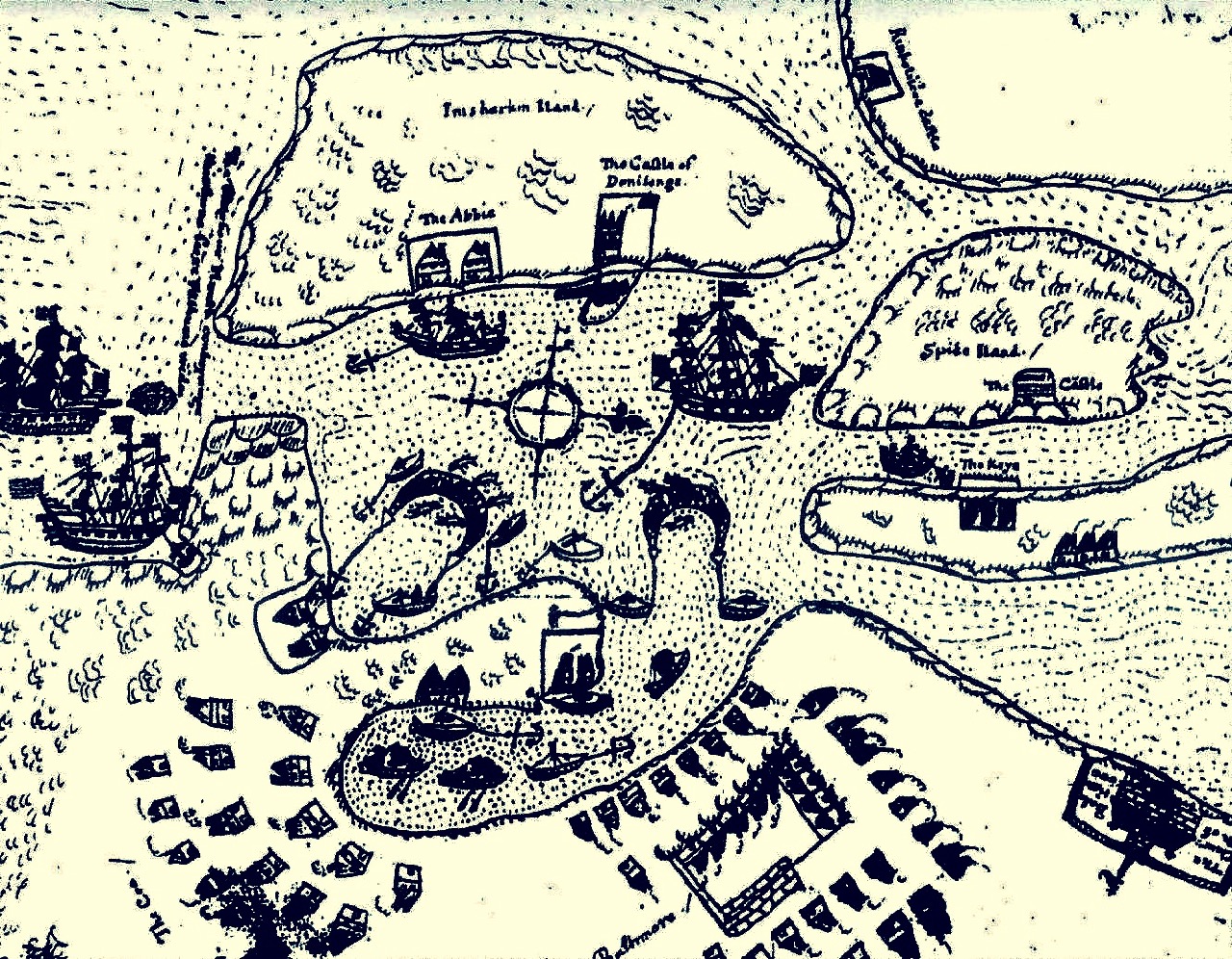
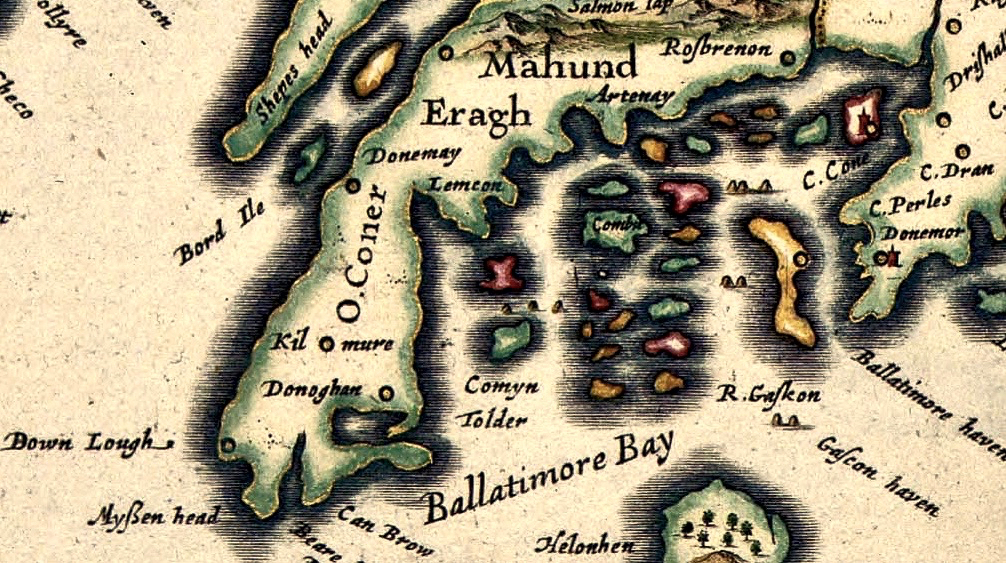
1611 John Speed map – Roaringwater

John Speed’s map of 1611 which portrays ‘Ballatimore Bay’ and Carbery’s Hundred Islands – ideal territory for concealing pirates. Note the curious geography, the names of the Irish clans and some of the places we recognise today: Rossbrenon (Rosbrin); Lemcon; Shepes Head and Myssen Head

The coast of west Cork, in particular, was eminently suitable for sheltering ships in need of careening and victualling: bays, coves, inlets and estuaries abound and Carbery’s Hundred Isles (in fact many more than a hundred but it depends on what you count as an island) offer refuges a-plenty. In Captain Harris’s time there was only one naval ship patrolling the whole area from Kinsale around to Bantry and beyond – and this was the Tremontane – an ancient leaky pinnace which could be easily outrun by any respectable pirate crew. All the more unfortunate, then, for my forebear and his band who fell into the hands of the authorities, no doubt through some act of treachery or double-dealing.

Captain Harris’s family paid to retrieve his body from the gallows at Execution Dock (above left) and gave him a Christian burial. It was more usual for the bodies to be immersed by ‘three high tides’ before being disposed of. In particularly notorious cases the corpses were tarred and then hung in gibbets (iron cages – above right) to remain in public view. Captain Kidd was displayed this way for at least forty years after his death in 1701.

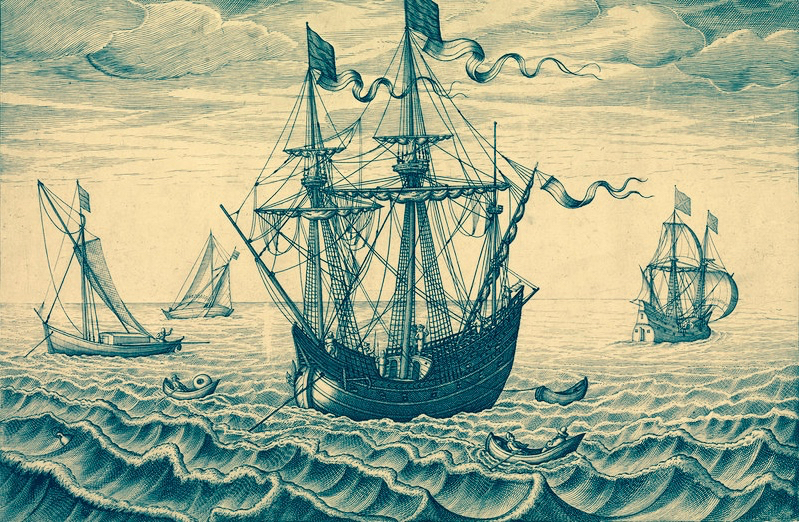
pirate ship

…The Irish folk surreptitiously colluded with pirates. When a captain needed supplies, he sent word of his needs. The reply to his note told him where he might find “so many Beeves or other refreshments as he shall need” on a specific night. When he and his men came ashore, they were to fire upon those who tended the herd, which allowed the herders to claim that they had been forced to hand over the cattle. Later on, he secretly landed “the goods or money in exchange, which by custom, they expect must be 2 or 3 times the value” If the pirates desired arms and/or ammunition and the Irish had any, they traded those items, too… (from Pirates and Privateers – The History of Maritime Piracy – an excellent online resource compiled by Cindy Vallar).

If you would like to learn more about Pirates in west Cork (and to listen to some great music) come along to the Fastnet Maritime + Folk Festival in Ballydehob this weekend 17th – 19th June: Robert is giving an illustrated talk on William Hull and the Leamcon Pirates’ Nest on Saturday 18th at 2.30pm in the Old Bank Building

Cape Clear: The Stone That Moved

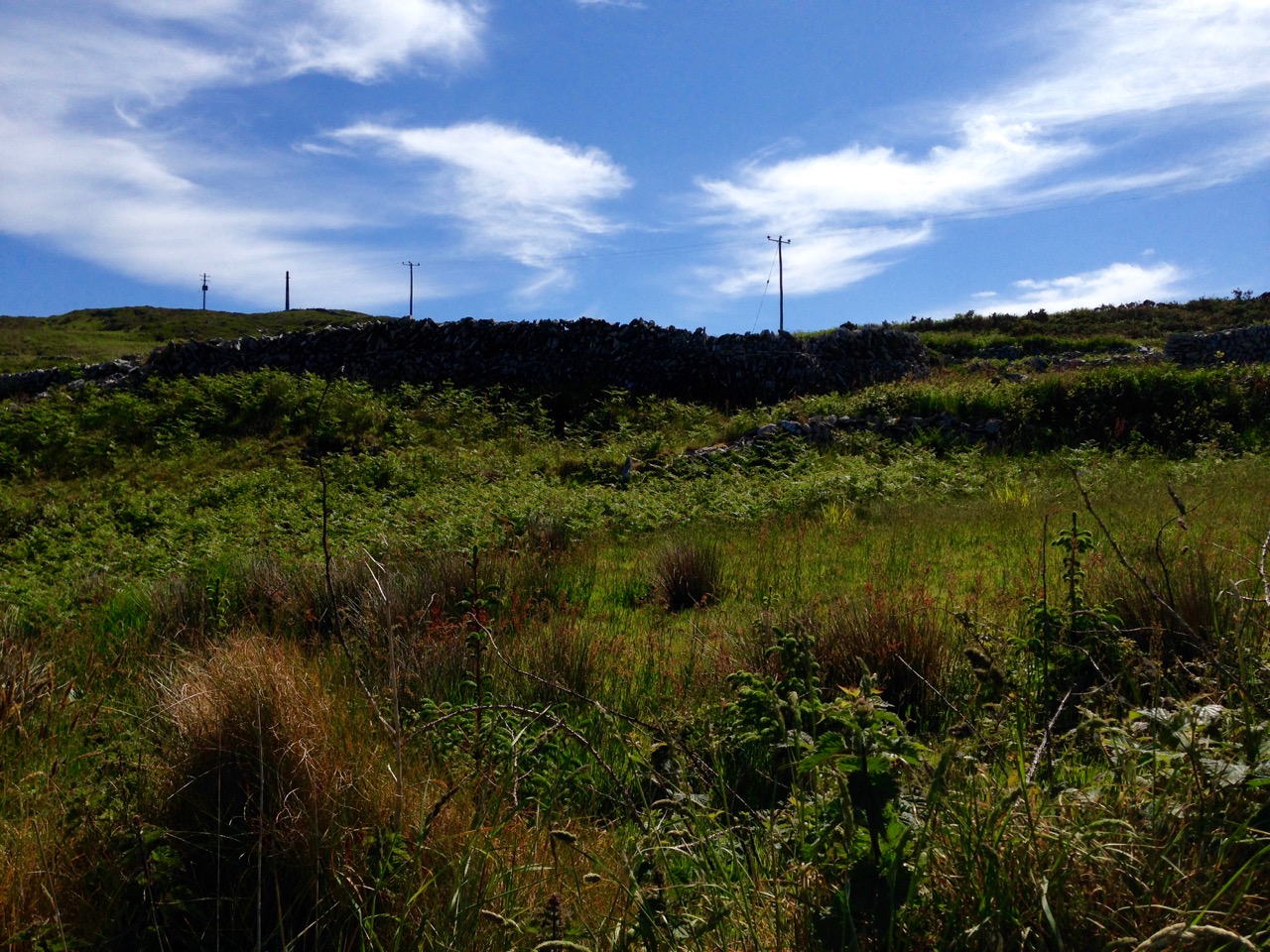
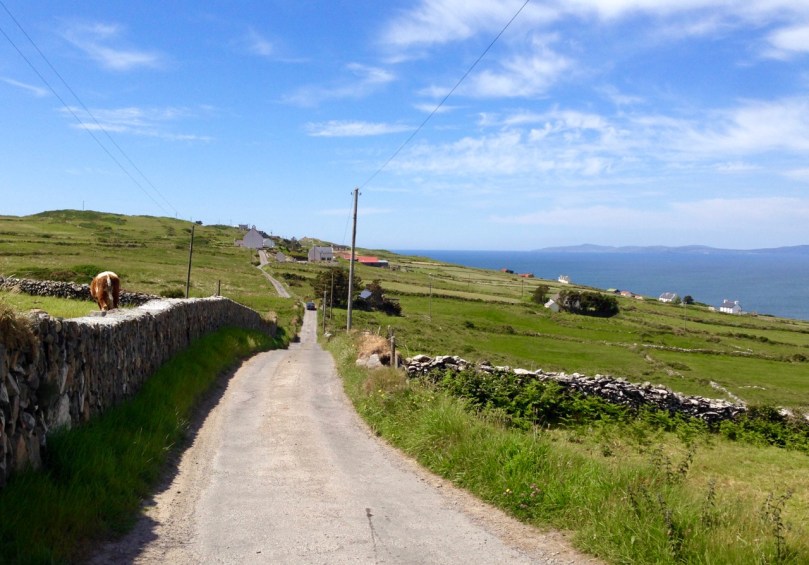
along the roadThe enigma begins around 1874, on Cape Clear – the southernmost piece of inhabited soil on the islands of Ireland. Land here is hard won, and the stony fields are laboriously cleared using human power and – most likely – donkey power to improve prospects for grazing and tillage. In this year a narrow field in the townland of Croha West is being improved: the farm belongs to Tom Shipsey. His men – Dónal O Síocháin and Conchúr O Ríogáin – turn up a stone with strange markings on it, reportedly together with ‘shards of old incised pottery’, although these latter have never been traced.

Header: looking towards the townland of Croha West, where Thomas Shipsey and his men discovered the travelling stone. Above left – records from the Shipsey family dating back to the 1800s. Above right – possibly the earliest drawing of the Cape Clear Inscribed Stone, included in Michael J O’Kelly’s article of 1949  in the Cork Historical and Archaeological Society Journal

At this time the Curate on Cape is Revd John O’Leary. We might reasonably assume that he takes an interest in the stone and has it set up somewhere to show off its curious and undoubtedly historic decoration. We do know for sure that, when he leaves Cape Clear in 1877 to take up the curacy of neighbouring Sherkin Island, the stone goes with him and becomes a feature in his garden there. It does not, however, accompany him to Clonakilty whence he is transferred to become Parish Priest and Monsignor in 1881: instead it languishes on Sherkin, benignly fading into the undergrowth. Years later – in 1945 – the stone is ‘accidentally rediscovered’ by the then incumbent, Rev Fr E Lambe. Presumably recognising its probable significance he has it shipped off to University College Cork where it is received by Professor Seán P Ó Ríordáin.
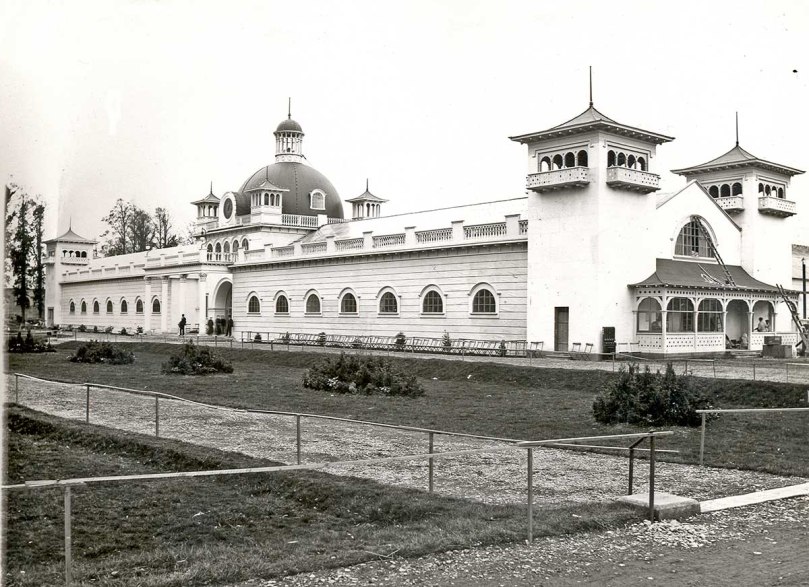
Cork Exhibition

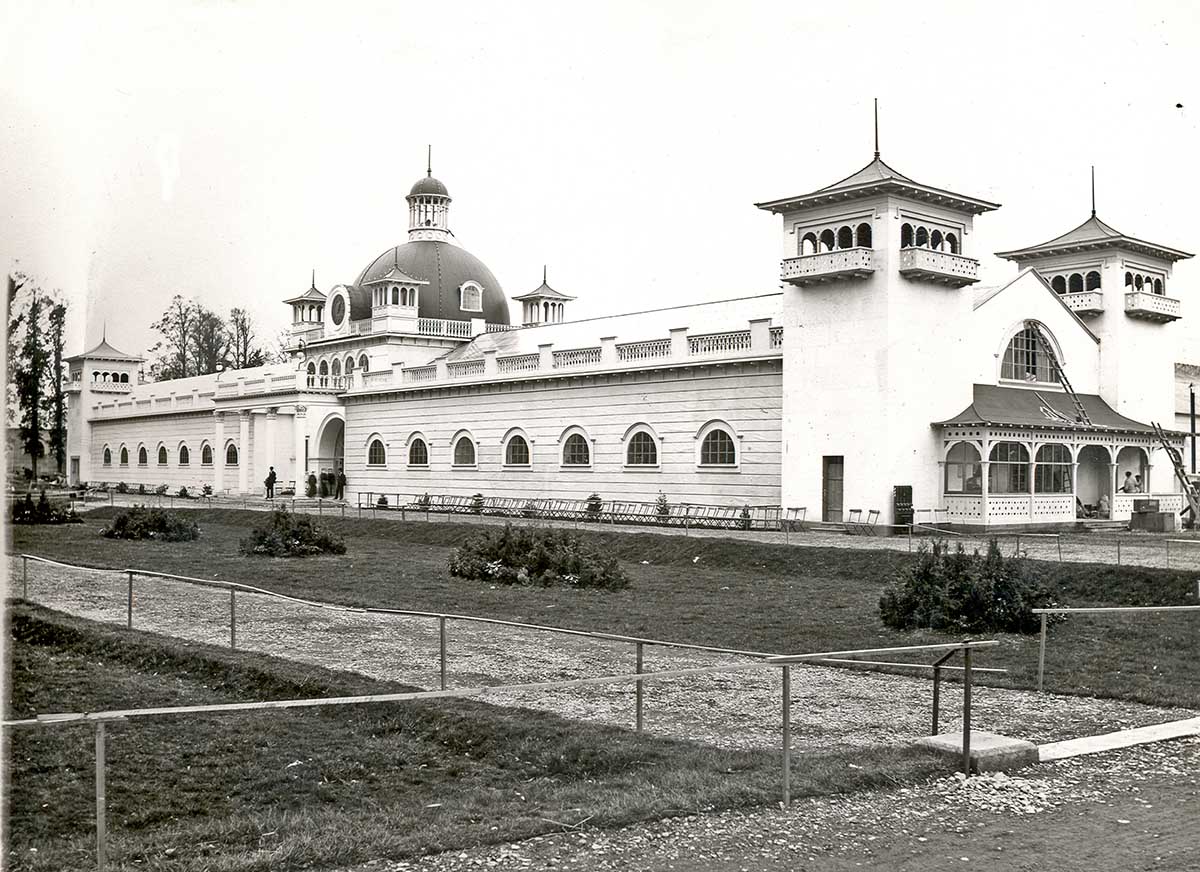
1902 World’s Fair, Cork – now Fitzgerald’s Park and the setting for Cork Public Museum

Close to the University grounds in Cork is a residence built by Charles Beamish in 1845 at the cost of £4,000 on land purchased from the Duke of Devonshire. Beamish has the grounds laid out with a variety of shrubs and trees, and due to their density the grounds become known as The Strawberries and the house as The Shrubbery. In 1901 the house and grounds are taken over by Incorporated Cork International Association and used as the venue for the great World’s Fair of 1902. Following this the grounds – now known as Fitzgerald’s Park – are donated to Cork Corporation for recreational use by the public. Eventually The Shrubbery is converted into Cork’s Public Museum which opens in April 1945, under the auspices of UCC: the first Curator is Michael J O’Kelly. The Cape Clear Inscribed Stone completes its travels (for now) and is on permanent display in the Museum.

View from sea

The highest point on Cape Clear is Quarantine Hill – the trig point can be seen as a ‘pimple’ in this photograph, taken from the north side of the island

There’s a prequel to this story of the travelling stone. We have seen that it was unearthed on Farmer Shipsey’s land in 1874. Apparently this isn’t where it started out. O’Kelly (who became head of the Archaeology Department at UCC in 1946) wrote a monograph on the stone for the Cork Historical and Archaeological Society in 1949 (volume 54 pages 8 – 10):

…The motifs clearly belong to the passage-grave group of carvings and can be paralleled at Newgrange, Bryn Celli Du [Wales], Gavr’ Inis [Brittany] and elsewhere. The stone is therefore an important discovery and because of this, the lack of information about the nature of the site on which it was found is all the more disappointing. At this stage only a few vague traditions concerning its finding could be gleaned in the district. The statement of one old man that ‘a mound of stones was being cleared from a field’ may possibly indicate a cairn and if such were the case, the decorated stone may have formed part of an underlying tomb chamber. There is also some reason to think that fragments of pottery were found, though none has survived. This may be a further hint that the stone was associated with a burial. With reserve, it might therefore be assumed that the structure, whatever its exact nature, was erected by a group of passage-grave folk who either by accident or design came to land on this island off the coast of Cork…

This little narrative sowed the seed that the stone might be connected to a passage grave. If so, this would probably date the carving to some five thousand years ago. But, surely, there should be some trace of the passage grave itself if this is the case? No such traces could be found in the townland of Croha West.
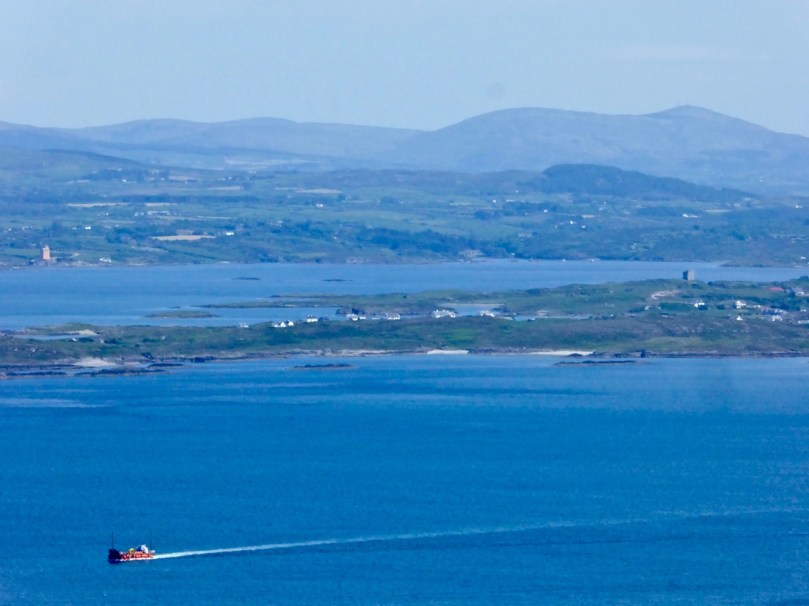
View from PG

looking north
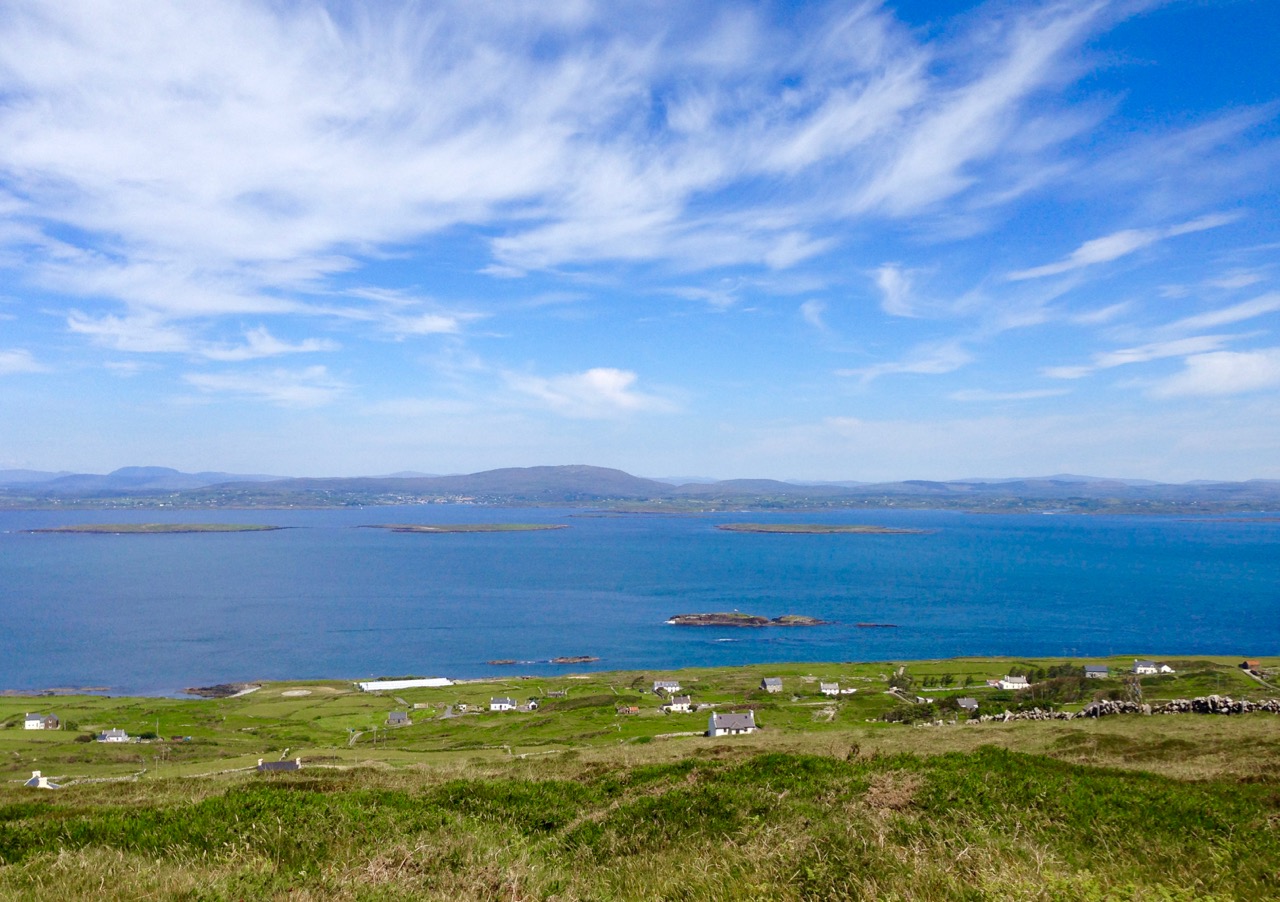
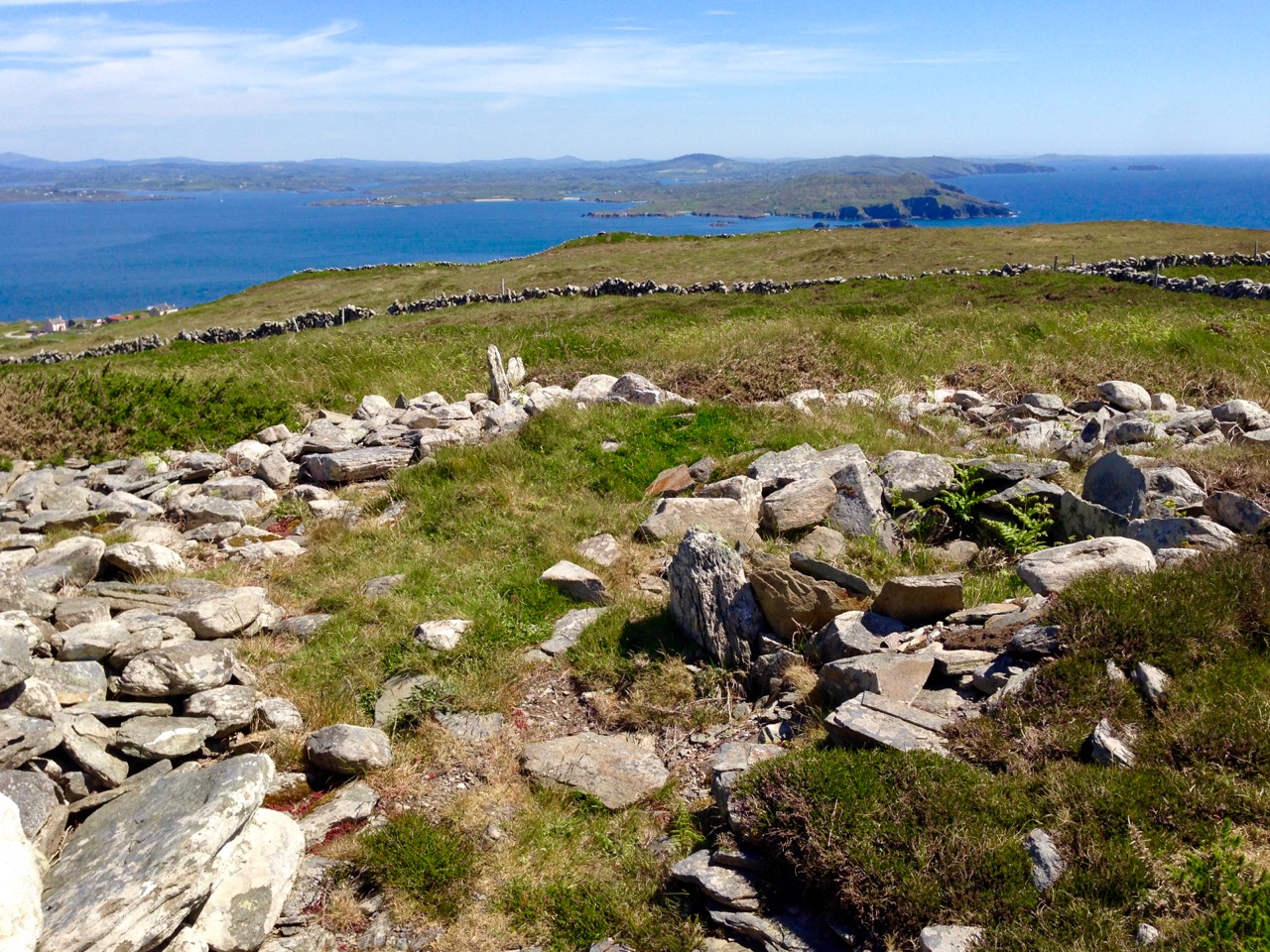
Spectacular views from the prehistoric site on Cape Clear, both looking north towards the mainland

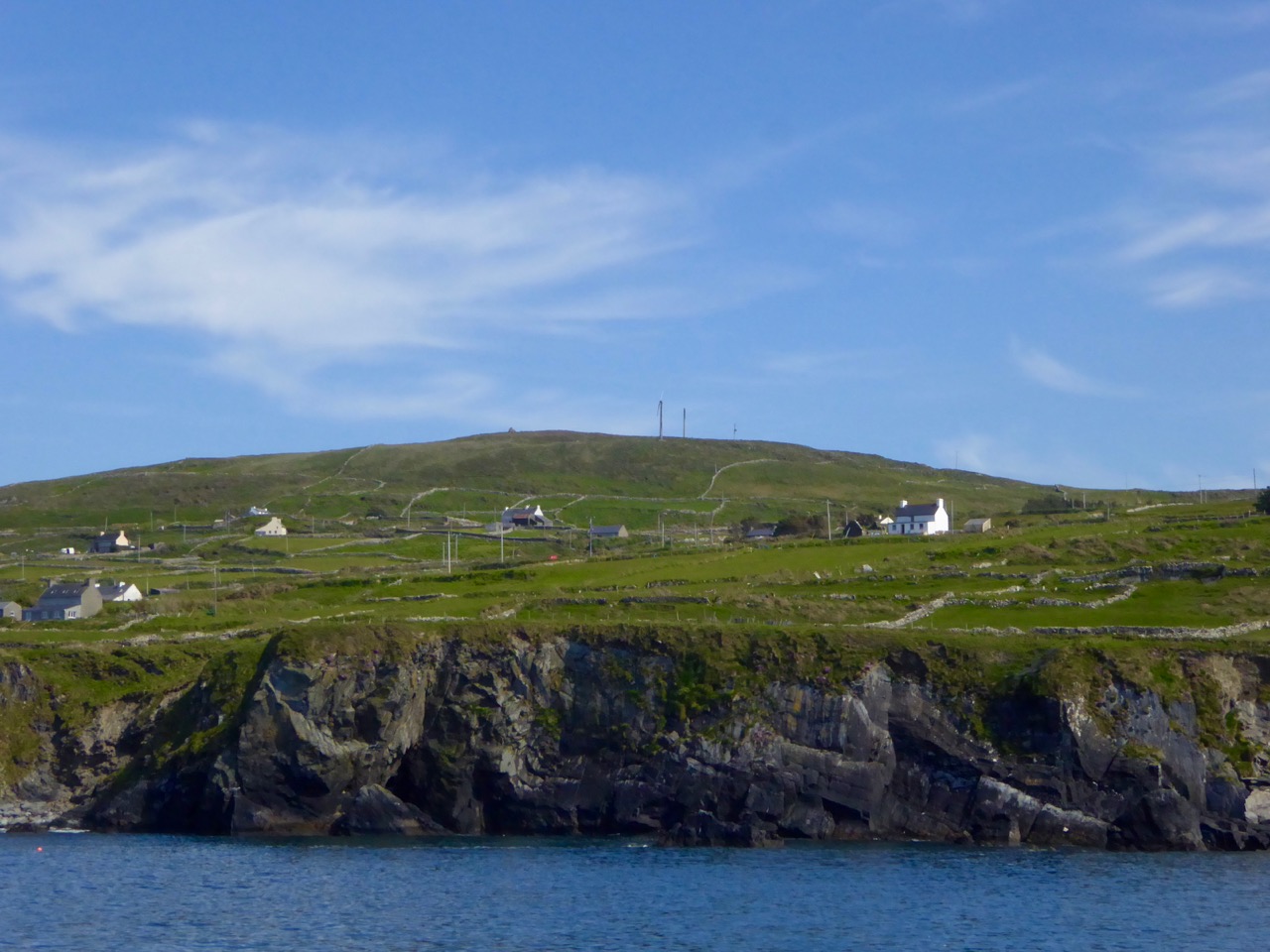
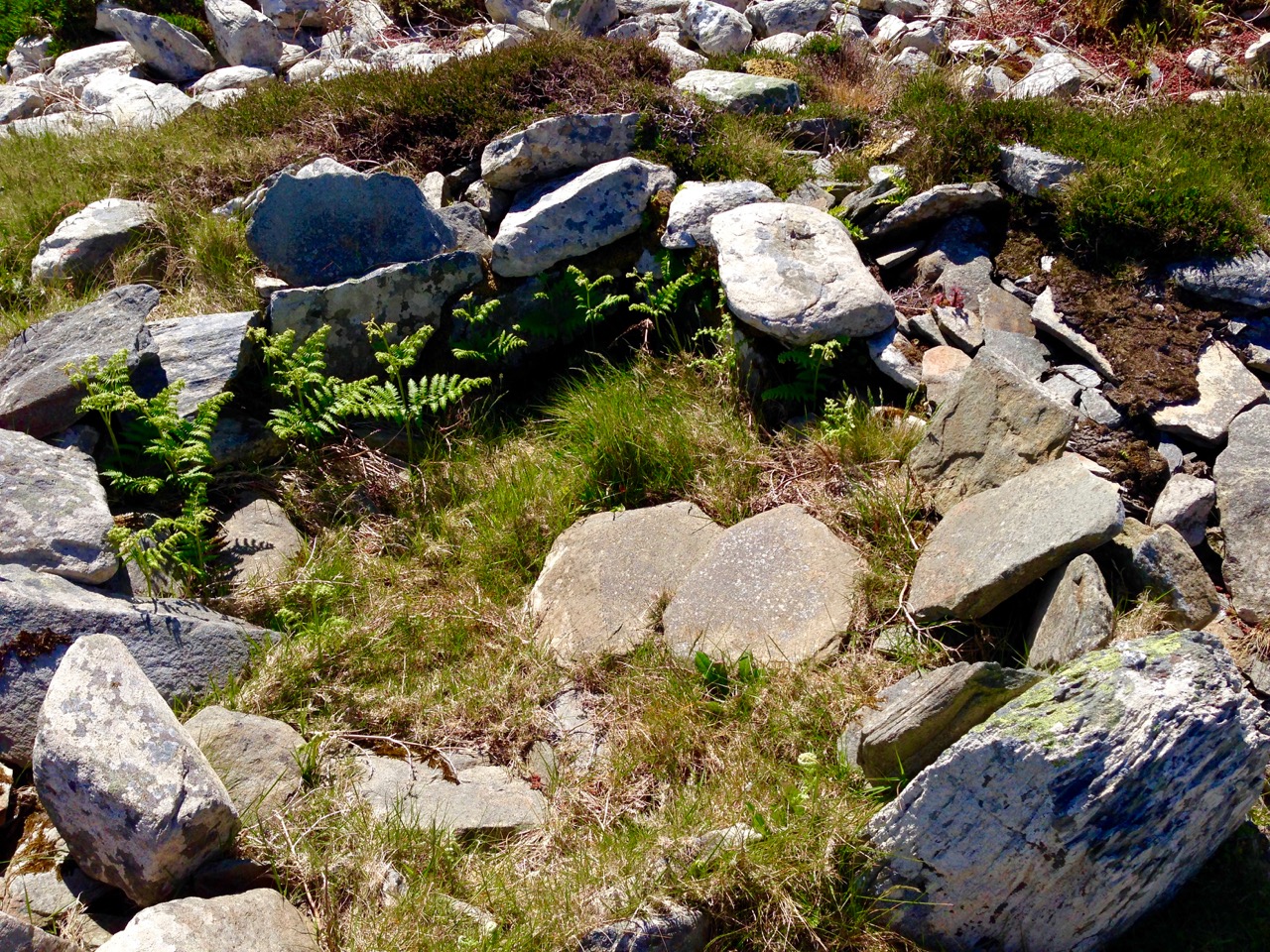
We move forward to 1984 when four archaeologists (Barra O Donnabhain, Mary O’Donnell, Jerry O’Sullivan and Paddy O’Leary) explored the wider area and discovered, on the very summit of the island, the ruins of a prehistoric structure. This site, 533 feet above sea level, is in the townland of Killickaforavane and is known locally as Quarantine Hill. At this time the island was investigating the possibility of producing electricity by wind power: hitherto electricity to some properties was provided by a diesel generating system which had been in place only since 1969. The obvious efficient place for wind generation was the highest point and plans were laid for setting up two SMA Regelsystem Gmbh 33w turbines (which began operation in 1987). In preparation for this installation an archaeological survey of the immediate area was carried out by Prof Peter Woodman and Dr Elizabeth Shee. Paddy O’Leary and Lee Snodgrass were also present at that time. The collective view seemed to indicate that the structure could, indeed, have been a small passage grave.

chamber closer

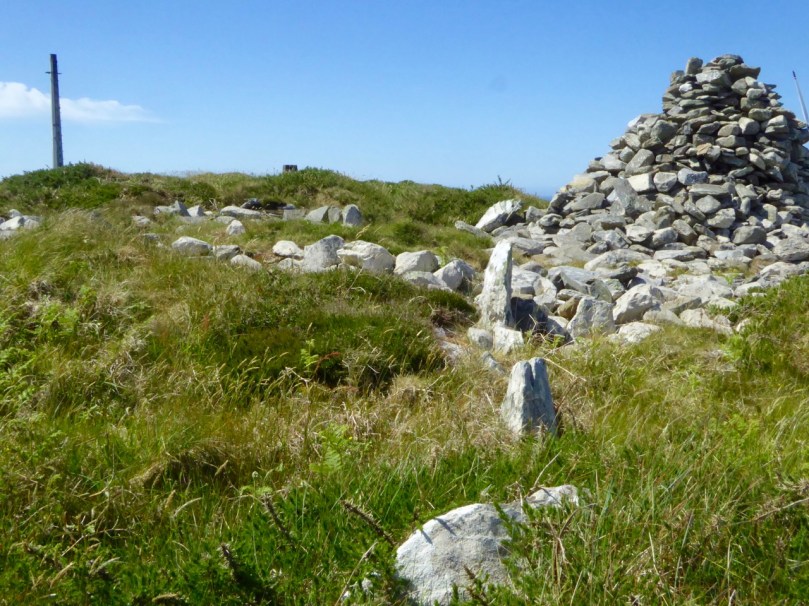
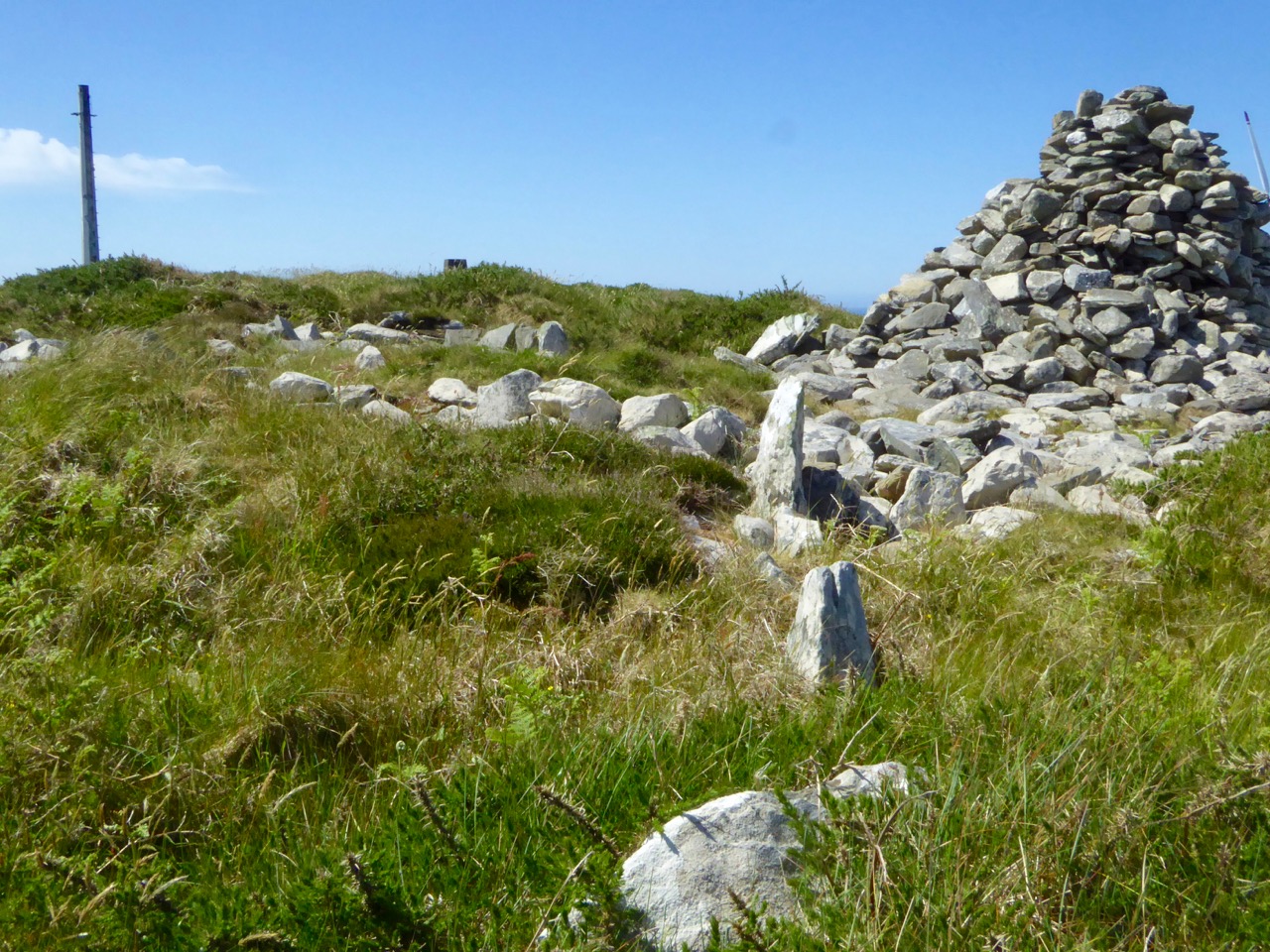
Probably the chamber of a 5,000 year old passage grave, Killickaforavane, Cape Clear

The wind turbines were sited a little distance from the prehistoric remains and have themselves become archaeology of a more industrial nature. While in use they generated 90% of the island’s demand during favourable winds (force 3+). The corrosive effects of the Atlantic climate – in particular the wild south-westerly gales – rendered the mechanisms beyond repair after some ten years; a submarine cable bringing electricity from the mainland (8 miles away) arrived in about 1995. For a short time the systems operated in tandem and produced sufficient power to feed back to Ireland’s National Grid. According to a letter to the Irish Times by Séamus Ó Drisceoil, who was manager of the island Co-op at the time of the installation …the Cape Clear system is credited with providing the first concrete evidence for the viability of wind energy in Ireland…

Tomorrow’s archaeology: the pioneering – but now defunct – wind generating system on Quarantine Hill, overlooking the passage grave site

Once the concept of the island supporting a five thousand year old passage grave on its summit has been digested, then the question has to be asked – did the Cape Clear stone now in the Cork Public Museum originate at this site? It was found a good half mile away, in a different townland – but this might suggest that an earlier antiquarian (or interested observer) discovered it on the hill and had it moved to Croha West for safekeeping, display, or even because it was thought it might have some value. No-one on the island seems to have any knowledge of this distant event. As O’Kelly says – it’s disappointing that there is no ‘story’: one might almost expect a tale of the person moving one of the ‘old stones’ having met with an unfortunate fate because of interference with the domain of The Other Crowd

the way through

Kerb and passage

Top: looking towards the summit of Quarantine Hill – there is no clear path up there, and the traveller can be waylaid by gorse and brambles… Below: the prehistoric site – we are probably looking at the orthostats of a passage, which has a summer solstice orientation, and a kerbstone. On the right is a modern cairn while to the left in the background is the remains of one of the turbine towers

There is, surely, a strong likelihood that the Cape Clear Inscribed Stone did originate in the hilltop passage tomb, in which case we have completed the tale of its travels, up to the present day. The tomb is in ruins, although enough remains to show its shape and probable orientation. Paddy O’Leary tells the story of his investigations with Lee Snodgrass in an article for Mizen Journal, Volume 2, 1994:

…We were convinced that it was a passage tomb and that it was orientated on the rising sun of the summer solstice… We planned a two night vigil for June 1993 and were buoyed up by a good weather forecast. Saturday afternoon was sunny and we transported our equipment direct to the top of Quarantine Hill from the boat. We set up our cameras and, taking advantage of the sunny weather, took photographs, especially during the late evening, when there was a lovely sky. On Sunday morning June 20th we rose shortly after 4am to prepare for dawn. It was very cold but the sky was clear. A dull grey cloud began to show to the northeast, we set our cameras and waited for the sun. Shortly after 5am it peeped above the horizon, nestling in the gap between Carrigfada and the hill to its north… Gradually it rose in a 40 degree angle, flooding the sky with first light and mirroring its golden red orb in the brightening sea… A perfect sunrise perfectly recorded. The warmth was now penetrating almost numb fingers and feet. The line of the orientation was exactly as expected, directly along the supposed line of the passage, into the centre of the chamber… The most southerly point of Ireland had its passage tomb, with a summer solstice sunrise orientation; a nice counterpoint to the Newgrange winter solstice sunrise…
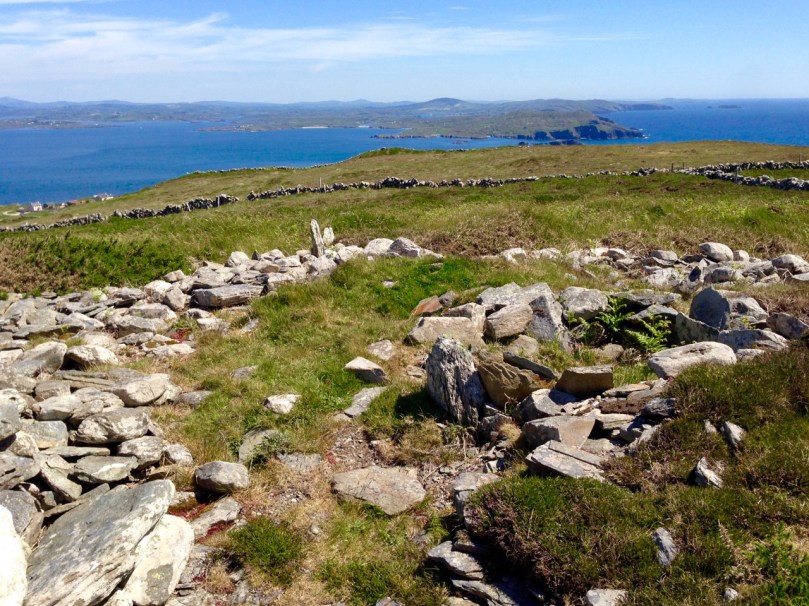
cairn and view

Quarantine Hill, Killickaforavane townland, Cape Clear. The view looking east – towards the summer solstice sunrise – from the prehistoric site on the summit

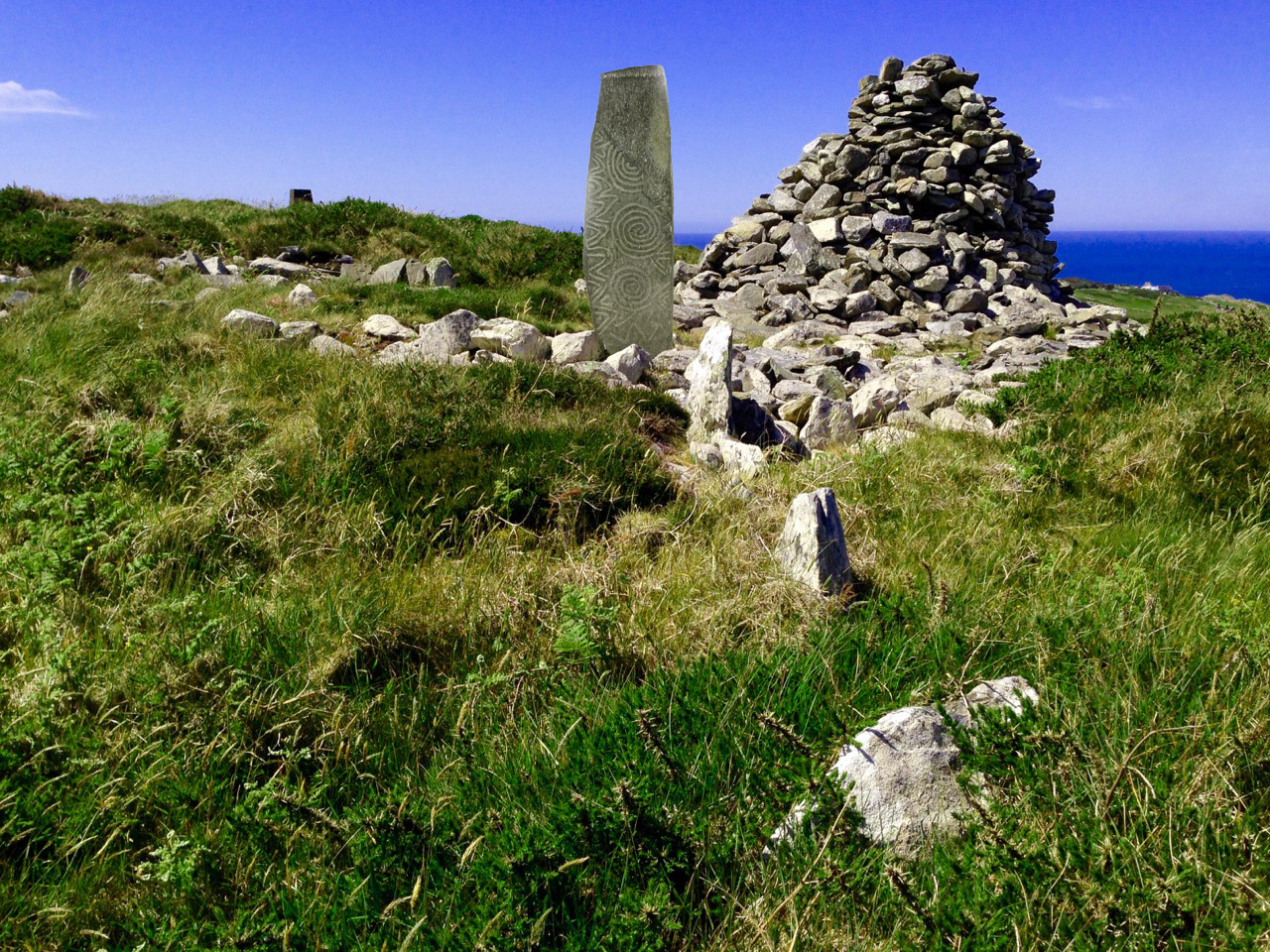
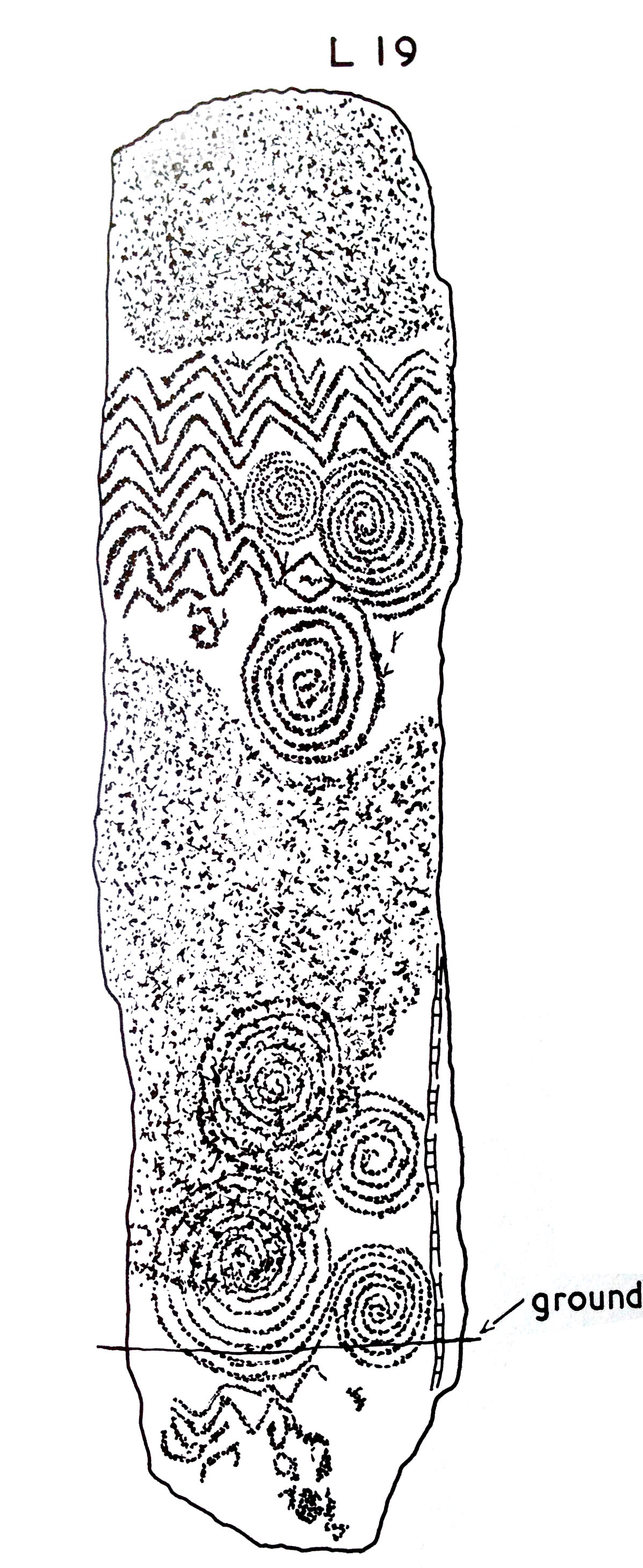
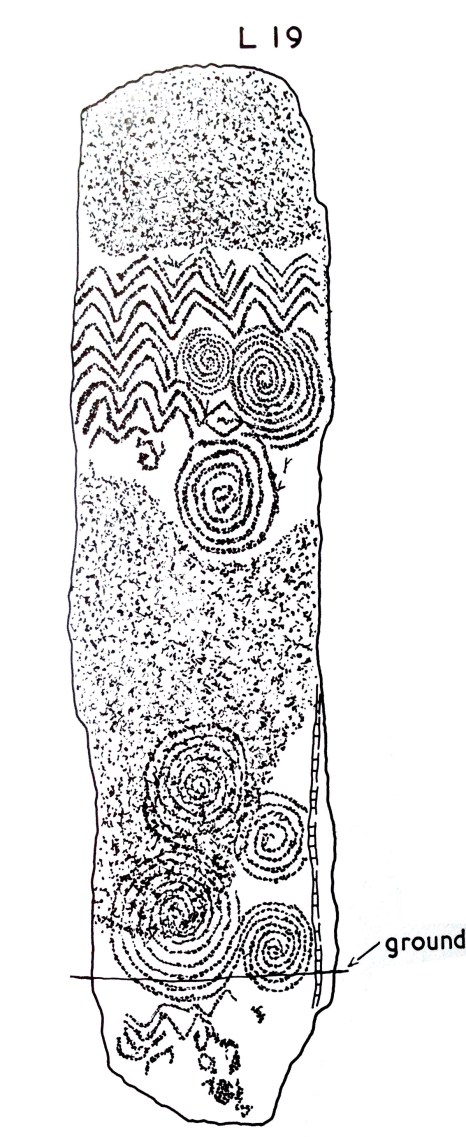
If the inscribed stone was, indeed, incorporated into the Cape Clear passage tomb, where might it have been placed? There are parallels in its design with some of the lintel stones at Fourknocks, but also I am drawn to similarities with stone L19 from Claire O’Kelly’s Corpus of decorated stones included in Michael J O’Kelly’s Newgrange – Archaeology, Art and Legend (Thames + Hudson, London 1982). This one is a standing stone – perhaps our well travelled stone was standing also.
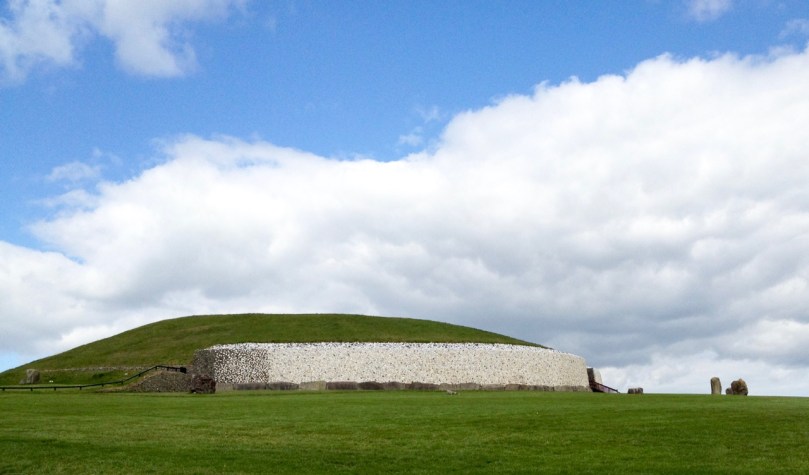
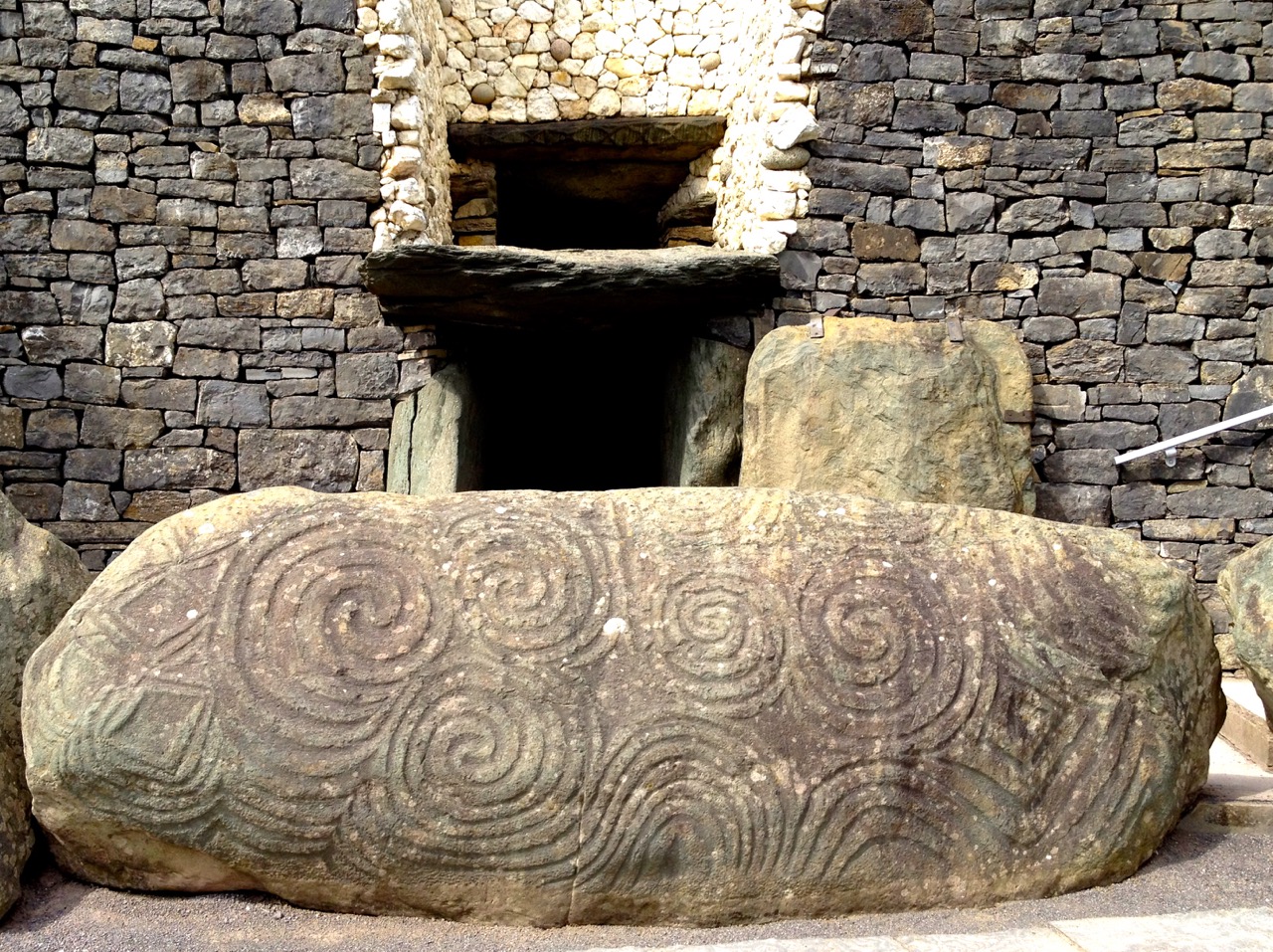
Newgrange

Newgrange entrance stone

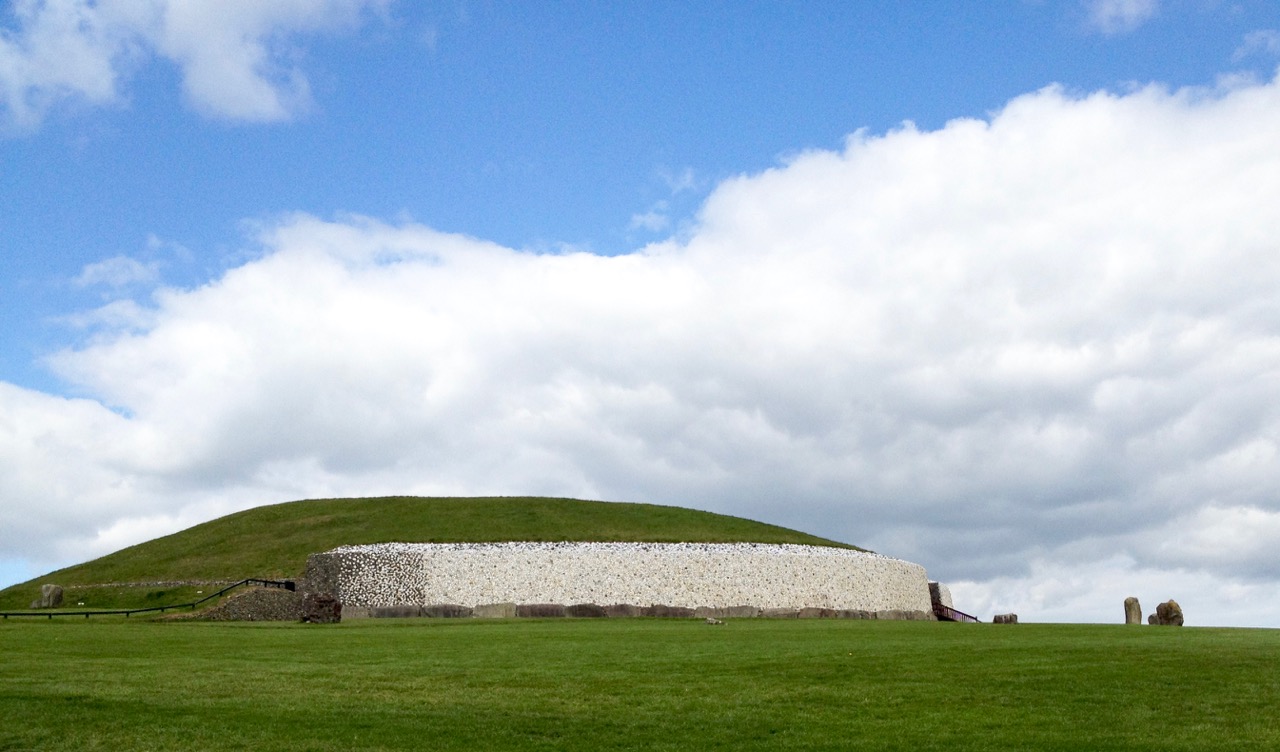
Iconic passage tomb in Meath, Ireland – one of the greatest monuments to the Neolithic people in the world: the top picture shows the east face of the great mound as reconstructed by Michael O’Kelly using the white quartz stones which were revealed during the excavations (Finola took part in these digs!); the lower picture shows the entrance stone to Newgrange – the Cape Clear inscribed stone must be related to this type of prehistoric art, although situated a very long way away…

Here’s a suggestion – probably considered heretical in some quarters: why don’t we complete the travels of the Cape Clear Inscribed Stone by taking it out of the Cork Public Museum and (with some suitable ceremony) transporting it back across the sea to Cape Clear and setting it back up there for all time? For me, museums – while obviously providing safe keeping – sometimes lack the reality of true context… Alright then, if that is considered as inconceivable an idea as I suspect it would be, let’s make a very good replica and send it up to the top of Quarantine Hill. At the same time we could re-establish a pathway to attract people up there: our own pilgrimage to this very special site involved making heavy way through gorse and brambles.

looking towards west

Below: Newgrange Stone L19 from Claire O’Kelly’s Corpus of decorated stones included in Michael J O’Kelly’s 1982 book on Newgrange
claire stone

With acknowledgements and thanks to those quoted above and the following sources, which have enabled me to pull together the story of this site: Paddy O’Leary and Lee Snodgrass (Mizen Journal Vol 2 1994 and personal communication), Michael J O’Kelly (Cork Historical and Archaeological Society Vol 54 1949), Chuck Kruger (Skibbereen and District Historical Society Journal Vol 6 2010)