Larchill – A Pastoral Paradise

One thing always leads to another, and when Finola took an interest in the lost demense at New Court, on the Ilen River close to Skibbereen, she didn’t know that she was going to discover the concept of Arcadian Gardens and – more particularly – the Ferme Ornée. On our latest expedition towards Galway, therefore, we couldn’t miss a visit to Larchill in County Kildare, which claims to be ‘the only surviving, near complete, garden of its type in Europe’.
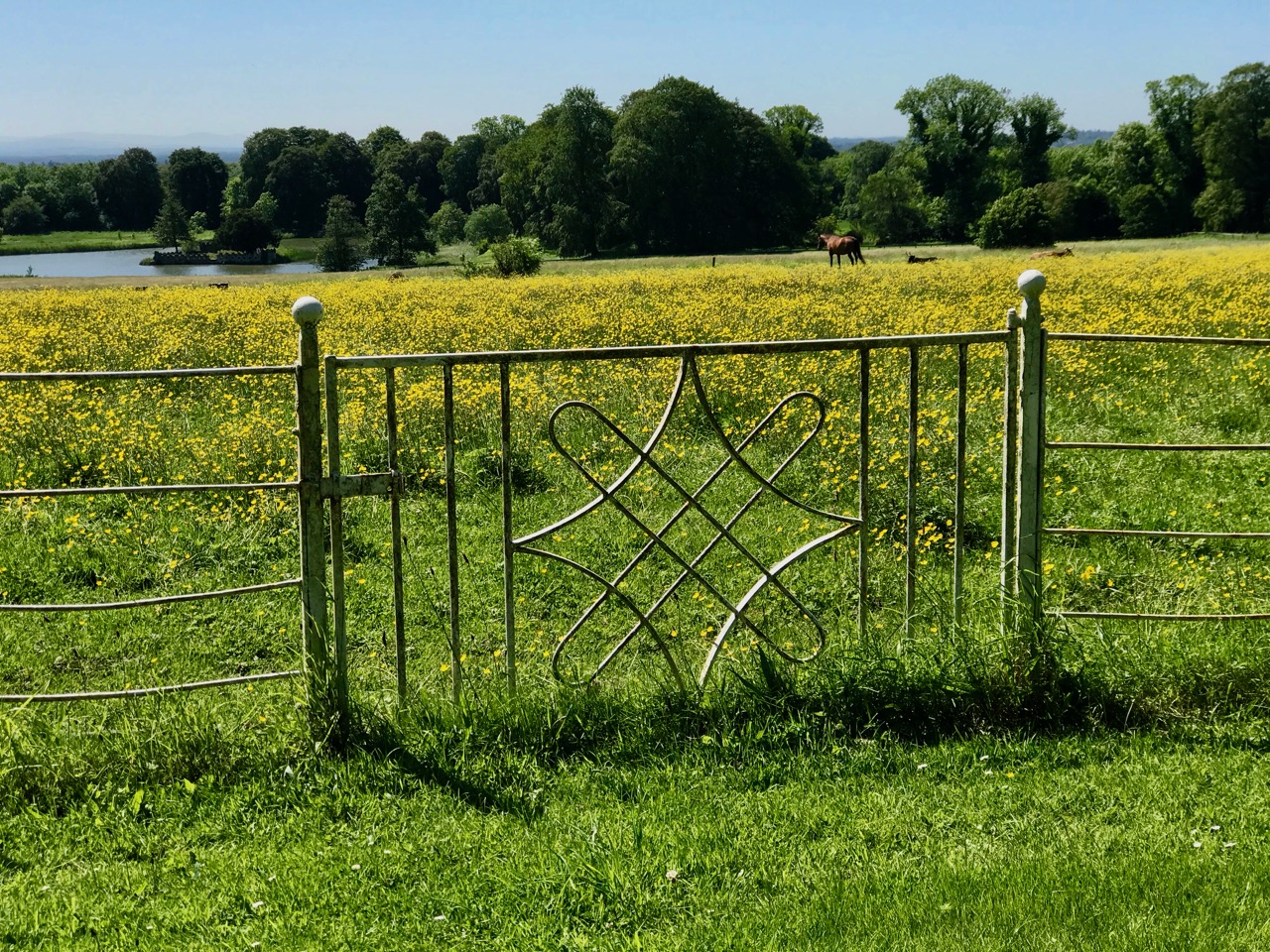
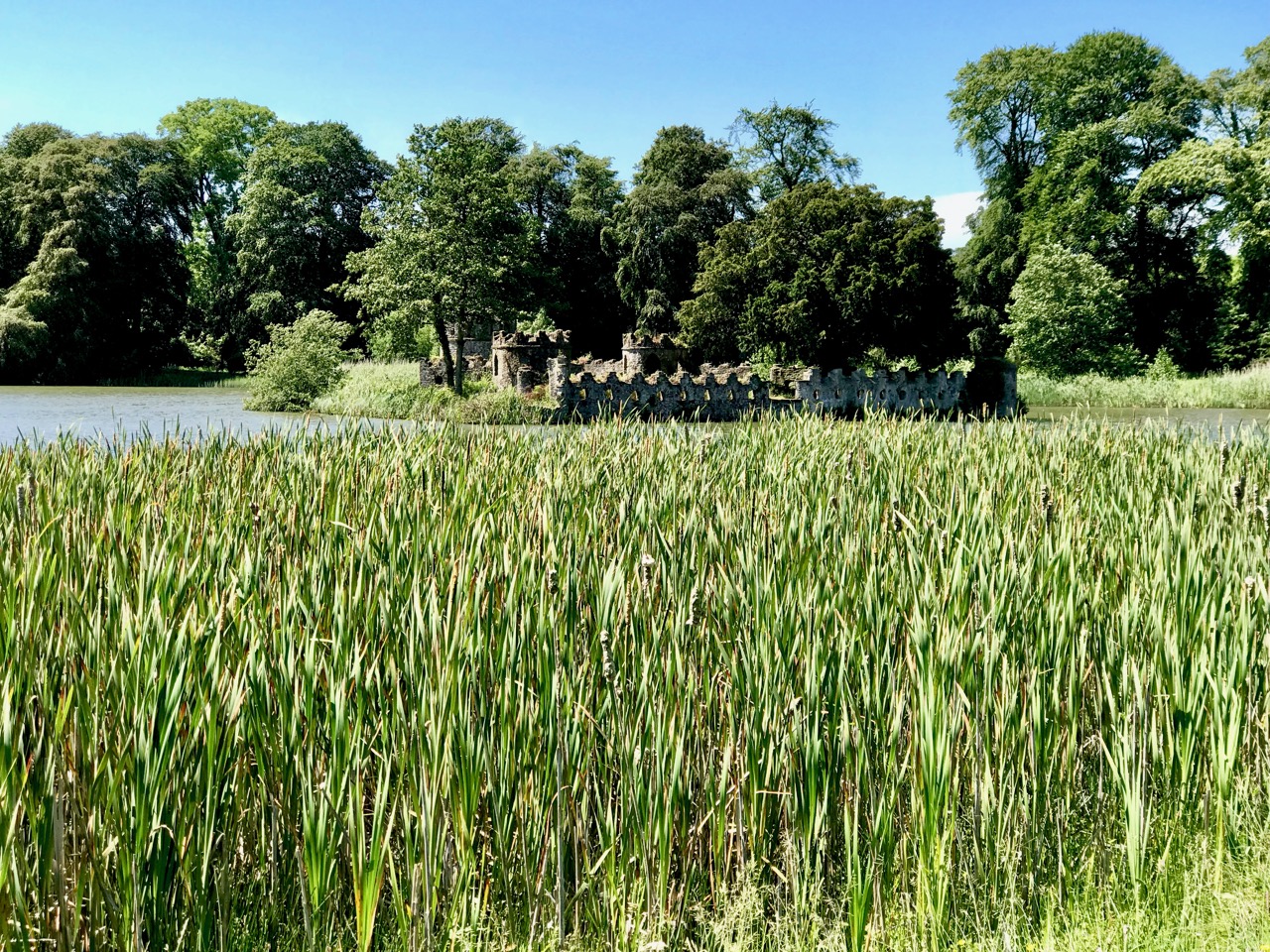
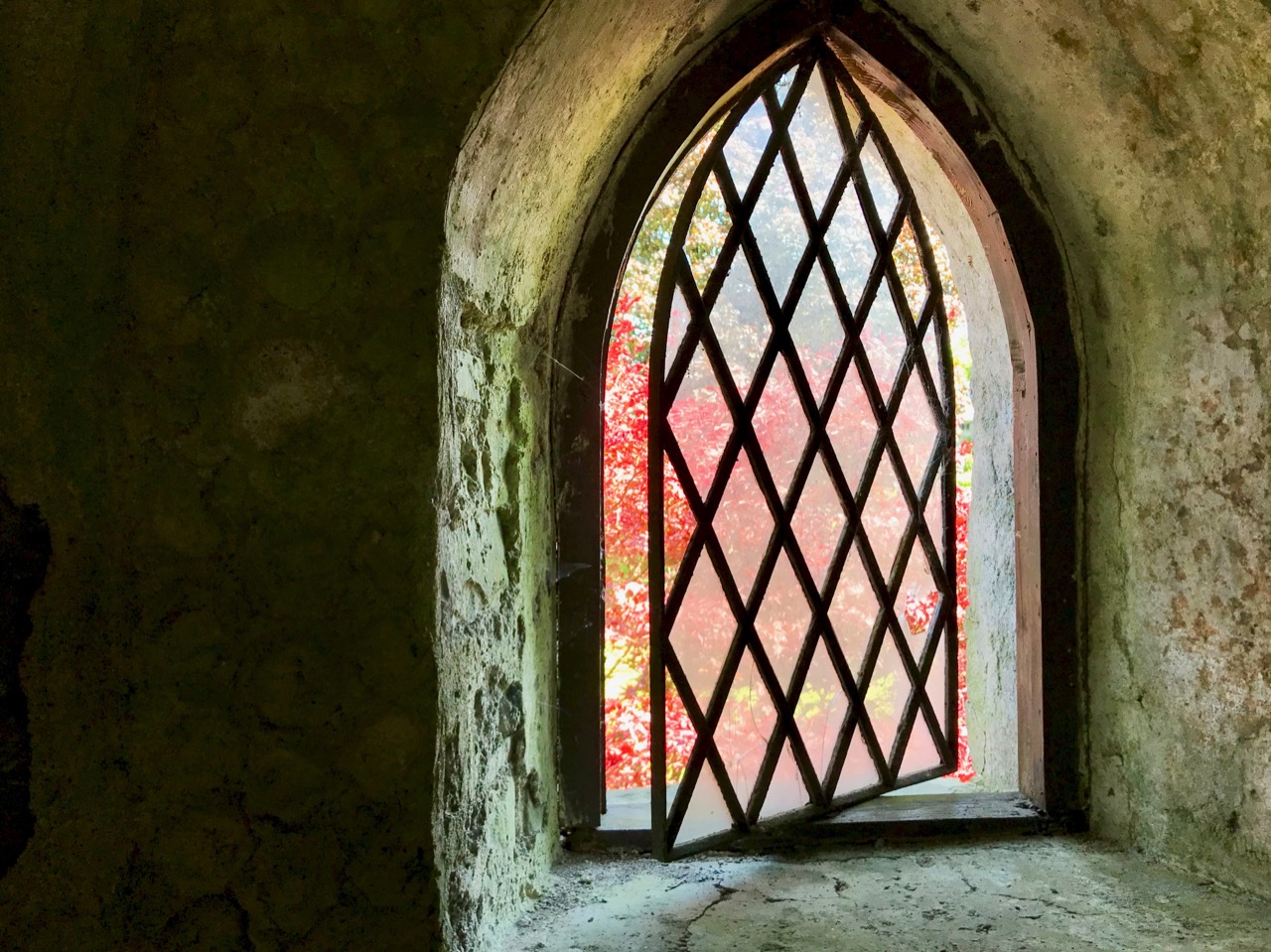
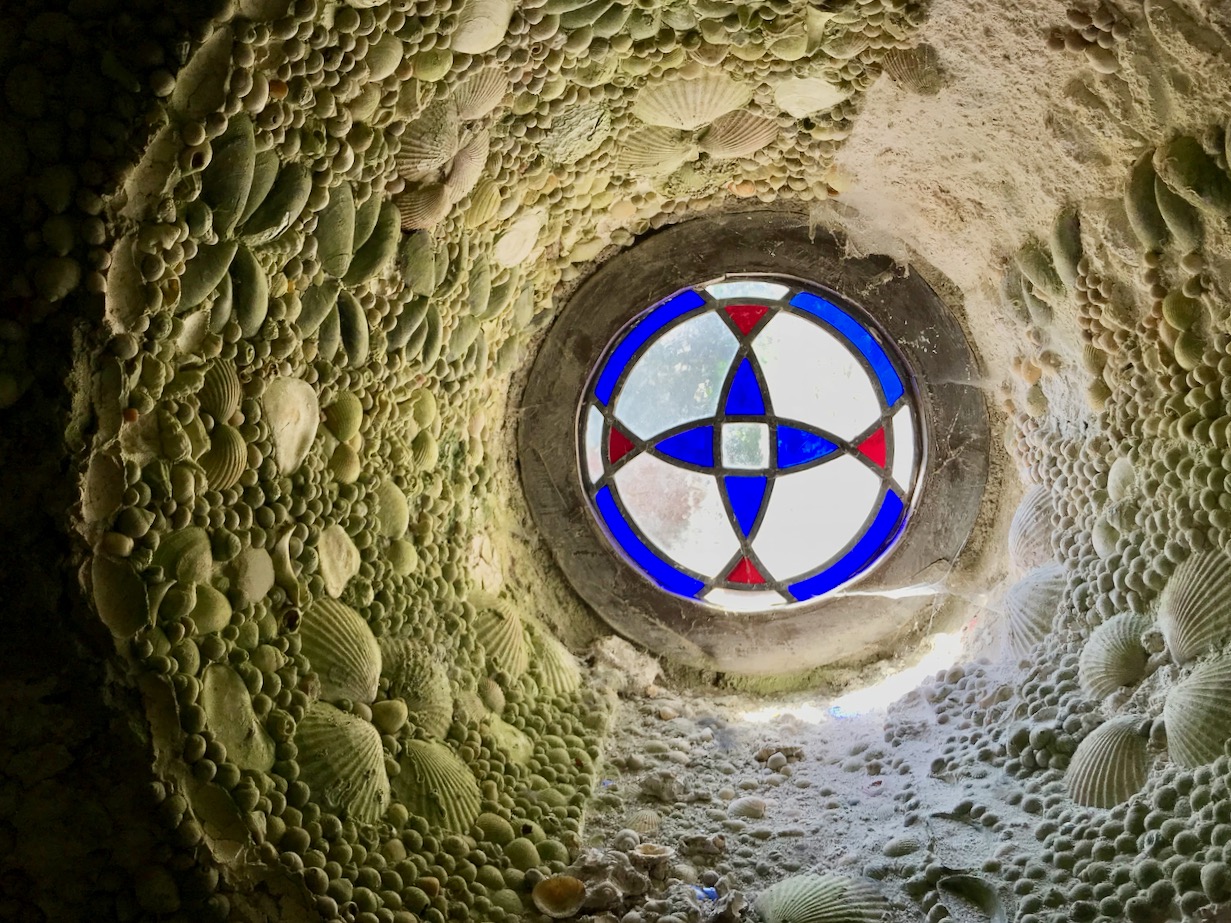
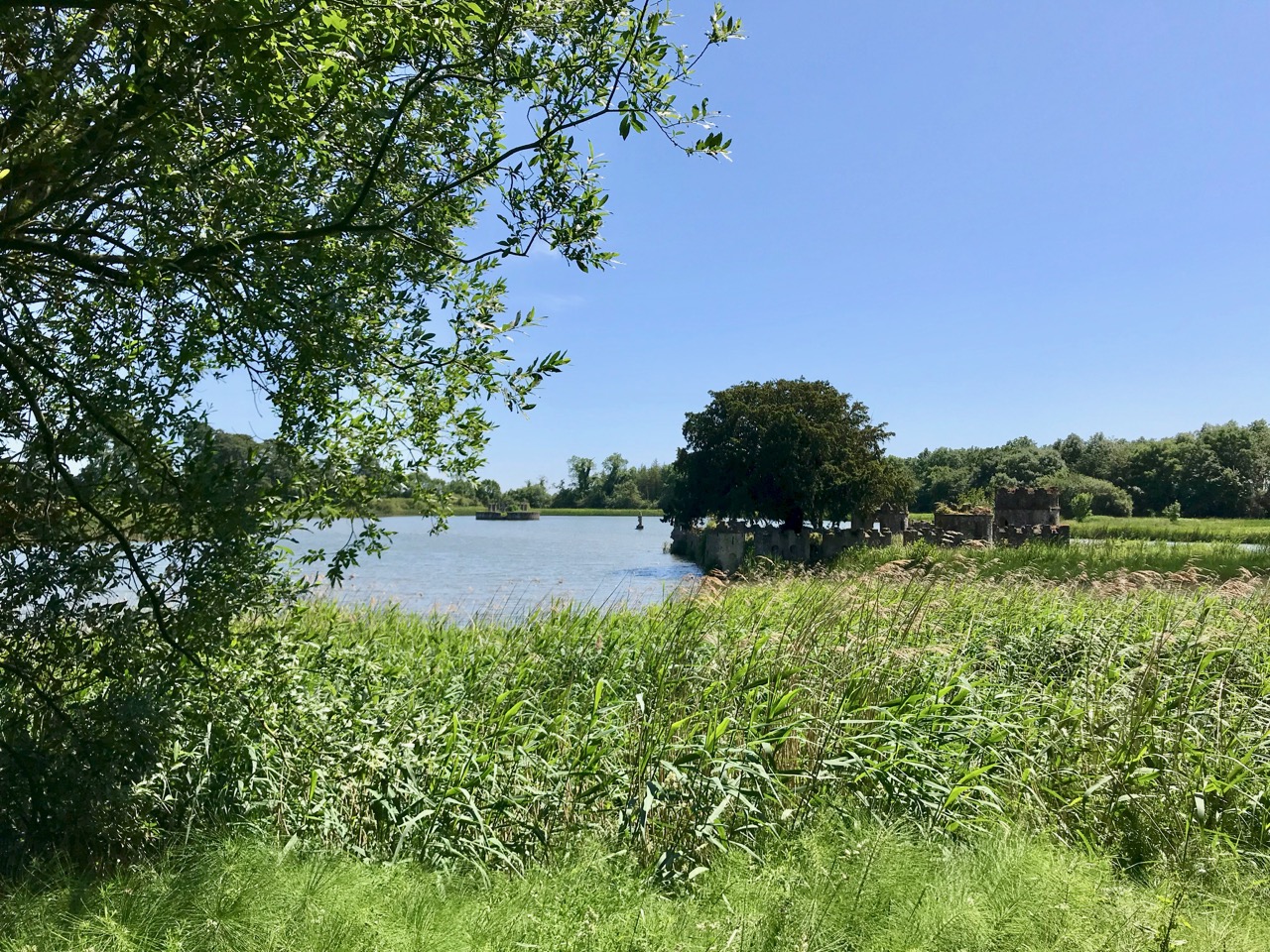
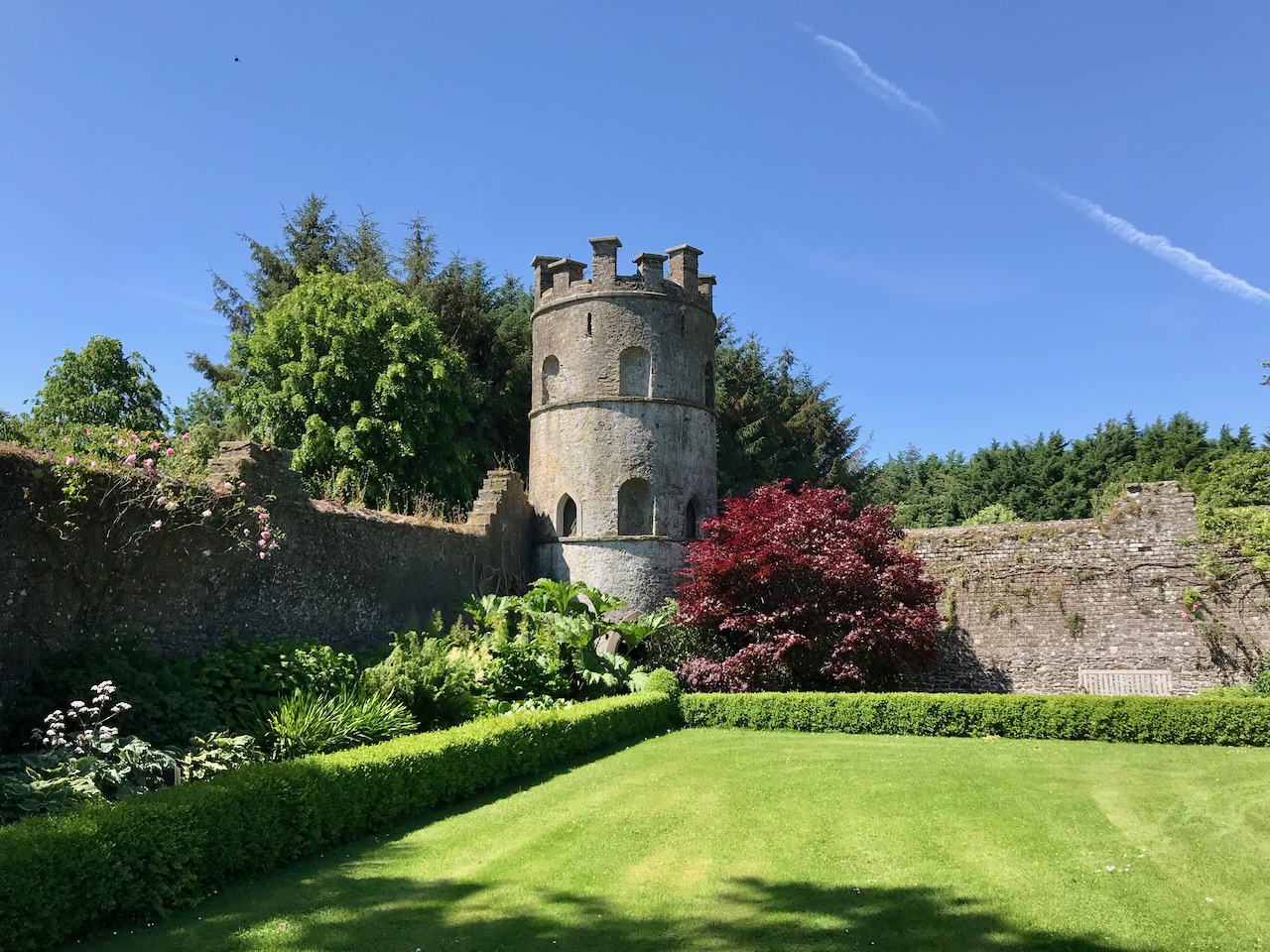
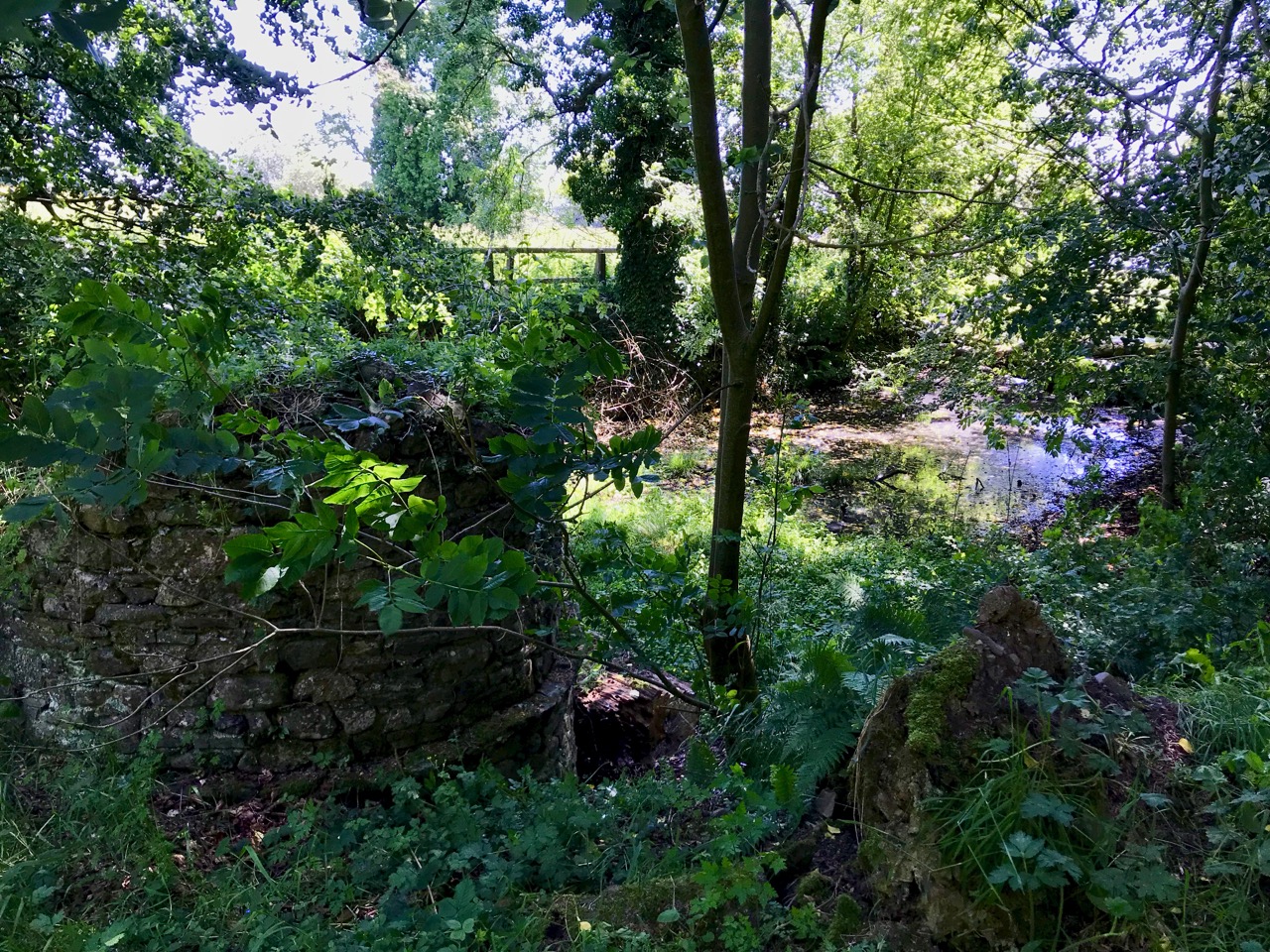
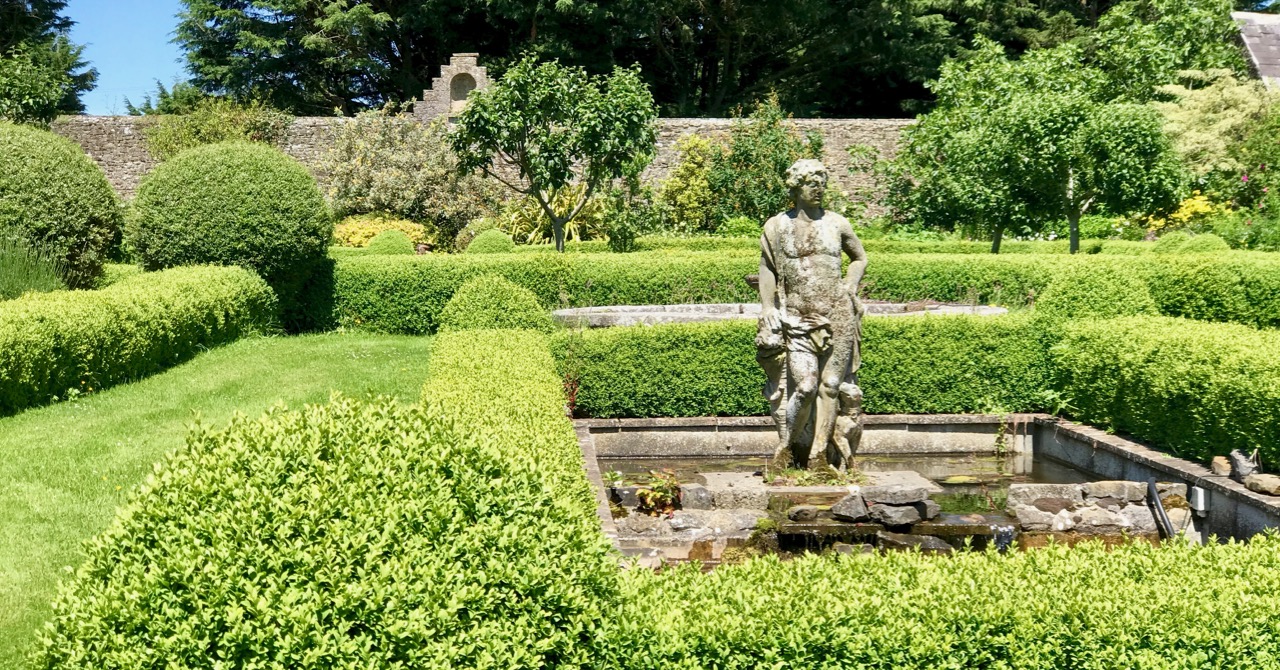
Header – the ‘Shell Tower’ within the walled garden at Larchill. The garden walls are built up to, but not incorporated in, the tower structure, suggesting that the tower is earlier than the garden enclosure. Centre – the walled garden has been beautifully re-established and maintained. Lower – a typical view across the demense to the artificial lake

Ferme Ornée means, literally, ‘ornamental farm’, and was a departure from the idea of a farm or farmland being purely practical: from the middle of the 18th century, there was a move away from the formal gardens of the time and an embracing and enhancing of the natural landscape. Larchill’s leaflet for visitors explains:

Emulating Arcadia, a pastoral paradise was created to reflect Man’s harmony with the perfection of nature. As is the case at Larchill, a working farm with decorative buildings (often containing specimen breeds of farm animal) was situated in landscaped parkland ornamented with follies, grottos and statuary.  Tree lined avenues, flowing water, lakes, areas of light and shade and beautiful framed views combined to create an inspirational experience enabling Man’s spirit to rejoice at the wonder of nature. At this time in Versailles, Marie Antoinette enjoyed extravagant pastoral pageants, housed specimen cattle in highly decorated barns, while she herself is said to have dressed as a milk maid complete with porcelain milk churns.  Freed from the restrictions of the 17th century formal garden, the Ferme Ornée represented the first move towards the fully fledged landscape parkland designs of Capability Browne.
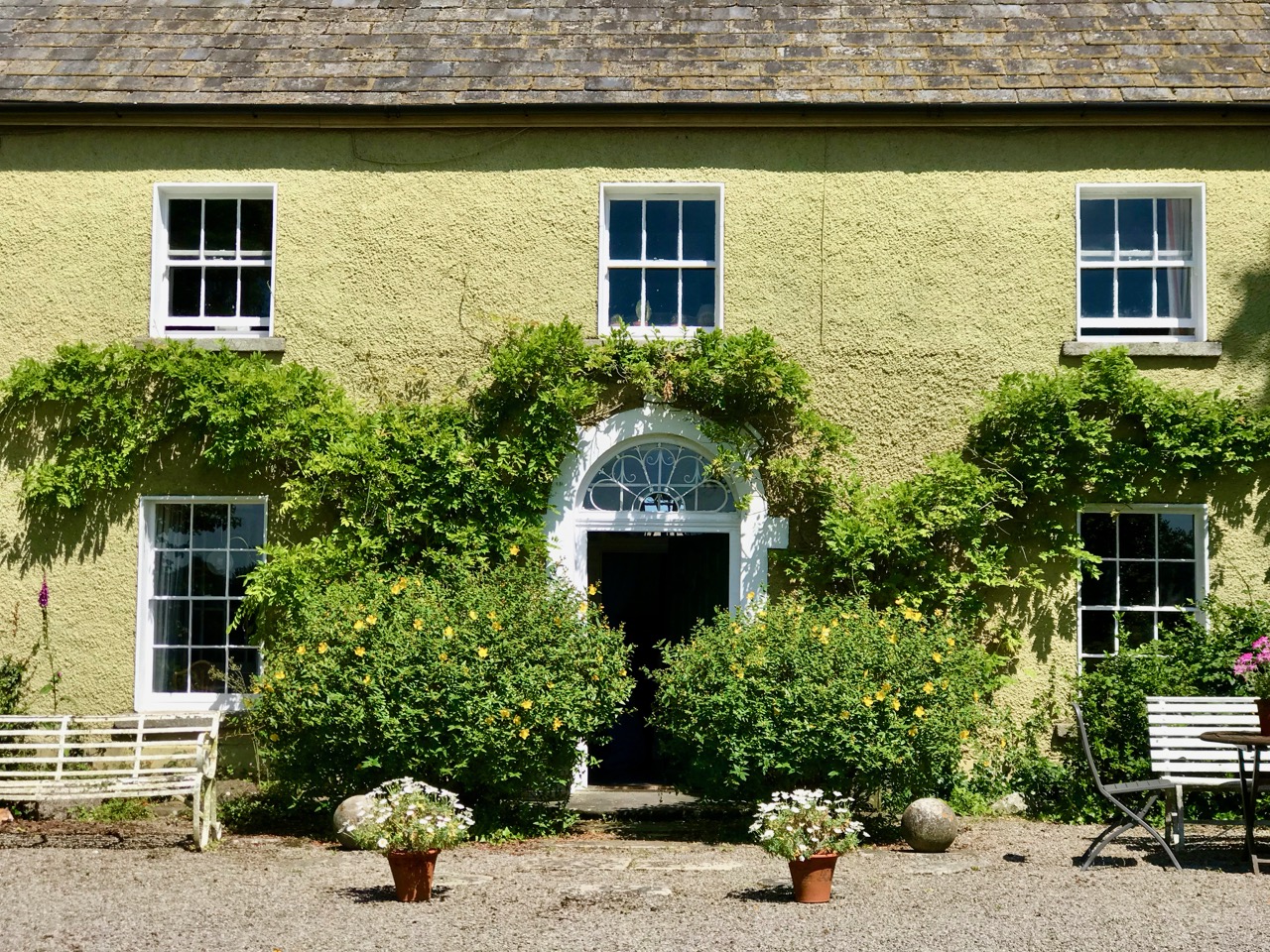
Upper – the elegant facade of the farmhouse at Larchill which commands views of the water meadows and lake (centre image). Lower – looking across the bullrushes towards one of the islands on the lake, known as ‘Gibraltar’

The word Arcadia is derived from a province in Greece, said to have been the home of the god Pan. In the European Renaissance, Arcadia was celebrated as an unspoiled, harmonious wilderness. After the fall of the Roman Empire, Arcadia remained a beautiful, secluded area, and its inhabitants were depicted as herdsmen leading simple, happy lives. The name has become associated with an imagined idyllic paradise, which the designers of Ferme Ornée tried to reflect in the use of vistas, landscaping, elegant buildings and follies. Finola has also touched on some aspects of this philosophy in her exploration of Belvederes in West Cork.
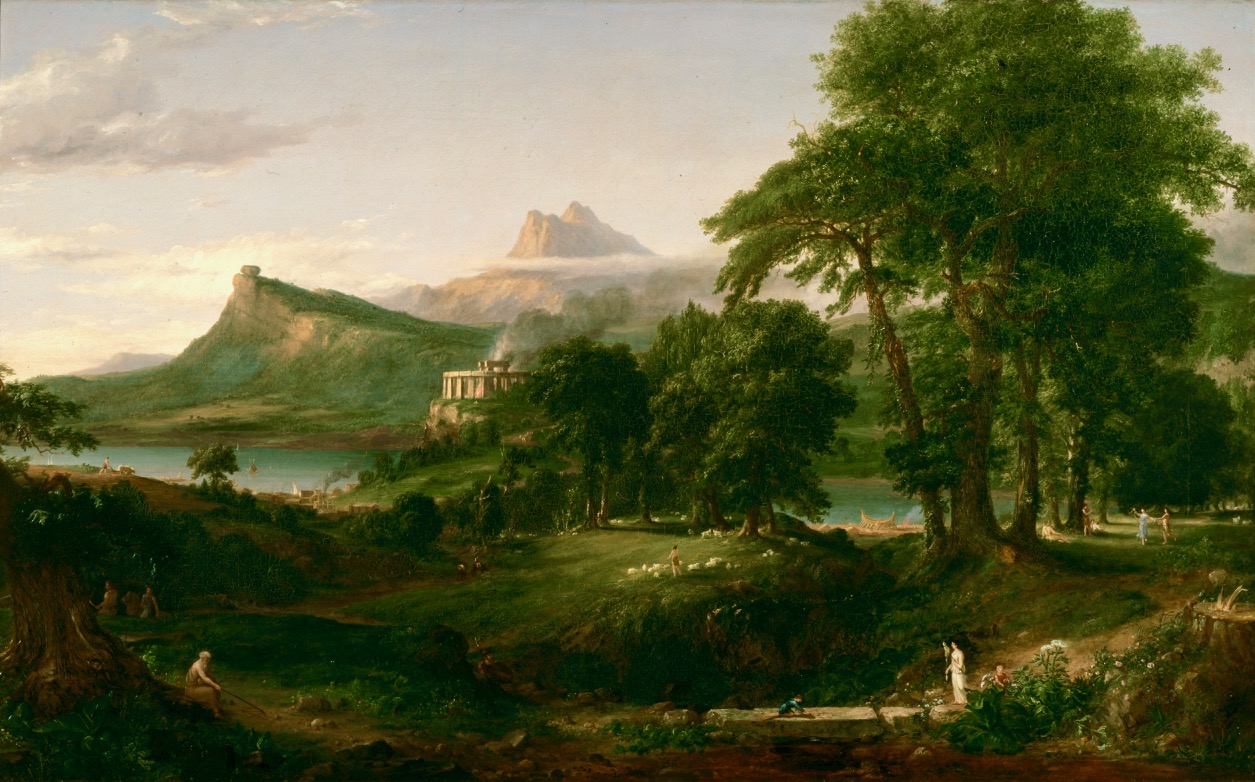
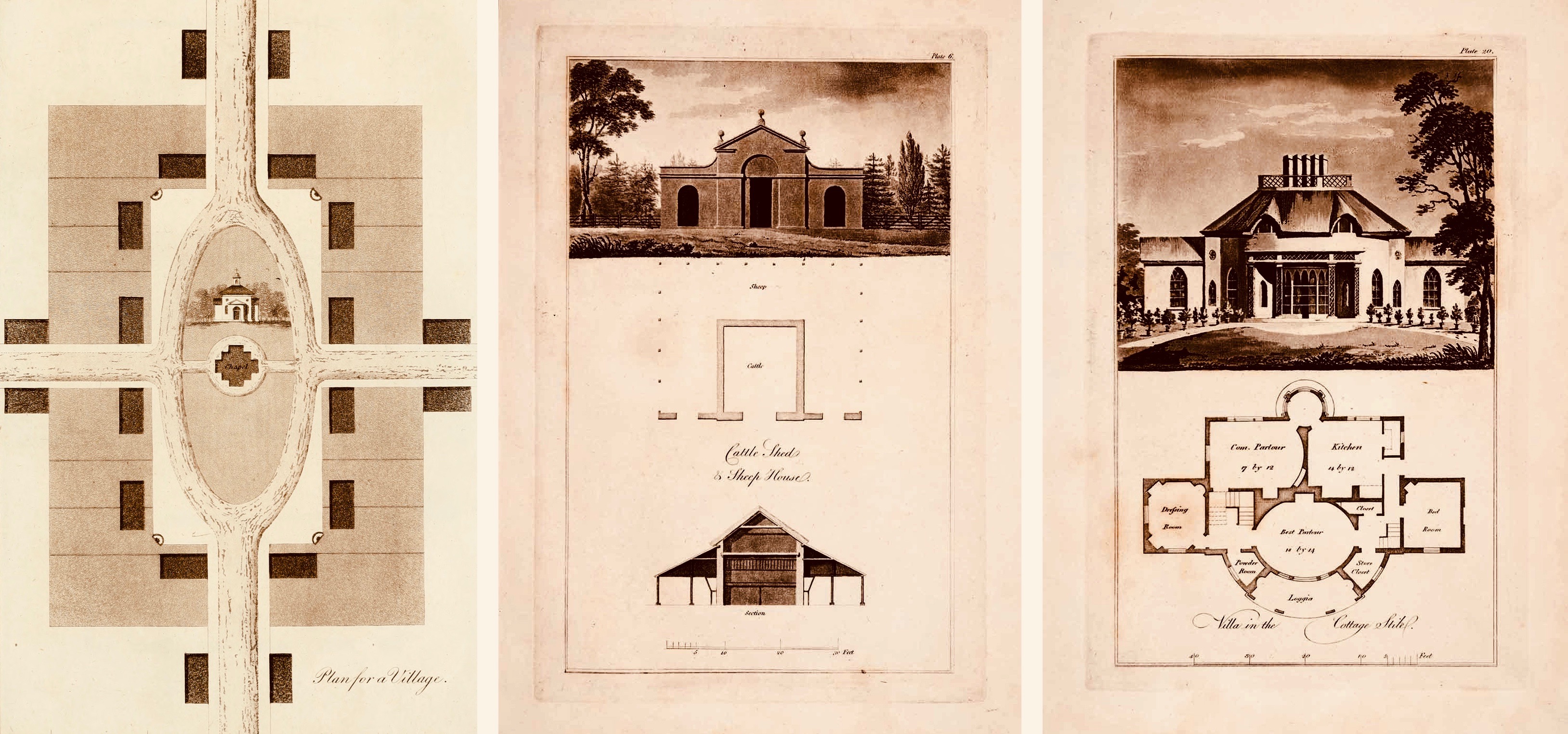
Upper – Thomas Cole The Arcadian State 1834: a romantic image of pastoral perfection. Lower – Ferme Ornée: architectural drawings by John Plaw (1746 – 1820) showing how the layout of villages (left) and the design of farm buildings (centre) and cottages (right) are conceived to reflect the principles of Arcadia

The gardens at Larchill are exceptional in that all the features of ‘The Arcadian State’ are clearly visible and have been rescued from decline by the de las Casas family who bought the demesne in 1994. Its 18th century glory has passed, perhaps, but everything is clear to see and the visitor can conjure up the elegance of life in this slightly off-the-beaten-track corner of rural Ireland. We enjoyed the hours we spent there and – after an enlightening meeting with Michael and Louisa de las Casas – we had the extensive grounds to ourselves. Larchill is a gem!
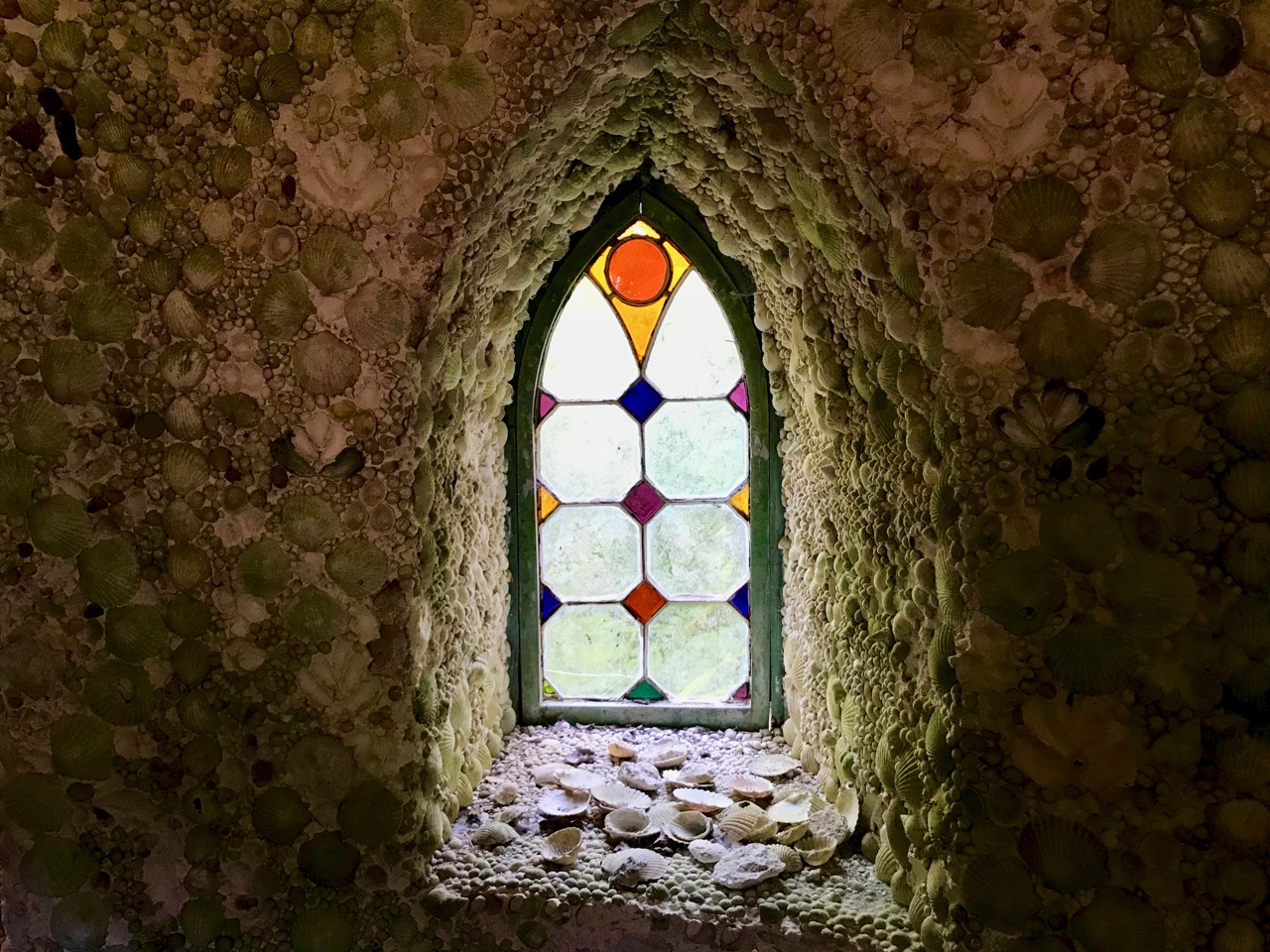
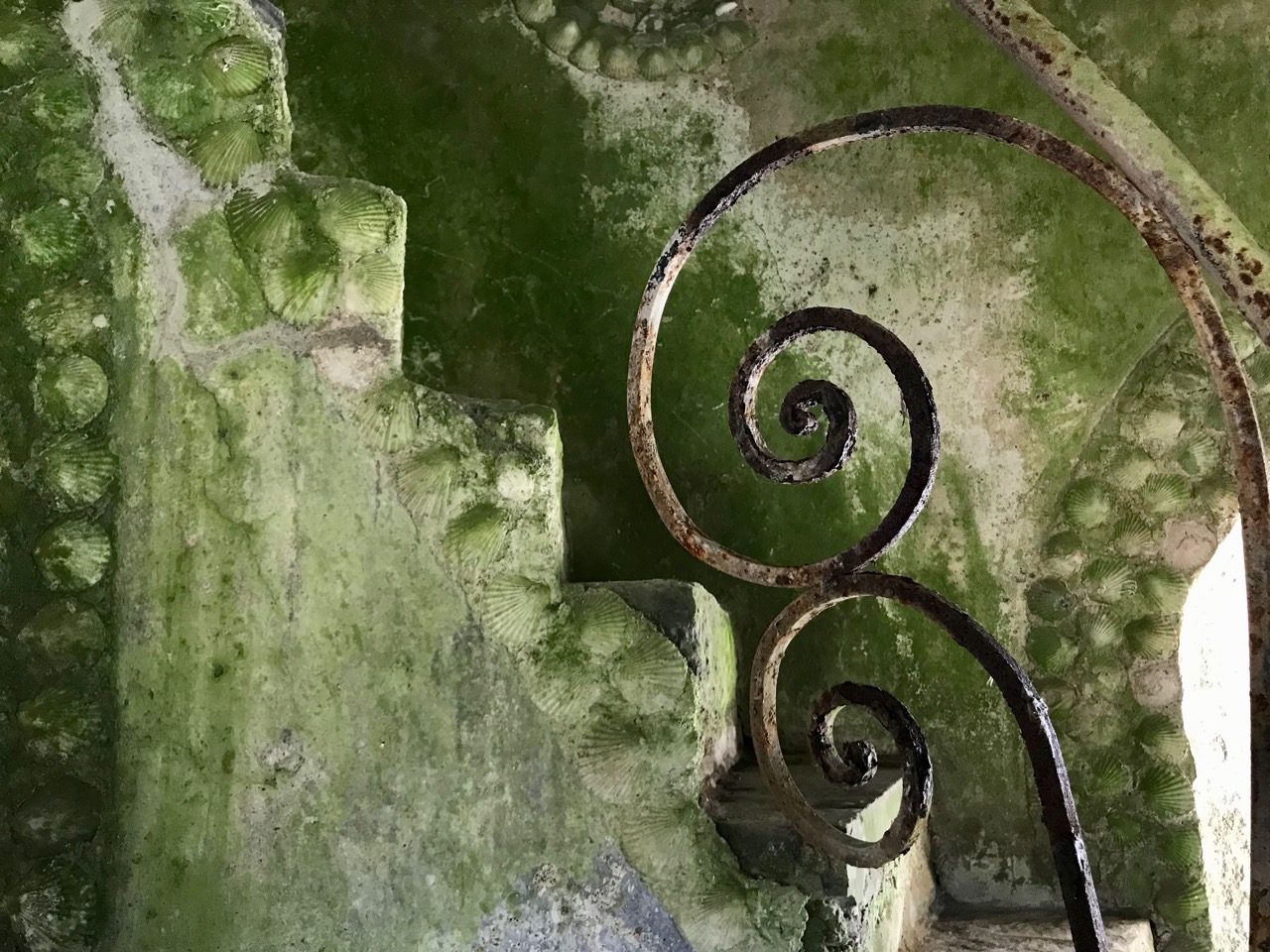
Above: details from Larchill – ‘shell houses’ were a feature of ornamental gardens. This ‘Cockle Shell Tower’ was made by the Watsons who leased the estate in the late 18th century: some restoration has been undertaken but most of the shells are as originally placed. There are some exotic and rare varieties from far flung regions of the world.
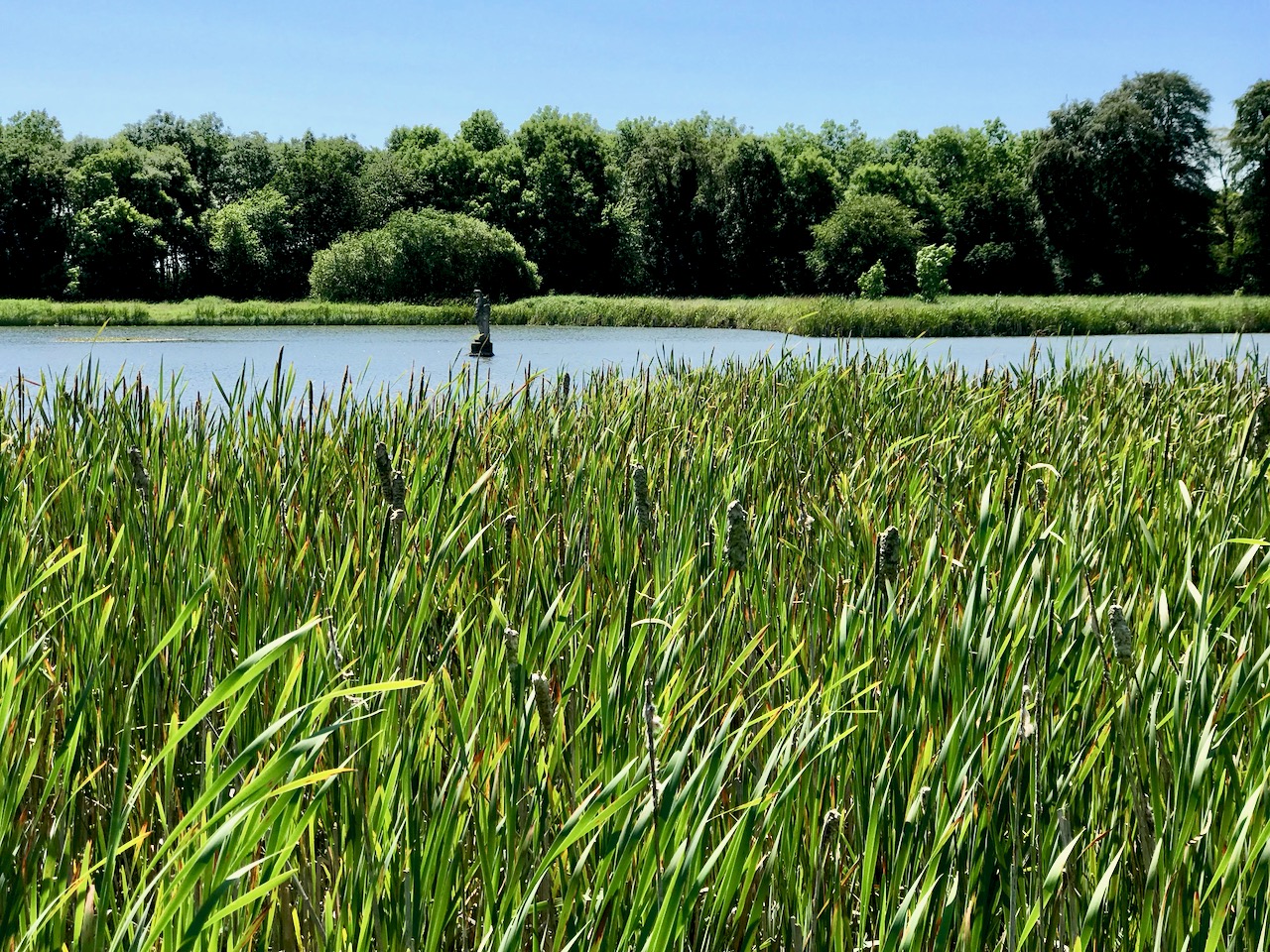
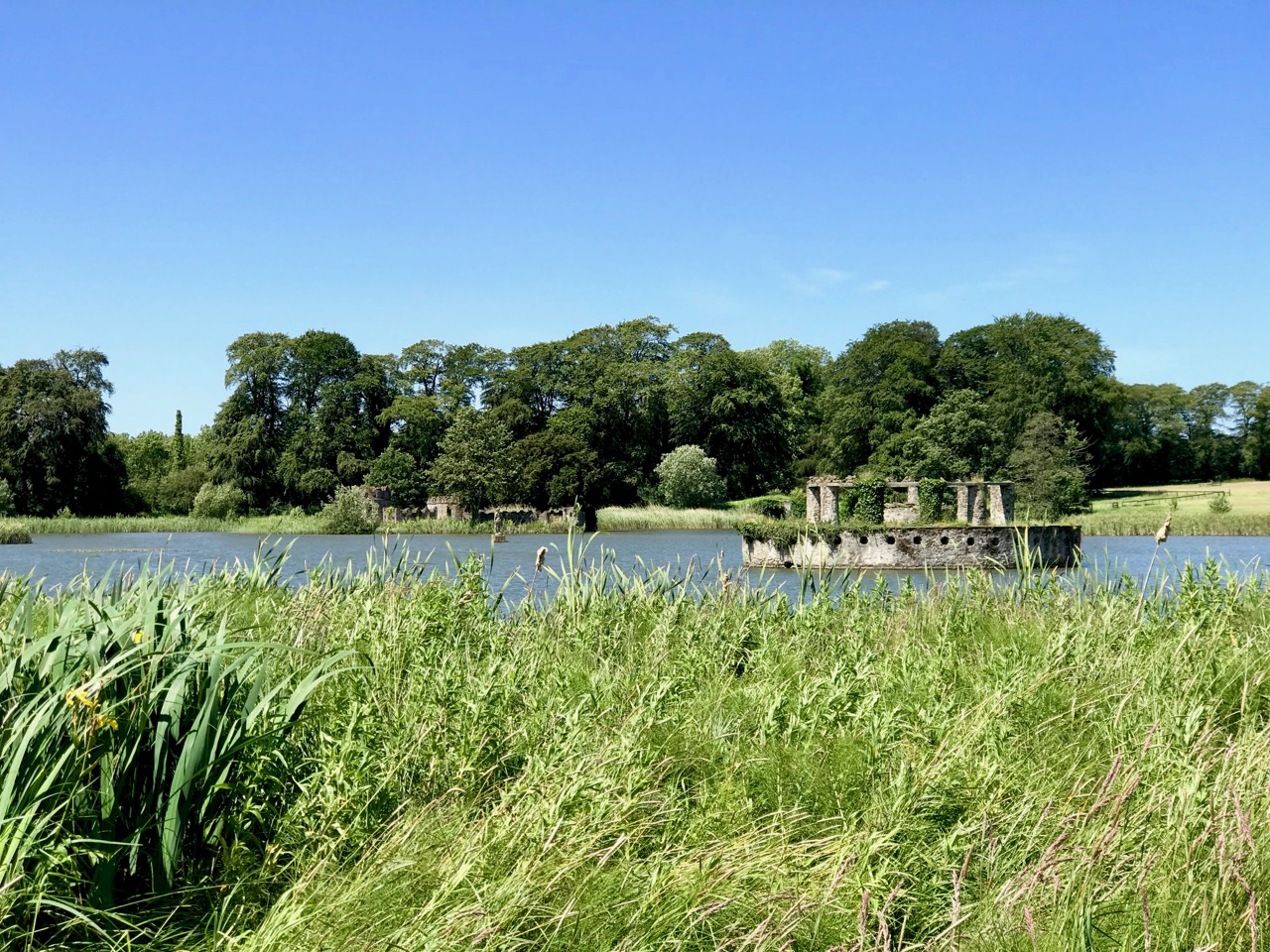
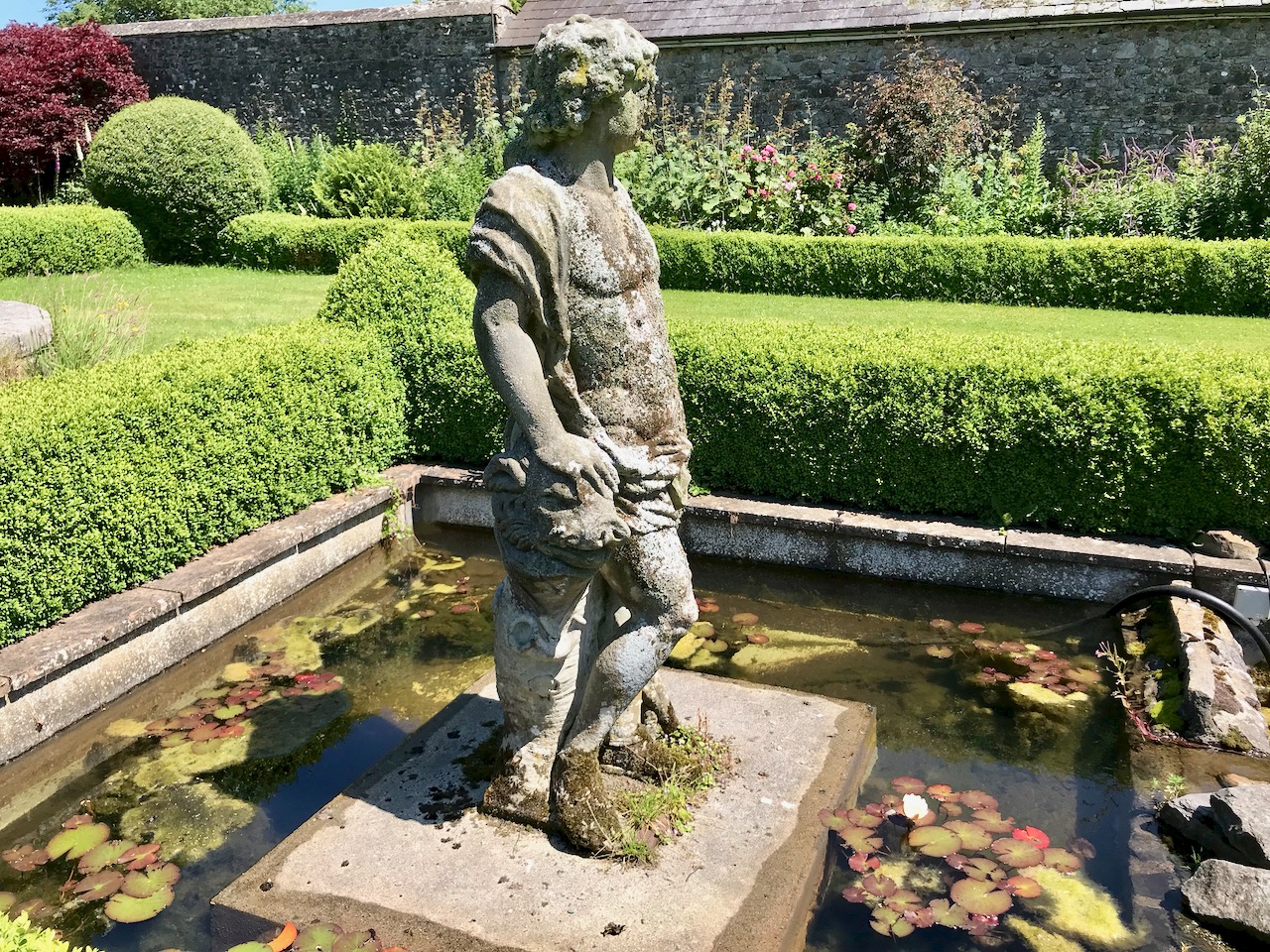
Views of the lake which is central to the vista from the farm at Larchill. The artificially constructed lake (which had been drained and has been refilled by the present owners as part of the overall restoration work) has four carefully placed features: an earth covered boathouse; ‘Gibraltar Island’, based on the fortifications on the Rock; a statue of Bacchus; and a temple which had a plunge pool. There are stories of guests who visited the house being cajoled into taking part in mock battles aboard boats on the lake!
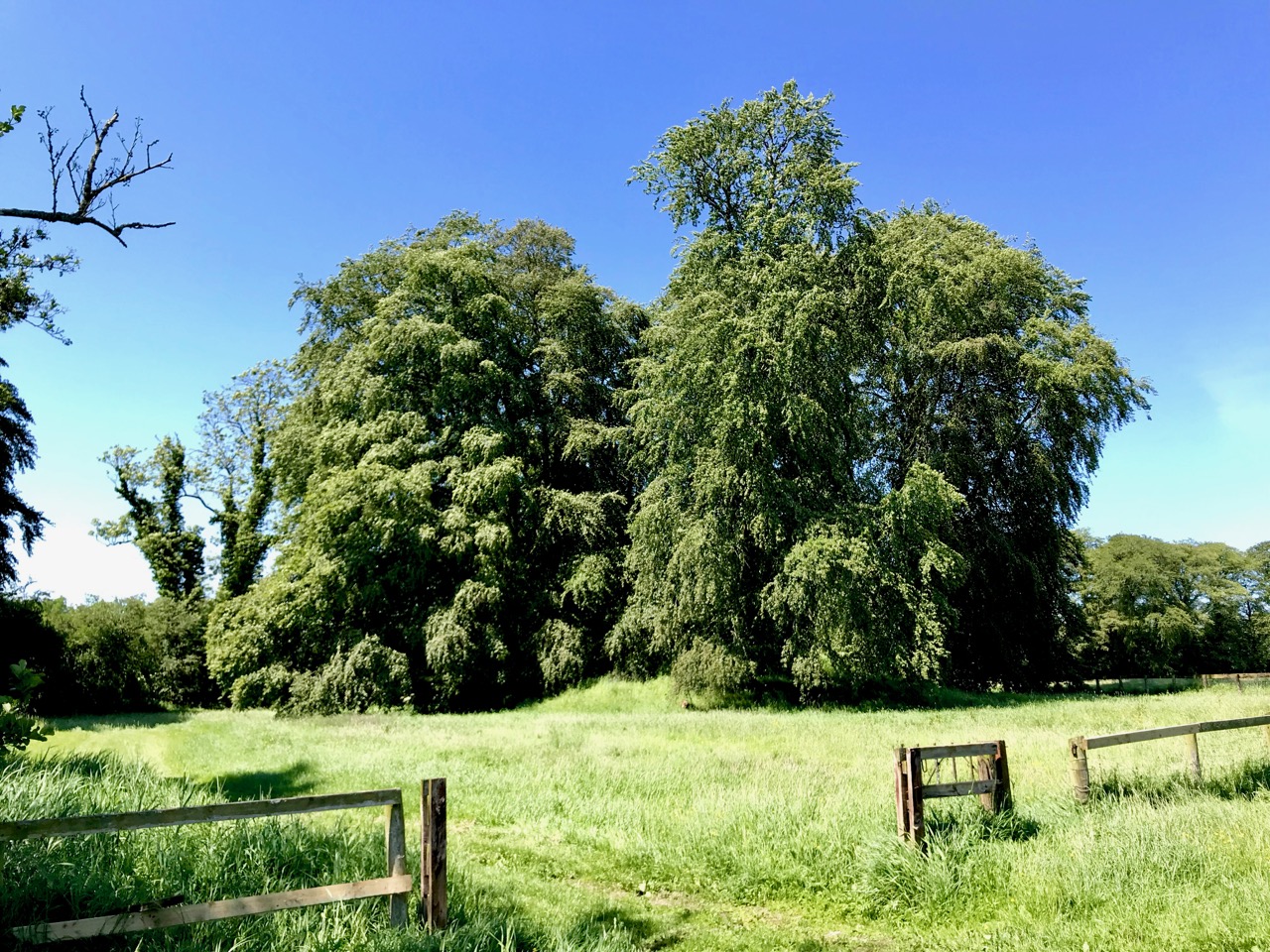
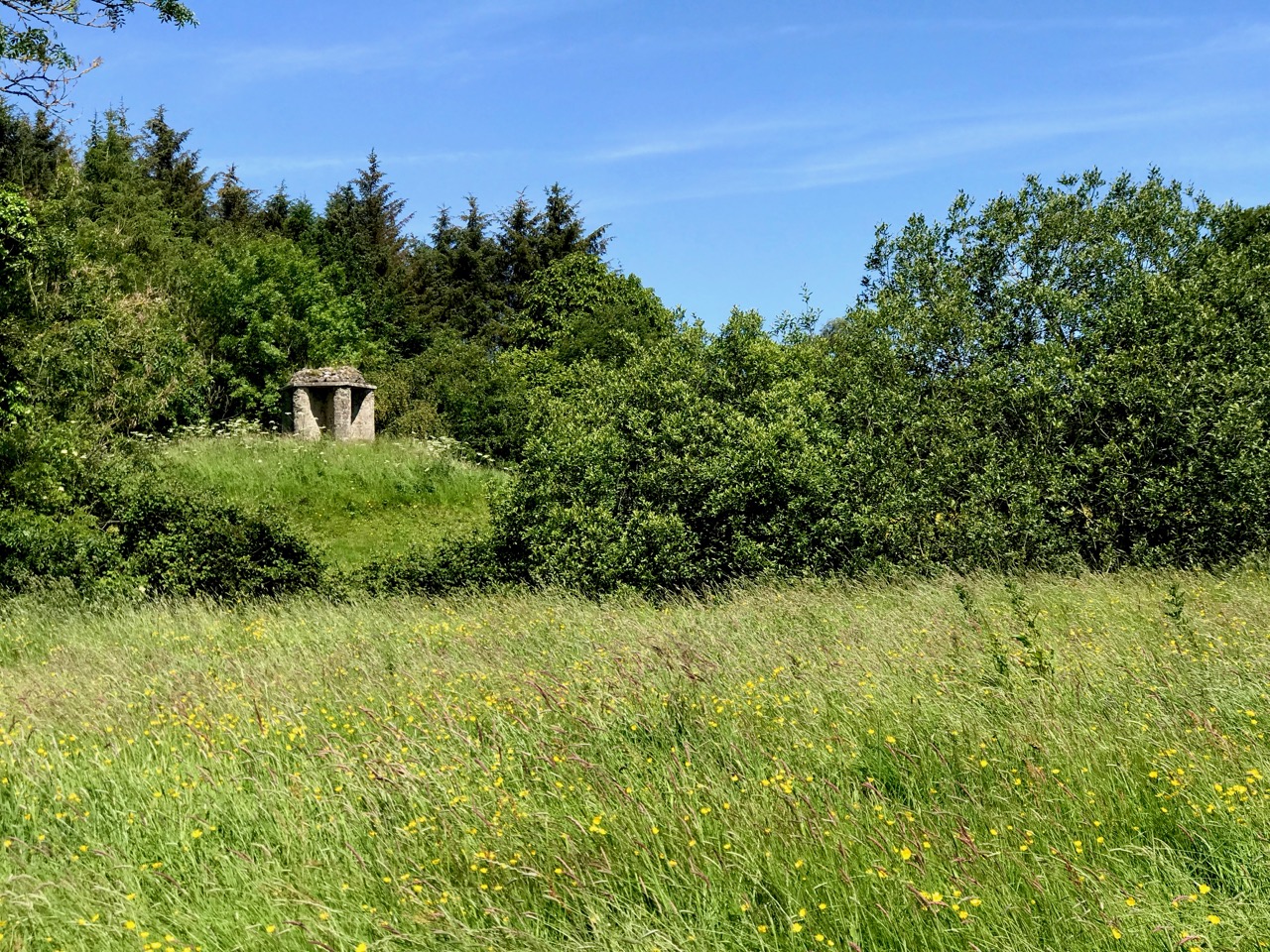
Upper – the Feuillé: a mound landscaped with beech trees made from soil excavated when the lake was dug in the 18th century. Lower – the Foxes’ Earth

My favourite story from Larchill involves the Foxes’ Earth. This folly was made by the Watsons: Mr Watson was the Master of Foxhounds and had an epiphany moment one day when he realised how many foxes he had been responsible for despatching. He became convinced that he would be reincarnated as a fox and would suffer the fate he had visited upon so many animals. He built the Foxes’ Earth to provide an escape for any foxes who were being hunted on the estate (including himself in his next life!), and consists of a number of deep burrows which could not be accessed by the hounds: because of his repentance, I hope he managed to successfully escape the fate which he feared.
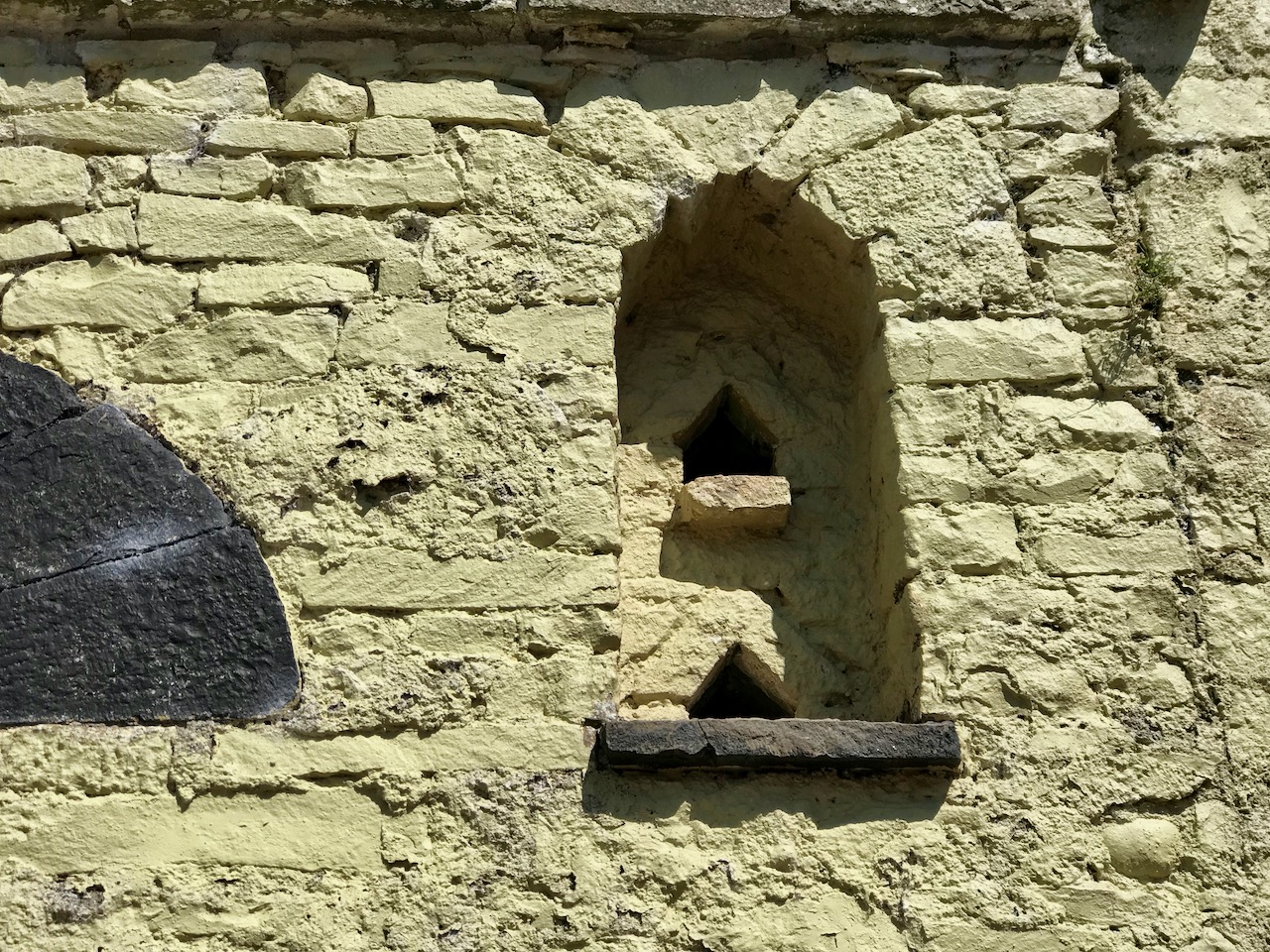
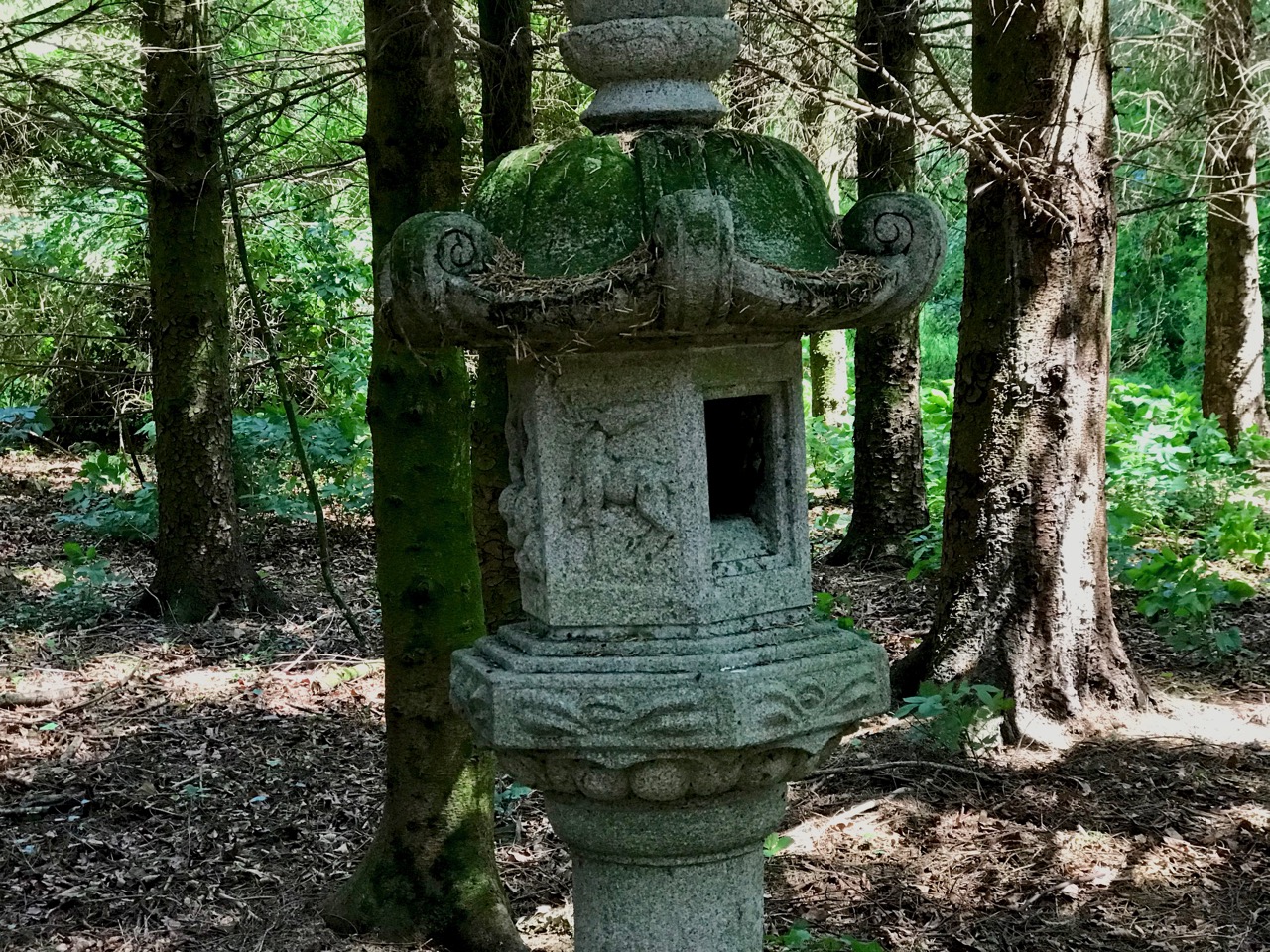
Larchill has dovecotes in its farmyard, but also the ‘owl roost’ or owlery shown in the upper picture. This is a rare feature, built to encourage owls which would hunt the vermin on the farm. The lower picture shows a stone lantern hidden away in the woods, close to an eel pond and ‘eel tower’ where the fish were harvested (below).
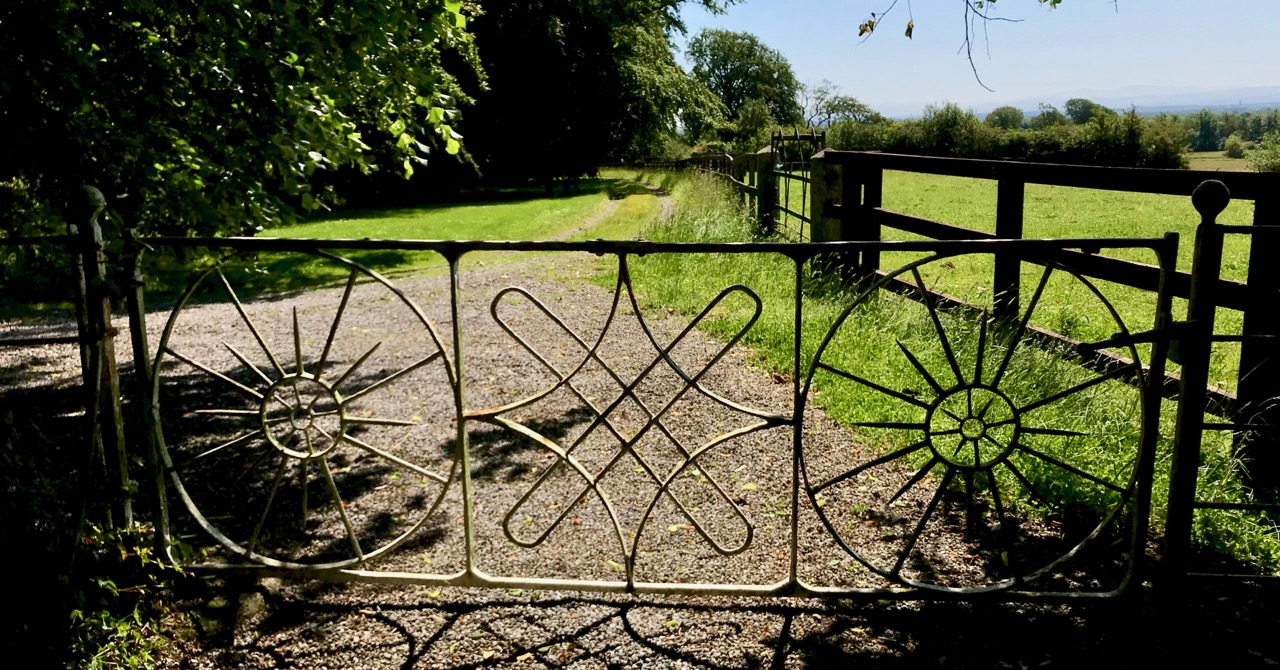
Please visit Larchill when you get the chance. In 1830 the Ordnance Survey described it as ‘…the most fashionable garden in all of Ireland…’ It’s certainly one of the most unusual and attractive designed estates we have visited. Check opening hours on the website or ring 01 628 7354.
Wildflowers of a West Cork June – a Musical Treat

A few years ago I set out to record as many West Cork wildflowers as I can. This is the kind of project that lasts a lifetime and it seems important as our environment is threatened on so many fronts. But it’s also a complete pleasure to wander our beautiful boreens, camera in hand, capturing what I can. This month I want to share with you a selection of images, all local and all taken in June 2019. So sit back, turn on the music and just enjoy.
This slideshow requires JavaScript.

One of our favourites pieces of music to go with the images – just click ‘start.’

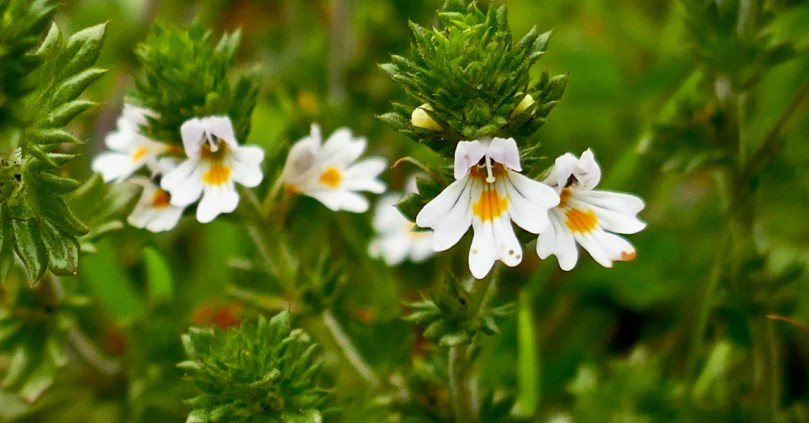
Eyebright

If you’re a wildflower fan you can follow our Wildflowers of West Cork page on Facebook. Go on – give it a Like!

Return to Long Island

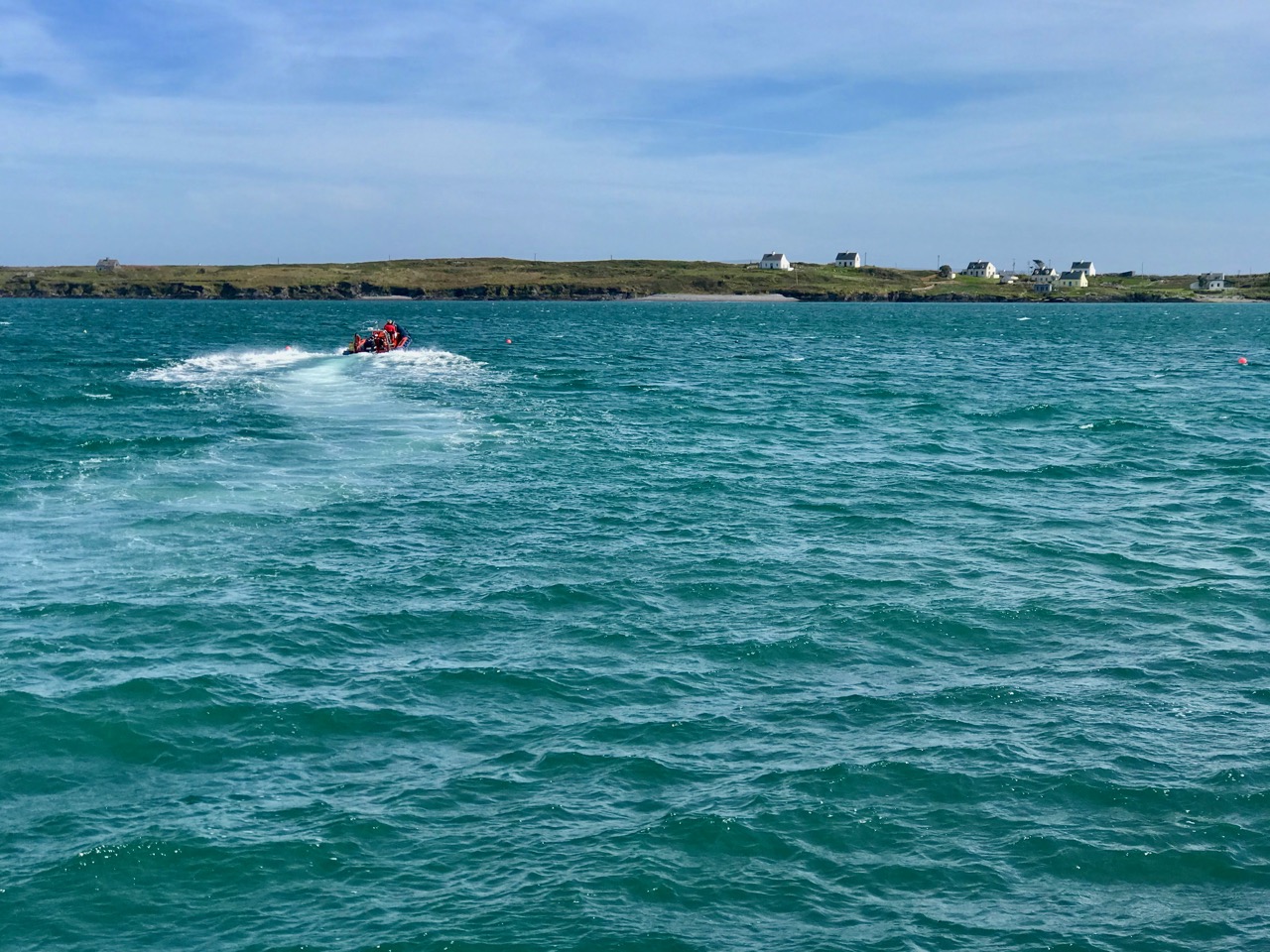
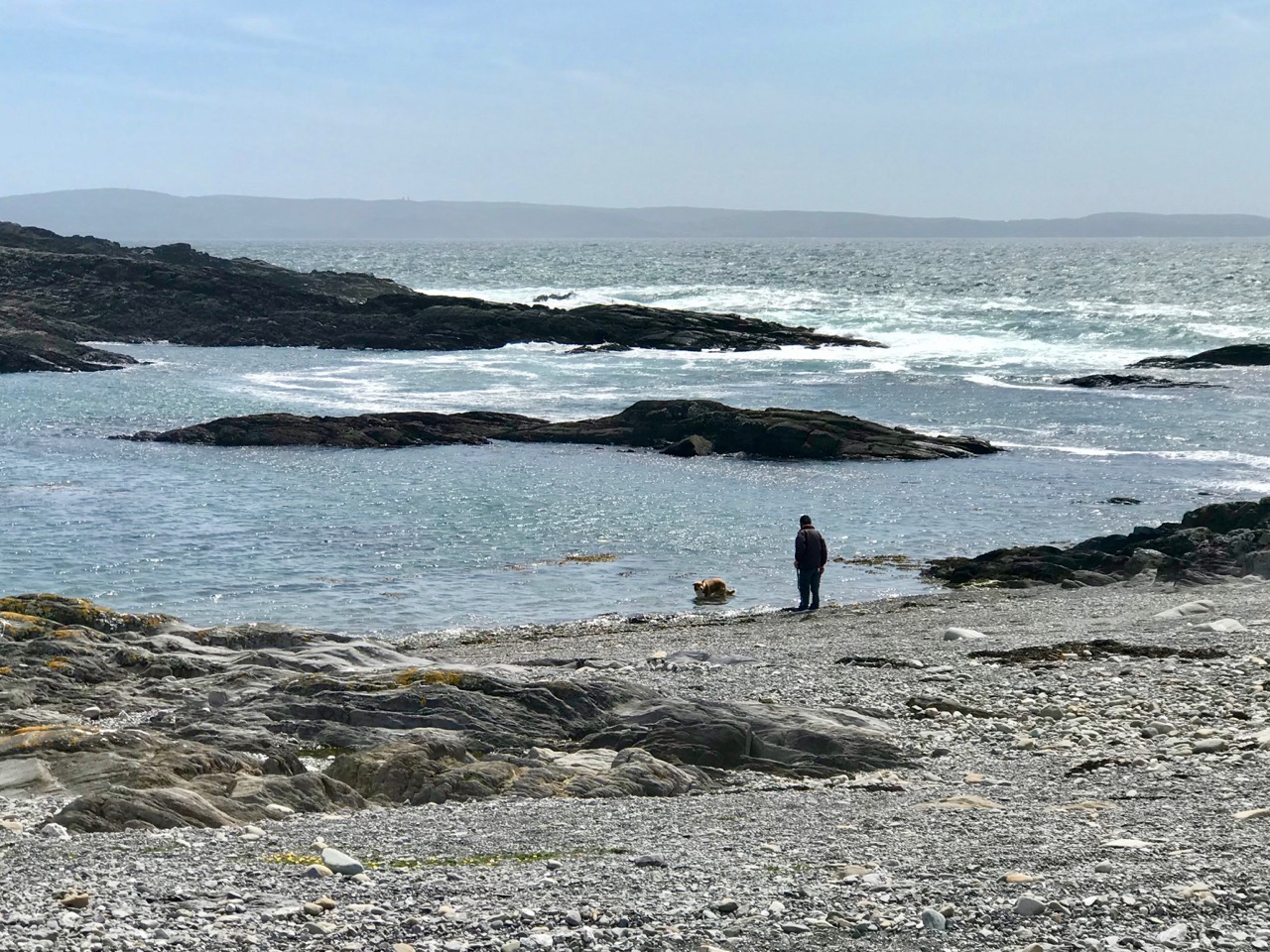
The very distinct, treeless landscape of Long Island seen across the water from Colla Pier, from whence a ferry service will take you over: look here for the times. Alternatively, you can contact Helen of Schull Sea Safari and travel there on her large RIB, the Kealtra – we went with her from Schull Pier: my recent post told some of our adventures.

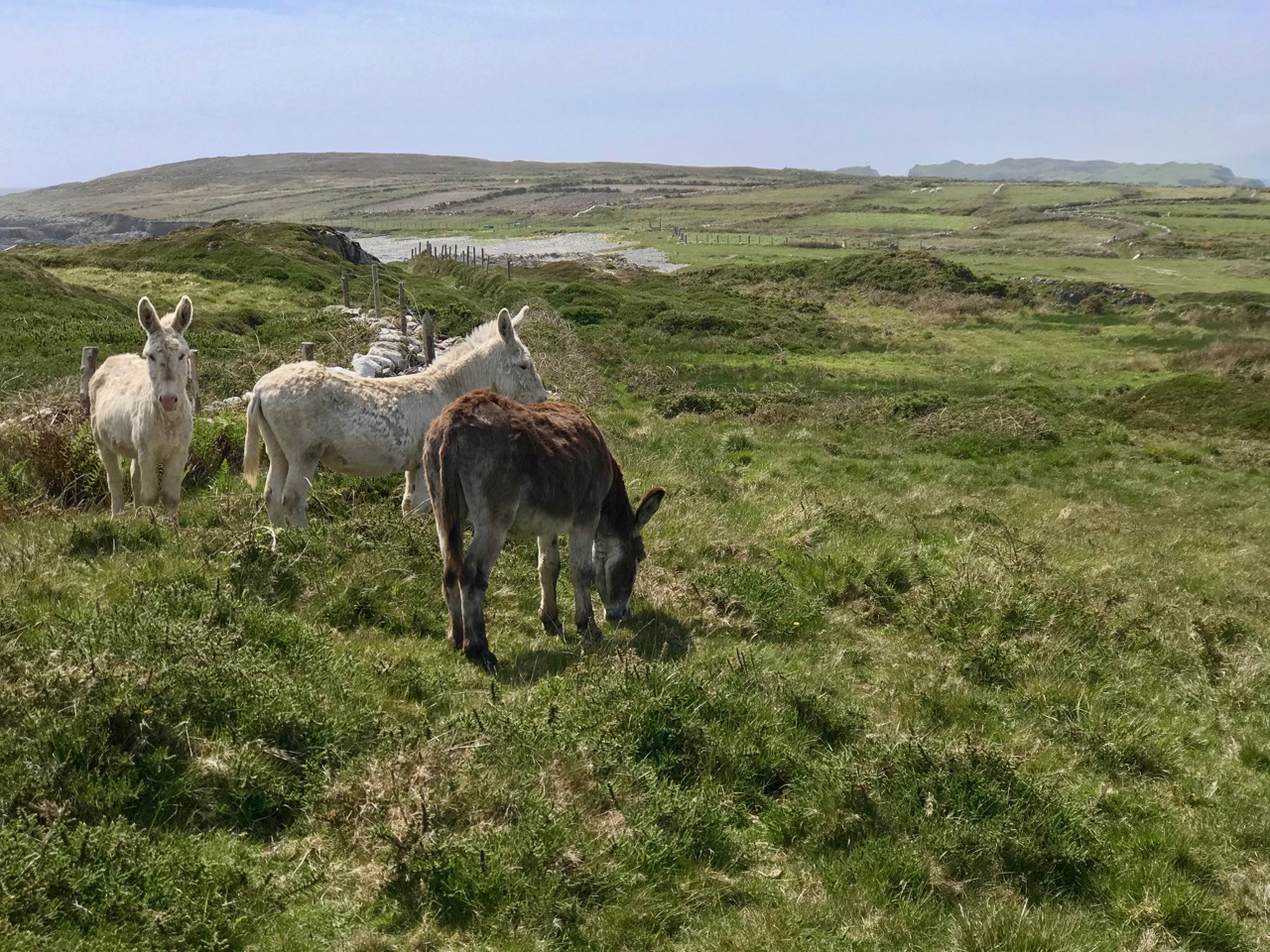
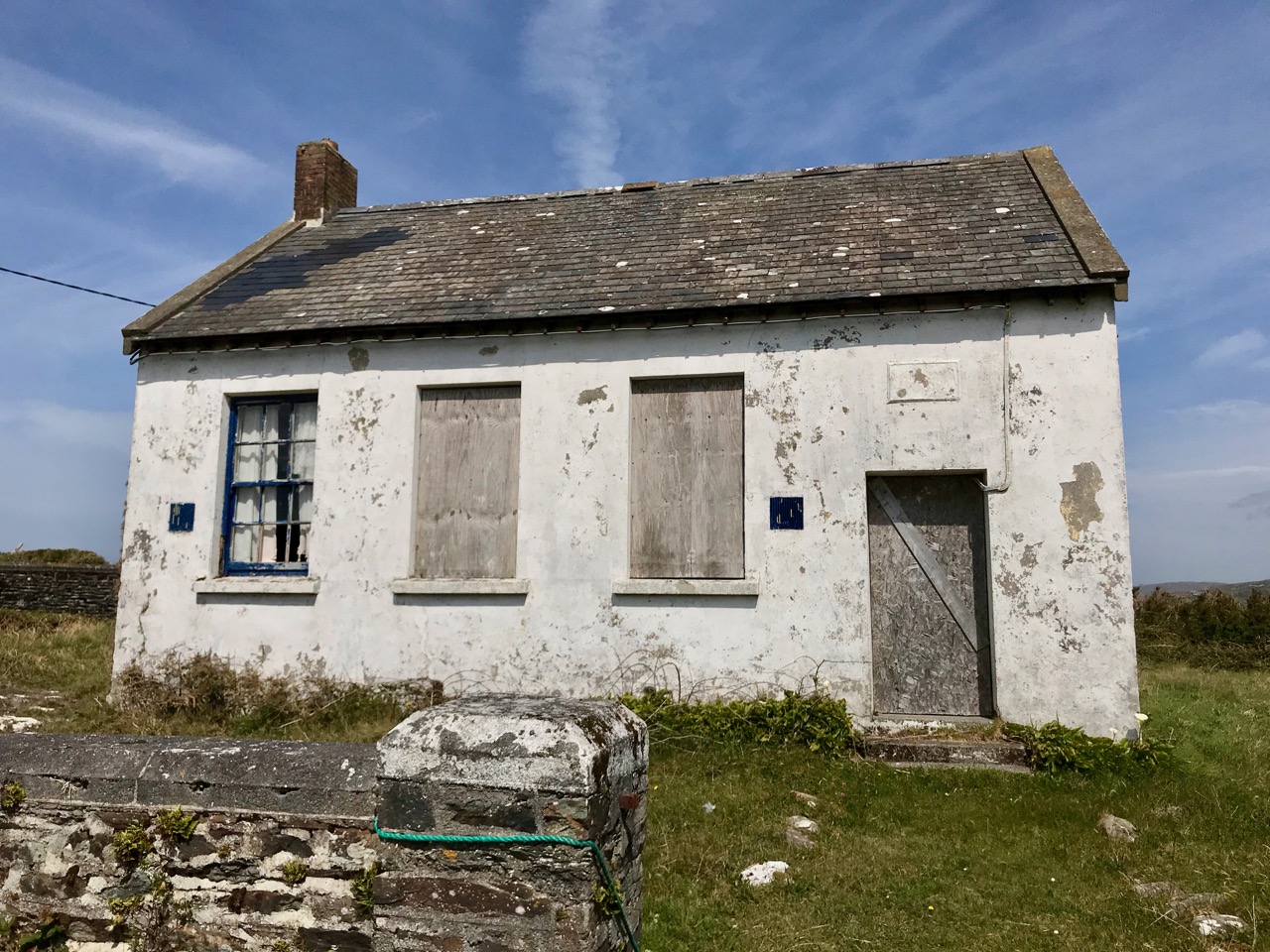
The seven permanent human residents on the island (in 2019) are supplemented by a good few four-legged inhabitants: we met most of the latter. Once there were enough people living here to support a school. That building now stands gaunt and empty right at the centre of a single road serving the two and a half mile long strip of land that lies at the very edge of the Atlantic.

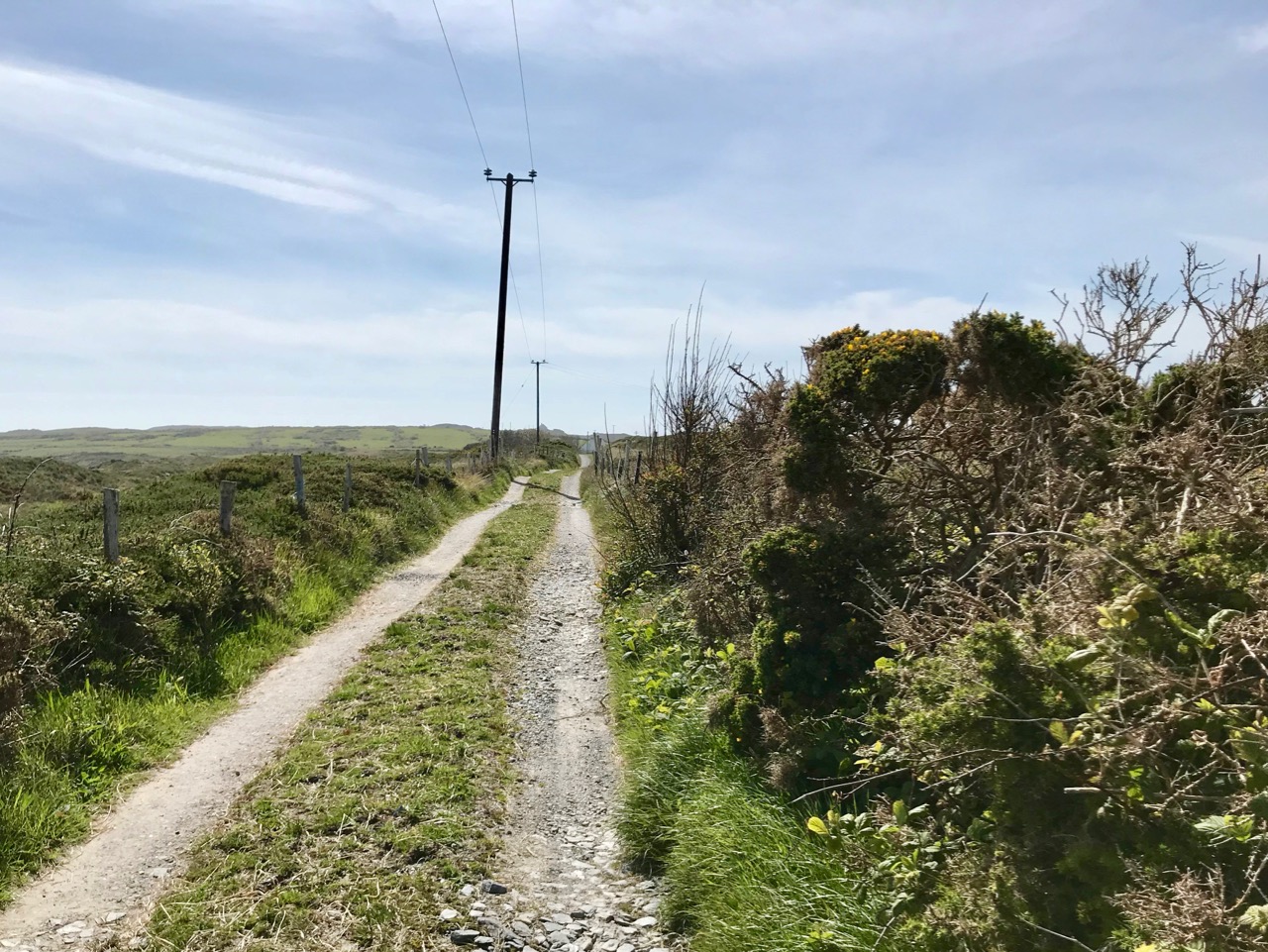
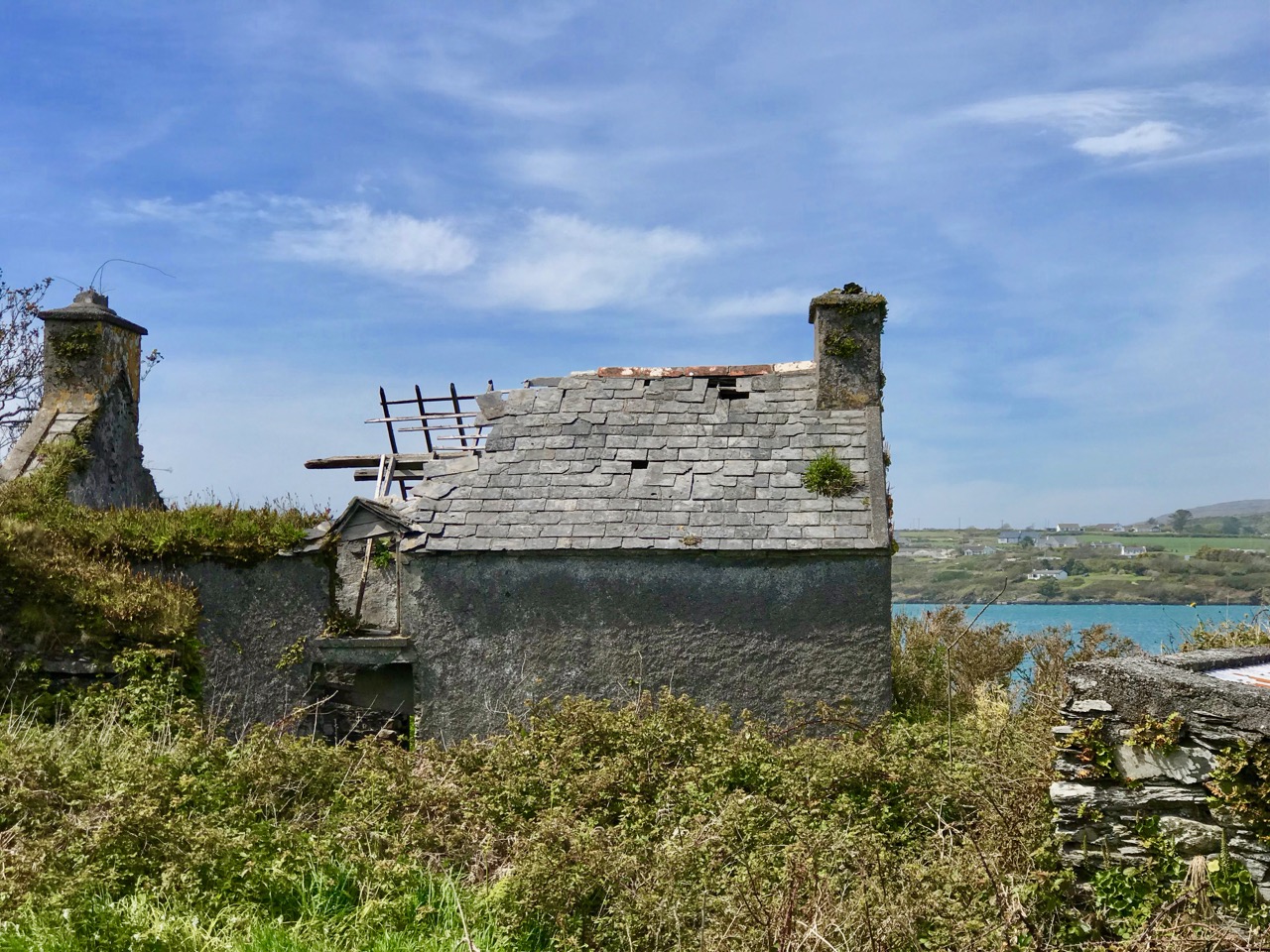
Upper – the eastern end of the road that runs the length of the island is a trackway which served the old copper mine and the navigation beacon; above – the former school still stands, but is unused and decaying

One fascination of Long Island is a sense of fragility: even though it’s only a short sea crossing from the mainland it’s a completely different world. And you inevitably wonder about its future. In 2014 – just a few years ago – Helen Selka made a film about the island. It is well worth finding and watching: at least have a look at this trailer, remembering that there have been changes since then, although much also is unchanging. The film’s title is perfect: Bleak Paradise.

Fragile lives: in the centre picture is Finnbar, one of the permanent residents of Long Island. He appears in the trailer to ‘Bleak Paradise’

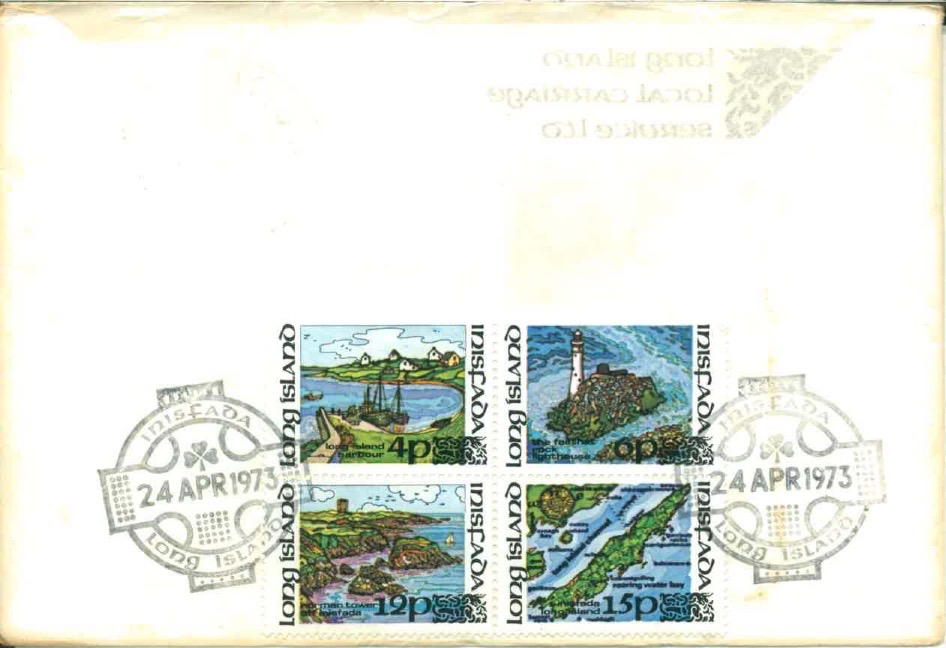
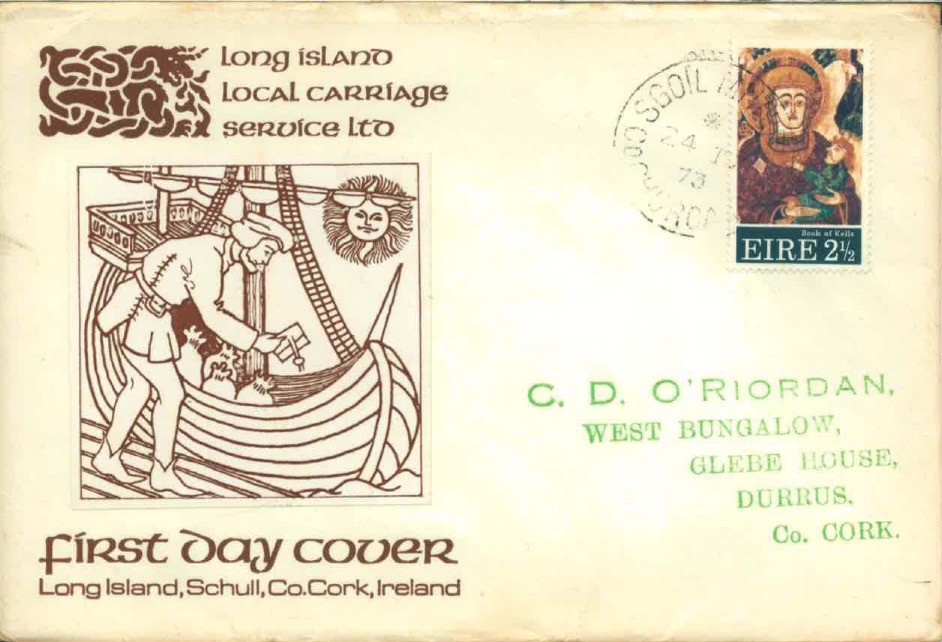
The island also has the distinction of being notable in the world of philately! On 24 April 1973 four postage stamps were issued by the ‘Long Island Local Carriage Service Ltd’. This local initiative was set up to improve the postal service then provided to and from the island. It was a private concern, and disapproved of by the Department of Posts and Telegraphs of Ireland, who made it clear that:

The Irish Post Office has not, at any time, approved the establishment of a privately owned and operated carriage service by the Long Island Local Carriage Service Ltd, and that company was not given permission to issue stamps and charge rates for the carriage of mail . . .

A little piece of very local history: Long Island’s attempt to set up its own postal service, dating from 1973. It created waves with the official postal service, and provided some good fodder for collectors of ‘first editions’!

We spent a day exploring this special place, and determined to return. We will choose a different time of the year, to gain a new perspective on this tiny, inhabited landfall on the edge of Roaringwater Bay. We recommend anyone to make a visit and take in the alternative lifestyle that is governed by a minimal population and a hidden and sequestered location.


York or Cork?

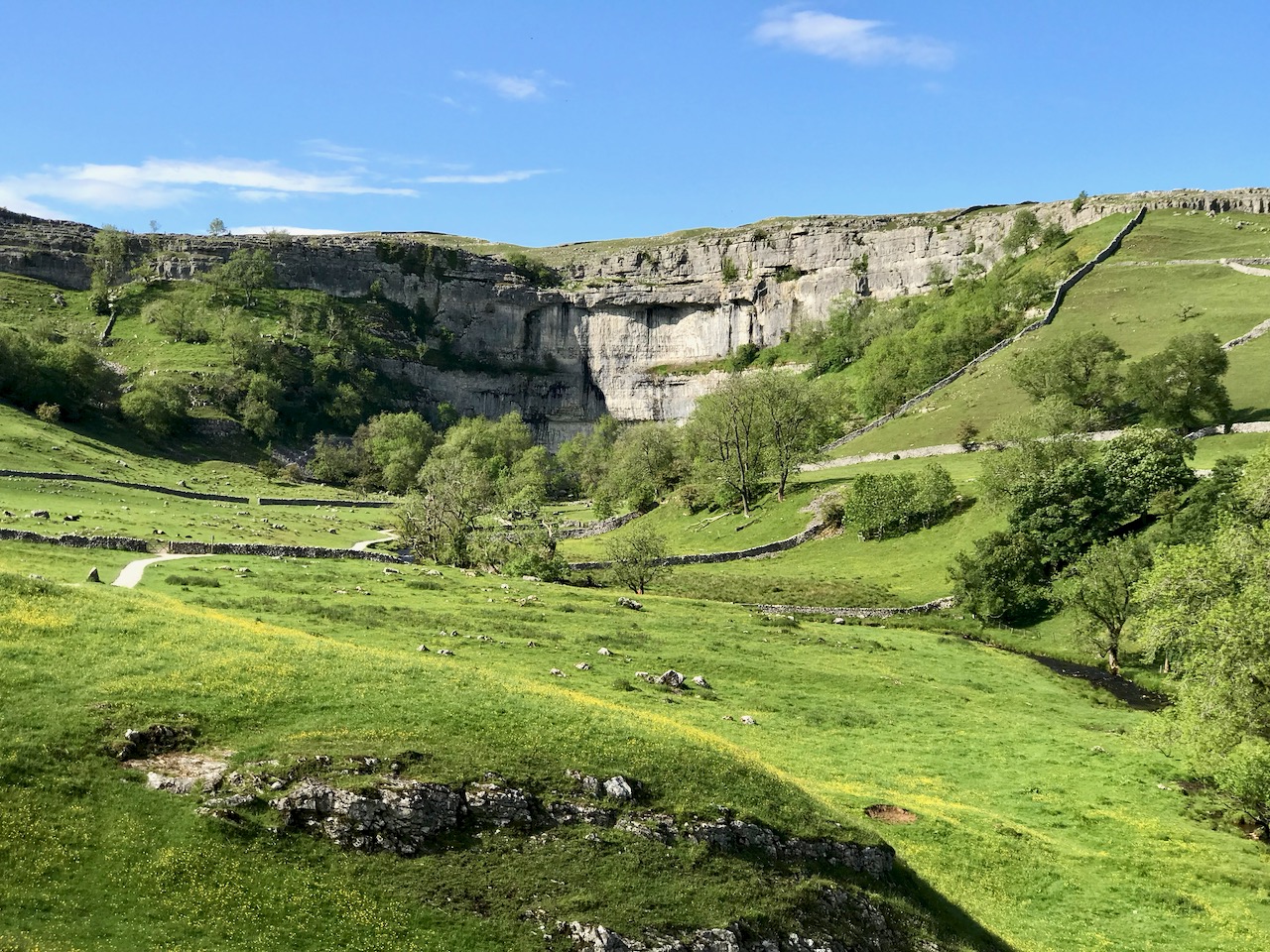
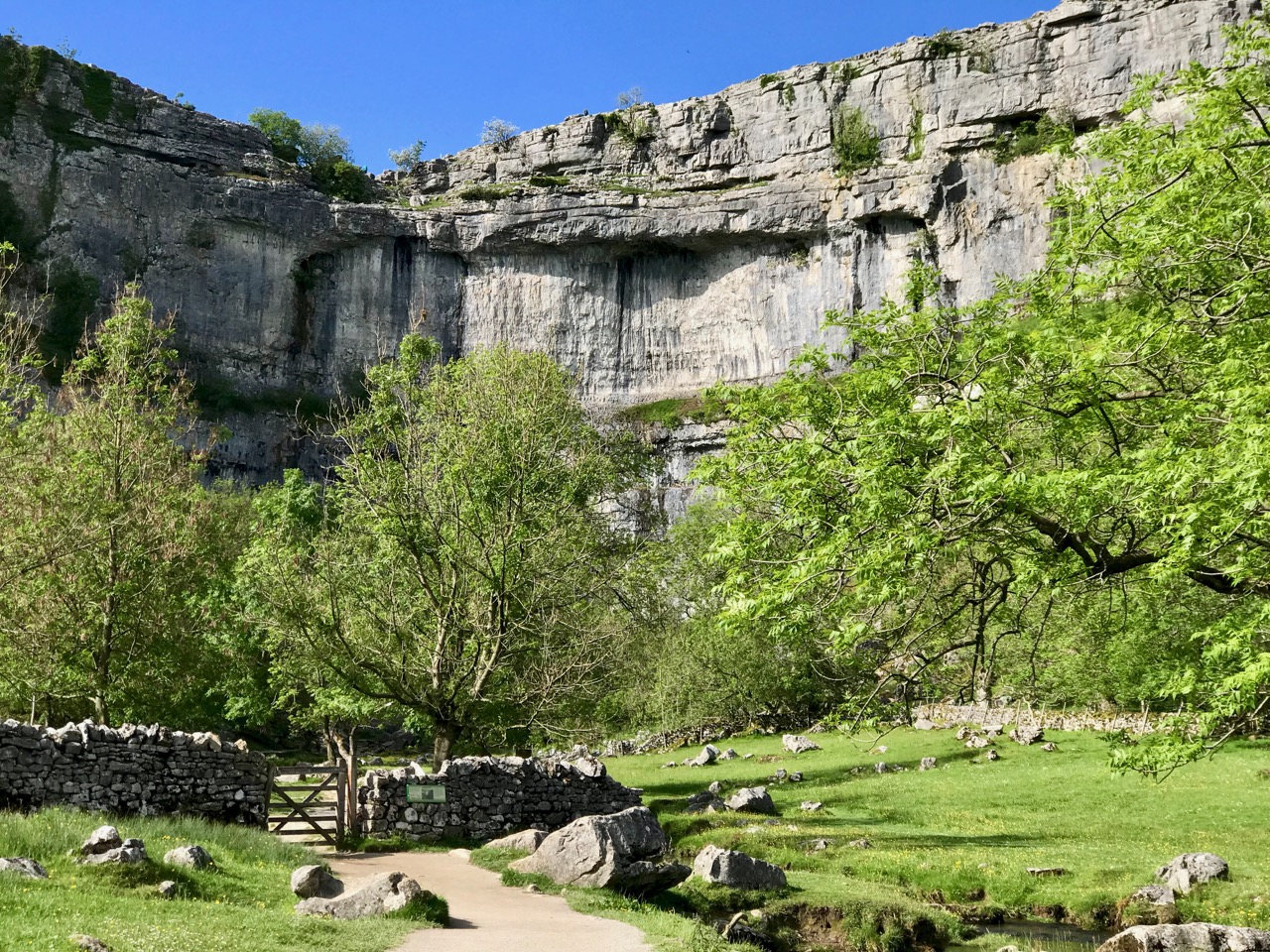
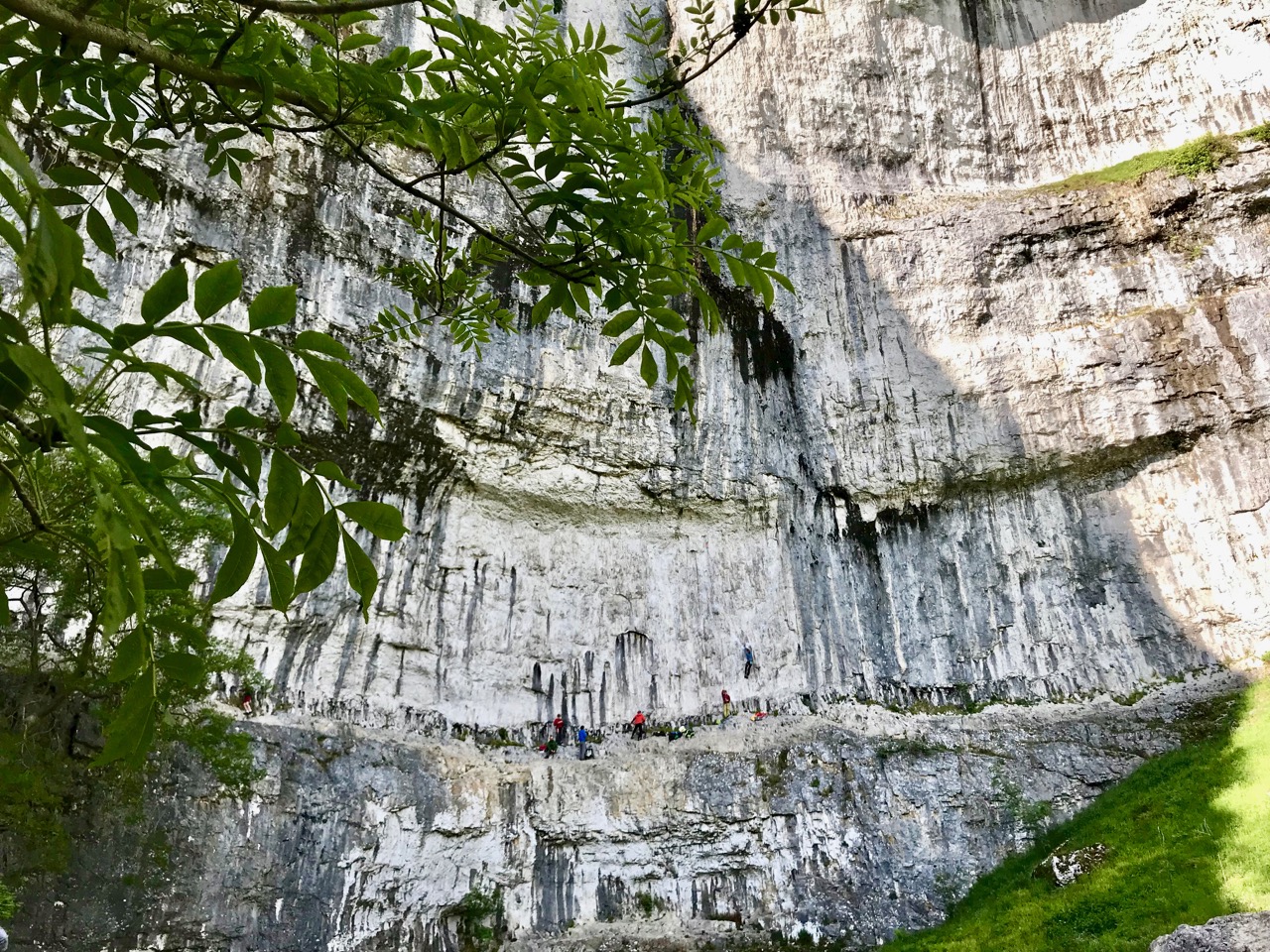
If this seems an enigmatic title, it is reflective of the fact that Finola and I have just visited Yorkshire, where  – for Finola’s birthday – we treated ourselves to a superabundance of medieval architecture and some idyllic wanderings in the Dales (that’s Malham Cove, a spectacular limestone cliff and pavement, above). This set me to thinking about comparisons between the county of Yorkshire and our own County Cork: both are the largest counties in their respective countries, but Yorkshire – at 14,850 km2 – is almost double the area of Cork, 7,500 km2.

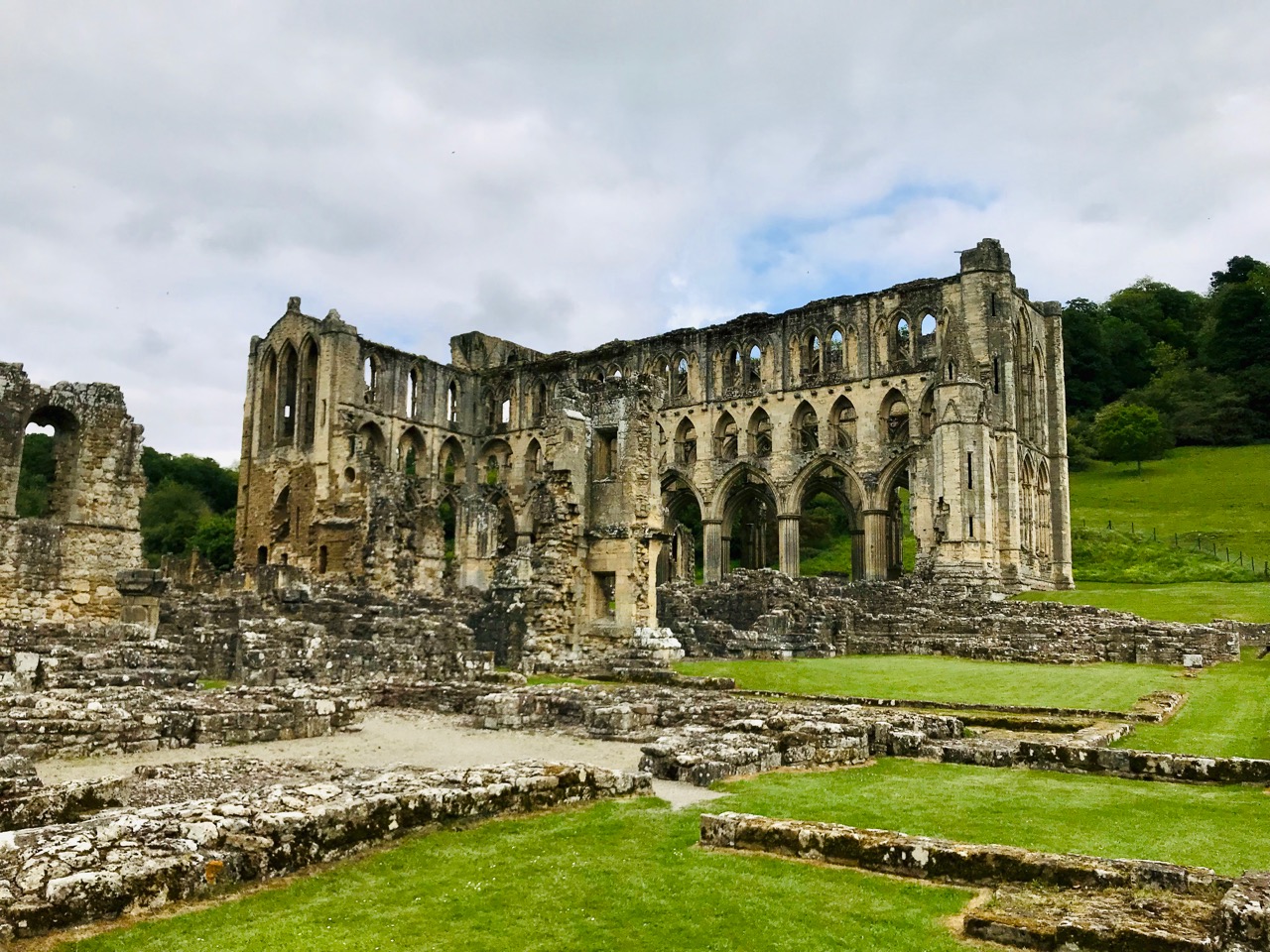
The gaunt ruins of Rievaulx Abbey in North Yorkshire: this was the first great Cistercian abbey in Britain, established in 1132. It became one of the most powerful and housed a community of 650 brothers at its peak in the 1160s under its most famous abbot, Aelred

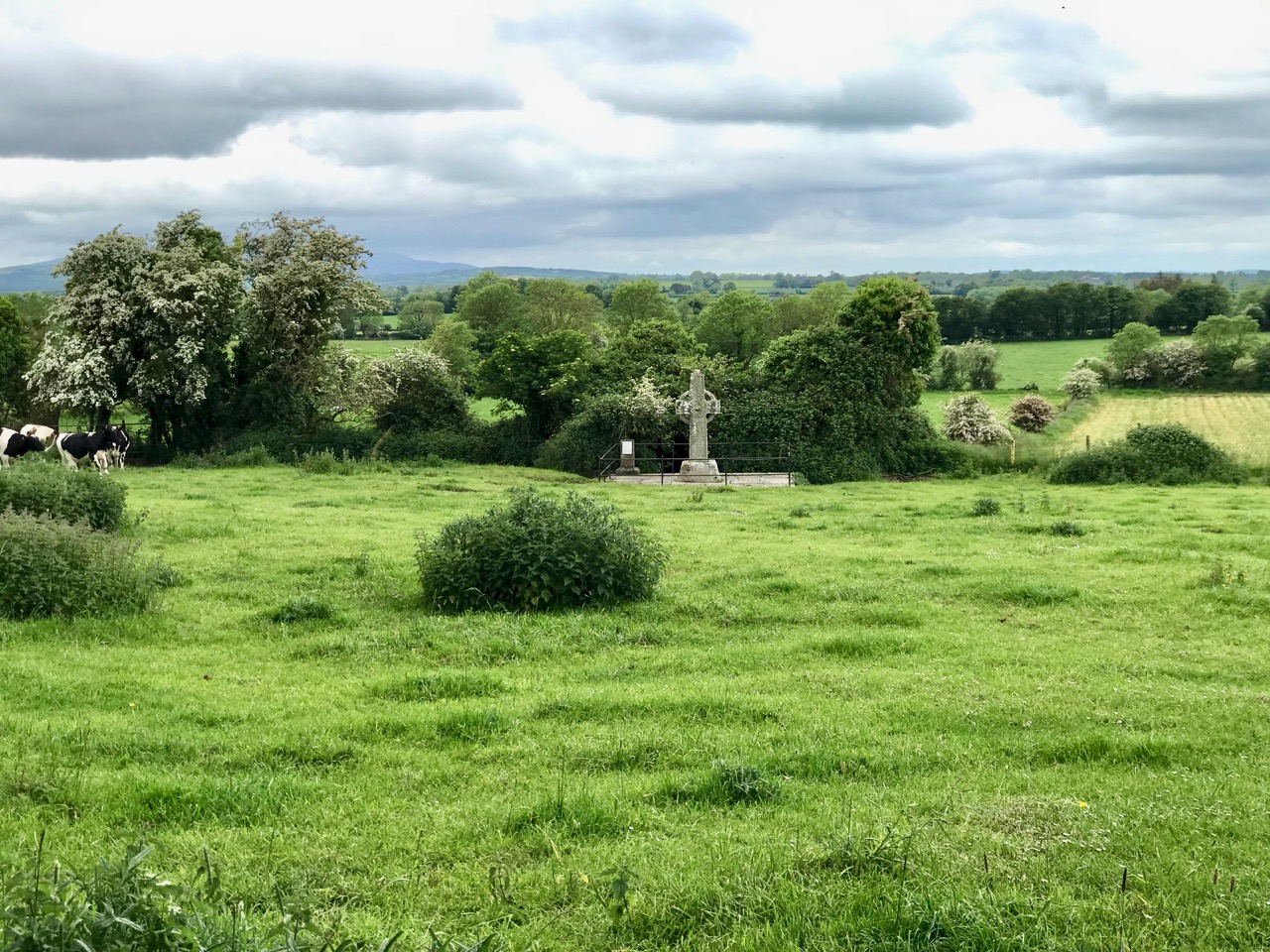
In Ireland we can’t compete with the sheer scale of the monastic settlements that we can see in Yorkshire. However, in spite of those impressive ruins which are so well cared for by the state and the National Trust, nothing can compare, for us, with the timeless serenity and isolated beauty of places such as Kilree, which Finola described in a recent post.

The medieval High Cross at Kilree, Co Kilkenny. This example of ecclesiastical art probably dates from the 8th century and stands remote and seldom visited, deep in rural Ireland – a reclusive gem

I feel that this post gives me an excuse to tell a little Cork / York story that I learned many years ago from Gerald Priestland, the BBC’s religious affairs correspondent from 1977 to 1982 – who lived not far away from me in West Penwith, Cornwall. Priestland was researching the history of the Parish of St Buryan in the far west of the peninsula: the Irish saint, Buriana, was said to be the sister of St Piran, Patron Saint of Cornwall – who, you will know from reading my posts – here, (and here), was born on Cape Clear, just over the water from us in West Cork, where he was known by the name of St Ciarán. Finola is republishing another post about Cape Clear today.

The coast of West Penwith, Cornwall: Gerald Priestland lived here – on the hill, and I lived not far away – over the hill

St Buryan was known as “The Wickedest Parish in Cornwall” in earlier times – I can’t vouch for its present day reputation! This was supposedly because the settlement (which Priestland describes as . . . a bleak and haunted landscape . . .) received a special privilege in the year 936 from the Saxon King Athelstan as he was passing through on his way to defeat the Danes on the Isles of Scilly. He founded an independent College of Priests at St Buryan and layed down that the lands (some 770 acres) . . . are to be exempt from all secular assessment; but not from the rendering of prayers which the clergy have promised me (that is, Athelstan): 100 Masses and 100 Psalters daily . . . The Domesday Book confirms that Buryan maintained its freedom from taxation but also confirms the charter that . . . the privilege and ordinance of sanctuary and aforementioned liberty may not perish through old age . . . That is to say that St Buryan was made a place of sanctuary then, and will remain so always. The consequence of this was that any wrong-doer or fugitive, instead of having to go into exile, could live freely within the parish boundaries without suffering any punishment – forever. So the place filled up with felons, brigands, rogues and villains!

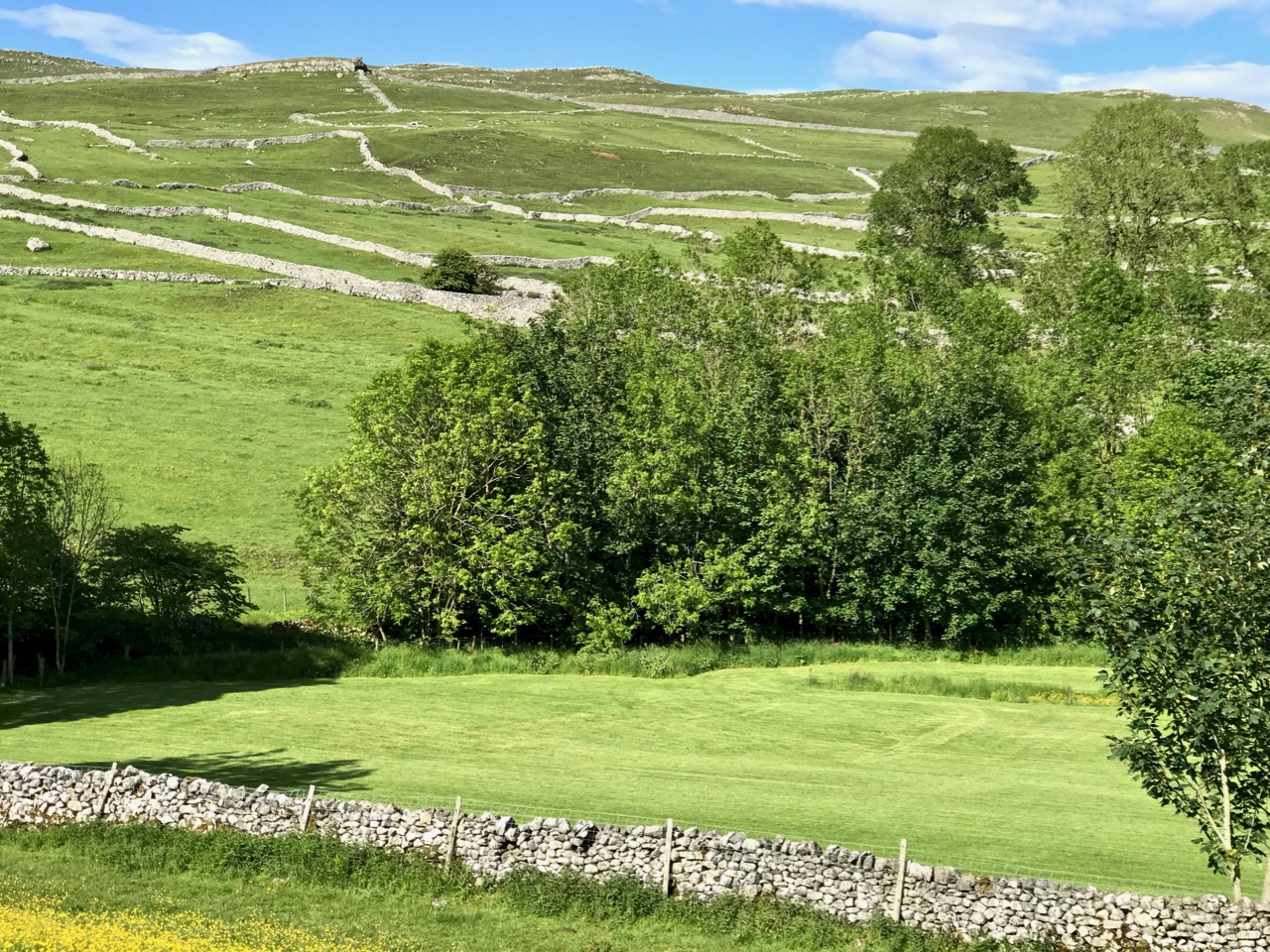
Scenic Yorkshire: landscape of the Dales (just to remind you of the subject of today’s post)!

St Buryan became – and remained – a den of iniquity. So much so that in 1328 the Bishop of Exeter, Grandisson, was forced to excommunicate everyone in the settlement. Priestland writes:

Grandisson came as close to the boundaries of Buryan as he dared, and from the top of St Michael’s Mount – six miles across the water – he pronounced the fulminacio sentencio contra Barianes – the Greater Excommunication against the people of Buryan. The bell was tolled and the book and candles were cast down. There are not many parishes in England that can claim that very specific distinction . . .

Deans continued to be appointed to the parish – and were duly paid a stipend – but none of them ever went there. The last of the absentee Deans was Fitzroy Henry Stanhope, an army officer of ill reputation who had lost a leg at Waterloo (he was known thereafter as ‘Peter Shambles’). He was offered the position at Buryan in 1817 by his Commander-in-Chief, the Duke of York, in lieu of an army pension: it was worth a thousand pounds a year. There was one problem: Stanhope had to be ordained, but no-one could be found to do it. One day the Duke was told that his friend the Bishop of Cork was on Holiday in London. At once Stanhope was sent round in a carriage with the message:

“Dear Cork – Please ordain Stanhope – Yours York”

By sundown, he was back, with the reply:

“Dear York – Stanhope’s ordained – Yours Cork”

This incident has gone down in history as the shortest piece of official correspondence on record. And doubly justifies the title of my post today!

Malham Cove again: this geological formation would have been a huge waterfall as the glaciers began to melt after the last Ice Age. In the lower picture you can see the true scale of the place – look at those figures on the lower ledge! It is a popular spot for climbers

So – Cork, or York? We are very fortunate to be able to travel so easily to see the beautiful places of the world. But – always – the best part of travelling for me is coming home to West Cork: there’s no doubt where my heart is . . .

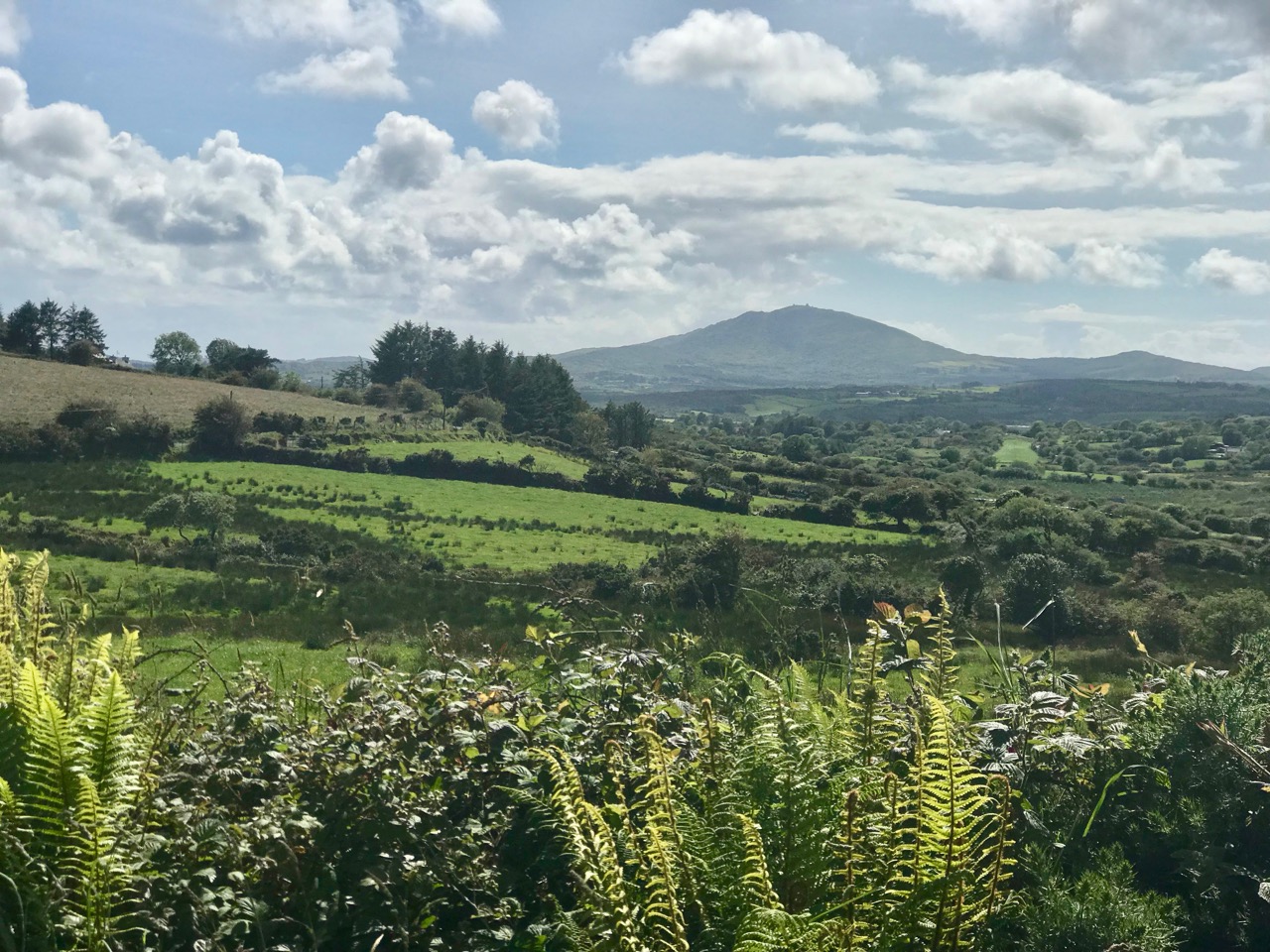
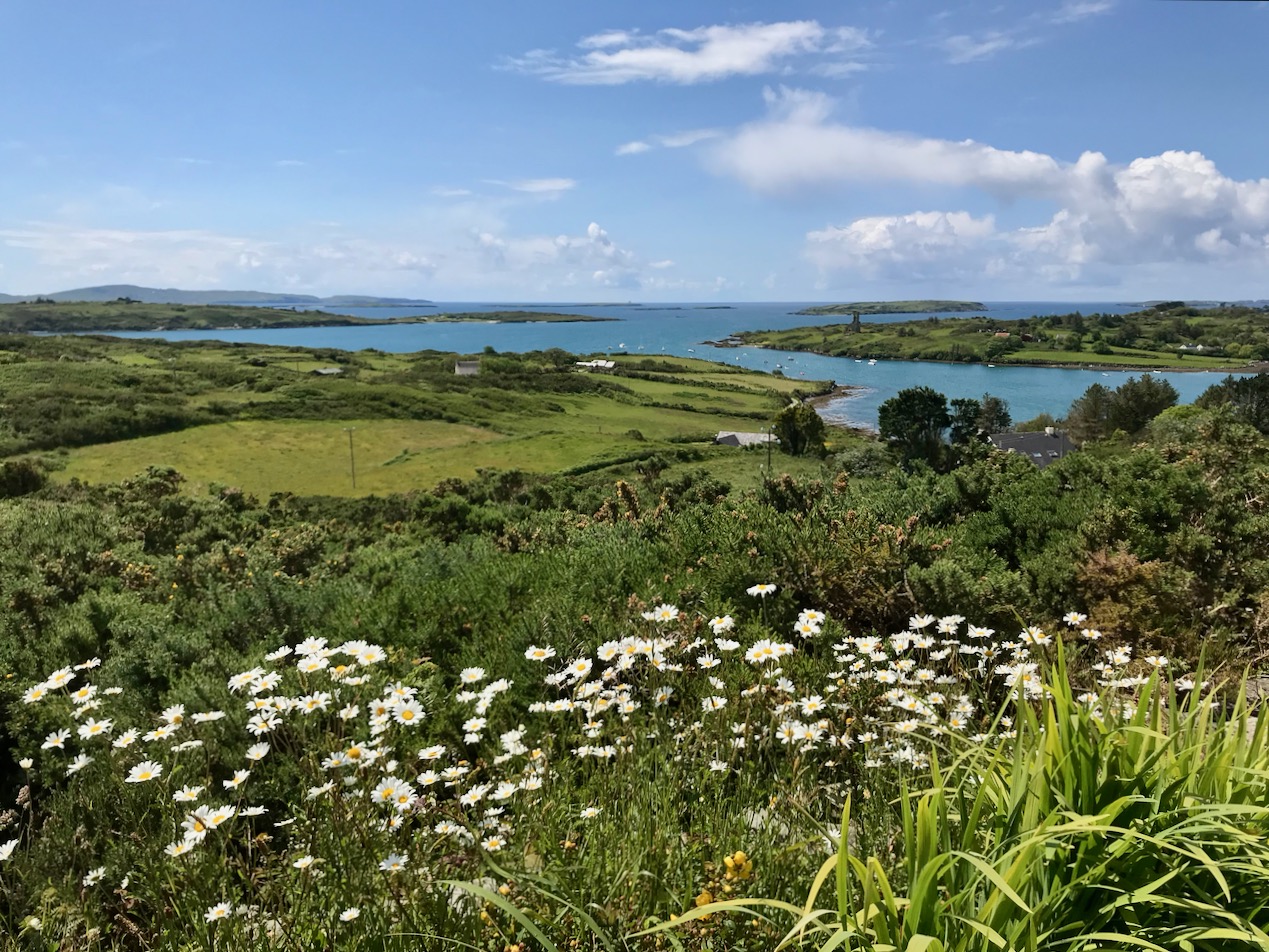
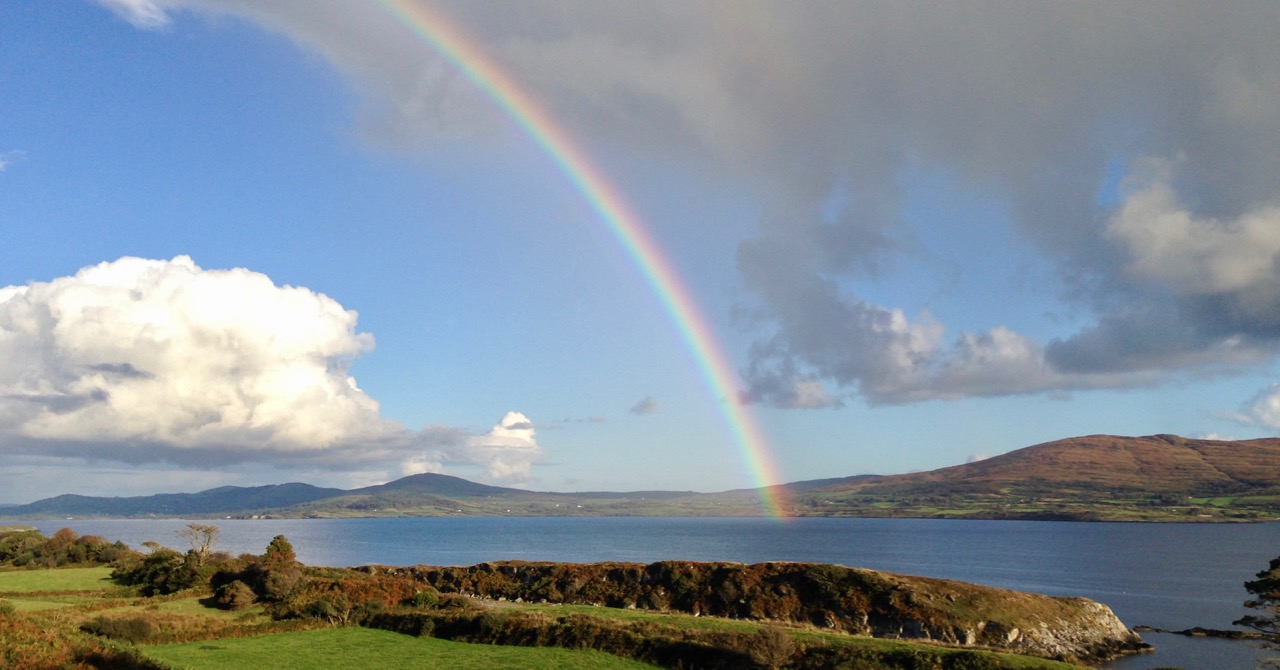
County Cork landscapes: Mount Gabriel (upper) and our very own view (lower) from Nead an Iolair, taken on the day I returned from Yorkshire. Below – looking across to the Mizen, from the Sheep’s Head.

Miniature World

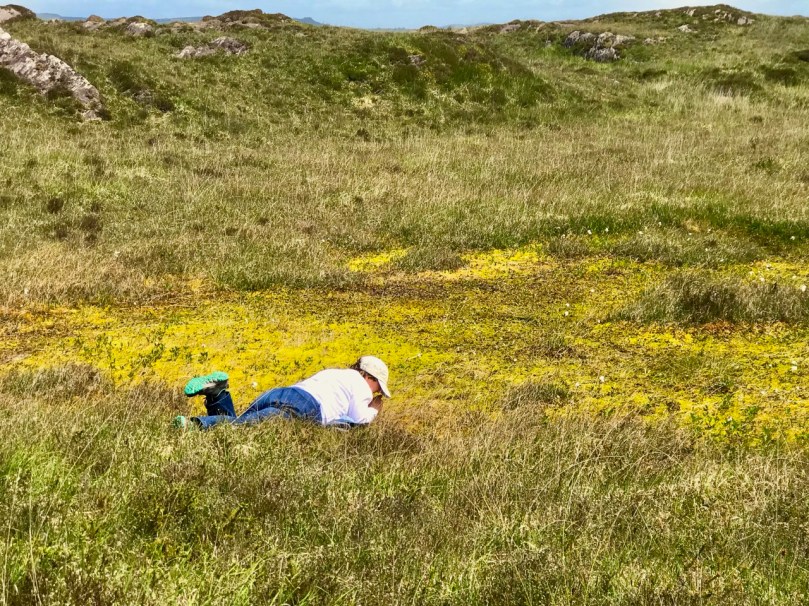
A bog seems at first like an unpromising site for photography but all it takes is getting close. This isn’t as easy as it sounds, since bogs are wet places, but having arrived home sodden but exhilarated I’ve decided it’s definitely worth getting wet. My role model in this type of close observation is Tina Claffey, whose book, Tapestry of Light, and whose Facebook Page are constant sources of inspiration. Tina – thank you! We must be twin souls because like you I return again and again to the same patch of bog. Time loses meaning as I simply lie and let my eye tune in.

My little patch is quite close to my house and I described it in my post last year “The Wildest and Richest Gardens” – West Cork Bog Soaks. It’s taken a while this spring for the Cappaghglass soak to wake up but it’s well and truly alive now so here’s what’s there already.

On the rocks

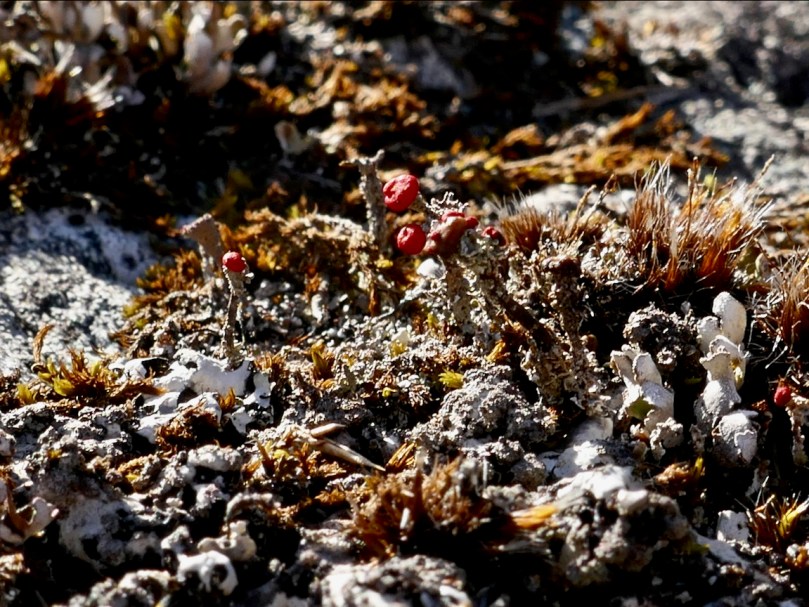
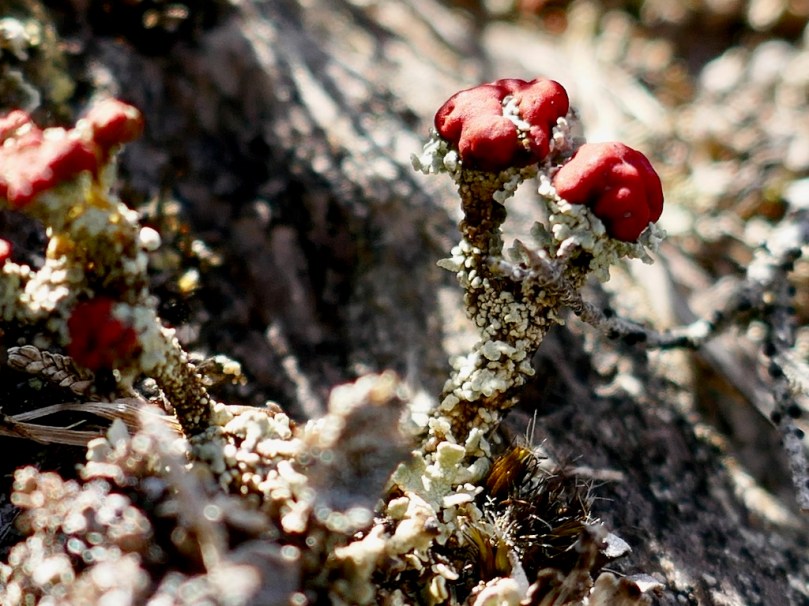
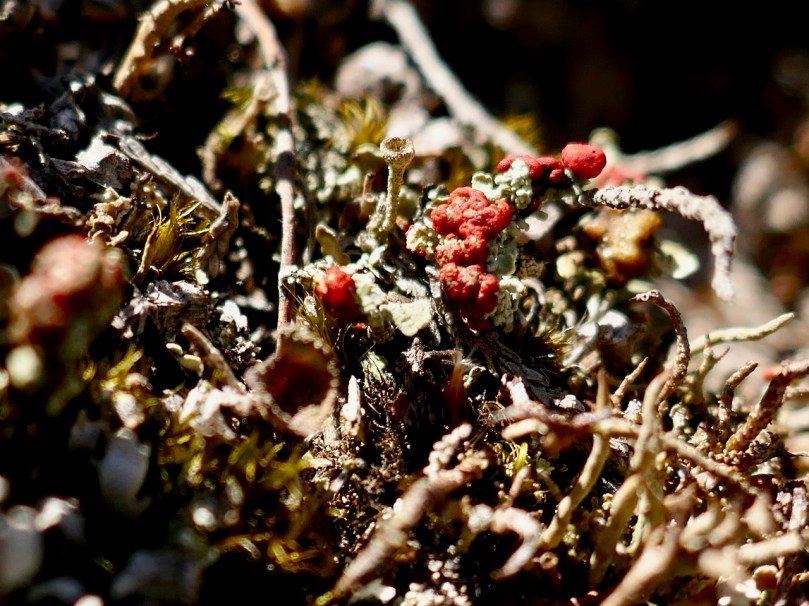
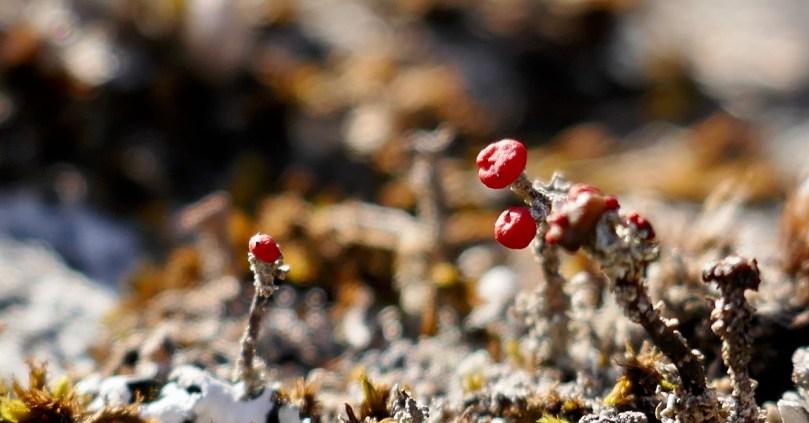
First of all, the soak is surrounded by heather and rock. Lying on the rock, with my face a few centimetres from the surface, I have become aware of the rich lichen growth all around me. I don’t know a lot about lichens but I have been studying this one (above and below) – Devil’s Matchstick.

It’s obvious how it got that name, and it’s sometimes also known as Nail Lichen too. It’s only about a centimetre high, about the length of my little fingernail. The Latin name is Cladonia floerkeana. In Ireland we get this bright red form of it, whereas in North America the tips are black.  The site I go to to learn about Lichens is http://www.irishlichens.ie. Here’s what they say about lichens on their home page:

Lichens are dual organisms; a fungus and one or more algae in a stable, mutually beneficial (symbiotic) partnership. The fungus provides structural form and protects the algae from extremes of light and temperature. Algae are capable of photosynthesis and some of the sugars produced provide the fungus with energy for growth and reproduction. Some lichens can live for many hundreds of years and being sensitive to pollution levels they are important environmental indicators.

There are several red-tipped lichens in the Cladonia group so I must look out for others. The trunk is described as squamulose which simply means scaly, at the bottom and becoming fruticose (or shrubby) as it grows. The stems are called podetia, and they are topped by the bright red apothecia. Yikes! Don’t think I’ll become a lichen expert in this lifetime.

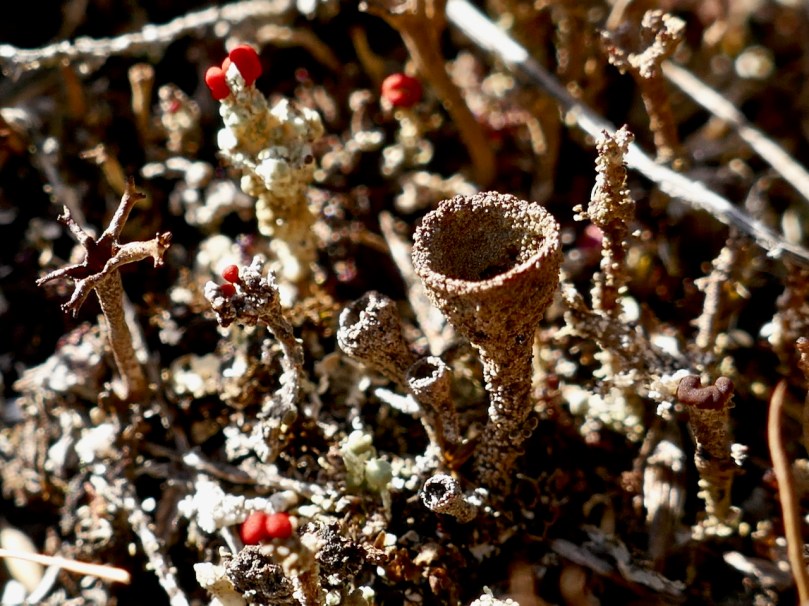
And look at this one, that looks like a goblet – it’s another Cladonia but I don’t know which one. And lots of white lichen to boot. It’s a whole world down there on the rock, under our feet. 

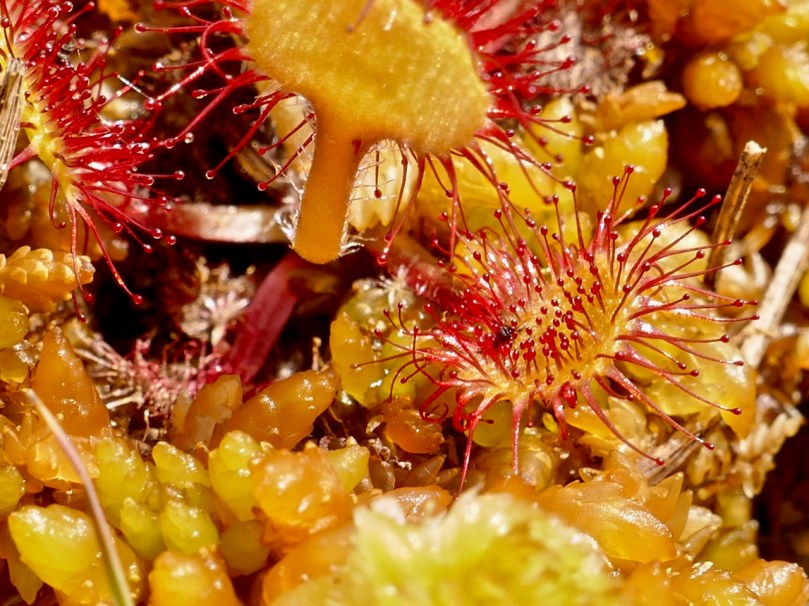
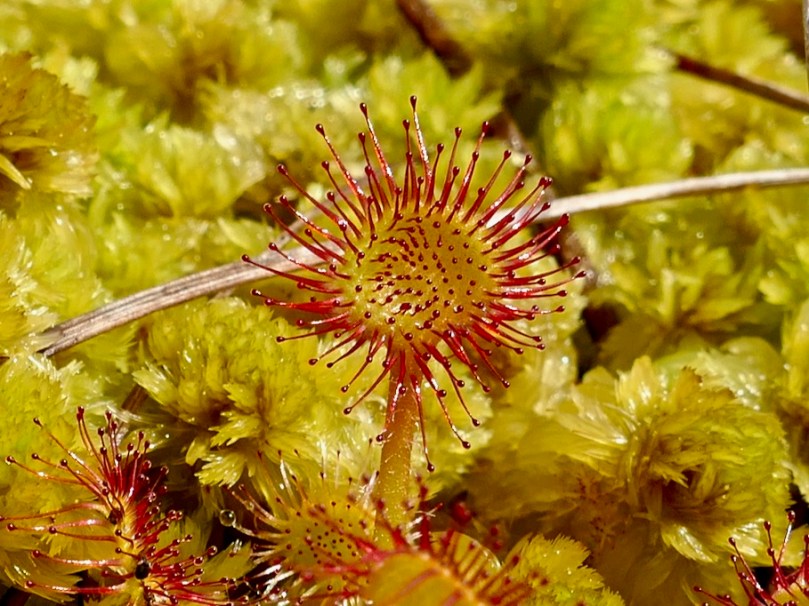
Let’s move over to the the bog soak now and look at two things in particular. The first is the Sundew. At first I thought it wasn’t up yet, but as I got closer I realised that it was just emerging from the surrounding Sphagnum moss (the second thing).

Besides looking weirdly otherworldly, the Sundew is a clever little critter, well adapted to this habitat. It’s developed a special mechanism to ensure it gets the nutrition it needs, since there isn’t much in the bog. It traps insects on its little sticky hairs, then the leaf rolls rolls over and digests them.

You might not want to watch this video if you have a weak stomach

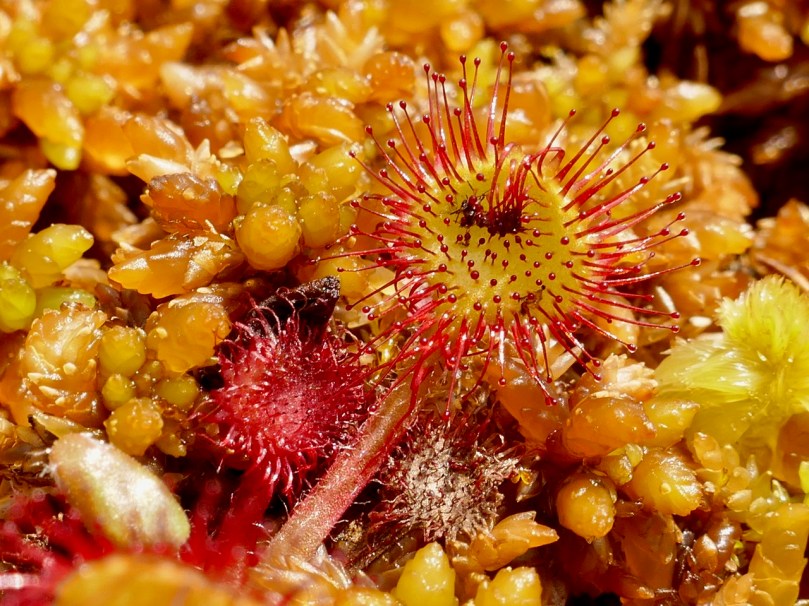
The sundew does have a little white flower, but it’s the leaves that are the centre of all the action on this plant. Our bog soak has the Round-leaved Sundew, which is more common in Ireland than the Oblong-leaved Sundew that you saw in the video.

A hapless ant is this Sundew’s meal

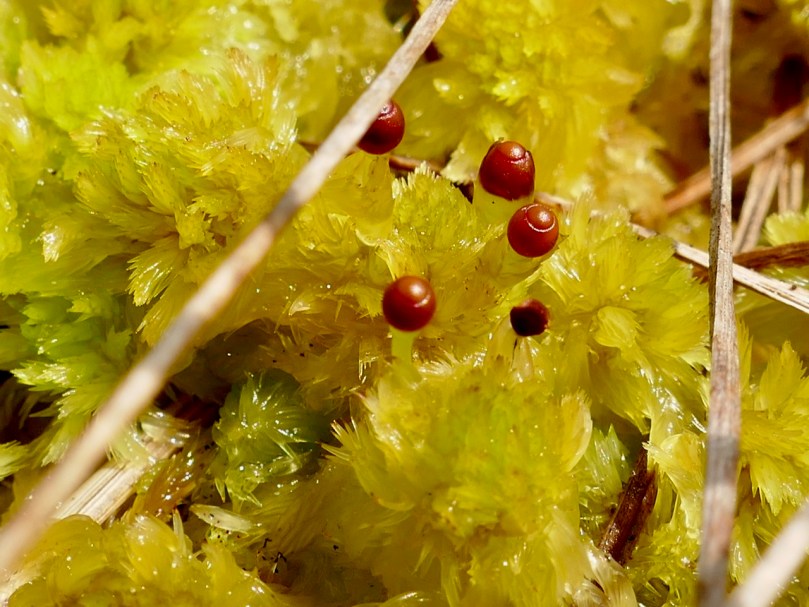
Finally, as I was nosing around (er, literally) among the Sphagnum, I saw that some of them had these little brown caps and I wondered what they were. It turns out that mosses propagate by means of spores, and the caps are little exploding spore capsules. When they blow, they fire the spores great distances.

Take a look at the spores exploding in slow motion – it’s quite a sight.

Some of the capsules in my little patch had exploded already – you can see the empty cup-like capsules in the photograph below – at the bottom of the picture..

Sphagnum itself is an amazing moss – we wouldn’t have bogs without it, as it’s what holds all the moisture. The Irish Peatland Conservation Council has an excellent information page on Sphagnum. It includes this:

A huge number of tiny microscopic plants and animals live with Sphagnum mosses. A few drops of water squeezed from wet Sphagnum contains hundreds of microscopic species such as desmids, diatoms, algae, cyanobacteria, amoebae, rhizopods, flagellates, ciliates, rotifers (wheel organisms), worms, nematodes (round worms), flat worms and heliozoans (sun animals). One scientist counted over 32,000 microscopic animals from a Sphagnum moss growing in a bog pool!

Now that’s a bit too miniature for my lens. I’m happy at the magnification I can achieve with my Lumix. If you need me, you know where I’ll be.


Oldest Lighthouse in the World!

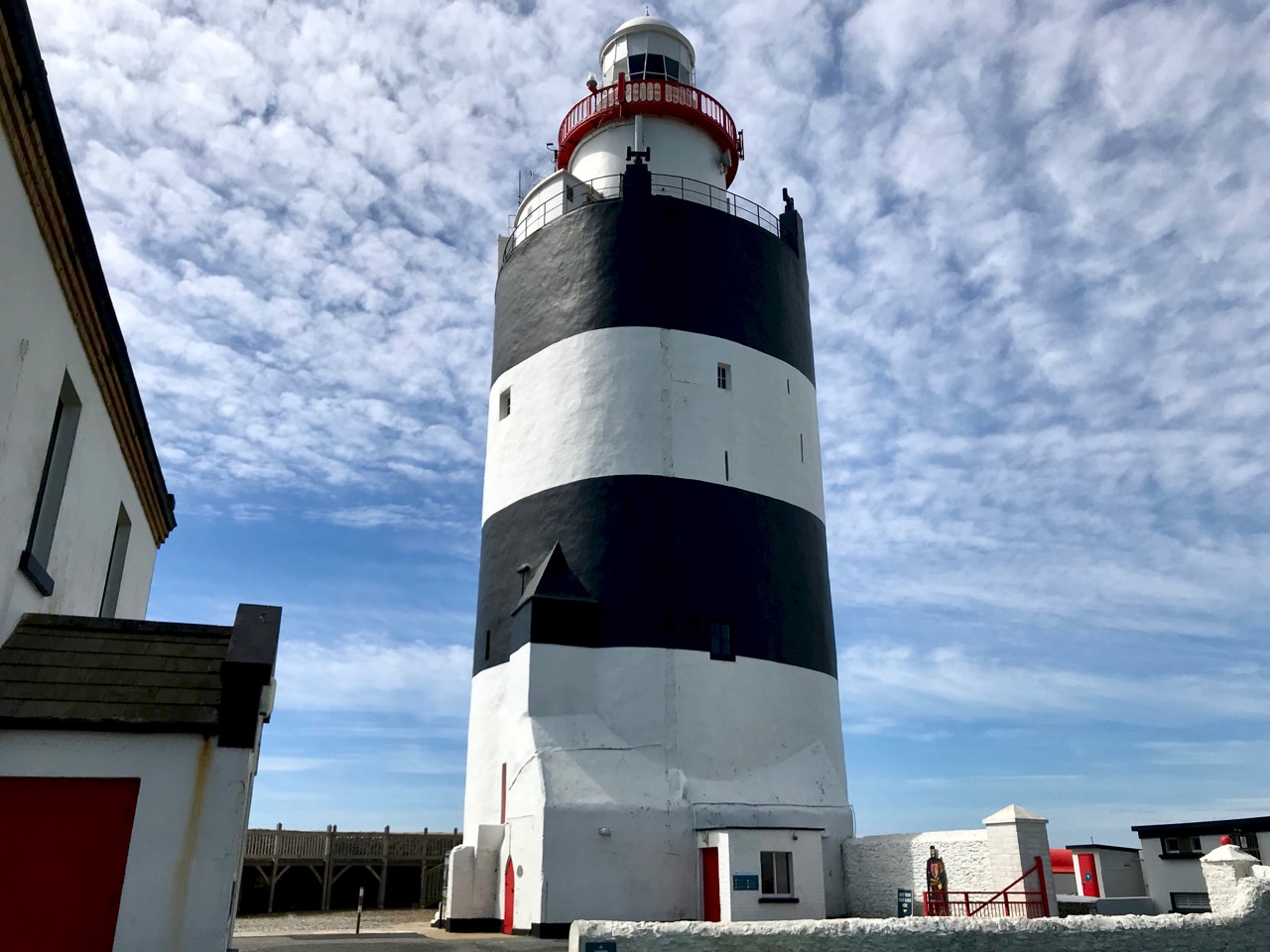
It’s a bit off the beaten track, but we had to make the journey to visit the oldest working lighthouse in the world! It’s right at the southern tip of the Hook Peninsula, in County Wexford. Maybe it’s an extravagant claim that it is the ‘oldest in the world’: there is another ‘oldest’ lighthouse – The Tower of Hercules – in Galicia, northern Spain, which is said to have been built in the 2nd century. However, the Tower of Hercules was given a major restoration at the end of the 18th century, including a new neoclassical facade, with the original Roman structure retained behind this. Wexford’s assertion that the main visible structure of the Hook Lighthouse – both inside and out – is exactly what was built in the 13th century, perhaps gives it the edge. I was delighted to find, incidentally, that the Tower of Hercules has an Irish connection: it is mentioned in the 11th century Lebor Gabála Érenn (The Book of the Invasions of Ireland). If you recall my account of the story of Cesaire – the first person ever to set foot on Irish soil – you will remember that on her travels away from Egypt in the years before the Great Flood Cesaire stopped off in Spain and climbed to the top of a very tall tower from which she could see, in the distance, Ireland’s wonderful green land, and from there she travelled on to arrive on Ireland’s shores in Bantry Bay. Well, according to tradition, it was the Tower of Hercules which she climbed!

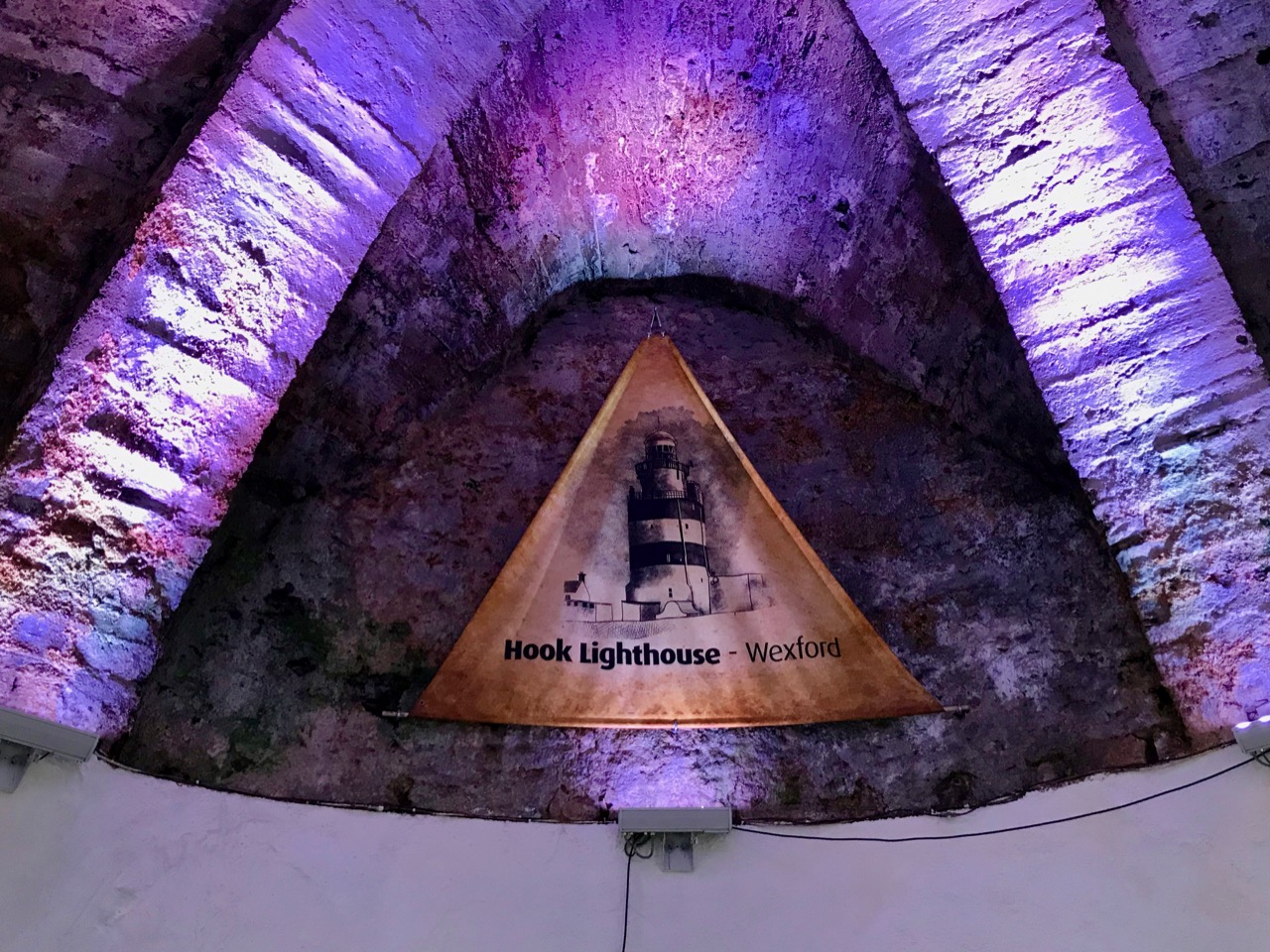
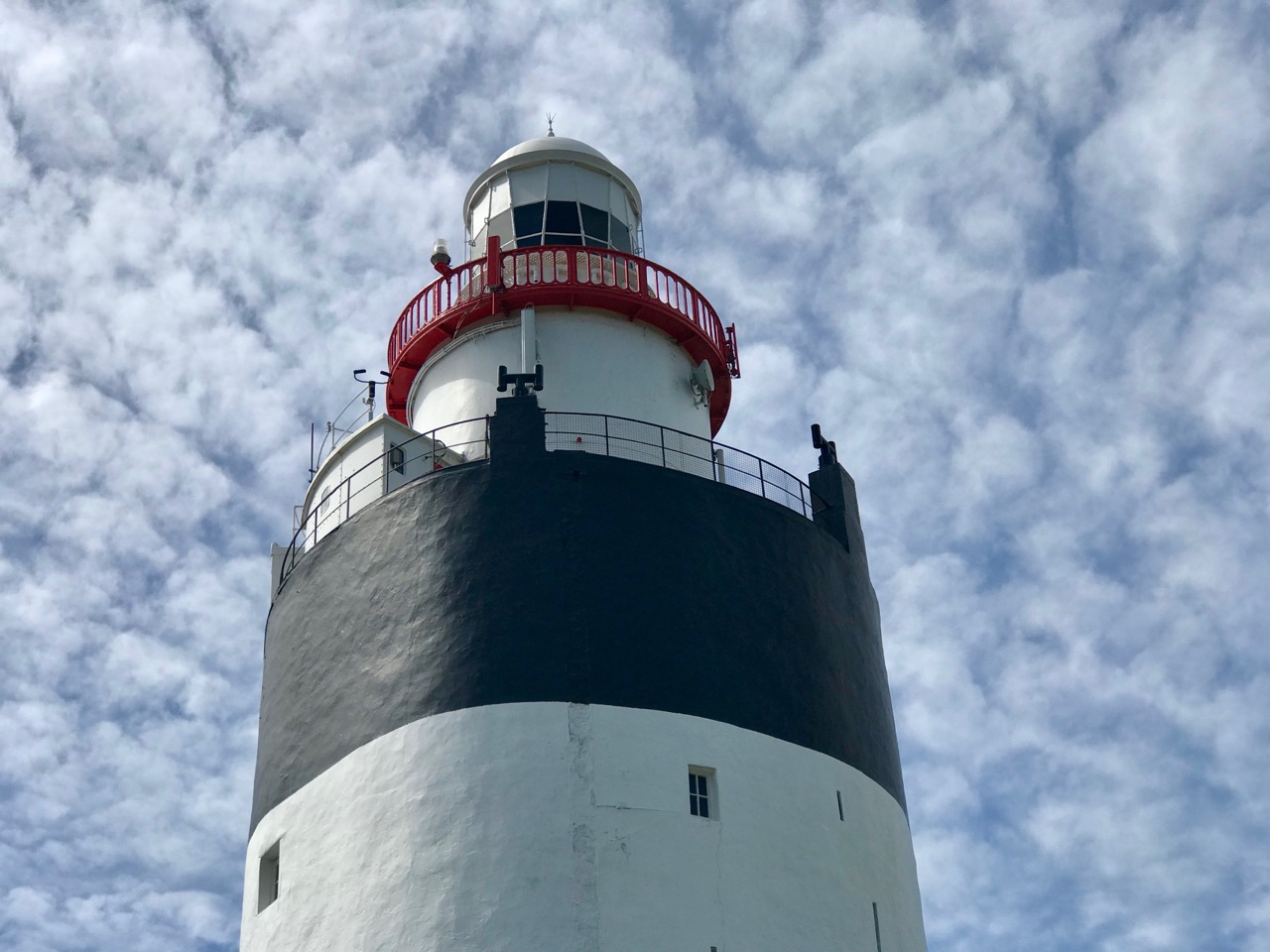
Header – the bulky main structure of the tower dates from the 13th century – its walls are four metres thick. The chambers within the tower are stone vaulted (above)

The lowest tier of the tower consists of three storeys, and has a base diameter of 13 metres. Each storey has a vaulted stone ceiling. Above this is the narrower section – 6 metres in diameter – which would have supported the original brazier, kept burning at all times to warn ships of the rocky ‘Hook’ of land at the entrance to the channel leading up to the port of New Ross – the most important in Ireland in the 13th century.

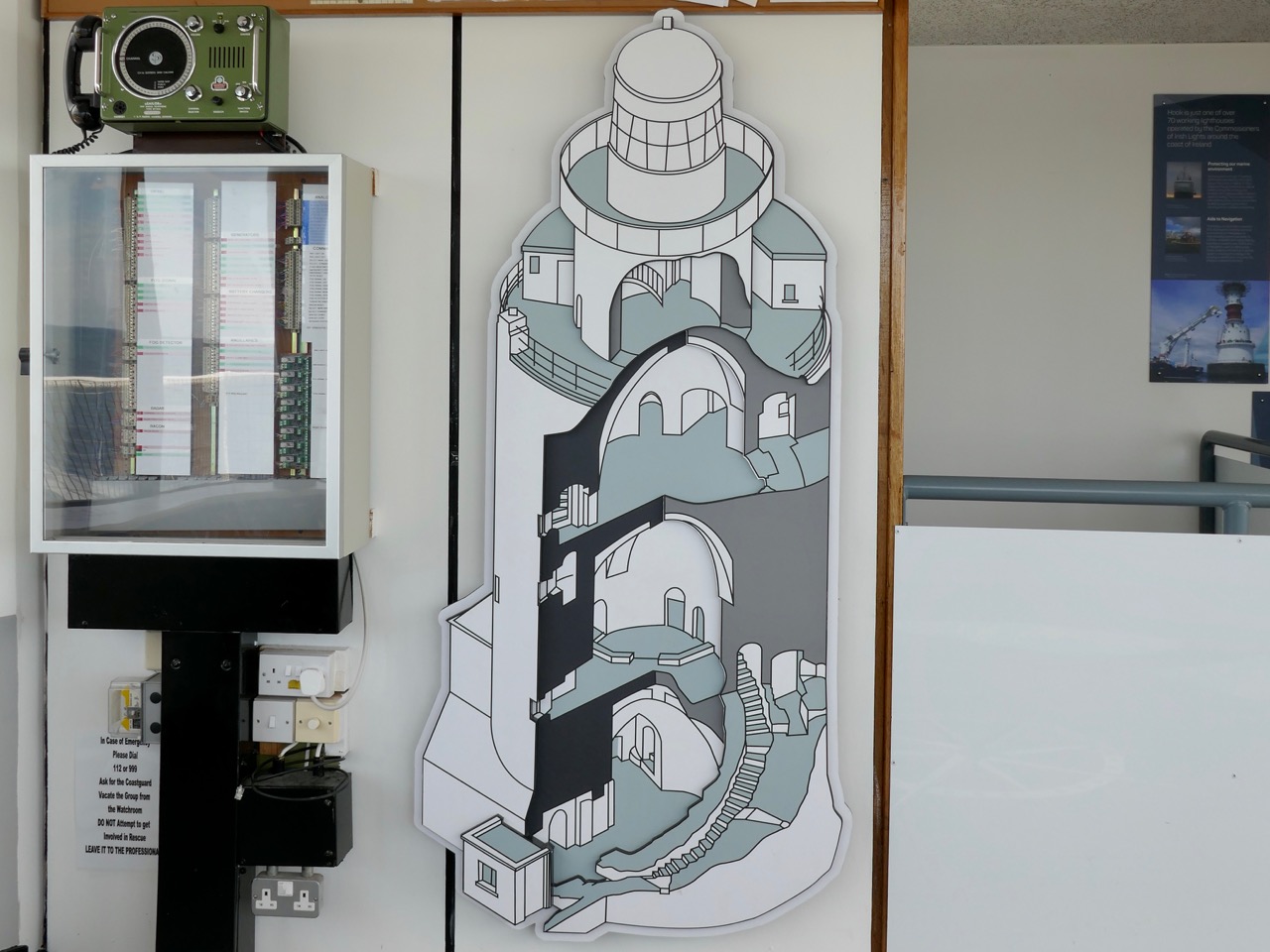
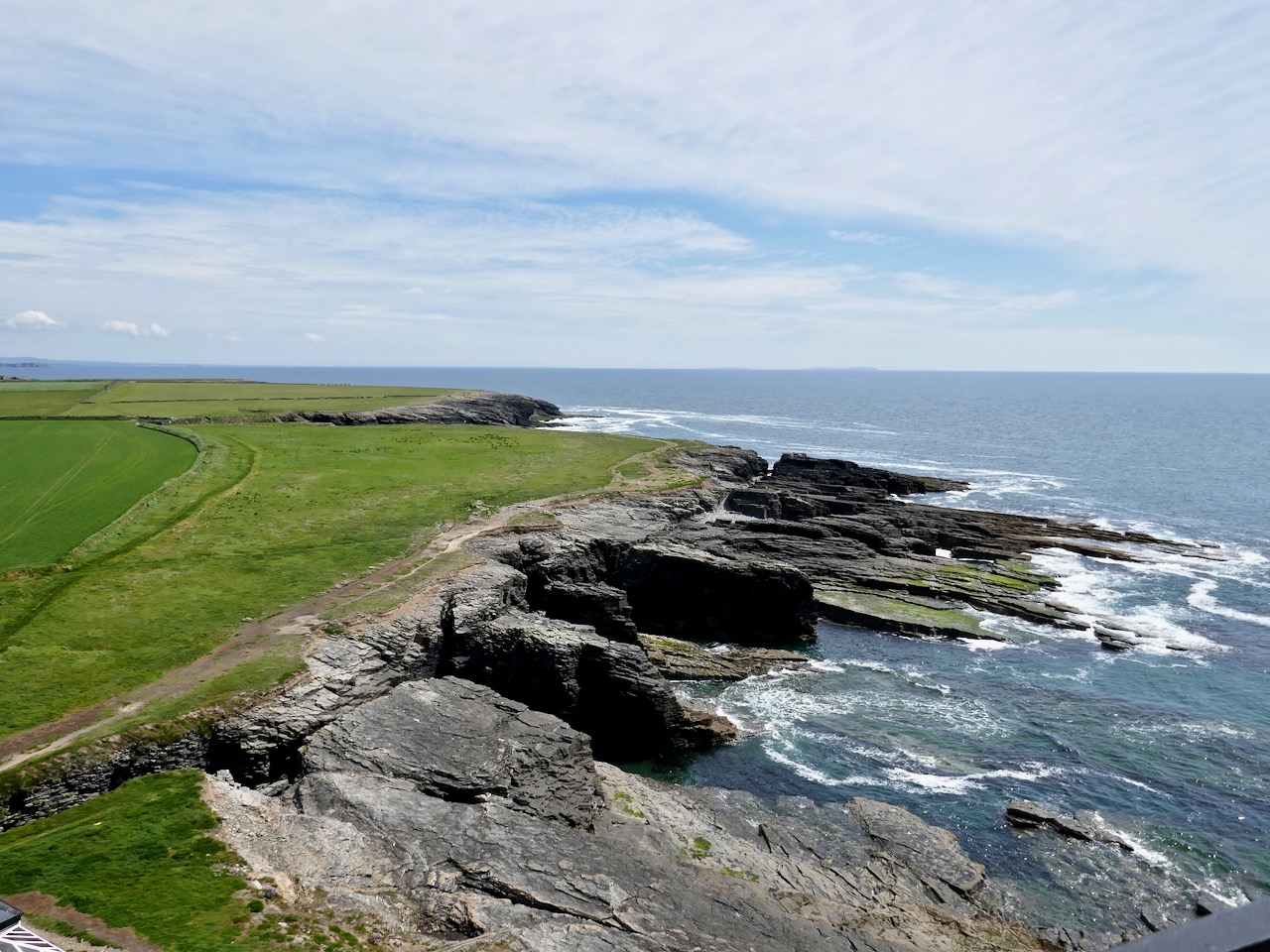
Upper – an exploded view of the structure of the lighthouse, one of the exhibits on the guided tour; centre – the whole tower: the topmost section, housing the electric lighting system, is relatively modern; lower – the treacherous rocks around the shore of the Hook 

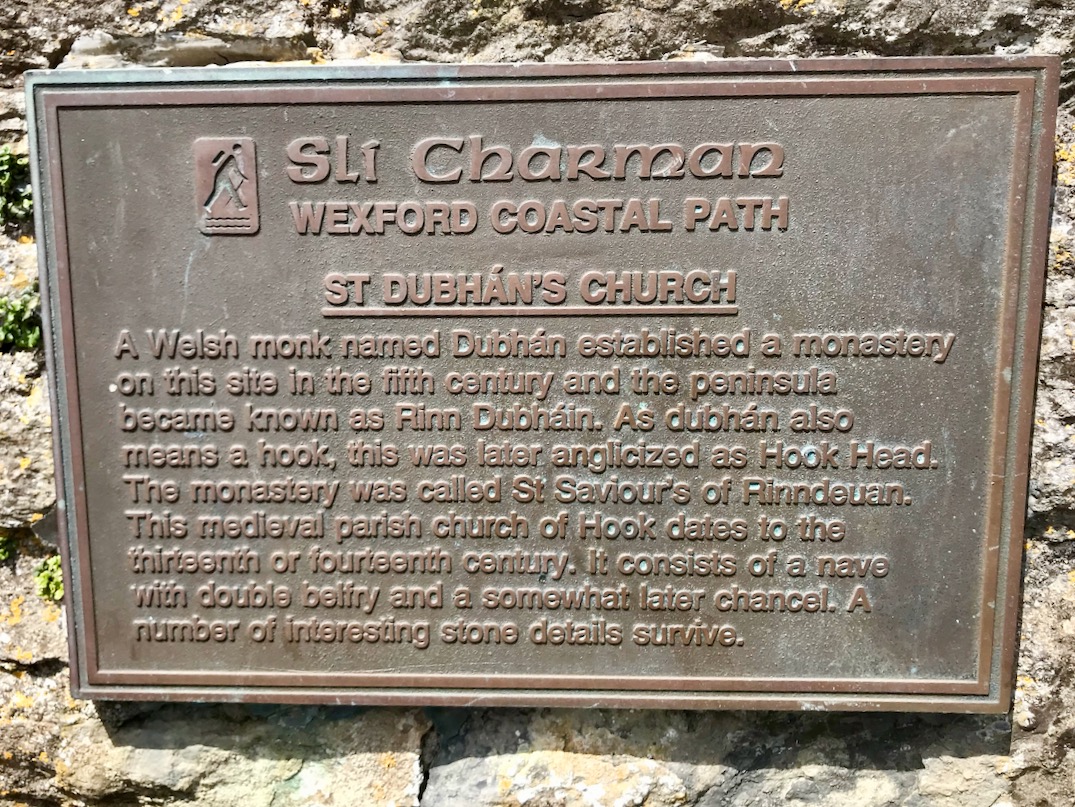
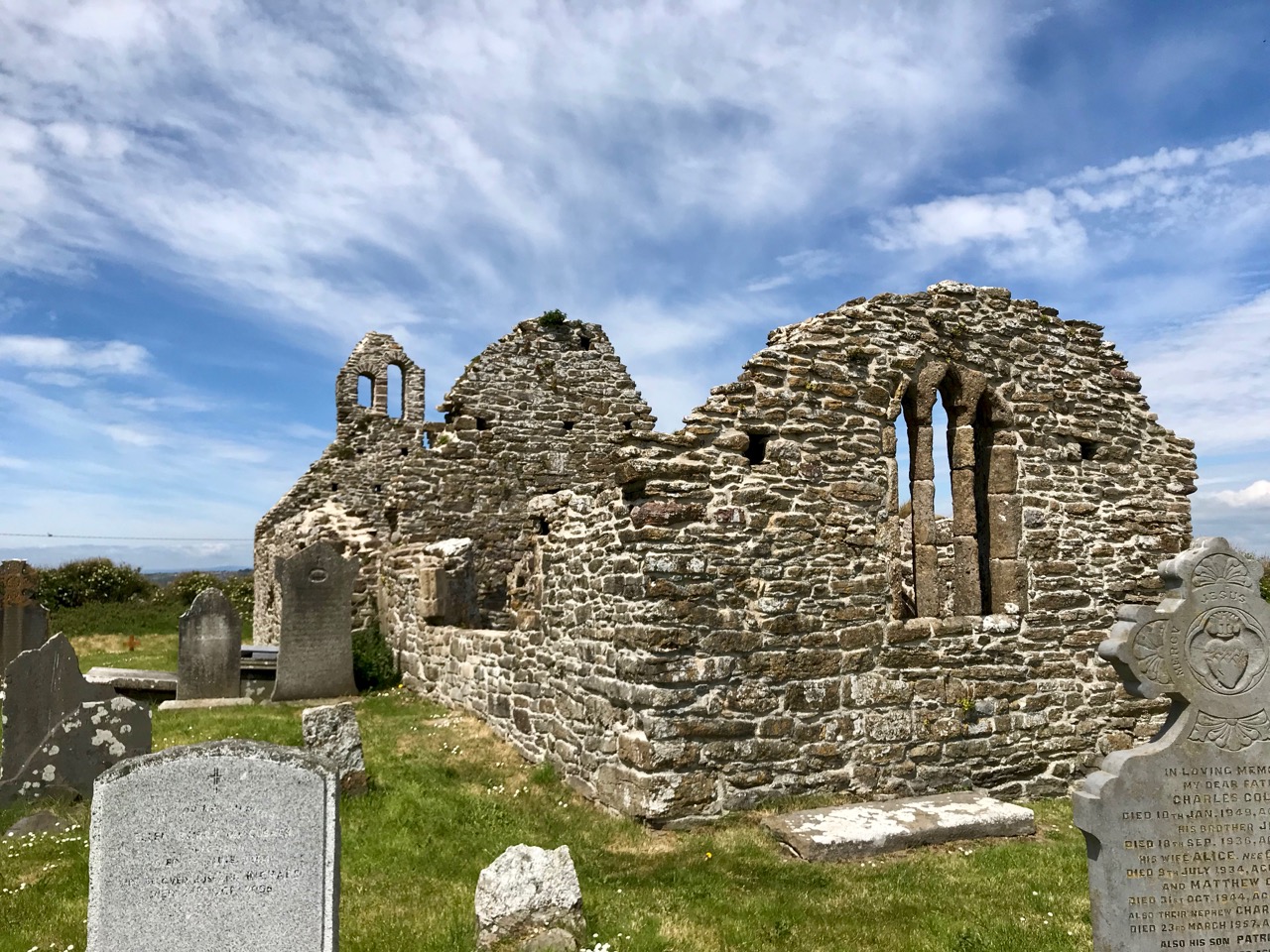
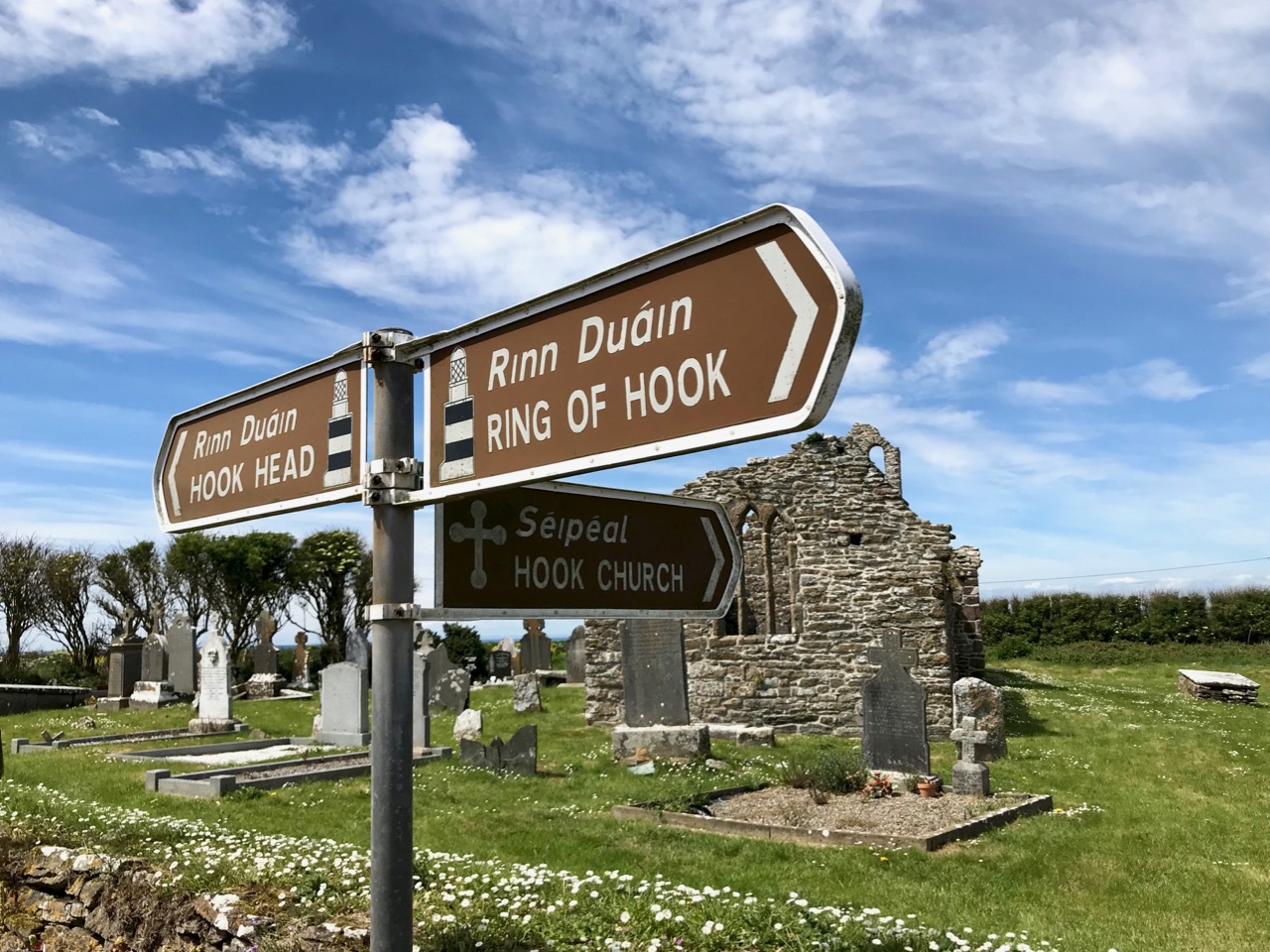
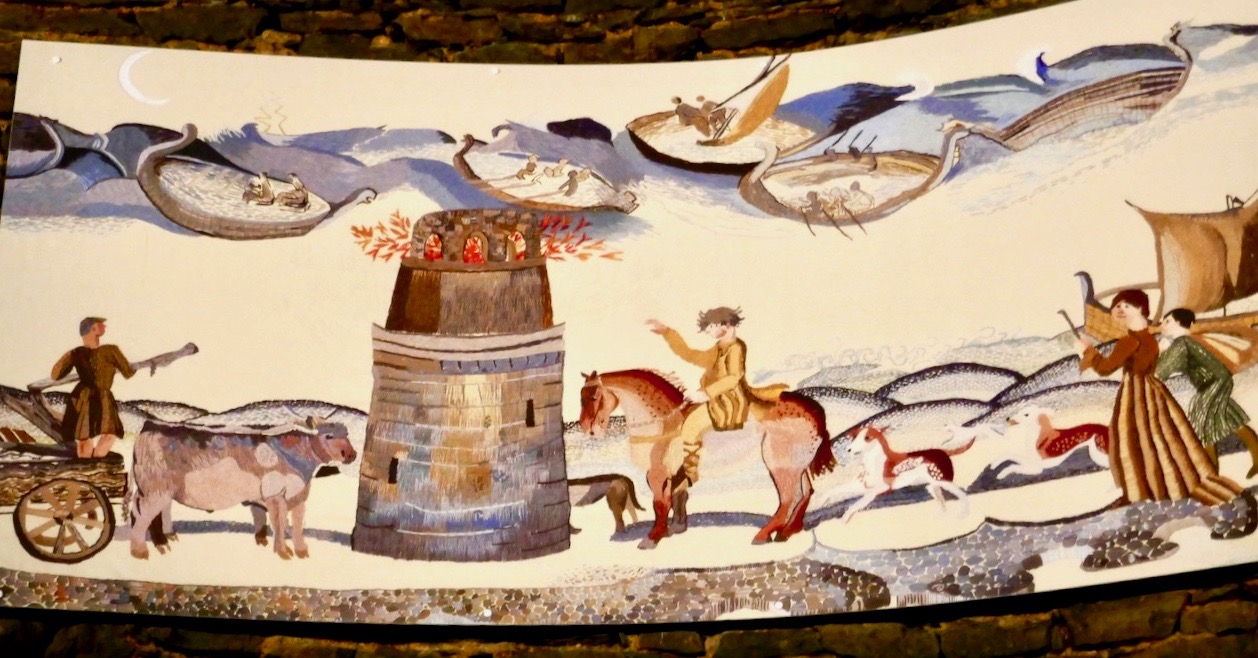
But there was, in fact, a light burning on this headland for hundreds of years before the construction we see today: this was a beacon fire established by Saint Dubhán, a monk from Wales, in the 5th century. Dubhán came to Ireland as a missionary, and built his monastic settlement a little way inland: this is marked today by the medieval ruins of a church and burial ground.

Dubhán’s monastic site not far from Hook Head. It was the saint who set up the first beacon light on this peninsula

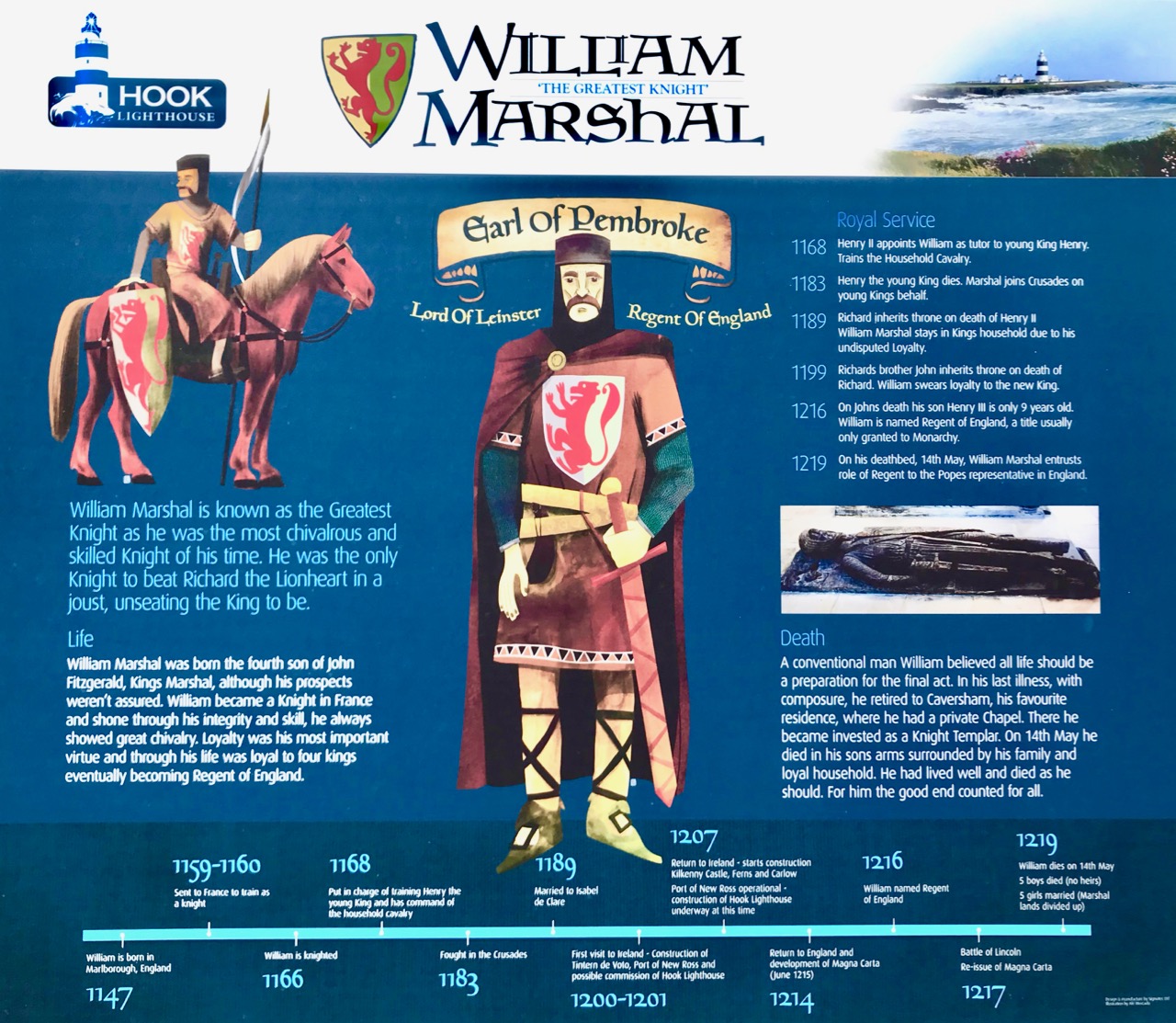
The lighthouse we see today was built by Strongbow’s son-in-law William Marshall, Earl of Pembroke (1147 – 1219). He constructed it and made sure that the light was maintained in perpetuity to fulfil a promise he made when he was threatened with shipwreck off the Hook while trying to get into the port of New Ross. Marshall is one of the medieval hero-warriors: known as ‘The Greatest Knight’ he is at the centre of many legends. Turtle Bunbury gives a good account of him here.

William Marshall, Earl of Pembroke is very much in evidence at Hook Head: you can even hear him telling his own story when you are in the lighthouse (above)!

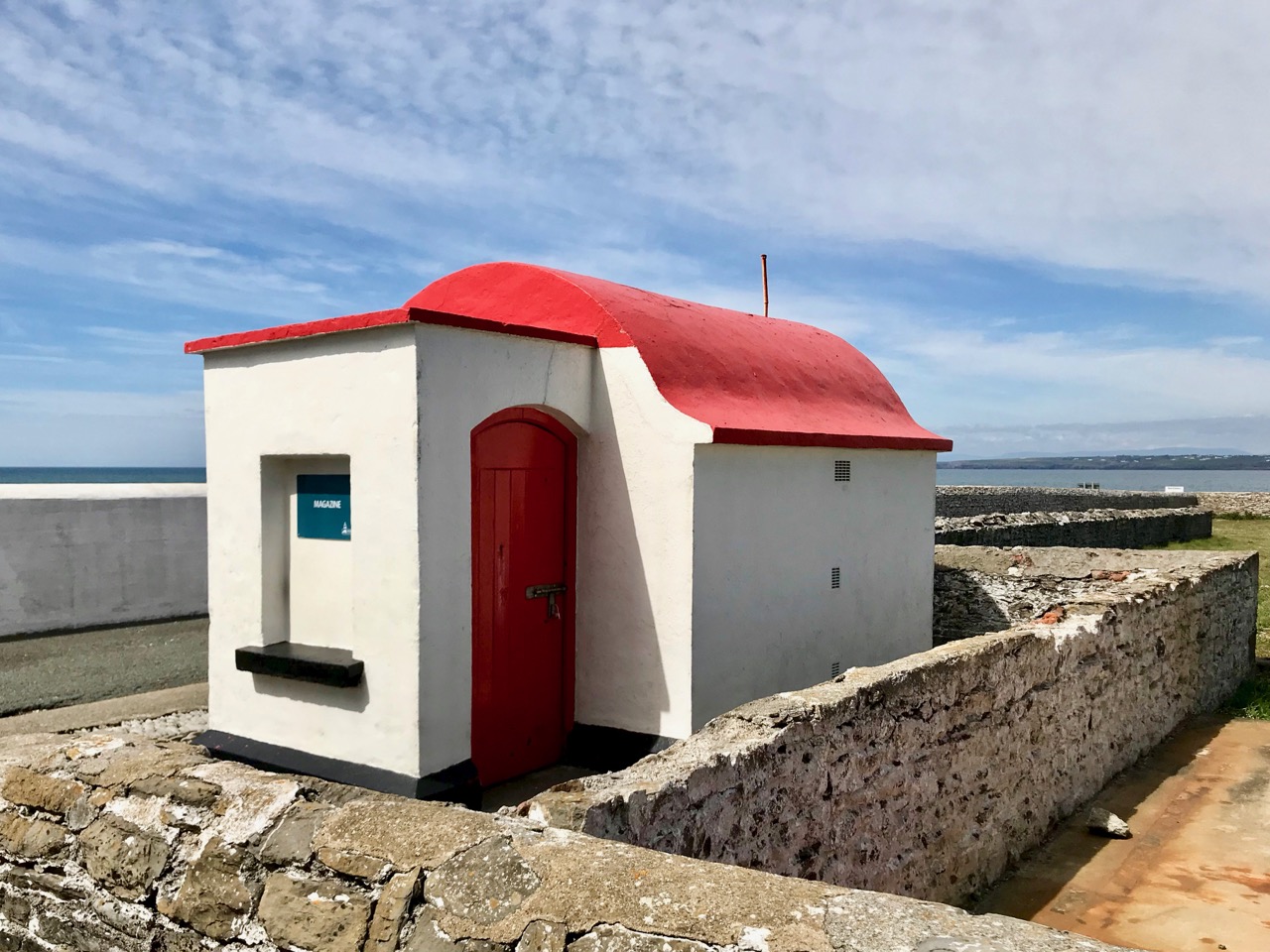
If you find your way to Hook Head Lighthouse today you are in for many treats. Firstly, it’s good to know that it is open to visitors all the year round, and guided tours are always available (you can only go inside the tower with a guide). Also there is a welcome heritage centre on site with a shop and cafe – and a fine pirate-themed children’s playground.

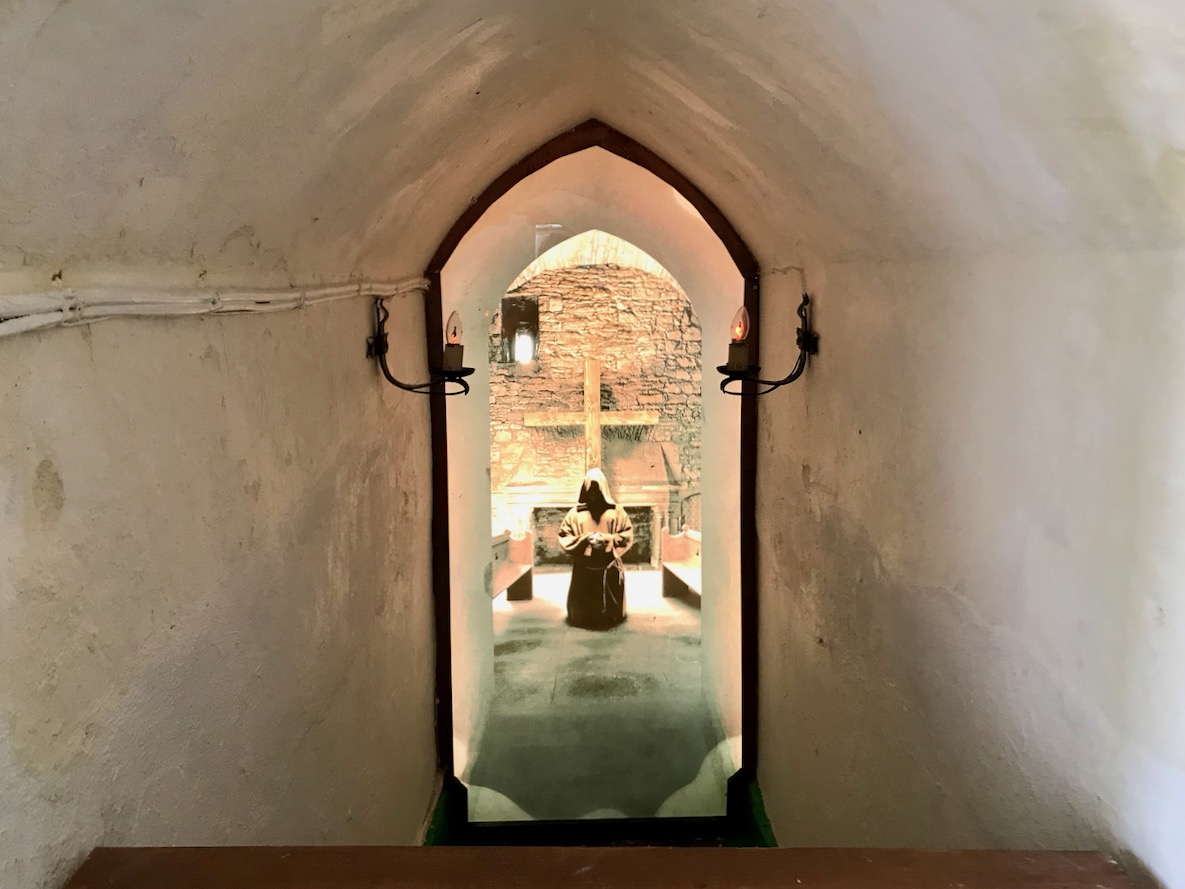
Saint Dubhán and his followers are remembered through the displays in Hook Head Lighthouse: the mural above shows the first beacon established by the 5th century saint

It’s a grand day out, if you happen to be within reach of the Wexford coast. There are so many strands of Ireland’s multi-facetted history to be traced here: the earliest missionary monks, Norman Knights, sea-travel through the ages, connections with the medieval world – and a wonderful piece of early Irish architecture still serving its original function.