“The Wildest and Richest Gardens” – West Cork Bog Soaks

Henry David Thoreau, philosopher and naturalist, might be called the patron saint of swamps. He was in love with them. I know how he feels. Hope and the future for me he said, are not in lawns and cultivated fields, not in towns and cities, but in the impervious and quaking swampsthe wildest and richest gardens that we have.
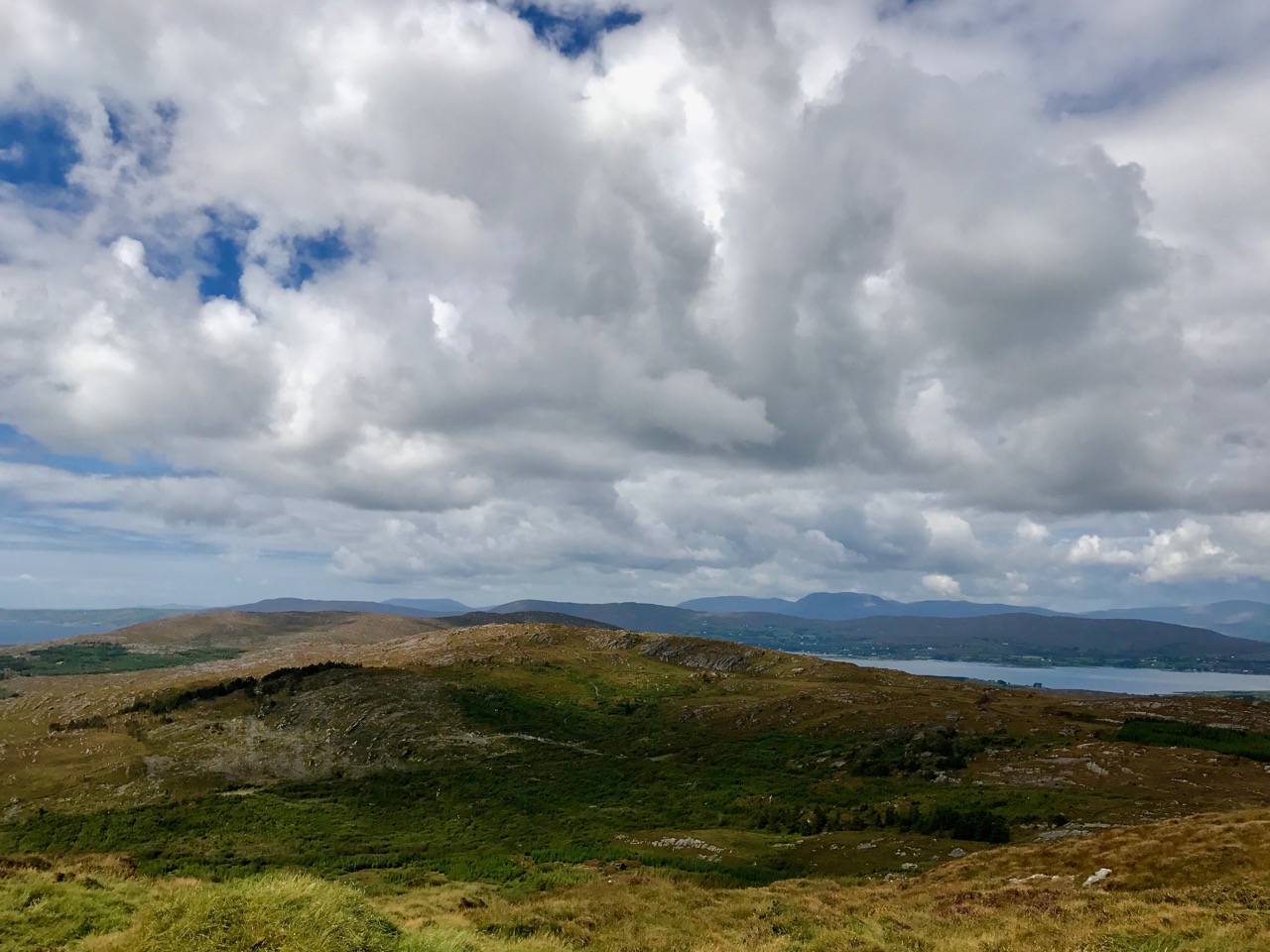
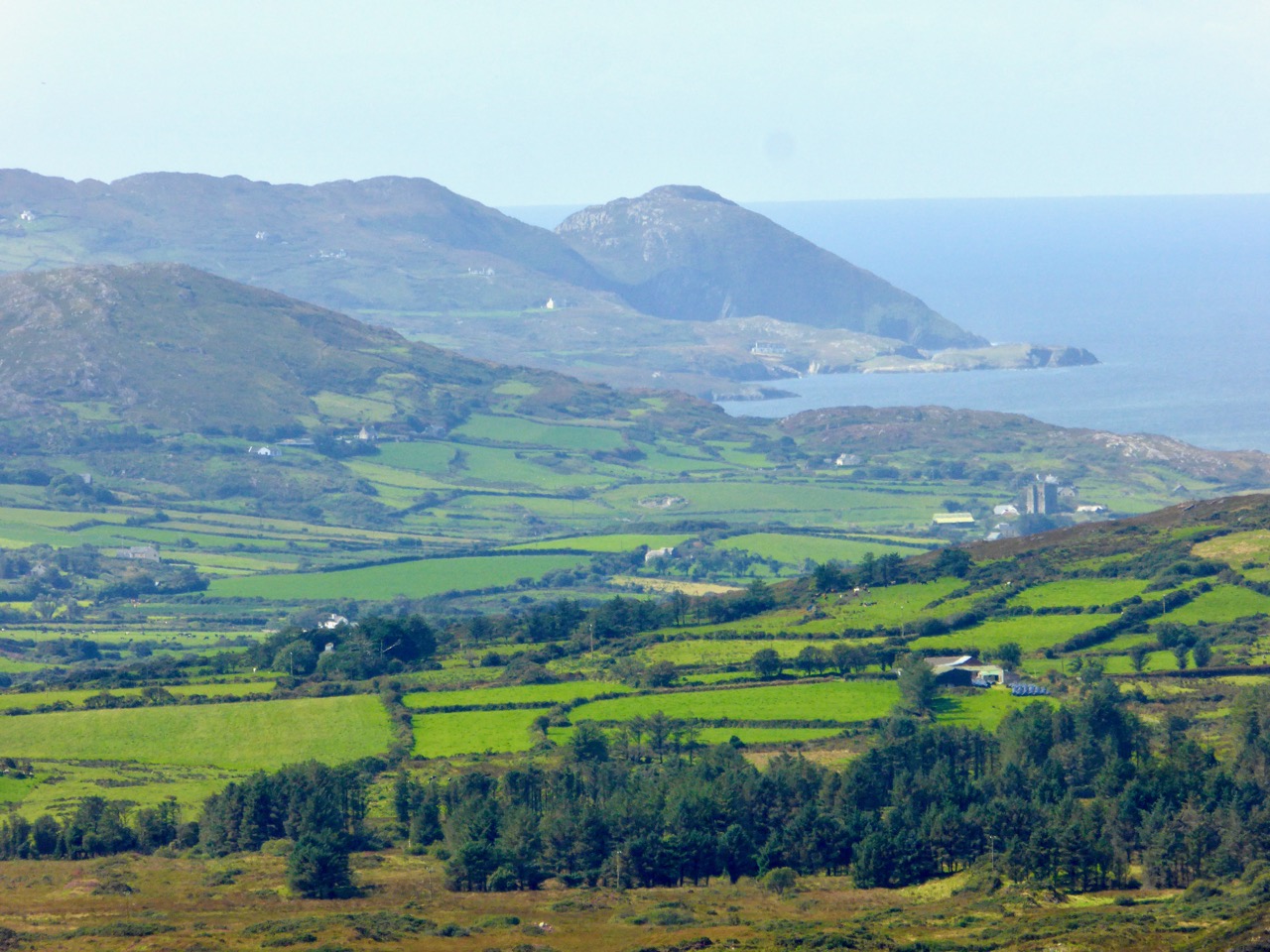
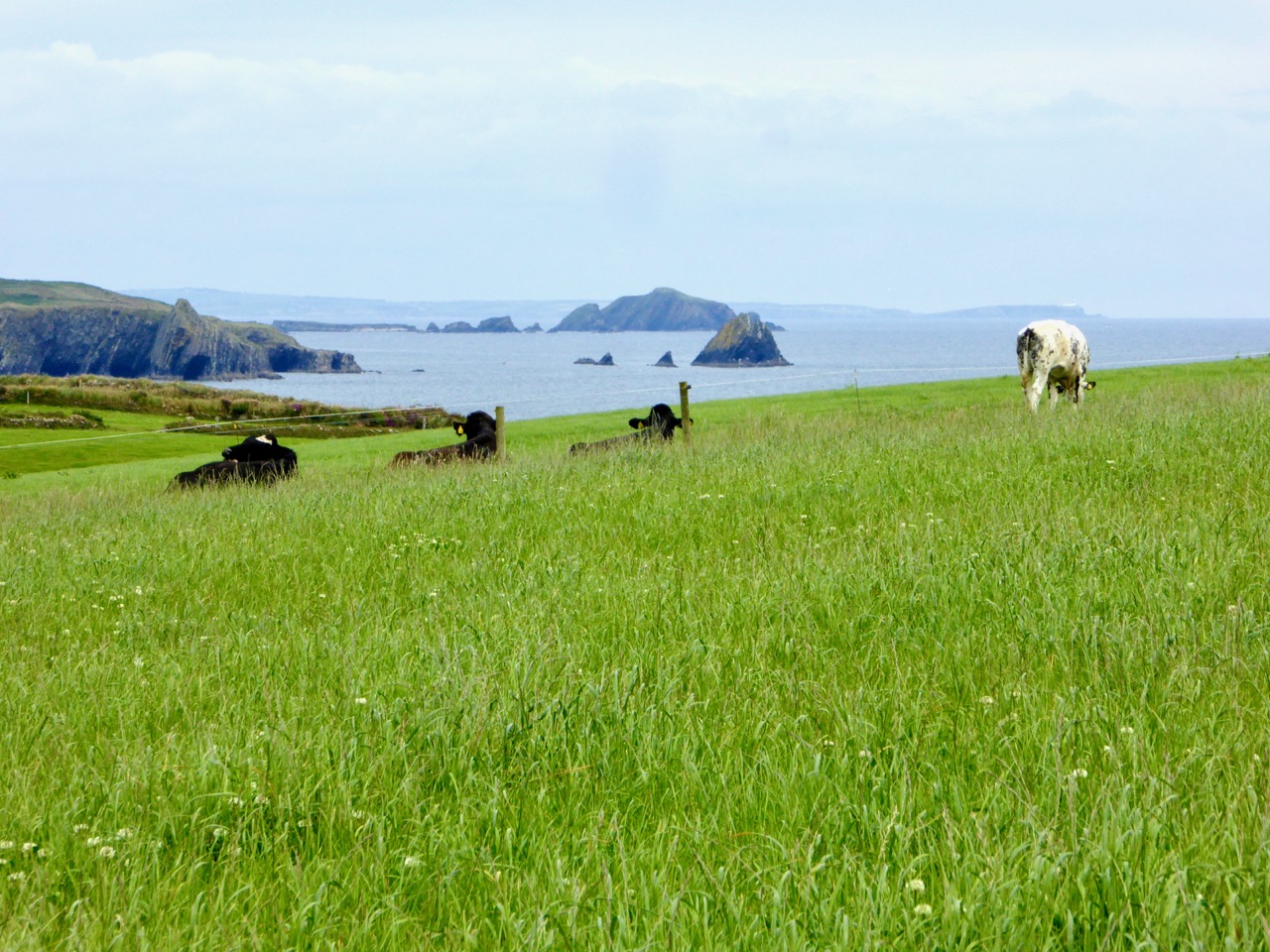
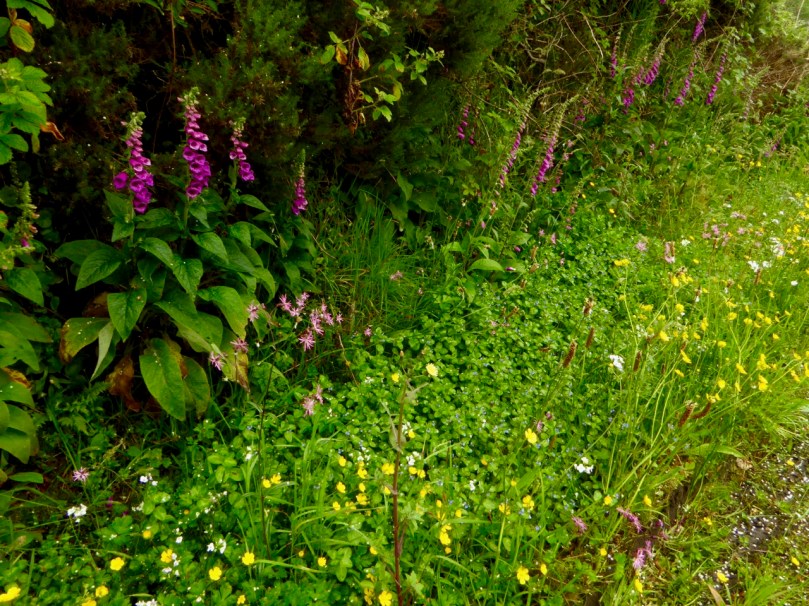
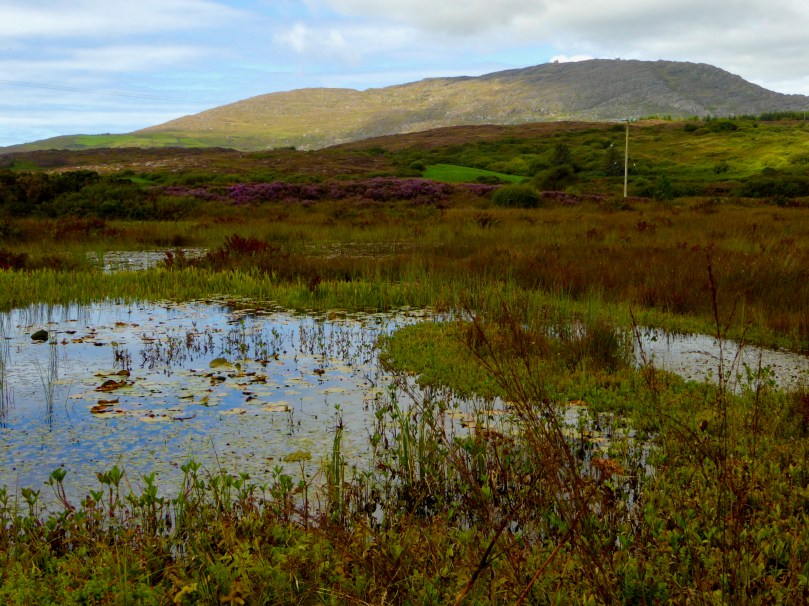
Top photo and above: Derreennatra Natural Heritage Area

Thoreau was talking about American swamps, but he could just as easily have been talking about an Irish bog, marsh, or wetland. I have two within easy walking distance of my home in West Cork and I am drawn to them like a magnet. One is tiny – a pond in the middle of a boggy area at the highest point in Foilnamuck townland. The other is more extensive – Derreennatra Bog, between Ballydehob and Schull.

Foilnamuck Bog Soak

A bog is a highly acid environment, and some plants, such as heathers, are specially adapted to deal with this habitat. The mineral-rich pools that form in the bog – technically known as bog soaks – are fed by groundwater and rain. Nutrients are more available in these patches of open water, they provide a less acidic environment and support a variety of plant life different from that of the surrounding bog.
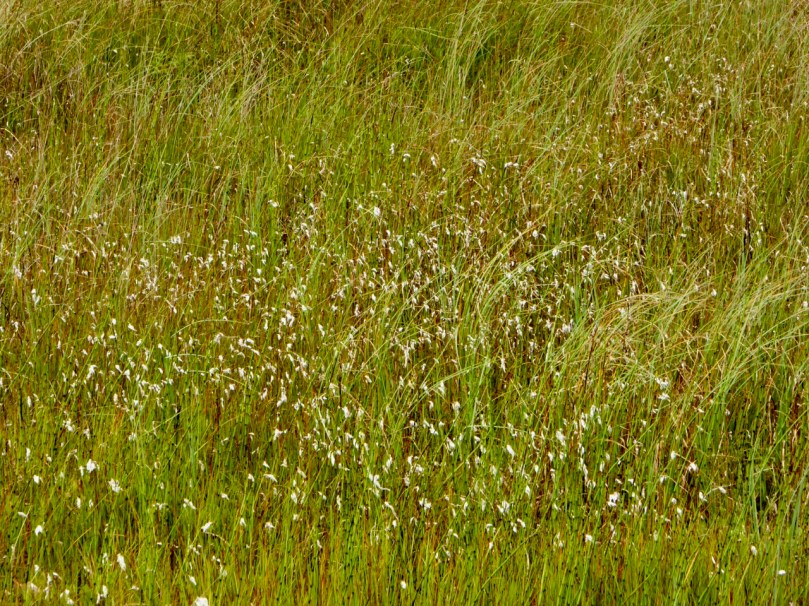
Rare Slender Cottongrass on Derreennatra Bog – one of the reasons for its designation and protected status

Derreennatra Bog has been recognised as a very special habitat of the lowland bog type. It has been designated as a Natural Heritage Area and is under the protection of the National Parks and Wildlife Service. While there are several reasons for its special status, the main one is that it is home to Slender Cottongrass, an extremely rare form of Bog Cotton that only grows in a few places in Ireland and Britain.
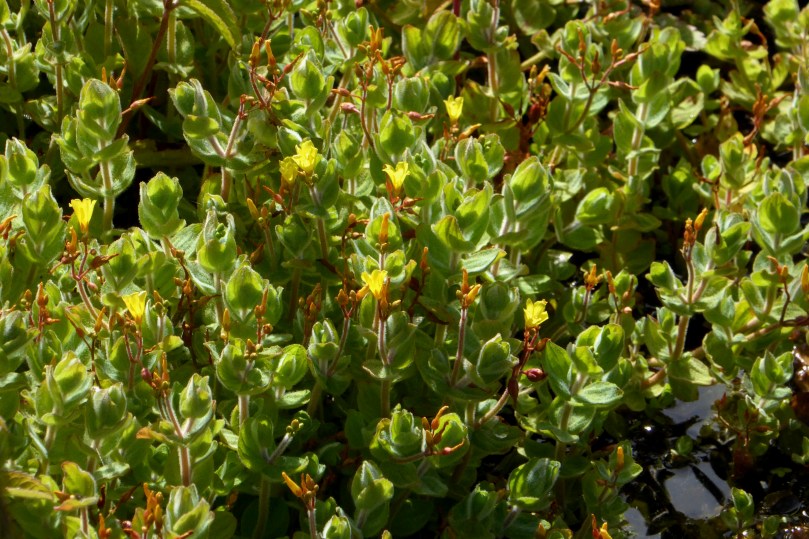
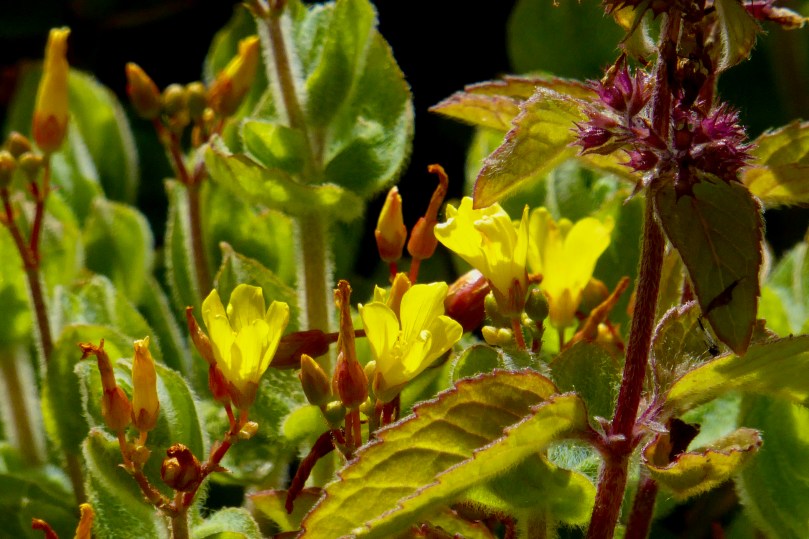
Marsh St John’s-wort, above and below, in its watery habitat

Derreennatra Bog has other uncommon species, but they are hard to photograph without a really good long lens. The one I did manage to get close to was Marsh St John’s-wort. I had to go back several times and wait until the flower opened before I could figure out what it was. It was worth the wait – a very beautiful native wildflower.
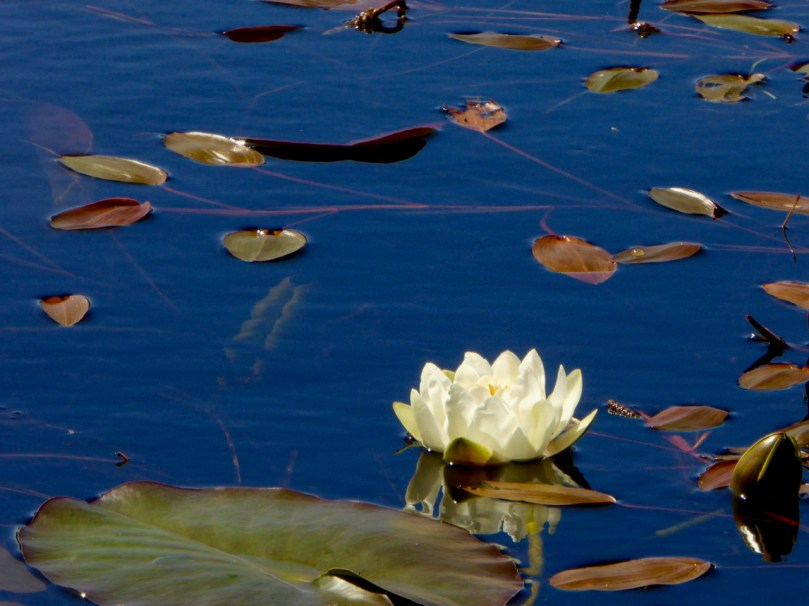
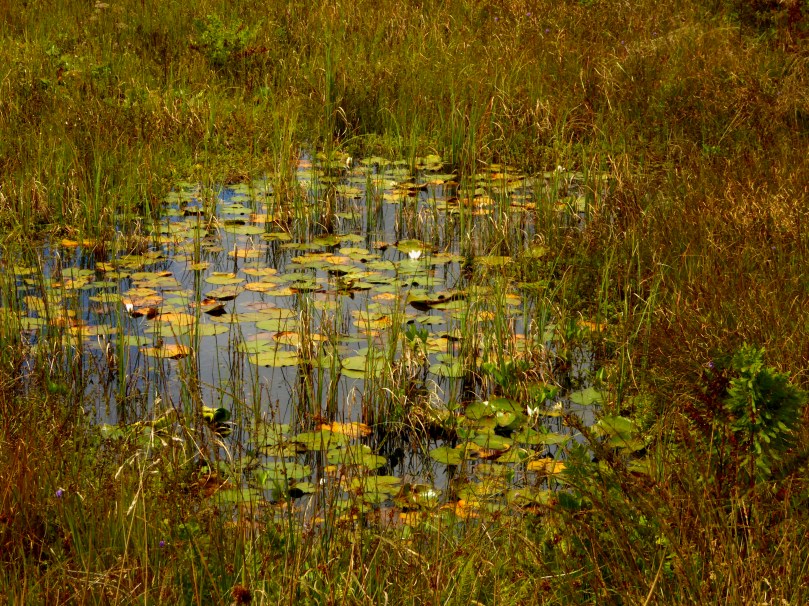
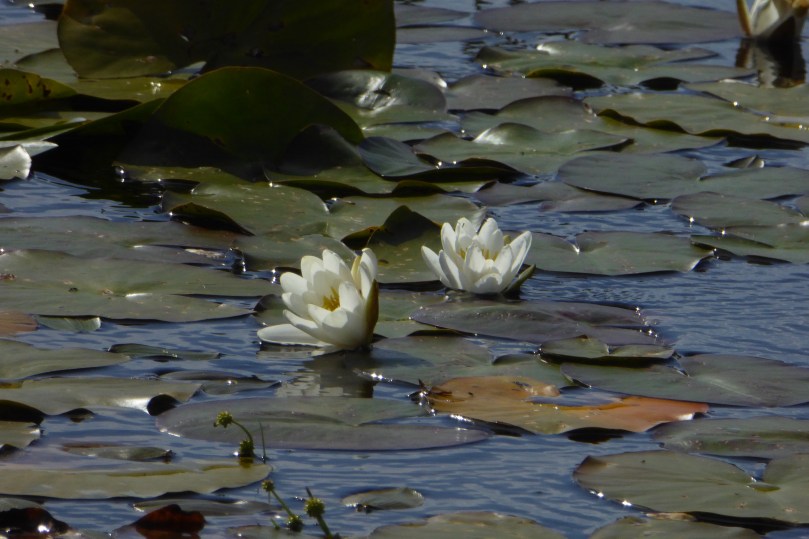
Another reason to hang out at Derreennatra Bog is that the lovely, native, White Water-lily flourishes here. It’s an exotic beauty that been here, apparently, since soon after the last ice-age.
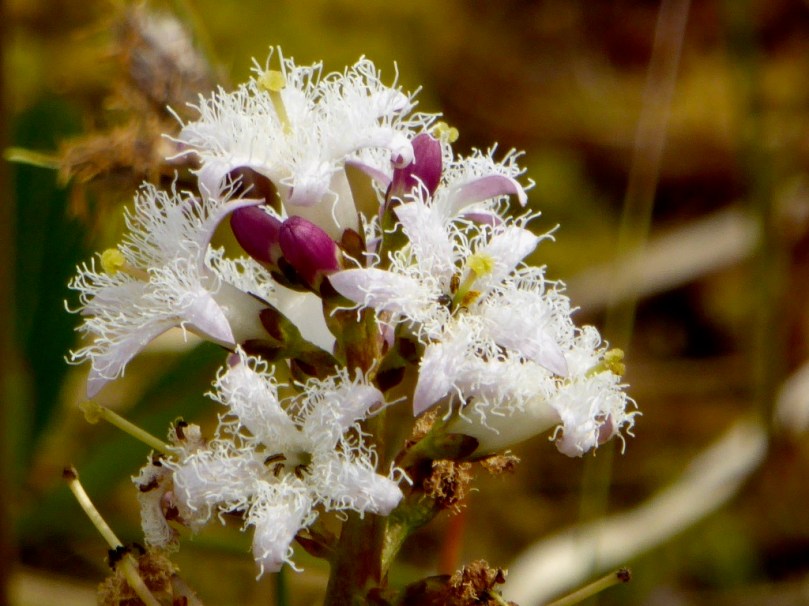
The soak in the bog at Foilnamuck is far less extensive – just a tiny wet patch – but it’s reliably present all the time, probably because it’s bounded by a natural amphitheatre of slightly elevated rocky ground. Here is where I was able to photograph Bog Bean for the first time, although not without getting my feet wet. It’s a fascinating plant – it sits in the water and holds the flower head well above the surface. The flower heads are pink before they open but inside the petals are pure white and fringed with long hairs.
The “regular” Bog Cotton, more correctly called Common Cottongrass surrounds the little soak and mingles with the Bog Bean.

The other plant that loves the environment of this little soak is the Round-leaved Sundew. Sundews are carnivorous – the sticky liquid on its hairy round leaves trap unwary insects, which are then digested by the plant. It’s a marvellous adaptation to the lack of soil nutrients in its habitat.

The spikes carry the flowers, not yet open in this shot, but it’s the leaves that do all the work in this plant

The other flowers of the bog – the heathers and asphodels, the mosses and mints – are equally beautiful and interesting, but I will leave them for another day.

Trish Punch – remember the workshop day I spent with her? She’s gone from teacher to friend and she’s into the wildflowers, just like I am! 

Now so, why don’t you wander on over to your local bog/swamp/fen/marsh soak and see what you can see! Just don’t fall in!
 

The Mountain Road

Over three years ago I wrote a piece about the mountain that’s on our doorstep – Mount Gabriel. This rocky high terrain is always in our view as we travel around West Cork, and we feel it must have had special significance in prehistoric times: it overlooks a majority of the archaeological sites that we have explored locally – perhaps they were placed because of that. Also, there are many stories attached to Mount Gabriel (find them in my previous post), including the fact that the Archangel himself touched down on its summit and left behind a footprint in the stone! Evidently, he was intrigued to hear about Ireland’s verdant beauty and knew that …in time to come, this honest island would never part with the worship and duty it owes to the Mother of God… and so was determined to get a look at the holy place.

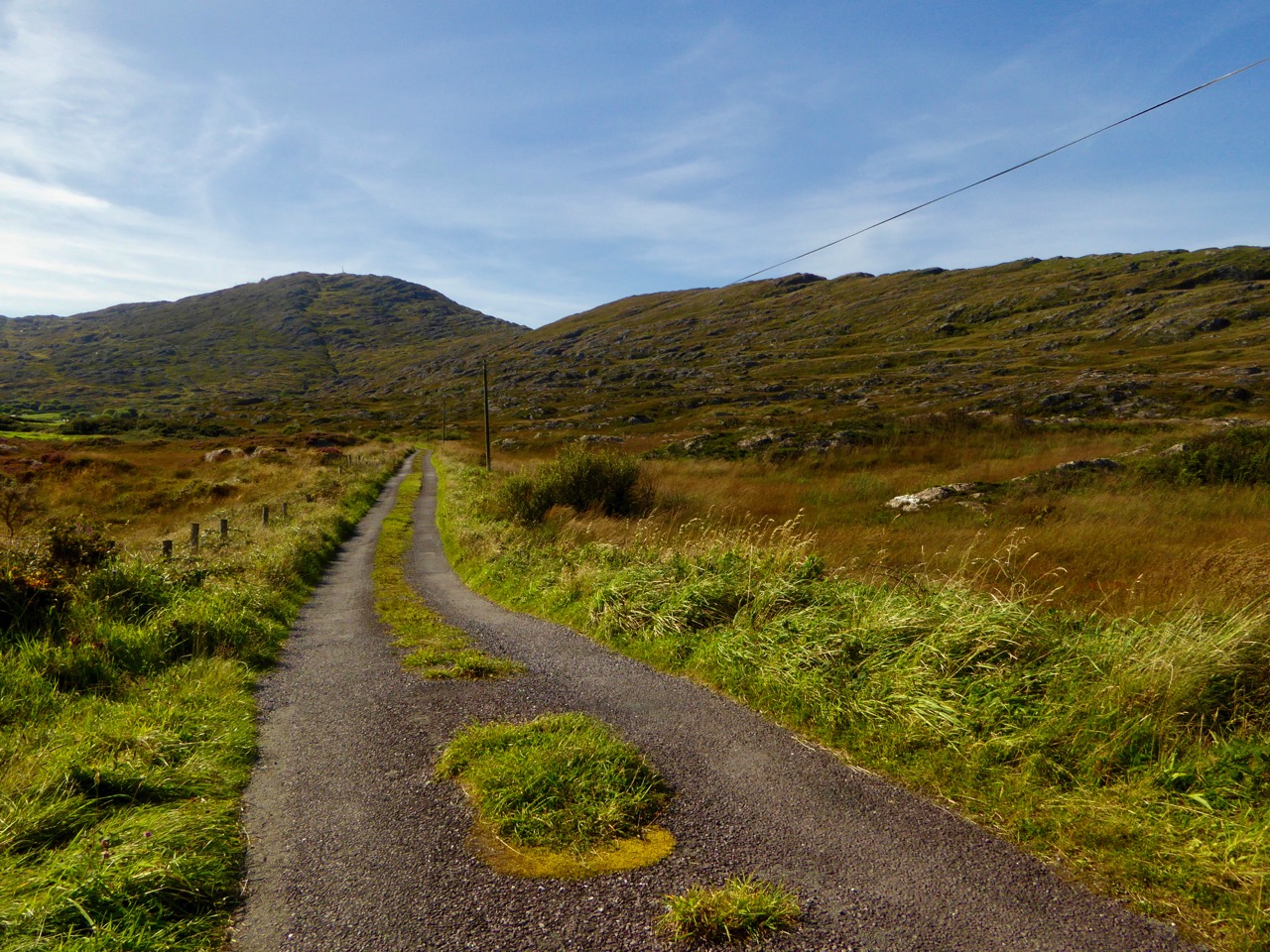
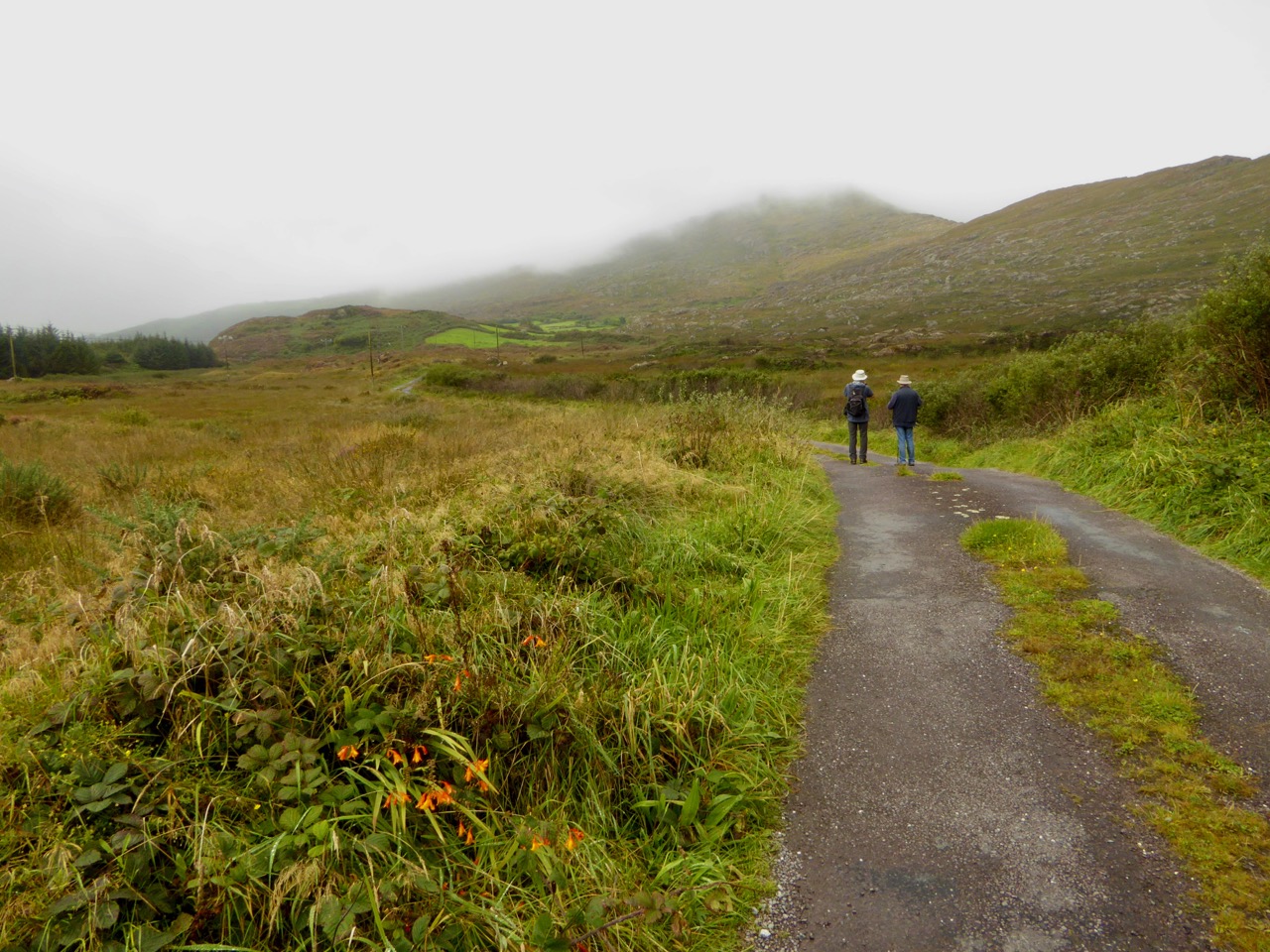
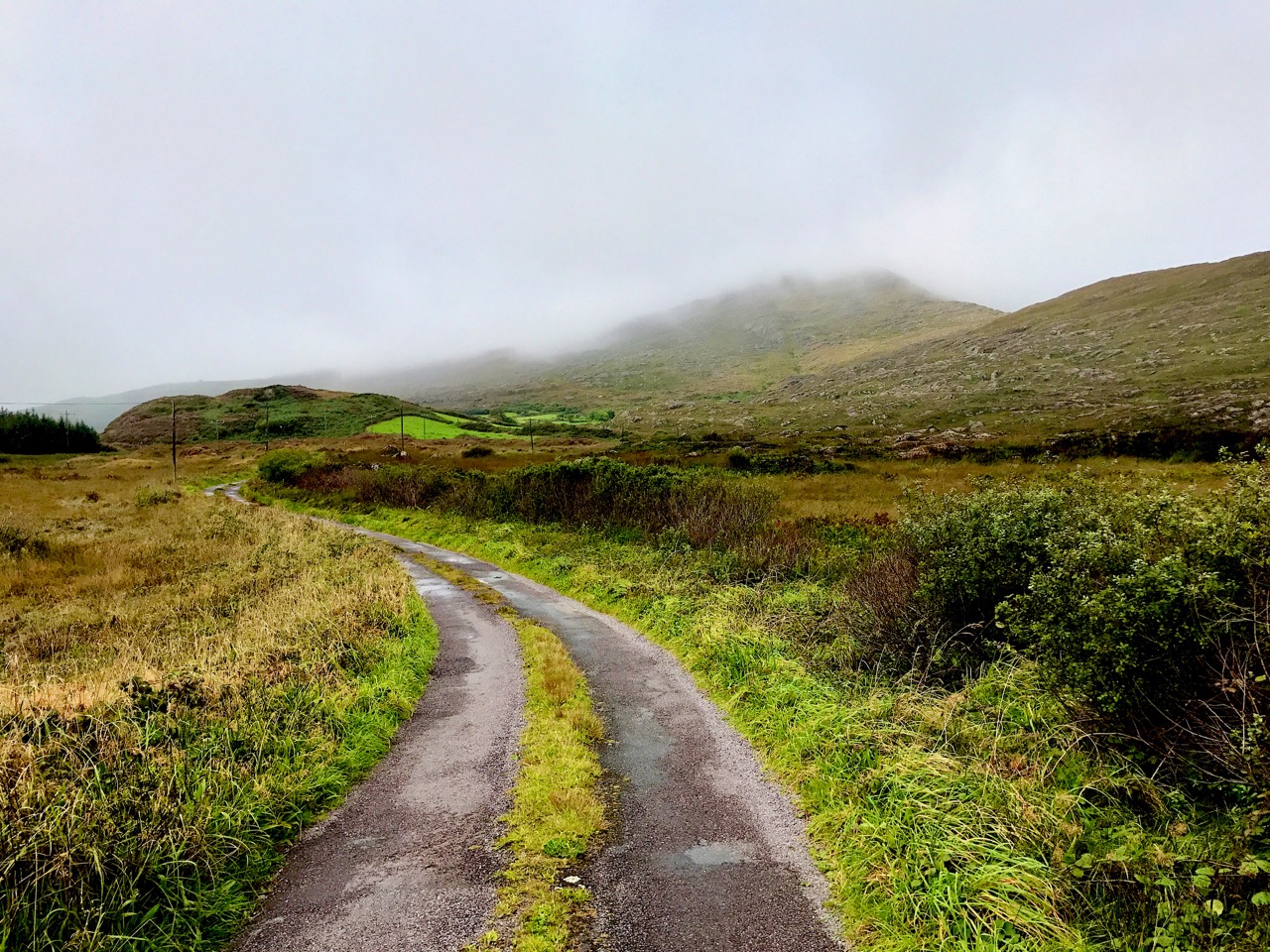
Derryconnell Loop Walk on the Fastnet Trails takes in the foothills of Mount Gabriel – seen here in contrasting weather conditions, but only a day apart!

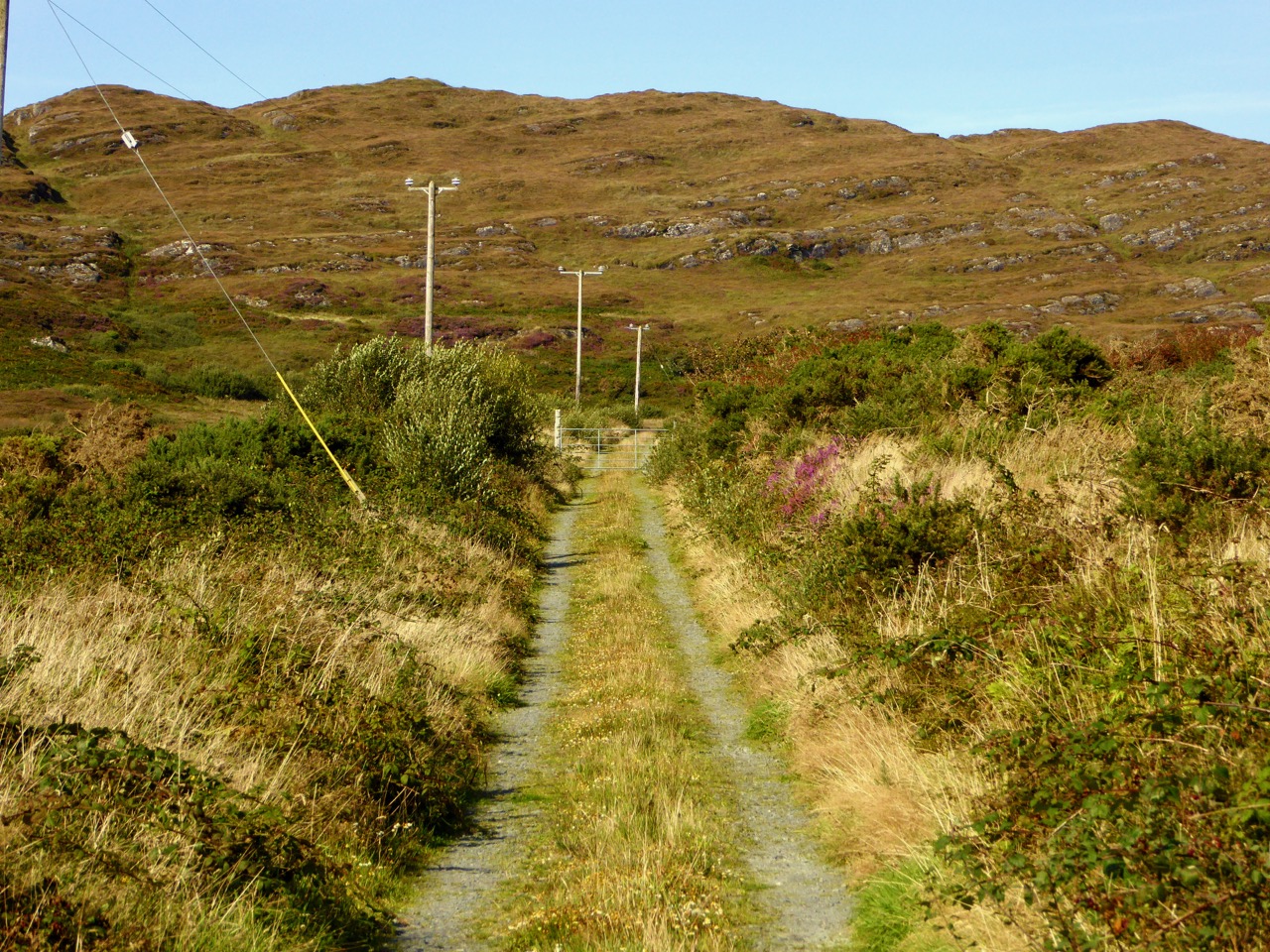
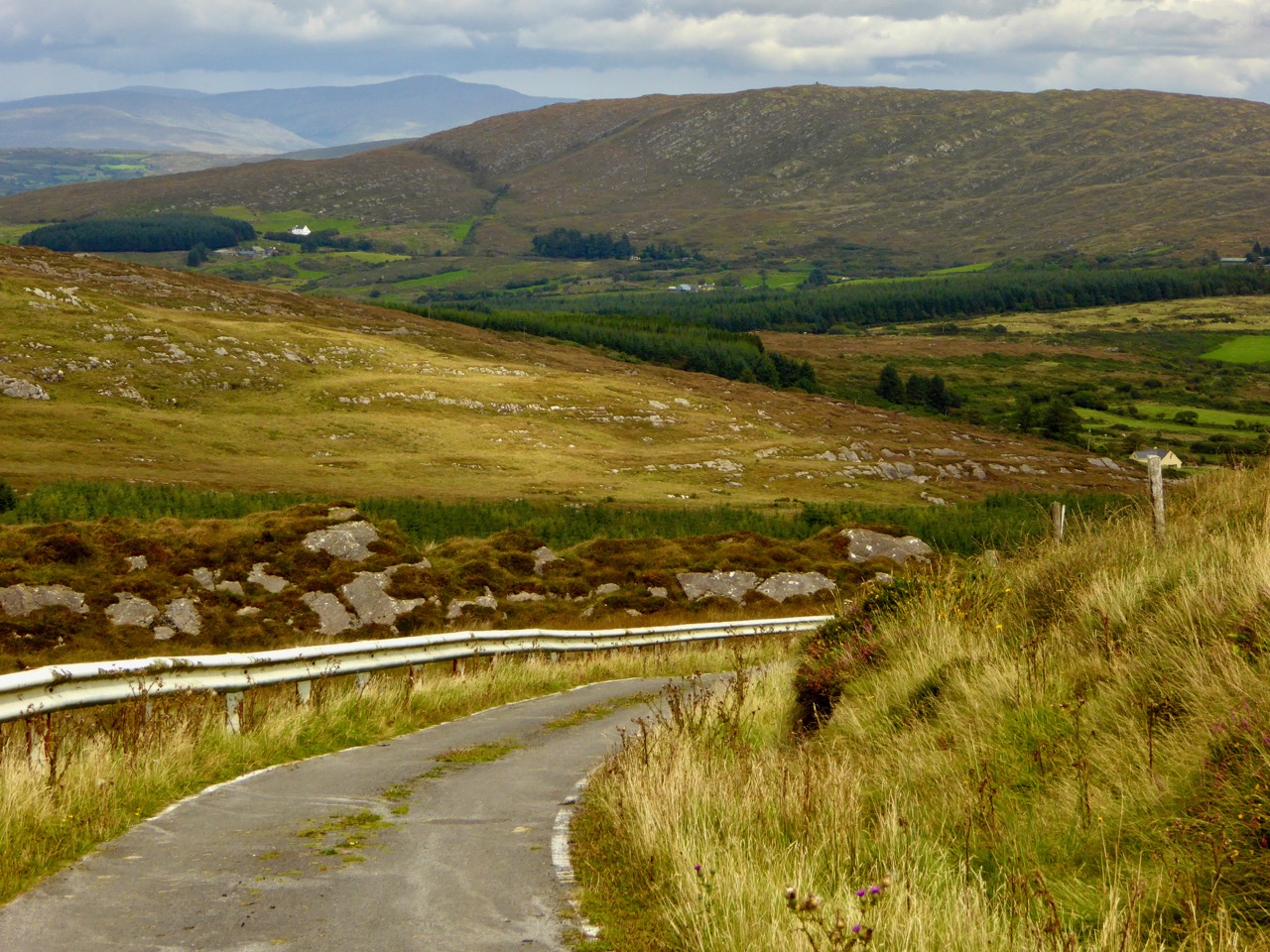
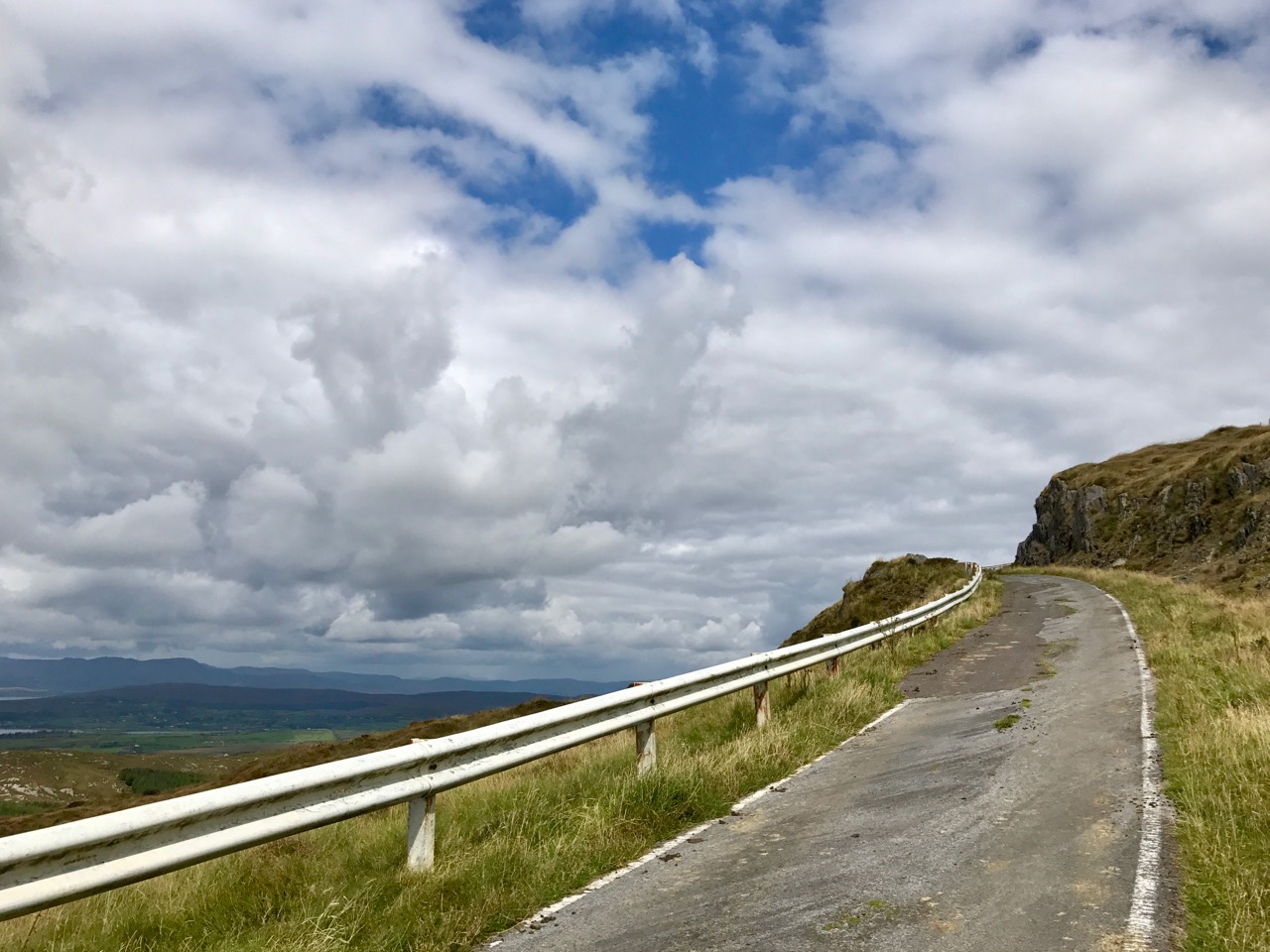
There is a little-known road which runs along the foothills of the mountain which, on a good day, is as beautiful a road as you will find anywhere in Ireland. It begins at the bog of Derreennatra (more of which can be found in Finola’s post today) and you can follow it up and through the Barnacleeve Gap. If you wish, from there you can go all the way up to the summit and get some of the most stunning views all the way over the Mizen, across the Sheep’s Head and even into Kerry.

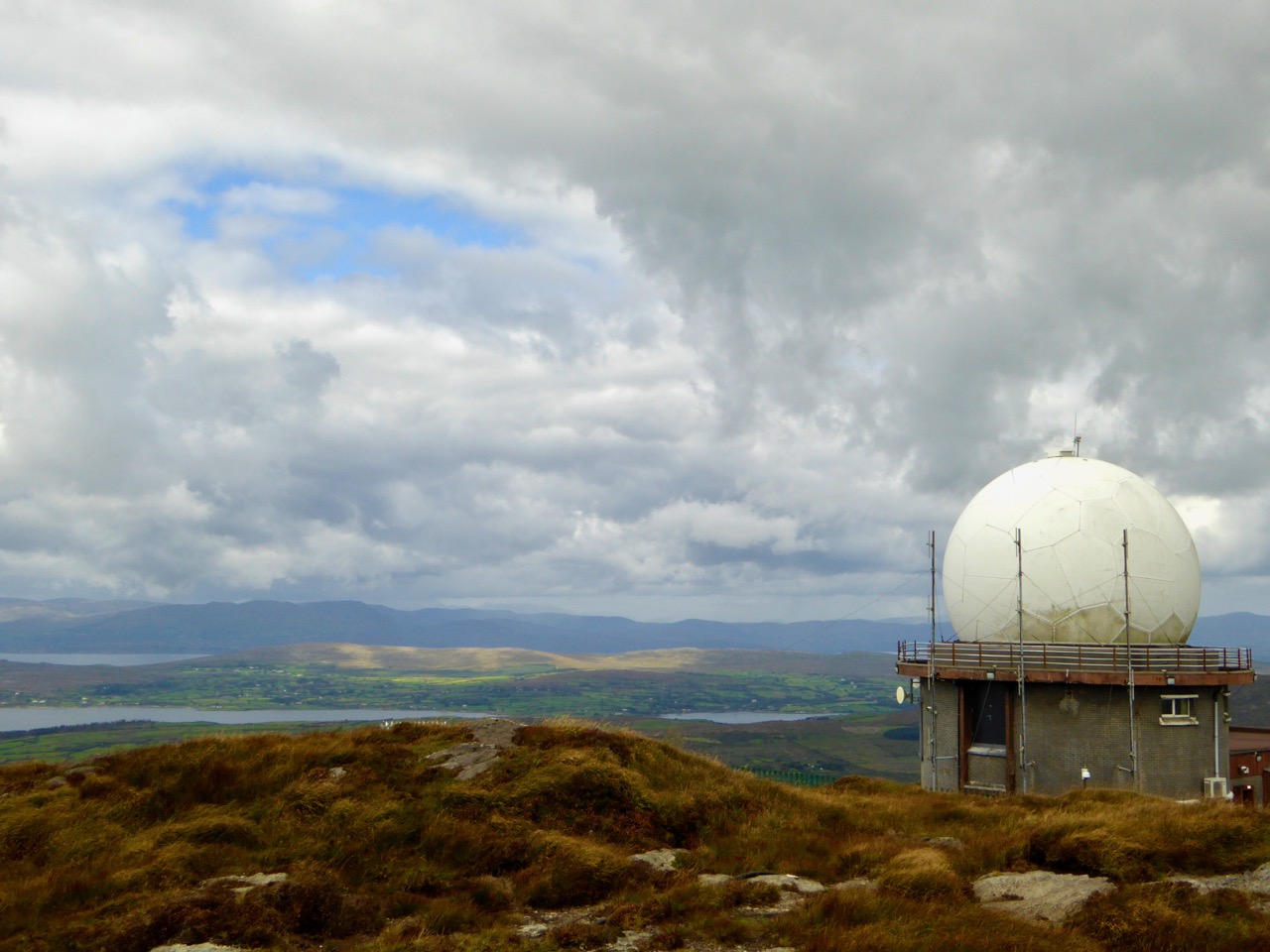
The climb to the summit of Mount Gabriel is always rewarding, with panoramic views to all points of the compass. Lower Picture: the Air Traffic Control Authority’s installations atop the mountain add an odd drama to the landscape

Part of our Mountain Road has been incorporated in the Derryconnell Loop Walk, one of the new group of the Fastnet Trails based around Schull. The whole of this loop walk is varied and picturesque, but the section from the bog is outstanding as it skirts the mountain – which always dominates the vista – and brings you to the junction with the Barnacleeve road. Keep on going, and take in the mountain itself, or follow the trail down to the old Schull Workhouse. Whichever way you go, you will be struck by the seeming remoteness of the boreens, and you will seldom encounter a vehicle.

In all weathers the Mountain is engaging: you can start out in the mist and finish up in sunshine!

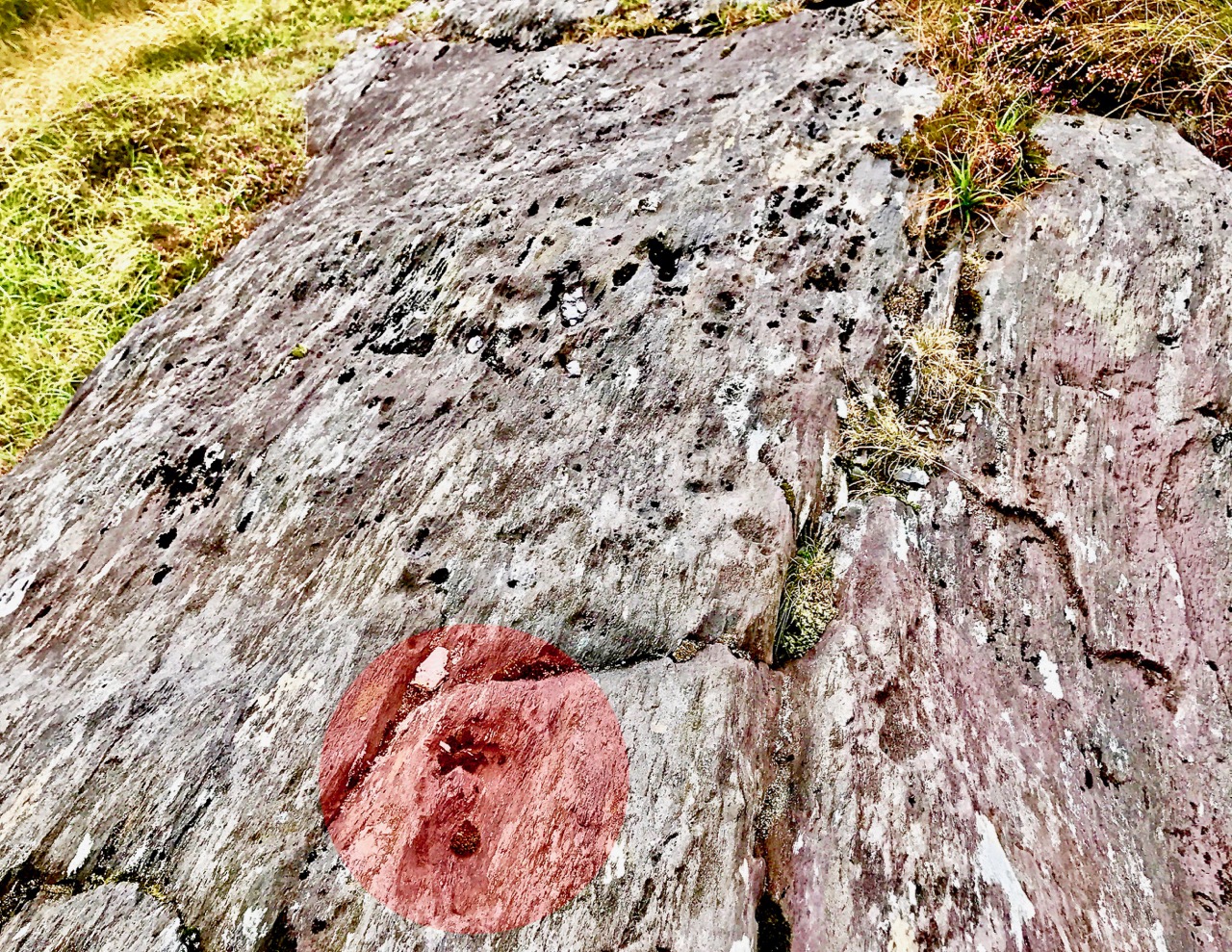
In the latter part of this summer we have explored the road in all weathers, and recorded the many moods of the mountain. Reaching the summit last week, we had a search for the Archangel’s footprint. I’m convinced we found it, but we couldn’t see the lake with its magical islands which – according to the legends ‘…float about up and down, east and north and south; but every Lady-day they come floating to the western point, and there they lie fixed under the crag that holds the track of the Angel’s foot…’ (John Abraham Jagoe, Vicar of Cape Clear – Church of Ireland Magazine 1826)

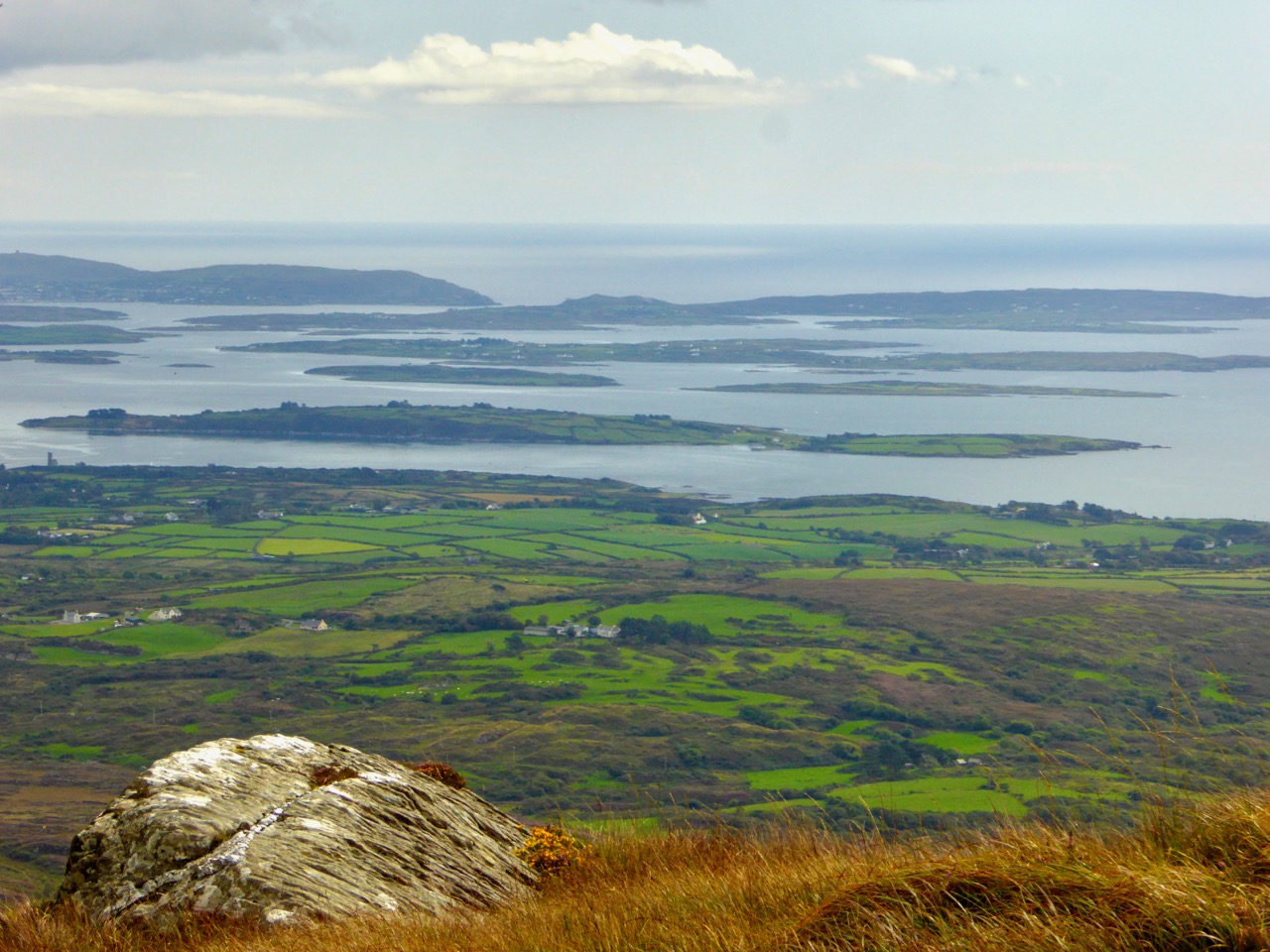
The peak of Mount Gabriel is strewn with rocks, any of which might contain the Archangel’s footprint. Upper – the view to the islands of Roaringwater Bay. Lower – could this be where he touched down? A definitely footprint shaped impression on this rock – highlighted on the photo in red

In my younger days I was fortunate to hear traditional Irish musicians Margaret Barry and Michael Gorman performing on the streets of Camden Town, London, when I worked in that city. Those streets were a far cry from the home I now have in West Cork, but I recall the duo’s rendering of the tune The Mountain Road: Margaret came from Cork herself, so perhaps our own mountain (or maybe it was Gabriel?) was an inspiration to her.

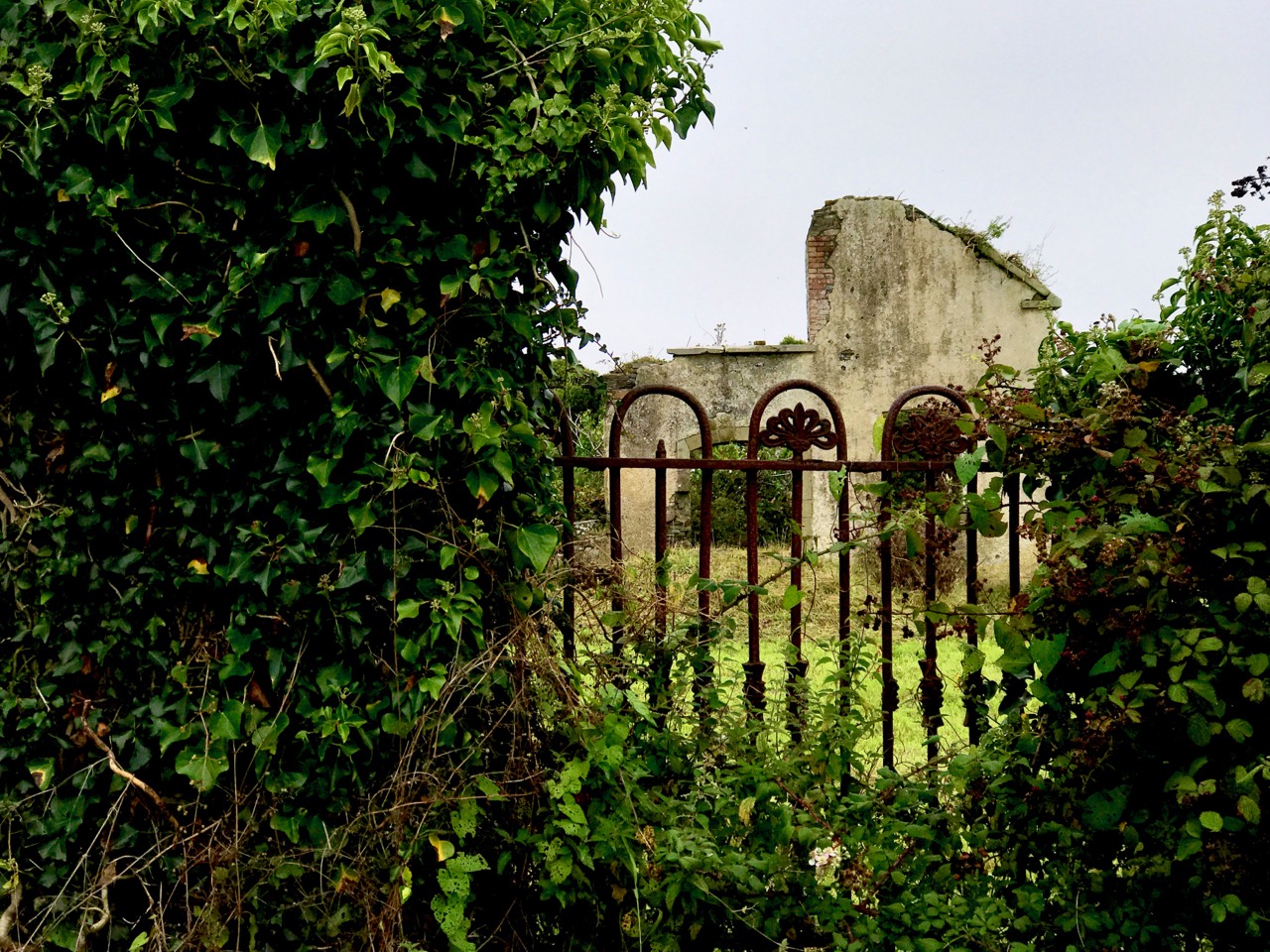
Descending from the summit, we finished our walk on the Mountain Road at the gauntly atmospheric ruins of Schull Workhouse

Harvest Time

…The heat of the summer was eased by the cooling breezes from the Atlantic. It was busy on land and sea, with seine fishing by night and fish curing and farming by day, but there was always time for scoriachting, games and dance, sometimes on Carbery Island or across Dunmanus Bay…

(from Northside of the Mizen by Patrick McCarthy & Richard Hawkes, Mizen Productions, 1999)

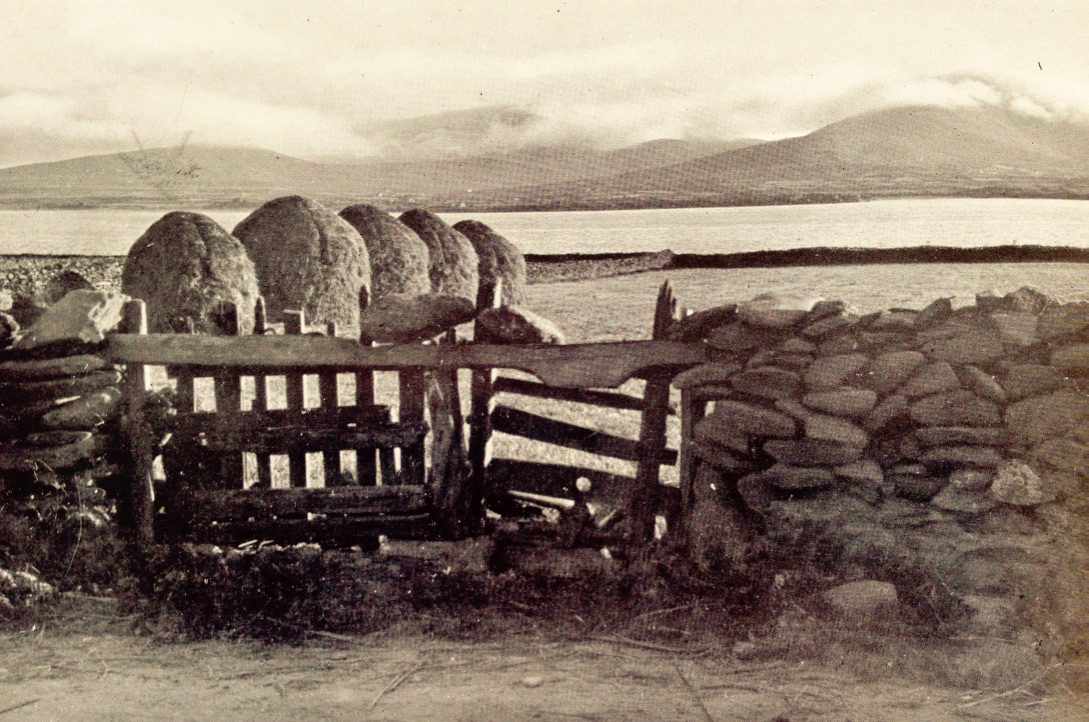
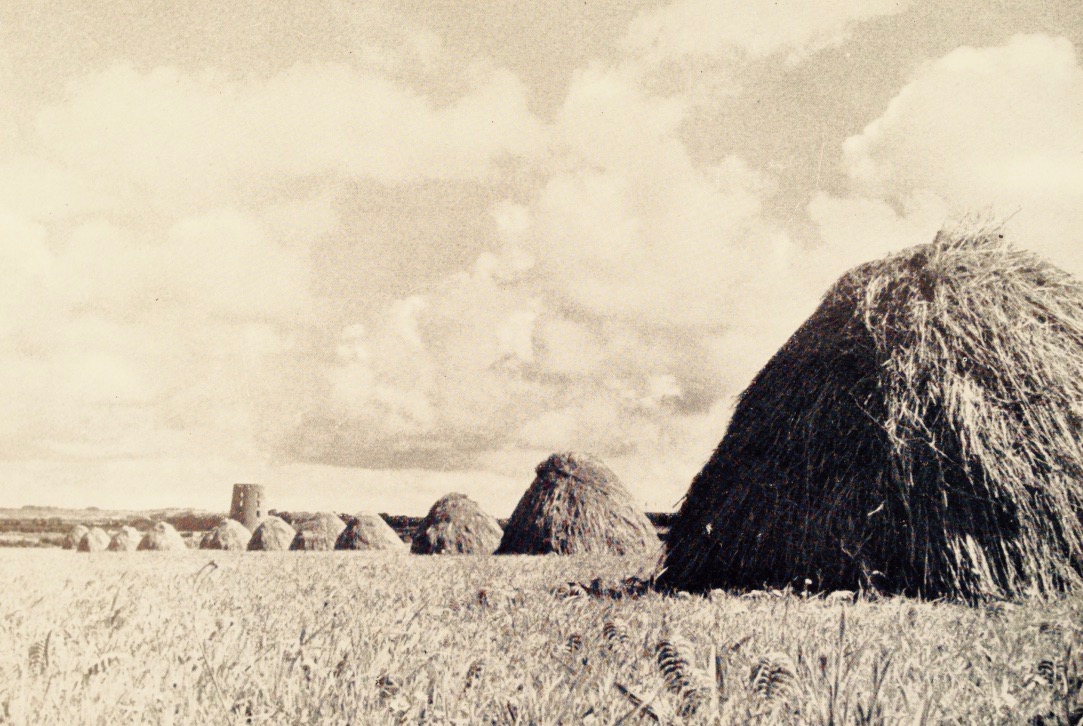
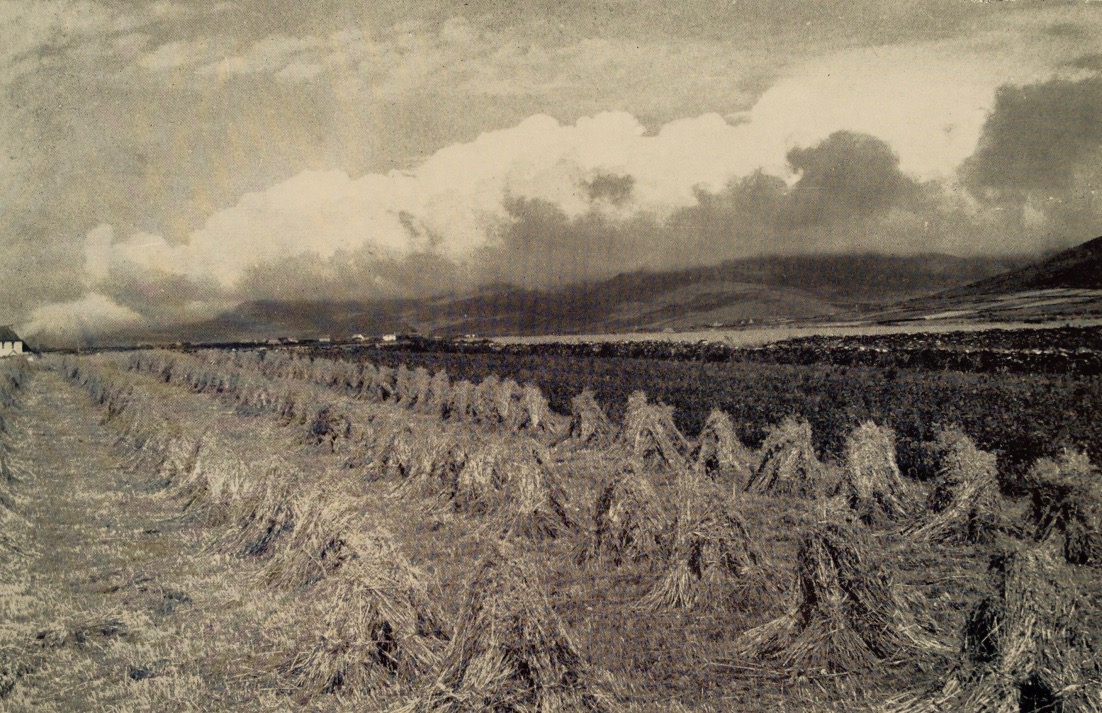
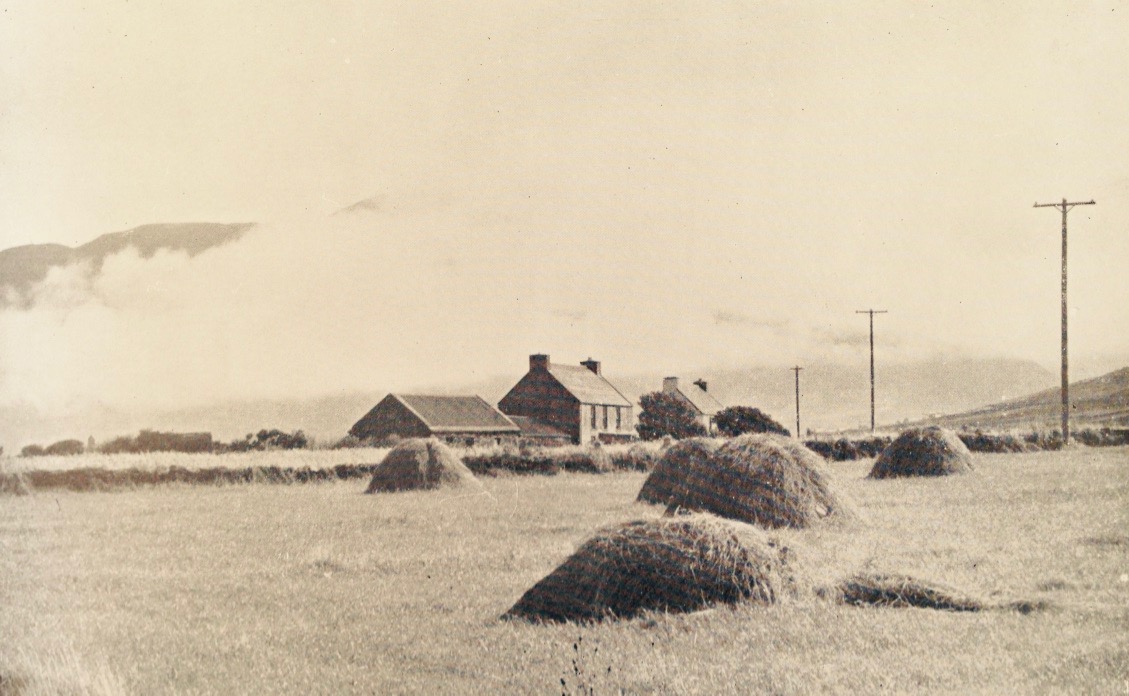
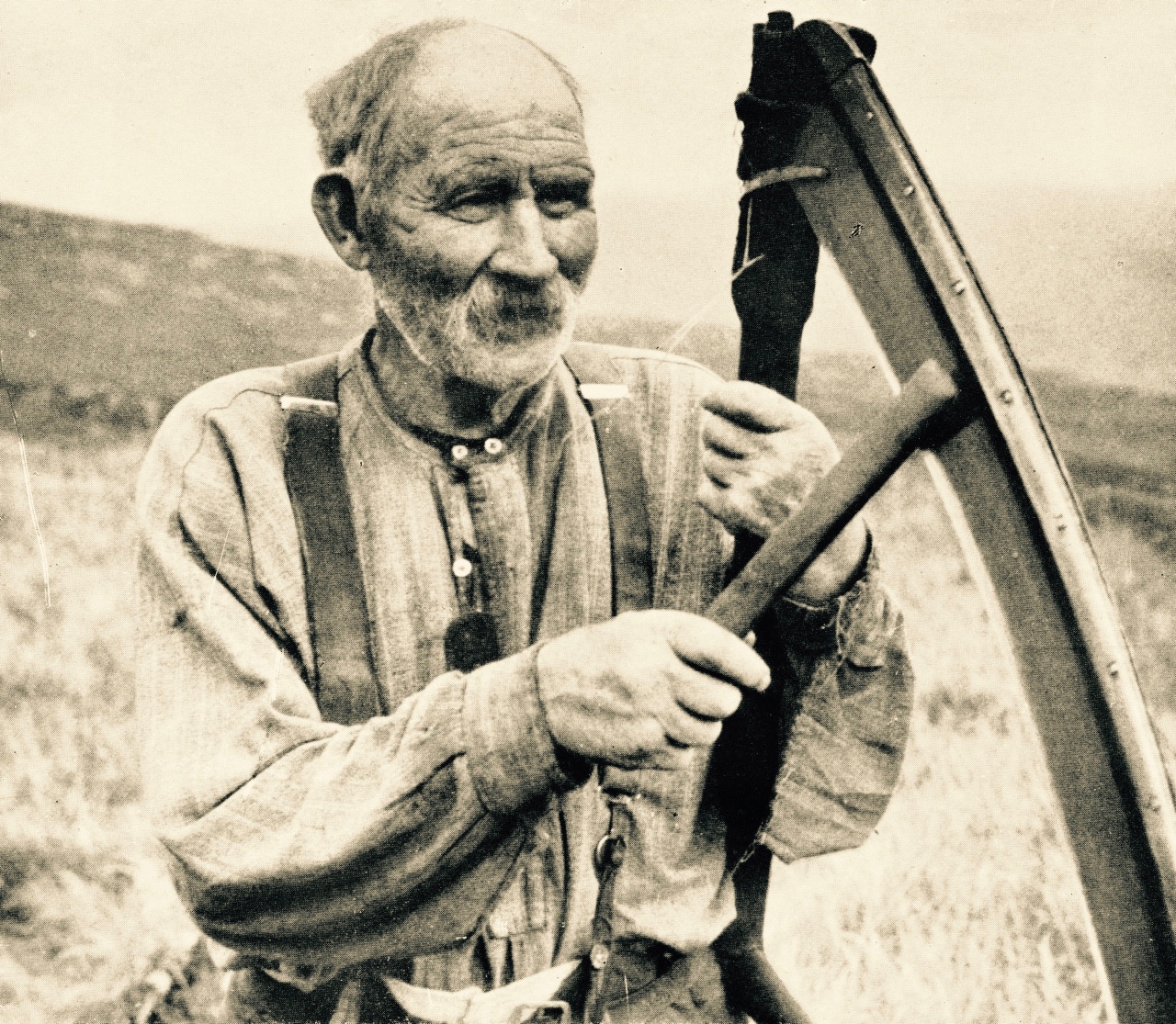
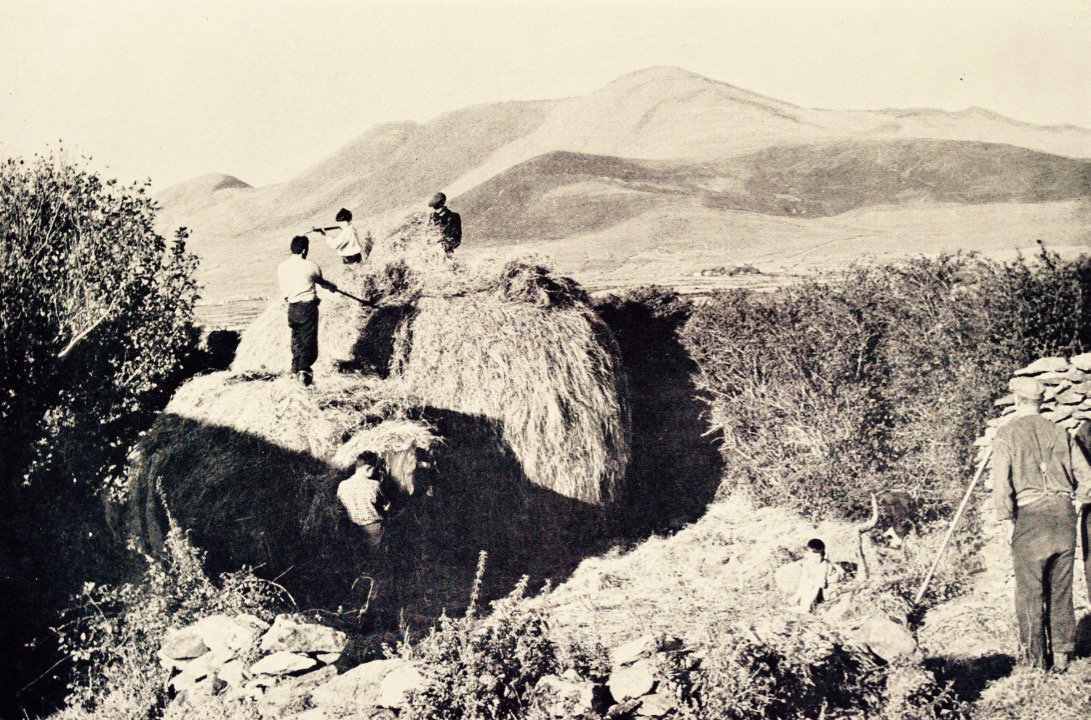
This selection of photographs is from the collection of Tomás Ó Muircheartaigh, 1907 – 1967, who documented life in rural Ireland between the 1930s and the 1950s. I have chosen his pictures that concentrate on gathering the harvest – and the fairs that are associated with harvest time: the festival of Lúnasa. They are generally not captioned, so we are not aware where these were taken. When I travelled in West Cork during the 1990s I remember seeing traditional stooks in the fields: this method of collecting the corn was practiced by the small farmers then, although now I believe it has completely vanished.

…Most of the people on the Northside had holdings that were so small that they could only grow corn (barley or oats) or wheat, for their own use. The land wasn’t good for corn crops. By the middle of August, the stooks were seen in the fields. As with the bringing in of the hay, the cutting of the corn was a great event with a meitheal to help you if needed. For cutting, a reaping hook or the scythe was used. When buying a scythe it had to be sharp enough to lift a penny off the floor. A man followed the cutter, collecting the corn, a sheaf at a time, and putting it out behind him. This was called ‘taking out’. Two people followed the man ‘taking out’ and bound the corn into sheaves with a bind, making sure that the ears on the bind lay with the rest of the ears. Six sheaves were made into a stook and left for a week, then the small stooks would be made into a stook of twelve sheaves which was left in the field to finish ripening for the rest of the month. The stooks were gathered into the haggard, by donkey or horse and cart, and made into a barrel stack ready for threshing in October… (Northside of the Mizen)

Lúnasa is one of the important turning points in the Irish calendar: harvest time, fruitfulness, and the onset of autumn. The others are Imbolc – 1st of February (the coming of the light and new life, spring), Bealtaine – 1st of May (onset of summer and a time of growth), Samhain – 1st November (winter and darkness). All these points have to be marked and celebrated. Lúnasa, or Lughnasa is probably the most fertile time for celebration, and festivities could last for days or even weeks. There was always a fair: the most well-known one still celebrated is at Killorglin, in the heart of County Kerry, where a great wild Puck goat is crowned and reigns above the crowds.


Terry Searle – A West Cork Artist

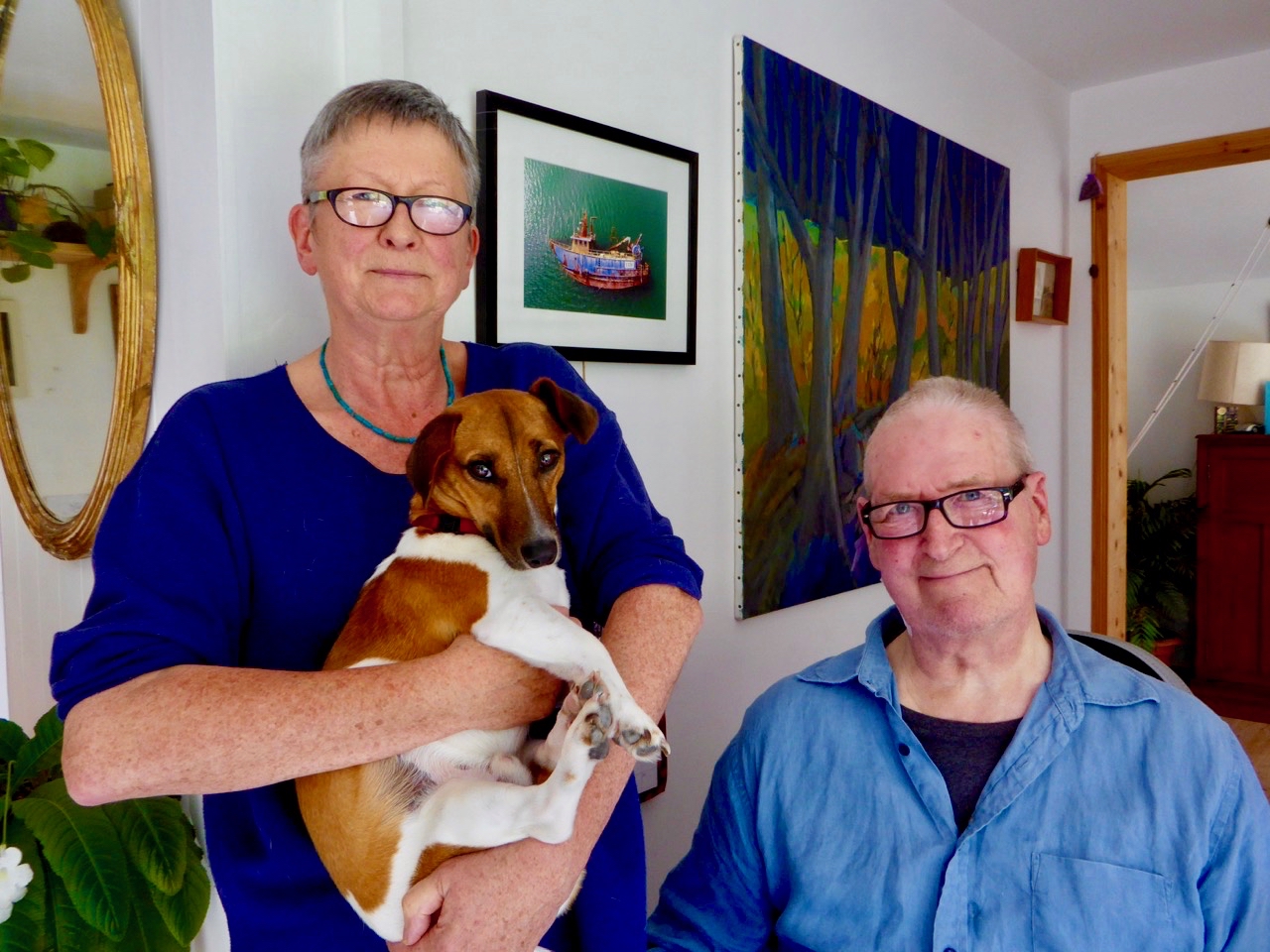
It’s all happening in West Cork at the moment! In particular, there’s a lot going on in Skibb: the fabulous Skibbereen Arts Festival continues to run all through the week and we have already enjoyed some memorable events. The first West Cork History Festival has been a resounding success – and a learning experience: look forward to great things in the future. But don’t leave Skibbereen without visiting the O’Driscoll Building at Levis Quay, in the town centre. Opening at 1pm on Saturday 5 August and running through to 2 September is an important exhibition of the work of two artists: Terry Searle and Ian McNinch. I’m concentrating today on the life and work of Terry – one of the ‘West Cork Artists’ Group’ who built up a reputation during the latter part of the 20th century, and the story of which has still to be written. Finola and I were privileged to meet with Terry and his wife Penny Dixey recently, and thoroughly enjoyed their accounts of the somewhat Bohemian life and times of artists in West Cork.

Penny (left, with Ted) and Terry (right) at home in Schull

The exhibition is a retrospective of Terry’s work. His great grandfather was from Dublin: he was born in 1936 and brought up in the East End of London. Like many of his contemporaries he was evacuated to the countryside during the war and spent six years away from his home. It’s hard to imagine how that experience might have affected a young, evolving mind: his positive take is that it imbued in him a permanent love for nature and this has been reflected in his life work.

Terry is a painter. At the end of the war Terry was called up for National Service, where he rubbed shoulders with would-be actors, artists and musicians: their outlooks attracted him and, when he moved back to London, he started evening classes at St Martin’s School of Art and then signed on for a full-time course at Goldsmith’s College of Art. Although life was hard – there were no grants available and he had to fund his studies through a variety of jobs occupying all hours – he never looked back. As he says “…life in the coffee shops in Soho was enjoyable, with a lively social scene…”

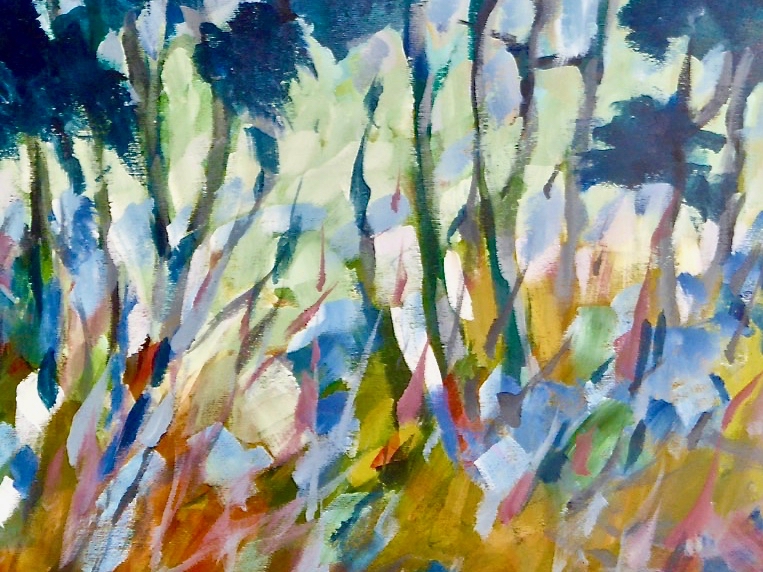
Terry’s influences were many – particularly the large, colour-full abstracts of Rothko and Joan Mitchell – but his life-long hero is JMW Turner. London’s Tate Britain has the world’s largest collection of Turner on exhibition, so Terry had the opportunity to study his hero at first hand. Turner challenged the art traditions of his time (first half of the 19th century) and his techniques appear very ‘modern’ to our eyes. Terry is no slave to Turner’s style, but has a very particular way of viewing his subjects. I think Terry’s work is vibrant – colourful – approachable – very attractive yet with a powerful individuality. I can see some parallels with William Crozier, whose work is currently being shown at Uillinn. By chance, Terry Searle and Crozier once lived in the same road in London but were only on nodding acquaintance. As their lives and work progressed, both found their way to West Cork.

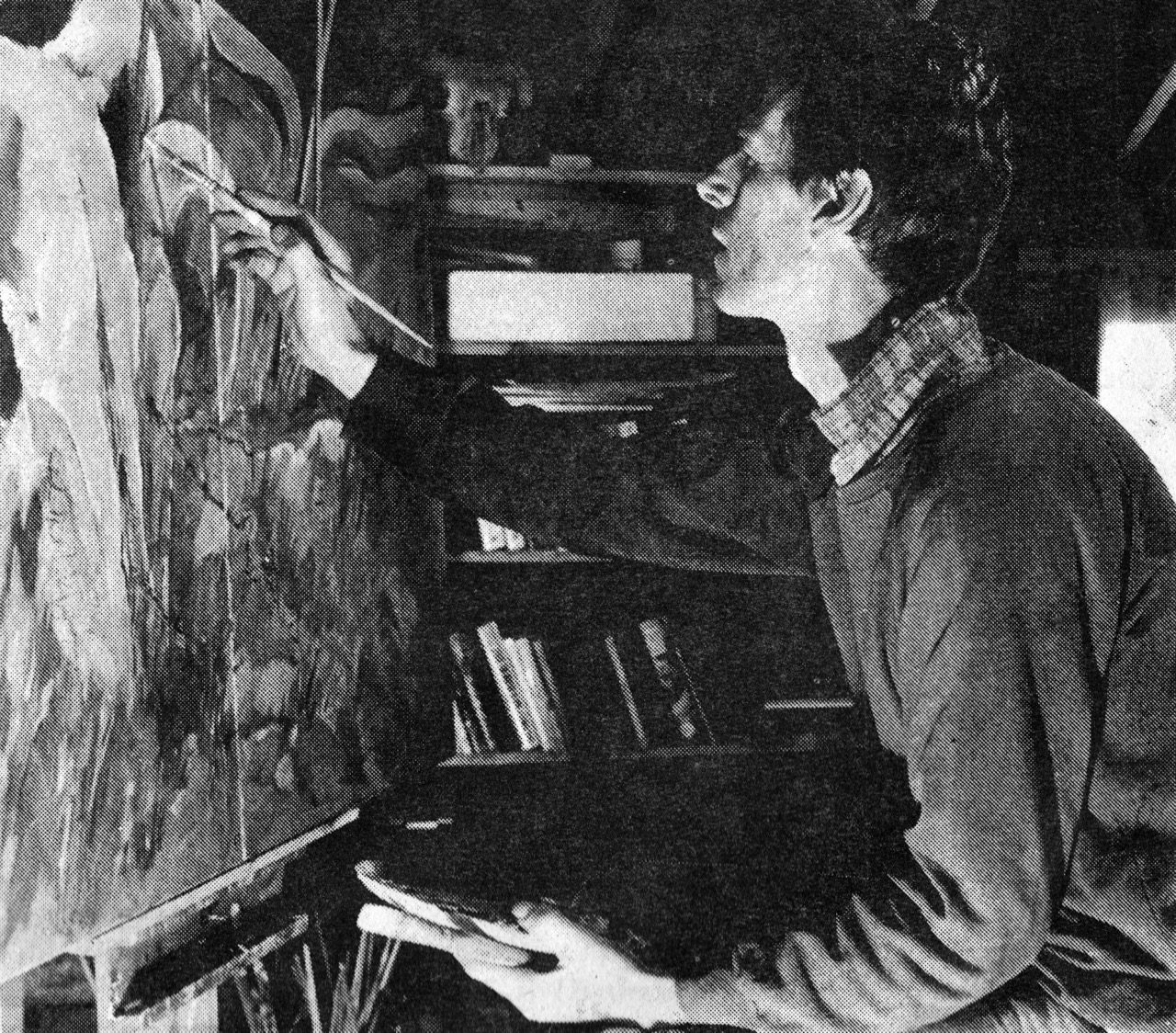
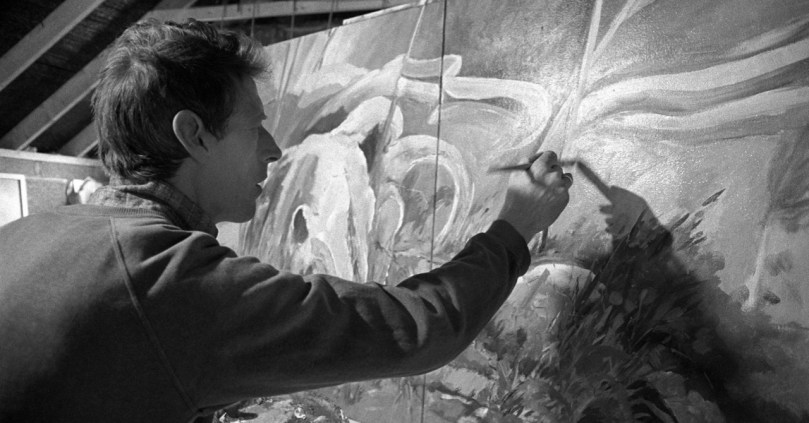
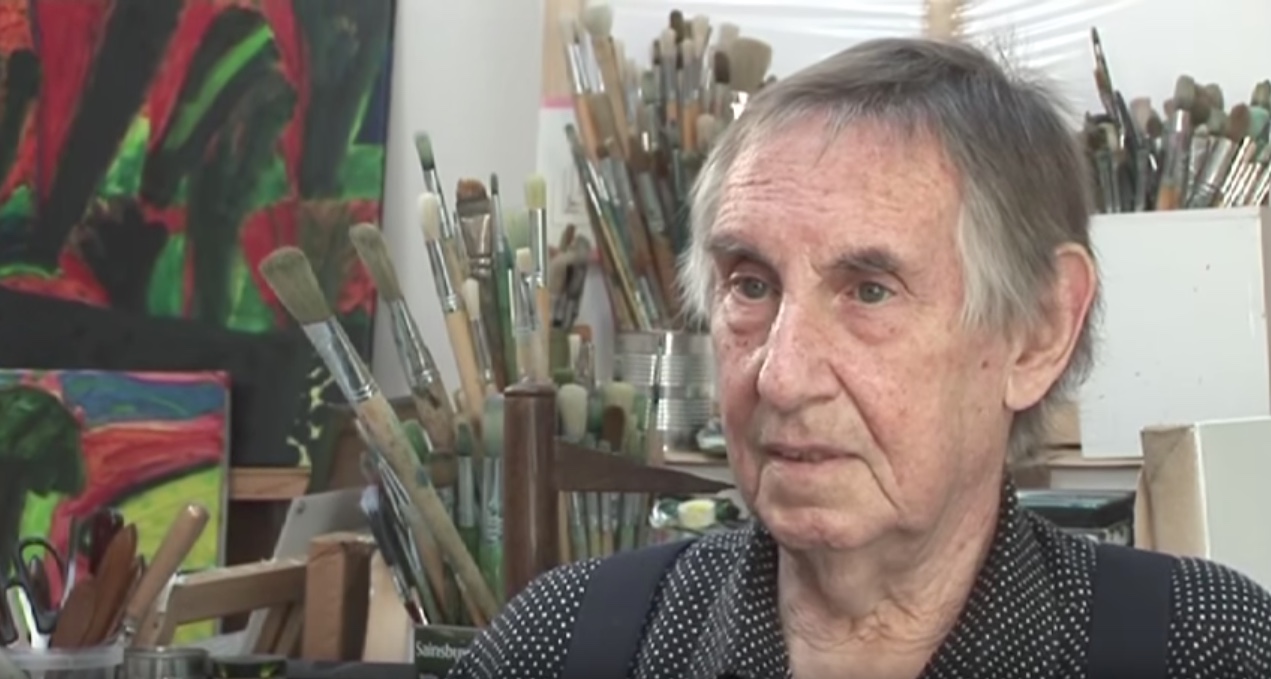
Terry Searle at work, probably around 1986: photograph by Kevin O’Farrell

Terry first visited West Cork when travelling with a group of friends in the 1970s. A number of visits followed and he found himself “enchanted” by the natural beauty of the place, and the civilised pace of life here. He must also have been aware of the strong artistic movement which focussed around Ballydehob and Skibbereen at the time. When he made the permanent relocation to the west of Ireland in 1981 he quickly became active in that movement, and was one of the founders of the West Cork Arts Centre. He contributed to the 1985 exhibition of West Cork artists in Zurich, and in 1987 was part of the important Living Landscape ‘87 Exhibition, which showed in the Crawford Gallery, Cork, as well as in the West Cork Arts Centre in Skibbereen. This extract from the introduction of the exhibition catalogue is enlightening on the spirit of the time:

…Skibbereen is a small town in the South West of the country with a population of 2,000 people. Ten years ago, because of the number of artists living in the area, a small interested group started an art society and held an annual members exhibition which ran for two weeks every July in a local hall. The demand from artists and local people increased over the years and due to the hard work of a dedicated committee, they realised a dream come true – an Arts Centre for West Cork; and with the essential practical help from the Vocational Education Committee in the provision of the building, we became the proud ‘owners’ of a thriving Arts Centre. We run exhibitions monthly, organise musical and theatrical evenings, and provide classes for all, covering a full range of artistic interests in our newly reconstructed classroom. Today, we are very proud to be hosting the first ‘Living Landscape’ exhibition by the top 25 landscape artists working in this country. Our intention to make this a prestigious annual event is ambitious, but then all our plans are ambitious…!

The Living Landscape exhibition shown at The Crawford and in Skibbereen: Terry is third from the right

I wonder how many of those involved in those times could have foreseen just where those ambitions would lead? With Uillinn in Skibbereen, the West Cork Arts Centre now has the foremost public gallery west of Cork city, and it is pushing the boundaries with major exhibitions of contemporary work. Readers will be aware of the recent West meets West exhibition – which heralds a regular exchange of art between West Cork and Cornwall – and the gallery, currently, is hosting a collaborative exhibition with IMMA on the opus of William Crozier.

It’s so good that Terry Searle is being appreciated with this show: he has never been a self-publicist, and it is high time his work received full and proper recognition. He celebrates his eightieth birthday this year. A few years ago he was diagnosed with a degenerative neuromuscular disease and has now been forced to stop painting altogether. It is painful to imagine what a loss that must be to a creative ethos such as his. This exhibition is a very special one – be sure to see it!

Robert is lining up further posts on the stories of the West Cork Artists group dating from the 1960s (and still thriving!) and would be delighted to hear from anyone who has personal accounts, reflections or memories from those days…

Image below – Terry Searle in his studio c1986 – courtesy of Kevin O’Farrell

Terry Searle - Kevin O'Farrell

The Edge of the Landscape – William Crozier

The Edge of the Landscape is the title of an upcoming exhibition which opens this weekend at Uillinn. It will show some of the later work of William Crozier (1930 – 2011), a Scottish born artist who considered himself more Irish than Scottish as his parents were from Ballinderry, Co Antrim. He adopted Irish citizenship in 1973 and purchased a cottage at Kilcoe, West Cork, in the early 1980s. Although he worked both here and in Hampshire for the rest of his life, most of his later paintings dwelled on the Irish landscape – specifically the splendours of West Cork, which are so familiar to us.

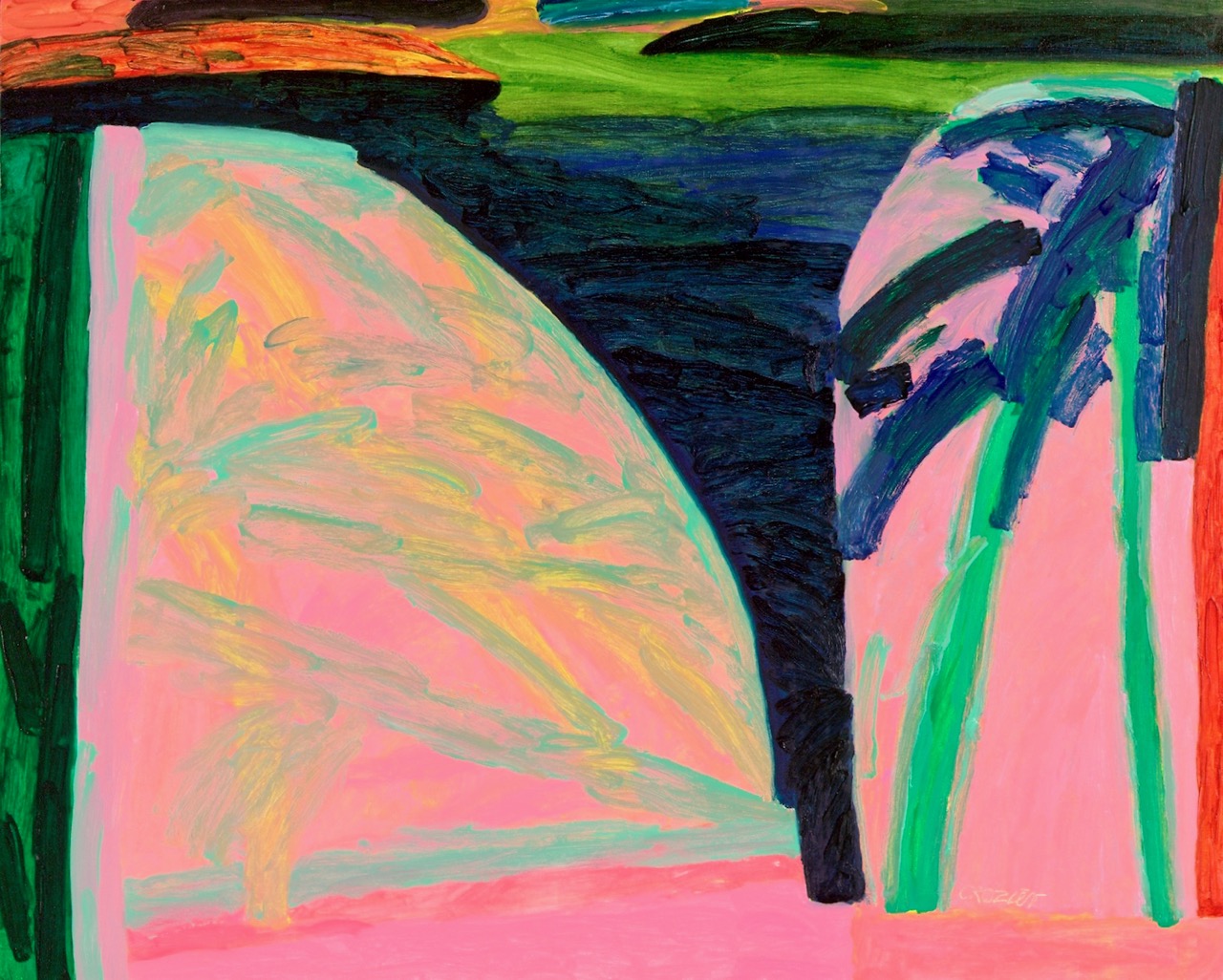
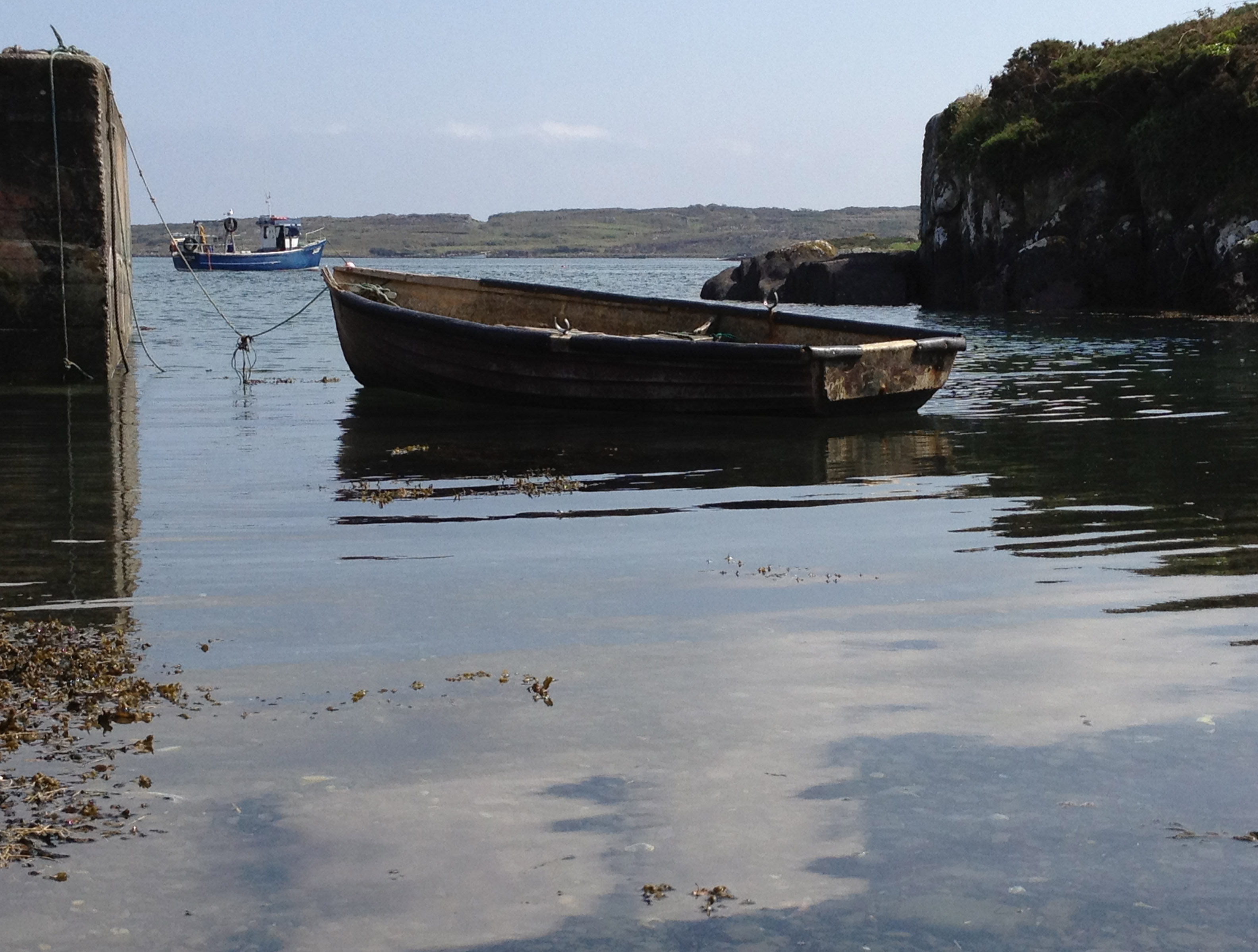
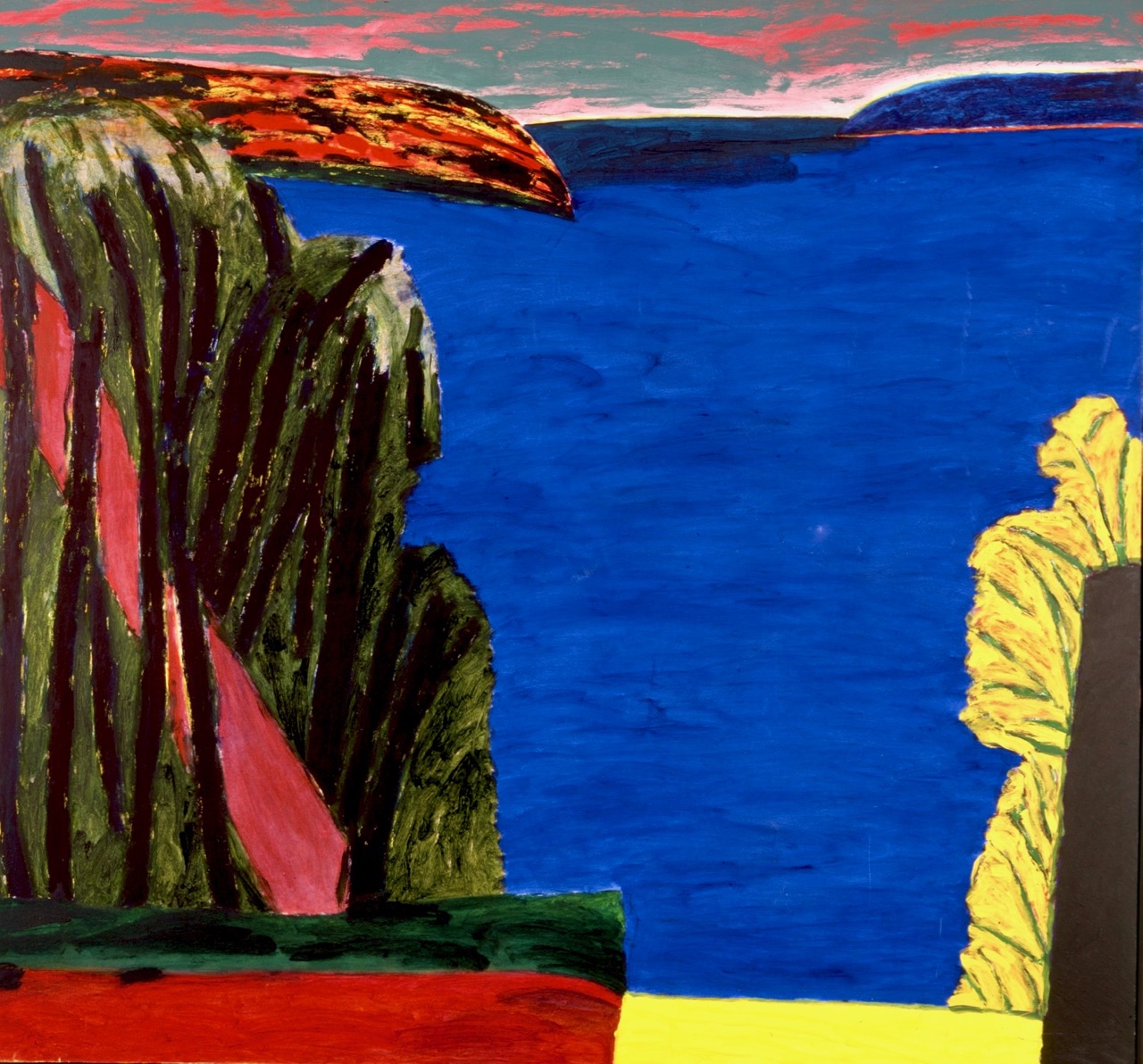
The meeting of land and sea was a recurring theme in Crozier’s work. The quay at Turk Head, above, inspired the header on this post – painted by Crozier in 2003. We might wonder at the eye of the artist that pictures the scene in such vivid colours, but anyone who has lived in West Cork will be familiar with his palette: the rocks, the fields, the lanes, wildflowers, water and ever-changing skies provide all the colours in his paintings, tints, tones and shades which are successfully pulled into unexpected compositions.

Katharine Crouan – Bill Crozier’s widow – has written to me “…Bill was not, in any way, a topographical artist but you can see in his work – particularly from 1984-95 – the stimulus  the landscape provided. He spoke of loving the ‘glamour’ of the West Cork landscape, referring to the glitter of water and sunlight on foliage after rain and the dark shadows that came out of nowhere. For him it was all magical…”

‘Kilcoe Strand (From Peninsula)’, painted by William Crozier in 2011

I am reminded of Peter Lanyon, the St Ives artist (who was, interestingly, the subject of a book titled At the Edge of Landscape): he famously said that, as a painter, he needed to “…get under the skin of the landscape…” That need informs his work, which is abstract rather than specifically landscape-based yet inspired, as he stated, from flying over his native Cornwall and – by exploring the mine shafts – tunnelling underneath it. For me, William Crozier has the same regard for his West Cork homeland and successfully expresses his relationship with it through the richness of his work.

Toe Head, West Cork (upper picture) was the inspiration for many paintings. Lower works: Toe Head 1989, (left), and Wolf’s Castle, Toe Head 1998 (right – Richard Barrett) 

William Crozier was a prolific painter – he estimated that he had painted more than 12,000 pictures, each executed in a single session. The landscape-inspired works are just one part of an enormous opus. He did not overlook the sometimes hard realities of his surroundings. Cocks of hay drying in a field may appear a romantic ‘rural idyll’, but are equally a portrait of an economically unviable small-holding.

William Crozier in his studio c 2009

The exhibition of a selection of Crozier’s work produced since 1985 is showing at Uillinn: West Cork Arts Centre from 15 July to 31 August, and later in the year some of his earlier works will be shown at IMMA: The Irish Museum of Modern Art from 12 October 2017 to 8 April 2018. Both exhibitions are curated by Seán Kissane (Curator, Exhibitions, IMMA), who will be presenting a talk on the work at 6pm this Friday, 14 July, in Uillinn, following which the exhibition will be formally opened by Sarah Glennie, the Director of IMMA. An important new publication edited by Katharine Crouan and Seán Kissane and designed by Peter Maybury accompanies the exhibition with texts by Mark Hudson, Katharine Crouan, Seán Kissane, Riann Coulter, Enrique Juncosa, and Sarah Turner.

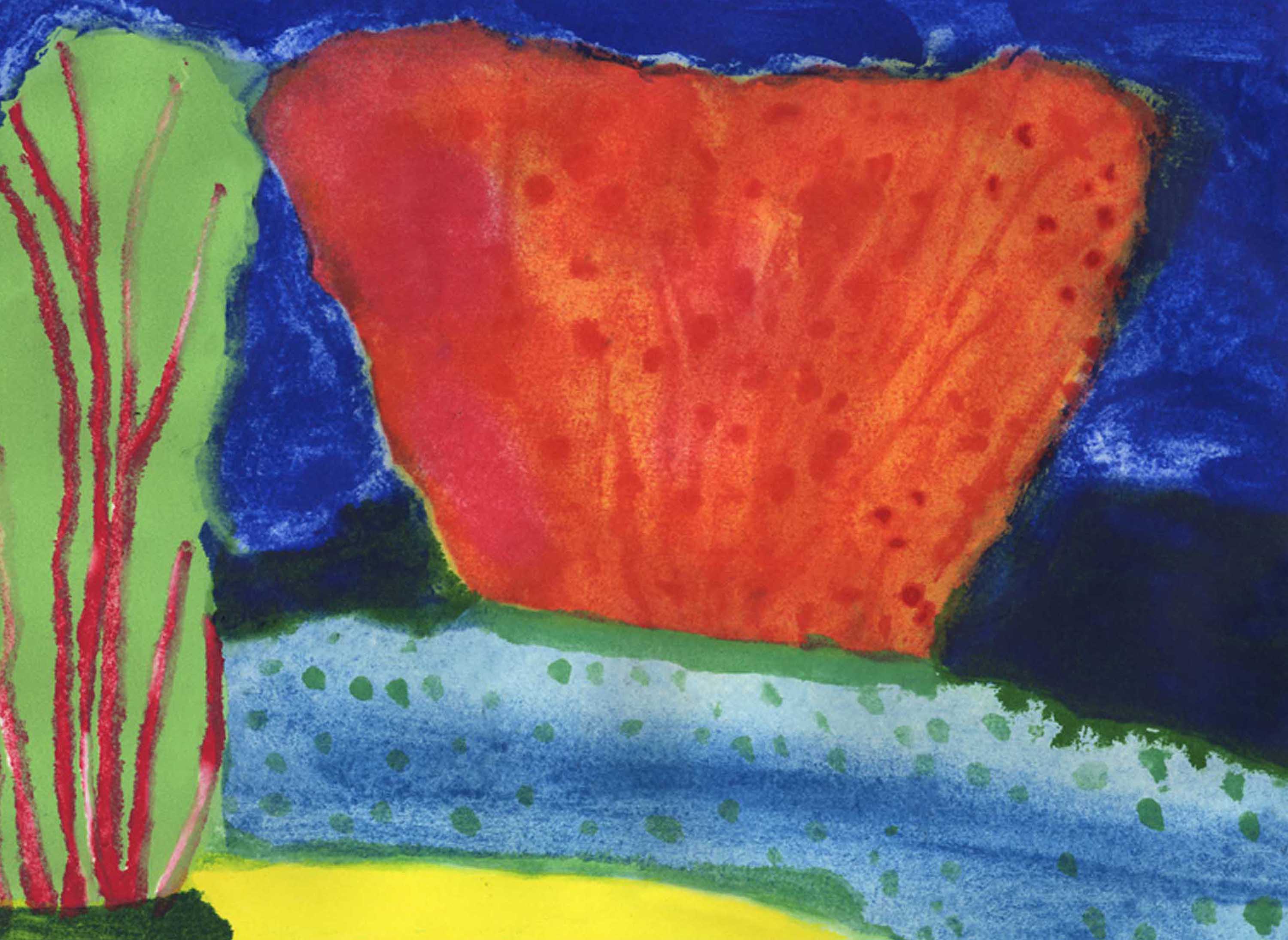
Below – Departure from the Island, William Crozier 1993 (Flowers Gallery). Note that copyright on all works rests – unless otherwise stated – with the William Crozier Estate

The Lusty Month of May

The month of May was come, when every lusty heart beginneth to blossom, and to bring forth fruit; for like as herbs and trees bring forth fruit and flourish in May, in likewise every lusty heart that is in any manner a lover, springeth and flourisheth in lusty deeds.  For it giveth unto all lovers courage, that lusty month of May.

–  Sir Thomas Malory, Le Morte d’Arthur 

One of our local roads is lined with Ragged Robin

Walking the boreens in May there is a sense of potency, urgency even, in the landscape. We’ve been asleep long enough, the flowers are saying – it’s high time we put in an appearance.

Another one has pignut on both sides. Pignut? Yes, there is such a flower – it’s widespread and the rounded roots which are said to taste like hazlenuts were a food source for pigs, and sometimes for humans too

After a long dry spring, everything is early this year in West Cork this year – and earlier than in the rest of Ireland too, thanks to our southerly location and mild climate. The big flowers are happening – the irises and the foxgloves in all their boldness and drama, as well as the tiny ones that are peeping out along the hedgebanks.

Glimpsed along the way: Yellow Iris is a bold native plant that likes damp places; St Patrick’s Cabbage grows extensively around the Cork and Kerry Peninsulas; this Spotted Orchid was one of several at the Heron Gallery Garden; Red Campion grows just across from my house

The Big Event in May for us was the launch of the Wildflower Trail, which I wrote about a couple of weeks ago. The launch was lovely – it was a great honour to have Zoë Devlin come and declare the trail open, and then lead us in a wildflower walk. The brochure is now in the Tourist Centres and already people are picking it up and wandering the boreens.

Zoë had participants spellbound – she just knows SO much!

For me it was a special opportunity to learn from Zoë when we walked the course before the launch. It was a great experience and I learned very quickly that for Zoë the wildflowers are just one aspect of an interdependent whole that includes butterflies, moths, bees, birds, and flora and fauna of all descriptions.

Clockwise from top left: Green Veined Butterfly; bee in foxglove; Painted Lady Butterfly; Red Admiral

I also learned how dedicated she is to recording all the flowers she sees for the National Biodiversity Centre Database. This is not a difficult thing to do, but it does take a little practice and a little time. I am resolved to up my own game in this regard and start sending in more records.

Our native – and gorgeous – White Water-lily

But mostly I just want to spread the joy – and help people to see the incredible beauty and diversity of wildflowers that we have in West Cork. Our boreens should be celebrated as National Treasures!

This boreen leads out of Ballydehob – it’s alive with an enormous variety of flowers.

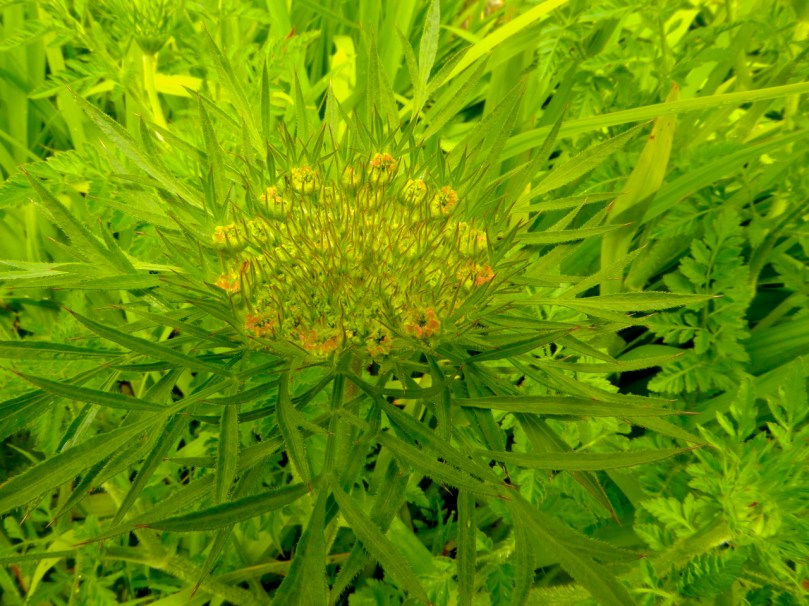
Above is Wild Carrot -as its name suggests, this is the wild version of our cultivated carrot. Very young wild carrots are edible, but you must take extreme care as the plant is very similar to Hemlock Water-dropwort (below) which is very poisonous. This one is growing along a stream in Skibbereen – also the location of the Yarrow in my lead image (top of post).

Irish Spurge, above, is an intense yellow green in April. In May it acquires this little yellow spaceship flower heads. You have to get in really close to see them.

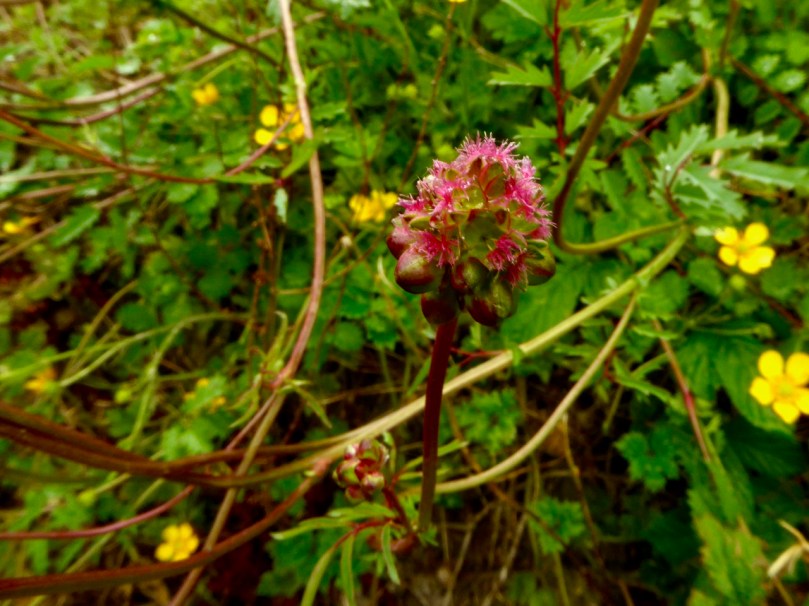
Salad Burnet (above) was grown in kitchen gardens from Medieval times as a salad vegetable and herb. The leaves, they say, taste like cucumber. I’ve tried them, and I have to say you’d need a vivid imagination to get a cucumber taste out of them.

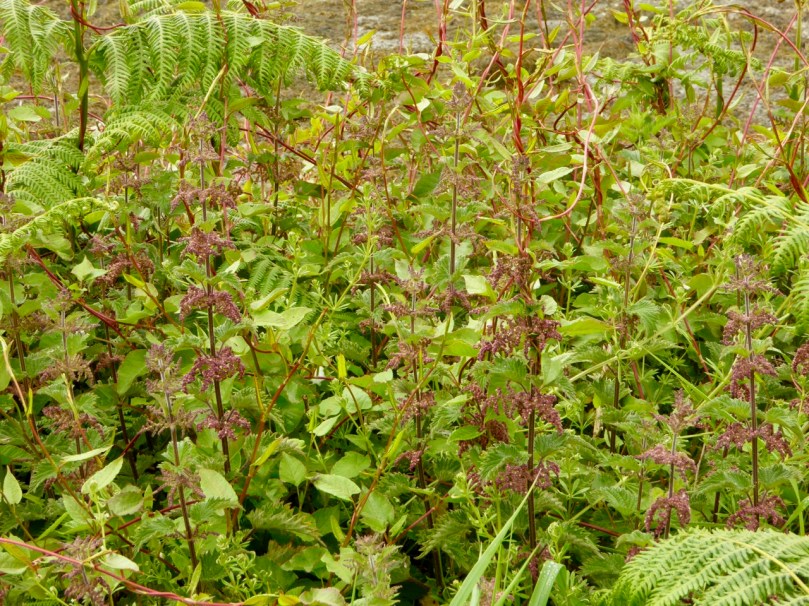
Zoë alerted us to Russian Vine (above, wrapping around flowering nettles) down at Rossbrin Cove. Also known as Mile a Minute, it’s an introduced plant that acts like Bindweed (only worse) and is related to Japanese Knotweed, so very difficult to kill. Bad news!

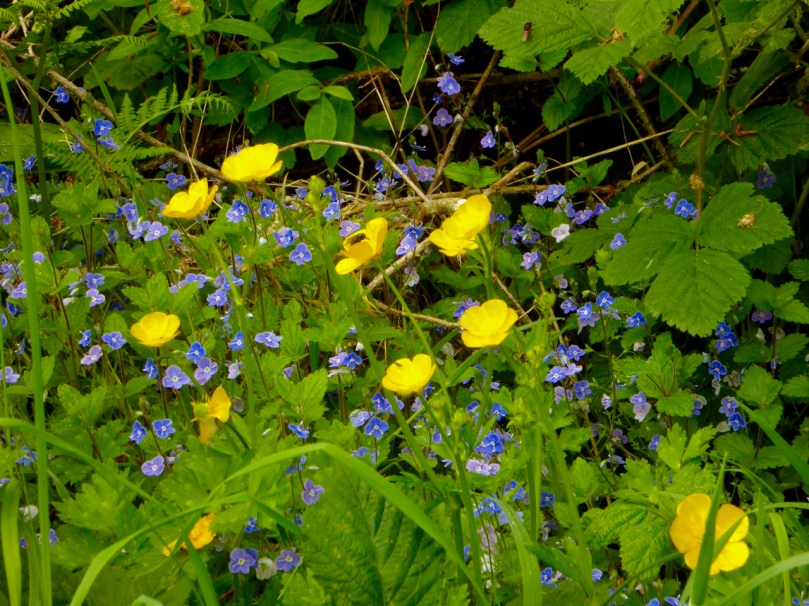
I love the colour combinations you find in the hedgebanks. Wouldn’t this – buttercup and speedwell – make a great dress material?

A baby waterlilly – I was struck by how it looks, as if lit from within.

A final, tiny, flower of the hedges – appropriately name Mouse-ear