Saint Oliver

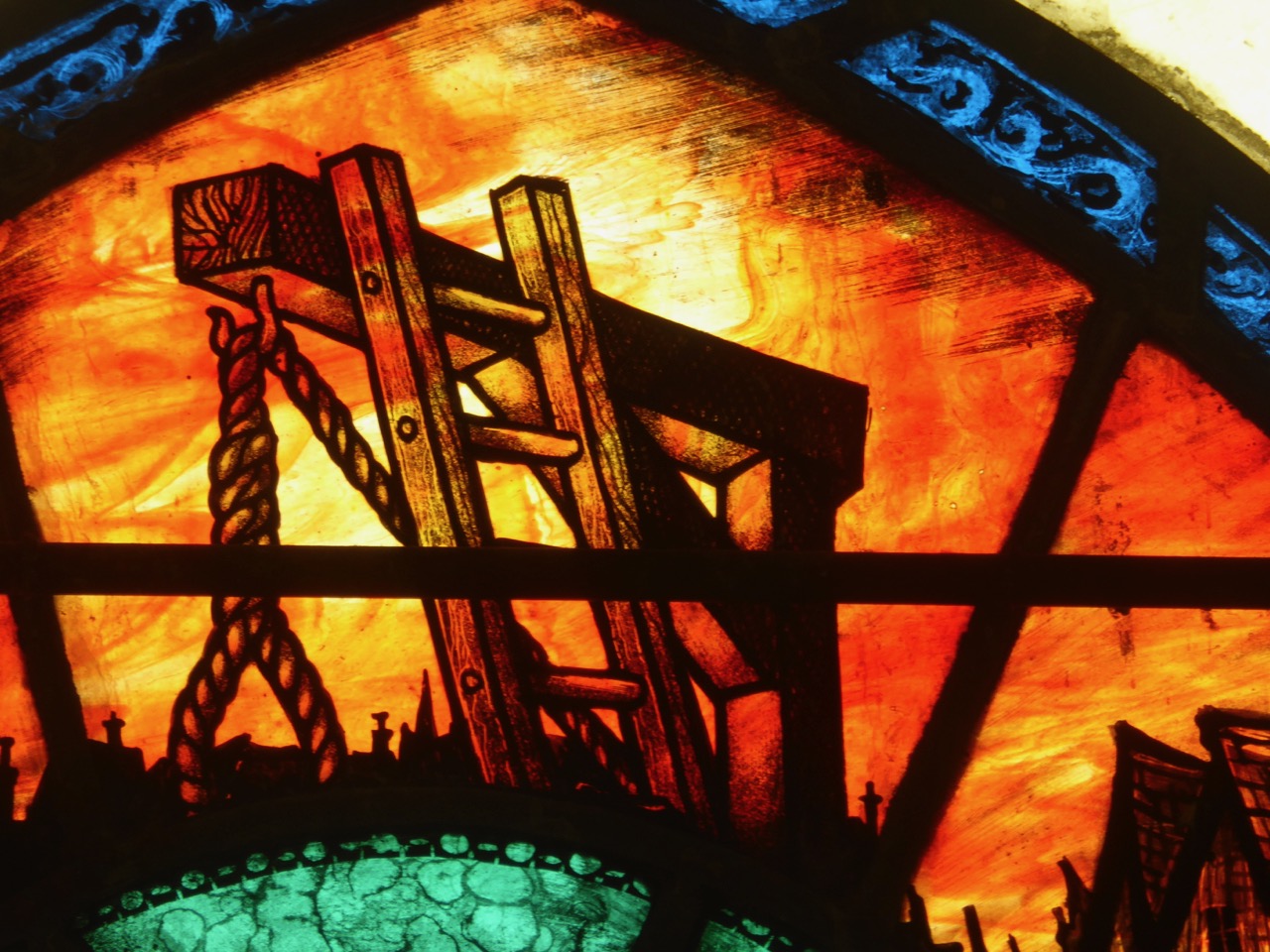
plunkett window close

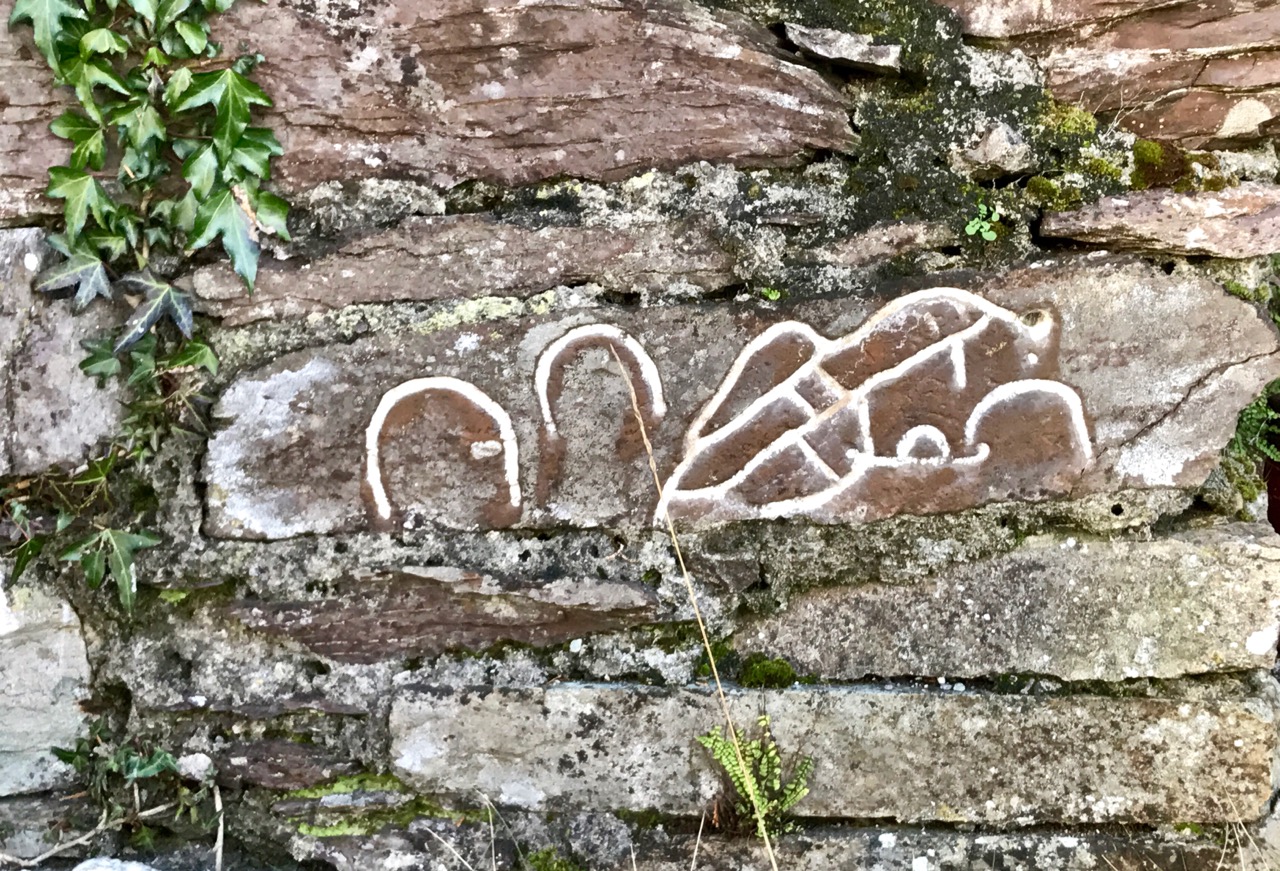
We revisited Inchigeelagh, in West Cork, as we remembered that the church of Saint Finbarr and All Angels had some fine examples of stained glass: Finola is preparing a talk on that subject and our travels are revealing an unexpected abundance of this art in our little bit of Ireland’s furthest reaches. Our last visit to Inchigeela was to inspect the unusual ‘rock art’ that has been built into the wall of the grotto just by the church door.

rock art inchigeela

We are none the wiser about the meaning of the ‘rock art’: suggestions include a dove of peace flying over mountains – but I have yet to be convinced. However, it was a good day for looking at the windows: the sun was streaming through the south facing glass panels and creating a kaleidoscope of colour on the surrounding walls.

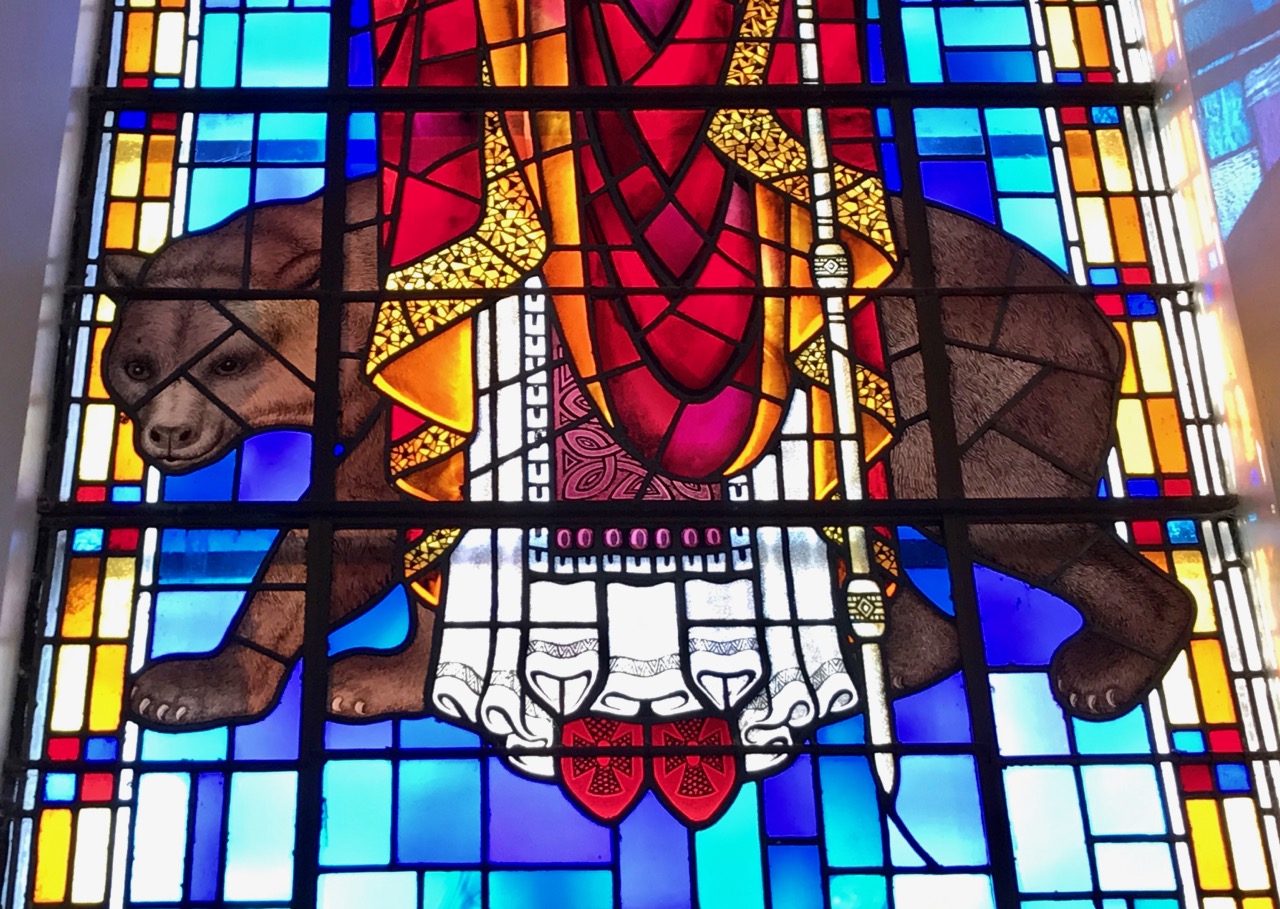
There was plenty to occupy my attention in this church: I had to admire the bear of St Columbanus. This Irish saint spent most of his life on missionary work on the continent and stories about him include taming the bear and yoking it to a plough, and establishing friendships with wolves. I’m not quite sure why, but St Columbanus is the Patron Saint of motorcyclists.

the bear

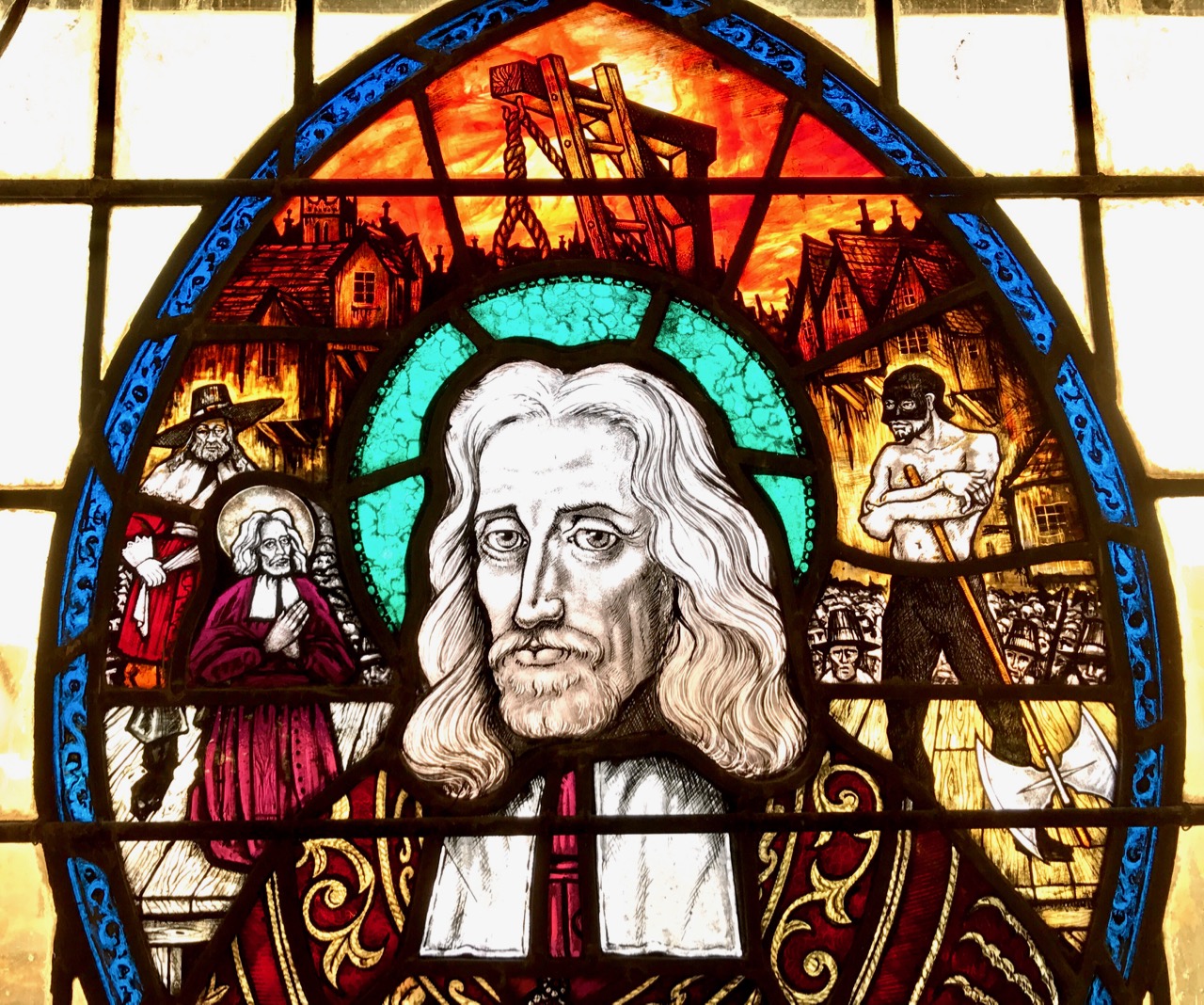
There was one window I had failed to notice amongst the panoply of saints on my previous visit to Inchigeelagh – tucked away at the back of the church: it’s the one at the top of this page – Saint Oliver Plunkett. In some ways it’s the most extraordinary of the windows as it depicts the gruesome death suffered by this Roman Catholic Archbishop of Armagh and Primate of All Ireland at the hands of turncoats and perjurers – and it’s a far cry from rural West Cork. Plunkett was born in 1625 in Loughcrew, County Meath and died at Tyburn, London: hanged, drawn and quartered, in 1681.

Gallows

He was a victim of the Popish Plot, concocted by Titus Oates, an English clergyman who contrived a story that Plunkett was to lead an uprising involving 20,000 French soldiers. Whichever account you read, it seems that no-one believed the story: a trial was held in Dublin but there was no conviction. Plunkett was then sent to Newgate and put on trial again: again the trial collapsed. A third trial, at which Plunkett had no counsel, found him guilty after the jury had retired for fifteen minutes. That it was a monumental miscarriage of justice became evident very quickly: Plunkett’s accusers were arrested – the day after his execution.

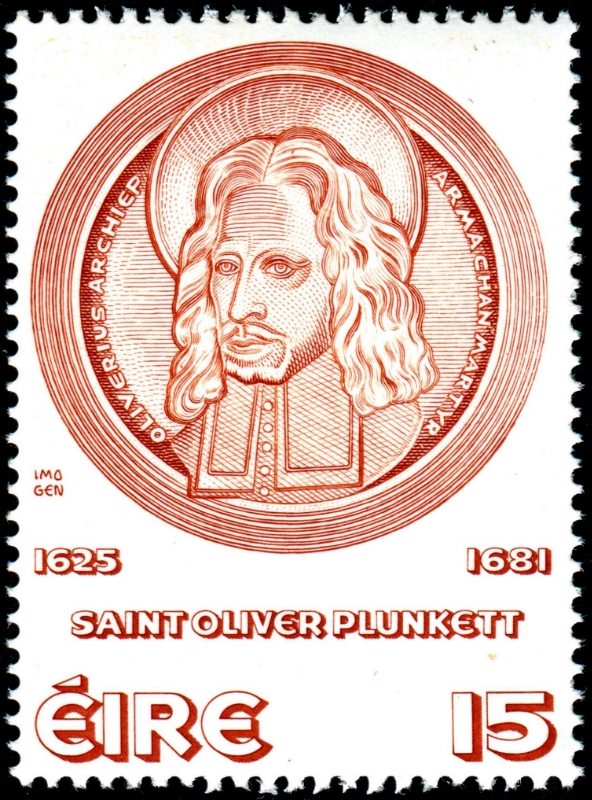
Perhaps the reason why Oliver Plunkett appears in Inchigeelagh is topicality: he was canonised in 1975, thus becoming the first new Irish saint for almost seven hundred years. Above is his shrine in St Peter’s Church, Drogheda, County Louth (his head is on display) and his Canonisation picture. St Oliver is the Patron Saint of Peace and Reconciliation, which in the mid-seventies was timely for Ireland. As ever, it’s timely for the world today. The Oliver Plunkett window was made by Abbey Stained Glass Studios, Dublin in 1992 and the artist was Kevin Kelly.

plunkett-15-stamp

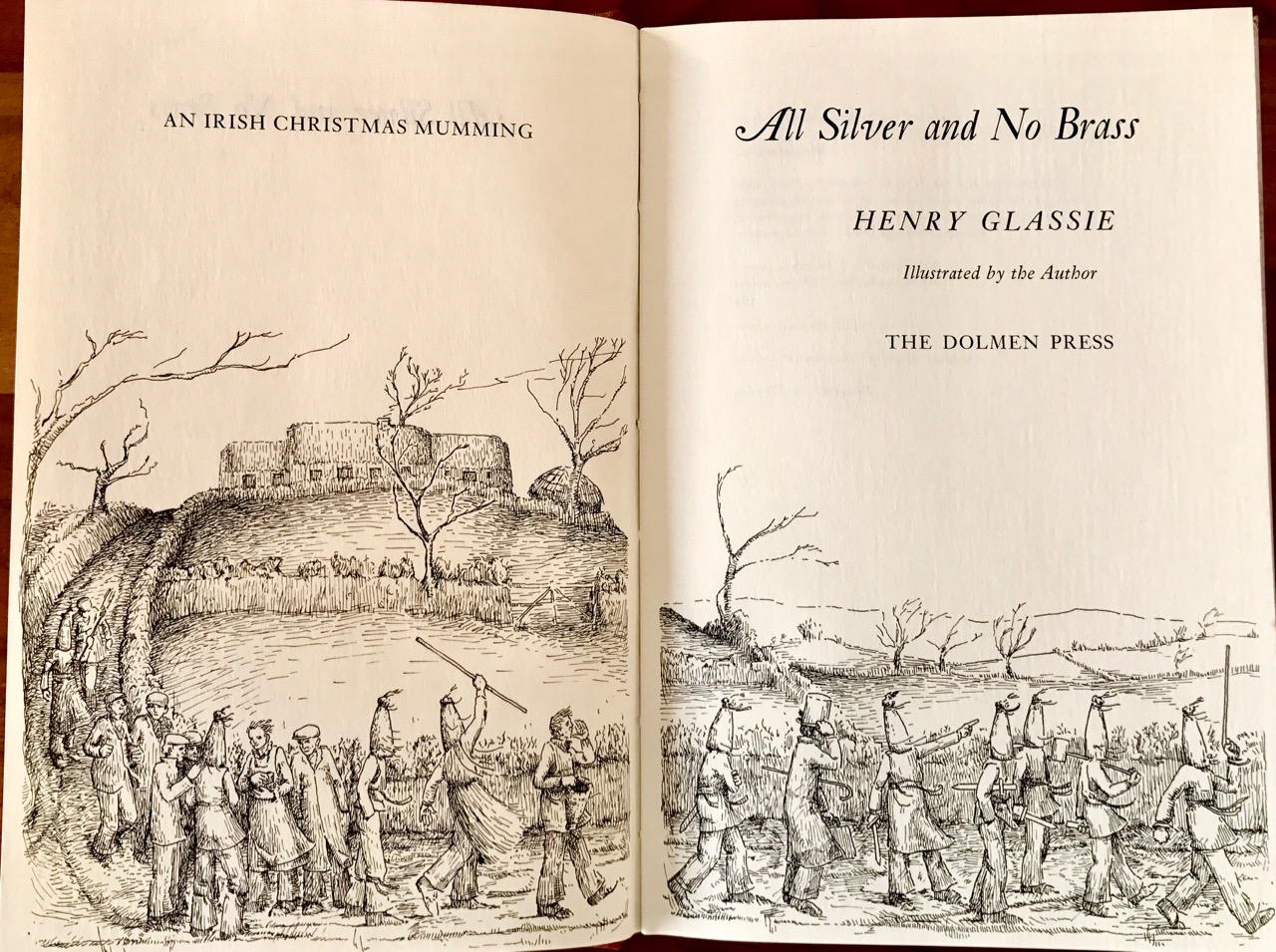
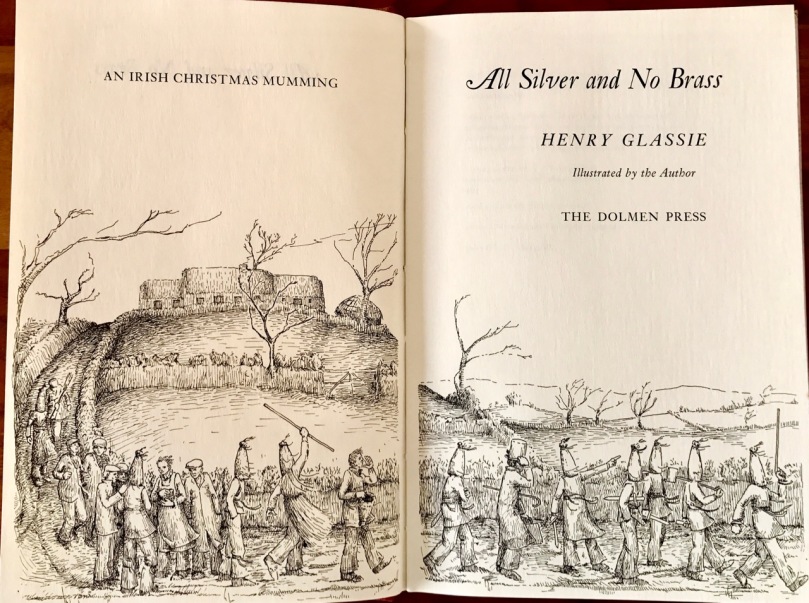
All Silver and No Brass

title page full

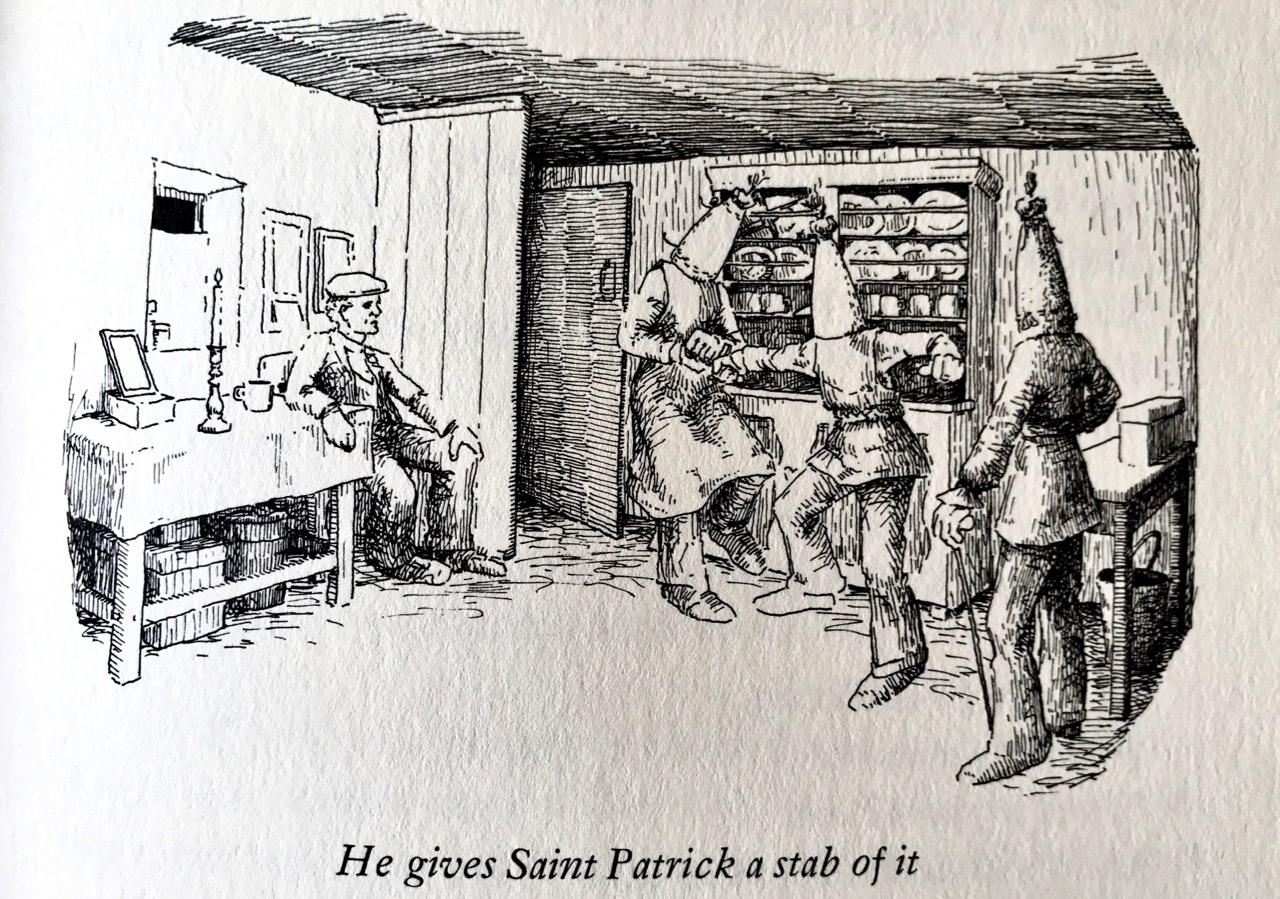
Henry Glassie’s book has been sitting on my shelves for 40 years, waiting to be dusted off and revisited. As a Mummer myself, I eagerly searched out any book on this then neglected subject, and was pleased to find this volume which concentrated on the Mumming tradition in Northern Ireland. It is written and illustrated by Henry Glassie, a Professor of Folklore at Indiana University Bloomington, and is the product of an extended field trip to County Fermanagh in the early 1970s.

Henry Glassie – born 1941 – has written many books about life and traditions in Ireland. His first was All Silver and no Brass, published by The Dolmen Press in 1976

…Winter nights in Ireland are black and long. A sharp wet wind often rises through them. Midwinter is a time to sit by the fire, safe in the family’s circle, waiting for the days to lengthen and warm. It is no time for venturing out into cold darkness. The ground is hard, the winds bitter. But for two and a half centuries, and possibly for many years before them, young men braved the chilly lanes, rambling as mummers from house to house, brightening country kitchens at Christmas with a comical drama. Their play, compact, poetical, and musical, introduced an antic crew and carried one character through death and resurrection…

(From the Preface to All Silver and no Brass by Henry Glassie)
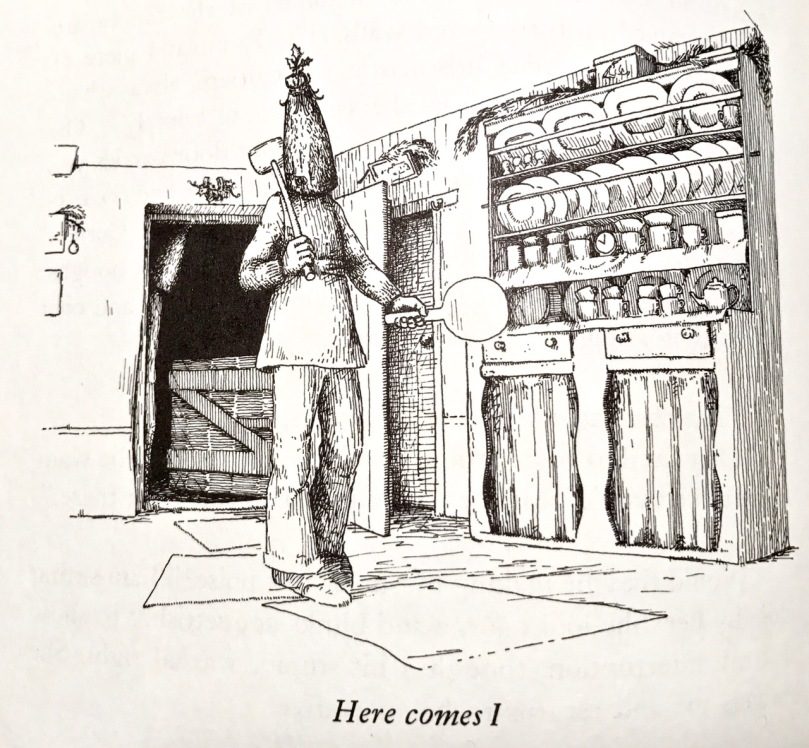
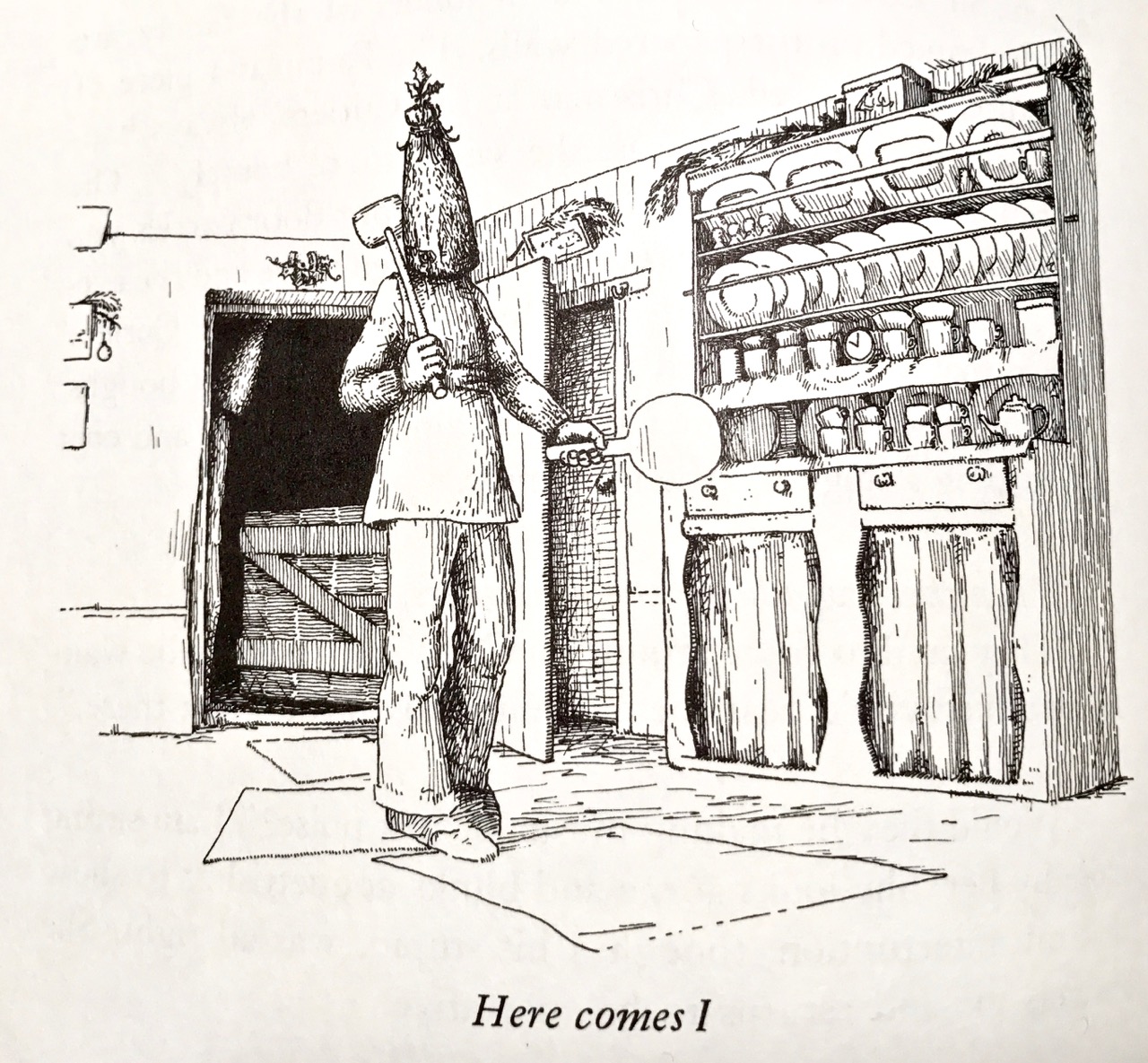
here comes I

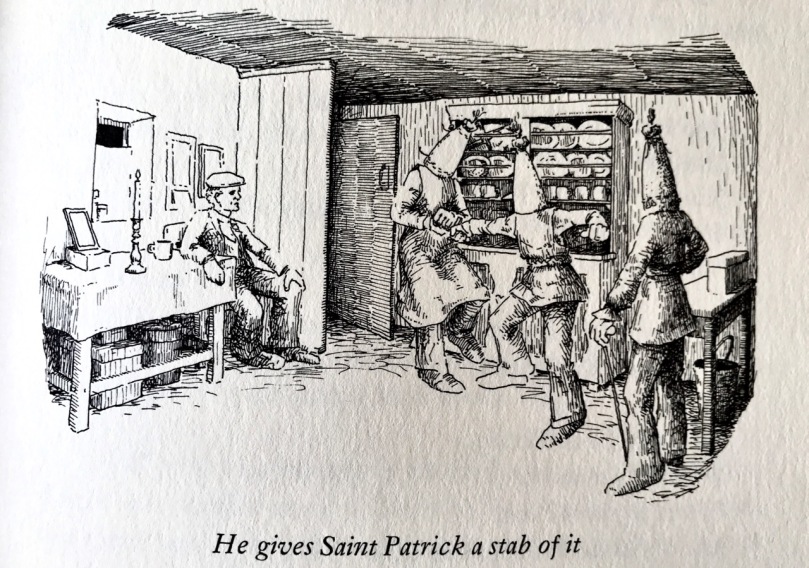
saint patrick

Glassie stayed in Ireland during the Troubles, and deliberately chose a community that was close to the upheavals of those days.

…Mumming was neither my project nor my goal. My project was the creation of an existentially grounded ethnography of people in trouble… We settled next to the barbed-wire bound barracks in the southwest Ulster town of Enniskillen, in the County Fermanagh, about twelve miles north and east of the burning border. I began quickly, luxuriously conducting my study on foot. I came to know every dog, bog, path and field in a small area south of the town, lying west of Upper Lough Erne, its waters as bright, its isles as green as promised in the old ballad of the Inniskilling Dragoon…

Enniskillen, from a photograph dated 1900, and Henry Glassie’s illustration of the mummers ‘Doin the Town’ as remembered in the 1970s

I like the way the book is set out. One section transcribes a number of conversations that Glassie has with people who remembered – and had been involved with – the mumming tradition.

…Most of the kitchens at the centers of those white houses were opened willingly, generously to me. My Americanness set me outside the local social categories, so I got on well with people of opposed political and religious persuasions. More of the people were Catholics than Protestants, more were men than women, more were old than young. Almost all had made courageous adaptations within the terrors that frame our lives. That was what interested me most: how daily life passed sanely, even artfully, despite armored cars hurtling down the country lanes, despite bombs that cracked the air and rattled the windows. I had forgotten all about mumming. Then one evening Mrs Cutler and I were chatting about Christmas and she mentioned the mummers’ arrival as the season’s high point. Suddenly excited, I asked if any of the play’s performers were still alive, and she listed people I knew well. All of them were men in their sixties and seventies who had begun to stand out in my thinking as exceptionally energetic, outgoing, and articulate. From that time on, I asked many questions about the drama, its performance, meaning, and purpose. I learned that the memory of mumming is cherished…
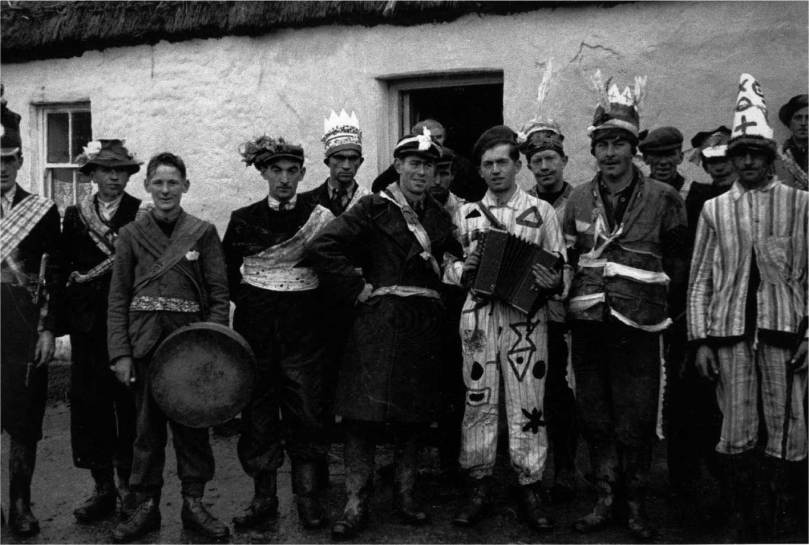
wren-boys

Upper picture – Wrenboys from Athea, Co Limerick, 1946 and below – ‘Mummers hunting the wren’ in Macroom, Co Cork, around 1950

Glassie talks at length to two brothers, Peter and Joseph Flanagan, who have very clear memories of taking part in the mumming.

“…We’d just take every house that we faced, whether we’d be admitted or not. We’d just take every house that we’d face. Of course, there was people on the other hand that wouldn’t admit them because it might frighten the youngsters, you see, or cause some confusion. That’s the way. That’s the way it goes now. So, You all stood at the door and…”

He twists and rapidly knocks five times on the table.

“…’who’s there?’

“…’Captain Mummer. Any admission?’ Yes, aye, or no: that was the way. ‘Any admittance for Captain Mummer and his men?’

“and if the person was pleased to admit you, well, they’d open the door. Throw it wide open for you.

“And Captain Mummer walked in.”

Peter moves quickly from his seat and down the kitchen. His heavy boots sound sharp on the floor. He closes the front door behind him, raps on it thrice, and re-enters. He strides ten feet into the kitchen and stands to deliver his lines, turning his torso to project to the audience assembled in a semi circle that runs from the front table past the hearth to the back table. Joe and I are fixed upon him…

“Here comes I, Captain Mummer and all me men.

Room, room, gallant room, gimmee room to rhyme,

Till I show you some diversion round these Christmas times.

Act of young, and act of age, the like of this were never acted on a stage.

If you don’t believe in what I say, enter in Beelzebub and he will clear the way.”

Frowning, Peter returns to his stool. It has been years since he has thought of the rhymes. “Let me see now,” he says, and sits repeating the speeches of Beelzebub and Prince George under his breath. Joe picks up the large turf out of the fire with the tongs and sets them at the front of the hearth. He sweeps the thick ashes off the iron to his side with a besom, places new turf against the backstone, and arranges the old coals next to them. The smoke and glow increase as the new turf ignite. Joe, too, went mumming, but he went out less often than Peter and cannot remember the part he played. He sits back as Peter starts in again…

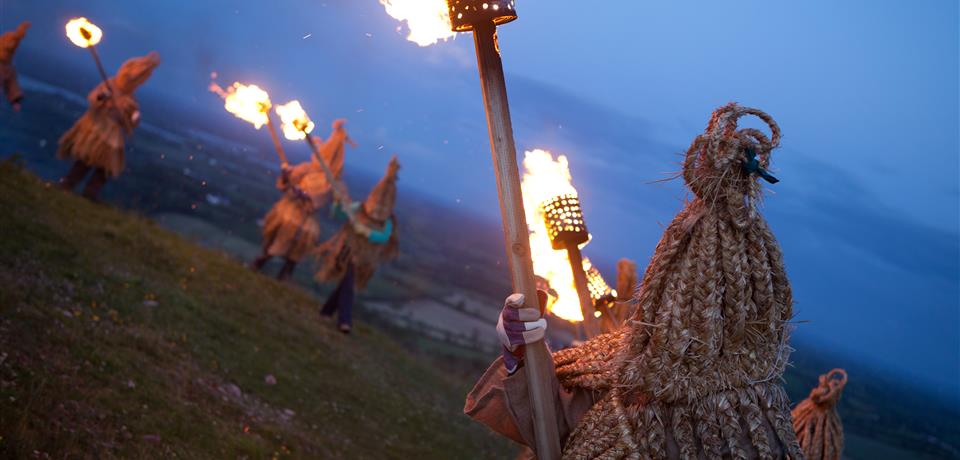
Henry Glassie’s drawing of ‘how a mummer’s hat is made’ together with two examples from more recent times

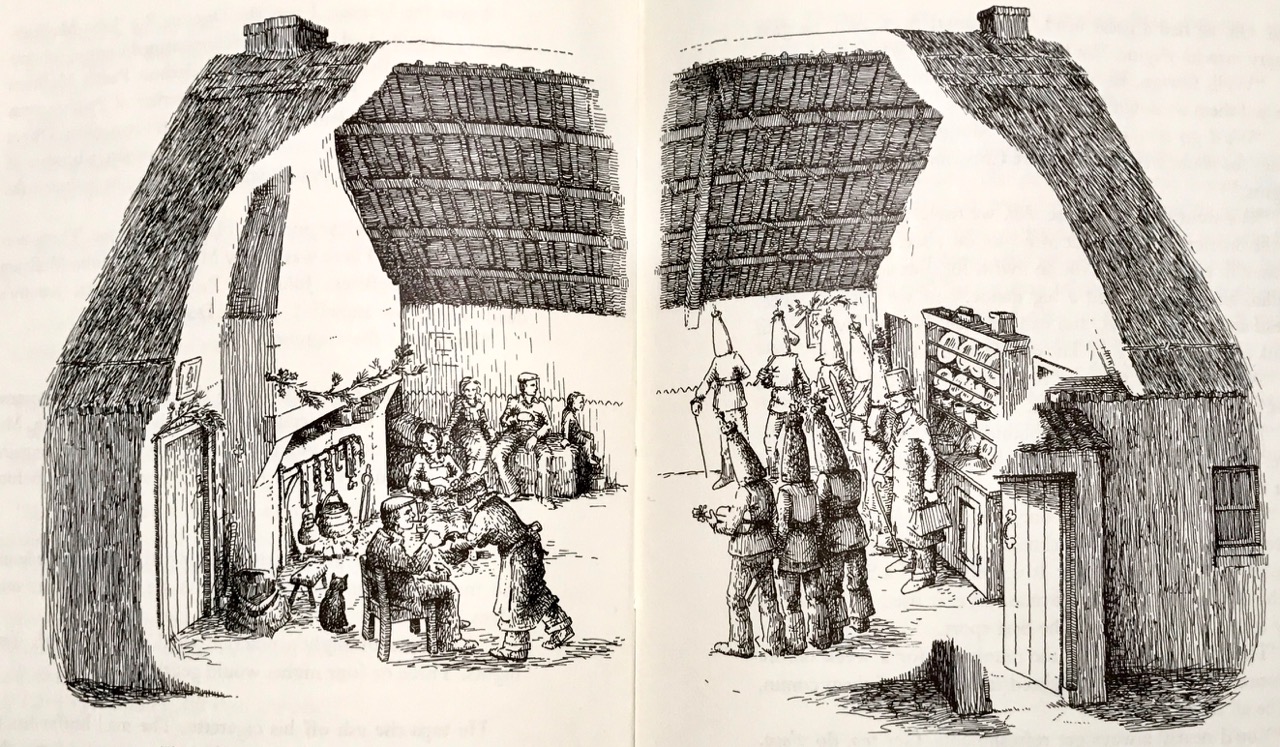
Glassie’s writing goes on to describe the recollections of the play from those who undertook the performances. It is an invaluable record: his informants have now passed away. They would probably be surprised to know that their plays have not been lost: a new generation is performing in the north – and elsewhere on the island of Ireland. They would be even more surprised, perhaps, to learn that their own play breathes again: there is a Mummers Centre in Derrylin and the Aughakillymaude Community Mummers (Aughakillymaude translates as the wooden field of the wild dog) perform regularly in the area around Christmas time once more, while at other times they travel across Europe keeping the spirit of mumming in Ireland very much alive:
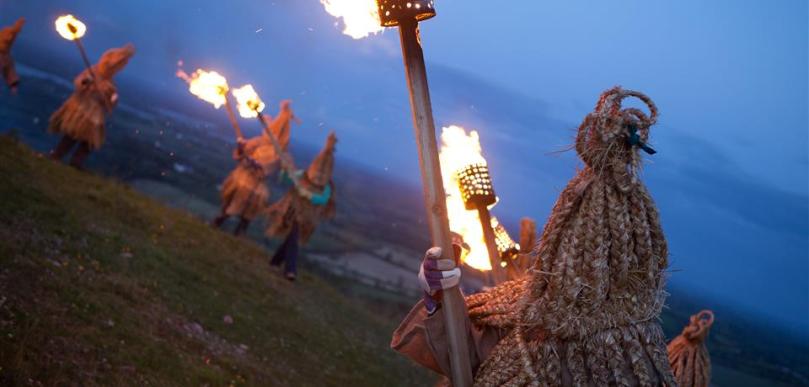
aughakillymaude-mummers

Aughakillymaude Community Mummers in full cry (above)  and (below) Henry Glassie’s reconstruction of the performance before the hearth
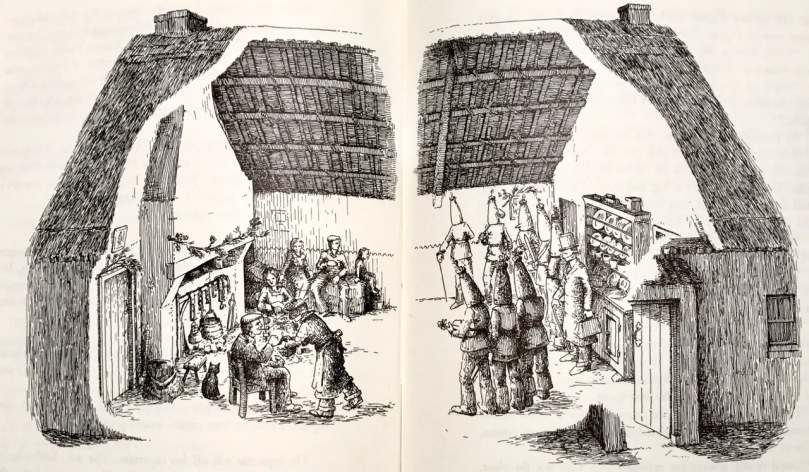
the performance


Travel by Water

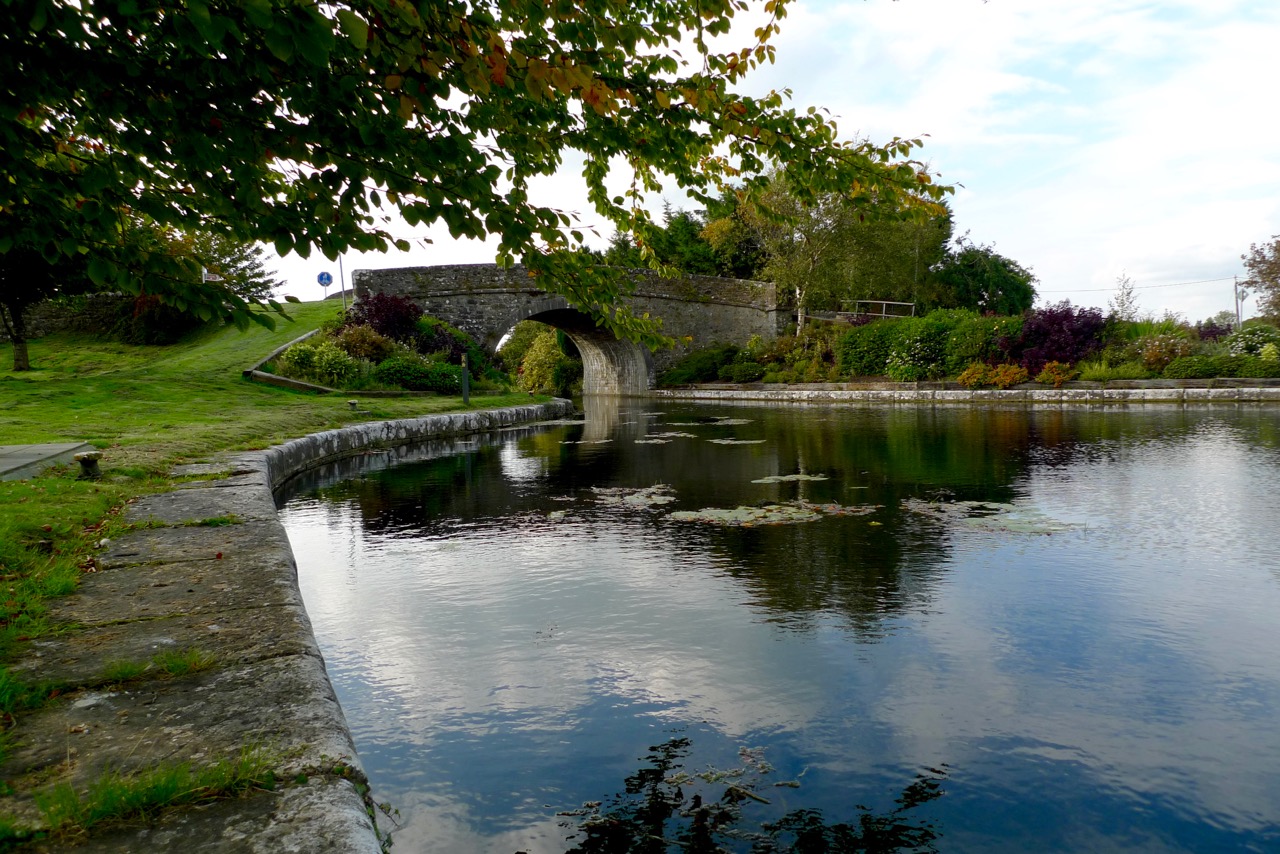
Ballynacarrigy Bridge

We have been on a voyage of discovery – or, perhaps, rediscovery. You remember that recently I reviewed a book which I received as a school prize in 1963: Green & Silver by L T C Rolt? That was a book about travelling by water through some of the canals and rivers of Ireland. The book was published in 1949 but I found out that the journey was undertaken in 1946 – exactly 70 years ago and, also, the year in which I was born. Tom Rolt was a good travel writer and a good observer, and the book is full of descriptions of the places and people that he and his wife Angela came across: it’s a valuable social document and it is rather significant that three score years and ten have passed since they completed their explorations.

Tom Rolt (left) and Angela and Tom Rolt (right) aboard Le Coq, the boat with which they set sail from Athlone to circumnavigate the inland waterways of Ireland between June and September 1946. The photos are taken on the Grand Canal

Back in my more youthful days I also travelled by water, but around the English canal system, a journey of nearly 2,000 miles, taking several months. I also wrote a book after the journey: Canals and their Architecture. Tom Rolt was to have written the introduction to that book but he was unable to, because of illness. As a tribute to him, and to mark his journey through Ireland, Finola and I have been retracing his steps. We should have travelled by water, too, but that would have impinged overmuch on our busy lives here in West Cork. Instead, we covered in a couple of weeks by car what Tom and Angela had taken three months to achieve. Their’s were difficult times, too, immediately after The Emergency when fuel was virtually unobtainable.

navigable waterways

Map of the journey taken from Green & Silver. We have marked on it the sites which we wanted to visit, either because Angela had photographed them or because there was a ‘story’ about the place in the book

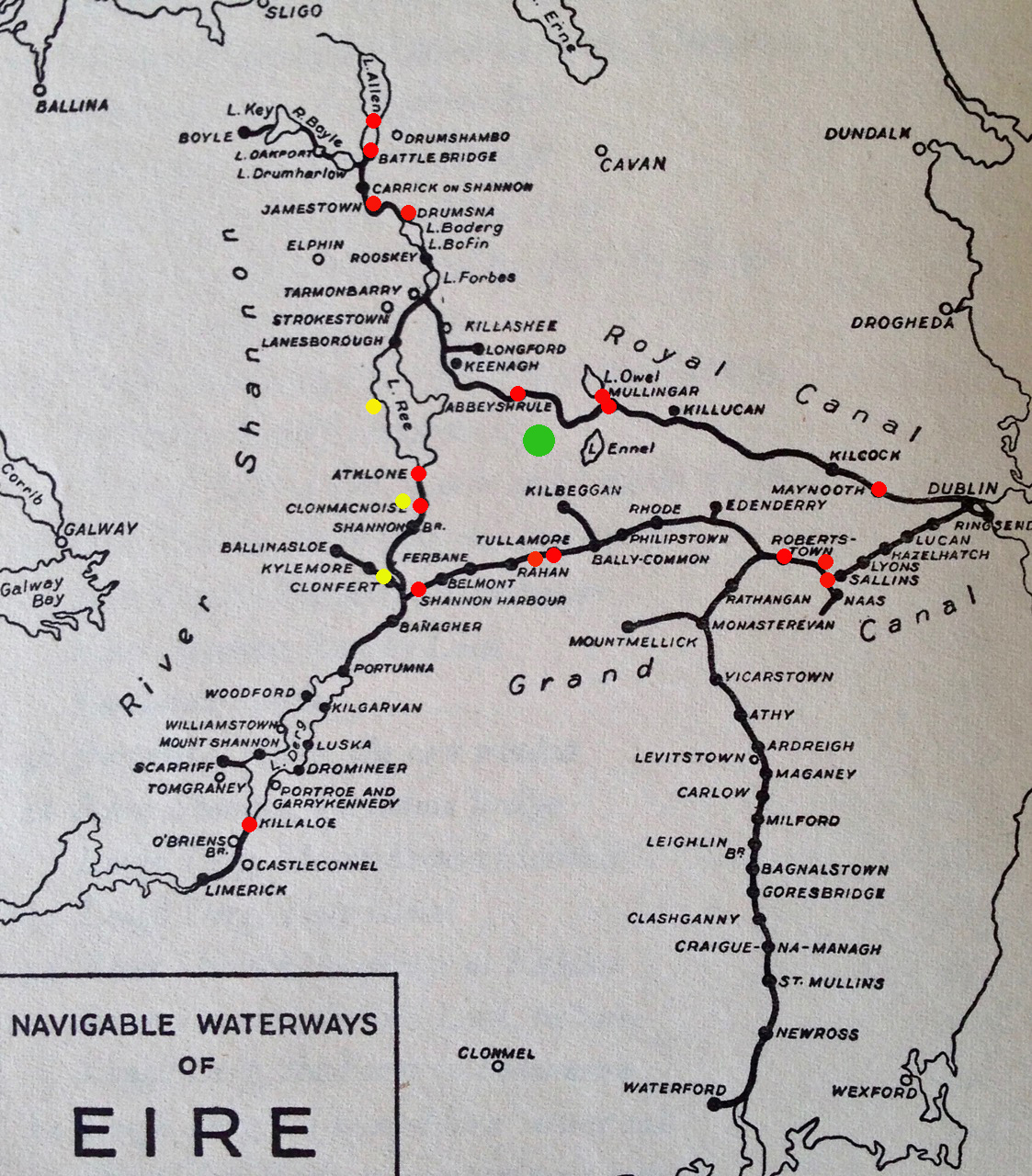
Angela Rolt recorded the journey in her own way – through the lens of her camera. Her wonderfully evocative monochrome photographs illustrate Green and Silver, and provided a goal for each leg of our own travels. Armed with the book and digital scans of all her pictures we set out to retrace the watery steps of Le Coq – the little boat which the Rolts borrowed – and take a new photograph at every place they visited. The aim was to set up each photograph of 2016 to exactly match those of 1946 and, through the lens, to record the differences that have taken place in Ireland during all those years. Of course, there is much more to this exercise than the photos: Rolt’s book contains many stories, of people and places not necessarily illustrated but well described, so we also looked out for those: would anyone today have any memories of the people talked about in the book? And would the descriptions of the places that the waterways served in those days ring true in the present?

harbour town

Tullamore 2016

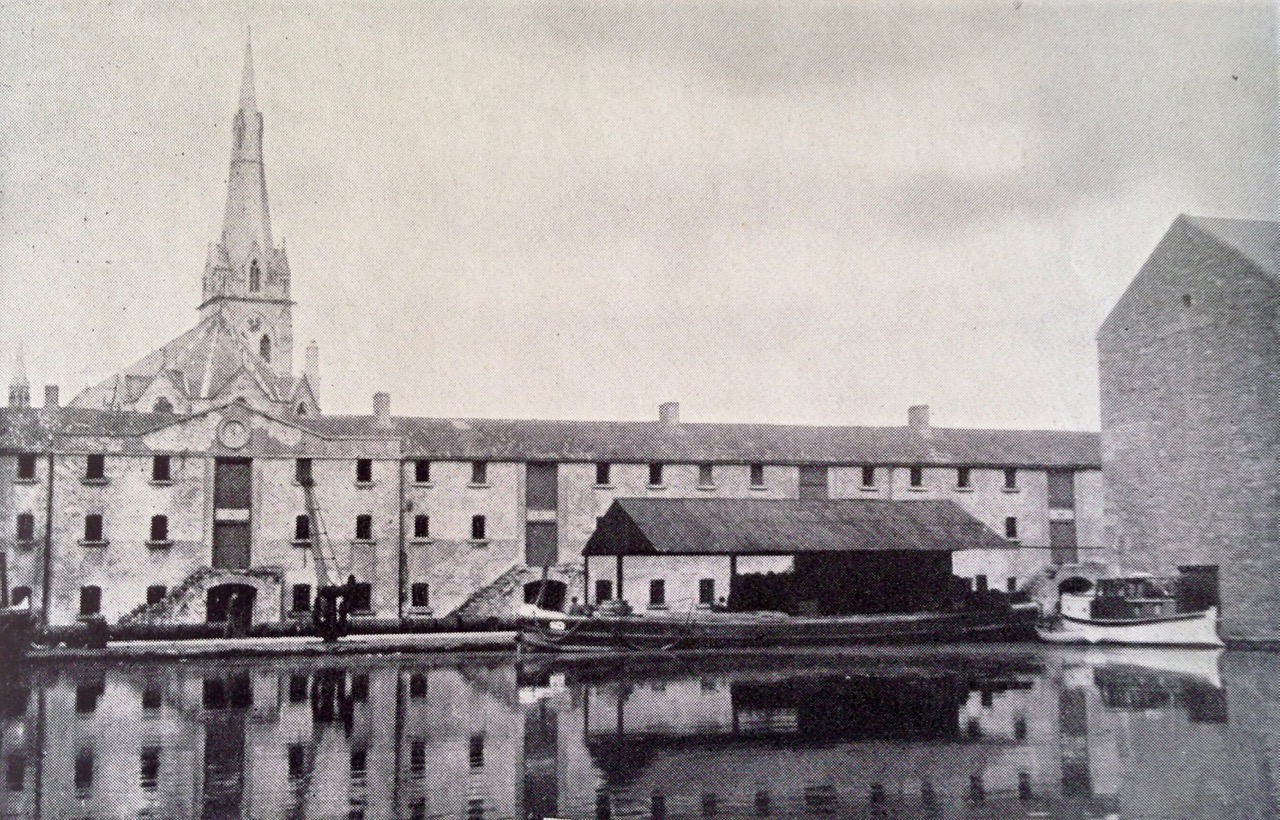
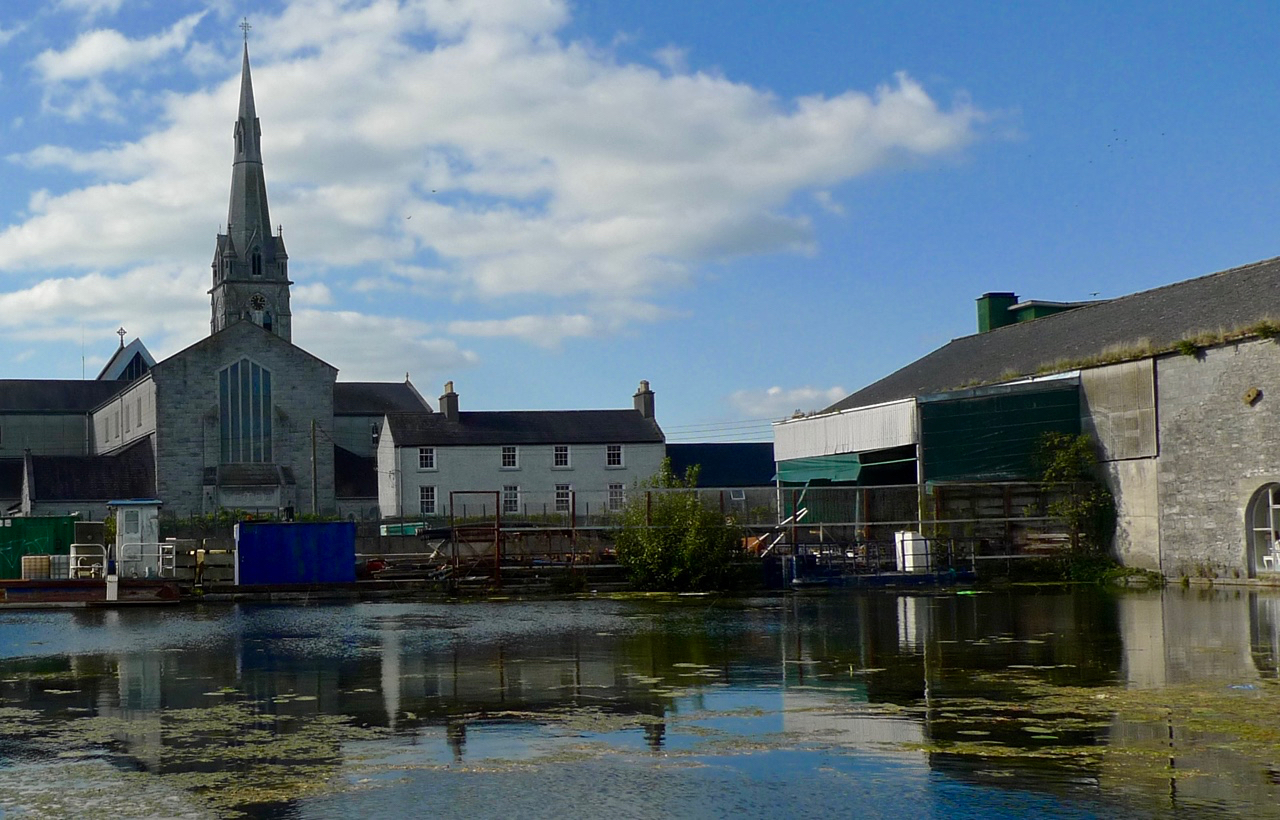
Just one example of our efforts to retrace the steps of the Rolts and record a changing Ireland. Upper photograph – taken by Angela Rolt in 1946 at Tullamore Harbour, Grand Canal. Lower photograph – taken by Robert at the same site. Although the canal harbour itself is intact today – it is an administrative centre for Waterways Ireland – there have been some significant changes. The fine three storeyed warehouses which faced on to the canal 70 years ago have gone, demolished in the 1960s. The Church of the Assumption beyond the harbour was destroyed by fire in 1983 and has since been rebuilt to a modern design except for the tower, which survived the fire

This project will take a little time to fully document. It might occupy a few blog posts! This one is by way of introduction. One thing that struck me most forcefully is the change which the waterways of Ireland have undergone in seventy years. Now all the navigable waterways of Ireland are administered by a single cross-border authority – Uiscebhealaí Éireann (Waterways Ireland); some of the canals which were derelict or near-derelict in 1946 have been fully restored, and many are equipped with modern electric lock gear – something which the Rolts could never have envisaged in their time. However, the volatile economic situations which Ireland has been subjected to in the late twentieth century, and into the twenty-first, have also had their effects, and we found this reflected in some of the stories which we followed during our travels.

Shannon Erne Waterway

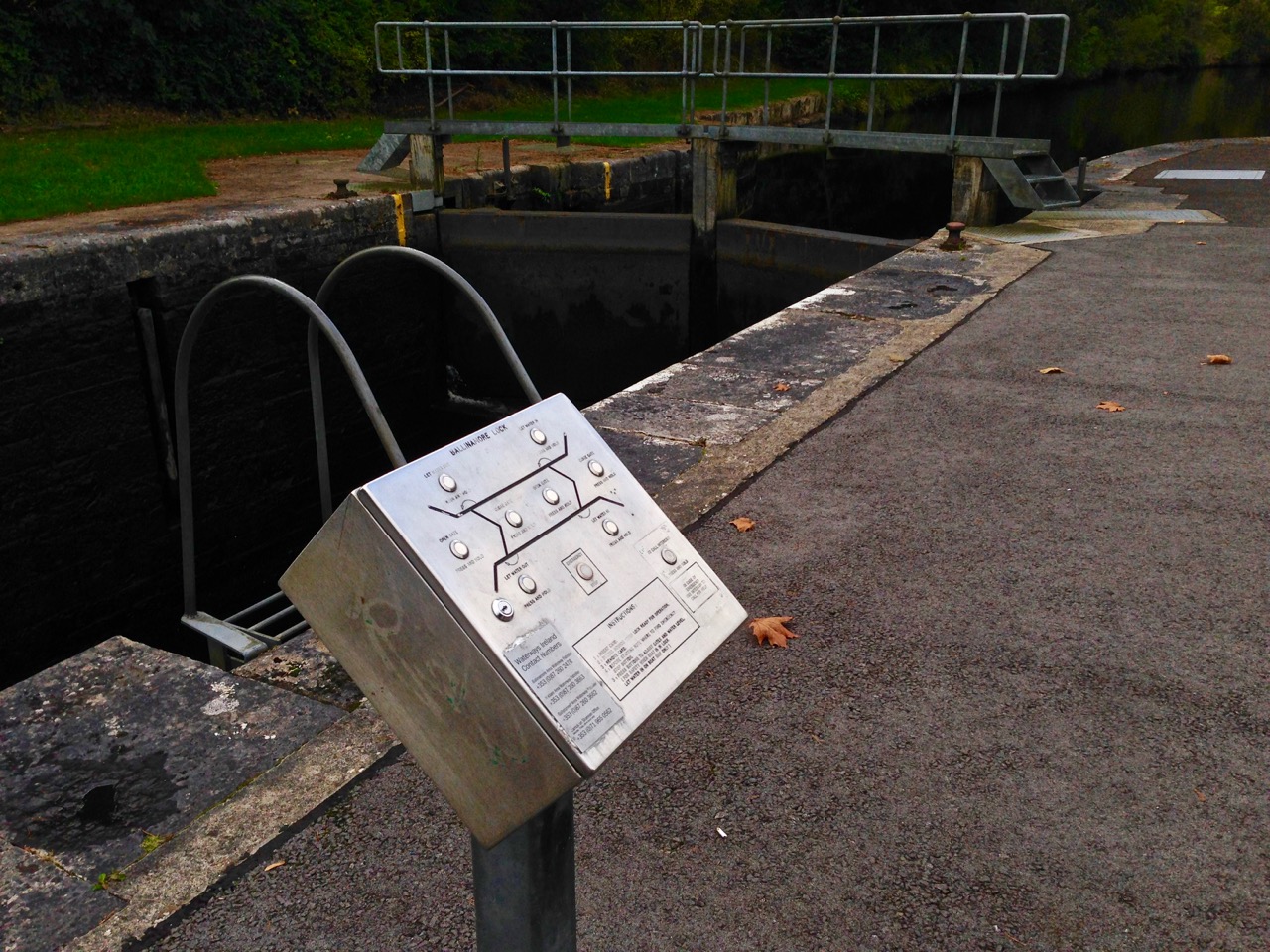
The restored Shannon-Erne navigation links waterways between the Republic of Ireland and Northern Ireland. The 63km canal was constructed originally in the mid nineteenth century but became moribund by 1865. The navigation was reopened in 1994. All sixteen new modern locks are operated electronically by hydraulics: boaters are issued with a key which activates the control panels (above)

Another surprise for me was the quality of the engineering and the scale of the undertakings which Ireland displays on its system of navigations. These were massive construction projects in their day, but they nonetheless manage still to convey a sense of respect for their settings, an appropriateness of all materials used, and a constant appreciation of human scale. The architecture of Ireland’s canals is truly vernacular, something I hope to demonstrate during these explorations.

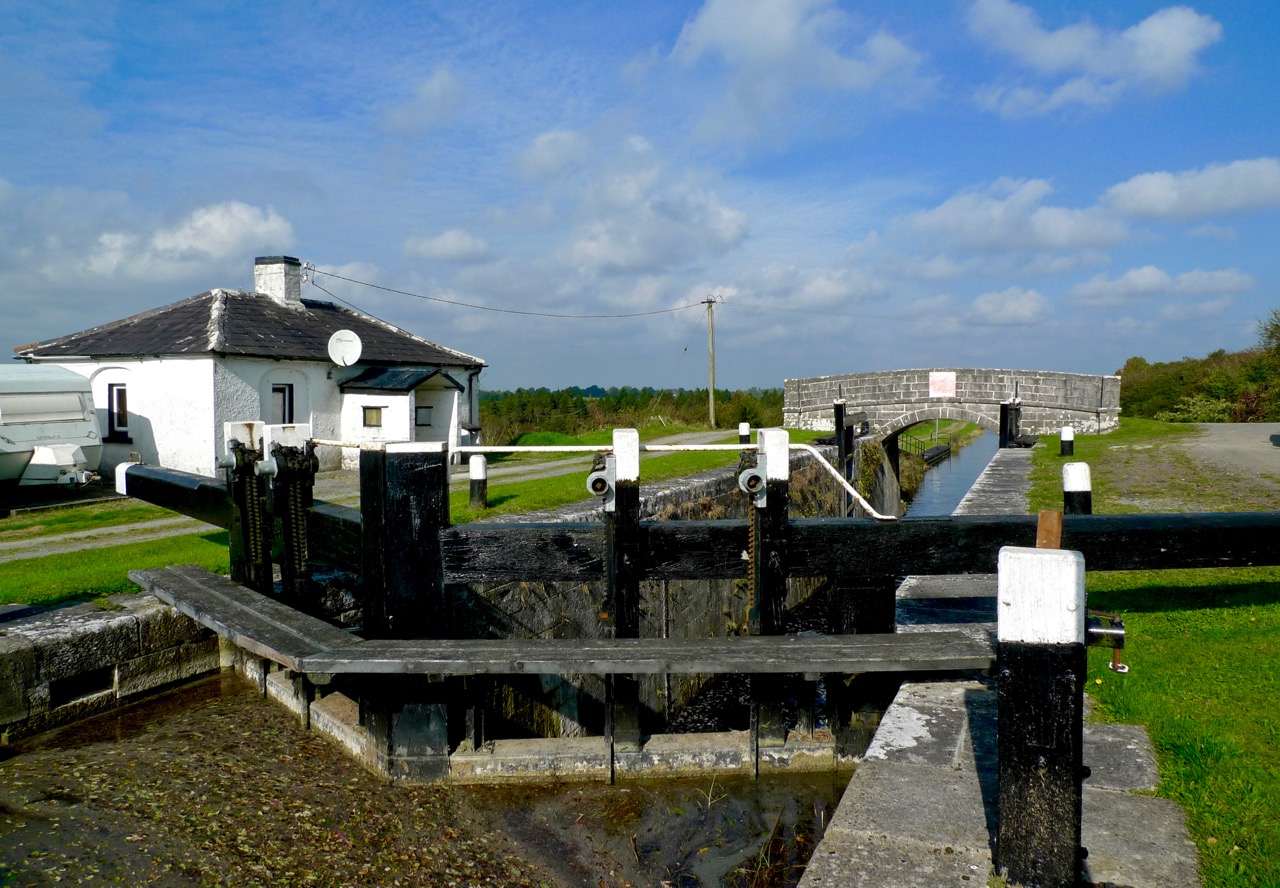
Mullawornia Lock

Mullawornia Lock, Lock 40, Royal Canal, County Longford. The lock-keeper’s house is an unspoilt example of a vernacular architecture which can be seen across Ireland’s canals

To be continued…

The Souvenir Shop

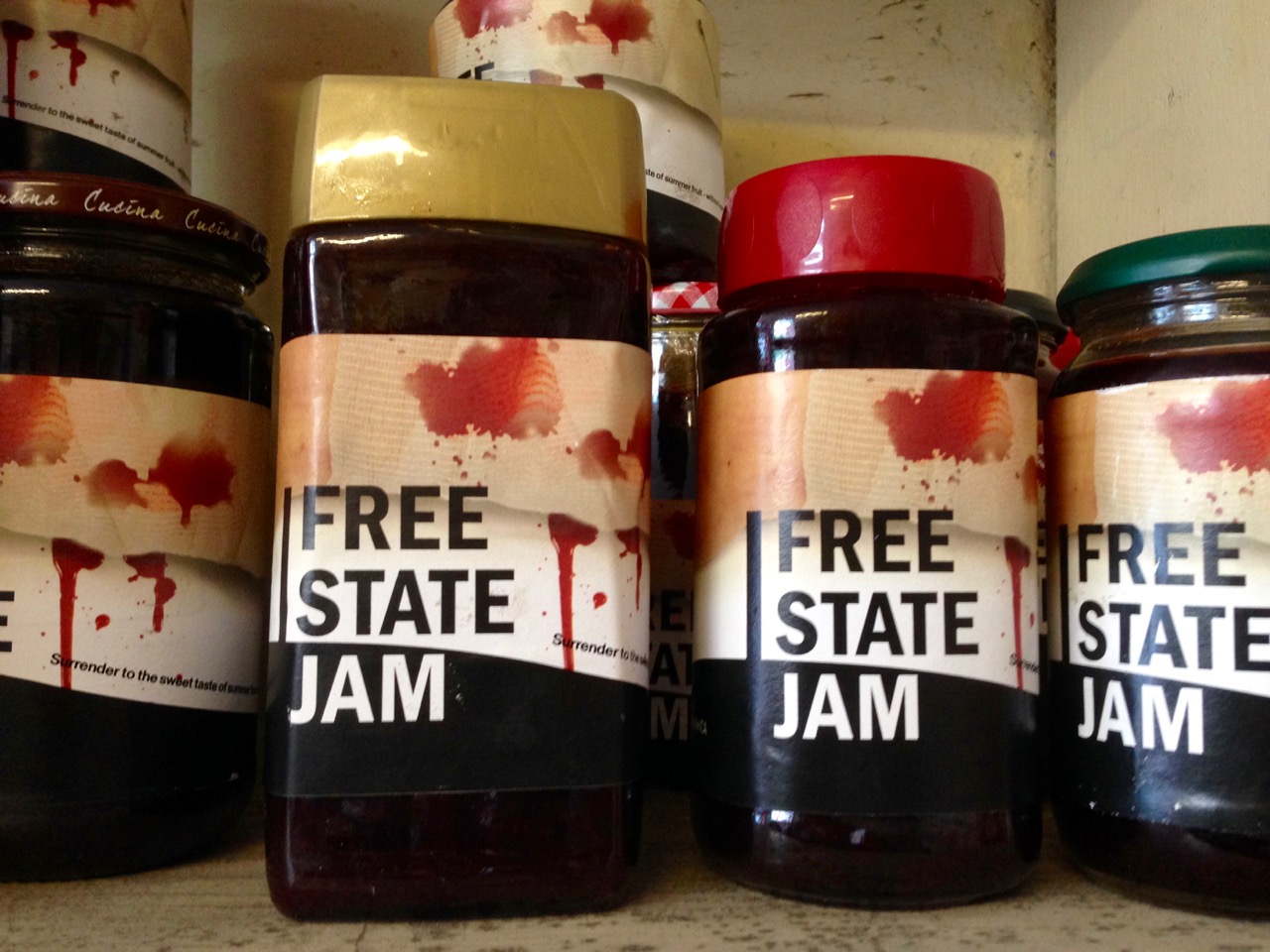
Free State Jam

This is a first – a ‘live’ blog post! I’m writing it inside an art installation running as part of the excellent Skibbereen Arts Festival. The installation is The Souvenir Shop, and it’s a huge hit with visitors. The project is conceived by Belfast artist Rita Duffy and curated by Helen Carey, and is a very unusual perspective on the 1916 Rising commemorations.

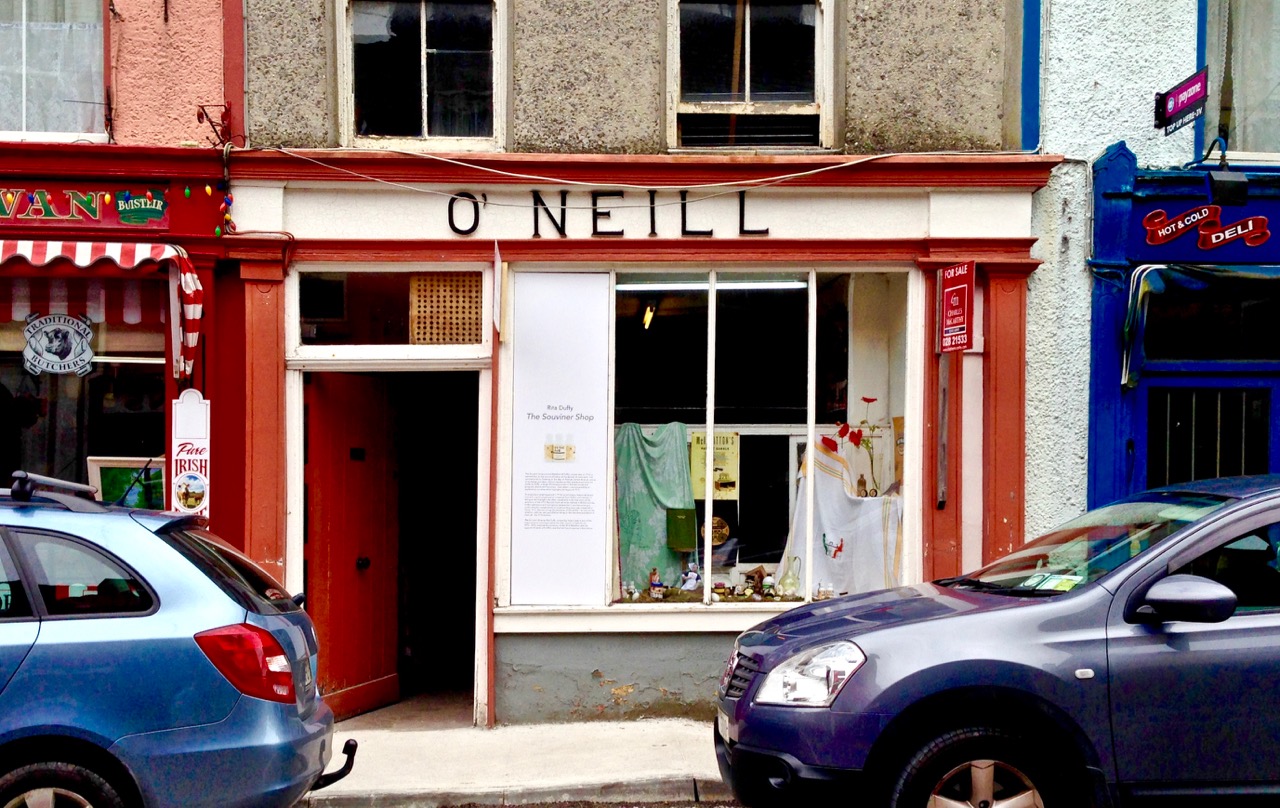
o'neill'sshop

The Souvenir Shop was first shown in Dublin earlier this year – here is a review from the Irish Times – and it’s now in the perfect setting here in West Cork: O’Neill’s old sweetshop on Townshend Street in Skibbereen. The premises has been empty for years and stepping inside it today is stepping into the past: a shop unchanged over generations.

customers

Rita in Shop

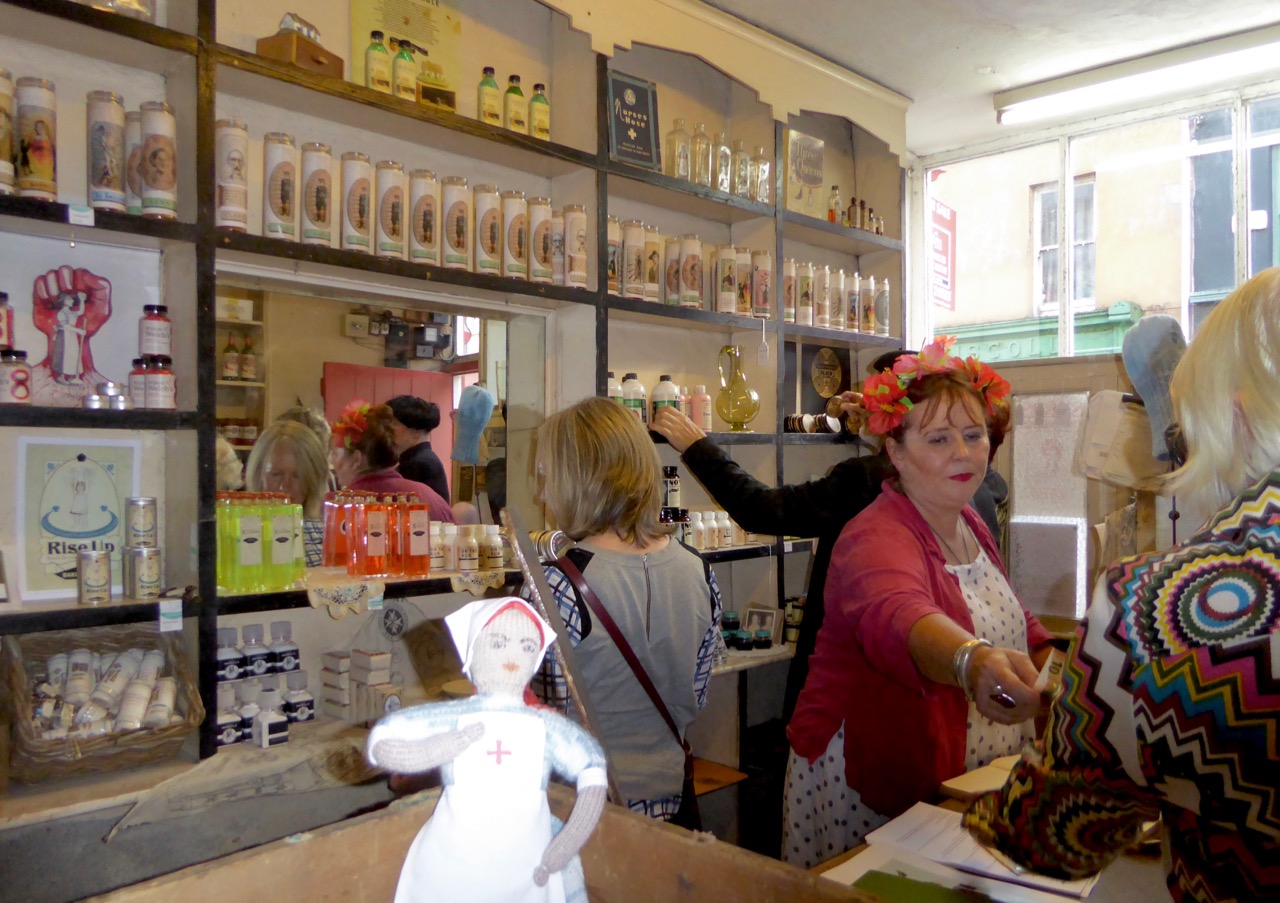
The atmospheric and nostalgic interior of O’Neill’s shop brought back to life by Rita Duffy (above): it displays and sells ‘souvenirs’ of the 1916 Rising and the events around it. It’s a piece of art which includes and embraces its customers and the ‘invigilators’ who, today, are Roaringwater Journal creators Finola and Robert

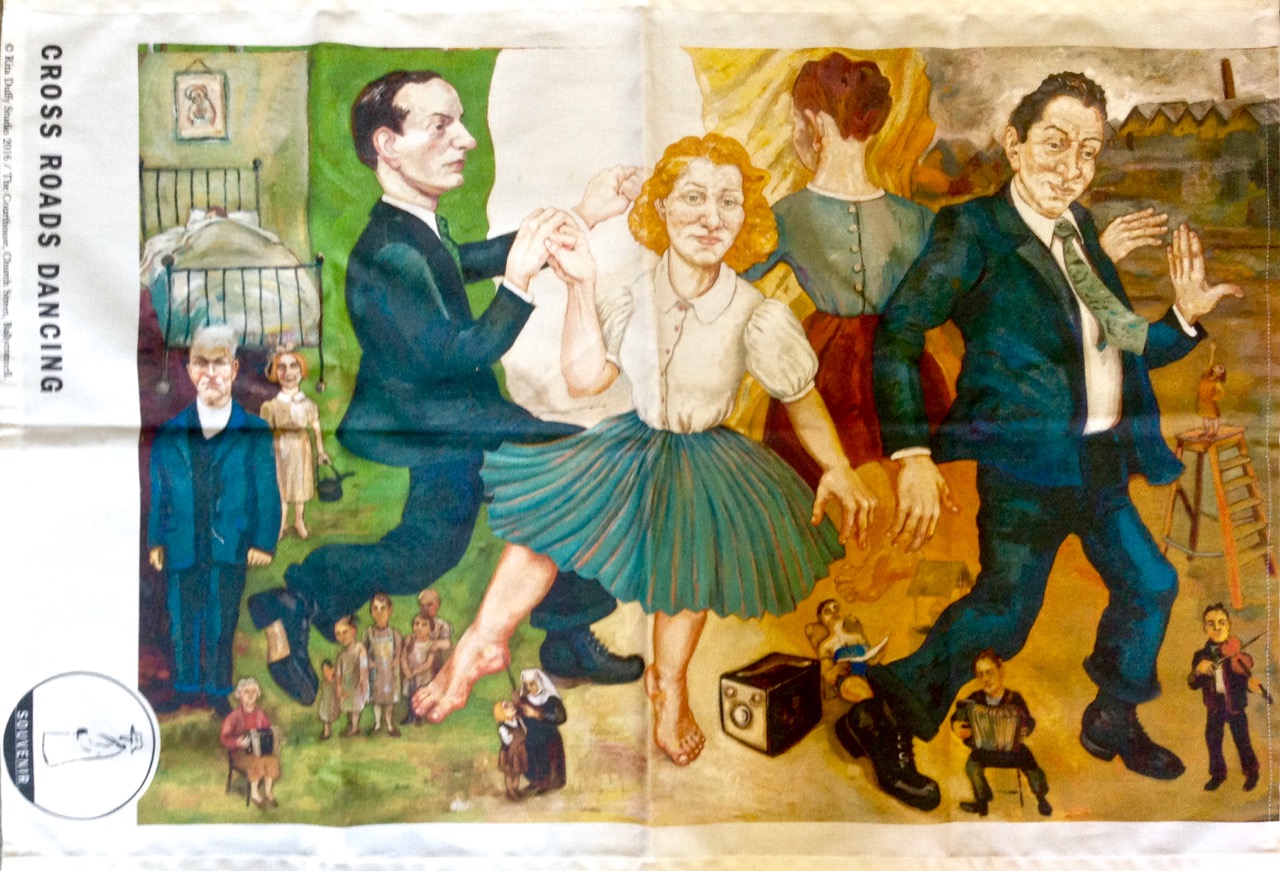
Finola and I are on our second stint behind the counter: we are the shopkeepers! We try to keep order as customers crowd in to look at the wares in display, all of which are designed by Rita. We met her in the shop on the first day of the exhibition and she explained that, during the Rising on Easter Monday 1916, many shops in Dublin were looted: the first was Noblett’s Sweet Shop on Sackville Street, and another was Tom Clarke’s tobacconist shop on Great Britain Street (now Parnell Street). She has re-made or re-imagined these shops for the installation, and filled the empty shelves of O’Neill’s with an incredible array of objects – most of which are for sale.

Dublin’s 1916 Easter Rising was accompanied by widespread looting of shops: Noblett’s Confectionery (top left – Dublin City Photographic Collection) and Clarke’s Tobacconist (bottom – National Library of Ireland) were among the first casualties. Tom Clarke himself (above right) was the first to sign the Proclamation of Independence, and was a driving force behind the rebellion

Rita Duffy’s subversive commentary on the Rising and the events that led from that time towards the present uneasy ‘peace process’  includes re-interpretations of everyday items that we would expect to see on the shelves of our local shops – soap, boot polish, tinned foods, tea, sweets, packets of seeds… It all looks very normal when you walk in – with a period flavour. We are finding that many of the customers today have fond memories of O’Neill’s sweet shop recalled from their childhoods and are delighted to come in and see it back in business: we can’t resist nostalgia. The initial impression is exactly that – a rosy-hued look back on our remembered past. Then we all start looking more closely at what is on the shelves and we are jolted out of our reveries…

Just a few of the items on sale today in The Souvenir Shop. Look carefully – ‘No Surrender stain remover’ shows James Connolly’s blood stained shirt worn during the Easter Rising; ‘His Majesties Ltd comforting diasporic foot soak for the wanderer who seeks a better footing’; ‘On The Run embrocation for the sore and twisted limbs of the dissident thinker (apply before sleep in a safe house)’; ‘Put my grandfather back together’ bandages; ‘Towards a New Republic Clear the Air vapour candle’…

It makes you laugh, initially – and then you have to think what you are laughing about. Balaclavas, in powder blue and pink with orange trim, for example. Black and Tan boot polish…? There’s a whole lot more to The Souvenir Shop. Rita Duffy has engaged the services of the Irish Countrywomen’s Association in Cavan (her studio is in Ballyconnell) to make Free State Jam and to knit – the balaclavas for example – but also some wonderfully bizarre religious iconography: did you ever see a knitted Pietá before?

Unexpected knitting courtesy of the Cavan Irish Countrywomen’s Association

Rita has also produced tea towels, t-shirts, and some embroidered place-mats carrying rather uncomfortable messages to entertain your dinner guests with. There are also ceramics: teapots, dishes and glassware. It’s such an eclectic range of goods on offer in this shop. That’s why the crowds come in and spend what seems like hours browsing the shelves that once held jars of sweets and packets of tea. There are sweets and tea here today – children are delighted to be given some free samples – but they probably don’t understand the hidden messages on the colourful packaging.

Most stark, perhaps, are the seeds: Seeds of the Revolution: two packets for 5 Euros. The messages here are fairly easy to read, although harder to digest. They really are seeds in those packets, but you’ll have to plant them to find out what comes up, perhaps something else that has a subversive implication: I’ll tell you what mine are next spring!

Seed rack

There’s so much in The Souvenir Shop that I haven’t included in this little review – and I’m far too busy trying to fend off the demands of the customers while I’m writing this. If only they would get into an orderly queue – it’s like some sort of insurrection in here… But we’ll cope – and encourage you to come and see this piece of artwork while it’s still on (it finishes on Monday 1st August at 5pm). Step inside and you become part of the exhibit – just like we are right now. You’ll enjoy it, perhaps more than you should. It will certainly leave you thinking.

Cross Roads Dancing

The Souvenir Shop (…nothing is as it seems…) is one of the major projects commissioned by the Arts Council of Ireland’s Art 1916-2016, marking the centenary of the 1916 Rebellion – with the support of Cavan Arts Office and the Irish Countrywomen’s Association. It runs through the Skibbereen Arts Festival between July 22nd and August 1st in O’Neill’s old sweetshop on Townshend Street

Peas + Beans

Lilian

Lilian Roberts Finlay

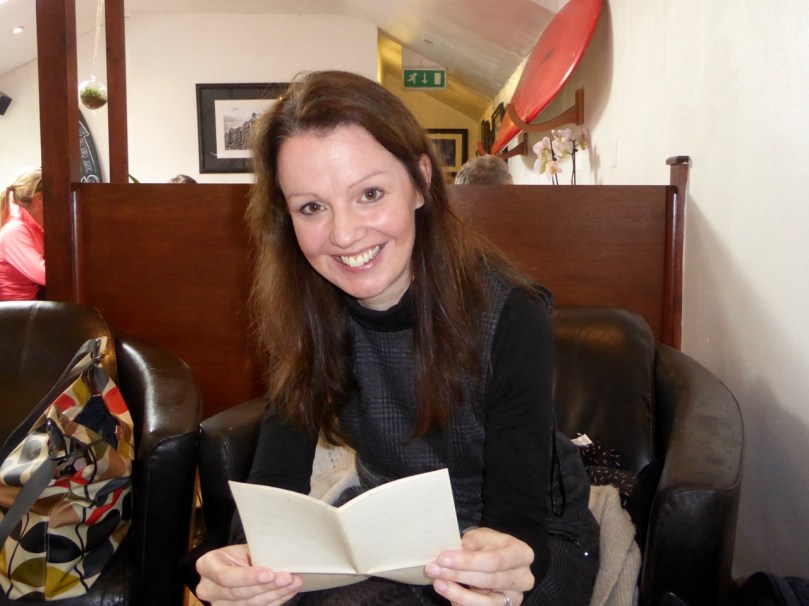
Lilian Roberts Finlay, the novelist and short-story writer, was brilliant, complicated, fascinating, infuriating, mendacious and beautiful. She was also my mother. She wrote all her life although she didn’t start to publish until her 70s. I recommend her book of short stories, The Bona Fide Husband, and her first novel, Always in My Mind (after that, things went downhill). Old copies are still available through Amazon.

Old Abbey Theatre

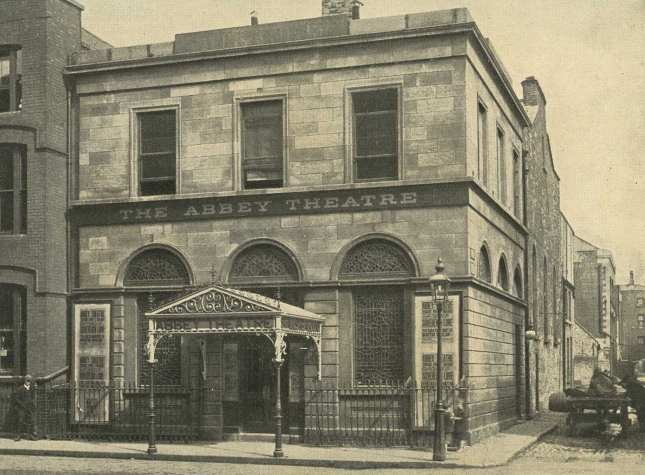
The original Abbey Theatre , which was destroyed by fire in in 1951. The Abbey School of Acting was housed in the Peacock Theatre, an annex to the main theatre

Lilian died, aged 96, in 2011. Because her books have been out of print for a long time I was surprised when a Google search turned up a very recent reference to Always in My Mind. Intrigued, I logged on to a blog called Chasing Aideen, written by Ciara O’Dowd Conway. Ciara researches and writes (beautifully) about women in the early days of the Abbey Theatre, Ireland’s famous national theatre. She had been delighted to discover passages in the novel that described the narrator’s experiences as a student in the Abbey School of Acting, since the women she researches had been associated with that period (the 1930s) of the Abbey Theatre and the Abbey School as influential and pioneering actors, teachers and directors.

Riders To The Sea still

Shelagh Richards, Sarah Allgood and Ria Mooney in a 1937 film of Riders To The Sea by J M Synge

As part of the 1916 centenary celebrations the Abbey Theatre, last year, announced its 2016 year long programme. When the programme revealed how scandalously underrepresented women were as writers and directors, it created a furore. Almost overnight the WTF/Waking the Feminists movement came together to work for gender equality in Irish theatre. An exhilarating meeting in November galvanised a powerful new direction for Irish theatre women and they haven’t looked back since.

Dublin Opinion cover, 1916, De Valera, Irish women, constitution

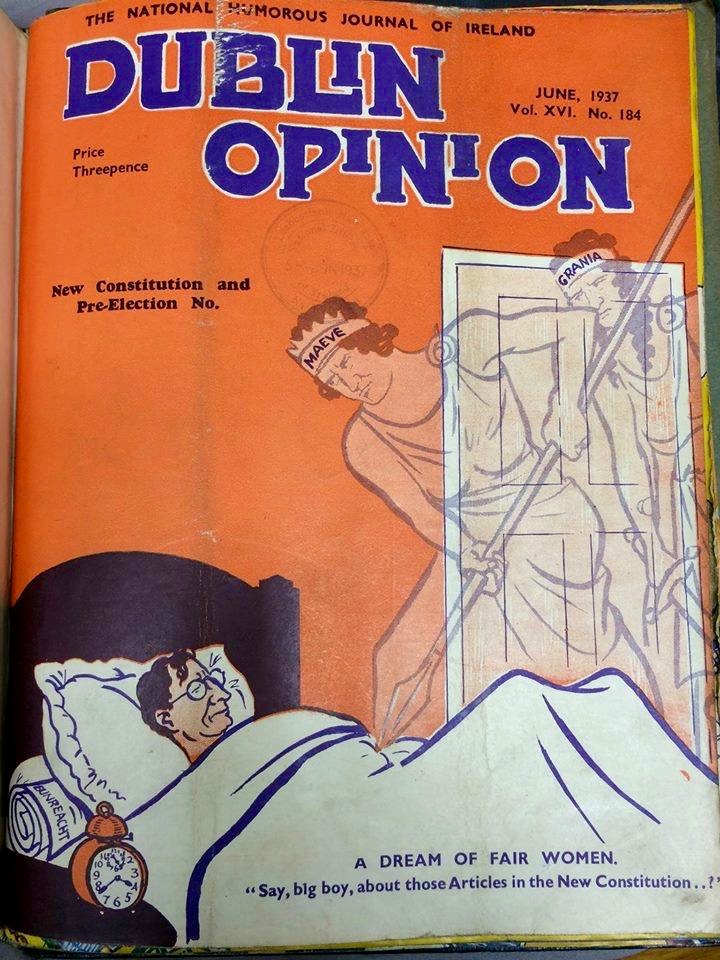
This 1937 cover of Dublin Opinion, a satirical magazine, shows the ancient and powerful women of Ireland haunting De Valera’s dreams. While women had fought for Irish freedom and while the 1916 Declaration of Independence promised equality for all citizens, the Constitution assigned women to a ‘special role in the home’

For Ciara it was all too reminiscent of the challenges that had faced her ‘girls’ in the 30s and 40s. Was it really still going on, 80 years later? She wrote a piece on the WTF website – sorry, this is no longer available, but it helped me to understand her reaction and her decision to use her website as her own personal contribution to Waking the Feminists.

Lilian 1937

Lilian, about the time she studied at the Abbey School of Acting

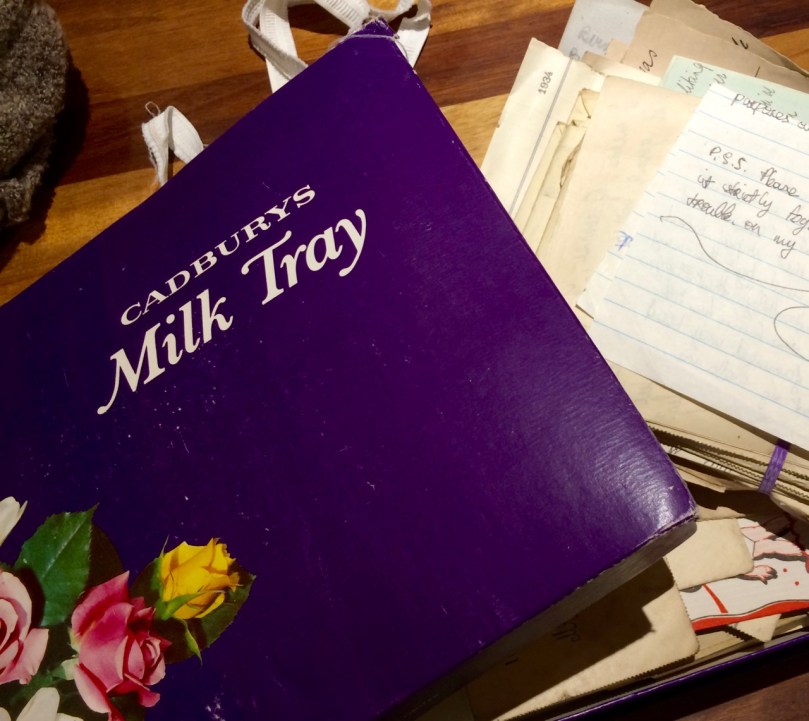
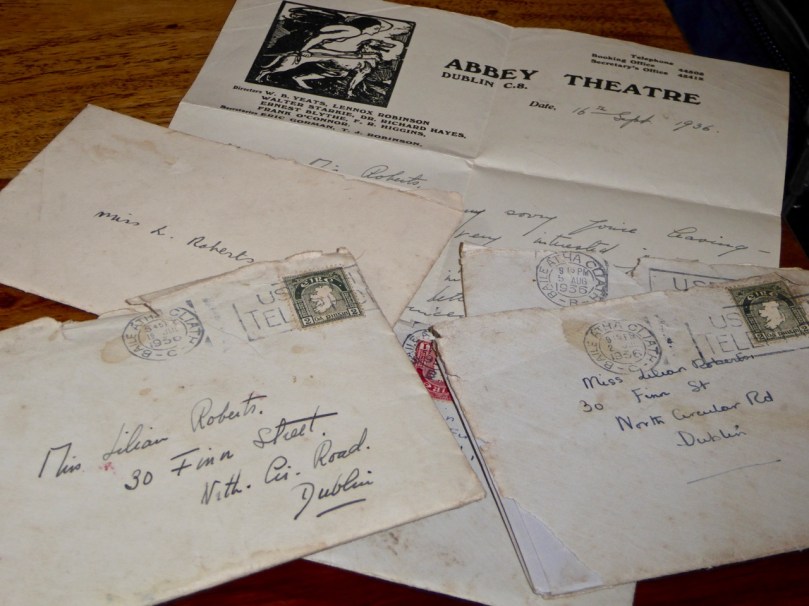
Back to Lilian. When I read Ciara’s blog piece, I contacted her to say that we had some letters from my mother’s Abbey School of Acting days that might be of interest to her. Not only that, I was able to put her in touch with Ria Mooney’s niece, a friend of mine who lives in Vancouver. Ciara and Robert and I met over coffee  in Dalkey last week and yes, the letters in the old chocolate box turned out to be grist to the mill for Ciara.

Chocolate Box

She has written a couple of posts already about them, and there are more in the works. She writes in an expressive and entertaining style, so why don’t we let her take up the tale from here? I’ve put a link so you can leave Roaringwater Journal at the end of this post and head on over to Chasing Aideen

Ciara and letter

Ciara has her first read of a long letter from Ria Mooney to Lilian

But come back when you’re finished and tell me what you thought of it all. If you want to know more about Lilian, you can read obituaries here, and here.  Just don’t believe everything you read – my mother specialised in fiction, after all.

Lilian letters

The precious letters, written 80 years, now scanned and ready for study by Ciara

OK, off you go. Read this one first, and click on ‘next post’ at the end to continue (or click here).

And next week, I’ll get back to writing about West Cork…

1916 and 485

485

We’re in Dublin this week, at the height of the centenary commemorations for the Easter Rising of 1916. There is much to do and see but I’ve decided to focus on a place where the men and women who died in the struggle for Irish freedom are remembered every day – Glasnevin, our ‘national cemetery.’

Work in progress

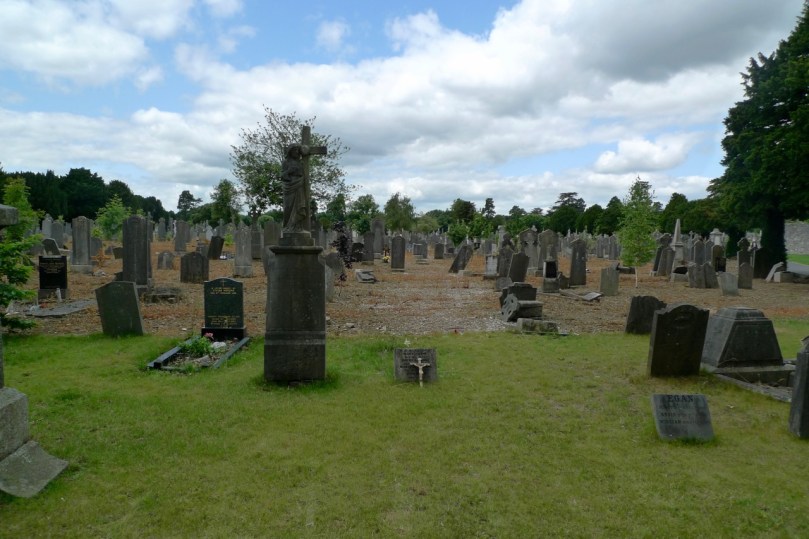
This part of the cemetery is still a work in progress. Slowly but surely all areas are being reclaimed and restored

Glasnevin is one of Ireland’s top tourist attractions – a cemetery, imagine! This is all the more remarkable when you realise that only a few years ago it was a tangled mess of weeds and ivy with row upon row of broken and fallen headstones, neglected and unsung. Now, after an extensive restoration project there is a handsome new museum (the world’s first cemetery museum) and avenues of statuary and bowers the like of which you might see in Paris.

Glasnevin Statuary

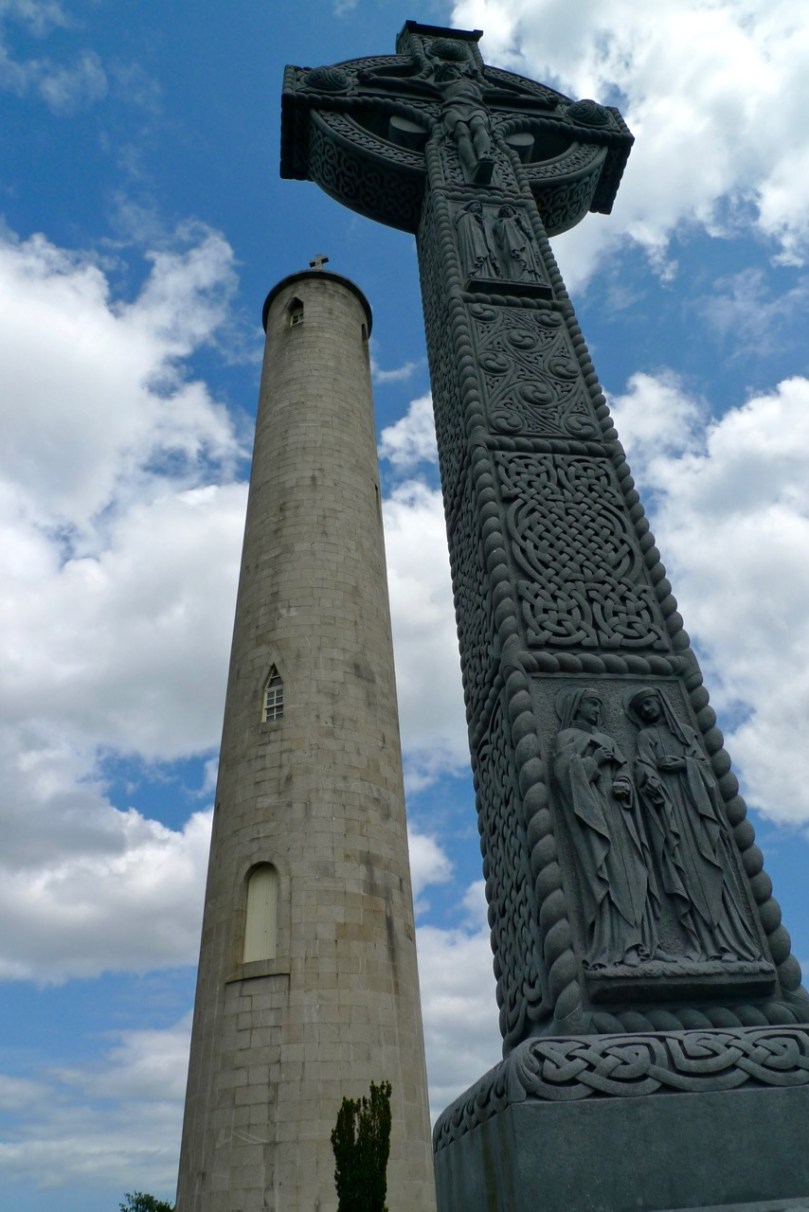
But of course it’s who is buried here that marks it as a focus for this year of commemoration. The giants of Irish history – poets and politicians, painters and writers, priests and suffragists – can all be found here. And, most impressively, all religions. Daniel O’Connell, whose crypt and round tower dominate the scene, helped to found this graveyard as a burial place for all denominations.

Tower and Cross

Daniel O’Connell’s round tower rises above all other monuments

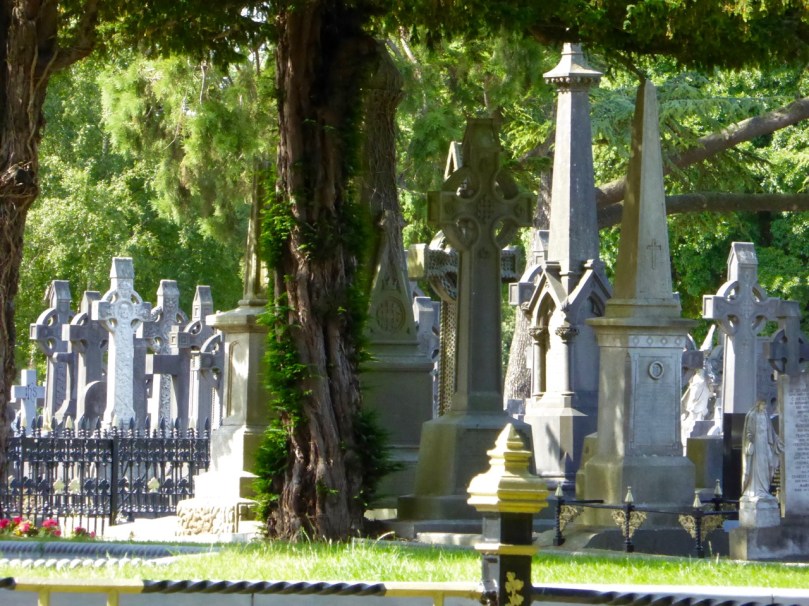
The history of headstone trends can be read in this graveyard too. Victorian statuary and sylvan avenues dominate the earlier periods but it was all Celtic Crosses and Maids of Erin at the turn of the century. The modern period has brought austere and understated granite slabs. 

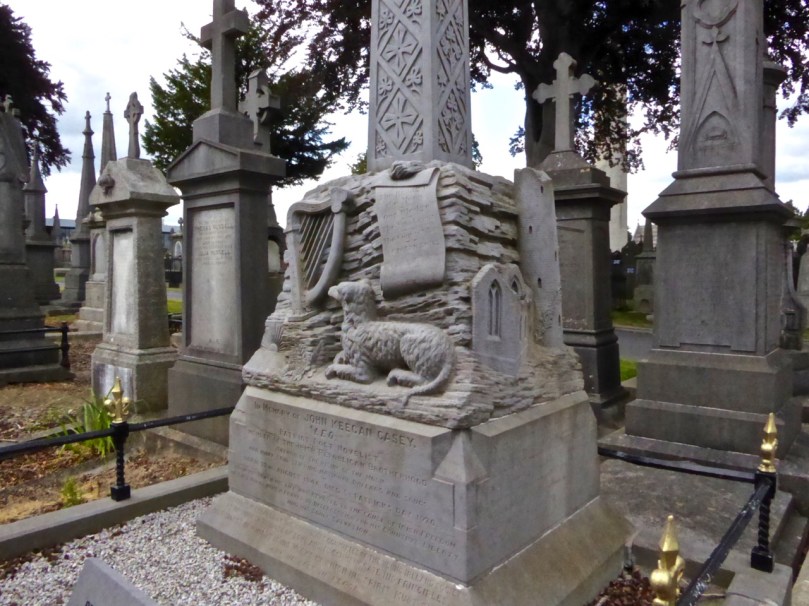
Casey Memorial

Restored MonumentThe Celtic Revival was not just about literature – trends in art extended to gravestone designs. The top one above is the gravestone of John Keegan Casey, author of soul stirring national ballads and songs; the lower one commemorates several different patriots

Outlaws and Felons

Last year, the focus was on O’Donovan Rossa (see my posts about Rossa here and here and here). The oration at his graveside in Glasnevin was given by Patrick Pearse: it was re-printed and widely distributed and is usually credited with marking an important starting point to the 1916 Rising, one year later.

Rossa Oration

An actor re-enacts the oration given by Patrick Pearse in 1915 at the graveside of O’Donovan Rossa

Many of the participants in that rising found their final resting place here in Glasnevin, although not the leaders who were immediately executed, most of whom were buried in quicklime at Arbour Hill cemetery, in what was once a prison yard. But here are Eamon de Valera, Countess Markievicz, Thomas Ashe, Harry Boland, Cathal Brugha, Austin Stack, Sir Roger Casement, Elizabeth O’Farrell (see below) and many more. They were men and women, Catholic and Protestant: although the new state that grew from independence was predominantly Catholic, many Protestants numbered in the ranks of the revolutionaries. See the always entertaining Come Here To Me blog for a thorough investigation of this. Of all the graves the most famous belongs to Michael Collins, about whom Robert has written. Collins’ grave has the distinction of being the most visited in the cemetery, and always has fresh flowers on it. 

Michael Collins Gra ve

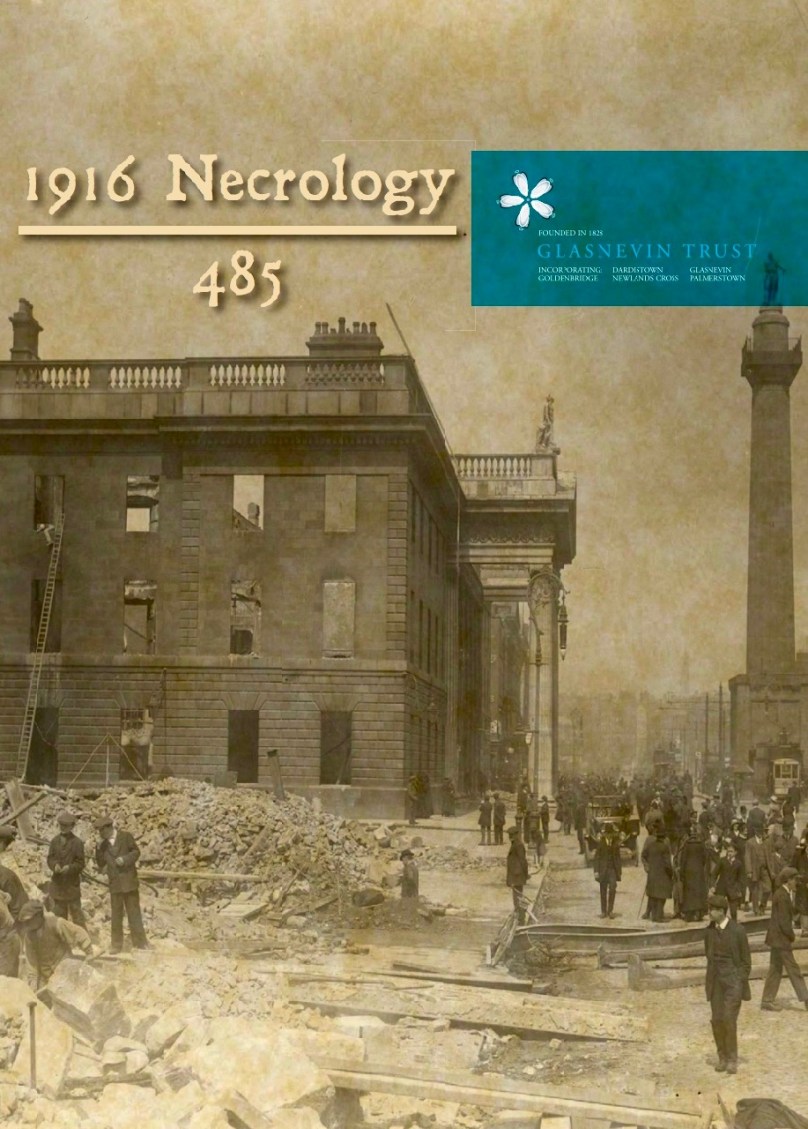
But the most startling and important association that Glasnevin Cemetery has with 1916 is not captured by the roll call of the leaders and foot soldiers of the IRB and Volunteers who fought in the various actions. No – the real story here is in the sheer numbers of people who died during that conflict and who were buried here. That number (so far) is 485 men, women and children.

Museum

The modern Glasnevin Museum houses displays, vast records, and a visitor centre

This number is the result of a massive research effort by Glasnevin Trust.** Here is what their website has to say about their findings:

This major research work has revealed many interesting and previously unknown facts. The majority of the dead were civilians, 54% of the total dead, caught up in the fighting. British Army dead accounted for 26% of those killed while the rebel forces had 16% of the casualties. The remaining percentage is made up of members of the Dublin Metropolitan Police and Royal Irish Constabulary. The numbers of civilians killed each day steadily increased, peaking on the final day of the rebellion 29 April when 45 died. This was also the most violent day of the rebellion during which 78 people lost their lives. 26 April, the day of the Battle of Mount Street Bridge, was the worst for the British Army losing 30 men during the fighting throughout the city. The rebels also suffered their worst casualties on this day with 13 men killed. For the police the day of the Battle of Ashbourne, 28 April, proved to be their worst.

The vast majority of those killed were buried at Glasnevin Cemetery in the aftermath of the fighting. The staff of the cemetery struggled to deal with the large numbers of bodies being brought for burial. Despite great strain they succeeded in giving all a dignified burial and recorded their details in our registers.

Celtic Crosses

If you’re in Dublin, do go on a tour of Glasnevin Cemetery. And when you’re there, stop at the new memorial to all those who died in the 1916 Rising (to be unveiled in early April), and reflect not only upon the insurgents or the soldiers and policemen, but upon the innocents. It is fitting that their lives and their deaths should also form part of what we remember and understand about that week of conflict.

Much has been written lately about the many women who played active roles in the Rising. One of those was Elizabeth O’Farrell, the nurse who carried the white flag of surrender out of the GPO – and who was almost airbrushed from history

And that planned new memorial – a ‘necrology wall’ listing the 485? It is, inevitably, controversial. Depending on what you read it is either a bewildering, ‘bizarre’ and revisionist decision, or a brave new effort to recognise all the dead equally and non-judgementally. But perhaps that is, after all, the job of a cemetery. 

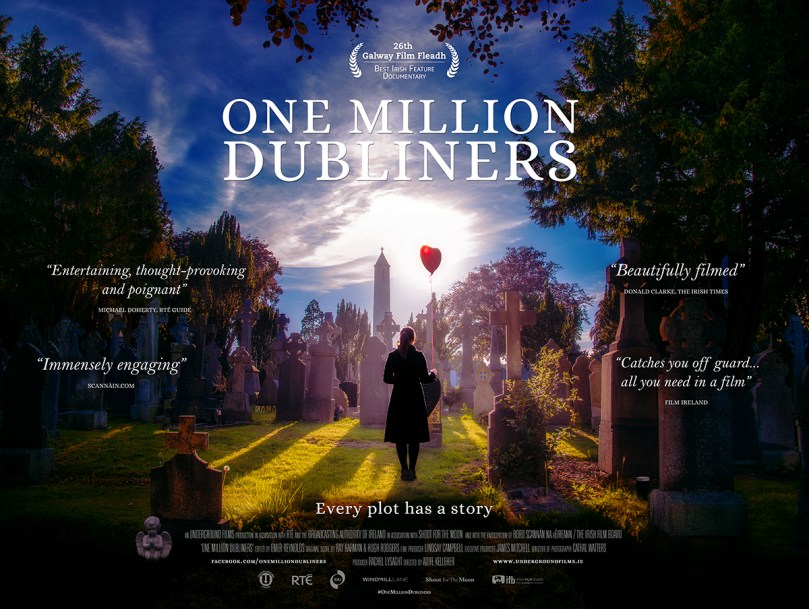
One-Million-Dubliners

And if you can’t get to Glasnevin, try to see the film One Million Dubliners. It’s a brilliant, moving, evocative and beautifully made film that will show you why this historic cemetery has so rightly earned its place as one of Ireland’s major tourist attractions.

** The first photograph in this post is the front cover of the research report 1916 Necrology by the Glasnevin Trust