Oldcourt

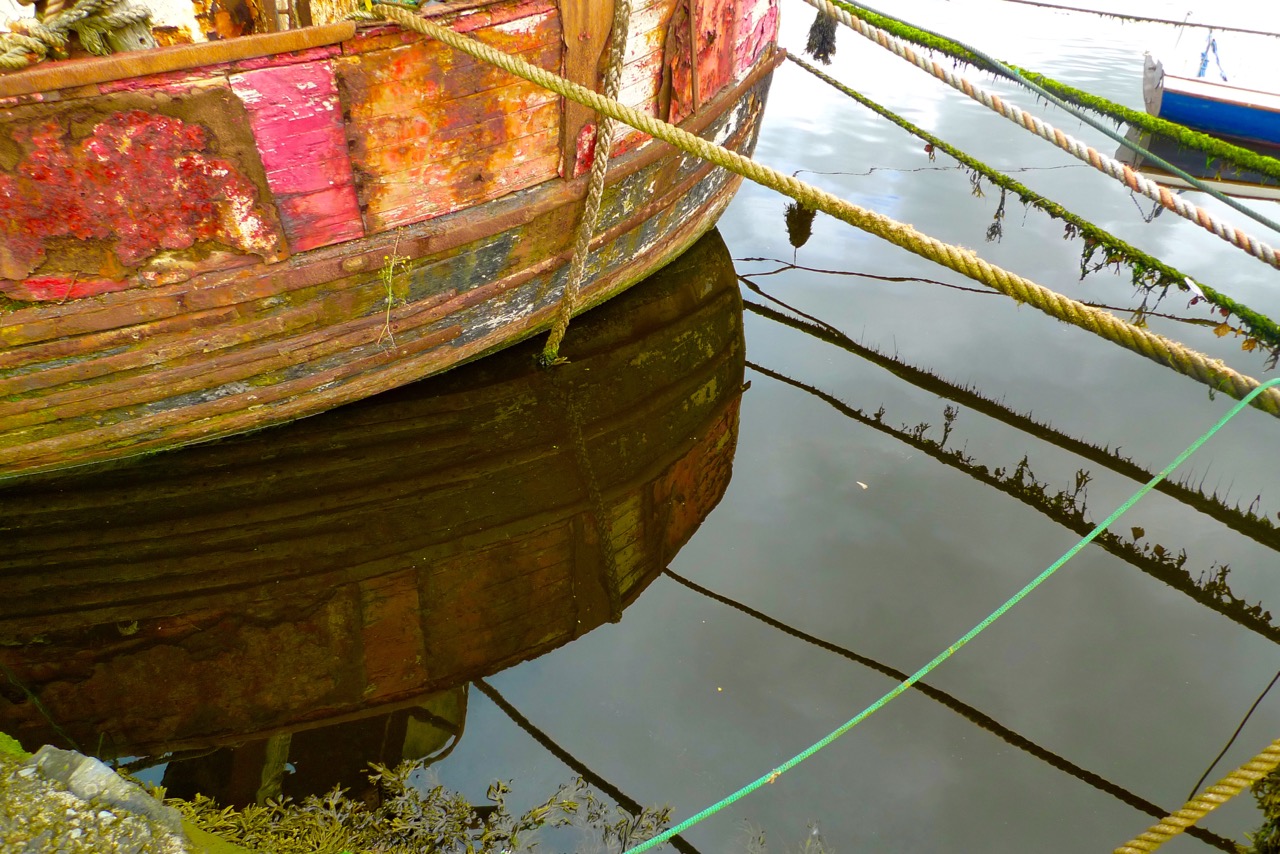
red hull

…At Oldcourt a boat-building yard flourished within the walls of an old O’Driscoll castle overlooking the pier and river. Schooners and steamships used to anchor at this spot, the highest point they could travel up the river. Here their cargoes of coal and other supplies were unloaded and placed on specially built lighters with a small draught that would be poled along a further sluggish turn or two upstream to the pier at Skibbereen. In this way cargoes of cattle were brought up by islanders to be sold at the market… (description of the townland of Oldcourt from The Coast of West Cork by Peter Somerville-Large 1974)
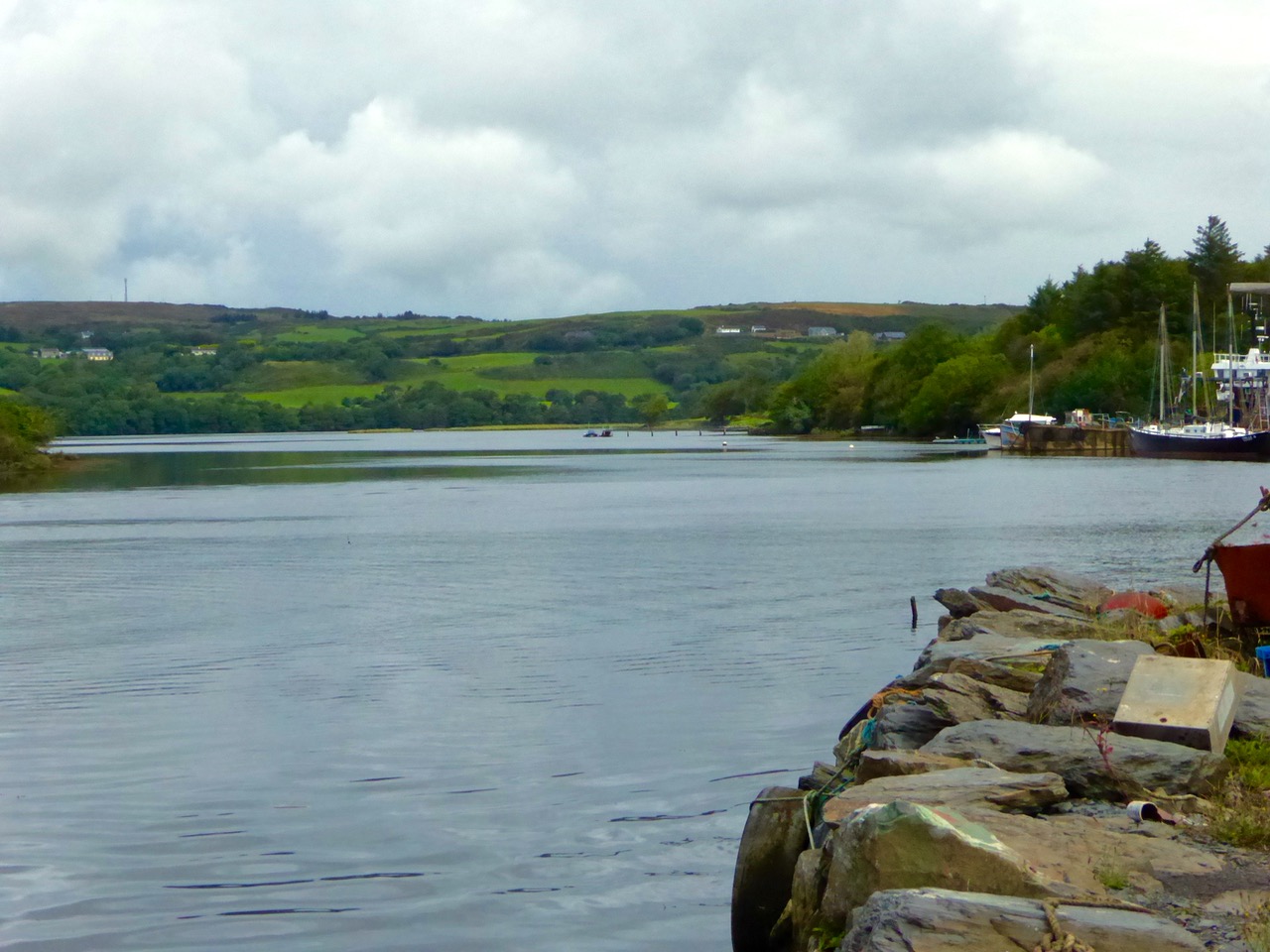
gentle Ilen

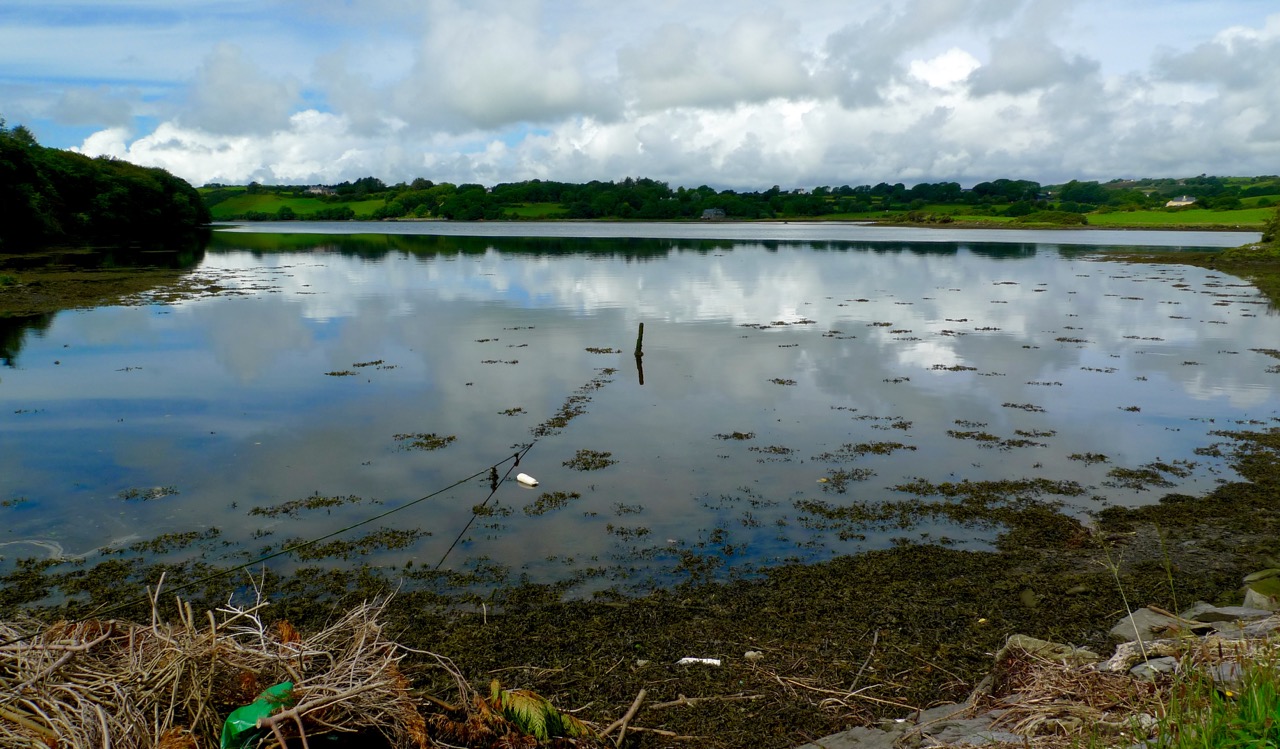
The tidal River Ilen making its lazy way out to Roaringwater Bay on a late summer evening has a melancholy beauty: it is wide and slow and – mid tide – is a perfect mirror to the sky. The sounds of Oystercatchers and Curlews coming over the water always bring thoughts of autumn: the harvest is ready to cut, the verges are brilliantly orange with the montbretia and the hedges purple-red and weighed down with fuscia.
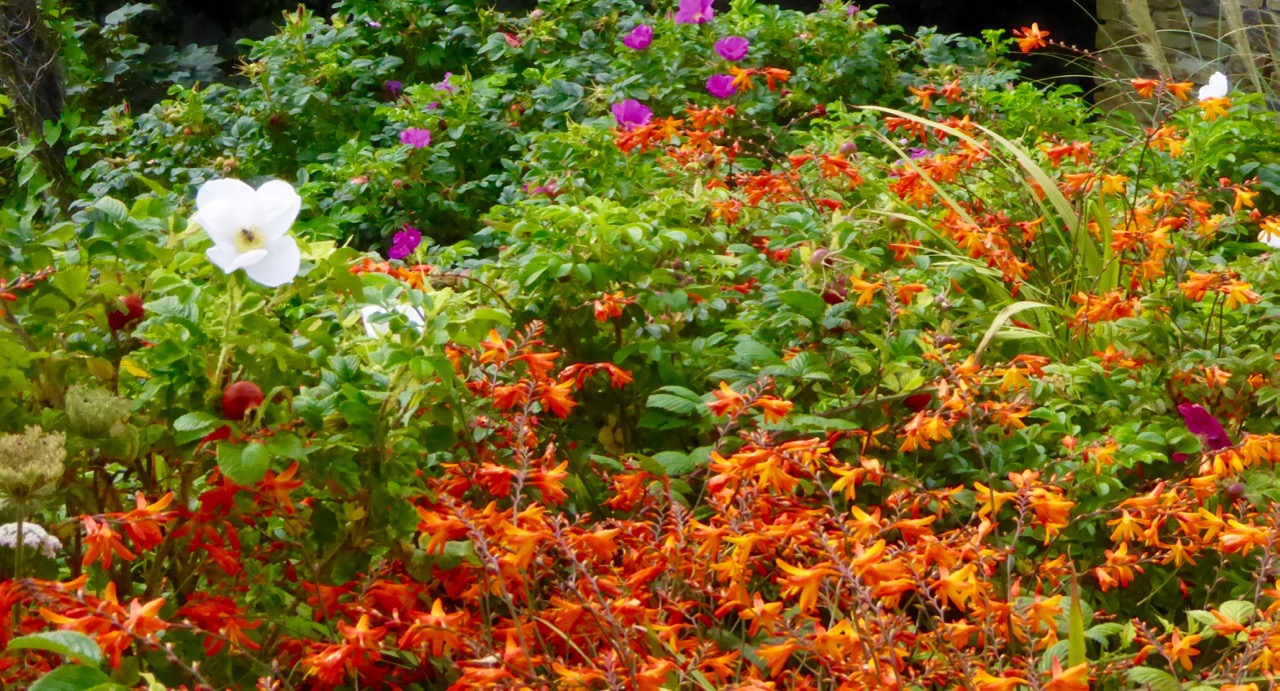
Montbretia

wide river

We went down to Oldcourt to seek out history and atmosphere. We knew that it had once been a transport hub for the transhipments of goods and we wanted to see what might be visible from those earlier times. It was the river Ilen (pronounced eye-len) that gave birth to Skibbereen following a pirate raid on Baltimore in 1631. According to Skibbereen historian Gerald O’Brien …in the wake of the shock of that – the most daring pirate raid mounted against Britain or Ireland – a small number of survivors rowed upstream to resettle in the safety of the Ilen Valley. The role of this river-borne migration from Baltimore [was] a factor in the foundation of Skibbereen… (Journal of the Skibbereen and District Historical Society, Vol 7, p 91).
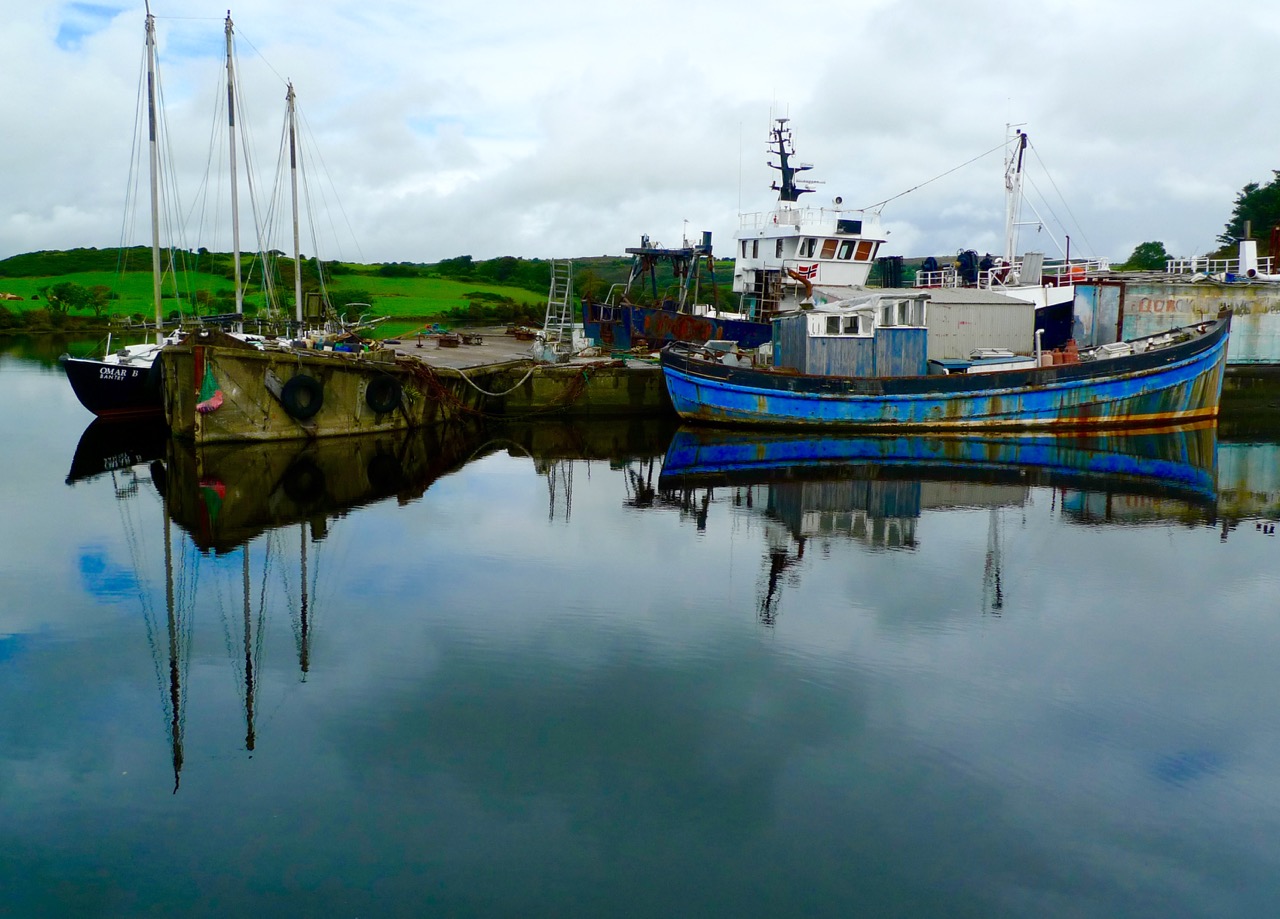
reflections

beyond the bridge

rust

We found atmosphere a-plenty. On the upstream side of the wide inlet where the transhipment quays were sited is a streamlined modern boatyard where sleek yachts are wintered and serviced while, opposite and downstream, is a far more eclectic establishment surrounding and embracing the remains of the medieval castle and bawn: this is Hegarty’s‘…one of Ireland’s last surviving traditional boatyards…’

birdie in circle

Our aim was to search for the old quay and the medieval buildings which had been part of the castle demesne, but we were fascinated to pick our way through boats of all kinds – classic, sailing, fishing, ferrying – and boat paraphernalia: here an old decapitated wheelhouse, there a collection of masts, everywhere ropes and tackle…

green ropes

Oldcourt Castle is a tower house standing four storeys high but originally at least one storey higher, once surrounded by a bawn, some ruins of which remain. It was an O’Driscoll clan castle, probably dating from the 15th century, and was captured by English forces after the Battle of Kinsale in 1601.
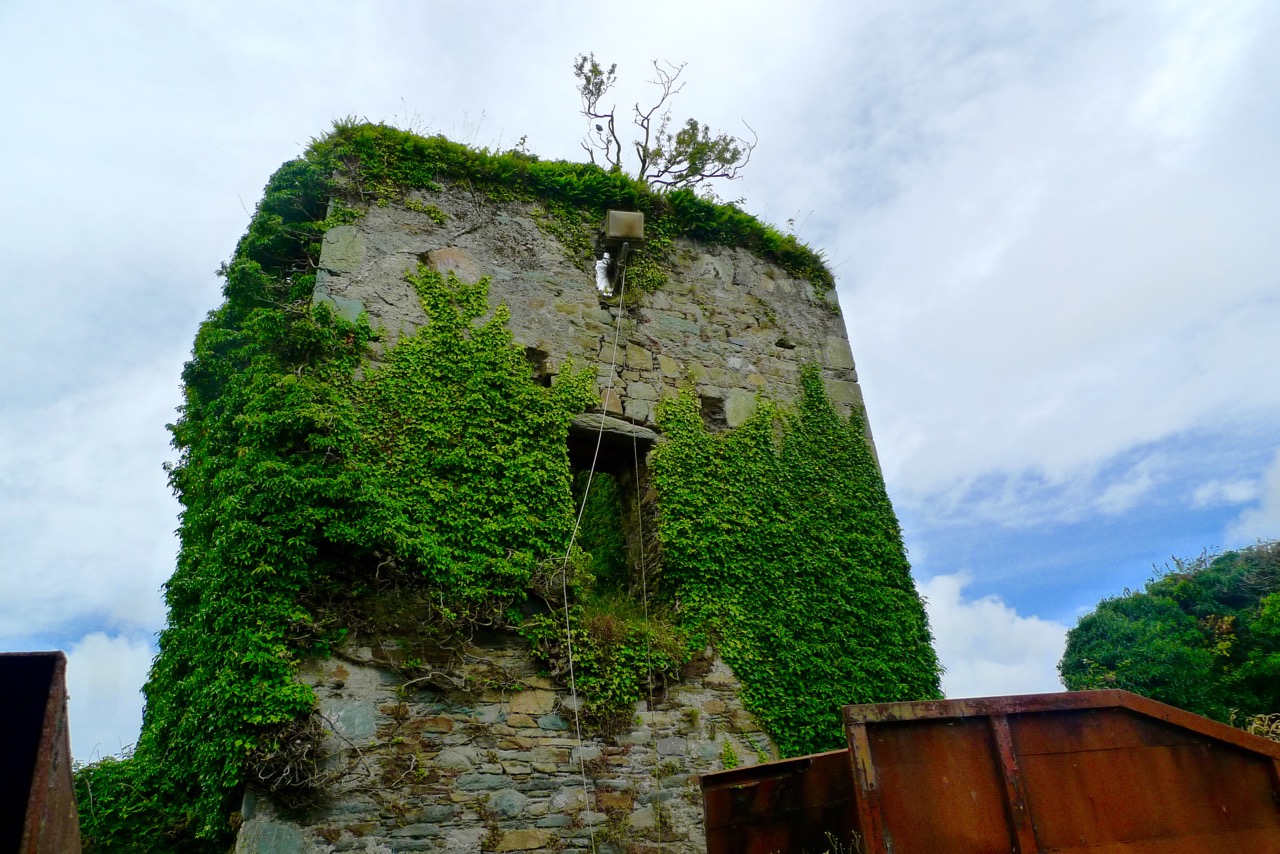
Old Court Castle

Ilen and Castle

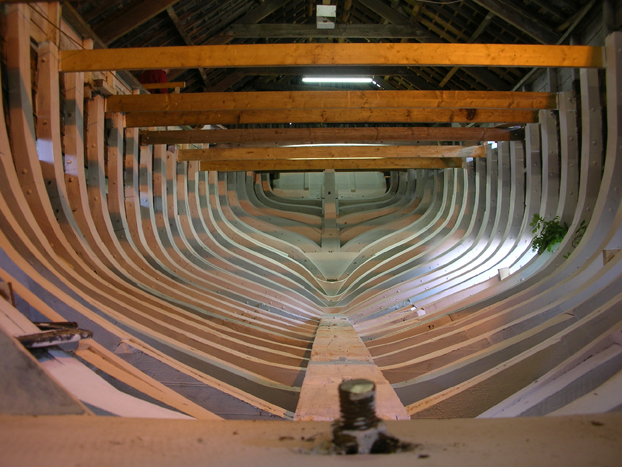
Part of the castle bawn was used as a grain store up to comparatively modern times: now it houses a fascinating boat restoration. The story begins with Connor O’Brien (1880-1952) whose ketch, the Saoirse, took him on a circumnavigation of the world between 1923 and 1925. On this journey he stopped off at Port Stanley in the Falkland Islands. The islanders were so impressed at the way the Saoirse rode the waves that they asked O’Brien to arrange the building of a similar boat. This was the Ilen, named after the river and estuary and registered at the port of Skibbereen in February 1926. She was 56 feet in length overall with a beam of 14 feet and a displacement of 45 tonnes. Connor set sail in August 1926 from Cape Clear, arriving at Port Stanley in January 1927 where he handed it over to the new owners, The Falkland Islands Company, in exchange for £1,500. There she remained until the early 1990s, carrying cargoes of stores, mail, passengers and sheep. Limerick man Gary McMahon found it abandoned on one of the islands and determined that it should return to its homeland for restoration. There was great excitement when he sailed the ketch back into Baltimore in 1998.  The refitting of this eighty-two year old vessel in the old bawn at Hegarty’s, Oldcourt, is now the centre of an educational project allowing people to experience first-hand the ancient skills of wooden boat building.grain store
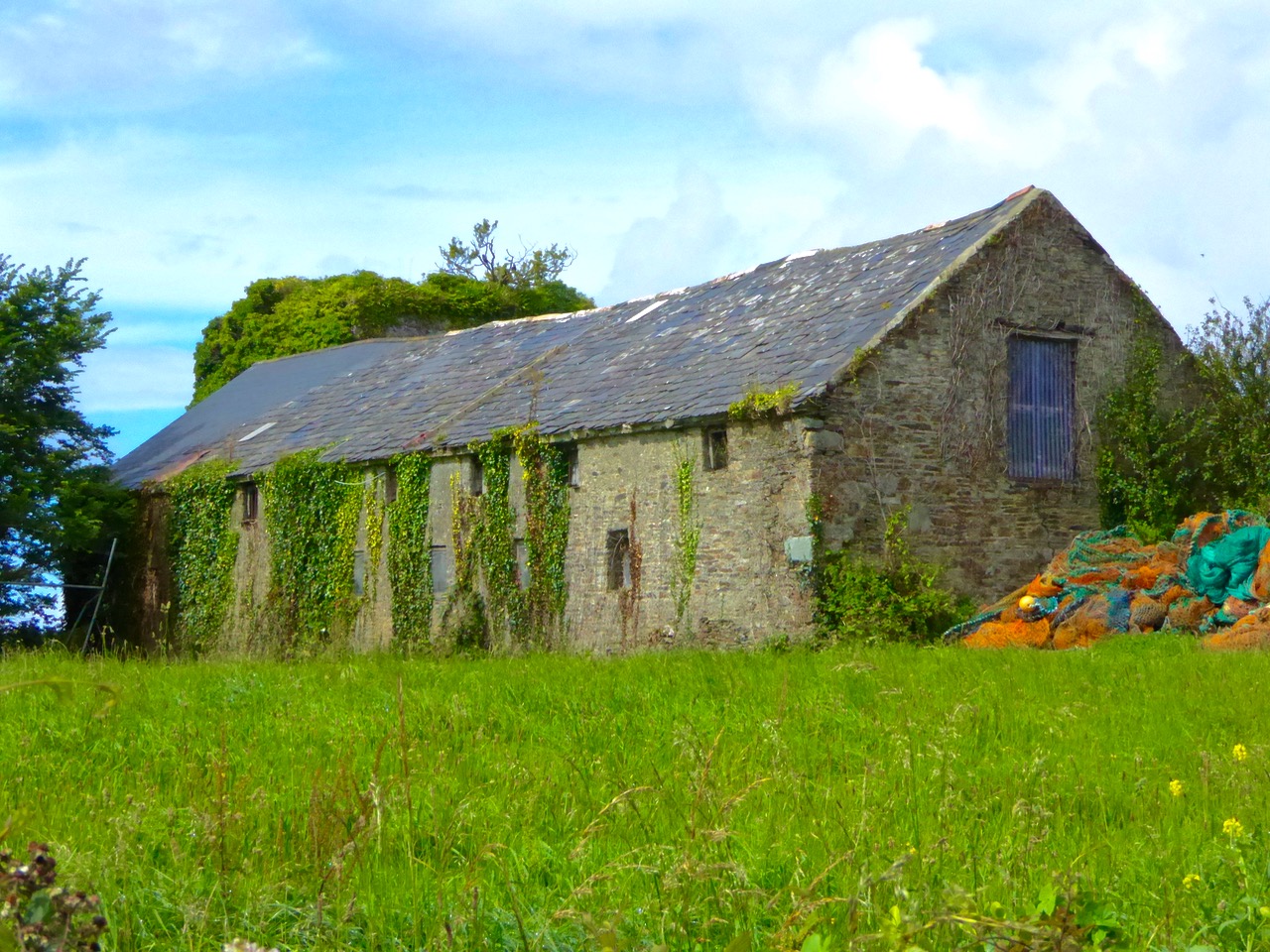
ilenframesThe old grain store – formerly part of the Castle bawn – now houses the restoration project of the AK Ilen (above – courtesy of Roeboats)

Such a hive of activity at OIdcourt today… Echoes of busy days gone by when the schooners were arriving with their cargoes bound for the growing town of Skibbereen.

Ilen postage stamp

Family-Friendly Archaeology

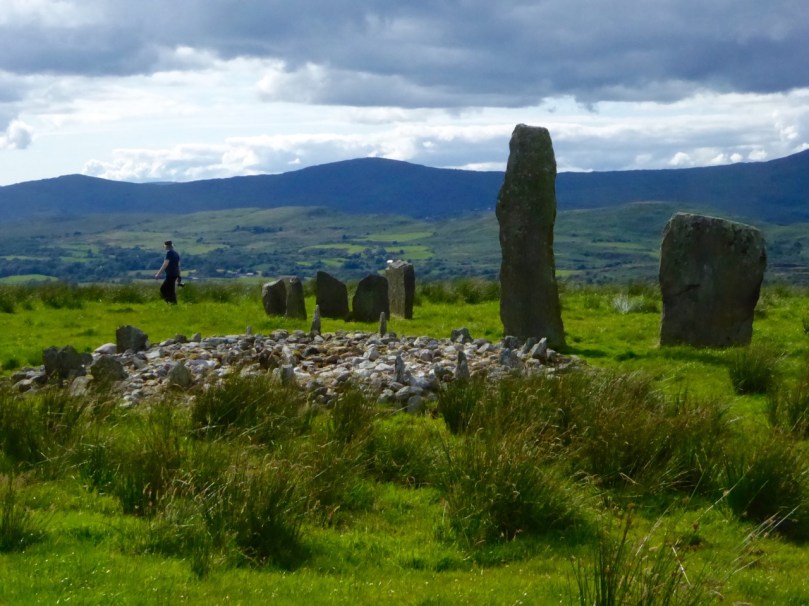
Dramatic Skies over Maughanasilly Stone Row

Dramatic Skies over Maughanasilly Stone Row

West Cork is crammed with prehistoric monuments but many are not really accessible for all family members because of the terrain. Others are on private land where the landowner is reluctant to grant permission, or where frisky bullocks make traversing a field a bit risky. So we’ve done some homework on easy-to-reach sites and planned a route for you in which you can have a) a Grand Day Out and b) a tour through some of the best West Cork Bronze Age sites and one Medieval Castle.

The Kealkill complex: one of the sites you'll visit today

The Kealkill complex: one of the sites you’ll visit today

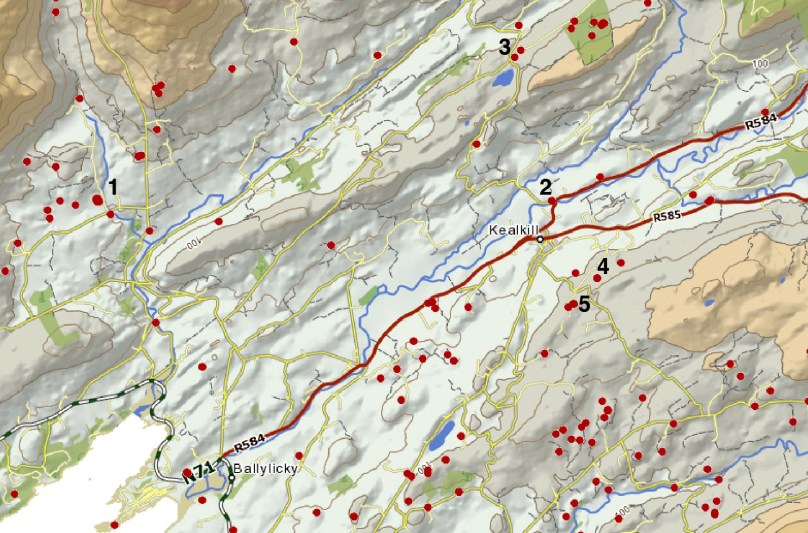
Load the kids and Grandma into the car, stick Discovery Map 85 in your pocket (or use the one we’ve provided in this post), wear boots or wellies, and off you go! By the way, we strongly advise leaving the dog at home when on a field trip like this. If you must bring him, please keep him on a leash, since you will be on private farmland at each site except Carriganass.

This slideshow requires JavaScript.

Oh – and the frisky cattle? Keep an eye out – they weren’t around when we did our reconnaisance but you never know when that can change. These two photos are by Amanda Clarke, used with permission.

Kealkill Monuments

Our starting point is Ballylicky – here’s your opportunity to pick up a picnic at the marvellous Manning’s Emporium. And if you like your day today, consider signing up for one of their Culture Kitchen tours – an innovative mix of history, prehistory and artisan food that will lead you still further into the prehistoric (and culinary) hinterland of West Cork.

Mill Little Group of Munuments

Mill Little Group of Monuments

1. Mill Little Complex

From Ballylicky, head west along the scenic seaside road towards Glengarriff for a couple of kilometres and take the first turn right at Snave. You’ll be following the Coomhola Rive as it tumbles down between high hills. Once you’ve crossed Snave Bridge continue for about a km, take the second left and then immediately right. One km on, take a left and then the next right. Park along here and the Mill Little complex is in a field on the left.

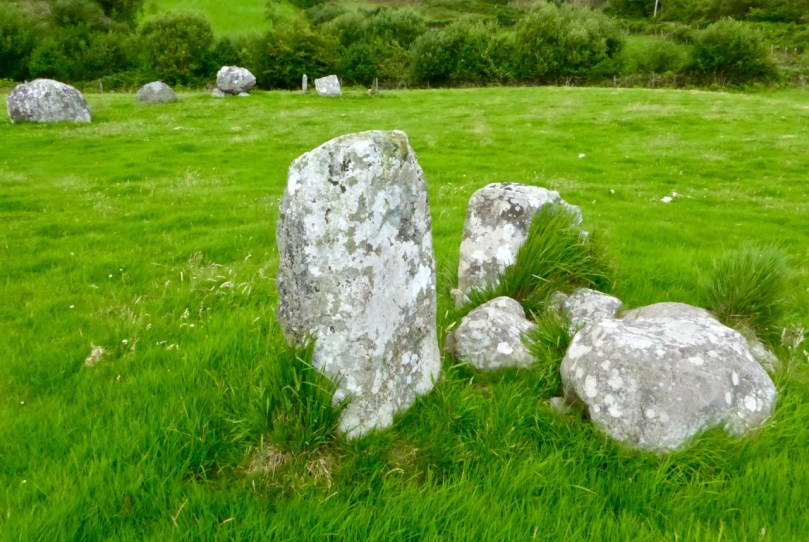
Stone Pair

Stone Pair

This is a complicated site, comprising a stone pair (don’t be confused by the other stones around the pair, which have been piled here), three boulder burials, and a small five-stone circle. All these monuments probably date from around the same time – the Bronze Age, about three to four thousand years ago. A particular feature of West Cork archaeology is that boulder burials, standing stones (single, in pairs, or in rows) and stone circles are often found together. Stone circles and stone rows are oriented towards significant solar events, such as the rising solstice sun or the setting sun at an equinox. At a site like this, it is possible that all the features formed a large observational arena, with the stone row, boulder burial and stone circle providing multiple alignment possibilities and marking both solar and lunar events.

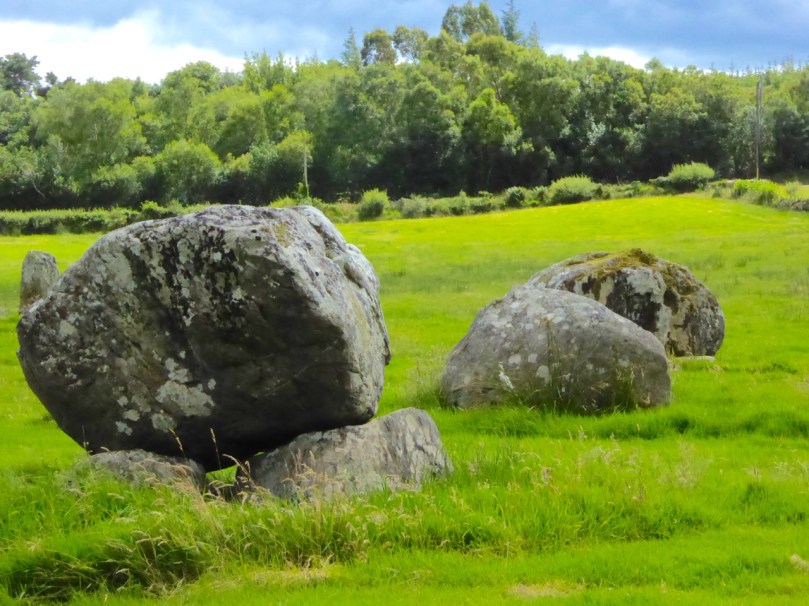
Boulder burial showing support stones. Five-stone circle in the background

Boulder burial showing support stones. Five-stone circle in the background

The boulder burial nearest the stone circle is the most classic in appearance – a large glacial erratic sitting on top of three support stones. Excavations at boulder burials in West Cork, however, haven’t really yielded evidence of actual burials – perhaps the term is a misnomer!

Three boulder burials at Mill Little

Three boulder burials at Mill Little

2. Carriganass Castle

Retrace your steps back towards Ballylicky and take the road to Kealkill – or try an overland route using the map. At Kealkill take the left fork signposted to Gougane Barra and you will see Carriganass Castle almost right away.

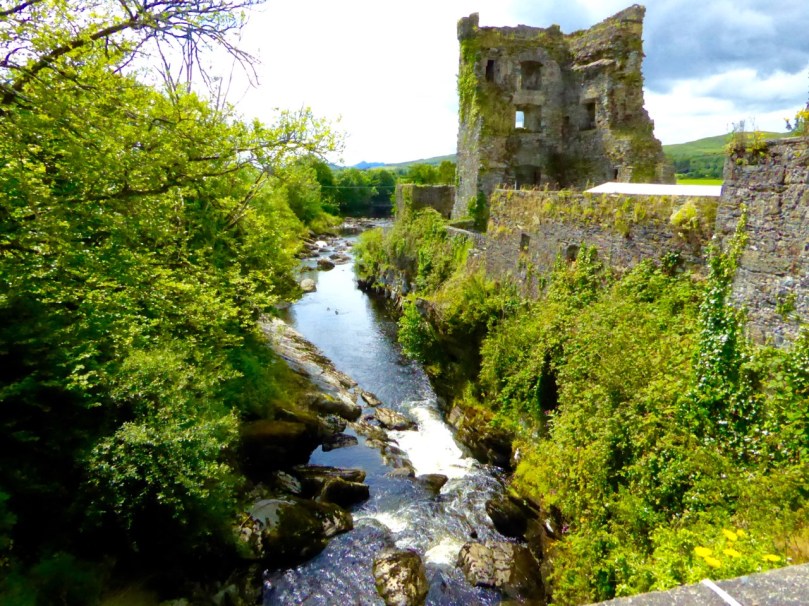
Carriganass Castle

Carriganass is an excellent example of the medieval tower house – take a look at this post for more about these structures in West Cork. There’s easy parking around the back and lots of explanatory signs around the castle. This is a good place for a picnic, or you can wait until after you’ve been to Maughanasilly, since you will come back this way. If it’s a hot day (don’t laugh – it can happen!) the kids will enjoy a dip in the river here. There are also some looped walks starting from here – mark them for a future expore.

3. Maughanasilly Stone Row

Continue past the back of the castle. At the first junction take the left fork and continue until you see a small lake on your left. Shortly after you will come to a cross roads. Turn right and park – the stone row is in the field on your right.

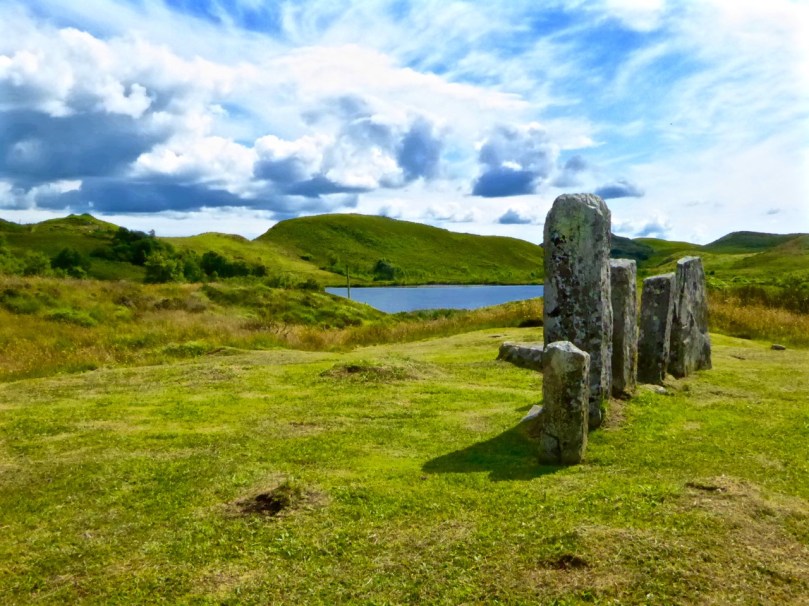
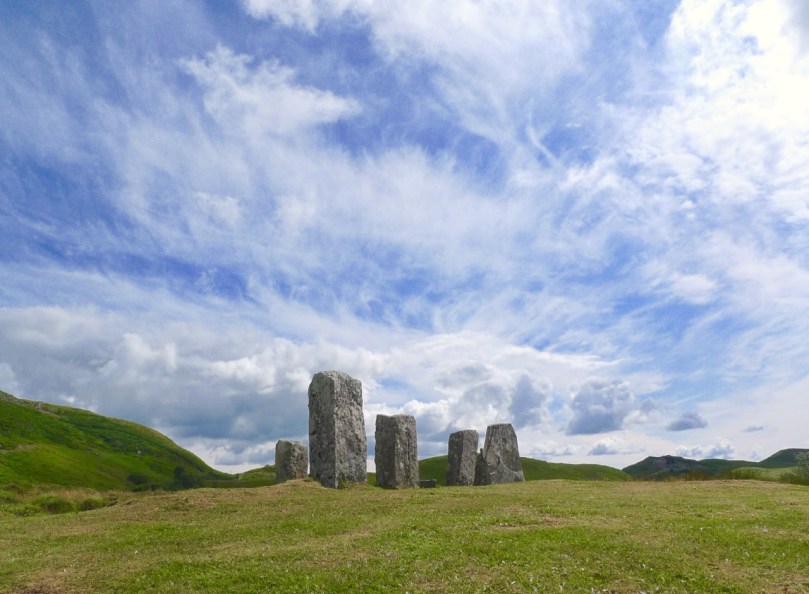
Maughanasilly Stone row. Note the row forms a slight arc

Maughanasilly Stone row. Note the row forms a slight arc

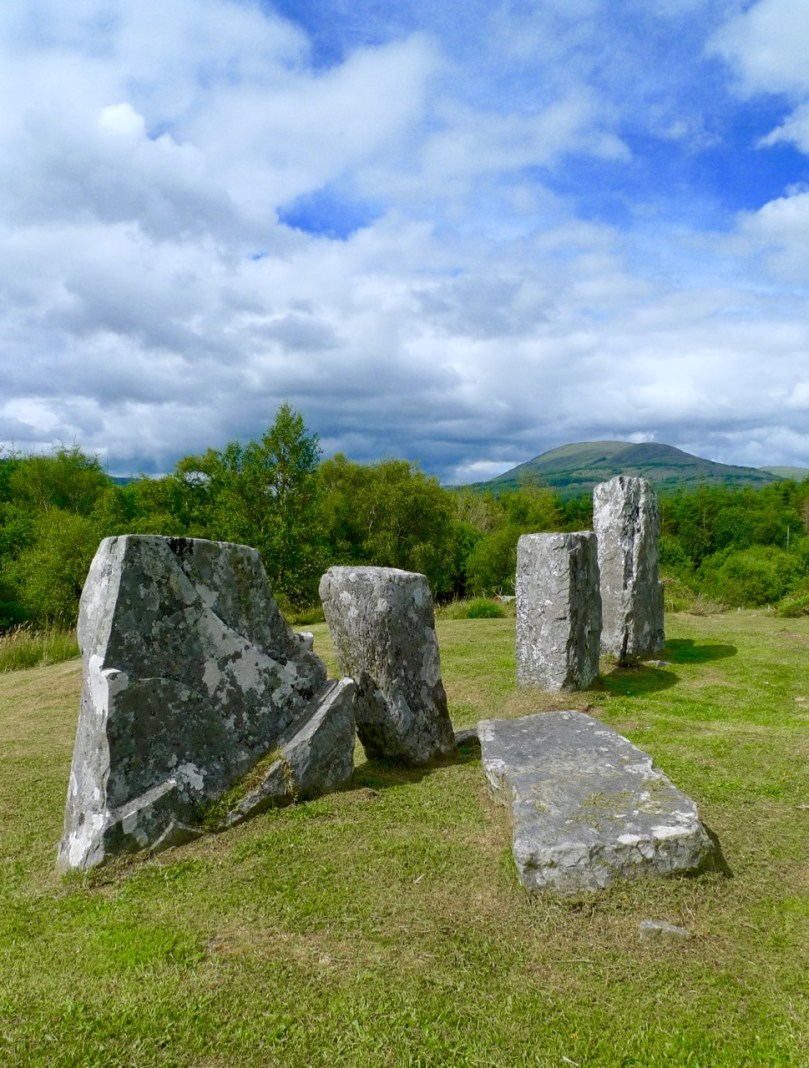
This is a good example of a multiple stone row and occupies a very dramatic setting on a knoll overlooking the lake. Note that, instead of being straight, the stones form a slight arc. This is deliberate, as is the placement of the stone lying flat on the ground. According to one expert, this stone “is placed so that anyone walking up to it and standing with toes touching its edge is looking straight at the equinox.” This stone row also appears to have been an important one for lunar observations. It takes the moon over 18 years to complete its cycle and from this site observations of the lunar maximums (the most extreme northerly and southerly moonrises) were likely made.

The stone row with recumbent stone

The stone row with recumbent stone

Ponder on the sophistication of our Bronze-Age ancestors: much of the knowledge they built up so that they could keep track of time and seasons had to be re-learned by later people.

Maughanasilly Stone row  - a lunar observatory?

Maughanasilly Stone row – a lunar observatory?

4. Kealkill Stone Circle

Back you go to Carriganass (picnic now, if you haven’t done so already) and on to the village of Kealkill – a pretty and well-kept village (and home to a famous St Patrick’s Day parade). The stone circle is signposted from the village – just follow the steep and winding road that runs up from the church. After a sharp bend to the right, take the first left turn. There’s enough room to park at a small pull-out. The walk across the field to the circle is invariably muddy and squelchy so make sure to wear your boots here.

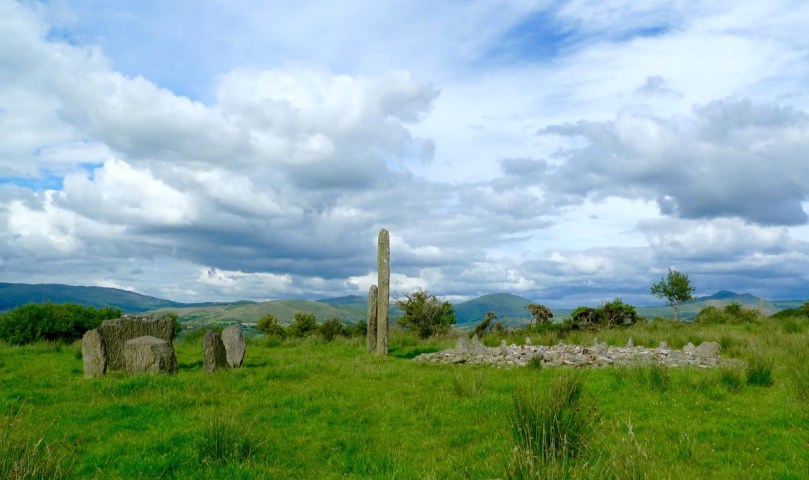
Kealkill standing stone pair, stone circle and radial cairn

Kealkill standing stone pair, stone circle and radial cairn

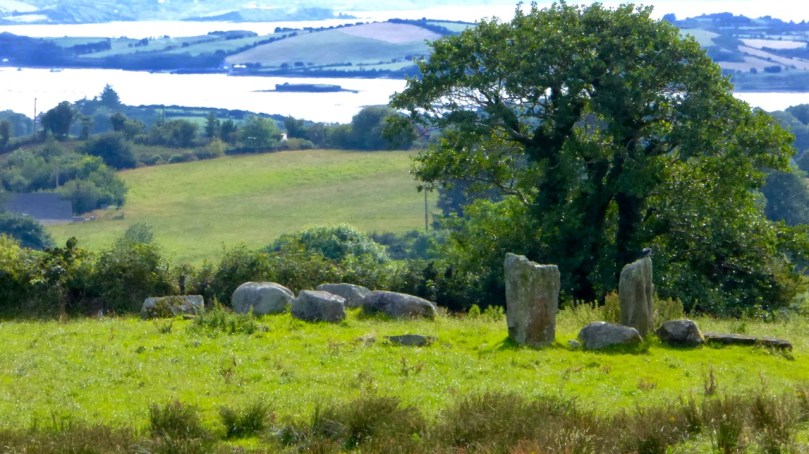
This is yet another complicated site. There is a standing stone pair, a five-stone circle and a radial cairn. But perhaps the first thing you will notice is the spectacular view. From this spot you can see all the way down the spine of both the Sheep’s Head and the Beara Peninsula to the South-West, and across the valley to the Shehy Range to the North and East.

From the Kealkill Site

From the Kealkill Site

One of the stone pair is over 4m high. But it’s broken – and may originally have stood over 6m high.  Imagine the difficulty of erecting this!

The first thing you notice - that standing stone!

The first thing you notice – that standing stone!

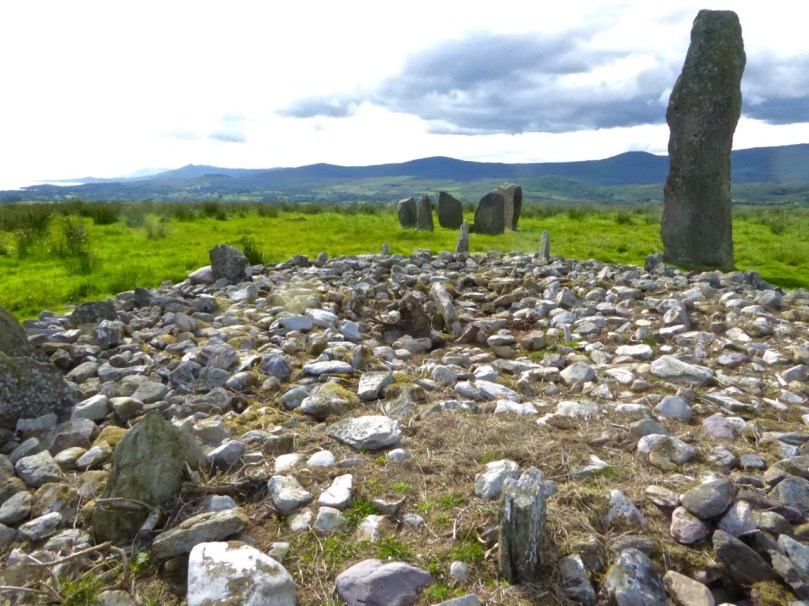
The radial cairn is a mysterious monument – nobody is quite sure of its function – and relatively rare. Once again, these cairns are often found in conjunction with other monuments – stone alignments or stone circles. This one was excavated, but nothing conclusive was found to help determine its function. Note the small upright projecting stones that look like the face of a clock among the cairn stones.

Kealkill radial cairn

Kealkill radial cairn

5. Breeny More Stone Circle and Boulder Burials

This is just a little way up from the Kealkill circle and on the other side of the road. We haven’t had time to visit it properly yet, so my photograph was taken from near the road. There’s a multiple stone circle here, with four boulder burials within it. There’s not much left of the stone circle, but the portal stones and recumbent remain, so the alignment can be discerned. The boulder burials are laid out in square formation in the centre – a very unusual occurrence, since boulder burials are normally outside the circle. The site is on a natural ridge, with similar spectacular views to the Kealkill Stone Circle. One writer has speculated that if trees were removed it would be possible to see the tall standing stone at Kealkill from this site.

Breeny More complex from the road

Breeny More complex from the road

We hope you enjoy your day! Let us know how you got on.

The Hallowed Fortress

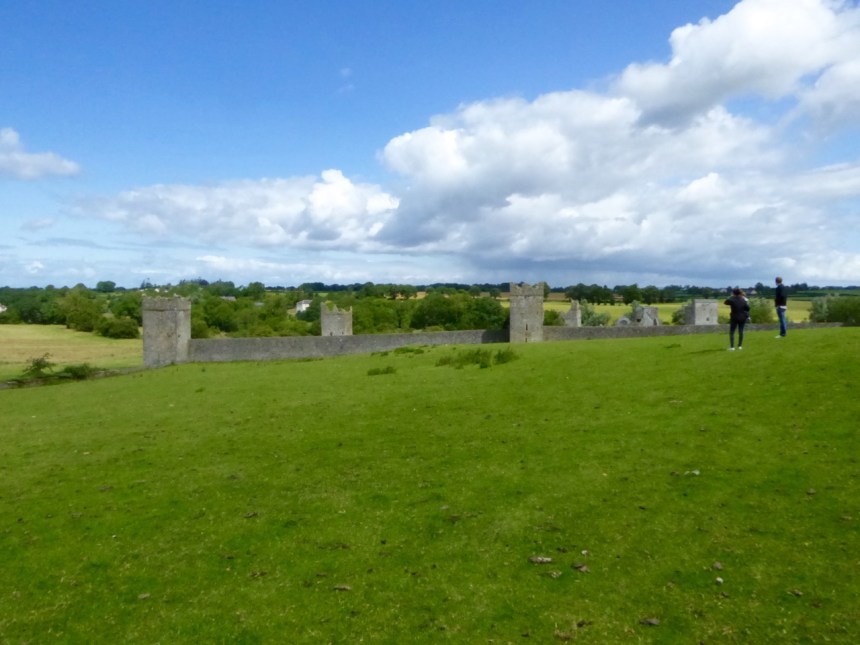
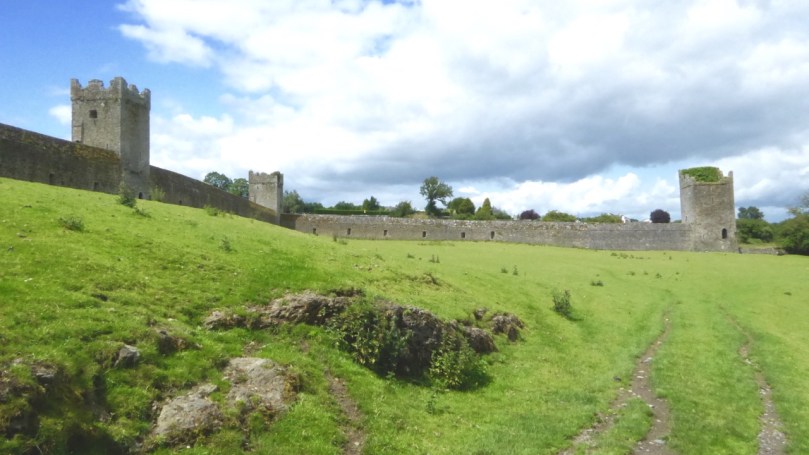
The first sight of Kells Priory is breathtaking

The first sight of Kells Priory is breathtaking

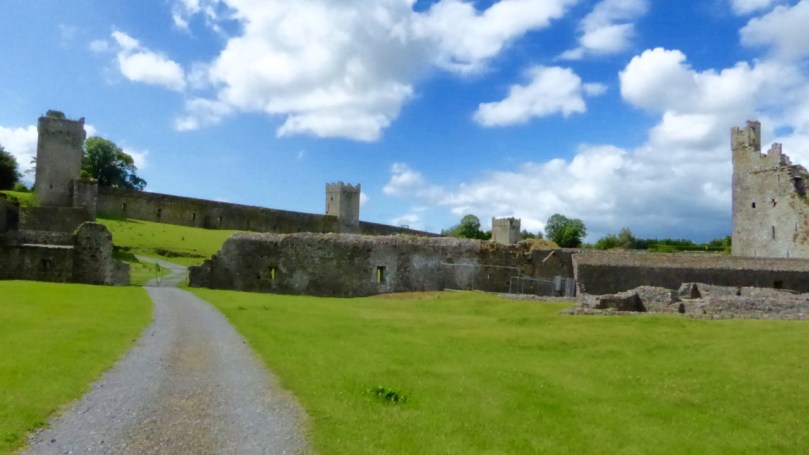
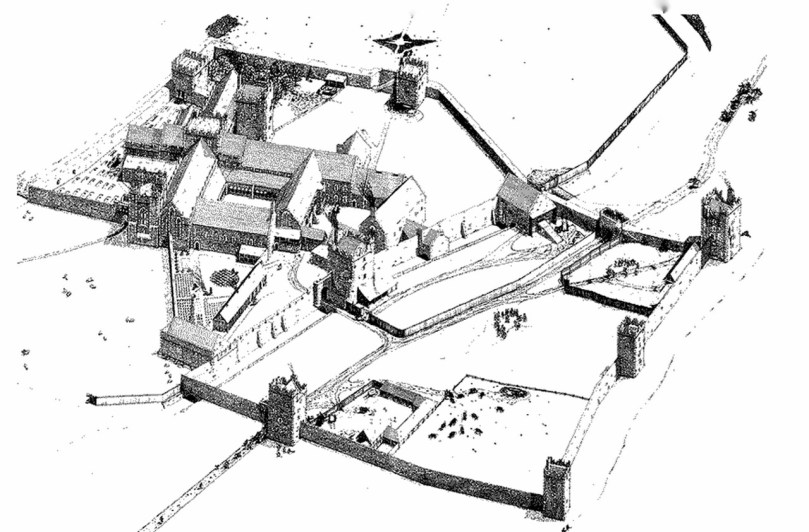
Our West Cork castles, or tower houses, can be impressive, built as they are to be dominant and defensive. But imagine a place where there are not one, but seven tower houses, all connected by a high stone curtain wall with defended gates. A medieval fortress? No – a monastery! Welcome to thirteenth century Kilkenny!

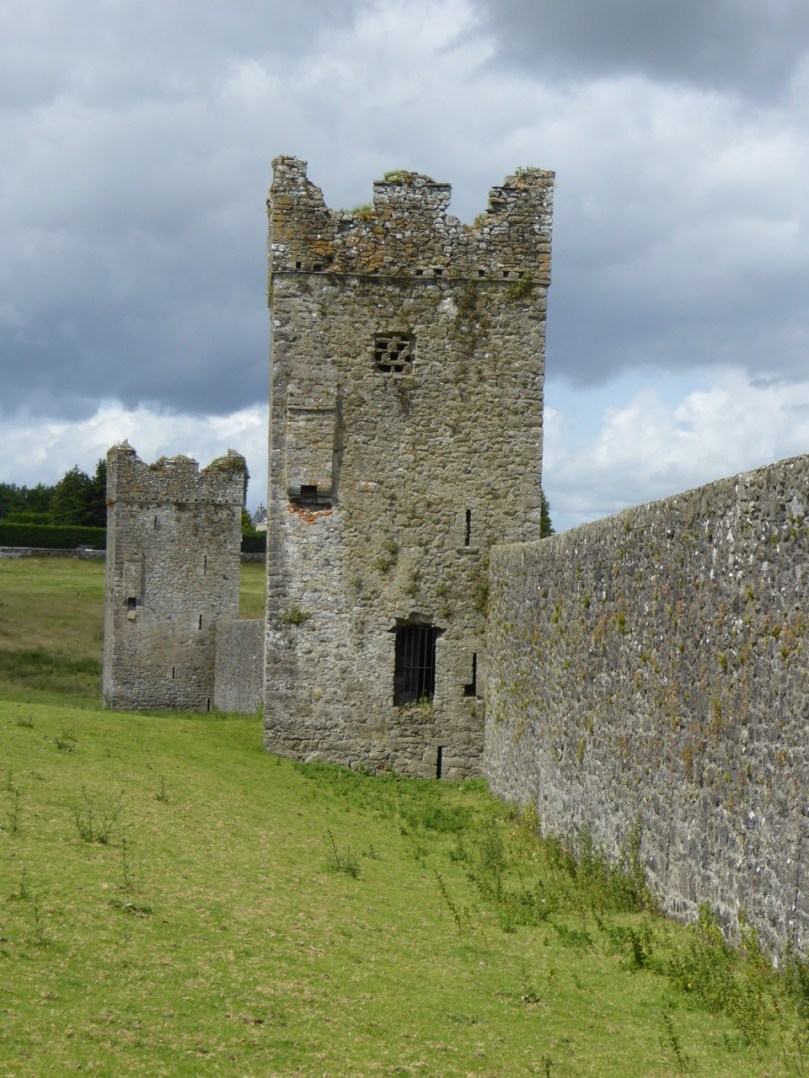
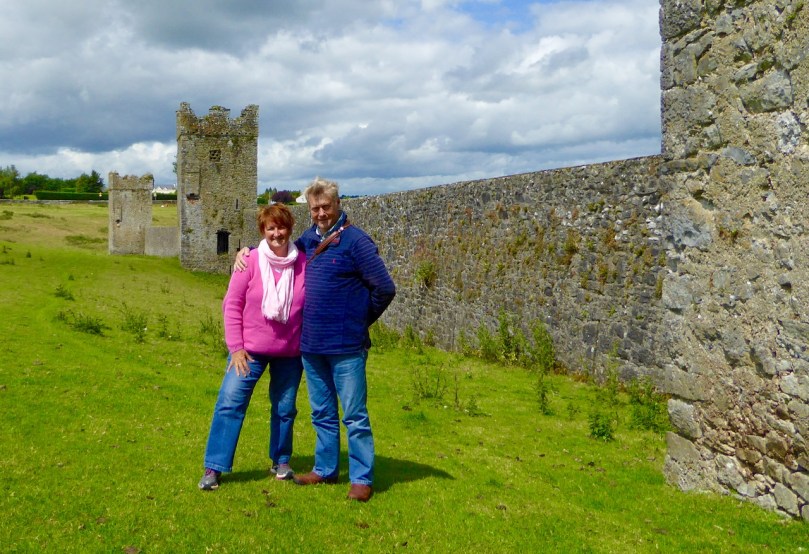
Each one of the 7 towers at Kells Priory is as large as one of our West Cork Castles

Each one of the 7 towers at Kells Priory is as large as one of our West Cork Castles

Kells Priory (not the Kells in Meath that Robert is writing about this week) in Kilkenny is a truly awe-inspiring site. A combination of monastery and walled refuge, it speaks directly to the history of Kilkenny in the 12th to the 15th centuries. This was a time when the Anglo-Normans had established themselves as the lords of Ireland, dividing the land between them. They built castles to establish their military dominance and churches and monasteries to receive the tithes that came with ownership of vast tracts of land – and to save their souls. Although there was probably an older smaller church on the site, the current priory was established when Geoffrey fitzRobert invited Augustinian Canons from Cornwall to settle in Kells in 1193. The Augustinians, unlike the enclosed Cistercians, functioned as parish priests who tended to their congregation, hosted travellers, ministered to the sick, and assisted the local economy by providing mills, and sometimes bakeries and breweries.

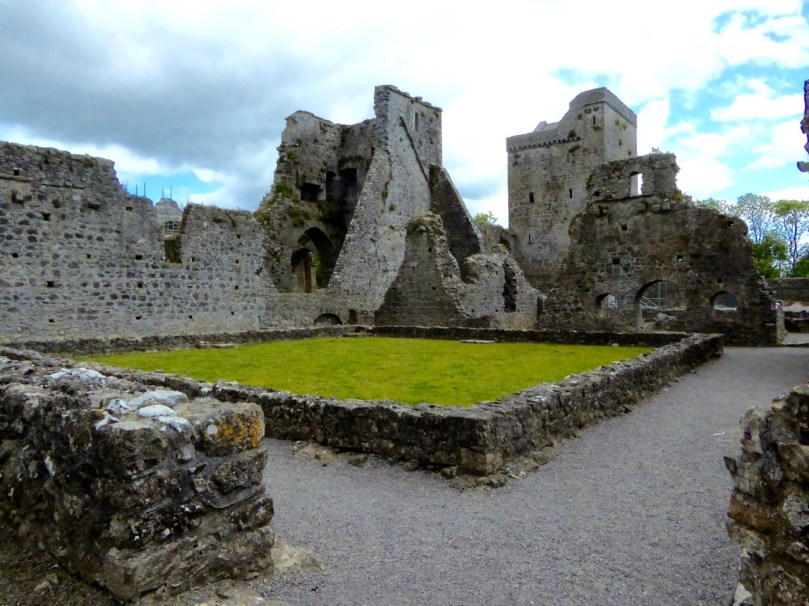
Monastic Precinct. To the right is the Prior's Tower. Over the reredoter is the water tower and far Burgess Court

Monastic Precinct. To the right is the Prior’s Tower. Over the reredoter is the water tower and beyond is the Burgess Court

The initial phase of building included the area now known as the Monastic Precinct. A church, chapter houses, stores, a refectory and a mill were built and added-to over the course of the 13th and 14th centuries. This precinct was surrounded by a wall, which included some mural towers, but it was not primarily defensive. 

The construction of the enclosed area known as the Burgess Court dates to the 1460/70s. Warring factions among the Anglo-Normans, constantly invading each other’s territories, sacking and looting, created a climate of turbulence and insecurity. In the absence of a resident and powerful defender of the people of Kells, the Priory took it upon themselves to provide a refuge.

The Fortified Gate, from the outside (note the machicolation above the arch) and the inside (note arrow slits on either side).

The curtain wall and its mural towers constitute an impressive defensive system. Each tower was based on Henry VI’s ‘£10 Castle’ plan, with stores and administration rooms on the lower floors.  Living quarters occupied the upper floors which had fireplaces and garderobes. The crenellated battlements supported wall walks, and here and there were machicolations, murder holes and copious arrow slits. We can imagine the townsfolk of Kells flocking to the Burgess Court with whatever they could carry as a succession of marauding knights advanced and retreated. The priory was burned and sacked in 1262, and twice in the 14th century.

Inside the Burgess Court. The curtin wall had arrow slits all around it, as well as the towers

Inside the Burgess Court. Besides the mural towers, the curtain wall itself had arrow slits all around it

The Prior added a fine new tower for himself around this time too – well crafted and recently stabilised. Improvements and enlargements to the church were undertaken and a new belfry was added. When times were peaceful it must have been a bustling and thriving place, a welcome sight to weary travellers.

The Prior's Tower. Beautifully built, but still emphasising defence against attack

The Prior’s Tower. Beautifully built, but still emphasising defence against attack

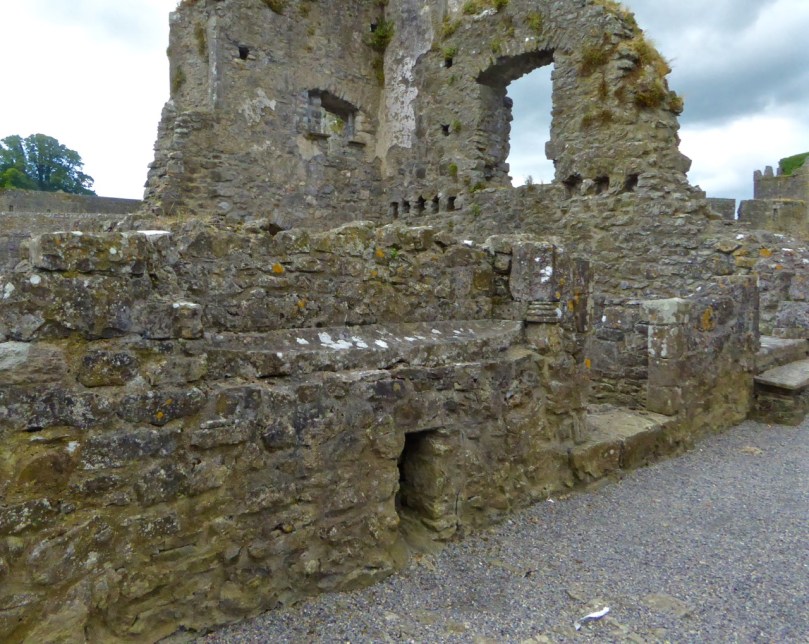
Left, a sedile (seat) and piscina (for washing vessels) inside the church. Right, some recent reconstruction demonstrates what the church would have looked like.

The monks had a cloister, of course, for prayer and contemplation. Their refectory was above the store house and featured a lavabo, for hand washing, at the entrance. A small canal from the river provided water for the mill and also carried away the waste from the reredoter, or necessarium – the communal latrine.

Cloisters

The Cloister. The Prior’s Tower and Cross Tower in the background

Lavabo. Note the drain.

Lavabo. Note the drain

The Dissolution of the Monasteries in 1540, under Henry the VIII, spelled the end of Kells Priory as an active monastery. All its lands were confiscated and it gradually fell into ruin. Unlike other religious ruins, the walls and towers remained reasonably intact, indicating that they were probably used as farm buildings and perhaps garrisons, over the centuries.

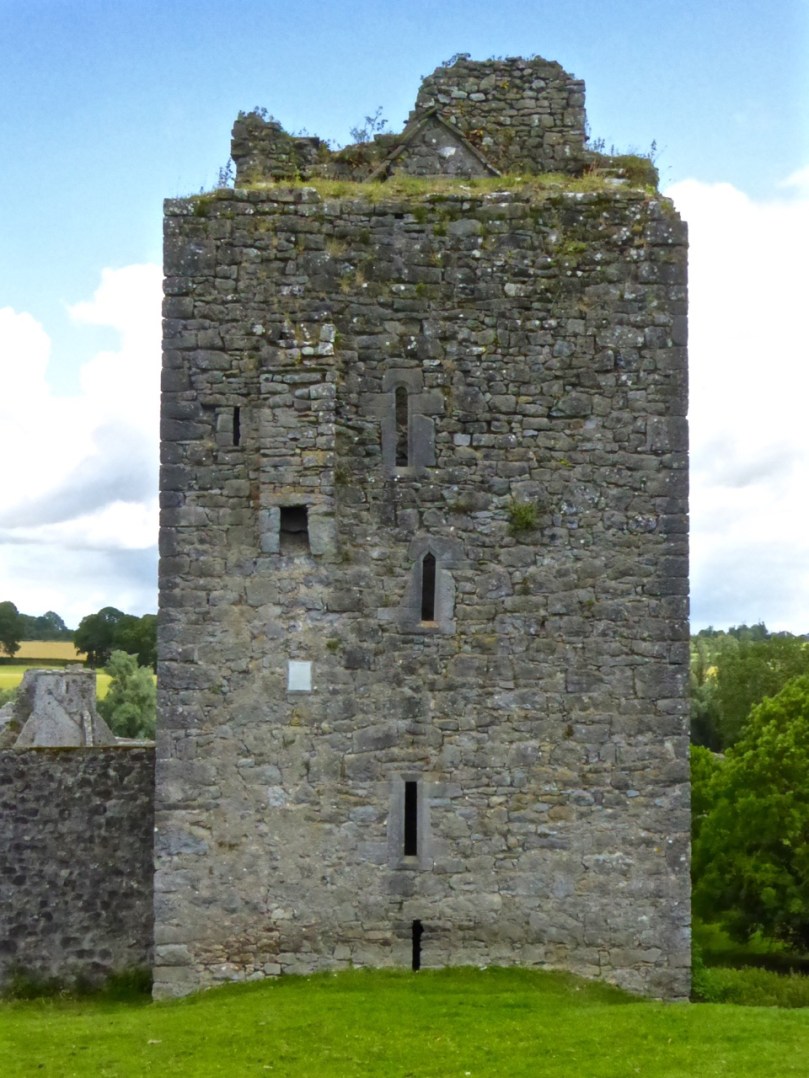
Southeast Tower. Three different windows and a guarderobe chute

South-east Tower. Three different windows, arrow slits, and a garderobe chute

To learn more about Kells Priory, take a tour through this brilliant website. Written by Daniel Tietzsch-Tyler, and illustrated with his plans and drawings, it is a mine of information and a virtual course in medieval history and architecture. I gratefully acknowledge that this post owes much to the treasure trove of detail it contains.

© Daniel Tietzsch-Tyler

© Daniel Tietzsch-Tyler

You’ll find Kells Priory about 10km south of Kilkenny City. It’s well signposted. While you’re there, make a side trip to Jerpoint to see the medieval carvings that Robert illustrates in Medieval Feast. It would make a grand weekend outing from Cork!

A Grand Outing!

A Grand Outing!