A Midwinter’s Tale

winter gales

We’ve established a little tradition for Christmas: we include a story, ideally to be read by candlelight huddled beside the stove just at the turning of the shortest days. Last year Finola wrote of childhood memories – Christmas in Dublin; the year before that I penned a version of a haunting Irish folk-tale. This year it’s my turn again, and I’m including a story which is based largely on events which really happened many years ago in the small Devon village where I lived. They bring to mind our own stormy winter which we survived earlier this year here in Nead an Iolair…

winter

Kathleen by Robert

Kathleen was a large woman alright.  If you saw her in the field, there was no mistaking her profile:  she always wore two coats, one on top of the other, and at the bottom they flared out like a church bell.  I never saw her without her great legs jammed into a pair of old wellington boots – except in chapel of a Sunday – and on her head was the same shapeless piece of faded red knitting, year after year after year.

Kathleen became a neighbour of ours soon after Mr Monihan’s passing.  – And there was a strange thing, too.  I never heard it from Kathleen’s mouth direct – but then I never heard her deny it either – but everyone in the village was sure enough of the story.  He had been a smallish man, I suppose; certainly, he was small by comparison with Kathleen.  They shared the marriage bed late in life, for he’d taken herself – a confirmed spinster – as his second wife long after his own children were out in the world.

Well, it was about two years into the union that Kathleen first noticed her husband’s night wanderings.  She would wake in the morning – so the story goes – and find him cold and shivering beside her, with the smell of the sea all around.  Time and again this happened, and because he would say nothing about it, she determined to find out what was going on.  A certain night they went to bed as usual; she lay quiet but kept herself awake by repeating the Our Father over and over into the bolster.  It came to the deepest part of the night, and Mr Monihan seemed to be peacefully asleep, while Kathleen was feeling very tired and wondering what she was about.  Suddenly, he started up, crept across the room to the door, and in a minute was out of the cottage.  He had paused only to put on his old black cape that always hung on the peg.  Just as quickly, Kathleen was out too, but she was careful to keep hidden away behind him.  Down the hill they went, through the sleeping village and out on to the beach, he walking so fast that she had some difficulty in keeping him in her sights.  Eventually, she lost him altogether in the rocks over by where the cliffs start.  She searched for an hour and then gave up, returning crossly to her bed.

In the morning he was back again, but cold and shivering as usual.  Kathleen went over to the peg by the door and felt his cape:  it was streaming wet, and flecks of sea-foam still clung to it.

Of course, Kathleen confronted him with the story and wanted to know what it all meant.  He just shrugged and claimed to know nothing of it; as far as he was concerned, he had slept all night in his bed and woke up in the morning as cold as any old man would be.  So there was a pretty poor state of affairs for Kathleen.  But she accepted it in the end, as we all accept the mysteries in our lives.  She did try to follow him again, but had no more success than before.  She closed her mind to it and denied its happening, even to herself.

A while after, he was gone altogether, and his black cape with him.  She waited a day and a night, then went down to the rocks to search for him.  He was never found, and everyone accepted that he was drowned while in pursuit of his trade, which was kelping.

After that Kathleen moved up the hill into the little thatched cottage across the lane from us, and took up the kelping herself.  I would often meet her coming across the sand of an evening, the great dripping net slung over her back and she bent with the weight of it.  Yet I never heard her complain, and she a widow so soon.

She was not companionless for long.  One of her husband’s daughters who lived away in the city with a family of her own fell on difficult times and sent her own son to stay with Kathleen.  This was a weak looking boy of about fifteen years old.  The arrangement was meant to help Kathleen as well as the mother, but I never once saw him lift a kelp net, and doubted if he was even able.  Instead, he followed her around like a dog, and seemed more of a worry to her than ever her widowhood had been.

What happened after was only learnt by the villagers in the course of time, and much of it hearsay in any case, as Kathleen always kept herself to herself.  She must have been aware of the stories that went about but was never known to confirm any aspect of them.  On the other hand, she never uttered against them, so they are probably worth the telling.  I saw little enough of the events myself, although I was aware at the time that Kathleen was in some way troubled.
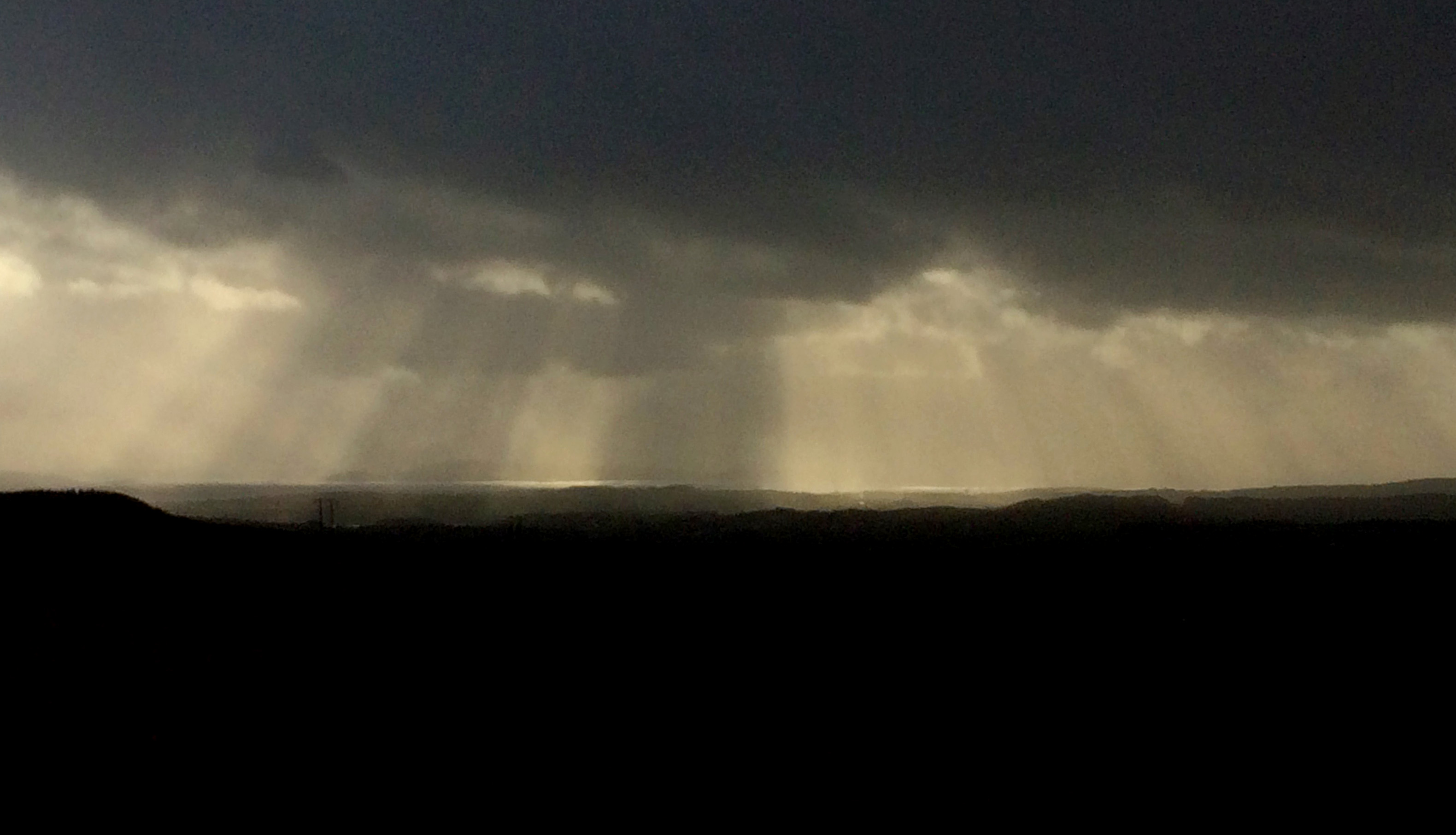
Storm clouds

It was late in the year; nights were long.  The cottage had only one bedroom – Kathleen’s – and the boy slept on a settle in the kitchen.  On our wild coastline, dawn is hailed not by a cock’s crow, but by the first wailing of sea birds that collect in huddled crowds over the off-shore rocks.  One of these winter mornings Kathleen was just stirring herself when she was startled to find the boy standing by her bed.  He had thought that she called him – somebody or something had called him – so he came from his place on the settle to see what was wanted.  She paid little enough heed of it the once, but when it happened again a second and a third night, well – then she started to worry.  On the fourth she stayed up, sitting herself in a hard chair by the embers of the hearth so that the discomfort of it would keep her awake.  She kept the Good Book beside her.  She was determined to wait the night out, but drowsiness overtook her and she suddenly awoke in the early hours to find the boy had sat bolt upright and was staring sharp at the cottage door.  He seemed not to hear her when she spoke but eventually came to, like one shaken out of a dream, and told her that – again – there had been the voice crying to him in the night.  She made light of it, and convinced him it was no more than the wind and the sea, but inside herself she knew there was something else.

After that, Kathleen could not rest easy without taking the precaution of fitting a large lock to the door which faced down the shore road – something she had never lived with all her life before – and when she went to her bed at night, the key was firmly under her pillow!

The solstice passed, and days grew longer.  Gales came, as they always do in January on our coast.  But in that year these were savage gales, far wilder than anything I had experienced in my lifetime.  The glass in the hall fell and fell again, until the little brass pointer was hard against its bottom stop.  We kept around our firesides, then, and listened to the storms hurling themselves against us, our windows and doors rattling and moaning from the wind wanting to tear us from our refuge.  Some days there would be a little respite, and we would venture outside to pick up the broken slates and chimney caps that littered the lanes and gardens.  At these times, we saw how the sea had thrown itself halfway up the village street as though angrily trying to reach out for our hillside homes, having already washed over those against the harbour.  There was no kelping could be done – the huts on the shoreline were in any case smashed and the nets all gone – but Kathleen could never be idle:  she feared for her roof and I watched her throw thick cords across the ridge of it, and lash them to great boulders at the eaves to weigh it down.  All this she did from ladders with the wind still high, she heaving the heavy rocks on her own while the boy stood under her, useless as a lame sparrow.

These lulls were short, and were each time followed by yet worse weather.  The peak of it came towards the end of the month, with a roaring wind that you could not stand up against.  It brought our chimney down, and the church steeple too, which went through the nave and ruined it.  A day and a night it lasted with us all crouching indoors, wondering what havoc we would find around us if ever we survived.
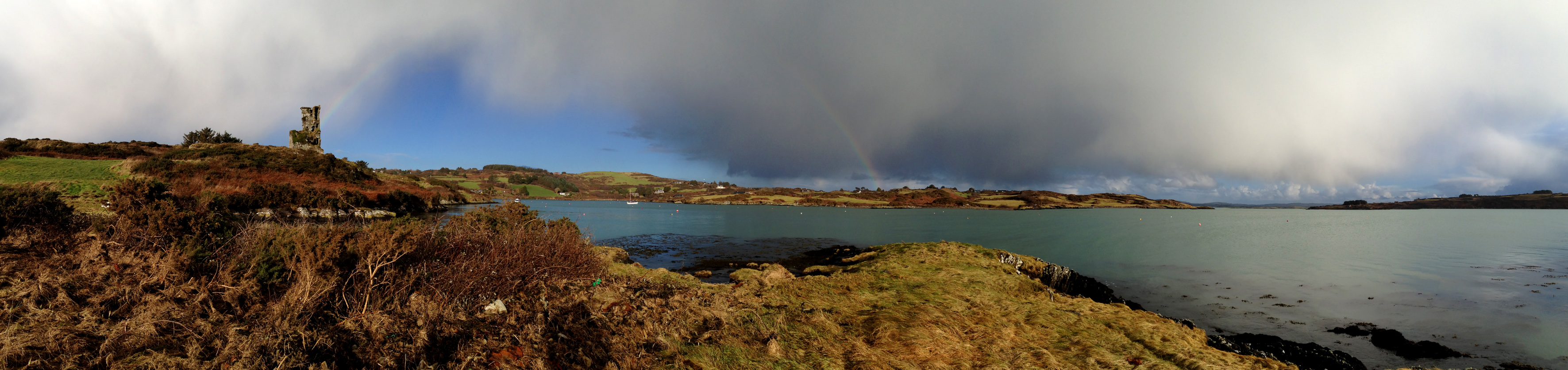
stormbow

The morning that followed after was, unbelievably, as quiet and as calm as spring.  There was not a breath of air moving; the wind seemed to have blown itself right away.  We crept out and viewed the devastation.  It was bad, but it could have been worse.  There would have to be a lot of roofing done, but generally the old stone walls had taken the battering well.  In the course of time we were thankful to discover that no-one in the village had suffered injury to themselves.  Like us, they had each one hidden away by the safety of their own hearth.  Kathleen was not so relieved however, and I realised her agitation as soon as I crossed the lane to find how she herself had fared.  She showed me where her door lay half in and half out of the tiny porch, as though it had been picked up in the night by some gigantic hand.  The rest of the cottage was undamaged, the roof intact under its protection.  But the boy was vanished.

We got together a search party as soon as it could be managed, and went after Kathleen who had gone straight down to the rocks at the end of the beach, close under the cliff.  All that day and all the next we searched, but never a trace we found.  I happened on an old black cape lying half in one of the pools but left it for the tide to take back again.

A few years have passed since these things occured.  The winds have never been as rough again as on that night when Kathleen’s boy was lost.  The village gradually got itself back to normal, and the sea has done its best to wash over the memories.  The cottage across the lane is unchanged, except that it has a new entrance door.  I often meet Kathleen striding across the beach with her loaded kelping nets:  I would like to ask her if she still locks herself in at night.
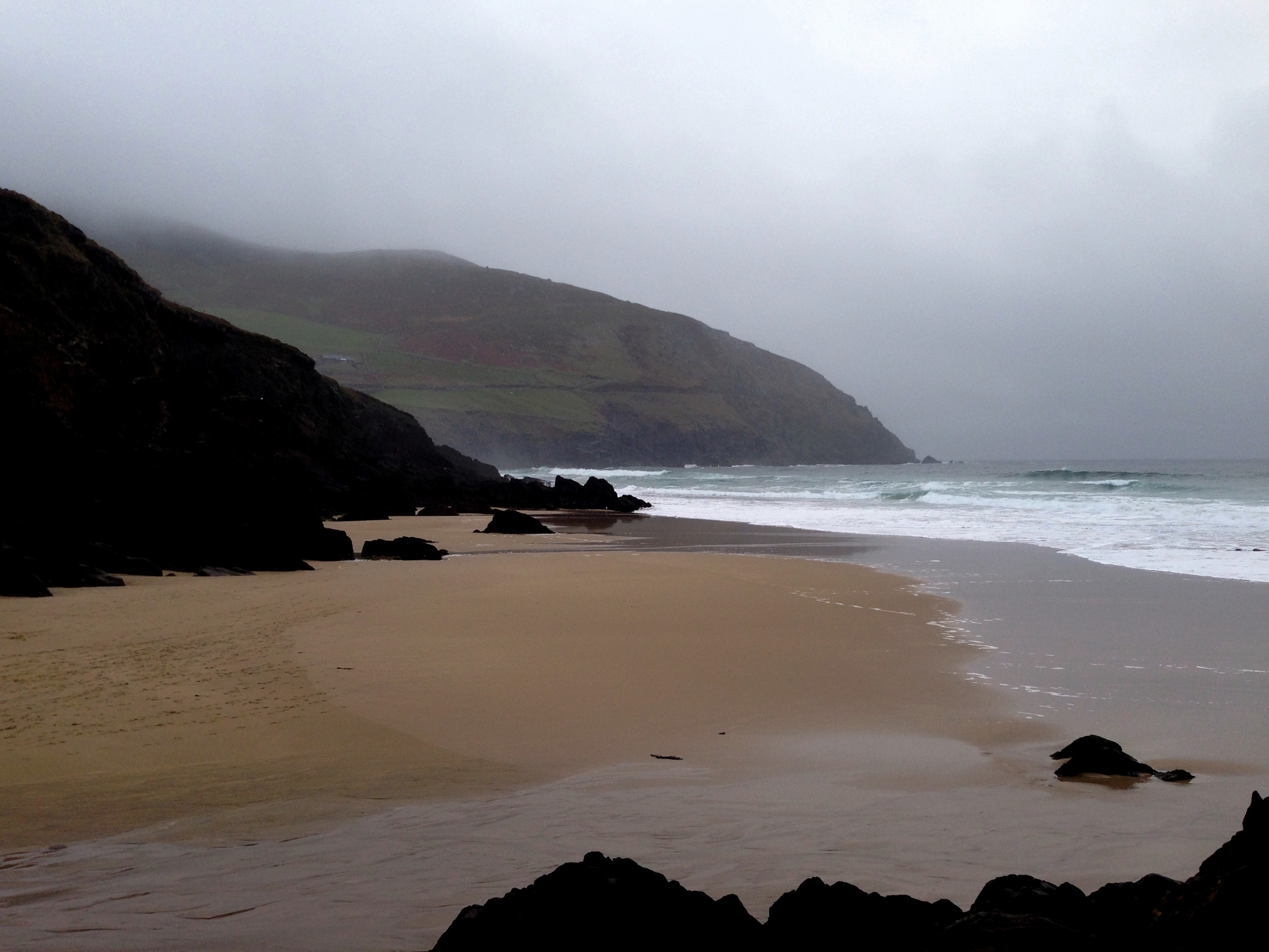
storm sea

The gale found us again this last January.  I lay in bed unable to sleep for the fury of it beating itself over the sea walls.  Or perhaps I did drowse – for I fancied that just before daybreak the storm dropped, and from beyond it there came a faraway sound unfamiliar to me, as of someone calling out of the night.  Calling my name.  I shook myself properly awake.  No, I could not still hear it; it must have been one of the sea birds on the islands shouting in advance of the dawn chorus.  In the morning I went down to the beach.  There was Kathleen as usual, pulling through the combings of the high tide with her long wooden rake.  I passed her by, and walked out to the end of the sands, where the cliffs begin.  I had thought that the sounds of the breaking surf would wash the night-cries from my ears or my head.  Yet they still rang clear inside me. I started, then, when I suddenly came upon two figures – they were two great black seals who when they saw me threw their heads in the air and cried out, and their cries were carried away by the wind over the village and over the hills.  I watched as the creatures slid back clumsily across the sand until the water took them.  Still they cried as they swam away, their snouts raised up through the racing froth.  At the far end of the beach I saw a small stooped figure – Kathleen it was – raise her hand briefly to her eyes to watch after them.

church tower

The church in Hatherleigh, Devon, destroyed by the hurricane of January 1990
Martinmas

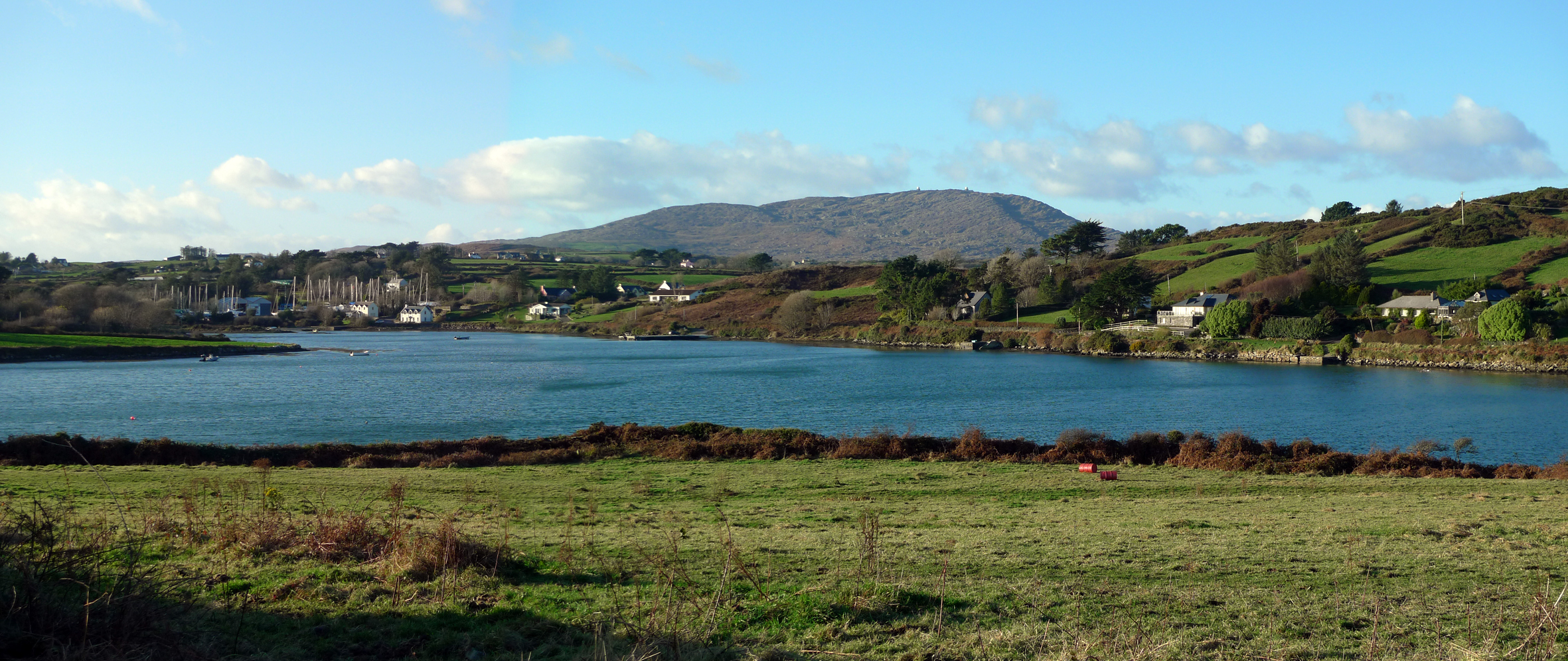
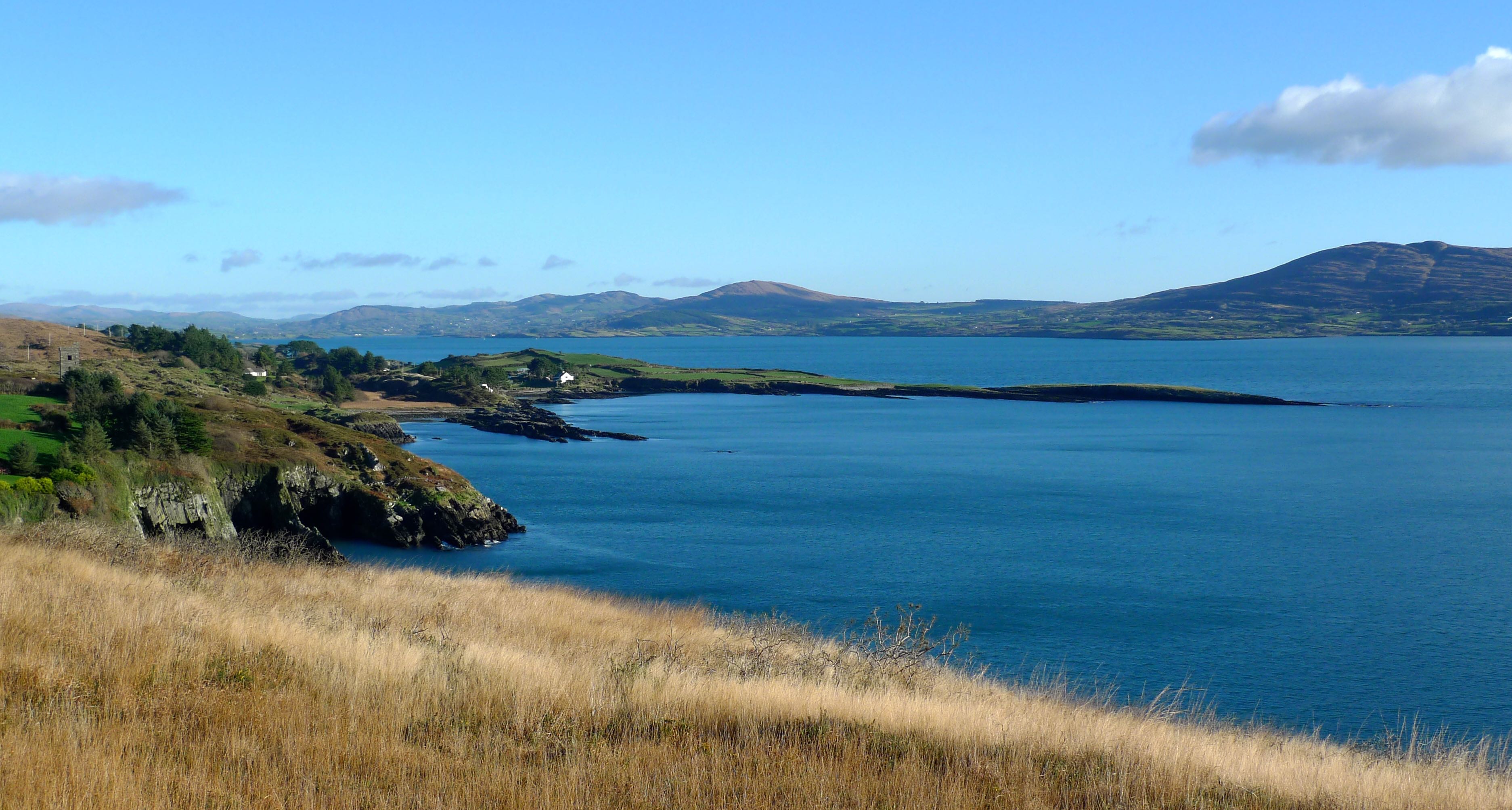
St Martin's Summer: late November on the Sheep's Head

St Martin’s Summer: late November on the Sheep’s Head

I’m used to pursuing the lives of the Irish Saints – often obscure, always fascinating – their legends tied up with folk tales and seasonal customs. But here we are, in Ireland, with a strong tradition of celebrating a continental Saint – St Martin of Tours.

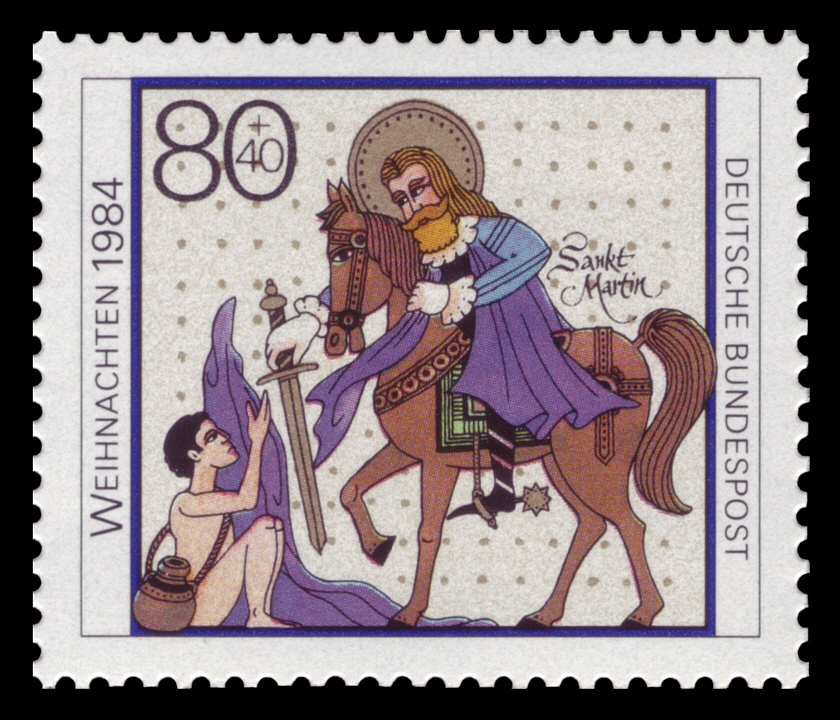
St Martin of Tours adorns a German postage stamp

St Martin of Tours adorns a German postage stamp

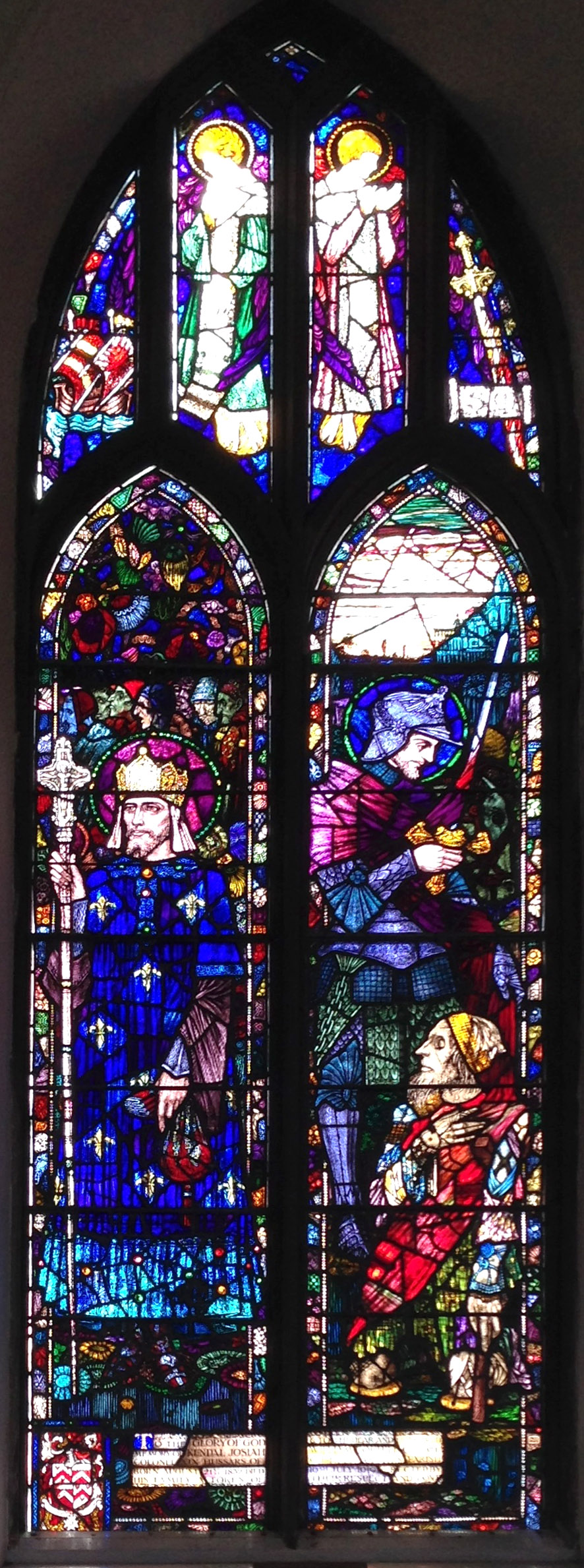
St Martin doesn’t appear to have any connection with Ireland at all – yet everyone here seems to know the one element of his story that is always told: in the winter storms he met a naked beggar and cut his own cloak in two, giving half to the beggar. There is a twist to the story – that same night Martin had a dream: he saw Jesus wrapped in the piece of cloak he had given away and Jesus said to him, “Martin has covered me with this garment.” Even though Martin was at that time a soldier in the Roman Army he sought to be baptised and then refused to fight as this was against Christian principles. In fact, he was the first recorded ‘Conscientious Objector’.

Harry Clarke's window in Castletownshend, showing St Martin and the Beggar in the right hand panel

Harry Clarke’s window in Castletownshend, showing St Martin and the Beggar in the right hand panel

St Martin’s Day is on 11 November and the season is known in Ireland as Martinmas. There are customs surrounding this time – still remembered in some rural districts. There is a whole chapter devoted to Martinmas in Kevin Danagher’s book The Year in Ireland (Mercier Press 1972). From this we learn that every family is to kill an animal of some kind “…and sprinkle the threshold with the blood, and do the same in the four corners of the house to exclude every kind of evil spirit from the dwelling where this sacrifice is made…”

In 1828 Amhlaoibh Ó Súilleabháin of Kilkenny recorded in his diary: “…The eleventh day, Tuesday. St Martin’s Day. No miller sets a wheel in motion today; no more than a spinning woman would set a spinning wheel going; nor does the farmer put his plough-team to plough. No work is done in which turning is necessary…” This might be because of a story that Martin was martyred when thrown into a mill stream and killed by the mill wheel. In fact the hagiography states that he died of old age.

Another Irish legend (from Wexford) relates that the fishing fleet was out one St Martin’s Day, when the Saint himself was observed walking on the waves towards the boats. He proceeded to tell them to put into harbour as fast as possible, despite the good weather and fishing conditions. All the fishermen who ignored the Saint’s warning drowned during a freak afternoon storm. Traditionally, Wexford fishermen will not go out to sea on Saint Martin’s Day.

St Martin is the patron saint of Geese. In England there are two ‘Goose Fairs’ held in the autumn, one at Tavistock near my old home on Dartmoor. I have been to that fair: geese and poultry are still in evidence, but I don’t know whether there is any direct link to our Saint. In the not-too-far-away Exeter Cathedral Close there is a Holy Well dedicated to St Martin.

In England and Ireland they call any spell of good weather which occurs after 11th November ‘St Martin’s Summer’. We are having one of those at the moment.

We are also now at the ‘November Dark’ – the days just before a new moon when there is no moon at all visible in the night sky. Traditionally, this was the time to cut willow rods to store for basket making in the spring, as then “…they would have the most bend in them…” (according to Northside of the Mizen).

St Martin's Summer at Rossbrin Cove

St Martin’s Summer at Rossbrin Cove

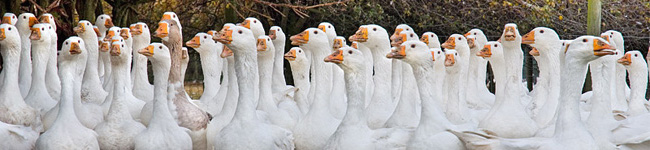
St Martin’s Goose was traditional fare on Martinmas in some cultures, so I’m feeling a little worried about this gaggle…

Goosey Fair, Tavistock, Devon

Goosey Fair, Tavistock, Devon


A Moment in Time

Beautiful Rossbrin Cove

Beautiful Rossbrin Cove

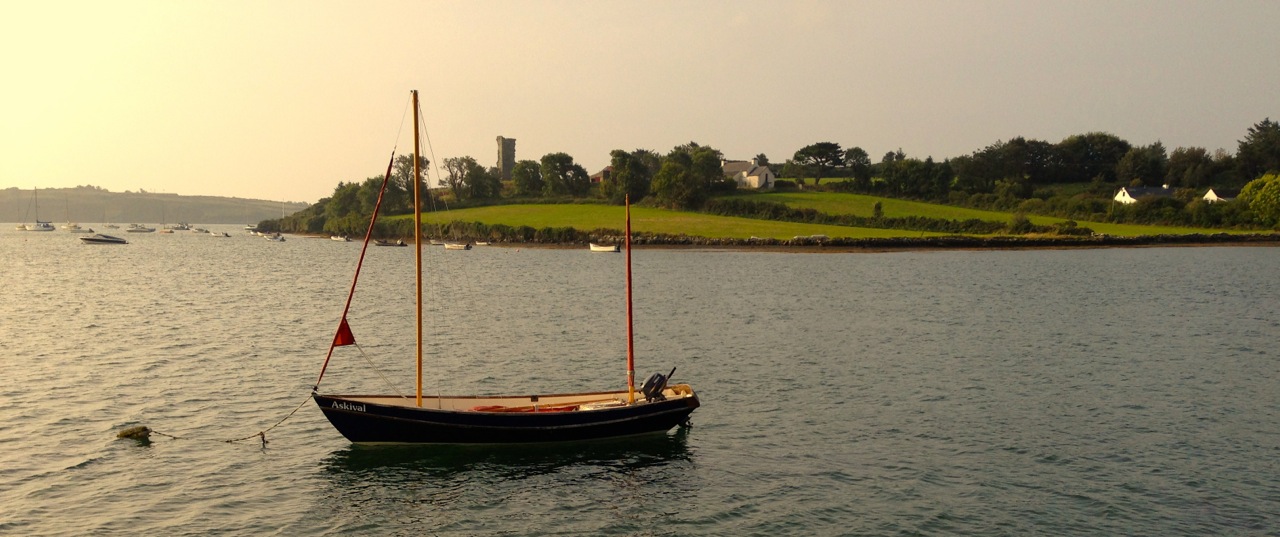
It happens so suddenly. One day you will go down to the Cove and the sounds of summer will be in the air: childrens’ voices and laughter from gardens and beach, excited dogs, perhaps a clop of ponies from the riding stable, the flap of sails getting under way and the whirr of outboards on ribs. Then, the end of August comes, and it’s as if a shutter drops mechanically. Gates are shut and blinds are drawn at the many holiday houses along the water; there’s a chill in the morning air and a haze hangs over everything. An ever so slight feeling of melancholy accompanies the Oystercatchers pieu-ing as they glide in.

fuschia

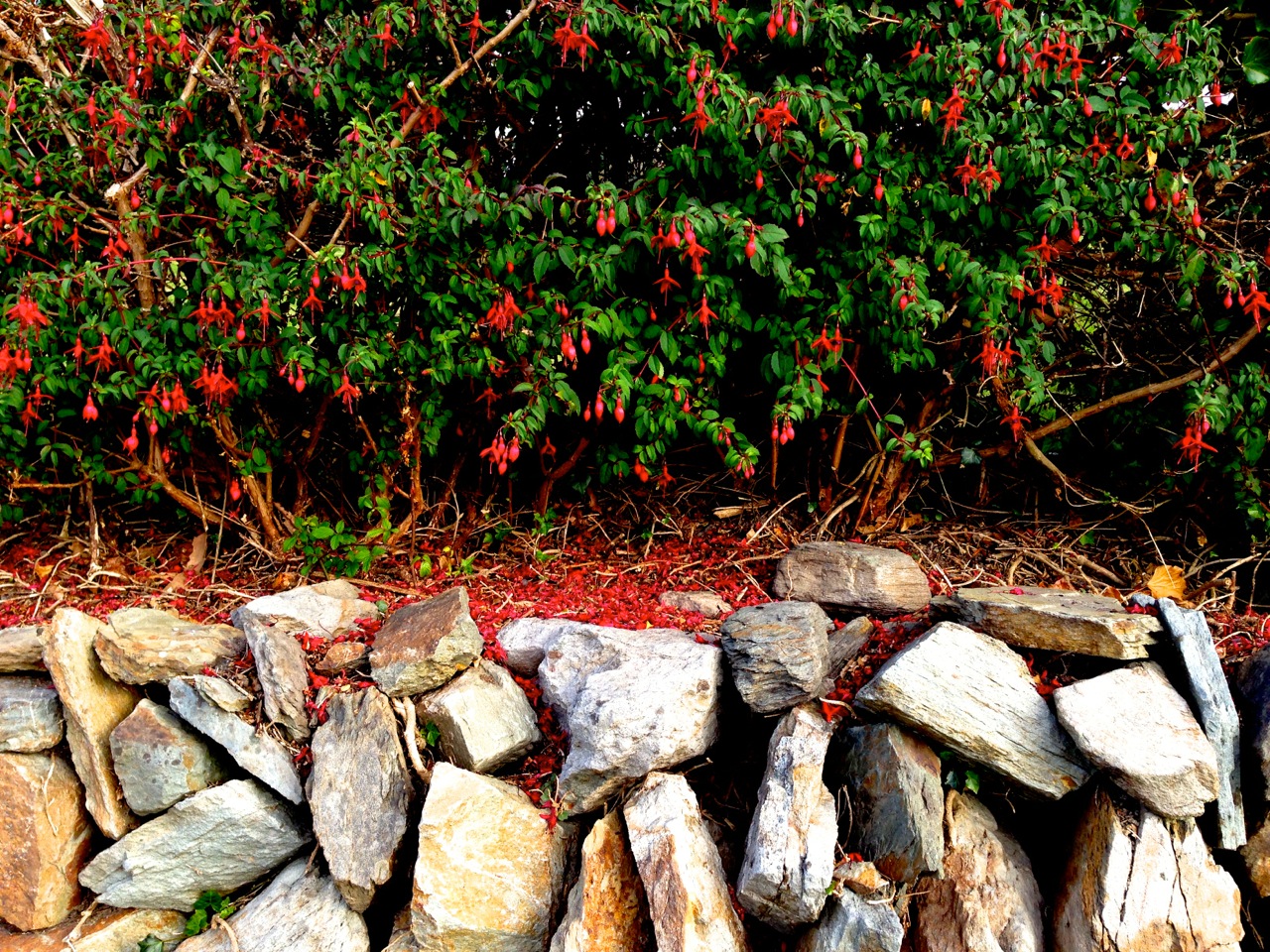
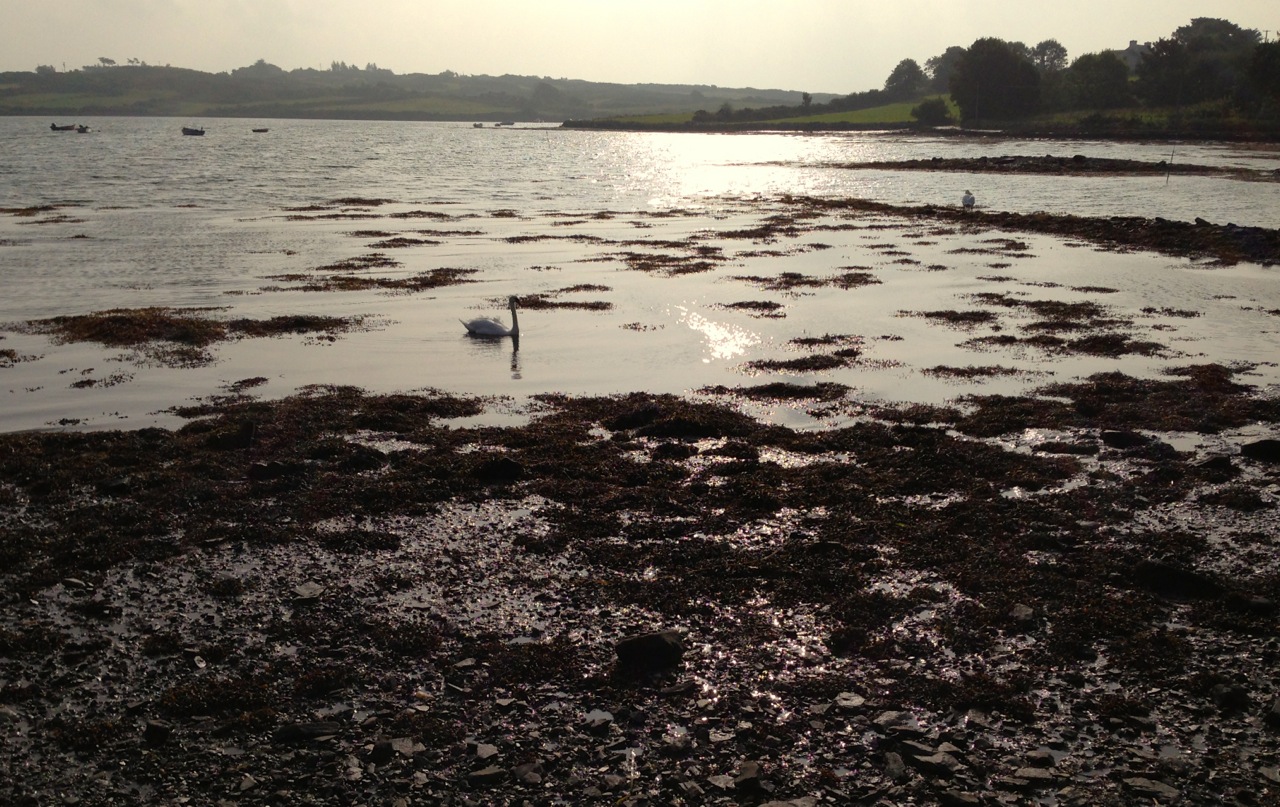
But there’s abundance all around: fat, luscious berries and hips dominate the hedgerows and wild fuschias are as rampant as ever. Bees are constantly in evidence. The sun still comes uninterrupted every day in this record-breaking year while, in the evening, the biggest moon of the season rises magnificently in the east, bringing with it a huge tidal variation: low water empties the Cove almost completely, providing a feasting ground for the little waders, while the Swans are compelled to sit on their single legs forlorn on a mud-bank, or to sail off out to the open water beyond the castle.

haze

On a day last week we perambulated the full rim of the Cove, pausing by Julian’s house at the very end, just before reaching the landmark of Finghin O’Mahony’s ruined tower. Like us, Julian is a year-round resident: there are just a few others. There is activity in the boatyard at the end: they are preparing to receive, over the coming month, all the sailing craft that are currently moored to buoys in the mouth of the inlet: upwards of thirty. Yacht insurance generally runs out at the end of October. Last winter – the stormiest in living memory – saw a single boat ride it all out undamaged on the water, while high and dry in the boatyard several fine yachts were toppled and broken by westerly gales. For some reason (perhaps its because of the now sleeping houses) the birds’ chattering and serenading seems to be louder and more insistent.

When I first came through Rossbrin Cove – many years ago – it didn’t make a positive impression on me. It seemed a bit of a scrappy place, with its huge, muddy slipway at the far end and rusting trailers and discarded dinghies growing in to the encroaching sedges. The shoreline itself, edged with home-hewn jetties and concrete landing places, seemed a little urban: I passed on, looking for a bit more in the way of West Cork scenery and character. Now, the Cove is our daily garden path: with familiarity it has elbowed its way into our hearts and we appreciate every detail. At low tides the rocks are a hunting ground for Mussels (although we have to wait for Good Friday), and sunlit pools are inhabited by scurrying crabs and bewildering varieties of seaweed.

misty

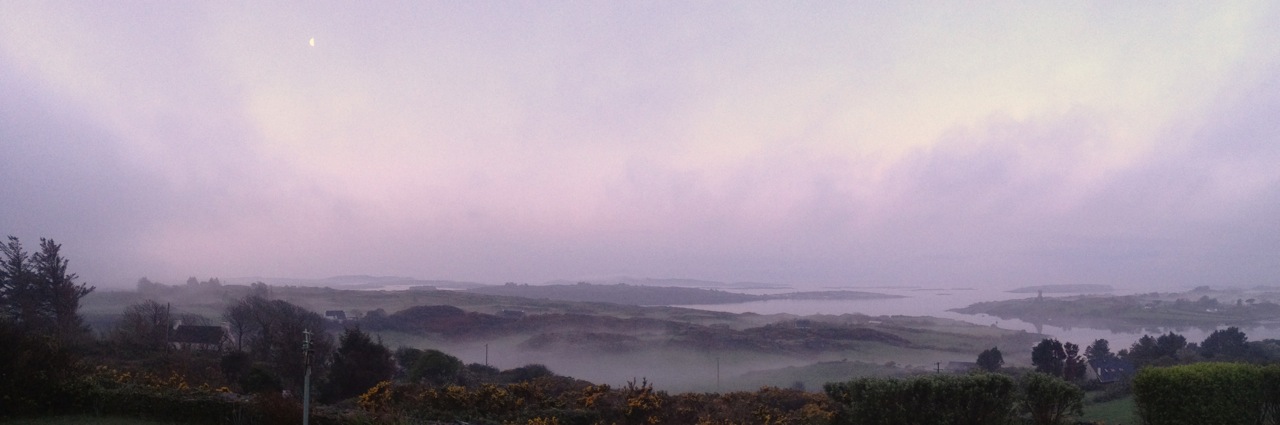
Before the haze burns off, sky and water merge and the islands drift in and out of view. The sea itself is a frontier of the untameable Atlantic but, here in this land of inlets, coastal hills and castles it mirrors the sunlight from its barely rippled surface, and our summer will never end.

Enjoying Rossbrin

Enjoying Rossbrin

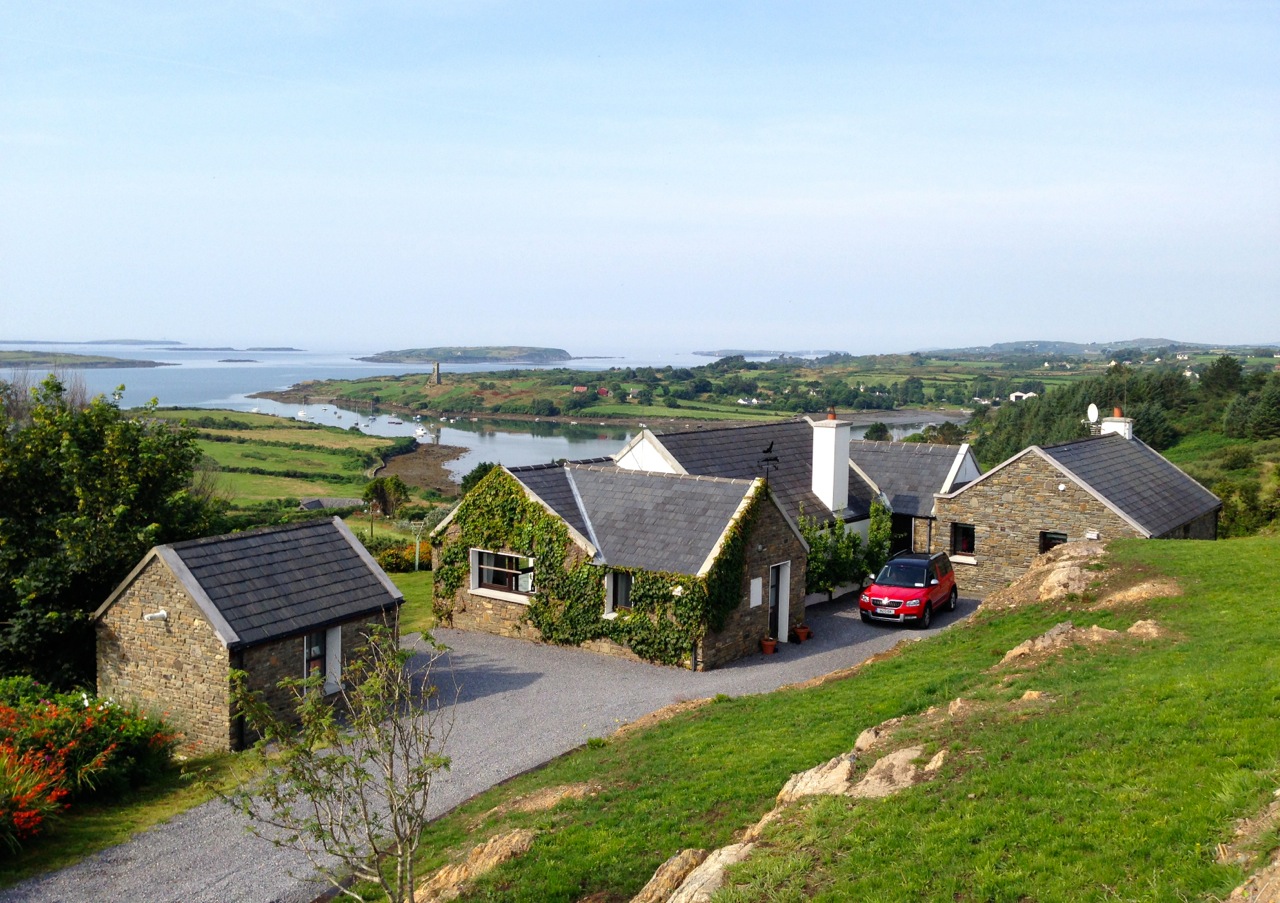
Nead an Iolair  - the view to RoaringwaterNead an Iolair – the view to Roaringwater

Body and Soul

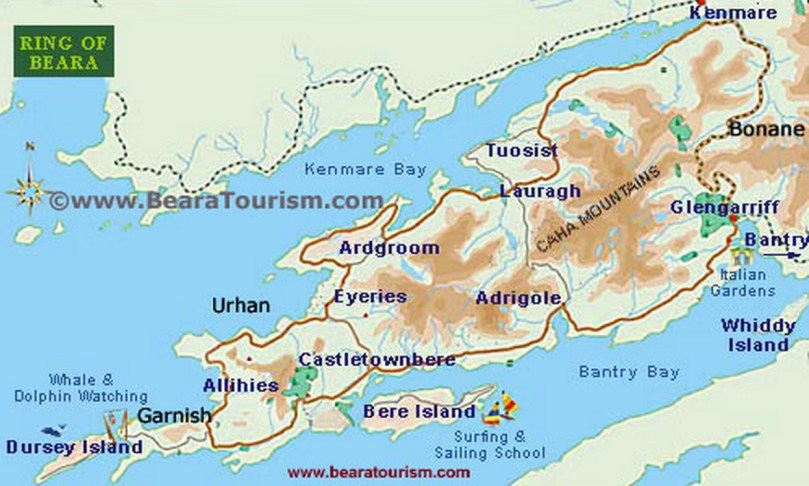
The Beara Peninsula

The Beara Peninsula

Last week I promised you an account of our time on the Beara Peninsula – it’s the third of the West Cork Peninsulas (shared with County Kerry) and the most remote. To the north is the Iveragh Peninsula, better known as the Ring of Kerry, and to the south is the Sheep’s Head.

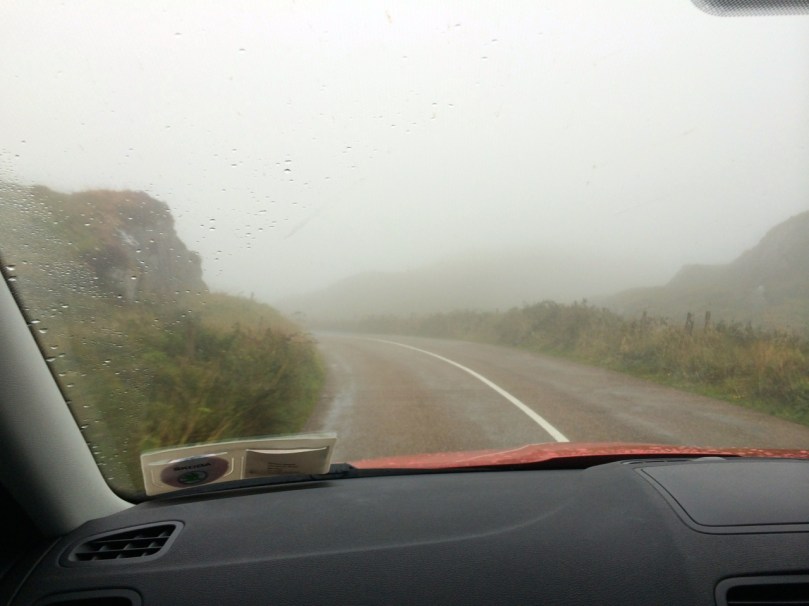
OK, so it does rain occasionally

OK, so it does rain occasionally

Readers have teased me in the past about doctoring my photographs or carefully choosing only those that show blue sky. After all, everyone knows that it rains all the time in Ireland. While I haven’t done any doctoring, or over-careful selecting (honest!) – even I have to admit that yes, it does rain in Ireland and the first day of our trip was pretty much a washout. (In fairness, like, we have devoted much bandwidth to talk of the variable weather we encounter here – cast an eye back over here, here and here.)

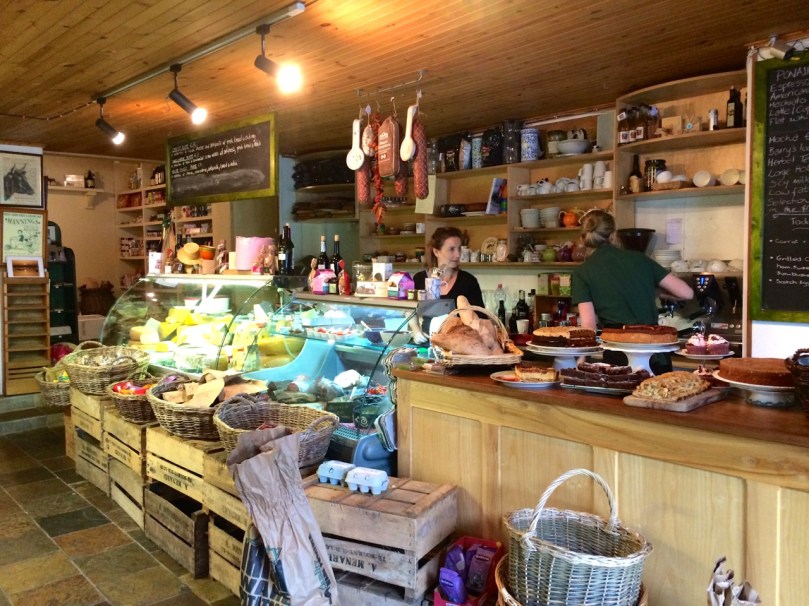
Manning's Emporium - the counter

Manning’s Emporium – the counter

Despite the weather, we managed to have a truly marvellous first day on our mini-break: it was a delight for the body and for the soul. First the body part – a stop in the famous Manning’s Emporium in Ballylickey. In the Manning family for 70 years and under the guidance of Val Manning, this little shop turned from a post office and grocery store into a mecca for food lovers, with wines, cheeses, meats and baked goods to die for. Val’s niece and her husband, Laura and Andrew Heath, have joined the business, introduced a new hot menu and expanded the range of foodie items. I’ve never yet left empty handed and, after a cappuccino and scone, we browsed the shelves and chose some excellent aged cheddar, a jar of their own chutney, and some locally made and heavenly-scented soap. The place was heaving, and Val himself was chatting sociably with everyone – always a bonus to enjoy a laugh with him.
Now for the soul! We had booked two tickets for that afternoon to the Ahabeg Vista Concert Series, on the advice of a friend. We weren’t quite sure what to expect, but what we experienced took our breath away. David Syme, a Juilliard-trained and internationally acclaimed American concert pianist has made his home on the Beara, between Adrigole and Castletownbere, and every Sunday afternoon in the summer he gives a concert in his living room.

David Syme

David Syme

With Bantry Bay as the backdrop (except we couldn’t see it on this occasion), he played first a long and complex piece, Schumann’s Carnaval. Although I am no pianist even I could see the technical prowess demanded by the 22 short movements. David explained it to us, and even identified some of the motifs as he was playing. He took requests from the audience (ours was Clair de Lune) and played pieces by Beethoven, Liszt, Gershwin and Ravel. But then he delighted us with Carolan’s Concerto, Elton John’s Candle in the Wind and finally Danny Boy, in honour of Maureen O’Hara. We learned that Maureen, a long-time resident of Glengarriff, is to be honoured with a special Oscar next year – so watch out for that next February 22nd! David’s wife, Suzanne, puts on an amazing spread during the interval. To get a sense of what we encountered, watch the RTE Nationwide program devoted to this concert series.

This was only our first day and we encountered fog and drizzle everywhere. But it didn’t matter – when you find such nourishment for the body and the soul, who cares about the weather! I will write more about the Beara in a future post: meanwhile, check out Robert’s account of an unexpected discovery in Eyries.

Code Red

A joint post by Robert and Finola

By Rossbrin Cove, after Storm Darwin

By Rossbrin Cove, after Storm Darwin

Weather apWe looked back recently and counted the number of posts both of us have done on the subject of the weather, and decided not to do any more on pain of boring our readership to death. But this week Met Eireann issued a rare Code Red warning and their direst predictions came true. The Southwest of Ireland was pounded by hurricane force winds, the like of which many people had never experienced before. Storm Darwin wreaked havoc in our corner of the world.

We were lucky! Our power was off for several hours, but our house is set up so we can still stay warm, run water, and cook. We lost a few more trees, including two that fell over the road, blocking access. Our terrific landscaper, Thomas, chainsawed them off so that at least cars could get by. Trees that came down in our neighbour’s property severed our telephone cable and we have been told that it could be ten days before this is fixed – so we have no landline and no internet. We use our cell phones to connect whenever we can in cafes in town or in friends’ houses, but reception has been spotty all week due to storm damage.

We're almost out of trees now in the haggard

We’re almost out of trees now in the haggard

Many of our neighbours have not been so fortunate and are still without power. For some this can also mean no water and no way to cook. The County Council has issued a warning to boil drinking water amid fears that water supplies have been contaminated. All over the countryside crews are out clearing away trees and restoring cables. Two young men were swept to their deaths by huge waves on the north side of the Sheep’s Head. Another man, part of a telephone repair crew, has died while working on the high wires. Roads and towns flooded although this time the storm surges did not coincide with high spring tides so the water damage was not as bad as it had been earlier in the year.

Boats blown down

Boats blown down

And what do we do in Ireland when the storm hits? We hunker down next to the fire in a warm dry pub, of course, and sing our hearts out! This week, an old friend of Robert’s arrived from Cornwall with his Lifeboat Choir – singers associated with lifeboat stations around Cornwall. The group has developed a long-term relationship with a similar group here in West Cork and this was their annual visit. So we found ourselves holed up in a hospitable establishment in the village of Ballinadee, with musicians and singers from both sides of the Irish Channel, singing and playing and hooting and cheering the night away, and then driving home beneath a clear brilliant moonlit sky that looked as if it had never held a drop of rain.

Cornwall comes to West Cork

Cornwall comes to West Cork

Life in West Cork is nothing if not variety!

This post has been brought to you courtesy of a friend’s internet. Lack of internet and a planned trip to Clare will disrupt the regular posting schedule over the next couple of weeks but normal service will resume as soon as possible.

Outlook: Changeable

storm

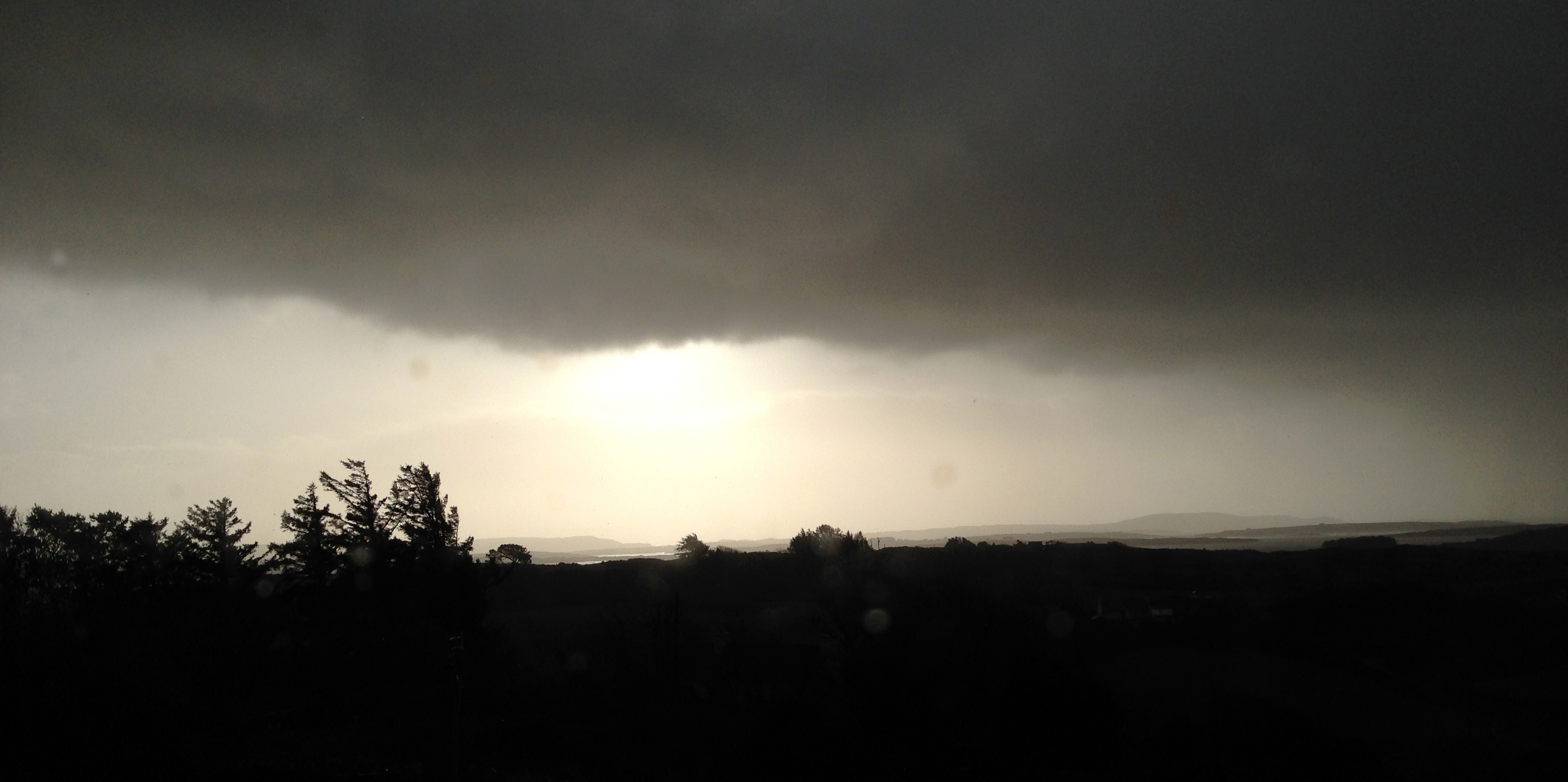
Sunday morning sky over Nead an Iolair

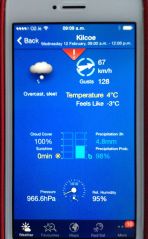
One of my favourite expressions about the weather was learned from an elderly gentleman who had lived all his life in Hampshire, England. …Tis black over Will’s Mother’s… This would have described very well the scene above, which was taken from Nead an Iolair when we awoke this morning. As an Englishman I would be expected to talk about the weather all the time; Irish people are not far behind in this, probably because there is such a variety of weather – even in a single day – that it demands to be described. …Is iomaí athrú a chuireann lá Márta dhe… means: …There is a lot of weather in a March day… This might just as well refer to a January day, or a day in any month in our experience. To illustrate this I decided to try a time lapse video, using my iPhone and a tripod. I had to shoot it through the window, hence the reflections – just as well because during the process we had torrential hail to add to the variety. So this is a thirty minute session of Irish weather coming in to Roaringwater Bay compressed to thirty seconds, each frame being shot a second apart:

By asking around the locality I have compiled some Irish expressions for weather. These are ones that I particularly like:

A snipe won’t stand in the morning… (meaning icy weather)

It’s a hure of a day… (meaning it’s a hure of a day – Finola has her own version here)

 Bad aul’ day isn’t it?

And – occasionally – The Sun does be splittin’ the stones

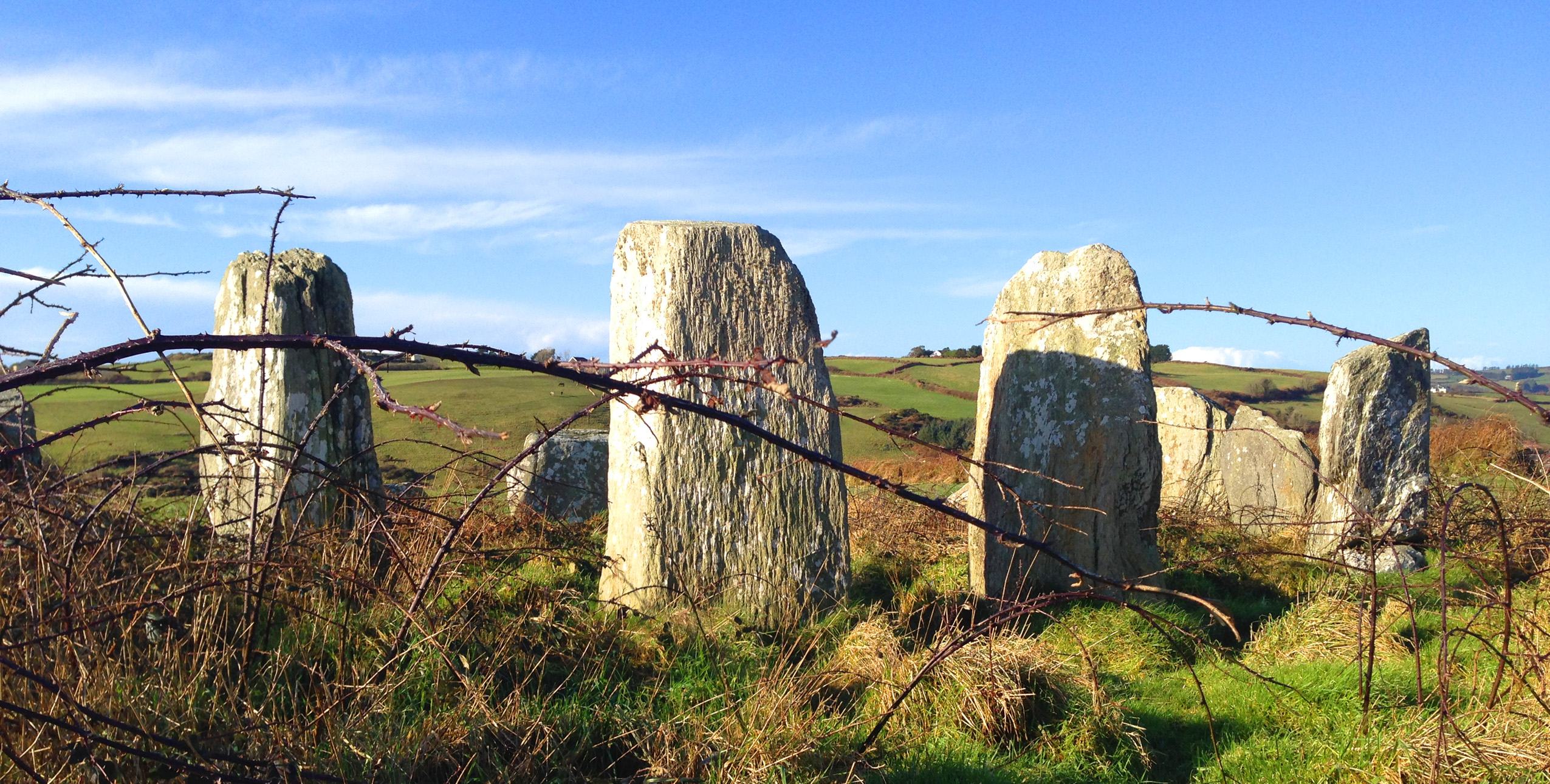
Sun circle, Bohanogh, a week ago

Sun circle, Bohonagh, a week ago

Now, as we get near to St Brigid’s Day – more on that next week – we can truly be saying:

There’s a grand aul’ stretch to the evening… (the days are getting longer)

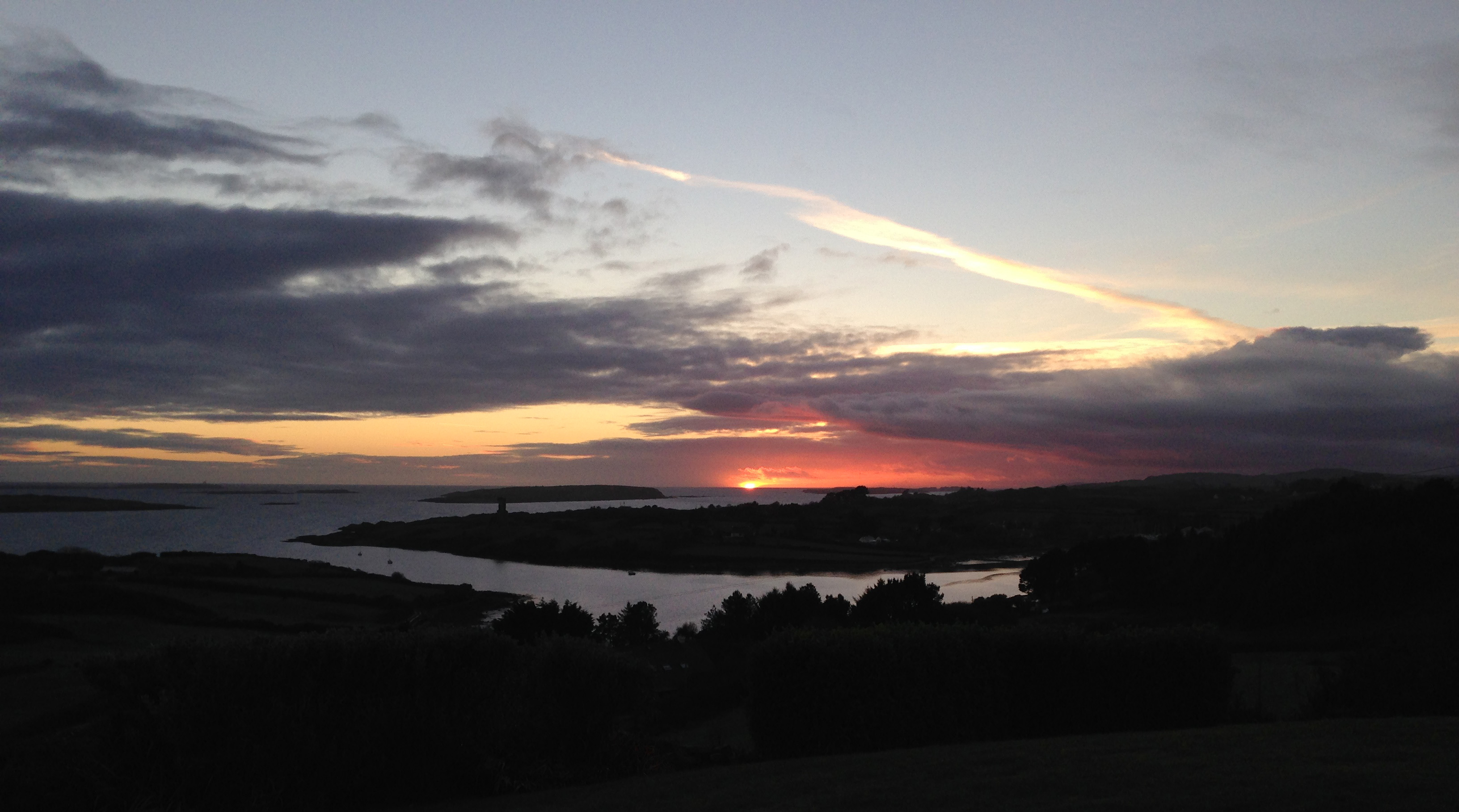
sunset