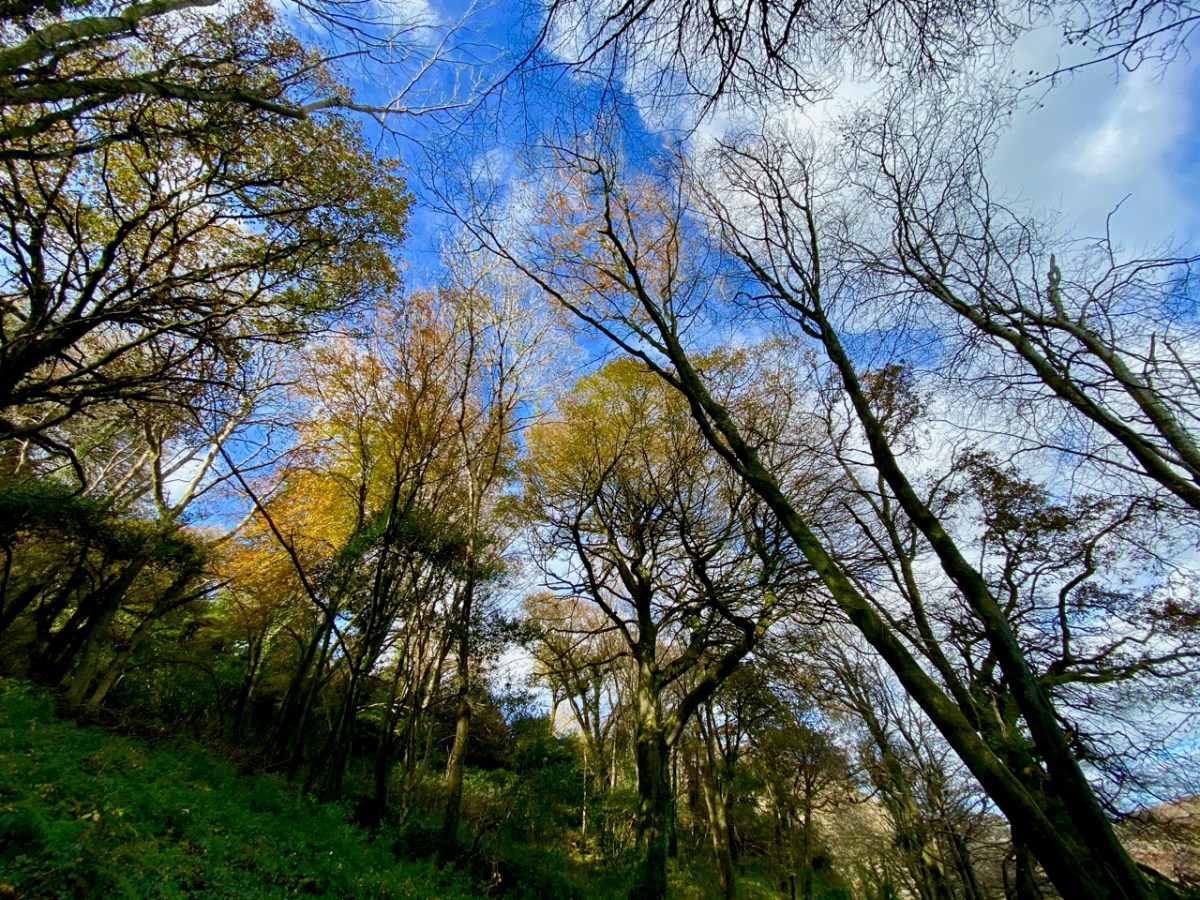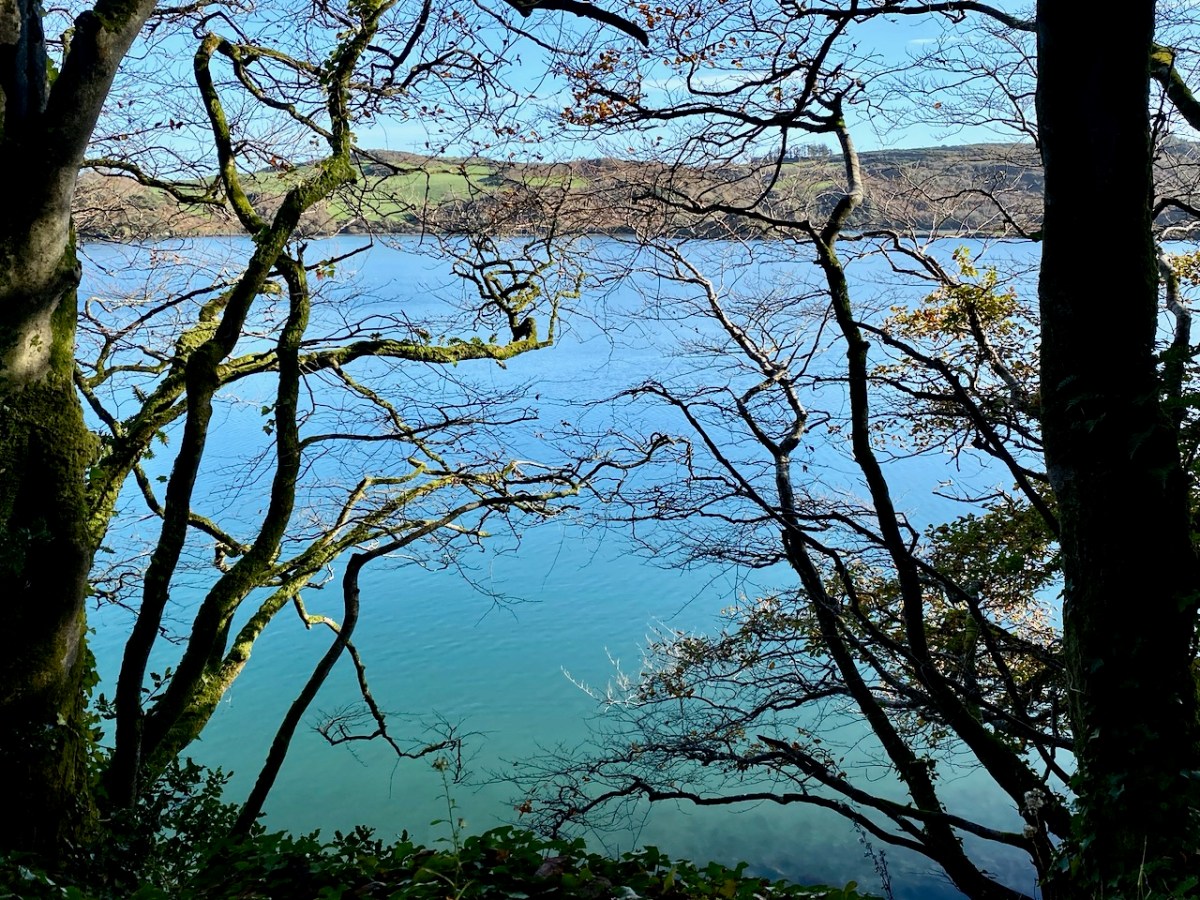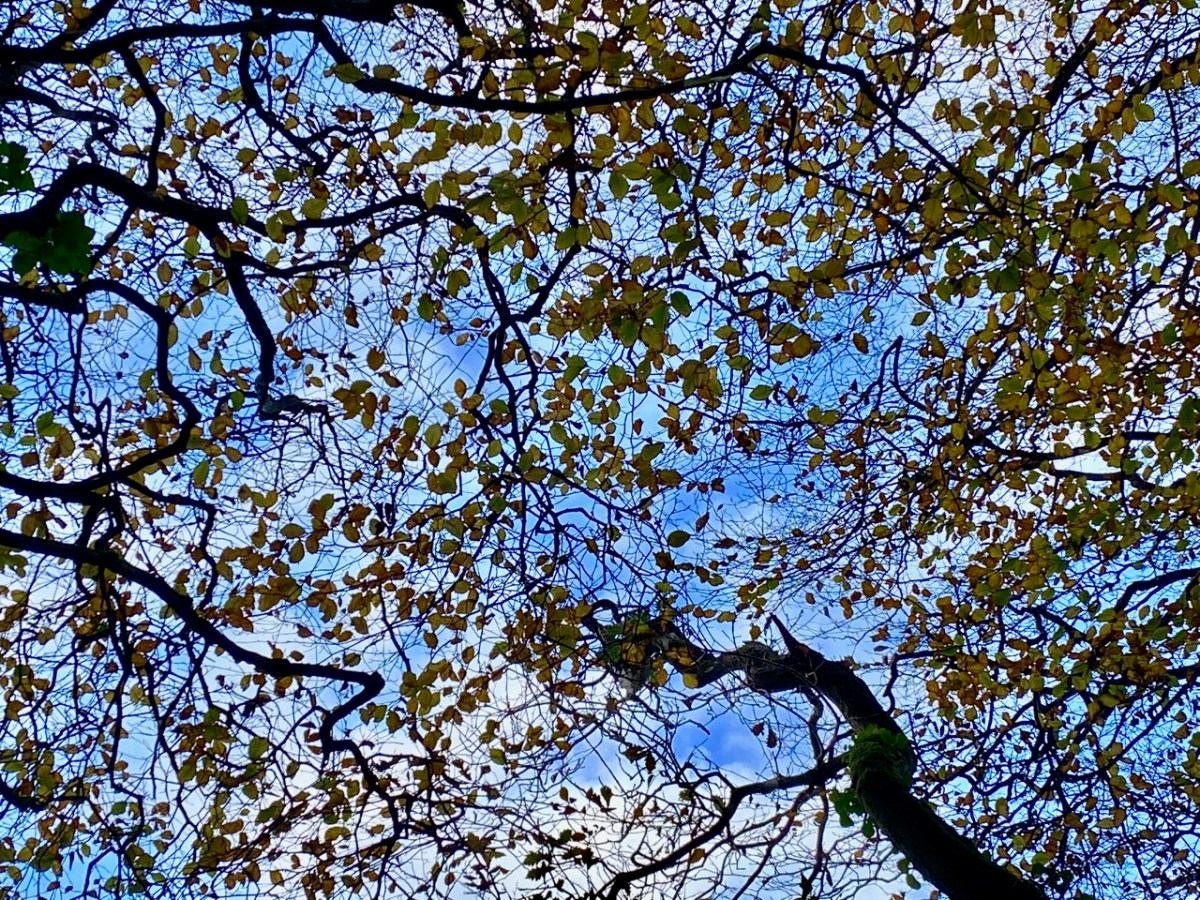
Sweet Ilen
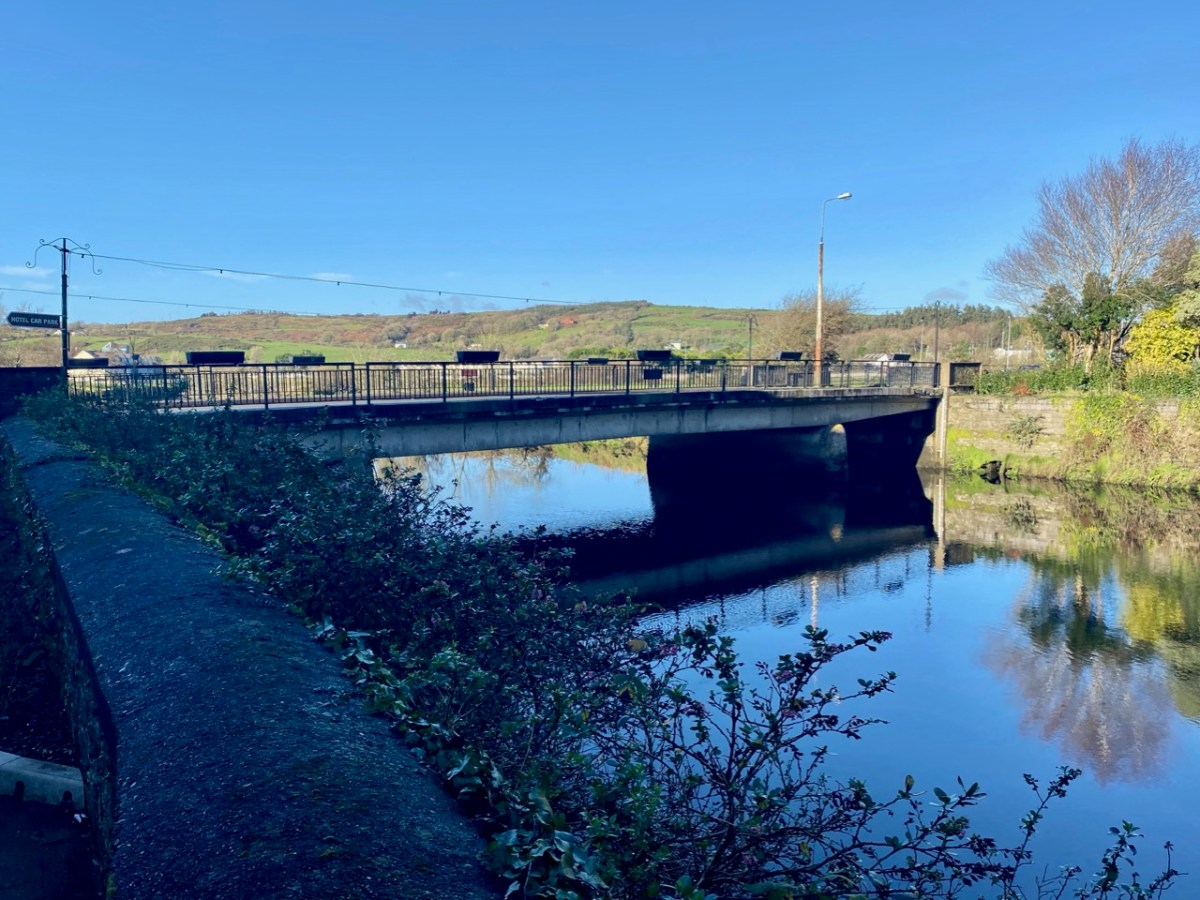
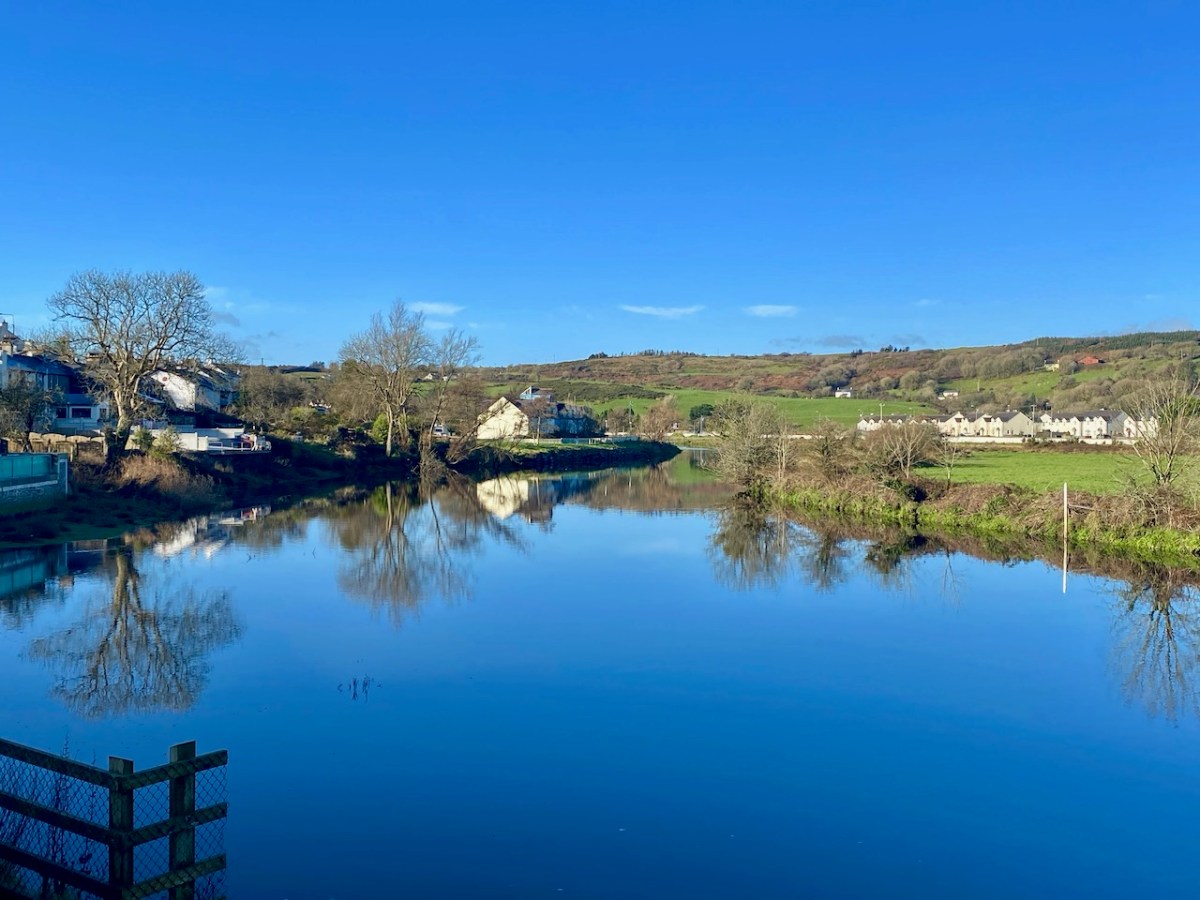
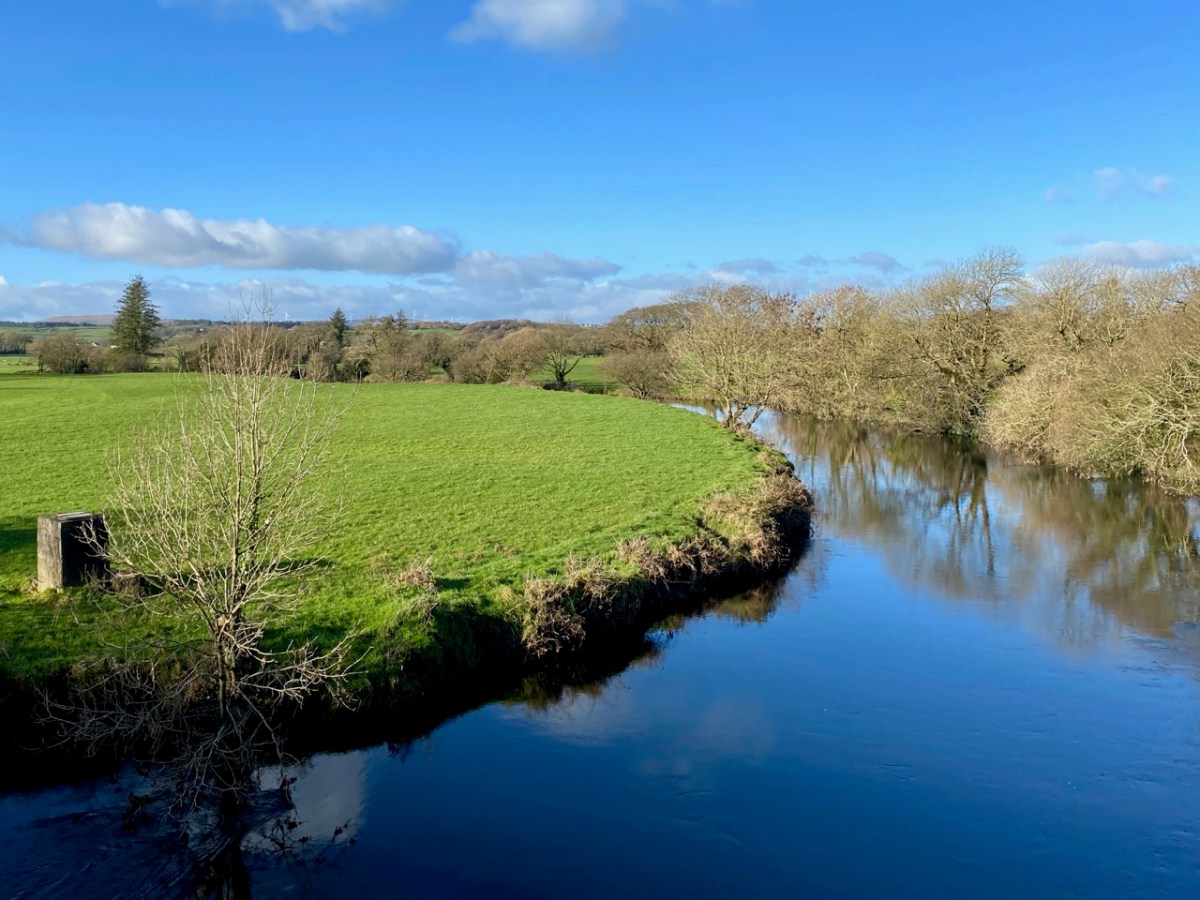
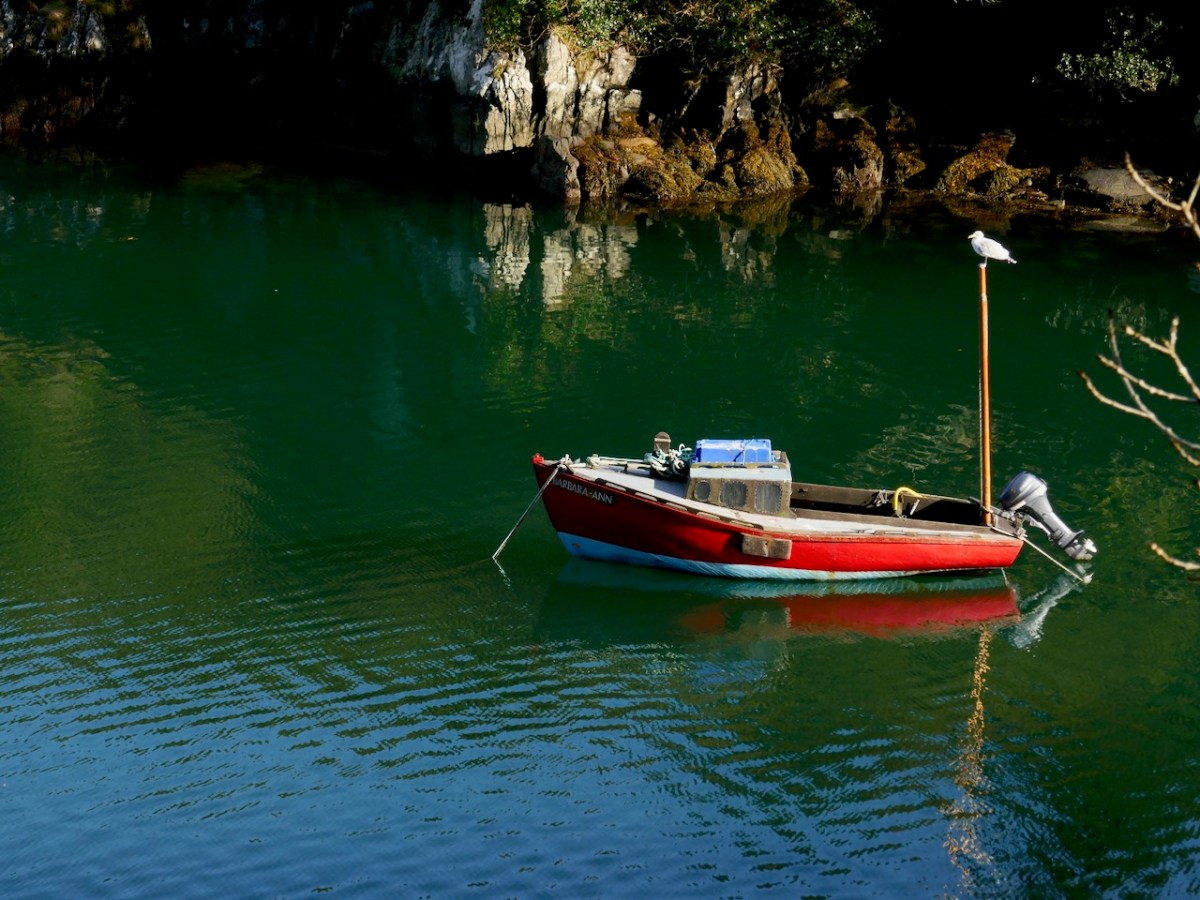
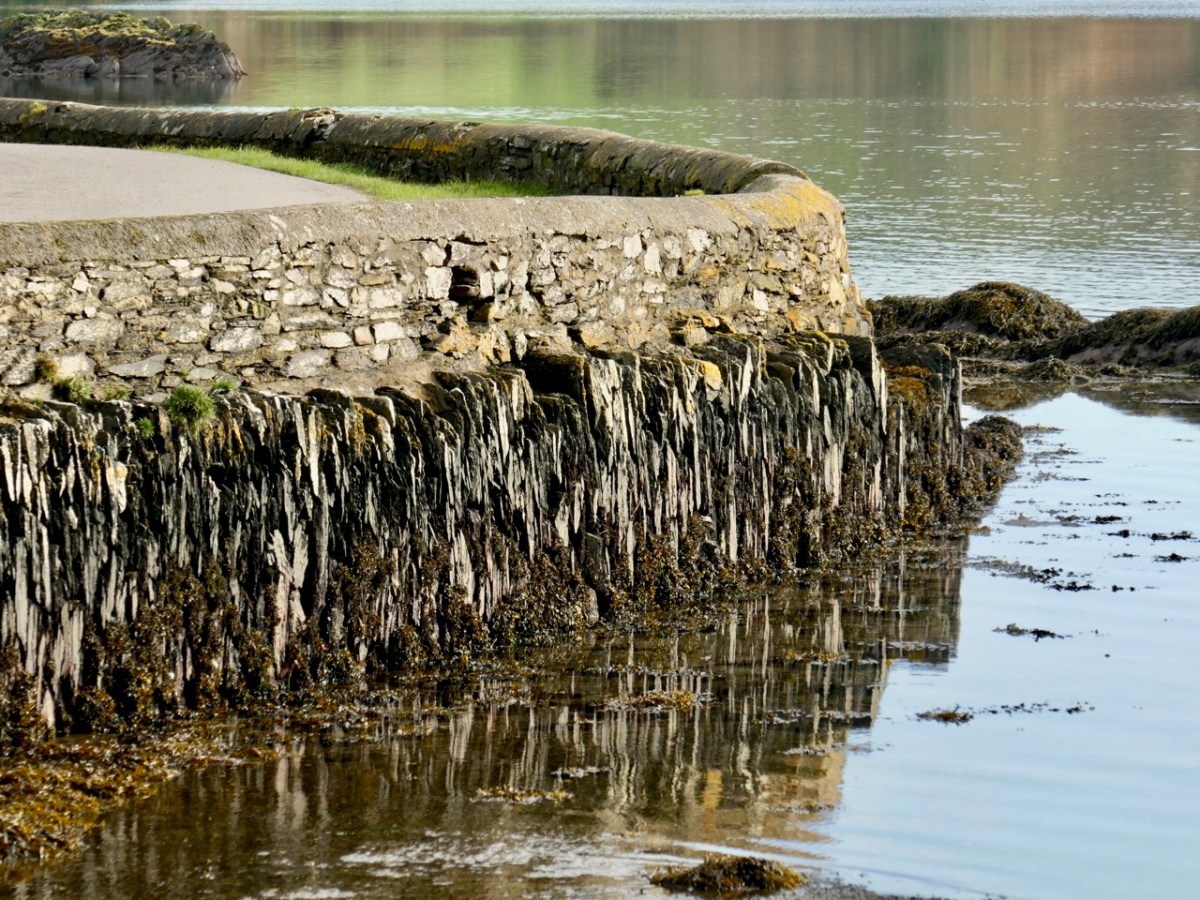
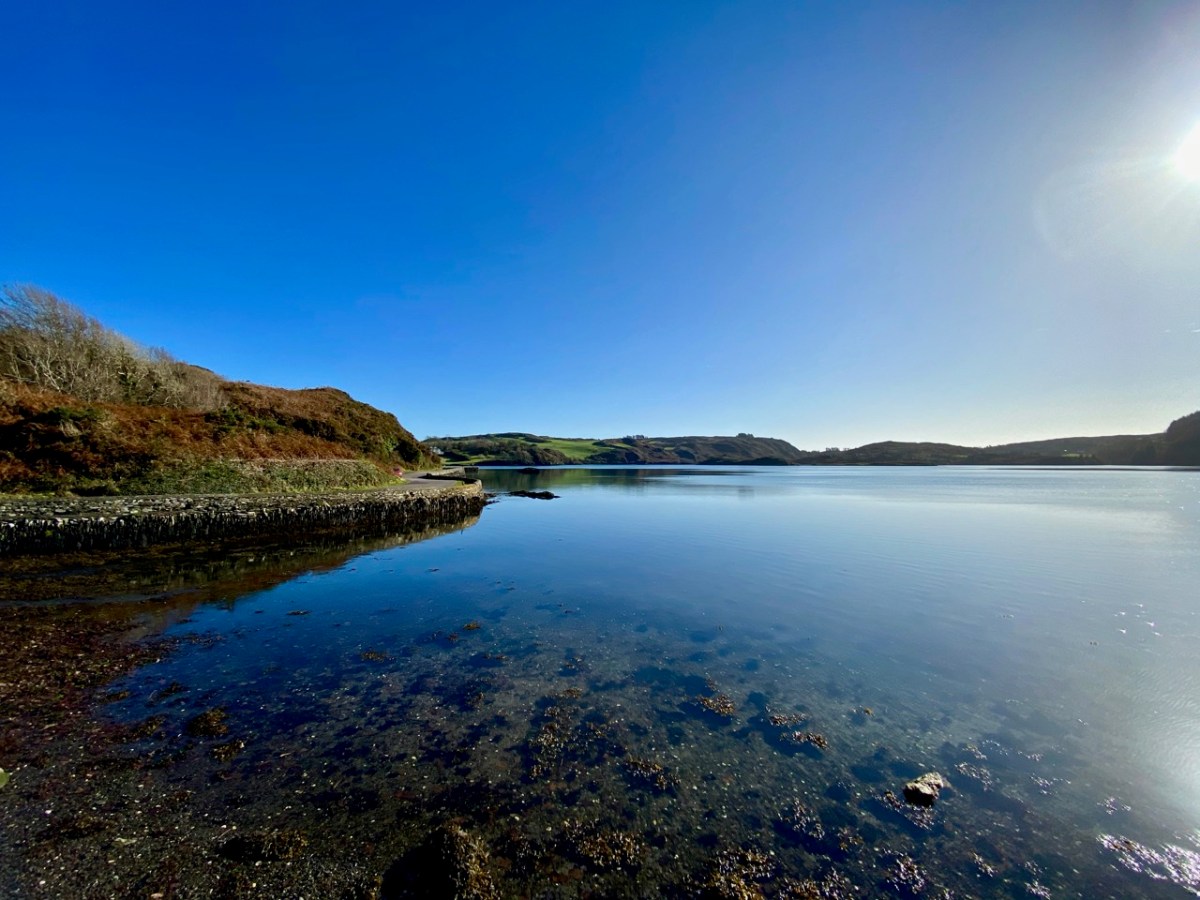
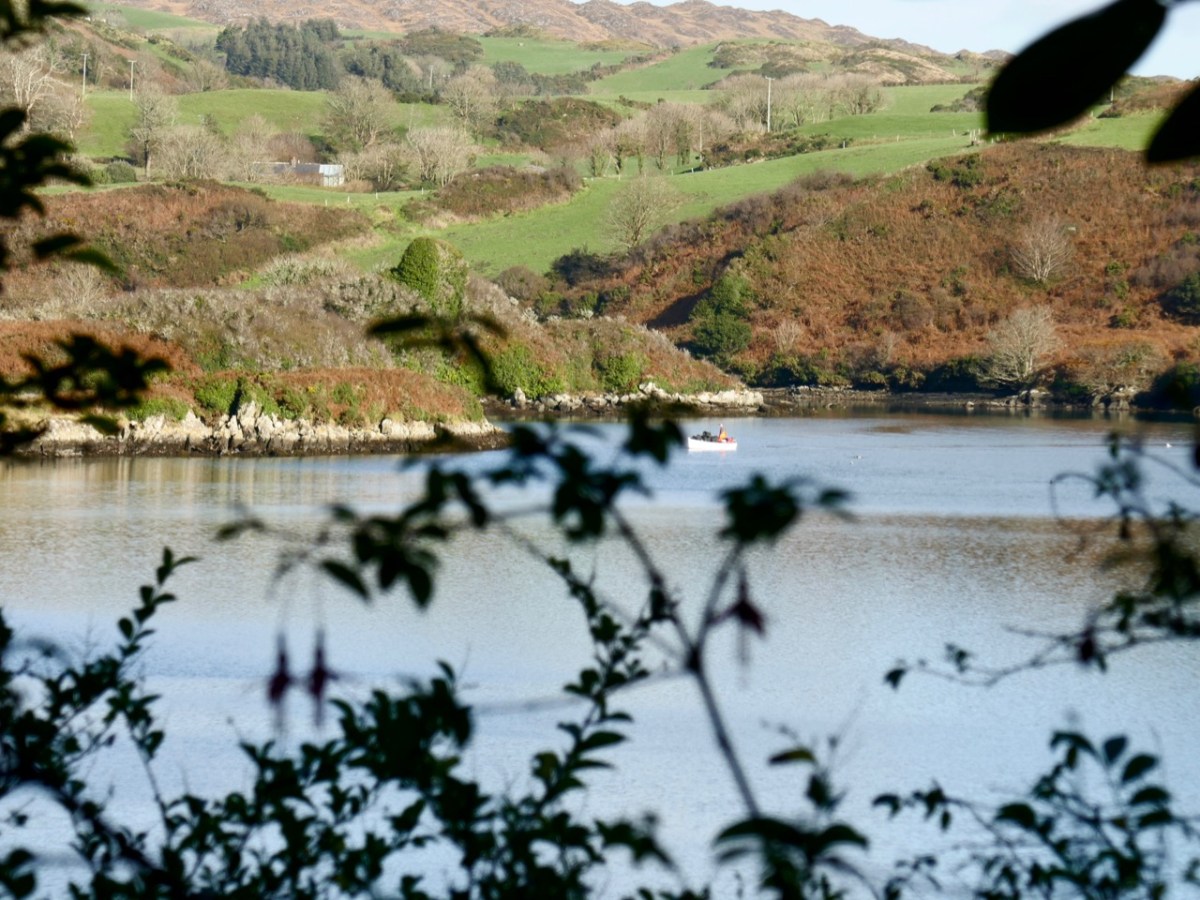
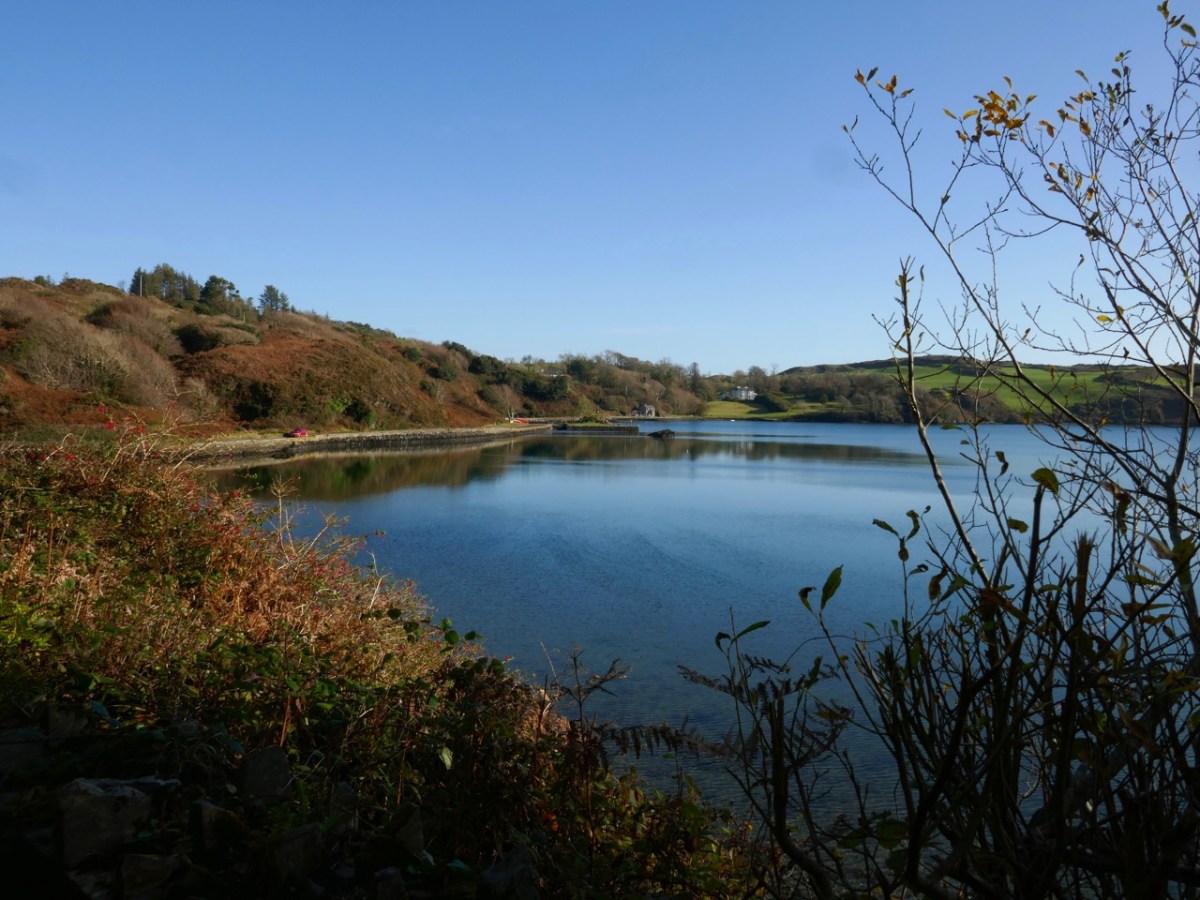
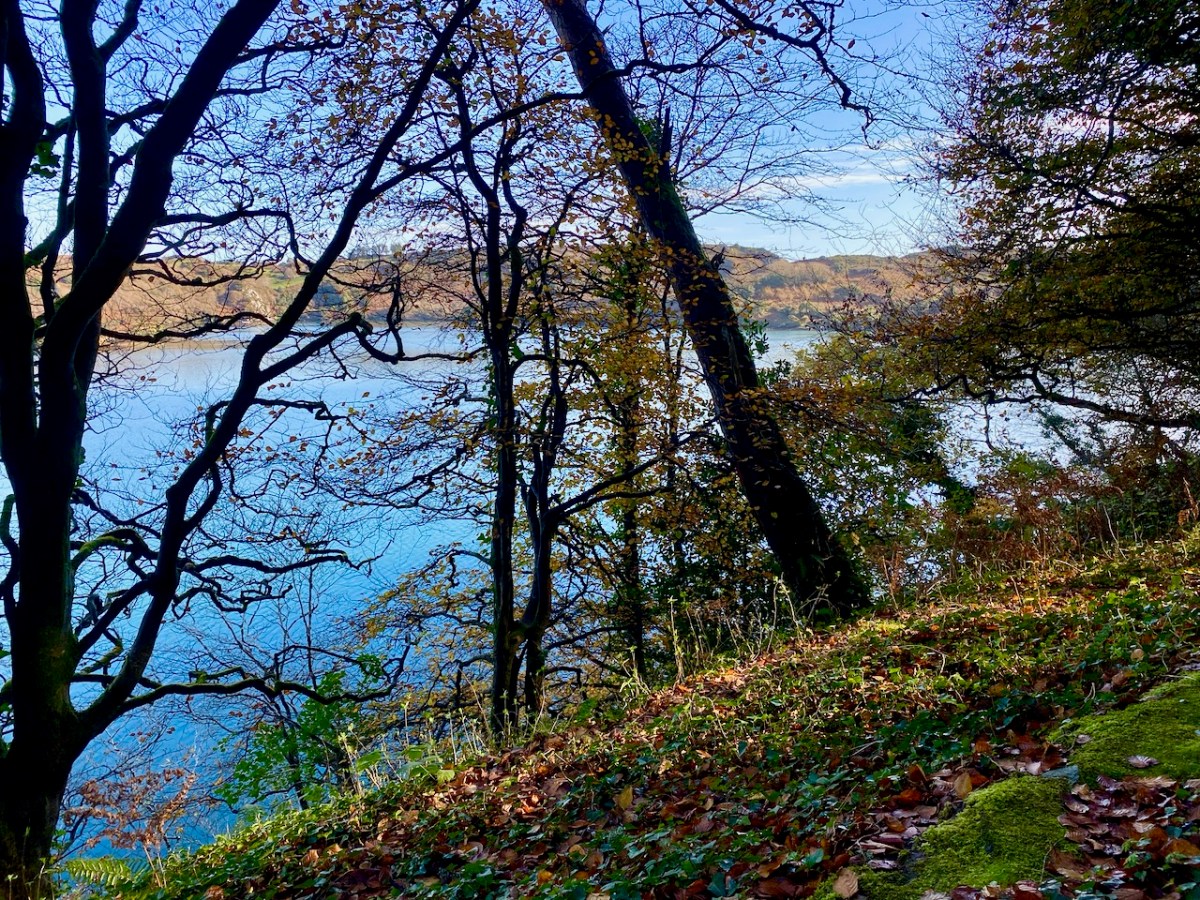
I wanted to explore the Ilen River: that’s pronounced eye-len, and it comes from the Gaelic An Aighlinn. ‘Aighlinn’ is an Irish name, the equivalent of Eileen in English, but it is also said to have a meaning when it relates to water: ‘the way that moonlight reflects on water . . .‘ We’ll keep a lookout for the moonlight, but our first expedition was carried out on a glorious late November day, absolutely calm and with clear, deep blue skies: the morning reflections were perfect.

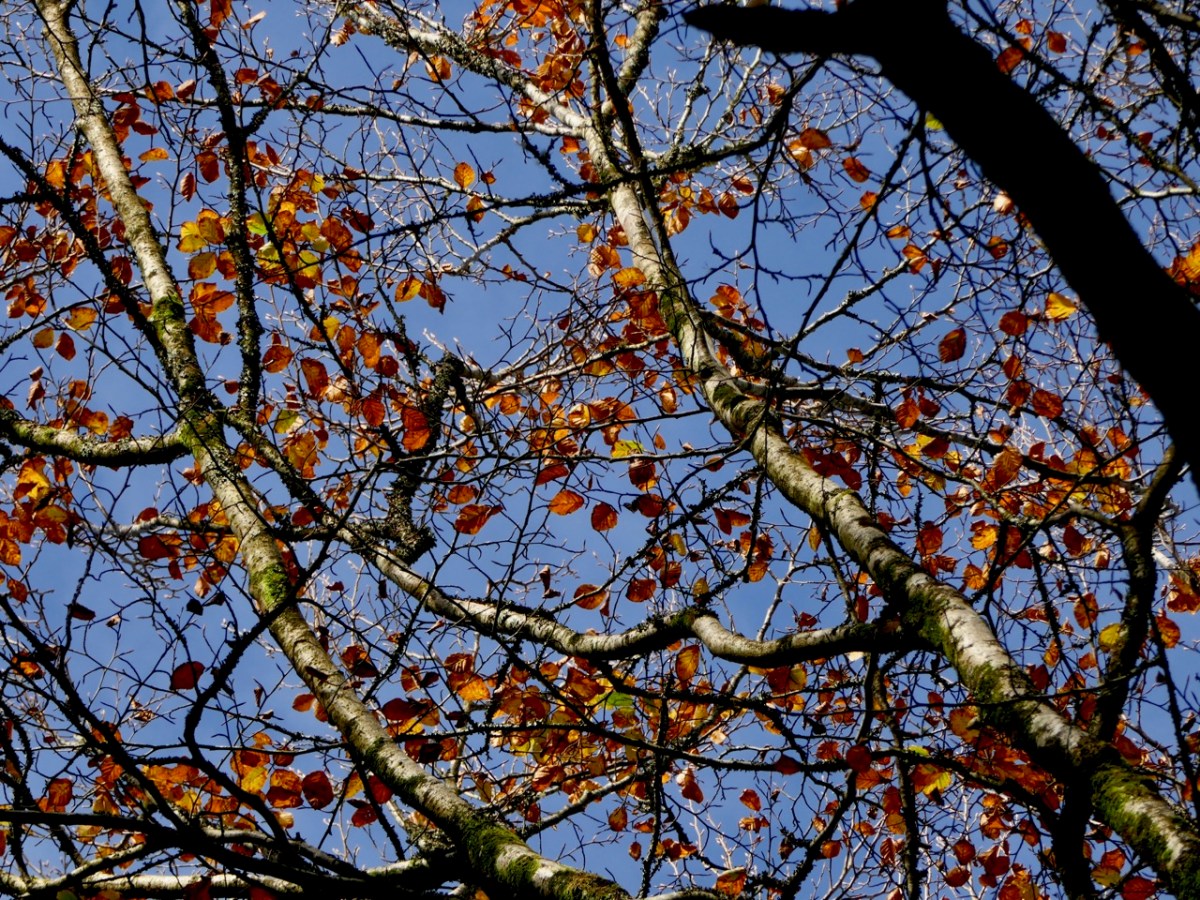
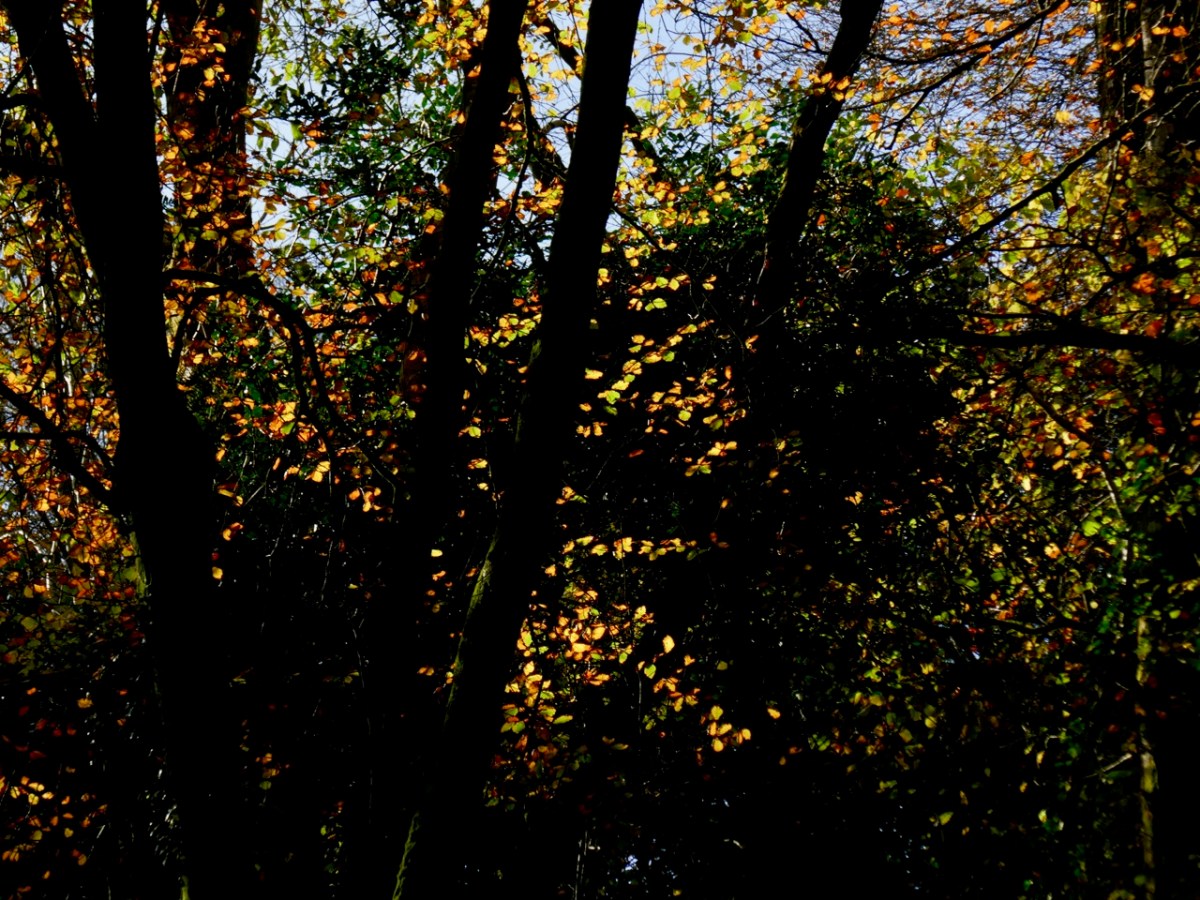
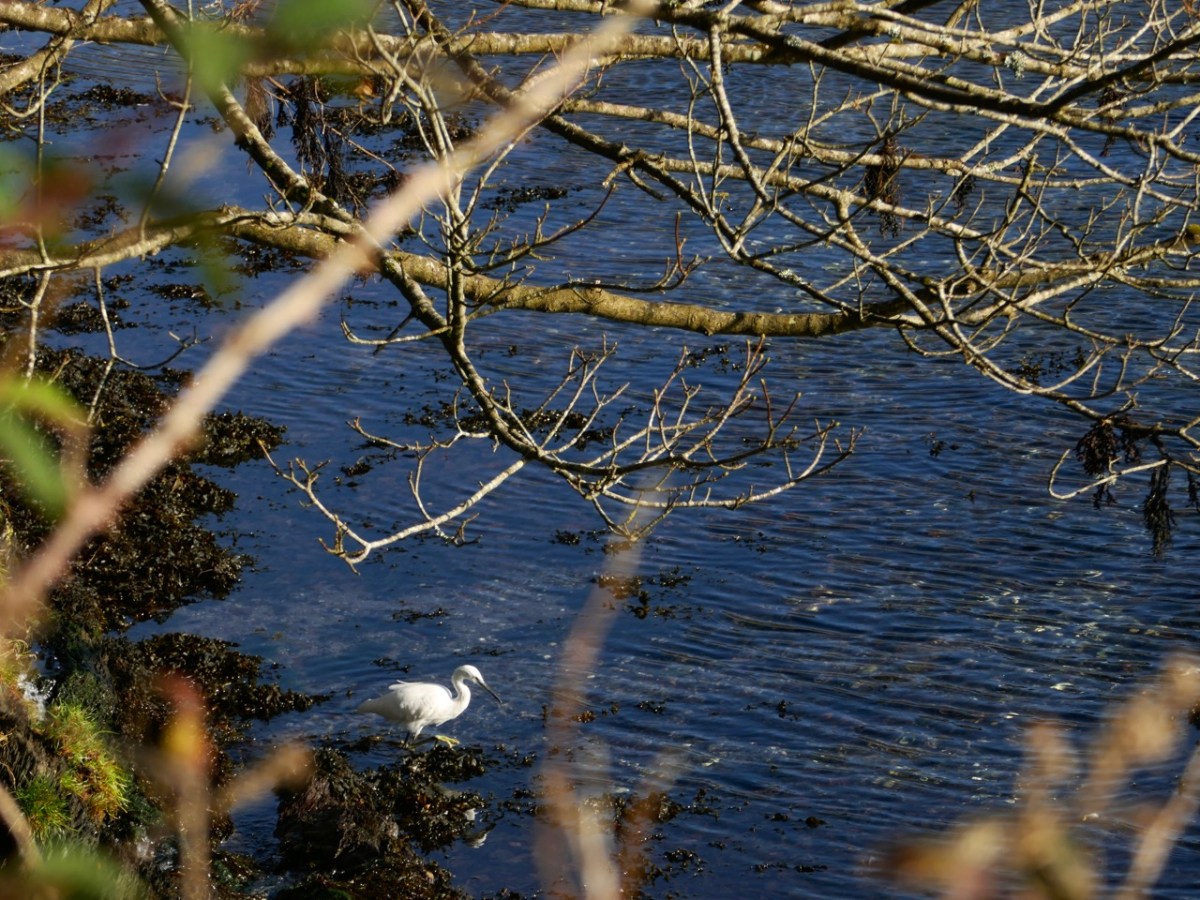
The header and the picture above are both taken in Skibbereen, as good a place as any to begin our wanderings. The town is built on the river and was once a water transport hub: in the early 19th century boats of up to 200 tons could navigate to Oldcourt, within two miles of the town centre. From there goods were transferred into ‘lighters’ (unpowered barges) and then brought into the town where there were no less than five quays, warehouses and a Customs House. Unfortunately, low bridges now prevent navigation.

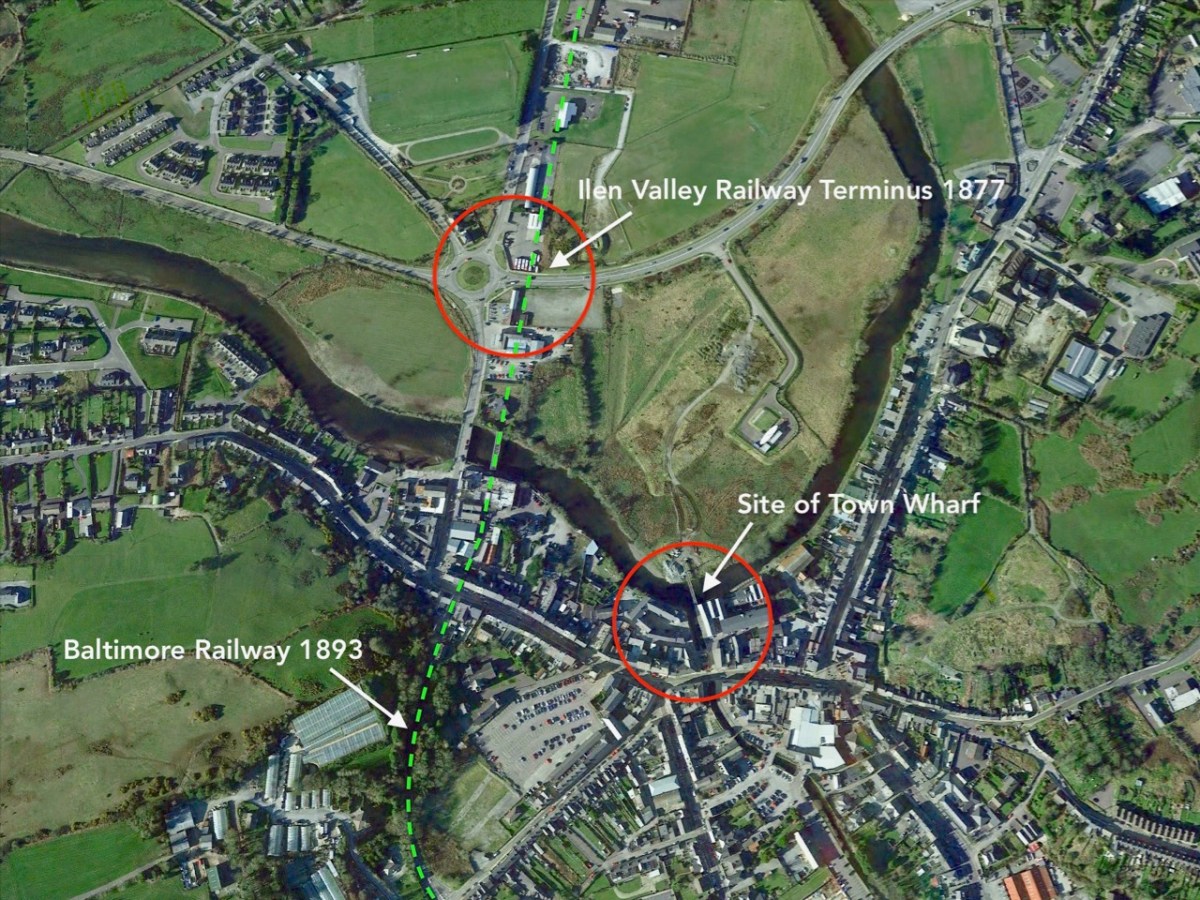
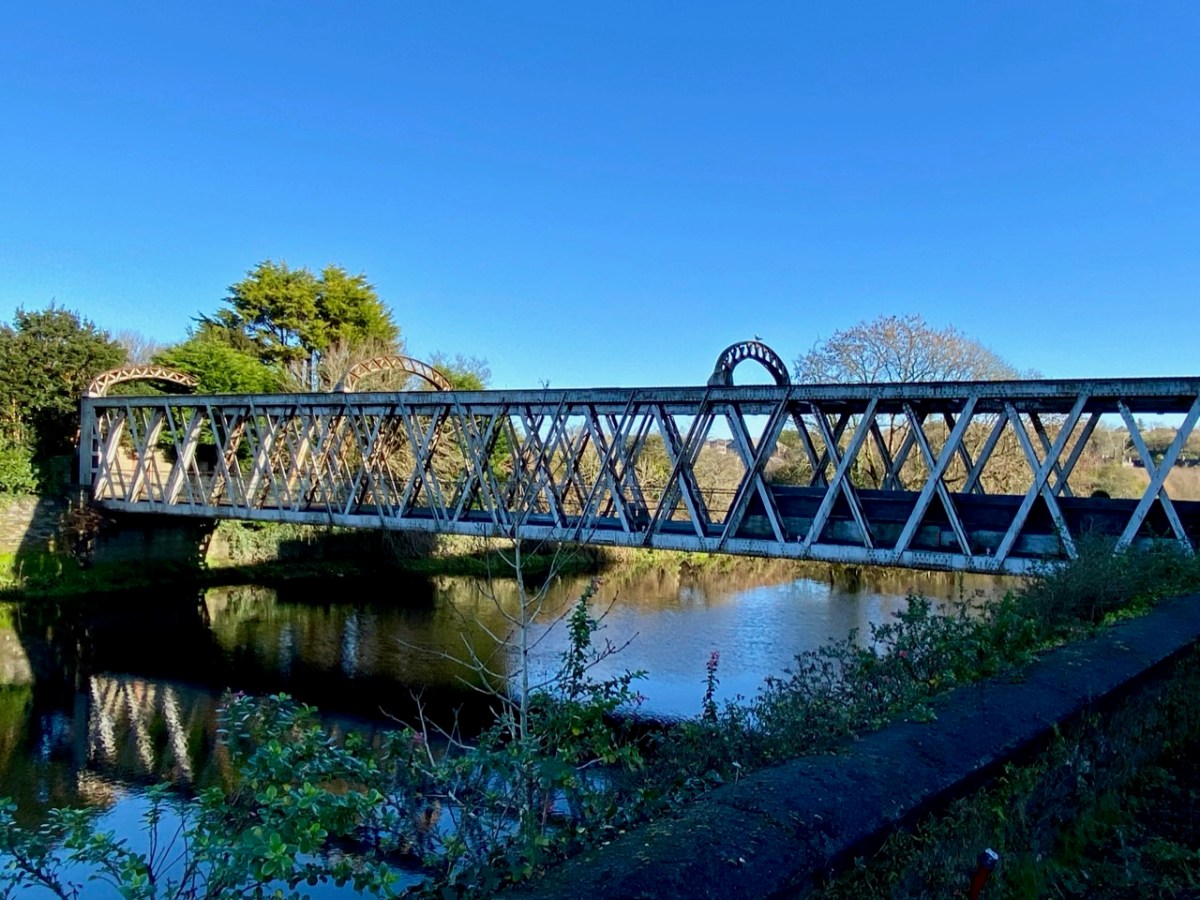
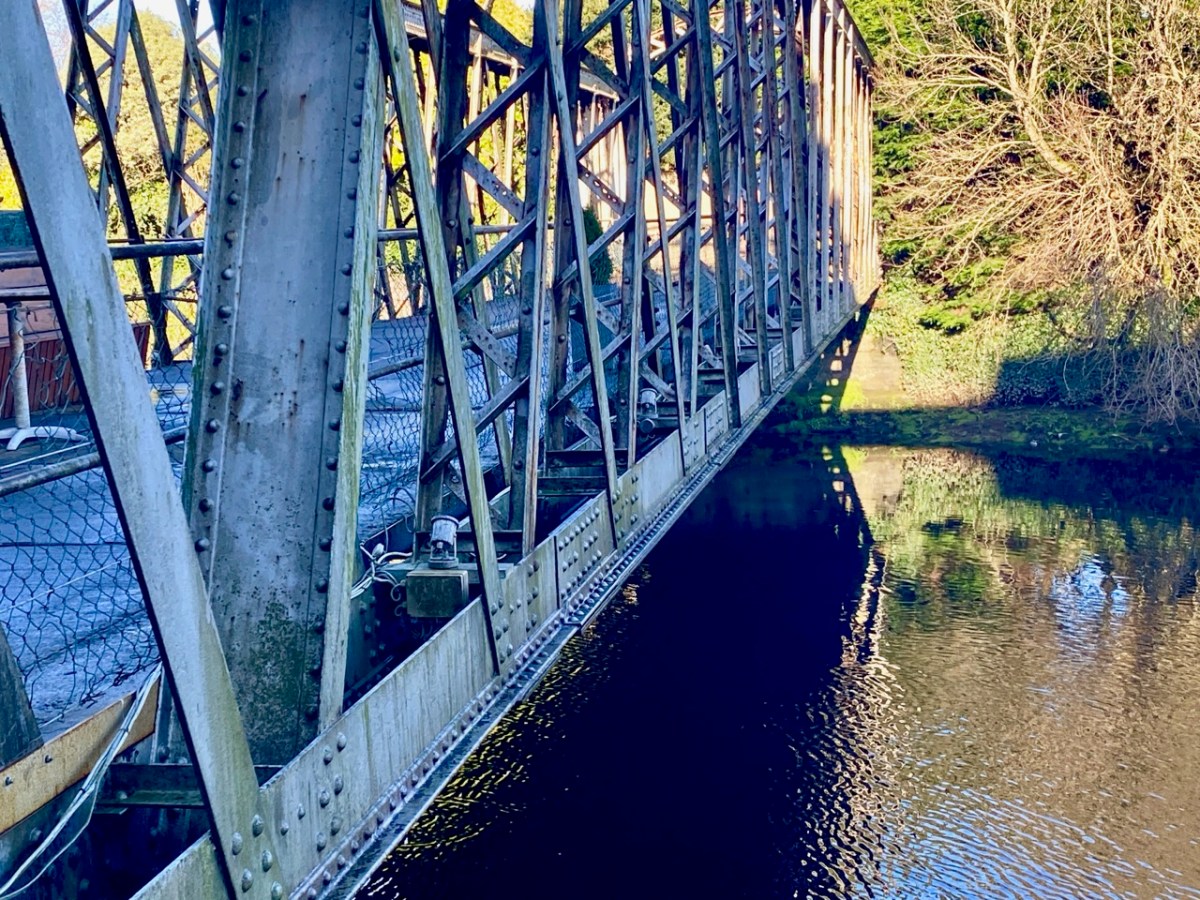
This aerial photograph dates from a few years ago, but it’s useful to show how Skibbereen has developed along the south bank of the river. At the Town Wharf, or Levis’ Quay, you can still see old stone steps leading down to the water’s edge, once a hive of activity with lighters loading and unloading. The nineteenth century brought engineering advances, with railway connection to Dunmanway, Bandon and Cork. The station – marked above as the ‘Ilen Valley Railway Terminus’ opened in 1877. Later, the Baltimore Extension Line continued south over a smart new steel bridge, built in 1892.
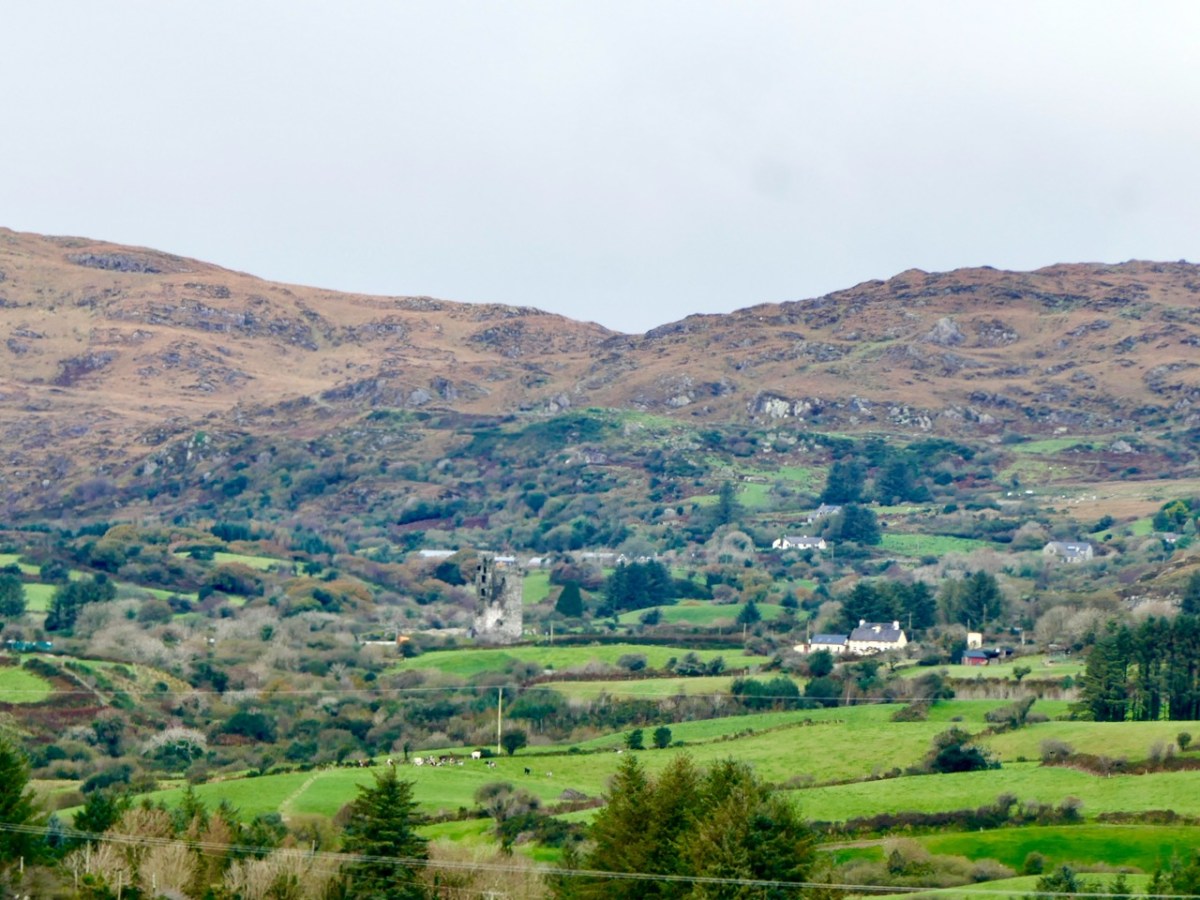
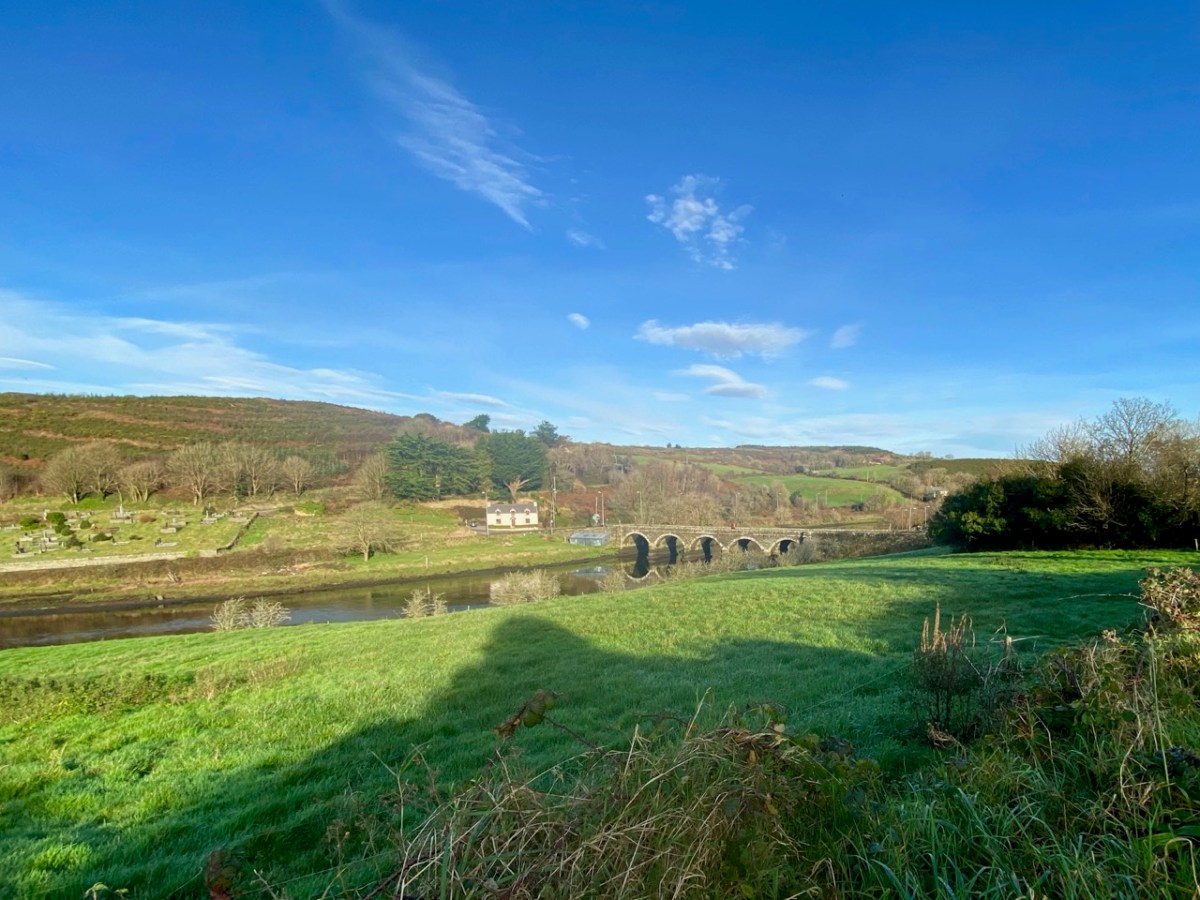
From Skibbereen there is plenty of the river to explore both south (to the estuary) and north. It’s our ambition – when travel restrictions ease – to find the source of the river on Mullaghmesha Mountain, which we could see in the far distance beyond Castle Donovan on our walk last week. That might have to wait anyway, as climbing that mountain is not recommended in the winter months because of rough conditions underfoot, but keep watching – we will get there!

The dancing of a mountain stream may be as entrancing as a ballet, but the quiet of an age-old river is like the slow turning of pages in a well-loved book . . .

Robert Gibbings – TILL I END MY SONG

One of our great heroes is Cork-born writer and illustrator Robert Gibbings. He was an explorer of rivers, making books of Cork’s River Lee, the Welsh Wye and – most famously – Sweet Thames Run Softly. In homage to him I’m calling these posts Sweet Ilen: I don’t think he will mind. Sadly, I haven’t his artistic talents but I’ll do my best with words and photographs.

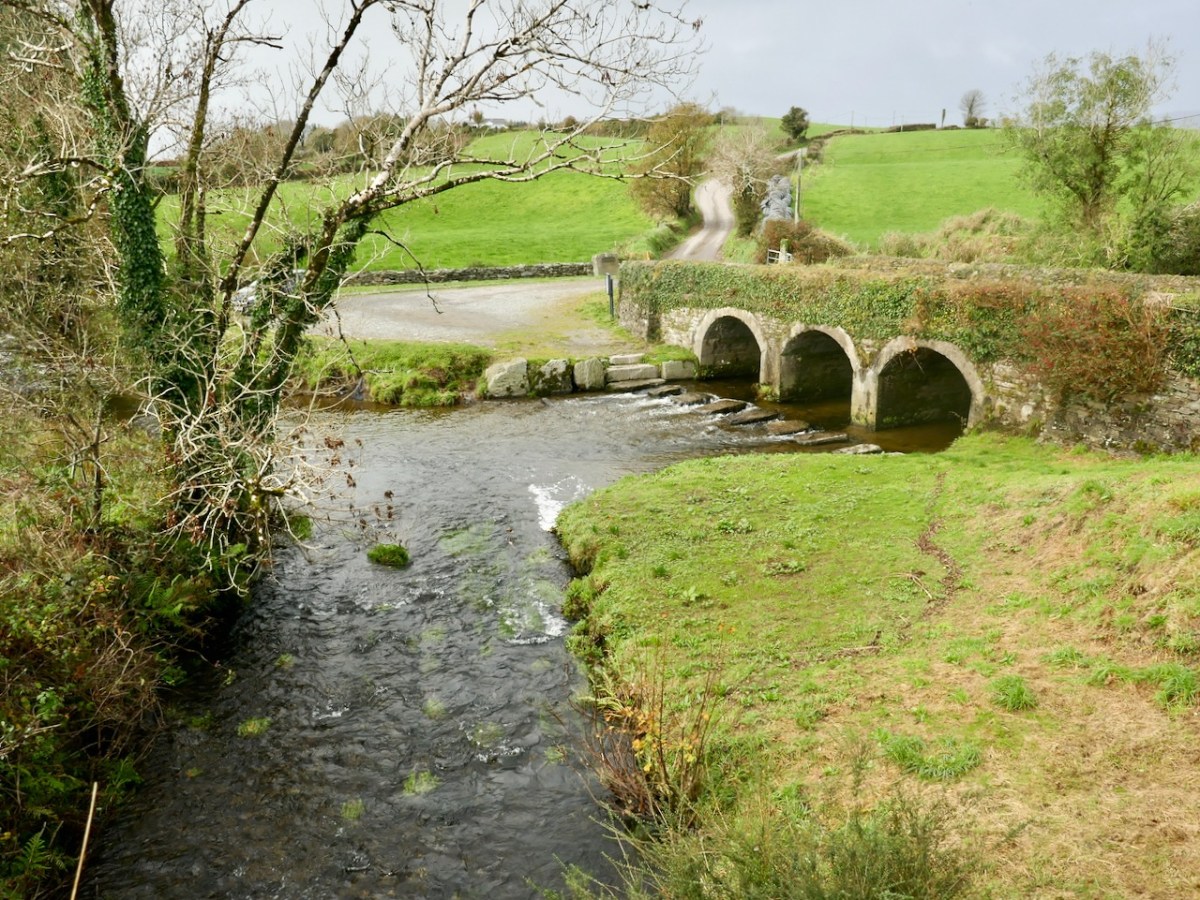
The upper picture looks from the West Cork Hotel upstream towards the town: the Town Wharf is just around the corner; the steps in the foreground mark the beginning of the Ilen River Blueway – you will embark here if you take a kayak trip down to Baltimore. Leaving Skibbereen behind, we soon realised that the Ilen is a secretive waterway: much of its course is hidden away and runs in quiet backwaters distant from habitation and modern life. It’s only at the crossing points like the one above, near Hollybrook, that the river briefly reveals itself to us, although anglers have private pathways known only to themselves: we caught tantalising glimpses of their occupancy through the tree cover on some remoter banks.
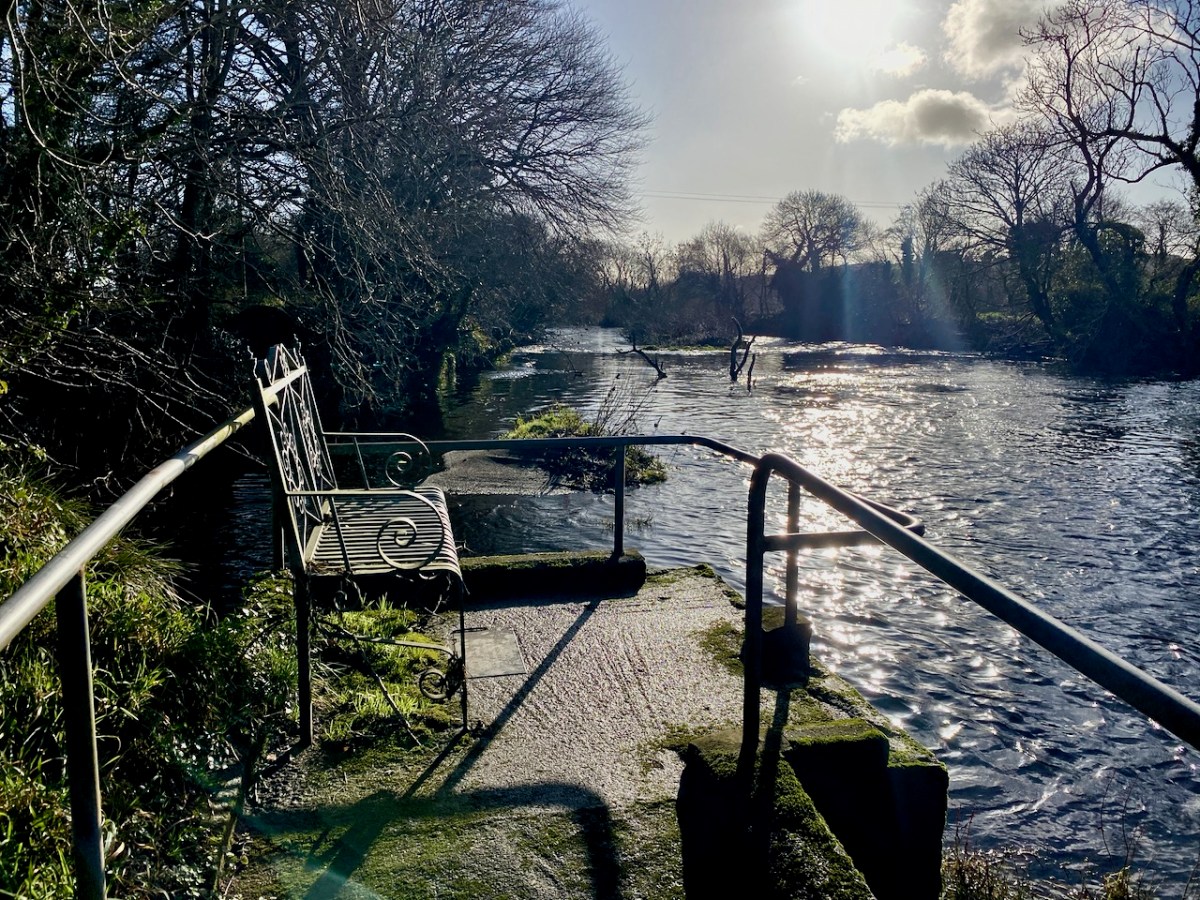
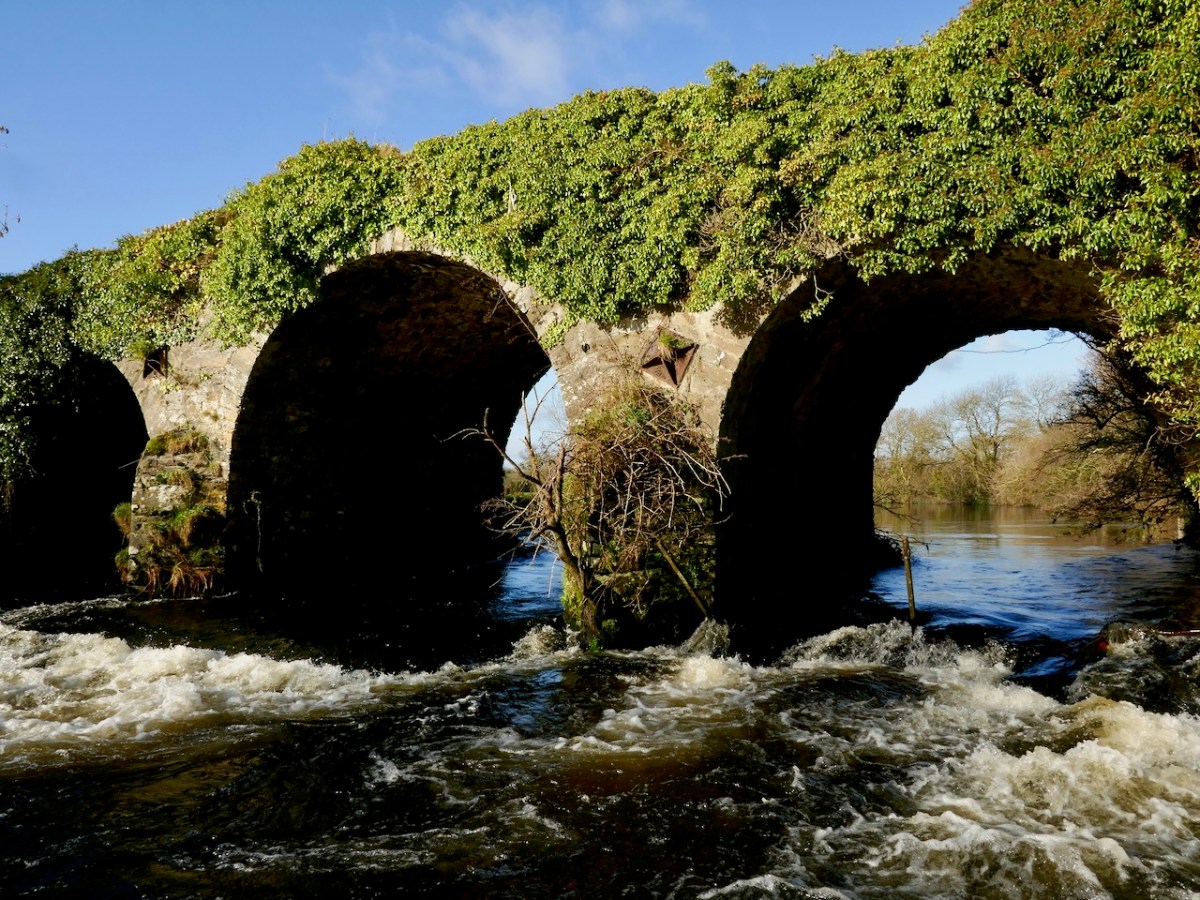
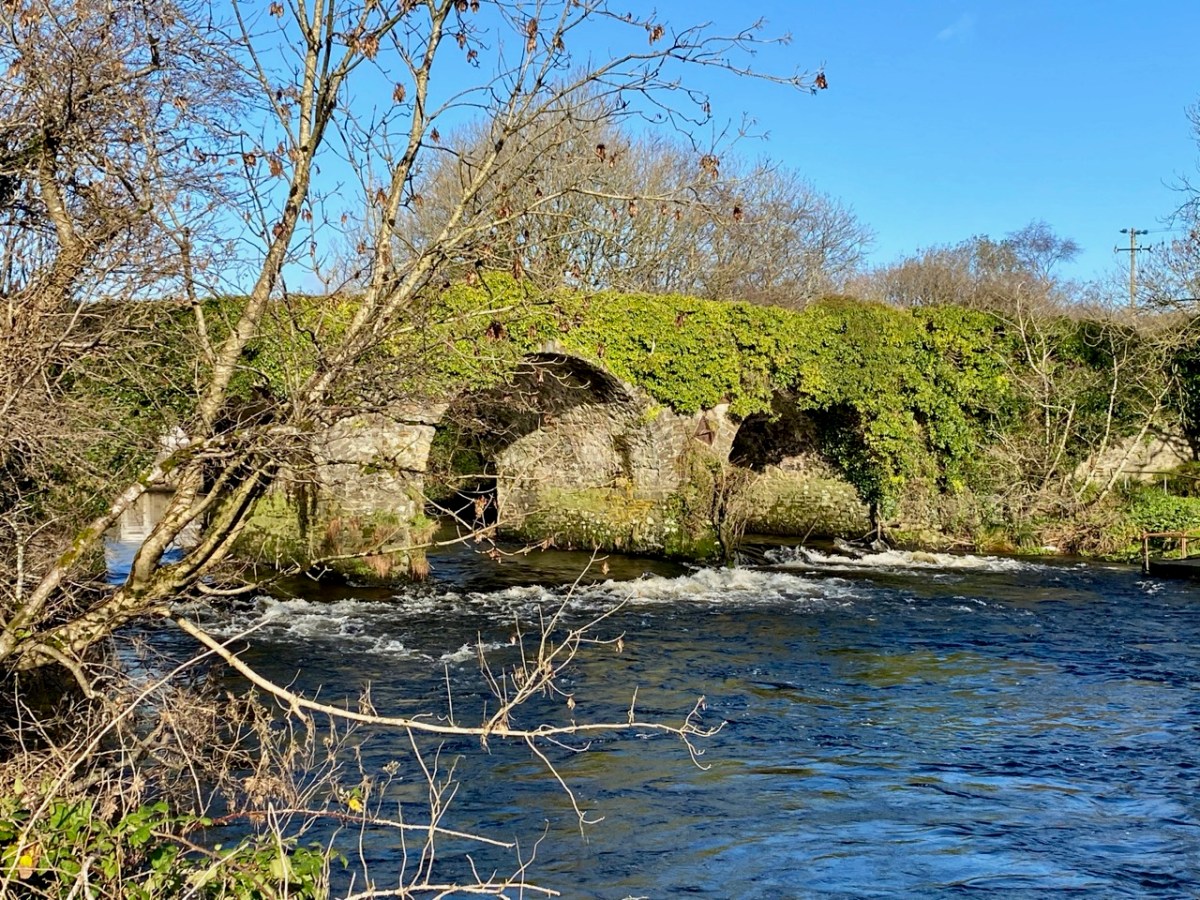
A well-placed seat with a view (upper picture) on the angler’s path below Ballyhilty Bridge. Close by (lower picture) is a small farm accommodation bridge which is also giving anglers access to the further bank. Ballyhilty bridge itself is a real discovery. It’s easy to drive over it without realising the substantial structure which carries the road:

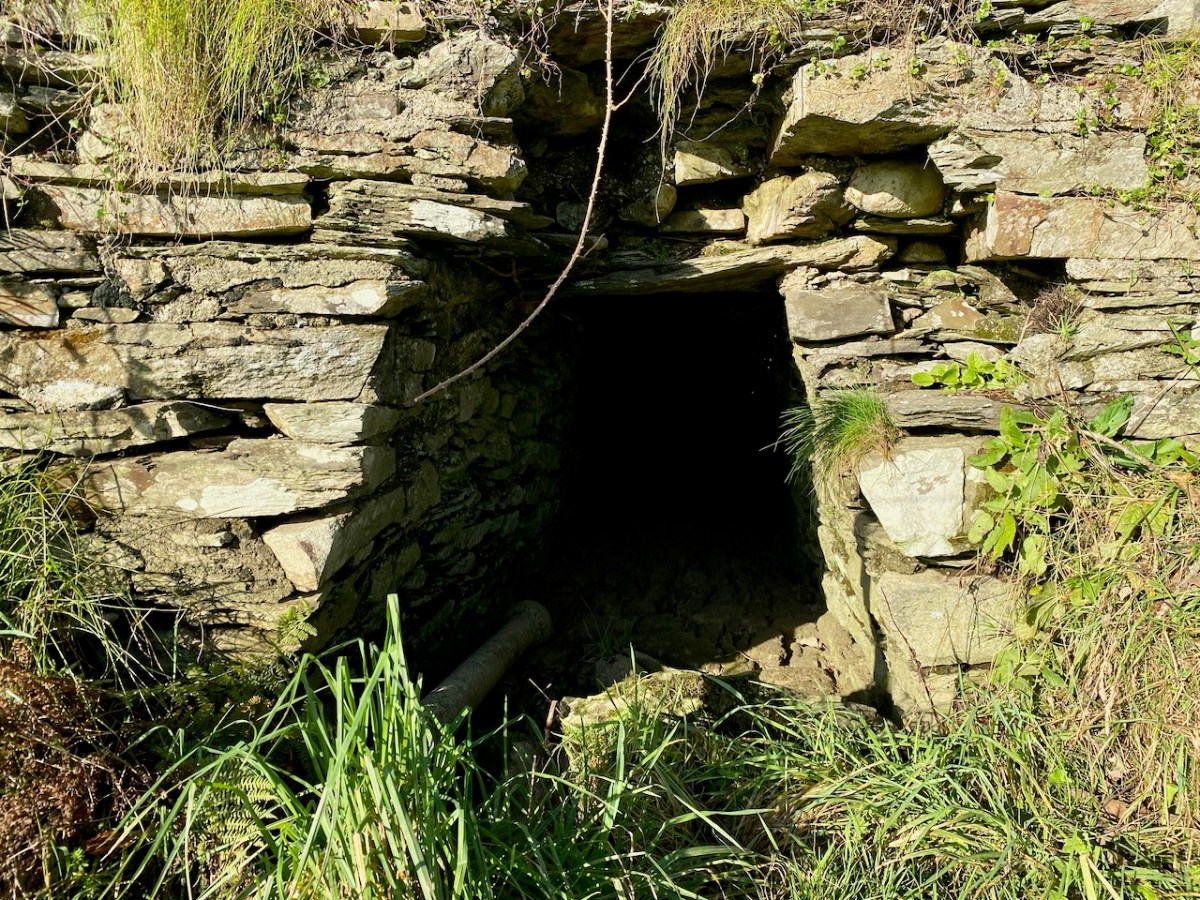
The only description I could find of this substantial structure is a record in the Archaeology Ireland National Monuments site which describes it as ‘a hump back three-arch road bridge over the Ilen River in the townland of Gortnamucklagh’. The parallel entry in the National Inventory of Architectural Heritage describes it as ‘bridge 1760 – 1800’, and says no more. But I think it worthy of detailed consideration: it’s a massive, dressed stone structure which has been reinforced with iron plates. The central opening is raised to a height which would almost lead us to think that it was once a navigation arch, although there are no records to support this. On the west side are some flood relief culverts of unusual construction:
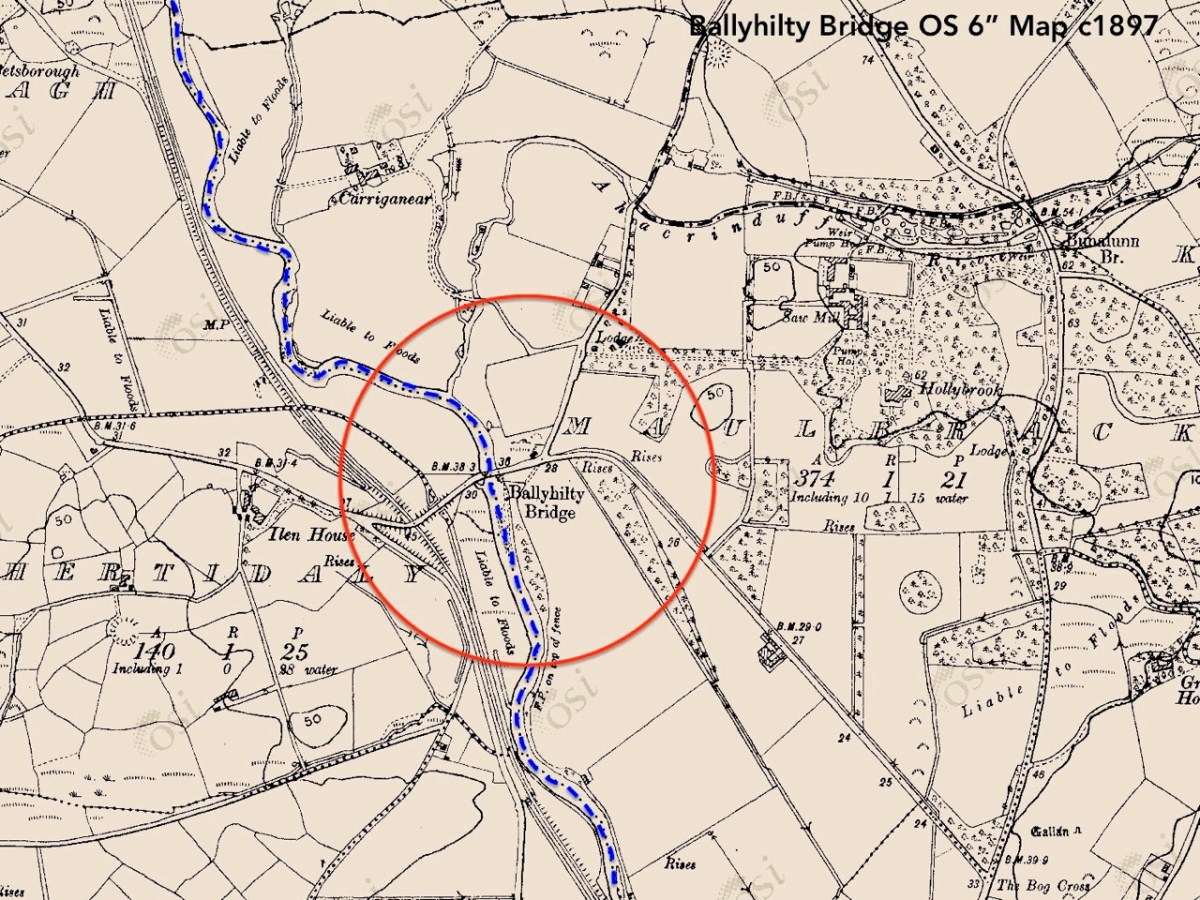
The form of these remind me of a bridge we encountered on the Fastnet Trails close to Toormore in 2018: here’s the post. At that time I pondered on how old the Toormore structure was likely to be. I’m asking myself the same question on this one. The early OS map might give us a clue:

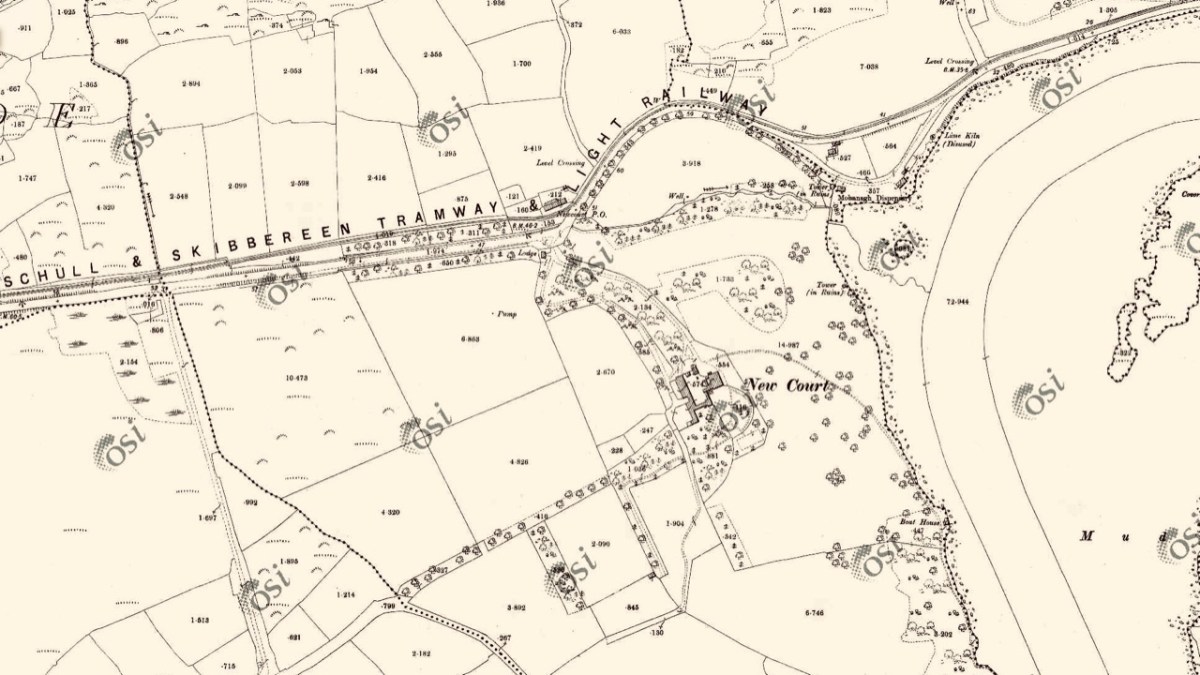
This is from the late 19th century 25″ map: you can see the railway line on the west heading out of Skibbereen towards Drimoleague, where it met with the Cork, Bandon and Bantry lines. But on the east side of the river is a very large estate: Hollybrook, in the townland of Maulbrack. Hollybrook House has a long history, encompassing families such as The O’Donovan, Bechers and Townsends. Nowhere can I find a date for the original house (now replaced), but I have found this:

At the time of Griffith’s Valuation, John Beecher held two substantial properties in fee at Maulbrack. They were purchased in 1703 by Henry Beecher from the trustees for forfeited estates . . .

NUI GALWAY – CONNACHT AND MUNSTER LANDED ESTATES DATABASE

These properties were therefore in existence before 1703: it would be reasonable to assume their date could be well before this. I would suggest that the bridge at Ballyhilty was built in the 1600s, to ensure good access to the estate at Maulbrack. This would make it a truly historic structure, worthy of prominent commentary and protection.

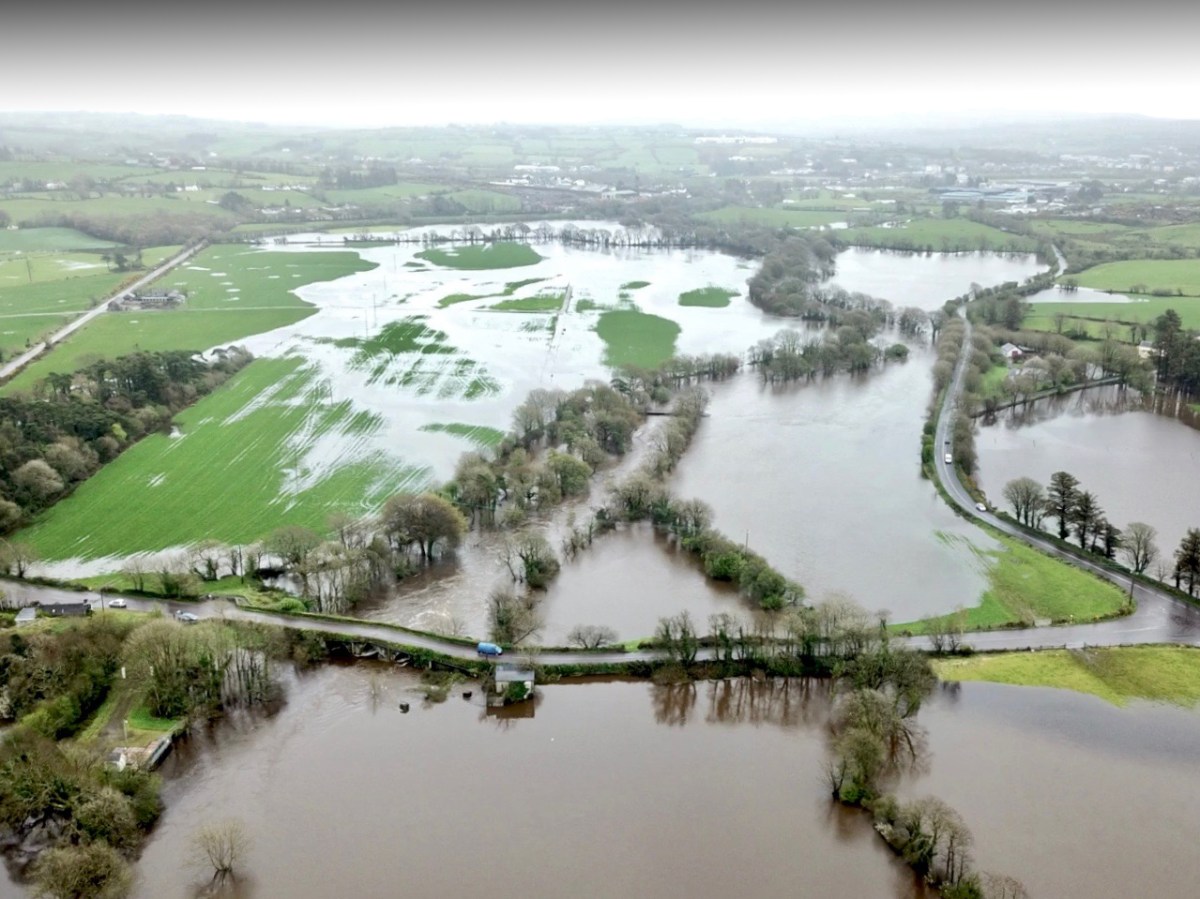
On such idyllic days for exploration it’s not always easy to remind ourselves of the power of this river: it’s no humble stream. Here’s a screenshot of a drone video by Garry Minihane Photography which shows this same stretch – at Ballyhilty – in full flood: the adjacent roads are set just high enough to be clear of all but the fiercest of deluges! Skibbereen is in the distance.

I’m thinking that the journey so far is sufficient for this week’s post; next time we will travel further north, penetrating even more into the uplands of the Ilen as we set our path towards the source. It’s not a huge river, only 34 km in total. It’s instructive for us that our West Cork terrain is quite small scale: within that 30-odd kilometres we have the contrast of a mountain stream falling from the high places and gathering enough tributaries to feed the tidal reaches which we also have yet to discover on our coasts.
Walking West Cork – Top of the Rock

When we could still walk within the boundary of our own county – and in company – we went with our friends Peter and Amanda in the footsteps of a saint! The walk from Drimoleague to the Top of The Rock – and beyond – is one which has been on our ‘to do’ list for a long time, not least because the first person to do it was our own Saint Finnbarr, founder (in 606AD) and patron saint of Cork city. The motto of University College, Cork is Ionad Bairre Sgoil na Mumhan which means ‘Where Finbarr taught let Munster learn’.

Finbarr is also famous for establishing a monastic site at Gougane Barra in the sixth century, and today you can follow St Finnbarr’s Way all the way from the Top of The Rock to that magical lake in the mountains where you can find an oratory and chapel dedicated to the saint: the full walk is 37km. Our own walk was a mere 3.5km but rewarding nevertheless.

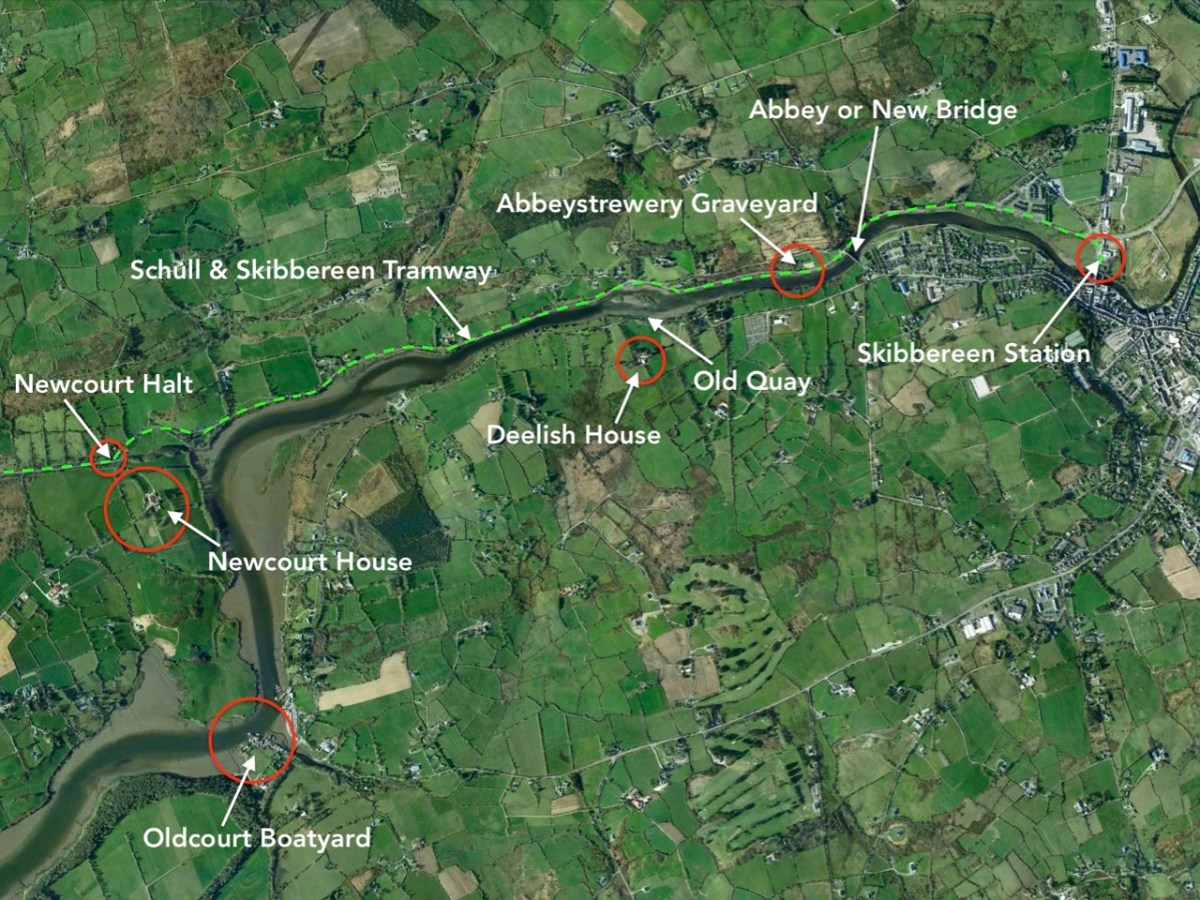
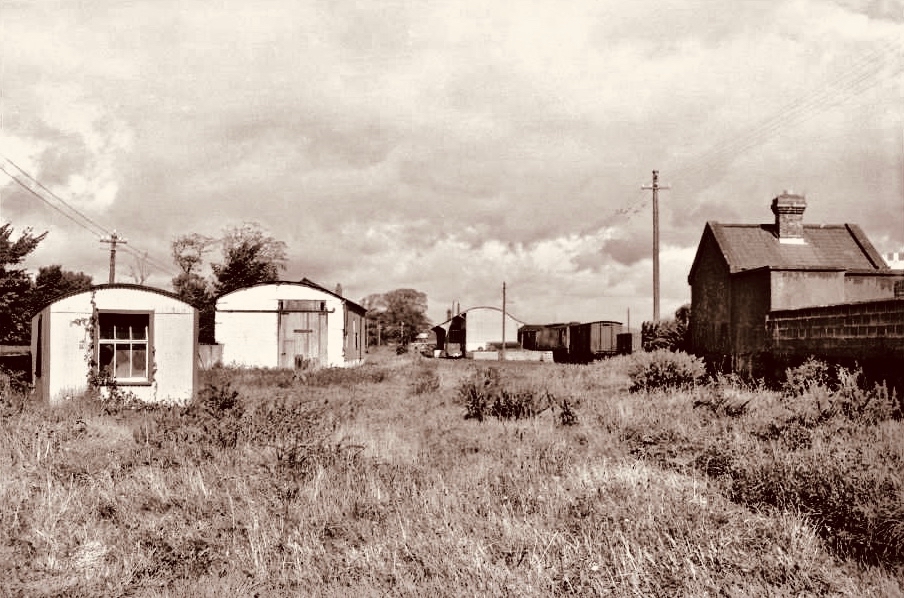
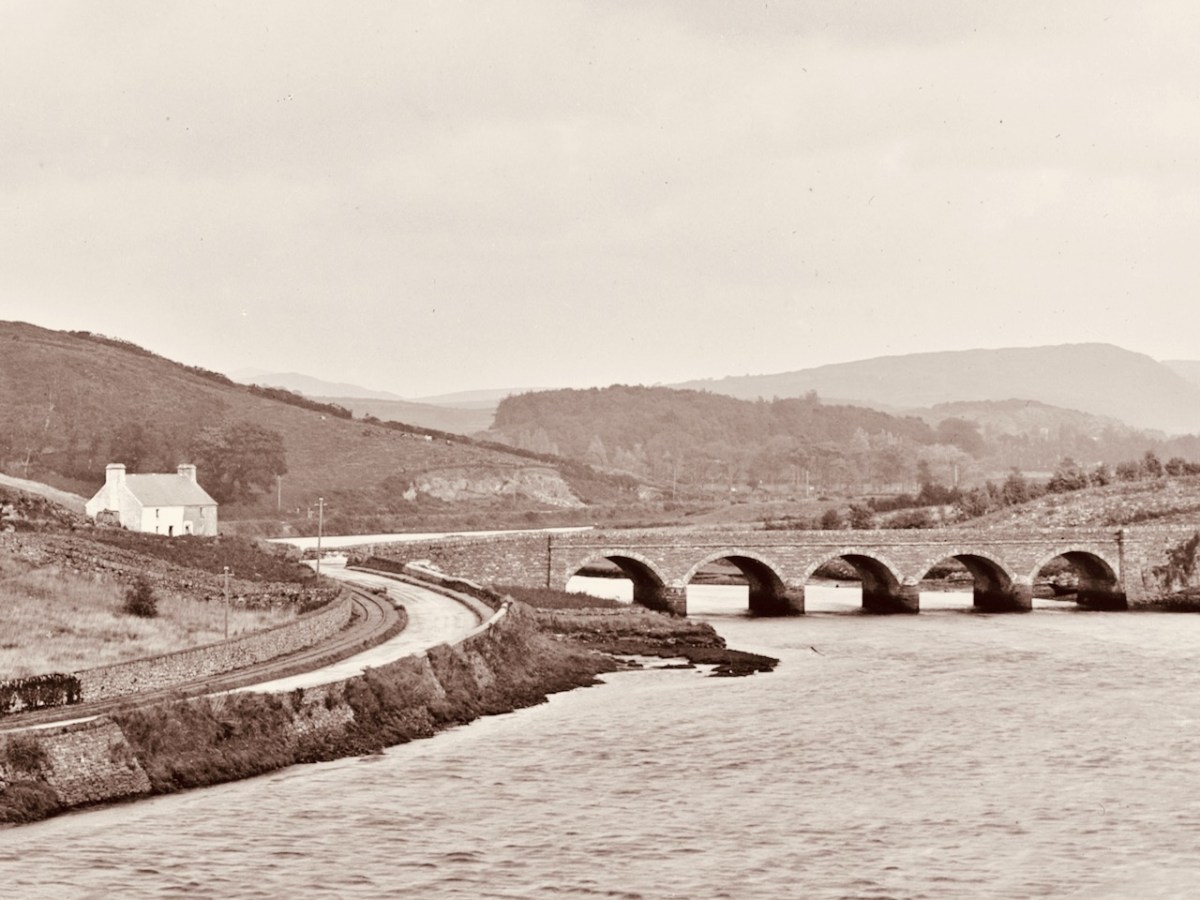
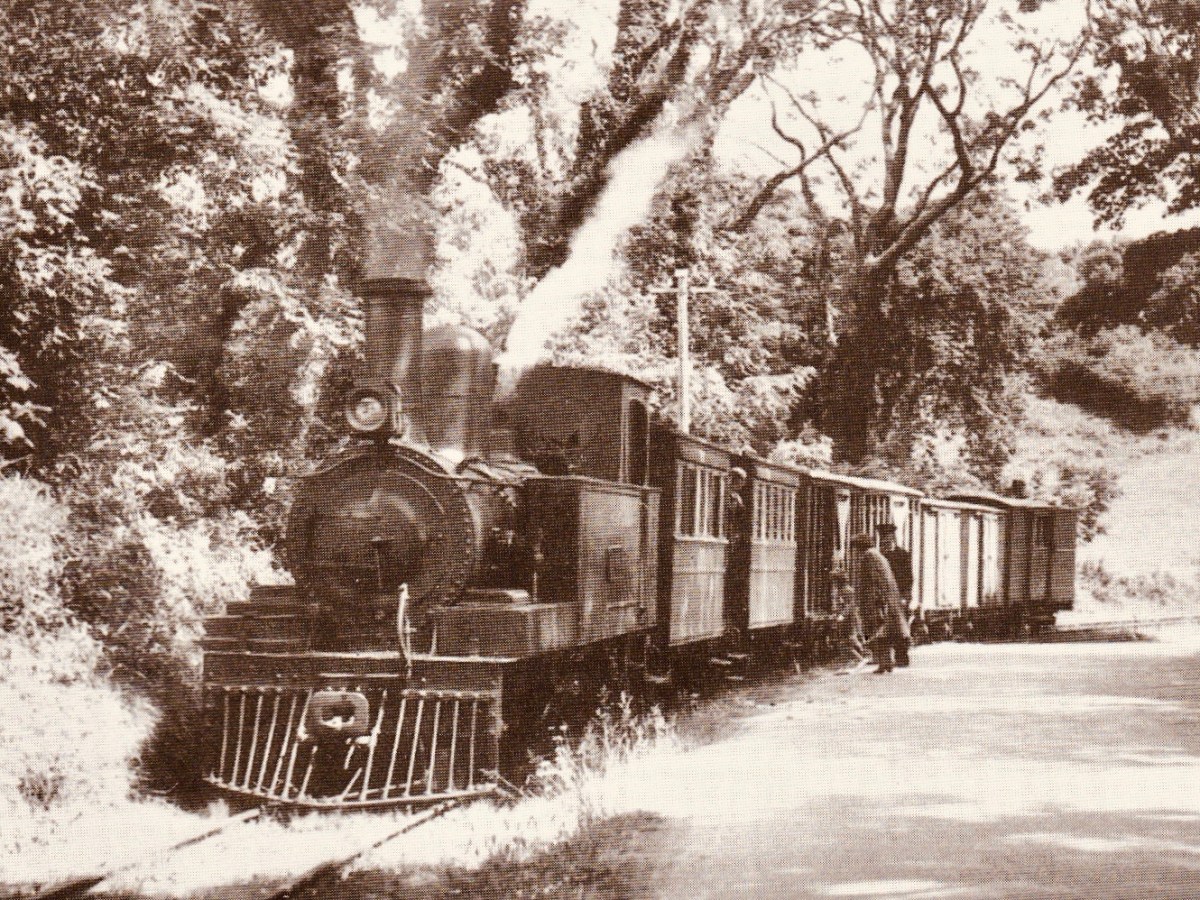
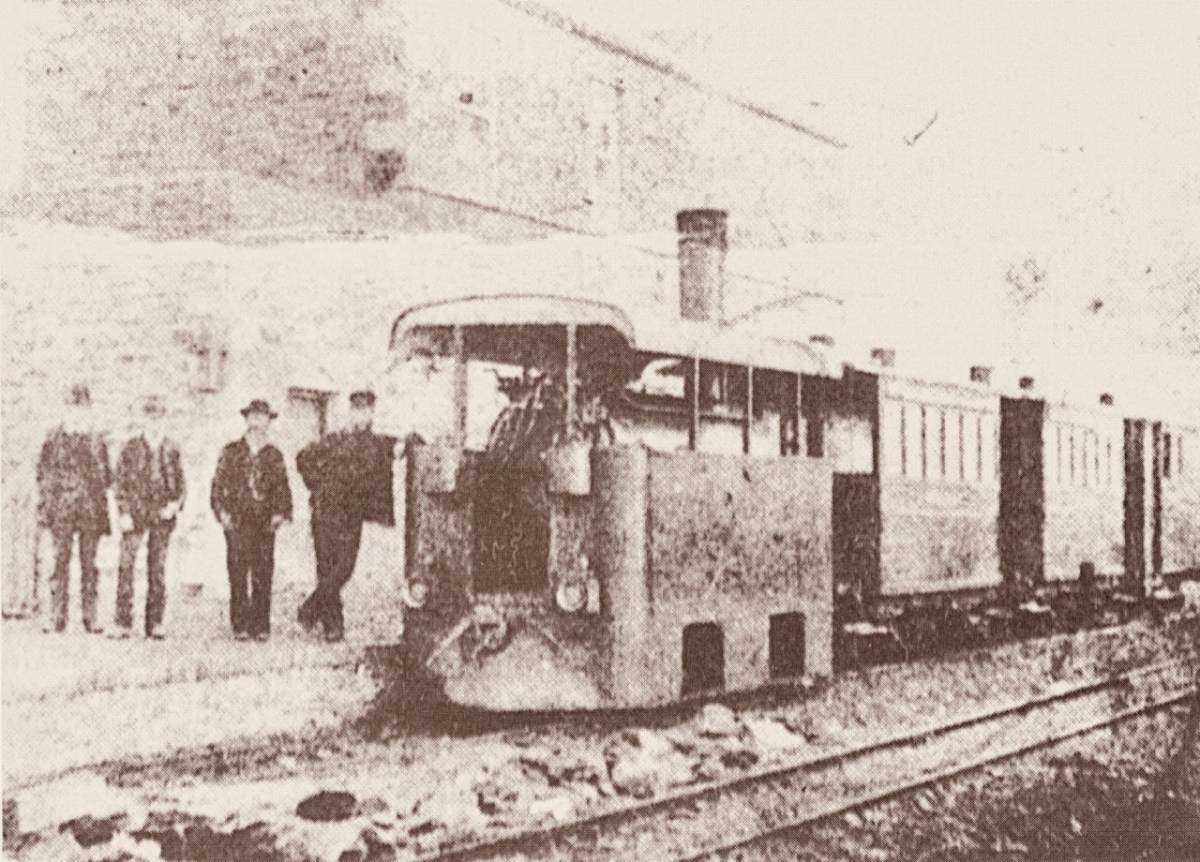
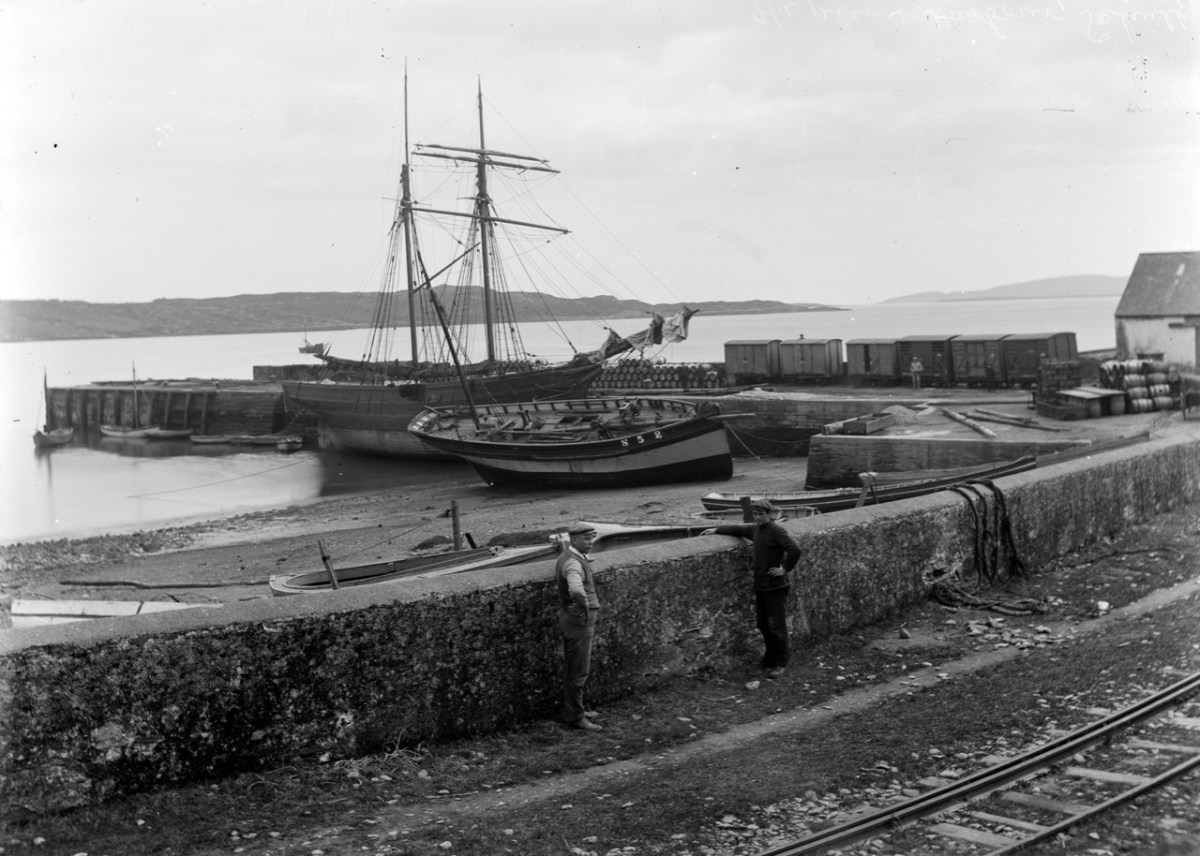
Our walk started at the former Drimoleague railway station. The line opened in 1877, connecting Dunmanway with Skibbereen, and subsequently extension lines went in all directions: to Cork, Bantry, Bandon, Courtmacsherry and – via our own narrow gauge line – from Skibbereen through Ballydehob to Schull. Sadly, all lines coming south west out of Cork have closed, some of the routes surviving until the 1960s. The picture below, dating from 1898, shows the track at Schull Harbour, the most south westerly point on any railway line in Ireland.

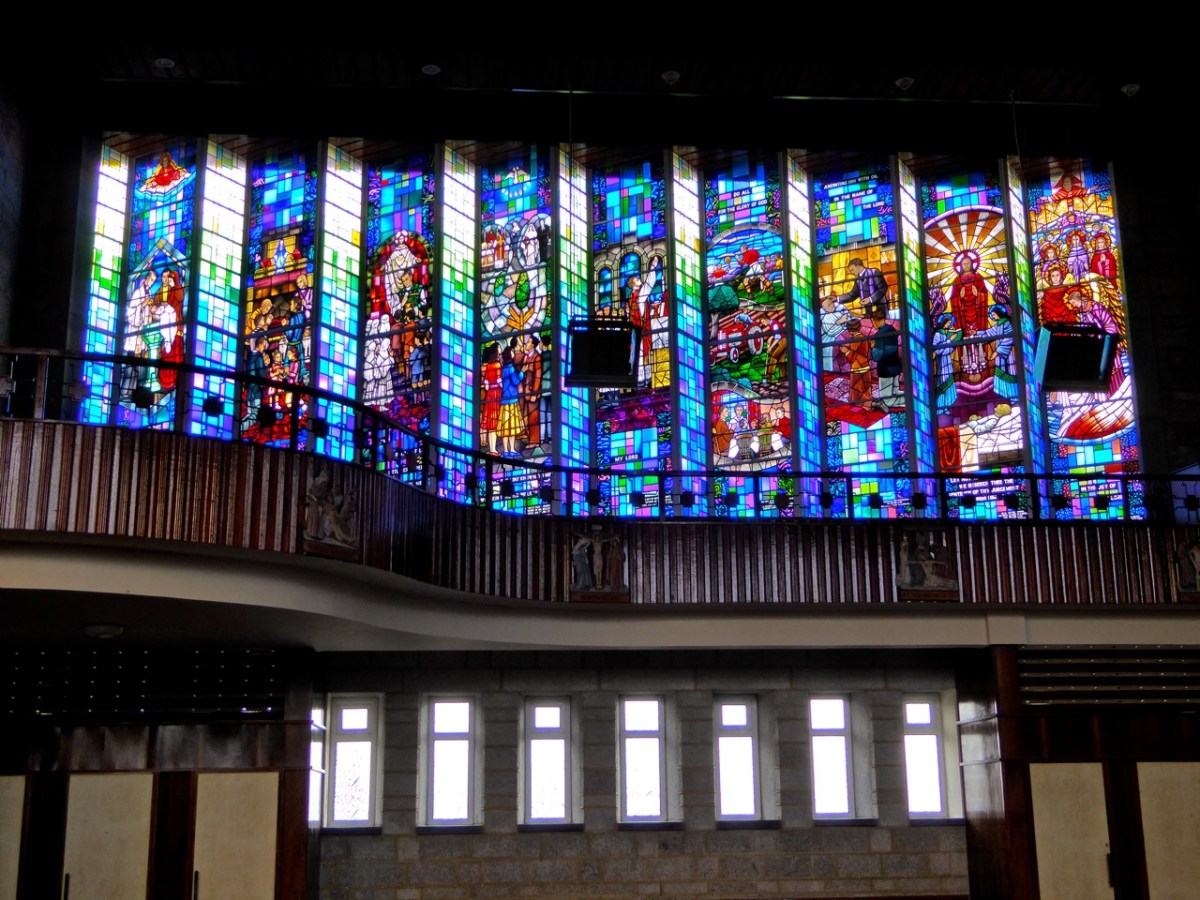
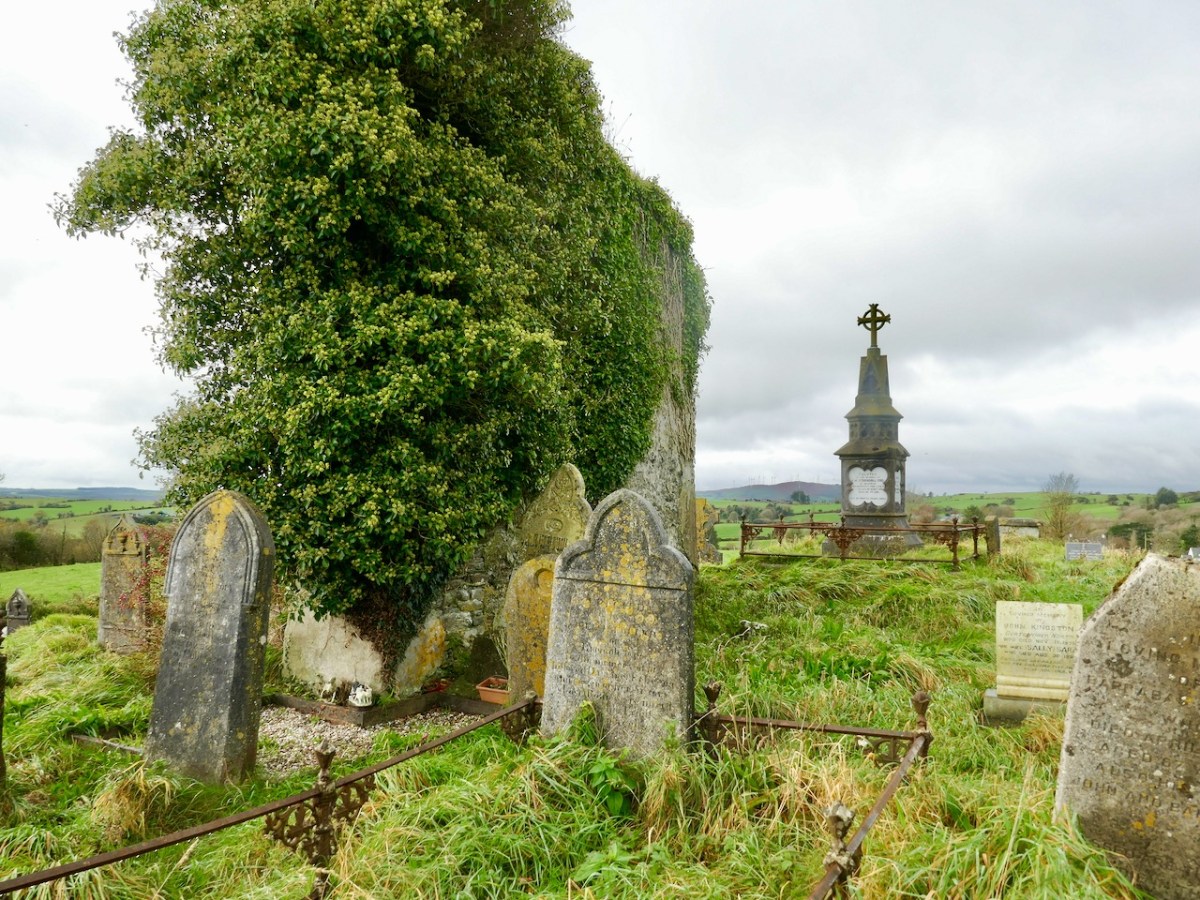
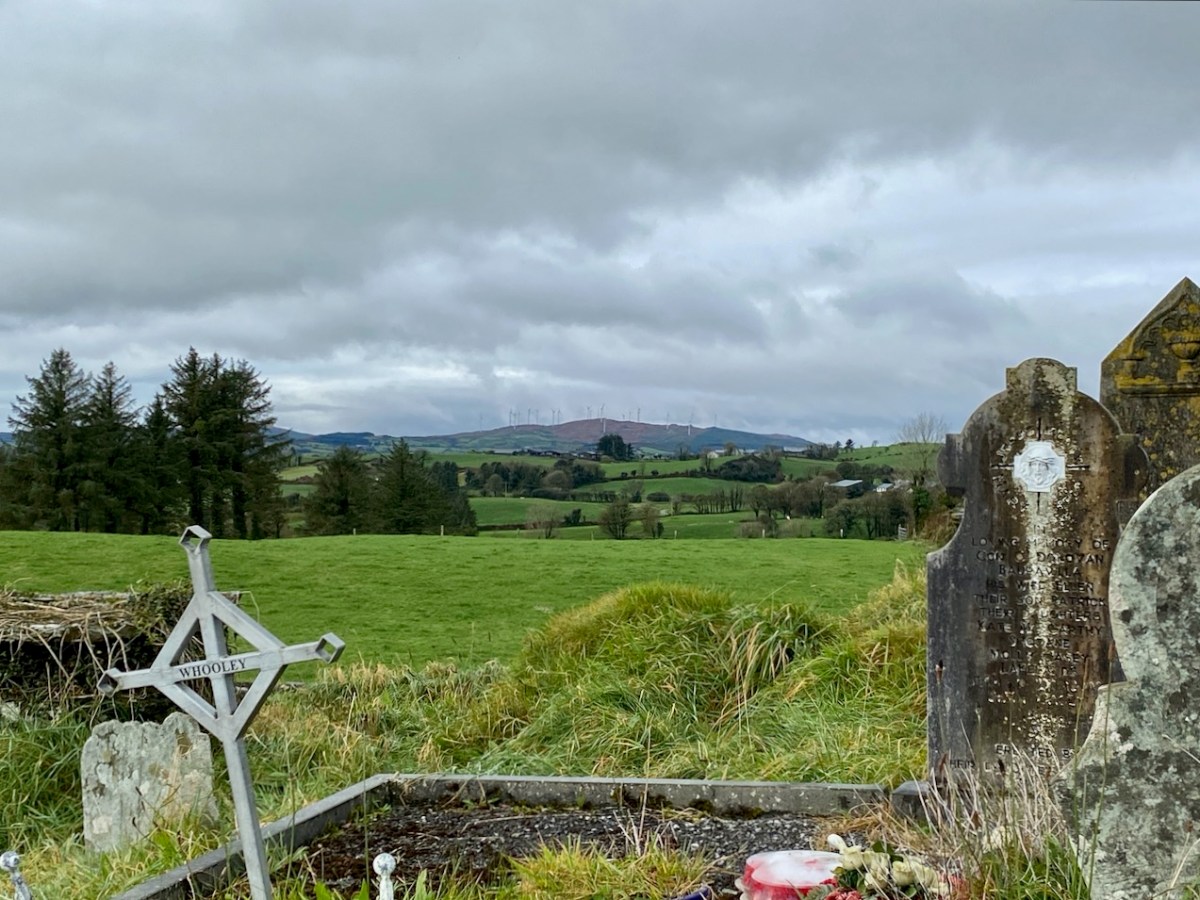
Leaving the old station at Drimoleague the path follows the road going north past the architecturally intriguing All Saint’s church, built in 1956. Finola has written about the building and its unusual stained glass (above) – it’s well worth a look inside. Beyond the modern church is the ruins of an ancient one, surrounded by a burial ground which is full of history (below):

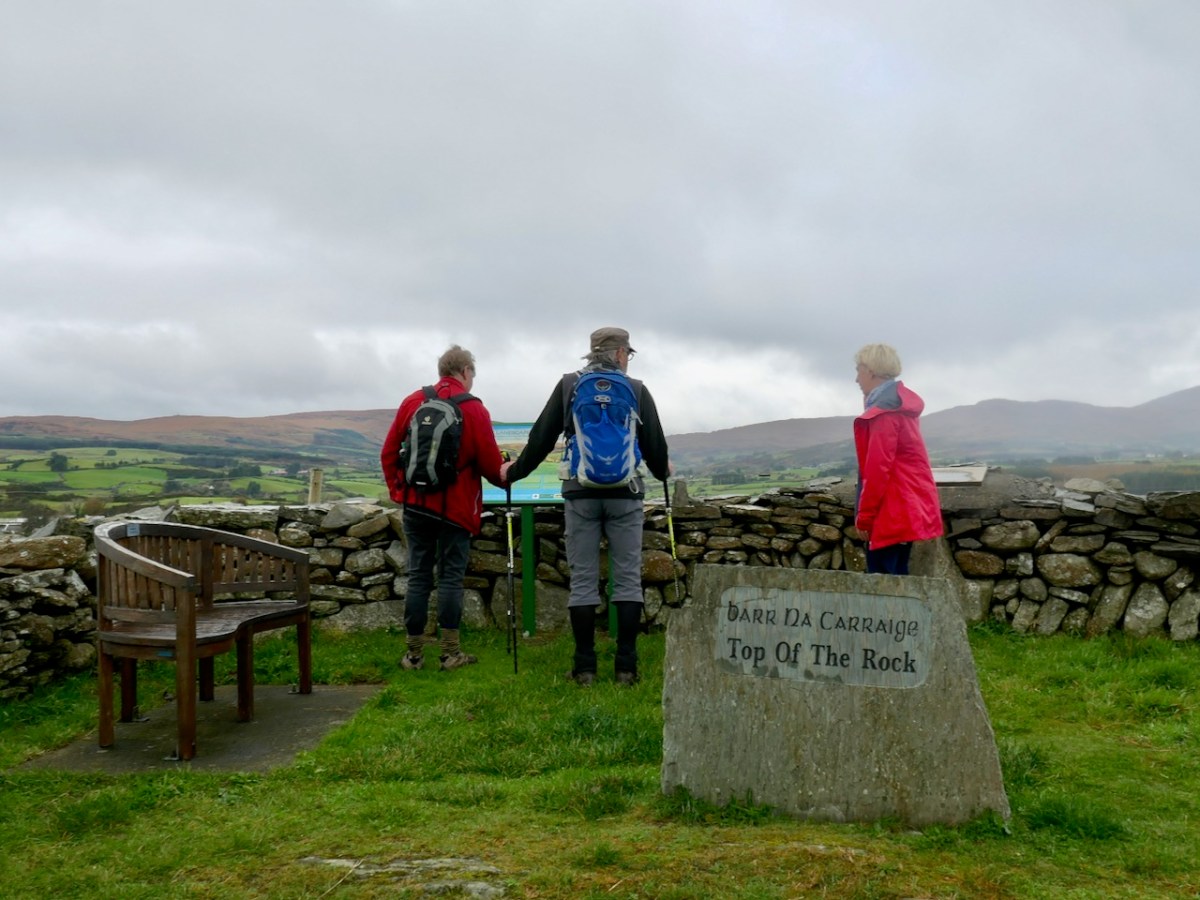
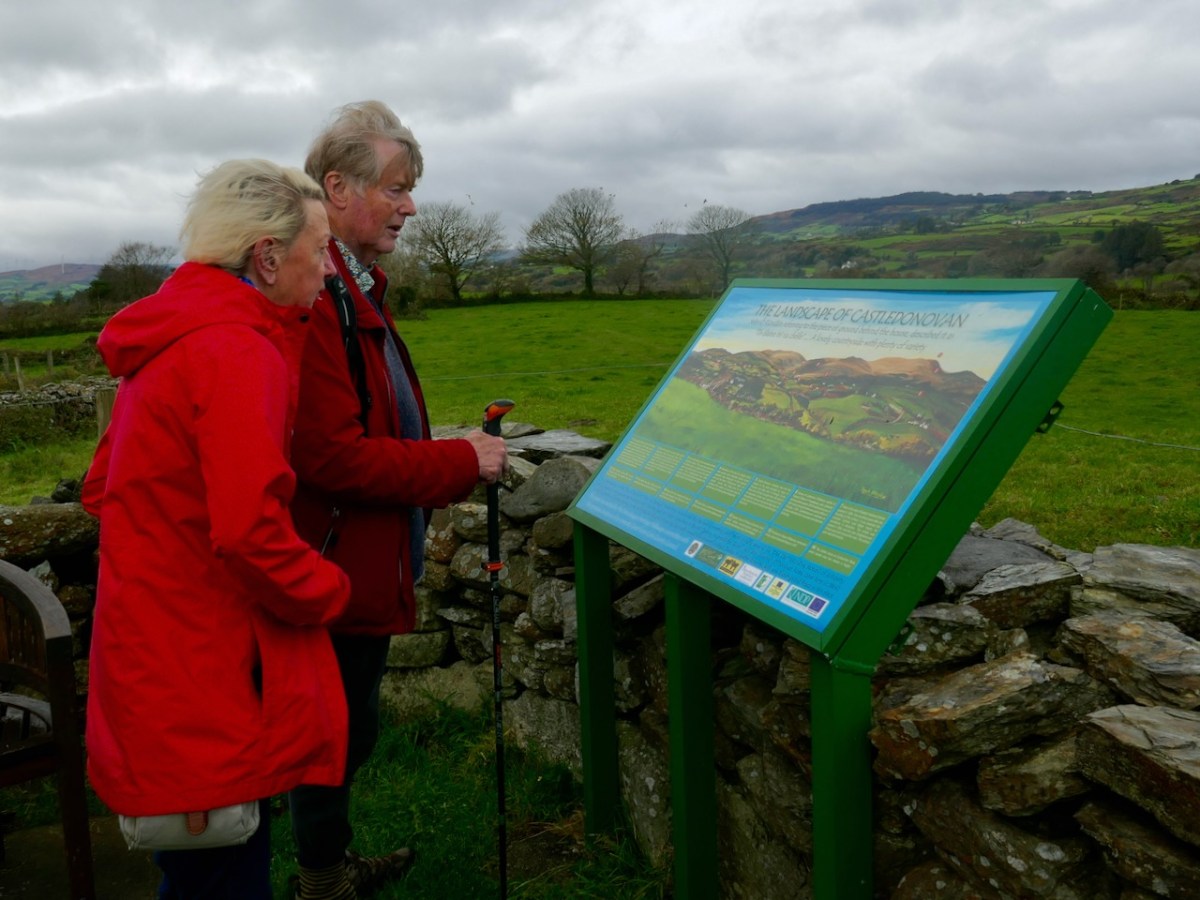
After a steep climb we reached our highest point: Barr na Carraige – which translates literally as Top of the Rock. Evidently the first settlement of Drimoleague was established up here and only moved downhill to be more convenient when the railway arrived. At the ‘Top’ we were fortunate to meet David Ross (below) who owns the farm and ‘Pod Park’ here, and has also masterminded the establishment of these walking routes. Great chat was had, and David suggested our best routes for the day as storms had affected some pathways: work is in hand to restore these. We couldn’t leave the ‘Top’ until we had fully appreciated the long views across to Castle Donovan: our own way then headed downwards and along the Ilen River.

Descending from Top of the Rock we were mainly ‘off-road’ on dedicated footpaths. We first met the Ilen River at Ahanfunsion Bridge, a place which has seen a lot of action historically. The name means ‘Bridge of the Ash Trees’. There was a battle here in ancient times and it is said that the victors planted trees at the ford to commemorate the event. The bridge was built originally in 1830 but was blown up in the War of Independence and subsequently reconstructed. It’s a great spot for a picnic and everyone has a good time crossing the stepping stones, hopefully while keeping their feet dry.

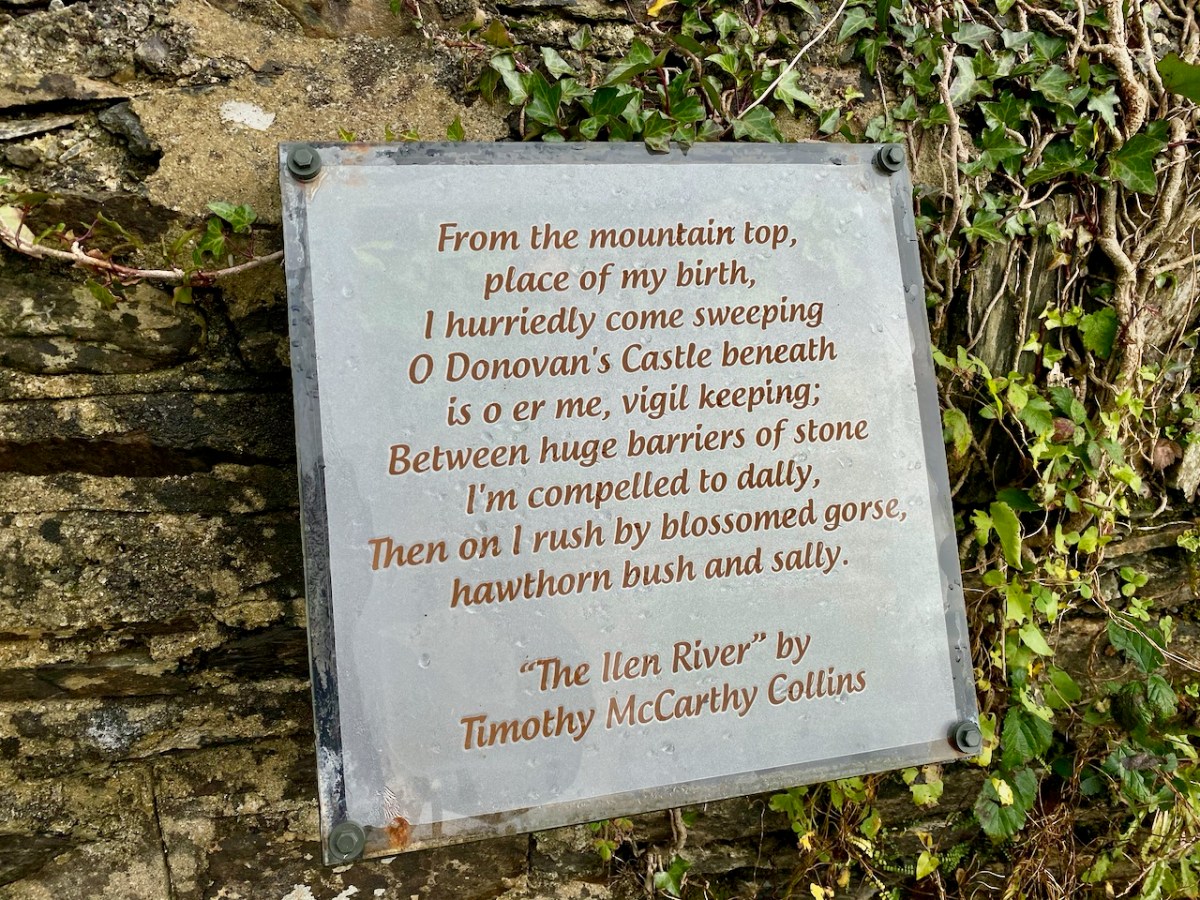
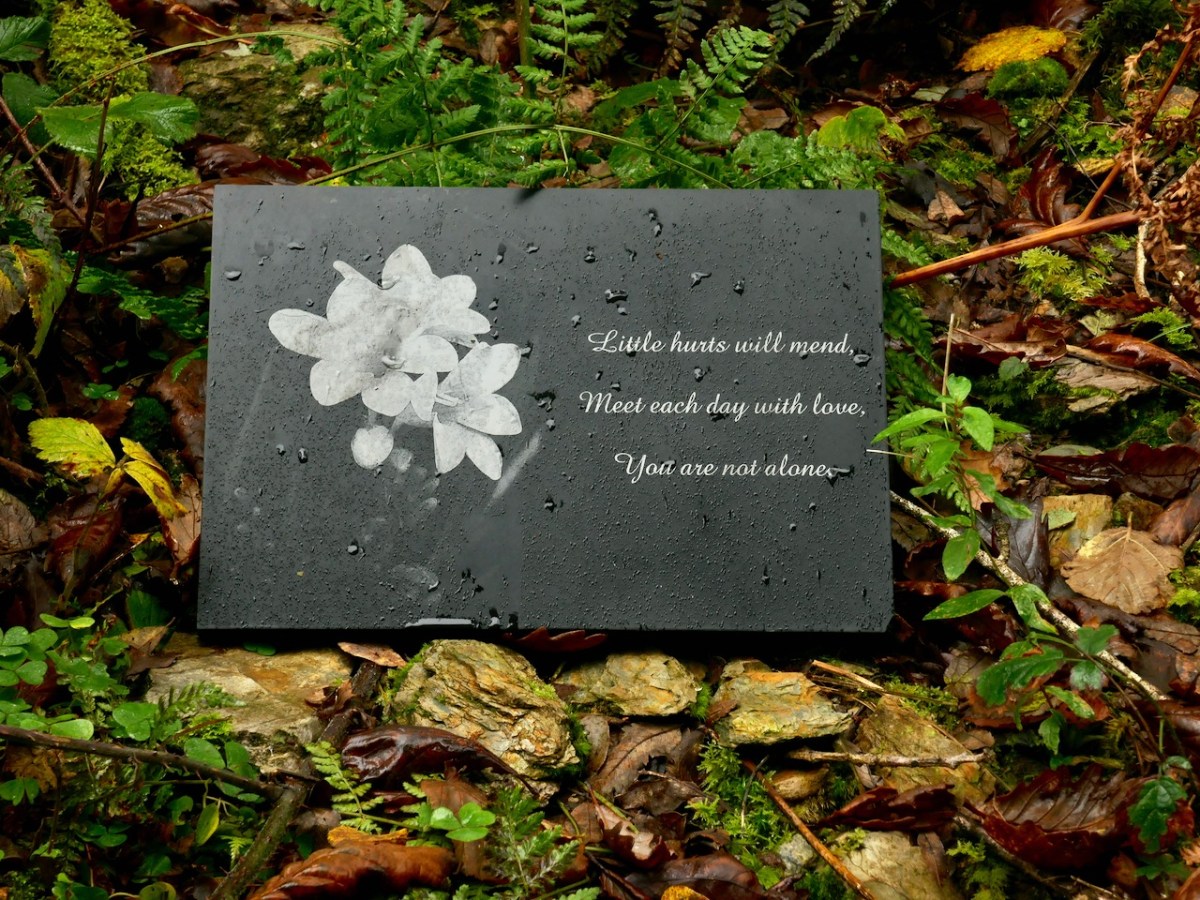
David and his team have worked hard to create and maintain these paths. They have also embellished them with discrete but apposite plaques which include local information and poetry. The work has also involved bridging the river in places to maintain a continuous footpath. We have to commend and appreciate the work they have done and the legacy they are leaving to future generations.

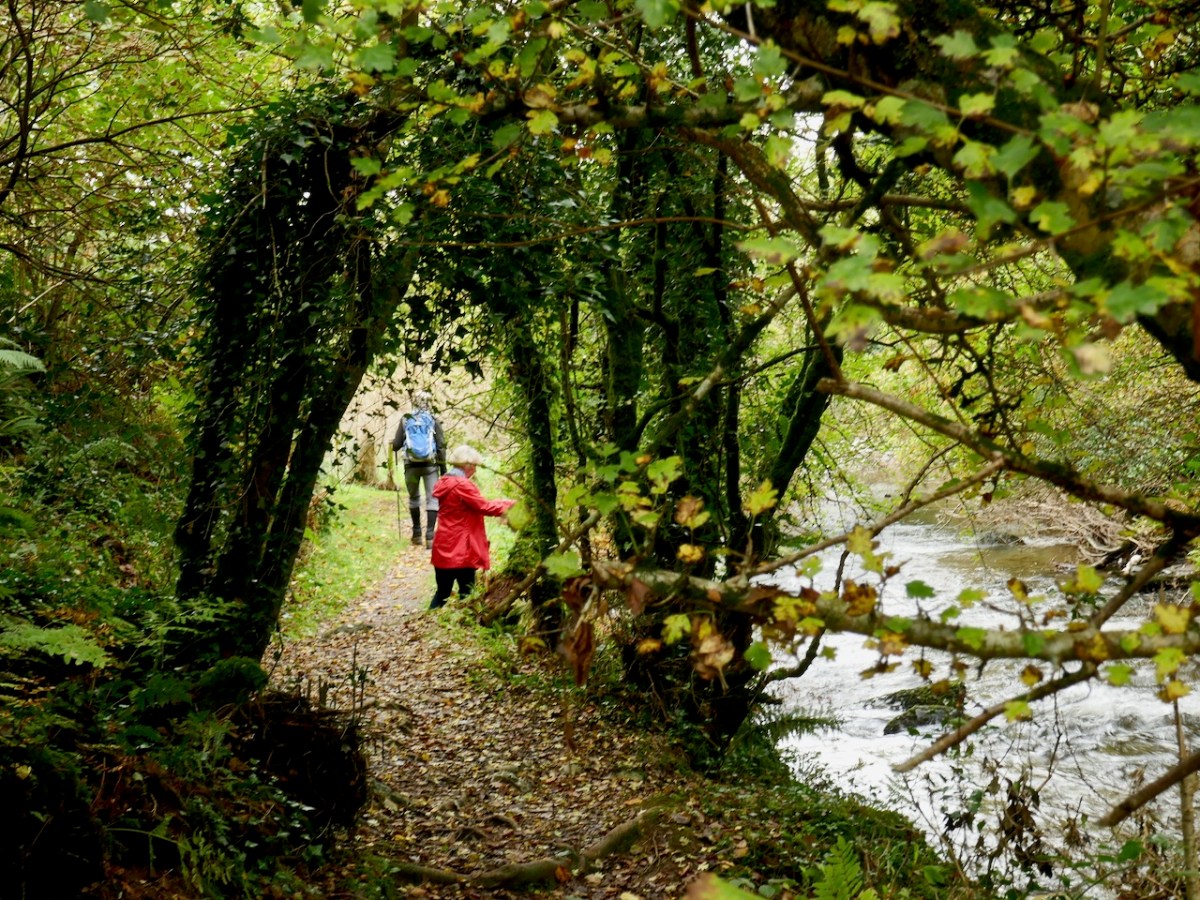
The river walk is truly beautiful, and the wooded valley is quite unusual terrain for West Cork, which is more often high, craggy and dramatic. Wildlife and wildflowers abound, in season. All too soon we came to the boreen which would take us back to our starting point. We are determined to return and follow the network of pathways further when our current restrictions are lifted. We promise we will report back!

Our Lockdown Mascot

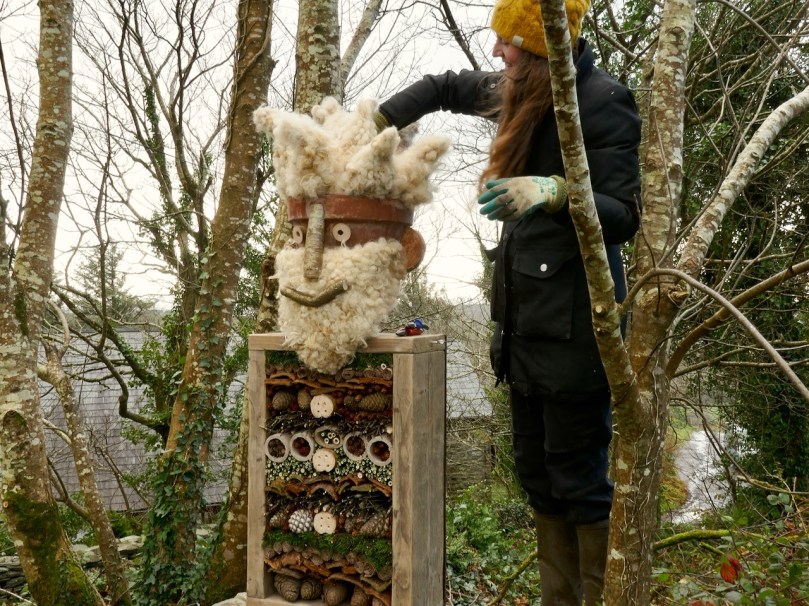
Will we need a reminder in years to come of the lockdown we are living through now? If so, he arrived this week – Finbarr, the Bug Hotel and Lockdown Mascot.

You may remember our post about Kloë and Adam, the Two Green Shoots, who have established their edible Garden of Reimagination on the Glengarriff to Kenmare Road. When we visited I saw their own ‘Glen’ and noted that they could make them for others. It didn’t take long for us to decide that this is what our garden needed to feel complete.

We wanted to call him Finbarr. Regular readers will know I have a soft spot for Finbarrs – see this post about Finbarr the Pheasant, and this one about St Finbarr and his serpent. He’s Cork’s Patron Saint, after all, and associated with so many Cork places and stories. The name Fionn Barr means fair head, so of course my request was for a figure with lots of blond hair.

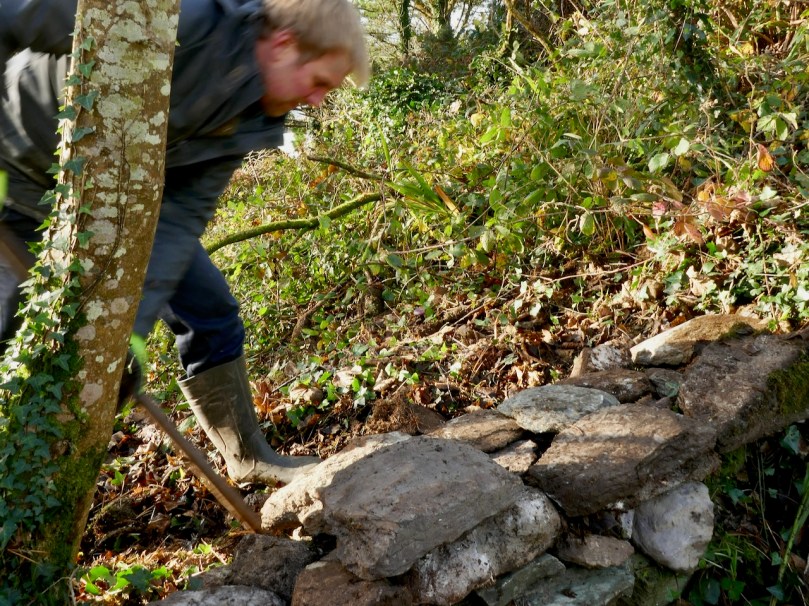
Kloë and Adam arrived this week to instal Finbarr.  They are classed as essential workers and we were all mindful of socially distancing as I photographed the process. It was quite a job, involving digging a hole through unforgiving rocky ground for a large stake to secure him from the back, then building up the wall to support him from underneath. 

Finbarr’s body is filled with insect-attracting spaces and materials, arranged to create a colourful centrepiece, with buttons down the front. Once his body was in place and secure, Kloë attached the arms and legs, which had been pre-organised as a series of rounds each drilled with various sizes of holes for different insect.

His hair is his crowning glory! It’s made of fleece (it took two and a half fleeces!) which birds will discover in time and use as nesting material. Kloë left us a repair kit of fleece to fill in the gaps as he becomes a little threadbare over time. 

We chose a site right beside the road so everyone who passes can wave at Finbarr. We hope especially that kids will like him. It’s also one of the few relatively sheltered spots on our land, and that’s important when the winter storms hit. 

So if you’re in the neighbourhood, swing by and say hello to Finbarr.

Autumn at Lough Hyne

Wild West Cork: a rugged landscape of mountains, a myriad patchwork of pastures; inlets, coves, spruce plantations and an archipelago of mostly unwooded offshore islands. Where are the deciduous trees? This is what we ask ourselves when autumn comes and we want to see the changing colours; the wistful season of autumn at its best. The answer, for us, is Lough Hyne!

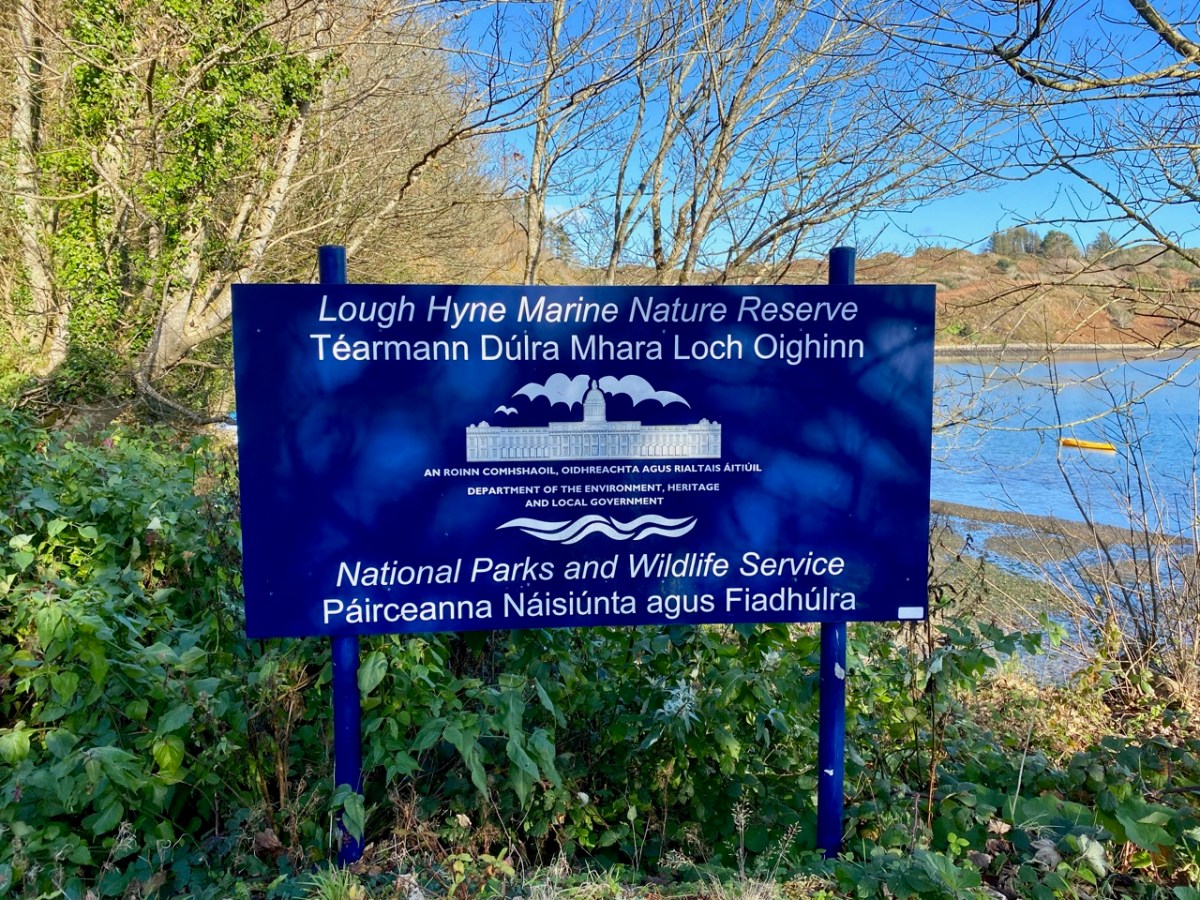
It’s just a skip and a jump to this tucked-away corner of our world. Once there, we are in a unique environment. It is Ireland’s first Marine Nature Reserve – international recognition for the ecology of this special place where not only the (salt) water is important both above and underneath the lake’s surface, but the immediate surroundings are hopefully sacrosanct for all time. These environs include woodlands which are just at this moment on the threshold of turning gold: we know gales are on the way which will tear and disperse them as winter sets in. Here’s a little tour of the paths on the edge of the water, featuring – above all – colour and texture: a feast for our eyes!

While the leaves are our main focus, everything else is worth a pause. The colour of the lake itself, certainly the wildlife it supports, but also the juxtaposition of boats, stone walls, shadows and sky are all brought to life by the early November sun.

I can’t resist quoting William Makepeace Thackeray’s description of his travels through ‘The City of Skibbereen’ to Lough Hyne, which we find in his Irish Sketch Book, published in 1843. Thackeray, the English writer best known for Vanity Fair and Barry Lyndon, spent four months travelling around much of the country and – although he appeared to enjoy himself – he didn’t have many good words to say about Ireland or the Irish . . .

THAT light four-inside, four-horse coach, the “Skibbereen Perseverance,” brought me fifty-two miles to-day, for the sum of three-and-sixpence, through a district which is, as usual, somewhat difficult to describe. A bright road winding up a hill; on it a country cart, with its load, stretching a huge shadow; emerald pastures and silver rivers in the foreground ; a noble sweep of hills rising up from them, and contrasting their magnificent purple with the green; in the extreme distance the clear cold outline of some far-off mountains, and the white clouds tumbled about in the blue sky overhead.

* * *

Of all the wonderful things to be seen in Skibbereen, Dan’s pantry is the most sublime: every article within is a makeshift, and has been ingeniously perverted from its original destination. Here lie bread, blacking, fresh butter, tallow-candles, dirty knives — all in the same cigar-box with snuff, milk, cold bacon, brown-sugar, broken teacups and bits of soap. No pen can describe that establishment, as no imagination could have conceived it. But – lo! – the sky has cleared after a furious fall of rain — and a car is waiting to carry us to Loughine . . .

Thackeray – Irish Sketch Book 1842

ALTHOUGH the description of Loughine can make but a poor figure in a book, the ride thither is well worth the traveller’s short labour. You pass by one of the cabin-streets out of the town into a country which for a mile is rich with grain, though bare of trees; then through a boggy bleak district, from which you enter into a sort of sea of rocks, with patches of herbage here and there. Before the traveller, almost all the way, is a huge pile of purple mountain, on which, as one comes nearer, one perceives numberless waves and breaks, as you see small waves on a billow in the sea; then clambering up a hill, we look down upon a bright green flat of land, with the lake beyond it, girt round by grey melancholy hills. 

* * *

The water may be a mile in extent; a cabin tops the mountain here and there; gentlemen have erected one or two anchorite pleasure-houses on the banks, as cheerful as a summer-house would be on a bleak plain. I felt not sorry to have seen this lonely lake, and still happier to leave it. There it lies with crags all round it, in the midst of desolate flatlands: it escapes somewhere to the sea; its waters are salt: half-a-dozen boats lie here and there upon its banks, and we saw a small crew of boys splashing about and swimming in it, laughing and yelling. It seemed a shame to disturb the silence so . . .

THACKERAY – IRISH SKETCH BOOK 1842

Thackeray’s Irish Sketch book is something we will return to in this journal, as it provides an unusual and, sometimes, surprising perspective on pre-Famine Ireland. But I can’t agree with him on Lough Hyne: grey melancholy hills . . . in the midst of desolate flatlands . . . Clearly, he cannot have visited on an autumnal day, and neither was he favoured by the sun. Perhaps there is a poetic justice there, somehow: we embrace everything that Ireland – and West Cork – has to offer; possibly his acute and carping scrutiny of the detail removes from him the more rewarding overview? For us, Lough Hyne was idyllic!

Our wonderful Skibbereen Heritage Centre has comprehensive information on Lough Hyne – and much more!

Going With The Wind

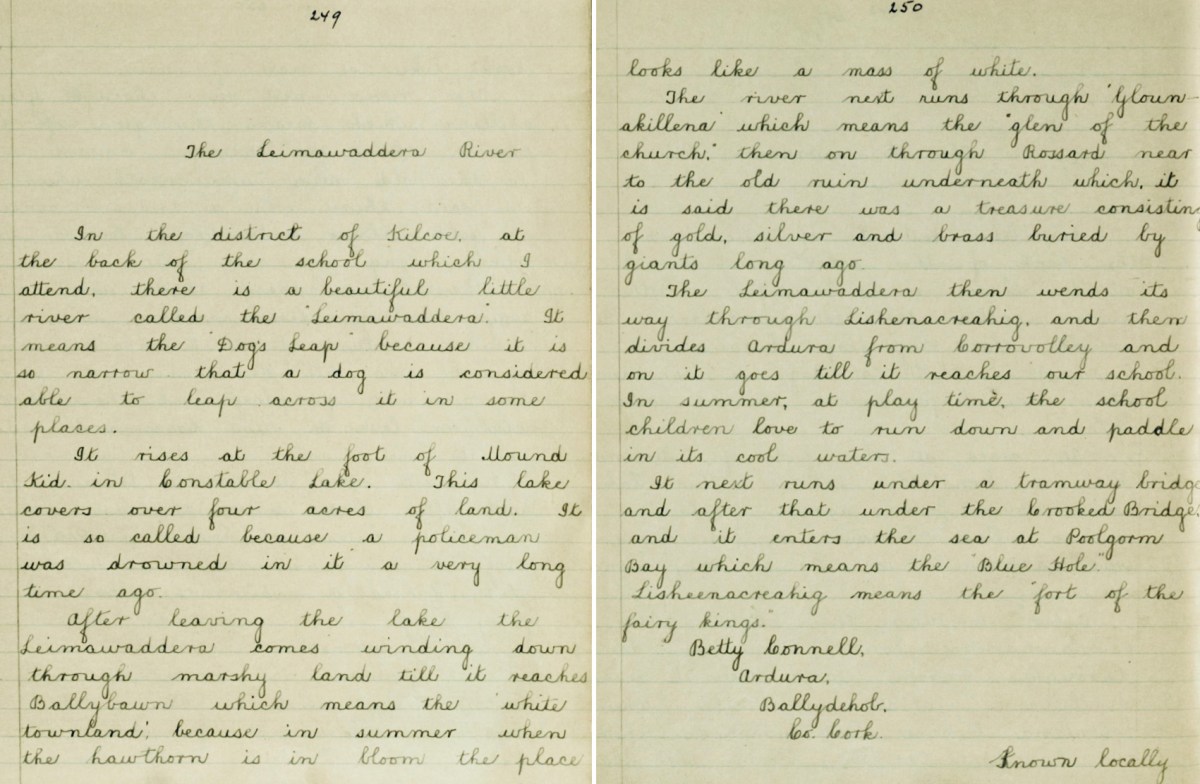
We set out to search for a lake in the hills above Ballybane West: it’s known as Constable Lake. There’s a story, of course – which I found in the Duchas Schools Folklore Collection, collected at Corravoley School in 1937. A whole gamut of stories, in fact, packed into two neatly handwritten pages. I don’t think I have ever found quite so much information on local lore in a single entry. Ammunition for a few more posts, perhaps!

In the district of Kilcoe, at the back of the school which I attend, there is a beautiful little river called the “Leimawaddera”. It means the “Dog’s Leap” because it is so narrow that a dog is considered able to leap across it in some places.

*

It rises at the foot of Mount Kid in Constable Lake. This lake covers over four acres of land. It is so called because a policeman was drowned in it a very long time ago.

*

After leaving the lake the Leimawaddera comes winding down through marshy land till it reaches Ballybawn which means the ‘white townland’, because in summer when the hawthorn is in bloom the place looks like a mass of white.

*

The river next runs through ‘Glounakillena’ which means the “glen of the church”, then on through Rossard near to the old ruin underneath which it is said there was a treasure consisting of gold, silver and brass buried by giants long ago.

*

The Leimawaddera then wends its way through Lishenacreahig, and then divides Ardura from Corravolley and on it goes till it reaches our school. In summer, at play time, the school children love to run down and paddle in its cool waters.

*

It next runs under a tramway bridge and after that under the Crooked Bridge and it enters the sea at Poolgorm Bay which means the “Blue Hole”.

*

Lisheenacreahig means the “fort of the fairy kings”.

BETTY CONNELL, ARDURA

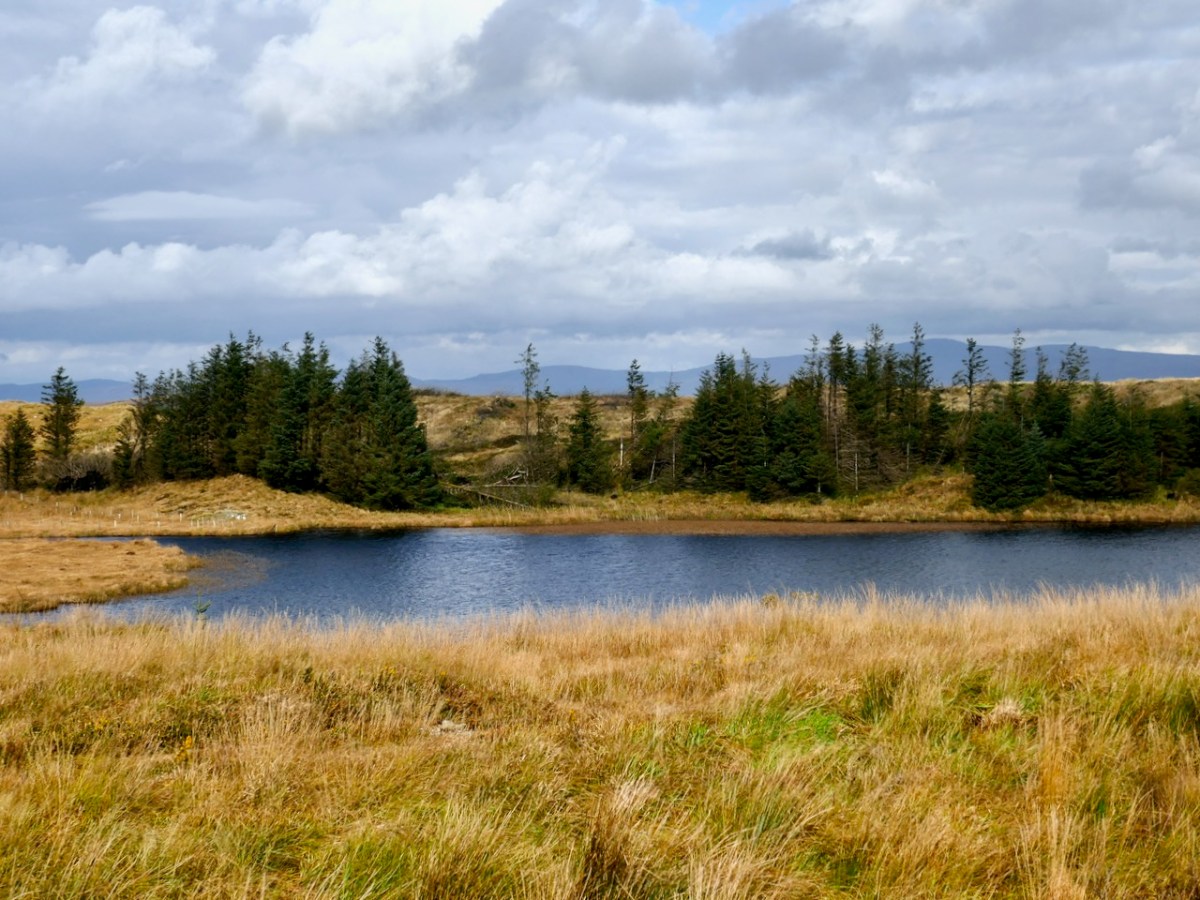
In How Well Do You Know West Cork? on the Roaringwater Journal Facebook page this week, Finola posted this photo of Constable Lake:

This view is cleverly framed to minimise the clues, but several readers gave the correct answer almost immediately. Here’s a more revealing picture:

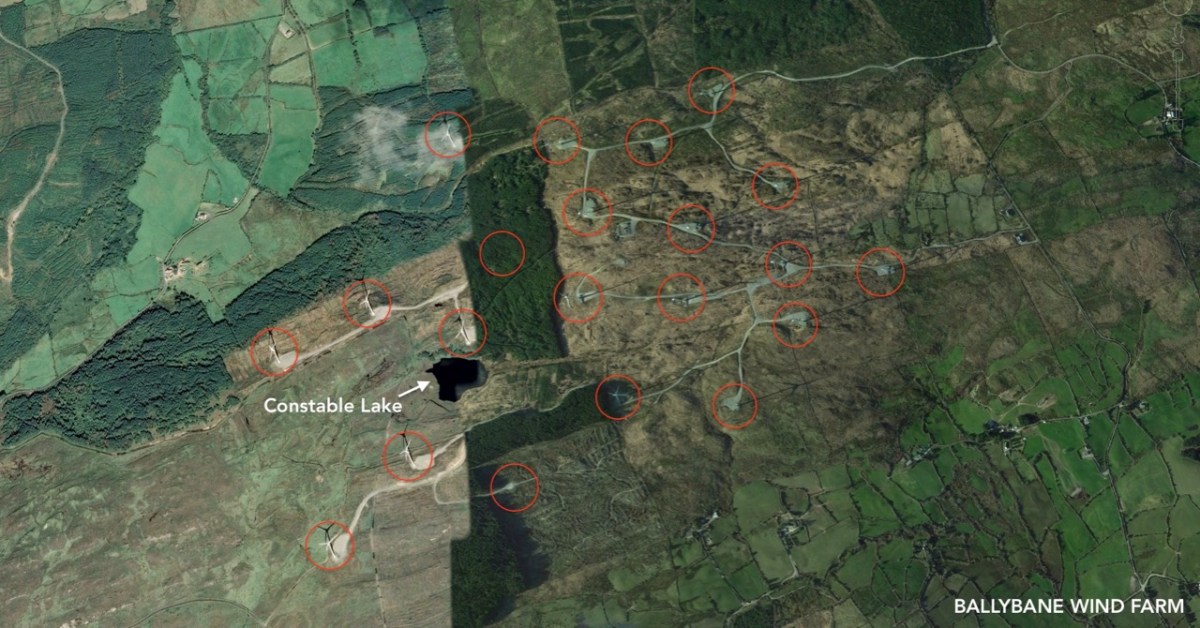
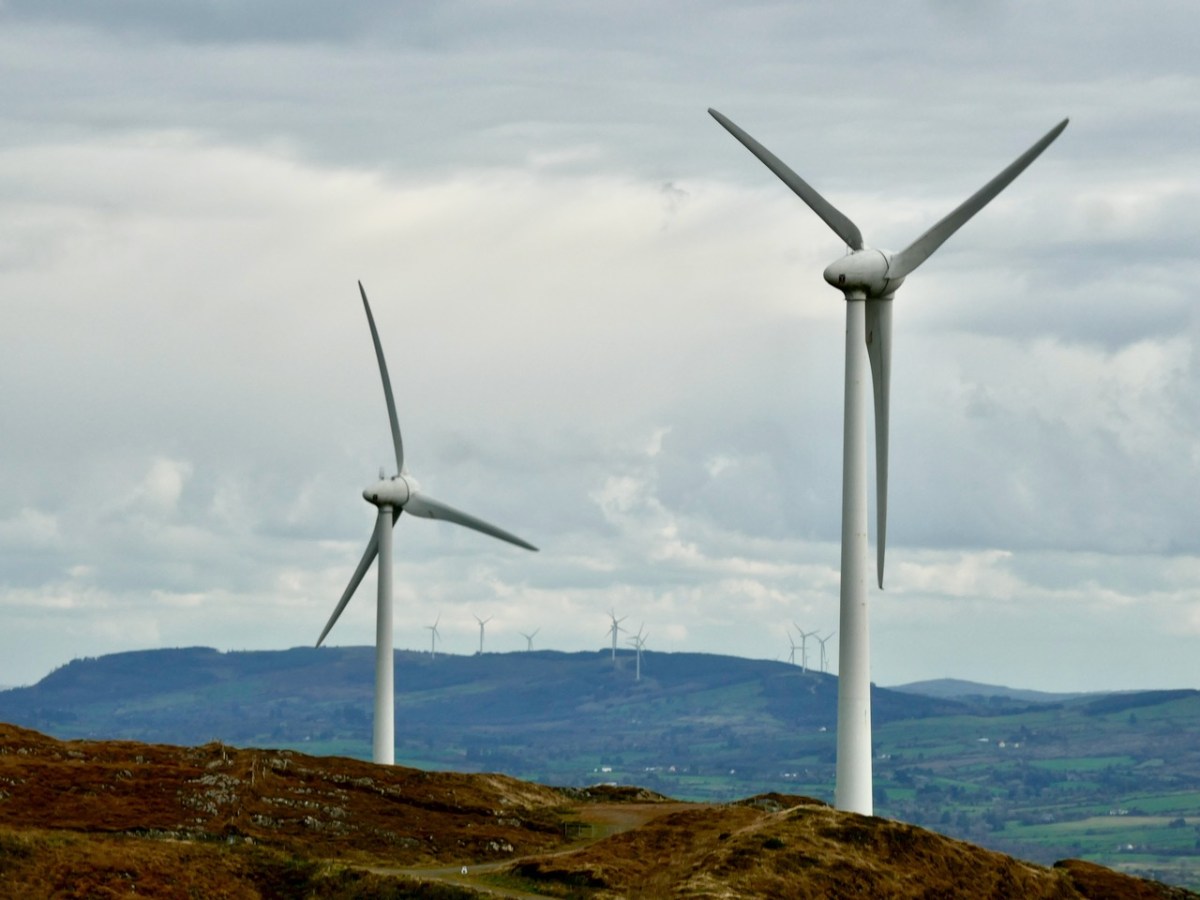
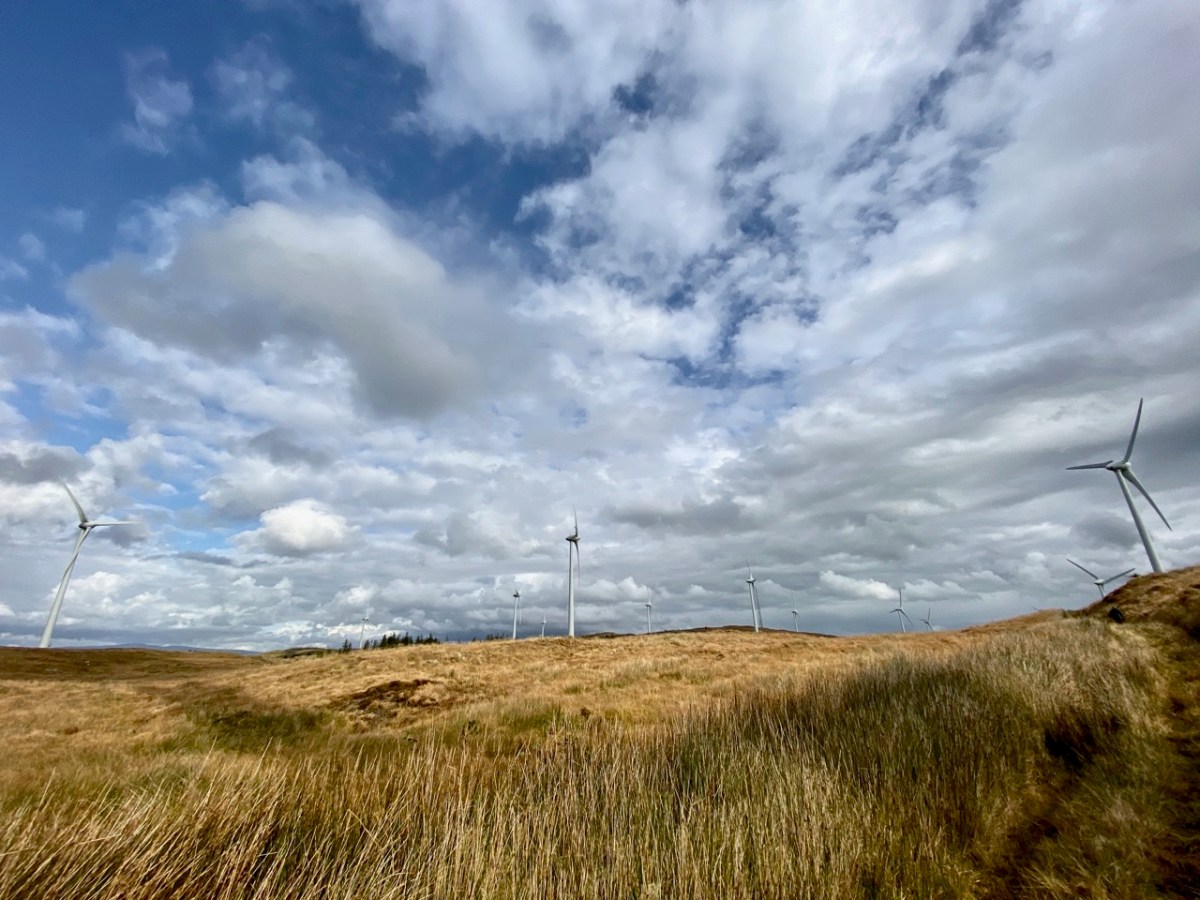
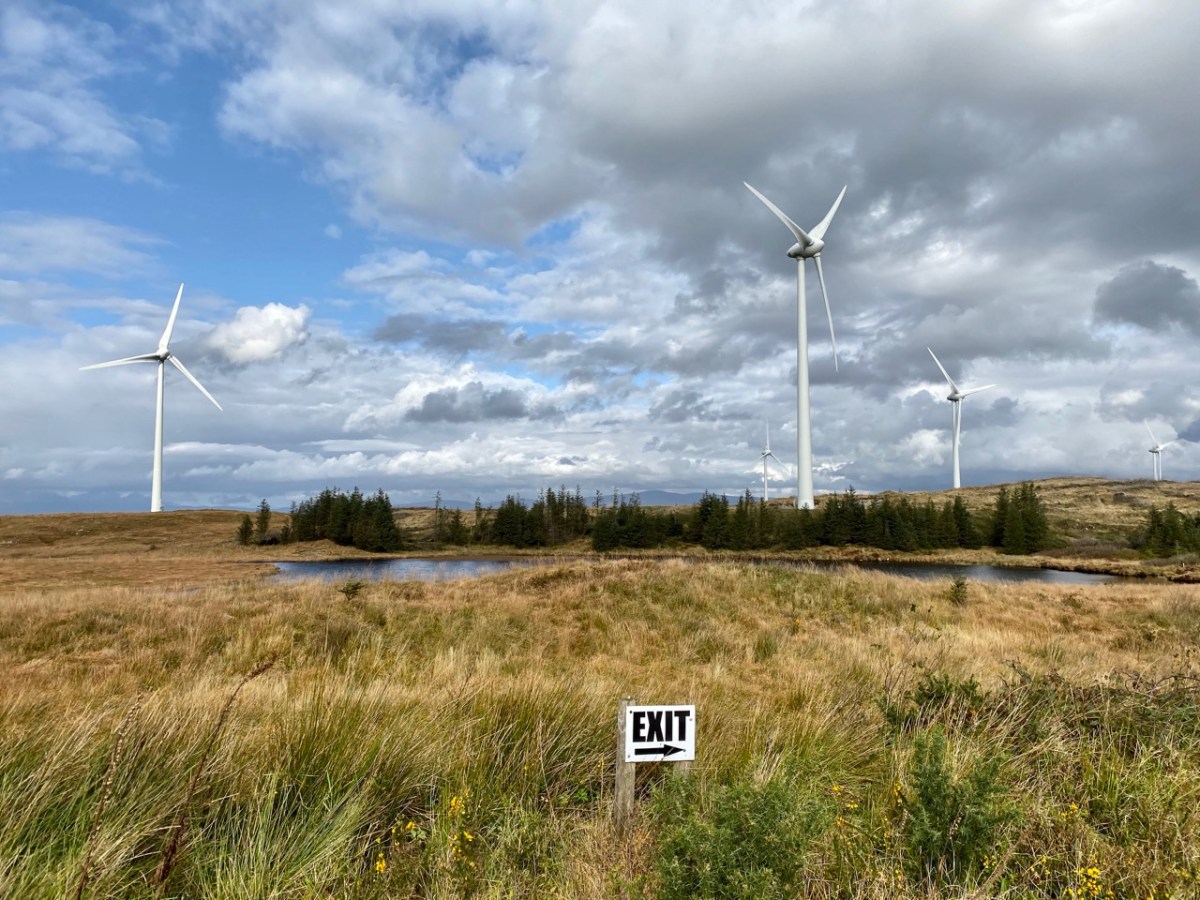
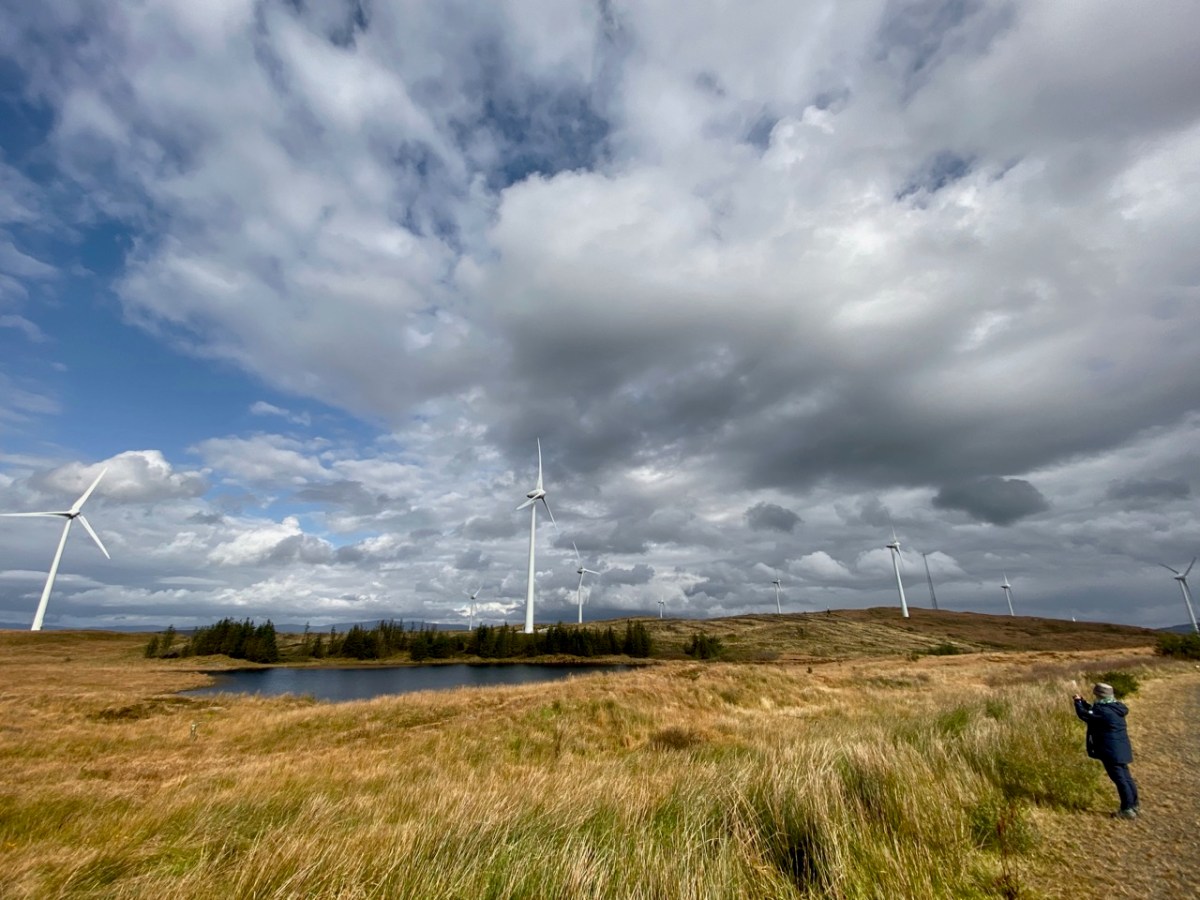
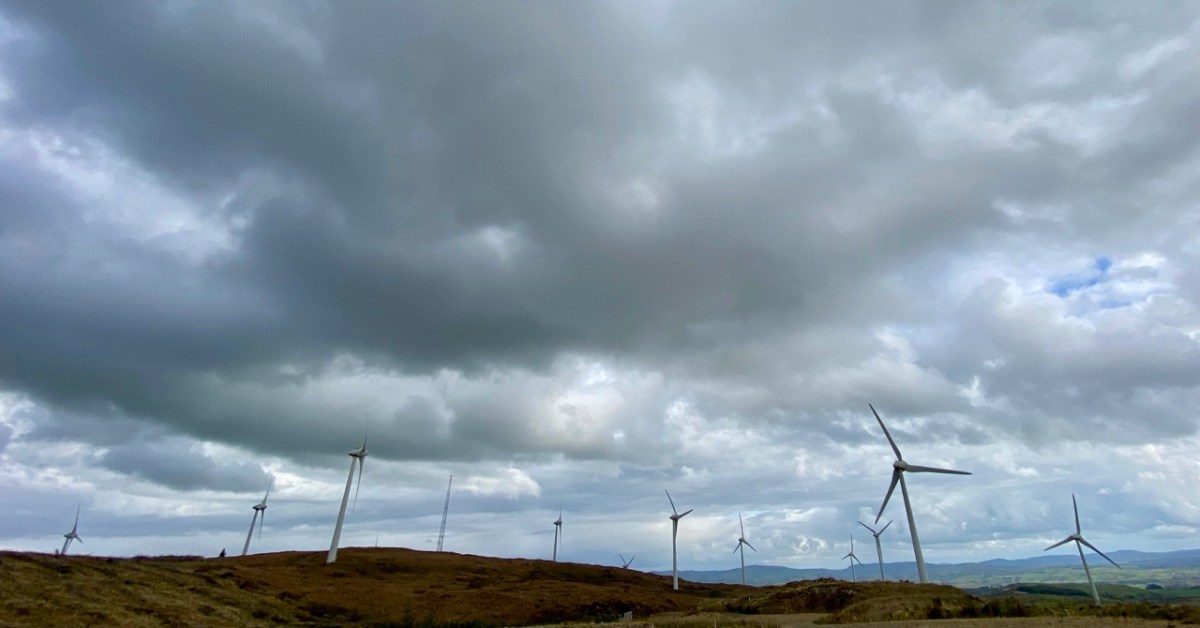
Constable Lake now lies within the boundaries of Ballybane Wind Farm and the 21 tall turbines can all be seen from its shores. It’s one of several farms in the West Cork area, strategically sited on the wild heathland ridges, working away at their mission of harvesting nature’s resources in order to provide us with electricity without burning fossil fuels.

Upper – on the aerial view I have marked each of the 21 turbines. Lower – from the Ballybane site the turbines at Drinagh and Coomatallin are visible

I find the turbines dynamic and exhilarating. I know there are many readers who will disagree with my opinion, and social media abounds with polarised views about them from all perspectives. It’s hard to home in on hard and fast truths on anything these days but I have read extensively – and scientifically – on the subject and it seems to me that these wind-turned appliances have a life expectancy of around 25 years, and they pay for their installation in less than two years. Of course, carbon emissions are involved in the construction and manufacturing processes but this is heavily outweighed by the carbon savings from running these instead of burning fossil fuels to produce our electricity. Dismantling costs are built in to the permissions, and there is no doubt in my mind that in 25 years time – or less – technology will have advanced towards other solutions.

A simple chart from 2017 (via FactChecking.org) which graphical shows how well onshore wind farms perform against other fuel sources. Only nuclear power is marginally better

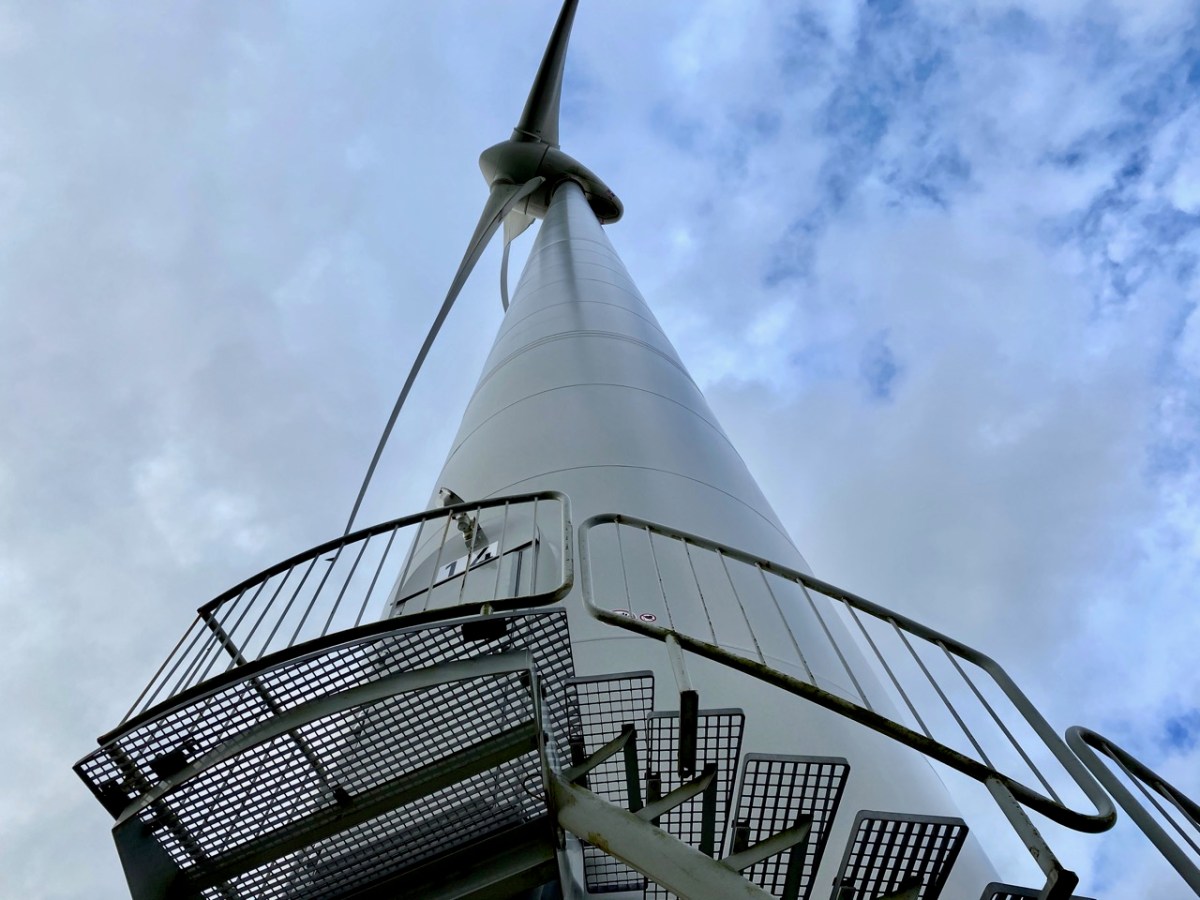
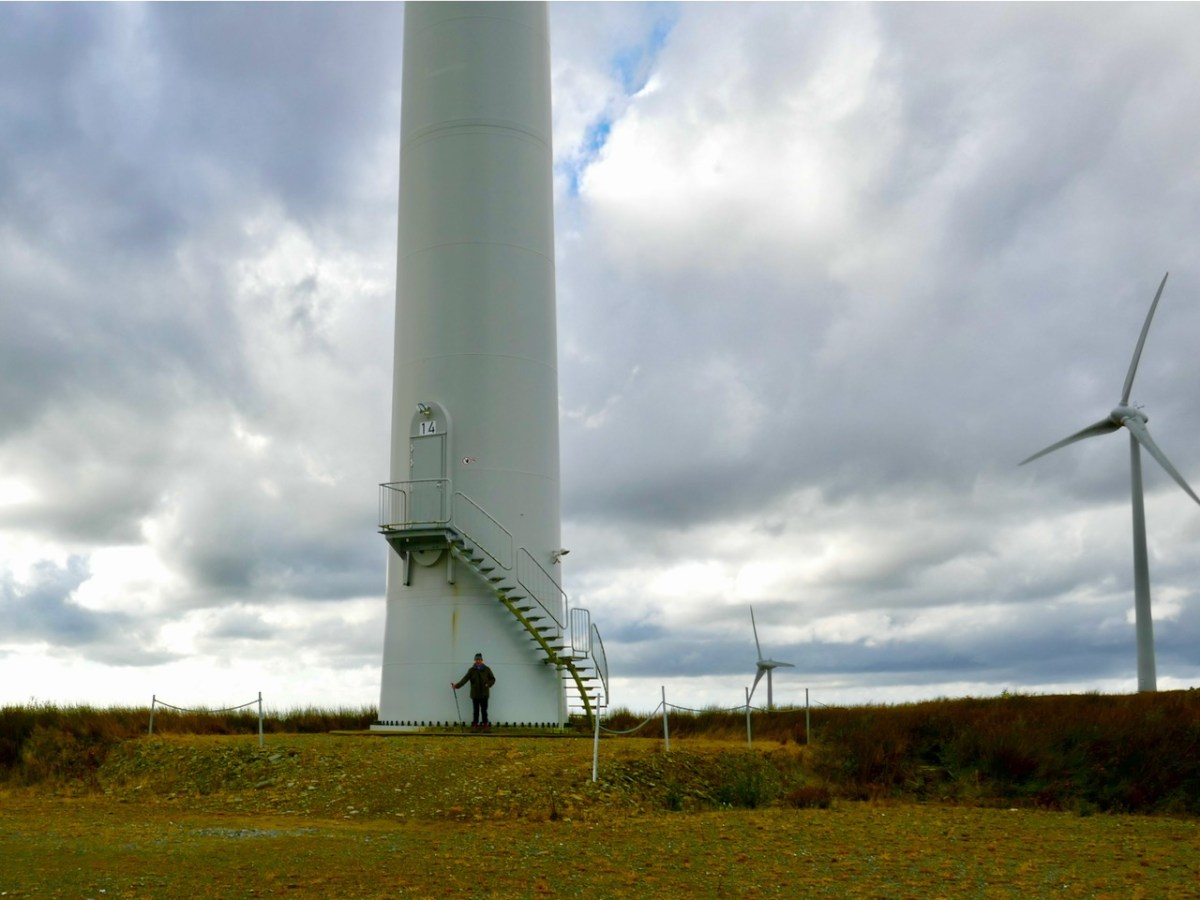
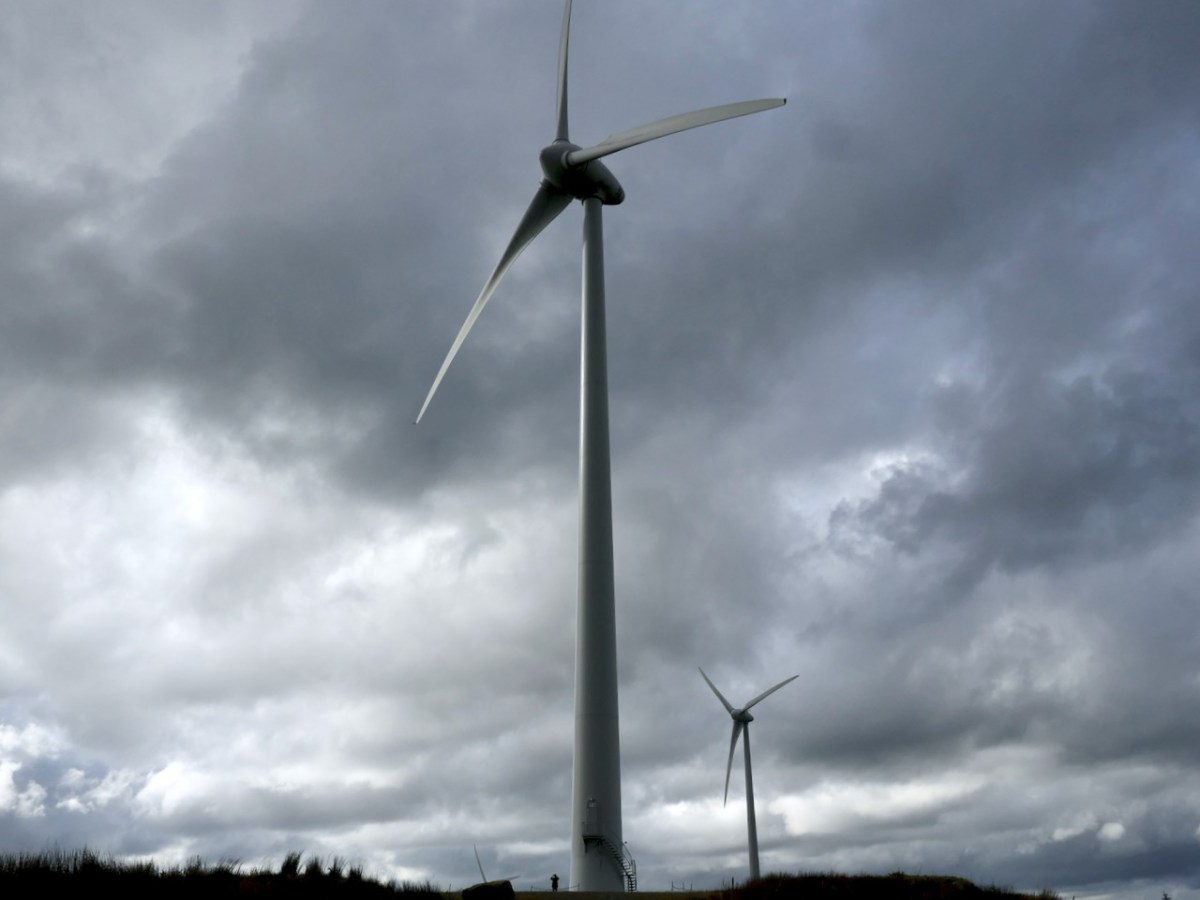
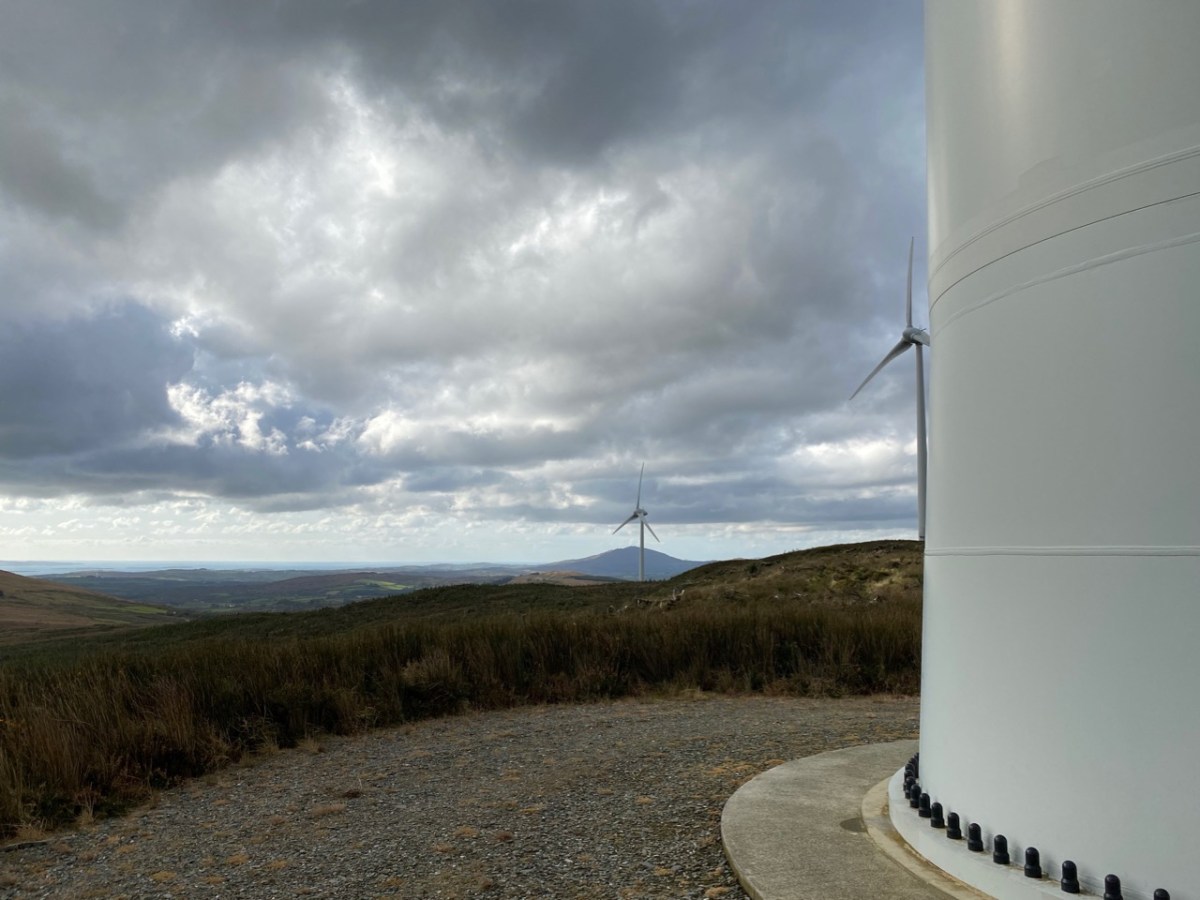
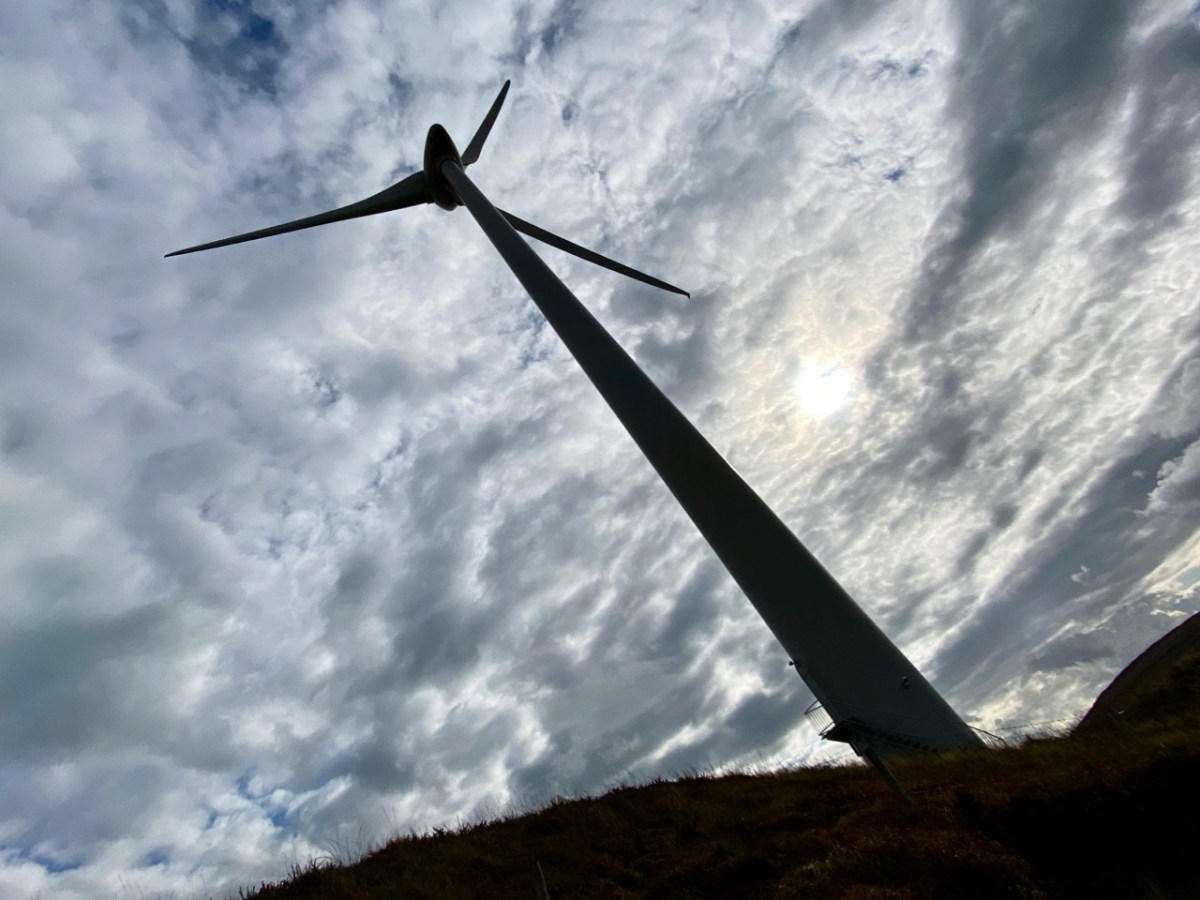
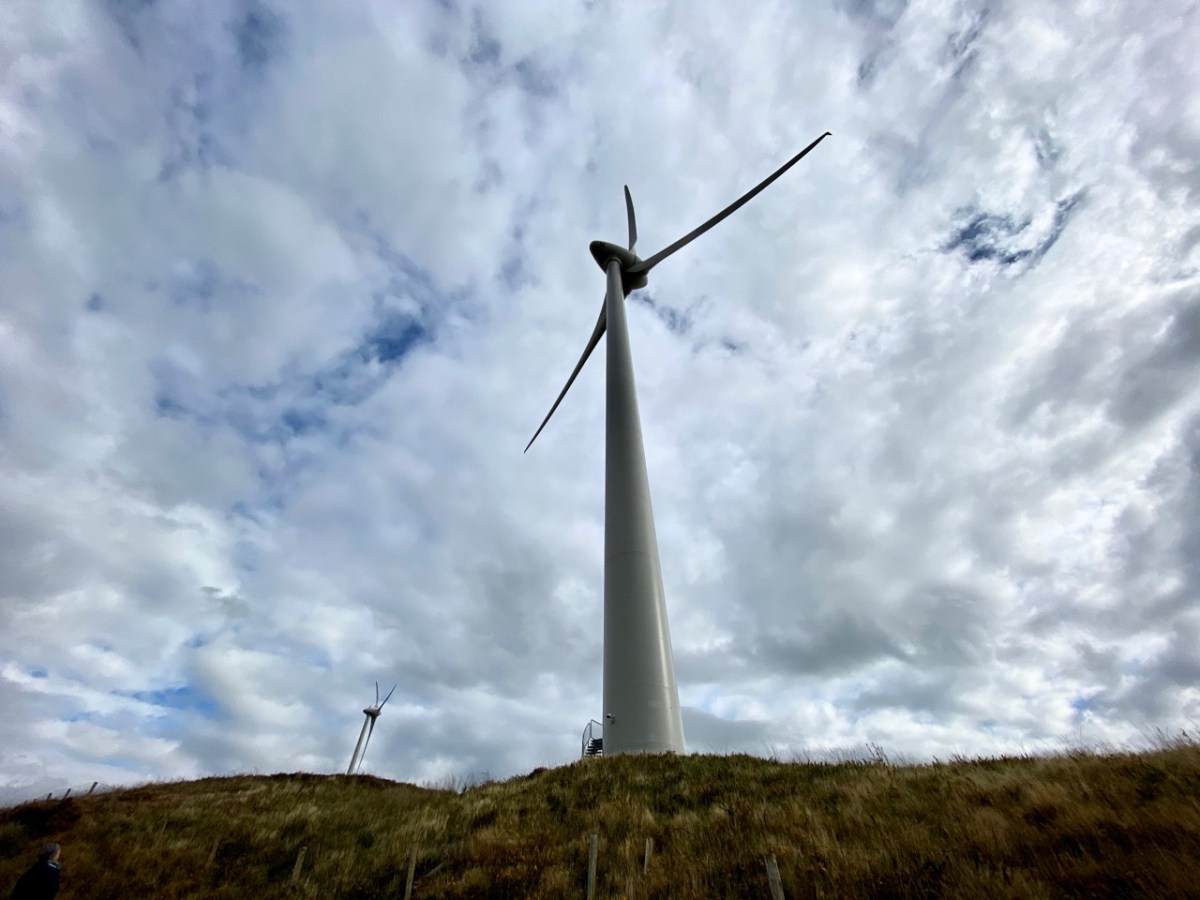
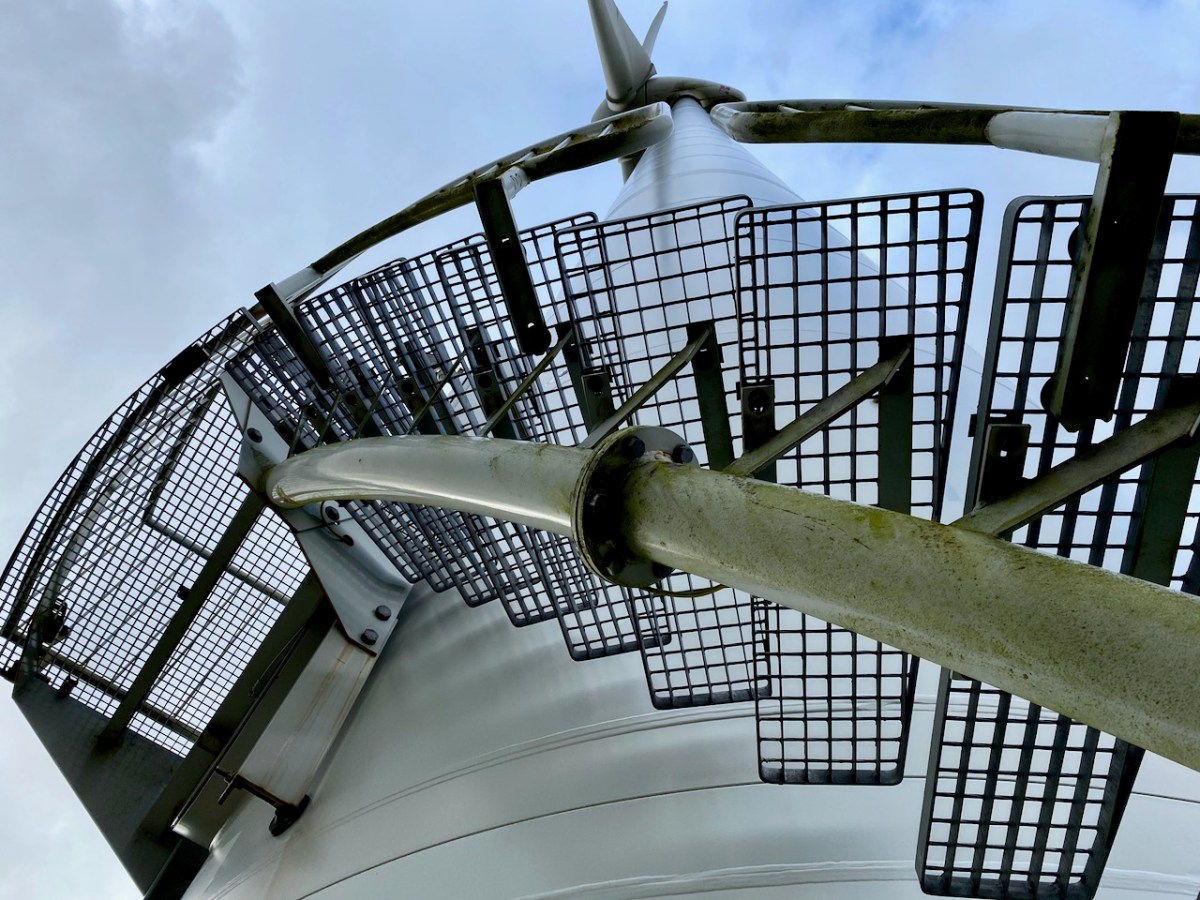
Wind turbines have a huge visual impact on the landscape, so their siting is important. In the case of Ballybane they have been constructed on heathland and in an area that was formerly commercial forestry. I personally prefer the elegance of the actively dynamic structures to a dark, impenetrable and seemingly sterile sitka spruce plantation. The scale is aweing: in the following photographs here’s me at the base of one of the 64m high towers (upper picture) and, below that, you can see me again – the very tiny figure to the left of the main turbine.

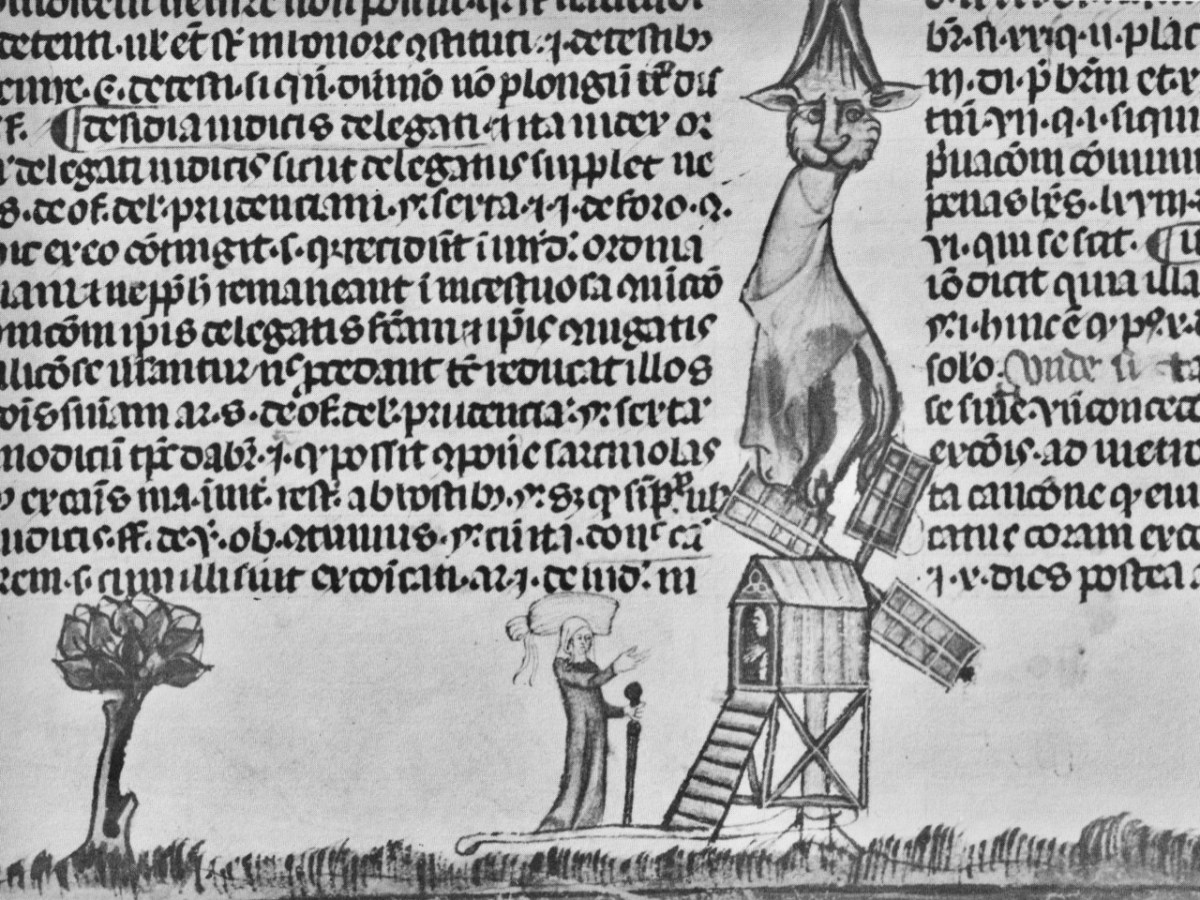
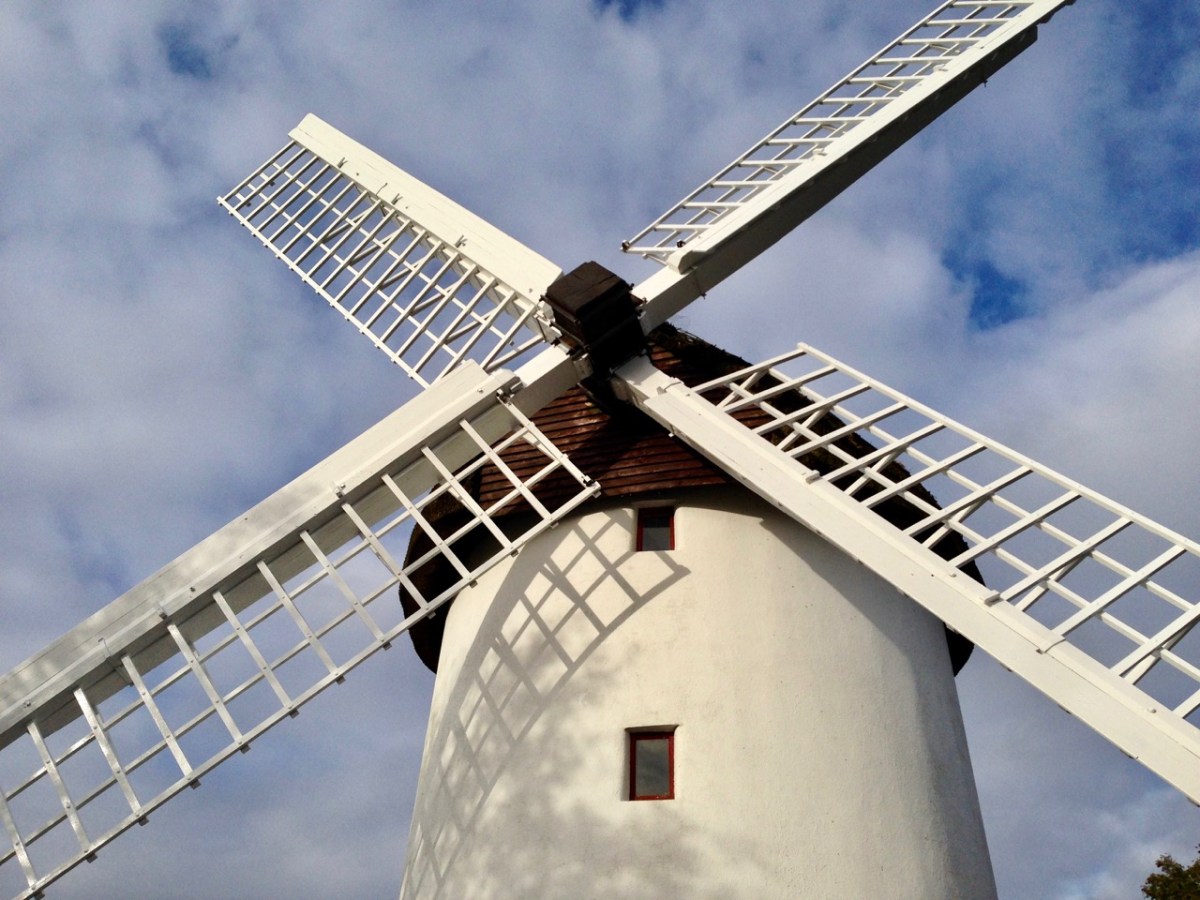
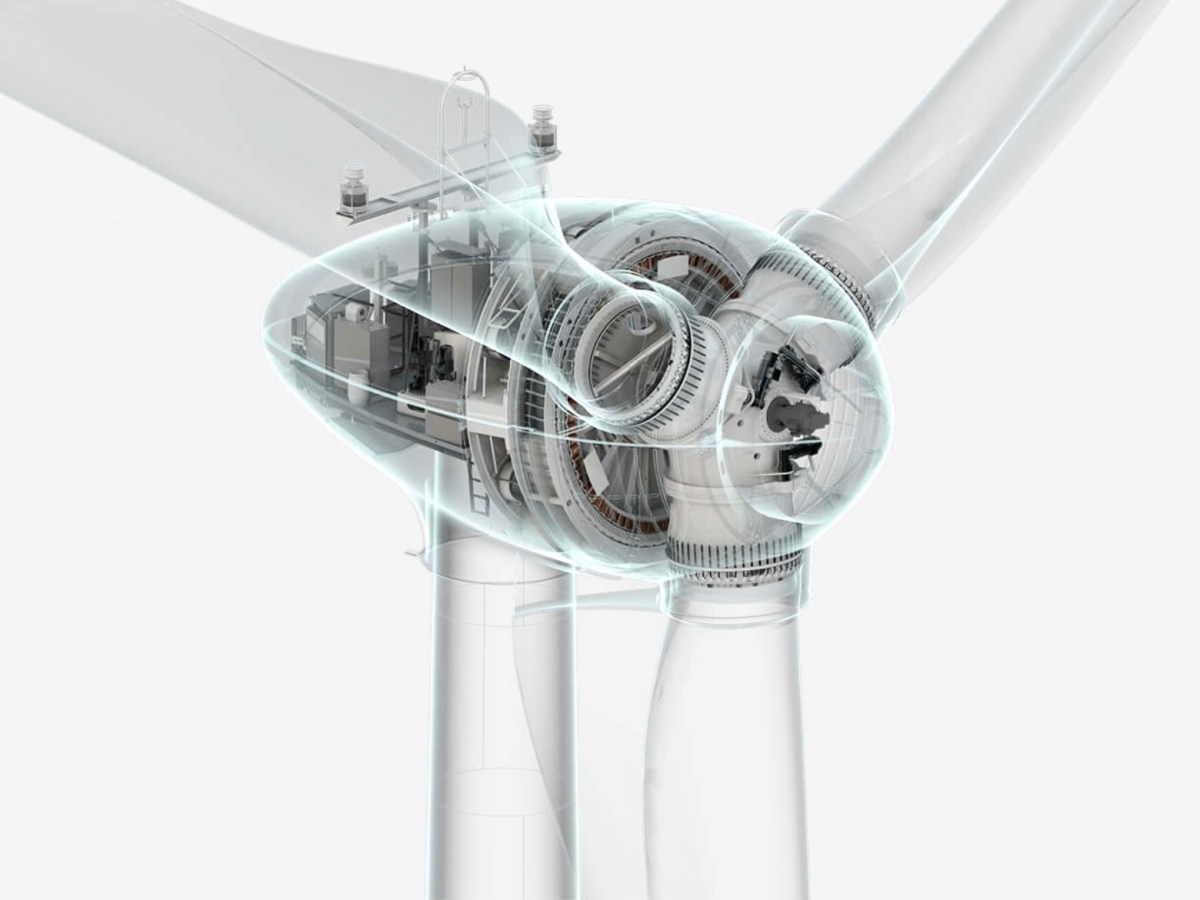
The machinery of industry has always fascinated me. Windmills go back a long way. The first image, below, is from the 14th century Decretals of Gregory manuscript in the British Museum. This is followed by our photograph of Elphin mill, County Roscommon, which dates from 1730 and is said to be the oldest in Ireland. Next, an exploded view of the nineteenth century flour mill at Chillenden, Kent, UK (courtesy of John Reynolds) and then a comparable view of the workings of the Enercon E-70 Wind Energy Converter, which is the unit in use at Ballybane and has a rotor diameter of 71 metres.

The Ballybane Farm will power about 40,000 homes a year on average. That’s modest compared to the newest developments. Currently the world’s largest installation – the offshore Hornsea One Farm, Yorkshire, UK – powers a million homes, while in the Netherlands a huge Haliade-X offshore turbine is being developed with a height of 260 metres and rotor blades of 220 metres in diameter: it’s said that each sweep of the blade will keep a house powered for a day. But that’s enough of the technical stuff. I enjoyed the experience of being close to these giants, and hearing the significant swish of those blades powering us into a safer, carbon reduced future.

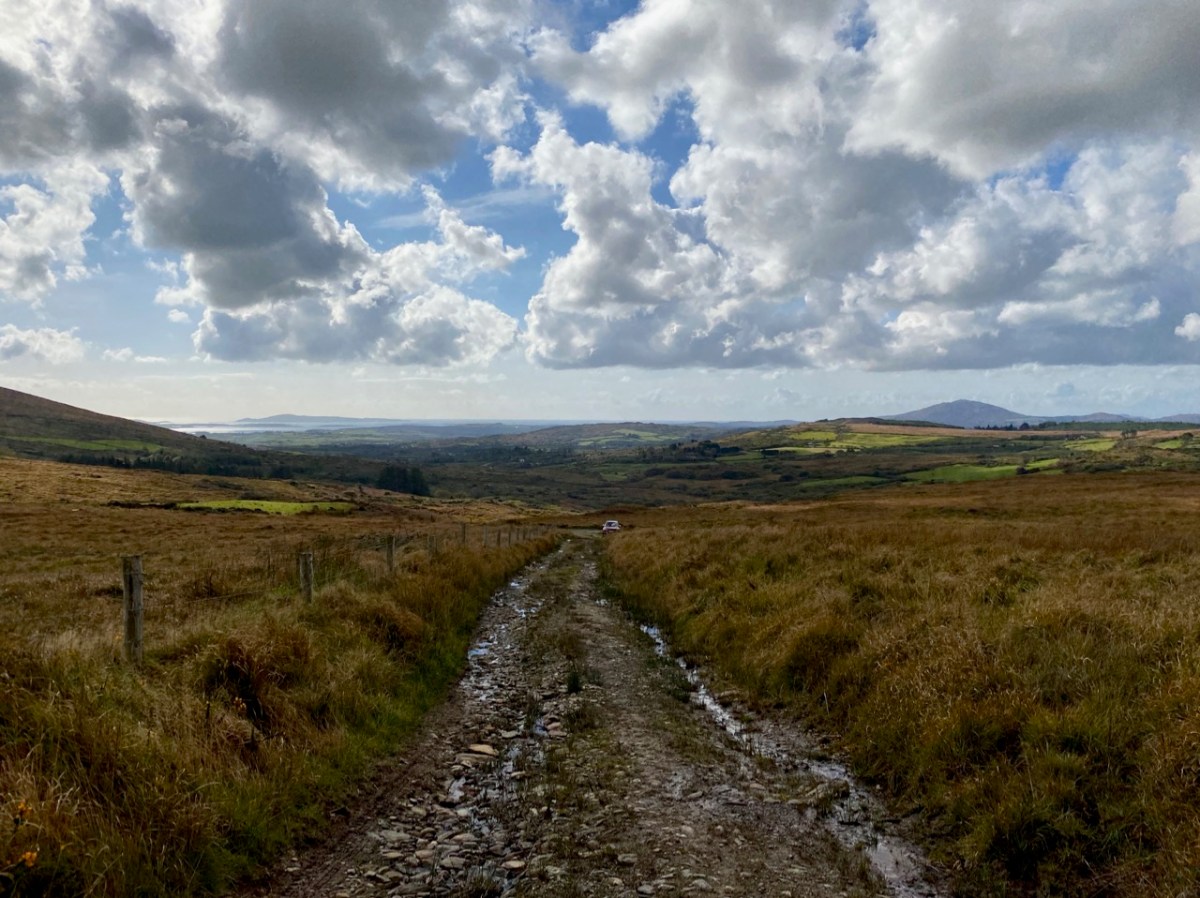
Above you can see the trackway leading us up to Constable Lake and the Ballybane Wind Farm. On the horizon is Roaringwater Bay and the distinct profile of Mount Gabriel. There’s an ancientness about this landscape that balances the surreal – somewhat ‘science-fiction’ – character of the turbines. For me, these elements complement each other, and the sheer scale of the contemporary engineering sets us apart from our slight, human selves – so vulnerable in these times.

Through The Big Gap

It’s October: autumn light is playing on the skies and seas as we set out to cross the Sheep’s Head peninsula on a path which is new to us. The path traverses the backbone of this peninsula – a ridge which is virtually continuous from east to west – and runs from Rooska, a settlement beside Bantry Bay on the Northside, heading south for Coomkeen and then Durrus. Before we take to the hills, however, we need to prepare ourselves with some sublime scenery en-route, a little excursion into vernacular architecture, and an encounter with local expertise.

From upper – a Sheep’s Head pastoral, the view over Glanlough towards distant Beara; a perfect composition in tin and stone; a niche for offerings? Looking to the ridge – and The Big Gap – in the distance; Joe O’Driscoll with his architectural egg-box. Unfortunately the hens are not laying at the moment!

We are heading to the start of our climb and find a busy settlement, historically once a mining centre and now home to a major award winning seafood producer, bravely weathering the Covid storms. It’s worth a look at their colourful website! You might not expect to see such a venture on the wild and remote Sheep’s Head Northside, but it’s a great boost to a fragile local economy. We wish them well in surviving the Covid19 crisis. Parking up at Rooska, we get first sight of the zig-zagging route that will take us over towards Durrus, passing through The Big Gap at the summit of the hill.

Upper – looking north across Bantry Bay from the path; middle – from the south, the path descends through The Big Gap; lower – the path can be seen on the right cutting through the hills: the highest point is 200m above sea level

I tried in vain to find a name for the way we followed. I would like to have called this post The Mass Path, which is given to it on a modern guide, and it does seem probable to us that one purpose of the trackway would have been to take Northside dwellers over to the old Catholic church at Chapel Rock in Durrus, a distance of 7 kilometres (or four and a half miles in older times). There and back would have been a taxing walk for a Sunday morning on an empty stomach (you have to fast from midnight before taking communion)! However, we were told locally that our intended way will lead us through The Big Gap, hence my title.

This view over the Northside area of Rooska, above, shows several features and the beginning of the path over the mountain heading south. Notable is Killoveenoge Church, known as a ‘Chapel of Ease’ and said to have been built in the 1860s specifically for the English and Cornish miners who were working in the nearby silver and lead mines at the time. There are scant remains of these mines now, and the Church of Ireland building was closed in 1988 and converted to a studio.

Looking down on Killoveenoge Church from The Big Gap path, with Bantry Bay beyond

The townland name Killoveenoge translates as Church of the Young Women and the only explanation of this I could find suggests that the site was anciently a priory, sacked by the Vikings in 890AD. It is also said that some ruins of this are visible, but we failed to find them – nor any factual historic records. The Schedule of Monuments notes a circular burial ground in the west of the townland with early grave markers, but nothing more. Clearly folk memory transcends recorded history, and that is one of the attractions of Ireland – to us, at least.

Upper – The Sheep’s Head Way trails have a strict code, which benefits all users; middle – the ruins of a cottage almost lost in the furze. The mining records mention a ‘miner’s cottage’ still being visible: could this be it? Lower – gaining height as the path gets steeper: that’s Whiddy Island in the distance

The wider aerial view shows the full length of the old trackway as it crosses the mountain through The Big Gap. Just past the summit when heading south is another landmark, also holding a folk memory. Lough Na Fuilla translates as ‘Lake of the Blood’:

A reed-filled lake suddenly appears; so many different greens, so far from anywhere and the gentle murmuring of the reeds all combine to make a rather unsettling atmosphere . . . Maybe it’s knowing the name of the lough, Loch Na Fuilla, lough of the blood, that plays tricks on the mind. There is a story attached, of course. One extremely hot summer the cattle came down from the mountain in search of water. The lough was empty. Maddened with disappointment and thirst the cattle went berserk and attacked each other and many were killed.

Walking the Sheep’s Head Way – Amanda and peter Clarke – Wildways Press 2015
Lough Na Fuilla, and a nearby tarn on the east side of the trackway. The autumn colours are sublime

Neither the Lake of the Blood nor the nearby tarn are shown on the early OS maps. The few remaining mining records, however, mention that there was some prospecting activity up on the ridge: could this have relevance? And is this another reason for the existence of this path? We are impressed with the views from The Big Gap both north and south. We temporarily divert on to a stony sheep path to get even higher, and to find the best panoramas. From the ridge we also record the contrasting light and shadow effects from a constantly changing sky.

We pause to wonder whether a large rounded outcrop is the Eagle’s Rest which is mentioned by local historian Willie Dwyer, of Rooska:

The gap going through the mountain there, by Loch na Fuilla, the locals always called it, that’s the old people who are dead and gone now, used to call it “Barna Mhór” which means “The Big Gap”, and on the right-hand side (the north-west corner) before you come to the extreme top of the track, there’s a round bald rock which was known as “the Eagle’s Rest”. I don’t know how long the eagles have been gone out of this part of the country, but it must have been a long time ago. This is a tradition now, it has been passed down as tradition, how true or false it is, I can’t prove to you.

Willie Dwyer, Quoted by TOM WHITTY in ‘A guide to the Sheep’s Head way’ 2003

From The Big Gap it’s downhill all the way! As we walk south it’s the Mizen which is always on the horizon, across the waters of Dunmanus Bay.

As we approach the southern end of the trackway crossing the mountain, we look back up towards Barna Mhór – The Big Gap. It has been a most rewarding adventure for us, and one which we intend to repeat at other times of the year so that we can capture the effects of the changing seasons.