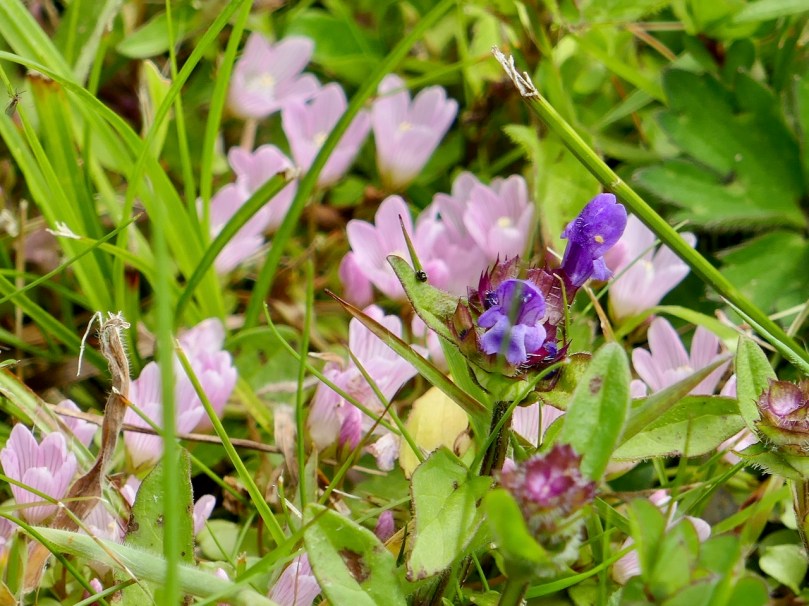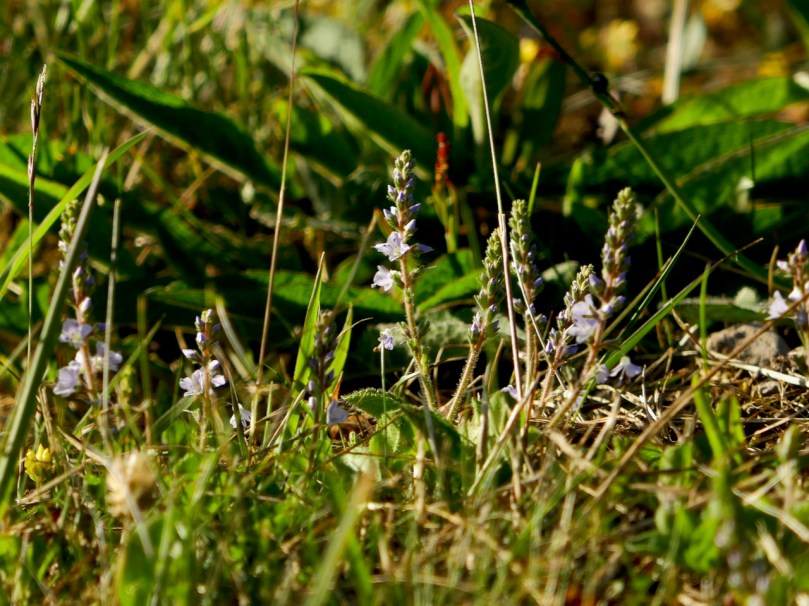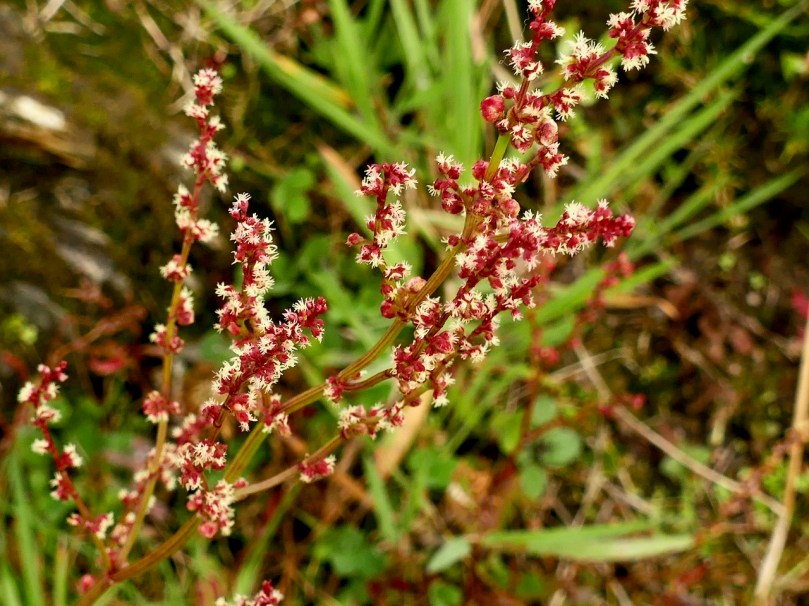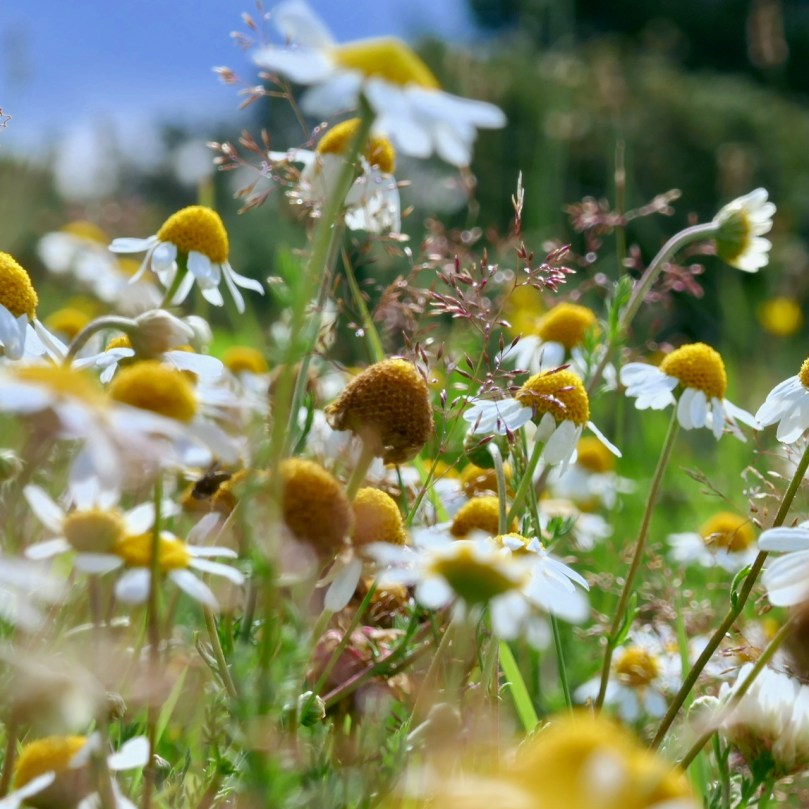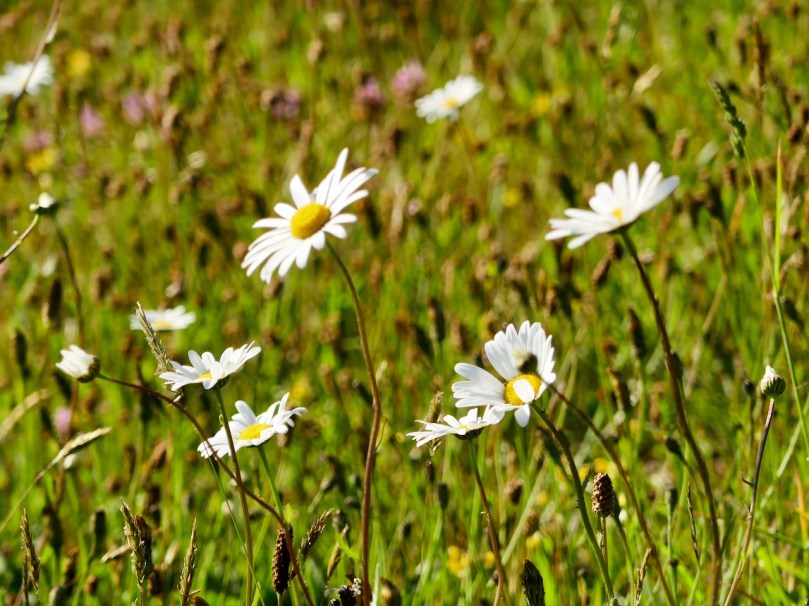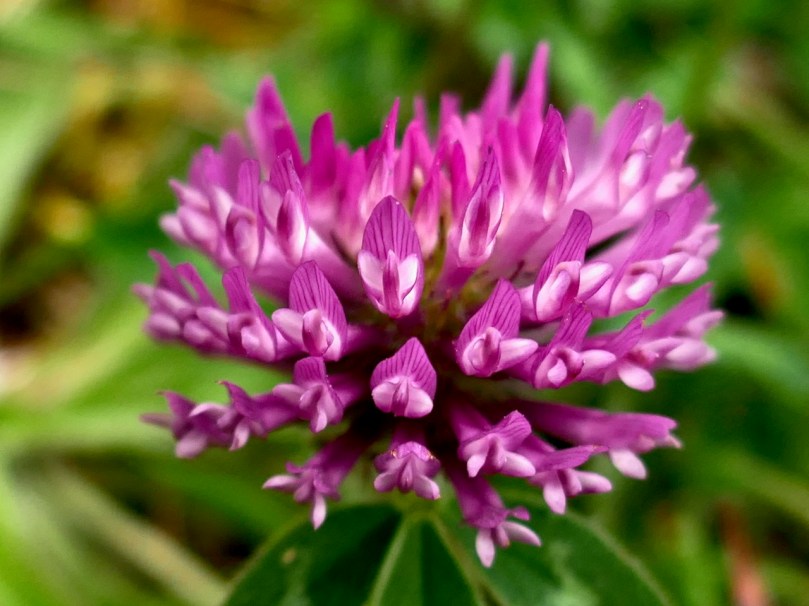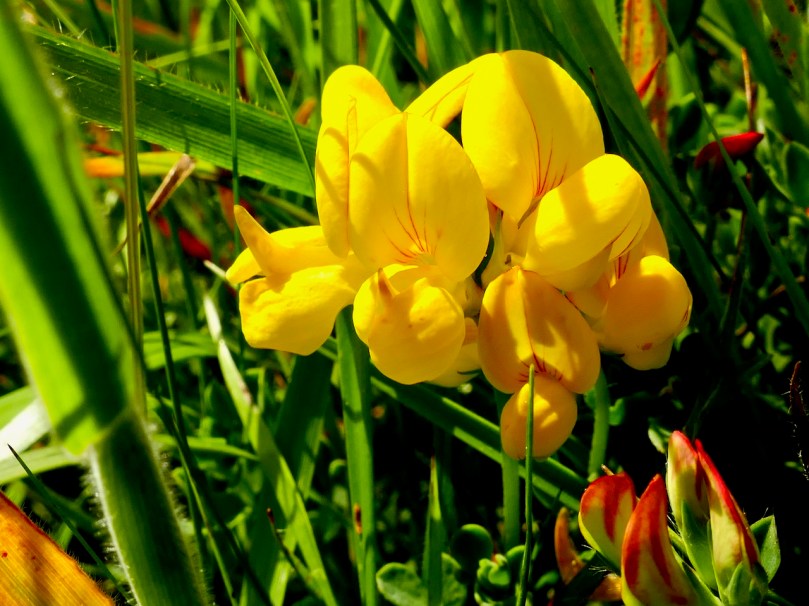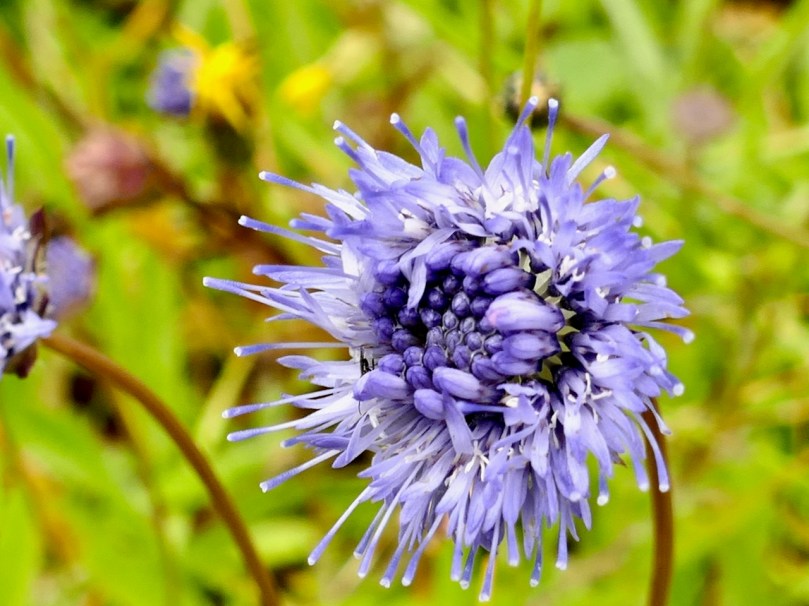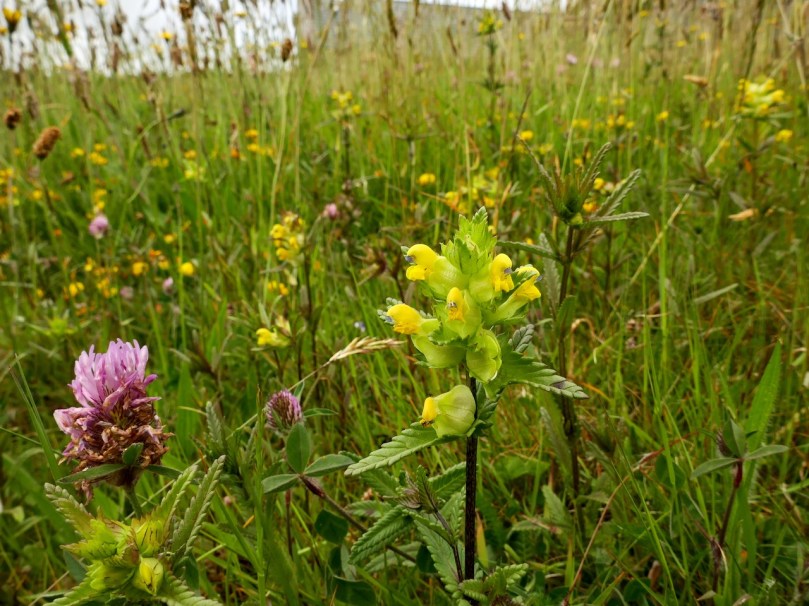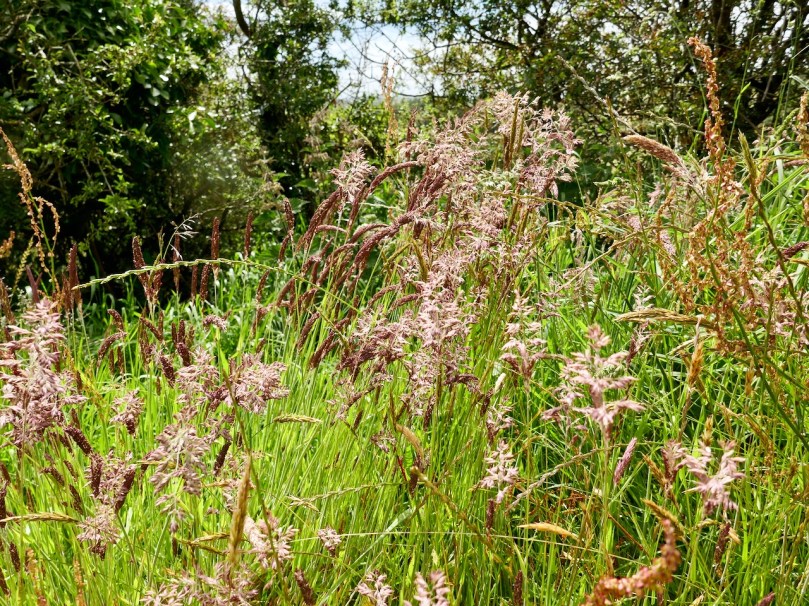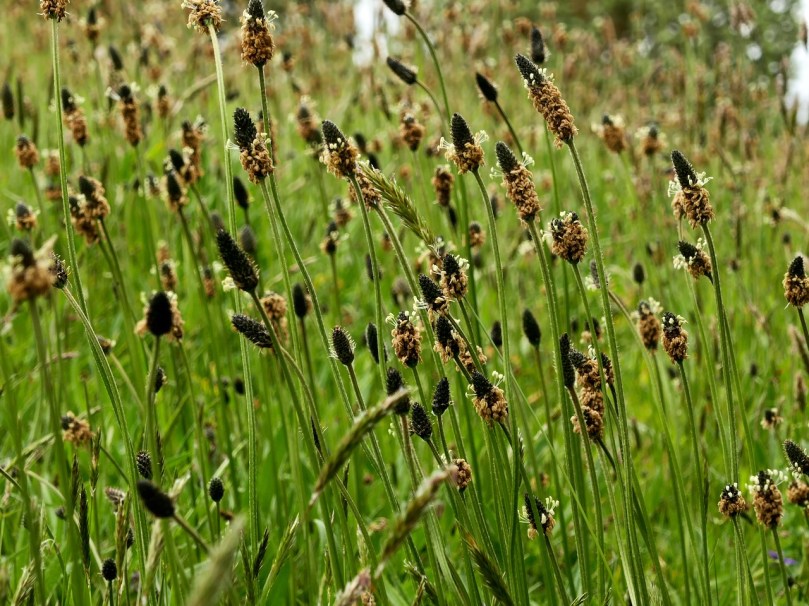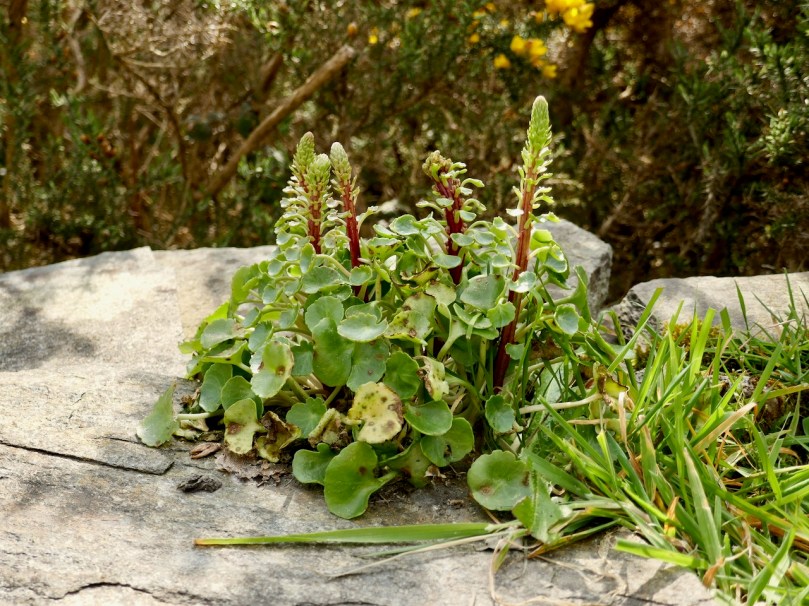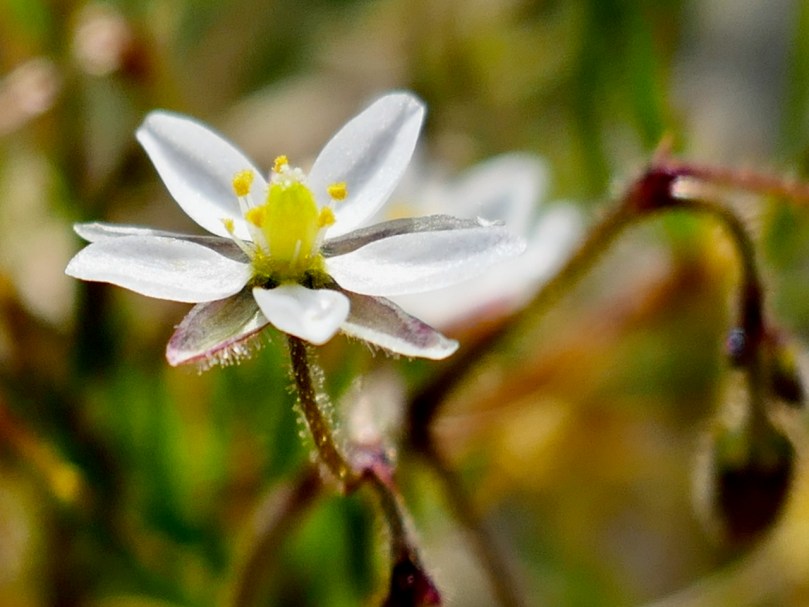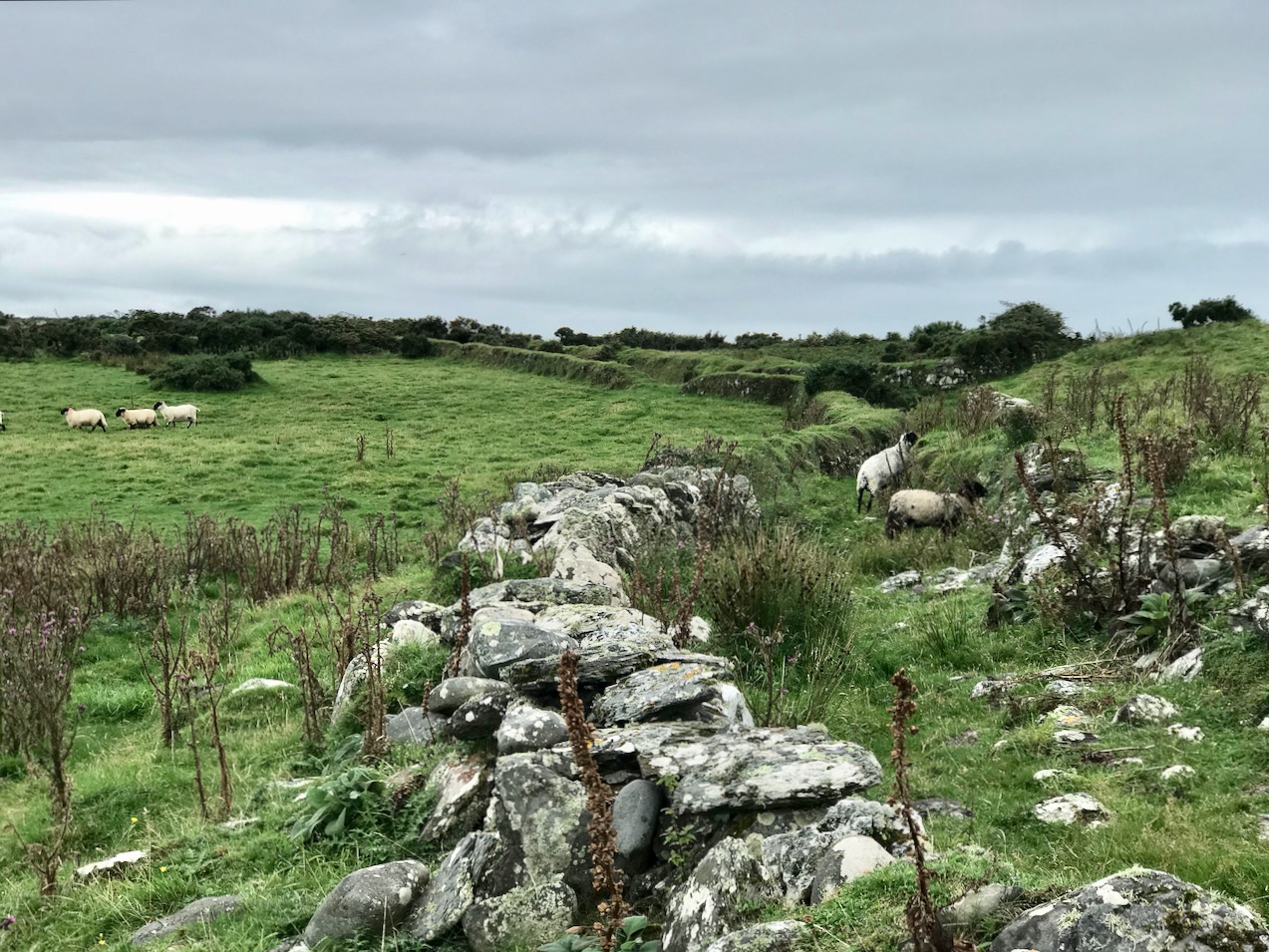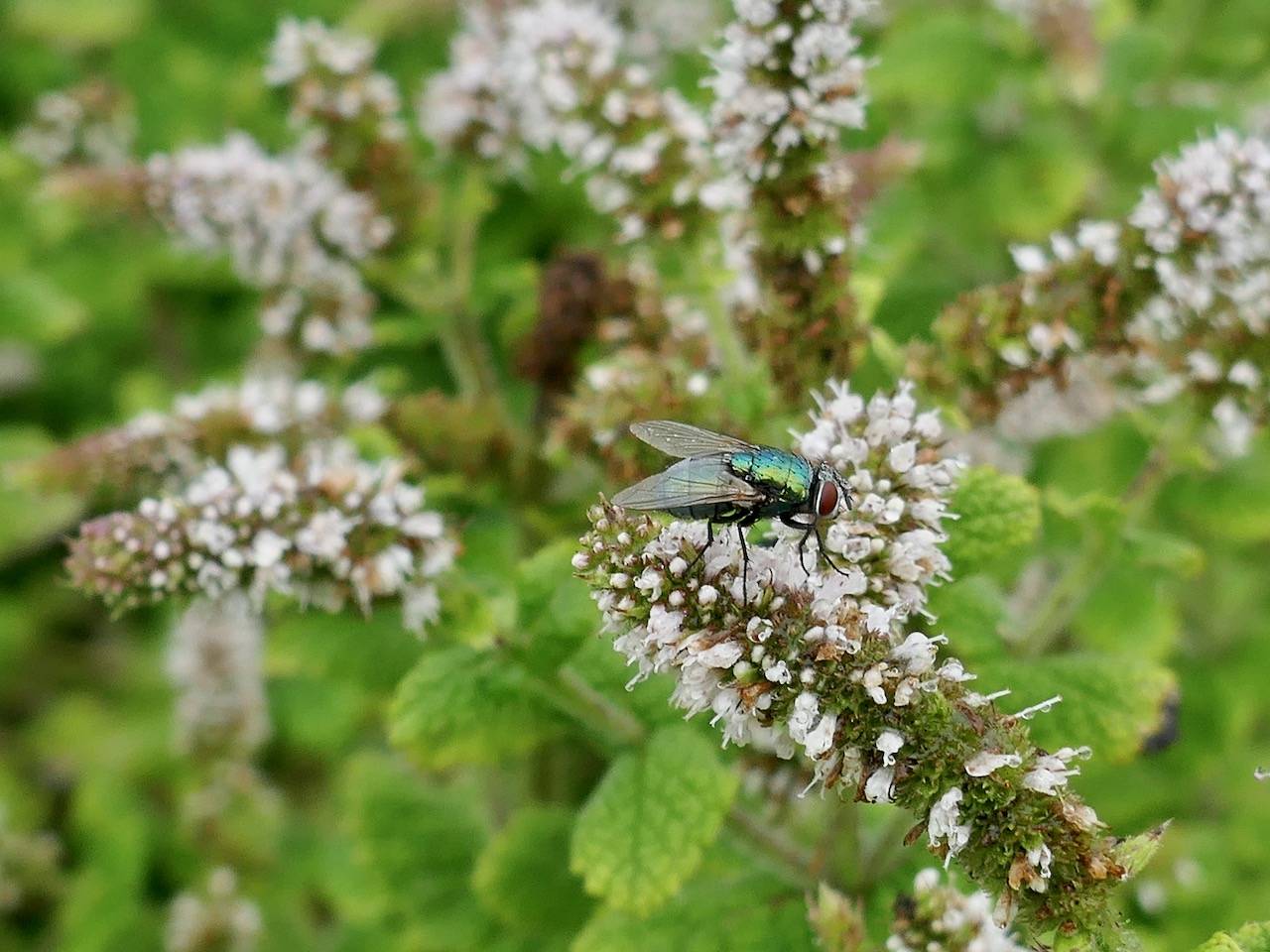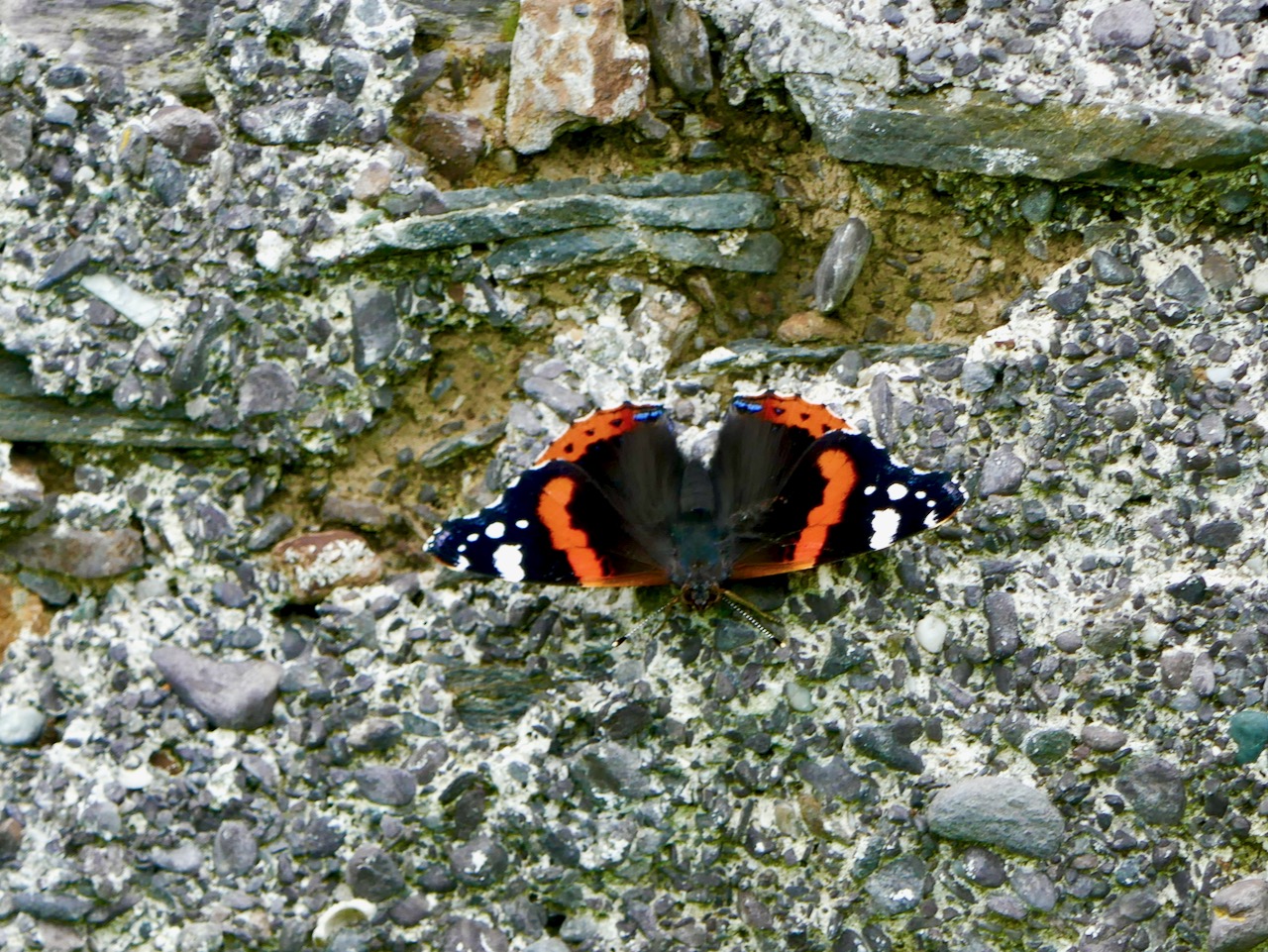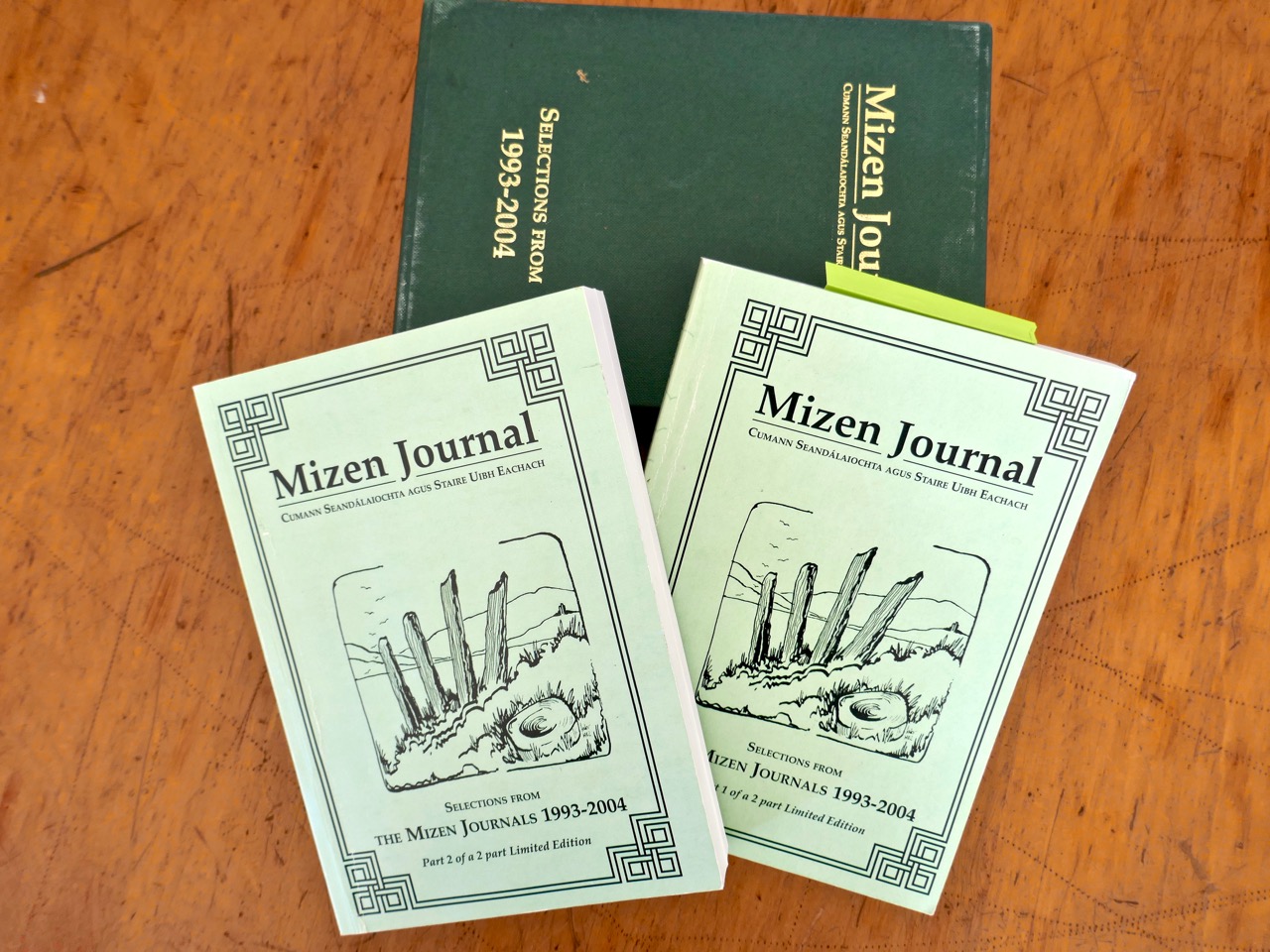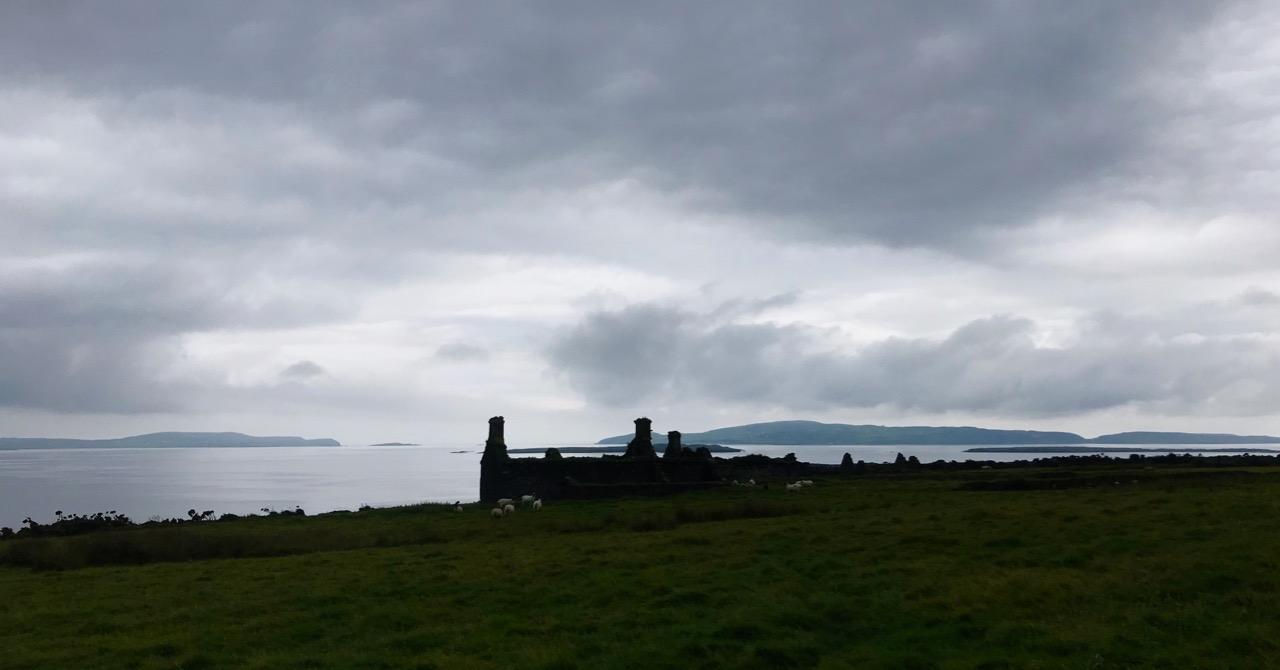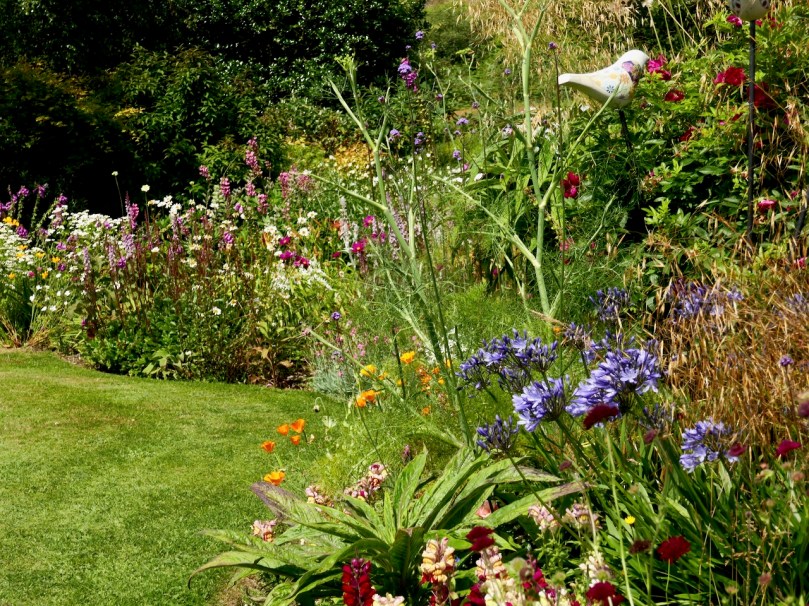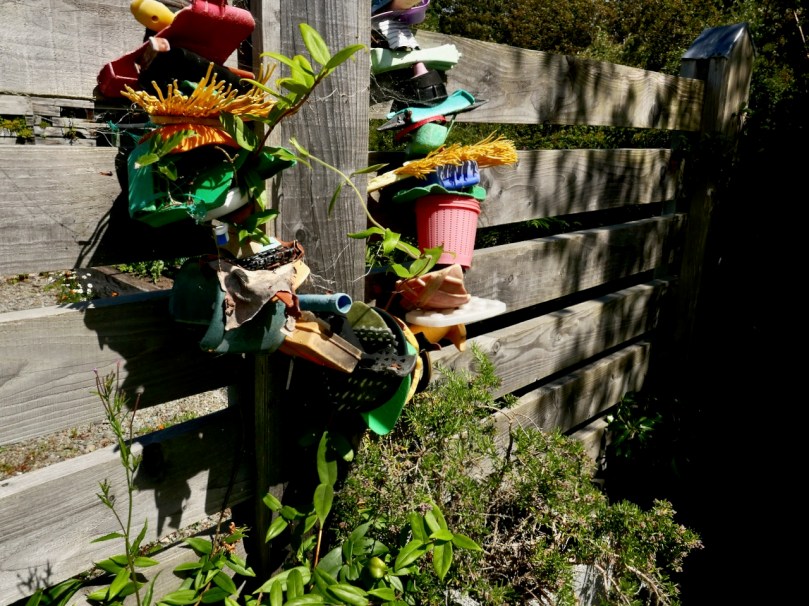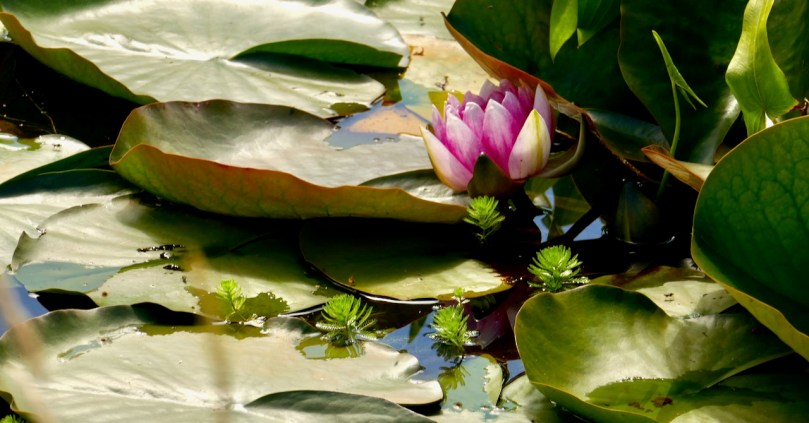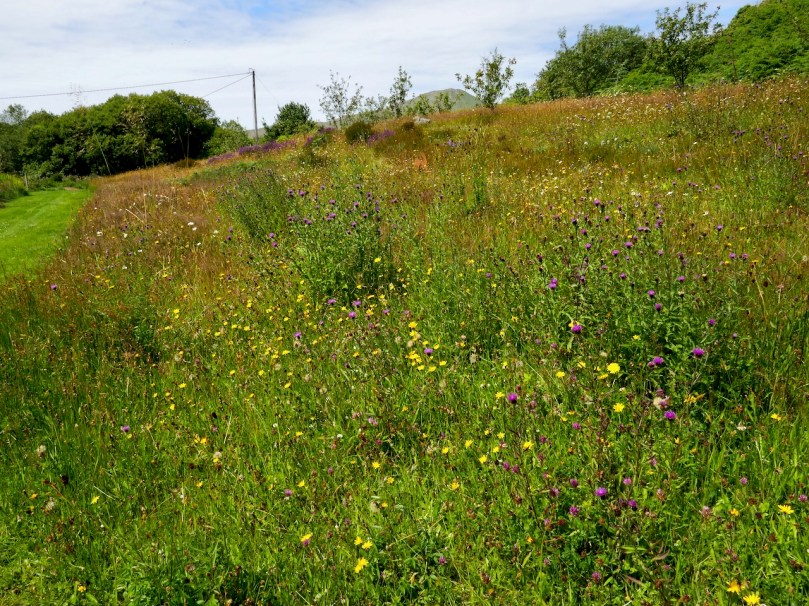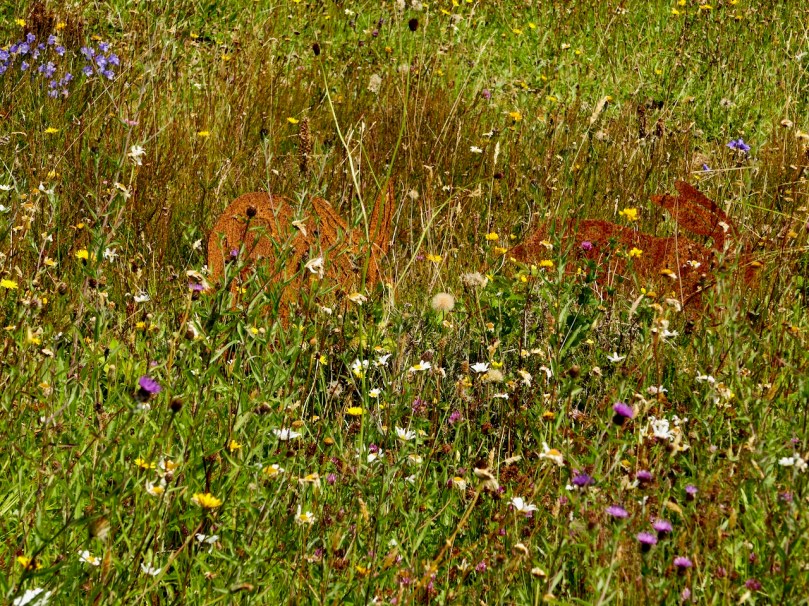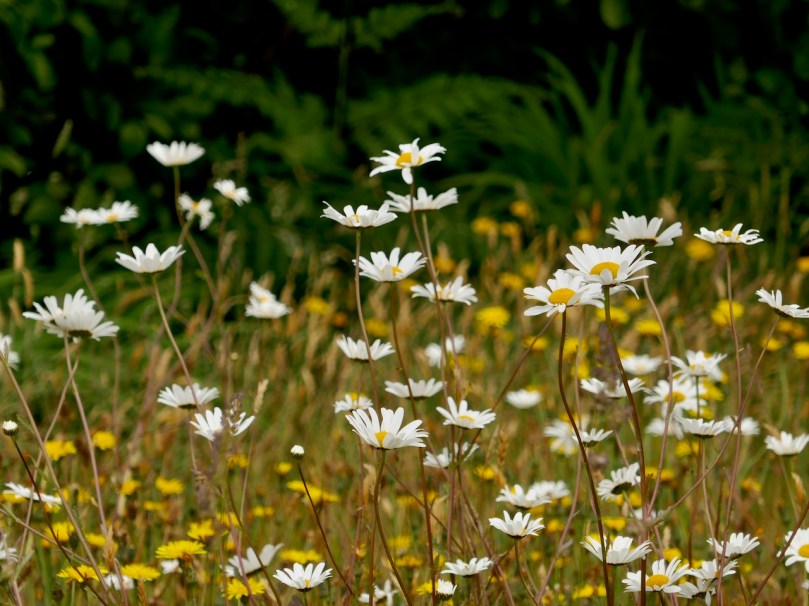
Enjoy this slideshow – every one of these flowers is native to West Cork.
Music by Enya, Shepherd Moons
Enjoy this slideshow – every one of these flowers is native to West Cork.
Music by Enya, Shepherd Moons
As West Cork slowly opens up again, we welcomed the news that the Heron Gallery in Ahakista was once again serving food in its wonderful garden setting. The only excuse we needed to head over to the Sheep’s Head!
This garden is one of those on the West Cork Garden Trail and most of them are opening now, late this year, of course. According to Trail President, Jean Perry, Like many of us, garden owners have had lots of time on their hands this year and the outcome is that gardens of the West Cork Garden Trail are to an exceptional standard and have never looked better!
I can vouch for the truth of this as regards the Heron Gallery. There is nothing more delightful than to linger over one of their delicious lunches, or just a latte and cake, seated outside by the pond, and then to wander through the garden.
Annabel and Klaus have been working on this garden for about fifteen years. It was just a field when they took it over – that’s hard to imagine now. For Annabel, it is a haven and an inspiration. Take a look at her website and especially at her blog where she writes about the nature all around her and her latest projects.
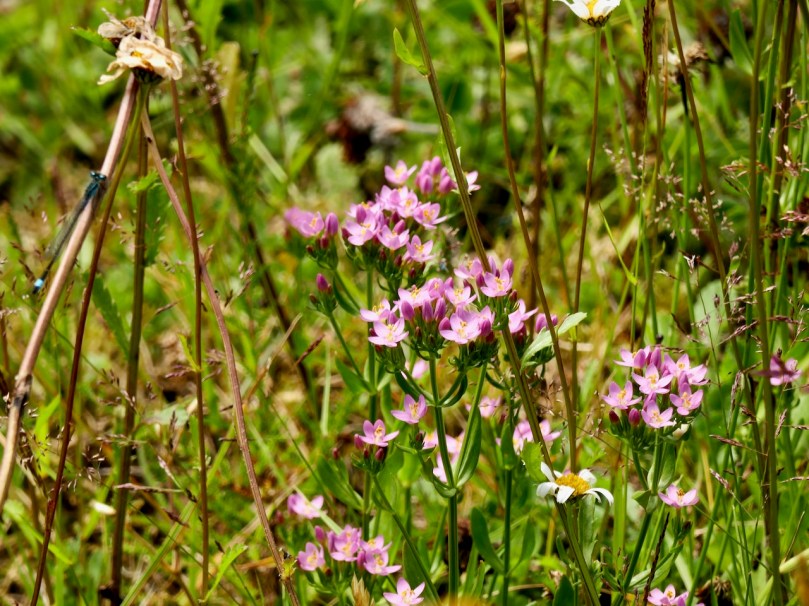
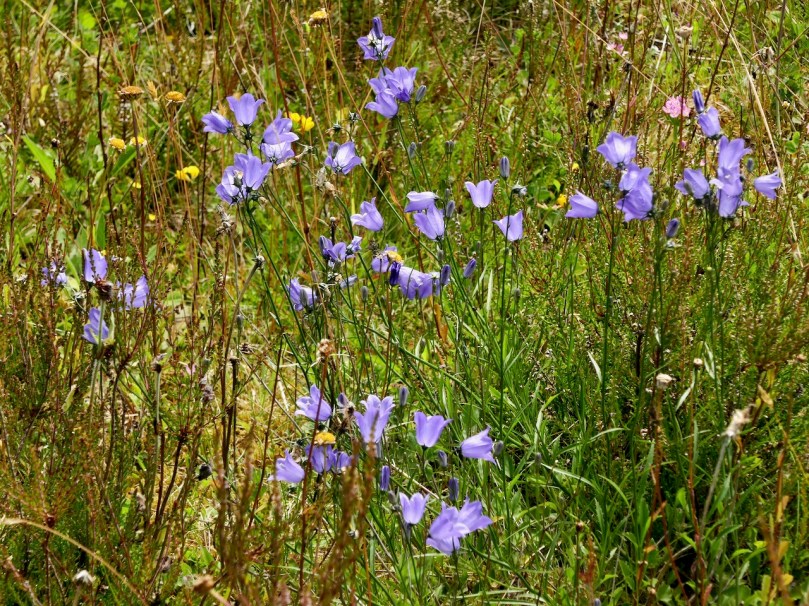
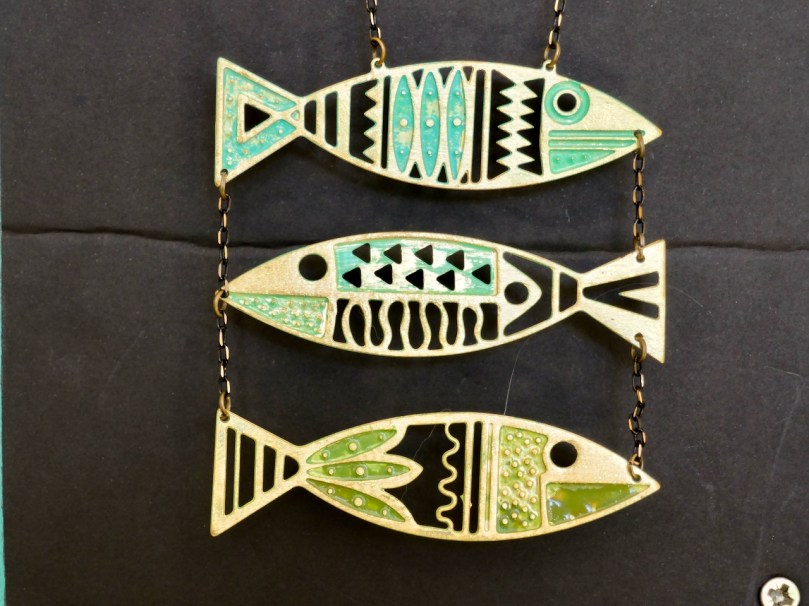
The garden is a paean of praise to both the natural and the cultivated. The traditional herbaceous borders are at their most colourful right now and feature clever little inserts of sculptures and objects of metal, pottery and wood.
Wander through the more formal garden and you come to the wildflower meadow – all native plants, most of which have simply volunteered, although Annabel has also carefully introduced harebells and local orchids. I spent most of my time here, observing the mix of flowers and grasses.
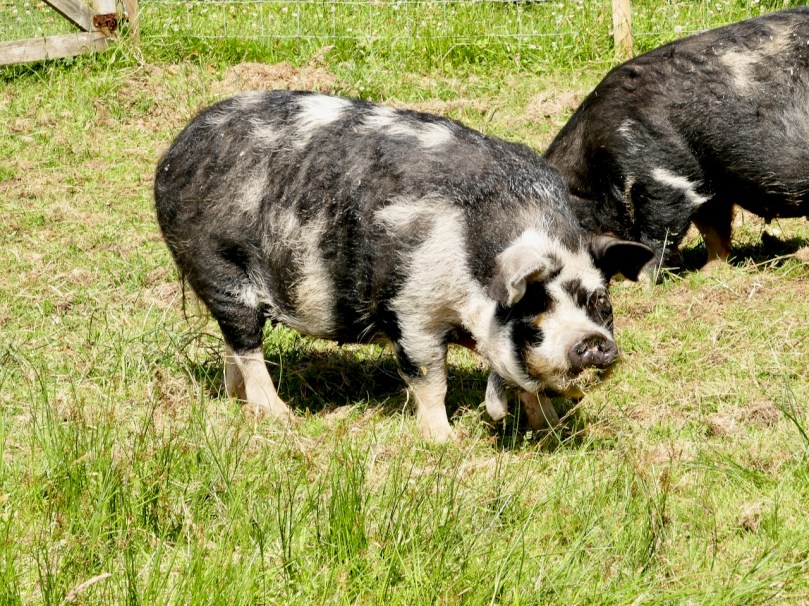
By the time we left the cafe was busy with lunch service. This is a garden that adults and kids both love. The piggies are a universal favourite, but sharp little eyes will discover many hidden delights.
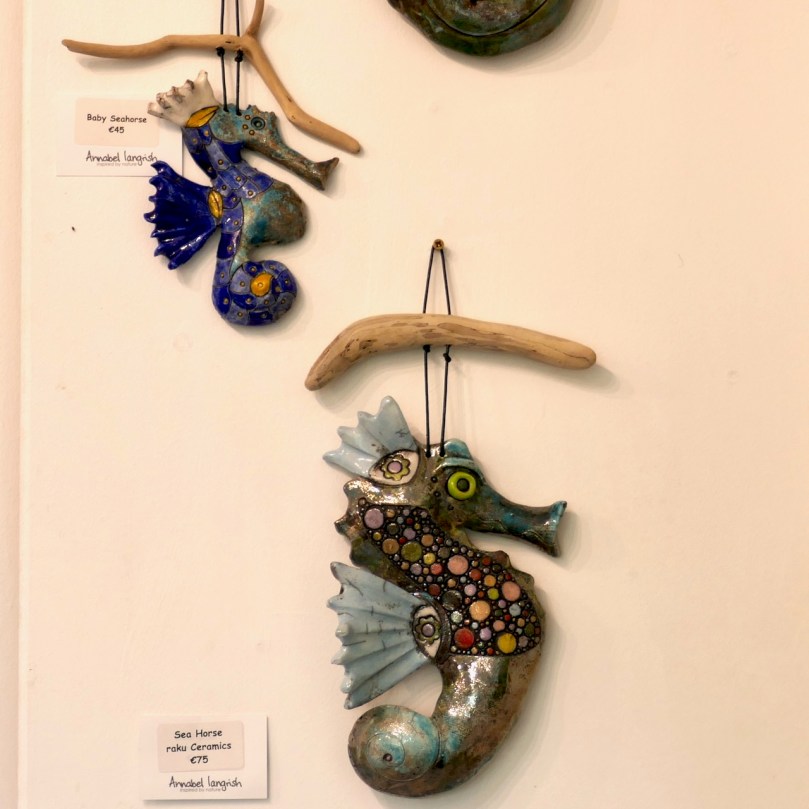
The gallery is devoted to Annabel’s art. She works in a staggering variety of media and sells her paintings and products all over Ireland, as well as in her own galleries, here and in Kenmare.
Many thanks to Annabel Langrish and her team for creating this spectacular little oasis on the Sheep’s Head. It was just what we needed this week and we look forward to more visits over the summer.
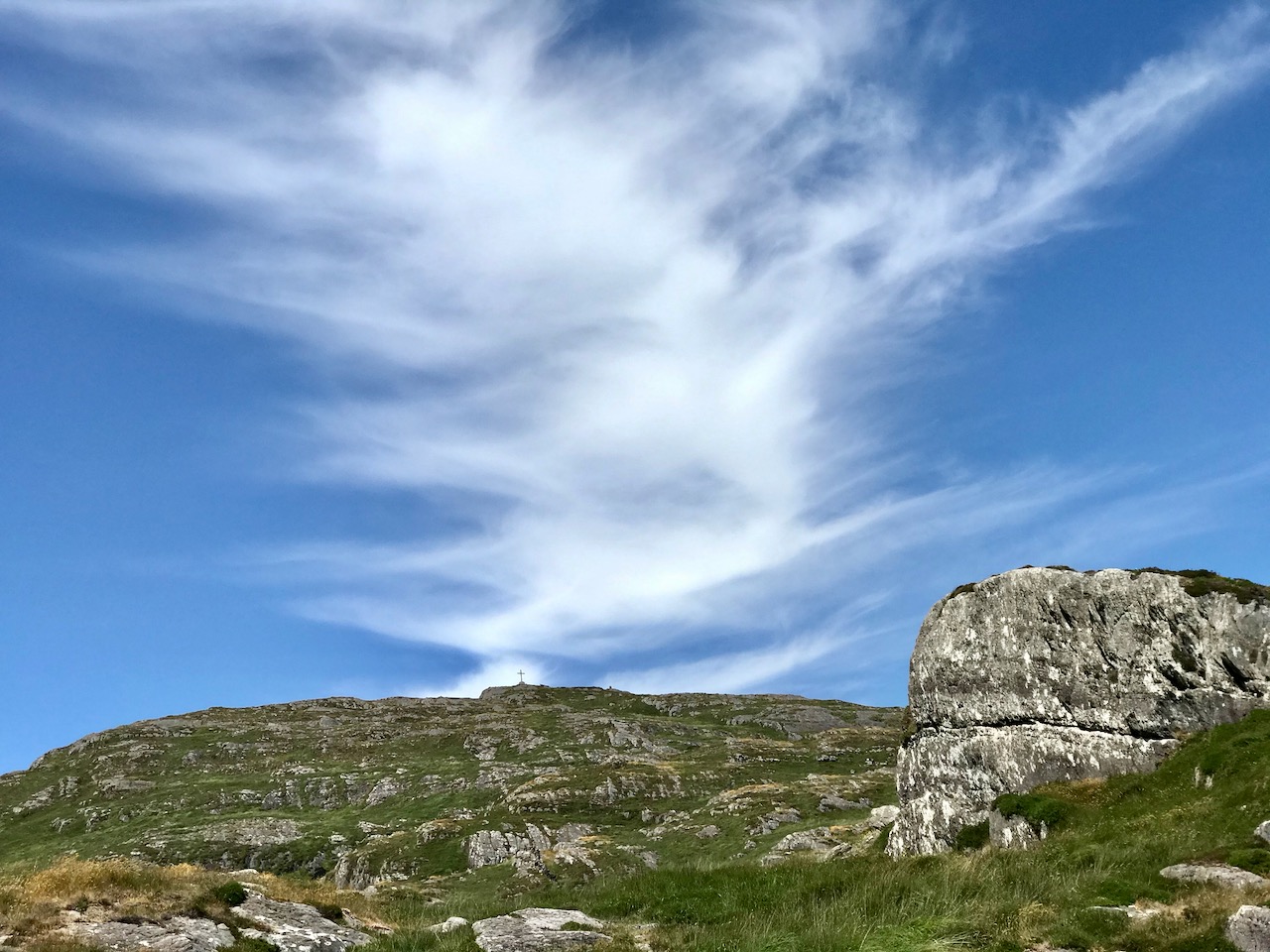
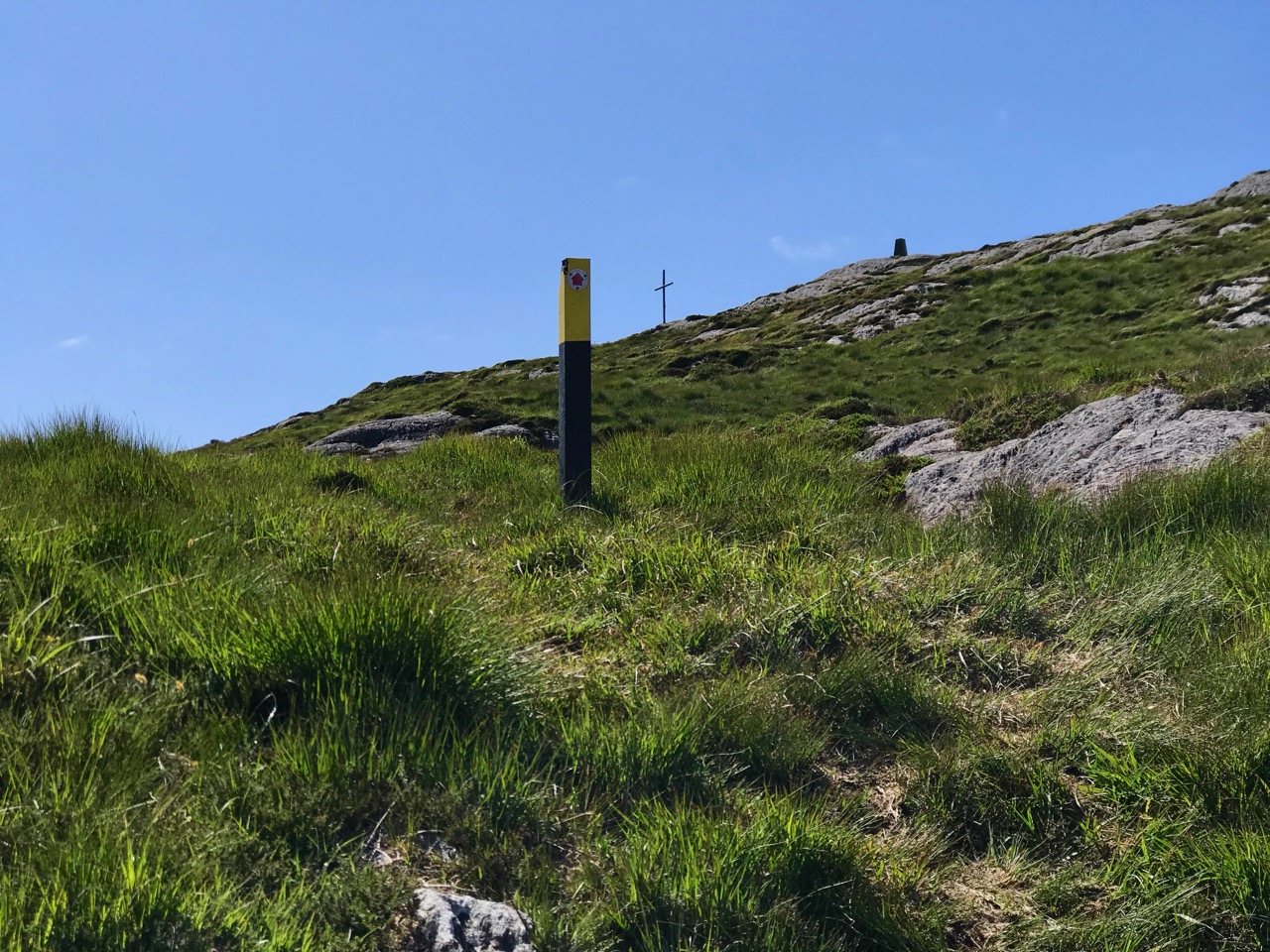
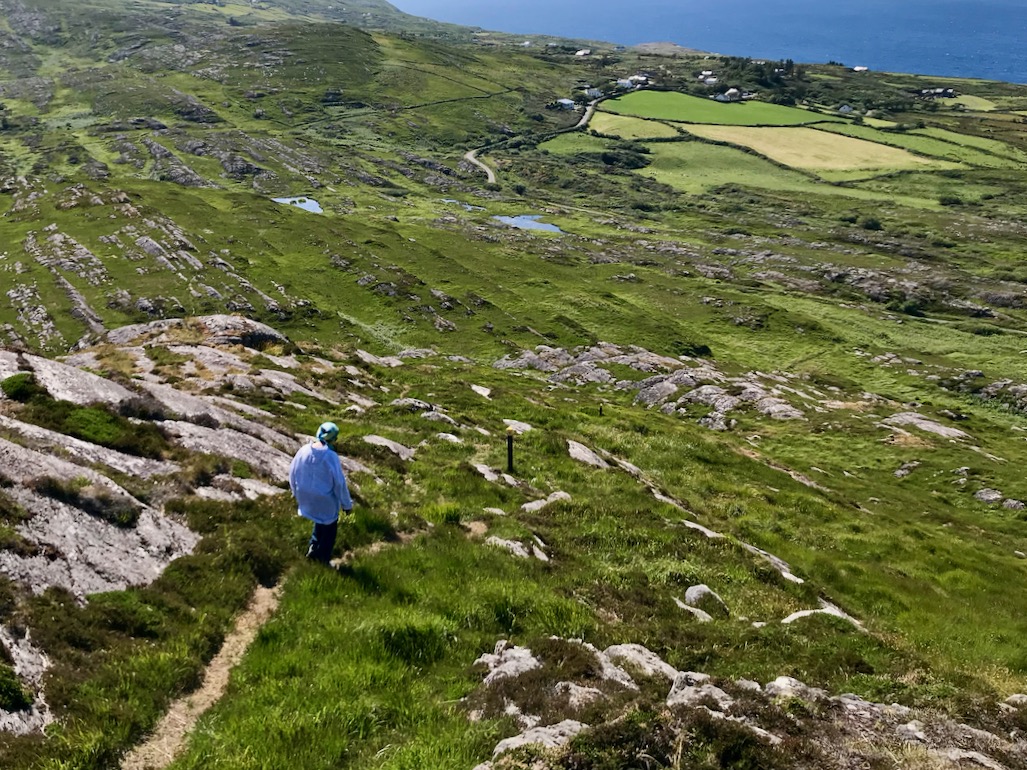
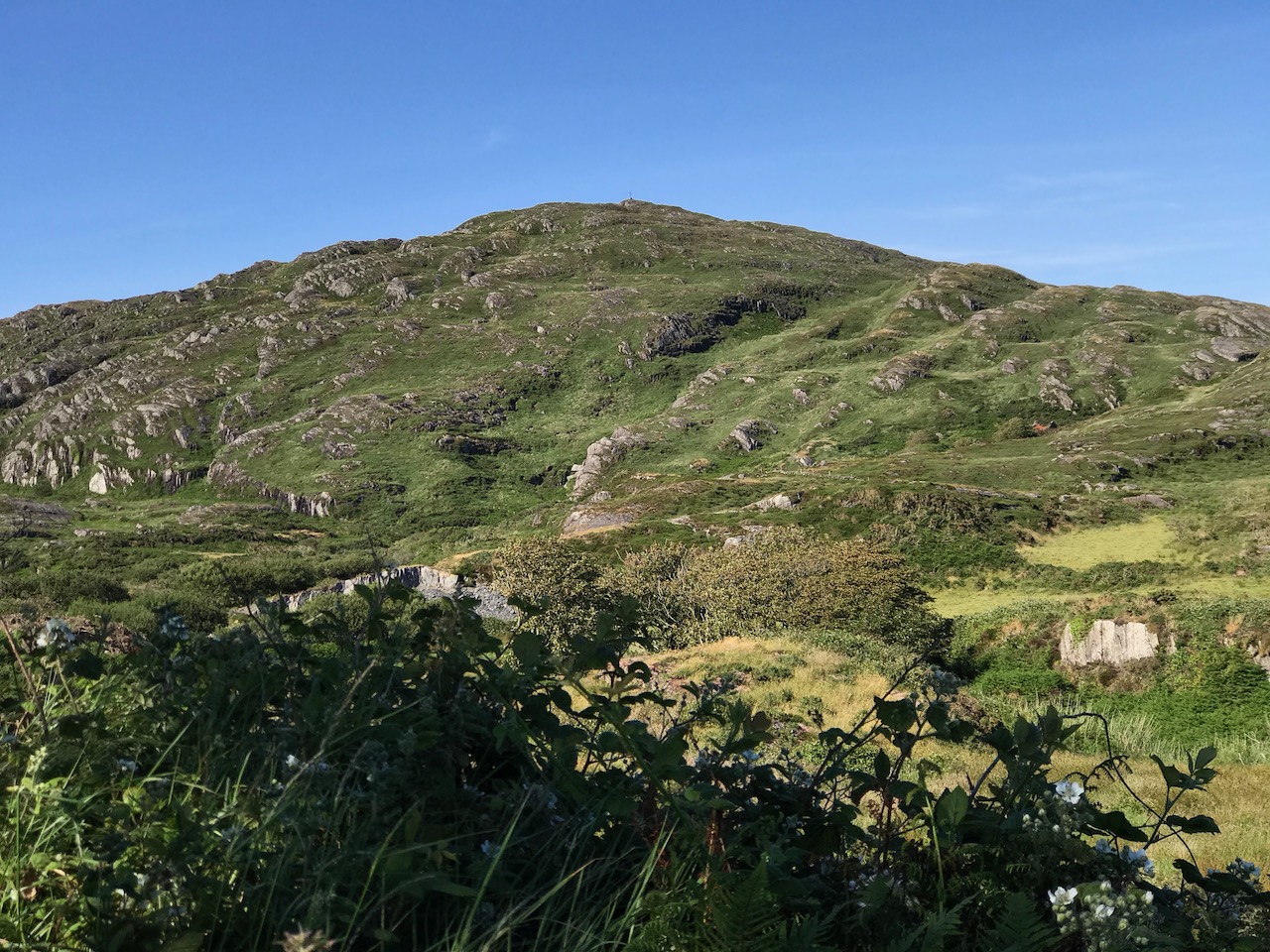
Perhaps one of the most satisfying mountains on the Mizen, the 237m high Knockaphuca provides a well maintained waymarked trail best tackled as it is laid out – in a counter clockwise direction. You will go up the east side and down the steep west face. If you are lucky with the weather, as we were just before the longest day, you will have an experience which is hard to rival in this corner of Ireland. The loop walk is one of the latest sections of the Fastnet Trails which have been established to the west of Schull during 2019. All credit is due to the team which has so successfully organised and laid out these trails: this has involved much behind-the-scenes hard work.
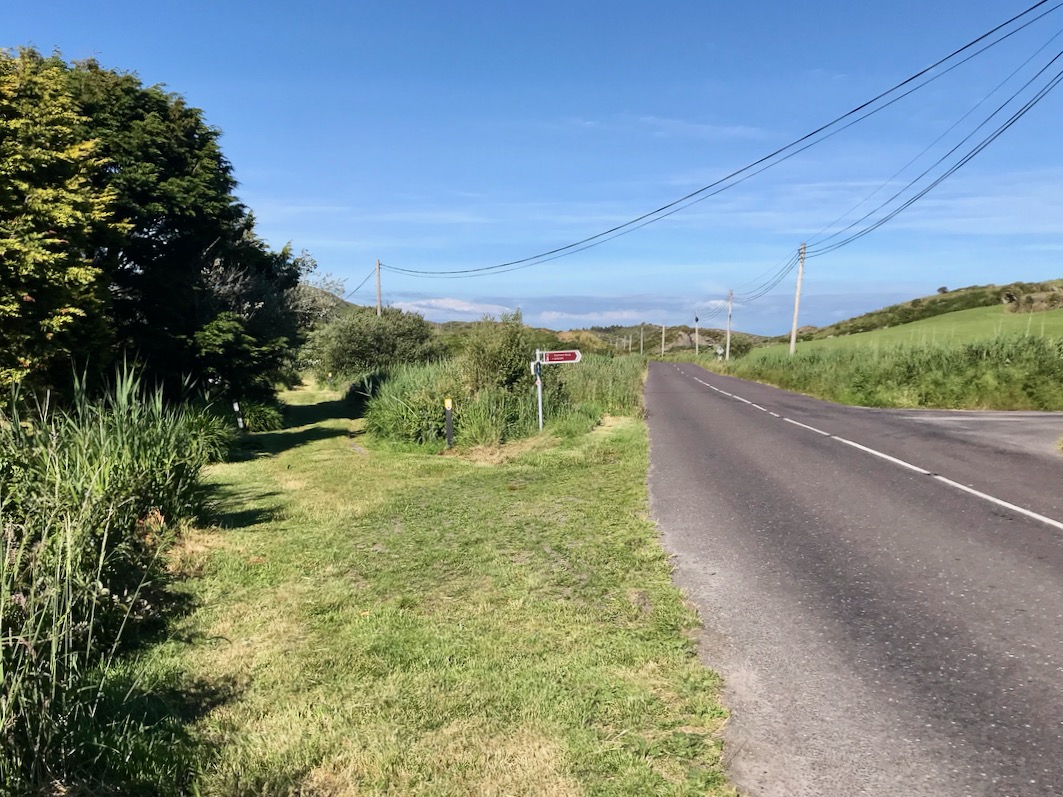
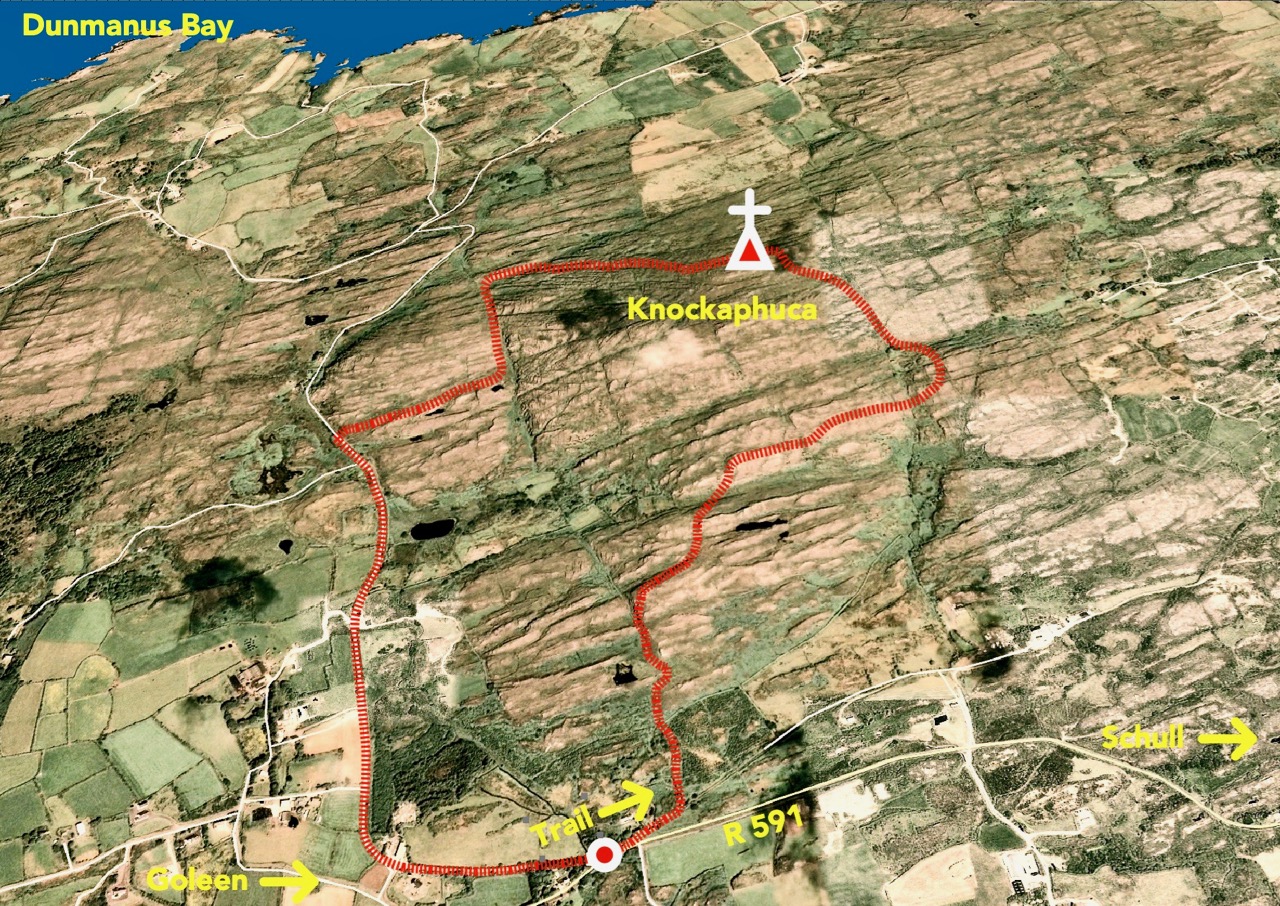
In fact the full Knockaphucka Loop trail starts in Goleen, and is 10km long. We joined it as it leaves the R591 road north of the village (upper picture – the route goes off to the left). The map above has the mountain section (which we followed) superimposed on the Google Earth contour information. The section we walked is 6.6km long, and climbs about 200 metres.
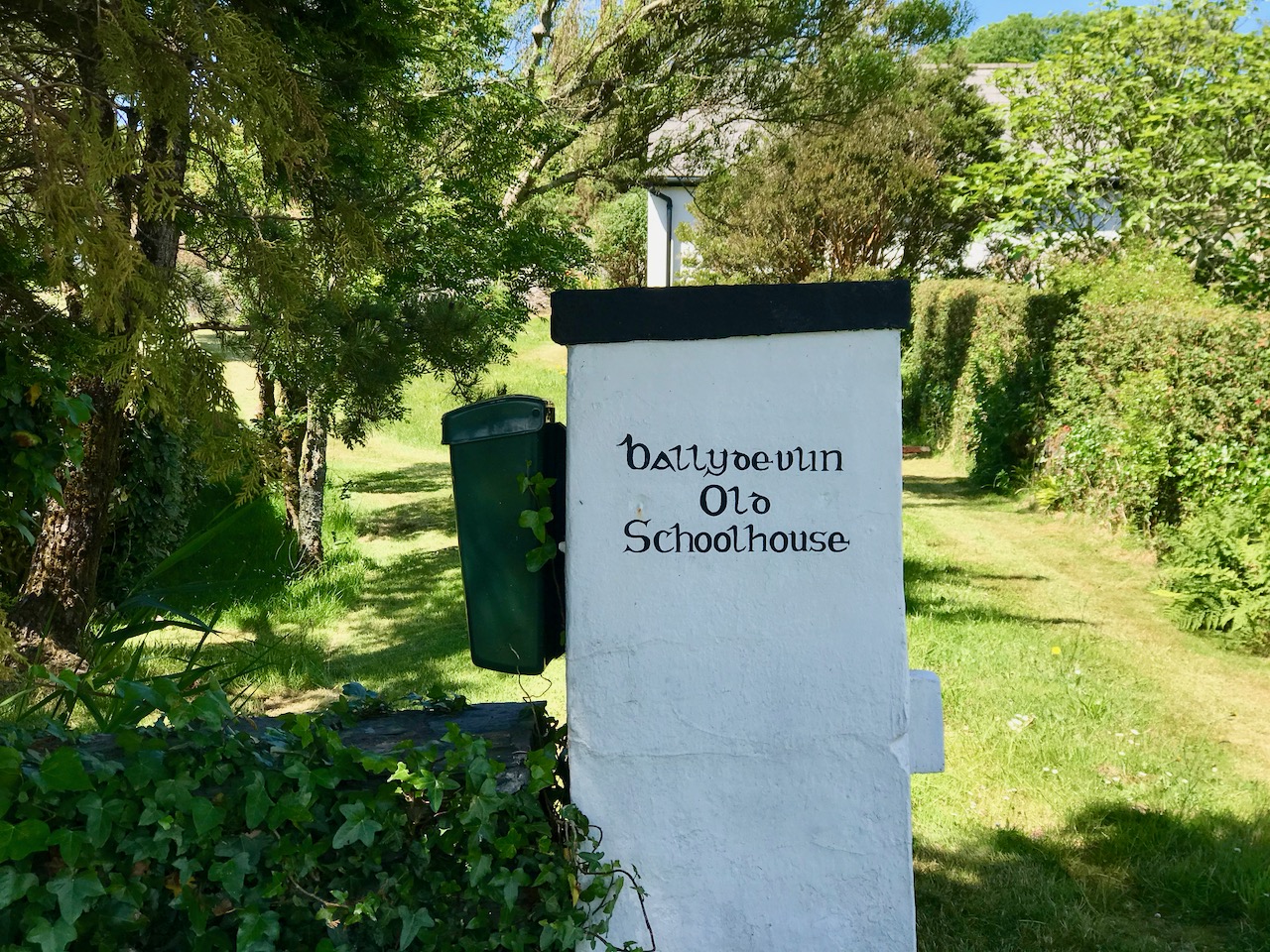
One of the first landmarks on the way is right at the point where the marked track to the mountain leaves the main road: Ballydevlin Old School House (above). There is another ‘Ballydevlin Old School’ nearer to Goleen; presumably one was the National School (established c1831) and the other may have been a denominational Church of Ireland school. This peculiar Irish duality still exists today in many places.
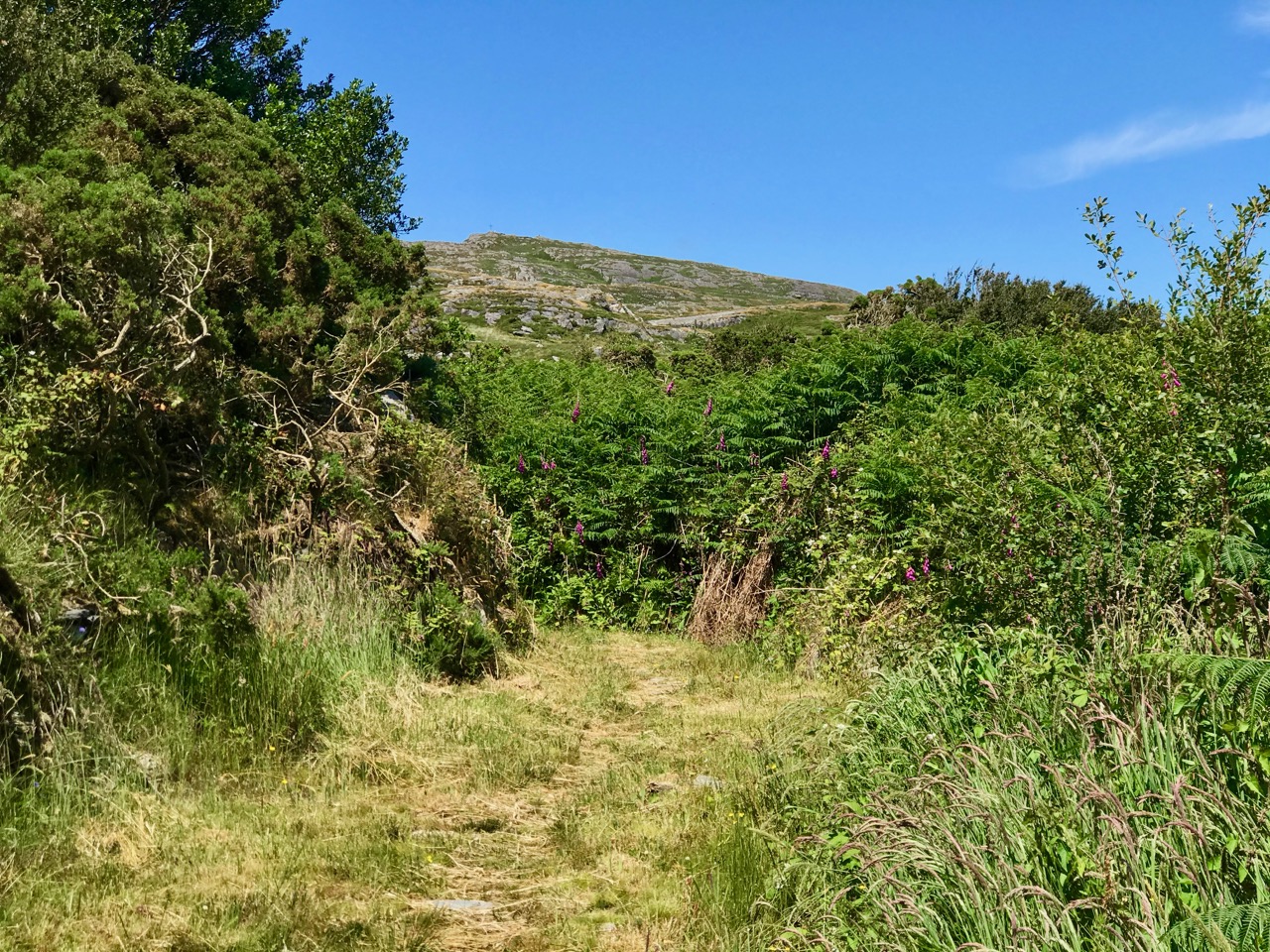
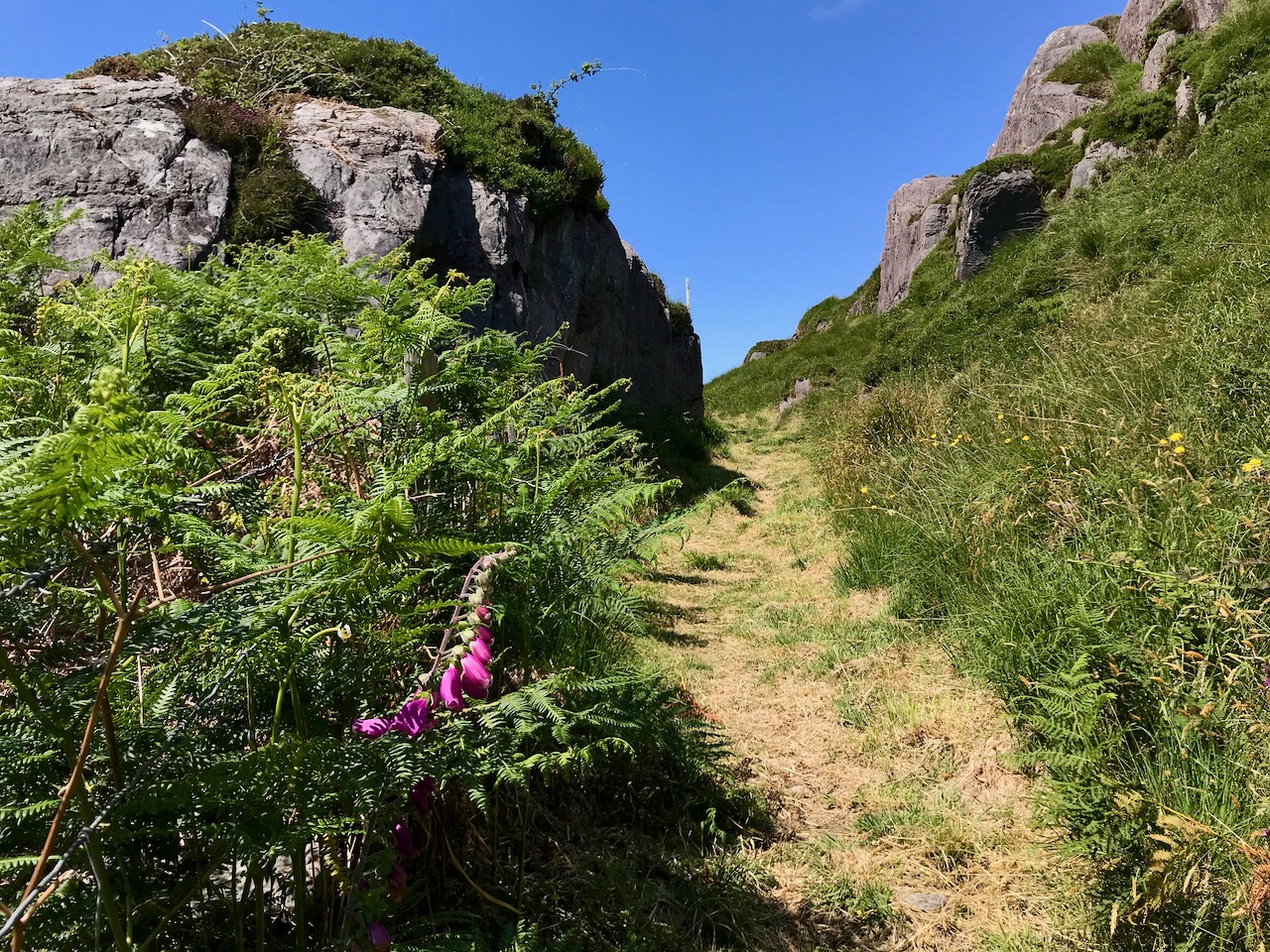
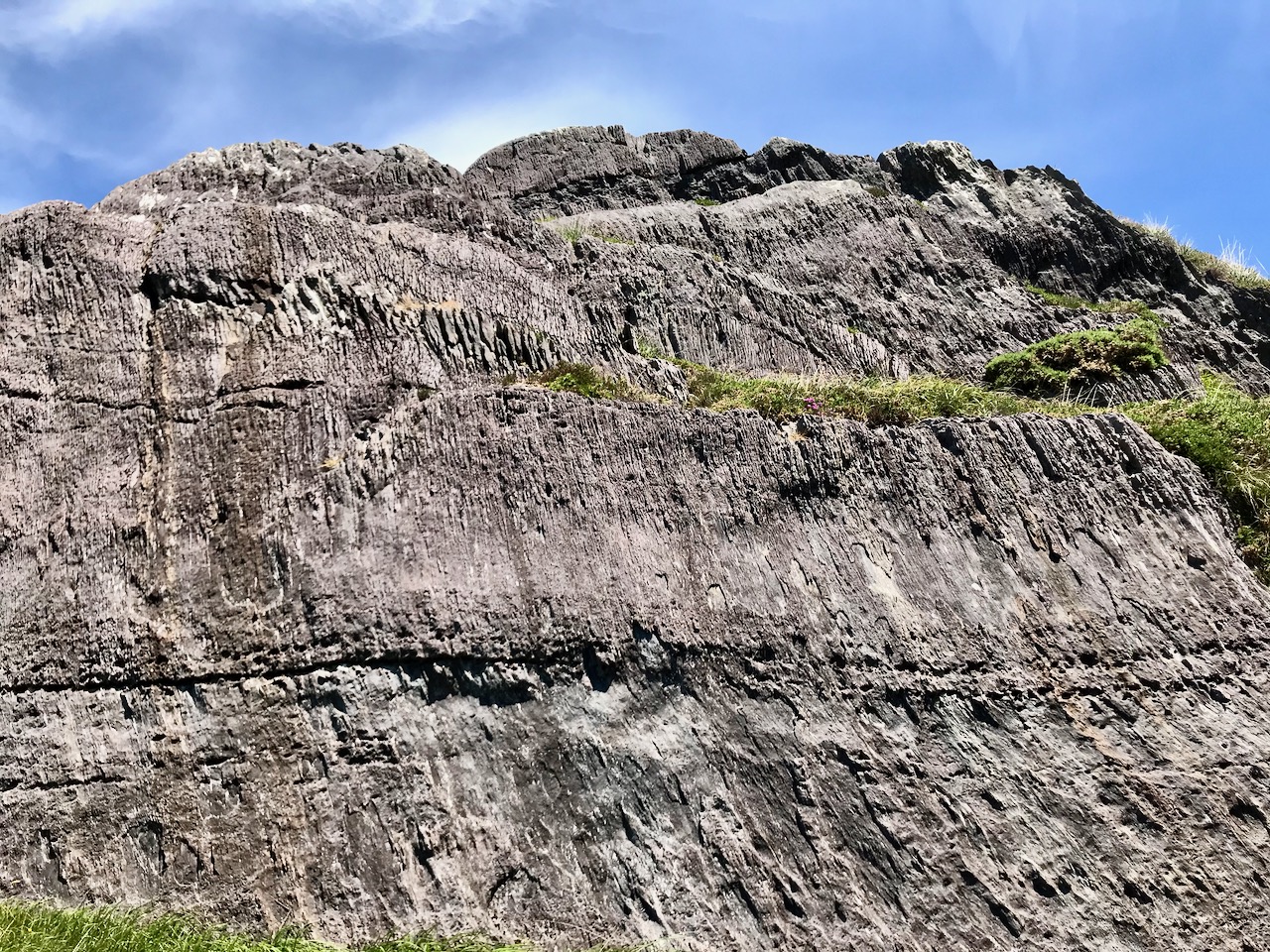
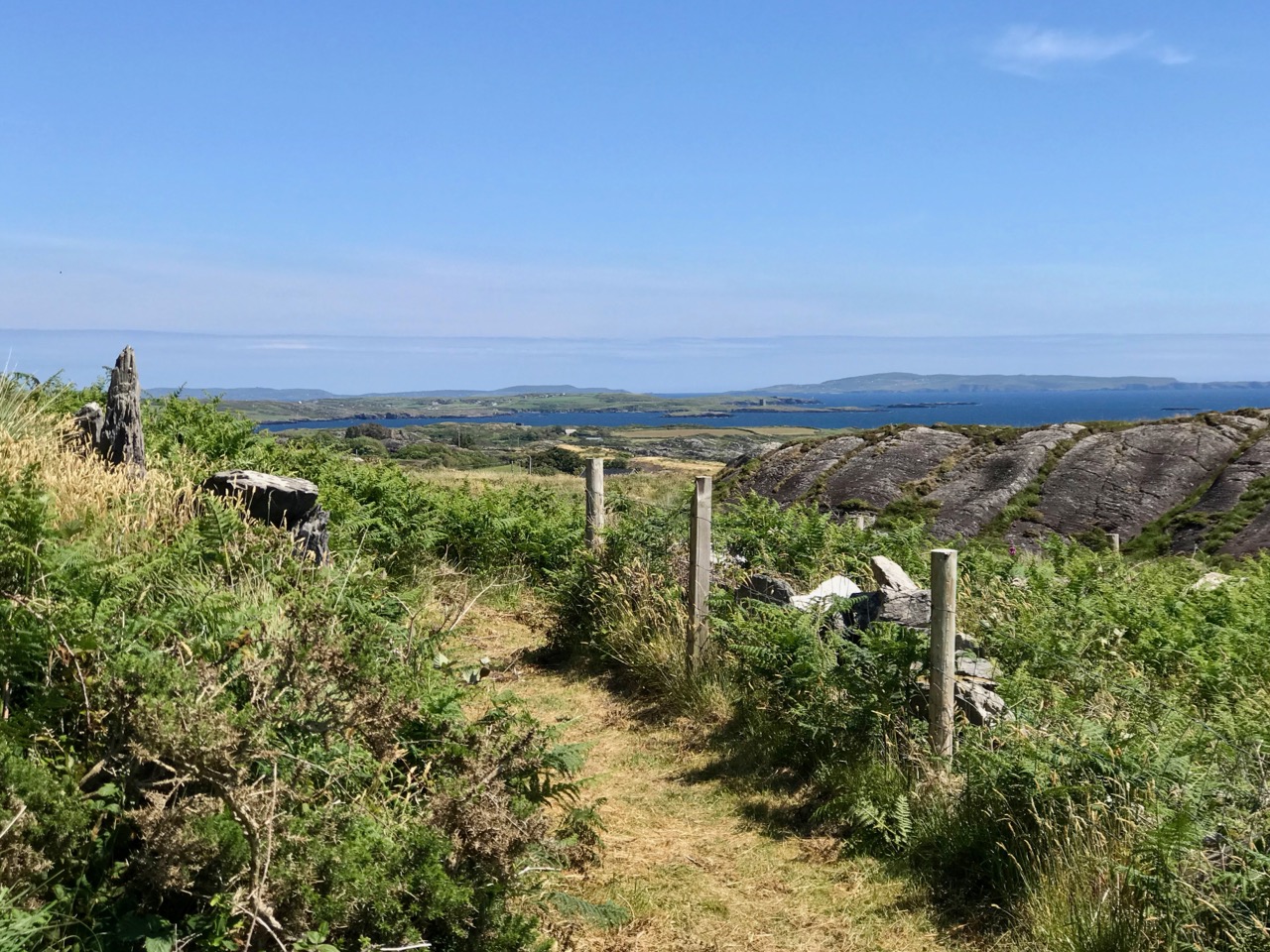
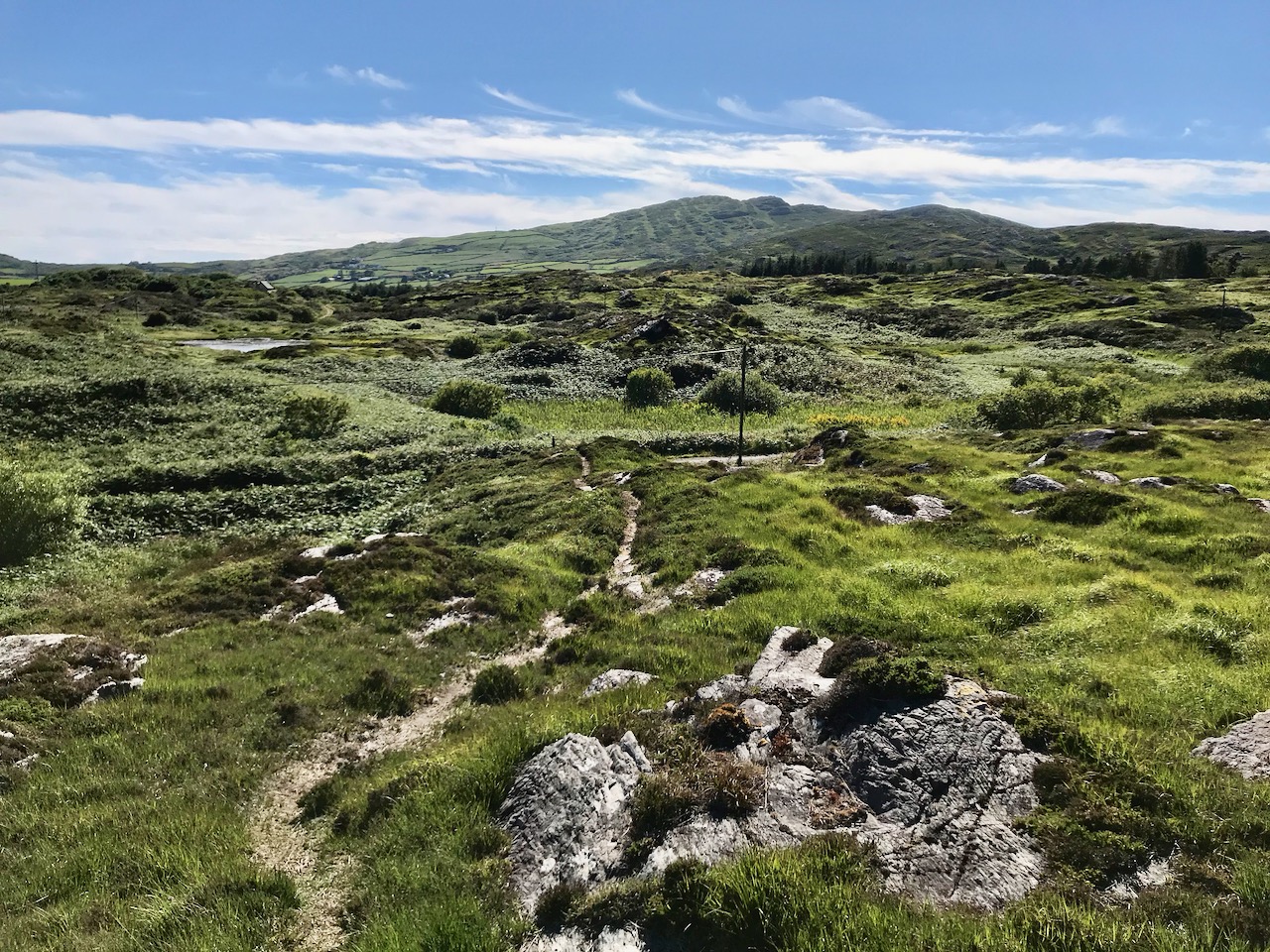
Once on the marked track you are in a paradise! An ancient green road takes you part-way up the mountain, passing through small gorges which must have been cut out long ago: even if you are not a geologist you can’t help being impressed by the rock formations – they could be works of art.
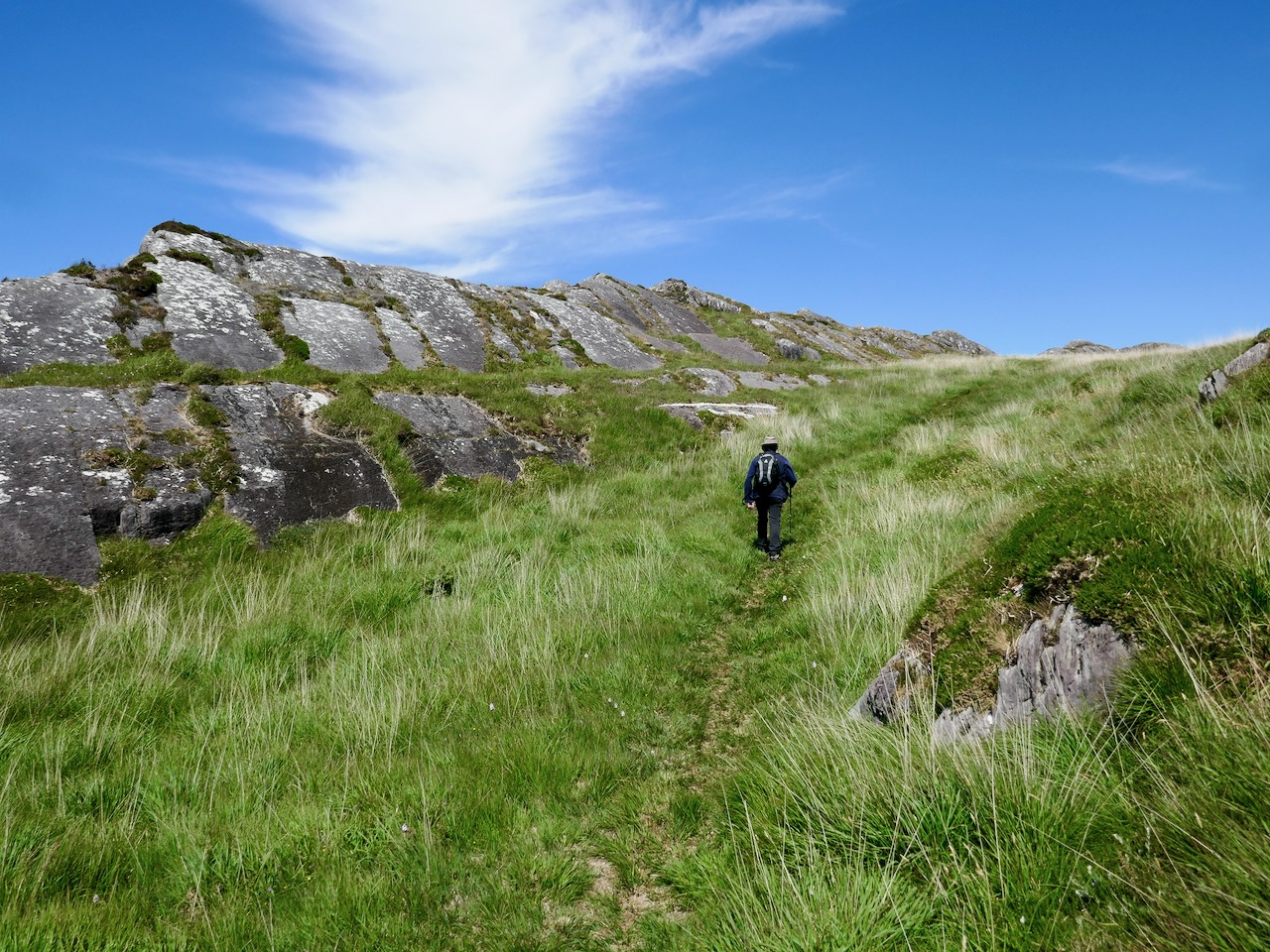
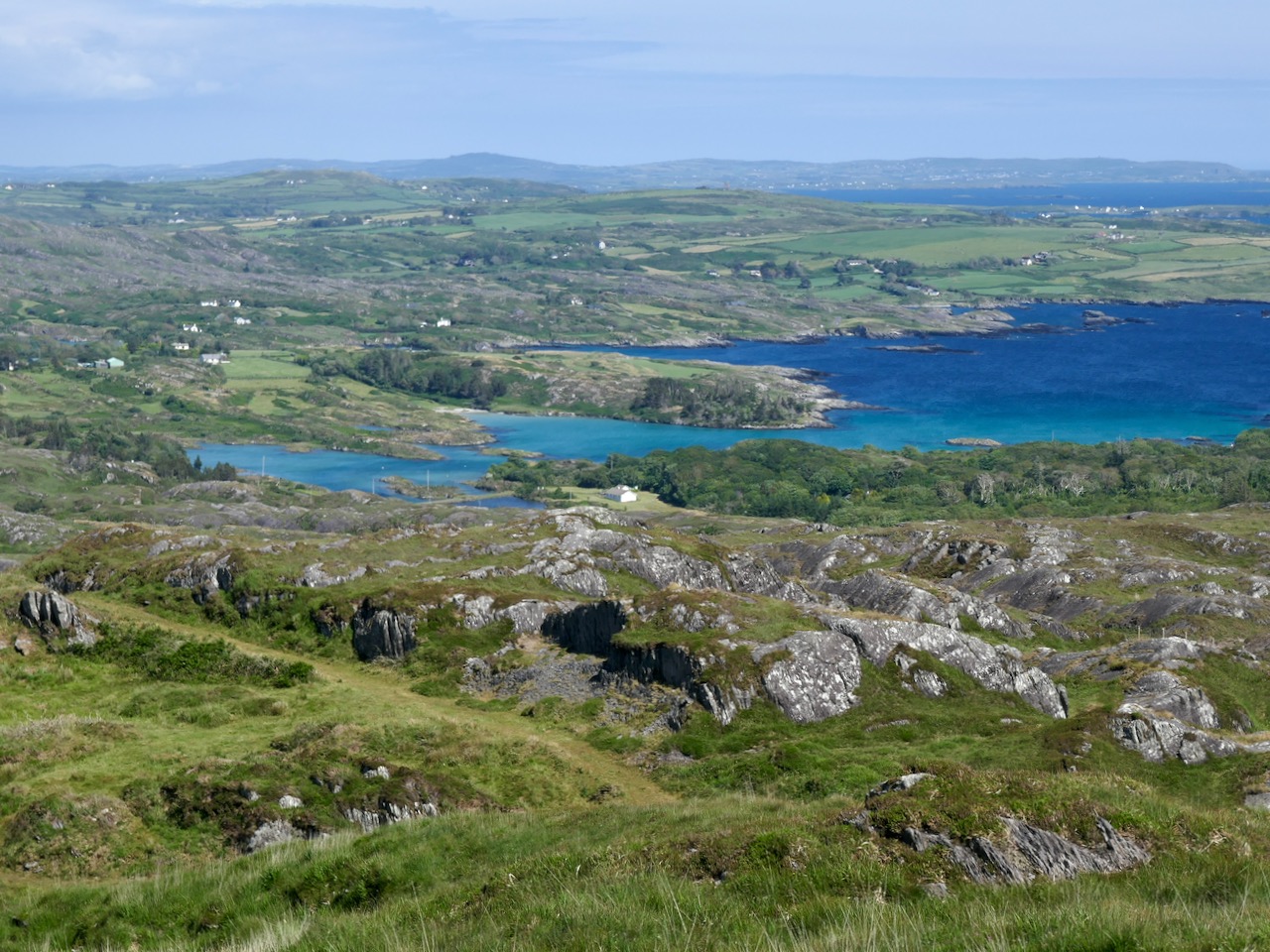
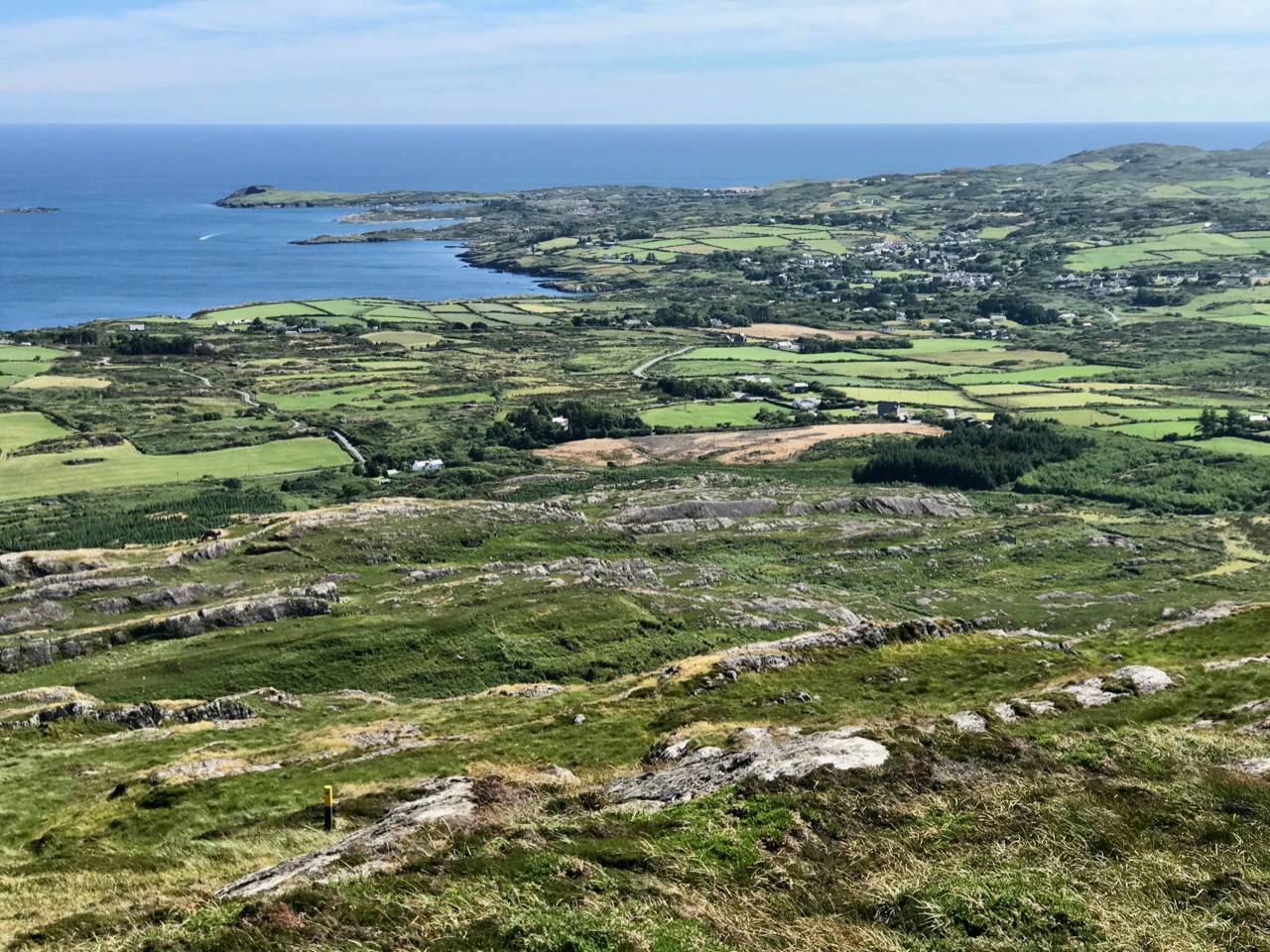
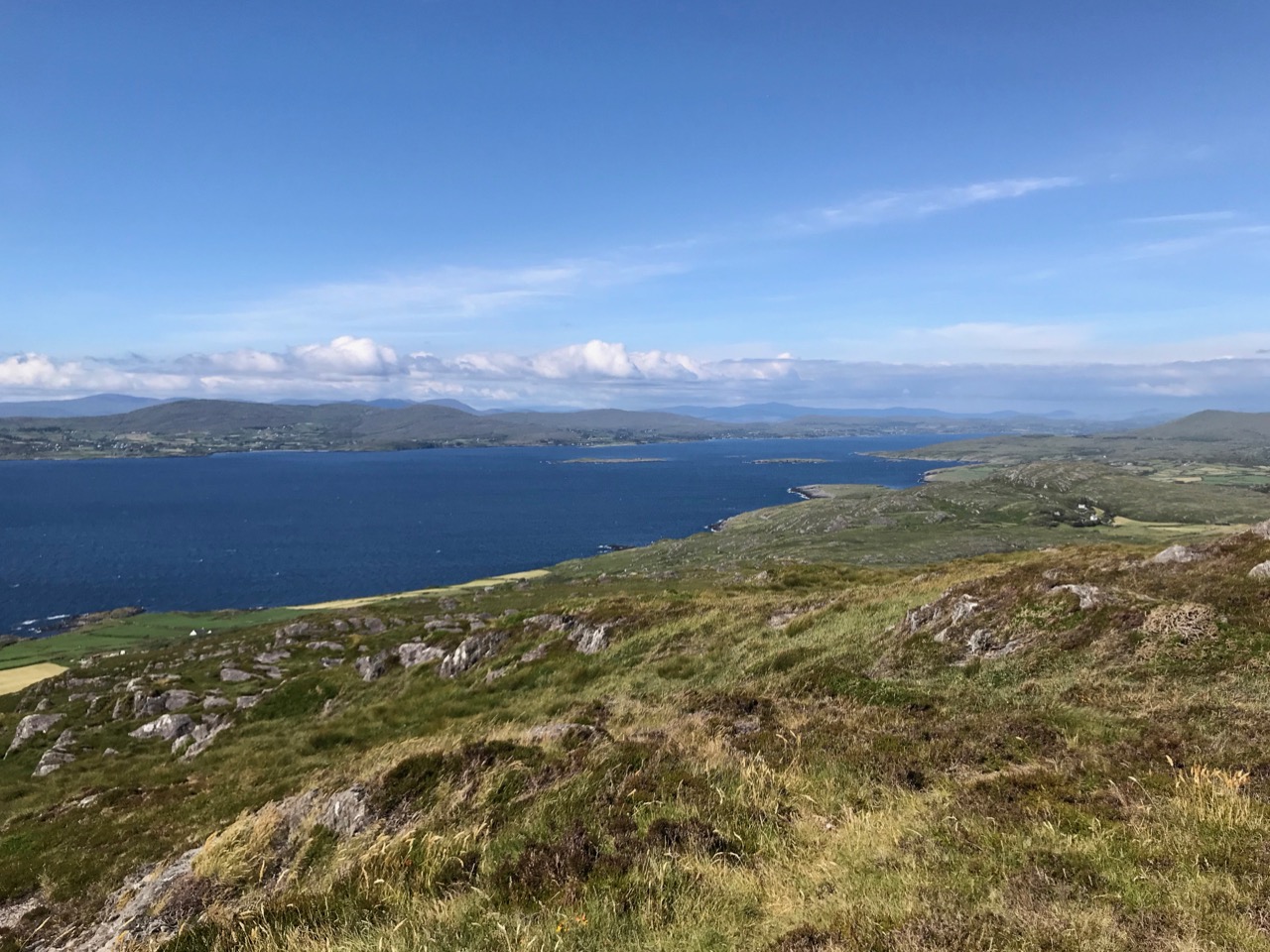
After a while the path turns to the east and follows narrow, grassy glens bordered by majestic, serpent-like outcrops. It’s here that the views begin to open out, particularly to the south. Always you think that there couldn’t be a finer prospect over the Mizen and across the islands of Roaringwater Bay, and always – as you climb higher – you are surprised by the next, which is even better.
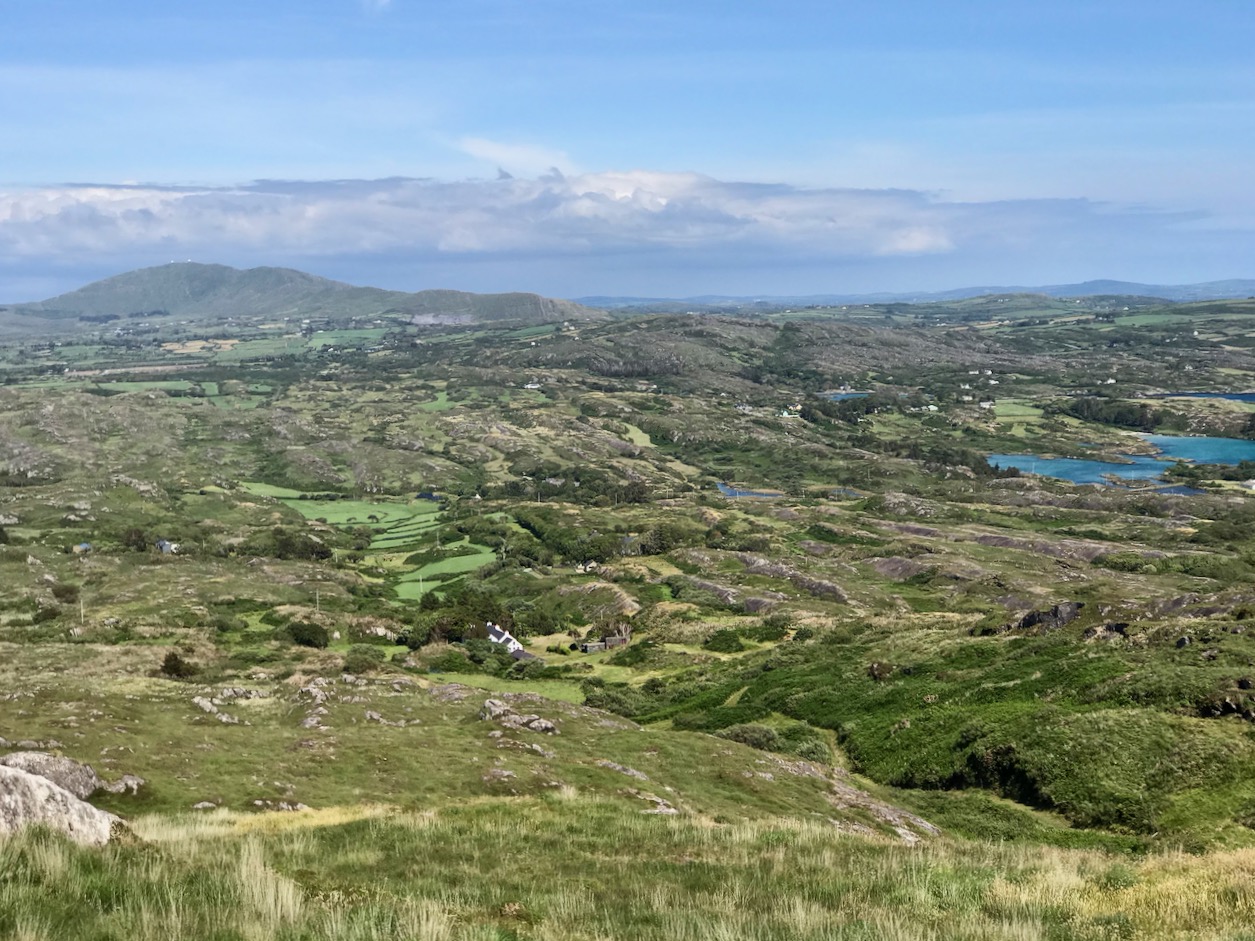
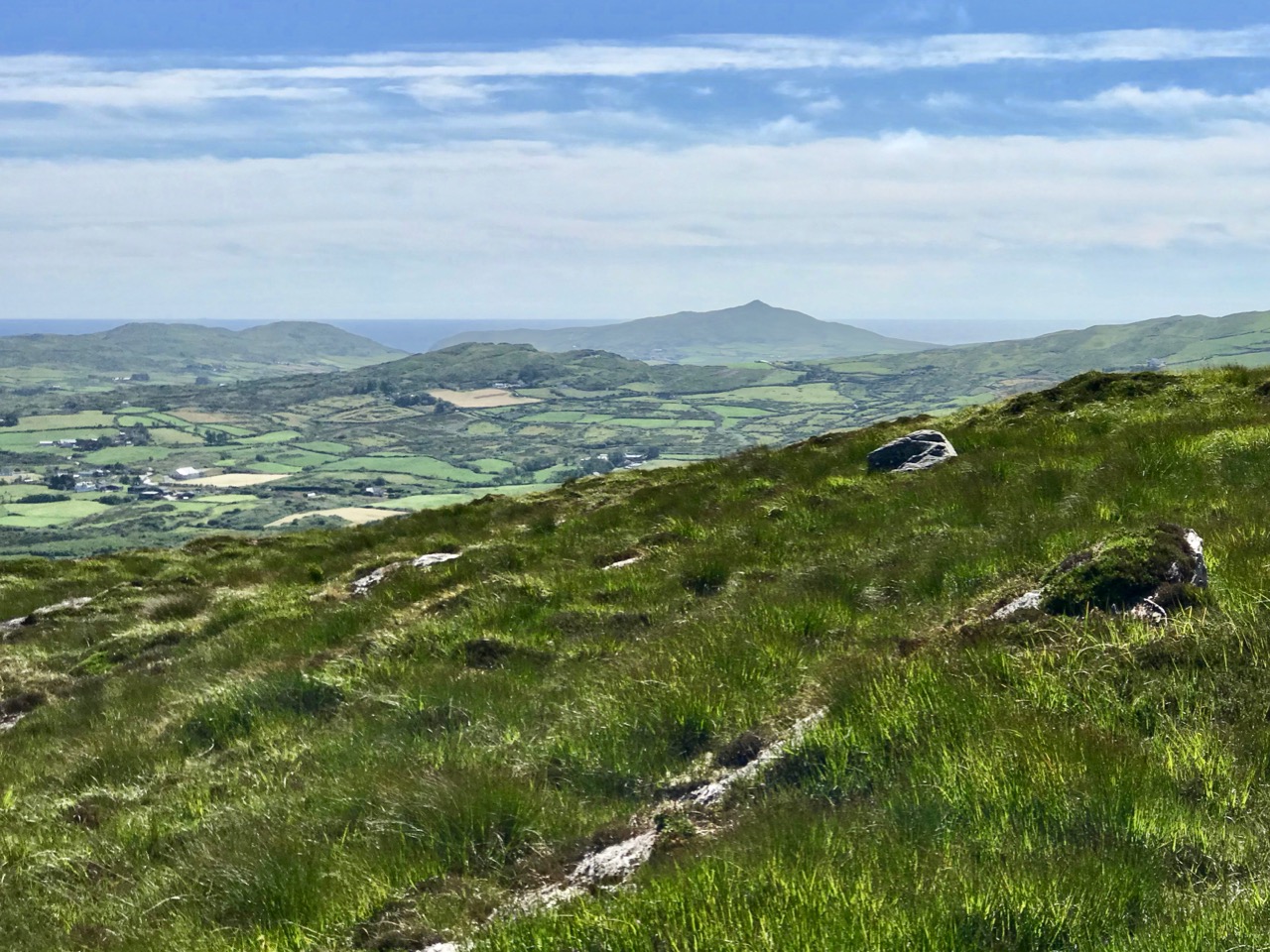
Twists and turns take you more steeply across the contours and swing round towards the summit. Only then is the full picture revealed: the whole landscape set out below you – every rift, valley and glacial glen with the higher land beyond culminating in the crests of Gabriel, 407m high, to the east, and the ‘little’ Mizen Peak, 232m high, to the west.
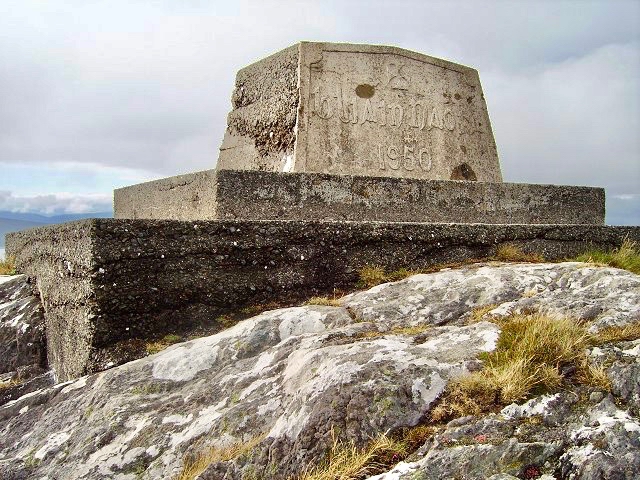
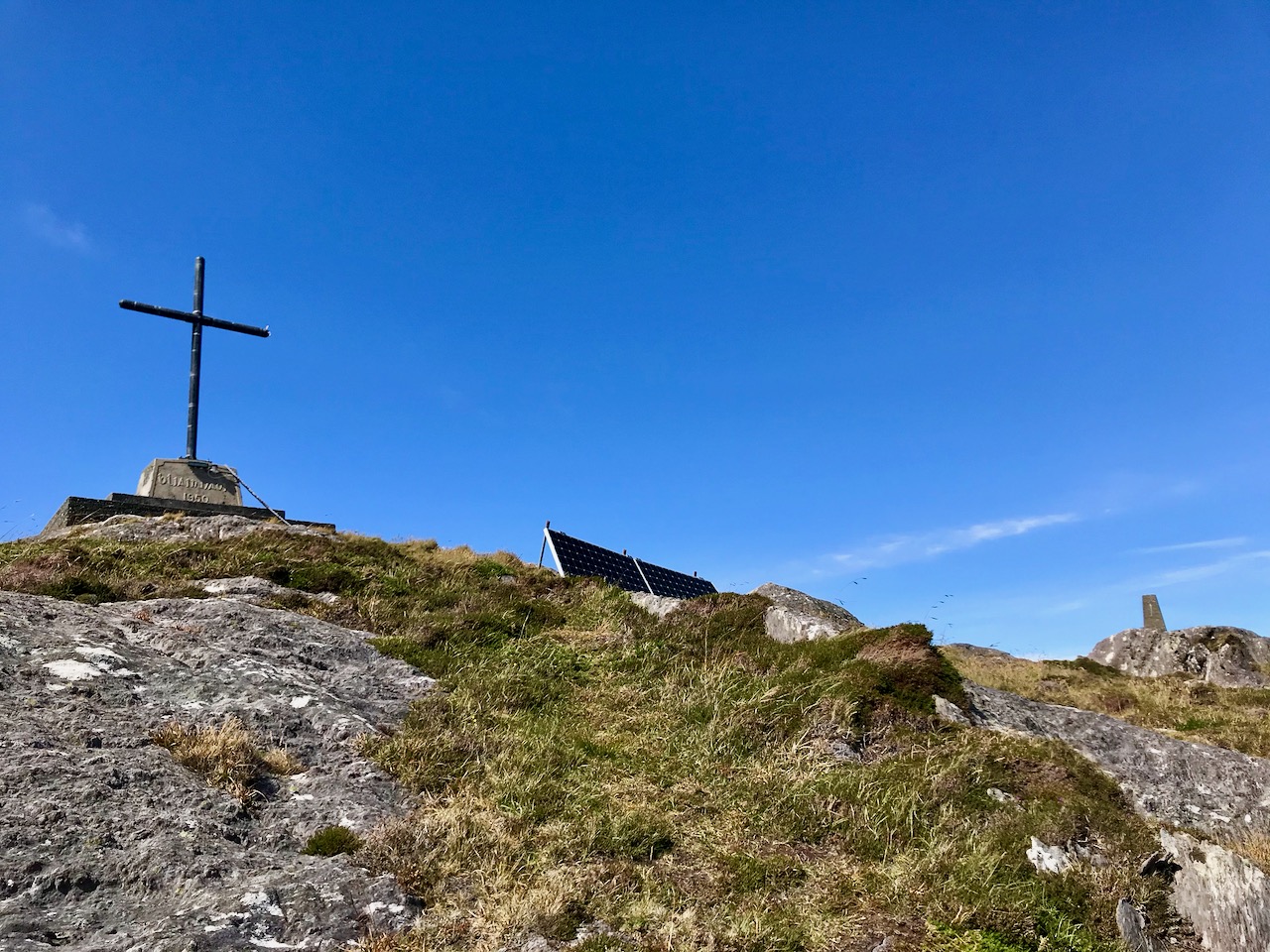
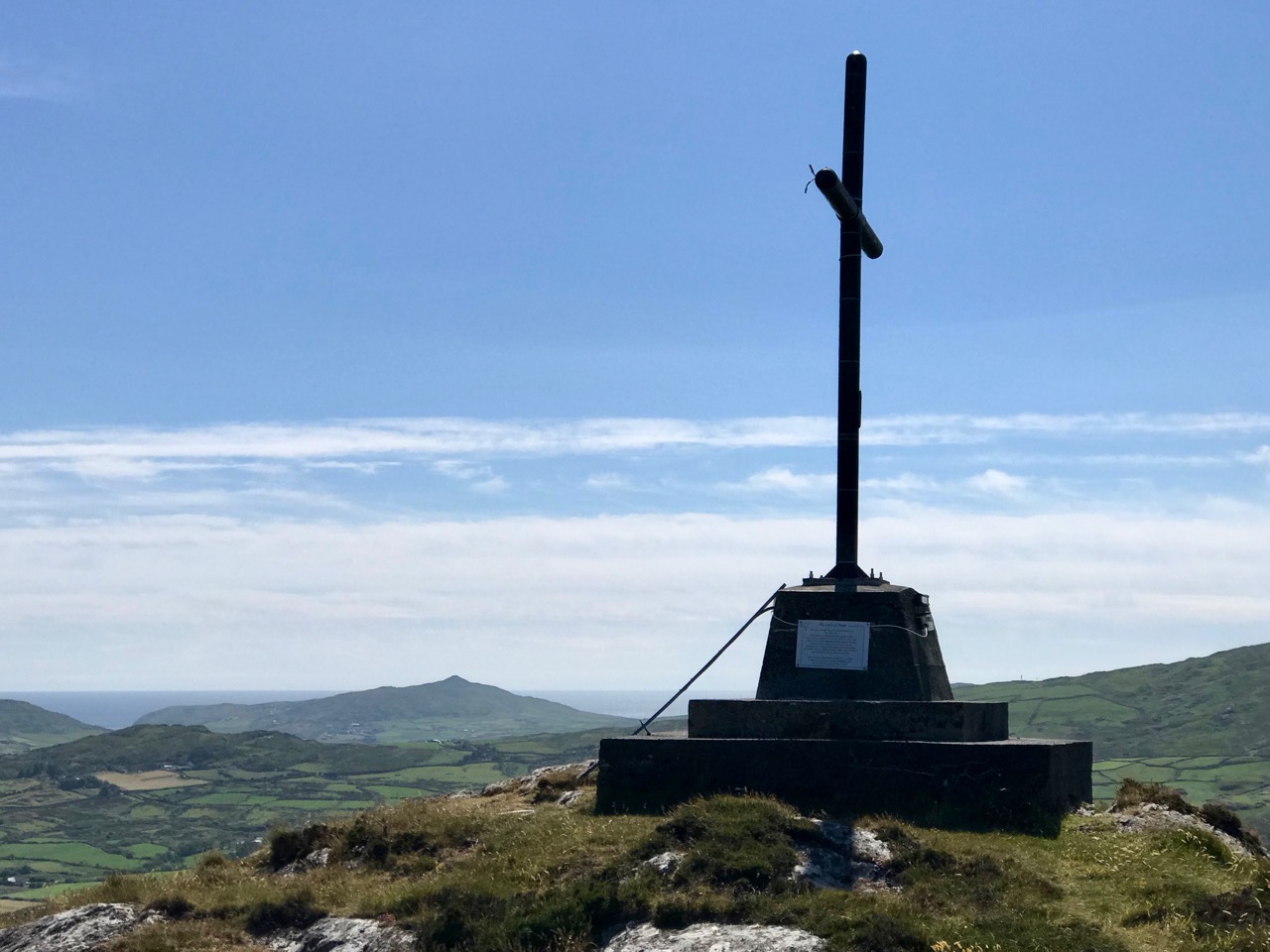
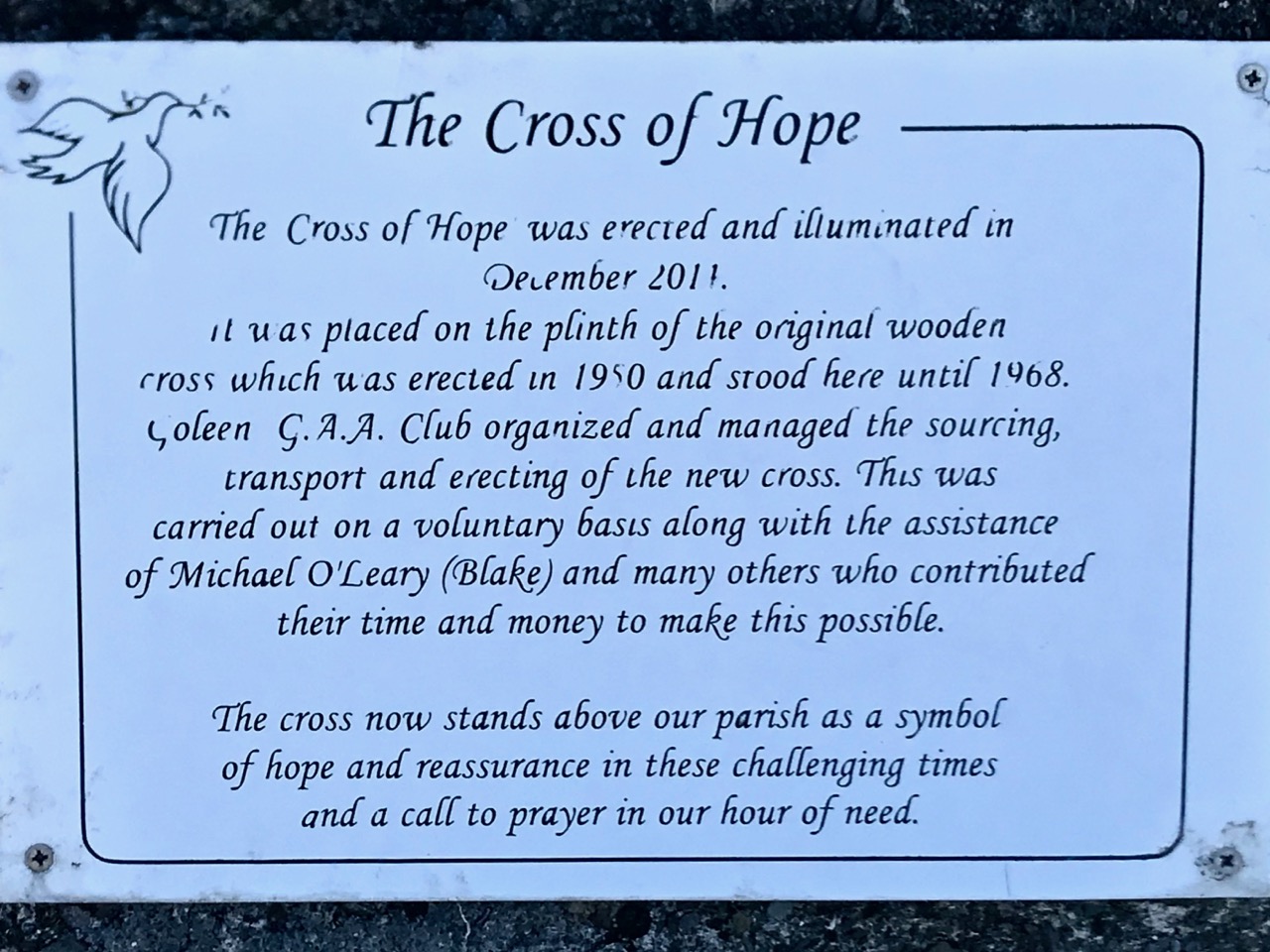
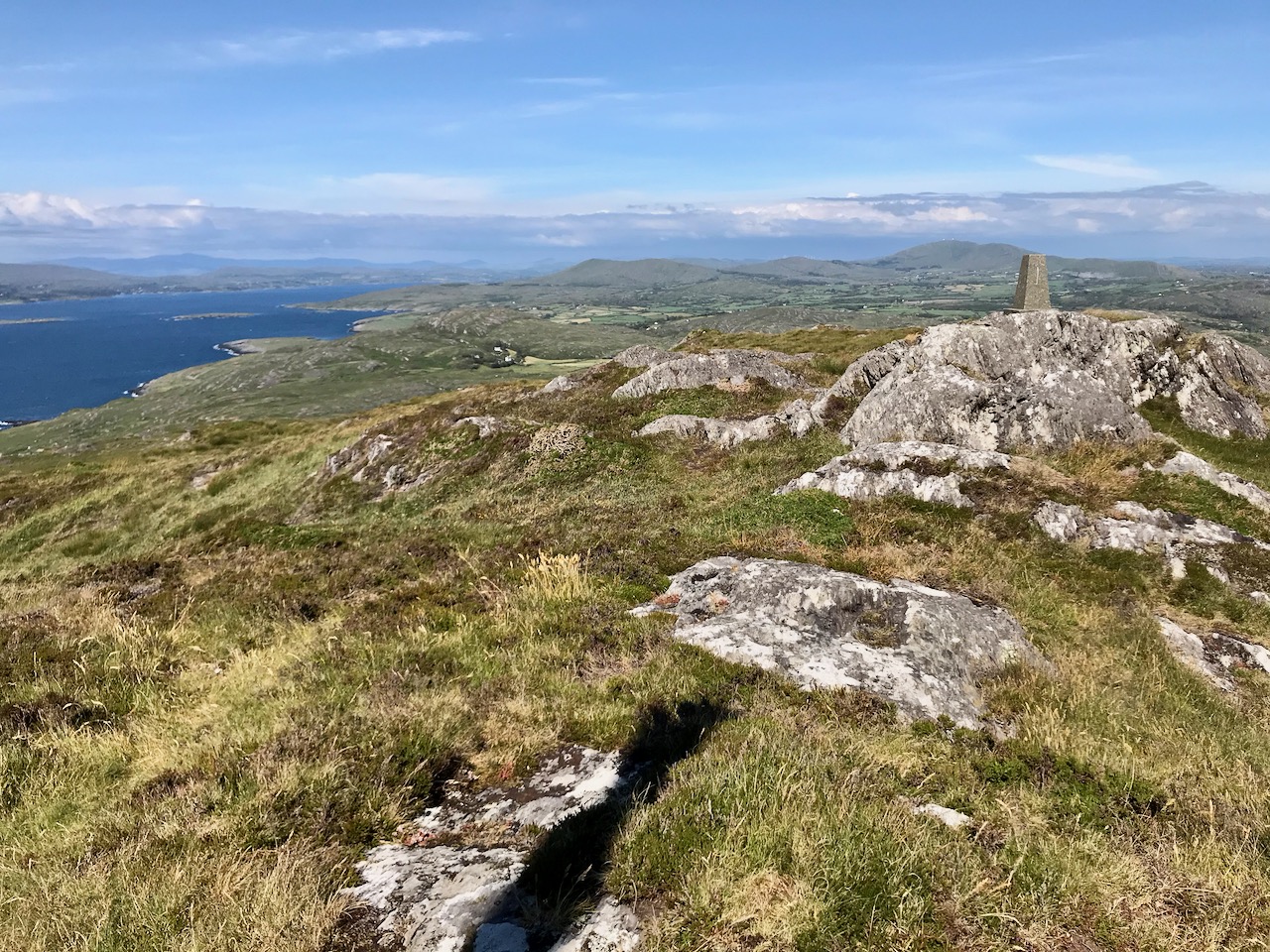
You won’t get lost as you head for the summit: this mountain had a distinctive cross placed at its highest point in the Holy Year of 1950, which reportedly fell in 1968, leaving the inscribed concrete plinth intact. The photo below shows the plinth in 2006 – courtesy Richard Webb. A new cross was installed in 2011 by a community effort led by the local GAA: this is now visible from much of the trail. The plaque mentions ‘…these challenging times…’, referring to the financial crash that hit Ireland so badly around that time. Illumination of the cross today is provided by photo-voltaic cells.
When you get to the top – pause… Now is the opportunity to appreciate the spectacular views in every direction. On our outing the south wind had been building up all day and was at its strongest in the late afternoon, when we gained the summit. It was pretty hard to remain upright! In fact, I wondered if we were being given a message by the resident Púca whose domain this is, after all?
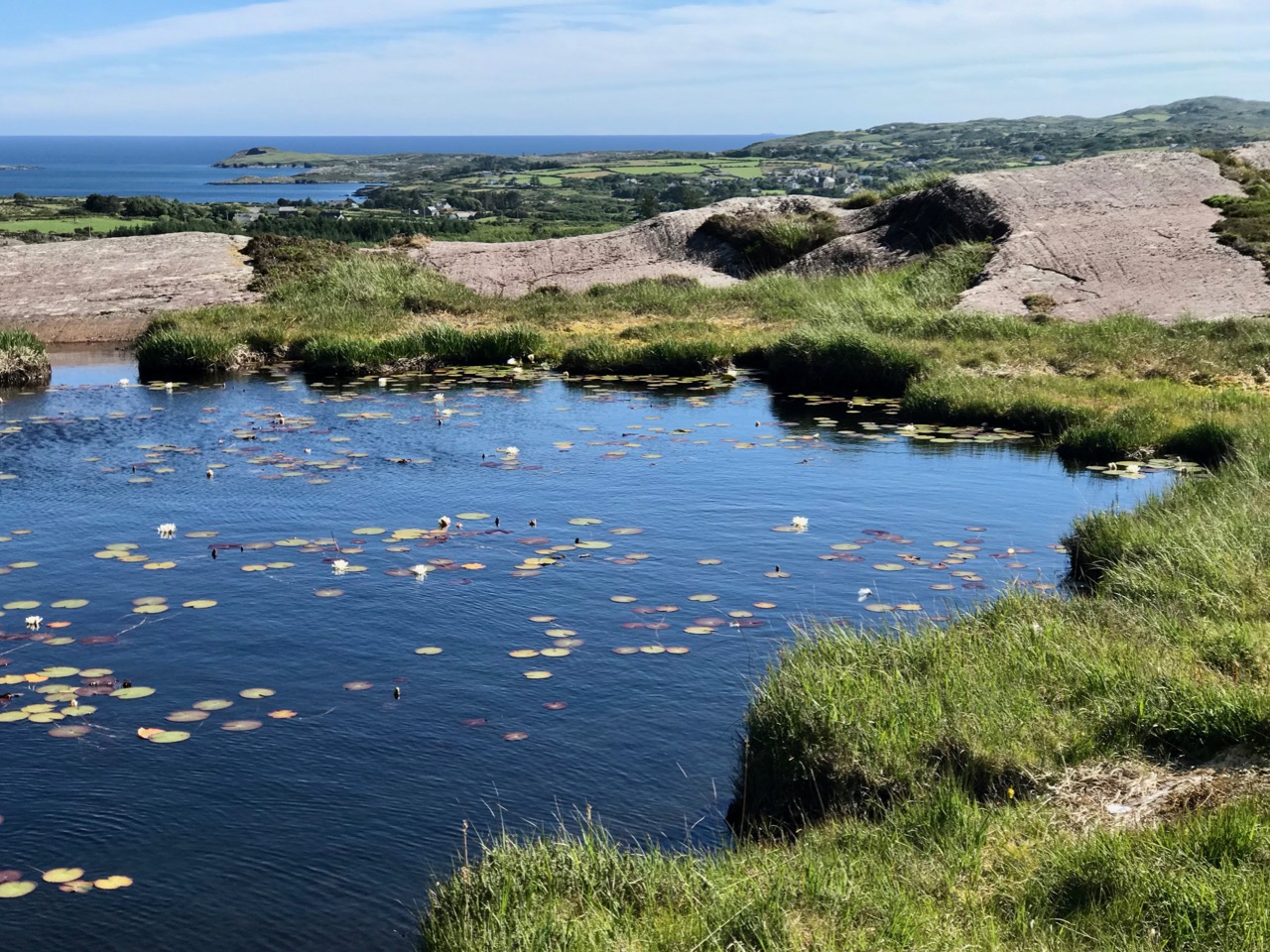
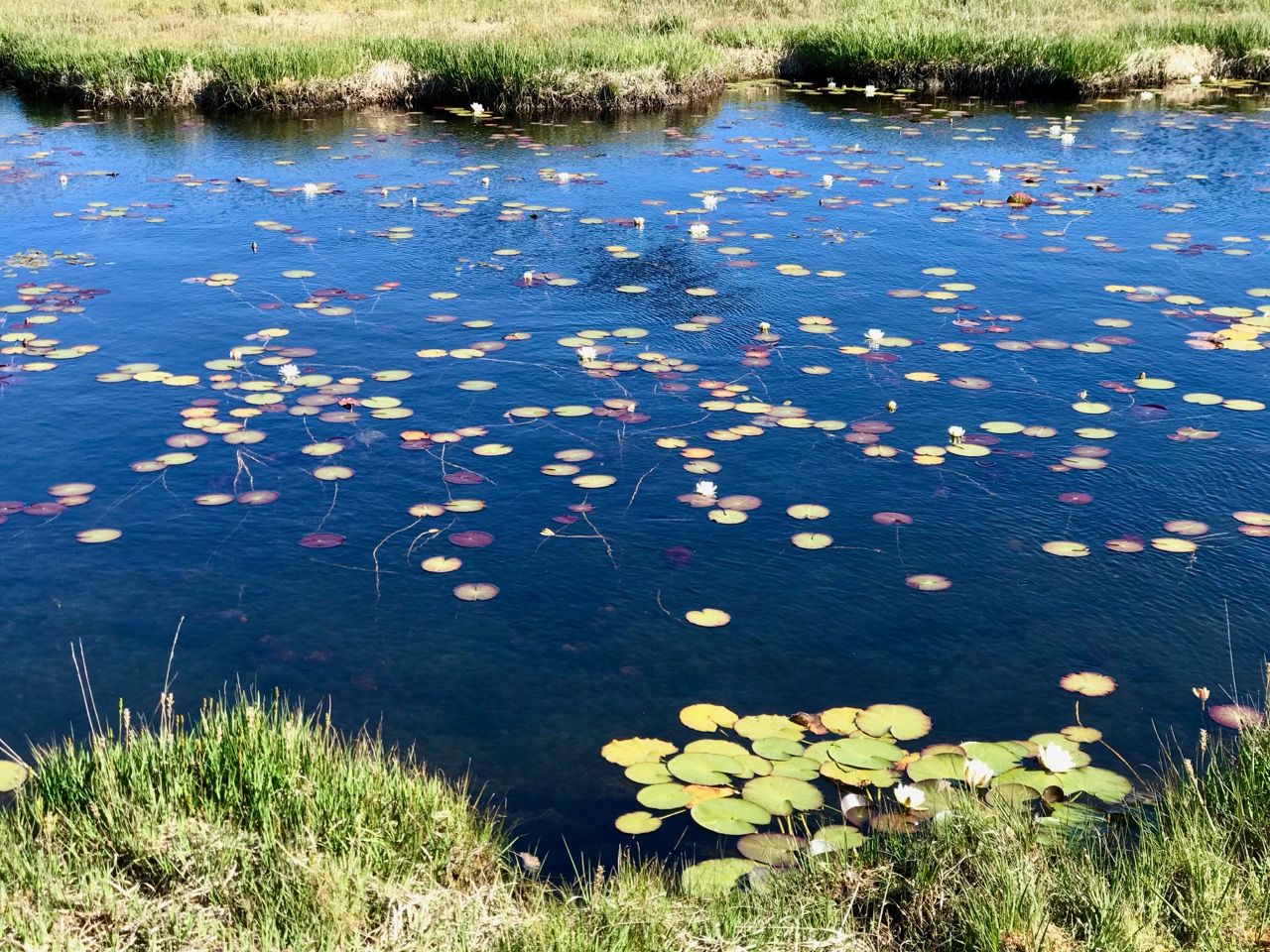
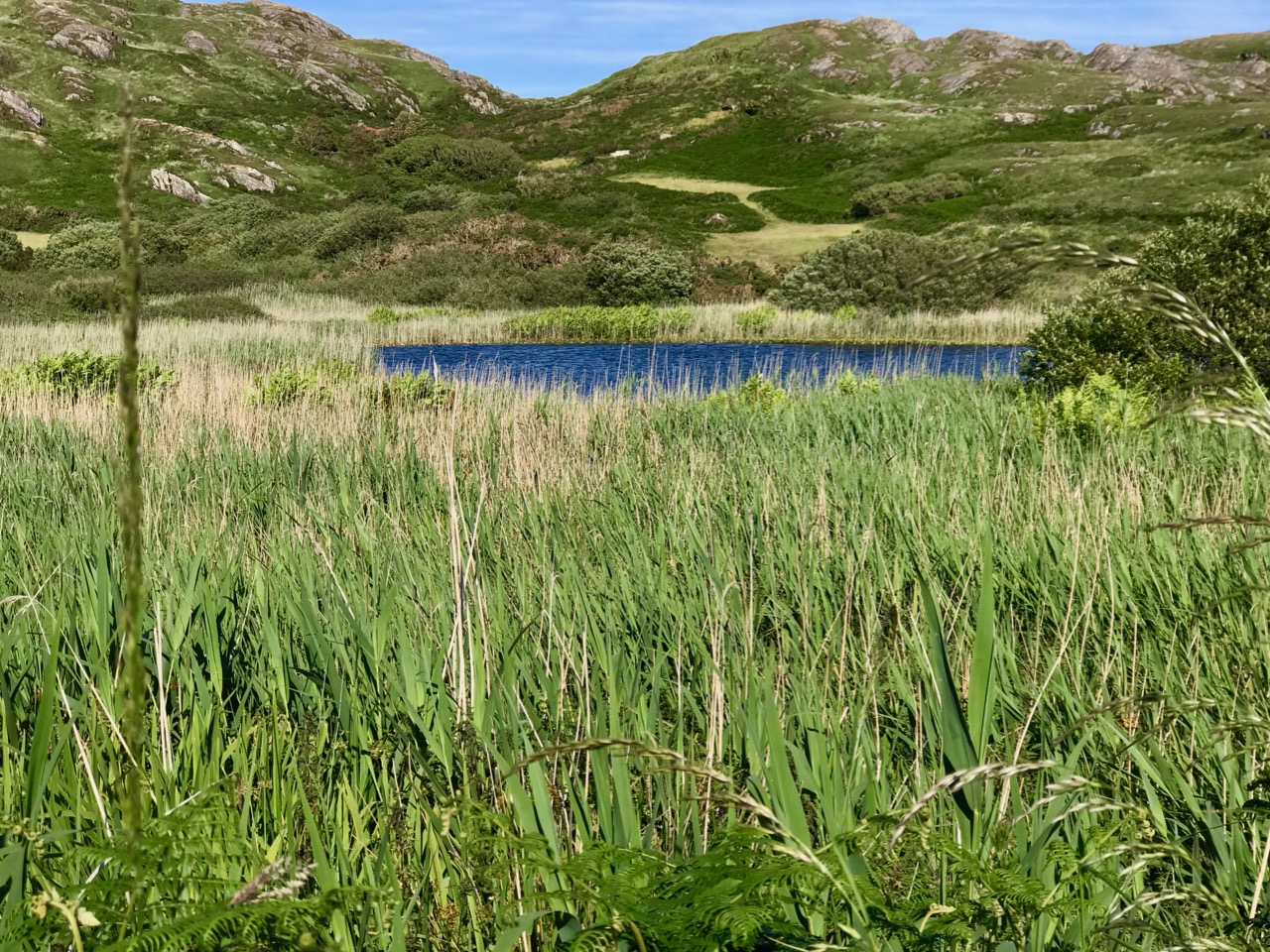
The path down descends quite steeply: make sure you are well shod and vigilant. But you are in for further treats: the marked way passes by some peaty mountain tarns which are exquisite in their pristine beauty. Finola was in her element finding undisturbed native species such as water-lilies and sundews.
The mountain trail section ends on the small boreen running to the west of Knockaphuca, but the waymarkers will lead you back to the starting point, and there are still views up to the summit to enjoy, along with some landscape features on the way to continue to stimulate the senses.
What more could anyone want from a day’s outing in West Cork? Well – a bit of local history, perhaps. I searched for stories about the hill, particularly about the Púca – but only turned up this one told by Jerry McCarthy and included in Northside of the Mizen, the invaluable collection of Tales, Customs and History produced by Patrick McCarthy and Richard Hawkes in 1999:
The Púca of Knocnaphuca
The old people would feed the Púca of Knocnaphuca on ‘Snap-apple Night’, or indeed, whenever one had call to travel up the hill. It was the wise person that fed the Púca the night before going up. Milk and cake would be put on a plate and left outside the house and by the next morning the food had always gone!
The Púca of Knocnaphuca was half horse and half human. One late Snap-apple Night there was a young lad out walking the road when he heard a strange, sweet music coming from the hill. He went up and saw the Púca playing on a whistle. As soon as the lad had put eyes on it, it stopped playing and caught him. Away the Púca went to the top of the hill, where a crack opened up in the rock. In they went. They were twisting and turning down through tunnels until they entered a chamber full of gold. “Now,” said the Púca, “you are mine!”…
The next morning the boy was found on the road by the Long Bog. His hair had turned white and he could not speak a word ever after.
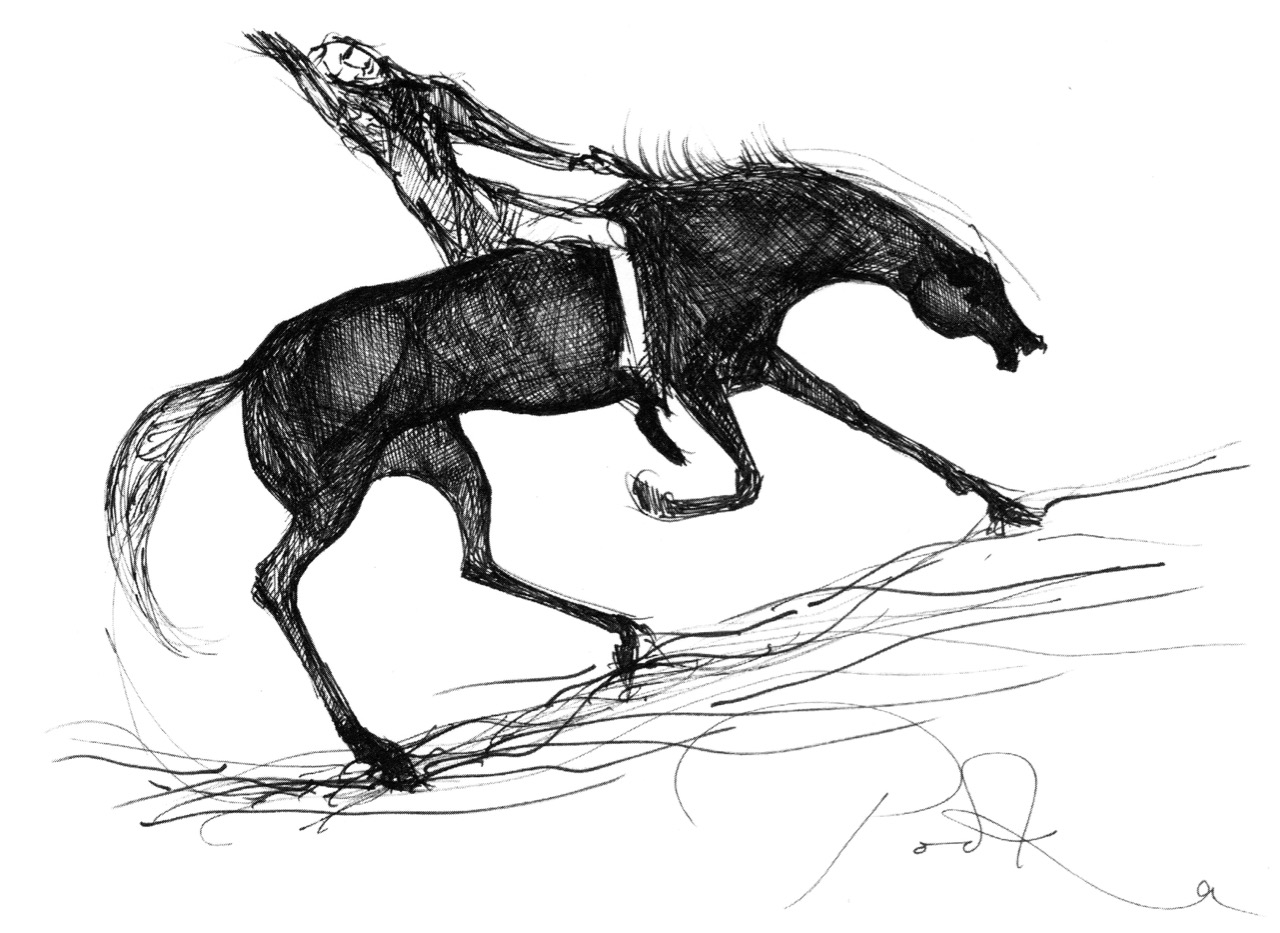
Thank you to our artist friend Hammond Journeaux of Ballydehob for this wonderful drawing of ‘Pooka’, included in The Little People of Ireland by Aine Connor, illustrated by Hammond, The Somerville Press, 2008. Púca in Ireland has counterparts in Cornwall (Bucca), Wales (Pwca), The Channel Islands (Pouque) and Brittany (Pouquelée). A shape-shifter (Flan O’Brien’s character from At Swim-Two-Birds, the Pooka MacPhellimey, changes his appearance by smoking from a magic pipe), the Púca most often appears in Ireland as a fine black stallion with red eyes. If you meet him, you have to mount him and he will take you on a journey far across the sea. It will seem to you as though you had been away for only a few hours, but the world will have moved on several weeks, perhaps months, during your absence. We saw no trace of the creature in June but, perhaps, if we climbed this mountain in the November Dark, we would have more chance of an encounter.
To celebrate the lifting of travel restrictions within Cork county, I did something I have been meaning to do for years – I went whale watching! Thank you to my good friend Susan Byron of Ireland’s Hidden Gems for the recommendation of where to go and who to go with.
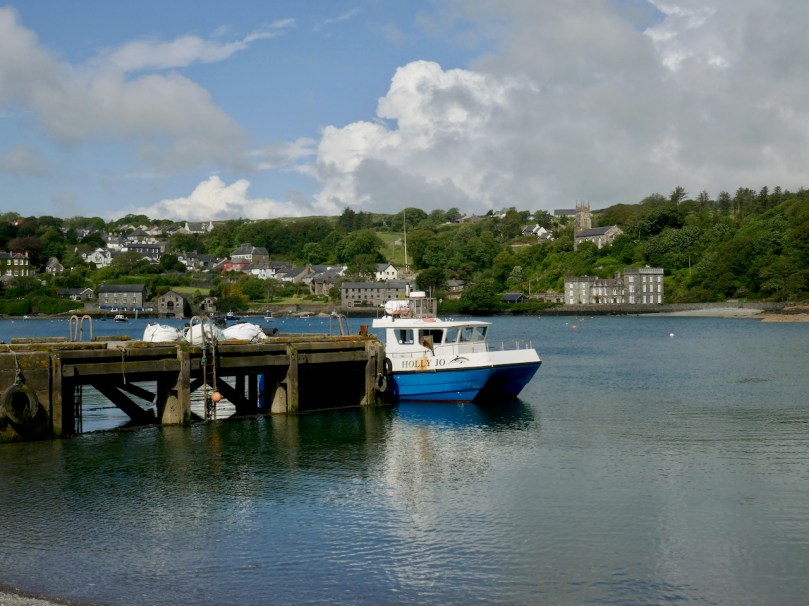
Colin Barnes (below), of Cork Whale Watch (and see their Facebook Page here) has been doing this for years and knows every large animal in these waters. For him, this is a personal passion, an academic study, and a mission to show us that we have, in our own backyard, a world-class whale watching experience.
I have been whale watching several times in Canada so I know that there is never a guarantee that you will see anything. I’ve always been impressed by the people who run these experiences, at how knowledgeable they are and how they seem to love these enormous animals. Colin fits that description to a T. From the website:
Colin Barnes has worked closely with the Irish Whale and Dolphin Group (IWDG) since 2000, and continues to assist with their scientific work. His knowledge and experience was instrumental in helping the IWDG develop their recommendations for responsible whale watching and marine eco-tourism in Ireland. Colin submits details of all cetacean and basking sharks sightings to the IWDG’s sighting scheme. He is the co-author of “Photo-identification of fin and humpback whales off the south coast of Ireland” and a number of other peer reviewed publications.
I knew that it was possible to identify Orcas in Canada by their dorsal fin patterns, but on this trip I learned that this was also the practise with Humpback Whales, except in this case the pattern scientists rely upon is that on the tail fluke. Colin was hoping for a sight of a humpback that had been hanging around off Castlehaven, as well as some Minke Whales and lots of dolphin.
The dolphins happened almost immediately we left the harbour and what a joy this was! They stayed with us almost the whole way out and back, riding the bow wave, leaping and dancing along beside us, at incredible speeds. It was mesmerising and I felt like I had a permanent smile on my face. They seem to do it for the sheer fun of it!
These are the Short-beaked Common Dolphins and they are the most frequently sighted in these waters. Worryingly, there has been a huge increase in the last few years of the number of strandings of this species and nobody yet knows what has caused this.
I’m not great at doing videos but one of my fellow passengers, Denis O’Regan, had an underwater camera with him on a long pole and he has posted footage on his Vimeo channel. Take a look here to see how he captured some of the magic that we saw last Monday. Thank you, Denis!
A great shout went up when the first blow was spotted – it was a Humpback, just starting a dive. They dive for several minutes and you don’t know where they will come up again. But it wasn’t too far away and when it surfaced it stayed for a while, allowing us several looks at that giant shape curving through the water.
A passenger the previous day, John Holden, had posted incredible photos on Facebook of the same whale lunge-feeding – take a look at these amazing images here and here. Thank you, John, for sharing these incredible photographs so freely. I have followed your page now, and hugely admire your highly skilled photography of the natural world.
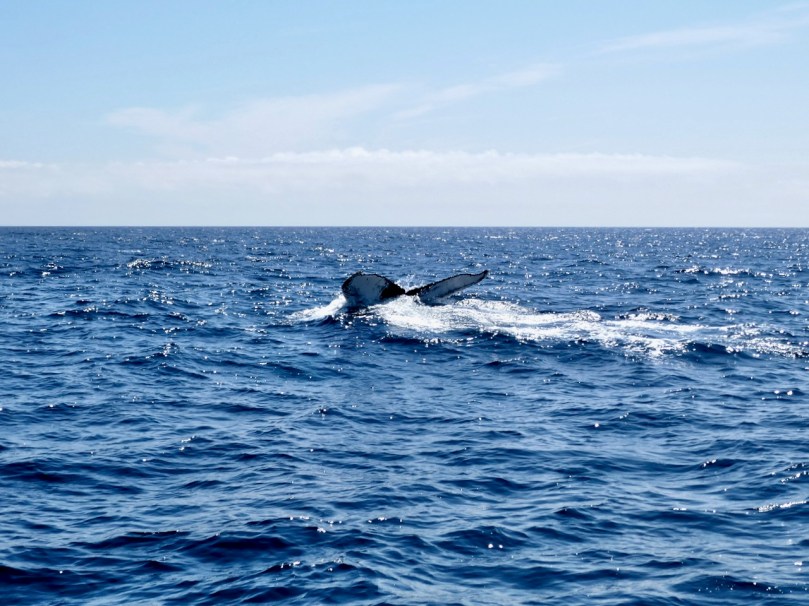
Back to my own efforts. Photography was difficult – the boat is heaving and the animals are moving fast. I did manage to capture a photo of the tail fluke (below), though, and later found out that I had a match – it was #HBIRL43, the same whale that had been feeding in this area for a few days. The ID is courtesy of the marvellous Irish Whale and Dolphin Group – a one stop shop for everything you want to know, and Dedicated to the conservation and better understanding of whales, dolphins and porpoises in Irish waters.
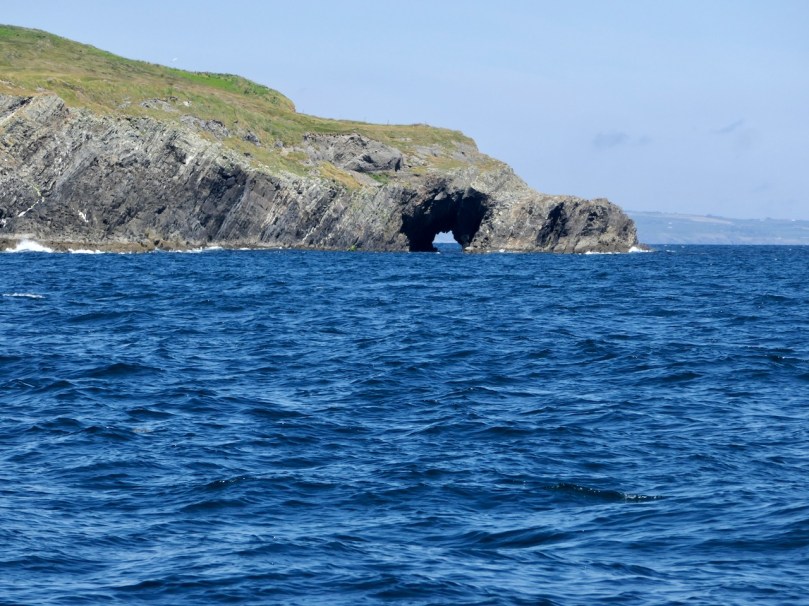
We sighted some Minke Whales but they were moving too fast to pose for their photos. On the return trip, Colin gave us a sightseeing tour of the islands and rocks at the mouth of the Haven, with their bird and seal populations.
Atlantic Sea Kayaking operates from the same pier at Reen that Cork Whale Watch does and this is their paddling ground. I had a magical night tour with them on Lough Hyne a few years ago, and I can see that I now need to do some daylight padding around these rocks and caves.
Thank you, Colin Barnes and Cork Whale Watch for a marvellous experience. I don’t know what took me so long!
As the Coomhola River tumbles from Borlin to the sea, gathering tributaries, it forms many pools amongst the riffles and glides. These pools, in summer, provide leafy shelters for salmon and trout. To anyone who has fished or walked the river, each pool has its own character, and each its own name . . .
[From Hidden Gold, History and Folklore of the Coomhola and Borlin Valleys Julia Kemp: Coomhola Borlin Community Development Association 1998]
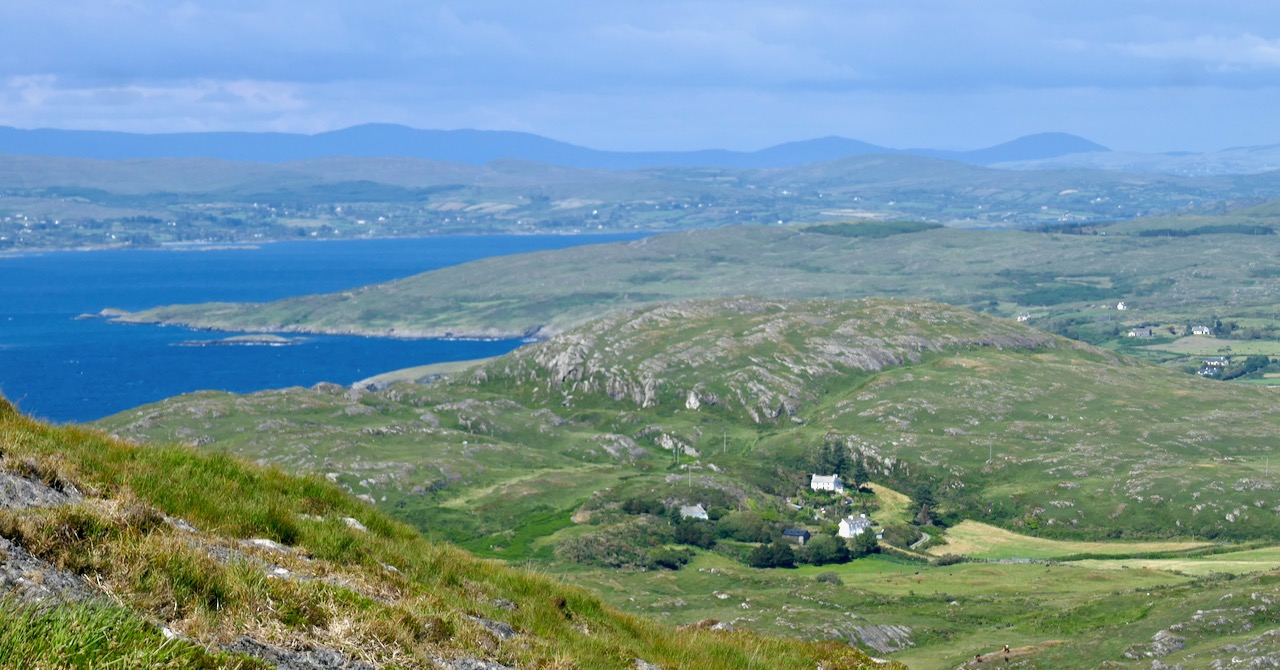
On the header is the spectacular view from Borlin, looking down the great glen where the Coomhola River finds its way through a country formed by glaciers in the Midlandian period, about 10,000 years ago. The rugged Shehy mountain range (Cnoic na Seithe in Irish, meaning Hills of the Animal Hides) with its peaks of Knockboy, Caoinkeen and Kinkeen provides some of the most dramatic scenery in West Cork, its scarred outcrops clearly showing the downward progress of the ice sheets. The contrast between the barren high land and the lush pastoral meadows laid out below evoke a beauty which is hard to match – anywhere in the world!
The Kilgarvan (Co Kerry) to Ballylickey (Co Cork) road is one of the unsung feats of Irish engineering. Until the middle of the nineteenth century it was no more than a system of ‘nearways’, providing rough, narrow access tracks to remote mountain dwellings and hard-won field systems. A famine improvement project c1846, involving metalling, a tunnel, cuttings and stone retaining walls, transformed it to the ‘through road’ which exists today – although it may seem to us no more than a boreen. It’s there for all to travel on, and will provide a breathtaking experience – but be aware that it could also deliver some hair-raising reversing episodes on the rare occasions when a vehicle is encountered coming the other way. The upper photo shows the road ‘clinging on’ to the face of a mountain outcrop, while the map gives a good idea of the circuitous route that the way takes to keep as far as possible to a level contour on its journey.
This is the country of St Finnbar. If you follow the County border east from the top of the Borlin Glen (off-road) you will very soon come to the site of his sixth century monastic settlement at Gougane Barra. This whole area was loved by the Cork born writer and illustrator Robert Gibbings, whose book Sweet Cork of Thee tells of a seven month sojourn in this mountainous region in 1949, beautifully illustrated by his woodcuts.
As we drove along the road beside the Inchigeelagh lakes, we could see moorhens gathering material for their nests among the taselled reeds and swans on islets, piling up dead rushes in readiness for their eggs. A corncrake was calling from a meadow. Celandines and kingcups outshone the gorse.
Mick said to me: ‘My father’s sister lived a mile to the north of us here. She married a man by the name of Scanlan. His mother came from Gougane and ’twas one evening when she was travelling west by the lake – there was no road there then, only a little bit of a track – she looked in the lake and what did she see but fields of corn and sheep and every sort of land and crop and stock. She was an old woman at the time and she knew well enough ’twas a kind of enchantment must be on the lake, so she says to herself, if I can keep an eye on it all and throw a bit of iron at it the spell will be broken. So she kept her eyes fixed on the fields and the cattle and the pigs and the hens, and all the time she was thinking where would she get a bit of iron. And the only bit she could think of was in the heel of her shoe. ‘Twould be worth it to throw in the shoe, says she. But when she went to unrip the lace wasn’t it tangled in a knot, and for the glint of a second she took her eye off the land. When she looked again ’twas all disappeared and the lake was there the same as ever.’
Our road turned south, through a wilderness of rock and bog and lilied pools . . .
[Robert Gibbings Sweet Cork of Thee, J M Dent & Sons 1951]
From the highest rim of Borlin Glen (upper picture), the Comhoola River valley is laid out below. Home to sheep and ravens, the scattered farmsteads emerge from rock and forest and provide a living – as they have for countless generations – to a hardy people.
On the lush valley floor are signs of ancient activity and occupation. A stream flows through a meadow dotted with whitethorn trees (upper), while an old stone clapper bridge has been superseded by the modern boreen taking its way up to the Borlin Valley settlements (centre). Lower – a fascinating stone circle and mass rock site is interrupted by the field fence. Here, too, is a bullaun stone and cupmarked rock (below).
Let us give the last word to Johnny O’Driscoll from Snave, recorded by his grandson Sean O’Driscoll in the 1930s and featured in Julia Kemp’s Hidden Gold:
There is little gold in this area, but there is one place where it is said a crock of gold is buried. It is about a hundred yards from the Glaslough, between Coorycomade and Ardnatrush, about a mile and a half from Coomhola National School.
There is a bush growing at the exact location, and beneath the bush is a large stone which covers the hidden treasure. It belongs to a tiny dwarf, and anybody who visits the place at midnight can see this little creature on the bush above the gold.
People did go on one occasion in search of the gold, but they were unsuccessful. A little bright light is visible about midnight above the bush. I have seen it myself on several occasions . . .
It started in France and has spread (like weeds?) across Europe, as a way of illustrating for casual walkers what we have all around us. All you need is chalk and a good wildflower book. I recommend Zoë Devlin’s The Wildflowers of Ireland – it’s how my love of wildflowers was sparked. If you have good reception on a phone or tablet, you can use her website Wildflowers of Ireland, but if you’re just starting, the book may be easier to search. Another excellent resource is Wildflowers of Ireland, although this one is wholly online.
The Botany part is easy: it’s incredibly important to know what we have as we are losing species, many through loss of habitat or the use of herbicides. Urban environments are home to many wildflowers (no such thing as weeds!) all of which do important jobs in supporting the great chain of life by providing vital food, shelter and reproduction spaces to an enormous variety of insects.
The Guerrilla part? Well, there is something subversive in writing and sketching what can be seen as graffiti on a footpath or a wall (but don’t worry – the first rainfall and it will be gone). It may even be slightly illegal, so ideally you deploy some level of stealth. However, the merry band in Schull yesterday, let’s call them Flying Column S, was having far too much fun to be deploying anything except their chalk.
When you name something you give it an identity. That encourages people to look more closely at it and maybe do a little research into it. We are seeing all kinds of Bird’s-foot Trefoil (below, overlooking Schull Harbour, with Red Clover) at the moment, springing up in our lawns and frankly wherever it gets a chance. But did you know that this gorgeous little yellow flower, a member of the Pea Family, is the larval food plant of the Common Blue Butterfly?
Most of the wildflowers we see around us in our towns and villages are native, but there are a few invasive aliens as well and it’s also important to know where they are and how they are reproducing. Japanese Knotweed is the most feared, for how difficult it is to get rid of, how damaging it can be, and for how it takes over vast areas of habitat, choking out native plants.
Buddleia, better known as Butterfly Bush, is beloved of butterflies for its abundance of nectar. But there is a dark side – it can become very invasive, and while butterflies love the nectar it provides it is not a butterfly host plant – that is, one that butterflies can use to deposit their larva, which will then feed on the leaves. In fact, over time, butterfly populations decline where Buddleia is left unchecked. The Buddleia below has not yet come into flower.
But there are other non-natives that are more benign. Mexican Fleabane (below with Greater Plantain) and Ivy-leaved Toadflax (a close-up – another photo is the last one in this post) both arrived here from elsewhere, but do not pose anything like the same level of threat. In fact they have settled in happily as neighbours.
But while they are certainly decorative and attractive to insects, it remains true that it is our native plants to which our native insects are best adapted.
Native, of course, can also be dangerous – several of our native plants are highly poisonous to humans including the beautiful Foxglove that is blooming everywhere right now and the attractive but deadly Woody Nightshade, below. It’s also known as Bittersweet. Children need to be warned to stay away from the inviting red berries of this plant later in the summer.
At first glance, we seem to see lots of dandelions, but most of the dandelions are gone over by now so what we are seeing are Sow-thistles, Nipplewort and most of all in West Cork, Cat’s-ear.
At the shore, marine species abound – take a look at my post on the Ballydehob Estuary – a haven for native wildflowers of all kinds. In Schull we chalked signs for Thrift (or Sea Pinks) and Kidney Vetch while in Ballydehob we pointed to Sea Radish and Sea Aster, the latter a plant that tolerates getting its feet wet in salt water.
Trees, too, deserve our attention. Con was delighted with the number of elm trees around Schull and he pointed out one of our native Ash trees along the way. The Sycamore which springs up everywhere, on the other hand, is not native to Ireland and can grow to provide a powerful canopy under which other seedlings fail to thrive.
Herb-Robert is a perennial favourite but in Schull we found lots of its first cousin, Shining Crane’s-bill. The flower is very similar, although smaller, but the leaves are quite different, being round and glossy compared to Herb-Robert’s hairy fronds. Both turn an interesting red as they age. Bonus point to Karen for pointing out that this was not, in fact, Herb-Robert.
Some plants are so tiny and background-y that they are easily overlooked. A couple below – Procumbent Pearlwort and the charmingly named Mind-your-own-business. The second photo is a close-up of the Procumbent Pearlwort, showing its minuscule white flowers.
Foragers are the experts on what’s edible by humans – if you are interested in this, I highly recommend Forager Fred’s Facebook Page. One plant we did happen across in Schull was Pignut – I haven’t tried it myself, but apparently in the old days kids on their way to school would follow the stem down to the root with their fingers to find the little edible tubers. Any memories of that among our readers?
We identified lots more plants than I have room for here and we hoped that people would stop and take notice as they walk around the village and estuary of of Ballydehob and the Market car park and harbour road in Schull.
What do you think – is Guerrilla Botany a good idea? Why not get out and do some in your own community!
Nurturing small native plant/pollinator/wildlife habitat in western Oregon
Travels on foot
Another bicycle adventure in France
In which M & A cycle to — and over — the Pyrenees and into Spain
the town that time forgot
Outside of the Academy
J&M invade the Austro-Hungarian Empire
Encounters with women in Irish theatre history
Our garden, gardens visited, occasional thoughts and book reviews
History of People and Places
This is not an Oxymoron
It's all about the photos.....
Archaeology -- Pseudoarchaeology -- School -- The good, bad, and the ugly about life in the trenches and life as a student
Welcome to the UCD Library Cultural Heritage Collections blog. Discover and explore the historical treasures housed within our Archives, Special Collections, National Folklore Collection and Digital Library
History of People and Places
Virtual Music Making
Take a Chair: talking theatre and creativity