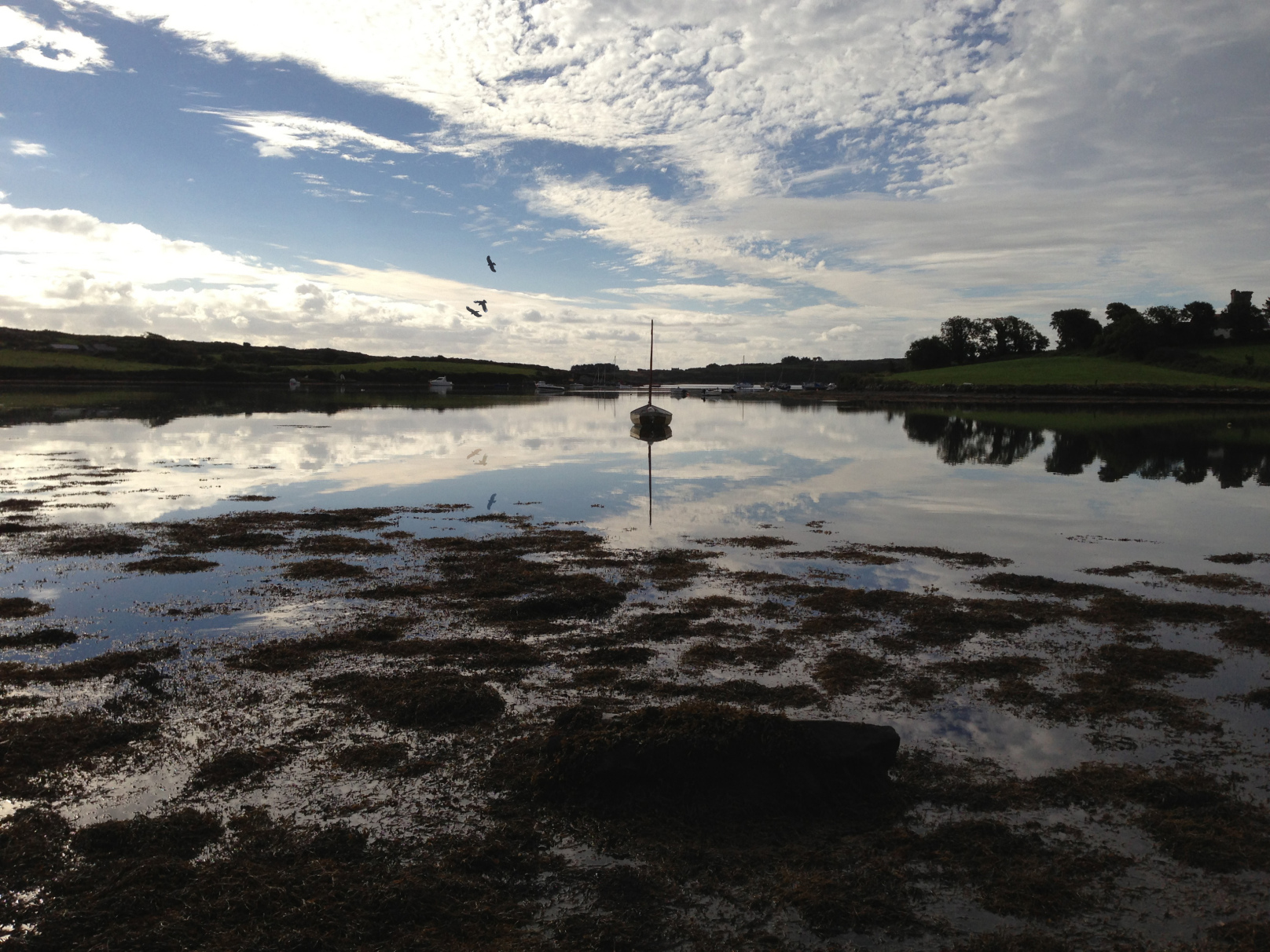
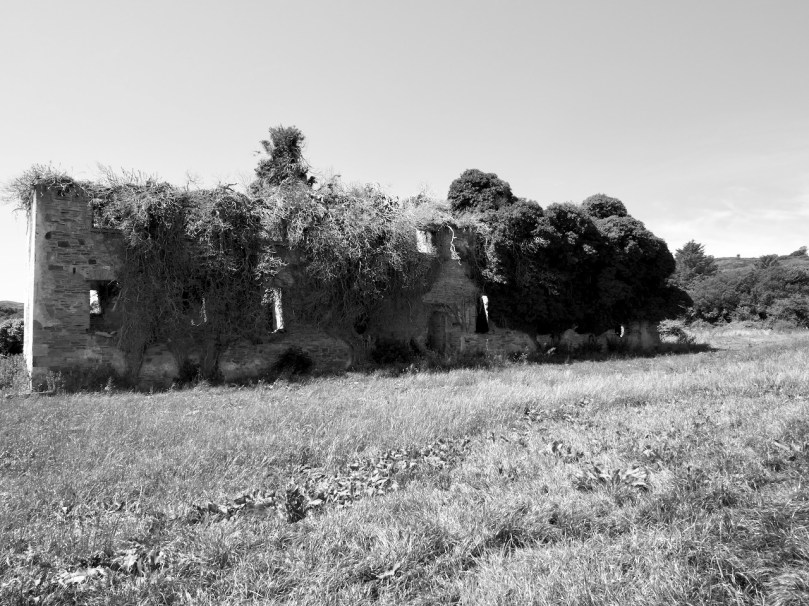
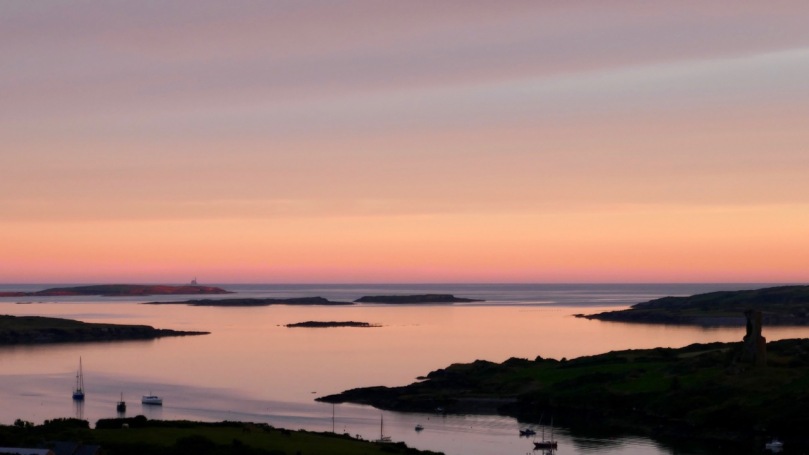
Tralong Bay, Co Cork – A Prehistoric Drowned Landscape

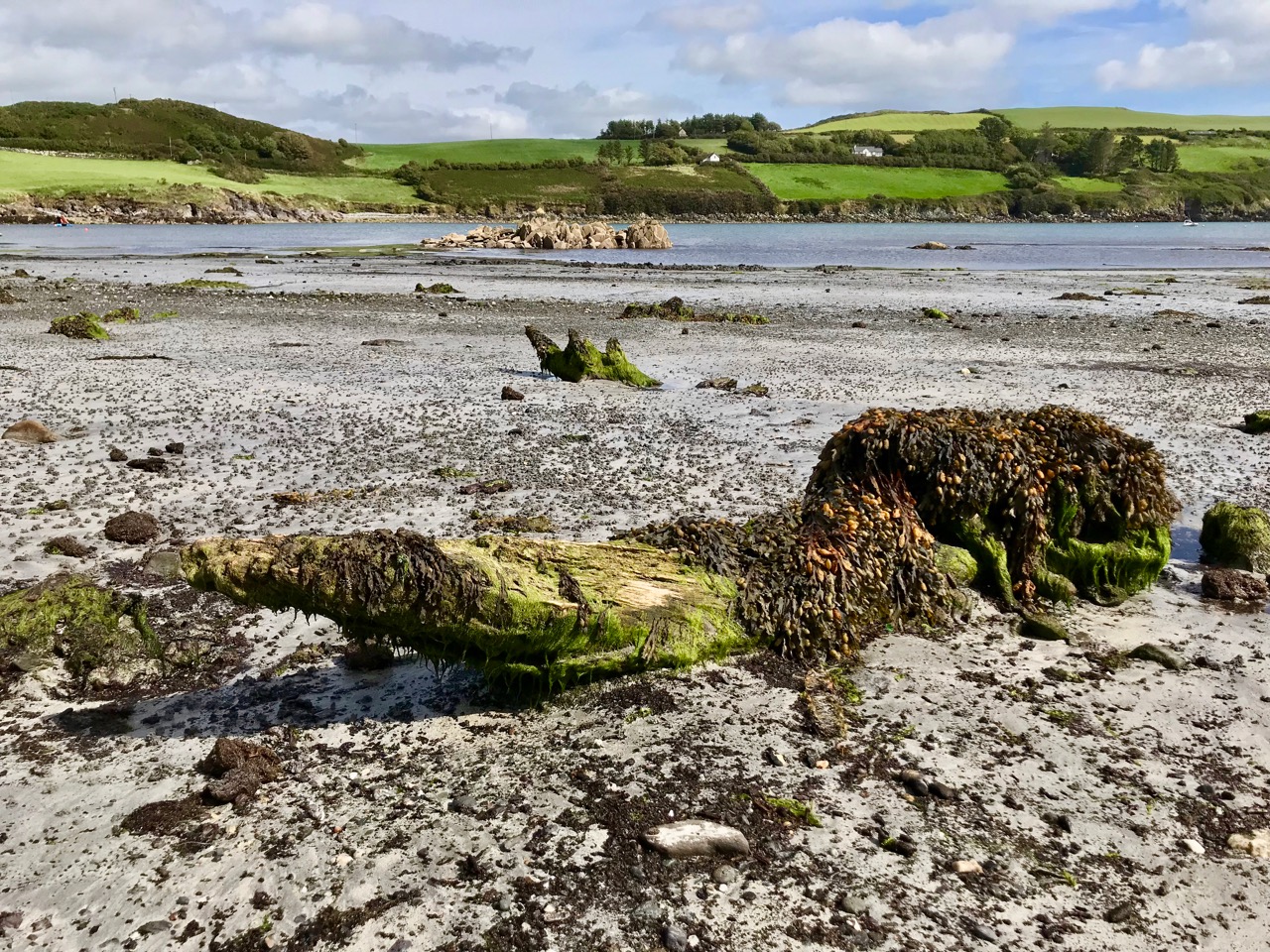
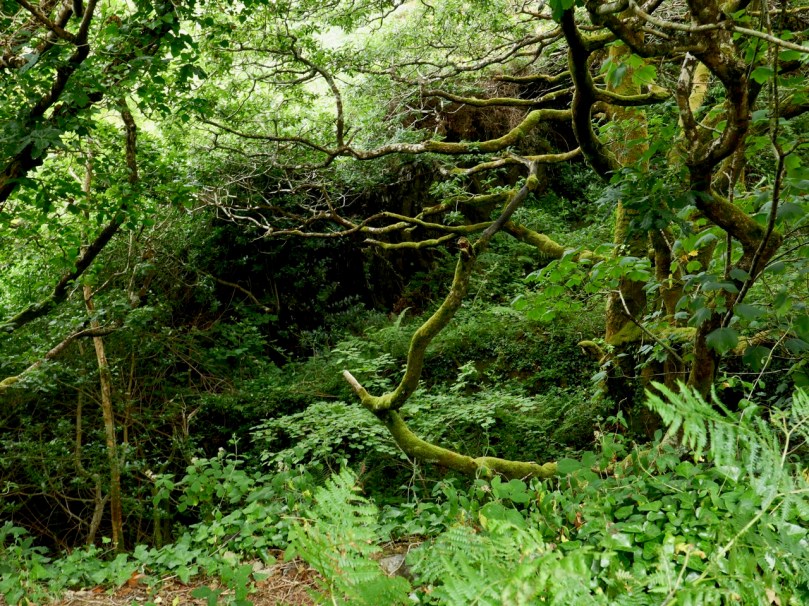
In West Cork it is possible to examine the remains of trees which were growing several thousand years ago – perhaps in the time of our earliest ancestors. Around the coasts of Ireland and Britain are sites of post-glacial forests which flourished close to an ancient shoreline until inundated by rising sea levels in the Neolithic period. Cycles of change in weather, tides and geology over millennia saw these remains flooded by encroaching seas, then resurfacing, only to be buried under sediment and sand as tides abated. We are living in an age of extremes and recent abnormal climate activity has in places exposed some of these remains which are as old as human activity in Ireland: this is Organic Archaeology!

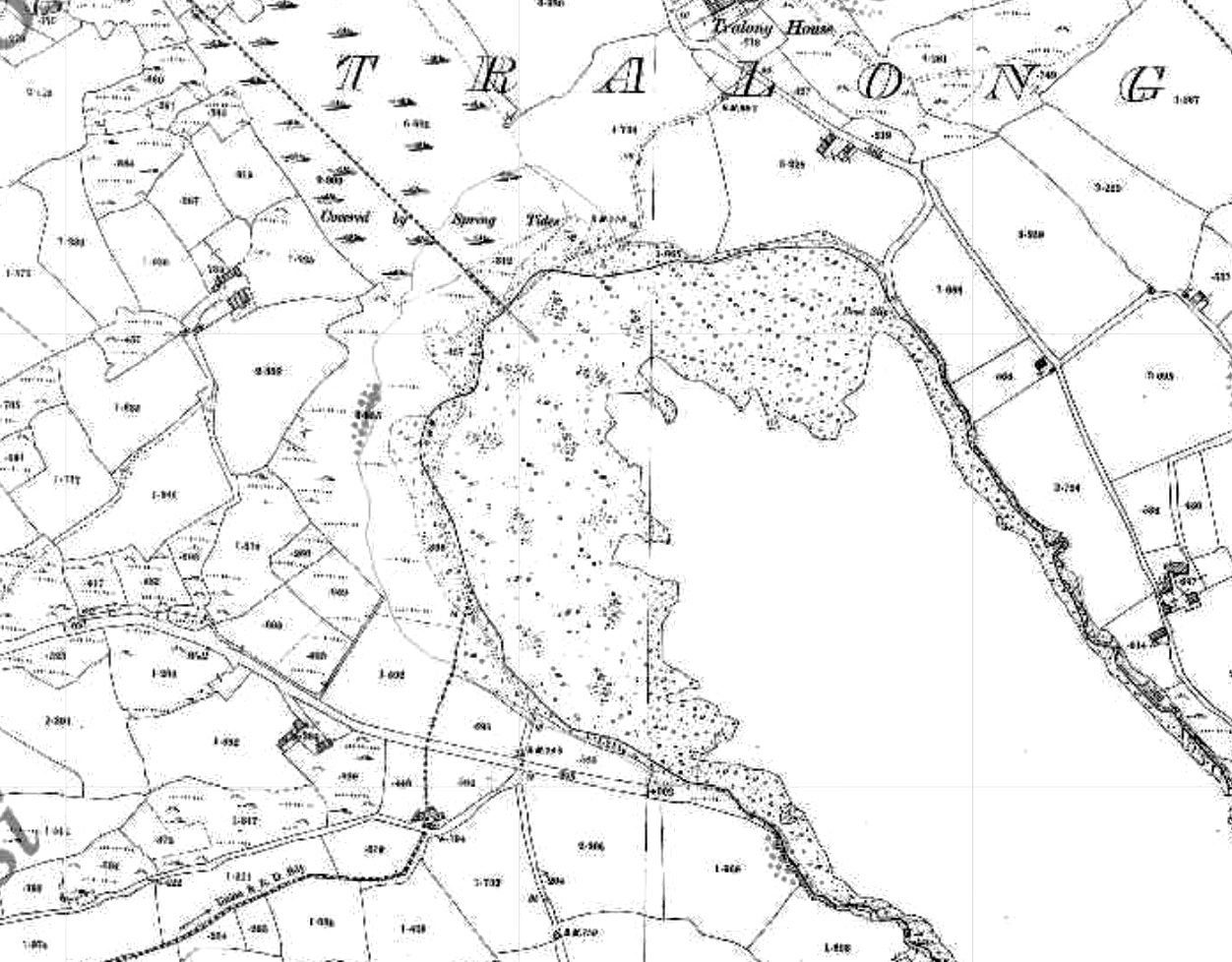
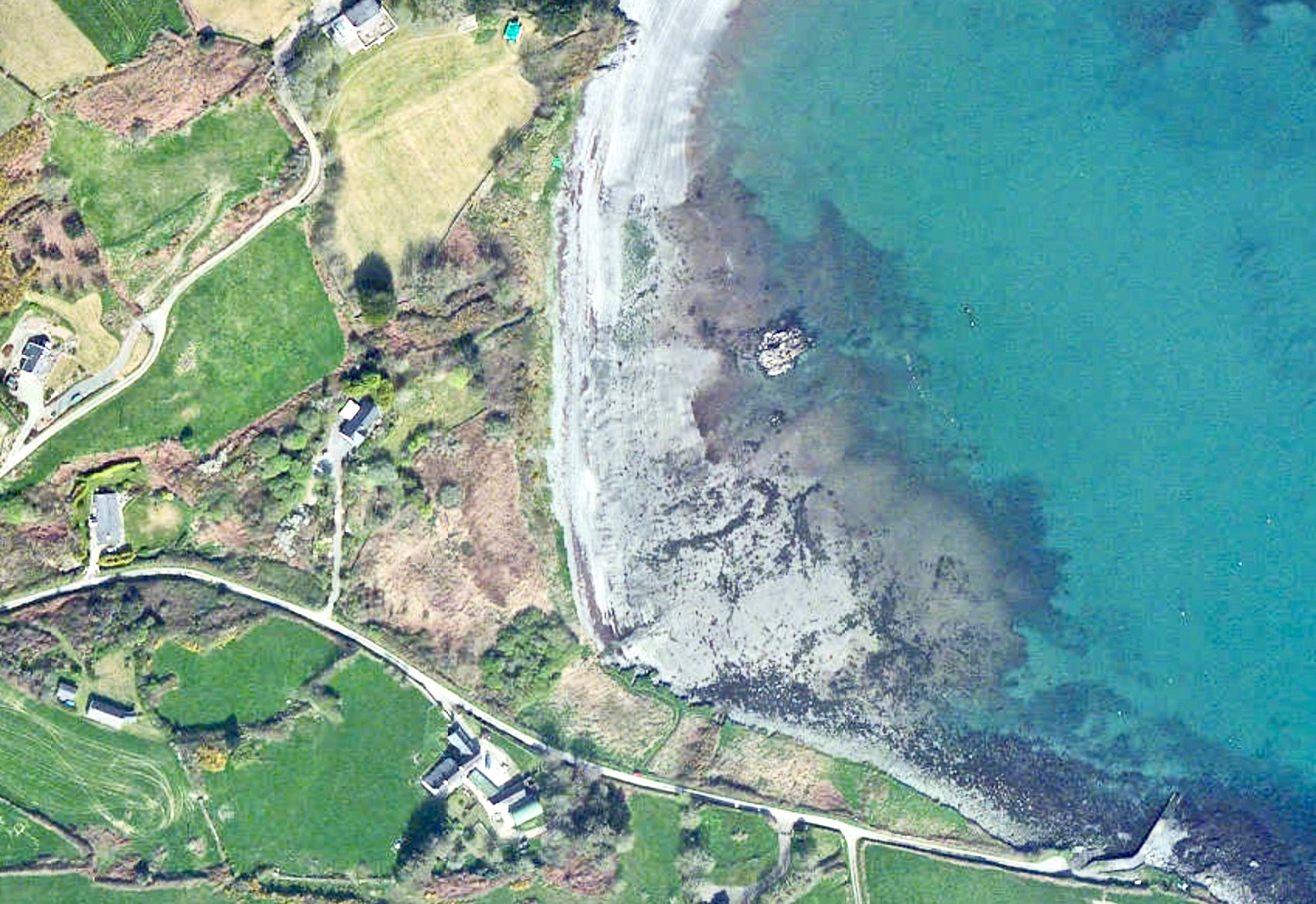
Header – Tralong Beach, between Glandore and Rosscarbery, where the remains of very ancient woodland can be seen. Upper map – the c1850 6″ OS map showing the shape of the coastline at Tralong Bay, and Lower map – a closer aerial view of the beach in modern times: the darker mass shows the partly submerged peat beds

Little has been written about the Tralong site, but another comparable drowned landscape has been revealed in Northumberland UK where archaeologist Clive Waddington, of the company Archaeology Research Services, has found the remains of an ancient forest on the coast of Low Hauxley. He reports:

. . . In 5,000 BC, the sea level rose rapidly and swallowed the earth. The sand dunes were pushed inland, burying the forest, and then the sea receded somewhat. Now, the sea level increases again: it cuts out the sand dunes and exposes the forest . . . During the course of the investigation, the archaeologists found evidence of human presence in the area: traces of adults and children , the analysis of which revealed that they were wearing leather footwear. With human footprints the scientists also found footprints of wild boar and brown bears . . .

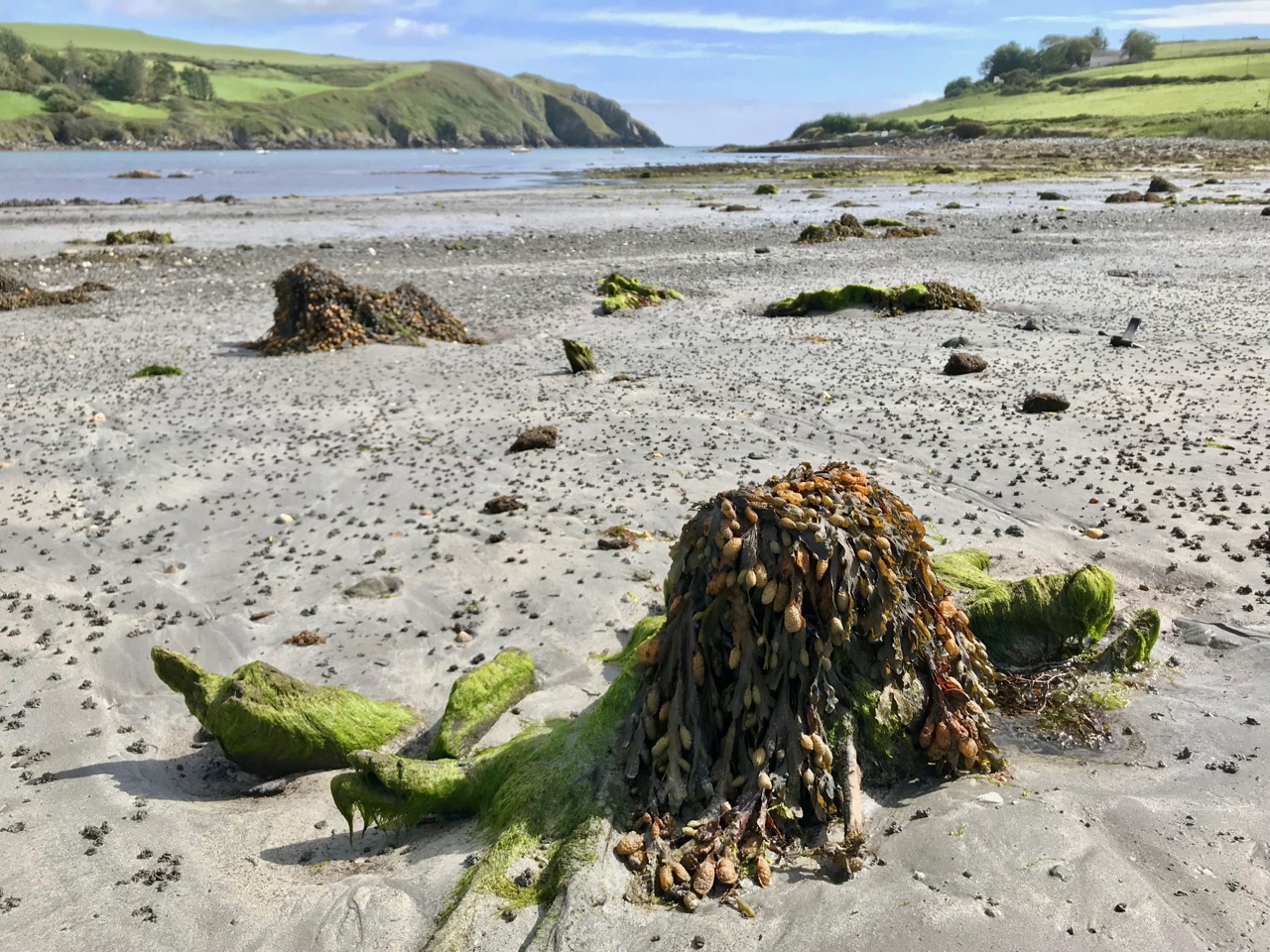
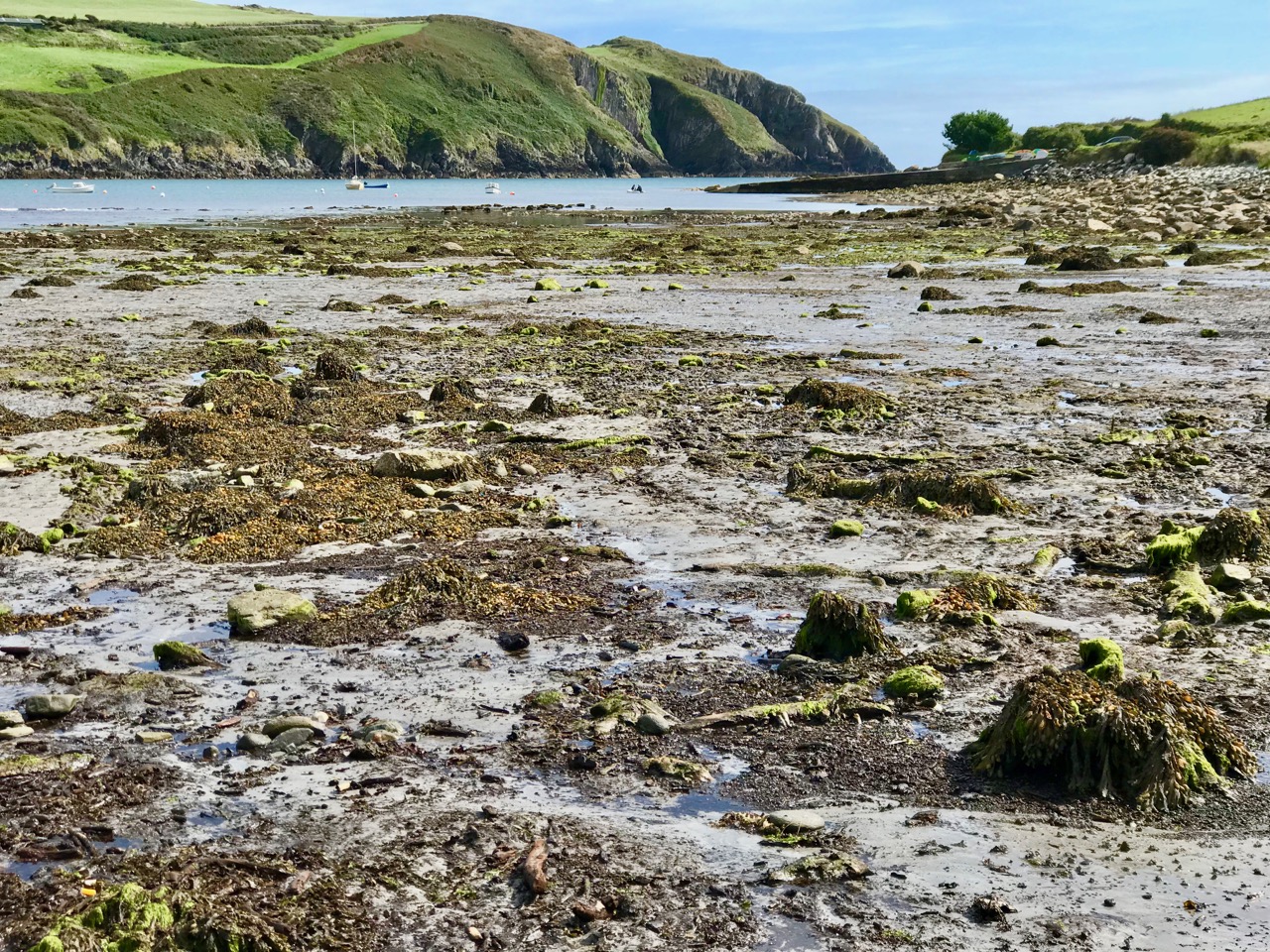
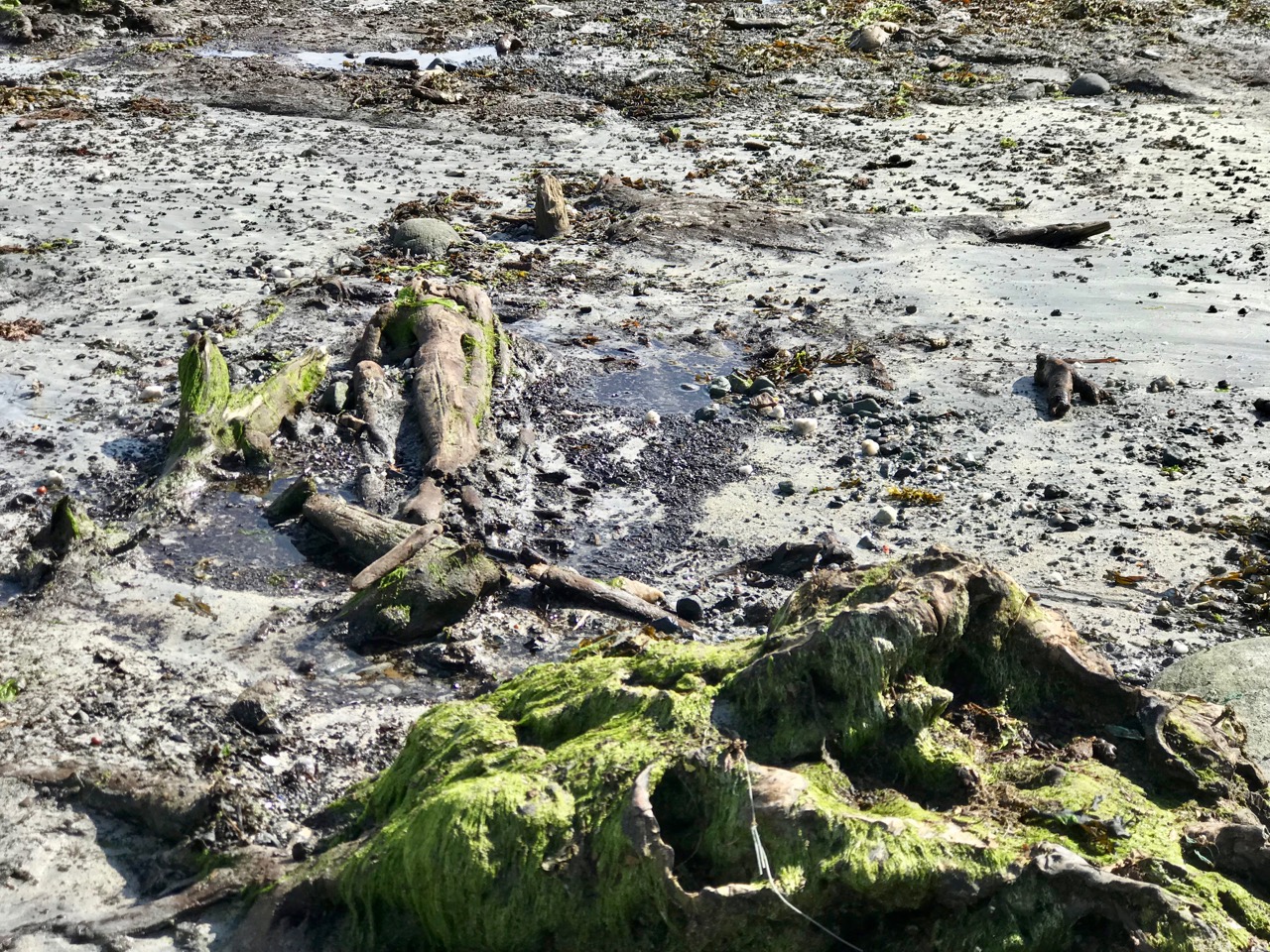
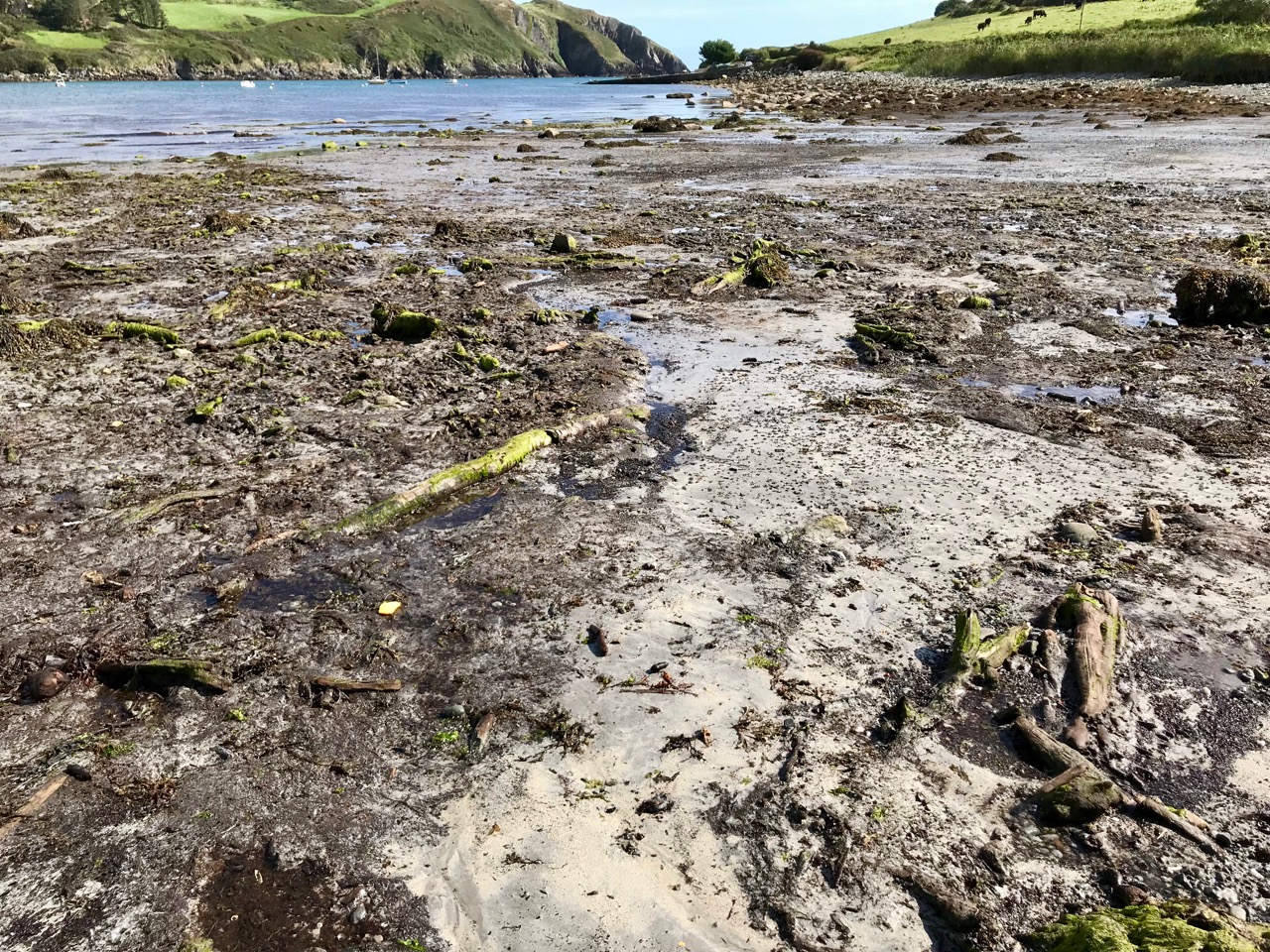
Part of the beach at Tralong Bay, Co Cork: the surface of the peat mass, which could be up to 4 metres thick, is interspersed with numerous tree boles, roots and scattered branch and twig debris. At one place I found a perfect complete pine cone, which could have been part of that debris.

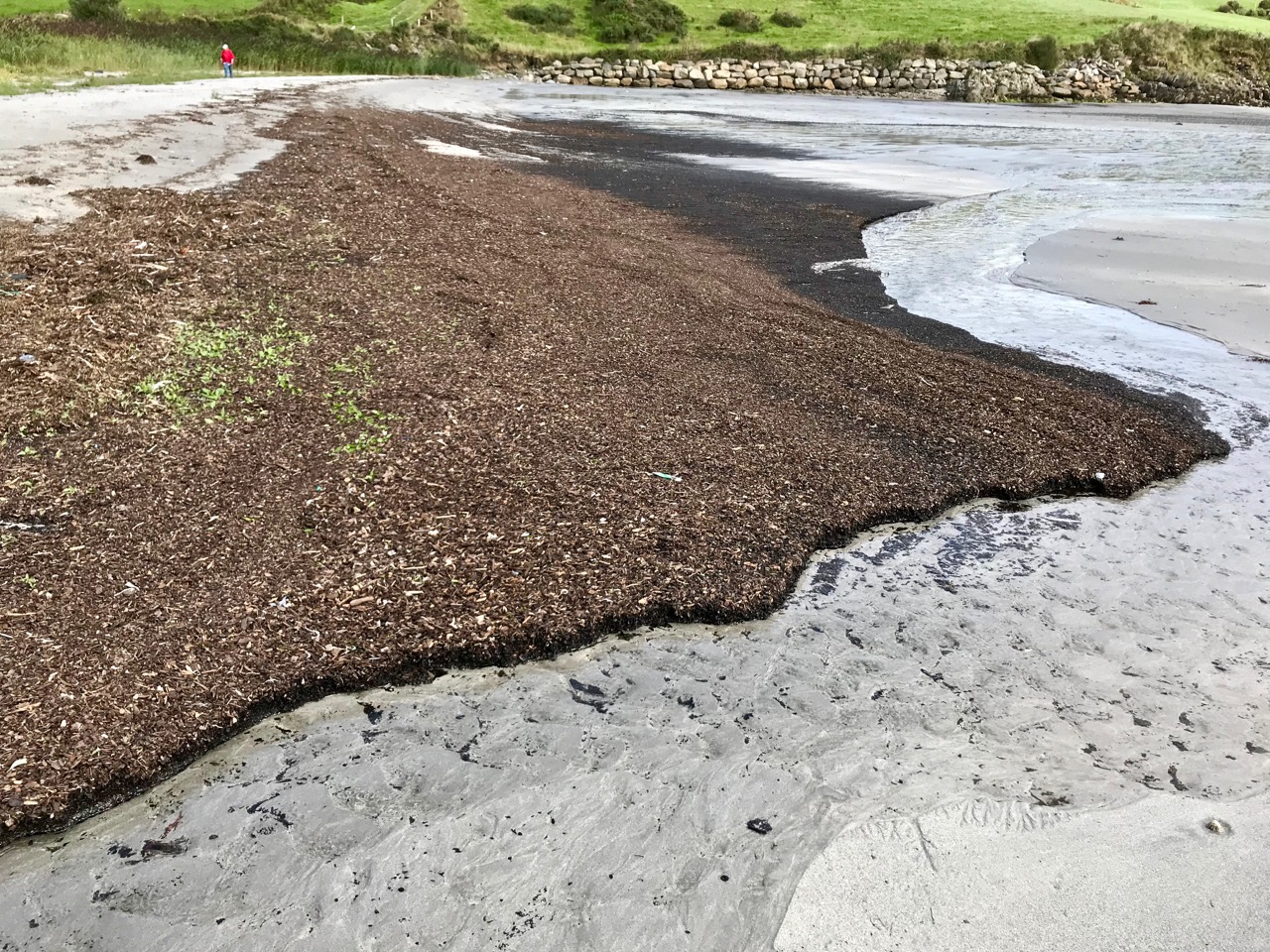
The surface of the beach is dotted with these remnants of ancient forest, over a wide area. It seems remarkable that there are also extensive blankets of loose material retained in the bay which must also originate from the forest.

Upper picture – one of the huge blankets of organic material – mainly wood based – which has been washed up to the north end of the bay at Tralong since the extreme storms of 2014. Lower pictures – closer views of the debris showing recognisable material including twigs and branches.

In November 2015 Michael Viney wrote a piece in the Irish Times on drowned forests in Galway Bay:

. . . All summer the quiet tides returned the sand that last winter’s storms had dragged offshore, heaping it even deeper over the old oaken wreck on the strand . . . Perhaps, though I hope not, this winter’s great mill wheels of waves will grind that deeply again. Storms two years ago tore away whole layers of sand and stone west of Spiddal in Galway Bay, uncovering stumps of ancient oak, pine and birch from a 7,000-year-old forest drowned as the sea rose after the end of the Ice Age. The same exceptional seas, on the north coast of Connemara, exposed remnants of human occupation a metre thick in the sand-cliff shore of Omey Island. There were medieval burials among them, and bog at least 6,000 years old . . . Elsewhere along the west coast yet more of the kitchen shell middens of early settlers, back to the late Mesolithic, were stripped away. So the sea reveals the past and then takes it away . . . Glimpses of Ireland’s lost shores and drowned forests are not new. Pinewoods submerged off the Bray coast were described by Robert Lloyd Praeger at the end of the 19th century when construction of Bray harbour changed sediment flows and piles of collapsed trees appeared above the sand . . .

Ancient forests reappeared again in Bray, Co Wicklow, in 2001, and more were revealed recently – in 2017. The Irish Times reported earlier this year on a project to discover “the lost landscapes” of the Irish Sea

Tralong Beach will change again, as the weather patterns vary, and it may not always be possible to experience the drowned landscape here. It’s an unmissable journey into deep history.
With many thanks to Robin Lewando for introducing us to this site, and to Anthony Beese for providing additional material

A Hare’s Tale

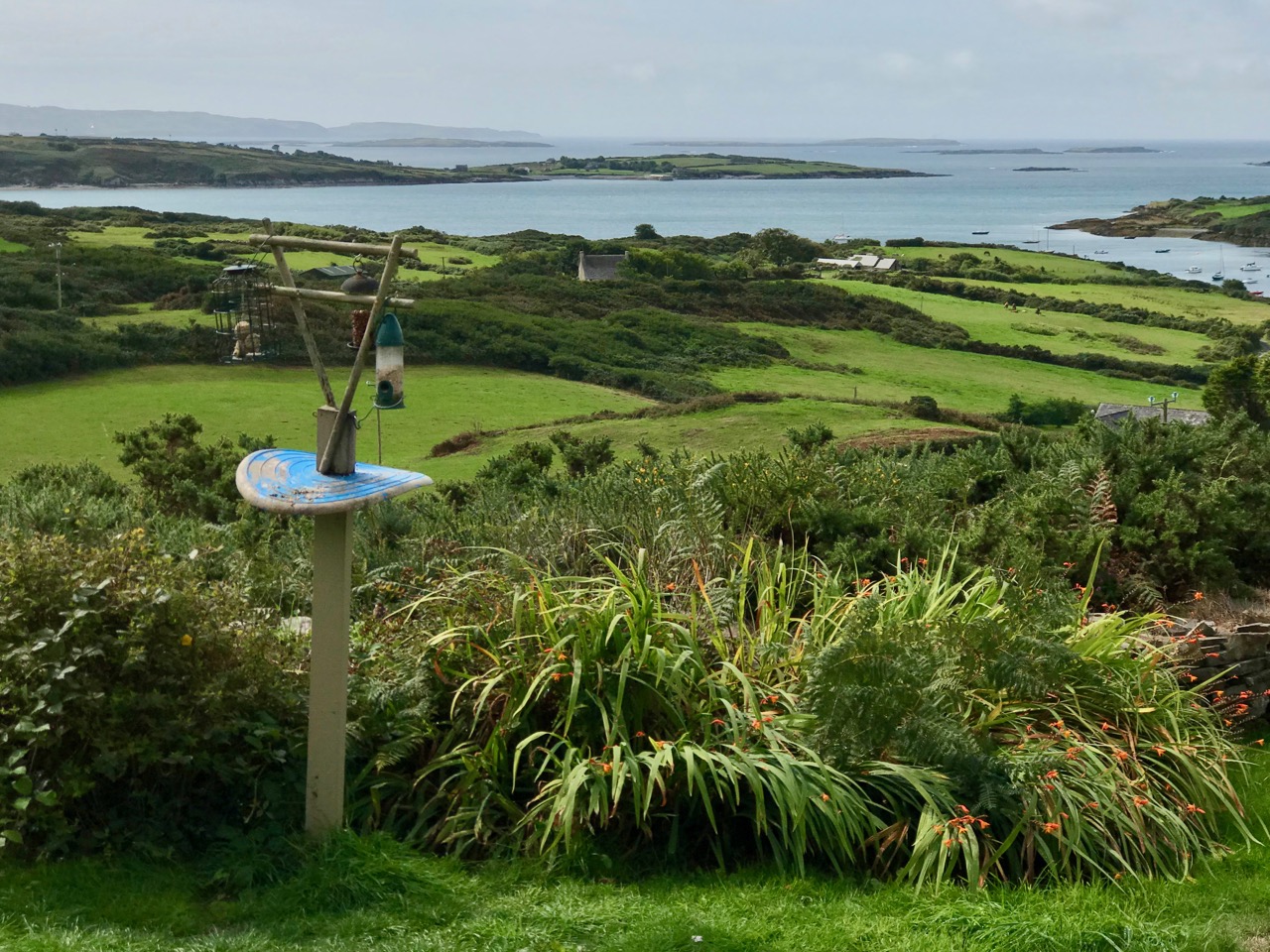
A country for hares . . . The idyllic landscape that surrounds us is a haven for Nature in all her moods and varieties, including the human intervention of agriculture (above). Regular non-human visitors to our garden at Nead an Iolair which is, after all, just a slightly tamed piece of the natural landscape, provide a constant source of interest and entertainment, as we have demonstrated in previous posts, including this one.

This summer of 2018 has been exceptionally dry – our usually green sward, and the view beyond (above), turned the colour of straw instead of verdant green. When the rains started a couple of weeks ago it didn’t take long for things to get back to normal (below), and the fresh green shoots of grass attracted an unusual, but most welcome, visitor.

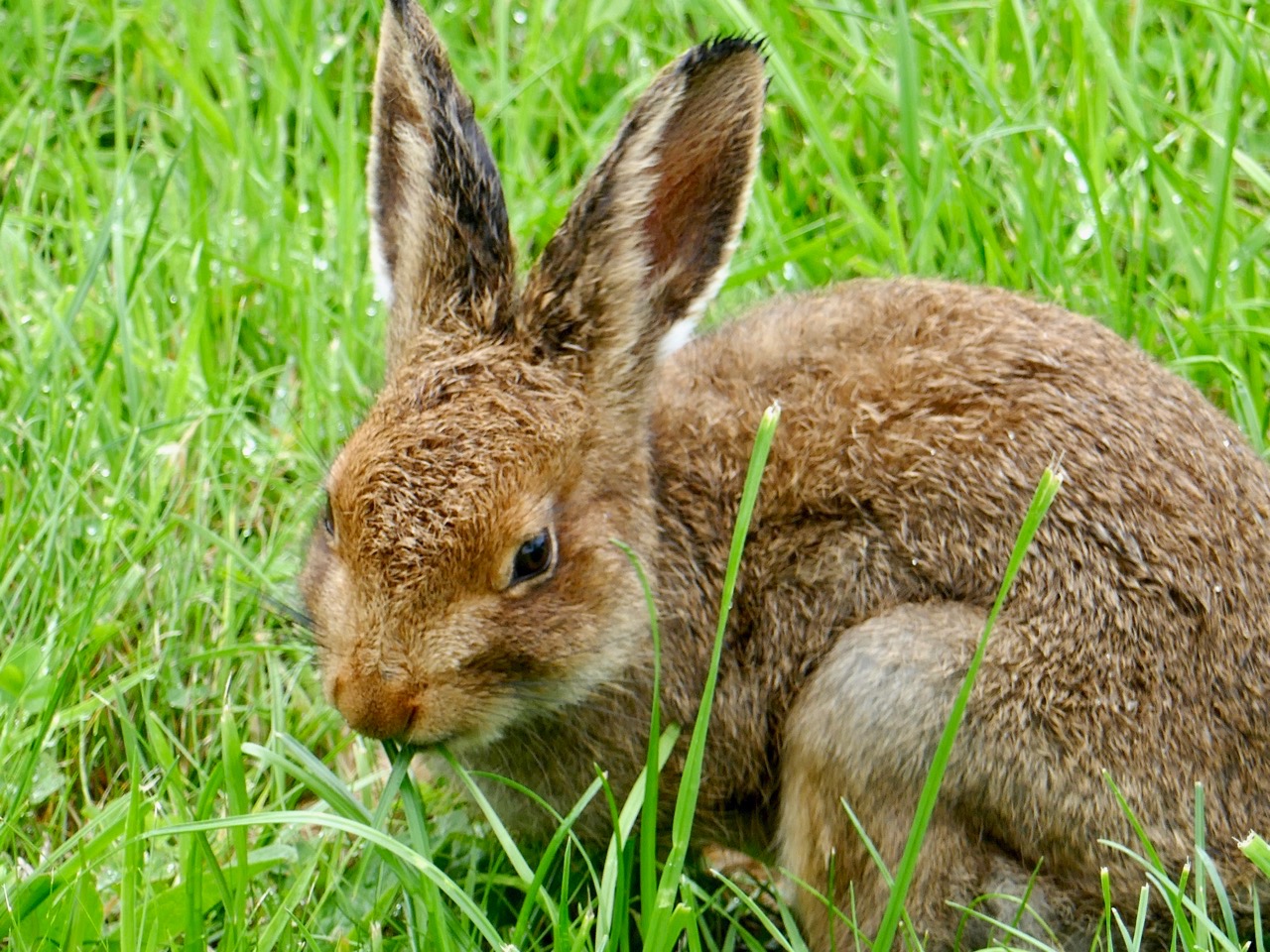
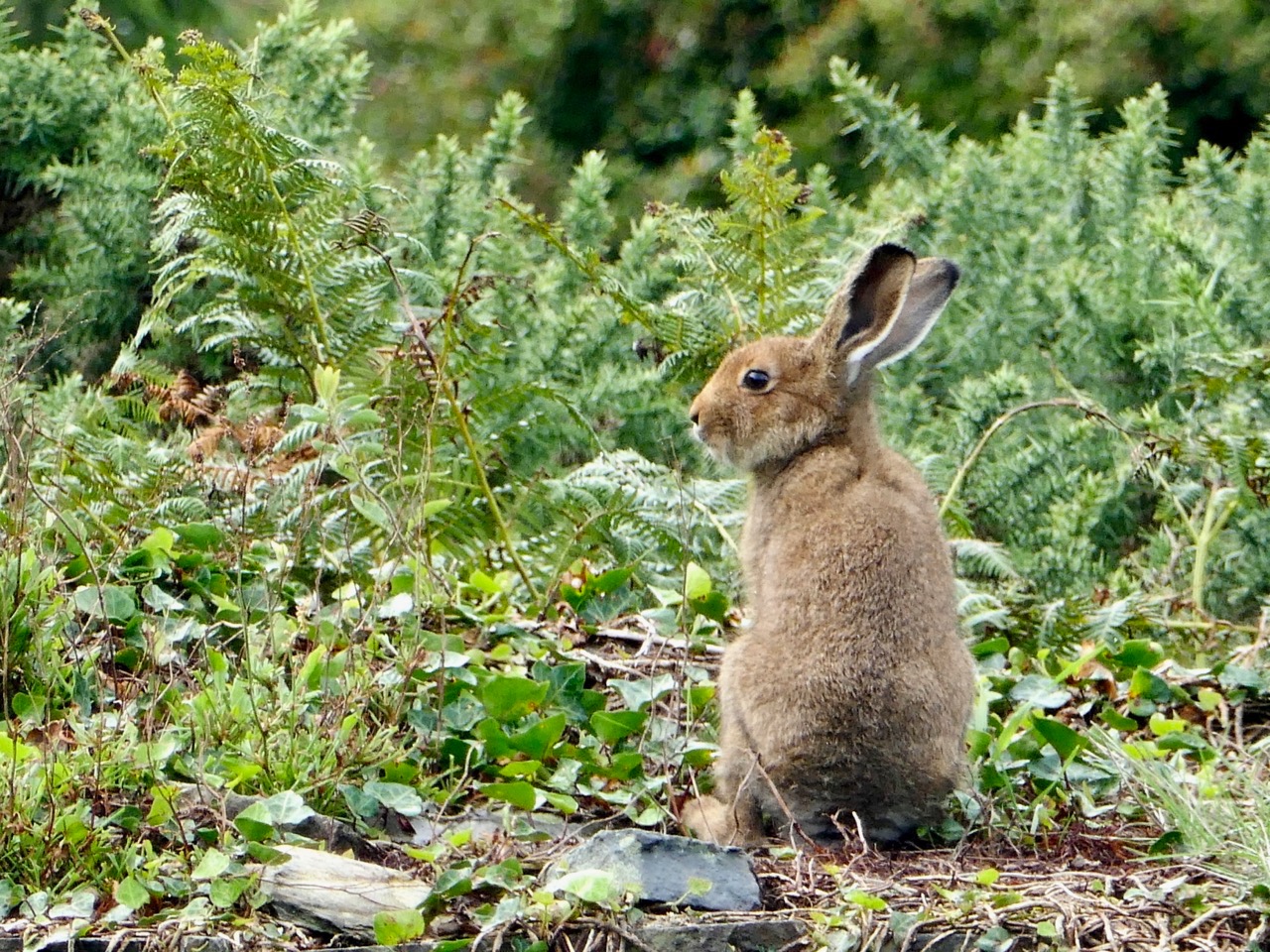
Here he is: Berehert the Hare. He’s young, probably about half adult size, but completely independent. Leverets are born fully developed – furred with open eyes, and lead a mainly solitary life. Hares can run faster than any other European land mammal – an amazing 37 body lengths a second. For comparison, Cheetahs can only manage 23 body lengths per second. It’s their speed that can keep them safe: they can easily outrun a single greyhound but, unfortunately, humankind makes the odds most unfair by setting two or more dogs against them in hunting and coursing which, unbelievably, are legal in Ireland, even though the conservation prospects of the Irish Hare are considered ‘very poor’ under the Berne Convention and EU Directive 92/43 Annex V see page 104. There have been attempts to change this bizarre situation – so far unsuccessful: you might like to tackle your own TD next time there’s an election coming up.

Berehert (have a look here to see where his name comes from) stayed around our garden for three days, and this provided an unprecedented opportunity (for me, anyway) to closely observe the animal’s characteristics and behaviour. In the picture above, where he’s looking a little glum on our terrace in the rain, you can see his wonderful russet colouring and his very long legs, particularly the hind ones. These enable him to take great leaps – fully grown he can jump four and a half metres from a standing start in any direction. This is another protection mechanism: if a hare is approached or surrounded by predators – usually dogs – he’ll wait until they close in on him and then jump that distance and run off. The dogs, which rely on scent more than sight, are completely confused and by the time they sort out where he’s gone, he has (hopefully) vanished.

Fortunately, Nead an Iolair’s resident greyhounds (which came with the house) wouldn’t be much use in the chase: they certainly didn’t seem to deter our visiting hare. Young Berehert did everything which was expected of him while I was watching. He allowed me to get quite close to him – and was perfectly aware that I was there, then suddenly he leapt up and was away, a gangly confusion of legs and ears. But he only went as far as the next patch of new green shoots. Here he is, nibbling away . . .

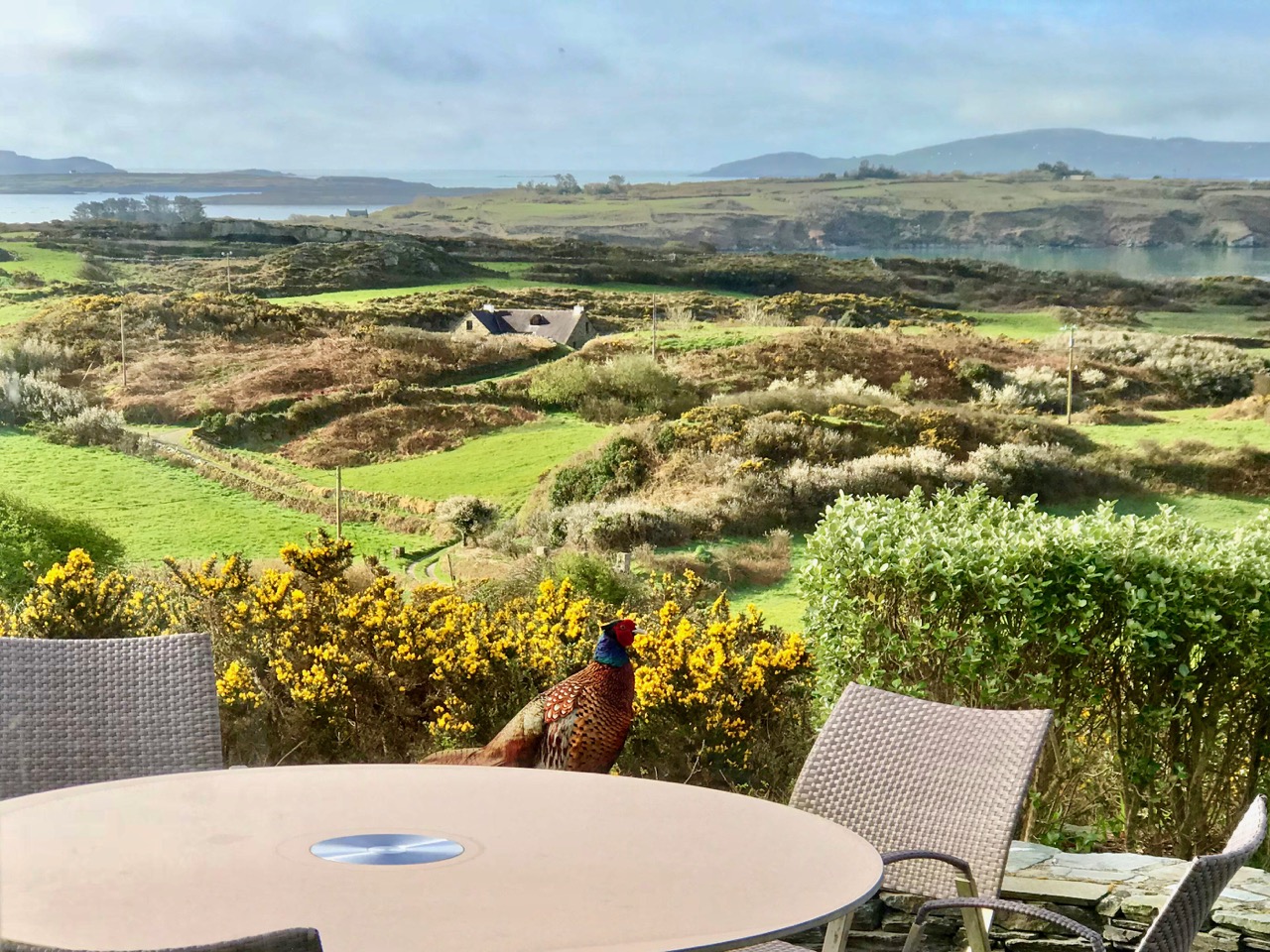
Hares are restless animals: they don’t stay in one place for very long, and it’s quite normal for them to range over 2km at a time when foraging. Berehert is still out there somewhere, and I’m hoping that he will revisit us occasionally. I’d rather not dwell on the fairly short average life span of hares in the wild (four to nine years) and the fact that only one in five leverets survives their first year. For our continuing education in the natural world of wild West Cork we will have to rely on our more regular and stable visitors: Finnbarr the Pheasant’s family and the myriad of small birds who populate our feeders, not to mention the wide variety of insect life and, in these shortening evenings, the colony of Common Pipistrelle Bats who are busily out hunting: if you think you don’t like bats, just bear in mind that each one can eat around 3,500 small insects, such as midges, in one night.
Thank you, Finola, for all those excellent photographs of Berehert: not the easiest of animals to capture on film!

Seeking Calm Now

What a week it’s been in our part of West Cork! Only the gentlest of images will help to bring me back to earth – hence the somewhat random collection of photographs today, some taken along the Toormore Loop Trail or in my own garden.

Along the Toormore Loop Trail

The highlight of the week was the opening of Coming Home: Art and the Great Hunger – Robert has given you some sneak peaks into this incredible exhibition in his post. If you do nothing else in West Cork this summer, take in this experience.

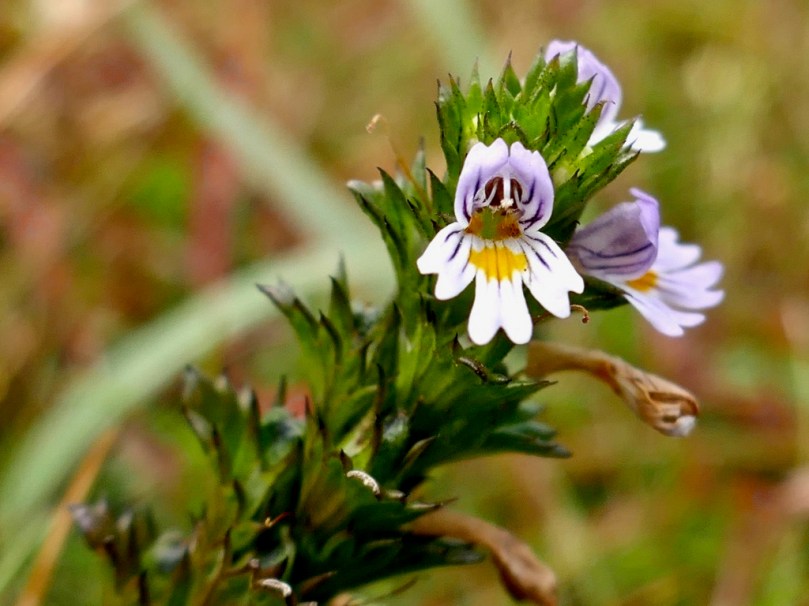
Eyebright, along the trail

But that’s not all – we also attended the unveiling of the memorial to the 110 Skibbereen Girls, which I wrote about last week. Most movingly, the ceremony was attended by Judith Constable, the Great, Great Granddaughter (and her daughter) of one of those girls. This is a story of hope, of the bravery of those adventurous girls who accepted the passage to Australia and went on to have full lives in their adopted land. It reminds us that it is possible for individuals to transcend the wretchedness of their circumstances.

Above, Judith Constable – her Great Great Grandmother, Jean Leary, was pictured in my previous post on the occasion of her 50th wedding anniversary. Below, the commemmorative spoons, finally installed, and the block of Australian stone.

And on Saturday night there was the long-anticipated performance of Anáil na Beatha (Breath of Life) at the ruins of the Schull Workhouse. We found ourselves seated outside the former hospital on the Workhouse grounds, listening to the unearthly lament of a chorus of voices, chanting the names of places stricken by famine, and then walking silently in a torchlight (well, lightstick) procession through the place where so many had come to die. It felt cathartic, respectful, important.

There was a memorial for Seamus Hogan too this week. He was one of us blow-ins to Ballydehob, a poet and raconteur and he will be much missed. His portrait was one of Shay Hunston’s finest and is reproduced here from Shay’s Wild Atlantic People series. It’s in a shop window in Ballydehob, across from his favourite hangout, Ina Daly’s pub.

Photo courtesy of Shay Hunston

And in between we had the launch of the marvellous Skibbereen Arts Festival, which goes from strength to strength each year and which will keep us busy from July 27th to Aug 5th. The program includes many concerts, the world premier of the Asenath Nicholson play, poetry, art exhibitions, movie screenings, walking tours.

Finally, today, was the opening of the new Toormore Loop walk. I helped out by leading a wildflower walk around the small looped trail with a happy group of a dozen lovely people. The greatest reward – a mother telling me that even the kids enjoyed it!

I’m wiped! All this stimulation is wearing me out. I need to take up meditation so all together now. . . om. . .om. . .

Uillinn – Surviving and Thriving

Uillinn, Skibereen’s unique contemporary art gallery, is thriving and surviving while apparently ‘under siege’ from the onslaught of the major engineering works engulfing the town centre at the moment. It’s all about making the town and its buildings safe from future flooding: extreme weather conditions – which are likely to get worse as the years go by – are threatening Cork city and many of the low-lying  West Cork communities and works are now in hand to protect these settlements against serious flooding into the foreseeable future. The result is a whole lot of disruption but, as always, imperturbable Cork Rebels are just getting on with life in spite of it all.

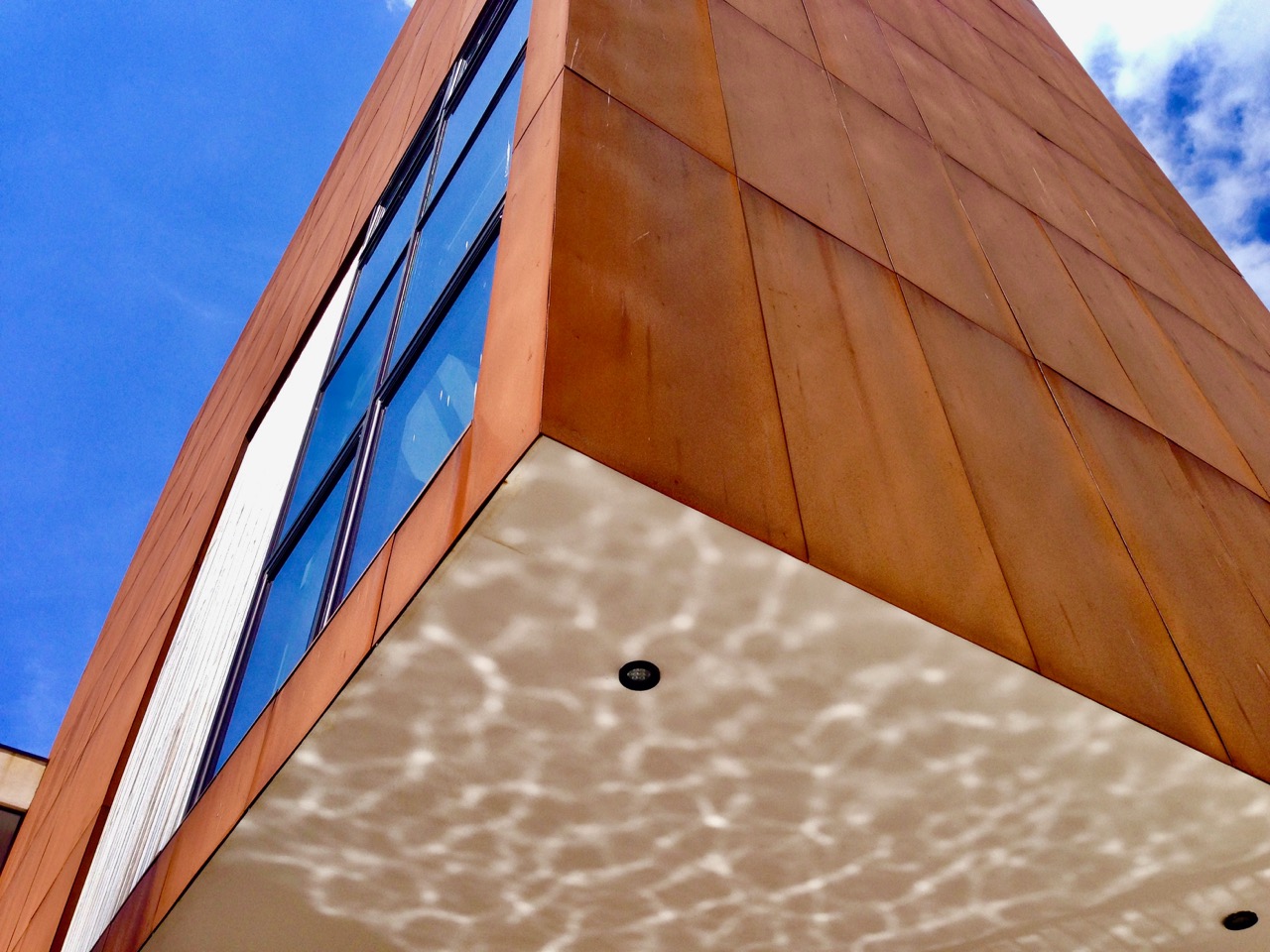
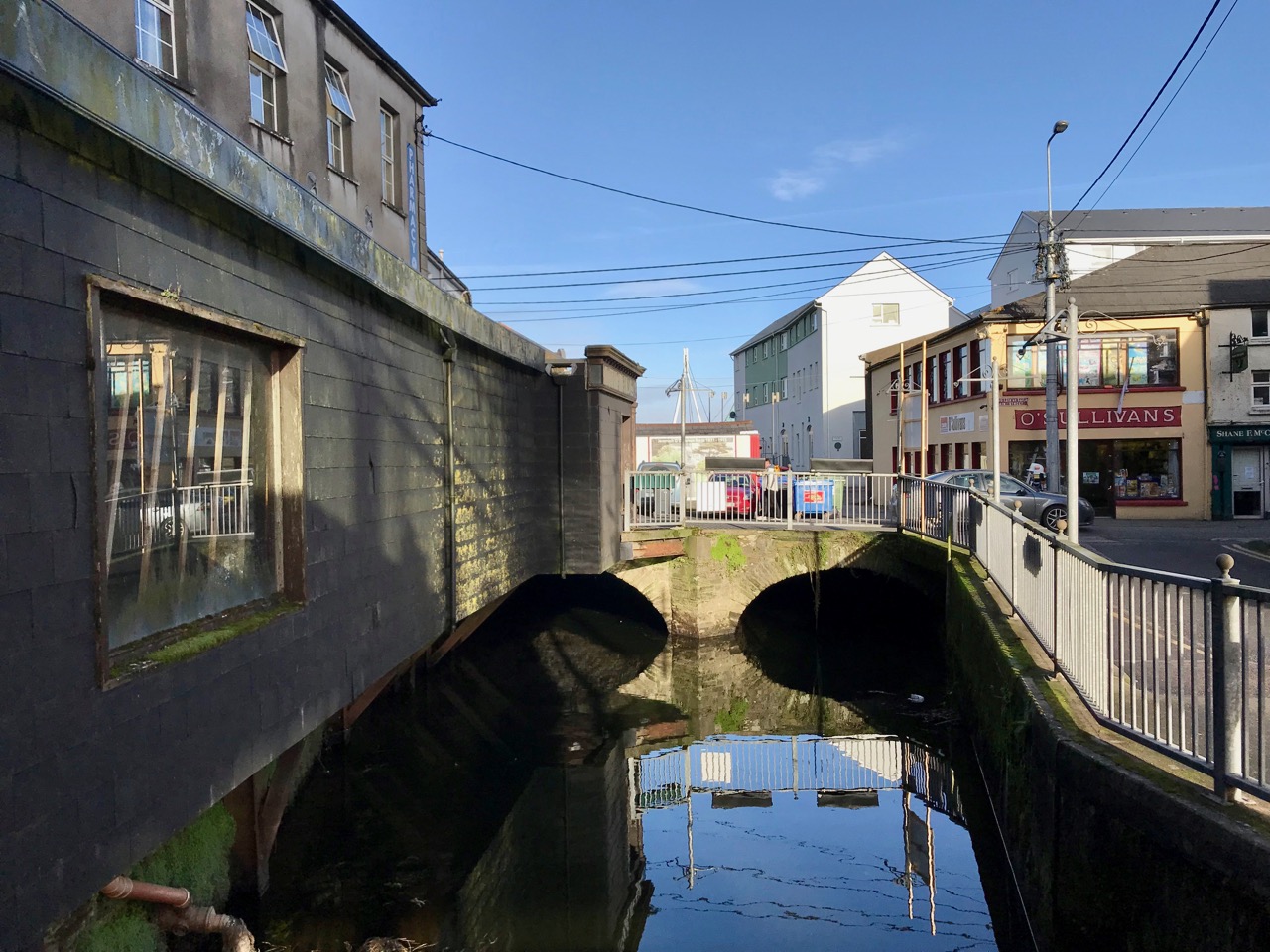
Peace and quiet in Skibbereen, before the works commenced. Header picture – the Caol Stream reflected on the canopy of the cantilevered gallery

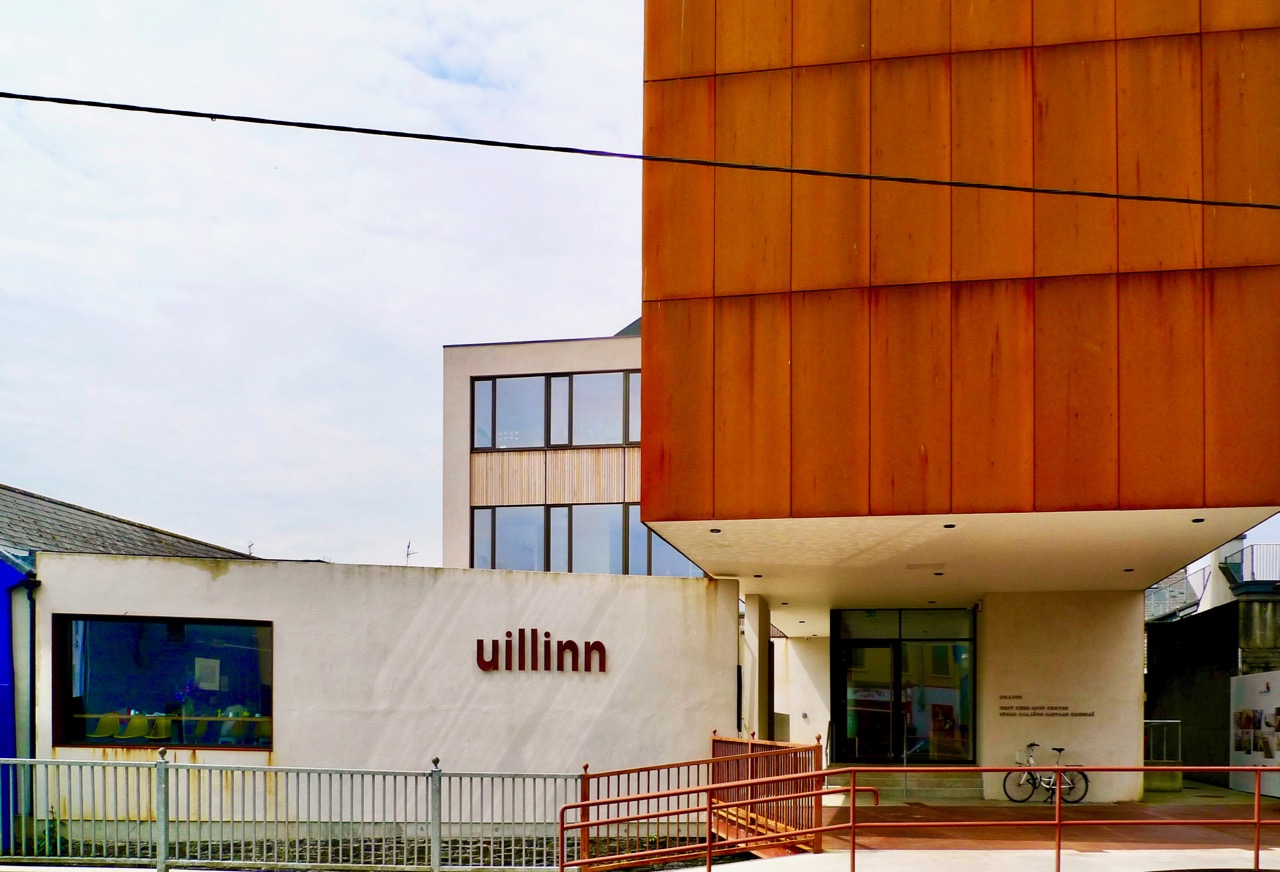
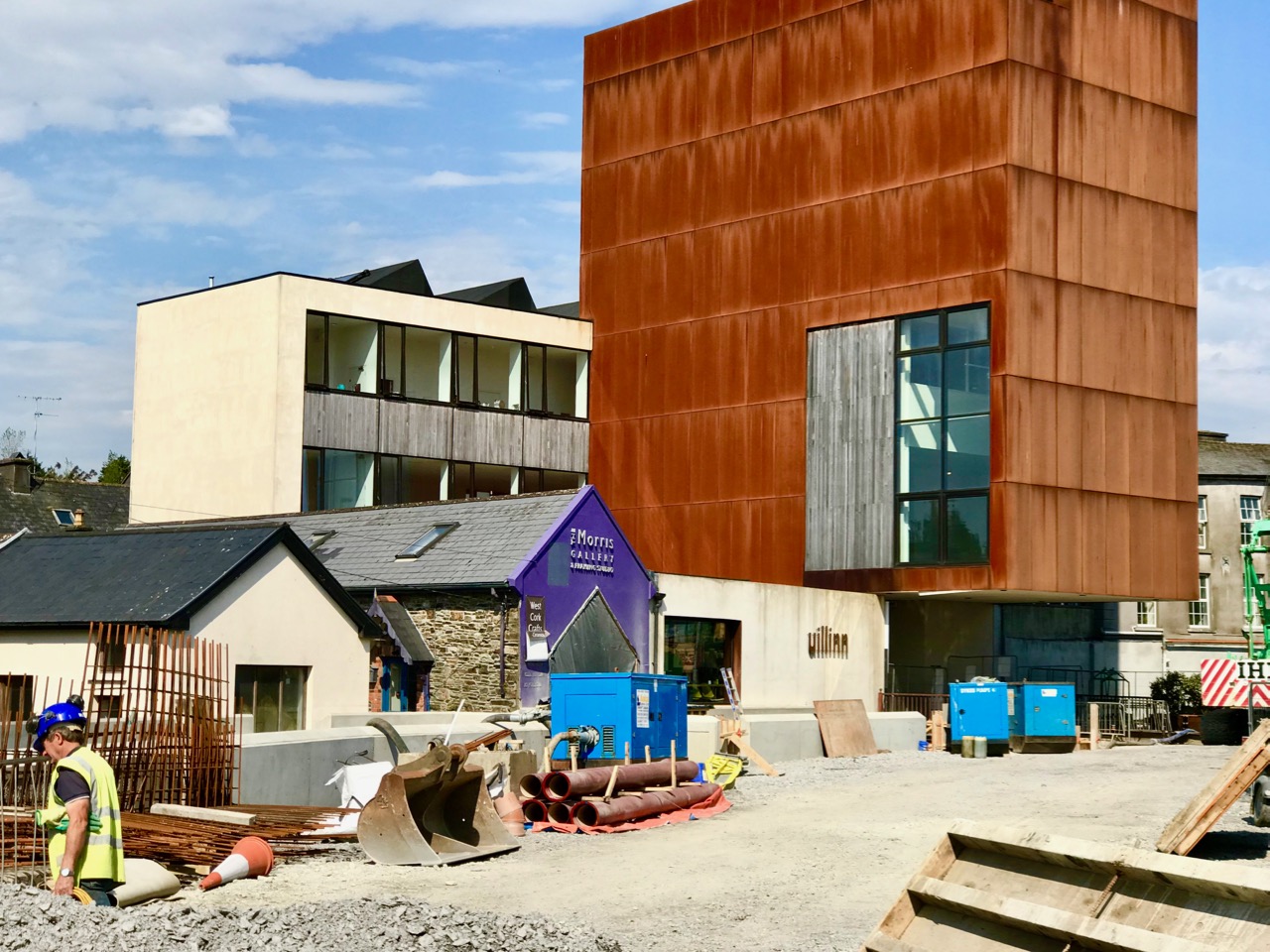
When the West Cork Arts Centre took the plunge to propose a significant arts gallery in Skibbereen back in the early years of the new Millennium, an architectural competition was held. In 2009, the winning design, by Dublin based Donaghy and Dimond Architects, proposed a dramatic 5-storey high Corten steel-clad box cantilevering over the Caol Stream that runs beside the site, gaining valuable ‘bonus’ space for accommodating the work of the Centre. In fact, the name Uillinn means ‘elbow’, and the gallery is situated on a bend – or elbow – of the stream. Economically – after the collapse of the Tiger years – it was a difficult time for Ireland and numerous projects were being cut or shelved, but work on the gallery went ahead, although not without compromise. Here’s an excellent article from the Irish Times which charts the progress of the building process.

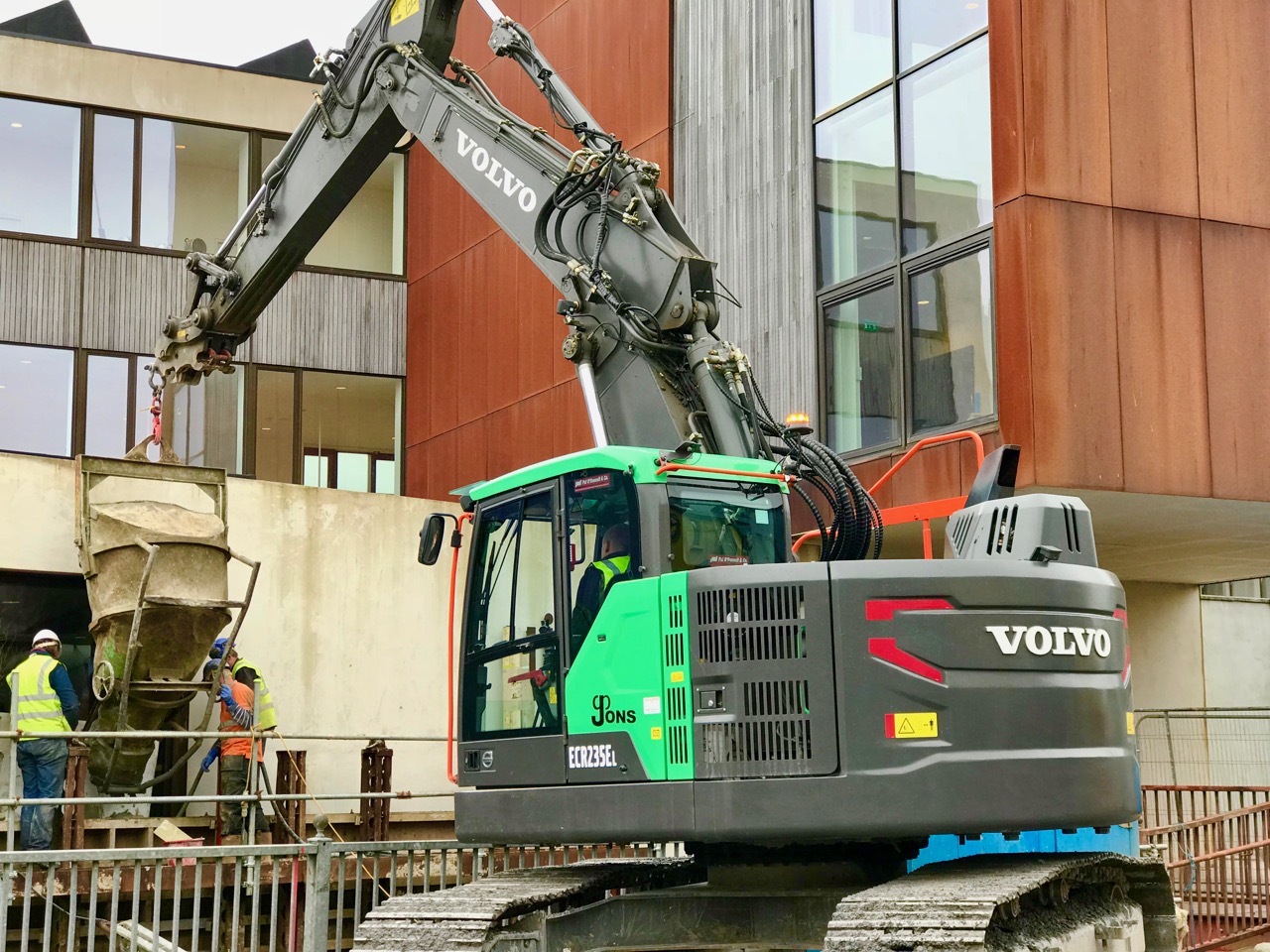
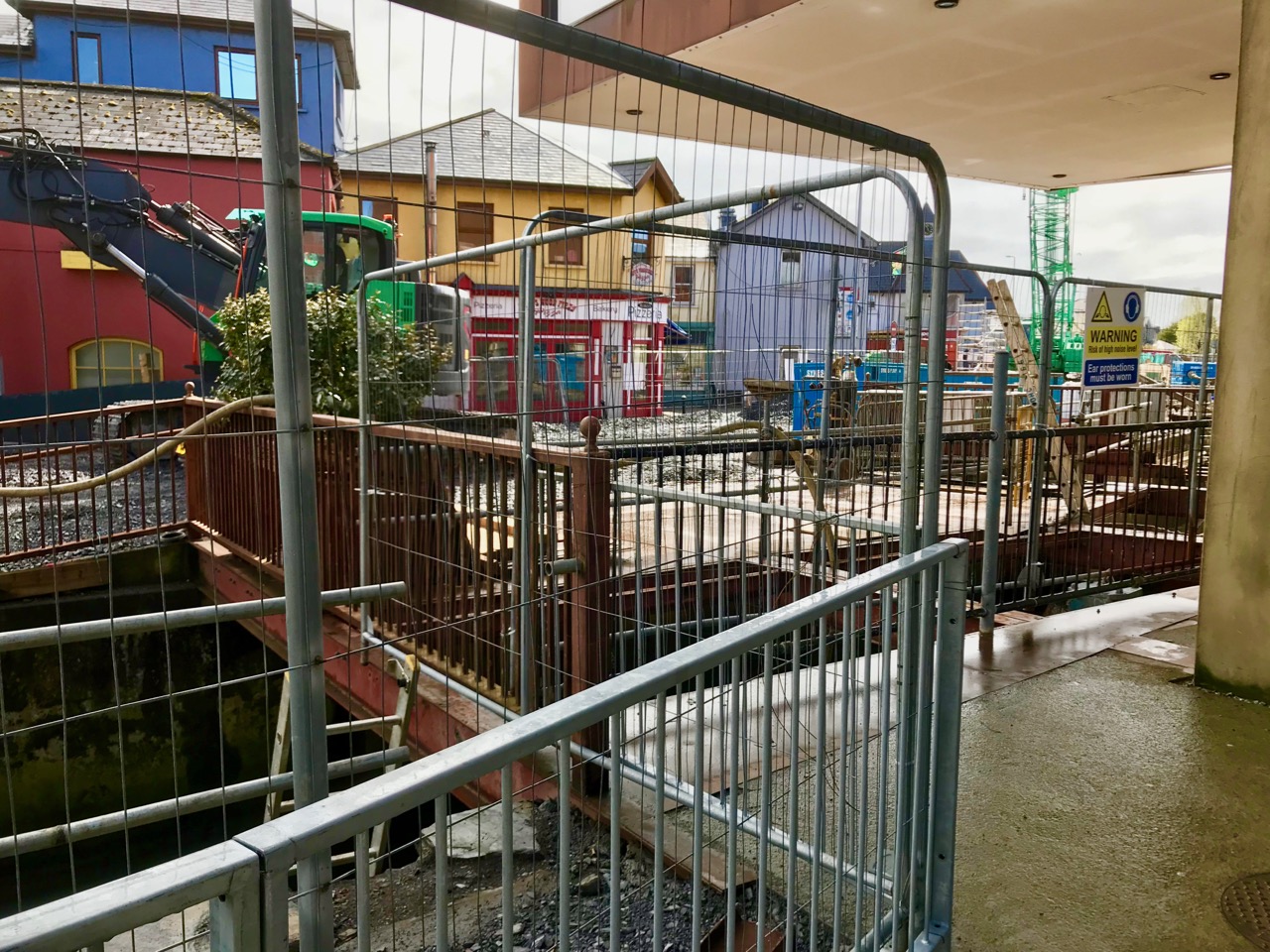
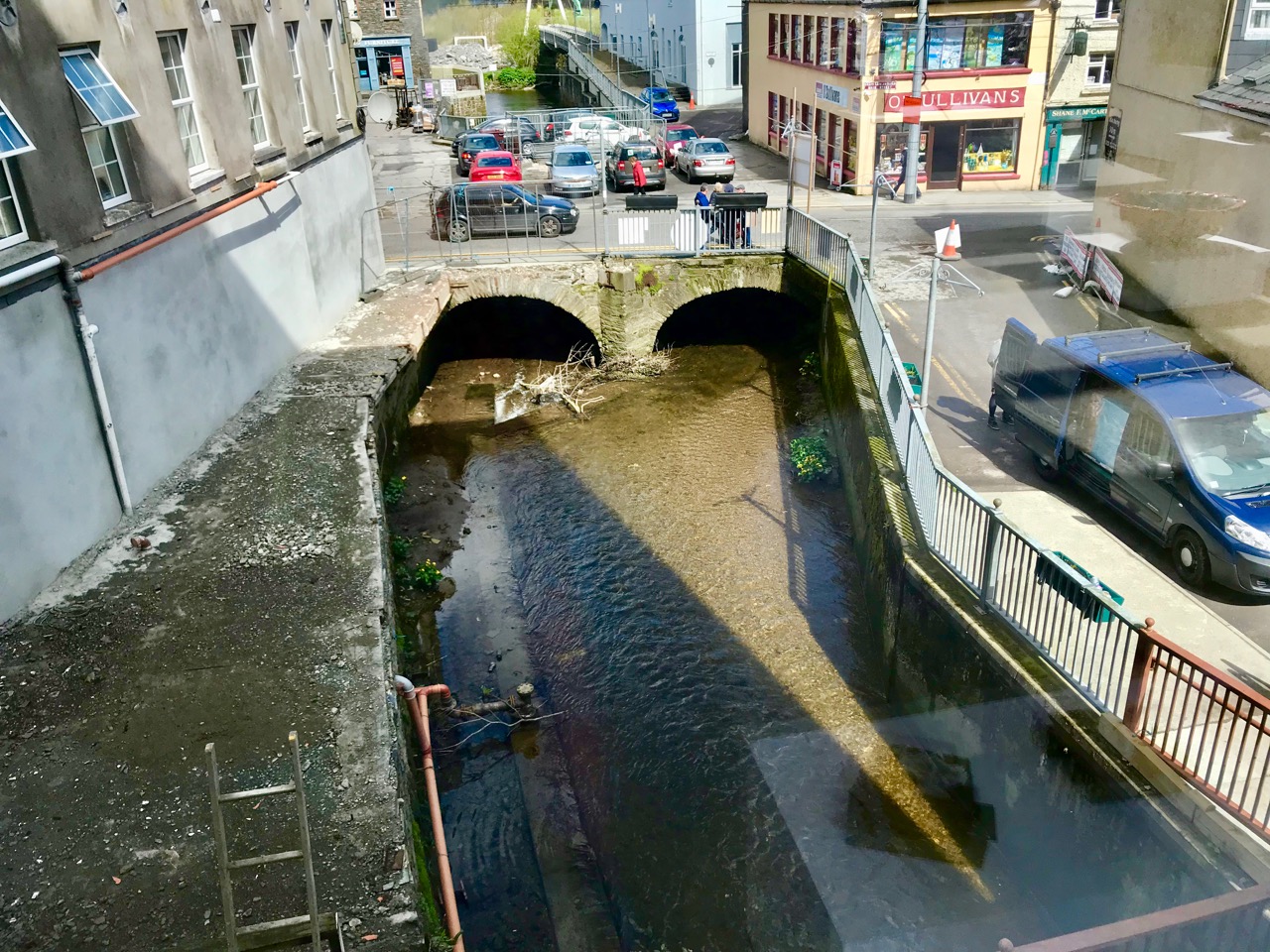
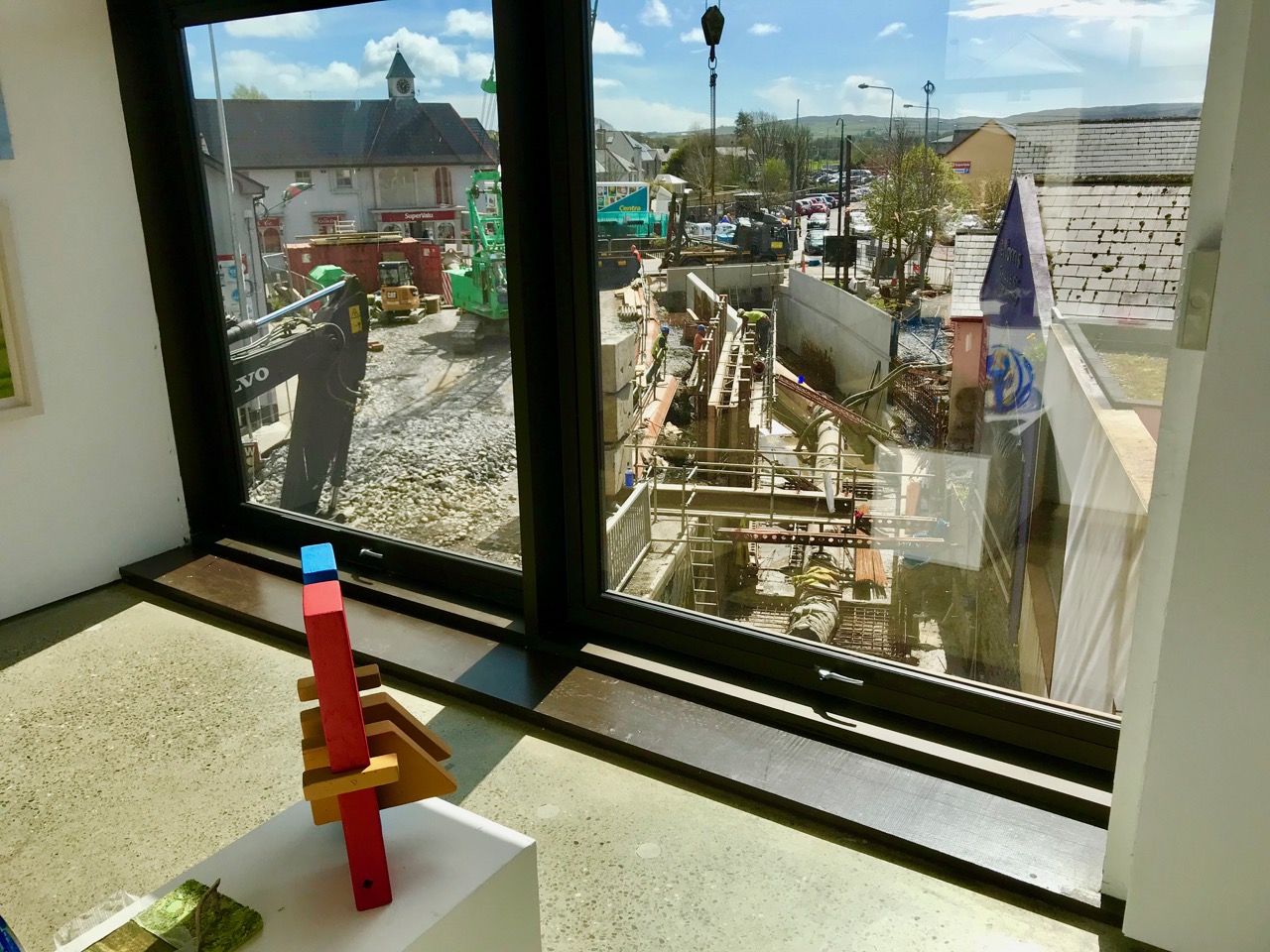
Now, the gallery is facing new challenges as the flood relief works are encroaching on the surroundings of the building. The basis of the engineering solution to protect Skibbereen from further floods is to build high, waterproof walls around every watercourse in and around the town. The principal one of these is the River Ilen, which skirts the north side of the town. However, the Caol Stream – a tributary of the river – runs right through the commercial centre, and right by Uillinn. Finola has written about the abundant natural life that was contained in this stream, albeit much of it partly hidden from view. Everything is changing now, as the sides of the waterway are being steel-piled and concrete walls are being built up to a height of 1100mm all the way around it, as you can see in the photographs below. In places, toughened glass sheets will be inserted in perforations in the retaining walls to enhance the structure and allow views to the water.

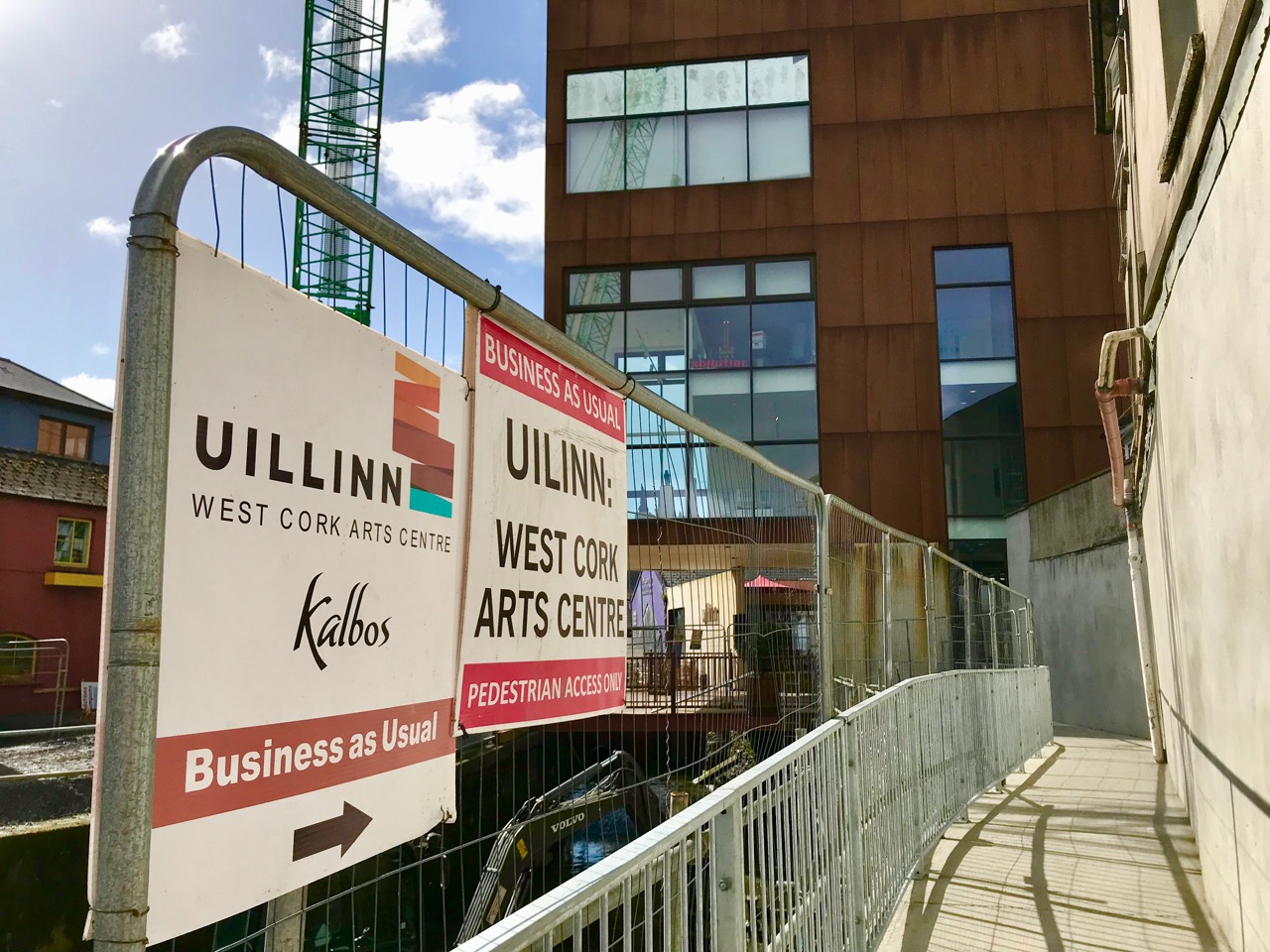
Of course, a fresh ecosystem will establish itself in the new, concrete-encased channel, although the character of it is sure to change. Uillinn’s problem is that it is bounded by the stream all the way along its east elevation – and the main entrance is via a bridge (now temporarily dismantled) over the waterway.

Close work: the channel of the Caol Stream is being excavated and then lined as it passes beside Uillinn. The bridge providing the main access to the gallery has been removed to allow these works to proceed

In spite of all these works (which, for Skibbereen as a whole, won’t be finished until 2019) Uillinn – and the renowned Kalbo’s Café which it embraces – have to remain open and viable at all times. This is being achieved by constant liaison and close co-operation with the contractors, Jons Civil Engineering, appointed by Cork County Council, as agents of, and in partnership with the Office of Public Works. Although delayed by the ravages of Hurricane Ophelia and other severe winter storms, the contractors have pulled out all the stops in order to restore normality to the centre of the town as soon as possible and have managed to maintain full access to the gallery and cafe, and all premises in the path of the works, although some disruption to businesses in such circumstances is inevitable. On the west side of the Caol Stream, between Uillinn and Skibbereen’s Main Street, a disused single story shop has been purchased and demolished, and its site now provides a new pedestrian access to the gallery – and it’s one which will continue to be used once everything is finished and the bridge is restored. Suitably streetscaped, the overall approach to Uillinn will be much improved as a consequence of all these works.

The ‘old shoe shop’ (top) was an unusual structure, partly cantilevered out over the Caol Stream. Its removal (lower pictures) has enabled an extra pedestrian access to be established from Main Street

As a member of the Board of Uillinn, closely involved with much of the liaison between the gallery personnel and the contractors, I can confirm that relations have at all times been caring, cordial and helpful, and I commend those involved in the physical work for their skills and approachability through all the potential difficulties. I also commend the Director, Anne Davoren, and her dedicated team at the gallery for keeping cheerful and smiling throughout, and always maintaining a smooth efficiency. The staff of Kalbo’s Café have also kept up their impeccable standard of service and remain such an asset to Uillinn.

It’s unlikely that things will be back to normal before the opening of Uillinn’s momentous venture on 20 July this year – Coming Home: Art and the Great Hunger

. . . The exhibition of artworks at Uillinn, including work by major Irish and Irish American artists of the past 170 years such as Daniel Macdonald, Paul Henry, Jack B. Yeats, William Crozier, Hughie O’Donoghue, Dorothy Cross and Alanna O’Kelly, will be accompanied by a rich and diverse programme of performances, talks, lectures and events at Uillinn, and off-site in other locations in West Cork. These will resonate with the history and legacy of the Great Hunger and also amplify the contemporary themes explored in the exhibition. The themes include famine, the politics of food, poverty, displacement of peoples, refugees, emigration, identity, memory and loss . . .

We are all looking forward to the launch of this unique event in Skibbereen, and we know our contractors will ensure that everything will be done to prioritise good access and presentation of the gallery through the duration of the exhibition.

Coming Home: Art and the Great Hunger runs from 20 July to 13 October at Uillinn, Skibbereen

Heir Island – a Modern Paradise

You know that term, Island Paradise? Well, this week I went there. It’s called Heir Island, and it’s one of the inhabited islands of Roaringwater Bay. It was the first of many visits, I hope, and it was taken in the good company of Trish Punch and two Islanders, Christine Thery and Sarah Mathews.

This is the view of Heir Island from our own home – the grouping of houses behind the sandy beach is called Paris!

Heir (sometimes rendered as Hare) is Inis Ui’Drisceoil in Irish, and indeed it was very much part of the O’Driscoll territory up to the 1600s. The population has dwindled, along with that of all the islands, until now there are only about 20 permanent residents. But it’s a popular destination in the summer, with an active sailing school, a renowned restaurant (the Island Cottage) and of course the Bread-Making School that Robert and I attended and enjoyed enormously.

It’s got wonderful peaceful boreens, picturesque cottages, panoramic views over Roaringwater Bay and to the other islands, golden beaches – all this and it’s only a four minute ferry ride to the mainland. But shush – don’t tell anyone else or they’ll all want to come.

Trish is doing a long-term photographic project focusing on the islands of the Wild Atlantic Way and was keen to get back to Heir to capture the views. I had been following a Facebook Page called Heir Island Wildlife Project and had contacted Christine and Sarah, two of the admins on that page, to see if they would meet us when we came and tell us a little about their project. They did better than that, walking the length of the Island with us, and answering all our questions. (Not to mention the coffee and those Portuguese buns!)

I had boned up a little on the island plants, with the help of The Wild Plants of Sherkin, Cape Clear and adjacent Islands of West Cork by John Akeroyd et al, a publication of the Sherkin Island Marine Station that we had visited way back. The book outlines the habitats and growing conditions of the islands, and enumerates the “astonishing” richness of plant species that are to be found on them. Heir is second only to Sherkin in the number of Flowers and ferns to be found, several of which are nationally rare.

The islands ‘specialise’ in heathland species, due to the dominance of open ground, the lack of trees and the broken rocky nature of the terrain. As Akeroyd explains, Thin soils dry out during the summer, thus preventing encroachment by more vigorous species and allowing the plants themselves to die down and the seeds to ripen. Most of this group of plants are annuals more characteristic of southern Europe and the Mediterranean region. . . 

This slideshow requires JavaScript.

And indeed what I found was an astonishing variety of wildflowers. When I got home I counted that I had taken photographs of 45 different plants! But that was only part of the wildflowers we saw, since I didn’t photograph everything we came across. Several were new to me, including the Amphibious Bistort and the Pond Water-crowfoot that had arrived unbidden in Sarah’s newly-dug pond.

Butterflies, hover flies and bumble bees seemed to be everywhere we looked. The orange-tip butterfly (the one that loves the Cuckooflower) wouldn’t stay still enough for a snap, but a Common Blue Butterfly with its iridescent wings, and a Cinnabar moth with bold stripes both cooperated.

At the West end of the Island rugged cliffs provide a perfect breeding ground for European Shags. These birds have been amber-listed in Ireland because breeding populations are very localised. Therefore, it’s important that they have found a suitable nesting site on Heir and it’s wonderful to see that this small colony seems to be successfully hatching their young. Looking quite like a cormorant and similar in size, up close they have a striking green gloss to their feathers.

The headland from which we observed the shags provided a carpet of spring heath on which to loll about and admire the views across the Cape Clear and the Mainland. My eyes were immediately drawn down, however, to the ground beneath me. Orchids, Wild Thyme, Thrift, Lousewort, and a beautiful rose-coloured Kidney Vetch provided swaths of pink and purple, while Milkwort and Dog-violet yielded hint of blue and Scurvygrass (Common, I think) rounded it all out with a mat of white flowers.

I didn’t find (or didn’t recognise) some of the very rare plants that grow on these islands, like Wormwood, Deptford Pinks and Spotted Rockrose. Obviously another expedition is called for!

I worry all the time about habitat loss in West Cork. The sound of the rock breaker is a constant in our lives, carving out new fields where there was heath and hedge, and thereby reducing food and shelter for our pollinators and small mammals. I feel despair when I arrive at my favourite place to see a certain set of wildflowers, only to find that someone has been in there with Roundup and it’s now a brown wasteland. Places like Heir Island have a unique opportunity, perhaps even a responsibility, to stay as pristine as possible, to remain an Island Paradise as long as possible for all our sakes. Fortunately, lots of the local residents think so too and that make me hopeful.

A glimpse into Christine’s studio – her exhibitions are always eagerly anticipated locally

Thank you, Sarah and Christine for a wonderful day, and Trish for your excellent company. Let’s do it again soon!

Ballyfin Bliss

If the house at Ballyfin is beyond superb (see Robert’s post this week), the grounds are equally so. Originally based on the design philosophies of Capability Brown, the emphasis is on natural and sweeping vistas, pleasure gardens, mixtures of open lawn and woodlands, tea-houses and follies artfully dotted around, an expansive lake with an island and with lawns leading down to the edge, and of course a long winding driveway that eventually reveals the best view of the house.

Somehow all these landscape features have survived intact at Ballyfin, although some of them needed to be rediscovered or uncovered. What has been added is a masterpiece of both enhancement and restraint, and the genius behind that is Jim Reynolds, the Managing Director of the enterprise that is Ballyfin Demesne. Jim and I share a past in Boyne Valley Archaeology, although we were in different camps (that’s another story) and I visited his famous garden, The Butterstream in Meath, with my mother in the early 90s. That was the last time I saw him until this week. Genial and self-effacing, he gives credit to his marvellous team, while they, to a person, talk about his eye, his vision, his expansive knowledge and his drive.

We spent two days walking, riding (in a horse and carriage) and driving (in a golf cart) around the estate, and we still haven’t seen all of its 640 acres. Entrancing is the word that keeps coming to me. It’s spring still (late this year) and the woods are awash in bluebells, mixed with Ramsons, Herb Robert and Greater Celandine.

The extensive trail system takes you around the lake and into the old-growth woods, where chestnuts and oak trees shelter vast swathes of colourful undergrowth.

The path meanders past the Grotto (every house should have one) which is not your typical Irish Lourdes shrine, but a rustic construction created to convey a sense of ancient ‘druidic’ mystery. Impressing and amusing your guests was important and grottos, temples and such like were a vital element of 18th century pleasure gardens.

When it comes to follies, the jewel in the crown at Ballyfin is the Round Tower. It looks old because it was built that way, as a ruin. They say that from the top you can see 16 counties. It’s a pleasant thing, as a couple of our fellow-guests did, to take a book up to the little room at the top and while away an hour or two before wandering back down to the house for coffee and a scone, mid-morning.

Jim and his team’s commitment to wild flowers and to pollinators is everywhere in evidence. The meadows are only cut once a year and as a result they are alive with the hum of bees and the flash of butterflies. Even the formal and kitchen gardens have areas set aside to attract pollinators.

As seems inevitable in Ireland nowadays, we also saw Japanese Knotweed on the demesne. Robert Pywell, the head gardener, told us that the rock garden was originally hidden under an acre of Knotweed. Only constant spraying/injection can address a Knotweed problem, and the program is ongoing for this invasive and persistent species.

He told us about another pest too – Ireland has a mink problem. Originally imported from North America for the purpose of fur farming, several hundred mink were “liberated” by animal rights activists in a nearby county years ago. Others have escaped, or been released by fur farmers over the years. They have no predators in Ireland and they are ferocious killers of ducks, swans, fish, rabbits and small mammals. They have decimated the waterfowl population at Ballyfin. Trapping them is difficult, but it has to be done. Lady Coote would approve – she loved her peacocks and built an aviary for them (above) that was, as our driver said, better than some of the houses round about.

Back to that rock garden (above) – once it was salvaged it turned out to be a glorious addition to the demesne. Built around an old millstream and pond, it hosts some delightful plants. A new one for me was Saxifraga Cymbalaria (sometimes called Celandine Saxifrage), which is not native and only known in a few places in Ireland. It obviously loves the rockery as it is flourishing and providing an attractive yellow ground cover.

Beautiful as this designed landscape was, once fully restored, something was missing and Jim Reynold’s unerring eye for detail knew exactly what was needed. What he did was to build a cascade down the back lawn, from an ornamental temple at the top to a Neptune pond at the bottom. It is the perfect finishing touch and has quickly become an iconic aspect of Ballyfin’s landscaping.

We loved our break at Ballyfin. Special treats such as this don’t come around often in the normal course of life, so we are grateful that we can enjoy the odd sortie such as this now and then. It was such a privilege to be able to appreciate the incredible work that has gone into restoring this house to its former glory and the wonderful staff that looks after it (and looked after us!) so proudly.

Thank you, Ballyfin!