Green & Silver

title

This book review has been a long time coming: I first read the book in 1963! I was still at school then, and I was given it as a prize for essay writing (although I have no memory of the essay). I chose Green & Silver because I was already familiar with the author – Lionel Thomas Caswall Rolt, more usually known as L T C Rolt or ‘Tom’ Rolt. I had found in the local library his first book – Narrow Boat – written in the late 1930s when the author and his wife were living and travelling through England and Wales on board a converted canal boat. At that time the canals of Britain were still in commercial use, although water transport as a way of life was declining. I was smitten with the romanticism of the nomadic life of the canal boatmen – and of Tom Rolt – and Narrow Boat is beautifully illustrated with woodcuts by Denys Watkins-Pitchford, which enhance the experience of reading this classic book (which has never been out of print). Sir Compton Mackenzie wrote “it is an elegy of classic restraint unmarred by any trace of sentiment… Rolt’s pen is as sure as the brush of a Cotman… Narrow Boat will go on the shelf with White and Cobbett and Hudson.”

Woodcuts by Denys Watkins-Pitchford which illustrated the first edition of  Narrow Boat by L T C Rolt, published by Eyre + Spottiswoode, 1944

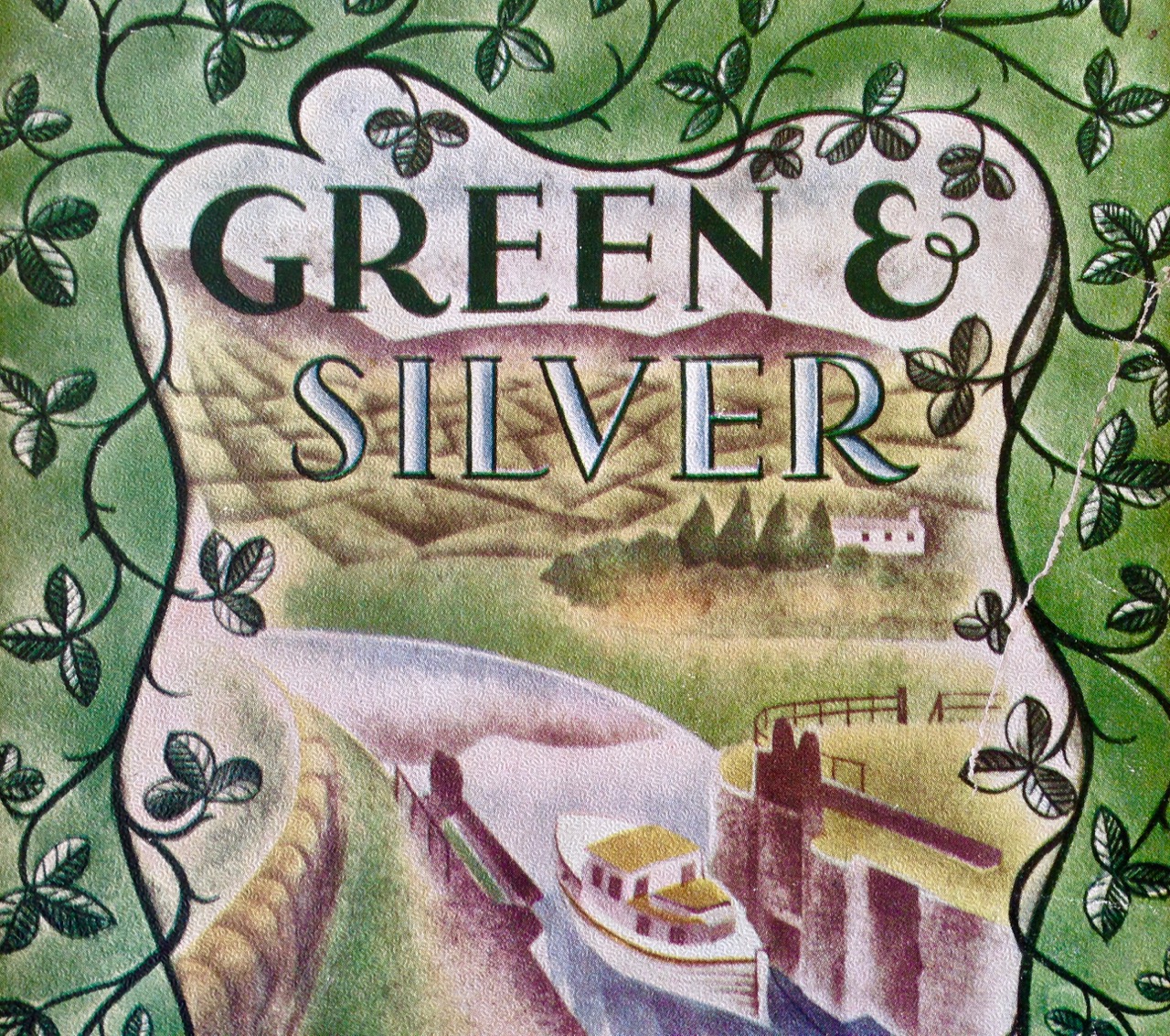
When choosing my essay prize, therefore, it seemed perfectly natural to go for another of Rolt’s books. A brief foray through book catalogues (remember – there was no internet in those days!) brought to light Green & Silver, first published in 1949. I established that it was an account of a journey by the same author through the canals of Ireland. It was the cover as much as anything else that attracted me to the book – it stood out as something quite unusual; I little knew that the content would have a profound effect on me, instilling an immediate yearning to visit the land across the Irish Sea, about which I knew very little.

Left – the bookplate pasted into my first edition of Green & Silver (it’s now in print again); right – the exuberant dust cover which attracted me to the book, painted by Evelyn Hunt

It was, however, to be a dozen years before I first visited Ireland (and then it was more a search for music than the canals), but Rolt’s works as a whole (he wrote more than 50 books) cemented in me an enduring interest in engineering, industrial archaeology, and, specifically, water transport. I spent my youthful leisure time campaigning to restore canals, physically digging them out of dereliction and even building lock gates with oak beams and elm boards using traditional techniques. Within a few years of reading Rolt I had acquired and restored my own boat and followed in his wake, spending a year travelling over the British canal system and writing a new book about their engineering and architecture.
canal port

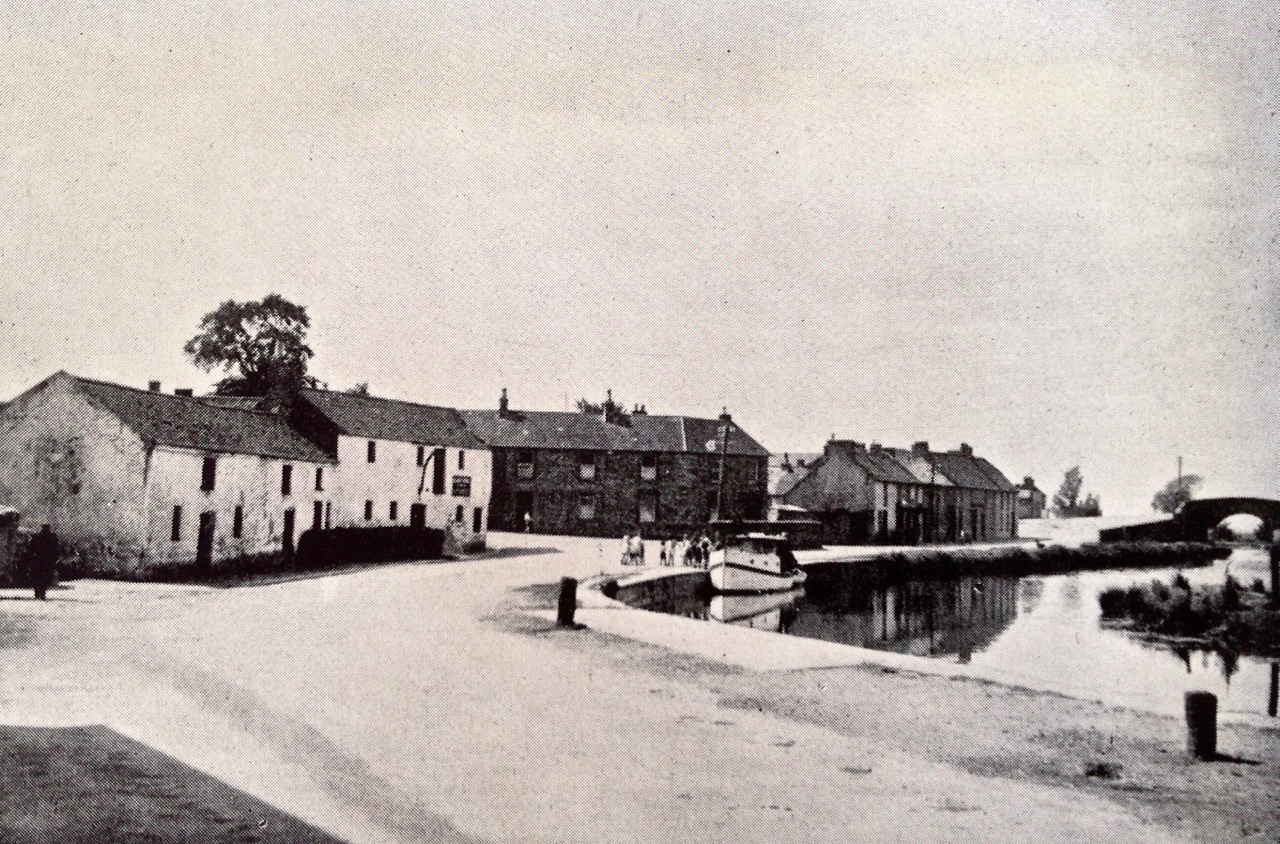
Green & Silver is illustrated with photographs taken by Angela Rolt on the journey through Ireland. They are a valuable and evocative record of life just after the ‘Emergency’ years of the Second World War. Here is the Rolts’ borrowed boat – Le Coq – at Robertstown, on the Grand Canal: pleasure boating was virtually unheard of in rural Ireland in those days and the voyagers seemed much troubled by groups of children who gathered whenever they moored up, all demanding to see – and board – the ‘yacht’

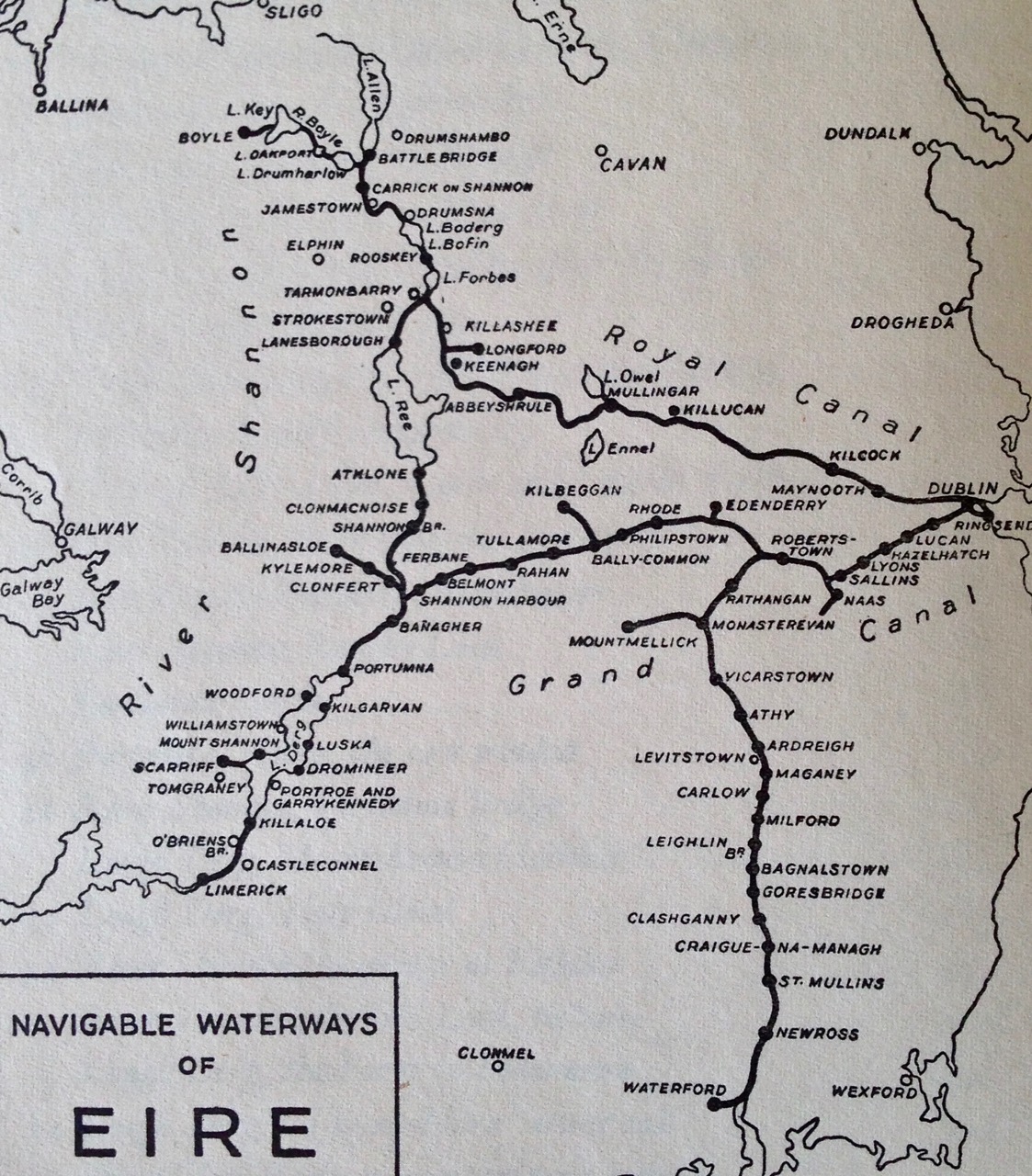
Tom and Angela Rolt faced many challenges in their journey – well documented in the book. They set out to navigate the Shannon, starting at Athlone, to the entrance of the Grand Canal at Shannon Harbour; along that canal to Dublin, then up the Royal Canal to rejoin the Shannon at Tarmonbarry and exploring the river northwards as far as Lough Allen, also taking in the River Boyle. The final part of the journey to Athlone crossed Lough Ree. The ‘Emergency’ years and their aftermath saw restrictions on the availability of fuel: this affected the Rolts’ plans, although they did complete their journey. They encountered commercial traffic on the Grand Canal – some horse drawn – and a little on the Royal Canal, which became derelict shortly after their travels. Le Coq was probably the last boat to complete the circular journey in the twentieth century: after significant efforts by the Inland Waterways Association of Ireland (founded in 1954) the Royal Canal has been fully restored to navigation and reopened in 2010.
navigable waterways

From Green & Silver: a map of the navigable waterways of Ireland at the time of the book’s publication in 1949

This book is full of descriptive detail and observation of the ways of life and the people that Tom Rolt encountered: every page fascinates. It’s hard to pick out any one section to exemplify the writing style, but here is an extract describing a visit to a corn mill at Cloondara in County Longford close to Richmond Harbour, the junction of the Royal Canal with the River Shannon (the mill ceased operations in the 1950s, not long after Rolt’s visit):

…Across the canal bridge there was a large corn mill which had seen better days but which I was pleased to see was still at work. Moreover it was not, as our few surviving [British] watermills are, relegated by the milling combine to grinding cattle meal. Cloondara Mill was grinding 100 per cent extraction flour for the village bakeries of the district. As we walked over the bridge a small water-turbine was churning merrily, driving the dynamo which provided electric light for the mill and the miller’s house. But the great undershot wheel which drove the mill from the waters of the Fallan River, a tributary of the Shannon, was still and silent. I knew why because, from somewhere in the dim recesses of the rambling stone building I could hear the chip chip of a mill-bill tapping away like some busy woodpecker. This Irish miller, like the English country millers who I have been fortunate enough to meet, was obviously proud of his mill and was delighted by our interest. Having assured himself that the stones being dressed were out of gear, he insisted upon opening the sluice for our benefit, setting the giant wheel revolving with a rumble and surge that wakened the mill and which, via a complex of wooden gearing, shafts and pulleys, set screens and sieves shaking and revolving to the very top of the building…
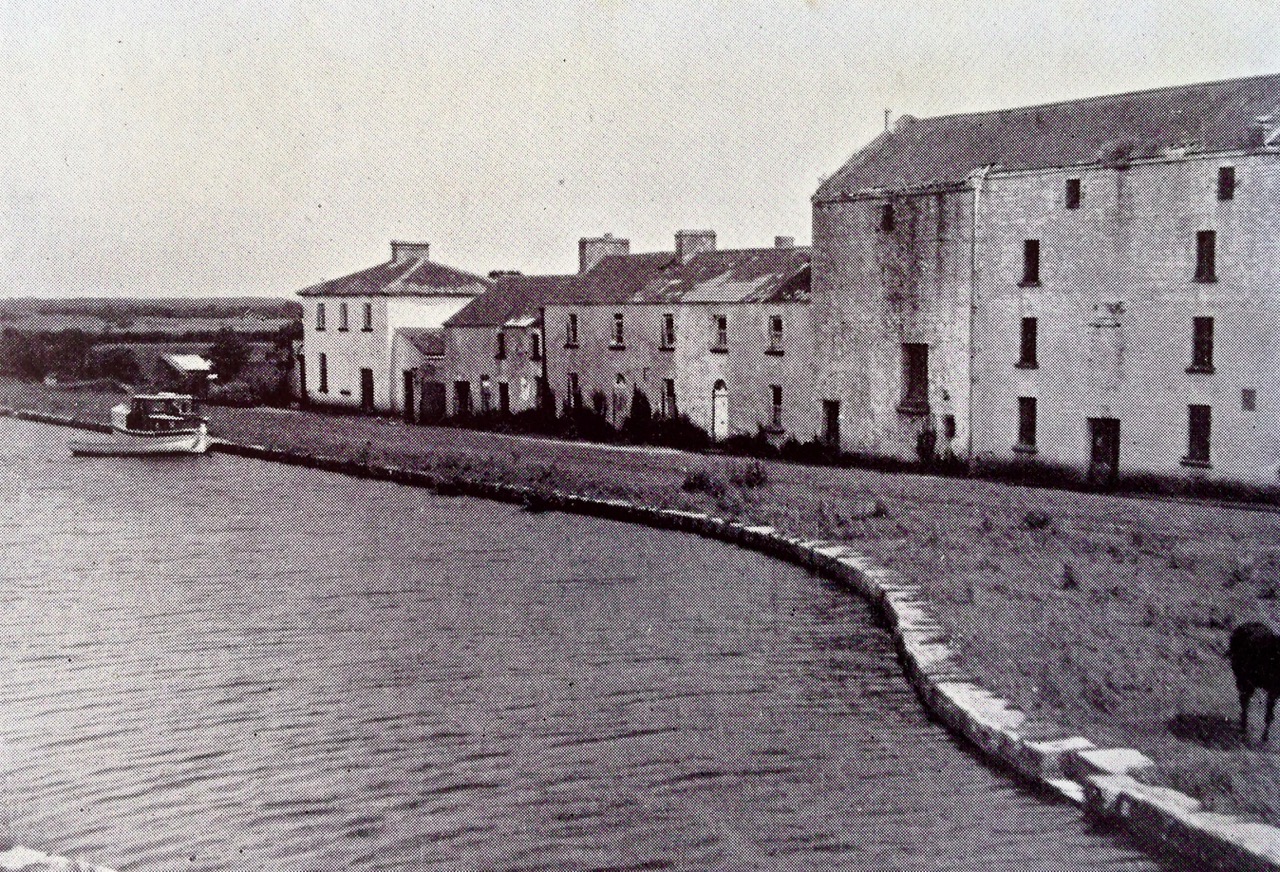
Cloondara

Angela Rolt’s photograph of Le Coq moored at Richmond Harbour, Cloondara – ‘derelict warehouses and empty cottages’

…There were four pairs of stones, two sets of ‘Peaks’ for meal and two sets of French Burrs for wheat. The runner of one pair of Peaks had been swung off the bedstone, and the dresser sat on a sack, legs astraddle, as he tapped away at the worn furrows with his bill. I had expected to find that the language of the miller’s craft was different in Ireland, but this was not so. Thus the stirrup and shoe which feeds the grain into the eye of the runner stone and whose cheerful clink clack contrasts with the rumble of the stones, our miller, like his fellows in England, called the ‘damsel’. In an earlier book I described how the miller of Minshull Mill in Cheshire used apple wood to renew the teeth of the wooden mill gearing. Here beech wood was used for this purpose…
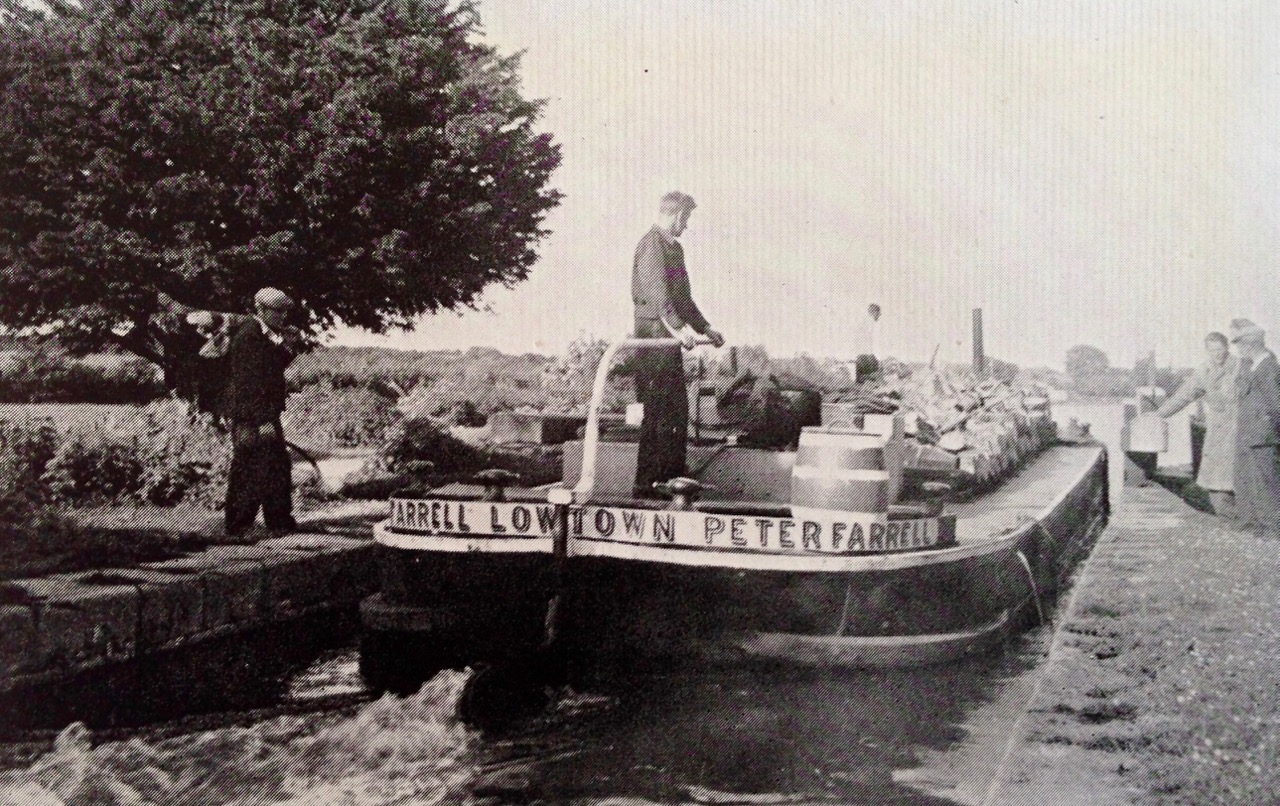
grand canal boat

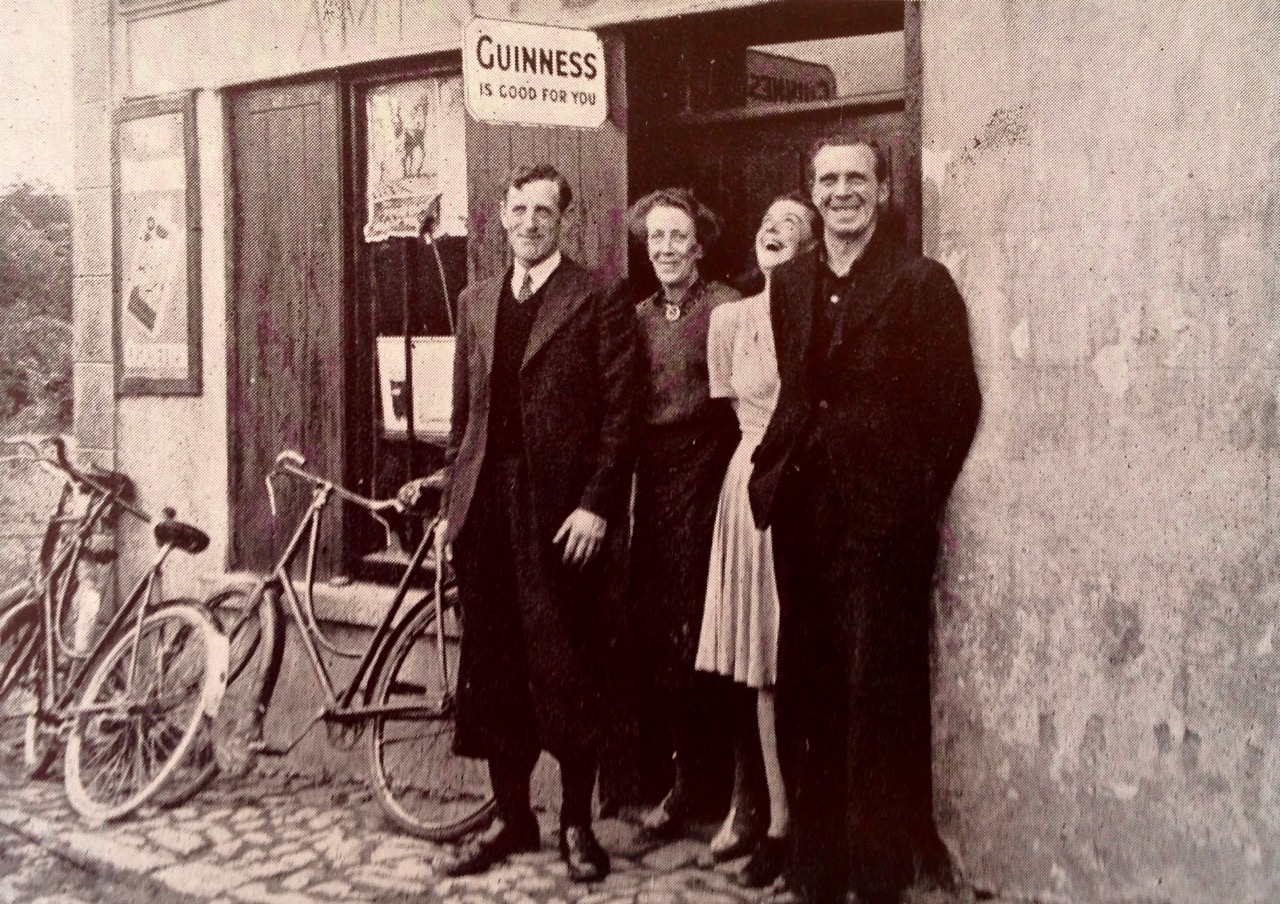
guiness

keeper and family

More of Angela Rolt’s photographs from the book: top – Peter Farrell’s working boat on the Grand Canal; centre – the Beirne family outside their inn at Battlebridge, close to the entrance of the abandoned Lough Allen Canal. Le Coq was the first boat to visit Battlebridge in seven years! Bottom – the Lock Keeper and his family at Draper’s Bridge, Royal Canal. The Rolts were always impressed with the generosity of the lock-keepers, particularly on this little-used waterway: they were constantly plied with milk, potatoes and scallions – ‘enough to sink the boat’…

Rolt was at heart an engineer: on leaving school at 16 he took a job learning about steam traction, before starting an apprenticeship at the Kerr Stuart locomotive works in Stoke-on Trent. Railways were in his blood as much as canals were. Thus he couldn’t leave Ireland without a journey on the West Clare Railway – then one of the last surviving narrow gauge railways in Ireland – and the subject of a song written and – famously – sung by Percy French, which includes the refrain:

…Are ye right there, Michael, are ye right?
Do you think that we’ll be there before the night?
Ye’ve been so long in startin’
That ye couldn’t say for certain’
Still ye might now, Michael
So ye might!

The Rolts’ journey on the line from Ennis is well documented in Green & Silver:

…We consigned the bulk of our luggage direct to Limerick to await our arrival there next day, and booked a first class ticket to Kilrush. We might as well enjoy this protracted journey in the maximum of comfort and seclusion. The little train, the only one of the day, was standing in the bay, and we settled ourselves into a compartment that was a period piece in itself. The seats were covered with black American cloth well studded with buttons. Braided arm rests (were they ever used?) were looped over the door pillars, and the captions of the ancient and faded photographs over the seat backs were hand written in painstaking copper-plate. To do justice to such an interior I should, I felt, be wearing a deer-stalker and an ulster…

The West Clare Railway: left – a photograph by Angela Rolt from Green & Silver showing L T C Rolt in a first class carriage on their journey from Athlone and – right – a stamp issued by the Railway Company for the ‘conveyance of single post letters by railway’

L T C Rolt was heavily involved in a movement in Britain to ‘save’ the declining canal system and in May 1946 the Inland Waterways Association was founded with Robert Aickman as chairman, Charles Hadfield (the canal historian) as vice-chairman and Rolt as secretary. Since that time the IWA has successfully campaigned to secure the restoration of many threatened waterways, and even to build some new ones in Britain. Sadly, within 5 years, Rolt had fallen out with the IWA over ideology, and was expelled from its membership. But Rolt moved on and campaigned to prevent the closure of the Talyllyn narrow gauge railway in Wales. He was involved in its resurrection as the first ‘preserved’ railway line in the world. His name is commemorated on one of the restored locomotives operating on the line: fittingly this engine began life working for Bord na Móna, the company in Ireland created by the Turf Development Act of 1946. The company is still responsible today for the mechanised harvesting of peat and uses narrow gauge railways: formerly steam driven, the lines now use diesel traction. The Tom Rolt (formerly nicknamed Irish Pete) was one of three 3 ft (914 mm) gauge 0-4-0WT well tank locomotives built by Andrew Barclay Sons + Co, an engineering workshop founded in 1840 in Kilmarnock, Scotland.
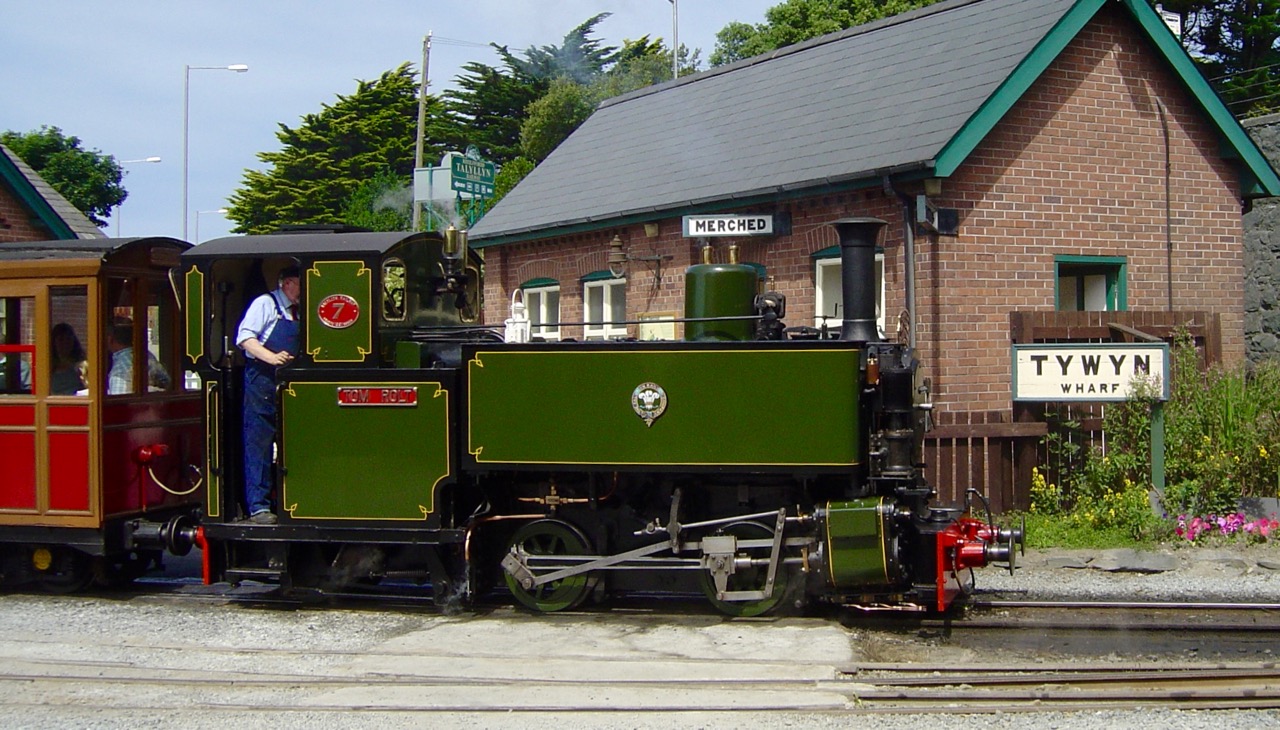
Tom Rolt Loco

Tom Rolt, the former Bord na Móna locomotive now reconstructed and operating on the Talyllyn narrow gauge railway in Wales, at Tywyn Wharf (photograph courtesy Optimist on the run)

Following in the footsteps of L T C Rolt I wrote my own book on canals and it was published in 1969. The publishers, Hugh Evelyn of London, asked Rolt if he would write an introduction to the book. In the event he was unable to do so, passing the job on to Charles Hadfield. I was sorry not to have a ‘hero’ of mine endorsing the volume, but in my preface I mention my indebtedness to him for introducing me to the world of navigable waterways. Tom Rolt died in 1974 and he won’t know that I am also indebted to him for introducing me to Ireland, now my home.

‘Will the Hare’ – and the Mizen Olympics!

street market

…In ancient Ireland the festival of the beginning of the harvest was the first day of Autumn, that is to say, it coincided with 1 August in the Julian calendar. This has continued in recent tradition, insofar as Lúnasa or Lammas-Day was still taken to be the first day of Autumn; the gatherings and celebrations connected with it were, however, transferred to a nearby Sunday, in most parts of Ireland to the last Sunday in July, in some places to the first Sunday in August… The old Lúnasa was, in the main, forgotten as applying to the popular festival and a variety of names substituted in various localities, such as Domhnach Chrom Dubh, Domhnach Deireannach (Last Sunday), Garland Sunday, Hill Sunday and others…

making the stack

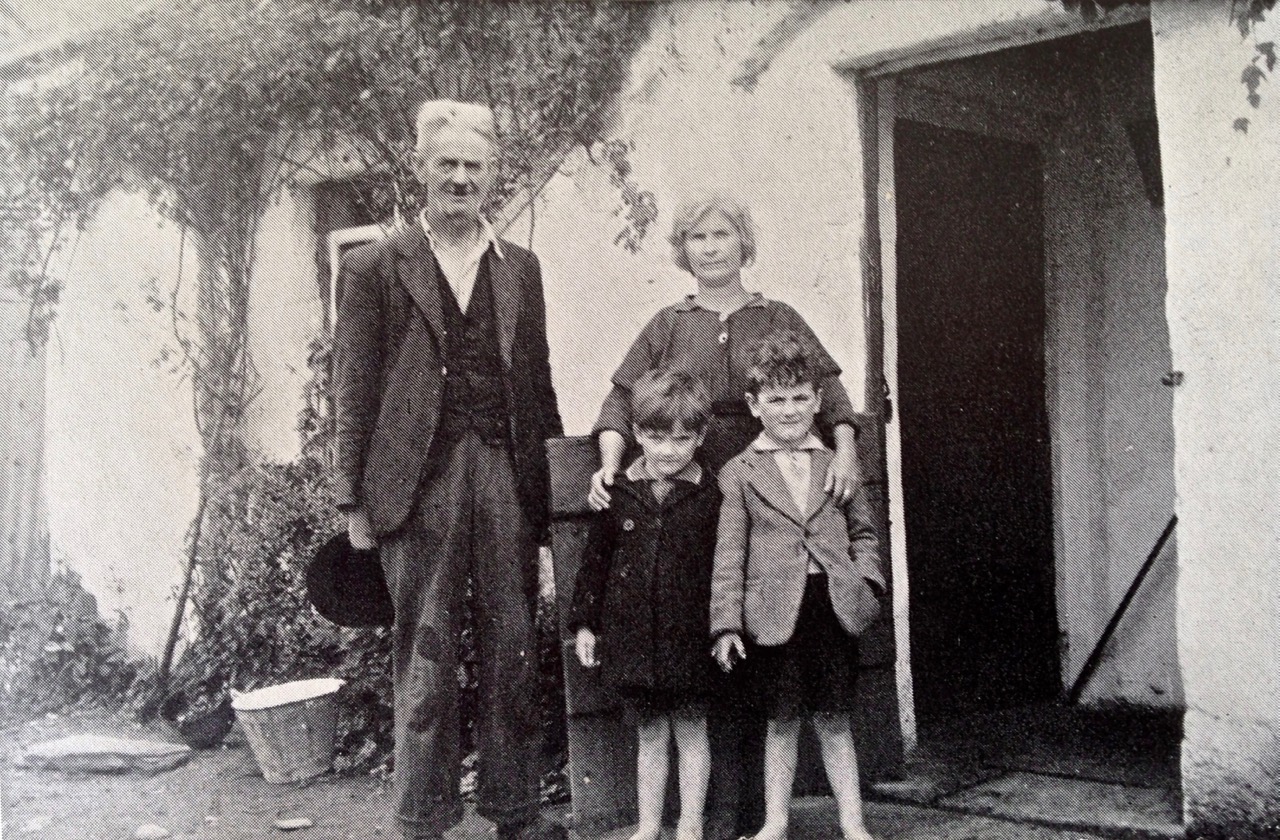
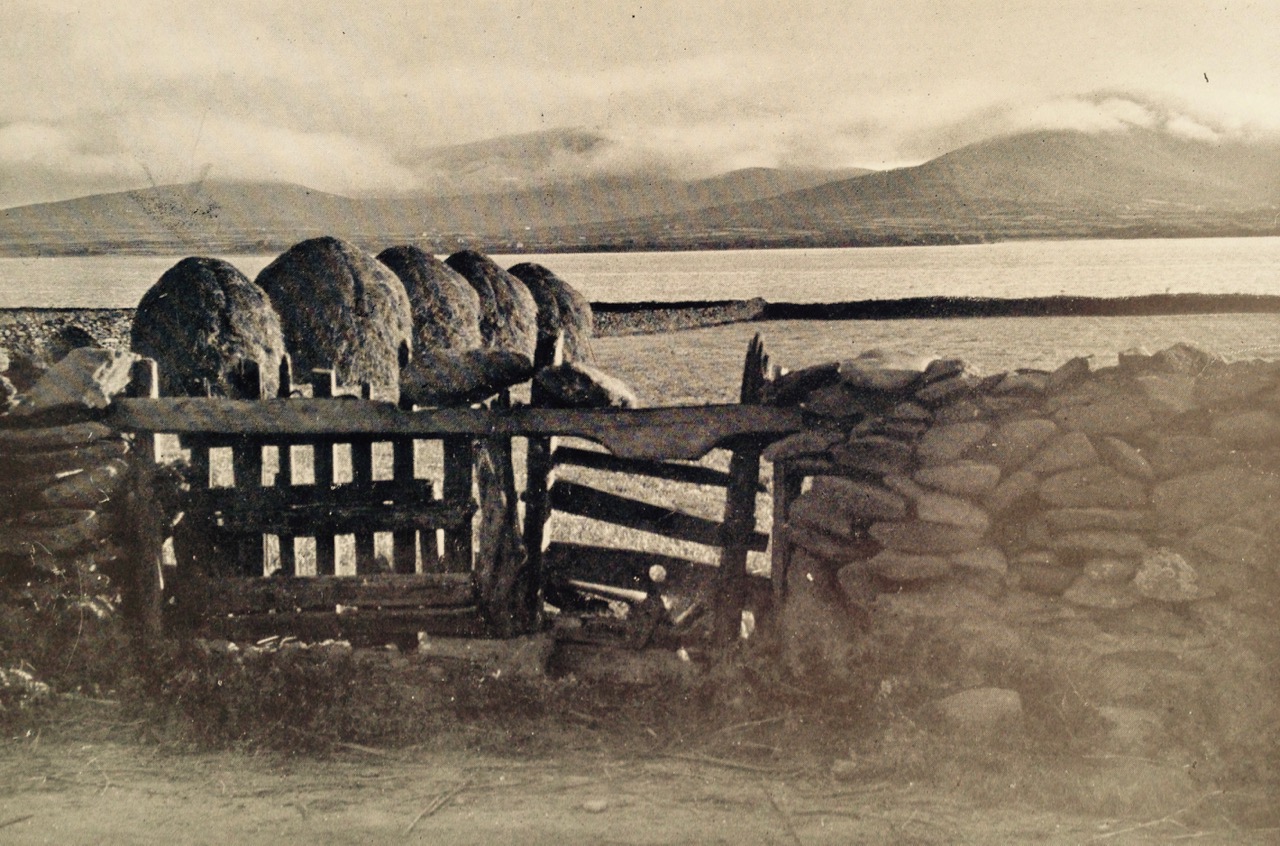
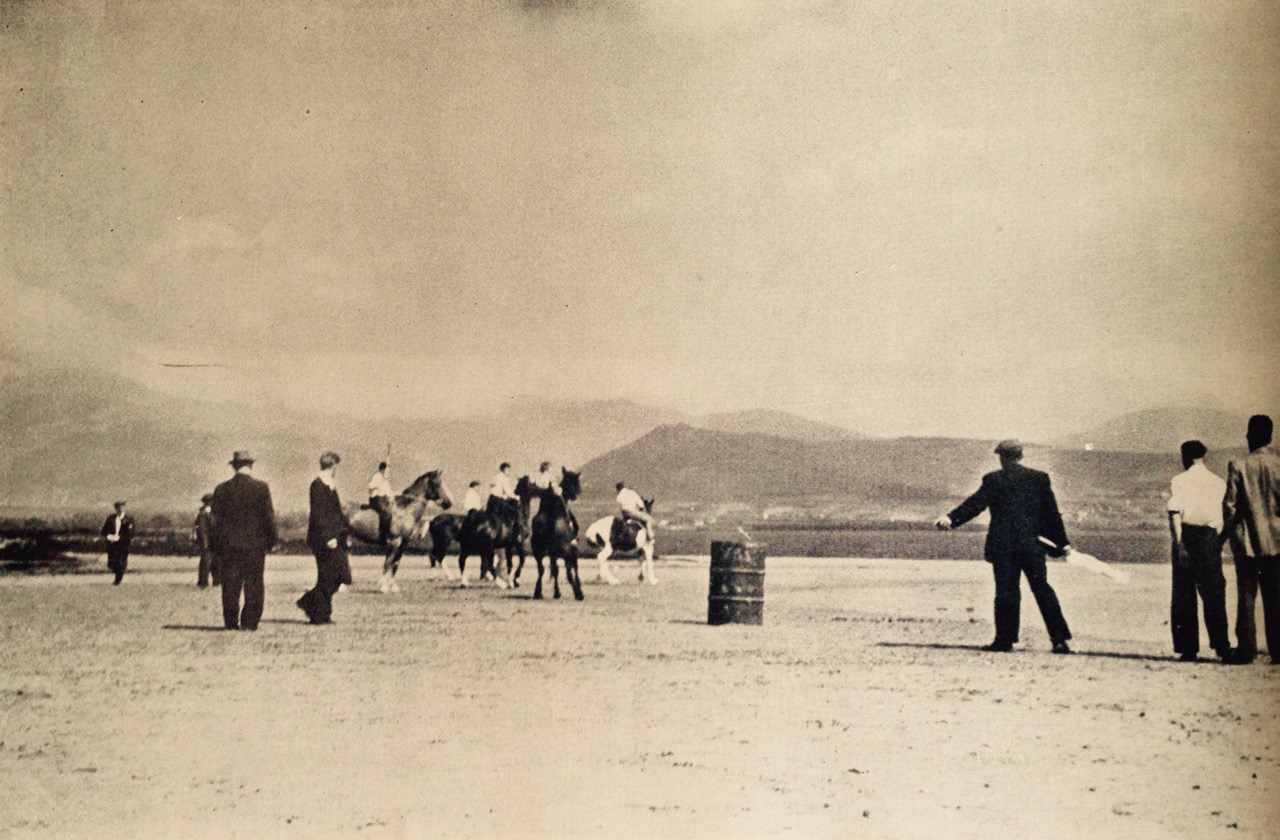
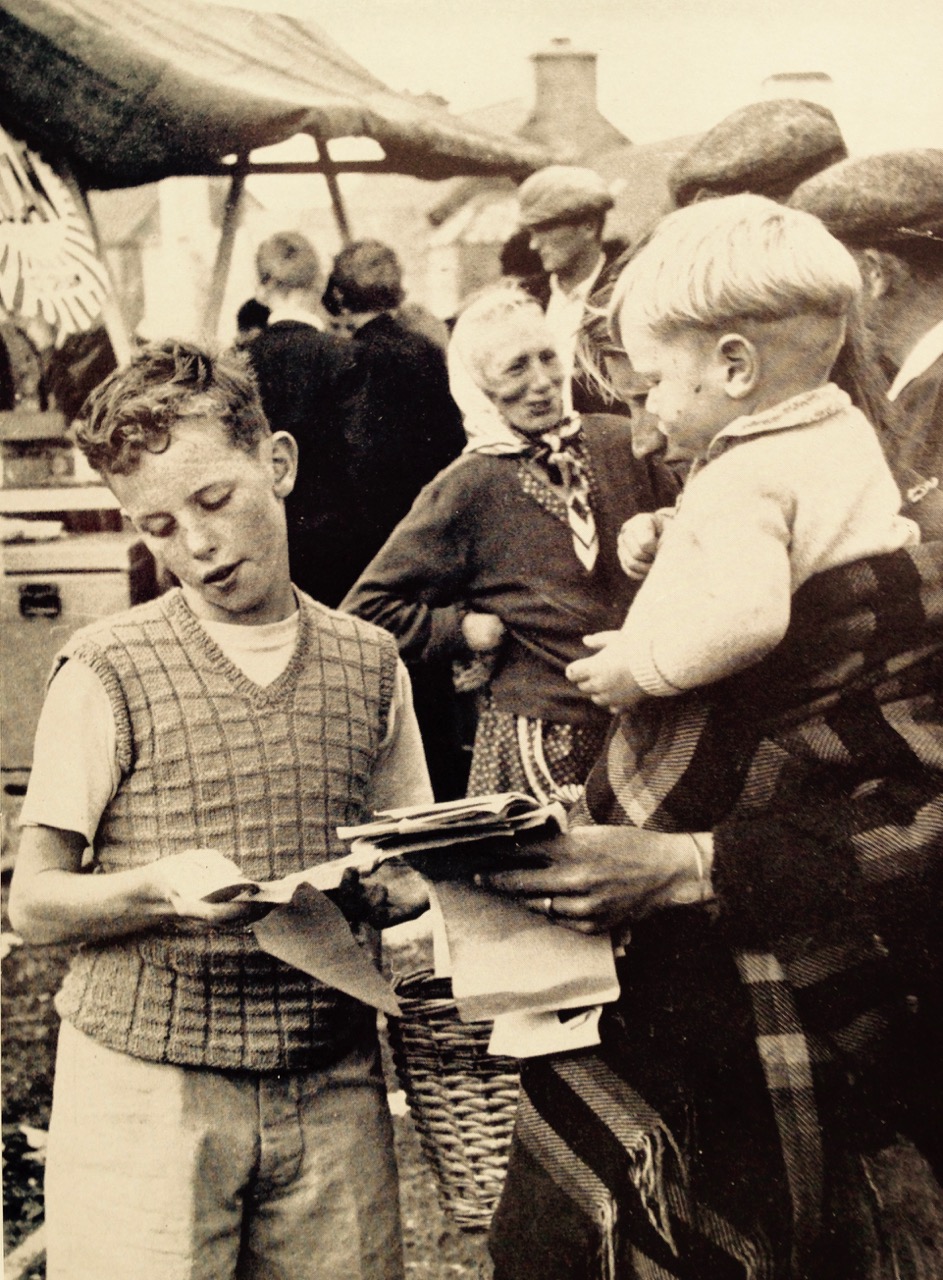
All the photographs in this post are from the collection of Tomás Ó Muircheartaigh who travelled and photographed the west of Ireland during the 1930s, 40s and 50s and is an invaluable documentary of the times in which he lived. Generally, the locations of the photographs are not noted, and very few are likely to be specific to the Mizen: they do however record life as it would have been lived at that time in all the rural areas

Today we celebrate Lúnasa – the festival of the bringing-in of the harvest. Kevin Danaher (The Year in Ireland, Mercier Press 1972) wrote (above) about what he observed in the middle of the last century, when things were already changing and many of the old customs were, as he notes, ‘in the main forgotten’, although still talked about. What changes do we see in Ireland, a few generations on?

seascape

Northside of the Mizen by Patrick McCarthy and Richard Hawkes was written in 1999 (Mizen Productions) and is a collection of memories and stories still being told then about traditional life in this westerly part of of the country:

…The heat of the summer was eased by the cooling breezes from the Atlantic. It was busy on land and sea, with seine fishing by night and fish curing and farming by day, but there was always time for scoriachting, games and dance, sometimes on Carbery Island or across Dunmanus Bay…

…Once in the year Carbery Island was the location for a dance and in settled weather the Northsiders could shout across and give the signal to the people of Muintir Bháire to meet at Carbery Island. As many as forty-five people in three boats would cross Dunmanus Bay to the White House, and a good crowd of men and women from Bear Island would also come to the dances. They were great hearty people. Ann Daly from Kilcrohane and Agnes O’Donovan of Dunkelly played the melodeon…

I like the idea of the Northsiders shouting across the water to the residents of the Sheep’s Head, two miles away! I wonder if they would be heard nowadays?

horse race

…There were competitions at Dunmanus for swimming, running, jumping and weight lifting, and you could be sure that the Northsiders were well represented in each of the events. ‘Will the Hare’ (William McCarthy of Dunkelly Middle), was good at the long jump and the running races and would often win and bring great honour to the Northside. It was said that ‘Will the Hare’ got his name by catching a hare on the run! It was also said that when you blew the whistle to gather the men for seining, by the time you had finished, ‘Will the Hare’ would be at Canty’s Cove waiting!

boat race

…Wild John Murphy would take the lads to the Crookhaven Regatta which was held on The Assumption (15th August). It was a long pull around the Mizen but a good time was had by all. The Northsiders were great with the oars, but it was hard to beat the Long Island crews in the boat races…

(Danaher): …In very many localities the chief event of the festival was not so much the festive meal as the festive gathering out of doors. This took the form of an excursion to some traditional site, usually on a hill or mountain top, or beside a lake or river, where large numbers of people from the surrounding area congregated, travelling thither on foot, on horseback or in carts and other equipages… Many of the participants came prepared to ‘make a day of it’ bringing food and drink and musical instruments, and spending the afternoon and evening in eating, drinking and dancing…

picnic

…Another welcome feature of the festive meal was fresh fruit. Those who had currants or gooseberries in their gardens, and this was usual even among small-holders in Munster and South Leinster, made sure that some dish of these appeared on the table. Those who lived near heather hills or woods gathered fraucháin (‘fraughans’, whortleberries, blueberries) which they ate for an ‘aftercourse’ mashed with fresh cream and sugar. Similar treatment was given to wild strawberries and wild raspberries by those lucky ones who lived near the woods where these grow… A number of fairs still held or until recently held at this season bear names like ‘Lammas Fair’, ‘Gooseberry Fair’, ‘Bilberry Fair’…

market in town

One interesting custom was the driving of cattle and horses into the water. This is mentioned in the 1680s by Piers in his Description of the County of West-Meath:On the first Sunday in harvest, viz in August, they will be sure to drive their cattle into some pool or river, and therein swim them; this they observe as inviolable as if it were a point of religion, for they think no beast will live the whole year thro’ unless they be thus drenched; I deny not but that swimming of the cattle, and chiefly in this season of the year, is healthful unto them…

at the fair

Foto Mizen!

Hydrangea and Montbretia

Montbretia and Hydrangea (Ava)

Sunday August 7th is The Mizen on a Sunday Project Day. The what? 

Robin

This young robin was curious about our activities in the woods

The organisers of the new Photo Mizen Festival, which launches next year in Schull, have come up with a great fundraising idea. Here it is: a photo book of life on the Mizen Peninsula during the 24-hour period of a single day, Sunday, August 7, 2016.

Stream

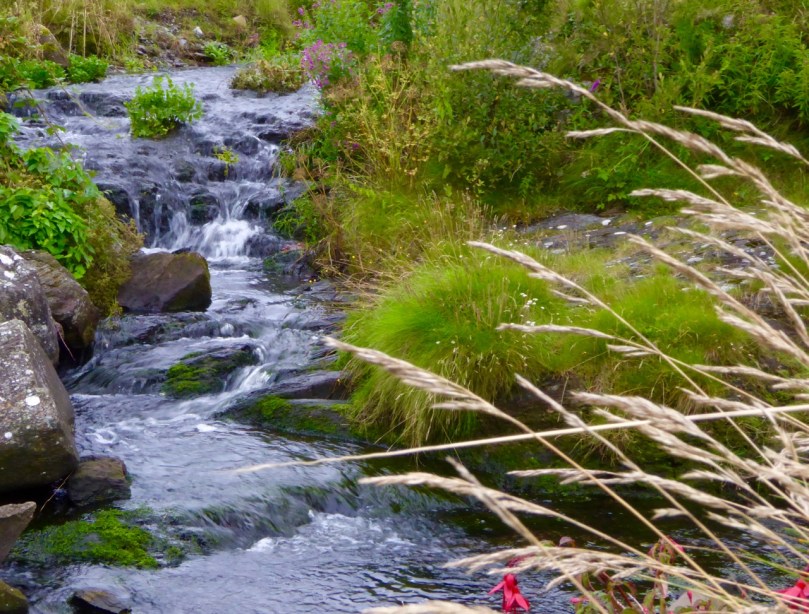
This little stream flows into the sea at Derreennatra

Derreenatra Bridge

The stream flows under this picturesque bridge (Ava)

My niece, Ava, and I decided to participate. Ava is almost 12 and she has a great eye and her parents’ camera. She and I rose at dawn this morning and set off to see what we could capture of life around us in Rossbrin.

My nephew Hugo, my sister Aoibhinn, and Marley, were happy to be photographed

Within three hours we had 250 images. Oh dear! We spent several hours deciding on the ones to submit to the Foto Mizen project and of course we had lots left over – we can only submit 5 each. So here is a selection of images that didn’t make the final cut.

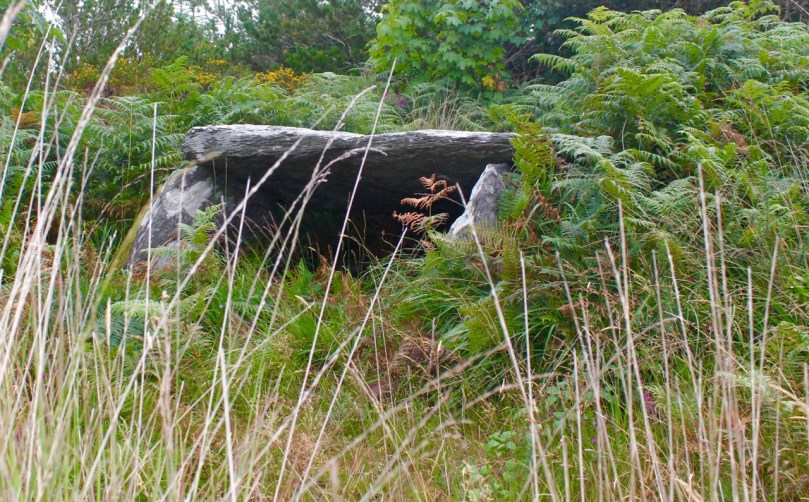
Kilbronogue Wedge Tomb

We walked up through the woods to the 3,000 year old wedge tomb at Kilbronogue (Ava)

The wildflowers were everywhere in abundance, some blowing in extravagant crowds and some tiny and hidden.

St John’s Wort, heather and gorse, and blackberry flowers

Ava took lots of photos but was a bit shy of having me take photos of her! Here she is doing her best imitation of a Jawa.

Ava the Jawa

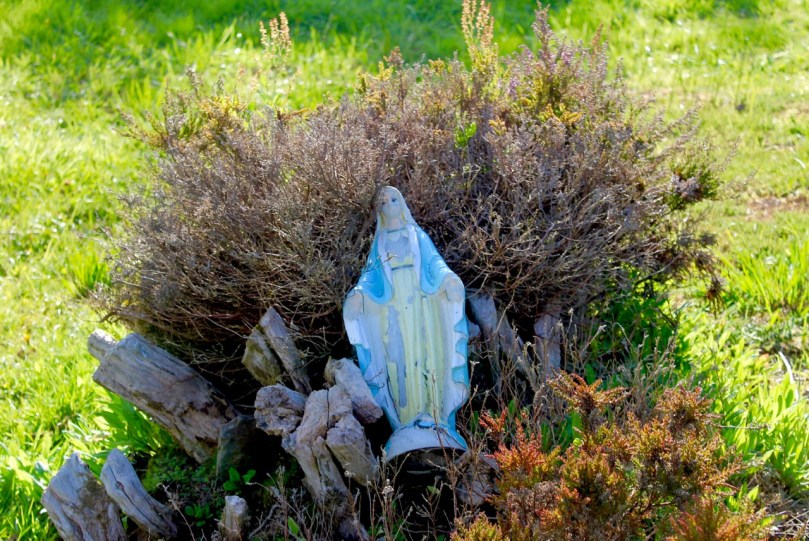
She was a little puzzled when I said our next stop was a graveyard, but got into the spirit of things right away when she found this statue.  She labelled it Creepy Mary, and I have to admit, those eyes are a little weird.

Creepy Mary

A tiny reminder from Stouke Graveyard that The Mizen is still a place where the past is sacred (Ava)

But she loved this little gate with its colourful postbox.

Gate and Post Box

And she took several photographs of the disused postbox at the old Rossbrin National School.

Rossbrin Post Box

It was a lovely way to spend time together, wandering companionably around the incredible Mizen countryside, snapping away at whatever took our fancy.

Rock wall with Montbretia

We didn’t have to go far – this is Ava’s picture of the little boreen outside our house 

Her younger brother, Hugo, got in on the act too, helping us to decide on our final five photos, which we will submit for the Photo Book Project. Turns out he has a great eye too – so next year there’ll be three of us roaming the hills of West Cork in the wee hours.

Fennel

Good Signs

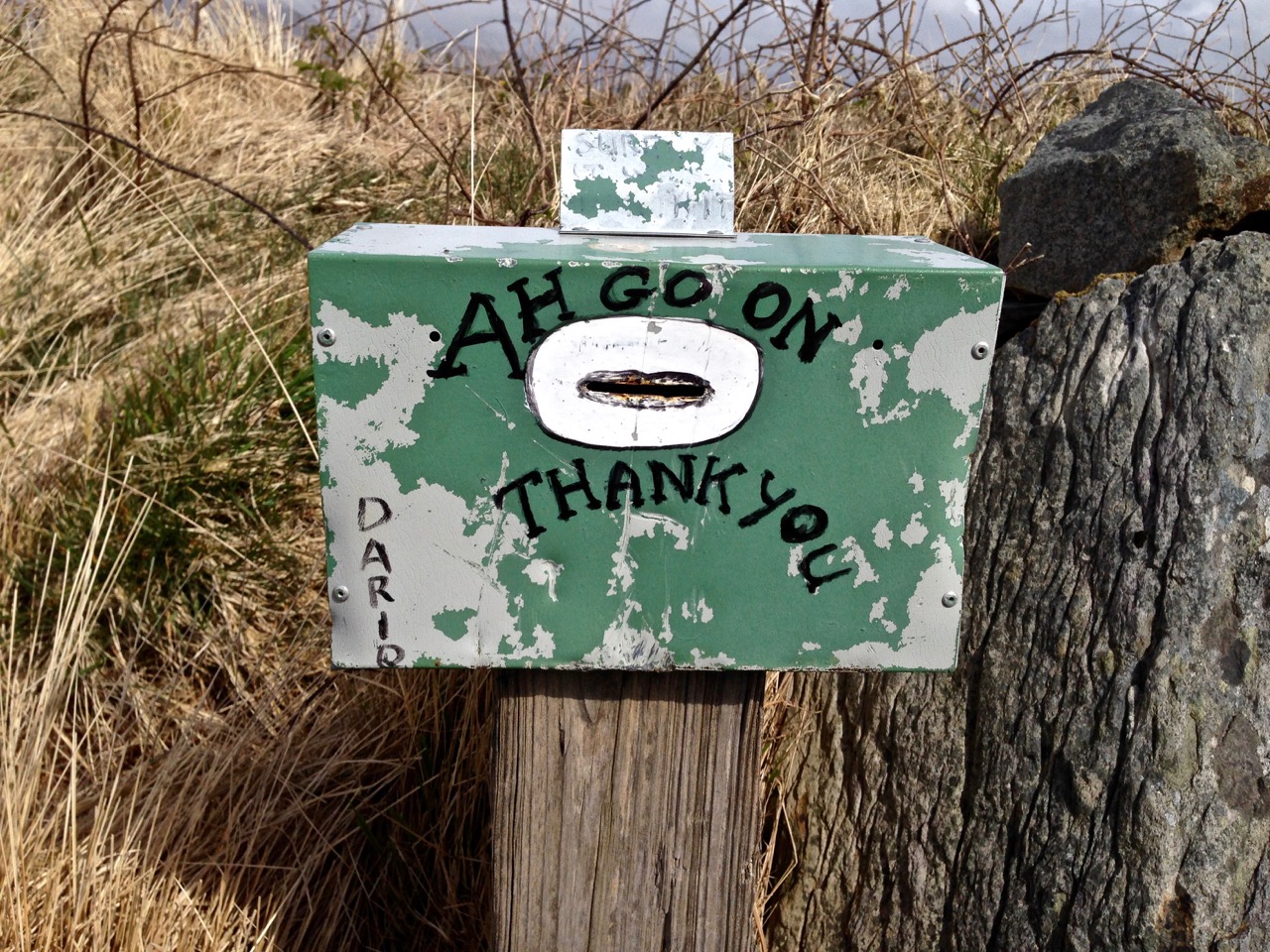
Ah go on...

A collection of words (mainly) seen on signs around and about west Cork (and occasionally further afield) in recent times. They need no explanation. Enjoy them!

I have my own favourites; I’m always directing my own children to digest this one…

children and fathers

…And, lest we err, there’s always something to remind us:

no drink

True to Life

at the hearth

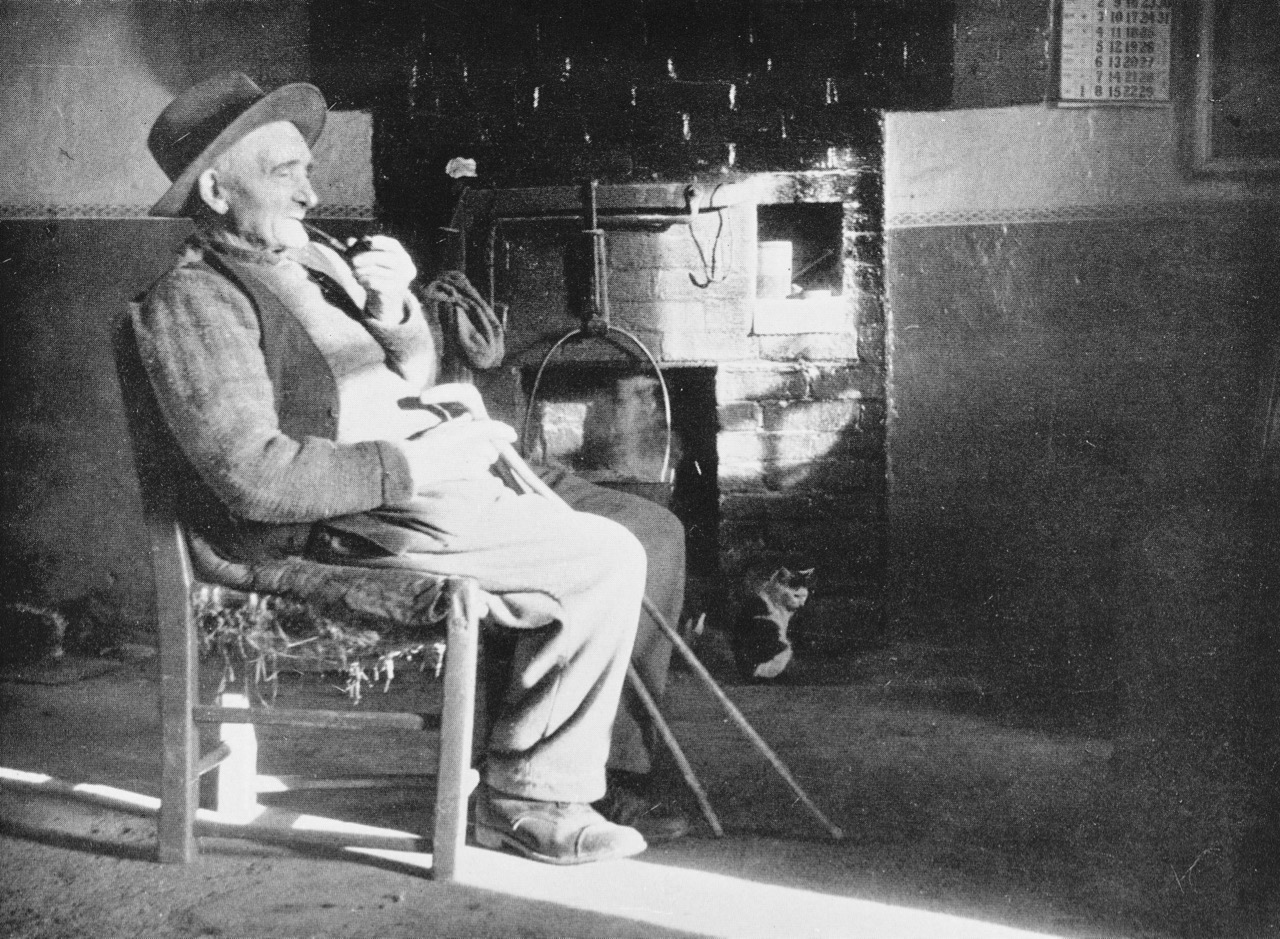
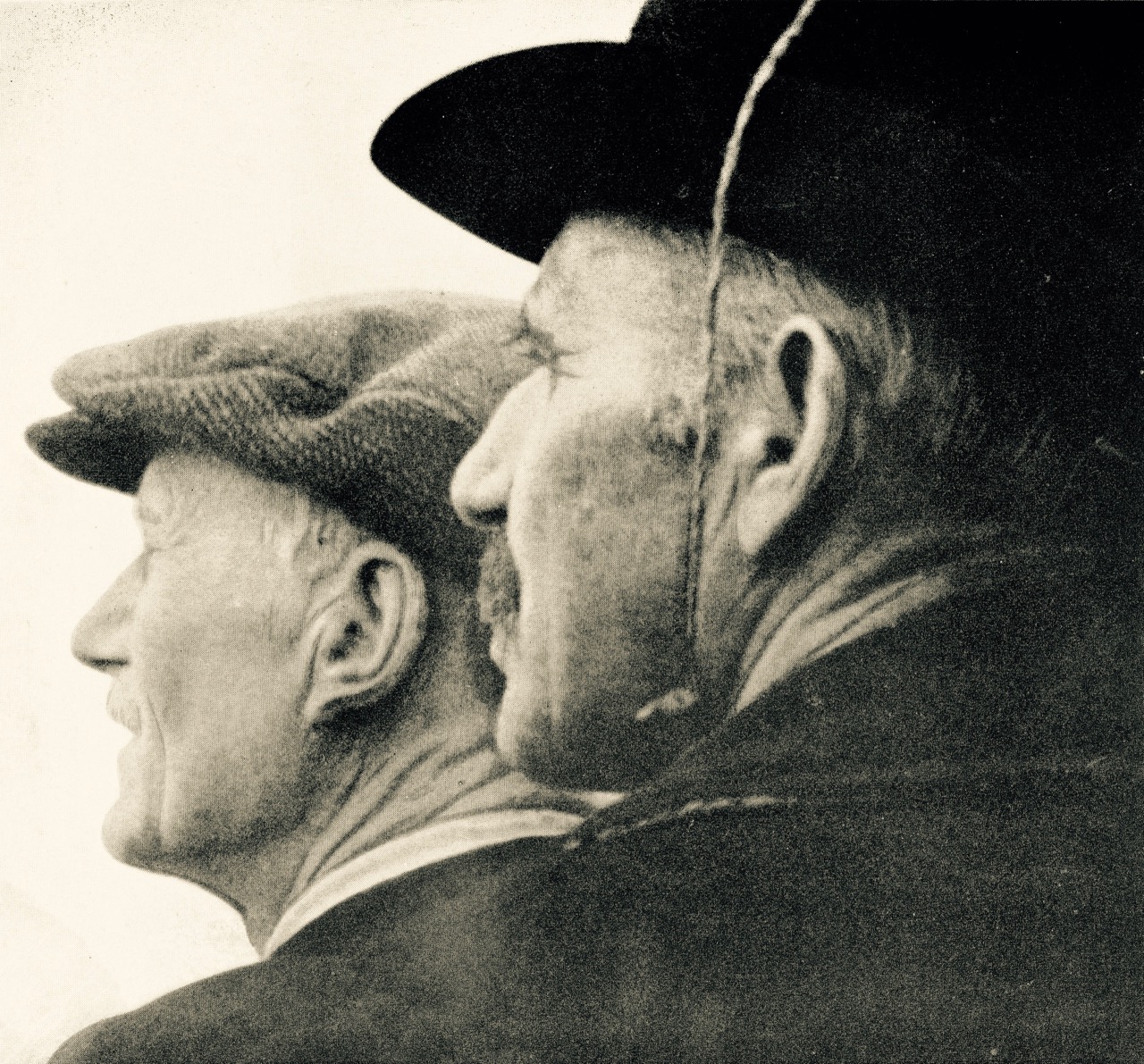
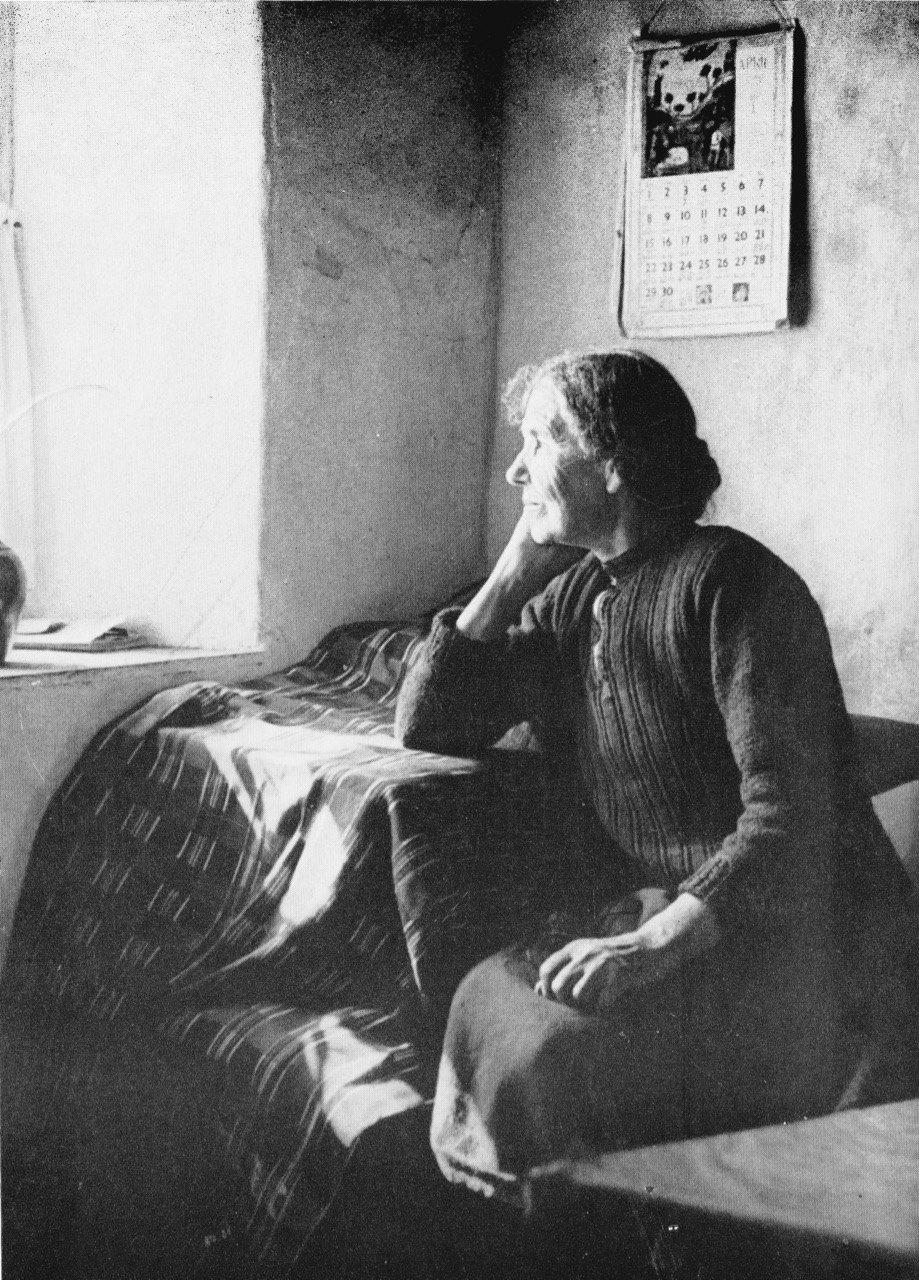
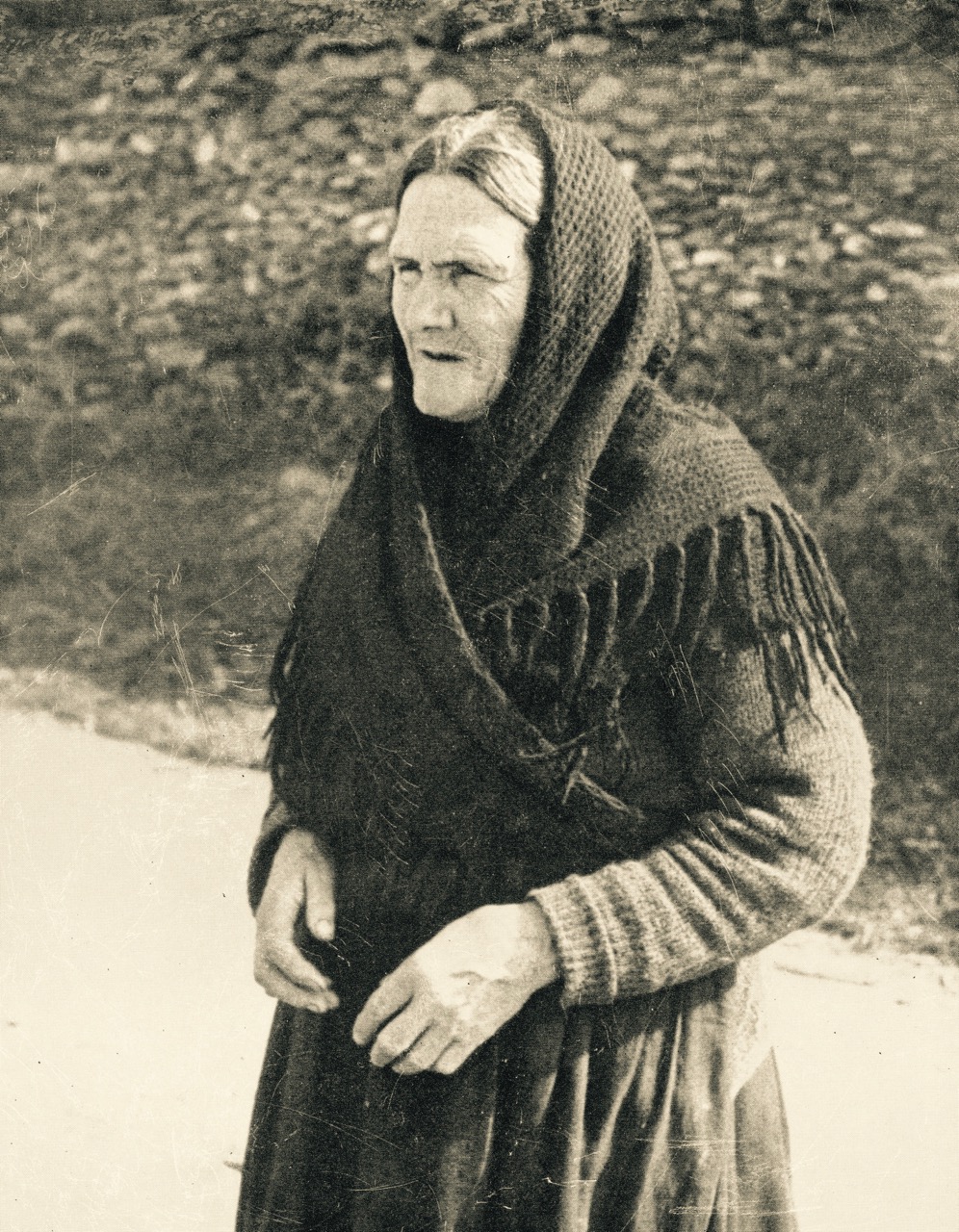
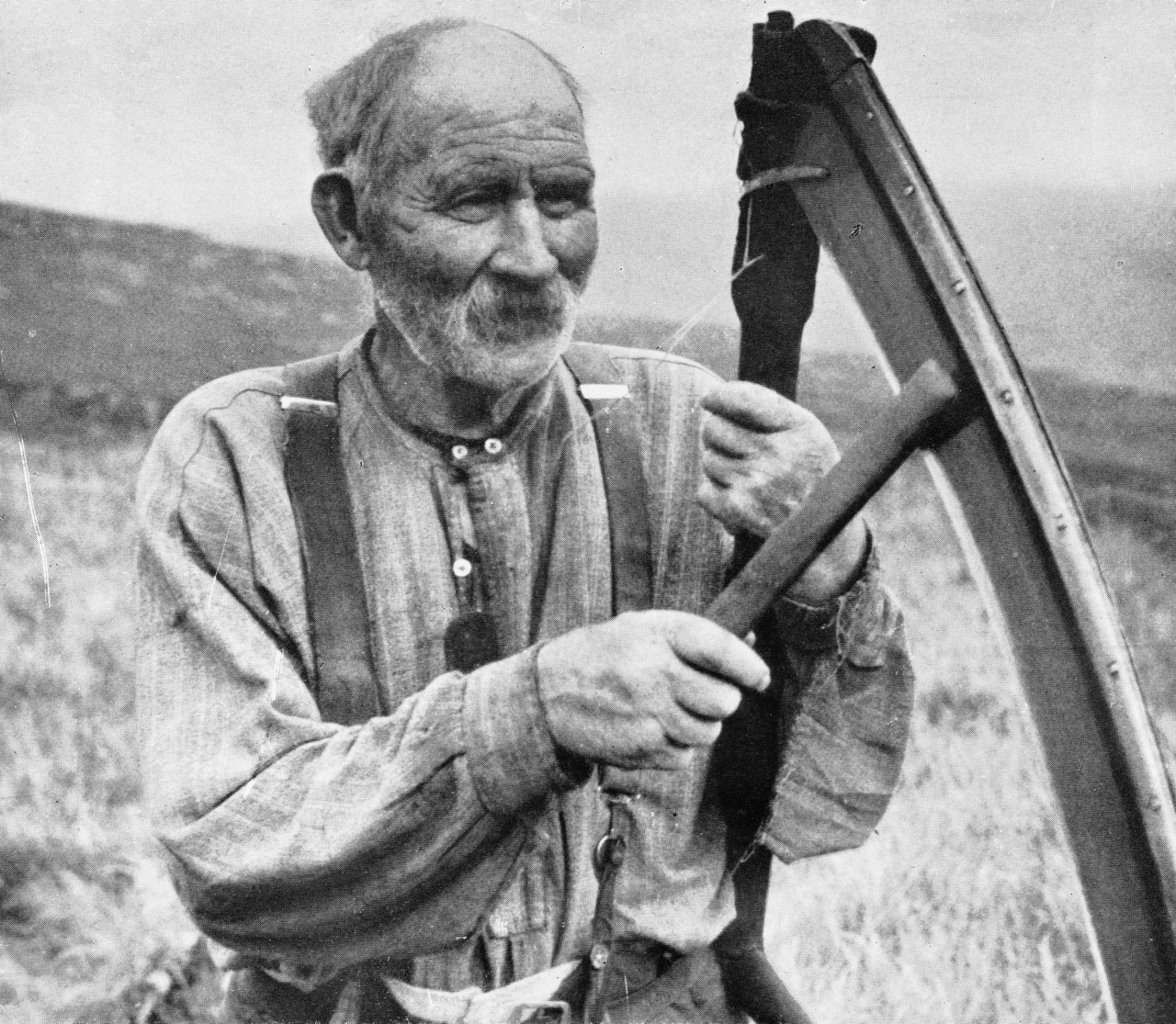
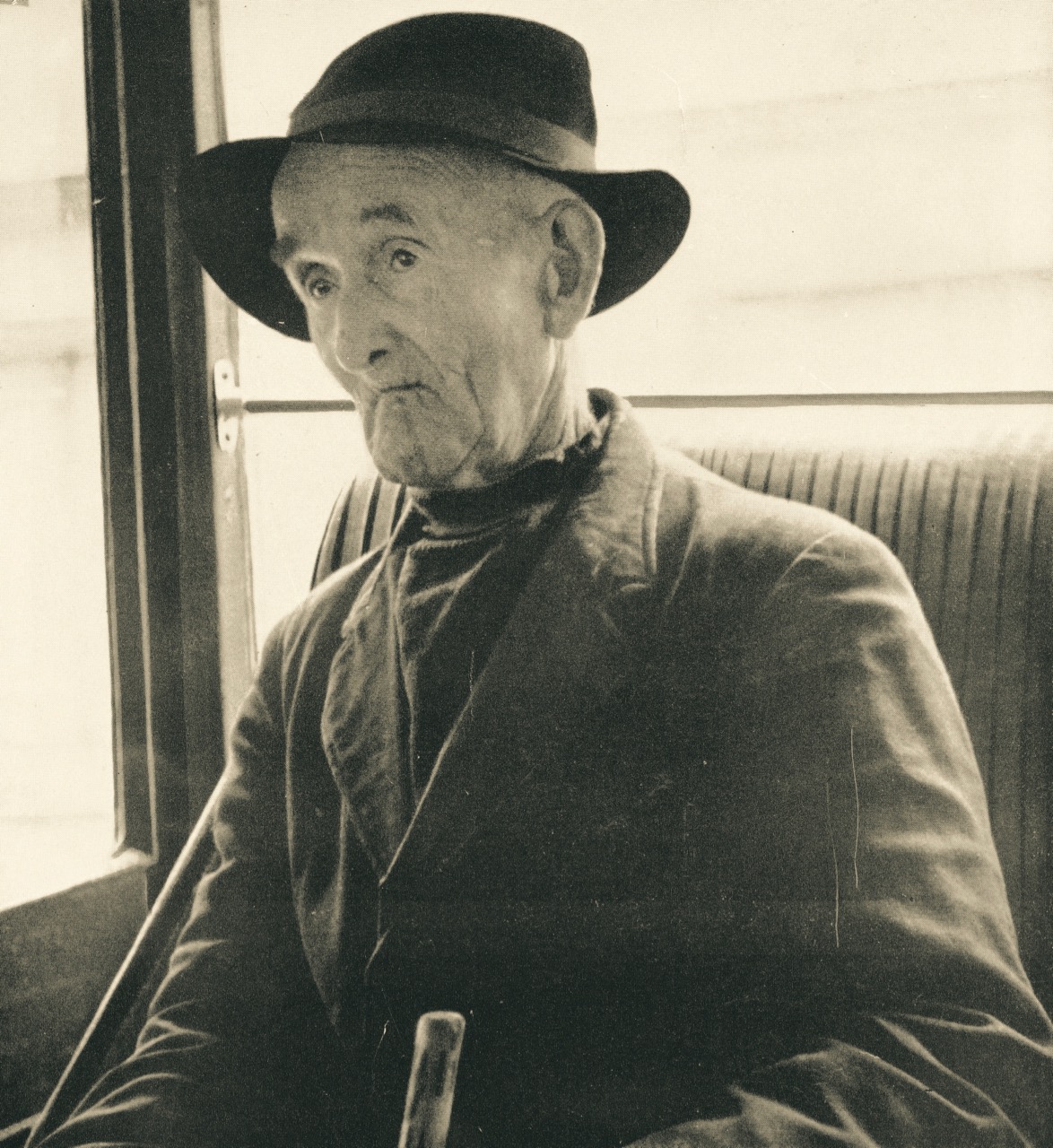
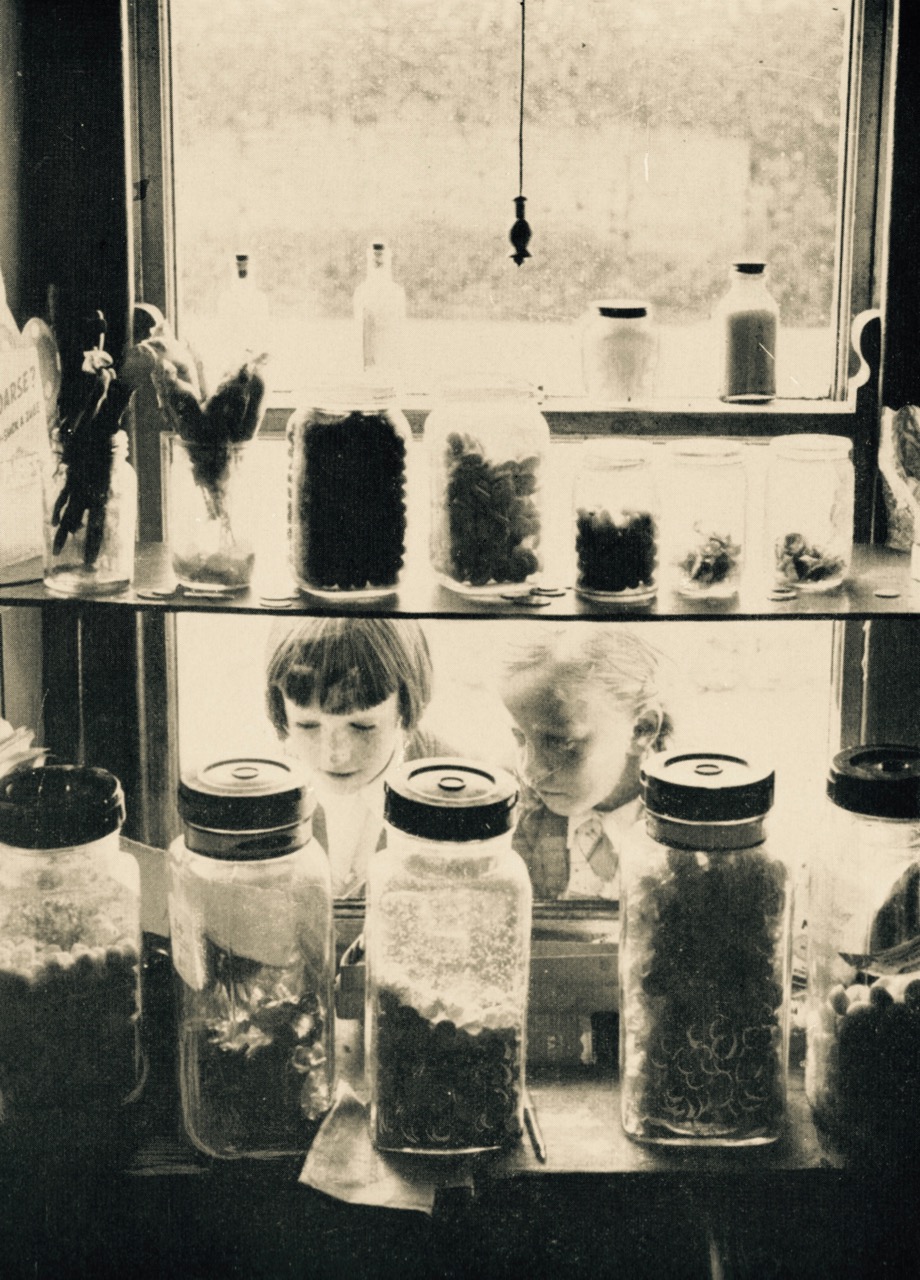
Old photographs are irresistible. The collection of Tomás Ó Muircheartaigh who travelled and photographed the west of Ireland during the 1930s, 40s and 50s is an invaluable documentary of the times in which he lived. Ó Muircheartaigh’s pictures record rural life and – most impressively – the people who lived it. This is a post, mainly of portraits, taken from a book of his work published posthumously in 1970, and now hard to find.  

hat and string

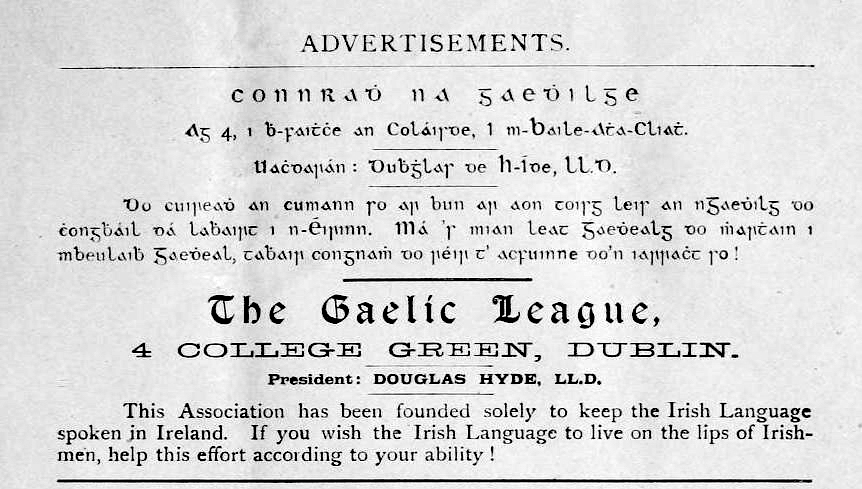
Tomás was President of Conradh na Gaelige (The Gaelic League) between 1955 and 1959, and his photographs appeared on the cover of many editions of the League’s monthly magazine.

Gealic league advert

The portraits, sadly, do not record the names of the subjects nor – often – their localities. We only know, on the whole, that his travels were centred on west Kerry and the Blasket Islands. The images, however, are powerfully evocative and time and place are, perhaps, irrelevant.

calendar

shawl

mower

on the bussweetshop

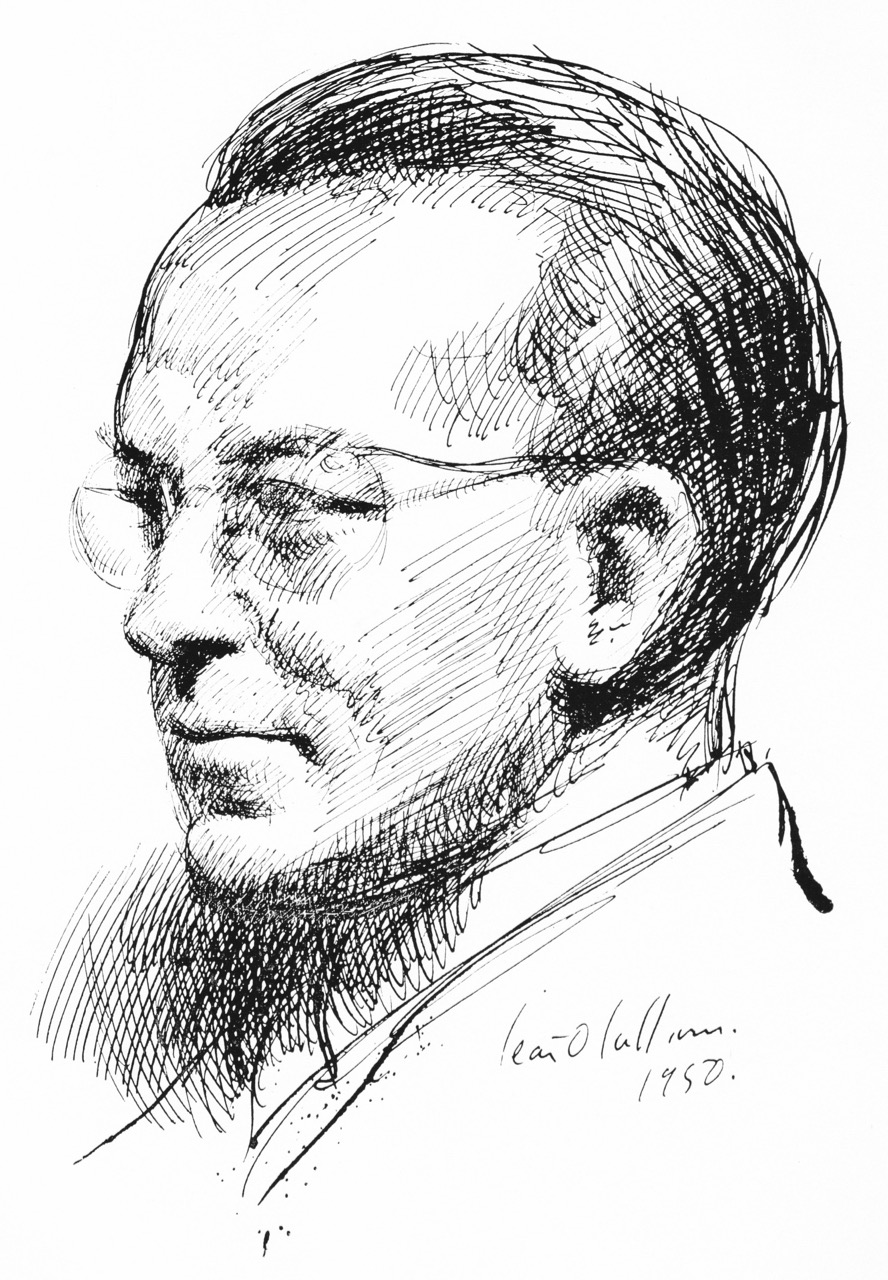
Tomás Ó Muircheartaigh 1907 – 1967, sketched by Sean O’Sullivan:

tomas


Words on Roaring Water

from Brow Head

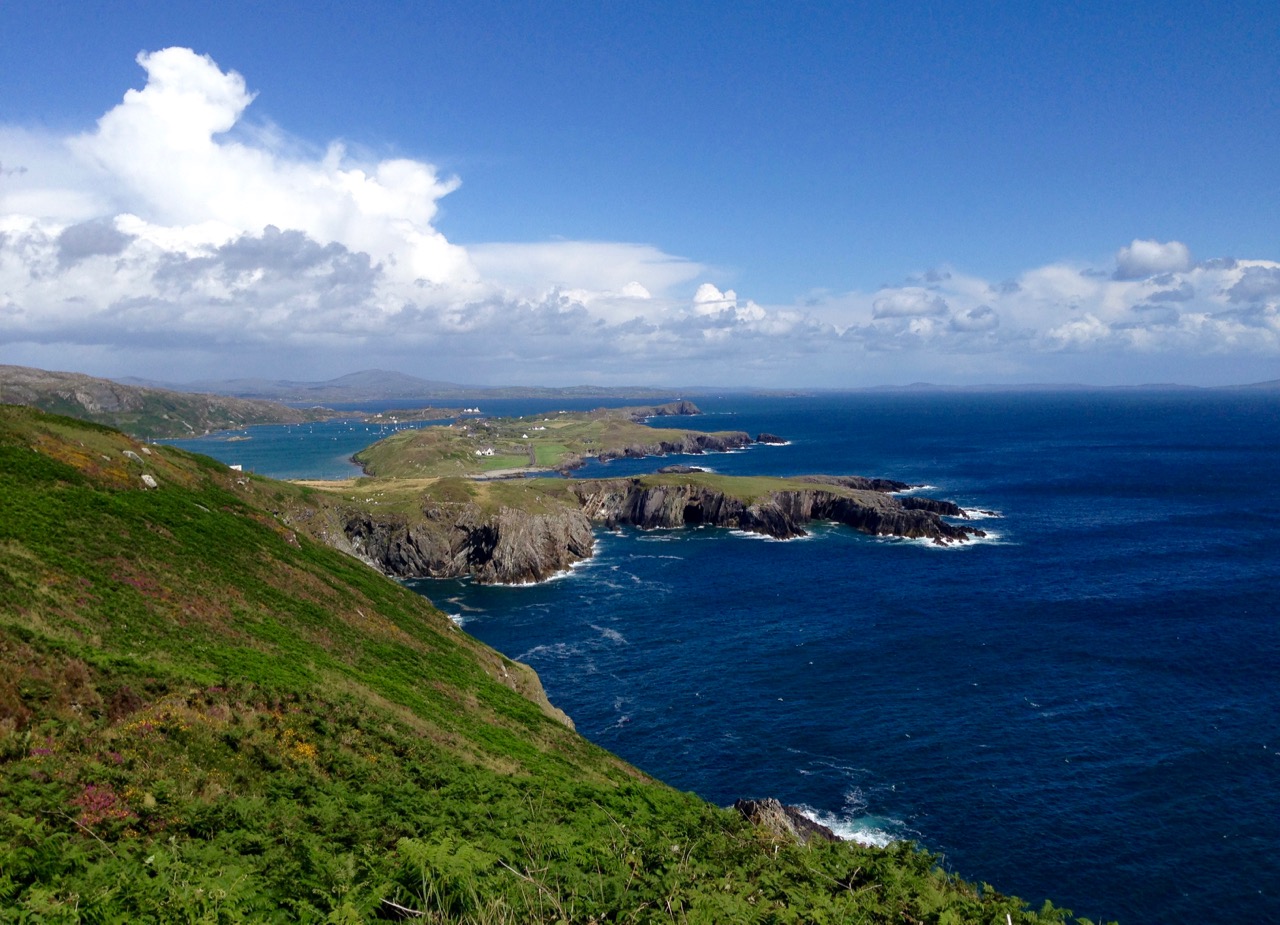
…Anyone who has glanced even cursorily at the map of Ireland, will have noticed how the south-west corner of it has suffered from being the furthest outpost of European resistance to the Atlantic. Winter after winter the fight between sea and rock has raged on, and now, after all these centuries of warfare, the ragged fringe of points and headlands, with long, winding inlets between them, look as though some hungry monster’s sharp teeth had torn the soft, green land away, gnawing it out from between the uncompromising lines of rock that stand firm, indigestible and undefeated…

Naboth’s Vineyard, Somerville and Ross, Spencer Blackett, 1891

hedge and wall

So constantly entranced am I by the character of this remote corner in which we have chosen to settle (in my own experience – admittedly somewhat geographically limited – it is the most beautiful landscape in the world) that I am always excited when I discover that others have shared the same feelings. Consequently I am forever looking out for references to the coastline and country around Roaringwater Bay – particularly descriptive writing – in the wealth of books on West Cork that are harboured by local bookshops, libraries, and our own shelves here at Nead an Iolair: we are most fortunate that some of these books, especially the now out-of-print ones, came with the house! I have sifted through a few of the words: essays, extracts from novels, historical treatise and guidebooks that support my own feelings about the place. All are taken from writers I admire and thoroughly recommend. I present them here for you to take in, together with some hopefully seductive illustrations from the locality, in support of my thesis that there is no better place to be alive.

rosbrin cove days

…I believe that in West Cork water runs uphill. There is a small lake on the very summit of Mount Gabriel, nearly fourteen hundred steep feet above the Atlantic level. Small it is, but so deep that when, once upon a time, a heifer was lost in it, she came out in Schull harbour, on her way to America! (Or that is what the people tell you.)…

 ‘Happy Days!’ – Essays of Sorts, Somerville and Ross, Longmans, green and Co, 1946

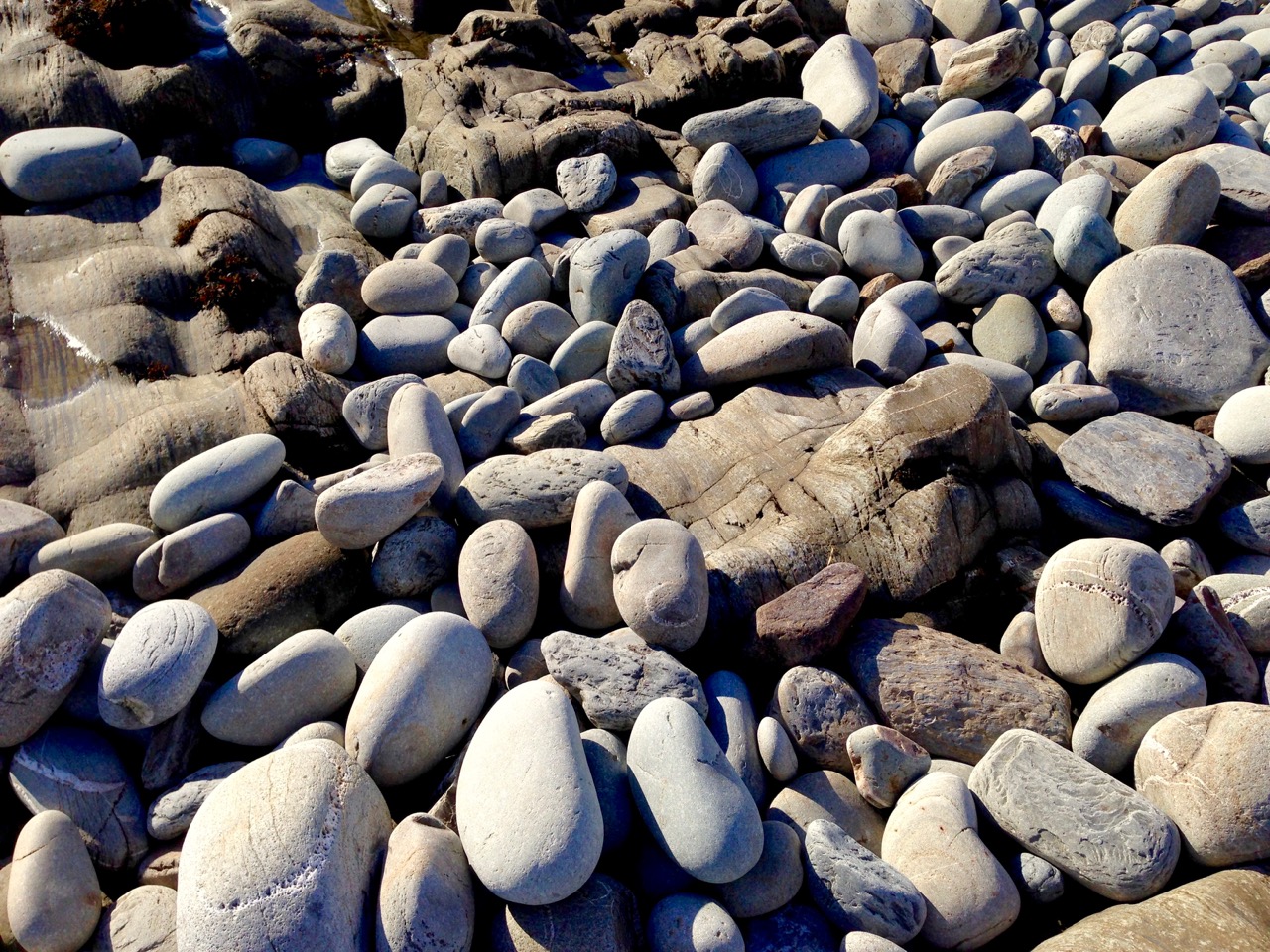
stone beach

…There was a line of tables up the middle of the pier, each with its paraffin lamp smoking and flaring in the partial shelter of a fish-box, and each with its wild, Rembrandtish group of women splitting the innumerable mackerel, and rubbing lavish fistfuls of coarse gray salt into each, before it was flung to the men to be packed into barrels. The lamps shone fantastically on the double row of intent faces, on the quickly moving arms of the women, crimsoned to the elbows, on the tables, varnished with the same colour, and on the cold silvery heaps of fish…

Naboth’s Vineyard, Somerville and Ross, Spencer Blackett, 1891

cappacolour

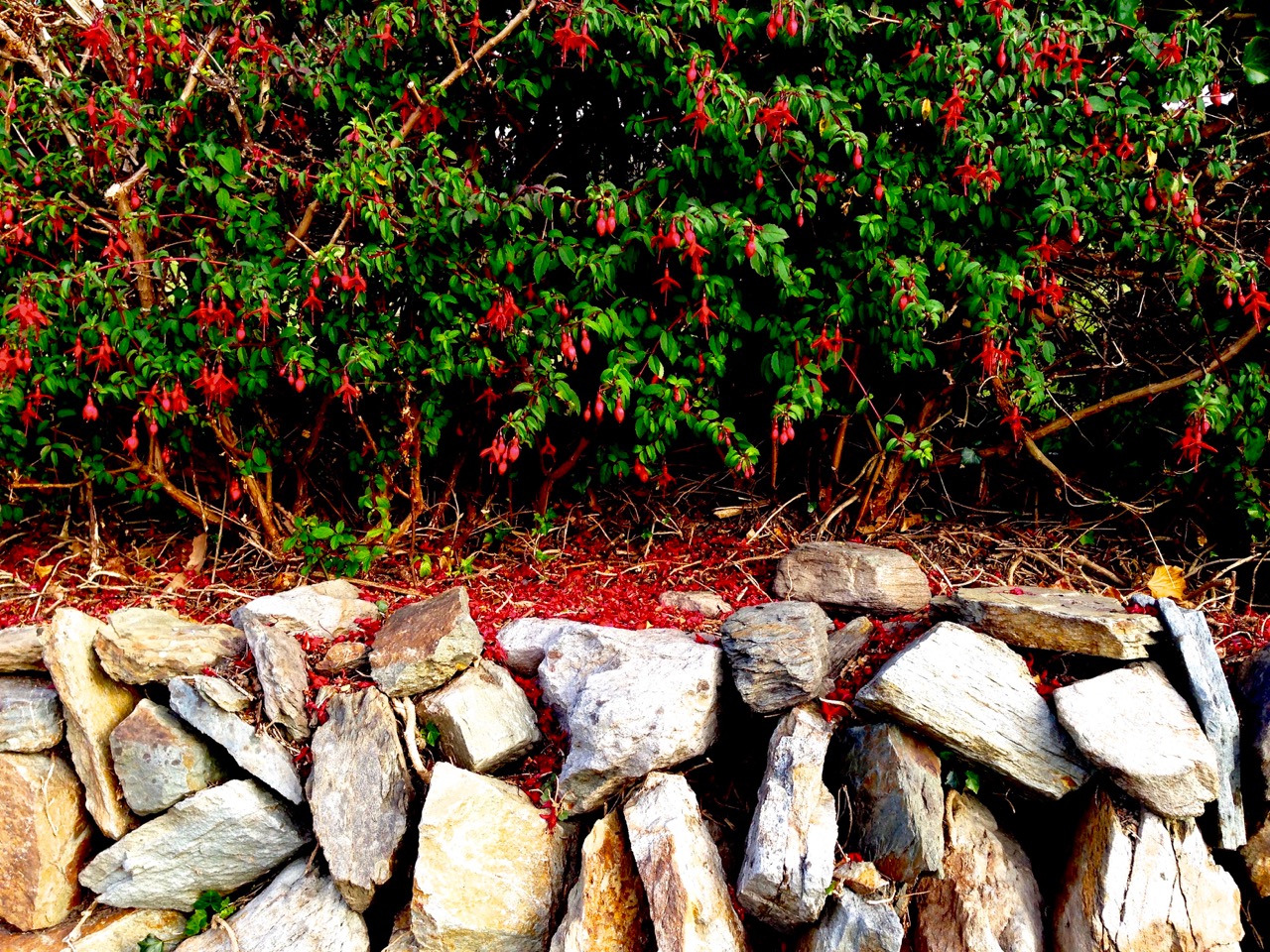
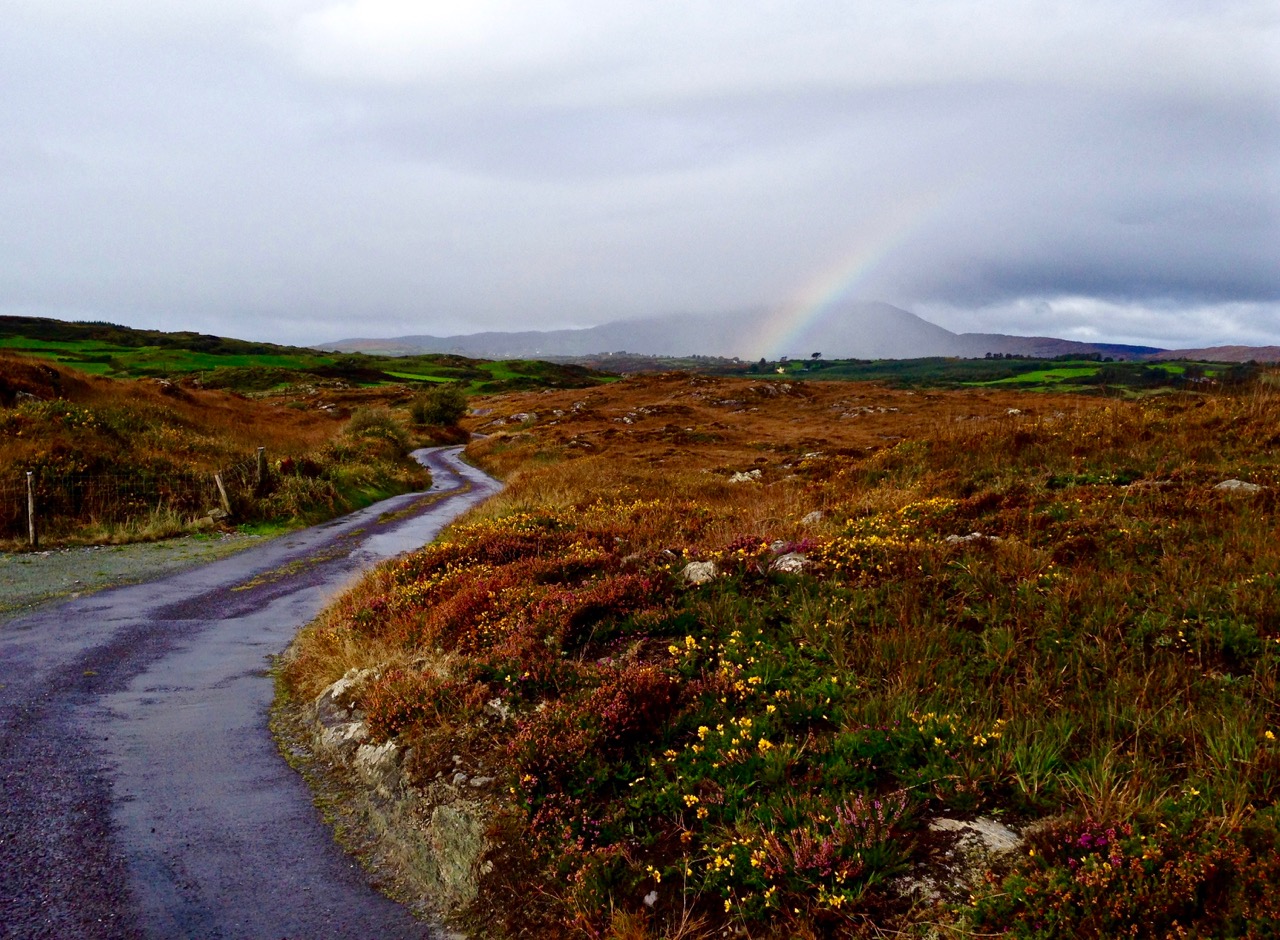
…Think of a wandering road in – let me say West Cork… The way is rough and stony, and (most probably) muddy, but it can claim compensating charms, even though it can hardly fulfil any of the functions proper to respectable roads. And in its favour I would claim the broken varying lines of the hills against the sky. The untidy fences, with their flaming furze bushes, or crimson fuchsia hedges; their throngs of vagabond wild flowers, that can challenge the smug respectability of a well-kept garden. And the inevitable creatures, the donkeys, the pigs, the coupled goats, the geese, that regard the highroad as their lounge and playground. No doubt they exasperate the motorist in a hurry (as are all motorists) but for more tranquil wayfarers they can offer entertainment, almost charm…

‘Happy Days!’ – Essays of Sorts, Somerville and Ross, Longmans, green and Co, 1946

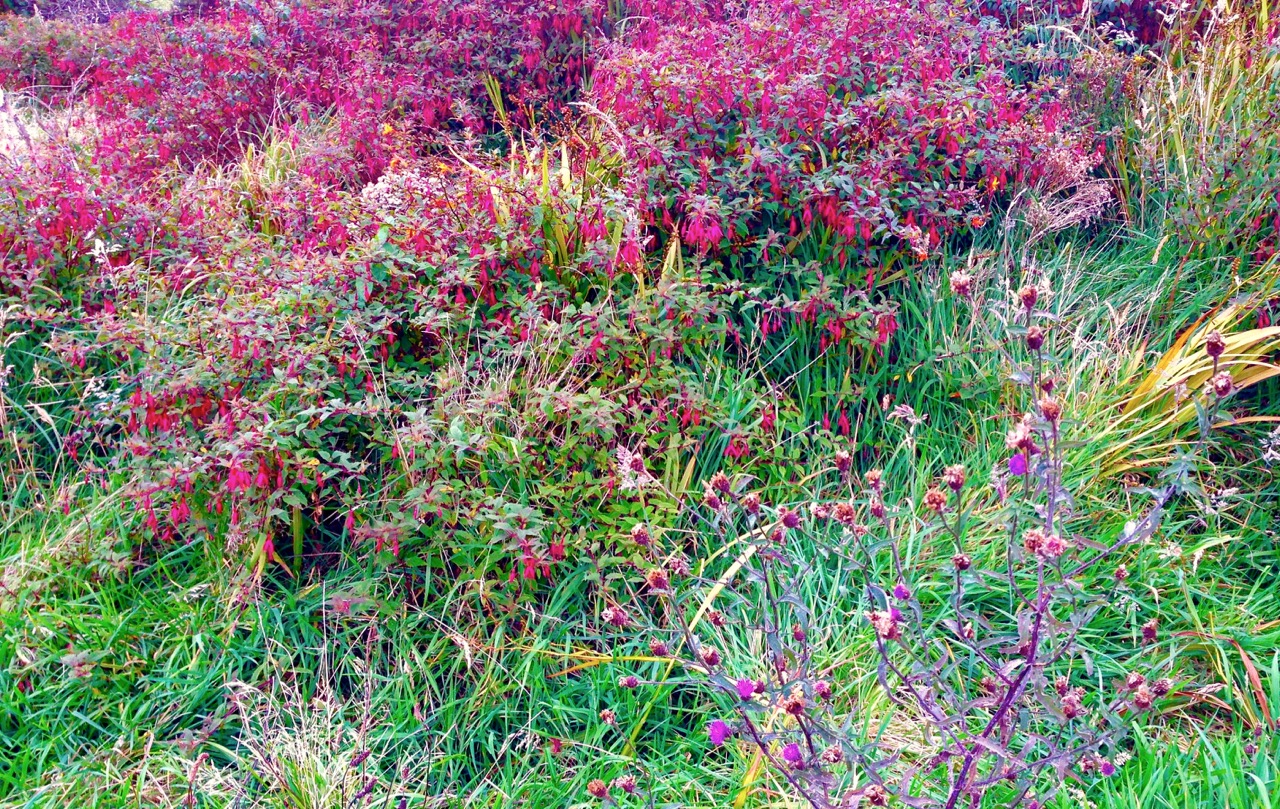
fuschia colour 2(Ireland) …is a land of surprises. She has the gift of unexpectedness, of uncertainty: her people, like her looks, and her weather, can be sometimes charming, often exasperating, but seldom commonplace. Is there another country, reasonably civilised, in which, in the course of a casual idle stroll, records of pre-history can be met with in any field, unconsidered, or found (as I have known) an immense cup-marked stone, built into the wall of a cow-house, ignored by the descendants of those who were once its worshippers? And yet, in characteristic contrariety – as is our way in Eire – in the field next to that cow-house, you can see that the plough has turned aside from its rightful course in respect for a little old deformity of a thorn-tree, which has asserted, for possibly a thousand years, its right to be reverenced and feared…

‘Happy Days!’ – Essays of Sorts, Somerville and Ross, Longmans, green and Co, 1946

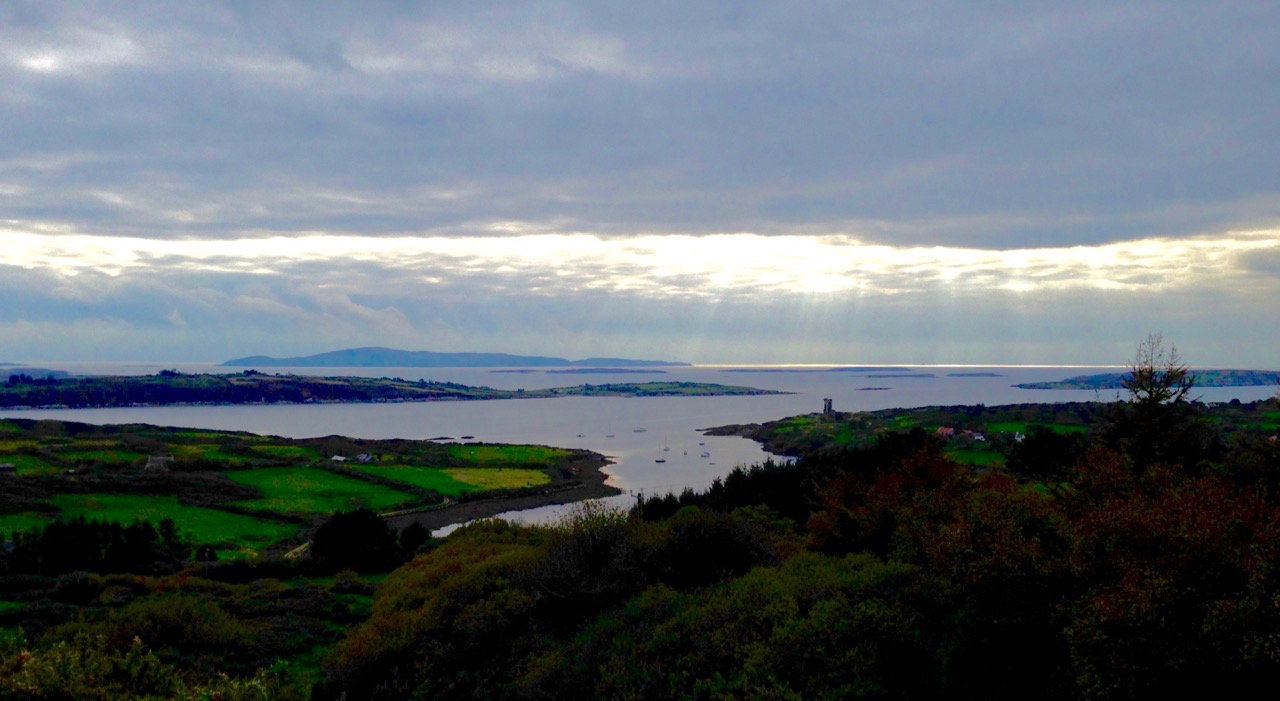
sun rays

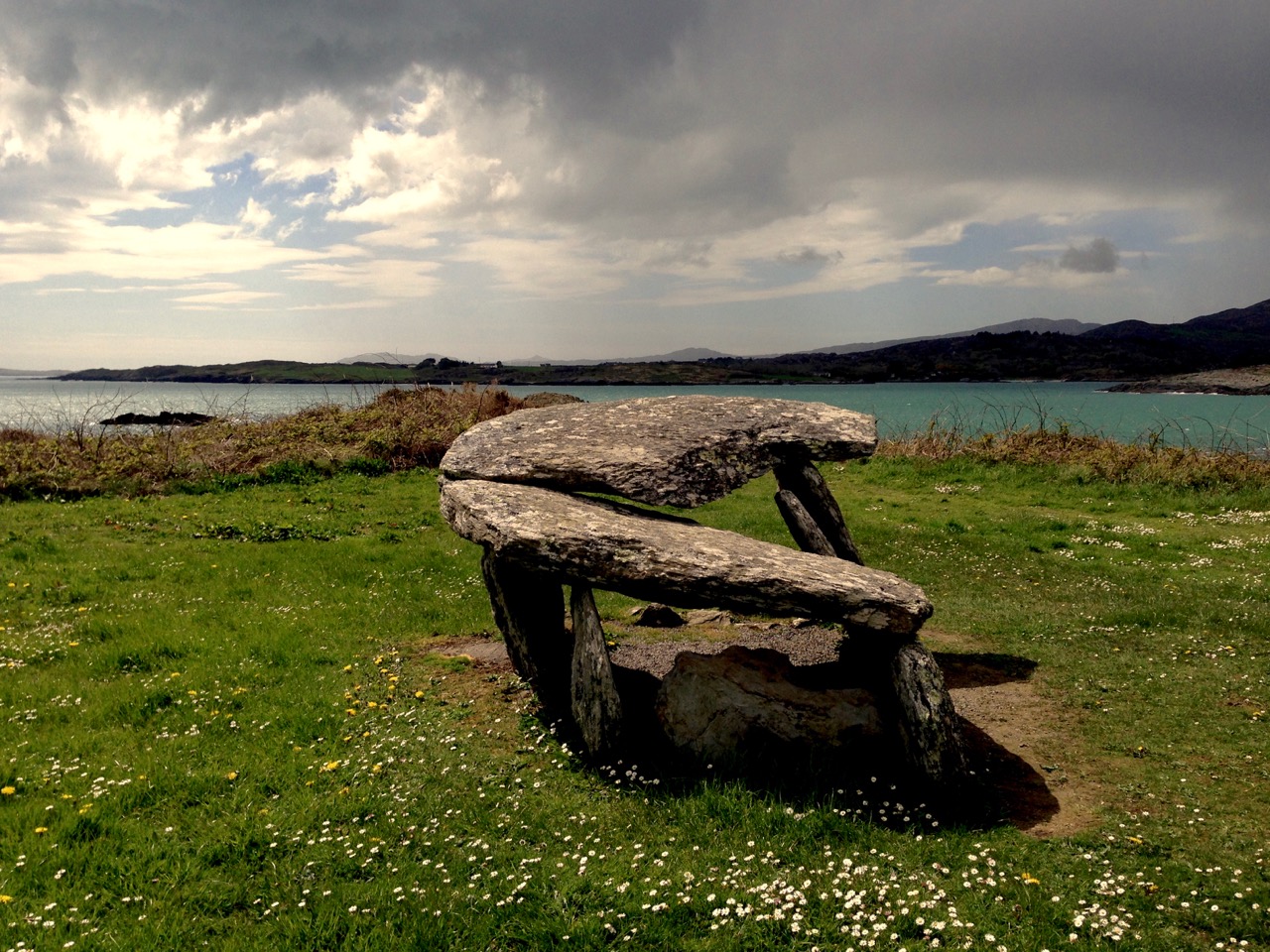
…In the mirror that memory will sometimes hold for us, I can see Rahyne Glen at four o’clock on a silver autumn morning before the sun has reached it. Opposite, just below the rim of the steep western side of the glen, there is one of the memorials of an older race and its religion. This is a broad slab of pale stone, leaning sideways against the hill, having, somehow slipped off the stones on which it had been supported. The sunlight falls full on it; it catches the eye and holds it. It is a dolmen, and the pale slab was its cap-stone. It marks the grave of a chief. He might have been content with his resting-place, had beauty of scene appealed to him (which seems improbable). Whether contented or no, he has lain there (if the archaeologists may be believed) undisturbed, through all the long centuries. If he were to look out now on those familiar hills he would see no change. His hills have defied civilization. All would look as it might have looked on any fair September morning during past thousands of years. And, I suppose, the pink ling, and the purple heather and the gold of the low-growing autumn furze, would then have spread the same carpet of colour over the hills… The wild stream comes storming through the thorn-bushes of the glen as fiercely as ever it did when the Chieftain and his warriors washed their spears in it… Beyond the glen the country rises, in long swathes of dim green, and purple, and misty blue, to a curving line of hills, and farther and higher still – for the viewpoint is a high one – a narrow flashing line tells of the silver plain below, which is the Western Ocean…

‘Happy Days!’ – Essays of Sorts, Somerville and Ross, Longmans, green and Co, 1946

roaring water

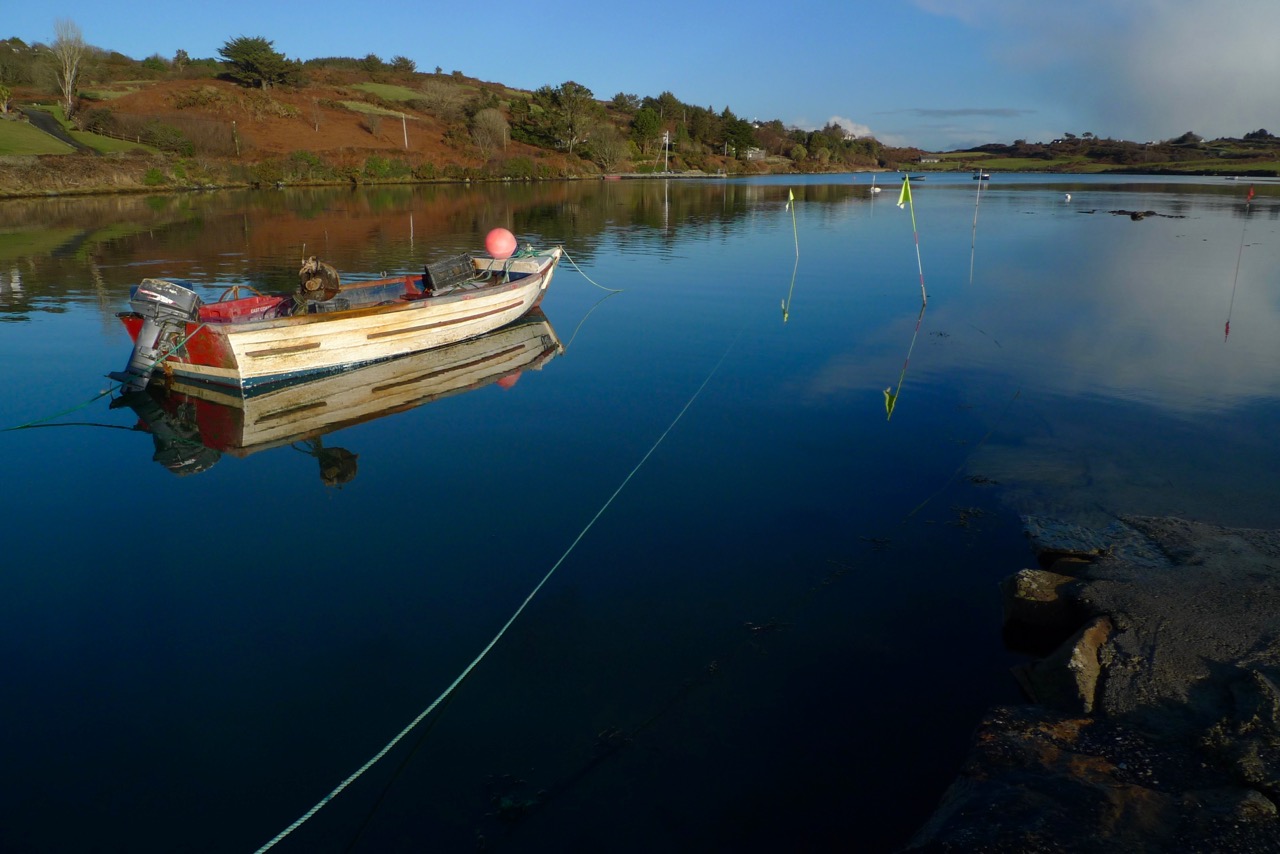
…The indented contours of Raring Water Bay enclose a maze of minute inlets and islands. The name derives from a stream which flows down the side of Mount Kidd amidst a landscape of bracken and boulders. The torrent roars in the narrow gaps and gullies as it rushes towards the sea. The little inlets penetrate the land like miniature fjords and create a sense of safe haven from dangerous seas. Their piers, long abandoned except for the occasional fisherman’s or tourist’s boat, are overgrown and tumbled-down romantic ruins, quiet spots for sighting a lone heron at low tide, grey against grey water. In the narrow defile where the roaring water debouches into the bay nature has done much to reclaim the territory usurped by human purpose. Perhaps, like the closing of a wound, this former embarcation point, which saw many thousands flee a country unable to support them, is being bound in ivy and decorated with wild fuchsia to heal the scar…

West of West – An Artist’s Encounter with West Cork – Brian Lalor, Brandon Book Publishers, 1990

gabriel side

…The islands of the West Cork coast are rather grandly referred to as Carbery’s Hundred Islands, but only Clear Island and Sherkin now sustain a viable population – though, like the other islands off the west coast, there is a steady draining of young people to the cities on the mainland for education and employment. Horse Island off Schull is evocative of the vanished communities of these islands. Silhouetted against the skyline, this piece of low-lying land appears like an old-fashioned, gap-toothed saw; a dark bulk of rock with triangular projections – the gable ends of a row of roofless cottages – biting into the clouds…

West of West – An Artist’s Encounter with West Cork – Brian Lalor, Brandon Book Publishers, 1990

kilcoe days

…Three or more centuries ago, before the landscape of West Cork became bound by a web of roads and fences, its contours would have been best understood when seen from above, from the heights of Mount Kidd or Mount Gabriel. Parallel ribs of rocks and hills, dividing up the pasture land, extended from the base of the mountains to the coast, where long fingers of rocky promontories projected out into the sea. There was a natural order to everything…

West of West – An Artist’s Encounter with West Cork – Brian Lalor, Brandon Book Publishers, 1990

rosbrin shadows

… Beyond Whitehall I rode out to the point at Cunamore where the road ended at a small pier which was the nearest point to Hare Island, also known as Inishdricoll. There was no regular ferry across, but the post boat went over several days a week, and the schoolmistress crossed daily to teach the dozen remaining children. It is a much less dramatic island than Cape or Sherkin, a low-lying slab of land with golden beaches. One road leads to a little village nicknamed Paris – probably a derivation of ‘pallace’ – once the centre of a fleet of lobster boats. Now I listened to an old man lamenting the terrible decline.

   “John has gone and Dennis has died, and we’ll die too, and then the foreigners can have it all.” Already half a dozen of the houses had been bought up by strangers.

   One by one the smaller islands became deserted. It is a long time since they were densely populated, but until quite recently they supported a certain number of families. Only a few years ago I visited Horse Island, just opposite Ballydehob. The last people there, an elderly couple, were living all alone. It was summer, and the old man was sitting in a chair outside his house, his feet in a basin of water. His wife, behind him, fed hens. Next year they were gone. The house, still intact and comfortable, stood empty, the linoleum in place, last year’s calendar on the wall. Down by the pier a plough had been thrown into the water where it looked like a gesture of despair…

The Coast of West Cork – Peter Somerville-Large, Victor Gollancz Ltd, 1974

rosbrin cool

…West of Ballydehob the laneways ran into each other like the veins of a leaf. Many of them were untapped; they seemed empty, with little life except for cattle or a white horse browsing in watery fields beside them. Most seemed to end up at the sea, and each little turn had its own alignment to the bay. One looked across the islands with Kilcoe standing squat and menacing on its headland; the next inlet had a view across to Horse Island; another lane climbed to a hill to where one could see the sweep from Baltimore Beacon and the Gascanane to the shattered tower of Rosbrin castle…

The Coast of West Cork – Peter Somerville-Large, Victor Gollancz Ltd, 1974

Afternoon in Ballydehob 04.2014

…May Day in Schull was the day for ‘bringing in the green’. But the ancient custom is dying out. Only a few branches of green leaves were tied on doors, and a twig of fuchsia dangled from the handle of a bike. “Old pishoges,” an old man muttered as he carefully arranged sycamore round a drainpipe…

The Coast of West Cork – Peter Somerville-Large, Victor Gollancz Ltd, 1974

altar

…Colla harbour and pier is the nearest point to embark for Long Island. Horse Island, Castle Island and Long Island lie in a line just outside Schull harbour. A tradition, quoted by Smith, claims that they were once all one island. “In the latter end of March, AD 830, Hugh Domdighe being monarch of Ireland, there happened . . . terrible shocks of thunder and lightning . . . at the same time the sea broke through the banks in a most violent manner. The island, then called Innisfadda, on the west coast of this country was forced asunder and divided into three parts”…

The Coast of West Cork – Peter Somerville-Large, Victor Gollancz Ltd, 1974

december sun over rossbrin

…From the vicinity off Dunanore, we obtain a view of the coast and the surrounding open, which is one of surpassing beauty, when the summer sun is setting in the far west. Towards the south, as far as the eye can reach, the broad expanse of the Atlantic is stretched before our gaze, the distant horizon dotted here and there by some white sail, or the dark hull of one of those leviathan steamers which ply their busy trades between the Old World and the New. Cape Clear is the first land which greets the American tourist or the returning emigrant on his approach to the old country, and the last cherished spot of his ‘own dear isle’ which bids adieu to the Irish peasant, when he parts, perhaps for ever, from his native country…

Sketches in Carbery, County Cork: its antiquities, history, legends, and topography – Daniel Donovan, McGlashan & Gill, 1876

down below