A Wildflower Trail for West Cork

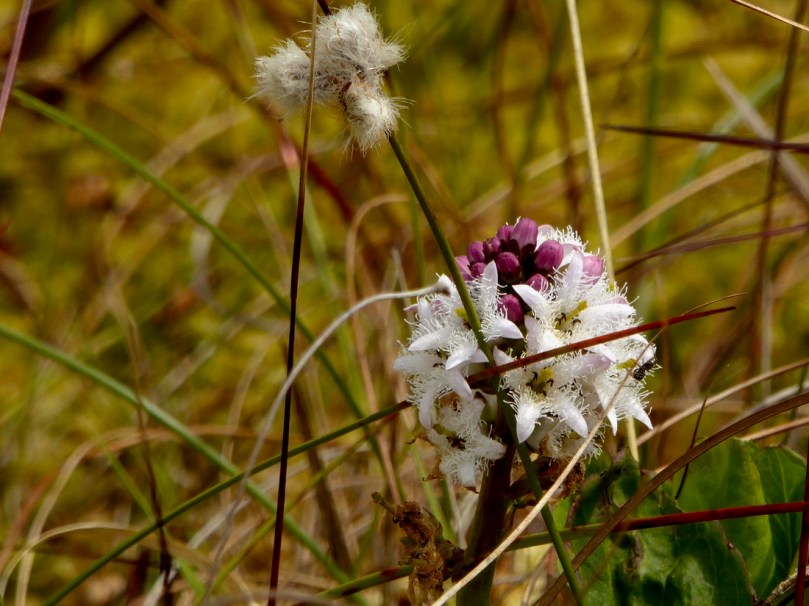
Wildflowers are a spectacular part of our environmental heritage in West Cork. Many of us are aware of them in the background, although we couldn’t name more than half a dozen. It’s only when visitors come along and swoon over the abundance of colour in the hedges that we realise what an incredible natural resource we have on our doorstep. We have a little patch of bog beside us, for example, and a few days ago Bog Cotton and Bog Bean (above) were merrily blooming side by side there. I had never realised how attractive they were until I lingered for close observation. 
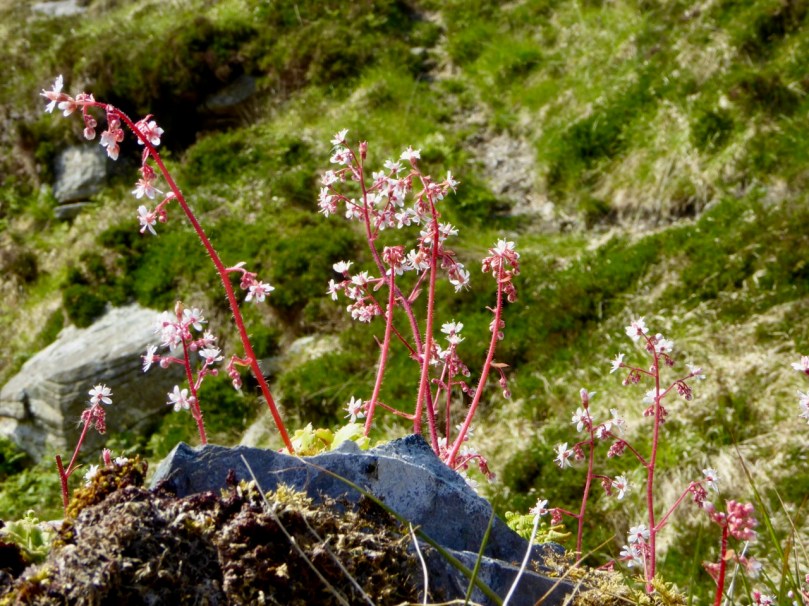
St Patrick’s Cabbage is part of the Lusitanian Flora we wrote about in our post Into the Woods. It grows abundantly on the North Side of the Mizen.

We at Roaringwater Journal are exceptionally pleased to have been involved with developing West Cork’s first ever Wildflower Trail System – it launches this Tuesday, but it’s been a while in the planning. The Trail System and its associated brochure is an educative tool that helps us appreciate and learn more about the wildflowers that surround us.

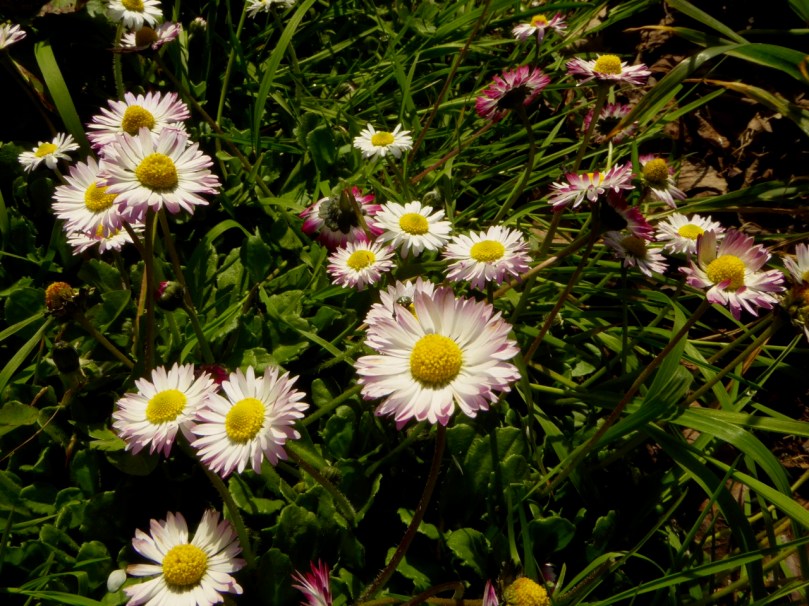
These little beauties are called Mexican Fleabane, but also known as Wall Daisies. The opposite of lawn daisies, they go pink as they age, rather than when they emerge. They’re an introduced species but have naturalised widely. These ones are on the wall of the stream that runs through Drimoleague.

We are particularly happy to welcome Zoë Devlin to do the honours of launching the trails. When I first got interested in wildflowers our friend Amanda (yes, she of Holy Wells of Cork fame) gave me a copy of Zoë’s book, The Wildflowers of Ireland, and it instantly became my bible. It’s laid out by colour, you see, and then by form (four petals, five petals, round clusters, etc) so it’s easy to navigate and to find what you’re after. The illustrations are clear and there’s lots of information about each plant to help you figure out what you’re looking at.

Better still, there’s Zoë’s website. Because it’s constantly updated, it has even more flower species in it, and more information on each one – including herbal uses, folklore references, and details on whether it is native or alien. And finally, there’s her Facebook page where she posts news, recent finds or currently blooming flowers, using her own superb images.
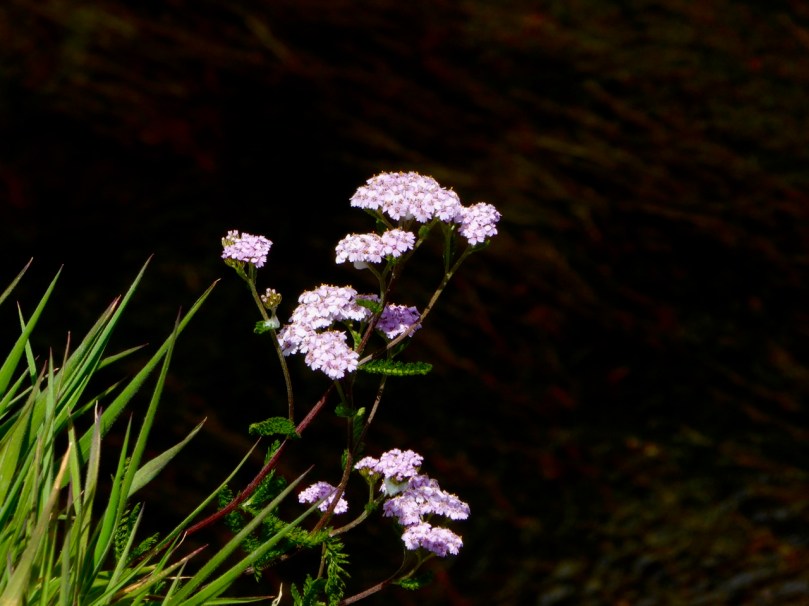
This is Yarrow. I didn’t recognise it at first because I thought Yarrow was always white, but apparently it can be this colour too. In addition, it’s supposed to like dry ground, but this one was overhanging a stream

The Wildflower Trail builds on the fact that there is already a system of waymarked trails around Ballydehob and the Mizen. Robert wrote about the Fastnet Trails in our post Closer Encounters – Fastnet Trails, and I followed up with a two-part post on the Rossbrin Loop Trail, here and here.
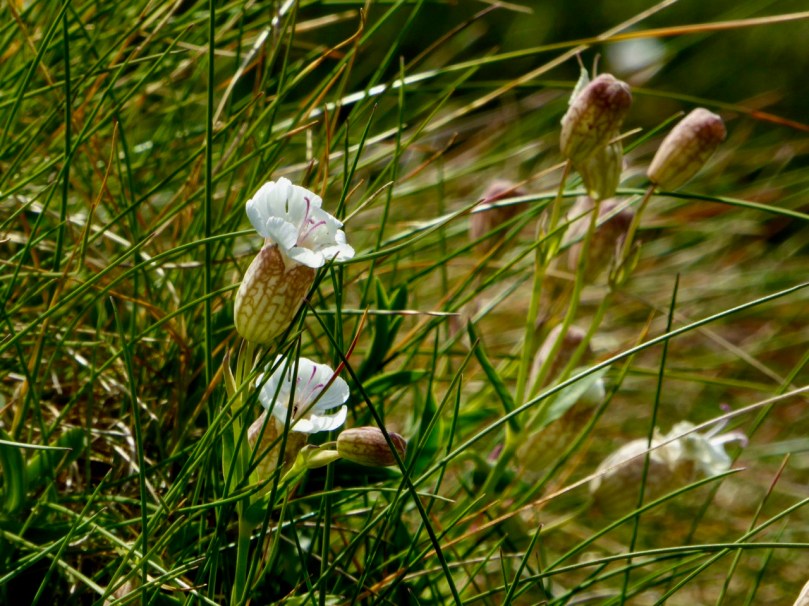
Sea Campion, a native plant adapted to a coastal habitat. It often occurs in drifts.

Using the specially-designed brochure, walkers can identify wildflowers along their chosen trail, then return to the Tourist Office and add their finds to the Master List on the wall. The Tourist Centres at Ballydehob and Schull will have resources available to help them identify any other flowers they have found. If you can’t pick up a brochure, you can find a link to it here.

May belongs to the May Tree – AKA the Hawthorn or Whitethorn. Online forums this year reveal it has been an exceptional year for Hawthorn right across the country

To support the Trails we have started a new Facebook Page – Wildflowers of West Cork – where we will post updates and images of what’s in bloom and what to look out for. If you’re a Facebook user, head over and give us a Like and a Share.

Water Cress, seen on the Colla Road just beyond Schull. Wild Water Cress is edible but you have to be very careful where you gather it as it can be infected with parasites

Everyone is welcome to the Launch – 5PM at the Rossbrin Boatslip on Tuesday the 23rd – and to join Zoë afterwards on a Wildflower Walk. If you can’t make the launch, we hope you’ll go for a stroll along one of the trails soon, brochure in hand, and try your luck at identifying a few wildflowers. Our trails are spectacular right now and will only get better as the summer advances.
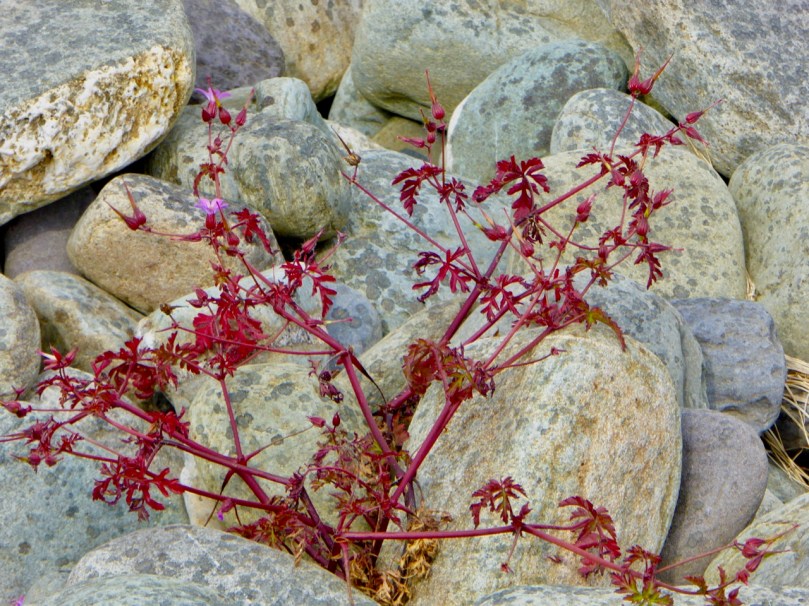
Herb Robert – I love those red stems and leaves as much as the little pink flower. Hard to believe there’s enough soil between those rocks to nourish a plant

But you don’t even need to walk a trail – in West Cork the wildflowers are everywhere. Here’s a photo taken right by Fields of Skibbereen – just look over the fence at the stream.
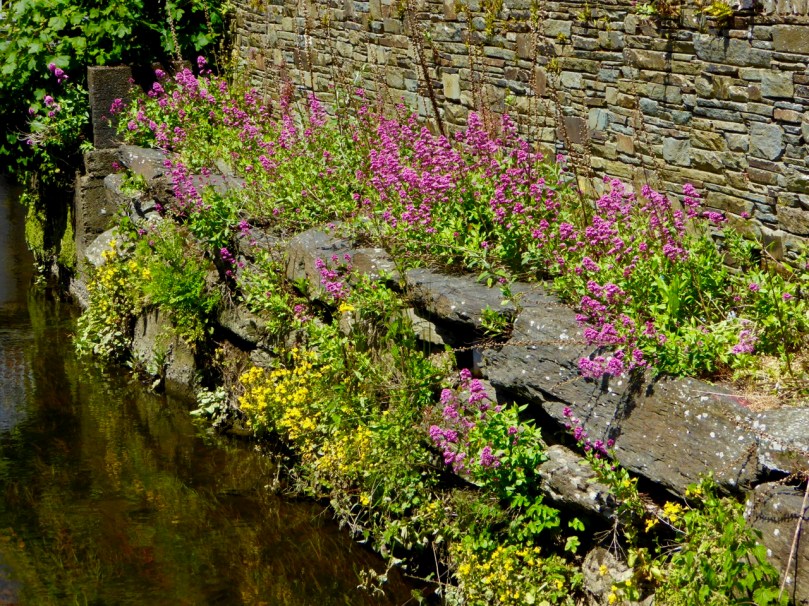
Red Valerian and yellow Monkeyflower. Both are introduced species but obviously right at home on the walls of the Caol Stream in Skibbereen

All the other images were taken in May, all in West Cork, and many of them in unpromising places such as waste ground, urban streams, old walls and rocky shores. Every day, we walk right by a wealth of beauty without really stopping to look.

Mouse-ear Hawkweed and Ivey-leaved Toadflax on the wall containing a stream in Drimoleague. Below in the water is Stream Water-crowfoot

Happy wildflowering! (Start by seeing how many kinds of flowers you can see in the image below – photo taken at Lake Faranamanagh on the Sheep’s Head.)

‘Twas Early Early All in the Spring

The world around us is starting to wake up from its winter snooze. We are shooing bees and wasps from our house and every day we see new flowers (like these Wood Anemones, above) peeping out at us from the verges and hedges. It’s estimated that this part of Ireland is about two weeks ahead of the more northerly counties, due to our milder and dryer climate. All of the photographs were taken in March, except for a couple on April 1st. But that’s OK, because the first three days of April are The Borrowed Days, according to Irish folklore, and still really March. 

Primroses – indelibly associated with early spring. Most are yellow (top) but a true wild pink variety (as opposed to a hybrid between wild and cultivated flowers) does exist too.  The little one about to open is growing out of a stone wall.

Although not yet in their full spring splendour, the boreens are sporting a plethora of wildflowers. And not just flowers but flowering trees and shrubs. In fact much of the colour and drama of the boreen come from shrubs at this time of year.

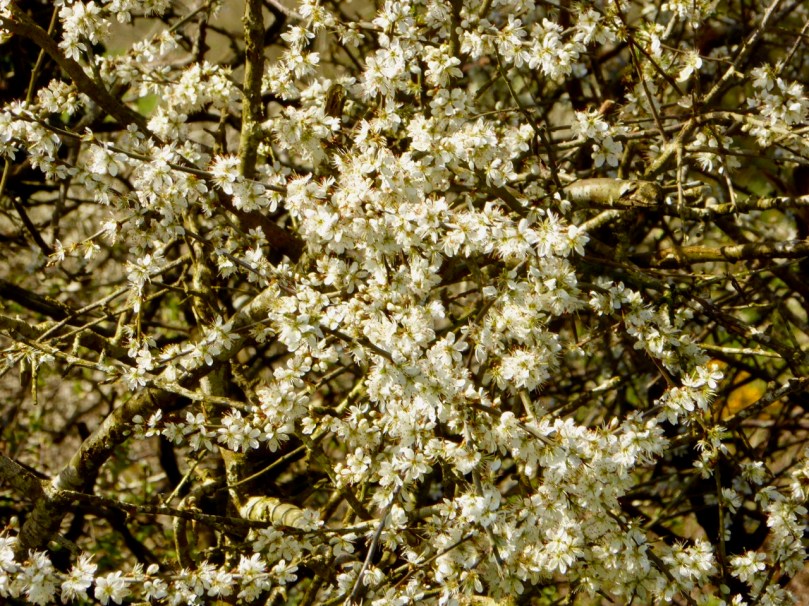
Blackthorn 

I set out to document the wildflowers of a West Cork March and found many old friends already showing themselves, as well as a few new acquaintances. Ready for a ramble? Let’s go.

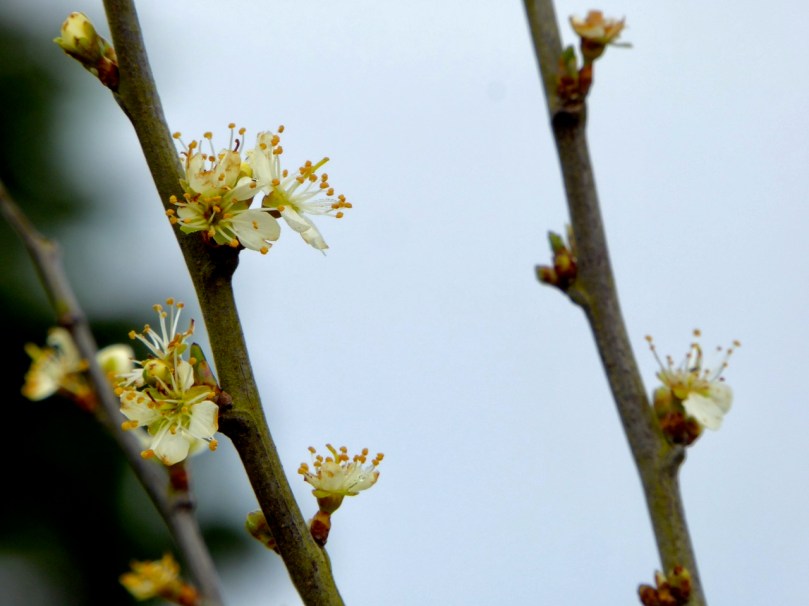
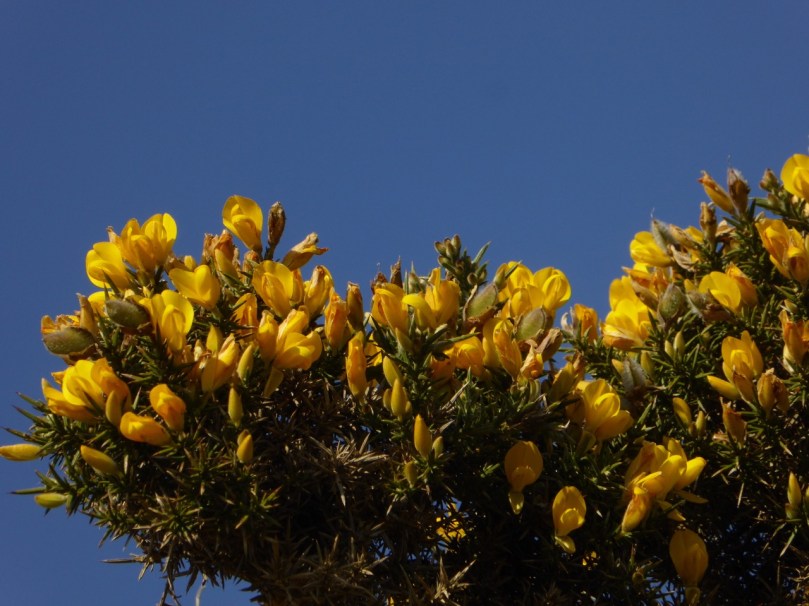
We’ll start up in Stouke and walk back to Rossbrin by way of Kilbronoge. The first things that hits us of course is that heady combination of Gorse and Blackthorn along each side of the boreen. The Blackthorn flowers come before the leaves and they are beautiful when observed close up.

Blackthorn flowers

This year the Gorse seems especially vibrant – but I think I say that every year.

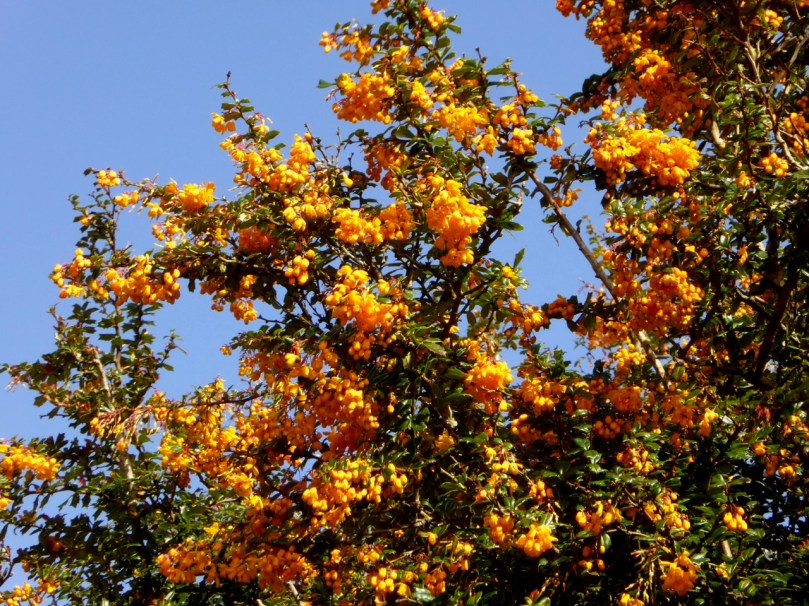
Gorse (upper) and Berberis (lower)

 At some point in the past, somebody planted Berberis as a decorative hedging, perhaps around the Stouke graveyard. It has spread and is still spreading. Although it was only introduced in the mid-19th century from Chile (by none-other than Charles Darwin!) it thrives here, happily lending its rich orangey tones to ensure you keep looking up.

Flowering currant along the boreen

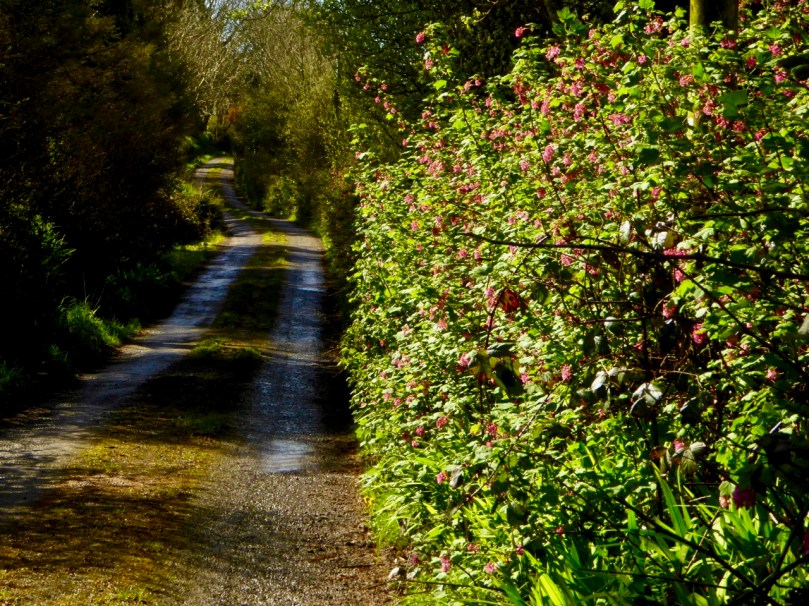
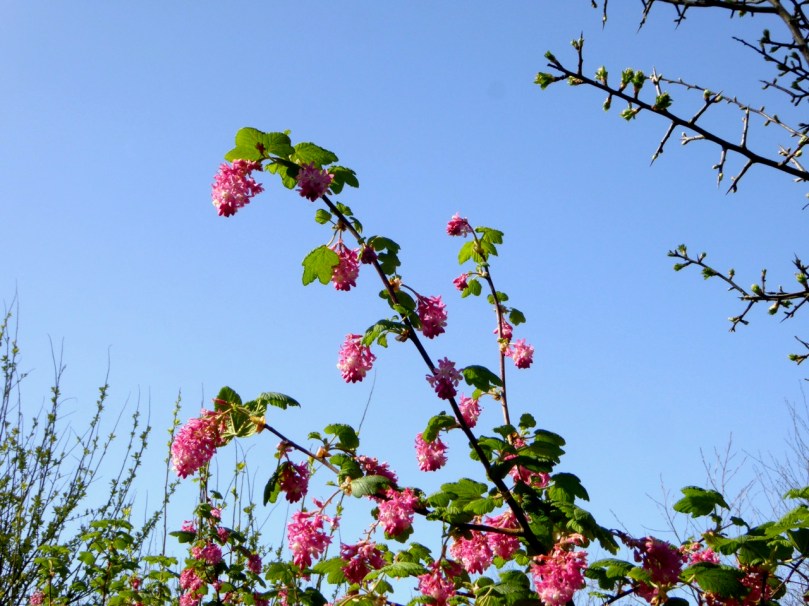
Further along we came across a long stretch of Flowering Currant. You smell it before you see it – all at once you’ll be sniffing and saying mmmm! Flowering Currant came to Europe about the same time as the Berberis and this one was probably originally planted as a hedge, but now the birds have spread it far and wide and it’s naturalised.

Close up, the flowers are spectacular and they have a strong and pleasant curranty aroma. Thank you to my friend Susan for introducing me to the Berberis and Flowering Currant.

As we make our way down to the water we are stopped in our tracks every so often to admire that quintessential early riot of yellow – Celandine. On its own, or mixed with bright pink Herb Robert or with blue Dog Violets, it’s a cheerful sight.

The Daffodils have gone over now, except for a few hardy souls in sheltered spots. I know Daffodils aren’t really wildflowers, but they grow so freely all over the place here, in the middle of fields, along the grassy verges, and especially in old graveyards, that I simply see them as yet another one of the spring flowers. 

Stitchwort is everywhere too, and little blue Speedwells – you have to be alert for that tiny blue pop of colour or you’ll miss them entirely. The first Common Vetch is just beginning to appear as well.

Stitchwort (top), Slender Speedwell (lower left) and Common Vetch (lower right)

Down on the water, we’re on the look out for Thrift, or Sea Pinks. There are none in Rossbrin yet, but I did see some on a sunny sea-cliff the other day. I risked life and limb to get a photo!

I was hanging over the cliff – but look at the other photographer in the background. I was concentrating so hard on the Thrift I never noticed until afterwards that somebody else was taking pictures too. She survived it, but it sure looks risky from this angle

When I was photographing the Thrift I noticed something else, further down the cliff face. I had to dangle over the edge to get a good shot and was convinced I had discovered a rare species! But here it is again along the Rossbrin Cove wall – it turns out to be Common Scurvygrass. And yes, it’s packed with Vitamin C and sailors used it in a tea to prevent scurvy. For something with an unattractive name, it’s rather fetching, don’t you think?

Common Scurvygrass

Along by the water several of the houses are fronted by stone walls. On one of them we found a whole world unto itself – a complete ecosystem.

Declan Doogue and Carsten Krieger in their marvellous book The Wild Flowers of Ireland: The Habitat Guide (brilliant – highly recommended!) describe what happens to old stone walls:

…Grit, sand and dust gradually accumulated in in the spaces between the cut stones and a thin soil began to form. The stones themselves functioned as a sort of storage heater, warming up by day and retaining heat well into the evening. These small areas were very much warmer and dryer than the surrounding wooded or grassy countryside… In these relatively favourable conditions, some species were able to spread much further north and west into cooler and wetter areas. At a local level a number of plants were enabled to grow in areas where there was no suitable ground for rock dwelling species.

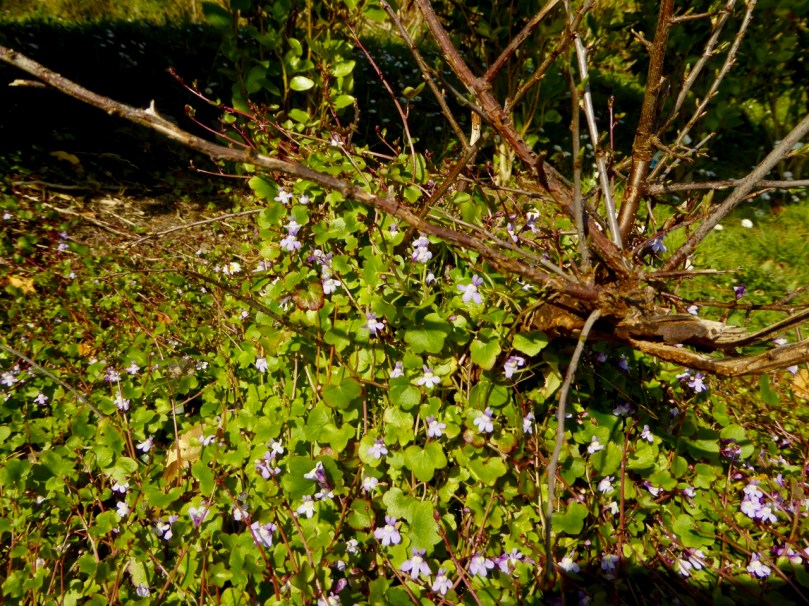
Ivy-leaved Toadflax (an introduced species) loves old walls

Conditions on the top of the wall can be different (drier, for example) than the crevices, or the face or base of the wall, thereby providing a variety of living conditions for different species of plants.

Ramping Fumitory (don’t you love that name!) has rooted well in the south face of the wall

Abundant and beautiful, Ivy-leaved Toadflax clings to the rock face and cascades down the front of the wall. Ramping Fumitory (which seems to be everywhere) had also found a foothold among the stones, and adds lovely flashes of pink.

Wild Strawberries and a little patch of Dandelions occupy space on top of the wall

This wall is south facing, absorbing the maximum amount of heat the sun can provide in West Cork in March. The top hosts Daisies and Dandelions, some newly emerging Scarlet Pimpernel and some Wild Strawberries (duly noted!).

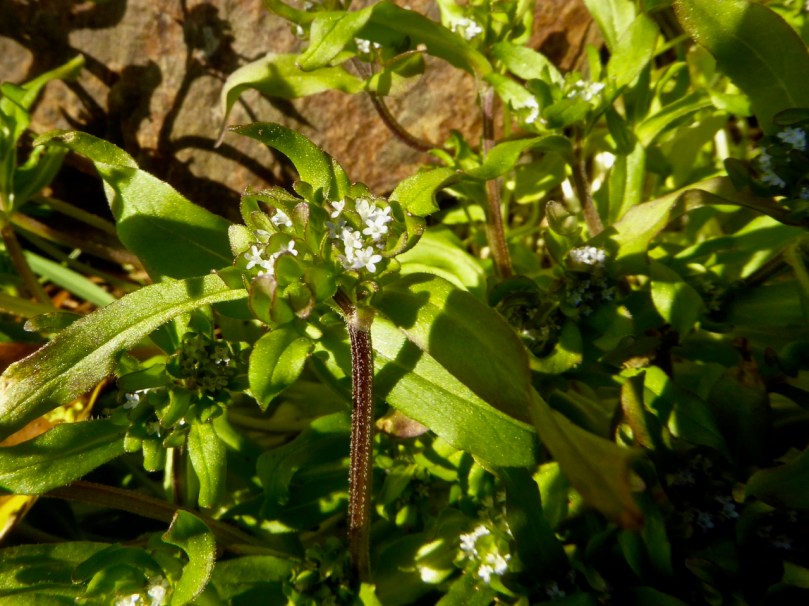
Common Cornsalad or Lamb’s Lettuce

It took me a while to even spot the tiny white flowers hiding among a particular foliage that was growing from spaces between the stones on the front of the wall. Difficult to photograph, as I don’t have a macro lens, this is Common Cornsalad, or Lamb’s Lettuce. As its name suggests, it’s edible, and a popular salad green in several European countries. If you want to get a better idea how tiny these flowers are, check out Zöe Devlin’s listing on her Wildflowers of Ireland site – click on the ‘see more images’ link.

Scarlet Pimpernel on the top of the wall – it’s one of only a very few native flowers in the orangy-red colour range
Nettles, ferns and Navelwort grow on the wall or at the base

This tiny fern is sprouting, in between the stones

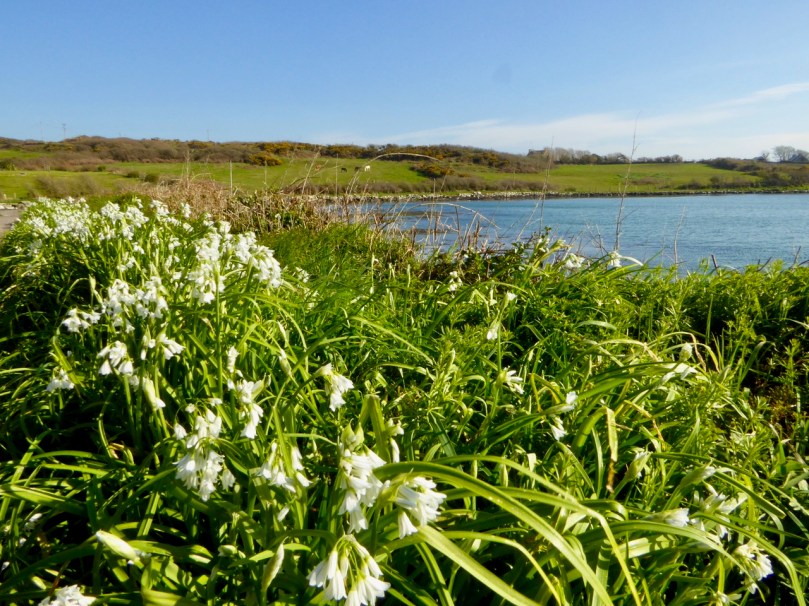
But two of the species we found there speak to the indiscriminate nature in which a microclimate like this provides opportunity for all – both Three-Cornered Garlic and Chilean Iris benefit from this ideal patch of sunlight and warmth.

Three-Cornered Garlic is not our native wild garlic (that’s called Ransoms and is a broad-leaved variety). Tony O’Mahony in his excellent Wildflowers of Cork City and County* refers to it as an ‘ineradicable weed’ and says that ‘it poses a major threat to some West Cork native plant rarities’ (such as the Wild Onion). All parts are edible, and said to taste like a cross between an onion and garlic.

Chilean Iris

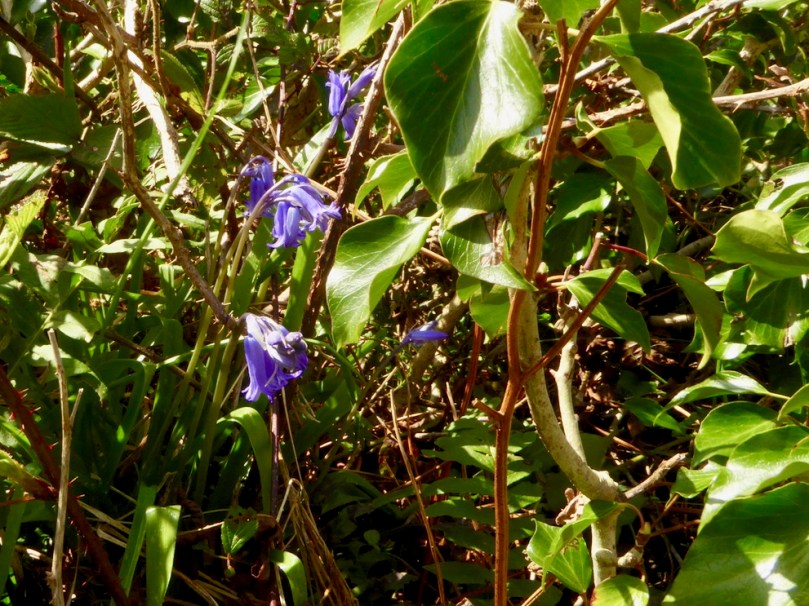
Chilean Iris is another invasive species, although not considered high-impact, possibly because it needs a warmer climate to grow. However, it has the potential to invade habitat preferred by our native plants. From Rossbrin we wend our way back to our own little patch of paradise. But something catches our eye on the way – can it be? Yes – our first Bluebells of the season, almost hidden in the brambles.

We’ve decided to leave part of our lawn unmowed this year, as an experiment in whether or not a wildflower meadow will develop. We have to be careful, as some areas are already full of Montbretia corms, which will be only too delighted to proliferate if left unchecked.

But we’ve identified an area as having potential. It’s south facing and relatively sheltered – and it’s already a haven for little Common Dog Violets, mixing with the Dandelions and Daisies to provide a colourful carpet. We’ll let you know how things progress.

All this early spring wildflower exploration has made me look closer at the humble ones we take for granted – the Lawn Daisies and those pesky Dandelions. How did I never see before how utterly perfect they both are?

I will leave you with one final image – we found more Berberis down on the water, where it was clinging to a stone wall over the water. An astounding testament to the resourcefulness and strength of such a pretty and delicate-looking stem of flowers.

For more wildflower posts, click here.

*The book is out of print and quite hard to get, but worth the hunt.

Lost Landmark

Photo 97It’s a sad thing to lose an iconic landmark. You know the kind I mean – the one that’s in every photo of the place, the one that helps to define it, the instantly recognisable image. In the case of West Cork, that would include the Mizen Bridge, the Galley Head Lighthouse, Ballydehob’s Twelve Arch Bridge, the castles at Three Castle Head, Bantry House, the Baltimore Beacon and of course the Fastnet Rock.

The morning after the lightening strike

The Cappaghglass Mine Chimney the morning after the lightning strike

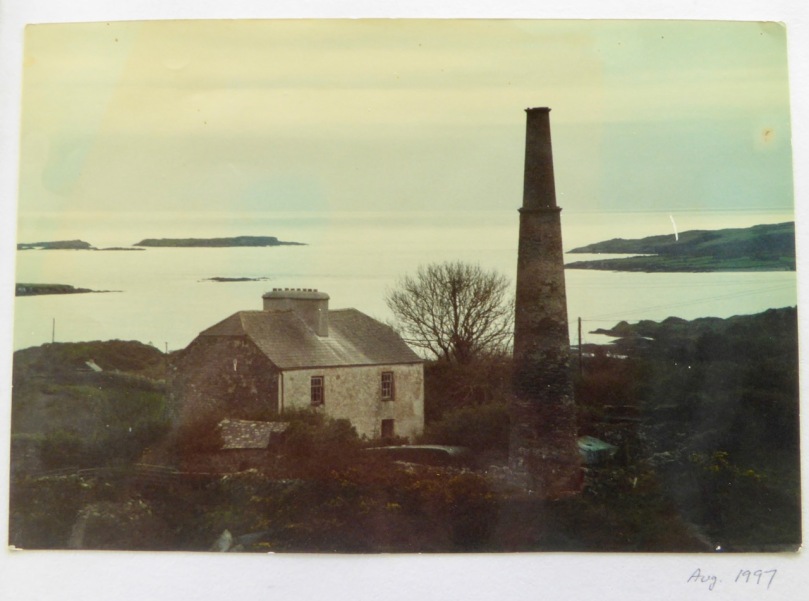
But we used to have another one, until it was hit by lightning and came down in 2002, 15 years ago this month. The mine chimney at Cappaghglass stood tall on the crest of the hill, visible for miles around from Mount Gabriel to Cape Clear, from Long Island to Baltimore.

View from magazine

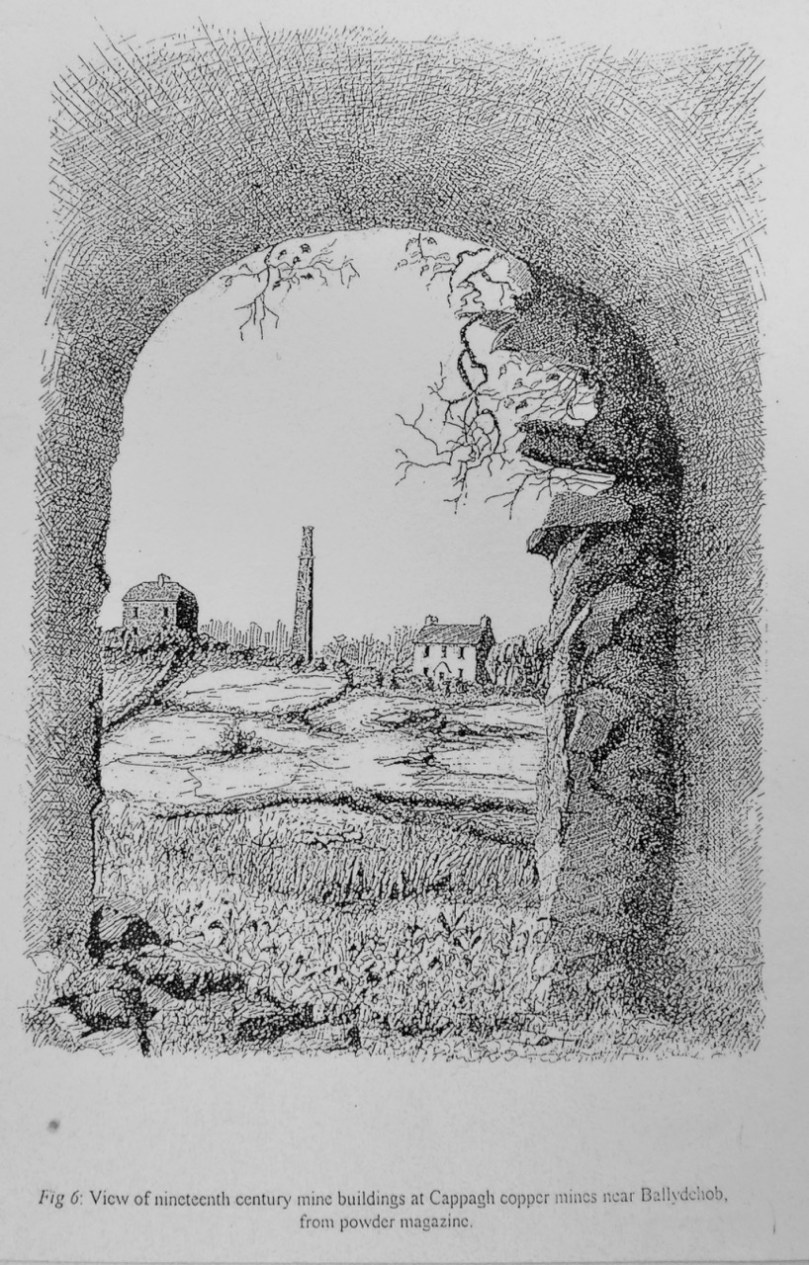
I don’t know the origin of this drawing. It’s a view of both mine captain houses and the chimney, taken from the south near Audley Cove

It was the most visible manifestation of the industrial past that has vanished so completely from this area. When it was built (to replace an even older one) in 1862 it was to vent steam from the engine that powered crushing machinery. Robert has written about the mining industry here – take a look at his post, Copper Country. At its height, hundreds of people were employed, above and below ground in the Cappagh Mine and what is now a lonely stretch of heathery hilltop was once a populous place.

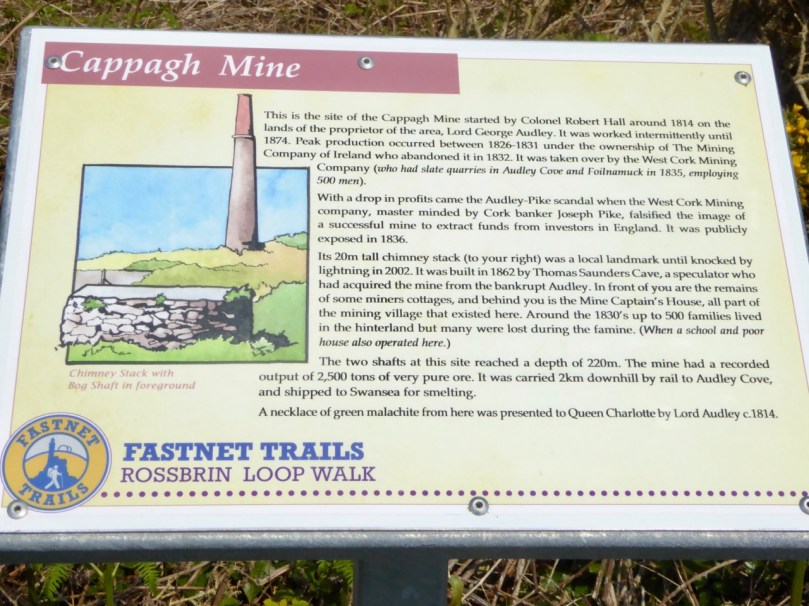
Fastnet Trail sign

The chimney was so conspicuous on the landscape that it was used by the Admiralty to provide a reference point for mariners and by travellers to orient themselves in West Cork.

Admiralty Chart

Admiralty chart showing the ‘Steam Chimney’ as a reference point

As many landmarks are, it was also a favourite spot with locals – a place to walk out to on a fine summer’s evening or to bring your visitors to so they could admire the panoramic views over Roaringwater Bay and listen to tales of a grandfather’s backbreaking labour in the mines.

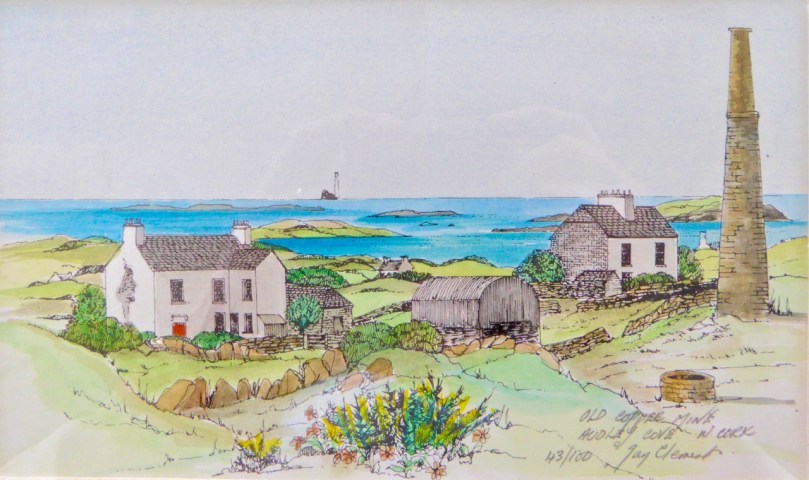
Jan Clement print

The storm that roared in on the afternoon of February 9 in 2002 came with no warning. It slammed into Cappaghglass with a noise like a jet engine. The first lightning strike killed several cows on an adjacent field, the next brought down the chimney and one after that hit the telephone wires causing a powerful surge to explode into the old Mine Captain’s House, by then the comfortable and modernised home of Terri and Mark O’Mahony and their family. The impact was devastating (we’ve seen the pictures) – the house was ruined and everyone inside was incredibly lucky to escape with relatively minor injuries.

Chimney stump

The chimney stump today

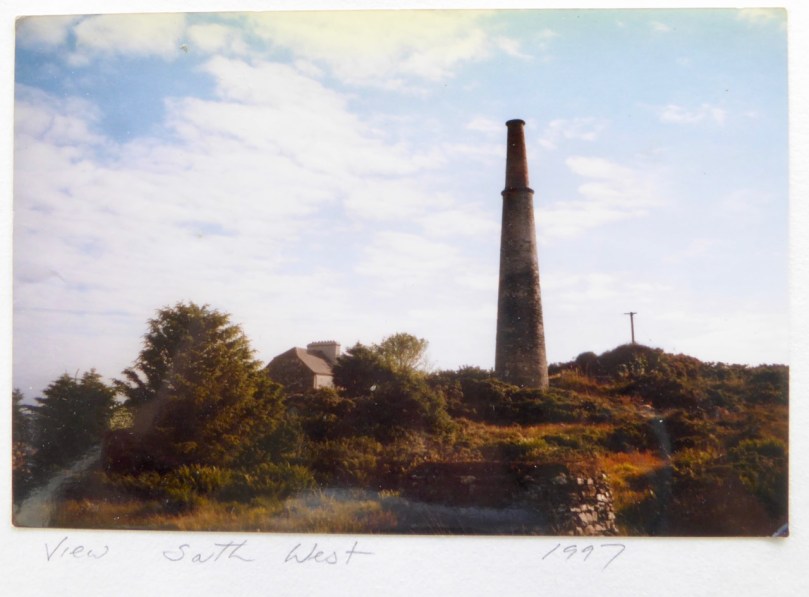
The O’Mahonys have rebuilt the Mine Captain’s House, but all that remains of the chimney is a stump. There was talk of reconstructing it but this never happened. In circumstances like this, all we have are the images that we can gather together to remind us of what an iconic structure this was. Fortunately, there are photographs and works of art extant that bear witness to how it dominated the landscape and that help us understand how it became such a beloved feature of the countryside.

Photo 97 to SW

Among the images that remain is a charming drawing by Brian Lalor (yes, he of Brian’s Sketchbook fame), commissioned by friends to celebrate Mark O’Mahony’s birthday. It shows the chimney and the house and since it was done in 2002 it must have been just before the lightning strike.

Lalor 2002 sketch

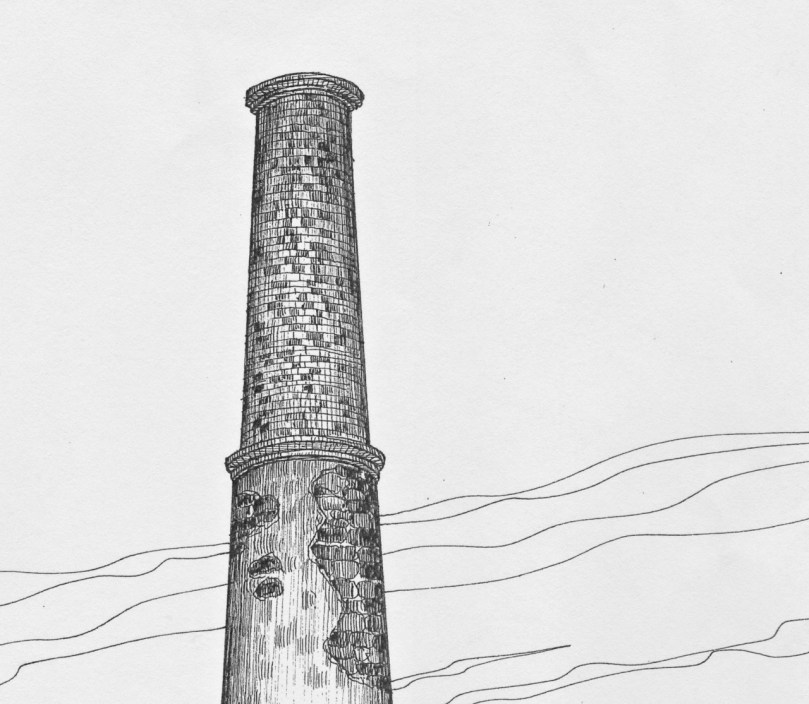
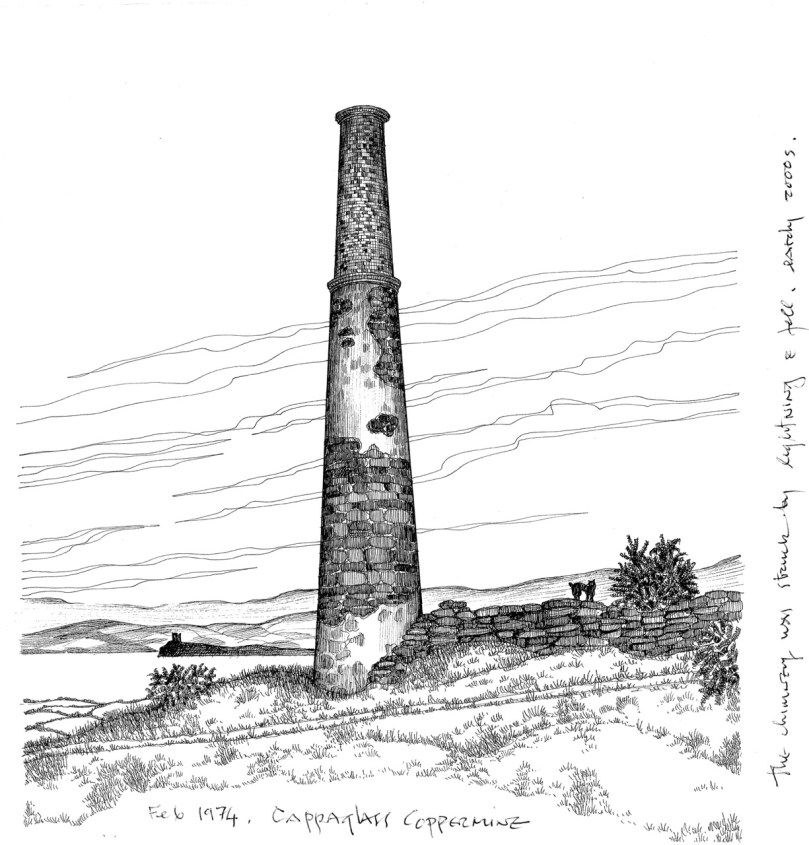
But last week a new image emerged – Brian came across a pen and ink drawing he did in 1974 and he has allowed me to use it in this post. Because Brian unites the eye of the artist with the training of the architect and archaeologist, this is an important new piece of documentary evidence, as well as being a work of art. Thus we can see that the lower two-thirds of the chimney were made of stone, with render still clinging to the outside in patches. The top third is brick, separated from the stone by a corbeled course of expertly laid brick – a feature that is repeated at the top of the chimney also.

Lalor Cappaghglass Chimney – closeup

In Brian’s drawing the chimney stands splendidly on the hill like a round tower and its medieval resonance is echoed by the distant castle across the water.

Lalor Cappaglass Coppermine

My thanks to Mark and Terri O’Mahony for allowing me to use their photographs and drawings in this post, and to Brian Lalor for giving me a copy of his sketch. It’s lovely to have this evidence – but of course I can’t help regretting that the chimney is gone forever.

Mining area

Cappaghglass now

Late Bloomers: Invasive, Naturalised and Native

Creeper on white cottage wall

This is my last wildflower post! You must be getting tired of my wildflower obsession by now. So, no more after this one. (Well, at least not in 2016.) The thing is, I had assumed that there was nothing left to see at this point. We are in October after all, and autumn is coming early this year after a cool and misty summer. But a walk today put flight to that notion.
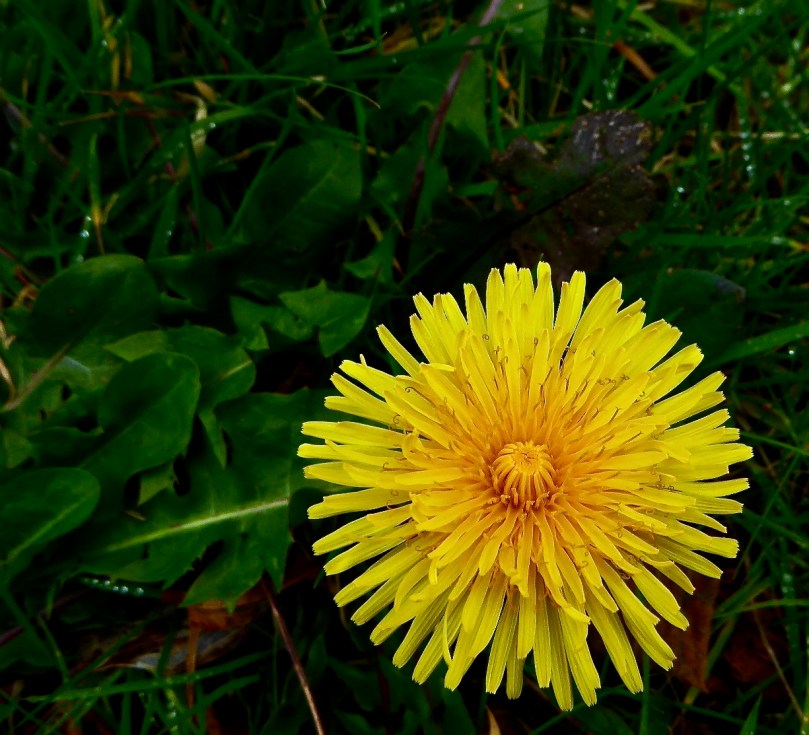
Bee on Ivy Flower

Bracken undergrowthThe ivy flowers are alive with bees right now (above) and the bracken is putting on its winter coat

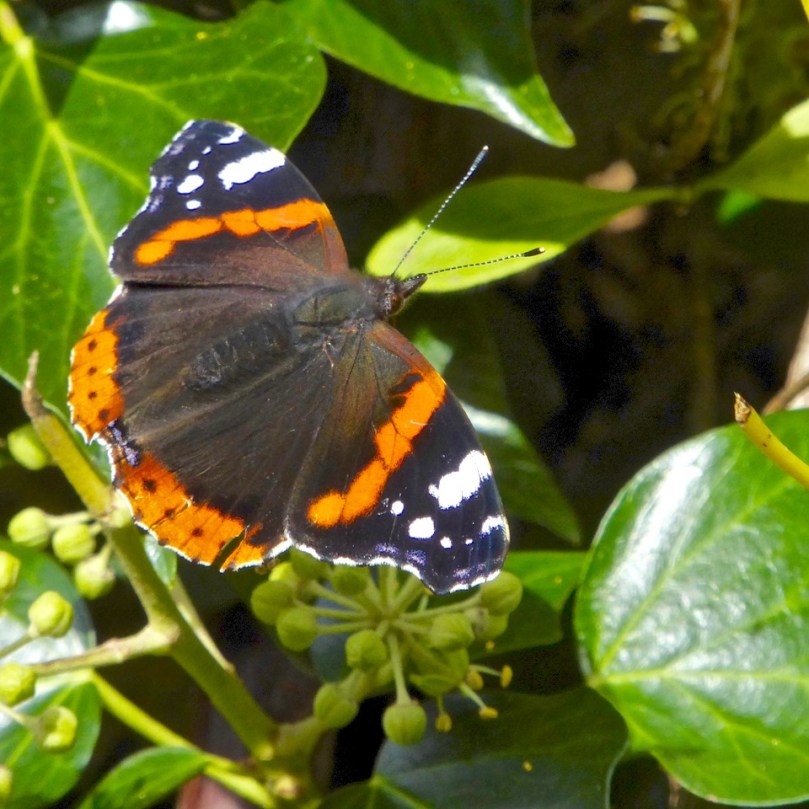
The predominant colour of the countryside is changing now as the brackens take on their winter amber-brown. The ivy is in full flower. Stand near a patch and you will be instantly aware of the hum. Our little black Irish bees are gathering while they still can and depend on this late flowering and ubiquitous plant for the last remaining nectar. Ivy honey is darker in colour and can smell a little rank, but it has a great reputation as a soothing cure for coughs and colds (especially if mixed with a little whiskey).

Bee on Ivy 2

Red Admiral on IvyThe bees and the Red Admiral Butterflies depend on this late flowering ivy

The trees haven’t quite started to turn yet, but brambles and creepers are in brilliant autumn reds. On our walk today this white cottage wall with its scarlet creeper caught my eye.

Creeper on cottage wall

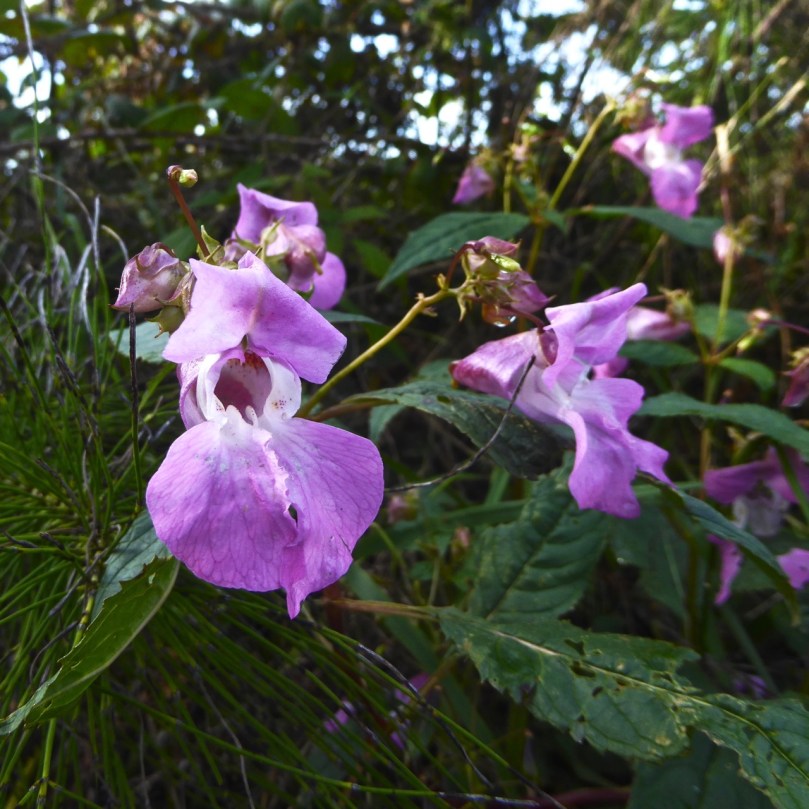
A couple of surprises awaited us today. The first one was to come across a stand of Indian Balsam. This alas, is an invasive species, introduced as far back at 200 years ago from the Himalayas. The distribution map at the Botanical Society of Britain and Ireland does not show it in West Cork, but I guess I can now say it’s here. In fact, I submitted a report to Invasive Species Ireland – anyone can do this via their Alien Watch Program. Although it is certainly beautiful, it’s a divil – read all about its negative impacts on the Invasive Species Ireland website. Among its other attributes, it has a explosive seedpod that can throw seed up to six metres!

Indian Balsam

Indian Balsam – Invasive Species Ireland lists it with Rhododendron, Japanese Knotweed and Giant Hogweed as the most damaging invasive species

So  what’s the difference between non-native plants that are labelled invasive versus this that are called simply naturalised? Although it can be a matter of debate and perception, in the main we use the term invasive for those non-native plants that spread to such a degree as to exclude native species from the habitat they favour, or cause damage to the environment or the economy. Happily, the only invasive species we encountered on our walk was the Indian Balsam. However, we did come across lots of non-native, naturalised flowers too.

Greater Periwinkle

The Greater Periwinkle – seen a few days ago on The Mizen

The first one (actually seen a few days ago) is this beautiful Greater Periwinkle. It’s not a native plant but has been here a long time. It’s supposed to have great medicinal properties, especially as a laxative and, in an ointment it’s good for, er, piles. According to Zoe Devlin’s Wildflowers of Ireland (my go-to guide) The 17th century herbalist, Nicholas Culpeper wrote ‘that the leaves eaten by man and wife together, cause love between them. Ooh – think I might head back to where I saw it…
Ivy-leaved Toadflax

Ivy-leaved Toadflax

Another non-native species is the Ivy-Leaved Toadflax – not an attractive name for a very pretty little creeper found commonly on rock walls. During the 1600s, wealthy Brits started to import Italian marble into England in the form of building material and statuary. The Toadflax came along for the ride and is now so completely naturalised that few people realise it’s not a native plant. They look wonderful on rock walls but it’s not usually necessary to plant them yourself. According to one source I read, seeds, complete with a starter-pack of organic growing medium, are usually delivered by birds.

Pink Sorrel

Pink Sorrel

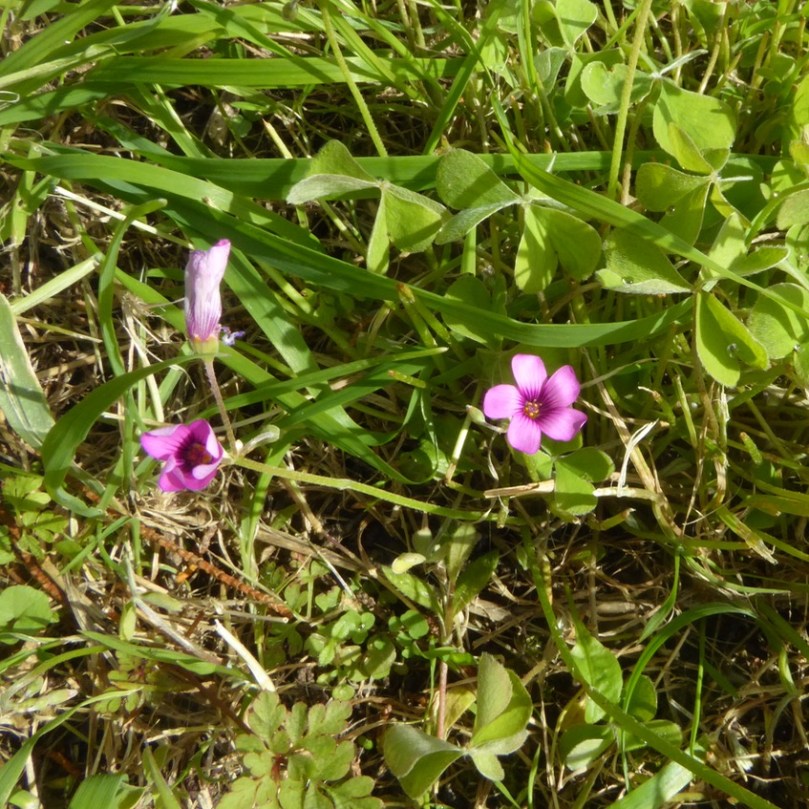
The final non-native flower we saw today was the pink sorrel. I thought at first it was Herb Robert, which is a native plant that grows everywhere and is still blooming, but closer examination revealed  a deeper pink, a more massed growth pattern and very different foliage. It’s a garden escape, now naturalised across the south and south east of Ireland.

Fuchsia on bare branches

Actually, I suppose I also have to add the fuchsia to the naturalised non-native list, even though we think of it as the quintessential West Cork flowering shrub. It’s still hanging in there, even though most of the leaves have dropped already.

Creeping Buttercup

Tormentil

The native plants still bravely blooming to delight us tended to be tiny, but bright enough among the grasses, brambles and bracken to immediately catch the eye. We saw Herb Robert, Prickly Sowthistle, Tormentil and patches of what might be Sea Radish (or perhaps not). 

Prickly Sowthistle

Prickly Sowthistle

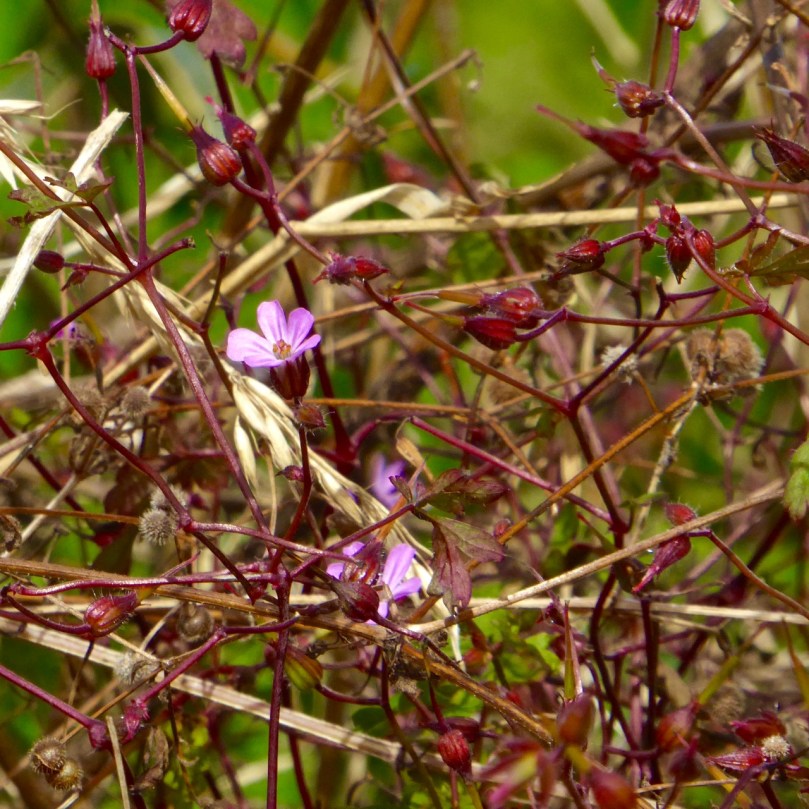
Herb Robert is such a hardy little flower – it seems to peep out and last longer than almost everything else in the hedgerows. Birds love the seeds of the Prickly Sowthistle – it has guaranteed its survival by appealing to them and providing food when other sources are fading.

Herb Robert

Sea Radish

Herb Robert (top) and possibly Sea Radish

As  a member of the cabbage family, the leaves of the Sea Radish are edible, if a little peppery. Interestingly, it normally finishes flowering in July, so the ones we found today must be in a particularly sheltered spot. But this also raises the possibility that this is a different plant. Can anyone help identify it?

Tormentil Patch

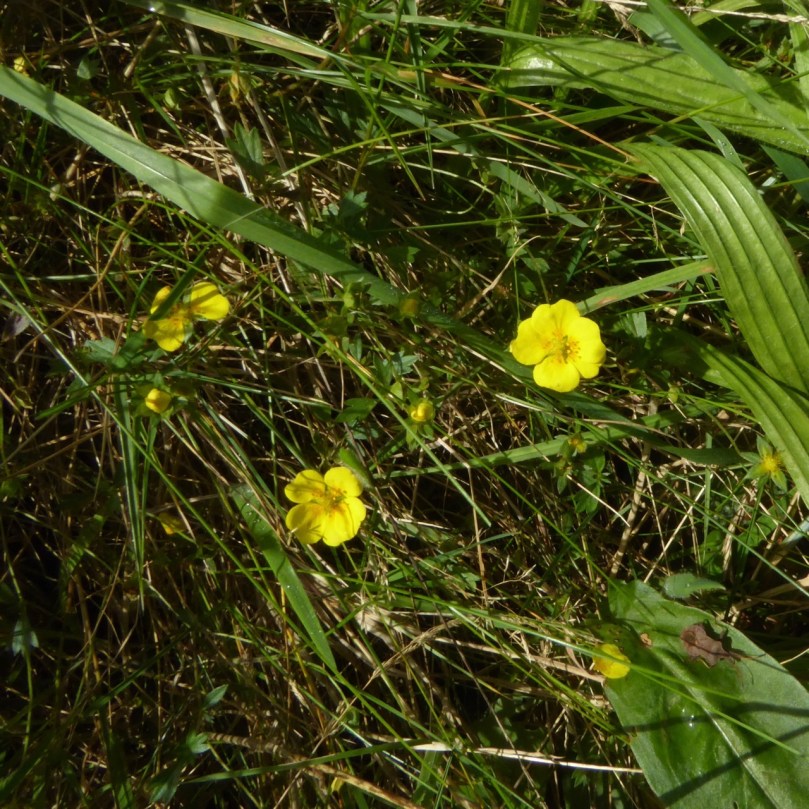
And finally the strangely named Tormentil – it sounds like it may cause pain but in fact it’s the opposite. There are all kinds of medicinal uses for this little flower and its parts, some of which relieve the ‘torment’ of pain. It also, according to this website,  imparts nourishment and support to the bowels and the fresh root, bruised, and applied to the throat and jaws was held to heal the King’s Evil. You heard it here first!

Ballycummisk Coppermine and Gabrial

Our walk today, along one of the Fastnet Trails, took us past the old Ballycummisk mine site and gave us distant views of Mount Gabriel

Priests and Poets, Part 2

BVM

Last week we concentrated on Father James Barry and the poetry he could well have inspired. But there’s a lot more to Stouke graveyard and this post will cover some of the other history revealed  by a wander round this atmospheric place.

IMG_0988

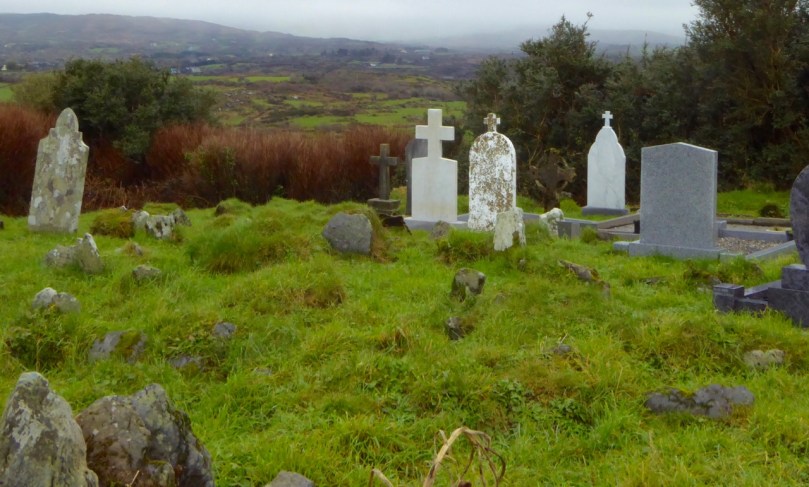
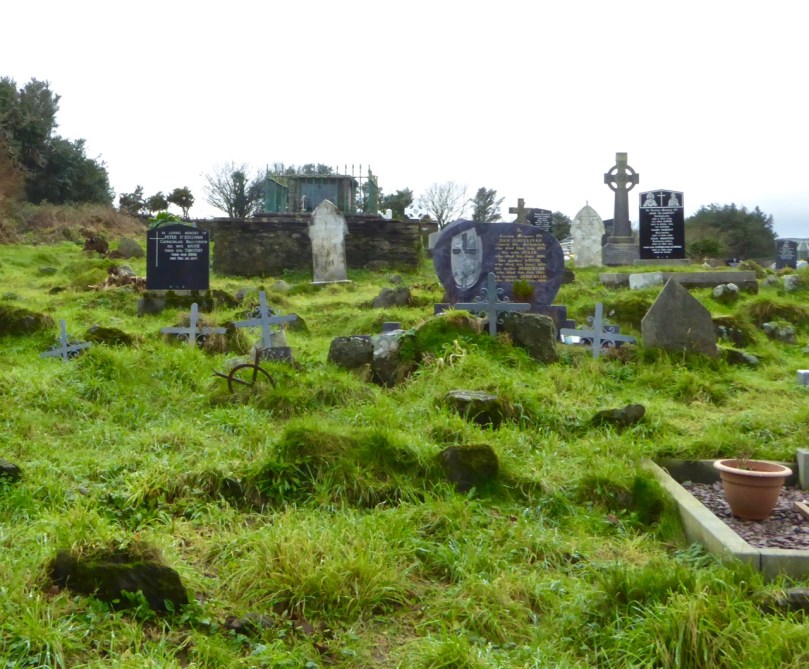
This graveyard is the traditional burial site of many from the islands of Roaringwater Bay. There’s a poignancy to the place names on the headstones – many of these islands are now uninhabited, so these are the last headstones that will bear such inscriptions. As with many West Cork graveyards, much of the ground is scattered with rough, uninscribed, stones, while other graves have modern memorials with full inscriptions. It is customary to visit graves on anniversaries, or at certain times of the year, and always you will find that a few graves still have fresh flowers or other evidence of recent visits.

IMG_0987

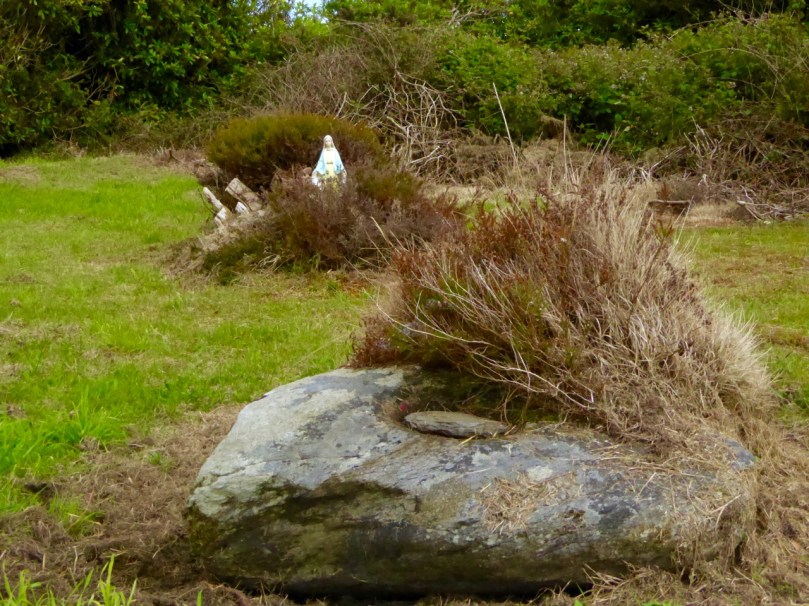
The old Irish name for this place is Cillín Stuaice, or Little Church of the HeightThere is a suggestion that somewhere in the graveyard is the site of an early church, but if it is here, there is no evidence of it. Except for one thing – a bullaun stone. Robert has written before about the folklore and beliefs associated with bullaun stones, but what exactly are they? Bullaun is an Irish word for bowl – these are bowl shaped depressions in rocks, sometimes portable, sometimes carved into rock outcrops. Although some may date to prehistoric times, many are believed to have originated in the medieval period for the purpose of grinding (acorns, for example) or for crushing ore. Whatever their origin, they are often found in association with medieval churches or other sacred sites such as holy wells, and have assumed their own sacred mantle of meaning. The water that collects in them is often believed to be curative.

P1110096

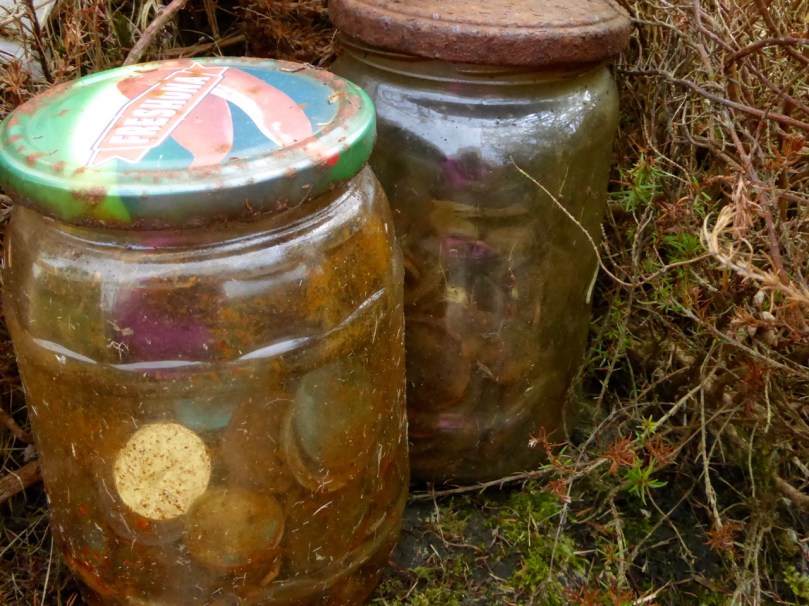
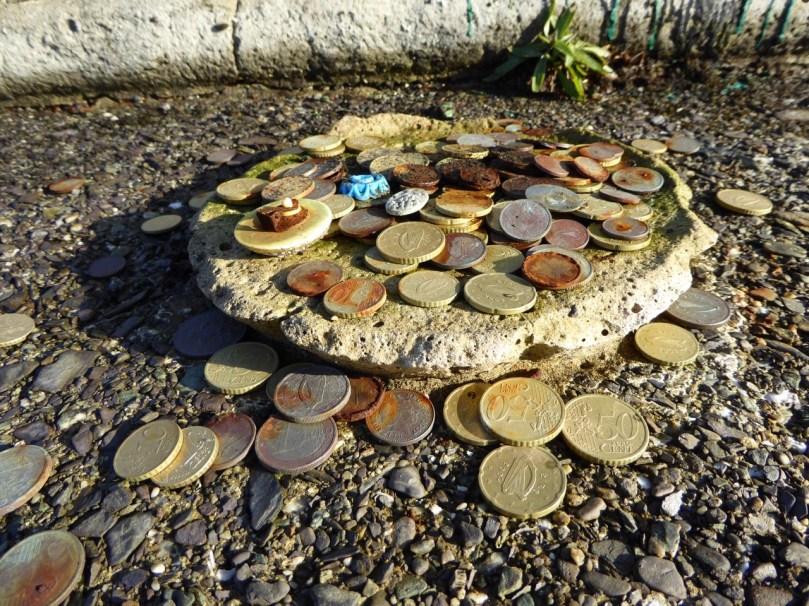
The bullaun stone in Stouke graveyard is known, according to the Historic Graves account, as the Bishop’s Head. The informative plaque erected by the Fastnet Trails folk tells us that an older name for the townland is Kilaspick Oen, meaning Church of Bishop John. Perhaps this was the Bishop for whom the bullaun stone is named. The story goes that during the time of the penal laws the Bishop was confirming children nearby when the redcoats got wind of his activities and came to arrest him. He was beheaded. The bullaun stone commemorates this act and has been a focus of devotion locally, with people leaving coins and tokens to pay respect and perhaps ask for consideration for special intentions. Additionally, rounds were performed here on St John’s Night – although I am not sure if this tradition has persisted.

Money jars

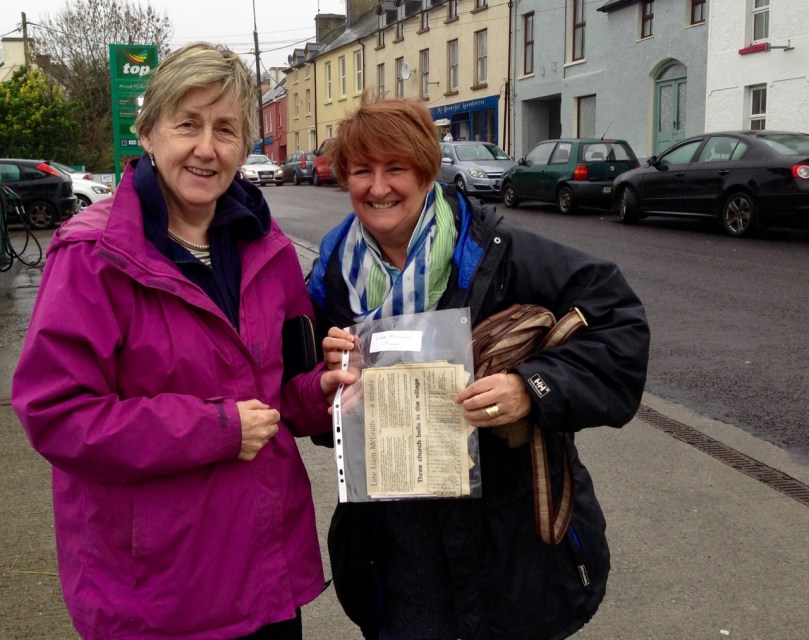
But last week I promised you more poetry! Inside the gate is a grave of the McGrath family, including the ashes of Liam McGrath who emigrated to Australia but never forgot growing up in Skeaghanore, near Ballydehob.

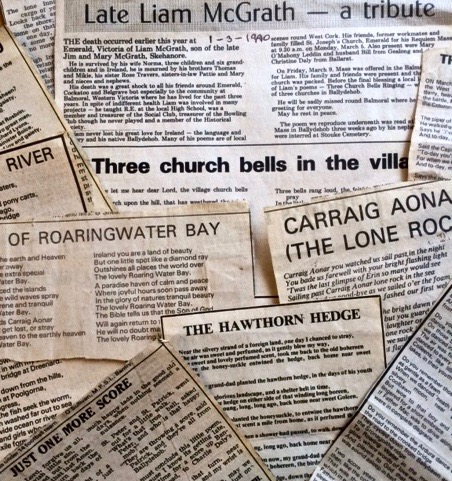
Although he was active on a number of fronts, his delight was to remember the old times and to capture his memories in verse. He was a true ‘folk poet’ – recalling the past with nostalgia and trying to capture what he saw as the golden scenes of his young life in rural West Cork. Over the years, several of his poems were published in the Southern Star. Local historian Teresa Hickey generously shared with me those she has collected over the years – a real treasure since they are not available online.

Teresa Hickey and poems

Liam McGrath cuttingsTeresa’s personal favourite is Three Bells. It describes the sound of the bells on Sunday morning from Ballydehob’s three churches – Catholic, Church of Ireland and Methodist. Sounds, of course, trigger deep memories, and this poem captures Liam’s recollections of traditional Sunday mornings in the village. Sadly, the Methodist Church has fallen into ruin, so those bells will never again peal over Ballydehob.

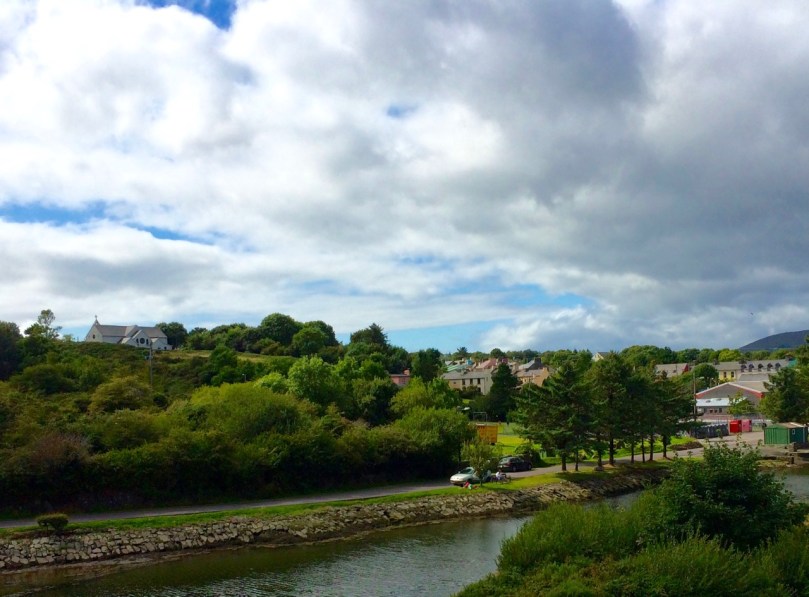
Ballydehob showing church on hill


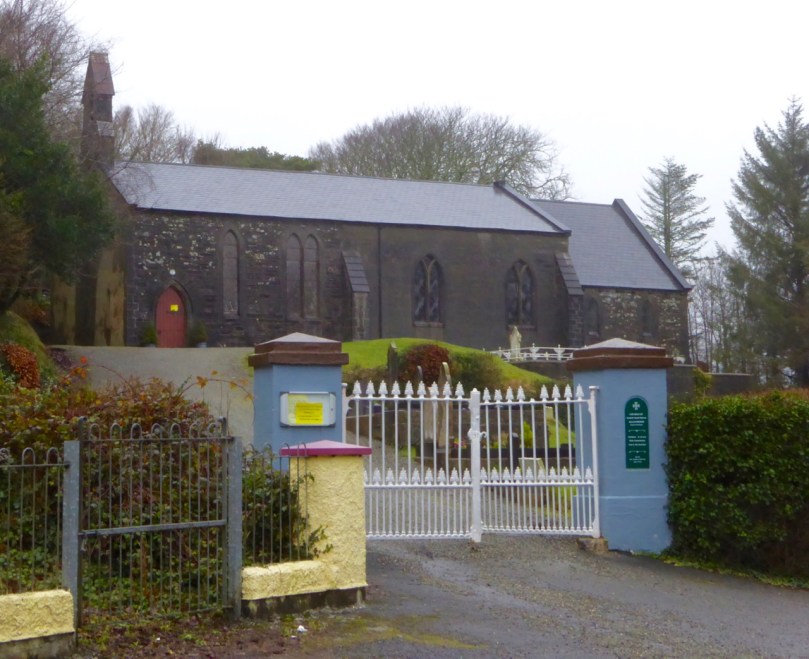
St Matthias CoI Ballydehob

Above: The Catholic Church dominates the skyline of Ballydehob. Middle: St Matthias Church of Ireland. Below: The Ballydehob Methodist Church, gradually falling into dereliction

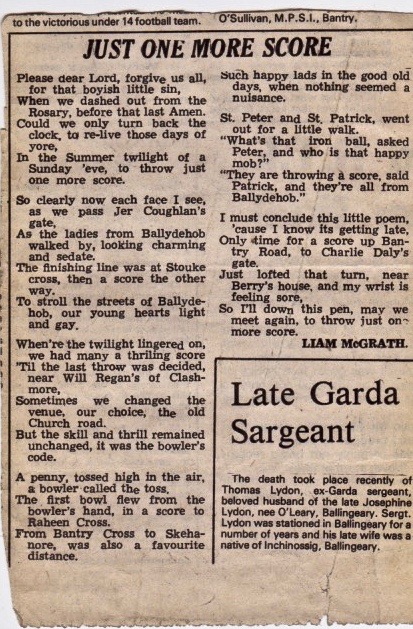
The one I’ve decided to reproduce here is called One more Score and it’s about the unique West Cork pastime of Road Bowling (rhyme bow with cow). For Liam, it was a precious memory, made all the sweeter by a recitation of the roads and locations where the game was played. 

McGrath Poem Just One More Score

The sport of Road Bowling – the object is to get the bowl down the road to the target in as few throws as possible

No doubt I will drop by Stouke Graveyard many more times in the future. I wonder what further history lessons will be revealed…

Priests and Poets, Part 1

outlookOften, while walking the Fastnet Trails, I stop to wander around the old graveyard at Stouke, near Ballydehob. I am struck each time by the lonely beauty of the site, on an elevated hillside with vistas of the countryside and distant hills. I have also come to realise that this one small place resounds with echoes of the past – a past that in Ireland seems always so intricately woven into our present that it can never be ignored or forgotten.

From the wall

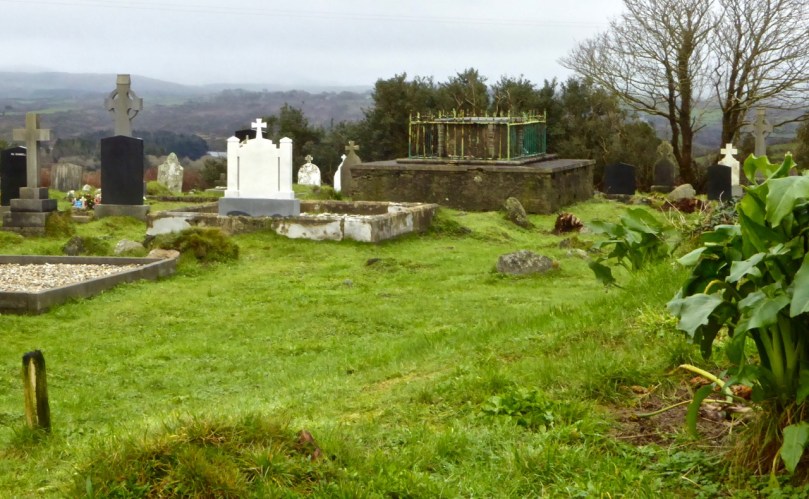
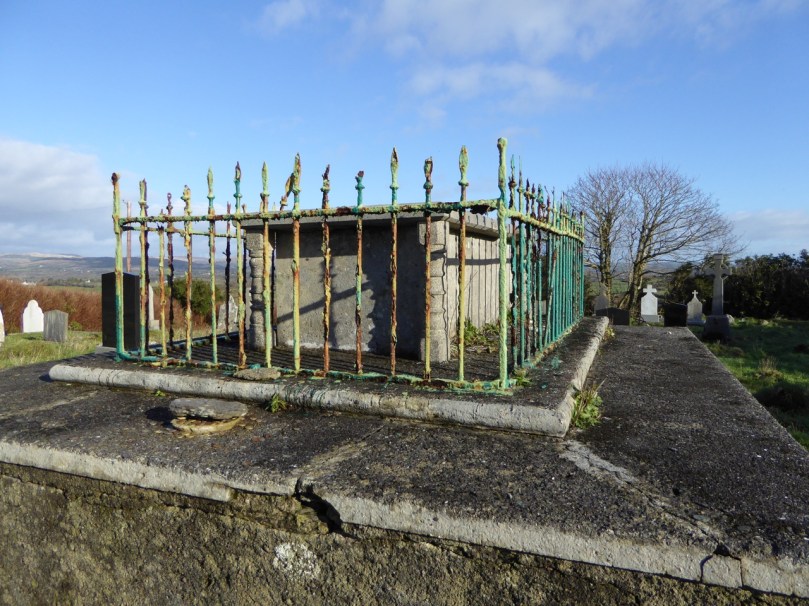
The Barry tomb dominates the graveyard

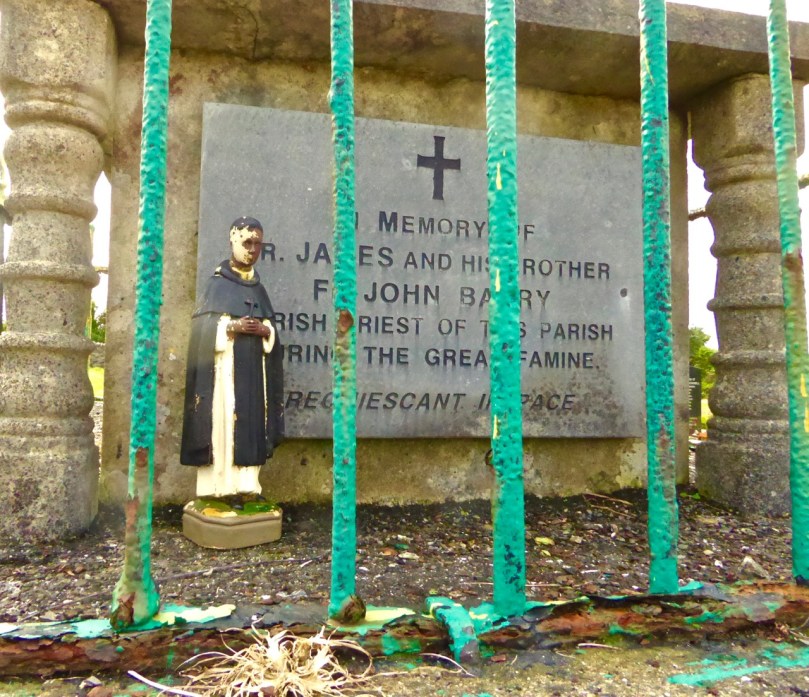
There is much to say about Stouke Graveyard and my theme of Priests and Poets but I will start with one grave in particular and leave the rest to a second post. This is the grave of Father James Barry, his brother, Father John Barry, their sister, Margaret, and their housekeeper, Julia Roberts. I have mentioned this grave before briefly, but I have now had an opportunity to look at it more closely.

offerings

Coins and tokens have been left on the tomb

Why does this large chest tomb occupy the most elevated and central place in the graveyard? Why are coins and tokens left as offerings on it? Why, according to notes made by the Historic Graves Project, do people come to pray here on St John’s Day (June 24th) every year? Although I didn’t find all the answers, researching the questions led me to Father James Barry, Parish Priest of Schull before and during the Great Famine.

Frs Barry, Stouke

James was obviously a man of learning and compassion, and one who was called upon locally to be a spokesperson and advocate for his flock. Even before the Famine he gave evidence to boards of inquiry about the conditions in West Cork, pointing out the miserable diet, lack of proper clothing and housing, poor prospects for employment, the uncertainty of a lease being continued, the lack of compensation to tenants when lands were taken to build new roads, the desire of many to emigrate and the good account they gave of their experiences in their new homes.  He would have read their letters to them, since many of his parishioners were illiterate – his remarks focused on the many advantages of the New World, including a pointed reference to the absence of tyranny. In what seems like a very modern concern with income inequality, he commented on how the rich got richer as their tenants’ lives became ever more difficult. (Reported in British Parliamentary Papers)

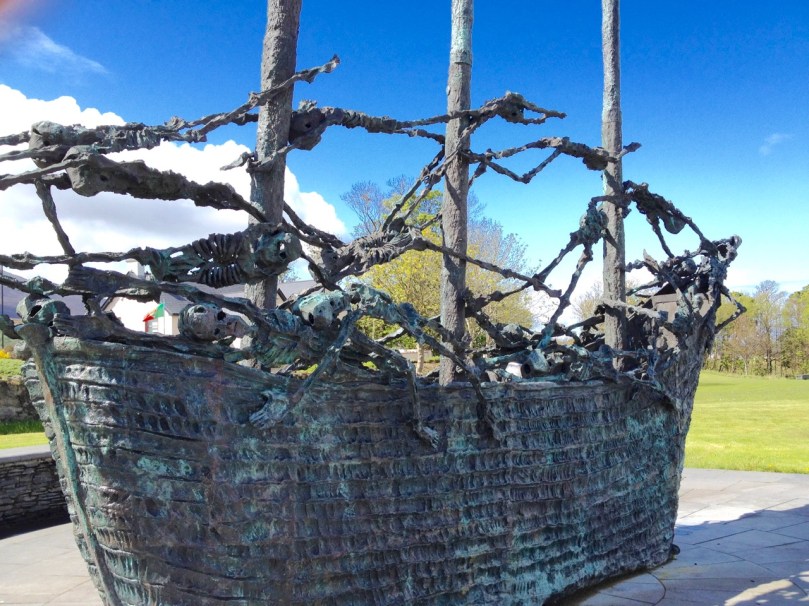
Famine Memorial at Murrisk

The Famine Memorial at Murrisk in Mayo. The ‘coffin ships’ that carried a generation of people to North America were notorious but for those who chose to go the voyage was preferable to the nightmare of famine at home

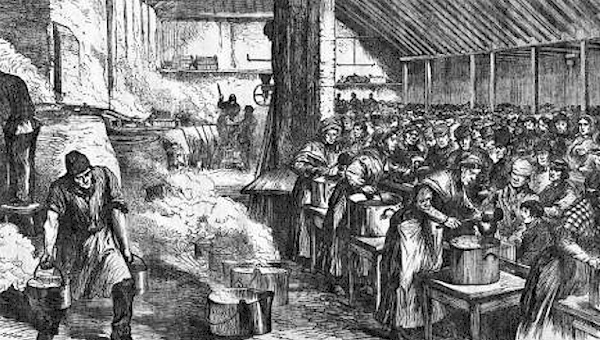
During the Famine, he and his brother, Father John, also of Schull parish, worked to help establish soup kitchens but insisted that more than soup be served, since the soup was not nutritious enough. Called eating houses, these places fed many people who would otherwise have died, and replaced the hated and ineffective Board of Works schemes that put weak and starving people to hard labour so they could buy their own corn, thus supposedly salvaging their dignity and rescuing them from the evils of pauperism.

soup-kitchen1

Famine Soup Kitchen

The efforts of the eating house committees crossed religious boundaries and appear to have been effective in slowing the rates of starvation to such an extent that in one of his depositions James states that “deaths were now so few that the slide-bottomed coffins were no longer in use.”

Among the unmarked graves

Many unmarked graves dot the Stouke graveyard, some no doubt dating to the Famine years

James advocated tirelessly for his parishioners, through giving information and evidence and through submissions to authorities. His anger is unconcealed when he describes his visit to the village of Kilbronogue near Ballydehob: Fever consequent upon starvation was spreading among the clusters of cabins…the townland  [will] soon be at the immediate disposal of the head landlord, Lord Bandon. There will be no need of extermination or of migration to thin the dense swarm of poor people…; this will take place without his lordship’s intervention or agency, I hope, to a better world. Indeed his words were prophetic – there is no longer a village in Kilbronogue.

Trench’s book, Realities of Irish Life, is available online. The illustration is of an incident in which tenants are down on their knees begging for a reduction in rent.

Fr Barry acted as a guide for William Steuart Trench, a controversial land agent who later described his visit to the famine-stricken area of Schull in the book Realities of Irish Life (available to read online). In cottage after cottage he found families sick, dying or dead. The account is heart-rending. It led me to wonder if James Barry could have been the model for Peter Gilligan in WB Yeats’ poem The Ballad of Father Gilligan.

yeats2The old priest Peter Gilligan
Was weary night and day;
For half his flock were in their beds,
Or under green sods lay.

Once, while he nodded on a chair,
At the moth-hour of eve,
Another poor man sent for him,
And he began to grieve.

‘I have no rest, nor joy, nor peace,
For people die and die’;
And after cried he, ‘God forgive!
My body spake, not I!’

He knelt, and leaning on the chair
He prayed and fell asleep;
And the moth-hour went from the fields,
And stars began to peep.

They slowly into millions grew,
And leaves shook in the wind;
And God covered the world with shade,
And whispered to mankind.

Upon the time of sparrow-chirp
When the moths came once more.
The old priest Peter Gilligan
Stood upright on the floor.

‘Mavrone, mavrone! the man has died
While I slept on the chair’;
He roused his horse out of its sleep,
And rode with little care.

He rode now as he never rode,
By rocky lane and fen;
The sick man’s wife opened the door:
‘Father! you come again!’

‘And is the poor man dead?’ he cried.
‘He died an hour ago.’
The old priest Peter Gilligan
In grief swayed to and fro.

‘When you were gone, he turned and died
As merry as a bird.’
The old priest Peter Gilligan
He knelt him at that word.

‘He Who hath made the night of stars
For souls who tire and bleed,
Sent one of His great angels down
To help me in my need.’

‘He Who is wrapped in purple robes,
With planets in His care,
Had pity on the least of things
Asleep upon a chair.’

Although this is an unusual poem for Yeats (he was not a Catholic and he did not often publish simple quatrain-based ballads) it reflects his interest in the Irish stories he collected and loved. It was a favourite, as you can imagine, of the nuns who taught us English, combining as it did ease of memorisation,  the religious fervour they hoped to inculcate in their convent classrooms and the unassailable respectability of having been composed by Ireland’s Nobel Laureate.

Brothers' grave

But back to the grave…the priests’ housekeeper, Julia Roberts, who died in 1838 was the first to be buried here. James and John’s sister, Margaret, died at the height of the Famine in 1848 (although we do not know if her death was in any way associated with this event). The Historic Graves record contains this intriguing note: When his sister died and was also buried here Sarah’s (should be ‘Julia’s’) coffin was in perfect condition. She was reburied with the parish priest even though she was not a Catholic.

James went on to serve as Parish Priest of Bantry and died in 1853. James’ brother, John was apparently similarly active but not much has survived recording his life. He took over from James as Parish Priest in Schull, where he served until his own death in 1863.

railings

Next week I will continue my tour of this wonderful spot – and we’ll have a little more poetry – although from a different source.